In 1872, I. C. Johnson took over a quarry and tramway at Greenhithe which was used to provide ballast for ships returning to the Gar East without cargo. Stoyel & Kidner say that “The tramway ran from the quarry, approximately where the works was later built, under the South Eastern Railway to a pier. The Johnsons’ Works was opened in 1877; as I. C. Johnson did not purchase any locomotives, as far as is known, until 1891, he must have used those of his predecessor, but it is not known what they were, except that the gauge was presumably that used later, 3ft 9½ in.” [1: p26]
Stoyel & Kidner continue:
“The original chalk quarries were just to the south of the works, with another to the west towards Stone church, but when these were exhausted it was necessary to tunnel under the Dartford-Gravesend road to open up new ones. These finally reached as far as the A2 London-Dover road, being worked on two levels; the top level was closed in 1952 and the lower level ultimately reached a depth of 200 ft.
“The first step in modernising the works was taken in about 1903 when a rotary kiln was introduced. At about this time a line was laid to rise steeply to an exchange siding on the SE&C Railway to the west of the works. The Company joined BPCM in 1911. Then in about 1926 the works was closed for a time to enable it to be completely modernised and in the process of this reorganization standard gauge track was laid, as a temporary measure some of the line being dual gauge with three rails until the narrow gauge system was finally abandoned in about 1927. In 1928, one of the two lines running from the works to the pier was electrified on the overhead system, worked by motored bogie hopper wagons. These worked on 250V overhead supply, and carried a 25-ton load at 7 mph. They were built by English Electric (738-40) in 1928.
“The modernised works included eight new concrete silos 96 ft high, and a new concrete packing shed on the jetty, which had an extension built out into the river so that larger ships could berth there. The three hopper wagons (two in use, one spare) acted as a link between silo and packing shed, running under the former to load up, and unloading at the jetty by means of compressed air and screw conveyors. They were remarkably silent-running.” [1: p26]
The Kent Works deep-water wharf and works in on the left; to the right is Johnson’s Works wharf, with the works itself south of the railway. Note the line along the water’s edge which joined the two systems, and was the reason why Kent Works’ engines were frequently noted inside Johnson’s Works. [1: p21]I. C. Johnson’s Portland Cement Works sit at the centre of this extract from the 6″ Ordnance Survey of 1907, published in 1910. One significant chalk pit sits t the West of the Works (at the left of this map extract). The company’s wharf on the River Thames is shown in an enlarged extract from the OS map below. Also shown below is the tunnel which connected the Works to the Chalk Pit to the South of London Road. [3]
Johnson’s Wharf and Dolphin’s Wharf both seem to serve I. C. Johnson’s Works. A bridge carries the North Kent main line over the lines connecting the wharves with Johnson’s Works. [3]
The site of Johnson’s Wharf in the 21st century (as shown on the ESRI satellite imagery provided by the National Library of Scotland (NLS)). The site is now used by Heidelberg Materials Aggregates – Greenhithe. [4]
The bridge which carried the North Kent main line over Johnson’s industrial lines is still in position and continues to carry the main line in the 21st century! [Google Earth 3-D view, August 2026]
This second enlarged extract shows the tunnel passing under London Road (A2). [3]
The approximate line of the tunnel on the map extract is shown on this satellite image by the read line. [6]
The Chalk Pits were extended further to the South as time went by. This extract is from the 6″ Ordnance Survey of 1938 to 1940 which was published in 1950.Modern development has substantially replaced the old chalk pit workings. [7]
Clay first came by barge down the Medway, then from various local sites. Some was dredged from the Thames, some came from a BCPM claypit at Bean, some from the APCM pits at Alkerden.
Johnson’s closed in 1970.
Locomotives
Locomotives on the early narrow-gauge railway (3′ 9.5″), all new unless noted otherwise: [1: p30]
Elephant – an 0-4-0ST – no details available.
Cement – an 0-4-0T built in 1891 by Bagnall, Works No. 1344, outside cylinders (9″ x 14″), 2′ 9.5″ wheels.
Samson – an 0-4-0T built in 1892 by Bagnall, Works No. 1417, outside cylinders (9″ x 14″), 2′ 7″
Clinker – 0-4-0ST built in 1897 Falcon, Works No. 249, outside cylinders (?? x ??), ???? wheels.
Mammoth – 0-4-0ST built in 1899 by Bagnall, Works No. 1582, outside cylinders (10″ x 15″), 2′ 9.25″ wheels.
Leviathan – 0-4-0ST built in 1900 by Bagnall, Works No. 1609, outside cylinders (10″ x 15″), 2′ 9.25″ wheels.
(Not named) – 0-4-0WTG built in 1900 by Aveling & Porter, Works No. 4537, compound cylinders (8.5″ x 14.125″ x 14″), 3′ 6″ wheels. Transferred from the APCM works at Cliffe in 1920.
Goliath – 0-4-0ST built in 1921 by Barclay, Works No. 1741, outside cylinders (12″ x 20″), ???? wheels.
New Elephant – 0-4-0ST built in 1924 by Bagnall, Works No. 2258, outside cylinders (10″ x 15″), 2′ 9.25″ wheels.
In 1927, with standard-gauge track now in place, new locomotives were required: [1: p30]
Stone – 0-4-0ST built in 1927 by Peckett, Works No. 1740, outside cylinders (14″ x 22″), 3′ 2.5″ wheels.
Darenth – 0-4-0ST built in 1927 by Peckett, Works No. 1741, outside cylinders (14″ x 22″), 3′ 2.5″ wheels.
Greenhithe – 0-4-0ST built in 1927 by Peckett, Works No. 1742, outside cylinders (14″ x 22″), 3′ 2.5″ wheels.
Southfleet – 0-4-0ST built in 1928 by Peckett, Works No. 1746, outside cylinders (14″ x 22″), 3′ 2.5″ wheels.
Longfield – 0-4-0ST built in 1928 by Peckett, Works No. 1747, outside cylinders (14″ x 22″), 3′ 2.5″ wheels.
The first three were supplied with low cabs and boiler mountings, so as to clear the tunnels, being classified as ‘Type W 6 Special’ by Peckett. The last two Pecketts were not cut down when delivered. They were however rebuilt at the works many years later to a similarly reduced height.
“In addition to these new locomotives the narrow gauge locomotives Goliath and New Elephant were rebuilt to 4ft 8½ in. gauge in 1927 by the makers and by the cement works respectively, and the following were transferred from other works:” [1: p30]
New Globe – 0-4-0ST, built in 1901 by Peckett, Works No. 889, outside cylinders (14″ x 22″) and 2′ 6.5″ wheels, from Globe Whiting Co., Greenhithe in 1929.
Globe No. 3 – 0-4-0ST, built in 1901 by Peckett, Works No. 925, outside cylinders (8″ x 12″) and 2′ 3″ wheels, from Globe Whiting Co., Greenhithe in 1930.
Thames – 0-4-0ST, built in 1899 by Bagnall, Works No. 1588, Outside cylinders (12″ x 18″) and 3′ 0.5″ wheels, from Trechmann & Weekes Works, Halling in 1935 (regauged from 4 ft 2 in.)
Stoyel & Kidner tell us that, “Johnsons clay-pit at Bean was worked by two Simplex petrol engines and two Planet diesels; later by five Rustons diesels (175137, 182147, 194769, 195850/1); however they were often switched to other works and not always on site.” [1: p30]
“Of the narrow gauge engines, Elephant and Samson had disappeared by 1932, the Aveling was scrapped in 1934 and Clinker, Mammoth and Leviathan a year or two afterwards. Cement was not scrapped until after the war, although it had been derelict since 1927.” [1: p30,36]
Stoyel & Kidner tell us that “The standard gauge locomotives gradually became redundant during the post-war period until completely superseded by diesel locomotives. They [were] accordingly … hired or loaned out to other works, or otherwise disposed of, as follows:” [1: p36]
Stone: Transferred to Frindsbury Works in 1962.
Darenth: Hired to Purfleet Wharf & Saw Mills Ltd in 1940-1945. Loaned to Kent Works, Stone, in 1947. Scrapped in 1963.
Greenhithe: Hired to Samuel Williams & Son Ltd, Dagenham Dock, in 1945. Transferred to Hessle Quarry, Yorkshire, in 1962.
Southfleet: Transferred to Frindsbury Works in 1960.
Longfield: Transferred to Holborough Works in 1960.
Goliath: Transferred to Grays Works in 1960.
New Elephant: Scrapped in 1960.
New Globe: Scrapped in 1960.
Globe No. 3: Scrapped in 1948.
Thames: Disappeared some time after the last war, no doubt scrapped: the cab and saddle tank were still visible in March 1952.
Additionally, Stoyel & Kidner tell us that one other locomotive spent time at Johnson’s in 1942 having come from the APCM chalk pit at Highsted, before being loaned to their Dunstable Works. In 1946, it returned to Greenhithe and in 1947 was returned to Highsted. This locomotive was:
Tay: an 0-4-0ST built in 1924 by Barclay, Works No. 1828, outside cylinders (12″ x 20″) and with 3′ 2″ wheels. [1: p36]
References
B. D. Stoyel & R. W. Kinder; The Cement Railways of Kent; Oakwood Press, Headington, Oxford, 1973, 1990.
Andrew Neale; Industrial Railways of the South-East; Middleton Press, Midhurst, West Sussex, 1984.
Kent Works was built between 1919 and 1922. It had an extensive 4ft 3in railway “which ran inland to large chalk pits, connected with the lines of the Stone Court Chalk and Ballast Co. and … to Johnson’s Works next door.” [1: p4]
According to Stoyel & Kidner the Kent Works were built between 1919 and 1922 by contractors P. & W. Anderson for the Kent Portland Cement Co. Ltd, “but only a year after its completion the company was acquired by APCM. It is situated on the Thames foreshore about ½ mile north-east of Stone Crossing Halt between the railway (and road) and the river, where there was a jetty. There were extensive store areas and sidings between the main works and the SR exchange siding immediately west of Stone Crossing Halt.” [3: p14]
“It is probable that chalk was originally taken from the pit south of Cotton Lane; however by 1930 a large pit east of this, south of Elizabeth Street, was being worked. … This was progressively opened out down to London Road, and finally a tunnel under that road reached the southernmost pit.” [3: p14]
“The method of working a face was to lay a double track approaching it, singling at the actual face. As the engine hauled away the full wagons, the empty train would be propelled under the excavator, thus losing no time. The six-coupled engines could take some 16 wagons, loaded to about 3-4 yards each; though with a split-level face the gradient to the top level was sometimes severe, it was always in favour of the loaded trains.” [3: p14]
“In 1963, a cutting was built to connect the pit with that of Johnson’s Branch: there had always been a certain amount of interchange between the two works by a line along the bank of the river.” [3: p14]
Apparently “there was a well-built locomotive shed on the western edge of the works area.” [3: p19]
Kent Portland Cement Works as shown on the 6″ Ordnance Survey of 1938, published in 1946. Note the location of Charles Street to the North of the Main Line Railway. [8]Approximately the same area as it appears on 21st century satellite imagery. There is no remaining sign of the Kent Works. Charles Street still sits where it did during WW2. [Google Maps, August 2026]
Looking East along Charles Street from close to the roundabout junction with Crossways Boulevard. [Google Streetview, May 2018]
Looking East again along the extension to Charles Street to the East of the modern green open space. [Google Streetview, May 2018]
Locomotives
Stoyel & Kidner tell us that the company purchased its first locomotives second-hand from the contractor that built the works. These were:
Stone 0-6-0ST Hudswell Clarke, Works No. 298, built in 1888, it had inside cylinders (12″ x 18″) and 3′ 0″ wheels.
Toronto 0-4-0ST Hudswell Clarke, Works No. 571, built in 1900, it had outside cylinders (10″ x 16″) and 2′ 9″ wheels.
It is the end of the line for these two different Hudswell Clarke 0-4-0ST locomotives. Note the different cab roof details. On the left of this image is ‘Toronto’ HC Works No.5710f 1900 and on the right is ‘Stone’ HC Works No. 298 of 1888, (c) Public Domain – photographer F. Jones. [25: photo No. 20]
Arthur 0-6-0ST Manning Wardle, Works No. 1601, built in 1903, it had inside cylinders (12″ x 18″) and 3′ 0″ wheels. Arthur continued in use at the works until 1967 [2: photo No. 23] and has survived into preservation, residing at The Middleton Railway in Leeds, although under a different name.
Apex 0-6-0ST Manning Wardle, Works No. 1657, built in 1905, it had inside cylinders (12″ x 18″) and 3′ 0″ wheels. [3: p19] ‘Apex’ was not as fortunate as ‘Arthur’, it only survived in use until 1960 and was scrapped in that year.
They were soon supplemented by other second-hand locomotives transferred from other works owned by APCM.
Hilton 0-4-0ST Peckett, Works No. 633, built in 1896, it had outside cylinders (12″ x 18″) and 2′ 9″ wheels. ‘Hilton’ came from Hilton Works, Halling. I have not been able to find a photograph of No. 633, Hilton. However, Peckett Works No.614 ‘Bear’ was also built in1896, and was of the same W4 class as Works No. 633, with the characteristic open-backed cab.
No. 614 ‘Bear’ at Sittingbourne & Kemsley Light Railway 10th October 2023, The locomotives was moved to the Buckinghamshire Railway Centre, in March 2024 for initial cosmetic repair, followed, in due course as time and resources permit, by restoration to operating condition, (c) photographer not known. [7]
Elephant 0-4-0ST Brush (Flacon/Henry Hughes), Works No. 287, built in 1899, it had outside cylinders (10′ x 18″) and 3′ 0″ wheels. This came from Tolhurst Works, Northfleet.
Clarence – an 0-4-0ST Andrew Barclay & Sons, Works No. ???, built in ????, had outside cylinders (10″ x 18″) and 3′ 3″ wheels. This came from Hilton Works, Grays. [3: p19]
Wouldham – Hatherill & Hatherill tell us that ‘Wouldham’, an 0-4-0ST Andrew Barclay & Sons, Works No. 1679 arrived at Kent Works in 1920. They provide the works drawing below which indicates that the cylinder size matches that of ‘Clarence’. It is possible that ‘Wouldham’ was renamed ‘Clarence’ on arrival at Kent Works.
Stoyel & Kidner tell us that Kent Cement Works rebuilt Elephant and Apex in 1927 and Clarence in 1928. Stone was rebuilt by its makers in 1909.
Two new locomotives were the next to be purchased:
0-4-0ST Peckett, Works No. 1804, built 1935 (outside cylinders, 14″ x 22″ and 3′ 2½” wheels)
0-4-0ST Robert Stephenson & Hawthorns, Works No. 7336, built 1947 (outside cylinders, 14″ x 22″ and 3′ 8″ wheels)
After the war another 0-4-0ST Peckett was acquired second-hand from the Woolwich Arsenal. It was Works No. 1985, built in 1940 (outside cylinders 14″ x 20″).
Cab roofs of the second-hand locomotives had to be adapted after arrival to suit the tunnels on site.
Stoyel & Kidner tell us that “Stone and Toronto were scrapped in 1950 and in 1953 running numbers were allotted to the remaining locomotives as follows:
And finally, No. 2 at Northfleet Works was subsequently transferred to Stone, it became No. 9, it was an 0-4-0ST Peckett, Works No. 1702, built in 1926 (outside cylinders 14″ x 22″ and 3′ 2″. [3: p19]
Peckett & Sons Ltd. No. 1985 of 1940 was acquired after WW2 from Woolwich Arsenal and became Kent Works No. 7 Although a standard 0-4-0ST Peckett design (Class W6) with 14″ cylinders. Its appearance was changed by a lowering of the cab roof at the eaves to give clearance in the tunnels.
Robert Stephenson & Hawthorns (RSH) No. 7336 of 1947 became Kent Works Locomotive No. 8. This design of 16″ cylinder 0-4-0ST locomotives was used at several of the cement works in Kent. Like the Peckett design, these engines needed the eaves of the cab roof lowering to give clearance in the Works’ tunnels.
References
A & G Hatherill; Narrow Gauge & Industrial Album; RCL Publications, Gaendolbenmaen, Gwynedd, 2004.
Andrew Neale/Chalk Pits Museum; Industrial Railways of the South-East; Middleton Press, 1984.
B. D. Stoyel & R. W. Kinder; The Cement Railways of Kent; Oakwood Press, Headington, Oxford, 1973, 1990.
Possibly as early as 1825, an extensive horse-drawn tramway network served the works.
The tramway was laid to 3ft 5.5in. “The gauge was measured to the outside of the railheads as the wheels had flanges outside of the rails. … They were the earliest railways in the area. … It is said that outside flanges were used so that the space between the rails could be built up into a firm level path for the horses. Fallen lumps of chalk could then be easily kicked clear of the rails.” [1: p4]
“The works lay to the north of the London Road and the tramway ran due north for 1000 yards to Bell Wharf. There was a whiting works to the west of the main works with a tramway to the pits near the cricket ground. The main pits were between the London Road and the South Eastern Railway. Some time before 1898 the tramway burrowed under the South Eastern Railway in a tunnel at Craylands and pits were opened south of the railway later extending for a considerable distance. There was a transhipment siding on the South Eastern Railway at Craylands during the time of the narrow gauge.” [30: p38,42]
“Steam locomotives were introduced in 1875, built by a variety of builders. “There were engines by Lewin of Poole, HE Taylor of Chester, Kilmarnock Engineering Co. and … Aveling and Porter of Rochester. By 1927, these charming workhorses were becoming increasingly difficult to maintain and so, with the need to increase production, the railway was re-laid to standard gauge and new locomotives purchased.” [1: p4]
Initially the industry was made up of a series of independent companies. These companies joined in 1900 to form ‘The Associated Portland Cement Manufacturers’ (APCM), often referred to within the industry as ‘The Combine’. After 1900 the various works continued to be known by their original names.
The modernisation of the railways at Swanscombe Works was completed by 1929. … The Works shifted to a busy, efficient standard-gauge system connecting the chalk pits, main plant, river Thames jetty, and British Rail interchange.
“When the standard gauge line was built a single track ran down from the exchange sidings on a steep and curving route to the works. The standard gauge ‘main line’ ran through the tunnel under Craylands, then turned more westerly than the old line, and passed under a footbridge across old workings, through a tunnel under a lane, then another tunnel under Alkerden Lane, and into a very large pit running almost down to Watling Street, a distance of 14 miles from the Works.” [30: p42]
The Works were among the most important cement production facilities in the country. Extensive railway infrastructure was required to handle raw materials and finished cement, resulting in a complex network of sidings, exchange lines, and industrial locomotives. Rail traffic included limestone and chalk movements, internal works shunting, and outward cement trains connecting with the wider British Rail network. By the late 1960s and early 1970s, the site reflected wider changes across the UK rail system. [11]
A sketch of the area around Swanscombe Works. The pier on the Thames, the Works and the quarries were on a North-South axis. This sketch is an extract from a broader sketch of the various Cement Works on the South side of the River Thames. [30: p10]
The series of map extracts and photographs below illustrate the development of the Works over the years.
Map of Works in 1864
The First Edition OS 1:2500 County Series Kent X.1 map surveyed 1864 (British Library), modified to National grid format. The plant in 1864 was in course of rapid expansion, still using the wet process static kilns originated by Frost. Chalk quarrying, initially north of the road, had spread to the area between the road and the railway, connected by a 4 m wide tunnel under the road – the first of five eventually dug. [
Map of Works in 1895
This pair of Ordnance Survey Map extracts are taken from the 25″ Ordnance Survey of 1895, published in 1897. [7]
These three 6″ Ordnance Survey map extracts of 1938-1940 and published in 1950-1951 belong together. The top two overlap marginally North to South. [5] The third extract sits alongside the second – to its left. It comes from a different OS Sheet and shows the Works line extending to Chalk Pits near Knockhall and Alkerden Manor Farm. [6]
Swanscombe Cement Works began operations in 1825, when James Frost commenced making his “British Cement” using wet process bottle kilns. The plant was acquired by Francis and White in 1833 and made the same product. The partnership was dissolved in 1836 and John Bazley White and Sons commenced as a business in 1837, making both Roman and Frost’s cements at the Swanscombe site. [8]
Map of the Railway Network in 1965
Note that the Northpoint for this plan is turned through about 120 degrees. The Thames jetty is off the left of the plan. The chalk Pit Workings are off to the bottom-right. [12]
In 1965, the Works had seven 0−4−0STs to work the considerable traffic – six built by Hawthorn Leslie (four in 1928, one in 1929 and one in 1935) and the last by Robert Stephenson & Hawthorns in 1948. All seven were painted green with the running number on each side of the tank. There were no diesels. One was tried but it could not manage the poor track and was continually “sitting down”. There is no prospect of having any until money can be spared for relaying several miles of track. [12] A number of other locomotives were used at different times after 1929.
The five identical Hawthorn Leslie 0-4-0ST engines were delivered in 1928, followed by a sixth in 1935. They weighed 25 tons, featured 16in x 24in outside cylinders, and had a tractive effort of 21,425 lbf. [13]
The works can be divided into three areas. The first two are old chalkpits, dug each side of the main road, while the third contains the line to the workings. The first area is bisected by a private road with the cement works proper on one side. On the other side is the single road engine shed and works, and also an awning over one track where engines stand when not in use. A single line runs past the works, and across the marshy countryside to the jetty on the river Thames. [12]
“Another line runs across the road and winds its way around the main works until entering a tunnel under the main road. This brings it to the second old pit, where are situated two unloading tips for arriving trains. As can be seen from the map, a connection to British Railways struggles up and round the side of the pit. (Sand all over the rails shows the severity of the climb.) On the opposite side of the pit, another single line dips downwards into a tunnel under BR, a road and the connecting line, and emerges into a long, deep and wide cutting. There are two passing loops on the way to the workings, of which one has watering facilities, and another tunnel, and a high footbridge.” [12]
Chris Down, writing in 1965, continues:
“At the middle pit, an arriving train runs above one of the two tips, and backs down on to the tip. When the end wagon is on the tip, the wagons are braked, and the locomotive is uncoupled so that it can go up to the end of the line to obtain coal and water.
“The tips are similar to mechanical coaling plants on B.R. and deal with one wagon at a time. As each wagon is unloaded, it runs along the siding by gravity, until the train is reformed at the other end of the loop. The locomotive then comes back and couples onto the same end as before. The next train brings the single line tablet which is hung on a hook on a post. The first train collects the tablet and then goes down to the workings, the locomotive propelling the wagons.
“I spent some time around the footbridge, photographing the trains which passed at frequent intervals. The maximum speed was about 20m.p.h., but trains lurched terribly, due to the poor track. When the track deteriorates so much as to necessitate its replacement, diesels will doubtless be purchased. From the opinion of many of the men to whom I spoke, however, steam should retain its supremacy for some time to come.” [12]
Satellite Image the Area of the Works of 2026
“Swanscombe cement works operated for nearly 165 years, one of the longest-lived cement works in the world and, for many decades, … one of the largest. For a hundred years from about 1826 until 1929 it employed a unique narrow gauge railway using outside-flanged wheels, with over thirty steam locomotives, many also unique. When modernised in the 1927-29 period, its new standard gauge railway was one of the busiest and most efficient in the industry.” [9]
Details of locomotives employed at the Works can be found below.
Production at Swanscombe Works measured in tonnes per year. [8]
Comparing 1915/1916 to the 21st century
A few images follow which compare locations on the Swanscombe Works network with modern satellite imagery. The plans and satellite images are supplemented, where available, with photographs from close to ground level.
Bell Wharf at the North end of the company’s rail network, as it appears on the 6″ Ordnance Survey of 1915/1916 published in 1923. [33]
The Wharf as it appears on the ESRI satellite imagery provided by the national Library of Scotland (NLS) [34]
The approach to the Jetty along the line of the old railway. This view looks North towards the jetty. [Google Streetview, August 2025]
The jetty seen from the South. [Google Streetview, August 2025]
Looking South across the marshes from the jetty towards the location of Swanscombe Works. [Google Streetview, August 2025]
The Cement Works in 1915/1916. A road can bee seen leaving London Road at the bottom-left of this map extract and running towards Manor Way Farm through the centre of the site. [33]
In the 21st century, the outline of the Cement Works site is still visible. A variety of primarily transport related companies use the site. Manor Way now runs from the bottom-right across the centre of the old cement works siteand the area is known as Manor Way Business Park. [34]
Looking Northeast along Manor Way in the 21st century. The majority of buildings which were present when the Cement Works was in operation have been removed. [Google Streetview, October 2024]
Narrow Gauge Locomotives before 1929
Although records are sketchy, Stoyel and Kidner give details of nearly 30 narrow-gauge locomotives which served at Swanscombe, all of which had wheels with outside flanges. These included:
Aveling & Porter supplied a total of eight 3ft 5.5in, outside-gauge, geared tramway engines to Swanscombe Works. These were all scrapped by 1929 after the standard-gauge works lines were built.
S. Lewin of Poole – Only a small number of locomotives were built by this company, including: an 0-4-0 locomotive of 1875, for the 1 ft 10 in (559 mm) gauge Cornish Hush Mine, Howden Burn; 0-4-0 Ant and Bee, for the 20 in (508 mm) gauge Great Laxey Mine Railway, Isle of Man; an 0-4-0ST for Seaham Harbour, County Durham; an 0-4-0 steam tram engine for Guernsey Railway; an 0-4-0 with rear tank, 3 ft 5 1⁄2 in (1,055 mm) gauge, outside flanged, (photographed below at) Swanscombe Cement Works; and an 0-4-0 Tiny, a 3 ft 9 in (1,143 mm) gauge loco for the Fayle’s Tramway on the Isle of Purbeck. [23][24]
S. Lewin only made a few locomotives. Erith “had the eccentrics on the front axle and the valves were on top of the steeply-inclined cylinders, the spindles being actuated by Stephenson link motion. Erith was rebuilt at Swanscombe Works in 1920 with the help of fitters from the Dorset Iron Foundry.” [30: p45]
De Winton supplied one vertical-bolier 0-4-0WT locomotive, Revolution, it had two 6″ x 10″ cylinders and 1ft 7in diameter wheels.
It is possible that Revolution “came second-hand in about 1890 and possibly from the Bute Works Supply Co. Cardiff, who were advertising a similar locomotive for sale in 1893.” [30: p45]
H. E. Taylor of Chester supplied six 0-4-0 side tank locomotives to Swanscombe Works between 1877 and 1882.
Stoyel & Kidner provide details of these locomotives:
Swanscombe, 0-4-0ST, 1879, outside cylinders other details not known.
Iron Horse, 0-4-0ST, 1882, outside cylinders (9.5″ x 18″), 2ft 6in wheels.
Dead Horse, 0-4-0ST, 1882, outside cylinders other details not known.
Millbank, 0-4-0ST, 1879, outside cylinders other details not known.
Liverpool, 0-4-0ST, 1879, outside cylinders other details not known.
Chester, 0-4-0ST, 1877, outside cylinders other details not known.
William Wilkinson & Co. built around sixty locomotives. Wilkinson’s also contracted out the manufacture of tram locomotives to Beyer, Peacock and Co, Black, Hawthorn and Co and Thomas Green and Son. Altogether 207 engines were built to Wilkinson’s patent. The Plymouth & Devonport Tramways steam locomotives were assembled at Wilkinson’s works in Wigan, the vertical boiler in each of these locomotives was made by the Steel Company of Scotland. Small bore cylinders acted upon a crankshaft that was in turn connected to the four, coupled wheels by means of cog-wheel gears. The axles, wheels and nearly all the working parts of the engine were made of Sieman-Martin’s best quality steel and all the brass workings were of phosphor bronze. The exhaust steam was superheated in the firebox before escaping to the atmosphere through the chimney. The fuel was coke and the emission of smoke was described as ‘scarcely perceptible’. The Plymouth locomotives were apparently from Wilkinson’s own works. They cost between £600 each for the non-condensing version and £1,100 for those fitted with the condensing apparatus. [26]
A number of the Wilkinson steam trams purchased by the Plymouth & Devonport Tramways for their abortive experiment with steam trams were bought by the Swanscombe Works in the late 1880s/early 1890s. [25]
A typical Wilkinson’s Steam Tram – this one was used on the Wigan network close to Wilkinson’s Works. It was built in 1886. These engines must have been an unusual sight working on an industrial railway! [27]
Wilkinson also supplied a single vertical-boiler locomotive to Swanscombe Works. It was built in 1884.
Kilmarnock Engineering Co. supplied five 0-4-0ST 3ft 5.5in outside-gauge locomotives to Swanscombe Works in 1920 and 1925. Kilmarnock Engineering Co. were not prolific engine builders. These five were some of a very few locomotives built by the Company.
These sturdy 0-4-0ST locomotives undertook most of the chalk haulage for Swanscombe Works in the 1920s. When the railway was modernised and the gauge changed the locomotives were scrapped. [1: p6]‘Hustler’ was one of this batch of locomotives from Kilmarnock Engineering Co., (c) Public Domain. (Kenn Nunn Collection/LCGB). [25: photo No. 26]
J. B. White& Bros, owners of the Swanscombe works, appear to have constructed at least one locomotive in use on their own site, Gravesend, another 0-4-0WT. It is also possible that a number of other locomotives used on the site were rebuilt there at various times. [30: p45]
Bagnall – one locomotive, Rede, an 0-4-0ST built in 1894, was built by Bagnall (Works No. 1413) and came second-hand in 1921. [30: p45]
Hudswell Clarke – one locomotive, Spry, another 0-4-0ST, was built by Hudswell Clarke and arrived at Swanscombe in 1923. [30: p45]
Stoyel & Kidner tell us that “on a visit to the works in December 1929, 12 narrow gauge locomotives were seen on a length of track awaiting scrapping. The old 3-road engine shed was rebuilt as a two-road standard gauge shed. … On the modernisation of the railway system in 1929 all the remaining narrow gauge locomotives were scrapped that year or in 1930, and it is thought that very few of them had been scrapped at an earlier date, although Plymouth and Devonport are said to have been broken up in 1922, and Swanscombe by 1920. The second-hand engines would have had their gauge altered on arrival.” [30: p45]
The narrow gauge wooden tipper wagons, “were shunted in 1929 into the passing loops half way down the tramway to the river, and remained there for many years. There were also a few left in an old pit south of Ingress Gardens.” [30: p45]
Standard Gauge Locomotives after 1929
“When preparations were made in 1928 for replacing the narrow gauge system by one laid to the 4ft 8½ in. gauge, an order was placed for a series of powerful new locomotives for the purpose. Pending their delivery three old locomotives were transferred from other works but they were usually employed two at a time in removing the overburden prior to quarrying, on track which had no physical connection with the remainder of the system.” [30: p45]
Those early standard-gauge arrivals were from two manufacturers:
Falcon – Henry Hughes and Company was based at Falcon Works. The firm experienced financial difficulties in the late 1870s/early 1880s. It was restructured as the Falcon Railway Plant Works in 1883 under the control of Norman Scott Russell. [31]
The factory remained busy with both railway and tramway locomotives and rolling stock. Among these were tank locomotives for Ireland, Spain and the Azores. Some were subcontracts from other firms, such as Kerr, Stuart and Co, at that time in Glasgow. [32]
The two Falcon locomotives came to Swanscombe second-hand, they were Works Nos 120 and 150 and were named Wolf and Delta. Delta was one of a number originally supplied to Gibbs Works, Essex. It had a dropped cab for passage through low tunnels. [30: p43, 45]
Falcon also provided a later second-hand arrival, Lion, (Works No. 205?) which was transferred from Stone Court in 1946. [30: p41, 45]
Manning Wardle – Guernsey, a 0-4-0ST, Works No. 1241 of 1892 came second-hand to Swanscombe at the end of the 1920s.
Hawthorn Leslie supplied five identical standard-gauge 0-4-0ST locomotives to Swanscombe Works in 1928. [1: p6] These locomotives were constructed with two outside cylinders of 16in x 24in, 3ft 3in diameter driving wheels and a weight of 25 tons and a tractive effort of 21.425 lbf. [13] A single further engine (No. 6) was supplied in 1935.
No. 1 was Hawthorn Leslie Works No. 3715. [13]
No. 2 was Hawthorn Leslie Works No. 3716. [16]
No. 3 was Hawthorn Leslie Works No. 3717. [15]
No. 4 was Hawthorn Leslie Works No. 3718. [14]
No. 5 was Hawthorn Leslie Works No. 3719. [17][25]
No. 6 was Hawthorn Leslie Works No. 3860. [18]
No. 5 was one of the fleet of standard-gauge Hawthorn Leslie Locomotives. It is seen here working the exchange sidings at Swanscombe, (c) Public Domain, (Andrew Neale Collection). [25: photo No. 27]
This image is embedded here directly from the Middleton Railway Website, it shows Hawthorn-Leslie No. 3860 Swanscombe ‘No.6’ which was gifted to the Middleton Railway in 1971 once the APCM turned away from steam- to diesel-power. [19]
Chapman & Furneaux – Kappa, another 0-4-0ST, built by Chapman & Furneaux (successors to Black, Hawthorn & Co) Works No. 1164 (of 1898) arrived at Swanscombe in the 1930s. [30: p45]
Robert Stephenson & Hawthorns supplied one slightly larger standard-gauge locomotive to Swanscombe Works – 0-4-0ST No. 7, RSH No. 7405 of 1948. [1: p6]
This is the second book written by Heather Hurley which focuses on railway history. The first concentrated or the early tramways/tramroads of the Wye valley. [2] A short review of that earlier book can be found here. [3]
In this latest publication, Heather Hurley provides a social history of the lines which served the area between Ludlow in the North and Chepstow in the South – the area shown in the map below.
The area covered by the book. [1: pvii]
Given the essentially rural nature of the Southern Marches, it is sometimes easy to forget the industries which existed in the area and the manifest need, in the 19th century, for the railway connections which developed over time.
This book is an obvious successor to Hurley’s earlier study of the Tramways in the Wye valley. It is “written by a local historian, not a railway enthusiast, who has delved through the archives of 18 railway companies: two were abandoned from the start, four remained open, with another partly restored as a heritage line. Apart from the documentary research, a great deal of fieldwork was undertaken [by Hurley] in the counties of Herefordshire, Gloucestershire, Monmouthshire, Brecknockshire and Radnorshire, in order to provide important visual information.” [1: pix]
Hurley’s account, “follows the challenges, disappointments, financial gains and losses throughout a period of railway mania and beyond. The account has been thoroughly researched, drawing on Acts of Parliament and tables of tolls, company minutes and accounts, plans and maps, newspapers, journals and books, with contemporary and modern photographs to illustrate the railways, trains and people involved, the enormous task of construction, opening celebrations, and the history of each line until its fate was decided.” [1: pix]
The different individual railways have been well recorded in many publications, but this is the first book to give an overview of the relatively haphazard development of the railway network in the southern marches. It highlights the incredible social significance of the developing rail network during the 19th century and chronicles their impact on the industries, local economies and growing population during the nineteenth century.
Hurley does not claim to be a railway historian, but she has collated, “A richly detailed and illustrated account of the railways formed between 1845 and 1900 across Herefordshire, Gloucestershire, Monmouthshire, Brecknockshire and Radnorshire. Unpicking an often haphazard network, the book traces the lines and infrastructure, the stations, bridges and tunnels, the investors, engineers and navvies, and the charismatic steam locomotives that criss-crossed the region up until the 1960s.” [1: back cover]
Preliminary chapters look at:
the history of the Welsh Marches, their industries and communications. The earlier tramways in the area are dealt with in Hurley’s earlier book. [2] Although reference is made in this book to both the Leominster Canal of 1791 and the earlier long-distance tramways.
the arrival of steam powered railways, including: locomotives, wagons and coaching stock; and the work and life of the navvies that built the lines.
Succinct chapters deal with the development, acts of parliament and incorporation, construction, life, eventual demise of most of the railway companies and lines covered, and present day remains (mainly buildings, bridges and sections of the line):
The South Wales Railway and The Monmouth & Hereford Railway.
The Newport, Abergavenny & Hereford Railway.
The Shrewsbury & Hereford Railway.
The Hereford, Ross & Gloucester Railway.
The Worcester & Hereford Railway.
The Coleford, Monmouth, Usk & Pontypool Railway and The Coleford Railway.
The Leominster & Kingston Railway and The Kingston & Eardisley Railway.
The Hereford, Hay & Brecon Railway.
The Ross & Monmouth Railway.
The Wye Valley Railway.
The Mitcheldean Road & Forest of Dean Junction Railway.
The Newent Railway and the Ross & Ledbury Railway.
The Golden Valley Railway.
The Severn & Wye Railway.
Clearly there is insufficient space in a volume of this nature for detailed descriptions and historical investigations, nonetheless this book is an excellent introduction to the railways of the Southern Marches and a good starting point for any reader wanting to study any of these railways.
It is a well-written and well illustrated social history of the railways of the Southern Marches.
I noticed only a couple of minor points worth questioning in the whole volume:
The Worcester Mile is mentioned [1: p53] as providing a direct route from South to North from Barrs Court Station. I believe that the Worcester Mile ran South to North from Barton Station. [4]
Colonel Rich [1: p156] is noted as ‘the chief Great Western Railway engineer’. In fact, Colonel Frederick Henry Rich (8th March 1824 – 22nd August 1904) was a British soldier, who served with the Royal Engineers and was initially seconded to the Board of Trade as an Inspector of Railways in 1861. He continued in this role after his retirement from the Royal Engineers, serving as Chief Inspecting Officer of the Railway Inspectorate between 1885 and 1889. It was normal for the Board of Trade to inspect newly constructed railways prior to their opening for public use. [5]
References
Heather Hurley; The Railways of Herefordshire and the Southern Marches; Logaston Press, Eardisley, 2026.
Heather Hurley; Horse-drawn Tramways of the Wye Valley; Logaston Press, Eardisley, 2022.
After Easter 2026, we spent a few days at Borth on Cardigan Bay, North of Aberystwyth. We took the opportunity to visit Aberystwyth and to travel on the Cliff Railway.
Aberystwyth Cliff Railway is the longest electrically operated cliff railway in the UK. It sits at the North end of Aberystwyth’s promenade. Constitution Hill provides views over the town and Cardigan Bay. On a really good day, as many as twenty-six mountain peaks can be seen from the summit. [1]
Aberystwyth Cliff Railway has been transporting visitors to the summit of Constitution Hill since 1st August 1896. It is a 778 feet (237m) long funicular railway, and is the second longest funicular railway in the British Isles after the Lynton and Lynmouth Cliff Railway. Since November 1987, the Aberystwyth Cliff Railway has been a Grade II listed structure. [1][2]
The Cliff Railway as seen on the 6″ Ordnance Survey of 1904, published in 1906. [3]
For the first 25 years of its life the railway operated via a water balance system. Electrification occurred in 1921.
The cars have a maximum capacity of 30 passengers, permanently connected via a continuous cable. The original water balance system used a Worthington Corporation compound steam engine water pump housed in the lower station to move water to the upper station. Each passenger car had a tank in its chassis that could hold 4 tonnes of water. Water was added to the tank of the top car, which descended under gravity, hauling the lighter lower car on the parallel track to the top station. [5]
The railway is straight, ascending about 430 feet (130 m) over a horizontal distance of 778 feet (237 m), a maximum gradient of more than 1 in 2 (50%). The 4 ft 10 in (1,473 mm), slightly broader than standard gauge, and laid on timber sleepers. [5]
“The unique design of the undulating track and tilted carriages is the work of George Croydon Marks. A man who played a key role in several projects during the golden age of funicular construction. He would later make his name in politics as Lord Marks, the liberal peer.” [1]
As we have already noted the railway was electrified using a 41 kW ATB AG [de] Morley DC motor in 1921. In 1934, after changes to the town’s electricity supply, a mercury arc rectifier and transformer were installed in the lower station to provide a 440V DC power output. The cars are moved using a high-tensile steel cable attached to both vehicles. It passes around a drum, mounted on a vertical axis between the tracks at the top. The motor drives the drum controlled by an automated cut-off which stops the motor and the cars when required. [5]
“The carriages are brought to the summit at a stately 4 miles per hour. They are powered by a powerful motor and high-tensile steel cables supported by a sophisticated electronic safety system. At the midpoint of the journey, the railway ventures through a deep cutting, where 12,000 tons of rock was excavated to allow the winding footpath to cross via a series of bridges overhead.” [1]
Its twin carriages are named Lord Geraint and Lord Marks. [6]
The Cliff Railway as seen on the 6″ Ordnance Survey of 1948, published in 1953. [4]
“Throughout the 1920s and 1930s, the cliff railway was popular with visitors but during and after the Second World War, passenger numbers declined significantly. In 1948, seeking to revive its fortunes, the Aberystwyth Pier Company bought it and carried out repairs and upgrades. The new owners were unable to increase passenger numbers.” [5]
In 1976, a fault developed in the railway’s braking system and it was closed briefly. In the late 1970s, “a local mining company acquired a majority stake and formed the Aberystwyth Cliff Railway Company to operate it. In 1978 a new electrical system was installed which is used to the present day. It takes its power from and returns surplus energy to the National Grid.” [5]
More recent key dates:
1987 – recognised as Grade II listed structure.
1998 – purchased by Constitution Hill Ltd.
2005 – upper station refurbished (with café and gift shop).
2014 – roof repairs undertaken and ramps and other adaptations made to improve accessibility – better protection from the elements, a small car park at the station (very small!), wheelchair and guide dog friendly trains, a passenger lift providing wheelchair access from the train to the summit, and once there, wheelchair friendly pathways across the site. [1]
The featured image for this article is a stained glass window in Emneth Parish Church which is a memorial to Revd. Wilbert Vere Awdry who served as the incumbent of the parish from 1953 to 1965. [9]
In his book ‘The World the Railways Made’, in a chapter entitled ‘The Habits the Railways Changed’, and after a discussion of the dramatic effect the railways had on the consumption of different foodstuffs, Nicholas Faith talks of the food the railways carried not only being physical:
“It was also spiritual, enabling pilgrims to travel far more easily. But there were natural hesitations before God-fearing folk were prepared to use such an obviously secular phenomenon. The Russian bishops, for instance, were afraid that ‘pilgrims would come to the monastery [Sergiev Posad (now Zagorsk), site of the sacred Troitsk monastery] in railway cars, in which all sorts of tales can be heard, and often dirty stories, whereas now they come on foot and each step is a feat pleasing to God’. Despite this reluctance, the Metropolitan himself opened the line from Moscow to the holy spot, and by the time the Trans-Siberian was opened, the church was happy to commission a splendid ‘church car’ to minister to the congregations en route. [2]
“The pattern was repeated with different religions throughout the world. The first railway in what was then called Persia was a narrow-gauge line which ran six miles from Tehran to a shrine in the village of Shah Abdul Azim. [3] In Japan at least two railways served important shrines, at Ise and a special line from Oji to the temples at Nara. By the 1890s there was a convenient stop for pilgrims to pay their homage to Mount Fuji.
“Some of the promoters of the first railways in India had hoped to spread Christianity, others were afraid that pilgrims would not use them to travel to their sacred shrines. According to Herbert Spencer, Robert Stephenson referred the matter ‘to the Dhurma Subha of Calcutta, the great sanhedrin of orthodox Hindoos, who, after consulting the sacred texts and the learned pundits, delivered it as their opinion that the devotee might ride in a railway carriage to the various shrines without diminishing the merit of the pilgrimage.’ The result was an amazing growth in pilgrimages, to the mutual advantage of the ‘Hindoos’ and the railway companies. (Quarterly Review, 1868).
“Railways could also be used for secular worship. As late as 1968 the pious Chinese built a railway sixty miles from Hangsha, the capital of Hunan province, to Shao-sha, the birthplace of Mao-Tse-Tung. Over the next decade, before the cult of Mao’s personality waned, three million passengers took the leisurely four-hour journey every year.
“Railways were obviously most suitable for mass religious movements and so concentrated attention on a small number of famous shrines, leading to the neglect of older sites. The most obvious beneficiary was Lourdes, which can truthfully be described as ‘The Shrine the Railway Made’. [cf. 19]
“Bernadette Soubirous’ visions had started in the late 1850s, before the route of the line from Bayonne to Toulouse had been decided. So the town council seized with both hands the opportunity to ensure that the line passed by Lourdes.
In October 1862, the council agreed to compensate any land-owners who suffered, even from the railways’ surveys. In May 1863, councillors asked the railway to site its station as close as possible to the centre of town and complied with every one of the company’s requests. They admitted the navvies and railway workers to the local hospital and ignored their riotous behaviour.
“Their reward came in 1866 with the simultaneous opening of the grotto and the railway from Tarbes, which connected with trains to Bordeaux and far-off Paris. Between 1870 and 1878 a total of 958 pilgrimages to Bernadette’s shrine brought 661,000 pilgrims to Lourdes, 100,000 of them on a single day, 3rd July 1876, to rejoice in the newly-proclaimed doctrine of the Immaculate Conception and affirm the idea of la France Catholique.
“At much the same time similar ideas were being spread throughout France by another railway-based religious order, the Assumptionists, who exploited the railways to assemble mass rallies, largely of the most humble of folk. The Assumptionists were a strange, and in their time highly important, sect, founded by the scion of a rich land-owning family, who acquired considerable political influence through their ability to mount mass rallies.
“But the railway’s most dramatic influence was not on Christianity, but on Islam. Throughout the 19th century increasing numbers of pilgrims had made the difficult and dangerous journey to Mecca. In September 1900, Sultan Abdul Hamid proposed to build a railway to Mecca as a pious gesture on the twenty-fifth anniversary of his accession to the Ottoman throne. The idea was immediately greeted as an important affirmation of Muslim values.
“The Sultan naturally insisted on building a purely Muslim railway. He decreed that, ‘only Muslim workers and Muslim materials ought to be employed; timber from the vast forests of Anatolia and Macedonia; ballast from the country being crossed, rails and wagons from the Imperial workshops; engineering regiments would provide the workforce, the schools of Constantinople the engineers and the foremen.’ [4]
“In the event, much of the material had to be bought in Europe, together with some skilled labour, supervised by the German engineer who had built most of the railways in the Levant. The combination of ferocious piety, the Sultan’s will-power and German organising ability ensured that this railway, nearly a thousand miles in length, was built within eight years.
“Meissner Pasha, the German chief engineer, was simply given the two terminals, Damascus and Mecca, and told to connect them by rail as best he could. He was a genius. He had to handle a huge construction force composed of a dozen nationalities. The line was built across some of the bleakest, hottest, most implacable terrain in the world, without natural resources of any kind. His worst problem was with the Bedouin, furious at being deprived of the pilgrims who had been their prey, ruffians eventually hunted down by an implacably efficient Turkish general, Kaisim Pasha.
“Meissner was not allowed to complete his work. Neither he, nor any other infidel, was allowed to venture beyond Medina Saleh, the 587th mile-post on the line. Fortunately he had trained up a highly-accomplished Turkish engineer, Muktar Bey, who brought the line into Medina in August, 1908. But then the Bedouin took their revenge, wiping out a whole construction camp, and thus scotching any idea of building the railway the final 300 miles to Mecca itself. Unfortunately the line ran for a mere eight years, until T. E. Lawrence blew it up. Since then it has lain abandoned, the break-up of the Ottoman Empire signalling the end of any hope of cooperation between the peoples along the lines.
“In Anglo-Saxon countries deep religious faith produced, not railways, but strong hostility to the very idea of running them on the Sabbath, as a serious challenge to the fundamental Sabbatarianism which was as much a feature of the age as the railways themselves.
“The famous Versailles accident of 1842 was naturally exploited by the Sabbatarians as an awful lesson meted out to the Godless foreign travellers who had dared desecrate the day. After an equally appalling accident in Clayton tunnel just outside Brighton twenty years later ‘plenty of people rushed about proclaiming the accidents as a judgment of God.’ In between times the railways’ Sunday excursions were denounced as ‘trips to Hell at 7s 6d.’ [5]
“But it was not the excursionists (who included such devout souls as Thomas Cook) who forced the railway companies to break the Sabbath. According to Michael Robbins in The Railway Age, it was the absolute need for mail trains to run on a Sunday which broke the resistance of the Sabbatarians in both Scotland and Wales. They were never as powerful as was made out, and most clerics probably reacted like Dr Grantley in Trollope’s Barchester Towers: ‘If you can withdraw all the passengers the company I dare say will withdraw the trains. It is merely a question of dividends’.
“Nevertheless the argument rumbled on. In 1883 the inhabitants of a small Highland village managed to prevent a load of fish from leaving on the Sabbath and were greeted as heroes when they returned from serving the jail sentence to which they were sent-enced. Six years later ‘the anti-Sunday Travel Union’ had 58 branches with some 8,000 adherents. Partly owing to its activities, trains on suburban lines normally ceased running on Sundays during the hours of Divine service.
“Similar battles were fought in the United States. In Galesburg, the railroad was the blunt instrument which broke the power of the Sabbatarians. The first Sunday train was boarded by the impressive figure of President Blanchard of Knox College, who was told to go to Hell when he ordered the engineer to take the engine back to the roundhouse. And that, wrote Ernest Elmo Calkins, was the end of the powerof ‘the little group of pious men who had founded Galesburg to be a Christian town after their own ideal’. [6]
In South Africa, the Reverend Van Lingen managed to prevent any Sunday trains from desecrating the Sabbath at the settlement of Paarl. After denouncing the railway from the pulpit, he founded a Sunday stage coach service for passengers from Cape Town which successfully kept the railway at bay for half a century.
“There was, and remains, a strong counter-current, a positive railway-worship among clergymen of the Church of England. Bishop Eric Treacy and Canon Roger Lloyd were famous railway writers; Canon Reginald Fellows wrote a history of Bradshaw, founding father of railway timetables (which Archbishop William Temple was reputed to know by heart); and more recently the Reverend Wilbert Awdry made a fortune by recounting the adventures of Thomas the Tank Engine and his friends.” [1: p266-270]
In 1979 LMS Stanier Class 5 4-6-0 number 45428 was named Eric Treacy. It is now preserved on the North Yorkshire Moors Railway. The Treacy Collection of 12,000 photographs forms part of the National Railway Museum’s archive of over 1.4 million images. [25]
In the 19th century, the rapid expansion of railways in the UK was met with both profound spiritual revival and fierce religious resistance. While some religious leaders initially condemned trains as ‘rank infidelity’ and decried Sunday travel, railways ultimately revolutionized religious life, opening up previously remote pilgrimage sites like Glastonbury to the masses.
The massive influx of migrant workers, known as ‘navvies’, who built the complex rail lines had squalid living conditions. In response, religious groups established dedicated missions. In the Western Dales, the construction of the Settle-Carlisle line and West Coast Mainline left behind a trail of small chapels, churches, and meeting houses dedicated to these workers. [11][12]
The Railway Mission, founded in 1881, continues to provide support and solace to everyone associated with the railways. [21]
The Railway Mission was founded in 1881. It was a Christian philanthropic organization designed to combat the ‘sinful behaviour’ of railway workers. It provided spiritual guidance, reading rooms, and temperance advocacy to railway employees. [13][14]
Spiritual Metaphors: The advent of steam engines gave birth to rich new religious vocabulary. Preachers and poets of the era often invoked railways as metaphors for salvation. In popular broadsides like ‘The Spiritual Railway’, repentance was the ‘station’, the Word of God was the ‘first engineer’, and Faith was the passenger train! [15]
Nikolaus Pevsner transcribed the following lines from a memorial in the cloister of Ely Cathedral to two victims of an accident on the Norwich to Ely railway line in 1845. Pevsner finds it “eminently characteristic of the earnestness with which this new triumph of human ingenuity was still regarded.” [9]
“The line to Heaven by Christ was made, With heavenly truth the Rails are laid, From Earth to Heaven the Line extends, To Life Eternal where it ends. Repentance is the Station then, Where Passengers are taken in ; No Fee for them is there to pay, For Jesus is himself the way. God’s Word is the first Engineer, It points the way to Heaven so clear, Through tunnels dark and dreary here. It does the way to Glory steer. God’s Love the fire, his Truth the Steam, Which drives the Engine and the Train; All you who would to Glory ride, Must come to Christ, in him abide. In First, and Second, and Third Class, Repentance, Faith, and Holiness, You must the way to Glory gain, Or you with Christ will not remain. Come then poor Sinners, now’s the time, At any Station on the Line, If you’ll repent, and turn from sin, The Train will stop and take you in.” [10]
Dedicated Chapels in entirely new settlements, such as Tebay in Cumbria, sprang up around major railway junctions. The influx of workers forced the Church of England and Nonconformists to erect new places of worship (like the 1885 Methodist chapel in Tebay) specifically to serve the growing railway community. [16]
Tebay Methodist Chapel built in 1885 to serve the railway community. [Google Streetview, September 2024]
Michael Ainsworth wrote an article in 2015 which reflected on Railways, Clergy, Religion and the Law. [17] In it he said:
“The coming of the railways in the 19th century excited deep passions among churchmen, as many novels of the time illustrate. The manner in which building was legally driven through, line-by-line, has been exhaustively documented. For some the speed, the smoke, the ‘blot on the landscape’, were unnatural and diabolical – particularly when Sunday trains broke the sabbath commandment. The vast church of St Bartholomew Brighton was built on a commanding site, and allegedly on the dimensions of Noah’s Ark, as a witness to those travelling down for ‘dirty weekends’. However, one of the most ‘proper’ films ever, Brief Encounter, takes place in a railway station … at Carnforth,” [17]
“Clergy joined with landowners in resisting encroachment. (They had limited success – note, for example, how the line curves round Sacred Trinity Church in Salford.) The perils of rail travel were brought home early by the first railway fatality, in 1830, of William Huskisson MP at the opening of the Liverpool to Manchester line: a memorial at the site, still clearly visible on the line over Chat Moss, was erected in 1913. The dangers were confirmed by the Tay Bridge disaster of 1879 which evoked what has been widely hailed as the worst poem in the English language (but curiously enjoyable) by William McGonagall.” [17]
“But others hailed railways as a godsend and a sign of divinely-blessed progress (despite blighting the urban landscape) … By the latter part of the century, they had certainly revolutionised episcopal ministry. The late 19th-century renewal of enthusiasm for confirmation would not have been possible without the railways. For example, of James Fraser, Bishop of Manchester 1870-85, it was written he spent the week travelling through his diocese, so that there were few days in which he was not somewhere on the railways.” [17]
James Fraser, Bishop of Manchester, 1870-1885, consecrated 99 new parish churches across Manchester Diocese.. He was a frequent railway passenger. [24]
Michael Ainsworth moved on to reflect on clergy interest in railways (model, real or fictional). He said:
“Among clergy who have been ‘keen on railways’, perhaps Eric Treacy, Bishop of Wakefield from 1968-76, significantly described in his Google entry as railway photographer and Anglican bishop, in that order, was pre-eminent. He died in 1978 on Appleby station awaiting a rail-tour arrival. One of the few lapses in Alan Bennett’s chronicling of northern life is in his … Bed Among the Lentils where ‘Mrs Vicar’, the alcoholic wife of a Leeds incumbent (in the diocese of Ripon, as it then was) entertains the bishop who leaves on the pretext of having to bless a steam engine in Keighley (then in another diocese: Bradford, as it then was). However both – plus Treacy’s diocese of Wakefield – are now within the diocese of West Yorkshire and the Dales, aka Leeds (whichever it has decided to call itself), so no harm is done. Appleby remains in Carlisle diocese.
“It has often been said that the reason why some clergy – probably male rather than female – and others, including church musicians, are keen on railways is because they are reassuringly ‘closed systems’, and Awdry’s setting of his railways on the Isle of Sodor confirms this. Lines and boundaries are set, detailed timetables can be pored over, structures are clear: a joy for those who run model railways in their attics for their own pleasure, or larger versions in their gardens to raise funds – both, according to various reports, threatened from time to time by health and safety regulations.
“This joy is less pronounced now that the real railways have been franchised and fragmented. Responsibility for trains, track, signalling, stations and all else is dispersed among many bodies – providing more benefit to lawyers than to passengers, or ‘customers’. Connections, where they exist at all, cannot be held because they will incur a fine for stopping too long in the station. Problems are always someone else’s fault.” [17]
In their book, ‘The Railway Station: A Social History‘, Jeffrey Richards & John M. McKenzie also make connections between Religion, the Clergy and the Railway (particularly the Railway Station):
“Many … have come to the conclusion that the role and atmosphere of the station large and small is essentially ecclesiastical. G. K. Chesterton, a self-confessed station saunterer, celebrated the station as a temple of tradition, a comforting source of continuity in a world increasingly dedicated to change:
“The only way of catching a train I have ever discovered is to miss the train before. Do this, and you will find in a railway station much of the quietude and consolation of a cathedral. It has many of the characteristics of a great ecclesiastical building; it has vast arches, void spaces, coloured lights, and above all, it has recurrence of ritual. It is dedicated to the celebration of water and fire, the two prime elements of all human ceremonial. Lastly, a station resembles the old religions rather than the new religions in this point, that people go to it. In connection with this it should also be remembered that all popular places, all sites actually used by the people, tend to retain the best routine of antiquity very much more than any localities or machines used by any privileged class. Things are not altered so quickly or coarsely by common people as they are by fashionable people. … If you wish to find the past preserved, follow the million feet of the crowd. At the worst the uneducated only wear down old things by sheer walking. But the educated kick them down out of sheer culture. I feel this profoundly as I wander about the empty railway station, where I have no business of any kind. I have extracted a vast number of chocolates from automatic machines; I have obtained cigarettes, toffee, scent, and other things that I dislike by the same machinery; I have weighed myself with sublime results; and this sense not only of the healthiness of popular things, but of their essential antiquity and permanence is still in possession of my mind.” [26: p11-12][27: p219-224]
Richards & Mackenzie note that a similar sense of ecclesiastical peace was detected by Karel Čapek in Czech country stations:
“There are little stations threaded on the lines like beads on a rosary; they stand in the solitude like places of pilgrimage, far from the profane noises of the world; they are the real chapels dedicated to the silent ceremony of Waiting. They are led to as a rule by a country lane with a straggling row of trees; the longer it is the more profound and lasting is the silence which embraces the pilgrim who comes to the station to wait. … We who are waiting, shuffle from one foot to the other and cough under our breath like worshippers in a chapel; we are dressed in clean clothes and depressed in a Sunday sort of way. … ‘Mummy!’ says the piping voice of a little girl. ‘Be quiet’, her mother reproves her in a whisper. ‘Mummy, when will the train come?’ Be quiet, little girl, we have to wait for the train to come. If you aren’t as good as if you were in church, the train won’t come, and we shan’t go away in it to the ends of the earth.” [28: p99-101]
Ricahrds & Mackenzie comment that it is appropriate that Canon Roger Lloyd spoke of the quietude of Marylebone Station:
“It is essentially peaceful and when some rather fussy penitent told his father confessor that he could find nowhere in London where he could meditate in quiet and peace, he was astonished to hear the caustic answer: ‘Have you tried Marylebone, my son?'” [29: p99]
Richards & Mackenzie argue that it is possible to extend the metaphor ad infinitum:
“For if the station is seen as cathedral or chapel, it can also be seen to possess in its heyday a Bible every bit as imposing and sometimes even as impenetrable as the Authorized Version (Bradshaw), incense (steam), and liturgical chanting (‘The train now standing at platform 3 is …’, ‘Close the doors and stand clear’, ‘All change’). In some countries nature imitates art and makes this fancy reality. In Tsarist Russia, icons were often placed in railway-station waiting-rooms and in Greece there were shrines at stations where the traveller could light candles to protect him on his journey. The ceiling of the Great Hall at the old Euston Station was deliberately modelled on that of the church of St. Peter extra muros in Rome.” [26: p12-13]
So, they go on to note that:
“Somehow sensing this connection, clerics have been drawn as if by a magnet to the rails. Bishop Eric Treacy of Wakefield, who had an engine named after him, was a tireless photographer of and writer about railways. Similarly prolific and passionate in their dedication were Canon Roger Lloyd, author of, among other works, The Fascination of Railways, Canon Reginald Fellows, researcher into the history of Bradshaw, Canon Victor Whitechurch, creator of the fictional railway detective Thorpe Hazell, and Revd Wilbert Awdrey, author of the much-loved children’s books about Thomas the Tank Engine and his friends. Archbishop William Temple when headmaster of Repton had a complete mental recall of Bradshaw and would set as an imposition for an errant boy the best way of travelling from Great Yarmouth to Exeter or Penrith to Ipswich without touching London, complete with changes and times. He would then correct it from memory. It was therefore entirely fitting that, in the celebrated Ealing comedy about the last age of steam, The Titfield Thunderbolt should be driven by the local vicar and fired by a visiting bishop.” [26: p13]
Richards & Mackenzie also talk of trainspotters taking up their hallowed places at the end of station platforms and holding well-thumbed copies of the Ian Allan Guide: “the Bible of their cult.” [26: p13]
They reflect too on the use of railways on pilgrimages, particularly in India:
“The religious metaphor is never very far from the pen of the writer on railways and stations. But railways have also had a powerful literal effect upon religious movements around the world. Stations everywhere took on the role of the Tabard Inn at Southwark, where Chaucer’s pilgrims assembled for their journey to Canterbury. Muslims flocked to the stations of Russian Central Asia, up-country India, Malaya, and North Africa to commence their long journeys to Mecca. The leaders of Eastern religions which had resisted the appearance of the railway, as in China and Japan, soon found that their co-religionists swiftly took to the rails to visit temples and shrines. The stations of the South African Boer Republics, themselves huge concessions to the modern world which the Boers would originally much rather have done without, took on some of the dour, flinty character of Dutch Reformed Calvinism.
“But it was in India that the railways produced their most dramatic religious effect. Hinduism is one of the most mobile of all religions and Hindus found in the railways a hitherto unimaginable opportunity to travel to shrines, pilgrim centres, and important ceremonies. The Murray’s Handbooks to India are punctuated with references to stations much used by pilgrims. In 1906, the Chief Superintendent of the East India Railway provided readers of the Railway Magazine with a graphic description of a pilgrimage to Allahabad. [26: p172-174][32: p326-328] Every twelve years, a ceremony known as the Kumbh mela took place at the confluence of the Jumna (Yamuna) and Ganges rivers just outside Allahabad. The ceremonies lasted for a month and millions attended, many coming only for a few days.
For the duration of the mela as many as twenty pilgrim trains a day, each carrying a thousand passengers, might be brought into Allahabad in addition to the normal traffic. It was necessary to use all the Allahabad stations, Naini, Kotaparcha, Kyogunge, Allengunge, as well as the Main and Fort stations to distribute the tremendous pressure of passengers. Temporary booking-offices, thatched and constructed of railway sleepers, were built near the site of the mela itself to sell tickets to returning pilgrims. At the station barriers, barricades and pens had to be constructed to separate ‘up’ from ‘down’ passengers and avoid crushing and injury. Most of the special pilgrim ‘rakes’ were made of goods wagons with a mat on the floor to sit on, and an oil lamp hung from the roof for illumination. Superintendent Huddleston assured his readers that pilgrims found this accommodation perfectly comfortable and never made any complaints. Pilgrims, he went on, were the most patient of passengers. But even they had been known to take direct action when driven to desperation. Some years earlier a train carrying pilgrims had been so seriously held up that its journey had taken twenty-four hours rather than seven or eight. Towards the end of the journey the pilgrims discovered that their train had been shunted into a siding at a station in order to give precedence to the mail train:
“They thought it time to take action on their own account. Several of them thereupon left their carriages and placed their heads on the rails vowing that, rather than allow another train to pass by they would sacrifice their lives. After this demonstration it is needless to say which train got away first, but, of course, there was an outcry because the Mail ran late!” [32: p328]
Sometimes the lack of co-ordination among the different Indian railway companies made things difficult for pilgrims. There were, for example, no through trains from the East India Railway to the Oudh and Rohilkan railway, and pilgrims together with other travellers had all to change trains at Moghalsarai junction, a mere ten miles from the great pilgrim city of Benares (now Varanasi). Huddleston described the scene:
“During pilgrim rushes, surging, struggling crowds filled the platforms and the waiting halls, and while the masses changed from one train to another the station was a Babel. The delays between connecting trains often being considerable, it is needless to remark that the position was one of intolerable discomfort, though it was accepted by both passengers and railway staff as part of the day’s work.” [32: p501-502]
Through trains were eventually provided, and ‘the convenience to pilgrims and relief to Moghalsarai station is immense’.
The complexities of the arrangements made for pilgrimages is borne out in a number of ways. The Government Health Department sent men to examine pilgrims alighting from trains. Their job was to watch out for cases of smallpox and cholera. The railway also had its own medical department, which attempted to take action when cases of plague, small-pox, or cholera were reported:
“During the mela a slight outbreak of cholera occurred at a small station called Manickpore on the Jubbulpore line. The company’s doctor was on the spot in no time, attended the patients, examined the sanitary arrangements, disinfected and closed the station well, and arranged for tanks of pure water to be conveyed from 62 miles away.” [32: p425-426]
The traffic arrangements for the Kumbh Mela in 1906 were entrusted to the same officer who had made all the arrangements for the Great Delhi Durbar organized by the Viceroy Curzon in 1904. He was provided with 450 employees to help. The earnings from the pilgrims, who travelled at very low fares, amounted to £53,500 in 27 days. Superintendent Huddleston noted with evident self-satisfaction that ‘everything worked without a hitch, and there was not a single accident of any kind’. [26: p172-174]
‘The Railway Age’, according to Richards & Mackenzie had many faults. But:
“But it was an age which saw the slow, sure, and steady progress of social improvement and it was an age of hope, of optimistic belief in the future, unashamed aspiration for better days and better conditions in the world. The great stations stand, if they do still stand, as towering monuments to that belief, public meeting-places where faith in the perfectibility of man by his own ingenuity and the blessing of a divine providence was daily affirmed. In this respect, the oft-quoted cathedral metaphor is not inapt. Stations were cathedrals of the new technology. They were also places of hope, faith, and inextinguishable humanity, embodiments of that spirit that Charles MacKay captured so well in his poem ‘Railways 1846’. [26: p17]
John MacKay’s poem reads:
‘Railways 1846’ by John MacKay. [30: p69]
For a more about Clergy and Railways, please click here. [7]
It is also worth listening to Railway Mania Podcast Episode 19 to gain an understanding of the way in which Christian non-conformists in the UK were so instrumental in the development of the railways in the UK. [8]
Railway Chaplains
As we have already noted, The Railway Mission is a British mission devoted to the rail industry. It was founded in 1881 based in mission halls, and now operates a chaplaincy service across the rail network in the UK.
In the early days of the Railway Mission there were a number of mission halls at railway stations throughout the country. These days Railway Chaplains cover hundreds of miles by train. Lorraine Worsley-Carter points to one of these chaplains – Revd. Mike Roberts: “Mike works under the auspices of the Railway Mission. He covers a vast area in the North West from Stafford to Carlisle, Blackpool to the Pennines. This includes 11 Passenger and Freight Operators; Network Rail; 11 depots; over a hundred stations and 50 signal boxes. He is also a chaplain to the British Transport Police.” [20]
The Railway Mission is committed to making a real difference to the lives of people in the “railway family.” [21] The Railway Mission says this about its work on the railways:
“Every day, rail colleagues keep passengers and freight moving safely. When something difficult happens a fatality, a serious incident, an assault, a sudden death in the team – it is people who carry it home. … Railway Mission chaplains are present across the network. We offer calm, confidential pastoral support in the moment, and we stay alongside staff and managers as they take the next steps. Sometimes that is a quiet conversation at a depot or station. Sometimes it helps a manager hold a team together after devastating news. … In 2025, our chaplains recorded 9,157 support interactions across the industry. 23.5% were requested by a manager or director, a sign that chaplaincy is valued not only for individual care, but also for coordinated, time-critical support after incidents. …
“Independent social value work using RSSB’s Rail Social Value Tool has estimated that for every £1 invested in Railway Mission chaplaincy, around £3.13 of social value is generated. That is why partner support matters. It keeps chaplains present where and when staff need them most.” [22]
Lorraine Worsley-Carter says: “The introduction of railway chaplains in the United Kingdom has been a significant development in the provision of spiritual and emotional support to both railway employees and passengers. These dedicated individuals serve a crucial role in an industry that operates around the clock, often under stressful and challenging conditions. … One of the primary attributes of railway chaplains is their ability to provide emotional support to railway employees. Working in the railway industry can be physically and mentally demanding, with long hours and often unpredictable schedules. Railway chaplains offer a listening ear and a supportive presence, helping employees cope with the stresses and challenges of their jobs. They provide a safe space for employees to discuss their concerns, anxieties, and personal issues, which can have a positive impact on mental health and job satisfaction.” [20]
What About Patron Saints?
Some are highlighted by John Bull (inspired by writer Anne Thériault). [18] Here they are!
Saint Christopher – Patron Saint of Travellers – St Christopher’s sainthood is based on his, allegedly, having carried the baby Jesus across a river. As such he is the generic Patron Saint for travellers. He is also Saint Patron of Truck Drivers!
Saint Montague – Patron Saint of Railways – Montague was the abbot of a monastery, but died when he was hit by a locomotive. This is likely another of the Catholic Church’s canonisations to keep up with new transport technologies.
Saint Galthus – Patron Saint of Steam Engines – Saint Galthus is the patron of steam engines. Having run the Pope’s private rail line, he was martyred by a faulty boiler. His body was found to be incorruptible after death and he was duly canonized. Although, it is said his Pope just really loved trains.
4. Saint Catherine of Alexandria – Patron Saint of Railway Workers – Catherine was a 4th century martyr, was well educated, and is also the patron saint of philosophers and preachers. It is not clear why she was anointed Patron Saint of Railway Workers, although the social media posts of some railway workers do point to a degree of philosophising and preaching! [18]
Painting by Caravaggio (1598–99) in the Thyssen-Bornemisza Museum in Madrid. [31]
According to John Bull there are other patron saints who can be considered as being closely allied to railways. [18] Here are a few:
St Dominic de la Calzada– Patron Saint of Civil Engineers – worked on building bridges and paved causeways to help pilgrims in Spain – calzada means causeway in Spanish. [18]
St Bénézet – Patron Saint of Bridge Builders – Bénézet saw a vision during the eclipse of 1177 that propelled him to build a bridge over the River Rhône at Avignon. He built the bridge single-handedly, as church and civil authorities refused to help him, thus becoming an early advocate for community based transport planning. [18]
Saint Barbara – Patron Saint of Tunnellers (and Mining Engineers) – Saint Barbara, has often been invoked to protect diggers and mine engineers in such dangerous work, and so is also the patron saint of miners. And by extension the patron saint of railway tunnels and tunnellers. To this day, tunnels under construction often have a small alcove in which a small statue of her is placed, for her divine protection. The medieval miners also named digging equipment after women in her honour, and this tradition is still followed to the present – tunnel boring machines (TBMs) are still given female names! [18]
In addition to religious saints, John Bull also provides some suggestions for ‘Secular Saints’, including these. [18]
Thomas Rammell – Patron Saint of Pneumatic Railways – Engineer Thomas Rammell had a single-minded obsession with pneumatic railways, beginning with his London Pneumatic Despatch Railway … Although this seems more like a case for Saint Jude, the Patron Saint of Hopeless Causes.
Antonio Gaudí – Patron Saint of Trams – Architect Antonio Gaudí was struck & killed by a tram right next to his under-construction La Sagrada Familia Basílica. Unfortunately he looked quite dishevelled, so passersby thought he was a vaigrant and he didn’t get the medical help that could have saved his life.
Saint Harriet – Patron Saint of the Underground Railroad – some Anglicans consider Harriet Tubman a saint, as she was the conductor of the Underground Railroad in the US. Whilst not a physical railroad, but more a concept, Harriet deserves inclusion.
And finally … Having Faith in the Rail Industry (A Muslim Perspective)
CPMS-Egis Scheme Project Manager Farah Sajwani on the challenges to make the railways inclusive to all religions. As a Middle Eastern Muslim Farah Sajwani never thought she’d be working in the railway for a company in England. Farah’s journey into the industry began when she left Oman to pursue an undergraduate degree in chemical engineering in Australia. She then moved to Manchester, where she completed her postgraduate degree in engineering project management. It was from here that she moved to London and joined the graduate scheme at CPMS-Egis where she has been for nearly three years. [June 2021]
This is an article from RailDirector magazine: [23: p46-47]
“Landing a job in a railway-focused company was very exciting, yet overwhelming, as I came from a country that did not have a railway,” said Farah. “I was a little apprehensive at first as I was concerned about being credible and having a successful career there, not knowing much about rail, but everyone has been very welcoming and helpful and I’m really enjoying it. Another pleasant surprise was getting a graduate placement in a company that is understanding and inclusive of other cultures and religions. I’d often heard friends saying that the working environment can be tough and that people from a different ethnicity, religion, education and national origin can sometimes feel left out in the workplace, but I have been fortunate at CPMS-Egis. I have felt included from the outset of my placement and am now Scheme Project Manager. I am also actively involved in the company’s EDI and Community Kindness Groups.”
In February [2021], Farah was invited by Women in Rail (WR) to join the Equality Diversity and Inclusion (EDI) Charter Working Group created by Women in Rail (WR) and the Railway Industry Association (RIA) following its launch last November. “I’ve joined the Charter Working Group because I want to make a difference and help organisations understand better how to attract a more diverse workforce and be more inclusive,” she said. “I think every person, regardless of their ethnicity, religious beliefs and background should be able to contribute equally to the growth and wellbeing of the organisation they work for, thrive in their job and realise their full potential.”
The EDI Charter has already been signed by more than 160 organisations which demonstrate the industry’s commitment to the equality, diversity and inclusion agenda. The EDI Charter Working Group comprises young professionals in rail chosen by WR and RIA on the basis of their personal commitment and qualities and the fact that they represent a spectrum of the backgrounds, ages, genders and identities and various grades, roles and companies within the UK rail industry at this particular point in time.
“Being part of the working group is the opportunity to share my experiences and to help organisations understand better what may be holding them back from attracting a diverse workforce and being more inclusive,” she said. “It is also a way for me to be the voice of the people who share my background who may be facing challenges in the workplace but are not able or prepared to speak out. Each member of the group brings a different perspective on EDI and the challenges to inclusion so the group is not only about sharing my experiences, explaining how companies can be more inclusive of Muslim women, but also about learning about others, listening to their experiences, their challenges, and understanding how I can myself help foster better inclusion in the workplace and the railway.”
Farah is using her voice to inform the industry about what can be done to encourage more Muslims into the rail sector. Like nearly all industries in the UK, Muslims face universal barriers to employment, with prejudice believed to be a contributor as to why unemployment rates are more than double that of any other community. … “I am keen to use my voice to raise awareness to the need to create more flexibility around the working environment in the railways for people like me,” she said. “For instance, as a Muslim, I don’t celebrate Christmas and I don’t do anything special on Boxing Day, yet as an employee, it is automatically assumed that I will take those days off because it is a bank holiday. It would be good to be able to work those days and use that credit to take time off on the days I celebrate my religion such as Eid-al Fitr (Festival of Breaking the Fast) which follows Ramadan (a month of fasting).”
“Again, with Ramadan it would be good if organisations could make people more aware that they have colleagues fasting and ask them to be a little bit more understanding. I have found my colleagues at CPMS-Egis to be really supportive, but I am aware that it is not always the case for other Muslim people. … In the long term, it would be good to see employers make prayer space available for everyone. I pray five times a day so it would be nice to have a personal space to do this, but this space could also be used as a meditation room for individuals or just somewhere where anyone who needs to take a moment can decompress, … I am pregnant at the moment and flexibility is important to me, to go to hospital appointments for instance. As long as I am doing my job right and making up the working hours, that should be the main focus.”
It is these sorts of ideas that Farah hopes to promote and move forward as part of her role in the working group of the EDI Charter. “When I first joined the rail industry, I did feel a little awkward when I was taking time off to celebrate my faith and during Ramadan when I was fasting,” she said.“Organisations could look at offering more flexible hours for employees during these times, because for example I don’t take a lunch break when fasting. … A lot of it comes down to raising awareness, which is a priority for me with the EDI Charter Working Group. Inclusion is not a case of one size fits all and what works for one organisation. might not work for another. Employers need to connect with their employees, open the discussion and both need to work together to make it work for them.”
“Our role as the EDI Charter Working Group is about understanding our respective challenges and come up with ideas and suggestions as to how employers can address them so they can attract a more diverse workforce and create better inclusion. … I have really enjoyed my time in the rail industry so far and I really want to play my part in making sure I help everyone feel included, whilst at the same time encouraging others to join the industry. … Based on my overall experiences so far, I would recommend the rail industry to everyone and I would encourage everyone to speak up if they face challenges. … There are lots of opportunities to work in the railways. You just need to understand the industry and make sure the industry understands you.” [23: p46-47]
References
Nicholas Faith; The World the Railways Made; Pimlico, London, 1990, 1994, p259-270.
J. N. Westwood; A History of Russian Railways, George Allen and Unwin, London, 1964.
Michael Ainsworth; Thoughts on railways, clergy, religion and the law; in Law & Religion UK, 17th April 2015; via https://www.lawandreligionuk.com/2016/04/17, accessed on 8th July 2026.
John Eade; The Changing Role of Railways in the Life of a European Pilgrimage Shrine; via Researchgate; https://www.researchgate.net/publication/289637979_THE_CHANGING_ROLE_OF_RAILWAYS_IN_THE_LIFE_OF_A_EUROPEAN_PILGRIMAGE_SHRINE, accessed on 9th July 2026. This paper examines the changing role of the railway in the development of one of the most important Roman Catholic shrines – Lourdes in France. During the second half of the nineteenth and the first half of the twentieth century, trains were vital in establishing Lourdes’ position as a major national and international shrine. Although the expansion of car ownership and tourism after the Second World War have vastly increased, the numbers visiting the shrine, the importance of the railway has declined. This paper examines the changing role played by the railway in the shrine’s development, the declining importance of organised pilgrimage groups and the growth of individual choice and the flexibility provided by diverse modes of transport. It concludes with a consideration of the relevance of this case study to the study of pilgrimage and tourism in Europe and beyond.
The featured image for this short article is a relatively poor/grainy photograph taken on Sunday 25th July 1937 at Liverpool Bank Hall Engine Shed. Prominent in the photograph and identified by the photographer, is ex-L&YR 0-8-0 7F Locomotive No. 12981. In the background LMS 4-6-0 No. 5229 can be glimpsed. [Unknown Photographer]
In June 2026, I was given an image printed on a postcard in 1937. The photograph was taken at Liverpool Bank Hall Engine Shed (Code 27A) which was in north Liverpool, located just off Stanley Road in Kirkdale/Bootle. This is a ‘down-the-rabbit-hole’ kind of article in which I follow my nose from the photograph above and see where that leads. ….
Also seen at Liverpool Bank Hall Locomotive Shed (27A) was No. 12782, another ex-L&YR 0-8-0 locomotive. No. 12782 is one of the survivors of a once numerous class of L&Y Aspinall Class 30 0-8-0 6Fs dating from 1901. It was withdrawn in 9/50, almost the last of its Class. Note the most obvious difference from No. 12981, the cab. This photograph was taken on 20th June 1948, (c) Ben Brooksbank and licenced for reuse under a Creative Commons Attribution Share-alike license 2.0 (CC BY-SA 2.0). [1]Another view of Locomotive No. 12782 at Bank Hall. On the same road is ex-L&Y 1F 0-6-0T LMS No. 11535, fitted with dumb buffers and swinging spark-arrestor for working in the Docks, (c) Ben Brooksbank and licenced for reuse under a Creative Commons Attribution Share-alike license 2.0 (CC BY-SA 2.0). [2]
Bank Hall Shed was and L&YR shed which was later operated by the LMS and later British Railways, it housed L&YR ‘Pug’ 0-4-0Ts for dock shunting, Class 02 shunters like D2852, and Stanier Class 5s for Liverpool Exchange passenger services.
Ex L&YR ‘Pug’ 0-4-0T locomotive – LMS No. 11246 at Liverpool Bank Hall Locomotive Shed on 20th June 1948, (c) Ben Brooksbank and licenced for reuse under a Creative Commons Attribution Share-alike license 2.0 (CC BY-SA 2.0). [3]
Records available online give details of the locomotives on Bank Hall Shed on Sunday 7th March 1937, Sunday 27th February 1938 and Sunday 7th September 1941 do not show No. 12981 as being on shed. This is not conclusive evidence that No. 12981 was not allocated to Bank Hall as it may, in each case, have been out on duty. However, No. 12981 is recorded as being on shed on Saturday 3rd October 1942. [4]
No. 12981 was one of a number of L&YR 0-8-0 locomotives transferred to the LMS at the grouping. L&YR Class 30 locomotives were classified by the LMS as 6F locomotives there are a couple of images of one of these locomotives above. No. 12981 was a L&YR Class 31 locomotive. This class were given a power-rating of 7F by the LMS. “The class was designed by George Hughes and introduced in 1912. The class comprised 115 new locomotives (the 1546 Class, built 1912–21) and 40 rebuilt from two other classes: the 91 Class (built 1900–08) and the 9 Class (built 1918).” [5][6][7][8]
A LMS (ex-L&YR) 7F 0-8-0 at Normanton Shed in 1947. This is No. 12928, built by Hughes c. 1920, withdrawn in September 1947 – soon after this photograph was taken. Note the style of cab on this locomotive matches the cabs on the Class 30 locomotives. (c) Ben Brooksbank and licenced for reuse under a Creative Commons Attribution Share-alike license 2.0 (CC BY-SA 2.0). [9]
This image was for sale on eBay. It shows the same cab as the featured image for this article above. The vendor describes the locomotive as LMS ex-L&YR Class 91 Loco. No. 1440 (LMS 12981). It appears that No. 12981 was a locomotive rebuilt at Horwich from a Class 91 Locomotive built between 1900 and 1908. [10]
This is also a Class 91 0-8-0 – it has the same cab as the Class 30 locomotives. [11]
Another image for sale on eBay shows another Class 31 – No. 12856. This has the same cab detail as the Class 30 locomotives. [12]
An ex-works photograph of L&YR locomotive No. 1427 which was one of the L&YR’s Class 91 locomotives. It became No. 12990 in LMS days. Note that the cab is the same as No. 12981. Given that this is an ex-works image, it is clear that this batch of locomotives were given a different of cab compared with their cousins. [13]
Bank Hall Locomotive Shed was situated off Stanley Road close to the Kirkdale tunnels. The depot was opened in 1865 and closed in 1966. At the time of closure it had two sheds – a brick-built 8-road dead-ended shed and a brick built shed with 4 through roads and 4 dead-end roads. The next two map extracts are taken from the 1st Edition 25″ Ordnance Survey. Two sheets cover the area of the Bank Hall Sheds. The locomotive depot sat to the East of the Liverpool, Crosby and Southport line and Northwest of North Docks Branch (through Kirkdale Railway Station) which were in turn alongside the Cheshire Lines Railway.
One of the two sheds at Bank Hall Locomotive Depot can be seen at the bottom left of this map extract. Immediately North of the shed is Atlantic Docks Junction (LNWR) which was established on 5th September 1881 It was the point at which the Alexandra Dock branch diverted from the original Bootle branch just east of the Canada Dock Tunnel. Stanley Road is at the bottom left of the extract, with tram lines heading North and South along it. A tramway depot is just to the North of this map extract. Northeast of Kirkdale Station which sits in the top right of this map extract. The North Docks Branch (L&YR) and the Cheshire Lines Railway (CLC) enter Kirkdale tunnels and underground separate with the CLC lines heading Northeast towards Walton-on-the-Hill Railway Station. Two turntables can be seen within the curtilage of locomotive depot. [14]The second of the two engine sheds can be see centre-top of this map extract. Bankhall station can be seen top-left with the Liverpool, Crosby and Southport line curving away to the Northwest. The 4 through roads sit on the west side of the shed. the four dead-end roads enter from the North end of the shed. A multiplicity of marshalling sidings sit to the East of the depot. Stanley Road with its tramway are to the West of the locomotive sheds. [15]
This map extract shows the depot in 1906. The OS Sheet was surveyed in 1906 and published in 1908. There are no obvious differences from the map extracts above. The next edition of the OS mapping of 1924/25 shows no further change from this map extract. [16]
The same location in the 21st century. The site is occupied by Kirkdale Traction Maintenance Depot. It is home to Mersey Rail’s 777 fleet of trains and the engineers workshop for the old 507/8s. [Google Maps, July 2026]
In 1903, the Mersey Railway was electrified; this was the world’s first full electrification of a steam railway. It was followed by the electrification of the Lancashire and Yorkshire Railway line from the Liverpool Exchange railway station to Southport railway station three years later. In 1937, electrification of the Wirral Railway lines to New Brighton railway station and West Kirby railway station enabled service into Liverpool via the Mersey Railway Tunnel. Bank Hall continued to serve and stable steam locomotives, by the 1937, it had one of the large reinforced concrete coaling stages. Shed Bash UK provides details of locomotives stabled/allocated to Bank Hall MPD in the period from 1937 to 1966 when it closed. [4]
Memories of Bank Hall Sheds (27A) in the period 1960-1966 can be found here. [17]
After 1966, with Bank Hall MPD closed remaining steam-powered services were supported from elsewhere and 1968 waw the last of regular steam use in the country.
Between 1966 and 1980, the Mersey Railway became part of the Merseyrail network which was radically transformed from a fragmented group of suburban lines into a unified, metro-style urban transit system. This era saw the introduction of the Merseyrail brand, the construction of the underground city centre tunnels, and the replacement of aging pre-war rolling stock with modern electric trains. Merseyrail made use of the older Class 502 EMU units until 1980.
The British Rail Class 502 was a n EMU originally built by the LMS at its Derby Works. Introduced in 1940 and withdrawn by 1980, they spent the whole of their working lives on the electrified railway lines north of Liverpool. Their original livery was LMS maroon. [20]
In the 21st century, modern traction on Mersey Rail includes the older Class 507/8 EMUs and the more modern Class 777 EMUs. These are maintained on the site of the old MPD at Bank Hall.
The British Rail Class 507 electric multiple unit (EMU) passenger trains were built by British Rail Engineering Limited at Holgate Road carriage works in two batches from 1978 to 1980. They are a variant of British Rail’s standard 1972 design for suburban EMUs which eventually encompassed 755 vehicles over five classes (Class 313, 314, 315, 507 and 508), (c) Vanmanyo and licensed for reuse under a Creative Commons licence (CC BY-SA 4.0). [18]
The British Rail Class 777 METRO is a class of electric multiple unit passenger trains delivered by the Swiss rolling stock manufacturer Stadler Rail, being used on the Merseyrail network, (c) Rodhullandemu (2021) and licensed for reuse under a Creative Commons licence (CC BY-SA 4.0). [19]
The featured image for this article shows a brand new standard-gauge locomotive – 0-6-4T Mersey Railway No. 1 ‘The Major’. It had not yet received its nameplates when it posed in ‘works grey’ at the Beyer, Peacock works at Manchester in 1885. The locomotive served on the Mersey Railway until that line decided on electrification. Four engines from the line, including ‘The Major’ found employment in Australia, on John Brown’s private light railway – the Richmond Vale Railway in New South Wales. The image comes from “Light Railways – Australia’s Magazine Industrial and Narrow Gauge Railways.” It is included here as an example of a standard gauge locomotive employed on an industrial line recognised as a light railway by ‘The Light Railway Research Society of Australia’. Not all ‘Light railways’ were narrow gauge, nor were their locomotives small 0-4-0T or 0-6-0T locomotives. [7]
W.J.K. Davies tells us that in the 1870s, it became apparent both in the UK and other countries that “many districts, while they would benefit immensely from the facilities afforded by a railway, just could not maintain a line built and operated to main line standards. And so, gradually, during the 1870’s and 1880’s, the concept of the light railway was formulated; a sub-standard means of bringing the advantages of rail transport into rural districts with the deliberate intention of opening them up and improving them. It must be made clear that this concept was different both from the idea of a standard gauge branch line which, although single track, was built and equipped in such things as signalling, stock and staffing to the same standards as the main lines, and from those narrow gauge lines already in existence which had been constructed in difficult country for a specialized purpose, normally the carriage of minerals; the best example of which was the Ffestiniog Railway, in Wales. These lines were not light railways in the true sense of the term.” [1: p24]
“The true light railway developed first beyond the confines of the UK, “while at home even the minor railways, both standard and narrow gauge, were still largely restricted by custom which demanded such things as raised station platforms, separate goods yards and elaborate signalling arrangements; and by Board of Trade regulations framed for more ambitious projects. Even abroad, ideas developed in various ways in different countries, usually by trial and error methods, and it was not until the 1890’s, when the International Railway Congress debated the situation at several of their annual conferences, that anything resembling a clear picture of what constituted a light railway emerged.” [1: p24-25]
“The term, as might be expected, proved difficult to define, for what was a light railway in one country, might be considered main line in another; it might be of standard or narrow gauge depending on the circumstances. In Britain, a light railway usually meant a light branch line of an average length of about ten miles, while on the other hand, in France, metre gauge lines substantially built with considerable engineering works and often fifty miles or more in length were also classed as light railways as indeed they were in comparison with the cost of building and maintaining a standard gauge line in the same circumstances. Perhaps the best definition is that a light railway is a line of railway constructed deliberately below the standard of a country’s main line railways for the sake of economy in construction and working and intended to open up a poor district, at the same time producing additional traffic for the main lines. It must, if it is to obtain all the advantages of being a light railway, be freed from many restrictions imposed on main lines for safety reasons, such as elaborate signalling, manning of level crossings, etc. It must be able to throw off sidings at convenient points and even perhaps have portable tracks laid right into the farms. In order to have these advantages, it will also have to put up with some restrictions the imposition of a low maximum speed, the need often for special light locomotives and rolling stock so as not to strain a light trackbed, a lower standard of comfort, and problems of interchange of goods with the main line.” [1: p25]
In the 1890s, a light railway was seen as having desirable and undesirable features. “It must be borne in mind that some of the theories have been disproved in practice over the years and also that subsequent developments in road-motor transport particularly have invalidated many of the points put forward as advantageous for instance, no minor line could now tolerate the somewhat slow and leisurely method of operation which some of the ideas presupposed – but, nevertheless, at the time all the arguments for light railways had validity and much construction was based on them. Even now in remote, hilly districts such as one finds in Austria, or under special conditions (e.g. concentrated agricultural traffic such as sugar beet) they may have relevance.” [1: p25]
“The basic tenet of all light railway theory was that the line must be suited to the traffic it was to carry initially and for a period of some years after the opening. Remember that, ipso facto, light railways were to open up poor districts – if the district was rich it could support a full-scale railway from the beginning – and so traffic would have to be generated by the railway. Thus, the argument ran, if a district was estimated to support a traffic of, say, 10,000 tons a year, then it was foolish initially to lay down a railway with a capacity of 50,000 tons a year. Track and equipment would be uneconomically used and, more important, the original capital outlay with its interest charges would be unnecessary and perhaps even fatally large, whereas if the line was constructed in a manner suited to the traffic available it stood a much better chance of paying its way and building up a strong reserve. Then, if and when the increase in traffic caused by its construction warranted the improvement of the railway to higher standards, perhaps even to main line standards, this could be undertaken with evidence of a solid backing, and a considerable amount of goodwill already gained; while if no development occurred, the capital loss was smaller.” [1: p25-26]
The question of suitability for the traffic expected, prompts a consideration of the type of railway required. “Once the traffic was estimated, the best and most economical way of handling it had to be considered, and immediately the problem of track gauge arose. Now this comes only third in the International Railway Congress’s [IRS] table of conditions influencing the cost of railways in easy country.” [1: p26] The conditions were:
the axle-load, on which the weight of rail depends;
the speed of trains;
the gauge;
the station accommodation. [1: p26] cf. [2]
“Nevertheless the gauge is a very important factor and in hilly or otherwise difficult country its importance becomes paramount. There were two schools of thought, the supporters of the standard gauge (of the country concerned, whether it was 5ft 3in, 4ft 8lin, or 3ft 6in) and those of the narrow gauge, the latter being somewhat divided among themselves by the multiplicity of gauges in use. The proponents of the standard gauge suggested that this was most convenient in all respects, particularly in ‘easy’ country where extensive earthworks were unnecessary. The railway, they said, could at first be laid with light rail and worked by specially designed light locomotives and stock until traffic had increased sufficiently for it to be brought up to ordinary branch line standard. To the objection that such stock would not remove the need for transhipment since light waggons could not be worked in with main line equipment, they suggested that the line could be made just strong enough so that the lighter types of main line stock, in particular goods waggons, could be worked over it, and then, when the time came for upgrading, the trackbed was already there. They pointed out that the narrow gauge had several major disadvantages. First there was the problem and expense of transhipment of goods; then there was the problem of maintaining enough rolling stock for peak periods without too much lying idly by at other times; and thirdly there was the need to maintain expensive separate workshops to service the line’s equipment.” [1: 26]
“The narrow gaugers retorted that there was a considerable difference in capital cost, which might often mean the difference between success and failure; that the transhipment bogey was greatly overrated; that, especially in agricultural country, the narrow gauge had the advantage of being able to use sharper curves and thus to run right into the very farms and warehouses it served, and down the streets of towns if necessary; and that with small railways extensive workshops were not required. Running repairs could be carried out by a competent fitter and the engine crews, and for all heavy repairs it would be more economical to send the stock away to a main line depot. They pointed out, moreover, that the standard gauge had an additional disadvantage that its users might demand an improvement in standards without the necessary traffic to justify these and public opinion might force the railway company to comply. This did in fact happen in several places such as South Australia, where feeder lines were constructed on the standard gauge of 5ft 3in with 40 lb rails, a maximum axle load of 7 tons, 20-ton locomotives and a maximum speed of 20 mph; a set of conditions eminently satisfactory for economical working. Unfortunately, public opinion forced successive increases in weight and speed until the railways were running 35-ton locomotives with a 9-ton axle-load at speeds of up to 35 mph on the original track, which was certainly not a satisfactory state of affairs! As the narrow gauge protagonists said, this was unlikely to happen on the narrow gauge where customers would cheerfully put up with conditions which, on a standard gauge line, would draw forth howls of wrath.” [1: p26-27]
No clear-cut conclusions were possible. The International Railway Congress concluded after meetings over several years, that, “while light railways on the standard gauge might very well serve for fairly short distances over easy ground, there was nothing to be lost from a break of gauge should circumstances require it and indeed in many cases it would be advantageous, through leading to a substantially lower capital cost with consequently lower interest charges and lower maintenance costs. The following Table drawn up by the Congress may be of interest.” [1: p27]
Table 1: Construction Costs per Mile (in £ sterling) in the 1890s. [1: p27]
The cost difference rises rapidly under certain conditions. This is particularly true as the length of line increases or the topography becomes more difficult. Davies notes that Mackay [2] quotes instances of construction costs from: the Indian Sub-continent (one, 17 miles in length) and Australia (one, 6 miles in length and one, 16 miles in length).
India:
Standard-Gauge (5ft 3in): £2,927 per mile
Metre-Gauge: £1,969 per mile
2ft 6in-Gauge: £1,817 per mile
Queensland, Australia:
Standard-Gauge (4ft 8.5in): £46,000 per mile
3ft 6in-Gauge: £15,000 per mile
Davies observes: “there is not a very great difference in the lndian figures, though the difference will become more important as the line lengthens, ln the case of the Queensland line, however, the adoption of a narrower gauge with its sharper curves and smaller road-bed allowed a tremendous reduction in initial cost which would, no doubt, be also reflected in the maintenance costs. If this is considered to be rather an extreme example, then the case of the Styrian Local Government railways in Austria may be of interest. Here the light railway on the standard gauge from Cilli to Woollan cost £9,000 per mile, while the cost of several narrow gauge lines constructed by the same concern in similar terrain averaged under £4,000 per mile and even the 750mm gauge railway from Kapfenberg to Seebach (still in service [in 1964] for goods) which ran through very difficult country cost only £4,265 per mile, including the provision of stock.” [1: p28]
The figures quoted “could of course only be realized if the narrow gauge line was planned to take full advantage of economies in route layout and construction. The IRC pointed out that not too much notice need be taken of laying out the track for easy conversion to a standard gauge railway for, if the expected traffic materialized, then capital could be found to make any modifications to the route that were found necessary; thus if a district would only support a narrow gauge line, it would be folly to make the substructure similar to that of a standard gauge one.” [1: p28]
“The IRC also pointed out, and its opinion was endorsed by many authorities, that even the lightest standard gauge line would often be of too great capacity for the needs of a district and that by adopting a gauge in accordance with the estimated capacity required, all interests would be better served. The Indian railway system, then being extensively developed, is a good example of the sound reasoning behind this theory. In India, the main arteries were built to a gauge of 5ft 6in. Larger areas which were poorly developed but which had a definite potential, were served by metre gauge lines substantially laid and worked to high standards but with a considerable saving in costs these were secondary systems rather than true light railways. Poor or isolated districts, or those in which difficult country made a broader gauge financially impossible, were served either by sub-standard metre gauge lines or by what were termed ‘special gauge’ railways, normally on the military 2ft 6in gauge but occasionally, if conditions warranted it, on the 2ft gauge. It is interesting to note that, except where military expediency decided the gauge (not always 2ft 6in) the gauges chosen seemed well proportioned to their work. A survey in 1895-96 showed that in practice traffic and costs decreased proportionally with each narrowing of gauge, as long as each railway worked within its calculated capacity, and most of the railways are still in use at the present time; [1964] many indeed having been extended and otherwise improved.” [1: p28-29]
The IRC did, however, disapprove of the wide variety of narrow gauges being put into operation. It was considered that: “in order to encourage the development of light lines, the greatest possible liberty should be left them to choose the width of their gauge. … But, it is also advantageous to keep to certain recognised patterns which practice has already approved. … The four ordinary standards, 4ft 8.5in; metre;2ft 6in; and 2ft are only ones which ought to be recommended.” [1: p30]
Davies points out that “It was considered that this would help to increase standardization in the event of lines connecting or the authorities concerned wishing to re-use material. This latter possibly requires a little explanation. One of the points put forward in support of building the smallest possible line to start with was that, if traffic developed to the extent where the railway had to be rebuilt, the original material could be taken away and used again to open up a new district; this of course presupposed some kind of central or local authority control over the construction and working of light railways.” [1: p30]
Davies notes that, “in common with many engineers of the time, members of the International Railway Congress considered that the 2ft gauge was really too narrow, leading to unnecessary slowness and problems of stability. (Those who cited the Festiniog in reply were told quite truly that this was not really a good example; it merely proved that the gauge could, if the need arose, bear a heavy traffic but that no one would suppose it to be ideal for a heavily engineered line carrying some 150,000 tons a year.) The gauge had its champions, however, particularly the Decauville Company in France, who advocated it as very suitable for light roadside tramways, in particular in agricultural areas where sharp curves and many side lines were desirable. This company later built up several quite extensive systems. … It was also used further afield, a typical example being the Darjeeling-Himalaya line in India. The South African Railways especially have shown that the 2ft gauge is by no means a toy [cf. 3] if properly handled.” [1: p30]
Davies says that a narrower gauge was advocated by some for specialized purposes such as estate railways or agricultural lines. Decauville produced the 500mm gauge (about 16in) and in England Sir A. P. Heywood’s pioneering work with the 15in gauge is noted by Davies. Smaller gauges did not, however, catch on and 2ft/600mm remained the smallest gauge in general use. [1: p30]
Whatever the width of the narrow gauge, there was one thing which exercised the minds of all light railway theorists in the 1880s and into the 1890s – “that of transhipment of goods between main line and light railway. It was, of course, a major argument for those who advocated light standard gauge lines but, after considerable study, the experts, both amateurs like Sir Arthur Heywood and professionals like the members of the International Railway Congress came to the conclusion that the problem was not nearly so serious as it seemed. They pointed out that transhipment was taken as a matter of course in other circumstances, that goods were freely transferred from waggons to railway trucks and vice versa without any complaints. A survey of methods in various countries showed that at that time (mid-1890’s) it could be economically done for between 1 1/2 d and 3d a ton; where rates were higher than this, they considered that the procedure should be overhauled and greater co-operation secured between the companies concerned. Co-operation, in fact, was rightly considered the most important factor in transhipment. It was emphasized that the main line concern should encourage the light railways in every possible way since it was to their own advantage to stimulate as much traffic as possible. Several continental countries, such as Austria and Hungary, wrote into their light railway Acts clauses which compelled the main line concerns to give their smaller neighbours every facility and encouraged the initiation of partnership arrangements.” [1: p31]
As to the actual arrangements for transhipping goods, the IRC considered that: “Several special cases may justify the erection of special transhipment fittings but apart from these exceptional cases, as a general rule the most ordinary and most simple methods of transhipment from waggon to waggon, on roads at the same level, should be recommended.” [1: p31]
Davies says that, “A transhipment shed with the lines so arranged that waggon floors were on the same level with a platform between them, or even with the light railway on a slightly higher level so that the interchange platform sloped gently down to the standard gauge, was thought to be the most sensible arrangement and was widely adopted. Considering the basic idea behind a light railway, that it was intended for a comparatively light, general traffic in both directions and including much agricultural produce which would be difficult to tranship in bulk anyway, this was undoubtedly a sound idea, since the capital cost of gantry cranes, tipplers, etc., would only be justified if there was a fairly large, one-way flow of bulky traffic. This did apply in many cases, particularly overseas and when mineral traffic was an important feature of the railway’s economy. Our own Glyn Valley Tramway, for example, although very much a rural steam-worked light railway as far as general traffic was concerned, had a big outgoing granite and slate traffic which justified the installation of fairly elaborate loading banks and two waggon tipplers.” [1: p31]
The considerations around this subject were very different depending on ‘light railway’ practice in any particular country. French metre-gauge light railways could be many kilometres in length and were at least equivalent to a busy shorter branch line in the UK. Traffic generated could be significant. Davies notes: “Here the cost of transhipment became a more important factor than the theorists of the 1890’s realized, especially as road transport with its ‘door-to-door’ capabilities became more competitive. They had advocated the container system as the most suitable but somehow this idea was never widely adopted, while the transporter waggon which allowed standard gauge trucks to be ferried over narrow gauge lines and which had been thought uneconomical because of the time a standard gauge waggon was out of traffic, saw a great development in the [1920s and 1930s]. ” [1: p32-33]
“Success appears to depend largely on the relationship between the gauges involved; 2ft is too narrow to take a 4ft 8 in gauge waggon safely, but with 2ft 6in and metre gauge the system is quite satisfactory and has been extensively used in Belgium, Germany, Austria and other continental countries. Provided the main line is well equipped with rolling stock, the ‘time-out-of-traffic’ problem has not proved important. Its main drawback is that the narrow gauge railway must have sufficient clearances to enable standard gauge stock to pass over it, and this means that many earthworks and all bridges, tunnels, etc., must be to the main line loading-gauge or even slightly larger. In practice this has restricted the use of transporters to lines passing through fairly easy country where such obstructions are at a minimum and the extra cost involved is therefore low. In hilly districts even such considerable systems as the French Vivarais system must keep to the traditional methods with straightforward interchange sidings.” [1: p33]
“The gauge to be used and its associated problems were, however, only one of the factors that had to be taken into account. There were many other considerations, particularly with regard to where economies could safely be practised; and most of these were greatly influenced by the second basic tenet of light railway theory which was that the line should serve the district it ran through otherwise its potentialities would be largely wasted. This axiom may appear self-obvious but it was often neglected with dire results, especially in this country. If it was heeded, it largely determined the theoretical course of a railway, for such a line might well not be able to follow the most direct course or the easiest one from the engineering point of view. For example, a line might be projected to join A and B, some 50 miles apart by the most direct route. Then the promoters would have to consider whether a deviation to serve C, involving about 4 miles extra track mileage would be justified from the point of view of the additional traffic it would create, or the benefit it would give to the district. If it was being sponsored by a local authority specifically to open up a district the line would probably go the long way round but if it was being privately financed this was a major problem, for mileage was inevitably an important factor in determining the cost of the line. The IRC needless to say had very definite views on the subject. A light railway, in its opinion, should provide transport virtually from door to door, or at least from farm to market, and should be laid out to facilitate this in every possible way.” [1: p33]
“But if this was to be done, other problems immediately arose. Laying out a line on the route best calculated to serve the countryside inevitably meant that obstacles that could otherwise have been avoided had to be surmounted. Steep gradients, river and road crossings, sharp curves, particularly where the railway followed a road, were all likely to occur more frequently. Here, incidentally, the narrow gauge scored on all counts; it could take sharper curves, it took up less space on a roadside verge, the proportion of dead to live weight hauled was lower than on a standard gauge line, so that better payloads could be hauled up the gradients, and it was easier to run off both permanent and temporary sidings. Whatever gauge was to be used, however, the problems remained. Was it better to have a shortish, steep gradient or to make a deviation round the rise? Should the railway run along a public road or on its own right of way? Opinions differed, but obviously the need for economy often dictated the final decision. Quite elaborate Tables were calculated to show the effect of varying gradients on working and one is given below.” [1: p33-34]
Estimates provided by Davies of the effect of various gradients: Davies says that “No real account need be taken of gradients of less severity than 1 in 200 but that the stiffer the gradients that were encountered, the more economical it would be to avoid them, particularly as the carrying potential of a train would be determined to some extent by the stiffest gradient of any length found on the railway.” [1: p34]
“Thus one or two fairly steep gradients could be tolerated providing, first, that they were short enough to be rushed, and second that the ruling gradient was sufficiently gentle so as not to exhaust the steaming powers of the locomotives. A ruling gradient of not more than 1 in 80 was recommended but 1 in 50 was, it appears, more often accepted as the maximum in practice.” [1: p34]
This table shows the sharpness with which load hauling powers drop off as the gradient increases. Taken from a thesis of the period, it assumes locomotives with a tractive force of about 321 Ib per ton weight (then thought to be the optimum for light railway engines) working at a maximum speed of 7 mph on gradients of any reasonable length. It will be seen how quickly, proportionately, the tonnage which can be hauled drops away once the ruling grade exceeds about 1 in 80. [1: p35]
Roadside running “was recommended wherever possible, especially for the smaller lines, both because it was economical in first cost, the land involved already being in most cases the property of the local authority, and because it was the route most likely to serve the community.” [1: p34]
Davies goes on to say that, “On one thing … all were agreed whatever was done about the route, economies should not be practised on the track itself. The initial cost of a well-built trackbed, with an adequate weight of rail, would pay for itself many times over in reduced maintenance costs and smoother running; and an interesting sidelight – many authorities, from Decauville to Sir A. P. Heywood, recommended steel sleepers rather than the usual wooden ones, as being stronger and longer lasting. This last suggestion was not widely adopted, although it proved its worth on light lines but the consequences of neglecting the earlier warning soon became all too plain. Minimum recommended rail-weights per yard for the various gauges were:” [1: p34-35]
2ft gauge: 25 lb
2ft 6in gauge: 30 lb
Metre gauge: 50 lb [1: p34-35]
“These proved satisfactory in practice providing that adequate sleeper spacing and ballasting was provided, since these two factors have a considerable influence on the axle-load a given weight of rail will safely bear. The troubles of many light railways in their later years sprang from a parsimonious outlook when they were built, which compelled their constructors to use too few sleepers and very inferior ballast, often containing a high proportion of earth. … The main economies which it was felt could be effected came under three headings: accommodation, working arrangements, and manning, the first one of these being the most controversial, especially in this country. Collectively they make up the third tenet of light railway theory as propounded in the 1890s, which might well be summed up in Henry Ford’s famous slogan ‘Simplify and add Lightness’. All unnecessary frills were to be omitted. Complex signalling, interlocking of points and signals, gated level crossings, fencing, even the normal staff and token system used on single line railways, virtually all the safety measures so dear to the administrators, should be ignored and, indeed, were forgotten in most countries where the light railway idea took firm root. A system of train orders and, later, telephone communication, proved perfectly satisfactory for the slow and infrequent trains of such lines and could well have functioned over here, as was proved by the Glyn Valley Tramway which was a roadside light railway of continental type but which profited by its official classification to run its operations in a very free and easy manner without any serious mishap. As for gated level crossings, when these theories were being worked out, there was, of course, very little traffic on the roads and many lines were roadside anyway; even now [1964] the majority of continental lines do without gates. They have the occasional accident but rarely one sufficient to disturb anyone’s equanimity for long.” [1: p35-36]
“This urge for economy extended, too, to the lineside buildings which, it was stressed, should be of the simplest and of a limited number of standard patterns. … Such things as raised platforms were considered unnecessary and, indeed, an encumbrance as, in order to increase the economy of working at wayside stations, goods and parcels sheds were often combined with the station house and the very sensible plan adopted of having a siding or loop directly in front of these for goods waggons, the main running line being a short distance away.” [1: p36]
The diagrams below illustrate the difference between UK practice and that on the continent.
Typical layouts of stations on light railways in the UK (A and B) and on the Continent (C and D). A and C represent typical intermediate stations, B and D represent passing/crossing places. Davies suggests that it is important to note the differing arrangements of goods facilities and the usual practice on continental railways of providing toilets at stations, something that was unusual for lines in the UK. [1: p41]
“Places of little importance were to have halts only, which, on the Continent at least, were and are often just a nameboard at a level crossing, with the possible addition of a small shelter.” [1: p36]
There was also the question of staffing. The IRC claimed that, in effect, railwaymen should be able to put their hands to almost everything. Among other things they suggested:
The possibility of giving up the fireman, or, at all events, being enabled to make him assist in other work apart from the engine, and engaging him as a simple fireman apprentice.
The use of carriages with a central gangway which allows of their being looked after by a single guard to examine tickets even in trains of as many as eight carriages.
Allowing the train staff (brakesmen of goods trains and firemen) to share in working points, handling baggage, etc., at the stopping places and intermediate stations.
People other than railway employces being engaged to look after stopping places of small importance.
Station-houses could be inhabited by men employed at various jobs on the railway, the stations being looked after by their wives, and it was even proposed that the wives should issue and collect tickets on trains. (In practice many light railways employed far too large a staff, although in later years, as competition grew, and conditions worsened, the staff numbers were of necessity reduced. Davies says that “Regrettably, it was often in the essential posts such as gangers that economies were made rather than in the more expendable administrative personnel.”) [1: p37]
In respect of the trains, “economies could, it was considered, be obtained by such devices as composite carriages for the lesser used classes, reduction of the number of classes, waggons of similar capacity to those on the main line if this was practicable, and particularly by careful study of the maximum axle-load and the maximum speed required, both of which, if kept to a reasonably low figure, would ease maintenance all round. A prominent supporter of this view was E. R. Calthrop, who advocated a uniform axle-load for all vehicles on a railway, adopting in practice a maximum load of 5 tons for a 2ft 6in gauge line laid with 30 lb rail, with a relatively low maximum speed of 15 mph; that his theory was sound is indicated by its success on the Barsi Light Railway in India; and by the Leek & Manifold Valley Light Railway in Staffordshire, the track of which needed no replacement at all during the thirty years life of the line.” [1: p37
However, that the track of many light railways lasted as long as it did was due not so much to careful planning as to infrequency of traffic. “Generally speaking it was considered that two trains a day would meet the requirements of most districts. ‘Transport‘ commented in 1894: ‘Almost all the places where light lines are asked for have at present only two connections by public vehicle each way daily, one in the morning and one in the evening. It would therefore be reasonable for poor lines to have only two trains each way daily’.” [1: p37]
Davies goes on to note that “it is of interest … that the same Journal also advocated the introduction of ‘motor trains’ or, as the French call them, ‘trains legères’ if circumstances justified additional services over busy parts of the line. These in practice, in the early years, usually consisted of an engine hauling one or two coaches but later on, of course, railcars were used. When one considers cases like that of the all-stations mixed train on the ‘Le Blanc-Argent’ line in Touraine, which took 14 hours to cover its 191 kilometres and was indicated on the public timetables as three separate trains, one realizes why such trains legères were considered desirable. Admittedly the [Le Blanc-Argent] train had to struggle through no less than four standard gauge junctions with their attendant complications but it was by no means alone in its tardiness. Even in the 1890s, however, the disadvantages of mixed trains had been recognized and the IRC recommended that, as soon as traffic on a line justified it, they should be abolished.” [1: p37-38]
Davies concludes that the theorists’ arguments of the 1890s, before the Light Railway Act of 1896 were that a line should be:
suitable for the traffic expected;
of service to the community; and
simple in construction and operation.
The theorists thought “of light railways as sub-standard lines designed to open up a district and to contribute traffic to the main line railways; they were to be constructed on the simplest pattern compatible with operating efficiency. This … entailed a number of restrictions in carrying power, train size and speed, but did not mean that the railway should be a ramshackle concern. If it was properly suited to its traffic there should be sufficient capital to build it substantially in comparison with that traffic it was to carry. Economies were to be realized mainly through throwing overboard all the elaborate trappings and working practices of the main lines and, depending on its circumstances, a line classed as a light railway might range from a 2ft gauge steam tramway only a few miles long to a fully equipped metre or 3ft 6in gauge line up to or even exceeding 100 miles in length. Standard gauge lines rarely came within this category unless they were of feeble length and laid with very light rails and equipment, since narrow gauge lines offered economies in capital cost which out-weighed their disadvantages.” [1: p38]
In practice, the UK was a relatively late adopter of light railway schemes. “A fair amount of legislation for, and, indeed, construction of local railways had already taken place by the end of the 1880s in various countries. But development was very patchy and the lines that had been built tended to adhere to the physical conditions governing the main line railways in their own country, more from lack of fresh thoughts on the subject than for any other reason. Thus, in Britain, for example, minor lines had high platforms, and goods sheds detached some distance from the main station buildings, neither of which practices, as we have seen, was considered necessary by the theorists. Indeed as late as 1902 there was so little clearly formulated planning on the subject in Britain that an eminent practising engineer found it necessary to write a manual to inform his colleagues of the practical principles involved in laying a light railway.” [1: p39][3]
There was “a surprising amount of agreement among existing continental light railway builders as to the basic requirements of a light railway except, of course, in the always invidious matter of gauge; and it was on the basis of existing practice that the theorists of the 1890’s were able to formulate their ideas. Nor was the considerable body of light railway theory so built up entirely the work of amateurs. The professional ‘International Railway Congress Association’,† an official body set up by most European and some other countries, maintained a standing committee to consider the subject of light railways and to sift out the best elements of existing practice.” [1: p39]
The recommendations relating to light railways by the 19th century theorists were followed to a significant extent. A good example is the case of railway gauges, always a thorny problem. Before the 1890’s there was a multitude of gauges in use, but very few light railways built after about 1895 did not conform roughly to one of the IRC’s four recommended gauge groups. There was general agreement over fencing, signalling and standardisation, although the rigour with which standardisation was persued depended on the country concerned. Davies highlights a problem experienced in France during WW1. … “France, merely laid down general rules and left individual companies to produce their own detailed specifications. The disadvantages of this were not apparent while vehicles remained on their home lines, but became plain when they had to run on other railways, as the French found out when the 1914-18 War forced them to strengthen their north-eastern light railways with stock from lines all over the country. The variations in coupling and braking systems in particular were numerous and severely taxed the ingenuity of the operating staff; while the Austrians, who had standardized with just this eventuality in mind, were able to reinforce their military railways with no trouble at all. The disadvantages also showed in peace-time when railways started to close down and other lines wished to buy their equipment.” [1: p40]
Steam Locomotive on the Tramway de Royan at the turn of the 20th century, (c) Public Domain. [5]
Davies highlights a few interesting matters:
A. Rather hazy distinctions between ‘light railways’ and ‘tramways’ – Tramways were usually lines of only local interest and running for the most part alongside public roads, these were typically exempt from state railway laws. Promotion and control were usually left in the hands of local authorities. “Yet these lines might not be ‘tramways’ in the generally accepted sense of the term today, but true light railways which just happened to run by the roadside. Indeed some considerable systems of what were officially classed as tramways arose, a typical example being the Tramways de la Sarthe in France, operating 20 connected lines of metre-gauge track, with a total length of 406.1 kilometres. Such lines usually had … wayside stations, … steam traction, and carried goods as an integral part of their traffic.” [1: p40,42] Ultimately, the only distinction between such tramways and a ‘light railway’ would be the likelihood that the light railway probably mainly kept to its own right-of-way.
B. The use of ‘concessions’ in most countries in Europe for their light railways – this practice was unusual in the UK in respect of light railways. It was, however, relatively commonplace in respect of tramways built in local roads in the UK. These were granted a fixed length of operation by a contractor with a first refusal for the local authority when the term came to an end.
In Europe, almost every country used some form of ‘concession’ system, “whereby companies did not simply go out and buy land with the right to build a railway on it and use it in perpetuity after an initial authorization, but were simply given powers to build a railway and run it for a fixed period as contractors, after which the position would be reviewed. Alternatively they might operate a railway already constructed by the state or by some other organization; and often the state reserved to itself the right to purchase the line at a specific time after construction. These concessions were of two main types which may conveniently be referred to by their French titles of ‘concessionaire’ and ‘fermier’.” [1: p42]
Davies tells us that “The ‘concessionaire’ company normally undertook to work a railway or railways ‘at their own risks and perils’. In other words. it had to pay its way or close. This was not quite so bleak a prospect as it might seem since the operation of the railway was often subsidized by a state or local authority and guaranteed interest might even be paid on the capital of the railway company concerned. Such companies often built their railway(s) in the first place and provided their own rolling stock.” [1: p42]
“The ‘compagnie fermière’ on the other hand, was solely an operating company and worked a railway on behalf of an owning organization, usually a local or municipal authority. It worked either as a completely controlled subsidiary to the authority, in which case profit did not come into the matter, or else contracted to operate the line for a fixed percentage of the gross receipts. This type of concession was used frequently in later years when the railway concerned was almost certain to make a loss but was considered of sufficient benefit to the community for its continued operation to be worth while.” [1: p42]
Davies continues: “It was in the granting of these concessions and in the various ways by which the concessionary companies were helped, that the attitudes of different countries showed themselves; and it was the terms under which such concessions were granted that often determined whether the light railway network of a country was a success or a failure. Where the state organized its secondary rail system, either by judicious financing or by direct control, lines were built sensibly and with reasonable success; a fruitful co-operation grew up between the State and the concessionaries. But where the State was not quite sure what it wanted, or where local authorities were allowed to have the major say in authorizing and constructing systems of any importance, the results, generally speaking, were not so good. This was probably due mainly to over-enthusiasm and to the desire to meet the demands of poor districts which felt the need of a railway as much as their more prosperous neighbours. The result in both cases was that promoters tended to be offered unduly favourable terms, with insufficient security on their part in return. Hence many lines were built that were of very doubtful viability under any circumstances and certainly unlikely to be a paying proposition. The construction of these uneconomic lines was often justified by the explanation that they were not expected to pay their way, initially at any rate, but were designed to benefit a region by opening up new districts, the local authority being quite willing to pay a subsidy to achieve this end. This argument was possibly valid where the operating company did not make a considerable profit out of the situation but such lines inevitably had to be offered under guaranteed terms which cost the local authority dearly. Moreover, the lines concerned were naturally very vulnerable to any improvements in road transport.” [1: p42-43]
C. Other Factors – affecting the viability of ‘light railways included:
Prestige: “The local company usually had its pride, and this led to considerably more expenditure on lineside fittings than was strictly necessary. In particular, station buildings tended to be substantial, … often of brick and stone, and of two stories where a simple hutment would have sufficed. Too often, also, unnecessarily elaborate workshops were provided for each small company although big private concerns, to give them their due, often had a central workshop where all heavy repairs were done.” [1: p43]
An operational problem: often ignored by early theorists. For “minor railways which formed dead-end branches, the obvious place for the operational headquarters and running sheds was at or near the junction with a main line railway. Yet traffic flow usually required the first train out in the morning to be from the far terminus to the junction. Hence a sub-shed, capable of storing one or two locomotives, and equipped with fuelling facilities, and even at times living accommodation, had to be provided at the far terminus. On a system with several branches this could well be a considerable expense.” [1: p43]
Staffing: was often on a more lavish scale than the theorists or IRC would have liked. Dvvies, in 1964 writes: “It was far more lavish in many cases than was strictly necessary, as has been shown by a number of French minor lines in recent years. Such lines as the CFD du Vivarais, or the late-lamented CFD du Tarn have, since the war, cut their personnel by almost half; and for a 55 miles system like the Tarn this meant a decrease of some forty men. It is being wise after the event, but it is plain that the fortunes of some minor concerns would not have been so bad, had they controlled their staffing ratios more realistically in the first place.” [1: p43]
Dual Effects of Traditional Ideas of Railway Building: Davies sees these as a ‘standard gauge mentality’ and a failure to appreciate the results of improvements in road transport. Both, he says, led to stagnation of ideas: “The standard gauge mentality was, as the name implies, a fixed idea among officials involved in planning light railways, to avoid the, as they saw them, disruptive effects of a multiplicity of gauges and standards. It implied a large degree of conformity with main line standards in signalling and other matters as much as conformity in the actual gauge. It was by no means always destructive but in many cases a railway built on these principles meant one far too large and elaborately equipped, hopelessly uneconomic for the traffic it was to carry and for the revenue which could be expected. In extreme cases it simply meant that no railway was built at all.” [1: p44] … Davies goes on to say that on the Continent and in Britain from about 1910, the “light railway builders of the period often stuck too closely to the mass of theoretical dicta which had appeared about the turn of the century. In France especially, but also in other countries they went on planning tortuous roadside lines, designed for slow and infrequent trains, without realizing that road competition was becoming even then a very real factor. The theorists had not visualized motor transport; the builders of the 1910’s seem to have ignored its presence to a surprising degree. The result was the construction and operation of such systems as the Tramways de la Corréze in central France. This was an extensive system of no less than five separate lines on the metre gauge, totalling 179.5 km and opened as late as 1913-14. Yet it was for the most part roadside, serving small communities, laid with light rail and equipped with 4-wheel stock of a pattern already outdated. Even the locomotives were small 0-6-0T’s designed for the haulage of light trains at slow speed. Even after the 1914-18 War some of the light railways that were promoted then followed much the same pattern and it is all the odder that, while sticking religiously to what were becoming, in the circumstances, outmoded concepts, the builders of such lines were not afraid of constructing considerable engineering works if the need arose. The TC [Tramways de la Corréze] mentioned above had, for example, the viaduct of La Roche Taillade, a huge suspension bridge noted throughout France for its superb design, … while the Côtes du Nord system, which was building such lines as late as 1925, was also a pioneer in the use of pre-stressed concrete structures and used the material extensively for viaduct work.” [1: p44]
Viaduc de Roche-Taillade sur la Luzege 92 metres high, 160 metres long with piers/stanchions of 126 metres in height. [4]
Conclusions
The success of a light railway was likely to vary in practice with the conditions it encountered rather than its adherence to a particular set of ideas. Davies concludes that “in virgin territory overseas, the light railways had ideal conditions for survival; long hauls; great potential for traffic development; and a fair chance of expansion provided the ‘standard gauge mentality’ of colonial administrators could be overcome. On the Continent and at home, on the other hand, they were more hidebound by traditional ideas, problems of prestige, etc., and were far more subject to competition which developed from other forms of transport. ” [1: p45]
A short article picks up on a short piece in The Railway Magazine of August 1905 which reflected on the early years of Light Railways after the 1896 Act. This can be found here. [6]
References
W. J. K. Davies; Light Railways: their rise and decline; Ian Allan, London, 1964.
J. C. Mackay; Light Railways for the United Kingdom, India and the Colonies; Institution of Civil Engineers (facsimile ed.), London, 2011.
The featured image for this article shows ‘Argyll’ (a Barclay built 0-6-2T) taking its train Southeast out of Campbeltown before turning Southwest to run round the South side of the town. This image was shared on the Machrihanish Online Facebook Page on 26th July 2023. (c) Public Domain. [22]
The Campbeltown and Machrihanish Light Railway was a 6-mile, 2 ft 3 in (686 mm) narrow-gauge railway in Kintyre, Scotland, operating between 1906 and 1934. It ran from Campbeltown’s New Quay to Machrihanish, primarily serving coal traffic while also transporting tourists and locals across the peninsula.
It replaced an earlier industrial tramway which was built in 1876 and used by the Argyll Coal and Canal Company, which before this had replaced a canal.
In 1876, the line followed the line of the old canal that used to be used to transport coal.
In 1905/6 the curves were improved and the steeper gradients eased.
Most of the output from the colliery was used locally – by residents and the 34 distilleries. The coal business was largely seasonal and the owners looked for a use during the summer months and in 1905/6 a light railway (2’3″ gauge/686mm)was built to replace the tramway and at the same time it was extended to Machrihanish and along the front in Campbeltown.
Opened in 1906, the Campbeltown and Machrihanish Light Railway was Scotland’s only passenger-carrying narrow-gauge railway and operated as an isolated line with no connection to the national rail system.
Ultimately, the railway suffered from increased road competition from bus services, financial problems, and reduced coal quality in the early 1930s, closing in 1932 (officially 1933) and being dismantled in 1934.
Stenlake Publishing has recently published a new ‘Oakwood Press’ 3rd edition of a book first published by David & Charles in 1970. A second edition was published in 1993 by Plateway Press. The new edition has minor updates and some ‘new’ old photographs. The author, now in his 90s, visited Campbeltown in the early 1930s and again in 1941 thus sparking his interest in this operation. In the 1950s he decided to build a scale model and his new bride was only too happy to accompany him to Campbeltown on their honeymoon so he could take the necessary research photographs of what was left of this line built to move coal economically from pit to ship. The route was from the colliery near Machrihanish across the Kintyre Peninsula to the pierhead at Campbeltown. Coal strikes in the 1930s, competing services from buses, financial problems and the fact that Machrihanish coal wasn’t of especially high quality, all contributed to the inevitable demise in the mid 1930s, but traces of the line remain visible along the route today.
The Route of the Line – Campbeltown to Machrihanish
The route of the line is shown below on contemporary Ordnance Survey mapping which was revised in 1914/1915 and published in 1921. These map extracts are supported by Google Maps satellite imagery and Google Streetview images. Occasionally other images illustrate the particular section of the route. …
The Railway Harbour branch ran out onto New Quay and along Hall Street. Ordnance Survey mapping revised in 1915 and published in 1921. [4]The same area in the 21st century. [Google Maps, May 2026]
The next few photographs show the site of the sidings as it is in the 21st century, beginning at the North end and wandering to the South. …
Looking South from Stewart Street, the buildings on the left straddle the top of the site. The ginnel behind the blank gates and the single-storey building to the right were present when the site was in use by the old light railway. [Google Streetview, December 2021]Looking South through the site with the arch of the modern buildings behind the camera. [Google Streetview, October 2015]Further South through the site, this view continues to look to the South. [Google Streetview, October 2015]This view from the hospital access road looks North through the site of the old sidjngs towards Stewart Street. [Google Streetview, December 2021]Turing through 180°, the view faces South from the same location as the image above. Hospital buildings sit directly over the old site. [Google Streetview, December 2021]Further to the South, peering over the wall we can see the open grass area that was once the triangular railway junction in Campbeltown. [Google Streetview, December 2021]
The line to Machrihanish set off just to the South of West and immediately crossed what is now Ralston Road at an unmanned, ungated level crossing. ….
The road crossed by the railway is now known as Ralston Road. [4]Approximately the same area as it appears on Google satellite imagery in the 21st century. The fence line on the right of this image on the North side of Limecraigs Road marks the approximate Centreline of the old railway. The line of the old railway now passes through the hosing estate on the West side of this image. [Google Maps, May 2026]Looking East from Ralston Road, the fence line sits on the line of the old railway. [Google Streetview, November 2021]Looking West from Ralston Road, the Centreline of the old light railway passed through the house at the centre of this image. [Google Streetview, November 2021]The line continues West but on a West-southwest trajectory. [4]A series of red dots give an approximation to the route of the old railway. A relatively modern housing estate sits over the old line. [Google Maps, May 2026]The old line curved round to just North of West before crossing what is now Tomaig Road. [4]Again, red dots show the approximate alignment of the old railway on this next extract from Google’s satellite imagery. The alignment becomes visible once the housing estate is left behind. [Google Maps, May 2026]A closer view of the location of the level-crossing. The red dots indicate the line of the old railway. [Google Maps, May 2026]Looking back along the line of the old railway towards Campbeltown. [Google Streetview, November 2021]Looking West from the same crossing, along the route of the old railway, towards Machrihanish. [Google Streetview, November 2021]The line ran on Northwest from the crossing at Tomaig Road. [4]The same length of railway shown on the 21st century ESRI satellite imagery provided by the NLS. Its route is easy to see. [14]
This next map extract shows the line as far West as the edge of the Ordnance Survey map sheet. [4]
A similar length of the line as it appears on the ESRI satellite imagery provided by the NLS. The resolution on this image is not as good as that on the satellite imagery provided by Google but none-the-less, the route of the old light railway can easily be made out. [15]
The line continued Northwest to another level crossing (top-left) over what in the 21st century is the B843. [5]A similar length of the line is shown in this satellite image. The route of the line can be picked out, running from the bottom-right towards the top left, where it crosses the B843. [Google Maps, May 2026]A closer view of the location of the level-crossing. The red dots approximate to the line of the old light railway. [Google Maps, May 2026]Looking back along the line of the old railway from the level-crossing at the B843, the fence line beyond the tree in the middle fairground marks the line of the railway. [Google Streetview, November 2021]Turning through 180° at the same location, the tree in the centre foreground sits on the line of the old light railway. [Google Streetview, November 2021]From the level-crossing, the line ran on to the West. [5]The field boundary running West from the location of the level-crossing marks the line of the old light railway. [Google Maps, May 2026]Two relatively tight curves on this next map extract saw the line turning to the Northwest. [5]The field boundaries running across the centre of this satellite image mark the line of the old railway. [Google Maps, May 2026] A wide sweeping curve took the line on to the West. [5]The red dots show the approximate line of the old railway. The two most westerly of these dots are perhaps a little too far to the North to actually sit over the old line. [Google Maps, May 2026]The line continued West-southwest. [5]Again, the line of red dots approximate the route of the old railway. By the 21st century, much of the formation has been ploughed into the fields surrounding it. [Google Maps, May 2026]This next map extract shows the old railway as it continued heading West-southwest. [6]A similar length of line is again shown on the 21st century satellite imagery provided by Google. The line of the old light railway is a little easier to identify running West-southwest from the top-right of the image towards the lower-left side. [Google Maps, May 2026]The line continues heading West-southwest before beginning to curve round to the West. [6]The route of the old railway follows the field boundaries which run from top-right to a little below centre-left on this Google satellite image. [Google Maps, May 2026]The line crosses this map extract from right to left at the centre of the extract. [6]Approximately the same area as it appears on Google’s satellite imagery. The line of the old railway runs East to West a little below the centre of the image. [Google Maps, May 2026]Only at the left hand side of this extract does the line turn a little towards the Northwest. [6]The route of the old railway is a little harder to make out on the satellite image. The string of red dots show it’s approximate alignment. [Google Maps, May 2026]The turn to the Northwest is much more evident on this next extract from the 25″ Ordnance Survey of 1914/15 published 1921. [6]The line of red dots on this next extract from Google’s satellite imagery is the best that I can do to show the approximate line of the old railway. Much of this length of the line has been ploughed back into the landscape. [Google Maps, May 2026]Now curving back towards the West, the line approaches the Machrihanish Water. [7]The red dots on this image mark the approximate line of the old railway at each edge of the satellite image. The field boundary between marks the line of the railway. [Google Maps, May 2026]Adjacent to West Machrihanish, Machrihanish Water ran alongside the railway. Just to the West of the access road to West Machrihanish the light railway branched to serve the colliery and the village of Machrihanish. The line to the colliery ran parallel to Machrihanish Water, that serving the village turned away to the Southwest. [7]
West Machrihanish farm in 2026, also showing the access road and Machrihanish Water. The line of the old railway turning away for Machrihanish village is marked in red. The line to the Colliery ran alongside Machrihanish Water. [Google Maps, June 2026]
The next map extract shows the site of Argyll Colliery which mined the Machrihanish Coalfield, the ‘Main Coal’ was the principal coal seam at this location and is some 3 to 4m thick. A further, higher seam known as the ‘Kilkivan Coal’ has also been worked by the colliery.
The site of Argyll Colliery. [7]
A similar area in the 21st century. The lines drawn are only approximate. [Google Maps, June 2026]
Mining was taking place at the site of the colliery “before the 16th century, largely in connection with a local sea-salt industry. Similar but very small scale activity also took place on the northeast coast of the nearby Isle of Arran. It continued at a low level through to the late 18th century when a new pit was sunk at the Argyll Colliery, ushering in the coalfield’s busiest period which lasted until the closure of the mine in 1929, following a fire in 1925. Much of the coal was used to fuel the area’s numerous distilleries. The coalfield was linked to Campbeltown by a canal from the late 18th century and by a tramway/narrow-gauge railway at the end of the 19th century.” [16]
After closure in 1929, plans were in the 1930s “to distil oil from Machrihanish coal, but they were never put into practice. The mine was reopened in 1946, … with two drift mines … serviced by modern machinery.” [17] The mine, however, closed permanently in 1967.
A colourised postcard image of the pit head at the Argyll Colliery. This image was shared on the Machrihanish Online Facebook Page on 11th August 2019, (c) Public Domain. [2]
For more about Argyll Colliery, please click here, [18] here. [19]
We continue to follow the main line through to Machrihanish Station. …
Having turned to the Southwest away from the branch into the colliery the main line then crossed the road from Campbeltown to Machrihanish. The crossing can be seen at the right side of this map extract. [7]Approximately the same area as shown on the map extract above. The red line gives the approximate route of the old railway. It is difficult to finally fix the location of the crossing as no historic features remain at the location and the caravan park post dates the line by some time. The exact location of the crossing may be as much as 50 metres to the West of the point that the red line crosses the road, perhaps not as much to the East. [Google Maps, June 2026]
Looking West along the B843 at the approximate location of the railway crossing. [Google Streetview, November 2021]
Looking East along the B843 at the approximate location of the railway crossing. [Google Streetview, November 2021]
About 50 metres to the South of the B843, the line ran parallel to the road. [7]Approximately the same area as shown on the map extract above, as it appears in satellite imagery in the 21st century. [Google Maps, June 2026]The line to the South of the relatively large homes which fronted onto the B843 in Machrihanish. [7]Roughly the same area in the 21st century. The line ran behind the properties which still face out onto the B843. [Google Maps June 2026]A coluorised postcard image showing ‘Argyll’ arriving at Mchrihanish Railway Station sometime in the 1920s. This image was share on the Machrihanish Online Facebook Page on 26th July 2019, (c) Public Domain. [25]Machrihanish Railway Station sat behind (to the South of) the village. It was a simple two road station with passing loop. [7]Again, approximately the same area as covered by the map extract above. The red lines approximate to the railway – with a simple passing loop in the old station. As can be seen a modern estate has been built over the site of the old railway station. [Google Maps, June 2026]Machrihanish: the railway sat behind the buildings shown here, (c) Public Domain. This old postcard image was shared on the Machrihanish Online Facebook Page on 8th September 2019. [
The backs of the buildings at Machrihanish in 1905, before the railway arrived in the village, (c) Public Domain. [20]
A view of Machrihanish village from the Northeast soon after the turn of the 20th century (c) Public Domain. [21]
The railway owned two large tank engines built by Barclays of Kilmarnock named the “Argyll” and “Atlantic” together with three smaller engines inherited from the colliery. Its six unique large coaches handled the passenger business and there were 150 colliery owned coal wagons.
Links to other sites, blogs, articles
https://wp.me/p7RU99-148, The Campbeltown to Machrihanish Light Railway, accessed on 13th May 2026.
In the bookshop at Wemyss Bay Railway Station in May 2026, I picked up the Spring 2026 issue of West Highland News Plus which is the magazine of the friends of The West Highland Lines. It reminded me that 2026 is the 125th anniversary of the opening of the Mallaig Extension on 1st April 1901.
More of that later. …
In mid November 2025:
Among a variety of different news reports, the magazine included:
Network Rail (NR) Contracts
“NR completed a £15 million improvement project on the West Highland Line between Crianlarich and Fort William. … Over a nine-day closure of the line, engineers worked to deliver a series of critical upgrades, including renewing sections of track, drainage improvements and clearing hazardous vegetation to help protect the line against heavy rainfall and extreme weather conditions. Targeted track renewals, replacing around 10km of rail and more than 9,000 sleepers. Renewal of a railway bridge near Corrour, and vegetation management. Renewal of five culverts, improving drainage and ensuring structural stability and renewal of a footbridge.” [1: p4]
“While a £4.5 million project on the Kyle Line was completed in early November.” [1: p4]
In June 2025:
“NR delivered an £11.5 million upgrade on the Far North Line, while a £4.5 million project on the Kyle Line was completed in early November. Both projects involved renewing sections of track, some of which dated back almost a century.
These last two projects involved renewing sections of track, some of which dated back almost a century.
ScotRail Statistics
“ScotRail recorded its busiest day in 2025 – Friday, 12th December with 345,216 journeys, the highest daily total since services were brought into public ownership (in April 2022). The figure surpassed previous records set during major events like the Edinburgh Festivals, large concerts including Taylor Swift and Oasis, and key sporting fixtures. Removing peak fares has meant significant savings for passengers across the country, with some journeys reduced by almost 50% including those between Edinburgh and Glasgow.
“ScotRail also announced that 7,866,187 passenger journeys were made during December, making it the busiest December since Scotland’s Railway returned to public ownership. This is ten per cent (701,910 journeys) more than the 7,164,277 journeys made in December 2024, and 69 per cent more than the 4,646,072 journeys made in December 2022. Over a similar period (7th December 7 to 3rd January) ScotRail also recorded its best punctuality and reliability scores since its return to public ownership. 88.5 per cent of trains met their punctuality target, an increase of more than nine percentage points from the 79.2 per cent recorded in 2022/23.
“The ORR’s [2] figures for the period April 2024 to March 2025 showed Scotland’s busiest stations: Glasgow Central – 25.3 million, Edinburgh Waverley – 22.8m, Glasgow Queen St. – 15m, Edinburgh Haymarket – 3.3m and Paisley Gilmour St. – 3.2m. On The West Highland Lines, passenger entries/exits for 2024 to 2025 were: Oban: 201,750; Fort William: 176,226 and Mallaig: 90,476.” [1: p7]
Earth Observation Company SatSense
I am sure someone will understand this better than I do. …
“Network Rail awarded a major contract in November to the Earth Observation Company SatSense to monitor the UK’s entire rail network using satellite Interferometric synthetic aperture radar (InSAR) technology. This is a world first, as it is the first time that a major rail operator has used the technology on such a large scale. The multi-million-pound, multi-year contract will integrate data from Sentinel-1 and the upcoming NISAR mission to monitor Britain’s rail network. The process will build upon NR’s operational expertise and proven asset management processes to manage railway assets by combining regular satellite radar data with advanced analytics to map deformation, flooding and surface changes.
“SatSense will use satellites, including the Sentinel-1, NISAR, and TerraSAR-X constellations, to produce data, which it will process and integrate into NR’s earthwork asset management systems. The approach will reduce the need for costly, subjective, and untimely repeat on-site examinations.
“The technology gives a cost-effective alternative to actually visiting scheduled sites; a reduced risk to personnel, by minimising the time needed for working on the track and on slopes; faster data collection by eliminating the time constraints of ground-based surveys and high data accuracy and consistency with millimetre-level precision enable repeatable measurements over time for trend analysis while reducing human error and subjectivity. Britain’s railways are increasingly making use of satellite technology, such as providing Wi-Fi to the Scottish Highlands and on the North Yorkshire Moors Railway.” [1: p8]
Future Ferries
An artist’s impression of the new small electric ferries. [1: p17]
“The names of Scotland’s seven small electric ferries being built in Poland for CalMac have been unveiled after more than 1,000 people voted in a poll based on Scottish lochs. The Loch class ferries form the first £160 million phase of the two-part Small Vessel Replacement Programme which also includes harbour upgrades to accommodate the vessels and recharge their batteries. The vessels, which can carry up to 150 passengers and 24 cars, will serve Colintraive – Rhubodach (Bute), Lochaline – Fishnish (Mull), Tarbert (Loch Fyne), Portavadie, Fionnphort (Mull) – lona, Sconser (Skye) Raasay, Tobermory Kilchoan (Ardnamurchan) and Tayinloan (Kintyre) – Gigha, are due to start arriving in 2027.” [1: p17]
The 125th Anniversary of the Opening of the Mallaig Extension
In his article in the journal, John McGregor writes about the various machinations which preceded the construction of the 40 mile long Mallaig Extension. [3: p19-20]
The result of various negotiations was the decision of the government to support two schemes to serve the West coast of Scotland North of Oban. One of those would be the line through Fort William to Mallaig, the other would need to be selected from lines to Achnasheen, to Ullapool, to Lochinvar and to Loch Laxford.
One of these four alternatives was already authorised – the line from Garve to Ullapool. The project received approval from the Westminster Parliament by means of a local Act of Parliament, the Garve and Ullapool Railway Act 1890 (53 & 54 Vict. c. ccxxxiii), of 14th August 1890. Sadly for the folk of Ullapool there was not enough financial backing for the scheme. [5]
Those pushing for finance for the Garve to Ullapool route were to be disappointed. The directors of the Highland Railway decided to opt “for a measure of assistance sufficient to carry the Dingwall & Sky route on to Kyle of Lochalsh, the terminus originally intended.” [3: p20] 1897, saw the line to Kyle of Lochalsh extension completed.
McGregor continues:
“The proposed Treasury Guarantee for the Mallaig Extension (1892), supplemented by the assurance of a parliamentary grant for Mallaig harbour, was overtaken by the Government’s defeat in that year’s general election. … The incoming Liberals, lacking an overall majority, were variously distracted (not least by their doomed-to-fail pursuit of Irish Home Rule). Suspicious of the railway industry as an over-powerful vested interest, they eventually acknowledged their permanent civil servants’ advice that the Conservative offer was binding, but not until the Mallaig Extension Bill had passed into law (1894) – and this at the second attempt. (As a ‘late bill’ in parliamentary session 1892-93, it had met with procedural challenge from the Caledonian and Highland Companies.) When the Liberal administration retreated to opposition without securing the legislation to confirm the Guarantee, the duty fell to the returning Conservatives, who, joining with the anti-Home Rule Liberals under a common ‘Unionist’ banner, were emphatically victorious in 1895.” [3: p20]
But, there was trouble over the promised subsidy. It would be the first time that such a subsidy would be made to a commercial railway company on the UK mainland. In addition, McGregor notes, there were some constitutional issues at stake:
“Though talked up for partisan reasons, the ‘constitutional’ aspect of all this was of some importance. Besides the alleged iniquity of state-subsidised competition, it could be argued that the Treasury and the Board of Trade, which oversaw the design of Mallaig harbour, were framing policy without the initial parliamentary sanction traditionally required. A different, though related argument, alarming for the North British, held that such ‘lavish’ assistance made the Mallaig line a ‘Government road’, open to all-comers including the Caledonian if a Callander & Oban branch were to reach Fort William from Connel Ferry. And with a new Light Railways Act in prospect (it passed in 1896), other voices continued to urge that the Mallaig scheme be comprehensively reassessed, for light -and cheaper – construction.
“Finally, the North British were to the very end vulnerable in that they were known to have half-repented their West Highland involvement. Why should the taxpayer help remedy what now looked to be their burdensome and expensive mistake?” [3: p20]
McGregor draws attention to a number of different recorded statements in Parliament in the proceedings related to the West Highland Railway, Mallaig Extension Bill, Parliamentary Session 1893-94:
Cameron of Lochiel, evidence: The Promoters [of the West Highland Railway) were very much disappointed with [the] Roshven part of the line being thrown out… and…ever since I have been doing all in my power to obtain an extension to the west coast in some shape or form. [No one] would contend that Mallaig Harbour is perfect [but it] is the only one we…have left. [3: p20]
Spencer Walpole, chairman, Lothian Commission (1889-90), evidence: We recommended, in the event of the Mallaig line being made, that something should be done for the Highland [Company]…. We thought that was carrying out the spirit of our instructions. [3: p20]
John Conacher, general manager, North British Railway, submitted with his evidence a minute of the North British Railway board (1893): With reference to the proposed extension of the West Highland Railway to Mallaig…the… Company agree to guarantee the difference between the sum of £260,000 to be guaranteed by, Government and the total capital…estimated at £338,000. [3: p20]
Callander & Oban Railway/Caledonian Railway Petition Against – House of Lords: Notwithstanding the Bill originally professed to be promoted solely in the interests of the population of the Western Highlands and Islands, and for the development of the fishing industry, in accordance with [the Lothian Commission Report] it is now avowedly supported by the North British Railway Company (without whose aid it could not be made), entirely in their own interest…for purely competitive purposes. … [3: p20-21]
Highland Railway Petition Against, – House of Lords: [It is] wholly without precedent and contrary to public policy to sanction the grant of powers to construct a railway and harbour upon the anticipation that the Government may at some future time ask Parliament to subsidise the Company [in question] to a very large amount. The clear consent of Parliament to…such a subsidy…should precede the application for the grant of these powers. [3: p20]
Exchange between Committee Chairman and counsel for the North British Company, House of Commons: It places the Committee in a very unusual position, for they [become] practically a court of review of the inauguration of a new description of public policy. … Not quite so…. The Treasury [have made] it a condition [of] their obtaining power to make the subsidy that we shall obtain Parliamentary sanction to the scheme upon its merits. [3: p20]
In truth, it is unlikely that an issue of this nature would have been seen as of any real significance outside of the UK (and the USA). Government intervention in railway matters were usual, rather than exceptional.
Nicholas Faith says that:
“Almost instinctively, Britons and Americans left the shape of their [rail network] to market forces, to individual promoters. In Britain this relatively unregulated competition led merely to the duplication of a few lines. In the United States duplication ran riot. Even after the rationalisation of the 1890s there were twenty-one different routes between New York and Chicago, varying in length between 912 and 1376 miles, and no fewer than ninety ‘all-rail’ routes between New York and New Orleans.
“By contrast the Continental Europeans adopted the orderly ‘Belgian’ pattern, because they were deemed to be of crucial national interest. The pattern, by which railways were planned and regimented, government would ensure that the promoters received a ‘normal’ rate of return during construction. In return, the state ensured that the railways’ assets would revert to public ownership at the end of a specific period.
“The French went the furthest. They had planned a coherent rail system before a single mile of main-line track had been laid. As a result there is only one line between any two major towns: but because the network radiates from Paris connections between some major provincial centres – most obviously Lyons and Bordeaux – have ranged from the poor to the disgraceful.
“Planning did not preclude political conflict even before any main lines had been built. By 1848, the railways represented symbols of bourgeois capitalism powerful enough for the French revolutionaries of that year to call for their nationalisation. In the event their relationship to the state was worked out only during the reign of the Emperor Napoleon III. …
“Following the Crimean War, Haussmann’s enormously expensive reconstruction of Paris and a financial crisis in 1857, the French railway companies were forced to ask for financial help. The next year the system was divided into two, the 7,774 kilometres already built and the 8,578 kilometres of lines being promoted at the time. In a typically French carve-up, the network was divided between six great companies. The state guaranteed the interest due on loans required to build the new network, receiving a small percentage on the revenues of the railway companies, which, effectively, became the state’s partners. As usual the capital required was under-estimated and the agreement had to be revised, but it provided France with a coherent network and allowed the state to intervene if it thought rates were too high.
“However, the politicians would not let well alone. By the mid-1860s the opposition was demanding the construction of socially useful but economically marginal local lines, and the railway companies, with their close links to the Emperor, became symbols of his over-centralised regime and its grasping supporters. After the 1870 war, the opposition’s views prevailed and an elaborate network of smaller, local lines was built, largely for electoral reasons. This ‘Freycinet network’ was much abused at the time, although it made an enormous contribution to the unity of rural France. But the unfortunate Chemins de Fer de l’Ouest, which included a high proportion of branch lines running through thinly-populated rural areas, got into terrible financial trouble and had to be nationalised. The first lines to be taken over were in a poor financial and operational condition, so their nationalisation inevitably led to perfectly justified accusations of incompetence and over-manning. Nevertheless the French state gradually increased its influence until a unified network was formed under national control just before World War II.
“In Germany the individual states had originally perceived the railways as a further opportunity to assert their identity. In most cases, even when private money was involved, there seems to have been a tacit understanding that eventually the state would take over. To build the line between Cologne and Minden the government provided a guarantee that the bonds would pay 3 ½ per cent interest. The state would also buy a seventh of the original share capital, which was arranged so that eventually the government would own the whole lot. [So valuable was the railway, that its gradual sale enabled Bismarck to fund the Prussian war against Austria in 1866.]
“But arrangements varied. Baden modelled its system on that of Belgium. In the neighbouring state of the Pfalz, private enterprise held sway. One bemused observer points out that ‘both of these systems involved serious time losses and periods of indecision at the start and both slowly created a viable and profitable railroad system in the end.’ What mattered more than the system was ‘the basic determination to decisively and energetically develop the railroad through one system or another.’
“To Bismarck it was essential that the railways, the most potent symbol of German unity, should be in public hands. In 1873, he insisted on the creation of a new Imperial railway agency for the newly-united German Empire, ostensibly to work towards greater uniformity in rates, in fact to promote eventual nationalisation of the few lines in Prussia not already in the state’s hands.
“It took even the supposedly all-powerful Bismarck several years to create a Ministry of Public Works designed to take charge of the nationalisation process. Meanwhile his friend and banker, Gerson Bleichroder, was busy buying shares in lines he expected to be nationalised. In 1863 Bleichroder had enabled Bismarck to acquire cheap options on shares in a couple of railways, but his later investments were on a much larger scale. Fritz Stern, in Gold and Iron reckons that ‘at some points, roughly half of his liquid capital was invested in these shares.’ For Stern the investment represented ‘the clearest commitment to his own policy of nationalization, because failure or even undue delay in nationalizing could have cost him money.’ The commitment ‘sustained his intense interest in the nationalization of railroads. Less sympathetic commentators would simply have labelled Bismarck an ‘insider trader’.
“The truly enthusiastic railway politician, like Cavour, was less interested in the relationship between them and the state than simply in getting them built. ‘His methods were eclectic,’ wrote P.M. Kalla-Bishop in Italian Railways ‘there was a state plan and a state railway system, yes; but should a private company wish to build a railway it was encouraged, and, as well, there were railways jointly owned by a company and the state. The object was to get railways built by any means.’
“Even the knowledgeable Cavour assumed that politically-motivated lines – in his case those running down the Italian peninsula, specifically designed to encourage national unity – would also prove economically viable. They didn’t. Similar mistakes were made in Spain and Austria-Hungary, which both ‘constructed “star” systems, centring inappropriately upon their capital cities. In Austria-Hungary like Italy, a state with more ambitions than capital, government policy was often dictated by the financial needs of the Emperor. As a result the railways changed from private ownership with state guarantees, into state ownership; then, in 1885, the state lines were leased to private companies in three networks, the Mediterranean, the Adriatic, and the Sicilian. Although these corresponded to France’s six great companies, they were far less economically successful, and nationalisation was required a mere twenty years later.
“The smaller, and generally even poorer, European countries often suffered from the depredations of British promoters. Portugal had some especially unhappy experiences, while the Swedes, after experiencing the misdeeds of the unscrupulous John Sadleir, reverted to an earlier pattern by which the Gota canal had been built as a private monopoly under strict state supervision, using government-guaranteed funds.
“The pendulum swung the same way outside Europe. In Japan the Meiji Emperor was so anxious to encourage railway construction that the government’s own Railway Bureau actually surveyed and built the first lines, while the company received a guaranteed eight per cent yield on its capital. In India the first railways were built under a system which combined profit-sharing and a generous state guarantee. In 1869, an increasingly self-confident Imperial administration decided to take over the task of construction itself. The task proved too burdensome so private enterprise was allowed to enjoy the rewards from profitable lines, albeit with a smaller guarantee, while the state took on the burden of unprofitable routes. The government investment proved immensely worthwhile: by 1914, the government-owned railways were providing a fifth of India’s total government revenue, more than customs and excise combined.
“In the absence of such a firm imperial hand the whole messy process of construction, operation and attempted regulation of such natural monopolies provided innumerable opportunities for politicians to sell the valuable gifts they had in their power: construction rights, permission for compulsory land purchase, government backing for their loans, preventing competition once the lines were built. Individual politicians, or fleeting pro-railway majorities in Parliament or Congress, are sometimes denounced as corrupt, but, somewhat unfairly, the railway promoters have borne most of the blame. But the moralising was, and is, largely confined to Britain, Canadaand the United States. In non-Anglo-Saxon countries people have lower expectations of honesty from their politicians.” [7: p71-76]
Nicholas Faith focusses once again on the British situation in the 19th century:
“In Britain the railways division of the British Board of Trade dates back to 1841. However it was subject not only to politicians’ whims but also to the prevailing mood of the day, and thus swung between allowing the railways to regulate their own affairs and a mood particularly prevalent after a major crash – a determination to assert the primacy of the public interest.
“The companies became adept at delaying or evading regulations. For instance the 1844 Regulating Act provided that every company had to run at least one train every day to serve all the inhabitants along its route. The train had to stop at every station, cheap fares would be available, and the train had to average at least 12 mph. These ‘Parliamentary trains’ became a long-standing joke, famous for their inconvenience, discomfort and snail-like pace.
“The companies’ long-term rear-guard action against regulation was helped by the ‘railway interest’, the first major, organised, feared and overrated – industrial lobby. Opponents alleged that the legislature was dominated by members dedicated more to the railways than to the common good.
“On the face of it the critics seemed to have a case. For a generation after the great influx resulting from the railway boom of the 1840s there were never fewer than a hundred Members of Parliament with some railway connections. Nevertheless, … there was a gulf between appearance and reality. Most of the members of the ‘interest’ were directors of local railways; they were not tied to the major companies most likely to come into conflict with government. However, they were powerful enough to block much legislation for the twenty years after 1846, a period when Parliament was dominated by interest groups rather than parties. In this atmosphere political pressure for effective control or eventual nationalisation naturally evaporated. It was only after the Reform Bill of 1867, and the resulting reinforcement of party discipline, that Parliament started to act, albeit mainly on settlements of railway disputes. Earlier regulations had assumed that the railways would play fair, would reduce their charges in return for protection from competition. Of course they didn’t.
“Yet even after a series of crashes in the early 1870s, even after the companies had refused to accept government-imposed brakes (partly because they could not agree on the type they would fit) the Board of Trade’s inspectors were still divided as to whether legislation was needed or whether they could rely on ‘the persuasive power of public opinion as a means of securing the adoption of safety devices’. Not surprisingly, by 1884, even The Times was calling for government regulation of railways on behalf of the public.
“The laissez-faire attitude was still far more powerful than it was in Continental Europe. The British companies, for instance, waged a long campaign to avoid granting automatic protection to work men injured at work, whereas in France railway companies were bound to provide compensation even if they were in no way to blame.
“Even in Britain, however, nationalisation had had its advocates from the very beginning. John Ruskin, for one, had always believed that ‘all means of public transport should be provided at public expense, by public determination where such means are needed, and the public should be its own “shareholder”.” During the debates of the early 1840s, many pioneers, including the great contractor Thomas Brassey and, more surprisingly, George Hudson, the Railway King, testified that a controlled monopoly was the best form of railway management. Competition, Hudson pointed out – and later experience in the United States proved his point – led to ruinous undercutting of rates, inevitably succeeded by agreements not to compete, what the Americans called ‘pools’. In the United States, freight railroads are still privately owned and in Britain it took until 1923 to group the companies into four giant concerns, and a further quarter of a century before Britain followed the rest of Europe and nationalised its lines.” [7: p78-80]
Returning to the specifics of the Mallaig Extension Railway, ultimately a government subsidy was agreed. Construction started in 1897. It was entrusted to the Simpson & Wilson Engineering Partnership [8][9] with the contractors being Robert McAlpine & Sons. [10]
True to his ‘nickname’ Concrete Bob [10] made very significant use of mass concrete on the Mallaig Extension – Glenfinnan, Loch-nan-uamh, Morar and Borrodale Viaducts were built of mass concrete.
McGregor tells us that Borrodale Viaduct “had the widest concrete arch yet attempted for a railway bridge. [Mass concrete] was also used in lesser structures, accommodation works and station buildings.” [3: p21]
Initial phases of construction focused on earthworks – extensive rock cuttings totaling over 495,000 cubic yards and embankments of nearly 750,000 cubic yards.
Construction of viaducts, bridges and tunnels followed, then track laying. Subsequent phases involved the construction of viaducts and bridges, followed by track laying, “with the line featuring 11 tunnels, six major concrete viaducts, and a single-track alignment with gradients up to 1 in 48 and numerous curves.” [15]
The use of mass concrete for the structures was an innovative and cost-effective engineering in a remote setting. “The total workforce peaked at over 2,000 navvies, many of whom arrived by sea aboard the SS Clansman in December 1897. … Major works were largely completed by 1900, though the remote terrain contributed to logistical delays in transporting materials and equipment.” [15]
The article on Grokipedia continues:
“The Mallaig Extension Railway officially opened on 1 April 1901, extending the West Highland line 40 miles from Banavie near Fort William to the new fishing port at Mallaig on Scotland’s Atlantic coast. The extension, authorized by the West Highland Railway (Mallaig Extension) Act of 1894 and completed ahead of the 1902 deadline, was designed primarily to facilitate rapid transport of fresh sea fish to southern markets, transforming the small village of Mallaig into a major herring port. On opening day, arriving steamers including the SS Clydesdale from Stornoway and the SS Lovedale from Portree berthed at Mallaig, discharging passengers who boarded the inaugural train bound for Glasgow via Fort William—a journey that underscored the line’s role in integrating rail and sea travel.
Early operations combined passenger and freight services on the single-track route, with trains handling everything from local crofters’ livestock and agricultural goods to the burgeoning herring catches landed by up to 700 skiffs in nearby lochs like Nevis and Hourn. The initial timetable provided several mixed trains daily between Fort William and Mallaig, supporting connectivity to the Outer Hebrides and Isle of Skye.” [25]
McGregor tells us that:
“The first ten miles out of Corpach were constructed relatively easily, along the north shore of Loch Eil, but to the west supplies were brought in by sea direct from Glasgow. Camps had been set up near Lochailort, Loch nan Uamh and the Morar estuary. Contractors’ railways were used and where (rail) access was impossible, horses were used, up to 200 at a time.
“Excavating along the route’s bedrock, predominantly mica schist, quartz and gneiss, challenged even the sharpest steel and latest tools. Gelignite was used for blasting, causing several serious accidents. But a new style of drilling was on the way, thanks to a visit to his dentist by young Thomas Malcolm McAlpine. He noticed the dentist pressed a knob on the floor and a ‘Pelton wheel’ was driven by water. So, on the railway water-driven turbines were introduced using plentiful supplies from the local lochs. Previous methods cost large numbers of manpower, with the new hydropower, this was cut by 500-600 men.
“The use of mass concrete to build the structures on The Extension is well known, but Scottish engineer John Strain had first used it building the Callander & Oban Railway. (Mass concrete is poured or cast-in-place concrete with no steel reinforcements but large amounts of crushed stone aggregate.)
“Some of the local land owners resented the resulting appearance of the concrete, so the contractor was asked to add red colour to the mix and, by scoring the surface, emulate the look of dressed granite (from a distance). The mighty Glenfinnan Viaduct, in 1901, was the longest concrete bridge in the UK. Excavations had started in 1897 and by October 1898 a contractor’s railway was laid. By completion of the viaduct, a total of 14,914 cubic yards of concrete had been used. The contractor was paid £18,904, of which £17,883 was payment for concrete.
“A quite different problem faced the builders between Arisaig and Morar: the ground was not solid enough to carry a railway. To get the line across the soft and peaty stretch of land known as Keppoch Moss, the contractors used the same principle that had been used on the West Highland ‘main’ line across parts of Rannoch Moor- floating on a subsurface raft made from alternate layers of turf and brushwood, capped by a large quantity of cinders.
Although the first public service train ran on the new line on Monday, 1st April 1901, there had already been previous trains. The Oban Times reported that in June 1900 a ‘pioneer’ train, which was occupied by members of the contractor’s firm, engineers and railway officials and friends, completed the journey of 40 miles from Banavie to Mallaig in a little over two hours. When Queen Victoria died in 1901, the McAlpines ran a special train on Saturday, 2nd February to enable villagers of Glenfinnan to attend a memorial service at Corpach. A hoped-for official opening for late 1900 did not happen because of signalling problems and after a week of inspections by the Board of Trade’s Major Pringle in March 1901, the line was finally given the green light to open.” [3: p22][4]
In 1979, a lot of the overhead pole route to the far north of Scotland was brought down by a storm. Full replacement could not be justified and the line was at risk of closure. “The only means of providing a train service in the short term was to use the train staff and ticket system, which was both clumsy and expensive, often involving road vehicles to transport the staff to the adjacent signal box if the sequence of trains changed from the timetabled order.” [1: p23]
Chris Green, then General Manager of ScotRail, sought a solution which would be less expensive. The BR Signalling & Telecoms Department and the BR Research Group at Derby ” initially designed a system where the bell signals and token instrument controls could be sent over a radio link. … This … enabled the line to resume normal working, it did nothing to reduce the costs of operation. ” [1: p23]
RETB was the next iteration in the design process. It works by:
“Having a chain of radio transmitting (base) stations on hilltop or high-ground sites along the routes interspersed with radio repeater locations, normally sited at one of the passing loops. A radio signal sent from the first base station gives radio coverage for between 10-20 miles of line and which is picked up by the first repeater station. This repeater transposes the signal into a different frequency and sends that signal out which is picked up by the second base station, which then broadcasts that signal to the next section of line. This second broadcast is picked up by the second repeater which again transposes the signal to a third frequency and transmits it on to the third base station.
“This chain of events continues until all the line is covered. The repeater system means that no cable connection is needed to feed into the various base stations and thus no lineside cabling is required on the route. To guard against a break in the chain, a rented landline connects the far end site back to the control point so that token control data can be sent in the reverse direction.” [1: p23]
This system coincided with the introduction of Solid State Interlocking (SSI) which was installed at the central control point. “This was the first application of SSI and preceded the first main line application at Leamington Spa. The SSI is programmed for the route from which a signaller’s console enables electronic tokens to be issued and transmitted into the radio chain.” [1: p23]
The system requires that all rolling stock on the line must:
“be equipped with a mobile radio and a cab display unit on which the tokens are displayed. The signaller knows the rough position of every train by receipt of verbal messages received from the driver normally given at the passing loop locations and, under the control of the SSI, can issue a token for a train to go from one passing loop to the next. The SSI prevents the issue of any conflicting token. Once the train arrives at the passing loop the driver contacts the signaller and the token is retrieved. The system relies on verbal messages between signaller and the train drivers but normally a signaller can control up to 20 train movements dependent on traffic levels.
“The passing loop points are normally set for left hand running into the loop. There is no facing point lock, but they are controlled by train operated movements. When a train leaves a loop, it runs through the points the wrong way and pushes them over to the reverse direction. Once all wheels have passed, a stored energy device returns the points to the normal facing direction. A speed limit of 15 mph over the points ensures safe operation but increases journey times. This speed limit is an impairment for reducing journey times and NR is investigating whether the points can be changed to powered operation under the control of the token that has been issued.
“The system was first introduced on the Kyle of Lochalsh line in late 1984 and on the Far North lines to Thurso and Wick in 1985. It was deemed a success. Both routes were initially controlled from a centre at Dingwall which was subsequently moved to the Inverness signalling centre. Later it was deemed suitable for the West Highland Lines from Helensburgh to Oban, Fort William and Mallaig with a control centre at Banavie (west of Fort William) which came into operation during 1987/88. This involved BR buying a hill top for the base station at White Corries using thermocouple gas generators for power, later converted to solar panels and wind generators. Sixteen manual signal boxes were then closed on the WHLs.
“In the early days, RETB had its reliability problems often necessitating a resumption of train staff and ticket working. Some of this was due to inadequate radio coverage. Later, a change of frequency band became necessary because of European bandwidth regulation. Both aspects have caused a total rebuild of the systems in Scotland. … Two later developments have been the addition of the Train Protection and Warning System (TPWS) to prevent trains entering a single line section unless they are in possession of a token, and the introduction of a ‘Request to Stop’ system used by passengers at some rural stations.” [1: p24]
Corrour Railway Station
John McGregor included a short article about Corrour Railway Station in this copy of the magazine. [16] A separate article focusses on that Station. It can be found here. [17]
Referencesand Notes
Doug Carmichael (ed); West Highland News Plus; Friends of The West Highland Lines, February 2026.
The Office of Rail and Road.
John McGregor; 1st April Marks the 125th Anniversary of the opening of the Mallaig Extension; in West Highland News Plus; Friends of The West Highland Lines, February 2026, p19-22.
Hege Hernaes; Building the Mallaig Railway – A Photographer’s Story; Glenfinnan Station Museum, 2020.
Nicholas Faith; The World the Railways Made; Pimlico Publishing, London, 1994.
Alexander Simpson was born at Coatdyke on 1 October 1832. His early experience appears to have been as a railway engineer in south-west Scotland as he was based in Ardrossan when his elder son Robert was born in September 1859. He first came into prominence as the engineer of a railway system in San Domingo which had been financed by Glasgow investors and on his return in the early 1880s was appointed engineer to the Glasgow and City District Railway Company, a subsidiary of the North British, undertaking the tunnel from Finnieston to Bellgrove.
Later in the same decade he took Walter Stuart Wilson, some 18 years his junior (born 1850), into partnership as Simpson & Wilson. The practice was a civil engineering firm specialising in railway work and particularly tunnelling for the North British Railway and its subsidiaries. It undertook the Glasgow District Subway (1890-6) and the extension of the West Highland line from Fort William to Mallaig. An ambitious proposal for a third tier of lines at Queen Street Station, Glasgow, planned in 1898-9, was not carried out.
Simpson was for many years a director of the North British Railway. It is not yet clear when he retired, but his place was taken by his son Robert. He died on 22 May 1922 at Carbieston, Ayr, and was survived by Robert, another son and two daughters, his wife Agnes Fell having predeceased him. He was buried at Cathcart.
Wilson withdrew from the partnership in the same year (1922) and retired to Summerdell, Holme, Carnforth, Lancashire where he died on 24 October 1926.
The practice was continued by Robert Simpson who died in Glasgow on 25 June 1931 leaving the then very substantial moveable estate of £96,684 4s 3d. [9]
Sir Robert McAlpine Limited is, today, a British building and civil engineering company based in Kings Langley, England. It carries out engineering and construction in the infrastructure, heritage, commercial, arena and stadium, healthcare, education and nuclear sectors. Its founder was a risk-taker who made and lost money at different times in his career. He is known as ‘Concrete Bob’ for the fact of his use of concrete blocks as well as bricks in the building of housing estates. Later he was to use mass concrete to great effect on the Mallaig Extension Railway. [11]

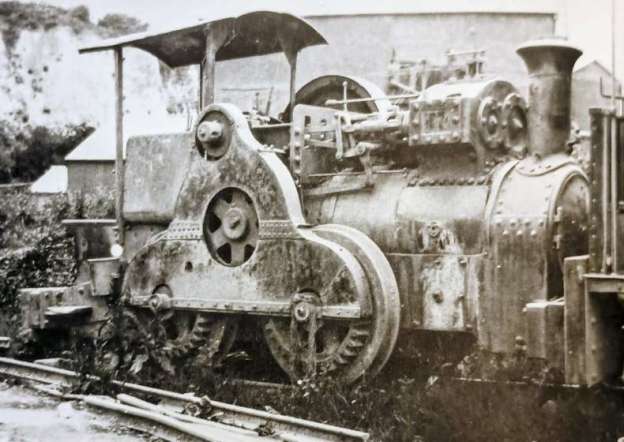
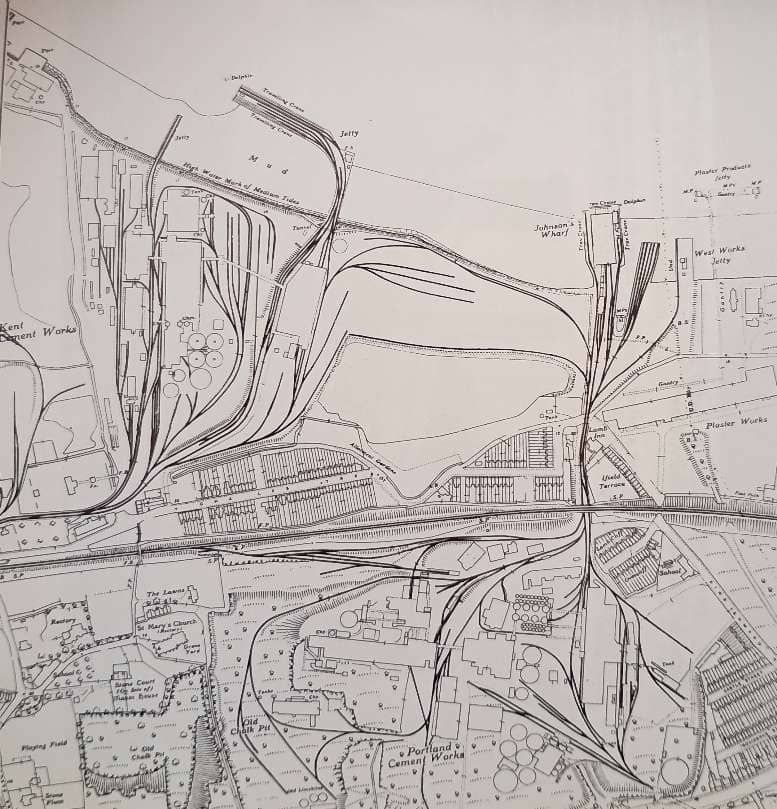

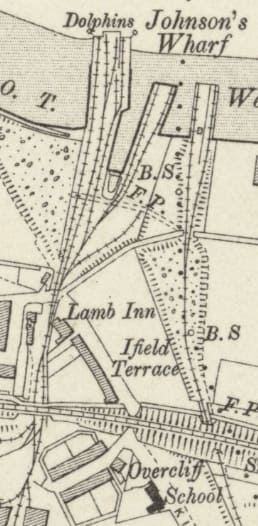
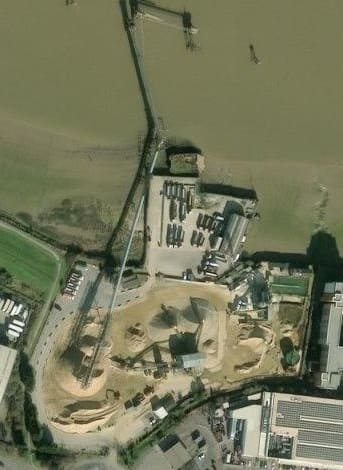
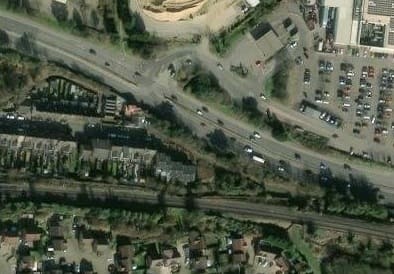


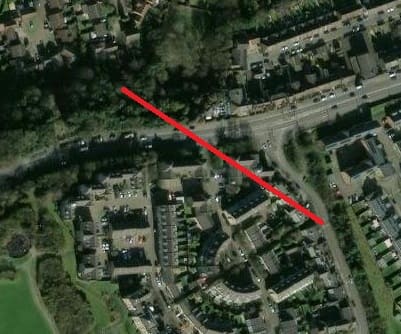
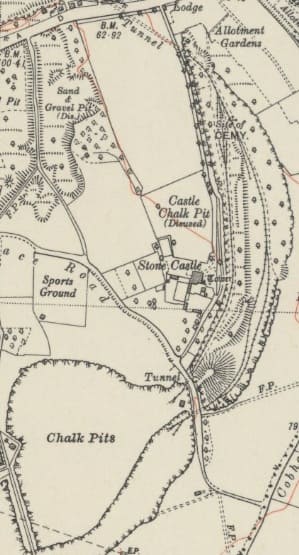
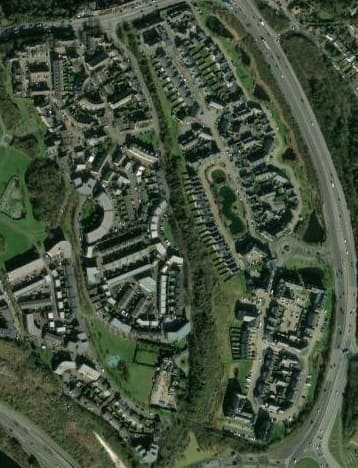
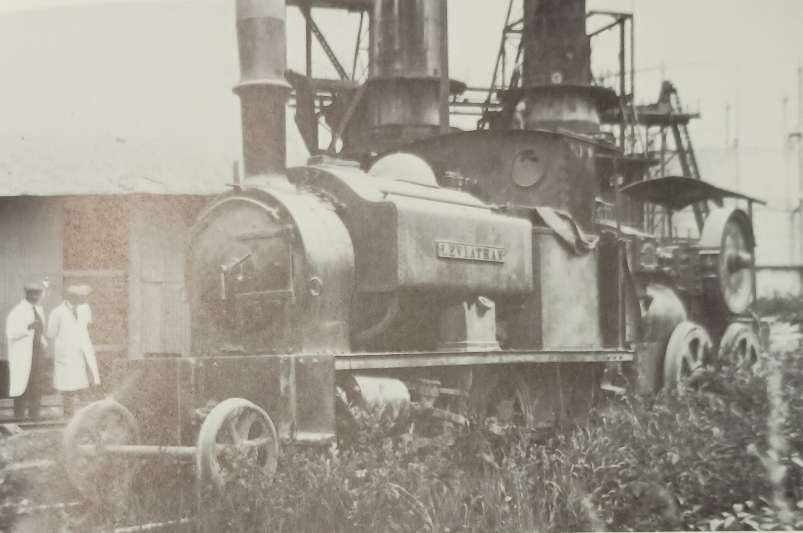
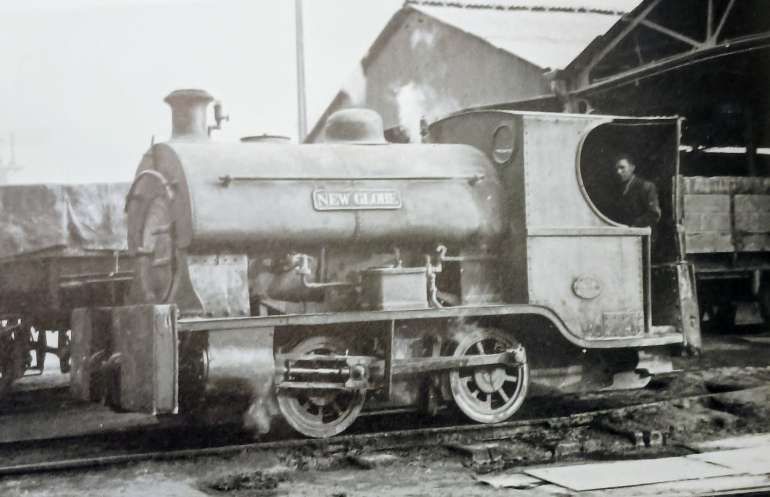

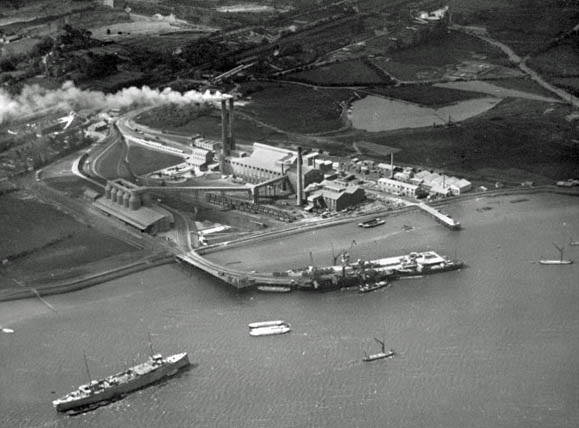
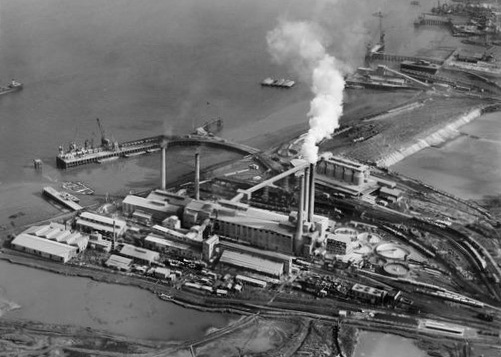
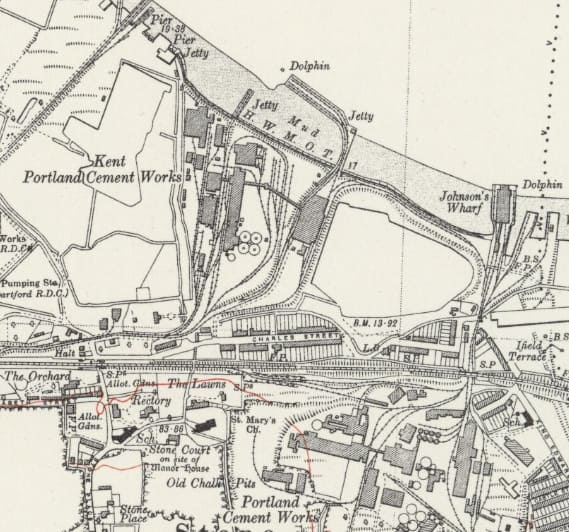
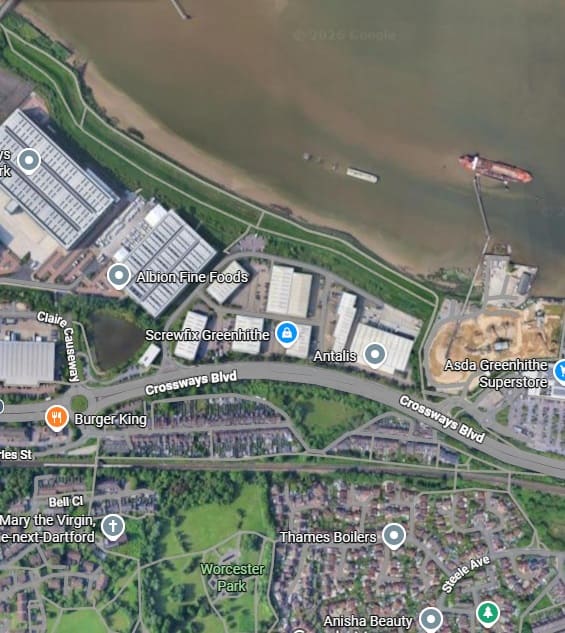
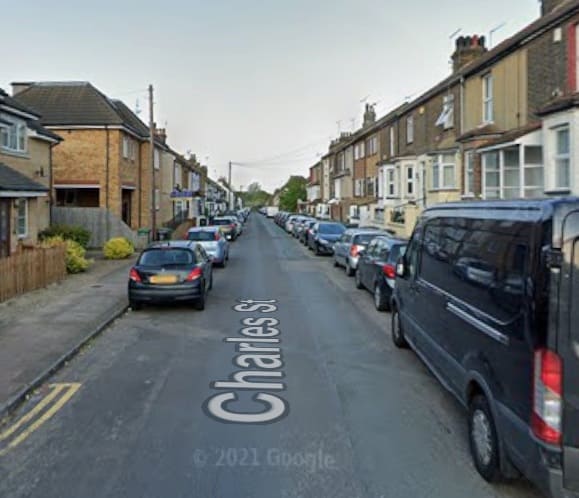
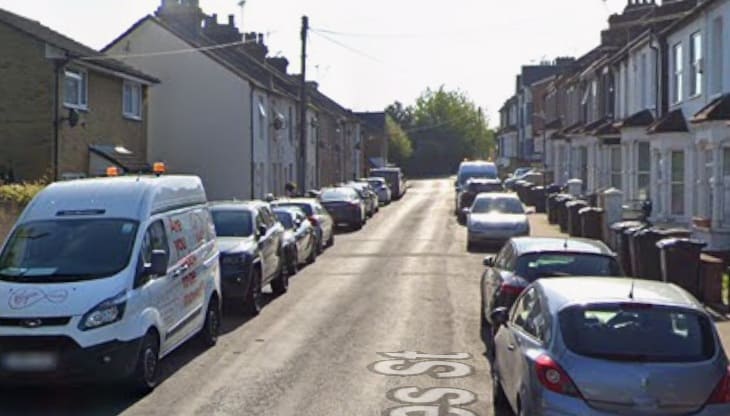
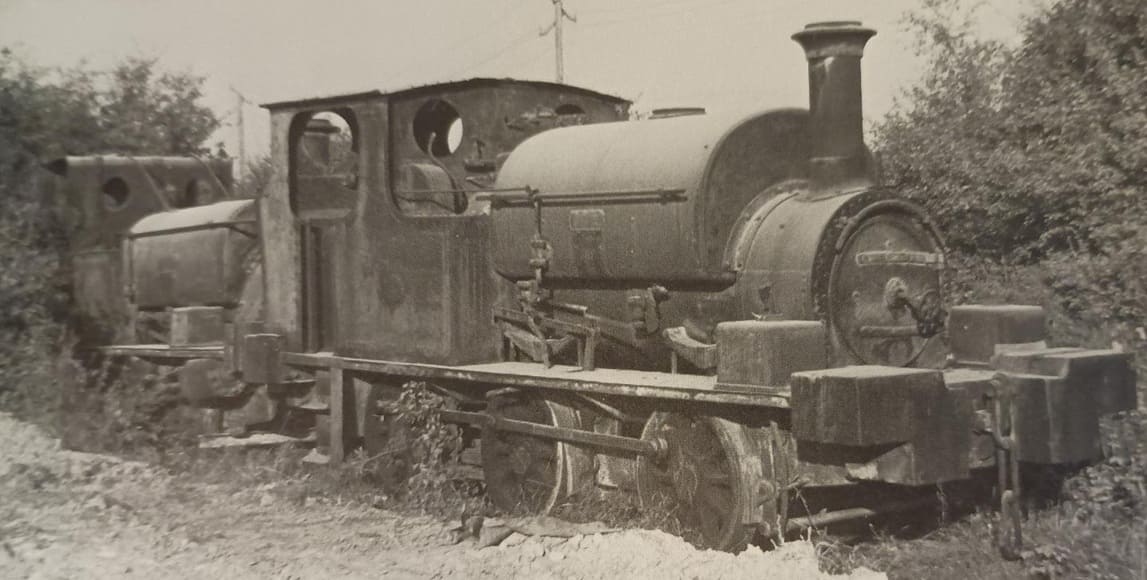

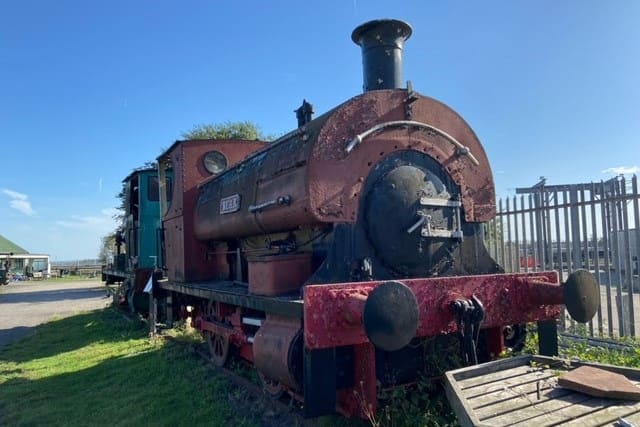
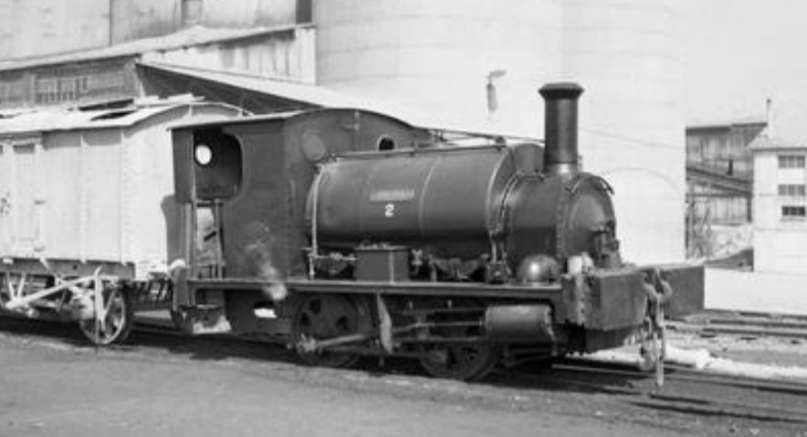
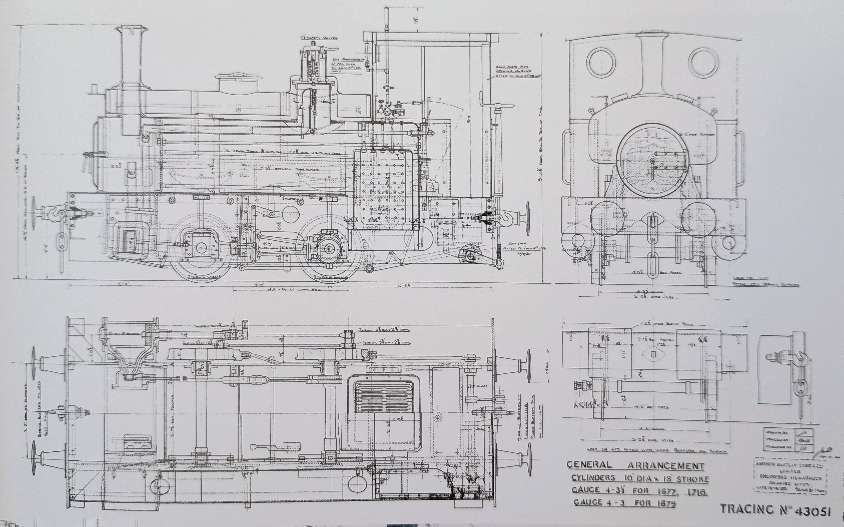


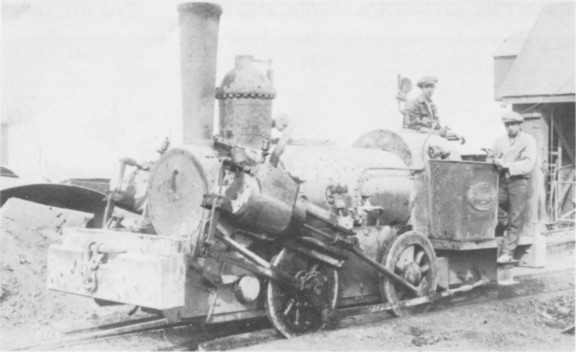


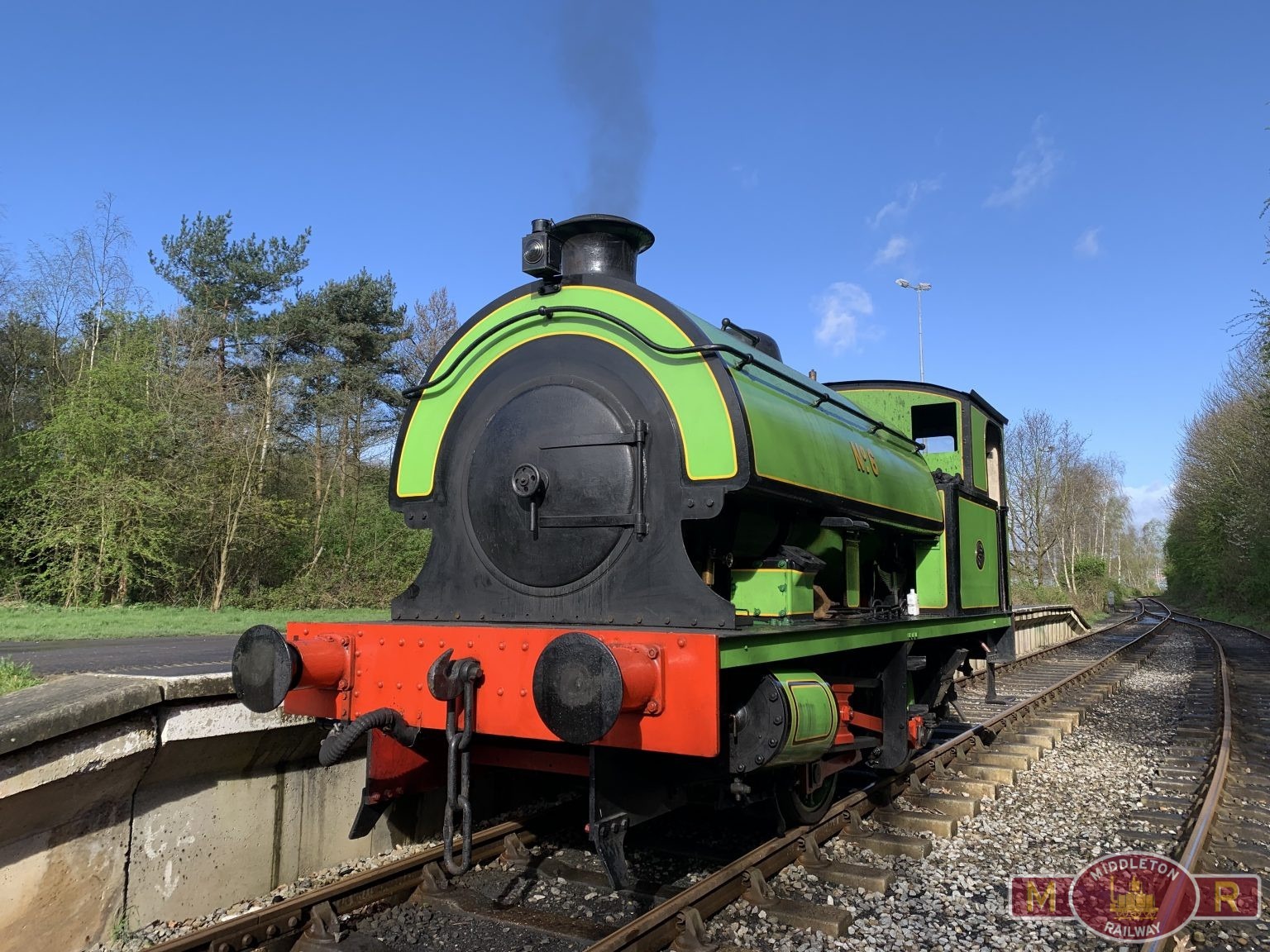

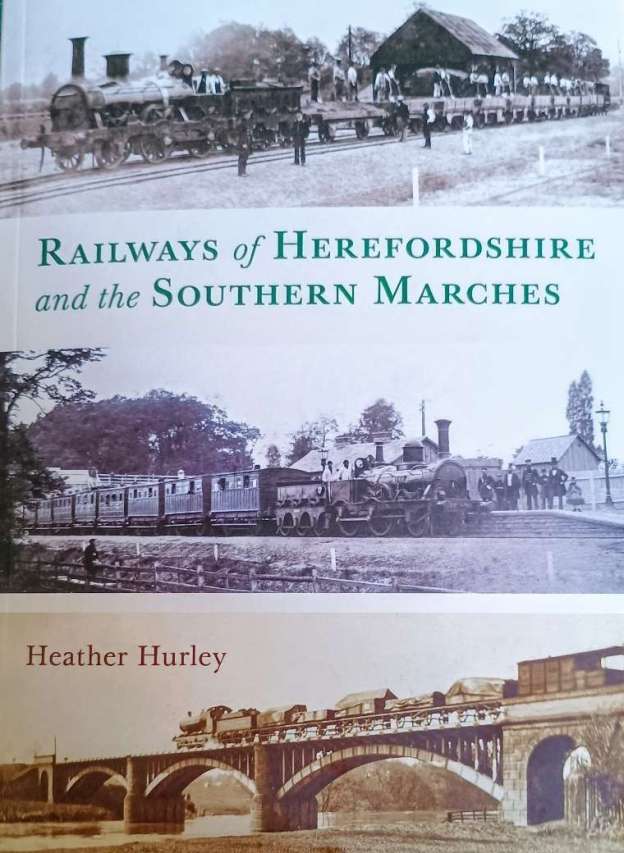
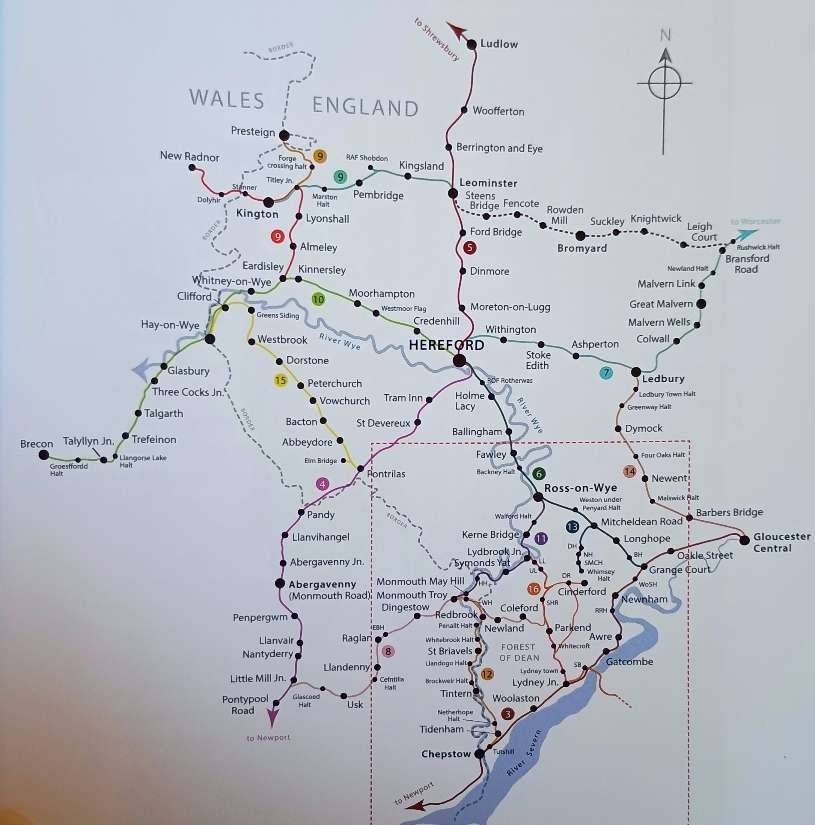
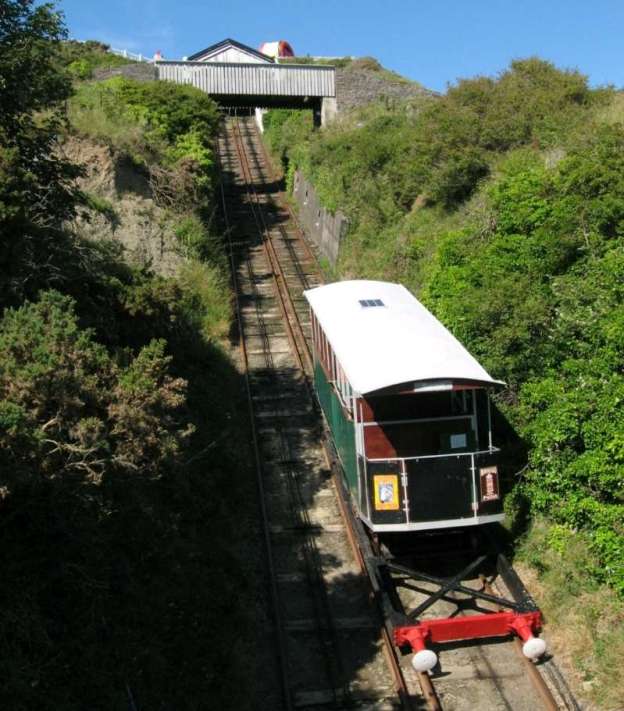
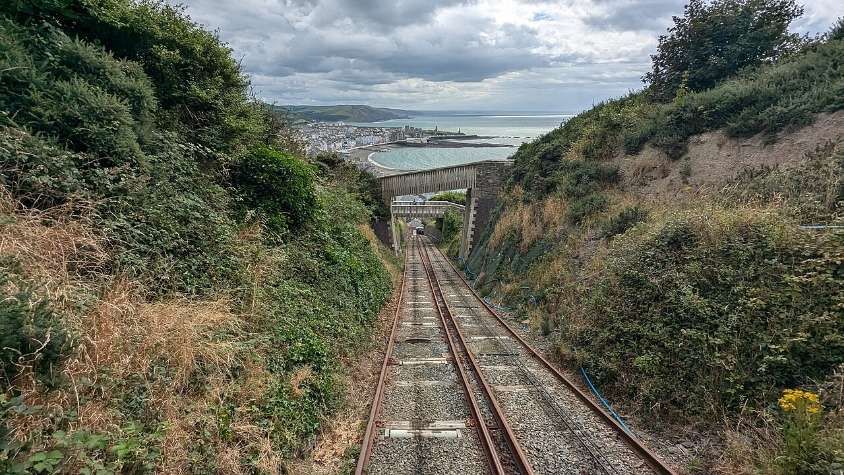
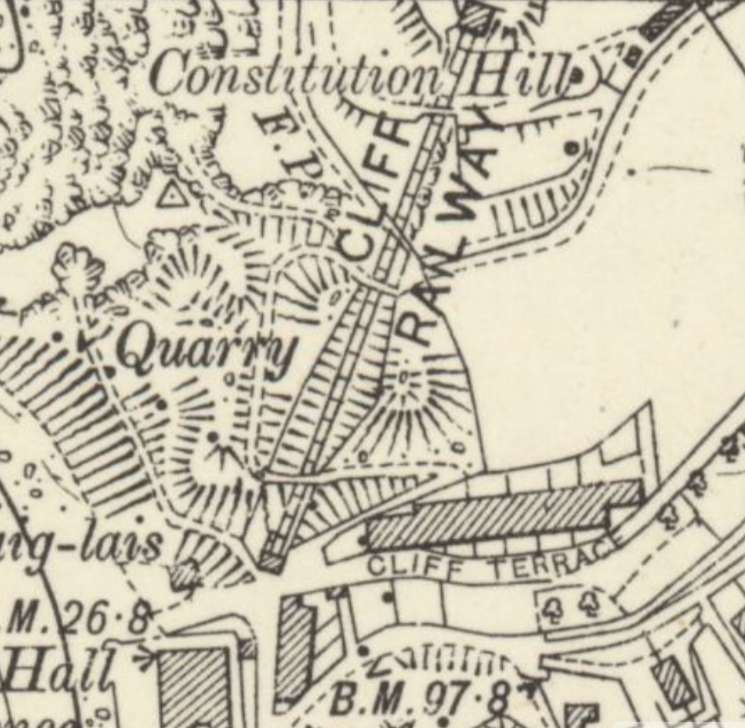
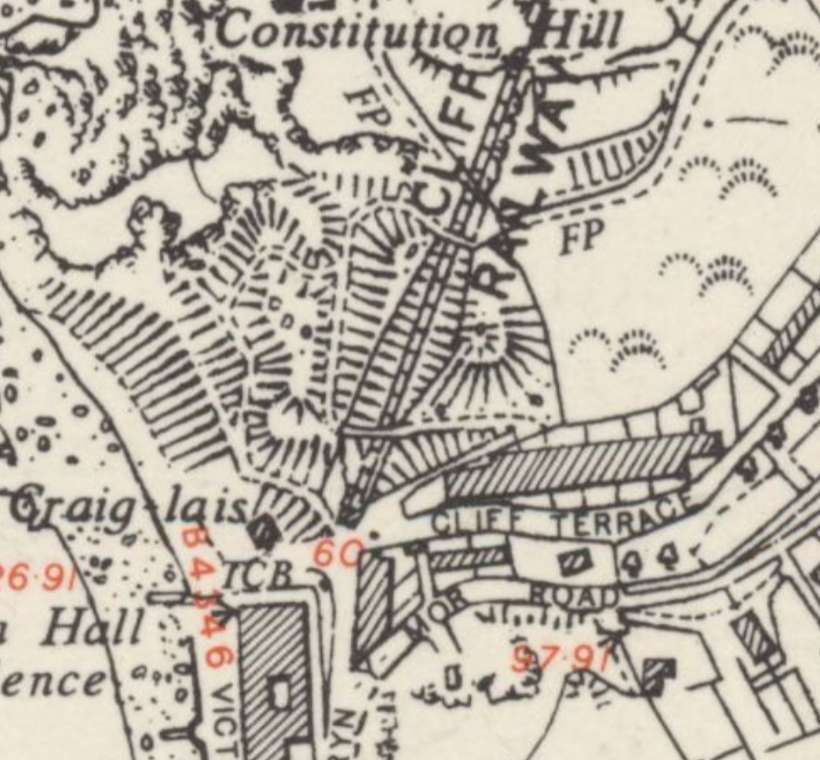
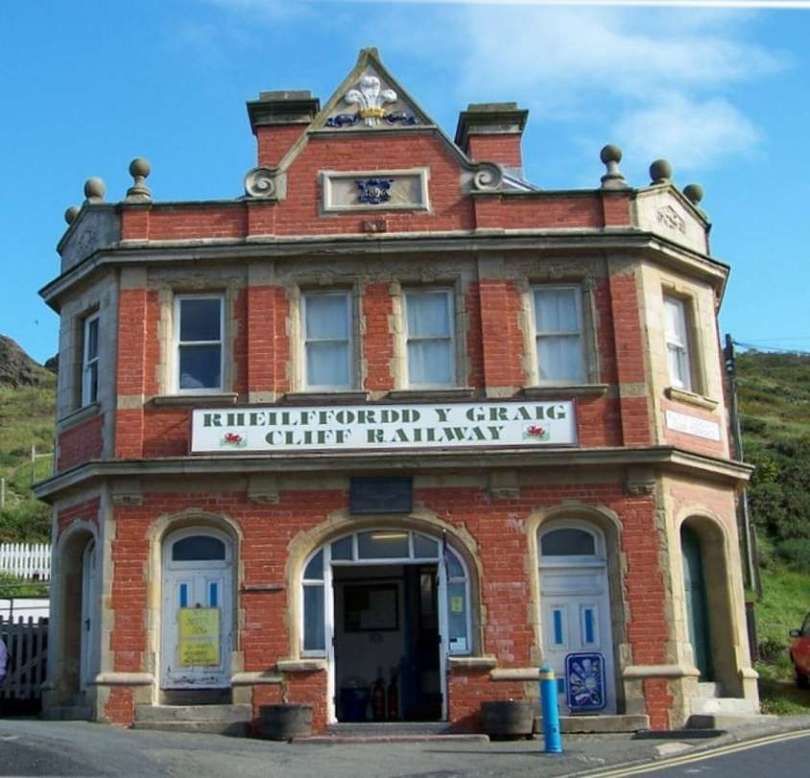
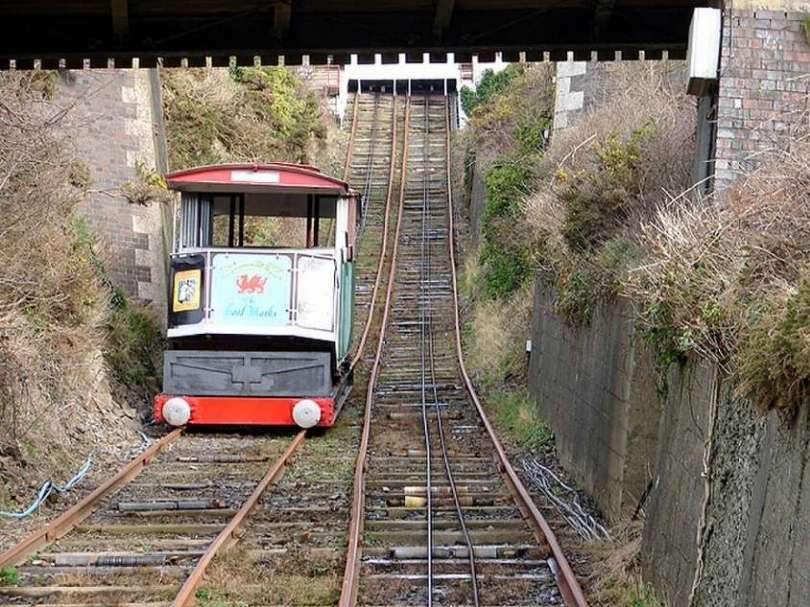
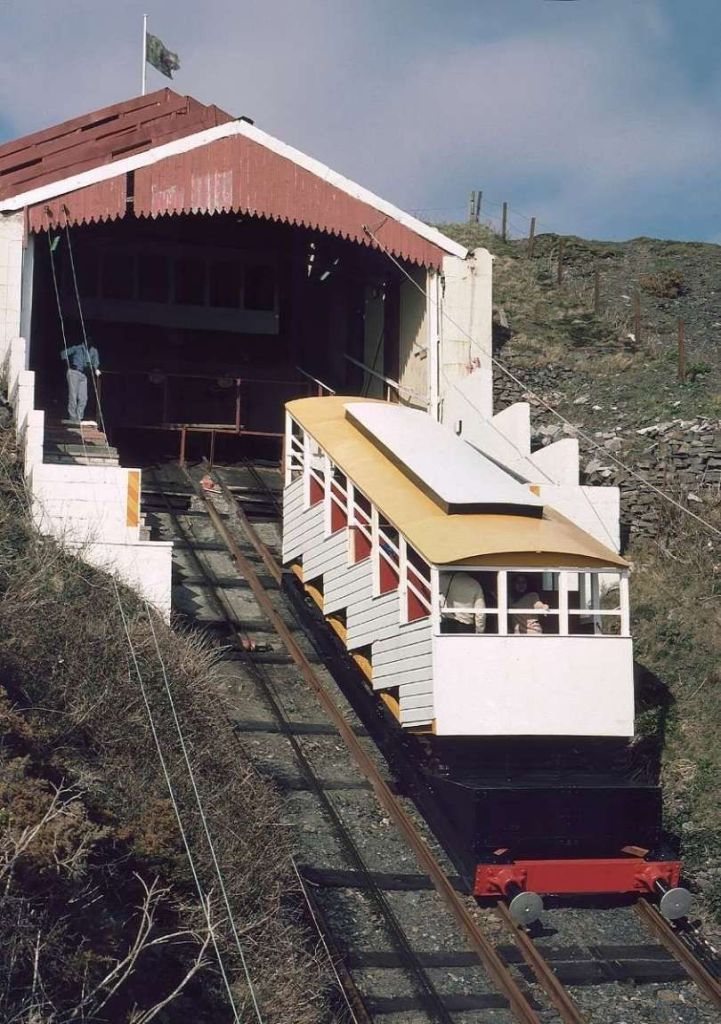


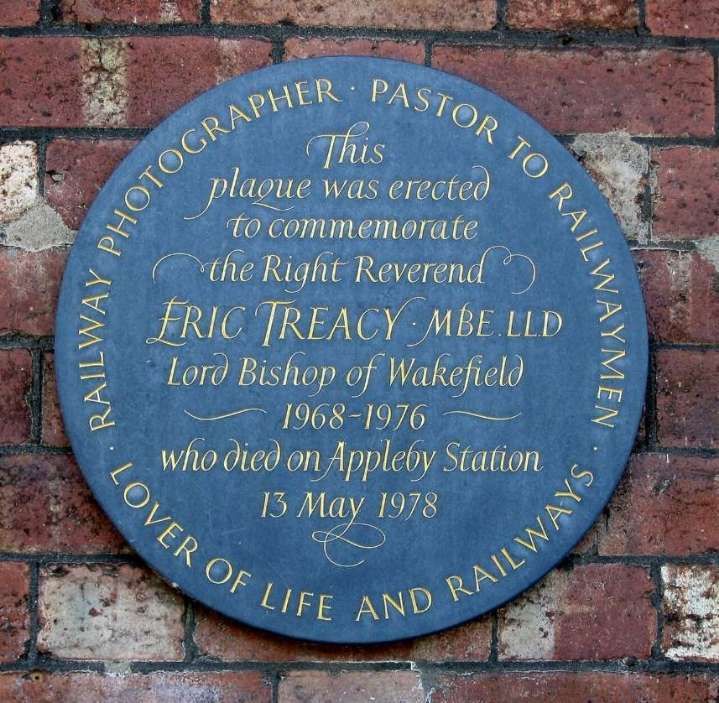


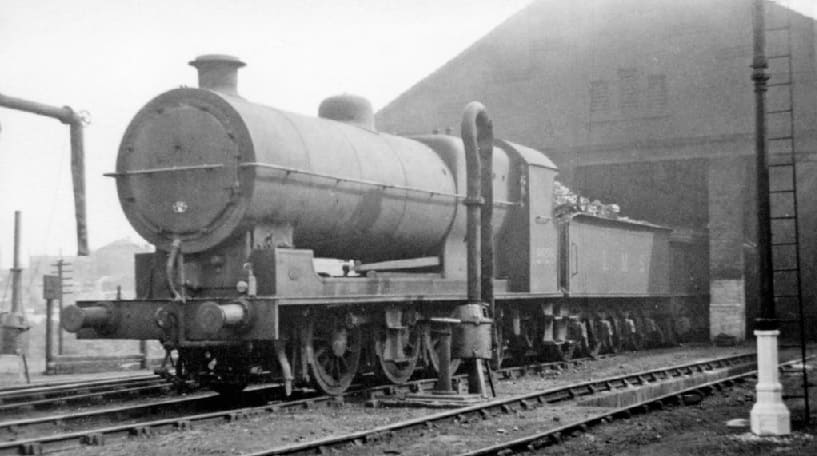
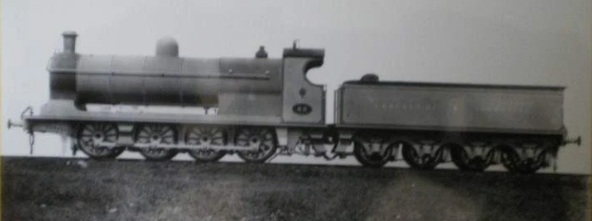
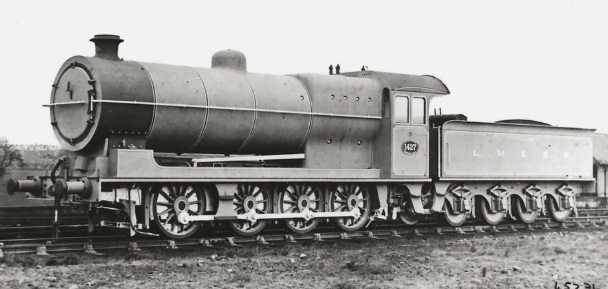
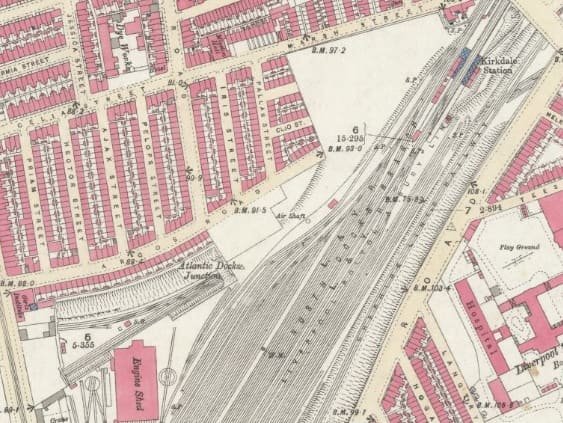
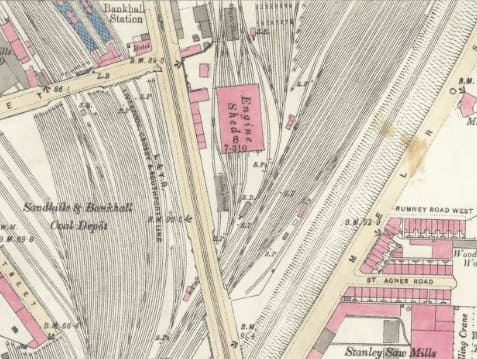
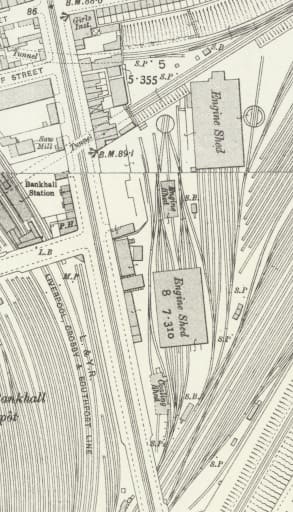
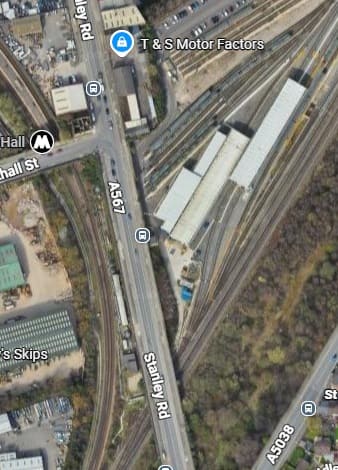
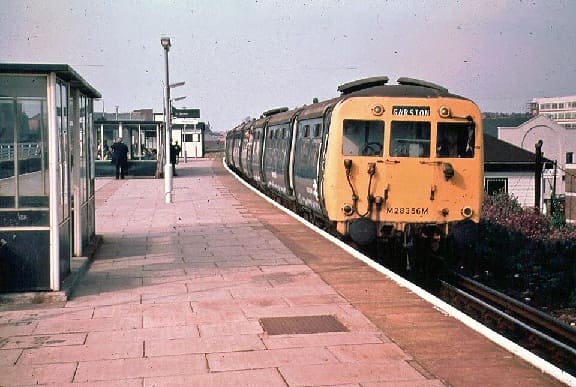
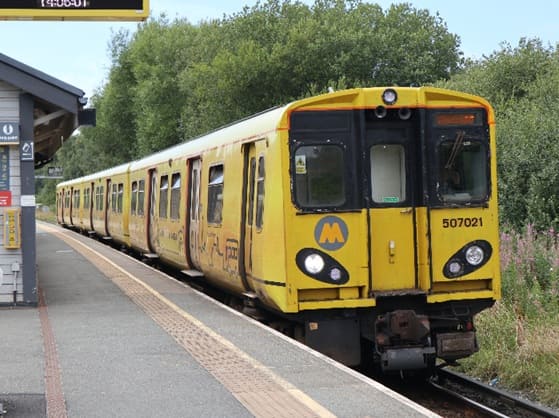
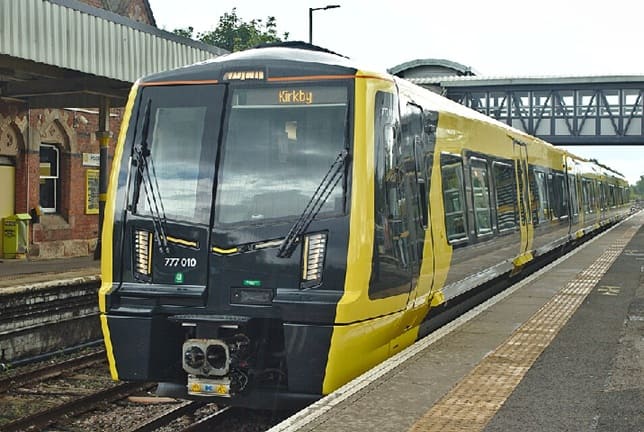
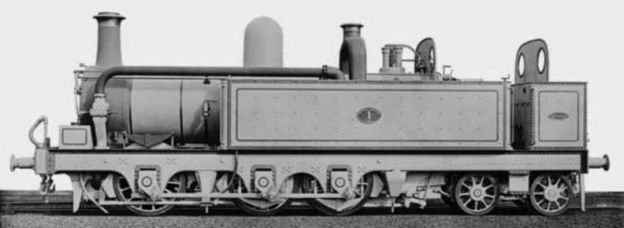

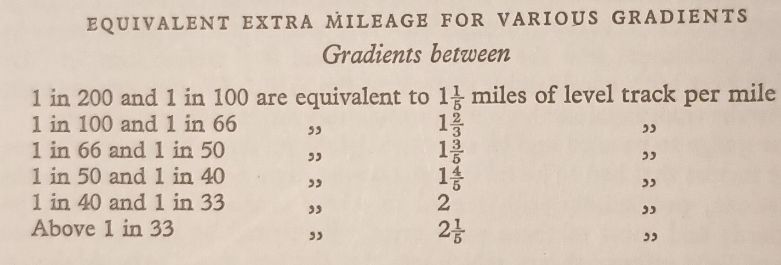


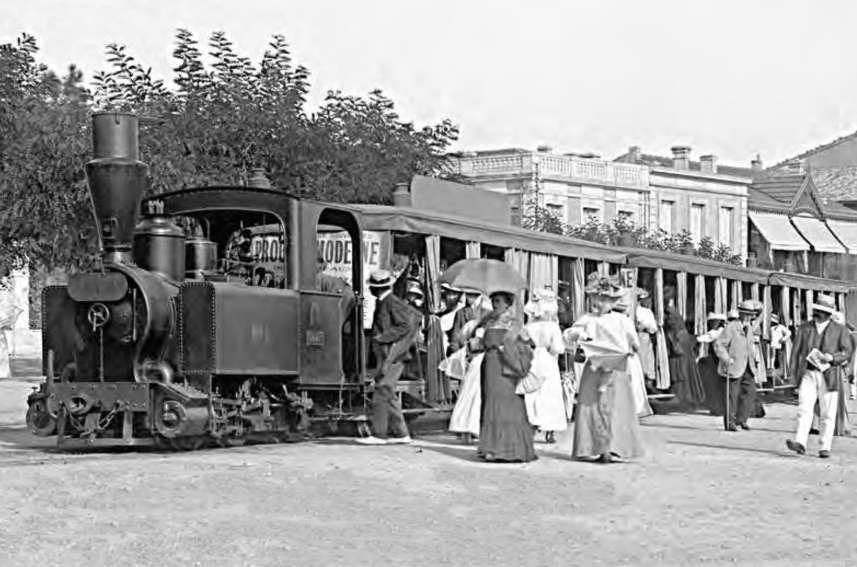
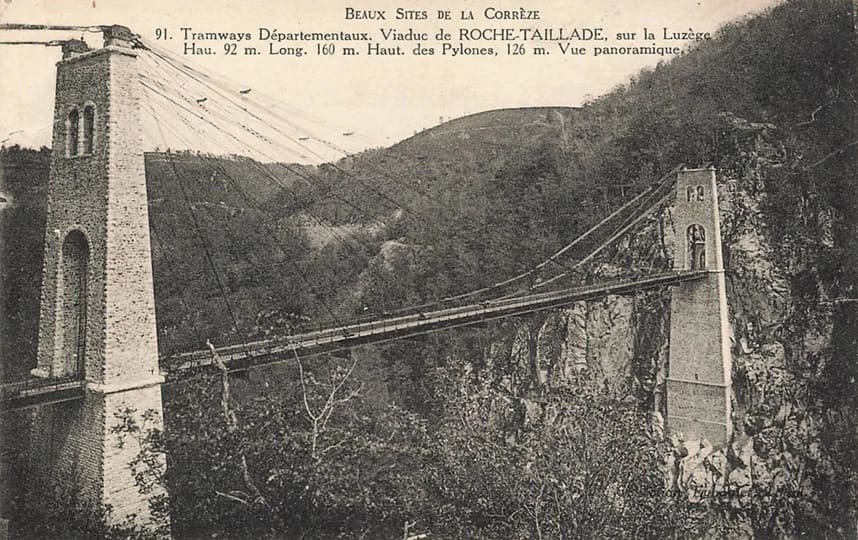
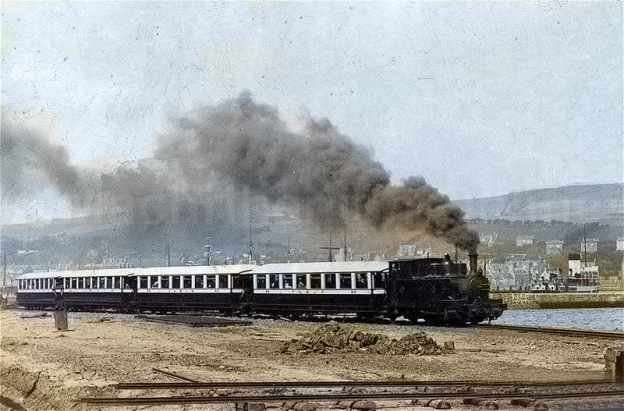
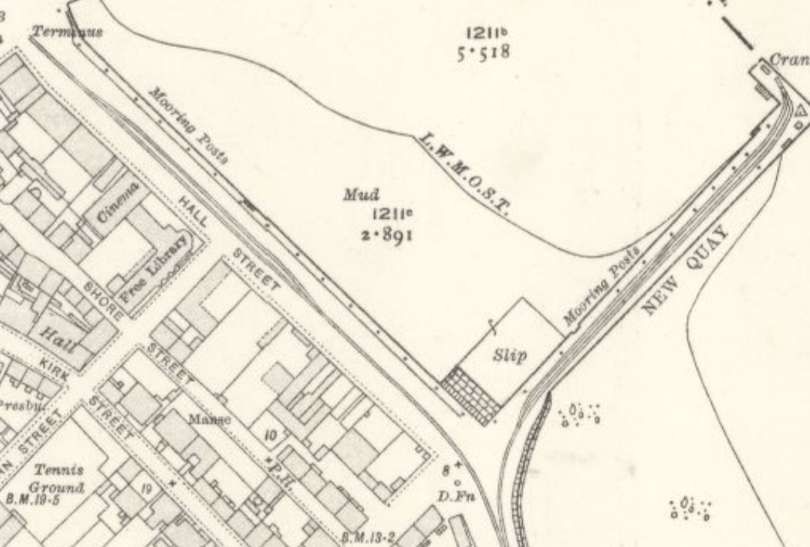
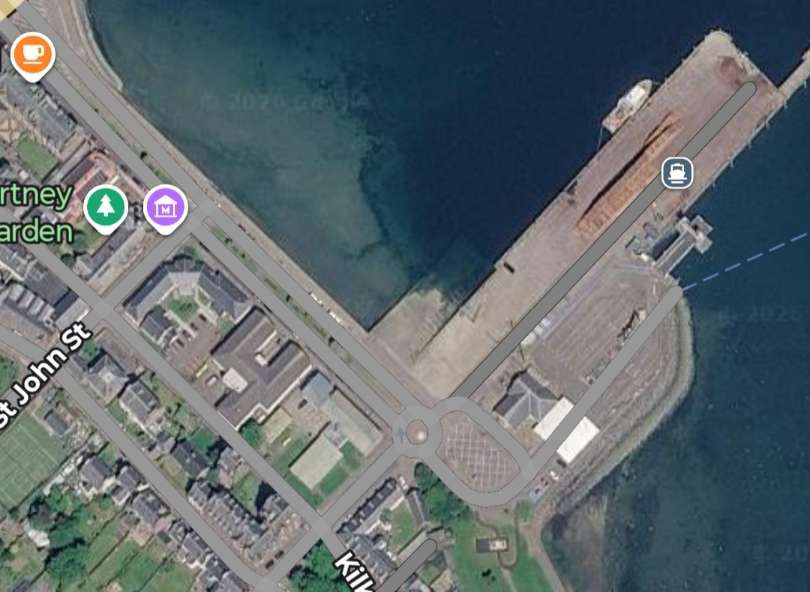
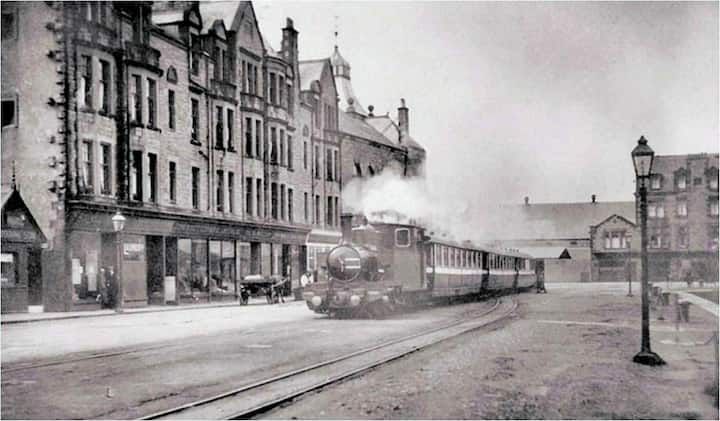
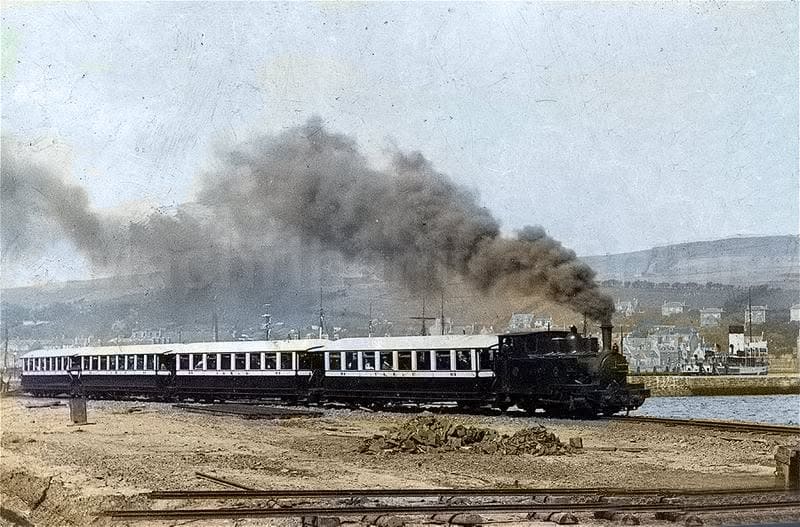
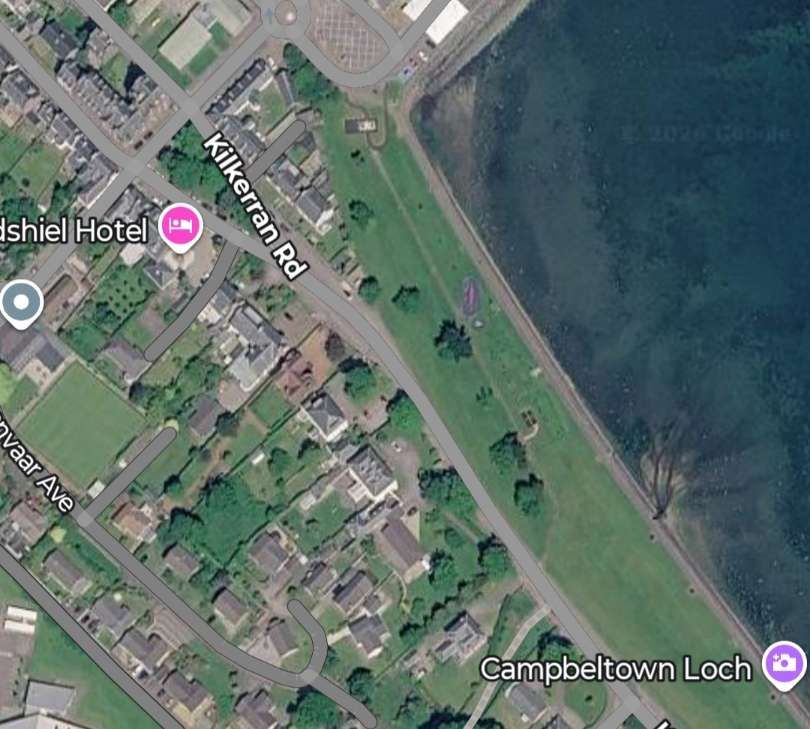
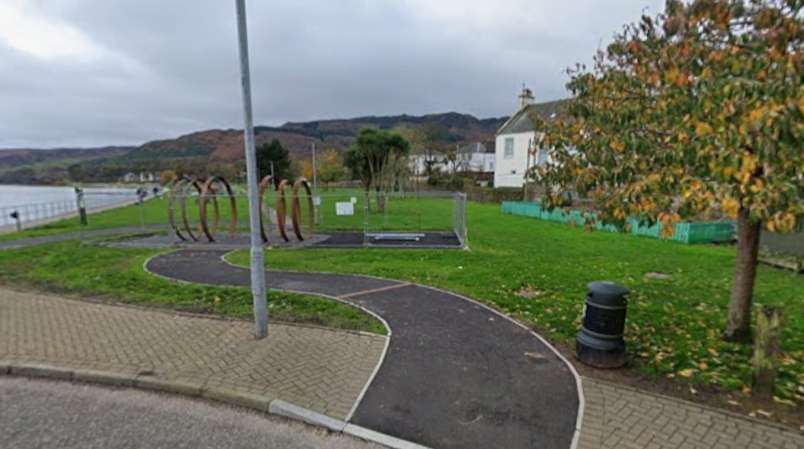
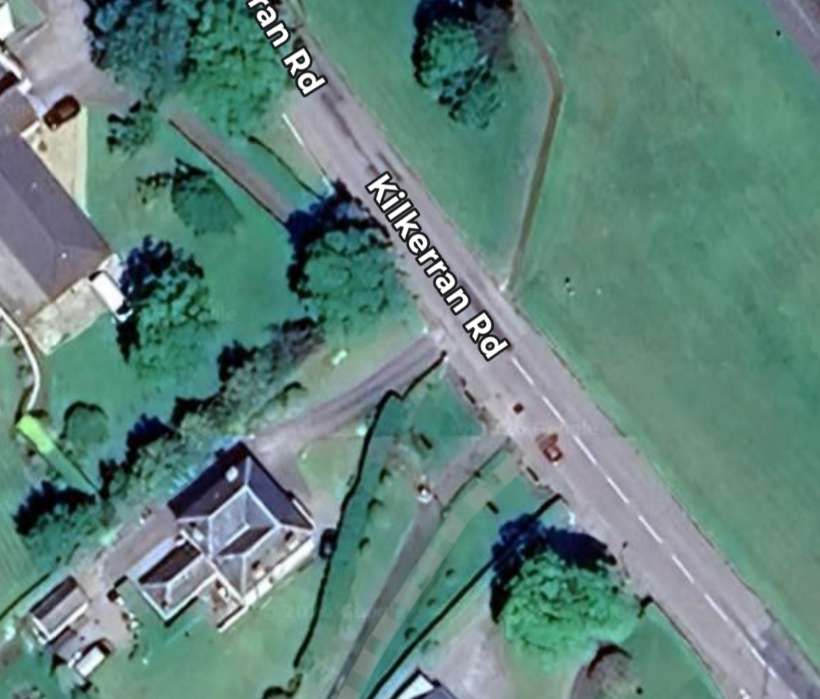
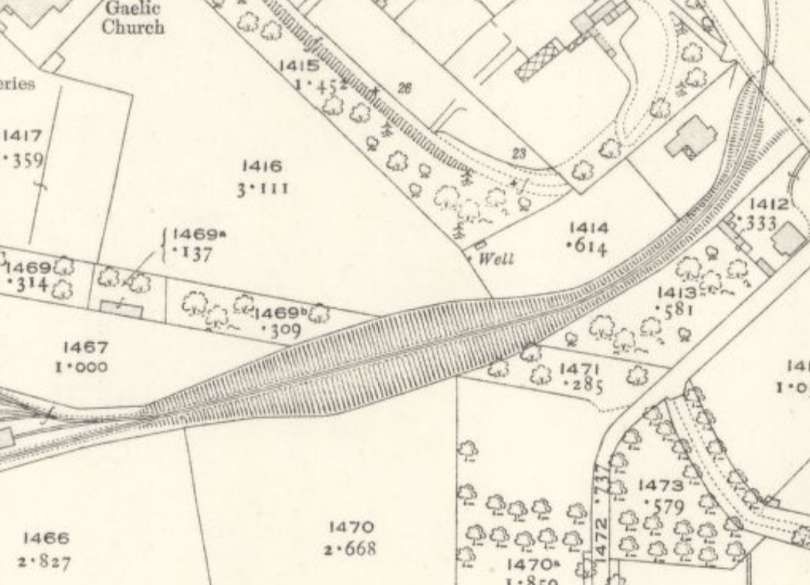
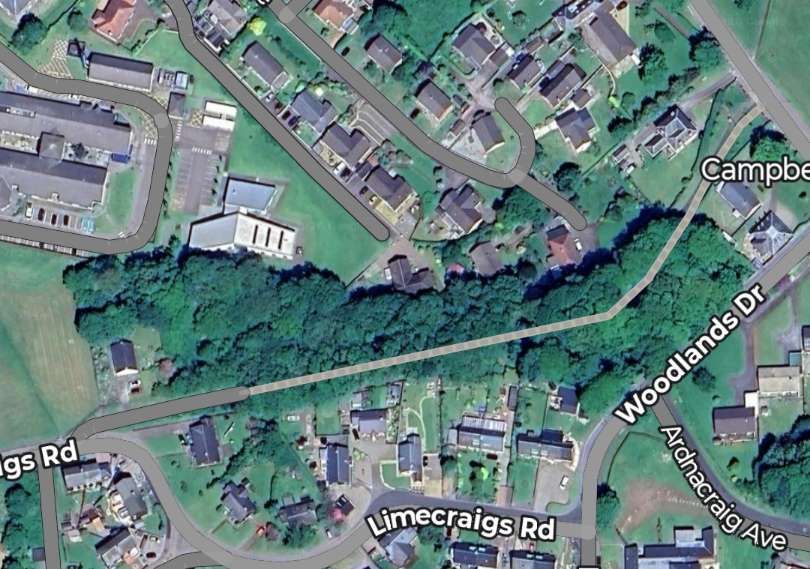
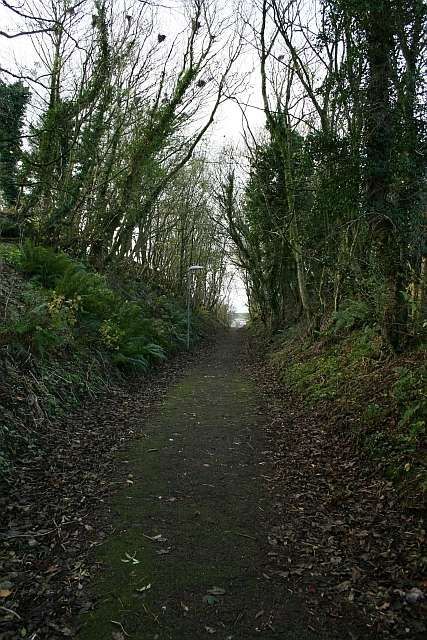
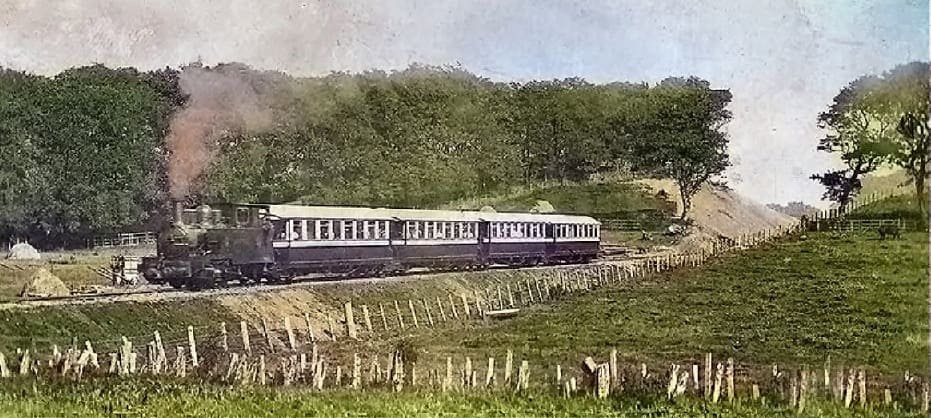
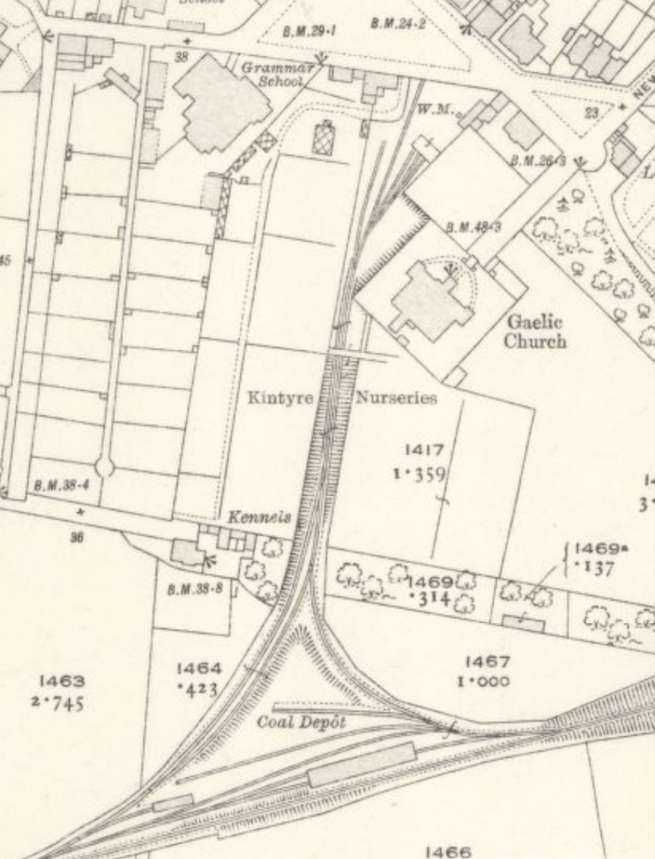
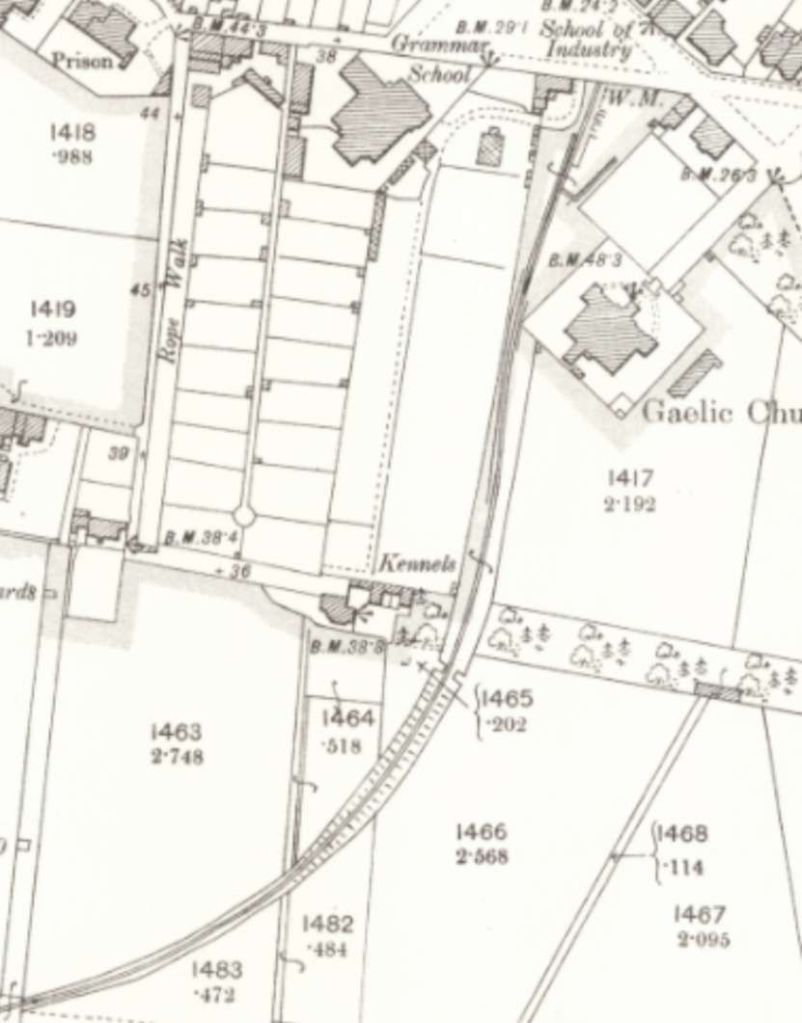
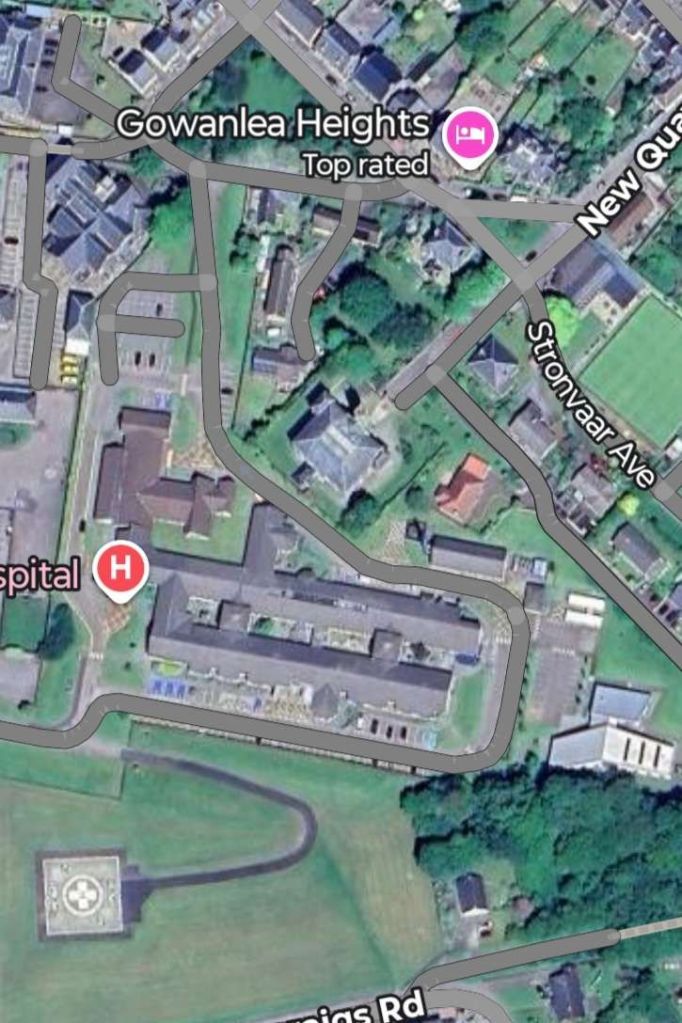
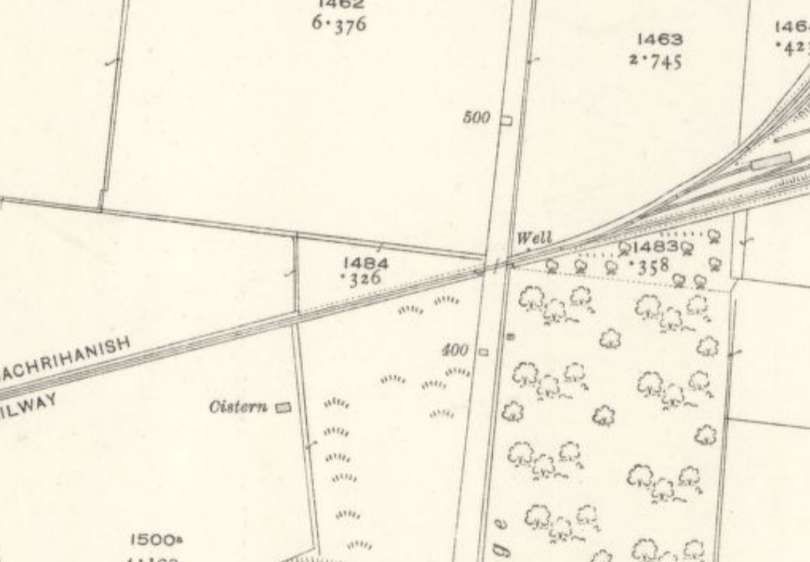
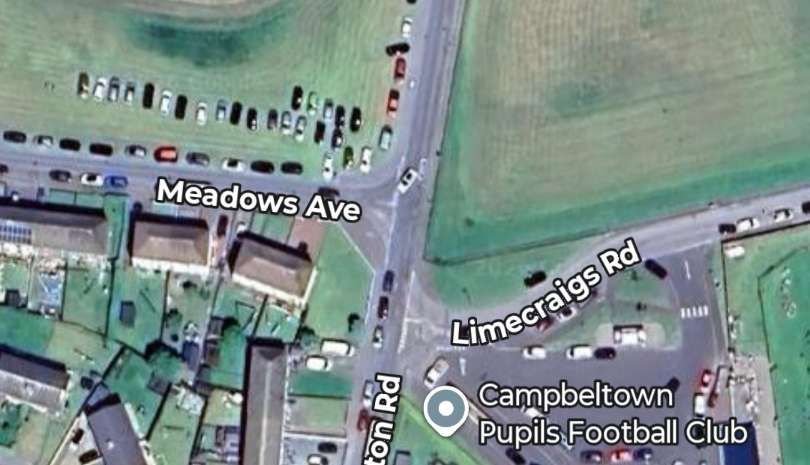
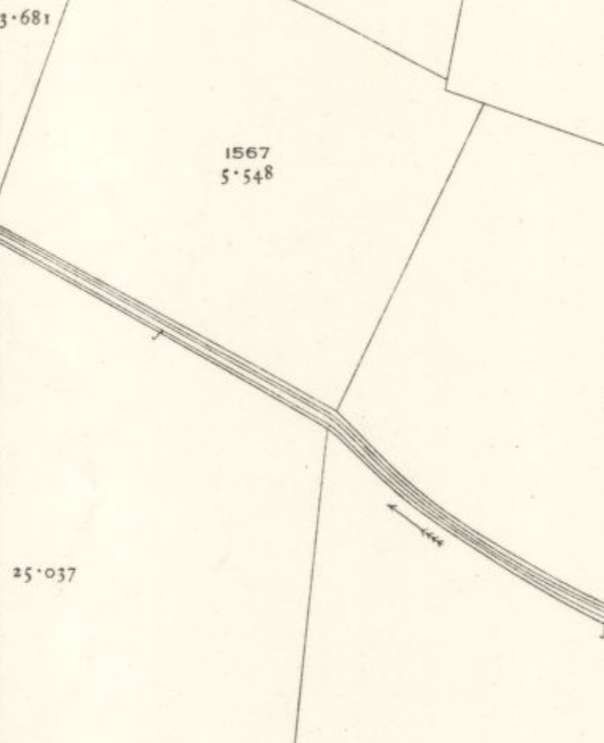
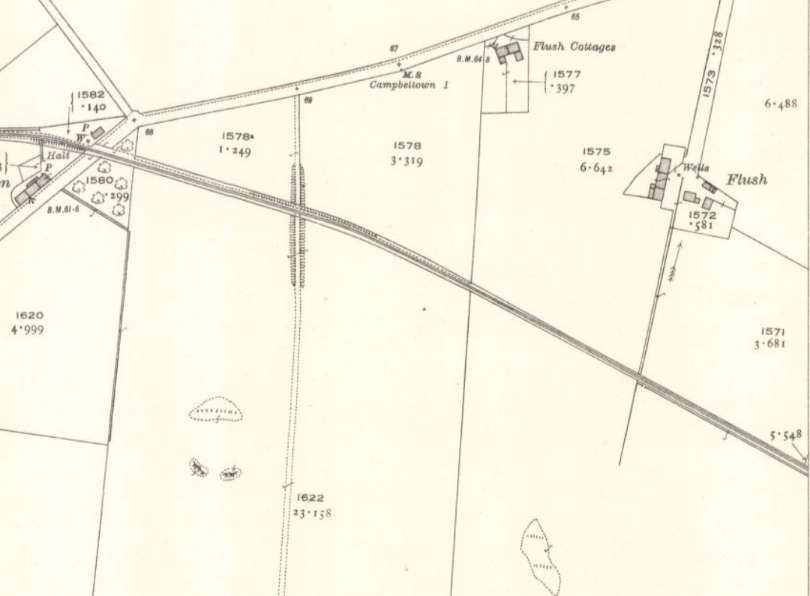
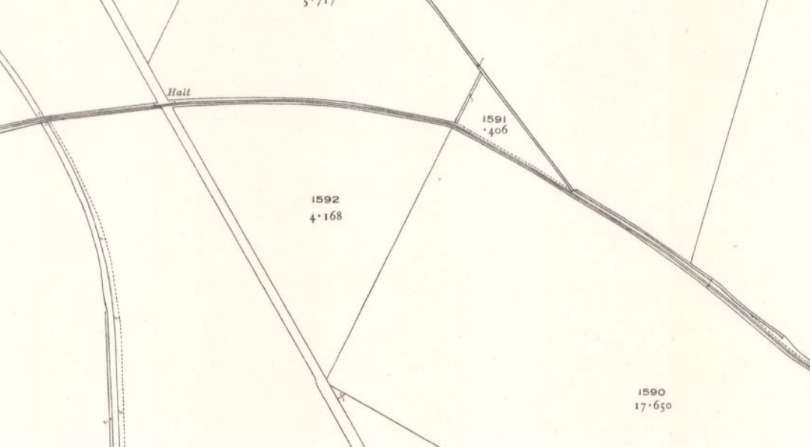
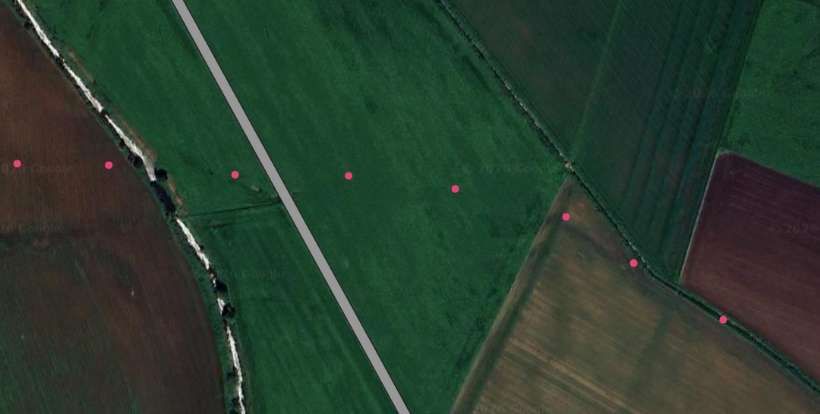
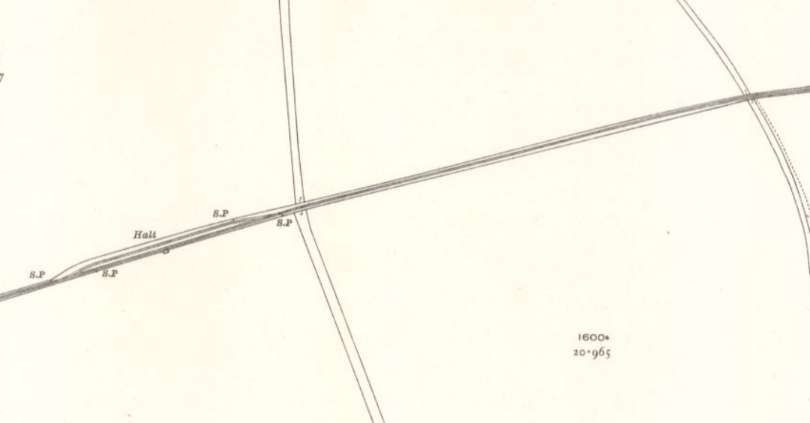
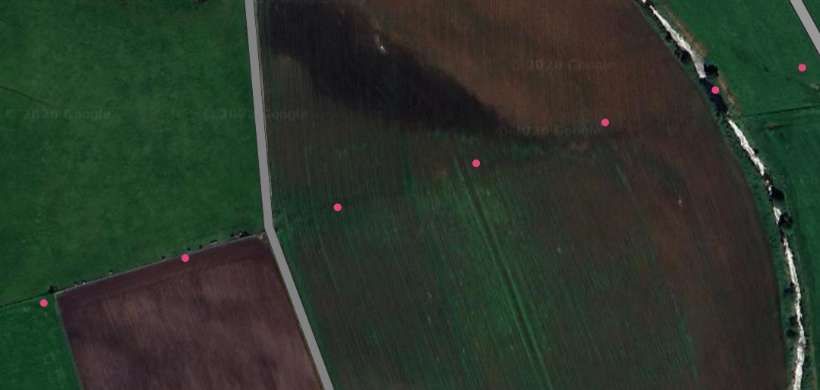
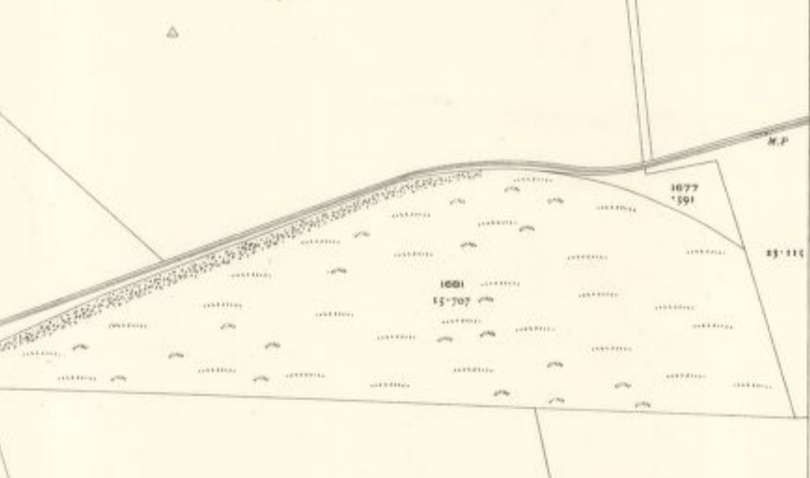
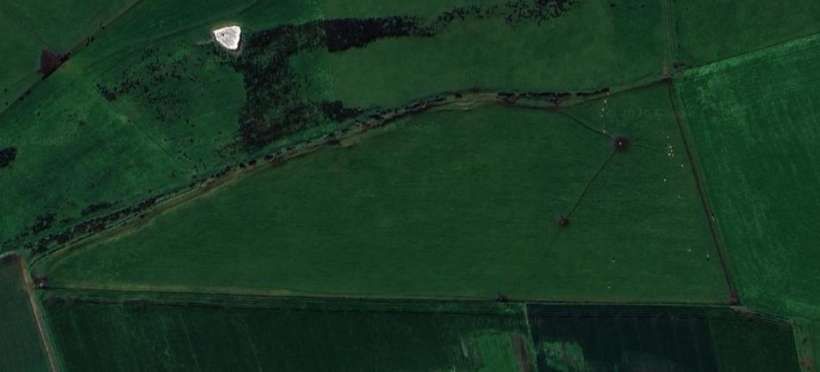
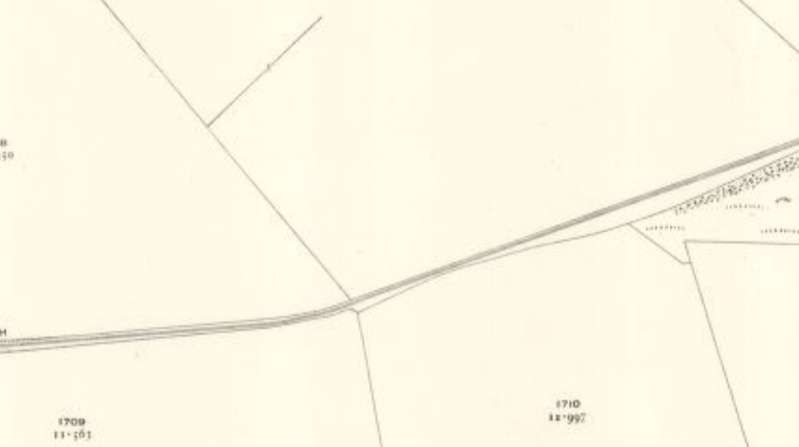
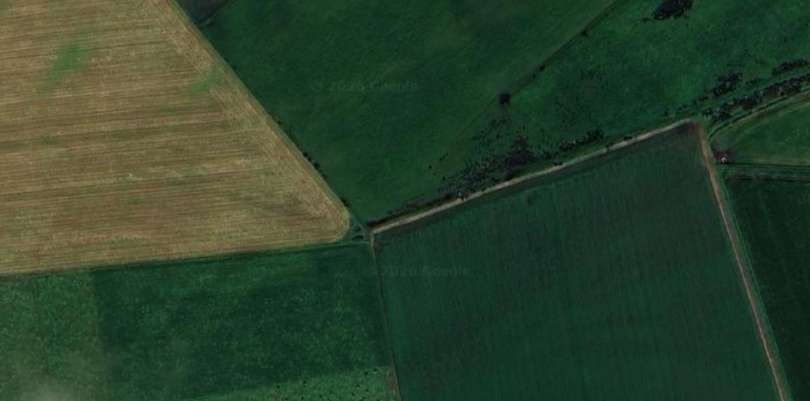
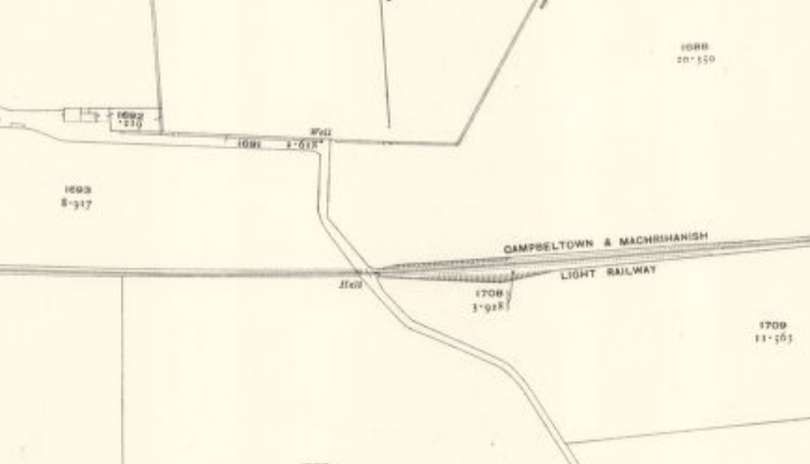
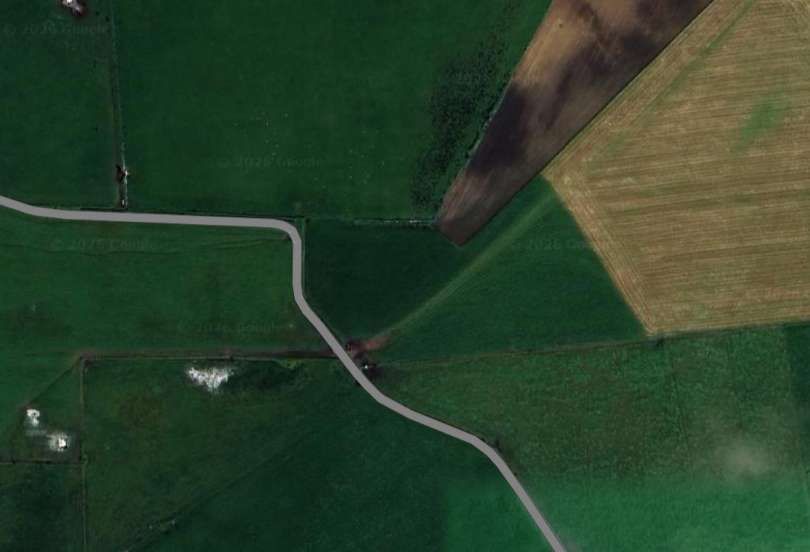
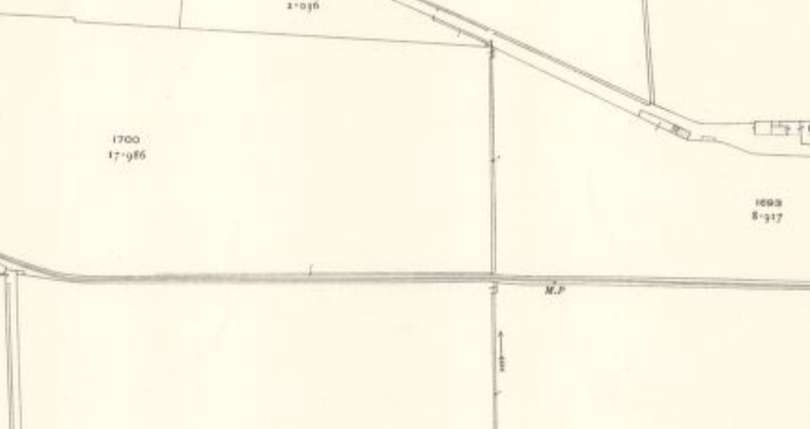
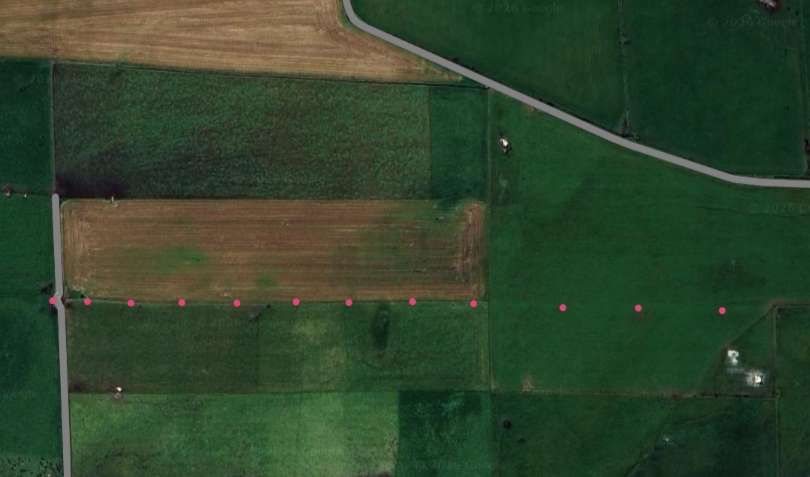
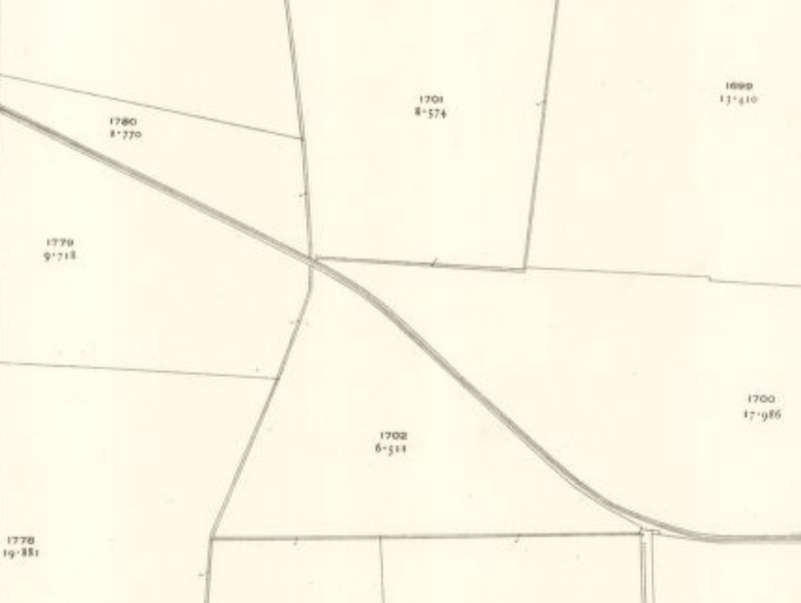
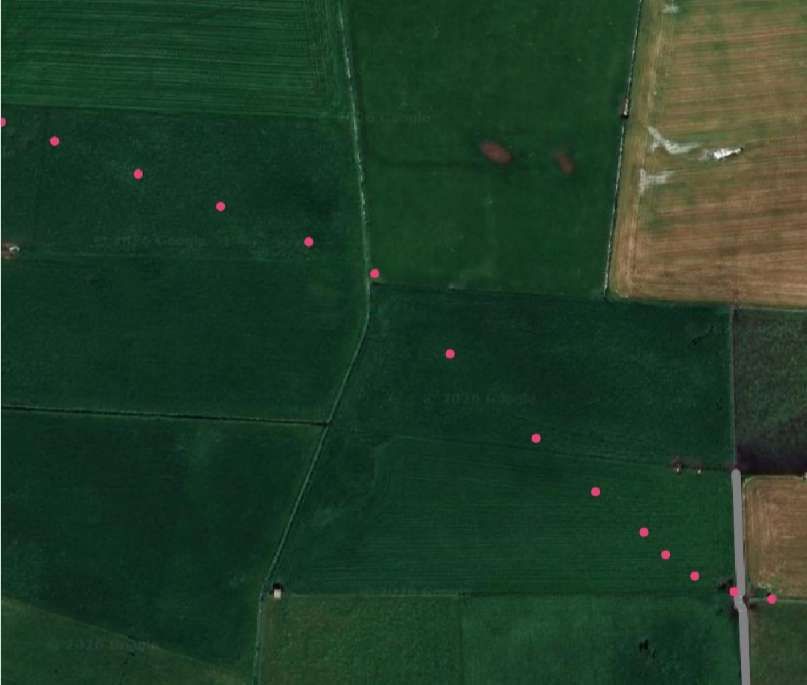
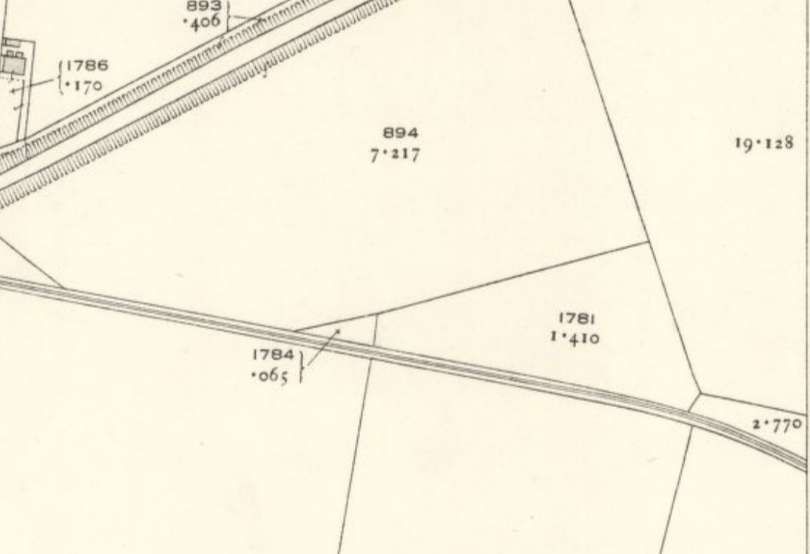
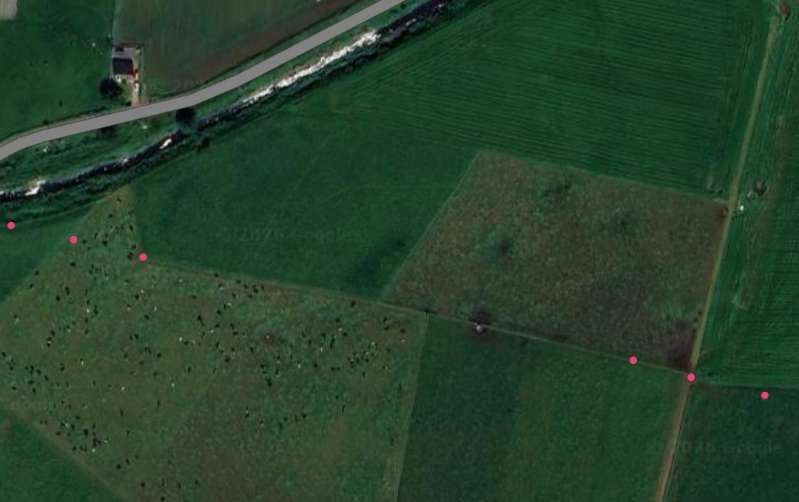
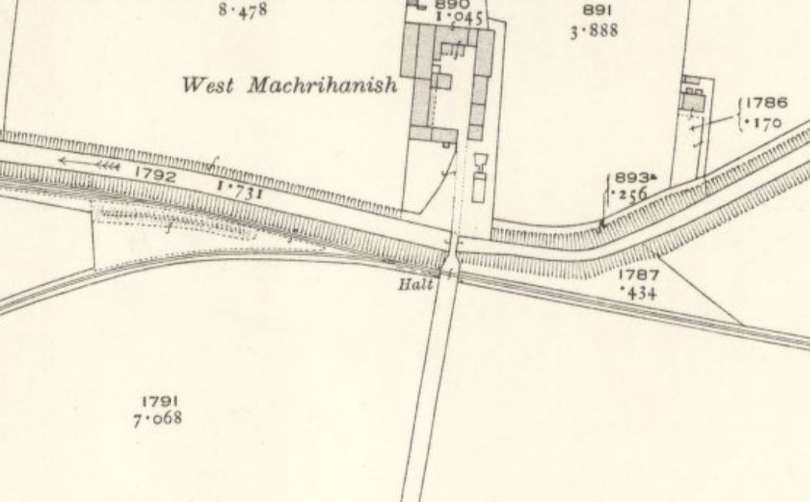
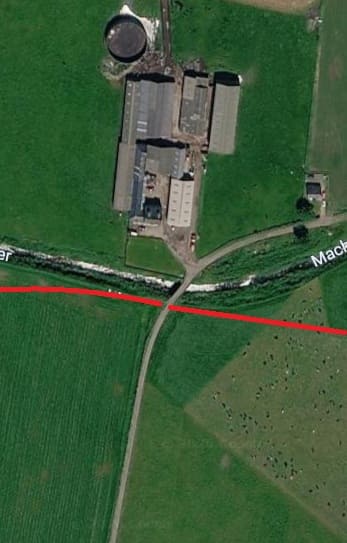
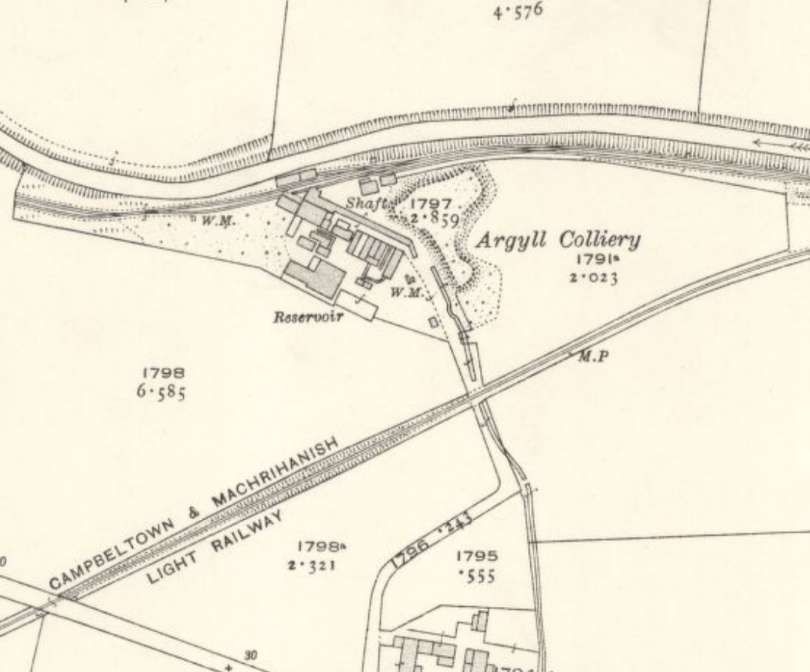
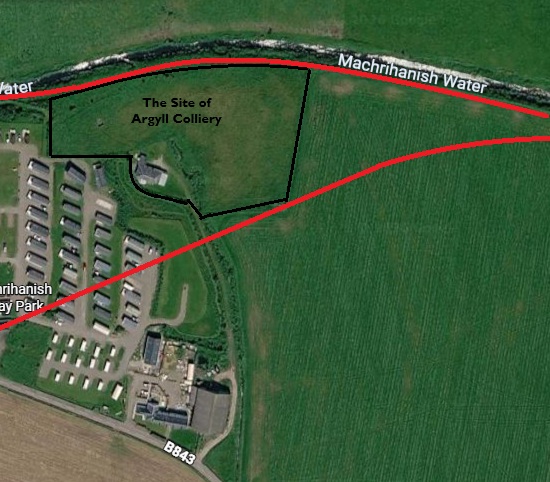
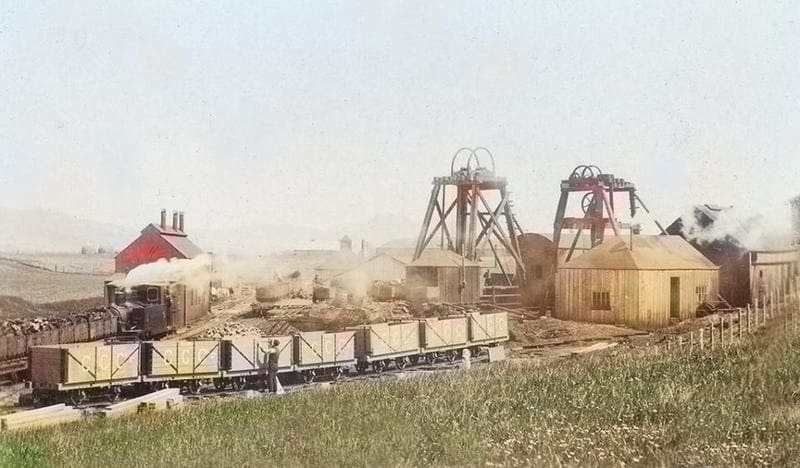
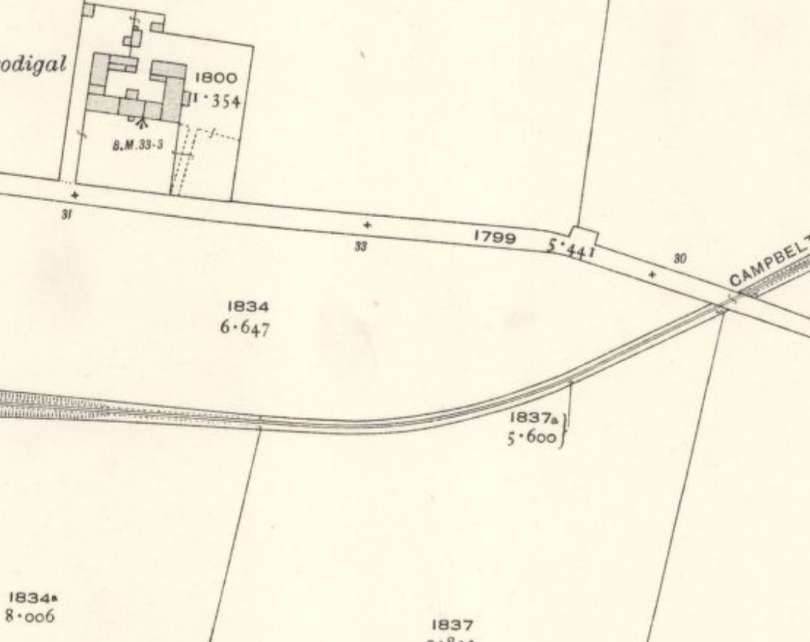
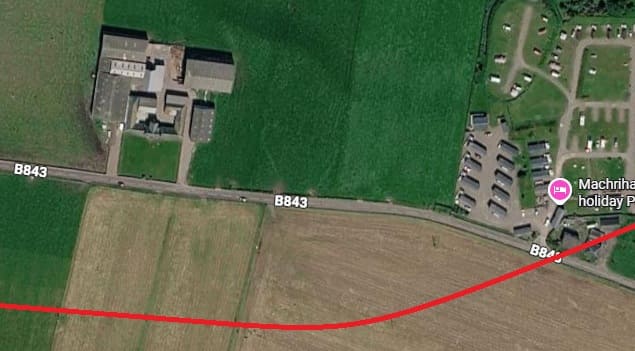
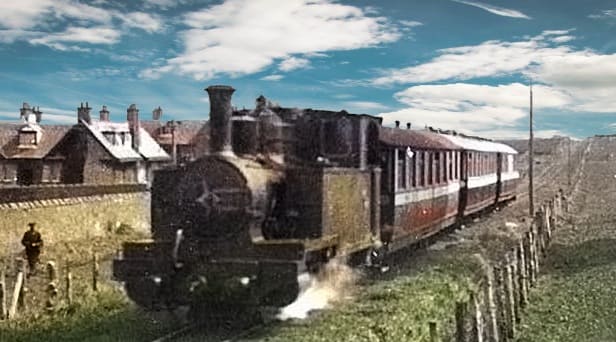
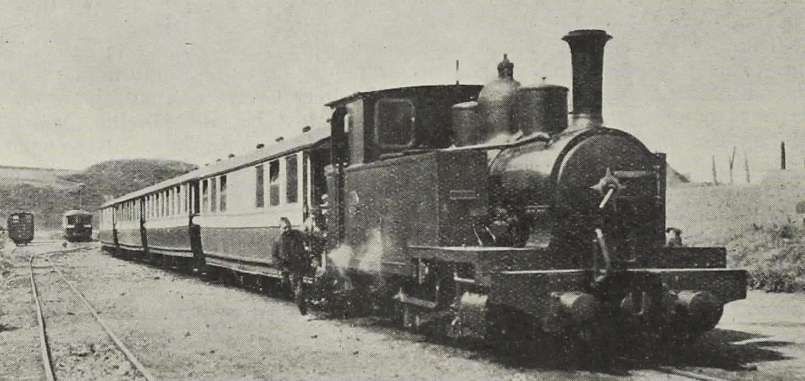

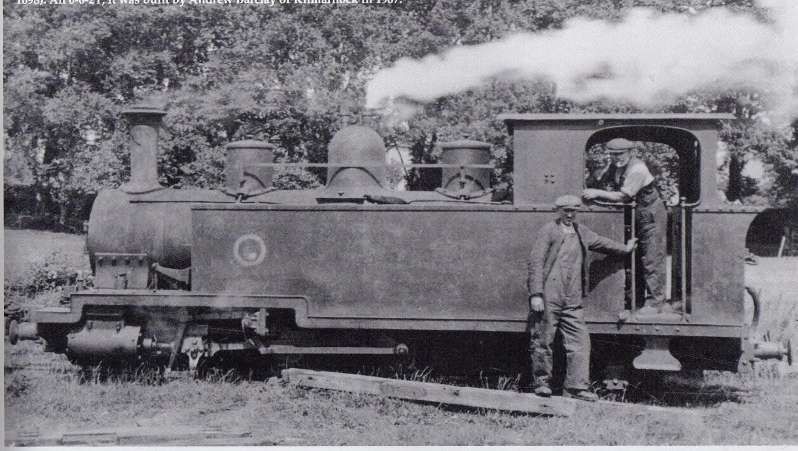
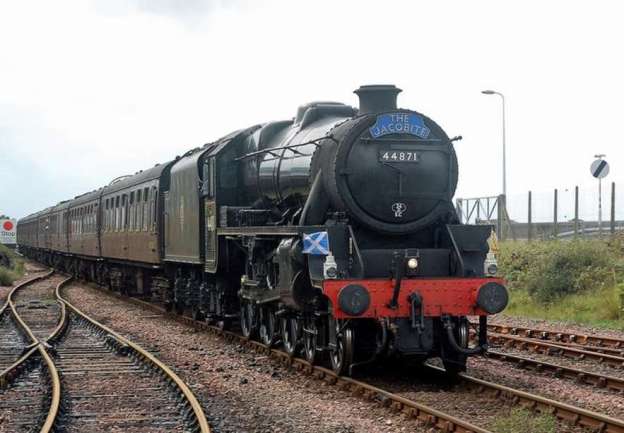
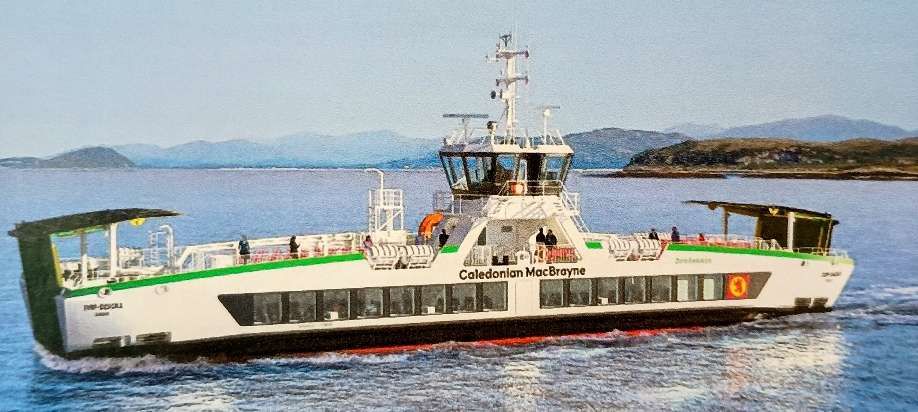
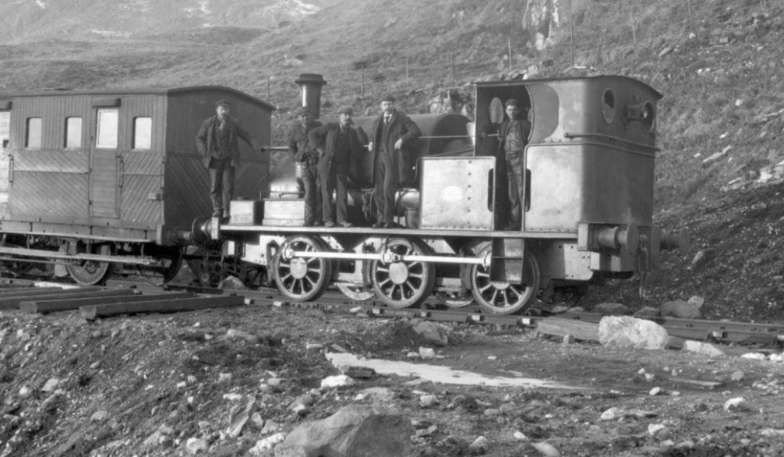






#/media/File:The_Jacobite_Arriving_at_Mallaig_-_geograph.org.uk_-_3119099.jpg)