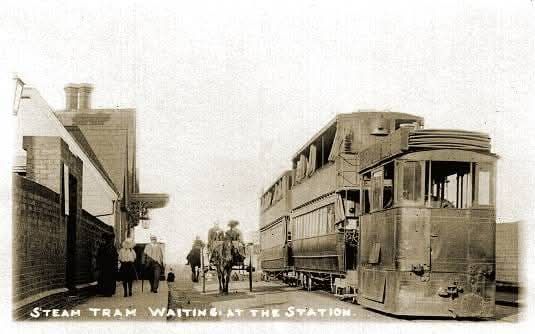
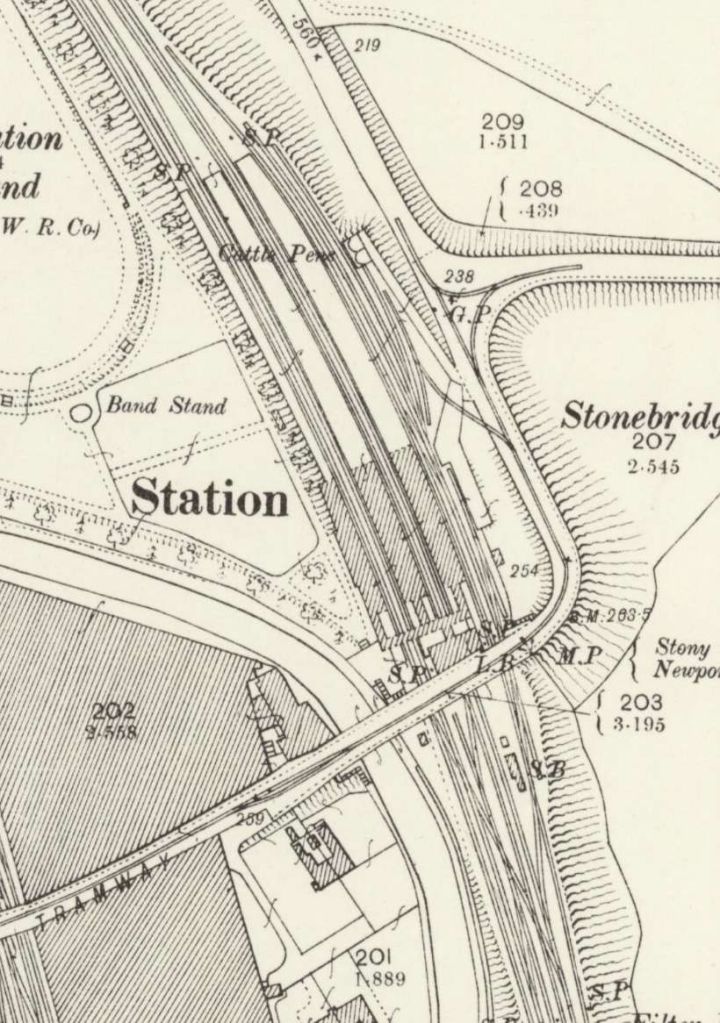
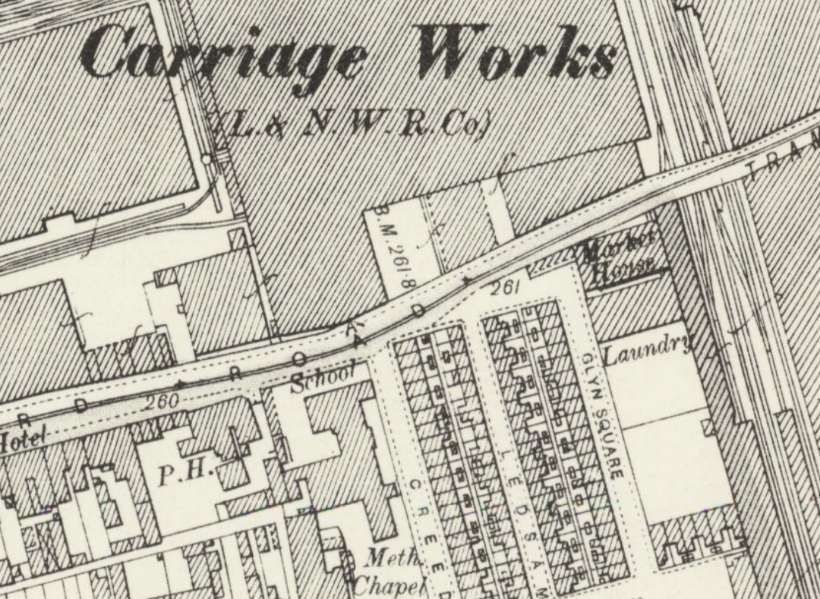
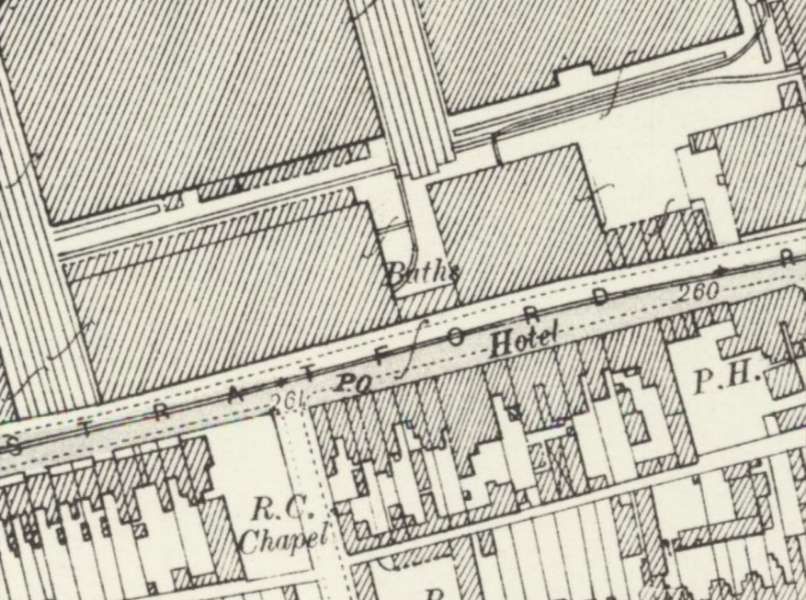
This is the second in a series of articles about the railways of West Cumberland. The first can be found here. [3]
This article is based around the potted history of West Cumberland’s railways written by C. A. Knight and included in his article in The Railway Magazine of November 1954. [1]
Knight explains that the growing importance of Carlisle as a railway centre, sitting as it did on the natural route between England and Scotland and already the terminus of existing and proposed railways meant that it was:
“the obvious route for the improvement of communications between West Cumberland and the rest of the country, in comparison with the alternative route to the south involving the crossing of several estuaries. The Maryport & Carlisle Railway was incorporated in 1837, and was constructed in stages between 1840 and 1845, to provide communication between the points named and also to develop the coalfield between Maryport and Aspatria by facilitating the shipment of coal through Maryport Docks and the transport of coal to other parts of the country through Carlisle. The company enjoyed prosperity from the beginning, and was one of the few early railways to retain its individuality until the Railways Act of 1921. The original single-platform station at Maryport is still in use as part of the [coastal] through route from Carlisle to Carnforth.” [1: p757]
“The extension of railway communication to Workington and Whitehaven was the logical development to connect these two towns with Carlisle. This railway, known as the Whitehaven Junction, and incorporated in 1844, was the result of the enterprise of the second Earl of Lonsdale. It cut across several existing tramways from collieries to the sea, and the rights of passage were protected under the Act of Incorporation. Leaving Maryport in a southerly direction, the line traversed the level sea-shore to cross the River Derwent at Workington, crossing a colliery tramway on the level immediately after leaving Maryport. The mining village of Flimby was the only intermediate station between Maryport and Workington, the station at Siddick Junction was not built until the construction of the Cleator & Workington Junction Railway.”[1: p757 & p759]
“From Workington to Whitehaven, the line, although continuing level, followed the natural line of the coast, involving heavy engineering work in maintaining a formation at the foot of the high ground which runs to the sea. The terminus at Whitehaven was at Bransty, at the north end of the town, and the original station [was, at the time of Knight’s article, used] for carriage cleaning, with the exception of one platform, which [had] been extended to form one side of what is in effect an island platform, and [was] still used for trains to and from the North starting or terminating at Whitehaven.” [1: p759]
“Crossing the line immediately north of Bransty Station, from William Pit on the east to Whitehaven Harbour on the west side, is the sole surviving, [in 1954,] colliery tramway, which [was] still in daily use. In 1848, the railway was extended along the west side of Bransty Station to serve Whitehaven Harbour, and in 1858, a branch was constructed from a junction immediately north of Workington Station to serve Workington Harbour, now known as Merchants’ Quay. Maryport Docks were originally connected to the Maryport & Carlisle Railway, but the Whitehaven Junction constructed its own line to the docks in 1865, thus giving access from the south, and, following an era of amalgamation by the large railway companies, the whole line was absorbed by the London & North Western Railway in 1866.” [1: p759]
“By 1845, the only important place in West Cumberland without railway communication was Cockermouth, a pleasant town serving an agricultural community. The opening of the Cockermouth & Workington Railway in 1847 extended the network of railways which was taking shape. Leaving the Whitehaven Junction Railway [to the] North of the bridge over the River Derwent, this line followed the natural route eastwards along the valley, with many crossings of the winding river. but no other substantial engineering work. The line opened up the coalfield in the Camerton area, and used Workington Station jointly with the Whitehaven Junction. The terminus at Cockermouth was at the east end of the town and [was, in 1954,] the site of the goods station. The extension of the railway in an easterly direction was delayed by reason of the difficult country beyond Cockermouth, but the importance of the line was increased in 1861 by the construction of the Cockermouth, Keswick & Penrith Railway, when it became part of the direct route between the Durham coalfield and West Cumberland.” [1: p759]
“In 1863, the Cockermouth & Workington Railway was extended to the new Workington dock system on the North side of the River Derwent by means of a level crossing at Derwent Junction over the Whitehaven Junction line, and connection was also given by a private line running on the east side of the Whitehaven Junction, from St. Helens Colliery, Siddick, to Workington Dock. The railway was the first in West Cumberland to come into the hands of the London & North Western Railway, in 1866, and with the absorption of the Whitehaven Junction in the following year, the LNWR controlled the whole of the existing West Cumberland lines, although they were isolated from the rest of [their] system and reached by running powers.” [1: p759]
“The extension of railway facilities in a southerly direction from Whitehaven was again largely the result of the enterprise of the second Earl of Lonsdale, who held large interests in a number of collieries in Whitehaven and district, and was anxious to open up communication with other parts of the country. The Whitehaven & Furness Junction Railway. incorporated in 1845, originally was proposed to run from a terminus at Preston Street, Whitehaven, [the goods station in 1954] to a junction with the Furness Railway near Askam, but the scheme was modified in favour of a junction at Broughton, some six miles north of Askam. The railway was completed to Broughton in 1850, but for some years was in financial difficulties. It ran through sparsely populated agricultural country, and the remunerative iron ore traffic from the Cleator and Frizington district, which became such an important factor in the future prosperity of the line, was still undeveloped. In 1852, the single-line tunnel between Corkickle and Bransty Stations, Whitehaven, was opened, and Bransty Station was extended to cope with the influx of traffic from the south. There already existed a physical link between the Whitehaven & Furness Junction and the Whitehaven Junction by a line from Preston Street terminus along the streets of the town to Whitehaven Harbour, thence by the Harbour Commissioners’ lines to the junction with the Whitehaven Junction at Bransty, but this was never used for through traffic.” [1: p759-760]
“With the completion of the encirclement of West Cumberland by coast lines, the possibility of developing the rich iron ore deposits a short distance to the east of Whitehaven, particularly at Egremont and Cleator Moor, came under review. These deposits had been known for many years, but transport difficulties and inadequate mining facilities had restricted their output to the small quantity of ore which could be carted to Whitehaven for shipment. In 1857, the Whitehaven, Cleator & Egremont Railway was opened from Mirehouse Junction, a mile south of Corkickle, on the Whitehaven & Furness Junction Railway, to Moor Row, and thence … to Frizington to the north-east, and Egremont to the south. The result was an immediate improvement in the fortunes of the Whitehaven & Furness Junction Railway, which hauled the traffic from Mirehouse Junction, although it is probable that much of the traffic was short-hauled to Whitehaven Harbour for shipment, thus repeating the history of the coal industry by retaining the same port of shipment but extending the area of operations. The Whitehaven, Cleator & Egremont Railway surmounted the high-lying country by a series of easy curves to Moor Row on a final gradient of 1 in 52.” [1: p760]
“The continued prosperity of the iron ore industry made possible the extension in 1864 of the Whitehaven, Cleator & Egremont Railway from Frizington to Lamplugh. This is even more difficult country, and the improvement in the tractive effort of locomotives would no doubt have had some influence in endeavouring to overcome the gradients from Frizington, where the rise steepens to 1 in 44. Fortunately, the main flow of traffic was downhill, but with the locomotives available there must have been some struggles up the winding approach to Yeathouse, through a wooded cutting. The circle was completed in 1866 by an extension from Lamplugh to Marron Junction, between Brigham and Workington, where the Whitehaven, Cleator & Egremont Railway joined the Cockermouth & Workington Railway, which had been taken over by the L.N.W.R. in the previous year.” [1: p760]
“Development of the iron ore deposits in the Beckermet area, south of Egremont, followed the extension of the line from Egremont to Sellafield in 1869, to form a junction with the Furness Railway. That company was still anxious to carry a greater share of the remunerative iron ore traffic over its own lines, and strongly opposed this extension because it had previously sought powers to extend its own line to Egremont. This last major extension of the Whitehaven, Cleator & Egremont Railway was a fortunate one, as the mines at Ullcoats and Beckermet have been very productive, and now remain as the only iron ore mines still in operation in the area. Its success emboldened the company to seek a further extension from Ullock, between Rowrah and Marron Junction, to Distington, subsequently extended to form a junction with the L.N.W.R. at Parton. The development of the iron ore field in the Lamplugh area had been disappointing, no doubt partly as the result of the circuitous haul to the furnaces, and the new route reduced the distance considerably. A small colliery was opened at Wythmoor, West of Ullock Junction, but the only intermediate station between Ullock Junction and Parton was Distington, where an ironworks was established.” [1: p760]
The Whitehaven, Cleator & Egremont Railway was confident in its own success, rebuffing takeover approaches from the LNWR until the arrival of the Cleator & Workington Junction Railway in 1876.
Knight continues:
“For some time there had been growing concern in the area in view of the virtual monopoly of transport for the heavy industries which was in the hands of the London & North Western and the Whitehaven, Cleator & Egremont Railways. Both served different parts of the district, so that no effective competition between them was possible, and an increase in rates in 1873 brought forward several proposals for competitive lines, notably one from Cleator Moor to Workington. These developments were received with composure by the existing companies, as all the apparently obvious routes were already occupied. There is little doubt that the strongly individualistic traders in the area did not relish the remote control exercised from Euston, and much preferred to deal with locally controlled railways, whose directorate was often identical with their own, possibly to some extent to their mutual advantage.” [1: p761]
“The prospect of a competitive route caused considerable alarm to the directors of the Whitehaven, Cleator & Egremont Railway and in the following year amalgamation with the LNWR was accepted. The Furness Railway, still unable to get a substantial foothold in the area, objected strongly, and in 1878 both sides were more or less satisfied by joint acquisition of the Whitehaven, Cleator & Egremont by the Furness and the London & North Western Railways.” [1: p761]
The Cleator & Workington Junction Railway was essentially built to provide competition to effective monopoly companies in the area.
Knight continues:
“With the exception of two collieries, at Walkmill, between Cleator Moor and Moresby Parks, and later at Oatlands, between Rowrah and Distington the line did not open up any new industrial territory, and was almost entirely, and for obvious reasons, financed from local business sources.
“Construction commenced immediately and the line ran from a junction with the deviated Whitehaven, Cleator & Egremont Railway at Cleator Moor, to a junction with the LNWR at Siddick, north of Workington. It is probable that the promoters would have liked to avoid the LNWR altogether, and make a junction with the Maryport & Carlisle Railway, but even they were daunted by the formidable country to be traversed north of the Derwent valley. As this railway was the last in the field, it was left with little choice in the matter of route, with the result that it was constructed through scarcely populated country involving 11½ miles of line almost entirely on a gradient of 1 in 70. Its purpose was to provide a competitive route from the many small furnaces which were in existence at that time, but the difficult country through which it ran necessitated the main line running past even these, and the works were served by small branches. The headquarters and principal station at Workington were centrally situated, but long-distance passengers were more adequately catered for by the LNWR, which had a more direct route north and south, and the passenger business was principally local.” [1: p761-762]
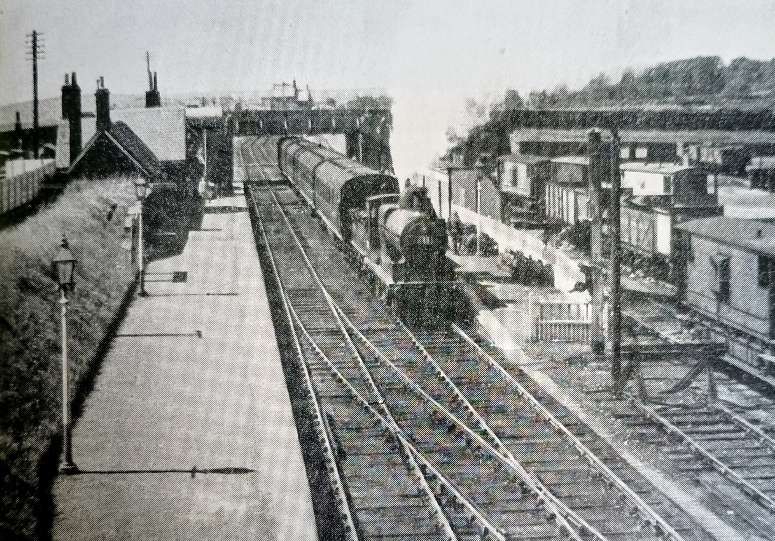
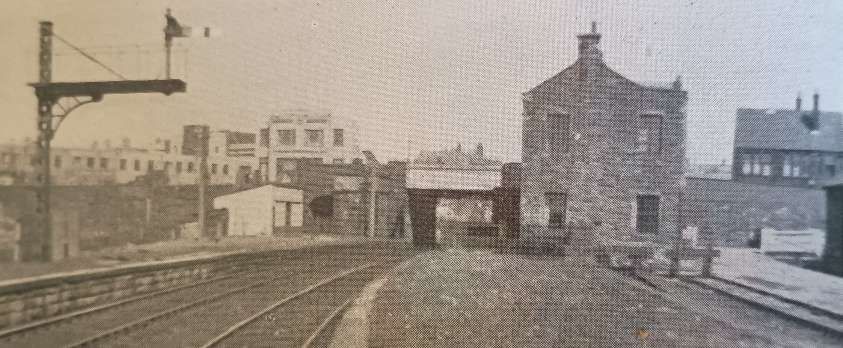
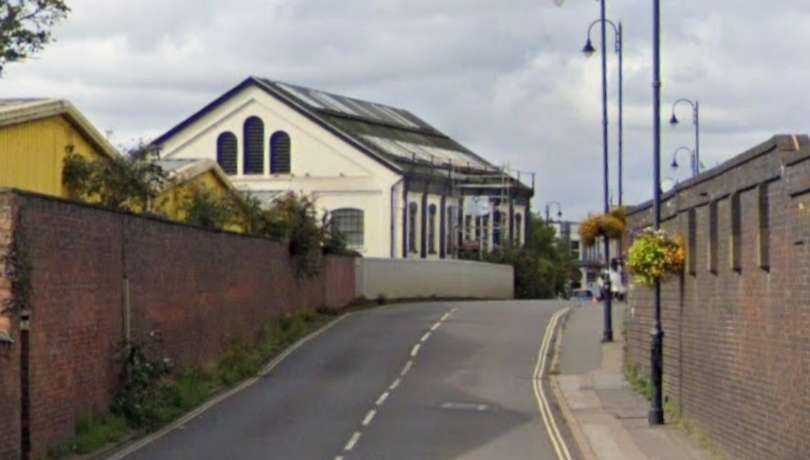
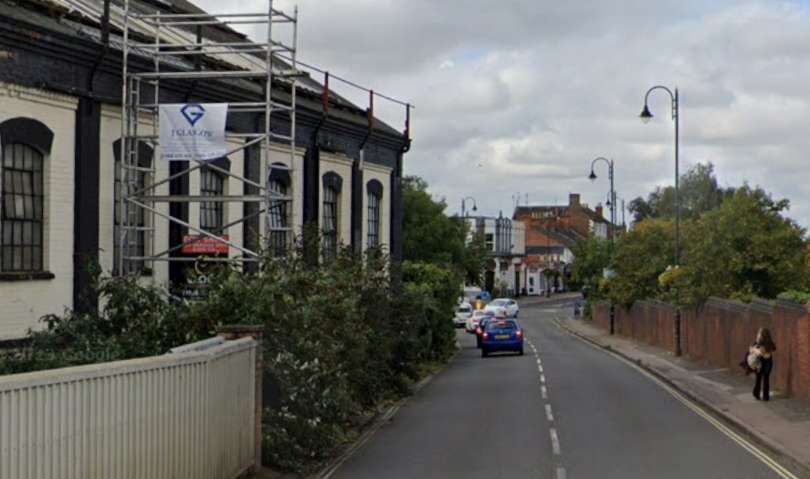
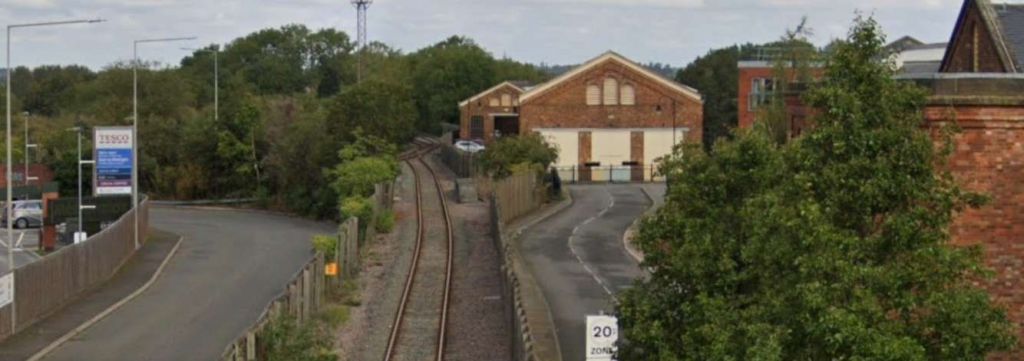
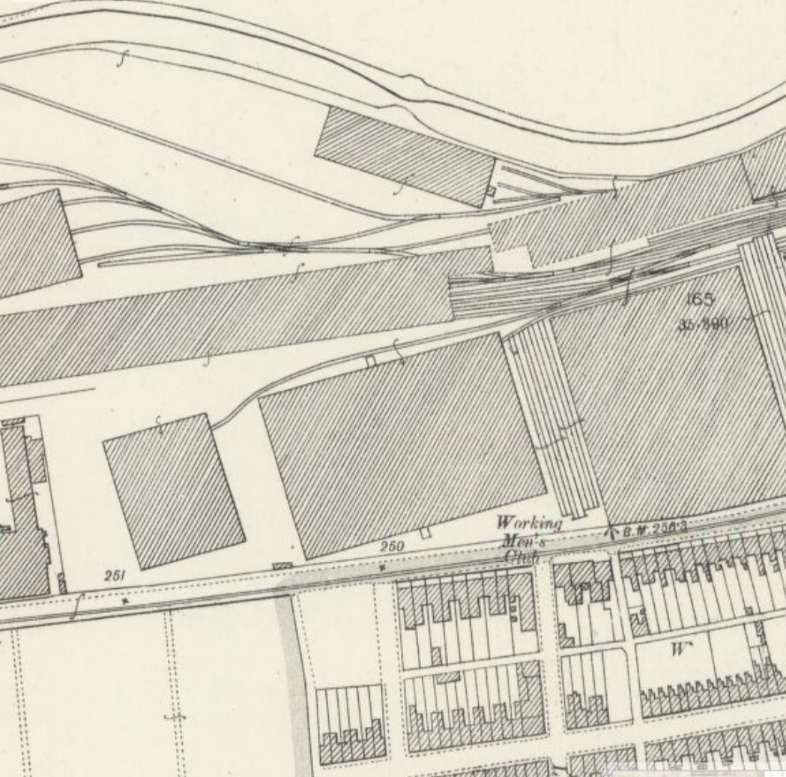
Workington Central Railway Station which closed to passenger traffic on 13th April 1931 and closed completely to freight traffic in May 1964. The station site included two platforms and a bay platform, serving the Cleator and Workington Junction Railway. It was situated approximately half a mile closer to the town centre than the alternative Workington railway station. The site is now a car park, although the bridge remains.. [1: p762]
Immediately north of Workington Central, a short connection was made from Cloffocks Junction across the River Derwent to the LNWR at Workington Bridge, on the Cockermouth and Workington line, and a little further north, at Dock Junction, a branch diverged in westerly direction, crossing the LNWR and describing an almost complete circle to reach Workington Docks and the Oldside Works.
Knight continues:
“Pursuing its aggressive policy, the Cleator & Workington Junction Railway next turned attention to the limestone so necessary in the production of iron, of which large deposits existed at Rowrah, the summit of the Whitehaven, Cleator & Egremont Railway between Moor Row and Marron Junction. The construction of the Oatlands branch in 1877 gave a much more direct route to Workington, and it was built from a junction at a point just south of Distington, to Rowrah, a distance of some 6½ miles.
“The branch diverges to the west of the main line, but immediately crosses it by an overbridge, and commences to climb in a southerly direction on a gradient of 1 in 44 for two miles. At Oatlands there was a station and the small colliery previously referred to, and the gradient continues for another mile at 1 in 52, when the first summit is reached. A mile and a half falling at 1 in 60 follows, succeeded by another climb just short of a mile at 1 in 46 to reach Arlecdon, the last station on the branch. A little further on the line crosses the Whitehaven, Cleator & Egremont Railway by an overbridge, and turns northwards parallel with it, thus effectively cutting off that line from the quarries at Rowrah Hall and Rowrah Head, and finally making an end-on junction with the little-known Rowrah & Kelton Fell Railway, a private undertaking owned by quarry interests, and serving iron ore mines and limestone quarries to the east of Rowrah.” [1: p763]
“The enterprising spirit of the Cleator & Workington Junction still chafed at the necessity for handing over traffic to the LNWR at the north end of the line, and in 1883, the company reverted to the original proposal to give traffic direct to the Maryport & Carlisle. Proposals were put forward for a line from Workington to Brayton, to exchange traffic at that point with the Solway Junction Railway. This proposal was later modified, no doubt as a result of opposition by the other railway companies, and construction of a line was commenced from Calva Junction, between Workington and Siddick Junction, to a junction with the Maryport & Carlisle at Linefoot, on the branch between Bullgill and Brigham. This had the same effect, except that the Cleator & Workington Junction haulage was slightly shorter, and a small proportion was left to the Maryport & Carlisle.
“The route also was influenced by the prospect of developing the southern fringe of the Maryport – Aspatria coalfield, and collieries were served at Camerton and Buckhill, between Seaton and Great Broughton, and at Alice Pit, near Linefoot Junction. Intermediate stations were at Seaton, now practically a suburb of Workington, and Great Broughton, and the line ran almost parallel with but northward of the LNWR from Workington to Brigham, but at a much higher level. Once again, the Cleator & Workington Junction was faced with the occupation of the obvious route, and heavy gradients and sharp curvature were involved in crossing the area north-east of Workington.” [1: p763-764]
Knight goes on to describe the decline of the local rail network:
“The heyday of the West Cumberland railways was the latter part of the nineteenth century, when the iron ore mines and the small iron works supplied by them were literally in ‘full blast’. In spite of temporary trade recessions from time to time, this situation continued with little diminution during the first two decades of the 1900s. Practically all the lines had passenger services, and even those which had no advertised timetable had workmen’s trains to serve the various works. The services on the interior lines certainly look sparse compared with the present bus timetable, but conditions were vastly different in those days. With the exception of workmen’s travel, which was regular, and the extent of which was known in advance, there was little demand for casual or pleasure travel, and the agricultural workers and the iron-ore miners in the pits, remote from the civilisation of the coast towns, preferred to rely on local relaxation.
“It is not surprising, therefore, that the lines which were built followed the pattern of small railways in other parts of the country. Commencing as a series of local lines to give facilities for the conveyance of traffic to ports for shipment, most of them ultimately became part of larger systems, and lost their highly individual existence. Passengers were usually a secondary consideration, and the lines followed the coastwise routes and the few intersecting river valleys to obtain the easiest formation compatible with the development of the natural resources of the area, sometimes apparently without much regard to the situation of the villages on the route, with the result that some of the stations were a considerable distance from the communities which they served, and this became obvious with the development of passenger road services.
“At the time when the railways were built, the iron industry was spread over a large number of small furnaces, most of which had been sited with a view to the proximity of local ore, but the increased use of imported ore, and improved methods of production in large furnaces, led to the gradual absorption of the small furnaces through their inability to compete, resulting in their closing down and eventual demolition. The industry is now, [in 1954,] centralised at Workington, which is largely supplied with imported ore. The importance of these interior lines has, therefore, largely decreased, and many of the areas served by them became distressed because no alternative employment was available to those whose work had come to an abrupt conclusion.
“The amalgamation of the railways in West Cumberland following the passage of the Railways Act of 1921 was the cause of far-reaching changes. Local management disappeared, and while some local tradition went with it, the railways were enabled to operate as a whole, rather than for the benefit of the constituent companies. Amalgamation, with the consequent cessation of inter-company competition, meant, however, [a new] monopoly against which local industrialists previously fought so strongly, and the prospect of which was, to a large extent, the justification for the construction of the Cleator & Workington Junction, and there is little doubt that the outlook was viewed with somewhat mixed feelings.” [1: p764-765]
“The gradual centralisation of the iron industry was economically sound, but its disadvantages were accentuated by the trade depression of the early 1930s. The smaller furnaces which had survived were closed one by one, and the inhabitants of the locality found their livelihood completely gone, and were without any prospect of employment. Places like Frizington and Egremont, almost entirely dependent upon the iron industry, were particularly hard hit.
“The interior railway lines, immediately affected by any recession in the iron ore industry, became redundant, and the small amount of passenger traffic was quite inadequate to keep them remuneratively employed, with the result that passenger services were withdrawn from all except the coast line north and south and the branch from Workington to Cockermouth. The last-named was retained to serve Cockermouth and Keswick, and to connect these two towns with the main line at Penrith. The steeply-graded Rowrah-Distington branch of the Cleator & Workington Junction was completely removed, as the colliery at Oatlands had been closed, and it was found possible to make a connection between the limestone quarry at Rowrah Hall and the Whitehaven, Cleator & Egremont Joint line, with a consequent increase in the train loading because of the easier gradients. The same connection allowed part of the Cleator & Workington Junction branch from Harrington Junction to Derwent Works, Workington, to be removed, as the heavy limestone traffic was worked through the LNWR connection.
“Apart from the closing of some of the smaller stations for passenger traffic, the situation since the withdrawal of the passenger services on the interior lines has ,[in 1954] remained unchanged, except for the institution of workmen’s services on the Moor Row – Egremont – Sellafield line. The area is now served by the Cumberland Motor Services buses, which provide for local traffic. Great changes have taken place, however, in the economic position of the district. After the depression of the 1930s, strenuous efforts were made to attract light industries, and the success may be measured by the number of firms which have commenced business in many kinds of industry.
“Generally, it may be taken that coal was the driving force, in both an economic and a literal sense, behind the railways of West Cumberland, and although this industry retains an economic importance, the use of coal for locomotives is diminishing. It is, therefore, appropriate that the first use to be made of main-line diesel units in the north-west should be in West Cumberland, where lightweight diesels are to operate between Carlisle, Workington and Penrith. In many ways the district is a microcosm of railway developments in other parts of the country, present or future, for it was first served by small independent local lines, afterwards amalgamated into a larger system, and finally became part of an area suitable for the operation of diesel units, with their facilities for rapid acceleration and quick turn-round at terminals.” [1: p765]
A mix of legacy, pre-grouping, LMS, and early BR standard locomotives worked the region in the 1950s:
Mixed Traffic & Freight Locomotives: LMS Stanier Class 5 ‘Black 5’ 4-6-0s were the undisputed backbone of both passenger excursions and heavy freight along the Cumbrian Coast. LMS ‘Jubilee’ Class 4-6-0s handled principal passenger and express services. WD ‘Austerity’ 2-8-0s & 2-10-0s were deployed for the transport of coal and iron ore from local pits. LMS Ivatt Class 4 2-6-0s & Class 2 2-6-0s were regularly used for lighter passenger duties and banking on steep gradients. [8]
Mineral & Branch Line Engines: LMS Fowler 3F ‘Jinty’ 0-6-0Ts were used for shunting and short-haul mineral trains in the heavy industrial zones of Workington and Whitehaven. LNWR Super D’ Class 0-8-0s were a frequent sight on slow-moving freight trains in the early BR era. [8]
Early BR Region Innovations: BR Standard Class 3 2-6-2Ts were introduced in the early 1950s as modern mixed-traffic branch line tanks. They were utilized across the region’s secondary and cross-country routes. [8] Derby Lightweight DMUs were introduced in the mid-1950s to reduce operating costs and increase passenger numbers on quiet branch lines. [7]
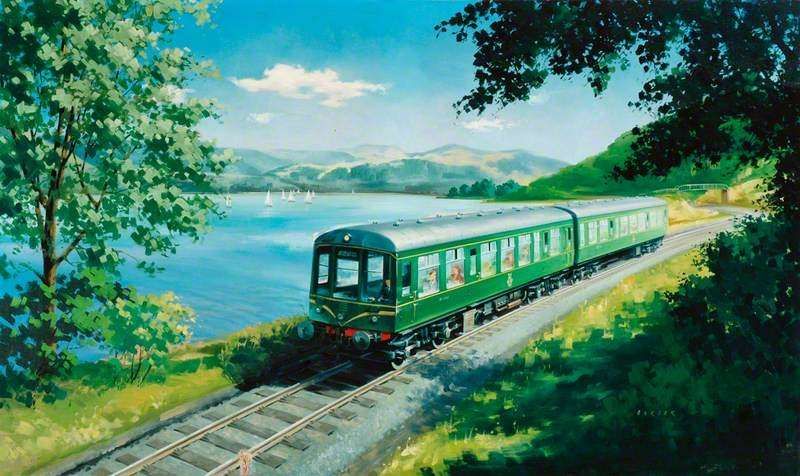
The development of British Rail’s Derby Lightweight diesel multiple units (DMUs) were a significant milestone in UK railway history. They were introduced to West Cumberland in late 1954 as part of the London Midland Region’s modernization scheme. They were the first diesel multiple units built en-masse for British Railways. “Thirteen power trailer sets were built specifically for the West Cumberland area … to operate on three lines: Carlisle to Silloth; … the Carlisle – Maryport – Workington – Whitehaven line; … and the Workington, Cockermouth, Keswick & Penrith line. All would be delivered to Carlisle Upperby depot, some would move to Workington. They would be joined by more sets moved from other LMR schemes. By the time of their replacement by Class 108s in 1969 around 75% of all LMR Derby Lightweight (79xxx series) power cars would have spent time allocated to Carlisle, some of the original routes had closed and their use would spread to other routes from the city.” [7]
Further details of the history of the Derby lightweight DMUs in West Cumberland can be found here. [7]
The sleek, wide-windowed design was highly popular with tourists, and the introduction of these DMUs led to an 80% growth in passenger ticket receipts on some Cumbrian routes. [9]
The November 1954 issue of The Railway Magazine included an article by C. A. Knight about the railways between Sellafield and Maryport and inland as far as Cockermouth and Kelton Fell.
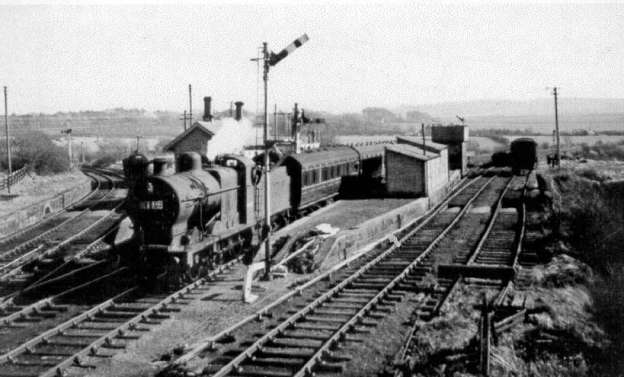
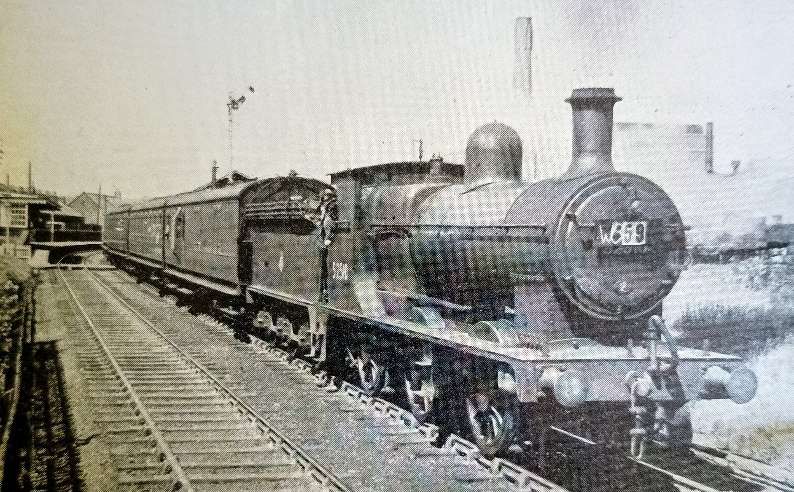
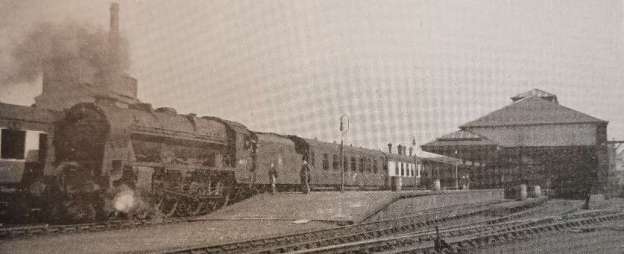
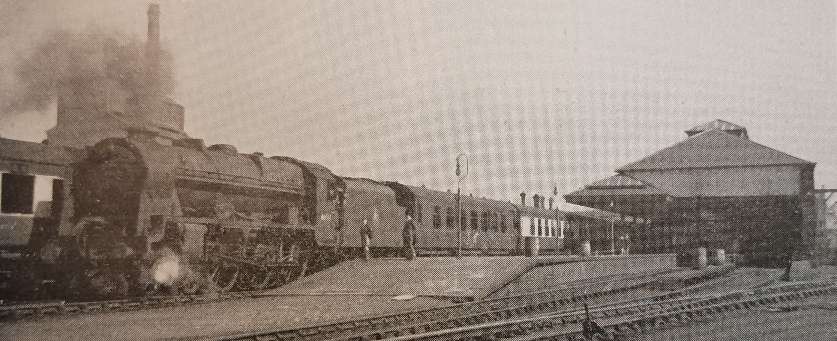
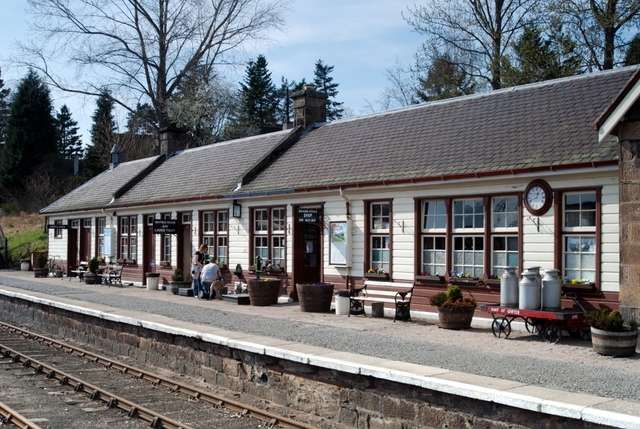
The featured image at the head of this article (and the article by C. A. Knight) shows an early 1950s image of Workington Station with a train to Euston ready to depart behind a ‘Royal Scot’ loco. [1: p757]
Reading Knight’s article encouraged me to begin a review of the different railways and tramways of the area. This article is the first of a series. …
Knight says: “Travellers to Keswick by the ‘Lakes Express’ during the summer [of 1954] may have speculated on the country to the west of that delectable town which is served by the train in the final stages of its journey. Some may venture as far as Cockermouth, but few will follow the train to its terminus at Workington, that product of Victorian enterprise in industry, as there is little in the area to attract the tourist from the delights of the Lake District. To the student of railway history, however, its tangle of intersecting railways holds promise of interest.” [1: p757]
Knight tells us that, “The early evolution of the railways of West Cumberland was not marked by the contentious episodes which frequently characterised railway development in the mid-nineteenth century; rather [it could] be described as a process of peaceful penetration. … The narrow belt of agricultural land on the western edge of Cumberland was for many years practically isolated by the difficulties of travel through the mountains of the Lake District. The discovery of rich seams of coal, and the improvement of mining technique which enabled coal to be won from under the sea-bed, led to development of shipping facilities, and the economic factor became the distance from the port of shipment. Tramways in various forms were installed to enable coal to be brought from more distant pits, and on these, horse-drawn vehicles were no doubt used.” [1: p757]
The Early Tramways of West Cumberland
Early tramways in West Cumberland were primarily focused on moving industrial goods—specifically coal and iron ore—rather than passengers. Online references to Industrial Waggonways and Tramways in the 19th Century include:
Woodagreen Pit to Whitehaven Harbour: a crude wooden waggonway built at the Ginns as early as 1683. [9]
Seaton Tramroad: A 3 mile wooden waggonway built from Seaton pit to Workington, in the early 1730s. [6]
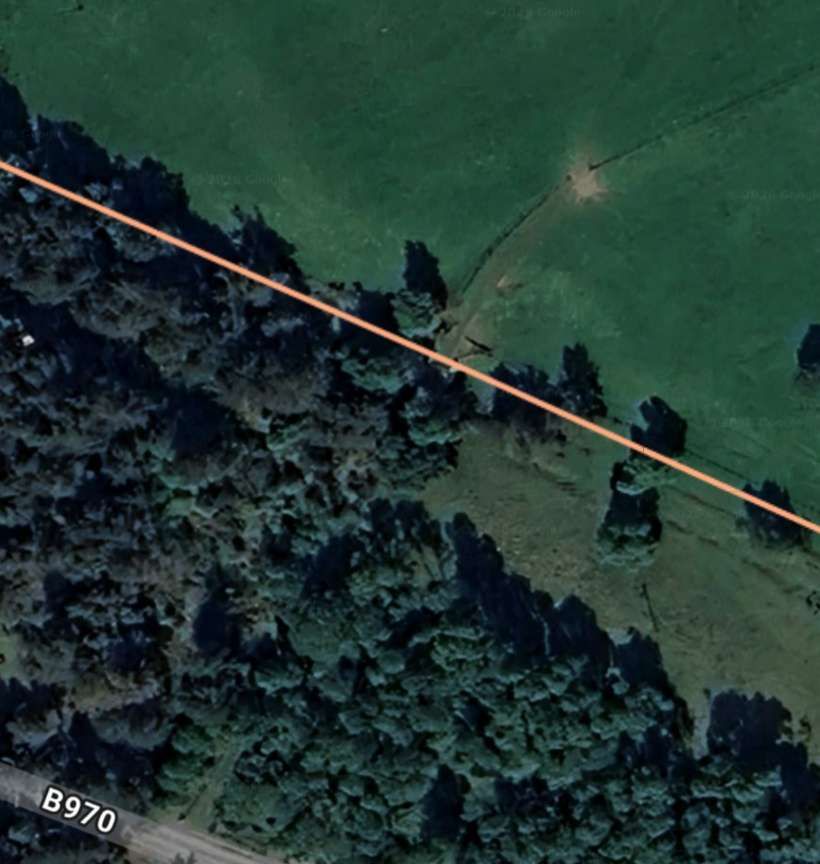
Harrington Harbour/Bain’s Tramway (c. 1760/1840s): A wagonway was established at Harrington Harbour as early as 1760. Later, it became known as “Bain’s Tramway,” which is shown on an 1864 OS map connecting Harrington Harbour with mines at John Pit and Hodgson Pit, passing through Rose Hill.
Whitehaven Harbour: A horse-drawn tramway was completed in 1854, authorized by the Whitehaven and Furness Junction Railway Amendment Act 1853. It allowed goods wagons to travel from Preston Street to the south end of the harbour.
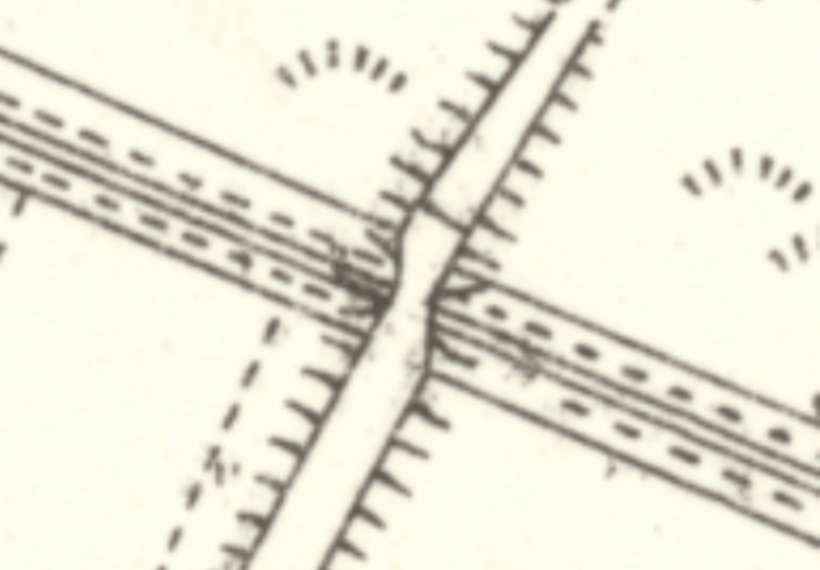
Mr. Curwen’s Waggonway: A significant waggonway owned by Henry Curwen of Workington, which necessitated a bridge for the Whitehaven Junction Railway to pass over it in 1844.
Colliery Lines: These include: Waggonways from Lonsdale Collieries on Broughton Moor; Howgill Colliery Waggonway; and Whingill Colliery Waggonway.
Whitehaven Mineral Lines: The rapid development of haematite deposits in the Cleator Moor and Egremont districts in the 1840s led to numerous industrial lines and tramroads, later absorbed by the Whitehaven, Cleator & Egremont Railway (opened in parts from 1857).
The First Howgill Incline: constructed by 1813 in Whitehaven. [22]
Rowrah & Kelton Fell Mineral Railway: A significant line developed to serve the limestone quarries and iron ore mines near Rowrah, with development occurring through the 1860s and 1870s.
Jane Pit to Quayside (Workington): saw horses towing basic coal trucks from the pit down and over the railway, along to Chapel Bank and on to the Quayside. [8]
Cleator & Workington Junction Railway (1879): While technically a later railway, it was built to connect the existing iron and coal mining infrastructure (early pits and associated wagonways) with the coast to break existing transport monopolies.
Harrington and Lowca Light Railway: (commonly known as the Lowca Light Railway or LLR)
Lowca: An early locomotive works was established at Lowca, lasting until 1926, its business was fatally undermined by a disastrous fire in which the wooden patterns used during manufacture were burned. [5]
Corkickle Brake: A standard-gauge rope-worked incline survived as late as 1986, which was a remnant of early industrial transport methods, handling 500,000 tons of traffic at its peak.
These early, often private, waggonways generally used iron rails (replacing wooden ones) to connect pits to collieries or directly to the rapidly developing ports of Workington, Harrington, and Whitehaven.
Main Line and Branch Line Railways
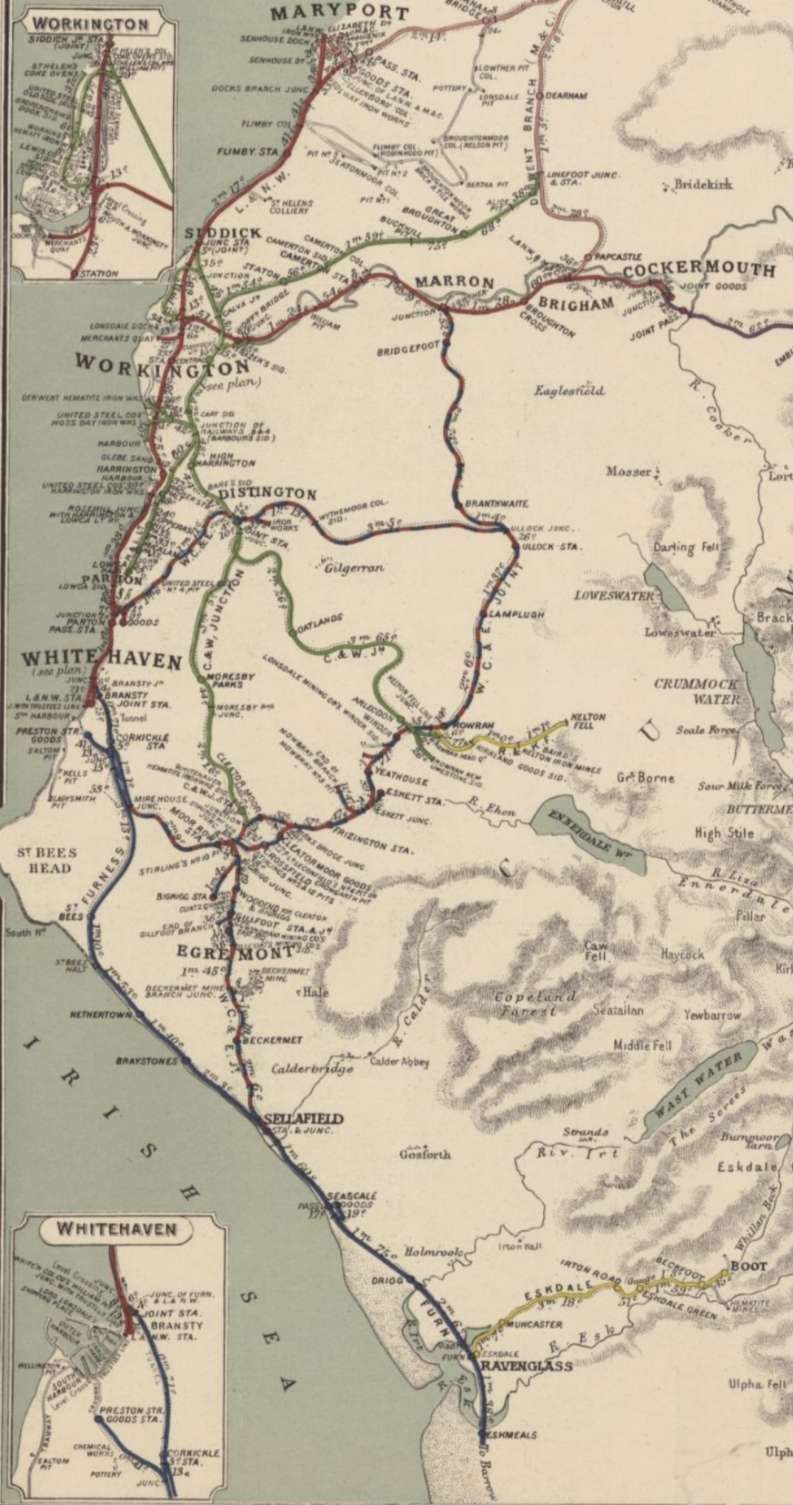
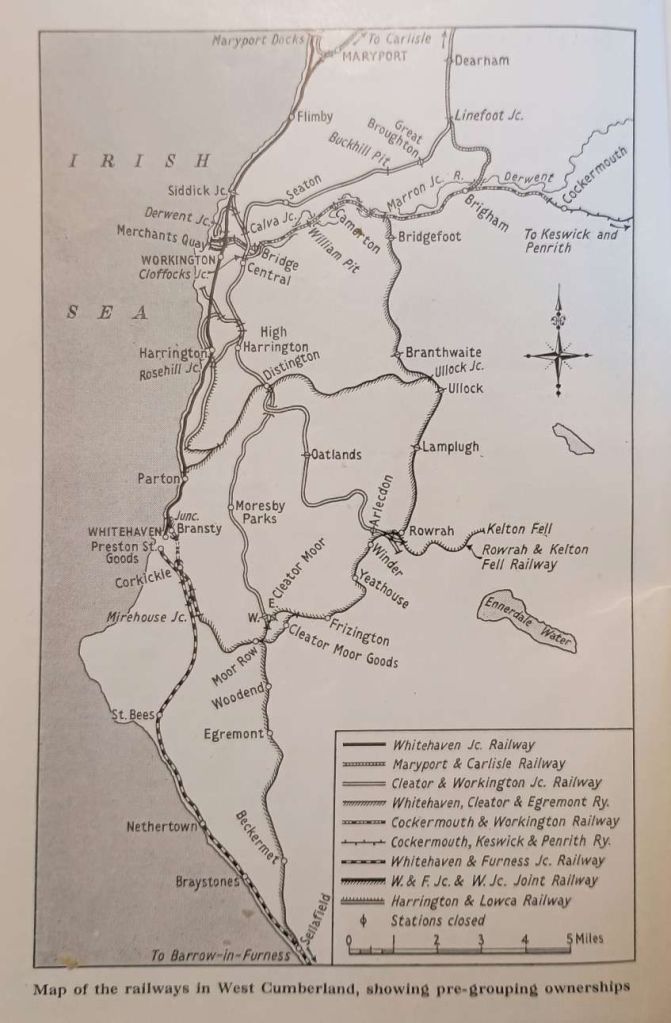
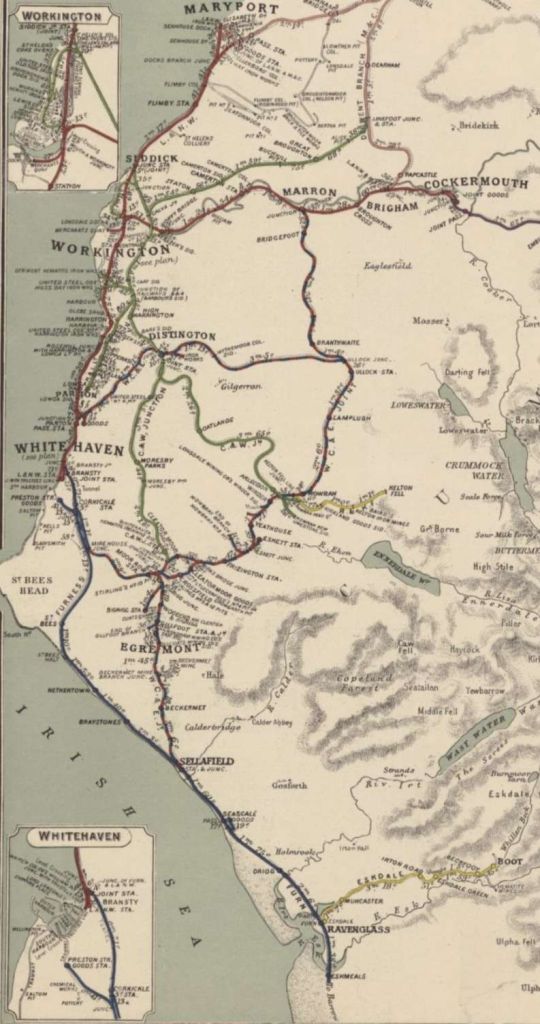
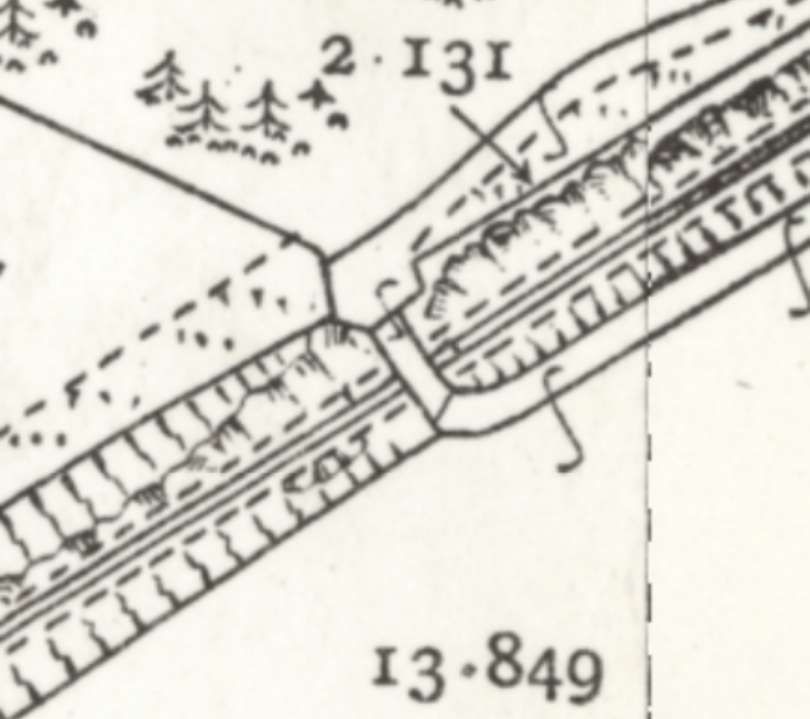
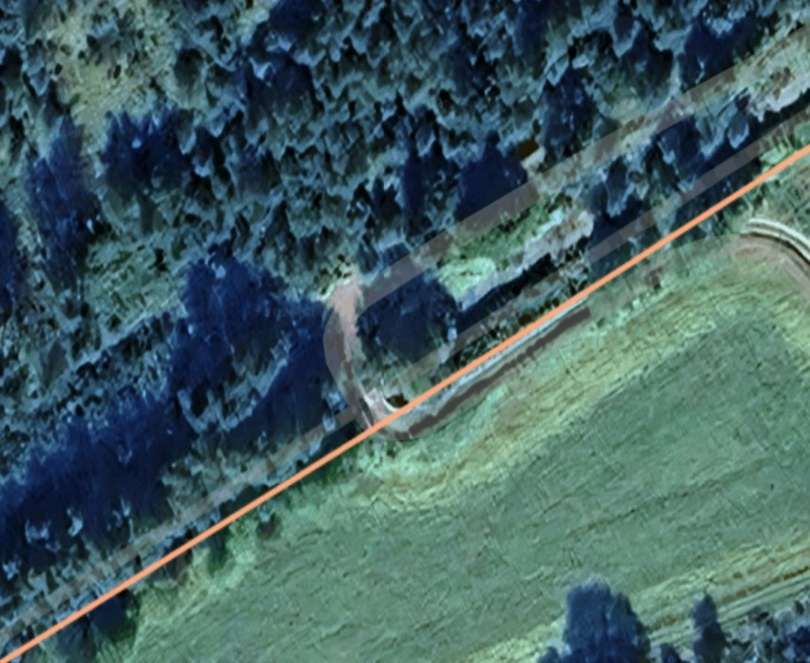
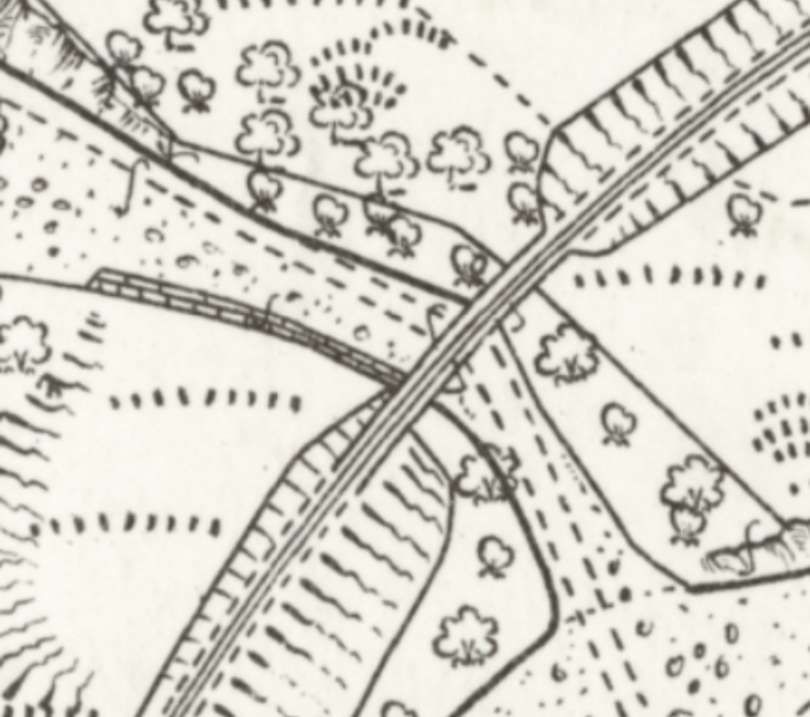
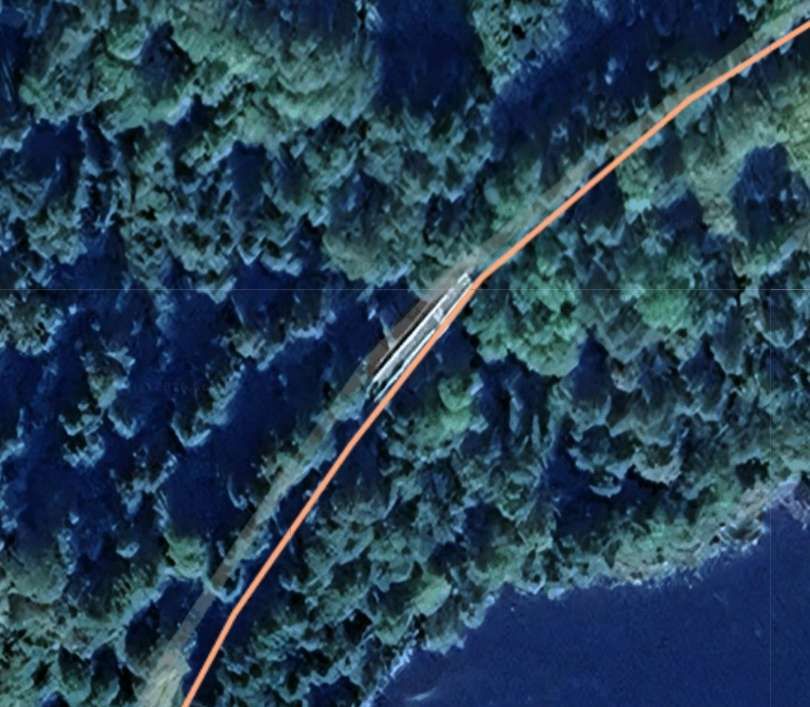
There were a surprising number of standard-gauge railway companies operating in West Cumberland, as the maps above show.
The Whitehaven Junction Railway
The Whitehaven Junction Railway (WJR) was a historic English railway company sanctioned in 1844 to connect the town of Whitehaven with the Maryport and Carlisle Railway, facilitating industrial growth in West Cumberland. It played a crucial role in linking local coal mines and ironworks to broader transport networks. [10]
The Whitehaven & Furness Junction Railway
The Whitehaven & Furness Junction Railway (W&FJR) was established to connect the town of Whitehaven with the Furness Railway at Broughton-in-Furness. [11]
The Whitehaven, Cleator & Egremont Railway
The Whitehaven, Cleator and Egremont Railway (WC&ER) was built to open up the hematite orefield to the south-east of Whitehaven. It opened for goods traffic in 1855 and for passenger traffic in 1857. [12]
The Maryport & Carlisle Railway
The Maryport and Carlisle Railway (M&CR) was incorporated in 1837 to connect the two towns of Carlisle and Maryport. George Stephenson was the engineer of the line, which opened fully on 10th February 1845. [13]
The Cleator & Workington Junction Railway
The Cleator and Workington Junction Railway (C&WJR) served the towns of Cleator Moor and Workington and intermediate villages. It was mainly used for coal, limestone and iron ore traffic for the local industries. [14]
The Cockermouth & Workington Railway
The Cockermouth and Workington Railway (C&WR) was established by act of Parliament in 1845. The railway opened for service in 1847, and ran from the Whitehaven Junction Railway station at Workington to a station at Cockermouth near the bridge over the Derwent. [15]
The Cockermouth, Keswick & Penrith Railway
The Cockermouth, Keswick and Penrith Railway (CK&PR) was incorporated by Act of Parliament on 1st August 1861, to build a line connecting the town of Cockermouth with the London and North Western Railway (LNWR) West Coast Main Line at Penrith. [16]
The Whitehaven & Furness Junction & Whitehaven Junction Joint Railway
While they were separate companies, the W&FJR and the WJR worked together, particularly around Whitehaven. By 1852, a connecting line (including the Bransty tunnel) linked the W&FJR from the south with the WJR from the north. From the mid-1850s, the two companies merged their efforts to focus passenger traffic at Whitehaven Bransty Station (jointly managed) and goods traffic at Preston Street. [17]
The Harrington & Lowca Light Railway
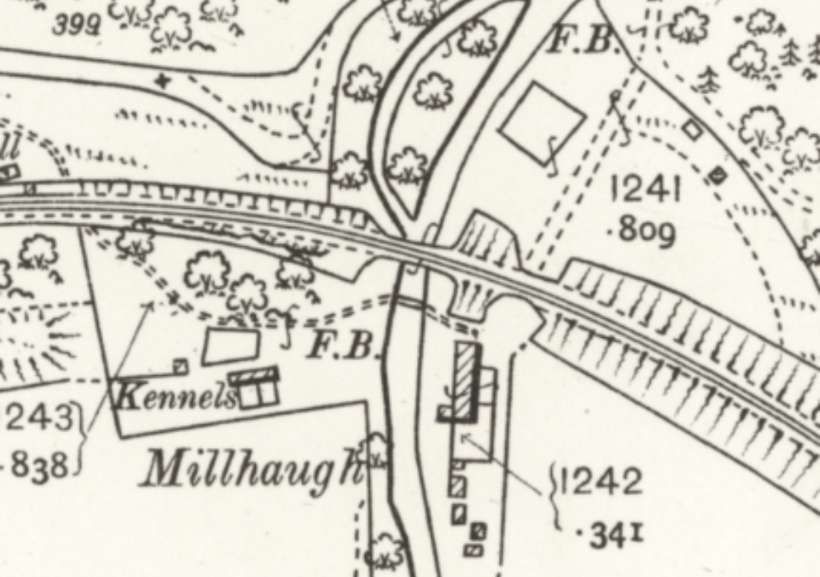
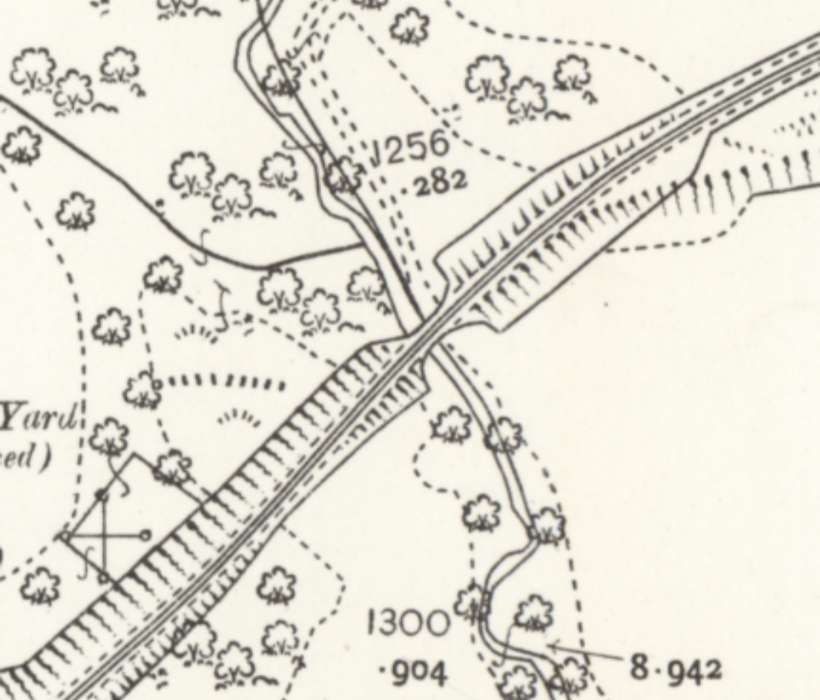
The Harrington and Lowca Light Railway (commonly known as the Lowca Light Railway or LLR) was a short railway close to the coast on the South side of Harrington. Rosehill Junction was the junction between Bain’s Tramway (later known as the Harrington and Lowca Light Railway) and the Cleator and Workington Junction Railway’s Harrington Branch (later known as the Rosehill Branch). [18][19
Tramways
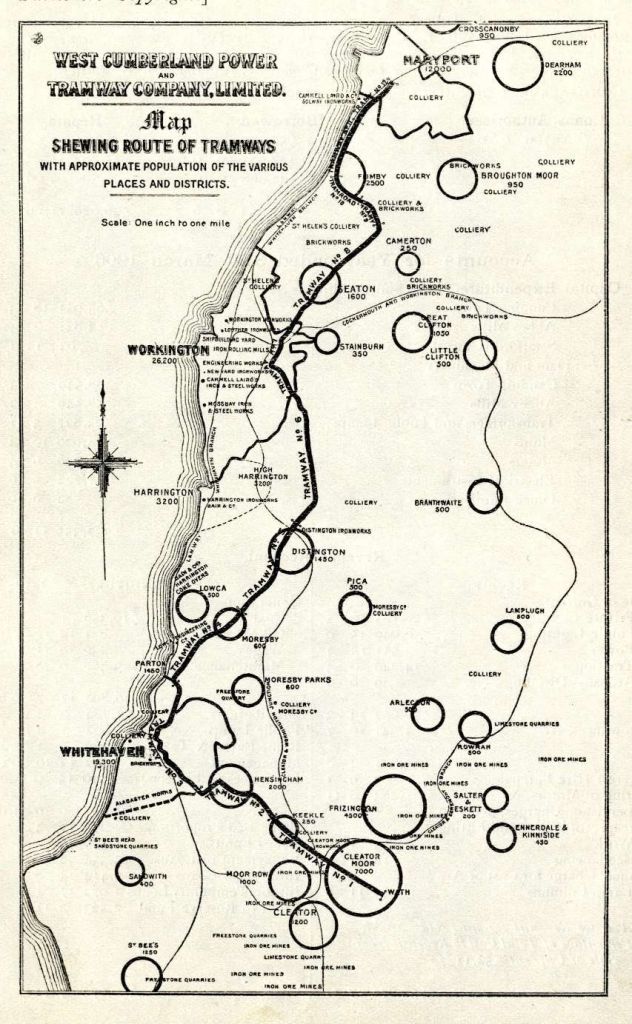
A Proposed Electric Tramway for West Cumberland– 1901
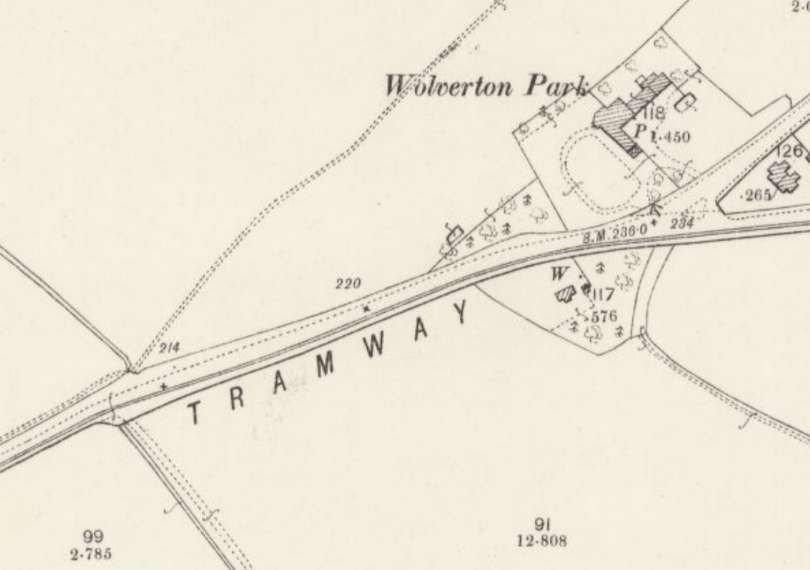
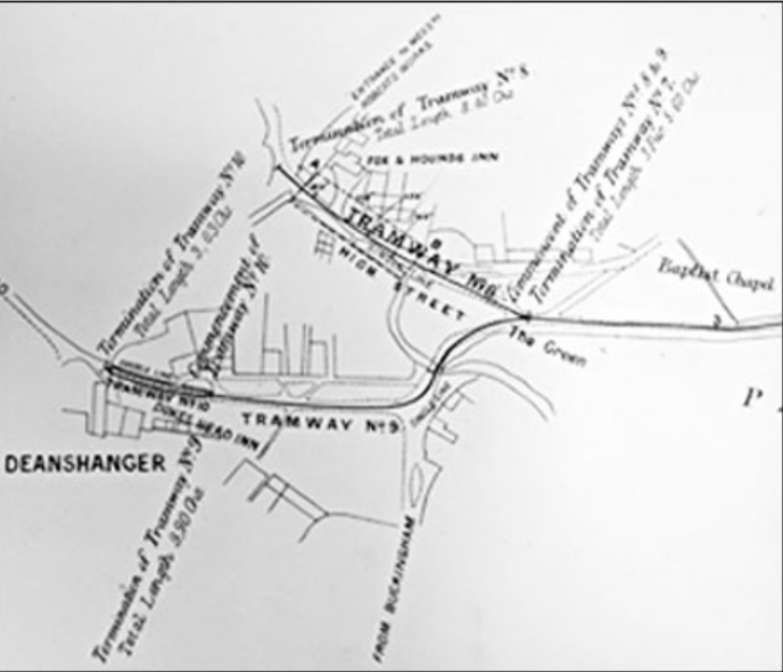
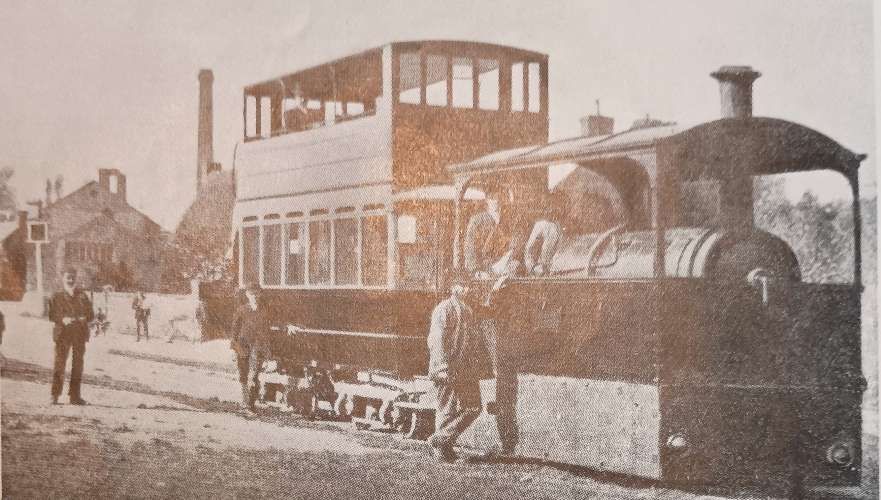
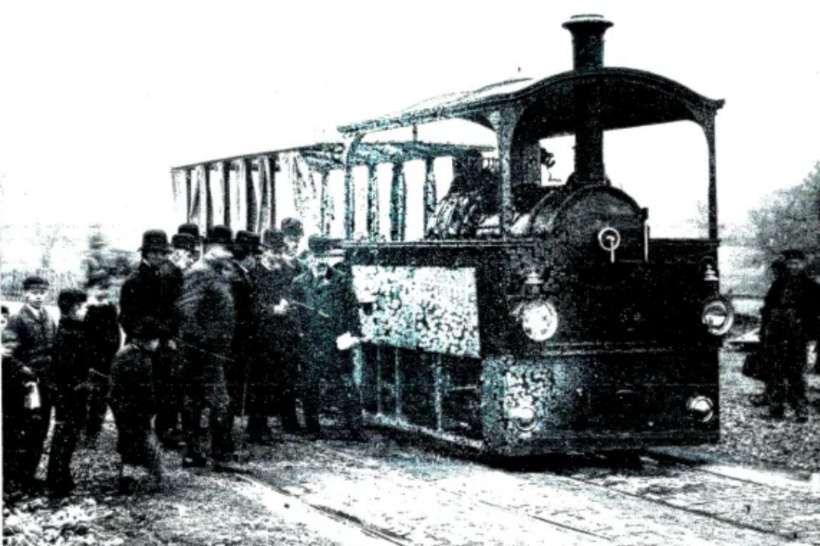
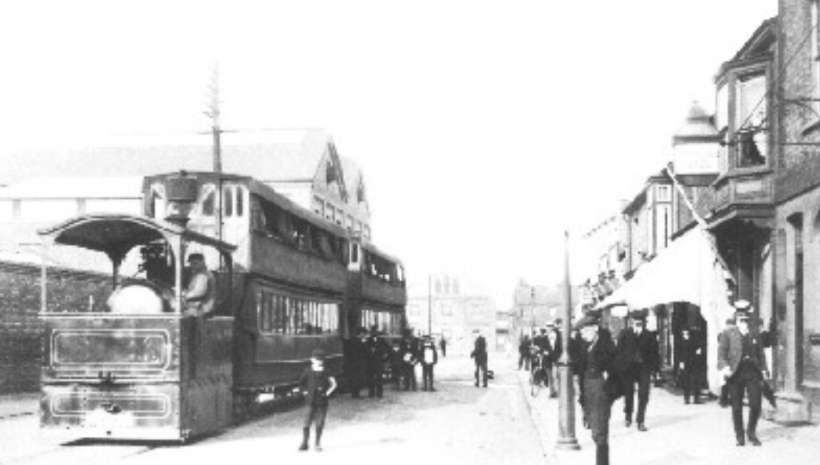
At the turn of the 20th century, the Cleator Moor Electric Tramway was planned and Acts of Parliament were sought for its construction. [3] Sadly, this standard-gauge tramway was not built, even though three different enabling Acts of Parliament were sought and passed (1901, 1903 and 1905). [3]
The tramway was to be operated by the ‘West Cumberland Power & Tramway Company Limited’ [4]
Later Industrial Railways
These railways include:
The CORUS Works Tramroad: a 3 ft-gauge works railway. [7]
Whitehaven Harbour: by the late 19th century, almost all of the harbour had a rail network. Locomotives were first introduced in 1848, the last locomotive being disposed of in 1986. [20]
Various Inclines and Other Lines: in addition to the Corkickle Break mentioned above (which lasted until 1986) there was a second Howgill Incline built by 1923 and of which remains can be found adjacent to Wellington Lodge. The Howgill Incline(s) have been out of use since 1972. [23][24]
References
C. A. Knight; Railways of West Cumberland; in The Railway Magazine, November 1954; Tothill Press, London, 1954, p757-765.
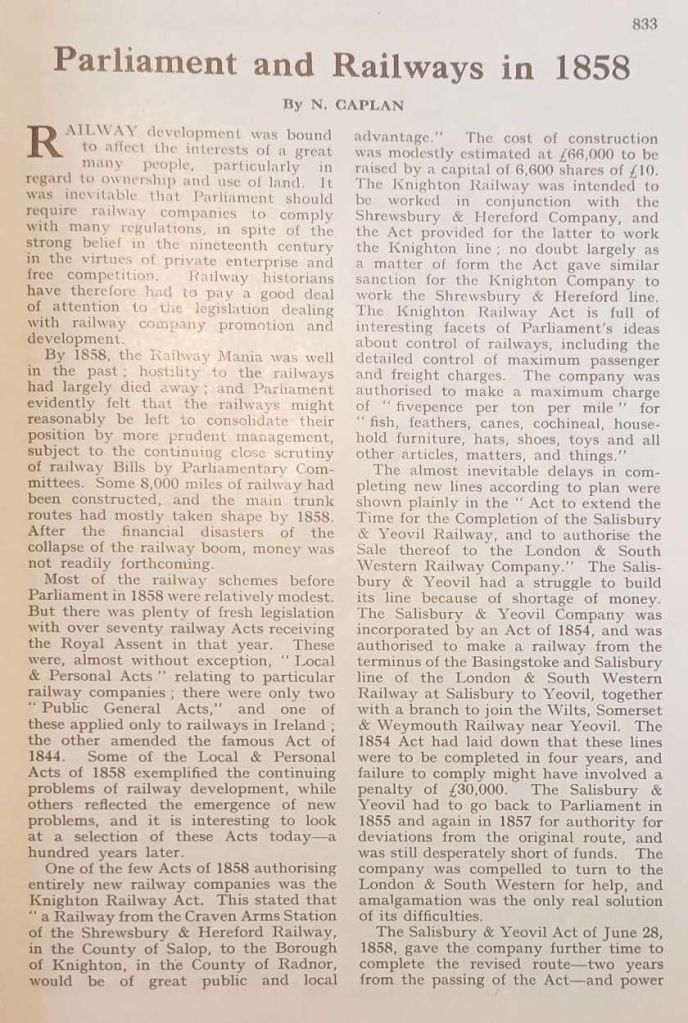
N. Caplan reviewed parliamentary activity relating to railways in 1858 in The Railway Magazine of December 1958. His aim was to encourage research into railway history through the various Acts of Parliament relating to railways.
The Railway Magazine, December 1858, page 833. [1: p833]
“By 1858, the Railway Mania was well in the past, hostility to the railways had largely died away, and Parliament evidently felt that the railways might reasonably be left to consolidate their position by more prudent management, subject to the continuing close scrutiny of railway Bills by Parliamentary Committees. Some 8,000 miles of railway had been constructed, and the main trunk routes had mostly taken shape by 1858. After the financial disasters of the collapse of the railway boom, money was not readily forthcoming.
Most of the railway schemes before Parliament in 1858 were relatively modest. But there was plenty of fresh legislation with over seventy railway Acts receiving the Royal Assent in that year. These were, almost without exception, ‘Local & Personal Acts’ relating to particular railway companies, there were only two ‘Public General Acts’, and one of these applied only to railways in Ireland, the other amended the famous Act of 1844.” [1: p833]
Prior to reading Caplan’s article I was unaware of the distinction made in Parliament between ‘Local & Personal Acts’ and ‘Public General Acts’,
It appears that UK Acts of Parliament Acts of Parliament can be divided into two types: public acts and private acts. …
“Public actsare legislation of universal application and change the general law. Private acts (also known as local and personal acts) affect the powers of individual groups,such as companies or local authorities.Prior to 1798, all acts, both public and private, were published together with private acts listed as ‘local and personal acts declared private’. Since 1798, printed acts have been divided into two series: ‘public general acts’ and ‘local and personal acts’.” [2: p2]
The picture after 1798 is relatively complex:
According to the House of Commons information Office, [2: p3-4] Private Acts are listed as:
(a) Private Acts (until 1802); (b) Local and Personal Acts, not printed (1802-1814); Private Acts (1815-date) (titled Personal Acts from 1948).
All private acts have been printed since 1922.
Local and Personal Acts include:
(c) Public Local and Personal Acts (1798-1802);
(d) Local and Personal Acts to be judicially noticed (1803-1814); Local and Personal Acts declared public and to be judicially noticed (1815-1867);
(e) Provisional Order Confirmation Acts (regarded as public acts of a local character) (1867-1963);
(f) Local and Personal Acts (1868);
(g) Local and Private Acts (1869);
(h) Local Acts (1870 onwards).
The House of Commons Information Office comments: “The differences between all these series can often be set aside, except in searching out the actual texts from library shelves. However, it is normal to cite acts in a standard way, despite what may appear on the document itself.” [2: p4]
“It is now usual to cite public acts of all periods with arabic figures and post-1797 non-public acts with roman numerals. Personal Acts have italic arabic figures, and it is a service to the reader to supply the information (Not Printed) after the citation of any such act known never to have been printed. The [Chronological Table of the Statutes](CTS) is a useful guide for citing public acts of whatever age.” [2: p4-5]
The House of Commons Information Office goes on to provide specific details of how citations should be structured and then gives examples of how this should be done, note that ‘cap’ is short for ‘chapter’:
For Public Acts examples are: [2: p5]
Disorderly Houses Act 1751 (25 Geo 2 cap 36) Debtors Act 1869 (32 & 33 Vict cap 62) County Courts (Penalties for Contempt) Act 1983 (cap 45)
For Local Acts, examples are: [2: p5]
Aberbrothwick Harbour Act 1839 (2 & 3 Vict cap xvii) Epping Forest Act 1878 (41 & 42 Vict cap ccxiii) British Railways (Liverpool Street Station) Act 1983 (cap iv)
For Personal and Private Acts, examples are: [2: p5]
Marquess of Abergavenny’s Estates Act 1946 (9 & 10 Geo 6 cap 1) Hugh Small and Norma Small (Marriage Enabling) Act 1982 (cap 2)
Returning to Caplan’s article: he speaks of just two Public Acts relating to railways in 1858, it appears that these are:
An Act to continue “The Railways Act (Ireland), 1851.” UK Public General Acts 1858 cap. 34 (Regnal. 21_and_22_Vict). [3]
The Cheap Trains and Canal Carriers Act 1858 (21 & 22 Vict. cap. 75), which amended earlier regulations regarding passenger duty and company liabilities. [4]
Caplan has more to say about the second of these two Acts. His comments can be found later in this article. …….
There is a summary, available online, of the clauses in the railways Acts of the 1858 session of Parliament giving powers to the Board of Trade. [7] That Summary may well be of interest here and is reproduced as Appendix 1 to this article (after the References below).
In his article, Caplan goes on to look at a number of specific ‘Local and Personal Acts’, he says: “Some of the Local & Personal Acts of 1858 exemplified the continuing problems of railway development, while others reflected the emergence of new problems, and it is interesting to look at a selection of these Acts.” [1: p833] Those he looked at included:
The Knighton Railway Act – one of the few in 1858 relating to an entirely new railway company. This Act, dated 21st May 1958, incorporated the Knighton Railway Company to construct a 9-mile line from Craven Arms to Bucknell, later extending to Knighton. It was a key component of the Central Wales line development, aiming to connect the industrial Midlands with Welsh border towns, eventually being absorbed by the LNWR. [5][6] The Act stated that:
“a Railway from the Craven Arms Station of the Shrewsbury & Hereford Railway, in the County of Salop, to the Borough of Knighton, in the County of Radnor, would be of great public and local advantage. The cost of construction was modestly estimated at £66,000 to be raised by a capital of 6,600 shares of £10. The Knighton Railway was intended to be be worked in conjunction with the Shrewsbury & Hereford Company, and the Act provided for the latter to work the Knighton line. No doubt largely as a matter of form the Act gave similar sanction for the Knighton Company to work the Shrewsbury & Hereford line.” [1: p833]
It is worth noting the powers reserved to the Board of Trade in respect of this railway which appears in Appendix 1 to this article below. [7][Appendix 1]
Caplan points out that the Knighton Act was full of interesting facets of Parliament’s ideas about the control of railways, such as: the detailed control of maximum passenger and freight charges; and the maximum charge of fivepence per ton per mile “for fish, feathers, canes, cochineal, house-hold furniture, hats, shoes, toys and all other articles, matters, and things.” [1: p833]
Caplan also highlights the delays in completing new lines such as the Salisbury & Yeovil Railway and the need to authorise the sale of that line to the London & South Western Railway:
The Salisbury & Yeovil Railway Act
The Salisbury & Yeovil had a struggle to build its line because of shortage of money. The Salisbury & Yeovil Company was incorporated by an Act of 1854, and was authorised to make a railway from the terminus of the Basingstoke and Salisbury line of the London & South Western Railway at Salisbury to Yeovil, together with a branch to join the Wilts, Somerset & Weymouth Railway near Yeovil. The 1854 Act had laid down that these lines were to be completed in four years, and failure to comply might have involved a penalty of (30,000. The Salisbury & Yeovil had to go back to Parliament in 1855 and again in 1857 for authority for deviations from the original route, and was still desperately short of funds. The company was compelled to turn to the London & South Western for help, and amalgamation was the only real solution of its difficulties.
The Salisbury & Yeovil Act of 28th June 1858, gave the company further time to complete the revised route – two years from the passing of the Act and power to transfer the undertaking of the company to the L.S.W.R. Under the “South-Western Railway (Works and Capital) Act, 1858,” of 12th July 1858, the L.S.W.R. received power to lease or purchase the Salisbury & Yeovil Company and the way was cleared for the L.S.W.R.’s through main line from London to Exeter. [1: p833-834]
Railway Construction Costs
Caplan notes that railway construction costs almost inevitably exceeded estimates made by companies and thus the provision made for financing the construction and operation of a line by Parliament. Troubles arose:
“because of unforeseen engineering problems, … [and/or] the high costs of acquiring land and fighting rival promoters. … It is worth recalling that the costs of railway construction in Britain were strikingly high; it was stated in Parliament in 1858 that the average cost had been ₤33,000 a mile, compared with only £9,000 a mile in the United States, where land was so cheap and built-up areas so few. [1: p834]
Many of the 1858 Acts were designed to deal with money matters. This was true of:
“the Cromford & High Peak Railway Company to raise further Sums of Money; and for other Purposes. This unique railway was incorporated in 1826, and the company was given power in 1855 to raise more money, and to re-organise its capital structure. The 1858 Act referred to the ‘improvement of their railway, and they have laid out considerable sums of money upon that portion of the line which is situate between the junction of the Stockport, Disley & Whaley Bridge Railway and the station near the town of Buxton, and such expenditure has been beneficial to the company and the public and a considerable increase of traffic has arisen upon the railway’. The 1858 Act authorised the Cromford & High Peak to raise another £60,000 capital in the form of 3,000 more 6% preference shares of £20, and to raise £20,000 by mortgage.” [1: p834]
Interestingly, Caplan states, “All of the Acts dealing with financial powers of railway companies contained a clause of great … importance in relation to the Railway Mania of the 1840s, and the chequered career of George Hudson, the ‘Railway King’.“[1: p834] This clause stated:
“It shall not be lawful for the company, out of any money by this Act authorised to be raised by calls in respect of shares or by the exercise of any power of borrowing, to pay to any shareholder interest or dividends on the amount of the calls made in respect of the shares held by him in the capital by this Act authorised.” [1: p834]
Caplan explains that “The Hudson Empire had been built up only at the expense of the integrity of the various companies’ capital, and there had been cases of dividends being paid out of capital instead of out of genuine net earnings. It was these irregular dividend payments which helped to stimulate the public demand for railway shares, and thus led to the fantastic boom of 1845-46 in which railway promoters were offering the public the prospect of even 14 or 15 per cent. interest. The collapse of the boom, and the investigation of company accounts, led Parliament to insist on this standard clause to prohibit dividend payments out of capital.” [1: p834]
George Hudson controlled a significant part of the railway network in the 1840s. He had the title “The Railway King” conferred on him by Sydney Smith in 1844. He played a major role in linking London to Edinburgh by rail. He also formed the first significant merger of railway companies, creating the Midland Railway, and developed his home city of York into a major railway junction. He represented Sunderland in the House of Commons. However, his “success was built on dubious financial practices and he frequently paid shareholders out of capital rather than money the company had earned.” [8]
There were a series of railway mergers over the 1850s. Caplan say that “the process of railway amalgamation continued in 1858, as some of the smaller and financially-weaker companies found it impossible to carry on, and a number of Acts provided for amalgamation by outright purchase or for such close financial and working arrangements that the companies concerned lost all effective independence.” [1: p834] Caplan mentions one in particular:
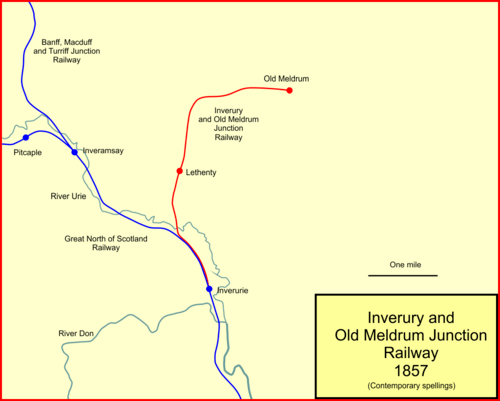
The Inverury & Old Meldrum Junction Railway
On 11th June 1858, this railway was authorised “to be leased in perpetuity to the Great North of Scotland Railway for a rental of £650 per year, payable half-yearly. … A very modest sum for the lease of a railway but the Inverury & Old Meldrum Junction was a very small railway.” [1: p834]
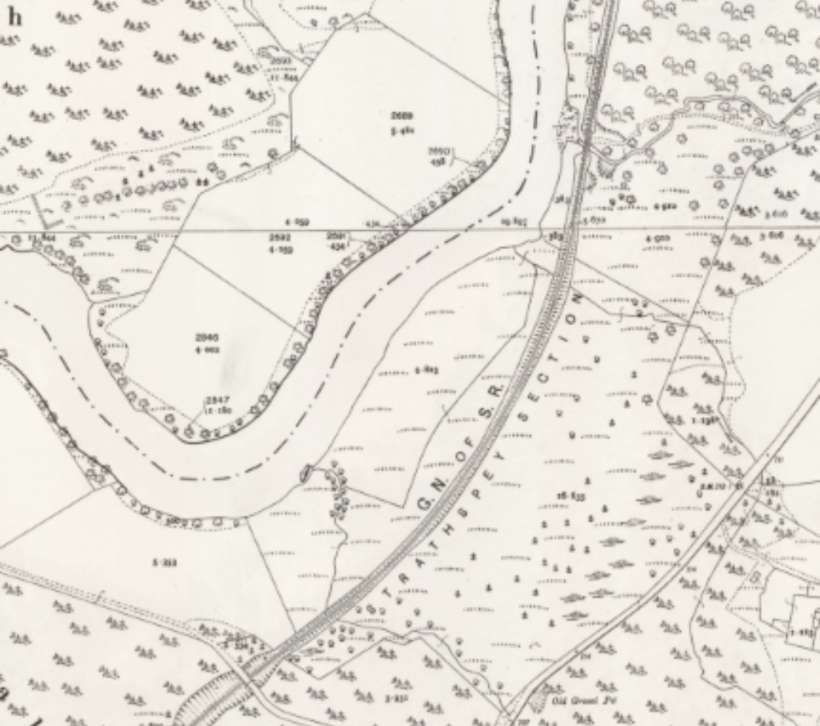
The route of the Inverury & Old Meldrum Junction Railway. [9]
The authorising Act for the Inverury and Old Meldrum Junction Railway received the Royal Assent on 15th June 1855, a necessary capital of £22,000 was authorised. The line was “5 miles 1194 yards in length, from a junction at Inverurie. The station at that time was some distance south of the present one; the Old Meldrum branch line ran alongside the main line for nearly a mile before diverging. The engineer was John Willet. There were few engineering complications in constructing the line, the biggest work being a 50-foot girder bridge over the River Ury.” [9][10: p7-9][11][12]
The capital was raised mainly locally, and construction was completed quickly and cheaply, being ready by June 1856 at a low cost of about £5,000 per mile. The opening to passengers took place on Thursday 26th June 1856. [9][10: p7-9][13]
In 1866 the Great North of Scotland Railway (GNoSR) set about incorporating several branch line leases into the parent company; the Oldmeldrum company was one of them. The £650 annual lease rental was converted to £13,810 of new GNoSR Old Meldrum preference stock. Parliament authorised the change on 1 August 1866. Ordinary shareholders got £3 of GNoSR stock for their £10 shares. [9][10: p7-9][13]
In 1930 passenger receipts had totalled £243, which represented a loss in working of £718. It was hardly sustainable to continue such an operation, and the LNER closed the passenger service from 2 November 1931. [9][10: p58][18: p315]
The basic goods service to Oldmeldrum continued, but it too became unsupportable in the 1960s, and it was closed on 3 January 1966.[18: p315] It was later used for a while for wagon storage.[9][10: p65]
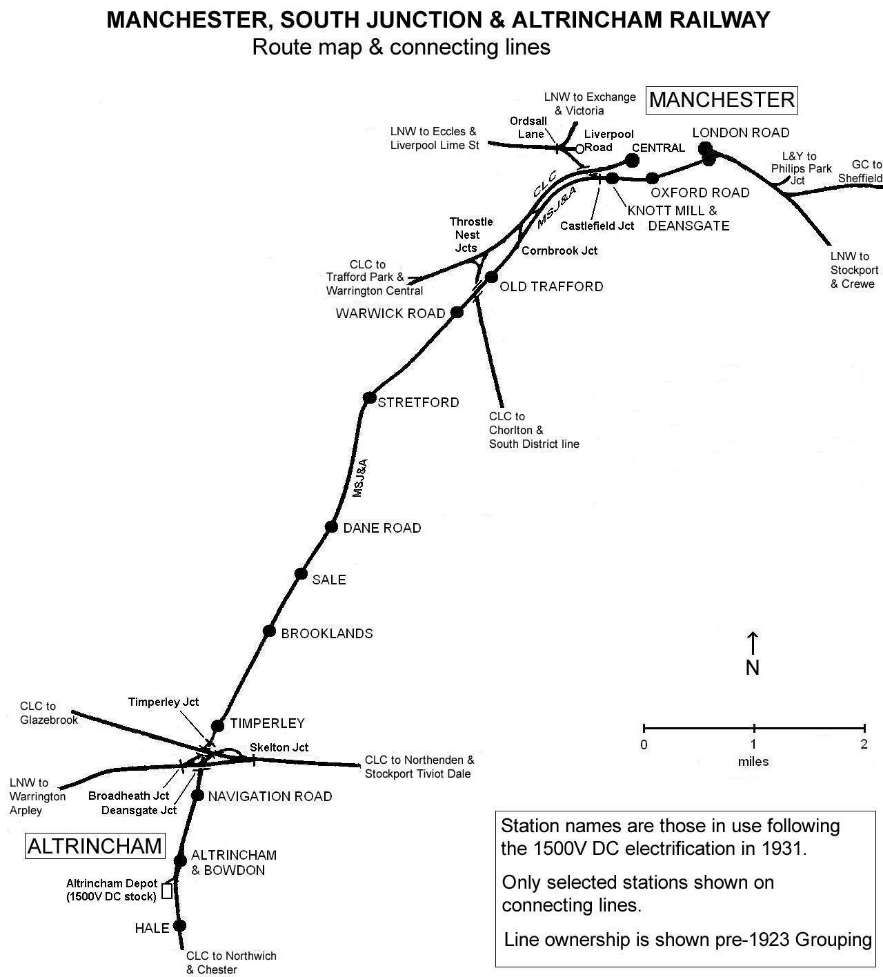
The Manchester South Junction & Altrincham Railway
This railway was authorised by Parliament in 1845 and was jointly owned by the London & North Western and the Manchester, Sheffield and Lincolnshire railways.
Caplan says that:
“It is not surprising that the railway companies concerned in the operation of joint lines did not always see eye to eye, and one Act of 1858 brings clearly above the surface some of the difficulties which arose. This was the ‘Act to improve the management of the Manchester South Junction & Altrincham Railway’. …. The M.S.J.A.R. …. was managed by a board of six directors, three nominated by each company, and two chairmen, each company appointing one. The chairmen were to preside alternately at board meetings and the presiding chairman had a casting vote in the event of a tie.
“Such an arrangement was bound to cause trouble at times and as the preamble to the 1858 Act said ‘it has been found that in cases where the interests of the London & North Western and the Manchester, Sheffield & Lincolnshire Railway Companies differ the said provisions with respect to the chairman of the board of directors produce great inconvenience and delay, and that resolutions passed by the said board under one chairman are often rescinded by a subsequent board under another chairman.” The preamble went on to refer to the competition between the parent companies: inasmuch as the two companies work over and are competitors for much of the traffic which is or may be conveyed over the South Junction Railway, and the questions therefore between them are likely to be multiplied, it is essential to the public convenience and to the proper use of the South Junction Railway…
“The Act provided that in future the chairman presiding over any board meeting should not have a casting vote. Instead, the parent companies were to appoint each December an arbitrator and, in the event of failure to agree on an arbitrator, the Board of Trade was to make this appointment. The arbitrator’s term of office was fixed at one year, though he could be re-appointed. The arbitrator was given the power to decide disputed matters in cases where there was a tie in voting at the board of the South Junction Railway. [1: p834-835]
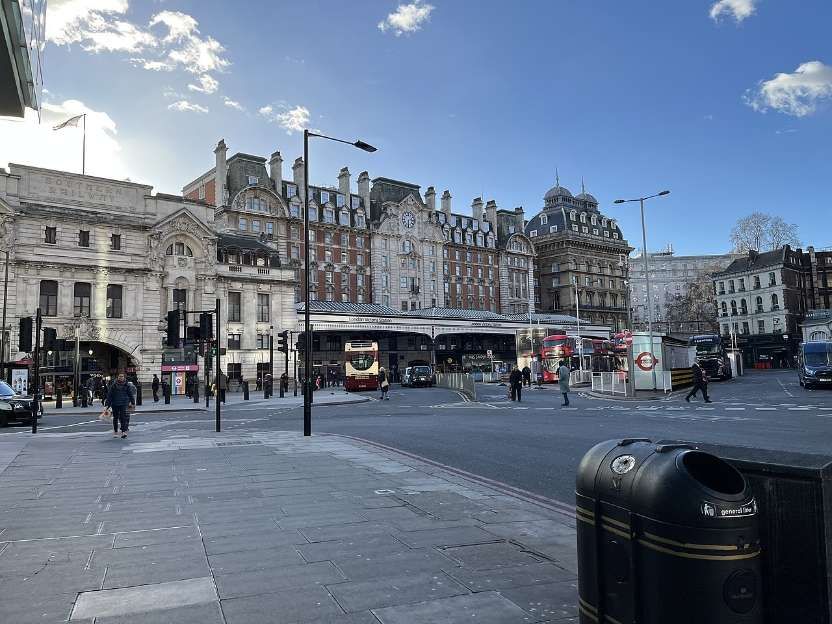
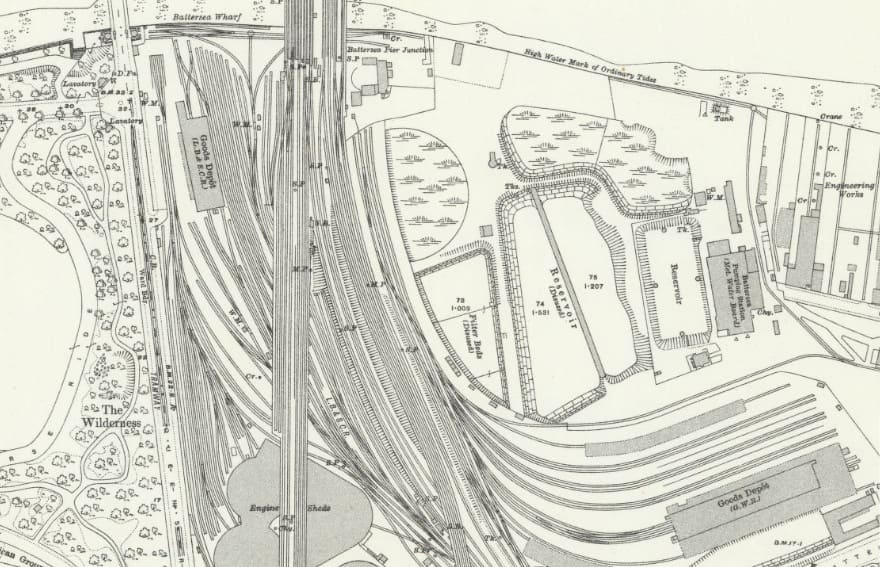
A Station near Victoria Street, Pimlico and a Railway to Connect it with the West End of London & Crystal Palace Railway at Battersea
Caplan says that the continued growth of towns and passenger traffic required big changes in station arrangements, and a particularly interesting Act of 1858 concerned London. This was:
“‘An Act to authorise the construction of a station near Victoria Street, Pimlico, in the County of Middle-sex, and of a railway to connect the same with the West End of London & Crystal Palace Railway at Battersea in the County of Surrey, in order to afford improved communication between certain of the railways south of the Thames and the western districts of the Metro-polis; and for other purposes’.
This was indeed a major scheme of passenger traffic improvement – the authorised capital was £675,000. The existing terminus of the West End of London & Crystal Palace Railway was South of the Thames at Battersea – it was, however, called ‘Pimlico’ – and this was not at all convenient for the West End. Pimlico Station was opened in March, 1858, and the new Victoria Station authorised by the 1858 Act was opened in October, 1860, so that the ‘West End Terminus’ south of the River had the shortest of lives.” [1: p835][20]
The Victoria Station and Pimlico Railway (VS&PR) was by the Victoria Station and Pimlico Railway Act 1858 on 23 July 1858. to build Victoria Station, Grosvenor Bridge over the River Thames, and a length of line to Connect with the London & Crystal Palace Railway. The company later leased its lines and stations to the LB&SCR and the London Chatham and Dover Railway (LC&DR) but continued in existence until December 1922 when it was very briefly amalgamated with the South Eastern Railway before becoming part of the Southern Railway as a result of the Railways Act 1921, which created the Big Four on 1 January 1923.
In 1844, ‘Gladstone’s Act’ was passed ‘to attach certain Conditions to the Construction of future Railways’. Although about the general regulation of the railways, Gladstone’s Act was known as the charter of third class passengers who suffered a miserable time travelling on those railways that thought it worthwhile recognising their existence!
Caplan says that:
” Parliament’s aim in Clause VI of the 1844 Act was to ‘secure to the poorer class of travellers the means of travelling by railway at moderate fares, and in carriages in which they may be protected from the weather’ and at least one train a day in each direction on all main, junction and branch lines was to provide such facilities. Parliament specified the fare to be charged: ‘The fare or charge for each third class passenger by such train shall not exceed one penny for each mile travelled’.
“However, there was room here for disagreement about the proper basis of charging for fractions of a mile travelled. Hardened as we are by the course of inflation, we may be tempted to smile at the thought of Parliament moving in all its majesty in 1858 to lay down that fractions of a mile must be charged for at a specific rate, but farthings and halfpennies were real money a hundred years ago. The Victorians-individuals and railway companies were unlikely to dismiss farthings and halfpennies as insignificant quite apart from the question of the principle of the thing.
“So it was that Clause 1 of the Cheap Trains Act, 1858, prescribed the method of charging for fractions of a mile on journeys by the ‘Parliamentary Trains’: ‘When the distance travelled by any third class passenger by any train run in accordance with the provisions [of the 1844 Act] is a portion of a mile, and does not exceed one mile, the fare for such portion of a mile may be one penny, or when such distance amounts to one mile, or two or more miles, and a portion of another mile, the fare or charge for each such portion of a mile, if the same amounts to or exceeds one half mile, may be one halfpenny’.” [1: p835, p860]
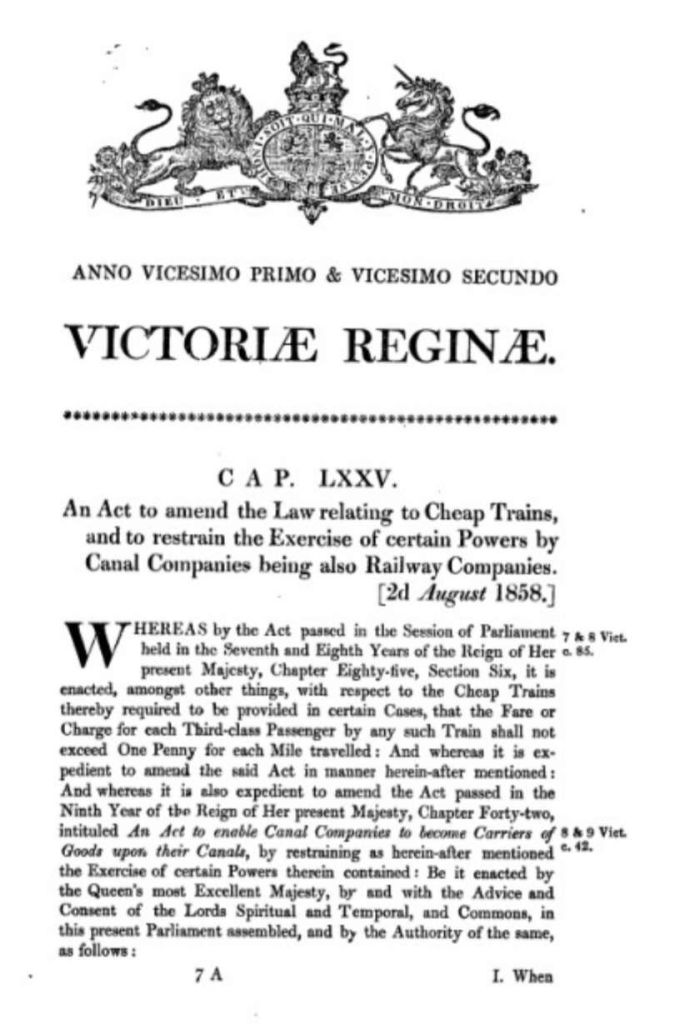
The first page of the Act referred to as the ‘Cheap Trains Act’. It is worth noting that the Act sought not only to amend the law relating to Cheap Trains but also to restrain the Exercise of certain powers by Canal Companies being also Railway Companies. [22]
The ‘Cheap Trains Act’ was actually also intended to curb railway companies from monopolizing transport by abusing their control over acquired canal networks. It regulated the leasing of canals by railway companies, ensuring they couldn’t stifle competition, while also addressing railway pricing.
The Act specifically addressed concerns that railway companies, having bought up canals, would allow them to fall into disrepair or charge prohibitive tolls to force traffic onto the rails.
It also restricted any ‘Canal or Navigation Company, being also a Railway Company’ from leasing other canals or railways without parliamentary authority, preventing the massive consolidation of transport networks by a few rail companies.
It sought to maintain the viability of independent canal carriers against ‘Railway and Canal Companies’.
It also sought to strengthen the provisions of the Railway and Canal Traffic Act 1854 which forced canal and rail companies to provide ‘reasonable facilities’ for transport.
The 1858 Act was later made perpetual by the Cheap Trains Act 1860. It acted as a protection mechanism for the waning canal industry against aggressive railway competition during the expansion of the UK’s rail network.
However, the 1860 Act was not Parliament’s last word on the subject of Cheap Trains. A further Act was passed in 1883. It was known as the ‘Cheap Trains Act’. The 1883 spurred the expansion of affordable ‘workmen’s trains’. It abolished or reduced passenger duty (duty not fares) for companies charging less than a penny a mile, requiring them to provide sufficient services for working-class commuters, particularly in urban areas. [23] It obliged the railway companies to operate a larger number of cheap trains. [24]
That 1883 Act also consolidated the Law relating to the conveyance of the Queen’s Forces by Railway. [23]
“Some railways in London were already operating workmen’s trains although they were often overcrowded and inconveniently timed. Although the act was opposed by some railway officers, notably Sir Edward Watkin of the Manchester, Sheffield and Lincolnshire Railway, the number of cheap suburban services increased greatly. During the 20th century, the appearance of competing road services meant that the railways were forced to reduce their fares. So few services eventually attracted duty that the act was abolished in the Finance Act 1929.” [24]
Further Acts of Parliament relating to railways were not considered worth noting by Caplan, some of these are covered in Appendix 2.
Returning to Caplan’s article, he concludes by saying that, “No railway enthusiast should be deterred from the thought of looking into Acts of Parliament by the mistaken impression that they are dry as dust. Many of them bring the ‘Railway Age’ before us in the most vivid way.” [1: p860]
Hopefully this review of his article has further emphasised the value of reading through relevant Acts of Parliament to gain a better understanding of railway history.
References
N. Caplan; Parliament and Railways in 1858; in The Railway Magazine, December 1958; Tothill Press, London, 1958, p833-835 & p860.
Duncan McLeish; Rails to Banff, Macduff and Oldmeldrum: Three Great North of Scotland Railway Branch Lines; Great North of Scotland Railway Association, 2014, p7-9.
Donald J Grant; Directory of the Railway Companies of Great Britain; Matador, Kibworth Beauchamp, 2017, p278.
H A Vallance; The Great North of Scotland Railway; David and Charles, Dawlish, 1965, p59-60.
David Ross; The Great North of Scotland Railway: A New History; Stenlake Publishing, p40, 83, 222 & 223.
The Clauses in the Railways Acts of the 1858 Session of Parliament giving Powers to the Board of Trade are to the following effect:
Construction of Works
Alyth Railway Act, 1858, c. 43. s. 28., &c. —Provides that the junction with the Scottish North-Eastern Railway, in case of difference, is to be made according to a plan approved of by an engineer appointed by the Board of Trade previously to the commencement of such work; and any difference as to the nature or necessity of the signals and other works at the junction, the same to be referred to arbitration or the decision of an engineer, to be appointed by the Board of Trade, at the option of the Scottish North-Eastern Company.
Andover and Redbridge Railway Act, 1858, c. 82. s. 22., &c. — Provides that the Company are not to proceed with any works affecting the Bishopstoke and Salisbury Railway, or any of the works of the London and South-Western Railway Company, until they shall have delivered to that Company a plan, &c. of the proposed works, and obtained the approval thereof of the principal engineer; but if he shall not certify his approval within one calendar month of the delivery of such plan, &c., and shall fail to furnish within such period a plan of executing the works satisfactory to that Company, the Andover Company may submit a plan, &c., to the Board of Trade, and on the same being certified, proceed to the execution of the works, &c.
The Company shall also so make and maintain the Branch Railway as to enable the London and South-Western Company to make a convenient junction between it and the Southampton and Dorchester Railway; and any difference with reference thereto is to be settled by the arbitrator of the Board of Trade, and the Company are not to open the railway between Romsey and Redbridge, or any part thereof, for public traffic, unless they simultaneously open for traffic the branch railway.
Banbridge, Lisburn, and Belfast Railway Act, 1858, c. 46. s. 32. — Provides that in case of difference with respect to any works for effecting the communication with the Ulster Railway and the Banbridge Junction Railway, the same is to be determined by an engineer, to be appointed by the Board of Trade.
Caledonian Railway (Branch to Port Carlisle Railway) Act, 1858, c. 66. s. 5. — Provides that all communications between the Branch Railway authorized by this Act and the Port Carlisle Railway, in case of difference, are to be effected by means of connexion rails, and points of such construction, and laid in such manner as shall he determined by an engineer to be appointed by the Board of Trade.
Devon Valley Railway Act,, 1858, c. 122. s. 26., &c. — Provides that in case of difference, the junctions of the railway with the Tillicoultry Branch of the Stirling and Dunfermline Railway, and with the Fife and Kinross Railway, are to be made according to a plan to be approved of by an engineer to be appointed by the Board of Trade; and any difference as to the nature or necessity of the works to be constructed at such junctions shall be referred to arbitration, or the decision of an engineer to be appointed by the Board of Trade, at the option of the Stirling Company or the Fife and Kinross Company respectively. A certain road in the parish of Dollar is to be carried over the railway by a stone bridge, to the satisfaction of the engineers of the Company and the landowners named in the Act, or in case of difference, of an engineer to be appointed by the Board of Trade.
Dublin and Meath Railway Act, 1858, c. 119. — Provides that communications between the railways authorized by the Act and the railway of any other Company, shall be made to the satisfaction of the engineer of the Company with whose line such communication is to be made: and if such Company shall have no engineer, or the engineers shall differ, then such communications shall be made in the manner directed by an engineer to be appointed by the Board of Trade.
East Kent Railway ( Western Extension) Act, 1858, c. 107. s. 7., &c. — Provides that all communications between the railway and the Mid-Kent Railway (Bromley to St. Mary Cray), in case of dispute, shall be made in such manner as shall be directed by an engineer to be appointed by the Board of Trade. Before the Company open the railway for public traffic, they are to make a station at Sole Street at which all trains are to stop (except on Sundays), for the purpose of taking up and setting down passengers, goods &c., special or express, or mail trains, only excepted.
East Suffolk Railway (Branch and Capital) Act, 1858, c. 47. s. 10. — Provides that in case of difference as to the mode of making the communications with the Lowestoft Railway, or as to the works necessary or convenient for effecting the same, the matter is to be settled by the Board of Trade, or its arbitrator.
Eden Valley Railway Act, 1858, c. 14. s. 28. — Provides that in case of disputes as to the nature or necessity of the works at the junctions of the railway authorized by this Act with the Lancaster and Carlisle Railway, or the South Durham and Lancashire Union Railway, the matter shall be referred to arbitration, or to the decision of an engineer to be appointed by the Board of Trade, on the application of either of the Companies.
Exeter and Exmouth Railway Act, 1858, c. 56. s. 46. — Provides that if any carriageway be made across the railway on the level for the benefit or convenience of any person interested in the shore or river bank adjoining the railway, the mode of making and watching such crossing shall be subject to the approval of the Board of Trade.
Fife and Kinross and Kinross-shire Railways Junction and Joint Station Aci, 1858, c. 65. s. 5. &c. — Provides that the junction between the railways of the two Companies and the joint station at Kinross, and the bridge for carrying the Great North Road, &c. over the Kinross-shire Railway and the levels of the two railways, are to be made to the satisfaction of the engineers for the time being of the Companies, and in case of difference, of an engineer to be appointed by the Board of Trade, on the application of either Company.
Either of the Companies, on giving three months’ notice, may construct the joint station at Kinross, and will be entitled to recover from the other Company one moiety of the expense, as the same shall be certified by the engineers, or in case of difference, by an engineer to be appointed by the Board of Trade.
Formartine and Buchan Railway Act, 1858, c. 108. s. 45., &c. — Provides that the Branch Railway to Ellon is to be constructed simultaneously with the main line from Dyce to Old Deer, and no part of the main line is to be opened to the public until the branch has been opened, and no part of the railway is to be opened until a double line of rails shall have been laid down upon the Great North of Scotland Railway between the point of junction at Dyce and Kittybrewster. Any difference as to the mode of effecting the communication with the Great North of Scotland Railway is to be determined by a referee, to be appointed by the Board of Trade.
Knighton Railway Act, 1858, c. 19. s. 22. — Provides that any difference as to the mode of effecting the communications with the Shrewsbury and Hereford Railway is to be determined by a referee, to be appointed by the Board of Trade.
Midland Great Western Railway o f Ireland (Clare Deviation) Act, 1858, r. 94. s. 9. —Provides that in case of difference with reference to any works for effecting the communication between the railway authorized by the Act and the Great Southern and Western Railway, the same is to be determined by an engineer, to be appointed by the Board of Trade.
Newport, Abergavenny, and Hereford Railway Act, 1858, r. 126. s. 7., &c. — Provides that a deviation is to be made in the Aberdare Canal, at the expense of the Company, and to be maintained and repaired by them during a period of five years; and if any dispute shall arise between them and the Canal Company touching the said matters, the same is to be determined by an engineer, to be appointed by the Board of Trade.
North British Railway Consolidation Act, 1858, c. 109. s. 49. — Provides that this Act repeals the prohibition against the use of locomotive engines on the Old Leith Branch Railway, and empowers the Company to stop up such of the roads or accesses across the railway in the parish of South Leith as they may think fit, and to make provision for the crossing of the railway, at two or more points, by means of occupation or other roads, and to execute such works as may be necessary for adapting the railway to the use of locomotive engines, and to run the same thereon.
Portsmouth Railway Amendment Act, 1858, c. 101. s, 7., &c. — Provides that if any difference shall arise respecting the communication between the Portsmouth Railway and the railways belonging either jointly or separately to the Brighton and South- Western Companies, or as to the erection of signals at, and other matters connected with such junctions, the same is to be determined by arbitration, in the manner provided by the Railways Clauses Consolidation Act, 1845, section 21. The Company are prohibited from appropriating any part of a certain road, called Blackfriars Road, belonging to the Landport and Southsea Commissioners; but they may and shall, for the purpose of forming a communication between their railway and the line of the Brighton and South-Western Companies at Landport, make sidings, with two lines of rails, within the limit of deviation, across and on the level of the said road, subject to the usual provisions in reference to crossing roads on the level, and to such other reasonable regulations as may be agreed on between them and the surveyor, or, in case of dispute, as shall be settled by an officer to be appointed by the Board of Trade.
Redditch Railway Act, 1858, c. 137. s. 36. — Provides that the bridge for carrying the railway over the Worcester and Birmingham Canal is to be constructed, as to its position, form, and dimensions, to the satisfaction of the engineer of the Railway and Canal Companies, and, in the event of disagreement, to the satisfaction of an engineer to be approved by the Board of Trade.
Symington, Biggar, and Broughton Railway Act, 1858, c. 15. s. c25., &c. —Provides that in case of difference as to the mode of effecting the junction with the Caledonian Railway, the same is to be made according to a plan approved of by an engineer, to be appointed by the Board of Trade previously to the commencement of the works; and any question as to the nature or necessity of works at the junction, in case of dispute, is to be referred to arbitration, or to the decision of the Board of Trade, at the option of the Caledonian Company.
Whitehaven Junction Railway (New Branches) Act, 1858, c. 127. s. 27. — Provides that if the Company shall be required by the Lords of the Admiralty, under the provisions of this Act, to make any carriageway across the railway on the level, for the purpose of affording access to the seashore, then the manner of making and watching such level crossing shall be subject to the approval of the Board of Trade, and the Company shall not be liable for the expenses of watching such level crossing.
Additional Rails
East Suffolk Railway (Branch and Capital) Act, 1858, c. 47. s. 27. — Provides that the main line from the Leiston Junction to Halesworth, and the part from Halesworth to Haddiscoe, are to be completed, so that two lines of railway may be laid down when and as the Company think proper; and if the Company shall not lay down two such lines of rails, then when it shall appear to the Board of Trade that another line of rails, in addition to the single line of rails on such portions, is required for the public accommodation.
Portsmouth Railway Amendment Act, 1858, c. 101. — Provides that if the gross annual proceeds of the traffic on the line between Godalming and Havant for three consecutive years shall average £45,000, the Company, on request of the Board of Trade, shall lay down an additional line of rails, raising such an amount of additional capital as may be necessary for that purpose.
Lease, Sale or Amalgamation
East Suffolk Railway Companies Amalgamation Act, 1858, c. 111. s. 3. and s. 43., &c. — Provides that from the passing of the Act the undertakings of the East Suffolk Company, the Yarmouth and Haddiscoe Company, and the Lowestoft and Beccles Company were united and consolidated into one undertaking.
The Company may grant a lease of their undertaking to Sir M. Peto for any term not exceeding 21 years, determinable on 12 months’ notice, after a resolution by the Company that such lease shall be determined, provided that if within three months after such notice the lessee shall apply to the Board of Trade and object to the determination of such lease, then the resolution and notice shall have no force or effect, unless the Board of Trade shall be of opinion that the lease is injurious to the public interests, and shall confirm such resolution. Any shareholder, voting against such resolution, within three months may require the Company to purchase the shares, in respect of which he voted, at par.
South Devon and Tavistock Railway Act, 1858, c. 102. s. 3. — Provides that lease to the South Devon Company, with consent of Shareholders of both Companies, the Company still remaining liable to the provisions of the 30th section, 17 & 18 Vict. c. 189, as to laying down additional rails on the narrow gauge, if required so to do by the Board of Trade: the terms and conditions of using the same by any Company, in case of dispute, are to be settled and adjusted by the Board of Trade.
Staines, Wokingham, and Woking Railway Act, 1858, c. 58. s. 19., &c. — Provides that the Company may lease all or any part of their undertaking to the South-Western Company, with consent of shareholders of both Companies. The lease, at the expiration of every ten years, to be subject to such modification as the Board of Trade may consider necessary to protect the public interests.
Ulverstone and Lancaster Railway Act, 1858, c. 98. s. 42., &c. — Provides for lease or sale to the Furness Company of all or any part of the undertaking; the terms to be approved of by the Board of Trade.
Vale of Towy Railway (Leasing) Act, 1858, c. 147. s. 3. — Provides that the Company may lease for a period of 10 years their undertaking to the Llanelly Railway and Dock Company, such lease to be approved of by the Board of Trade.
Use of Railway Station, &c.
Fife and Kinross and Kinrosshire Railways Junction and Joint Station Act, 1858, c. 65. s. 17., &c. — Declares that the management and maintenance of the joint station are in the Companies; but in the event of any difference thereon, or on any other questions relating to the use and working of such station, or as to the expense thereof, the same is to be settled by an arbitrator, to be appointed by the Board of Trade. The Companies may agree with the Edinburgh, Perth, and Dundee Company with respect to the use and working of the railways authorized by this Act on the terms of the Fife and Kinross Railway Act, 1855, and the Kinrosshire Railway Act, 1857.
London, Brighton, and South Coast Railway (New Lines) Act, 1858, c. 84. s. 27., Sec. — Provides that the Company and all persons lawfully using their railway, may likewise use the Mid-Sussex Railway Stations, &c.; and in case of dispute as to the time, conditions, and regulations respecting the use thereof, the same shall be determined by the Board of Trade, or its arbitrator.
London and North-Western Railway (Additional Works) Act, 1858, c. 131. s. 12. — Provides that the Company, and the Great Western Company may, if they shall think fit, instead of proceeding with the arbitration under the provisions of 17 & 18 Vict. c. 200., for the separation and allotment of the joint station at Wolverhampton, known as the High Level Station, or in addition thereto, so far as the same shall not extend, make and carry into effect agreements for the appropriation and allotment to and between, or to either of them, of the whole or any part of such station ; and upon such appropriation and allotment being completed and approved of by the Board of Trade, the several portions shall vest in the Stour Valley and Great Western Com panies accordingly. The portion which may be assigned to the Stour Valley Company shall be deemed to be included in the lease to the London and North-Western Company.
Portsmouth Railway Amendment Act, 1858, c. 101. s. 25. — Provides that the Company, and all other companies lawfully using the Portsmouth Railway, may pass over and use so much of the railway of the Brighton Company as will be situated between the point of junction with that railway, in the parish of Havant, and the Portsmouth Railway, and the point at or near Hilsea Redoubt, where the Brighton Railway unites with the line to Portsmouth belonging to the Brighton and South-Western Companies, and also of their line to Portsmouth between the said point at Hilsea Redoubt and the terminus of the said railway at the Landport road, in the parish of Portsea, and also so much of the line of the South-Western Company as will be situate between the point of junction therewith of the intended railway firstly described in this Act, and the before-mentioned point at Hilsea Redoubt. The terms and conditions of such user are to be settled, failing agreement between the Companies, by their principal engineers, or their umpire, or, failing such appointment, by some person to be appointed by the Board of Trade. The right of user of the joint station at Landport is limited to traffic conveyed on the public service, but the Companies may agree for the use thereof for the general traffic.
The Portsmouth Company, in working or using the railway of the Brighton and South-Western Companies, is to observe the regulations and bye-laws of the Companies in force on the railways so used, as far as the same shall be applicable to the Portsmouth Company; and in case of dispute respecting such regulations or bye-laws, or the mode in which the powers or privileges given by the Act shall be exercised, or the regulations to be adopted exclusively for the convenience or accommodation to be afforded to the traffic of the Portsmouth Company, the same shall be settled as before-mentioned, provided that neither such regulations and bye-laws, so far as they affect the Portsmouth Company, nor the award thereon of the engineers, or their umpire, shall have any force unless the same shall have been confirmed by the Board of Trade. Any award of an umpire may be reconsidered by order of the Board of Trade.
Traffic Arrangements.
Alyth Railway Act, 1858, c. 48. s. 47., &c. —Provides that a traffic agreement may be made with the Scottish North-Eastern, and Edinburgh and Perth, and Dundee Companies, or either of them. Agreement limited to ten years, and to be assented to by the shareholders of the several Companies in special meeting, and to be approved of by the Board of Trade.
Athenry and Tuam Railway Act, 1858, c. 112. s. 44., &c. — Provides that a traffic agreement may be made with the Midland Railway of Ireland Company. Agreement limited to ten years, and to be assented to by the shareholders of the Companies in general meeting, and to be approved of by the Board of Trade.
Banbridge, Lisburn, and Belfast Railway Act, 1858, c. 46. s. 44, &c. —Provides that a traffic agreement may be made with the Ulster, the Dublin and Belfast Junction, and the Banbridge Junction Companies, or either of them. Agreement limited to ten years, to be assented to by the shareholders of the Companies parties thereto, and approved of by the Board of Trade.
Caledonian Railway (Branch to Port Carlisle Railway) Act, 1858, r. 66. s. 16., &c. — Provides that a traffic agreement may be made with the Port Carlisle Company and the Carlisle and Silloth Bay Company, or either of them. Agreement limited to ten years, to be assented to by the shareholders of each Company, and to be approved of by the Board of Trade.
Cleveland Railway Act, 1858, c. 114. s. 40. —Provides that a traffic agreement may be made with the West Hartlepool Company. Agreement to be assented to by the shareholders of the Companies, and approved of by the Board of Trade. On the expiration of ten years from the commencement of any agreement, the Board of Trade may cause the same to be revised, and the Board is empowered to declare that, if any modification required by it be not agreed to by the Companies, then, at the expiration of twelve months after notice given to the Companies of such modification being required, the said agreement shall determine.
East Kent Railway (Western Extension) Act, 1858, c. 107. s. 17., &c. — Provides for the due transmission of traffic to or from any part of the railways belonging to the South-Eastern Company, to or from any part of the railways belonging to the East Kent Railway Company, and empowers the Board of Trade, in case of dispute as to the nature and extent of the accommodation to be afforded by the latter Company, and the rates of charge at which the several services required of it shall be performed, to settle the terms and conditions. The Company and the West London and Crystal Palace Company may enter into traffic arrangements. Agreement limited to ten years, to be assented to by the shareholders of both Companies, and approved of by the Board of Trade. Any question or difference which may arise between the Companies with reference to the construction of any such agreement, is to be settled by the Board of Trade, or its arbitrator.
East Suffolk Railway Companies Amalgamation Act, 1858, c. 111. s. 50. &c. — Provides that a traffic agreement may be entered into with the Eastern Counties Company, the Norfolk Company, and the Eastern Union Company. Agreement to be assented to by the shareholders of the several Companies, and approved of by the Board of Trade, and to be liable to revision by that Board at the expiration of every ten years. If the revision proposed by the Board of Trade be not agreed to, the Board may declare that the agreement, at the expiration of twelve months, shall determine.
Eden Valley Railway Act, 1858, c. 14. s. 39., &c. — Provides that a traffic agreement may be made with the Stockton and Darlington Company, the Lancaster and Carlisle Company, and the South Durham and Lancashire Union Company, or either of them. Agreement to be assented to by the shareholders of the several Companies, and approved of by the Board of Trade, and to be liable to revision by that Board on the expiration of every ten years. If the revision proposed by the Board of Trade be not agreed to, the Board may declare that the agreement, at the expiration of twelve months, shall determine. The South Durham Company are required by the Act to afford all proper facilities for the due transmission of the traffic.
Exeter and Exmonth Railway Act, 1858, c. 56. s. 63., &c. — Provides that a traffic agreement may be made with the South- Western Company. Agreement to be assented to by the share holders of both Companies, and approved of by the Board of Trade. At the expiration of ten years after the date of any such agreement, if the Board of Trade is of opinion that the agreement is adverse to the public interests, it may require the Companies to modify the terms and conditions thereof.
Formartine and Buchan Railway Act, 1858, c. 108. s. 52., &c. — Provides that a traffic agreement may be made with the Great North of Scotland Company. Agreement limited to ten years, to be assented to by the shareholders of both Companies, and approved of by the Board of Trade.
Great Northern and Manchester, Sheffield and Lincolnshire Railway Companies Act, 1858, c. 113. s. 1., &c. — Provides that the Companies from time to time during 50 years, with assent of share holders, and approval of the Board of Trade, may enter into agreement with respect to the conduct of the traffic. The Manchester Company is to afford to the London and North-Western, or any other Company on demand, all reasonable facilities for the forwarding of traffic between Liverpool and the port of Great Grimsby, and between any other station of the London and North-Western Railway and the same port, or between any station of such other Company and the port of Great Grimsby; and any difference as to the facilities to be afforded, or as to the amount of the rates, is to be settled from time to time by an arbitrator, to be appointed by the Board of Trade. It is not incumbent on the Manchester Company to afford any such facilities, unless the Company applying shall afford to them similar facilities between the same places.
Great Northern and Western (of Ireland) Railway Act, c. 96. s. 21., &c. — Provides that agreements which the Companies may enter into under the 20 & 21 Vict. c. 84., may be for such periods as the Companies think fit. Any such agreement, at the expiration of ten years from the date or revision thereof, is liable to the revision of the Board of Trade, if the Board shall be of opinion that the public interests are injuriously affected by it.
Knighton Railway Act, 1858, c. 19. s. 43., &c. —Provides that a traffic agreement may be made with the Shrewsbury and Hereford Company. Agreement limited to ten years, to be assented to by the shareholders of both Companies, and approved of by the Board of Trade.
Liskeard and Looe Railway Act, 1858, c. 1 1 . s. 33., &c. — Provides that a traffic agreement may be made with the Liskeard and Caradon Company. Agreement limited to ten years, to be assented to by the shareholders of both Companies, and approved of by the Board of Trade.
South-Western Railway (Works and Capital) Act, 1858, c. 89. .v. 33., &c. — Provides that a traffic agreement may be made with the Wimbledon and Dorking Company and the Exeter and Exmouth Company, with consent of shareholders, and approval of the Board of Trade, which Board, at the end of every ten years, may call on the Companies to modify the terms and conditions of the agreements if the Board shall be of opinion that the public interests are thereby injuriously affected.
North Yorkshire and Cleveland Railway Act, 1858, c. 134. s. 25., &c. — Provides that a traffic agreement may be made with the North-Eastern Company. Agreement limited to ten years, to be assented to by shareholders of both Companies, and approved of by the Board of Trade.
Redditch Railway Act, 1858, c. 137. s. 26., &c. — Provides that a traffic agreement may be made with the Midland Company. Agreement limited to ten years, to be assented to by the share holders of both Companies, and approved of by the Board of Trade.
Stokes Bay Railway and Pier Act, 1858, c. 50. s. 10., &c — Provides that a traffic agreement may be made with the London and South-Western Company. Agreement limited to 10 years; to be assented to by the shareholders of both Companies, and approved of by the Board of Trade.
Symington, Biggar and Broughton Railway Act, 1858, c. 15. s. 46., &c. — The Act confirms an agreement for ten years, already entered into by the Company with the Caledonian Company, and provides that during the present or any future agreement, the tolls and charges shall be those contained in the Caledonian Railway Act 1845. The agreement may be renewed with assent of shareholders and approval of the Board of Trade.
Ulverstone and Lancaster Bailway Act, 1858, c. 98. s. 42., &c. — Provides that a traffic agreement may be made with the Furness Company. Agreement to be assented to by the shareholders of both Companies, and to be approved of by the Board of Trade, and to be subject, at the end of every ten years, to be modified in such manner as the Board may consider necessary for the public interests.
Victoria Station and Pimlico Railway, Act 1858, c. 118. — Provides that a traffic agreement may be made with the Brighton Company, the Crystal Palace Railway Company, and the East Kent Company, or any one or more of them. Agreement to be assented to by the shareholders, and approved of by the Board of Trade, and to be subject, at the end of every ten years, to such revision as the Board of Trade may consider necessary. In the schedule to the Act is set out an agreement between the Company and the East Kent Company. The Act defines the west end traffic of the East Kent Company therein referred to to be traffic for which the Company’s intended station will, as regards its situation, afford convenient accommodation for the western parts of the Metropolis, and the words “West End of the Metropolis,” in the said agreement, to be that portion of the Metropolis which may be conveniently accommodated by the said station. Any dispute with reference to the matters contained in the above provision is to be determined by the Board of Trade, or its arbitrator, or as to the rate of payment per passenger to be made by the East Kent Company being unreasonable, is to be determined by the Board of Trade, or its arbitrator, if the same be not settled by the Companies themselves.
Miscellaneous.
North British Railway Consolidation Act, 1858. — Provides that certain portions of the authorized railway belonging to the Company are to be abandoned, and the Company are to make compensation to the owners of certain private roads, and to the trustees or surveyors of public roads, for the maintenance of bridges or tunnels erected by the Company under or over those roads, except when such bridges or tunnels shall, with the permission of the Board of Trade, be removed by the Company, and the roads restored to the satisfaction of the Board; sect. 48.
Appointment of Arbitrator.
Dublin and Meath Railway Act, 1858. — The Act appoints (section 25) an arbitrator in the case of certain lands required by the Company, and provides in a certain event that the Board of Trade shall appoint an arbitrator in the matter.
Manchester, South Junction, and Altrincham Railway Act, No. 2. — This is an Act to improve the management of the Manchester, South Junction, and Altrincham Railway. It enacts that the chairman of the Company shall not, in the case of an equality of votes at any meeting of the Board, have, in addition to his original vote, a casting vote; and that the London and North-Western Company and the Sheffield Company shall, in the month of December in every year, appoint an arbitrator, whose duty it will be to attend any meeting of the South Junction Board, if required so to do, and to decide upon any matter affecting the undertaking of the South Junction Company, on which there shall be an equality of votes, and which may be referred to him under the provisions of the Act. In case the Companies do not concur in the appointment of the arbitrator, upon the requisition in writing of either of them, the Board of Trade shall appoint the arbitrator.
Appendix 2
Several railway-related acts were passed in 1858 in the UK, focusing on specific company incorporations, extensions, and operational regulations.
Key examples, not referred to by Caplan, include the East Suffolk Railway Act and acts incorporating lines like the Symington, Biggar and Broughton Railway. These acts enabled the expansion of the UK rail network and facilitated improvements in infrastructure.
Numerous other local and private acts were passed, such as the Edinburgh and Glasgow and Stirling and Dunfermline Railways Act 1858 and the Staines, Wokingham and Woking Railway Act 1858.
The East Suffolk Railway Act 1858 provided regulations for connecting with other lines (such as the Lowestoft Railway) and required matters of dispute to be settled by the Board of Trade.
The Severn Valley Railway Extension Act extended the time allowed for completion of the railway.
There were some Indian Railway Acts as well. For example: the Great Southern of India Railway Company was formally established in 1858 to facilitate railway development in India. The Government of India Act 1858, while not exclusively a railway Act, transferred control of Indian territories (and their developing railway systems) from the East India Company to the British Crown.
The November 1954 edition of The Railway Magazine reported that, “An improved type of steam-heating tender for electric main-line trains has been brought into use on the Cape Western and Natal systems of South African Railways. The new tenders are fitted with automatic oil-burning generators and are stated to be both cleaner and more effective than the former coal-burning type. A total of 16 tenders is being built. It is intended that eventually nine will be used on the Cape Western system and the remaining seven in Natal. The winter season, for train-heating purposes, lasts from May to October, during which period the tenders are in daily use on passenger trains. The nine tenders allocated to the Cape Western system will work between Cape Town, Worcester, and Touwsrivier when the passenger trains are taken over by recently-acquired class “4E” electric locomotives.” [1: p804]
Steam-heating tender for use on the electrified main lines of the South African Railways. [1: p804]
Oil-fired steam-heating tenders (often referred to as steam generator units or cars) were crucial during the transition from steam to diesel/electric traction in the mid-20th century, allowing diesel or electric locomotives to pull older passenger carriages designed for steam heating. These units held fuel oil and water, utilizing an oil-fired boiler to produce steam, which was passed through pipes to heat passenger carriages.
Some new diesel and electric locomotives in the UK had Steam Heat Generators designed into them when built, others had Steam Heat Generators fitted retrospectively. This was true within locomotive classes, for example: Class 76 locomotives were not uniform in at least this respect. EM1 & EM2: An Illustrated Historical Review of the Manchester, Sheffield, Wath, Electric Locomotives – 76s & 77s of 2014, [2] written by John Hooper provides a list of the Class 76 locomotives specifically focussing on Steam Heat Generators (SHGs):
No. 26000: SHG Fitted from new and left insitu;
No. 26020: SHG Fitted February 1955, Removed February 1966, Refitted July 1977 when taken into the National Collection;
No. 26046: SHG Fitted September 1955, Removed October 1963;
No. 26047: SHG Fitted May 1955, Removed October 1963;
No. 26048: SHG Fitted April 1955, Removed November 1963;
No. 26049: SHG Fitted July 1955, Removed November 1955, Refitted March 1956; Removed again circa. September 1970;
No. 26050: SHG Fitted from new, Removed June 1977;
No. 26051: Fitted from new, Removed December 1970;
No. 26052: Fitted from new, Left insitu;
No. 26053: Fitted from new, Removed October 1970;
No. 26054: Fitted from new, Left insitu;
No. 26055: Fitted from new, Left insitu;
No. 26056: Fitted from new, Removed November 1970;
No. 26057: Fitted from new, Removed July 1972.
This information was recorded in July 1981. [2] It begs a question or two. Did the designers not appreciate the need for steam-heating of existing passenger stock? Were, perhaps, some of these locomotives intended only for freight haulage?
I presume that retrofitting was more expensive than installation at the time the locomotives were built. So how much did the design and specification teams believe was to be saved by excluding SHGs from some locomotives?
These questions must also apply to the Electric Locomotives supplied to South African Railways. Was the decision taken to provide separate SHG tenders because the length of journeys involved meant that oil for the SHGs would have required a separate tender? Could the class “4E” locomotives not have been designed to produce steam from generators which used the electrical supply?
These locomotives were designed by the General Electric Company (GEC) and built by the North British Locomotive Company (NBLC). There were 40 locos in this class. They were numbered E219-E258. [4] It would seem that these locomotives may not have had SHGs in their as-built state.
Between 1952 and 1954, the South African Railways placed forty Class 4E electric locomotives with a 1Co+Co1 wheel arrangement in temporary service on the Natal mainline and from 1954 on the mainline from Cape Town across the Hex River rail pass to Touwsriver in the Karoo. [4][5: p126-127]
“The Class 4E was specifically acquired for use on the mainline from Cape Town across the Hex River rail pass to Touwsriver, from where Class 23 and later Class 25 and Class 25NC steam locomotives would take over across the stretch of unelectrified mainline to De Aar and from there to either Kimberley or Bloemfontein.” [4][5: p126-127][6]
“Since the completion of Eskom’s high-tension power feeds in the Cape was late, the first locomotives to be delivered in 1952 were placed in service on the Natal mainline while awaiting electrification from Wellington via Worcester to Touwsriver. They were to be transferred to the Cape as soon as the wires were energised, but they eventually had to be withdrawn from Natal earlier because the severe curvature of the Natal mainline caused their frames to crack.” [6][7: p15][8]
“Class leader no. E219 was the first unit to be relocated to Cape Town in March 1953, where it initially ran on the 1.5 kV DC power which was still being used for Cape Town’s suburban trains until the upgrading of the Cape Town lines to 3 kV DC was completed in November 1954. The 3 kV DC electrification from Worcester had reached Touwsriver in April 1954. Until then, the locomotive’s load capacity and mobility were restricted. In Cape service, some teething troubles were experienced with their bogies, particularly when going faster than 45 miles per hour (72 kilometres per hour). The problem was hunting which became increasingly severe at higher speed and the units were therefore employed mainly on goods traffic until 1956, by which time their bogie faults had been ironed out.” [7][9][10]
“The Class 4E was rated at double the load of a Class 15F without banker over the Hex River rail pass, 770 tons against 360 tons for the same train length. With assistance from a banker between De Doorns and Matroosberg, a Class 15F and Class 14CRM combination could almost match the Class 4E, but between Cape Town and De Doorns an unaided Class 4E could haul half as much again as a Class 15F, 1264 tons as against 820 tons.” [9]
“Two Class 4E units briefly served on the Western Transvaal System while being relocated from Natal via Transvaal to the Cape. That system was granted permission to use no. E247 and one other for between four and six weeks, working from the Electric Running Shed at Braamfontein, before the locomotives were forwarded to Cape Town.” [8][11: p9]
“From 1954 onwards, the Class 4E took over working of the Blue Train with increasing regularity, long before the last Class 15Fs were drafted away to the Cape Midland System in September 1957.” [9]
No mention is made of the need for tenders to operate with these locomotives to supply steam for carriage heating. Perhaps this is because it was normal to provide Steam Heating Tenders for diesel and electric locomotive handled trains during the transition period? (It is worth remembering that the absence of any evidence is not the evidence of absence.)
Historically, passenger carriages in South Africa were heated using steam heating systems powered by steam locomotives. My assumption was that as steam was gradually replaced by diesel and electric locomotives steam generators would have been provided in those diesel/electric locomotives. (I have been advised that this was only true in South Africa for one Class of electric locomotives – Class 3E.) Other than the short piece in The Railway Magazine, I was unable to find any reference to the need for Steam Heating Tenders with Class 4E locomotives, or with other diesel and electric locomotives. It seems, however, that the Steam Heating Tenders were in use with the majority of early modern traction in South Africa and we’re very much as depicted in The Railway Magazine.
I have been told that when the Steam Heating Tenders “were introduced they were allocated to Cape Town and Pietermaritzburg depots and were cycled around the trains that required them (probably at that time only the Durban-Johannesburg/Harrismith, Johannesburg-Krugersdorp and Cape Town-Touwsrivier sections, everything else being steam worked). As electric and diesel working expanded, the Steam Heating Tenders must have been increased in number and allocated elsewhere, as several sections were isolated from those areas. (East London-Springfontein and SWA (from De Aar) main line from 1962, Port Elizabeth-Noupoort from 1968 etc). Eventually all main line trains used these Steam Generator cars (Steam Heating Tenders), aside from those few remaining sections still steam hauled, before the big 1986/7 service cut rendered many surplus to requirements.” [12]
“Presumably passenger trains hauled by class 1E (originally on the Natal main line from Pietermaritzburg to Glencoe from 1924 and then gradually extended) were quite cold in the winter? When the line to Touwsrivier was electrified and the 4E introduced, the steam generator cars were devised too.” [12]
References
Notes and News; in The Railway Magazine November 1954; Tothill Press, London, 1954, p800-805.
John Hooper; EM1 & EM2: An Illustrated Historical Review of the Manchester, Sheffield, Wath, Electric Locomotives-76s & 77s; Book law Publications, Parrot Books, Hemel Hempstead, Hertfordshire, 2014.
Leith Paxton & David Bourne; Locomotives of the South African Railways; Struik, Cape Town, 1985.
Soul of A Railway, System 6, Part 1: Durban Old Station (Caption 21) – the link is no longer active. Archived 24th October 2020 at the Wayback Machine, accessed on 24th March 2026.
Les Pivnic; South African Railways & Harbours Photo Journal, Vol. 6.
A, then, recent exhibition at Battersea Wharf Goods Depot of British Railways and British Road Services freight vehicles and handling equipment prompted a review in The Railway Magazine of January 1959, [1] of developments in the handling of freight. The emphasis of the exhibition was on the improvement of door-to-door services. It was part of the broader Modernisation and Re-Equipment of the British Railways plan launched in 1954, which sought to modernize and improve freight services in the late 1950s and early 1960s.
The location of Battersea Wharf Goods Depot as it appears on the 1913 25″ Ordnance Survey which was published in 1916. [17]
The Freight Transport Exhibition at Battersea Wharf Goods Depot in London was held from 28th–30th October 1958. It was a major showcase organized by the British Transport Commission.
The exhibition highlighted initiatives to streamline freight transport, including the increased use of containers, modern cranes for lifting heavy containers, and the transition from traditional to motorized handling. A major goal of the exhibition was to demonstrate to traders and manufacturers the efficiency of using both rail and road services to move goods directly from factory to destination, aiming to recapture traffic lost to road transport.
Battersea Wharf Goods Depot, near Chelsea Bridge, was an area with significant railway goods activity in the 1950s.
Displays included mobile cranes lifting heavy containers, emphasizing the faster, safer, and more reliable methods for moving freight. The exhibition also featured, among other things: bulk cement wagons with compressed air unloading; the ‘Penman‘ ramp; numerous types of pallets and containers; and automatic coupling of wagons.
Wikipedia tells us that the Modernisation Plan failed to successfully redefine “what the purpose of the railways was. British Railways remained bound by the Railway and Canal Traffic Acts that obligated it to provide carriage for virtually any type of goods, regardless of quantity (large or small) between any two stations on the network, at set and published rates. This legislation dated back to the 19th century to prevent the railways abusing their monopoly as the sole practical long-distance transport provider for much of the country, but the growth of road transport had left the railways locked into a highly disadvantageous position. Road freight operators had no legal restrictions and could turn down work that was uneconomic, which BR could not, and could easily undercut BR’s carriage rates which the railway could not alter without legal consent.” [2]
“The Railway and Canal Traffic Acts also saddled BR with the necessity to maintain thousands of goods yards and other facilities, plus rolling stock and staff to service them, even when there was ever-decreasing demand for those services and such traffic as did exist was rarely profitable. This issue had been identified during the Great Depression, and the Big Four had campaigned for repeal of the Railway and Canal Traffic Acts as a ‘Fair Deal’ during the 1930s. However, this did not happen until the Transport Act 1962 gave BR freedom of contract, and until then the Modernisation Plan had to commission locomotives, rolling stock and facilities to manage the ever-declining but legally required wagonload freight traffic.” [2]
“The timing of the Modernisation Plan was also unfortunate, as just months after its publication the train drivers’ trade union, ASLEF, called a strike that lasted for 17 days, causing major disruption to the network. Many of BR’s long-standing freight customers – especially smaller business and industrial users which provided much of the remaining wagonload and less than carload freight traffic – were forced by necessity to start using road transport and never returned to the railways, which hastened the decline in railway freight traffic and rapidly undermined the logic and business case for the Plan’s renewal and expansion of large marshalling yards.” [2]
The exhibition in 1958 was an attempt to recover some of the freight movements lost road transport.
The Railway Magazine reported that in recent years “considerable progress [had] been made in extending and improving the service offered by British Railways to the trader and industrialist for the movement of freight of all kinds. Many of the major developments concerned with freight in the modernisation plan [were] of a long-term character: though they [were] being pushed forward with vigour, their full benefits [would] not be realised for some time. In many directions, however, other lesser but nevertheless important projects which [had] been completed [were] producing results … and [were] enabling the railways to provide freight services of growing reliability and speed.” [1: p47]
“Main policy developments [lay] in the direction of speedier movement of bulk supplies over long distances on trunk routes; extending door-to-door services; more economical handling of small loads; more detailed planning to meet customers’ requirements and the introduction of new vehicles, rolling stock and other equipment to meet changing conditions.” [1: p47]
“The relationship between rail and road [was] being thought of more and more in terms of co-operative arrangements designed to combine the best features of each in the common interest of the customer and the transport undertaking.” [1: p47]
The ‘Penman’ Ramp
The Penman Ramp was an intriguing device designed to enhance the transfer of containers by which the motion of the rail or road vehicle lifts the container from one on to the other. The Penman ramp was being used experimentally by British Railways.
The Railway Magazine reported that the Penman Ramp, “consists of two raised rails with inclined sections at either end which are positioned one at each side of a siding. The containers have pull-out metal skids near each corner and, as the vehicle moves between the raised rails, the skids engage with the inclined sections at the rail ends, and the container is raised from the vehicle. When the rail or road vehicle to which it is being transferred is moved into position between the raised rails, a hinged flap under the container engages with a batten on the vehicle floor and the container is pushed along the rails and down the inclined sections, to settle gently on the lorry or wagon. With this system, there are few costs; the equipment is robust and the mechanics are simple.” [1: p47,49]
Online archive material from the Commercial Motor magazine similarly reports that:
“The Penman ramp is being experimentally used. This simple device is designed to ease the task of transferring containers between rail and road vehicles in the railway siding. It consists of two raised rails with inclined end sections which are set up on each side of the railway line. The containers are provided with pull-out skids at each corner and these engage with the guide rails as the vehicle moves between them.
“Thus, a railway conflat wagon can he driven between the guide rails, the skids are rolled up the incline and the container is left in the elevated position while the wagon is removed and replaced by the lorry. In the reverse motion, a hingedt flap under the container engages with a batten on the floor of the vehicle, the motion of which draws the container gently downwards on to the platform.
“Perhaps the greatest factor in reducing handling costs is the use of the unit load, either in a container or on a pallet. Containers are available in a large number of types and sizes, for both rail and road use. They are, howeVer, expensive consignments when travelling empty. An effective solution of this problem lies in the collapsible container, an example of which has been developed for the railways by T.I. (Group Services), Ltd.” [3]
The ‘Penman’ transhipment ramp, showing containers being lifted onto the ramp by dismounting tubes as the railway wagons are shunted in by a tractor. [1: p48]Drawing off a container onto a road trailer: a hinged flap beneath the container is engaged by a batten on the floor of the road vehicles. [1: p48]
The ‘Freightlifter’ Fork-lift Truck
The Railway Magazine reported that a heavy duty fork-lift truck had been developed which could lift over 8 tons as a fork-lift and which could act as a mobile crane capable of lifting 6.75 tons, and which, with a lifting frame could handle containers of up to 7.25 tons in weight. The report continued: “It can also be converted into a searcher crane for removing articles weighing up to a ton from the corners of covered wagons. It has alternative driving positions, and can be driven on the road.” [1: p49] By the beginning of 1959, some fifty Freightlifters were in use in British Transport facilities.
A ‘Freightlifter’ truck raising a prototype light&alloy container, with a 7.5 ton crane in the background. [1: p49]
A model produced by Oxford Diecast of a Shelvoke & Drewry Freightlifter operated by British Railways. This is an N Scale model of a 1957 Shelvoke and Drewry Dualdrive Model 100 Freightlifter Forklift from Oxford Diecast featuring a metal body, window glazing and realistic decoration. [4]
The Freightlifters purchased by British Railways were of the ‘Dualdrive’ version. They could “be driven like a normal truck between sites at 22 m.p.h. and then controlled from a separate cabin. It was developed after the magistrates, at Slough, convicted British Railways for using a vehicle on the road in which the driver’s vision was obscured by a ‘jungle of steel’. This example could lift 18,000 lbs and carried special container lifting equipment.” [5]
Shelvoke & Drewry were based in Letchworth in Hertfordshire. Shelvoke & Drewry Ltd was formed in October 1922 by Harry Shelvoke (1878 – 1962) and James Drewry (1883 – 1952) who were employed by the Lacre Company that moved to Letchworth Garden City in 1910.
Mr. Shelvoke was General Manager, and Mr. Drewry was Chief Engineer.
Initially, they produced a low loadbed, smaller vehicle called the ‘Freighter’. “Early customers included the L.M.S. Railway, Carter Paterson, Express Dairy and J. Lyons. But the municipal potential was soon realised and by the end of 1924, when the hundredth vehicle had been built, there were 35 freighters in municipal service. The first order being from Deptford in September 1923.” [5]
The company became known for a range of refuse disposal vehicles and also, after a request from the London Brick Company, for the Freightlifter range of forklift trucks (which first came off their production line in 1952). The Company fulfilled 170 orders from London Brick where some of the vehicles were in service for 21 years. The Company built forklift trucks until 1974. [5][6] The ‘Dualdrive’ version was produced from 1957.
The ‘Dualdrive’ forklift known as a ‘Freightlifter’ [7]
Freightliners
The Railway Magazine also reported on British Railways plans for Freightliner trains. Two wagons with containers were on display at the show. The Railway Magazine noted that British Railways were “shortly to run in an entirely new experimental service [which] consists of flat-top wagons permanently kept together. The rake [would] run to a regular timetable between main centres at high speeds. Freightlifters or cranes [would] remove or load containers at stopping places.” [1: p49]
The Railway Magazine noted that in January 1959 there were “over 44,000 containers in service on British Railways alone, and many more [were] being produced. They [varied] from what [was] virtually an open box, adaptable for the conveyance of a wide variety of goods, to specialised highly-insulated types for ice-cream and quick-frozen foods. Sizes [ranged] from the large B.R.S. container, 24 ft. long, to a British Railways small wheel container that can be pushed by hand. Experimental collapsible containers, and ones made of light alloy, [were]being tested.” [1: p49]
In March 1959, British Railways introduced the Condor service, a pioneering overnight container train operating between London and Glasgow. Known as a precursor to the modern ‘Freightliner’ concept, it offered door-to-door container service using roller-bearing flat wagons and was often hauled by Metro-Vic Co-Bo diesel locomotives.” [8]
In the end the ‘Feightliner’ service did not commence until November 1965. “Initially, the new Freightliner service was intended for the domestic movement of freight in containers between points in Great Britain, with 16 terminals in operation in 1968, and Southampton and Tilbury under construction. However, in 1968 a London to Paris working was started which relied upon the Dover to Dunquerke train ferry, and by 1969, the service was linked into ports with a short-sea and a deep-sea service to other countries. By the end of the 1960s, liner trains (united transport) were carrying 12,900,000 tonnes (14,200,000 tons) per year. By the end of 1978, this average was 39,300,000 tonnes (43,300,000 tons). In 1969, British Rail transferred ownership of Freightliner to the National Freight Corporation, but with BR supplying the wagons and locomotives. It was returned to BR in 1978.” [9]
“By 1981, Freightliner was operating to 43 terminals, 25 of their own and 18 privately used locations. In 1982, the Port of Felixstowe was despatching three daily freight trains with containers on. In 1983, a second terminal opened (Felixstowe North), and between the two terminals, the amount of containers transhipped to and from rail was about 80,000 per year. … When a third terminal was opened in 2013 (named Felixstowe North, with the previous one being renamed Felixstowe Central), over 40 million TEUs (twenty-foot equivalent units) with 36 daily departures carrying containers were being handled. In 1986 and 1987, several terminals were closed, including four in Scotland (Aberdeen, Clydeport [Greenock], Dundee and Edinburgh) despite the potential for long-distance services from these terminals. British Rail deemed it more efficient to load containers at Coatbridge in Glasgow, and use electric traction south on the West Coast Main Line. Before the closures, Freightliner operated 35 terminals, including ports, compared with 19 under privatisation.” [9]
More on the history of freightliner intermodal services can be found here. [9]
Pallet Vans(Palvans, Diagram 1/211)
First procured in 1952, by January 1959 “nearly 1,500 specially-built railway pallet vans [were] in service and many more [were] on order for the exclusive conveyance of palletised loads. The typical example shown at Battersea [had] extra wide doors for easy access by mechanical handling equipment. It was built to accommodate the most common sizes of pallets, but [could] be adapted for any size by removable partitions and shields which also prevent movement during the journey. There [were] also over 1,200 pallet brick wagons used for the conveyance of refractory bricks.” [1: p49-50]
Ultimately, “BR built a total of 2388 Palvans with heavy doors at diagonal corners using two distinctive brake riggings. Although all had auxiliary suspension they rode poorly causing accidents so most were withdrawn by the mid 1960s, with a few surviving with UIC suspension. Note that some, in internal use with plain bearings, may have been built with roller bearings which were swapped out before allocation as internal user.” [10]
Two typical pallet vans are shown immediately below. …
Palvan No. B778771 at Ruddington Fields Station, Great Central railway Nottingham, 2010. [11]Palvan No. WGB 4023 alsoat Ruddington Fields Station in 2010. [11]
Transformer Wagons
Also exhibited at Battersea Good Depot was a specially designed “British Railways transformer wagon. … It [had] 24 wheels, [was] 92 ft. long, and [could] carry electric transformers weighing up to 135 tons. The wagon [was] equipped with traversing mechanism which enables an exceptionally wide load to be slewed sideways to avoid obstructions. The side girders [were] removed to load the vehicle.” [1: p50]
One object of the exhibition at Battersea Goods Depot was to show that the bulk-carrying capacity of British Railways and British Road Services was being continuously expanded. In a, then, “recent year British Railways produced over 33,000 all-steel 16-ton mineral wagons, 4,500 hopper wagons of 21-tons capacity, 1,300 25½-ton iron-ore hopper wagons, and 530 of 33-ton capacity. The 16-ton mineral wagon [was] the general wagon for bulk cargoes, but a great volume of coal and other minerals [was] carried daily in 21-ton hopper wagons of which there are now 36,000. There [were] also some 10,000 21-ton flat-bottomed mineral wagons, many of which [ran] in block trains direct from the collieries to merchants in main industrial and residential centres. The largest hopper wagon in service [was] the 56-ton bogie ore vehicle. A train of nine of these vehicles [could] carry 500 tons and the unloading time, through power-operated doors, [was] less than 60 sec. for the complete train.” [1: p50]
Wagons Requiring Specialised Equipment
“Of wagons for commodities which require specialised equipment, a cement wagon was shown. This special 20-ton all-steel enclosed wagon, which [could] be pressurised with air for pneumatic discharge through a flexible pipe to a road vehicle, or to a storage silo, overcame many difficulties. It [was] also suitable for alumina, salt, fuller’s-earth, powdered lime, pulverised fuel, and slate dust.” [1: p50]
The pipe discharge of cement from a British Railways bulk-carrying wagon, into which compressed air was fed through a valve below the side frame. Loading was by gravity through roof doors. [1: p47]
Bulk Liquid Carriers
“The exhibition also included a selection of rail and road vehicles designed for carrying liquids in bulk. There were tanks which [were] fixed to a railway chassis and [could] carry 10,000 gal. at a time; others which are demountable and can be placed on a road vehicle; and some road trailers designed to be carried ‘piggy-back‘.” [1: p50]
Bulk liquid transport on British Railways featured a transition from the end of the 1950s from traditional four-wheelers to larger, high-capacity bogie tankers. Key vehicles included Class A and B tankers for oil/petrol, TTA two-axle tank wagons for various liquids, and specialized containers for milk, chemicals (like chlorine), and beer. TTA Wagons were used extensively for industrial hot tar, agricultural cold milk, and high-octane aviation fuel.
Interfrigo and Transfesa Wagons
“Among wagons shown at Battersea, which are used in international traffic to and from the Continent by the train ferry services, was the ‘Interfrigo’, fitted with electrical ventilation, and the ‘Transfesa’, a large-capacity wagon some 40 ft. long, used for transporting citrus fruit and other perishables from Spain, returning with export machinery. The axles of the latter vehicle can be changed to enable it to travel on both the wide-gauge Spanish railways and standard-gauge lines in Europe.” [1: p51]
“Intercontainer was established, originally, as a not for profit cooperative partnership between principal European rail companies, in 1967. In 1993 the business acquired and operations were pushed together with those of another not for profit cooperative partnership called Interfrigo which had been founded in 1949 and specialised in timely refrigerated rail transport of high volume goods, notably bananas carried from the port of Rotterdam to principal European markets such as Germany and Switzerland. The resulting combination now became known as Intercontainer-Interfrigo. In 2003 the company was converted into an ‘Aktiengesellschaft’ (a form of Joint-stock company) as defined under Belgian law.” [13]
“On 26th November 2010 the owners placed the business in liquidation with the stated intention of minimizing disruption to customers by transferring operation of the company’s 145 or so weekly trains to the rail companies themselves.” [13]
Interfrigo was an international organisation owned by a consortium of European railways and set up to provide specialist refrigerated wagons. This example was built to fit the British loading gauge. [15]
“Transfesa was founded in 1943, early operations were centered around the domestic transport of livestock. During 1952, it received its first freight wagons to be constructed with interchangeable axles, permitting freight movements between Spain and the rest of Europe without the need from transhipment, thus accelerating service speeds and lowering costs. Throughout the 1950s and 1960s, international traffic grew based around the carriage of fruit exports to western Europe using company’s own ventilated wagons.” [14]
“During the 1960s and 1970s, Transfesa opened numerous branches across Europe, such as in Germany and Switzerland.[2] In 1972, it expanded into the British market as well.[3] During the 1970s and 1980s, the company found new business in the automotive sector, transporting complete cars by rail to dealerships throughout the continent, as well as parts between manufacturing sites. In the 1990s, Transfesa branched out into ancillary activities such as rolling stock maintenance and terminal management services.” [14]
“An experimental automatic coupler manufactured by Dowty Hydraulic Units Limited also was demonstrated. It incorporate[d] the vacuum brake pipe, and [would] engage and lock in a wide range of track curvature and gradient conditions; uncoupling is achieved simply by operating a lever mounted on either side of each wagon. When coupling wagons not fitted with automatic couplers, the unit can be swung through 90 deg. to present a standard draw hook. It is interchangeable with conventional draft gear without modifications having to be made to the wagon.” [1: p51]
The Dowty experimental automatic goods wagon coupler. The horns are about to engage, during trials on sharply-curved track. An uncoupling lever is provided on each side of every wagon. [1: p50]
This final image shows the Dowty Coupler not in active use or, as in the image title, in swung aside position. [16]
References
Developments in Freight Transport; in The Railway Magazine January 1959; Tothill Press, London, 1959, p47-51.
The featured image above is a photograph of Saint Felicien Railway Station in 1959. [9]
In the North of Québec, some 300 miles from Montreal, there is an area of extensive mining – deposits of copper, zinc, gold and cobalt wee being mined in the mid-20th century. In the first half of the 21st century, Northern Quebec’s mining sector is a significant part of the province’s economy, focusing on gold, nickel, lithium, graphite, iron, and copper, focusing on gold, nickel, lithium, graphite, iron, and copper, with major operations like Glencore’s Raglan (nickel) and Agnico Eagle‘s Canadian Malartic (gold) leading the way, alongside emerging lithium projects in the James Bay region, leveraging Quebec’s hydropower for cleaner operations and creating jobs in remote areas like Nunavik, despite logistical and environmental challenges.
Raglan Mine is, today, a large nickel mining complex in the Nunavik region of northern Quebec. “It is located approximately 100 kilometres (62 miles) south of Deception Bay. Discovery of the deposits is credited to Murray Edmund Watts in 1931 or 1932. It is owned and operated by Glencore Canada Corporation. The mine site is located in sub-arctic permafrost of the Cape Smith Belt, with an average underground temperature of −15 °C (5 °F).” [1]
In 2025, the mining complex “is served by and operates the Kattiniq/Donaldson Airport, which is 10 nautical miles (19 km; 12 miles) east of the principal mine site. There is a gravel road leading from the mine site to the seaport in Deception Bay. It is the only road of any distance in the province north of the 55th parallel. As the complex is remote from even the region’s Inuit communities, workers must lodge at the mine site, typically for weeks at a time. From the mine site employees are flown to Val D’or, or in the case of Inuit employees, their home community. Ore produced from the mine is milled on-site then trucked 100 km (62 mi) to Deception Bay. From Deception Bay the concentrate is sent via cargo ship during the short shipping season (even by ice breaker it is only accessible 8 months of the year)to Quebec City, and then via rail to be smelted at Glencore’s facilities in Falconbridge, Ontario. Following smelting in Ontario, the concentrate is sent back to Quebec City via rail, loaded onto a ship and sent to the Glencore Nikkelverk in Kristiansand, Norway to be refined.” [1]
Agnico Eagle’s Canadian Malartic is, in 2025, one of Canada’s largest gold mines, located in Quebec’s Abitibi region, transitioning from open-pit to a major underground operation (Odyssey Mine) to extend its life, with Agnico Eagle becoming sole owner in 2023 after acquiring Yamana Gold’s share. This significant asset is a cornerstone of Agnico’s Abitibi operations, aiming for long-term value through expansion and exploration, supporting regional growth. [2]
The Canadian National Railways network to the Northwest of Québec City. [3: p203]
Canadian National Railways were authorised to open up northern Québec by a Bill passed in the Canadian Parliament in 1954. The resulting Act approved the construction of two new lines. “One line was to run from Beattyville to Chibougamau, a distance of 161 miles, and the other for 133 miles from St. Felicien to a junction near Chibougamau with the line from Beattyville.” [3: p201]
Beattyville to Chibougamau – Construction
“The line to Beattyville provided a direct route from the rich mining area around Chibougamau to the ore smelting plant at Noranda, some 250 miles west of the Quebec-Ontario border, and its construction was undertaken without delay. Work started in November, 1954, and the railway was completed in November, 1957, to Beattyville, where it joined the existing 39-mile branch from Barraute, on the CNR northern transcontinental route.” [3: p201] It appears below as a solid line on the extract from the map above. [3: p203]
The line from Beattyville to Chibougamau was completed in November 1957, the line between St. Felicien and Chibougamau was under construction in 1959. [3: p203]
The engineering work (ground, earthworks, drainage and bridge substructures) for the railway between Beattyville and Chibougamau was contracted in two separate contracts: Beattyville to Bachelor Lake and Bachelor Lake to Chibougamau. Trackwork was laid by railway staff and comprised 85-lb. rails on creosoted sleepers, ballasted with gravel obtained from local deposits along the route. Construction presented significant challenges, “arising primarily from the climate and the ‘muskeg’ [bog]. During the long winters, temperatures fell to -95 deg. F., or 63 deg. C below zero, and blizzards were frequent. In summer, 90 deg. F. was common, and the attacks of the vicious black-fly were devastating. Work on the ‘muskeg’ resulted in the formation in the first instance, and later in lengths of newly-laid track disappearing without trace into the treacherous bog. All these conditions made transport and the movement of heavy mechanical equipment exceedingly difficult at different times, and the flies and extremes of temperature were most trying for those engaged on the works.” [3: p202]
The Railway Magazine article highlights work on the Bell River bridge. …
Construction by the cantilever method of the main (western) span of the Bell River Bridge, the eastern span being used as a counterweight with tie backs between the top chords of the two spans. [3: p201] which consists of two 196 ft. 10 in. through girder spans. The Warren trusses are 30 ft. 6 in. high. [3: p203]
The site chosen for the Bell River Bridge was “at the head of Kiask Falls Rapids where the normally-broad Bell River [was] only 200 ft. wide in its main channel and 25 ft. deep; when the water level [was] high, the velocity of the current [was] over 25 m.p.h. The river banks and bed [were] of solid rock, and the concrete abutments and pier [were] founded on it. The western span [was] over the main stream, the eastern being across the shallow part of the river. The trusses were designed to have a roadway cantilevered out from them.” [3: p203]
Although the most difficult to construct, the Bell River Bridge was not the only important structure on the line. The article cited the crossing of the Chibougamau River which “required three spans of 100 ft. each; the first bridge over Opamica Lake ha[d] one span of 90 ft. and two of 45 ft.; and the second bridge ha[d] one span of 200 ft. and two of 45 ft.” [3: p206]
St. Felicien to Chibougamau – Construction
The line from St. Félicien was begun in September, 1955, and was due for completion at the end of 1959. “Except for the first 15 easy miles out of St. Félicien, it passes through considerably rougher country than does the route from Beattyville. It joins that line at a point known as Chibougamau Lake, or Coche Lake, a few miles from Chibougamau.” [3: p206]
Here again “the clearing of the ground, the formation earthwork, and the drain-age were carried out by contract in two sections (1) the first 66 miles from St. Félicien, and (2) the remaining 67 miles to the junction with the line from Beattyville. On the first section, the formation ha[d] been completed [by early 1959], and about 50 miles of permanent way and bridge work [were also] finished. The contract for the second section was not let until 1957.” [3: p206]
Lighter rail (80-lb.) was used on the first 40 miles of the line from St. Felicien, with 85-lb. rails used on the remainder of the route. “The ruling gradient was “1 in 80 and the sharpest curvature about 22 chains. There [were] 14 bridges with single spans up to 196 ft. 10 in., some of considerable height. Construction was plagued by the same difficulties as the line between Beattyville and Chibougamau. In addition, the route required the excavation of deep cuttings and construction of high embankments.
“The first bridge on the line [was] over the Salmon River, less than two miles from St. Félicien. It consist[ed] of two through-type plate-girder spans each of 100 ft. The substructure, built by contract – in common with six other bridges in the first 66 miles – was begun with a coffer-dam for the pier, with the intention of founding it on the rock river bed. It was then found that this rock was of in-sufficient thickness for that purpose and rested on sand. Accordingly, 35-ft. sheet-piling was driven to enable concrete foundations to be constructed.” [3: p206]
At the time that The Railway Magazine article was being written, it noted that “The largest bridge is being built to – span the Cran River Ravine, which has a bottom-width of 400 ft. and a depth of 100 ft. Two 196 ft. 10 in. spans are being used, and the pier is 96 ft. in height above normal water level. Here again, the river is fast-flowing, and a cableway 1,200 ft. long between supports 140 ft. high was erected for the construction. It had a capacity of seven tons. The pier was built in the form of three superimposed arches each 30-36 ft. high. The cantilever trusses of the bridge are nearly 100 ft. above the river.” [3: p206]
Cran River Bridge under construction using the cantilever method aided by a cableway. [3: p202]
“Of the other 12 bridges, one [had] one span of 196 ft. 10 in. and two of 75 ft.; another [had] two spans of 100 ft.; and several [had] 90-ft. spans of the plate-girder type. The considerably more numerous bridges, and the rougher terrain, on the railway from St. Félicien … inevitably made progress less rapid than on the line from Beattyville.” [3: p206]
The line between Chibougamau and Saint-Felicien opened on 28th October 1959. “The opening of the St. Félicien–Chibougamau line was more than a local event—it represented Canada’s broader postwar push to develop its northern frontiers. The project mirrored similar efforts across the country, where railways extended into resource-rich but isolated territories. The line remains a vital part of northern Quebec’s transportation network, used by CN to support freight and industrial traffic. While passenger service eventually declined, the railway continues to play an important role in the forestry and mining sectors, underscoring its enduring importance more than six decades later.” [13]
A Possible Northward Extension
Work was started on a northern extension from Chibougamau but the anticipated traffic on the lines South of Chibougamau did not occur. North of Chibougamau civil engineering work was undertaken but rails were never laid. There remains a visible, overgrown route with a built bridge over the Stain River that’s now only accessible by river or the old railway formation itself. This unfinished project, built for accessing northern mineral wealth in the mid-20th century, remains a testament to early northern development, with its earth embankment and bridge still visible as a “green road” through the forest, despite being washed out in places.
To see something of this abandoned line, please follow this link. [4]
Operation
Concentrated ore was the main commodity being transported by the CN Railroad from Chibougamau followed by lumber and by-products of lumber transformation such as wood chips used to make paper.
However, from the end of the 1980’s, mining operations declined in the Chibougamau region with a resulting drop in the demand for rail transport and a loss of income for the CN.
The Line in the 21st Century
Investigation of the line in the 21st century is hampered by the climate conditions in the area. Google Streetview has limited access to the area and much of what can be provided is of snowbound images with little sign that a railway is in use.
Bing and Google Maps imagery showing the area around the railhead at Chibougamau are reproduced below.
The railhead at Chibougamau. [Bing.com/Maps, December 2025]The same area shown on Bing.com’s satellite imagery. [Bing.com/Maps, December 2025]Whilst superior in some ways Google Maps is less effective at highlighting rail routes. This is the same area on Google Maps. [Google Maps, December 2025]The same area on Google Maps’ satellite imagery, the rail line is a little clearer than on Google’s mapping. [Google Maps, December 2025]
The next five Google Maps satellite images show the length of the line as far as the junction where the routes to Beattyville and St. Felicien diverge. ….
The view West-northwest from route QC167 along the dirt road which leaves the QC167 at the green flag on the above satellite image. [Google Streetview, July 2022]The lines to Beattyville (heading away to the Southwest) and St. Felicien (heading South) diverge at Faribault just to the South of route QC113. [Google Maps, February 2026]Looking North from route QC113 at Faribault. [Google Streetview, July 2022]Looking South from route QC113 at Faribault. At the junction, the line to St. Felicien bears away to the left, that to Beattyville continues straight ahead. [Google Streetview, July 2022]
The location and river are named after George-Barthélemy Faribault (1789–1866). He was a prominent Quebec-born librarian, historian, and archivist known for his extensive collection of Canadian historical documents. The Faribault River flows East towards James Bay. [5]
From Faribault the line to Beattyville and Barraute turns West and runs close to the QC113. …
The line from Faribault to Barraute
Five further satellite images follow the route. Occasionally the line comes close enough to the highway to be seen looking South from the road.
Two satellite images which show the line to Beattyville turning to the West and at one location running very close to the QC113 highway. [Google Maps, February 2026]At the centre of the satellite image above the rails can be seen when looking South from the highway. [Google Streetview, October 2018]Here the line is again close to the highway, but shrouded from it by the dense forest. [Google Maps, February 2026]The line passes to the North of ‘Hydro-Quebec Poste Chibougamau’ [Google Maps, February 2026]And continues West to run to the South side of Barrette-Chapais. [6][Google Maps, February 2026]Careful inspection of this aerial image of Barrette-Chapais which looks West across the site will show the railway at the left side of the image. [Google Maps, 2020]
Barrette-Chapais is both the largest sawmill complex in Quebec and the largest forest management authority in Quebec.
Its facilities include a yard, a sawmill, a planing mill, a thermal power plant, and wood kilns. A wide range of wood products for the construction, energy, and pulp and paper sectors are manufactured there and then distributed in Canada and internationally. It employs 350 people throughout the full year. [6]
Barrette-Chapais provides comprehensive planning, management, and supervision of its forestry operations. The team plans harvesting, land access, and infrastructure alignment with environmental considerations to supply its sawmill complex . A significant amount of management and logistical work is carried out year-round. There are 150 workers in the field with 5 forest camps. [6]
Continuing to the West, the line runs to the South of the township of Chapais.
The town of Chapais and highway QC113 are at the top of this satellite image. The railway can just be made out running across the image from the East, turning to the Northwest after crossing a dirt road left-of-centre. [Google Maps, February 2026]
Somewhere along this length of the old railway the rails disappear, probably having been lifted to allow vehicular use of the formation. The old line continued Southwest alongside the Chemin du Lac Cavan. …
This is just one satellite image which shows the Chemin du Lac Cavan and the railway running Southwest in parallel, just a short distance apart. Google Streetview does not, in 2026, follow the route of this road. [Google Maps, February 2026]
A branch from the main line (also now lifted) appears to have run into Chapais.
As we have already noted, the main line of the railway ran alongside Chemin du Lac Cavan before it passed to the North of Lac Cavan. ….
Lac Cavan with the line of the old railway visible along its North shore. [Google Maps, February 2026]
The route of the old line heads West-southwest into the forested wilderness, passing to the South of Lac Beauchesne, then some distance to the North of Lac O’Melia.
It ran South of Lac Kitty and Lac Ford the line ran along the North shore of Lac du Calumet.
Then it ran to the South of Lac Hancock, to the North of both Lac Eleanor and Lac Barbeau.
Some distance to the South of Lac Mandarino and Lac Cady the line ran closer to the North shore of a body of water that appears to be unnamed on Google Maps, before being found on the South side of part of Lac Father.
The line continued to the North of Lac Relique and between two arms of Lac Father before bridging Lac Father at a point where the width of the channel was relatively limited, before then running along the North shore of another arm of Lac Father. After which it ran on the South side of another arm of Lac Father.
Continuing in a westerly direction the line eventually passes to the South of Lac Bachelor
Near Goeland, the line crossed the QC113 again. …
Looking back along the line from the QC113. There is no sign of rails. [Google Streetview, July 2022]Looking forward along the line from the QC113. Similarly there is no sign of rails in this view. [Google Streetview, July 2022]
The old line ran on, passing South of Lac Waswanipi, heading generally towards the Southwest.
At Miquelon, the route of the railway crossed the QC113 again. …
Looking North, back along the route of the line from the QC113. [Google Streetview, October 2018]Looking South along the route of the line. The girder bridge spanning the river channel at Miquelon can be seen ahead. [Google Streetview, October 2018]The railway bridge at Miquelon, seen from the bridge carrying the QC113. [Google Streetview, October 2018]
The old line continued Southwest, passing Southeast of Lac Burger. Then, through Grevet where Google Maps appears to show at least remnants of the old railway. Just to the Southwest of which, Google Maps shows a triangular junction providing access to a rail head associated with ‘Mine Langlois (NYRSTAR)’
The triangular Junction to the Southwest of Grevet which provides access to a rail head associated with ‘Mine Langlois (NYRSTAR)’ [Google Maps, February 2026]Mine Langlois (NYRSTAR) and its rail siding. [Google Maps, February 2026]
NYRSTAR is a leading international manufacturer of Zinc. Its headquarters are in The Netherlands. The Langlois Mine seems to have stopped production late in 2019. [7] As of February 2026, the rail infrastructure seems to still be in place.
An aerial view of the Langlois Mine in Quebec, seen from the Southeast. The triangular junction can be seen in the top-left of this image with the railhead at the building on the right of the image. [8]
It seems as though the line to the Southwest of Grevet was in regular use while Langlois Mine was operational. The rails remain in place in the third decade of the 21st century.
Another triangular junction is visible on Google Maps at Franquet. …
The triangular junction at Franquet. [Google Maps, February 2026]
The line heading West from the triangular junction above continues West for some distance. It crosses the QC113 and Route 1055 before reaching Les Rapides de l’Ile and Comporte.
Looking Southeast from the QC113 towards Franquet. [Google Streetview, July 2022]Looking Northwest from the QC113. [Google Streetview, July 2022]Les Rapides de l’Ile and Comporte. [Google Maps February 2026]The rail bridge at Les Rapides de l’Ile. [Google Maps, February 2026]
Beyond Comporte, the line gives rail access to mines close to Matagami. The mines were to the South and West of the township.
The mines to the South and West of Matagami can be seen on this satellite image. Top-left is Matagami Mine, bottom-right is Bracemac-McLeod Mine and unnamed mine sits at the heart of the image and top-right close to Matagami township is a mine labelled Matagami Station. A triangular rail junction sits middle -right, North of the Bracemac-McLeod Mine. [Google Maps, February 2026]
Returning to Franquet, we continue South-southwest along the line towards Beattyville and Barraute.
The line passes to the Southeast of Île Kâmicikamak and passes to the Southeast of Quevillon and its nearby ‘Hydro-Quebec – Poste Lebel’.
Continuing Southwest the line bridges the Riviere Bell.
The railway bridge over the Riviere Bell. [Google Maps, February 2026]
Further South and West the line crosses the QC113 again. …
Looking back along the line from the QC113. [Google Streetview, October 2018]Looking ahead towards Beattyville and Barraute. [Google Streetview, October 2018]A short distance further South and West the QC113 runs alongside the line for a few hundred metres. The undergrowth was low enough when this picture was taken, for the railway to be visible from the road. [Google Streetview, October 2018]
Further South, the remains of a turning triangle are visible on satellite imagery at Laas. …
The turning triangle at Laas. [Google Maps, February 2026]
The line continues South and West, passing to the North and then West of Lac Despinassy.
It crosses 6th Avenue North, also at an oblique angle. This is the view North-northeast, back along the line. [Google Streetview, October 2022]This is the view South-southwest, along the line. [Google Streetview, October 2022]
It is only a very short distance to the next road crossing. …
The view North-northeast towards the last road crossing from the crossing at Ranges 3 et 4 East [Google Streetview, October 2022]Looking ahead down the line towards Barraute from adjacent to the same road crossing. [Google Streetview, October 2022]
The next road crossing is at CH Des 1 & 2 Rang. …
Looking back along the line from the road crossing. [Google Streetview, October 2022]The lens on the camera was misted obscuring a view directly along the line towards Barraute, so this is the best view available of the line ahead. [Google Streetview, October 2022]
The line continues in a South-southwest direction crossing a number of roads which did not warrant the use of the Google Streetview camera – 6th & 7th Rang E, Rang 4th & 5th East, Rang 3rd & 4th East. Although for the last of these a distant view of the level-crossing is possible.
We are closing in on the township of Barraute now. I have not been able to identify the location of Beattyville on Google Maps.
The crossing at Rang 1st and 2nd East. [Google Maps February 2026]Looking North from the above crossing. [Google Streetview, October 2024]Looking South from the same crossing. [Google Streetview, October 2024]The triangular junction with the wider Canadian rail network. [Google Maps, February 2026]The line running through the centre of Barraute. [Google Maps, February 2026]A girder bridge spans both a town road and the river at Barraute. This view looks North from 8th Avenue. [Google Streetview, October 2024]This view shows the same bridge from the Northwest on 8th Avenue. [Google Streetview, October 2024]
The next two photographs show the East-West line through the Centre of Barraute.
Looking East from the crossing on QC397. [Google Streetview, October 2024]Looking West from the crossing on QC397. [Google Streetview, October 2024]
Having travelled all the way to Barraute, we now return to the junction South of Chibougamau (at Faribault).
The line from Faribault toSt. Felicien
We are back at Faribault and taking the line to the East from the junction. ….
We now take the more easterly route from the junction at Faribault, which passes to the East of a lake which Google Maps does not name. [Google Maps, February 2026]We head off to the left at the Faribault junction. [Google Streetview, July 2022]The line heads sinuously to the South on the East side of the lake at Faribault. [Google Maps, February 2026]It then heads away to the Southeast. [Google Maps, February 2026]
The line meets the QC167 at a level-crossing close to the South end of Lac Gabrielle, bridging the River South of Lac Gabrielle just to the East of the QC167. …
The line to St. Felicien crosses the QC167 at a level crossing and then is carried over the lake outfall on a steel girder bridge. [Google Maps, February 2026]Looking Northwest along the line towards Faribault. [Google Streetview, October 2018]Looking Southeast along the line towards St. Felicien. [Google Streetview, October 2018]
The line turns to the South and for a short distance runs parallel to both the QC167 and the River Chibougamau before bridging the river via a lattice girder bridge. …
The bridge carrying the line across the River Chibougamau. [Google Maps, February 2026]
A short distance further Southeast the line crosses a dirt road, Chemin du Domain Rustique at a level-crossing. …
The rail crossing seen from the Northeast from the Chemin du Domain Rustique. [Google Streetview, September 2022]A
At Obalski, close to the Chibougamau Marina, the line bridges and arm of Lac Chibougamau
The QC167 and the railway bridge an arm of Lac Chibougamau. [Google Maps, February 2026]The rail bridge seen from the QC167 to the South. [Google Streetview, October 2018]The rail bridge over the Chemin du Lac Chibougamau Sud, seen from the South. [Google Streetview, October 2022]
The railway heads on into the wilderness, first to the East-southeast, then to the Southeast, to the South and to the South-southeast passing to the East of a body of water not named on Google Maps, then between two further unnamed lakes.
The line runs South-southeast on the East side of Lac Dufresne and then to the West of Lac Blondin before crossing the QC167 again and then running alongside it as far as Lac Malo.
The line crosses the QC167 again. [Google Maps, February 2026]A misted lens means that this is the best possible view back along the line towards Chibougamau. [Google Streetview, July 2022]Very damp conditions meant that visibility on the QC167 was poor when this photograph was taken. It does show the line crossing the highway and then running parallel to as it heads first to the Southeast and then to the South. [Google Streetview, July 2022]
Further South the line bridges the River Biosvert near Lac Charron. …
The railway and the QC167 cross the River Boisvert close to Lac Carron. [Google Maps, February 2026]Again in damp conditions, the railway bridge over the River Boisvert can be made out to the East of the QC167 bridge. [Google Streetview, October 2018]
The line continues South on the East side of Lac la Blanche, before running parallel to the QC167 again, although not easily seen from the road because of the density of the vegetation.
Road and railway then cross the Coquille River and run down the East side of Lac Nicabau.
The QC167 and the railway cross the Coquille River with the large Lac Nicabau to the Southwest. [Google Maps, February 2026]A rather fuzzy image showing the railway bridge as seen from the QC167. [Google Streetview October 2018]
The railway continues to run Southeast at varying distances from the QC167 running to the North of Lac Ducharme and on through land dotted with a myriad of lakes of different sizes before once again taking close order with the QC167 to the Northwest of Lac Chigoubiche. It then runs down the Northeast flank of the lake continuing to follow relatively closely, the QC167. Indeed running immediately adjacent to it on one occasion. …
A view South from the QC167 with the railway alongside. [Google Streetview, August 2025]
Beyond this, the line runs directly alongside Lac de la Loutre. Some considerable distance further along the line it passes under the QC167.
The QC167 passes over the line to St. Felicien. [Google Maps, February 2026]Looking back to the West along the line. [Google Streetview, August 2025]Looking ahead along the line to the East. [Google Streetview, August 2025]Looking Northwest from Rue St-Joseph North at La Dore. [Google Streetview, July 2024]Looking Southeast from Rue St-Joseph North. [Google Streetview, July 2024]
We are now approaching St. Felicien. The next road crossed is Rang Riviere Sub Saumons.
Looking back Northwest from the level-crossing. [Google Streetview, May 2012]Looking Southeast towards St. Felicien from the crossing. [Google Streetview, May 2012]The road and rail bridges over the mouth of the Riviere Aux Saumons (the larger river to the North of the rail bridge is the Riviere Ashuapmushuan). [Google Maps, February 2026]The rail bridge on the Google Maps satellite image above, as seen from the bridge carrying the Boulevard du Jardin over the River. [Google Streetview, July 2024]The rail junction to the Southeast of the river bridge where the line from Chibougamau joins the line from Normandin and beyond. [Google Maps, February 2026]
The line continues alongside the Riviere Ashuapmushuan into Saint-Felicien. …
The line crosses Boulevard Sacre Coeur at ground level. [Google Maps, February 2026]Looking back to the North-northwest along towards Chibougamau and Normandin. [Google Streetview, July 2024]The line ahead towards the centre of Saint Felicien. [Google Streetview, July 2024]Just a short distance to the South of Boulevard Sacre Coeur the line divided into three running lines of which two are available for storage at any one time. [Google Maps, February 2026]The three lines return to one just to the North of a bridge over a small tributary to the Ashuapmushuan River. [Google Maps, February 2026]Shortly beyond the stream bridge the line divided once again as it approaches Saint-Felicien Railway Station. It then bridges Boulevard Saint-Felicien on a reinforced concrete three-span bridge. [Google Maps, February 2026]The railway bridge seen from the West on Boulevard Saint-Felicien. [Google Streetview, August 2025]The railway bridge seen from the East on Boulevard Saint-Felicien. [Google Streetview, August 2025]The Northwest end of the station yard. [Google Maps, February 2026]The central area of the station yard with rail buildings on the right of the satellite image. [Google Maps, February 2026]The Southeast end of the station site. [Google Maps, February 2026]Saint-Felicien Railway Station in the late 1950s. [9]The rail buildings at Saint Felicien, seem from the Southeast. [Google Streetview, August 2025]The view Northwest into the Saint Felicien Station site from Rue Notre Dame [Google Streetview, August 2025]The view of the line Southeast from Saint Felicien to the rest of the Canadian network as seen from Rue Notre Dame [Google Streetview, August 2025]
Saint Felicien
In 1911, the government expropriated land under the Indian Act, permitting the James Bay & Eastern Railway the necessary ground for the railway to join Roberval to Saint-Félicien. [10]
We have already seen above that the line from Saint Felicien to Chibougamau was under construction in the late 1950s.
The arrival of the first train from Chibougamau at Saint-Felicien in the late 1950s. [11]
This is the third article following the Strathspey Line. The first can be found here. [3] The second can be found here. [4]
The featured image above is a Manson O class 4-4-0 locomotive. When the GNSR Directors requested larger engines to handle increasing passenger traffic loads, and Manson designed his Class O (LNER D42) locomotives to meet this need. Initially allocated to main line passenger duties between Aberdeen and Elgin, as later 4-4-0s (e.g..the D40s) were introduced, they were displaced to secondary duties. By the time of the Grouping (1923), they could be found across the GNSR system, including at Boat of Garten working the Speyside Line. [32]
We start this next leg of the journey at Ballindalloch Railway Station.
Ballindalloch Railway Station as it appears on the 25″ Ordnance Survey of 1902, published in 1905. [5]The location of Ballindalloch Railway Station as it appears on the satellite imagery provided by railmaponline.com. [6]
The scenery undergoes a change beyond Ballindalloch, and the woods that have so far characterised the journey give place to the wilder moorland country of upper Strathspey. [2: p6]
Just to the West of Ballindalloch Railway Station the line bridged the Burn of Ayeon. [7]The same location in the 21st century with the line of the old railway superimposed on modern satellite imagery. [6]The warehousing on the above satellite image seen from the road, the old railway was beyond these buildings. [Google Streetview, September 2025]As the line curved towards the South following the course of the River Spey, a cattle-creep allowed access from the fields to the river bank. [8]The same location in the 21st century. [6]Near Church Yard Pool on the River Spey, two Futher small burns were bridged by the railway just prior to meeting the river. The first encountered is Achvochkie Burn, the next was Faeshellach Burn. [9]The same location in the 21st century. [6]As the line headed Southwest two further burns were crossed, the first is shown here, Caechan Ruadh. [9]Approximately the same area in the 21st century as that in the Ordnance Survey extract above. [6]The second and more substantial burn is the Burn of Advie. [9]Approximately the same area in the 21st century as that in the Ordnance Survey extract above. [6]Advie Railway Station at the turn of the 20th century. [10]Approximately the same area in the 21st century as that in the Ordnance Survey extract above. This is the location of Advie station as shown on the railmaponline.com satellite imagery. [6]
Photographs of Advie Station when the line was operating and after the track had been lifted can be found here. [15]
The original Advie station, opened on 1st July 1863 as a simple halt at the north end of the road from Mains of Advie, was short-lived and relocated westward, with the replacement Advie station opening on 1st September 1868 to better accommodate growing needs. This second station featured a single platform on the south side of the line, initially short but later extended, along with a timber waiting room building, a goods yard accessed from the west including a siding, and facilities supporting local freight such as agricultural produce and goods from nearby Tormore Distillery. Today, remnants of the station, including the platform and a former railway building, survive as part of the disused line now incorporated into the Strathspey Way long-distance footpath. [11]
Looking East from the bridge at the East end of the Advie station site. [Google Streetview, September 2025]The view West from the bridge in 2009. By 2025 vegetation had grown so that this view was impossible. [Google Streetview, March 2009]The view East through the station from the West end of the platform. [Google Streetview, August 2011]
The line curved round to the South following the river.
Burn of Duiar was bridged close to the Bridge of Duiar. [12]The same location in the 21st century. [6]The view from the Bridge of Duiar towards the route of the old railway line. [Google Streetview, September 2026]
“Six miles separate the non-crossing stations of Advie and Cromdale, but when the line was opened this section was broken by a rather isolated station at Dalvey (spelled Dalvie in the very early timetables). Closed in 1868, the buildings and platform have long since been dismantled, but the site of the station, some three miles from Advie, can still be identified.” [2: p6]
“At Cromdale, a branch serves a distillery more than a mile south-east of the station.” [2: p6]We will follow the line of this branch before returning to the Strathspey Line Southwest of Cromdale Station.
Cromdale village sat on the East side of the Branch. The main road through the village bridged the branch line. [14]The same location in the 21st century. [6]The view North from the A95 towards Cromdale Station Yard along the line of the old branch line.Looking South from the A95 along the line of the old railway towards Balmenach Distillery. [Google Streetview, September 2025]The line followed the Balmenach Road towards the distillery. Looking South the line was on the left of the road. [Google Streetview, September 2025]The terminus of the branch at Balmenach- Glenlivet Distillery, South of Cromdale. [15]The same location in the 21st century. [6]The view back to the North from the Distillery entrance along the shallow embankment which used to carry the branch line. [Google Streetview, September 2025]Turning through 180°, the line continued on a slight embankment into the distillery site [Google Streetview, September 2025]A final view from the end of the branch looking back along the embankment which carried the line North away from the distillery. [Google Streetview, April 2022]
Beyond Cromdale, “The train crosses the boundary between Morayshire and Inverness-shire beyond Cromdale, and reaches Grantown-on-Spey, 24.25 miles from Craigellachie.” [2: p6]
Continuing Southwest on the Strathspey Line. ….
We pass under the road bridge and head Southwest along the Strathspey Line. Seen here from the road bridge. [Google Streetview, September 2025]
The line curved round to the South and began to run alongside the Spey once again. …..
An access road from the Mains of Cromdale bridged the line and ran South alongside it. Just to The North of the bridge the line was joined by a short siding which served old gravel pits. This is the 25″Ordnance Survey from the turn of the 20th century again. [18]The same length of the old railway as it appears on the satellite imagery from railmaponline.com. [6]The line bridged two small tributary burns of the Allt Choire Odhair. [19]The same location in the 21st century. [6]It then bridged the Allt Choire Odhair itself. [19]The same length of line shown on 21st century satellite imagery. [6]
Across the River Spey from Speybridge the railway ran into Grantown Railway Station. …
More photographs of the station can be found here. [29]
“Founded in 1776, Grantown-on-Spey is laid out on a spacious and regular plan on the western (Morayshire) side of the Spey. In addition to its importance as a local business centre, it enjoys considerable favour as a holiday resort. The station on the Strathspey line (now designated Grantown-on-Spey East, to distinguish it from the former Highland Railway station) is on the opposite side of the river, in a rather isolated position, more than a mile from the town, and is in Inverness-shire. The layout and the buildings are similar to those at the other crossing stations.” [2: p6]
Three images follow below, of the site of Grantown East Railway Station as it appears in the 21st century. …
The three images above show the Grantown Railway Station site as it appears in the 21st century. [Google Streetview, September 2025]Looking back along the line of the railway from the West end of the station site. [Google Streetview, September 2025]Looking West along the route of the old line from the same location as the last image. [Google Streetview, September 2025]As it left the station heading West it bridged the old road from Speybridge to the Southwest. [22]The same location in the 21st century. [6]Looking West-northwest along the line of the old railway. The Speyside Way rejoins the line of the old railway just a few hundred metres ahead. The view looking back towards Grantown Railway Station from this point is obscured by vegetation. [Google Streetview, May 2025]
“Between Grantown and Nethy Bridge, the railway reaches its summit, 702 ft. above sea-level, the highest on the former Great North of Scotland Railway. The gradual ascent from Craigellachie (270 ft. above sea-level) is in complete contrast to the steep fall into Strathspey from Dufftown, and involves no gradient steeper than 1 in 75, and that for short distances only. The summit is in open moorland country, and snow fences protect the railway from drifts during winter blizzards.” [2: p6 & 8]
A short distance along the line it spanned three streams in short succession.
The length of line referred to above. The most northerly stream is Auchernack Burn. The other two are not named on the OS mapping. [23]The area is heavily wooded so little is visible other than the tree canopy on satellite imagery. The railmaponline.com mapping shows the lines of the streams in the 21st century most clearly.
The line was then bridged by an access road. …
A farm access road bridged the line. [24]The same location on railmaponline.com mapping. [6]The access Road to Balliefurth Farm also bridged the line. [27]The same access road in the 21st century. [6]The bridge over Allt Mor. [20]The same location in the 21st century. [Google Maps, February 2026]Another farm access crossed the line South of Allt Mor. [25]The same location in the 21st century. [Google Maps, February 2026]Nethy Bridge Railway Station at the turn of the 20th century. [26]The location of the Nethy Bridge Railway Station in the 21st century. [6]The platform at Nethy Bridge Railway Station, seen in the snow, from the Speyside Way. [Google Streetview, March 2023]Nethy Bridge Railway Station, seen in the snow, from the Speyside Way. [Google Streetview, March 2023]
A series of photographs of Nethy Bridge Railway Station can be found here. [30]
“Originally named Abernethy when it opened on the Strathspey Railway, the station was renamed Nethy Bridge on 1st November 1867 to avoid confusion with another Abernethy station near Perth, after which misdirected goods deliveries occurred.” [31]
“Construction of the station was straightforward, reflecting its rural setting in the sparsely populated Abernethy area, with a basic single-platform layout designed for modest traffic volumes. Key engineering features included a substantial rail bridge spanning the River Nethy immediately adjacent to the station, whose stone supports remain visible today as remnants of the original infrastructure.” [31]
“The name change for the station prompted a corresponding renaming of the nearby village from Abernethy—known in Scottish Gaelic as Obar Neithich—to Nethy Bridge, reflecting the influence of the expanding rail network on local identity; however, Abernethy remains in common local use for the broader parish area.” [31]
“In the station’s early years through the late 19th century, operations focused on fundamental passenger and goods handling along the single-track Strathspey Railway, which connected remote Highland settlements to broader networks at Craigellachie and later Boat of Garten. The station primarily accommodated local residents traveling for work, markets, and social purposes, while also supporting the nascent tourism to Speyside’s scenic landscapes and sporting estates, with basic platforms and a modest goods shed facilitating timber, agricultural produce, and visitor luggage.” [31]
“Safety measures were implemented from the outset on this lightly trafficked branch line, including a signal box to control train movements and manned level crossing gates at the nearby road intersection, essential for managing single-line working and preventing collisions in the rural setting.” [31]
Looking back into Nethy Bridge Station site along the line of the old railway from what was a level-crossing. [Google Streetview, May 2025]Turning through 180° and looking ahead along the line of the old railway. [Google Streetview, May 2025]
Immediately after crossing the road at the South end of the station site, the railway bridged the River Nethy. The railway then turned “sharply westward, and crosses the Spey for the third time on a girder bridge of five spans supported on masonry piers. It then curves back towards the south, and runs beside the main line of the former Highland Railway to Boat of Garten, 33.5 miles from Craigellachie. Throughout the final stages of the journey, the Cairngorms rise boldly on the eastern horizon, their dark outlines relieved by the snow which frequently lingers in the corries until midsummer.” [2: p8-9]
“The southbound platform at Boat of Garten Station is an island, the outer face of which is used by the Strathspey trains. The layout includes a run-round loop, and sidings for the exchange of traffic. The only physical connection between the two railways formerly was at the south end of the station, but [in the 1950s] an improved junction, allowing trains to run direct between Strathspey line and the Highland line platforms, [was] provided at the north end.” [2: p9]
Services on the Strathspey Line
H.A. Vallance describes services on the line: “The early train services on the Strathspey line call for little comment. The trains stopped at all stations, and were characterised by their leisurely progress. There were three trains in each direction in summer, and two in winter, but with the gradual improvement of services on the Great North after the early 1880s, the number of services was increased, and there was some improvement in speed. At least three trains were run throughout the year, and in summer there were additional trains, some of which worked only between Craigellachie and Ballindalloch. The services suffered some reduction during the first world war from which they never fully recovered. In [the period before Vallance was writing] there [were] three trains in each direction, and the journey time for the 33.5 miles between Craigellachie and Boat of Garten [was] about 1.25 hour.” [2: p9]
“In the early years of the [20th] century, the GNSR introduced a summer programme of long-distance half-day excursions by special trains from Aberdeen on Wednesdays and Saturdays. The first of these trips to the Speyside line was on 17th June 1905, and the fare for the return journey to Boat of Garten (101.25 miles each way) was 2s. 6d. The train ran non-stop between Aberdeen and Craigellachie (68 miles) in 85 min., and reached Boat of Garten in 2.25 hours.” [2: p9]
During the summer of 1906, the journey “was extended for 17 miles over the Highland Railway, from Boat of Garten to Kingussie, but this innovation lasted for one season only. By 1909, the non-stop run had been shortened to 64 miles by the addition of a stop at Dufftown. The GNSR. had no restaurant cars, but lunches provided by the Palace Hotel, Aberdeen, owned by the railway company, were served on the outward journey in saloon carriages fitted with tables. Teas were served on the return journey.” [2: p51]
“After being withdrawn during the first world war, these excursions were re-introduced by the London & North Eastern Railway, but at increased fares. The catering arrangements were improved by the provision of a fully-equipped restaurant car, and the trains also ran on Sundays, thus becoming the first Sunday services on the Strathspey line. The trains were again withdrawn on the outbreak of the second world war, and [were not] restored.” [2: p5]
“The sharp curves on the lines between Keith and Elgin are said to have led the GNSR to use locomotives with a leading bogie at an early date. For many years after its opening in 1863, the Strathspey line was worked by some of the first 4-4-0s built for the company. ” [2: p51]
“Successive locomotive superintendents perpetuated the 4-4-0 wheel arrangement for general mixed-traffic duties, and, as the older locomotives were withdrawn from service, several of these types appeared on the Boat of Garten trains. Six-coupled engines were unknown on the line until after grouping, when 4-6-0s from the former Great Eastern Railway were sent to North-East Scotland, and were used on the Strathspey excursion trains. In [the 1950s], British Railways standard 2-6-0s … worked the passenger services, and class “K” 2-6-0s [worked] goods trains.” [2: p51]
“On 3rd November 1958, the services on the Strathspey line were re-organised by the introduction of one of the new diesel railbuses. … These vehicles, which [had] seats for 56 passengers, and a top speed of 55 m.p.h., [were] designed for use on routes on which traffic [was] light. The railbus [made] three journeys in each direction daily on the Strathspey line, and the only remaining steam-hauled passenger service [was] the late evening train from Craigellachie, on Saturdays only, which convey[ed] a through coach from Aberdeen.” [2: p51]
“Advantage [was] taken of the ease with which a diesel unit can be reversed to extend the railbus journeys over the main line between Craigellachie and Elgin. The introduction of through services between Strathspey and Elgin was among the suggestions made in an article on the possibilities of light diesel units in the North of Scotland, which appeared in The Railway Magazine for January, 1956. Two journeys in each direction also [were] extended between Boat of Garten and Aviemore. distance from Aviemore to Elgin via Craigellachie is 51 miles, and the railbus [was] thus covering a daily mileage of almost 300, or 1,800 miles a week.” [2: p51]
A significant series of photographs at locations along the line can be seen here. [42]
References
The Railway Magazine Volume 105 No. 693, Tothill Press, London, January 1959.
H.A. Vallance; The Strathspey Line; in The Railway Magazine Volume 105 No. 693, Tothill Press, London, January 1959, p3-9 & 51.
Originally known as ‘The Cranberry and Small Fry Line’, the Edaville Railroad is a 2ft-gauge narrow gauge line in Massachusetts. [1: p555]
It featured in a short article in the August 1952 issue of The Railway Magazine. This is the next article in a series looking at lines featured in early issues of The Railway Magazine.
Writing in 1952, Edwards comments: “Although never exceptionally numerous, lines of this type assisted materially in the development of many areas. As early as 1877, a 2-ft. gauge line, eight miles long, was inaugurated to link the Massachusetts towns of Bedford and Billerica, but the track and plant were removed to the State of Maine two years later, and used for the Sandy River Railroad. This line proved of great service to many previously isolated communities; its development was rapid, and extensions and branches soon brought its mileage up to 120. Other similar projects followed, mostly in Maine, and a sixty-year period of success resulted. In recent years, however, the usefulness of such small lines has declined. The present economic situation has proved an adverse factor … and nearly all of them have been closed.” [1: p555]
He continues: “Nevertheless, one small American line – the Edaville Railroad, of South Carver, Massachusetts seems to have a long and useful life ahead of it. Not only is it a commercially paying proposition, but it performs a special function each Christmas, bringing delight to thousands of children (and their parents).” [1: p555]
The truth is that the line’s history has proven to be much more chequered than Edwards seemed to envisage in the early 1950s. But that is getting ahead of ourselves. There is plenty of space in the rest of this article to look at the later history of the line.
Returning to Edwards article, he says that the line “owes its existence to a plan of … Ellis D. Atwood, who was developing an area of bog as a cranberry plantation. … [By 1952], the Atwood plantations form[ed] the largest privately-owned cranberry plant in the world. A railway enthusiast himself, Mr. Atwood saw in a small-gauge railroad, not only a fulfilment of a life-long ambition to possess his own system, but the very necessary provision of transport for his workpeople and the materials used in his organisation. For instance, 10,000 cu. yd. of sand are used to preserve the bogs during winter, and the narrow-gauge railway solved this problem in a way that probably no other transport could have met, in view of the soft nature of the terrain. Then, of course, the line is fully occupied at harvest time conveying both the fruit and the pickers at a very low cost to its owners. The coaches are also used by the pickers as shelters during the inclement weather often experienced at harvest time; for this they are sited at convenient spots along the line during working hours.” [1: p555]
Edwards says that “In 1939, the 2-ft. gauge Bridgton & Saco River Railroad in Maine almost the last of the [2-ft.] narrow-gauge systems in the United States decided to dispose of its track and rolling stock. This was Atwood’s great opportunity. He bought the plant and rolling stock, and with the purchase of other equipment acquired by collectors from similar small lines passing out of business, the Edaville Railroad (so named by taking its founders initials) was commenced. This search for equipment, and systematic planning and correct siting, took some six years, but in 1946, the railway, complete with facilities for overhauling and repair of rolling stock, stations, auxiliary tracks, and points systems, came into full operation. The stock was four locomotives, eight coaches, six observation cars of the typical American pattern, a parlour car, and numerous trucks for everyday haulage work.” [1: p555-556]
“Thus it was as a utility-hobby that the Edaville Railroad grew. Originally there was no thought of catering for the public, but quite without any prompting from the owners, public interest was aroused.” [1: p556]
Edaville is located South of Boston, Massachusetts. [Google Maps, January 2026]Magnifying the satellite imagery, Edaville can be seen to be South of the road between Taunton and Plymouth. [Google Maps, January 2026]The Edaville Railroad site is South of Atwood Reservoir, near South Carver. [Google Maps, January 2026]Openstreetmap she’s the location of Edaville. The lake to the North of the site is the Atwood Reservoir. [7]
Wikipedia provides additional detail: “Atwood purchased two locomotives and most of the passenger and freight cars when the Bridgton and Saco River Railroad was dismantled in 1941. After World War II, he acquired two former Monson Railroad locomotives and some surviving cars from the defunct Sandy River and Rangeley Lakes Railroad in Maine. This equipment ran on 2 ft (610 mm) narrow gauge tracks, as opposed to the more common 3 ft (914 mm) narrow gauge in the western United States. Atwood purchased the equipment for use on his 1,800-acre (730 ha) cranberry farm in South Carver. After the 1945 cranberry harvest, Atwood’s employees built 5.5 mi (8.9 km) of track atop the levees around the cranberry bogs. Sand and supplies were hauled in to the bogs, and cranberries were transported to a “screen house” where they were dried and then sent to market. Atwood’s neighbours were enchanted with the diminutive railroad. At first, Atwood offered rides for free. When the demand for rides soared, he charged a nickel a ride. Eventually the line became less of a working railroad and more of a tourist attraction.” [2]
Cranberry pickers at work during the harvest at Edaville with a tourist train beyond. [1: p556]
Edwards says that, “This interest became a clamour, and the Atwood Plantation Company built a station, and opened the line at weekends to passengers, from the spring of each year until harvest time. Throughout the summer, parties from schools, camps, church organisations, and youth groups arrive[d] at Edaville Station for a journey on the last 2-ft. gauge railway in America. While awaiting the trains they [could] visit a railway museum built by the company to house working models of American trains dating back to 1860, and many other interesting railroad relics.” [1: p556]
A schematic drawing of the route of the Edaville Railroad in the 21st century. [2]
At Christmas, the Edaville Railroad really came into its own. After harvest, the railway would close until the first week in December when it reopened for what were quite spectacular Christmas excursions. …
Apparently, “12,000 coloured fairy lights [were] used to illuminate the various buildings on the estate, the 300-acre reservoir, the pine forests, and the cranberry bogs on the 5.5-mile journey.” [1: p556] This is all akin to the Santa Specials and the Polar Express experiences offer by many preservation line in the UK in the run up to Christmas.
As of 1952, Edwards says that these sightseeing rides in winter and summer cost young passengers nothing, although as many as a thousand five-cent tickets were sold as souvenirs each day. [1: p556]
Atwood died in 1950 after an industrial accident. “His widow Elthea and nephew Dave Eldridge carried on operations at Edaville until the railroad was purchased in 1957 by F. Nelson Blount, a railroad enthusiast who had made a fortune in the seafood processing business. The Atwood Estate retained ownership of the land over which the railroad operated, a key point in later years. Blount operated Edaville for the next decade, hauling tourists behind his favorite engine, No 8, and displaying his ever-growing collection of locomotives. Among these was the Boston and Maine Railroad’s Flying Yankee. This helped form the basis for his Steamtown, USA collection, first operating at Keene, New Hampshire, before moving to Bellows Falls, Vermont. (It would later move and be reconstituted as the Steamtown National Historic Site in Scranton, Pennsylvania.)” [2]
Blount was a distant relative of the Atwood family. [6]
Wikipedia continues: “Nelson Blount died in the crash of his light airplane over Labor Day weekend in 1967. Blount’s friend and right-hand man Fred Richardson continued on as general manager until the railroad was sold to George E. Bartholomew, a former Edaville employee, in 1970. … Edaville continued operations for another two decades with Bartholomew at the helm. The railroad operated tourist trains from Memorial Day [through to] Labor Day plus a brief, but spectacular, Festival of Lights in December. …. In the 1980s, Bartholomew’s attention was divided between the narrow gauge Edaville, and the 4 ft 8 1⁄2 in (1,435 mm) standard gauge Bay Colony Railroad he was then forming, running over disused Conrail branch lines. To some observers and former employees, Edaville began to stagnate around this time, although the annual Christmas Festival of Lights continued to draw huge crowds.” [2]
“In the late 1980s, after Mrs. Atwood died and the Atwood Estate evicted Edaville, Bartholomew was forced to cease operations. He eventually put the railroad up for sale in 1991.” [2]
Wikipedia continues: “Edaville ceased operations in January 1992 and much of the equipment was sold to a group in Portland, Maine, led by businessman Phineas T. Sprague. The equipment was to be the basis of the newly formed Maine Narrow Gauge Railroad Museum along the shores of Casco Bay. The sale generated great rancor. Many of the railroad’s employees were not ready to give up on South Carver. Much of the contents of the museum, housed in the former screen house, had been auctioned off the previous fall. But the sale was closed (although the Portland museum took on a debt that would prove all but crushing in subsequent years) and locomotives 3,4 and 8 were trucked to Portland aboard antique trucks loaned for the occasion. Locomotive No. 7, which was owned by Louis Edmonds, left for Maine at a later date.” [2]
Two attempts to revive Edaville during the 1990s foundered. A third attempt in 1999 saw “the new Edaville Railroad opened for operation. Owned and operated by construction company owner Jack Flagg, developer John Delli Priscoli and cranberry grower Douglas Beaton, the railroad acquired a ‘new’ steam locomotive, No. 21 “Anne Elizabeth”, built by the English firm of Hudswell Clarke and a veteran of the Fiji sugar industry. Several of the original Edaville buildings, including the station and the engine house, were demolished with new buildings taking their place. Plans called for the construction of a roundhouse, served by the original turntable, with an enlarged collection of locomotives and rolling stock.” [2]
“By 2005, Edaville Railroad and the land upon which it ran was now owned by a single man, Jon Delli Priscoli. He bought up the Atwood property, bought out partner Jack Flagg, and became the sole owner. Although this removed the railroad/landlord conflict that had plagued Edaville for decades, it proved to be the end of the “old” Edaville. Delli Priscoli turned the land near the milepost known as “Mt. Urann” into a housing subdivision, and pulled up the tracks that ran through the new lots. Late 2005 saw the very last run over the “original line” (pulled by oil-burner No. 21, which had been cosmetically modified to more closely resemble a Maine prototype). When the rails were removed over Mt. Urann, the mainline became a 2-mile (3.2 km) loop, including about half of the line around the old reservoir.” [2]
Wikipedia continues: “In late 2010, the Edaville operators announced that they would not seek to renew their operating lease with Delli Priscoli. Delli Priscoli then put the railroad up for sale for $10 million, and eventually found a potential buyer. However, Priscolli found that the buyer did not intend to continue operating the park, and declined the offer, opting instead to rebuild the park. The restored railroad reopened in September 2011. The following year, the park began a three-year reconstruction project, which includes the installation of additional attractions, refurbishing and repainting existing rides, adding additional parking, and building a new main street entrance and guest services area.” [2]
In the years under Priscoli, Edaville Railroad reopened as Edaville Family Theme Park, an amusement park themed around cranberry harvesting and railroading.
Wikipedia continues: “As of 13th April 2022, Delli Priscoli put Edaville back on the market. The family amusement park [had] closed due to the coronavirus pandemic, and except for the return of the annual Christmas Festival of Lights … has remain closed.” [2]
As of 2025, various options were being explored for re-opening as a more traditional, historic railway attraction. [2] As of January 2026, details of the Christmas Festival of Lights in 2025 can be found here. [6] The then site owners said that “Classic traditions and trains will remain for Edaville’s Christmas Festival of Lights, while a reimagining of the space allows future generations to get to know the joy of Edaville. Long time fans, train enthusiasts, and newcomers can plan to see steam locomotives on trains as much as possible, giving a rare experience as the only operating steam locomotives in Massachusetts!” [7][8]
A significant number of photographs can be found on Tripadvisor. [8]
It remains to be seen whether this attraction survives the next few years and what form it will take. The site was taken over by King Richard ‘s Faire in 2025. [9]
References
Austin Edwards; The Cranberry and Small Fry Line; in The Railway Magazine Volume 98 No. 616; Tothill Press,h London, August 1952, p555-556.
We start this next leg of the journey in Dufftown at the Railway Station which is the terminus of the Keith & Dufftown Railway.
Dufftown Railway Station at the turn of the 29th century. [3]
Beyond Dufftown we continue a descent at 1 in 78 and 1 in 80 through the Fiddich Gorge. “The engineering works on this section include two masonry bridges over the Fiddich, a deep rock cutting at Corbie’s Craig, and a diversion of the river to enable an embankment to be formed on what had been the bed of the stream. The line emerges from the gorge at Craigellachie, a short distance from the confluence of the Fiddich and the Spey.” [1: p5-6]
A short distance North of Dufftown Railway Station, the line bridged an access road. [4]The A941 runs alongside the route of the old railway (shown orange on this extract from the satellite imagery provided by railmaponline.com). The house which appears top left matches that which appears in the same location on the map extract. Duff Town is a new access road. The original road under the line turned East close to the house. [5]The next location along the line was a bridge carrying an access road to Balvenie House. [6]The same location in the 21st century. [5]The line bridged the next minor road which crossed the line to the North of Balvenie House. [6]The same location in the 21st century. [5]The next structure was a bridge over the River Fiddich which the line has been following since Dufftown. [7]The same location in the 21st century. [5]Construction of the line required the diversion of a short length of the River Fiddich. [7]The same location in the 21st century. [5]
The railway continues its sinuous way down the valley of the River Fiddich before reaching Popine Mills. …
An excellent photograph of steam at Craigellachie can be found here. [23]
Craigellachie Junction Railway Station was opened as Strathspey Junction on 1st July 1863 by the Great North of Scotland Railway. It was renamed Craigellachie on 1st June 1864. There was a large goods yard to the west. The station closed to passengers on 6th May 1968 and to goods traffic on 4th November 1968. [13]
This was a three platform station and junction, with two platforms on the route between Elgin East and Keith via Dufftown and one platform on the Strathspey route to Boat of Garten. Almost immediately after leaving the station, trains for Elgin crossed the Craigellachie Bridge to reach Dandaleith.
The erstwhile railway bridge over the River Spey. It should not be confused with Thomas Telford’s road bridge further to the West of this location. This railway bridge carried the line to Elgin. [14]The same location in the 21st century as shown on the ESRI satellite imagery supplied by the National Library of Scotland (NLS). [14]
The main station building at Craigellachie Junction Railway Station was a long single-storey building situated on the platform between the Elgin line and the Boat of Garten line. There was a smaller waiting room structure on the platform that served Dufftown trains from Elgin. There was a goods yard on the West side of the station site. A turntable sat at the Southwest corner of the site.
The station had three signal boxes, all opened in 1900. The South box, “located on the east side at the south end of the station at the junction between the Boat of Garten and Elgin East routes and the turn out for the goods yard. This box above the west bank of the River Fiddich with a large stone base. The line crossed over the Fiddich just to the south by a girder bridge.” [17]
The other two signal boxes, the West box and the North box were at the North end of the two platforms.
Vallance wrote of Craigellachie Station: “Craigellachie Station … has three, platform faces, of which two serve the Elgin line, and the third the Boat of Garten trains. Sidings and a run-round loop for locomotives adjoin the third platform.” [1: p6]
In a relatively deep cuttings, the Speyside Line curved away from Craigellachie Station to the West and then Southwest. [18]The same location in the 21st century. The Speyside Way follows the old railway formation. [Google Maps, January 2026]Looking back into the station site from the modern A95 bridge. The Goods Shed once sat to the right of this image. [Google Streetview, June 2025]Looking forward along the Speyside Way (which follows the old railway route) from the A95 overbridge. [Google Streetview, June 2025]
Vallance continues: “The Strathspey line reaches the right bank of the Spey a short distance beyond the station, and a glimpse is caught of Telford’s graceful iron bridge. with embattled towers, erected in 1815 to carry the Elgin road over the river. The train then passes through a short tunnel (65 yd. long), the only one on the line, and one of the very few on the former Great North of Scotland Railway.” [1: p6]
Vallance continues: “A run of 4.75 miles beside the wooded banks of the river takes the train past the crossing station of Aberlour to the single-platform halt of Dailuaine.” [1: p6]
The line spans a tributary of the River Spey – the Burn of Allachoy. [28]The same location in the 21st century. [14]Looking North from the A95 towards the River Spey, which can just be seen in the photograph, from adjacent to the Bridge of Allachoy. The track running parallel to the road and crossing the field access is the formation of the old railway and now The Speyside Way. [Google Streetview, June 2025]Aberlour Railway Station and Goods Yard at the turn of the 20th century. The village’s full name is Charlestown of Aberlour. [29]The same area in the 21st century. [14]
The village was founded by Charles Grant of Elchies in 1812 – with the name of Charlestown of Aberlour after his son Charles. It is commonly referred to simply as Aberlour. [30] The railway Station closed to passengers in 1965 and to freight in 1971. The station building is now the Speyside Way Visitor Centre and Cafe. [31]
Looking Northeast through Aberlour Railway Station from the footbridge carrying a public right of way over the line at the Southwest end of the station site. When opened, Aberlour was a single platform station. The goods yard was to the Northeast of the station, accessed from the North. The loop, signal box and second platform were added in 1910. The signal box sat at the Northeast end of the additional platform, directly opposite the Goods shed. The station closed to passengers in 1965. The signal box closed 3 years later, when the Aberlour became the terminus of the linefrom Dufftown. The station closed to freight in 1971. [31]The original station building at Aberlour Railway Station, seen from the East. [Google Streetview, June 2025]Aberlour Railway Station building, seen from the South. The running lines were beyond the building and would have been visible to the left of the building. [Google Streetview, June 2025]Only a short distance to the Southwest of the station the line bridged the Burn of Aberlour which spilled into the River Spey a short distance to the Northwest of the line. [32]
The next significant location on the line was some distance further to the Southwest bridging another stream close to Dailuaine Halt.
The Dailuaine-Glenlivet Distillery was South of this location. The railway bridge over the tributary of the Spey is shown here on an extract from the 25″ Ordnance Survey revision of 1903, published 1905. The distillery remains active and is owned by Diageo in the 21st century. [24]The location of Dailuaine Halt. The halt opened in November 1933 and closed to both passengers and goods on 18th October 1965. [25]This extract from the railmaponline.com satellite imagery shows the site of the Dailuaine Distillery. The Speyside line runs across the top-left corner of this extract. The thinner orange line is the short branch which served the distillery. [14]A dedicated Barclay locomotive served the branch. [26]
More photographs of the Dailuaine Distillery branch and its locomotive can be found here. [27]
On its way West the line passed under the access road to Carron House. [33]The same location in the 21st century. [14]
A short distance to the West. The industrial line formed a junction with the main line before the line crossed the River Spey and entered Carron Railway Station. in so doing, the line left “Banffshire, and [crossed] to the Morayshire side of the Spey on [the Bridge of Carron] with a central iron span of 150 ft., flanked on each side by a single masonry arch, which also [carried] a public road.” [1: p6]
Before reaching the Bridge Of Carron the line bridged a minor road which continued alongside the line and crossed the Bridge of Carron alongside the railway. [33]The same location shown on railmaponline.com,’s satellite imagery. [14]Seen from the South, this is the location where the line bridged the road. [Google Streetview, September 2025]Railway and Road crossed the Bridge of Carron over the River Spey on the same structure. [34]The Bridge of Carron as shown on the satellite imagery from railmaponline.com. [14]The Bridge of Carron seen from the Southeast. Trains crossed the bridge to the left of the road. The Speyside Way now uses the railway route over the bridge. [Google Streetview, September 2025]
The Bridge of Carron was built for the Strathspey Railway in 1863, to a design by Alexander Gibb, an engineer for the Great North of Scotland Railway. It was fabricated by the iron founders William McKinnon and Co. It originally carried both the railway and a roadway. [35]
Once over the Bridge of Carron the goods yard of the railway station opened out alongside the road with a Saw Mill and timber yard immediately next to the road. The railway curved gently through the Station.
An August 1978 view of the station after closure can be found here, [38] and another view, here. [39]
Vallance continues: “Carron Station … has a crossing loop, and its solidly-constructed stone buildings are typical of those provided by the G.N.S.R. at many other roadside stations. The large whisky distilleries at Carron and at Knockando, 2.5 miles further on, bring a considerable amount of traffic to the railway.” [1: p6]
Imperial Distillery which was immediately to the South of the Station, was built by Thomas Mackenzie in 1897. In 1925, Imperial joined The Distillers Company, in 1989, it was sold to Allied Distillers. The distillery was demolished in 2013 and a new distillery, Dalmunach, established on the site in 2015. [40]
At Millhaugh the line bridged the Ballintomb Burn. [42]The same location on mapping provided by railmsponline.com. Satellite imagery shows very little of interest at this location as the area is heavily wooded. [14]Another burn is bridged just a short distance to the West. [43]The same location on railmaponline.com’s mapping. Tree cover means that it is impossible to see features below the canopy on the satellite imagery. [14]
The line continues on the North bank of the Spey running by Knockando distillery.
Vallance writing in 1959, says that, “When the railway was opened, there was no station between Carron and Blacksboat, a distance of 4.75 miles, but on 1st September 1869, a platform, at which certain trains called by request, was opened at Knockando, 1.25 miles from Carron. This platform (now known as Knockando House Halt) ranks as an unadvertised private station for the Knockando estate. On 1st July 1899, a public station was brought into use at a distillery siding, 1.25 miles south of the private platform. Known at first as Dalbeallie, the name of this station became Knockando on 1st May 1905.” [1: p6]
More about the Tamdhu Distillery and its whisky can be found here. [47]
As trains left the station travelling West they crossed the Knockando Burn and ran to the South of the Tamdhu Distillery. The distillery was rail served from sidings alongside the Speyside Line.
The Tamdhu Distillery – a set of three sidings ran parallel to the main line with further sidings on the West side of the distillery. [48]
Beyond the Tamdhu Distillery, the Speyside Line curved round to the South following the river bank and crossed the burn shown on the map extract below. Vallance, writing about this location, says: “About three-quarters of a mile beyond Knockando, the railway crosses the Allt Arder, a tributary of the Spey, on a masonry bridge of three spans, one of 50 ft. and two of 40 ft. Difficulty was experienced in obtaining sound foundations for the piers of this structure, and after loose boulders and shingle had been excavated to a depth of 16 ft., piles had to be driven for a further 15ft.” [1: p6]
Blacksboat Railway Station opened on 1st July 1863. It had a rectangular-shaped building and a wooden goods shed. The station closed to both passengers and goods traffic on 18th October 1965. [52] It had a single platform on the West side of the line and a small Goods Yard to the South. The station building is well-preserved.bdetsils of the building can be found here. [53]
Looking South, this is the station building in the 21st century. [53]Close to the Mill of Pit-chroy the line bridged Allt a’ Gheallaidh (Burn of the Promise). [54]The satellite imagery from railmaponline.com shows very little as the tree canopy hides the topography. The mapping shows that the original road alignment has been changed significantly in the area close to the Allt a’ Gheallaidh. Following the line of the road on Google Streetview it is not possible to identify the location of the stream. [14]The next significant structure on the 25″ Ordnance Survey from the turn of the 20th century is this bridge over the line. It gave access to Dalnapot (just off the bottom of this map extract. [55]A wider area is shown on this extract from the satellite imagery from railmaponline.com. [14]O er this length of the line the road runs at the top of the cutting which carried the old railway. At the location of the bridge shown on the OS Map extract above it is just possible to make out the parapet wall of the bridge in this modern view. [Google Streetview, September 2025]
The access road to Dalnapot ran down the far side of the cutting from the bridge. That lane has been abandoned in favour of a more direct route between the B9102 and Dalnapot Futher South along the line of the old railway.
Looking Southeast from the B9102 into the access road to Dalnapot the old railway crosses the access road at level just a short distance down the access road. [Google Streetview, September 2025]
Vallance continues his narrative: “Beyond the single-platform station of Blacksboat, the train returns to the Banffshire side of the Spey on a lattice girder bridge of 198 ft. span, and reaches Ballindalloch Station, 12.25 miles from Craigellachie. In less than a mile, however, the county boundary crosses to the eastern side of the river, and Morayshire is re-entered.” [1: p6]
Ballindalloch Viaduct crosses the Spey at Ballindaloch, linking the parishes of Inveravon in Banffshire and Knockando in Moray. It is a wrought iron lattice girder bridge, with a single-span of 195 feet (59 metres), supported by rubble abutments, and with plate girder spans at either end giving an overall length of around 250 feet (75 metres). The viaduct was designated a Category A listed building in 1987, and was a scheduled monument until 2006. It is open to pedestrians and cyclists, forming a part of the Speyside Way. [57]
Immediately after crossing the River Spey over Ballindalloch Viaduct, trains entered Ballindalloch Railway Station which was situated on a relatively tightly curved length of the Strathspey Line.
Ballindalloch Railway Station opened on 1st July 1863 by the Great North of Scotland Railway. To the north was Cragganmore distillery, which had opened because it was close to the railway. There were two goods sheds: a two-storey goods shed that connected with the distillery and the other was in the middle of the large goods yard which was to the east of the station site. The two-storey goods shed was used to store whisky from the distillery. The station closed to both passengers and goods traffic on 18th October 1965. [60]
References
The Railway Magazine Volume 105 No. 693, Tothill Press, London, January 1959.
H.A. Vallance; The Strathspey Line; in The Railway Magazine Volume 105 No. 693, Tothill Press, London, January 1959, p3-9.
The original source for this image has not been recorded. It was shared on the BR: Disused Railway Stations: Britain and Ireland Facebook Group by Mark Davidson on 26th December 2025, https://www.facebook.com/share/p/1D2Xsot4Un, accessed on 27th January 2026.
The featured image for this article shows a Bagnall saddle-tank engine and train of two 100-seat workmen’s cars in L.N.W.R. livery on the Wolverton and Stony Stratford Tramway.
Wolverton Works
The LNWR works at Wolverton. The tramway crosses this plan on Stratford Road. [13: p19]
An enlarged key to the plan above which details the use of each building on the LNWR Site. [13: p19]
“Mainly by reason of the growth of the London North Western Railway works at Wolverton in the late 1870s, and the establishment of McCorquodale’s printing works alongside in 1878, a scheme to link the old market town of Stony Stratford, on Watling Street, with the London & North Western Western Railway station at Wolverton by means of a light railway began to take tangible form in 1882.” [1: p547]
Wolverton Railway Works was established in Wolverton, Buckinghamshire, by the London and Birmingham Railway Company in 1838 at the midpoint of the 112-mile-long (180-kilometre) route from London to Birmingham. The line was developed by Robert Stephenson following the great success of the Liverpool and Manchester Railway line. [2]
“The Victorian era new towns of Wolverton and New Bradwell were built to house the workers and service the works. The older towns of Stony Stratford and Newport Pagnell grew substantially too, being joined to it by the Wolverton and Stony Stratford Tramway and the Wolverton to Newport Pagnell Line (a branch line), respectively. The trams were … hauled by steam locomotives: the tram cars were certainly the largest ever in the UK and possibly the world.” [2]
After a survey of all possible sites for the London and Birmingham Railway works, “Wolverton was chosen due to its co-location alongside the wharfing facilities of the Grand Union Canal, thereby also enabling the railway company to gain an easy agreement to build a viaduct over the canal company’s land at this point.”
“In 1837, Edward Bury of Bury Curtis & Kennedy of Liverpool was appointed Locomotive Superintendent of the London to Birmingham railway with his headquarters at Wolverton. However, as Wolverton was simply considered to be a repair shop for the engines his Liverpool firm supplied to run on the line, he left the running of the Works to his Shop Foreman.” [3]
It became necessary for expansion to take place to accommodate, service and repair the increasing amount of rolling stock owned by the Company. “A large engine shed was built, said to be cathedral sized, together with all supporting facilities which also enabled the Works” [3] to produce, locomotives in house.
J E McConnell was appointed Superintendent in 1847. He built his first locomotive in 1849. This was “the prototype of the ‘Bloomer’ class (the wheels and works being more exposed the engines became know as Bloomers after Mrs Amelia Bloomer who was trying to reform ladies dress). During his time at Wolverton he made many innovations such as train heating, failsafe braking, hollow axles, boilers, fireboxes etc. Early in 1851, the first Bloomer engines were running.” [3]
Bloomer was a name used to refer to three similar classes of 2-2-2 express passenger locomotives designed by James McConnell. “A total of seventy-four were built between 1851 and 1862. The classes were similar in design and layout but differed in dimensions.” [4]
A LNWR engine No. 602, a Small Bloomer Class Locomotive. The photograph was taken circa. 1868 at Rugby’s coke sheds. The Class was introduced in 1854, they were inside-cylinder inside-frame single-wheelers with 6′-6″ driving wheels. [4]
“In 1859, thirty four engines were transferred from Crewe to Wolverton which involved further expansion of the Works. Under McConnell the Works flourished but unfortunately for him Mr Richard Moon was appointed Chairman of the Company and there was a clash of personalities resulting in McConnell retiring. A year or two after his retirement the engineering works were transferred to Crewe. Before the transfer to Crewe, 165 engines had been built at Wolverton.” [3]
“Expansion of the Works again took place during 1864 when Wolverton became the Carriage Works for the LNWR and the manufacturing shops were converted to enable carriages to be built, painted and repaired. In 1869 two Royal Saloons for Queen Victoria were built at Wolverton. Sadly in 1872 the locomotive shop finally closed and Wolverton became exclusively a carriage works until in 1877 it was the largest in Britain.” [3]
It seems that the original railway main line through Wolverton crossed land which was needed for the expansion of Wolverton Works. Two previous stations had been situated in the original route of the main line. “The first station was built for the opening of the London and Birmingham Railway on 17th September 1838, on the embankment just north of the canal above Wolverton Park. It proved to be temporary as the railway company purchased an additional 13.5 acres to the south, where they built a larger, more permanent station in 1840, at the east end of Church Street.” [8]
To avoid passing through the Wolverton Carriage Works, a railway main line deviation to the east was opened in August, 1881. The present Wolverton Station was built on the new line.
This rather fuzzy extract from the 25″ Ordnance Survey of 1898, published in 1900 shows the extent of the Railway Works at that time. To the West of the Railway Works was the site of McCorquodale’s Printing Works which can just be made out at the left edge of this map extract. The Grand Junction Canal sits between the Works and the Railway Station. [9]
McCorquodale’s Printing Works
McCorquodale’s Printing Works were one of a series of such establishments. McCorquodales built premises in Wolverton in 1878. The firm specialised in registered envelope manufacture, but undertook many other government and security printing contracts. The “history of the company commenced in 1841. George McCorquodale opened a stationers shop in Liverpool which became the Liverpool Printing and Stationery Company Ltd. The company prospered and five years later George opened the first McCorquodale printing works at Newton-le-Willows in Lancashire, specialising in providing a service to the ever expanding railway network.” [5]
Further factories were opened in Glasgow and London in the 1870s. In Wolverton, men were employed in the railway works but their daughters remained unemployed. “Sir Richard Moon, Chairman of the London & North Western Railway had an idea for solving the problem and contacted his friend George McCorquodale and suggested that he build a printing works in the town. George thought it an admirable suggestion and in 1878 he opened his registered envelope factory – success was immediate. The works rapidly increased in size and diversified into printing books, forms and commercial stationery.” [5]
“By 1886, McCorquodales of Wolverton was known as one of the finest printing factories in the country and employed 120 women and 20 men. Most of the girls started work at the age 13 or 14 and were normally employed until they married. Girls were encouraged to remain in the factory as long as possible and a £10 wedding grant was given to those who had completed 10 years service. Until 1909 staff worked a 54 hour week starting at 6am with a half day on Saturday. The company were also quick to provide the best welfare and working facilities in the area, and the staff were provided with dining, reading and recreation rooms. A Good Samaritan Society was started and pension funds paid for holidays and service bonuses.” [5]
Lee tells us that in 1882 a special meeting of Stony Stratford ratepayers considered a proposal to apply to the Board of Trade for an Order to sanction a tramway between Wolverton and Stony Stratford. “The ratepayers approved, subject to the track nowhere exceeding 6 ft. in width. A company was formed, apparently by these local interests, and was incorporated on 4th November 1882, as the Wolverton & Stony Stratford Tramways Co. Ltd. The Chairman was Abraham Culverhouse, and the Secretary John George Ventris Field Johnson. The company failed to get under way, and was placed in voluntary liquidation on 3rd September 1883. One of its few corporate acts seems to have been the granting of consent, two days after it went into liquidation, to the registration of a new company with a similar (but not the same) name.” [1: p547]
“Meanwhile, a Tramways Order had been promoted by Frederick Charles Winby, a civil engineer and contractor, and this was granted on 16th July 1883. It authorised [a tramway] 2 miles 54 chains [in length], mainly of single line, 4 ft. gauge, from the new Wolverton Station (opened in August, 1881) to the northern end of High Street, Stony Stratford.” [1: p547]
Wolverton to Stony Stratford and beyond
From the new station the tramway ran South along the road built to bridge the diversion line and the Canal at the South end of the site of Wolverton Railway Station. This road had once been a footpath.
The fullest extent of the tramway. [1: p549]
The company promoted by Winby took the name, ‘The Wolverton & Stony Stratford & District Tramways Co. Ltd‘. It acquired all the rights and interests of Winby in the Tramways Order of 1883. Lee tells us that “It had an authorised capital of £20,000 in £1 shares, which was increased to £30,000 on 27th October 1883. The latter fact seems to have been forgotten, although it was duly registered and the requisite stamp duty paid. Indeed, the company had very little regard for the niceties of the Companies Acts, and actually varied its corporate name on the Memorandum and Articles of Association respectively. Thereafter, it could never remember the precise title shown on the certificate of registration, which is the one used above. Winby contracted to build the line, and to take part of the price in shares, but the whole arrangement fell through. The company was dormant until 1886, and only 34 shares were issued.” [1: p548]
C.H. Wikinson, a local contractor that promoted a number of schemes in the area (such as a link between Newport Pagnell and Olney), “entered into a contract with the company on 18th August 1886, to build the line for £13,325, and on 8th September 1886. agreed under an indenture to accept £2,000 in shares. The name of the company was changed on 5th October 1886, to the Wolverton, Stony Stratford & District Light Railways Co. Ltd., and its shares were offered for sale. They were taken up by a large number of local [people], and the work proceeded rapidly.” [1: p548]
Lee continues: “The line as authorised in 1883 received Board of Trade sanction on 20th May 1887, in respect of 2 miles 15 chains single line and 40 chains double. It was built to the 3 ft. 6 in. gauge instead of the 4 ft. originally authorised. Public passenger traffic was begun on 27th May 1887, between the Barley Mow Inn, Stony Stratford, and Wolverton Station, with tramway-type steam locomotives hauling very large covered-top double-deck tramcars. The ordinary fare was 2d., with a special cheap rate for workmen, whereas the horse bus that had previously served the route charged 6d.” [1: p548]
Allan Edwards says: Wolverton “grew rapidly to an austere and symmetrical pattern, its housing owned by the railway company and leased to its employees; it seemed almost to be a northern industrial town misplaced in the agricultural heart of England. Stony Stratford meanwhile declined, becoming largely a dormitory town for its now larger neighbour. … By 1880, hundreds of workmen were walking daily to Wolverton from Stony Stratford and the surrounding villages. An alternative form of transport was a horse bus from Stony Stratford but the fare for this was 6d (22p) for a single journey, a price beyond the wage of the workmen of the now London & North Western Railway Co., or the new McCorquodale’s printing works whose average wage was only 30 shillings per week (£1.50).” [13: p15]
The old bus service did not run to a timetable, only travelling when there were sufficient passengers. “Average bus receipts were between £2 and £3 a week, but the tramway takings rapidly became £45 a week, largely by reason of the use of the line made by employees at the Wolverton carriage Works and at McCorquodale’s. Weekly tickets were issued to them at 1 shilling and entitled them to 4 journeys a day.” [1: p548]
Wolverton was a railway town built to accommodate the workers. It has since expanded significantly. Much of the old Works site and the railway ‘village’ of terraced housing form a Conservation Area in the 21st century.
Allan Edwards describes the route of the tramway through Wolverton like this: Outside Wolverton Station goods yard there was a turning triangle on a steeply descending section of road and a link into the station goods yard. From this location, trams “climbed steeply on a right-hand curve to the road bridge over the 4-track railway line where tramway passengers could board outside the overline buildings of the LNWR station. The tramway then continued up and over the lines leading into the railway works. … With its track in the centre of the highway the tramway passed the railway workshops, the town of Wolverton being entirely on the left-hand side. Virtually continuous brick walls to the right sealed off first the LNWR works and then McCorquodale’s printing factory. It was nearly three quarters of a mile before the tramway line abruptly left the town behind, moving to the lefthand side of the road.” [13: p17]
McCorquodale’s Printing Works were beyond the western extent of Wolverton’s railway town. [12]The tramway continued West along Stratford Road. [12]The area today is much more developed! [14]Continuing West along Stratford Road following the route of the old tramway. The Tesco Superstore is behind the brick built buildings on the right of this image. [Google Streetview, September 2023]The old tramway continued along Stratford Road. [Google Streetview, September 2023]And again, further West on Stratford Road. [Google Streetview, September 2023]
The next three images continue to show Stratford Road running along the South side of the site of Wolverton Works. …
[Google Streetview, September 2023][Google Streetview, September 2023][Google Streetview, September 2023]
We are now beyond the West end of the Works site. The next three images show Stratford Road heading West towards a modern roundabout at Old Wolverton Road. …
[Google Streetview, September 2023][Google Streetview, September 2023][Google Streetview, September 2023]
Edwards says that, “The route was almost straight but a fierce hill faced engines travelling towards Wolverton at almost the halfway point of the route where the old road to Wolverton (the remaining buildings of the original hamlet somewhat west of the new industrial town having by this time received the suffix ‘Old’) diverged from the newer, more direct course that the tramway traversed.” [13: p17]
Old Wolverton Road meets Stratford Road at an acute angle. The tramway continued West along Stratford Road. [12]In the 21st century, Old Wolverton Road has been realigned to meet Stratford Road at a roundabout as part of a western bypass around Wolverton. [14]
The next three Google Streetview images take the route of the tramway across the modern roundabout at the junction between Stratford Road and Old Wolverton Road to the original junction between the two roads. …
[Google Streetview, September 2024][Google Streetview, September 2024]Wolverton Park is to the North of the junction in this Streetview image. [Google Streetview, September 2024]
Lee provides just one paragraph which relates to the route travelled. He tells us that “In its maximum form, the undertaking began at the cattle sidings, Wolverton Station, and ran as a single line in the middle of the road through Wolverton. It then kept to its own track for about a mile, on the south side of the road to a point half a mile before the Wolverton Road joins the main Holyhead Road. The line there crossed over the Wolverton Road to its own track on the north side, but transferred once more to the middle of the public road through Stony Stratford. It thus traversed Wolverton Road to the junction, and turned sharply to the right (north west) along the Holyhead Road, here called High Street, and later Watling Street. At Old Stratford, the Deanshanger extension turned even more sharply to the left from Watling Street, and ran on its own track on the left-hand (south-east) side of the road.” [1: p549]
As we have already seen, Edwards description gives a little more detail: “Shortly before entering Stony Stratford the line abruptly cut across to the opposite side of the road. More than one pioneer motorist was apparently taken unawares by the sudden appearance of a steam tram engine and its trailers across his bows!” [13: p17]
This photograph was taken a few hundred yards from Stony Stratford. Allen Edwards says that the line crossed the road just ahead of the camera. A sign was provided as a warning, but apparently the sudden movement of the tram across the road surprised many pioneer motorists. [13: p17]After the junction with Old Wolverton Road Descent to Wolverton Park, the tramway continued West-southwest on Stratford Road. [12]The road and tramway ran to the South side of Wolverton House. [12]And continued West-southwest towards Stony Stratford. [12]This extract from railmaponline.com’s satellite imagery covers much the same length of the Stratford Road as shown in the three OS map extracts immediately above. The A5 dual carriageway is clearly an addition to the landscape. As is the road immediately to its West. [14]Stratford Road facing Southwest with the modern A5 spanning the route of the old tramway. [Google Streetview, September 2024]To the West of the A5 Stratford Road crosses Queen Eleanor Street. [Google Streetview, September 2024]
This next smaller map extract brings the line to the edge of the Ordnance Survey map sheet and shows the beginning of the housing at the eastern edge of Stony Stratford. [12]
Edwards continues his description of the line: “Entering the town the line again took up position in the centre of the road. It had traversed just one mile from Wolverton. After a few hundred yards the road came to a T-junction with Watling Street outside The Forester’s Arms public house.” [13: p17]
This next extract is from the 1923 Ordnance Survey, published in 1925. It shows the tramway heading towards the road junction in Stony Stratford. The tramway depot features in the top left of the extract. [15]The tramway depot as shown on the 1898 25″ ordnance survey. At this time, an additional access from the depot to Wolverton Road ran along what, in the 21st century, is known as St. Mary’s Avenue. There was a loop behind the depot which turned South-southeast running through the depot building and down to Wolverton Road along St. Mary’s Avenue. [21]The old tramway runs Southwest towards the road junction in Stony Stratford. Railmaponline.com shows a loop at the location of the tramway depot, but not the detailed track layout in the depot. [14]Facing towards Stoney Stratford just a couple of hundred yards beyond Queen Eleanor Street. [Google Streetview, September 2024]Continuing down Wolverton Road towards the centre of Stony Stratford. [Google Streetview, September 2024]St. Mary’s Avenue was one of the access points to the Tram Depot. [Google Streetview, September 2024]The main access to the Tramway Depot. [Google Streetview, September 2024]The LNWR track plan of the tram depot at Stony Stratford. It comprised a large shed for holding the tramcars, and a smaller one for the engines and the repair facilities. As far as is known all the repairs were undertaken in situ, but there were few machine tools available. Also in the depot were coaling and watering arrangements for the engines. [17]Looking into the Tramway Depot site from the access road. After the tramway closed the building (behind the garage in the foreground, so not visible) was used as a bus depot [Google Streetview, June 2023]The current building on the site of the tramway depot. [Google Maps, January 2026]Continuing Southwest down Wolverton Road. [Google Streetview, September 2024]Approaching the Junction with High Street, Stony Stratford. The Forresters Arms is on the right. [Google Streetview, September 2024]A passing loop occupied the highway with the tramway turning to the Northwest. On this 1898 survey, the tramway is shown terminating just after the 90° turn onto the High Street in Stony Stratford. [15]This extract from the railmaponline.com satellite imagery includes the length of line in the extract above and extends a little to the West. St. Mary & St.Giles Church, which is just beyond the West side of the OS map extract above can be made out towards the left of this image. [14]
The view Northeast along Wolverton Road in Stony Stratford. The depot is behind the housing in the middle distance. To the left of the camera the tramway ran away to the Northwest. The Forresters Arms is on the left side of the photograph. This image was shared on the Stony Stratford Photos Facebook Group by Edward Corney on 20th November 2018. [22]
Edwards says that at the junction adjacent to the Forresters Arms, “The tramway turned right … to continue northwards beyond The Cock and The Bull hotels for another half mile to terminate outside The Barley Mow public house, the last building in the town.” [13: p17]
Looking Northwest along High Street, Stony Stratford. [Google Streetview, September 2024]The 25″ 1898 Ordnance Survey, published in 1900 does not show the tramway running Northwest along High Street, Stony Stratford. Which suggests that it was removed by the publication date in 1900. We know that the line was active until at least 4th September 1899. [15][1: p549]The line ran Northwest along High Street, Stony Stratford passing the Rising Sun public house and originally terminating at the Barley Mow Public House opposite the town’s Gas Works. [15]This extract from the railmaponline.com satellite imagery shows the length of the route of the old tramway from St. Mary & St. Giles Church (bottom-right) to the River Great Ouse (top-left). [14]The Barley Mow Public House was the terminus of the first length of the line and the point at which the extension to Deanshanger started. The length of Watling Street shown on this OS map extract is within the length of the line shown on the last extract from the railmaponline.com satellite imagery above. [15]St. Mary’s & St. Giles Church, High Street, Stony Stratford [Google Streetview, September 2024]Looking Northwest along High Street from just outside the church. [Google Streetview, September 2024]Further Northwest on High Street, looking towards the River Great Ouse. [Google Streetview, September 2024]Heading towards the River Great Ouse along the line of the old tramway. The Stony Stratford by-pass (Queen Eleanor Street) joins the road ahead of the camera. [Google Streetview, September 2023]
An extension, which opened fully in 1898, continued Northwest from the Barley Mow towards the River Ouse and the County border.
Lee tells us that from the outset, it had been intended to cater also for goods traffic: “this was not begun until March, 1888. A contract was made with the LNWR. to deliver its goods, which was stated to save the main-line railway £500 per annum. With an eye to goods traffic principally, Wilkinson promoted an extension from High Street, Stony Stratford, to Deanshanger, which was sanctioned by Order of 19th July 1887, authorising 2 miles 3 chains of 3 ft. 6 in. gauge. Deanshanger was the location of the Britannia Ironworks, the agricultural implement works of E. & H. Roberts, established in 1820.” [1: p548]
Allan Edwards tells us that, “Leaving The Barley Mow and taking its normal position in the middle of the road the extension travelled straight for almost three quarters of a mile over the embankment that carried the highway across the floodplain of the River Ouse. The river was the county border. Climbing very steeply into the Northamptonshire village of Old Stratford, the line then swung sharp left onto the Buckingham road. A separate depot and workshop for this section of line was established at this corner. … The line then ran parallel to the Buckingham arm of the Grand Junction canal to Deanshanger where it terminated on the village green outside The Fox & Hounds public house. This extension was sanctioned by the Board of Trade on 24th May 1888 and immediately came into public use.” [13: p18]
It seems that a section of 14 chains from the bottom of High Street, across the Great Ouse, to Old Stratford, was built quite quickly and opened later in 1887. “The major portion of the extension was complete at the time a visit to the undertaking was paid by the Civil & Mechanical Engineers Society on Saturday, 12th May 1888, and the party was given a run over the new line. Sanction of the Board of Trade was given on 24th May 1888, to 1 mile 56 chains single and 13 chains double of the Deanshanger extension, and this appears to have been brought into use for public passenger and goods traffic forthwith, extending from Old Stratford to The Green, Deanshanger, near the Fox & Hounds Inn. The intended extension to the Dukes Head Inn was never buiit. From Wolverton to Deanshanger, the through fare was 4d. This section seems to have remained Wilkinson’s property, and to have been leased to the company.” [1: p548]
The road bridge over the River Great Ouse can be seen in the bottom right of this next extract from the 1898 25″ Ordnance Survey. [15]Only a short distance further Northwest at the junction adjacent to the Swan Inn and Smithy in Old Stratford, the tramway extension turned left and soon found itself following the Buckingham Branch of the Grand Junction Canal. [15]This extract from the railmaponline.com satellite imagery covers the same length of the old line as the two extracts from the OS mapping immediately above. [14]The Tramway route crossed the River Great Ouse on the road bridge. [Google Streetview, September 2024]The Tramway turned left at the junction in Old Stratford onto what in the 21st century is called Deanshanger Road. [Google Streetview, September 2024]Heading South-southwest along Deanshanger Road, along what was the route of the extension to the tramway to Deanshanger. [Google Streetview, September 2024]The tramway continued South-southwest alongside the canal. [15]And again the tramway route followed the Buckingham Branch of the Grand Junction Canal. [15]The tramway continued South-southwest as the canal turned away towards the West. [15]This extract from the railmaponline.com satellite imagery covers the majority of the length of the line as shown on the three OS map extracts immediately above. [14]Deanshanger Road facing South. [Google Streetview, September 2024]A relatively tight curve appears to have taken the tramway onto the road to Deanshanger. However, the research that was done to prepare the railmaponline.com representation of the line suggests that the line left the highway and ran on its own formation for a few hundred yards. [18]This extract from the railmaponline.com satellite imagery takes the line as far as the OS map extract above. The route of the old line is shown in this image following the Buckingham Branch of the Grand Junction Canal. A modern public footpath/cycleway is shown taking a tighter curve. Could the alignment of the footpath/cycleway be that of the old tramway? [14]The modern Deanshanger Road joins the A422 as it heads South. The route of the old tramway is probably followed by the tarmac footpath to the left of the no entry sign. It follows the line of the old road. [Google Streetview, September 2024]The footpath shown on the right of this image matches the line of the old tramway. [Google Streetview, September 2024]If the footpath/cycleway is on the line of the old tramway, then the bridge over roundabout is on the line of the old tramway. [Google Streetview, July 2018] Running parallel to the canal but a distance to the South, the tramway/road headed towards Deanshanger. [18] Continuing to the West on the South side of Northfield’s farm and the Buckingham Branch of the Grand Junction Canal the edge of the Ordnance Survey map sheet is reached before the road entered Deanshanger. [18]This final extract from the Ordnance Survey mapping of the turn of the 20th century shows the settlement of Deanshanger with its Iron Works. The tramway terminated adjacent to the Fox & Hounds Inn, the intended extension to the Dukes Head Inn in the bottom-left of this map extract. [19]The remaining length of the tramway as shown on the railmaponline.com satellite imagery. [14]Heading West along the line of the old tramway on Stratford Road. [Google Streetview, May 2023]Further West on Stratford Road. [Google Streetview, May 2023]Approaching The Green, Deanshanger where the tramway terminated. [Google Streetview, May 2023] The line beyond the Fox & Hounds was not built. It was also intended to link the Iron Works to the tramway as shown here. This short link was also never built. Britannia Iron Works was owned by E.H. Roberts. The Iron Works was always satisfied with using the canal for exporting its finished products and could not be persuaded to use the tramway. [20]Krauss Engine and 50-seater tramcar at the Green, Deanshanger, in 1888. [1: p550]
Operation
Edwards tells us that “On Friday 17th May 1887 prior to the Whitsuntide holiday horses pulled the first tram from Wolverton station goods yard to Stony Stratford tram depot. On board were Charles Aveline (the Managing Director) and other officials of the tram company. For the return journey the horses were replaced by one of the two Krauss tram engines. Local school children were given free tickets.” [13: p17]
By 1st September 1887, Lee tells us, “the issued capital was no less than £20,000, which must be regarded as a gross over-capitalisation. Nevertheless, the nominal capital was increased on 21st June 1889, by £5,000, stated to be beyond £20,000, as the nominal increase of 1883 had been forgotten, and additional stamp duty was paid. A further change of name was also made at this period, and became effective on 26th July 1889, whereby the legal title became the ‘Wolverton, Stony Stratford & District Tramroads Co. Ltd.’ Shortly afterwards, the company declared itself insolvent, and went into voluntary liquidation on 4th September 1889. This was not acceptable to the creditors, and by Court Order of 26th October the winding up was made compulsory, and subject to the Court. The undertaking was placed in the hands of the official liquidator on 17th December, and the line was closed. Much of it was never reopened.” [1: p549]
The original portion, between Wolverton and Stony Stratford, was purchased by a syndicate of Bedford businessmen who reopened the Wolverton to Stony Stratford section in November 1891 and it was known as the ‘Wolverton, Stony Stratford District New Tramway’ and this was formally incorporated on 15th September 1893 with a capital of £5000 in £100 shares. The nominal capital was increased by £3000 (30 shares) at the end of January 1907. It ran until liquidation in 1919. The Deanshanger extension never re-opened. [16][1: p551]
Lee continues: “For many years the Stony Stratford terminus was at the Cock Hotel, but by 1910 the line was curtailed to a few yards in High Street, and in 1919 the terminus was at the Foresters Arms. After the first world war, the line was rapidly approaching derelict condition, and the company’s financial difficulties compelled it to go into liquidation on 17th July 1919; George Henry Margrave (then Secretary and Manager) was appointed liquidator. The local authorities refused to take over the line, and it seemed that the service would be finally abandoned, despite the fact that it had been conveying some 700 workmen daily, principally employees of the Wolverton Carriage Works and of the printing works of McCorquodale & Co. Ltd.” [1: p551]
Grace’s Guide continues: “In the early 1920s the line was taken over by the London and North Western Railway (LNWR) who purchased a new W. G. Bagnall tram locomotive. After the LNWR was merged into the London, Midland and Scottish Railway (LMS) the line was soon closed, in 1926.” [16]
After purchase by the LNWR, the tramway was completely re-laid with concrete placed beneath the rails to strengthen them. Lee tells us that “under LNWR management the staff consisted of three drivers, three conductors, one fitter, one bricklayer and two labourers.” [1: p551]
Under LNWR management prior to the ‘grouping’, the surviving rolling stock “comprised three small four-wheel locomotives, five bogie double-deck cars, and two 10-ton coke trucks. The passengers continued to be principally Stony Stratford men employed at the Railway Works or at McCorquodale’s in Wolverton. They then numbered about 600 daily, of whom some 550 were weekly season-ticket holders. Although the number of men employed at the works increased as time went on, the working loss to the L.N.W.R. increased also, on account of the competition of motorbuses which gave a quicker service. In 1926, no fewer than 12 of these vehicles plied between Wolverton and Stony Stratford, and the trams, with their speed limit of 8 m.p.h. were almost deserted. Schemes of electrification were considered by the railway company (by now the L.M.S.R.), but they all proved too costly, and the climax came with the General Strike of that year, when on 4th May the service was suspended, never to be resumed. Latterly, the services (which, according to the railway company’s timetable, were run “subject to the condition of roads and other circumstances permitting”) had comprised about 14 trips each way, with one or two additional on Saturdays. There were three cars in each direction on Sundays. The journey time was 15 minutes. The official abandonment was announced on 19th May 1926, and it was stated that the company had been losing £2,000 a year on the service. Latterly the total takings were only about £30 a week. [1: p553]
The LMS negotiated with Buckinghamshire County Council (BCC) which took over the track in 1927 with the Ministry of Transport’s consent. BCC immediately began lifting the track and reconstructing the road surface. Work began in June 1927, by November 1927 the length between Watling Street and Clarence Road in Stony Stratford was completed. The section between Clarence Road and McCorquodale’s Printing Works was addressed between October 1933 and June 1934.
Rolling Stock– Locomotives
Lee tells us that, “the original locomotives consisted of two German engines supplied by Krauss & Company of Munich to a standard design then used in many continental cities for steam tramways. Some accounts of the line have stated that three, and even four, engines were provided at first, but the Board of Trade Returns to 30th June 1887, show only two, and others (if any) were presumably on loan. They had outside cylinders 8 in. in diameter by 12 in. stroke, wheels 2 ft. 6 in. in diameter, and a 5 ft. wheelbase. The working pressure was 175 lb. per sq. in. and they were non-condensing. Stephenson valve gear was used.” [1: p553]
Edwards tells us that these Krauss locomotives, “with their distinctively European canopies and massive oil lights, soon earned the tramway the nickname ‘the little German‘.” [13: p17]
These Krauss locomotives were similar to tram locomotives sent to the Chiemseebahn in the same year, but smaller. They were rated at 40 hp and were governed to run no faster than 10 mph (16 km/h). Board of Trade regulations also required that the running gear had to be shrouded, steam exhaust had to be directed into condensers to avoid visible steam, smoke as well had to be invisible and had to be almost noiseless. [24]
This is one of the Krauss 0-4-0 metre-gauge tram locomotives built for the Chiemseebahn in the same year as those built for the Wolverton & Stony Stratford Tramway – this is Works No. 1813 of 1887. It is in excellent condition in the 21st century, operable and in frequent service. It is unique – in that this is the only example still working in regular commercial service on the line for which it was supplied. A diesel-powered replica now helps out. [25]
Sadly, unlike the locomotives sent to the Chiemseebahn, the Krauss locomotives supplied to the Wolverton & Stony Stratford Tramway “were found to be unable to handle the heavy passenger rolling stock, and two, more powerful, engines were supplied in 1887 by Thomas Green & Son of Leeds, designed to haul two large passenger cars fully loaded. These had 9 in. cylinders by 14 in. stroke, 2 ft. 6 in. wheels, and a 5 ft. wheelbase; the working pressure was 175 lb. These engines were of the tramway type with atmospheric condensers on the roof. The total loaded weight was 9-9.5 tons. A further locomotive was secured in 1900 from the Brush Electrical Engineering Co. Ltd., Falcon Works, Loughborough, which was generally similar to the Green engines, and had inside cylinders 7.5 in. in diameter by 12 in. stroke. This also worked at 175 lb. pressure and had an atmospheric condenser.” [1: p553]
Thomas Green commenced building tramway locomotives in 1882. [27] These locomotives were initially of the Wilkinson’s patent, built under licence. This design used a vertical boiler and a vertically mounted engine which drove one set of wheels through gears. The second pair of wheels was driven through coupling rods. The exhaust passed through a chamber in the firebox to provide reheat, which in principle would make the steam invisible. The speed governor was an “Allen” paddle type which acted on the reversing gear. [26]
Thirty-nine Wilkinson type trams were delivered before Green’s developed their own design using a horizontal boiler, inclined cylinders and Joy valve gear. These tram engines first appeared in August 1885. The machine quickly evolved such that Green’s tram engines became one of the market leaders. [26][27] It was Green’s own design of tram engine that was supplied to the Wolverton & Stony Stratford Tramway.
Lee continues: “After the acquisition of the line by the LNWR., a four-coupled saddle-tank engine was secured, in 1921, from W. G. Bagnall Limited of Stafford. Excepting that the motion was boxed in, this locomotive was of conventional railway design, without the tramway type casing over the upper works. Outside cylinders were 10 in. in diameter by 15 in. stroke the coupled wheels 2 ft. 9.25 in. in diameter, and the wheelbase 5 ft. The working pressure was only 150 lb. The saddle tank carried 300 gal. of water and the side bunkers had a capacity of 18 cu. ft. The total weight in working order was 16 tons. This engine was finished in standard LNWR. livery. As the standard chimney was found to be too short for the comfort of upper deck passengers, an ugly stove-pipe extension was added.” [1: p553]
The passenger rolling stock consisted of large double-deck covered-top tramway cars which were mounted on bogies; “there were at first five in all, built by the Midland Carriage & Wagon Company, then of Shrewsbury, and these lasted throughout the life of the undertaking. The three of the largest type each seated 100 and were 44 ft. long and 5 ft. 9 in. wide; they were intended for the workmen and were said to be the largest tramway vehicles in the country. ” [1: p554]
Edwards comments that the 44ft long 100-seat tramcars were the largest “to run in this country until the Swansea and Mumbles Railway built their gigantic electric cars many years later. The coaches had two inward-facing benches on the lower deck and a single continuous slatted bench on the upper deck where passengers faced outwards. The upper sides were open to the elements apart from waist-high decency boards above which were fitted canvas blinds.” [13: p18]
Edwards continues: “Capstan-operated brakes were fitted on each end platform, the locomotives also being equipped to operate the trailer braking by pull-rods and chains. The couplings of these cars were attached to the bogie centres. Originally the illumination was provided by oil lamps but acetylene lighting was later installed to be replaced again by conventional Pinsch gas lighting after the takeover of the line by the LNWR.” [13: p18]
Lees says that “Another car, upholstered, accommodated 80 passengers and was 38 ft. long and 6 ft. wide; and one [which] seated only 50 passengers, was 24 ft. 6 in. long, and 5 ft. 9 in. wide.” [1: p554]
Edwards mentions that the 80-seat tramcar had “neither decency boards or blinds on the upper deck as first built and, most unusually and inconveniently, internal landings to the staircases from the platforms. Decency boards and blinds were added later.” [13: p18]
The 50-seat tramcar “was the only one to be fitted with upholstered seating. One presumes that it was intended for use at times when the workmen would not be travelling. None of the tramcars carried external numbers and all of those mentioned were to last the lifetime of the undertaking.” [13: p18]
“A sixth car is shown in the Board of Trade Returns for the year ended 30th June 1888, and continued to feature until 1911. This was a small single-deck open-sided vehicle with curtains, seating 20 passengers, which does not appear to have been used after the closure of the line in 1889. For many years it remained in the depot at Stony Stratford.” [1: p554]
Other Rolling Stock – Goods
In its early years the undertaking had a number of parcel vans and small goods wagons, as well as 10-ton coal and coke trucks, 24 ft. long, also built by the Midland Carriage & Wagon Company. Eight goods trucks were shown in the return to the Board of Trade for 30th June 1888, at the time goods traffic was begun. It seems that goods traffic declined quite early in the history of the undertaking and all the parcel vans and most of the wagons were sold for scrap. Two of the wagons were of interest in having wheels with adjustable flanges so as to be capable of operating either on rail or road. The flanges were in sections and so arranged that they could be withdrawn inside the tread surface. When the train reached the Cock Hotel, they were, hauled off the line by horses to effect delivery at the door of the consignee. Two horses are shown in the company’s stock in 1888 and 1889. In its later years, the traffic was wholly passenger, apart from the carriage of mails.” [1: p554]
And finally
Grace’s Guide says that, “The line was unusual for a British street tramway being entirely worked by steam locomotives; indeed it was the last steam worked street tramway in the United Kingdom.” [16]
References
Charles E. Lee; The Wolverton and Stony Stratford Tramway; in The Railway Magazine, Volume 98 No. 616; Tothill Press, London, August 1952, p547-554.