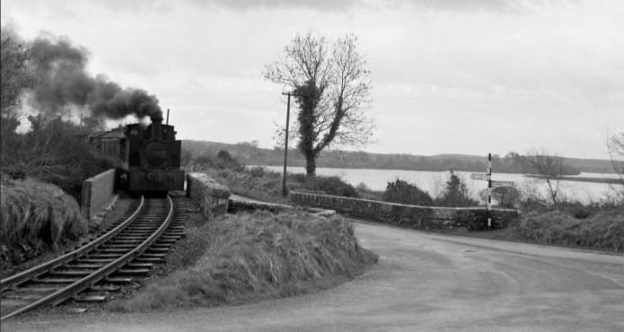
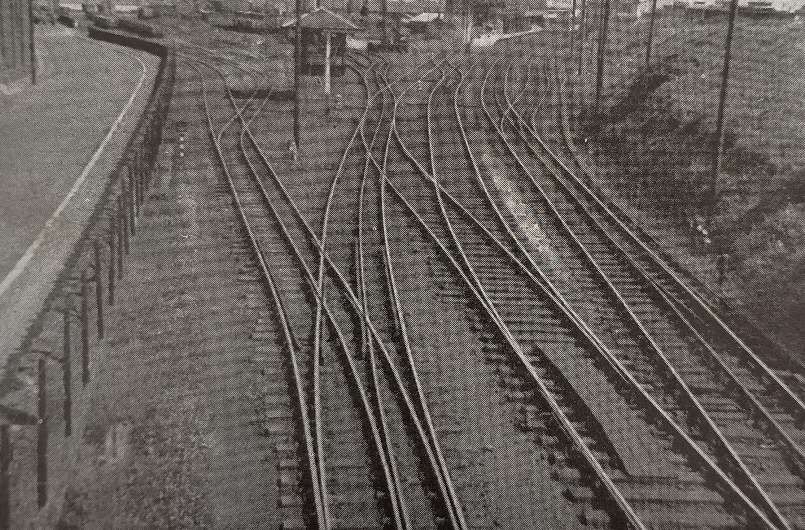
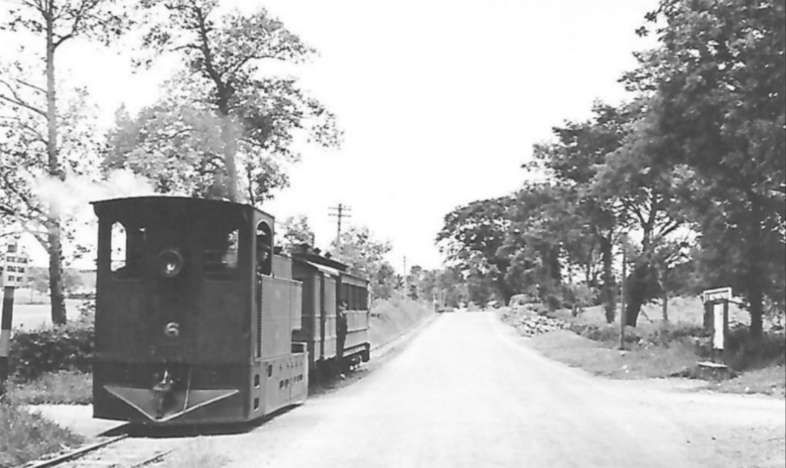
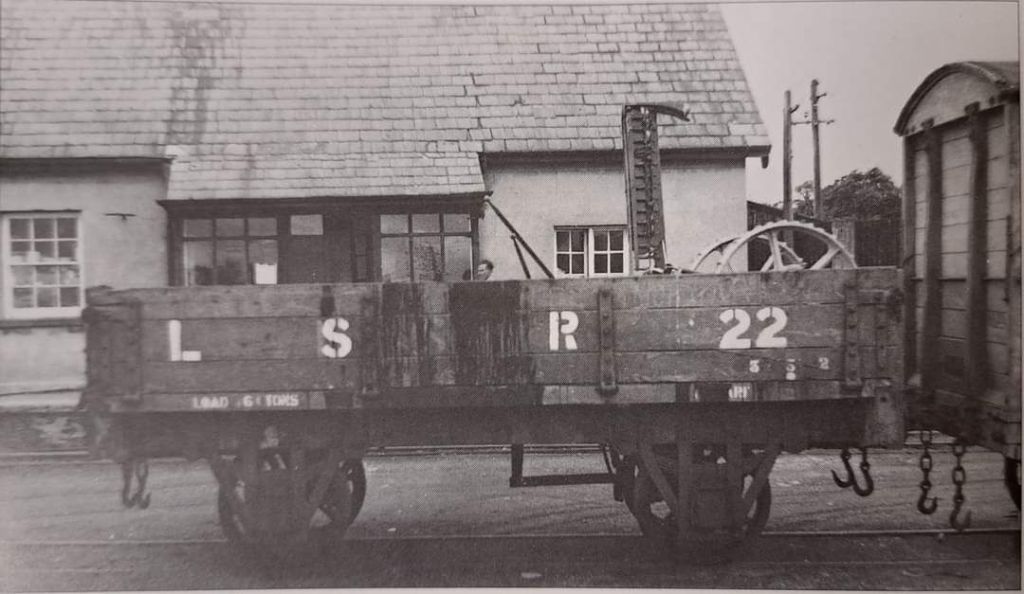
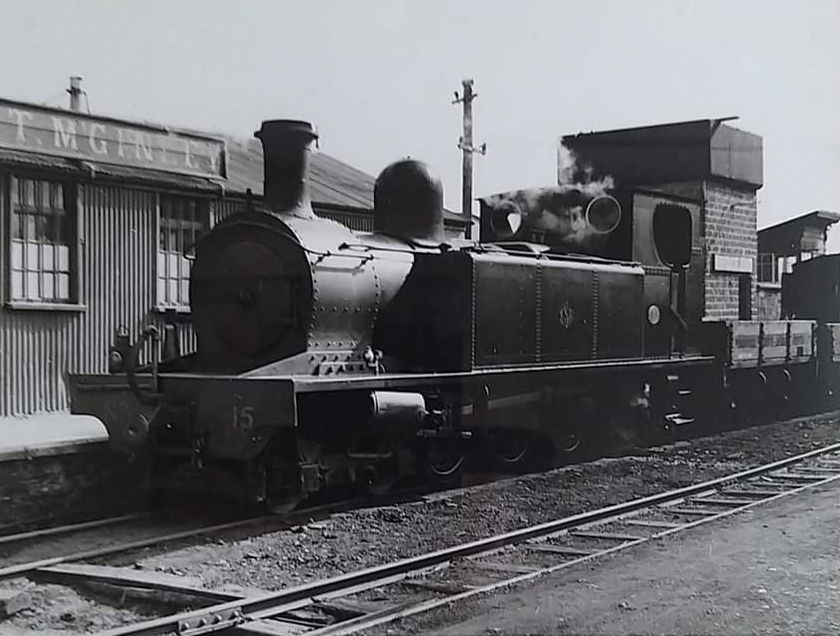
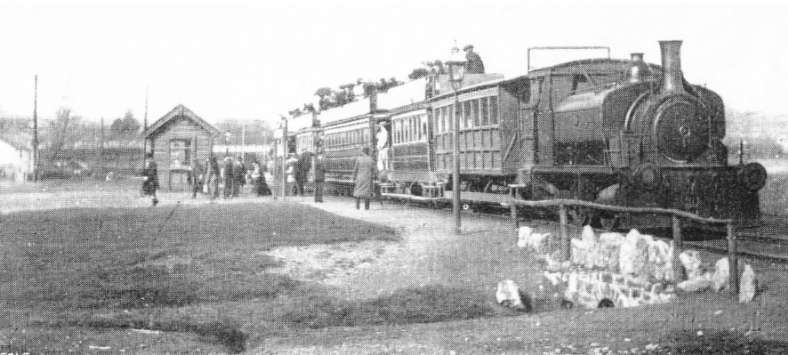
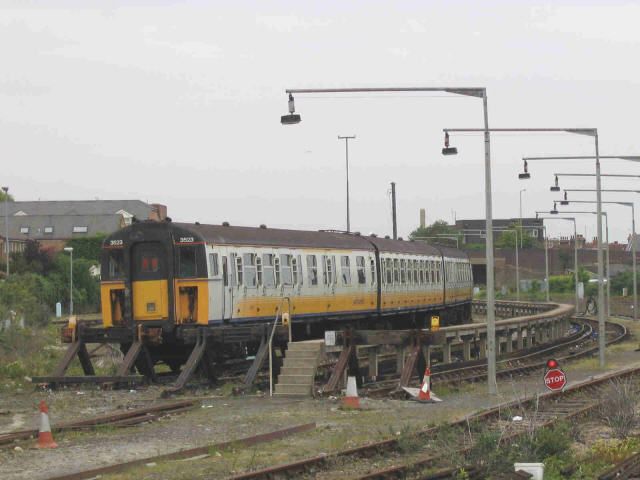
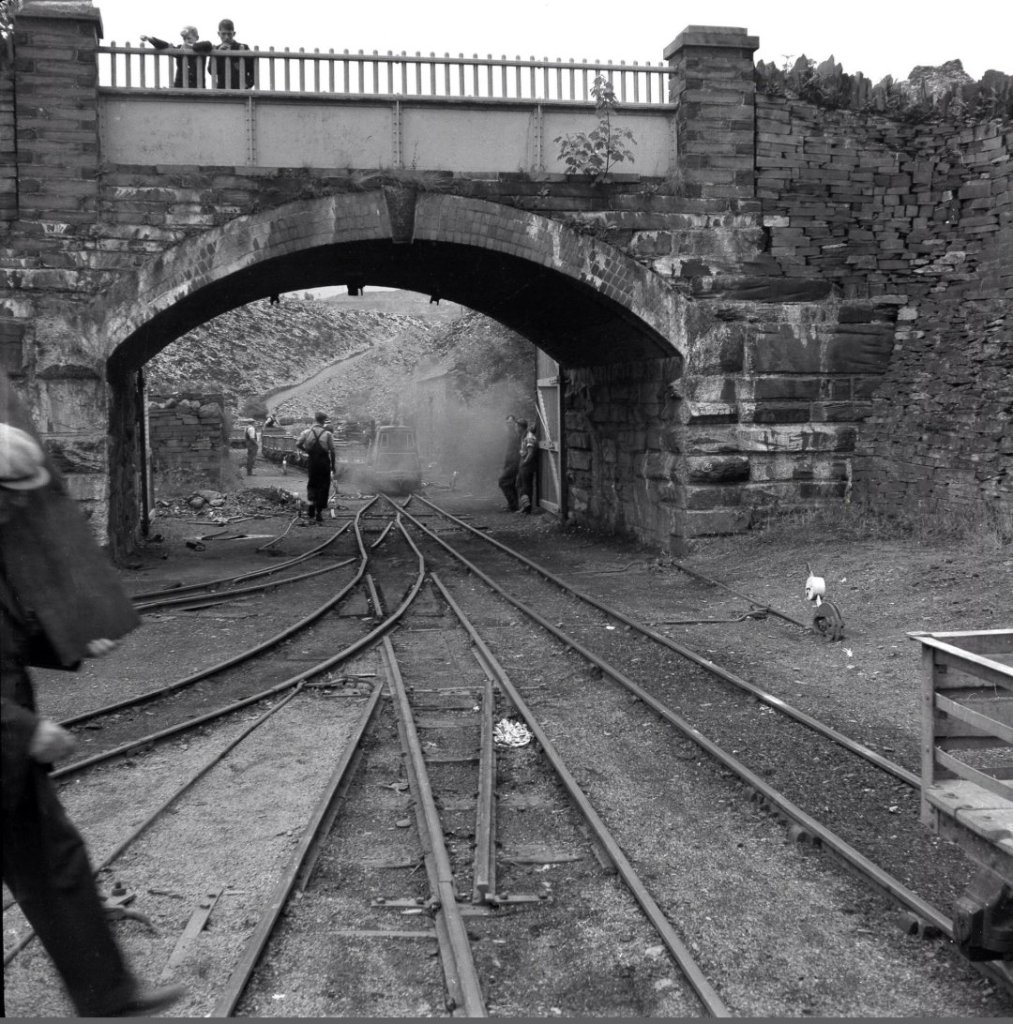
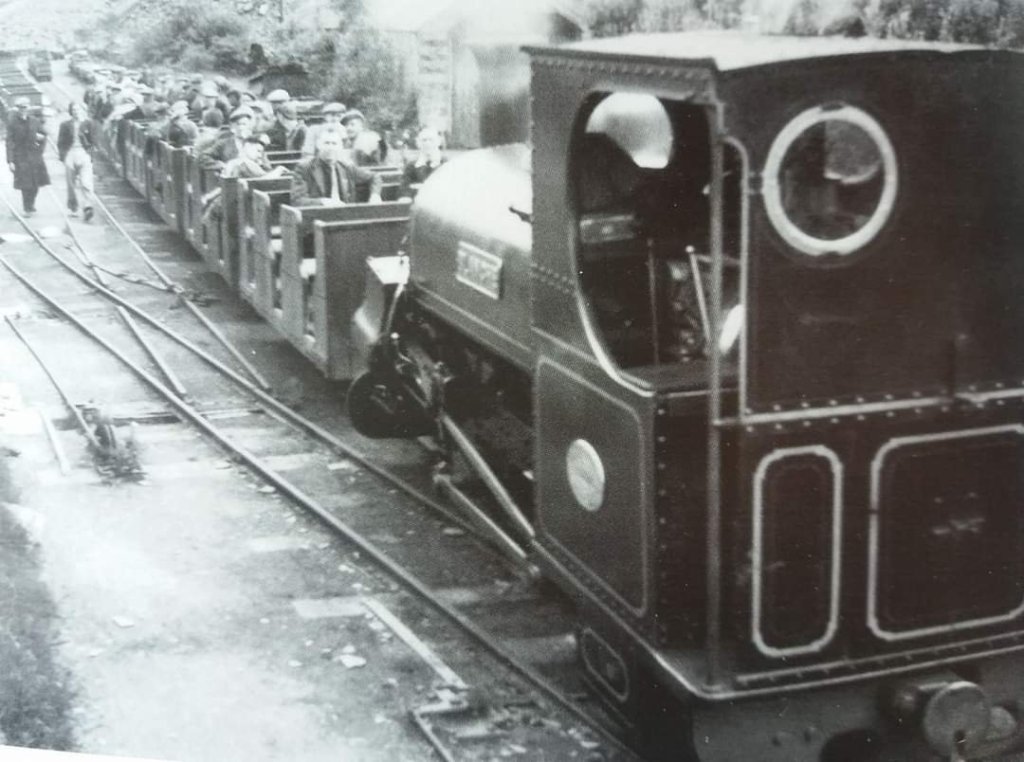
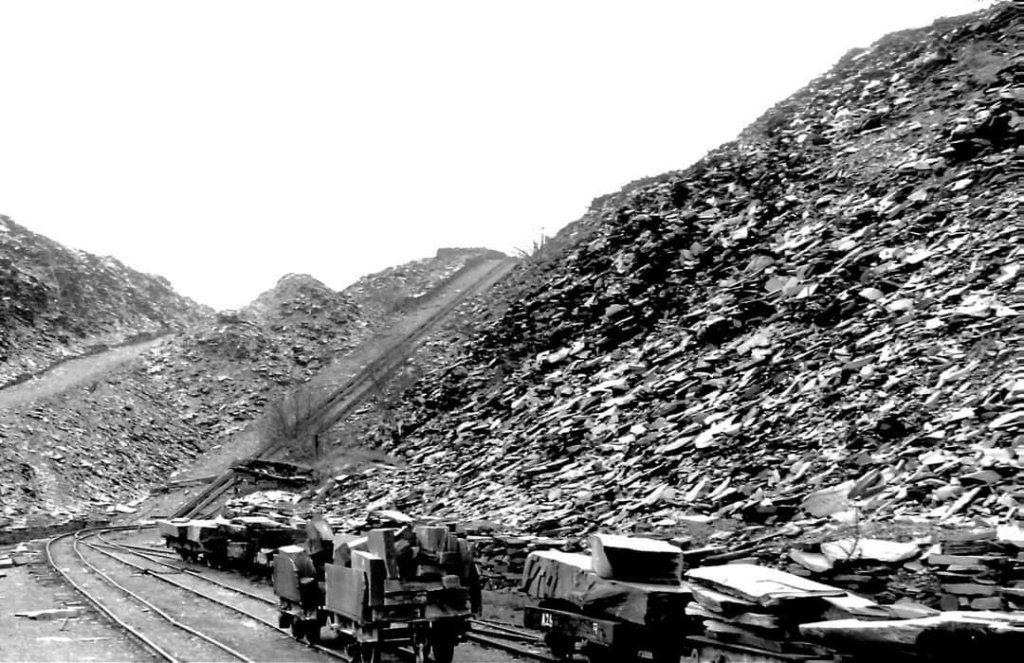
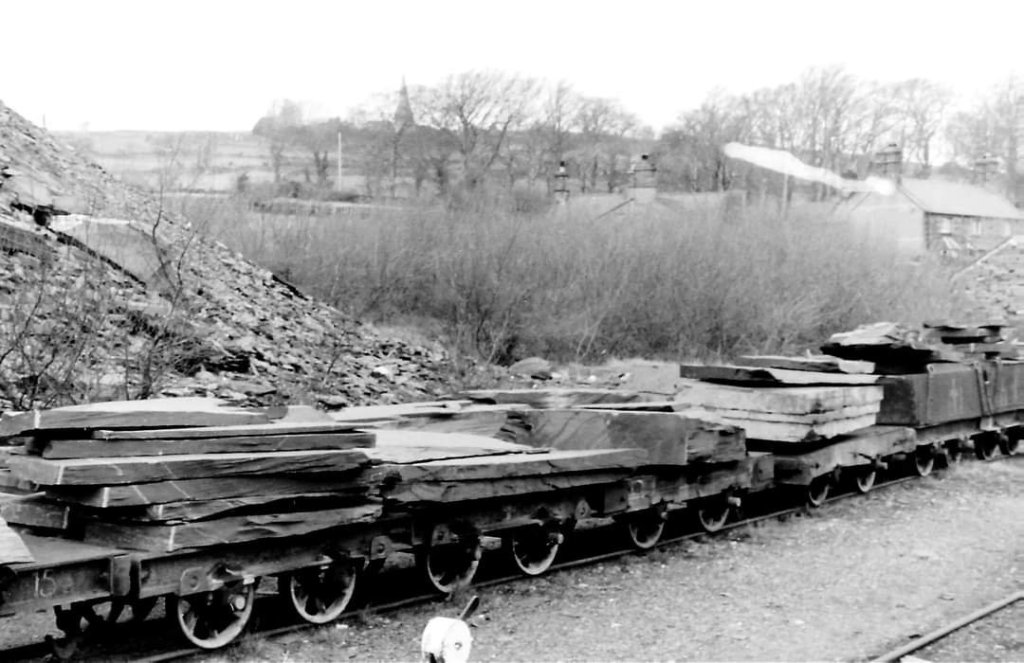
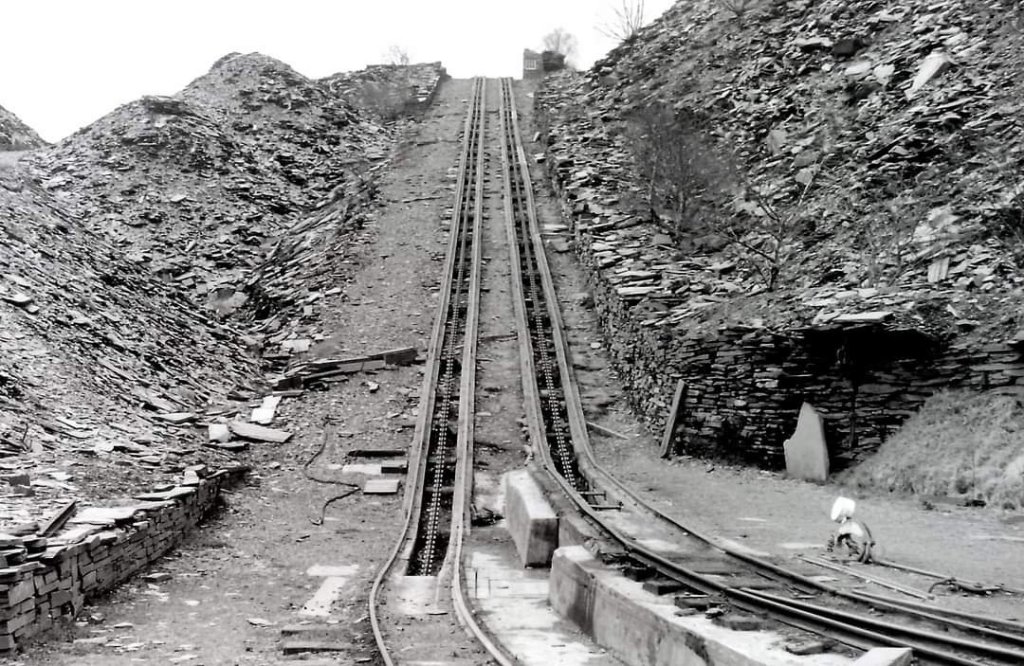
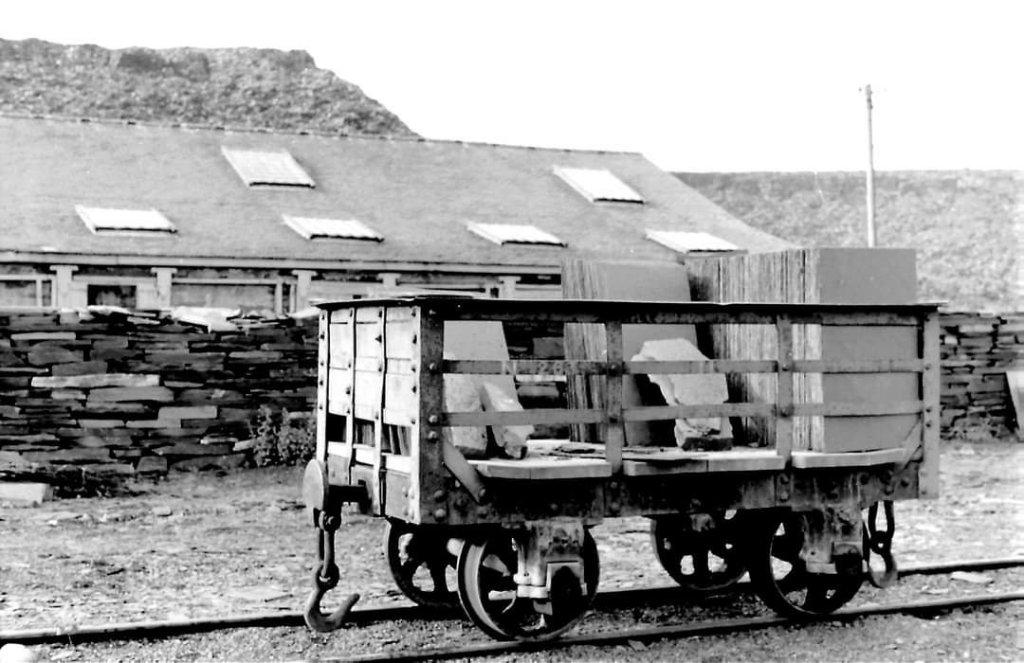
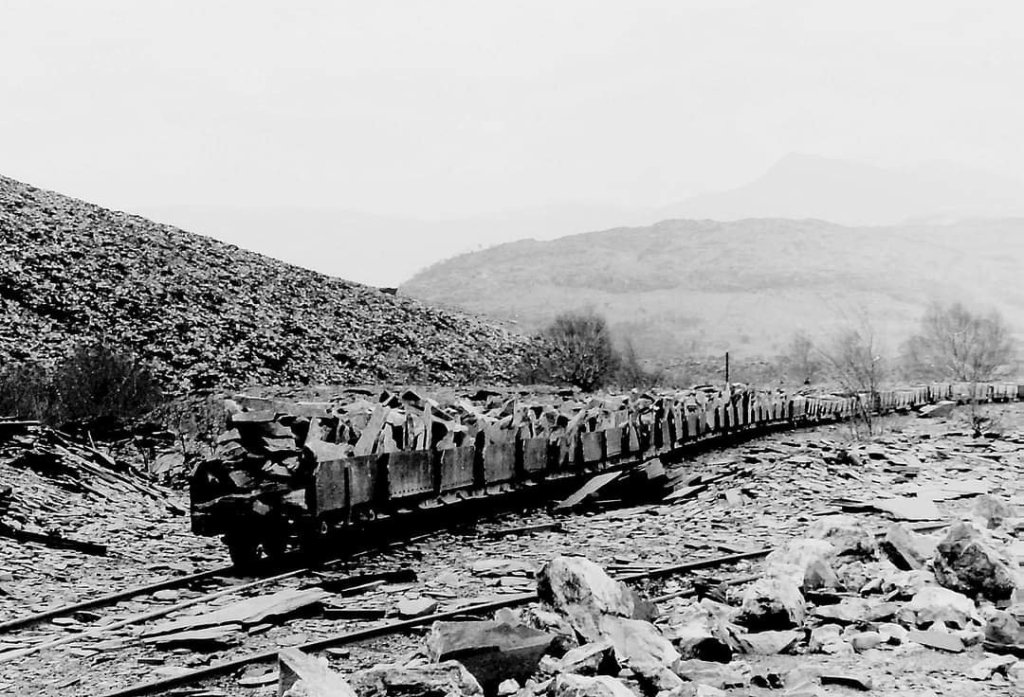
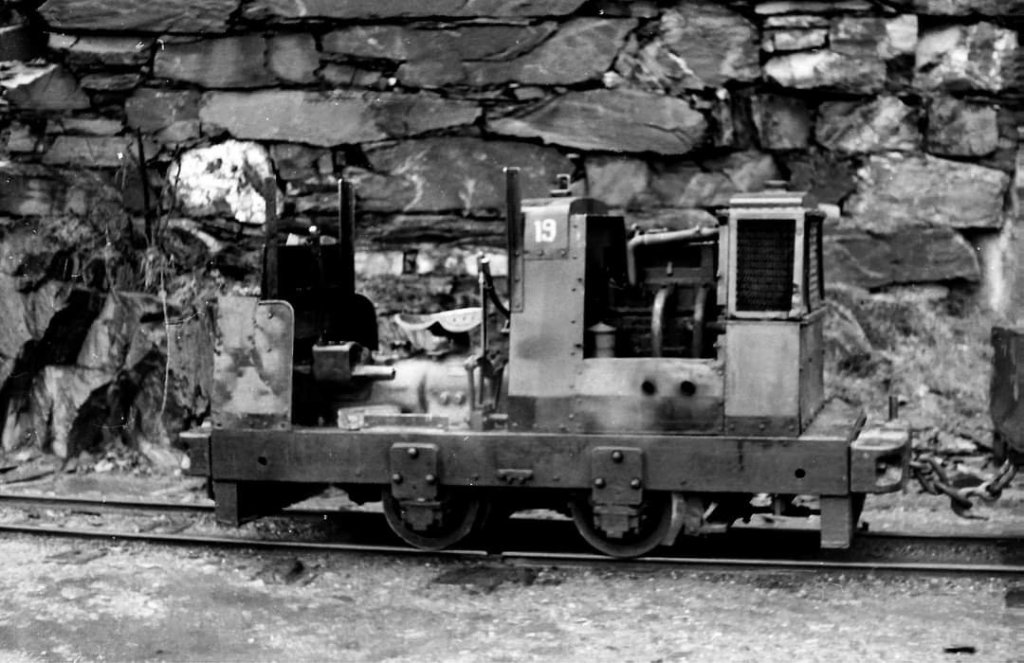
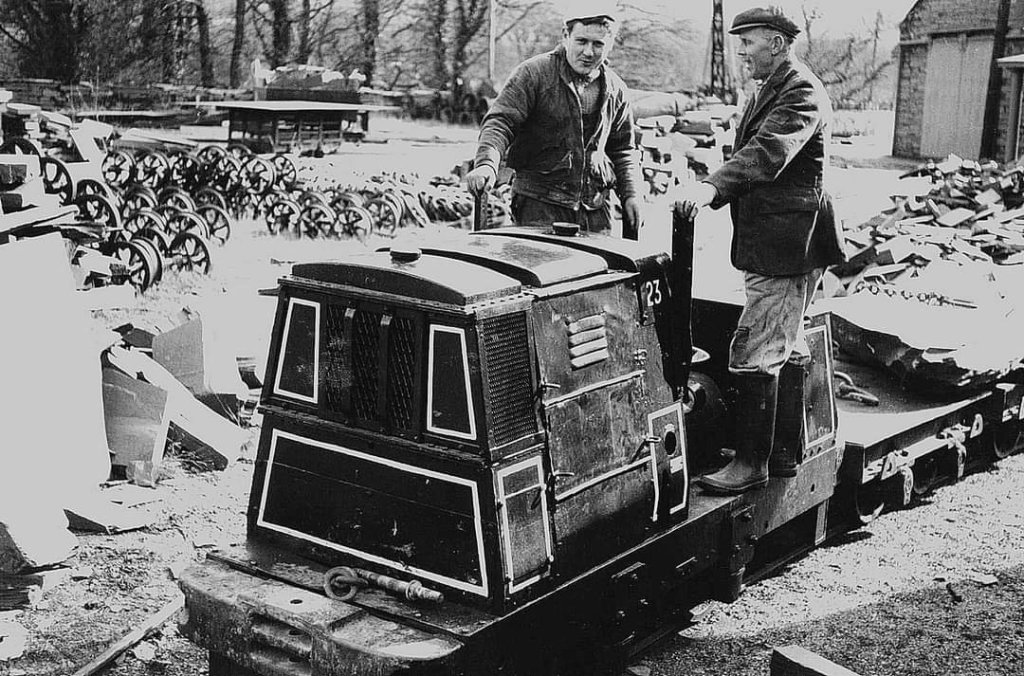
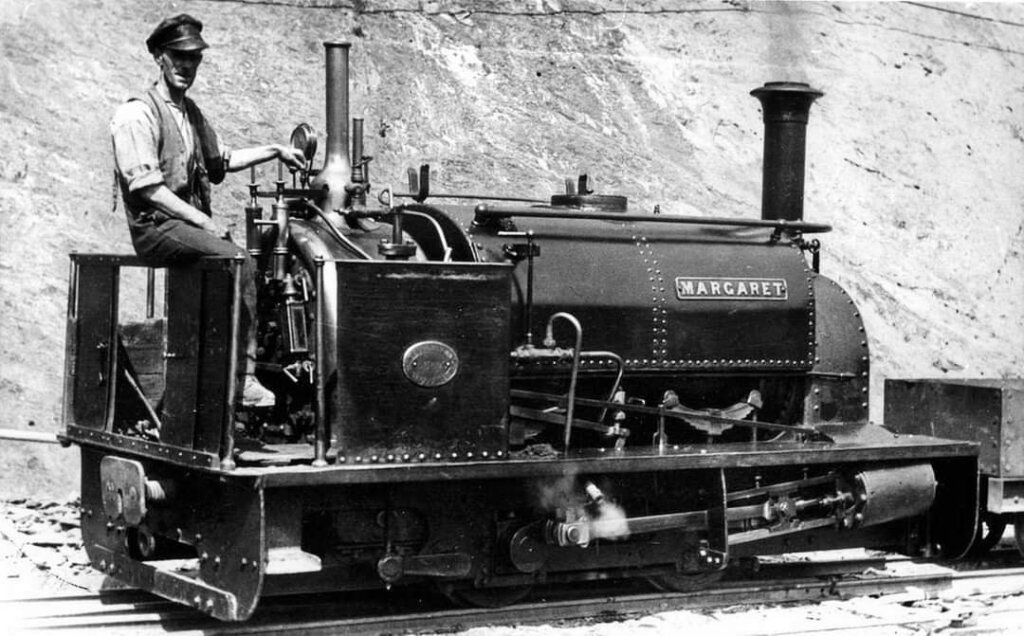
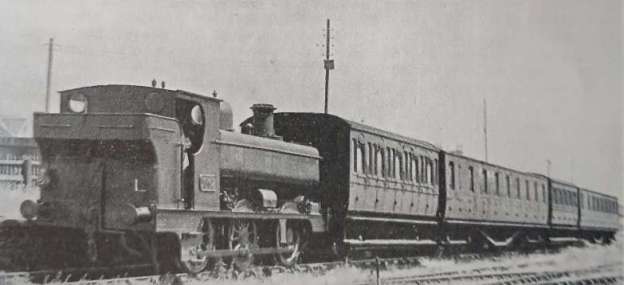
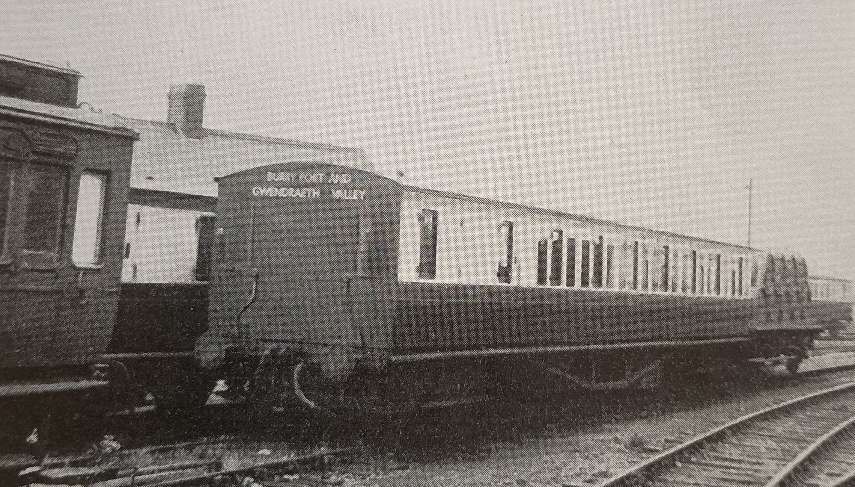
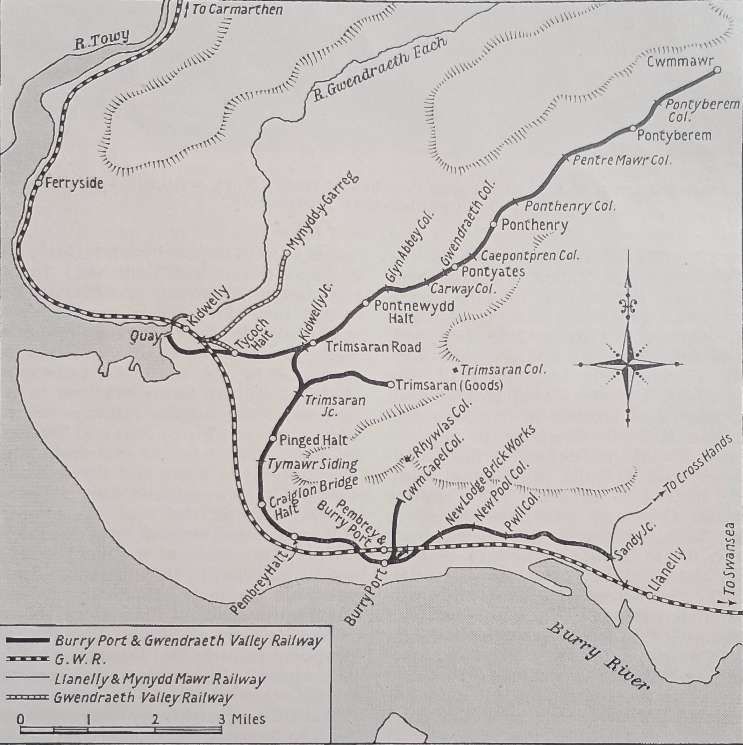
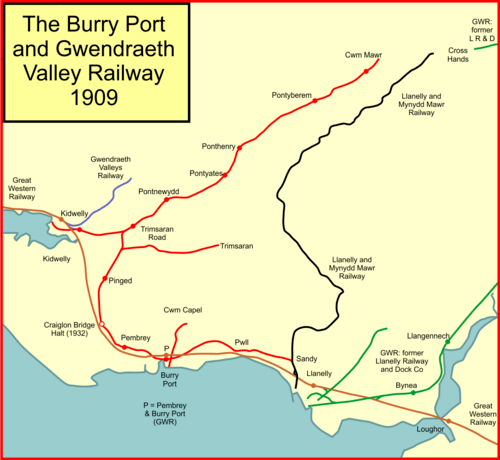
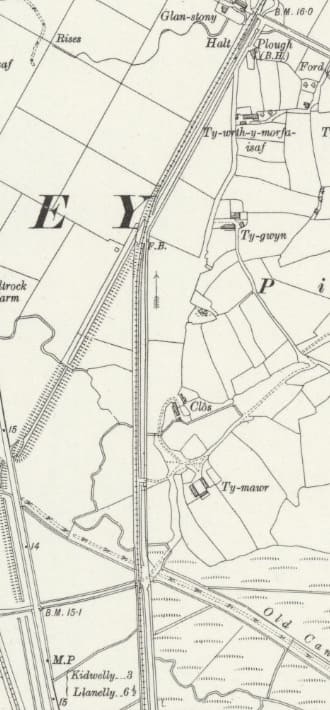
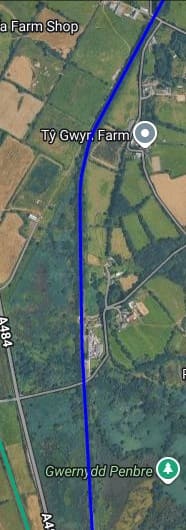
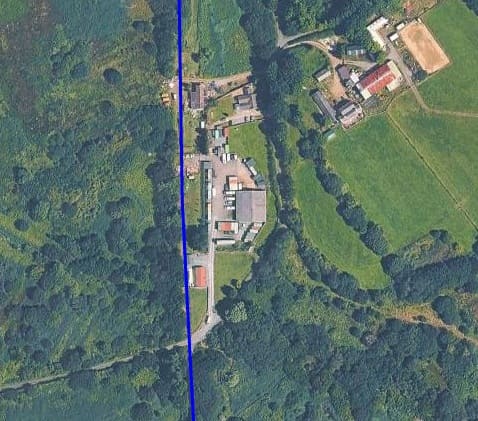
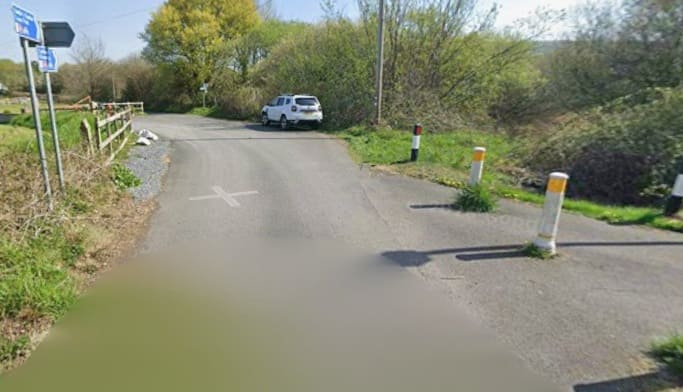
The featured image for this article was taken on the Cavan and Leitrim Railway’s Ballinamore to Arigna branch by James P. O’Dea. on 14th March 1959. This photograph is National Library of Ireland ref.: ODEA 11/30 (www.nli.ie) and is avaiable as (c) Public Domain. [44]
1st February 1961 was a significant date in the history of Irish Railways. It marked the closure of the West Clare Railway, the last survivor of the narrow-gauge lines.
The Railway Magazine of February 1961 noted that, “The construction of many of these railways was facilitated by special legislation, designed to relieve the depressed state of large areas of that country some eighty years ago. Although several schemes failed to mature, more than 500 miles of 3 ft-gauge line were built, and over 30 miles of 5 ft. 3 in. gauge were narrowed. To this total must be added the nine miles of so-called “monorail,” on the Lartigue system, from Listowel to Ballybunion. The decline of the narrow gauge began with the advent of motorbus services in rural areas, and its extinction [was] now complete.” [1: p74]
The first part of an article on this considerable proportion of the railway mileage of Ireland appeared in the February 1961 issue of The Railway Magazine. [2: p75-83]
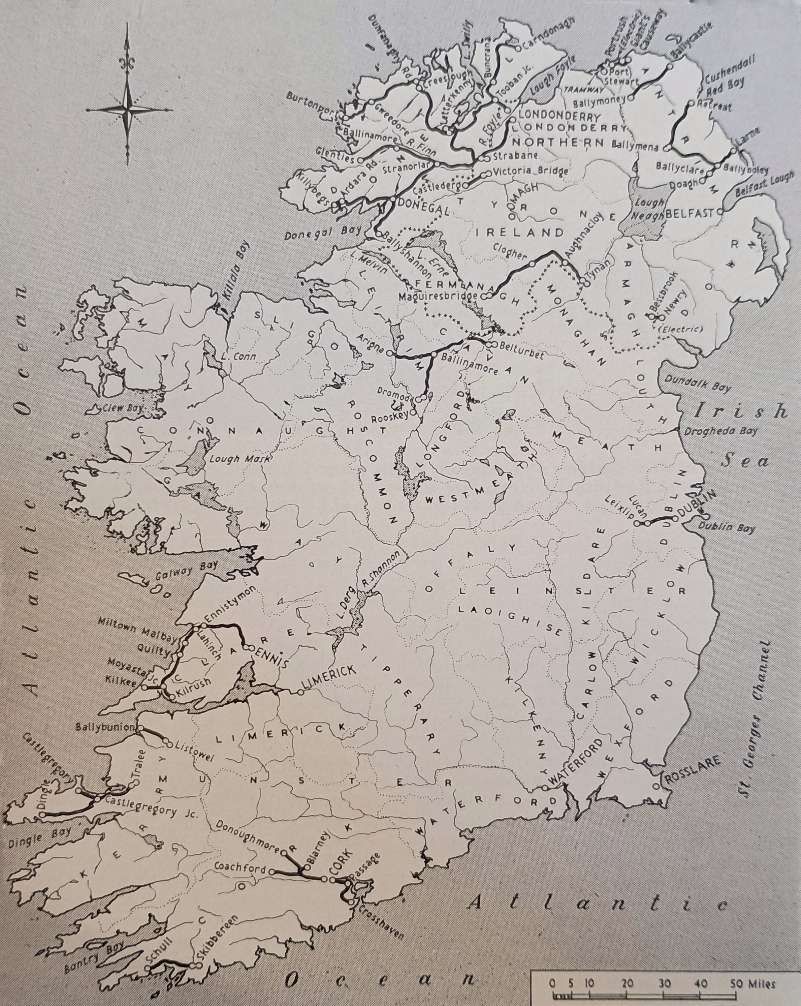
This map shows the relative positions of the Irish Narrow Gauge lines. [2: p76]
Patterson says that, “In the Irish railway framework, the narrow-gauge lines formed an integral part. In no sense freaks, they used a gauge of 3 ft. 0 in. which, though it lacked the Parliamentary blessing of the standard Irish 5 ft. 3 in. gauge, was entitled by usage and by total mileage to be regarded as a secondary standard. Only 9.5 miles of Lartigue monorail in County Kerry was an exception to the rule, and its short existence of 36 years likewise singled it out from the others. The 18 other narrow-gauge systems worked away in self-contained independence, with rolling stock that was nearly as commodious as on the standard gauge.” [2: p77]
Patterson continues: “Fittingly enough, the cradle of the Irish narrow gauge was rocked by the mining industry. In the peat-shrouded plateau of County Antrim, the basalt rocks north-east of Ballymena had been shown by geological survey to contain extensive beds of iron ore, and associated with them, accumulations of bauxite. The latter, mined for its aluminium content, was of no interest in the 1870s but iron ore that could be trucked out on to the hillsides was of immediate use to the cross-channel ironmasters. Roads in Antrim were primitive then, and in many of the glens the slipe or slide cart was more often to be seen than wheeled vehicles. Then the boom in iron-ore mining began, and in 1873 the first 3 ft gauge line was made down Glenariff to the sea, linking mines high on the terraced east face of the glen with a pier at the White Arch. It was no fault of the railway that the mines never paid; locally poor-grade ore, and high royalties to the landowner smothered the line, but though it never carried passengers, it was the pioneer.” [2: p77-78]
Apparently, “The first 3 ft gauge railway in Ireland to be authorised by Parliament followed close behind the Glenariff line, as the Ballymena, Cushendall & Red Bay Railway, (BC&RBR). opened in 1875. It ran alongside the 5 ft. 3 in.gauge Belfast & Northern Counties [Railway](B&NCR) main line at Ballymena and was to have conveyed ore to a pier at Red Bay. The descent from the uplands to the coast would have entailed a drop of 1,000 ft. in 5 miles. Probably because of the severe grade this part was never built and the line terminated near its summit level, the station being fittingly named Retreat and situated on moorland honeycombed with iron ore workings. Down at Ballymena, the broad gauge took the ore away for some years, until the Ballymena & Larne came in from Larne Harbour in 1878, and joined the BC&RBR in 1880. The broad gauge B&NCR took the pair of them over in 1884 and 1889.” [2: p78]
“Once the fashion was started by these three narrow-gauge lines in Antrim, similar systems progressed apace. 1877, the Ballycastle Railway Company obtained its Act and made a line from the B&NCR. at Ballymoney to what was then a small fishing port on the rocky northern coast of County Antrim. The line skirted the great flat of the Garry Bog and, after a gentle ascent towards the rounded hills, it started down the Tow Valley to the sea. It never had any prospect of mineral traffic, for it crossed country devoid of ore deposits, but the promoters’ hopes of its developing Ballycastle as a tourist resort were reasonably well fulfilled. With its opening in 1880, the start of a rapid expansion of narrow-gauge mileage had begun.” [2: p78]
Patterson continues, “The decade 1880-90 witnessed the number of Irish narrow-gauge systems increase from three to 16. This growth was the result both of private enterprise and of state assistance under the Tramways & Public Companies (Ireland) Act of 25th August 1883. Private enterprise put six systems in motion, both steam and electrically hauled.” [2: p78] There were four of the former:
The West Donegal Railway – which became part of a much larger network.
The Portstewart Tramway, in Co. Derry.
The Castlederg & Victoria Bridge Railway, in Co. Tyrone.
The Dublin & Lucan Railway, west of the capital.
The two electric lines were:
The Giant’s Causeway & Portrush Tramway, in Co. Antrim.
The Bessbrook & Newry Tramway , in Co. Armagh.
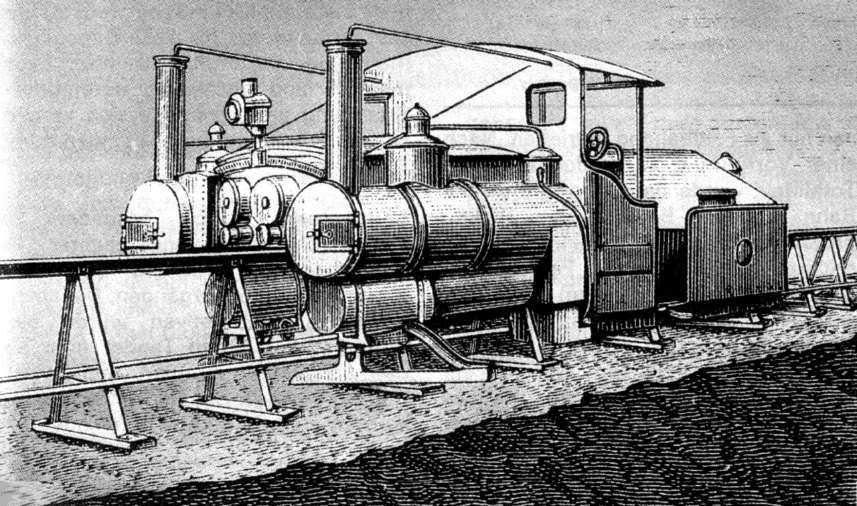
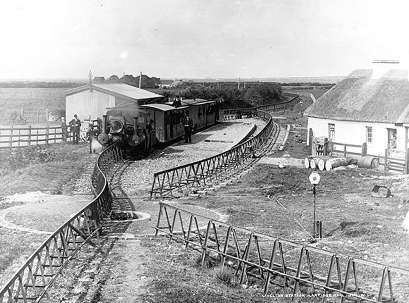
Unique in design, and steam hauled, was the Listowel & Ballybunion, already mentioned as Britain and Ireland’s sole Lartigue monorail. More about the Lartigue can be discovered here. [3]
The 1883 Tramways Act resulted in six further lines:
The Cavan & Leitrim Railway – there is a series of articles on this blog about the lines operated by this company – these can be found here, [4] here, [5] here, [6] here, [7] here, [8] here, [9] here, [10] here, [11] here, [12] and here. [13]
The Clogher Valley Railway.
The Cork & Muskerry Light Railway.
The Schull & Skibbereen Railway.
The Tralee & Dingle Light Railway – an introductory article about two books about the line can be found here. [17]
The West Clare Railway – a series of articles on this blog about the lines operated by this company – can be found here, [18] here, [19] here, [20] here, [21] here, [22] here, [23] here, [24] and here. [25]
The Act also permitted the West Donegal to complete its line from the unsatisfactory original terminus at Druminnin to Donegal Town. But, the West Donegal struggled financially and in 1892 it amalgamated with the adjacent 5ft 3in gauge Finn Valley Railway (FVR). The merger created the County Donegal Railway Company and within a year or so, the FVR was converted to 3ft gauge.
Similarly the Londonderry & Lough Swilly Railway (L&LSR) was a 5ft 3in gauge railway which also worked a privately sponsored 3ft gauge line – the Letterkenny Railway opened in 1883. By 1885, the decision had been taken to convert the L&LSR to 3ft gauge.
Later expansion came about more slowly. “Sir John Allport’s Royal Commission of 1886 recommended the development of the Irish railways by the furtherance of light railways. The 1889 Light Railways (Ireland) Act was the outcome, and it authorised further state assistance. As a result, the Donegal Railway benefited by the addition of the Donegal-Killybegs and Stranorlar-Glenties sections, totalling 43.5 miles and opened in 1893 and 1894 respectively.” [2: p81]
The 6.5 mile Cork, Blackrock & Passage Railway (CB&PR) replaced its broad-gauge track by 3ft-gauge in October 1900. Under severe competition from the Cork Electric Tramway, the CB&PR extended its lines 9.5 miles, in stages, to Crosshaven (August 1902 to June 1904).
Remaining expansion centred predominantly in County Donegal. A 14.5 line from Strabane down the East side of the valley of the River Foyle gave access to the city and port of Derry. It opened in 1900.
A 15.5 mile branch from Donegal town to Ballyshannon was opened in 1905. In 1906 the Donegal was “bought out by the combined efforts of the GNR(I) and the Midland Railway (Northern Counties Committee) and was thereafter administered by a joint committee,” [2: p81] (the CDRJC).
The 19.5 mile line of the Strabane & Letterkenny Railway Company linked the two towns in 1909. It allowed some freight traffic to be transferred between the two narrow gauge systems in County Donegal.
More about the railways of County Donegal can be found in a series of other articles on this blog. These can be found here, [26] here, [27] here, [28] here, [29] here, [30] here, [31] here, [32] here, [33] here, [34] here, [35] here, [36] here [37] here, [38] here, [39] here, [40] here, [42] here, [43] and here. [44]
Patterson tells us that, “With the opening of the Strabane & Letterkenny line, the construction of passenger-carrying narrow-gauge lines in Ireland was complete, though the fact that the public had not lost interest was evidenced from time to time when local bodies advocated the extension of existing lines.” [2: p82-83] He cited as an example, the deaf ear turned by the CDRJC to local entreaties to extend the Glenties line to Ardara.
One final extension was to be built. 3 miles from the Cavan & Leitrim’s railhead at Arigna (just inside County Roscommon) adits were driven into coal deposits and, as the operation grew, a 4.5 mile extension from Arigna to Dereenavoggy and Aughabehy was opened in June 1920. That extension was, 10 years later cut back to a length of only 1.5 miles. For more about the extension please look here. [4]
During WW1, the British government took control of all Irish railways (December 1916 to August 1921). During those years wages rose by 250%! Fares were raised, doubling in stages. Patterson tells us that, “The slim profits of pre-war days vanished and a combination of higher rail fares, and higher rail freight charges, drove potential customers on to the roads. There, the expanding motor industry was ready to provide vehicles for both public and private transport. The position was the same in Great Britain, but in Ireland the rate of change was restrained by the lack of suitable roads to carry the new traffic.” [2: p83]
Patterson continues: “In the remoter parts of Ireland, where the narrow-gauge lines were situated, and where they had been built by reason of the physical and economic geography, road improvements came slowly. Surfaces in the 1930s were shockingly bad by present day standards, but in spite of the limited amount of money that the county councils had to spend, change was working.” [2: p83]
Politics also intervened: rebellion against British rule broke out in 1916. “By mid-1920, some engine crews were refusing to work trains which carried British troops or munitions and, in the December, this had virtually paralysed rail services in County Donegal and in other parts of the west. The formation of the 26-county Free State in December, 1921, did not end the unrest, for almost two years of civil war followed, during which there was wide-spread damage to rail systems, and train services ceased in Kerry and Cork.” [2: p83]
The new international border which was formed in 1921 and the accompanying customs tariffs adversely affected traffic and trade to the West of Derry.
Patterson continues: “The two companies faced the new situation quite differently. Henry Forbes, managing for the CDRJC, introduced petrol and then diesel railcars, and thereby obtained striking economies in operating costs. By stopping his trains almost anywhere to pick up passengers in the sparsely-peopled country, he gained an unequalled degree of public support. On the Londonderry & Lough Swilly, H. Hunt, and later James Whyte, decided that the future was on the roads and an expanding fleet of omnibuses and lorries began to trade over the north of the county. The contrasted policies were undoubtedly linked with the different ownerships. Behind the CDRJC., the LMS and the GNR (I) were essentially railway minded. The locally owned L&LSR was less traditional and more-over was working a line with stations often miles from the villages.” [2: p96]
After WW1, closures of Ireland’s narrow gauge railways began.
Patterson tells us that, “Three concerns came to an end in the decade between 1920 and 1930. First to go was the monorail between Listowel and Ballybunion. The company had been bankrupt since 1897, damage had been suffered during the ‘Troubles’, and the line had not been included in the Great Southern Railways merger. The concern lacked a profitable future and it was closed in mid-October 1924. … The Dublin & Lucan, altered from 3 ft. to 3 ft. 6 in. gauge in 1896 and electrified about ten years later, went down under bus competition at the end of 1924. It was resurrected by the Dublin United Tramways three years later, but it ceased to be narrow gauge and became linked to the city’s 5 ft. 3 in.-gauge tram system. It lasted thus until 1940.” [14: p169]
Patterson continues: “The Portstewart Tramway Company had only managed to remain solvent from 1882 until 1897. Ownership then went to the Belfast & Northern Counties Railway, passing to the Midland Railway (Northern Counties Committee) in 1903 and the LMS (NCC) in 1923. It functioned merely as a link between the seaside town and the railway station, and it was easily and economically replaced by substitute road services in January 1926.
“Some fifteen miles east of Portstewart, ill fortune had overtaken the Ballycastle Railway Company by 1924, and it closed the line down on 4th April. After some uncertainty, and a summer without trains, the line was taken over by the LMS (NCC) and was reopened in August 1924. Under the new regime, coordination with the neighbouring narrow-gauge lines at Ballymena became possible and some exchange of locomotive and coaching stock resulted. … During the 1930s the old Ballymena, Cushendall & Red Bay section of the NCC ground to a stop. The iron-ore traffic which had started it was finished, as it had become cheaper to import a higher-quality ore from overseas. Passenger traffic ended in October 1930. The line from Rathkenny to Retreat was closed completely in 1937, and the Ballymena to Rathkenny portion three years later.” [14: p169-170]
The formation of the Great Southern Railways incorporated two narrow-gauge lines which served Cork city. “Neither of them went far enough to serve a wide community and they were particularly subject to pressure from road services. The only double-track Irish narrow-gauge section, that from Cork to Blackrock, was singled in 1927 and the system was shut down in two stages during 1933. Two years later it was followed into the shadows by the Cork & Muskerry section, a line remarkable in that it survived the competing electric tramway by three years. … In Tyrone, the Castlederg & Victoria Bridge line had been fortunate in making contact with the Great Northern’s Omagh-Londonderry line. Its roadside position made it a target for its successors, and the end was defined by the 1933 railway strike, for the company never resumed operations after it.” [14: p170]
Patterson tells us that, “The end of the Clogher Valley Railway had been in sight for twenty years before it closed. A 1927 Government enquiry, instituted because of the burden which the CVR was placing on the rates, resulted in the line being placed under a committee of management. The presence of Henry Forbes from the CDRJC produced a temporary rejuvenation, but with the formation of the Northern Ireland Road Transport Board in 1935 bus and lorry competition increased. The end was in sight and the Government ordered the closure at the end of December, 1941.” [14: p170]
On the Ballymena & Larne section of the NCC, passenger services, which included the express boat trains, had been throttled by the strike of 1933. In 1942 working ended on the Ballyboley Junction-Ballymena section and two years later the Ballyclare to Doagh section was lifted. An infrequent service of goods trains continued to operate between Larne and the Ballyclare Paper Mill until July 1950. [14: p170]
References
The Editorial, in The Railway Magazine, Volume 107, No. 718, February 1961.
E. M. Patterson; The Narrow Gauge in Ireland: Its Growth and Decay – 1; in The Railway Magazine, Volume 107, No. 718, February 1961, p75-83 & p96.
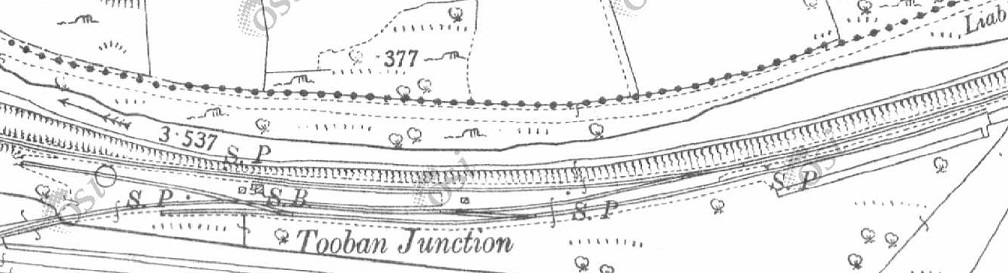
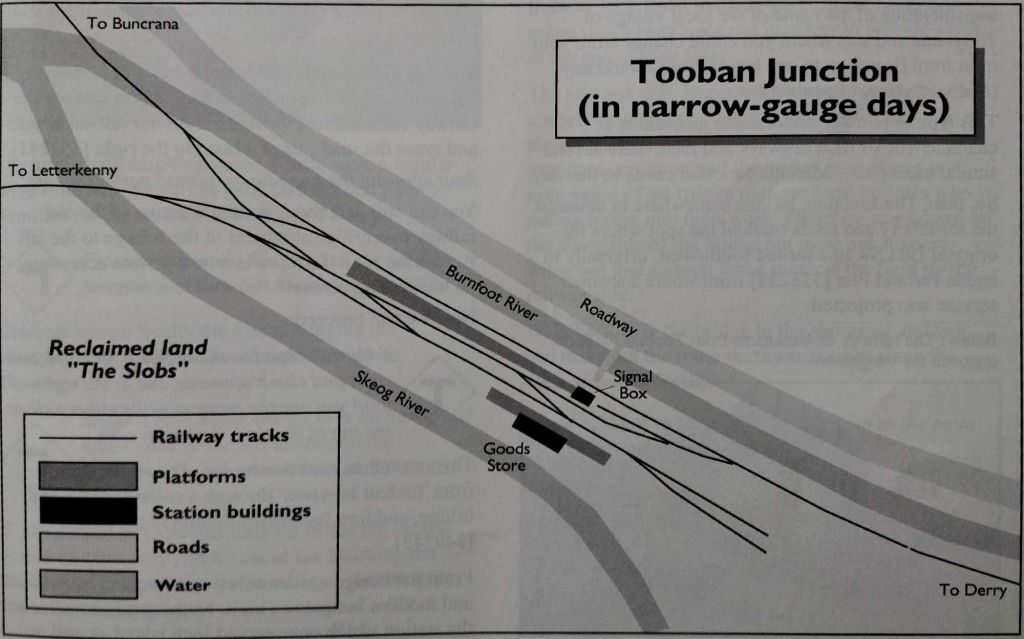
We start this length of the journey to Derry at Tooban Junction.
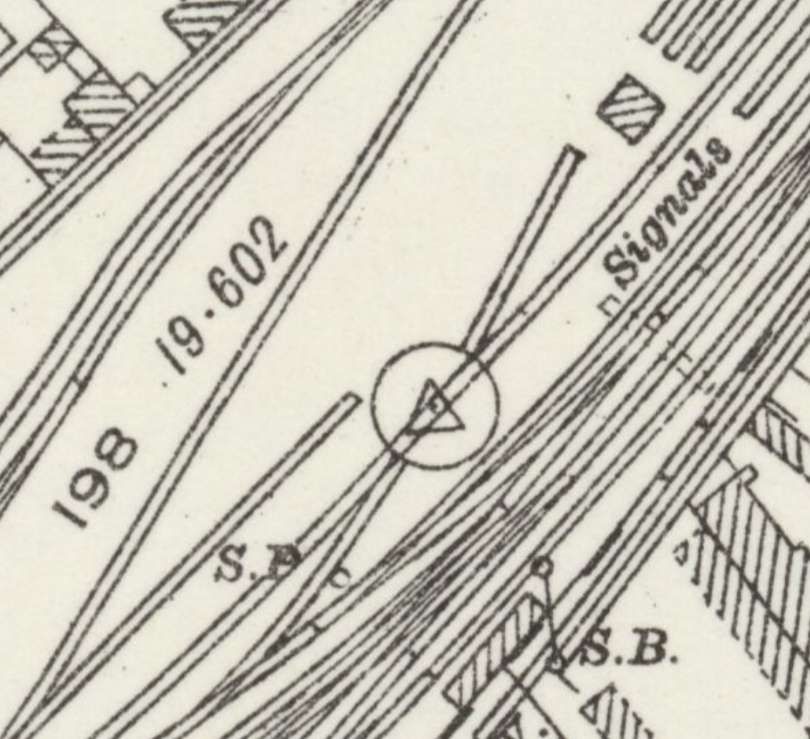
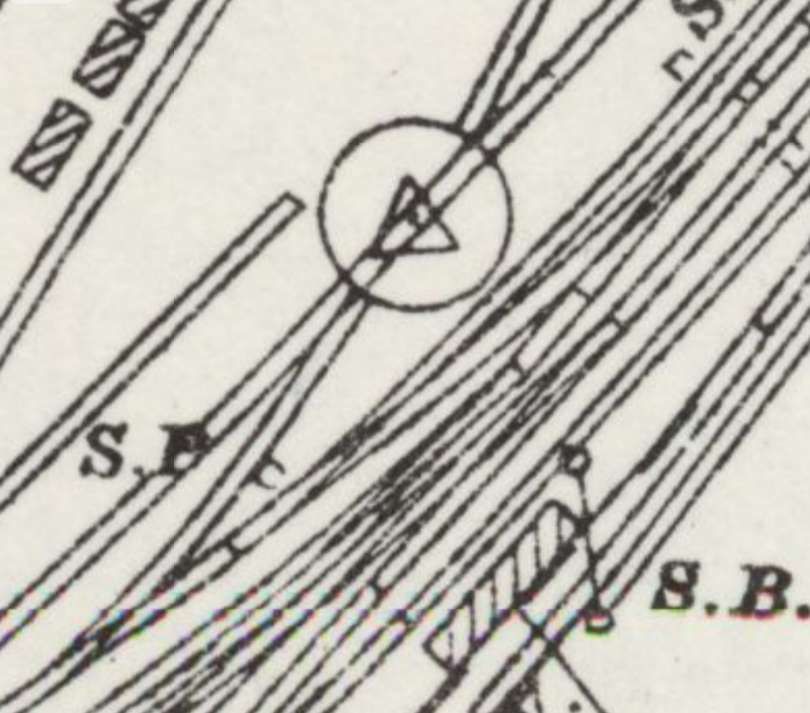
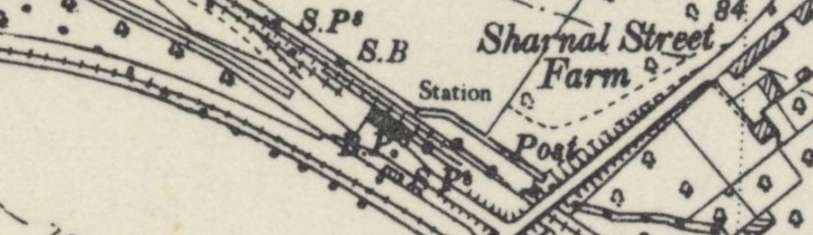
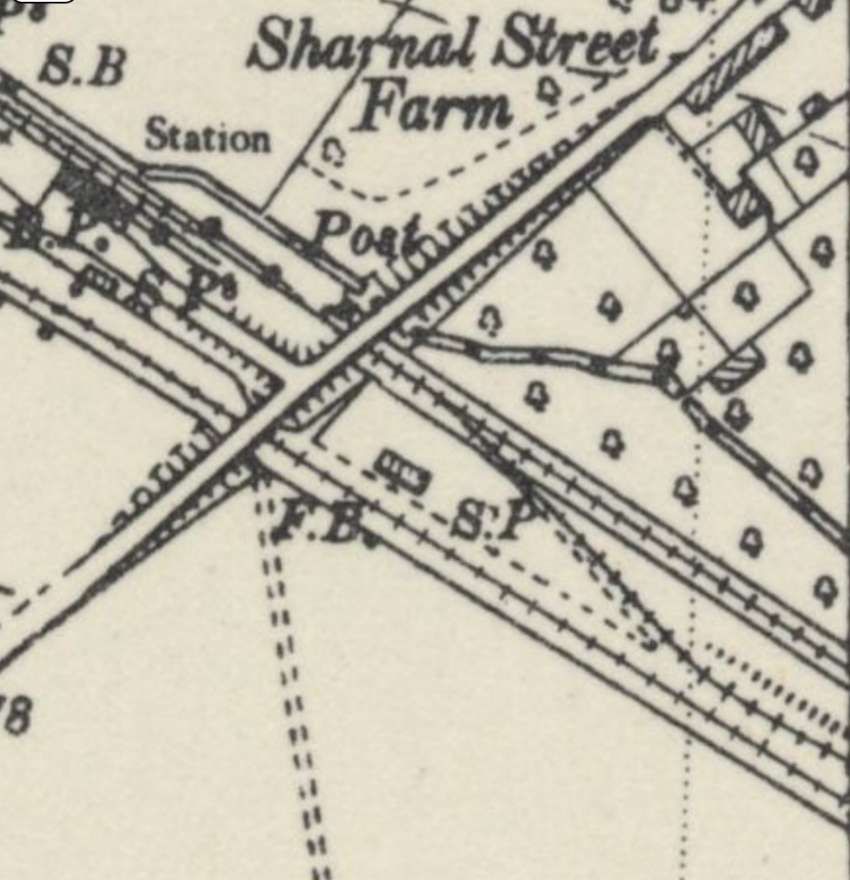
Tooban Junction Station as shown on the 25″ OSi survey. [1]Tooban Junction Station as shown in Dave Bell & Steve Flanders book: The Londonderry & Lough Swilly Railway: A Visitor’s Guide. In that book, two diagrams appear, the first showing the station during mixed-gauge days, the second showing the station once the broad-gauge had been replaced. [13: p17]
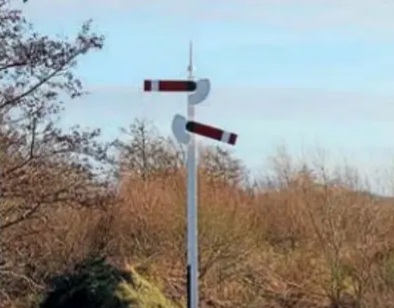
We finished the last article with a glimpse of the reconstructed signal post at Tooban Junction Station. Another photo of the rebuilt signal post is produced below. …
The Heritage Railway Journal carried an article about the reconstructed signal on 6th June 2023. [3]
Seventy years after the last L&LSR trains departed from Tooban Junction, “where the line from Derry split for Buncrana and Letterkenny, a signal has again appeared at the historic site. Buncrana sculptor John McCarron has recreated the junction’s characteristic starter signal as part of the Ghosts of Tooban Junction project, which aims to ensure that the once important junction is not forgotten. The station’s island platform carried an unusual arrangement of starter signal arms pointing in opposite directions on the same post at its Buncrana and Letterkenny end. Now, John has erected a steel-built replica at the remote junction site to mark the 70th anniversary of the closure of the L&LSR in August 1953 and to leave a permanent memorial to the railway’s heritage. … The [West Innishowen] Heritage Society and the Inch Wildfowl Trail, said: ‘If you look at a picture of Tooban Junction station when trains were running, the first thing you notice is the signal. That’s why [we]chose to make a replica, and worked it to the original dimensions. The only thing we couldn’t do is fit spectacle glasses or lights because of safety and environmental impact assessments that highlighted the danger to birds.'” [3]
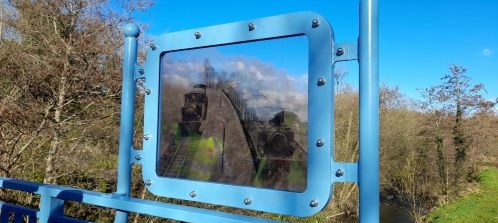
In the summer of 2023 this permanent fixture was added to the footbridge at what was the West end of the Tooban Junction Station site. Earlier the signal post shown above was installed. [4]
The sign was installed as part of a project centred on the Inch Levels and sits at the eastern extremity of the nature reserve. The Trail Gazers project is one of 8 such projects in various locations in Europe. [5]
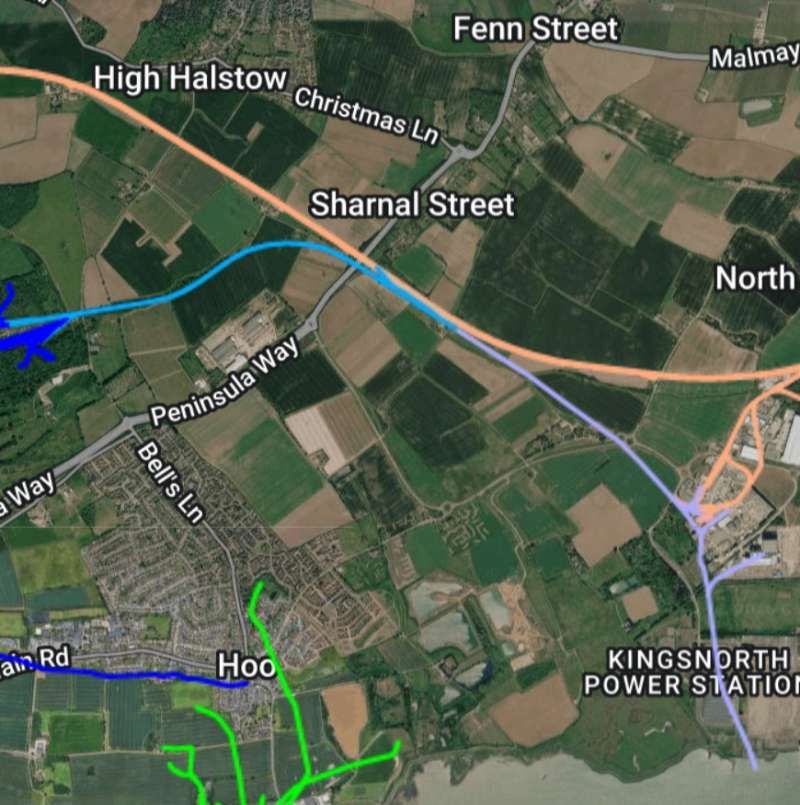
Setting off from Tooban Junction, trains followed a main drain from the reclaimed area curving sinuously across relatively level terrain to reach Burnfoot Station, little over a kilometre to the East.
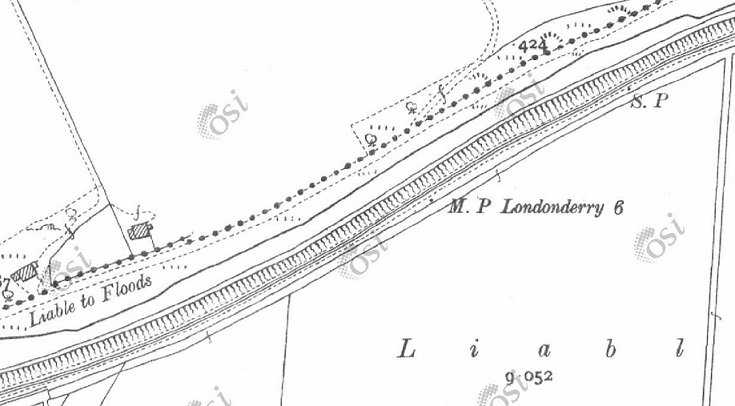
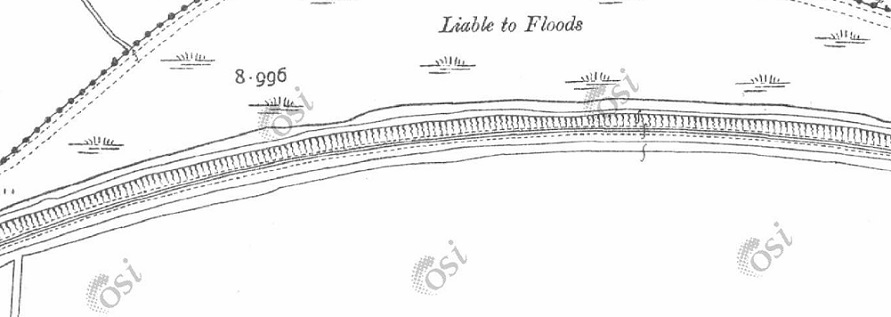
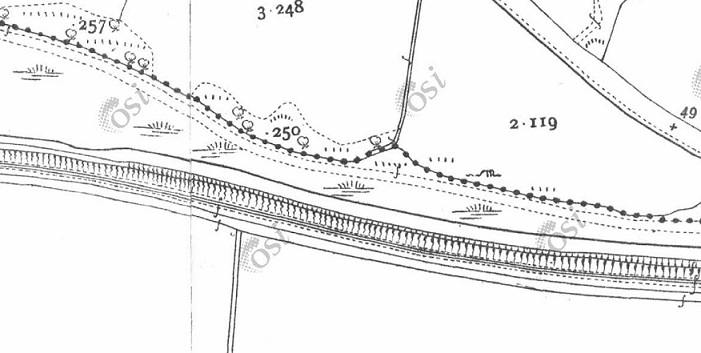
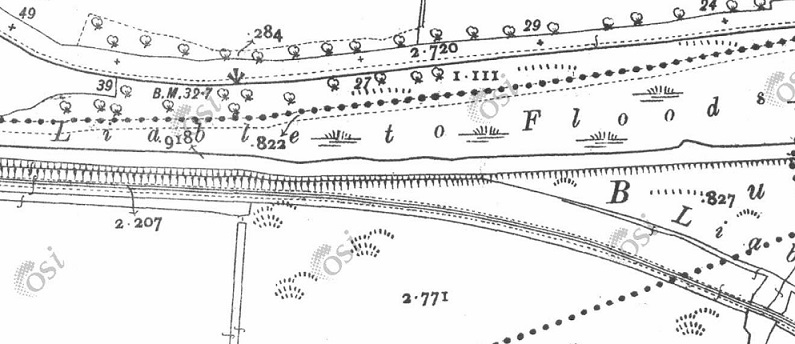
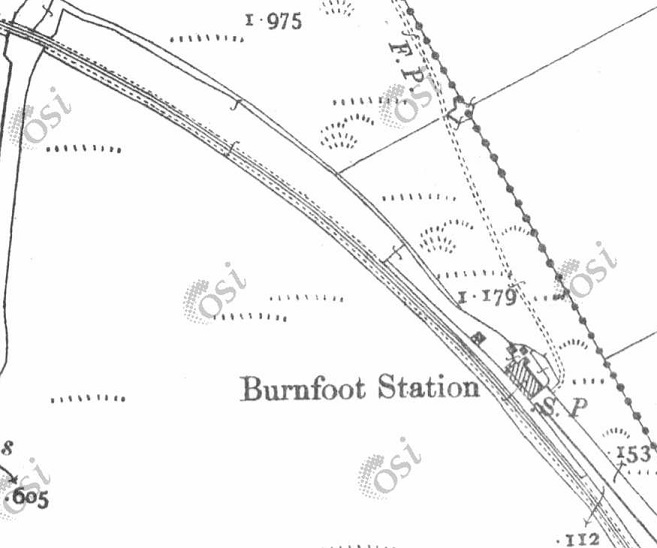
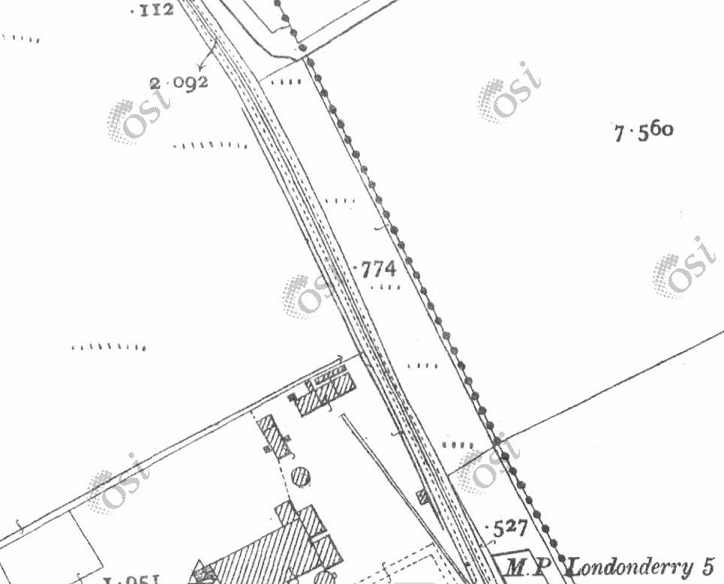
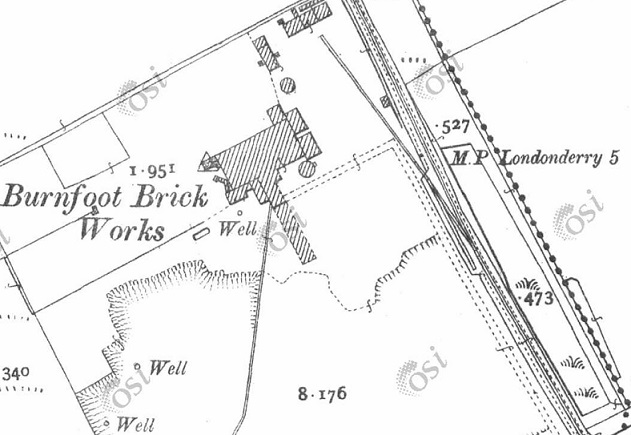
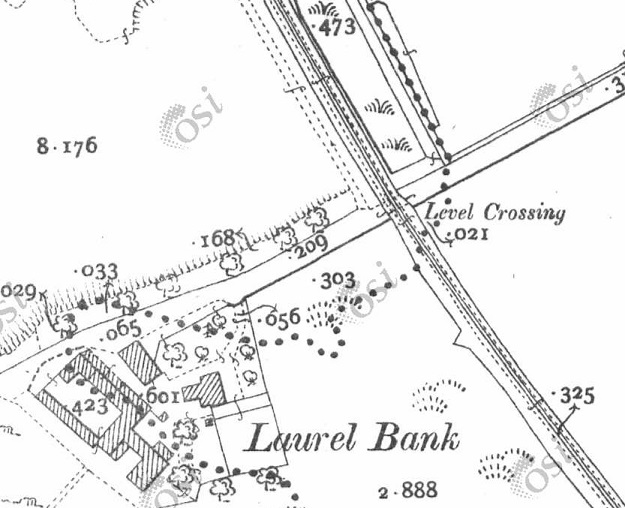
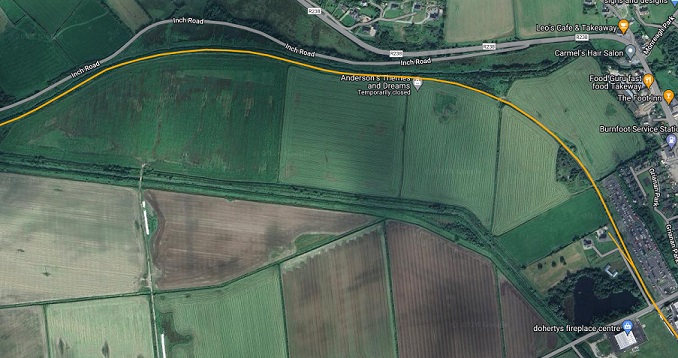
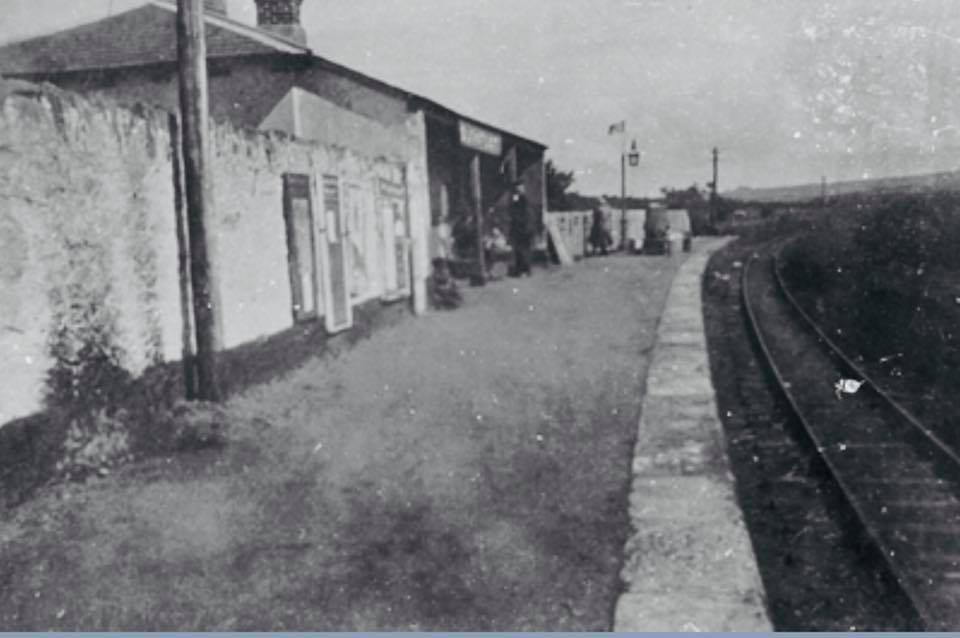
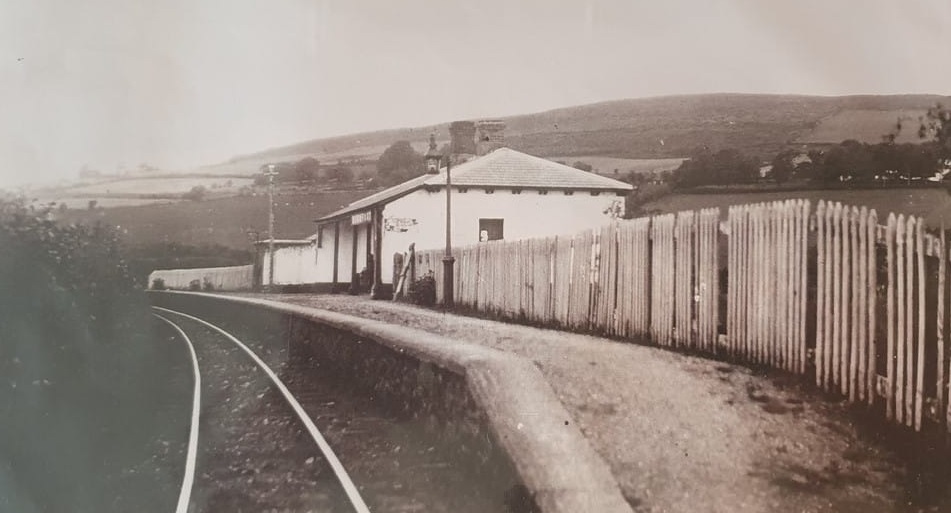
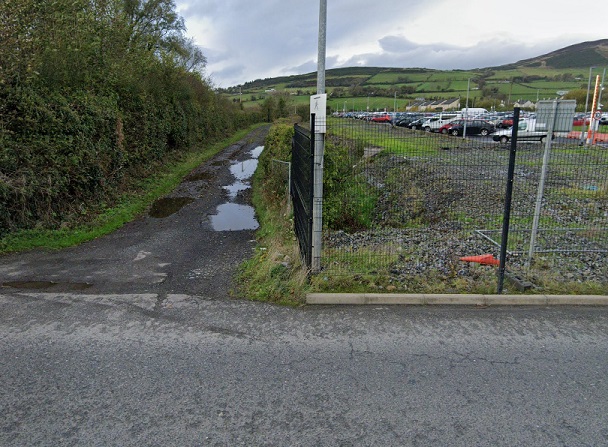
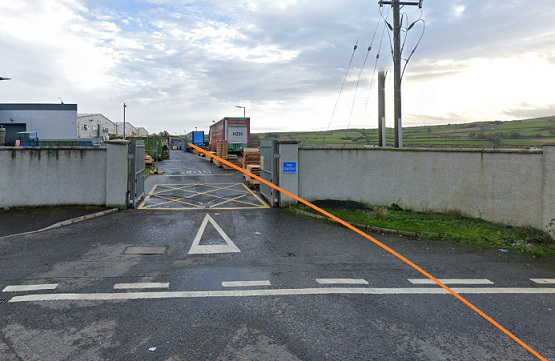
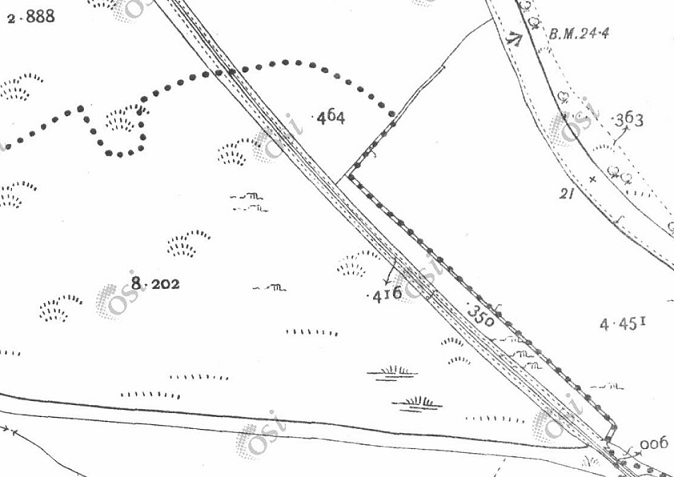
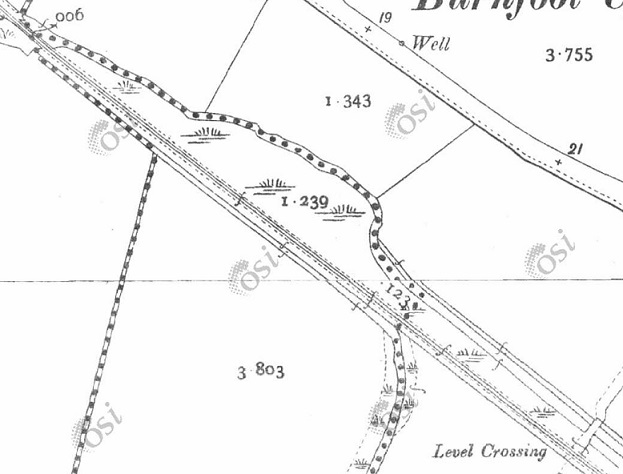
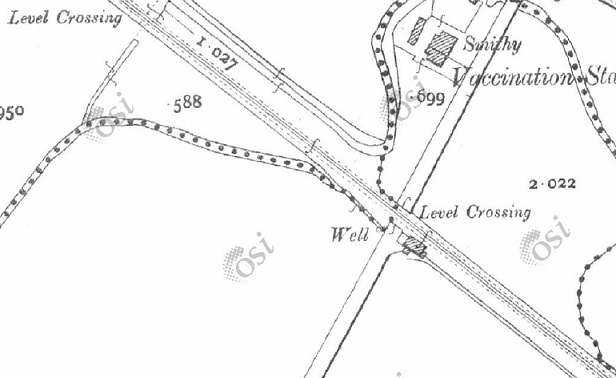
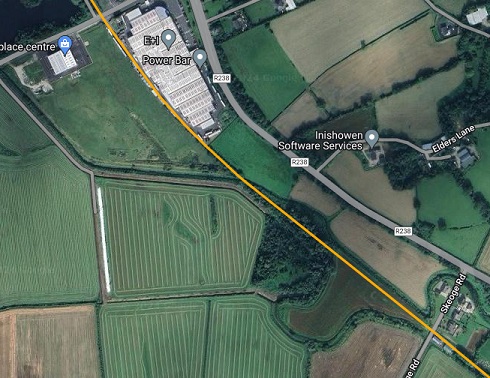
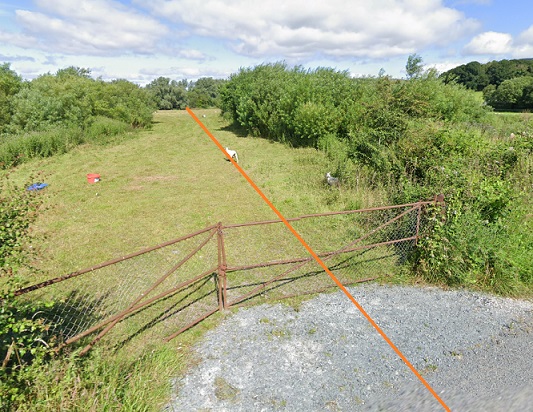
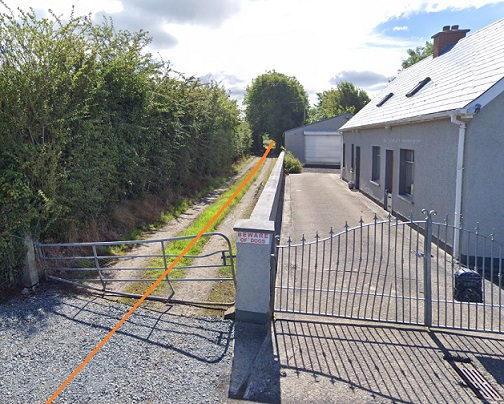
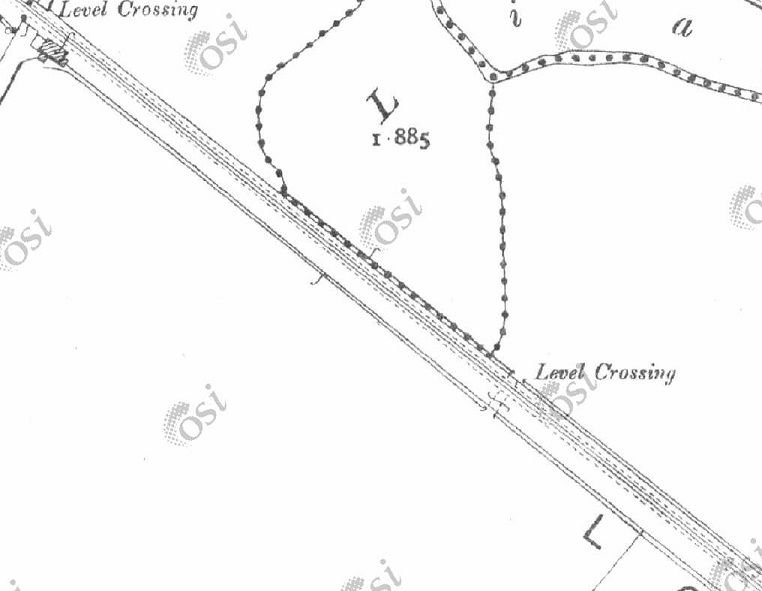
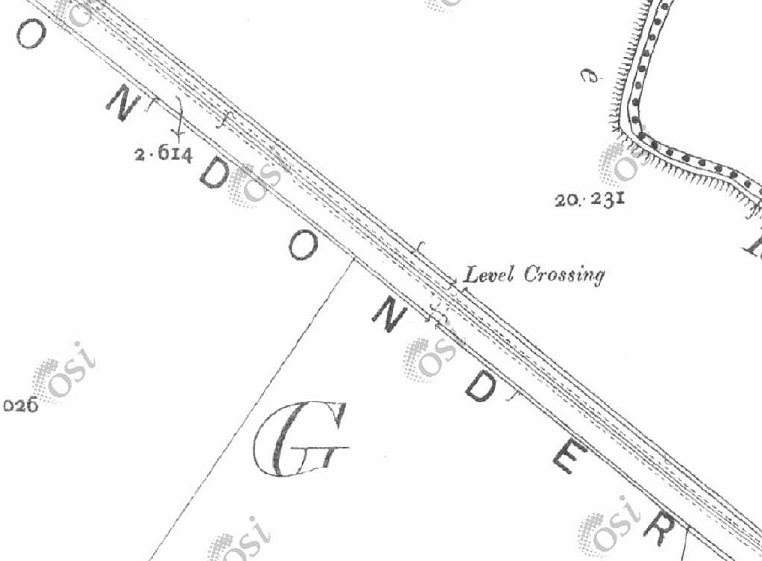
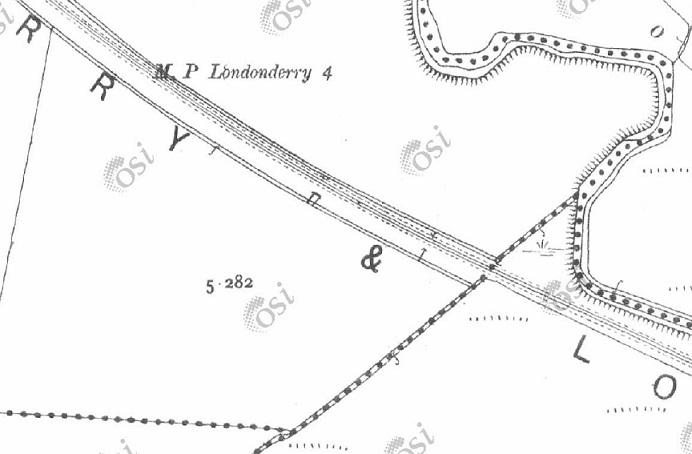
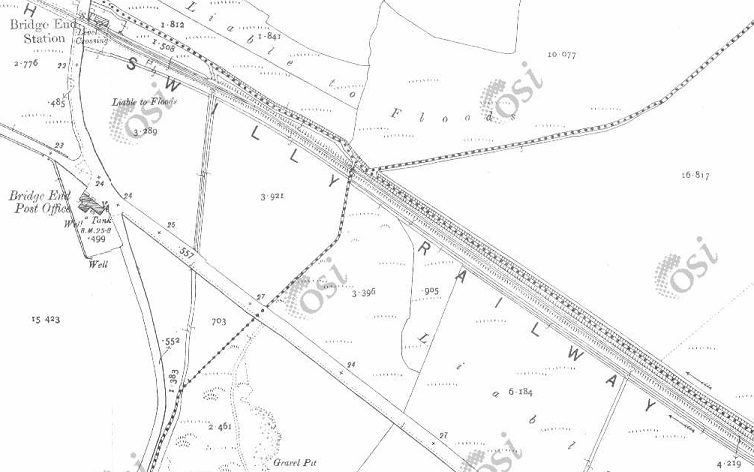
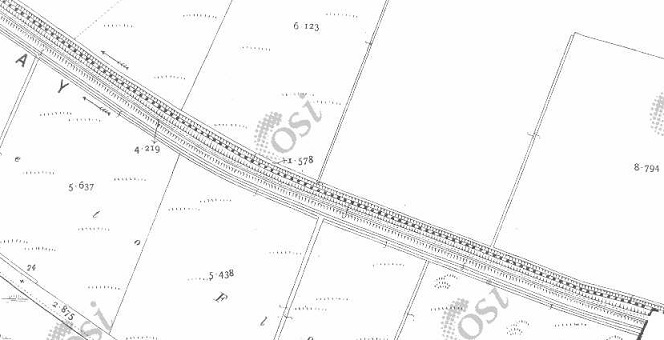
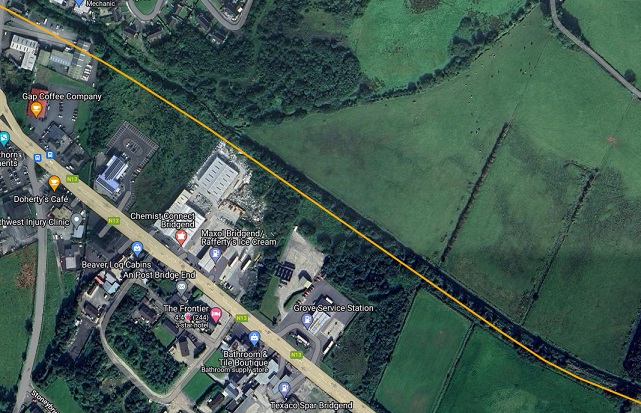
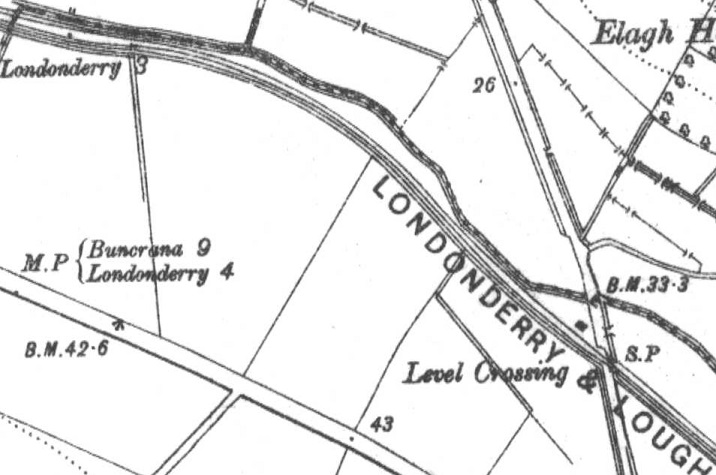
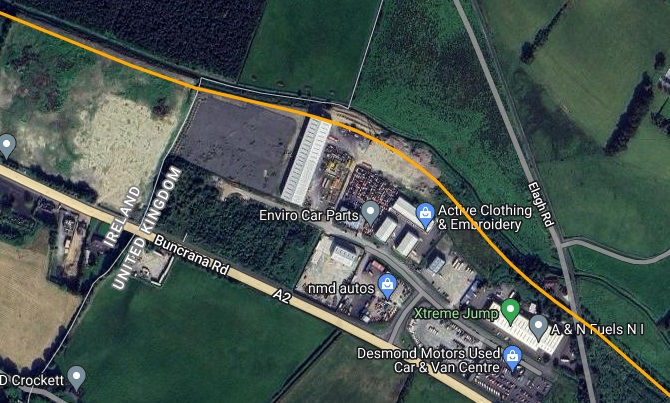
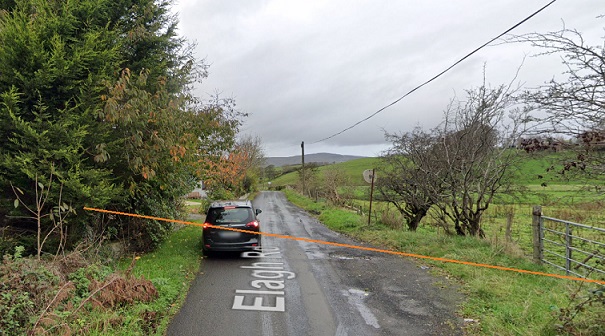
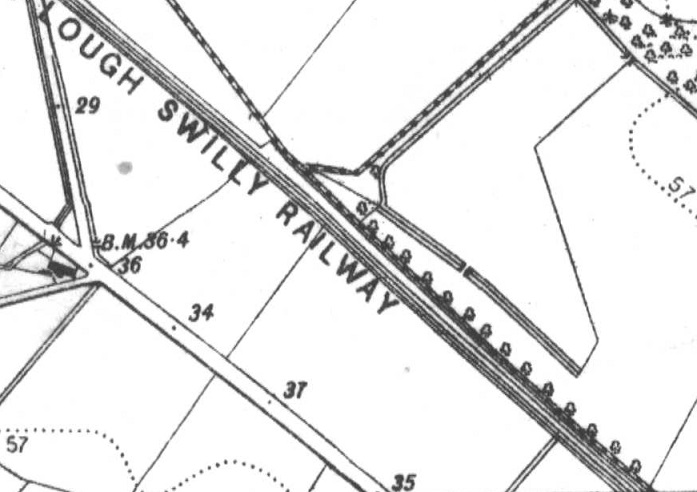
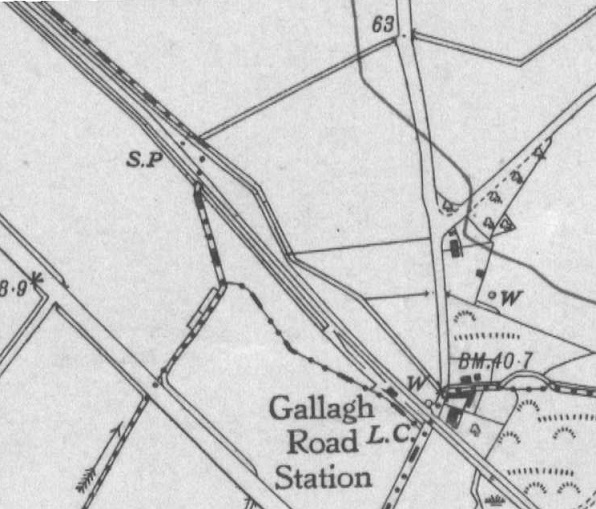
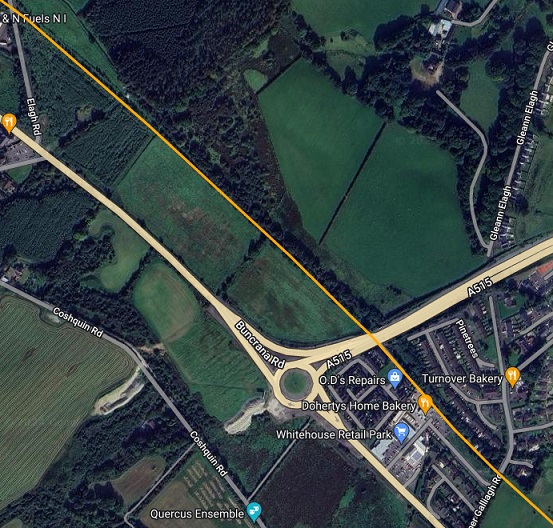
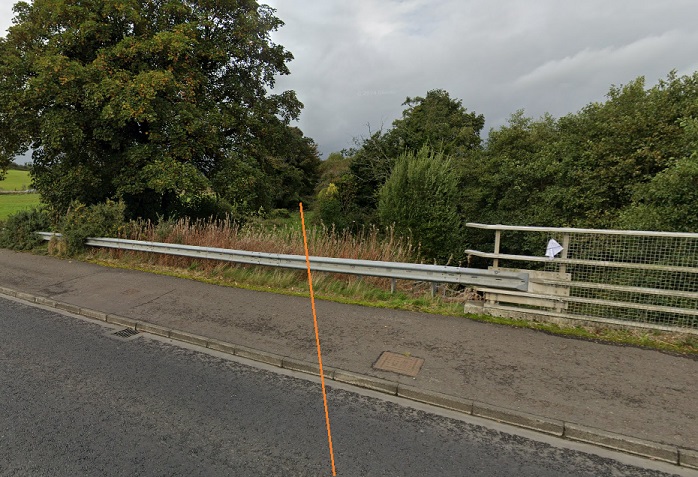
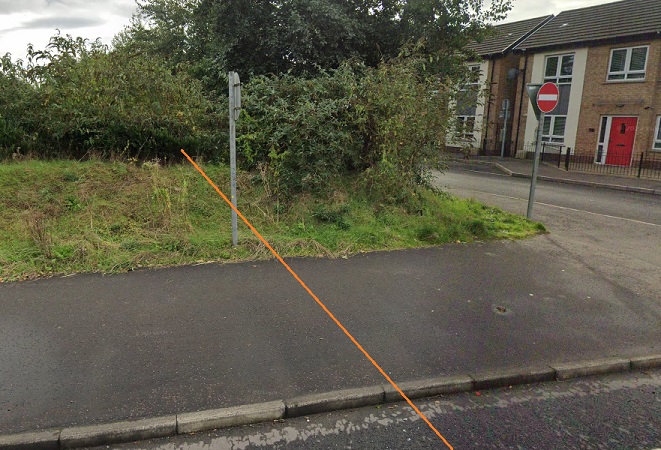
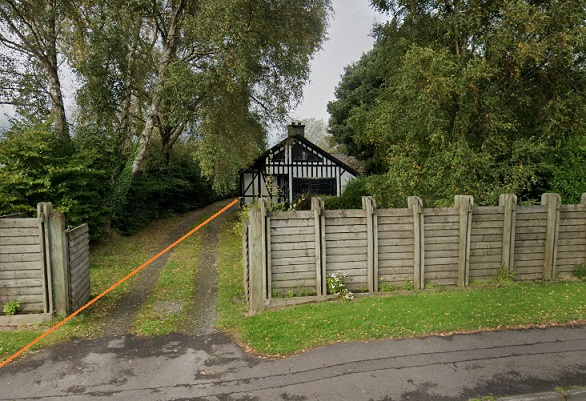
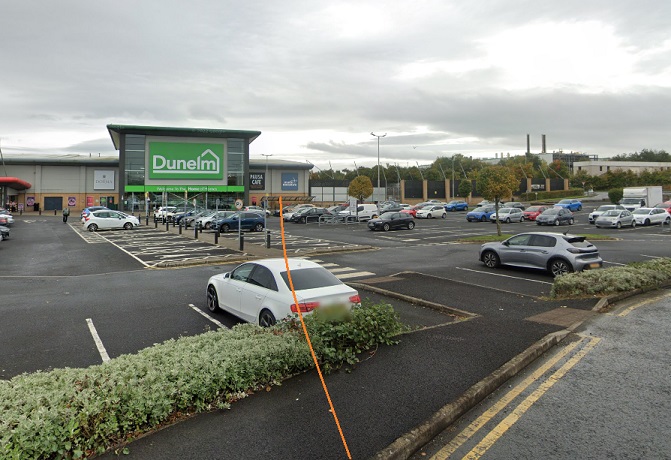
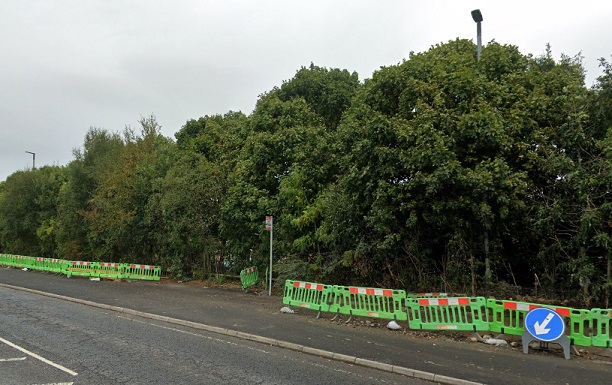
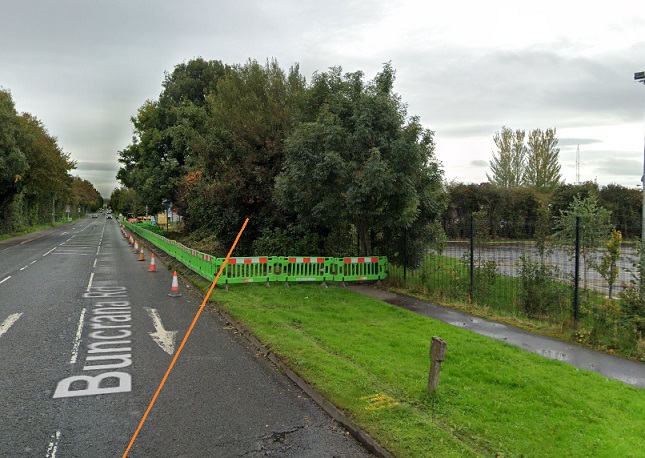
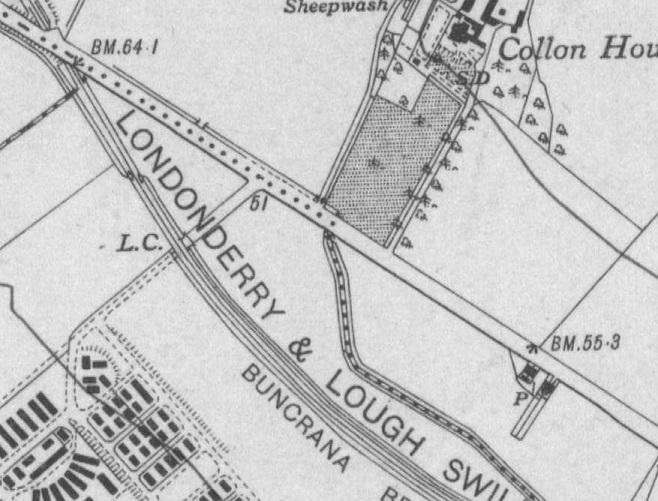
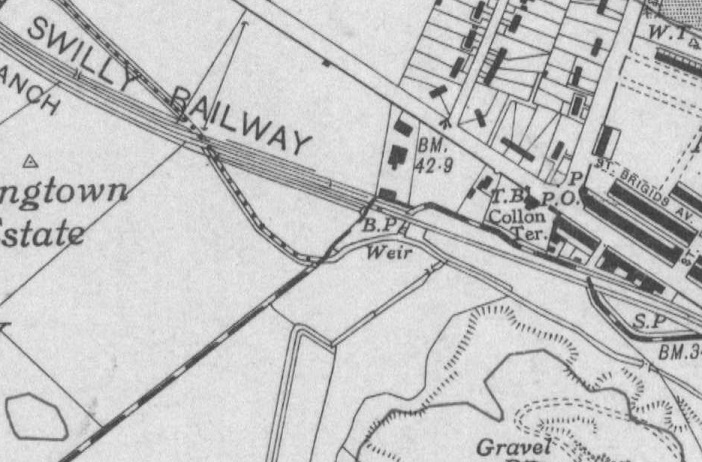
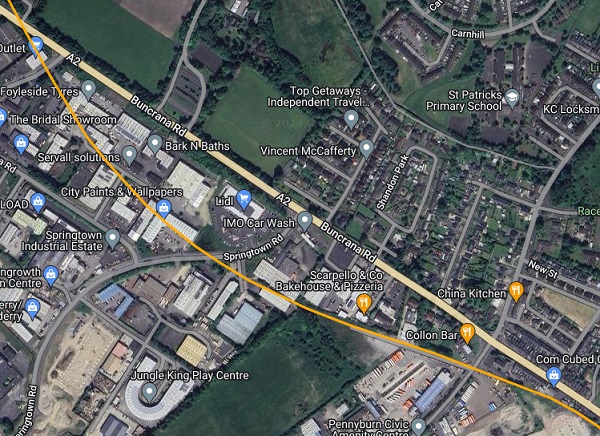
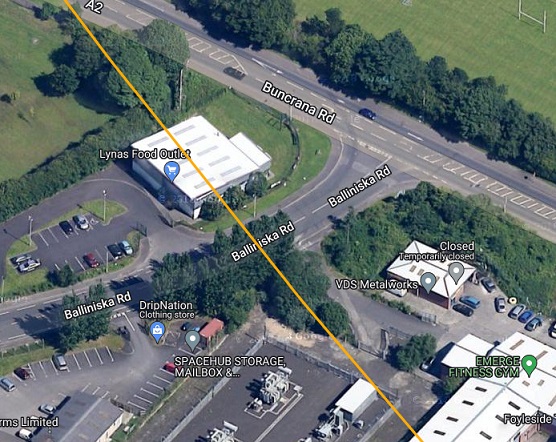
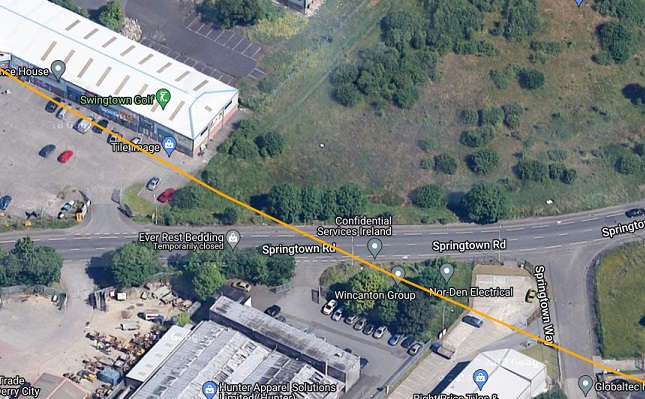
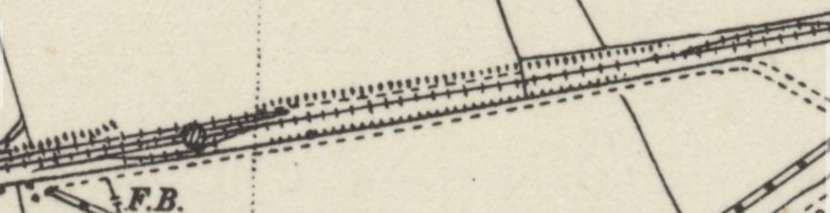
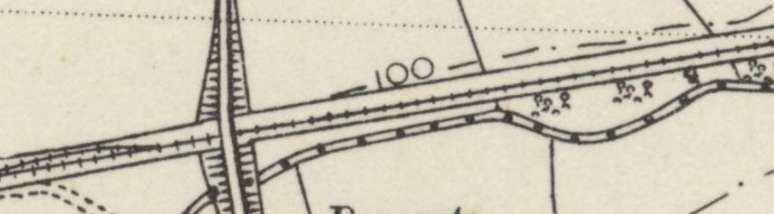
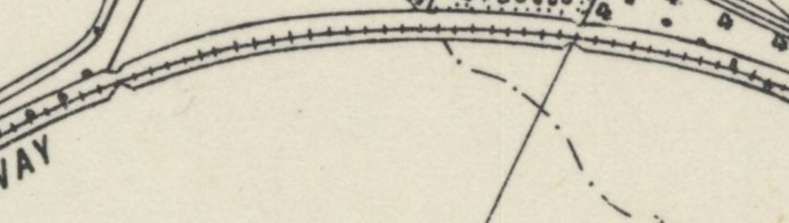
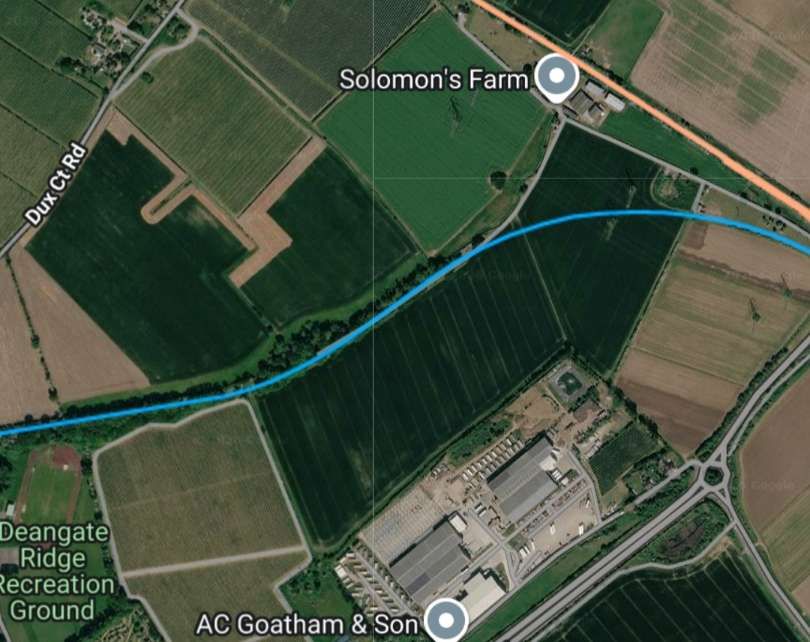
The first length of the line to the East of Tooban Station. [1]After little more than a kilometre, the line curved into Burnfoot Station. As the 25″ OSi survey shows, this was effectively a halt serving passengers. No goods facilities were provided. [1]A little to the South of Burnfoot Station sidings were provided at around the 5 Km point which served Burnfoot Brickworks. [1]The single siding with head-shunt is seen to better effect on this next extract from the 25″ OSi survey. [1]This next extract shows the next point of interest along the line – a level-crossing across what is now the R259. As can be seen on the railmaponline.com extract below, Laurel Bank is now the site of Doherty’s Fireplace Centre. [1]This extract from railmaponline.com’s satellite imagery covers the same length of the L&LSR as the extracts from the OSi 25″ survey above. [2]Looking Southeast through Burnfoot Railway Station in the 1920s. This image was shared by the West Inishowen History & Heritage Society on their Facebook Page on 6th August 2018. [6]Looking Northwest through Burnfoot Railway Station. This image was shared by the Fahan Inch & Burt Parish on their Facebook Page on 16th July 2020, (c) J. Henderson. [6]Looking North from the R259 road along the line of the L&LSR. [Google Streetview, November 2022]Looking South from the R259 road along the line of the L&LSR. It ran close to the West boundary of the Vertiv site. Its approximate line is marked by the orange line. [Google Streetview, November 2022][1]Three extracts from the 25″ OSi survey cover show the L&LSR running Southeast towards Derry. [1]This railmaponline.com satellite image covers the same length of line as the three OSi 25″ extracts above. [1]Looking Northwest from Skeoge Road (bottom-left of the railmaponline.com image above. The orange line marks the approximate line of the L&LSR. [Google Streetview, July 2021]Looking Southeast from Skeoge Road (bottom-left of the railmaponline.com image above. The orange line marks the centre-line of the L&LSR. There was a crossing-keeper’s cottage at this location. It appears from this image to be in private hands and to have been enlarged significantly. [Google Streetview, July 2021]
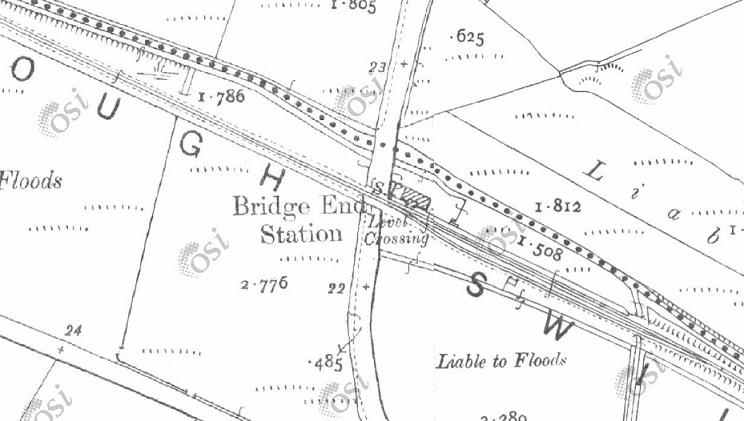
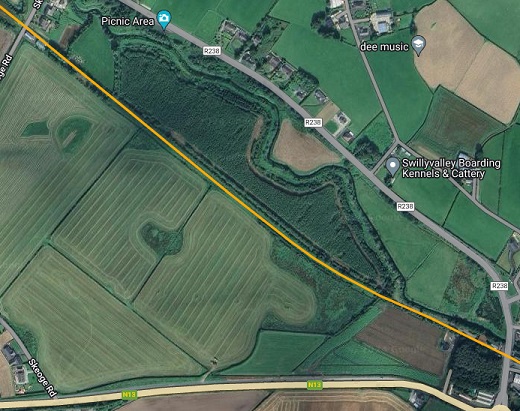
The next four map extracts cover the length of the old railway from Skeoge Road to the R 238 at Bridge End Station. …
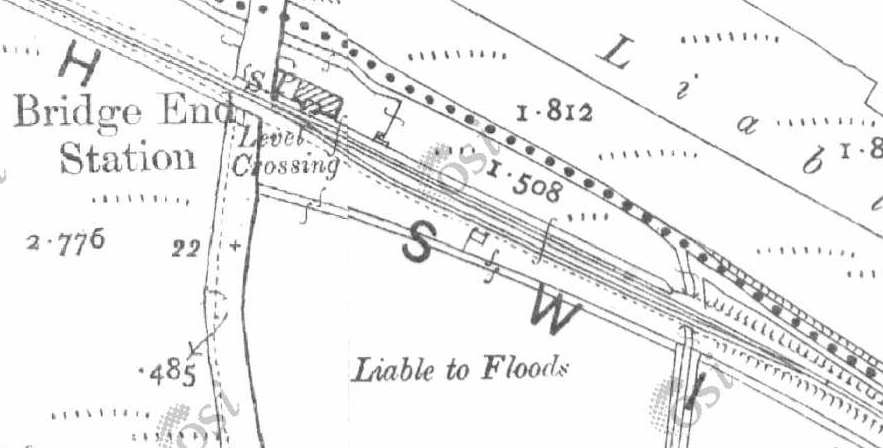
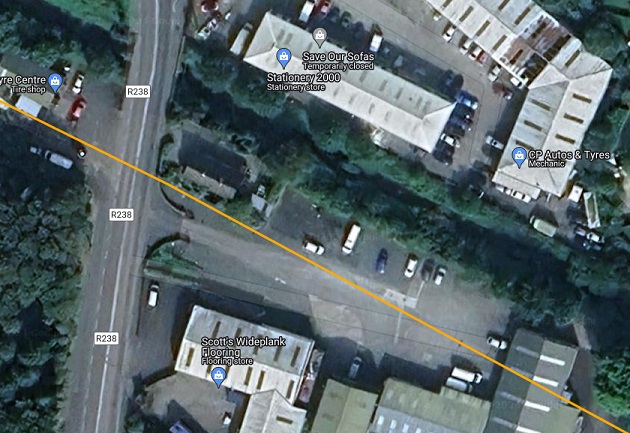
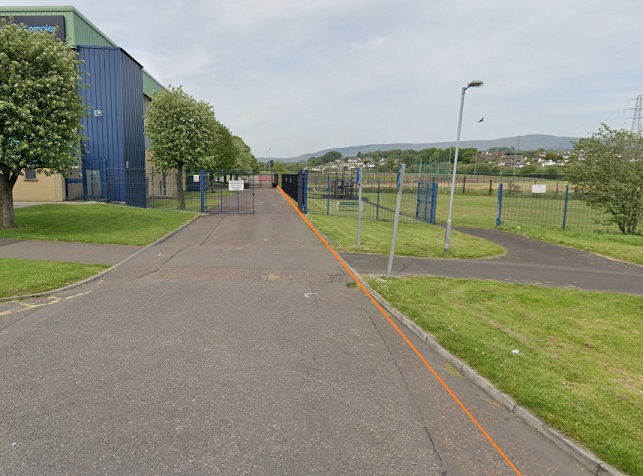
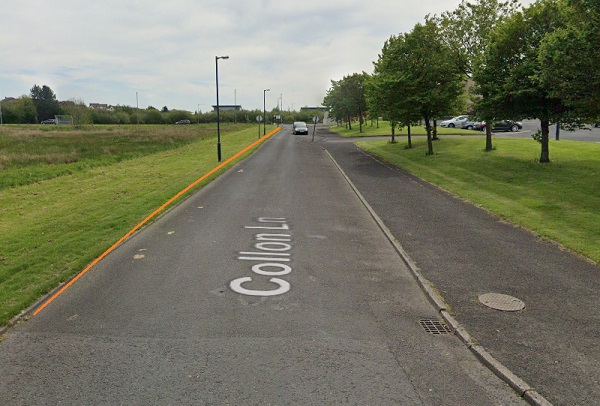
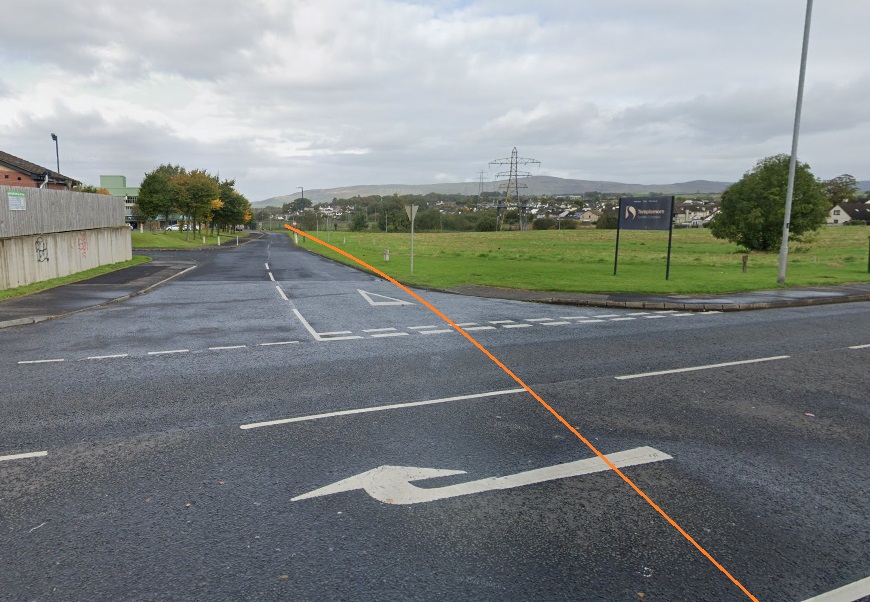
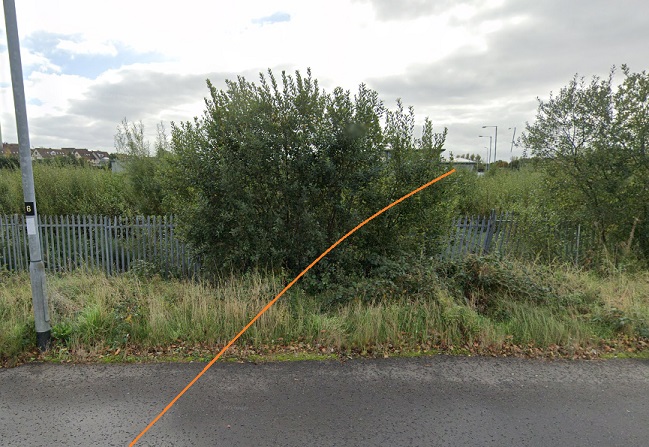
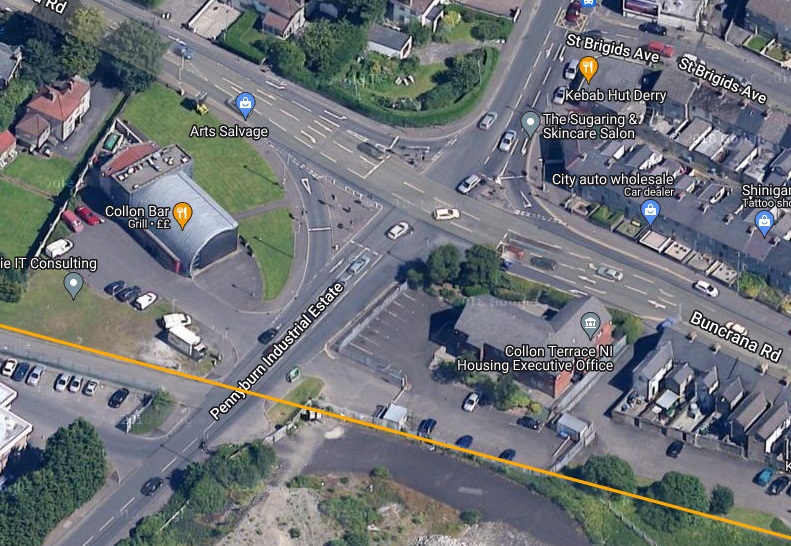
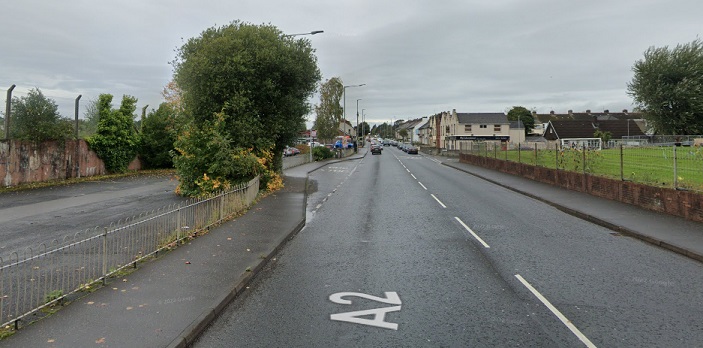
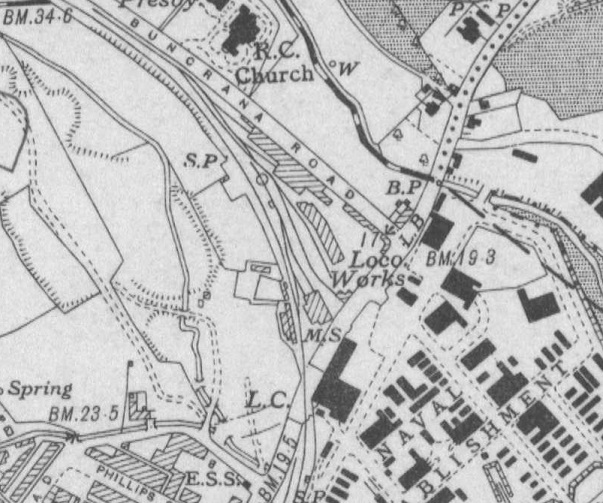
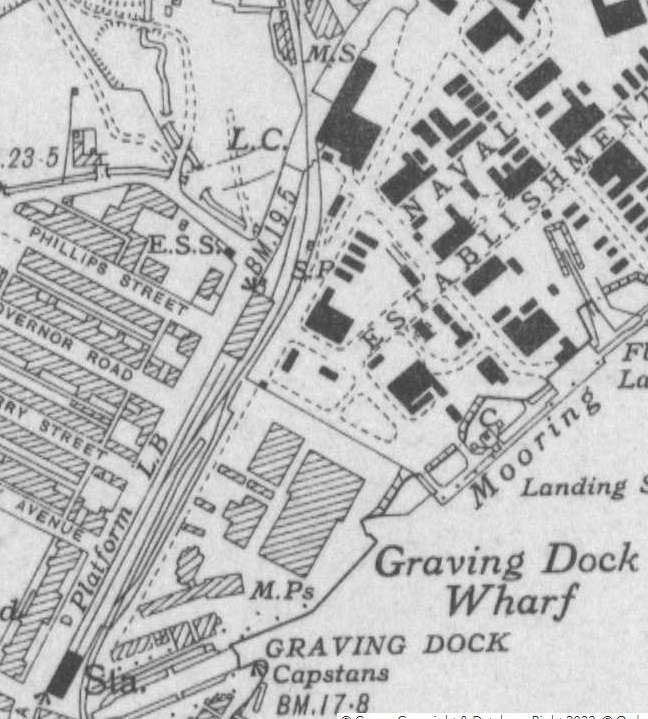
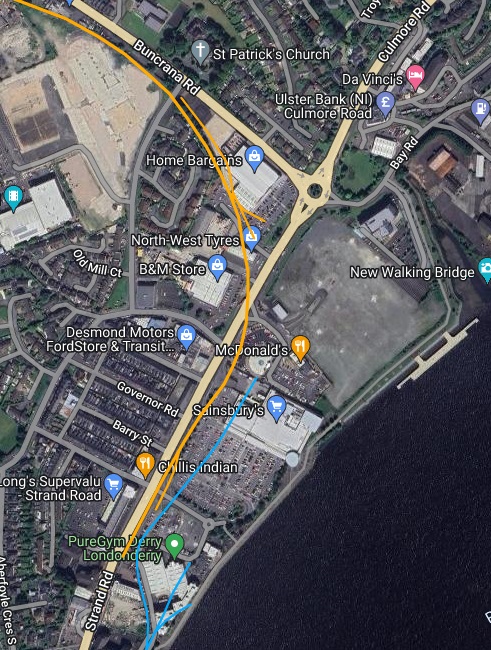
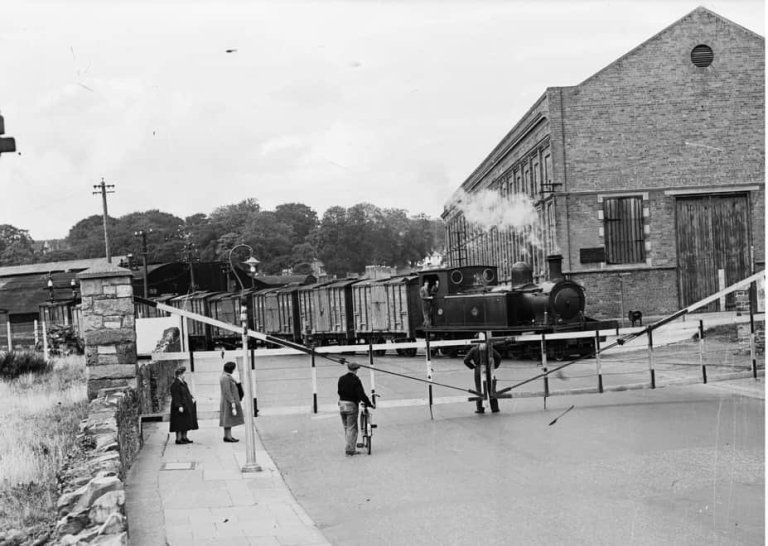
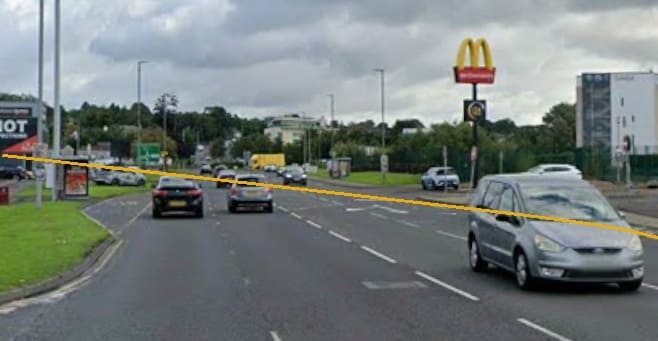
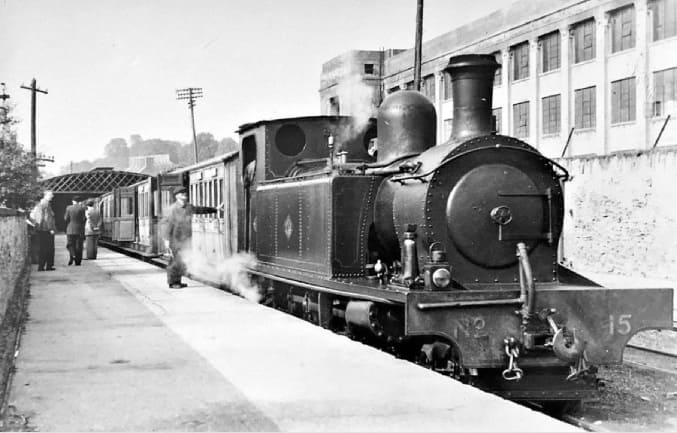
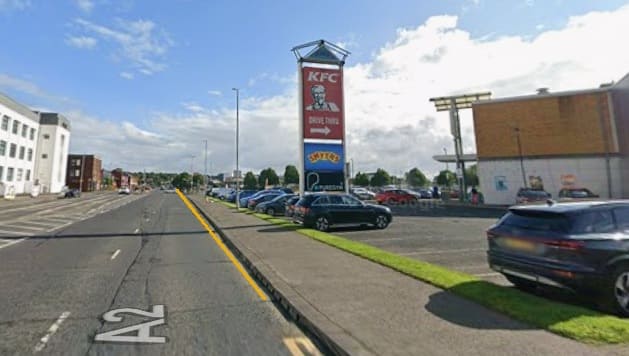
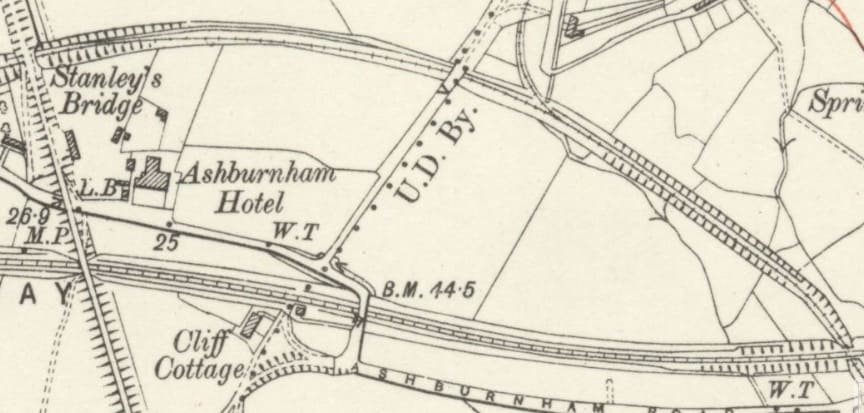
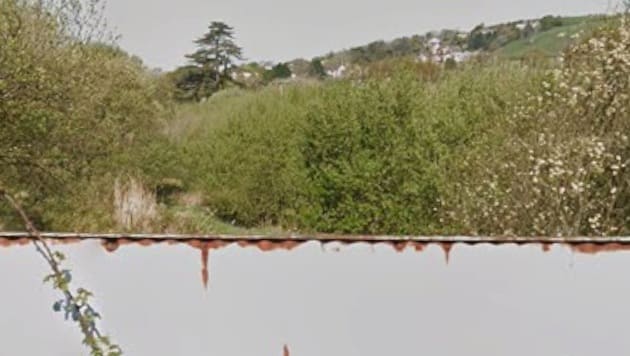
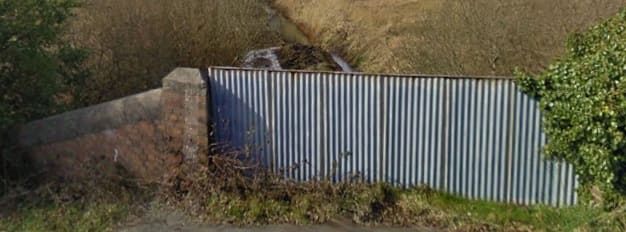
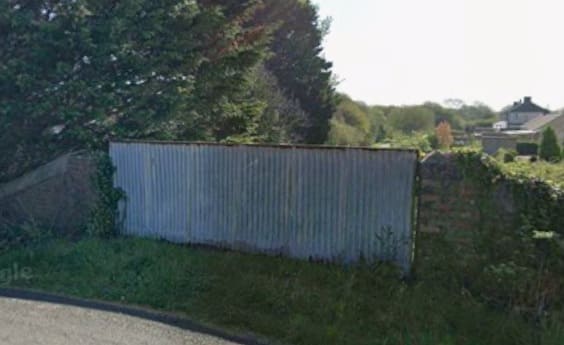
The L&LSR immediately to the Southeast of Bridge End Station. [1]The international boundary appears at the bottom-right of this image. [1]This extract from railmaponline.com’s satellite imagery covers the same length of the L&LSR as the two extracts from the OSi 25″ Survey above. [2]This extract from the OSNI Historical Third Edition (1900-1907) (Sheet 14a) covers the length of the old railway and far as the level-crossing at Elagh Road. [12][2]The site of the level-crossing at Elagh Road seen from the South. [Google Streetview, November 2022]OSNI Historical Third Edition (1900-1907) Sheet 14a. [12]OSNI Historical Fifth Edition (1919-1963) Sheet 14. [12]Approximately the same length of the line as covered on the two map extracts above. Elagh Road is top-left on the extract from railmaponline.com’s satellite imagery. The location of Gallagh Road Station is bottom-right. [2]Looking Northwest from the A515 along the line of the L&LSR. The drainage channel/stream whih passes under the modern road adjacent to the line of the old railway fixes it line and location. [Google Streetview, October 2022]Looking Southeast from the A515 along the line of the L&LSR. [Google Streetview, October 2022]Looking Northwest from Upper Galliagh Road along the line of the L&LSR. [Google Streetview, October 2022]Looking Southeast from Upper Galliagh Road along the line of the old railway. [Google Streetview, October 2022]OSNI Historical Fifth Edition (1919-1963) Sheet 14. [12]OSNI Historical Fifth Edition (1919-1963) Sheet 14. [12]This extract from railmaponline.com’s satellite imagery covers the same length of the L&LS as the two map extracts above. Gallagh Road can be seen at the top-left corner of this image and the location of the crossing over Buncrana Road is at the bottom-right. [2]Looking Northwest from Collon Lane . The large building on the left is Templemore Sports Centre. [Google Streetview, May 2019]Looking Southeast along Collon Lane. The approximate line of the old railway is marked by the orange line. {Google Streetview, May 2019]Looking Northwest along the line of the old railway from Templemore Road. [Google Streetview, October 2022]Looking Southeast along the line of the L&LSR from Templemore Road. [Google Streetview, October 2022]Looking Southeast from within the modern shopping Complex with the approximate line of the L&LSR marked in orange. [Google Streetview, October 2022]Looking back, Northwest, along the line of the old railway. The modern bus-stop on Buncrana Road sits pretty much on the line of the L&LSR. [Google Streetview, October 2022]Looking Southeast, along the line of the old railway. The trees sit over the formation of the L&LSR. [Google Streetview, October 2022]OSNI Historical Fifth Edition (1919-1963) Sheet 14. [12]OSNI Historical Fifth Edition (1919-1963) Sheet 14. [12]Another extract from the satellite imagery from railmaponline.com, this covers the same length of the line as shown on the two map extracts above. [2]An enlarged extract from railmaponline.com’s satellite imagery showing the route of the old line as it crosses the industrial area to the South of Buncrana Road. [2]Further Southeast, the route of the old railway crossed Springtown Road. [2]And then the main access road to the Pennyburn Industrial Estate. [2]A little further to the Southeast the A2 (Buncrana Road) and the old line converged. The fence line on the left in this view looking Northwest is on the approximate line of the L&LSR. [Google Streetview, October 2022]OSNI Historical Fifth Edition (1919-1963) Sheet 14. [12]OSNI Historical Fifth Edition (1919-1963) Sheet 14. [12]Close to the top of this extract from railmaponline.com’s satellite imagery that route of the old railway crosses Pennyburn Pass which approximately marks the extent of what became the main works depot of the L&LSR in Derry. It then curved round to the South crossing Strand Road before running into the L&LSR terminus. [2]Looking Northwest along Strand Road, this is the L&LSR level-crossing. This photograph shows the final train on the L&LSR, entering Graving Dock Station from the North, crossing Strand Road. The Crossing Gates emphasise the width of the road and the shallow angle of the crossing. [14]Approximately the same view in the 21st century. [Google Streetview, August 2025]Looking Southwest towards the end of the line this image shows a L&LSR train at the old station in Strand Road. On the right, opposite the station is the Wilkerson factory of 1921, Sainsburys sits to the left of this image in the 21st century. Joseph Keys shared this image on the Derry of the Past Facebook Group on 6th December 2018. [15]Approximately the same view in the 21st century – taken from the Sainsbury’s car park. [Google Streetview, April 2012]The mustard coloured line superimposed on this northeast-facing streetview image shows the approximate location of the old L& LSR terminus. [August 2025]
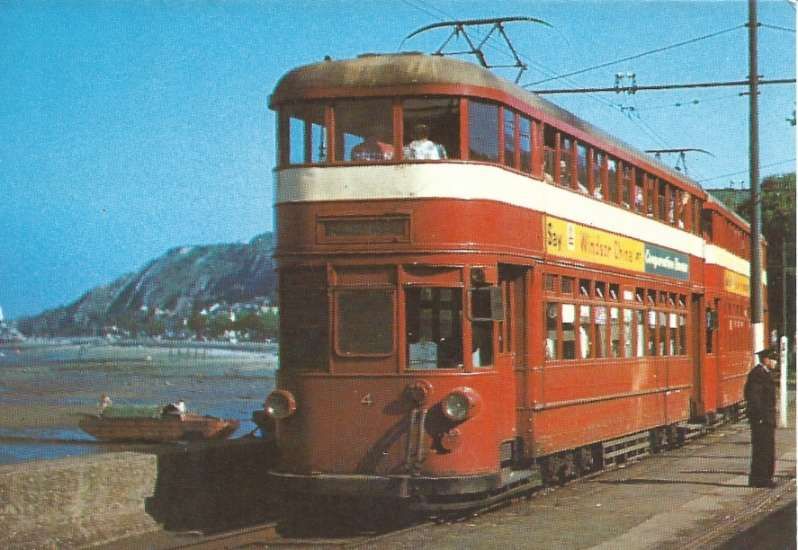
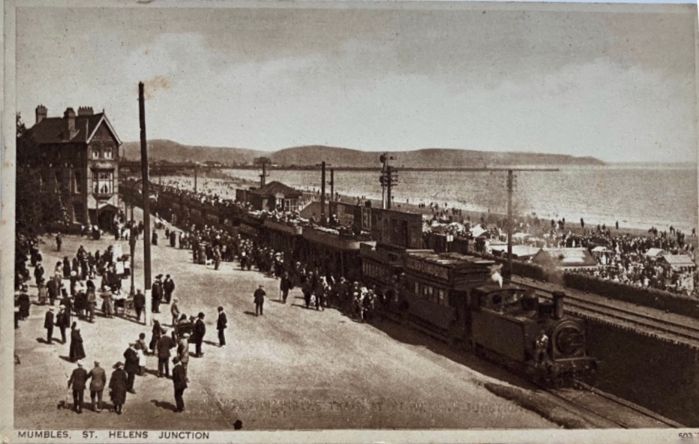
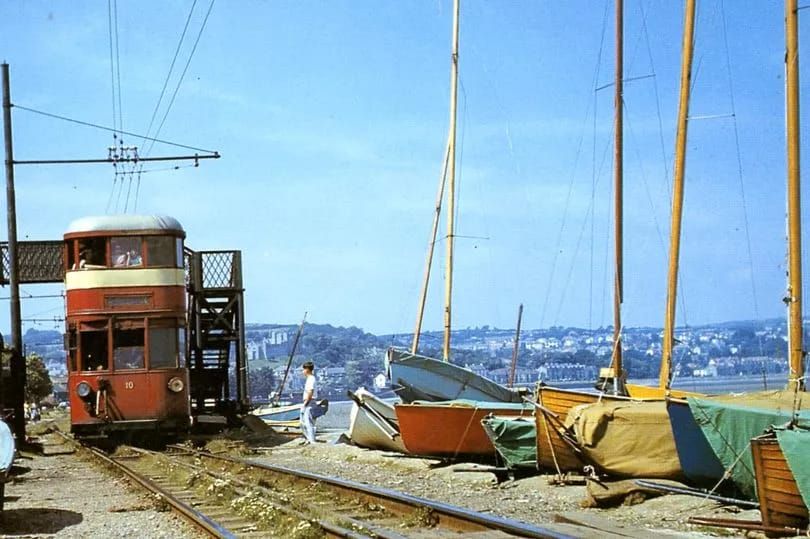
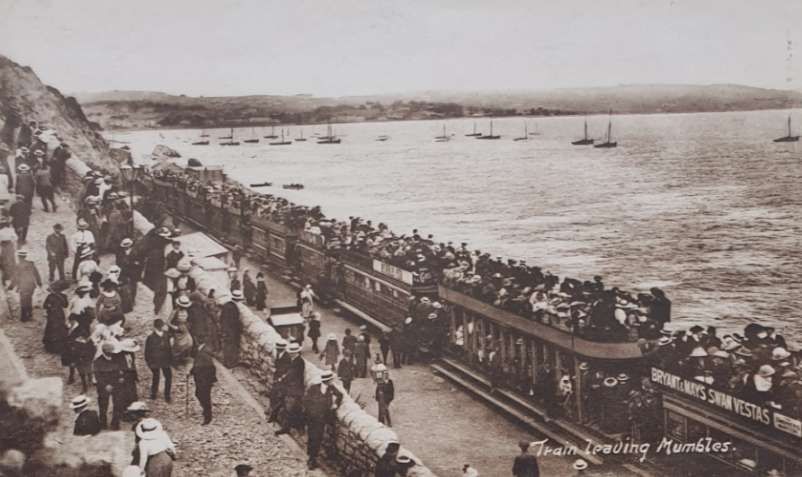
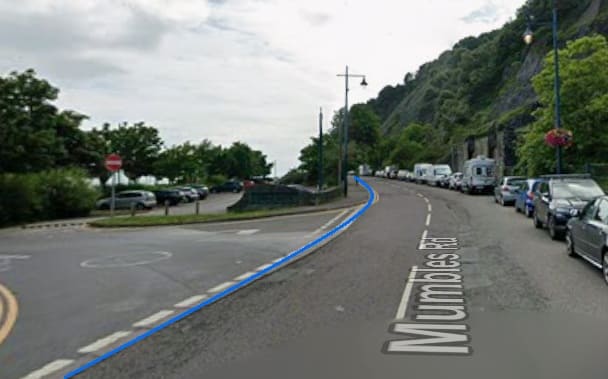
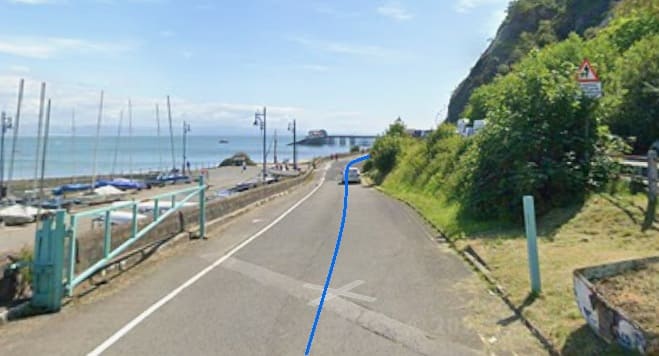
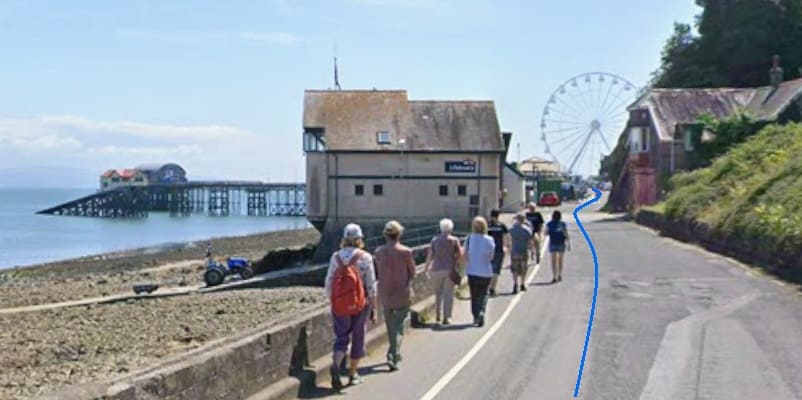
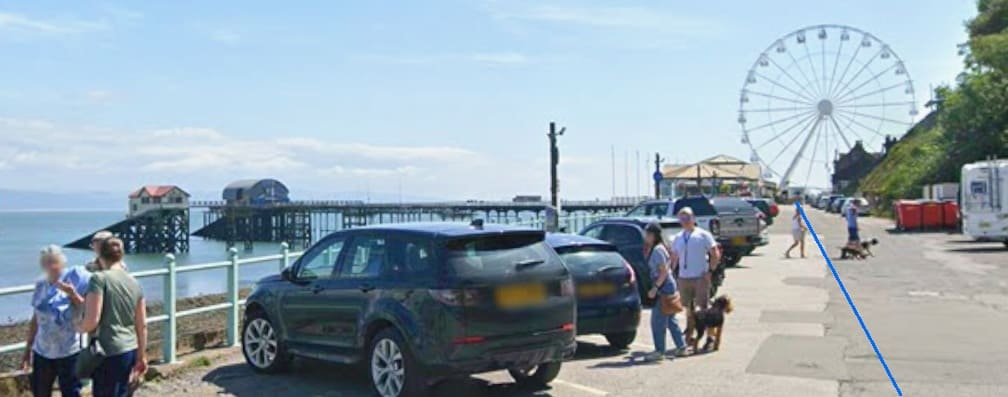
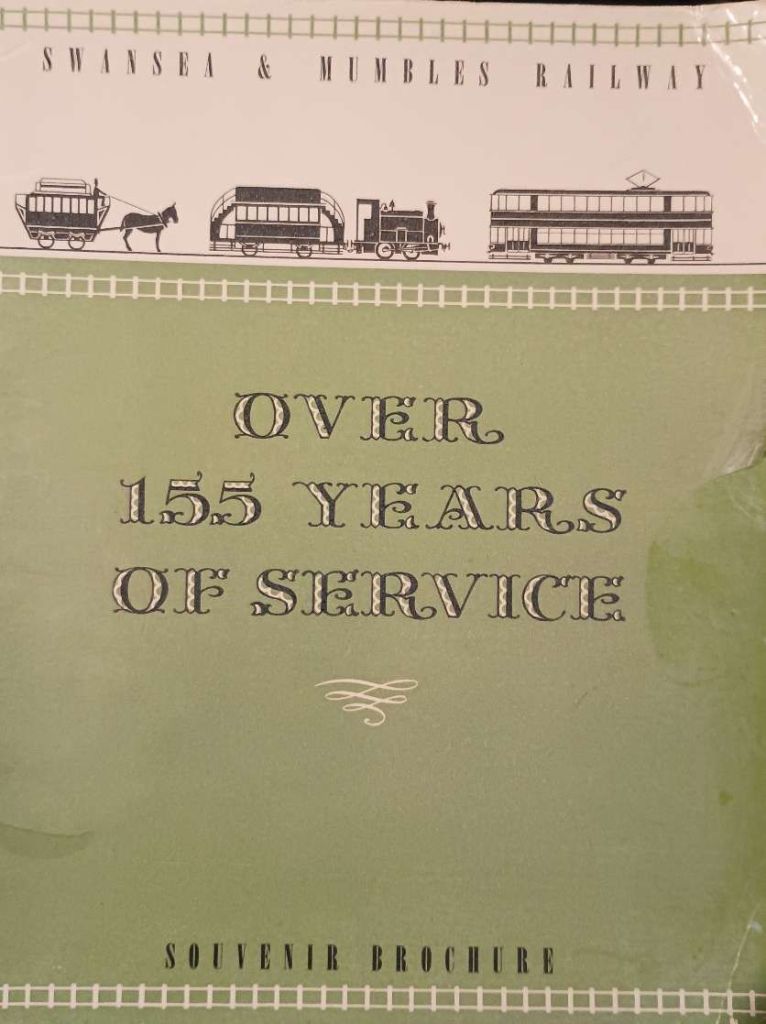
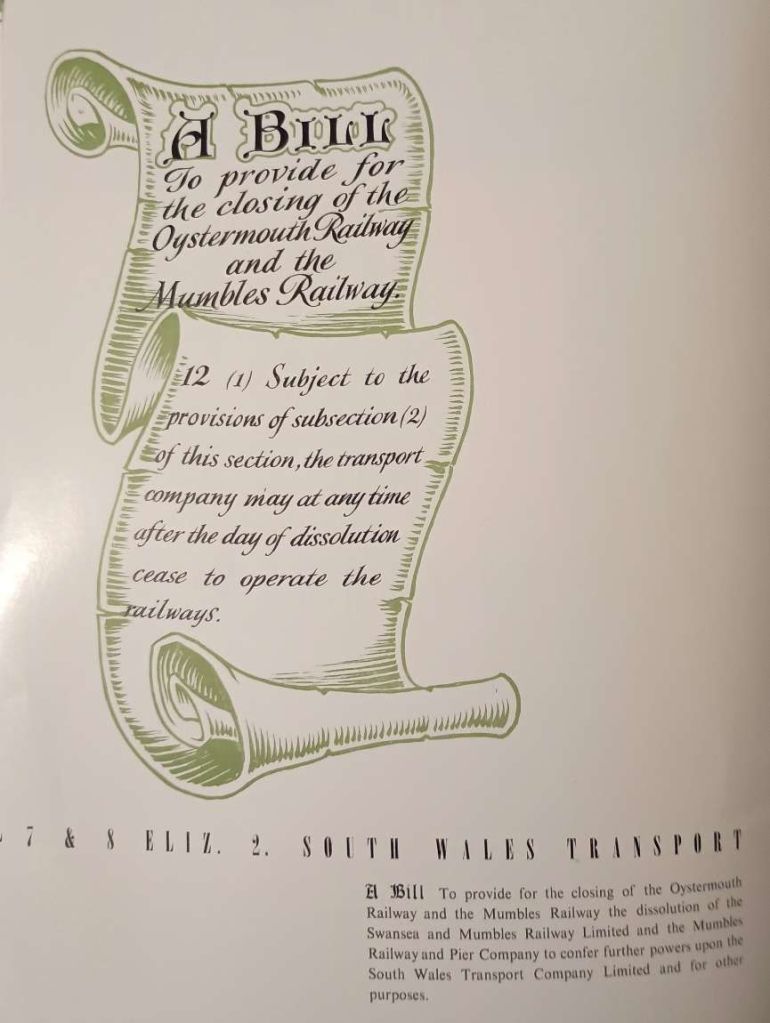
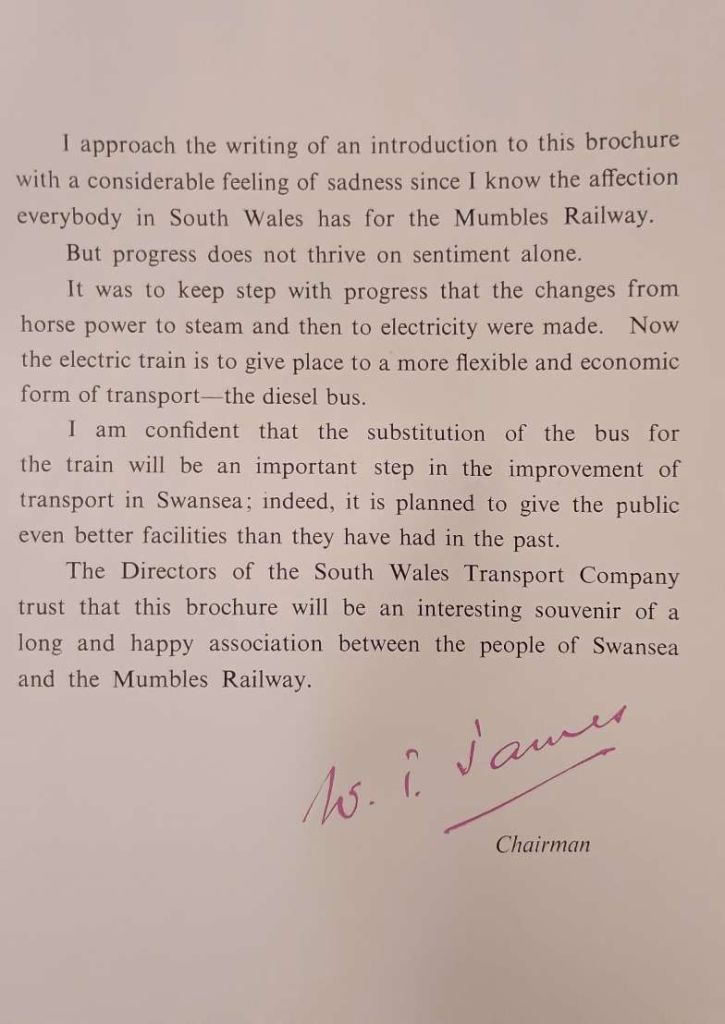
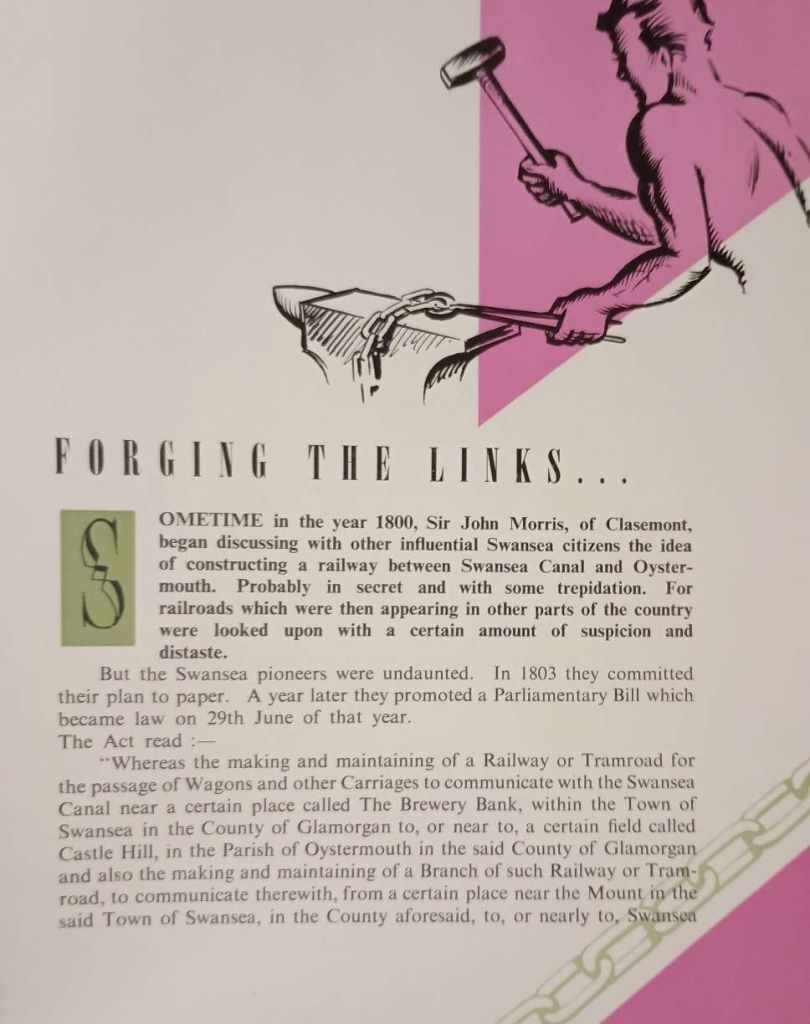
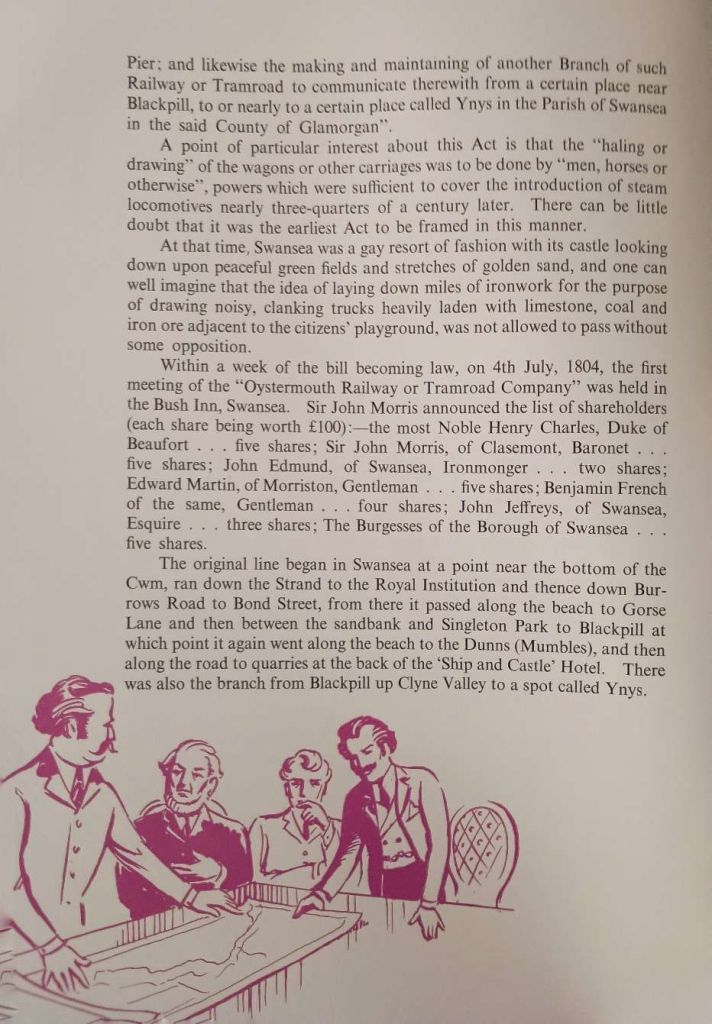
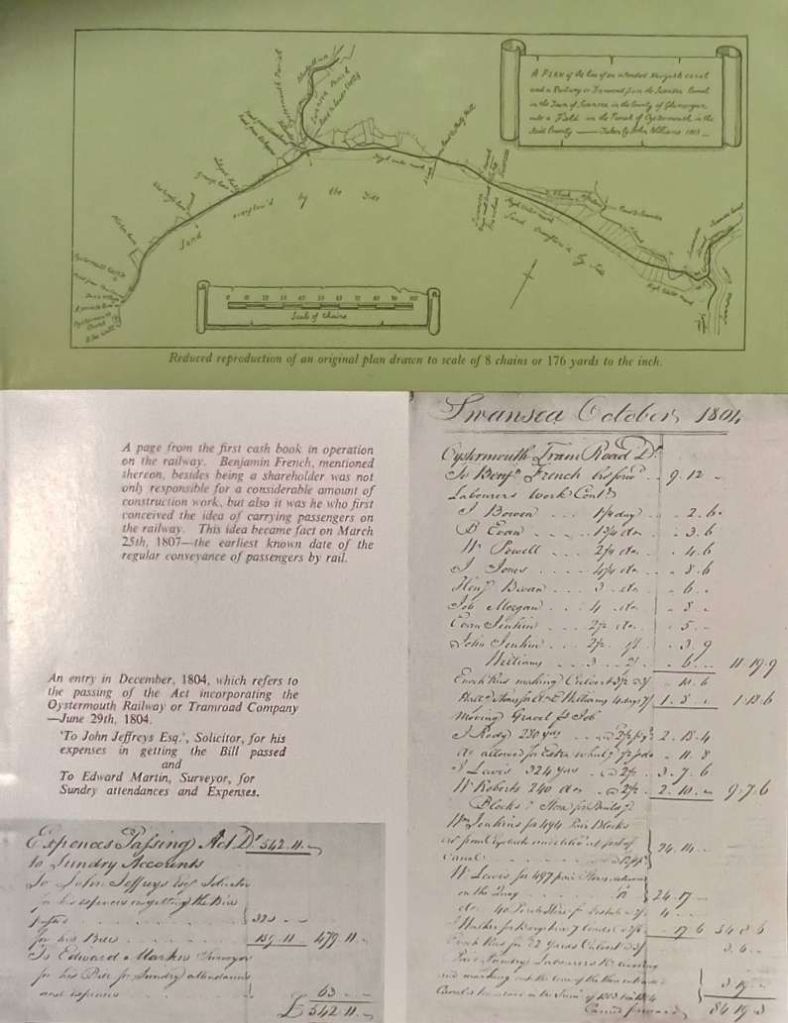
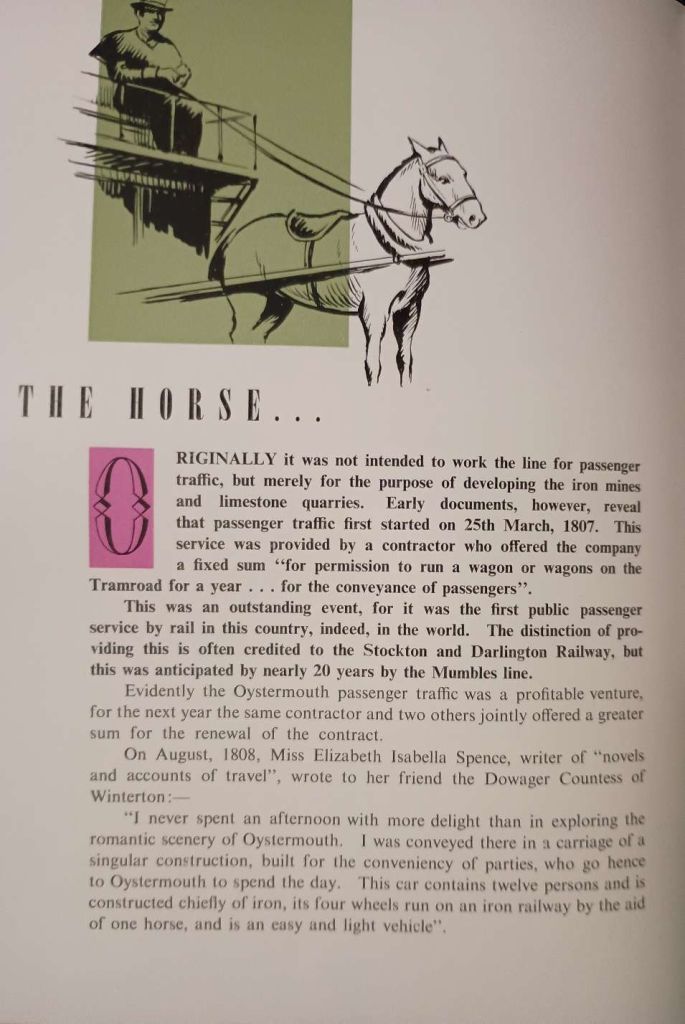
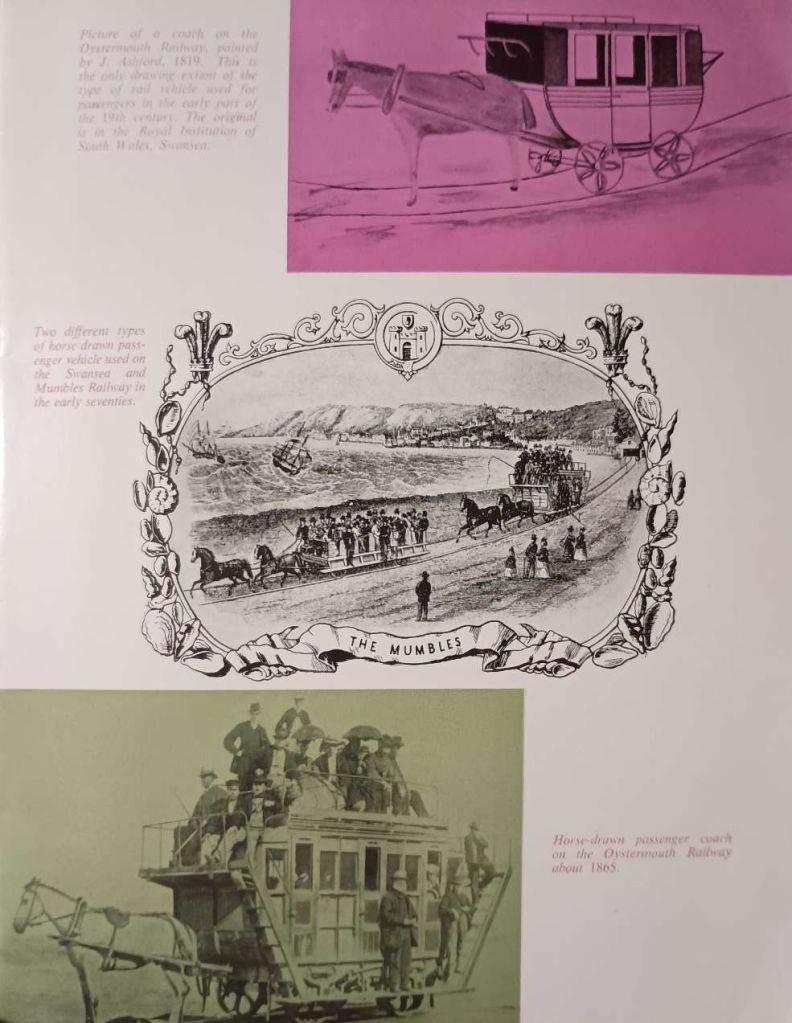
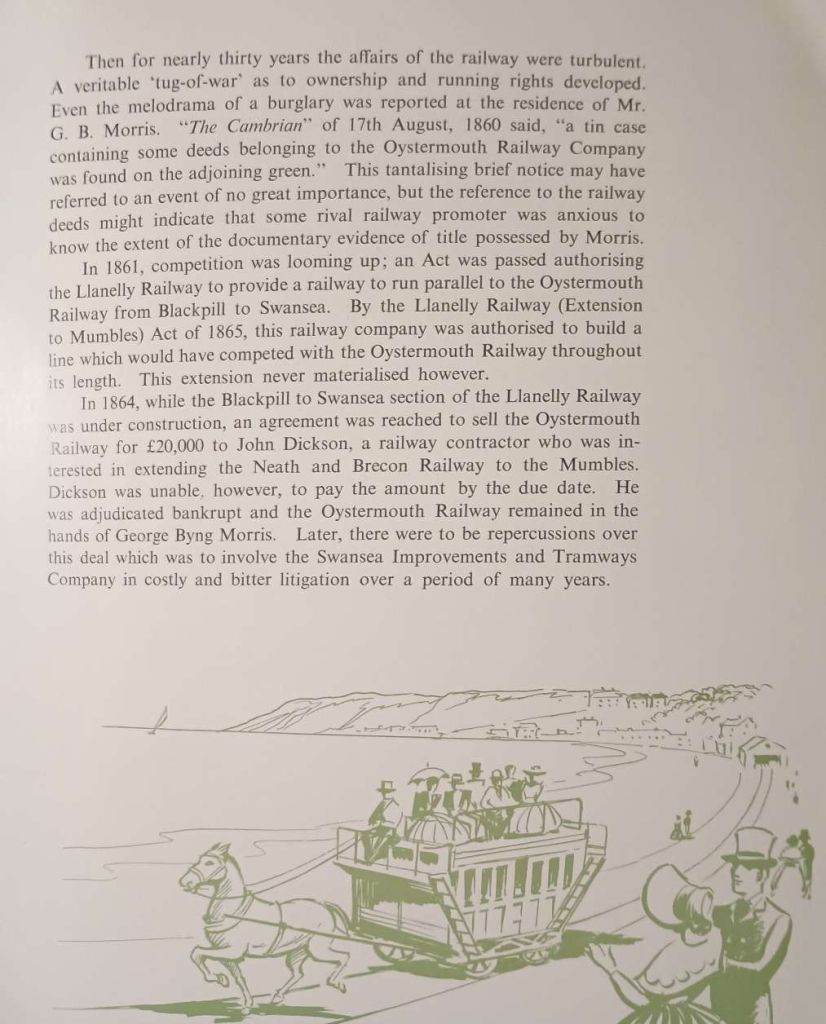
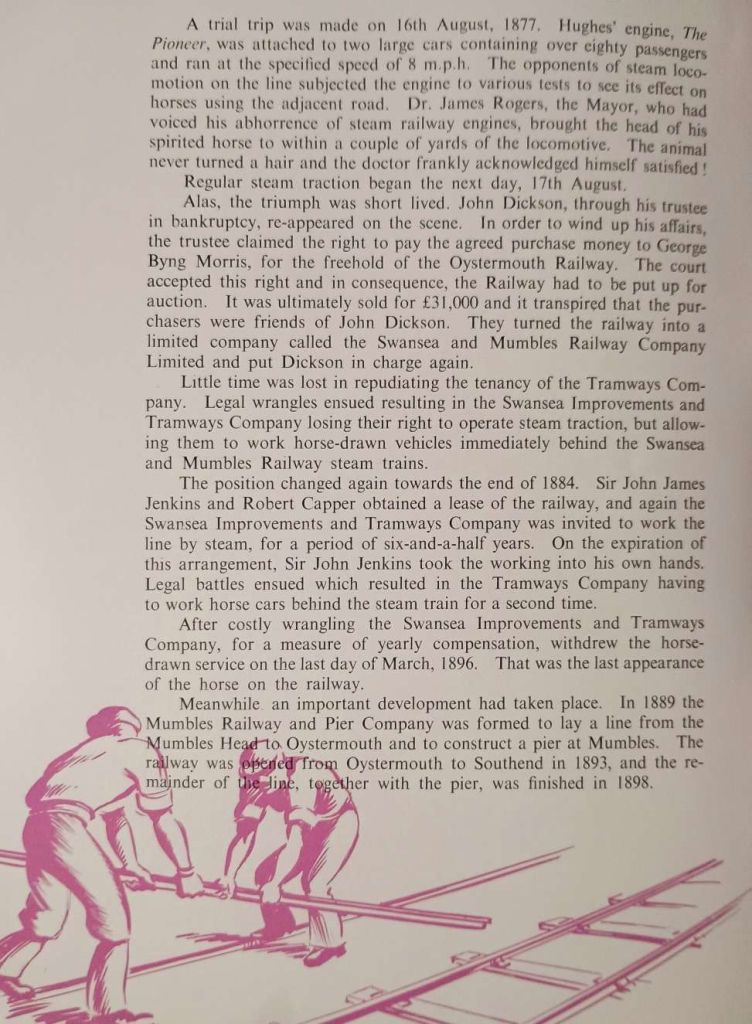
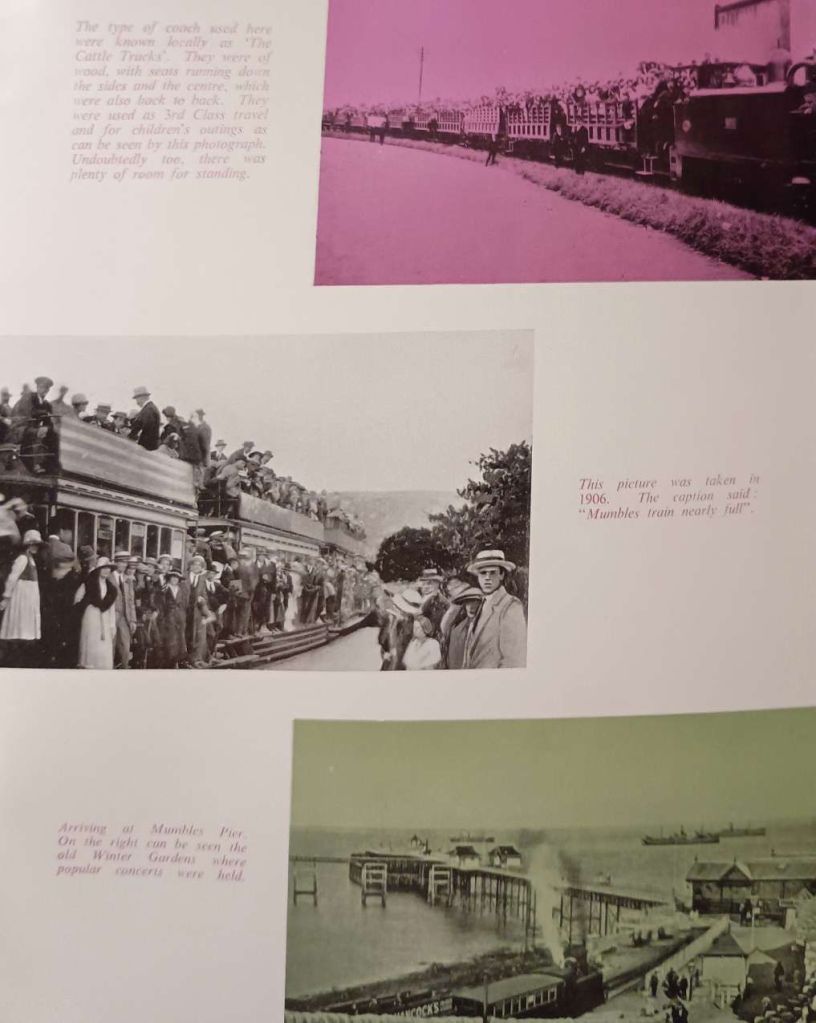
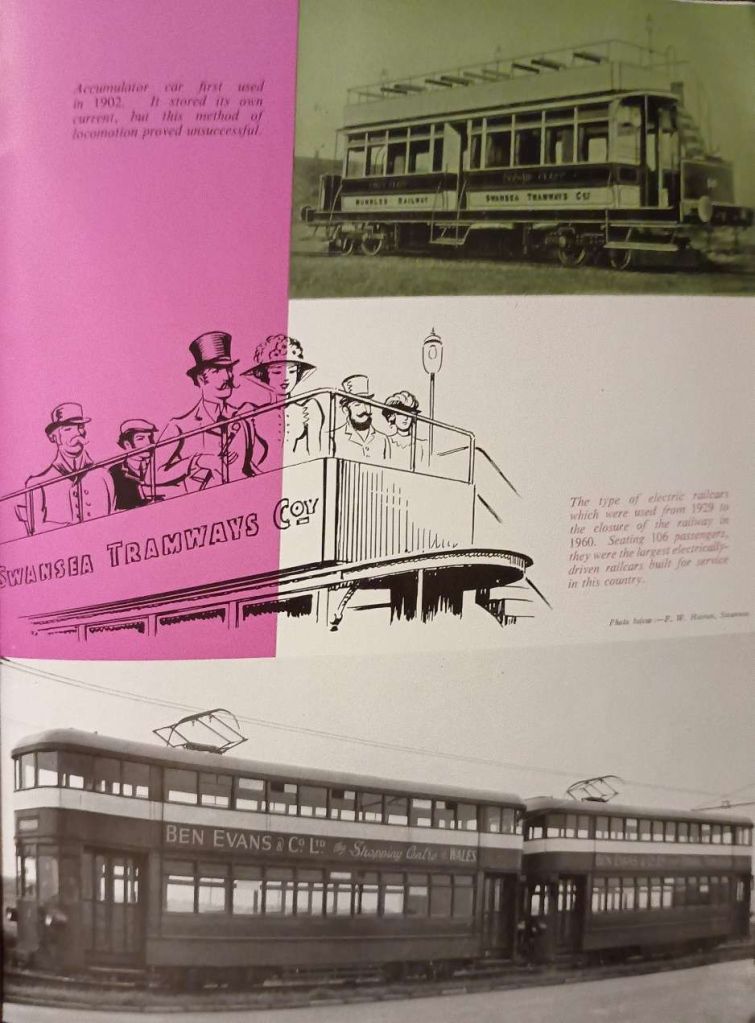
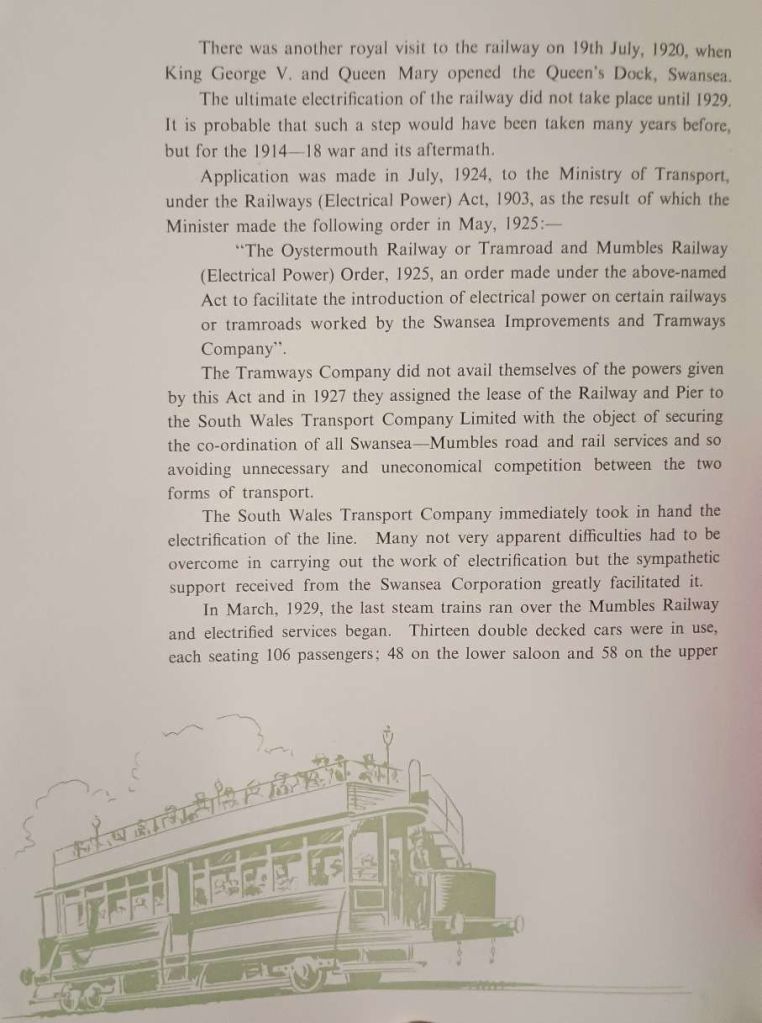
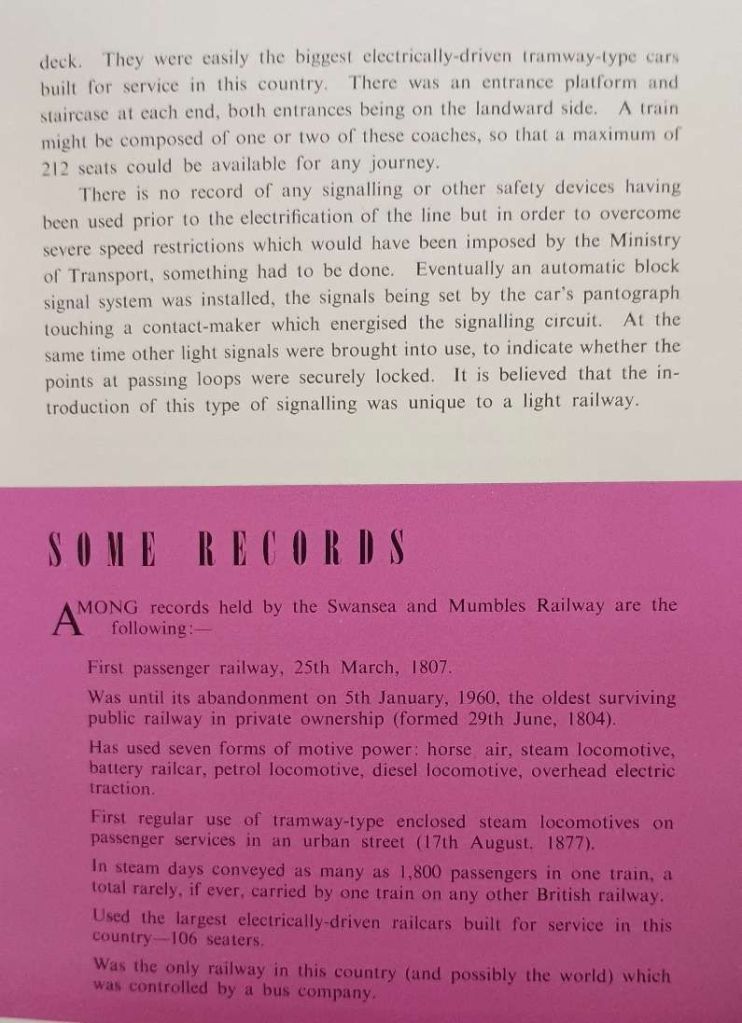
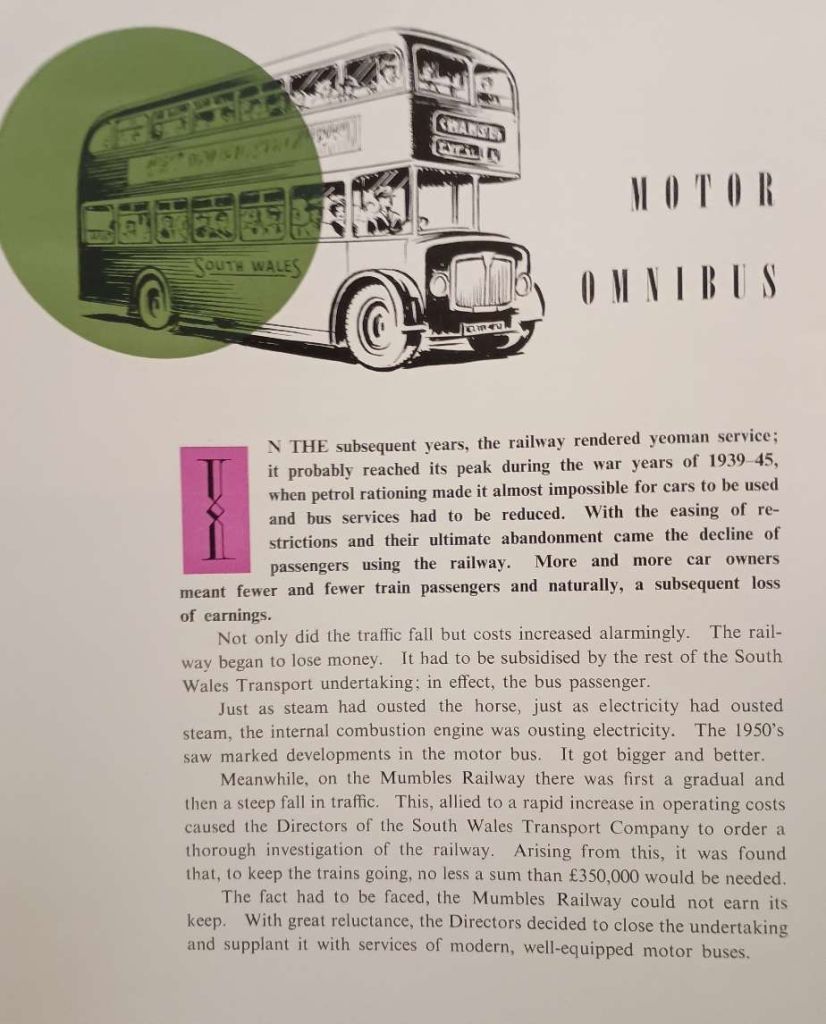
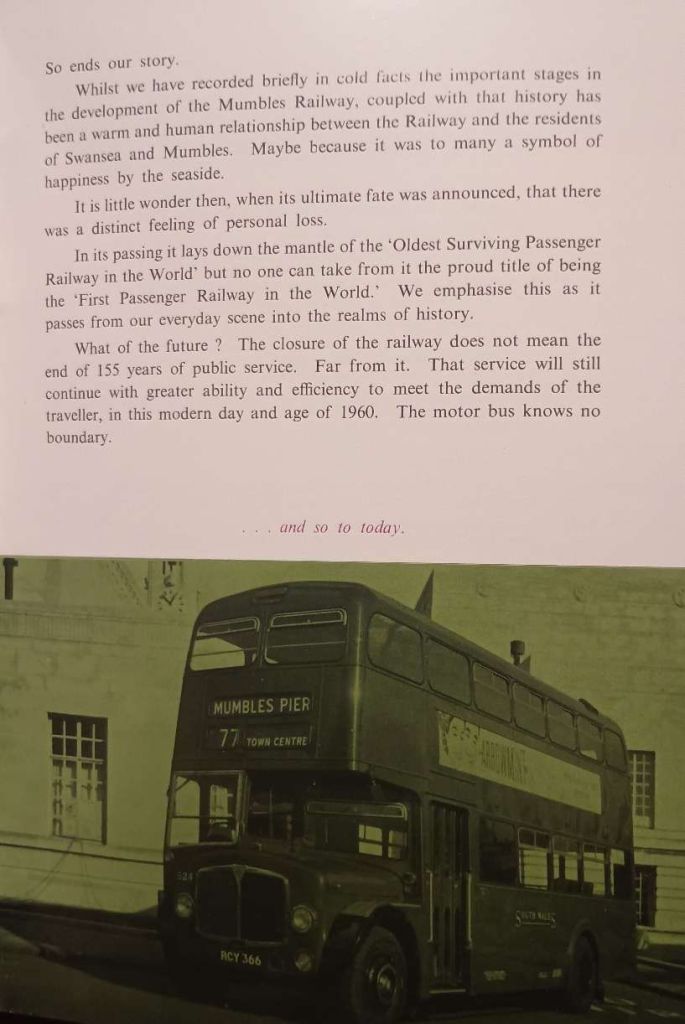
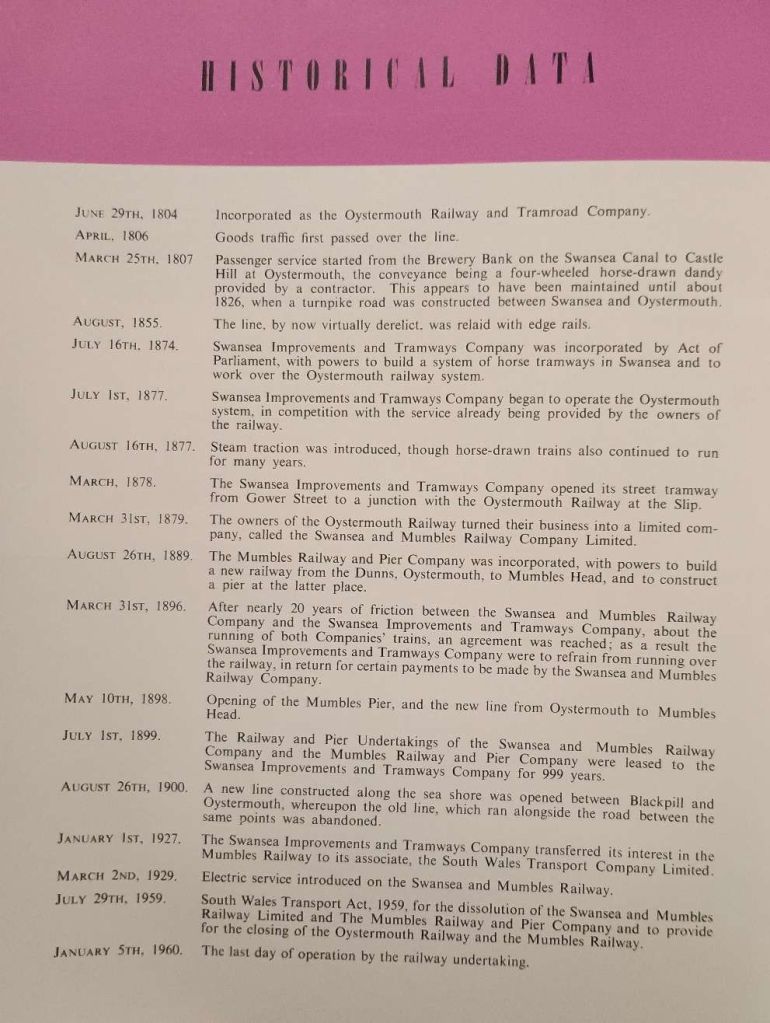
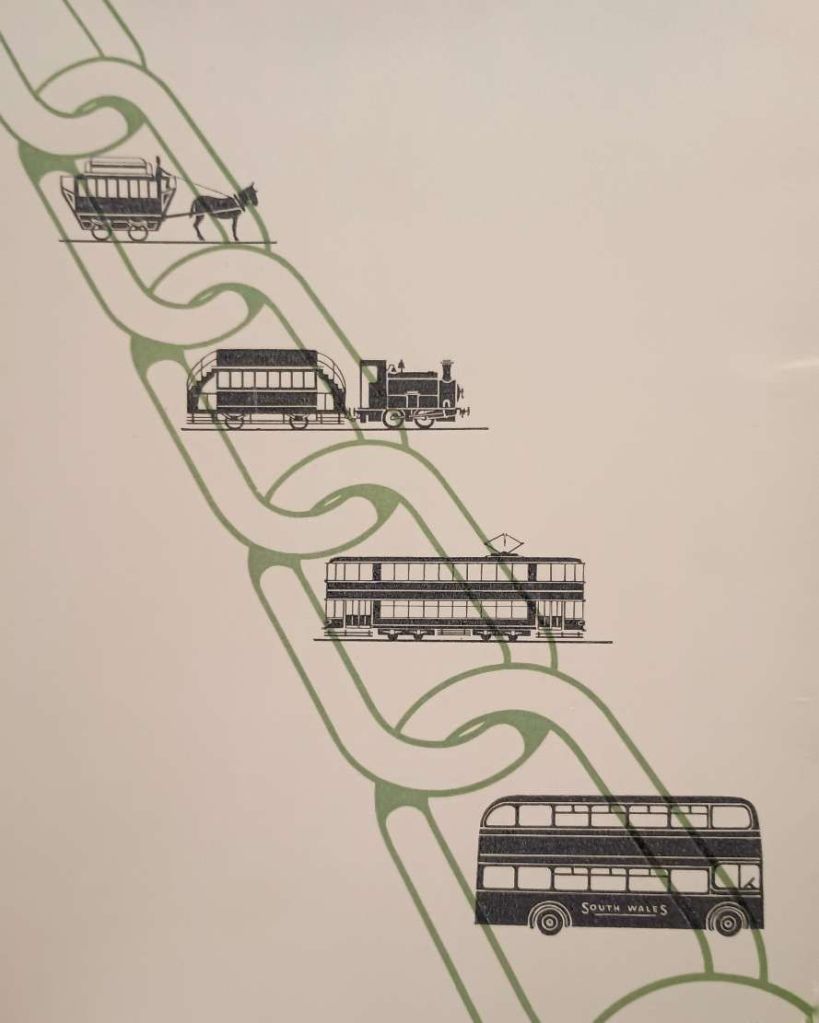
In mid-September 2026, I picked up a copy of the Souvenir Brochure for the closure of the Swansea and Mumbles Railway which occurred on 5th January 1960. Photographs of the pages of the brochure appear in the Appendix to this article.
Throughout the country, the internal combustion engine was beginning its ascendancy and many in national and local government together with those providing transport had been won over by the arguments which supported the rise of petrol and diesel-powered vehicles. Looking back from the 21st century, we can see that, while there was some value in the arguments put forward, the net effect has been significantly disadvantageous to the built environment and to our ability to get around. We also know now that Internal combustion engines have been heavily polluting and have contributed to the warming of our planet.
The closure of the Swansea & Mumbles Railway is just one example among so many, of decision-makers turning away from trams to buses amid the significant rise in car ownership. The reducing patronage of the line was partly caused by these transitions but it was also essentially a self-fulfilling prophecy. Expenditure on maintenance and renewals was perceived as unnecessary because of the lower demand for the service, this in turn resulted in a further lowering in patronage!
The brochure for the closure of the line talks of the way in which “More and more car owners meant fewer and fewer train passengers and naturally, a subsequent loss of earnings.” [1] It says that, “Not only did the traffic fall but costs increased alarmingly. The railway began to lose money. It had to be subsidised by the rest of the South Wales Transport undertaking; in effect, the bus passenger. Just as steam had ousted the horse, just as electricity had ousted steam, the internal combustion engine was ousting electricity. The 1950’s saw marked developments in the motor bus. It got bigger and better.” [1]
Perhaps inevitably the future horizon began to contract and all decisions were focussed on the here-and-now or the next few years. The result was lower investment and then a very significant cost for upgrading – £350,000. At the end of the 1950s that must have felt like a fortune. The decision was inevitable. The brochure tells us that “With great reluctance, the Directors [of the South Wales Transport Company] decided to close the undertaking and supplant it with services of modern, well-equipped motor buses.” [1]
So ends the story! The brochure finishes with a eulogy and with paragraphs which extol the motor bus as ‘the future’ of public transport:
“Whilst we have recorded briefly in cold facts the important stages in the development of the Mumbles Railway, coupled with that history has been a warm and human relationship between the Railway and the residents of Swansea and Mumbles. Maybe because it was to many a symbol of happiness by the seaside.
“It is little wonder then, when its ultimate fate was announced, that there was a distinct feeling of personal loss.
“In its passing it lays down the mantle of the ‘Oldest Surviving Passenger Railway in the World’ but no one can take from it the proud title of being the ‘First Passenger Railway in the World. We emphasise this as it passes from our everyday scene into the realms of history. What of the future? The closure of the railway does not mean the end of 155 years of public service. Far from it. That service will still continue with greater ability and efficiency to meet the demands of the traveller, in this modern day and age of 1960. The motor bus knows no boundary.” [1]
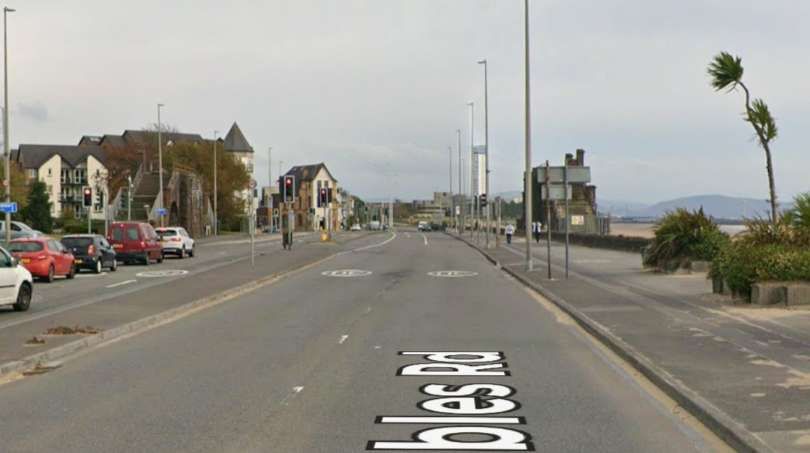
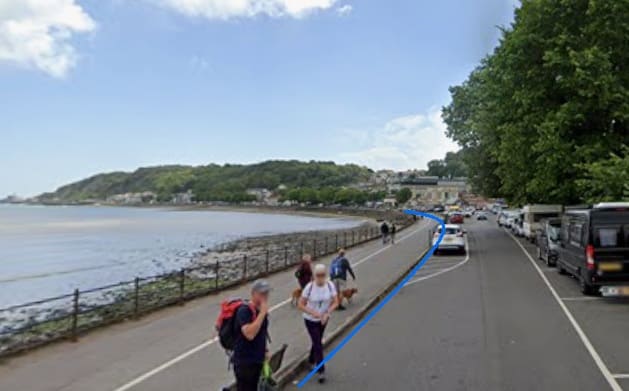
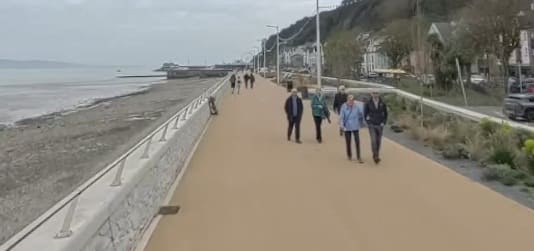
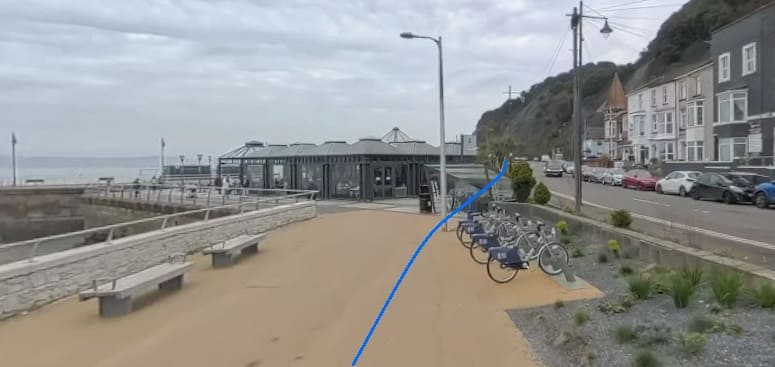
In the 21st century, First Cymru operates frequent regular bus services (such as routes 2A and 2B) connecting Swansea city centre directly to Oystermouth and Mumbles. The former railway route along the seafront now forms part of a popular walking and cycling track. Recent council updates to the Mumbles seafront have even embedded smart aluminium strips into the paving as a visual nod to the old Mumbles Railway tracks. Transport planners and local groups occasionally discuss light rail, tram-train, or wider Swansea Bay Metro concepts, but a dedicated rail link returning to Mumbles remains a long-term proposal rather than an active project.
As we look back from the 21st century, aware of the way things are now perceived, it is reasonable to speculate about ‘what might have been’ had significant investment been made on improvement of the tram network rather than it being set aside in favour of the ‘modern bus’!
A consultancy report – Greengauge21: Shaping Tomorrow’s Railways [2] – concluded that a “Swansea Bay Metro could use the same technology that is being developed for tram-style operation into Cardiff Bay to provide access to Swansea city centre from key valley towns such as Pontypridd and Aberdare. … Given where passenger railways started 214 years ago, someone is bound to ask whether the light rail into Swansea city centre could be extended to Mumbles. That is a challenge we leave for others to ponder.” [2]
The History of the Line
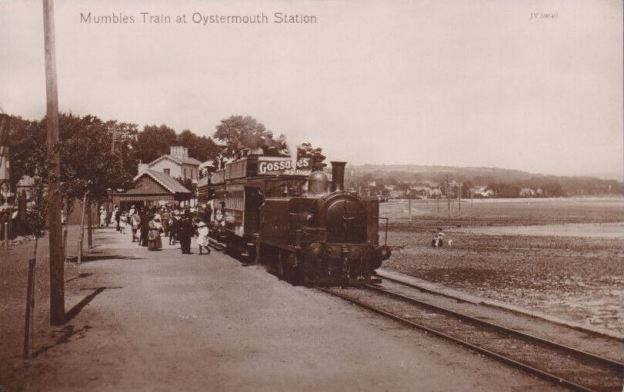
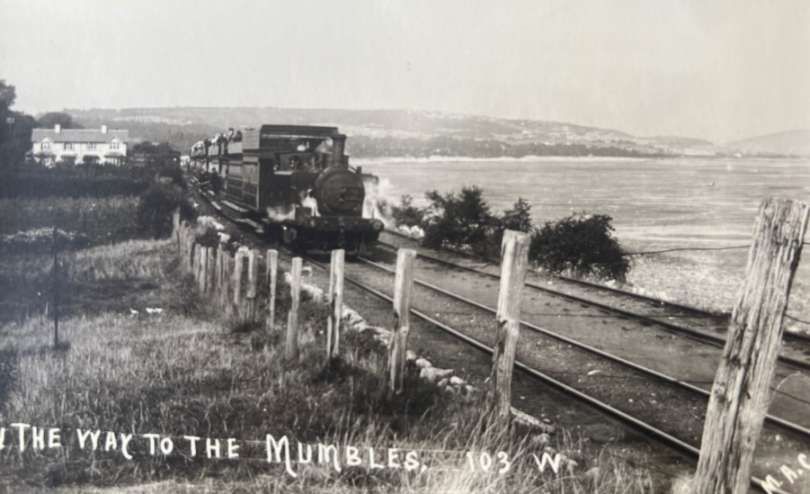
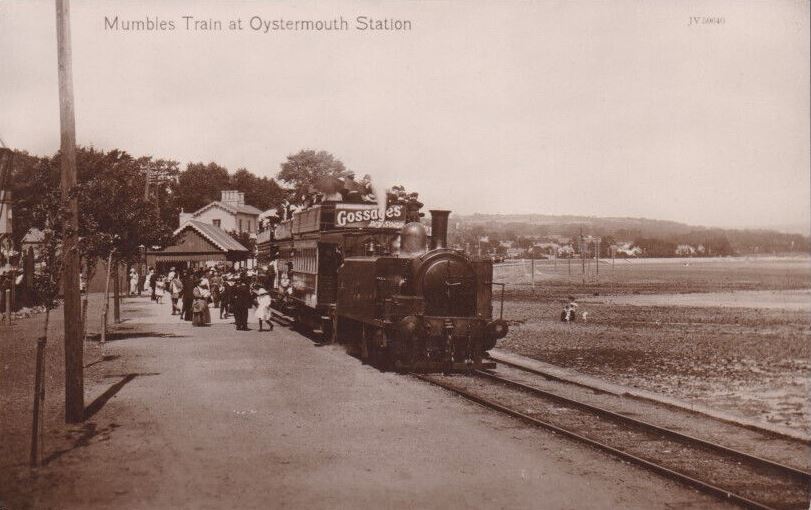
The Swansea and Mumbles Railway stakes a claim to be the world’s first passenger railway. [3] It was originally built under an Act of Parliament, the Oystermouth Railway or Tramroad Act 1804, to move limestone from the quarries of Mumbles to Swansea and to the markets beyond, it carried the world’s first fare-paying railway passengers under an agreement effective from 25th March 1807. It later moved from horse power to steam locomotion, and was finally converted to electric power, using the largest tram cars ever built for service in Britain. [3]
At the time of the railway’s closure, it was claimed to have been the world’s longest serving railway, although this distinction has to be qualified because other railways which were used solely for goods traffic (e.g. the Middleton Railway in Leeds, Yorkshire, dating from 1758) had been operating for longer. [4]
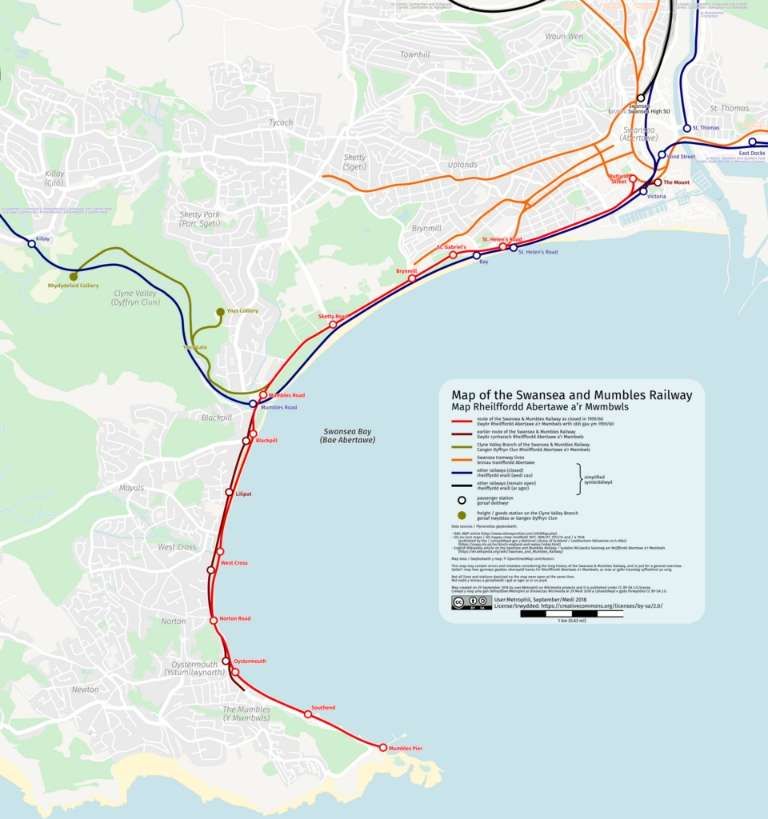
Wikipedia tells us that, “There was no road link between Swansea and Oystermouth at the beginning of the 19th century and the original purpose of the railway was to transport coal, iron ore and limestone. Construction seems to have been completed in 1806 and operations began without formal ceremony, using horse-drawn vehicles. As constructed, the line ran from the Brewery Bank adjacent to the Swansea Canal in Swansea, around the wide sweep of Swansea Bay to a terminus at Castle Hill (near the present-day Clements Quarry) in the tiny isolated fishing village of Oystermouth (known as Mumbles). There was also a branch from Blackpill which ran up the Clyne valley for nearly 1 mile (1.6 km) to Ynys Gate which was intended to promote the development of the valley’s coal reserves.” [4]
“In February 1807, approval was given to carry passengers along the line, when one of the original proprietors, Benjamin French, offered to pay the company the sum of twenty pounds in lieu of tolls for the right to do so for twelve months from the following quarter day, 25th March 1807. This is usually cited as the date when the first regular service carrying passengers between Swansea and Oystermouth began, thus giving the railway the claim of being the first passenger railway in the world. Passenger services operated from The Mount, the world’s first recorded railway station. [5: p333] The venture was … a success … The following year, French joined with two others in offering the increased sum of twenty five pounds to continue the arrangement for a further year, but the construction of a turnpike road parallel to the railway in the mid-1820s robbed it of much of its traffic and the passenger service (by that time in the hands of one Simon Llewelyn) ceased in 1826 or 1827, ironically just as events elsewhere in the United Kingdom (particularly in the north east of England) were paving the way for the development of railways as a truly national and international transport system for both goods and passengers.” [4]
“In its early days the line operated in the same manner as the contemporary canals and turnpike roads. Tolls and charges were laid down in the enabling act of Parliament and any trader could use the line on provision of a suitable waggon and after paying the appropriate toll to the owning Company. The railway was laid in the form of a plateway, with the rails being approximately 4 ft (1,219 mm) apart.” [6: p48]
Wikipedia continues: “After cessation of the passenger service the line became derelict and the original company of proprietors virtually moribund. The Clyne valley branch was re-laid in 1841/2 and extended for a further 1 mile (1.6 km) (as a private line) to the Rhydydefaid colliery where George Byng Morris, the son of one of the original proprietors, had started to exploit the coal and iron reserves of the valley. From about 1855, George Byng Morris took the line in hand, re-laid it with edge rails, as a conventional railway, to the standard gauge of 4 ft 8 1⁄2 in (1,435 mm) and reintroduced a horse-drawn passenger service between Swansea and a terminus at The Dunns in Oystermouth.” [4]
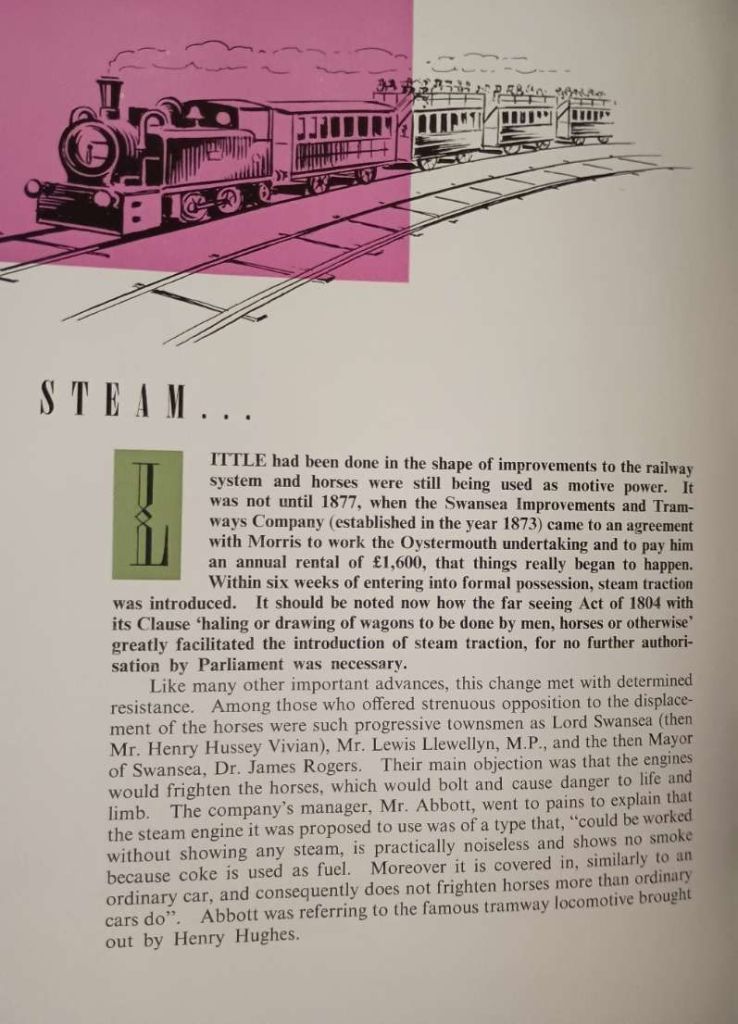
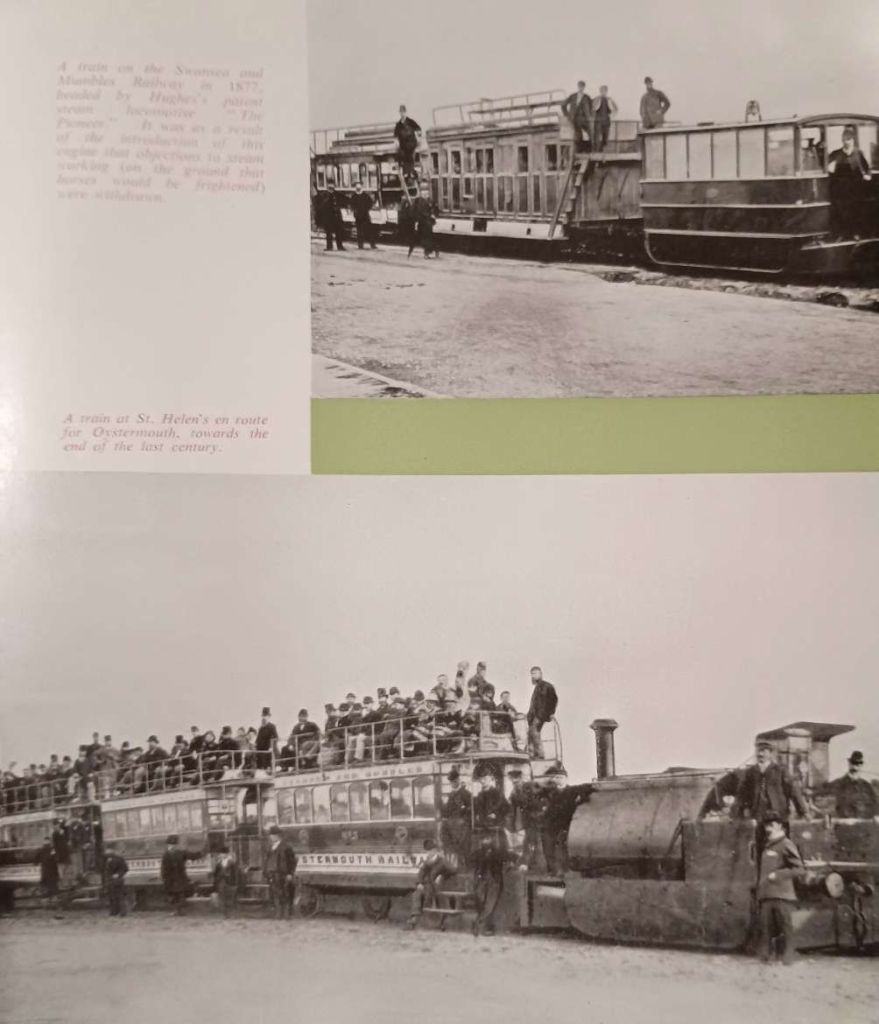
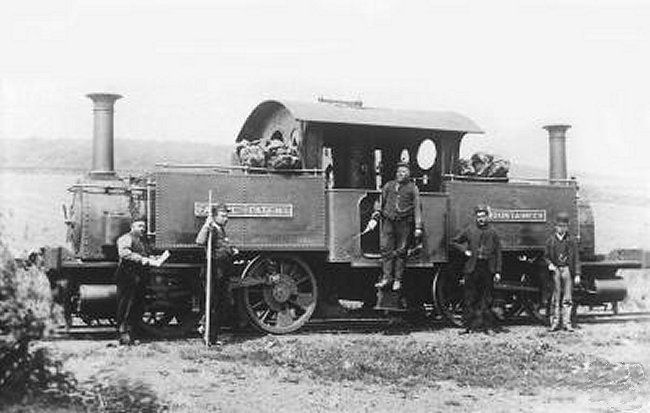
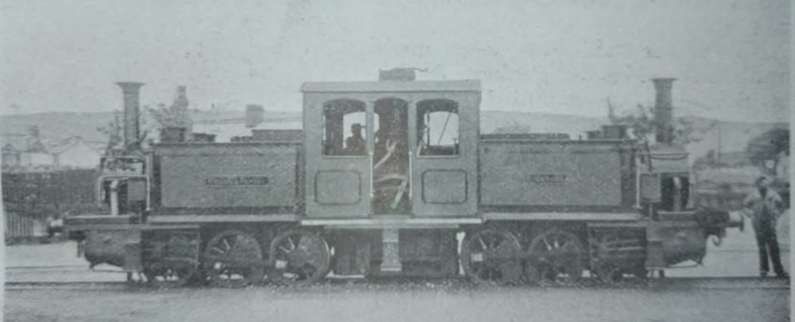
Trials were undertaken in 1877 using “one of Henry Hughes’ patent tramway locomotives, … ‘Pioneer’. These were successful and two further locomotives of the same type were obtained, although a dispute between the Swansea Improvements and Tramway Company (SI&T) (which owned the locomotives) and the line’s then owner, John Dickson (who had come into possession following the death of George Byng Morris) meant that horses continued to operate certain services until 1896.” [4]
More about Hughes’ locomotives can be found here, [7] here, [8] here [9] and here. [10]
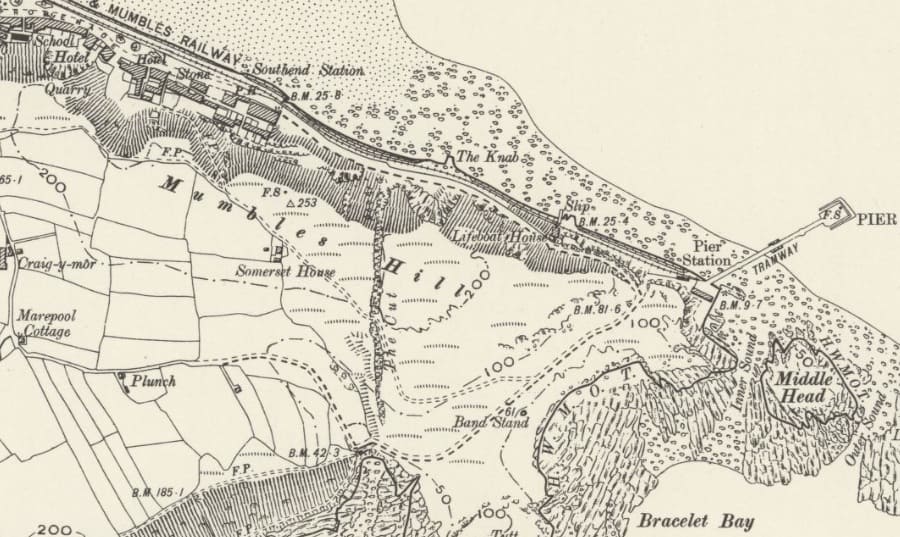
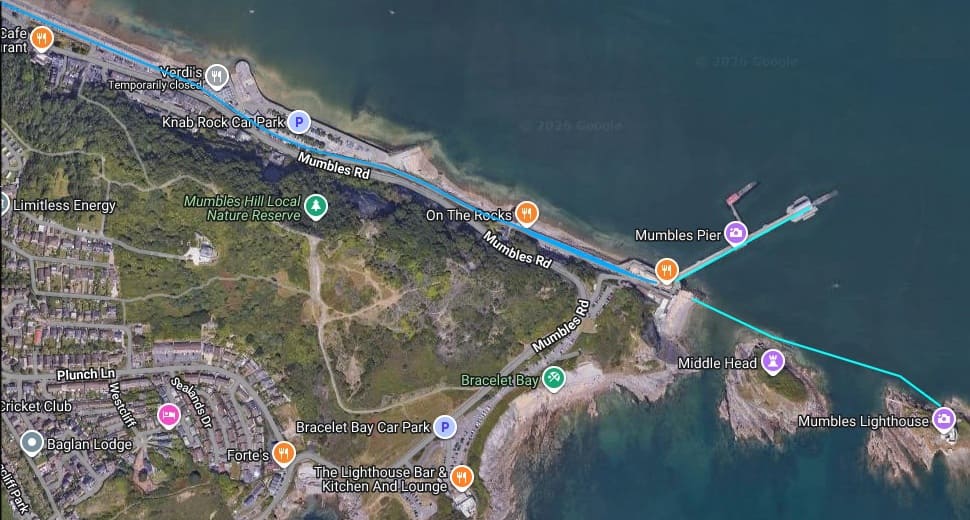
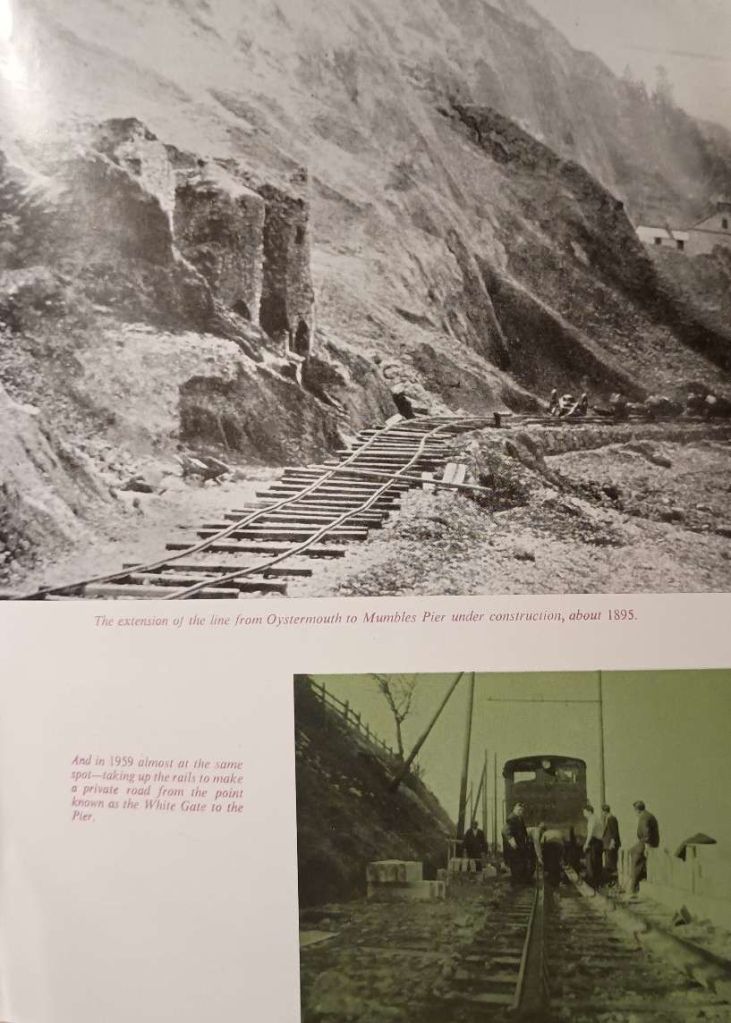
At the end of the 19th century, “there was a junction between the Mumbles Railway and the Swansea town tramway system at the Slip, allowing SI&T cars to run through from Swansea town centre to Oystermouth. The nature of the dispute was such that the Swansea & Mumbles company demanded that the SI&T horse cars should follow their own steam-hauled services on the line. In 1889, a new company, the Mumbles Railway and Pier Company, was incorporated to extend the railway beyond Oystermouth to a new pier close to Mumbles Head. The first section, to Southend, was opened in 1893 and the remainder, including the pier, in 1898.” [4]
“The Clyne valley branch continued to be used for coal traffic from Rhydydefaid pit until its closure in 1885 after which the entire branch fell into disuse. In 1896 the promoters of the Gower Light Railway proposed incorporating it into their scheme but nothing came of it. The original branch to Ynys Gate (as authorised in 1804) was relaid in connection with the Clyne Valley slant (opened 1903) and used for coal traffic until the colliery closed in 1915. The extension of 1841/2 remained abandoned until 1920 when a narrow-gauge tramway was laid on its formation to carry coal from Ynys slant to Ynys Gate. This was used only until 1921 when the slant closed. There was then no further traffic on the branch, although the track remained in situ and was still usable as late as 1936 when it is recorded that a diesel locomotive made a trip up the branch as far as Ynys Gate.” [4]
“A somewhat motley collection of steam locomotives was used to maintain services between 1877 and 1929, beginning with the Hughes tramway locomotives mentioned above (which were actually owned by the SI&T and therefore not able to be used on the railway after 1878). Dickson had purchased two saddle tank locomotives of more conventional outline from the Falcon Engine & Car Works (successor to Hughes’s Locomotive and Tramway Engine Works), and two more from Manning Wardle & Co of Leeds in the early 1880s. A further locomotive (originally numbered 5, later 3) came from the Hunslet Engine Company of Leeds in 1885.” [4]
“When the new Swansea and Mumbles Railway Company took over operations in 1890 it ordered two 0-4-0 saddle tank locomotives from Black, Hawthorn & Co of Gateshead. These were delivered in 1891 and numbered 1 and 2; they worked on the line until after the First World War. Two larger 0-6-0 side tank locomotives were obtained from the Hunslet Engine Company in 1898; numbered 4 and 5, they bore the brunt of the passenger service until well into the 1920s. The nominally independent Mumbles Railway and Pier Company ordered a 0-4-0 saddle tank from the Brush Electrical Engineering Co of Loughborough (successor to the Falcon Engine & Car Works) in 1906 and this carried plates reading “MR & P No. 3” to denote its ownership. Finally, a second-hand Avonside 0-6-0ST was obtained and named Swansea. All were tank locomotives of 0-4-0 or 0-6-0 wheel arrangement. Ownership was vested variously in the Swansea and Mumbles Railway Company or the Mumbles Railway and Pier Company (and sometimes transferred between the two for accounting purposes)[4] and as early as the 1890s there is evidence that the railway was having to hire in locomotives to supplement its own fleet. By the 1920s, locomotives were regularly being hired from a local dealer, Charles Williams of Morriston, and frequently appear in photographs of the railway.” [4]
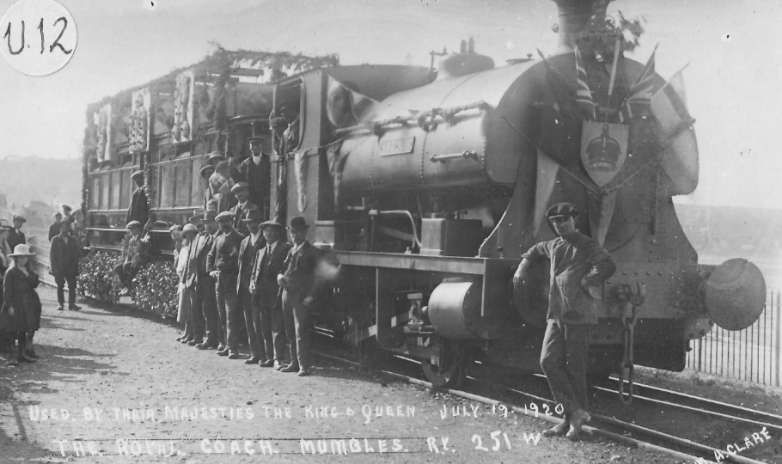
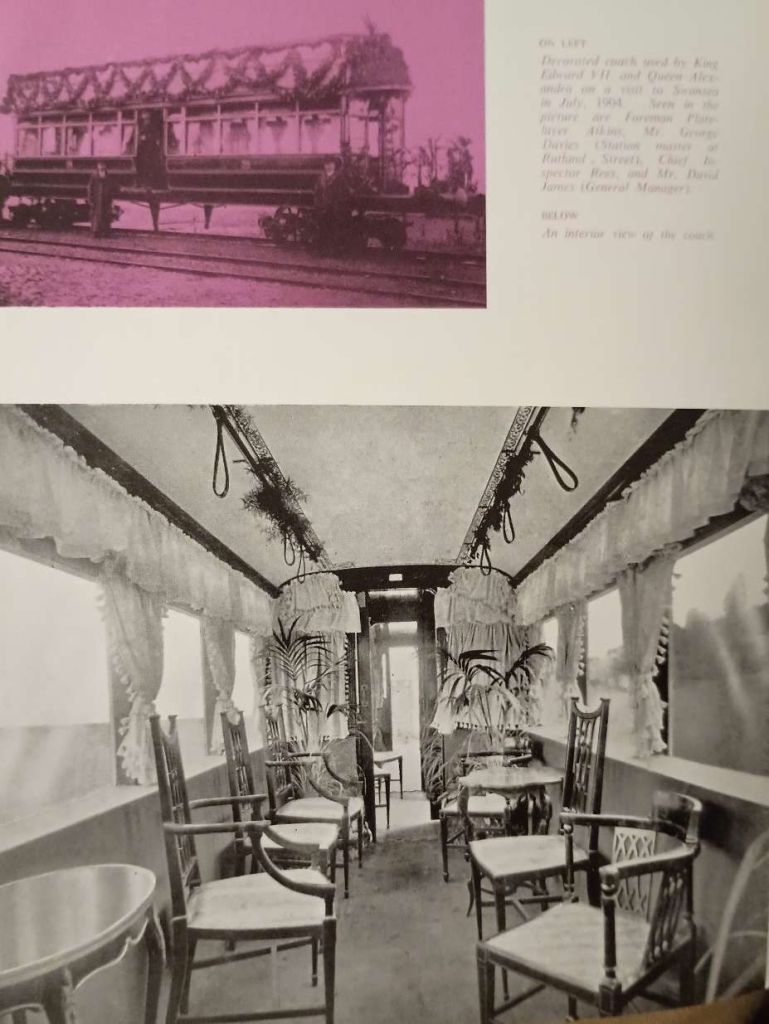
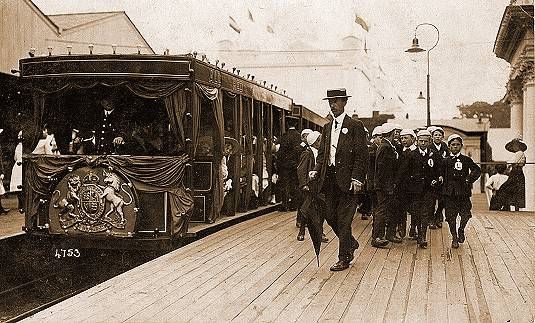
“The line celebrated its centenary in 1904, producing a special commemorative brochure for the occasion. Two years previously, a notable experiment had been carried out, namely the introduction of battery-powered ‘accumulator’ cars. These were not a success, but one of the cars was retained after the electrical equipment had been stripped out and used to convey parties of visiting dignitaries, including King Edward VII when he and his consort, Queen Alexandra, visited Swansea for the ceremonial cutting of the first sod of the King’s Dock in July 1904. The car was used again for the visit of King Edward’s successor, King George V, in 1920, when he officiated at the opening of the Queen’s Dock.” [4]
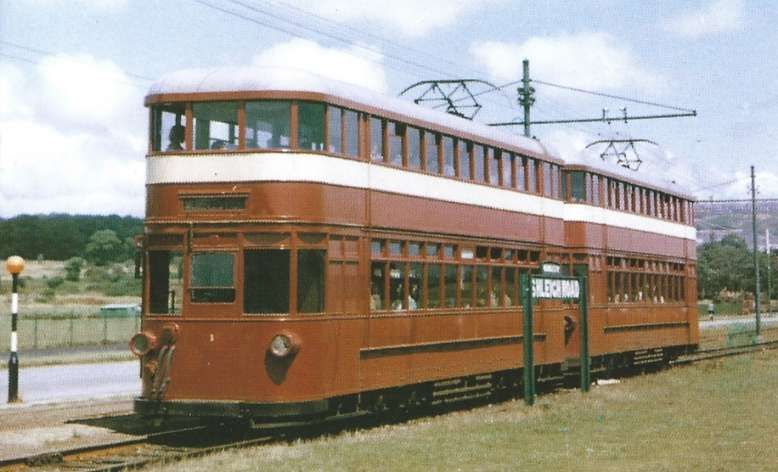
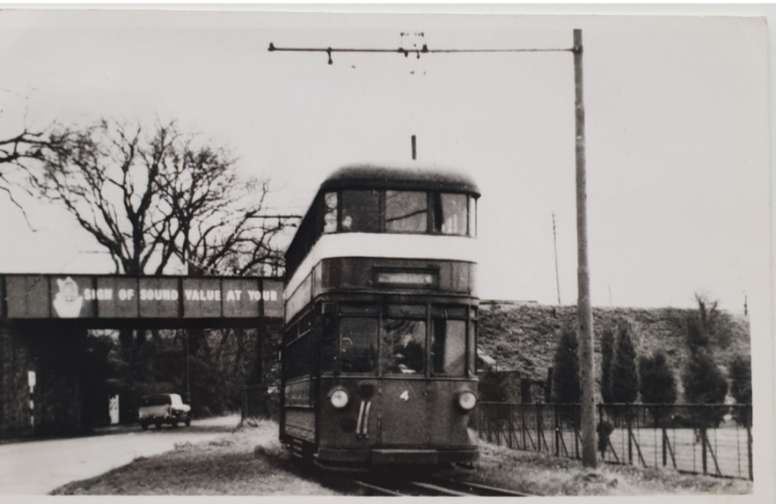
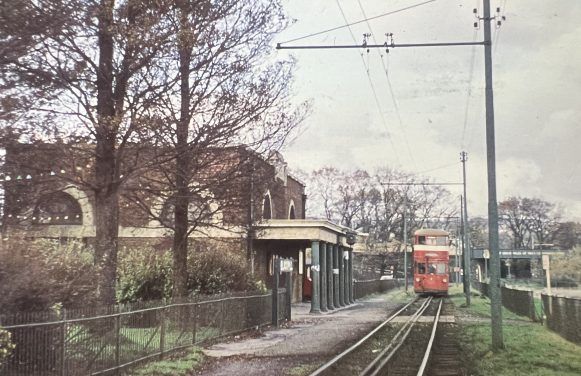
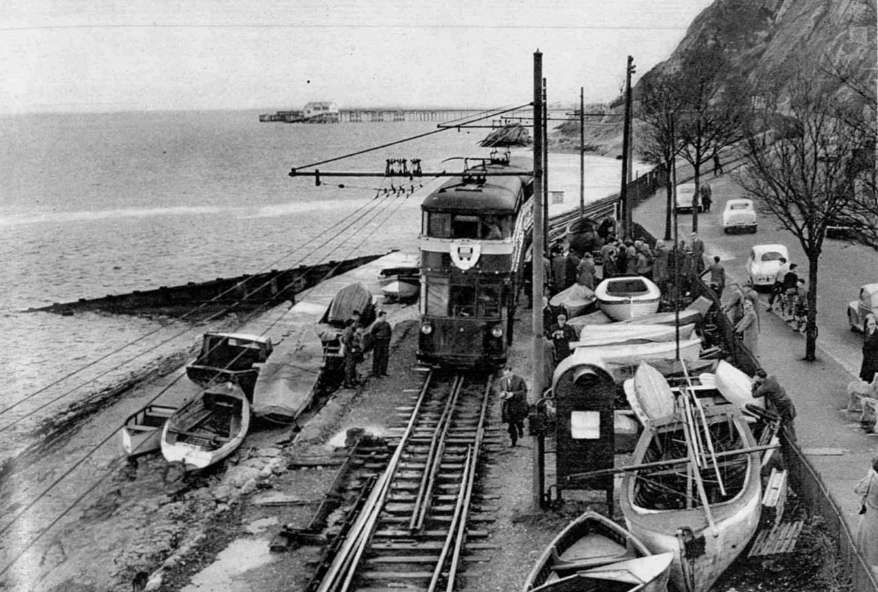
Electrification – “The line was electrified in 1928 at 650 V DC using overhead transmission – giving it the distinction of having used three forms of regular locomotive power over the years (i.e. horse, steam and electricity). Trials began on 6 July 1928 [5] and full electric services were introduced on 2 March 1929, using a fleet of eleven double-deck cars built by the Brush Electrical Engineering Co of Loughborough, in Leicestershire. These were the largest ever built for service in Britain and each could seat 106 passengers. [6] Furthermore, they were frequently operated in pairs, giving a total seating capacity of 212 per train.” [4]
“Two further cars were added later, bringing the fleet strength up to thirteen. A four-wheeled petrol-mechanical locomotive was acquired from Hardy Railmotors of Slough, then in Buckinghamshire, to handle the residual goods traffic on the railway, but this proved to be underpowered and was replaced after a few years by a diesel-mechanical locomotive from John Fowler & Co, of Leeds. The Hardy locomotive was retained for a few years and used for shunting the cars in the depot, which was on the site of the former carriage sheds, adjacent to the Rutland Street terminus, and for inspection of the overhead line equipment, but it had been dismantled by 1954, when parts were used in the construction of a replica horse-drawn car to celebrate the line’s 150th anniversary.” [4]
“In 1958, the South Wales Transport Company (the principal operator of motor bus services in the Swansea town area and predecessor of the modern-day First Cymru company) purchased the railway from the old owning companies (the Swansea and Mumbles Railway Limited, and the Mumbles Railway and Pier Company), having previously been the lessee in succession to the Swansea Improvements and Tramways Company since the 1930s, and the following year went to Parliament with an abandonment bill. Despite vociferous local opposition, the bill became law as the South Wales Transport Act 1959.” [4]
The South Wales Transport Company wasted no time in closing down the line! Their closure brochure/pamphlet is reproduce as Appendix 1 to this article.
There remains a debate about whether the line was a railway or a tramway. This is discussed in Appendix 2 to this article.
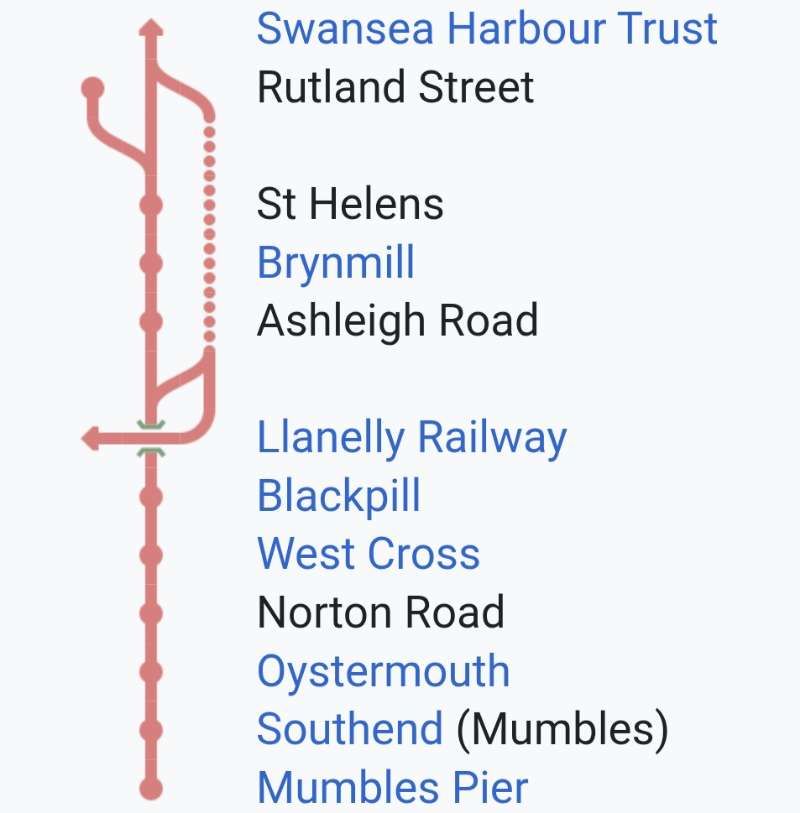
“The railway had a multitude of stopping places over the years, but at the time of electrification in 1929 the officially recognised stations from Swansea to Mumbles (as published in Bradshaw)” [4] were:
Rutland Street
St Helen’s (frequently known as “The Slip”)
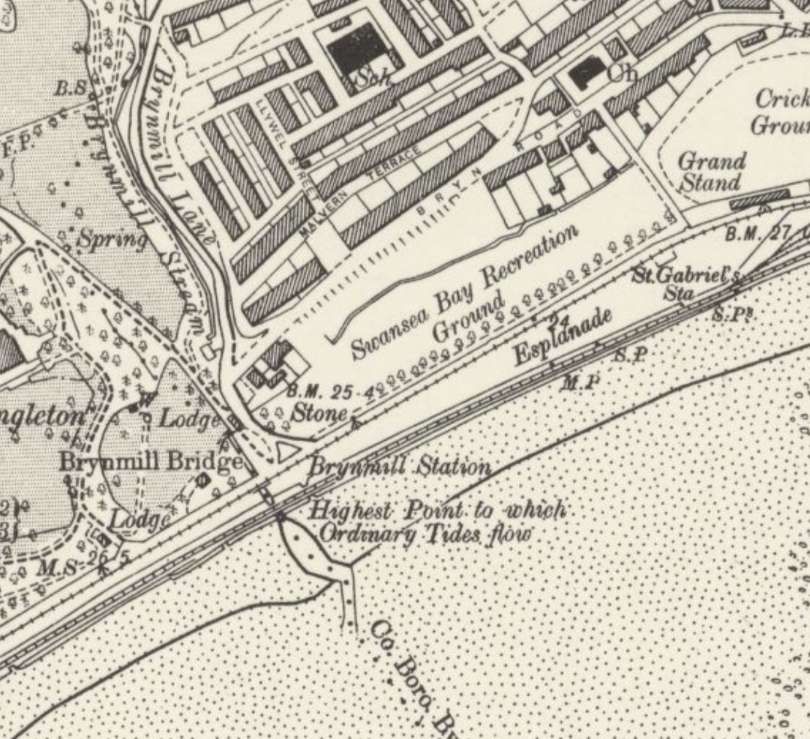
Brynmill
Ashleigh Road
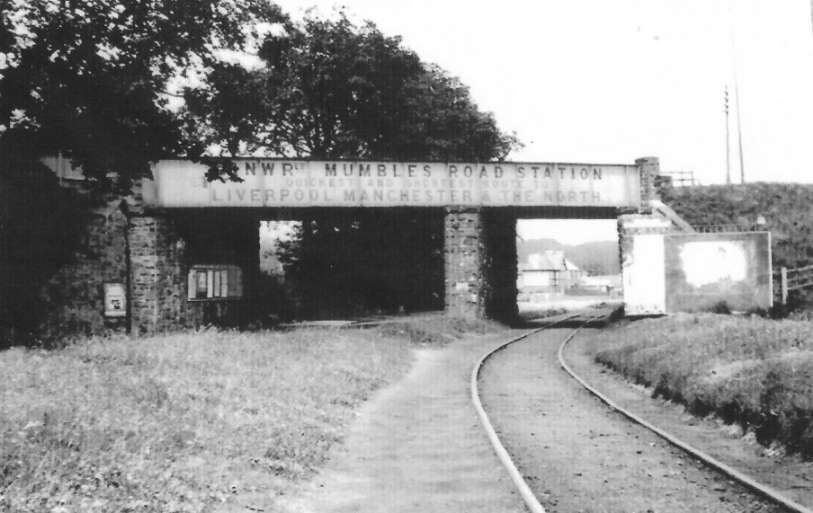
Between Ashleigh Road and Blackpill stations the railway was crossed by the LM&SR Central Wales line from Swansea Victoria to Shrewsbury, at a point close to the LM&SR Mumbles Road station. There was a Mumbles Road name board under the bridge on the Mumbles Railway line, but if this was an official stopping place for Mumbles Railway cars it was not recognised as such by Bradshaw.
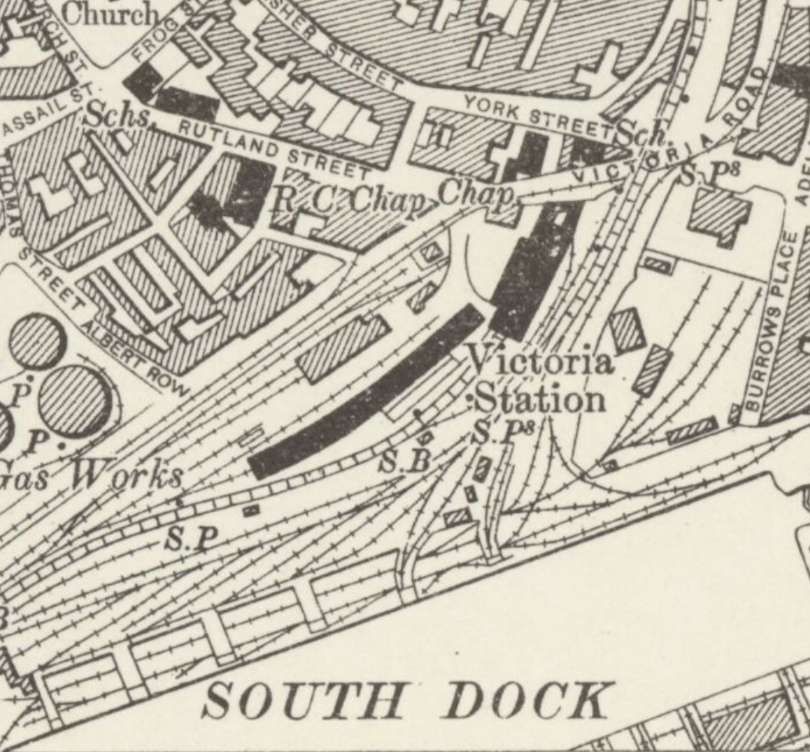
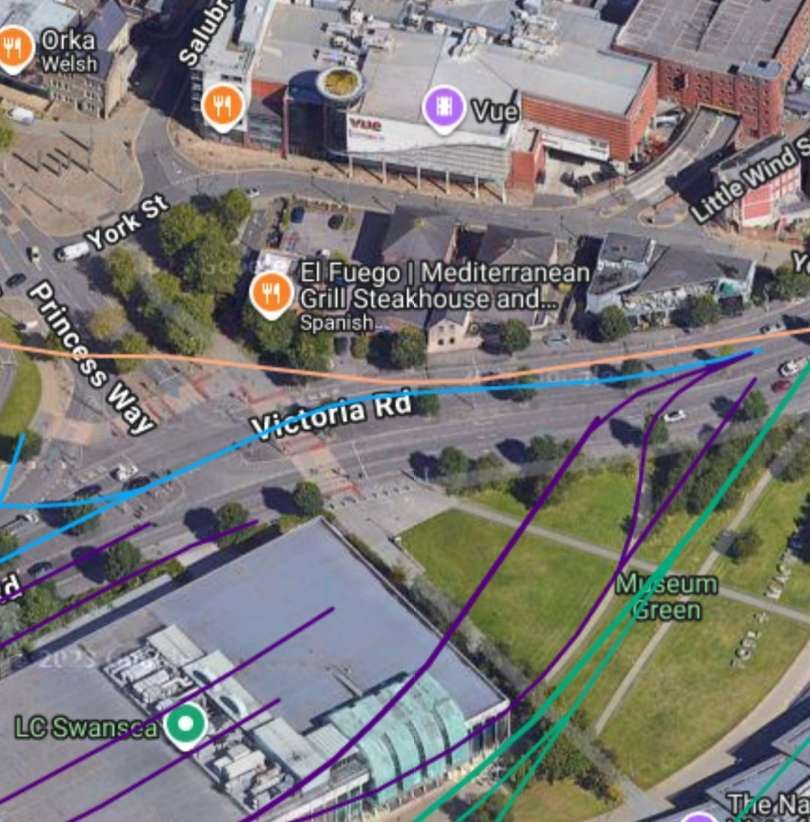
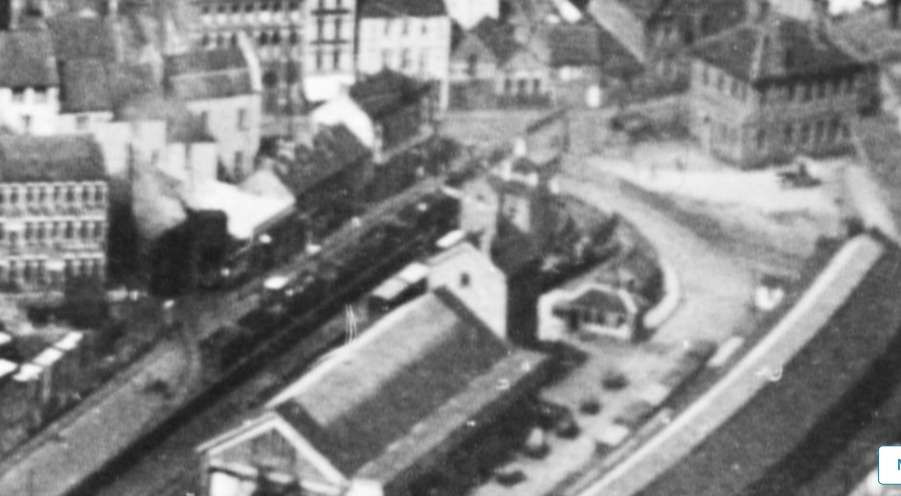
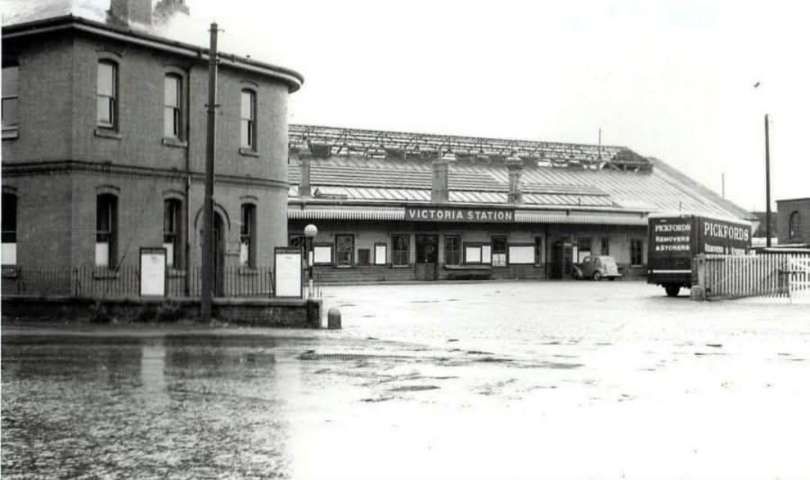
Swansea Victoria was “opened to passenger and goods traffic on 14th December 1867. Owned successively by the Llanelly Railway and Dock Company (1867 to 1871), the Swansea and Carmarthen Railways Company (1871 to 1873), the London and North Western Railway Company (L.N.W.R., 1873 to 1922), the London, Midland and Scottish Railway Company (L.M.S., 1923 to 1947) and British Railways (1948 to 1964), it was served by trains to and from Shrewsbury, Crewe, Liverpool, Manchester and York and formed the southern terminus of the Central Wales line, most of which is still operational as the Heart of Wales Line. Victoria closed in June 1964. … The site was subsequently cleared and used for Swansea Leisure Centre.” [12]
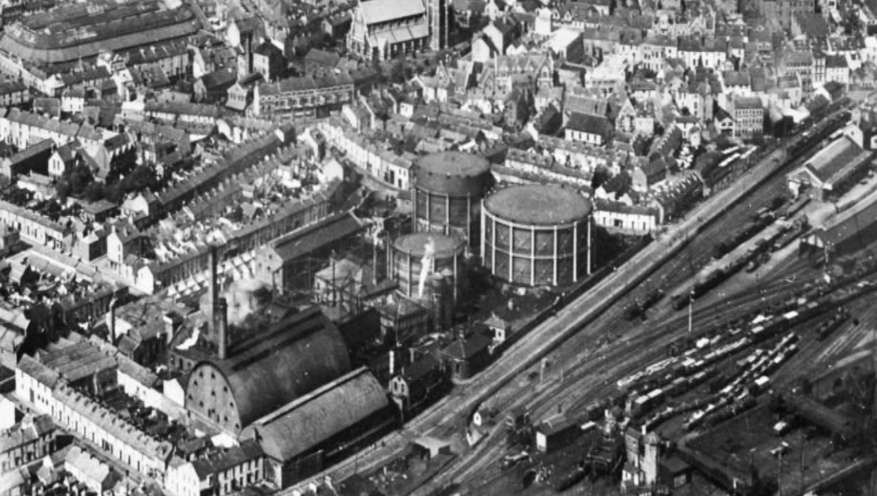
Production of gas at Swansea Gas Works dates back to 1841 when Swansea Gas Light Company began making gas by burning coal. The site ceased producing gas in 1922 and the facility was used for gas distribution until 1949 and then as a gas operations centre.
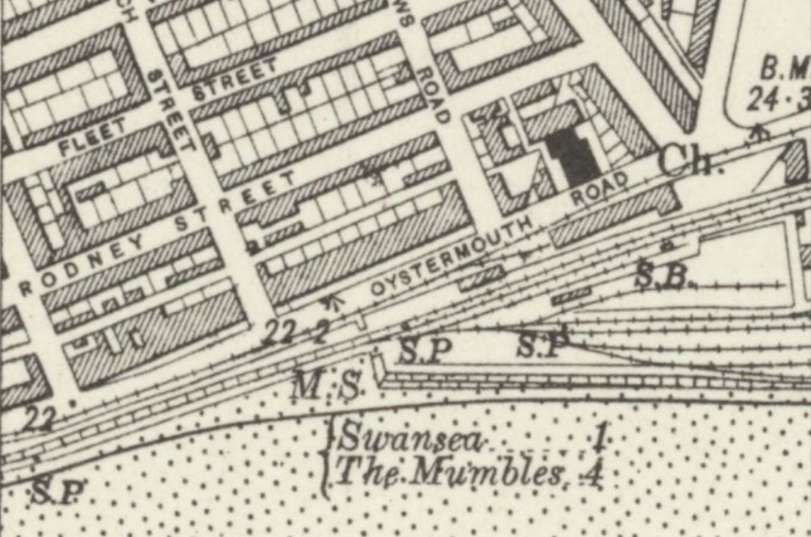
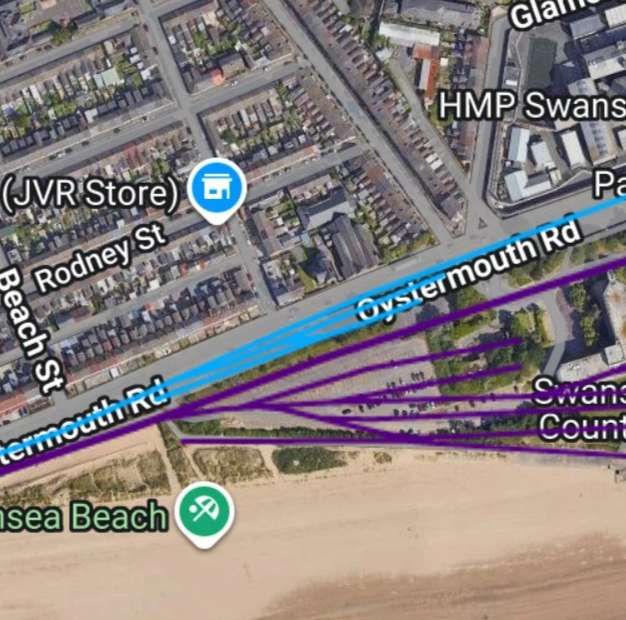
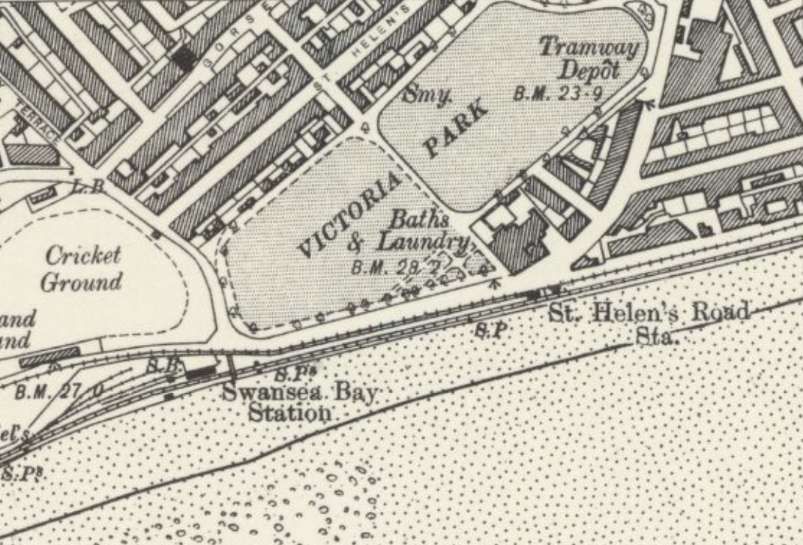
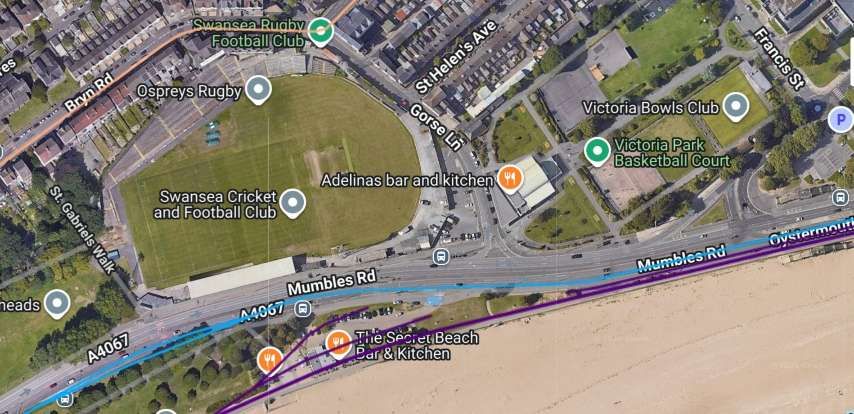
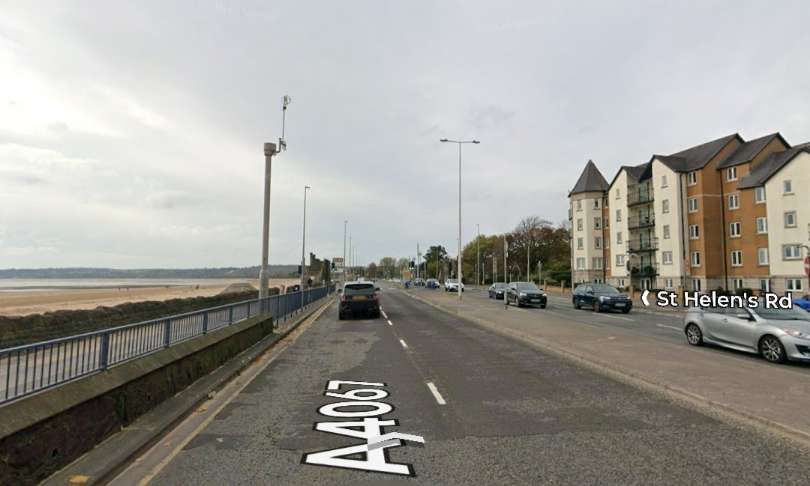
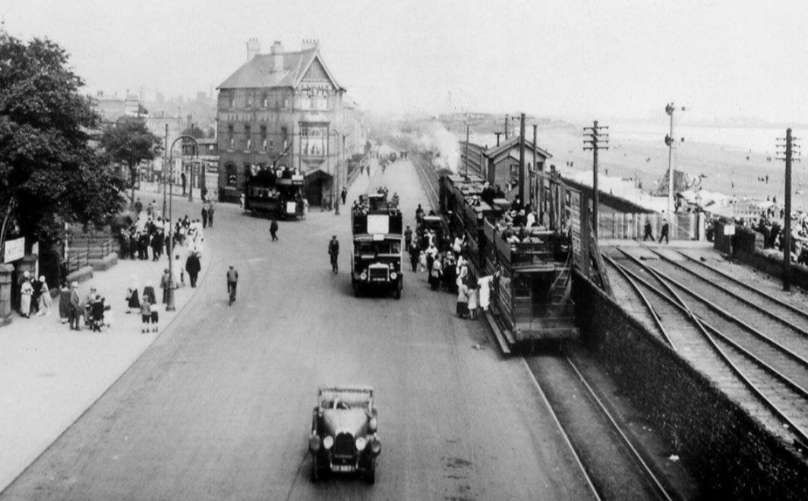
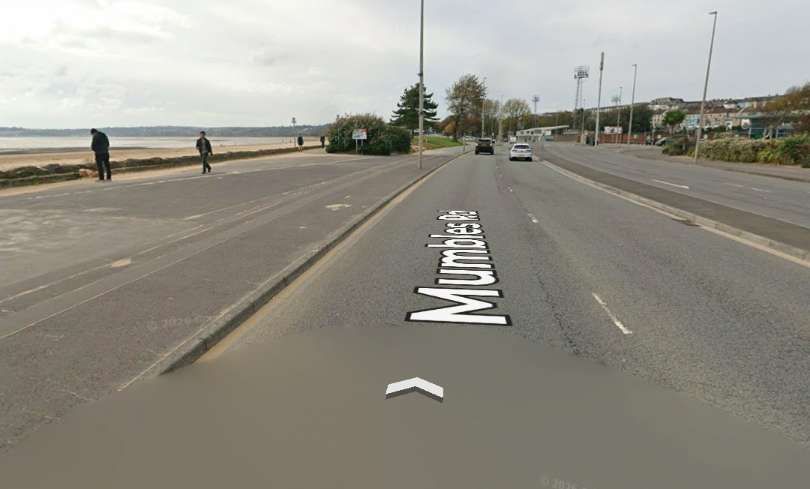
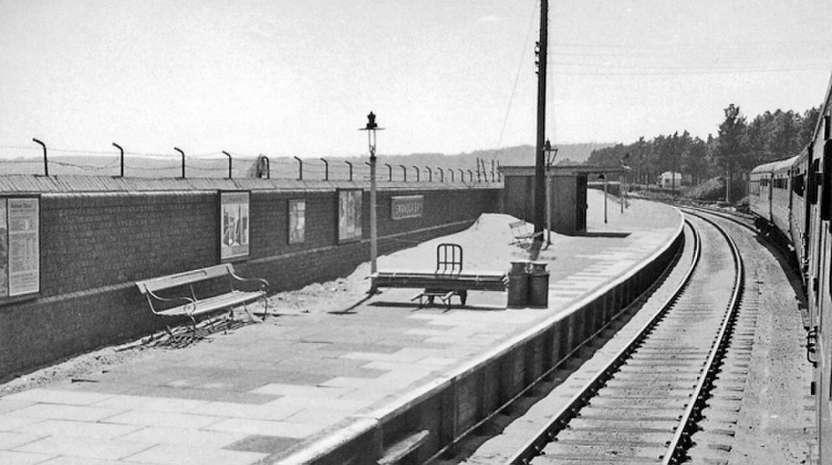
Swansea Bay is a former railway station in Swansea next to Swansea Bay, in South Wales, opened to passenger and goods traffic on 14 December 1867. [21] Owned successively by the Llanelly Railway and Dock Company (1867 to 1871), the Swansea and Carmarthen Railways Company (1871 to 1873), the London and North Western Railway Company (LNWR, 1873 to 1922), the London, Midland and Scottish Railway Company (LMS, 1923 to 1947) and British Railways (1948 to 1964), it was served by trains to and from Shrewsbury, Crewe, Liverpool, Manchester and York and formed the southern terminus of the Central Wales line, most of which is still operational as the Heart of Wales Line. Swansea Bay closed in June 1964, having been listed in the Report on the Reshaping of British Railways (better known as the Beeching Report) the previous year. [22] The former station is near ‘The Slip’ opposite the Bay View Public House. It was adjacent to the Swansea and Mumbles Railway which was closed in 1960, and opposite the Western end of St Helen’s Road, which until the 1930s was the terminus of one of the Town tram lines. [20]
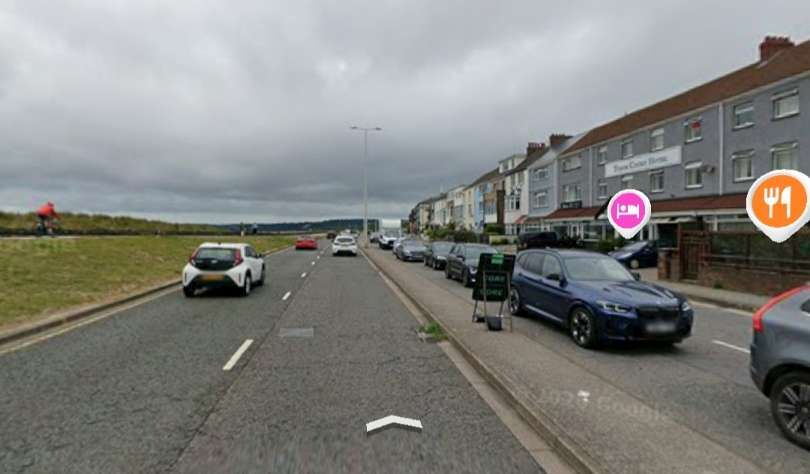
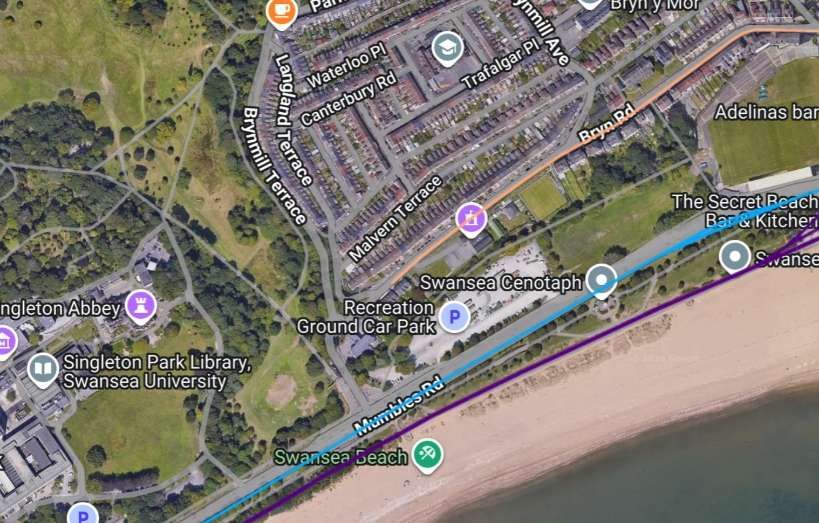
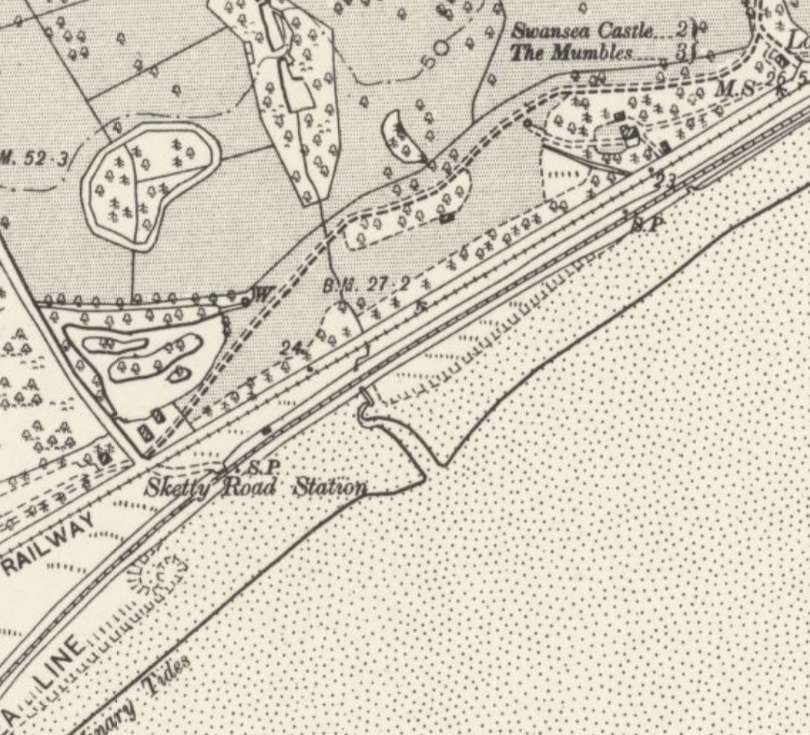
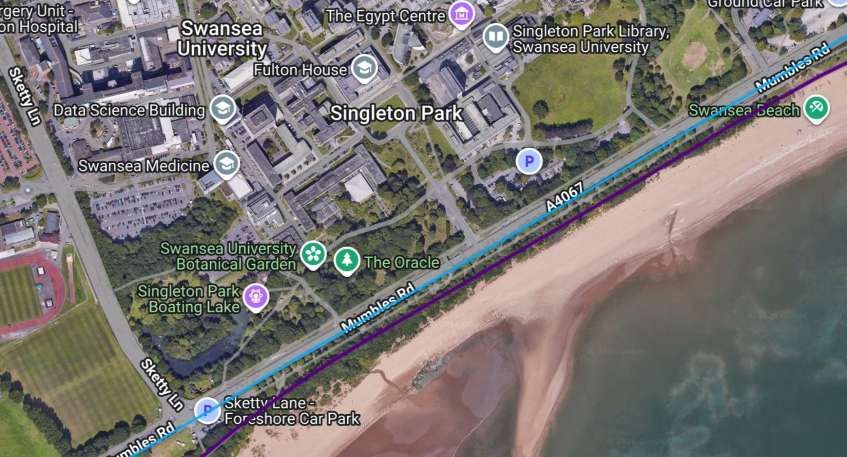
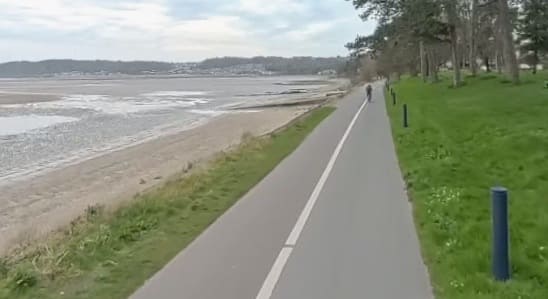
To the West of Swansea Bay Railway Station, the tramway followed the road between Singleton Park and the LNWR line which followed the sea wall. [19]Again, a similar area showing the route of the line overlaid on modern satellite imagery. [17]
Singleton Park covers approximately 250 acres. An ornamental garden is located in the south, near the entrance to Swansea University, while a walled botanical garden is located in the park centre. On the south-western corner, past the hospital and the university, is a boating lake, as well as a miniature golf course. [23]
Wikipedia tells us that, “The park was originally part of the Vivian family estate. It was purchased by Swansea County Borough Council in 1919 for use as a public park. Park superintendent Daniel Bliss, who was trained at Kew Gardens, conceived of the Singleton Farm botanical gardens and Ornamental Gardens. He was the main driver behind the purchase of the estate. [23]
During the Second World War, the park hosted the Armaments Research Department a detachment of the Woolwich Arsenal under Sir Robert Robertson (1869-1949). While in 1944 over 1500 American soldiers were billeted for training on the beaches prior to landing on Omaha Beach, Normandy. … A Gorsedd stone circle was erected in 1925 for the Eisteddfod held in Singleton Park, Swansea, and was enlarged in 1964. [23]
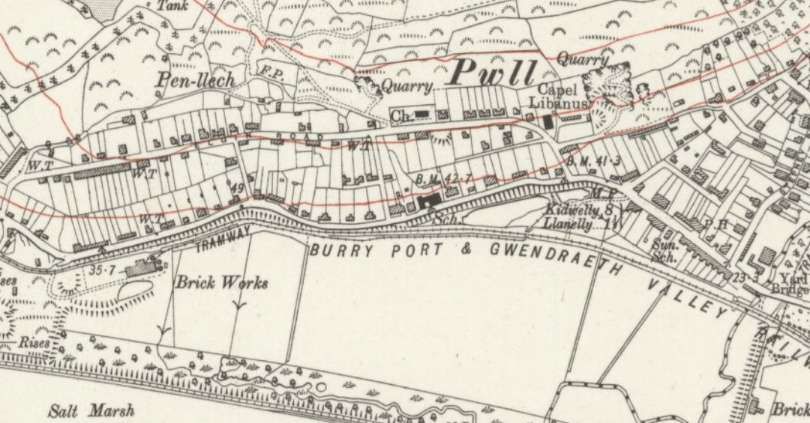
A hundred metres or so short of the railway bridge a branch line left the main line of the Swansea & Mumbles Railway. This branch line was opened in the first decade of the 19th century and remained in use until as late as the Second World War. … The Clyne Valley Tramway is covered in a separate article which can be found here. [27]
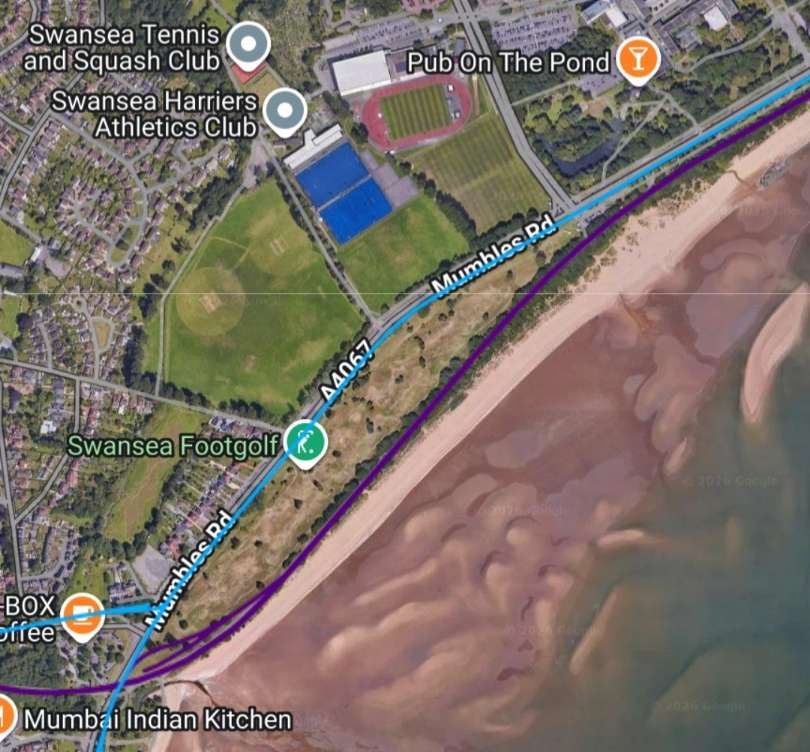
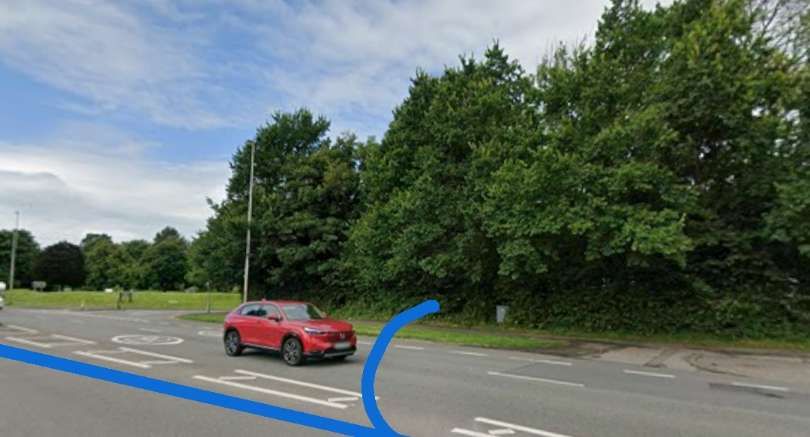
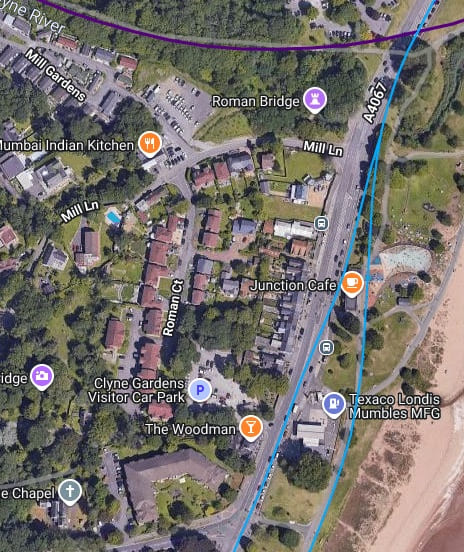
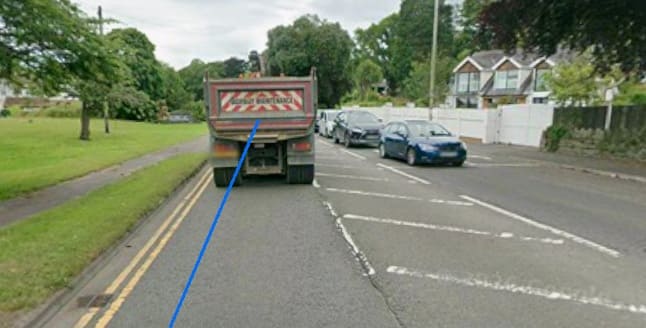
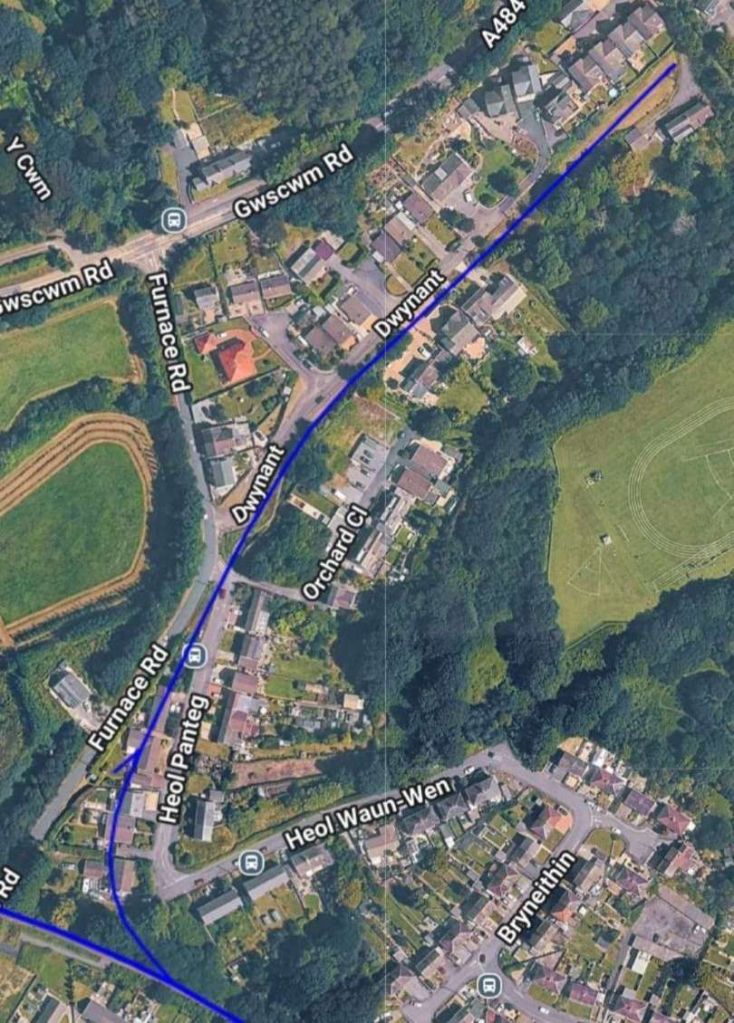
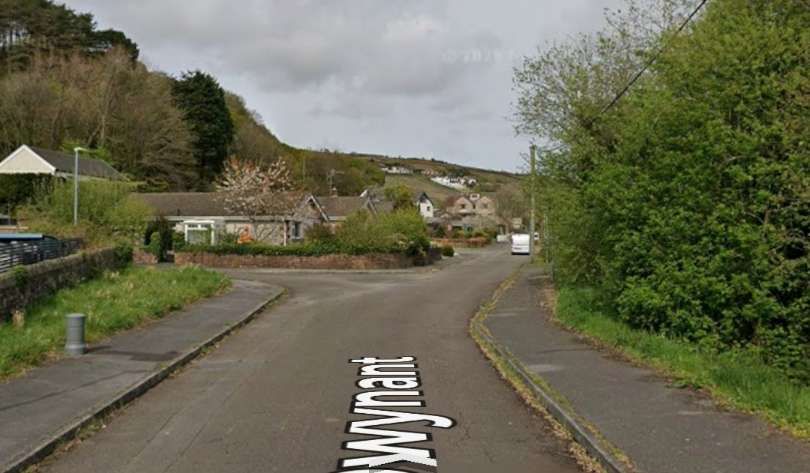
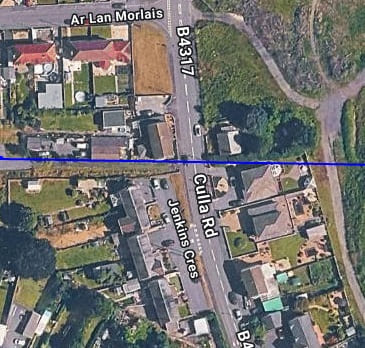
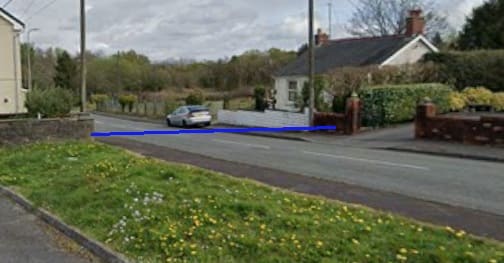
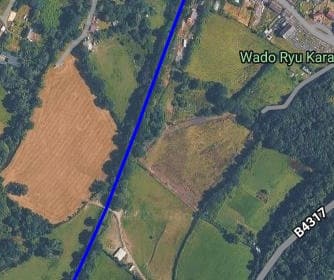
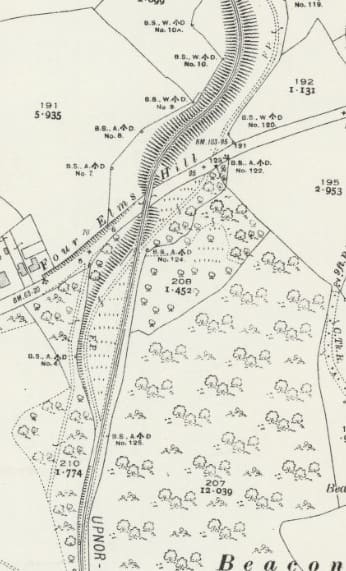
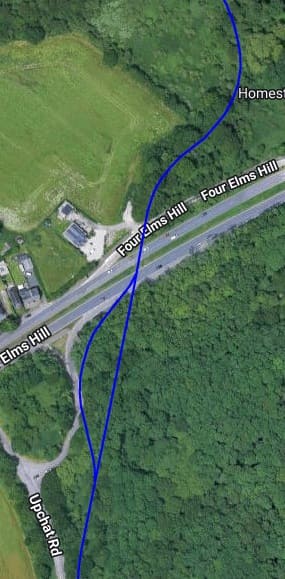
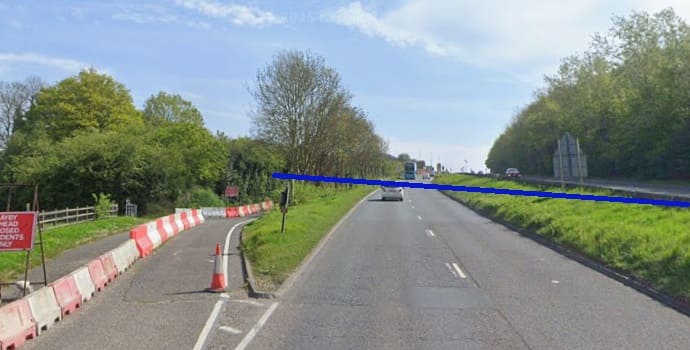
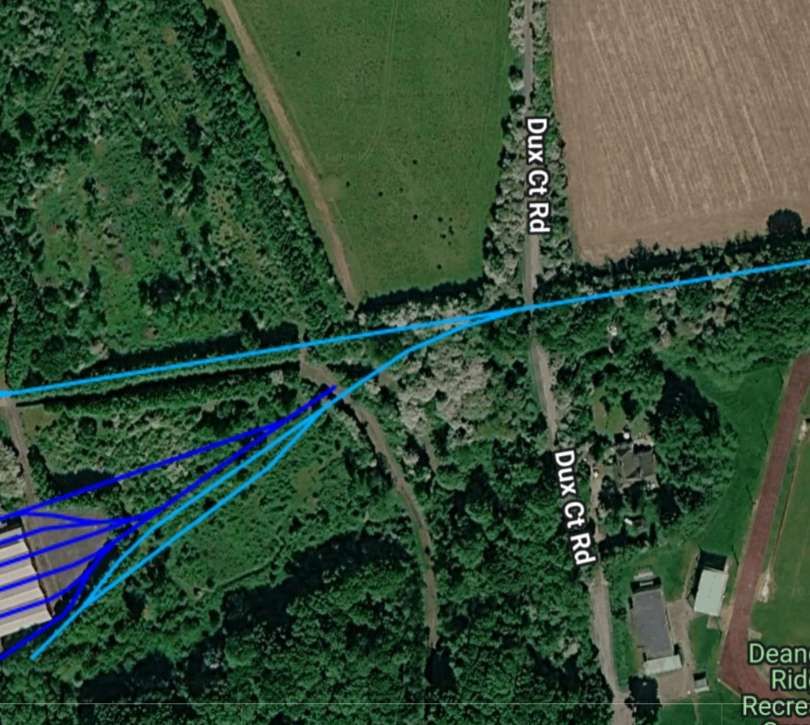
Looking West from Mumbles Road between Glyn Crescent (off to the right of the image) and Derwen Fawr Road (beyond and to the left of the car). The straight blue line is the main line of the Swansea & Mumbles Railway, the curved line approximates to the line of the Clyne Valley Tramway. [Google Streetview, July 2025]
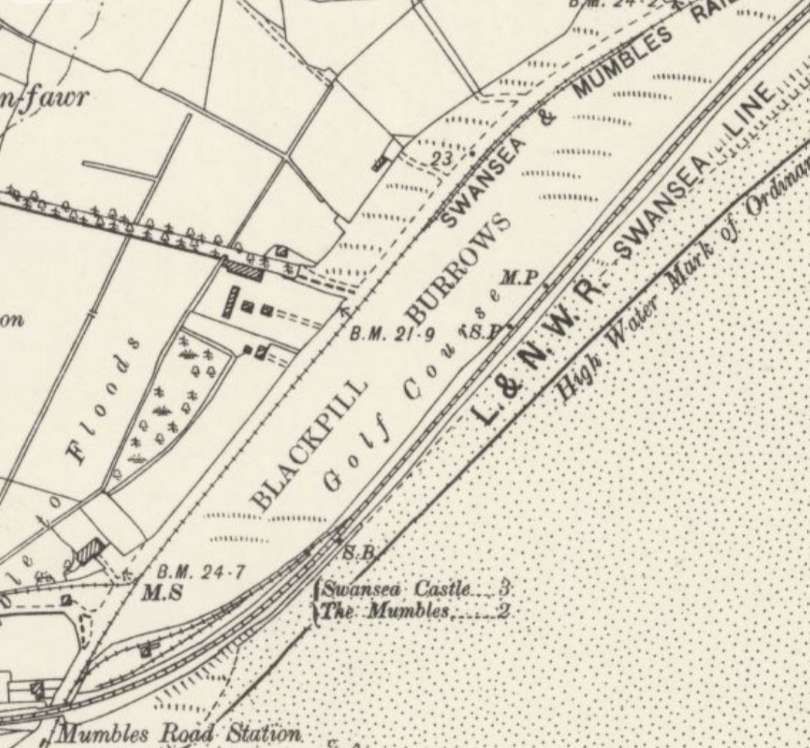
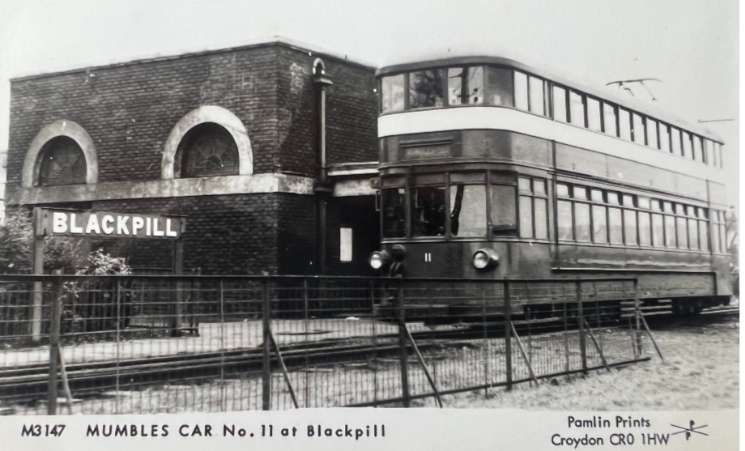
At Mumbles Road Station, the LNWR line crossed over the Swansea & Mumbles Railway and the main coastal road via the Blackpill railway bridge. A Swansea & Mumbles Railway name board was also positioned just under the bridge. The LNWR station featured a goods yard, sidings, and a signal box.
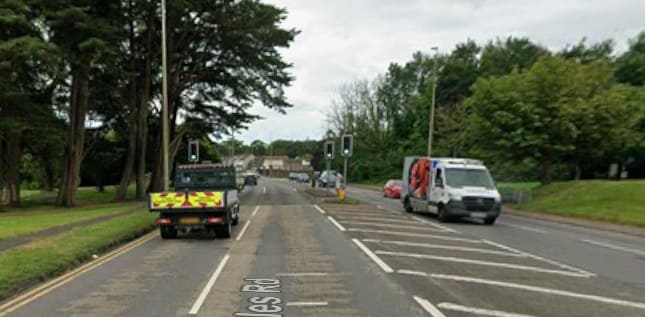
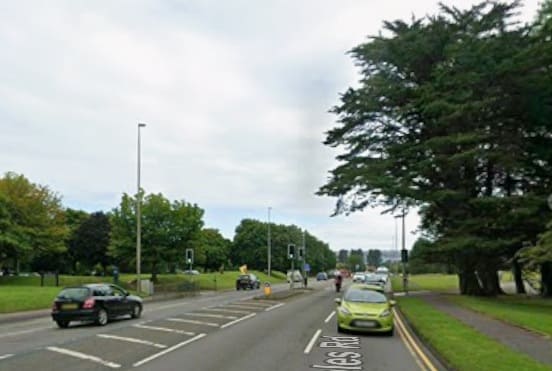
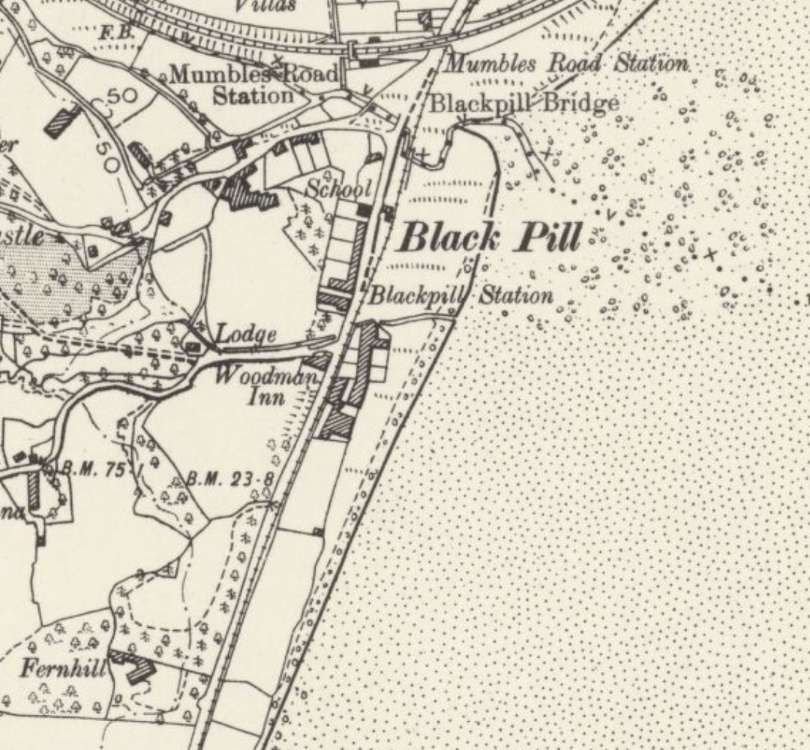
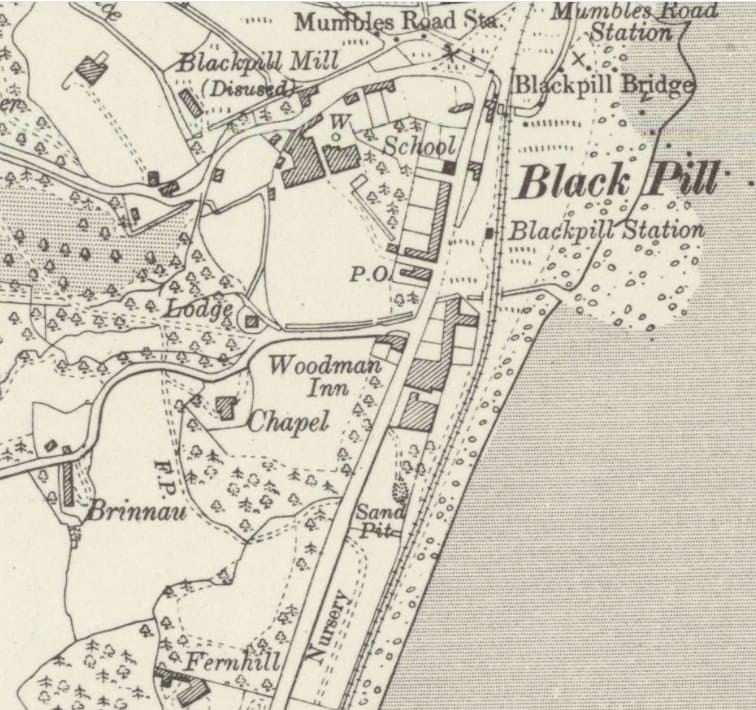
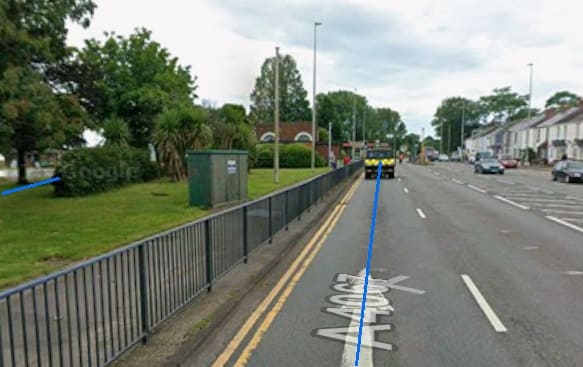
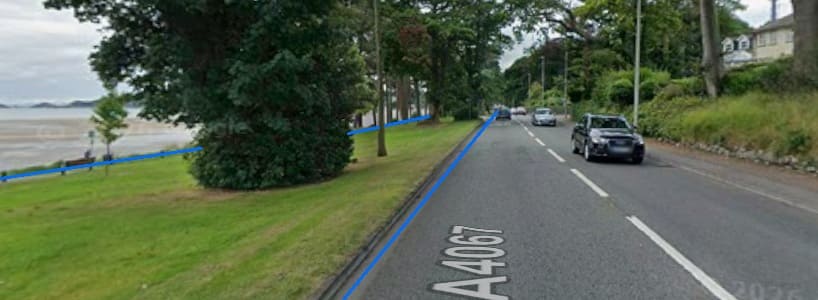
The Blackpill Railway Bridge seen from the South. The LNWR line crossed both the Swansea & Mumbles Railway and the Mumbles Road. Mumbles Road Station on the LNWR line is at high level off to the left of this image. [26]looking Southwest along Mumbles Road: Blackpill Bridge was approximately at the location of the pelican crossing. [Google Streetview, July 2025]Looking Northeast along Mumbles Road to the location of Blackpill Bridge. [Google Streetview, July 2025]South of the junction with the Clyne Valley branch the main line of the Swansea & Mumbles Railway passed under Blackpill Bridge and in the hamlet of BlackPill there was a tramstop/station which can be seen on this map extract. Initially, South of the station/tramstop the line continued in the East-side shoulder of Mumbles Road. This arrangement changed in the early years of the 20th century. [19]At the turn of the 20th century, the tramway had been diverted away from Mumbles Road to follow the coast wall. It appears on that alignment in this extract from the 6″ Ordnance Survey of 1913/1914, published in 1921. [28]
Railmaponline.com shows both alignments superimposed on modern satellite imagery. [17]
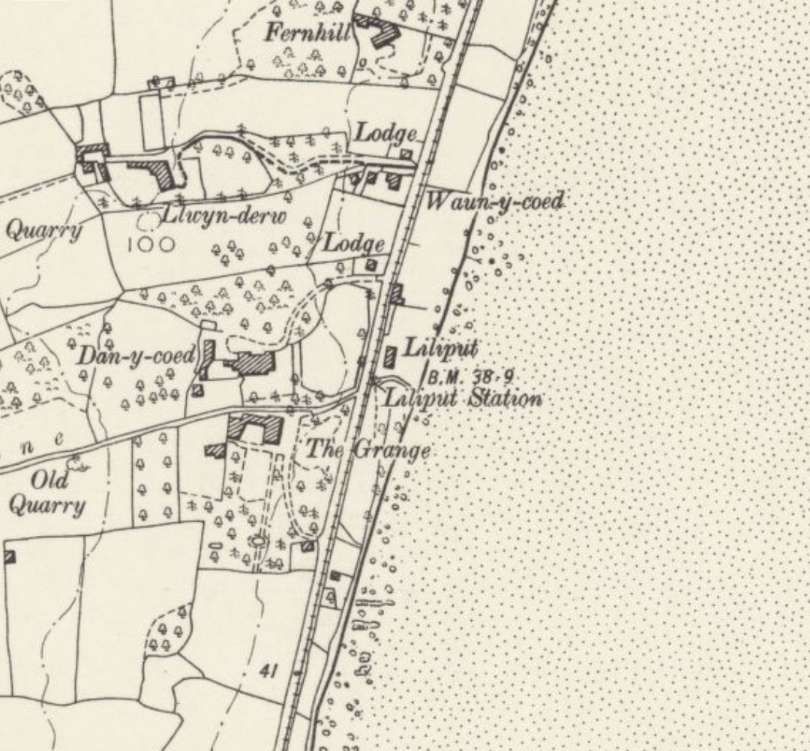
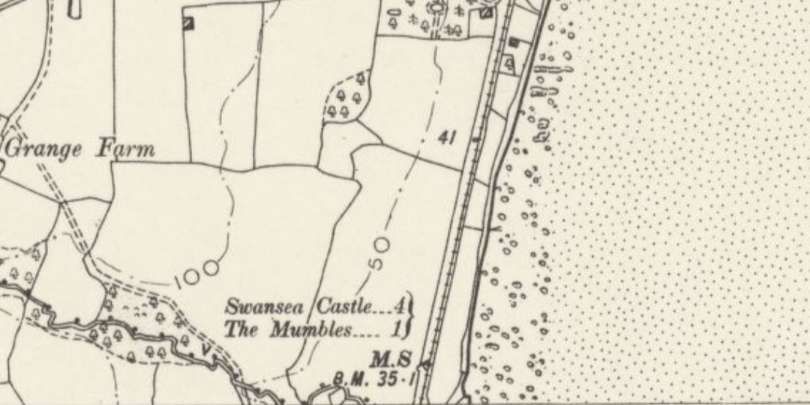
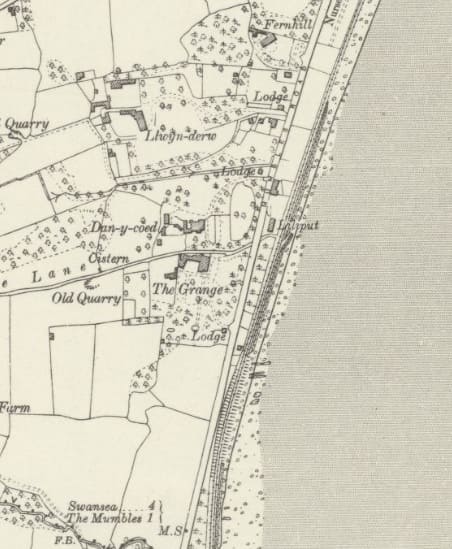
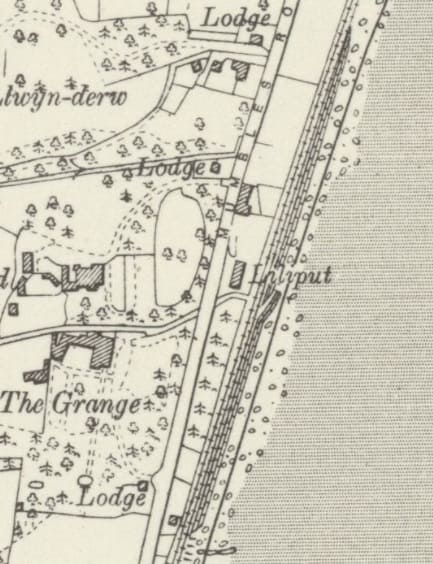
The later alignment with significant storage lines at Liliput. This length also takes us to the bottom edge of the OS Sheet. [28]
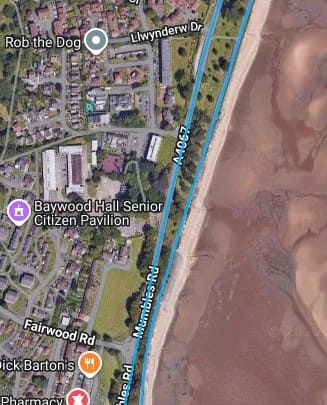
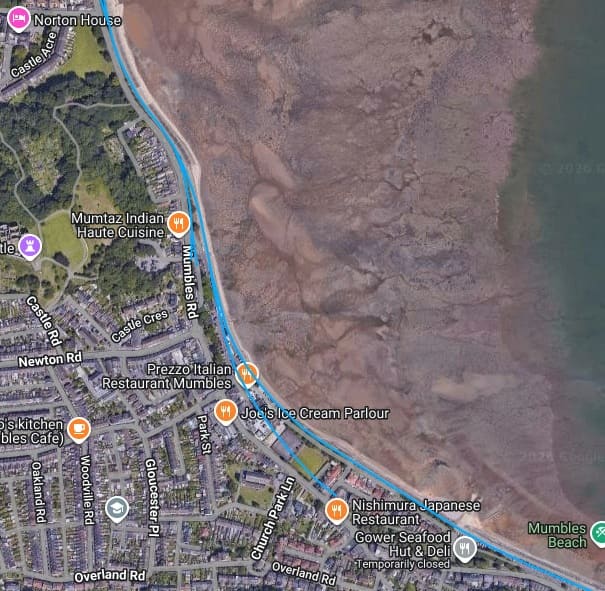
This extract from railmaponline.com shows the two routes continuing through Liliput. [17]
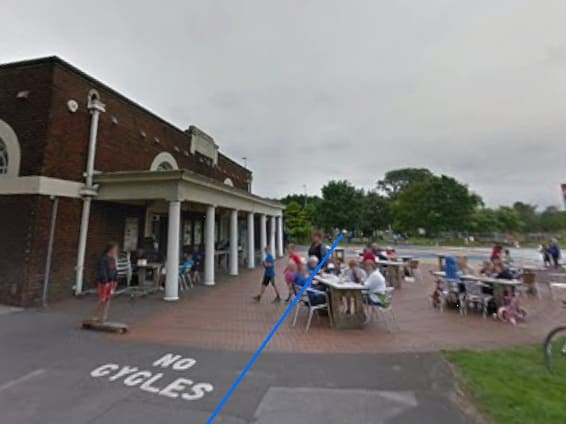
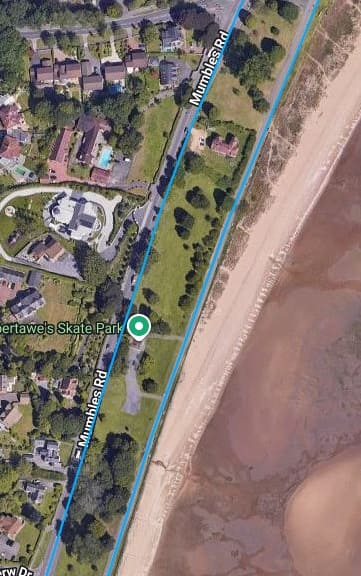
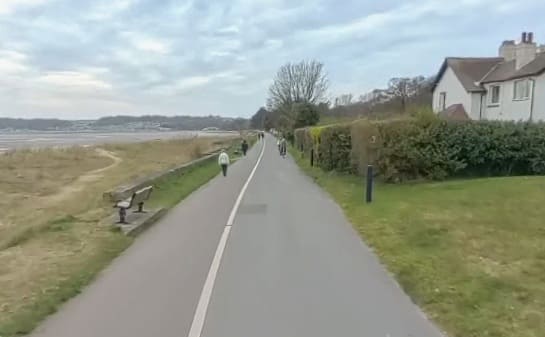
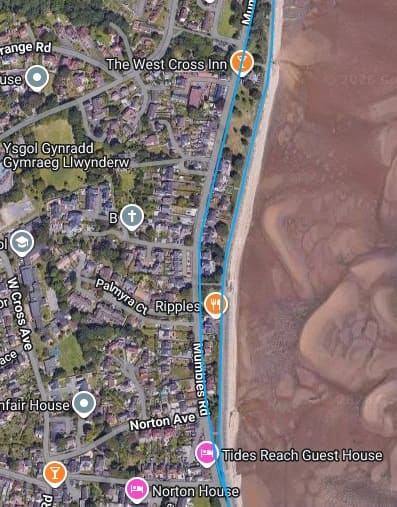
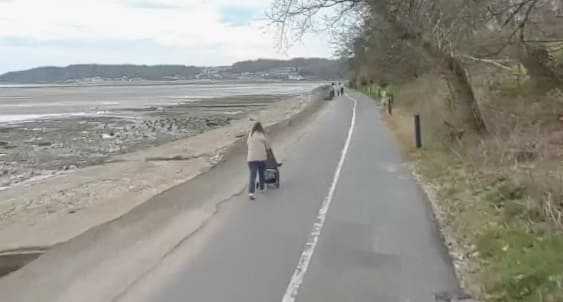
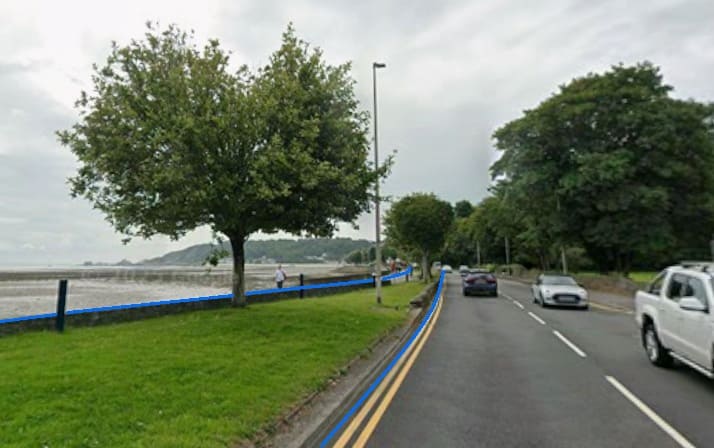
Looking South close to the location of Liliput Station. The original railway alignment was at the kerb line of Mumbles Road, the newer line was beside the sea. Both are marked by blue lines. [Google Streetview, July 2025]Another South-facing view along the line of the newer route, this image is again provided by the City and County Survey Team. [Google Streetview, April 2026]
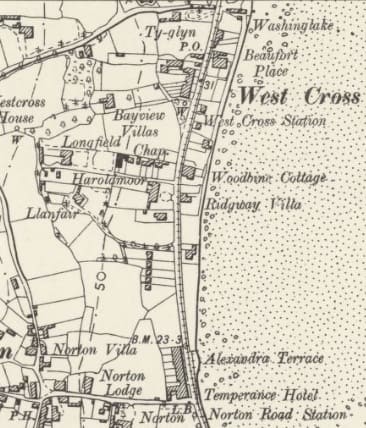
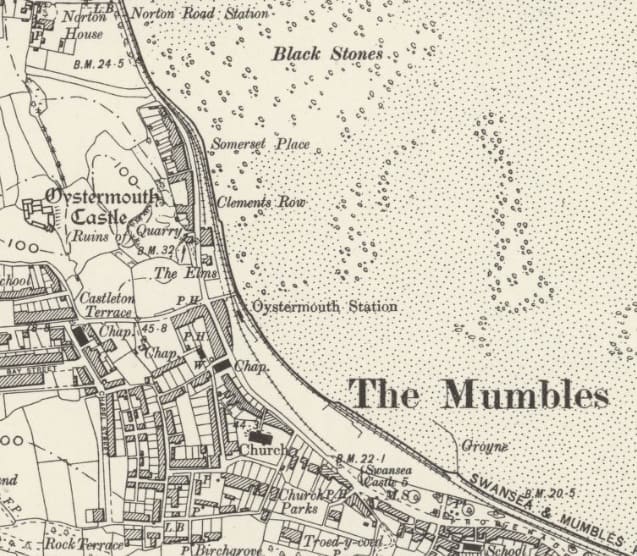
The original alignment as far as Norton Road Station. This is an extract from the 6″ Ordnance Survey of 1896/1897, published in 1900. [29]
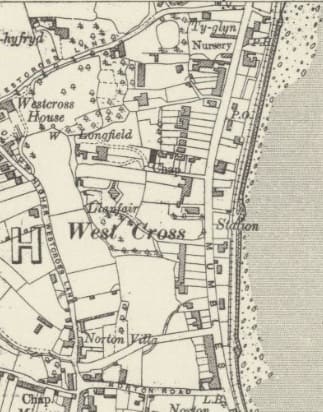
The two alignments meet again at the location of Norton Road Station. By the time of this survey, Norton Road Station appears not to be in use and a station has been provided to the North at West Cross. This extract comes from the 6″ Ordnance Survey of 1913, published in 1921.[30]
The Swansea & Mumbles Railway: Over 155 Years of Service: Souvenir Brochure; The South Wales Transport Company Ltd, 5th January 1960. See the Appendix below.
Stephen Hughes; The Archaeology of an Early Railway System: The Brecon Forest Tramroads; Royal Commission on Ancient and Historical Monuments in Wales, 1990;; via https://books.google.com/books?id=C-pzUWrCU5sC&pg=PA333, accessed on 17th September 2026.
Charles E. Lee; The Swansea & Mumbles Railway; Oakwood Press, Oxford, 1988.
The Swansea & Mumbles Railway: Over 155 Years of Service: Souvenir Brochure
Appendix 2
Railway or Tramway?
“The railway is frequently referred to as a tramway, but the original name of the company of proprietors was the Oystermouth Railway or Tramroad Company, the word tramroad being used in its pre-railway context. The original right of way was unique and it was only after the construction of the turnpike road in the 1820s that the line assumed its roadside character. The introduction of steam locomotion in the 1870s was facilitated by a clause in the original act which authorised the “haling or drawing” of waggons by “men, horses, or otherwise” and owed nothing to the Tramways Act 1870 (33 & 34 Vict. c. 78).” [4]
“The passenger rolling stock used in steam days bore little resemblance to conventional railway carriages, employing open-top, “toast-rack” and “knifeboard” seating, and being built by companies more commonly associated with the construction of urban tramcars, such as G.F. Milnes & Co., Starbuck & Falcon, etc. After electrification the resemblance to an urban tramway became more marked with the introduction of the huge Brush-built electric cars and because of the style of operation (the signalling was used only to regulate entry to the passing loops and not to control the actual running of cars). The track was always laid with conventional railway-type rail and not grooved tram-rail and the railway also handled conventional goods wagons (exchanged with the London and North Western Railway (the London, Midland and Scottish Railway after January 1923) at Mumbles Road station and with the Great Western Railway at the Swansea terminus). In the early nineteenth century a tramway was a line for mineral wagons (trams), the term railway being used when edge rails replaced plates. The term tramway did not become almost exclusively associated with urban transport systems until after the passing of the Tramways Act 1870 (33 & 34 Vict. c. 78).” [4]
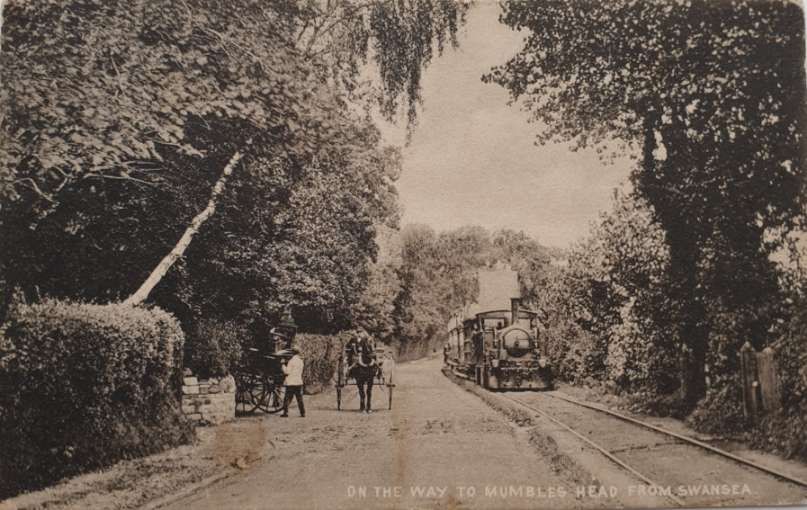
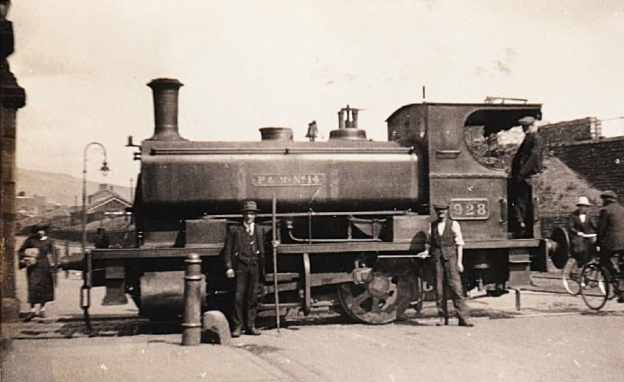
The featured image for this article shows a Powlesland and Mason locomotive (withdrawn 1927) crossing Oystermouth Road, Swansea just outside the gate pillars of the rail entrance to the gas works, probably in the early 1920s. This or similar locomotives would have transported Clyne Valley coal to the gas works. The image was shared on the Industrial Locomotive Enthusiasts Facebook Group by Dave Roberts on 20th August 2026. The photographer is not know, (c) Public Domain. [17]
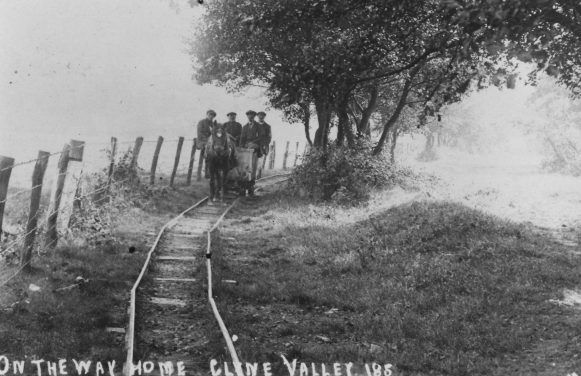
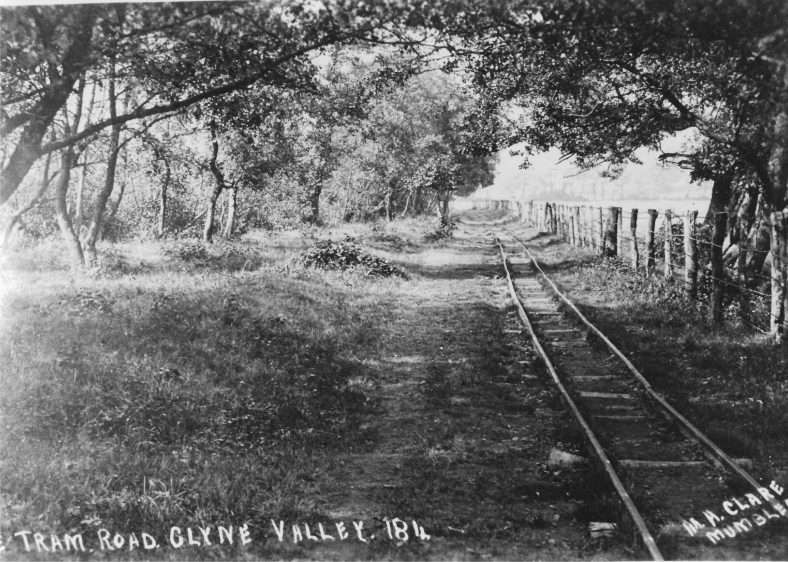
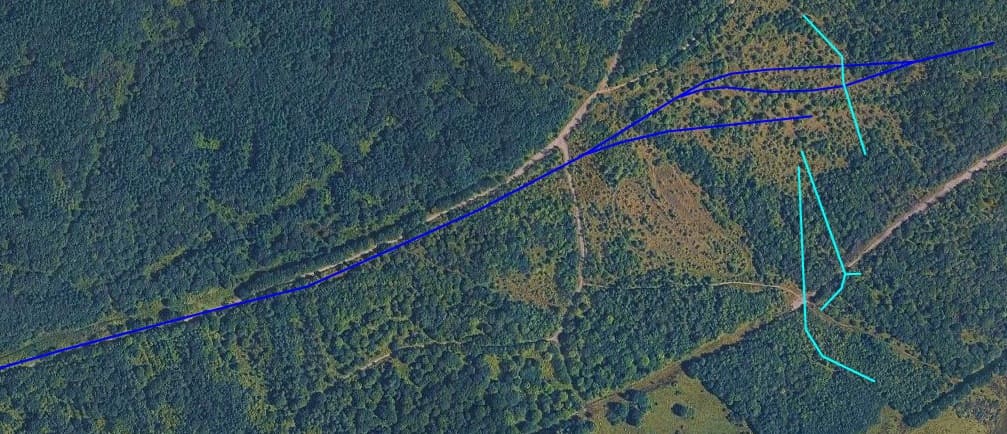
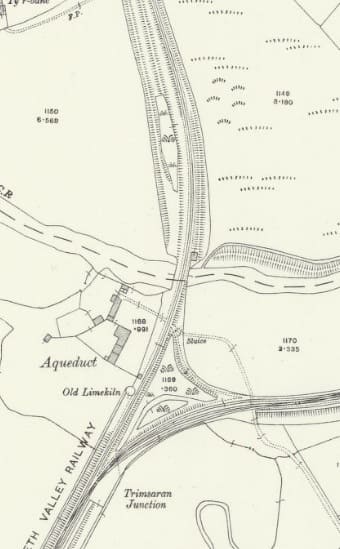
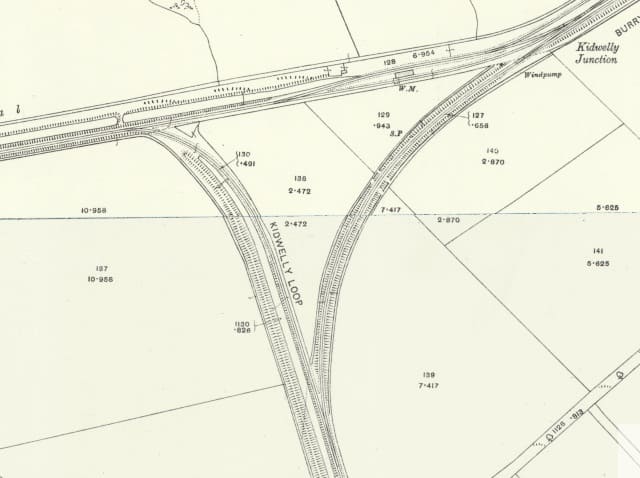
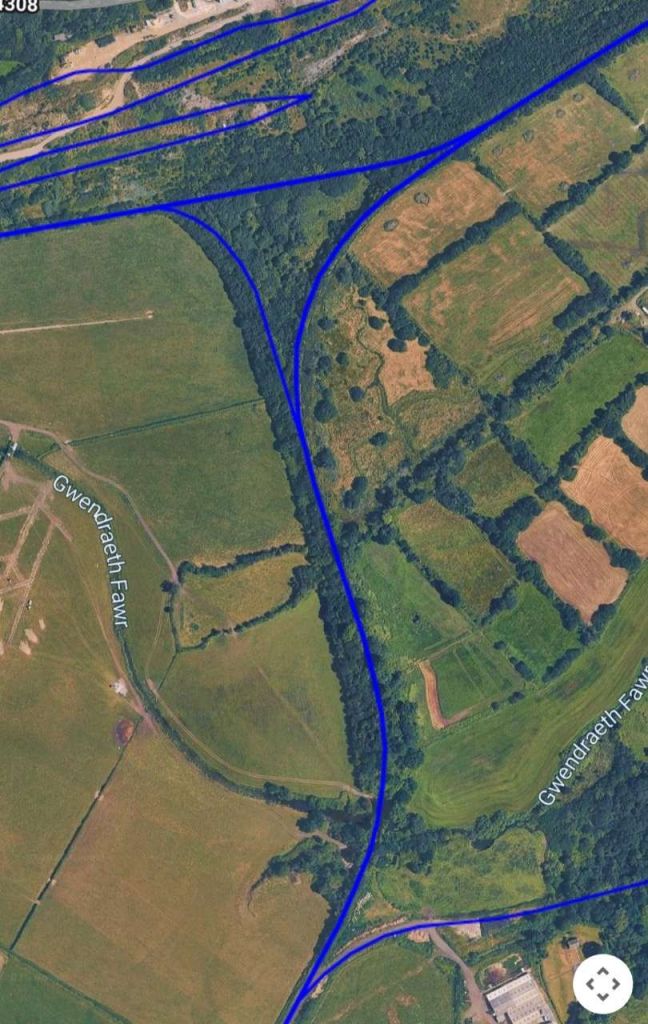
In the very early 19th century, The Clyne Valley Tramway was built (around 1804–1807) as a branch line extension of the Oystermouth Railway (Swansea & Mumbles Railway) to transport coal and timber out of the Clyne Valley.
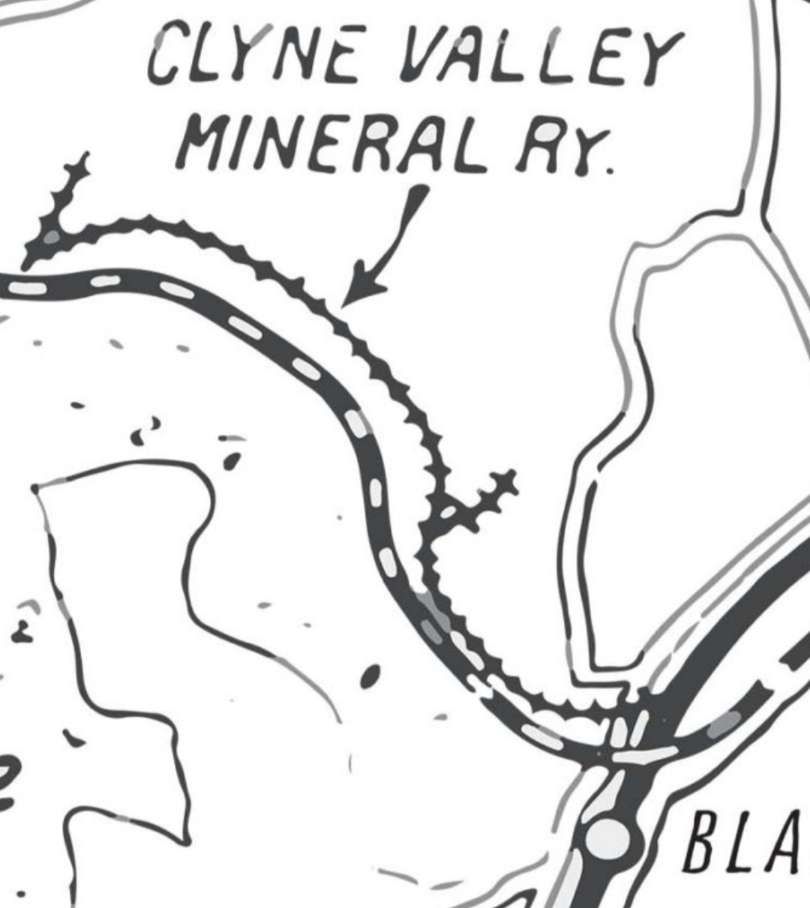
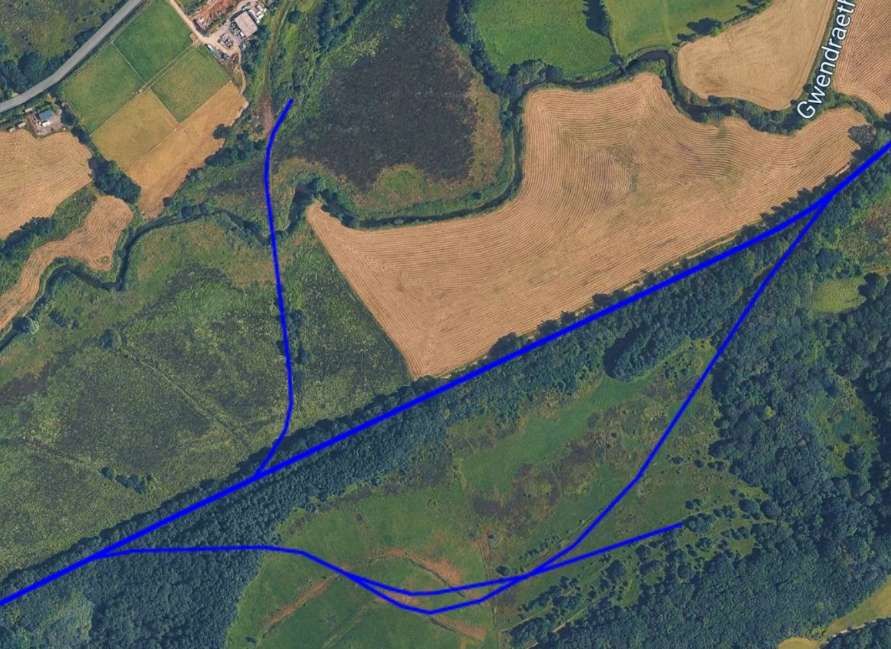
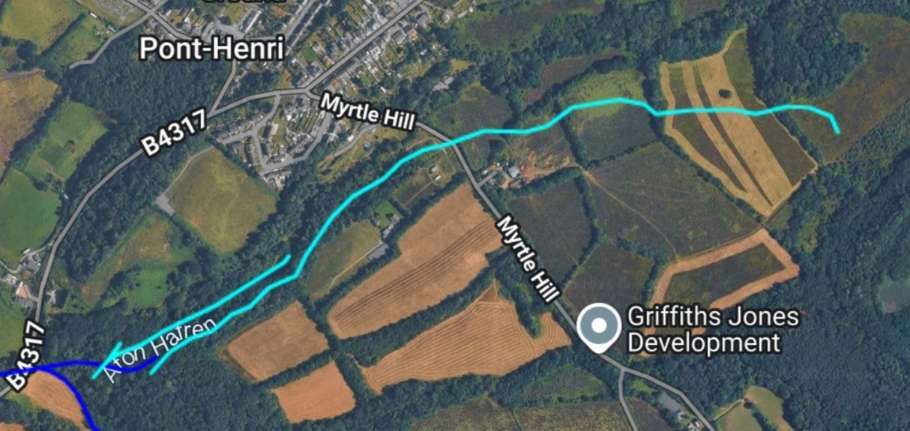
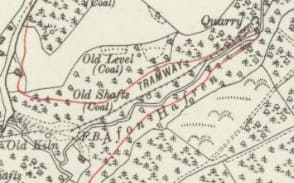
The Clyne Valley Mineral Railway. The solid black line is the main line of the Swansea & Mumbles Railway. The dotted line is the LNWR line from Swansea and up the Clyne Valley. [7]
Promoted initially by John Morris I and John Morris II, the tramroad/tramway connected local coal workings—such as early bell pits and the Rhydydefaid pit—down through the valley toward Swansea Bay and local docks.
During the 19th century, the tramway and its branches served a number of industrial sites, including later collieries like Clyne Wood Colliery (opened 1868), ironworks, chemical works, and the Clyne Valley Brickworks.
Industrial operations in the valley wound down by the early 20th century (with lines largely abandoned by the 1920s and tracks lifted around World War II).
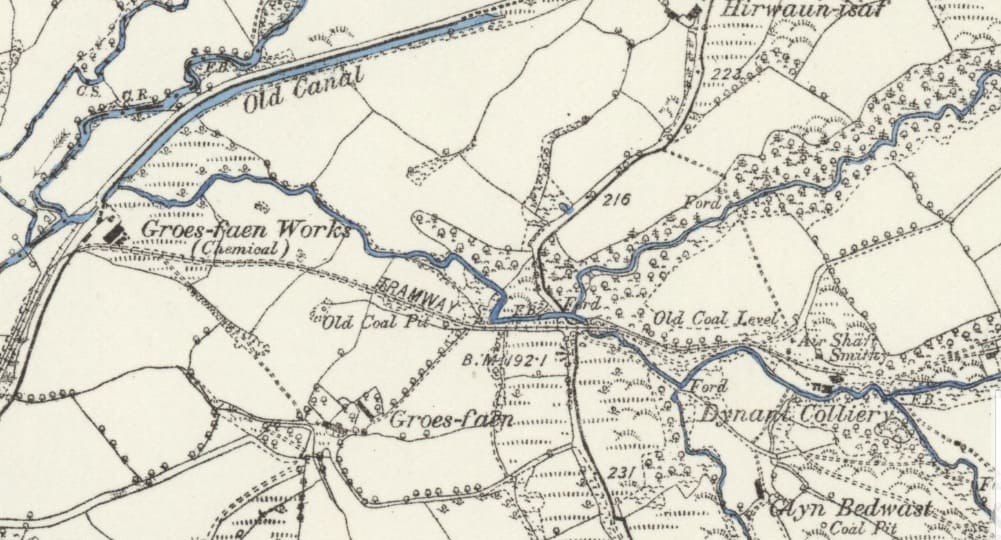
“From about 1812 a number of large underground pits were excavated of which at least 5 are known. An arsenic and copper works was opened in 1837; acetic acid works in 1856; and brickworks in 1875. In 1865, the main line came through the valley and at least one colliery was directly connected to it. There was also a horse racing course, which was between Killay and Olchfa and operated between 1866 and 1927.” [1]
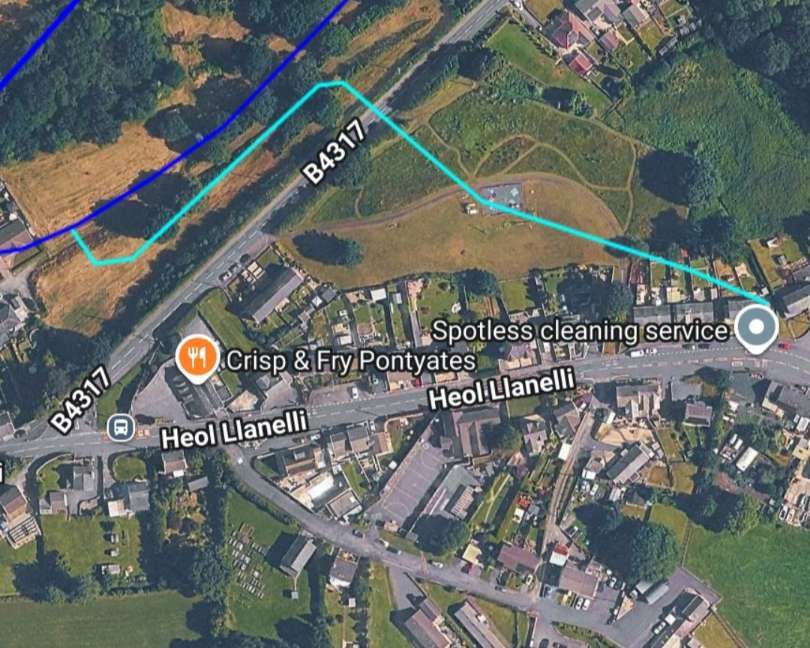
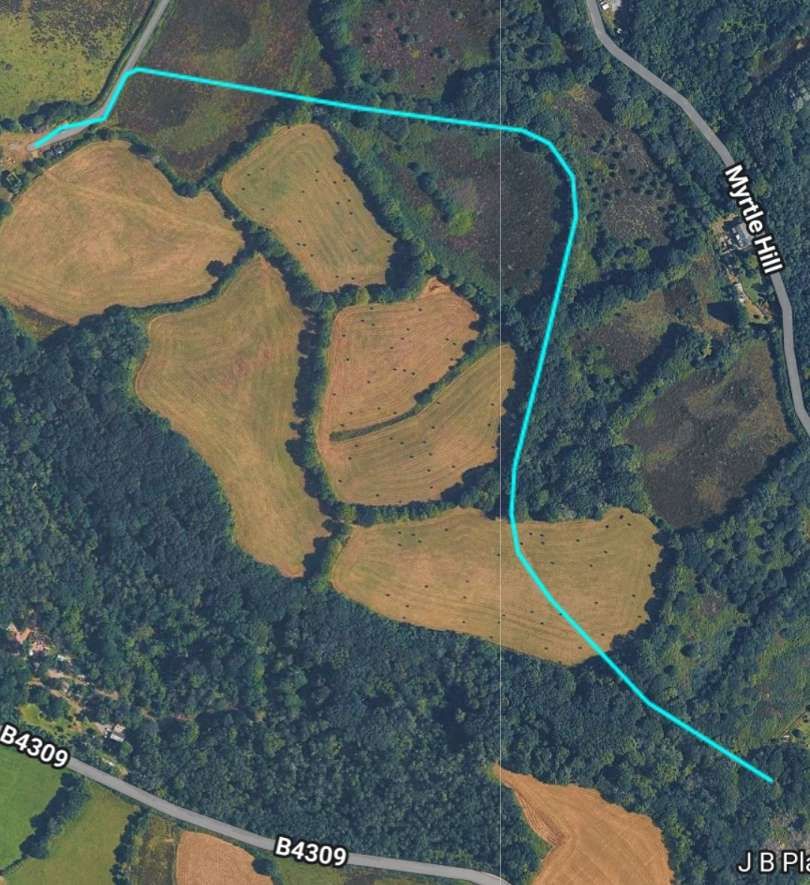
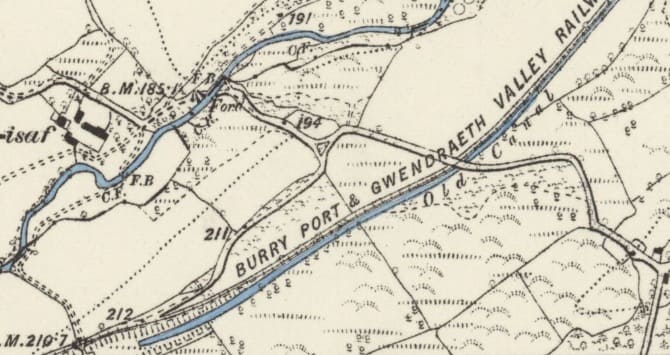
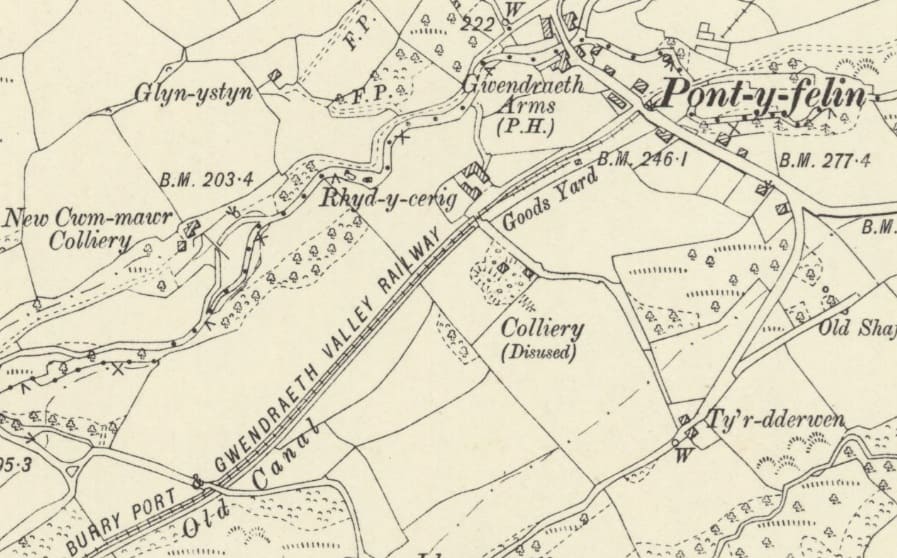
The Clyne branch parted from the line to Oystermouth at Blackpill and “followed a course close to the river as far as a spot referred to in the Act as Ynys – in modern terms about 250 yards to the north of the pond beside the cycle track (NGR SS 61249 91599). The sinuous track that now runs on the level beside the east bank of the river follows the course of the railway. The total length of the branch was about 1,450 yards.” [6]
“The first mention of Clyne Valley coal being carried on the railway comes in March 1812 when the minutes of the railway company (now in the Richard Burton Archives in Swansea University) notes that ‘Mr Morris’ [i.e. John Morris II] had opened a colliery on the line of the tramroad. This colliery can perhaps be identified with the colliery to which the modern name Ynys has been given. In the last quarter of 1812 the first payment by Morris of tolls on ‘Coals from Ynis to sundry parts of Tramroad’ is recorded. Similar payments were then made every quarter until September 1814. After that, there is no further record of tolls on Ynis coal until entries in the cash book cease early in 1816. This strongly suggests that the colliery was in production for two years only, 1812–14.” [6]
Later, John Morris II, now Sir John, once again became involved with the line, he “became mortgagee in possession of the railway on 21st December 1819. For a time the company continued to have the semblance of corporate existence but by 1847 George Byng Morris, the grandson of Sir John, had assumed the role of absolute proprietor.” [6]
The Clyne Valley Community Project tells us that after John Morris II ceased working in 1816 it appears that there was no coal working in the Clyne Valley until 1840. At that time when he transferred all his mineral interests to his second son, George Byng Morris. He re-laid the abandoned Clyne Valley branch line and built an extension to a new pit – his own Rhydydefaid pit. The line along the valley as far as Ynys remained as a legal part of the Swansea & Mumbles Railway (the Oystermouth Railway) but was apparently regarded by everyone as the property of the Morris family! “The section north from Ynys to Rhydydefaid pit was a new construction that closely followed the course of the river and was truly the private property of George Byng Morris. The re-laid branch with Morris’s extension was complete by 1846 at the latest.” [6]
George Bingo Morris also owned a coal yard at Blackpill which was now conveniently connected to Rhydydefaid pit. The yard probably covered local land sales but the bulk of the output from Rhydydefaid pit was carried to Swansea on the Swansea & Mumbles Railway and much of the output was used in the town’s gasworks on Oystermouth Road.
Morris extended his new tramway a short distance beyond Rhydydefaid pit. “At this period the coalfield around Dunvant and beyond was starting to be developed on a commercial scale and the new tramway was seen by several promoters as a possible means of getting their coal to Swansea for export or use in the town’s industries. The railway was never actually extended in this way, but when the Llanelly Railway was built in the 1860s a short tunnel, which still exists, was provided through their embankment, and the only reason for this tunnel can have been to accommodate a pre-existing right of way.” [6]
In 1854, the Swansea Coal and Iron Co was formed in London and it took over the running of the pit and the tramway. It arranged for the renewal of the whole Swansea & Mumbles Railway, having it converted from a plateway into an edge rail line to improve access to Swansea docks.
Morris undertook the re-laying of the original Swansea & Mumbles Railway, including the Clyne Valley branch as far as Ynys. “The Coal Company was responsible for the extension from Ynys to Rhydydefaid since this section was regarded as part of the colliery infrastructure.” [6]
Until 1865, the Clyne Valley line was the sole outlet for coal from Rhydydefaid. In 1865, when the Llanelly Railway opened their line through the valley, initially for goods traffic only, a siding to serve Rhydydefaid was put in, perhaps as part of the original construction but certainly by 1876. But, this did not supersede the Clyne Valley branch which remained in use. “A further source of traffic was added in 1868 when Clyne Wood Colliery, across the river from Rhydydefaid, started to produce Clyne Wood was connected to the Clyne valley branch by means of a bridge across the river and for a year or two sent its coal out by that way.” [6]
The Clyne Valley Community Project tells us that by 1870, Philip Richard had control of Rhydydefaid Colliery and by 1878 he had introduced a steam locomotive that worked on both the branch and the mainline of the Swansea & Mumbles Railway. The pit was closed in around 1883 and the Clyne Valley Branch also fell into almost complete disuse. Only the occasional train operated by the Oystermouth Railway Company (the owners of the Swansea & Mumbles Railway) in connection with the local racecourse.
In 1891, Philip Richard opened a new pit, Commercial or Rhydydefaid No. 2, served by a newly built siding off the LNWR line which ran through the woods on a high embankment. Initially, the new pit was not viable but “Richard took a lease of coal under Llanerch and Olchfa which lay between Dunvant Road and Hendrefoilan Road and adjoined his existing taking. This gave him access to an area of more easily worked coal which made the colliery a viable proposition. He re-opened Commercial in 1899.” [6]
He also refurbished the Clyne Valley Branch of the Swansea & Mumbles Railway and began sending coal into Swansea via the Swansea & Mumbles Railway as part of “an agreement made in 1899 between the Swansea Improvements & Tramways Company, by this date owners of the [Swansea & Mumbles] Railway, and Sir Robert Armine Morris and Philip Richard.” [6]
In the early 20th century (1903), the Clyne Valley Slant Colliery was opened. “It was connected to the Clyne Valley branch by a new siding and this was its only railway connection: it had no link to the LNWR. The branch was re-laid in 1904 to the point at which the new siding had been put in, probably with heavier rails to cope with the volume of traffic expected from the new colliery. In 1906, an agreement was made with the Swansea Improvements & Tramways Co. [(SI&T Co.)]… under which all the coal from the Clyne Valley colliery was to be hauled to Rutland Street by the Tramways Company.” [6]
The Clyne Valley Community Project tells us that a further period of disuse followed the closure of the Clyne Valley Colliery in 1915. “Then in 1919, James Pridmore opened his Ynys Slant close to the former Clyne Wood Colliery. He entered into negotiations with the SI&T Co in the hope that they would extend their branch from its terminus at Ynys to his new slant – in effect, hoping that they would relay the privately-owned extension. Understandably the company was not prepared to do this and Pridmore then laid his own narrow-gauge tramway along the trackbed of the extension to the limit of the SI&T Co line. The company then agreed to send a locomotive up the branch as far as Ynys (i.e. to the limit of their metals) to collect the coal so long as there was a load of at least 50 tons. Pridmore opened a second slant in 1920, the West Glamorgan Slant, close to the point at which the former Clyne Valley Colliery siding had joined the branch, but neither this nor the Ynys slant were successful and both were abandoned in 1921.” [6]
The Clyne Valley Community Project continues: “the last revenue-earning traffic on the branch was in 1921 but the track remained usable and as late as 1936 a diesel locomotive penetrated as far as Ynys Gate, the terminus of the SI&T Co. Presumably, this was simply an exploratory move or one intended to maintain the company’s rights. The track was lifted in part during World War II but some sections still remained into the 1950s.” [6]
The line left the Swansea & Mumbles Railway close to Blackpill Bridge and Mumbles Road Railway Station (LNWR).
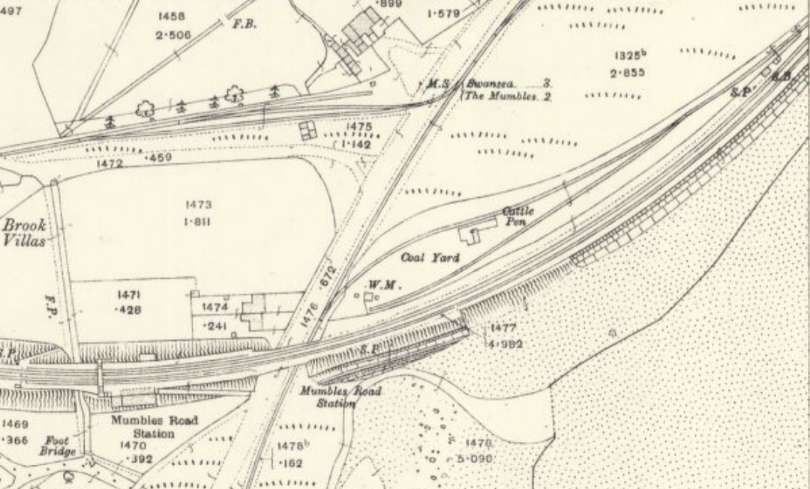
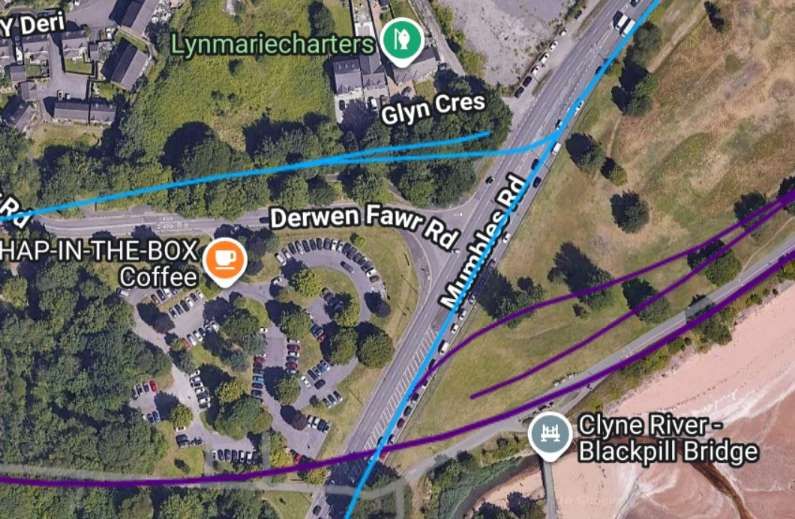
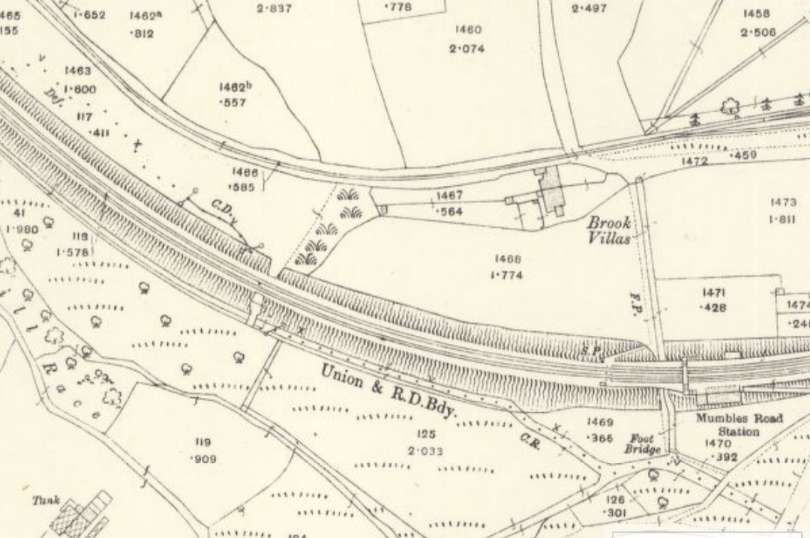
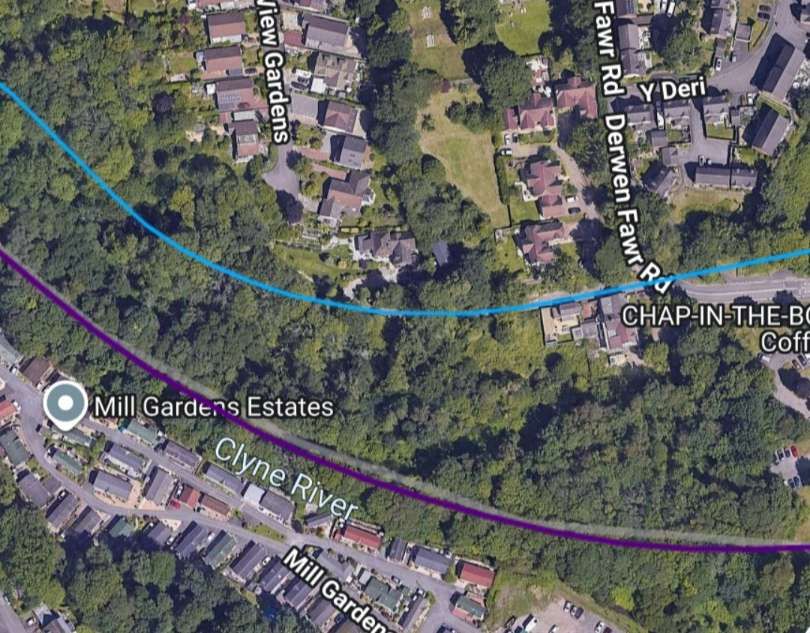
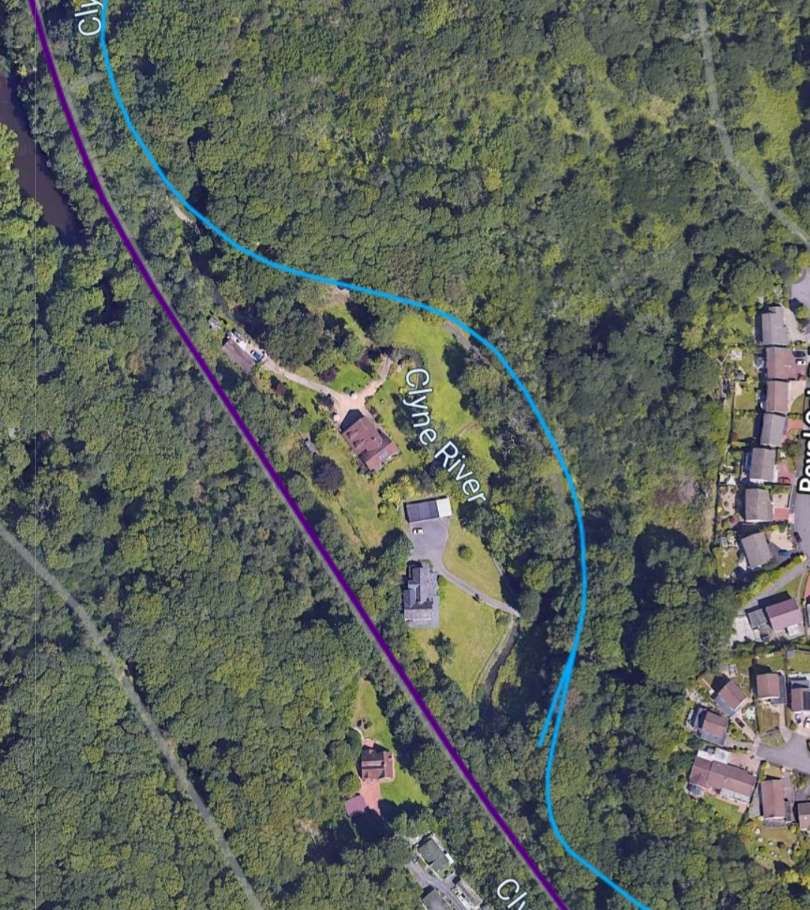
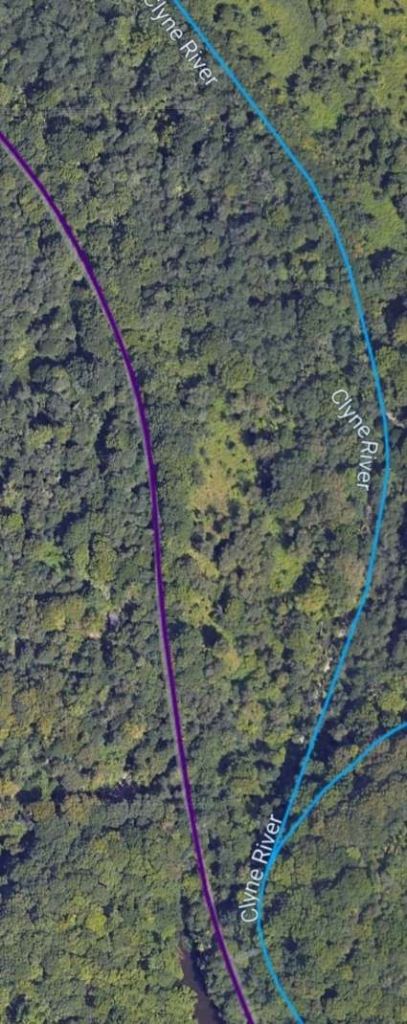
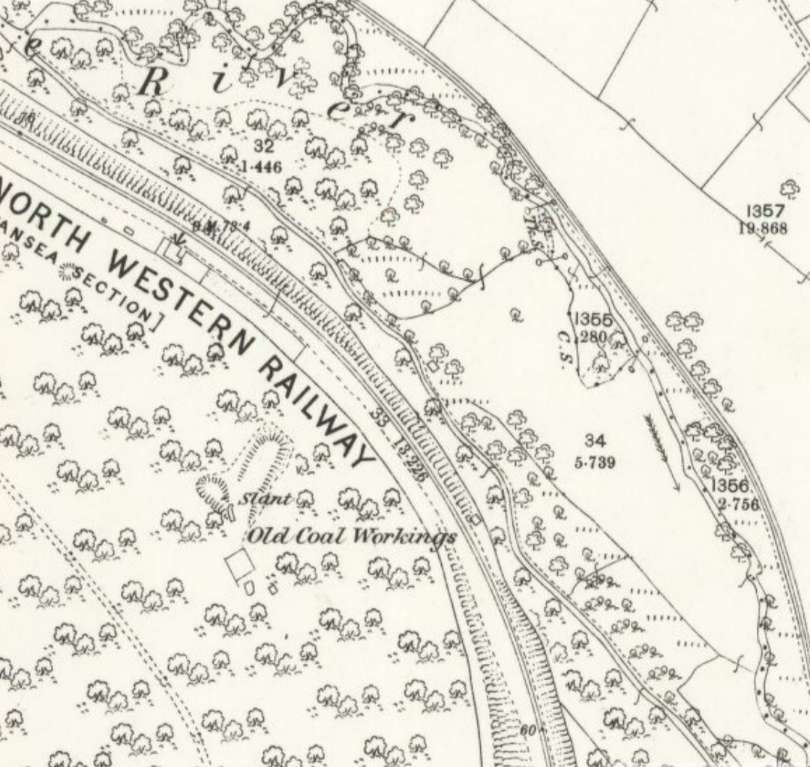
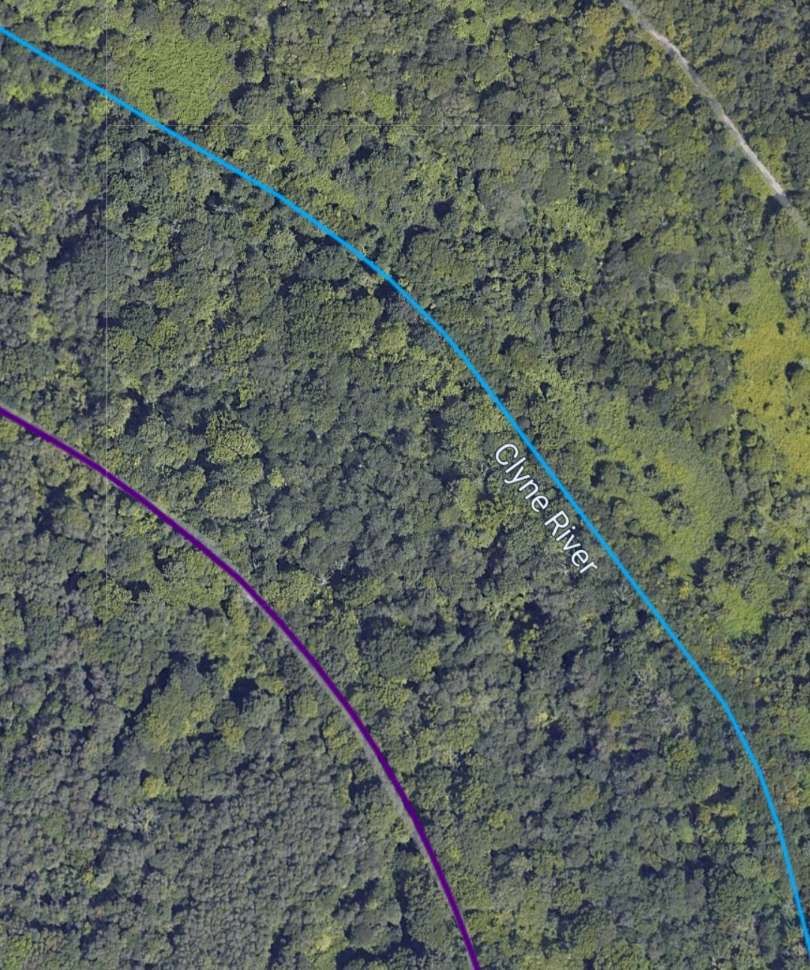
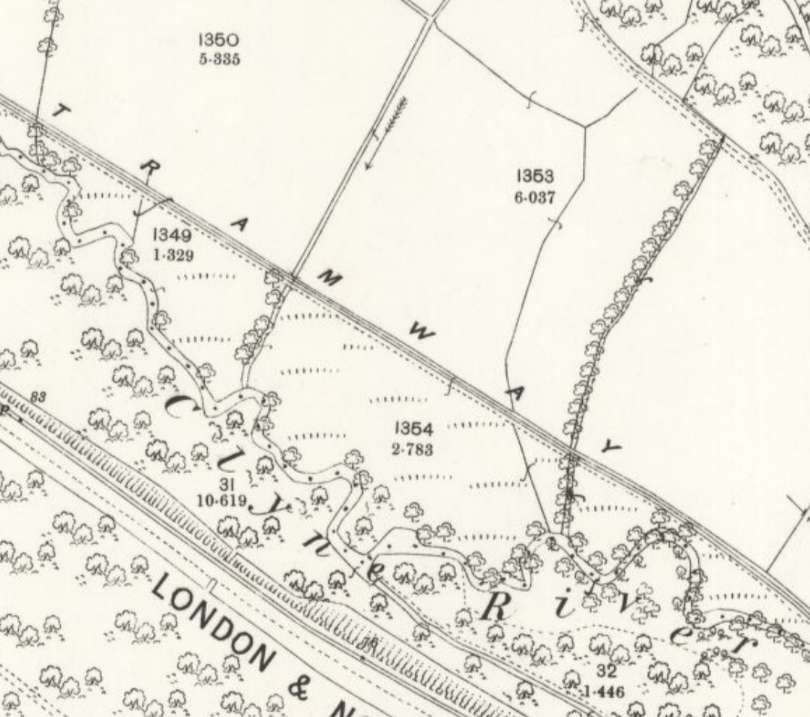
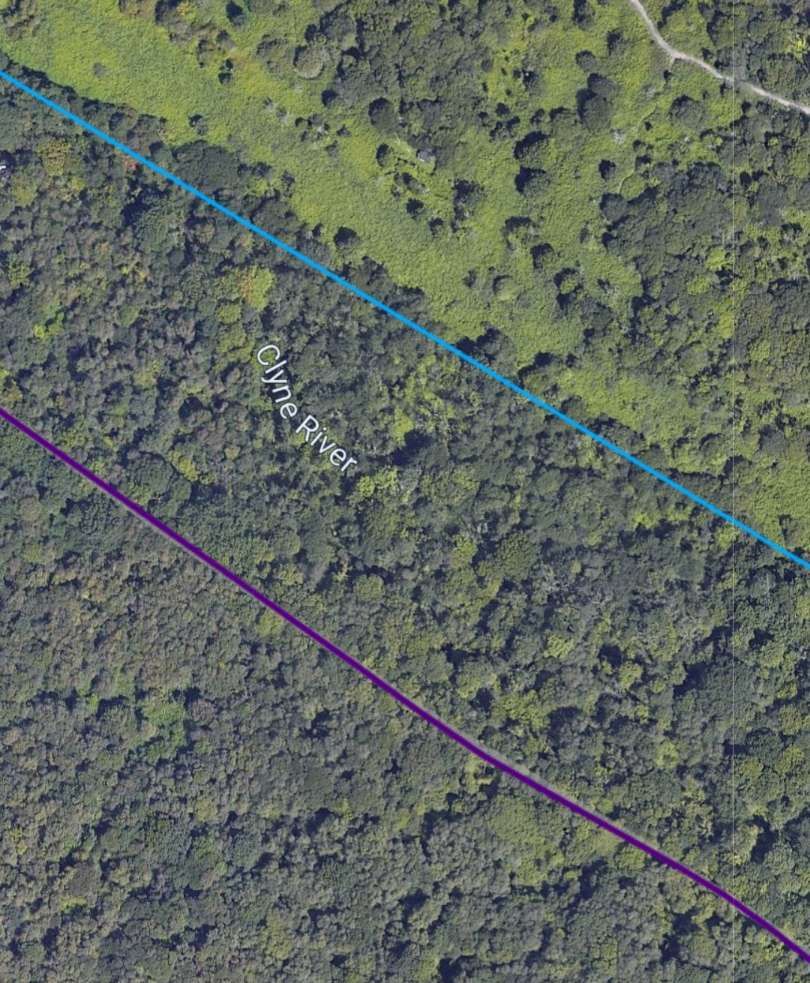
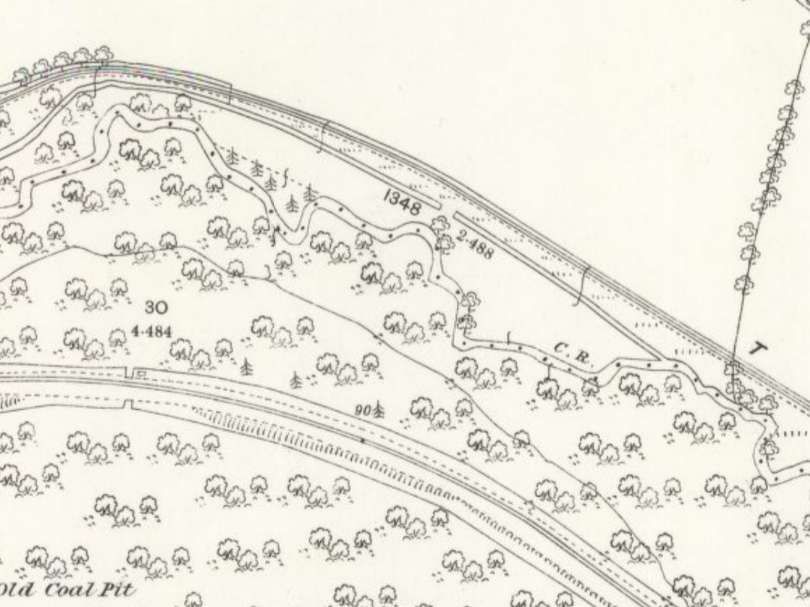
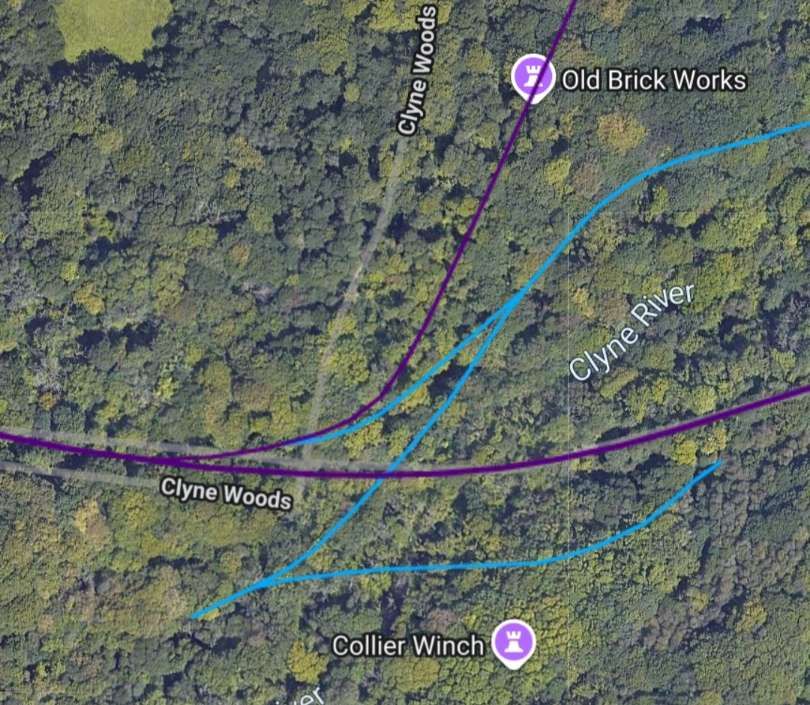
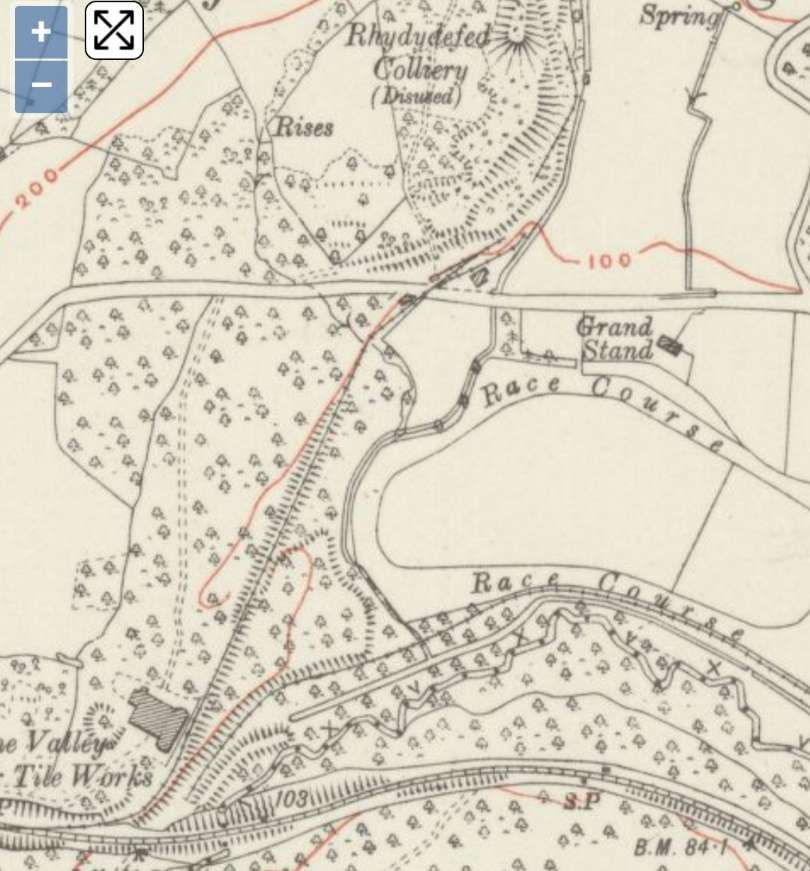
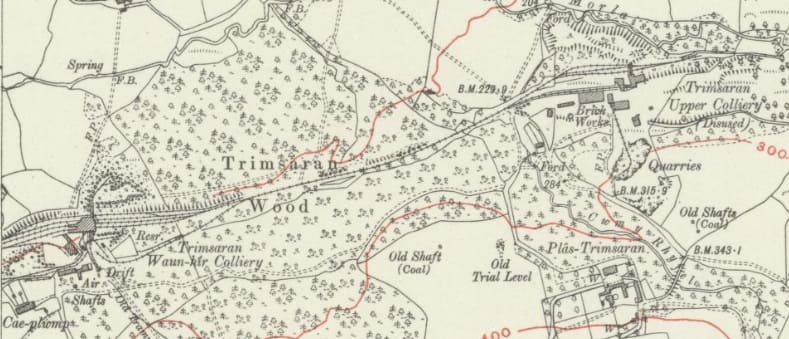
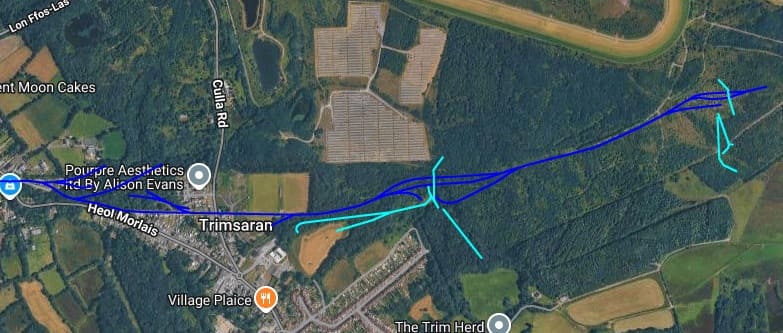
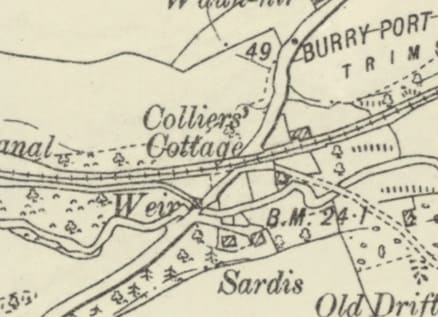
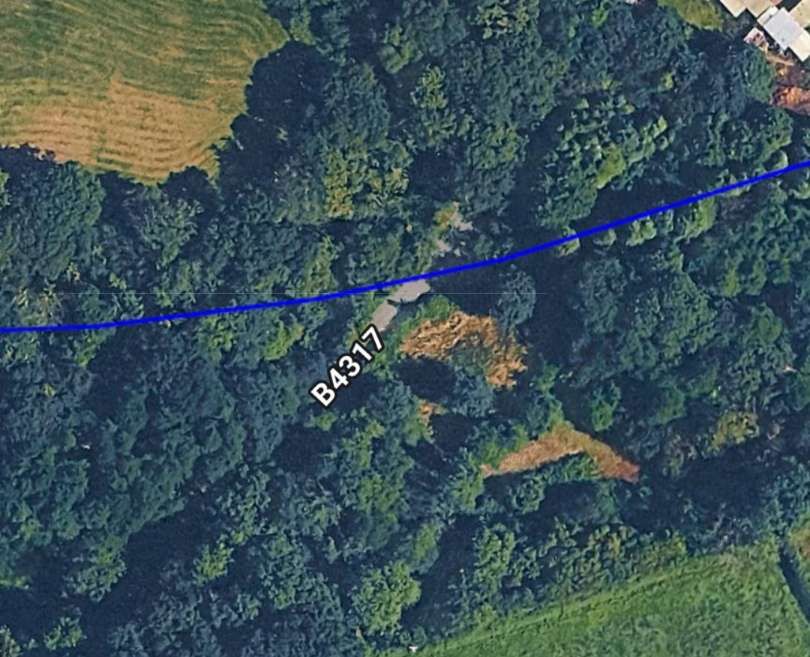
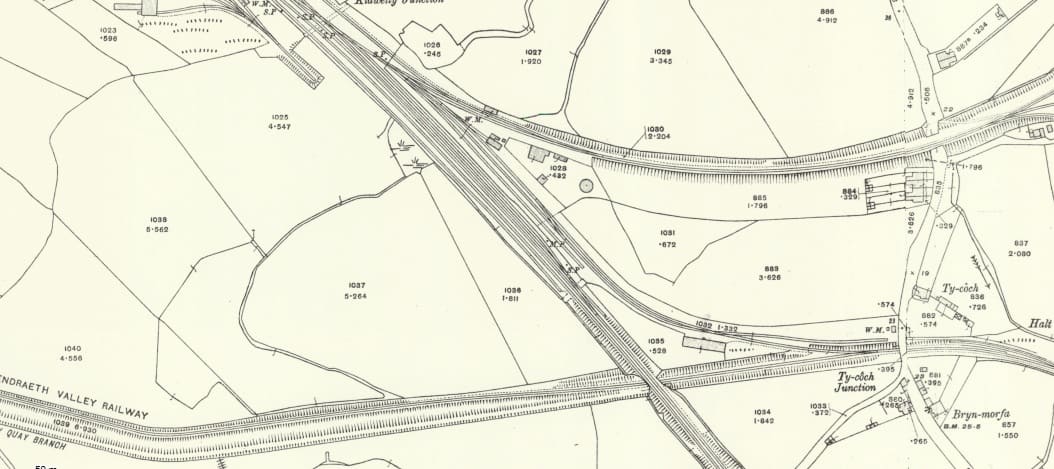
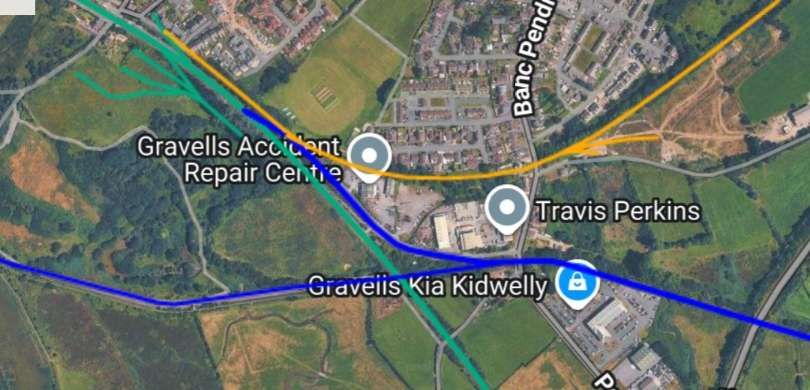
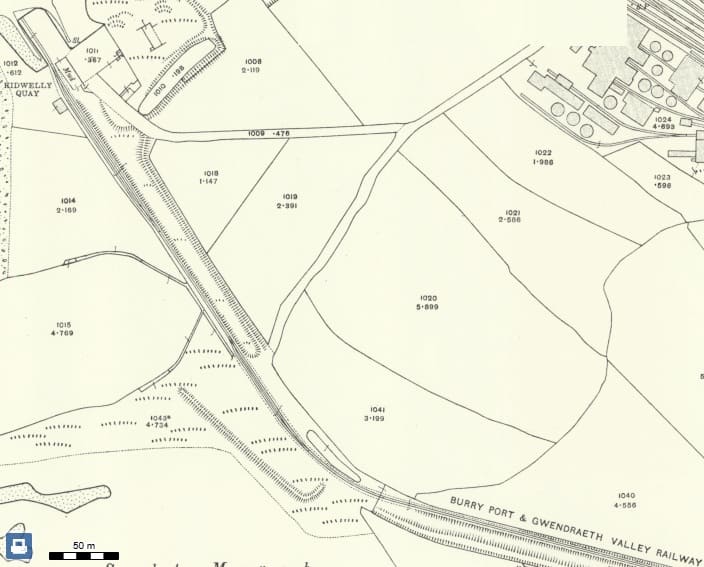
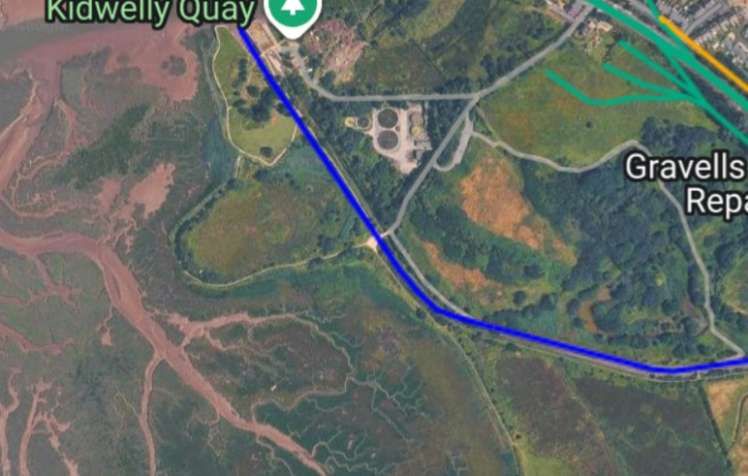
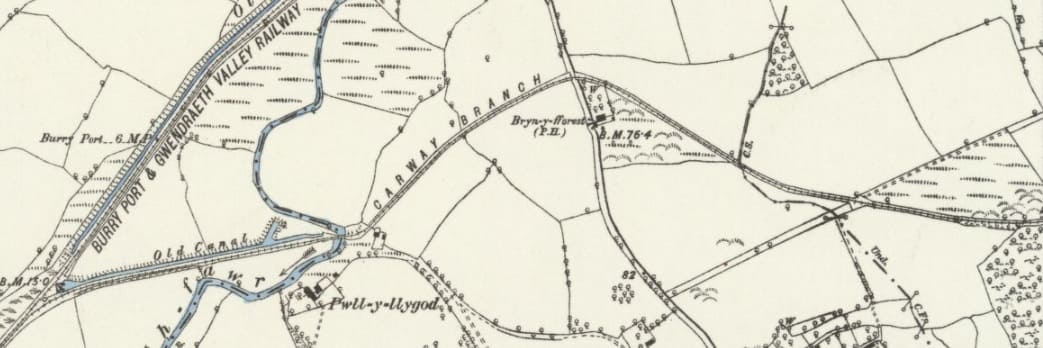
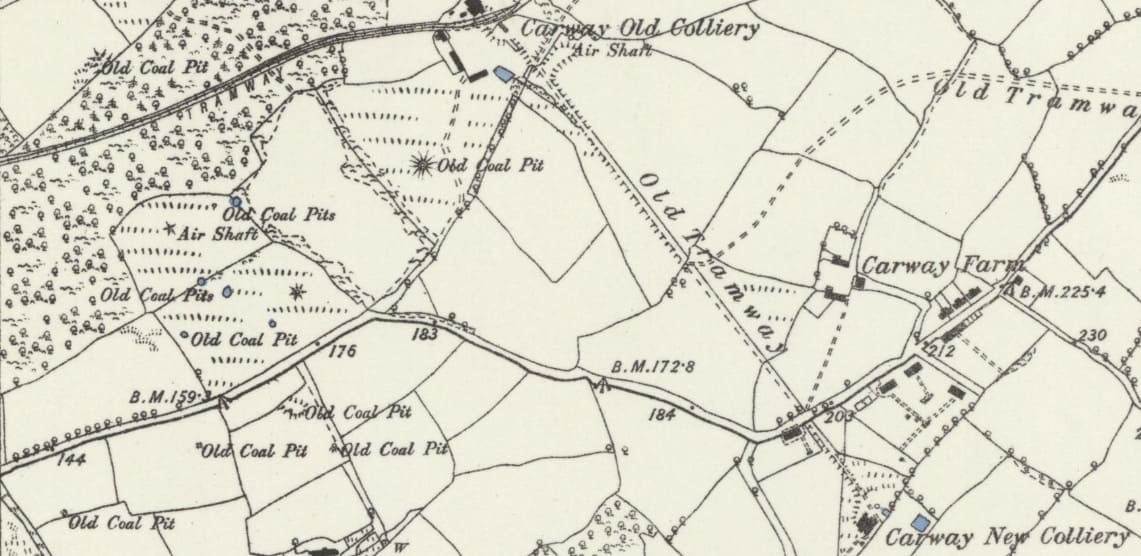
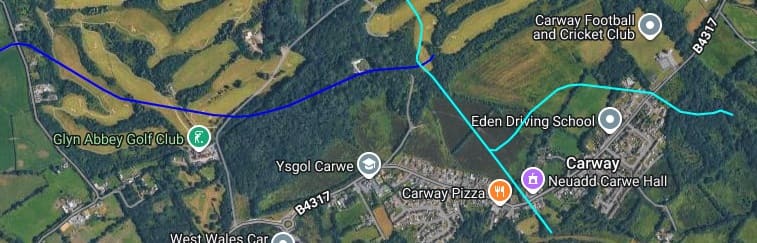
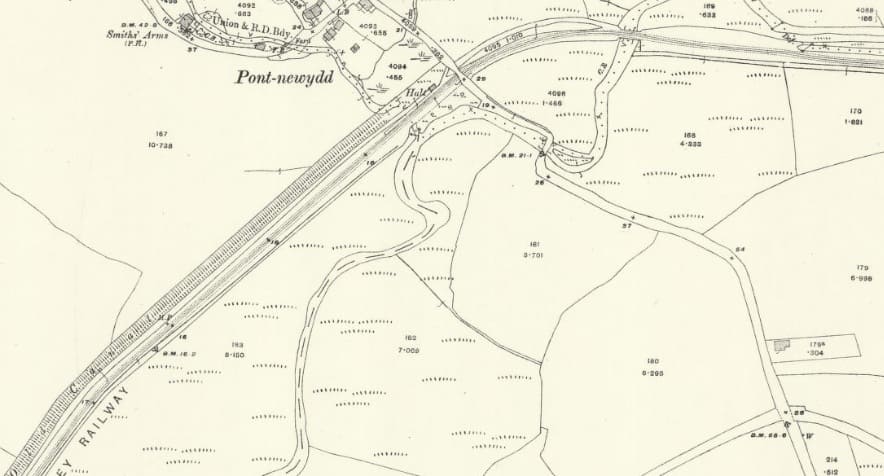
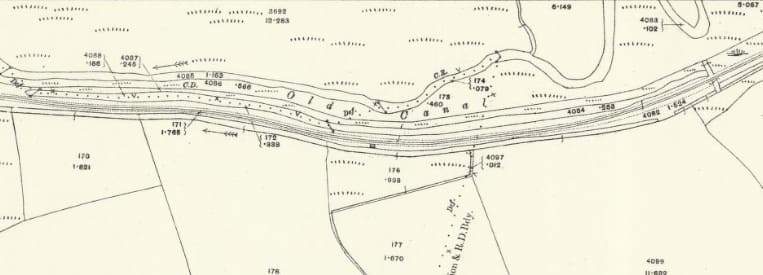
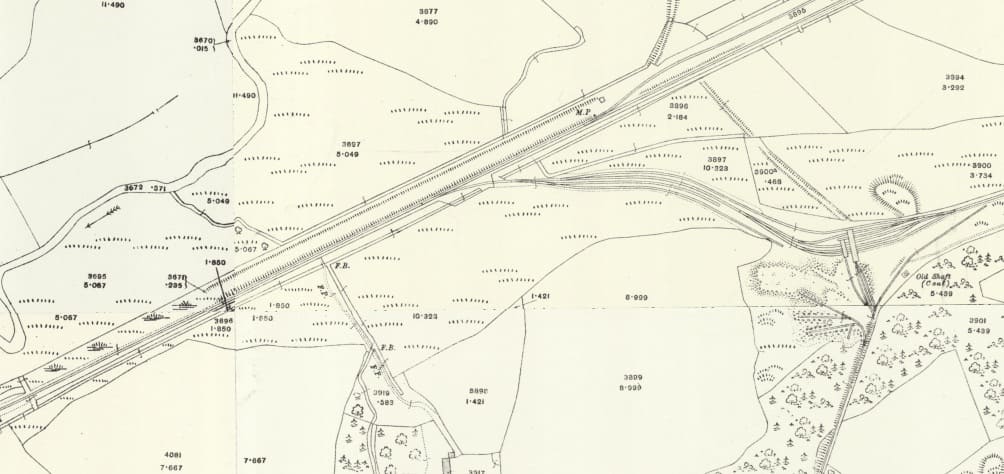
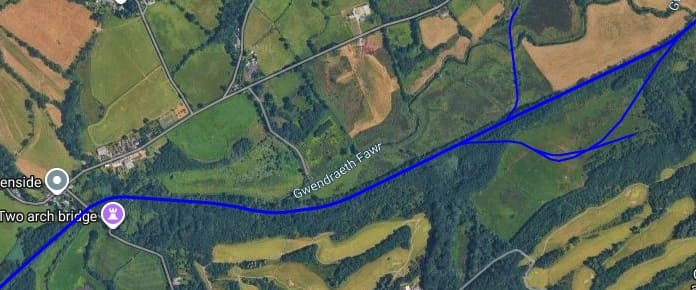
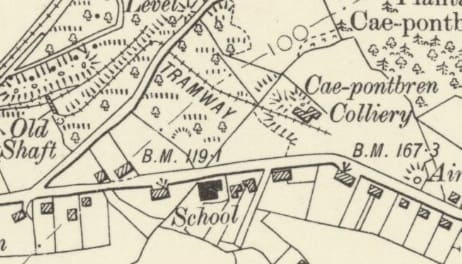
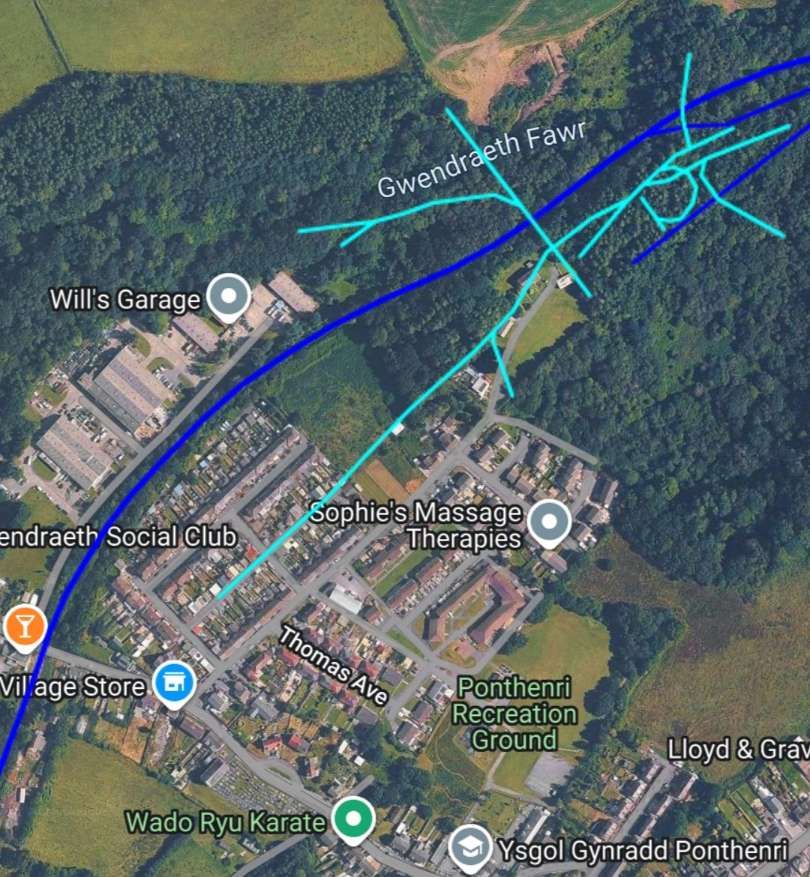
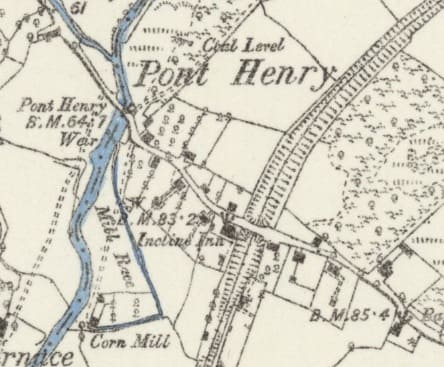
Mumbles Road Railway Station is at the bottom-left of this extract from the 25″ Ordnance Survey of 1913, published in 1918. Immediately to its East was Blackpill Bridge which carried the LNWR over Mumbles Road. East of the road was a Coal Yard which could be accessed from both the LNWR line and the Swansea & Mumbles Railway. To the North, the Clyne Valley Tramway had a couple of sidings adjacent to its main line. Don’t confuse the two drainage channels North of the Clyne Valley line for further sidings! [8]The same area in the 21st century. The blue line superimposed on the satellite imagery is the Swansea & Mumbles Railway and its Clyne Valley Branch. The purple line is the route of the LNWR line. This imagery is provided by railmaponline.com. [12]Looking West from Mumbles Road between Glyn Crescent (off to the right of the image) and Derwen Fawr Road (beyond and to the left of the car). The straight blue line is the main line of the Swansea & Mumbles Railway, the curved line approximates to the line of the Clyne Valley Tramway. [Google Streetview, July 2025]Mumbles Road Station is at the bottom-right of this next extract from the same OS survey. The LNWR line curves up towards the top,-left of this image as it heads into the Clyne Valley. The single-track Clyne Valley Tramway also curves towards the top-left of this image. [8]The same area in the 21st century. [12]Looking back along the line of the old tramway from the location of its level crossing on Derwen Fawr Road. [Google Streetview, July 2025]Looking ahead along the line of the old tramway from the same level crossing. [Google Streetview, July 2025]Only one 25″ Ordnance Survey is available along the next length of the Clyne Valley Tramway. This extract from the 1877 survey, published in 1878, shows the railway and tramway following the Clyne Valley to the Northwest. The tramway seeks to follow the easiest gradients as it winds sinuously up the valley. The LNWR line was much better resourced and was able to afford significant earthworks which eased gradients and allowed a more direct line up the valley. [9]Approximately the same area as shown on railmaponline.com. [12]
These next few Streetview Images are courtesy of the City & County Survey Team.
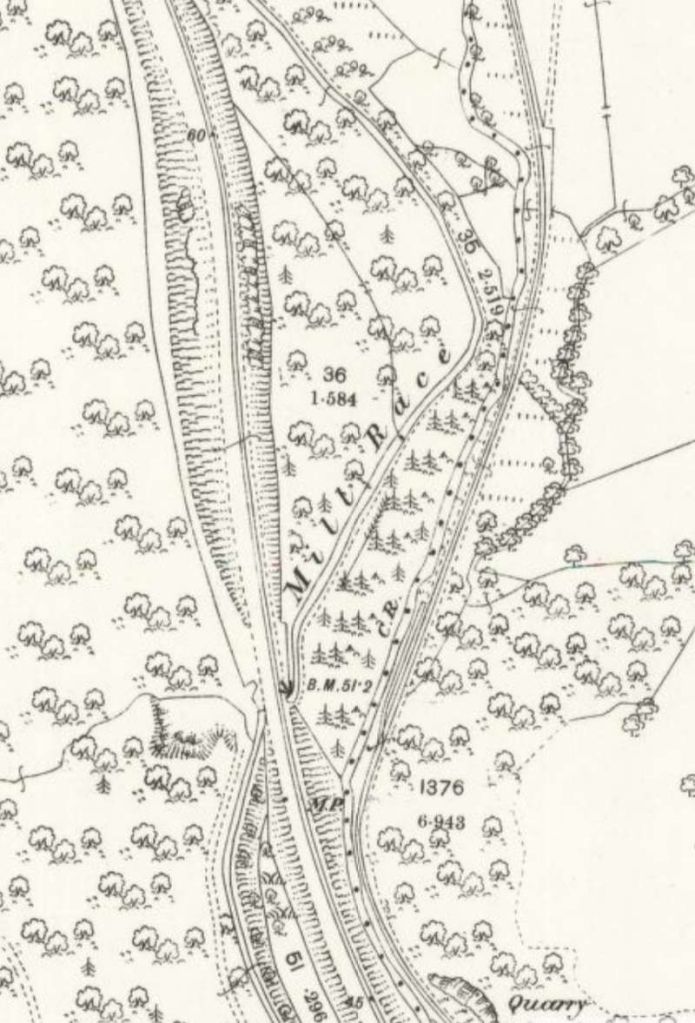
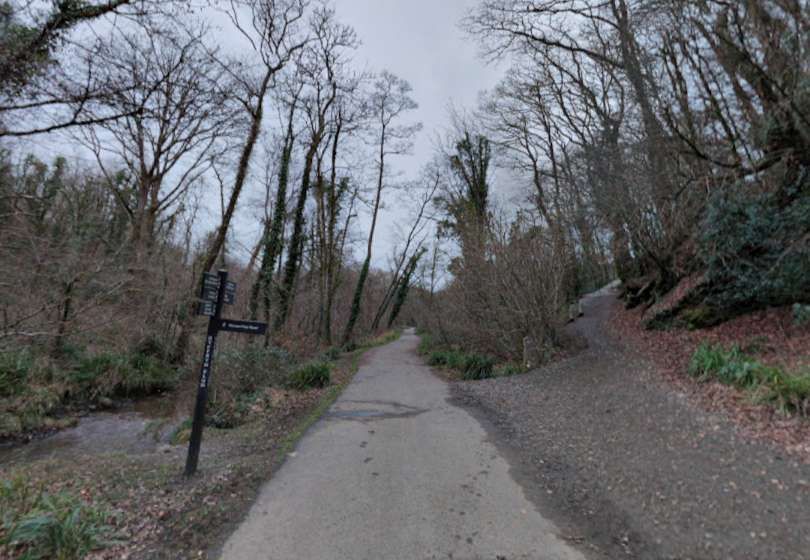
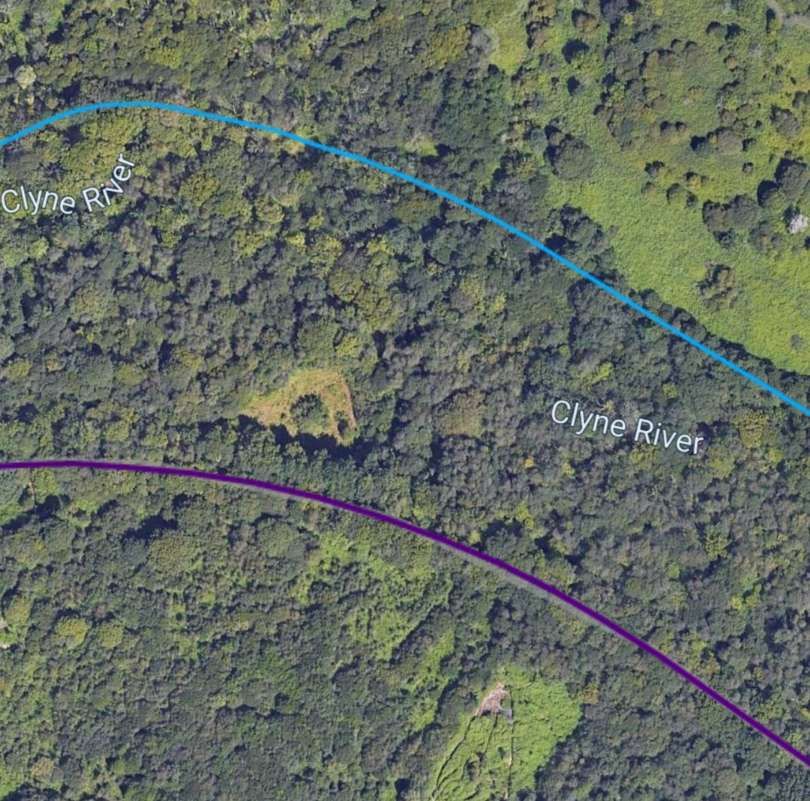
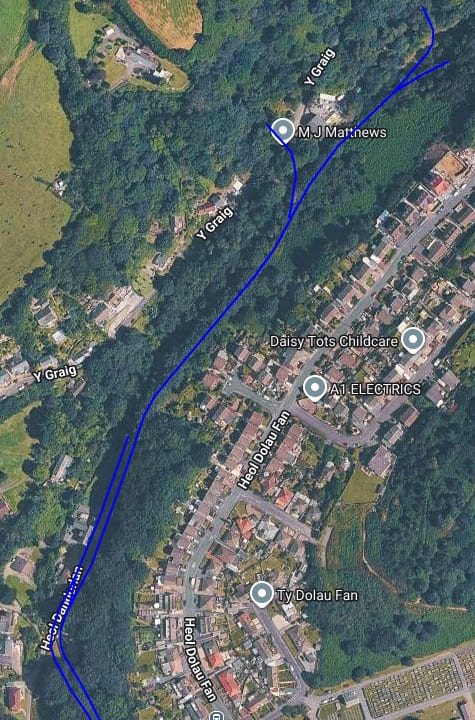
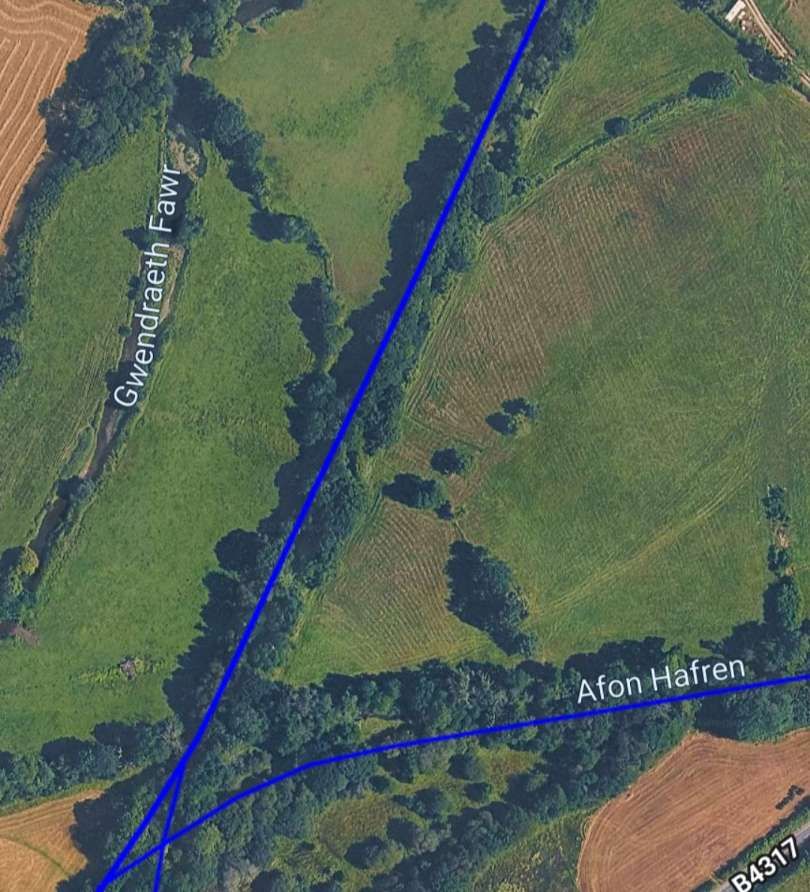
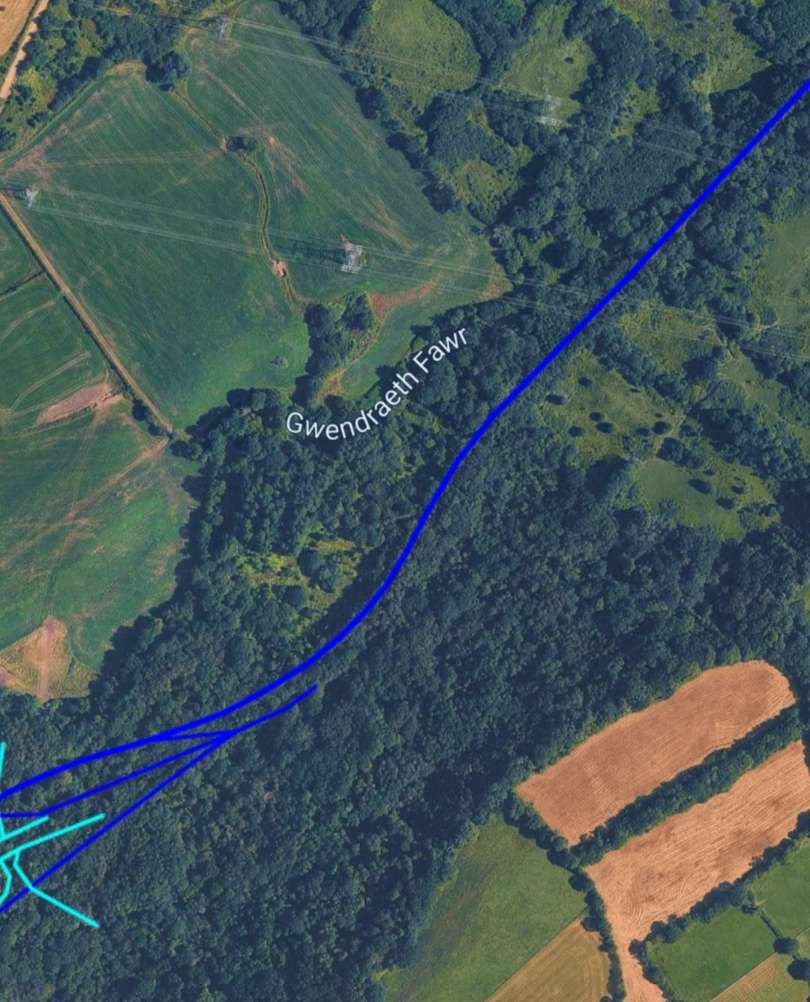
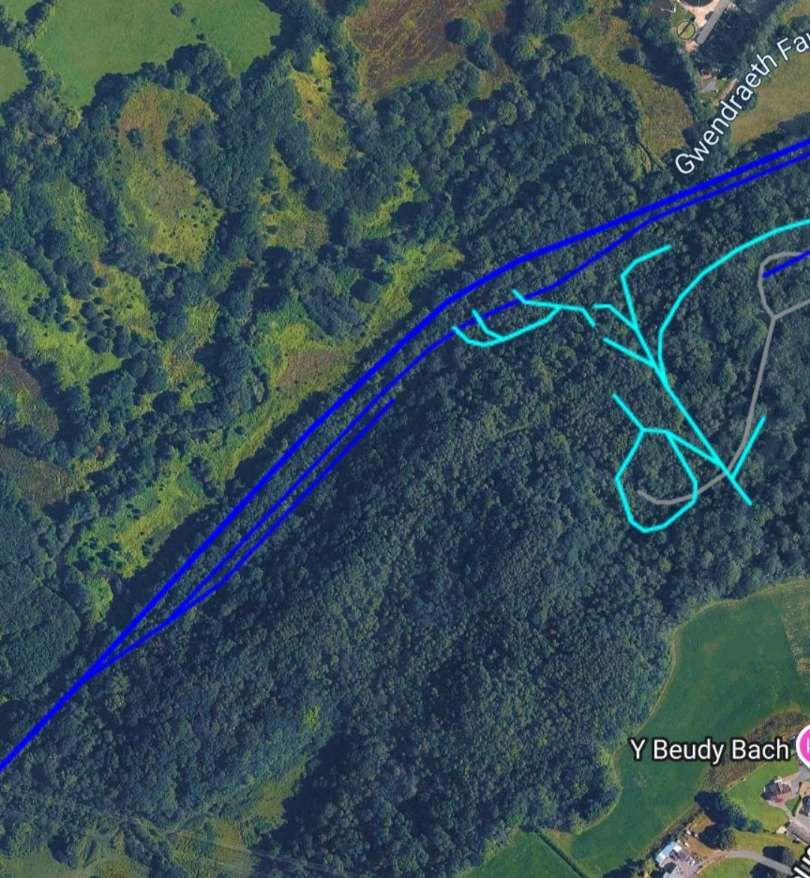
Just towards the bottom of the railmaponline.com satellite image above the old tramway route is joined by a cycleway. This photograph looks back Southeast along the line of the old tramway. [Google Streetview, August 2026]Looking ahead along the route of the old tramway from the same location. The tree cover is dense and the lighting therefore is poor. [Google Streetview, August 2026]Continuing Northwest, late evening further along the old tramway route and looking Northwest at the location of the clearing shown a little above the centre of the railmaponline.com image above. [Google Streetview, August 2026]Further Northwest, this time at the point where the purple and blue lines are closest on the railmaponline.com satellite image above. [Google Streetview, August 2026]The two lines continue North up the valley of the Clyne. Note the Mill Race which separates the two railways. [9]
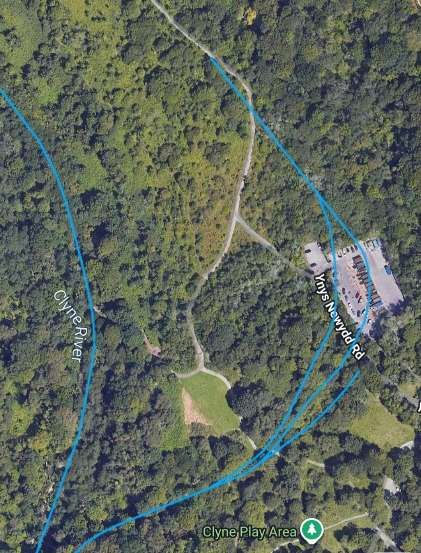
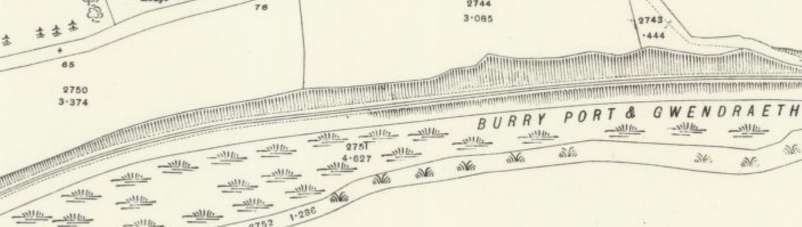
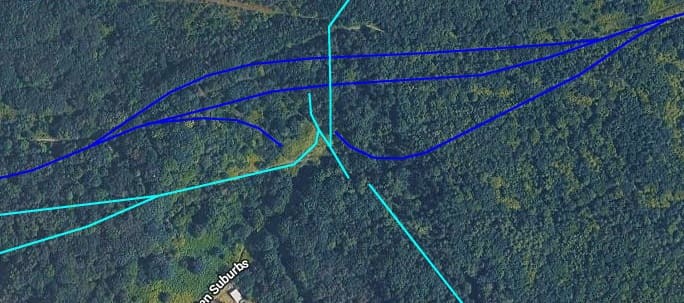
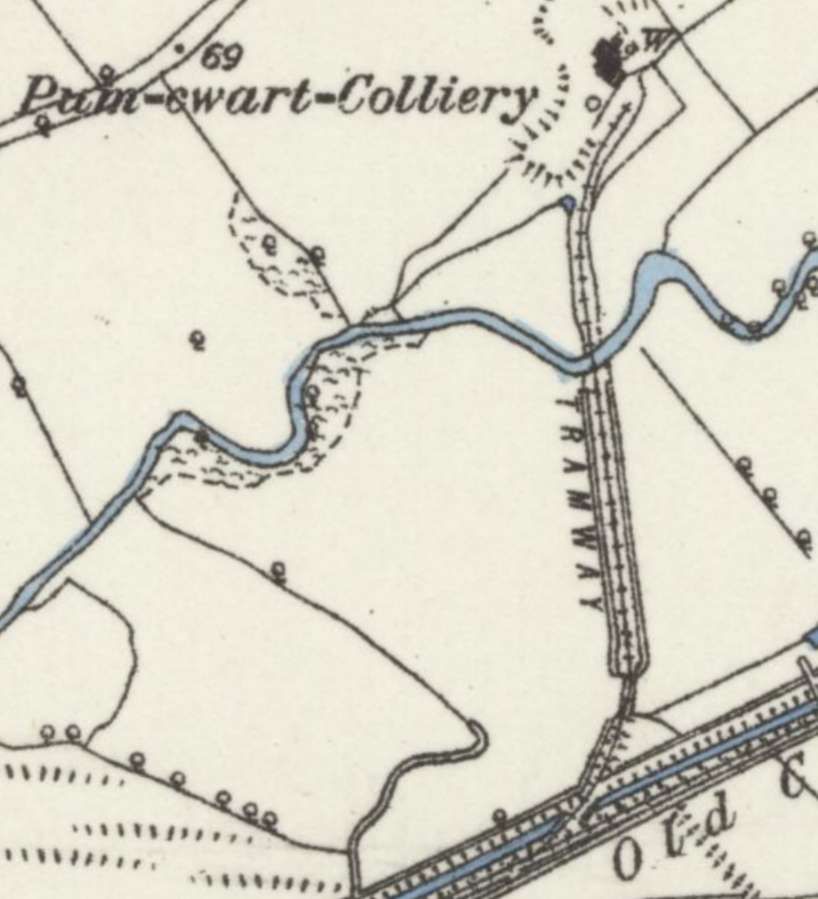
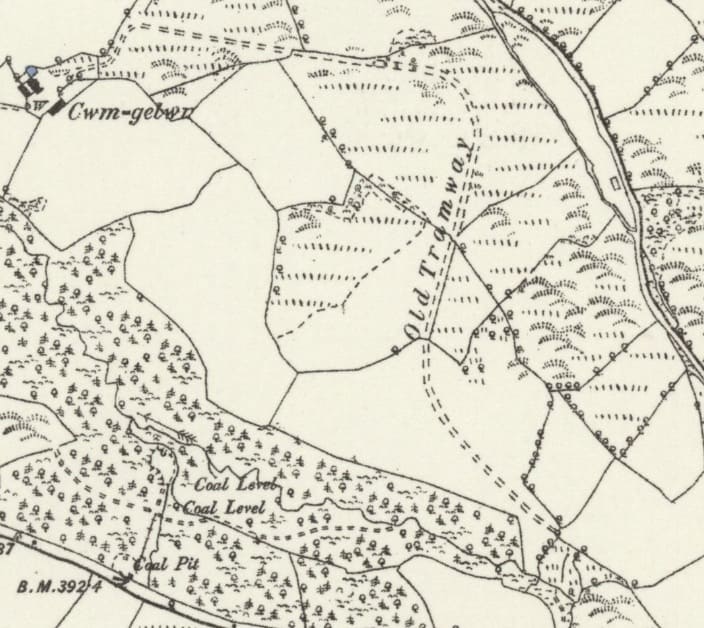
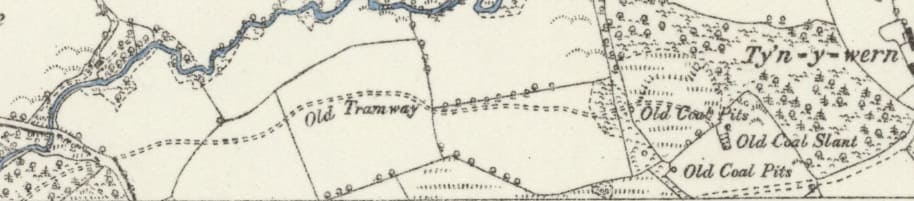
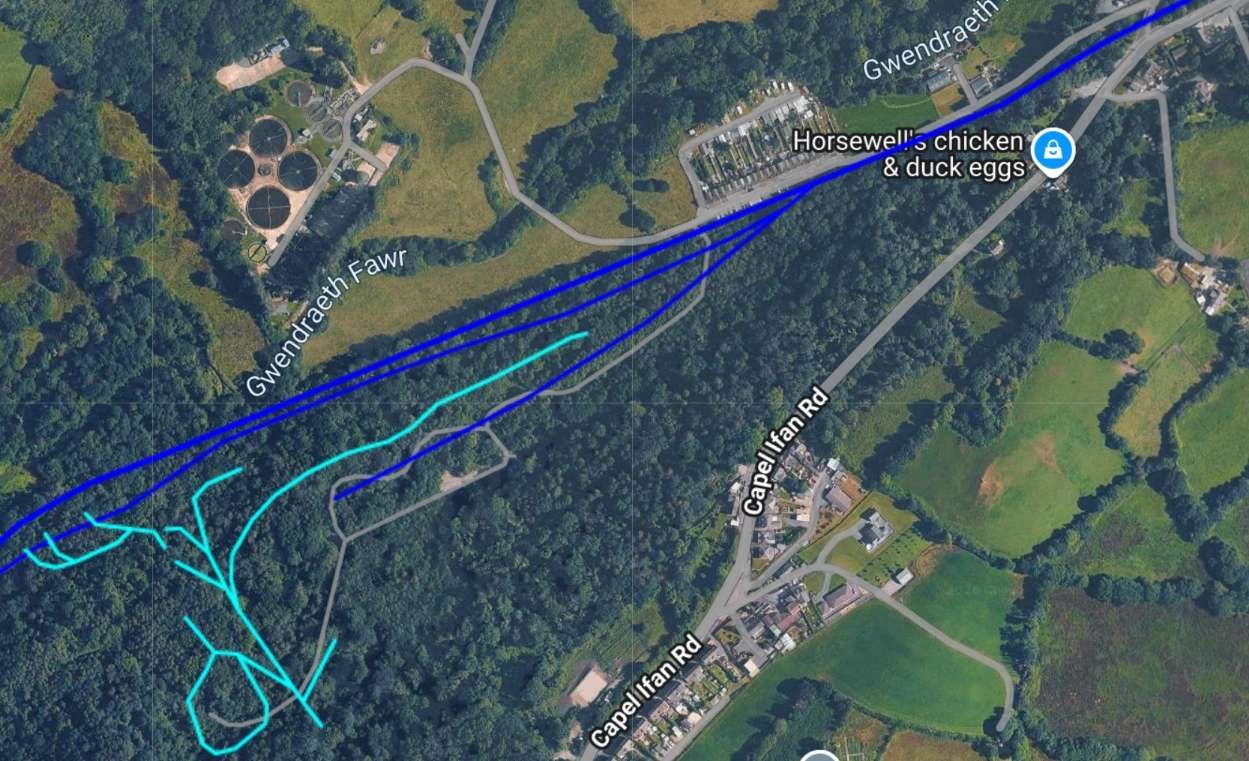
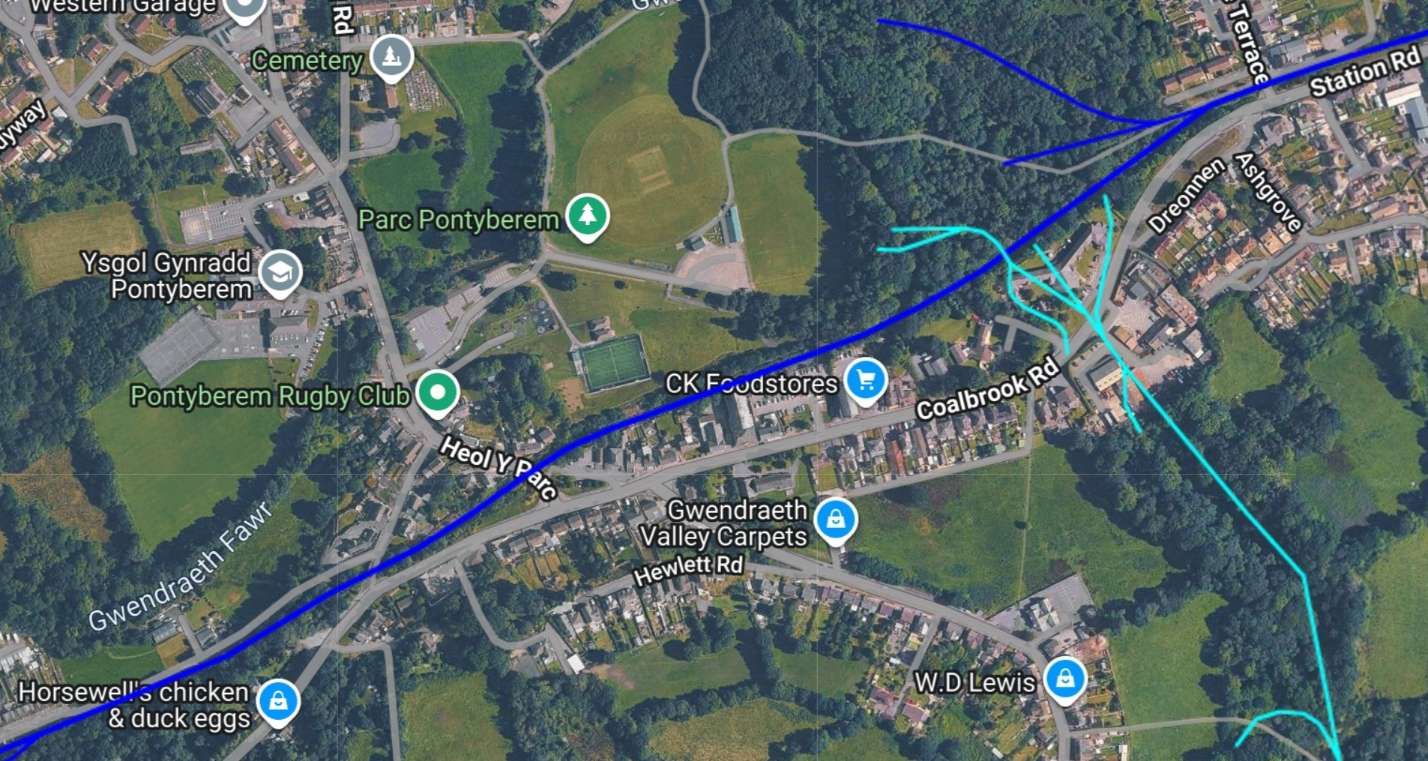
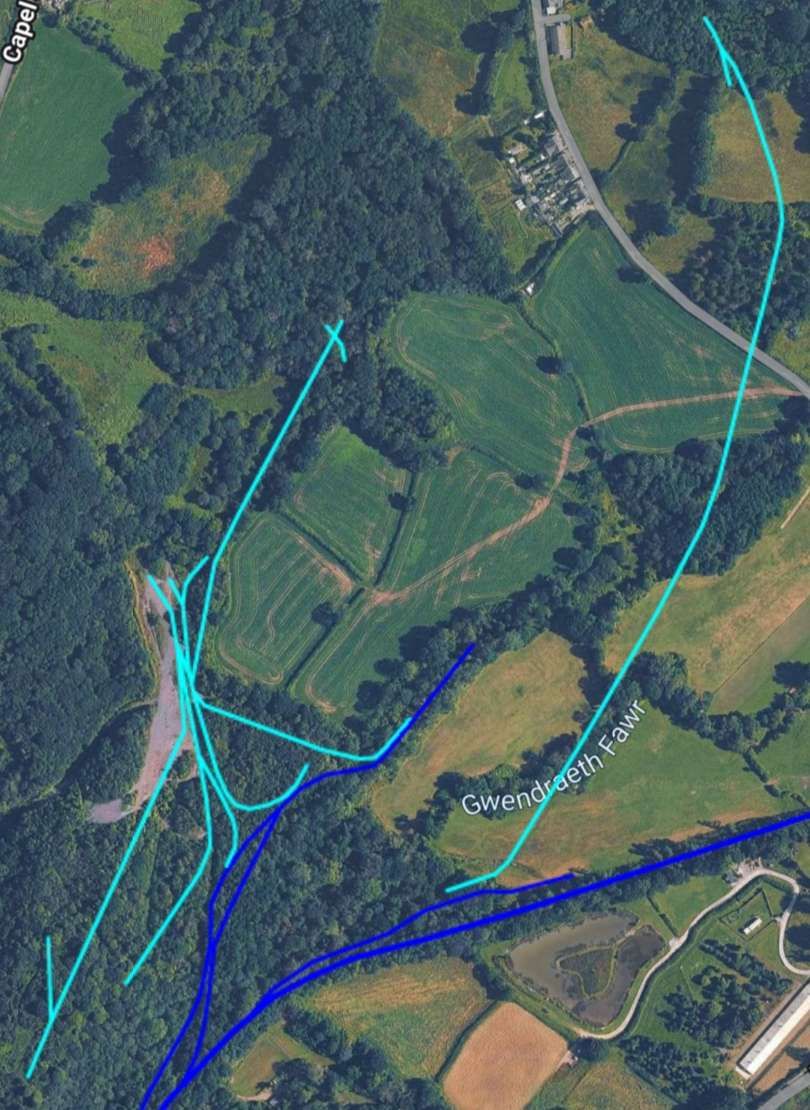
A similar area to that shown in the map extract above. Note the branch line that railmaponline.com shows heading to the East from the main branch line. This does not appear on the map extract as it was the line which served Ynys Colliery in the earlier 19th century. By the sate of the 1878 Ordnance Survey, the line had been abandoned and removed [12]
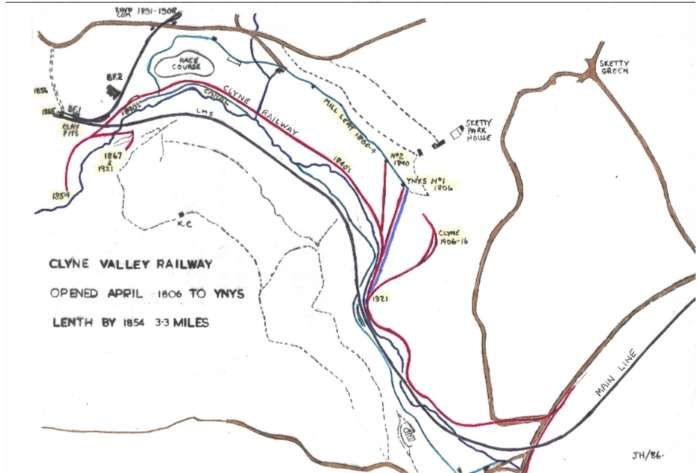
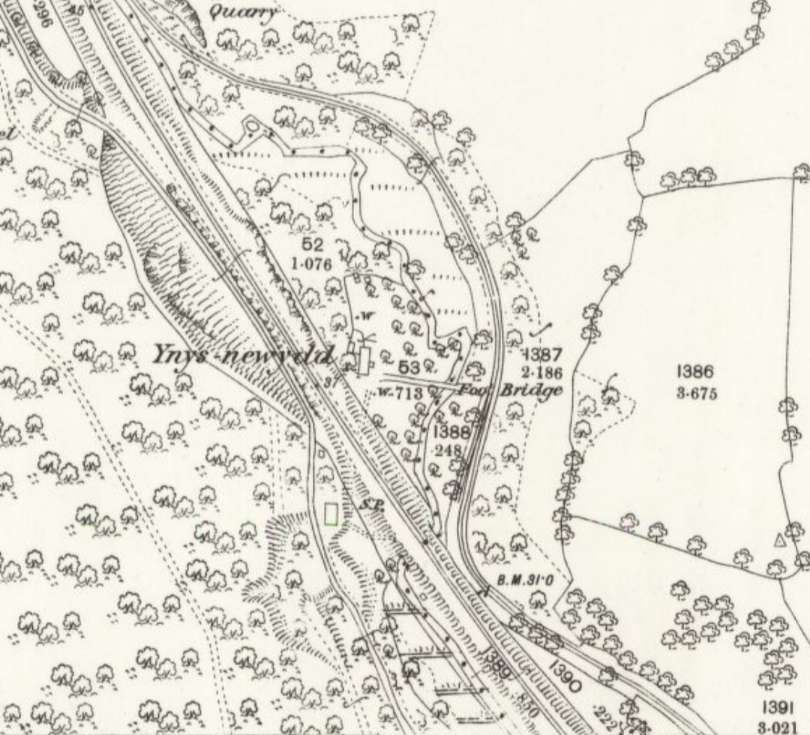
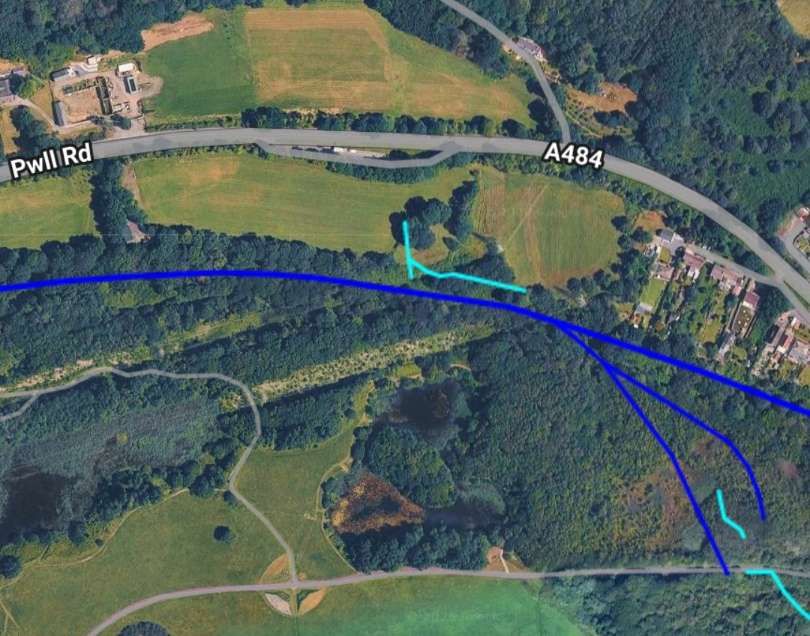
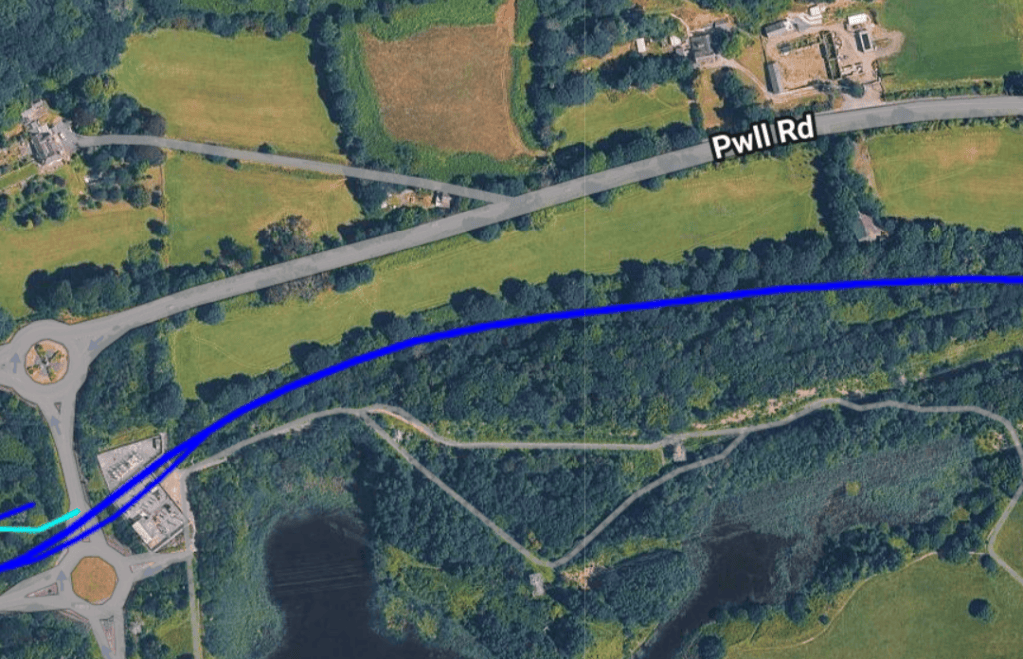
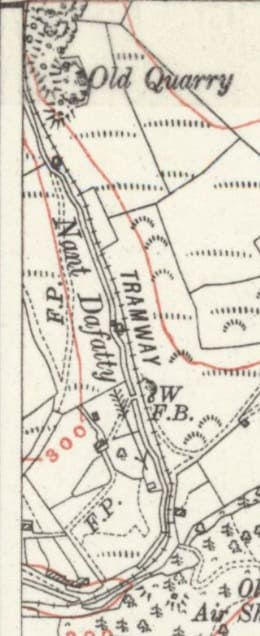
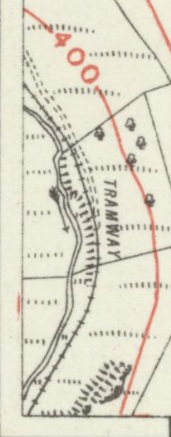
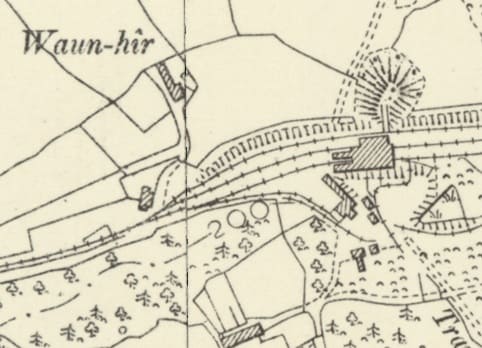
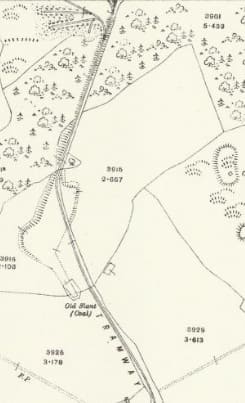
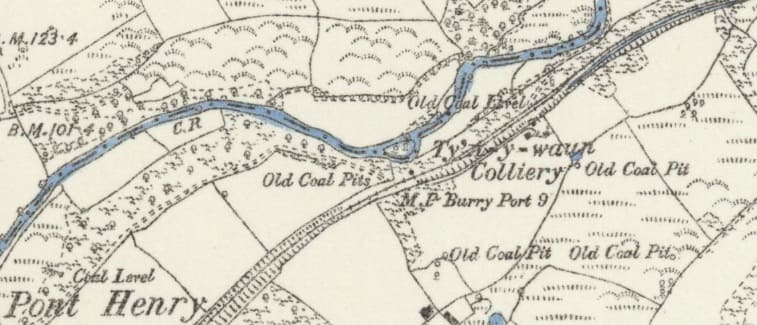
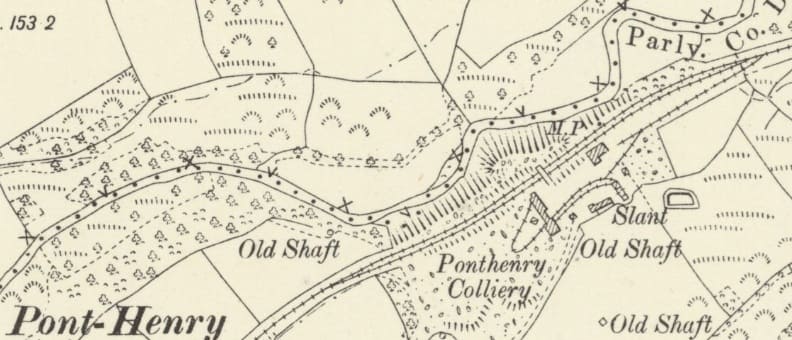
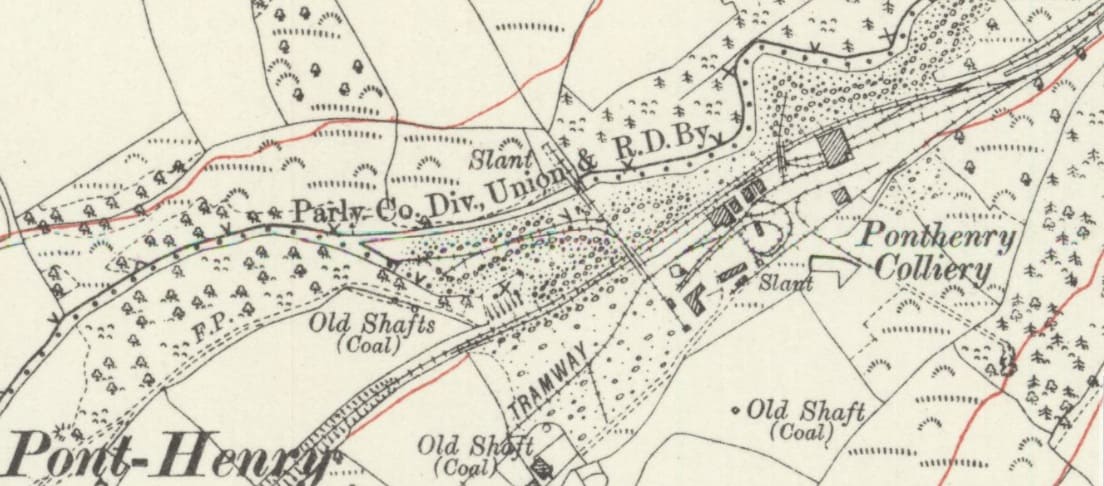
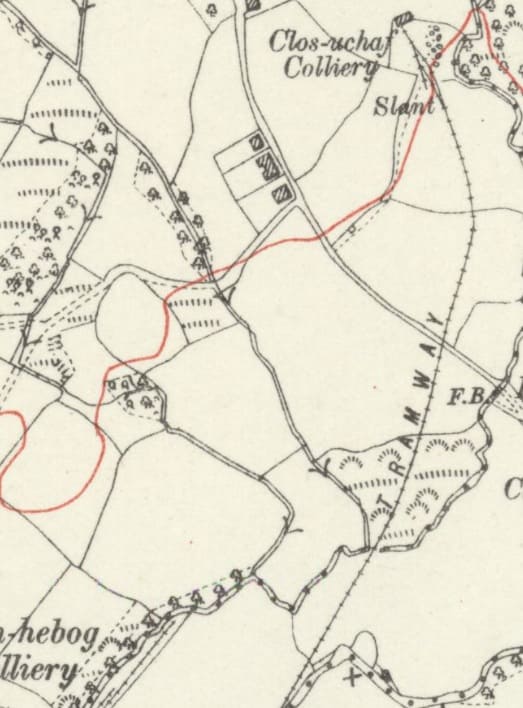
The branch served a colliery which is given the name Ynys in the early part of this article. The line shown in this image was the original line of the Clyne Valley Tramway. This length of tramway appears as a stub-end in the first map in this article and as a longer line in the second map near the top of this article. [12]
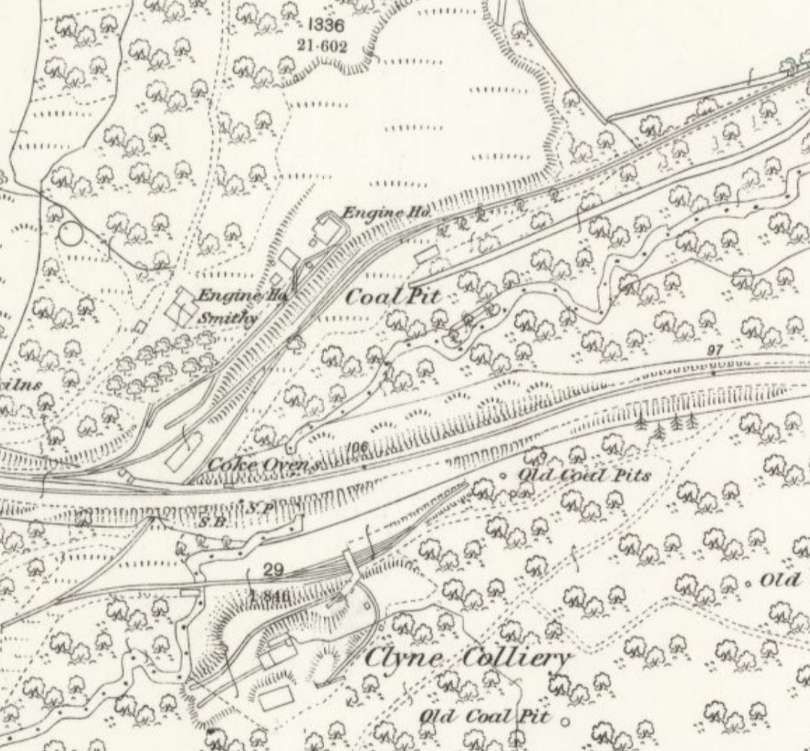
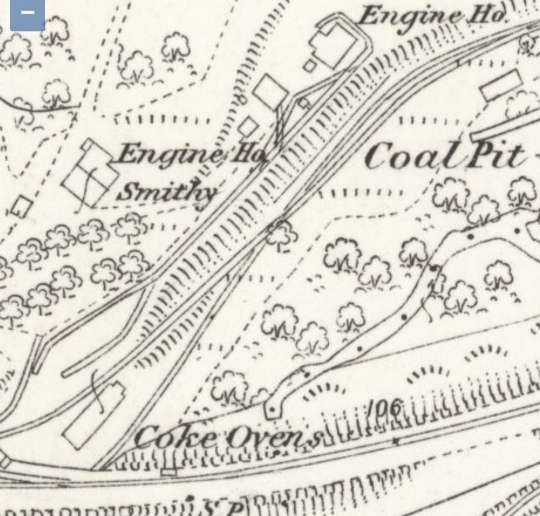
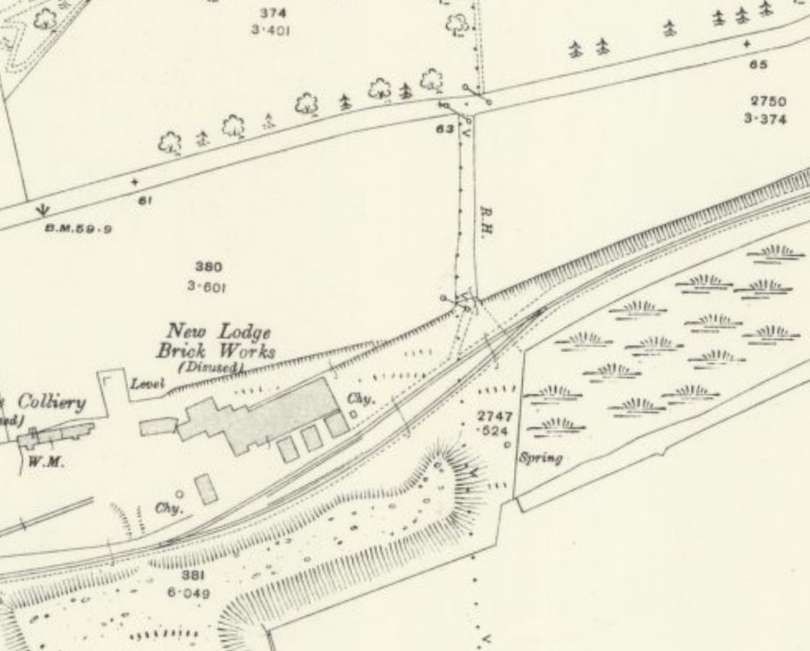
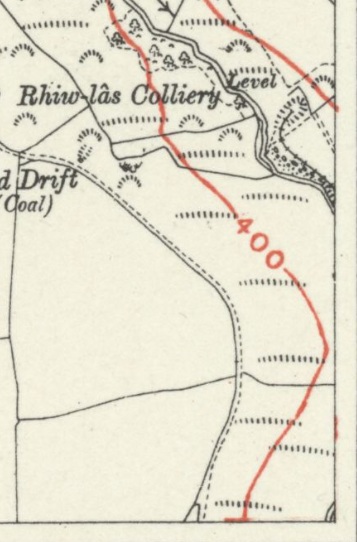
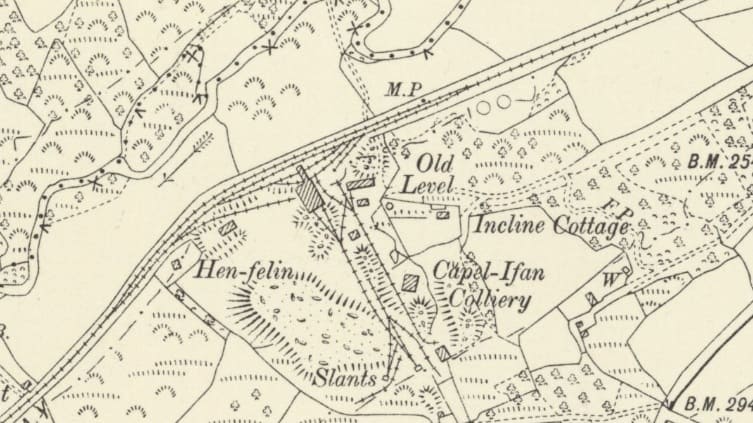
A closer view of the area to the Southeast of Killay that was the original terminus of the extension mentioned in the text of this article. Note the Coke Oven, two Engine Houses and the Smithy which remain from Rhydydefaid No. 1 Pit. [9]
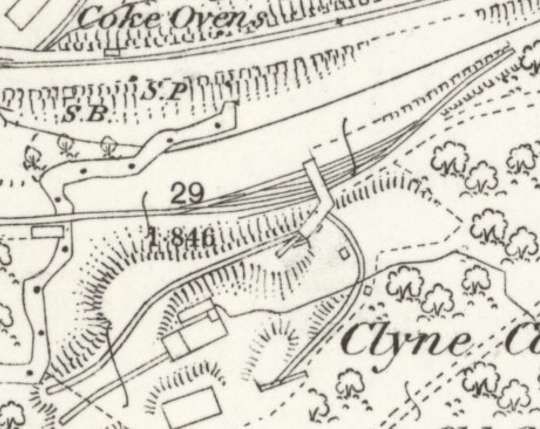
The site of Clyne Colliery which was accessed under the LNWR line and then via a headshunt. [9]
The next couple of OS map extracts show the area Southeast of Killay at two later times in history – the turn of the 20th century and immediately before the first world war. …
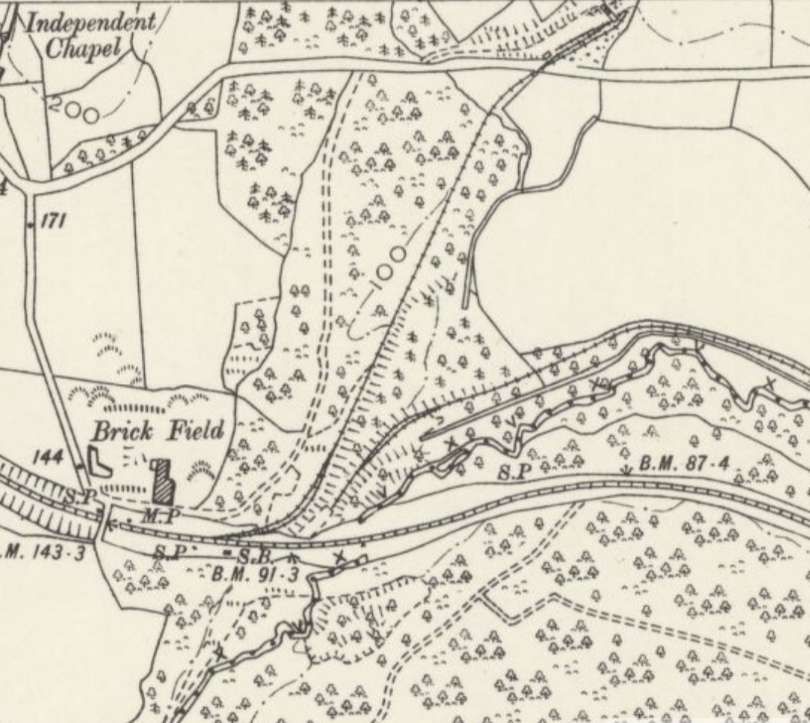
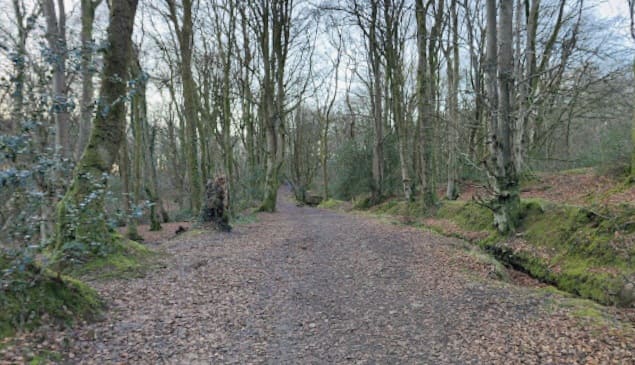
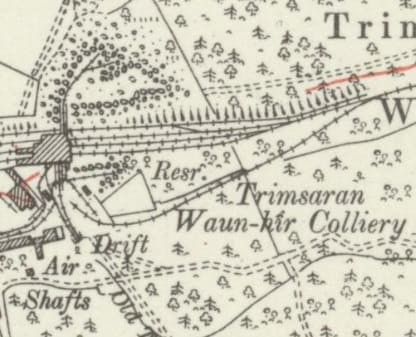
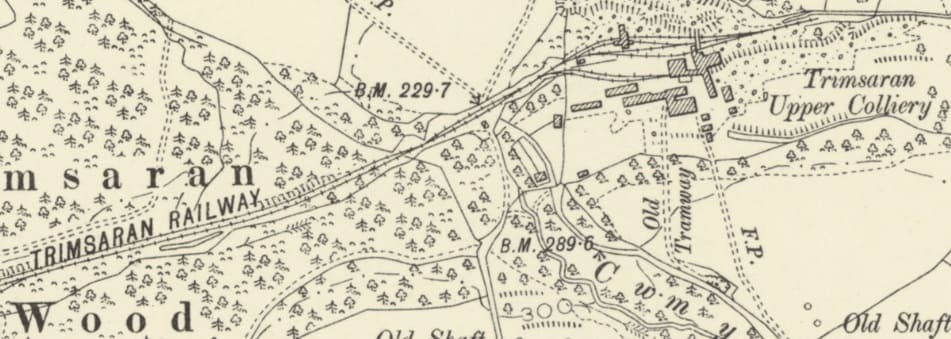
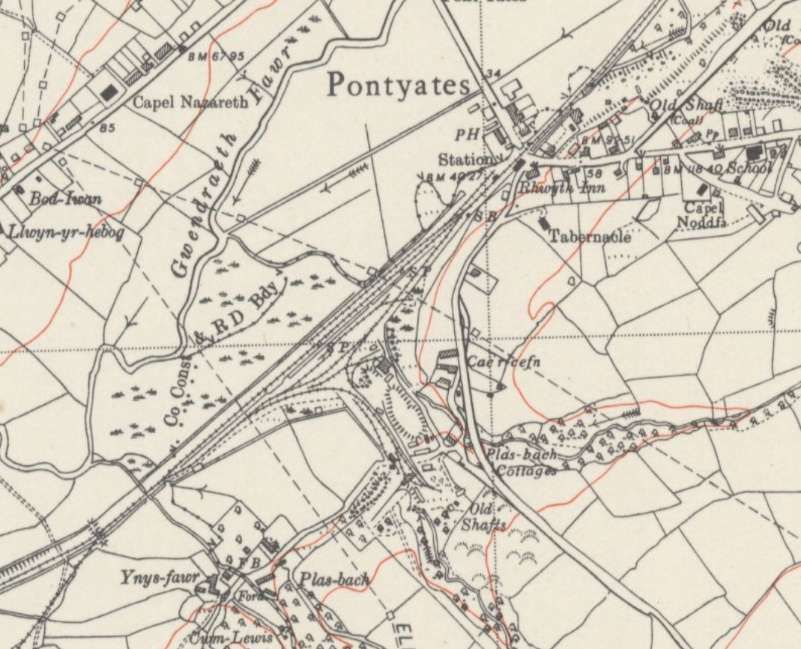
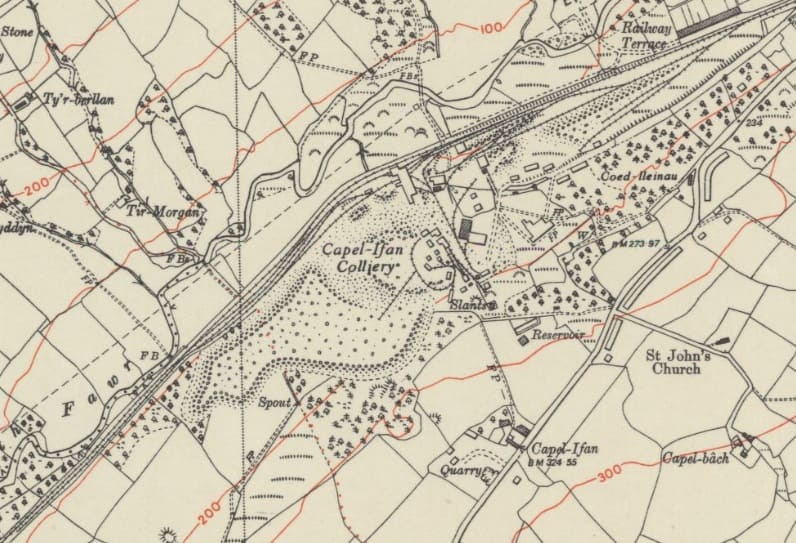
This extract from the 6″ Ordnance Survey of 1896/1897, published in 1900 shows the same area just before the turn of the 20th century. A long siding from the LNWR main line can be seen. Heading North-northeast to Rhydydefaid No. 2 Pit which was sited just on the next OS Sheet to the North. [10]This extract from the 6″ Ordnance Survey of 1913/1914, published in 1920 is able to include the colliery (by then disused) because the OS sheet area had changed from the earlier 6″ survey. Note the racecourse on the right side of this image. [11]Looking West along the forest path which runs between the Racecourse location and that of Rhydydefaid No. 1 Pit: (the camera is at a place to the West of the location of the Grand Stand which appears on the OS Map extract above), a hundred metres or so ahead is the point where the track was crossed by the LNWR siding serving Rhydydefaid No. 2 Pit (Commercial Colliery), (c) Ian Allen. [Google Maps, July 2022]
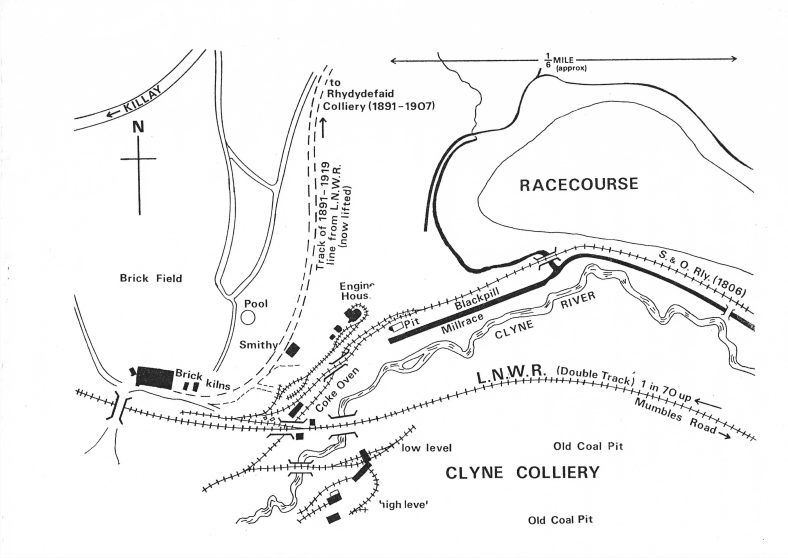
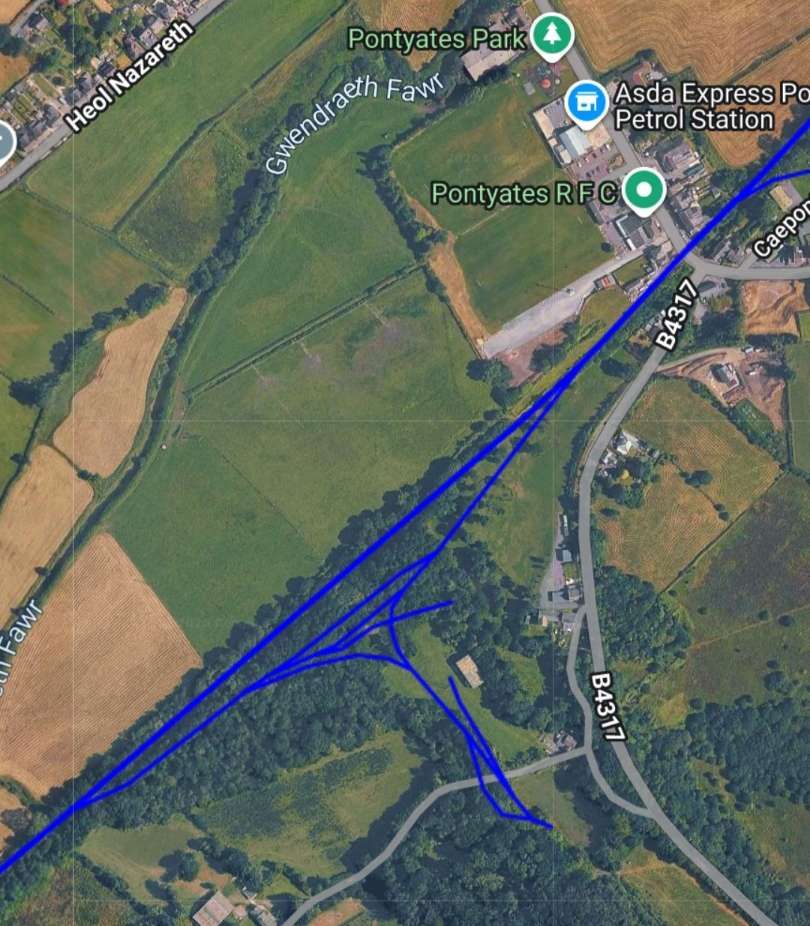
The next image is a line drawn map of the area South of Killay.
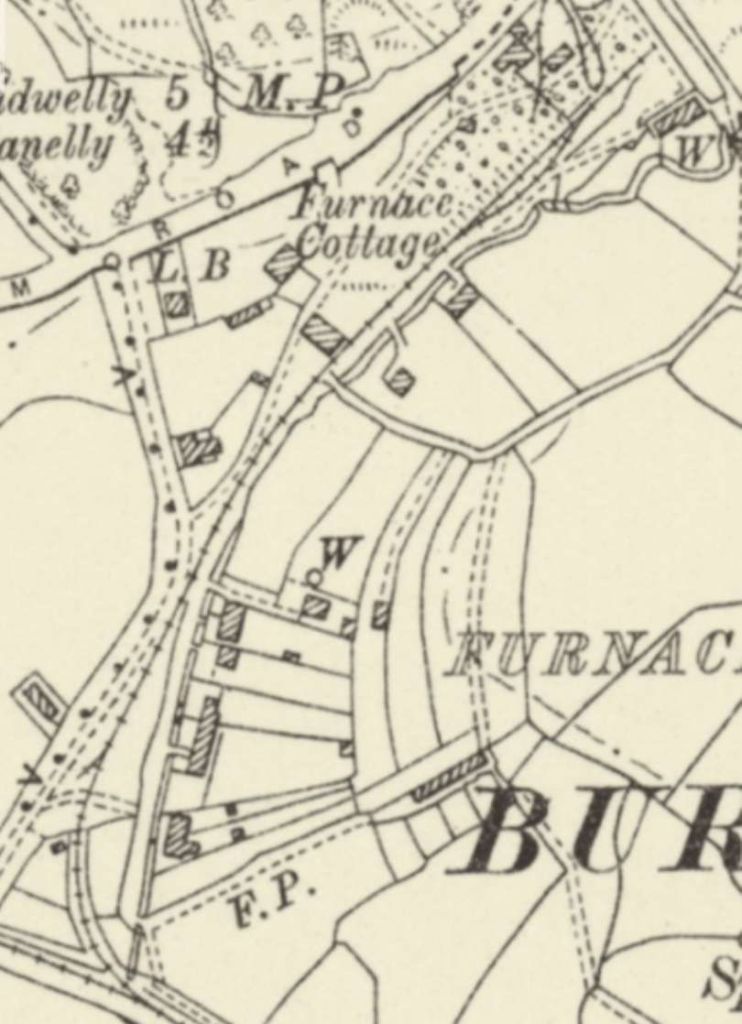
There is very little left of the buildings associated with this colliery which sat at, what was then, the end of the Clyne Valley Tramway. The colliery’s extensive waste tips are to the north of the pit on the south-east side of the railway embankment leading to the later Rhydydefaid No. 2 Pit (known too as Commercial Colliery). No. 1 Pit was sunk early in the 1840s and George Byng Morris started to work the coal and ironstone almost immediately through the Rhydydefed Coal Company and the Rhydydefed Iron Company which were created for this purpose. In order to serve these new workings, he re-laid the original 1804 Clyne valley branch of the Oystermouth Railway and extended it to Rhydydefaid pit in 1841-2, thus almost doubling its length. The history of teh colliery is covered in the general text above, it passed through a number of different hands and spent times in a state of disrepair prior to being refurbished by the next ‘owner’ or ‘leasholder’. Deatils are available on the Clyne Valley Community project website. [13]
That website tells us that, ” Evidence for the closure date of the Rhydydefaid pit is ambiguous. The colliery is listed in the report of the Inspector of Mines for 1882 and in Mining and Mineral Statistics for 1883. It is absent from Mining and Mineral Statistics in 1884 but re-appears in 1885 and 1886: in both years no manager is named which could be taken to indicate that it was inactive. The pit had definitely been abandoned by 1885 since all the plant and machinery was offered for sale in December of that year. The plant included a winding engine and a pumping engine, each with its own boiler; these would have been housed in the two engine houses which were marked on the 6in and 25in Ordnance Survey maps of 1876/7. There were also screens and tipping apparatus, cages, coke ovens (again as shown on the Ordnance Survey maps), a large number of trams, eight railway trucks, rails and a variety of miscellaneous equipment – altogether what one would have expected of a well equipped colliery. With a life of about forty years, its closure must have been due simply to the fact that all the coal that could be worked conveniently or economically had been extracted.” [13]
Within a few years coal was being exploited from Rhydydefaid No 2 Pit (Commercial Colliery).
Rhydydefaid No 2 Pit (Commercial Colliery)
This colliery was built to exploit coal from the area North of the No. 1 Pit. Rhydydefaid No 2 Slant, later known as Commercial Colliery, commenced working in 1891 or at the latest 1892; A railway connection to the new slant was put in from the existing siding off the London & North Western Railway which had been installed to serve Rhydydefaid No 1. The railway is shown on the 2nd edition of the Ordnance Survey 6 inch map (revised 1896) and it is safe to assume that it was in existence by the time the colliery opened. It remains a prominent feature within Clyne Woods.
After closure, an area to the West of the site seems to have been used as a clay pit with the embankment was used as a convenient track for transporting clay to the brickworks to the South of the site close to the LNWR main line.
Clyne Wood Colliery
Clyne Wood Colliery is marked on the OS mapping above as ‘Clyne Colliery’. Remnants remain but the principal site appears to have been used for clay extraction by the adjacent Briskworks.
Work ceased at the pithead in 1870, although underlying minerals may have been extracted via the neighbouring Rhydydefaid pit. In June 1870, the entire plant and materials at the Clyne Wood pithead were offered for sale. “It would appear that the sale was unsuccessful and that the pithead equipment remained in situ for it is all shown in detail on the first edition of the 25 inch Ordnance Survey map (surveyed in 1877/8).” [15]
Underground working probably ceased in about 1883 at the same date as Rhydydefaid itself.
Steam Locomotives
In the 1899 Agreement: to facilitate the reopening of the valley’s coal reserves, an agreement was struck with the Swansea Improvements and Tramways Company (operators of the Swansea and Mumbles line) to convey coal from the Clyne Valley down to the main Swansea wharfs. Because the main line had fully transitioned to steam traction by this era, the regular fleet of Swansea and Mumbles Railway Steam Locomotives worked the branch line to haul the heavy coal trains down the valley. This fleet included a variety of saddle tanks from manufacturers like the Falcon Engine & Car Works, Manning Wardle, and the Hunslet Engine Company. [16]
Steam-hauled coal trains coming down the Clyne Valley branch would arrive at the junction near Blackpill. To transfer the coal to the wider rail network, the locomotives had to back-shunt west towards Oystermouth before running forward through points into the adjacent London and North Western Railway (LNWR) Mumbles Road station goods yard.
Locomotive operations on the branch continued through the peak years of the local coal industry until the local slant mine closed in 1921. The track itself actually remained intact for years afterward, with records showing a final diesel locomotive excursion traveling up the branch as far as Ynys Gate as late as 1936. [16]
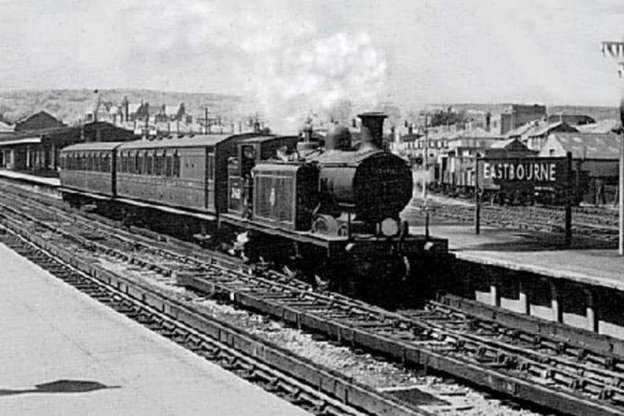
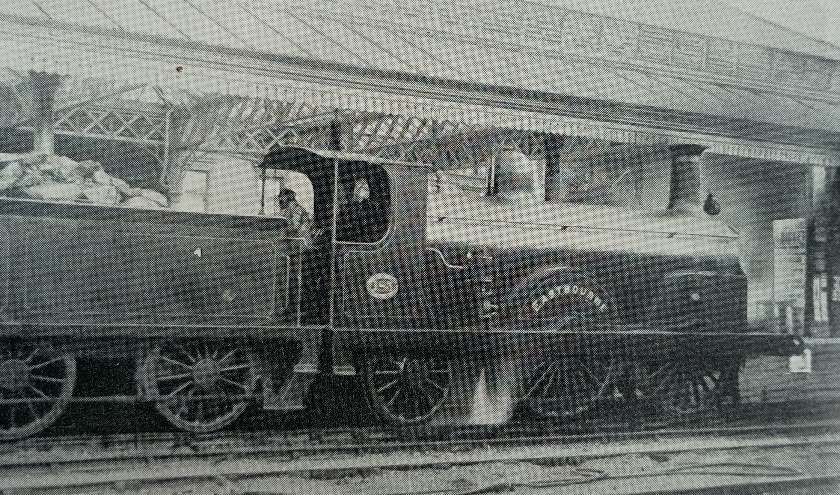
The featured image for this article shows a two coach train awaiting departure at Eastbourne Railway Station. It think that the locomotive is an ex-LB&SCR E4 0-6-2T in BR livery. These locomotives were originally numbered463-503, 507–520, 556–566, and 577-582. The number on the smoke box is not legible in the photograph. The exact locomotive shown in the photograph cannot easily be determined from the image.[21]
When the first railway was projected southwards from London to the Sussex Coast, its promoters had as their objective Brighton, which already was a well-established holiday resort. The eastern extension of this main line served the county town of Lewes, and had reached the western outskirts of St. Leonards by the summer of 1846, but it was not until 14th May 1849, that a 4.5-mile branch was opened from Polegate to serve Eastbourne, which was then little more than a village. The advent of the railway marked the beginning of the growth of Eastbourne as a holiday resort and residential area. At the end of the 1849s, Eastbourne’s population was around 2,500. By 1953, the town was a county borough, with a population of nearly 58,000, and in 2026 the population is around 105,000. [1] It has been suggested that the modern town of Eastbourne “was virtually created by the seventh Duke of Devonshire in the mid-nineteenth century, [but] there is little doubt that the advent of the former London, Brighton & South Coast Railway in 1849 was the influencing factor in promoting,” [3: p723] the growth of the town.
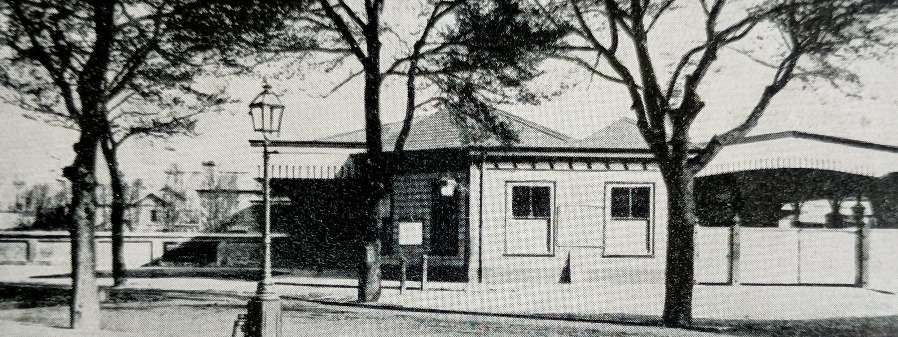
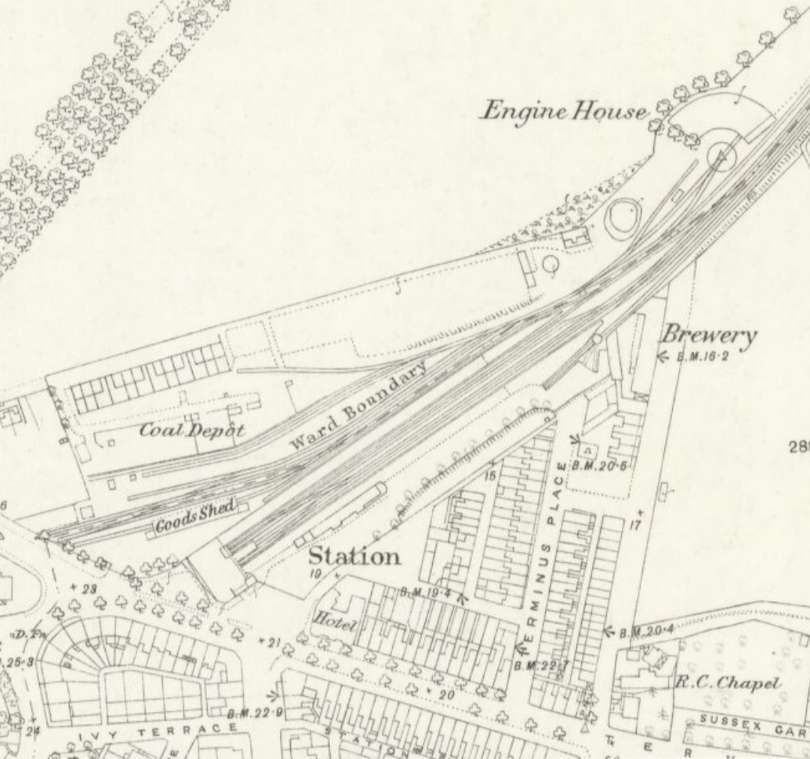
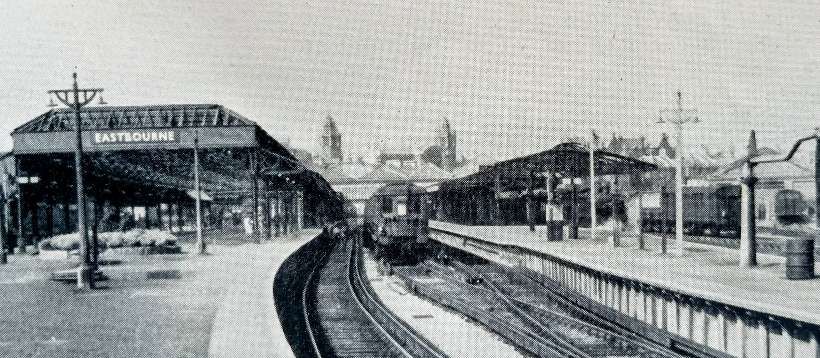
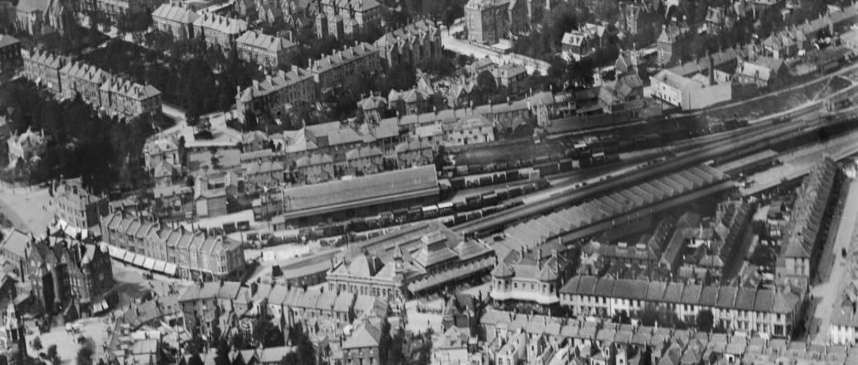
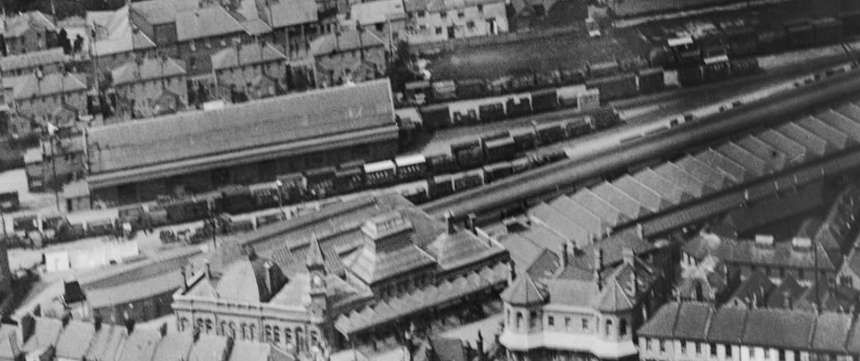
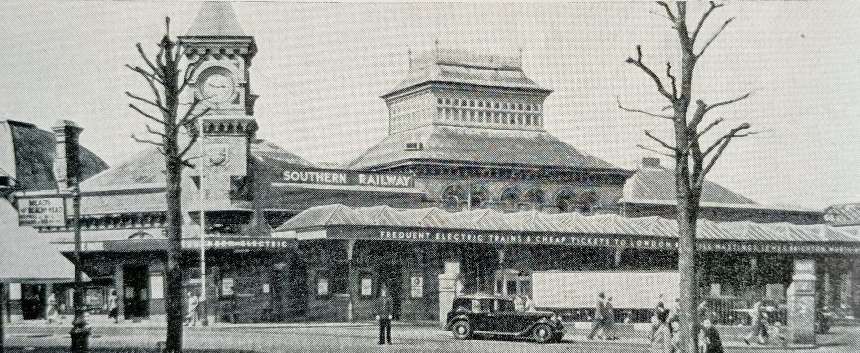
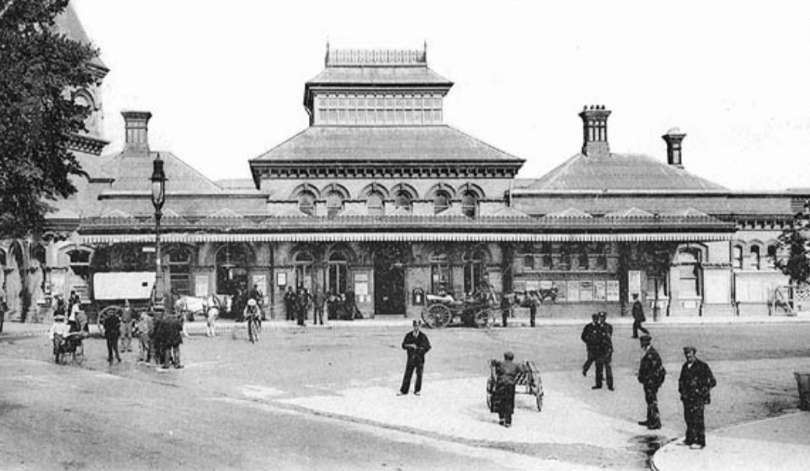
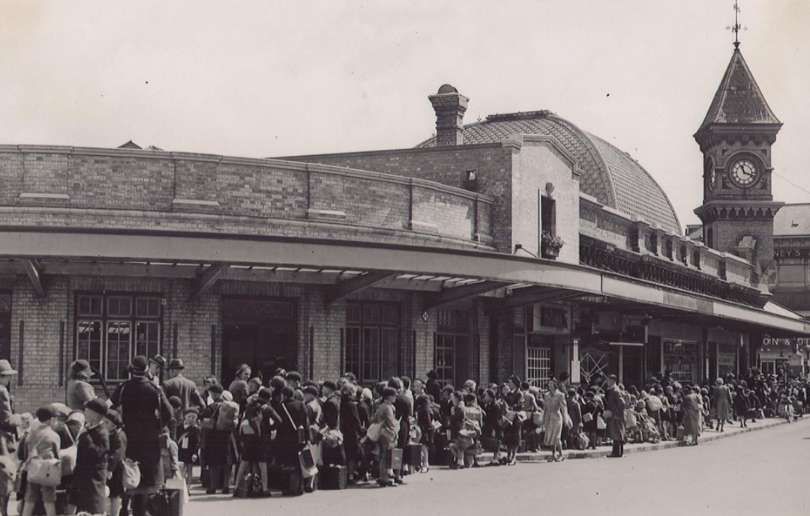
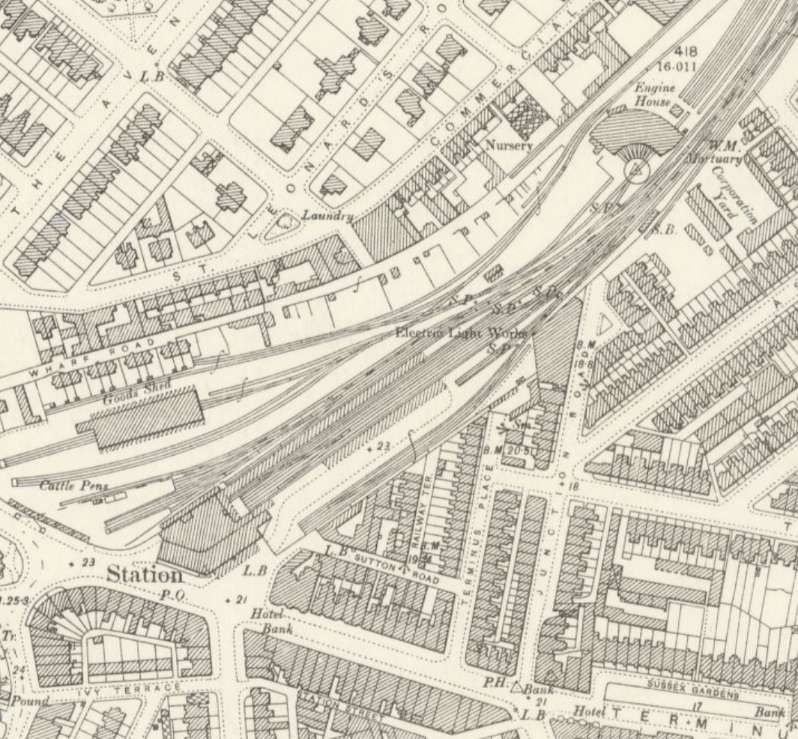
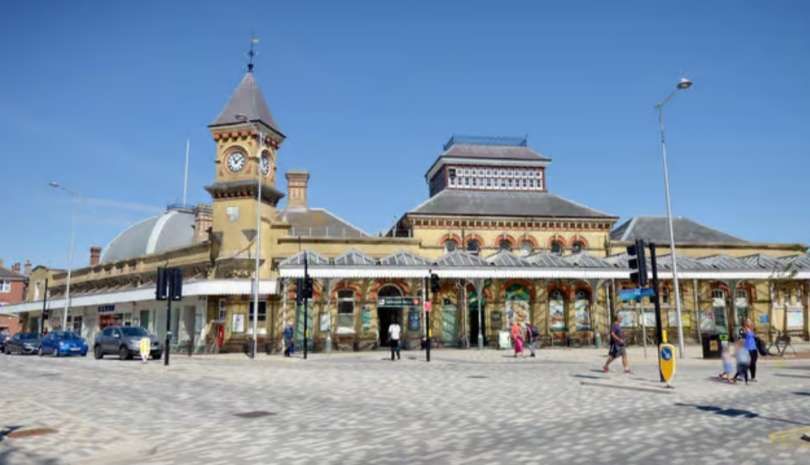
Since the inauguration of the line in 1849, the original modest terminus of the branch was twice superseded by a larger station. The first station was built in 1849, this was rebuilt in 1866 and rebuilt yet again in 1886. [2]
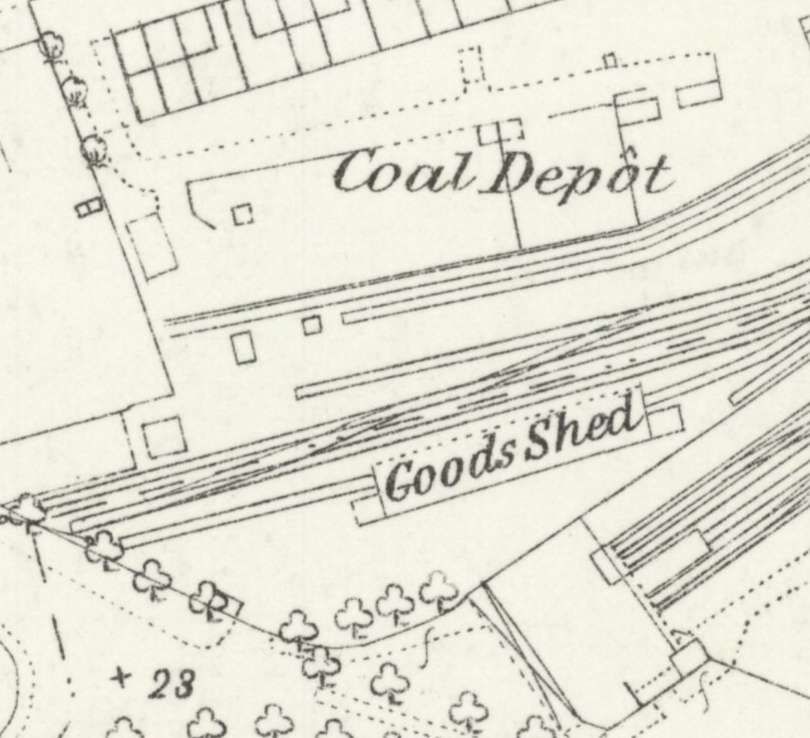
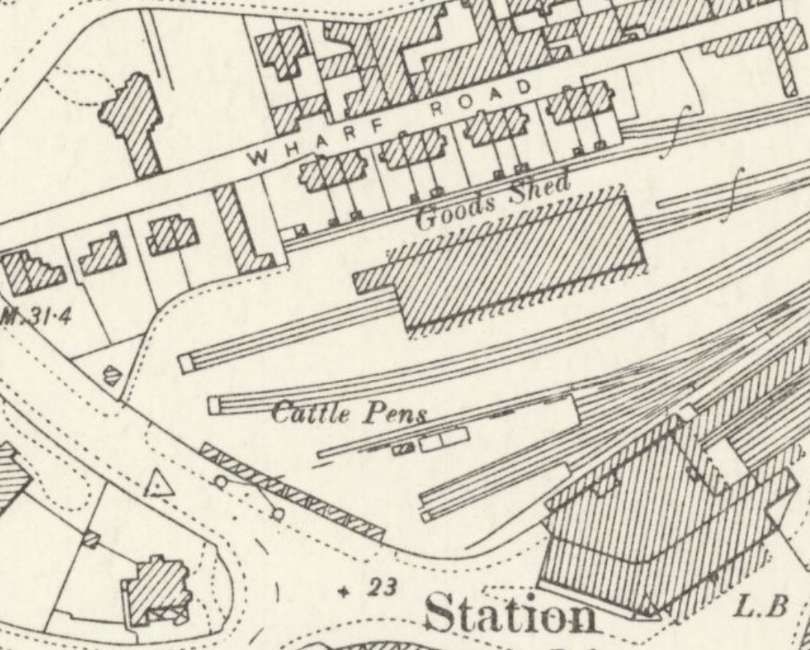
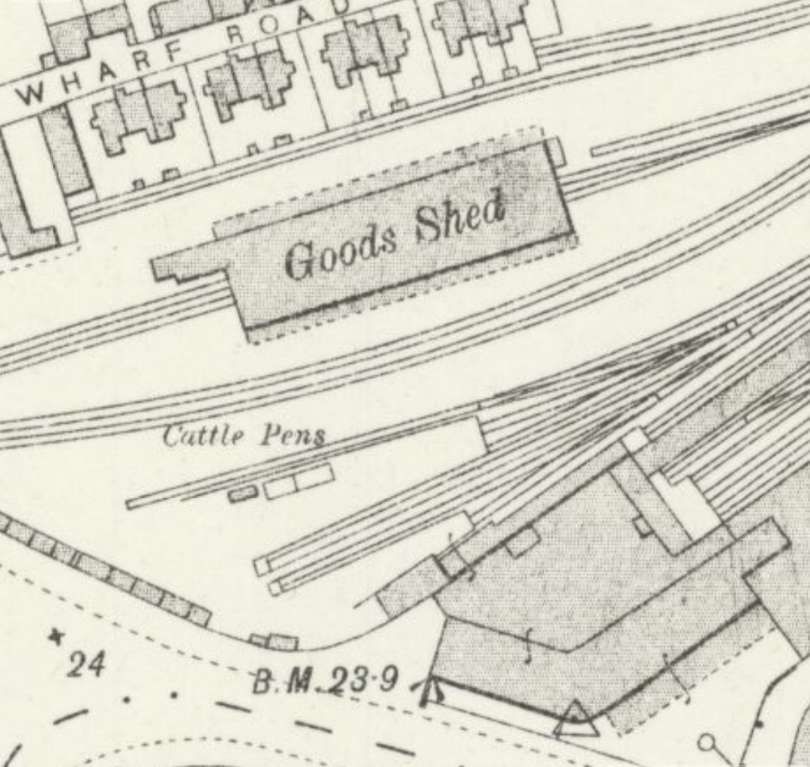
Stones writes: “An Act of 18th June 1846, authorised the London, Brighton & South Coast Railway Company (successors to the Brighton, Lewes & Hastings Railway) to construct two short lines from Polegate, to Eastbourne and Hailsham respectively, and these were completed and officially opened simultaneously on 14th May 1849. Originally, it had been intended that after leaving Polegate, the Eastbourne branch should pass through the village of Willingdon, and terminate in what is today the Old Town of Eastbourne, situated about a mile-and-a-half from the coast. However, because of the undulating nature of this route, and other considerations, it was finally decided to construct the line further to the East, with a terminus at the neighbouring and growing residential hamlet of South-Bourne, half-way between East-Bourne and the sea. As a result the Eastbourne branch, four-and-a-half miles in length, ran south-east from Polegate and traversed the Bourn or Willingdon Level, which forms part of an extensive plain extending to the east from the slopes of the South Downs. Although the terminal station was named ‘Eastbourne’ when the branch was opened in 1849, it was actually in South-Bourne, which was subsequently to disappear in name and become an important part of modern Eastbourne.” [3: p723,725]
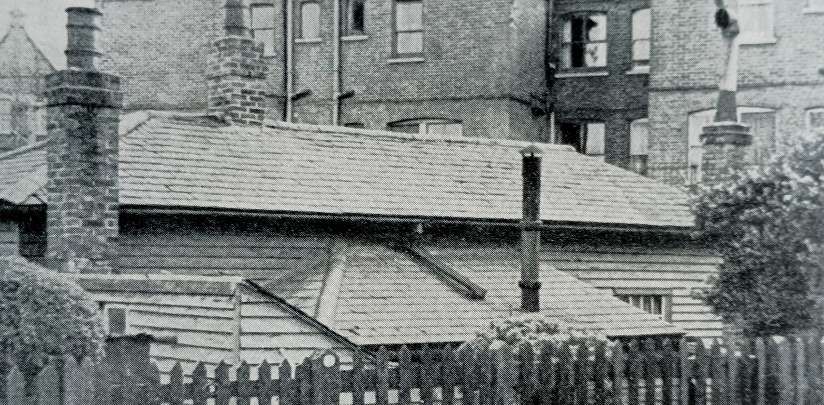
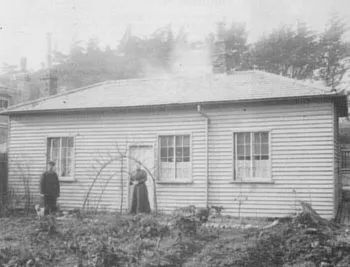
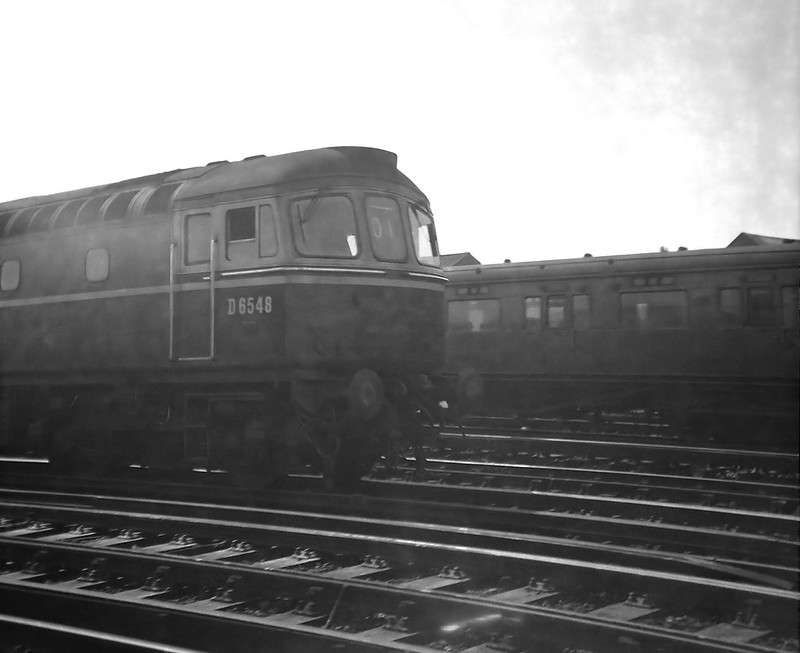
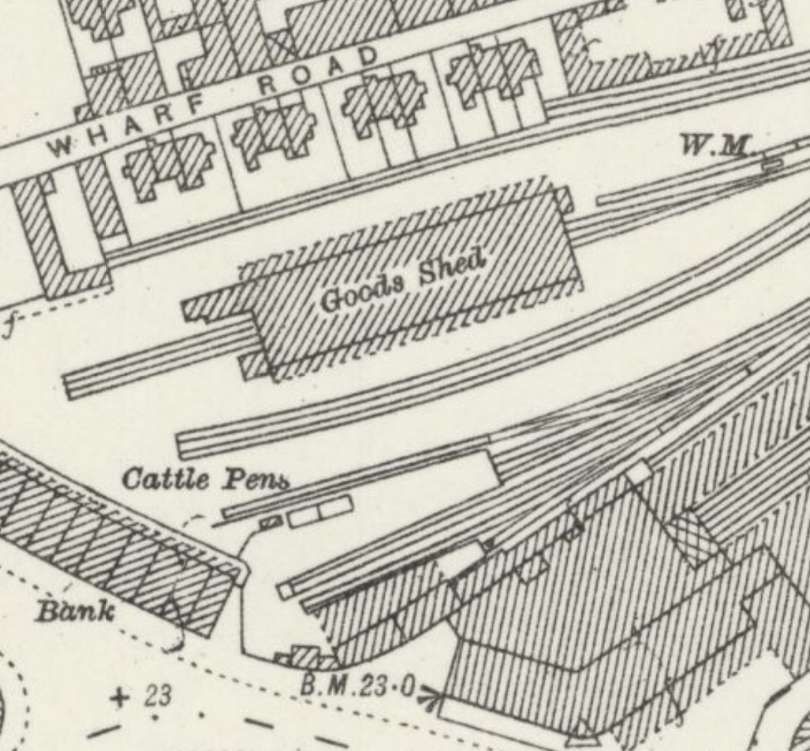
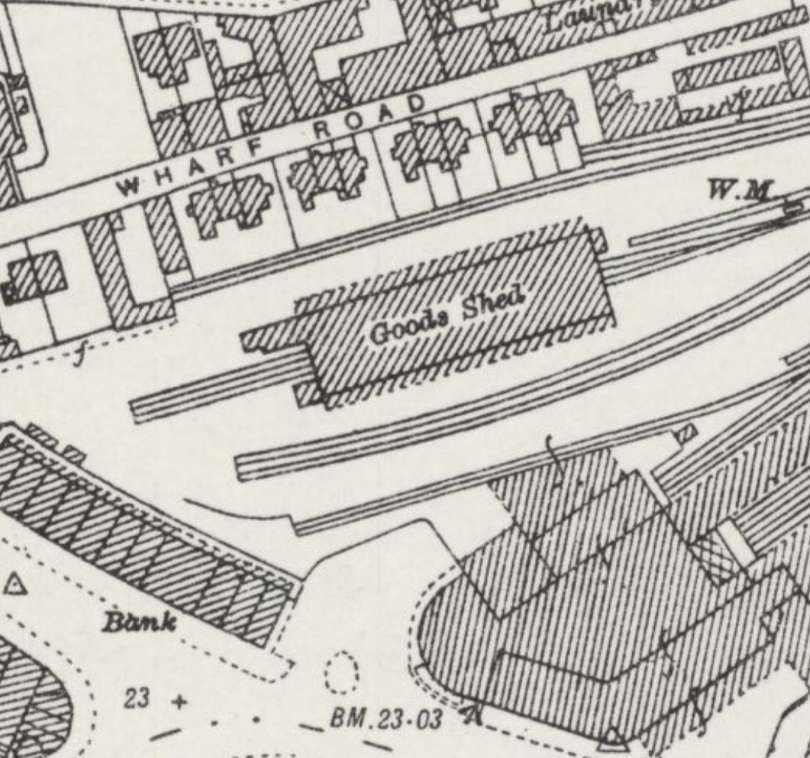
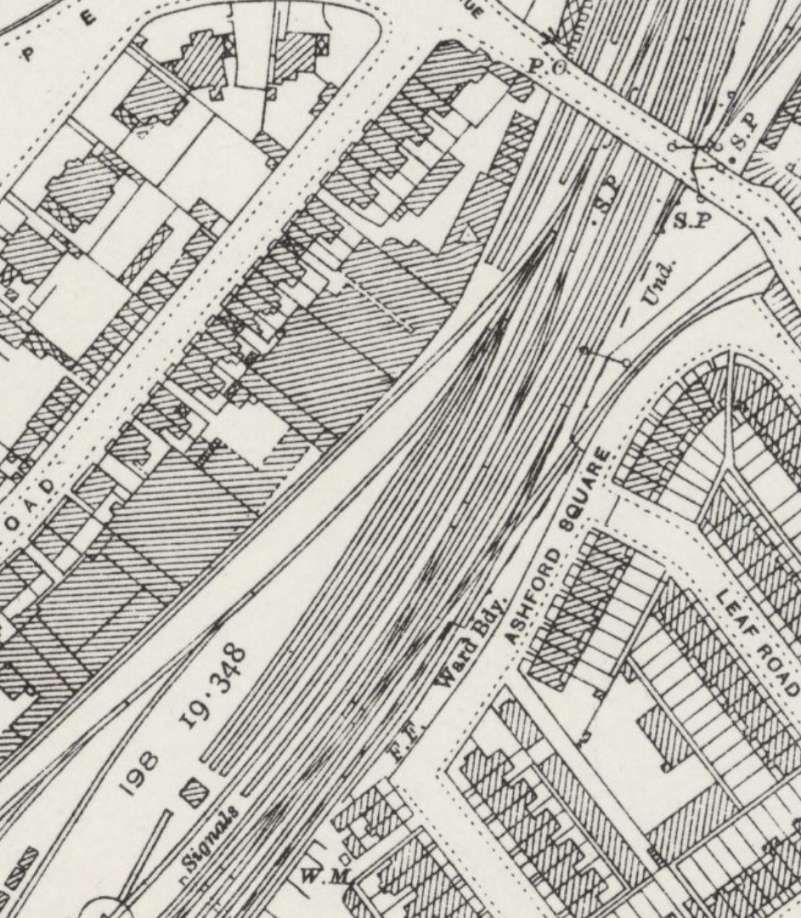
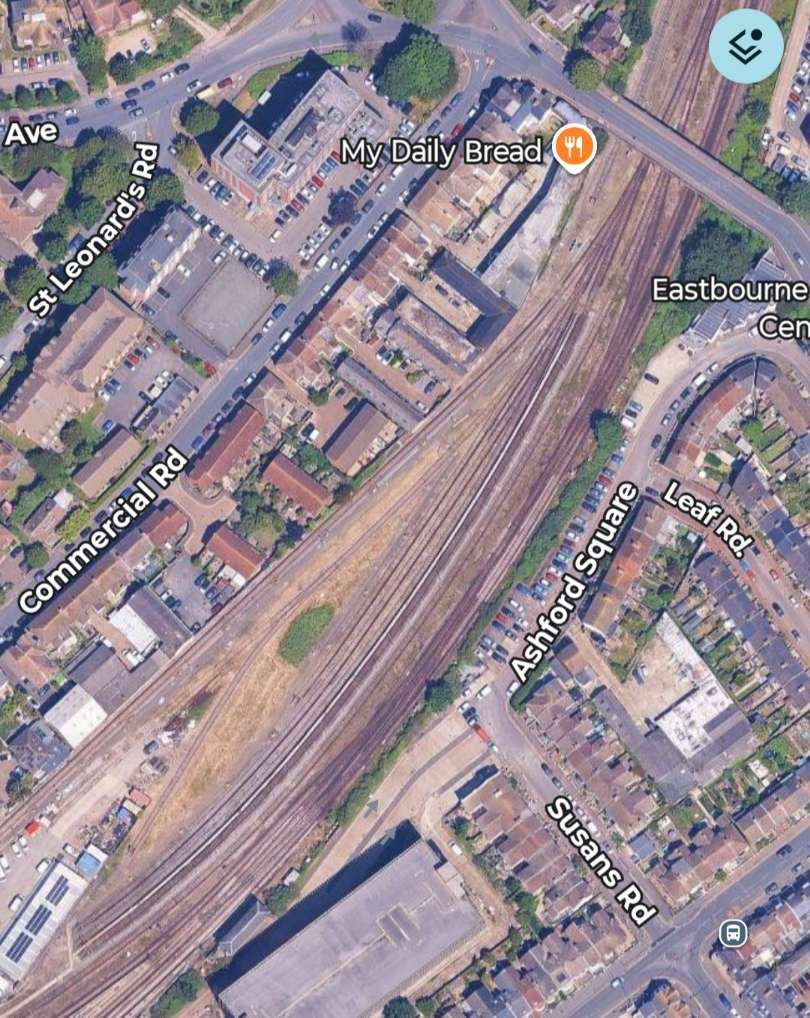
Stones tells us that “The first station at Eastbourne was situated to the west of the present terminus; the building was a small modest timber structure measuring 20 ft. by 12 ft. Several years later, the original station and tracks were removed to allow Upperton Road to pass over the site and link up with the main thoroughfare, Terminus Road. The old station building was moved and erected on the west side of the existing goods yard where it was converted into a dwelling house at present known as No. 1, Wharf Road.” [3: p725] In 1953, the building still stood but was over-shadowed by modern buildings.
Another view of the original station building, this time in its original location close to the end of The Avenue. [4]
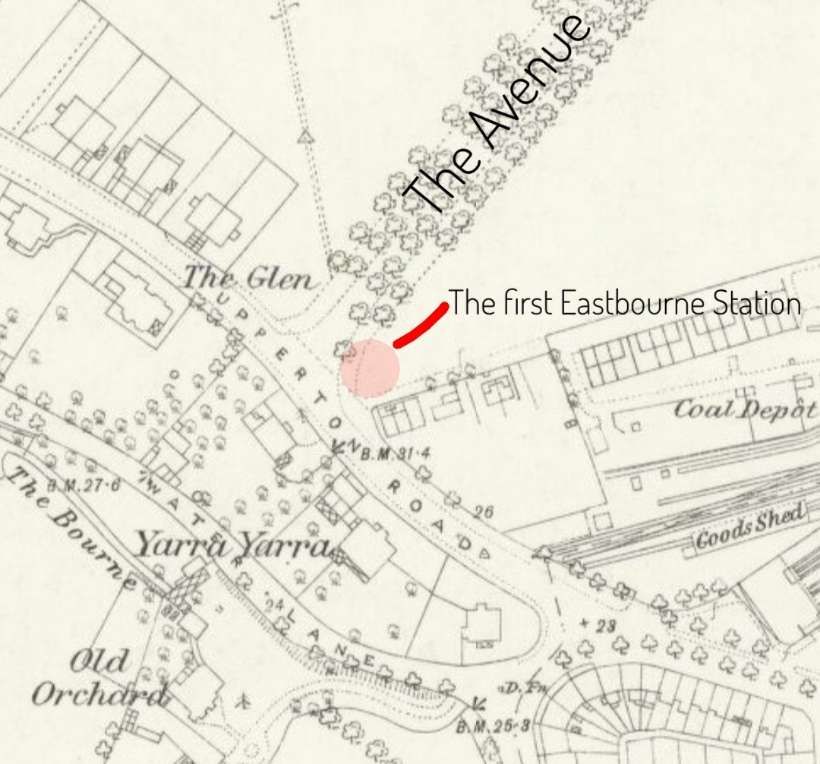
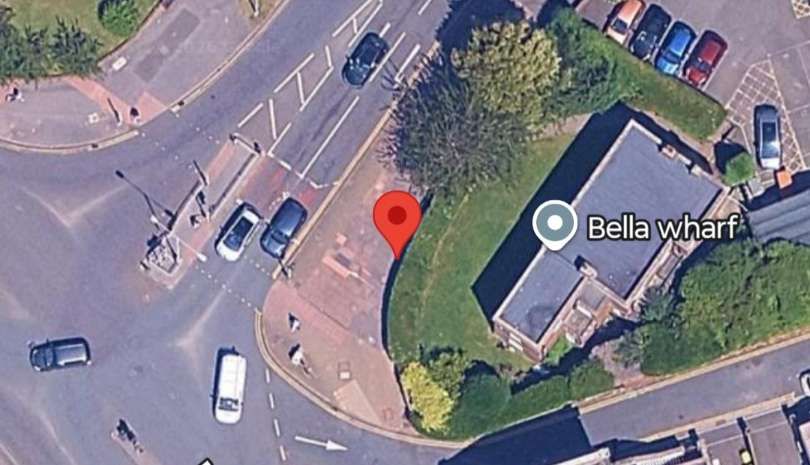
The first Eastbourne Station sat close to the end of The Avenue. [5]The red flag marks the approximate location of the original Eastbourne Station. The road to the Northwest of the flag is ‘The Avenue’, the road junction is with Upperton Road. [Google Maps, August 2026]
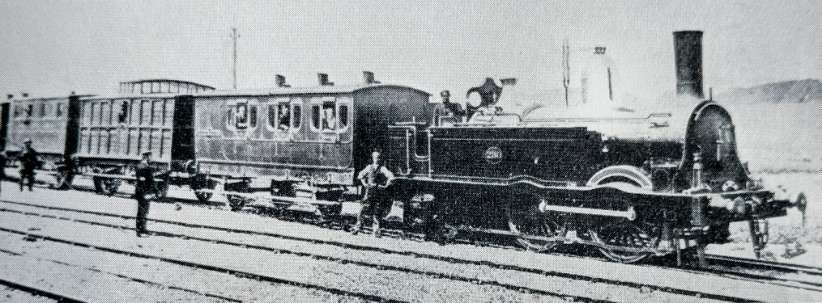
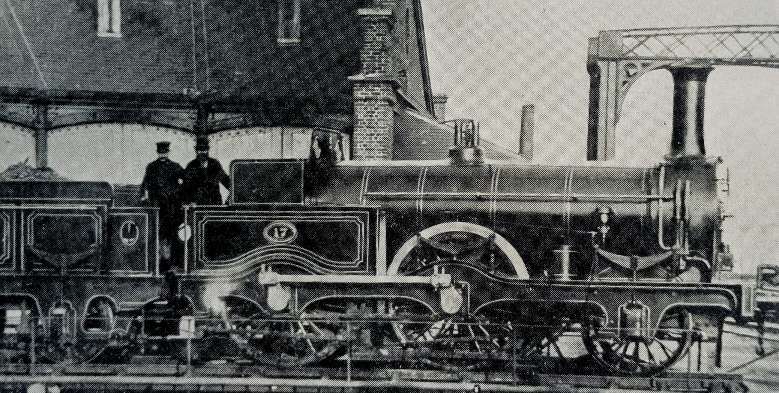
Stones tells us that when the line was opened, “two engines were stationed at Eastbourne but one was always kept in reserve. The other worked a shuttle service of local trains between Eastbourne and Hailsham via Polegate, where, at that time, the engine had to run round its train. At the commencement there were few trains, but by 1854 the service had increased to nine trains in each direction on weekdays. Passengers for London, Brighton, and Hastings were obliged to change at Polegate for some years, and this inconvenience proved a constant source of annoyance to Eastbourne residents, who considered that the importance of the town was being relegated by the poor railway facilities provided. This opinion was substantiated by the fact that in Bradshaw’s Monthly Descriptive Railway Guide for June 1857, the timetable did not even mention Eastbourne, and gave Brighton, Newhaven, St. Leonards, and Hastings as the important stations on the coast.” [3: p725]
In 1866, or perhaps as late as 1872, a replacement station was constructed at the corner of Terminus Road and Gildredge Road.
Apparently, the connecting service between Eastbourne and London in 1866 comprised seven trains daily in each direction.
Improvements to the service to and from London occurred in 1875 when, Stones writes, “several trains running between London and Hastings were provided with through coaches to and from Eastbourne, which were attached or detached at Polegate. At the same time, the 5 pm express from London Bridge to Brighton slipped a portion (first class only at ordinary fare) for Eastbourne at Haywards Heath.” [3: p725-726]
It was not until September 1880 that Eastbourne was finally connected with Tunbridge Wells when a line from Hailsham to Eridge was opened. “On 1st April 1884, a service of two expresses daily in each direction between Charing Cross and Eastbourne was inaugurated. … The new service did not prove a success … and was withdrawn on 31st December 1885” after agreement had been reached between the SER and the LB&SCR for a sharing of traffic receipts. [3: p727]
By 1904, agreement had finally been reached between the LB&SCR and the LNWR to run through coaches between Liverpool and Brighton and Eastbourne. Stones says, “This popular innovation, which obviated crossing London, soon developed into what was known as the ‘Sunny South Special’, which conveyed through portions from Liverpool (Lime Street), Manchester (London Road) and Birmingham (New Street). Up to the time of grouping this train was composed of LNWR. rolling stock, and included dining-car facilities. The service commenced to run daily (Sundays excepted) in each direction on 23rd July 1904, via Brighton and terminating at Eastbourne.” [3: p728]
At the time Stones was writing in 1953, the service had not been resurrected after the war.
In 1953, Stones described Eastbourne Station: “The present station at Eastbourne consists of two island platforms served by four terminal tracks capable of holding 12-car electric trains. On the east side of the station there is a covered roadway for taxis and other vehicles between platforms 3 and 4, originally known as the arrival side. The platforms lead to a large circulating area around which are located the refreshment and dining rooms, waiting rooms, parcels office, and so on, with the booking hall at the western entrance to the station. During the second world war, the platforms and tracks were severely damaged by bombs on several occasions, and although most of the repairs have been completed, part of the platform awnings are still of a temporary character.” [3: p728]
The present building is essentially that which was built in 1886, designed by F.D. Brick, which had a vaulted canopy and lantern roof, similar to Lewes. “The station had 4 platforms which increased in length over the years. There was also two run around loops between platforms 2 and 3. Over the years one of the runaround loops was lost as platforms 1 and 2 were built wider. On 12th April 1977 platform 4 was shortened from a 12 coach to an 8 coach length to make way for the ring road construction. And was taken out of use and the track lifted during the Eastbourne re-signalling in 1991.” [7]
The line into Eastbourne was electrified by July 1935. Stones comments in 1953 that: “the number of trains to and from London (Victoria and London Bridge) has been increased and there is now an hourly service of fast electric trains with Pullman or buffet-car facilities; the journey takes about 1 hour 25 min. The fastest timing maintained during the summer months is by the non-stop all-Pullman train, successor to the former “Eastbourne Sunday Limited” inaugurated by the LB&SCR many years ago. This train, which makes one round trip on Sundays only, covers the down journey in 79 min. With the exception of the steam trains from Eastbourne to Hailsham and Tunbridge Wells, the remaining local passenger services, to and from Brighton and Hastings, are all operated by two- or four-car electric trains.” [3: p728]
Stones continues: “West of the passenger station lie the goods shed and yard, and carriage sidings for both electric and steam rolling stock. A short distance from the terminus on the east side of the line is the coal yard, and, beyond, a siding about a mile in length runs in an easterly direction to serve the local gas and electricity works. This siding was formerly known as the Crumbles Branch as originally the line continued on to that part of the sea-shore called “The Crumbles,” where the LB&SCR installed a shingle ballast plant. Because of the extended use of stone ballast, this was dismantled some years ago and the extension to the coast was taken up. Traffic in and out of the passenger station, goods yard, carriage sidings and locomotive depot is controlled by one signal cabin with a manual frame of 72 levers, which is situated at the entrance to the terminus on the east side of the line.” [3: p728]
Stones writes: “The existing locomotive depot at Eastbourne is located about half a mile from the passenger station on the west side of the line and is connected by a single track running parallel with the up and down main lines. The site on which the depot stands was purchased by the LB&SCR in the early part of the present [20th] century for new carriage and wagon works to replace older and smaller installations at Brighton. However, because of opposition from the local authorities, the scheme was abandoned and the works were eventually constructed at Lancing.” [3: p729-730]
Stones tells us that “The present running shed, which is of the through type, was built in 1911 to replace an earlier and smaller shed of the half-roundhouse type opposite the signal cabin on a site now occupied by the carriage sidings at the station. Since electrification, Eastbourne shed has lost much of its importance and now houses only a few locomotives for goods and shunting services and for the local passenger trains to and from Hailsham and Tunbridge Wells. In recent years, several of the sidings adjoining the shed have been used to stable spare locomotives and those waiting to be broken up. During the war, the shed was severely damaged by air attack.” [3: p730]
In the paragraphs above, Stones has identified a number of interesting features of the station:
Goods Shed, Sidings and Coal Yard
Carriage Sidings
The mile long siding which was once the start of the ‘Crumbles Branch’
The Shingles Ballast Plant
The history of the engine shed
A. Goods Shed, Sidings and Coal Yard
The following sequence of extracts from 25″ Ordnance Surveys in chronological order, illustrates the changes in the layout of the goods facilities at Eastbourne over time
The Goods Shed, the immediately adjacent sidings and the Coal Depot at Eastbourne Station as shown on the 25″ Ordnance Survey of 1874, published in 1876. [5]
The Coal depot disappears between 1874 and 1898 and Wharf Road takes its place. The coal wharf might be the original of the name of the road. Holding seems to have been built on the site of the old coal depot. The Goods Shed seems to have been rebuilt a distance from the passenger station and cattle pens have been added to the site.
The rebuilt Goods Shed, the immediately adjacent sidings and the Cattle Pens at Eastbourne Station as shown on the 25″ Ordnance Survey of 1898, published in 1899. Note the rebuilt station buildings. [6]The Goods Shed, the immediately adjacent sidings and the Cattle Pens at Eastbourne Station as shown on the 25″ Ordnance Survey of 1908, published in 1910. No significant changes appear to have occurred since 1898. [9]The Goods Shed, the immediately adjacent sidings and the Cattle Pens at Eastbourne Station as shown on the 25″ Ordnance Survey revised and published in 1925. [10]The Goods Shed, the immediately adjacent sidings at Eastbourne Station as shown onthe 25″ Ordnance Survey of 1931/32, published in 1933. [11]
B. Carriage Sidings
In the 21st century, the carriage sidings provide stabling and overnight parking for Southern Class 377 and Class 442 Electric Multiple Units (EMUs). They include a carriage cleaning road and an engineer’s siding.
The site of the current carriage sidings occupy the historic location of Eastbourne’s early engine sheds (opened in 1849 and later replaced in 1876 and 1911 – see the paragraphs about the engine sheds below). The track layout and sidings were historically controlled by Eastbourne’s Victorian signal box built in 1882. [17]
Eastbourne’s carriage sidings sit at the centre of this map extract from the 25″ Ordnance Survey of 1931/1932, published in 1933. [19]The carriage sidings in the 21st century: the sidings were extended through what was the site of the old roundhouse engine shed in the middle of the 20th century. [Google Maps, October 2026]
A separate article covers this line. It can be found here. [16]
D. The Shingles/Crumbles Ballast Plant
The ballast plant on the Shingles (Crumbles) at Eastbourne was served by the Crumbles Branch. The Crumbles was a vast, desolate expanse of coastal shingle and marshland east of Eastbourne. The LB&SCR recognized the immense value of the site’s heavily compacted beach shingle and negotiated the purchase of large quantities of shingle from the local landowner, the Duke of Devonshire. They installed a dedicated shingle ballast plant directly on the shore to extract, process, and load the aggregate. At its height, the operation was removing roughly 250,000 tons of shingle per year. This material was vital for providing the structural foundation (ballast) for railway tracks across the southeast of England and was even shipped to London for projects like the construction of the Thames Embankment. [20]
By the 1920s and early 1930s, the newly formed Southern Railway began phasing out smooth beach shingle in favour of sharper, more durable angular granite chippings. The ballast plant closed in 1932. Please also look at the dedicated article about the Crumbles Branch, here. [16]
E. The Engine Sheds
By 1874 a roundhouse engine shed and turntable sat alongside the line out of Eastbourne Railway Station. That structure was still in place at the time of the 1908 Ordnance Survey, but had gone by the time of the 1925 Ordnance Survey.
The roundhouse engine shed at Eastbourne as shown on the 25″ Ordnance Survey of 1874, published in 1876. [5]The roundhouse engine shed at Eastbourne as shown on the 25″ Ordnance Survey of 1898, published in 1899. [6]The roundhouse engine shed at Eastbourne as shown on the 25″ Ordnance Survey of 1908, published in 1910. [9]The location of the roundhouse engine shed at Eastbourne as shown on the 25″ Ordnance Survey revised and published in 1925. [10]The location of the original roundhouse engine shed at Eastbourne as shown on the 25″ Ordnance Survey of 1931/32, published in 1933. [11]
The site of the new engine shed at Eastbourne, as it appears on the Ordnance Survey of 1925. It was built to replace the original shed which had sat much closer to the station. This location is to the North of Whitley Road. Note the Crumbles Branch which moves away from the main line and heads North-northeast. [13]
This satellite image is an extract from the ESRI satellite imagery provided by the NLS. The area once occupied by the Engine Shed can be seen with hedges boundaries to the West of the main running lines. The line of the erstwhile Crumbles Branch can also be seen. It is marked by the industrial property boundaries to the East of the main running lines and curving away to the East. [14]
Locomotive Names
Both the LB&SCR. and its successor, the Southern Railway, honoured Eastbourne by allocating several locomotive names directly associated with the town. As early as 1881, William Stroudley gave the name ‘Eastbourne’ to a rebuilt 2-2-2 express locomotive with 6 ft. 6 in. wheels, No. 491. This engine, which was one of six which had been rebuilt and renumbered by Stroudley the same year, was originally designed by J. C. Craven and built by Nasmyth Wilson & Company in 1867, when it was numbered 241. In 1889, three of the famous ‘Gladstone’ class 0-4-2 locomotives Nos. 183 to 185 were named ‘Eastbourne’, ‘Carew D. Gilbert’ (an influential Eastbourne resident and member of a well known local family over part of whose land the railway was constructed), and ‘George A. Wallis’ (the first Mayor of Eastbourne, from 1883 to 1885). These were followed in 1898 by a Stroudley 0-6-2 tank locomotive, No. 469, which was named ‘Beachy Head’. Two of the aforementioned names were subsequently perpetuated by the Southern Railway; a former LB&SCR. Atlantic No. 2424, was named ‘Beachy Head’, and in 1933 ‘Schools’ class 4-4-0 No. 914 received the name ‘Eastbourne’ after the town’s public school.
This article has been long in gestation! Some of the images were found in later 2022 and early 2023 and permission to use them was sought at that time. Other work intervened and it is only now that the article has reached a stage where publication is right. My thanks to those who gave permission for the use of their images back in early 2023. Their names and copyright is noted in the images or in the test associated with each image. Thank you.
In a press release about its exhibition ‘Slate to Sea’ in 2018, the National Museum of Wales stated that, “In 1882 the Welsh slate trade produced 280,000 tons of slate. This rose to 485,000 tons by 1898. Worldwide slate exports from Welsh ports were enormous and included the West Indies (114 Tonnes) Argentina (404 Tonnes) Channel Islands (580 Tonnes) British South Arica (290 Tonnes) Belgium (431 Tonnes) Germany (41,000 Tonnes) Denmark (3,500 tonnes) and Australia (5,500 tonnes).” [22]
The busy ports serving the slate industry included:
Porthmadog: “where initially, slate was carted from Blaenau Ffestiniog down to the quays along the Afon Dwyryd, then boated to Porthmadog for transfer to seagoing vessels. The rapidly expanding cities of England needed high quality roofing slate, which gave rise to railways to transport them to the new port by tramway from the quarries around Ffestiniog and district. The Ffestiniog Railway opened in 1836, followed by the Croesor Tramway in 1864 and the Gorseddau Tramway in 1856, and by 1873 over 116,000 tons (117,800 [tonnes]) were exported through Porthmadog in more than a thousand ships.” [22]
Y Felinheli: which was – “transformed by slate quarrying when the Assheton Smiths – the owners of Dinorwic quarry and the Vaynol Estate – built the harbour to export slate transported to the quay by the Dinorwic Railway, a narrow gauge railway (now the Llanberis Lake Railway). They also decided to give Y Felinheli the alternative name of Port Dinorwic at that time.” [22]
Caernarfon: “the slate quay at Caernarfon served the development of the Nantlle quarries when new wharves were constructed along the Seiont to cater for the growing output of slate, mostly to be transported to customers by ships. The arrival of the Nantlle Railway in 1826 boosted slate exports from Caernarfon. By 1840 the slate quay become the main focus of Caernarfon’s shipping activity.” [22]
Porth Penrhyn: which served the Penrhyn Quarry at Bethesda. Exports are not at 19th century levels but they continue to be an important part of the business of slate. “Exports of crushed slate (aggregate) by Penrhyn Quarry, through Porth Penrhyn to Rotterdam, or ports along the south coast of England, have grown to become a significant proportion of Welsh Slate sales in addition to several containers of roofing slates being shipped every month to Australia alone (taking approximately 45 days).” [22]
“Welsh slate is now covering the roofs of buildings as prestigious as the New South Wales Supreme Court and historic as Unwin’s Stores, both in Sydney Australia, as well as the Arts Centre in earthquake-hit Christchurch, New Zealand 2012. Europe is also a prime destination for Welsh slate with shipments of slate and decorative aggregate within Europe continuing to grow and evolve in particular. In 2017 a total of seven shipments totalling almost 14000 tonnes of slate aggregate were made from Port Penrhyn.” [22]
This article focusses on the transport arrangements within Penrhyn Quarry. Two earlier articles cover the route down to Porth Penrhyn, first on a tramroad and then on a narrow-gauge railway:
Penrhyn Quarry utilized a gallery (ponc) system with over 20 to 40 terraces/levels and multiple internal and external inclines and water balances, rather than a single standardized list of named levels like Dinorwic. “About 3000 men worked here by the middle of the 19th century. Working the slate meant developing over 20 galleries or terraces, these climbing the slopes of Y Fronllwyd. Slate that was not good enough to be split and trimmed into roofing slate would be dumped, creating huge tips of waste. As the quarry developed, waterpower was used to raise wagons in innovative lifts (or “tanks” as they were called). As the quarry deepened, pumps were used to lift water from its lowest levels, this then flowing through a tunnel into the Ogwen river.” [31]
James Boyd comments that the Railroad/Tramroad (1801-1879) commenced “high up in the Quarry and over succeeding years its original route(s) through the workings was lost and replaced by others more convenient to the times. Nothing was allowed to prevent the good slate rock from being quarried and if the rail route was hampering the work, it disappeared. The Quarry grew to enormous proportions; up to 90% of material extracted was simply rubbish and was tipped wherever convenient; if this buried the Railroad, so be it. The immediate purpose of the Railroad was to carry quarried materials to Coed-y-Parc where after processing the re-loaded wagons would be assembled into trains for despatch down to the Port. Certain wagons contained materials for processing at Felin-Fawr Mill and when ready, wagons containing such products were introduced into the Railroad traffic at the north end of Coed-y-Parc. From the Quarry there were ultimately two routes northward to Coed-y-Parc; the original one of 1801 climbed southwest from Coed-y-Parc by incline to Ponc-y-Level (Right). (Ponc-y-Level (Right) Incline was built to carry the wagons even higher in 1823.) Thence, by a course running generally anti-clockwise, along Ponc Sling to where at its furthermost end, Sling reached the foot of Ponc-y-Level (Left) Incline. It was here the Railroad may be said to have begun: the 1829 Plan of the [route] simply shows “Quarry Machine” (ie. weighing machine) without surrounding detail.” [15: p43-44]
He continues with further detailed notes on the changing network of rails within the Quarry. The notes above give a flavour of the detail that Boyd was able to record after consulting the many documents available to him in the Quarry archives. [15: p43-44]
By contrast, the PQR was deemed to commence, not within the Quarry, but “at the foot of the Felin-Fawr incline … [which was] completed in August 1874 … It formed part of a first stage in improvements right along the Quarry-Port link, some five years before the old Railroad itself was discontinued. Oddly, the Ordnance Map printers working on the 1886-88 survey for the First Edition of the 25 inch/1 mile the produced the pre-1874 access route and, showing the track already at least eleven years out of date, provided posterity with a false record. From the Incline foot two tracks struck off northwards a differing levels to enable empty wagons to run on to the foot of the Incline by gravity. Beyond the foot the main line began, flanked by various parallel tracks; that to the extreme east being once a siding (post 1912) but having the 1933 Ponc Sling access route branching off it. … The yard ended at its northern edge in a single line passing under Coed-y-Parc road bridge, this being a level crossing with adjacent gatekeepers cottage until 1900.” [15: p53-54]
The British Listed Buildings Website records this Grade II listed structure as follows: A road bridge over former railway. “Single segmental arch of red brick (including to soffit) with stone keyblock and arch-ring; coursed slate slab spandrels and piers flanking cast-iron parapet topped by ornamental iron balustrade. Abutments of large coursed slabs with band courses and slab retaining and boundary walls to each side, formerly enclosing the entire yard of the Felin Fawr Slate Works.” [19]
“Originally the site of a manned level crossing dating from the opening of the Penrhyn Slate Quarry Steam Engine Railway in 1843, the present bridge was built in 1900 and originally equipped, as were other bridges on the line, with wooden security gates across the arch. This opening was subsequently infilled but was reopened during the 1990s as part of the creation of a footpath along the course of the former railway line.” [19]
James Boyd suggests that it was always a good idea to turn to the North as you climbed the Felin-Fawr incline. … “Looking northward from halfway up the Felin-Fawr Incline, and viewing this scene below, it might be noted how the arms of the rubbish tips embraced the land on either side. To the left was the long single-line stone shed built in 1903 to house the Workmen’s Train carriages, but marked as ‘Engine Shed’ on the 1912 OS Maps. This definition may be a ‘hang-over’ from the time beginning in 1879 when two main line engines were kept at Felin-Fawr overnight; in earlier times the Workmen’s Train was kept in a shed below the Quarry (and possibly not transferred to this shed immediately it was built in 1903 – the precise date of this transfer is not known). It could be that the two main line engines were squeezed out and down to the Port shed when the Workmen’s Train increased to 13 vehicles, for that train had latterly grown too long for the shed, so the south end was taken down and the carriages poked out of it. Alongside was the 6th milepost. Beyond on the same side was (correctly) a small Engine Shed, which in due course acquired the nickname ‘The Baldwin Shed’, after the purchase of three ex-War Department locomotives from that American builder in 1924 had proved fruitless and they were stored inside. There was a water standpipe for main line engines on the wall outside. In much earlier days the building housed the little private saloon carriage which in later years was kept in the Port Engine Shed.” [15: p54]
Boyd continues: “This yard was always full of stock, lines of slate wagons loaded and waiting the next run to the Port, with empties alongside making their way slowly to be hauled up by the endless chain incline at Felin-Fawr, with perhaps another row of Quarry Flats standing with huge lumps of slab on them, waiting to be run down into the Felin-Fawr Mill in the Coed-y-Parc complex. Other odd wagons found a home there month by month – there was not much spare accommodation elsewhere. Wagon loads of coal waiting to go up into Quarry Departments and the wooden-bodied ‘Fullersite’ wagons could be easily distinguished too. Away to the right might be discerned the course of the abandoned 1843 line … but, ere its grassgrown course had gone many yards, the foot of the waste tips buried it. Beyond and behind this there was a drop of some 20 ft with a supporting wall and, running along near its top the course of the 1933-built link line, a second generation (so to speak) of the 1843 access and intended to bring Sling Level into easy communication with Coed- y-Parc independently of the Felin-Fawr Incline… but doomed to operational failure on account of its sharp curves.” [15: p54]
Boyd continues: “In the distance (and across the middle of the scene), the abutments and road bridge at Coed-y-Parc marked the boundary of the area, the bridge itself with ornamental railings to the road and a pair of wooden gates beneath it; these were shut to prevent unlawful access to the workshop area at all but working hours. Beyond the bridge might be seen the huddled roofs of the mills and workshops and moving to the left, the row of houses bordering the line to the west, formerly the stables (Tai’r-stablau) for the Railroad but now converted into domestic dwellings. It was a rural setting for this early nineteenth century industrial centre, the wooded Ogwen valley stretching away behind the works until the hills beside it merged with those of Anglesey beyond the waters of the Menai. From no point on the Railway itself was such a view obtainable.” [15: p55]
Boyd’s final words about this particular area of the Quarry: “Coming down-incline into the yard, there was formerly an island platform between the running line where the daily Workmen’s Train terminated: during working days, its stock was shunted into the long shed out of the way. Almost under Coed-y-Parc road bridge the line was single for a few yards, only to branch out beyond and make its way, curving slightly to the right and following a tall wall on the left with other lines alongside.” [15: p55]
The Levels, Galleries and Inclines in the Quarry
The very nature of Penrhyn quarry means that much of the site went though a series of changes as new levels were opened up, waste slate was deposited. There are no definitive maps of the quarry galleries and levels beyond what can be seen on Ordnance Survey maps. Almost inevitably, the descriptions of levels, galleries and inclines below cannot be complete or comprehensive.
Penrhyn featured eight water-balance systems used to raise and lower wagons using tanks of water. The most documented water balance was named Sebastopol (built during the Crimean War), which also lent its name to a gallery/level. Each incline had its own drumhouse. Heritage documentation notes eight incline/drumhouse structures within the quarry. Heritage references for these structures are: 60035, 60036, 60055, 60075, 60076, 60090, 60094, and 60136. [37]
Photographs of typical Welsh slate inclines and of a preserved water-balance system at Penrhyn can be seen here. [33]
Levels and Galleries
Red Lion Level: The main working and dressing mill level where the core processing, sawing, splitting, and dressing took place (home to the 1912 electric dressing mills).
Sebastopol Level: Named after the Sebastopol water balance. [32]
Terraced Galleries: Over 20 distinct benched levels climbed the slopes of Y Fronllwyd, with deep sink operations developing later as the pit expanded.
Penrhyn grew into a vast pit featuring up to 29 working galleries (ponciau). A web of traditional rail inclines connected these massive terraces to the main processing sections. Examples include:
George Gallery: this name was used interchangeably with the Sebastopol Level, it was established in the mid-19th century as the quarry bit deeper into the valley floor. [32]
Inclines
Felin Fawr Incline: We have already encountered this incline which was the primary external incline linking the main quarry processing yard to the mainline railway.
Red Lion Incline: Ascended directly up from the lower yards to the Red Lion Level, which was the main working terrace housing the primary dressing mills and locomotive tracks.
Twlldyndwr to Red Lion Counterbalance Incline: A specific track network connecting the Twlldyndwr Gallery (the second major level where waste slate was historically tipped) down to the Red Lion level. [34]
Red Lion to Twlldyndwr Uphaulage Incline: Used for dragging materials up into the higher tiers. [34]
Vertical Water Balance Shaft Lifts
As the pit was dug deeper into the valley floor, standard sloping inclines became less practical. Penrhyn innovated vertical water balance shafts. This system used water weight filled at the top of a cage to pull heavy wagons up from the lower gallery sinks. Penrhyn operated eight water balance systems.
Sebastopol Water Balance: Constructed during the Crimean War, it sits above the main drainage tunnel adjacent to the Sebastopol Level (historically part of the George Gallery). The Sebastopol lift sat higher up the terrace face than the lower Princess May lift, serving as the middle-tier staging platform. It lifted slate up to the Red Lion Level. [36]
Princess May Water Balance: One of the lower survivors, positioned alongside the Princess May Gallery.
Lord Lift: Serviced the upper tier known as the Lord Gallery.
Lady Lift: Positioned directly beneath the Lord Gallery, servicing the Lady Gallery tier.
A series of photographs of steam locomotives which worked at Penrhyn Quarry follows below. This does not pretend to be a comprehensive list, rather it illustrates the range of different types of locomotive present on site. … Locomotives included:
De Winton Locomotives: Vertical- and horizontal-boilered 0-4-0 tank engines introduced around 1876 for early steam operations, such as George Henry (built 1877).
Penrhyn Main Line Class (Hunslet): Three iconic 0-4-0 saddle-tank locomotives built between 1882 and 1893: Charles, Linda, and Blanche. Charles was preserved at the Penrhyn Castle Railway Museum, while Linda and Blanche were later transferred to the Ffestiniog Railway.
Penrhyn Port Class (Hunslet): Compact 0-4-0ST engines built in 1883–1885 to handle dock operations at Port Penrhyn, including Gwynedd, Lilian, and Winifred, may have been occasional visitors to the quarry itself.
Other Engines: Hunslet-built Hugh Napier (1904), Kerr Stuart 0-4-2ST engines like Stanhope, and various Andrew Barclay (such as Cegin and Glyder) and Baldwin locomotives acquired over the decades.
Among the locomotives which worked at the quarry were those pictured below.
Margaret, was built by Hunslet in 1894 (Works No. 605). It was supplied to Penrhyn Quarry to work in the quarry galleries. The engine spent its working life in the quarries, until withdrawal from traffic in 1950. Margaret was once thought to be beyond restoration, due to the engines poor condition. The Vale of Rheidol Railway purchased her in 1999. Some restoration had been undertaken prior to this, though it was far short of completion. The locomotive was stripped back to the frames to establish what had already been done, and by 2004 was a rolling chassis. Progress slowed, as maintenance of the running fleet took priority. A new boiler was delivered in 2007. With the completion of the new workshop in 2014, Margaret’s completion moved up the agenda. In September 2015 Margaret was returned to steam for the first time in 65 years, and has the distinction of being the first locomotive to be completed in the new workshop at the Vale of Rheidol Railway where she continues to be based in 2023. [9]
Glyder: Made it’s first appearance at Beamish Museum’s “Old King Coal” event in June 2019 after restoration at that museum. it is an Andrew Barclay 0-4-0WT (Works No.1994) of 1931. This was the first time that the engine had worked in railway operation since 1965.
Terry Pinneger tells us that “Glyder was built for the Durham County Water Board for use at the extensive Burnhope Reservoir development in Weardale in the early 1930’s, where it was given the uninspiring name “Grey”. At the end of the contract in 1938 it was sold to Penrhyn Quarry in North Wales and renamed “Glyder” (after a range of peaks of the same name in Snowdonia). It spent most of it’s working life in Penrhyn Quarry and, when it was withdrawn in 1965, it was sold and exported to the USA along with several other redundant narrow gauge locomotives. Whilst there, it saw no use at all and remained in storage.” [4]
Glyder was one of a number of Penrhyn Locos that were taken to the USA and their story can be found on the Bala Lake Railway Website. [8]
Glyder returned to the UK in 2012 and was gifted, on long term loan, to Beamish Museum for restoration. Back in operation in the 21st century, the loco carries its Penrhyn Quarry livery.
Marchlyn was built by the Avonside Engine Company of Bristol, in 1933 (Works No. 2067), the loco was exported to the United States in 1965. Whilst there it was exhibited at the Winneepesaukah Amusement Park, Chattanooga and was given the name, ‘Choo Choo. It returned to the UK in 2011 and is now based at the Statfold Barn Railway where it has been fully restored.
Cegin is an Andrew Barclay 0-4-0WT of 1931 (Works No. 1991) and is preserved at the Statfold Barn Railway. It is named after the Afon Cegin beside which the Penrhyn Quarry Railway wanders away from Porth Penrhyn. Cegin’s restoration was completed and it was steamed for the first time in 56 years in 2021 for a test run before its debut in traffic at the Statfold Barn Railway’s Enthusiast Weekend on the 12th & 13th of June 2021. [14]
Kymer’s Canal is the oldest canal in Wales, built near the town of Kidwelly in Carmarthenshire between 1766 and 1768. It was about 3 miles in length, built by Thomas Kymer, a local mine owner to carry anthracite coal from the Pwll y Llygod pits to a new dock (Kidwelly Quay) on the Gwendraeth Fach river for shipping to clients in the wider world.
The channel and dock suffered from severe mud silting over the decades, making navigation dangerous. In Later years, it became part of the larger Kidwelly and Llanelly Canal and Tramroad Company system authorised in 1812. [2][3][4][5][6]
You can still see parts of the historic waterway and walk alongside dry sections in the 21st century. Walking routes link the old canal directly to the Wales Coast Path and the nearby Kidwelly Town Council local heritage sites. [6][7][8]
Bourne tells us that Canal and Tramroad Company authorised in 1812 was, as well as being permitted to undertake maintenance of the Kidwelly Harbour and to improve Kymer’s Canal, authorised to build railways and tramways to supplement the canal or even replace it. [1: p737]
In parallel, in the following decade (1825) the Pembrey Harbour Co. was incorporated to construct a relocated harbour at Pembrey and to build a canal, tramroad or railway to connect with the harbour. The old harbour, which was constructed in 1819 by industrialist George Bowser and partners to ship local coal, suffered from severe silting problems almost immediately. (It was completely abandoned in 1878 after larger ships moved to the newer downstream port). [9]
The new port was constructed to accommodate larger vessels. It was first opened in 1832 but almost immediately suffered from the collapse of a harbour wall and the collapse of the scouring reservoir walls. It was 1836 before the port was to open fully. [9]
To save confusion between the two harbours an amendment to the Act of Parliament was passed in 1835 to change the name of the newer harbour to ‘Burry Port Harbour’, and the town, which had grown up during the construction work, took on the name at the same time. [1: p737][9]
Three decades later, the designation of the Canal & Tramroad Company was, by Act of 30th April 1866, “changed to the Kidwelly & Burry Port Railway Company. This Act authorised railways, partly by canal conversion, from Kidwelly and Burry Port to Llanarthney, with branches. In 1867 [possibly 1868 [9]), the Harbour Company was dissolved and vested into the railway company under the title of the Burry Port & Gwendraeth Valley Railway Company, and this name remained in use until the railway was absorbed by the Great Western in 1922.” [1: p737]
Bourne continues: “Construction of the railway was completed between Burry Port and Cwmmawr in 1869. The first mineral train ran to Pontyberem in July, and the section between Pontyberem and Cwmmawr was opened later in the year. A branch to Kidwelly was brought into use in July, 1873. Extensions of the line to the east were completed in 1891, partly on the [line] of an old tramway, from Burry Port to a junction with the Llanelly & Mynydd Mawr Railway at Sandy, Llanelly. The proposed railway to Llanarthney did not materialise, although surveys were taken of the route in 1874.” [1: p737]
“In 1898, the railway was approached by local colliery companies with a request that it should operate workmen’s trains from Burry Port and Kidwelly to Cwmmawr.” [1: p737-738]
Despite the fact that the Board of Trade had only passed the railway for freight use, the Company (being in poor financial health) agreed to the use. Initially the requisite coaches were provided by the colliery owners, who contributed 50 shillings/week/coach to cover the railway company’s expenses. The railway company undertook to purchase the coaches when its finances permitted.
Bourne tells us that, “On Llanelly market days it became the practice for the miners’ wives to travel in the workmen’s trains or in the guard’s brake-van of the mineral trains, a charge of sixpence being made in respect of an article belonging to the passenger instead of a fare. When the collieries were closed, free trains were run to enable miners to attend meetings, and to give their families a day by the sea. These trains consisted of colliery wagons, previously cleaned by the miners and provided with benches; ladders were used for entering and leaving the vehicles.” [1: p738]
After a fatal accident in August 1903, the Company “decided that the reconditioning of the railway for use as a passenger line should be considered without delay. When the improvements were completed, sanction was obtained, under a Light Railway Order, to operate passenger trains between Burry Port, Kidwelly and Pontyberem. The service was brought into operation on 2nd August 1909.” [1: p738-739]
The Burry Port & Gwendraeth Valley Railway and associated lines. [1: p738]
A similar diagrammatic representation of the BR&GVR and surrounding railways, (c) Afterbrunel and licensed for reuse under a Creative Commons licence (CC BY-SA 4.0). [10]
A similar area as it appears on a Railway Clearing House (RCH) map of South Wales. [14]
“The BP&GVR was single line throughout, and consisted of the 12.75 miles from Burry Port to Cwmmawr (the main line), the Kidwelly branch, and shorter branches (used only for freight traffic) from Burry Port to Sandy, Burry Port to Cwm Capel, the junction near Pinged to Trimsaran, and to various collieries. Connections with other railways were maintained at Burry Port, with the Great Western; at Kidwelly, with the Great Western and the Gwendraeth Valley Railway, traffic to and from the GWR passing over 25 chains of the valley line; at Sandy, with the Llanelly & Mynydd Mawr Railway; and at various colliery sidings.” [1: p739]
The Colonel Stephens Society notes that, “The railway was poorly managed in the nineteenth century and often bankrupt. Increasing traffic at the turn of the century and intelligent management transformed it as a business and Holman Fred Stephens was employed as a consultant in 1908 to reconstruct it [and] to legalise its unofficial carrying of passengers. The necessary legislation was obtained in two Light Railway Orders in 1909 and 1911. Stephens supervised re-construction and re-equipment over the years up to 1913 after which he had no further connection.” [11]
“The Burry Port-Cwmmawr section originated from a separate station at Burry Port, alongside the main-line Pembrey & Burry Port Station. When this line was equipped for passenger traffic to Pontyberem, in 1909, stations were erected at Burry Port, Pontyates, and Pontyberem, and halts at Pembrey, Pinged, Trimsaran Road, Pontnewydd, and Ponthenry. Signal boxes or ground frames were provided at Dock Junction (Burry Port), Kidwelly Junction, Pontyates, and Pontyberem, and eighteen single lever ground frames, working siding connections, were installed. The permanent way consisted of flat bottom steel rails, weighing 75 lb. per yard, secured by bolts to the sleepers. The over and under bridges, which existed when the railway was a mineral line, had sufficient theoretical strength for an axle load of 14 tons, the maximum allowed.” [1: p739]
Bourne continues: “Passenger trains commenced running through to Cwmmawr in 1913, under powers granted by a Light Railway Extension Order (1911), the old mineral line having been rerailed throughout. The original passenger terminus at Pontyberem became a crossing station with an additional platform, while Cwmmawr was furnished with a single platform, booking office, waiting room and ground frame. In addition, five ground frames, controlled by the train staff, were added to work various sidings. In 1914, a new crossing place and signalbox, both since removed, were established at Tymawr, between Burry Port and Kidwelly Junction.” [1: p739]
Bourne continues his description of the line:
“The stations were primitive, with platforms of the short earth type 250 or 350 ft. long, and 3 ft. above rail level. They usually consisted of a small corrugated iron hut with one end roughly partitioned off for an office and the other for a waiting room, though at Ponthenry small brick buildings were erected just before the GWR took over. The signals, mostly electrically lit, were of rather ancient pattern; distant signals, gradient boards and mileposts were not provided. Industries on the line 30 years ago included ten collieries producing anthracite coal, one small colliery raising steam coal, a brickworks and a small tin-plate works. Trains coming down the line to Burry Port often consisted of 45 to 60 loaded wagons. Long trains of empties were taken up the valley with one engine and a 15-ton brake-van. The population was connected almost exclusively with the mining industry, so that general goods traffic was light.
The Burry Port-Cwmmawr line was equipped for working with the train staff and one engine in steam between Burry Port and Dock Junction, and electric train staff or token between Dock Junction and Cwmmawr. Crossing facilities are avail-able at Kidwelly Junction, Pontyates, Pontyberem, and Cwmmawr, but at the first and last named two passenger trains could not be crossed. Staffed stations were situated at Burry Port, Trimsaran Road (population 200), Pontyates (2,000), Ponthenry (700), Pontyberem (3,500), Cwmmawr (2,250), and unstaffed halts at Pembrey (1,800), Craiglon (80), Pinged (80) and Glyn Abbey (150). Signalboxes were installed at the crossing stations and at Dock Junction.
There [were] several noticeable curves on the line, including that at Dock Junction. The railway [was] laid alongside the old canal bed for half its distance, consequently gradients [were] not difficult; … but it [rose] from Pontyates to Cwmmawr, on gradients as steep as 1 in 48 and 1 in 40, each for over half-a-mile. Every station and halt [had] long needed a coat of paint and repairs. The track [was] a mass of weeds. Closed pits, with broken buildings and useless pit gear, [bordered] the line.
Until the passenger services were withdrawn on 21st September [1953], there were four trains daily, one a workmen’s train from Burry Port to Cwmmawr, on weekdays only, with an additional train on Saturdays and five services daily in the reverse direction. They consisted of an engine and two coaches, but the 1.45 p.m. Burry Port to Cwmmawr (Saturdays excepted) was formed with two engines and four coaches, to provide stock for the additional return service. Speed was limited to 25 m.p.h., with further restrictions of 15, 10 or 5 m.p.h. at level crossings, and at the sharp reverse curve near Dock Junction. The level crossings, which [were] rather numerous, [were] not provided with gates (except at Pontyates), the railway being quite open to road traffic. No keepers [were] employed, and public users [had] to look after themselves.
The majority of passengers, a number of whom were miners, travelled only short distances, and the total number carried in 1950 was 35,645, with a revenue of £1.499, compared with 83,965 in 1938. Colliery upon colliery [had been] closed from Pontyates to Cwmmawr, and only three [remained in 1953]. Pentremawr, the largest, [had] a daily output of some 55 wagons, and certain passenger trains stopped at the colliery sidings, the majority of workers travelling from Ponthenry and Pontyates, one and two miles distant. Carway Colliery [produced] some 15 wagons of coal daily, and [there] again passenger trains called at the colliery siding, but the train user was irregular and very light, an average of two miners alighted and one joined daily in a sample week. Glynhebog Colliery, at Cwmmawr, closed in November, 1949, [was then] used as an N.C.B. training centre and some passenger trains stopped at the colliery sidings. The railway [served] an area of no great population, and parallel road services [operated] with much greater frequency and convenience than did the trains. So after attempts to recapture passenger traffic for the railway it was decided to withdraw the service.
The freight train service [was] continued, as traffic offered amply [justified] its retention. The tonnage dealt with in 1949 was 243,461, and the output of Pentremawr Colliery [was] to be increased. The services [were] maintained by a daily train from Burry Port to Pontyberem and back, and to the Kidwelly branch and return. There [were] also two freight trains, except on Saturdays, to Cwmmawr and back.” [1: p740]
1923–1924: Owned by Great Mountain Collieries Co. Ltd., employing 121 underground and 32 surface workers (Manager: Jas. Steele) before it was abandoned on May 30, 1924.
With the withdrawal of the passenger service on 21st September 1953, the line was operated on the one engine in steam principle between Kidwelly Junction and Cwmmawr. The crossing gates at the level-crossing at Pontyates were operated by train crew.
An Anthracite train from the Gwendraeth Valley line arriving at Burry Port with former BP&GVR (No. 12) 0-6-0T No. 2165, built in 1913 by Hudswell Clarke, in charge. [1: p742][16]
Bourne says that electric train staff working between Dock Junction and Kidwelly Junction had to be maintained because of developments in opencast coal workings at Trimaran.
Bourne continues:
“At Cwmmawr, the goods shed siding, the platform road and the line running parallel [were] removed, and the short portion of the line now leading to the platform road [was] slewed to effect connection with the mileage siding; traffic [was] propelled from Pontyberem to Cwmmawr. The passenger track from Dock Junction to [Burry Port] station, together with the loop and three carriage sidings at Burry Port, [were] recovered. Pontyberem and Pontyates parcels offices … remain[ed] open to deal with station-to-station parcels traffic, but the other stations [were] closed and let, and parcels traffic collected and delivered by road vehicles based at Llanelly.
“The Kidwelly Junction-Kidwelly section, from Trimsaran Road to the South Wales main line, slightly east of Kidwelly, [was] worked on the staff and one engine in steam principle. [Operation in the 1950s embraced] the former Gwendraeth Valley Railway, quite a separate undertaking to the Burry Port & Gwendraeth Valley Railway. The Gwendraeth Valley Railway (GVR) was opened to traffic over the three miles from Kidwelly to Mynydd-y-Garreg in 1871, and worked by the BP&GVR until 1904. The actual BP&GVR branch ran to Kidwelly Quay, via Tycoch Junction with the GVR. With the exception of a miners’ train, long discontinued, operated from Tycoch Halt to Pontyberem, no passenger train had traversed this section. … [By the 1950s, the permanent way [was] in a very rough state, overgrown with grass and weeds, and low-lying and wet near Kidwelly. The rails were of light flanged type, bolted to the sleepers, and no signals were provided. Between Tycoch and Kidwelly Quay, the line was used for an occasional few trucks of coal, despatched in small boats carrying 10 to 20 tons at a time. … [In the 1950s], the track [was] used only by the 8.25 a.m. freight train from Burry Port to Kidwelly; the engine [spent] the day shunting at Kidwelly, and running trips on the Mynydd-y-Garreg branch, conveying stone from the quarry to Stephens Works, Kidwelly, and [returned] from Kidwelly to Burry Port at 5.45 p.m. (3 p.m. on Saturdays). The line between Tycoch and Kidwelly Quay was abandoned about 1934, when the quay was closed.
[In 1953], consideration [had] recently been given to the possible closure of the line between Kidwelly Junction and Kidwelly, but no action [was] taken because of the inability of the local breakdown crane to clear several low bridges between Burry Port and Kidwelly Junction. In these circumstances, the loop line [was] the only means of access to the Cwmmawr branch [by] the crane.” [1: p743]
Bourne’s notes are essentially a ‘snapshot’ of the prevailing conditions in 1952/53. He comments that it was the intention to close the line to through traffic when the scheme relating to the National Coal Board sidings at Coed Bach was completed, but the track would not be broken and would remain available, if required in an emergency.
Bourne continues:
“Reception sidings [were] laid during [1953] on a site near Kidwelly Junction to serve the new opencast coal disposal centre at Coed Bach. The normal daily output of the new washery [was] just over 1,000 tons, all of which were despatched by rail. The new works [were] of a temporary nature, as it [was] expected to clear the 1,116,000 tons of opencast coal in the area by 1956.
“The Burry Port-Sandy Junction line crosses the Great Western main line on the level at Pembrey East. At one time, the line served three small collieries and a small brick works, but traffic was light and mainly that emanating from the collieries. Flanged rails weighing 75 lb. a yard, secured by nut and bolt to the sleepers, were used, and the permanent way generally was in a bad condition and overgrown. Fencing was poor and had disappeared in many places, and the track was used regularly as a footpath to Llanelly. One trip daily each way served the line, conveying approximately 30 wagons to Burry Port and 15 to Llanelly. A colliery locomotive worked over the branch between the New Pool and Crown colliery connections. Stop boards were provided to halt BP&GVR trains and the drivers had to satisfy themselves that the line was not occupied before proceeding slowly.” [1: p743 & p744]
Bourne continues his description of the line and its usage in the early 1950s:
“The portion between Pwll and Sandy [was] no longer used for traffic, or even wagon storage, but [was] still in position. The daily freight train [plied] only between Berry Port and Pwll Brick Works, a distance of under two miles. In connection with the N.C.B. new sinkings at Cynheidre, the former Llanelly & Mynydd Mawr track [would, within [a] few years, be doubled, and, to assemble empties for use at the new colliery, a proposal to lay in sidings on the site of the Sandy branch about one mile from Sandy Junction [was] being considered.
“The Trimsaran branch, which [left] the Cwmmawr line between Pinged Halt and Kidwelly Junction, [was] used for marshalling of coal from the Trimsaran Colliery and for wagon storage. Marshalling [was] performed by the colliery’s own locomotive. The branch [had] a ruling gradient of 1 in 47 for 1.25 miles.
“The track [had] been removed from from the Burry Port-Cwm Capel branch. Trains over this branch were propelled from Burry Port, with the guard riding in the leading vehicle. Trains operated during daylight only. Before the train passed over any of the level crossings on the branch, it came to a stand, and the guard went forward and hand-signalled it over. Frequent whistle sounding while running was the practice, and all shunting operations were performed with the engine at the Burry Port end of the train.
“At Burry Port, a short branch, [closed by 1953], served Gwscwm Colliery sidings, and trains of not more than 20 wagons were propelled from Burry Port. Speed did not exceed 5 m.p.h., and a red light was exhibited on the leading vehicle during the hours of darkness. Other colliery lines included the Carway branch and the Glyn Abbey branch, used for wagon storage.
“The small wet dock at Burry Port [was by 1953] out of use, and the hoists and other equipment [had] been removed. The dock, which covered 64,000 sq. ft., was provided with two hydraulic coal tips and hydraulic capstans for shunting. An electric power station was situated on it for the supply of light to the dock premises.” [1: p744]
Wikipedia tells us that, “From 1953 opencast coal extraction gathered pace in the Gwendraeth Valley, and this coupled with economic factors gradually led to closure of most of the deep mines. By 1961 only the Capel Ifan Colliery at Pontyberem continued deep mining, and that pit ceased to forward coal by rail in 1970.” [10]
“The Sandy branch, connected the BP&GVR to the Llanelly and Mynydd Mawr Railway near Llanelly. At the eastern end it divided into two and curved round to the south; one part joined the Stradey estate line and the other the L&MMR line; with the closure of the Pwll brickworks all traffic between Burry Port and Sandy Gate sidings ceased from 4th October 1962. Sandy Gate sidings were simply located on a short stub now served from Sandy, and that too closed on 22nd December 1963.” [10]
“The Trimsaran branch closed to revenue traffic in 1960, but it was retained for wagon storage until June 1962. Goods traffic to Pwll Brickworks ended on 4th October 1962. Regular traffic to Smart’s Dinas Silica Brickworks at Kidwelly ceased in February 1959, after which the Kidwelly branch was little used, and was closed in October 1965.”
“The section from Kidwelly Junction to Kidwelly closed in October 1965, but reopened after relaying on 19th September 1983.” [10]
“Diesel traction was inaugurated on the BP&GVR section on 4th October 1965. Two D2000 Class (later 03 Class) locomotives were modified to work together in multiple, and soon a third was used to bank the trains up the steep gradients in the rear of the train. On the downhill journey the three locomotives hauled the train.” [10]
“The short section from the New Dynant North ground frame to the Cwmmawr terminus was closed on 1st May 1967, although the coal depot at New Dynant continued to be referred to as Cwmmawr.” [10]
“The Kidwelly branch beyond Coed Bach was re-opened (after relaying the track) on 19th September 1983 and, for the first time, large main line locomotives were able to use this short section of the BP&GVR as far as Coed Bach. The re-opening enabled the original section of line from Burry Port to Kidwelly Junction to be completely closed, from 19th September 1983. The remaining line was now worked in two sections; Kidwelly Yard to Coed Bach and Coed Bach to Cwmmawr (New Dynant). From February 1987 substitute locomotives capable of operating air-braked wagons were introduced on the line.” [10]
The very last train to Cwmmawr ran on Friday 29th March 1996, … closure of this remaining section of the BP&GVR main line took place on 1st April 1996. Coed Bach continued to be fed by road so there was still rail traffic over the short distance from there to Kidwelly Yard. This remaining stub of the BP&GVR, and also of the GVR, finally closed on 23rd March 1998. [10][17]
Former BP&GVR (No. 12) 0-6-0T No. 2165, built in 1913 by Hudswell Clarke. [1: p742][16]
Further photographs of locomotives from the BP&GVR can be found here. [16] (Most of the images on this link will probably be in the public domain, but rather than showing them in this article they are well collated on the link.)
Bourne says that:
“Fifteen tank engines were taken into GWR stock at the absorption; all were 0-6-0s some with saddle and others with side tanks. BP&GVR Nos. 1-15, they respectively became Nos. 2102, 2162, 2193 to 2196, 2176, 2197, 2163, 2198, and 2164 to 2168, in GWR stock. The named engines were Nos. 1. Ashburnham, 3. Burry Port, 4, Kidwelly, 5, Cym Mawr, 6. Gwendraeth, and 8, Pioneer. A small shed at Burry Port could accommodate ten engines. At one time, the company possessed 31 passenger and 18 goods vehicles; advantage was taken of the free use of other companies’ wagons given under the common user arrangement. The passenger coaches were secondhand vehicles fitted with the vacuum brake, and had third class accommodation only.
“Seven BP&GVR locomotives still [survived in 1953], Nos. 2162, 2165, 2166, 2168, 2176, 2196 and 2198. No. 2164 was withdrawn in 1929, No. 2163 in 1944, No. 2192 in 1951, Nos. 2193 and 2197 in 1952, and Nos 2167, 2194 and 2195 in 1953. No. 2195, Cym Mawr, the nameplate of which was removed by the GWR because of a controversy over the spelling, was condemned in March. 1939, but was reprieved during the war, and withdrawn in January [1953].
“Eight locomotives, all 0-6-0 tanks, [were] allocated to Burry Port shed. In 1953, they [consisted] of ‘1600’ Class Nos. 1609, 1613, 1614 and 1644; ‘2021’ Class No. 2081; and ex- BP&GVR Nos. 2162, 2165 and 2198. Engine working [included] the operation of the two ex- BP&GVR lines, two daily freight trips between Burry Port and Llandilo Junction, and one daily trip between Burry Port and Lando R.A.F. Station. The ’16xx’ Class engines worked all the passenger services and also freight trips, and BP&GVR engines and No. 2081 [were] used on goods trains and for yard shunting. The Kidwelly freight [was] operated either by a ’16xx’ engine or BP&GVR. No. 2198.” [1: p744]
As we have noted above, “D2000 Class (later 03 Class) locomotives were deployed on the BP&GVR. The cabs were cut down to pass under the low bridges on the line. The original reason for the use of the 03 Class was the frequent flooding on the line which would interfere with the low-slung auxiliary equipment on the more powerful 08 Class; however in June 1984 the affected section of line was closed and there was no longer an objection to the 08 Class; three locomotives were modified to lower the profile for the low bridges and were designated Class 08/9.” [10]
The Railway Hub has an article about these diesel locomotives which can be found here. [18]
The Route
We start at the most easterly extent of the BP&GVR – at Sandy Junction.
Sandy Junction as it appears on the 6″ Ordnance Survey of 1913, published in 1921. Significant locations which appear on this extract are: the rail-served Llanelly Steel Works (bottom-left); the rail-served Old Castle Iron & Tin Plate Works (bottom-right); the Llanelly & Mynydd Mawr Railway which runs North to South across the right side of the extract; and the single track Burry Port & Gwendraeth Valley Railway which leaves the Llanelly & Mynydd Mawr Railway centre-right and runs West on the South side of Pembrey Road/Sandy Road. Note the first passing loop on the single-track line which can be seen at the left of the image. [19]The same location in the 21st century. The route of the BP&GVR follows the backs of the gardens of the houses on the South side of Sandy Road. [Google Maps, September 2026]Looking East along the line of the old railway towards the location of the junction with the Llanelly & Mynydd Mawr Railway. [Google Streetview, April 2025]Looking West along the line of the old railway. [Google Streetview, April 2025]The BP&GVR continues West on the South side of Sandy Road. [19]The tree-line on the image marks the line of the old railway. [Google Maps, September 2026]The railway ran very close to the road (now the A484) over a length as shown on the left of this extract. [19]The same area in the 21st century. The lake is Ffynon Helig and the pathway running to the North of it is close to but to the South of the line of the old railway. [Google Maps, September 2026]This view looks West along the A484. The fence line marks the boundary between railway land and the highway. The old railway ran West just below the road. Beyond the last house visible here, the road turns away from the line of the railway. [Google Streetview, April 2025]The blue line shows the line of the old railway where it crosses the access road from the A484 to Pwll Pavilion. [Google Streetview, September 2026]
Railmaponline.com shows that the BP&GVR mainline left the side of what is now the A484 and crossed what is now the access road to the pavilion before turning Northwest. Two short branch lines at one time left the main line at this location, both shown in blue. There were once brickworks at this locationand a colliery (Pwll Colliery) between the road and the railway to the East of Tramway Road. [20]
Pwll Colliery can be seen at the bottom right of this extract from the 25″ Ordnance Survey of 1913, published in 1916. The old railway continued Northwest behind the rear fences of properties on what is now the A484. [21]The line continued Northwest with a short branch from Crown Colliery joining it from the Southeast. [21]New Pool colliery was passed on the other side of the line adjacent to a passing loop. The colliery had its own short Tramway. [21]This railmaponline.com satellite image shows a similar length of the line to that covered by the two map extracts above. [20]The line continued West. [21]Another passing loop sat alongside New Lodge Brickworks. [21]This extract from railmaponline.com’s satellite imagery takes us as far West as the passing loop at New Lodge Brickworks. [20]The 25″ Ordnance Survey shows that the brickworks had a small yard with a dedicated siding. [21]The 6″ Ordnance Survey from 1878/1879, published in 1889 shows that there was also a colliery at the same site. [22]The Brickworks/Colliery were located at the top-right of this satellite image – the passing loop and the single siding entering the yard are shown in blue. The colliery’s internal tramway linking to the spoil heap is shown in turquoise. [20]The Burry Port & Gwendraeth Valley Railway (BP&GVR) enters this extract, top-right and appears to cross the GWR main line on the level and continue in a southwesterly direction. Another passing loop appears bottom left. This is an extract from the 6″ Ordnance Survey of 1879, published in 1889. [23]Approximately the same area as shown on the extract above. [20]
Given that the BP&GVR was built on the line of the Kymer’s Canal it is much more likely that, rather then crossing the GWR at level, the BP&GVR passed under the GWR main line making use of the canal tunnel/bridge. As we have already noted, because the railway replaced a canal network, it inherited very low bridge clearances originally meant for horse-drawn canal boats. This forced the railway to use uniquely modified, low-profile steam locomotives with cut-down cabs and boiler fittings to squeeze under the structures.
This would seem the appropriate point to pause in our journey along the BP&GVR main line to look at the Cwm Capel Branch.
The Cwm Capel Branch of the BP&GVR
The Cwm Capel branch of the BP&GVR left the port area of Burry Port in a northerly direction, passing under the GWR main line to the East side of the GWR Railway Station. It then crossed Station Road and Parkes Street, and ran North-northeast through, what was in the early 20th century open ground. [26]
The satellite image below [Google Maps, September 2026] shows that the line of BP&GVR is now occupied over this length by a road named ‘Old Tramway’. It appear to run alongside the Nant Dyfatty. Some open ground remains but much has been built over.
Looking South across Station Road towards the railway. This view looks along the line of the old BP&GVR branch line. [Google Streetview, April 2025]Looking North from Station Road along the line of the old BP&GVR branch line. [Google Streetview, April 2025]Looking North from Parkes Street along the line of the old BP&GVR branch line. [Google Streetview, April 2025]
Looking North along the old Cwm Capel branch from the top of the modern ‘Old Tramway’ highway. [Google Streetview, April 2025]
The next length of the Cwm Capel Branch. [26]
The line as far North as Colby Road. [20]
looking South from Colby Road along the line of the old railway. [Google Streetview, April 2025]Looking North along the line of the Cwm Capel Branch. [Google Streetview, April 2025]
The next length of the line runs through the area of Achddu Colliery which appears on the 6″ Map extract above. [20]
Small-scale coal workings in the area date back to around 1814. Separate local pits were combined into the unified Achddu Colliery in 1903 by the Achddu Colliery Co. Ltd. Operations were primarily focused on working the Gwscwm Coal Seam/Vein. Coal was transported via the Cwm Capel branch to Burry Port harbour.
The main colliery phase ended in 1917, though minor related local industrial activities and subsequent reopening attempts or re-workings occurred into the late 1920s. [27]
The Cwm Capel Branch of the BP&GVR was once a horse drawn tramway taking coal from Cwm Capel (Kenross) Colliery down to the wharves at Burry Port. More information can be found on the Pembury and Burry Port Heritage Website. [28]
This interpretation board provides details of the tramway and later railway that transported coal from Cwm Capel (Kenross) Colliery down the valley past the site of Achddu Colliery. More information can be found here and on associated webpages. [29]
The remaining length of the Cwm Capel Branch led North to Cwm Capel Colliery. [26]
Cwm Capel Colliery sat at the bottom end of another tramway which followed the Nant Dafatty valley towards its source. [26]
The tramway ran first East and then North towards Rhiw-las Colliery. [30]
These map extracts are piecemeal as the tramway crossed between OS Sheets. [31][32]
Railmaponl;ine.com shows the length of the old tramway that was converted into the Cwm Capel branch of the BP&GVR but not the extended tramway up to Rhiw-las Colliery. [20]
Cwm Capel colliery was first mentioned around 1761, a larger colliery was later developed on the site by George Bowser around 1830. Its expansion by 1840 completely engulfed the site of a medieval chapelry named Capel Cynnor.
Operated by multiple owners over its lifetime, coal was extracted from the Cenrhos and Coed Rhyal coal seams.
The colliery finally closed in 1952, ending nearly 200 years of recorded mining activity in the valley. [29][33]
The BP&VR main line again – just a short length!
We now continue our journey along the Burry Port & Gwendraeth Valley Railway to the West of Burry Port.
This next length of the BP&GVR main line curves around the Ashburnham Hotel. Before reaching Stanley’s Bridge at the top-left of this extract from the 6″ Ordnance Survey of 1913, published in 1921, another branch line left the main line and headed North alongside what became Furnace Road. Furnace Road bridged the main line of the BP&GVR which itself continued on to the West passing underneath an Old Tramway at Stanley’s Bridge. [26]
Looking East from the bridge carrying Furnace Road over the line of the BP&GVR. [Google Streetview, April 2025 & March 2009]
Looking West from the bridge carrying Furnace Road over the line of the BP&GVR. [Google Streetview, April 2025 & March 2009]
The old tramway, noted at the left of the map extract above, was not part of the BP&GVR network. It connected Stanley’s Pit to the old Pembury Harbour which was replaced by the facilities at Burry Port. As can be seen above both the GWR and the BP&GVR had to provide bridges to carry the old tramway over their right of way.
The BP&GVR provides the formation level for the National Cycle Route No. 4 which follows the route of the old railway. This tunnel takes the cycle route under Stanley’s tramroad and was provided for the BP&GVR. It sits at the top-left of the map extract above and is marked by the lilac flag on the top-left of the satellite image below, (c) David B. W. Rees (2024). [Google Maps, September 2026]
Google Mpas satellite imagery shows the route of the old railway curving gently round from the Northwest to just South of West. Furnace Road is a more significant highway in the 2st century. [Google Maps, September 2026]This next satellite image shows a very similar area with railmapsonline.com’s annotation. As before the blue lines are the BP&GVR and the green line marks the route of the GWR main line which is still in use in the 21st century. The old tramway can still be seen on the left of this image and appears on the tramway layer of Railmaponle.com as a turquoise line. [20]
The Furnace Branch
In the satellite image above and on the previous 6″ extract from the 1913 Ordnance Survey a branch line can be seen leaving the BP&GVR to the East of Furnace Road. This branch line was short leading to the furnace that gave the name to the adjacent road.
This extract from the 6″ Ordnance survey of 1913, published in 1921 shows the full length of the short branch. [26]Railmaponline.xom shows the branch against the backdrop of modern satellite imagery. The site of the furnace is now a modern housing estate. [20]Looking North along Dwynant towards the site of the furnace. [Google Streetview, April 2025]
In 1810, an attempt was made to establish an iron works called Pembrey Iron Works, probably in the area now known as Furnace in Burry Port, but it didn’t last long and was closed by 1816. The site of it was likely re-developed by the Pembrey Iron and Coal Company in 1824. [34]
The Pembrey Iron and Coal Company was formed by George Bowser and Thomas Gaunt, who leased marshland from Lord Ashburnham to develop local industry. Pembrey Harbour was built in 1819 at Carreg Edwig to export coal from local mines like Gwscwm and Cwm Capel, and to serve the iron foundry. The Pembrey Canal was a two mile canal opened in 1824 to connect the harbour to the Kidwelly and Llanelly canal network, transporting coal and iron ore via horse-drawn barges. Years later, John Stanley took over management of the company (around 1845) as the area’s industrial focus shifted toward nearby Burry Port development and copper smelting. For more information about the tramroad, please click here. [35]
The BP&VR main line again – West of Stanley’s Bridge
Both the B&GVR and the GWR passed to the South of Pembrey. [26]The line passed under Ashburnham Road (B4311) as it approached the centre of Pembrey and then Dan Lan Road (close to the top-left of this image. [20]Looking North towards Pembrey on the B4311 – the parapets of the old bridge over the BP&GVR remain, as does the structure below which now spans National Cycleway No. 4. [Google Streetview, April 2025]Looking East from the bridge carrying Ashburnham Road/ Randal Square (B4311) over the line of the old railway. [Google Streetview, April 2025]Looking West from the bridge carrying the B4311. [Goggle Streetview, October 2021]The parapets of the bridge carrying the A 484 (Dan Lan Road) over the old railway route. [Google Streetview, April 2025]
Looking Southeast from the bridge carrying the A484 over the old BP&GVR. [Google Streetview, April 2025]
Looking Northwest from the bridge carrying the A484 over the old BP&GVR. The height at which the photograph was taken does not allow the tarmacked formation of the National Cycle way to be seen. [Google Streetview, April 2025]
The line turned North, roughly parallel to the GWR, both map extracts are from the same OS Sheet. [26]
Looking Northeast along the minor road which bridges the old railway. These are the rough stone parapets of the bridge. [Google Streetview, April 2025]
Looking Southeast over the wingwall parapet of the same bridge. The tarmac of the cycle way can just be made out. [Google Streetview, April 2025]
Vegetation growth by 2025 meant that nothing other than vegetation could be seen over the Northwest parapet by that date. This image from 2009 shows the condition of the cycleway prior to being tarmacked. [Google Streetview, March 2009]
The next 6″ Ordnance Survey sheet from 1913/1914 was not published until 1946. It shows the line heading North and then turning Northeast. [36] Railmaponline has the same details [20]
A closer view of the first crossing location above. [20]
The line crossed the next minor road on the level. [Google Streetview, April 2025]
Looking back South from the old crossing point on the BP&GVR. [Google Streetview, March 2022]
Looking North along the line of the BP&GVR from the same crossing location.The old railway ran to the left of the portable building which is prominent in this photograph. [Google Streetview, April 2025]
The next significant location heading North along the old railway is shown here. This bridge is at the top of the map extract above. [20]
The same location as shown on the 6″ Ordnance Survey of 1913/1914 which was not published until 1946. [36]
The humpback bridge at this location, no longer appears to have its parapets and the span below may well have been filled. There is nothing to see at the location looking either direction along the old railway. [Google Streetview, April 2025]
The Trimsaran Branch
Just to the South of a bridge over the Gwendraeth Fawr a branch line headed East away from the BP&GVR main line. It is shown on the map extracts and Railmaponlin.com satellite images below.
The main line of the BP&GVR heads North-northeast before turning to the North across the Gwendaeth Fawr. A branch line head East from a point on the South bank of the Gwendraeth Fawr. This branch serves Trimsaran and [36]The first length of the Trimsaran Branch reaches the village of Trimsaran. [20]
The next length of the Trimsaran Branch as shown on the 6″ Ordnance Survey of 1913/1914 published in 1946. [36]
The final length of the Trimsaran Branch as shown on the 6″ Ordnance Survey of 1913/1922. [37]
This railmaponline.com satellite image covers the length of the line shown in the two map extracts immediately above which are taken from adjacent OS sheets. [20]
In the Trimsaran valley, small-scale surface mining and bell pits (such as those found near Coed y Clun) date back to the 1600s or earlier to supply local smiths. By the late 19th and early 20th centuries, large-scale operations at Trimsaran Colliery grew into a network of drift and slant mines—principally the Caedean (deepest), Waunhir, and Upper Slants (Coal Seams). Employment at the colliery grew from 144 men in 1896 to a peak of over 700 workers by 1931. It produced valuable anthracite and fireclay. The last traditional drift mine closed in 1954, though large-scale open-cast mining operations (operated by firms like Sir John Jackson, Jackson, and Wimpey) continued until 1997. [38]
An ironworks operated around 1900, employing hundreds of local workers. Local brickworks produced durable, hard-fired bricks until 1967, which were used to build garden suburbs and homes throughout Llanelli, Pontyates, and Pontyberem. [39]
The first significant location on the branch was the level-crossing adjacent to Collier’s’ Cottage on what is now the B4317. There is no longer any evidence of the railway at this location. [36]
The same location in the 21st century. [20]
Further East, the line bridged the Afon Morlais twice in quick succession. [36]
The same location in the 21st century. [20]
The road – Bryncaerau(B4308) – to the Northwest of the centre of Trimsaran. [36]
The same location in the 21st century. [20]
Looking Southeast down Bryncaerau, the old railway crossed the road at this location entering the image a little above bottom-right and running along Swn Y Nant (off the image centre-left. [Google Streetview, April 2025]
Looking West along the line of the old railway. [Google Streetview, April 2025]
Looking East along the line of the old railway, along Swn Y Nant. [Google Streetview, April 2025]
Trimsaran Ironworks on the 6″ Ordnance Survey of 1879, published on 1889. [40]The same area in the 21st century. Photographs of the remains of the Ironworks/Steelworks taken by David B. W. Rees can be found here. [20][41]
The branch line continued East beyond the Steelworks. …
Looking back West towards Swn Y Nant from the location of the steelworks. [Google Streetview, April 2025]
Looking ahead to the East along the line of the railway from the location of the steelworks. [Google Streetview, April 2025]
The road crossing over Culla Road (B4317). [36]
The same location in the 21st century. [20]
Culla Road seen looking North from Jenkins Crescent. The line of the old railway is highlighted by the blue line. [Google Streetview, April 2025]
Looking back West from Culla Road along the line of the old railway. [Google Streetview, December 2021]
Looking East along the line of the railway. [Google Streetview, August 2011]
Trimsaran (Waun-hir) Colliery. The location spans the joint in two OS Sheets. [42]
Trimsaran (Waun-hir) Colliery – this map extract sows the remaining length of the colliery sidings. The line continued on the the East beyond this mine. [37]
This railmaponline.com extract shows the full extent of the colliery sidings imposed on modern satellite imagery. It also shows the locations of some of the earlier tramways/tramroads adjacent to the colliery. [20]The remaining length of the Trimsaran Branch which served Trimsaran Upper Colliery. [37]The same length of the old line as shown by railmaponline.com’s satellite imagery. [20]
The BP&VR main line again – North of the Gwendraeth Fawr
A short length of the Burry Port & Gwendraeth Valley Railway runs North from the Trimsaran Junction, across the Gwendraeth River (Fawr). [36]
The Kidwelly Junction sits just to the North of the Gwendraeth Fawr. Its location spans the join between two adjacent 25″ OS Sheets. [43]
This extract from railmaponline.com’s satellite imagery covers the length of line shown on the two map extracts above. The sidings to the North of Kidwelly Junction served … [20]
From 1953 opencast coal extraction gathered pace in the Gwendraeth Valley, and this coupled with economic factors gradually led to closure of most of the deep mines. By 1961 only the Capel Ifan Colliery at Pontyberem continued deep mining, and that pit ceased to forward coal by rail in 1970. The sidings shown here were associated with the changes which occurred in the 1950s and handled local coal traffic and storage. [20][10]
The Line to Kidwelly
A short branch line connected the BP&GVR to the GWR and the Gwendraeth Valley Railway at Kidwelly. [44] The line to meet the GWR was literally quite short. Just these two extracts (this and the one immediately above) from the 25″ Ordnance Survey cover the majority of its length. [45]The line between Kidwelly Junction and Kidwelly as shown on railmaponline.com. [20]The railway junctions to the Southeast of Kidwelly. The line leaving the extract, bottom-left serves Kidwelly Quay. The GWR line runs diagonally top to bottom (or vice-versa). The line exiting the extract top-right is the Gwendraeth Valley Railway – a different company ,(not the BP&GVR). [46]Kidwelly Railway Station is top-left. The other lines are as described above. [20]The Kidwelly Quay Branch. [47]
Railmaponline.com’s satellite imagery shows the Kidwelly Quay Branch. [20]
Kidwelly Quay and railway terminus. The railway followed the line of the earlier canal. This extract is taken from the 25″Ordnance Survey of 1913, published in 1915. [50]
Kidwelly Quay was originally the transfer point between the barges used on Kymer’s Canal and ocean-going coasters. Kymer’s dock at Kidwelly continued to be used for the export of coal by coasters well into the 20th century. It was used as a rubbish dump during the 1950s, but together with a short section of the canal was restored in the 1980s. A few of the structures of the canal can still be traced in the landscape, and the route of the now closed railway can be followed for most of its length.
Kidwelly Quay in the 21st century. [49]
The BP&GVR Northeast of Kidwelly Junction
The 25″ Ordnance Survey of 1913, published on 1915 shows that the line headed Northeast from Kidwelly Junction and passed under what is the B4308 in the 21st century. [51]
The same area as shown on railmaponline.com’s satellite imagery. [20]
Looking Southeast along the B4308 over the line of the railway. The metal bridge parapets remain in place. [Google Streetview, April 2025]
Looking Southwest from the bridge carrying the B4308. Even in this wintertime view, it is impossible to see the formation of the old railway which is hidden by tree-growth. [Google Streetview, December 2021]
The same is true looking Northeast from the bridge carrying the B4308. [Google Streetview, December 2021]
The line continued running Northeast. [52]The same area as shown by railmaponline.com. [20]The rails remain at the level-crossing on Capel Teilo Road. This view looks Southeast along the road. [Google Streetview, April 2025.
Looking Southeast as late as 2009, the furniture associated with the level-crossing also remained in place.In both 2009 and 2026, the route of the line was overgrown in both directions from the crossing. [Google Streetview, March 2009]
The Carway Branch/Siding
On this next extract from the 1913 25″ Ordnance Survey the line turns a little further towards the North-northeast and a short siding (Carway Siding) heads East from the line of the BP&GVR. [52]This railmaponline.com extract shows that the Carway Siding once continued further to the East. [20]
The old tramway/railway bridge over the Gwendraeth Fawr. [Google Maps, October 2026]
Looking back West along the line of the old railway which in the 21st century is an access road to Pwll-y-llygod Farm. There is nothing to see looking East but dense vegetation, with a golf course beyond. [Google Streetview, April 2026]
This extract from a considerably older 6″ Ordnance Survey shows a significant length of the old Carway Branch – the map extract comes from the 6″ Ordnance Survey of 1879, published in 1887. [53]At the time of the 1878/79 Ordnance Survey the Carway Branch extended as far as Carway Old Colliery. The remains of tramways can also be seen on this extract from the 1878/1879 6″ Ordnance Survey, published in 1888. One line links to Carway New Colliery (bottom-right) in this extract to Old Carway Colliery and on to the North to meet the BP&GVR main line/sidings. A second line headed east, leaving the extract top-right. It led only a short distance further east to a group of old small pits to the Northeast of Carway Farm. the location of Carway Old Colliery is now under Glyn Abbey golf-course as can be seen below. [54]This extract from railmaponline.com’s satellite imagery shows the Carway Branch entering from the left and the two tramway routes referred to above. Glyn Abbey Golf-course stretches across the top of the image. [20]
The BP&GVR main line again. …
The line passed close to Pont-newydd, as shown on this extract from the 25″Ordnance Survey of 1913, and the line then curved away to the East. [52]It ran East following the line of the old canal. [52]The next significant location along the BP&GVR was a series of sidings introduced early in the 20th century which serve Carway Colliery. By this time the Carway Branch had been truncated and an industrial tramway ran north from Carway Colliery to the screens on sidings owned by the BP&GVR. The tramway can be seen leaving the BP&GVR siding and leaving the map extract at the bottom-right. [56]This extract from railmaponline’s satellite imagery covers the length of the line shown on the three OS map extracts above. [20]
The Carway Colliery Tramway
Earlier in this article we noted the Carway Branch which in 1879 was the rail link running West from Carway Old Colliery to meet the BP&GVR. By 1913, that line had been curtailed to a short siding connected to the BP&GVR. In its place was a line running from the colliery to screens
As we have noted the industrial tramway ran North/South between Caraway Collieryand its screens. [57][20]
On the adjacent map extract, which shows the Colliery, the route of the old Carway Branch remains fenced/walled off towards the bottom-left, but with the track lifted. The newer private industrial line heads North from the Colliery. [57]
The BP&GVR continuing Northeast. …
We have noted that a loop left the BP&GVR to serve the screens of Carway Colliery. As of 1913, that loop was no more than a series of sidings serving Carway Colliery Screens.
The sidings serving Carway Colliery Screens in This extract from the 6″ Ordnance Survey of 1948, published in 1953 shows the local network serving Carway Colliery and includes the completion of the loop back to the BP&GVR. This extract shows the line North from the BP&GVR as an abandoned line to an old shaft. [58]The short siding which connected Pum -cwart Colliery (Pumpquart Colliery) to the BP&GVR via a bridge over the Gwendraeth Fawr. The name refers to a particular coal seam – the Pump-quart seam – a prominent and high-quality vein of anthracite coal heavily mined throughout this region of the South Wales Coalfield. This extract comes from the 6″ Ordnance Survey of 1879, published in 1888. [54]The same areas as shown on the three map extracts above. [20]This is the next length of the line as shown on the 6″ Ordnance Survey of 1948, published in 1953. [58]The same area – around the location of Plas-bach Colliery – in the 21st century. [20]Plas-bach Colliery in the late 19th century. [60]
Plas-bach Colliery sat just to the Southwest of Pontyates. It was opened in 1856 by Roberts and Evans, the colliery featured two shafts, including one measuring 130 metres deep. The colliery extracted coal from three primary seams: the Gwendraeth, Gras, and Pumpquart. The Pumpquart seam was notorious for hazardous outbursts of methane gas and fine coal dust. Despite 20 recorded outbursts between 1920 and 1926, the mine maintained a record of zero fatalities during this period due to strong management and being one of the first in the valley to install underground electric lighting. It was linked both underground and via a surface tramway to the nearby Gwendraeth mine. Employment dropped from 202 workers in 1918 down to 19 men by 1923, and the site officially closed in 1928. So by the date of the 1948 survey it was long closed. [59][60]
The road crossing in Pontyates Th crossing gates were still in place in 2025 as the images below show. The rails also remain in place and can be made out in this image. [Google Maps, October 2026]Looking Northwest along Heol Llanelli (B4309). The crossing gates either side of the road which becomes Heol Y Meinciau. The rails can be seen running through the road surface just nearer to the camera than the road vehicle. [Google Streetview, May 2025]Looking Southwest along the line from the level-crossing in Pontyates. [Google Streetview, May 2025]Looking Northeast along the line. The crossing gate was of a significant width. [Google Streetview, May 2025]The line to the Northeast of the road crossing as shown on the 25″ Ordnance Survey of 1913 published in 1915. [61]The earlier 6″ Ordnance Survey of 1878/1879, published in 1888 shows an incomplete loop with the more southerly arm serving as series of smaller pits. [54]The same area on modern satellite imagery. [20]The full length of the tramway recorded on railmaponline. This tramway does not appear on the earliest Ordnance Survey sheet. It does appear on a later Ordnance Survey sheet. As shown below. [20]The tramway ran between Cae-pontbren Colliery and its screens which sat over the branch from the BP&GVR. This extract is taken from the 6″ Ordnance Survey of 1903, published in 1907. [62]
Cae-pontbren Colliery operated through various phases between 1887 and 1913. Two initial Shafts were sunk in 1887 to work the Braslyd and Gwendraeth seams, but operations failed and were abandoned in 1896 due to local faulting. A new drift opened in 1900 opposite the New Inn pub to work the Green Vein/Felen seam. By 1907 and 1908, the pit employed around 157 to 160 men. But its life was short. It was finally abandoned in 1913. [63][64]
The main line of the BP&GVR continued in a North-northeast direction and a branch turned East and followed the valley of the Afon Hafren. [20]This extract from the 6″ Ordnance Survey of 1878/1879, published in 1888 shows the full length of the branch which served Ffou Colliery and had a short siding service Ynys-Hafren Brick Works. However, by the time of the 1903 Ordnance Survey, published in 1905, the link to Ffou Colliery was abandoned. Only that to the Brick works remained. [65]This extract from railmaponline’s satellite imagery shows the siding and the main branch line and includes the first lengths of associated tramways. [20]The old branch line crossed the B4317 a short disatnce in front of the camera, possibly at or near to the field agte which appears in this image on the left side of the road. [Google Streetview, April 2025]
Ffou Colliery (also known as Ffoy Colliery) was an historic anthracite mine which sat just east of Pontyates, near the road running from Cynheidre to Pontyates. Historic records from the British Geological Survey note that operations at Ffou encountered specific geological variations, such as a parting in the notable Carway Fawr Vein. The BP&GVR line extended to exchange siding to the Northwest of Fou Colliery. An ‘internal tramway linked the exchange sidings to the Colliery. This length of line appears on the railmaponline satellite image above and again on that immediately below.
Ynys-Hafren Brick Works was active by 1809, originally associated with Cwmgelwr, an area corresponding to land later mapped in the 1840s Tithe Maps. Rai
The tramway connecting Ffou Colliery (bottom-right) with exchange sidings (top-left). [20]A little to the East of Ffou Colliery another tramway appears on the railmaponline satellite imagery. [20]
This extract shows that the tramway recorded by railmaponline was already abandoned at the time of the 1878/1879 Ordnance Survey. [65]
This extract from railmaponline’s satellite imagery shows two tramways which appear to have been associated with the Ynys-Hafren Brick Works. These do not appear on the 6″ 1878/1879 or 1903 Ordnance Surveys. The shorter tramway does however appear on the 1913 Ordnance Survey. [20]
One of the tramways shown by railmaponline appears on this map extract from the 1913 6″ Ordnance Survey which was published in 1922. The longer of the two tramways does not appear on these Ordnance Survey sheets [66]
However on the next 6″ OS sheet to the North (of 1878/1879) an old tramway is shown linking to T’yn-y-Wern Colliery. [67]
T’yn-y-Wern Colliery was a small operation which clearly was abandoned before 1878.
The BP&GVR main line continued North-northeast towards Pont Henry (Pont Henri). [20]Pont Henry: the line was in cutting through the village and began to curve to the Northeast after passing under the bridge in the village. Northeast of Pont Henry was Ty’n-y-Waun Colliery. (Pont Henri) [20]
The railway cutting and bridge at Pont Henry as it appears on the 1878/1879 6″ Ordnance Survey, published in 1889. [67]
Looking West across the route of the old railway along Heol Y Pentre, The Incline Inn is just beyond the bridge parapets. [Google Streetview, April 2025]Looking South-southwest along the old railway from the bridge carrying Heol y Pentre over the line. This vegetation has grown considerably since 2009 and this view is no long easy to see. [Google Streetview, March 2009]Looking Northwest along the old railway, also in 2009. [Google Streetview, March 2009]Ty’n-y-Waun Colliery in 1878/1879. [67]The same location as shown on the 6″ Ordnance Survey of 1905, published in 1907. The Colliery was by that time known as Ponthenry Colliery. The BP&GVR had by this time been doubled through the site. A short tramway can be seen within the confines of the colliery site. [68]The same location in 1913 as shown on the 6″ Ordnance Survey of 1913, published in 1922. The internal tramway system has developed and crosses the BP&GVR and the river. [69]
Pont Henry Colliery operated from the 1820s/1865 until its final closure in 1936. the colliery had three main slants: Glynhir, Gwendraeth, and Stepney and a central coal washery. It extracted high-quality anthracite from the Gwendraeth, Braslyd, Gras, Pumpquart, Green, and Big Vein seams. Manpower peaked at 833 workers in 1927, producing around 200,000 tons of coal annually in both 1930 and 1935. [70]
The BP&GVR continues Northeast towards the Capel-Ifan Colliery. [20]Railmaponline shows the track layout at Capel-Ifan Colliery. The BP&GVR ran very close to the pithead. tramways circulated around the site. [20]Caepel-Ifan Colliery was in the bottom right of this next extract from railmaponline.com. [20]Capel-Ifan Colliery in 1905. Tramways served the site of the colliery. [68]Capel-Ifan Colliery in 1913. The BP&GVR sidings are more extensive than in 1905. [69]
The Capel-Ifan Colliery (was also known as Pentremawr Colliery) and sat to the Southwest of Pontyberem, It was a drift mine (slant mine) due to the angle and depth of the anthracite seams. It opened in 1870, the site faced early setbacks from geological faults before opening slants (Capel Ifan Nos. 1–4 and Pentremawr). It was absorbed into the Amalgamated Anthracite Combine in 1927 and nationalized under the National Coal Board (NCB) in 1947. The seams worked were: Gwendraeth, Braslyd, Gras, Trichwart, Pumpquart, and the 8-foot-thick Big Vein seam discovered in 1939. [71]
The line continues to the Northeast through Pontyberem. The tramway shown on the right side of this image served early collieries near Coalbrook. Details of those early collieries are given further down this article. The later Pontyberem Slant Colliery location is at the very right side of this image and to the Northeast of this extract. [20]Pontyberem in 1878/1879 – the 6″ Ordnance Survey, published in 1889. [67]The same area in 1905. [68]And again, … in 1913. [69]And in 1948. [72]
Before looking at the 6″ OS sheets which cover the Pontyberem collieries, we take a quick look at the line of the old railway through Pontyberem village. …
The line was in cutting through Pontyberem. The first bridge encountered carried Heol Y Pentre over the line. [Google Maps, October 2026].
Looking South along Heol Y Pentre across the bridge carrying the road over the BP&GVR. [Google Streetview, April 2025]
The bridge seen looking Southeast from Railway Terrace. [Google Streetview, April 2025]
The second bridge carried Heol Y Parc over the railway. The purple lines mark the location of the parapets of the old bridge at this location. [Google Maps, October 2026]
Looking East along Heol Y Parc: the terraced houses faced out across the old railway, with the old road running through the location of the trees to the left of the more modern road and its bridge parapets. {Google Streetview, April 2025]
Looking back West along the railway cutting. [Google Streetview, March 2009]
Looking Northeast beyond the modern bridge parapet, the alignment of the railway cutting is marked by the blue line. [Google Streetview, March 2009]
The BP&GVR to the Northeast of Pontyberem in 1878/1879 – the 6″ Ordnance Survey, published in 1889. [73]The same area in 1905. [74]And again, … in 1913. [69]And in 1948. [72]The tramway which serves Pontyberem’s early collieries. [20]
Pontyberem Collieries in the late 19th century as they appeared on the 1878/1879 6″ Ordnance Survey which was published in 1888. [73]
Pontyberem Collieries (later Gwendraeth Collieries) were listed in 1878 as consisting of the Pontyberem Five-Quarter pit and the Pontyberem South pit and in 1882 as the Pump Quart Pit and South Pit. [75]
The collieries were first operational as early as 1845. They were operated by the Pontyberem Colliery Company. In 1907, the name was changed to the Gwendraeth Colliery. [75]
Along with the other collieries in the Gwendraeth Valley, this colliery was nationalised in 1947.
Northern Mine Research Society points out that the South Pit was sunk to a depth of 245 ft., and the Gwendraeth/Pumpquart Pit to a depth of 450 ft. Working seams include the Pumpquart, Trichwart, and Big Vein. Employment reached a high of 824 workers in 1927. Final closure took place on 15th October 1949.
The Pontyberem Slants Colliery is marked on the Ordnance Survey sheet of 1948, as closed. [75]
The level-crossing at Furnace Terrace, seen from Station Road. The single track rails can be seen between the crossing gates.[Google Streetview, May 2025]
Looking West, back down the line towards the centre of Pontyberem. [Google Streetview, May 2022]
Looking East into what was the railway station site. [Google Streetview, May 2022]
The BP&GVR continues heading Northeast through the site of the Pontyberem Slants Colliery. this colliery appears at the right side of the Ordnance Survey extracts above. An additional OS extract is provided below which covers the full area of the Colliery. After having passed through the Colliery site, the BP&GVR turned North. [20]Pontyberem Slants Colliery in 1913. [69]Looking East across what was once the Pontyberem Slants Colliery! [Google Streetview, May 2025]On reaching Clyn-hebog Colliery, the mainline began to turn East-northeast. Just before that curve began a short branch headed away to the East of the BP&GVR – that branch line does not appear on the 1905 nor the 1913 Ordnance Surveys. It does, however, appear on the 1878/1879 Ordnance Survey and appears in the first map extract below and is marked as a tramway. [20]The 1878/1879 Ordnance Survey published in 1888 shows a tramway leaving the main line of the BP&GVR near what were Groes-Faen Chemical works. The tramway appears primarily to have served Dynant Colliery, and perhaps Glyn Bedwast Coal Pit too. Note that the BP&GVR is show running north from this tramway only to a point where it would, in future, bridge/replace the old canal shown on the top-left of the map extract. The absence of the BP&GVR at the top of this map extract (and similarly at the top of the OS map sheet, may indicate that itn was under construction. The next OS sheet to the North shows the line. [73]
Dynant Colliery must have been closed in the late 19th century as it does not appear on later editions of Ordnance Survey mapping. Note, in the railmaponline satellite image above, that for a short distance the modern B4317 follows the route of the old tramway. A more minor road occupied the line of the tramway further to the East.
Looking East along the line of the old tramway which is buried under the B4317. [Google Streetview, May 2025]
The tramway route continues East as the B4317 turns to the North. [Google Streetview, April 2025]
AQ very short distance along the BP&GVR brings us to the location of another colliery – Clyn-hebog Colliery. …
Clyn-hebog Colliery as it appears on the 6″ Ordnance Survey of 1913, published in 1922. Note the sidings alongside the BP7GVR main line and the standard-gauge line under colliery screens. North of the screens are a series of tramway lines which feed the screens form the pit/slant head and give access to spoils heaps to the West of the screens. There also appears to be a single tramway line which meets the standard-gauge line Northeast of the screens, which presumably allowed for other loads to be moved between the tramway and the railway. Finally, note the tramway which starts alongside the exchange sidings next to the BP&GVR main line and heads Northeast. [69]
The remaining length of the tramway which appeared on the right of the map extract above. It served a small colliery – Clos-uchaf Colliery. [69]
Clos-uchaf Colliery was located at the top right of this extract from railmaponline.com’s satellite imagery. Clyn-hebog Colliery was at the centre of the network of tramways to the left of this image. [20]
Continuing East-northeast the BP&GVR leaves behind the Clyn-hebog Colliery. …
The BP&VR continues Northeast. [20]
Looking North across the line of the railway along the minor road to the left of the image above. [Google Streetview, April 2025]
A penultimate length of the BP&GVR as it appears on the 6″ Ordnance Survey of 1878/1879, published in 1889. [76]
Looking West across the line of the old railway along the minor road shown crossing the line to the right side of the satellite image above, and to the right side of the map extract immediately above. [Google Streetview, April 2025]
A final length of the BP&GVR brings it to Pontyfelin. [20]A similar area to that included in the satellite image above. This extract is taken from the 6″ Ordnance Survey of 1905, published in 1907. [75]By the time of the 6″ Ordnance Survey of 1913, the scene had changed dramatically! New Dynant Colliery was very active and as a result the rail head and station at Pontyfelin/Cwm-mawr was a busy location. [69]
New Dynant Colliery and Cwm-mawr (Pont-y-felin) sat at the northern railhead of the BP&GVR. New Dynant Colliery was an anthracite coal mine. In the early 1900s it was operated by the New Dynant Anthracite Collieries Co. and later reorganized as New Dynant Anthracite Colliery (1914) Ltd. In 1924, it became part of United Anthracite Collieries Limited (UAC), a group that combined several regional anthracite mines. In 1926, UAC merged with Amalgamated Anthracite Collieries Limited (AAC). It was nationalised in 1947. [77]
‘Cwmmawrfor Tumble‘ railway station, (Cwm Mawr railway station or Cwmmawr railway station) was opened in 1913 to timetabled passenger services. It continued to serve the inhabitants of the Cwmmawr area and hinterland between 1913 and 1953; it was one of several basic stations opened on the Burry Port and Gwendraeth Valley Railway. Passenger service ended in September 1953. The line remained open for coal freight until 29th March 1996.
Cwmmawr Railway Station in 1947. Two 0-6-0PT were active in the station, Bourne says that the pannier locomotives are No. 1957 in the sidings, and No. 1967 at the platform on. Burry Port train. I cannot find these two running numbers and wonder whether they are correct. (H. C. Casserley). [1: p741]Also taken in 1947, this photograph shows the single-platform terminus at Cwmmawr. The photographer stood beyond the small signal box seen in the last image. [1: p741]The 6″ Ordnance Survey of 1905, published in 1907 shows a tramway running from Pont-y-felin/Cwm Mawr, Northeast to Clos-yr-yn-Colliery. The tramway is also present on the 6″ 1913 Ordnance Survey (published in 1922). [69]The same area in the 21st Century. [20]
Clos-yr-yn-Colliery was a small anthracite coal mine that opened in 1903. It was closed/abandoned by 1924/1925. Seams worked included Pumpquart and Trichwart (Triquart). In 1905, the colliery employed 19 men. Numbers were 66 underground and 12 at the surface by 1908, and 125 in total by 1913. From 1914-1922, the colliery was owned by New Dynasty Anthracite Colliery (1914) Ltd. In 1918, it employed about 126 underground and 21 at the surface. Between 1923 and 1924 it was owned by Great Mountain Collieries Co. Ltd. and employed 121 underground and 32 surface workers before it was abandoned on 30th May 1924.
It was truly the end of the line!
References
John Bourne; The Burry Port & Gwendraeth Valley Railway; in The Railway Magazine, Volume 99, No. 631, Tothill Press, London, November 1953, p737-744.
I have enjoyed being a member of the Narrow Gauge Society for a number of years. One of the benefits of membership is the regular mailing.
The Narrow Gauge Railway Society sends out a bimonthly mailing in which ‘Narrow Gauge News’ (a full colour A4 update for readers covering what has been happening across a wide range of different narrow gauge lines in both the UK and around the world) is accompanied by one, sometimes two, more detailed studies of contemporary and more historic narrow gauge lines.
In October 2026, the latest mailing included two other A4 ‘bookazines’. The first being a single issue paper recorded as ‘The Narrow Gauge No. 302’ which focusses on various railways at Crystal Palace, written by R. G. Cash. [1]
‘Narrow Gauge No. 302’ – September 2026. [1]
The inside front cover has a map (a public domain image) of the Festival of Empire and Imperial Exhibition of 1911. …
The ‘All Red Route’ was “a somewhat convoluted circuitous route of over a mile with stations near the principal buildings.” [1: p4]
Cash’s paper describes the track and route of the line. 60lb/yard flat-bottomed rail in 30ft lengths was spiked to wooden sleepers on 12″ of ballast. It is believed that it was a 3ft 6in-gauge railway. Trains ran at one-minute intervals in an anti-clockwise direction at a maximum speed of 4mph. Signals were not used.
Cash notes that the builders of the line “were keen to exploit the capabilities of electric traction and confidently laid out the line with gradients steeper than those on the Manx Electric Railway, which may have given the ride something of a ‘roller-coaster’ character, though the low speed would have mitigated this effect. There were also many … scenes and tableaux … which could be seen from the train. … The railway was reported to be ‘Highly successful’ and one of the most interesting features of the Exhibition.” [1: p6]
Rolling Stock – although built as a railway, rolling stock was typical of the electric tramways of the period.
Current collectors protruded from the sides of the trucks, one at the rear of the leading wheel of the motor car and one just behind the trailing wheel of the trailer.
Apparently, the All Red Route (including it power plant) cost £90,000 to build (that is over £70,000 per mile). Each train (moti car plus trailer) could carry 80 passengers around the route of the line in between 15 and 20 minutes. [1: p8]
Cash goes on to consider the costs of the Exhibition and what happened to the rolling stock before discussing:
Other railways that were on use during the Exhibition/Festival;
Pneumatic railways on the site (1864);
Electric pioneers (1881 & 1882);
Hydraulic pioneers (1891);
Looping the Loop! – perhaps the first amusement ride in the UK to invert its riders (1902-1907]
Miniature Railways – a 15in-gauge line which circled the drained basin of the Grand Fountain (1910 and not renewed for the 1911 exhibition). There were later proposals for similar lines in the park through the years, at least one of which was used (between 1990 & 1996).
The Narrow Gauge – Number 303
The second ‘bookazine’ is the September edition of ‘The Narrow Gauge’ – No. 303. In 2026, the Narrow Gauge Railway Society celebrates 75 years serving the narrow gauge world since 1951. This is reflected on the front cover of ‘The Narrow Gauge No. 303’. [2]
‘The Narrow Gauge’ No. 303 – September 2026. [2]
This second volume includes:
Slaggyford Light Rail – Philip Champion (p3-9);
Early Petrol-Electric Railcars in Prussia – David Meller (p10-22);
The Cumbres & Toltec Scenic Railroad: Part 1 – Jim Stancliffe (p23-33); and
A few shorter items.
Slaggyford Light Rail – Philip Champion tells the story of a privately owned 2ft-gauge railway which sat on an ‘island’ in the South Tyne River which was also the location of a caravan site. First in use in 1978, the line was owned by W. G. Horseman. He sold the line in 1981 to Bob Cant who renamed it ‘Slaggyford Lake Railway’. Cant closed the line in 2001 and much later, after his death, his collection was sold by auction (January 2025). Philip Champion includes in his article, information about the various locomotives and rolling stock used on the railway.
Early Petrol-Electric Railcars in Prussia – David Meller provides a survey of various narrow-gauge lines in Prussia before WW1, with some still active up to and beyond WW2.
Meller first introduces us to The Kleinbahn Pogegen–Schmalleningken (Pogegen-Schmalleningken Railway), located in the historic Memelland region of East Prussia, which was a pioneer in using petrol-electric (or benzole-electric) railcars.
Meller points out that details of these first Petrol-Electric Railcars were provided in an article from the 11th February 1909 edition of Elektritechnische-Zeitschrift which is now available online in the Internet Archive. [4]
Illustrations provided by Miller come directly from that article. …
The interior of the driving cab of a Railcar equipped with a Westinghouse engine of the type used on the Pogegen-Schmalleningken Railway. [2: p10][4: p124]A Petrol-Electric Railcar of the Pogegen-Schmalleningken Railway. [2: p12][4: p125]
Meller then turns to the 750mm-gauge Konigsberger Kleinbahn which had three Petrol-Electric Railcars numbered 51, 52 and 53 in its fleet. This line was owned by the same company as the Pogegen-Schmalleningken line (Aktiengesellschaft fur Verkehrswesen – AVG).
In the autumn of 1911, the German electrical giant AEG (Allgemeine Elekricitats-Gesellschaft), the coachbuilder Waggonfabrik L. Steinfurt (based in Königsberg), and the engine manufacturer NAG (Neue Automobil-Gesellschaft) delivered a four-axle prototype railcar to the Königsberger Kleinbahn. Test runs showed that whole electrical and mechanical equipment performed well, vibration was excessive. This was overcome by moving the power unit away from the passenger accommodation.
The revised vehicle entered service in 1914 and was followed by two more.
Next Meller focusses on the Insterburger Kleinbahn which purchased three of the same design of units used on the Konigsberger Kleinbahn and, interestingly, also numbered the Railcars 51, 52 and 53.
He follows this with a look at the Gleiwitz-Rauden-Ratibor Line which seems to have purchased the final member of a batch of seven Railcars of the type used by the Konigsberger Kleinbahn and Insterburger Kleinbahn. This particular vehicle seems to have travelled around a number of venues before arriving at this line. It appears to have been recorded at the ‘Baltic Exhibition’ in Malmö, Sweden in 1914. Meller believes that it may have been seen at other exhibitions at least including the Weimar Bauhaus international architecture exhibition in 1923 and at Stuttgart in 1924. It was bought by the Gleiwitz line in 1925. But, Meller, says there are particularly concerns about this narrative and it is possible that the story of the seven Railcars is more complex!
The photographs included with the text of Meller’s article can be found along with the original German Schweizerische Bauzeitung article on a German discussion forum, here. [6]
The Cumbres & Toltec Scenic Railroad (C&TSR): Part 1 – Jim Stancliffe writes that this railroad was opened in 1971. It is a tourist line and lays claim to being the longest and highest steam-powered narrow gauge railroad in North America. Stancliffe describes the project to revive the line as “arguably, the most ambitious heritage project of its kind in the world at the time.” [2: p23]
As the Denver & Rio Grande Railroad (D&RGR) network entered terminal decline in the year either side of WW2, many of its narrow gauge routes were abandoned. The main passenger service on the narrow gauge was the ‘San Juan‘ which ran daily each way between Samosa and Durango, but it was withdrawn in 1951. The only remaining passenger service was the ‘Silverton‘, which ran as a mixed train, three times a week, each way between Durango and Silverton. [2: p25]
The D&RGR retained the Silverton Branch as a steam hauled summer tourist attraction until 1980. A buyer was sought and found in 1981. The new owner redeveloped the line as the Durango & Silverton Narrow Gauge Railroad (D&SR)
Separately, abandonment of much of the network was pursued by the Railway Company and preservation of a length of the network between Antonio and Chama was considered by New Mexico and then by Colorado. Stancliffe says that, “In July 1970, the states jointly purchased the track and line structures along the 64 mile long route between Antonito and Chama. The purchase included 9 steam locomotives and over 130 freight and works cars. The total cost for the whole package was $547,120. Whilst the purchase included all the yards and buildings at Chama, there were no available facilities at Antonito. These were all still required by the D&RGR.” [2: p27]
Stancliffe goes on to describe the birth of what became the ‘Cumbres & Toltec Scenic Railroad’.
The first train ran on 26th June 1971 but despite the initial air of optimism the deep recession caused by the oil crisis impacted the viability of the Railroad. In parallel there was a need for the two US states to find more effective ways of working together.
Various crises followed; the operating company had its contract terminated and another company was appointed. The volunteer organisation which was maintaining stock was removed from the site and eventually a new volunteer organisation was formed – the Friends of the Cumbres & Toltec Scenic Railroad (The Friends).
The new operating company (Kyle Railways) brought about a change in fortune for the C&TSR. In 1987, ridership was a record 38,721 people, and ridership continued to increase throughout the 1990s. In 1995, the total was 59,871. But by the end of the 1996 season, Kyle Railways, gave up their lease. The next lease holders survived in role only until the end of the 1999 season. After the lease was advertised once again, no suitable applicants applied. In February 2000, The Friends made an offer to run the railroad. The friends set up a not-for-profit company: the Rio Grande Railroad Preservation Corporation (RGRPC). This arrangement only lasted until the end of the 2005 season. Further negotiations saw The Friends forming another non-profit to run the day-to-day operations with capital funding for necessary works being the responsibility of the two states. Various factors meant that this new arrangement lasted only until the end of the 2011 season.
This seems, throughout Stancliffe’s article, to have been the ongoing experience of those running the railway – periods when reasonable progress was being made with passenger numbers being to rise towards a break even position, and then an incident or problem which set things back.
The late 2010s saw fragile good progress destroyed by COVID and in the 2020s a similar set back saw the restaurant kitchens at the intermediate stop at Osier, and dry weather causing significant damage to water supplies along the line.
Stancliffe has set the scene for Part 2 which will follow in a later edition of ‘The Narrow Gauge’.
And finally ….
I hope that this series of notes about the mailing sent out at the end of September 2026 might encourage new interest from non-members in the Narrow Gauge Railway Society.
References
The Narrow Gauge No. 302; the Narrow Gauge Railway Society, September 2026.
The Narrow Gauge No. 303; the Narrow Gauge Railway Society, September 2026.
This article is one of a series looking at industrial railways on the North coast of Kent and around the River Medway with a particular focus on the railways which served the Cement Industry. This line, however, primarily served military establishments.
The Lodge Hill & Upnor Railway (Chattenden & Upnor Railway)
In December 1966, D. Yeatman penned an article about this railway in the Industrial Railway Record. [1] Yeatman wrote: “The story of the Lodge Hill & Upnor Railway begins in 1873 when a Manning Wardle 1ft 6in gauge locomotive named ‘Burgoyne‘ was sent to the Royal Engineers at Upnor to assist in the construction of a light railway, which was to be known as the Chattenden & Upnor Railway. Some of the line must have been laid to 4ft 8½in gauge as we hear that six Aveling & Porter engines of 2−2−0 design were also supplied. These 5−ton ‘Steam Sappers’ had two sets of wheels, one for road work and a flanged set for use on rails.” [1: p277]
At the time, the School of Military Engineering was based at Chattenden Barracks (adjacent to the Railway Depot/Loco Sheds). Yeatman says that “by 1875 work had progressed so well that there were some four miles of track from Pontoon Hard, via Tank Field and Church Crossing to the Railway Depot with a spur line going from the crossing towards Lower Upnor, as well as a one and a half mile line from Chattenden to Hoo Creek.” [1: p277]
Wikipedia notes that, “The railway was a narrow gauge railway serving the military barracks and depot at Upnor, Kent, and associated munitions and training depots. It started life in the early 1870s as a standard-gauge railway. The 2 ft 6 in (762 mm) narrow gauge working began in 1885, initially in a mixed gauge formation with the standard gauge, and after c. 1903 2 ft 6 in (76 cm) gauge exclusively. In the latter form the line continued in use until the end of 1961.” [3]
Wikipedia continues: “The first railway at Chattenden was a standard gauge line laid by the Royal Engineers in the early 1870s. This was used to bring building materials from a wharf at Upnor to be used in the construction of the Chattenden Munitions Depot. [4] According to a report in the issue of “Iron” dated Saturday 29th May 1875: ‘A detachment of non-commissioned officers and men of the Royal Engineers, commanded by Lieutenant Barker, on Saturday left the School of Military Engineering at Chatham for Upnor, where they will be quartered for some time, as they are to be employed to lay down lines of rails to connect forts on the Thames and Medway with the new powder magazines to be constructed at Chattenden Roughs, a few miles from the old magazines at Upnor Castle. It is expected that more than forty miles of these railways will be constructed.’ [5] This railway fell out of use when the building work was completed.” [2][4]
Wikipedia says: “An 18 in. (457 mm) railway is thought to have been laid to help with the construction of the standard gauge line. An 0-4-0ST locomotive, called Burgoyne, built by Manning Wardle in 1873 (Works no. 448), would have been used in construction, although it may also have been used on the Chatham Eastern Defences 18 inch gauge railway and worked on Borstal Prison construction work. Burgoyne was identical as built to Busy Bee (built by Manning Wardle Works No. 424 of 1872 for the Admiralty at Chatham Dockyard) and was a member of the classic Manning Wardle ‘6 by 8’ 0-4-0ST specification.” [2]
Locomotives
There were a number of 18in-gauge locomotives used at the site, which suggests a a possibly greater significance for the 18″ line than purely a construction line. These were all 0-4-0ST locomotives:
Burgoyne built by Manning Wardle (Works No. 448) in 1873. [1][8: p231]
LordRaglan built by Manning Wardle (Works No. 353) in 1871. [1]
Trafalgar built by Manning Wardle (Works No. 386) in 1871. [1]
Busy Bee built by Manning Wardle (Works No. 424) in 1872. [1]
Fidget built by Manning Wardle (Works No. 506) in 1874. [1]
Another locomotive may have been either 18″-gauge or standard-gauge: Centaur – little is known about this locomotive. The locomotives from Manning Wardle were recorded by Manning Wardle as at ‘Admiralty, Chatham Dockyard’. It is possible that they all assisted with construction work on the Chattenden & Upnor Railway. [1]
Focussing now on the 2ft 6in-gauge line …
Hatherill & Hatherill say that the 2ft 6in-gauge Lodge Hill & Upnor Railway was “used to carry ammunition which had been discharged from naval vessels going into Chatham Dockyard for repairs or refits. The railway carried the ammunition inland from Upnor pier to the magazines at Lodge Hill. En route was Chattenden Depot which had barracks, the railway workshops, engine sheds and stores. In all, there had been fifteen steam locomotives, some of experimental designs, a very early Hornsby oil engined loco and, latterly, a large number of battery electric tractors for use in the magazine areas. … In 1949, there was a Drewry 0-6-0D which had just been delivered and a Hunslet 0-6-OD mines loco which had a low cab and a brass topped chimney made from a shell case! There were other small [Internal Combustion engines] locos and a large number of battery electric rail trucks. At that time there was a busy service with about nine trains per day with extra workings as required. The steam locomotives were not in regular use but three were still in the shed. They were steamed at intervals to keep them in working order but all the daily work was by the two diesels. A third diesel was added in 1954, later working on the Festiniog Railway as ‘Upnor Castle‘ The Drewry diesel later worked on the Welshpool and Llanfair Railway. The last train ran on 29th Мау 1961, the track being lifted in December 1964.” [6: p21]
Neale & Smith highlight a number of locomotives that worked on the line:
Lancashire – an 0-4-4T, built by the Yorkshire Engine Co. in 1891 which was sent to M. Lynch & Son Ltd for scrap by June 1930, it may actually have been scrapped in 1932. [7: photo 77][8: p31]
Burnett Hall – an 0-4-2T, built by the Avonside Engine Co. (Works No. 2070) in 1933. This loco was sent to Bailey & Noyce, Itchenor, Surry, for scrap in May 1956. (The nameplate from this locomotive was preserved at the Chalk Pits Museum.) [7: photo. 78][8: p31]
Norbury – an 0-4-2T, built by Peckett & Co. (Works No. 1868) in 1934. This was purchased for comparison trials with Burnett Hall and had much larger side tanks. (The nameplate and Worksplate from this locomotive were preserved at the Chalk Pits Museum.) [7: photo. 79]
DC Works No. 2263/49 – an 0-6-0 diesel mechanical locomotive built by Baguley-Drewry. [7: photo. 80]
But there were a myriad of different locomotives used on the 2ft 6in-gauge line. … The following were used on the Lodge Hill & Upnor Railway or within the various depots along the line, some have already been noted above:
Sulphur – an 0-4-2T – built in 1885 by the Yorkshire Engine Co. (Works No. 405), arrived ex-War Department 1st April 1906 and set aside/scrapped by 1931; [1][8: p31 & 32]
Carbon – an 0-4-2T – built in 1886 by the Yorkshire Engine Co. (Works No. 404), arrived ex-War Department 1st April 1906 and scrapped by 1932; [1][8: p31 & 32]
Cheshire – another 0-4-2T built by Bagnall in 1890 (Works No. 260), arrived ex-War Department, Crewe, sent to M. Lynch & Son Ltd., Strood, for scrap, 1932 (or by 1931 per other source); [1][8: p31 & 32]
Lancashire – an 0-4-4T built in 1891 by Yorkshire Engine Co. (Works No. 462), arrived ex-War Department 1st April 1906, sent to M. Lynch & Son Ltd., Strood, for scrap, by May 1931; [1][8: p31 & 32]
Cumberland – another 0-4-2T built in 1893 by Lowca Engine Co. (Works No. 220), arrived ex-War Department 1st April 1906 and scrapped by 1904; [1][8: p31 & 32]
Eardley Wilmot – an 0-6-0T built in1897 by Bagnall (Works No. 1513), known as Stafford until around 1915, arrived ex War Department, South Africa, by 1906, sent to M. Lynch & Son Ltd., Strood, for scrap, April 1941; [1][8: p31 & 32]
Bagnall – an 0-6-0ST built in 1897 by Bagnall (Works No. 1514) arrived ex War Department, South Africa, by 1906, sent to M. Lynch & Son Ltd., Strood, for scrap, 1932 (or by 1931 per other source); [1][8: p31 & 32]
Kitchener (former Lord Kitchener) – an 0-6-2T built in 1902 by Yorkshire Engine Co. (Works No. 711), arrived ex-War Department, Egypt, sent to Chatham Dockyard for scrap 1948; scrapped 1954; [1][8: p31 & 32]
Yorkshire – an 0-4-4T built in 1887 by John Fowler & Co. (Works No. 5350) – arrived ex-War Department 1st April 1906 and was sent to M. Lynch & Son Ltd., Strood, for scrap, by May 1931; [1][8: p31 & 32]
Pioneer – a 2-6-2PT built in 1904 by Yorkshire Engine Co. (Works No. 757), arrived new and was sent to War Department, Woolmer Instructional Military Railway, 1905; [1]
Ascension – an 0-4-2T built in 1904 by Avonside Engine Co. (Works No. 1480), arrived new and was sent to the Admiralty, Hoo Ness Island, by 20th July 1914; [1][8: p31 & 32]
Fisher No. 40 – an 0-6-2T built in 1915 by Dick Kerr & Co. (Works No. 139960), arrived new and was scrapped in October 1954; [1]
Chevalier No. 1 – an 0-6-2T built in 1915 by Manning Wardle (Works No. 1877), arrived new and was sent to Bowater Lloyds Ltd., Sittingbourne, via William Wills Ltd., Gravesend, 1950; [1][8: p31 & 32]
Burnett Hall No. 49 – an 0-4-2T built in 1933 by Avonside Engine Co. (Works No. 2070), arrived new and was sent to Bailey & Noyce, Itchenor, Surrey, for scrap, May 1956; [1][8: p31 & 32]
Norbury No. 42 – an 0-4-2T built in 1934 by Peckett & Sons (Works No. 1868) arrived new and was sent to the Admiralty, Trecwm, Pembroke, circa. 1940; returned circa. 1940; scrapped on site by G. Cohen Sons & Co. Ltd., November 1955; [1][8: p31 & 32]
Hornsby-Akroyd internal combustion engine locomotive (Works No. 6234) of the 2ft 6in gauge Chattenden & Upnor Railway. [10]
B. Diesel
Unnamed 6w+6wDM (0-6-6-0) Diesel Mechanical – built in 1903 by Hornsby Ackroyd (Works No. 6234), scrapped circa 1915. [1][8: p31]
Eardley Wilmot – 0-6-0 PM (Petrol Mechanical) – built in 1911 by McEwan Pratt arrived new in 1911 and advertised for sale ‘in scrap condition’, lying at Chattenden in September 1922, no futher trace. [1][8: p31 & 32]
Yard No. 44 – 4wDM – built in 1954 by F. C. Hibberd (Works No.3687) arrived new and was sent to the Welshpool & Llanfair Railway in February 1962. [1][8: p31 & 32]
Yard No. 85 (later Yard No.107) – an 0-6-0DM – built in1949 by Baguley/Drewry Car Co. (Works No.2263), arrived new and sent to Admiralty, Ernesettle, Devon in October 1960. [1][8: p31 & 32]
Yard No. 92 – an 0-6-0DM – built in 1946 by the Hunslet Engine Co. (Works No. 3301), arrived on site in new condition and probably moved to Chatham Dockyard for storage sometime after March 1961. Later it went to W. R. Brett (c/o Denton Plant Hire Ltd, The Sidings, Meopham Station, Kent circa. November 1967). [1][8: p31 & 32]
83 – 4wDM built in1943 by Ruston & Hornsby (Works No. 213838) arrived new and was sent to Chatham Dockyard for storage in 1960. Later it went to W. R. Brett, Goose Farm, Calverstone, Meopham circa. November 1967. [1][8: p31 & 32]
Yard No. 84 – 4wDM – built in 1947 by Ruston & Hornsby (Works No. 212949), arrived ex- RNAD Trecwn, Dyfed by February 1960 and sent to Admiralty, Crombie, Fife in December 1961. [1][8: p31 & 32]
Yard No. 45 – 4wDM – built in 1952 by Ruston & Hornsby (Works No. 268878), arrived new and was sent to Admiraly, Ernesettle, Devon in November 1960. [1][8: p31 & 32]
C. Battery Electric
Battery-electric locomotives were used, mainly to move munitions around the Lodge Hill depot. [3] Steam engines would have presented a very significant fire risk. These vehicles were all four-wheeled ‘engines’, of two different types:
(a) Locomotives – these were fitted with cabs and suitable for shunting within the depots or for hauling trains on the main line. They were deployed in two distinct batches. The first six “were in use by 1931, the first having been introduced in 1928. … Although of similar overall dimensions to the latter-day machines, these early locomotives were of a more ‘rectangular’ construction.” [1] They had central cabs with large square-cornered windows and tramway skirts covering the wheels. [3]
These were replaced by six Greenwood and Batley locomotives built between 1938 and 1945, “all of which were in existence when the line closed, differed from those above in having rounded corners to the cab windows, sloping tops to the engine covers, deep plate frames and only one headlamp. They were flameproof machines weighing 8 tons and having a normal drawbar pull of 900lbs at 6mph.” [1] These were delivered new to the railway and all were set aside or scrapped by 1957. These locomotives were:
43 – built by Greenwood & Batley (Works No. 1581) in 1938.
44 – built by Greenwood & Batley (Works No. 1618) in 1939.
48 – built by Greenwood & Batley (Works No. 1947) in 1944.
88 – built by Greenwood & Batley (Works No. 1983) in 1945.
89 – built by Greenwood & Batley (Works No. 1984) in 1945.
90 – built by Greenwood & Batley (Works No. 1985) in 1945.
(b) Trolleys – these were cab-less vehicles of limited power, being motorised wagons rather than haulage locomotives, and were only used within the depots. Greenwood & Batley Works Nos. 3277 to 3280 and 3537 to 3544, were known by the makers as ‘rail trucks’. They had a capacity of 3−4 tons and were fitted with platforms 8ft long by 4ft wide. Most were purchased new. [1][8: p31 & 32] They were often referred to at military establishments as ‘cheese trucks’. [8: p32]
28 – built by Greenwood & Batley – arrival date not known, set aside or scrapped by 1957. [1][8: p31 & 32]
50 – built in 1918 or 1919 by Greenwood & Batley – works number not known, set aside or scrapped by 1957. [1][8: p31 & 32]
51 – built in 1918 or 1919 by Greenwood & Batley – works number not known, set aside or scrapped by 1957. [1][8: p31 & 32]
52 – built in 1918 or 1919 by Greenwood & Batley – works number not known, set aside or scrapped by 1957. [1][8: p31 & 32]
53 – built in 1918 or 1919 by Greenwood & Batley – works number not known, set aside or scrapped by 1957. [1][8: p31 & 32]
54 – built in 1918 or 1919 by Greenwood & Batley – works number not known, set aside or scrapped by 1957.[1][8: p31 & 32]
84 – Built by Greenwood & Bailey (Works No. 3277) arrived new and was sent to Speedwell Electrics Ltd., Nottingham; resold to John Lysaght‘s Scunthorpe, Works Ltd., Nettleton Top Ironstone Mines, Lincs. in 1961. [1][8: p31 & 32]
85 – Built by Greenwood & Bailey (Works No. 3278) arrived new and was sent to Speedwell Electrics Ltd., Nottingham; resold to John Lysaght‘s Scunthorpe, Works Ltd., Nettleton Top Ironstone Mines, Lincs. in 1961. [1][8: p31 & 32]
86 – Built by Greenwood & Bailey (Works No. 3279) arrived new and was sent to Speedwell Electrics Ltd., Nottingham; resold to John Lysaght‘s Scunthorpe, Works Ltd., Nettleton Top Ironstone Mines, Lincs. in 1961. [1][8: p31 & 32]
87 – Built by Greenwood & Bailey (Works No. 3280) arrived new and was sent to Speedwell Electrics Ltd., Nottingham; resold to John Lysaght‘s Scunthorpe, Works Ltd., Nettleton Top Ironstone Mines, Lincs. in 1961. [1][8: p31 & 32]
99 – No. 4512 (2) – Built by Greenwood & Bailey (Works No. 3540) arrived new in 1946 and was sent to Admiralty, Crombie, Fife in June 1961. [1][8: p32]
100 – No. 4513 (7) – Built by Greenwood & Bailey (Works No. 3539) arrived new in 1946 and was sent to Admiralty, Crombie, Fife in June 1961. [1][8: p32]
101 – No. 4514 – Built by Greenwood & Bailey (Works No. 3538) arrived new in 1946 and was sent to Admiralty, Crombie, Fife in June 1961. [1][8: p32]
102 – No. 4515 – Built by Greenwood & Bailey (Works No. 3537) arrived new in 1946 and was sent to Admiralty, Crombie, Fife in June 1961. [1][8: p32]
103 – No. 4516 (11) – Built by Greenwood & Bailey (Works No. 3541) arrived new in 1946 and was sent to Admiralty, Bull Point, Devon in September 1961. [1][8: p32]
104 – No. 4517 (12) – Built by Greenwood & Bailey (Works No. 3542) arrived new in 1946 and was sent to Admiralty, Bull Point, Devon in September 1961. [1][8: p32]
105 – No. 4518 – Built by Greenwood & Bailey (Works No. 3543) arrived new in 1946 and was sent to Chatham Dockyard for storage after November 1960. [1][8: p32]
106 – No. 4519 – Built by Greenwood & Bailey (Works No. 3544) arrived new in 1946 and was sent to Admiralty, Trecwn, Dyfed in November 1960. [1][8: p32]
108 – Built by Wingrove & Rogers (works number, build date and condition on arrival not known). [1][8: p32]
110 – Built by Wingrove & Rogers (works number, build date and condition on arrival not known). [1][8: p32]
111 – Built by Edison Accumulator Vehicles. [1][8: p32]
112 – Built by Edison Accumulator Vehicles. [1][8: p32]
113 – Built by Edison Accumulator Vehicles. [1][8: p32]
114 – Built by Wingrove & Rogers. [1][8: p32]
115 – Built by Edison Accumulator Vehicles. [1][8: p32]
116 – Built in Lodge Hill Workshops in 1932 and set aside or scrapped after 10th May 1951. Hatherill & Hatherill have a picture of this vehicle. [1][6: p23][8: p32]
119 – Built by Greenwood & Batley. [1] or Wingrove & Rogers [8: p32]
121 – Built by Greenwood & Batley. [1]
122 – Built by Greenwood & Batley. [1]
125 – Built by Greenwood & Batley (Works No. 3586), arrived ex-Ferranti in 1948. [1]
281 – Built by Greenwood & Batley. [1]
283 – Built in Lodge Hill Workshops. [1]
285 – Built by Greenwood & Batley. [1]
287 – Built by Greenwood & Batley. [1]
Unknown – Built in 1940 by Wingrove & Rogers (Works No. 1367). [8: p32]
Unknown – Built in 1940 by Wingrove & Rogers (Works No. 1368). [8: p32]
Other Rolling Stock
Wikipedia tabulates the other rolling stock on the railway. [3]
In summary, there were:
4 brake vans (3 of which were numbered – Nos. 1, 212 and 213);
2 four-wheel coaches, one of which was converted into an ambulance van;
2 combination coaches (although not defined);
6 Bogie coaches (Nos. 196, 198, 199, 200, 202 and 204 – 4 of which are under restoration at the Sittingbourne & Kemsley Railway;
Standard-GaugeLocomotives – are recorded by Yeatman: [1]
Some “of these locomotives worked at Chattenden Barracks and latterly on the line from Lodge Hill to Sharnal Street (the “Chattenden Naval Tramway”) which was in existence by 1905. (The South Eastern Railway reached Sharnal Street from Hoo Junction in 1882.)” [1] The railway operated standard-gauge locomotives during its initial phase in the 1870s and 1880s before transitioning fully to narrow gauge. [3]
A number of these locomotives were referred to as ‘Steam Sappers’. Many were supplied by Aveling & Porter from their Invicta Works in Strood. It is known that a number of Aveling & Porter geared locomotives were active in the area, it is not entirely clear whether they were operating on the Lodge Hill & Upnor Railway. The editor’s note at the end of D. Yeatman’s article suggests that the locomotives listed below may have worked on the railway. [1] Waywell does not refer to the standard-gauge locomotives. [8]
2-2-0TG Aveling & Porter (Works No. 129) built in 1865;
2-2-0TG Aveling & Porter (Works No. 182) built in 1866;
2-2-0TG Aveling & Porter (Works No. 218) built in 1866;
2-2-0TG Aveling & Porter (Works No. 718) built in 1871;
2-2-0TG Aveling & Porter (Works No. 719) built in 1871; and
2-2-0TG Aveling & Porter (Works No.1023) built in 1874.
The Steam Sappers are noted as follows:
Steam Sapper No. 3 – 2-2-0TG SC Aveling & Porter (Works No. 822) built in 1872;
Steam Sapper No. 4 – 2-2-0TG SC Aveling & Porter (Works No. 829) built in 1872;
Steam Sapper No. 5 – 2-2-0TG SC Aveling & Porter (Works No. 830) built in 1872;
Steam Sapper No. 6 – 2-2-0TG SC Aveling & Porter (Works No. 831) built in 1872;
Steam Sapper No. 7 – 2-2-0TG SC Aveling & Porter (Works No. 832) built in 1872;
Steam Sapper No. 8 – 2-2-0TG SC Aveling & Porter (Works No. 939) built in 1873;
Other Standard-gauge locomotives possibly included all of the following:
Royal Engineer – an 0-4-0ST built in 1876 by Manning Wardle (Works No. 602) arrived new and was sent to the Royal Arsenal at Woolwich
Vauban – another 0-4-0ST built in 1885 by Manning Wardle (Works No. 937) arrived ex Lucas & Aird, Suakin & Berber Railway contract, Sudan and was sent to an unknown location in 1904 before going to the War Department, Slough, where it was named ‘Thor’, and then to William. Rigby & Co., contractors.
Burgoyne – an 0-6-0ST built in 1885 by Manning Wardle (Works No. 949) arrived ex Lucas & Aird, Suakin & Berber Railway contract, Sudan, and was scrapped by 1904.
Pioneer – an 0-4-0ST built in 1885 by Manning Wardle (Works No. 962) arrived ex Lucas & Aird, Suakin & Berber Railway contract, Sudan, and was also scrapped by 1904.
Harvey (or Harry) – no further details.
Napier – built in 1881 and scrapped by 1904.
Tipster – built in 1882 and scrapped by 1904.
Nicholson – built in 1885 and scrapped by 1904.
Gordon – built in 1885 and scrapped by 1904.
Lucifer – build date unknown, probably sent to another unknown site in 1908.
V3 Yard No. 91 – an 0-4-0D built in 2944 by Hunslet (Works No. 3133),carried new and was sent to Admiralty, Bullpoint, Devon in January 1962.
Yard No. 43 – 4wD built in 1943 by Ruston & Hornsby (Works No. 221639) came ex Austin Motor Co. Ltd., Cofton Hackett, Birmingham, June 1951, and was sent to Admiralty, Wrabness, Essex, December 1961.
The Route of the Line
We start at the southern-most point on the network near Frindsbury. …
At the South end of the Lodge Hill & Upnor Railway in 1906, two short lengths of line could be seen. That on the left approached Whitewall Cottages them selves just a stone’s throw from Whitwell Cement Works which sit off to the bottom left of this map extract and which are covered in a separate article in this series focusing on the industrial railways of North Kent. The second line, accessed by reversing trains from the line to Whitewall Cottages, led to a landing stage on the River Medway. This extract is taken from the 25″ Ordnance Survey of 1906, published in 1909. [13]This extract from railmaponline.com’s satellite imagery shows the same are with the Lodge Hill & Upnor Railway marked in blue on 21st century satellite imagery. [14]Looking Southwest along Tower Hill towards the location of Whitewall cottages. [Google Streetview, September 2025]Looking Northeast along Tower Hill. [Google Streetview, September 2025]looking East-southeast from Tower Hill towards the location of the landing stage on the banks of the River Medway. [Google Streetview, September 2025]
The line ran North to the West side of the small village of Upnor. [15][14]
The line then turned away to the Northwest running close to St. Philip and St. James’ Church. This is the location as it appears on the 1906 Ordnance Survey. [15]
Railmaponline.com shows a complex set of sidings to the East of the line on the banks of the Medway, this location appears below on the 1931 Ordnance Survey. [14]
The same location as it appears on the 1931 25″ Ordnance Survey, published in 1933. The buildings, jetties, dolphins and cranes for the Lower Upnor Ordnance Depot, later known as the Royal Naval Armaments Depot (RNAD) Upnor. The map highlights several features characteristic of this facility’s operations during the early-to-mid 20th century: The Ordnance Plantation & Tank Field was a dedicated zone for military storage, engineering training, and defensive structures; the Pier & Cranes were used extensively to transfer gunpowder, shells, and explosives between the shore and naval ships; the Narrow-Gauge Railway Line at this location was extensive. [16]
Church Crossing is highlighted on both of the extract from the Ordnance Survey mapping above.
This image shows Church Crossing looking West from the access road to the Military Depot. The year is 1956 and the photographer, Max Sinclair. This image is available on the Narrow Gauge Heaven website managed by Peter Bowyer and can be viewed here. [17]A similar view in the 21st century. [Google Streetview, May 2023]Looking Northwest along the line of the old railway in the 21st century. Upchat Road is built on the formation of the Lodge Hill & Upnor Railway. [Google, Streetview, May 2023]
The old railway continues North. [15][14]
The green line running through the housing estate on the right of this image shows the line of one of the tramways which ran down the side of the Medway valley. [14]
The old railway continues North. [15][14]
The railway crossed Four Elms Hill (now the A228)by means of a bridge. The length of the road which passed under the bridge has been by-passed by the new A228 dual-carriageway.
Looking Northeast along the A228 in the 21st century, the old road forms a layby from the dual carriageway at this location ad the old railway crossed that road by means of a bridge. The abutments to the bridge remain. The blue line shows the approximate line of the Lodge Hill & Upnor Railway. [Google Streetview, May 2023]The next significant point on the line is Chattenden Barracks and the Engine Shed and Works buildings. The line continued Northwest from the Barracks and another line once headed East from the Barracks. This extract comes from the 25″ Ordnance Survey of 1907, published in 1909. [18]A closer view of Chattenden Barracks and the Works Depot and Engine Sheds. [18]
The main line of the railway headed Northwest from Chattenden Barracks. [18]A similar area as it appears on railmaponline.com’s satellite imagery. The ruins of Chattenden Barracks are easily seen towards the bottom-right of this image, the site clearly expanded over the years. Lochat Road now runs along the line of the old railway. [14]Chattenden Station sat on the short length of line not now covered by Lochat Road on the satellite image above. [1]This is a closer view of part of the image shown near to the top of this article and picks out some of the key locations, Lutnor Junction, Isingham Barracks, the Rifle Range and Lodge Hill Munitions Depot. [34]The line turned Northeast and then East-northeast. The blank area primarily between the two areas of woodland in the bottom-left of this extract is the area of Isingham Barracks shown on the sketch map above. Top-right in the image is the area of Lodge Hill Munitions Depot. [18]This satellite image from railmaponline.com shows the mainline which follows the line marked on the map extract immediately above. At Lutnor Junction on the left in this image a line turned into what is marked on the sketch map above as Isingham Barracks but which, in this image, appears much more to a storage site for Munitions with some discretely placed storage structures. The rifle range is marked by two sidings running North from the main line in the top-left quadrant of this image. [Google Maps, September 2026]
The next three images are photographs at the junction between Lochat Road and Lodge Hill Lane which can be seen at the top-right of the railmaponline.com satellite image above. …
Looking North on Lodge Hill Lane across what was a level crossing on the Lodge Hill & Upnor Railway. The route of the old railway is now a locked road – Lochat Road. [Google Streetview, May 2023]Looking West along Lochat Road from Lodge Hill Lane. [Google Streetview, November 2022]Looking East across Lodge Hill Lane along the line of the old railway. [Google Streetview, November 2022]To the East of Lodge Hill Lane no detail is provided on the older Ordnance Survey mapping for the area of Lodge Hill Munitions Depot. [18]These two map extracts from two different Ordnance Surveys provided no information about the Munitions Depot and appears rather sketchy on detail on the main line of the Lodge Hill & Upnor Railway. The first extract is from the 25″ Ordnance Survey of 1895, published in 1897. [24] The second comes from the 6″ Ordnance Survey of 1940, published in 1950 and shows a little more detail on the point where the Lodge Hill & Upnor Railway met the Chattenden Naval Tramway (a two-mile, standard-gauge military connection linking the Royal Naval Armament Depot at Lodge Hill (and the Chattenden & Upnor Railway) to the South Eastern Railway main line at Sharnal Street). [25]
A much better picture of the network of lines at Lodge Hill can be found at railmaponline.com. …
The rail layout at Lodge Hill Munitions Depot superimposed on modern satellite imagery by railmaponline.com. The turquoise lines to the right of the image are the Chattenden Naval Tramway. [14]
A video exploring the Lodge Hill & Upnor Railway can be seen here. [27]
The Chattenden Naval Tramway
The Chattenden Naval Tramway was a two-mile, standard-gauge military connection linking the Royal Naval Armament Depot at Lodge Hill (and the Chattenden & Upnor Railway (otherwise known as the Lodge Hill & Upnor Railway)) to the South Eastern Railway main line at Sharnal Street on the Hoo Peninsula.
In 1901, a connection via a series of exchange sidings was made between the SER’s line at Sharnal Street and the Chattenden Naval Tramway/Railway. The two-mile Chattenden Naval Tramway between Sharnal Street and Lodge Hill was formally approved by a Light Railway Act dated 24th July 1901. [26]
The exchange sidings also provided access to the Kingsnorth Light Railway.
This extract from railmaponline.com’s satellite imagery shows: the SER line in a pale peach colour; the Lodge Hill & Upnor Railway in blue; the Chattenden Naval Tramway in turquoise; and the Kingsnorth Light Railway in lilac. [14]Transfer facilities within the Lodge Hill Munitions Depot are shown on the left of this extract from the 6″ Ordnance Survey of 1940, published in 1950. A passing loop appears to the right of this extract. This seems to have been the only point where trains could pass on the line. Presumably this enabled the despatch of a train from Sharnal Street Sidings while another train was unloading or loading at Lodge Hill Depot. [25]Just to the East of the passing loop the line was bridged by a highway close to Deangate Cottage. In the 21st century The road is named ‘Dux Court Road. [25]Dux Court Road and the Chattenden Naval Tramway. The road bridged the Tramway. [14]Looking North towards the location of the bridge over the line. Dux Court Road can be seen rising to the location of the bridge. [Google Streetview, May 2023]Facing North from the location of the old bridge, Dux Court Road can be seen dropping away to the level of the surrounding land. Beyond the rise and fall of the road, there is no evidence roadside of the old bridge. [Google Streetview, May 2023]The old railway continued East, bridging a brook, and then bearing round to the Northeast. [25]For a short length, the line continued heading Northeast. [25]The line then curved round towards the Southeast. [25]The same length of the old railway that is covered by the three map extracts above. [14]Sharnal Street Railway Station as it appears on the 6″ Ordnance Survey of 1940. [25]The station was served by a ramped access road from what is now called Radcliffe Highway (A228). The exchange sidings were to the Southeast of the road bridge, on this map extract and to the Southeast of it. [25]The railway station (top-left), road bridges and exchange sidings at Sharnal Street. [14]A closer view of the road layout. The old road can be seen to the Southeast of the A228. The old station access road’s junction with the old road can be seen close to the centre of the image. The bridge over the Chattenden Naval Tramway would have been to the Southwest of the station approach road. [Google Maps, September 2026]The location of Sharnal Street Railway Station in the 21st century, seen from the Southeast from the road that has replaced the old station approach. [Google Streetview, May 2023]
The location of the road bridge over the tramway cannot easily be determined exactly in the 21st century. The main line remains live in 2026. The bridge carrying the road is still present but no longer carries the main road.
Looking Northwest through the site of the old station, with the modern A228 bridge parapet in the foreground. [Google Streetview, May 2023]Looking Southeast along the line of the railway, with the modern A228 bridge parapet in the foreground. The old bridge over the main branch line is still standing. [Google Streetview, May 2023]
References
D. Yeatman; Lodge Hill & Upnor Railway; in The Industrial Railway Record, No. 12, Industrial Railway Society, December 1966, p277-292; via https://shop.irsociety.co.uk/Archives/12/lodge_hill.htm, accessed on 14th September 2026.
This is the title of a book written by Chick Yuill. It is a story of loss and change in a South Manchester suburb, Didsbury. It was published by Darton Longman & Todd in 2026.
“The author has waived his right to all royalties, these will go directly to Lizzie’s Legacy, the charity set up in Lizzie’s memory to further greater inclusion and diversity.” [1: back cover]
The Church in question is my sending parish, St. James & Emmanuel, Didsbury, where I explored a call to ordained ministry in the Church of England in the 1990s.
Chick Yuill recounts a ten-year journey of St James and Emmanuel Church, Didsbury to become a fully inclusive worshipping community following the tragic death of a member of their congregation, fourteen-year-old Lizzie Lowe, who took her own life in 2014.
Lizzie had a growing awareness that she was gay but did not feel able to reconcile that realisation with her Christian faith, nor to confide in any adults within the church. Chick Yuill tells Lizzie’s story and that of her family, before telling the story change experienced by the church.
This book “has been written with the full involvement of Lizzie’s parents Kevin and Hilary Lowe, Bishop Nick Bundock who was rector of the congregations at the time, and other members of St James and Emmanuel.”
John Bell talks of Lizzie Lowe as “the seed which has fallen to the ground and produced a rich harvest.” This book enters the pain and grief experienced by Lizzie’s family and their church. It faces into the sense of culpability which the congregations in Didsbury felt over their failure to provide a place where a teenager could talk openly about her struggles. It speaks clearly about the journey of the church to a place of full inclusion.
The front cover illustration is detail of a work by Gordon Cooke and Nick Roberum which was unveiled on Saturday 14th September 2025 by Kevin & Hilary Lowe. It commemorates Lizzie’s death, it celebrates “the impact of her all-too-short life on St James and Emmanuel and the wider church. It is a powerful and evocative image, a collaboration between two gifted local craftsmen, Gordon Cooke, a ceramicist, and Nick Roberson, a stone carver. … Just over a metre in diameter, the circular ceramic design is based on the concept of the web of the church being torn apart by Lizzie’s tragic death and then being renewed and woven together again by the subsequent change of attitude brought about by her passing – a change that led to St James and Emmanuel’s fully inclusive stance. There are jagged shapes on one side opposite shoots of vegetation on the other that reflect both the pain of the journey and the new life that has sprung from such terrible loss. Four doves of peace, each with a green shoot in its beak, remind one of the renewal of the earth after the devastation of the great flood in the Genesis story. Small candles glow and purple balloons – Lizzie’s favourite colour – float gently upwards. In the centre, drawing its light from a glowing sun, is a bright white sky that, like a portal, seems to invite the onlooker into some heavenly realm. And the whole thing is set in a bold stone surround on which the words of Psalm 30 verse 5 are etched: ‘Weeping may endure for a night, but joy comes in the morning.’” [1: p161-162]
The book is both easy to read and difficult to encounter, Chick Yuill tells the story well but the pain is evident. The book is both raw and pragmatic, it faces into deep pain and loss but tells a helpful story of engagement with questions of ethics and theology. It covers the process of consultation with the congregation and does not avoid recounting mistakes made. Real inclusion is hard won and at times difficult to sustain as it makes room even for those who opposed change.
The book is built around testimonies of the impact of change in the lives of a number of individuals. These personal stories root the narrative which is not so much an intellectual journey as one which sees the Holy Spirit at work in the lives of different individuals bringing both joy and hope in the midst of deep despair. It is a powerful story of the redemption and conversion of a community of Christian believers.
John Bell suggests that readers should take time to read this book slowly. … Good advice!
This short paperback book might help us believe that real change is possible.
When our hearts are opened, for whatever reason, we can be changed, we can see the truth more clearly. God’s grace, God’s love, creep past the barricades of our comfort, our certainty and our fears.
For that to happen, we need to allow ourselves time to truly hear the stories of those Chick Yuill interviewed in his research.