This is the title of a book written by Chick Yuill. It is a story of loss and change in a South Manchester suburb, Didsbury. It was published by Darton Longman & Todd in 2026.
“The author has waived his right to all royalties, these will go directly to Lizzie’s Legacy, the charity set up in Lizzie’s memory to further greater inclusion and diversity.” [1: back cover]
The Church in question is my sending parish, St. James & Emmanuel, Didsbury, where I explored a call to ordained ministry in the Church of England in the 1990s.
Chick Yuill recounts a ten-year journey of St James and Emmanuel Church, Didsbury to become a fully inclusive worshipping community following the tragic death of a member of their congregation, fourteen-year-old Lizzie Lowe, who took her own life in 2014.
Lizzie had a growing awareness that she was gay but did not feel able to reconcile that realisation with her Christian faith, nor to confide in any adults within the church. Chick Yuill tells Lizzie’s story and that of her family, before telling the story change experienced by the church.
This book “has been written with the full involvement of Lizzie’s parents Kevin and Hilary Lowe, Bishop Nick Bundock who was rector of the congregations at the time, and other members of St James and Emmanuel.”
John Bell talks of Lizzie Lowe as “the seed which has fallen to the ground and produced a rich harvest.” This book enters the pain and grief experienced by Lizzie’s family and their church. It faces into the sense of culpability which the congregations in Didsbury felt over their failure to provide a place where a teenager could talk openly about her struggles. It speaks clearly about the journey of the church to a place of full inclusion.
The front cover illustration is detail of a work by Gordon Cooke and Nick Roberum which was unveiled on Saturday 14th September 2025 by Kevin & Hilary Lowe. It commemorates Lizzie’s death, it celebrates “the impact of her all-too-short life on St James and Emmanuel and the wider church. It is a powerful and evocative image, a collaboration between two gifted local craftsmen, Gordon Cooke, a ceramicist, and Nick Roberson, a stone carver. … Just over a metre in diameter, the circular ceramic design is based on the concept of the web of the church being torn apart by Lizzie’s tragic death and then being renewed and woven together again by the subsequent change of attitude brought about by her passing – a change that led to St James and Emmanuel’s fully inclusive stance. There are jagged shapes on one side opposite shoots of vegetation on the other that reflect both the pain of the journey and the new life that has sprung from such terrible loss. Four doves of peace, each with a green shoot in its beak, remind one of the renewal of the earth after the devastation of the great flood in the Genesis story. Small candles glow and purple balloons – Lizzie’s favourite colour – float gently upwards. In the centre, drawing its light from a glowing sun, is a bright white sky that, like a portal, seems to invite the onlooker into some heavenly realm. And the whole thing is set in a bold stone surround on which the words of Psalm 30 verse 5 are etched: ‘Weeping may endure for a night, but joy comes in the morning.’” [1: p161-162]
The book is both easy to read and difficult to encounter, Chick Yuill tells the story well but the pain is evident. The book is both raw and pragmatic, it faces into deep pain and loss but tells a helpful story of engagement with questions of ethics and theology. It covers the process of consultation with the congregation and does not avoid recounting mistakes made. Real inclusion is hard won and at times difficult to sustain as it makes room even for those who opposed change.
The book is built around testimonies of the impact of change in the lives of a number of individuals. These personal stories root the narrative which is not so much an intellectual journey as one which sees the Holy Spirit at work in the lives of different individuals bringing both joy and hope in the midst of deep despair. It is a powerful story of the redemption and conversion of a community of Christian believers.
John Bell suggests that readers should take time to read this book slowly. … Good advice!
This short paperback book might help us believe that real change is possible.
When our hearts are opened, for whatever reason, we can be changed, we can see the truth more clearly. God’s grace, God’s love, creep past the barricades of our comfort, our certainty and our fears.
For that to happen, we need to allow ourselves time to truly hear the stories of those Chick Yuill interviewed in his research.
The featured image for this article is a stained glass window in Emneth Parish Church which is a memorial to Revd. Wilbert Vere Awdry who served as the incumbent of the parish from 1953 to 1965. [9]
In his book ‘The World the Railways Made’, in a chapter entitled ‘The Habits the Railways Changed’, and after a discussion of the dramatic effect the railways had on the consumption of different foodstuffs, Nicholas Faith talks of the food the railways carried not only being physical:
“It was also spiritual, enabling pilgrims to travel far more easily. But there were natural hesitations before God-fearing folk were prepared to use such an obviously secular phenomenon. The Russian bishops, for instance, were afraid that ‘pilgrims would come to the monastery [Sergiev Posad (now Zagorsk), site of the sacred Troitsk monastery] in railway cars, in which all sorts of tales can be heard, and often dirty stories, whereas now they come on foot and each step is a feat pleasing to God’. Despite this reluctance, the Metropolitan himself opened the line from Moscow to the holy spot, and by the time the Trans-Siberian was opened, the church was happy to commission a splendid ‘church car’ to minister to the congregations en route. [2]
“The pattern was repeated with different religions throughout the world. The first railway in what was then called Persia was a narrow-gauge line which ran six miles from Tehran to a shrine in the village of Shah Abdul Azim. [3] In Japan at least two railways served important shrines, at Ise and a special line from Oji to the temples at Nara. By the 1890s there was a convenient stop for pilgrims to pay their homage to Mount Fuji.
“Some of the promoters of the first railways in India had hoped to spread Christianity, others were afraid that pilgrims would not use them to travel to their sacred shrines. According to Herbert Spencer, Robert Stephenson referred the matter ‘to the Dhurma Subha of Calcutta, the great sanhedrin of orthodox Hindoos, who, after consulting the sacred texts and the learned pundits, delivered it as their opinion that the devotee might ride in a railway carriage to the various shrines without diminishing the merit of the pilgrimage.’ The result was an amazing growth in pilgrimages, to the mutual advantage of the ‘Hindoos’ and the railway companies. (Quarterly Review, 1868).
“Railways could also be used for secular worship. As late as 1968 the pious Chinese built a railway sixty miles from Hangsha, the capital of Hunan province, to Shao-sha, the birthplace of Mao-Tse-Tung. Over the next decade, before the cult of Mao’s personality waned, three million passengers took the leisurely four-hour journey every year.
“Railways were obviously most suitable for mass religious movements and so concentrated attention on a small number of famous shrines, leading to the neglect of older sites. The most obvious beneficiary was Lourdes, which can truthfully be described as ‘The Shrine the Railway Made’. [cf. 19]
“Bernadette Soubirous’ visions had started in the late 1850s, before the route of the line from Bayonne to Toulouse had been decided. So the town council seized with both hands the opportunity to ensure that the line passed by Lourdes.
In October 1862, the council agreed to compensate any land-owners who suffered, even from the railways’ surveys. In May 1863, councillors asked the railway to site its station as close as possible to the centre of town and complied with every one of the company’s requests. They admitted the navvies and railway workers to the local hospital and ignored their riotous behaviour.
“Their reward came in 1866 with the simultaneous opening of the grotto and the railway from Tarbes, which connected with trains to Bordeaux and far-off Paris. Between 1870 and 1878 a total of 958 pilgrimages to Bernadette’s shrine brought 661,000 pilgrims to Lourdes, 100,000 of them on a single day, 3rd July 1876, to rejoice in the newly-proclaimed doctrine of the Immaculate Conception and affirm the idea of la France Catholique.
“At much the same time similar ideas were being spread throughout France by another railway-based religious order, the Assumptionists, who exploited the railways to assemble mass rallies, largely of the most humble of folk. The Assumptionists were a strange, and in their time highly important, sect, founded by the scion of a rich land-owning family, who acquired considerable political influence through their ability to mount mass rallies.
“But the railway’s most dramatic influence was not on Christianity, but on Islam. Throughout the 19th century increasing numbers of pilgrims had made the difficult and dangerous journey to Mecca. In September 1900, Sultan Abdul Hamid proposed to build a railway to Mecca as a pious gesture on the twenty-fifth anniversary of his accession to the Ottoman throne. The idea was immediately greeted as an important affirmation of Muslim values.
“The Sultan naturally insisted on building a purely Muslim railway. He decreed that, ‘only Muslim workers and Muslim materials ought to be employed; timber from the vast forests of Anatolia and Macedonia; ballast from the country being crossed, rails and wagons from the Imperial workshops; engineering regiments would provide the workforce, the schools of Constantinople the engineers and the foremen.’ [4]
“In the event, much of the material had to be bought in Europe, together with some skilled labour, supervised by the German engineer who had built most of the railways in the Levant. The combination of ferocious piety, the Sultan’s will-power and German organising ability ensured that this railway, nearly a thousand miles in length, was built within eight years.
“Meissner Pasha, the German chief engineer, was simply given the two terminals, Damascus and Mecca, and told to connect them by rail as best he could. He was a genius. He had to handle a huge construction force composed of a dozen nationalities. The line was built across some of the bleakest, hottest, most implacable terrain in the world, without natural resources of any kind. His worst problem was with the Bedouin, furious at being deprived of the pilgrims who had been their prey, ruffians eventually hunted down by an implacably efficient Turkish general, Kaisim Pasha.
“Meissner was not allowed to complete his work. Neither he, nor any other infidel, was allowed to venture beyond Medina Saleh, the 587th mile-post on the line. Fortunately he had trained up a highly-accomplished Turkish engineer, Muktar Bey, who brought the line into Medina in August, 1908. But then the Bedouin took their revenge, wiping out a whole construction camp, and thus scotching any idea of building the railway the final 300 miles to Mecca itself. Unfortunately the line ran for a mere eight years, until T. E. Lawrence blew it up. Since then it has lain abandoned, the break-up of the Ottoman Empire signalling the end of any hope of cooperation between the peoples along the lines.
“In Anglo-Saxon countries deep religious faith produced, not railways, but strong hostility to the very idea of running them on the Sabbath, as a serious challenge to the fundamental Sabbatarianism which was as much a feature of the age as the railways themselves.
“The famous Versailles accident of 1842 was naturally exploited by the Sabbatarians as an awful lesson meted out to the Godless foreign travellers who had dared desecrate the day. After an equally appalling accident in Clayton tunnel just outside Brighton twenty years later ‘plenty of people rushed about proclaiming the accidents as a judgment of God.’ In between times the railways’ Sunday excursions were denounced as ‘trips to Hell at 7s 6d.’ [5]
“But it was not the excursionists (who included such devout souls as Thomas Cook) who forced the railway companies to break the Sabbath. According to Michael Robbins in The Railway Age, it was the absolute need for mail trains to run on a Sunday which broke the resistance of the Sabbatarians in both Scotland and Wales. They were never as powerful as was made out, and most clerics probably reacted like Dr Grantley in Trollope’s Barchester Towers: ‘If you can withdraw all the passengers the company I dare say will withdraw the trains. It is merely a question of dividends’.
“Nevertheless the argument rumbled on. In 1883 the inhabitants of a small Highland village managed to prevent a load of fish from leaving on the Sabbath and were greeted as heroes when they returned from serving the jail sentence to which they were sent-enced. Six years later ‘the anti-Sunday Travel Union’ had 58 branches with some 8,000 adherents. Partly owing to its activities, trains on suburban lines normally ceased running on Sundays during the hours of Divine service.
“Similar battles were fought in the United States. In Galesburg, the railroad was the blunt instrument which broke the power of the Sabbatarians. The first Sunday train was boarded by the impressive figure of President Blanchard of Knox College, who was told to go to Hell when he ordered the engineer to take the engine back to the roundhouse. And that, wrote Ernest Elmo Calkins, was the end of the powerof ‘the little group of pious men who had founded Galesburg to be a Christian town after their own ideal’. [6]
In South Africa, the Reverend Van Lingen managed to prevent any Sunday trains from desecrating the Sabbath at the settlement of Paarl. After denouncing the railway from the pulpit, he founded a Sunday stage coach service for passengers from Cape Town which successfully kept the railway at bay for half a century.
“There was, and remains, a strong counter-current, a positive railway-worship among clergymen of the Church of England. Bishop Eric Treacy and Canon Roger Lloyd were famous railway writers; Canon Reginald Fellows wrote a history of Bradshaw, founding father of railway timetables (which Archbishop William Temple was reputed to know by heart); and more recently the Reverend Wilbert Awdry made a fortune by recounting the adventures of Thomas the Tank Engine and his friends.” [1: p266-270]
In 1979 LMS Stanier Class 5 4-6-0 number 45428 was named Eric Treacy. It is now preserved on the North Yorkshire Moors Railway. The Treacy Collection of 12,000 photographs forms part of the National Railway Museum’s archive of over 1.4 million images. [25]
In the 19th century, the rapid expansion of railways in the UK was met with both profound spiritual revival and fierce religious resistance. While some religious leaders initially condemned trains as ‘rank infidelity’ and decried Sunday travel, railways ultimately revolutionized religious life, opening up previously remote pilgrimage sites like Glastonbury to the masses.
The massive influx of migrant workers, known as ‘navvies’, who built the complex rail lines had squalid living conditions. In response, religious groups established dedicated missions. In the Western Dales, the construction of the Settle-Carlisle line and West Coast Mainline left behind a trail of small chapels, churches, and meeting houses dedicated to these workers. [11][12]
The Railway Mission, founded in 1881, continues to provide support and solace to everyone associated with the railways. [21]
The Railway Mission was founded in 1881. It was a Christian philanthropic organization designed to combat the ‘sinful behaviour’ of railway workers. It provided spiritual guidance, reading rooms, and temperance advocacy to railway employees. [13][14]
Spiritual Metaphors: The advent of steam engines gave birth to rich new religious vocabulary. Preachers and poets of the era often invoked railways as metaphors for salvation. In popular broadsides like ‘The Spiritual Railway’, repentance was the ‘station’, the Word of God was the ‘first engineer’, and Faith was the passenger train! [15]
Nikolaus Pevsner transcribed the following lines from a memorial in the cloister of Ely Cathedral to two victims of an accident on the Norwich to Ely railway line in 1845. Pevsner finds it “eminently characteristic of the earnestness with which this new triumph of human ingenuity was still regarded.” [9]
“The line to Heaven by Christ was made, With heavenly truth the Rails are laid, From Earth to Heaven the Line extends, To Life Eternal where it ends. Repentance is the Station then, Where Passengers are taken in ; No Fee for them is there to pay, For Jesus is himself the way. God’s Word is the first Engineer, It points the way to Heaven so clear, Through tunnels dark and dreary here. It does the way to Glory steer. God’s Love the fire, his Truth the Steam, Which drives the Engine and the Train; All you who would to Glory ride, Must come to Christ, in him abide. In First, and Second, and Third Class, Repentance, Faith, and Holiness, You must the way to Glory gain, Or you with Christ will not remain. Come then poor Sinners, now’s the time, At any Station on the Line, If you’ll repent, and turn from sin, The Train will stop and take you in.” [10]
Dedicated Chapels in entirely new settlements, such as Tebay in Cumbria, sprang up around major railway junctions. The influx of workers forced the Church of England and Nonconformists to erect new places of worship (like the 1885 Methodist chapel in Tebay) specifically to serve the growing railway community. [16]
Tebay Methodist Chapel built in 1885 to serve the railway community. [Google Streetview, September 2024]
Michael Ainsworth wrote an article in 2015 which reflected on Railways, Clergy, Religion and the Law. [17] In it he said:
“The coming of the railways in the 19th century excited deep passions among churchmen, as many novels of the time illustrate. The manner in which building was legally driven through, line-by-line, has been exhaustively documented. For some the speed, the smoke, the ‘blot on the landscape’, were unnatural and diabolical – particularly when Sunday trains broke the sabbath commandment. The vast church of St Bartholomew Brighton was built on a commanding site, and allegedly on the dimensions of Noah’s Ark, as a witness to those travelling down for ‘dirty weekends’. However, one of the most ‘proper’ films ever, Brief Encounter, takes place in a railway station … at Carnforth,” [17]
“Clergy joined with landowners in resisting encroachment. (They had limited success – note, for example, how the line curves round Sacred Trinity Church in Salford.) The perils of rail travel were brought home early by the first railway fatality, in 1830, of William Huskisson MP at the opening of the Liverpool to Manchester line: a memorial at the site, still clearly visible on the line over Chat Moss, was erected in 1913. The dangers were confirmed by the Tay Bridge disaster of 1879 which evoked what has been widely hailed as the worst poem in the English language (but curiously enjoyable) by William McGonagall.” [17]
“But others hailed railways as a godsend and a sign of divinely-blessed progress (despite blighting the urban landscape) … By the latter part of the century, they had certainly revolutionised episcopal ministry. The late 19th-century renewal of enthusiasm for confirmation would not have been possible without the railways. For example, of James Fraser, Bishop of Manchester 1870-85, it was written he spent the week travelling through his diocese, so that there were few days in which he was not somewhere on the railways.” [17]
James Fraser, Bishop of Manchester, 1870-1885, consecrated 99 new parish churches across Manchester Diocese.. He was a frequent railway passenger. [24]
Michael Ainsworth moved on to reflect on clergy interest in railways (model, real or fictional). He said:
“Among clergy who have been ‘keen on railways’, perhaps Eric Treacy, Bishop of Wakefield from 1968-76, significantly described in his Google entry as railway photographer and Anglican bishop, in that order, was pre-eminent. He died in 1978 on Appleby station awaiting a rail-tour arrival. One of the few lapses in Alan Bennett’s chronicling of northern life is in his … Bed Among the Lentils where ‘Mrs Vicar’, the alcoholic wife of a Leeds incumbent (in the diocese of Ripon, as it then was) entertains the bishop who leaves on the pretext of having to bless a steam engine in Keighley (then in another diocese: Bradford, as it then was). However both – plus Treacy’s diocese of Wakefield – are now within the diocese of West Yorkshire and the Dales, aka Leeds (whichever it has decided to call itself), so no harm is done. Appleby remains in Carlisle diocese.
“It has often been said that the reason why some clergy – probably male rather than female – and others, including church musicians, are keen on railways is because they are reassuringly ‘closed systems’, and Awdry’s setting of his railways on the Isle of Sodor confirms this. Lines and boundaries are set, detailed timetables can be pored over, structures are clear: a joy for those who run model railways in their attics for their own pleasure, or larger versions in their gardens to raise funds – both, according to various reports, threatened from time to time by health and safety regulations.
“This joy is less pronounced now that the real railways have been franchised and fragmented. Responsibility for trains, track, signalling, stations and all else is dispersed among many bodies – providing more benefit to lawyers than to passengers, or ‘customers’. Connections, where they exist at all, cannot be held because they will incur a fine for stopping too long in the station. Problems are always someone else’s fault.” [17]
In their book, ‘The Railway Station: A Social History‘, Jeffrey Richards & John M. McKenzie also make connections between Religion, the Clergy and the Railway (particularly the Railway Station):
“Many … have come to the conclusion that the role and atmosphere of the station large and small is essentially ecclesiastical. G. K. Chesterton, a self-confessed station saunterer, celebrated the station as a temple of tradition, a comforting source of continuity in a world increasingly dedicated to change:
“The only way of catching a train I have ever discovered is to miss the train before. Do this, and you will find in a railway station much of the quietude and consolation of a cathedral. It has many of the characteristics of a great ecclesiastical building; it has vast arches, void spaces, coloured lights, and above all, it has recurrence of ritual. It is dedicated to the celebration of water and fire, the two prime elements of all human ceremonial. Lastly, a station resembles the old religions rather than the new religions in this point, that people go to it. In connection with this it should also be remembered that all popular places, all sites actually used by the people, tend to retain the best routine of antiquity very much more than any localities or machines used by any privileged class. Things are not altered so quickly or coarsely by common people as they are by fashionable people. … If you wish to find the past preserved, follow the million feet of the crowd. At the worst the uneducated only wear down old things by sheer walking. But the educated kick them down out of sheer culture. I feel this profoundly as I wander about the empty railway station, where I have no business of any kind. I have extracted a vast number of chocolates from automatic machines; I have obtained cigarettes, toffee, scent, and other things that I dislike by the same machinery; I have weighed myself with sublime results; and this sense not only of the healthiness of popular things, but of their essential antiquity and permanence is still in possession of my mind.” [26: p11-12][27: p219-224]
Richards & Mackenzie note that a similar sense of ecclesiastical peace was detected by Karel Čapek in Czech country stations:
“There are little stations threaded on the lines like beads on a rosary; they stand in the solitude like places of pilgrimage, far from the profane noises of the world; they are the real chapels dedicated to the silent ceremony of Waiting. They are led to as a rule by a country lane with a straggling row of trees; the longer it is the more profound and lasting is the silence which embraces the pilgrim who comes to the station to wait. … We who are waiting, shuffle from one foot to the other and cough under our breath like worshippers in a chapel; we are dressed in clean clothes and depressed in a Sunday sort of way. … ‘Mummy!’ says the piping voice of a little girl. ‘Be quiet’, her mother reproves her in a whisper. ‘Mummy, when will the train come?’ Be quiet, little girl, we have to wait for the train to come. If you aren’t as good as if you were in church, the train won’t come, and we shan’t go away in it to the ends of the earth.” [28: p99-101]
Ricahrds & Mackenzie comment that it is appropriate that Canon Roger Lloyd spoke of the quietude of Marylebone Station:
“It is essentially peaceful and when some rather fussy penitent told his father confessor that he could find nowhere in London where he could meditate in quiet and peace, he was astonished to hear the caustic answer: ‘Have you tried Marylebone, my son?'” [29: p99]
Richards & Mackenzie argue that it is possible to extend the metaphor ad infinitum:
“For if the station is seen as cathedral or chapel, it can also be seen to possess in its heyday a Bible every bit as imposing and sometimes even as impenetrable as the Authorized Version (Bradshaw), incense (steam), and liturgical chanting (‘The train now standing at platform 3 is …’, ‘Close the doors and stand clear’, ‘All change’). In some countries nature imitates art and makes this fancy reality. In Tsarist Russia, icons were often placed in railway-station waiting-rooms and in Greece there were shrines at stations where the traveller could light candles to protect him on his journey. The ceiling of the Great Hall at the old Euston Station was deliberately modelled on that of the church of St. Peter extra muros in Rome.” [26: p12-13]
So, they go on to note that:
“Somehow sensing this connection, clerics have been drawn as if by a magnet to the rails. Bishop Eric Treacy of Wakefield, who had an engine named after him, was a tireless photographer of and writer about railways. Similarly prolific and passionate in their dedication were Canon Roger Lloyd, author of, among other works, The Fascination of Railways, Canon Reginald Fellows, researcher into the history of Bradshaw, Canon Victor Whitechurch, creator of the fictional railway detective Thorpe Hazell, and Revd Wilbert Awdrey, author of the much-loved children’s books about Thomas the Tank Engine and his friends. Archbishop William Temple when headmaster of Repton had a complete mental recall of Bradshaw and would set as an imposition for an errant boy the best way of travelling from Great Yarmouth to Exeter or Penrith to Ipswich without touching London, complete with changes and times. He would then correct it from memory. It was therefore entirely fitting that, in the celebrated Ealing comedy about the last age of steam, The Titfield Thunderbolt should be driven by the local vicar and fired by a visiting bishop.” [26: p13]
Richards & Mackenzie also talk of trainspotters taking up their hallowed places at the end of station platforms and holding well-thumbed copies of the Ian Allan Guide: “the Bible of their cult.” [26: p13]
They reflect too on the use of railways on pilgrimages, particularly in India:
“The religious metaphor is never very far from the pen of the writer on railways and stations. But railways have also had a powerful literal effect upon religious movements around the world. Stations everywhere took on the role of the Tabard Inn at Southwark, where Chaucer’s pilgrims assembled for their journey to Canterbury. Muslims flocked to the stations of Russian Central Asia, up-country India, Malaya, and North Africa to commence their long journeys to Mecca. The leaders of Eastern religions which had resisted the appearance of the railway, as in China and Japan, soon found that their co-religionists swiftly took to the rails to visit temples and shrines. The stations of the South African Boer Republics, themselves huge concessions to the modern world which the Boers would originally much rather have done without, took on some of the dour, flinty character of Dutch Reformed Calvinism.
“But it was in India that the railways produced their most dramatic religious effect. Hinduism is one of the most mobile of all religions and Hindus found in the railways a hitherto unimaginable opportunity to travel to shrines, pilgrim centres, and important ceremonies. The Murray’s Handbooks to India are punctuated with references to stations much used by pilgrims. In 1906, the Chief Superintendent of the East India Railway provided readers of the Railway Magazine with a graphic description of a pilgrimage to Allahabad. [26: p172-174][32: p326-328] Every twelve years, a ceremony known as the Kumbh mela took place at the confluence of the Jumna (Yamuna) and Ganges rivers just outside Allahabad. The ceremonies lasted for a month and millions attended, many coming only for a few days.
For the duration of the mela as many as twenty pilgrim trains a day, each carrying a thousand passengers, might be brought into Allahabad in addition to the normal traffic. It was necessary to use all the Allahabad stations, Naini, Kotaparcha, Kyogunge, Allengunge, as well as the Main and Fort stations to distribute the tremendous pressure of passengers. Temporary booking-offices, thatched and constructed of railway sleepers, were built near the site of the mela itself to sell tickets to returning pilgrims. At the station barriers, barricades and pens had to be constructed to separate ‘up’ from ‘down’ passengers and avoid crushing and injury. Most of the special pilgrim ‘rakes’ were made of goods wagons with a mat on the floor to sit on, and an oil lamp hung from the roof for illumination. Superintendent Huddleston assured his readers that pilgrims found this accommodation perfectly comfortable and never made any complaints. Pilgrims, he went on, were the most patient of passengers. But even they had been known to take direct action when driven to desperation. Some years earlier a train carrying pilgrims had been so seriously held up that its journey had taken twenty-four hours rather than seven or eight. Towards the end of the journey the pilgrims discovered that their train had been shunted into a siding at a station in order to give precedence to the mail train:
“They thought it time to take action on their own account. Several of them thereupon left their carriages and placed their heads on the rails vowing that, rather than allow another train to pass by they would sacrifice their lives. After this demonstration it is needless to say which train got away first, but, of course, there was an outcry because the Mail ran late!” [32: p328]
Sometimes the lack of co-ordination among the different Indian railway companies made things difficult for pilgrims. There were, for example, no through trains from the East India Railway to the Oudh and Rohilkan railway, and pilgrims together with other travellers had all to change trains at Moghalsarai junction, a mere ten miles from the great pilgrim city of Benares (now Varanasi). Huddleston described the scene:
“During pilgrim rushes, surging, struggling crowds filled the platforms and the waiting halls, and while the masses changed from one train to another the station was a Babel. The delays between connecting trains often being considerable, it is needless to remark that the position was one of intolerable discomfort, though it was accepted by both passengers and railway staff as part of the day’s work.” [32: p501-502]
Through trains were eventually provided, and ‘the convenience to pilgrims and relief to Moghalsarai station is immense’.
The complexities of the arrangements made for pilgrimages is borne out in a number of ways. The Government Health Department sent men to examine pilgrims alighting from trains. Their job was to watch out for cases of smallpox and cholera. The railway also had its own medical department, which attempted to take action when cases of plague, small-pox, or cholera were reported:
“During the mela a slight outbreak of cholera occurred at a small station called Manickpore on the Jubbulpore line. The company’s doctor was on the spot in no time, attended the patients, examined the sanitary arrangements, disinfected and closed the station well, and arranged for tanks of pure water to be conveyed from 62 miles away.” [32: p425-426]
The traffic arrangements for the Kumbh Mela in 1906 were entrusted to the same officer who had made all the arrangements for the Great Delhi Durbar organized by the Viceroy Curzon in 1904. He was provided with 450 employees to help. The earnings from the pilgrims, who travelled at very low fares, amounted to £53,500 in 27 days. Superintendent Huddleston noted with evident self-satisfaction that ‘everything worked without a hitch, and there was not a single accident of any kind’. [26: p172-174]
‘The Railway Age’, according to Richards & Mackenzie had many faults. But:
“But it was an age which saw the slow, sure, and steady progress of social improvement and it was an age of hope, of optimistic belief in the future, unashamed aspiration for better days and better conditions in the world. The great stations stand, if they do still stand, as towering monuments to that belief, public meeting-places where faith in the perfectibility of man by his own ingenuity and the blessing of a divine providence was daily affirmed. In this respect, the oft-quoted cathedral metaphor is not inapt. Stations were cathedrals of the new technology. They were also places of hope, faith, and inextinguishable humanity, embodiments of that spirit that Charles MacKay captured so well in his poem ‘Railways 1846’. [26: p17]
John MacKay’s poem reads:
‘Railways 1846’ by John MacKay. [30: p69]
For a more about Clergy and Railways, please click here. [7]
It is also worth listening to Railway Mania Podcast Episode 19 to gain an understanding of the way in which Christian non-conformists in the UK were so instrumental in the development of the railways in the UK. [8]
Railway Chaplains
As we have already noted, The Railway Mission is a British mission devoted to the rail industry. It was founded in 1881 based in mission halls, and now operates a chaplaincy service across the rail network in the UK.
In the early days of the Railway Mission there were a number of mission halls at railway stations throughout the country. These days Railway Chaplains cover hundreds of miles by train. Lorraine Worsley-Carter points to one of these chaplains – Revd. Mike Roberts: “Mike works under the auspices of the Railway Mission. He covers a vast area in the North West from Stafford to Carlisle, Blackpool to the Pennines. This includes 11 Passenger and Freight Operators; Network Rail; 11 depots; over a hundred stations and 50 signal boxes. He is also a chaplain to the British Transport Police.” [20]
The Railway Mission is committed to making a real difference to the lives of people in the “railway family.” [21] The Railway Mission says this about its work on the railways:
“Every day, rail colleagues keep passengers and freight moving safely. When something difficult happens a fatality, a serious incident, an assault, a sudden death in the team – it is people who carry it home. … Railway Mission chaplains are present across the network. We offer calm, confidential pastoral support in the moment, and we stay alongside staff and managers as they take the next steps. Sometimes that is a quiet conversation at a depot or station. Sometimes it helps a manager hold a team together after devastating news. … In 2025, our chaplains recorded 9,157 support interactions across the industry. 23.5% were requested by a manager or director, a sign that chaplaincy is valued not only for individual care, but also for coordinated, time-critical support after incidents. …
“Independent social value work using RSSB’s Rail Social Value Tool has estimated that for every £1 invested in Railway Mission chaplaincy, around £3.13 of social value is generated. That is why partner support matters. It keeps chaplains present where and when staff need them most.” [22]
Lorraine Worsley-Carter says: “The introduction of railway chaplains in the United Kingdom has been a significant development in the provision of spiritual and emotional support to both railway employees and passengers. These dedicated individuals serve a crucial role in an industry that operates around the clock, often under stressful and challenging conditions. … One of the primary attributes of railway chaplains is their ability to provide emotional support to railway employees. Working in the railway industry can be physically and mentally demanding, with long hours and often unpredictable schedules. Railway chaplains offer a listening ear and a supportive presence, helping employees cope with the stresses and challenges of their jobs. They provide a safe space for employees to discuss their concerns, anxieties, and personal issues, which can have a positive impact on mental health and job satisfaction.” [20]
What About Patron Saints?
Some are highlighted by John Bull (inspired by writer Anne Thériault). [18] Here they are!
Saint Christopher – Patron Saint of Travellers – St Christopher’s sainthood is based on his, allegedly, having carried the baby Jesus across a river. As such he is the generic Patron Saint for travellers. He is also Saint Patron of Truck Drivers!
Saint Montague – Patron Saint of Railways – Montague was the abbot of a monastery, but died when he was hit by a locomotive. This is likely another of the Catholic Church’s canonisations to keep up with new transport technologies.
Saint Galthus – Patron Saint of Steam Engines – Saint Galthus is the patron of steam engines. Having run the Pope’s private rail line, he was martyred by a faulty boiler. His body was found to be incorruptible after death and he was duly canonized. Although, it is said his Pope just really loved trains.
4. Saint Catherine of Alexandria – Patron Saint of Railway Workers – Catherine was a 4th century martyr, was well educated, and is also the patron saint of philosophers and preachers. It is not clear why she was anointed Patron Saint of Railway Workers, although the social media posts of some railway workers do point to a degree of philosophising and preaching! [18]
Painting by Caravaggio (1598–99) in the Thyssen-Bornemisza Museum in Madrid. [31]
According to John Bull there are other patron saints who can be considered as being closely allied to railways. [18] Here are a few:
St Dominic de la Calzada– Patron Saint of Civil Engineers – worked on building bridges and paved causeways to help pilgrims in Spain – calzada means causeway in Spanish. [18]
St Bénézet – Patron Saint of Bridge Builders – Bénézet saw a vision during the eclipse of 1177 that propelled him to build a bridge over the River Rhône at Avignon. He built the bridge single-handedly, as church and civil authorities refused to help him, thus becoming an early advocate for community based transport planning. [18]
Saint Barbara – Patron Saint of Tunnellers (and Mining Engineers) – Saint Barbara, has often been invoked to protect diggers and mine engineers in such dangerous work, and so is also the patron saint of miners. And by extension the patron saint of railway tunnels and tunnellers. To this day, tunnels under construction often have a small alcove in which a small statue of her is placed, for her divine protection. The medieval miners also named digging equipment after women in her honour, and this tradition is still followed to the present – tunnel boring machines (TBMs) are still given female names! [18]
In addition to religious saints, John Bull also provides some suggestions for ‘Secular Saints’, including these. [18]
Thomas Rammell – Patron Saint of Pneumatic Railways – Engineer Thomas Rammell had a single-minded obsession with pneumatic railways, beginning with his London Pneumatic Despatch Railway … Although this seems more like a case for Saint Jude, the Patron Saint of Hopeless Causes.
Antonio Gaudí – Patron Saint of Trams – Architect Antonio Gaudí was struck & killed by a tram right next to his under-construction La Sagrada Familia Basílica. Unfortunately he looked quite dishevelled, so passersby thought he was a vaigrant and he didn’t get the medical help that could have saved his life.
Saint Harriet – Patron Saint of the Underground Railroad – some Anglicans consider Harriet Tubman a saint, as she was the conductor of the Underground Railroad in the US. Whilst not a physical railroad, but more a concept, Harriet deserves inclusion.
And finally … Having Faith in the Rail Industry (A Muslim Perspective)
CPMS-Egis Scheme Project Manager Farah Sajwani on the challenges to make the railways inclusive to all religions. As a Middle Eastern Muslim Farah Sajwani never thought she’d be working in the railway for a company in England. Farah’s journey into the industry began when she left Oman to pursue an undergraduate degree in chemical engineering in Australia. She then moved to Manchester, where she completed her postgraduate degree in engineering project management. It was from here that she moved to London and joined the graduate scheme at CPMS-Egis where she has been for nearly three years. [June 2021]
This is an article from RailDirector magazine: [23: p46-47]
“Landing a job in a railway-focused company was very exciting, yet overwhelming, as I came from a country that did not have a railway,” said Farah. “I was a little apprehensive at first as I was concerned about being credible and having a successful career there, not knowing much about rail, but everyone has been very welcoming and helpful and I’m really enjoying it. Another pleasant surprise was getting a graduate placement in a company that is understanding and inclusive of other cultures and religions. I’d often heard friends saying that the working environment can be tough and that people from a different ethnicity, religion, education and national origin can sometimes feel left out in the workplace, but I have been fortunate at CPMS-Egis. I have felt included from the outset of my placement and am now Scheme Project Manager. I am also actively involved in the company’s EDI and Community Kindness Groups.”
In February [2021], Farah was invited by Women in Rail (WR) to join the Equality Diversity and Inclusion (EDI) Charter Working Group created by Women in Rail (WR) and the Railway Industry Association (RIA) following its launch last November. “I’ve joined the Charter Working Group because I want to make a difference and help organisations understand better how to attract a more diverse workforce and be more inclusive,” she said. “I think every person, regardless of their ethnicity, religious beliefs and background should be able to contribute equally to the growth and wellbeing of the organisation they work for, thrive in their job and realise their full potential.”
The EDI Charter has already been signed by more than 160 organisations which demonstrate the industry’s commitment to the equality, diversity and inclusion agenda. The EDI Charter Working Group comprises young professionals in rail chosen by WR and RIA on the basis of their personal commitment and qualities and the fact that they represent a spectrum of the backgrounds, ages, genders and identities and various grades, roles and companies within the UK rail industry at this particular point in time.
“Being part of the working group is the opportunity to share my experiences and to help organisations understand better what may be holding them back from attracting a diverse workforce and being more inclusive,” she said. “It is also a way for me to be the voice of the people who share my background who may be facing challenges in the workplace but are not able or prepared to speak out. Each member of the group brings a different perspective on EDI and the challenges to inclusion so the group is not only about sharing my experiences, explaining how companies can be more inclusive of Muslim women, but also about learning about others, listening to their experiences, their challenges, and understanding how I can myself help foster better inclusion in the workplace and the railway.”
Farah is using her voice to inform the industry about what can be done to encourage more Muslims into the rail sector. Like nearly all industries in the UK, Muslims face universal barriers to employment, with prejudice believed to be a contributor as to why unemployment rates are more than double that of any other community. … “I am keen to use my voice to raise awareness to the need to create more flexibility around the working environment in the railways for people like me,” she said. “For instance, as a Muslim, I don’t celebrate Christmas and I don’t do anything special on Boxing Day, yet as an employee, it is automatically assumed that I will take those days off because it is a bank holiday. It would be good to be able to work those days and use that credit to take time off on the days I celebrate my religion such as Eid-al Fitr (Festival of Breaking the Fast) which follows Ramadan (a month of fasting).”
“Again, with Ramadan it would be good if organisations could make people more aware that they have colleagues fasting and ask them to be a little bit more understanding. I have found my colleagues at CPMS-Egis to be really supportive, but I am aware that it is not always the case for other Muslim people. … In the long term, it would be good to see employers make prayer space available for everyone. I pray five times a day so it would be nice to have a personal space to do this, but this space could also be used as a meditation room for individuals or just somewhere where anyone who needs to take a moment can decompress, … I am pregnant at the moment and flexibility is important to me, to go to hospital appointments for instance. As long as I am doing my job right and making up the working hours, that should be the main focus.”
It is these sorts of ideas that Farah hopes to promote and move forward as part of her role in the working group of the EDI Charter. “When I first joined the rail industry, I did feel a little awkward when I was taking time off to celebrate my faith and during Ramadan when I was fasting,” she said.“Organisations could look at offering more flexible hours for employees during these times, because for example I don’t take a lunch break when fasting. … A lot of it comes down to raising awareness, which is a priority for me with the EDI Charter Working Group. Inclusion is not a case of one size fits all and what works for one organisation. might not work for another. Employers need to connect with their employees, open the discussion and both need to work together to make it work for them.”
“Our role as the EDI Charter Working Group is about understanding our respective challenges and come up with ideas and suggestions as to how employers can address them so they can attract a more diverse workforce and create better inclusion. … I have really enjoyed my time in the rail industry so far and I really want to play my part in making sure I help everyone feel included, whilst at the same time encouraging others to join the industry. … Based on my overall experiences so far, I would recommend the rail industry to everyone and I would encourage everyone to speak up if they face challenges. … There are lots of opportunities to work in the railways. You just need to understand the industry and make sure the industry understands you.” [23: p46-47]
References
Nicholas Faith; The World the Railways Made; Pimlico, London, 1990, 1994, p259-270.
J. N. Westwood; A History of Russian Railways, George Allen and Unwin, London, 1964.
Michael Ainsworth; Thoughts on railways, clergy, religion and the law; in Law & Religion UK, 17th April 2015; via https://www.lawandreligionuk.com/2016/04/17, accessed on 8th July 2026.
John Eade; The Changing Role of Railways in the Life of a European Pilgrimage Shrine; via Researchgate; https://www.researchgate.net/publication/289637979_THE_CHANGING_ROLE_OF_RAILWAYS_IN_THE_LIFE_OF_A_EUROPEAN_PILGRIMAGE_SHRINE, accessed on 9th July 2026. This paper examines the changing role of the railway in the development of one of the most important Roman Catholic shrines – Lourdes in France. During the second half of the nineteenth and the first half of the twentieth century, trains were vital in establishing Lourdes’ position as a major national and international shrine. Although the expansion of car ownership and tourism after the Second World War have vastly increased, the numbers visiting the shrine, the importance of the railway has declined. This paper examines the changing role played by the railway in the shrine’s development, the declining importance of organised pilgrimage groups and the growth of individual choice and the flexibility provided by diverse modes of transport. It concludes with a consideration of the relevance of this case study to the study of pilgrimage and tourism in Europe and beyond.
How often have you sat in a room with a group of friends and realised that you’ve lost track of what they’re talking about? Like you’ve dozed off for a bit and the conversation has dramatically changed direction. How did you feel? It can be a quite lonely or confusing experience.
I don’t have many Manchester United memories, except perhaps the famous cup final in 1979. Being an Arsenal supporter, I remember the excitement of Arsenal’s 3-2 win in the FA Cup that year.
However, there is one United memory that sticks in the mind. An episode which I was reminded of recently on facebook when someone posted a clip about times not to leave the room to put the kettle on. I had been watching the Manchester United/Bayern Munich UEFA Champions League Final on TV. The match took place in the Nou Camp Stadium.
I had to go out to do a Baptism visit, there was perhaps only a minute or two to go and United were losing 1-0, they were on the rack and going nowhere. The result was a foregone conclusion – Bayern Munich had obviously won the cup.
I wasn’t out that long, but I missed the key last minutes of the match. When I got back, I couldn’t believe what people were saying. United had scored twice in the last minute – they’d won. I wasn’t there – and if there hadn’t been independent accreditation of the victory, I would not have believed what people were telling me!!!
Whether we wake after having dozed off in a crowded room, or we were just not there when a key event happened – we easily feel ostracized and left out. No matter what anyone says, it still feels that way.
We’re not told why Thomas wasn’t in the upper room that first Easter evening when Jesus visited his disciples. We could spend time trying to imagine where he was – but we won’t! Suffice to say, he missed the key event, the turning point, the moment that changed defeat into victory. And how did he respond? In exactly the same way as most of us would have done. …
Thomas couldn’t believe what the others told him. I doubt any of us would have done under those same circumstances. … Seeing is believing – but so is sharing in an experience with others. Thomas not only didn’t see what happened, he was left out of the experience that everyone else shared. He was in a lonely place, wanting to believe, wanting to share in everyone else’s happiness, but unable to do so. He hadn’t been there, he hadn’t seen Jesus.
Thomas’ reactions and feelings are understandable. And as we read the story we can see that Jesus thought so too. he provided aa repeat of the same encounter – one in which Thomas could share. Jesus gently reminded Thomas of his outburst – no indignant rebuke, just words which drew Thomas back to faith. Thomas’ response is one of the clearest statements of Jesus’ divinity in the Bible. Having seen the truth of the resurrection he cannot but exclaim, “My Lord and my God!”
The next 3 verses are important, they are pivotal to John’s message:
Jesus said to him, “Have you believed because you have seen me? Blessed are those who have not seen and yet have come to believe.” …. Now Jesus did many other signs in the presence of his disciples, which are not written in this book. But these are written so that you may come to believe that Jesus is the Messiah, the Son of God, and that through believing you may have life in his name.
John has led his readers through a story – a story which allows those readers to meet Jesus and begin to understand who he is. It’s a journey of discovery, one in which we can identify with the different characters, feel their emotions, struggle with them to understand what Jesus is doing and saying. Thomas’ words are the culmination, the pinnacle of the story – the point where even the strongest of doubters expresses faith. Jesus response is not just for Thomas’ ears, not just for the disciples, but for all who read John’s Gospel in coming generations. “Don’t think,” says Jesus, “that the disciples were in some way special because they saw all these events first hand. Rather, blessed are those who read the stories and encounter Christ through the work of his Spirit in their lives and the lives of those around them.”
“Blessed,” says Jesus, “are all who read this Gospel, who struggle with doubts & come to believe that he is the Son of God.”
We’ve not missed out on the party, we can still be part of the events which changed defeat into victory. We too can own the risen Jesus as our Lord.
This is good news – particularly for those of us who struggle with doubt; for those of us who’d like to believe more strongly than we do; for those of us who see other people’s faith, or the joy they seem to experience in their Christian life, and feel that we are somehow missing out. The story of Thomas is important because it embraces doubt.
The story is also important because it embraces change. Everything is different, Jesus was dead and is now alive. This changes everything – nothing can now be the same. Thomas struggles to accept the new situation. For so many of us change is difficult to handle, yet it is happening all the time. We need to continue to engage with the communities around our churches, looking for new ways to serve, new ways to make Christ known and to bring hope where there is despair. We need to accept that the future for the Church of England is one with significantly less stipendiary clergy – perhaps one third less in numbers in ten years time – and we need to imagine new forms of ministry both lay and ordained, new ways of being church. Nothing is the same as it was, nothing will be the same as it was, and we want to shout out the loudest “No!” that we can manage.
There are two key things we need to take away from this passage.
First – it’s OK to be honest – don’t pretend that everything is OK when it isn’t,. Don’t manufacture faith if it isn’t there. We can express our fears and we can express our doubts. In fact expressing our fear and our doubt is often, like it was for Thomas, the first step to faith.
Second – this story of doubt and faith is made the crowning moment of John’s Gospel – the pinnacle – Jesus reaching out to his loyal but doubting and fearful follower, not in anger but in love. Thomas’ exclamation, “My Lord and my God!” is the point at which John choses to rest his case. Honest struggling with change, honest struggling through doubt towards faith is given the highest honour in John’s Gospel.
So, don’t be discouraged if the pace of change or the circumstances we face are a struggle. Don’t be discouraged if believing is a struggle.
For many football fans, winning or losing is a life or death issue. But here we go beyond issues of life or death, we’re concerned with eternity.
Be encouraged as you struggle to be faithful in an ever changing context, when at times everything you hold dear seems threatened. Be encouraged as you struggle to believe, for the story of Thomas makes clear that God loves the open and honest doubter.
Easter – looking into the blackness of Good Friday – then the celebrations of Easter Sunday and the resurrection. Children off school for 2 weeks. The relief when they went back to school!
Then there’s all the personal issues that we each face day by day.
The issues that we face as churches … getting ready for the AGM, inviting people to stand for key church roles, asking people to join the electoral roll. … It can be a chaotic time. There’s enough of a cocktail of different things to leave us all exhausted, or confused.
In our Gospel reading two people are struggling to get on with their lives amid the confusion of that first few days after the first Easter.
Good Friday’s sense of despair has been turned on its head by strange rumours of resurrection. Women running from the tomb to the disciples, Peter and John running to the tomb. People running backwards and forwards, rumour and counter-rumour, no one sure just what to believe.
And as they walk on the road to Emmaus, weary, sad and confused; perhaps we can feel some sympathy for them. As they trudge along they are trying between them to make some sense of what has happened. … And then we read these words. “While they were talking Jesus himself came near and went with them.”
As the story unfolds and as their journey progresses we read that their hearts begin to burn within them as they listen to him talk. At first he is a stranger to them, they don’t recognise him, but then, just before he leaves them they see him break bread and in an instant their eyes are opened and they see the risen Lord Jesus for who he is.
Some of us might recognise something of the story reflected in our own lives. We feel drawn to faith but at the same time it all seems a bit of a mystery. If so, then we are on the road with these two people. … Others of us might see the confusion and depression of the two travellers as part of our story. If so, we too are on the road with them. … … Some of us know the story of faith quite well, but the journey we’re on has become long and tedious and it is so hard to see the destination. If so, we too are on the road with those two disciples.
Others of us are struggling with what is happening around us, the pace of change, the seeming lack of real direction, trouble in our relationships, vandalism on our streets and roads, our fear which at times threatens to overwhelm us. If so, yes, we too are on that same road with those two disciples.
Whether because we are in this together or because it is true for us as an individual – all of us in some way are on this journey with the two friends going to Emmaus.
In the midst of everything – before we are even sure who it is, there is someone walking along the road with us – a seeming stranger – if we knew the end of our own story, perhaps we’d know who it is – but now we cannot recognise him. As we talk together or as we sit quietly; as we have coffee after our service; as we worship together; as we go out into the world or sit at home unable to go out; as we pray with faith or as we struggle to believe. Jesus himself comes near and goes with us.
And as we continue on our journey of life, unsure what the future holds, even if we don’t recognise him, Jesus himself walks with us.
Just as those friends on the road to Emmaus discovered him in the breaking of bread – so we have the opportunity each Sunday to encounter Jesus not only as the unknown friend on the road – but as the one who welcomes us with nail torn hands into the warm embrace of God’s love. And in the Communion in which we share, we take him, in some mysterious, unfathomable way, into our lives and he becomes one with us in soul and body.
I invite you to close your eyes, take a few moments now in silence to imagine yourself walking on a journey. It might be no more than walking to the shops with all that is on your mind, whatever is going on in your life at the moment. It might be a favourite walk, which allows you to breathe in the midst of a busy life, ……………………………….
In your mind’s eye, as you walk, see the stranger approach you and walk quietly alongside you on the road. …………………………..
Walk with him, enjoy in your imagination talking to them as you walk, and listening to them as they speak. ………………………………
And before you open your eyes and we move on with our service, say these words to that stranger. …………………
“Lord, make yourself known to me in the bread and the wine today.” Amen.
Unless the LORD builds the house, the builders labour in vain.Unless the LORD watches over the city, the guards stand watch in vain.
Songs of Ascent were usually sung by pilgrims travelling to visit the Temple in Jerusalem. Psalm 127, attributed to Solomon (the builder of the Temple), emphasises that all human efforts — building, security, and labour — are vain without God’s blessing. It highlights the importance of depending on God over self-reliance. It highlights too that children are a divine gift and a source of strength. God’s provision!
Unless the LORD builds the house, the builders labour in vain. … We can imagine the pilgrims heading for Jerusalem looking up from the valley floor, seeing the half-built temple and singing their hearts out. … Unless the LORD builds the house, the builders labour in vain.
The psalm encourages a life of trust in God’s provision rather than anxious toil or even strident faith. There is a hymn written by Russell Kelso Carter (music by R.E. Hudson) which includes the words ‘Resting on the faithfulness of Christ our Lord’. … The first two verses of the hymn:
Resting on the faithfulness of Christ our Lord, Resting on the fulness of His own sure word, Resting on His wisdom, on His love and pow’r, Resting on His covenant from hour to hour.
Resting ’neath His guiding hand for untrack’d days, Resting ’neath His shadow from the noontide rays, Resting at the eventide beneath His wing, In the glorious presence of our Saviour King.
I guess that this hymn catches something of what the psalm is all about – striving, anxious toil and strident faith are not the same as trusting or resting in the faithfulness of Christ our Lord.
The bible contains plenty of encouragement to trust in God. … From the Old Testament:
We wait in hope for the Lord, he is our help and our shield. In him our hearts rejoice for we trust in his holy name. (Psalm 33: 20-21)
Be still and know that I am God (Psalm 46: 10)
The Lord delights in those who fear him, who put their hope in his unfailing love. (Psalm 147: 11) Those who hope in the Lord will renew their strength. They will soar on wings like eagles, they will run and not grow weary, they will walk and not be faint. (Isaiah 40:31)
Yet this I call to mind and therefore I have hope. Because of the Lord’s great love we are not consumed for his compassions never fail. (Lamentations 3: 21-22)
Just one text from the Gospels:
Jesus said: ‘Come to me, all you that are weary and are carrying heavy burdens, and I will give you rest. Take my yoke upon you and learn from me; for I am gentle and humble in heart, and you will find rest for your souls’. (Matthew 11: 28-29)
But we seem to find it so very difficult to believe that if we rest on God’s promises, if we truly let God be God, then we will see God at work.
It can seem so often that we believe that it is our activity, our strength, our strategies that will bring in God’s kingdom. We seek to serve God’s kingdom by developing mission strategies. We make our plans and we ask God to bless them. We pray before we develop our strategies and we hope that in doing so God will bless our planning.
Don’t hear me wrong, we are called to serve faithfully, to pray in faith, and strategy and vision are important.
But, and it is a big but, our strategies and our vision can take on a life of their own. They can become the be all and end all, they can be seductive, making it feel like we are making progress when perhaps we are not. Our commitment can become first to our vision rather than to the God that we seek to serve.
Our values are permanent or should be. God’s call on our lives is to love as Christ has loved us. Paul, writing to the Philippians says: ‘Let the same mind be in you that was in Christ Jesus, who though he was in the form of God did not regard equality with God as something to be exploited, but emptied himself, taking the form of a slave, … he humbled himself and became obedient to the point of death, even death on a cross’. Let the same mind be in you that was in Christ Jesus. …… Humility, obedience and faithful service are our calling.
These values are permanent. Our strategies and our vision are transitory. Perhaps right for now, but not necessarily for ever. Mission and mission priorities are transitory, but our life in Christ and our faith in God are not.
The hymn again:-
Resting on the faithfulness of Christ our Lord, Resting on the fulness of His own sure word, Resting on His wisdom, on His love and pow’r, Resting on His covenant from hour to hour.
We are called to rest, to place our full weight on, God’s faithfulness to us in Christ. The word used in the original Greek of the New Testament for ‘faithfulness’ and for ‘faith’ is ‘pisteo’. Every time we see the word ‘faith’ or ‘faithfulness’ in the New Testament it is that word ‘pisteo’ or a direct derivative. We could think about ‘faith’ as something that can be measured. …
So we might say to someone, if only you had enough faith, you would be healed. … If we do so, we are seeing ‘faith’ as something that we might be able to generate ourselves. There is a bible verse which talks of faith moving mountains. I am sure that you will know it. So often this verse is taken to mean that strong belief and determination will allow us to overcome immense obstacles, achieving seemingly impossible things. I guess that if we think like that, we imagine ourselves generating faith, screwing ourselves up to believe.
Just a bit more faith, just a bit more, and we will see God work, we will have healing. … Perhaps we even try to demonstrate our faith by giving more generously, praying more earnestly, serving with greater commitment. But if we see faith this way, we have misunderstood what Jesus was talking about in the bible verse that we partially remembered.
Twice in the Gospels, in Matthew 17:20 and Mark 11:23, Jesus talks about faith as small as a mustard seed being able to move mountains. Mustard seeds are tiny. The very point Jesus is making is that it isn’t the size of our faith that matters but where we place the little faith we have. The Greek word ‘pisteo’ – faith – always means ‘faithfulness’, ‘commitment’ and ‘steadfastness’ – faithfulness and commitment to God in Jesus. It is not focussed on what we can do, nor on how strongly we believe. pisteo-faith is all about the one we have faith in. Mountains in our lives are moved not by the strength of our faith but by the God in whom we trust.
Unless the LORD builds the house, the builders labour in vain.
Pisteo-faith is about faithfully following Jesus, but it is also about something more. It is about resting. …
A chair will illustrate this ………
What do you think of this chair? Is it a beautiful chair?
What is this chair for?
It does not matter so much where a chair comes from or how beautiful a chair is. It does not even matter whether we believe the chair works. … What matters is that we trust that it will hold our weight. It is no good just hovering over it, no good admiring as a beautiful chair, no good being tentative about it. We have to commit wholly to trusting in the chair and resting our weight on it. … Then it does its job.
New Testament pisteo-faith is just like this. We need to wholeheartedly, faithfully, follow Jesus and when we are faithful, when rest our weight on our faith, we will discover that it holds us secure. When we are still. When we let God be God. When we trust in God’s provision. Then figurative mountains will be moved.
Perhaps those pilgrims singing as they travelled to Jerusalem saw the temple under construction and in their songs they acknowledged that everything was in God’s hands, that unless the Lord build the house, they labour in vain that build it, that nothing worthwhile would be achieved without depending on God, … trusting, resting, faithful. ……
I want to finish with two stories which might encourage us to see that when we rest on God’s promises, when we wait to see what God is doing, when we wait for God to act miracles can occur. I have been in Uganda over the past few weeks. Both of these stories relate to my friends Revd John and Alice Tumusiime in Rukungiri.
A team of 7 of us were in Uganda for much of February 2026. We have had links there for close to 30 years.
We’ve watched what God has been doing in Rukungiri throughout that time. On my first trip there in 1997, I met John and Alice. They and their 4 children had opened their home to 7 or 8 children who were orphans because of the Aids epidemic which was sweeping through Uganda at the time.
The Bishop of North Kigezi had just given John a plot of land on which to build a school and technical centre. In faith, they built a small building on the land.
In those early years a good number of children started to attend the school. Within a few years there were classes with significant numbers of children in them. This picture is from 1997.
Resources were thin. Mission partners who knew John and Alice, funded a trip to the UK and with visits to a number of churches, there were suddenly a significant number of people offering to fund children’s education in Rukungiri. That small school (Rukungiri Modern Primary School) has developed onto three separate sites – Nursery, Primary and Gables (a technical school). We have had to set up a charity in the UK – Rukungiri Orphan Partnership to manage the sponsorship programme – at any one time we have about 300 children on our sponsorship lists and over the years we have supported at least 7000, probably more, children through their primary education and some through secondary education and university/college.
These are sponsored children from one primary class writing to their sponsors in February 2026.
The school has also provided education for around the same number of paying students. John and Alice will be the first to say that God did this.
Unless the lord build the house, they labour in vain that build it.
My second story comes from our February 2026 trip to Uganda. …
One of our team had experienced dependence on alcohol and drugs. As of March 2026, she is 11 months sober after an encounter with Jesus. She knows the daily struggle that all alcoholics face to remain sober and her faith has made all the difference to her. She felt that God was saying that she should bring Alcoholics Anonymous materials to Rukungiri.
She gave her testimony in church on one Sunday morning.
While we were in Rukungiri she took one person through the 12 steps of the AA programme, she found a couple of people who elsewhere had been involved with the AA and set up the first AA meeting in Rukungiri which will provide a regular support to those seeking to be free of alcohol and drugs. She was able to talk at a mental health clinic and enable medical professionals to understand that drug and alcohol dependency is an illness. She found resources from elsewhere in Uganda in the Rukungiri’s local language (Runyankole-Rukiga) which will support the regular meetings going forward and she id staying in touch with the group via WhatsApp. … A young Christian has made a significant impact, through being faithful, trusting God, resting on God’s promises.
Unless the LORD builds the house, the builders labour in vain.
We are called to be those who depend on God, not on our own resources. We are called to trust in God’s faithfulness. Resting firmly on God’s promises. I am going to finish now with that hymn that I have referred to during this sermon.
Resting on the faithfulness of Christ our Lord, Resting on the fulness of His own sure word, Resting on His wisdom, on His love and pow’r, Resting on His covenant from hour to hour.
Resting ’neath His guiding hand for untrack’d days, Resting ’neath His shadow from the noontide rays, Resting at the eventide beneath His wing, In the glorious presence of our Saviour King.
Resting in the fortress while the foe is nigh, Resting in the lifeboat while the waves roll high, Resting in His chariot for the swift, glad race, Resting, always resting, in His boundless grace.
Resting in the pastures and beneath the Rock, Resting by the waters where He leads His flock, Resting, while we listen, at His glorious feet, Resting in His very arms, oh, rest complete!
Resting and believing, let us onward press; Resting on Himself, the Lord our righteousness; Resting and rejoicing, let His saved ones sing, Glory, glory, glory be to Christ our King!
And now these three remain: faith, hope and love. But the greatest of these is love.
Faith
Our ‘Faith’ can mean what we believe. … When we talk about the faith of the Church we often mean a list of things that a Christian needs to believe. Over time the church has developed creeds which are intended to help us remember or recall together the important beliefs that we share. Often Christians say ‘The Creed’ when they are in church together on Sundays. Doctrine is very important but it is not what Paul is talking about in 1 Corinthians 13:13.
Our ‘Faith’ can mean what we believe. … When we talk about the faith of the Church we often mean a list of things that a Christian needs to believe. Over time the church has developed creeds which are intended to help us remember or recall together the important beliefs that we share. Often Christians say ‘The Creed’ when they are in church together on Sundays. Doctrine is very important but it is not what Paul is talking about in 1 Corinthians 13:13.
Another way we use the word ‘faith’ is to talk about how much faith we have. …
So, perhaps, we say to someone, if only you had enough faith, you would be healed. … Faith, in this context, seems to be something that we might be able to generate ourselves. There is a bible verse which we often hear like this “faith can move mountains.” And we take it to mean that strong belief and determination will allow us to overcome immense obstacles, achieving seemingly impossible things. I guess we imagine ourselves generating faith, screwing ourselves up to believe.
Just a bit more faith, just a bit more and we will see God work, we will have healing. … Perhaps we even try to demonstrate our faith by giving more generously, praying more earnestly, serving with greater commitment. But if we see faith this way, we have misunderstood what Jesus was talking about in the bible verse that we partially remembered.
In Matthew 17:20 and Mark 11:23, Jesus talks about faith as small as a mustard seed being able to move mountains. Have you ever seen a mustard seed? Mustard seeds are tiny, smaller than a grain of millet. The very point Jesus is making is that it isn’t the size of our faith that matters but where we place the little faith we have.
Throughout the whole New Testament there is only one root Greek word used for faith. It is the word PISTEO. Yes, it might be used in different contexts, tenses and verses. We can use it in many different ways but in the original language of the bible it has one meaning. PISTEO-faith always means ‘faithfulness’, ‘commitment’ and ‘steadfastness’ – faithfulness and commitment to God in Jesus. It is not focussed on what we can do, nor on how strongly we believe. PISTEO-faith is all about the one we have faith in. Mountains in our lives are moved not by the strength of our faith but by the God in whom we trust.
PISTEO-faith is about faithfully following Jesus but it is also about something more. …. I need a chair to illustrate this ……… What do you think of this chair? Is it a beautiful chair? …. What is this chair for? …. It does not matter so much where a chair comes from or how beautiful a chair is. … What matters is that we trust that it will hold our weight. It is no good just hovering over it, no good admiring as a beautiful chair, no good being tentative about it. We have to commit wholly to trusting in the chair and put our weight on it. … Then it does its job.
New Testament PISTEO-faith is just like this. We need to wholeheartedly, faithfully, follow Jesus and when we are faithful, when we place our weight on our faith, we will discover that it holds us secure.
So, that is Paul’s first word FAITH. …..
Hope
In the UK, we sometimes do this … (cross fingers) and we say. “Cross our fingers and hope it works out.” When we do this, we are seeing hope more as ‘wishful thinking’.
Alternatively, we can talk about ‘the power of positive thinking’, as if by just hoping something will happen, we will see it happen.
Sometimes we say to people, “I hope you get better soon.” Then, hope seems to be about wishing something was true.
None of these is Christian Hope. The bible actually has a lot to say about Hope. But for now, here are just three verses.
Psalm 33:20-21: We wait in HOPE for the Lord, he is our help and our shield. In him our hearts rejoice for we trust in his holy name.
Isaiah 40:31: Those who HOPE in the Lord will renew their strength. They will soar on wings like eagles. They will run and not grow weary, they will walk and not be faint.
Romans 8:25: We HOPE for what we do not have and we wait for it patiently.
Christian Hope is not wishful thinking. Nor is it positive thinking. Christian Hope is all about the one in whom we have Hopr. God our Father, the Lord Jesus Christ and God’s Spirit who dwells in us.
When we look forward with Hope, we see the future in God’s hands. We look forward with Hope because we have been made right with God through what Jesus has done for us at the cross. We look forward with HOPE because the Holy Spirit lives in us and leads us on into the future God has for us. … Because we hope in God, as Isaiah says, our strength is renewed. We will soar like eagles, we will have the stamina we need for the journey ahead.
So, FAITH, and HOPE.Paul’s third thing was LOVE. And, Paul says Love is the greatest of all three.
Love
The Apostle John, became the Bishop of Ephesus when he was an old man. We think that he wrote John’s Gospel, three short letters and the book of Revelation.
The first of John’s three letters is all about Love ….
“This is love, not that we loved God, but that God first loved us and sent his Son as an atoning sacrifice for our sin.” (1 John 4:10)
“This is how we know what love is: Jesus Christ laid down his life for us.” (1 John 3:16)
“How great is the love the Father has lavished on us, that we should be called children of God.” (1 John 3:1)
The story is told of John as Bishop of Ephesus, in his old age with his powers failing, sitting in front of his congregation to preach. He began his sermon. … Little children, love one another. …. And he continued: Little children, love one another. … And again: Little children, love one another. Indeed, his whole sermon consisted of the repetition of just 5 words: Little children, love one another.
The following Sunday, Bishop John sat down to preach again. He began his sermon: Little children, love one another. Again, his sermon was just the repetition of those five words: Little children, love one another.
By the next Sunday, the congregation was getting a little restless. John sat down to preach once again. How do you think he started his sermon? Yes, with just those five words … Little children, love one another. At the end of this service a number of people came to speak to him. “Bishop John,” they said, “Why do you just keep repeating those five words. Isn’t it time to move on to something different?”
Bishop John looked quietly at them and said, “My sermon will change when I see evidence that you are loving one another.”
Ultimately, the Gospel is a Gospel of love, nothing significantly more. God is the source of all love. God’s love has made us God’s children. God’s love comes to us in many different forms: …
God’s LOVE comes to us in the New Testament story of Jesus. … Love first came down to us at Christmas. It was born and walked about among us as a human being. Love died for us, love was outpoured for us at the Cross. Love came as sacrifice and service. Love brought dignity and purpose for Jesus’ friends, his disciples. Love brought new roles, new tasks to perform, new gifts to develop and share. Love came in the healing hands of Jesus.
God’s LOVE comes to us now in many different forms. … In the people we know who follow Jesus. In acts of charity which brings real hope into places of despair. In the prayers of faithful friends who hold us up before God when we struggle to pray for ourselves. Surprisingly, love turns up in unexpectedly places. …
St. John as Bishop of Ephesus says: “Little children, love one another for love comes from God.”
The Apostle Paul says: “Faith, Hope and Love abide, these three, and the greatest of these is love.”
FAITH-ful following of a faithful God will make mountains move.
HOPE in God will allow us all to soar on wings like eagles.
But most important of all, God’s LOVE has won our hearts and calls us all to LOVE as Jesus Christ has loved us.
There is a saying about leopards – I guess you know the one I mean … “Leopards never change their spots”. We use it to talk about someone who has been in prison, or someone who we have caught lying, or someone who has offended us. We can’t believe it when they seem to have changed. And we are convinced that their motives must be odd or that eventually their true base character will show through.
There are other similar phrases:
“Truth will out:” I guess this means that the truth will become known eventually, you can’t hide who you really are for ever. The phrase comes from Shakespeare’s The Merchant of Venice – Launcelot says:
“it is a wise father that knows his own child. Well, old man, I will tell you news of your son: give me your blessing: truth will come to light; murder cannot be hid long; a man’s son may, but at the length truth will out.”
The hidden things we have done and the parts of who we are that we want to hide will always eventually come to the surface and become known.
“Once a thief, always a thief:” … or Once a cheat, always a cheat. These suggest that once you have learned to behave in a particular way you will always revert to type!
I have heard the same formula used in a different way. … “Once a priest, always a priest,” and: “Once a bishop, always a bishop.” … I’ll leave you to decide whether those are positive or negative! … However, what they share is a conviction that a person who’s done a certain kind of job will always have the characteristics of people who do that job, even after he or she no longer does that kind of work.
Is this right? Are we defined by our past?
Hans Christian Anderson tells a very familiar story whose main point is that ugly ducklings can become beautiful swans. We know that ugly caterpillars can become amazing butterflies, tadpoles do become frogs and toads. Things do change.
In our Gospel reading today we hear the story of people being called by Jesus. He chooses them to follow him. James and John, Andrew and Simon Peter.
They encounter Jesus and in so doing are changed for ever.
We don’t know that much about Jesus disciples. We do know quite a bit about Peter. We know that, like James, John and Andrew, he was a fisherman. But we know more than that. What was Peter like?
… Hot-tempered, always making mistakes, a rough diamond, not someone to suffer fools gladly, someone who lived a hard life, a no-nonsense kind of guy. … Perhaps a typical country fisherman.
And then Peter meets Jesus. Something in this person, Jesus, changes Peter for ever. It doesn’t all happen in an instant, but it starts to happen as Peter listens to Jesus speak and when he sees Jesus’ miracles. He is changed as he follows Jesus.
“Peter, I have a job for you, follow me,” Jesus says. Peter I can see the potential in you, I can see who you will become. Peter I want you to be my fisherman now – only you’ll be catching not fish but men and women to be my followers.
And we know how the story ends – this ugly ducking of a man becomes a Swan – he becomes one of Jesus most faithful followers and eventual becomes the leader of the church.
In our Gospel, Jesus does not just call Peter – he calls Andrew, James and John to be his followers. And in just the same way he calls each of us to follow him. Rough diamonds that we are, self-deprecating or over confident, angry or depressed, rude and negative, fearful or fearless, strong or weak, trapped in difficult relationships. All of us called to be his followers, his ambassadors.
And you know, just like Peter, there is potential for change in each of us. Jesus can take me, he can take you, and he can transform us. We no longer need to feel that we are no good – just like Peter we can admit to God our weakness and our failings and then God takes us as we are and makes something special.
Please forgive all the mixed metaphors. … We no longer need to feel like the Ugly Ducking, for God in Jesus sees the Swan that we really are – and as we give ourselves to God – God draws out all the good that is in us. It really is a case for us that a leopard’s spots can change!
Over the last few weeks, our lectionary readings have contained a series of revelations about Jesus.
On Christmas Day, we heard John’s revelation of Jesus as “the Word, who from the very beginning was with God and was God but also the Word made flesh living among us.”
At Epiphany, we heard of the wise men and their gifts, showing Jesus to be a king, worthy of worship and one destined to die.
Last week, at Christ’s Baptism we heard God’s revelation: “This is my Son, my beloved, with whom I am well pleased.”
These revelations actually took place over a period of thirty years. But for us, heard in the space of four weeks, they are rather more intense. Each week, we learn more of Jesus’ being and purpose. Today is no different.
Today John announces to the crowd gathered around him at the Jordan “Here is the Lamb of God who takes away the sin of the world.” A few sentences later he says that Jesus is “the one who baptises with the Holy Spirit.” And he goes on to remind everyone that Jesus is God’s son. Then Andrew tells his brother that the Messiah, the Anointed has been found.
Jesus’ appearances seem to come thick and fast, quicker and quicker. Chapters 1 and 2 of John’s Gospel seem to emphasise this. So, in today’s reading: v29: the next day John saw Jesus coming; v35: the next day John watched Jesus walk by; then v43: the next day Jesus decided to go to Galilee; and Chapter 2 v 1: On the next day there was a wedding in Cana of Galilee!
It is almost as though John, the writer of the Gospel is feeling a great deal of intensity as he writes. “I must get this across,” he says to himself, “I must.” He seems desperate to make sure that his readers know Jesus’ credentials as fully and as quickly as he can relay them.
Indeed, after the opening of the gospel it seems to markedly slow down, the intensity drops and the reader has more time to reflect on who Jesus is – through stories and accounts of Jesus’ conversations.
Next week, we return to Matthew’s gospel for a number of weeks and get chance to see how Jesus’s ministry progresses. It’s also an opportunity to see whether he actually lives up to the titles that have been revealed to us over the last few weeks. So it is almost as though our Gospel reading is asking us to take stock of the names, and roles, that have been showered on Jesus. We are invited to take all this information that we have been given about Jesus, make sure we understand what it means and then use this in the coming weeks to help us understand the unfolding story of the next three years of Jesus= life.
In this article, we can only scratch the surface of what John, the Gospel writer, hopes we will understand about Jesus.
“Lamb of God.” John the Baptist expected his listeners to recall pictures from the Old Testament; the lamb provided by God for Abraham to slaughter, the lamb of Isaiah 53, led to the slaughter for the sins of God’s people; the Passover Lamb from Exodus. The word ‘lamb’, for John’s listeners connected strongly with words like ‘sin’ or ‘atonement’ – the way in which we can be reconciled with God despite our wrongdoing.
This Lamb is given by God – a gift from him. We can’t provide for our own atonement, instead God reaches out to us to draw us back to him.
“The Lamb of God, who takes away the sin of the whole world,” says John the Baptist. Jesus will take away all sin, everyone’s sin. There is nothing exclusive or limited. Nothing narrow. No sin too heinous, no wickedness too terrible! Listen to the words of Isaac Watts’ hymn:
Not all the blood of beasts, on Jewish altars slain,
Could give the guilty conscience peace
Or wash away its stain.
But Christ the heavenly Lamb, Takes all our sin away;
A sacrifice of nobler name, And richer blood than they
Believing, we rejoice, To see the curse remove;
We bless the Lamb with cheerful voice, And sing his wondrous love.
“Baptiser with the Spirit.” John the Baptist baptised people into a readiness for the coming of the Messiah. In the early church, baptism initiated people into the family of God. Jesus, however, welcomes us into God’s kingdom by giving the Holy Spirit. Jesus gives us the same gift as he received at his baptism – God’s spirit to guide us and lead us. And this is particularly important every time we baptise someone in our churches. When we baptise we incorporate people into the same family as Jesus, they become children of God, children of the Holy Spirit.
“Son of God.” Jesus’ relationship with God was made explicit at his Baptism. He is loved by God – he is ‘the beloved’. At Jesus baptism we are shown something of the closeness and intimacy between God and Jesus. It is only the one loved by God, the one who was with God, who was God. Only that one can secure salvation – no other.
“Messiah.” At the beginning of the first century, there was intense speculation about the Messiah, the ‘anointed one’. In the Old Testament, anointing was used to describe the way in which people were appointed for special tasks, and given God’s spirit to enable them to carry out this task. People were waiting for a Messiah – a kingly figure embodying God’s rule. Andrew calls Jesus, ‘Messiah’. He recognises Jesus as the long awaited king who would fulfil the Old Testament prophecies and bring about God’s reign on earth.
Lamb of God, Baptiser with the Spirit, Son of God, Messiah – John, the Gospel writer’s names for Jesus. John wants us to carry these names with us as we read his Gospel. It is as though he says to us, “You will only understand my message fully if you realise that this is what I want to show you. Here is the one who by his life and death fulfils these roles and in doing so brings hope.”
As we read the Gospels let’s use these names to inform our reading and to help us understand for ourselves just who Jesus is: Lamb of God, Baptiser with the Spirit, Son of God, Messiah.
The apostle Paul writes in I Corinthians 1:27 – “But God chose the foolish things of the world to shame the wise; God chose the weak things of the world to shame the strong.”
I want to invite you to travel with me in your imagination, back to another time and place. … If it is helpful, you might want to close your eyes. … It’s an unbelievable place. It has a sense of heavy quietness about it. You might know what I mean. I suppose, it’s like a cathedral. People are talking to each other in hushed tones. … Yet it still feels quiet.
Countless people from every nation under the sun are here. Some splendidly dressed in their finery, some carrying the tools of their trade – blacksmiths, … jewellers, … carpenters. Others, clearly with little money, have made every effort to look their best.
It is the 5th Century BC and as we scan the wide room we can see people of authority and power; Kings of Babylon, Media, Persia and Egypt stand erect and tall with their courtiers in attendance. Other kings and queens from unknown parts of the world are also here – Incas, Aztecs, Chinese, Indian and Ceylonese – everyone is here, with their monarchs standing proud in front of them.
This is no ordinary kind of cathedral, it’s too grand and large for that. The walls – too far away to see, the roof – higher and wider than anything we’ve ever seen. No columns hinder the view. The splendour of the room is beyond telling – it’s as though everything is covered in gold, silver, and precious jewels. … Yet despite all this beauty everything in the room seems to point to its centre.
On a raised platform is a magnificent throne. It’s like looking at the sun – seemingly all of the light in the room comes from that throne – … it is dazzlingly bright. It seems that wherever you are in the room the throne dominates your view.
Then, without any warning, everyone is suddenly aware of someone on that throne – the hushed conversation draws quiet. This is the moment we’re waiting for. … Our host stands up and as they move forward the brightness which had seemed to come from the throne moves too. No one needs to say anything – everyone around us just knows who this is. The whole room is first on its knees, and then flat on its face before God.
Our invitation to the heavenly court, said that God would be announcing his plans. Plans that mean declaring a chosen nation who will know God, and who’ll make God’s character known throughout the world. …
All of the kings and queens are ready – jealously wondering which of them God will choose. …………………. One word from God and everyone is standing once again; eagerly straining to see who it is. … Who has God chosen? …………..
From the back of the hall, somewhere behind the King of Babylon, a scruffy beggar stands and walks unsteadily forward to the throne. Some in the crowd look the other way as he passes, others try to stop him. It is only the voice of God which holds them still.
God welcomes the beggar at the centre of the throne-room and crowns him … ‘The Servant of the Lord‘. … It turns out that he is Israel, one of the small nations that have been conquered by Babylon. Insignificant, unimportant and of no consequence. What is God doing, choosing this non-entity, this tiny country, Israel? ……………..
As you think about that question, take a moment to adjust back to being here, wherever you are now, reading this blog …………….
I have tried to help you to understand the picture that chapters 40 to 55 of Isaiah want us to see.
Israel was a nation on its knees. Its people were in exile, depressed, defeated and angry; … God must have deserted them for ever – or so it seemed. A once proud nation, they were now snivelling with self-pity, full of shame and guilt. … Yet, in Isaiah 40 and 41 it is almost as though God whispers words of encouragement to this beggar Israel as he walks forward through the jealous and condemning ranks of the nations. Listen to his words:
Comfort, comfort my people, says your God. Speak tenderly to Jerusalem, and proclaim to her that her hard service has been completed, that her sin has been paid for.
My people, I took you from the ends of the earth, from its farthest corners I called you. I said, “You are my servant”; I have chosen you and have not rejected you.
So do not fear, for I am with you; do not be dismayed, for I am your God. I will strengthen you and help you; I will uphold you with my righteous right hand.
In Isaiah 42, God presents Israel to the nations as his servant. God confirms his love and protection of Israel and commissions Israel to serve him again.
With hindsight, we know that Israel never lived up to its calling.
As Christians we see these passages of Isaiah pointing forward to another Servant of the Lord, to Jesus. The one who through death and resurrection brings healing to the distressed, binds up the wounded and releases all sorts of captives from prison. In our Gospel reading Jesus receives the same kind of blessing from God:
“This is my Son, the Beloved, with whom I am well pleased.”
But even with Jesus this passage has not been fully fulfilled. Jesus once said: “As the Father sent me so I send you.” Jesus passes on to us both the privileges and responsibilities of being the Servant of the Lord. We are called to bring justice, to be a light to the nations. Ultimately, it is us that God is speaking to in the Isaiah passage. He wants us to hear his encouragement as he picks us up, dusts us down and sets us on our way again.
God knows that we so easily see ourselves as Israel saw itself – depressed and defeated – often struggling with self-pity, and full of shame and guilt. Or at times we see ourselves as right when others are wrong, we seek to build ourselves up at others expense, we cannot hear God’s love for us because we are so busy trying to establish our own reputation against that of others.
And we are no different to Israel. Weak, mis-understood, seemingly at the end of ourselves, seemingly without answers to the problems of our day and if we are not very careful, seeing everyone else as the problems rather than ourselves. Whether it be our lack of numbers, the suffering and injustice of our world or the disregard of spiritual things by so many people, we have no overwhelmingly obvious, argument settling answers to the difficulties that life brings. Yet God speaks to us in the same way as he spoke to Israel. “You are my servants,” he says. God speaks to us in the same way that he spoke to Jesus ….
“My son, my daughter, my Beloved, with whom I am well pleased.”
God wants us to hear his words of comfort, to hold onto them as our own. To listen to his challenge to bring justice, to bring his assurance and to shed his light into the lives of those outside of the church community. God wants us to be those who show love and compassion, who because we are loved by God give space for others to flourish, God wants us to be those who because we are loved do not need to compete for affection and status, a people who build others up rather than tear them down.
The truth is that it is our recognition of our own weakness that will mean that God can work through us to bring healing to our world.
I Corinthians 1:27 – But God chose the foolish things of the world to shame the wise; God chose the weak things of the world to shame the strong.
O God, by the leading of a star you manifested your only Son to the peoples of the earth: Lead us, who know you now by faith, to your presence, where we may see your glory face to face; through Jesus Christ our Lord, who lives and reigns with you and the Holy Spirit, one God, now and for ever. Amen.
Sermon
Today we celebrate the Epiphany. The visit of the Wise Men bringing gifts to the baby Jesus. I’d like us to think about two different aspects of the story this morning.
Firstly, we are told that the Wise Men who came to Jesus were guided by a star.
Second, The Epiphany and the arrival of the Wise Men is the moment when the wider Gentile, non-Jewish, world first engages with the story of Christmas. It is the point at which the birth becomes good news for the whole world, Good news to be shared.
We are told that the Wise Men who came to Jesus were guided by a star throughout their long journey. We use maps to guide us – or at least we used to. Many of us now use some form of satellite navigation to help us find our destination when we are in the car. Jo and I tend to use the directions provided by Google Maps. If you do not have a satnav or a hands-free mobile phone, then you will still rely on a map when you are driving. And a map of some sort is still useful to those of us who enjoy walking. When walking you might also follow a guided route for a country walk – either one on paper or one that has signs, way-markers along the route.
What matters most is that the guide we use is reliable. … We’ve all heard stories of lorries using satellite navigation getting stuck in country lanes or under bridges. … I’ve followed guided walks where either the written description is not good enough, or where someone has maliciously changed the waymarks and I have got lost. …
In life just as in driving or walking we need a reliable guide. A guide that we can trust. We have guides to follow in our Christian lives. The bibles that many of us own, are perhaps our clearest guide for the journey. How familiar are we with our bibles. Do we keep them on the bookshelf and only take them out sporadically? Some of us are overwhelmed by the amazing language of the King James’ Bible and celebrate it as a wonderful work of literature. However, this was not quite God’s intention, when he gave us his word. The beauty of the language, or the excellence of the binding, while of great value, are not what really matters. … It is no good having a map, or guidebook or satellite navigation system and then putting them in view on the mantelpiece or on the dashboard of the car and never using them, never switching them on. They are only valuable if they are used as they were intended to be.
The Wise Men saw the star and chose to follow it. We don’t really know what it was, perhaps a comet that moved gradually across the night sky, night by night. The wise men studied the heavens and when they saw this particular star they knew what it spoke of. But knowing what it was about was not enough. They had to follow where it led. Otherwise, the Star would have been of little value. … So it is, with all that God promises in his word. We need to hear what the bible has to say to us about who we are and how we should relate to others. We need to make God’s word and promises our own. God is with us, and will be with us in the year ahead.
The poem “The Gate of the Year” by Minnie Louise Haskins, was famously quoted by King George VI in his 1939 Christmas broadcast in the early months of World War II: “I said to the man who stood at the gate of the year. “Give me a light that I may tread safely into the unknown.” And he replied. “Go out into the darkness and put your hand into the hand of God. That shall be to you better than light and safer than a known way.” May that Almighty hand guide and uphold us all in uncertain times, enabling us to trust in divine guidance as 2026 unfolds.
So, the Epiphany speaks of God’s guidance.
But it is also so much more! It is the moment when the curtain is drawn aside and the whole world looks in on the birth of the Jewish Messiah. The Epiphany is the point when the Christmas story makes it clear that the Christ-child is not just the Jewish Messiah, but is Saviour of the World. What was once known only to the Holy Family and shepherds at Christmas is made known to a greater and a wider audience in the group of wisemen who visit sometime after Jesus’ birth.
In this season of Epiphany, Jesus is ‘revealed’ as Son of God to the Wise Men who come to worship and give their tribute. Jesus’ Epiphany as Son of God reaches out to all the nations on earth. … So today we celebrate Jesus as our Saviour. As well as him being the Jewish Messiah.
“Come and see,” say the shepherds and the wise men. “Come and follow.” But perhaps most importantly of all; “Go and tell.” ……..
The season of Epiphany is all about mission.
Epiphany is our special season of being sent out as God’s people, guided by the grace and love of God. This season of the Epiphany gives direction to our lives as God’s missionary people. The scriptures call us on to follow Christ, in the way we choose to relate to each other, in living the lives God calls us to, in witnessing to the love of God which conquers all adversity. Epiphany reminds us that people should be able to see in us the life and love of the Christ-child.
Epiphany reminds us that if we follow God’s guidance, in seeking to welcome all. If we endeavour to offer God’s inclusive welcome – welcoming the stranger, welcoming those different from us, welcoming those we find challenging, and those we fundamentally disagree with. If we truly are a welcoming and loving community, quietly and faithfully getting on with the business of being God’s welcoming people, we will become so attractive that we will draw others to faith in Christ.

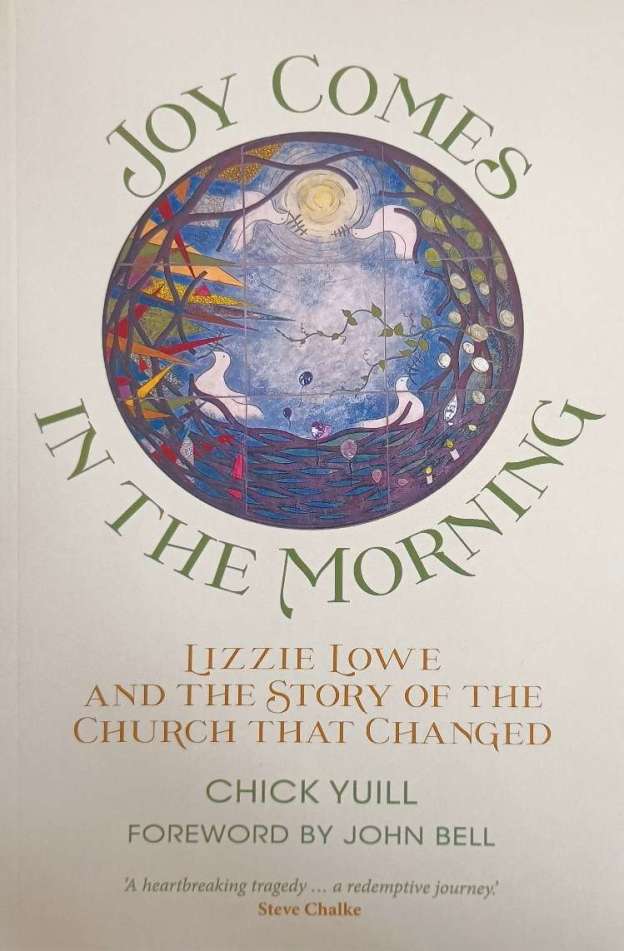


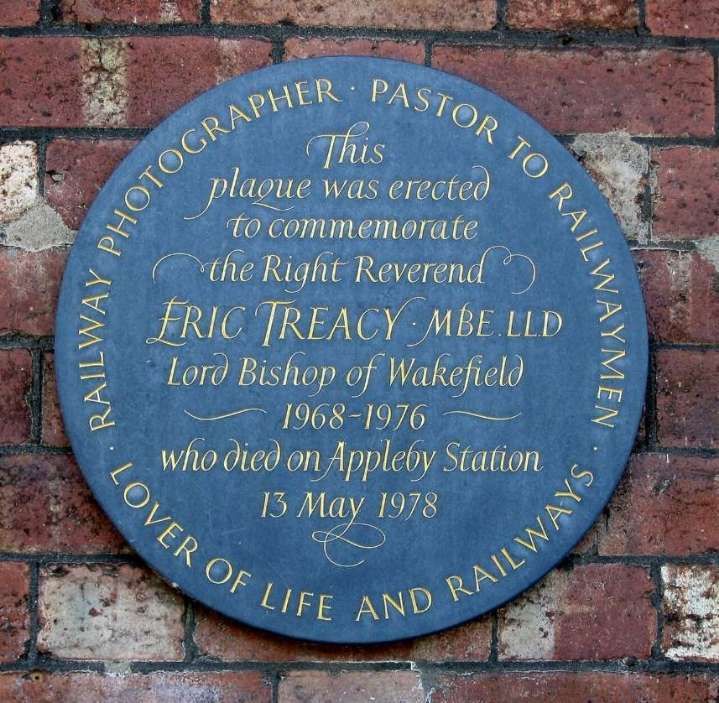


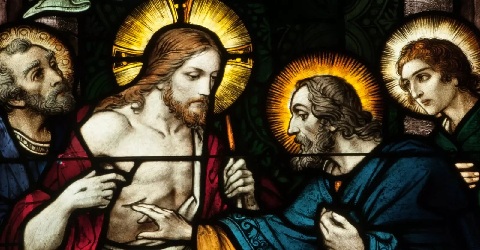

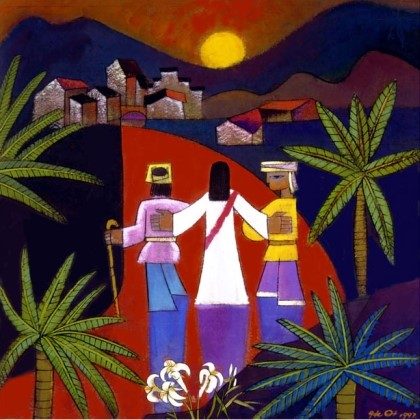
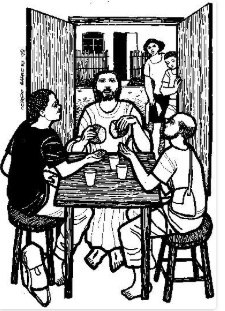

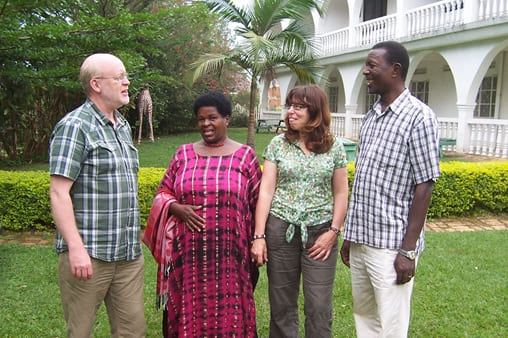

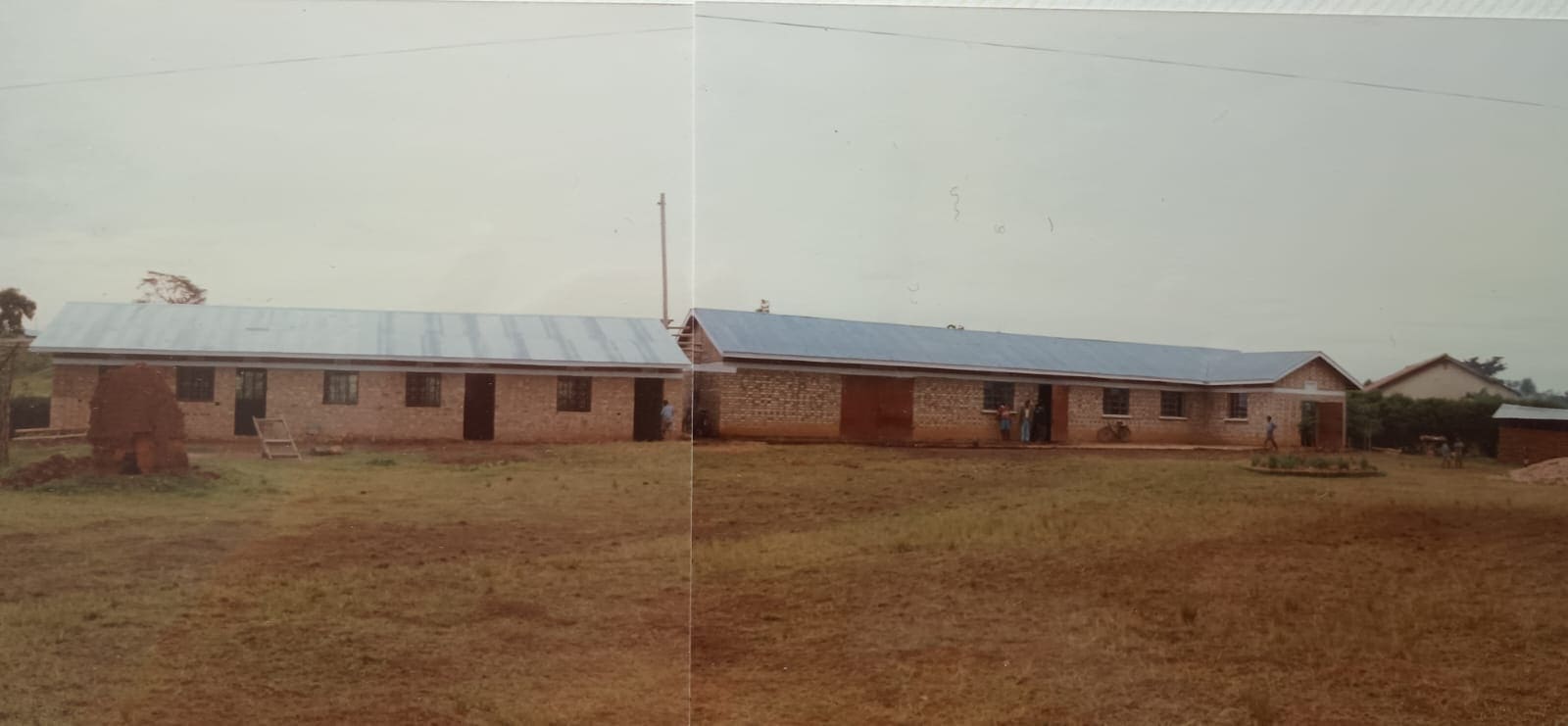


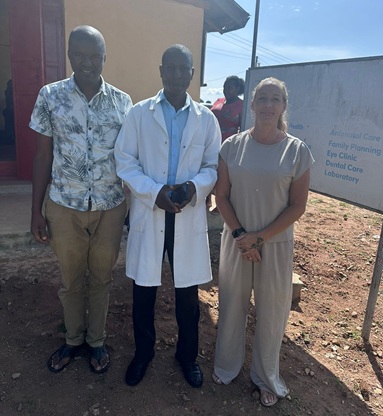
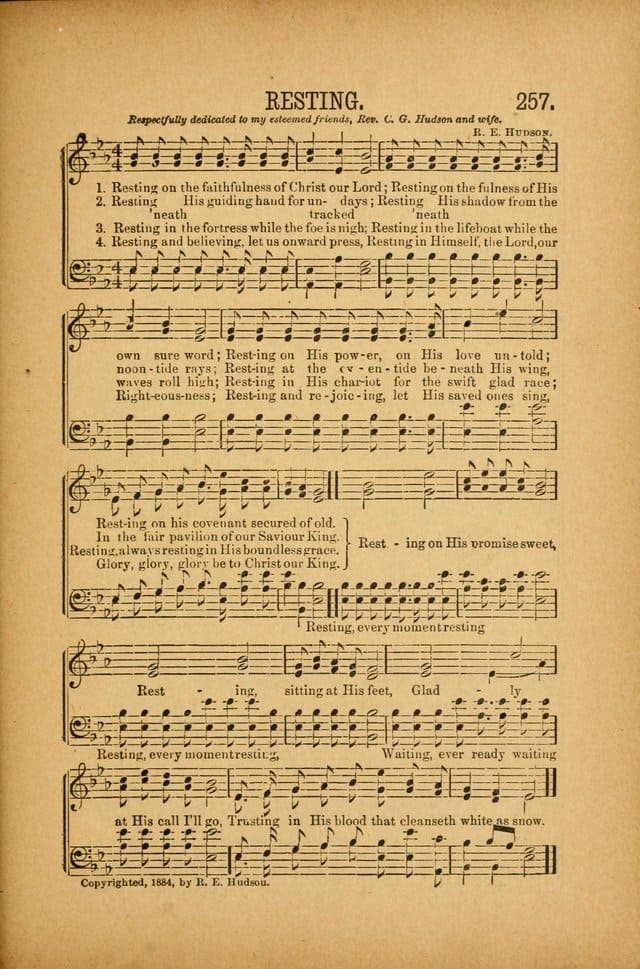



 Hans Christian Anderson tells a very familiar story whose main point is that ugly ducklings can become beautiful swans. We know that ugly caterpillars can become amazing butterflies, tadpoles do become frogs and toads. Things do change.