Tag Archives: Removal of Trams

The Modern Tramway – June 1951 – Reinstatement of a Street Tramway Route in Helsinki

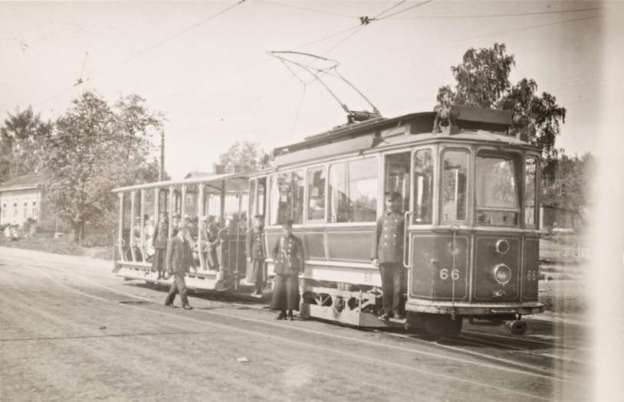
The featured image for this article is the pikkuruotsalainen (“Little Swede”) tram, built by ASEA in Sweden. Together with its open summer trailer,  they became a beloved pair on city tracks. The breezy trailers were especially popular on hot days, so much so that passengers sometimes clung to the running boards or jumped off before the tram had fully stopped. Though open trailers were meant only for summer use, wartime shortages forced them into winter service under tarpaulins. Their final flourish came during the Helsinki Olympics in 1952, when crowds crammed aboard one last time before the trailers disappeared from daily traffic, © Helsinki City Museum, Public Domain. [19]

A short letter from Kaj Arnold Larsen, Engineer of Helsinki Tramways was published in The Modern Tramway in June 1951. [1]

It seems that the editors of The Modern Tramway were delighted when examples that bucked the seemingly overwhelming trend of closures could be cited.

K. A. Larsen wrote:

“Service 5 of the Helsinki (Finland) tramway system passes through the centre of the city, traversing the narrow Alexander Street for part of its distance. The passenger frequency in 1948 was 12.5 passengers per car kilometre. In June, 1949, tramway operation of this route ceased and diesel buses were substituted as it was thought that bus operation would be more economical and would speed up the traffic flow. Staff economy was to be effected by using eight buses (i.e., eight drivers and eight conductors) instead of six trams, each with its own trailer (six drivers and twelve conductors). It was soon found that 15 buses, with a total crew of 30. and a 2-minute headway instead of the trams 5-minute headway, were necessary. Street parking had to be forbidden in Alexander Street as the congestion in rush hours was making impossible the working of the 60-seater diesel buses through the street. Even without street parking, the situation was not noticeably relieved.

Faced with this object lesson, the authorities wisely decided to restore the tram service along the route as soon as sufficient cars were available. Trams are now running again, and the traffic is moving without difficulty.

Next year the Helsinki tramways will take delivery of a number of new bogie tramcars of a design which combines the best features of P.C.C. and modern Swiss practice. These cars will have a passenger capacity of 100 and a maximum speed of 38 m.p.h. They will be used with one or two trailers and will replace 30-year-old cars. Extensions to the tramway system are planned and headways are to be decreased.” [1]

Larsen concludes:

“We shall then be able to show the public that higher speed and better acceleration and deceleration can be obtained with trams than with buses and that without bad odour and poisonous gases. We are not unaware of the advantages of oil and trolley-buses and we use them on suitable routes.” [1]

In the 21st century, the Helsinki Tram network are part of the public transport system organised by Helsinki Regional Transport Authority and operated by Metropolitan Area Transport Ltd (Finnish: Pääkaupunkiseudun Kaupunkiliikenne Oy) in Helsinki. The trams are the main means of transport in the city centre. 56.8 million trips were made on the system in 2019. In addition to the older tram network, there is a single light rail line that was opened in October 2023. Although technically compatible with the tram network, the light rail line is separate from the city centre tram network. [2]
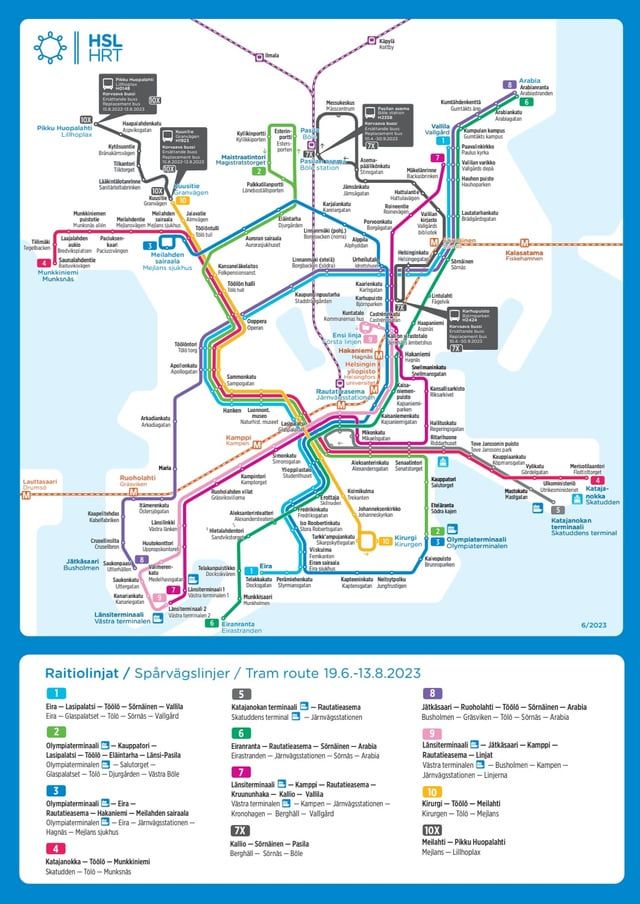
The modern tram network in Helsinki. [3]

Public transport in Helsinki was initiated in 1888 by Helsingin omnibussiosakeyhtiö, using horse-drawn omnibuses. “In 1889, Helsingin Omnibussiosakeyhtiö acquired the right to construct tram lines. The next year, the company changed its name in Helsingin raitiotie- ja omnibussiosakeyhtiö (abbreviated HRO). Electric traction was considered as a power source for the new system, but due to lack of funds, and the city council’s negative attitude towards electric trams, the decision was made to use horse-drawn trams instead. The new system was built to a track gauge of 1,000 mm. Test traffic started in December 1890, but the network wasn’t officially opened until June 1891. The capacity of the horse tram system soon proved insufficient, but the conversion to electrified trams was postponed until the price of electrification of the network reached lower levels.” [16] At this time, the network was 8.5 kilometres in length.
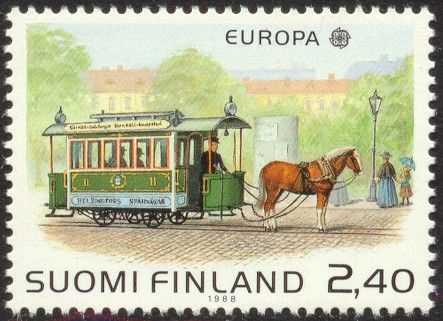
A 1988 Finnish postage stamp depicting a horse-drawn tram in Helsinki 1890-1900, © Posti-ja telelaitos and made available as Public Domain. [5]

In the latter half of the 1890s, Julius Tallberg acquired the right to construct an orbital tram system around the city that would have linked the existing HRO lines and parts of the city not covered by the HRO lines. After negotiations, Tallberg and his associates transferred the construction permit of the orbital line to the HRO in return for a large number of HRO stock shares.” [16]
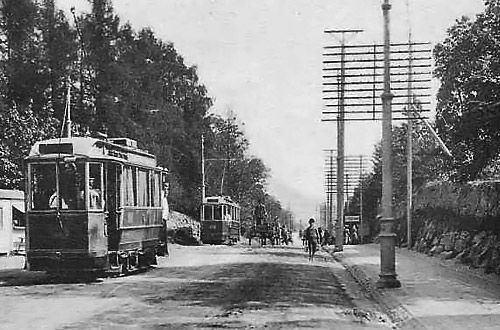
Kummer trams in Helsinki in the early 20th century, © Public Domain. [16]

In 1897, HRO received the right to construct an electrified tramway into Helsinki. A call for bids was sent out the following year, and the contract was awarded to the Germany-based O.L. Kummer.” [16]  Under the contract, Kummer were required to build and electrify the new network and provide the trams to be used on it. In addition, Kummer had to run the system for up to 3 years to prove the quality of its work. Running the system, resulted in significant profits for Kummer and, as a result, by 1901, HRO had assumed responsibility for operating the tram network. The four lines of the developing network after electrification were all single-track.

Although the single-track lines proved to be inadequate it was some time before the HRO was willing to fund the conversion. In 1906, “the company applied for and received permission to convert their track network into double-track. The contract also specified certain lines that HRO had to operate, as well as certain extensions that had to be built.” [16]

The contract for converting the tram network into double track was awarded to the Swedish ASEA. Conversion work began in 1908 and was completed in 1910. From 1908 until 1919, ASEA also supplied the HRO with a total of 78 trams and 70 trailers.” [16]
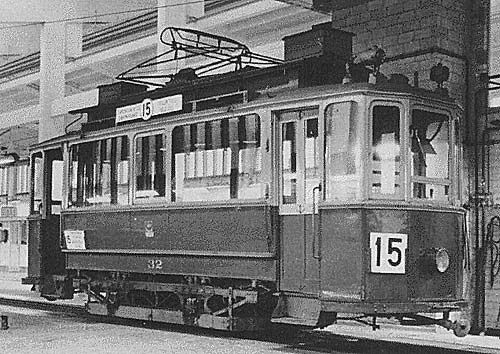
ASEA delivered 67 trams of this type, nicknamed “Pikkuruotsalainen” (English: Little Swede), to HRO between 1908 and 1918. HKL 32 (originally HRO 77) is photographed on line 15 in 1954, © B. Okkola, Public domain. [16]

ASEA (Allmänna Svenska Elektriska Aktiebolaget) was a Swedish industrial company founded in 1883 in Västerås. Renowned for electrical engineering and infrastructure, it produced early industrial robots, transformers, [trams,] and locomotives.” [4]

In 1909, the network expanded to include the island of Kulosaari – a private line owned by Brändö Spårvägsaktiebolag

In 1913, a tram line reached Alppila. In 1914, the network was also expanded into Taka-Töölö and Hermanni.

Another private line (built by Aktiebolaget M.G. Stenius) linked the existing HRO tracks in Töölö to Munkkiniemi and Haaga.

In 1926, HRO acquired Aktiebolaget M.G. Stenius and, two years later, Brändö Spårvägsaktiebolag also passed into HRO ownership. As a result, HRO again became the sole owner and operator of trams in Helsinki.” [16]

The tram network reached its apex in 1930, when the network covered a larger area than ever before, … there were 14 lines in operation.” [16]
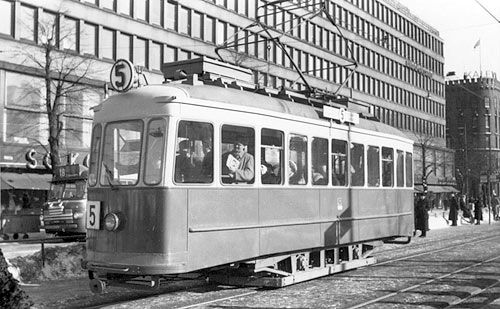
The first trams built in Finland for Helsinki came from Suomen autoteollisuus in 1940–1941. HKL 169 photographed on line 5 in 1957, © Public Domain. [7]

At the end of 1944 the City of Helsinki acquired the entirety of HRO, which now became a municipal transport authority under the name Helsingin Kaupungin Liikennelaitos (HKL)” [16]

During the 1950s a total of 105 Finnish-built double-bogie trams (Karia types HM IV and HM V, Valmet types RM 1 and RM 3) were delivered to the HKL.” [16]
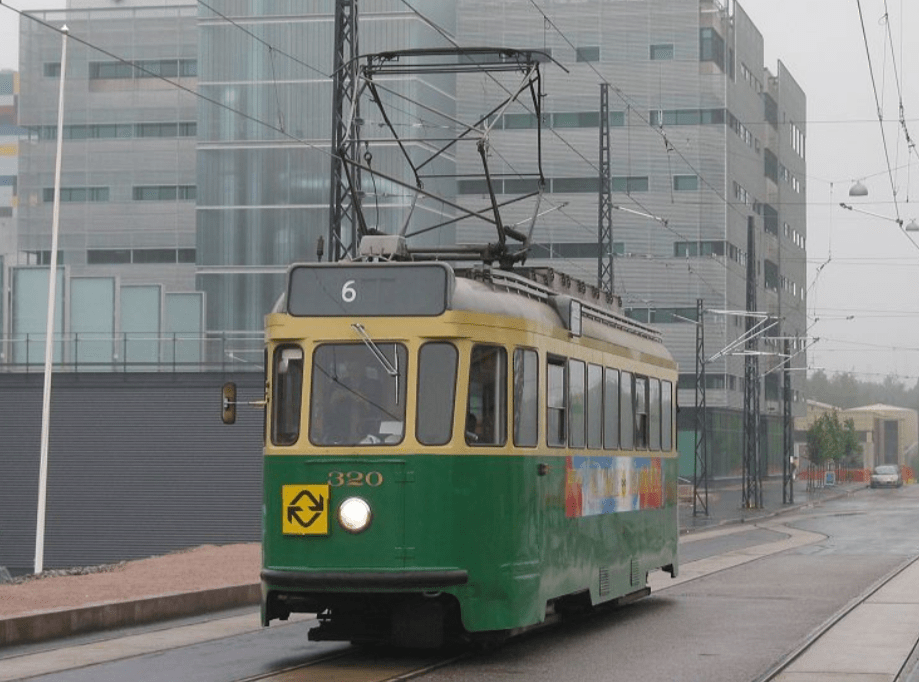
The Karia HM IV was a Finnish-built tram  delivered in the mid-1950s, © Kari Paavola (2004), permission to use here has been requested. [8]

Two other images of the Karia HM IV can be found on these links:

https://transphoto.org/photo/527278

https://transphoto.org/photo/527279

The Karia HM IV was a classic Finnish-built tram that operated in Helsinki during the 1950s and 1960s. Delivered in the mid-1950s, these double-bogie “Mustang” derivatives were foundational in modernizing Helsinki’s local public transport network before the introduction of the modern tram fleets.
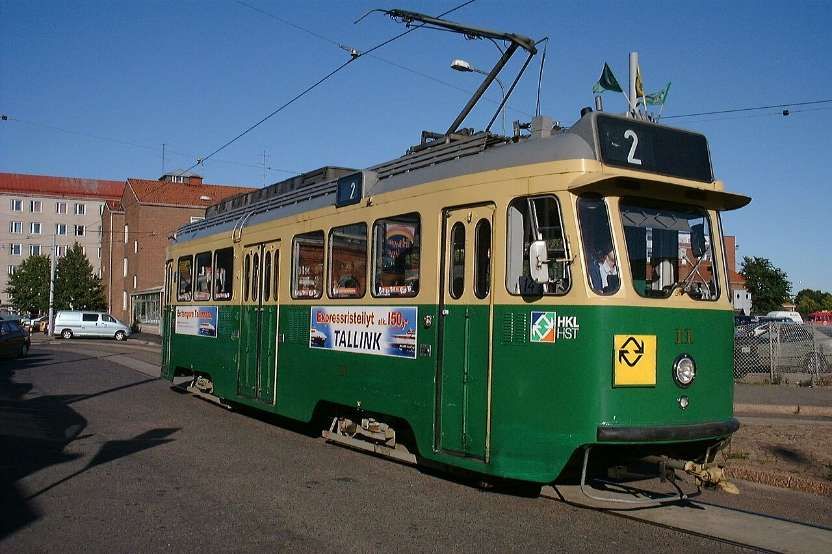
Tram No. 11, type HM V, on Line 2 in September 1999, © Peter Van den Bossche and licensed for reuse under a Creative Commons licence (CC BY-SA 2.0). [6]
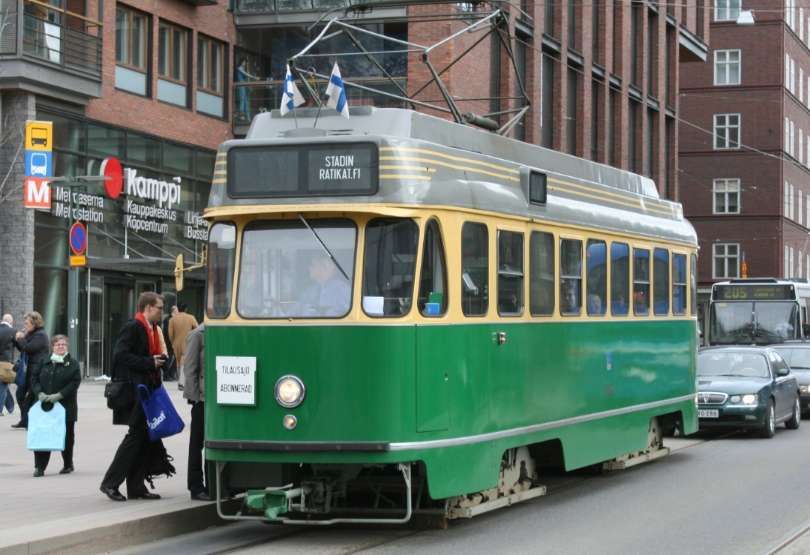
Tram No. 339 is a restored Valmet RM1 type tram owned by Stadin Ratikat Oy, on charter drive on the new tracks on Fredrikinkatu in Kamppi in April 2009. It was built in 1955 and withdrawn from active service in 1987 and subsequently used as an advertisement tram before being acquired by Stadin Ratikat and then taken to Tallinn for restoration in 2002. The restoration was completed in Helsinki in 2004, © Kalle Id, and  licensed for reuse under a Creative Commons licence (CC BY-SA 3.0). [9]
A Valmet RM3 tram photographed by Leino Osmo in 1965 held by Helsinki City Museum, © Public Domain. [11]

Despite the experience of the ‘experiment’ reported by The Modern Tramway in 1951. Helsinki planned on the gradual removal of its trams. … “During the 1960s all plans for expanding the tram network were put on hold while resources were concentrated on the planning of the metro and additional bus connections. At the same time plans were drawn for the termination of the tram network by the year 2000. In 1969 Helsinki city council made the decision that in the future tramlines would be confined to the inner city, while the metro would serve the suburban areas; the tram system would be terminated, at earliest in the year 2000. This decision required the acquisition of new trams to replace the last two-axle trams, the oldest of which dated from the 1920s. Originally the plan was to acquire fairly new second-hand articulated Duewag GT6 trams from Copenhagen, but the deal fell through and in the end new articulated trams were acquired from Valmet (type Nr I) in 1973–1975. These trams were planned to be the last trams to be acquired for traffic in Helsinki.” [16]
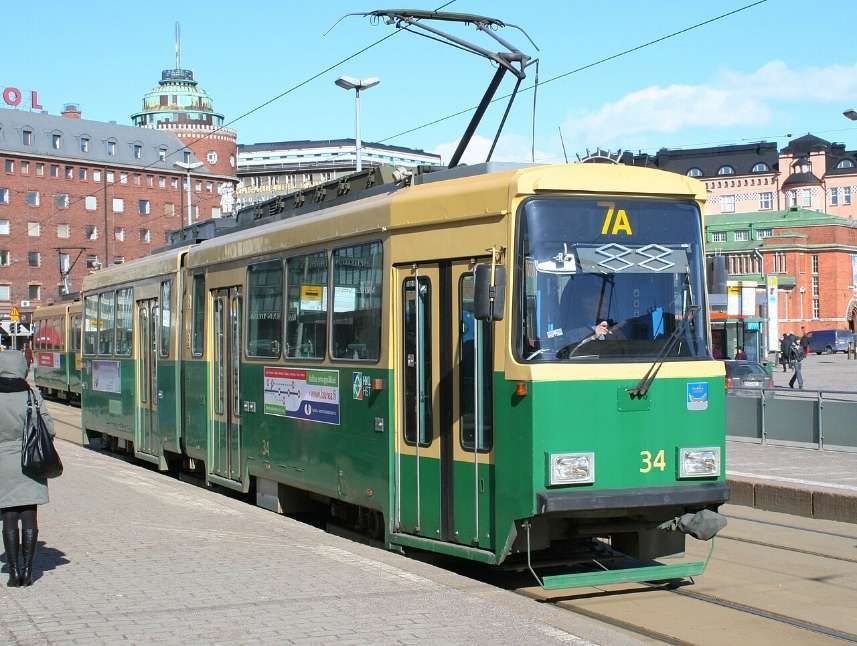
Valmet Nr 1 Tram No. 34 in Hakaniemi on line 7A. This tram was built in 1973, © Kalle Id and licenced for reuse under a Creative Commons licence (CC BY-SA 3.0). [12]

The ‘Valmet Nr I’ trams are articulated six-axle vehicles built at the Valmet aircraft factory between 1973 and 1975, they are based on the German Düwag GT6 design. About 50 of these iconic high-floor vehicles remain in regular service across the city’s network. [13]

During the early 1970s the decision to terminate the tram system was reconsidered and eventually reversed. In 1976, the tram network was expanded for the first time since 1955, when the new connection into Itä-Pasila was opened (then line 2, present line 7). Another expansion was opened in 1980, when tracks in Katajanokka were expanded eastward to a new residential area (then line 5, present line 4). In 1981 another group of articulated trams, based on the Nr I type, were ordered from Valmet. Classified as Nr II, these trams were delivered between 1983 and 1987, allowing the withdrawal of the majority of the 1950s-built trams (types HM IV and RM 1 in their entirety), as well as withdrawal of all trailers.” [16]
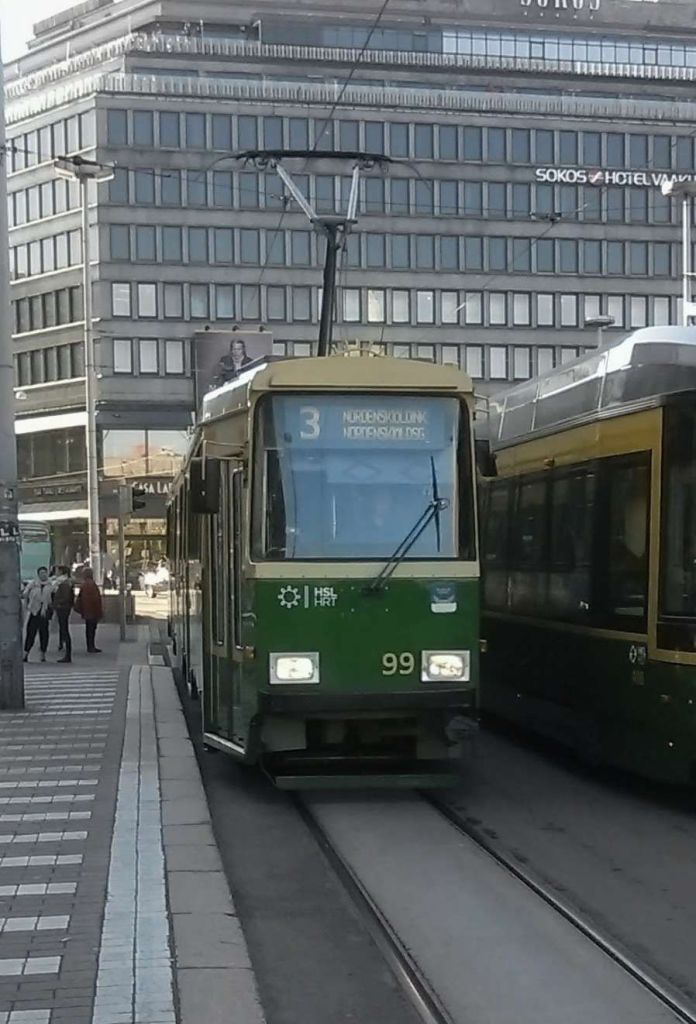
A Valmet Nr II Tram, vehicle No. 99, Valmet Nr II trams were delivered to Helsinki between 1983 and 1987. [My photograph, September 2016]
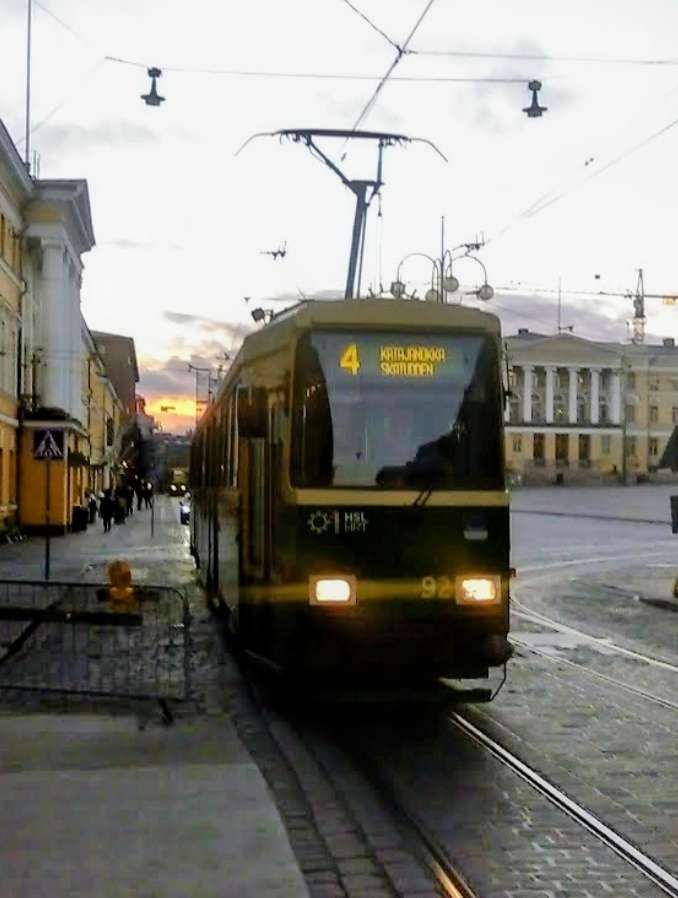
A Valmet Nr II Tram, vehicle No. 92. The NrII trams were modernized between 2006 and 2011 to include a low-floor section, becoming known as MLNRV class. The added sections were built by Verkehrs Industrie Systeme in Germany and installed in Finland by HKL. [My photograph, September 2016][10]
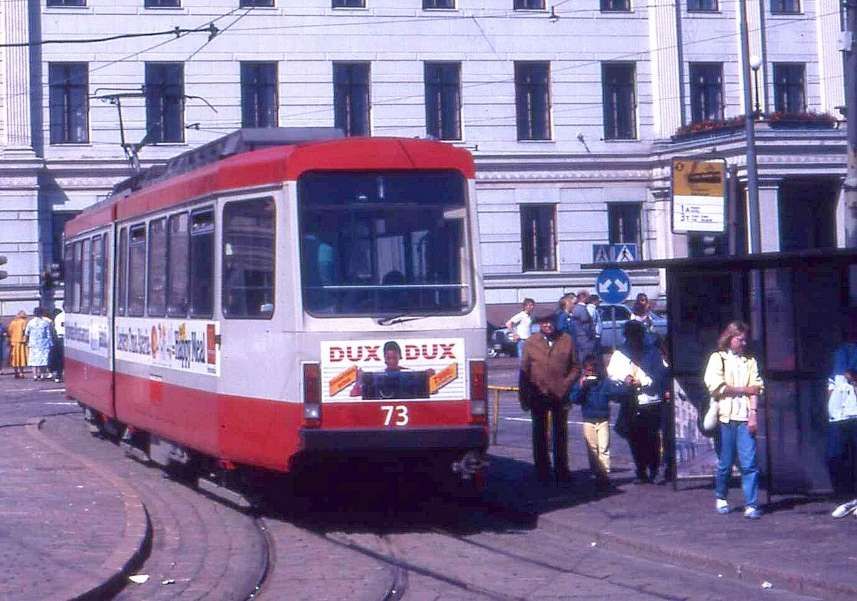
The NrII trams were originally painted in an orange and grey livery, but it proved unpopular and both classes were later repainted in the traditional yellow and green colours. This is NrII number 73 in Market Square on line 1, 1987, © Felix O, and licensed for reuse under a Creative Commons licence (CC BY-SA 2.0). [15]

In 1985 the tram network was extended to West Pasila (line 7). In the mid-1980s the tram lines were radically reorganised: line 5 was closed down and the routes of lines 2, 3B, 3T, 4, 7A, 7B, 8 and 10 altered to a smaller or larger degree.” [16]

The next expansion of the network occurred in 1991, when the connection from Ruskeasuo to Pikku Huopalahti was opened (line 10). In the 1990s wide-ranging plans were made for expansion and improvement of the tram system. These included the Jokeri orbital light rail line connecting Itäkeskus to Leppävaara, extensions of the system to Munkkivuori, Koskela, Viikki, Malmi, Arabianranta and to the harbour areas Jätkäsaari, Munkkisaari and Kalasatama, which were to be freed from shipping activities and to become brownfield sites for residential and office development. In addition to the extensions, the plans included a partially tunneled light rail line linking Erottaja to Pasila via Töölö.” [16]

In 1999, Helsinki purchased a fleet of low-floor Variotram trams from Adtranz (which became Bombardier in 2001). The new generation trams suffered from persistent technical difficulties and the whole batch has to be returned to Germany. To cover their absence the city purchased ten second-hand trams from Mannheim, Germany.

Wikipedia informs us that, “The purchase of the Bombardier trams was never completed due to the reliability problems. Instead, a deal was reached that required Bombardier to keep a certain minimum number of trams in operation. Bombardier opened its own depot in Helsinki for this purpose in mid-2008.” [16]
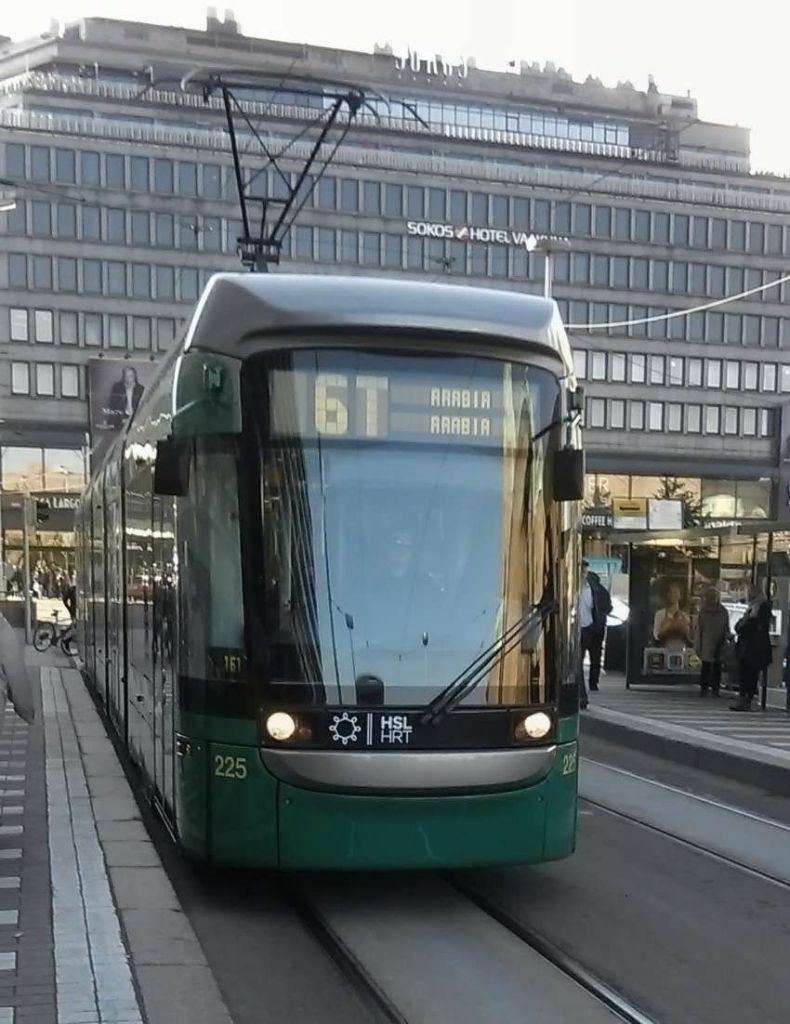
An articulated, low-floor tram on Kaivokatu, outside Helsinki Railway Station. This tram is a Bombardier Variotram MLRV2, This specific tram, identified by number 225, is shown traveling on line 6T toward Arabia. [My photograph, September 2016]

The purchase of a new series of 40 low-floor trams was initiated in 2007, and the trams were eventually ordered from the Finnish manufacturer Transtech in December 2010. Two photographs of these trams appear below. …
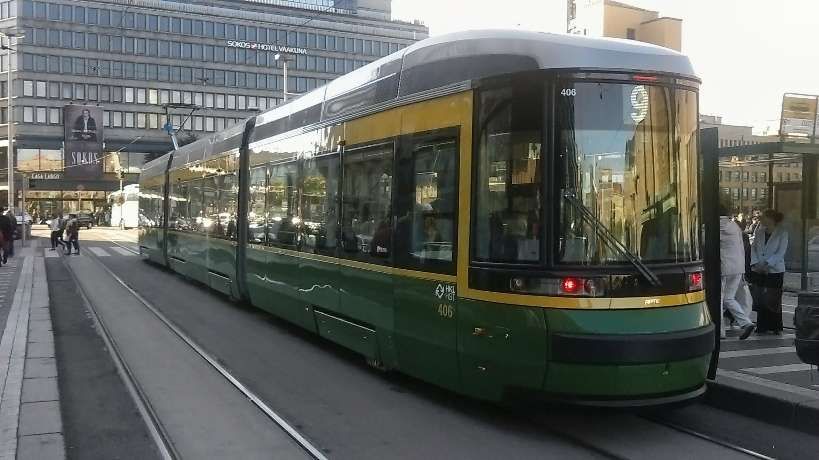
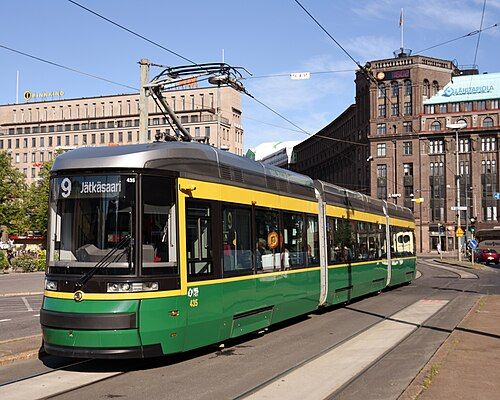
Another articulated, low-floor tram at the tram stop on Kaivokatu. This is a Škoda Artic tram. This series of trams was designed specifically for Helsinki’s challenging conditions by the Finnish manufacturer Transtech Ltd, which is part of Škoda Transportation. [My photograph, September 2016]
Another view of a Škoda Artic articulated tram also on Kaivokatu, © Bahnfrend  and licenced for reuse under a Creative Commons licence (CC BY-SA 4.0). [14]

The extension of the network from Arabia into the new residential development area in Arabianranta (lines 6 and 8) was … opened in 2004. Line 6 was extended from Arabia to Arabianranta in 2004 and line 8 from St. Paul’s church in 2007. The new number 9 line opened on 10th August 2008, connecting Kolmikulma in central Helsinki to East-Pasila and replacing bus line number 17, albeit having been truncated from both ends compared to the initially planned version. This marked the opening of the first new tram line in Helsinki since the (re-)opening of line 2 in 1976.” [16]

“The first phase of the extension of line 8 to Jätkäsaari was opened on 1st January 2012, and the extension of line 9 to the ferry terminal in Jätkäsaari via Kamppi on 13th August 2012.” [16]

Some interesting trams need to be noted:

  • From the autumn of 2010 to December 2012, a Culture Tram was operated for limited hours on three days of the week (Wed, Thu, Fri) on the additional line no. 5, whose route ran from Ooppera to Linjat via Rautatientori. The Culture Tram had various art exhibitions and performances on board. Highlights included performances by the singers of the Finnish National Opera and concerts as a part of the Flow Festival. The tram is an eight-axle Duewag tram, originally purchased from Mannheim, Germany, and refurbished specifically for this purpose. It is retained as part the fleet and available on charter basis for events that could use the equipment installed in it. [16]
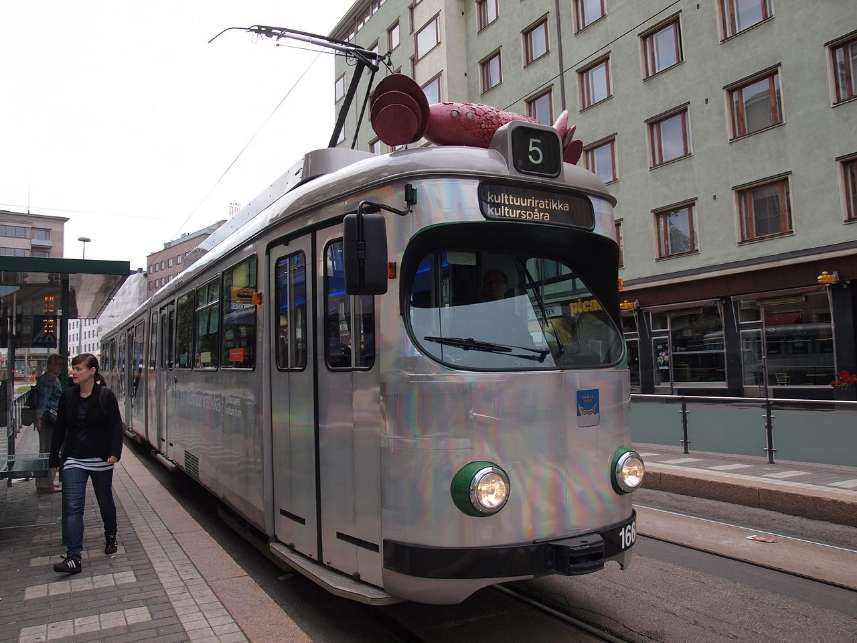
The Culture Tram once ran regularly on Line 5. It is now available on a charter basis, © JIP and licensed for reuse under a Creative Commons licence (CC BY-SA 3.0). [17]
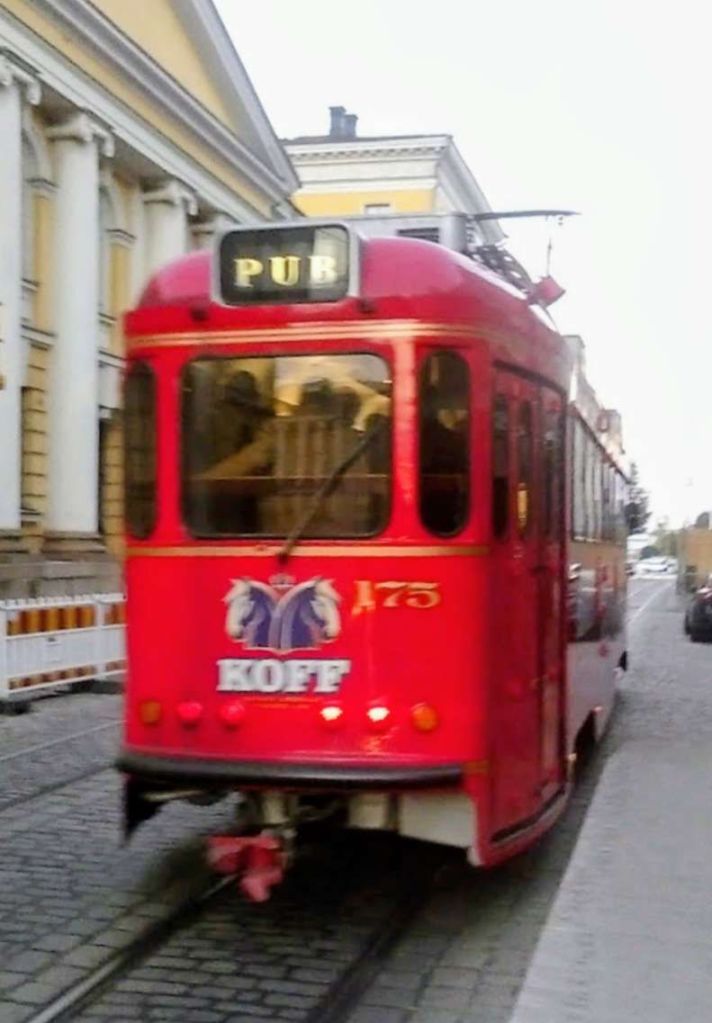
  • The Pub Tram – Spårakoff is currently under renovation and temporarily unavailable. It is a tram converted into a pub, touring the central sights of Helsinki city centre. The ride features beer, wine, cider, refreshments, fun and great views. There is even a toilet on board. It is an historic HM V type tram converted to be used as a bar! Two photographs appear below. …
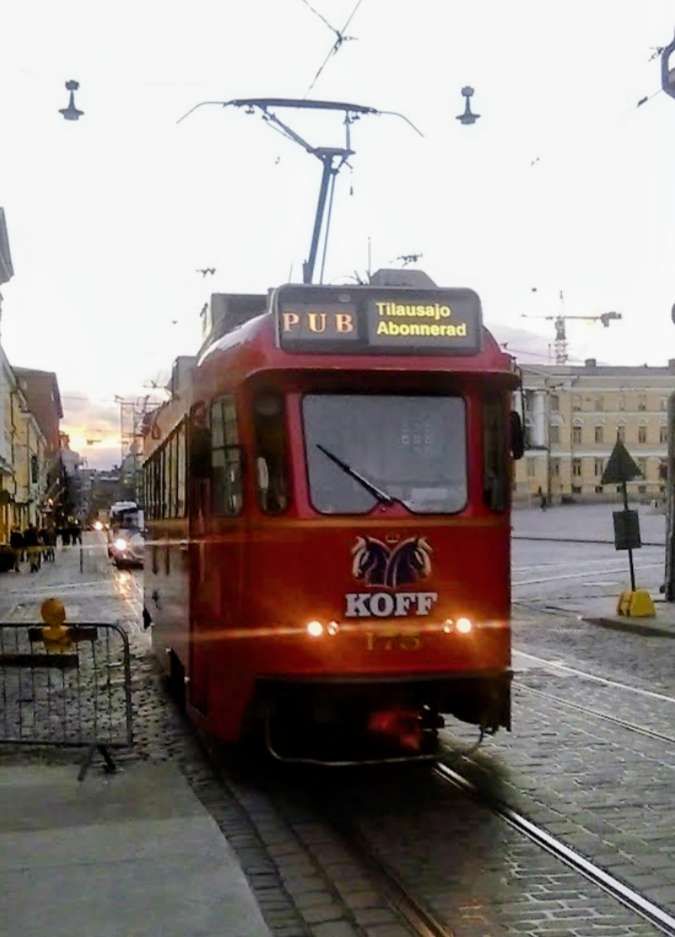
A HM V tram which has been kitted out as a pub. [My photograph, September 2016]
Another view of the ‘pib tram’ taken late in the evening and a little out of focus. [My photograph, September 2016]

As of 2 September 2024, the network consists of 11 individually numbered city centre tram lines and one numbered light rail line. Lines 1 and 8 operate on a slightly different route during weekends when they go to the West Harbour terminal, indicated with a “T” suffix on the line number. Lines 3N and 9N are operated on a slightly modified line 3 and 9 route respectively during night time. The light rail line 15 is currently the only tram line in Helsinki to also reach the neighbouring city of Espoo, all other lines travel inside Helsinki only.” [2]

References

  1. K. A. Larsen; Reinstatement of a Street Tramway Route in Helsinki; in The Modern Tramway, Volume 14. No. 162, June 1951, p 138.
  2. https://en.wikipedia.org/wiki/Trams_in_Helsinki, accessed on 17th May 2026.
  3. https://www.reddit.com/r/TransitDiagrams/comments/14ft4sz/map_of_the_tram_system_of_my_hometown_helsuinki_in, accessed on 17th May 2026.
  4. https://en.wikipedia.org/wiki/ASEA, accessed on 17th May 2026.
  5. https://commons.wikimedia.org/wiki/File:Horse-Tram-1988.jpg, accessed on 17th May 2026.
  6. https://en.wikipedia.org/wiki/History_of_trams_in_Helsinki#/media/File%3ATram_2_in_Helsinki.jpg, accessed on 17th May 2026.
  7. https://commons.wikimedia.org/wiki/File:HM_I_tram_Helsinki.jpg, accessed on 17th May 2026.
  8. https://phototrans.eu/14,55273,0.html, accessed on 17th May 2026.
  9. https://commons.wikimedia.org/wiki/File:RM1_Kamppi_2009-04-03.jpg, accessed on 17th May 2026.
  10. https://commons.wikimedia.org/wiki/File:MLNRV_Hakaniemi_2010-05-03.JPG, accessed on 17th May 2026
  11. https://www.finna.fi/Record/hkm.674CAE85-12DF-4246-B249-596DF1703379, accessed on 17th May 2026.
  12. https://en.wikipedia.org/wiki/Valmet_Nr_I#/media/File%3ANr_I_34_in_Hakaniemi.jpg, accessed on 17th May 2026.
  13. https://en.wikipedia.org/wiki/Valmet_Nr_I, accessed on 17th May 2026.
  14. https://en.wikipedia.org/wiki/Trams_in_Helsinki#/media/File%3AHKL_HST_Artic_435%2C_Kaivokatu%2C_2019_(04).jpg, accessed on 17th May 2026.
  15. https://en.wikipedia.org/wiki/History_of_trams_in_Helsinki#/media/File%3ANrII_tram_in_Helsinki_in_1987.jpg, accessed on 17th May 2026.
  16. https://en.wikipedia.org/wiki/History_of_trams_in_Helsinki, accessed on 27th May 2026.
  17. https://en.wikipedia.org/wiki/History_of_trams_in_Helsinki#/media/File%3AHelsinki_Culture_Tram_from_the_outside.jpg, accessed on 17th May 2026.
  18. https://www.raflaamo.fi/en/restaurant/helsinki/sparakoff, accessed on 17th May 2026.
  19. https://finland.fi/life-society/trams-carry-the-future-in-helsinki-and-elsewhere-in-finland, accessed on 21st May 2026.
Modern Tramway – January 1951 – The ‘Felthams’ in Leeds

I have a few older copies of Modern Tramway which I had not yet read. The first of these is the January 1951 issue, this is a second reflection from that copy of the Journal.

As the London network began to close a significant number of trams were sold. This copy of Modern Tramway notes that the remaining ‘Felthams’ were sold to Leeds City Transport.

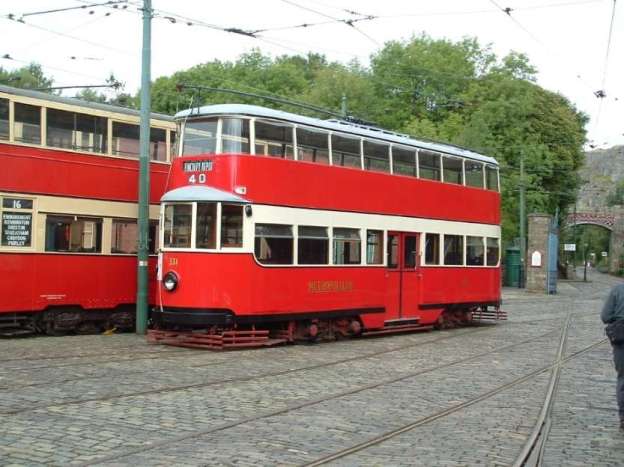
The featured image for this article shows Feltham No. 331 which was actually transferred to Sunderland, becoming No. 100 in Sunderland. This Feltham was unique, having central doors. It is now resident at Crich, © Nathan 1492 and licenced for reuse under a Creative Commons licence (CC BY-SA 3.0). [6]

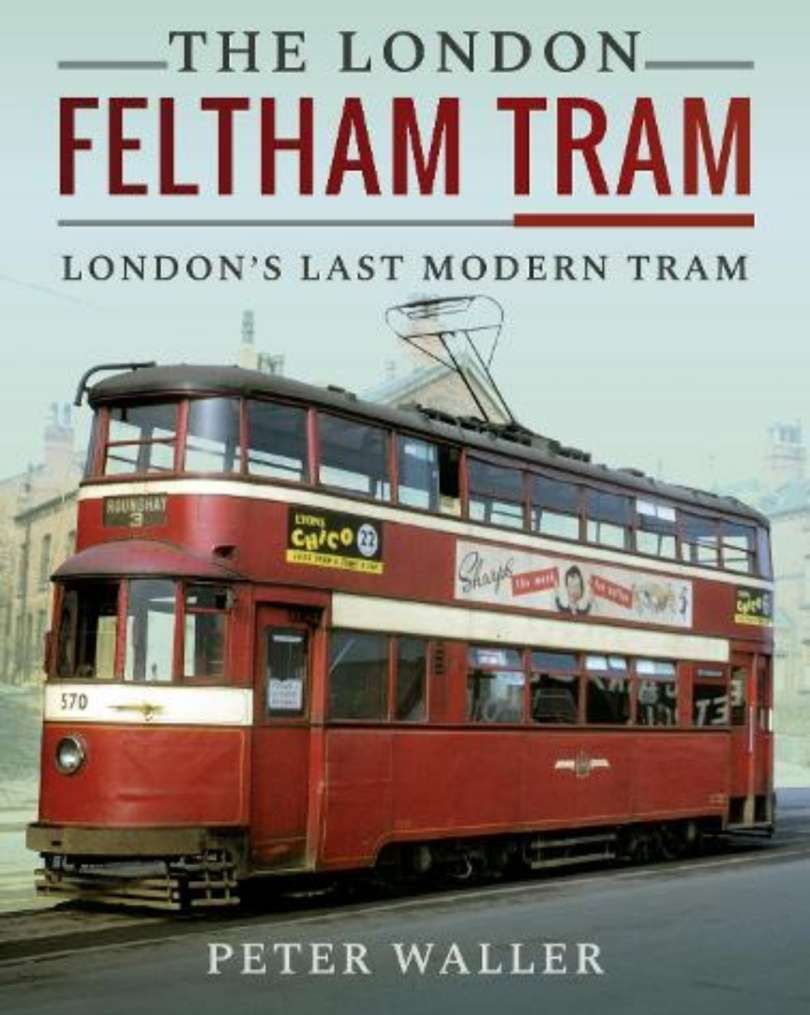
By the late 1920s trams operated by both the Metropolitan Electric Tramways and the London United Tramways were increasingly aged. The two operators co-operated in the development of a new tram design – the ‘Feltham’. Conceived following detailed research and the construction of a number of prototype cars, the production ‘Felthams’ all entered service by the early 1930s. However, the LPTB’s plans for converting tram routes to trolleybus operation soon saw these modern cars transferred from north of the River Thames to south of the river. Here the production cars mostly survived until the final conversion programme. This was not the end of the story, however, as the majority were sold for further service to Leeds, where the last survivors were to see the final closure of the West Riding system in November 1959. The book explores the story of the ‘Felthams’ in London, Leeds and Sunderland. [2]

In 1929 the Metropolitan Electric Tramways (MET) placed into service an experimental tramcar, No. 320, manufactured by the Union Construction Company which was located in Feltham. This tram was of a significantly more advanced design than other experimental cars that the MET had trialled in the previous few years, and was the first of three prototypes that led to the final design of what became known as the “Feltham” trams. Two more experimental tramcars were then constructed: MET No. 330 later the same year, and No. 331 the next. After experience in passenger service was assessed, the best features of each were combined to form the final design.” [3][4]

After service in London until 1949 and into the very early 1950s, 92 of these trams were to be purchased by Leeds City Transport. In January 1951, Modern Tramway reports:

“The purchase of the remaining 92 London ‘Feltham’ type cars by Leeds City Transport at a cost of £500 each is a wonderful bargain for the latter city; a bus with the same expectation of life as one of these still very modern cars would cost about £4,000, and a new bogie tram at least £7,000.

“On arrival at Kirkstall Works the trucks are completely stripped and all worn parts are replaced. The hornways where worn are built up by a welding process. It has been found necessary to replace the rubber blocks used in the driving-wheel hornways in London by the correct springs, and the tyres are turned to the standard Leeds profile.

“It was found that the car bodies were structurally quite sound on arrival from London; all that it has been necessary to do to the exterior has been to replace damaged panels and to remove dents in the dash; internally, all the woodwork has had the old varnish removed and has been repolished with a light oak finish, all interior panels being finished in light brown. The seats are removed from the cars and the upholstery thoroughly cleaned. Any cars that are received with seat coverings in poor condition will be re-upholstered in the standard Leeds red leather. A combined route-number and destination blind has been fitted, the apertures used in London for displaying the service number having been painted out; a lower saloon side indicator-blind is also provided. The front exit has not been restored for passenger operation, the air-operated front door being used solely for perambulators and luggage.

“The cars, which are arriving at the rate of two a week, are being numbered from 501 upwards in the order of arrival from London, up to 515 having been received at the time of writing and up to 504 being in passenger service. Arrangements have been made with London Transport for the ex-Metropolitan cars with B.T.H. equipment to be despatched first, to be followed by the ex-London United cars with G.E.C. equipment. The ex-Metropolitan and ex-London United cars will be classified in Leeds as types UCC/1 and UCC/2 respective’y.

“The livery finally decided upon for these cars is ‘British Electric Traction’ red all over, relieved by a cream band below the upper saloon windows and a cream panel above the lower saloon windows. The cars are lined out in gold and the roof, trucks and lifeguards are painted Brunswick black. Car No. 503 lacks the cream bands, whilst car No. 501 is still in London Transport livery.

“The cars have proved very satisfactory in service and are popular with the passengers. Those at present in service operate from Torre Road Depot which will eventually operate ‘Felthams’ exclusively. The riding qualities of these cars on the long reserved-track routes to Crossgates and Templenewsam are good. The Leeds undertaking is to be congratulated on obtaining and reconditioning these fine cars.” [1: p6]

The ‘Felthams’ served in Leeds until the closure of that city’s network in 1959. Wikipedia talks of 90 rather than 92 of these trams operating in Leeds. [3] The Seashore Trolley Museum in Maine, USA agrees with this assessment. [5]

The Seashore Trolley Museum reports:

“Car  No. 341 was one of this class known as the ‘Felthams’ (after their place of construction).  The ‘Feltham’ cars were the result of a complete vehicle redesign similar to the development of the PCC car in the USA at about the same time.  No. 341 was one of 54 cars built for the MET which served London’s northern suburbs.  At over 40 feet long, the ‘Felthams’ were relatively long and had a tapering body, large entrance/exit vestibules and a low floor height.  A distinctive feature was the higher floor for the operator’s cab.  Rather than using overhead wires, London trams (including the MET trams) drew power from an underground conduit, similar to systems in Washington, DC and New York City.  When the London Passenger Transport Board acquired the Metropolitan Electric in 1933, No. 341 became No. 2085.  The car survived the World War II blitz, but the LPTB’s policy was to replace trams with trolley buses and expanded underground lines.  The ‘Felthams’ were the last new trams purchased for London.  After 1938, most of LPTB’s remaining tram lines were in South London.  In 1948, LPTB was nationalized and became the London Transport Executive.  The last London tram ran in 1952.  The tram system in Leeds acquired 90 ‘Felthams’ from London Transport in 1950, including No. 2085, which became No. 526 at Leeds.  Leeds painted its trams red and used overhead bow collectors rather than trolley poles.  Leeds abandoned its trams in 1959.” [5]

Two other ‘Felthams’ have been preserved:

Car No 331 (LTPB No. 2168) which was transferred to Sunderland. This tram was a central entrance prototype which was numbered 100 when in service in Sunderland. It now is part of the National Tramway Museum, Crich, collection. [3]

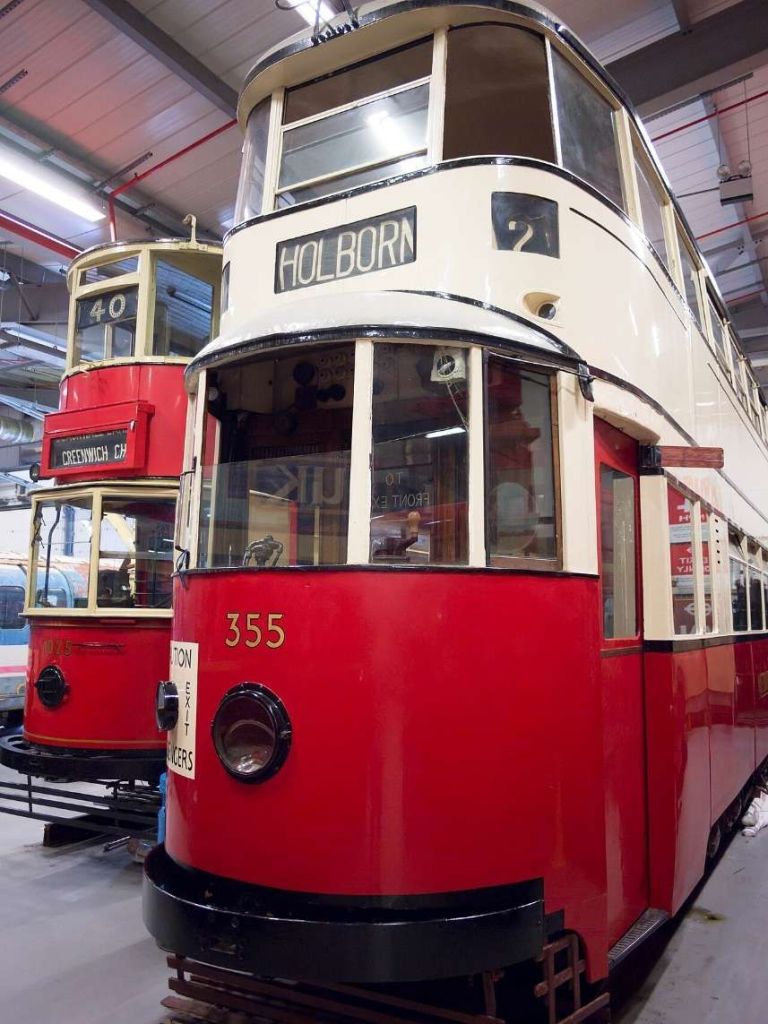
Car No. 355 (LTPB No. 2099, later Leeds No. 501) is now part of the collection at London Transport Museum, Store, Acton, London. [3]

Car No. 355 on display in London Transport Museum, © James Petts and licensed for reuse under a Creative Commons licence (CC BY-SA 2.0). [7]

References

  1. The ‘Felthams’ in Leeds; in Modern Tramway Volume 14 No. 157; The Light Railway Transport League, London, January 1951, p6.
  2. Peter Waller; The London Feltham Tram – London’s Last Modern Tramway; Pen & Sword, 2020.
  3. https://en.wikipedia.org/wiki/Feltham_Tram, accessed on 11th May 2026.
  4. T. A. Gibbs; The Metropolitan Electric Tramways, a Short History; The Oakwood Press, 1964.
  5. https://trolleymuseum.org/london2085, accessed on 11th May 2026.
  6. https://en.wikipedia.org/wiki/Feltham_Tram#/media/File%3ALondon_Metropolitan_Tramways_%22Feltham%22_Tram_No.331%2C_National_Tramway_Museum%2C_Crich.JPG, accessed on 11th May 2026.
  7. https://en.wikipedia.org/wiki/Feltham_Tram#/media/File%3ALondon_Tram_(no._355)_-_Flickr_-_James_E._Petts.jpg, accessed on 11th May 2026.

Modern Tramway – January 1951 – Birmingham Bustigestion!

I have a few older copies of Modern Tramway which I had not yet read. The first of these is the January 1951 issue.

The editorial for this issue of Modern Tramway was a long update on Birmingham’s tram-scrapping programme. An update that railed against the dominance of the bus! It was clearly written by someone who knew the centre of Birmingham at the start of the 1950s very well.

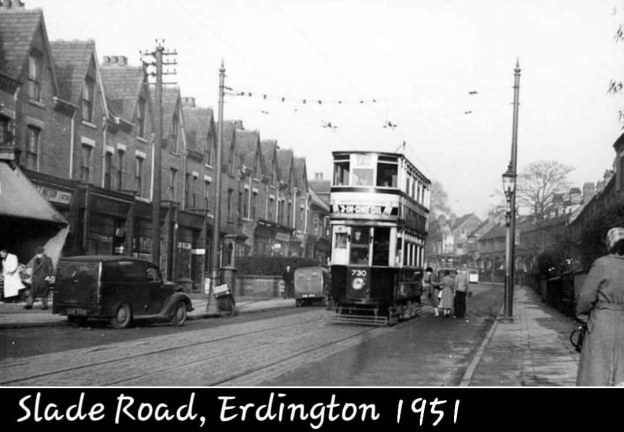
The featured image for this article shows a tram service on Slade Road, Erdington in 1951, the photograph was shared on the Birmingham Area History Facebook Group by Jan Ross on 23rd November 2023, © Public Domain. [4]

Birmingham Corporation Tramways operated a network of tramways in Birmingham from 1904 until 1953. It was the largest narrow-gauge tramway network in the UK, and was built to a gauge of 3 ft 6 in (1,067 mm). It was the fourth largest tramway network in the UK behind London, Glasgow and Manchester.” [2]

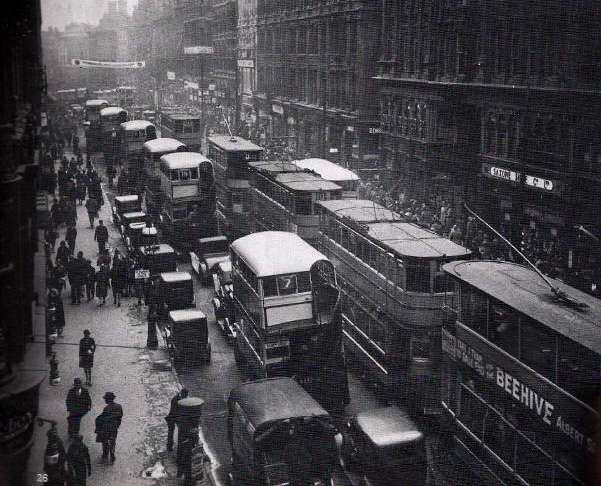
Congestion in the Birmingham city centre was a major problem as this photograph of trams and buses on Corporation Street in 1931 illustrates so well, © Public Domain. [3]

“As Birmingham’s tram-scrapping programme continues it becomes increasingly clear how great a part has hitherto been played by the tramways in keeping city centre congestion within bounds. Birmingham has an awkward arrangement of  central streets, and for many years now a large number of bus services, some of them cross-city, have followed a loop route through the central streets (Victoria Square, New Street, Corporation Street, Bull Street and Colmore Row). This is an admittedly convenient arrangement for cross-city passengers, but the very large number of buses traversing these streets adds considerably to the congestion; it could just be done, however, with the existing number of bus services and aided by the desperate expedient of the world’s most complicated one-way scheme, formulated in 1933.

In 1933, however, most of the traffic to the city was catered for by tramways terminating on the fringe of the central loop area; their terminal arrangements were far from ideal in many cases, but the quick turn-round possible with trams at such places as Hill Street and Steelhouse Lane did materially aid matters, as did the arrangement by which the Martineau Street trams (services 3, 3X, 6, 8 and 10) followed the one-way routing by a single track in Corporation Street from Martineau Street, then passing through a central island at the Corporation Street – Bull Street corner (where other traffic turned left and right) and across what may be described as a ‘one-way watershed’ alongside Lewis’s building, to rejoin the Corporation Street traffic where two-way traffic commences at Old Square. This arrangement was severely criticised on the ground that it involved the running of trams against the one-way traffic for one block alongside Lewis’s, but this feature could very easily have been rectified by extending the already rather complicated island at Bull Street corner up to Old Square, so as to keep the tramway traffic on a reservation throughout the very short stretch where it conflicted in direction. with the road traffic. This would not have caused any additional congestion, for traffic along Corporation Street from Old Square towards Bull Street has in any case to be split into two streams (right and left) at the Lewis’s island, and to do this in advance of the corner would probably have assisted traffic flow rather than otherwise, while the single track is no wider than other islands in Corporation Street erected as traffic aids, including a long one opposite Cherry and Union Streets which directly continues the line of the track.

There need therefore have been no difficulty in running trams along Corporation Street, whilst doing so did have the immense advantage of directing the traffic from Martineau Street terminus into a path which short-circuited the very congested détour via Bull Street and Steelhouse Lane which was the only alternative.

The tramway abandonments which have occurred since 1933, however, have in most cases had the effect of upsetting these arrangements and causing further invasions of the already congested central ‘loop’. Thus the Ladywood changeover brought an additional bus service into Victoria Square and Paradise Street, and the Moseley Road changeover two more, owing to the lack of flexibility of buses, whereby they must have central streets to loop round, instead of simple reversal as was possible with the trams in Hill Street. The Transport Department was evidently anxious to keep the additional buses to a minimum, for the former Cannon Hill service was eliminated altogether, and many thickly populated streets in the Balsall Heath area left for the first time in fifty years without service, in a desperate attempt to eliminate one service at all costs and thus limit the mischief. As it is, Paradise Street is now a solid mass of bus loading stations (incidentally without weather protection, which the tram termini had), and scenes at rush hours beggar description.

The next step was the abandonment of the Witton and Perry Barr routes operating from Martineau Street. As the replacing buses could not, of course, use the ‘watershed’ at Lewis’s, these two services (33a and 39) were compelled to go via the Bull Street and Steelhouse Lane detour, bringing additional buses to this very congested area; a recent traffic census showed this part of Bull Street to carry the heaviest volume of traffic in Birmingham.

Then, in October last, the remaining Martineau Street tram routes were scrapped. It had evidently been decided on this occasion that no further traffic could possibly be added to upper Bull Street, for some very awkward expedients were adopted to avoid this. The buses (55b) replacing the service 8 trams were brought into the city by the former outward route and terminated by reversal in Old Square (short of Bull Street); this, besides depositing passengers some distance short of the former central terminus, has meant additional vehicles turning right out of Corporation Street into Old Square, causing considerably more obstruction than the former tramway arrangement at this point, for the trams merely separated the two streams of traffic, while the buses intersect them. The Washwood Heath service (56) replacing tram 10 has been routed still more awkwardly; it comes into Martineau Street by the former route, and turns into Corporation Street, but at the Lewis’s island turns right down lower Bull Street, and rejoins the outward route at an extremely awkward narrow hairpin bend at the foot of Bull Street, where a double line of buses has to be squeezed between the blind corner and a central lavatory island. The change from one-way to two-way traffic, in fact, occurs at the narrowest peak (STET) of the whole loop! Local tramway students prophesied trouble at this point as soon as the plans were known; a single traffic bollard was planted in this narrow ‘throat’ to separate the two lines of traffic, but a Belisha Beacon on the corner became a casualty on the first day of operation, and a day or two afterwards an elevated kerb and guard rails were very hastily erected to protect the blind corner. Notwithstanding these precautions a skidding bus tore through the guard rails and caused a fatal accident on the morning of 10th November, less than six weeks after the changeover. At the inquest on the victim of this accident, the jury added a rider saying: (a) that the wood block paving was dangerous and (b) that they did not agree with the route followed by bus service 56 (round the Bull Street Dale End hairpin bend). When asked if they would be satisfied if a non-skid surface were laid, they replied in the negative and said they still thought the route was wrong. A non-skid surface has since been laid very hastily, but the route of the 56 bus remains unchanged.

On Wednesday, 1st November [1950], the Chairman of the Traffic Advisory Com mittee stated that ‘removal of trams in Corporation Street had greatly eased the stress there and in Lancaster Place’. Statements to this effect are regularly made in Birmingham, but few now believe them, and unfortunately for the Chairman, the very worst traffic jam ever experienced in Birmingham occurred on the afternoon following his self-congratulatory speech, and had Lancaster Place for its centre! The subsequent highly-embarrassed official explanations blamed everything which could be thought of (including a collision near Five Ways, over two miles away on the other side of the city!) but there is little doubt that the trouble was directly caused by the new bus arrangements, for any hitch at the foot of Bull Street quickly dams traffic back along the short length of lower Bull Street to Lewis’s corner, and this in turn blocks Corporation Street both ways, with inevitable trouble at Lancaster Place.

There was a much better case for anticipating an improvement at Perry Barr terminus after the changeover, for the tram terminus at Perry Barr was admittedly in an awkward place, and with the replacing 33A buses extended to Boar’s Head, no vehicles of any sort now terminate at Perry Barr. Nevertheless, queues of traffic extending nearly a mile from Perry Barr to Heathfield Road can be seen any evening and it is the considered opinion of many that the chaos there is much worse than before.

Such are the results of tram-scrapping so far in Birmingham. It may be said that besides the points already mentioned, there are many other traffic plague-spots, all tramless, such as the notorious instance of Digbeth and Deritend. Remaining to be ‘converted’ are the two groups of services following the Bristol and Lichfield Roads (36, 70, 71; 2, 78, 79), which at present are among the busiest, though least congested, thoroughfares in Birmingham. Abandonment of the Bristol Road tramway will involve removing an exceptionally heavy traffic load (including Austin Motor Works industrial, and Lickey Hills holiday traffic) from the present reservations, and the consequent invasion of the adjoining carriageways by hundreds of additional vehicles, with results which may be imagined (or seen, at Kingsway, Manchester). Abandonment of the Lichfield Road services will mean the loss of a good deal more reservation (especially in Tyburn Road) and perhaps more important in this particular case, will involve finding turning circles and loading places in the city for three extremely heavily-trafficked routes. It is difficult to see, in fact, how this can possibly be done. Looping via Corporation Street, Bull Street and Steelhouse Lane would put an intolerable extra burden on the busiest section of Bull Street and add more turning traffic to the Snow Hill corner; there is certainly no more room in the Old Square, and though Martineau Street is not now fully utilised, any more buses there mean Bull Street again, either to the left (already chock-a-block) or to the right (where the recent fatality occurred). The authorities have so far kept very quiet as to what is proposed for these routes, and one suspects that they are to be quietly cut back to Lancaster Place, with a nice half-mile walk to the city centre for all passengers. But as these are scheduled as the last routes to go, it will then be too late for anyone to protest!” [1: p2-3 & 5]

There is no doubting that these are the partisan words of a lobbying group opposed to the removal of Birmingham’s trams. But the increased congestion which would inevitably occur with the introduction of a significant number of additional buses should have been foreseen and have been better planned.

In more modern times the retention and refurbishment of the tram network would perhaps have been seen as the better option along with the pedestrianisation of much of the central area of the city.

But the early 1950s were not the 2020s. The internal combustion engine was seen as the future for transport and the electric trams were seen as leftovers from another era.

References

  1. Birmingham’s Bustigestion; in Modern Tramway Volume 14 No. 157; The Light Railway Transport League, London, January 1951.
  2. https://en.wikipedia.org/wiki/Birmingham_Corporation_Tramways, accessed on 19th May 2026.
  3. https://en.wikipedia.org/wiki/Birmingham_Corporation_Tramways#/media/File%3ACorporation_Street_Bham.jpg, accessed on 10th May 2026.
  4. https://www.facebook.com/share/p/1EJ5qJBtuX, accessed on 10th May 2026.