
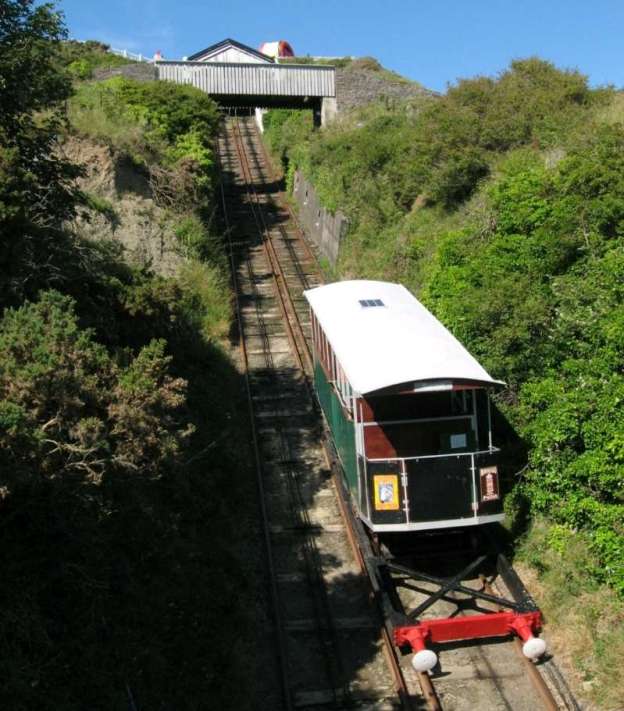
After Easter 2026, we spent a few days at Borth on Cardigan Bay, North of Aberystwyth. We took the opportunity to visit Aberystwyth and to travel on the Cliff Railway.
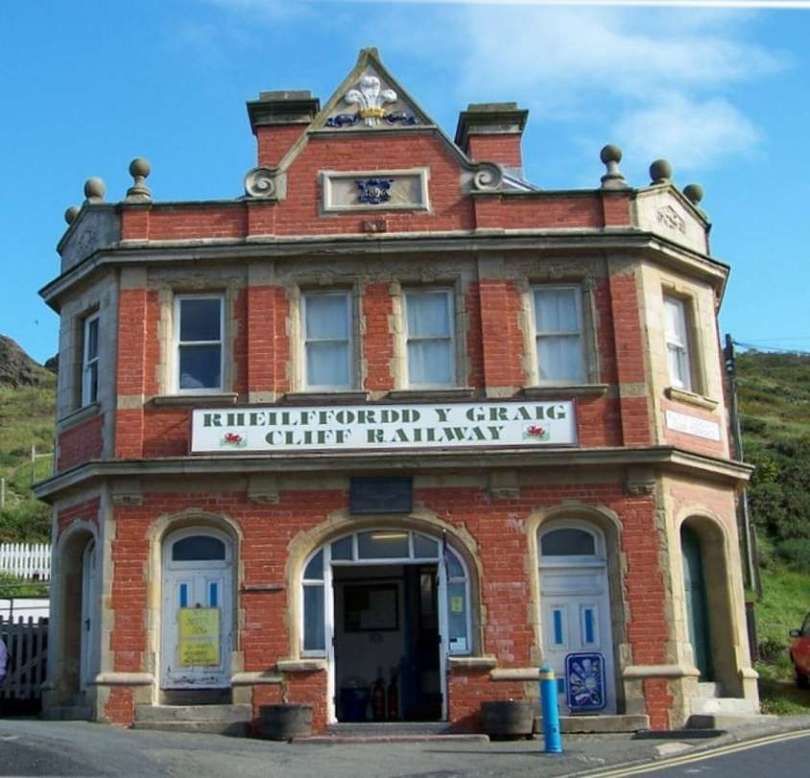
Aberystwyth Cliff Railway is the longest electrically operated cliff railway in the UK. It sits at the North end of Aberystwyth’s promenade. Constitution Hill provides views over the town and Cardigan Bay. On a really good day, as many as twenty-six mountain peaks can be seen from the summit. [1]
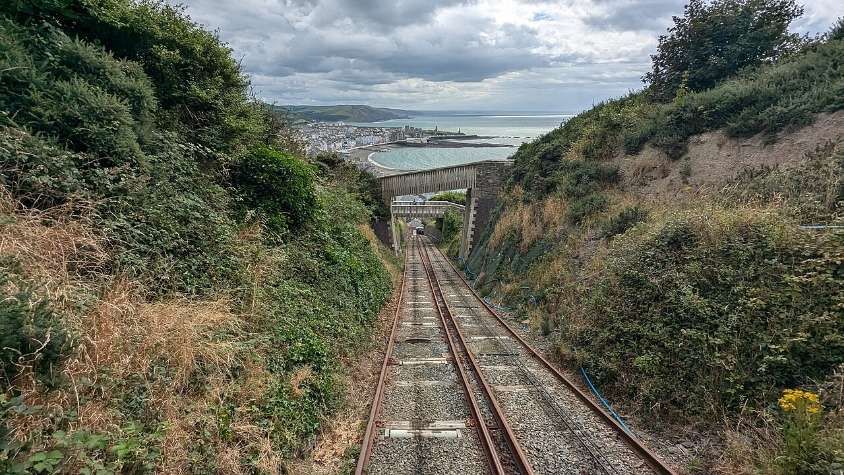
Aberystwyth Cliff Railway has been transporting visitors to the summit of Constitution Hill since 1st August 1896. It is a 778 feet (237m) long funicular railway, and is the second longest funicular railway in the British Isles after the Lynton and Lynmouth Cliff Railway. Since November 1987, the Aberystwyth Cliff Railway has been a Grade II listed structure. [1][2]
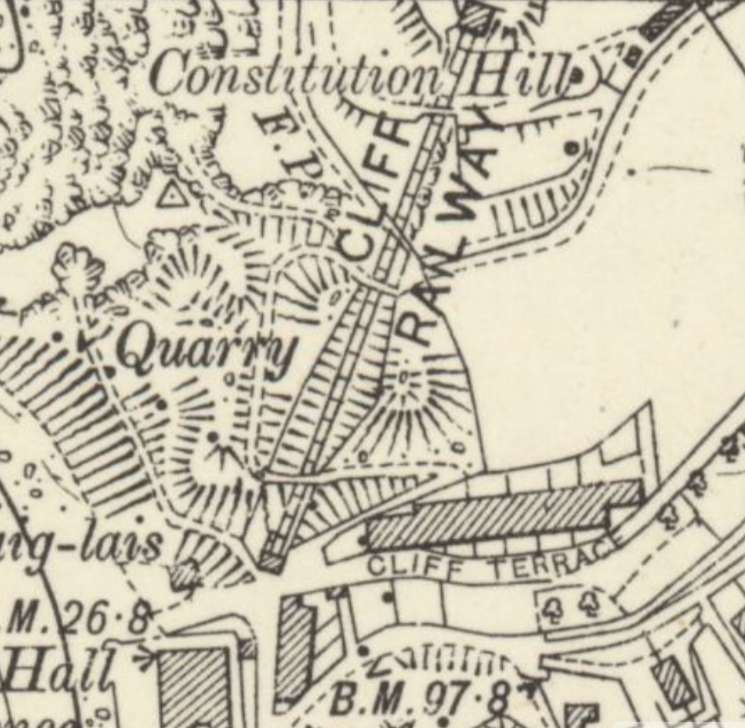
For the first 25 years of its life the railway operated via a water balance system. Electrification occurred in 1921.
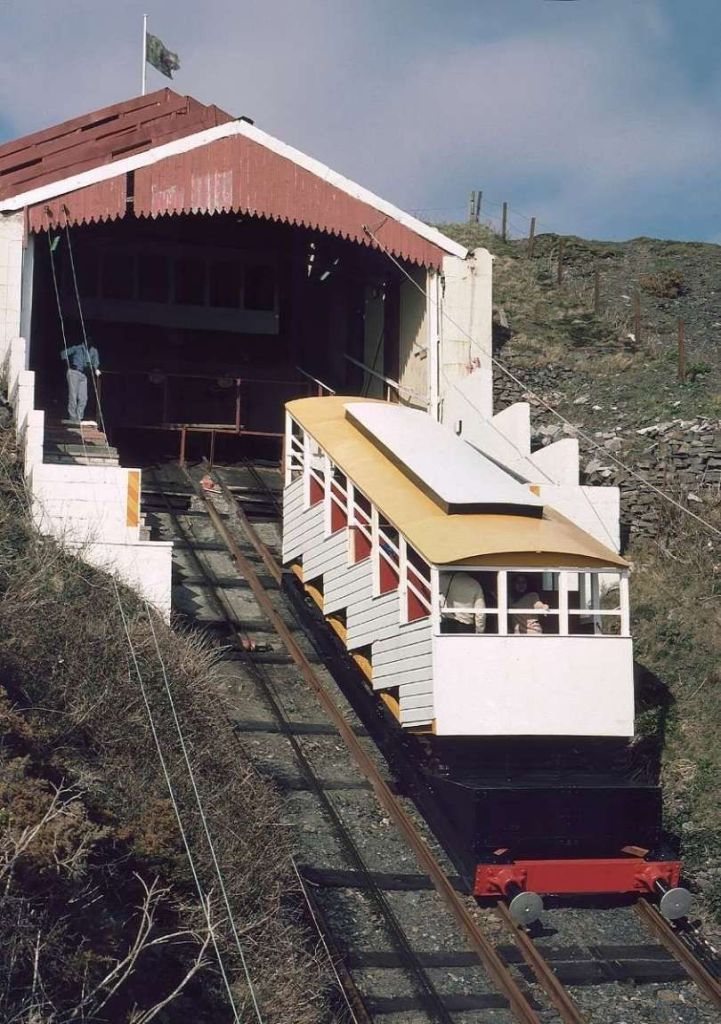
The cars have a maximum capacity of 30 passengers, permanently connected via a continuous cable. The original water balance system used a Worthington Corporation compound steam engine water pump housed in the lower station to move water to the upper station. Each passenger car had a tank in its chassis that could hold 4 tonnes of water. Water was added to the tank of the top car, which descended under gravity, hauling the lighter lower car on the parallel track to the top station. [5]
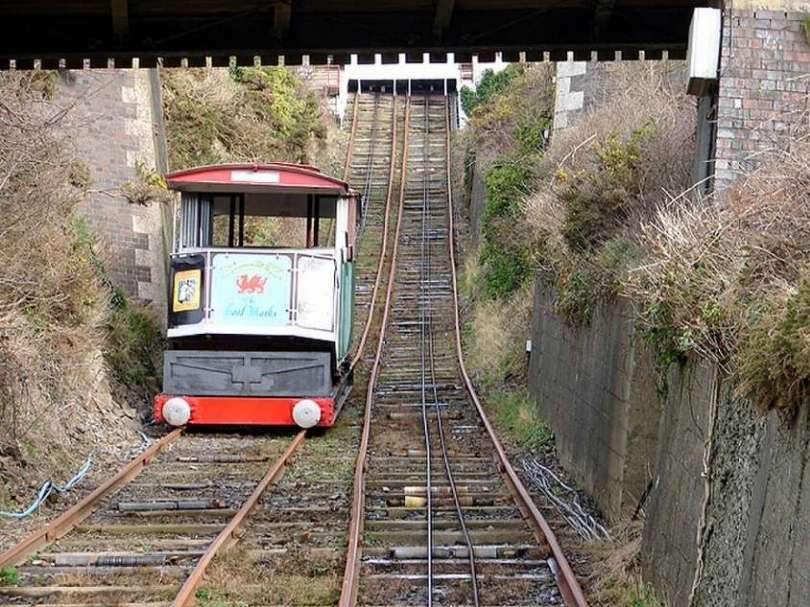
The railway is straight, ascending about 430 feet (130 m) over a horizontal distance of 778 feet (237 m), a maximum gradient of more than 1 in 2 (50%). The 4 ft 10 in (1,473 mm), slightly broader than standard gauge, and laid on timber sleepers. [5]
“The unique design of the undulating track and tilted carriages is the work of George Croydon Marks. A man who played a key role in several projects during the golden age of funicular construction. He would later make his name in politics as Lord Marks, the liberal peer.” [1]
As we have already noted the railway was electrified using a 41 kW ATB AG [de] Morley DC motor in 1921. In 1934, after changes to the town’s electricity supply, a mercury arc rectifier and transformer were installed in the lower station to provide a 440V DC power output. The cars are moved using a high-tensile steel cable attached to both vehicles. It passes around a drum, mounted on a vertical axis between the tracks at the top. The motor drives the drum controlled by an automated cut-off which stops the motor and the cars when required. [5]
“The carriages are brought to the summit at a stately 4 miles per hour. They are powered by a powerful motor and high-tensile steel cables supported by a sophisticated electronic safety system. At the midpoint of the journey, the railway ventures through a deep cutting, where 12,000 tons of rock was excavated to allow the winding footpath to cross via a series of bridges overhead.” [1]
Its twin carriages are named Lord Geraint and Lord Marks. [6]
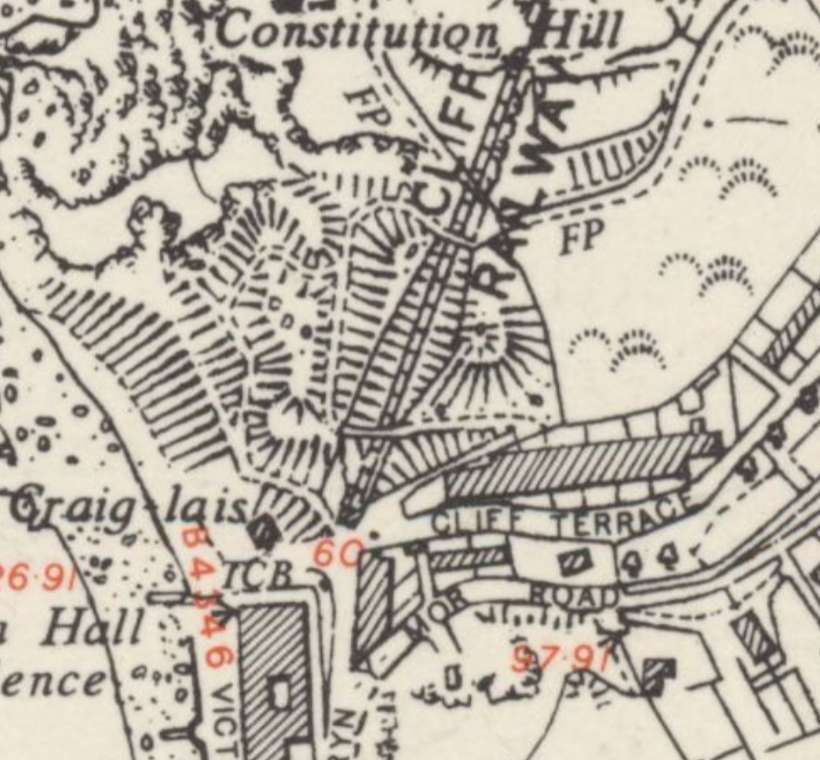
“Throughout the 1920s and 1930s, the cliff railway was popular with visitors but during and after the Second World War, passenger numbers declined significantly. In 1948, seeking to revive its fortunes, the Aberystwyth Pier Company bought it and carried out repairs and upgrades. The new owners were unable to increase passenger numbers.” [5]
In 1976, a fault developed in the railway’s braking system and it was closed briefly. In the late 1970s, “a local mining company acquired a majority stake and formed the Aberystwyth Cliff Railway Company to operate it. In 1978 a new electrical system was installed which is used to the present day. It takes its power from and returns surplus energy to the National Grid.” [5]
More recent key dates:
- 1987 – recognised as Grade II listed structure.
- 1998 – purchased by Constitution Hill Ltd.
- 2005 – upper station refurbished (with café and gift shop).
- 2014 – roof repairs undertaken and ramps and other adaptations made to improve accessibility – better protection from the elements, a small car park at the station (very small!), wheelchair and guide dog friendly trains, a passenger lift providing wheelchair access from the train to the summit, and once there, wheelchair friendly pathways across the site. [1]
References
- https://aberystwythcliffrailway.co.uk, accessed on 8th April 2026.
- https://en.wikipedia.org/wiki/Aberystwyth_Cliff_Railway, accessed on 8th April 2026.
- https://maps.nls.uk/view/101607745, accessed on 9th April 2026.
- https://maps.nls.uk/view/101607739, accessed on 9th April 2026.
- https://en.wikipedia.org/wiki/Aberystwyth_Cliff_Railway, accessed on 11th July 2026.
- Martin Easdown; Cliff Railways, Lifts and Funiculars; Amberley Publishing, 2018.
- https://youtu.be/QSFQPJb2Wyo?is=O-HzG1VqndIdBszH, accessed on 11th July 2026.


Fascinating suff but – spelling: railways breaking system should be railway’s braking system…
Thank you for picking that up and taking the trouble to let me know. It has now been corrected!🙂