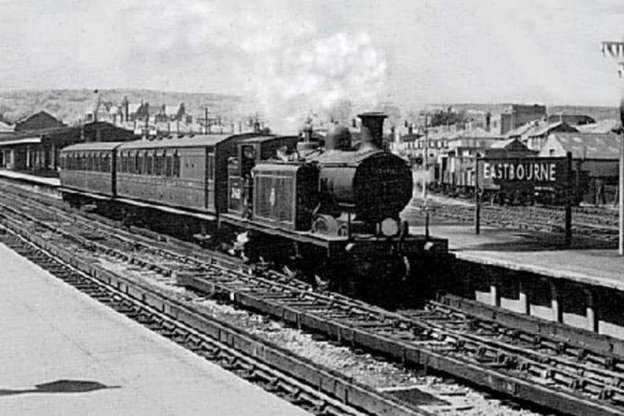
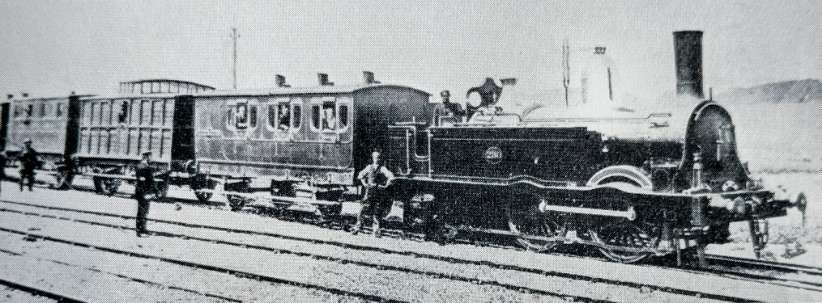
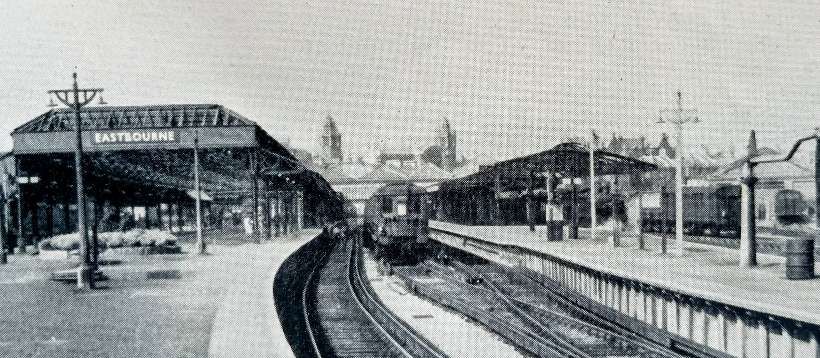
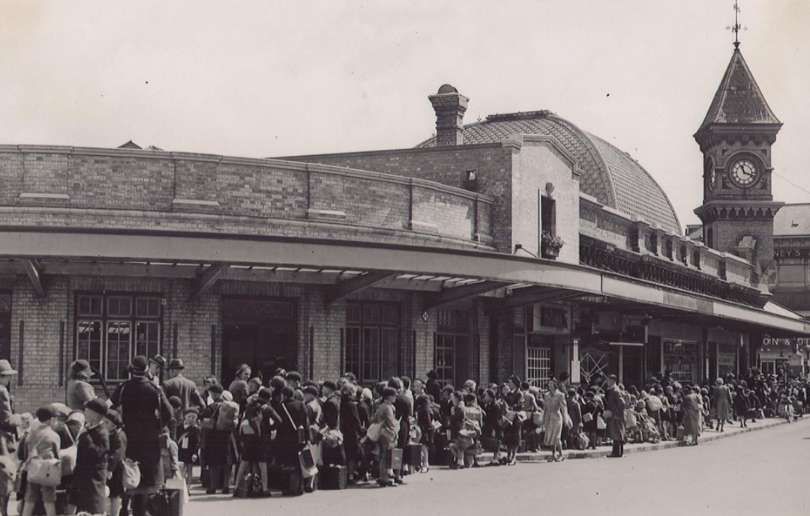
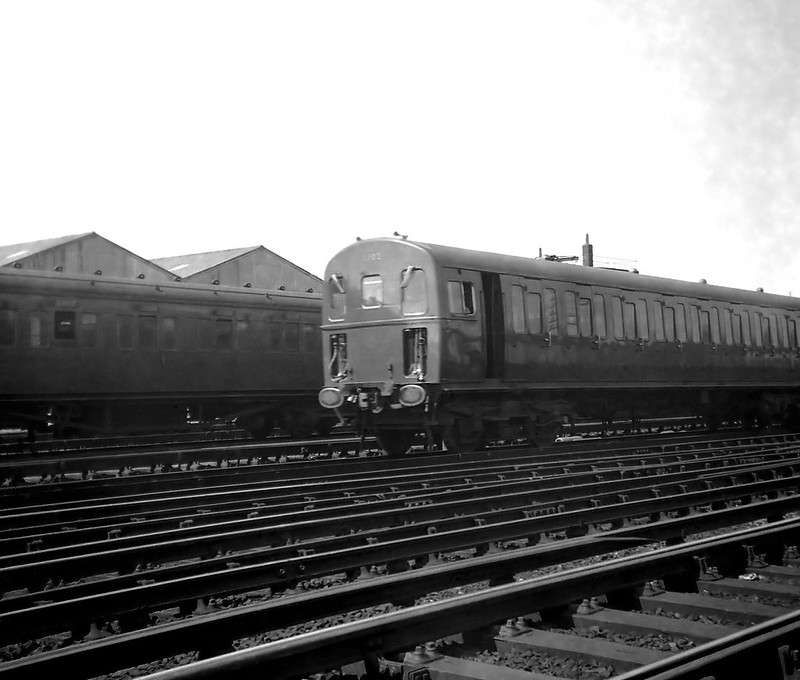
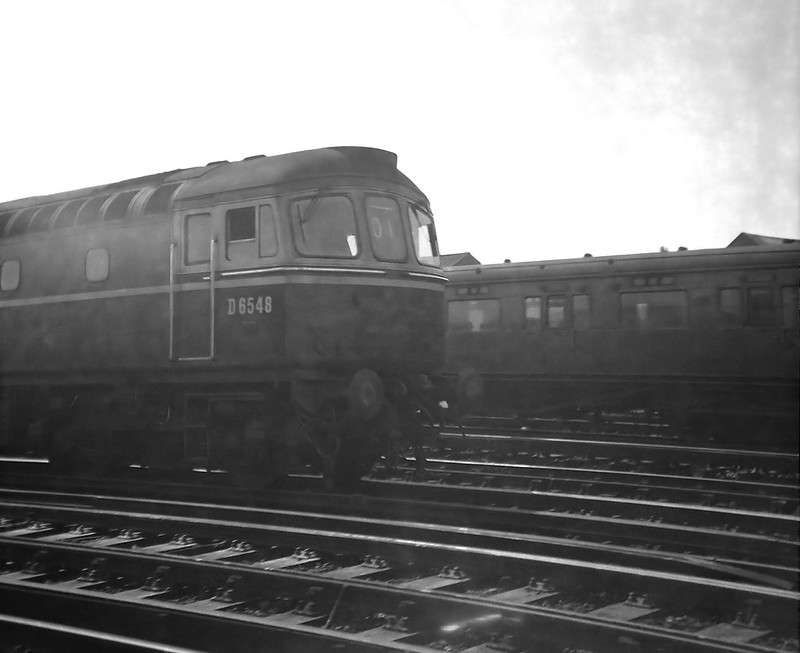
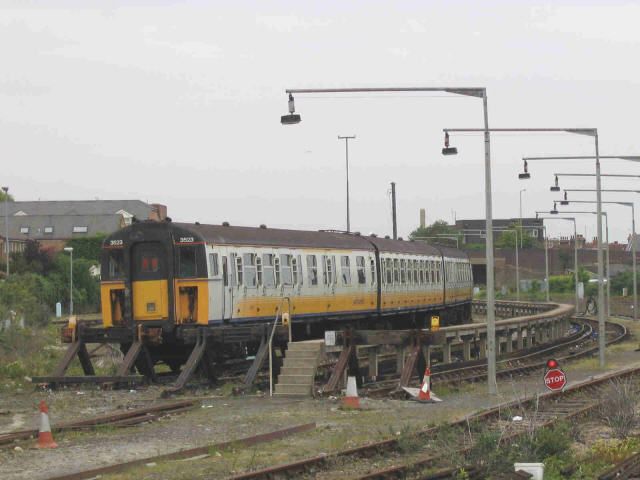
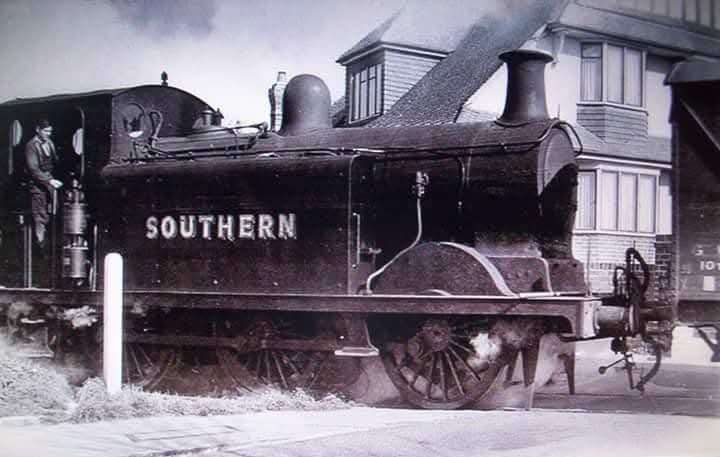
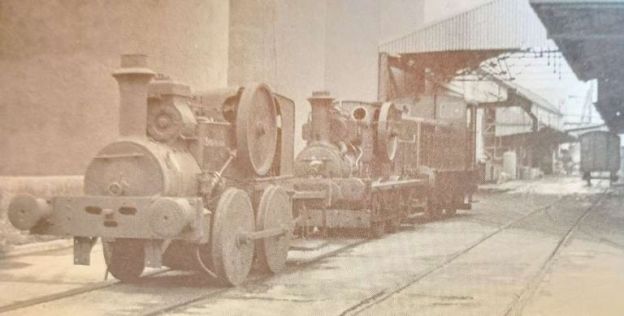
The featured image for this article shows a two coach train awaiting departure at Eastbourne Railway Station. It think that the locomotive is an ex-LB&SCR E4 0-6-2T in BR livery. These locomotives were originally numbered463-503, 507–520, 556–566, and 577-582. The number on the smoke box is not legible in the photograph. The exact locomotive shown in the photograph cannot easily be determined from the image.[21]
When the first railway was projected southwards from London to the Sussex Coast, its promoters had as their objective Brighton, which already was a well-established holiday resort. The eastern extension of this main line served the county town of Lewes, and had reached the western outskirts of St. Leonards by the summer of 1846, but it was not until 14th May 1849, that a 4.5-mile branch was opened from Polegate to serve Eastbourne, which was then little more than a village. The advent of the railway marked the beginning of the growth of Eastbourne as a holiday resort and residential area. At the end of the 1849s, Eastbourne’s population was around 2,500. By 1953, the town was a county borough, with a population of nearly 58,000, and in 2026 the population is around 105,000. [1] It has been suggested that the modern town of Eastbourne “was virtually created by the seventh Duke of Devonshire in the mid-nineteenth century, [but] there is little doubt that the advent of the former London, Brighton & South Coast Railway in 1849 was the influencing factor in promoting,” [3: p723] the growth of the town.
Since the inauguration of the line in 1849, the original modest terminus of the branch was twice superseded by a larger station. The first station was built in 1849, this was rebuilt in 1866 and rebuilt yet again in 1886. [2]
Stones writes: “An Act of 18th June 1846, authorised the London, Brighton & South Coast Railway Company (successors to the Brighton, Lewes & Hastings Railway) to construct two short lines from Polegate, to Eastbourne and Hailsham respectively, and these were completed and officially opened simultaneously on 14th May 1849. Originally, it had been intended that after leaving Polegate, the Eastbourne branch should pass through the village of Willingdon, and terminate in what is today the Old Town of Eastbourne, situated about a mile-and-a-half from the coast. However, because of the undulating nature of this route, and other considerations, it was finally decided to construct the line further to the East, with a terminus at the neighbouring and growing residential hamlet of South-Bourne, half-way between East-Bourne and the sea. As a result the Eastbourne branch, four-and-a-half miles in length, ran south-east from Polegate and traversed the Bourn or Willingdon Level, which forms part of an extensive plain extending to the east from the slopes of the South Downs. Although the terminal station was named ‘Eastbourne’ when the branch was opened in 1849, it was actually in South-Bourne, which was subsequently to disappear in name and become an important part of modern Eastbourne.” [3: p723,725]
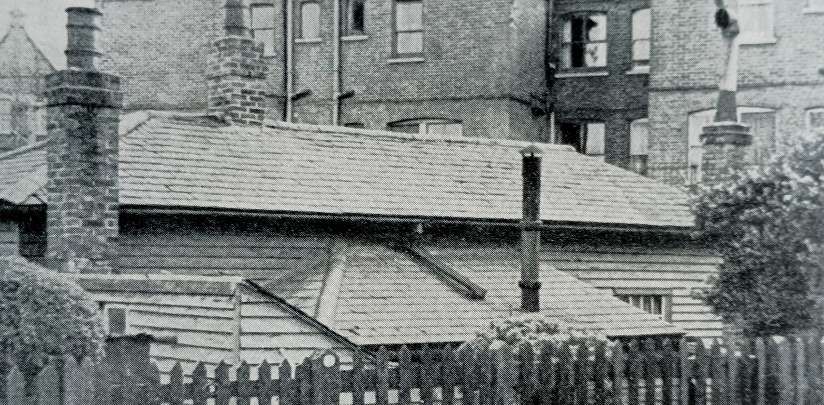
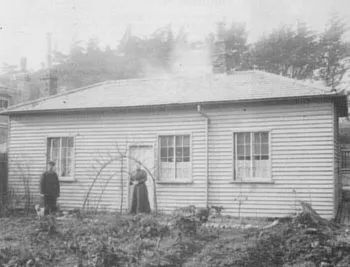
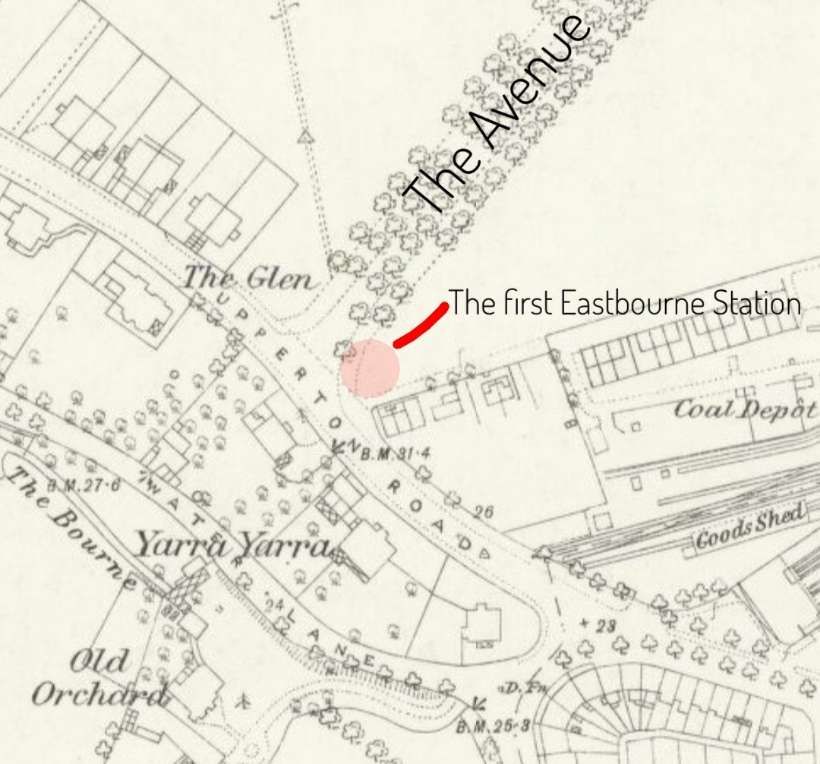
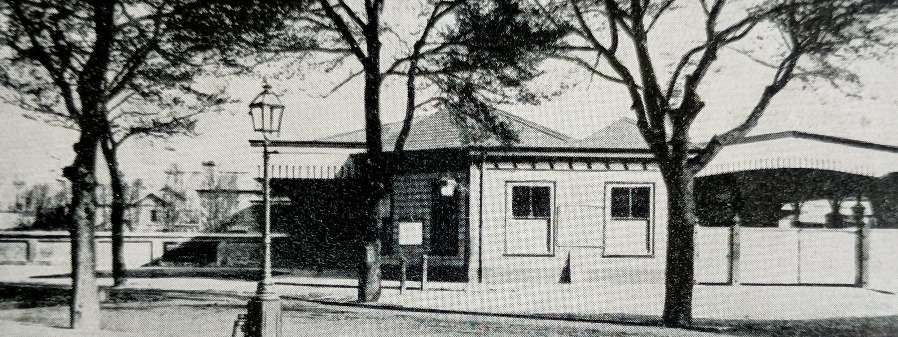
Stones tells us that “The first station at Eastbourne was situated to the west of the present terminus; the building was a small modest timber structure measuring 20 ft. by 12 ft. Several years later, the original station and tracks were removed to allow Upperton Road to pass over the site and link up with the main thoroughfare, Terminus Road. The old station building was moved and erected on the west side of the existing goods yard where it was converted into a dwelling house at present known as No. 1, Wharf Road.” [3: p725] In 1953, the building still stood but was over-shadowed by modern buildings.
Another view of the original station building, this time in its original location close to the end of The Avenue. [4]
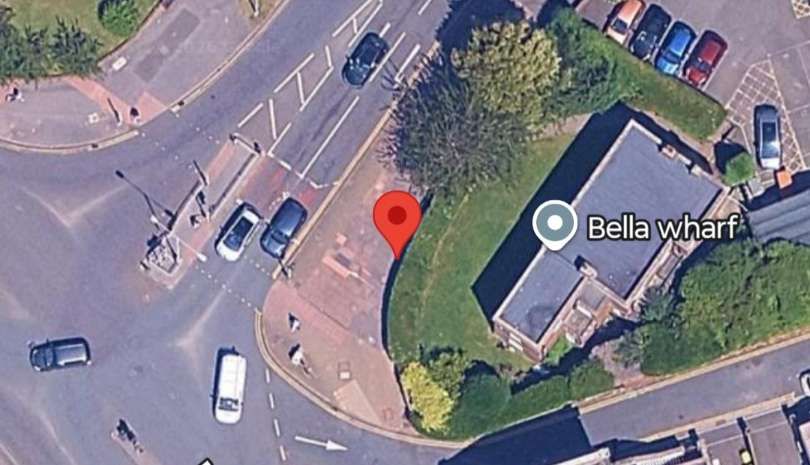
The first Eastbourne Station sat close to the end of The Avenue. [5]The red flag marks the approximate location of the original Eastbourne Station. The road to the Northwest of the flag is ‘The Avenue’, the road junction is with Upperton Road. [Google Maps, August 2026]
Stones tells us that when the line was opened, “two engines were stationed at Eastbourne but one was always kept in reserve. The other worked a shuttle service of local trains between Eastbourne and Hailsham via Polegate, where, at that time, the engine had to run round its train. At the commencement there were few trains, but by 1854 the service had increased to nine trains in each direction on weekdays. Passengers for London, Brighton, and Hastings were obliged to change at Polegate for some years, and this inconvenience proved a constant source of annoyance to Eastbourne residents, who considered that the importance of the town was being relegated by the poor railway facilities provided. This opinion was substantiated by the fact that in Bradshaw’s Monthly Descriptive Railway Guide for June 1857, the timetable did not even mention Eastbourne, and gave Brighton, Newhaven, St. Leonards, and Hastings as the important stations on the coast.” [3: p725]
In 1866, or perhaps as late as 1872, a replacement station was constructed at the corner of Terminus Road and Gildredge Road.
Apparently, the connecting service between Eastbourne and London in 1866 comprised seven trains daily in each direction.
Improvements to the service to and from London occurred in 1875 when, Stones writes, “several trains running between London and Hastings were provided with through coaches to and from Eastbourne, which were attached or detached at Polegate. At the same time, the 5 pm express from London Bridge to Brighton slipped a portion (first class only at ordinary fare) for Eastbourne at Haywards Heath.” [3: p725-726]
It was not until September 1880 that Eastbourne was finally connected with Tunbridge Wells when a line from Hailsham to Eridge was opened. “On 1st April 1884, a service of two expresses daily in each direction between Charing Cross and Eastbourne was inaugurated. … The new service did not prove a success … and was withdrawn on 31st December 1885” after agreement had been reached between the SER and the LB&SCR for a sharing of traffic receipts. [3: p727]
By 1904, agreement had finally been reached between the LB&SCR and the LNWR to run through coaches between Liverpool and Brighton and Eastbourne. Stones says, “This popular innovation, which obviated crossing London, soon developed into what was known as the ‘Sunny South Special’, which conveyed through portions from Liverpool (Lime Street), Manchester (London Road) and Birmingham (New Street). Up to the time of grouping this train was composed of LNWR. rolling stock, and included dining-car facilities. The service commenced to run daily (Sundays excepted) in each direction on 23rd July 1904, via Brighton and terminating at Eastbourne.” [3: p728]
At the time Stones was writing in 1953, the service had not been resurrected after the war.
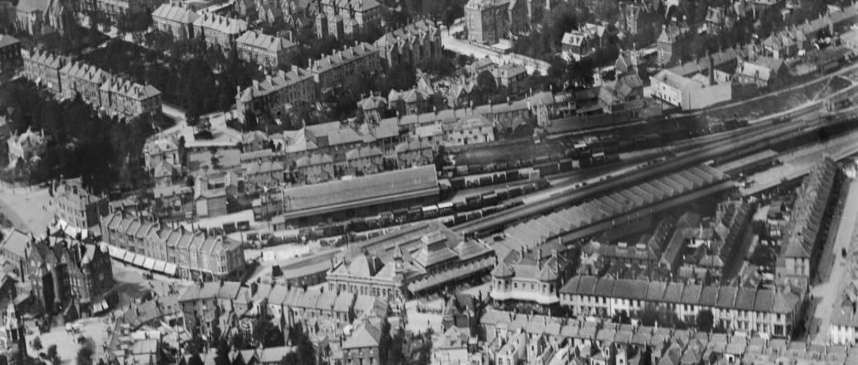
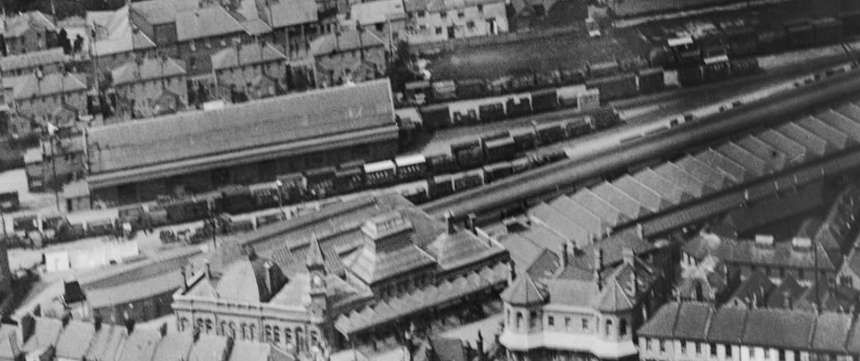
In 1953, Stones described Eastbourne Station: “The present station at Eastbourne consists of two island platforms served by four terminal tracks capable of holding 12-car electric trains. On the east side of the station there is a covered roadway for taxis and other vehicles between platforms 3 and 4, originally known as the arrival side. The platforms lead to a large circulating area around which are located the refreshment and dining rooms, waiting rooms, parcels office, and so on, with the booking hall at the western entrance to the station. During the second world war, the platforms and tracks were severely damaged by bombs on several occasions, and although most of the repairs have been completed, part of the platform awnings are still of a temporary character.” [3: p728]
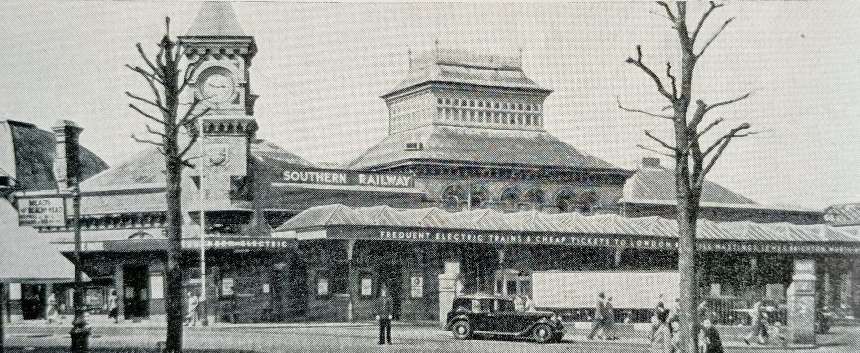
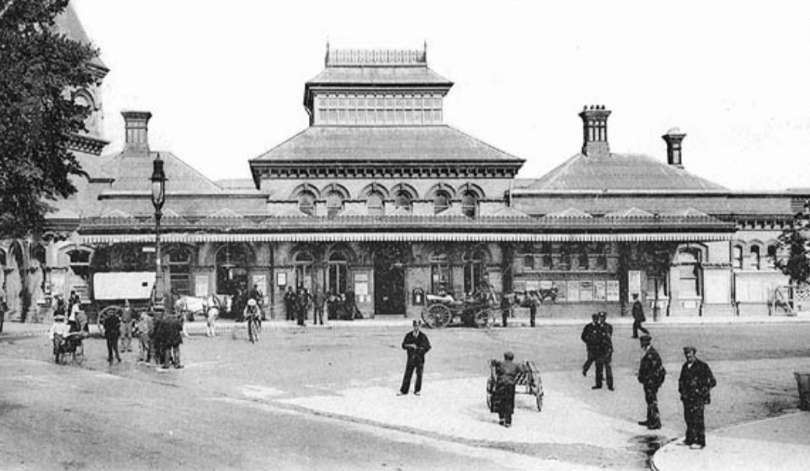
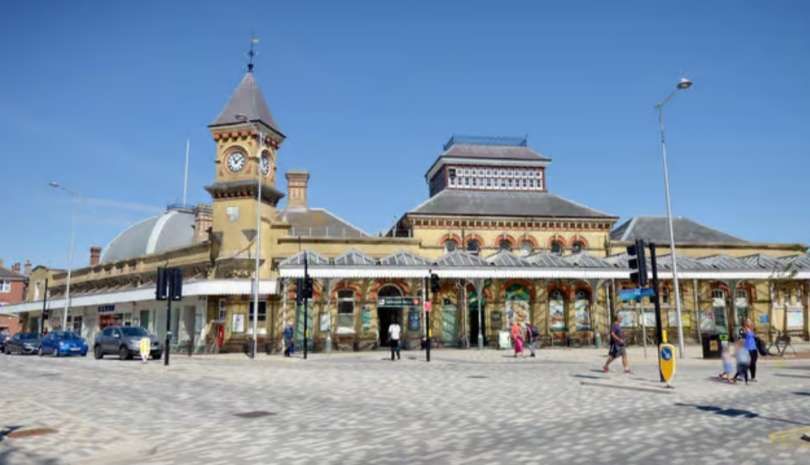
The present building is essentially that which was built in 1886, designed by F.D. Brick, which had a vaulted canopy and lantern roof, similar to Lewes. “The station had 4 platforms which increased in length over the years. There was also two run around loops between platforms 2 and 3. Over the years one of the runaround loops was lost as platforms 1 and 2 were built wider. On 12th April 1977 platform 4 was shortened from a 12 coach to an 8 coach length to make way for the ring road construction. And was taken out of use and the track lifted during the Eastbourne re-signalling in 1991.” [7]
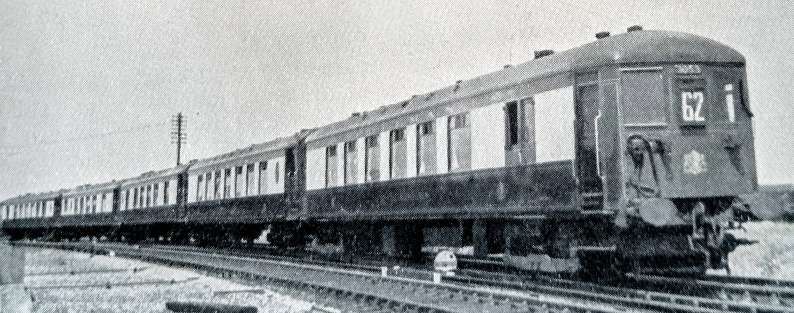
The line into Eastbourne was electrified by July 1935. Stones comments in 1953 that: “the number of trains to and from London (Victoria and London Bridge) has been increased and there is now an hourly service of fast electric trains with Pullman or buffet-car facilities; the journey takes about 1 hour 25 min. The fastest timing maintained during the summer months is by the non-stop all-Pullman train, successor to the former “Eastbourne Sunday Limited” inaugurated by the LB&SCR many years ago. This train, which makes one round trip on Sundays only, covers the down journey in 79 min. With the exception of the steam trains from Eastbourne to Hailsham and Tunbridge Wells, the remaining local passenger services, to and from Brighton and Hastings, are all operated by two- or four-car electric trains.” [3: p728]
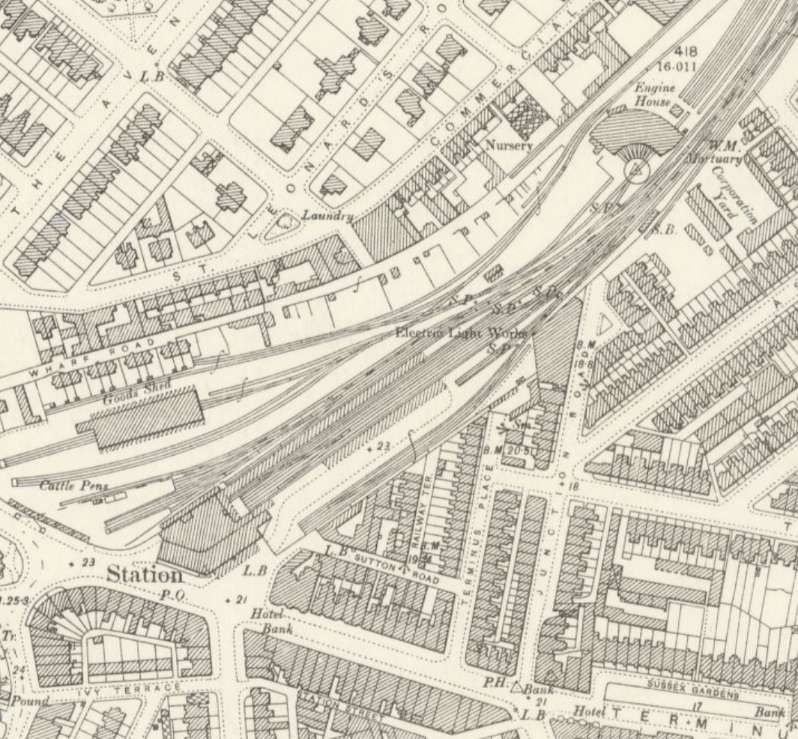
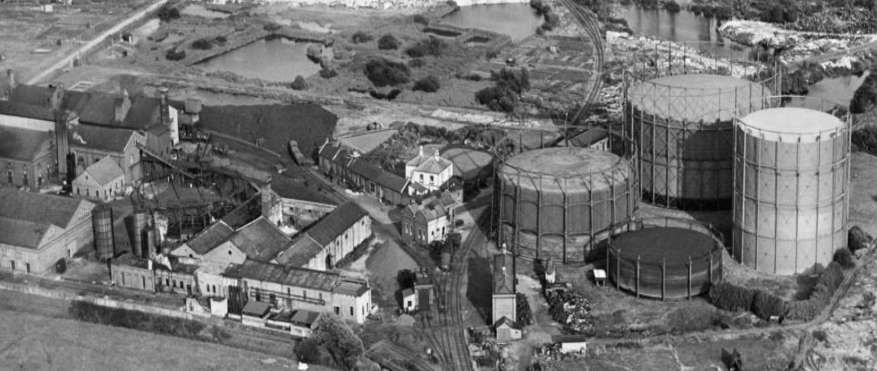
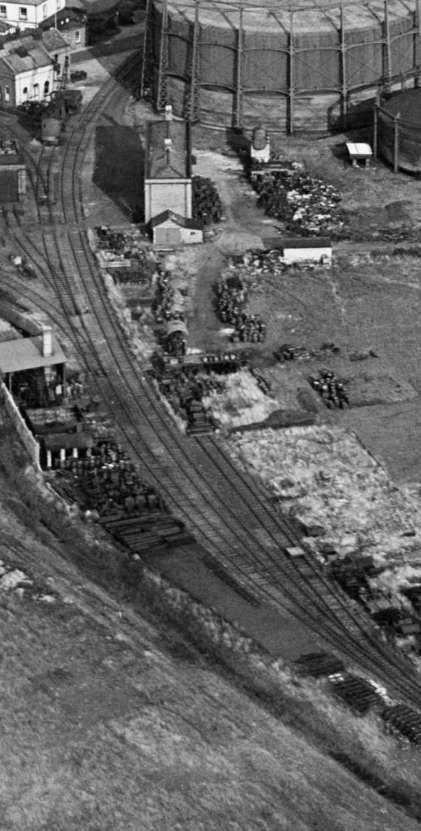
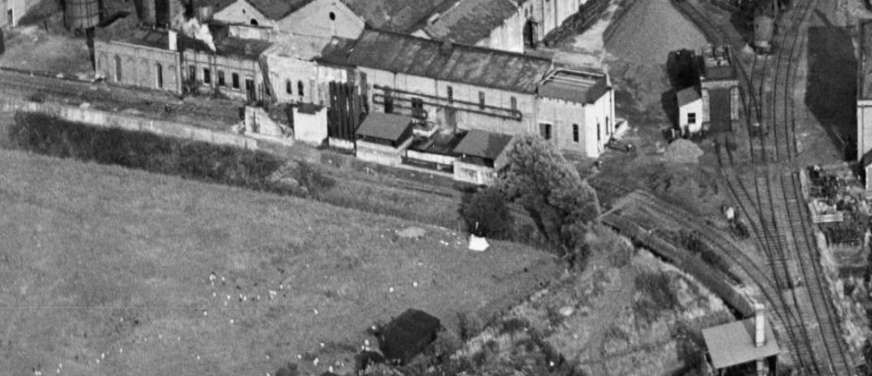
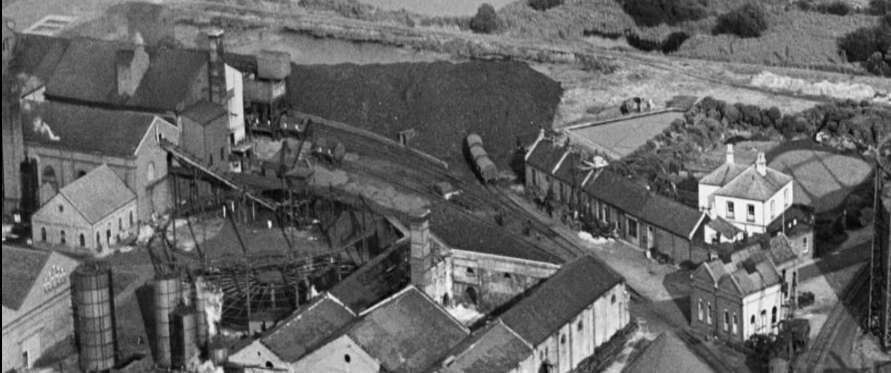
Stones continues: “West of the passenger station lie the goods shed and yard, and carriage sidings for both electric and steam rolling stock. A short distance from the terminus on the east side of the line is the coal yard, and, beyond, a siding about a mile in length runs in an easterly direction to serve the local gas and electricity works. This siding was formerly known as the Crumbles Branch as originally the line continued on to that part of the sea-shore called “The Crumbles,” where the LB&SCR installed a shingle ballast plant. Because of the extended use of stone ballast, this was dismantled some years ago and the extension to the coast was taken up. Traffic in and out of the passenger station, goods yard, carriage sidings and locomotive depot is controlled by one signal cabin with a manual frame of 72 levers, which is situated at the entrance to the terminus on the east side of the line.” [3: p728]
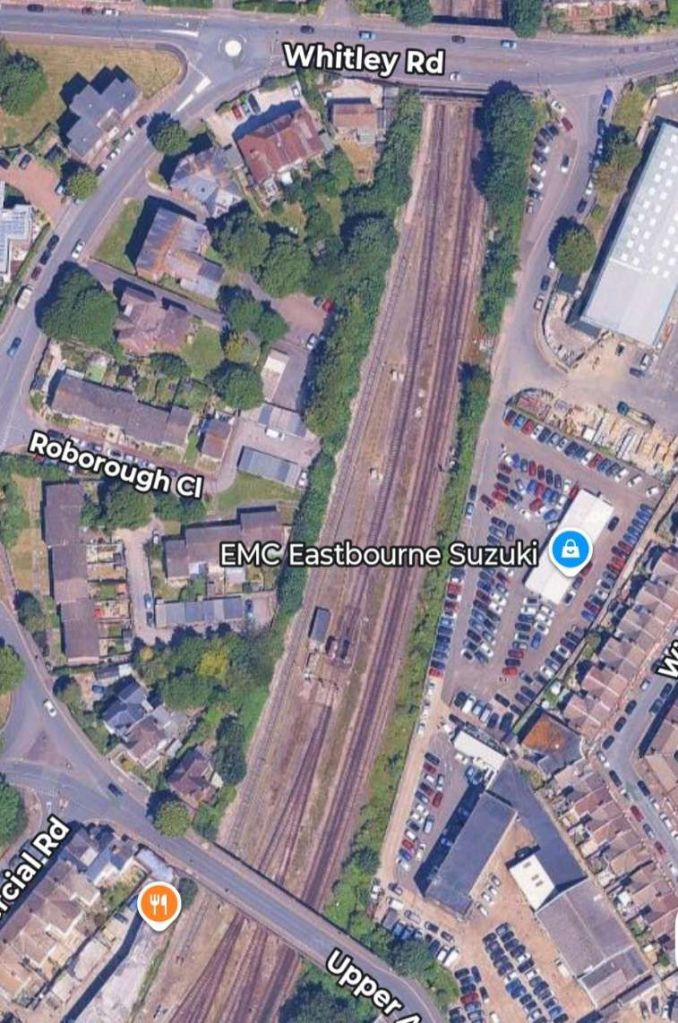
Stones writes: “The existing locomotive depot at Eastbourne is located about half a mile from the passenger station on the west side of the line and is connected by a single track running parallel with the up and down main lines. The site on which the depot stands was purchased by the LB&SCR in the early part of the present [20th] century for new carriage and wagon works to replace older and smaller installations at Brighton. However, because of opposition from the local authorities, the scheme was abandoned and the works were eventually constructed at Lancing.” [3: p729-730]
Stones tells us that “The present running shed, which is of the through type, was built in 1911 to replace an earlier and smaller shed of the half-roundhouse type opposite the signal cabin on a site now occupied by the carriage sidings at the station. Since electrification, Eastbourne shed has lost much of its importance and now houses only a few locomotives for goods and shunting services and for the local passenger trains to and from Hailsham and Tunbridge Wells. In recent years, several of the sidings adjoining the shed have been used to stable spare locomotives and those waiting to be broken up. During the war, the shed was severely damaged by air attack.” [3: p730]
In the paragraphs above, Stones has identified a number of interesting features of the station:
Goods Shed, Sidings and Coal Yard
Carriage Sidings
The mile long siding which was once the start of the ‘Crumbles Branch’
The Shingles Ballast Plant
The history of the engine shed
A. Goods Shed, Sidings and Coal Yard
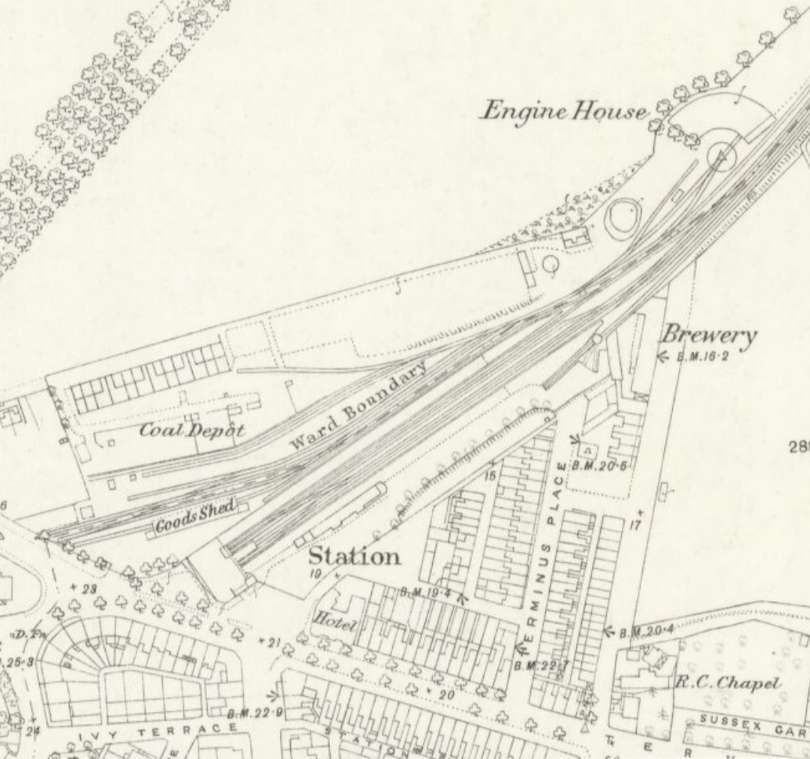
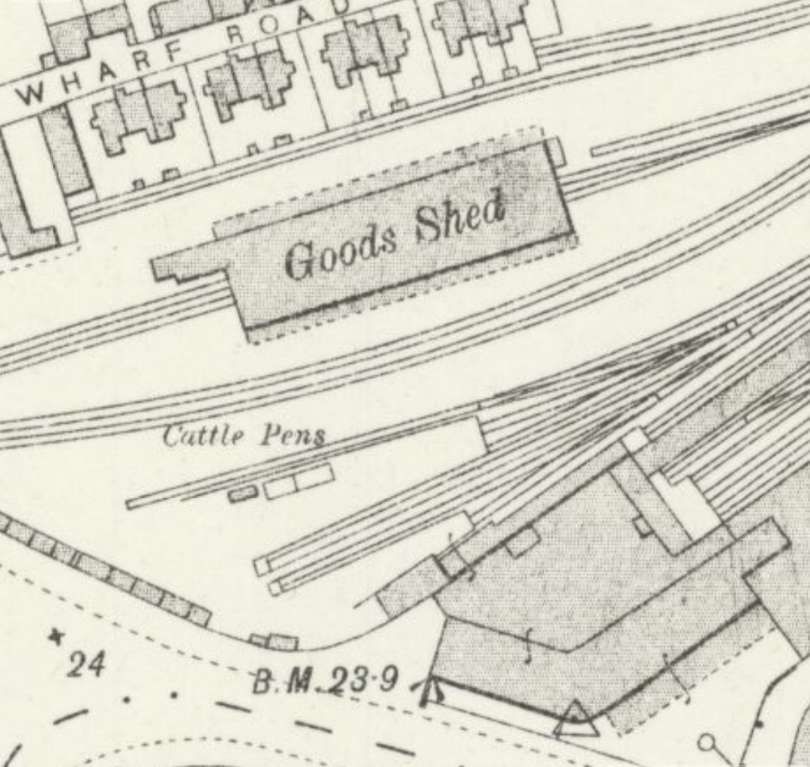
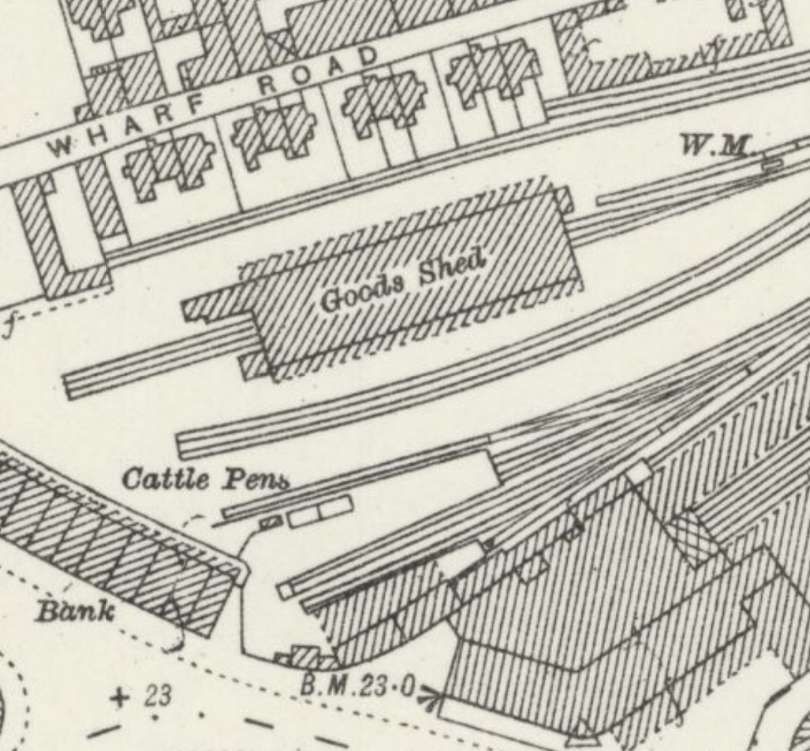
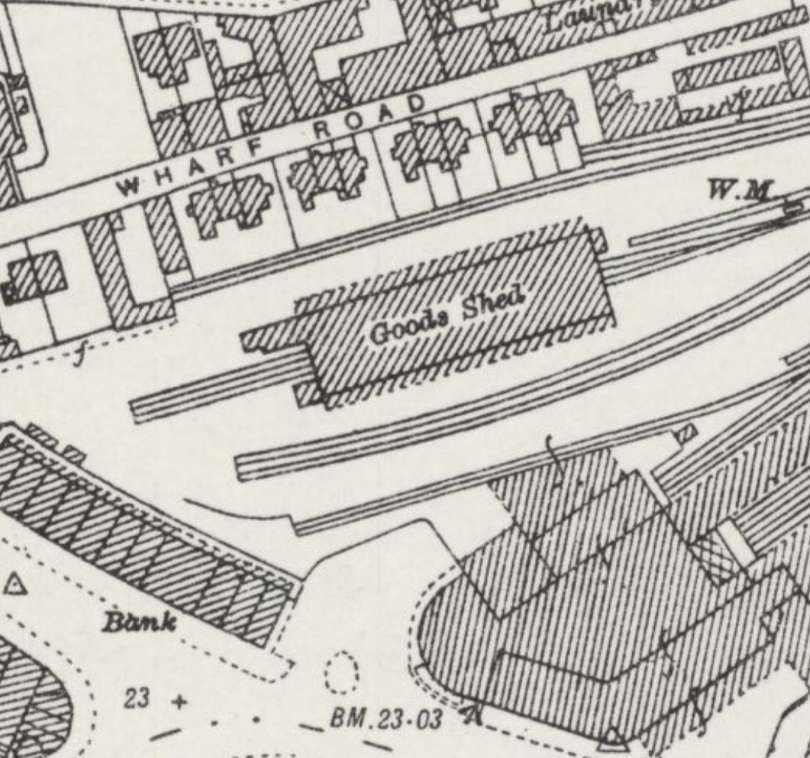
The following sequence of extracts from 25″ Ordnance Surveys in chronological order, illustrates the changes in the layout of the goods facilities at Eastbourne over time
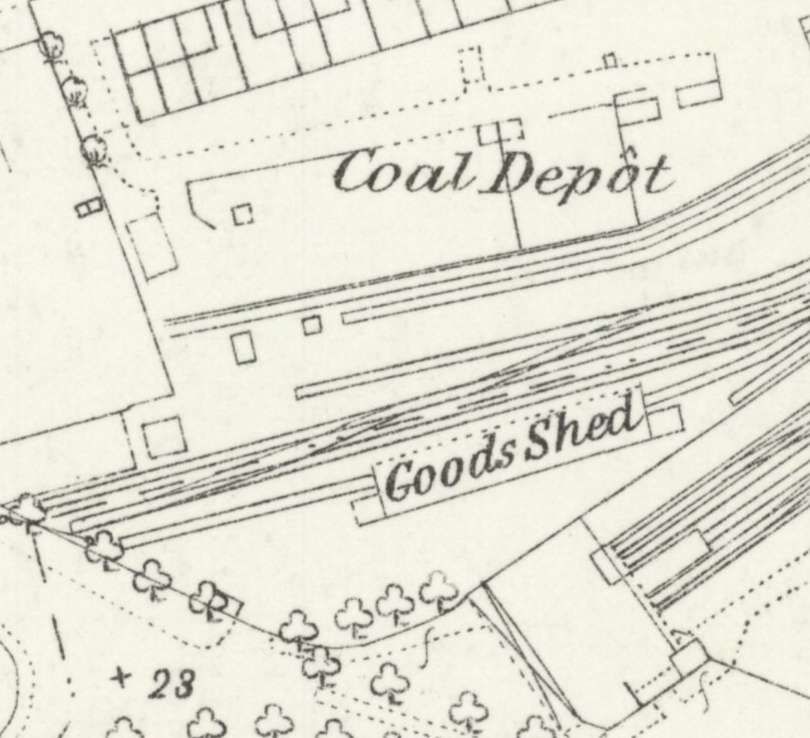
The Goods Shed, the immediately adjacent sidings and the Coal Depot at Eastbourne Station as shown on the 25″ Ordnance Survey of 1874, published in 1876. [5]
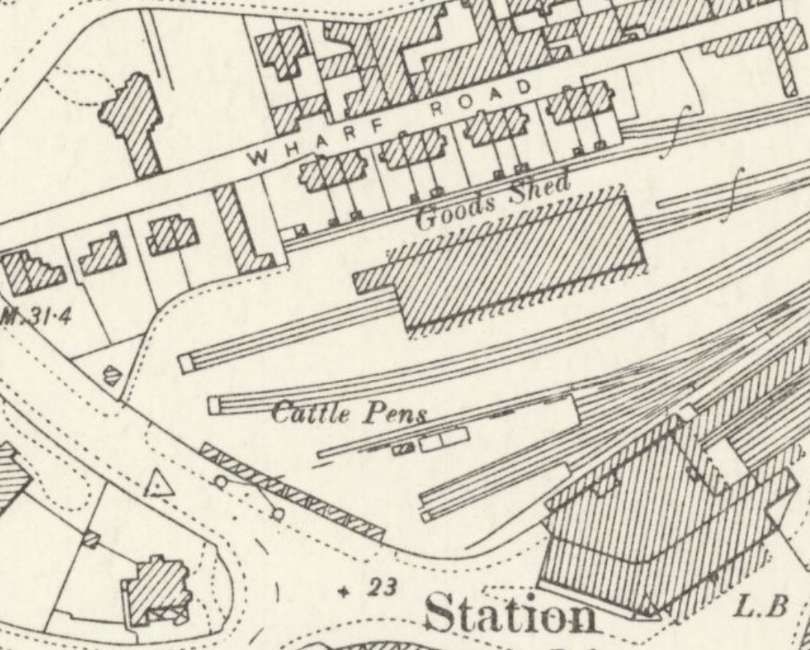
The Coal depot disappears between 1874 and 1898 and Wharf Road takes its place. The coal wharf might be the original of the name of the road. Holding seems to have been built on the site of the old coal depot. The Goods Shed seems to have been rebuilt a distance from the passenger station and cattle pens have been added to the site.
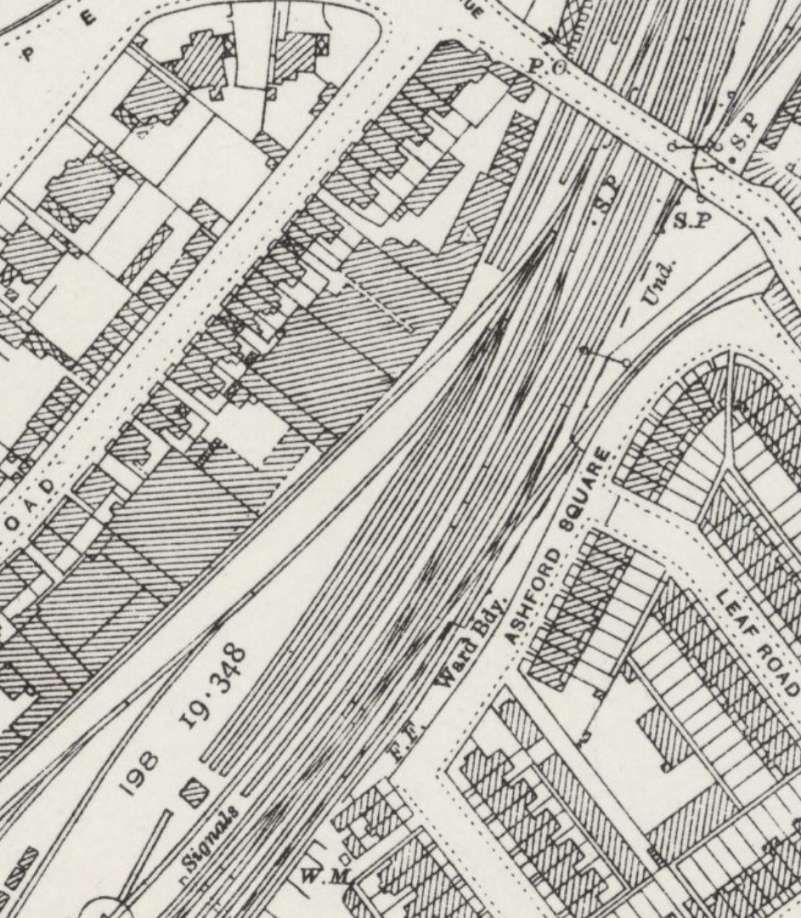
The rebuilt Goods Shed, the immediately adjacent sidings and the Cattle Pens at Eastbourne Station as shown on the 25″ Ordnance Survey of 1898, published in 1899. Note the rebuilt station buildings. [6]The Goods Shed, the immediately adjacent sidings and the Cattle Pens at Eastbourne Station as shown on the 25″ Ordnance Survey of 1908, published in 1910. No significant changes appear to have occurred since 1898. [9]The Goods Shed, the immediately adjacent sidings and the Cattle Pens at Eastbourne Station as shown on the 25″ Ordnance Survey revised and published in 1925. [10]The Goods Shed, the immediately adjacent sidings at Eastbourne Station as shown onthe 25″ Ordnance Survey of 1931/32, published in 1933. [11]
B. Carriage Sidings
In the 21st century, the carriage sidings provide stabling and overnight parking for Southern Class 377 and Class 442 Electric Multiple Units (EMUs). They include a carriage cleaning road and an engineer’s siding.
The site of the current carriage sidings occupy the historic location of Eastbourne’s early engine sheds (opened in 1849 and later replaced in 1876 and 1911 – see the paragraphs about the engine sheds below). The track layout and sidings were historically controlled by Eastbourne’s Victorian signal box built in 1882. [17]
Eastbourne’s carriage sidings sit at the centre of this map extract from the 25″ Ordnance Survey of 1931/1932, published in 1933. [19]The carriage sidings in the 21st century: the sidings were extended through what was the site of the old roundhouse engine shed in the middle of the 20th century. [Google Maps, October 2026]
A separate article covers this line. It can be found here. [16]
D. The Shingles/Crumbles Ballast Plant
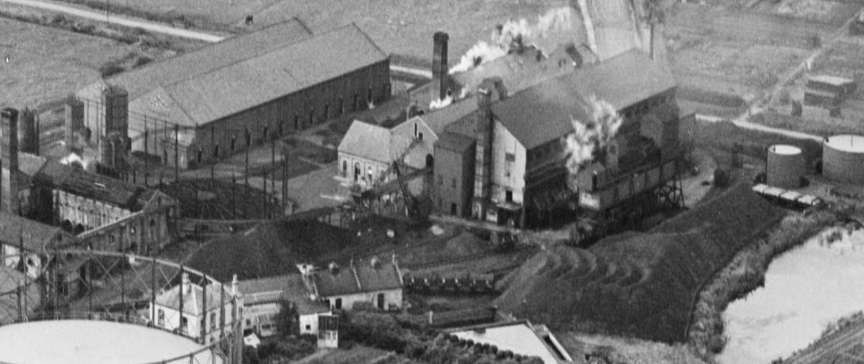
The ballast plant on the Shingles (Crumbles) at Eastbourne was served by the Crumbles Branch. The Crumbles was a vast, desolate expanse of coastal shingle and marshland east of Eastbourne. The LB&SCR recognized the immense value of the site’s heavily compacted beach shingle and negotiated the purchase of large quantities of shingle from the local landowner, the Duke of Devonshire. They installed a dedicated shingle ballast plant directly on the shore to extract, process, and load the aggregate. At its height, the operation was removing roughly 250,000 tons of shingle per year. This material was vital for providing the structural foundation (ballast) for railway tracks across the southeast of England and was even shipped to London for projects like the construction of the Thames Embankment. [20]
By the 1920s and early 1930s, the newly formed Southern Railway began phasing out smooth beach shingle in favour of sharper, more durable angular granite chippings. The ballast plant closed in 1932. Please also look at the dedicated article about the Crumbles Branch, here. [16]
E. The Engine Sheds
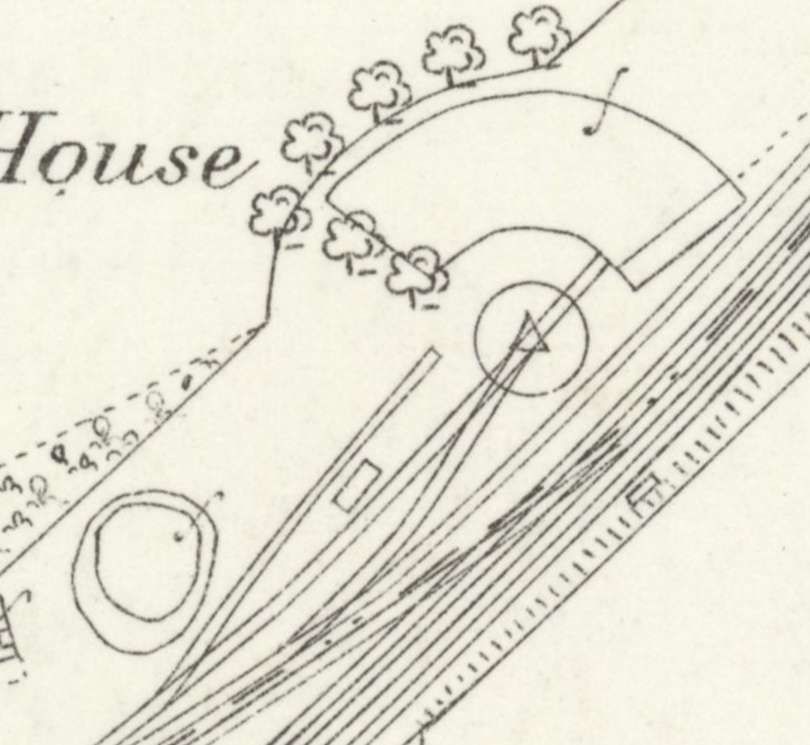
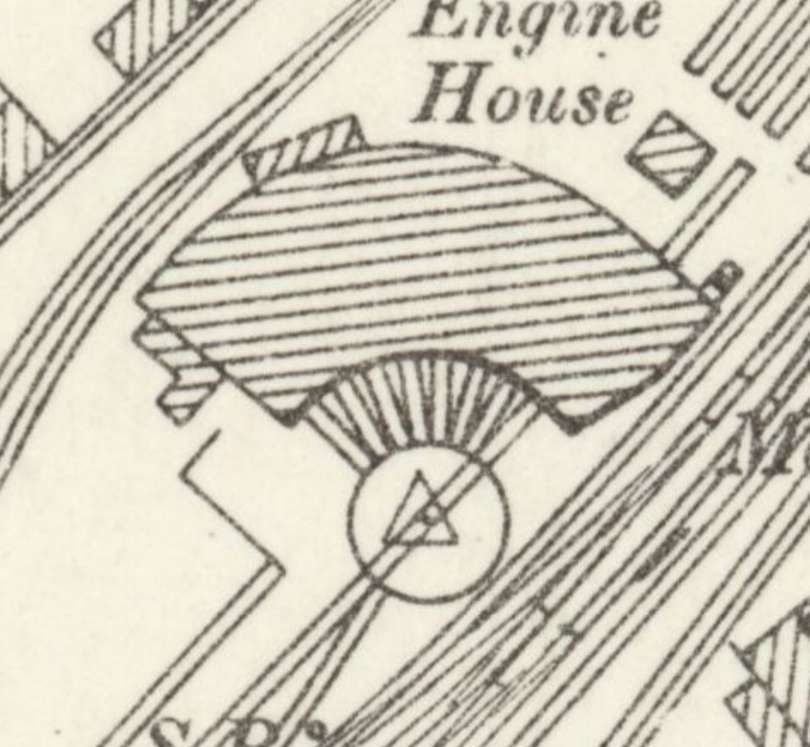
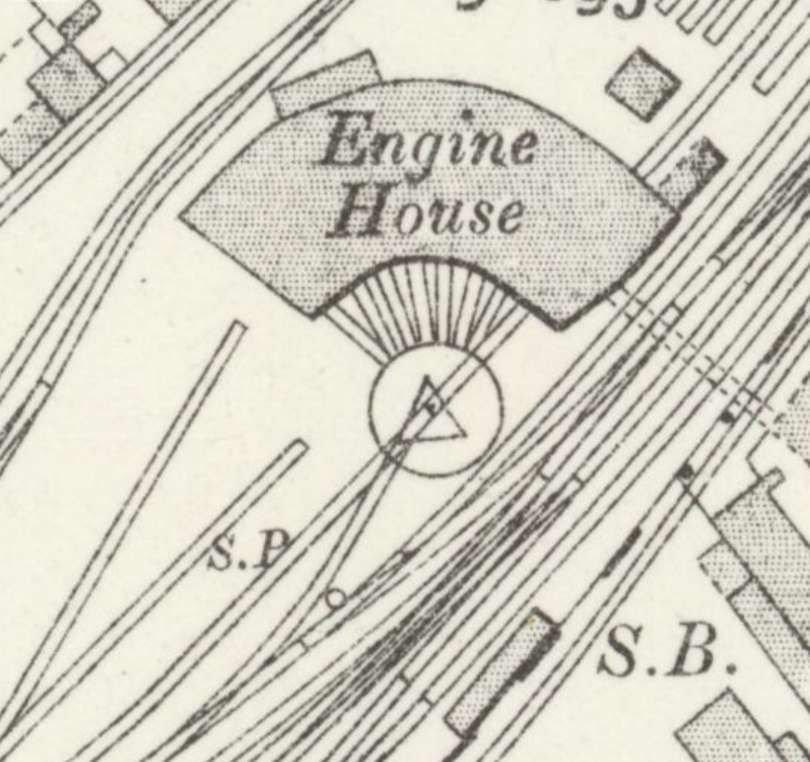
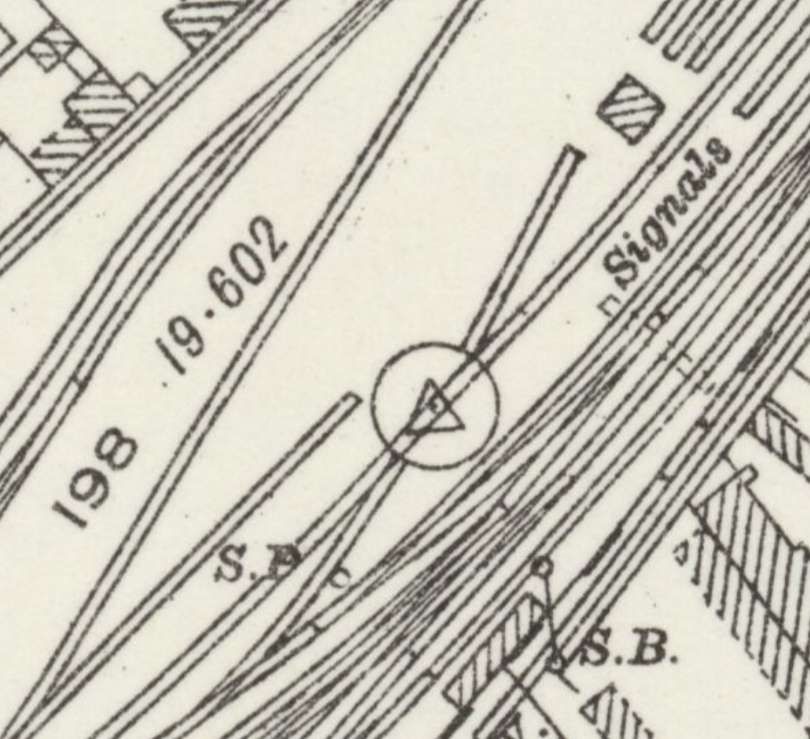
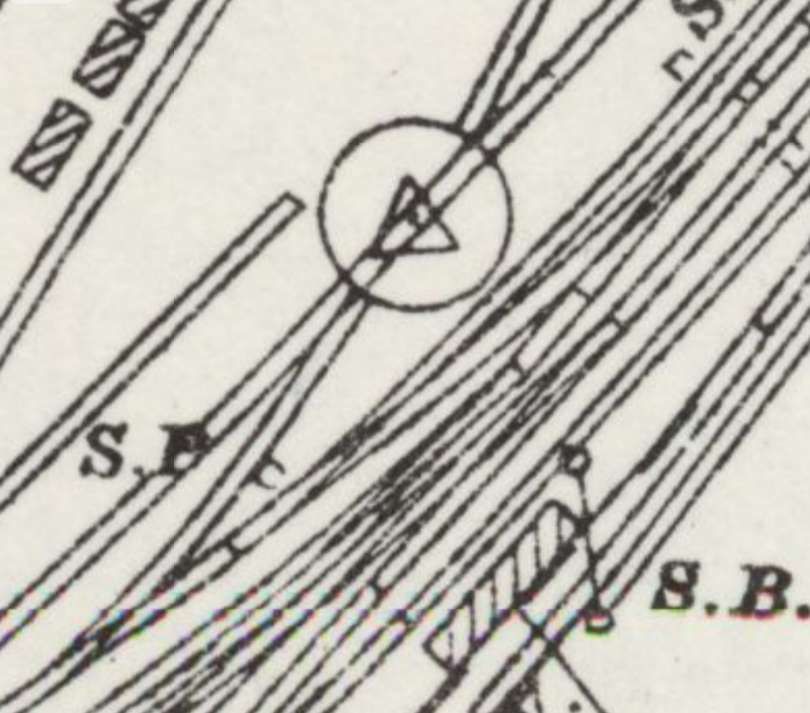
By 1874 a roundhouse engine shed and turntable sat alongside the line out of Eastbourne Railway Station. That structure was still in place at the time of the 1908 Ordnance Survey, but had gone by the time of the 1925 Ordnance Survey.
The roundhouse engine shed at Eastbourne as shown on the 25″ Ordnance Survey of 1874, published in 1876. [5]The roundhouse engine shed at Eastbourne as shown on the 25″ Ordnance Survey of 1898, published in 1899. [6]The roundhouse engine shed at Eastbourne as shown on the 25″ Ordnance Survey of 1908, published in 1910. [9]The location of the roundhouse engine shed at Eastbourne as shown on the 25″ Ordnance Survey revised and published in 1925. [10]The location of the original roundhouse engine shed at Eastbourne as shown on the 25″ Ordnance Survey of 1931/32, published in 1933. [11]
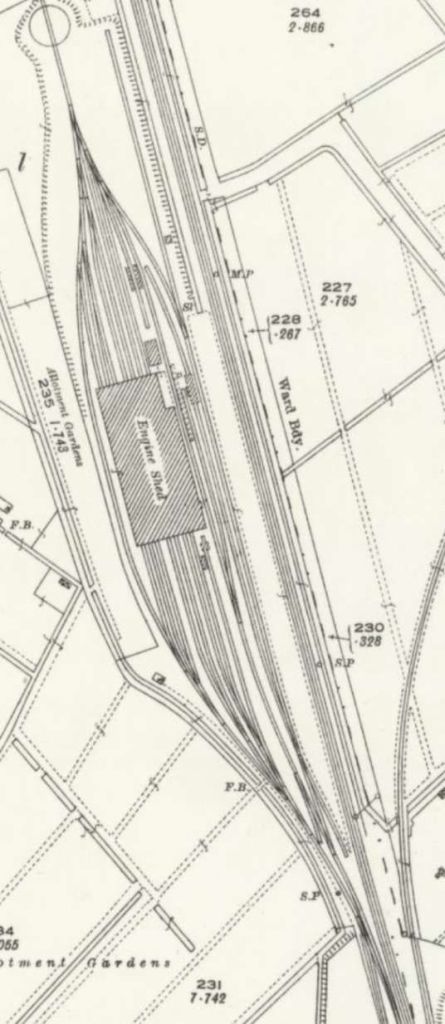
The site of the new engine shed at Eastbourne, as it appears on the Ordnance Survey of 1925. It was built to replace the original shed which had sat much closer to the station. This location is to the North of Whitley Road. Note the Crumbles Branch which moves away from the main line and heads North-northeast. [13]
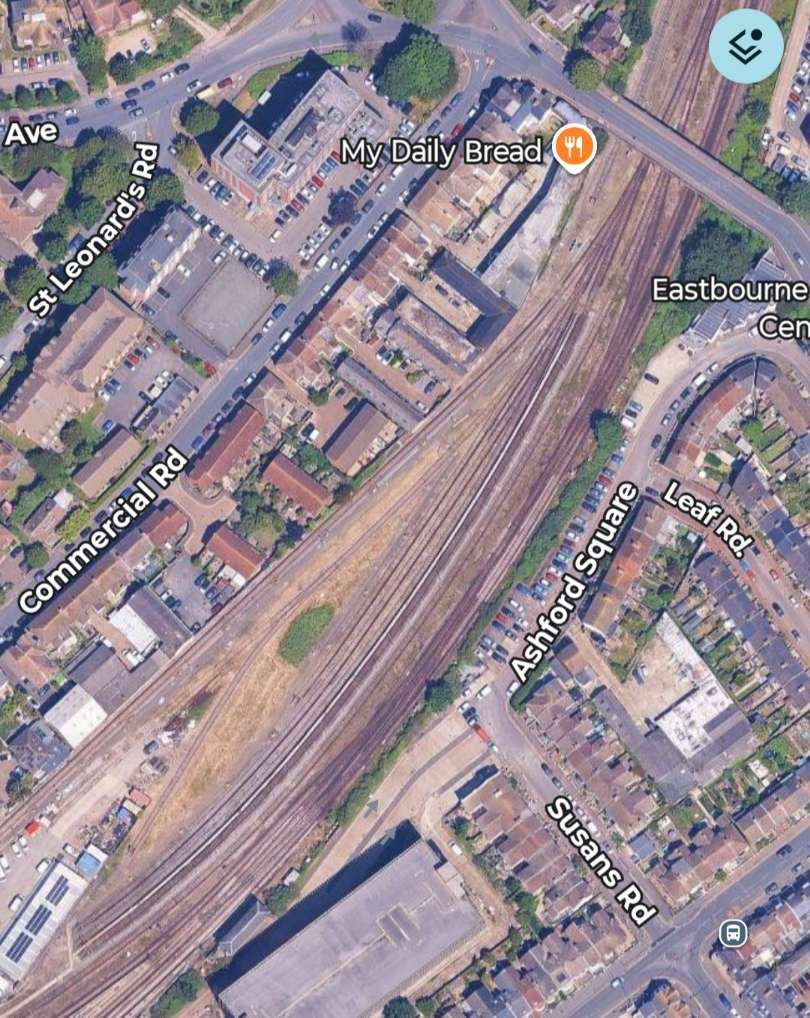
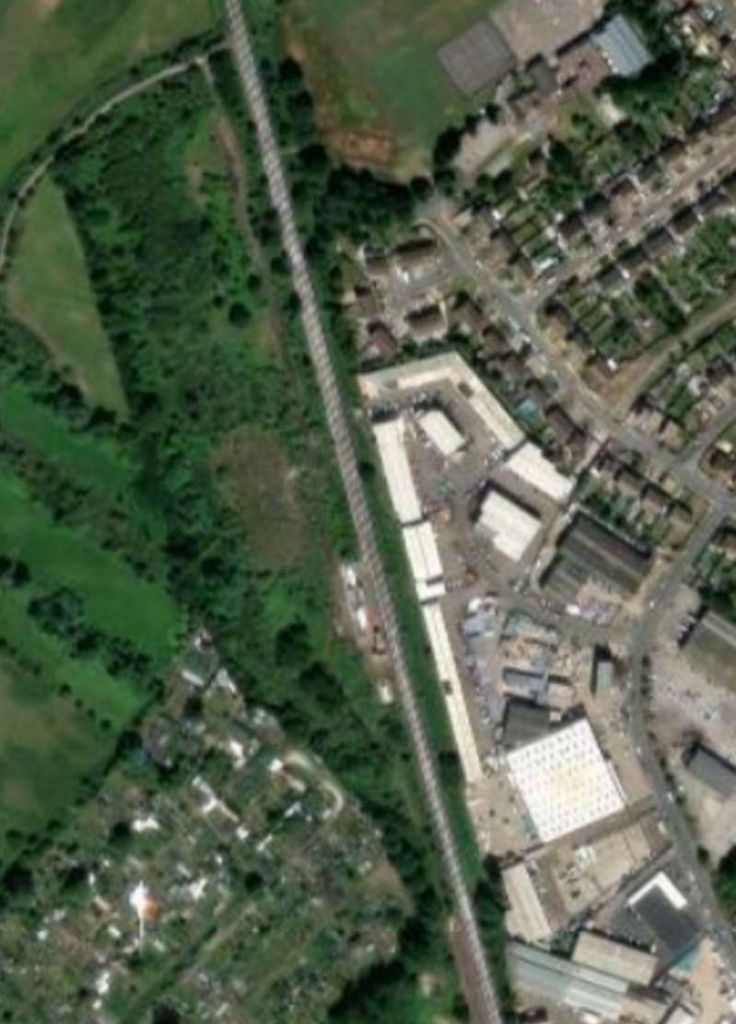
This satellite image is an extract from the ESRI satellite imagery provided by the NLS. The area once occupied by the Engine Shed can be seen with hedges boundaries to the West of the main running lines. The line of the erstwhile Crumbles Branch can also be seen. It is marked by the industrial property boundaries to the East of the main running lines and curving away to the East. [14]
Locomotive Names
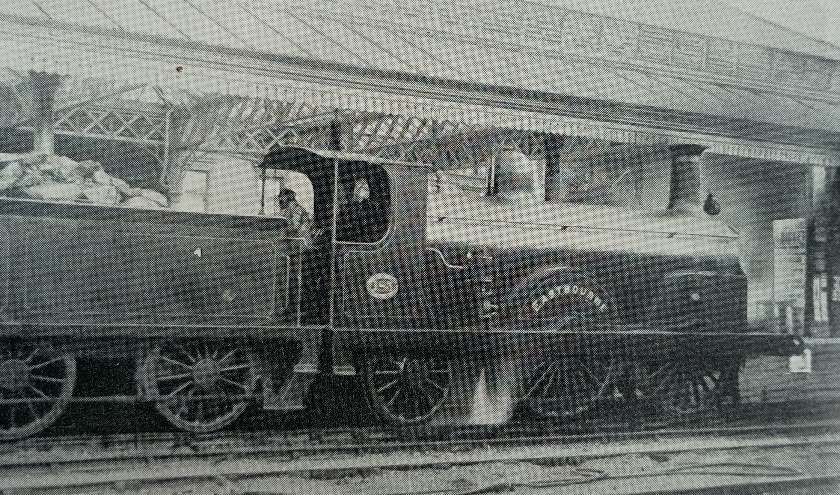
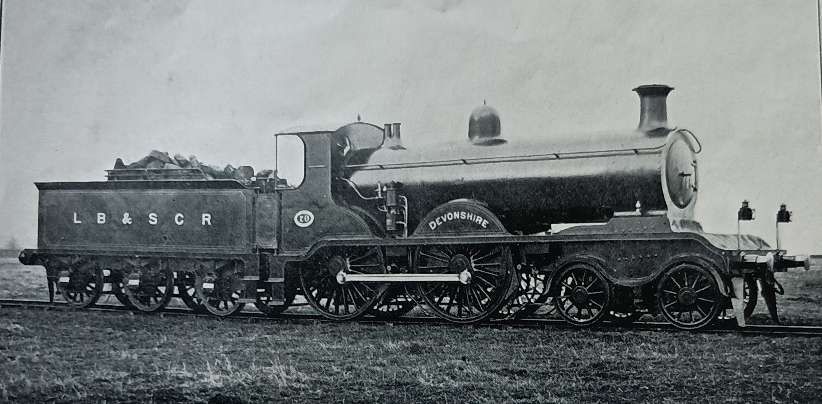
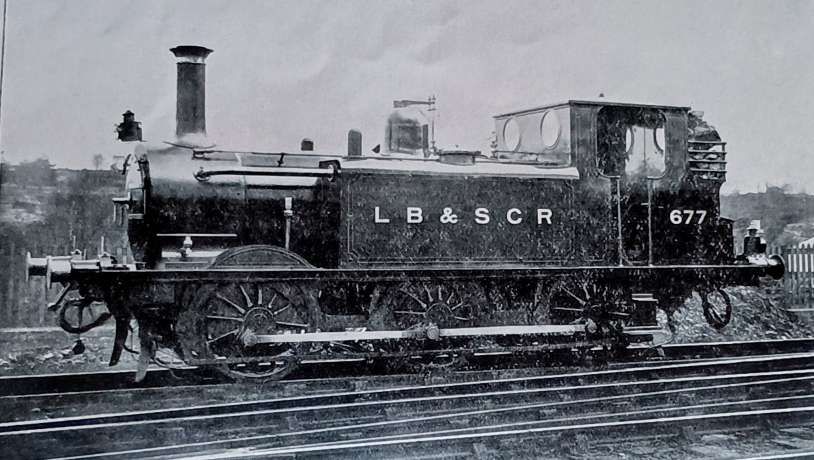
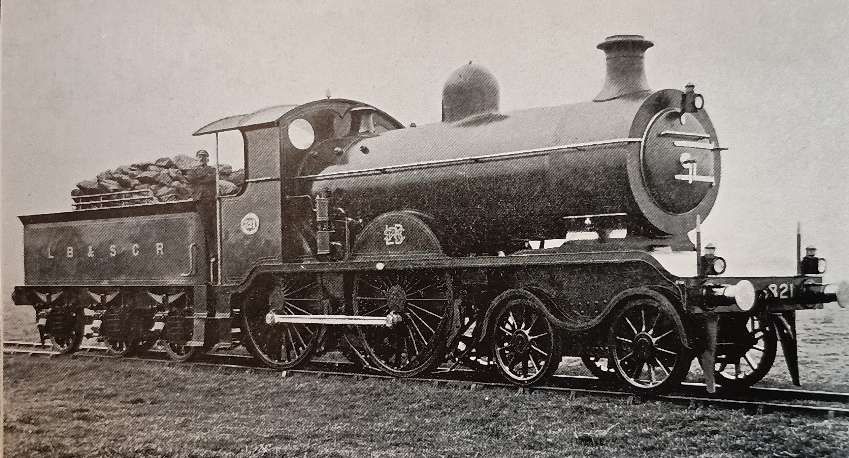
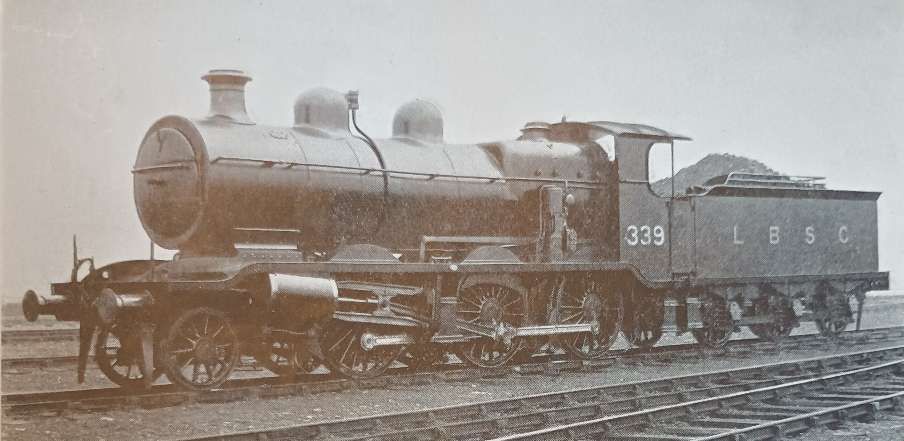
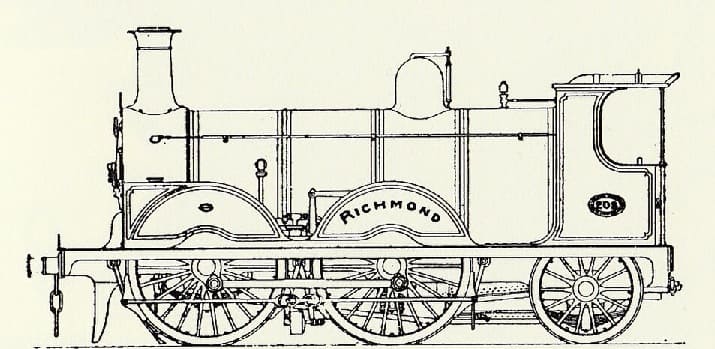
Both the LB&SCR. and its successor, the Southern Railway, honoured Eastbourne by allocating several locomotive names directly associated with the town. As early as 1881, William Stroudley gave the name ‘Eastbourne’ to a rebuilt 2-2-2 express locomotive with 6 ft. 6 in. wheels, No. 491. This engine, which was one of six which had been rebuilt and renumbered by Stroudley the same year, was originally designed by J. C. Craven and built by Nasmyth Wilson & Company in 1867, when it was numbered 241. In 1889, three of the famous ‘Gladstone’ class 0-4-2 locomotives Nos. 183 to 185 were named ‘Eastbourne’, ‘Carew D. Gilbert’ (an influential Eastbourne resident and member of a well known local family over part of whose land the railway was constructed), and ‘George A. Wallis’ (the first Mayor of Eastbourne, from 1883 to 1885). These were followed in 1898 by a Stroudley 0-6-2 tank locomotive, No. 469, which was named ‘Beachy Head’. Two of the aforementioned names were subsequently perpetuated by the Southern Railway; a former LB&SCR. Atlantic No. 2424, was named ‘Beachy Head’, and in 1933 ‘Schools’ class 4-4-0 No. 914 received the name ‘Eastbourne’ after the town’s public school.
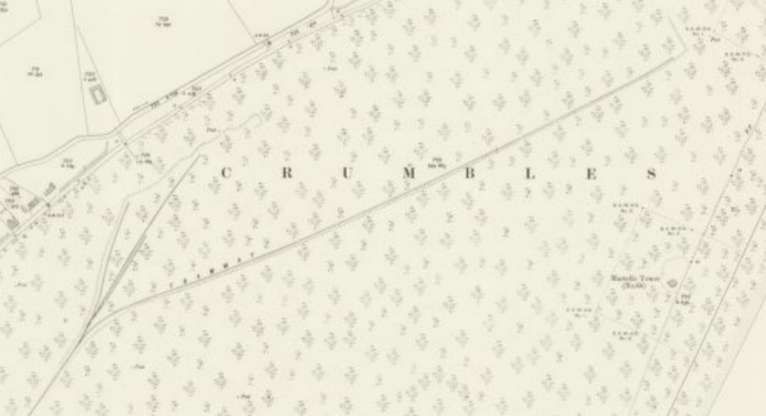
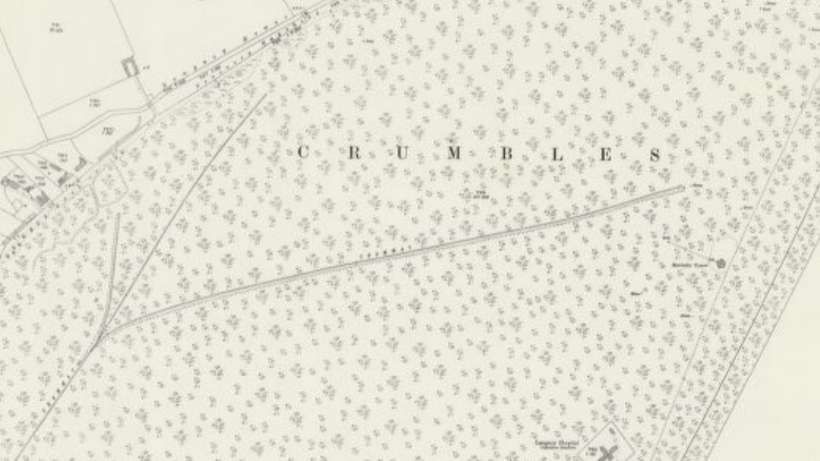
The Crumbles Branch (also known as the Ballast Line or Crumbles Railway) was a 3.5-mile standard-gauge industrial branch line constructed in 1862 that ran east from Eastbourne’s railway area out onto the remote shingle beach known as The Crumbles. [5][6][7][8]
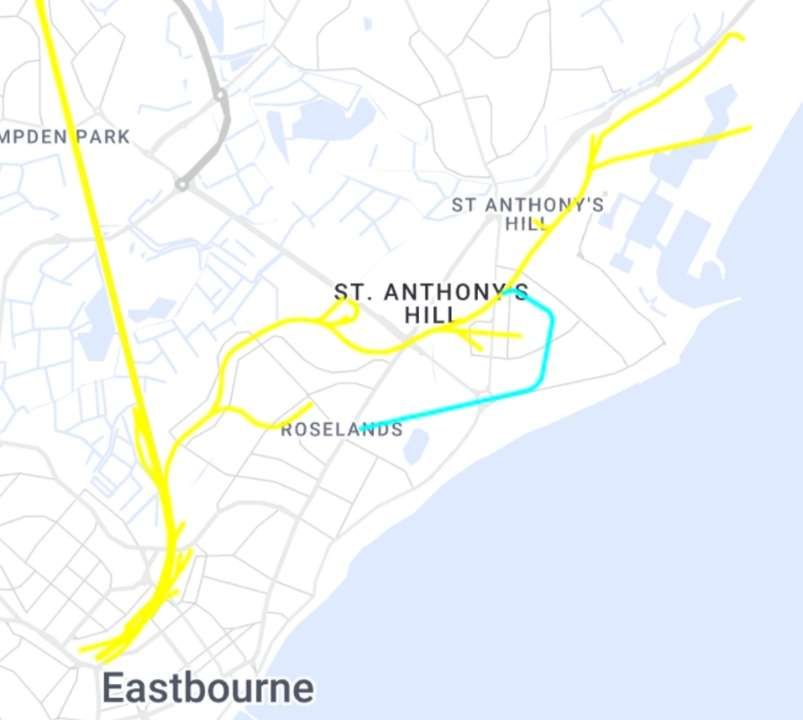
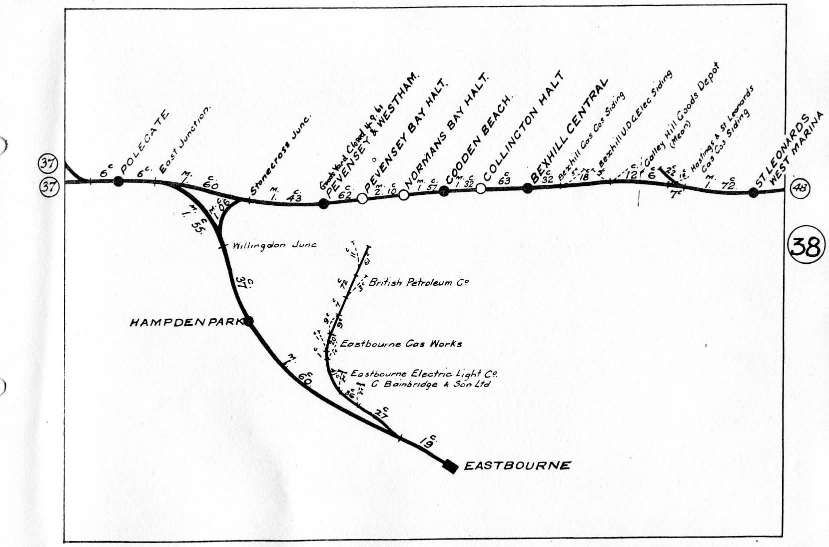
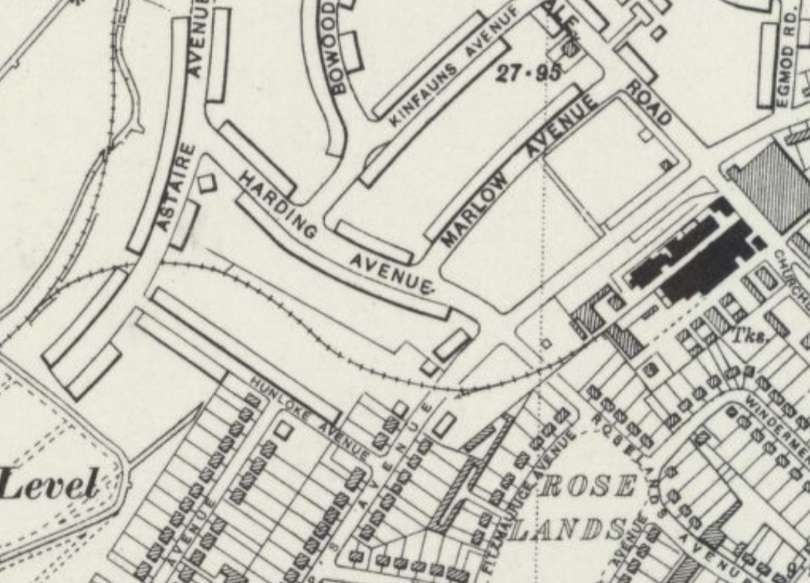
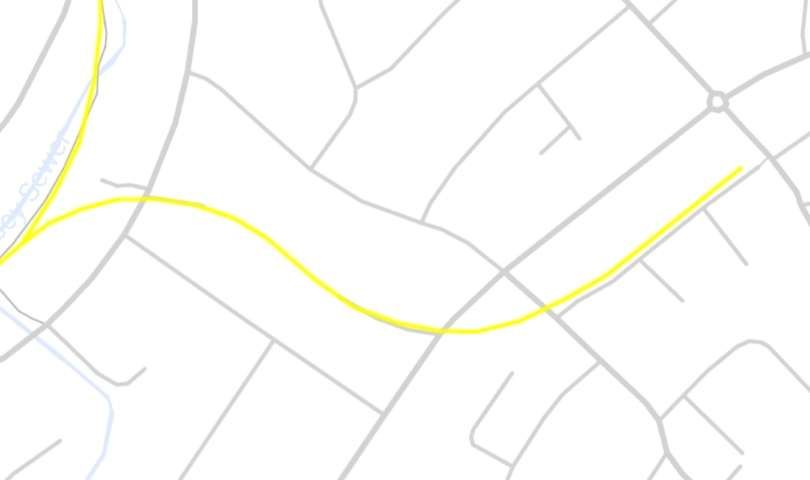
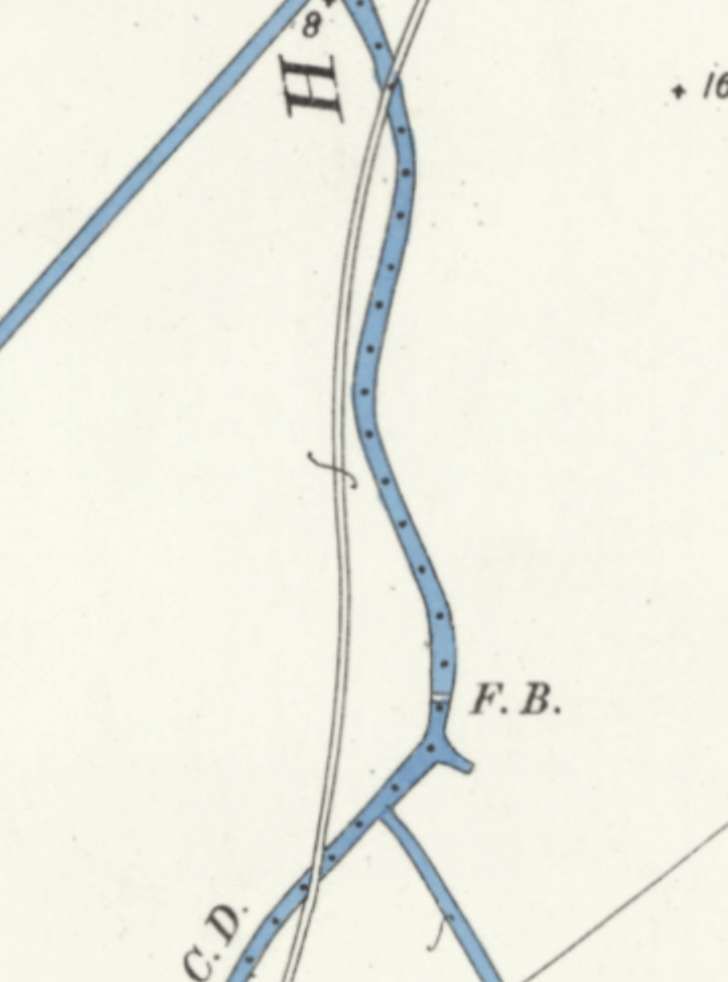
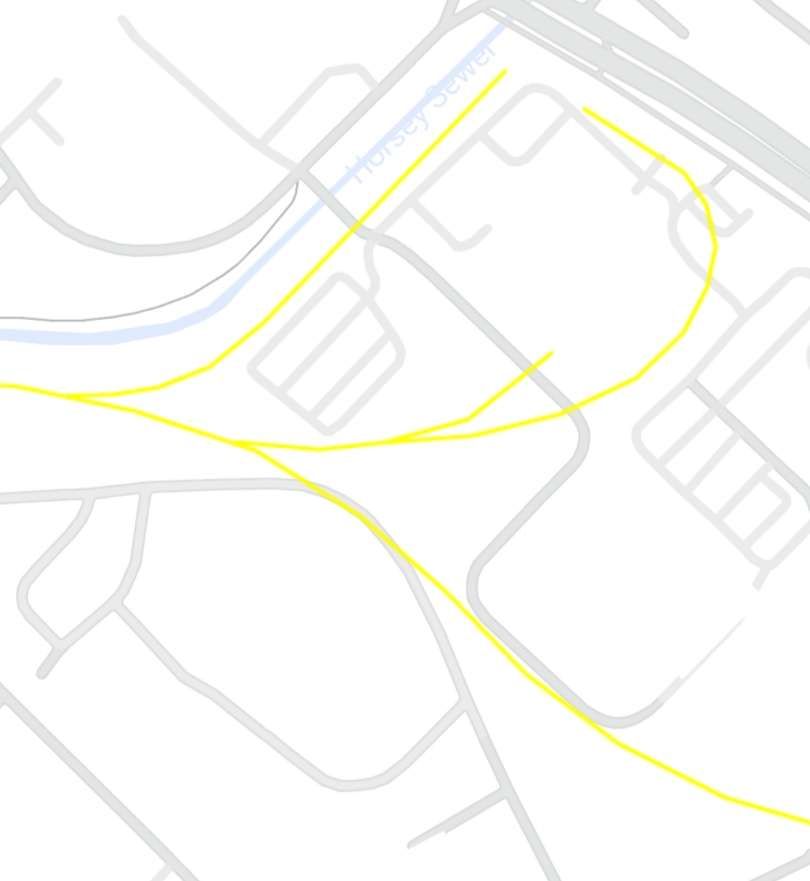
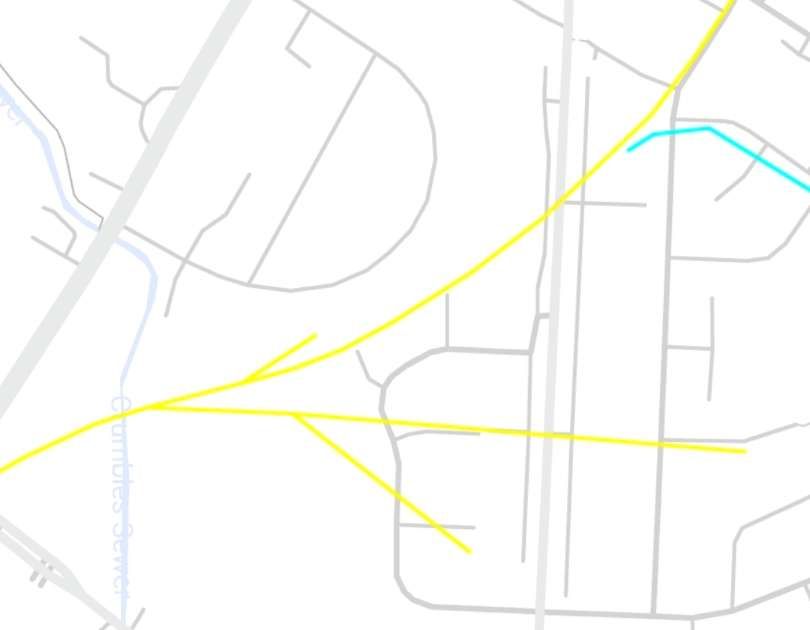
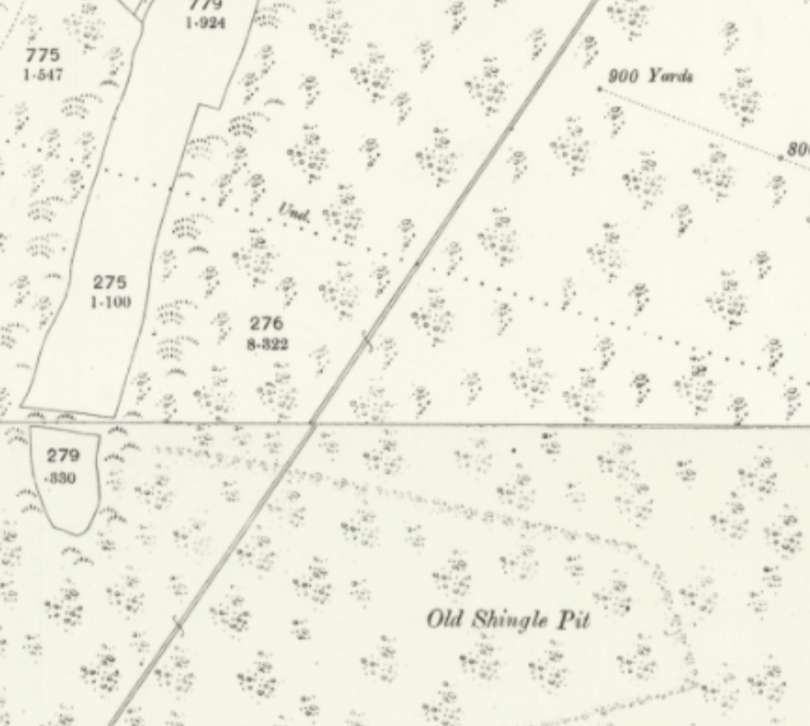
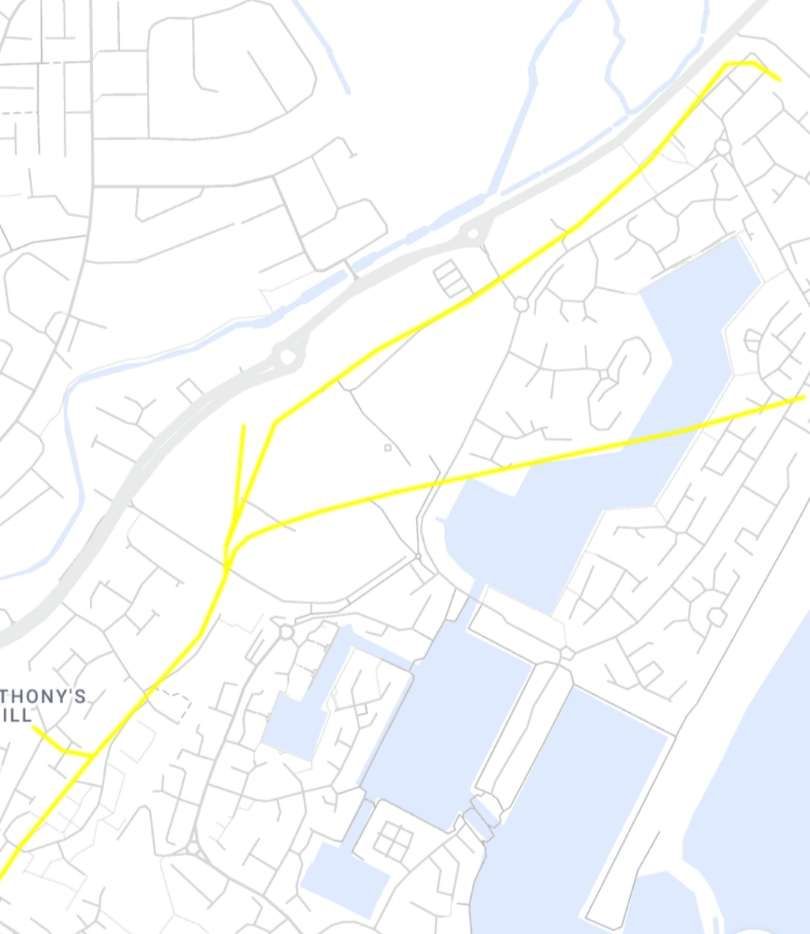
The Crumbles Branch ran from Eastbourne Railway Station Northeast roughly parallel to the coast. It is shown in yellow as it was part of the wider network near Eastbourne. A short branch can be seen near Roselands which served the Destructor Works. The Gas Works with its associated sidings, is directly North of the ‘LA’ of Roselands. The Turquoise line runs through, what were until the 1960s, rifle ranges to the Northeast of Eastbourne. It appears on the Ordnance Survey undertaken at the end of the 19th century but not on later surveys, so should not be confused with an electric tramway which was a tourist attraction in the mid-20th century. It may be associated with the Hall & Co. Narrow-Gauge (2ft) Tramway. [24][31]This image is a scan of the relevant page of a BR SR Route Mileage folder which gives some details of the Crumbles line at Eastbourne. The branch features at the centre of the image. This image was shared on the Disused Railways of Sussex Facebook Group by John Atkinson on 28th January 2021. [36]
The shingle bank/beach was 3⁄4-mile-wide (1.2 km) – shingle collected here was used as ballast for railway lines across the LB&SCR and the wider UK network. [2: plate 27]
Andrew Diack tells us that, “This distinctive area of coastal deposition lying adjacent to the sea underlies modern Sovereign Park and Princes Park and continues towards Sea Houses, near Eastbourne Pier. The irregular surface of ridges and hollows once contained pools of water in places, and a “Cromble Pond” of irregular form is shown on early maps, including John Speed’s map of Sussex of 1611 and Robert Marden’s map of Sussex of 1693, while the Ordnance Survey map of 1813 also shows “Crumble Pond”. In 1845, the Crumbles were partitioned between Lord Burlington, later the 7th Duke of Devonshire, and the Gilbert family; both families had a long association with the town as major landowners, benefactors and developers. The Gilberts and the Cavendish family, who as the Dukes of Devonshire were, in fact, connected by marriage through the Compton family, who were also landowners in Eastbourne and whose estate was managed from their residence at Compton Place, previously Bourne Place. The partition of the Crumbles was said to have been beneficial toward the development of the Seaside suburb to the east of Eastbourne. The railway came to Eastbourne in 1849, and with the expansion of railways so grew the demand for railway ballast and the need for gravel quarries to supply the stone. In 1857-62 the London Brighton & South Coast Railway (LB&SCR) negotiated the purchase of not less than 48,000 cubic yards of shingle from the Duke of Devonshire at 1 penny per cubic yard, to be extracted from the Crumbles.” [6]
Andrew Diack writes: “Due to the buoyant demand for ballast, this was a period of expansion for the gravel pits that produced the product, but it was equally a time when the natural landscape of vegetated shingle ridges suffered greatly by being transformed into a scarred landscape where industrial machines created holes and gashes in the surface of the land. Over a period of a hundred years shingle was removed at the rate of around 250,000 tons per year for railway ballast and building material, and that resulted in the height of the land being reduced by 4 metres within 100 metres of the shore.” [6]
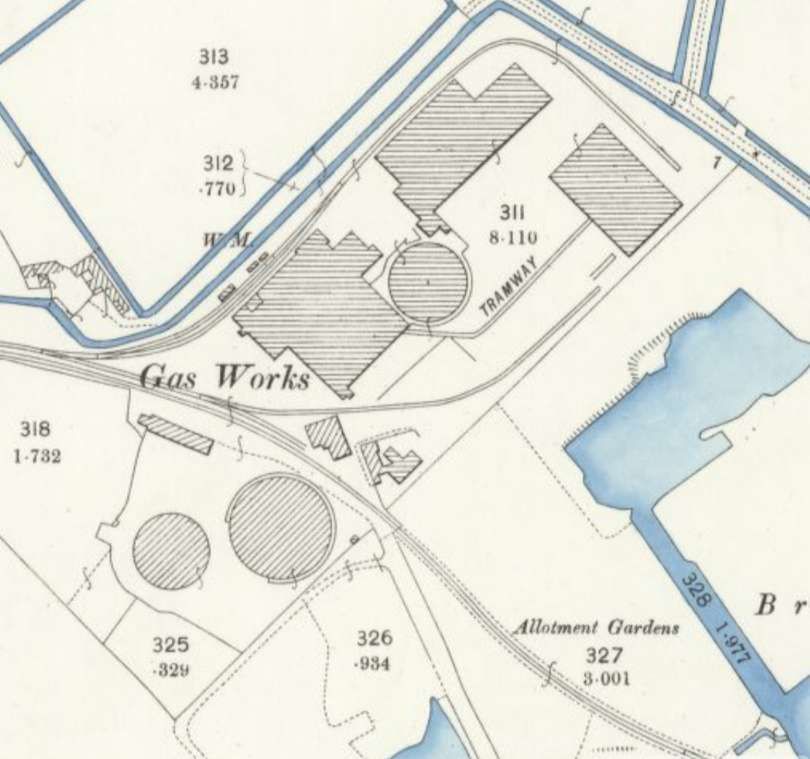
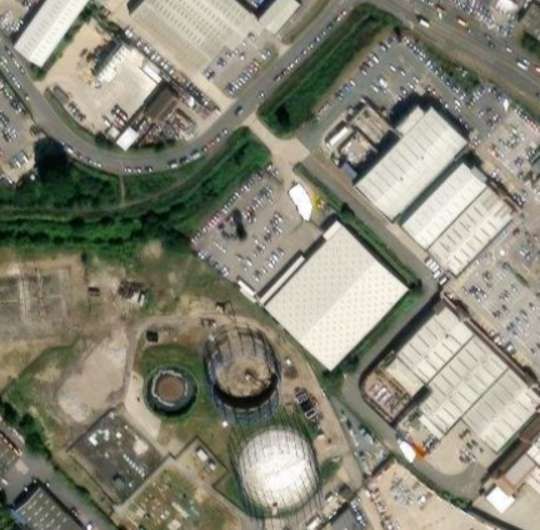
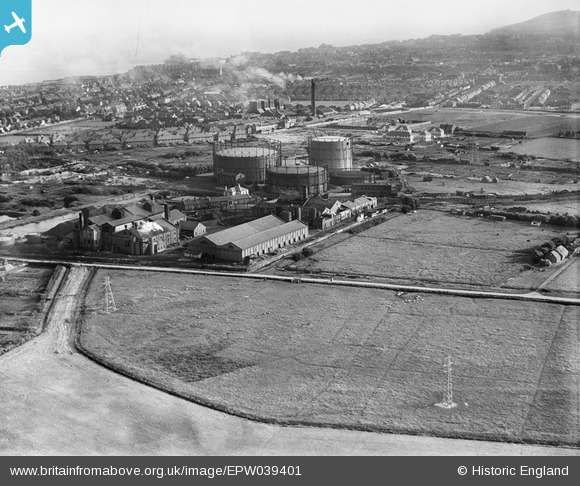
Additional branches were added to the line, including a siding built in 1870 for the Eastbourne Gas Company, which straddled the railway. The gasworks received coal via the rail connection and in return, produced coke, which was taken away. [2: plate 32][3]
“In 1926, a line was laid for the Eastbourne Corporation Electric Works, which transported coal and supplied fuel to the bus garage, as well as taking scrap metal from the refuse destructor works.” [2: plate 29][3][5]
In fact, “as Eastbourne expanded, the branch evolved into an industrial corridor. It served the town’s gasworks (delivering large volumes of coal), brickworks, timber yards, and destructor works.” [6]
Ballast trains ran until 1932, when the LB&SCR’s successor, the Southern Railway, switched to using granite.
Andrew Diack continues: “Although the gravel had a variety of uses, when railways changed to the use of granite chippings in 1930, the business went into terminal decline. (Broken granite chips interlock better than rounded pieces of flint, and they also provide good shock absorption and easier maintenance.) Shingle extraction gradually diminished, and by 1932, the railway was no longer used to transport shingle, though it continued to serve [some] other industrial sidings in addition to the gasworks.” [6]
“The branch ceased steam working in April 1960, after which diesel shunting locomotives took over [2: plate 28] until the line was closed in … 1967.” [2: plate 29][3][5]
Andrew Diack says that “The Crumbles railway continued to serve the gasworks until … 1967, but with gas production ceasing in June 1967, the track fell into disuse, and in the late 1980s it was removed at the time of the Eastbourne re-signalling project.” [6]
A short series of photographs follow below, all taken circa. 1962 by Dick Gilbert.
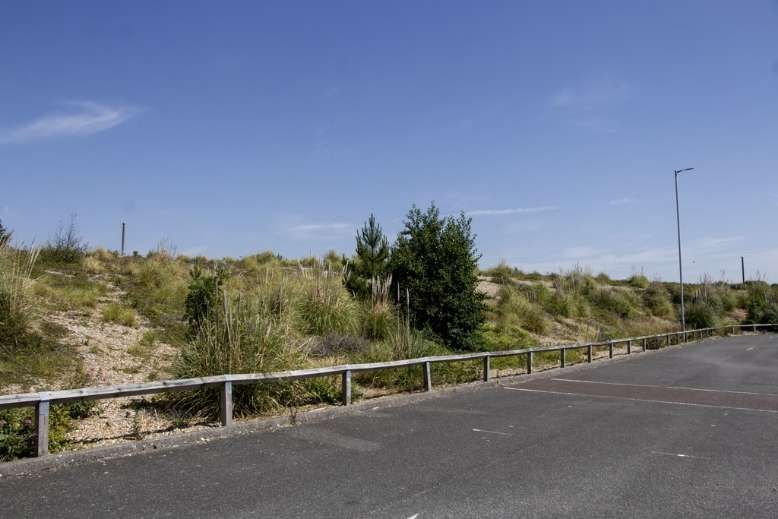
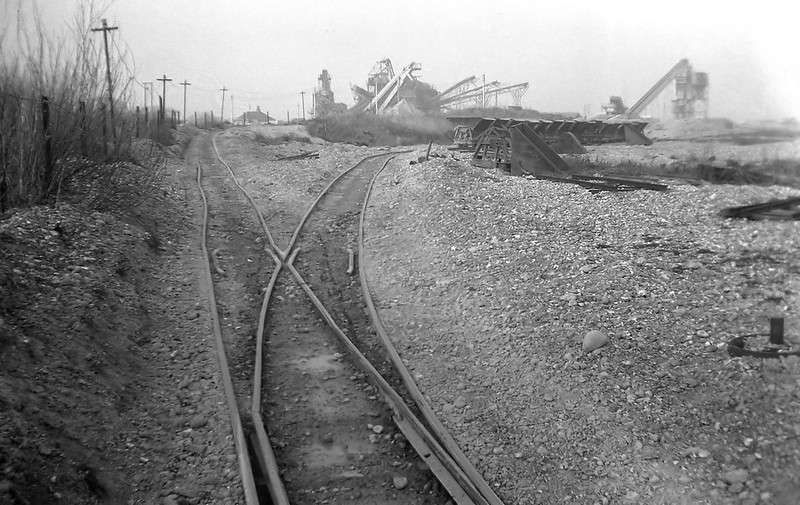
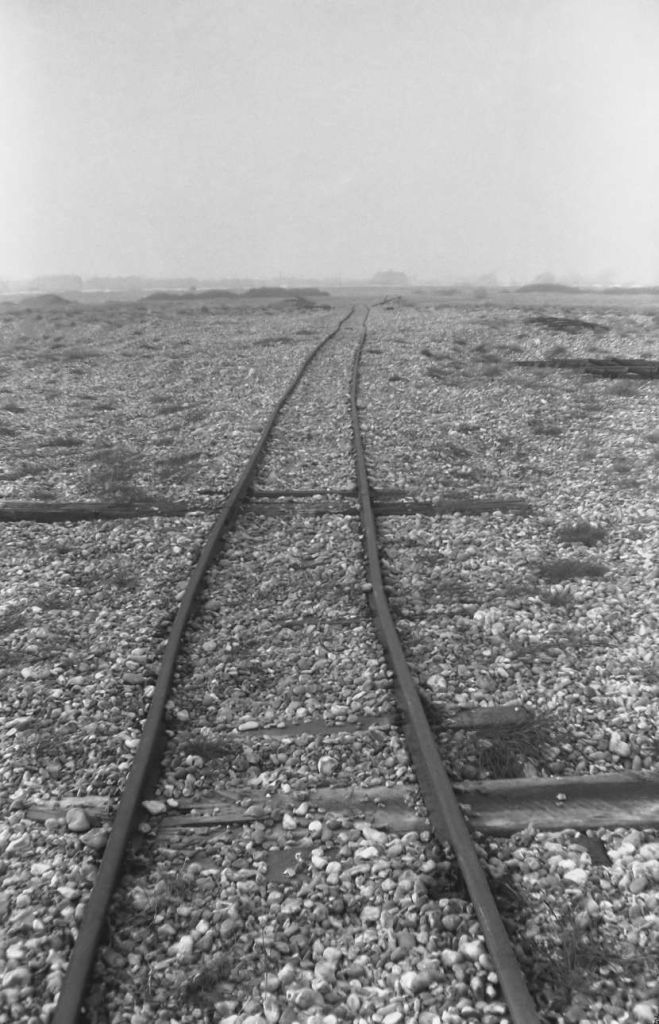
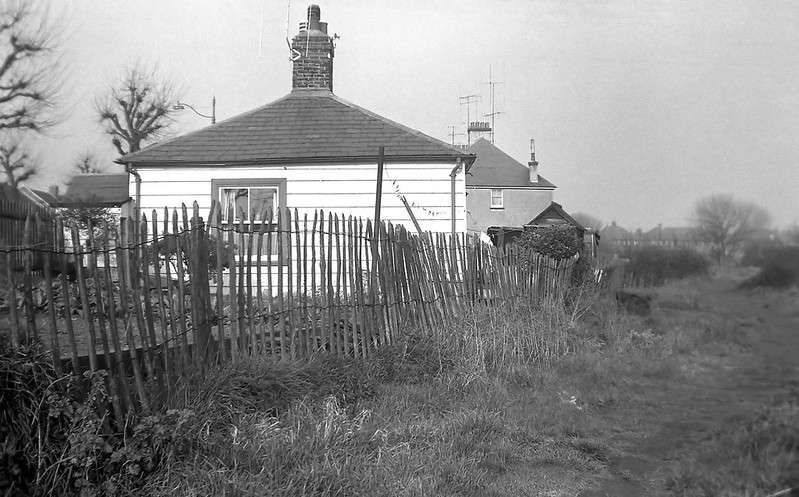
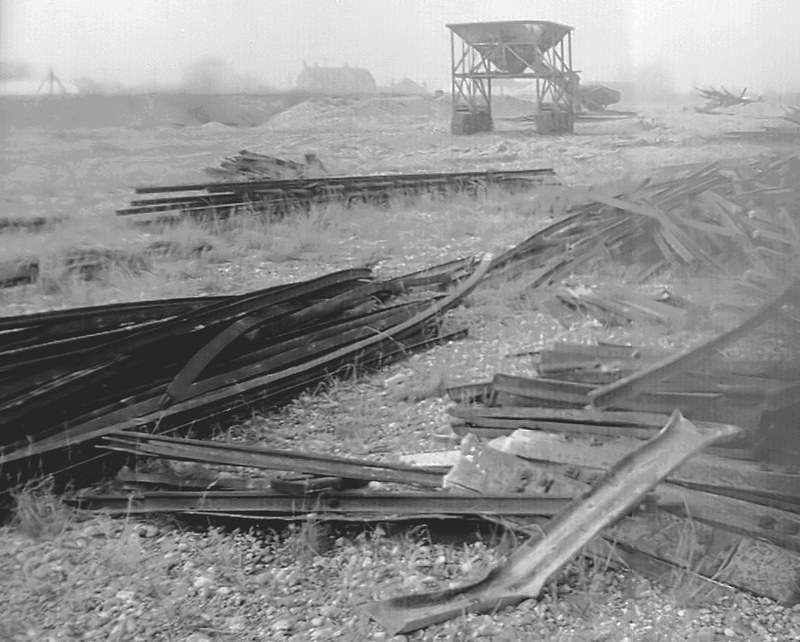
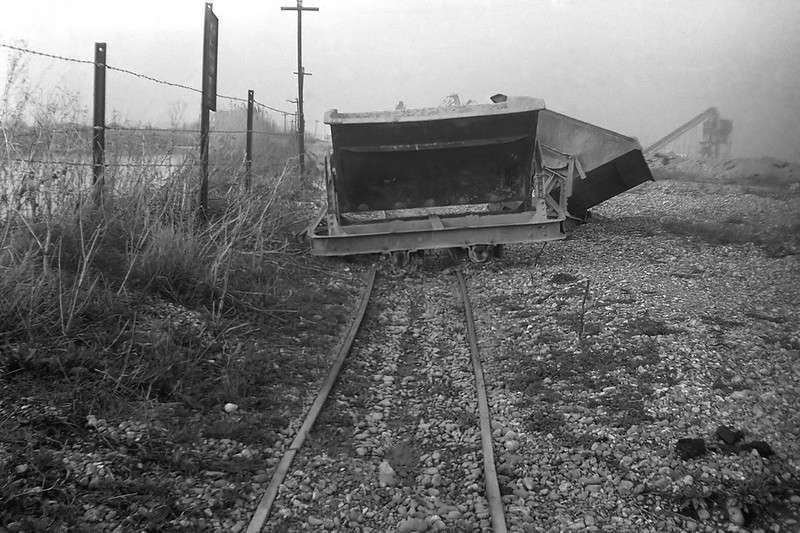
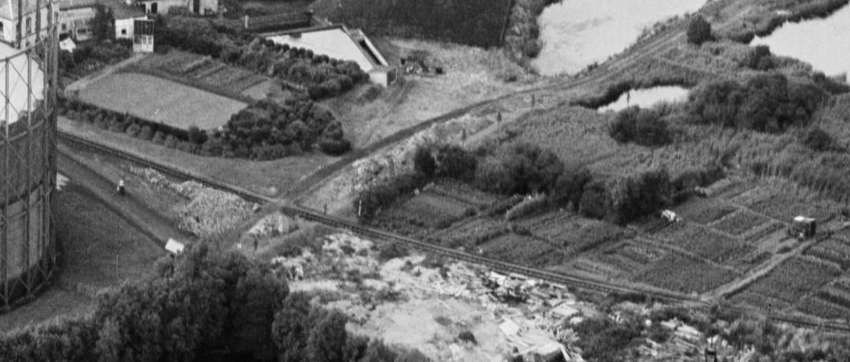
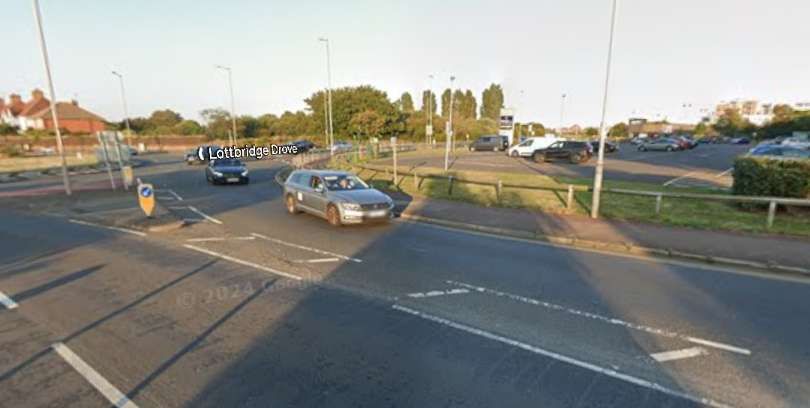
The line to the Crumbles remained in place until the early 1960s when these pictures were taken. There is no trace of anything shown in these pictures in the 21st century (Dick Gilbert, around 1962), (CC BY 2.0). [4]The line across the Crumbles (Dick Gilbert, around 1962), (CC BY 2.0). [4]The location of this wooden building is what is now the eastern side of the roundabout where the A259 coast road meets Lottbridge Drove (A2290). It is no longer there, but was probably a house for the crossing gates controller as the line crossed the A259 here – the houses on the left are on that road and some are still recognisable. The trackbed out to the Crumbles is on the right (Dick Gilbert, around 1962), (CC BY 2.0). [4]The redundant rails and sleepers removed from the branch line (Dick Gilbert, around 1962), (CC BY 2.0). [4]Disused/redundant skip wagons (Dick Gilbert, around 1962), (CC BY 2.0). [4]
The remote shingle beach area of The Crumbles where the line terminated has since been redeveloped and is now home to Sovereign Harbour and retail developments.
An exploration of this line can be found here on YouTube. [7]
Following the Line
A separate line ran alongside the main line out beyond the location of the Engine House. …
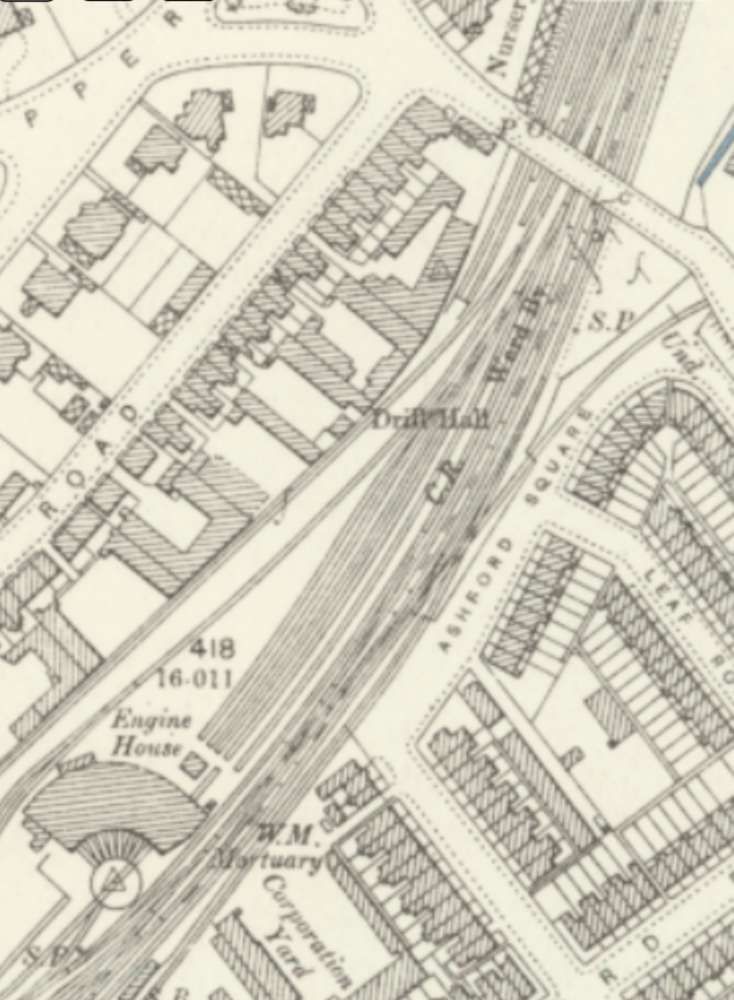
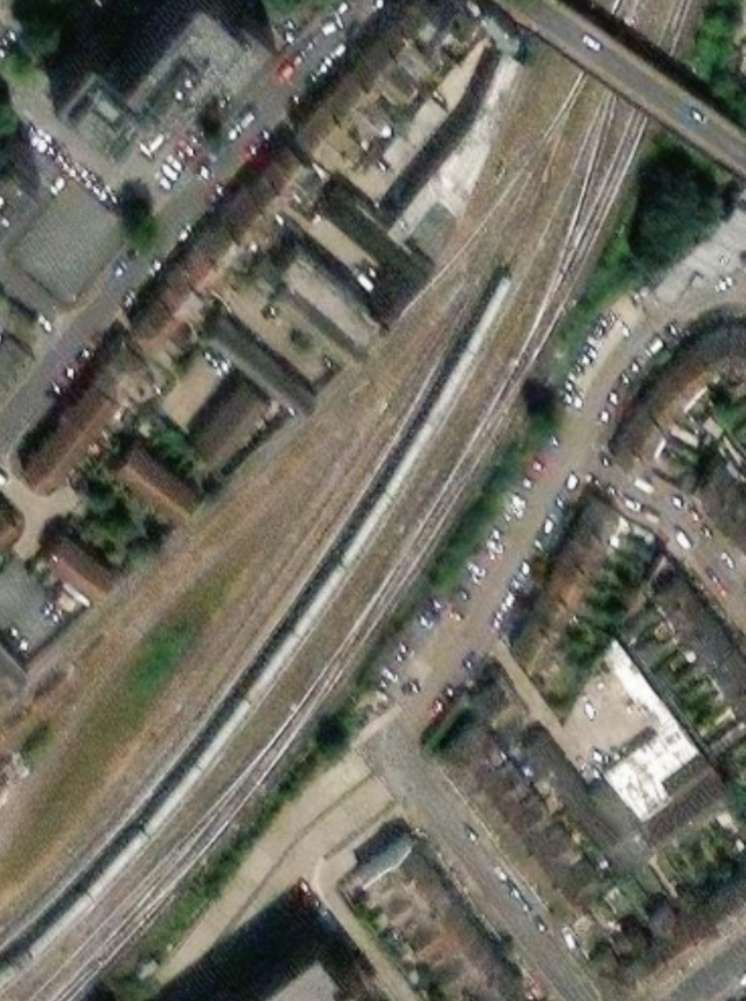
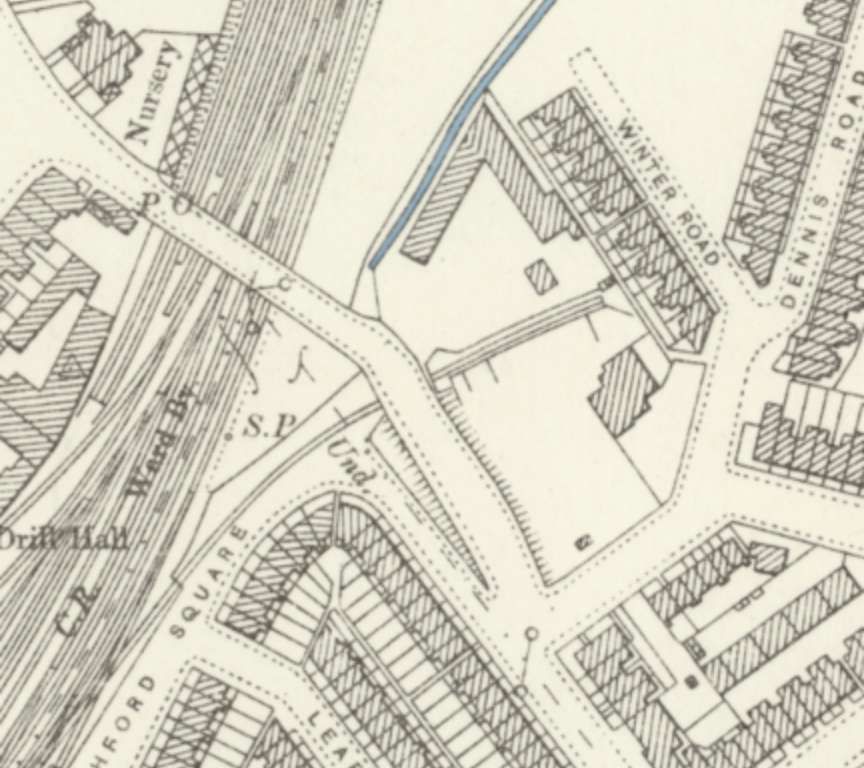
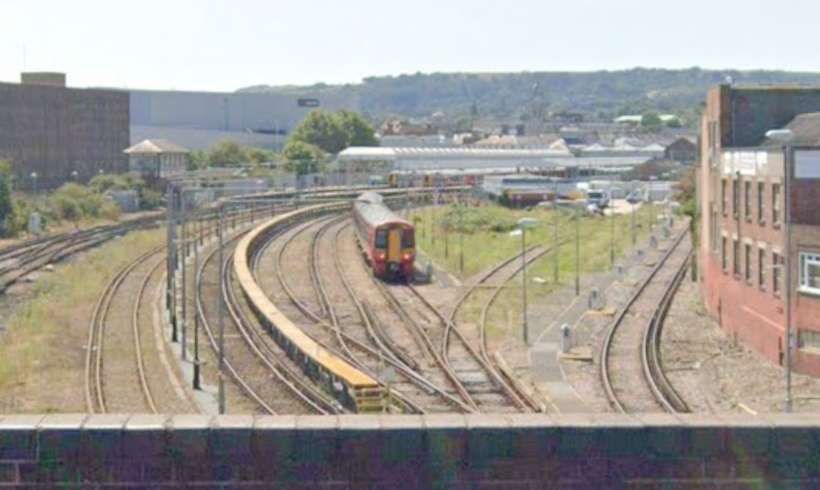
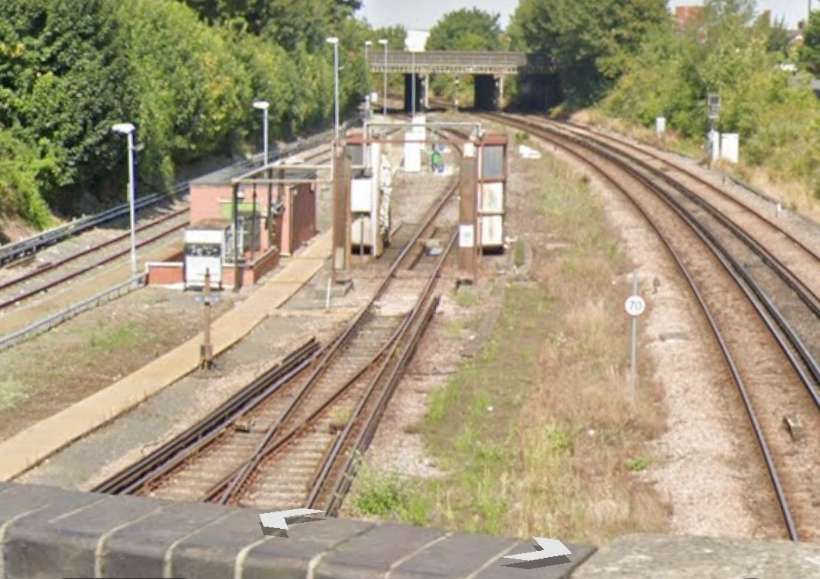
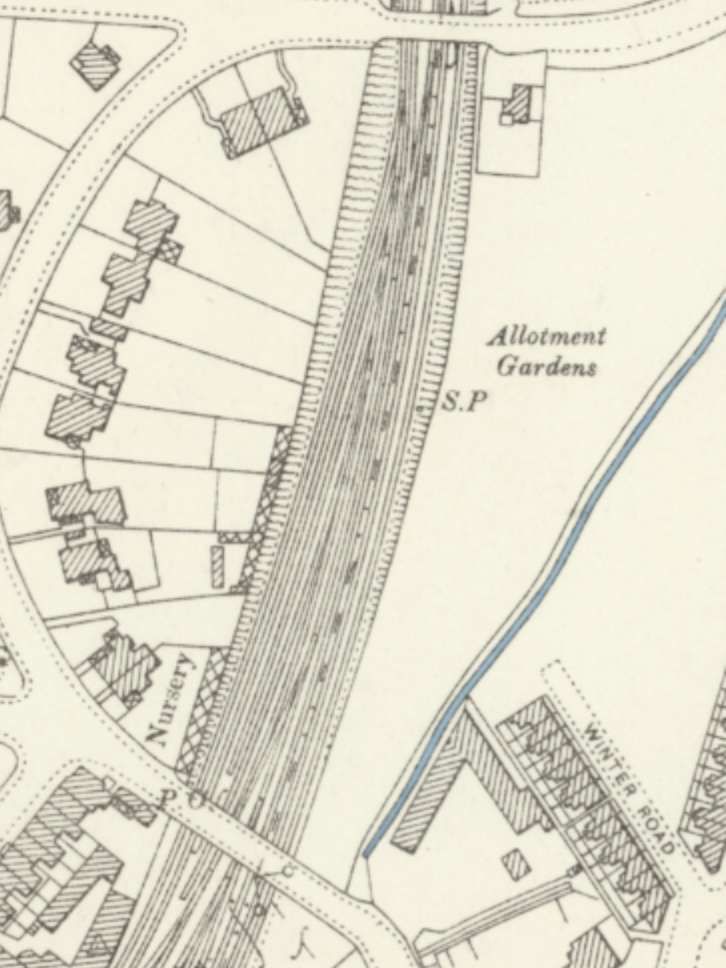
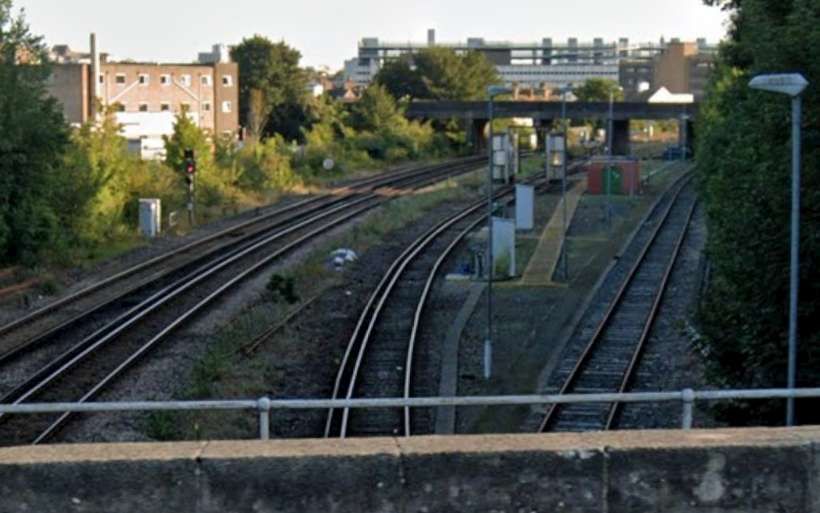
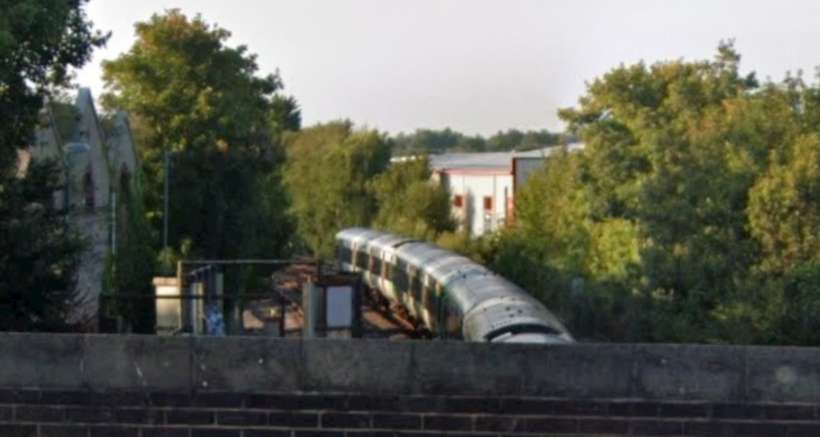
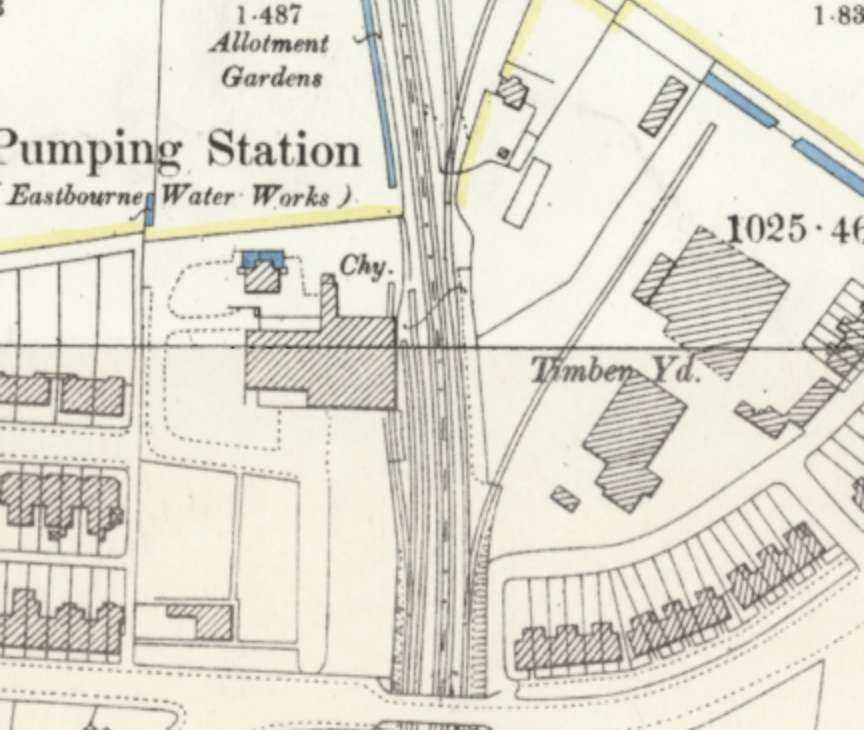
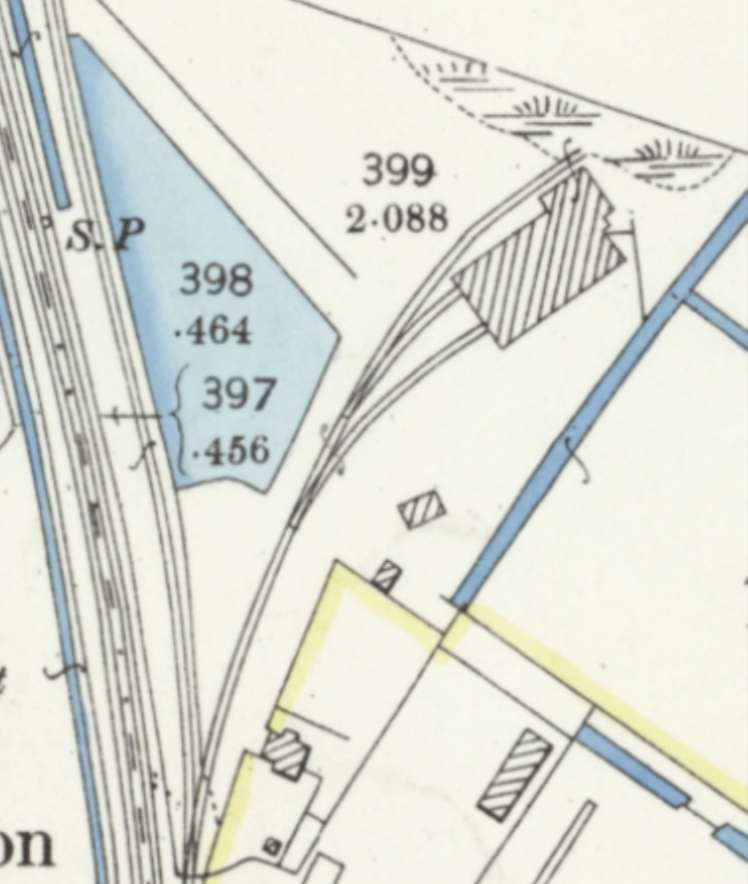
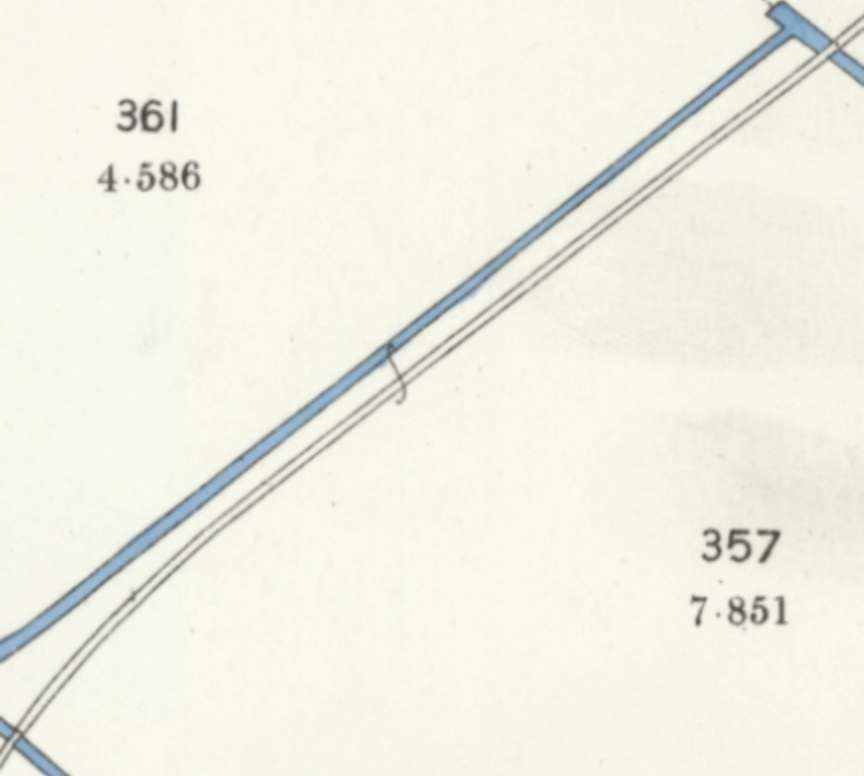
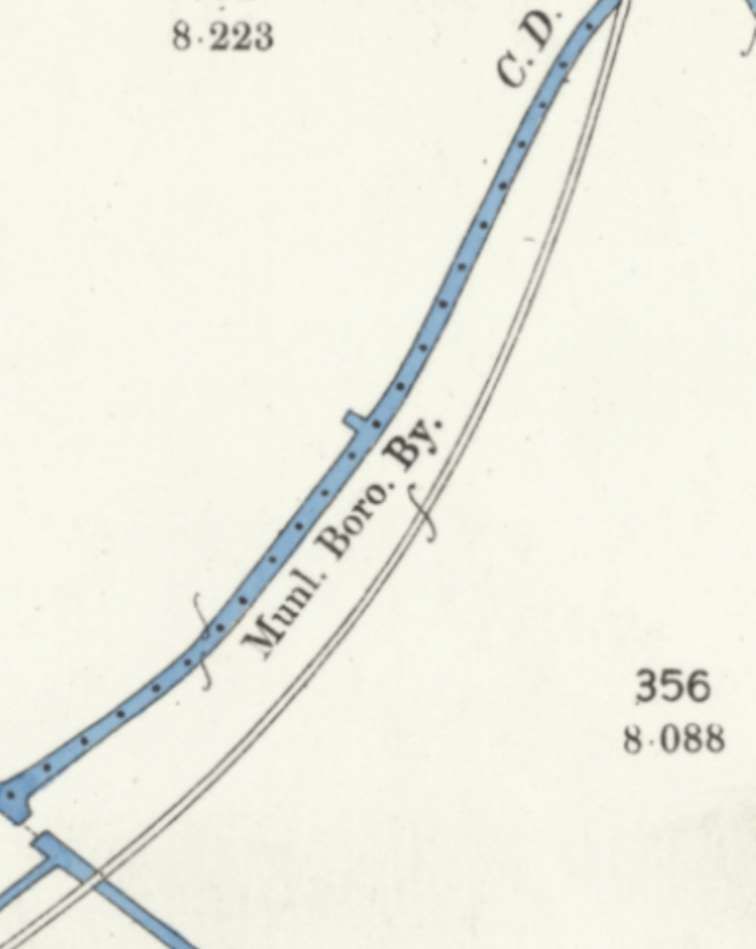
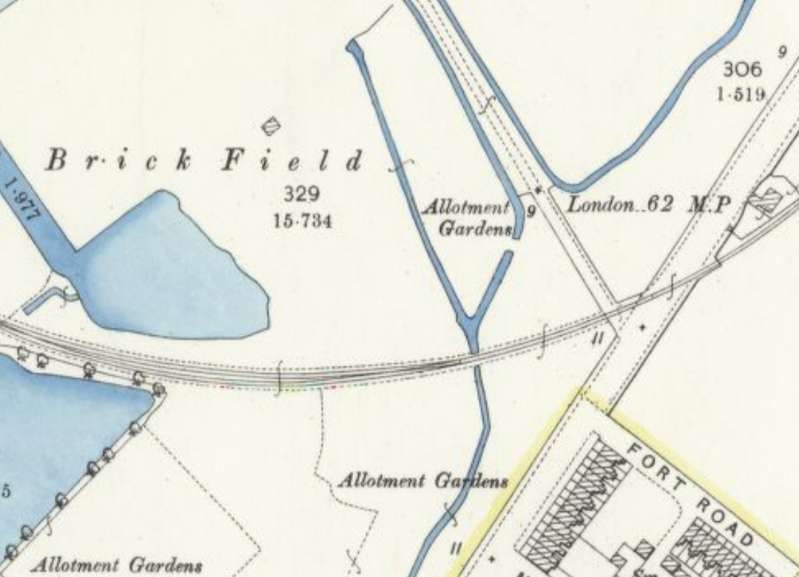
The Crumbles Branch ran beside and to the East of the main line a short stub line turned away to the East from the branch to serve a small yard. The branch continued under the bridge which provided a link between Upper Avenue and Cavendish Place. The 25″ Ordnance Survey of 1898, published in 1899. [8]The same area as it appears on the modern ESRI satellite imagery provided by the National Library of Scotland. The bridge noted on the map extract above can be seen in the top-right of this image. The road is now named Upper Avenue. [9]The short stub siding mentioned above is shown here on another extract from the same OS sheet. It passes under the link road and most probably already in place before that road was conceived. The site served by the sliding is marked ‘Smithy’ on a later Ordnance Survey map. [8]The view South from Upper Avenue bridge towards Eastbourne Station. [Google Streetview, August 2024]Looking North from Upper Avenue bridge towards Whitley Road bridge. [Google Streetview, August 2026]The next length of the line which covers the length between Upper Avenue bridge and that carrying Whitley Road. The 25″ Ordnance Survey of 1898, published in 1899. [10]While Upper Avenue appears to be much the same width as on the map extracts, Whitley Road bridge has been significantly widened. [Google Maps, August 2026]Looking South from Whitley Road bridge towards Upper Avenue bridge. [Google Streetview, August 2026]Looking North from Whitley Road bridge. [Google Streetview, August 2026]The line to the North of Whitley Road bridge. Another short branch from the Crumbles Branch serves as a private siding for a Timber Yard. The Crumbles Branch can be seen separating from the main line close to the Pumping Station. Another short siding can also be seen leaving the branch closed to the top of this map extract. This 25″ OS map extract of 1898, published 1899, spans two OS sheets. [10][11]This extract from the 25″ OS map extract of 1898, published 1899 shows the sliding which appeared at the very top of the last map extract. It is not clear what the site was used for at the turn of 20th century. [11]
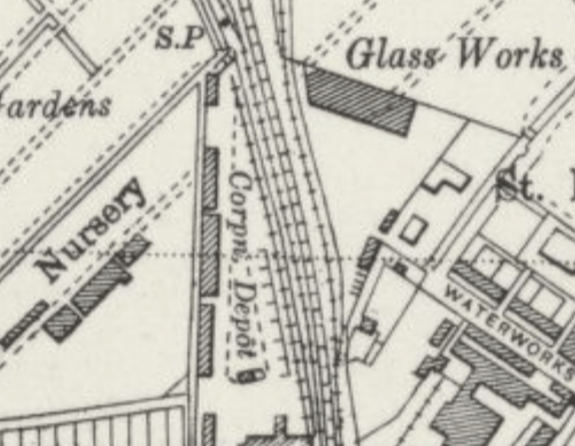
This small extract from the 6″ Ordnance Survey of 1938, published in 1947, shows a new building on the site, no rail connection, and the site is designated a Glass Works. Careful examination of the map extract shows that, although the sidings within the site and the building they served are now gone, the point on the Crumbles Branch remains. [12]
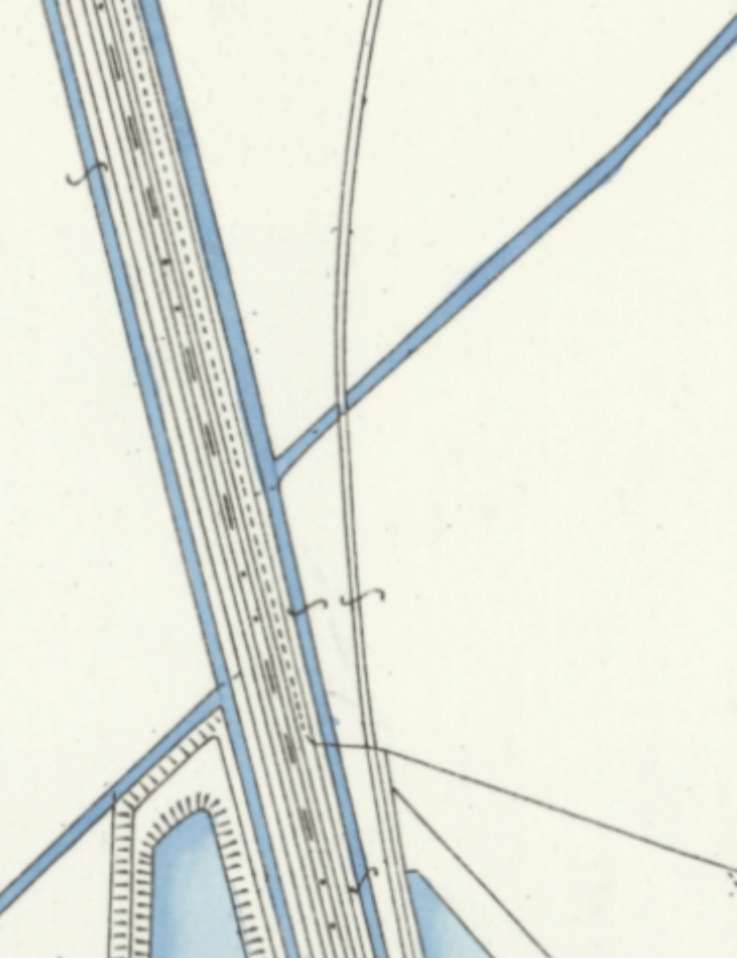
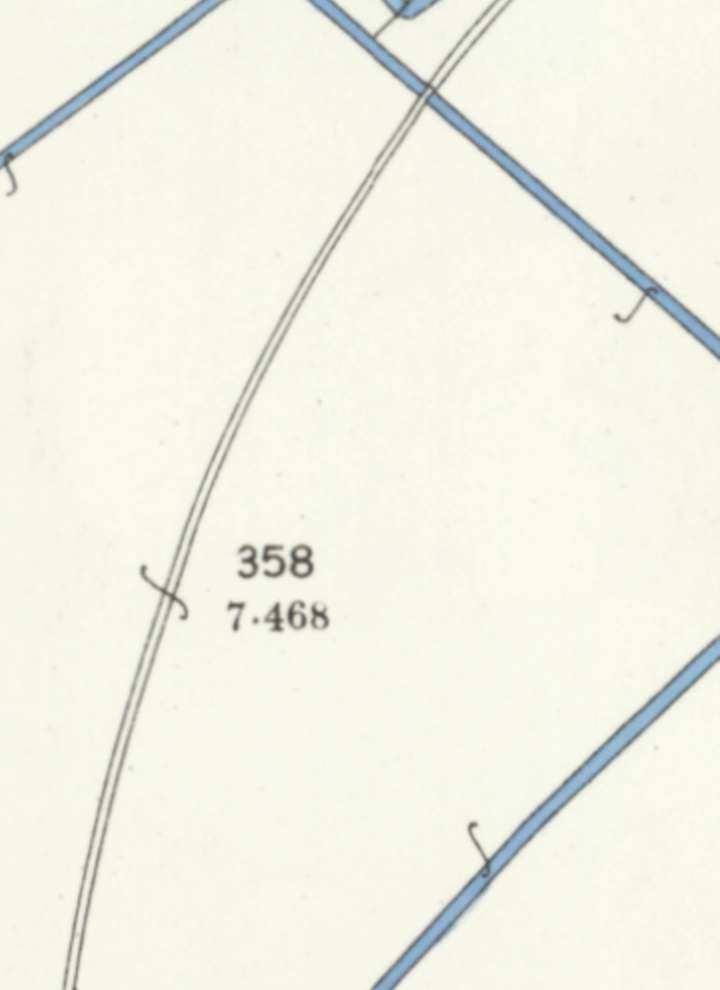
The Crumbles Branch diverged from the main line. 25″ OS map extract of 1898, published 1899. [11]The line continued to turn northeastwards. [11]Now heading Northeast, just at the top-right of this map extract a branch led away to the East. It served the Eastbourne Destructor Works and was in place for a period in the early- to mid-20th century. [11]The Crumbles Branch begins to turn North, the branch to the Destructor Works does not appear on this next 25″map extract from 1898/99, nor does it appear on later 25″ surveys provided by the NLS. [11]The 6″ Ordnance Survey of 1938, published in 1947 shows both the short siding/branch and the Destructor Works themselves which were sited to the Southeast of St. Philips Avenue. [12]
The branch serving the Destructor Works. [24]
A short aside is worthwhile here, to provide some information about the Destructor Works. …
The Eastbourne Destructor Works was a late 19th-century municipal waste incinerator and early energy-from-waste facility, producing electricity which was used locally in Eastbourne. Plants like this were built as towns grew and traditional waste disposal became difficult, the site burned household refuse in high-temperature furnaces to reduce volume, produce clinker, and generate steam for electricity. Coal was often required alongside the rubbish to keep the furnaces hot enough. [7][13][14]
By the 1950s and 1960s, shifting environmental standards, modern waste management approaches, led to the closure and demolition of the complex and the lifting of its rail link. [7][14]
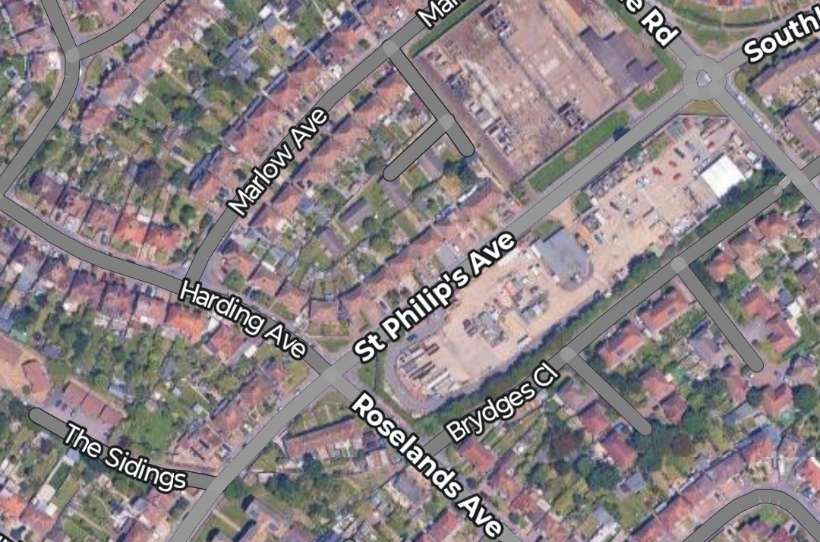
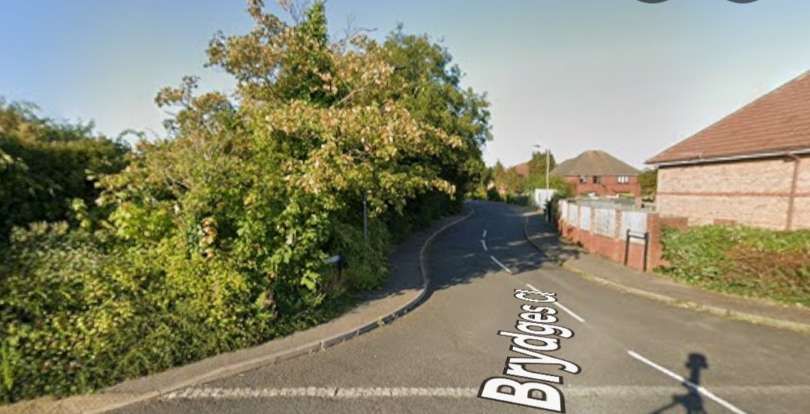
The wider industrial footprint stretched across the area of modern-day St Philips Avenue and Bridges Close. The refuse handling section stood roughly where the current recycling site is on St Philips Avenue, while the core furnace operations and rail sidings were nearby towards Bridges Close. Only the recycling centre remains as a hint to the past use of the industrial site. The rest of the land has been redeveloped into housing estates and roads.
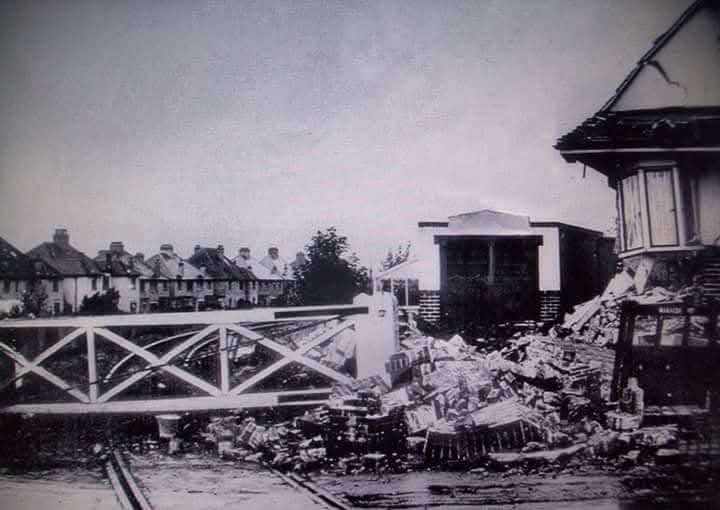
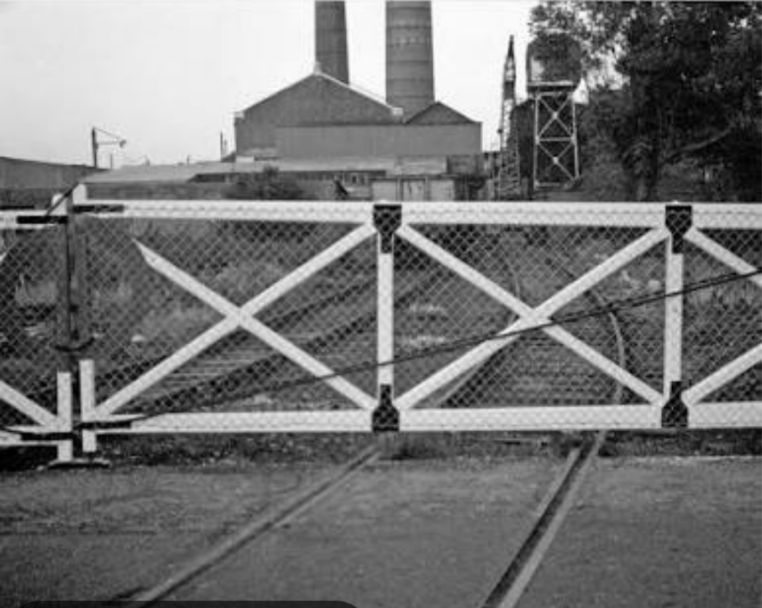
Simon Meader shared two photographs (photographer not known) which were taken before the nationalisation of the railways, both focus on the location of the level-crossing on St. Philip’s Avenue.
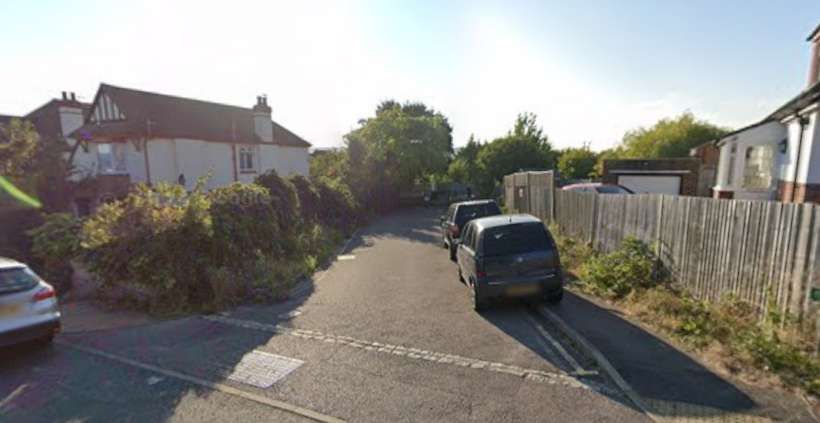
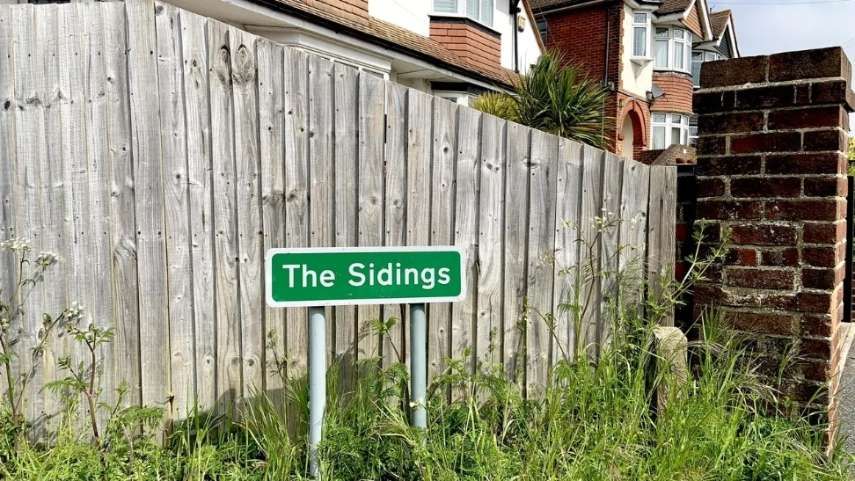
Looking West-northwest along the line of the old rail link, a short cul-de-sac called ‘The Sidings’ is seen here from St. Philip’s Avenue in August 2024. The waste amenity site is behind the camera to the right. [Google Maps, August 2024]
The Sidings runs West-southwest from St. Philip’s Avenue along the line of the old rail link.
The Sidings is bottom-left in this image, the civic amenity site is centre-right. [Google Maps, August 2026]
The National Archive record for the Works states: “The Eastbourne Gas Company was formed by Deed of Settlement in 1857. The original area of supply was the town and parish of Eastbourne and the parish of Willingdon. The company was dissolved and reincorporated by Act of Parliament in 1868. A new works was built in Willingdon and the original one closed.”
Over the next eighty or so years The area served by the plant grew. At each stage of development an Act of Parliament either extended the area of supply or permitted the company to purchase other gas companies and their areas of supply until nationalisation took place in 1949 when the undertaking became part of the Sussex Divison of South Eastern Gas Board.
The early gravel extraction/ballast workings were to be found at this location and this was for a time the end of the branch as shown on the 6″ Ordnance Survey below: …
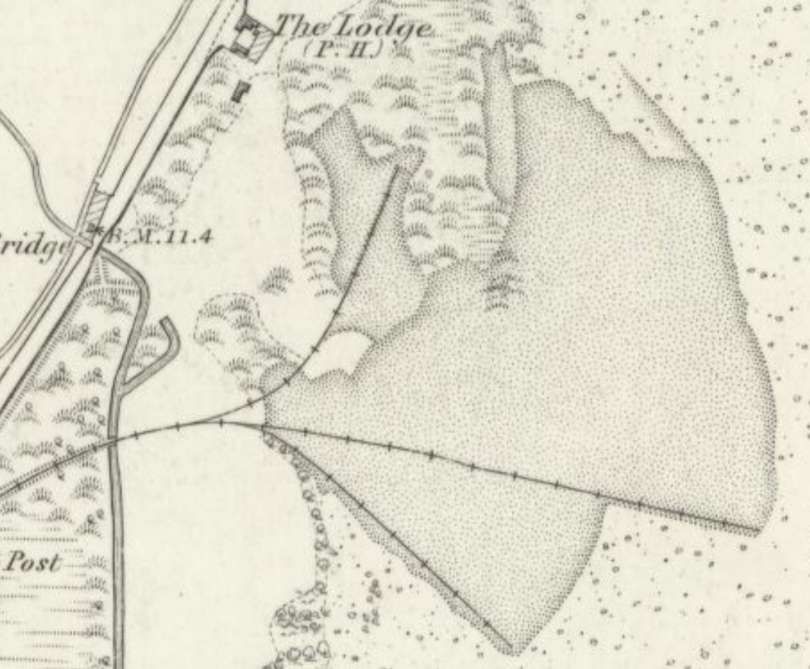
In 1875/76 this 6″ Ordnance Survey, published in 1879 shows the gravel pits which were the end of the line at that time. Crumbles Bridge can be seen just to the North of centre-left of the extract. [25]
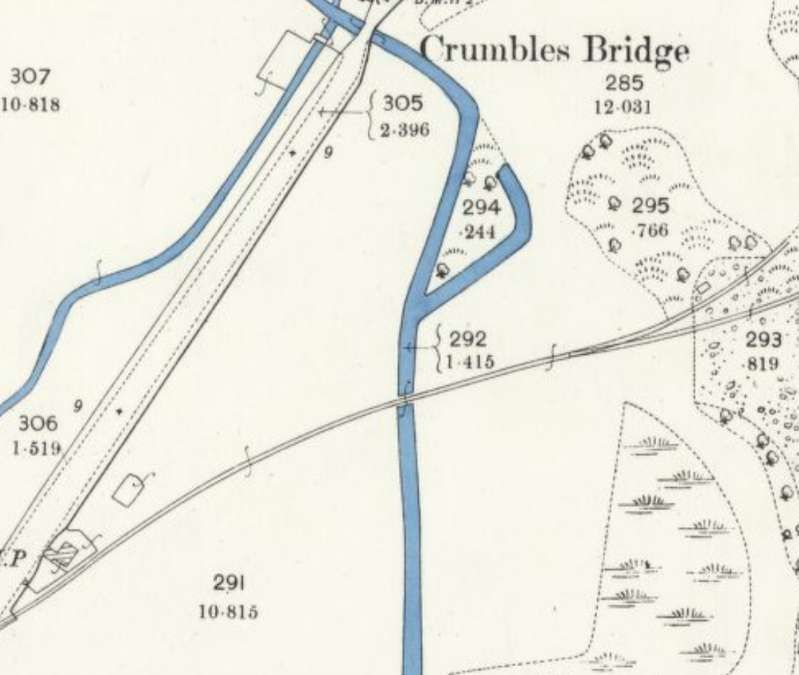
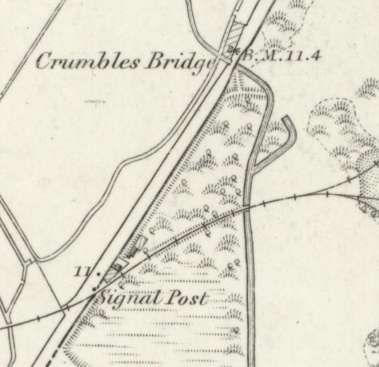
The level crossing and Crumbles Bridge. [25]
Crumbles Bridge was built between 1823 and 1827 to serve the local turnpike road network connecting Eastbourne and Hailsham. It crossed a low-lying drainage channel. The bridge was reconstructed in 1969 as the local road infrastructure changed. The surrounding shingle and marsh landscape has since been heavily redeveloped into residential areas and the Sovereign Harbour marina.
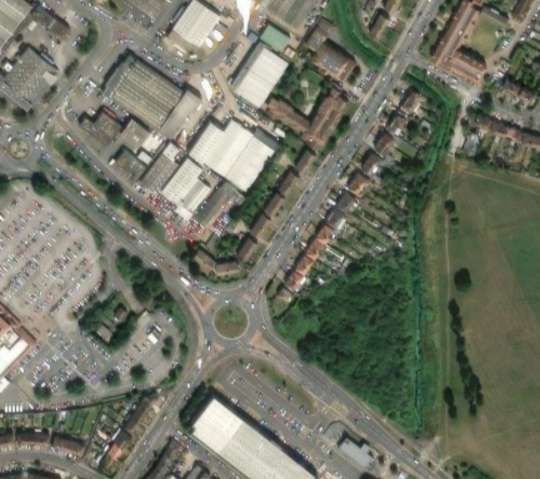
The same area as shown on the map extract immediately above. The location of the level crossing is just to the Southwest of the roundabout. The drainage channel continues to follow its original course with the more modern bridge sitting at the same location as the old Crumbles Bridge. [37]
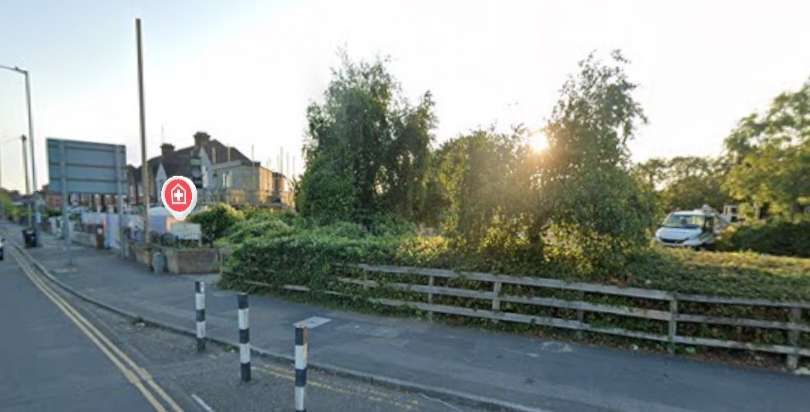
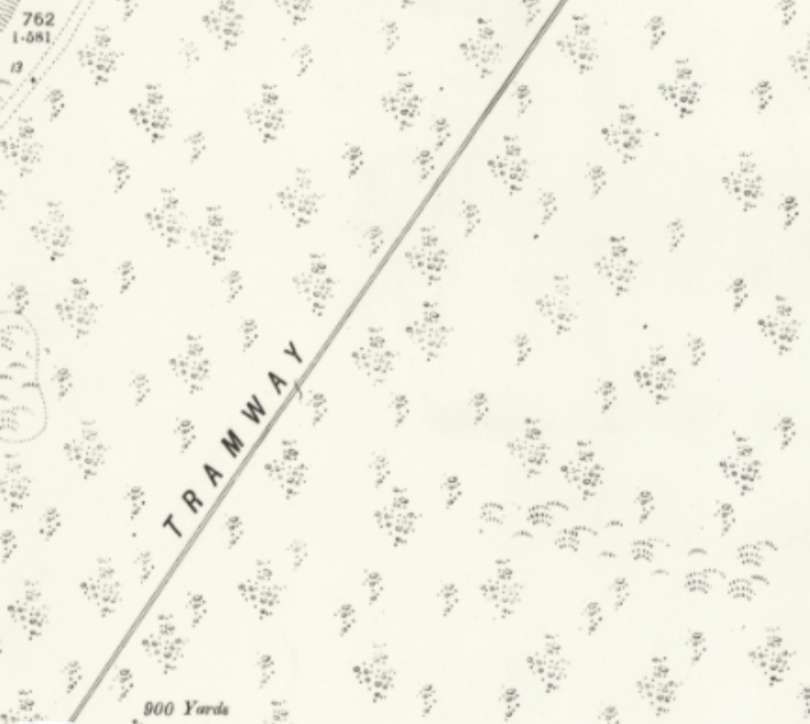
Looking Southwest along the line of the Crumbles Branch from the location of the old level-crossing on Seaside. [Google Streetview, August 2024]Looking Northeast along the line of the Crumbles Branch from the location of the old level-crossing on Seaside. The line ran towards the poplar trees on the horizon. [Google Streetview, August 2024]The same location as on the extract from the 1875/76 6″ Ordnance Survey as it appears on railmaponline.com. [24] The turquoise line which appears here may represent a part of a 2ft-gauge network of tramways owned by Hall & Co. Hall & Co. tramways were transient, moving with the area being worked for shingle. [31]
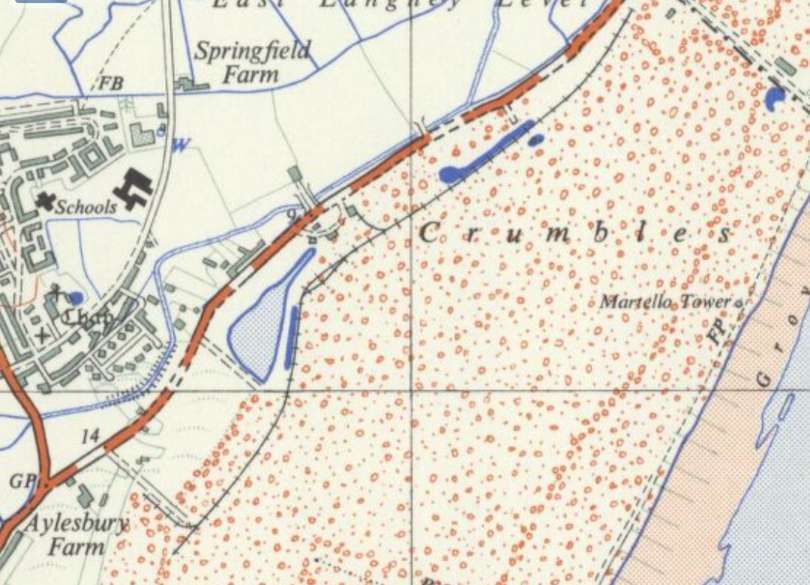
Hall & Co. 2ft-gauge tramway as it was in 1959, this extract is taken from the 1:25,000 Ordnance Survey. [32]
The Crumbles Branch line was extended beyond that shown on the 1875/76 6″ Ordnance Survey above, to access further gravel reserves to the Northeast.
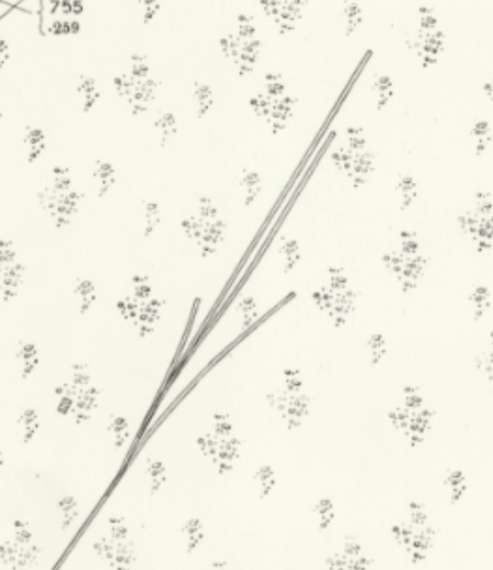
The line curve towards the Northeast and passed the end of a tramway which ran through the rifle ranges. [26]
The military association with the Crumbles began in the early 19th century with the construction of defensive Martello Towers to ward off Napoleonic invasion. By the late 1800s and early 1900s, this desolate, wide-open shingle plain was deemed the perfect location for a military live-firing range.
The main range featured firing points stretching up to 600 yards. Marksmen and local cadet groups (such as the Eastbourne College Cadet Corps) would lie on the dirt to fire live ammunition from .303 Lee-Enfield rifles at large targets. The targets were managed by soldiers or cadets stationed “in the butts”—a protected, sunken trench directly beneath the targets. Their dangerous job was to pull the massive frames up and down via ropes, patch up the bullet holes, and signal the scores back to the firing line.
A red warning flag was flown whenever firing was live, and any stray bullets flew harmlessly out over the English Channel. The ranges remained active through both World Wars for troop training and continued operating well into the 1960s. The range finally closed in the late 1960s, and the area was later completely reshaped to build the Sovereign Harbour marina complex.
The electric tramway of the mid-20th century is covered in a separate article which can be found here. [30]
The line continued out across the shingle bank. [26][27]The line continued further Northeast. [27]
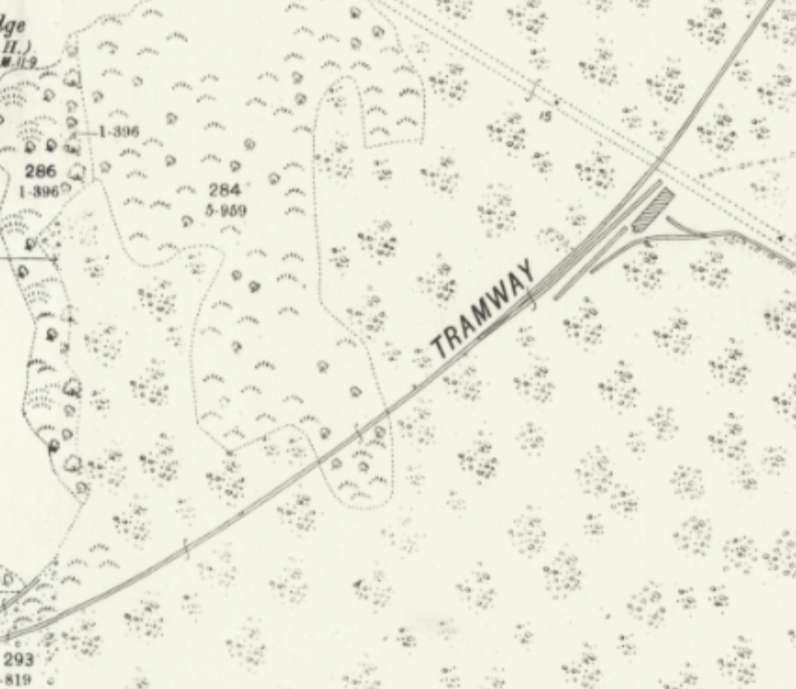
The end of the line in 1898/99. [27]
Railmaponline.com shows a somewhat greater extent of the various lines which served the shingle quarries/workings at this location. These extensions supported the workings until their closure in the 1930s. [24]
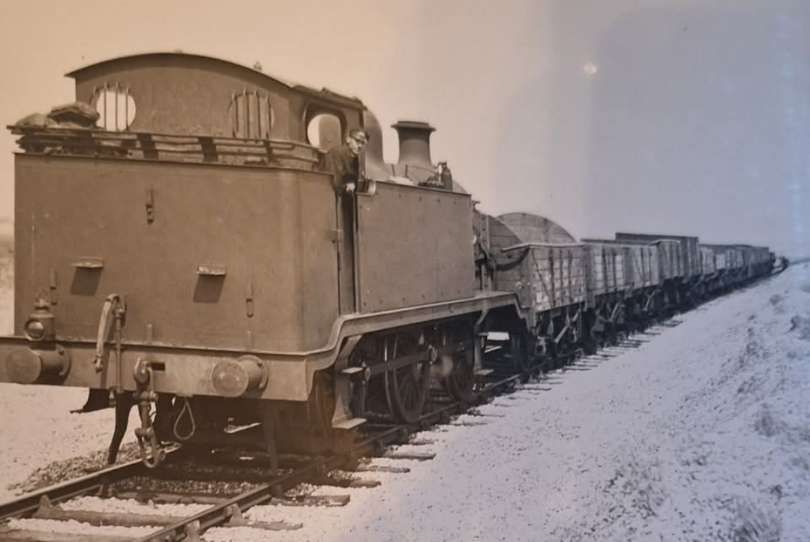
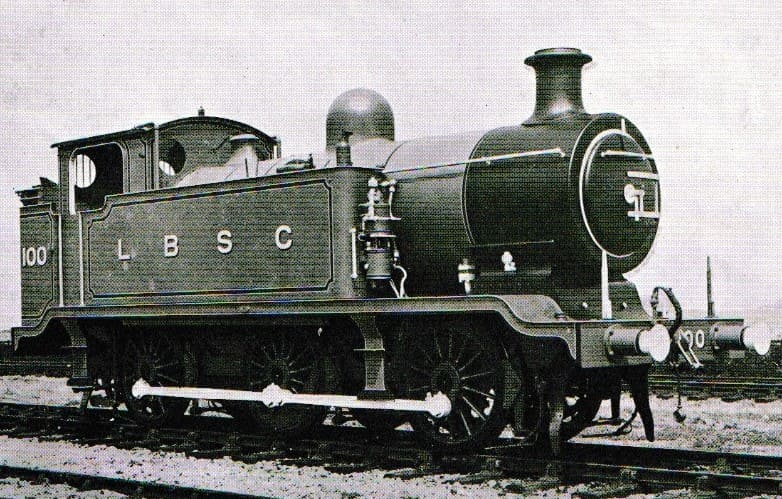
This is the extent of the line as it appears on the 25″Ordnance Survey of 1908, published in 1909. [28]This is the extent of the line as it appears on the 25″Ordnance Survey of 1925. [29]E2 Tank No. 100 at the Ballast Pit in the 1920s. This image was shared by Robert Ian on the Disused Railways of Sussex Facebook Group on 15th January 2025. [35]
We have noted in the narrative above the 2ft-gauge Hall & Co. Tramway which was horse and cable-worked. [31][32][34] There were other transient tramways laid on the Crumbles, these were associated with the local brickworks. Just inland of the open shingle beach (approaching St. Anthony’s Hill and the Langney boundary), the 1898 OS maps catch the footprint of Eastbourne’s late-Victorian building boom. Local clay pits and brickfields (such as those that eventually became the South Eastern Brick and Terra Cotta Works) utilized small, lightweight clay tramways to transfer raw materials from excavation pits to the kilns. [33]
References
Vic Mitchell & Keith Smith; Brighton to Eastbourne; Middleton Press, 1985.
Vic Mitchell & Keith Smith; Eastbourne to Hastings; Middleton Press, 1986.
The Hall & Co. Narrow-Gauge Tramway was, unlike the main LB&SCR railway branch that took deep shingle out for mainline railway ballast, a localized system dedicated to commercial shingle and gravel extraction. Track was moved dynamically over the years across the Crumbles to reach active digging pits. It was cable-worked and horse-drawn in its earliest iterations. It fed local concrete product works and smaller commercial loading docks rather than servicing the LB&SCR’s need for ballast. See also the OS Map @ reference [32]
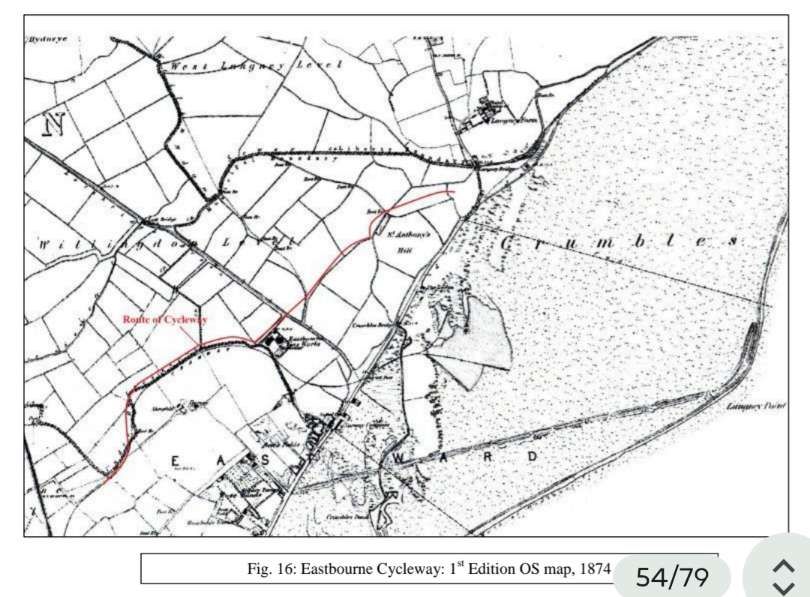
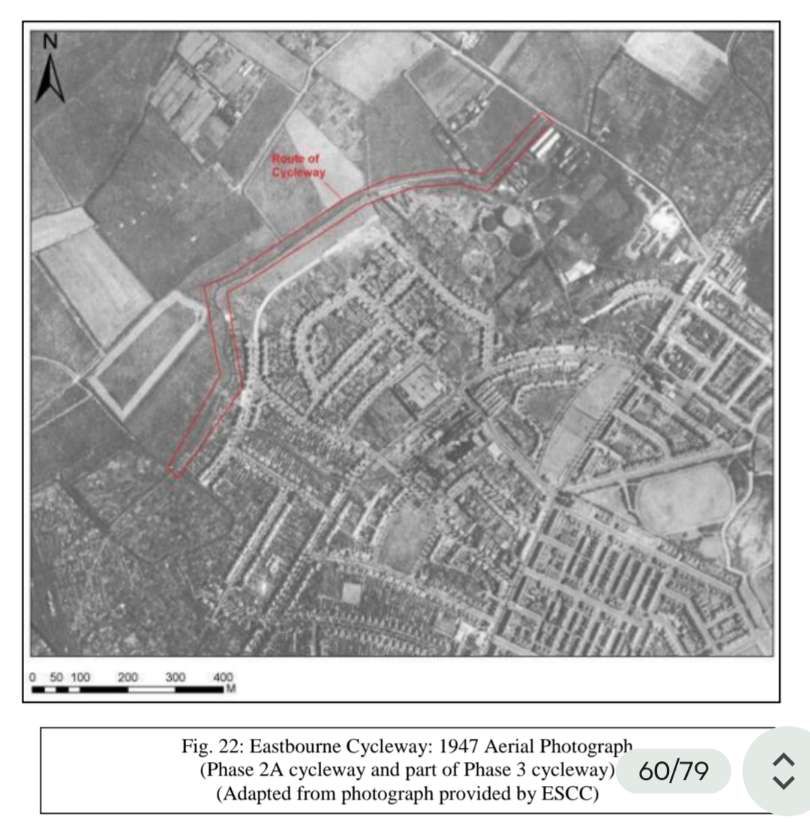
This image is taken from a report written by C. Butler & C Russell; Desk-based Assessment for the Sovereign Harbour Cycle Network Phases 2 and 3, (Ringwood Road to St Anthony’s Hill Roundabout) Eastbourne, East Sussex (updated from the original Desk-based Assessment for Phase 2A); Chris Butler MIfA, Archaeological Services Ltd., 2012; via: https://archaeologydataservice.ac.uk/archiveDS/archiveDownload?t=arch-969-1/dissemination/pdf/chrisbut1-398965_1.pdf, accessed on 1st September 2026.
Appendices
Appendix 1
Chris Butler and Dr Caroline Russell
Desk-based Assessment for the Sovereign Harbour Cycle Network Phases 2 and 3, (Ringwood Road to St Anthony’s Hill Roundabout) Eastbourne, East Sussex (updated from the original Desk-based Assessment for Phase 2A)
Chris Butler MIfA, Archaeological Services Ltd – Project No. CBAS0176 – October 2012
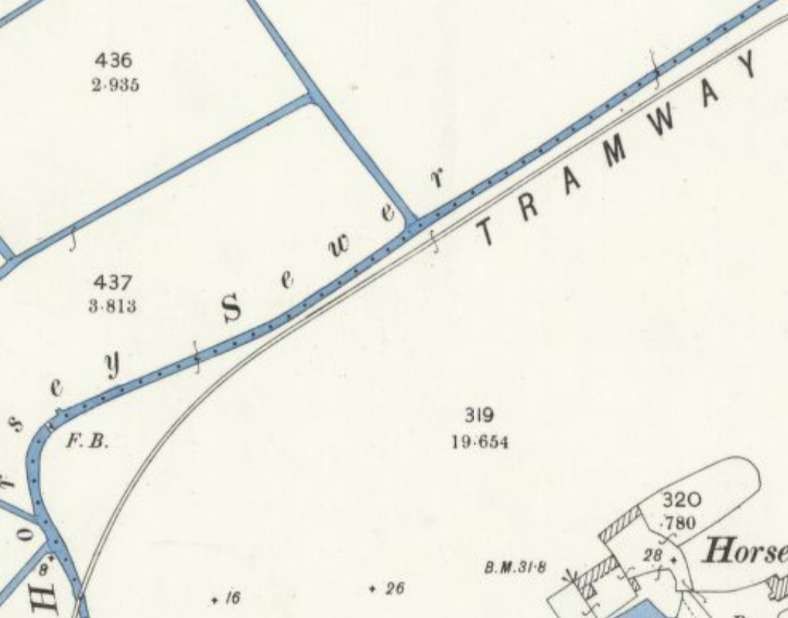
4.9.11 …The 1st Edition OS map of 1874 (Fig. 16) shows significant changes to have taken place to the landscape surrounding the Phase 2 cycleway route. Although the Horsey Sewer is shown within a field system that broadly reflects that seen on the early maps, a tramway now runs along its length. It crosses the sewer at three places, to run past the Eastbourne Gas Works and on to the Crumbles, with a single track branching off into the gasworks. To the immediate southeast is Horsey Farm, and then further southeast are ‘Rose Lands’ and a brickfields. [p15]
4.9.12 … The tramway served the beach gravel extraction on the Crumbles, and can be seen on the broader OS map to extend onto the beach before dividing into three separate branches; the gravel pits on the beach are recorded as MES7969-MES7971. In 1857-1862, the London Brighton and South East Railway negotiated with the Duke of Devonshire to purchase not less than 48,000 cubic yards of shingle from the Crumbles, at 1 penny per cubic yard. [48] They constructed a railway close to Eastbourne railway station, which ran through open countryside and along the Horsey Sewer, to turn south to cross the turnpike road (Seaside) near the junction with Lottbridge Drove. The railway was 6.4m wide and ran for 5.6km. It was known as the Ballast Line or the Crumbles Railway, and served the gasworks from 1870 onwards. In 1874, the Crumbles were also used for firing practice (firing ranges MES7961 and MES7962).
4.9.13 The Eastbourne Gas Company was formed in 1852, [49] and was incorporated by an Act of Parliament in 1868, [50] whilst the brickworks was in existence by 1866, and was operated by James Peerless, who leased the land from the Devonshire Estate in 1860. [51]
It continued to operate there until 1899. A smaller brickworks was located at Rose Lands, and was operated from 1860 to the 1880’s by the Eastbourne Brick Co. Ltd. [52]
4.9.14 In contrast, little change had taken place by 1875-1880 along the Phase 3 cycleway route (see Fig. 16 for the 1st Edition OS map). A footpath led through the short droveway, having come through the fields to the northwest. Further northeast along the Phase 3 route, two causeways, each in a different field, gave entry to the same field to the southeast. A drainage channel had been excavated beside the Crumble Sewer, to define a small rectangular plot, possibly a holding pen, directly outside the site boundary. At the north end of this new plot, a footbridge now provided access across the sewer and into the field to the northeast. From here, an adjacent causeway, rather than the previous central causeway, led southeast into the narrow field north of St. Anthony’s Hill. The only building nearby was ‘The Lodge’, a public house on the coast road, south of the hill.
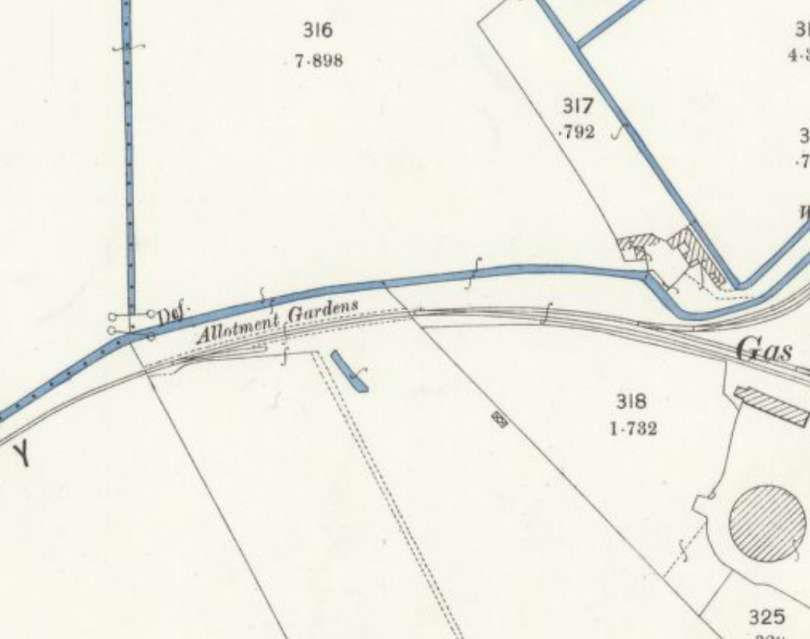
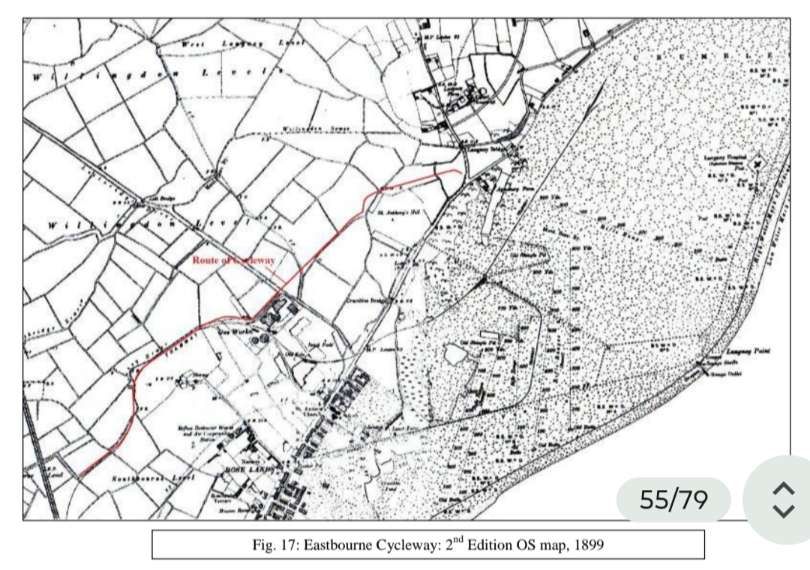
4.9.15 The gasworks had expanded eastwards by the 2nd Edition OS map of 1899 (Fig. 17); ESRO holds a plan of the land intended to be acquired for this expansion, which was drawn in 1879 by H.E. Jones, the Engineer for Eastbourne Gas. [53] The main brickworks had migrated northeast, with allotment gardens having been established along the northern edge of the earlier workings. Rose Lands was a nursery by this time, with a refuse destructor works and air compressing station located on its north side. [p16]
4.9.16 The tramway now had additional sidings serving the gasworks. It continued onto the Crumbles, where it ran to the east, while a branch turned southwest before returning westwards to Seaside on an existing earthwork (MES7968) shown on the 1st Edition OS map. Housing development had expanded northeast along the southeast side of Seaside. The tramway also later served the refuse destructor works and air compressing station, the brickworks and a timber yard.
4.9.17 The Phase 3 cycleway route remained unaltered between 1875-1880 and 1899 (see Fig. 17 for the 2nd Edition OS map). The footbridge had gone. The possible animal pen on St Anthony’s Hill now looks to have been defined by a fence line rather than by ditches, and a second larger such enclosure had been erected in the same former field, on the south side of the hill.
4.9.18 The Martello Towers (MES512 and MES513 / MES7994) on this stretch of coastline all disappeared in the late 19th or early 20th century. Tower 71 was demolished after having been used as target practice for the testing of the new rifled Armstrong Guns in 1860. [54]
Tower 72 had been washed away by the sea sometime prior to 1872, [55] as had West Langney Fort. Tower 70 had likewise been undermined by the sea and was abandoned in 1872 along with Tower 69. Tower 67 was demolished in 1922, whilst Tower 68 was knocked down in c.1925 to make way for residential development (however, see para. 4.9.28).
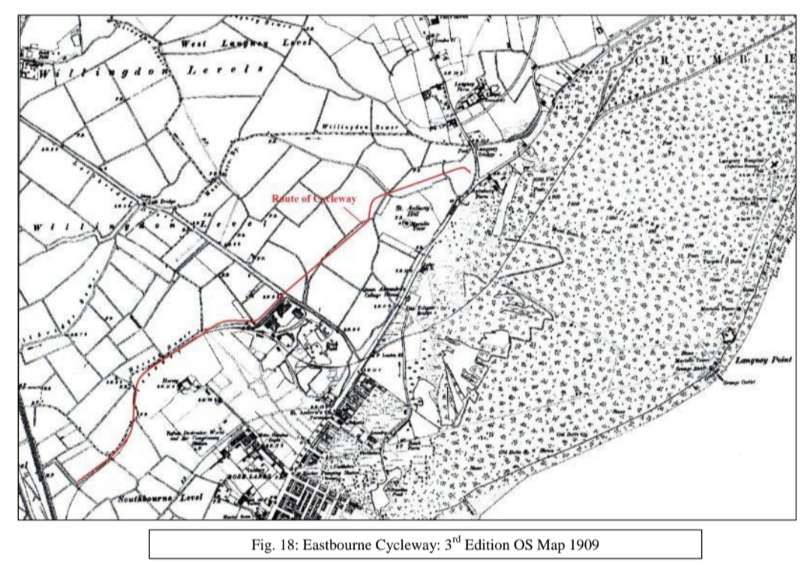
4.9.19 The 3rd Edition OS map of 1909 (Fig. 18) shows little change to the immediate area around the Phase 2 site, although there had been further housing development along Seaside. A long narrow plot of land was now fenced off along one side of a field, to form a passageway presumably for the movement of livestock between two fields, including the narrow field to the east in which the cycleway runs through. The Martello Tower on St. Anthony’s Hill (MES513 / MES7994) is marked on the map, along with its moat and footbridge; its absence from the 1st or 2nd Edition OS map is somewhat odd, although military installations were often omitted from OS maps for security purposes.
4.9.20 During the First World War, a temporary tented camp was set up at Horsey Bank, in the area of the junction of Churchdale Road and Astaire Avenue. [56] The allotment gardens shown on the 2nd and 3rd Edition OS maps (Figs. 17 and 18) were put to good use during these years, although it is recorded that the Eastbourne Gas Company refused a request to plough up land for allotments, but a compulsion order overturned this. [57] [p17]
4.9.21 From December 1911, Eastbourne Aviation Company Ltd had their manufacturing aerodrome (MES7491) at a site directly to the north of Lottbridge Drove. [58]
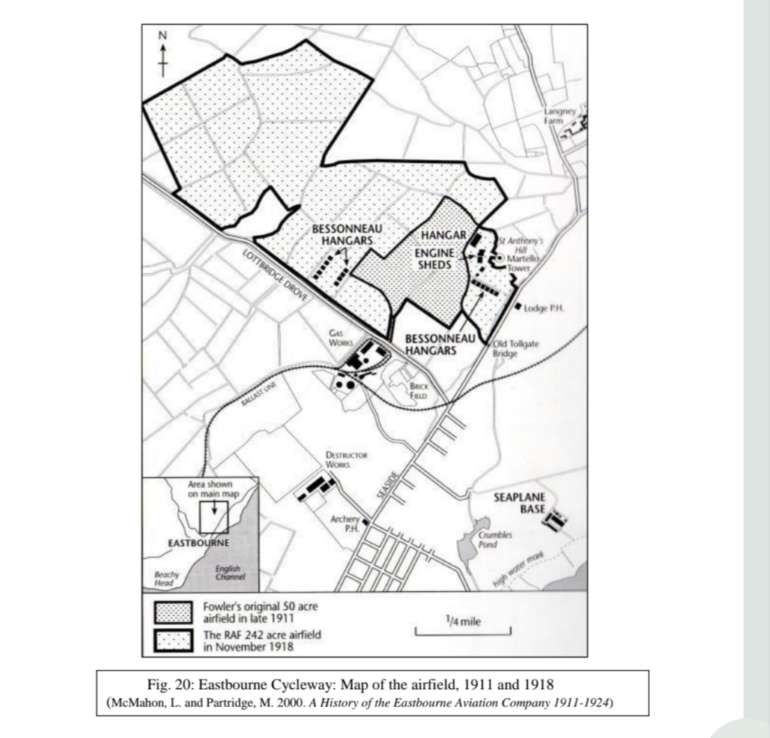
From about this time, this site also became the school aerodrome for the Eastbourne Aviation School and the Fowler Flying School. A map of the airfield [59] (Fig. 20) shows the middle stretch of the Phase 3 cycleway route to have been located within Fowler’s original 50 acre airfield.
4.9.22 In August 1914, the hangars and buildings of the aerodrome were taken over by the Royal Navy Air Service. [60] The aerodrome at St. Anthony’s was a RNAS flying school from April 1915 to April 1918, when it became a training depot station for the RAF until 1919. In November 1918, the RAF airfield comprised 242 acres, having predominantly expanded northwest across the Levels (Fig. 20). Almost the full route of the Phase 3 cycleway now stood within the airfield, except for the last stretch through the two fields at the northeast end. With the exception of one area, the buildings, which included a large hangar (MES7990) and the engine sheds, were built around the Martello Tower (MES513 / MES7994) and therefore outside the site boundary. The 15 Bessoneaux hangars were erected in three rows, with two rows having stood opposite each other to the northwest of what is now Birch Road, and the third row having stood along the south side of what is now Leeds Avenue, directly south of St. Anthony’s Hill. During the Phase 2A watching brief an identity disc was found. It is engraved R.N.A.S. / TURNER / ERNEST / EDWARD / A M / F364/ CCE. Ernest Edward Turner is recorded as having been born in 1894 in Bangalore, India, and entered the RNAS in 1914; [61] it is presumed that he served at St Anthony’s.
4.9.23 The aerodrome was licensed for civilian use again in April 1920 [62] and finally closed in 1925. The only remaining structure of the aerodrome is a guardroom (MES7991) from the RNAS phase of use, which is now a bungalow on Leeds Avenue. The large hangar (MES7990) stood extant nearby until the storm in 1987; its foundations are still visible today.
4.9.24 A site on the Crumbles, in the region of the present day Sovereign Centre, was used by the Eastbourne Aviation Company as a seaplane factory, and also for the refuelling and servicing of patrolling seaplanes. [63] The hangars on the Crumbles were converted to an aircraft factory, and during the war the Eastbourne Aviation Company built a total of 252 aircraft. [p18]
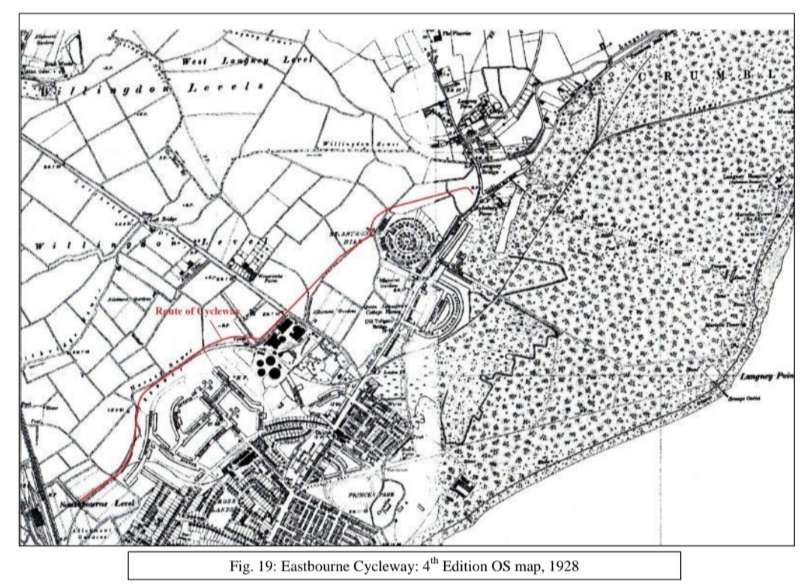
4.9.25 By the 4th Edition OS map of 1928 (Fig. 19), the tramway has developed to include a branch line to the refuse destructor works and air compressing station, and additional sidings at the gasworks. The return route of the tramway to Seaside from the Crumbles had been dismantled by this time. Some ‘tanks’ are shown adjacent to the Horsey Sewer, north of the gasworks and alongside a footbridge. Major housing development had taken place to the southeast of the Phase 2 cycleway route, along the northwest side of Seaside. Eastbourne Corporation had a licence to place a footbridge over the Horsey Sewer in 1926, [64] and had an agreement for works in the Horsey Sewer in 1937. [65]
4.9.26 The decline of the tramway began in 1920 when the ballast used on the railways changed to granite chippings and there was no further requirement for the shingle.
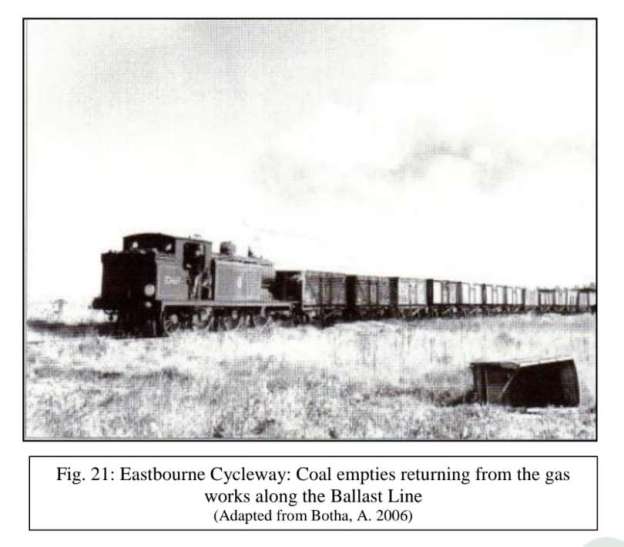
Shingle continued to be taken to the Duke of Devonshire’s depots at Eastbourne Station to be used for building purposes until 1931. [66] The shingle beds at the Crumbles were leased to Hall and Co. [67] who then began to use lorries to move the shingle, stopping rail movements completely in 1932. The tramway continued to serve the gasworks and other industrial sidings, taking thousands of tons of coal to the gasworks (Fig. 21). [68]
4.9.27 The land around the Phase 3 cycleway route looked little different in 1925-1930 from what it had done in 1910 (see Fig. 20 and the 4th Edition OS map of Fig. 19 for a comparison), revealing how easily the land had reverted to pasture after its use as an airfield. A number of buildings from the aerodrome still stood, including the engine sheds as well as the guardroom (MES7991) and large hangar (MES7990). A sluice is shown across the Crumble Sewer, south of the former hangar. A crossing across the sewer was now sited where the footbridge once was; it is the location of a bridge today, although it was not identified as such on this OS map. The crossing led into a small enclosure, once part of a larger enclosure, which linked up with the field to the east.
4.9.28 Residential housing had been built on the east side of St. Anthony’s Hill, and below it along Seaside. Both the inner and outer circular roads of The Circus and Rotunda Road had been laid out around the hill, although neither was specifically named as such at this time. The Circus was built around the in-filled moat of Tower 68, [69] whilst Rotunda Road may have traced the boundary of land first purchased by the government in 1795. The single building at the centre of the housing development, within The Circus, may incorporate the base of the Martello Tower (MES513 / MES7994) in its cellar. [70] Allotment gardens had been planted directly south of St. Anthony’s Hill and beside the Phase 3 cycleway route on Lottbridge Drove. [p19]
4.9.29 During the Second World War the coastline was put into a state of defence with anti-tank cubes, walls and ditches (e.g. MES7997), minefields (e.g. MES8007) andscaffolding located on the beach, and other defences such as pillboxes positioned to the rear (e.g. MES7999, MES8017 and MES8018). [71] Unexploded bombs fell in allotments near Lottbridge Drove on 14th September 1940, while the gasworks was attacked on the 19th October, setting alight the Number Three gasholder. [72] On 12th March 1941, eight bombs were dropped to the south of the Phase 2 site around Churchdale and Southbourne Roads, and on the following night bombs were dropped to the north of the gasworks. On the 26th August 1942, a German FW190 fighter-bomber was shot down and crashed into a ditch beside Lottbridge Drove. Further bombs were dropped on open ground near the gasworks as well as on the Crumbles on 6th June 1943. On considering its location in the Levels, further out of town, no bombs are known to have fallen in the area of the Phase 3 cycleway route. [73]
4.9.30 A 1947 aerial photograph (Fig. 22) shows residential development to have extended almost as far north as the Horsey Sewer. By the early 1960’s (modern OS maps are not reproduced), the housing developments had reached the southern edge of the sewer, and the tramway is still shown. In the locality of the Phase 3 cycleway route, further residential development had occurred on and around St. Anthony’s Hill, and hadexpanded out onto the Crumbles along Wallis Road and around the adjacent crescent.
Between 1947 and 1961, the Horsey Sewer was straightened to the north of the gasworks, cutting off the former droveway onto Lottbridge Drove. Three new causeways had been constructed along the course of the Phase 3 cycleway.
4.9.31 The tramway had gone by the time of the 1975 OS map, as it had finally closed in 1966. [74] The 1975 map also shows the commercial developments at the southeast end of Lottbridge Drove. One or two buildings appear to have stood at the northeast end of the Phase 3 cycleway route, facing onto the road north of the roundabout, which had been built by then; these buildings were demolished by 1992. The commercial developments had extended beyond the Horsey Sewer, along both sides of Lottbridge Drove by the 1981 OS map. This map also shows new housing developments along the north side of the Horsey Sewer. [p20]
Relevant References
48. Botha, A. 2006. The Crumbles Story. Eastbourne: ALB Books
49. Wright, J.C. 1902. Bygone Eastbourne. Spottiswood and Co. Ltd.
50. ESRO amsh/AMS5616/2/70
51. Beswick, M. 2001. Brickmaking in Sussex. Middleton Press.
A quick look at the Ordnance Survey maps of the North coast of Kent from the first half of the 20th century will show a veritable cat’s cradle of standard-gauge and narrow-gauge industrial railways. A similar survey of the Medway valley at the same period in the 20th century will show just how many individual Cement Works and other industries once existed there too. This article inevitably will not provide a comprehensive look at all industrial railways in the area.
The Oakwood Press produced two editions (1973, 1990) of a survey of these cement works. The second edition was an enlarged version of the first edition. Page references are to page numbers in the second edition.
The authors divide the various Cement works into three different geographical areas:
The Thames Estuary (working West to East)
The Medway Estuary
The Lower Medway
Part 1 – The Thames Estuary
This article looks at a number of the industrial sites on the southern banks of the River Thames Estuary. Industry along the River Medway will be covered in a future article or articles, as will industries in and around Chatham and to the East of Cliffe, Highamand Chatham.
It must also be noted that the details included in this article are much expanded on and probably also corrected in Robin Waywell’s book, ‘Industrial Railways and Locomotives of Kent‘ which came into my possession after this article had been completed. [61]
Before looking at the works described by Stoyel & Kidner and others, it is worth at least a glance at Erith situated further West along the River Thames. …
J. Parish & Co. Ltd
J. Parish & Co. was a historical industrial firm based in Erith, Kent, best known for operating the local Erith Loam Quarries and Ballast Wharf on Fraser Road. Established in the early 19th century (around 1805), the company supplied specialized moulding sands, silica sands, and high-quality natural loams to the British foundry and metal-casting industries.
It ran deep loam and sand pits off Fraser Road in Erith, utilizing industrial (4ft 0in) narrow-gauge locomotives to move ballast and sand. Its products (often marketed as the “Erith Range of Sands”) were widely utilized across UK metal foundries for core-making and casting. [8][9]
Hatherill & Hatherill tell us that, “Around 1800 sailing ships brought coal to London from the north east of England and, in 1805, John Parish started supplying ballast to the returning ships. The sand they supplied was quickly recognised in the north east as a rich loamy sand which was very suitable for foundry work. At first it was loaded from a wharf opposite the site of the first railway station, which was opened in 1849 but, in 1842, a new wharf was built which could, in later years, deal with ships of up to 650 tons.” [10: p11]
Horses handled the traffic at the start as the first locomotive, No. 1, did not arrive until 1864, built by Gilles, Wilson & Co., Works No. 185. It was an 0-4-0T with 6 inch cylinders. [10: p11]
Records show two further locomotives in use by Parish. These were: No. 2, an 0-4-0ST, built in 1881 by R. & W. Hawthorn, Works No. 1864 with 10″ cylinders; and No IV, another 0-4-0ST built in 1903 by Hawthorn, Leslie & Co., Works No.2565, with 12″ cylinders. These two locomotives served the quarries for decades, although only No. IV survived until the advent of road-motor vehicle haulage at the Works in 1957. [4, photo No. 75][10: p11]
Parish No. 3 was utilised for a steam excavator built by Grafton of Bedford which was used to remove the overburden from the underlying loam. [10: p11]
This 6″ Ordnance Survey map extract from the early 20th century shows Parish’s rail network connecting the Loam and Ballast Pits (bottom-left) with the Wharf on the River Thames (top-right). West Street can be seen running parallel to the River Bank with just some relatively narrow buildings in between. [11]The same area in the 21st century. [12]
West Street level-crossing allowed both Parish’s narrow-gauge line and Frazer & Chalmers’ standard-gauge line to access the wharves on the river bank.
Hatherill & Hatherill tell us that, “the crossing was also across the Erith Council Tramway system which ran along the road. There was a level crossing with four gates and a crossing cabin from which the gates were worked. When a train came down from the quarries a ship’s bell on the corner of the cabin was rung and the gates were wound across the road. When, in 1957, the railway was replaced by a fleet of lorries, Parish’s continued to use their level crossing. When the gates were closed across the road lorries went past along the route of the railway. As they were travelling along a private right of way they did not need to be licensed!” [10: p13]
West Street Level-crossing as shown on the early 29th century 6″ Ordnance Survey mapping provided by the NLS. The council’s tramway does not appear on this extract. [11]
Over the 20th century, as industrial quarrying scaled down and local demands shifted, parts of their former quarry properties and surrounding land transitioned into residential and factory developments.
Stone Court Chalk, Land & Pier Co. Ltd
The Stone Court Chalk, Land & Pier Co. Ltd. was a 19th- and 20th-century mineral extraction and industrial company based in Stone, Kent, operating roughly from 1885 until the mid-20th century. It supplied raw Upper Chalk (Seaford Chalk Formation) to nearby cement plants, including works at Greenhithe, Albion, and the Kent Cement Works. These cement works are covered in detail below.
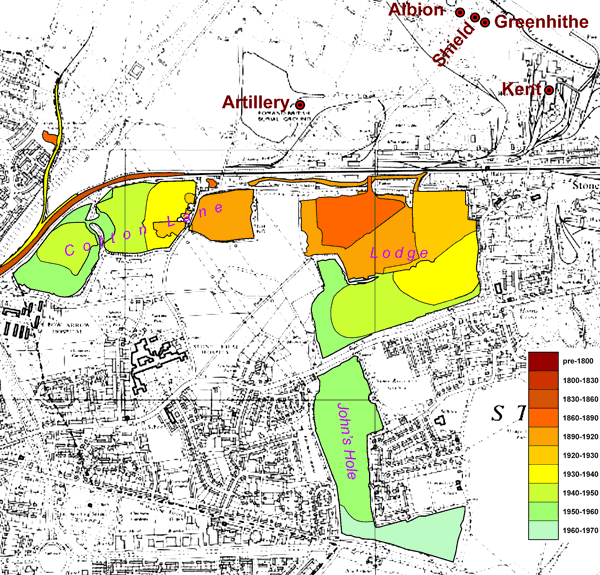
Dylan Moore tells us that “A chalk pit was already in existence at Stone Court Lodge in 1827. The Stone Court estate began shipping chalk from their wharf in 1864. In 1873, the Stone Court Chalk Quarries Company extended the wharf to deep water, and commenced shipping ballast, while looking for cement companies that might use their chalk. In 1879 the Williams Fry and Co. Ltd Albion plant was set up to the west of the wharf, and in 1880, Wilders & Cary’s Shield plant was set up to the east. In 1885 the company was re-launched as the Stone Court Land & Pier Co. Ltd. The Gillingham Portland Cement Co. Ltd set up the Greenhithe plant to the east of Shield in 1889, and in 1890 Rosher & East set up the Artillery plant inland between the quarries and the wharf. By this time, supply to the cement plants was the bulk of its trade, and chalk ceased to be shipped after 1894.” [44]
Dylan Moore provides maps of the various Chalk Pits in North Kent and the Stone Court Land & Pier Co. Ltd map shows two main quarry complexes: [44]
Lodge Quarry south of Elizabeth Street, including Johnson’s Hole – these workings were abandoned completely by 1964; and
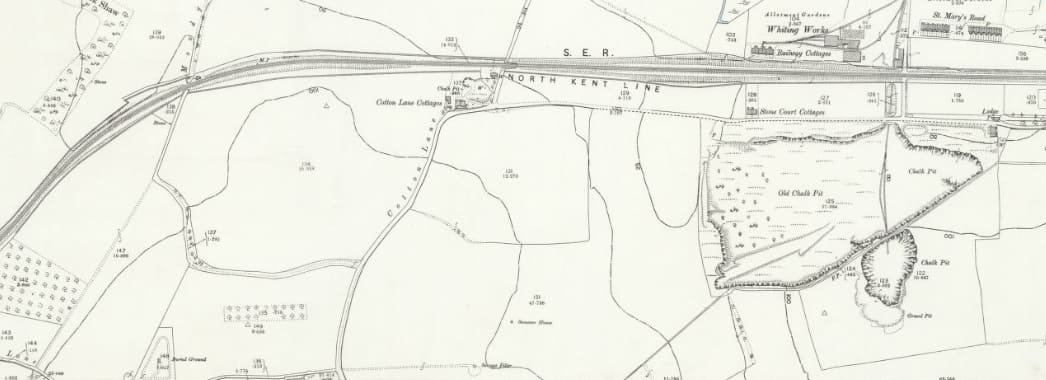
A set of pits to the west on either side of Cotton Lane and to the South of the North Kent railway line – these pits were worked out by 1956.
These two map extracts show the areas eventually exploited by the Stone Court Chalk, Land & Pier Co. Ltd. Both show the area to the South of the North Kent main line.
The first extract is from the 6″ Ordnance Survey of 1895, Lodge Quarry was being expoited at this date. It’s workings would eventually extend South of London Road into what became known as Johnson’s Hole. [45]
Dylan Moore’s map showing the extent of the two quarry areas can be found here. [47]
The area of the Cotton Lane Chalk Pits as it appears on the 25″ 1895 Ordnance Survey published in 1897. At this time only the Lodge Quarry Works are being exploited. The Cotton Lane Pits would sit either side of the lane. which can be seen at the third point in this extract. [46]
British Industrial Callender’s Cables Ltd (BICC Ltd).
BICC Ltd. used a 3ft 6in gauge railway at their cable works at Belvedere, near Erith. The steam locomotives were converted to run on oil fuel.The line was in use by 1900 when the first locomotive arrived. The railway’s purpose was “was to bring pig lead and other materials from their wharf on the River Thames at Belvedere into the works and to move drums of finished cable around the works and yard. From the wharf, cable was exported all over the world.
BICC purchased three new Bagnall 0-4-0ST locomotives: [4: photos No. 91, 92 & 93]
Mighty Atom – built in 1900 by Bagnall, Works No. 1630, had 6″ cylinders
Woto – built in 1924 by Bagnall, Works No. 2133, had 7″ cylinders. Photos 91 and 92 show this locomotive.
Sir Tom – built in 1925 by Bagnall, Works No. 2135, also had 7″ cylinders. Photo No. 93 shows this locomotive which cost £1127 when new.
After the purchase of ‘Mighty Atom’ a second-hand Hunslet 0-4-0ST was purchased and a new 0-4-0ST from the Yorkshire Engine Co. before the last two Bagnalls were bought. [10: p13]
“Both Woto and Sir Tom worked until 1968 when the railway closed, having outlasted by several years … two Ruston diesels! The former were acquired for preservation and are now [1984] stored in Romford.” [4: photo No. 93]
The two Rushton & Hornsby diesel locomotives had been purchased in 1934. [10: p13]
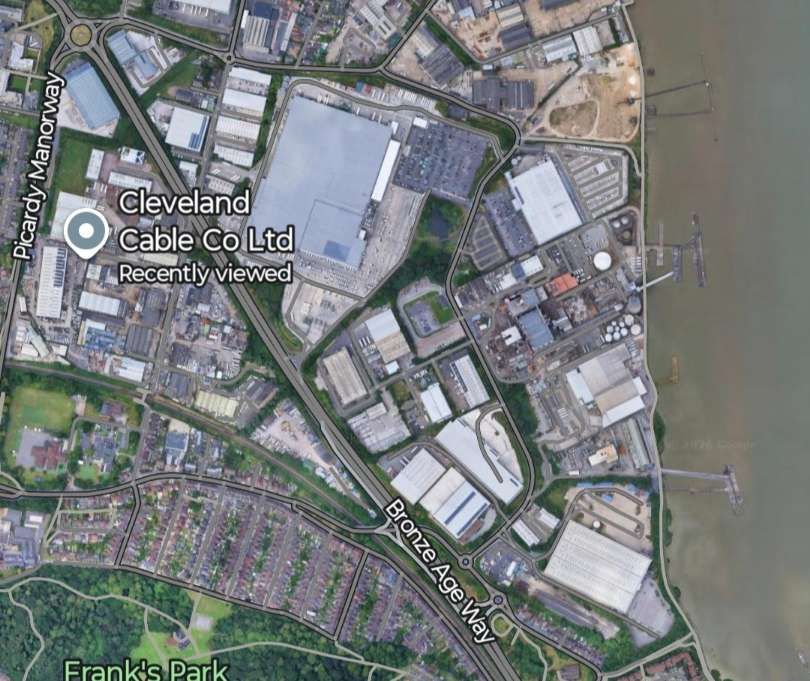
This extract from the 6″ Ordnance Survey of 1931, published 1934 shows BICCs Works at Belvedere. [14]The same area in the 21st century. [Google Maps, August 2026]
British Oil & Cake Mills (BOCM) Ltd
Was sited close to the BICC Works and had its own standard-gauge rail network which employed a number of steam and diesel locomotives over time.
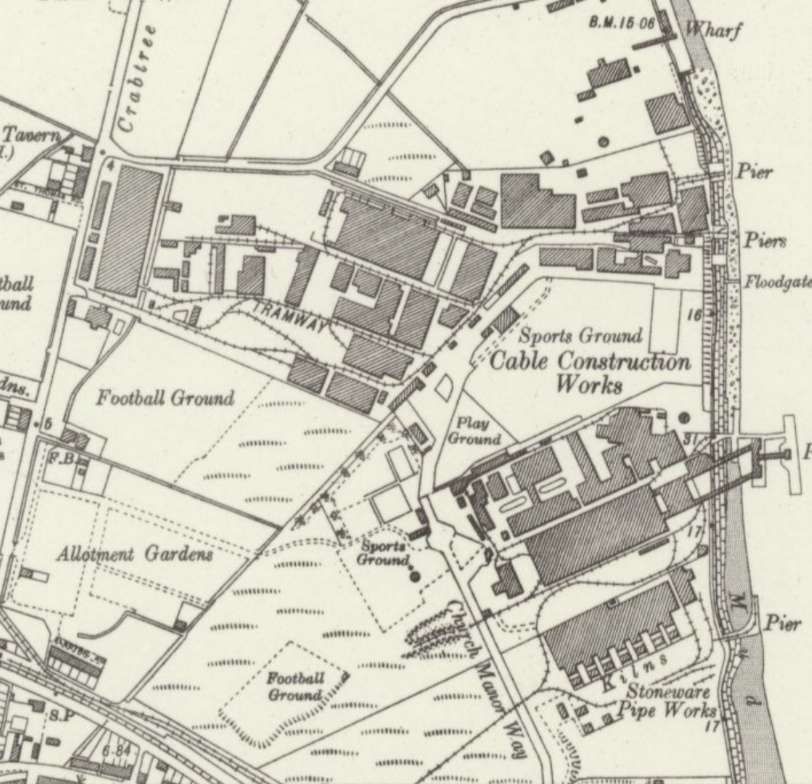
The Crabtree Trust exchange sidings were alongside the North Kent Line between Belvedere and Erith. They were on the down side of the line near the former Crabtree Crossing signal box. They once fed a network of industrial lines serving riverside factories and works along what is now Crabtree Manorway These industrial concerns included the BICC Cable Works, the BOCM site, Hercules Powder Co., Doulton’s Pipe Works and British Gypsum’s Works. By the 1980s, the entire complex was disused, overgrown, and eventually cleared.
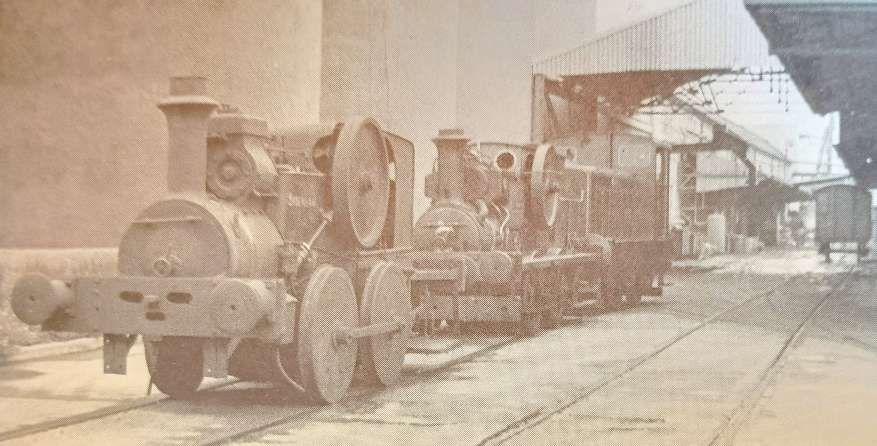
These sidings consisted of three parallel reception sidings operated on behalf of local industry by BOCM. The locomotives shown on the image above would have been found at work in the sidings. [10: p18]
The Crabtree Trust Sidings are shown on these two extracts from the 25″ Ordnance Survey of 1931, published in 1933. [15][16]
Further details about this location can be found here. [17]
British Gypsum (Erith Works)
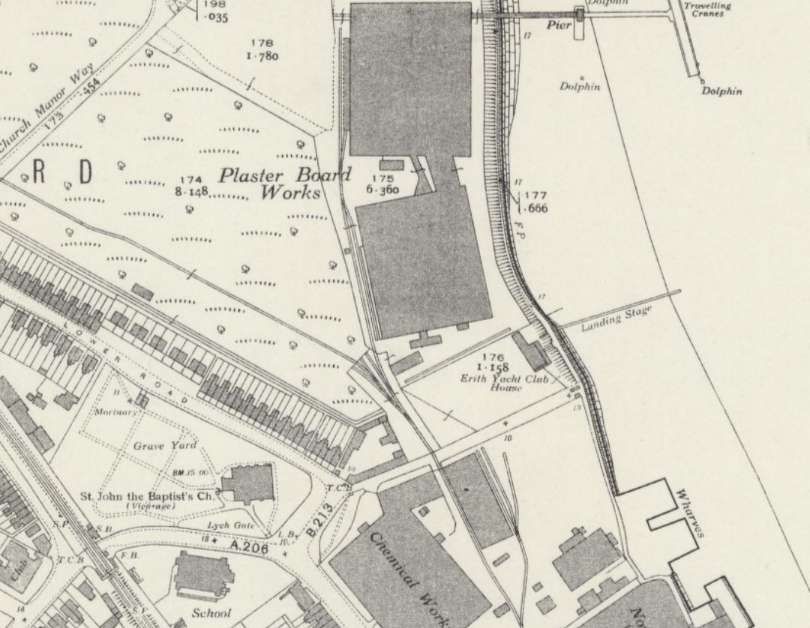
British Plaster Board Ltd. originally opened the waterfront works at Church Manorway, Erith in 1934 to process imported gypsum. Rebranded as British Gypsum in 1964, the historic manufacturing site eventually transitioned into the Saint-Gobain Build Better Academy, operating as its longest-serving training facility for plaster and drywall systems since 1966.
A number of 0-4-0 diesel locomotives were employed at this location at different times, including:
Crabtree – built in 1953 by Ruston & Hornsby, Works No. 338416 (Class 88Ds). [18]
Princess Margaret – built in 1948 by Barclay, Works No. 376. [18][4: photo No. 58]
Possibly also:
Taurus – built in 1951 by Fowler (VF D139, DC 2273)
Prium – built in 1955 by Fowler (VF D293, DC 2566)
The British Plaster Board works which were to become British Gypsum’s Works at Erith. The Crabtree Trust Sidings are off the West side of this 25″ OS map extract from the 1930s. [16]
Dartford Cement Works Ltd. [1: p11]
A short line ran from a wharf on Dartford Creek to a small works which opened in around 1891 and South to a pit close to the North Kent main line. Stoyel & Kidner indicate that the line was horse-worked and closed in 1911.
Artillery & Albion Cement Co. Ltd. [1: p11]
This was a 19th/early-20th century cement manufacturer located at Stone Court (Stone Marshes). Its operations combined chalk quarried by the Stone Court company and Medway clay, shipping goods via Stone Court pier before eventually being absorbed into a larger cartel operation. Stoyel & Kidner tell us that both Artillery & Albion were adjacent works which were absorbed into the British Portland Cement Manufacturers (BPCM) in 1910 but probably closed by 1913.
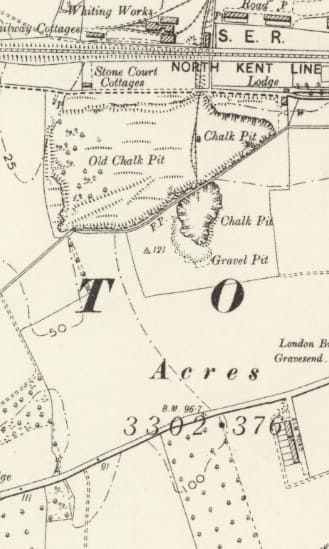
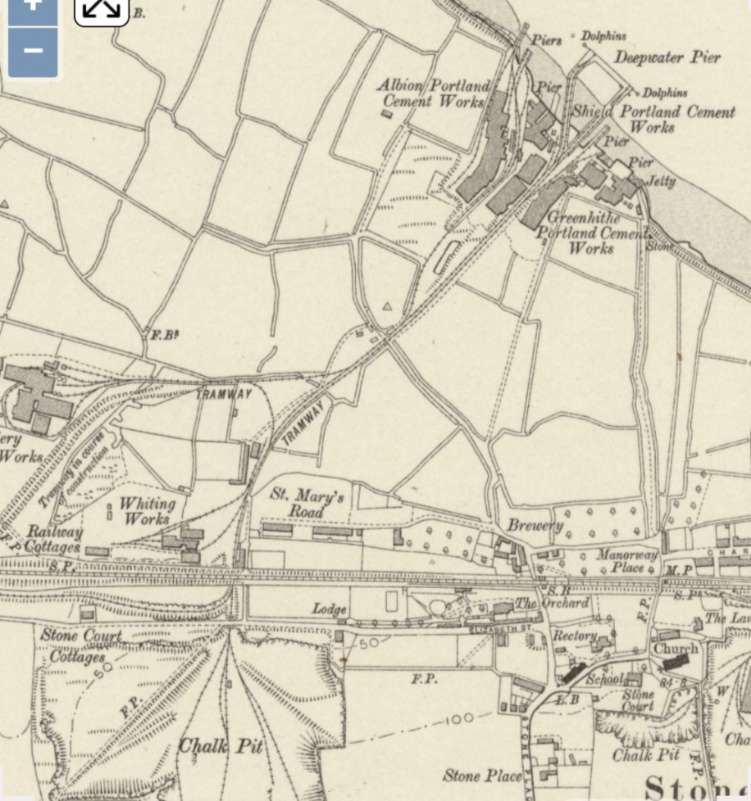
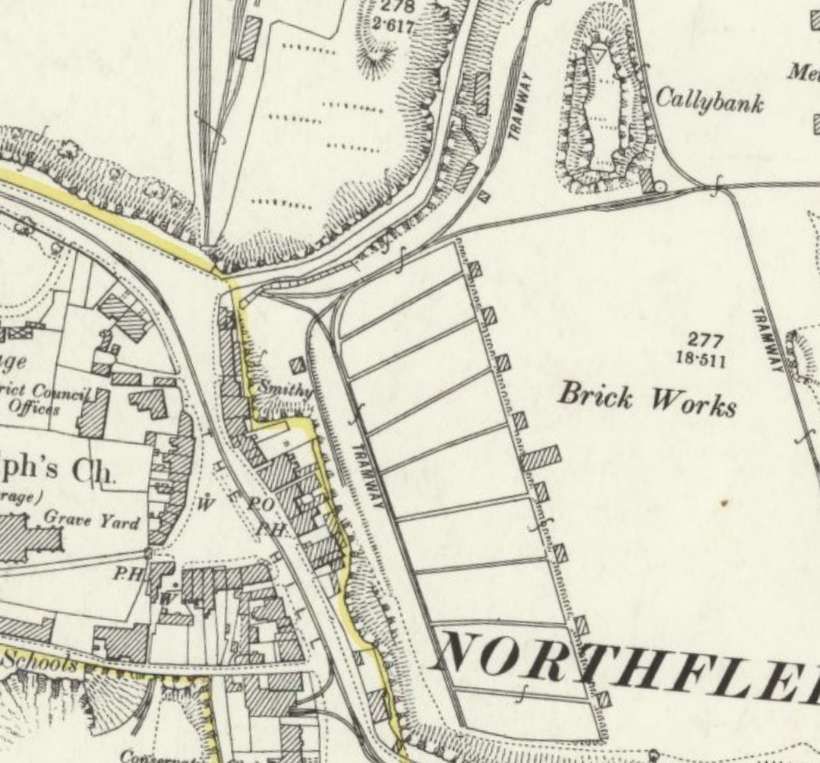
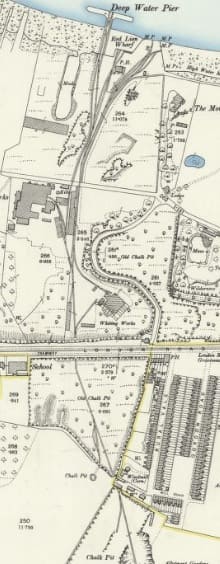
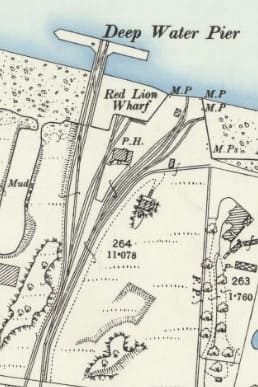
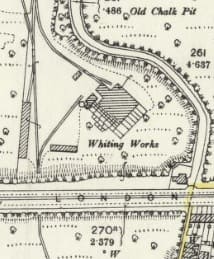
A series of works cluster at the top-right of this 6″ map extract, a tramway/railway runs Southwest to Artillery Works and Whiting Works centre-left and chalk pits to the South of the main line. These are all mentioned below. [3]
Three 0-4-0ST locomotives were associated with Artillery and Albion Works:
Stonecourt – had outside cylinders and was sold in about 1915. Nothing else is known about this locomotive.
Artillery – built in 1896 by Falcon, Works No. 240. It had outside cylinders and was transferred by APCM to Hilton Works at Halling when the works at Stone closed.
Albion – built in 1901 by Peckett, Works No. 915. It also had outside cylinders and was also transferred by APCM to Hilton Works at Halling when the works at Stone closed.
Shield Works, Greenhithe Works. [1: p11]
The Shield Works were only a short distance to the East of the Albion Works. Greenhithe Works were a little further East.
Associated Portland Cement Manufacturers (APCM), took control of Shield Works in 1900. Greenhithe Works was acquired by J.B. White in 1893.
Stone Court Chalk Land & Pier Co. Ltd. [1: p11]
Although not a cement producer, this company was later taken over by APCM. In 1885, this company took over a pier and tramway on Stone March close to the works covered above. Stoyel & Kidner tell us that “All [those works] were served by a railway of standard gauge, which also ran south, under the SER and Cotton Lane, to a chalk pit. Just north of the tunnel under the SER there was a whiting works. In 1908, the branch line to the Artillery Works was extended to an exchange siding with the SER North Kent Line When the Kent Works was built to the east, a cutting was made parallel to the SER and south of it, with a connection to the Stone Court line just north of Cotton Lane tunnel, so that material could be worked from the pit to the new works. At about the same time, a further cutting was made south of the SER to enable Stone Court trains to run to new pits to the west. Since this line had to tunnel under Cotton Lane twice and also under Moody’s Lane, at great depth, there were in effect three pits in line. Some chalk from here went to Kent Works; however the layout at Cotton Lane tunnel was such that these trains had to run into the whiting works, reverse into the pit, and then reverse out again to hand the train over to a Kent Works engine. Some time before the last War this was altered so that trains could run straight through. However, a company called the Atlas Stone Company had established itself by 1928 at the bottom of the original pit, being served by Stone Court trains with materials. In 1935, Stone Court Ballast Co. was working gravel pits near the river shore, using high-sided wagons, unlike the small chalk tippers. Much of this went to Atlas Stone, and in the latter years when a square crossing had been laid at Cotton Lane tunnel, this meant that trains from the gravel pits to Atlas Stone crossed the path of chalk trains from the pits to Kent Works, and it is said that ‘traffic lights’ were installed to control the crossing.” [1: p12]
The Company had ten locomotives all of which had outside cylinders, Stoyel & Kidner list them as:
Adamant – an 0-4-0ST built in 1877 by Manning Wardle, Works No. 649, 8″ x 14″ cylinders and 2′ 8″ wheels.
Bulldog – an 0-4-0ST built in 1860 by Manning Wardle, Works No. 13, 8″ x 14″ cylinders and ???? wheels.
Sundridge – an 0-4-0ST built in ???? by Hughes, Works No. ????, 11″ x ??” cylinders and ???? wheels.
James Godwin – an 0-4-0ST built in 1870 by Shanks, Works No. ????, 10″ x 20″ cylinders and 3′ 1″ wheels.
Quarrier – an 0-4-0ST built in 1891 by Falcon, Works No. 203, 11″ x 18″ cylinders and 3′ 0″ wheels.
Longreach – an 0-4-0ST built in 1896 by Falcon, Works No. 236, 11″ x 18″ cylinders and 3′ 0″ wheels.
Flintfield – an 0-4-0ST built in 1898 by Brush, Works No. 277, 12″ x 20″ cylinders and 3′ 0″ wheels.
W.H. Liversidge – an 0-4-0ST built in 1899 by Brush, Works No. 286, 11″ x 18″ cylinders and 3′ 0″ wheels.
Lion – an 0-4-0ST built in 1891 by Falcon, Works No. 205, 11″ x 18″ cylinders and 3′ 0″ wheels.
Iota – an 0-4-0T built in 1892 by Falcon, Works No. 211, 11″ x 18″ cylinders and 3′ 0″ wheels.
Stoyel & Kidner tell us that, “Sundridge, Quarrier, Longreach, Flintfield and W.H. Liver sidge were supplied new. There is some suggestion that Sundridge was a vertical-boilered locomotive which was scrapped just before the turn of the century, but no confirmation has been found for this. Adamant had previously belonged to the Britannia London Portland Cement Co. at Seacombe, Birkenhead. James Godwin was originally built for the Southampton Dock Co. but came to Stone from the London & St Katherine Dock Co. (their No. 16) some time before 1896. Bulldog and Lion came from the APCM’s Tolhurst Works at Northfleet and lota from their Gibb’s Works at West Thurrock in about 1925. lota was a side-tank with dropped footplate and low vertical clearance.” [1: p14]
“Locomotive Adamant was said to have been scrapped in 1918 and Bulldog at an unknown date. Quarrier, Longreach and W.H. Liversidge were scrapped in 1949 after the railway had been abandoned. Flintfield was lent to the APCM Works at Stone in 1947-1948 and was then sold to the Atlas Stone Co. Ltd for use on their adjoining premises. There is some suggestion that James Godwin was sold to a firm at Portland. Lion was transferred in 1946 to the APCM’s Swanscombe Works and was sold in 1948 to the Atlas Stone Co. Ltd. Iota was loaned to Alpha Cement Ltd, West Thurrock, from 1945 until 1946 when it was sold to the BPCM Works at Penarth, in South Wales.” [1: p14]
The company’s chalk operations ceased in 1949, its engines were either scrapped or sold to Atlas stone to serve gravel traffic. The company remained in existence until 1974 when its assets were transferred to APCM.
APCM Ltd Kent Works, Stone, Dartford. [1: p 14]
These works are covered in a separate article which can be found here. [2]
I.C. Johnson & Co. Ltd., Greenhithe. [1: p26-36]
Please see the article dedicated to this Works which can be found here. [5]
John Tilden & Co., Greenhithe. [1: p36]
A short-lived firm which operated in the 1860s out of Lamb Wharf Chalk Works at Greenhithe. When constructed, the enlarged Johnson’s Wharf covered the area of the old Lamb Wharf.
Stoyel & Kidner say that two locomotives were known to have operated at these Works. Both were Aveling & Porter locomotives, supplied new, chain-driven and recorded at work in November 1865:
Works No. 48, built in 1862, one cylinder (probably 8.5″ x 10″)
Works No. 132, built in 1864, one cylinder (9.25″ x 12″)
C. G. Down tells us that a William Tingley sublet some land to John Cubit Gostling who formed the Globe Portland Cement & Whiting Co. Ltd. Gostling was also owner of a Thames-side Cement Works. Later, in 1895, the works was purchased by John Bazely White & Bros. Ltd., owners of the Swanscombe Works on the Thames. Due to the recession in the industry though, the works was not used much subsequently, and was bought by APCM on 24th August 1900. [6]
Stoyel & Kidner’s research tells a different story. They say that in 1899 the company became the New Globe Cement Chalk & Whiting Co. and then moved to a different site further East. It then became part of BPCM. [1: p37]
It seems as though there is some uncertainty over what happened beyond those dates. It appears to be clear that the site of the Works was closed by the 1920s with the wharf being used for oil storage.
Stoyel & Kidner record five locomotives being used at the site: [1: p37]
Globe (?) – 0-4-0WTG built by Aveling & Paorter
Globe No. 2 – 0-4-0T built in 1897 by Kerr Stuart, Works No. 124.
Globe No. 3 – 0-4-0ST built in 1901 by Peckett, Works No. 925.
Globe No. 4 – 0-4-0ST built in 1902 by Peckett, Works No. 967.
New Globe – 0-4-0ST built in 1901 by Peckett, Works No. 889.
The Aveling & Porter locomotive came second-hand, the others were purchased new. It is unclear what happened to the Aveling & Porter. Globe No. 2 may have seen service in France from 1916. Globe and Globe No. 2 may have been transferred to the APCM Works at Grays, Essex. [1: p37]
Though the Works closed in the 1920s, three of the locomotives were seen standing derelict at the site in 1929. Subsequently they were transferred to other Works: Globe No. 3 to BPCM, Greenhithe; Globe No. 4 to APCM, Northfleet (becoming No.5); and New Globe to BPCM, Greenhithe. [1: p37]
J.B. White & Bros Ltd., Swanscombe. [1: p38-49]
These works are covered in a separate article which can be found here. [7]
Operated by the Associated Portland Cement Manufacturers (APCM) Ltd, the Alkerden Clay Pits in Swanscombe, Kent, opened in 1909 to supply London clay for local cement works like Bevans and Kent. The clay was slurried on-site and pumped to main washmills. The Clay Pits closed in 1943.
A 2ft 8.5in narrow-gauge line served the Clay Pits. The railway gauge may have been dictated by the availability of locomotives, rolling stock and track panels from the Northfleet Works of Knight, Bevan & Sturge which operated on the same gauge. But, the Northfleet Works were not converted to standard-gauge until around 1926.
The pits sat between Watling Street and Alkerden Manor Farm near Swanscombe Wood. But were not deep level excavations, rather they spread over a relatively large area which led to the narrow-gauge rail network wandering over quite a large area and to the need to carry the railway over the line of the A2 on a long girder viaduct.
Stoyel & Kidner indicate that eight locomotives were used on this network of lines: [1: p51]
Swift – 0-4-0TV, built by Knight, Bevan & Sturge (?)
Rapid – 0-4-0TV, built by Knight Bevan & Sturge (?)
Alert – 0-4-0TV, built by Knight Bevan & Sturge (?)
Clinker – 0-4-0ST, built in 1917 by Bagnall, Works No. 2068, outside cylinders (8″ x 12″) with 2′ 0.5″ wheels.
Meteor – 0-4-0ST, built in 1893 by Black Hawthorn, Works No. 1085, outside cylinders (8.5″ x 16″) with 2′ 6″ wheels.
Planet – 0-4-0ST, built in 1902 by Hudswell Clarke, Works No. 631, outside cylinders (8.5″ x 16″) with 2′ 6″ wheels.
Comet – 0-4-0ST, built in 1921 by Hawthorn Leslie, Works No. 3506, outside cylinders (8.5″ x 16″) with 2′ 6″ wheels.
Rocket – 0-4-0ST, built in 1930 by Hawthorn Leslie, Works No. 3788, outside cylinders (8.5″ x 16″) with 2′ 6″ wheels.
Stoyel & Kidner tells us, “Very little is known about the three vertical boiler locomotives, all of which had been scrapped by 1931. … The Bagnall was obtained from C.J. Wills, Grimsby probably in 1921 when it was converted from 2ft 6 in. gauge. … Meteor, Planet and Comet were transferred in 1928 from Bevan’s Works, Northfleet. Planet was ordered from Chapman & Furneaux and carried their works plates (No. 1215, 1902) but this was the period when the firm was in difficulties, leading to its acquisition by Hawthorn, Leslie & Co. Ltd, and evidently the order was sub-contracted to Hudswell Clarke & Co. Ltd. Rocket was delivered new to the Alkerden pits. Clinker had gone by March 1943 and the remaining four, which were basically of the same design, were scrapped during 1943. The railway was superseded at about that time. Whites obtained clay from Cliffe from 1937.” [1: 51]
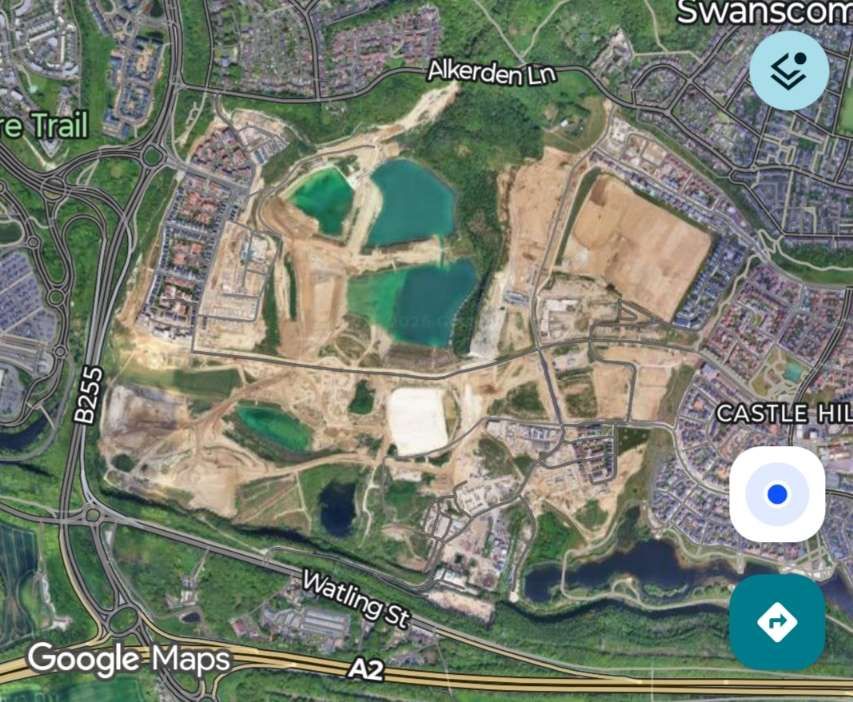
The area of Alkerden Clay Pits in the 21st century. The area to the West of the B255 is now occupied by Bluewater Shopping Centre. [Google Maps, August 2026]
These three concerns clustered together on the Northwest side of Robin’s Creek.
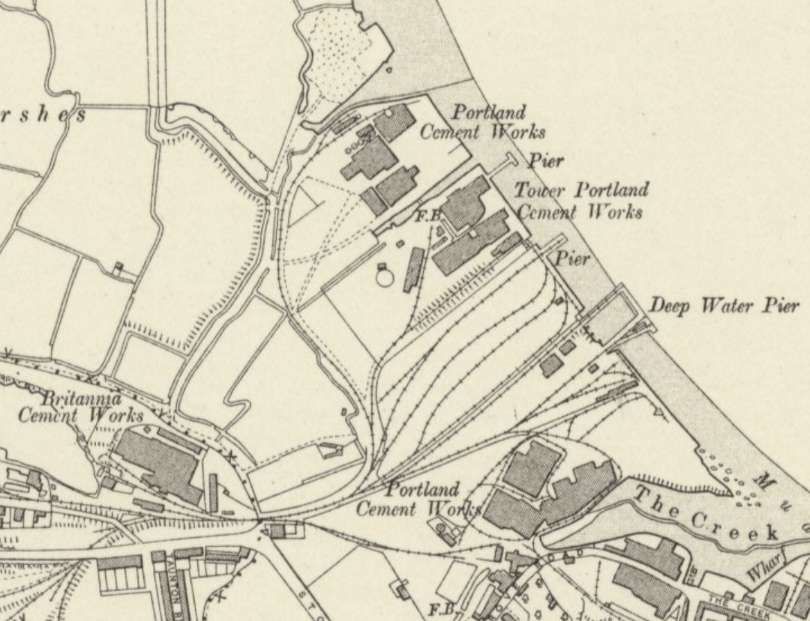
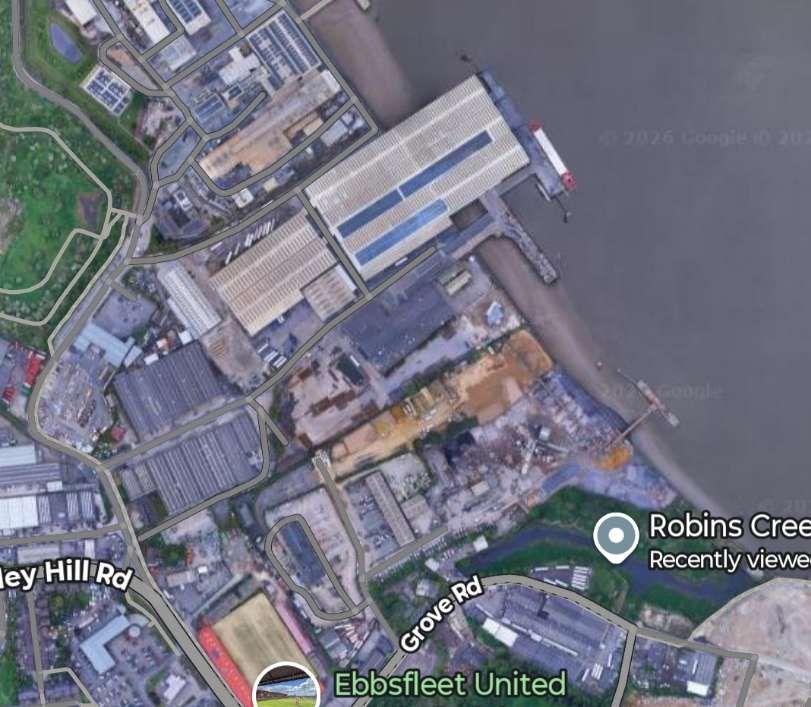
The three Cement Works, highlighted above, all appear in this map extract. Robin’s Creek is the Creek shown in the bottom-right corner of the extract. Northfleet Paper Mills was rail served as well. It sat just to the West of the Britannia Cement Works and just off the left edge of this extract. A line serving the Paper Mills can be seen leaving the left edge of this extract a little to the North of London Road. [33]A similar area in the 21st century. The whole area has been redeveloped and even the major roads have been realigned and renamed. [Google Maps, August 2026]
Stoyel & Kidner say that all the Works were originally supplied with chalk from pits close to the Works but when that option was exhausted land across London Road was exploited. Northfleet Coal & Ballast Co. Ltd. held the wharf on the Thames and handled the transport for all of the companies. The first of those pits were only just the other side of London Road, in fact, just off the bottom corner of the map extract above. [1: p51]
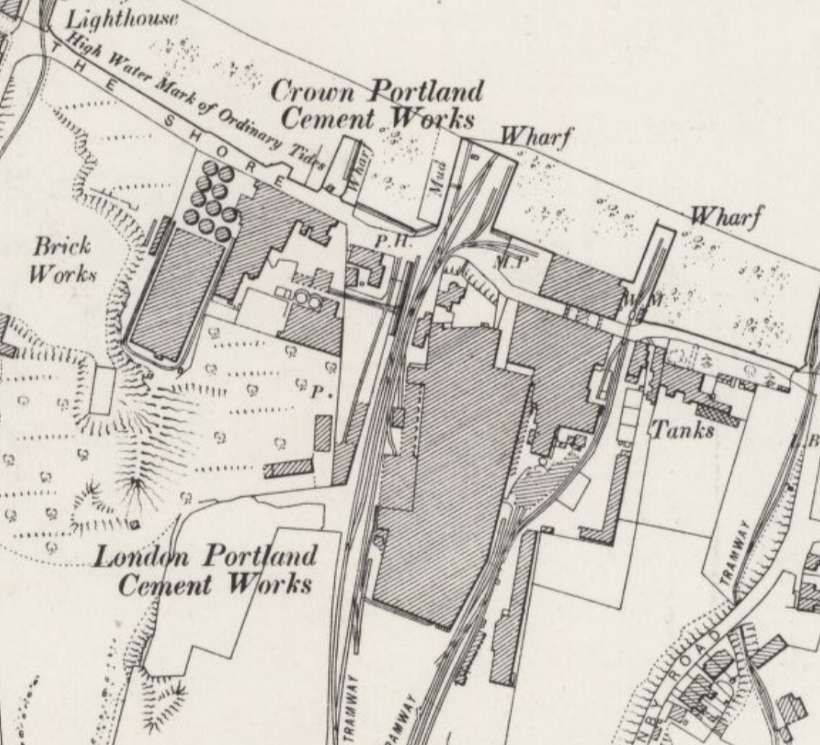
London Road is at the top of this next extract, the tramway from the cement works and the river wharf enters the extract at the top-right. It passes under London Road. The branch leaving the extract on the right runs parallel to the North Kent line on a 1 in 40 gradient to a transhipment point in the sidings at Northfleet Railway Station , the remaining lines serve the chalk pits, one of which tunnels under the main line railway. [33]
On the right side of this extract an engine house sits next to a tramway that served other concerns to the East.
Stoyel & Kidner note that the 1 in 40 gradient between the Works and Chalk Pits and the railway station sidings required double-heading for trains as short as 4 or 5 wagons. [1: p52]
The Northfleet quarries were worked out by 1920 and sold in 1921. [1: p52]
Stoyel & Kidner express surprise at the size of the locomotive fleet that served this series of concerns. They mention that there were two or three different owning companies, but provide a single list of the locomotives used:
Peveril – possibly built in the 1840s at the Edge Hill works of the Grand Junction Railway – purchased second-hand from E. W. Goodenough, Northfleet. Scrapped circa. 1900. [1: p53,54]
Fly – an 0-4-0ST probably built in 1864 by Manning Wardle, Works No. 111 – it had outside cylinders. If correct, this locomotive was sent on test to Ryde Pier Tramway on the Isle of Wight in 1864. Appears to have disappeared in 1919! [1: p53,54]
Fox – an 0-4-0ST built in 1871 by Henry Hughes and purchased new – it had outside cylinders (11″ x 18″), the wheel size is not given. Scrapped in 1930. [1: p53,54]
Loughborough – an 0-4-0ST built in ???? by Henry Hughes and purchased new – it had outside cylinders (9″ x 15″), the wheel size is not given. Transferred to West Thurrock circa. 1913. [1: p53,54]
Northfleet – an 0-4-0ST built in ???? by Henry Hughes and purchased new – it had outside cylinders (11″ x 18″), the wheel size is not given. Transferred to West Thurrock circa. 1902/1903.
Kilmarnock – an 0-4-0ST built in 1886 by Barclay, Works No. 282 and purchased new – it had outside cylinders (11″ x 18″) and 3′ 3″ wheels. Transferred to West Thurrock circa. 1913.
Swanscombe – an 0-4-0ST built in 1891 by Barclay, Works No. 699 and purchased new – it had outside cylinders (11″ x 18″) and 3′ 5″ wheels. Transferred to West Thurrock circa. 1913 (later entered preservation at Quainton Road).
W. H. Davies – an 0-4-0ST built in 1899 by Brush, Works No. 282 and purchased new – it had outside cylinders (??” x ??”) the wheel size is not given. Scrapped in 1957.
Torpedo – an 0-4-0ST built in 1886 by Peckett, Works No. 449, purchased second-hand in 1920 from A. R. Adams, Newport, Monmouthshire – it had outside cylinders (10″ x 14″) and 2′ 6″ wheels. This locomotive was previously used in the construction of GWR Wootton Bassett to Patchway line. Scrapped in 1930.
Denis – an 0-6-0ST built in 1902 by Manning Wardle, Works No. 1561, was purchased second-hand from G. Shellabear, Park Royal – it had inside cylinders (12″ x 17″) and 3′ 0″ wheels. It had been used by D. Shanks (contractor) with whom it carried the name of Coronation. Scrapped circa. 1945.
Dolphin – another 0-6-0ST built in 1879 by Manning Wardle, Works No. 725, was purchased in 1925 from the Southern Railway at Folkestone Harbour (No. A752), previously it had been rebuilt at the SE&CR’s Ashford Works in 1911 – it had inside cylinders (12″ x 17″) and 3′ 0″ wheels. Scrapped circa. 1945.
Bradley – an 0-4-0ST built in 1950 by Peckett, Works No. 1938 and purchased new – it had outside cylinders (12″ x 20″) and 3′ 0.5″ wheels. Scrapped circa. 1945.
Victory – an 0-4-0ST built in ???? by Dick & Stevenson Works No. ???, was another second-hand locomotive which came on loan from the Ministry of Supply in 1942 (their No. P234) it had outside cylinders (14″ x ??”) and the wheel size is not given. Prior to coming to Northfleet, it served at MoD Kinnerley. It only remained in Kent until 1943 before moving on to an unknown destination in Yorkshire. [1: p53,54]
Northfleet – another 0-4-0ST built in 1946 by Peckett, Works No. 2080 and purchased new – it had outside cylinders (12″ x 20″) and 3′ 0.5″ wheels. Scrapped in 1967.
The New Northfleet Cement Works
This new Works was not constructed until the end of the 1960s and became operational in the 1970s. It was predominantly built on brownfield land which included the sites of: Bevan’s Cement Works (Northfleet); the Crown Portland Cement Plant; and the London Portland Cement Plant.
This plant and the associated sidings is covered in another article about which can be found here. [33]
These Works are covered in a separate article which can be found here. [34]
London Portland Cement Co. Ltd., Northfleet [1: p62] and Crown Portland Cement Co. Ltd., Northfleet. [1: p62]
London Portland Cement Works were opened in 1868 just to the East of the Bevan Cement Works. There was a short tramway to pits north of the High Street. In 1900 these Works became part of APCM but were closed in 1908.his was one of the constituents of the APCM on the formation of the latter in 1900, but it soon became redundant and was closed in 1908, by which time the tramway had been extended through a tunnel under Granby Road to pits and a brickworks at Calleybank. Stoyel & Kidner state that “Latterly the system seems to have been integrated with that of the Crown Portland Cement Works lying just north-west. When the line serving Bevan’s Works was opened in 1929 to the exchange sidings on the ex-LC&DR near Rosherville, it used part of this old line including the tunnel under Granby Road, as well as part of the route of another earlier tramway which ran from a point just north of the crossing of the LC&D over the SER, via a whiting works and a white lead works, to Red Lion Wharf.” [1: p62]
More details of these Works can be found here [37] and here. [38]
Stoyel & Kidner note two standard gauge locomotives that they are sure were employed in conveying chalk to the works:
These two extracts from different 25″ Ordnance Survey sheets show the full extent of the lines associated with these two works before the turn of the 20th century. [35][36]
Locomotives
Vulcan built by Falcon in 1884, no more is known about this locomotive.
Unnamed – An 0-4-0ST built in 1877 by Manning Wardle, Works No. 651. It had outside cylinders (9″ x 14″) and 2′ 9″ wheels.
Of these two locomotives Stoyel & Kidner say that, “It is probable that Vulcan was supplied new but the Manning Wardle had originally seen service with the contractor William Moss in constructing the line between Peterborough and Seaton for the Midland Railway, at which time it carried the name Stafford. Its ultimate fate is unknown, but the boiler of Vulcan exploded in 1895 and it is likely that it was then scrapped.” [1: p62]
Red Lion Chalk & Whiting Co. Ltd., Northfleet. [1: p63] and Tolhurst & Sons Ltd., Gravesend. [1: p63]
Dylan Moore tells us that the Red Lion Wharf “was named after the local pub long before the Tolhursts arrived. Tolhurst’s initial business, from 1891, was export of chalk, and cement manufacture did not begin before 1896. There were initially 14 chamber kilns (output 406 tons/week) expanded to 19 around 1901 and to 38 (output 1100 tons/week) in 1907. In 1909, … After 1911 the plant was amalgamated with the Imperial plant. The rating in 1920 was 1000 tons/week. The remaining plant was described in the APCM 1924 schedule. There was no rail link, and all product was despatched by barge. After closure, the site remained derelict for many years before absorption into the Northfleet power station, now also cleared.” [39]
This indistinct extract from the 25″ 1895 Ordnance Survey, published in 1897, shows the Red Lion Wharf, the British White Lead Works, the Red Lion Chalk & Whiting Co. Ltd., and the associated chalk pits. The tunnel under London Road is just below the centre of the image. [36]
The Wharf and associated rails. [36]The Whiting Works and the tunnel under London Road. [36]
The Red Lion Cement Works in 1907 – 25″ Ordnance Survey of 1907, published in 1909. The Imperial Cement Works are on the left. [41]
Details of the locomotives used on the internal industrial railway serving this and the Imperial Works can be found under the Imperial Cement Works below.
Stoyel & Kidner tell us that, a tramway was laid in “about 1860 from Red Lion Wharf, Northfleet, to some limekilns near London Road, east of Woodfield Lodge: by 1870 a tunnel had been built under London Road and the tramway was exploiting the chalk land between there and Old London Road.” [1: p63]
Early ownership of the tramway is uncertain, but “in 1896 Tolhurst & Sons Ltd registered the Red Lion Chalk & Whiting Co. Ltd to take over his line, engines, works, etc. The railway was pushed further south-east and linked to the London Chatham & Dover Railway at Perry Street Siding. In 1898 land was sold for the erection of the Imperial Cement Co. Ltd mills, which by agreement had to take its chalk from Tolhurst. This was built partly on land formerly owned by a white lead works. All these works were serviced by Tolhurst’s standard gauge railway. The Red Lion Works was taken over by APCM in 1908 and closed in 1919; however part of the railway was used a few years later for a new entry to Bevans Works. The Imperial Works joined APCM in 1900 and closed in 1908, leading to litigation over the chalk agreement with Tolhurst which did not expire until 1948, ” [1: p63]
Imperial Cement Works
Stoyel & Kidner inform us that Tolhurst sold land “for the erection of the Imperial Cement Co. Ltd mills, which by agreement had to take its chalk from Tolhurst. This was built partly on land formerly owned by a white lead works. All these works were serviced by Tolhurst’s standard gauge railway.” [1: p63] It is clear that the Imperial Works were beholden to Tolhurst for their supply of chalk which Tolhurst’s rail network and locomotive provided first to the Imperial Cement Works and later to APCM/BPCM.
Dylan Moore tells us that there “were initially nine chamber kilns, output 205 t/week. A further 25 kilns were installed in the period 1899-1907 in 4 sets: two sets of 5 each of capacity 150 tons/week, 9 (260 tons/week) and 6 (175 tons/week), giving a final capacity of 940 tons/week. There was no rail link, and all product was despatched by barge. The plant’s operations were amalgamated with those of Red Lion from 1912, and re-assigned to APCM. The plant was described in detail in the APCM 1924 schedule. The kilns were demolished in 1923, and the site remained derelict for many years before absorption into the Northfleet power station, now also cleared.” [40]
Locomotivesused across the Red Lion, Tolhurst and Imperial sites
Bulldog – an 0-4-0ST built in 1860 by Manning Wardle, Works No. 13. It had outside cylinders (8″ x 14″). Its wheel size is not quoted. By 1871 this locomotive was in the ownership of j. Durden of Northfleet. It went to Stone Court Chalk, Land & Pier Co. Ltd.
Wolf – an 0-4-0ST built in 1890 by Falcon, Works No. 120. It had outside cylinders (??” x ??”). No wheel size is quoted, was transferred to Swanscombe Works.
Lion – another 0-4-0ST built in 1891 by Falcon, Works No. 205. It had outside cylinders (11″ x 18″) and 3′ 0″ wheels. It went to Stone Court Chalk, Land & Pier Co. Ltd.
Leopard – another 0-4-0ST built in 1896 by Falcon, Works No. 239. It had outside cylinders (11″ x 18″) and 3′ 0″ wheels. It was transferred to Crown & Quarry Works, Frindsbury.
Elephant – an 0-4-0ST Brush (Flacon/Henry Hughes), Works No. 287, built in 1899, it had outside cylinders (10′ x 18″) and 3′ 0″ wheels. After service at Tolhurst Works the locomotive was transferred to Kent Cement Works, Stone.
Stoyel & Kidner also tells us that Tolhurst “had an extensive railway serving its Gravesend works, of 3ft 6 in. gauge, laid down in the 1860s or before; it ran from a wharf between Rosherville Pier and Clifton Marine almost as far as what was later West Street. There were three kilns at various points on the system. It was not extended very much, but when the LCDR arrived in 1886 it had to build four bridges near West Street station over branches of the tramway. The site of the works and quarries was later used by the Imperial Paper Mills. One locomotive was said to have been named Diamond and to have been sold to the Imperial Paper Mills in 1948.” [1: p63]
The site of Tolhurst’s Works at Gravesend as it appears on the 6″ Ordnance Survey of 1895, published 1897. [42]The same site as it is shown on the 25″ Ordnance Survey of the same date. [43]
This site later became home to the Imperial Paper Mills in 1911. The Imperial Paper Mills are covered further below.
The Empire Paper Mills site and railway network as shown on the 6″ Ordnance Survey of 1938 to 1940, published in 1950. The line leaving this extract in the bottom left connected to the North Kent mainline to the East of Greenhithe Railway Station. The line leaving the extract bottom-right connected to the company’s paper store which sat alongside the A226. [21]
The Empire Paper Mills were owned by the Associated Press (later part of the Reed Paper Group network) as Empire Paper Mills Ltd in 1922. The main line connection to the works was severed in 1965 but the internal network operated until 1990. [23] The plant was sold to Norske Skog in 1991 before its final closure in 1922.
David Glasspool tells us that “From the outset the paper mill possessed a 24-inch gauge electrically-powered endless cable railway. This was double-track, linked the main jetty with the mill’s paper store, and upon it ran a fleet of wagons with removable tops. The latter allowed the tops of the wagons to be lowered into the holds of docked ships, filled with materials, and then hoisted back onto the chassis for onward travel within the mill. A series of sidings spurred off this network so static wagons could take refuge and not block the main tracks between the jetty and store. … A second railway network, again comprising a narrow gauge double-track line, ran from the jetty to the mill. This was elevated upon a steel structure and was dedicated to the transportation of coal from ships to the mill’s boiler house. It used a rake of wagons on an electrically-driven cable system, which took coal from a 100-foot-high unloading tower on the jetty and subsequently dumped this into hoppers. ” [25] Both these small networks ceased operating in the 1920s.
The standard-gauge network on the site hosted a number of different locomotives and rolling stock over time. There were three different standard-gauge locomotive ‘eras’ at the works. The line connecting to the paper store was constructed in the late 1920s. It was the last new length added to a network that was fist used in 1906/1907.
Glasspool tells us that in addition to a series of standard-gauge locomotives, “six rail-mounted steam cranes which ran on the standard gauge tracks … were used on the main jetty to unload materials from ships and could also be found handling goods within the main mill complex.
The three different standard-gauge ‘eras’ were:
A. The fireless era 1906-1971
No. 1 – an 0-4-0F (fireless) locomotive built in 1907(listed as 1906 in some sources) by Orenstein & Koppel, Works No. 2499 me this was one of the first O&K fireless engines imported into Britain. In Reed ownership the locomotive carried the fleet number S/10.
No.2 – also an 0-4-0F locomotive, built in 1917 by Andrew Barclay Sons & Co., Works No. 1561. This locomotive was purchased second-hand from the Royal Ordnance Factories. In Reed ownership the locomotive carried the fleet number S/11.
Andrew Barclay No. 1471 – another 0-4-0F locomotive, originally built in 1916 for Vickers Ltd to work at the National Filling Factory at Morecambe. It was one of three such locomotives supplied by Andrew Barclay to Vickers to work at Morecambe – Works Nos 1471-3 of which 1472 and 1473 have been preserved. 1471 appears to have operated at the Empire Paper Mills later in its life. [26]
Andrew Barclay No. 1471 on site at Empire Paper Mills, Greenhithe in 1968, (c) N. L. Cadge – this low quality image is made available for record/research purposes. [27]
B. Transitional Steam
Nelson – an 0-4-0ST built by Peckett in 1935, Works No. 1880. [4: photo No. 104]. This locomotive was purchased from Aylesford Paper Mill in 1967. Its tenure at Empire Paper Mills was brief. It was scrapped in 1969.
A photograph of this locomotive at Empire Paper Mills can also be seen here. [28]
C. Dieselisation 1968-1971
Diesel traction started to creep onto the scene at Empire Paper Mills in 1968:
No.3 – was a conversion of an Andrew Barclay 0-4-0ST locomotive, Works No. 2167 which was built in 1946. The conversion was undertaken in 1963 and the locomotive arrived at Empire Paper Mills in 1968. It was found to be unreliable and was scrapped in 1971. [29]
Purchase of three further diesel locomotives was to follow:
Paxman – an 0-4-0 diesel-electric built in 1958 by Ruston & Hornsby, ‘200DE’ Class, Works No. 412718 was purchased from a Darwen paper mill in Lancashire in March 1970. The loco was subsequently acquired by the North Downs Steam Railway at Dartford in September 1990, but it has since been scrapped. [23]
Airman – also an 0-4-0 diesel-electric built in 1958 by Ruston & Hornsby, ‘200DE’ Class, Works No. 412716 was purchased from New Northfleet Paper Mills when that works closed in 1971. [29] Although these details are worth further checking as this locomotive appears not to have been based at the New Northfleet Paper Mills. [32]
Batman – another 0-4-0 diesel-electric built in 1958 by Ruston & Hornsby, ‘200DE’ Class, Works No. 412717 was purchased from New Northfleet Paper Mills when that works closed in 1971. [29] David Glasspool suggests that this locomotive was, in fact, a ‘Class 88DS’. [32]
These three Rustons continued to work the yard well into the 1970s after the fireless fleet went. The connection to the North Kent Line was lifted around 1958 and the internal system finally closed with the mill in 1992. [29]
New Northfleet Paper Mills (Bowater’s Thames Mills)
The standard-gauge railway network at the Northfleet/Thames paper mills utilized fireless 0-4-0 steam locomotives and later diesel shunters to prevent fire hazards from sparks near flammable paper products. The most prominent locomotive associated with the site is an Andrew Barclay 0-4-0F fireless engine built in 1925.
David Glasspool tells us that “A pre-war boom in newspaper circulation saw [W. V. Bowater & Sons] purchase, in May 1914, the site of a redundant dockyard, where it proposed establishing its first paper mill for the production of newsprint. The site was previously known as “Northfleet Dockyard”, this having originally been commissioned in 1788 by one Thomas Pitcher. … The outbreak of war in July 1914 stalled Bowater’s plans for a mill at Northfleet and construction work did not commence until 1924. As part of the scheme, a new company by the name of “Bowater’s Paper Mills Limited” was formed in the previous year. ” [31]
Glasspool continues: “the extensive railway system commissioned at Thames Mills, Northfleet, … was linked to the Southern Railway’s branch line to Gravesend West Street by a ¾-mile-long single track, a junction being formed at Rosherville Sidings. The connection with Thames Mills reused a tunnel through the chalk ridge underneath London Road, originally bored for the railway network of the defunct Red Lion Cement Works. In addition to Thames Mills, the single track also linked the Gravesend West Street branch with the London Portland Cement Works. The latter had been commissioned in 1868 under the name “Messrs. J. C. Gostling & Co”, becoming the “London Portland Cement Company” in 1876 after a takeover. The works were situated on a large site just west of Thames Mills, the two being separated by allotment gardens.” [31]
Fireless locomotives were used here as in the other papermills on the Thames estuary.
New Northfleet Paper Mills in 1946 as it appears on the 6″ Ordnance Survey of 1946, published in 1951.The line leaving the map extract in the bottom-right corner linked the site to the Gravesend Branch to the West of Rosherville Halt at Rosherville Sidings. [30]
As already noted, the mills were built on the site of Northfleet Dockyard which covered an area of 18 acres and ran along the southern edge of the Thames for 960-feet. The first ship launched from here in 1789 and the site grew to incorporate seven shipbuilding slips and a dry dock. The dockyard ceased operations in 1860. The shell of the dockyard, complete with building slips, was still in existence at the time of Bowater’s purchase in 1914. [31]
No. 1 – was Andrew Barclay No. 1876, it was the first locomotive to work on the site. It was an 0-4-0F locomotive built in 1925, arriving at the Works in September 1925. With a hiatus for WW2, when newsprint production ceased in favour of the manufacture of munitions, supplies of pulpwood from Canada and Scandinavia, were unloaded from ships onto the deep water jetty on the Thames. From there, the raw material was conveyed to the mills via the internal railway system. [32]
No. 2 – was also an Andrew Barclay locomotive, Works No. 1962, built in 1928. It too was an 0-4-0F locomotive.
In 1957 as part of significant expansion plans, two newly-built diesel locomotives arrived at Northfleet, both having been manufactured by ‘Ruston & Hornsby’ : Class 165DE; Works No. 416209; and Class 88DS; Works No. 412427. These became, respectively, No. 3 and No. 4. [32]
Because of a concern about fire risks, the Imperial Paper Mills ordered two fireless locomotives from German company “Orenstein & Koppel”, the first (Works No. 4708) arriving in time for the mills’ opening in 1911, the second (Works No. 5900) coming in the following year. David Glasspool says that, “These were distinctive locomotives, not only for the fact that they possessed a reservoir and not a boiler, but also given that their pistons were rear-mounted underneath the cab. The latter gave the impression that the chassis had been constructed back-to-front. Orenstein & Koppel had earlier produced a fireless locomotive in 1906 for the Empire Paper Mills, Greenhithe, situated 2¾-miles to the west.” [22]
David Glasspool continues: “The first British manufacturer of fireless locomotives was Andrew Barclay Sons & Company, Ltd of Kilmarnock, Scotland, which started producing these engines in 1912. The company built several of these locomotives during World War I when, of course, it was no longer possible to source them from Germany. The Imperial Paper Mills initially ordered two of these from Andrew Barclay, the first (Works No. 1471) arriving in Gravesend in 1916 and the second (Works No. 1496) being delivered in 1917. These engines possessed cylinders of 15-inch diameter, had an 18-inch stroke, and their reservoirs were charged with steam to a pressure of 160lbs per square inch from a static boiler of 165lbs per square inch pressure. The arrangement was of the 0-4-0 type, the wheels being 3-feet in diameter and the wheelbase extending to 6-foot 6-inches.” [22]
NB: Other authorities suggest that No. 1471 was not supplied to Imperial Paper Mills but rather came directly to the Empire Paper Mills after service in Morecambe. Some notes are provided in the section relating to the Empire Paper Mills above.
A final fireless locomotive purchased for the Imperial Paper Mills was Imperial No. 1, an 0-4-0F built in 1956 by Andrew Barclay, Works No 2373. It cost £6,790.
Imperial Paper Mills were sited between the River Thames and the Southern Railway’s Gravesend Branch. These are the Mills as they were mapped in 1946 on the 6″ Ordnance Survey of 1946, published in 1951. As can be seen, the internal railways were extensive. [30]
Francis & Co. Ltd., Cliffe. [1: p64]
Francis & Co. Ltd., was a 19th- and early 20th-century cement manufacturing firm that operated works and quarries in Cliffe (Cliffe-at-Hoo), Kent. The company operated their original Nine Elms plant near Vauxhall Bridge in central London until it was taken over by the South Western Railway in 1867, when the plant at Cliffe was established. The company also took land at Cliffe Creek and Cliffe Quarry. Dylan Moore tells us that production of cement continued through to the APCM takeover of the company in 1900. “Cement manufacture formally ceased with the … takeover. … The plant continued making whiting, and remained the despatch point for cement. Cement activities ceased in 1921, but whiting manufacture continued into the 1930s. The plant had no landward communications except for the quarry tramway, and all transport was by barge. The wharf continued in use until the 1960s in connection with the supply of clay from the marshes to the Thames plants.” [48]
This old photograph shows the original bottle kilns, connected to a common steel stack, some time after closure, viewed from the Thames. The stack was installed in 1879, following complaints from the neighbouring Cliffe Fort, that the unpleasant fumes were “injurious to the health of the soldiers stationed in the fort”. Rawmix high in salt produced dense white fumes during the middle stage of the burn, (Blue Circle Archive) (c) Public Domain. [48]The 6″ Ordnance Survey of 1895, published 1898, shows the original works a little further inland than the later works below. [51]
The Cement Works fall immediately adjacent to the edge on the 25″ Ordnance Survey (Essex) of 1895, published 1897. The Kent sheet of that date is unavailable on the NLS website. … Until 1900, the Works was producing Cement. After the turn of the century the Works functioned as a Whiting works. [50]
Creek Whiting Works in 1907 – 25″ Ordnance Survey of 1907, published in 1908. [49]Cliffe Quarry sits in a location a little further inland. [52]Cliffe Works circa. 1920., (Medway Archive Centre) (c) Public Domain. [53]
Initially the quarry and works were served by a canal which was replaced circa. 1871 by a 3ft 8.5in railway. Initially trains were steam-hauled. [55] there was no rail link to the wider rail network in Kent, all the product from the Works and Quarry was despatched by river barge. The Works were acquired by APCM in 1900 and closed in 1920.
Motive power was predominantly provided by Aveling & Porter engines. Although the first locomotive used on site was an 0-4-0TV (vertical boiler) built in 1867 by Chaplin, Works No. 985. This locomotive was supplied through the agency of Wilmshurst & Co., London but was stated as being of 3ft 7.5in. Minor regauging was probably necessary! [1: p64]
Six Aveling & Porter locomotives were used during the life of the Works. Stoyel & Kidner list these as: [1: p64]
an 0-4-0WTG Aveling & Porter built in 1873, Works No. 915, one cylinder (8″ x 10″) geared steam locomotive with 3′ 0″ wheels. Believed scrapped on site.
a 2-2-0WTG Aveling & Porter built in 1880, Works No. 1594, one cylinder (8″ x 12″) geared locomotive with 5′ 0″ wheels. Believed scrapped on site.
an 0-4-0WTG Aveling & Porter built in 1887, Works No. 2229, two cylinders (5.5″ x 10″) geared locomotive with 3’0″ wheels. This locomotive was not completely new. It arrived on site in 1890. Stoyel & Kidner say that It “had an interesting background. It had been designed and built for work on the Brighton Tramways, but was found unsuitable and was returned to the makers, who rebuilt it in more conventional form. It retained its two high pressure cylinders, however, and in this respect was probably unique amongst Aveling & Porter’s railway locomotives.” [1: p66] Believed scrapped on site.
a 2-2-0WTG Aveling & Porter built in 1880, Works No. 2428, one cylinder (8″ x 12″) geared locomotive with 5′ 0″ wheels. This locomotive was still on site in 1938, standing abandoned in the shed and may have been used for target practice for anti-tank weapons.
No. 3, an 0-4-0WTG Aveling & Porter built in 1899, Works No. 4360 compound cylinder (8.875″ x 14.125″ x 14″) geared locomotive with 4′ 0″ wheels. This locomotive was sent to Albert Batchelor Ltd. at Halling.
an 0-4-0WTG Aveling & Porter built in 1900, Works No. 4537, compound cylinder (8.875″ x 14.125″ x 14″) geared locomotive with 3′ 6″ wheels. This locomotive was sent to the BPCM Works at Greenhithe.
And after closure, one of the wagons was adapted by William Herbert Slater circa. 1935. He fitted sails to create a sail-powered mail/supply trolley (“Land Ship”) used for the marshes.
William Slater’s ‘Land Ship’. It was used, according to Stoyel & Kidner to access the shore among other things to dig for worms and inspect the sea defences. Constructed out of a standard 2-foot narrow-gauge ‘Vee’ side-tipping skip wagon. The heavy bucket was removed, but the remaining frame and triangular metal side struts made an ideal foundation to securely brace makeshift wooden masts. [1: p64][56]
This extract from the mapping provided by railmaponline.com shows all of the lines in the immediate area of the Cliffe works and quarry. The railways associated with Francis & Co. Ltd’s operations (above) are the most northerly group of green lines. These were 3ft 8.5in-gauge lines. The later narrow-gauge railways of the Alpha/Thames Works are also shown green. Brown is used to designate the later standard-gauge branch line. [57]
Alpha Cement Co. Ltd., Cliffe. [1: p65]
Dylan Moore writes that “Alpha called [this plant] Thames Works, but confusingly also referred to it as Rochester Works. In common with all the other Alpha plants, after 1934 it was called Alpha Works by the locals. The company was launched by builders’ merchants Broad and Co., as with British Standard, to escape the dictatorship of the Blue Circle monopoly. Although undoubtedly a very shaky operation, it escaped takeover by Red Triangle, but was bought by Alpha, who, as at other plants, installed calcinators which were subsequently removed by Blue Circle. There was for most of the plant’s history no rail link, and the plant relied largely on river transport. The plant was originally connected to a wharf on Higham Creek at Cliffe Fort, initially by a 1.59 km ropeway used to send out cement and bring in coal. In 1935 this was replaced by a 2 ft gauge tramway leading to a new deep water wharf adjacent to Cliffe Fort. A substantial part of the plant’s output was shipped to Scotland. A short branch rail line was extended to the plant in 1961, with six bulk loading silos, and trains to Uddingston, near Glasgow, began.” [54]
Stoyel & Kidner tell us that the Works was built in 1912 and acquired by the Alpha Group in 1934. At that time an original ropeway was replaced by a narrow-gauge railway which ran Northwest from the Works to the Jetty. The plant and jetty were isolated from the rail network in Kent until circa. 1960 when a line was installed which connected with the Grain branch near Lower Higham. [1: p65-66]
The 25″ Ordnance Survey of 1939/40, published in 1946, shows the Alpha owned Thames Cement Works as it was before WW2. The railway which served the site and linked it to the River Thames was 2ft-gauge (610mm). [58]
Locomotives
Peldon -The works utilized internal narrow-gauge equipment, including a John Fowler 40 hp ‘Resilient’ class diesel locomotive named Peldon (Works No. 21295 of 1936), which was later preserved at the Amberley Museum. It is powered by a 40hp Fowler Sanders 4 cylinder engine, No. M443, B series. Peldon is now the only working example of a 2ft gauge, Fowler Resilient 4w industrial diesel locomotive. It was built by John Fowler & Co (Leeds) Ltd for the Essex Water Authority for use during the construction of the Abberton Reservoir near Colchester, Essex.
After the Water Authority had no further use for it, the loco was sold, with “Layer”, to the Alpha Cement Company, at Cliffe at Hoo, Kent. It was acquired for preservation by the Brockham Museum Trust, and transferred to Amberley with the Brockham collection in 1982. The locomotive was acquired in a rundown, derelict state, and was restored by volunteers at Amberley, finally re-entering service in 1987. [59]
‘Peldon’ on location at Amberley, (c) kitmasterbloke and licensed for reuse under a Creative Commons Licence (CC BY-SA 4.0) . [59]An unidentified member of the trio of Fowler engines at the Quarry at Cliffe in the late 1960s. This photograph was posted by Dave Willis on the Cliffe at Hoo Historical Society Facebook Page on 1st March 2015. Permission to use in this article has been requested. [60]
Layer(Works No. 21294) – Built in 1936, by Fowlers, this sister locomotive also moved from Abberton to Cliffe. It survived and is preserved at the Leeds Industrial Museum at Armley Mills. [59]
A Third Fowler Locomotive (Works No. 21296): The third Fowler unit of the same batch worked at Cliffe alongside its sisters but did not survive into preservation.
Ruston & Hornsby Fleet – The core backbone of day-to-day operations at Cliffe was a standardized fleet of 4-wheel diesel Ruston & Hornsby 44/48 HP Locomotives: A fleet of these standard class heavy-duty narrow-gauge diesels was purchased new by Alpha Cement to manage the continuous rotation of chalk and clay tipper wagons.
Ruston & Hornsby (Works No. 186310) – A 1938-built 4-wheel 2ft-narrow-gauge diesel was recorded as part of the working plant equipment at Cliffe Cement Works.
References
B. D. Stoyel & R. W. Kinder; The Cement Railways of Kent; Oakwood Press, Headington, Oxford, 1973, 1990.
Stoyel & Kidner write “The 1970s saw the final end of a process of rationalising the cement industry which had been going on for nearly a century. By 1880 it had become inefficient and almost suicidally competitive. Each works sought its own supplies of chalk and clay, and there was not enough mineral-bearing land to go round. Also, the adoption of the rotary kiln required a considerable capital investment, this could only be recouped by large-scale production, which in turn required larger reserves of raw materials. The formation of the ‘combine’ in 1900 allowed less favoured works to be shut, with the more favoured receiving rotary kilns. It was this trend, especially in the 1920s, which caused the replacement of narrow gauge by standard gauge lines, and the concentration of the industry into fewer but larger works requiring greater tonnages of raw materials.” [1: p112]
“By the 1930s there were just a few modern works: Kent, Johnsons, Swanscombe, and Bevans in the Thames heartland of the industry, and these served through the 1950s.” [1: p112]
APCM undertook a fundamental review of its UK manufacturing. It “built new, larger, regional works based on the more economic dry process of manufacture. These were at Dunbar, Weardale, Hope, Cauldon and Plymstock.” [1: p112-113]
APCM took a different approach with the works in the Thames Estuary, deciding to replace them with a new very large works based on the wet process of cement manufacture. Alone among the earlier works, Swanscombe was retained to focus on producing special cements. [1: p113]
The new Northfleet plant was not constructed until the beginning of the 1970s and became fully operational by 1972. It was predominantly built on brownfield land which included the sites of: Bevan’s Cement Works (Northfleet); the Crown Portland Cement Plant; and the London Portland Cement Plant. It was necessary as APCM sought to centralise operations in a strive for efficiency.
This somewhat overexposed aerial image shows the immediate site of the Northfleet Cement Work in 1990. (c) Kent County Council & Getmapping.com. [5]
Construction of the then new Northfleet Works commenced in 1968. David Glasspool tells us that, “By this time, in addition to United Kingdom trade, APCM had significant exports, and to supply all interests, the cement plant was to be equipped with six kilns capable of a combined output of four million tonnes of cement a year. Approximately 20% of this was destined for overseas markets: Africa and North America in particular. To feed the works, excavation commenced in Greenhithe to produce a huge chalk pit on former farmland, alongside an existing quarry operation. This subsequently became known as “Western Quarry”: its existing easterly neighbour, which had been in use since the turn of the 20th Century, was also included within the plans. In 1969, the go-ahead was given to deepen this pit (by then known as “Eastern Quarry”) by a further 6.7 metres. This followed in the footsteps of a previous deepening exercise in 1952, which saw the pit floor lowered by 2.4 metres, and would allow new chalk supplies tobe reached in anticipation of Northfleet Works’ opening.” [2]
Cement Manufacturing Plants replaced by Northfleet Works included: Bevan’s Works (Northfleet); Cliffe Works (Hoo Peninsula); Holborough Works (Medway); Johnson’s Works (Greenhithe); Kent Works (Stone); Metropolitan Works (Essex); and Wouldham Works (Essex).
Northfleet Cement Works operated from 1970 until its final closure in 2008. Built on older, exhausted lime and ballast sites (including the former Bevan’s Works), it was once the largest cement plant in the world, featuring six massive wet-process rotary kilns. Dylan Moore tells us that, “The site was cleared in 2009-10, and the stacks were finally demolished on 28/3/2010. The western (ex-Johnsons) quarry was redeveloped in the 1990s as the Bluewater Retail Park. The eastern (ex-Swanscombe) quarry awaits redevelopment.” [3]
The Northfleet Cement Works relied on a highly advanced, bidirectional double-track rail loop and an extensive marine wharf network. This configuration made it one of the most logistically efficient industrial plants of its time, allowing it to move millions of tons of heavy materials every year without causing bottlenecks. A double-track branch line curved around the perimeter of the cement works. Trains entered the site, offloaded or loaded, and exited back onto the mainline. Dylan Moore says: “An efficient looped rail link was established, accessing the plant through tunnels first driven for quarry access, and this allowed coal and gypsum to be brought in by shuttle trains without the need to re-verse. Up to seven 1500 ton trains of cement could be shipped out per day to a set of mostly newly-constructed depots around the country.” [3]
Locomotives at New Northfleet Cement Works
Shortly after the opening of the New Northfleet Cement Works. It was decided to convert the rotary kilns to coal firing. To do this, works were put in hand to re-open part of the former LCDR West Street branch as far as the yard of the closed Southfleet and Springhead station to allow coal trains entry from the Victoria to Chatham main line at Fawkham junction. … A new road “Foxhounds Way” was also constructed to allow coal lorries access to the works via the Swanscombe – Bean road.
Coal shipments commenced from the Nottinghamshire coal field in December 1970, the usual motive power being Class 45 Peak diesel electric locomotives, a rare visitor to North Kent.
Shunting the coal wagons around the run round loop and head shunt arrangement at Southfleet was the responsibility of the sites resident diesel shunter. [9]
Once the wagons had been relieved of their loads, the coal passed along a series of conveyors where it was stored in storage silos awaiting loading into lorries for onward transit to the Cement Works. … The arrangement lasted until 1976 when the rail spur from the North Kent Line into the cement works from Northfleet station was opened. The site of the tippler closed at that time and the area appears to have reverted to nature. [9]
By 1972, the resident shunter at the Southfleet coal tippler site was a Sentinel 0-4-0 diesel-hydraulic locomotive, housed in a prefabricated engine shed added by Associated Portland Cement Manufacturers (APCM). It seems that the tippler was initially fed by a chain system which winched wagons onto the tippler. Perhaps by 1972 this had become too unreliable or time consuming? [10]
It appears that the Sentinel locomotive concerned was Works No. 10248 which was delivered new to APCM’s West Thurrock Works (Thurrock Chalk and Whiting) in 1966. It was designated as fleet No. 2 and initially painted in a lined green livery. It was part of a major dieselisation push to phase out the system’s steam fleet. It handled heavily laden rakes of internal user side-tipper wagons transporting chalk and raw material between the sprawling quarries and the processing works. It was recorded as present there in 1966. [11] Stoyel & Kidner have a different Sentinel undertaking this role, Works No. 10260. [1: p113]
No. 2 appears to have been transferred to Southfleet in 1972. It was tasked with moving British Rail main line coal wagons onto the site’s tippler tracks. It was only needed at Southfleet until 1976 when the tippler was closed. It was then returned to the West Thurrock Works and was recorded back at work there in the 1980s. [11]
From 1976 onwards no privately owned locomotives worked at the New Northfleet Works. instead, mainline rail operations inside and to the plant were handled directly by British Rail locomotives, predominantly Class 33 “Crompton” diesel-electrics, alongside occasional heavier Class 47 or Class 45 “Peak” diesel locomotives working incoming coal (such as MGR block trains from Welbeck Colliery) and gypsum services.
David Glasspool has a photographic record of a number of BR Blue locomotives working at Northfleet including:
‘Crompton’ No. D6577 is seen two-thirds of the way around the merry-go-round loop, awaiting the signal to clear before proceeding under the cement loading silos in May 1971. Movements outbound by rail started from the opening of the Works. Only inbound movements relied initially of short-distance road transport from the Southfleet Tippler and then only until 1976; [2]
‘Crompton’ No. D6577 once again, now at dusk on the same day. The train had completed the loop around the cement works complex and was now on the western side of the site, facing in the direction of the tunnel portal leading back to British Rail metals; [2]
A pair of BR Blue Class 33 diesels seen cruising over the bridge which, at that time, carried the North Kent Line over the tracks which led to Northfleet Cement Works. Heading in the westward direction, the two were hauling the Allington to Westbury empties in September 1983; [2]
A westward view of Northfleet Cement Sidings in late 1983 showing a Class 33/2 ready to proceed to the cement works with the Mountfield to Northfleet gypsum train. The formation would embark on the tight curve under the North Kent Line, which leads to the loop line of the cement works; [2]
‘Crompton’ locomotives were also recorded double-heading cement trains from Northfleet to Dunstable in the 1970s and 1980s. [12]
Other references to movements to and from Northfleet can be found on the following links:
https://www.flickr.com/photos/auchlander/5154760319 – two Class 37 locomotives, 37226 & 37255 (at Shirebrook, taking the Warsop line at Shirebrook Junction, is a train of empty MGRs from Northfleet bound for one of the Mansfield collieries. [13]
https://www.flickr.com/photos/28083135@N06/20841871129 – MGR empties returning to the midlands from Northfleet cement works are recorded at Dartford with Class 47 47327 and Class 45 45004 at the helm on 27th September 1979. The Class 47 would be removed at Cricklewood. [14]
The Cessation of Rail Services
David Glasspool tells the story of the gradual demise of Northfleet Cement Works. … “In 1978: APCM was renamed ‘’Blue Circle Industries Limited’’ (BCI). In the following year alone, worldwide sales for the company totalled £527.9 million, exports forming £69.4 million of this total. In addition to this, over 12,150 people were employed within the company, which had assets valued at £770.6 million. Despite these impressive figures, the export market was actually slowing down, and to cut costs and prevent excessive use of chalk, half the number of kilns at the Northfleet Works had been taken out of use by 1980, after a mere decade’s use.” [15]
Costs continued to rise and new energy-efficient plans saw two of the three remaining kilns were modified for ‘’semi-wet’’ operation, as opposed to their existing ‘’wet’’ processing -this reduced energy costs. [15][16]
The economic recession if the early 1990s saw Northfleet only working with just one kiln. In February 1993, “the works ceased delivering cement from its Northfleet site by rail, and arrival of chalk and coal by this means only lasted until March. The 13th March 1993 marked the final day of rail operation to the site, and both the loop line and sidings went out of use. … Economic upturn saw the re-commissioning of a second kiln at Northfleet in 1994 in response to demand, but this was not enough to bring rail operation back to the site. Two kilns gave the site an annual output of 1.2 million tonnes of cement. It was also in 1994 that excavation ceased at Western Quarry, which by this time had grown to an area of 240 acres. In the pipeline was BCI’s own concept of transforming the redundant site into a modern shopping centre. The plans had received formal government approval, but on 25th June 1994, the exhausted quarry was instead sold to Australian real estate firm ‘’Lend Lease’’. It was this company which eventually undertook the Bluewater Shopping Centre project.” [15]
After Closure of the Works
Cement production at the site did not cease until the early years of the 21st century. The neglected rail infrastructure associated with the plant was too valuable to completely abandon. In 2012, Lafarge and Network Rail spent £13.5 million to restore and upgrade the rail sidings. The site became a vital logistical hub for the Crossrail (Elizabeth Line) construction project. Freight trains transported millions of tons of excavated earth out of London’s new underground tunnels via the North Kent Line, directly into the Northfleet loop.
From there, the material was transferred via an enclosed conveyor belt onto ships at the wharf to be used for an RSPB wetland nature reserve at Wallasea Island. [2][3][4]
The area of the Northfleet Cement Works and Sidings in the 21st century. the newly reconstructed line can be seen on the right side of this OS Map extract. [5]Construction of the freight railway project at Lafarge’s site in Northfleet. Work was complete in 2012. [6]
Up to five freight trains operated from Westbourne Park on Mondays to Saturdays with up to four trains on Sundays. The first test train successfully completed the inaugural journey in May 2012 ahead of the line’s official opening in June 2012.
Danny Boyle wrote at the time:
“David Simms, Lafarge Cement’s Kent-based land and planning director, said: “Northfleet, until recently the location of the UK’s largest cement works, is a site with a long history of rail use and is key to the sustainable onward distribution of essential construction materials for the built environment. Our involvement with the Crossrail project marks the latest stage in our vision for the 104-acre Northfleet site and delivers on our commitment to sustainable regeneration.”
“Andy Mitchell, Crossrail programme director, added: “The reinstated Northfleet rail link has been successfully commissioned with the operation of the first test locomotive by GB Railfreight. This new rail link will help us minimise lorry use in central London, as well as ensuring the efficient transfer of excavated material to sites where it can be best used for environmental improvement.” [6]
It was estimated at the time that the tunnelling for Crossrail would produce around six million tonnes of material which would be excavated from constructing the 21km twin-bore tunnel. Close to 100% of the excavated material was expected to be clean, uncontaminated and reusable elsewhere. In fact, during the construction of the Crossrail (Elizabeth line) project, a total of approximately 7 million tonnes of material was excavated. Out of this total amount, about 3.4 million tonnes were specifically dug out by the eight giant tunnel boring machines working on the 42 km of new tunnels, with the remainder coming from station boxes, shafts, and caverns.
A total of 3 million tonnes (roughly 3.2 million metric tons) of the excavated material was transported to Wallasea Island.While early project estimates aimed to send up to 4.5 million tonnes, the final amount delivered to the island made up nearly half of the project’s entire 7-million-tonne excavation payload. [7][8]
References
B. D. Stoyel & R. W. Kinder; The Cement Railways of Kent; Oakwood Press, Headington, Oxford, 1973, 1990. (Page numbers are from the 2nd edition.)
In brief, ‘’wet’’ operation involves feeding the kilns with raw materials in the form of a slurry, with excess water being removed by the application of heat. However, rising energy costs had made this an expensive process, and it was instead decided to remove the water not by heat, but rather filtration. This operation became known as ‘’semi-wet’’. [15]
The featured image for this article shows an unidentified 0-4-0ST (Peckett?) in charge of a train at the Washmills associated with Bevan’s Cement Works. After 1926, these were sited to the South of Northfleet and works trains required tunnels under the High Street in order to gain access to the Works. This image was shared by Andy Howdle on the Industrial Locomotive Enthusiasts Page Facebook Group on 28th August 2025 and is shared here with his kind permission. [10]
Knight, Bevan & Sturge Ltd. was established in 1853 between the River Thames and the centre of Northfleet. Although Thomas Bevan became sole proprietor, the firm continued to operate as Knight, Bevan & Sturge until it became one of the constituent companies of APCM in 1900. [1: p54]
Quarries were opened to the South of Northfleet and a 2ft 8.5in gauge linked them to the Works. Northfleet High Street runs along a ridge of high ground and as a result a tunnel was needed to allow access by rail between the Works and the quarries. [1: p54]
This further extract from the 25″ Ordnance Survey of 1895 shows the tunnel which took narrow-gauge engines and wagons through the ridge between the Chalk Pits and Bevan’s Works. [8]
One of the four tunnel mouths on the narrow-gauge. All of which are on the map extract above. [11]
Stoyel & Kidner list the locomotives that operated on the narrow-gauge network. [1: p60]
Three locomotives built by Neath Abbey Ironworks are recorded by Stoyel & Kidner as being in use at the Works. [1: p60]
Neath Abbey Ironworks Commenced locomotive building in 1829 to designs of Henry Taylor. The Ironworks ceased manufacturing locomotives in 1880 after having built around 35 locomotives. Henry Taylor was works manager when the firm went out of business. [5][6]
Two of the three Neath-built locomotives were built in 1874, the third was built in 1880, all had 8″ x 16″ cylinders. Stoyel & Kidner could only name the third, Comet.
The next locomotive listed is an unnamed Aveling & Porter, Works No. 952. It was a one cylinder (6″ x 10″) 4 hp 0-4-0WTG engine with 3ft wheels built in 1873.
The other narrow-gauge locomotives were all 0-4-0ST engines:
Meteor – built in 1893 by Black Hawthorn, Works No. 1085, had 8.5″ x 16″ outside cylinders and 2′ 6″ wheels.
Aerolite – built in 1894 by Black Hawthorn, Works No. 1107, had 8.5″ x 12″ outside cylinders and 2′ 6″ wheels.
Satellite – built in 1894 by Chapman & Furneaux, Works No. 1182, had 8.5″ x 16″ outside cylinders and 2′ 6″ wheels.
Planet – built in 1902 by Hudswell Clarke, Works No. 631, had 8.5″ x 16″ outside cylinders and 2′ 6″ wheels.
Rocket – built in 1906 by Hawthorn Leslie, Works No. 2649, had 8.5″ x 16″ outside cylinders and 2′ 6″ wheels.
Comet – built in 1921 by Hawthorn Leslie, Works No. 3506, had 8.5″ x 16″ outside cylinders and 2′ 6″ wheels.
Tolfa – little detail is available about this engine possibly employed by Bevan’s.
Rota – little detail is available about this engine possibly employed by Bevan’s.
Stoyel & Kidner note that all these locomotives were purchased new, two were scrapped circa 1926 when the rail network was re-gauged. Meteor, Planet and Comet were transferred to Alkerden Clay Pits in 1928. [1: p60]
The Standard Gauge Network
The Works were rebuilt in 1925 and a standard-gauge rail network replaced the narrow-gauge one. A new tunnel to the East of the narrow-gauge tunnel was constructed. The new network also connected with the Perry Street sidings of the former LCDR Gravesend West branch. [1: p60]
The Works seen from the North. This image was shared by Andy Howdle on the Industrial Locomotive Enthusiasts Page Facebook Group on 28th August 2025 and is shared with his kind permission. [10]The Chalk Pits were sited to the South of Northfleet. Washmills were built in the quarries and trains transported chalk from the quarries via a tunnel (as shown) to Bevan’s Works. Careful inspection of the map extract will show a line leaving to the right. This line connected with the Perry Street siding of the former LCDR Gravesend West branch. [9]The full length of the line to the Perry Street siding of the former LCDR Gravesend West branch to the Southwest of Rocherville Halt. [9]
Steam navvies were put to work in the quarries and for some time the chalk was transported to the works via the Washmills shown below. Much later, the chalk was slurried to allow it to be pumped to the Works by pipeline. [1: p60]
Chalk was excavated by steam excavator (navvy) and loaded directly into waiting wagon s which would take the chalk to the washmills shown below. This image was shared by Andy Howdle on the Industrial Locomotive Enthusiasts Page Facebook Group on 28th August 2025 and is shared with his kind permission. Gavin Phillips comments that it looks as the steam navvy could be a Ruston No.25 and with only around 8 of those being built, a rare machine by all accounts. [10]
Footage of Steam Navvies at work in one of the chalk pits along the South side of the River Thames can be seen here. [12]
The Washmill plant in the Chalk Pits with a train waiting to depart for the Works, This image was shared by Andy Howdle on the Industrial Locomotive Enthusiasts Page Facebook Group on 28th August 2025 and is shared with his kind permission. [10]
Closer views of the Washmills. These images were shared by Andy Howdle on the Industrial Locomotive Enthusiasts Page Facebook Group on 28th August 2025 and are shared with his kind permission. [10]
The locomotives on the standard gauge system were as follows:
No. 1 – 0-4-0ST built in 1926 by Peckett, Works No. 1701, supplied new but fitted at Northfleet with an ‘Aquastatic’ water softener. It had outside cylinders (14″ x 22″), 3′ 2.5″ wheels. It was transferred to the West Thurrock Works of BPCM in 1934. [1: p60,61]
No. 2 – 0-4-0ST built in 1926 by Peckett, Works No. 1899, supplied new but rebuilt with a rear bunker which upset its balance. It was again re uilt in 1946. It had outside cylinders (14″ x 22″), 3′ 2.5″ wheels. It went to Kent Works at Stone. [1: p60,61]
No. 3 – 0-4-0ST built in 1899 by Peckett, Works No. 759, outside cylinders (12″ x 18″), 2′ 9″ wheels. This locomotive came second-hand from Hilton’s Works, Halling and was transferred to the Crown & Quarry Works at Frindsbury in 1934. [1: p60,61]
No. 4 – 0-4-0ST built in 1900 by Peckett, Works No. 829, outside cylinders (12″ x 18″), 2′ 9″ wheels. This engine came second-hand from Lee’s Works at Halling and was scrapped in 1966. [1: p60,61]
No. 5 – 0-4-0ST built in 1902 by Peckett, Works No. 967, outside cylinders (10″ x 14″), 2′ 6.5″ wheels. This locomotive came second-hand from New Globe Works, Greenhithe in 1933 (their No. 4) and was scrapped in 1966. [1: p60,61]
No. 3 – 0-6-0ST built in 1931 by Avonside, Works No. 2001, outside cylinders (14″ x 22″), 3′ 6″ wheels. This locomotive was purchased second-hand via Messrs Cohen in 1934. Previously it worked on the Southampton Docks extension works for the joint contractors Nuttall and Mowlem. It did not last long at Bevan’s. As a six-coupled engine it was not suited to the site. It was broken up in 1951. [1: p60,61]
Duvals – 0-4-0ST built in 1899 by Bagnall, Works No. 1583, outside cylinders (10″ x 15″), 2′ 6″ wheels.. This engine came second-hand from Gray’s Chalk Quarries Co. Ltd. in 1951 and was scrapped in 1958. [1: p60,61]
An unnamed 0-4-0ST built in 1940 by Peckett, Works No. 1985, outside cylinders (14″ x 22″), 3′ 2.5″ wheels, was borrowed from Kent Works in 1945. [1: p61]
An unnamed 0-4-0ST built in 1929 by Hawthorn Leslie, Works No. 3719, outside cylinders (15″ x 22″), 3′ 5″ wheels, was borrowed from Swanscombe Works in 1955. [1: p61]
Stoyel & Kinder tell us that the railway was last used in September 1964, being replaced by conveyor-belting. The Works closed in 1970.
It is worth noting that the Works never had a “rail link for product, and used the river for most of its transportation, maintaining the best deep water jetty on the south bank. There was no main line rail link at all until 1915, when the loss of sea-borne coal supply led to a hurried connection of the plant to the Rosherville branch line.” [4]
2ft Narrow Gauge Line on the Riverside Wharf
A 2ft narrow-gauge railway served the Work’s wharves on the River Thames.
This image was shared by Andy Howdle on the Industrial Locomotive Enthusiasts Page Facebook Group on 28th August 2025 and is shared with his kind permission. [10]
Miscellaneous!
Film of a visit to Bevan’s site during demolition work. This will have been filmed after the closure of the New Northfleet cement Works. ,The remains visible seem to be historic, part of the older Bevan’s Cement Works! [13]
References
B. D. Stoyel & R. W. Kidner; The Cement Railways of Kent; Oakwood Press, Headington, Oxford, 1973, 1990, p54-62, page numbers are from the 2nd Edition.
Possibly as early as 1825, an extensive horse-drawn tramway network served the works.
The tramway was laid to 3ft 5.5in. “The gauge was measured to the outside of the railheads as the wheels had flanges outside of the rails. … They were the earliest railways in the area. … It is said that outside flanges were used so that the space between the rails could be built up into a firm level path for the horses. Fallen lumps of chalk could then be easily kicked clear of the rails.” [1: p4]
“The works lay to the north of the London Road and the tramway ran due north for 1000 yards to Bell Wharf. There was a whiting works to the west of the main works with a tramway to the pits near the cricket ground. The main pits were between the London Road and the South Eastern Railway. Some time before 1898 the tramway burrowed under the South Eastern Railway in a tunnel at Craylands and pits were opened south of the railway later extending for a considerable distance. There was a transhipment siding on the South Eastern Railway at Craylands during the time of the narrow gauge.” [30: p38,42]
“Steam locomotives were introduced in 1875, built by a variety of builders. “There were engines by Lewin of Poole, HE Taylor of Chester, Kilmarnock Engineering Co. and … Aveling and Porter of Rochester. By 1927, these charming workhorses were becoming increasingly difficult to maintain and so, with the need to increase production, the railway was re-laid to standard gauge and new locomotives purchased.” [1: p4]
Initially the industry was made up of a series of independent companies. These companies joined in 1900 to form ‘The Associated Portland Cement Manufacturers’ (APCM), often referred to within the industry as ‘The Combine’. After 1900 the various works continued to be known by their original names.
The modernisation of the railways at Swanscombe Works was completed by 1929. … The Works shifted to a busy, efficient standard-gauge system connecting the chalk pits, main plant, river Thames jetty, and British Rail interchange.
“When the standard gauge line was built a single track ran down from the exchange sidings on a steep and curving route to the works. The standard gauge ‘main line’ ran through the tunnel under Craylands, then turned more westerly than the old line, and passed under a footbridge across old workings, through a tunnel under a lane, then another tunnel under Alkerden Lane, and into a very large pit running almost down to Watling Street, a distance of 14 miles from the Works.” [30: p42]
The Works were among the most important cement production facilities in the country. Extensive railway infrastructure was required to handle raw materials and finished cement, resulting in a complex network of sidings, exchange lines, and industrial locomotives. Rail traffic included limestone and chalk movements, internal works shunting, and outward cement trains connecting with the wider British Rail network. By the late 1960s and early 1970s, the site reflected wider changes across the UK rail system. [11]
A sketch of the area around Swanscombe Works. The pier on the Thames, the Works and the quarries were on a North-South axis. This sketch is an extract from a broader sketch of the various Cement Works on the South side of the River Thames. [30: p10]
The series of map extracts and photographs below illustrate the development of the Works over the years.
Map of Works in 1864
The First Edition OS 1:2500 County Series Kent X.1 map surveyed 1864 (British Library), modified to National grid format. The plant in 1864 was in course of rapid expansion, still using the wet process static kilns originated by Frost. Chalk quarrying, initially north of the road, had spread to the area between the road and the railway, connected by a 4 m wide tunnel under the road – the first of five eventually dug. [
Map of Works in 1895
This pair of Ordnance Survey Map extracts are taken from the 25″ Ordnance Survey of 1895, published in 1897. [7]
These three 6″ Ordnance Survey map extracts of 1938-1940 and published in 1950-1951 belong together. The top two overlap marginally North to South. [5] The third extract sits alongside the second – to its left. It comes from a different OS Sheet and shows the Works line extending to Chalk Pits near Knockhall and Alkerden Manor Farm. [6]
Swanscombe Cement Works began operations in 1825, when James Frost commenced making his “British Cement” using wet process bottle kilns. The plant was acquired by Francis and White in 1833 and made the same product. The partnership was dissolved in 1836 and John Bazley White and Sons commenced as a business in 1837, making both Roman and Frost’s cements at the Swanscombe site. [8]
Map of the Railway Network in 1965
Note that the Northpoint for this plan is turned through about 120 degrees. The Thames jetty is off the left of the plan. The chalk Pit Workings are off to the bottom-right. [12]
In 1965, the Works had seven 0−4−0STs to work the considerable traffic – six built by Hawthorn Leslie (four in 1928, one in 1929 and one in 1935) and the last by Robert Stephenson & Hawthorns in 1948. All seven were painted green with the running number on each side of the tank. There were no diesels. One was tried but it could not manage the poor track and was continually “sitting down”. There is no prospect of having any until money can be spared for relaying several miles of track. [12] A number of other locomotives were used at different times after 1929.
The five identical Hawthorn Leslie 0-4-0ST engines were delivered in 1928, followed by a sixth in 1935. They weighed 25 tons, featured 16in x 24in outside cylinders, and had a tractive effort of 21,425 lbf. [13]
The works can be divided into three areas. The first two are old chalkpits, dug each side of the main road, while the third contains the line to the workings. The first area is bisected by a private road with the cement works proper on one side. On the other side is the single road engine shed and works, and also an awning over one track where engines stand when not in use. A single line runs past the works, and across the marshy countryside to the jetty on the river Thames. [12]
“Another line runs across the road and winds its way around the main works until entering a tunnel under the main road. This brings it to the second old pit, where are situated two unloading tips for arriving trains. As can be seen from the map, a connection to British Railways struggles up and round the side of the pit. (Sand all over the rails shows the severity of the climb.) On the opposite side of the pit, another single line dips downwards into a tunnel under BR, a road and the connecting line, and emerges into a long, deep and wide cutting. There are two passing loops on the way to the workings, of which one has watering facilities, and another tunnel, and a high footbridge.” [12]
Chris Down, writing in 1965, continues:
“At the middle pit, an arriving train runs above one of the two tips, and backs down on to the tip. When the end wagon is on the tip, the wagons are braked, and the locomotive is uncoupled so that it can go up to the end of the line to obtain coal and water.
“The tips are similar to mechanical coaling plants on B.R. and deal with one wagon at a time. As each wagon is unloaded, it runs along the siding by gravity, until the train is reformed at the other end of the loop. The locomotive then comes back and couples onto the same end as before. The next train brings the single line tablet which is hung on a hook on a post. The first train collects the tablet and then goes down to the workings, the locomotive propelling the wagons.
“I spent some time around the footbridge, photographing the trains which passed at frequent intervals. The maximum speed was about 20m.p.h., but trains lurched terribly, due to the poor track. When the track deteriorates so much as to necessitate its replacement, diesels will doubtless be purchased. From the opinion of many of the men to whom I spoke, however, steam should retain its supremacy for some time to come.” [12]
Satellite Image the Area of the Works of 2026
“Swanscombe cement works operated for nearly 165 years, one of the longest-lived cement works in the world and, for many decades, … one of the largest. For a hundred years from about 1826 until 1929 it employed a unique narrow gauge railway using outside-flanged wheels, with over thirty steam locomotives, many also unique. When modernised in the 1927-29 period, its new standard gauge railway was one of the busiest and most efficient in the industry.” [9]
Details of locomotives employed at the Works can be found below.
Production at Swanscombe Works measured in tonnes per year. [8]
Comparing 1915/1916 to the 21st century
A few images follow which compare locations on the Swanscombe Works network with modern satellite imagery. The plans and satellite images are supplemented, where available, with photographs from close to ground level.
Bell Wharf at the North end of the company’s rail network, as it appears on the 6″ Ordnance Survey of 1915/1916 published in 1923. [33]
The Wharf as it appears on the ESRI satellite imagery provided by the national Library of Scotland (NLS) [34]
The approach to the Jetty along the line of the old railway. This view looks North towards the jetty. [Google Streetview, August 2025]
The jetty seen from the South. [Google Streetview, August 2025]
Looking South across the marshes from the jetty towards the location of Swanscombe Works. [Google Streetview, August 2025]
The Cement Works in 1915/1916. A road can bee seen leaving London Road at the bottom-left of this map extract and running towards Manor Way Farm through the centre of the site. [33]
In the 21st century, the outline of the Cement Works site is still visible. A variety of primarily transport related companies use the site. Manor Way now runs from the bottom-right across the centre of the old cement works siteand the area is known as Manor Way Business Park. [34]
Looking Northeast along Manor Way in the 21st century. The majority of buildings which were present when the Cement Works was in operation have been removed. [Google Streetview, October 2024]
Narrow Gauge Locomotives before 1929
Although records are sketchy, Stoyel and Kidner give details of nearly 30 narrow-gauge locomotives which served at Swanscombe, all of which had wheels with outside flanges. These included:
Aveling & Porter supplied a total of eight 3ft 5.5in, outside-gauge, geared tramway engines to Swanscombe Works. These were all scrapped by 1929 after the standard-gauge works lines were built.
S. Lewin of Poole – Only a small number of locomotives were built by this company, including: an 0-4-0 locomotive of 1875, for the 1 ft 10 in (559 mm) gauge Cornish Hush Mine, Howden Burn; 0-4-0 Ant and Bee, for the 20 in (508 mm) gauge Great Laxey Mine Railway, Isle of Man; an 0-4-0ST for Seaham Harbour, County Durham; an 0-4-0 steam tram engine for Guernsey Railway; an 0-4-0 with rear tank, 3 ft 5 1⁄2 in (1,055 mm) gauge, outside flanged, (photographed below at) Swanscombe Cement Works; and an 0-4-0 Tiny, a 3 ft 9 in (1,143 mm) gauge loco for the Fayle’s Tramway on the Isle of Purbeck. [23][24]
S. Lewin only made a few locomotives. Erith “had the eccentrics on the front axle and the valves were on top of the steeply-inclined cylinders, the spindles being actuated by Stephenson link motion. Erith was rebuilt at Swanscombe Works in 1920 with the help of fitters from the Dorset Iron Foundry.” [30: p45]
De Winton supplied one vertical-bolier 0-4-0WT locomotive, Revolution, it had two 6″ x 10″ cylinders and 1ft 7in diameter wheels.
It is possible that Revolution “came second-hand in about 1890 and possibly from the Bute Works Supply Co. Cardiff, who were advertising a similar locomotive for sale in 1893.” [30: p45]
H. E. Taylor of Chester supplied six 0-4-0 side tank locomotives to Swanscombe Works between 1877 and 1882.
Stoyel & Kidner provide details of these locomotives:
Swanscombe, 0-4-0ST, 1879, outside cylinders other details not known.
Iron Horse, 0-4-0ST, 1882, outside cylinders (9.5″ x 18″), 2ft 6in wheels.
Dead Horse, 0-4-0ST, 1882, outside cylinders other details not known.
Millbank, 0-4-0ST, 1879, outside cylinders other details not known.
Liverpool, 0-4-0ST, 1879, outside cylinders other details not known.
Chester, 0-4-0ST, 1877, outside cylinders other details not known.
William Wilkinson & Co. built around sixty locomotives. Wilkinson’s also contracted out the manufacture of tram locomotives to Beyer, Peacock and Co, Black, Hawthorn and Co and Thomas Green and Son. Altogether 207 engines were built to Wilkinson’s patent. The Plymouth & Devonport Tramways steam locomotives were assembled at Wilkinson’s works in Wigan, the vertical boiler in each of these locomotives was made by the Steel Company of Scotland. Small bore cylinders acted upon a crankshaft that was in turn connected to the four, coupled wheels by means of cog-wheel gears. The axles, wheels and nearly all the working parts of the engine were made of Sieman-Martin’s best quality steel and all the brass workings were of phosphor bronze. The exhaust steam was superheated in the firebox before escaping to the atmosphere through the chimney. The fuel was coke and the emission of smoke was described as ‘scarcely perceptible’. The Plymouth locomotives were apparently from Wilkinson’s own works. They cost between £600 each for the non-condensing version and £1,100 for those fitted with the condensing apparatus. [26]
A number of the Wilkinson steam trams purchased by the Plymouth & Devonport Tramways for their abortive experiment with steam trams were bought by the Swanscombe Works in the late 1880s/early 1890s. [25]
A typical Wilkinson’s Steam Tram – this one was used on the Wigan network close to Wilkinson’s Works. It was built in 1886. These engines must have been an unusual sight working on an industrial railway! [27]
Wilkinson also supplied a single vertical-boiler locomotive to Swanscombe Works. It was built in 1884.
Kilmarnock Engineering Co. supplied five 0-4-0ST 3ft 5.5in outside-gauge locomotives to Swanscombe Works in 1920 and 1925. Kilmarnock Engineering Co. were not prolific engine builders. These five were some of a very few locomotives built by the Company.
These sturdy 0-4-0ST locomotives undertook most of the chalk haulage for Swanscombe Works in the 1920s. When the railway was modernised and the gauge changed the locomotives were scrapped. [1: p6]‘Hustler’ was one of this batch of locomotives from Kilmarnock Engineering Co., (c) Public Domain. (Kenn Nunn Collection/LCGB). [25: photo No. 26]
J. B. White& Bros, owners of the Swanscombe works, appear to have constructed at least one locomotive in use on their own site, Gravesend, another 0-4-0WT. It is also possible that a number of other locomotives used on the site were rebuilt there at various times. [30: p45]
Bagnall – one locomotive, Rede, an 0-4-0ST built in 1894, was built by Bagnall (Works No. 1413) and came second-hand in 1921. [30: p45]
Hudswell Clarke – one locomotive, Spry, another 0-4-0ST, was built by Hudswell Clarke and arrived at Swanscombe in 1923. [30: p45]
Stoyel & Kidner tell us that “on a visit to the works in December 1929, 12 narrow gauge locomotives were seen on a length of track awaiting scrapping. The old 3-road engine shed was rebuilt as a two-road standard gauge shed. … On the modernisation of the railway system in 1929 all the remaining narrow gauge locomotives were scrapped that year or in 1930, and it is thought that very few of them had been scrapped at an earlier date, although Plymouth and Devonport are said to have been broken up in 1922, and Swanscombe by 1920. The second-hand engines would have had their gauge altered on arrival.” [30: p45]
The narrow gauge wooden tipper wagons, “were shunted in 1929 into the passing loops half way down the tramway to the river, and remained there for many years. There were also a few left in an old pit south of Ingress Gardens.” [30: p45]
Standard Gauge Locomotives after 1929
“When preparations were made in 1928 for replacing the narrow gauge system by one laid to the 4ft 8½ in. gauge, an order was placed for a series of powerful new locomotives for the purpose. Pending their delivery three old locomotives were transferred from other works but they were usually employed two at a time in removing the overburden prior to quarrying, on track which had no physical connection with the remainder of the system.” [30: p45]
Those early standard-gauge arrivals were from two manufacturers:
Falcon – Henry Hughes and Company was based at Falcon Works. The firm experienced financial difficulties in the late 1870s/early 1880s. It was restructured as the Falcon Railway Plant Works in 1883 under the control of Norman Scott Russell. [31]
The factory remained busy with both railway and tramway locomotives and rolling stock. Among these were tank locomotives for Ireland, Spain and the Azores. Some were subcontracts from other firms, such as Kerr, Stuart and Co, at that time in Glasgow. [32]
The two Falcon locomotives came to Swanscombe second-hand, they were Works Nos 120 and 150 and were named Wolf and Delta. Delta was one of a number originally supplied to Gibbs Works, Essex. It had a dropped cab for passage through low tunnels. [30: p43, 45]
Falcon also provided a later second-hand arrival, Lion, (Works No. 205?) which was transferred from Stone Court in 1946. [30: p41, 45]
Manning Wardle – Guernsey, a 0-4-0ST, Works No. 1241 of 1892 came second-hand to Swanscombe at the end of the 1920s.
Hawthorn Leslie supplied five identical standard-gauge 0-4-0ST locomotives to Swanscombe Works in 1928. [1: p6] These locomotives were constructed with two outside cylinders of 16in x 24in, 3ft 3in diameter driving wheels and a weight of 25 tons and a tractive effort of 21.425 lbf. [13] A single further engine (No. 6) was supplied in 1935.
No. 1 was Hawthorn Leslie Works No. 3715. [13]
No. 2 was Hawthorn Leslie Works No. 3716. [16]
No. 3 was Hawthorn Leslie Works No. 3717. [15]
No. 4 was Hawthorn Leslie Works No. 3718. [14]
No. 5 was Hawthorn Leslie Works No. 3719. [17][25]
No. 6 was Hawthorn Leslie Works No. 3860. [18]
No. 5 was one of the fleet of standard-gauge Hawthorn Leslie Locomotives. It is seen here working the exchange sidings at Swanscombe, (c) Public Domain, (Andrew Neale Collection). [25: photo No. 27]
This image is embedded here directly from the Middleton Railway Website, it shows Hawthorn-Leslie No. 3860 Swanscombe ‘No.6’ which was gifted to the Middleton Railway in 1971 once the APCM turned away from steam- to diesel-power. [19]
Chapman & Furneaux – Kappa, another 0-4-0ST, built by Chapman & Furneaux (successors to Black, Hawthorn & Co) Works No. 1164 (of 1898) arrived at Swanscombe in the 1930s. [30: p45]
Robert Stephenson & Hawthorns supplied one slightly larger standard-gauge locomotive to Swanscombe Works – 0-4-0ST No. 7, RSH No. 7405 of 1948. [1: p6]
This is the second book written by Heather Hurley which focuses on railway history. The first concentrated or the early tramways/tramroads of the Wye valley. [2] A short review of that earlier book can be found here. [3]
In this latest publication, Heather Hurley provides a social history of the lines which served the area between Ludlow in the North and Chepstow in the South – the area shown in the map below.
The area covered by the book. [1: pvii]
Given the essentially rural nature of the Southern Marches, it is sometimes easy to forget the industries which existed in the area and the manifest need, in the 19th century, for the railway connections which developed over time.
This book is an obvious successor to Hurley’s earlier study of the Tramways in the Wye valley. It is “written by a local historian, not a railway enthusiast, who has delved through the archives of 18 railway companies: two were abandoned from the start, four remained open, with another partly restored as a heritage line. Apart from the documentary research, a great deal of fieldwork was undertaken [by Hurley] in the counties of Herefordshire, Gloucestershire, Monmouthshire, Brecknockshire and Radnorshire, in order to provide important visual information.” [1: pix]
Hurley’s account, “follows the challenges, disappointments, financial gains and losses throughout a period of railway mania and beyond. The account has been thoroughly researched, drawing on Acts of Parliament and tables of tolls, company minutes and accounts, plans and maps, newspapers, journals and books, with contemporary and modern photographs to illustrate the railways, trains and people involved, the enormous task of construction, opening celebrations, and the history of each line until its fate was decided.” [1: pix]
The different individual railways have been well recorded in many publications, but this is the first book to give an overview of the relatively haphazard development of the railway network in the southern marches. It highlights the incredible social significance of the developing rail network during the 19th century and chronicles their impact on the industries, local economies and growing population during the nineteenth century.
Hurley does not claim to be a railway historian, but she has collated, “A richly detailed and illustrated account of the railways formed between 1845 and 1900 across Herefordshire, Gloucestershire, Monmouthshire, Brecknockshire and Radnorshire. Unpicking an often haphazard network, the book traces the lines and infrastructure, the stations, bridges and tunnels, the investors, engineers and navvies, and the charismatic steam locomotives that criss-crossed the region up until the 1960s.” [1: back cover]
Preliminary chapters look at:
the history of the Welsh Marches, their industries and communications. The earlier tramways in the area are dealt with in Hurley’s earlier book. [2] Although reference is made in this book to both the Leominster Canal of 1791 and the earlier long-distance tramways.
the arrival of steam powered railways, including: locomotives, wagons and coaching stock; and the work and life of the navvies that built the lines.
Succinct chapters deal with the development, acts of parliament and incorporation, construction, life, eventual demise of most of the railway companies and lines covered, and present day remains (mainly buildings, bridges and sections of the line):
The South Wales Railway and The Monmouth & Hereford Railway.
The Newport, Abergavenny & Hereford Railway.
The Shrewsbury & Hereford Railway.
The Hereford, Ross & Gloucester Railway.
The Worcester & Hereford Railway.
The Coleford, Monmouth, Usk & Pontypool Railway and The Coleford Railway.
The Leominster & Kingston Railway and The Kingston & Eardisley Railway.
The Hereford, Hay & Brecon Railway.
The Ross & Monmouth Railway.
The Wye Valley Railway.
The Mitcheldean Road & Forest of Dean Junction Railway.
The Newent Railway and the Ross & Ledbury Railway.
The Golden Valley Railway.
The Severn & Wye Railway.
Clearly there is insufficient space in a volume of this nature for detailed descriptions and historical investigations, nonetheless this book is an excellent introduction to the railways of the Southern Marches and a good starting point for any reader wanting to study any of these railways.
It is a well-written and well illustrated social history of the railways of the Southern Marches.
I noticed only a couple of minor points worth questioning in the whole volume:
The Worcester Mile is mentioned [1: p53] as providing a direct route from South to North from Barrs Court Station. I believe that the Worcester Mile ran South to North from Barton Station. [4]
Colonel Rich [1: p156] is noted as ‘the chief Great Western Railway engineer’. In fact, Colonel Frederick Henry Rich (8th March 1824 – 22nd August 1904) was a British soldier, who served with the Royal Engineers and was initially seconded to the Board of Trade as an Inspector of Railways in 1861. He continued in this role after his retirement from the Royal Engineers, serving as Chief Inspecting Officer of the Railway Inspectorate between 1885 and 1889. It was normal for the Board of Trade to inspect newly constructed railways prior to their opening for public use. [5]
References
Heather Hurley; The Railways of Herefordshire and the Southern Marches; Logaston Press, Eardisley, 2026.
Heather Hurley; Horse-drawn Tramways of the Wye Valley; Logaston Press, Eardisley, 2022.
Egyptian National Railways is the national railway network of Egypt. Founded in 1854, it is the oldest railway system in Africa and the Middle East. [7] A separate article provides more detail about the history of the railways of Egypt which can be found here. [9]Other articles are under preparation in July 2026.
This article focuses on relatively recent news about the railways of Egypt. …
A. Cairo Monorail Project: The 56.5km East Nile line began operations in March 2026, serving 22 stations with driverless technology, reducing Cairo congestion. A second line, bringing the total network to over 100km, is under development.
B. High-Speed Network: Siemens Mobility is constructing a 2,000 km network, featuring Velaro and Desiro HC trains traveling up to 250 km/h, covering 60 cities.
C. Modernisation: of Egypt’s 10,000 kilometre rail network. ……
A.Cairo Monorail Network
Recent articles about various railways in Egypt include the news that Egypt has just opened a new monorail, 56 kilometres in length.
The featured image shows one of the twenty-two station s on the route. [1][2]
Solomon Ekanem reports that Egypt has officially launched the 56.5-kilometre East Nile monorail – Africa’s longest – marking a major milestone in the country’s push to modernise urban transport and expand green mobility infrastructure.
The East Nile monorail, connects Cairo’s Nasr City to the New Administrative Capital. It is a driverless monorail which calls at 22 stations. It is intended to ease congestion and improve urban connectivity. It is Africa’s longest single monorail line and part of the continent’s largest monorail network when combined with a second line. The eco-friendly, automated system reduces energy consumption by 30% compared to conventional electric rail.
President Abdel Fattah al-Sisi inaugurated the driverless system on Friday 20th March 2026 and then travelled alongside families of fallen Egyptian soldiers on the monorail from the Al-Fattah Al-Alim Mosque station to the Financial District, passing through key residential zones.
Transport Minister Kamel al-Wazir described the project as a “civilizational leap,” noting that it aligns with government efforts to deploy eco-friendly transport systems that reduce fuel consumption and road congestion. The rubber-tyred, fully automated system operates on elevated tracks, minimizing disruption to existing road networks.
El-Mosheer Tantawy Mosque sits close to the monorail, one station of the monorail can be seen beyond the mosque in this image. [1][2]
“The East Nile monorail … is part of a broader network — the “Cairo Monorail” system — which includes a second line linking 6th of October City. When both lines are combined, the network stretches to about 96 km, making it Africa’s largest monorail system overall. In simple terms, the East Nile route holds the record for a single line, while the full Cairo network holds the continental record for total system size. Built by a consortium including Alstom, Orascom Construction, and Arab Contractors, the project features 40 trains capable of reaching speeds of up to 80 km/h, with intervals as short as 90 seconds. The system integrates with Cairo’s Metro Line 3 and the Light Rail Transit (LRT), with future links planned to Metro Lines 4 and 6.” [1]
“Equipped with platform screen doors, LED displays, and accessibility features, the monorail is expected to play a central role in reshaping Cairo’s urban mobility and supporting the shift toward sustainable transport.” [1]
Ekanem’s report is echoed by a report in Egypt Today. [2]
Cairo Monorail was first conceptualized in the late 2010s to combat the rise of traffic in the Greater Cairo area, and to provide a rapid transportation option for suburban residents. The Monorail was also thought of as a rail link between Cairo and Egypt’s New Administrative Capital. “Funding for the project was secured and obtained through a mix of local and international investments. This included a substantial loan facilitation agreement between the National Authority for Tunnels and JP Morgan Europe Limited, as well as contributions from other financial institutions such as the European Bank for Reconstruction and Development (EBRD) and the European Investment Bank (EIB). The total funding amounted to approximately 4.5 billion Euros.” [4]
It was reported in August 2019, that French rolling stock manufacturer, Alstom, would lead a consortium which includes The Arab Contractors: Osman Ahmed Osman & Co and Orascom. The consortium would sign a 2.7 billion Euros contract to design, construct, operate, and maintain the two monorail lines. Upon completion of construction, the consortium will operate and maintain the network for 30 years. [4]
Hill International highlighted their involvement with the project in a post on LinkedIn four years ago. They were providing project management, design review, and implementation supervision services for the New Administrative Capital City and 6th of October City (East and West) Lines. [3]
B. High-Speed Network: This network is a planned 2,000 km network which Siemens Mobility is constructing. It will feature Velaro and Desiro HC trains traveling up to 250 km/h, covering 60 cities. The network will include three lines:
Line 1 (Green Line): Connects Ain Sokhna to Marsa Matrouh via Cairo. Line 2: Connects Cairo to Abu Simbel. Line 3: Connects Qena with Hurghada and Safaga.
The project includes 15-year maintenance by Deutsche Bahn and involves upgrading 7 key rail stations via Thales, focusing on increasing freight capacity to 13 million tonnes annually.
Egypt has a bold vision to build one of the world’s largest high-speed rail networks. Siemens Mobility is committed to delivering fully integrated, sustainable transportation solutions tailored to Egypt’s unique environment. The High Speed rail project “will span over 2,000 kilometres. It will ultimately connect all the major cities and reach nearly 90% of the population. Once complete, Egypt will have the sixth-largest high-speed network in the world. It will significantly reducing travel times, cutting CO₂ emissions, and boosting sustainable local economic development.” [6]
Siemens Mobility’s 15-year maintenance commitment covers the entire fleet for Egypt’s new high-speed rail network ensuring long-term operational excellence. This network will cut travel times by up to 50%. It will offer millions of passengers safer, more reliable, and more comfortable journeys. [6]
Currently completed to over 65%, the first phase of Egypt’s Ain Sokhna to Marsa Matrouh high-speed train is set to begin operations in 2027. The 670-kilometre line will include 21 stations! [6]
C. Modernization: In addition to new lines, Egypt is modernizing its existing 10,000 km network with new trainsets from Talgo, locomotives from Progress Rail, and new traffic control systems to improve efficiency.
The Railway Gazette International reported in September 2025 that Hitachi Rail has deployed a centralised traffic control system to manage 19 stations on the 200 km Cairo to Alexandria line. [5]
“The initial contract for the programme was signed in 2013, and has since been extended to encompass more than €100m of investment. The mechanical and electrical signalling has been replaced with a modern electronic system, including digital interlockings, new signals and motorised drives. A fixed and mobile telecommunications system has been installed, with drivers able to communicate with the operations manager in case of emergency or failure. Level crossings have been modernised, and technical buildings constructed.” [5]
“The modernisation project will enable Egyptian National Railways to increase the maximum speed of trains by 40 km/h to 160 km/h, reducing the journey time between the two cities to 2½ h. The route’s throughput is also set to grow by 40% to a maximum of 286 trains/day. A progressive increase in the number of freight trains is planned, allowing the line to carry 15 per day in 2030 and 50 per day by 2060.” [5]
In November 2025, TravelMole.com reported that Egypt had showcased a new high-speed train. [6]
“On 10th November 2025, German technology giant Siemens unveiled the Velaro high-speed train in Cairo, which had been specifically adapted to withstand the harsh climate conditions of Egypt. The official presentation occurred during TransMEA 2025, the region’s leading exhibition for transportation and logistics in the Middle East and Africa. The Siemens Mobility Velaro high-speed train is specially adapted for Egypt’s desert conditions. It can reach a speed of up to 250 km/h and offers seating for 489 passengers. The company will deliver 41 Velaro trains to the Egyptian rail network.” [6]
On the same day, “the Desiro HC regional train successfully completed its first train run on newly constructed tracks near the 6th of October Depot, West of Cairo. The Desiro High-Capacity regional train is a key element of Egypt’s new high-speed rail network, with 94 trains set to provide efficient and comfortable regional transport. Specially adapted for Egypt’s climate, each train offers up to 849 passenger spaces and advanced features such as air conditioning,” [6]
“With a top speed of 160 km/h, the Desiro HC fleet will play a vital role in connecting cities along the Green Line. This line consists of a 660 km network connecting Cairo to Ain Sokhna, Alexandria, and Marsa Matrouh. The Green Line is already referred to as the ‘Suez Canal on Rails’.” [6]
Freight – in June 2026, reports the Railway Gazette, Egyptian National Railways signed four freight corridor upgrade contracts.
An Alstom-led consortium has signed four contracts worth €690m with Egyptian National Railways for the modernisation of two strategic freight rail corridors. Together with Rowad Modern Engineering and Concrete Plus, Alstom will upgrade the 6th October City – Alexandria and Belbes – 10th Ramadan City lines. The upgrades aim to reduce transit times by up to 80 minutes and improve connections between Egypt’s logistics hubs and seaports. [8]
In addition to these ‘Heavy Rail’ commitments, Egypt is also seeking to modernise its tram networks and Cairo’s Metro.
Egypt’s major tram modernization focuses on the historic Al Raml tramway in Alexandria, which suspended operations on 1st April 2026. Managed by the National Authority for Tunnels (NAT), the €236 million overhaul converts the 14.1 km heritage line into a fast, digitally controlled light rail system slated to finish by late 2028. [10]
Hitachi Rail has secured a contract to deliver the rail systems and digital technologies that will modernise and upgrade the Alexandria Raml Tram – the first modern tramway project of its kind in Egypt. The contract was awarded by the Hassan Allam Construction and Arab Contractors joint venture and will significantly improve speed, capacity and reliability on one of the world’s oldest continuously operating tram systems. [10]
The Alexandria El Raml Tram is the oldest tramline in the Middle East and Africa, dating back to 1863. Despite its age and limited modernisation since the 1960s, it remains one of the few tramways globally to operate double-deck vehicles in regular service. The new contract marks a major step in the line’s transformation. [10]
Under the agreement, Hitachi Rail will supply advanced signalling and communications systems, a modern Operational Control Centre, SCADA, CCTV and access control, passenger information systems, and on-board equipment. Together, these systems will help deliver a faster, safer and more efficient public transport service aligned with Egypt’s Vision 2030 goals for sustainable mobility. [10]
The modernisation programme includes the reconstruction of 24 stations and 13.2 km of track. Once completed, the new system will:
reduce travel time from 60 to 35 minutes
double operational speed from 11 km/h to 21 km/h
cut headways from 9 minutes to 3 minutes
increase capacity from 4,700 to 13,800 passengers per hour per direction
This capacity boost will ease congestion, support modal shift and reduce CO₂ emissions while improving daily mobility across Alexandria. [10]
The El Raml Tram upgrade represents a significant milestone for Hitachi Rail’s growing presence in Egypt’s rail and metro sector. The company is already involved in key national programmes, including the Greater Cairo metro network, the LRT and monorail systems, and AFC modernisation initiatives. [10]
Hitachi Rail continues to expand its local footprint through engineering, financial, legal and operational teams established in Egypt. The company has increased localisation of IVVQ activities for CBTC systems and developed automated fare collection (AFC) projects that promote high-tech employment and diversity. These align with Egypt’s industrial and economic development priorities.[10]
Digital passenger information and multimodal payment systems are becoming central to Hitachi Rail’s offering in the region. For example, the upcoming Abu Qir Metro in Alexandria will integrate TRANSCITY™ AFC, enabling payments via QR codes, contactless cards, EMV bank cards and NFC mobile devices. [10]
“The contract will see us modernize and upgrade the oldest electric tram system in Africa, transforming it into a reliable, efficient, and digitally enhanced transportation system. The project underlines the capabilities of Hitachi Rail technologies in the rehabilitation and modernization of tramway systems,” Carlo Piacenza, SRS MEA Regional Director, Hitachi Rail, said. [10]
Urban Transport Magazine reported in April 2026 that, “with the closure of the long-established Ramleh tramway, Alexandria is currently undergoing one of the most radical system transformations in urban rail transport in North Africa. The project exemplifies a global trend: replacing historically evolved tramway systems with higher-capacity light rail infrastructure — and the associated trade-offs.” [11]
Alexandria’s tramway network is among the oldest in the world: opened as early as 1863 and electrified from 1902, the Ramleh line in particular developed into one of the city’s most important east–west corridors. With around 80,000 passengers per day and a route length of approximately 32 km, it was a central component of the urban transport system. [11]
At the same time, the system suffered from decades of underinvestment. Low average speeds of around 11 km/h, ageing infrastructure and limited reliability significantly constrained its performance. Against the backdrop of increasing congestion and ongoing urbanisation, comprehensive modernisation gradually moved to the forefront of transport policy. [11]
Until its closure, operations on the Ramleh tramway were characterised by a remarkably heterogeneous and ageing fleet. The core of the services was provided by modernised vehicles from Kinki Sharyo, complemented by locally Tatra Yug units. In addition, a number of second-hand high-floor trams originally built by Düwag in the 1960s and acquired from Copenhagen remained in service. This mix of vehicles from different generations and technical standards reflected both the long operational history of the line and the prolonged lack of fleet renewal, resulting in increasing maintenance complexity and declining reliability in the final years of operation. [11]
The transition to the new system began in early 2026 with a phased shutdown. Following initial restrictions in February, operations were completely suspended on 1 April 2026. Since then, the existing infrastructure — including tracks, power supply and stops — has been undergoing comprehensive dismantling. The complete interruption of services represents a deliberate break with historical continuity, in contrast to many European modernisation projects, where upgrades are often carried out while operations continue. [11]
In place of the conventional tramway, a modern light rail system with significantly altered parameters is being developed. Approximately 13 km of the route will be fundamentally upgraded and partially realigned. [11]
Key elements include:
Increase in average speed from 11 to around 21 km/h
Reduced stop density (approximately 500 m spacing)
Modern signalling and control systems
Introduction of 30 high-capacity vehicles (Hyundai Rotem)
The project is thus clearly aimed at increasing capacity and efficiency, and conceptually aligns more closely with light rail or metro systems than with traditional tramways. [11]
Since early 2026, operations on the Ramleh tramway have been gradually wound down: following initial test closures in February, partial suspension began on 11th February, before services were fully discontinued on 1st April 2026. [11]
In the weeks leading up to this, the network saw something of a series of “farewell runs”, before the final trams ceased operation in early April. In parallel with the closure, comprehensive dismantling of the infrastructure began, including tracks, overhead lines and, in some cases, adjacent urban spaces. [11]
The transformation has met with considerable criticism in Alexandria and is the subject of intense public debate. While the government presents the project as a necessary step towards modernisation to increase capacity and speed, many residents view it as a profound intervention in the city’s historic urban fabric. [11]
A central point of criticism is the planned elevation of the route. More than half of the future line, which will be around 13 km long, is to run on viaducts. Critics fear that the existing tree-lined right-of-way will be replaced by “concrete stilts”, leading to a loss of the city’s characteristic urban landscape. [11]
Furthermore, it is argued that the shift towards a faster system, more strongly segregated from general traffic, may bring operational advantages but could come at the expense of urban integration. Urban planners warn that the new infrastructure is geared more towards throughput and speed, and less towards public realm quality and local accessibility. [11]
Transport impacts have also been viewed critically: even during the construction phase, the suspension of services has exacerbated traffic problems, as replacement services have only been able to compensate for demand to a limited extent. Some observers see this as an indication that, in the short term, the transformation could even lead to increased reliance on private motorised transport. [11]
Finally, the loss of cultural heritage plays a central role in the public debate. For many residents, the tramway is not merely a mode of transport, but an integral part of the city’s identity. Critics therefore speak of a tension between modernisation and “cultural dislocation”. [11]
Reopening is scheduled for the end of 2027. Whether the new system will meet expectations in terms of performance and attractiveness will depend largely on how successfully operational efficiency can be balanced with urban integration. [11]
Cairo’s Metro:–
As of 2024, Cairo’s Metro has 84 stations of which 5 are transfer stations, with a total length of 106.8 kilometres (66.4 mi). The system consists of three operational lines numbered 1 to 3. It is part of an integrated transport network.
Map of Cairo Metro, LRT, and Monorail lines. Thick lines indicate lines in operation and hollow lines indicate lines under construction or in planning, (c) BasilLeaf and licensed for reuse under a Creative Commons licence, (CC BY-SA 4.0). [12]
As the biggest and most densely populated megacity in Africa and the Middle East, Greater Cairo had a strong case for a metro. In 1987 that population stood at 10 million residents, not counting the two million or so commuters who came into Cairo every day to work. The capacity of Cairo’s public transport infrastructure was around 20,000 passengers/hour, which increased to 60,000 after the construction of the metro. [13]
In the 2020s, “Cairo has more than 20 million people in its metropolitan area, and the chaos on the surface can be disorientating for anyone arriving for the first time: gridlock that stretches for kilometres, constant horns, intersections that follow no obvious logic. But beneath all that noise there is a system that organises the movement of millions of people every day. The Cairo Metro — officially the Cairo Metro or مترو القاهرة — is the backbone of public transport in this megalopolis, the first metro ever built in Africa, and the first in the entire Arab world.” [14]
In 2023, Cairo Metro carried 1,460 million passengers, which works out to around 5 million journeys a day — a figure that puts it among the most heavily used metro systems in Africa and the Arab world. For most of its passengers, the metro is not an alternative to other options; it is the only realistic way to cross the city in a reasonable amount of time. [14]
What makes this system distinctive is not only its history but its composition. Line 1 was born from the conversion of existing suburban railway corridors, combining surface sections with a few kilometres of tunnel through the historic heart of the city. Line 2 was a first for the continent: it crosses the Nile through a tunnel, the first railway tunnel under that river anywhere in Africa, a genuinely complex engineering achievement. Line 3, the most modern, was under construction in phases for over a decade and represents the biggest technological step forward in the system, with better stations and newer trains. It was completed in 2024. [14]
For travellers arriving in Cairo, the Metro is an indispensable tool for connecting the historic centre with modern districts, Ramses train station and the main residential areas. At present, the Cairo Metro does not reach the Pyramids of Giza. [14]
The density of Greater Cairo makes any underground construction extraordinarily complicated. Several sections were built directly beneath narrow alleyways, centuries-old markets, multi-storey buildings and layers of pre-existing infrastructure. Expropriations in historic districts such as Khan El Khalili, or in densely populated residential neighbourhoods, required lengthy and costly negotiations. In some stretches engineers opted for cut-and-cover construction with minimal disruption; in the historic centre, tunnel-boring machines were the only viable approach. [14]
The system at present operates trains from different generations depending on the line.
Line 1 still runs sets from the original era — nine-car trains with capacity for over 2,000 passengers, revised and upgraded over the decades. Some were refurbished by Hyundai in the early 2010s. [19] Others are being refurbished by Mitsubishi at present. [14][17]
Line 2 has more modern stock acquired in the 1990s and early 2000s. [18] The National Authority for Tunnels has awarded CAF three contracts totalling more than €450m for the modernisation and maintenance of trainsets on Cairo Metro Line 2 and the maintenance of trainsets on Line 1. [14][20]
Line 3 works with the newest trains, some of them from contracts signed with Alstom in 2020/2021 for the supply of new Metropolis units. [14][21]
Line 4 connecting to Giza is under construction. The line is ultimaely intended to be 42 kilometres in length. [15] A first phase of 18-19 kilometres and between 15 and 17 stations planned, it will connect the El-Malek El-Saleh area with north-west Giza, bringing the Metro significantly closer to the Pyramids zone for the first time. The project includes lifts for passengers with disabilities and modern access management systems built into the original design. Opening is estimated at being in the first half of 2028. [14][16]
Phase 1 runs largely underground, serving 17 stations, from the boundary between Cairo and 6th of October City to Grand Egyptian Museum, Remaya Square, Haram Street, Giza Station, El-Malek El-Saleh and Fustat. Gewaily says that Line 4 will carry approximately 2 million passengers a day when completed. [16]
Four high-performance Herrenknecht tunnel boring machines were deployed for tunnel construction. They commenced excavation at the end of 2023 and the beginning of 2024, ensuring efficient and precise tunnelling under challenging geological conditions. [15]
Mitsubishi is supplying 23 trains for the line, the first of was scheduled for delivery In May 2026, construction of depot facilities and the installation of electromechanical systems. Civil works are being undertaken by domestic firms Arab Contractors, Orascom, Concord, Petrojet, and Hassan Allam Construction. [16]
A Mitsubishi Kinki Sharyo train manufactured for the Cairo Metro Line 4. Phase 1 of Line 4 is scheduled to open in the first half of 2028.The contract includes supplying 184 metro cars to be delivered between 2026 and 2028.The trainsets are being shipped from Kobe, Japan, to Alexandria, Egypt. [16]
The government is currently considering three further phases for Line 4:
Phase 2: Fustat – New Cairo Phase 3: Hadaeq El Ashgar – Hosary Square, and Phase 4: New Cairo – the Capital Airport. [16]
The extended line will provide interchange with the planned metro Line 6, the Light Rail Transit (LRT) network and both the East of Nile and West of Nile monorail lines. [16]
Also planned is an extension to Line 3 to reach Cairo International Airport. It will add roughly 7 kilometres and 5 new stations from the Heliopolis area to the airport terminal. As of mid-2026 there is no confirmed opening date: the project has been announced on several occasions, but financing and timescales are not yet settled. [16]
Line 5 and Line 6 and the long-term network. The Greater Cairo master plan envisages a network of up to six metro lines plus complementary systems including the monorail, long-distance high-speed rail and extensions to the new satellite cities. Line 6 is planned to connect Shubra with Maadi, providing a new north-south axis that takes pressure off Line 1. All of these projects extend beyond 2030. [16]
The featured image for this article shows a Tata Chemicals locomotive at work on the metre-gauge line near Magadi. [9][cf. 6]
A. Railways Africa recently reported:
East African Governments Ramp Up Rail Investment in 2026/27 Budgets
“East Africa’s latest budget allocations show rail moving higher up the public investment agenda, with governments linking railway development to logistics efficiency, urban mobility and regional trade competitiveness. Kenya, Uganda and Tanzania are each approaching the sector from different starting points, but the common direction is clear: rail is being positioned as a strategic infrastructure tool, not only a transport asset.
Africa Star Railway Operation Company (Afristar) is the company that runs the SGR in Kenya, it is a subsidiary of the China Road and Bridge Corporation (CRBC). It has been the operator of Kenya’s Standard Gauge Railway (SGR) since its launch. However, the Kenya Railways Corporation (KRC) has been gradually taking over these operations, with full control expected in 2027. [10][11]
“The figures also point to a wider corridor logic across the region. Uganda’s Malaba–Kampala SGR, Tanzania’s continued SGR construction and rehabilitation programme, and Kenya’s rail allocations all sit within the broader ambition of improving inland connectivity, reducing logistics costs and strengthening access between ports, production centres and landlocked markets.
“East African governments are significantly increasing investment in railway infrastructure in their 2026/27 national budgets, with Kenya, Uganda and Tanzania allocating billions of shillings to expand rail networks, modernise transport systems and improve regional trade connectivity.
“In Kenya, Cabinet Secretary for the National Treasury, John Mbadi Ng’ongo, announced a proposed allocation of KSh38.4 billion for railway projects as part of the government’s transport infrastructure programme.
From Naivasha to Malaba, construction of the SGR expansion was due to start in July 2026. [12] The project will reshape logistics, lower transport costs and boost connectivity across counties. This project stands as a symbol of progress and long-term economic planning in motion.
“The allocation forms part of a broader effort to improve public transport and logistics infrastructure.
“To improve urban mobility, the government has also proposed KSh582 million for the Nairobi Bus Rapid Transit (BRT) Project, aimed at reducing traffic congestion in the capital.
“Meanwhile, Uganda has continued prioritising railway development through substantial infrastructure spending.
“Finance, Planning and Economic Development Minister Henry Musasizi announced the commencement of the construction of the 273-kilometre Standard Gauge Railway (SGR) linking Malaba and Kampala.
“Once completed, the railway is expected to reduce the cost of transporting containers from Mombasa to Kampala from approximately US$3,500 to US$1,600, while cutting transit times from five days to one day.
“Musasizi revealed that the rehabilitation of the Tororo–Gulu Metre Gauge Railway has reached 66% completion, while works on the Kampala–Mukono section have been completed.
“Uganda has allocated Shs8.79 trillion for transport infrastructure development in the next financial year, with priority given to the construction of the Malaba–Kampala Standard Gauge Railway and completion of the metre gauge railway rehabilitation programme.
“In Tanzania, the government has allocated 1.27 trillion Tanzanian shillings for the construction and rehabilitation of railway infrastructure, including 1.12 trillion shillings dedicated to the Standard Gauge Railway programme.
“The government said construction of the Dar es Salaam–Dodoma SGR sections, covering Lots 1 and 2, has been completed and is now operational.
“According to Finance Minister Ambassador Khamis Mussa Omar, the government views the Standard Gauge Railway as a key component of its broader economic transformation strategy.
“The railway, together with Msalato International Airport, will support the development of Dodoma into a modern administrative capital, a regional transport and logistics hub and a centre for sustainable urban development.
“Tanzania also plans to continue implementing the TAZARA Railway Revitalisation Project and advance construction of the Standard Gauge Railway from Dodoma to Mwanza and Isaka to Kigoma.
“According to the government, these projects are expected to stimulate economic activity across multiple regions by improving transport efficiency, strengthening regional trade corridors and leveraging Tanzania’s strategic geographic position.” [1]
In 2009, the East African Community produced the East African Railway Master Plan, [3] a proposal for upgrading the railways serving Tanzania, Kenya, and Uganda, and building new railways to serve Rwanda and Burundi. Evidence of progress in development of SGR routes is manifest, but the pace of development has been relatively slow.
B. On Sunday 28th June 2026, The East African reported:
Uganda locks funds for joint SGR as Kenya plan stalls
President William Ruto and his Ugandan counterpart Yoweri Museveni during the official launch of the Kisumu-Malaba Standard Gauge Railway at Kibos in Kisumu County on 21st March 2026, (c) Alex Odhiambo, Nation Media Group. [2]
“Uganda expects to conclude financing arrangements for its €2.7 billion ($3 billion) standard gauge railway (SGR) project within the next few months after securing a major funding commitment from the Islamic Development Bank (IsDB), bringing the long-delayed infrastructure initiative closer to financial close than at any point in the past decade.” [2]
“But Kenya, with which Kampala is building the cross-border project, is struggling to raise about $4 billion for the extension of its line from Naivasha in the Central Rift to Malaba on the border, with the Treasury confirming the project will not proceed under public private partnership as earlier advised.” [2]
C. Magadi Soda Works and Branch line
Thanks to ‘Class442’ on RailUKForums [4] for pointing this out.
Tata-Owned Locomotive Catches Fire
A locomotive operated by Tata Chemicals Magadi Ltd, which transports soda ash from Lake Magadi to Mombasa, caught fire on 1st July 2026, at or near Simba station in Kajiado County. The branch line between Magadi and Konza where it encounters the Nairobj-Mombasa metre-gauge line is managed as a private line by Magadi Ltd. It was a company locomotive that caught fire while travelling on the main line near Simba.
This MapCarta extract shows the town of Simba at the left side of the image, with both the metre-gauge line (MGR) and the more modern standard-gauge line (SGR). The MGR railway station is in the town. The SGR station is about 4 kilometres East of the town of Simba. [5]
Online (Instagram Video) can be found on these links:
First responders were local people. They took a number of photographs of which this is one. Flames engulfed the train as emergency responders and members of the public worked to contain the fire. [6]
Kenya Digest reports:
“A cargo train fire at Simba Station has prompted investigations as authorities work to determine what caused the incident and assess the extent of the damage. The train, operated by Tata Chemicals Magadi Ltd, caught fire on June 1, 2026, leading to an emergency response along the Magadi rail corridor.
Kenya Railways confirmed the incident in a statement issued late Wednesday night, saying the cargo train burst into flames while carrying out its normal operations.
Emergency teams were quickly sent to the scene to contain the fire, support recovery efforts, and begin assessing what may have led to the incident.
According to preliminary findings released by Kenya Railways, the fire is believed to have started after mechanical damage affected the locomotive’s fuel tank.
Officials suspect the damage caused fuel to leak before it ignited, resulting in the blaze. However, the corporation stressed that these are only early findings and that investigations are still underway to establish the exact cause of the fire and the sequence of events.
Kenya Railways said investigators are examining all available evidence before reaching a final conclusion. The corporation noted that more details will be made public once the investigation has been completed.
The railway operator also confirmed that it is working closely with Tata Chemicals Magadi Ltd, the owners of the cargo train, as both parties seek to understand what happened. Management teams from both organisations are coordinating recovery operations while technical experts continue inspecting the affected locomotive.
The cargo train operates along the Magadi rail corridor, an important industrial railway that has served the region for many years.
The line plays a key role in transporting soda ash and other industrial cargo from Magadi to different parts of the country, supporting manufacturing and other economic activities.
By the time the incident was reported, no casualties had been officially confirmed. The absence of reported injuries was welcomed, although the fire has raised fresh questions about the condition of industrial locomotives and the importance of regular maintenance to reduce the risk of similar incidents.
The latest fire also comes at a time when the government is continuing efforts to revive and modernise Kenya’s metre-gauge railway network. The rehabilitation programme is intended to improve transport options for businesses and passengers while making greater use of existing railway infrastructure across the country.
Kenya Railways has assured the public that it remains committed to establishing the facts surrounding the incident.
Officials have urged patience as technical assessments continue, saying a comprehensive report will provide a clearer picture of what caused the fire and whether any additional safety measures will be required to help prevent similar incidents in the future.” [6]
‘Class442’ points out that this is not the first incident associated with Magadi Ltd. Two years ago on 9th July 2026, there was an accident on the Magadi-Konza line.
Kenya Railways noted that the train in the accident that claimed one life, was operated privately by Tata Chemicals Magadi Limited. [7]
Maria Silantoi of Swala Nyeti reported in July 2024: “According to witnesses and police, on 9th July 2024, the train carrying 59 passengers was heading towards Kajiado town from Magadi when it rolled backwards along a steep section of the track. Local residents believe the accident was caused by a combination of factors, including rampant vandalism of the railway line and poor visibility due to recent heavy rains. Concerns have been raised about the increasing frequency of such vandalism by scrap metal dealers, who reportedly evade capture by patrolling officers. … The ill-fated train service provided a vital and affordable public transport option for residents in remote villages of Kajiado West Sub-county, offering a Sh70 fare for a journey of approximately 135 kilometres. This service was established specifically to address the transportation challenges faced by these local communities. Previously, reaching Kajiado through the Kiserian-Isinya route could cost up to Sh700 and take as long as four hours. … The tragedy highlights the urgent need for improved railway infrastructure security and maintenance in the region. This incident serves as a stark reminder of the importance of prioritizing safety measures to prevent such devastating accidents on crucial public transport routes.” [8]
D. Biza Kenya reportson 2nd July 2026
Construction of the Malaba Extension Begins
The 475-kilometre Naivasha-Kisumu-Malaba SGR project forms a vital section of the Northern Corridor transport network, which is expected to boost trade with East African countries and cement Kenya’s role as the region’s logistics hub. [12][13]
Kenya Railways has officially commenced construction on the 475-kilometre Naivasha-Kisumu-Malaba Standard Gauge Railway, with the Sh700 billion project now underway in Narok County, which hosts approximately 100 kilometres of the corridor.
The project is divided into Phase 2B (Naivasha-Kisumu), covering 264 kilometres with an 8.69-kilometre branch line to Kisumu Port, and Phase 2C (Kisumu-Malaba), covering 107 kilometres through Siaya, Vihiga, Kakamega and Busia counties.
The entire Naivasha-Malaba extension is targeted for completion by June or August 2027. Land acquisition is ongoing, with compensation planned for over 3,500 landowners. [12]
E. The Citizen Reported on Saturday 14th March 2026:
Tanzania Begins Local Assembly of Locomotives
Tanzania has begun assembling Metre Gauge Railway (MGR) locomotives locally, The TRC claimed that they were the first country in East Africa to undertake such an initiative, the Citizen reports. The full article can be read here. [14]
The move has drawn praise from the Parliamentary Standing Committee on Infrastructure, which recently visited the site, according to a statement issued by the Tanzania Railways Corporation (TRC) on Saturday.
During an inspection visit to the locomotive assembly project at the Pugu Railway Workshop, the committee urged TRC to continue strengthening the skills of Tanzanian youth involved in the programme through advanced technical training both locally and abroad.
The committee was informed that the decision to assemble locomotives locally was partly prompted by delays in the delivery of spare parts from suppliers, caused by global supply chain disruptions linked to the Russia–Ukraine War.
To address the delays, TRC imported two fully assembled locomotives from Malaysia, while the remaining components were shipped to Tanzania for assembly at the Pugu workshop.
I have just been given a small pamphlet style paperback book compiled and published in June 1920 by W.G. Tilling.
The featured image for this article comes from the frontispiece of Tilling’s book. It is a picture of the Class L 4-6-4T superheated large tank locomotive ‘Charles C. Macrae’. [1]
Tilling’s forward to the book states:
“For many years particulars of the locomotives running on our railway lines were difficult to obtain, but the Great Western Railway Company a year or two back broke through the usual official reticence by publishing a list of all their named engines. This was doubtless done to interest the general public in that railway, and I believe has proved a successful advertisement.
“Unofficial lists have also been published of the engines of the London and North Western Railway and a few of the smaller lines. Following these examples, I am prompted to deal with the locomotives of the London Brighton and South Coast Railway. This Company’s engines have probably had a larger circle of admirers than those of any other railway of similar size. The influence on locomotive design of the genius of the late William Stroudley (locomotive superintendent from 1871 until 1889) has appealed to the technical mind; whilst many, unconnected with railways, first attracted in their boyhood to this Company’s locomotives by their bright yellow livery and the fact that nearly all bore distinctive names, continue to take a keen interest in them long after their school days; and even now, when the engines are painted in less attractive colours, and the Stroudley classes are passing to the scrapheap, I feel sure there is a sufficiently large number interested to warrant the publication of this little book, and moreover, I am sanguine enough to hope that it may be of some use to many in the Company’s service.” [1: p3]
There were six hundred and six locomotives on the company’s roster in 25 different classes at the time that Tilling was writing these were:
The locomotives of the London, Brighton & South Coast Railway in 1920. [1: p4]
There were 172 tender engines and 434 tank engines (all of the side tank variety). In addition, Tilling writes, there were four tank engines attached to the Locomotive Department for shunting in the Locomotive Works and the three principal steam sheds.
Class B1 0-4-2 Express Passenger Locomotive. [1: facing p4]
Tilling continues:
“All engines are fitted with the Westinghouse brake, whilst a few running in conjunction with ‘foreign’ lines have the automatic vacuum brake in addition. These latter engines proved extremely useful during the war in dealing with the large amount of other Companies’ rolling stock that passed over the Brighton system.
“The passenger engines are painted umber colour lined out with two yellow lines with the Company’s arms in colours on the splashers and gold lettering, whilst the goods engines are painted black with red lining and gold lettering.” [1: p5]
There were seventeen Locomotive Depots on the system. …
Locomotive Depots of the LB&SCR. [1: p5]Class B4 4-4-0 Express Passenger Locomotive. [1: facing p5]Class A1x 0-6-0T Rail Motor Engine. [1: facing p9]
Tilling describes the various classes of locomotive:
“CLASS A: are small six-coupled side tanks with 4-ft. wheels, usually known as ‘Terriers’. They were designed [in 1872] years ago for working passenger trains on the South London and East London lines. Fifty engines were built in all, originally Nos. 35-84; several have been sold to other Companies, others scrapped, whilst the remainder are now used on rail motor work, excepting Nos. 642 and 682, which are yard engines at Battersea shed and Brighton works respectively.
“During the war several were taken over by the Government for working on light military lines in England and Scotland, for which their light weight only 27 tons 10 cwt. in working order made them very suitable. Although the oldest class now running on the line they are still very useful little engines, and several have recently been rebuilt with new boilers, etc., and are now classed A1x.
“CLASS B: include Stroudley’s and R. J. Billinton’s four-coupled passenger express engines, subdivided into B1 (‘Gladstones’), B2 (‘Grasshoppers’), B3 (one engine only-213 ‘Bessemer’) and B4 (‘Scotchmen’). The B2 and B3 engines are now all rebuilt with larger boilers of the C3 type and classed B2x.
The Bl’s are front-coupled non-bogie engines, and they for many years worked the bulk of the express traffic between London and Brighton until superseded by the B4’s in 1901. The majority of the survivors are now employed on work usually done by tank engines, and several are now stationed at Tunbridge Wells shed. ‘Gladstone’ itself, after thirty-seven years, is still in evidence working slow trains between Brighton and the Metropolis. No. 172 is the only one of the class not fitted with Stroudley’s pumps and arrangement for utilising part of the exhaust steam to heat the water in the tender.
“The B2’s were the first express engines with a leading bogie to run on the LBS&CR. They were built to supersede the old single wheelers on the London-Portsmouth road with its many curves, and the first batch, Nos. 314-324, were all sent to Fratton shed, except No. 323, which worked from St. Leonards.
“No. 206 was badly damaged in the Wivelsfield accident of December, 1899, and also has the distinction of having worked the first sixty-minute Pullman train from Victoria to Brighton on 2nd October 1898.
“Several of the B2x’s have had wells fitted to their tenders to increase their water capacity, whilst Nos. 204, 206-209, 211, 212, 314, 323 and 324 now have the large tenders formerly on the C3 goods engines.
“The B4’s were nearly all built in Glasgow at the time of the Boer War, and many carried names reminiscent of that campaign, until Mr. Marsh, with a few exceptions, abandoned the naming of engines.
“The B4’s have been used for a number of trials at one time and another. No. 45 ran from 1902 till 1911 with a Drummond water-tube fire-box. No. 48 worked for some time early in 1905 fitted with templates over the boiler to test the clearance of the newly designed ‘Atlantics’. When Mr. Marsh decided to do away with the old yellow livery in 1905, he painted experimentally two of this class (Nos. 50 and 52) dark green. No. 52 also ran for some time in 1902/3 fitted with Holden’s oil fuel apparatus (as did also some of the B1, B2 and E5 classes). No. 53 ran for several years fitted with the Hotchkiss water circulator, whilst No. 59 worked with a ‘Phoenix’ superheater from 1912 to 1915.
“No. 54 formerly bore the name ‘Empress’, and was at one time used for all Royal specials. She carried the name ‘La France’ for a week in August, 1905, when working special trains in connection with the visit of the French fleet to Portsmouth.
“Several of this class have now been fitted with extended smokeboxes.” [1: p6-8]
A Class B2x 4-4-0 Express Passenger Locomotive. [1: facing p12]A Class C3 0-6-0 Main Line Goods Locomotive No. 301. [1: p46]Class D1 0-4-2T Passenger Locomotive. [1: facing p8]
Tilling next focused on Class C locomotives:
“Class C: are the tender goods engines, of which there are four varieties.
“The C1 class, when built, were amongst the largest goods engines in the country. Only two survive, No. 428 stationed at Fratton and No. 430 at Brighton. They have both recently had the Stroudley patent brake gear removed and the standard arrangement substituted, in order to cope with heavier goods trains. No. 430 in the early days of the war worked a troop special through to Doncaster.
“The C2’s were all built by the Vulcan Foundry Co. They are now being reconstructed as C2x’s, having the larger C3 boiler. Like the B4’s they have makers’ plates on the back of the tenders, but as the tenders have been interchanged at various times, the works numbers on the plates do not necessarily apply to the engines to which the tenders are now attached. Two of the C2x’s, Nos. 524 and 546, are at present (June 1920) on loan to the Great Western Railway; they are stationed at Old Oak Common depot and regularly work through onto the Brighton line.
“The C3’s are nearly all at present attached to the Horsham depot; they were an advance on the C2 class in boiler power, but the first five only had 174-inch cylinders, though the remaining five have 18 inch cylinders. They originally had 3112 gallon tenders, but latterly these large tenders have been transferred to engines of the B2x class and the C3’s now have the smaller ones formerly on the B2x engines.” [1: p8-9]
Tilling continues:
CLASS D: “The D1 class is Stroudley’s well-known front-coupled tank engine. Mr. Stroudley built no fewer than 125 of these engines, distributed over practically the whole period of his rule at Brighton. Whilst designed for the London suburban traffic they have been used on every class of work, and some of them are to be found at every shed on the system. Perhaps Fratton has seen the least of them, but Nos. 254 and 356 are there at present for working the Portsmouth-Chichester rail motor. No. 248 has side tanks with rounded ends as in the Marsh engines.
“No. 625 of this class was the first engine on this railway to be fitted with the Westinghouse brake; and 233 is noteworthy as having been for many years stationed at East Grinstead, being, in fact, the only engine ever stationed there.
“The D3 class is Mr. R. J. Billinton’s four-coupled bogie tank. Having a greater coal and water capacity than the D1’s, they are used on the longer routes. The valve gear and cylinders of this class are interchangeable with those of the C2 goods engines. Two of the D3’s (Nos. 396 and 397) have been rebuilt with the larger boiler of the I2 class.” [1: p9-10]
He continues:
Class E: “The ‘E’ CLASSES are the six-coupled side tanks, the oldest being Stroudley’s E1’s. The first of these appeared in 1874, and the last were turned out in 1891 by Mr. R. J. Billinton, who fitted his own design of boiler which added slightly to the weight. No. 689 has been entirely rebuilt, having new tanks, cab and boiler.
“No. 157 differs from all the other engines of its class. It was built for, and has worked all its life on the difficult Eastbourne-Tunbridge Wells line. It has side tanks and bunker slightly larger than the other E1’s, cylinders 18.25in × 26in, motion as Classes B1 and C1, and weighs 46 tons 18 cwt. in working order.
“Several of the E1’s were condemned for scrap in 1912, and Mr. L. B. Billinton designed an entirely new class to take their place. These are the E2’s. There are ten of this series, the second five having longer side tanks than the others. For a short time, when new, Nos. 103 and 104 worked in the centre of six coaches as a rail motor between London Bridge and Crystal Palace via Forest Hill.
“When Mr. Stroudley died in December 1889, an experimental six-coupled radial tank was in hand. This engine – No. 158 – did not commence work until just two years after his death, and while it had Stroud let’s standard 18.25in × 26in cylinders, it was essentially ‘Billinton’ in appearance. This engine weighed 52 tons 14 cwt. When Mr R. J. Billinton subsequently built sixteen others, they had his standard 18in x 26in cylinders. They are Class E3.
A Class E2 0-6-0T Goods Tank Locomotive, No. 100. [1: facing p36]A Class E5 0-6-2T Mixed Traffic Tank Locomotive, No. 587. [1: facing p37]
Tilling continues:
“The E4’s and E5’s are similar to the E3’s but with larger driving wheels for mixed traffic and passenger work respectively, the capacity of the tanks is, however, larger. Twelve of the E4 class served on active service in France. They were Nos. 470, 481, 498, 504, 506, 516, 518, 562-565 and 580, and were chiefly employed banking trains on the St. Pol-Amiens line. They have all now been returned, and having been overhauled are back in service, painted black and unlined. They still bear the small plate inside the cab with which they were supplied before going overseas, to the effect that they are the property of the LB&SCR. of England. They were the only Brighton engines that were sent overseas during hostilities.
“Four engines of Class E4 have been rebuilt with the larger 12 class boiler and are now classed E4x, whilst four of the E5’s and two of the E6’s have been fitted with the larger C3 boiler and are now class E5x and E6x respectively.
No. 591, one of the E5’s, for some years regularly worked the 8.00 p.m. Grande Vitesse train from London Bridge to Newhaven; this engine is also noteworthy in having retained its name ‘Tillington’ and its yellow livery until 1917, over four years after all other ‘yellow’ engines had disappeared. Several of the E3’s and E4’s have been fitted with circular smokeboxes supported on a saddle, but when they retain the original sized boiler they are not classed E3x or E4x.” [1: p11]
Again, Tilling continues
Class H: This class “consist of the ‘Atlantics’, eleven in number. Mr. Marsh came to Brighton from Doncaster, and the first engine he designed for this railway was based on the familiar G.N. standard express type. Five were at first built by Messrs. Kitson of Leeds (Class H1). The H2’s were built at Brighton some years later; they have super-heaters which allow larger cylinders and lower boiler pressure to be used. Ten of them are stationed at Brighton and one at Eastbourne, and in conjunction with the ‘J’ and ‘L’ tanks they work all the heaviest expresses between London, Brighton and Eastbourne. No. 39 is frequently used for Royal specials, and bears the name ‘La France’. [1: p11-12]
A Class H2 Superheated 4-4-2 Express Passenger Locomotive No. 421. [1: facing p13]
The next class of locomotives that Tilling covers are:
Class I: “The ‘I’ class consist of the ten-wheeled tanks. The I1’s suffer from having too small boilers, but the later I3’s built for express work are very successful engines.
“No. 21 differs from the others in having 6 ft. 9 in. drivers, and the same cylinders and motion as the B4’s; it was fitted with a superheater during 1919. Twenty others of the I3’s are fitted with superheaters but have 21 in. x 26 in. cylinders.
“The I1’s are used on various local services; the I2’s and I4’s (which are the same as the I2’s, but with 20 in. cylinders and superheated) on such services as the London-Tunbridge Wells trains; whilst the I3’s work chiefly between London and the Coast on fast trains.
“No. 23 worked regularly for some weeks during 1909 in conjunction with the LNWR engine No. 7, ‘Titan’, on the ‘Sunny South Special’, running from Brighton through to Rugby one day and returning the next.” [1: p12]
A Class I1 4-4-2T Passenger Tank Locomotive No. 597. [1: facing p20]A Class I3 Superheated 4-4-2T Express Tank Locomotive No. 22. [1: facing p21]
Class J: “The ‘J’ Class consist of two experimental tank engines built by Mr. D. Earle Marsh for the express service between London and the Coast. They are of the ‘Pacific’ or 4-6-2 type with 21 in. × 26 in. cylinders, driving wheels 6 ft. 7 in. diameter, and superheated. No. 325 is fitted with Stephenson’s valve gear, whilst No. 326 was the first engine on this line to be fitted with the Walschaert pattern valve gear.
A Class J Superheated 4-6-2T Express Tank Locomotive – N0.326 ‘Besborough’. [1: facing p28]
Tilling continues:
Class K: “The ‘K’ Class are the latest heavy goods engines designed by Mr. L. B. Billinton for the traffic between London and Newhaven. They are tender engines of the ‘Mogul’ or 2-6-0 type, superheated. The first of these was put into service in September, 1913. To meet the greatly increased goods service to Newhaven, due to the war, another five were built in 1916; they are fitted with top feed to the boilers and have Belpaire fireboxes, and having proved so successful in service others with an improved top feed system are now under construction at Brighton. No. 339, one of the earlier engines, was fitted with this new arrangement in April, 1920, and is illustrated in these pages.” [1: p13]
A Class K Superheated 2-6-0 Fast Goods Locomotive No. 337. [1: facing p29]
He also notes that in 1920 there were:
“Seven engines of the K class … under construction at Brighton, they will be numbered 347 to 353. The engines at present numbered 347 to 353 will in due course be re-numbered 214 to 220; and engines at present numbered 214, 217 and 219 will be re-numbered 618, 619 and 620.” [1: p46]
Another Class K Superheated 2-6-0 Fast Goods Locomotive, No. 339, which was fitted with the, then, latest arrangement of Top Feed (April 2020). [1: p45]
Class L: “The ‘L’ Class consist of two tank engines of the ‘Baltic’ or 4-6-4 type. These are the largest express tank engines in Britain, and were built by Mr. L. B. Billinton to work the fast non-stop service between London and the coast towns at an approximately uniform speed, and so save racing on the down grades. These engines have cylinders of 22 in. diameter and 28 in. stroke, and the boiler which is of ample capacity is fitted with a superheater. The driving wheels are 6 ft. 9 in. diameter, and sufficient water and coal is carried for the longest non-stop run between London and Portsmouth.” [1: p13]
In the years prior to 1920, the LB&SCR had locomotives not recorded by Tilling, these include:
LB&SCR Richmond class: This class was a series of 0-4-2 express passenger locomotives, designed by William Stroudley in 1877. They were a larger version of his “Lyons” class (D2) which were in turn developed from his successful ‘D-tank’ class of 1873. [2]
The six locomotives in this class were built at Brighton railway works and appeared in traffic between October 1878 and March 1880, intended to replace earlier classes designed by John Chester Craven on the heaviest express trains between London and Brighton. They performed well on these duties for a decade but were eventually replaced by Stroudley’s larger “Gladstone” class (B1). They were then transferred to Eastbourne and St Leonards to work on expresses from those towns. During the winter of 1900/01 members of the class were transferred to the duplicate list. Withdrawal commenced in April 1901 and was completed by November 1904. No examples were preserved. [2]
They were originally classified as “B class” together with the members of the larger “Gladstone class”. As all six locomotives had been withdrawn before D.E. Marsh introduced his letter/number classification scheme, they were never officially allocated a new class designation. They were, however, described as ‘D3 class’. [2]
Diagram of a Richmond class 0-4-2, (c) F. Burtt and Public Domain. [2]
Locomotives designed by and built during the tenure of John Chester Craven between his appointment in 1847 and his retirement in January 1870. A full list of these locomotives can be found here. [3]
The ‘Jenny Lind’: The ‘Jenny Lind’ was built in 1847 after a relatively complicated gestation by E. B. Wilson and Company. [4] But it proved to be so successful that the design was used by Wilson & Co. as their standard design and more than seventy examples were built for various railways, including twenty-four for the Midland Railway. It could be said to be the first to be mass-produced to a consistent pattern. Indeed, the manufacturers charged a hefty premium for variations, although in response to pressure, they later built a number of “large jennies”. [4]
Other manufacturers and railways also adopted the type. John Chester Craven, Kirtley’s successor at Brighton, built a class of five similar “Jenny Lind singles” from 1853 to 1854. [4] An enlarged type was also built by Beyer, Peacock and Company in 1860 for the Portuguese South Western Railway. [4]
The original Jenny Lind, (c) Public Domain. [4]
Class G: A prototype single locomotive, No. 151 Grosvenor, was designed by Stroudley and produced by Brighton railway works in December 1874. This was extensively tested before a second, scaled down locomotive No. 325 Abergavenny, was ordered in June 1876 and completed in January 1877. Both locomotives performed adequately, but Abergavenny was significantly less powerful than Grosvenor. A modified design was developed and twelve further locomotives were built between December 1880 and November 1881. The members of this class worked express trains between London and South Coast towns such as Portsmouth, Brighton and Eastbourne, and covered large mileages. The introduction of the Billinton B2 class made the singles redundant on the Portsmouth line and so several were transferred to Tunbridge Wells. … Withdrawals began in May 1907, and the last locomotive survived until May 1914. No examples have been preserved, but there is a model of No. 331 Fairlight in the museum at Sheffield Park on the Bluebell Railway. [5]
London Brighton and South Coast Railway Class G 2-2-2 Locomotive. 26 locomotives were produced in this class. ‘Grosvenor’ was the first, ‘Abergavenny’ was the second (with alterations) and subsequently 24 more were produced, (c) Public Domain. [5]
Very Early Locomotives of the LB&SCR: Wikipedia also provides a list of all the locomotives owned by the LB&SCR from its inception (1846) until 1849. [6] That list includes a significant number of locomotives built by a series of specialist locomotive builders including: Sharp, Roberts & Co.; Jones, Turner and Evans; G and J Rennie; Edward Bury & Co.; William Fairbairn; George Forrester & Co.; Sharp Brothers; R and W Hawthorn Ltd.; Jones & Potts; John George Bodmer; Timothy Hackworth; and Stothert & Slaughter. Many of these were built for companies which formed the LB&SCR in 1846 and were built as early as 1838.
The majority of the locomotives acquired were owned or ordered by one of the three constituent railways, but some had been ordered by the Joint Committee. After the Joint Committee’s dissolution, some locomotives were ordered by John Gray, the new locomotive superintendent, from Timothy Hackworth and delivered during 1847 and 1848. Others were purchased from Stothert & Slaughter between 1847 and 1849. After this date the railway’s new locomotives were designed and built by John Chester Craven, usually at Brighton railway works. [6]
A List of Locomotive of the LB&SCR in 1920: Tilling provides a detailed list, locomotive by locomotive, of locomotives in use by the LB&SCR in 1920 to complete his book. These tables can be found here.
References
W.G. Tilling; The Locomotives of the London, Brighton & South Coast Railway; Tilling, London, 1920.