Tag Archives: Bombardier

The Modern Tramway – March 1951 – Tramways in Valencia

Among other items of international news in the March 1951 issue of The Modern Tramway, was a short series of notes culled from the Spanish magazine, ‘Ferrocarriles y Tranvias’

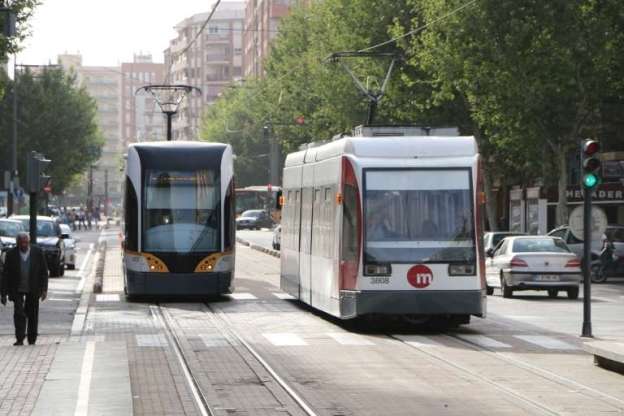
The featured image for this article shows two different trams operating on the modern Tramway network in Valencia: a Series 3800 on the right and a Series 4200 on the left. [15]

The Modern Tramway reported:

“A recent issue of the Spanish monthly ‘Ferrocarriles y Tranvias’ contains interesting news from the town of Valencia. The Compañia de Tranvias y Ferrocarriles de Valencia [CTFV], which operates about 50 route miles of metre gauge tramways and some electric railways, has recently acquired certain Italian patents relating to articulated tramcars, and a start has been made in rebuilding the medium-age 4-wheel tramcars to articulated units with a suspended central unit, as in Rome and Milan. The two 4-wheel cars and the central section form a unit capable of transporting 120 who enter by the rear platform and leave by the centre or front: all entrances/exits are provided with power-operated folding doors, worked by the driver and conductor from their respective seats. These unidirectional articulated sets are numbered from 501 upwards, and are intended for service on certain town routes such as the recently extended Ruzafa-Mislata line, where the curves and restricted clearances in the city centre prevent the use of the modern 400-class bogie cars. These also deserve mention: they have been constructed locally, some of them since 1946, and are single-ended, with doors on one side only: some, however, have the doors on the left, ie. off-side, and others on the right, as usual on the Continent. The explanation is that the former batch of cars are used on Valencia’s circular route No. 5, which is provided throughout with central loading islands placed between the tracks. We believe this is the only case of its kind; Brussels has some centre islands, as did Manchester at one point, but in these cases the cars are (or were) running on the ‘wrong’ side of the road, against the traffic whereas the Valencia cars are on their correct side of the road.” [1: p66-67]
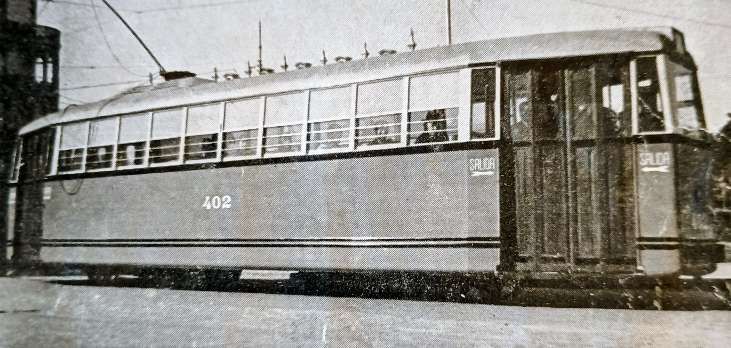
Valencia Tramways No. 402 which was constructed by the S.A. Industrial de Construcciones Moviles de Valencia, and placed in service in 1949. These cars have forward exits, © Finezas, Valencia, Public Domain. [1: p45]

“The following remarks by the Secretary of the Company about the Valencia tramways in general are quoted in translation from the source of the above information, an article in the November [1950] issue of ‘Ferrocarriles y Tranvias (Madrid):

“‘The tramway service in Valencia is well appreciated, but the enormous extension of the city obliges us to maintain an intense and at the same time not too costly service. Thus we have lines worked with motor cars hauling two trailers. A service of buses or trolleybuses in Valencia would be a very costly innovation if we provided all the units necessary to transport the enormous mass of passengers who travel by our routes, and we should be confronted with the problem of the impossible amortisation of capital or by an extraordinary elevation of fares which the public could not support’.” [1: p67]

The notes refer to the articulated tram sets being numbered from 501 upwards. The CTFV Type 500 refers to vintage articulated ‘two rooms and a bath’ trams, which were formerly used in Valencia’s historic tram network. These articulated vehicles, created by joining two older trams with a floating section, represented a significant phase in the city’s transport history before the modern Metrovalencia system was established. These modified teams were in service by 1950. One of them is illustrated below. [2]
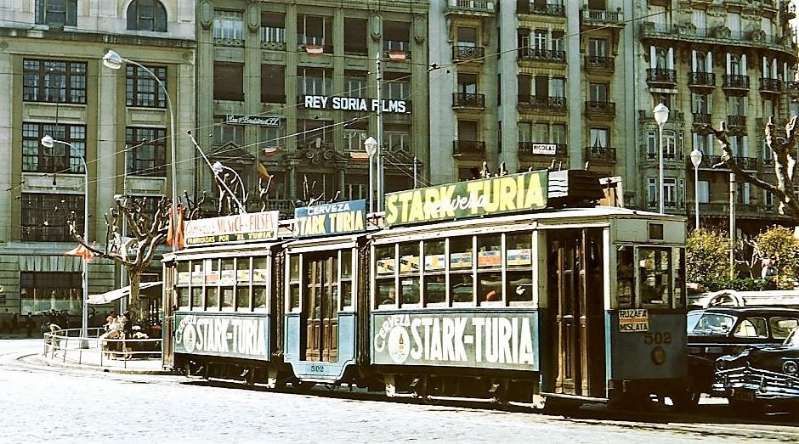
A colourised version of an image from 1950 of a CTFV Type 500 articulated tram running through Valencia’s old tramway network in 1950. Original photograph, © Public Domain. [2]

Valencia’s Tramways since 1950

Valencia’s traditional tram network operated until 20th June 1970, when it was gradually displaced by car and bus traffic. [3]

In 1994, the metro and tram network operating today started as a development of the local suburban railway that remained after the liquidation of the tram network. That suburban railway was metre-gauge and as a result the new system was also metre-gauge. The metro and the tram network in Valencia are essentially one system and they are operated by one company, with tram lines serving as extensions of the metro. The metro draws power from overhead lines. [3]

In Valencia, lines numbered 1, 3, 5, 7, and 9 are the metro. Those numbered 4, 6, 8, and 10 are tramways. The trams are uniform, red, and clean, without advertisements. They are generally comfortable but relatively nondescript. [3]

Before the foundation of the Ferrocarrils de la Generalitat Valenciana (FGV), the narrow-gauge rail network in Valencia was a classic suburban network, which had a great deal of importance in the metropolitan area but very little influence in strictly urban traffic movements. [4]

The Metrovalencia network traces its origins to the Trenet de València (ca; es) system of narrow-gauge interurban railways, of which its first section, built by the Valencian Tramway Society (Spanish: Sociedad Valenciana de Tranvías) was opened in 1888 between Valencia (near the Pont de Fusta, or Fusta Bridge) and Llíria. Several further extensions of the Trenet were later built between 1891 and 1912. In 1917, both the Valencian Tramway Corporation and the Compagnie Génerale des Tramways de Valence (Espagne) Société Lyonnaise (es) were merged into a single company called the Valencia Tram and Rail Company (Spanish: Compañía de Tranvías y Ferrocarriles de Valencia). After years of losses, the rail operations of CTFV were finally acquired by FEVE in 1964.” [5]

In October 1988, the first underground section of the network, which was 7 kilometres long, was opened and connected the suburban lines of Llíria, Bétera and Rafelbunyol to the north of the city and with the Villanueva de Castellón line to the south. [4][5]
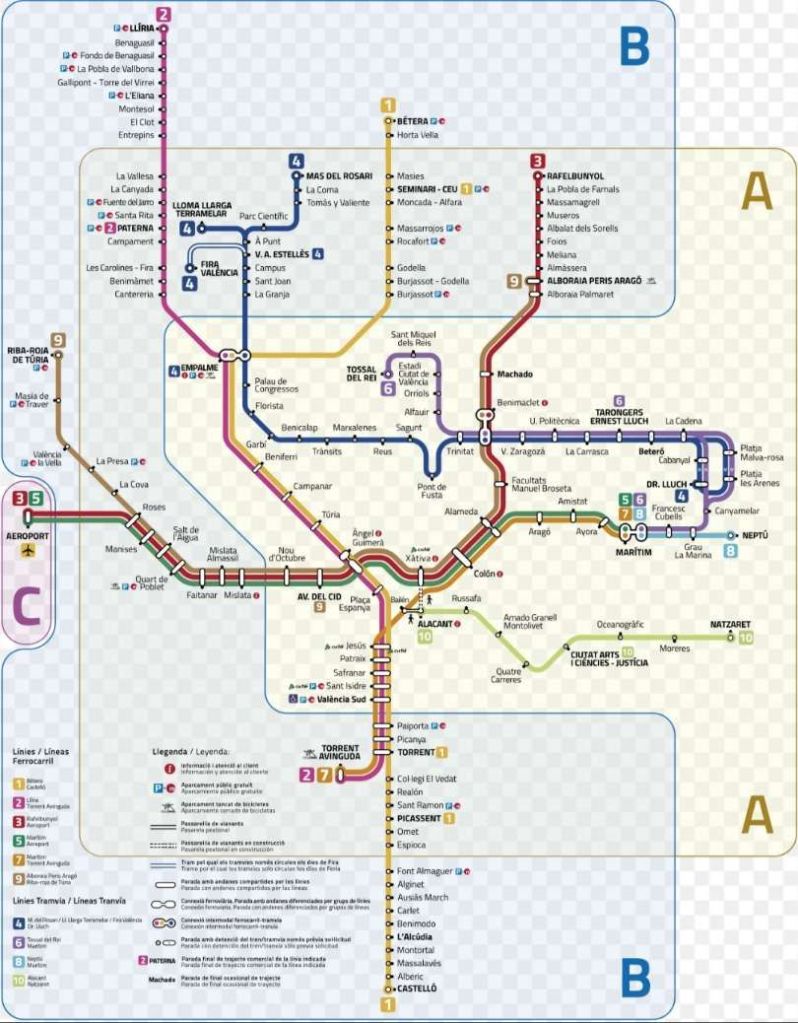
The network of tramways and the Metro in Valencia. A more interactive version of the map which can be significantly enlarged can be found here.  [5]

In May 1994, the first ‘tranvia’ in the system, Line 4, opened. Valencia was the first city in Spain to use this mode of transport in the modern era … Initially, the line was 9.7 kilometres (6.0 miles) long and had 21 stations. The line connected the suburban lines with high demand zones such as the Polytechnic University, the new university campus, and the Malvarrosa Beach, replacing the former line from Empalme to El Grau. [4][5]

In May 1995, Line 3 was created via a new tunnel from El Palmaret in Alboraria to Alameda. The extension reused an existing railway line from Pont de Fusta to Rafelbunyol, of which part was scrapped (between Pont de Fusta – Sant Llorenç – El Palmaret). The remainder was switched from 750 V to 1500 V.” [5]

Further alterations followed five years later. On 16th September 1998, Line 2 was merged with Line 1, and Line 3 was extended from Alameda to Avinguda del Cid in the west with a branch to Torrent in the south (with some trains only going as far as Jesús). Then, in May 1999, Line 3 was extended again from Avinguda del Cid to Mislata-Almassil.” [5]

In April 2003, Line 5 was opened, taking over the Torrent branch of Line 3 together with a newly constructed 2.3-kilometre (1.4 miles) branch from Alameda to Ayora. … One year later, Lines 1 and 5 were extended from Torrent to Torrent Avinguda, a distance of 2.3 kilometres (1.4 miles). … On 3rd October 2005, an infill station between Colón and Jesús was opened on Line 5 with a connection to València-Nord. Additionally, Line 4 was extended to Mas del Rosari, and on 20th December to Lloma Llarga-Terramelar.” [5]

Later, on 2nd April 2007, Line 5 was extended eastward to Marítim … This station allows transfers to a tram operating to the port at Neptú station … which was originally listed only as an extension of Line 5. Simultaneously, Line 5 was extended west with Line 3 to a new station at the Valencia Airport.” [5]

In [September/]October [of the same year] the first phase of the Orbital Tram (Line 6) starts offering service. It is 9.2 kilometres long and covers the route between the Tossal del Rei Plaza and the Marítim-Serrería station. … This first phase of [Line 6] travels through the Torrefiel and Orriols neighbourhoods along a new 2.45 kilometres long tramway stretch until it connects with Line 4 on Almazora Street. From here on it [follows] Line 4 until the loop at Dr. Lluch, where it continues onto the Line 5 tramway stretch and comes to an end at the Maritím-Serrería station.” [4]

On 12th December 2010, two overground stations on Line 3, Alboraya and Palmaret, were replaced by new subterranean stations: Alboraia Peris Aragó and Alboraia – Palmaret, respectively. Additionally, on Line 1, Jesús was renamed Joaquin Sorolla, while the Hospital station was renamed Safranar.” [4][5]

On 6th March 2015, a 4-station spur from Rosas to Riba-roja de Túria was opened as Line 9. This followed the path of a regional train line, which had been closed in 2005. [5][6]

In April 2015, the metro map was redrawn with several of the branches split into separate lines, increasing the number of lines to 9.” [5][7]

On 1st February 2022, the number of fare zones was reduced from four to two, as part of a reduction in ticket prices, with a supplemental fare applying to Aeroport station.” [5][8]

The names of 21 stations were changed to make the names more readily identifiable, to adapt them to the urban changes in their areas, and to promote ‘linguistic normalisation’ (favouring Valencian language names rather than Spanish language ones.). [9][10] The changes took effect alongside other changes made in preparation for the opening of the new tram Line 10, [11] which opened for service on 17th May 2022. [5][12]

After 2022, modernization plans included reduced fare zones and continuing 50% discounts until 30th June 2026. Plans included construction of two new lines – lines 11 and 12, to connect the city centre with the seafront, Malilla, and La Fe Hospital. These were included in an €839 million investment plan was announced for 2026-2030, covering modernization, new trains, and infrastructure improvements. [13]

The Modern Metro and Tram Fleet

3900 Series Metro Units: generally no longer in use, gradually being decommissioned.
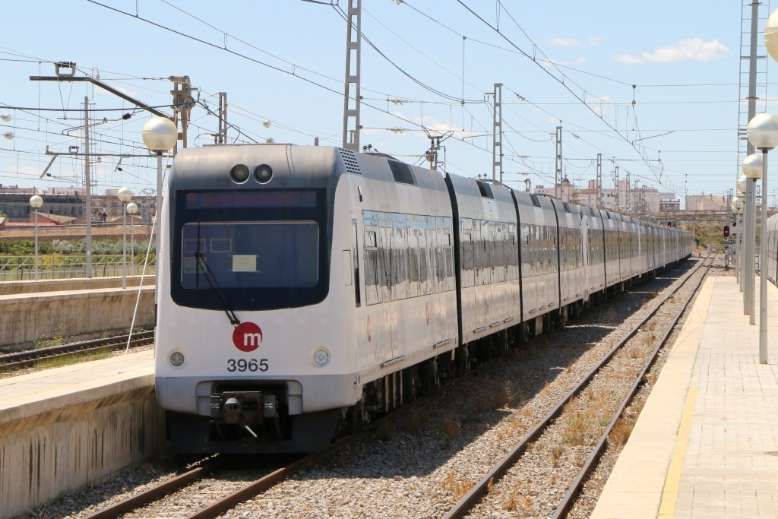
Metro trains series 3900 in store out of service at Valencia Sud in 2016. The trains were built in 1995, with elements added in 2001, © Urban Transport Magazine. [15]

4300 Series Metro Units: Active on metro lines (1, 2, 3, 5, 7, 9).
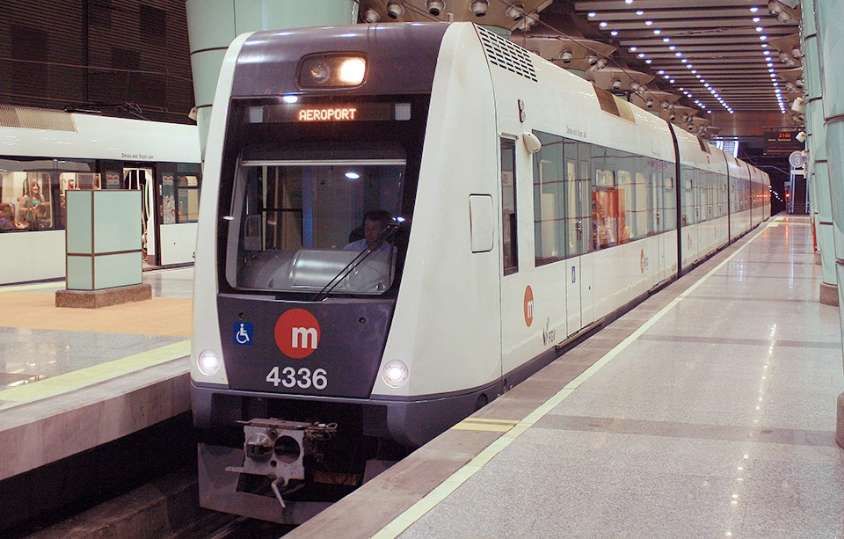
A 4300 series unit No. 4336 in operation on the Metro at an underground station. [16]

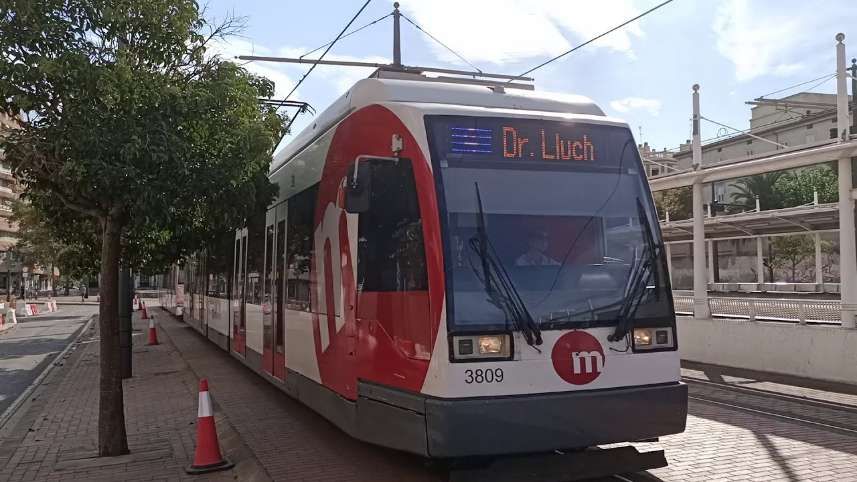
3800 Series Trams (Siemens-Düwag UT-3800) are high-floor vehicles that introduced modern tram service to Valencia in 1994, operating on Metrovalencia’s Line 4. Built between 1993 and 1998, the 25-unit fleet underwent a major, €8 million ‘half-life’ overhaul starting in 2014 to extend their service life with modern safety and comfort updates. [17]
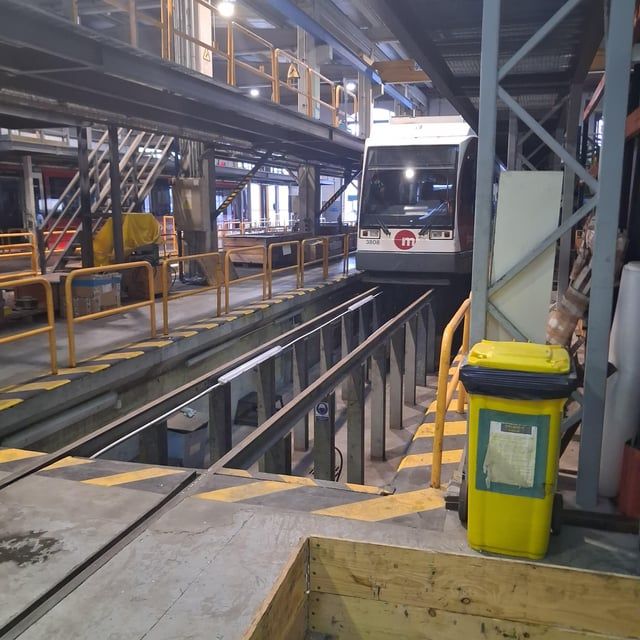
A Siemens 3800 series tram – No. 3808 – in the maintenance workshop. These trams were the pioneers of the modern tram network in Valencia, with a single-cab design and a ‘viewing platform’ at the other end. [18]
Another Siemens 3800 series tram – No. 3809 – in service in Valencia. [19]

4200 Series Trams (Bombardier): Modern low-floor trams operating on the tram network (Lines 4, 6, 8, 10).
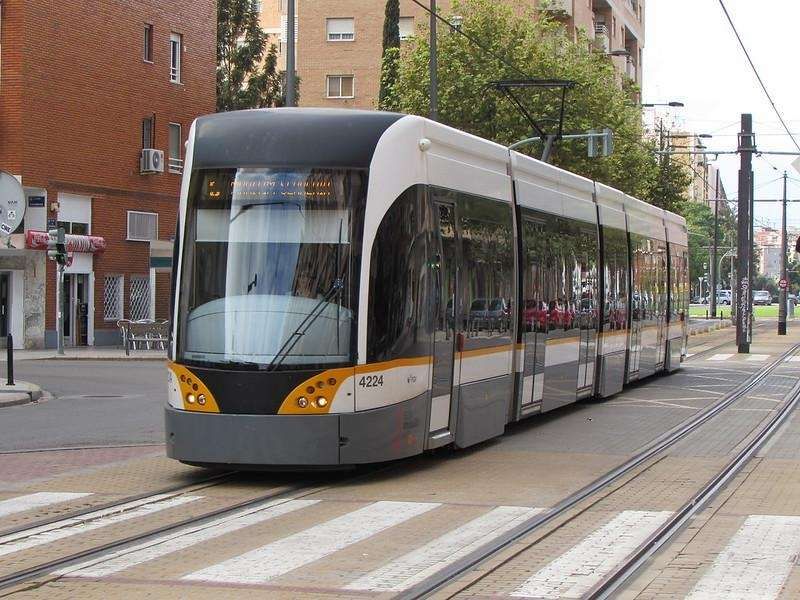
A 4200 Series Tram – No. 4224 – on the streets of Valencia.  © Marcos Vives Del Sol and licenced for reuse under a Creative Commons licence (CC BY-NC-SA 2.0). [20]

Future Rolling Stock

In 2026, Metrovalencia is undergoing a major modernization, integrating 22 new Stadler Rail Tramlink LRVs (16 for Valencia, 6 for Alicante) into its network, with deliveries occurring through 2028. These 45-metre-long, low-floor trams offer increased capacity and enhanced accessibility. The network is also upgrading infrastructure and renewing its passenger information systems. [14]
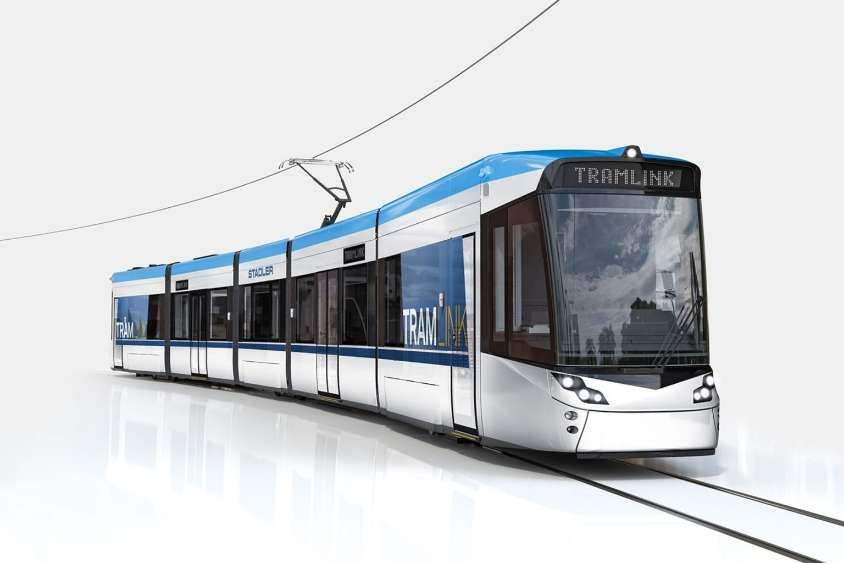

Stadler and FGV have signed a contract for the supply of 16 modern TRAMLINK low floor trams with the possibility of extending the order by a further 12 vehicles, in two batches of six units. The contract value amounts to €84.3 million. The lead time for the production of the 16 units has been set at 32 months. … The new 4 500 series trams for FGV will be designed and manufactured by the Stadler plant in Albuixech. The units will be incorporated into the fleet of Metrovalencia and TRAM d’Alacant, to cover the needs arising from the expansion projects planned in the coming years. [14]

Devastation caused by Storm Dana in October 2024

Finally, we should note that the Valencia Metro and Tram networks were, in May 2025, still recovering from the devastation caused by Storm Dana in October 2024. [15]

As of April 2026, the operational base and command centre at València Sud — which was entirely wiped out by the initial floods — was undergoing permanent €50 million rehabilitation works covering tracks, offices, workshops, and intermodal systems. Work was close to completion. [21]

References

  1. Tramway Progress in Valencia; in The Modern Tramway, Volume 14, No. 159, p66-67.
  2. https://www.reddit.com/r/Trams/comments/zghbbf/ctfv_type_500_articulated_tram_running_through, accessed on 13th May 2026.
  3. https://www.facebook.com/share/p/1LF45QzeTi, accessed on 13th May 2026.
  4. https://www.fgv.es/conoce-fgv/fgv-en-cifras/metrovalencia-en-cifras/metrovalencia-historical-evolution/?lang=en, accessed on 13th May 2026.
  5. https://en.wikipedia.org/wiki/Metrovalencia, accessed on 13th May 2026.
  6. La línea de metro a Ribarroja entrará en servicio el 6 de marzo (in Spanish); in Las Provincias, 2nd March 2015; via: https://www.lasprovincias.es/comunitat/201503/01/linea-metro-riba-roja-20150301120158.html, accessed on 14th May 2026.
  7. Así serán las nuevas líneas de Metrovalencia (in Spanish); in ABC, 27 November 2014; via: https://www.abc.es/local-comunidad-valenciana/20141126/abci-nuevas-lineas-metro-201411261611.html, accessed on 14th May 2026.
  8. El Metro de Valencia tendrá solo dos zonas tarifarias a partir de enero de 2022 [Metrovalencia will only have 2 fare zones after January 2022]; in ABC, 30th November 2021; via: https://www.abc.es/espana/comunidad-valenciana/abci-metro-valencia-tendra-solo-zonas-tarifarias-partir-enero-2022-202111301839_noticia.html, accessed on 14th May 2026.
  9. La Generalitat suprime el castellano en todas las paradas del Metro de Valencia y elimina la del Rey Juan Carlos [The Generalitat abolishes Spanish at all stops on Valencia Metro and eliminates the King Juan Carlos name]; in ABC, 2nd December 2021; via: https://www.lasprovincias.es/comunitat/generalitat-retira-castellano-20211202001545-ntvo.html, accessed on 14th May 2026.
  10. La Generalitat retira el castellano y el nombre de Juan Carlos I en el metro [The Generalitat removes Spanish and the name of Juan Carlos I from the metro]; in Las Provincias, 2nd December 2021; via: https://www.lasprovincias.es/comunitat/generalitat-retira-castellano-20211202001545-ntvo.html, accessed on 14th May 2026.
  11. Las 21 estaciones y paradas de Metrovalencia que cambian de nombre [The 21 Metrovalencia stations that will change their name]; in Las Provincias, 1st December 2021; via: https://www.lasprovincias.es/valencia-ciudad/estaciones-paradas-metrovalencia-20211201192627-nt.html, accessed on 14th May 2026.
  12. Valencia celebrates with new line 10; in Tramways & Urban Transit. No. 1015, Mainspring Enterprises Ltd, UK, July 2022. p. 244.
  13. https://www.seetaoe.com/details/252082.html, accessed on 14th May 2026.
  14. https://www.rail-suppliers.com/stadler-to-supply-the-new-trams-in-alicante-and-valencia, accessed on 14th May 2026.
  15. https://www.urban-transport-magazine.com/en/valencia-the-current-situation-of-the-public-transport-network-after-the-devastating-floods, dated 2nd May 2025, accessed on 14th May 2026.
  16. https://www.valencia-cityguide.com/tourism/transport/metro.html, accessed on 14th May 2026.
  17. https://railuk.com/rail-news/trams-in-valencia-undergo-half-life-overhaul, accessed on 14th May 2026.
  18. https://www.reddit.com/r/Trams/comments/1px9xw1/tram_maintenance_workshop_valencia_spain, accessed on 14th May 2026.
  19. https://experiencesvalencia.com/las-esfinges-del-pont-de-fusta-en-valencia, accessed on 14th May 2026
  20. https://lepetitjournal.com/valence/metros-trams-communaute-valencienne-gratuits-dimanche-3-mois-336542, accessed on 14th May 2026.
  21. https://diarivalencia.cat/en/l-horta-de-valencia/general/metrovalencia-finalizes-reconstruction-of-its-valencia-sud-headquarters-after-dana, accessed on 14th May 2026.
Double-Decker Trains

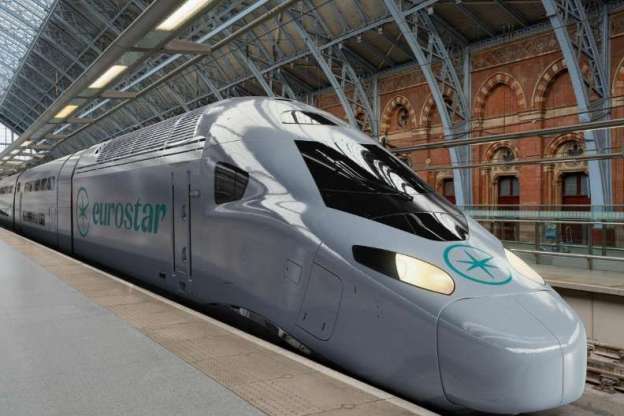
It was announced on 22nd October 2025 that the lines through the Channel Tunnel would see double-decker trains by 2031. An order was placed for their construction and delivery in October 2025. [6]

The featured image for this article shows what one of these trains would look like in Eurostar’s grey livery. The fully electric fleet of trains will be named Eurostar Celestia, which comes from the Latin word caelestis, meaning ‘heavenly’. The colour of the train has not yet been decided, but the current colour of Eurostar trains is grey, dark blue and yellow. Each train would be 200m long. Currently two are run together making an entire service 400m long. Double-decker trains don’t have twice as many seats as a single-deckers though, just because there needs to be room for interior steps, but there would be a fifth more seats. This means an increase from just under 900 seats on the current service to just over a thousand. [6]

A bilevel car (American English) or double-decker coach (British English and Canadian English) is a type of rail car that has two levels of passenger accommodation as opposed to one, increasing passenger capacity (up to 57% per car in extreme cases).” [1]

Examples of Double-Deck Coaches/Trains in a Few Different Countries

France

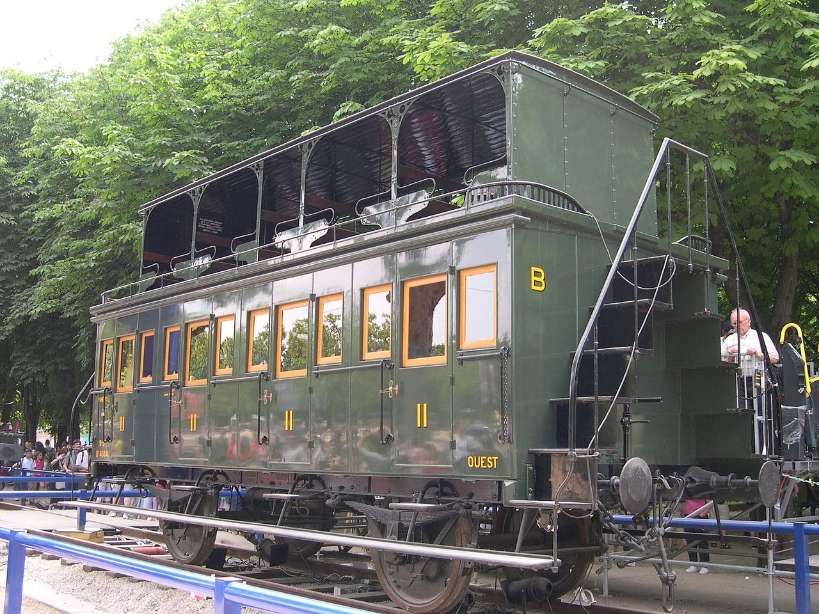
Double deck carriages date to at least as early as the second half of the 19th century. In France several hundred ‘voitures à impériale’ with seats on the roof were in use by the Chemins de fer de l’Ouest, Chemins de fer de l’Est and Chemins de fer du Nord by 1870, having been in use for over 2 decades; the upper deck was open at the sides with a light roof or awning covering the seats.” [1]

Voiture à impériale, France Paris Champs Elysées Expo Train capitale 2003 Wagon à imperial, © Patrick Giraud (Calips) and licenced for reuse under a Creative Commons Licence (CC BY 2.5). [2]

Marc Andre Dubout tells us that “the success of the railway with the public, the rise of the suburbs forced the companies to design double-decker carriages whose capacity was almost double that of conventional railway cars. Built from 1855 by the Compagnie de l’Ouest, … these carriages represent the flowering period of the Impressionist painters who took the trains on Sundays to go and paint in the countryside … not so far from Paris. It is the era of the boater and the joys of picnics by the water.” [4]

Dubout continues to say that these carriages weighed 8 tons and had 4 compartments downstairs and space for 34 sitting upstairs which could be reached by external staircases at the end of the carriage. [4]

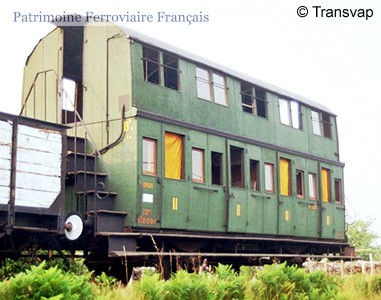
In the 1860s, M.J.B. Vidard introduced two-storied carriages on the Chemins de fer de l’Est, with a full body, windows, and doors; the design lowered the floor of the lower storey to keep the center of gravity low. Vidard’s carriages had a total height of 13 feet 8 inches (4.17 m) with the head height in the lower part of the carriage only 5 feet 5 inches (1.65 m); the carriages had a capacity of 80 persons (third class) in a 2 axle vehicle of 13 tonnes fully loaded.” [1][5]

This image is embedded here from another webpage. This carriage was built by De Dietrich & Cie in 1899. [5]

The first all-steel Chemins de fer de l’État double deckers are an early example of split-level cars.” [1] “The first ten carriages were delivered by Brissonneau et Lotz, now part of Alstom, in 1933. The Voiture État à 2 étages were used as permanently coupled sets of carriages and used for réversibilité (push-pull operation), driving the train from the end passenger car and the steam locomotive pushing, on the Réseau Saint-Lazare. They often operated once in the morning, taking commuters to work, and once in the evening, returning them back home. They were also briefly used on the Réseau Montparnasse in shorter sets of six cars.” [3]

The Voiture État à deux étages were a class of double-deck carriages built for Paris suburban services of the French Chemin de fer de l’État. The design was revolutionary for its use of aluminium as well as steel to reduce weight. Although unpowered, each rake of seven cars had a driving trailer at one end and were pushed and pulled by a steam locomotive, such as the 141 TC Ouest and 141 TD Ouest. The cars possessed two vestibules, each with two sets of doors and stairs to allow passage from one deck to the next. The upper deck had rows of five seats whilst the lower deck had rows of four as they had to fit between the frames. The driving trailers allowed the driver to control the steam engine from the driving cab in the opposite end carriage while the locomotive was pushing, using controls actuated by compressed air pipes running through the train, © Didier Deforest and licenced for reuse under a Creative Commons Licence (CC BY-SA 3.0). [3]

Fifty cars were built, which accommodated the increasing suburban traffic from the beginning of the 20th century. They were supplemented by 380 Talbot passenger cars and 200 Standard EMUs. The last of the class were only withdrawn in 1984, after introduction of the VB2N in 1975.” [3]

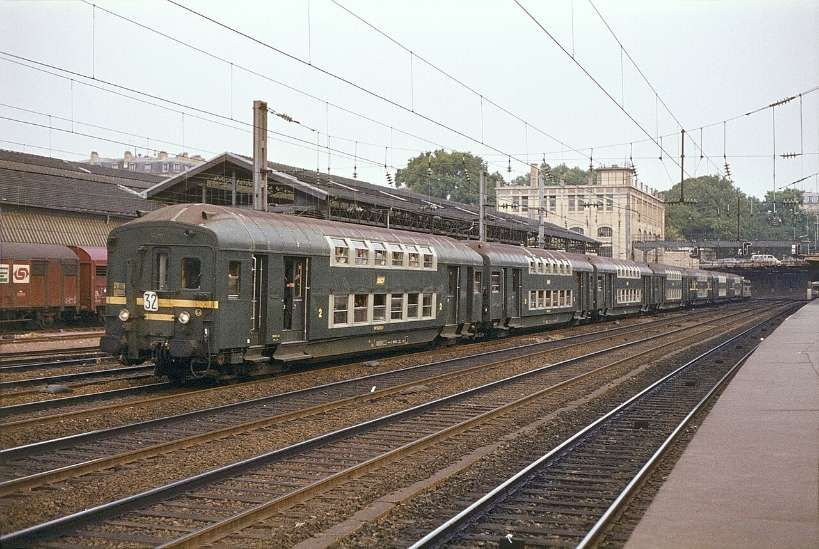
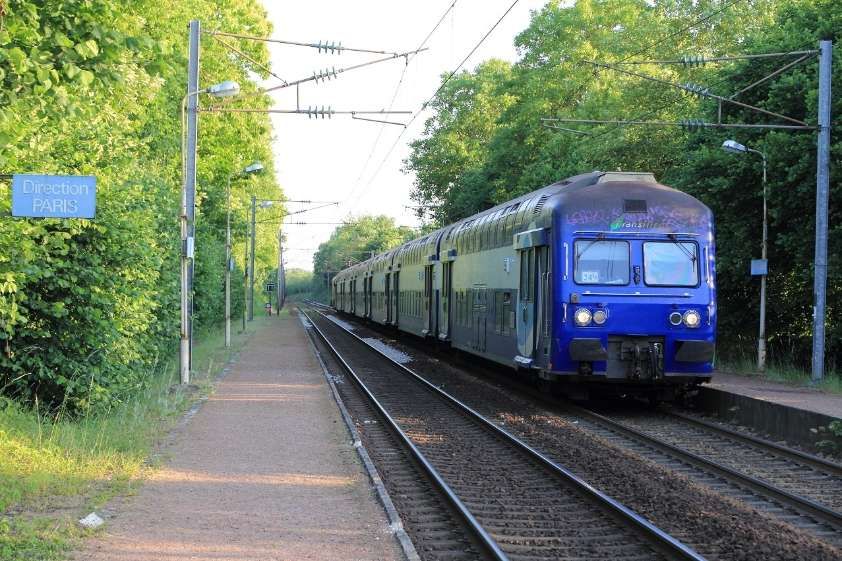
The Voiture de banlieue à 2 niveaux (shortened to VB2N) “is a type of double-deck set of passenger carriages used on Transilien, the commuter rail network in the Île-de-France region of France. The carriages are unpowered and designed to be paired with an electric locomotive.” [7] They were built between 1974 and 1984, refurbished between 2002 and 2008. Since 2012, the VB2N trains were being shifted from busier RER and Transilien lines to less busy routes on the Transilien network as new equipment came online, most notably the single-level Z 50000 and double-deck Regio 2N(Z57000) trainsets. The VB2N trains have been being retired gradually since 2021. [7]

A VB2N arriving at Gare de Lavilletertre, Oise, having travelled from Paris on 1st June 2011, © Lunon92 and licenced for reuse under a Creative Commons licence (CC BY-SA 3.0). [10]

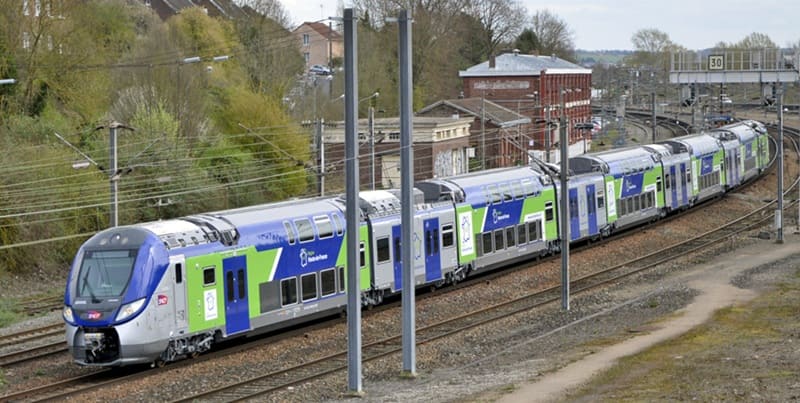
The double-deck Regio 2N trainsets are a family of a double-deck, dual-voltage electric multiple unit trainsets built for French rail operator SNCF to serve its regional rail routes (TER, Transilien, and RER). The trains utilize a unique and highly configurable design. One of the end cars is single-deck and designed to accommodate wheelchair users, the other end car is double-deck. The intermediate cars are either double-deck with no doors accommodating seated passengers traveling long distances or single-deck with two double doors per side accommodating standing passengers traveling short distances. Trains can be configured with six, seven, eight or ten cars. Additionally, the seating can be configured for intercity service (2+1 seating in 1st class, 2+2 seating in 2nd class), regional service (2+2 seating throughout), or high-capacity commuter service (3+2 seating throughout). These trains were designed and originally built by Bombardier, but during delivery the company was bought by Alstom, which completed the order. A total of 447 trainsets have either been built or are under construction at the Alstom Crespin factory since 2012. The first set was placed into regular passenger service in September 2013. [8]

Regio 2N in TER Hauts-de-France livery at Gare de Longueau, (c) Thierry Martel and licenced for reuse under a Creative Commons Licence (CC BY-SA 4.0). [9]

Germany

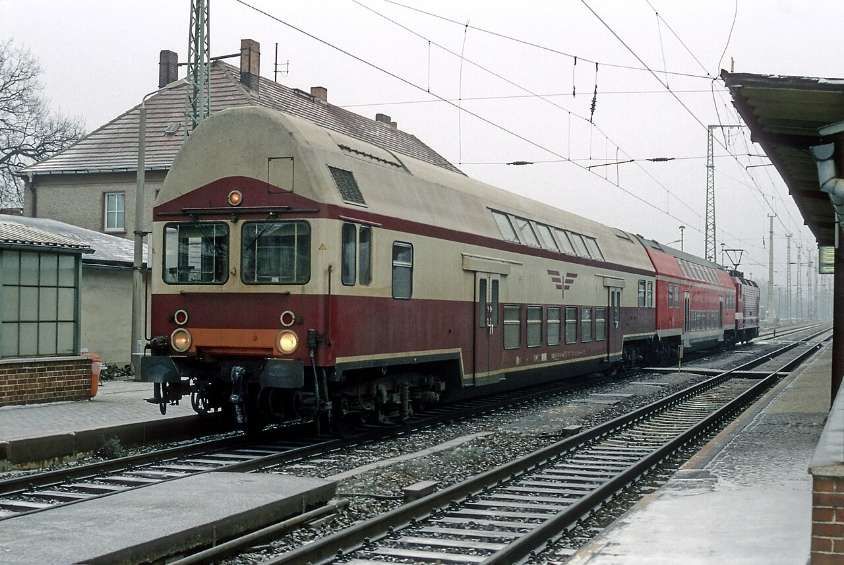
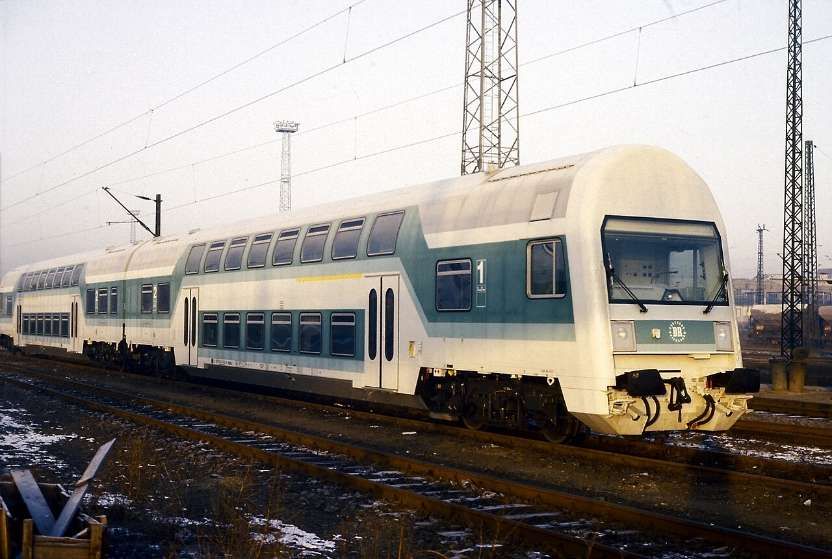
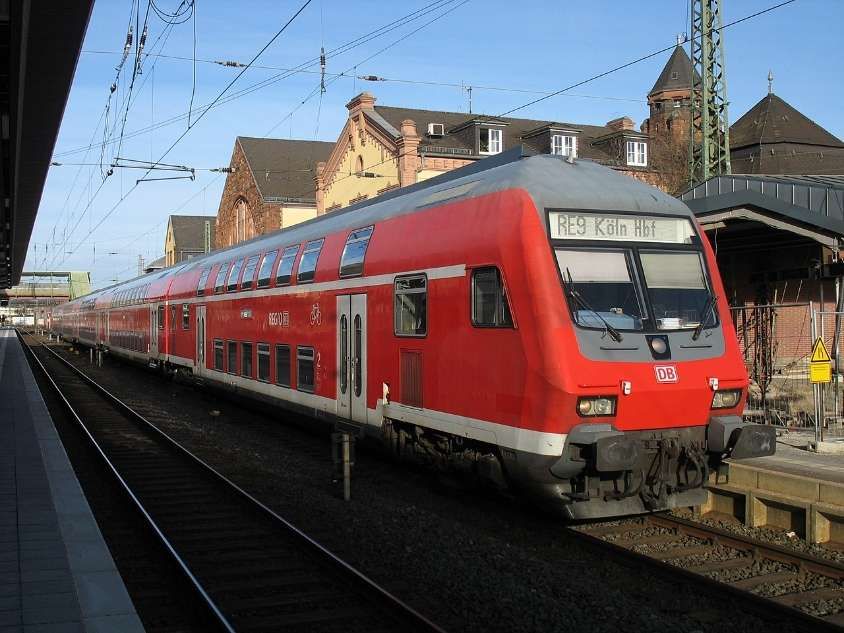
Double-decker trains in Germany (Doppelstockwagen) originated in 1935–36 with LBE commuter coaches, evolving from East German, Görlitz-built articulated trainsets in the 1950s-70s into widespread regional use. Following reunification, Deutsche Bahn modernized these coaches to become the dominant, high-capacity standard for regional lines, and in 2015, introduced them as Intercity 2 for long-distance routes. [11][12][13]

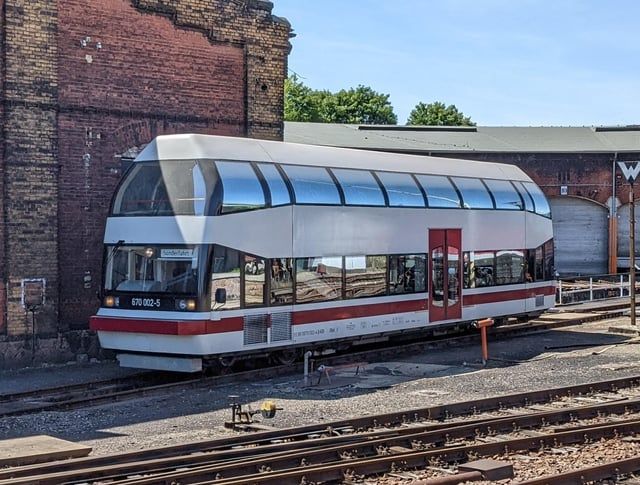
German class 670 railbus (only 7 were built, 2 still remaining in working condition). This particular vehicle is apparently owned by a preservation group which sometimes does trips around Saxony – though not in regular service, © Not Known. [14]

Historical Evolution:

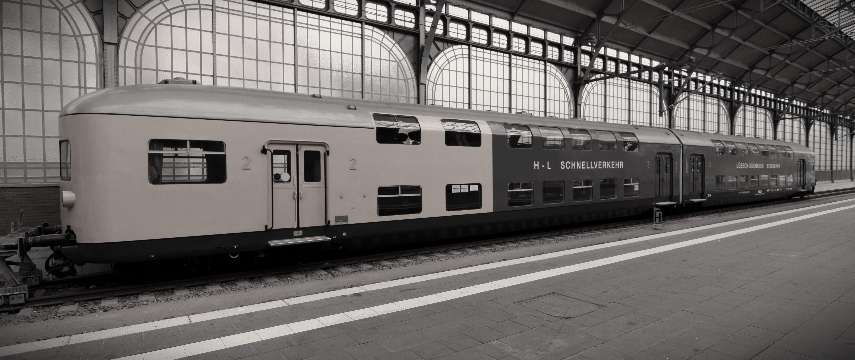
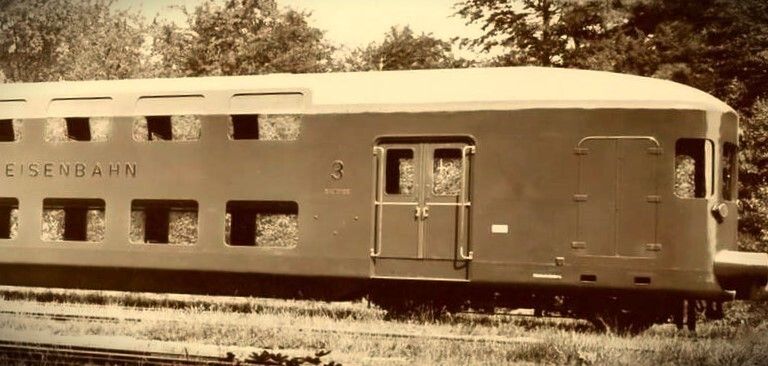
  • Early Beginnings (1930s-1950s): The first double-deckers were built by WUMAG at Görlitz for the Lübeck–Büchen–Hamburg railway in 1935, pioneering push-pull operation in Germany.
Two photographs of the early (1935/36) double deck carriages built by WUMAG, © Public Domain. [16]
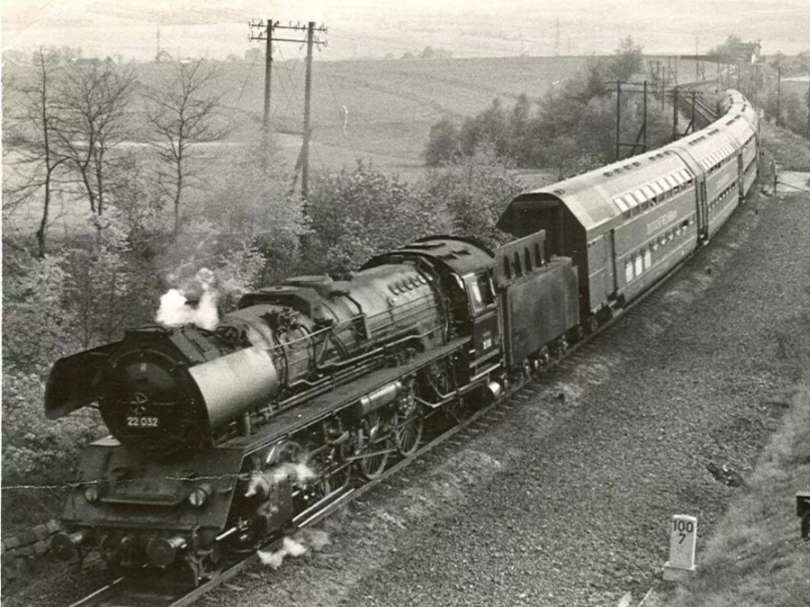
  • East German Development (DDR): VEB Waggonbau Görlitz became a hub for double-deck technology, producing two- to five-car articulated sets (Doppelstockgliederzüge) for the Deutsche Reichsbahn, with over 4,000 sets produced for the Eastern Bloc.
Double-decker coaching stock is seen here behind steam locomotive 22 032 with a passenger train in 1964 on the Dresden–Werdau railway line, between Hohenstein-Ernstthal and St. Egidien, © Werner Huhle and licenced for reuse under a Creative Commons licence (CC BY-SA 3.0). [15]
A first generation Doppelstockwagen rake in Calau in January 1997. These were built 1973–1974 and 1976–1991,  and we’re sold to East Germany, Bulgaria, Poland, Romania and Czechoslovakia, © Falk2 and licenced for reuse under a Creative Commons licence (CC BY 3.0). [11]
  • West Germany (DB): In contrast to the East, the West German Deutsche Bundesbahn initially focused on single-level carriages until adopting modern 2nd generation Class 760 cars in the early 1990s.
A second generation Doppelstockwagen on first delivery in January 1993, © Falk2 and licenced for reuse under a Creative Commons licence (CC BY 3.0). [11]
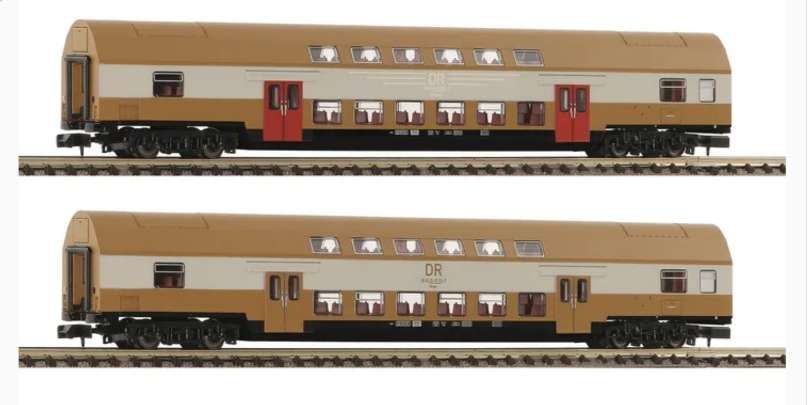
  • Post-Reunification & Regionalization: After 1990, Deutsche Bahn heavily adopted modern, single-coach bilevel designs for regional rapid transit across Germany.
N Gauge models produced by Fleischmann (6260075). These two double-decker coaches are available as a set. They are typical of the style of single coach bilevel designs used for regional rapid transit across Germany. [16]
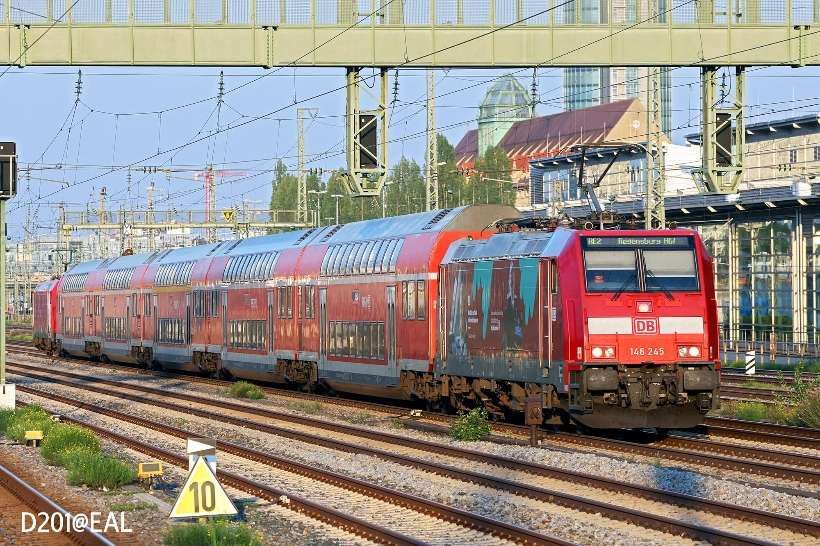
  • Early 21st Century: typical trains were red double -decker carriages hauled by electric locomotives (such as Class 146 or 147), and featuring high-capacity seating for commuters. [11][12]
DB Regio BR 146 locomotive in charge of a typical double-decker consist at Munich. This image was shared by Samson Ng on the World Electric Locomotives Facebook Group on 7th February 2026. [19]
This YouTube video shows a DB Region BR147 locomotive bringing its train into Angermunde Station with a train to Stralsund Hbf. [20]
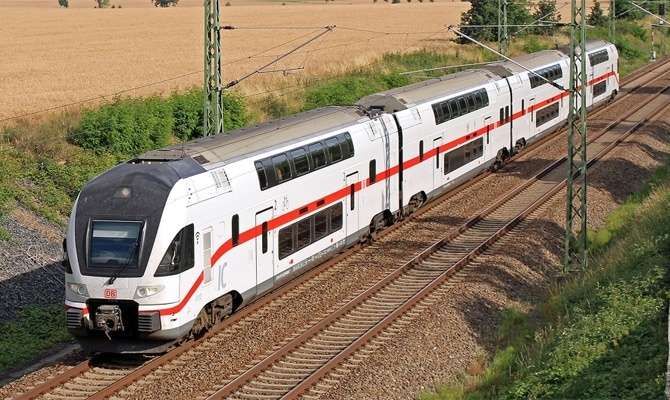
  • Intercity 2 Era (2015-Present): In 2015, Intercity 2 trains, a mix of Bombardier and Stadler “kiss” trains, were introduced for long-distance services, capable of 160 km/h, though they have been criticized for offering regional-style comfort on long routes. [13]
Bombardier © Klaus Foehl and licenced for reuse under a Creative Commons licence (CC BY-SA 3.0). [18]
The KISS (comfortable innovative high-speed S-Bahn train) is an electric double-deck multiple unit from the Swiss-based manufacturer Stadler Rail. [17]

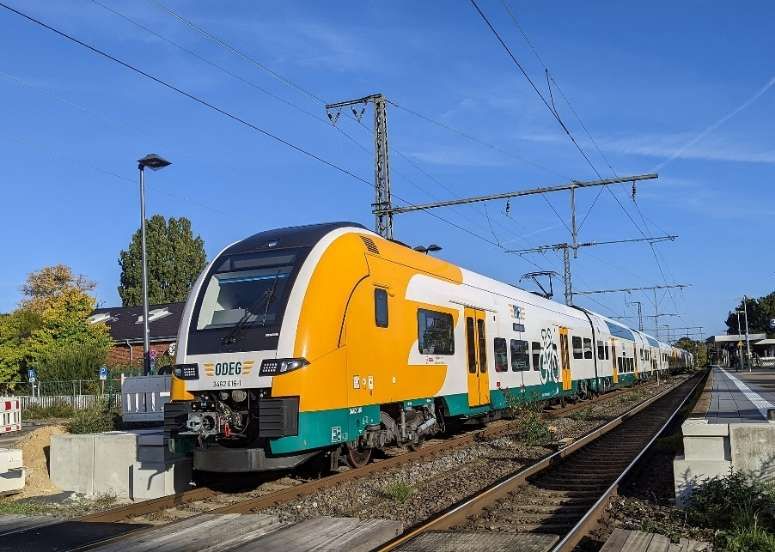
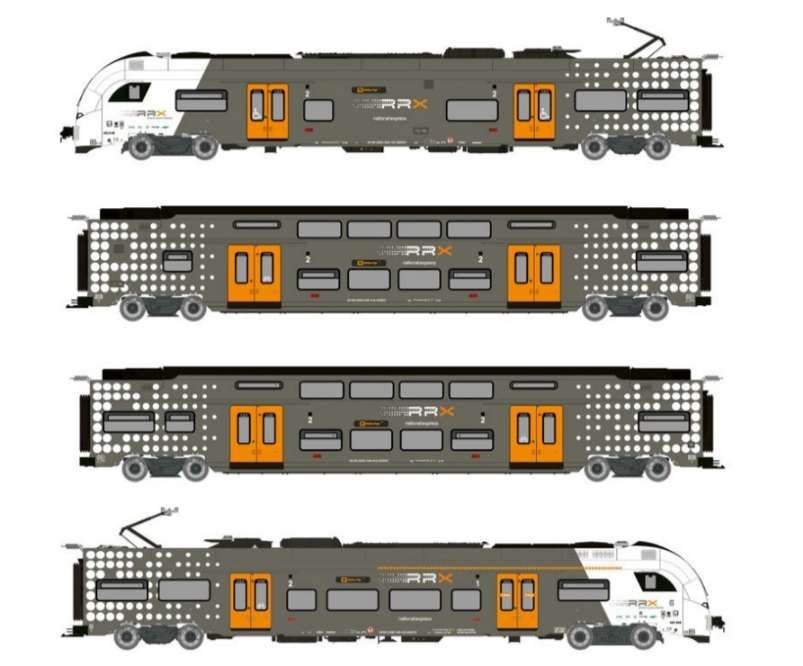
Private operators such as ODEG [21] and National Express Germany [22] use modern Siemens Desiro HC double-deck sets, often featuring a mix of single and double-deck cars for faster boarding. [11][12]

Siemens Desiro HC EMU of Ostdeutsche Eisenbahn (ODEG) at Rheydt Hauptbahnhof, © Thomas and licenced for reuse under a GNU Free Documentation License, Version 1.2. [23]
Electric multiple unit Desiro HC BR 462 RRX National Express. [24]

Unites States and Canada

Bilevel trains are widely used across the USA and Canada for high-capacity commuter services and long-distance travel. Primarily using Bombardier/Alstom BiLevel Coaches in cities and Amtrak Superliners on national routes, these trains maximize passenger volume, with the Bombardier model operating in at least 14 different transit authorities.

Examples of operators are:

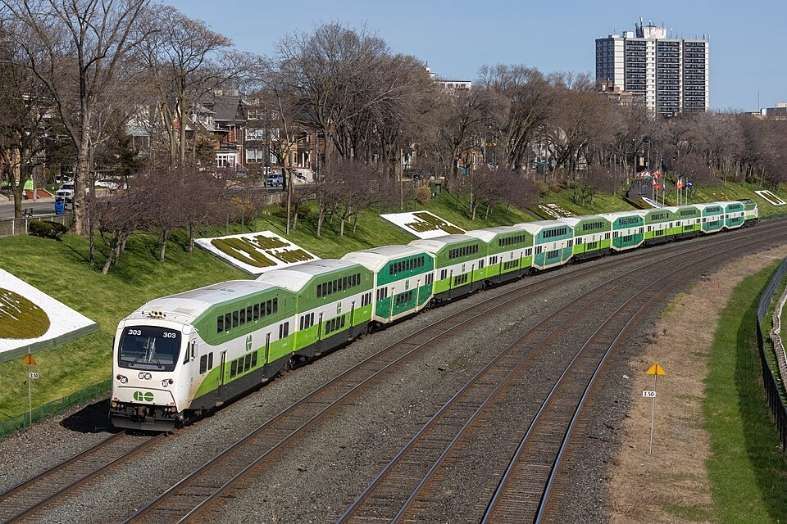
  • GO Transit (Canada):

GO Transit uses a bilevel passenger railcar (currently built by Alstom and previously by Bombardier, Hawker Siddeley Canada, the Canadian Car and Foundry (Can Car), and the UTDC) is used by a number of different North American commuter and regional rail operators, they feature a distinctive octagonal profile. The principal operator is GO Transit in the Golden Horseshoe, which operates some two-thirds of the total produced fleet. [26]

A westbound Lakeshore West GO train, seen from the Roncesvalles Pedestrian Bridge, © Dillon Payne and licenced for reuse under a Creative Commons licence (CC BY-SA 4.0). [25]

The BiLevel coaches were designed by Toronto’s regional commuter rail service, GO Transit and Hawker Siddeley Canada in the mid-1970s as a more efficient replacement for GO’s original single-deck coaches and cab cars. A trial was first undertaken with a borrowed Chicago & North Western Gallery Car. [27]

This image is embedded from the Transit Toronto website. It shows GO GP40-2L locomotive No. 9811 pulling a borrowed Chicago & North Western Gallery Car past Bayview Junction in April 1976 to test the feasibility of double-decker passenger coaches on the system. The test was a success, although GO would eventually adopt its own special model of bilevel coaches. This image is on the Transit Toronto website courtesy the D&T Illingsworth collection. [28]
  • Metrolink:

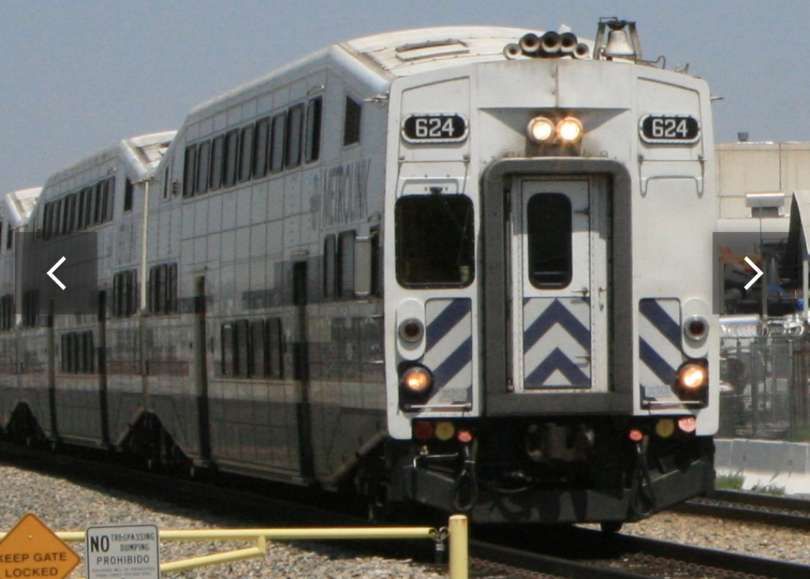
Metrolink in Southern California operates high-capacity, double-decker passenger coaches to maximize commuter transport efficiency without needing extra tracks. The fleet primarily consists of older, octagonal-shaped Bombardier BiLevel Coaches and newer, silver Hyundai Rotem BiLevel cars, often featuring white and blue or modern silver liveries. The Bombardier BiLevel Coaches were the same design as those operating on the GO network. [29]

Bombardier Cab Car No. 624 at Sonora Street, © Kwikie and licenced for reuse under a Creative Commons licence (CC BY-SA 3.0). [29]
Older BiLevel rolling stock made by Bombardier to a GO Transit design, can be seen in action on this video. [30]

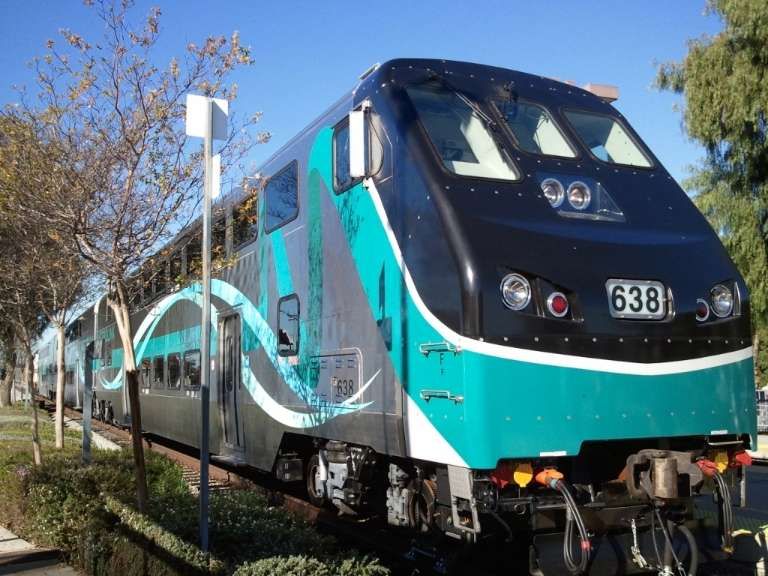
Metro link also makes use of newer, silver Hyundai Rotem BiLevel cars, often featuring white and blue or modern silver liveries.

Metrolink Hyundai Rotem cab car in Southern California, © Justin N. and licenced for reuse under a Creative Commons licence (CC BY-SA 2.0). [31]

Hyundai Rotem began marketing commuter rail cars in 2006 to compete with other railcar manufacturers in North America such as Bombardier Transportation and Kawasaki Heavy Industries Rolling Stock Company. An assembly plant opened in Philadelphia, Pennsylvania, in 2008 to meet American requirements; it closed a decade later. Significant users include: MBTA Commuter Rail (Massachusetts Bay Transportation Authority); Metrolink; and Tri-Rail, a commuter rail service linking Miami, Fort Lauderdale and West Palm Beach in Florida. [32]

  • Sound Transit (Seattle):

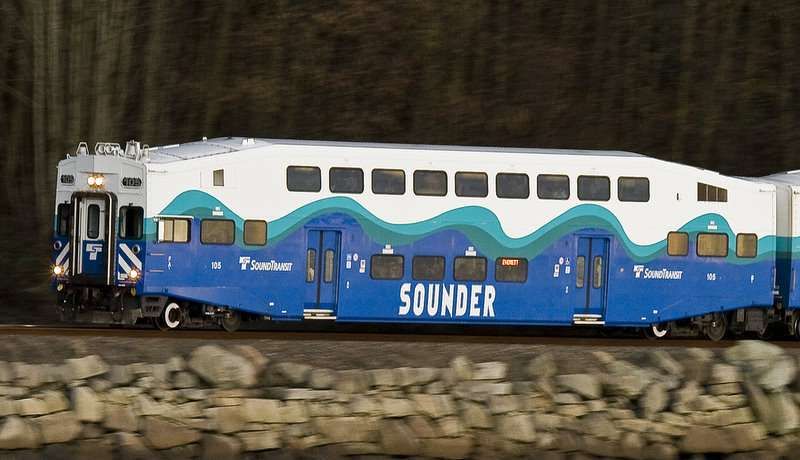
Sound Transit serves the city of Seattle in Washington State in the Pacific Northwest of the USA. It makes use of Bombardier BiLevel Coaches.

These have been in use on the Sound Transit network since the early 2000s. Sound Transit has made multiple orders over time, with new cars arriving in 2017 and 2022 to support service expansion on the South Line and a programme of refurbishment planned to begin in 2027. [32]

SDRX 105, Sound Transit Sounder Bombardier Coach Cab at Carkeek Park in Seattle, WA, © Stephen De Vight and licenced for reuse under a Creative Commons licence (CC BY 3.0). [33]

Great Britain

While there has been a significant use made of double-decker carriages on the continent and in North America. These vehicles have been largely absent in British railway history. The primary cause has been the tight loading gauge on British railways.

In recent years railway construction in the UK has seen a larger loading gauge used. The fruit of this policy is the plans to use double-decker carriages through the Channel Tunnel and on HS1.

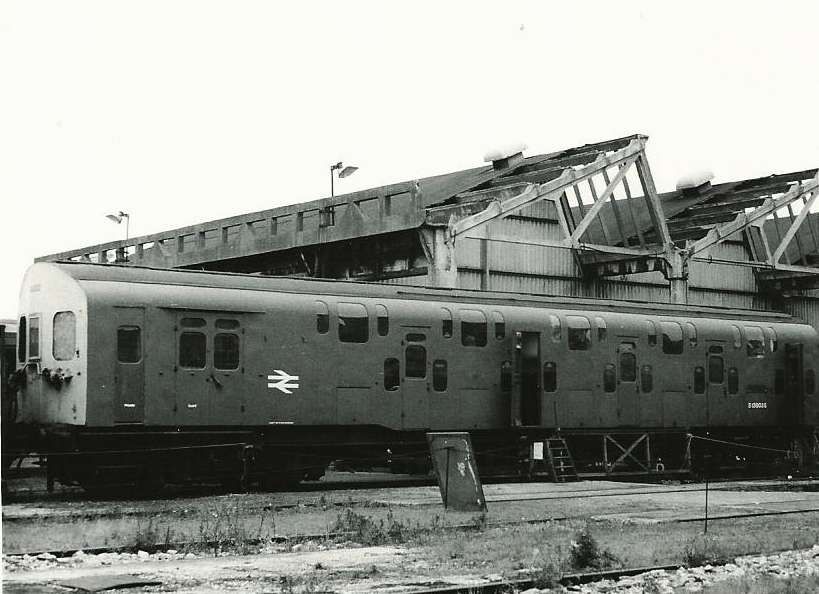
However, these new carriages will not be the first to run on British metals. In the late 1940s Bulleid, the Chief Mechanical Engineer of the former Southern Railway, introduced two double-decker trains to the route between London Charing Cross and Dartford. These SR Class 4DD trains had split level floors with alternately high and low passenger compartments. They were no higher than regular carriages and so could travel on the Southern Railway network. “It was hoped that the SR Class 4DD could fit almost a third more commuters on board. But things didn’t get off to a great start, when the carriages were pulled for modifications after just one day in service. They subsequently revealed various other shortcomings, one of which … was the windows not opening.” [34] A ventilation system had to be fitted to overcome the problem.

The Southern Railway designed SR Class 4DD carriages were introduced as an experiment in 1949 just after nationalisation. [35]

Apparently, passenger capacity was improved by the SR Class 4DD, but the compartments were just not comfortable and because there were more passengers boarding and alighting, the train service was slowed down

One of the double-decker units at the Ashford Steam Centre, in October 1972, © Hugh Llewlyn and licenced for reuse under a Creative Commons licence (CC BY-SA 2.0). [34]
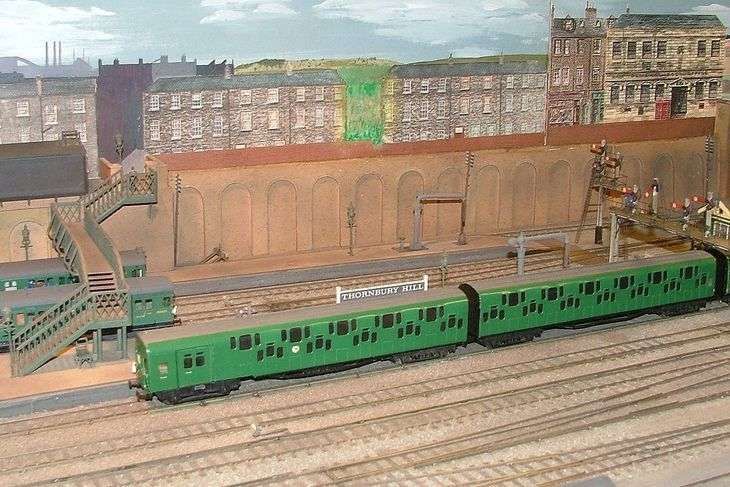
A model of the SR Class 4DD, © Les Chatfield and licenced for reuse under a Creative Commons licence (CC BY 2.0). [34]

References

  1. https://en.wikipedia.org/wiki/Bilevel_rail_car, accessed on 22nd October 2025.
  2. https://commons.wikimedia.org/wiki/File:France_Paris_Champs_Elysees_Wagon_a_imperiale.JPG, accessed on 22nd October 2025.
  3. https://en.wikipedia.org/wiki/Voiture_%C3%89tat_%C3%A0_2_%C3%A9tages, accessed on 23rd October 2025.
  4. https://marc-andre-dubout.org/cf/lvdc/lvdc0074/carnet06_05.htm, accessed on 23rd October 2025.
  5. https://www.patrimoine-ferroviaire.fr/wp-content/uploads/Est-B4C5-imperiale-21094.jpg, accessed on 23rd October 2025.
  6. https://www.thenational.scot/news/national/25561691.first-major-fleet-double-decker-trains-run-uk-railways, accessed on 23rd October 2025.
  7. https://en.wikipedia.org/wiki/Voiture_de_banlieue_%C3%A0_2_niveaux, accessed on 23rd October 2025.
  8. https://en.wikipedia.org/wiki/Regio_2N, accessed on 2nd May 2026.
  9. https://commons.wikimedia.org/wiki/File:Regio2N_003XL_en_gare_de_Longueau.jpg, accessed on 2nd May 2026.
  10. https://commons.wikimedia.org/wiki/File:Gare_de_Lavilletertre_(2).jpg, accessed on 3rd May 2026.
  11. https://en.wikipedia.org/wiki/Bombardier_Double-deck_Coach, accessed on 3rd May 2026.
  12. https://en.wikipedia.org/wiki/Bilevel_rail_car, accessed on 3rd May 2026.
  13. https://en.wikipedia.org/wiki/Intercity_2, accessed on 3rd May 2026.
  14. https://www.reddit.com/r/trains/comments/1fbuaqi/actual_rare_double_decker_train, accessed on 3rd May 2026.
  15. https://commons.wikimedia.org/wiki/File:DR_22_032.jpg, accessed on 3rd May 2026.
  16. https://www.asmodellbahn.de/en/products/lbe-doppelstockwagen, accessed on 3rd May 2026.
  17. https://www.modellbahnshop-lippe.com/Drive+trains/Drive+train/Hobbytrain-H25304/gb/modell_373337.html, accessed on 3rd May 2026.
  18. https://en.wikipedia.org/wiki/Bombardier_Double-deck_Coach#/media/File%3AGie%C3%9Fen_Regionalexpress_Bahnhof01_2010-02-27.jpg, accessed on 3rd May 2026.
  19. https://www.facebook.com/share/p/1B818d3gSh, accessed on 3rd May 2026.
  20. https://youtu.be/PuXw-cZ3vxE?si=iFI7opsRQzoCzXR8, accessed on 3rd May 2026.
  21. Ostdeutsche Eisenbahn GmbH (ODEG) is the largest private railway operator in eastern Germany, operating passenger services across Berlin, Brandenburg, Mecklenburg-Vorpommern, Saxony, and Saxony-Anhalt. Founded in 2002, it is a 50/50 joint venture of Netinera and BeNEX, operating 17 lines.
  22. National Express Germany (a subsidiary of the British Mobico Group) is a major private rail operator in North Rhine-Westphalia, operating regional lines including the Rhein-Ruhr-Express (RRX) RE1, RE5, and RE11, as well as RE7 and RB48. Using Siemens Desiro HC trains, they provide run services covering 20 million km annually as of 2023.
  23. https://commons.wikimedia.org/wiki/File:Siemens_Desiro_HC_ODEG_in_Rheydt_Hbf,_07-10-2022.jpg, accessed on 3rd May 2026.
  24. https://www.modellbahnunion.com/HO-gauge/Electric-multiple-unit-Desiro-HC-BR-462-RRX-National-Express.htm?shop=modellbahn-union-en&a=article&ProdNr=MU-H0-T46203&p=802&srsltid=AfmBOoqN0GDRh9yiDXkj_sZft70dYgWlgPruby0eBRpihbdgVX1iiNzm, accessed on 3rd May 2026.
  25. https://commons.wikimedia.org/wiki/File:Lakeshore_West_GO_Train_WB_at_Roncesvalles_Pedestrian_Bridge_-_1,_April_27_2026.jpg, accessed on 4th May 2026.
  26. https://en.wikipedia.org/wiki/Bombardier_BiLevel_Coach, accessed on 4th May 2026.
  27. https://transittoronto.ca/regional/2507.shtml, accessed on 4th May 2026.
  28. https://transittoronto.ca/photos/images/go-9811-double-decker-197604.jpg, accessed on 4th May 2026.
  29. https://commons.wikimedia.org/wiki/Category:Bombardier_BiLevel_coaches_of_Metrolink, accessed on 4th May 2026.
  30. https://youtu.be/ZtZfaEeOLlU?si=ZWcj4cXtO2NMTZFW, accessed on 4th May 2026.
  31. https://en.wikipedia.org/wiki/Metrolink_rolling_stock, accessed on 4th May 2026.
  32. https://en.wikipedia.org/wiki/Rotem_Commuter_Cars?wprov=rarw1, accessed on 4th May 2026.
  33. https://commons.wikimedia.org/wiki/File:SDRX105.jpg, accessed on 4th May 2026.
  34. https://londonist.com/london/transport/double-decker-train-london-1940s, accessed on 4th May 2026.
  35. https://youtu.be/1a2K0TP1lxM?si=spxN70y-q5D78Lpv, accessed on 4th May 2026.