
Among other items of international news in the March 1951 issue of The Modern Tramway, was a short series of notes culled from the Spanish magazine, ‘Ferrocarriles y Tranvias’
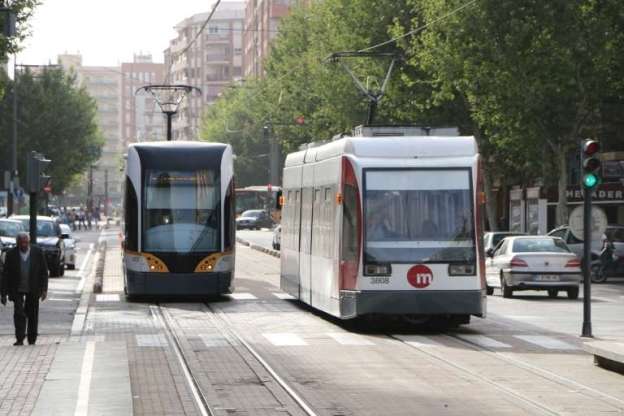
The featured image for this article shows two different trams operating on the modern Tramway network in Valencia: a Series 3800 on the right and a Series 4200 on the left. [15]
The Modern Tramway reported:
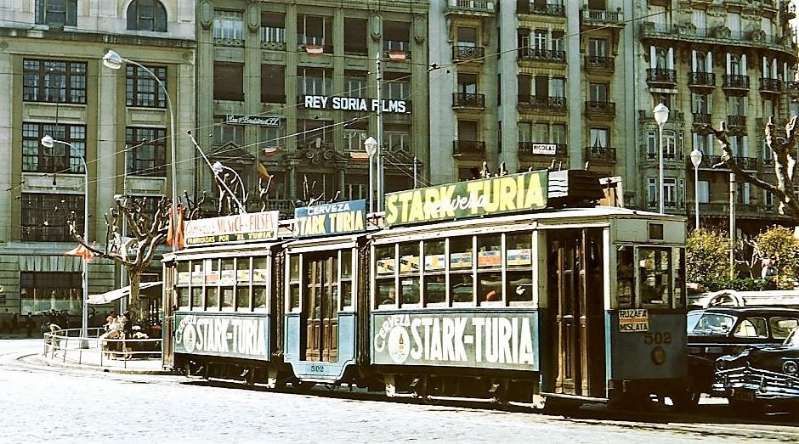
“A recent issue of the Spanish monthly ‘Ferrocarriles y Tranvias’ contains interesting news from the town of Valencia. The Compañia de Tranvias y Ferrocarriles de Valencia [CTFV], which operates about 50 route miles of metre gauge tramways and some electric railways, has recently acquired certain Italian patents relating to articulated tramcars, and a start has been made in rebuilding the medium-age 4-wheel tramcars to articulated units with a suspended central unit, as in Rome and Milan. The two 4-wheel cars and the central section form a unit capable of transporting 120 who enter by the rear platform and leave by the centre or front: all entrances/exits are provided with power-operated folding doors, worked by the driver and conductor from their respective seats. These unidirectional articulated sets are numbered from 501 upwards, and are intended for service on certain town routes such as the recently extended Ruzafa-Mislata line, where the curves and restricted clearances in the city centre prevent the use of the modern 400-class bogie cars. These also deserve mention: they have been constructed locally, some of them since 1946, and are single-ended, with doors on one side only: some, however, have the doors on the left, ie. off-side, and others on the right, as usual on the Continent. The explanation is that the former batch of cars are used on Valencia’s circular route No. 5, which is provided throughout with central loading islands placed between the tracks. We believe this is the only case of its kind; Brussels has some centre islands, as did Manchester at one point, but in these cases the cars are (or were) running on the ‘wrong’ side of the road, against the traffic whereas the Valencia cars are on their correct side of the road.” [1: p66-67]
“The following remarks by the Secretary of the Company about the Valencia tramways in general are quoted in translation from the source of the above information, an article in the November [1950] issue of ‘Ferrocarriles y Tranvias (Madrid):
“‘The tramway service in Valencia is well appreciated, but the enormous extension of the city obliges us to maintain an intense and at the same time not too costly service. Thus we have lines worked with motor cars hauling two trailers. A service of buses or trolleybuses in Valencia would be a very costly innovation if we provided all the units necessary to transport the enormous mass of passengers who travel by our routes, and we should be confronted with the problem of the impossible amortisation of capital or by an extraordinary elevation of fares which the public could not support’.” [1: p67]
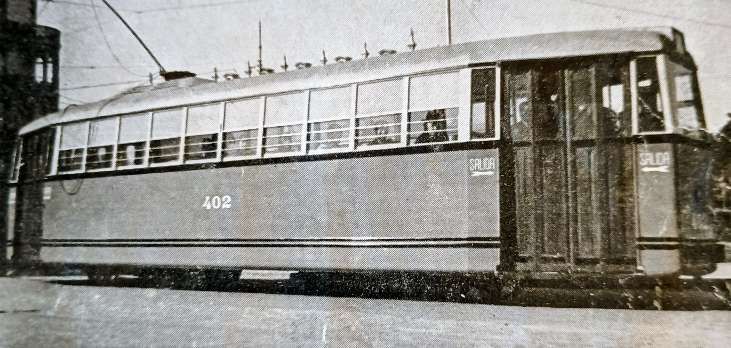
The notes refer to the articulated tram sets being numbered from 501 upwards. The CTFV Type 500 refers to vintage articulated ‘two rooms and a bath’ trams, which were formerly used in Valencia’s historic tram network. These articulated vehicles, created by joining two older trams with a floating section, represented a significant phase in the city’s transport history before the modern Metrovalencia system was established. These modified teams were in service by 1950. One of them is illustrated below. [2]
Valencia’s Tramways since 1950
Valencia’s traditional tram network operated until 20th June 1970, when it was gradually displaced by car and bus traffic. [3]
In 1994, the metro and tram network operating today started as a development of the local suburban railway that remained after the liquidation of the tram network. That suburban railway was metre-gauge and as a result the new system was also metre-gauge. The metro and the tram network in Valencia are essentially one system and they are operated by one company, with tram lines serving as extensions of the metro. The metro draws power from overhead lines. [3]
In Valencia, lines numbered 1, 3, 5, 7, and 9 are the metro. Those numbered 4, 6, 8, and 10 are tramways. The trams are uniform, red, and clean, without advertisements. They are generally comfortable but relatively nondescript. [3]
Before the foundation of the Ferrocarrils de la Generalitat Valenciana (FGV), the narrow-gauge rail network in Valencia was a classic suburban network, which had a great deal of importance in the metropolitan area but very little influence in strictly urban traffic movements. [4]
“The Metrovalencia network traces its origins to the Trenet de València (ca; es) system of narrow-gauge interurban railways, of which its first section, built by the Valencian Tramway Society (Spanish: Sociedad Valenciana de Tranvías) was opened in 1888 between Valencia (near the Pont de Fusta, or Fusta Bridge) and Llíria. Several further extensions of the Trenet were later built between 1891 and 1912. In 1917, both the Valencian Tramway Corporation and the Compagnie Génerale des Tramways de Valence (Espagne) Société Lyonnaise (es) were merged into a single company called the Valencia Tram and Rail Company (Spanish: Compañía de Tranvías y Ferrocarriles de Valencia). After years of losses, the rail operations of CTFV were finally acquired by FEVE in 1964.” [5]
In October 1988, the first underground section of the network, which was 7 kilometres long, was opened and connected the suburban lines of Llíria, Bétera and Rafelbunyol to the north of the city and with the Villanueva de Castellón line to the south. [4][5]
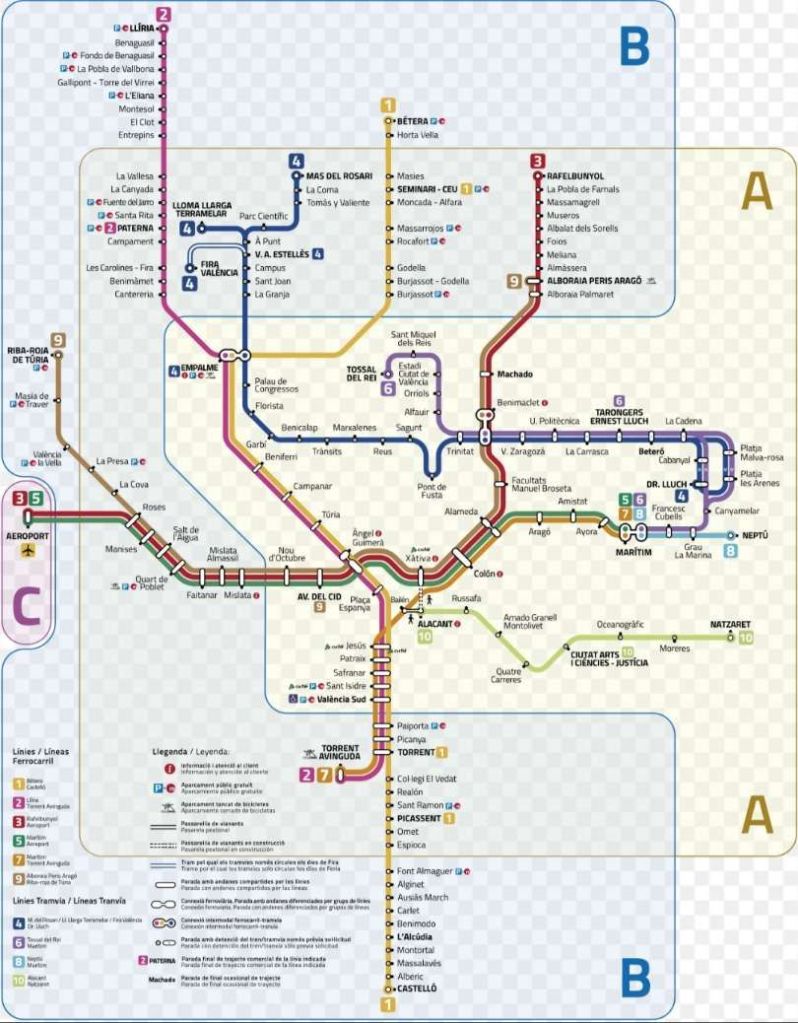
In May 1994, the first ‘tranvia’ in the system, Line 4, opened. Valencia was the first city in Spain to use this mode of transport in the modern era … Initially, the line was 9.7 kilometres (6.0 miles) long and had 21 stations. The line connected the suburban lines with high demand zones such as the Polytechnic University, the new university campus, and the Malvarrosa Beach, replacing the former line from Empalme to El Grau. [4][5]
“In May 1995, Line 3 was created via a new tunnel from El Palmaret in Alboraria to Alameda. The extension reused an existing railway line from Pont de Fusta to Rafelbunyol, of which part was scrapped (between Pont de Fusta – Sant Llorenç – El Palmaret). The remainder was switched from 750 V to 1500 V.” [5]
“Further alterations followed five years later. On 16th September 1998, Line 2 was merged with Line 1, and Line 3 was extended from Alameda to Avinguda del Cid in the west with a branch to Torrent in the south (with some trains only going as far as Jesús). Then, in May 1999, Line 3 was extended again from Avinguda del Cid to Mislata-Almassil.” [5]
“In April 2003, Line 5 was opened, taking over the Torrent branch of Line 3 together with a newly constructed 2.3-kilometre (1.4 miles) branch from Alameda to Ayora. … One year later, Lines 1 and 5 were extended from Torrent to Torrent Avinguda, a distance of 2.3 kilometres (1.4 miles). … On 3rd October 2005, an infill station between Colón and Jesús was opened on Line 5 with a connection to València-Nord. Additionally, Line 4 was extended to Mas del Rosari, and on 20th December to Lloma Llarga-Terramelar.” [5]
“Later, on 2nd April 2007, Line 5 was extended eastward to Marítim … This station allows transfers to a tram operating to the port at Neptú station … which was originally listed only as an extension of Line 5. Simultaneously, Line 5 was extended west with Line 3 to a new station at the Valencia Airport.” [5]
“In [September/]October [of the same year] the first phase of the Orbital Tram (Line 6) starts offering service. It is 9.2 kilometres long and covers the route between the Tossal del Rei Plaza and the Marítim-Serrería station. … This first phase of [Line 6] travels through the Torrefiel and Orriols neighbourhoods along a new 2.45 kilometres long tramway stretch until it connects with Line 4 on Almazora Street. From here on it [follows] Line 4 until the loop at Dr. Lluch, where it continues onto the Line 5 tramway stretch and comes to an end at the Maritím-Serrería station.” [4]
“On 12th December 2010, two overground stations on Line 3, Alboraya and Palmaret, were replaced by new subterranean stations: Alboraia Peris Aragó and Alboraia – Palmaret, respectively. Additionally, on Line 1, Jesús was renamed Joaquin Sorolla, while the Hospital station was renamed Safranar.” [4][5]
“On 6th March 2015, a 4-station spur from Rosas to Riba-roja de Túria was opened as Line 9. This followed the path of a regional train line, which had been closed in 2005. [5][6]
“In April 2015, the metro map was redrawn with several of the branches split into separate lines, increasing the number of lines to 9.” [5][7]
“On 1st February 2022, the number of fare zones was reduced from four to two, as part of a reduction in ticket prices, with a supplemental fare applying to Aeroport station.” [5][8]
The names of 21 stations were changed to make the names more readily identifiable, to adapt them to the urban changes in their areas, and to promote ‘linguistic normalisation’ (favouring Valencian language names rather than Spanish language ones.). [9][10] The changes took effect alongside other changes made in preparation for the opening of the new tram Line 10, [11] which opened for service on 17th May 2022. [5][12]
After 2022, modernization plans included reduced fare zones and continuing 50% discounts until 30th June 2026. Plans included construction of two new lines – lines 11 and 12, to connect the city centre with the seafront, Malilla, and La Fe Hospital. These were included in an €839 million investment plan was announced for 2026-2030, covering modernization, new trains, and infrastructure improvements. [13]
The Modern Metro and Tram Fleet
3900 Series Metro Units: generally no longer in use, gradually being decommissioned.
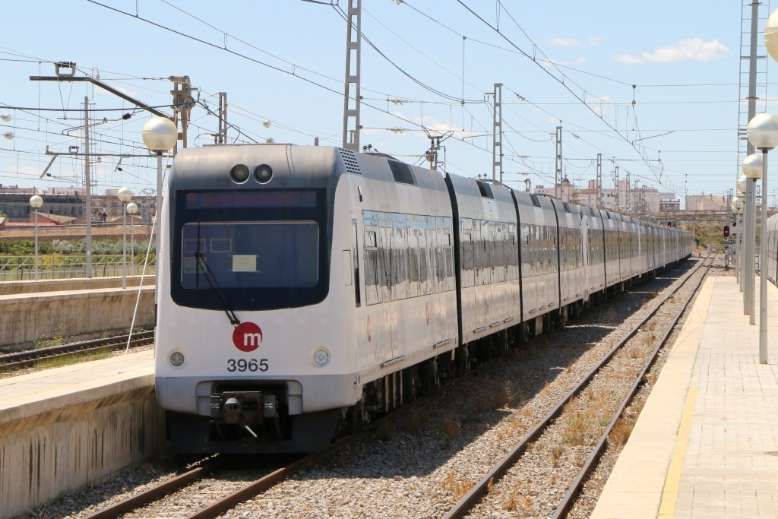
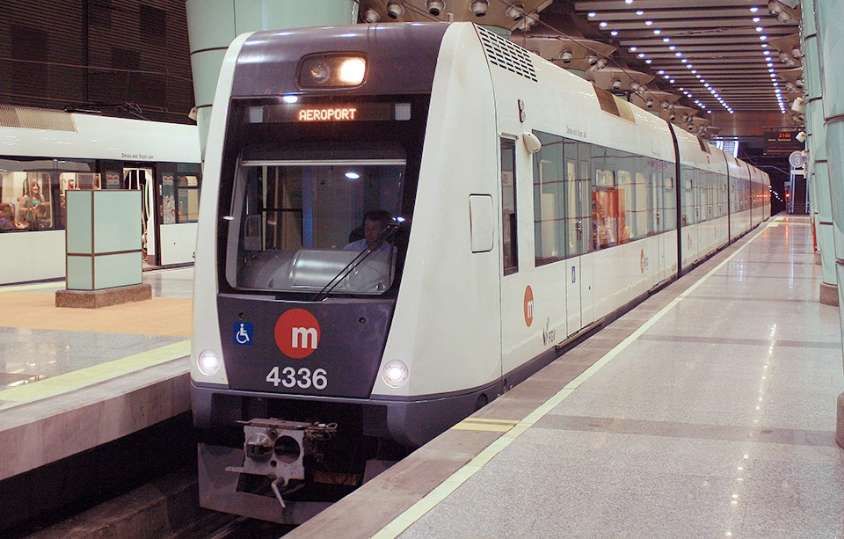
4300 Series Metro Units: Active on metro lines (1, 2, 3, 5, 7, 9).
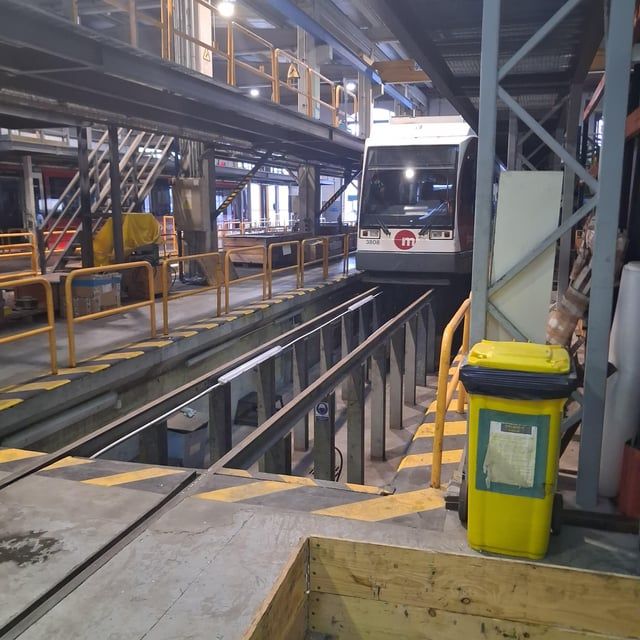
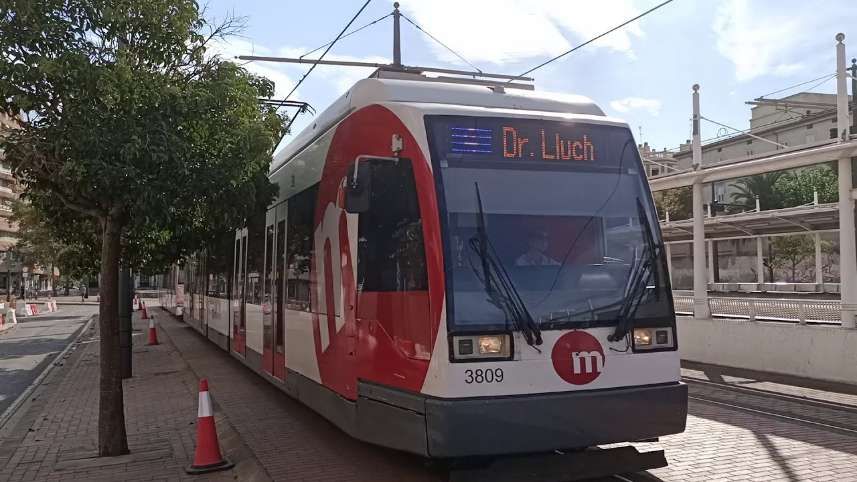
3800 Series Trams (Siemens-Düwag UT-3800) are high-floor vehicles that introduced modern tram service to Valencia in 1994, operating on Metrovalencia’s Line 4. Built between 1993 and 1998, the 25-unit fleet underwent a major, €8 million ‘half-life’ overhaul starting in 2014 to extend their service life with modern safety and comfort updates. [17]
4200 Series Trams (Bombardier): Modern low-floor trams operating on the tram network (Lines 4, 6, 8, 10).
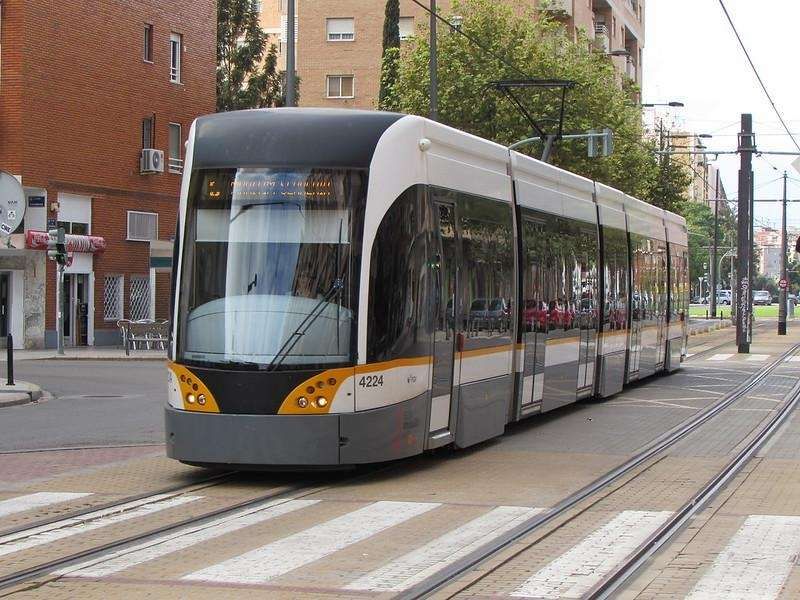
Future Rolling Stock
In 2026, Metrovalencia is undergoing a major modernization, integrating 22 new Stadler Rail Tramlink LRVs (16 for Valencia, 6 for Alicante) into its network, with deliveries occurring through 2028. These 45-metre-long, low-floor trams offer increased capacity and enhanced accessibility. The network is also upgrading infrastructure and renewing its passenger information systems. [14]
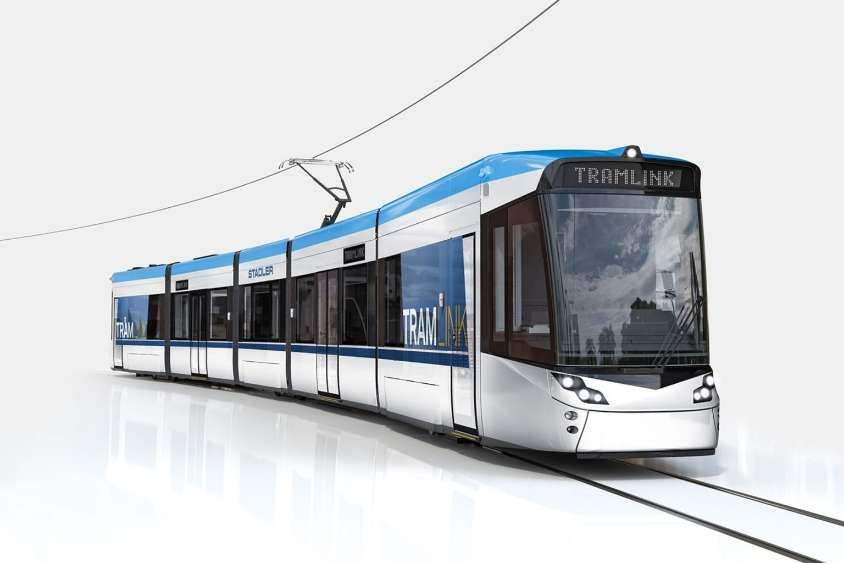
Stadler and FGV have signed a contract for the supply of 16 modern TRAMLINK low floor trams with the possibility of extending the order by a further 12 vehicles, in two batches of six units. The contract value amounts to €84.3 million. The lead time for the production of the 16 units has been set at 32 months. … The new 4 500 series trams for FGV will be designed and manufactured by the Stadler plant in Albuixech. The units will be incorporated into the fleet of Metrovalencia and TRAM d’Alacant, to cover the needs arising from the expansion projects planned in the coming years. [14]
Devastation caused by Storm Dana in October 2024
Finally, we should note that the Valencia Metro and Tram networks were, in May 2025, still recovering from the devastation caused by Storm Dana in October 2024. [15]
As of April 2026, the operational base and command centre at València Sud — which was entirely wiped out by the initial floods — was undergoing permanent €50 million rehabilitation works covering tracks, offices, workshops, and intermodal systems. Work was close to completion. [21]
References
- Tramway Progress in Valencia; in The Modern Tramway, Volume 14, No. 159, p66-67.
- https://www.reddit.com/r/Trams/comments/zghbbf/ctfv_type_500_articulated_tram_running_through, accessed on 13th May 2026.
- https://www.facebook.com/share/p/1LF45QzeTi, accessed on 13th May 2026.
- https://www.fgv.es/conoce-fgv/fgv-en-cifras/metrovalencia-en-cifras/metrovalencia-historical-evolution/?lang=en, accessed on 13th May 2026.
- https://en.wikipedia.org/wiki/Metrovalencia, accessed on 13th May 2026.
- La línea de metro a Ribarroja entrará en servicio el 6 de marzo (in Spanish); in Las Provincias, 2nd March 2015; via: https://www.lasprovincias.es/comunitat/201503/01/linea-metro-riba-roja-20150301120158.html, accessed on 14th May 2026.
- Así serán las nuevas líneas de Metrovalencia (in Spanish); in ABC, 27 November 2014; via: https://www.abc.es/local-comunidad-valenciana/20141126/abci-nuevas-lineas-metro-201411261611.html, accessed on 14th May 2026.
- El Metro de Valencia tendrá solo dos zonas tarifarias a partir de enero de 2022 [Metrovalencia will only have 2 fare zones after January 2022]; in ABC, 30th November 2021; via: https://www.abc.es/espana/comunidad-valenciana/abci-metro-valencia-tendra-solo-zonas-tarifarias-partir-enero-2022-202111301839_noticia.html, accessed on 14th May 2026.
- La Generalitat suprime el castellano en todas las paradas del Metro de Valencia y elimina la del Rey Juan Carlos [The Generalitat abolishes Spanish at all stops on Valencia Metro and eliminates the King Juan Carlos name]; in ABC, 2nd December 2021; via: https://www.lasprovincias.es/comunitat/generalitat-retira-castellano-20211202001545-ntvo.html, accessed on 14th May 2026.
- La Generalitat retira el castellano y el nombre de Juan Carlos I en el metro [The Generalitat removes Spanish and the name of Juan Carlos I from the metro]; in Las Provincias, 2nd December 2021; via: https://www.lasprovincias.es/comunitat/generalitat-retira-castellano-20211202001545-ntvo.html, accessed on 14th May 2026.
- Las 21 estaciones y paradas de Metrovalencia que cambian de nombre [The 21 Metrovalencia stations that will change their name]; in Las Provincias, 1st December 2021; via: https://www.lasprovincias.es/valencia-ciudad/estaciones-paradas-metrovalencia-20211201192627-nt.html, accessed on 14th May 2026.
- Valencia celebrates with new line 10; in Tramways & Urban Transit. No. 1015, Mainspring Enterprises Ltd, UK, July 2022. p. 244.
- https://www.seetaoe.com/details/252082.html, accessed on 14th May 2026.
- https://www.rail-suppliers.com/stadler-to-supply-the-new-trams-in-alicante-and-valencia, accessed on 14th May 2026.
- https://www.urban-transport-magazine.com/en/valencia-the-current-situation-of-the-public-transport-network-after-the-devastating-floods, dated 2nd May 2025, accessed on 14th May 2026.
- https://www.valencia-cityguide.com/tourism/transport/metro.html, accessed on 14th May 2026.
- https://railuk.com/rail-news/trams-in-valencia-undergo-half-life-overhaul, accessed on 14th May 2026.
- https://www.reddit.com/r/Trams/comments/1px9xw1/tram_maintenance_workshop_valencia_spain, accessed on 14th May 2026.
- https://experiencesvalencia.com/las-esfinges-del-pont-de-fusta-en-valencia, accessed on 14th May 2026
- https://lepetitjournal.com/valence/metros-trams-communaute-valencienne-gratuits-dimanche-3-mois-336542, accessed on 14th May 2026.
- https://diarivalencia.cat/en/l-horta-de-valencia/general/metrovalencia-finalizes-reconstruction-of-its-valencia-sud-headquarters-after-dana, accessed on 14th May 2026.


