
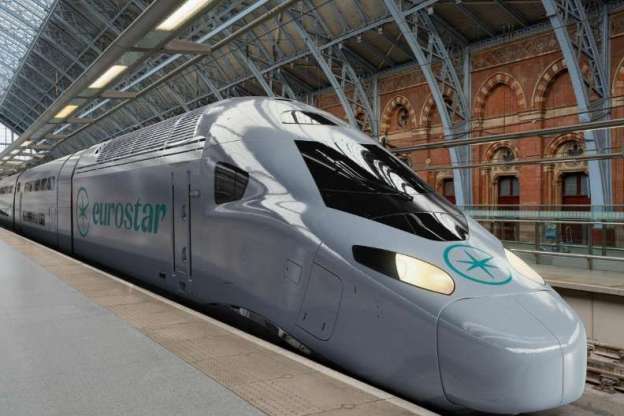
It was announced on 22nd October 2025 that the lines through the Channel Tunnel would see double-decker trains by 2031. An order was placed for their construction and delivery in October 2025. [6]
The featured image for this article shows what one of these trains would look like in Eurostar’s grey livery. The fully electric fleet of trains will be named Eurostar Celestia, which comes from the Latin word caelestis, meaning ‘heavenly’. The colour of the train has not yet been decided, but the current colour of Eurostar trains is grey, dark blue and yellow. Each train would be 200m long. Currently two are run together making an entire service 400m long. Double-decker trains don’t have twice as many seats as a single-deckers though, just because there needs to be room for interior steps, but there would be a fifth more seats. This means an increase from just under 900 seats on the current service to just over a thousand. [6]
“A bilevel car (American English) or double-decker coach (British English and Canadian English) is a type of rail car that has two levels of passenger accommodation as opposed to one, increasing passenger capacity (up to 57% per car in extreme cases).” [1]
Examples of Double-Deck Coaches/Trains in a Few Different Countries
France
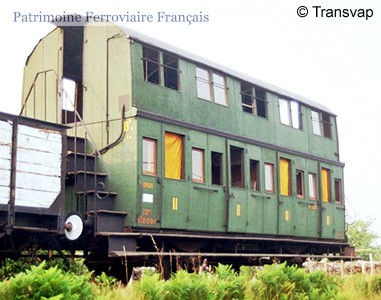
“Double deck carriages date to at least as early as the second half of the 19th century. In France several hundred ‘voitures à impériale’ with seats on the roof were in use by the Chemins de fer de l’Ouest, Chemins de fer de l’Est and Chemins de fer du Nord by 1870, having been in use for over 2 decades; the upper deck was open at the sides with a light roof or awning covering the seats.” [1]
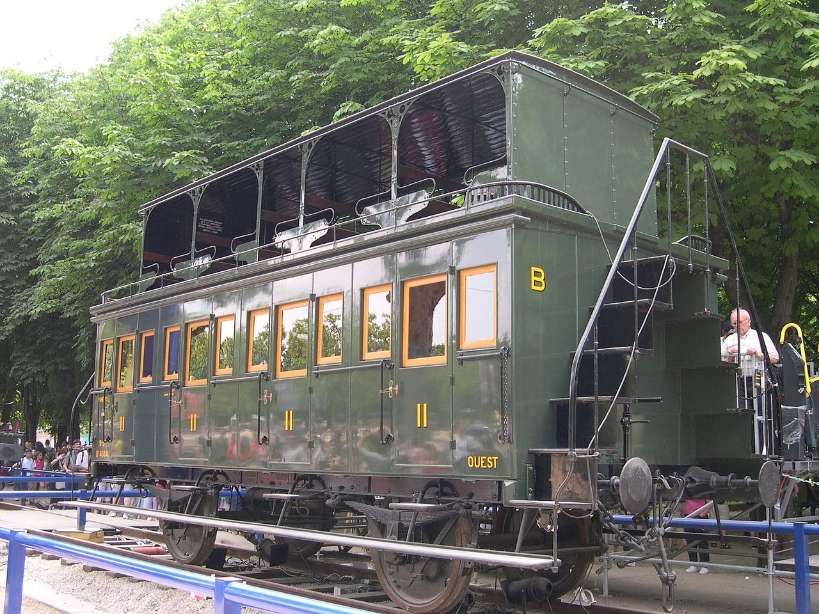
Marc Andre Dubout tells us that “the success of the railway with the public, the rise of the suburbs forced the companies to design double-decker carriages whose capacity was almost double that of conventional railway cars. Built from 1855 by the Compagnie de l’Ouest, … these carriages represent the flowering period of the Impressionist painters who took the trains on Sundays to go and paint in the countryside … not so far from Paris. It is the era of the boater and the joys of picnics by the water.” [4]
Dubout continues to say that these carriages weighed 8 tons and had 4 compartments downstairs and space for 34 sitting upstairs which could be reached by external staircases at the end of the carriage. [4]
“In the 1860s, M.J.B. Vidard introduced two-storied carriages on the Chemins de fer de l’Est, with a full body, windows, and doors; the design lowered the floor of the lower storey to keep the center of gravity low. Vidard’s carriages had a total height of 13 feet 8 inches (4.17 m) with the head height in the lower part of the carriage only 5 feet 5 inches (1.65 m); the carriages had a capacity of 80 persons (third class) in a 2 axle vehicle of 13 tonnes fully loaded.” [1][5]
“The first all-steel Chemins de fer de l’État double deckers are an early example of split-level cars.” [1] “The first ten carriages were delivered by Brissonneau et Lotz, now part of Alstom, in 1933. The Voiture État à 2 étages were used as permanently coupled sets of carriages and used for réversibilité (push-pull operation), driving the train from the end passenger car and the steam locomotive pushing, on the Réseau Saint-Lazare. They often operated once in the morning, taking commuters to work, and once in the evening, returning them back home. They were also briefly used on the Réseau Montparnasse in shorter sets of six cars.” [3]
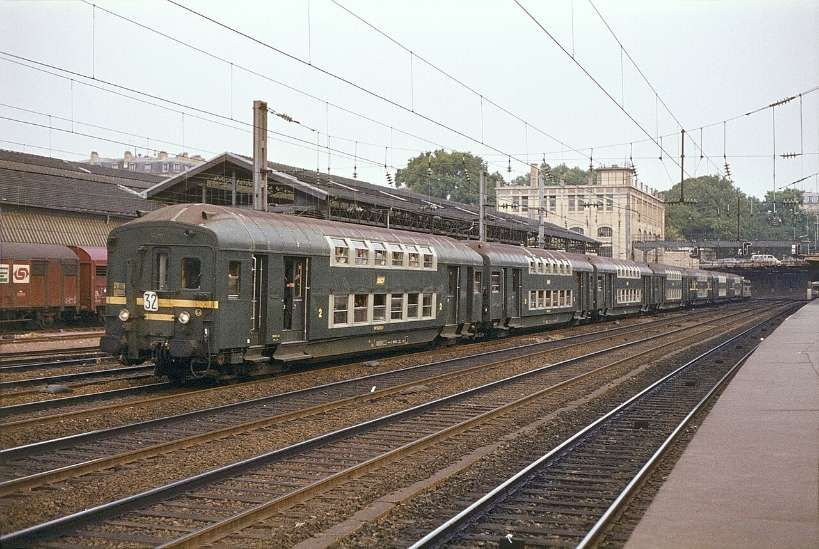
“Fifty cars were built, which accommodated the increasing suburban traffic from the beginning of the 20th century. They were supplemented by 380 Talbot passenger cars and 200 Standard EMUs. The last of the class were only withdrawn in 1984, after introduction of the VB2N in 1975.” [3]
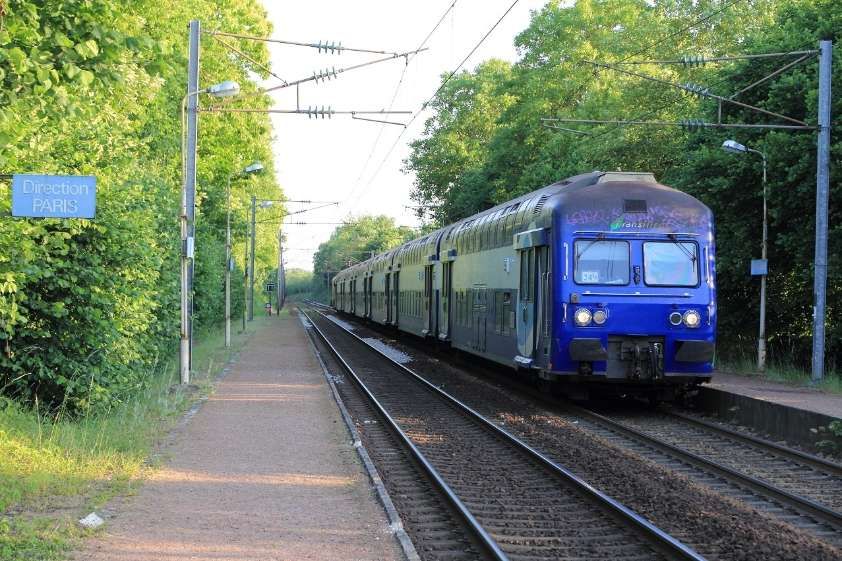
The Voiture de banlieue à 2 niveaux (shortened to VB2N) “is a type of double-deck set of passenger carriages used on Transilien, the commuter rail network in the Île-de-France region of France. The carriages are unpowered and designed to be paired with an electric locomotive.” [7] They were built between 1974 and 1984, refurbished between 2002 and 2008. Since 2012, the VB2N trains were being shifted from busier RER and Transilien lines to less busy routes on the Transilien network as new equipment came online, most notably the single-level Z 50000 and double-deck Regio 2N(Z57000) trainsets. The VB2N trains have been being retired gradually since 2021. [7]
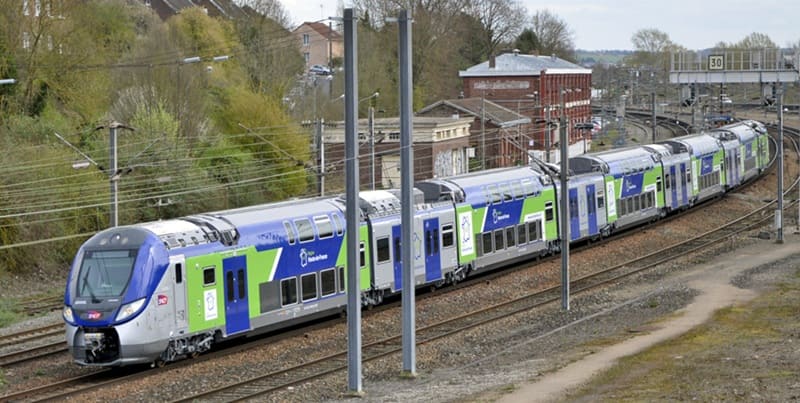
The double-deck Regio 2N trainsets are a family of a double-deck, dual-voltage electric multiple unit trainsets built for French rail operator SNCF to serve its regional rail routes (TER, Transilien, and RER). The trains utilize a unique and highly configurable design. One of the end cars is single-deck and designed to accommodate wheelchair users, the other end car is double-deck. The intermediate cars are either double-deck with no doors accommodating seated passengers traveling long distances or single-deck with two double doors per side accommodating standing passengers traveling short distances. Trains can be configured with six, seven, eight or ten cars. Additionally, the seating can be configured for intercity service (2+1 seating in 1st class, 2+2 seating in 2nd class), regional service (2+2 seating throughout), or high-capacity commuter service (3+2 seating throughout). These trains were designed and originally built by Bombardier, but during delivery the company was bought by Alstom, which completed the order. A total of 447 trainsets have either been built or are under construction at the Alstom Crespin factory since 2012. The first set was placed into regular passenger service in September 2013. [8]
Germany
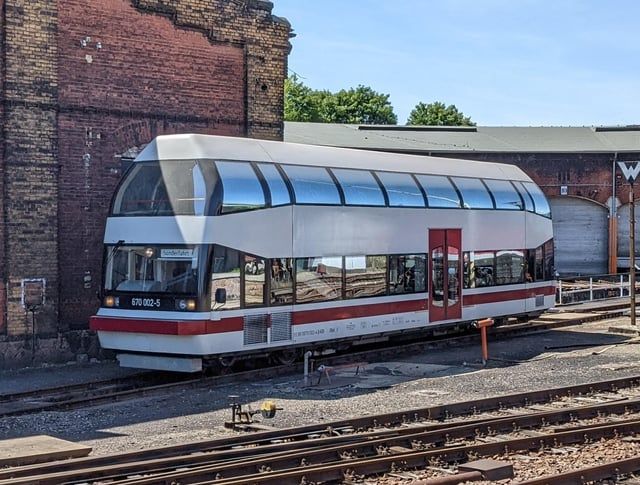
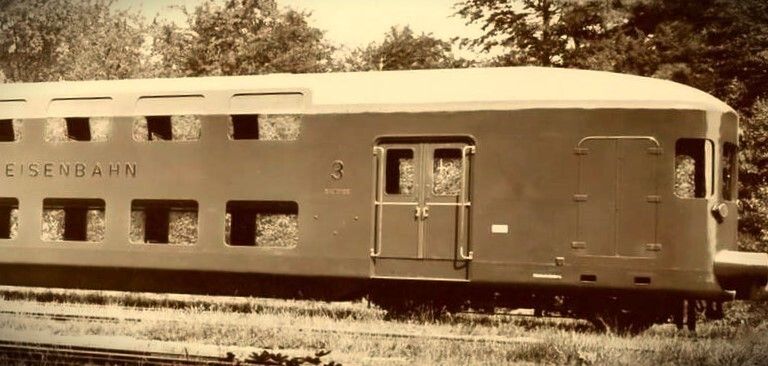
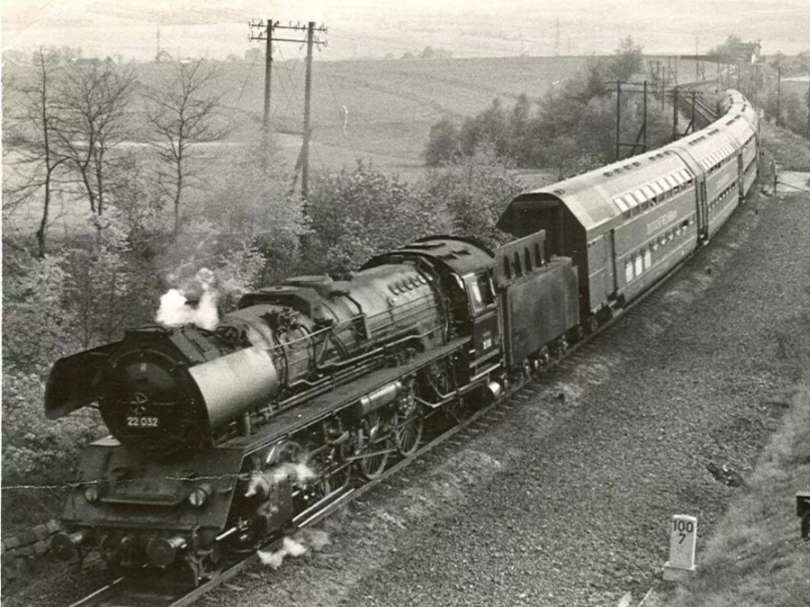
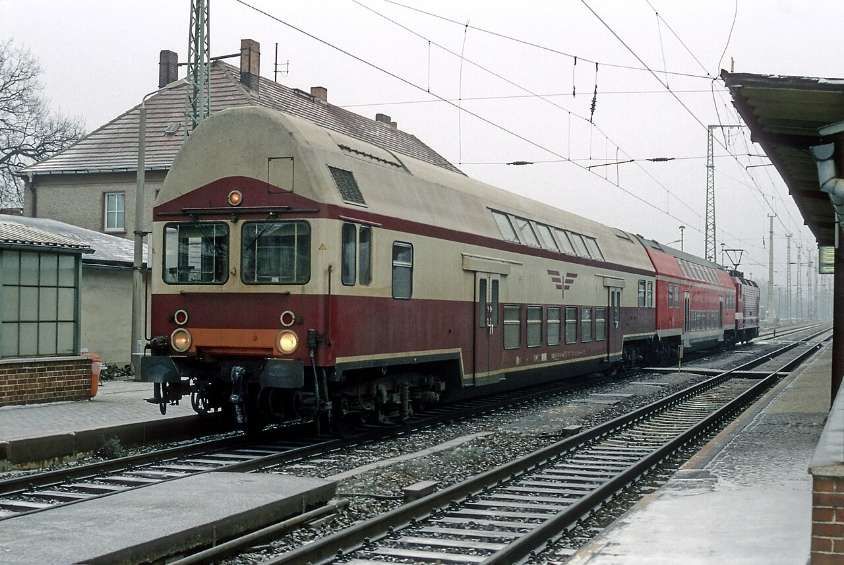
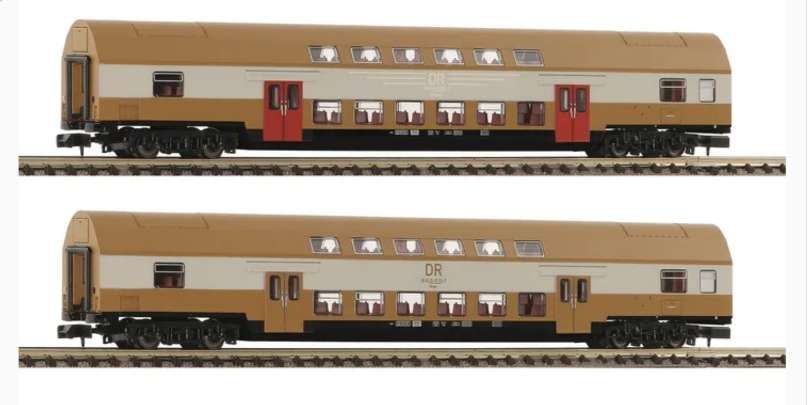
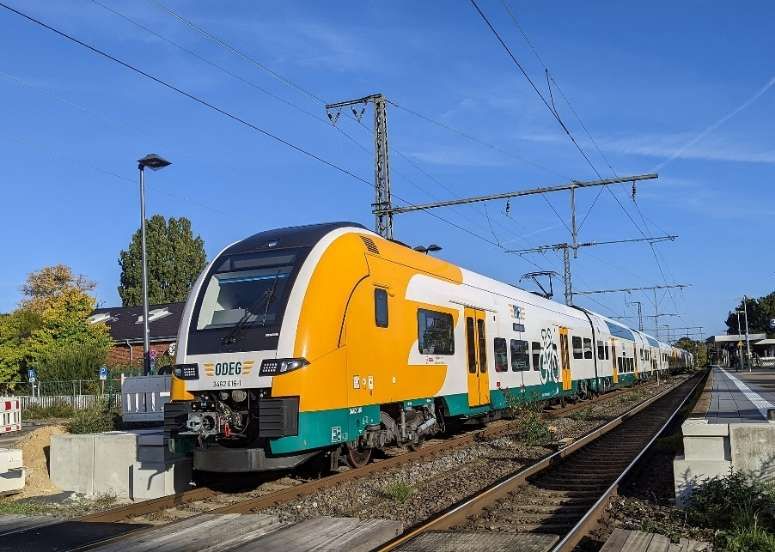
Double-decker trains in Germany (Doppelstockwagen) originated in 1935–36 with LBE commuter coaches, evolving from East German, Görlitz-built articulated trainsets in the 1950s-70s into widespread regional use. Following reunification, Deutsche Bahn modernized these coaches to become the dominant, high-capacity standard for regional lines, and in 2015, introduced them as Intercity 2 for long-distance routes. [11][12][13]
Historical Evolution:
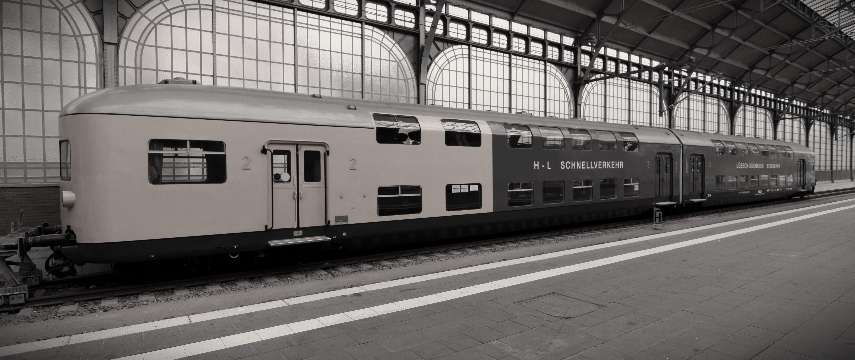
- Early Beginnings (1930s-1950s): The first double-deckers were built by WUMAG at Görlitz for the Lübeck–Büchen–Hamburg railway in 1935, pioneering push-pull operation in Germany.
- East German Development (DDR): VEB Waggonbau Görlitz became a hub for double-deck technology, producing two- to five-car articulated sets (Doppelstockgliederzüge) for the Deutsche Reichsbahn, with over 4,000 sets produced for the Eastern Bloc.
- West Germany (DB): In contrast to the East, the West German Deutsche Bundesbahn initially focused on single-level carriages until adopting modern 2nd generation Class 760 cars in the early 1990s.
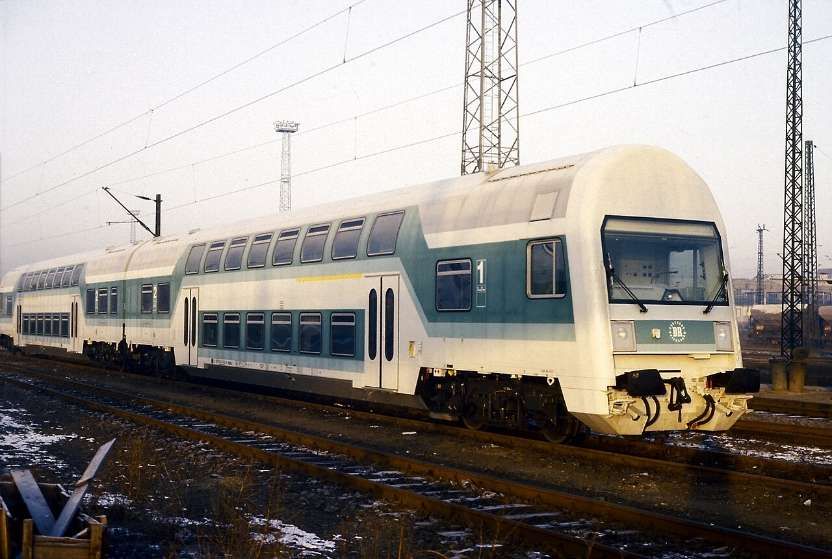
- Post-Reunification & Regionalization: After 1990, Deutsche Bahn heavily adopted modern, single-coach bilevel designs for regional rapid transit across Germany.
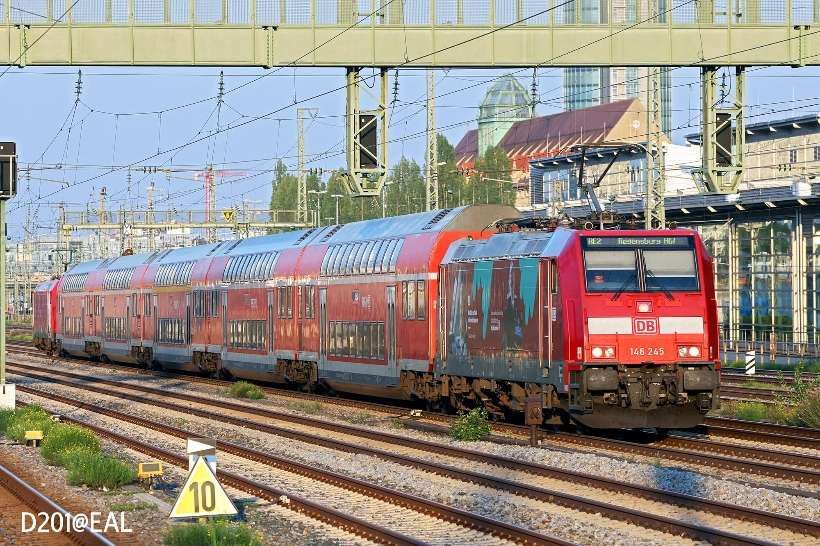
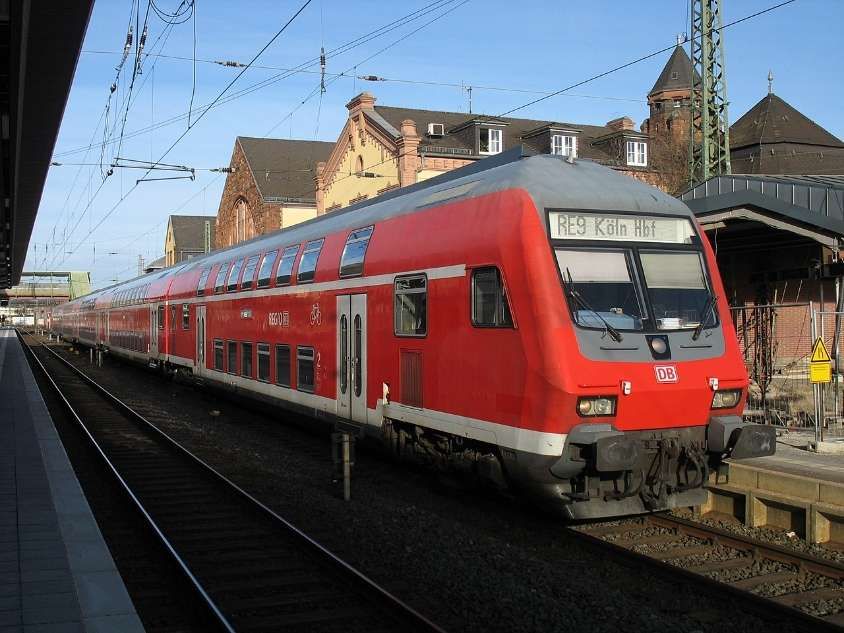
- Early 21st Century: typical trains were red double -decker carriages hauled by electric locomotives (such as Class 146 or 147), and featuring high-capacity seating for commuters. [11][12]
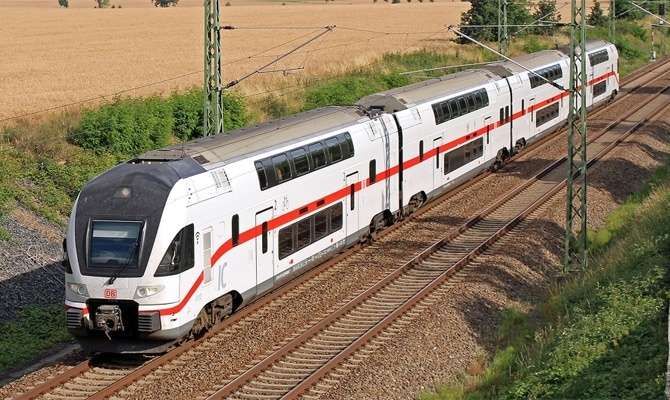
- Intercity 2 Era (2015-Present): In 2015, Intercity 2 trains, a mix of Bombardier and Stadler “kiss” trains, were introduced for long-distance services, capable of 160 km/h, though they have been criticized for offering regional-style comfort on long routes. [13]
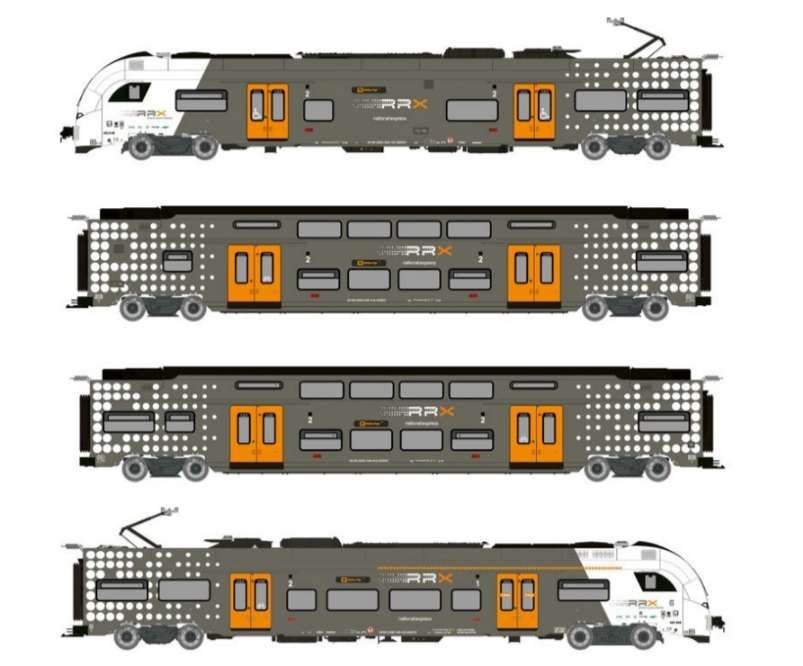
Private operators such as ODEG [21] and National Express Germany [22] use modern Siemens Desiro HC double-deck sets, often featuring a mix of single and double-deck cars for faster boarding. [11][12]
Unites States and Canada
Bilevel trains are widely used across the USA and Canada for high-capacity commuter services and long-distance travel. Primarily using Bombardier/Alstom BiLevel Coaches in cities and Amtrak Superliners on national routes, these trains maximize passenger volume, with the Bombardier model operating in at least 14 different transit authorities.
Examples of operators are:
- GO Transit (Canada):
GO Transit uses a bilevel passenger railcar (currently built by Alstom and previously by Bombardier, Hawker Siddeley Canada, the Canadian Car and Foundry (Can Car), and the UTDC) is used by a number of different North American commuter and regional rail operators, they feature a distinctive octagonal profile. The principal operator is GO Transit in the Golden Horseshoe, which operates some two-thirds of the total produced fleet. [26]
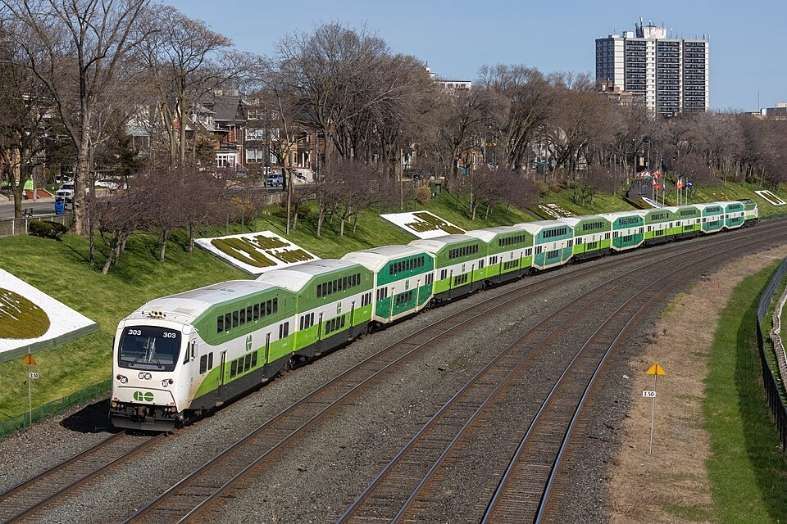
The BiLevel coaches were designed by Toronto’s regional commuter rail service, GO Transit and Hawker Siddeley Canada in the mid-1970s as a more efficient replacement for GO’s original single-deck coaches and cab cars. A trial was first undertaken with a borrowed Chicago & North Western Gallery Car. [27]

- Metrolink:
Metrolink in Southern California operates high-capacity, double-decker passenger coaches to maximize commuter transport efficiency without needing extra tracks. The fleet primarily consists of older, octagonal-shaped Bombardier BiLevel Coaches and newer, silver Hyundai Rotem BiLevel cars, often featuring white and blue or modern silver liveries. The Bombardier BiLevel Coaches were the same design as those operating on the GO network. [29]
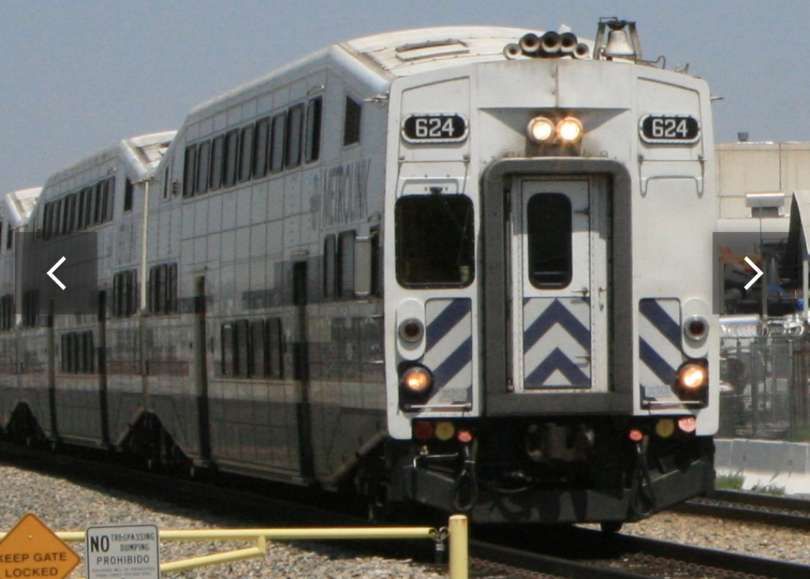
Metro link also makes use of newer, silver Hyundai Rotem BiLevel cars, often featuring white and blue or modern silver liveries.
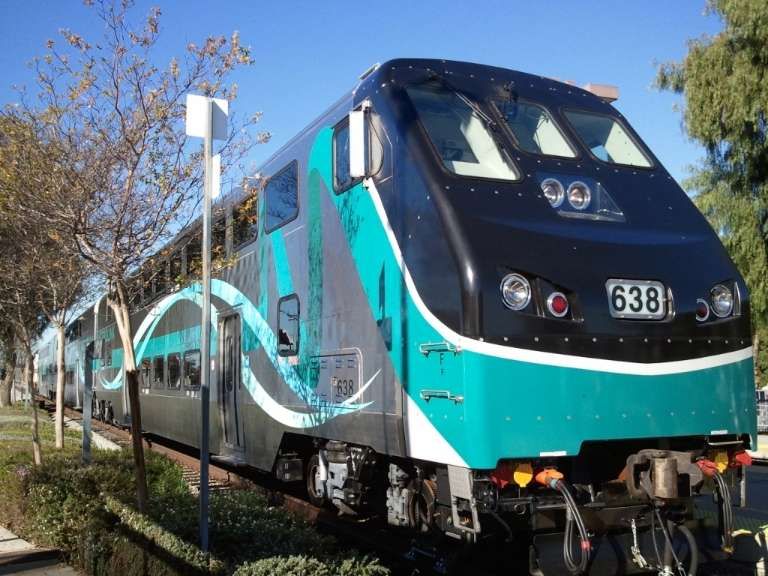
Hyundai Rotem began marketing commuter rail cars in 2006 to compete with other railcar manufacturers in North America such as Bombardier Transportation and Kawasaki Heavy Industries Rolling Stock Company. An assembly plant opened in Philadelphia, Pennsylvania, in 2008 to meet American requirements; it closed a decade later. Significant users include: MBTA Commuter Rail (Massachusetts Bay Transportation Authority); Metrolink; and Tri-Rail, a commuter rail service linking Miami, Fort Lauderdale and West Palm Beach in Florida. [32]
- Sound Transit (Seattle):
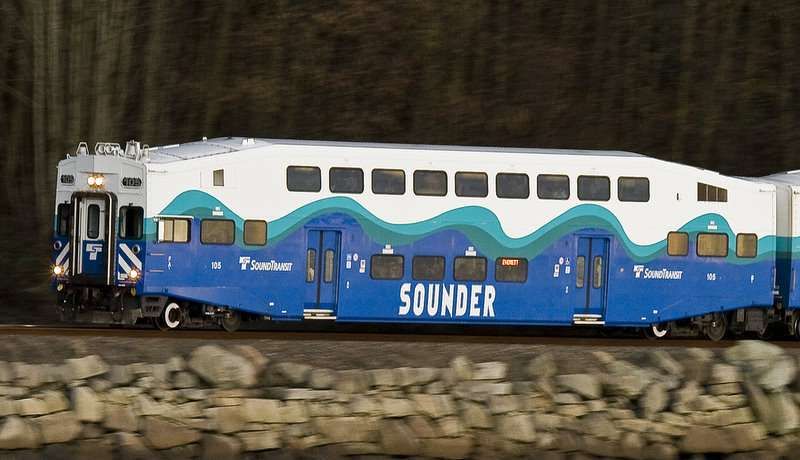
Sound Transit serves the city of Seattle in Washington State in the Pacific Northwest of the USA. It makes use of Bombardier BiLevel Coaches.
These have been in use on the Sound Transit network since the early 2000s. Sound Transit has made multiple orders over time, with new cars arriving in 2017 and 2022 to support service expansion on the South Line and a programme of refurbishment planned to begin in 2027. [32]
Great Britain
While there has been a significant use made of double-decker carriages on the continent and in North America. These vehicles have been largely absent in British railway history. The primary cause has been the tight loading gauge on British railways.
In recent years railway construction in the UK has seen a larger loading gauge used. The fruit of this policy is the plans to use double-decker carriages through the Channel Tunnel and on HS1.
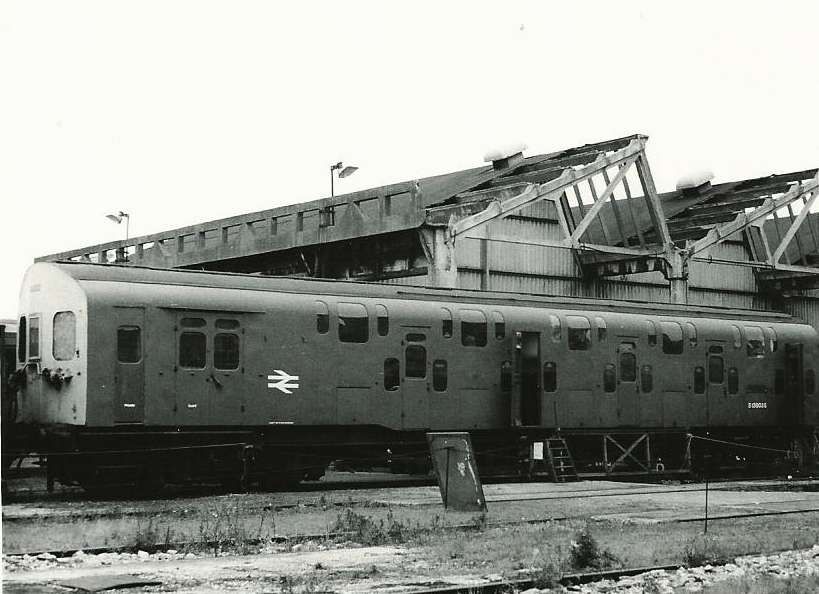
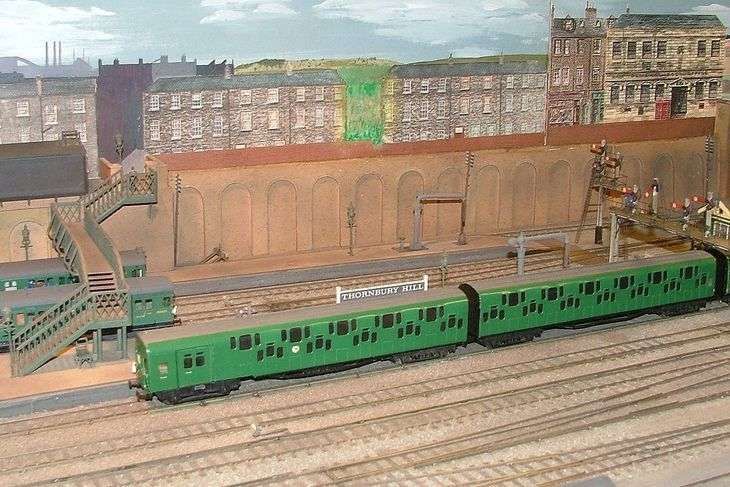
However, these new carriages will not be the first to run on British metals. In the late 1940s Bulleid, the Chief Mechanical Engineer of the former Southern Railway, introduced two double-decker trains to the route between London Charing Cross and Dartford. These SR Class 4DD trains had split level floors with alternately high and low passenger compartments. They were no higher than regular carriages and so could travel on the Southern Railway network. “It was hoped that the SR Class 4DD could fit almost a third more commuters on board. But things didn’t get off to a great start, when the carriages were pulled for modifications after just one day in service. They subsequently revealed various other shortcomings, one of which … was the windows not opening.” [34] A ventilation system had to be fitted to overcome the problem.
Apparently, passenger capacity was improved by the SR Class 4DD, but the compartments were just not comfortable and because there were more passengers boarding and alighting, the train service was slowed down
References
- https://en.wikipedia.org/wiki/Bilevel_rail_car, accessed on 22nd October 2025.
- https://commons.wikimedia.org/wiki/File:France_Paris_Champs_Elysees_Wagon_a_imperiale.JPG, accessed on 22nd October 2025.
- https://en.wikipedia.org/wiki/Voiture_%C3%89tat_%C3%A0_2_%C3%A9tages, accessed on 23rd October 2025.
- https://marc-andre-dubout.org/cf/lvdc/lvdc0074/carnet06_05.htm, accessed on 23rd October 2025.
- https://www.patrimoine-ferroviaire.fr/wp-content/uploads/Est-B4C5-imperiale-21094.jpg, accessed on 23rd October 2025.
- https://www.thenational.scot/news/national/25561691.first-major-fleet-double-decker-trains-run-uk-railways, accessed on 23rd October 2025.
- https://en.wikipedia.org/wiki/Voiture_de_banlieue_%C3%A0_2_niveaux, accessed on 23rd October 2025.
- https://en.wikipedia.org/wiki/Regio_2N, accessed on 2nd May 2026.
- https://commons.wikimedia.org/wiki/File:Regio2N_003XL_en_gare_de_Longueau.jpg, accessed on 2nd May 2026.
- https://commons.wikimedia.org/wiki/File:Gare_de_Lavilletertre_(2).jpg, accessed on 3rd May 2026.
- https://en.wikipedia.org/wiki/Bombardier_Double-deck_Coach, accessed on 3rd May 2026.
- https://en.wikipedia.org/wiki/Bilevel_rail_car, accessed on 3rd May 2026.
- https://en.wikipedia.org/wiki/Intercity_2, accessed on 3rd May 2026.
- https://www.reddit.com/r/trains/comments/1fbuaqi/actual_rare_double_decker_train, accessed on 3rd May 2026.
- https://commons.wikimedia.org/wiki/File:DR_22_032.jpg, accessed on 3rd May 2026.
- https://www.asmodellbahn.de/en/products/lbe-doppelstockwagen, accessed on 3rd May 2026.
- https://www.modellbahnshop-lippe.com/Drive+trains/Drive+train/Hobbytrain-H25304/gb/modell_373337.html, accessed on 3rd May 2026.
- https://en.wikipedia.org/wiki/Bombardier_Double-deck_Coach#/media/File%3AGie%C3%9Fen_Regionalexpress_Bahnhof01_2010-02-27.jpg, accessed on 3rd May 2026.
- https://www.facebook.com/share/p/1B818d3gSh, accessed on 3rd May 2026.
- https://youtu.be/PuXw-cZ3vxE?si=iFI7opsRQzoCzXR8, accessed on 3rd May 2026.
- Ostdeutsche Eisenbahn GmbH (ODEG) is the largest private railway operator in eastern Germany, operating passenger services across Berlin, Brandenburg, Mecklenburg-Vorpommern, Saxony, and Saxony-Anhalt. Founded in 2002, it is a 50/50 joint venture of Netinera and BeNEX, operating 17 lines.
- National Express Germany (a subsidiary of the British Mobico Group) is a major private rail operator in North Rhine-Westphalia, operating regional lines including the Rhein-Ruhr-Express (RRX) RE1, RE5, and RE11, as well as RE7 and RB48. Using Siemens Desiro HC trains, they provide run services covering 20 million km annually as of 2023.
- https://commons.wikimedia.org/wiki/File:Siemens_Desiro_HC_ODEG_in_Rheydt_Hbf,_07-10-2022.jpg, accessed on 3rd May 2026.
- https://www.modellbahnunion.com/HO-gauge/Electric-multiple-unit-Desiro-HC-BR-462-RRX-National-Express.htm?shop=modellbahn-union-en&a=article&ProdNr=MU-H0-T46203&p=802&srsltid=AfmBOoqN0GDRh9yiDXkj_sZft70dYgWlgPruby0eBRpihbdgVX1iiNzm, accessed on 3rd May 2026.
- https://commons.wikimedia.org/wiki/File:Lakeshore_West_GO_Train_WB_at_Roncesvalles_Pedestrian_Bridge_-_1,_April_27_2026.jpg, accessed on 4th May 2026.
- https://en.wikipedia.org/wiki/Bombardier_BiLevel_Coach, accessed on 4th May 2026.
- https://transittoronto.ca/regional/2507.shtml, accessed on 4th May 2026.
- https://transittoronto.ca/photos/images/go-9811-double-decker-197604.jpg, accessed on 4th May 2026.
- https://commons.wikimedia.org/wiki/Category:Bombardier_BiLevel_coaches_of_Metrolink, accessed on 4th May 2026.
- https://youtu.be/ZtZfaEeOLlU?si=ZWcj4cXtO2NMTZFW, accessed on 4th May 2026.
- https://en.wikipedia.org/wiki/Metrolink_rolling_stock, accessed on 4th May 2026.
- https://en.wikipedia.org/wiki/Rotem_Commuter_Cars?wprov=rarw1, accessed on 4th May 2026.
- https://commons.wikimedia.org/wiki/File:SDRX105.jpg, accessed on 4th May 2026.
- https://londonist.com/london/transport/double-decker-train-london-1940s, accessed on 4th May 2026.
- https://youtu.be/1a2K0TP1lxM?si=spxN70y-q5D78Lpv, accessed on 4th May 2026.


.jpg)


