The travel section of the Saturday Guardian Magazine on 23rd May 2023 included a few pages about train journeys in Europe (pages 72 to 77). This is the second part of a look at those pages. …
My wife and I stay regularly in Nice or in Les Alpes Maritime and have often travelled on the line between Nice, Tende and Cuneo – Le Train des Merveilles. A particular favourite location to stay has been the perched village of Saorge which overlooks a section of the line.
In recent years, the valley of La Roya has experienced devastating flooding. In October 2023, Storm Alex hit the valleys of the Royal and the Vesubie causing catastrophic damage.
The Institut Géographique National published excellent interactive maps showing the Roya and Vésubie valleys before and after Alex. These can be found here. [2]
If it is of interest you can read about the history of the railway line in a series of articles, here, [3] here, [4] here, [5], here, [6] here, [7] here, [8] here, [9] here, [10] and here. [11]
In 2026, the railway line running up the valley of La Roya is open once again. Annabelle Thorpe writes about a journey up the line and about other surrounding areas visited. [1]
It was good to read about the area in the article in the Guardian Saturday magazine. [1]
The two pages of the article in the Guardian’s Saturday magazine on 23rd May 2026. [1]
Annabelle Thorpe travelled the line after it reopened. She writes:
“Back on track last December after a programme of major works closed the line for a year, it’s one of the most spectacular train routes in Europe, a two-hour journey that climbs 1,000 metres in 100km, linking Nice with the medieval town of Tende, surrounded by the soaring peaks of the Mercantour national park.
“It’s barely 10 minutes before the suburbs of Nice begin to melt into low hills, scattered with auburn-roofed villas and copses of chestnut trees. Once the ascent begins, it’s easy to see why maintaining the line, begun in 1883, is a serious task. More than 100 bridges and viaducts – and almost as many tunnels and retaining walls – stitch the track together, along with ingenious helical loop tunnels, which gain altitude by following a series of bends inside the mountain itself.
“It’s a breathtaking ride, the hills gaining height and heft, until a great mountainscape begins to unfold before us; jagged peaks that make the valley road below seem little more than a thin sliver of ribbon.
“Many passengers ride straight up to Tende and set off to hike the mountain trails that lead off from the town. But we want to see a little more, and disembark first at Sospel, a medieval town where the 13th-century Pont-Vieux straddles the Bévéra River. It’s market day and, even in such a small town, there are flower and vegetable stalls, great wheels of cheese and delicious looking breads. We stroll the quiet streets, past crumbling baroque churches and gothic-style houses. It’s amazing to think we are barely an hour from Nice – it feels like we’ve been transported to an entirely different region of France.
The higher we go, the more the feeling of stepping back in time grows. At La Brigue, the gateway to the Mercantour national park, the tangle of medieval streets feel barely raised from their winter sleep; the town only really comes alive in summer, when the hikers arrive. La Brigue’s claim to fame is the Chapel of our Lady of Fountains, a couple of miles outside the town. Named for the seven springs that trickle through the rocks nearby, parts of the church date back to the 13th century, when, legend has it, villagers built it as a sign of gratitude to the Virgin Mary after prayers for a new water source for La Brigue were answered. While the facade is unassuming, the interior is truly extraordinary; its walls and ceiling are covered in 15th-century frescoes by Giovanni Canavesio that are so vivid the church is sometimes called the Sistine Chapel of the Southern Alps.
By the time we arrive in Tende, where the houses cling to the mountainside, we are 800 metres above sea level and there is nothing but wooded slopes leading to high peaks and a crisp, clear silence. We follow the modern main street through the clustered, medieval houses of the old town up to the ruins of Chateau Lascaris, where the views stretch to the distant peaks of the Marguareis massif, the last mountains before Italy. It’s quite a pull, and afterwards we reward ourselves with mammoth croque monsieurs at Stella Alpina – part outdoor equipment shop, part rustic eaterie. Around us, hearty looking chaps in Lycra cycling tops are tucking into pints of lager and platters of local cheese and cured meats.
Much restored, we dip into the Musee de Merveilles, where we learn (through our fractured French) that the area is home to one of Europe’s largest Neolithic and Bronze Age rock-engraving sites. The town’s more recent (relatively speaking) history is tied to the Salt Road, a mule train route between the Piedmontese Alps and the Ligurian coast, used from the middle ages until the 18th century. Built as the last French stop-off along the trade route, it partly explains why a town of such a size was located in such an isolated, mountainous location.” [1: p74-75]
Annette Thorpe’s article goes on to talk of visits to Antibes, Beaulieu-sur-Mer and the city of Nice. Places that feature strongly in our own experience of Nice and its environs and which sit alongside places like Saorge and Menton in our own reminiscences!
The railway from Nice through Tende to Cuneo is as spectacular as Annette Thorpe says. It is an excellent experience which I can highly recommend.
Annette Thorpe concludes:
“That’s the beauty of Nice. It’s both a destination itself and a gateway to very different worlds, all of them just a train ride away. The Train des Merveilles is unarguably the highlight; those extraordinary twists and turns, the grandiose scenery, wild and untouched, so different from the busy streets of Nice. But to pack all of it into one short trip is to make the very most of this diversely beautiful region; a trip des merveilles indeed. [1: p75]
Our visits to the city of Nice have always been in the late Autumn when Mediterranean weather is considerably more mild than in high summer. The added benefit of travel in the late Autumn, is that traffic density on the coast roads is much lower than in the height of the tourist season.
Any visit to Nice should also include a trip on the metre-gauge Chemins de Fer de Provence and, of course, visits to the villages along its route.
References
Annabelle Thorpe; France’s Wonder Train; in Saturday (the Guardian Magazine), 23rd May 2026, p74-75.
The first of the articles, written by Sophia Seymour picks up on a new film about the region around Naples which “reveals rarely visited villas, seismic landscapes and a ‘civilisation buried mid-sentence’ – all accessible by train.” [1: p72]
The article by Sophia Seymour describes a journey made on the ‘Circumvesuviana’ a narrow gauge line around the Bay of Naples. A journey that she chose to make after watching a Gianfranco Rosi film ‘Pompei: Below the Clouds. [1: p72-73][2]
The film had its world premiere in the main competition of the 82nd Venice International Film Festival on 30th August 2025, where it won the Special Jury Prize. It was theatrically released in Italy by 01 Distribution on 18th September 2025. [2][3]
Peter Bradshaw of The Guardian rated the film five stars out of five, calling it “utterly distinctive” and “a ghostly yet luminous cinematic mosaic.” [2]
Sophia Seymour chose to experience the Naples portrayed by Gianfranco Rosi by travelling on the ‘Circumvesuviana’ a narrow gauge line around the Bay of Naples, a train which Rosi says, is “my time machine“.
Rosi chooses to travel on the ‘Circumvesuviana’ beyond the tourist route to Pompei and Herculaneum. “He stays on the train, camera in hand and traverses this seismic landscape – from the Sorrentine peninsula, crowned by Vesuvius in the east, to the lesser-known crates of the Phlegraean Fields in the West.” [1: p72]
The Bay of Naples, Naples, Pompei Herculaneum, Sorrento and Vesuvius. [1: p72]
Sophia Seymour writes:
“Before the Circumvesuviana reaches the archaeological site of Pompei, it skirts the Gulf of Naples, passing through a number of overlooked towns characterised by a stratification of history visible in the architecture. Drawing into the station of Torre Annunziata, Rosi holds the camera on the visible layers of the town’s history: diamond-patterned Roman brickwork cut from nearby volcanic quarries, Doric columns from an excavated Roman villa, and the still-lived-in mid-century housing blocks rising above them. That Roman villa is worth stopping for. Believed to have been built for Poppaea Sabina, the second wife of Emperor Nero, Villa Oplontis feels like a secret discovery. Its frescoes are almost untouched, its colonnade pristine, and on this day, as always, there was scarcely another soul in sight.
Back on the Circumvesuviana, I head east to Somma Vesuviana. A team from the University of Tokyo has been excavating here for decades, slowly uncovering the Villa Augustea, the imperial estate where the Emperor Augustus is believed to have died in AD 14. It was not the great eruption of AD 79 that buried the villa, but a later one in AD 472. The archaeological treasures still buried across the region are so numerous that tomb raiders have long burrowed into the soft volcanic stone looking for loot to sell on.
A second train line, the Cumana, runs in the opposite direction. It departs from Montesanto station in central Naples and heads west, reaching Pozzuoli in 25 minutes. At the end of the line lies a working port city of 75,000 people living in the basin of one of the world’s most geologically active calderas (volcanic craters). The lore surrounding Vesuvius has long overshadowed the dangers posed by the Phlegraean Fields, which rumble daily beneath the city’s foundations.
Stepping off the train at Pozzuoli, I was hit by the pungent sulphuric smoke drifting over the port. I had timed my arrival for a simple lunch at Abbascio ù Mare (a local favourite serving fish landed from the boats that morning) before visiting the Macellum of Pozzuoli, a 2nd-century Roman market near the harbour. Here, I found the clearest record of what is known as bradyseism, the movement of magmatic fluid and gas beneath the surface of the Earth that lifts and lowers the land, sinking entire towns and raising them again centuries later.
Halfway up the ancient columns, I spotted bands of small holes in the stone. These were bored by molluscs when the columns once stood metres below the bay. Rosi’s camera follows the phenomenon underwater, descending into the submerged ruins of nearby Baia, where robed marble figures stand upright on the seabed as shoals of fish drift over mosaics and between their feet.
Between east and west, at the intersection of the Circumvesuviana and the Cumana, lies Naples – known to the Greco-Romans as Neapolis (the new town) because it was new compared with Pompei and Baia. In the centre of the city, at the Museo Archeologico Nazionale di Napoli, Rosi films Maria, the museum’s archaeologist, deep in the storage vaults. This is what he calls the casaforte (the safe of memory) – shelf upon shelf of fragmented marble torsos, legs and busts, the overflow of 2,000 years of excavation.” [1: p72-73]
The Circumvesuviana and the Cumana are two essential, distinct commuter rail networks operated by the Ente Autonomo Volturno (EAV) in the Naples metropolitan area. They serve completely different regions and purposes for both commuters and travelers.
The Circumvesuviana is a 950 mm gauge railway network radiating east and south of Naples, circling Mount Vesuvius. It operates 142 km (88 mi) of route on six lines. It is entirely separate from other national and regional railway lines. It has 96 stations with an average inter-station distance of 1.5 km. [4]
It is the primary way for tourists to reach major archaeological sites like Pompei (Pompei Scavi station) and Herculaneum (Ercolano Scavi station). It also runs to Sorrento, making very busy during the tourist season.
Main departures are from Napoli Porta Nolana, though trains stop at Napoli Garibaldi (underneath the main Centrale station).
Because regular Circumvesuviana trains are heavily used by locals, frequently crowded, and lack air-conditioning, EAV operates the Campania Express during the peak tourist season. This premium service guarantees seating, is air-conditioned, and makes far fewer stops between Naples and Sorrento.
The Cumana is a standard-gauge commuter railway that heads west from central Naples, traveling through the Phlegrean Fields (Campi Flegrei) along the coast to Torregaveta. [6]
It runs through the western districts of Naples (Fuorigrotta and Bagnoli) out to Pozzuoli, Baia, and Fusaro. It is popular for accessing coastal views, the port for ferries to the islands, and local archaeological spots like the Flavian Amphitheater.
The main city centre station is Napoli Montesanto. The Cumana is typically more modern, less crowded, and used more by local commuters than the chaotic, tourist-heavy Circumvesuviana.
Sophia Seymour; Time Travel on the Naples Line; in Saturday (the Guardian Magazine), 23rd May 2026, p72-73.
Peter Bradshaw; Pompei: Below the Clouds review – a ghostly yet luminous cinematic mosaic of Naples crowns a superb trio; in Saturday (the Guardian Magazine), 30th August 2025.
Trams in the city have been electrically powered since the system was opened in 1895; there were never any horse-driven or steam-powered trams in Bratislava. It is the one of two urban tram systems in Slovakia with the other system located in Košice. Conversions to standard-gauge rails have been proposed in the past, but the network continues to use metre-gauge track. In the 21st century, rolling stock consists of 211 tram vehicles and trams operate on five lines over approximately 42 km (26 mi) of track. [2]
This vintage postcard features a panoramic view of Hurbanovo námestie in Bratislava. It is included here under a Creative Commons licence (CC-BY-NC-SA 2.0). [4]
Gerald Druce wrote:
“Bratislava, a town of some 150,000 inhabitants, is the capital of Slovakia and is situated near the southern frontier of Czechoslovakia, on the north bank of the river Danube. Before 1918 Slovakia formed part of the Hungarian section of the Austro-Hungarian Empire
“A Swiss firm, the Bratislava Electric Power and Lighting Company, founded in 1895, was given powers to build and operate an electric tramway. Construction was rapid and operation commenced in 1896 on metre gauge tracks. Tramway extensions followed the expansion of the town and the system gradually developed into its present form. The Company was nationalised at the end of the war, but the tramway is now municipally owned. There are about 9 route miles of track in use, most of which is double and a considerable amount of which is in reservation.
“The focal point of the system is Stalin Square where there is a large tram station from which the routes radiate to the outer termini. One line runs west along the Square and then turns north and is carried on reserved track along an embankment to the Central Station. Another continues north for a short distance and then bifurcates, one route continuing north to Dynamitka, and the other turning east to Nova Doba and Zatisie. Both these routes are mostly reserved track at the side of the road; that to Dynamitka is single track with passing loops. In the other direction from Stalin Square the track runs south towards the Danube. At the ‘Savoy’, the Nova Ves line turns west; after a short section of private right-of-way the track is laid on a central reservation all the way to the terminus. This route has recently been extended for nearly a mile. The other route from the ‘Savoy’ continues to the Danube Bridge and then turns east to the depot; there is also a single-track loop from the ‘Savoy’ to the Danube Bridge, which is used in the anti-clockwise direction by services 1 and 2. There is another loop at the Central Station; elsewhere the trailers are shunted by means of a double set of crossovers.
“The following services are operated:
1 – Central Station – Savoy.
2 – Zatisie – Savoy.
3 – Dynamitka – Nova Ves.
4 – Nova Doba – Danube Bridge (Depot).
“Services are frequent on all the routes and trailers are used on all except service 4. An all-night service is provided with one car working alternately on services 1 and 2.
“Despite the frequent service the cars are always full and the undertaking has found it profitable to employ two conductors per car, making a crew of five for a two-car train. A flat rate of 2kcs. 50h. (3d.) is charged on all town services (buses, trolleybuses and trams) and two transfers are allowed, although it is only possible to change once and make the complete journey by tram, the principal use of the second transfer being for the bus feeder-services.
“The cars, all of which are single-truck and are vestibuled, are painted brick-red and cream, with a grey roof. A pantograph is used for current collection. The oldest motor cars now running were built about 1910 and are used on service 4 and for extras. In 1923, six centre-entrance cars were obtained from Ringhoffers of Prague, but were not entirely satisfactory and two have been rebuilt as works cars. After this a return was made to a modernised version of the end-platform design, with separate drivers cabs and cushioned seats; this design was adhered to until 1939 and 15 more are now on order. Most of the trailers are similar to the standard motor cars, but there are still a few older ones running which have a clerestory roof. There are also four small centre-entrance trailers rebuilt from early motor cars which are used in pairs on service 3. Four new trailers built in the tramway workshops were placed in service in 1949/50. The undertaking now owns 36 motor cars and 28 trailers.” [1: p277]
“Before the war an interurban line ran from Bratislava to Vienna, operated by electric locomotives hauling long bogie trailers with open end platforms. In Bratislava, the interurban trains used the Stalin Square tram station and ran over the local system’s track to the Danube Bridge. At the end of the war the bridge was blown up, by which time the tram service had been discontinued. Although the junction at the north end of the bridge is still in place the track on the south side of the river, which was laid in the road, has been taken up and the overhead has been removed. Nevertheless the course of the tramway can easily be traced.” [1: p276]
Gerald Druce wrote his article in 1951, which was at the very beginning of the Socialist era. Wikipedia talks of the war (WW2) year and in the years immediately following:
“After the outbreak of the war, transport demands were sharply increased which had an effect on tram services. Night services had to be cancelled after 10 pm. In 1941, construction of the tunnel under Bratislava Castle, which is now used by trams, began. The tunnel construction took 8 years and the tunnel was put into operation in 1949. During the Second World War, it served as an anti-aircraft cover and was later used by car transport and pedestrians. Since 1983, it has been designated exclusively for trams.” [2]
“In 1942, classic pantographs were installed on the network. Two more years later, the number designation of tram lines and other modes of transport was introduced. Just before and during the Red Army’s occupation of the city in 1945, all public transport, including the railroad, was halted in the city. After the liberation, 90% of the network was damaged, and extensive repairs began to correct this.” [2]
Another view of Hurbanovo námestie (Hurban Square) in the Old Town district of Bratislava in 1968. The tram in the image is a ČKD Tatra T2 tram. [5]
Wikipedia only provides a very short comment on the period of communist control:
“In 1950s, first 6MT trams appeared. The track from Karlova Ves was doubled and the last monorail section disappeared. Since 1952, the number of lines has increased to five.” [2]
That reference to a monorail is intriguing and will be worth following up!
Post-Communism
Tram lines were opened on the just-completed housing estates. The operation of Tatra T2 trams was terminated and the construction of the metro started but it was stopped a year later.
A proposal to swap Bratislava’s tram tracks to standard-gauge was considered and came to nothing. “The 1990s marked the modernisation of the rolling stock (K2S, T3G, T3Mod, etc.) and brand new trams of the Tatra T6A5 type were delivered between 1991 and 1997. At this time, however, the tram network became very congested.” [2]
More Recent Times
After more than 20 years of metro proposals being discussed, in 2002, all plans for the metro were officially cancelled and preparations began to replace it with rapid transit trams. “The first steps were only taken in 2006, when the Petržalka tram project was submitted for an environmental impact assessment and the first steps were taken for the start of construction. The start of construction was planned for the summer of 2007. At a similar time, Škoda 06 T trams were tested in Bratislava. This vehicle was originally developed for the Italian city of Cagliari, where a 960mm track gauge is used, while for the tests in Bratislava its chassis was modified to 1,000 mm.” [2]
The first stage of the construction of the tramway to Petržalka over the Old Bridge was the rebuilding of the Old Bridge which was opened on 16th February 2016.
“Construction of the first length of the new network was undertaken by a consortium of three firms led by Eurovia SK. The project was valued at €58 million plus VAT. As much as 85% of the project’s cost was financed from European Union funds, while the state contributed 10% and the city contributed 5%.” [2]
The funds also allowed for the purchase of thirty air conditioned low-floor Škoda 30T trams and thirty Škoda 29T trams. In addition to trams, the city also bought trolleybuses, and completed modernisation of the Tatra K2 tramcars. By February 2010, only the Skoda 29T and 30T trams and renovated or new Tatra K2S and Tatra K2G cars have been running on Bratislava’s rails.
The Škoda 29T trams were single-directional, five-section low-floor trams. The Škoda 30T trams were bidirectional variants of the 29T trams.
“On 15th June 2020, reconstruction started on the section between the stops Cintorín Rača and Záhumenice on Račianska radial. The reconstructed line was opened on 7th September 2020. On 27th July 2025, the second stage of the Petržalka tram line was opened.” [2]
A short letter from Kaj Arnold Larsen, Engineer of Helsinki Tramways was published in The Modern Tramway in June 1951. [1]
It seems that the editors of The Modern Tramway were delighted when examples that bucked the seemingly overwhelming trend of closures could be cited.
K. A. Larsen wrote:
“Service 5 of the Helsinki (Finland) tramway system passes through the centre of the city, traversing the narrow Alexander Street for part of its distance. The passenger frequency in 1948 was 12.5 passengers per car kilometre. In June, 1949, tramway operation of this route ceased and diesel buses were substituted as it was thought that bus operation would be more economical and would speed up the traffic flow. Staff economy was to be effected by using eight buses (i.e., eight drivers and eight conductors) instead of six trams, each with its own trailer (six drivers and twelve conductors). It was soon found that 15 buses, with a total crew of 30. and a 2-minute headway instead of the trams 5-minute headway, were necessary. Street parking had to be forbidden in Alexander Street as the congestion in rush hours was making impossible the working of the 60-seater diesel buses through the street. Even without street parking, the situation was not noticeably relieved.
Faced with this object lesson, the authorities wisely decided to restore the tram service along the route as soon as sufficient cars were available. Trams are now running again, and the traffic is moving without difficulty.
Next year the Helsinki tramways will take delivery of a number of new bogie tramcars of a design which combines the best features of P.C.C. and modern Swiss practice. These cars will have a passenger capacity of 100 and a maximum speed of 38 m.p.h. They will be used with one or two trailers and will replace 30-year-old cars. Extensions to the tramway system are planned and headways are to be decreased.” [1]
Larsen concludes:
“We shall then be able to show the public that higher speed and better acceleration and deceleration can be obtained with trams than with buses and that without bad odour and poisonous gases. We are not unaware of the advantages of oil and trolley-buses and we use them on suitable routes.” [1]
In the 21st century, the Helsinki Tram network are part of the public transport system organised by Helsinki Regional Transport Authority and operated by Metropolitan Area Transport Ltd (Finnish: Pääkaupunkiseudun Kaupunkiliikenne Oy) in Helsinki. The trams are the main means of transport in the city centre. 56.8 million trips were made on the system in 2019. In addition to the older tram network, there is a single light rail line that was opened in October 2023. Although technically compatible with the tram network, the light rail line is separate from the city centre tram network. [2]
The modern tram network in Helsinki. [3]
Public transport in Helsinki was initiated in 1888 by Helsingin omnibussiosakeyhtiö, using horse-drawn omnibuses. “In 1889, Helsingin Omnibussiosakeyhtiö acquired the right to construct tram lines. The next year, the company changed its name in Helsingin raitiotie- ja omnibussiosakeyhtiö (abbreviated HRO). Electric traction was considered as a power source for the new system, but due to lack of funds, and the city council’s negative attitude towards electric trams, the decision was made to use horse-drawn trams instead. The new system was built to a track gauge of 1,000 mm. Test traffic started in December 1890, but the network wasn’t officially opened until June 1891. The capacity of the horse tram system soon proved insufficient, but the conversion to electrified trams was postponed until the price of electrification of the network reached lower levels.” [16] At this time, the network was 8.5 kilometres in length.
“In the latter half of the 1890s, Julius Tallberg acquired the right to construct an orbital tram system around the city that would have linked the existing HRO lines and parts of the city not covered by the HRO lines. After negotiations, Tallberg and his associates transferred the construction permit of the orbital line to the HRO in return for a large number of HRO stock shares.” [16]
“In 1897, HRO received the right to construct an electrified tramway into Helsinki. A call for bids was sent out the following year, and the contract was awarded to the Germany-based O.L. Kummer.” [16] Under the contract, Kummer were required to build and electrify the new network and provide the trams to be used on it. In addition, Kummer had to run the system for up to 3 years to prove the quality of its work. Running the system, resulted in significant profits for Kummer and, as a result, by 1901, HRO had assumed responsibility for operating the tram network. The four lines of the developing network after electrification were all single-track.
Although the single-track lines proved to be inadequate it was some time before the HRO was willing to fund the conversion. In 1906, “the company applied for and received permission to convert their track network into double-track. The contract also specified certain lines that HRO had to operate, as well as certain extensions that had to be built.” [16]
“The contract for converting the tram network into double track was awarded to the Swedish ASEA. Conversion work began in 1908 and was completed in 1910. From 1908 until 1919, ASEA also supplied the HRO with a total of 78 trams and 70 trailers.” [16]
“ASEA (Allmänna Svenska Elektriska Aktiebolaget) was a Swedish industrial company founded in 1883 in Västerås. Renowned for electrical engineering and infrastructure, it produced early industrial robots, transformers, [trams,] and locomotives.” [4]
In 1909, the network expanded to include the island of Kulosaari – a private line owned by Brändö Spårvägsaktiebolag
In 1913, a tram line reached Alppila. In 1914, the network was also expanded into Taka-Töölö and Hermanni.
Another private line (built by Aktiebolaget M.G. Stenius) linked the existing HRO tracks in Töölö to Munkkiniemi and Haaga.
“In 1926, HRO acquired Aktiebolaget M.G. Stenius and, two years later, Brändö Spårvägsaktiebolag also passed into HRO ownership. As a result, HRO again became the sole owner and operator of trams in Helsinki.” [16]
“The tram network reached its apex in 1930, when the network covered a larger area than ever before, … there were 14 lines in operation.” [16]
“At the end of 1944 the City of Helsinki acquired the entirety of HRO, which now became a municipal transport authority under the name Helsingin Kaupungin Liikennelaitos (HKL)” [16]
“During the 1950s a total of 105 Finnish-built double-bogie trams (Karia types HM IV and HM V, Valmet types RM 1 and RM 3) were delivered to the HKL.” [16]
The Karia HM IV was a classic Finnish-built tram that operated in Helsinki during the 1950s and 1960s. Delivered in the mid-1950s, these double-bogie “Mustang” derivatives were foundational in modernizing Helsinki’s local public transport network before the introduction of the modern tram fleets.
Despite the experience of the ‘experiment’ reported by The Modern Tramway in 1951. Helsinki planned on the gradual removal of its trams. … “During the 1960s all plans for expanding the tram network were put on hold while resources were concentrated on the planning of the metro and additional bus connections. At the same time plans were drawn for the termination of the tram network by the year 2000. In 1969 Helsinki city council made the decision that in the future tramlines would be confined to the inner city, while the metro would serve the suburban areas; the tram system would be terminated, at earliest in the year 2000. This decision required the acquisition of new trams to replace the last two-axle trams, the oldest of which dated from the 1920s. Originally the plan was to acquire fairly new second-hand articulated Duewag GT6 trams from Copenhagen, but the deal fell through and in the end new articulated trams were acquired from Valmet (type Nr I) in 1973–1975. These trams were planned to be the last trams to be acquired for traffic in Helsinki.” [16]
The ‘Valmet Nr I’ trams are articulated six-axle vehicles built at the Valmet aircraft factory between 1973 and 1975, they are based on the German Düwag GT6 design. About 50 of these iconic high-floor vehicles remain in regular service across the city’s network. [13]
“During the early 1970s the decision to terminate the tram system was reconsidered and eventually reversed. In 1976, the tram network was expanded for the first time since 1955, when the new connection into Itä-Pasila was opened (then line 2, present line 7). Another expansion was opened in 1980, when tracks in Katajanokka were expanded eastward to a new residential area (then line 5, present line 4). In 1981 another group of articulated trams, based on the Nr I type, were ordered from Valmet. Classified as Nr II, these trams were delivered between 1983 and 1987, allowing the withdrawal of the majority of the 1950s-built trams (types HM IV and RM 1 in their entirety), as well as withdrawal of all trailers.” [16]
“In 1985 the tram network was extended to West Pasila (line 7). In the mid-1980s the tram lines were radically reorganised: line 5 was closed down and the routes of lines 2, 3B, 3T, 4, 7A, 7B, 8 and 10 altered to a smaller or larger degree.” [16]
“The next expansion of the network occurred in 1991, when the connection from Ruskeasuo to Pikku Huopalahti was opened (line 10). In the 1990s wide-ranging plans were made for expansion and improvement of the tram system. These included the Jokeri orbital light rail line connecting Itäkeskus to Leppävaara, extensions of the system to Munkkivuori, Koskela, Viikki, Malmi, Arabianranta and to the harbour areas Jätkäsaari, Munkkisaari and Kalasatama, which were to be freed from shipping activities and to become brownfield sites for residential and office development. In addition to the extensions, the plans included a partially tunneled light rail line linking Erottaja to Pasila via Töölö.” [16]
In 1999, Helsinki purchased a fleet of low-floor Variotram trams from Adtranz (which became Bombardier in 2001). The new generation trams suffered from persistent technical difficulties and the whole batch has to be returned to Germany. To cover their absence the city purchased ten second-hand trams from Mannheim, Germany.
Wikipedia informs us that, “The purchase of the Bombardier trams was never completed due to the reliability problems. Instead, a deal was reached that required Bombardier to keep a certain minimum number of trams in operation. Bombardier opened its own depot in Helsinki for this purpose in mid-2008.” [16]
An articulated, low-floor tram on Kaivokatu, outside Helsinki Railway Station. This tram is a Bombardier Variotram MLRV2, This specific tram, identified by number 225, is shown traveling on line 6T toward Arabia. [My photograph, September 2016]
The purchase of a new series of 40 low-floor trams was initiated in 2007, and the trams were eventually ordered from the Finnish manufacturer Transtech in December 2010. Two photographs of these trams appear below. …
“The extension of the network from Arabia into the new residential development area in Arabianranta (lines 6 and 8) was … opened in 2004. Line 6 was extended from Arabia to Arabianranta in 2004 and line 8 from St. Paul’s church in 2007. The new number 9 line opened on 10th August 2008, connecting Kolmikulma in central Helsinki to East-Pasila and replacing bus line number 17, albeit having been truncated from both ends compared to the initially planned version. This marked the opening of the first new tram line in Helsinki since the (re-)opening of line 2 in 1976.” [16]
“The first phase of the extension of line 8 to Jätkäsaari was opened on 1st January 2012, and the extension of line 9 to the ferry terminal in Jätkäsaari via Kamppi on 13th August 2012.” [16]
Some interesting trams need to be noted:
From the autumn of 2010 to December 2012, a Culture Tram was operated for limited hours on three days of the week (Wed, Thu, Fri) on the additional line no. 5, whose route ran from Ooppera to Linjat via Rautatientori. The Culture Tram had various art exhibitions and performances on board. Highlights included performances by the singers of the Finnish National Opera and concerts as a part of the Flow Festival. The tram is an eight-axle Duewag tram, originally purchased from Mannheim, Germany, and refurbished specifically for this purpose. It is retained as part the fleet and available on charter basis for events that could use the equipment installed in it. [16]
The Pub Tram – Spårakoff is currently under renovation and temporarily unavailable. It is a tram converted into a pub, touring the central sights of Helsinki city centre. The ride features beer, wine, cider, refreshments, fun and great views. There is even a toilet on board. It is an historic HM V type tram converted to be used as a bar! Two photographs appear below. …
A HM V tram which has been kitted out as a pub. [My photograph, September 2016]Another view of the ‘pib tram’ taken late in the evening and a little out of focus. [My photograph, September 2016]
“As of 2 September 2024, the network consists of 11 individually numbered city centre tram lines and one numbered light rail line. Lines 1 and 8 operate on a slightly different route during weekends when they go to the West Harbour terminal, indicated with a “T” suffix on the line number. Lines 3N and 9N are operated on a slightly modified line 3 and 9 route respectively during night time. The light rail line 15 is currently the only tram line in Helsinki to also reach the neighbouring city of Espoo, all other lines travel inside Helsinki only.” [2]
References
K. A. Larsen; Reinstatement of a Street Tramway Route in Helsinki; in The Modern Tramway, Volume 14. No. 162, June 1951, p 138.
Metropolitan-Vickers, – Metrovick – was a British heavy electrical engineering company of the early-to-mid 20th century formerly known as British Westinghouse. Highly diversified, it was particularly well known for its industrial electrical equipment such as generators, steam turbines, switchgear, transformers, electronics and railway traction equipment. Metrovick holds a place in history as the builders of the first commercial transistor computer, the Metrovick 950, and the first British axial-flow jet engine, the Metropolitan-Vickers F.2. Its factory in Trafford Park, Manchester, was for most of the 20th century one of the biggest and most important heavy engineering facilities in Britain and the world. [1]
Stuart Yearsley tells me that “The Metrovick (English Electric/AEI/GEC) trams were not actually produced at the Trafford Park works, on Westinghouse Road, but at the Dick Kerr works, on Strand Road in Preston. This factory continues production of rail vehicles, under the Alstom brand, since the collapse of GEC” – see the comments below.
Metrovick took out a full page advert in The Modern Tramway Volume 15 No. 173, May 1952 [2] and no doubt in other journals as well. Its advert celebrated two significant contracts with which it had been involved:
100 new tramcars for Glasgow; and
35 new tramcars for Rotterdam.
The Metrovick advertisement in The Modern Tramway. [2]
100 New Tramcars for Glasgow
Glasgow Corporation Transport placed an order for 100 new streamlined “Coronation Mk II” (or “Cunarder”) tramcars in May 1946. These iconic double-deck trams, built at the Coplawhill works, began entering service in December 1948. The last of these trams entered service in 1952. They were the last double-decker trams built in Britain and we’re still in service when the Glasgow tram network was finally closed in 1962.
A Glasgow Coronation Mk II (or Cunarder) tram at work in Glasgow in 1952. [2]
Developed from the pre-war Coronation Mark I class, they were slightly longer to allow extra seating. Each car seated 70 passengers (40 upper, 30 lower). They were dubbed “Cunarders” because their sleek, rounded, aerodynamic styling and luxurious interiors resembled the famous Cunard ocean liners. They featured Maley & Taunton bogies, Metropolitan Vickers (Metrovick) electrical equipment, and Fischer bow collectors.
In their advert, Metrovick says that the whole of the electro-pneumatic control equipment and the 400 resiliently-mounted axle-hung motors and resilient gears were supplied by Metrovick.
“Electro-pneumatic control equipment combines the precision of electrical controls with the power of pneumatics. When paired with resiliently-mounted axle-hung motors and resilient gears in railway or heavy transit applications, this system effectively isolates track vibrations and minimizes shock damage, significantly extending the lifespan of the drivetrain.” [5]
Two Mark II Coronation cars survive in preservation:
No. 1297: Preserved and frequently operational at the National Tramway Museum at Crich, Derbyshire.
No. 1392: The final tram of the batch and the last new double-decker built in Britain is preserved as part of the collection at the Riverside Museum in Glasgow.
Between 1950 and 1952, the Rotterdam Electric Tram (RET) modernized its fleet by taking delivery of 35 new single-directional tramcars (numbered 102–135) and 36 matching trailers. Built by the Rotterdam-based manufacturer Allan of Rotterdam, these iconic post-war vehicles were affectionately nicknamed ‘Allans’ by locals.
Unlike older hand-operated cars, they were fitted with modern electrical controls. They were the first series of trams in Rotterdam to provide a designated seat for the driver. They retained the classic design with open central platforms to help with passenger flow. The units’ electrical systems were supplied by the British firm Metropolitan-Vickers (Metrovick). [6]
Most of the 1950-1952 Allan cars were retired around 1970. However, a few preserved units survive today as functioning museum trams, which are occasionally showcased by transit enthusiasts. Four of this series are in the collection of the Rotterdam Public Transport Museum – Nos. 109, 115, 123 and 130. [7]
During the 1950s, German trams transitioned from older, war-damaged wooden vehicles to new, streamlined standard designs that supported the postwar Wirtschaftswunder (economic miracle). Standard designs emerged in both East and West Germany, heavily influencing urban transit.
In West Germany, operators sought to replace aging fleets with standardized models to streamline manufacturing and repairs:
The Verbandswagen (VÖV): Developed by the Association of Public Transport Companies (VÖV) starting in 1950. These were traditional two-axle trams that could be built quickly using existing components but featured a more modern, modernized exterior.
DÜWAG Großraumwagen: (Articulated Trams) Introduced in the early 1950s by DÜWAG (Düsseldorfer Waggonfabrik), these four-axle, bogie-mounted trams revolutionized West German transit. They featured wide doors for easy boarding, large windows, and better passenger flow.
Munich’s M-Wagen: Built by Josef Rathgeber, the first units of this iconic, four-axle, bogie-style tram were introduced in 1949/1950 to begin rebuilding Munich’s transport network.
The Modern Tramway writes, at the end of 1951, about a standard tramcar being developed by committee in West Germany in the very early 1950s which would become known as the DÜWAG Großraumwagen (DÜWAG Articulated Tram):
“The tramway sets of the large German cities normally consist of one 4-wheel motor car and two 4-wheel trailers, each with a length of 8 to 10 metres, and each capable of transporting about 70 persons. In contrast with the post-war construction programmes of other European countries, German post-war tramcars have for the most part adhered to this tradition, as witness the 4-wheel K.S.W and Aufbau types of which some hundreds are now in service. Exceptions are the 1949 6-wheel cars of Munich and the 1950 bogie cars in Hamburg, high-capacity cars operating in trains of two cars (motor and trailer) only.
“Early in 1950, it was announced that a Committee, consisting of representatives of the tramcar-building industry and of several West German tramways (among them Hanover, Düsseldorf, Wuppertal, Cologne, Duisburg and Dortmund) were working on plans for a standard tramcar which would compare with the latest models of other countries, notably the U.S.A., Sweden and Switzerland. The car would be an all-electric single-ended unit about 14 metres long, mounted on two 4-wheel bogies equipped with the latest rubber springing devices, and capable of transporting 100 passengers; a two-car train of such cars (motor car and trailer) would therefore replace three-car train of the usual 4-wheel cars, with consequent economy in staff. Pay-as-you-pass operation with a seated conductor would be incorporated, since the load would exceed the capacity of a mobile conductor.
“The first prototype car and trailer began to take shape late in 1950 at the works of the Düsseldorfer Waggonfabrik in Düsseldorf, to the order of the Hanover tramways, who meanwhile evolved and constructed the special electrical equipment. The car and trailer were delivered to Hanover in March of this year, and entered public service on 28th April for the period of the Heavy Industries Fair. It is fitting that the honour of operating the first car should be accorded to the Hanover tramways, since the General Manager, Dr. Ing. Philipp Kremer, played the leading part in the evolution of the design and the principles which have led to its realisation. Numerous visits were made to other European countries operating modern tramcars to study features not hitherto tried in Germany, and in the case of the Belgian P.C.C. cars and certain other modern designs we were privileged to supply Dr. Kremer with material from the files of The Modern Tramway.
“The details which follow refer specifically to this initial prototype train for Hanover, since many details of the final standard design will be decided only after experience is gained with several slightly differing prototype cars operating in different cities:” [1: p273]
The principle dimensions of the prototype tram. [1: p273]
“The all-steel body, so constructed that damaged parts can be replaced rapidly in case of minor collisions, has a rounded form and a sharply inclined front windscreen to minimise reflections from the brightly-illuminated car interior. The electrically worked folding doors are of a new design with increased window-space, the motor car has three doors at the rear, giving one double-width and one single width opening: passengers enter by these doors and congregate on the large rear platform before paying their fares to the seated conductor and passing to the saloon. The conductor’s desk is placed immediately forward of the rear entrance, with a good view of passengers boarding. Exit is by means of a double-width door in the centre of the car and a further double width exit is provided at the front, the doors of which are controlled by the motorman. An ordered flow of passengers is thus ensured, from the rear of the car to the centre and front, and once passengers are accustomed to the system a marked reduction in loading and unloading time is expected. The trailer has the same treble width rear entrance, but as in this case the seated conductor has to control both entrance and exit doors, the latter, again treble-width, are located in the centre of the car only and the front exit is dispensed with. As the cars travel only with closed doors, roof ventilators are provided, together with opening upper portions to all windows. It is hoped in particular that the folding doors will eliminate accidents caused through passengers attempting to ride on the steps or to board or alight from cars in motion.” [1: p274]
A schematic drawing on which individual prototypes were based. The Hanover variant of the design is shown here, with the inclined windscreen. [1: p274]
“The Hanover motor car and trailer are mounted on a type of 4-wheel inside-frame bogie truck developed by the Waggonfabrik Uerdingen in 1938, and used also for the post-war fleet of bogie cars in Hamburg. Special emphasis is placed on the elimination of noise, by incorporating rubber in the springing and elsewhere. The motor car has rubber-insert resilient wheels of the Swedish S.A.B. design; the trailer uses the recently-patented resilient wheel of the Bochumer Verein. These features combine to give a remarkably quiet and shock-free ride.
Wagonfabrik Uerdingen (Uerdingen Wagon Factory), merged with Düsseldorfer Waggonfabrik (Düsseldorf Wagon Factory) in 1935. The firm operated under the name DÜWAG (or Duewag) and was one of the leading manufacturers of railway and tramway vehicles in Germany. In fact, from the 1960s onwards, Duewag, had close to a monopoly of the market in Germany.
In the 21st century, the firm is a manufacturer of regional and high-speed trains as part of Siemens Mobility. [5][6]
Over the years Duewag produced a series of different rail vehicles and tram/light rail vehicles including: the Duewag T4 tramcar; the Duewag GB6 tramcar; the Duewag GT6 tramcar in various versions; the Duewag GT8 tramcar in various versions; the Duewag GT12 tramcar; the SL79 trams in Oslo; Hanover’s TW 400 trams; Hanover’s TW 6000 trams; Stadtbahnwagen Type M/N trams/light rail vehicles used by in used by several Stadtbahn and tramways in Germany, Austria, Poland, Romania and Turkey; Stadtbahnwagen Type B vehicles used on Stadtbahn networks in North Rhine-Westphalia, Bursa and Turkey; SSB DT8 used on the Stuttgart Stadtbahn system, produced in multiple iterations by various manufacturers; Hong Kong Light Rail Phase 1 (Comeng); Phase 2 (Kawasaki); and Phase 3 (A Goninan) bogies; Siemens-Duewag U2 which was used on the Frankfurt U-Bahn, Edmonton LRT, the Calgary CTrain), the San Diego MTS, in Mendoza, and in Sacramento; Siemens SD-400 for the North and South American market, and Siemens-Duewag Supertram for use on the South Yorkshire Supertram light rail network.
Resilient wheels of the Swedish S.A.B. (Svenska Aktiebolaget Bromsregulator) design are specialized railway wheelsets featuring a sandwich of compressed rubber pads inserted between the central wheel hub and the outer steel tire. This elastic connection significantly dampens noise, absorbs high-frequency vibrations, and reduces wear on both tracks and rolling stock. Not just suitable for trams, these wheels have a heavy rail application as well, and are standard for BR Class 86/2 electric locomotives. [7]
The Modern Tramway article continues:
“The electrical equipment of the prototype tram was devolved and constructed in the Glocksee workshops of the Hanover tramways. The controller has 20 driving notches (12 series and 8 parallel, the last notch with 50% field-weakening) and 17 braking notches, and is mounted beneath the floor of the car, between the trucks. it is actuated mechanically from the motorman’s position by means of an ingenious rod-and-bevel-gear device, which allows the motorman, using his hand-wheel, to regulate the controller exactly as if it was mounted on his driving platform. This feature was developed during the war by the Hanover tramways, and has given good service on the modern 4-wheel cars of the 222-231 series; it renders the controller immune to collision damage and greatly reduces the amount of wiring necessary. An inspection hatch is provided in the floor of the saloon. The four AEG half-voltage GBM 320 type motors have a rating of 50 kW. and permit a high rate of acceleration and a speed of 60 km.p.h. in normal service.” [1: p274]
AEG GBM 320 50kW motors were direct-current (DC) series-wound traction motors which were manufactured by AEG and SSW (Siemens-Schuckertwerke) and were widely used in mid-20th-century European light rail vehicles.
The Modern Tramway article continues:
“Braking is effected on the motor car as follows:
1. By an electric brake with 17 notches, the current thus produced also applying the disc brakes of the trailer car through solenoids, as is usual in Germany.
2. By an electro-magnetic track brake (four shoes with a force of 4,000 kg. each).
3. By a hand-lever-actuated oil brake working through brake drums on the armature shafts of each motor.
“The trailer also has a mechanical handbrake working on braking discs on each of the four axles. The track-brake shoes and the trailer solenoids are also wired for operation at 24 volts from the car’s battery, should the need arise.
“Secondary electrical equipment is grouped in a battery-fed 24 volt circuit (with a Bosch charging unit fitted with automatic cut-in and cut-out), and comprises: emergency lighting, twin headlamps (close and distant), rear light, door motors, moving trafficator-arms and regulation side-lamps, loudspeaker and optical signalling system with passenger-buttons. The provision of a low-tension supply enables normal automobile accessories to be used, with consequent economy. Current collection is by a twin-beam pantograph mounted well forward, and the motor car and trailer are joined by a Scharfenberg automatic coupling, incorporating all electrical connections, of the type used on the elevated railway (and the latest trams) at Hamburg. Normal bar couplings are provided at the ends of the train for use in emergency.
“The new Hanover train has undergone prolonged tests, and to the end of May the car had completed 11,000 km. in public service, an average of 220 km. per day.” [1: p275]
The Scharfenberg automatic coupling is a commonly used type of fully automatic railway coupling. Designed in 1903 by Karl Scharfenberg in Königsberg, Germany (today Kaliningrad, Russia), the coupler has gradually spread from transit trains to regular passenger service trains, although outside Europe its use is generally restricted to mass transit systems. [8]
The Modern Tramway article continues:
“A second 2-car train, differing in several important details, was completed at the end of May and delivered to the Rheinische Bahngesellschaft (Düsseldorf tramways); although the cars had not entered public service late in August their appearance on tests has caused much public interest by reason of their bold light green colour scheme. The motor car represents an attempt to drive both axles of a 4-wheel truck from one motor, mounted longitudinally, this feature is experimental, and further prototype cars will revert to the 4-motor principle using layouts and transmissions embodied in the P.C.C. car and the Swiss standard car respectively. The Düsseldorf car also lacks the inclined windscreen of the Hanover model. One prototype car will be constructed to the metre gauge, and operated for test purposes by the tramways of Wuppertal.” [1: p275-276]
“Orders have already been placed for 70 of the standard cars, partly by means of special credits accorded by the Transport Ministry of the West German government; standard-gauge models are to operate in Düsseldorf, Dortmund, Cologne, Duisburg and on the Siebengebirgsbahn (Bonn), metre-gauge models in Wuppertal and Bochum-Gelsenkirchen. There is little doubt that, once the final design is evolved and mass-production commences, many further orders will be forthcoming.” [1: p276]
This was indeed the case
A significant number of these trams were delivered to tram networks around Germany. There were design differences which were requested by different networks. The most obvious difference between these trams was the design of the front windscreen.
“The single-ended trams featured three different types of windshields, each named after its initial design: a flat windshield (Düsseldorf type), a slanted windshield (Hanover type), and a split slanted windshield (Kiel type), derived from the American PCC tram . The double-ended trams all had flat windshields.” [4]
Furthermore, several licensed versions of this type were produced. These – almost all single-ended trams – were built between 1954 and 1977 under the direction of various companies and are, or were, particularly common in Austria .
We have already noted that the very first DÜWAG articulated tram was delivered to Üstra in Hanover in 1951, followed by series production vehicles from 1952 onwards. In addition to Hanover, initially only Düsseldorf received several prototypes. German Wikipedia tells us that, “Most operators did not procure series production trams until 1954, when the Duewag tandem drive with one motor per bogie became available. The Duewag articulated trams were also available as bidirectional vehicles . The electrical equipment and control systems were supplied by Siemens , BBC , or Kiepe Elektrik.” [4]
Keil: a Duewag large-capacity tramcar No. 251 at the Schloßgarten stop in June 1963, is just one example of the ubiquity of the standard tram design. [9]
How come, Germany has so many cities with their own tram network?
“In the 21st century, Germany still has an extensive number of tramway networks (Straßenbahn in German) … Some of these networks have been upgraded to light rail standards, called Stadtbahn in German. Straßenbahn and Stadtbahn schemes are usually operated on the legal foundation of the BOStrab, the Tramways Act of Germany.” [2]
“Tramways served as the primary means of urban transport in Germany until the early 1960s when they were systematically replaced by buses. However, in the 1980s tramways began to reappear; experts spoke of the ‘renaissance of the tramway’. In the 1990s tramways had again become a modern means of public transport. Popular notions of fashion have been used by scholars to explain this cycle of acceptance rejection and restoration. Tramways were a highly visible manifestation of commodity culture and people projected onto them not just travel destinations but more broadly their desires, ideas and beliefs.” [2]
In the early 1950s, electric trams were still the backbone of German urban transport. However, later in the decade, the rise in private car ownership led to a car-centric shift. Many cities—particularly in West Germany and West Berlin—viewed trams as old-fashioned and began replacing them with buses and underground metros (U-Bahn). [3]
“These plans were only partly fulfilled due to high costs and booth Munich and Nuremberg ended up retaining and later expanding portions of their tram networks. Other cities, like Hanover and Stuttgart, pursued a middle ground by putting trams in tunnels through the city centre with the intent to eventually convert them to an U-Bahn. By the 1980s, virtually all German cities abandoned these costly full-conversion schemes and trams stayed on the surface.” [3]
So, Germany kept, and modernised, many of its tram networks. “Today, an unrivalled 60 cities still run trams, stitching together new housing, walkable neighbourhoods and low-car lifestyles. This essay shows how those tracks survived the mid-century cull and why they remain a cornerstone of Germany’s greener, people-first urban renaissance.” [3]
“In East Germany, trams were even more dominant. Socialist transport policy emphasised public transport, and funding was limited for widespread motorways. As a result, every major East German city kept its trams and many were expanded. Leipzig, Dresden, and Magdeburg extended tram routes into new Plattenbau (prefabricated apartment) quarters during the 70s and 80s. Tram networks continued to be expanded after reunification. In East Berlin a 4.5km tram line opened in 1991 through the large Hellersdorf housing estate, providing crucial links to a growing suburban district. Reunified Germany inherited a robust base of tram systems across both East and West.” [3]
‘Creat Strreets’ [3] tell us that factors which led to many more tram networks being retained than in other countries such as the UK and the USA include:
Economic realities: A postwar economic boom in the UK and US meant that car ownership skyrocketed. Meanwhile, Germany was still in a deep economic depression. After the formation of West Germany in 1949, federal and state governments continued to provide funding for municipally owned transport companies, including trams.
Policy and planning: German cities remained denser, more compact, and more mixed-use and city councils were pragmatic about transport. German tram companies often remained publicly owned and focused on long-term service. By the 1970s, the oil crises also reminded Germany of the value of electric transport, helping halt further closures.
Cultural differences: It’s difficult to understand Germany’s decision to retain trams without understanding that to German policymakers keeping trams would have seemed like the pragmatic, sensible and safe option, whereas a switch to buses would have been an unknown risky option. Furthermore, unlike in the UK and US where trams came to represent the past and the car became an important status symbol, public transport in Germany never acquired a social stigma. Trams were not associated with poverty or obsolescence, but rather with efficiency. German cities were among the first to recognize the downsides of car dependency, too: pollution, congestion, and hollowed-out city centres. Rather than widening roads and doubling down on motorways, cities such as Freiburg reinvested in trams as part of traffic calming and pedestrianisation strategies.
Continuous modernization: Rather than letting systems decay, German operators never stopped investing in new tramcars and technology. From the 1950s, Düsseldorf based DÜWAG began supplying West German cities with modern articulated trams, and cities like Düsseldorf, Frankfurt, and Hannover introduced new, higher-capacity trams. This kept service quality high and public support strong. Trams were reimagined as a modern, attractive, clean transport, integrated into pedestrian zones and designed with attractive vehicles and stops. In contrast, many North American and British trams had been neglected and unmodernised, making buses seem like an improvement in comparison.
The tram-train: Germany was an early adopter of the tram-train (or “Stadtbahn”) concept that mixes tram and metro elements. The best-known example is in Karlsruhe. By using dual-voltage tram vehicles, Karlsruhe linked street tramlines to existing regional rail tracks, effectively merging local and regional transport. This model has since inspired tram-trains in cities like Saarbrücken and Kassel and in Cologne and Frankfurt some tram lines go underground and now run as light-rail metros in the centre while still operating on streets in outlying areas. It’s a case where Germany led in expanding tram usage at a time when others were only starting to consider reintroducing trams.
Pragmatism: Where other countries pursued replacing trams with buses, German cities often kept trams that still served dense areas well. They chose a flexible approach which allowed for gradual upgrades rather than wholesale dismantling.
Strong municipal operators: Many tram systems remained in the hands of publicly accountable city utilities, giving them a long-term investment outlook. This made it easier to plan for continuity and renewal.
Public acceptance and use: Even during the car boom of the 1960s and 70s, trams were well-used. As other forms of transport became congested or expensive, trams kept their niche and their advocates.
Return on Investment: Returns for trams was higher than for road-building, particularly when urban regeneration effects were included. A 2025 study by MCube and the Technical University of Munich, commissioned by Deutsche Bahn, found that every €1 spent on local public transport generates around €3 in added economic value for Germany’s GDP.
References
The New German Standard Car; in The Modern Tramway, Volume 14, No. 168, December 1951, p273-276 & p280.
This short article shows a number of intriguing advertisements from The Modern Tramway magazine in 1951.
There were only a few different UK companies in the early 1950s who took out advertisements in The Modern Tramway. These advertisements are of interest for the wider perspective on the industry that they provide. …
1. Crompton Parkinson
One of these advertisers was Crompton Parkinson (Chelmsford, Essex) whose Traction Division placed advertisements in most of the journals during the year. These usually included details of work done by the company for a UK tram network.
This from the January 1951 issue of The Modern Tramway. [1]This from the February 1951, March 1952 and May 1951 issues of The Modern Tramway. [2][3][5]This from the April 1951 issue of The Modern Tramway. [4]This from the June 1951 and July 1951 issues of The Modern Tramway. [6][7]This is from the December 1951 issue of The Modern Tramway. [8]
Crompton Parkinson Tramcar Equipment was also the subject of the first article in The Modern Tramway of May 1951. [5: p94-95]
The short article was entitled, ‘Crompton Parkinson Tramcar Equipment at the Festival South Bank Site’.
The Modern Tramway commented:
“Those who try to argue that the tramcar has ‘had its day’ should note that in the Transport Pavilion on the Festival South Bank site there is an exhibit of traction equipment for the modern tramcar selected as representing a notable achievement of British engineering. This equipment, supplied by Crompton Parkinson Ltd. is a new development that, in conjunction with car bodies now being built, provides for tramcars with standards of performance and passenger comfort unsurpassed by any, and superior to most, other passenger transport vehicles.
“The equipment (Exhibit No. 1240) is arranged as a working demonstration that can be operated by any visitor.” [5: p94
“The equipment consists of a bogie fitted with two traction motors; a ‘Vambac’ accelerator unit and a driving control panel. Motors and control gear are wired-up and connected to a D.C. supply, and the bogie raised slightly so that visitors can observe the acceleration or retardation of the wheels in response to movements of the single driving control lever.
“The D.C. power supply is obtained from a metal rectifier unit of the type normally used for operating C.P. stud welding equipment.
“The ‘Vambac’ system of control has been developed to obtain really smooth vehicle motion with high rates of acceleration and braking. The car is driven by a single lever which is pushed forward for acceleration and pulled back for electric braking. The rate of acceleration or braking is determined by how far the control lever is moved; but when it is left in a particular position this rate is then maintained automatically. Automatic safeguards prevent rates of acceleration that would overload the equipment. The only other control is a reversing switch.
“Both the smooth acceleration and braking result from the design of the accelerator unit which switches the resistance in steps small enough to prevent current peaks from one step to the next so that there is no tendency to jerky motion whether accelerating or braking. What is equivalent to more than 90 notching positions is obtained by resistor grids arranged in a circular bank. A contact arm, rotating within the bank to switch the resistor steps, is driven by a small motor under the control of automatic relays regulating its speed in accordance with the setting of the control lever and the load on the equipment.
“It is claimed that this system of control gives acceleration and braking at higher rates far smoother than are obtainable with any other road vehicles to-day.
“The bogie is fitted with two motors driving through propeller shafts and is designed to eliminate the pitching and rolling that often occurs with rail vehicles.
“The wheels are of the resilient type, developed by Crompton Parkinson Ltd., with a rubber sandwich arranged so that there is no metal connection between the tyres and the hub, the torque being transmitted by [the] rubber sandwich.
“The sandwich damps out vibration from the track, reduces the stresses imposed on the car and stops the transmission of noise to the interior. Several years’ operating experience has proved that [this] resilient type of wheel effectively reduces wear and tear on the equipment with a saving in maintenance charges.
“Tramcars equipped with ‘Vambac’ control equipment and bogies with resilient wheels are superior in passenger comfort and operating performance to any other British public transport vehicle.
‘For this equipment, Allen West Ltd. built the control gear and Maley & Taunton Ltd., the bogie, in co-operation with Crompton Parkinson Ltd. The equipment has been loaned for the duration of the Festival by Mr. W. Luff, transport manager, Blackpool Corporation, and it is one of … eighteen equipments now being supplied to the Corporation for their new single deck tramcars.” [5: p94-95]
Crompton Parkinson was a British electrical manufacturing company. It was formed in 1927 by the merger of Crompton & Co. with F. & A. Parkinson Ltd. The brand is now part of Brook Crompton. [9]
“Crompton & Co. was a lamp manufacturer founded by R. E. B. Crompton in 1878. The company was widely known for installing the first electric lighting in Windsor Castle, Holyrood Palace and other prominent buildings.” [10][11]
“F. & A. Parkinson Ltd. was a successful electric motor manufacturing company founded by two brothers, Albert and Frank Parkinson, who was a former student of (and later a major benefactor of) Leeds University. The university’s Parkinson Building, opened in 1951, is named in his honour.” [11]
“As well as making significant commercial contributions to the tramway industry, Crompton Parkinson made a wide range of electrical goods including electric motors, ceiling fans, electric generators, light bulbs, power cables and batteries. Some British Railways diesel locomotives (e.g. British Rail Classes 26, 33, 44 and 45) were outfitted with their electrical equipment. The company also produced an extensive range of electrical measuring instruments including voltmeters, ammeters and current transformers, and for a brief time at the beginning , made spark plugs.” [11]
2. Edgar Allen & Co. Limited
This from each of the January to July 1951 issues of The Modern Tramway. [1][2][3][4][5][6][7]This from the December 1951 issue of The Modern Tramway. [8]
“Edgar Allen and Company was a steel maker and engineer, which from the late 19th century was based at Imperial Steel Works, Tinsley, Sheffield, South Yorkshire. The site was bounded by Sheffield Road, Vulcan Road and the Sheffield District Railway to which it was connected.” [12]
Their Imperial Works site eventually closed in 1989. After a number of proposals for the site failed to come to fruition, it now is used as an overflow car park for the Meadowhall Shopping Centre, used only at Christmas and the January sales period. [12]
3. Electro-Mechanical Brake Co. Ltd.
This from the January, March, May and July 1951 issues of The Modern Tramway. 1][3][5]]7]
The Electro-Mechanical Brake Co. Ltd., was a West Bromwich engineering firm founded in 1908. The company is historically renowned for manufacturing electric tram and railway control gear, air brakes, and later die-casting and injection moulding machinery.
Much of its output served the tramway industry in the UK. As the tramway network declined, the company successfully diversified into heavy industrial equipment, manufacturing air presses, and die-casting and injection moulding machines.
It ceased operating in the late 20th century.
4. Samuel Osborn & Co. Ltd.
This from each of the January to June issues of The Modern Tramway. [1][2][3][4][5][6]
It seems as though insufficient trade was generated by the company’s advertising in The Modern Tramway because the July 1951 issue of the magazine carried this advertisement. …
Samuel Osborn & Co. Ltd. placed this advert in the July 2952 issue of The Modern Tramway. [7]
Samuel Osborn & Co. Ltd. was a steelmaker and engineering tool manufacturer situated in Sheffield.
“In 1870, Osborn met Robert Forester Mushet, an iron master working in the Forest of Dean where he was producing a new alloy steel, considered far superior to crucible steel. Osborn bought the sole rights to manufacture ‘R. Mushet’s Special Steel’ (R.M.S) and Mushet’s two sons, Henry and Edward, moved up to Sheffield to oversee its manufacture. Business was booming with orders created by the Franco-Prussian War and the development of the railways.” [13]
“The bubble, however, burst and in 1874 Osborn was forced to file for liquidation. ” [13]
However, “with industrial development, a new market for Mushet’s Self Hardening Steel was found in America and the company opened a London Office. Taking on new partners and making connections in continental Europe he paid off all his creditors within ten years, the company being registered as the second largest private enterprise in the Sheffield & District Steel & Allied Trades Association. Expanding again, in 1885 he bought and expanded the Rutland Works, in the Neepsed area of the city.” [13]
After Samuel Osborn died in 1891, the company sought other markets for its products in the UK and abroad. It was a significant supplier of steel rails for tramway trackwork.
5. The Crown Spring Co. Ltd.
This from The Modern Tramway in each month of 1951. [1][2][3][4][5][6][7][8]
There were once more than 30 spring manufacturers in West Bromwich, selling products that were well known throughout much of the world. The demand for springs rapidly increased with the development of the motorcar, aeronautics, wireless, electricity and engineering. [14]
The Crown Spring Company Limited, was associated with the production of helical and volute springs for heavy industries, rolling mills, pipe supports and valves etc. Other products included valve springs to fine loading limits, diesel engine valve springs from specially prepared materials, upholsterers’ springs for furniture and tension springs for the mattress trade. [14]
6. The National Rail & Tramway Appliances Co. Ltd.
This from each of February, April, June, August, October and December issues of The Modern Tramway. [2][4][6][8]
The National Rail & Tramway Appliances Co. Ltd. was a British engineering firm founded in 1902 and historically based at 12–18 Taylor Street, Liverpool. It specialized in manufacturing brake blocks and ancillary components for the railway and tramway industries. They supplied essential mechanical items, track brakes and various truck components, which were vital for the safe operation of street tramways and early light railways across the UK.
A couple of earlier adverts for their products are shown below. … [15]
The Company is, however, more generally remembered today because of a landmark 1966 English tort law case, ‘O’Reilly v National Rail and Tramway Appliances Co. Ltd.’ The case remains a key fixture in UK law curricula regarding employers’ liability and negligence.[16]
The lawsuit involved an employee injured by a co-worker’s practical joke. It is widely cited in UK law courses regarding an employer’s threefold common-law duty of care: providing competent staff, safe equipment, and a proper system of work.In this specific ruling, the court found the employer not liable for the employee’s injuries. The judge established that the company was not in breach of its duty of care, as the employer had no prior knowledge or warning of the offending employee’s tendency to play practical jokes. [16]
References
The Modern Tramway, Volume 14, No. 157, January 1951.
The Modern Tramway, Volume 14, No. 158, February 1951.
The Modern Tramway, Volume 14, No. 159, March 1951.
The Modern Tramway, Volume 14, No. 160, April 1951.
The Modern Tramway, Volume 14, No. 161, May 1951.
The Modern Tramway, Volume 14, No. 162, June 1951.
The Modern Tramway, Volume 14, No. 163, July 1951.
The Modern Tramway, Volume 14, No. 168, December 1951.
Pittsburgh is situated at the point where the Allegheny and Monongahela rivers converge to become the River Ohio, historically it is the most important Iron and Steel Centre in the United States.
Jackson wrote:
“It is also one of the greatest American Tramway strongholds. The present population of the city is just under 674,000 and the surrounding industrial area is densely peopled.
Public transport began in 1859, when the first horse cars ran, and up till 1902 there were a large number of competing tramway companies. In that year, these companies were brought together under the Pittsburgh Railways Company, which is still the operator today [(late ,1950)]. There are now 1,187 trams, 666 of them being P.C.C. cars. There are over 542 miles of 5ft. 2 in. gauge track. This network of 79 routes sprawls over the whole urban and suburban area, serving more than 50 communities from Sewickley in the west to Trafford and Pitcairn in the east and from Aspinwall and Etna in the north to Washington and Charleroi in the south. These latter two places are about 28 and 20 miles respectively from the centre of the city and the tramway routes serving them are of interurban character. The Charleroi line actually runs beyond that town to a point further south in the borough of Roscoe. It has a branch to Donora and California. Half-hourly service is provided on these two interurban lines.
“Many of the suburban routes have private right-of-way and reserved track.” [1: p160]
“All tram services are designated by numbers (1 to 99, with gaps) and by names which usually indicate the district served or the principal street the route traverses, All-night cars operate in most districts between 1 a.m. and 5 a.m. “Car Stop” discs are attached to the overhead wire and at heavy loading points where more than one car loads at the same time, special signs are placed on the overhead wires reading: ‘First Car’, ‘Second Car’ and, in some cases, ‘Third Car’.
“The first P.C.C. car arrived on 26th July, 1936, and the remainder were delivered (all from the St. Louis Car Co.) as follows: 1937 (175 cars), 1938 (25 cars), 1940 (100 cars), 1942 (100 cars), 1944 (50 cars), 1945 (115 cars), 1948 (100 cars). Included in the 1945 batch was No. 1600, the first standard 1945 model all-electric, standee-window P.C.C. car to be produced. It was included as a sample model by agreement. (All subsequent P.C.C. cars ordered after 1945 were standardized to that design (with ceiling fans and monitor roof optional) replacing the electric-air operated, non-standee window P.C.C. design originating in 1935).” [1: p162]
“Thirty-seven of the P.C.C. cars have been modified for interurban operation on the Washington and Charleroi lines. These modifications include replacing Clark B-2 trucks with St. Louis B-3 trucks, replacing H-B. lifeguard fenders with ‘cow-catchers’, provision of sirens, cash registers and an emergency tool kit over the windows ahead of the centre doors. The cars are also equipped with baggage racks. Some of the interurban P.C.C. cars are also equipped with radio telephones. Pittsburgh is the only system using single-ended, single-unit P.C.C. cars in long distance interurban service and the only system to use all-electric cars on this type of service. All Pittsburgh’s P.C.C. cars are one-man operated, with front entrance (P.A.Y.E.) and centre exit.” [1: p162-163]
Tram No. 1614, emerging from the tunnel at South Hills Junction, running outbound from Pittsburgh to Washington Pa.) on the inter-urban route. This junction carries 6 city and 2 inter-urban services, all operated by PCC. cars. [1: p163]
Tram No. 1647 outbound from Washington Junction to Washington (Pa.). This tramcar is one of 12 specially equipped for inter-urban service with type B3 trucks, siren, emergency tool kit and cash register. [1: p163]
At its height, the Pittsburgh Railways Company operated 666 P.C.C. streetcars, the third-largest fleet in North America, after Toronto (745) and Chicago (683). The network comprised 68 streetcar routes, of which three remain in operation in partially modernized form as part of the Pittsburgh Light Rail system. [3]
Financially, the Pittsburgh Railway Company struggled. Its lease and operate business model proved hard to support and the company declared bankruptcy twice, first in 1918 lasting for 6 years and then again in 1938, this time lasting until 1st January 1951. Company costs rose in the early twentieth century. PRC faced constant pressure from the city to improve equipment and services and workers would walk out when a pay raise was rejected.
When A.A. Jackson was writing about the network for The Modern Tramway, the company was still in bankruptcy.
On 26th July 1936, the PRC took delivery of P.C.C. streetcar No. 100 from the St. Louis Car Company. It was placed in revenue service in August 1936, the first revenue earning PCC in the world. The company went on to purchase a very large number of these vehicles in batches of 100 on most occasions. Jackson’s table giving details of the PRC fleet (above) shows that after purchasing car No. 100 in 1936: cars 1000-1099 were purchased/leased in 1937; cars 1100- 1199 were purchased/leased in 1937/1938; cars 1200-1299 were bought/leased in 1940; cars 1400-1499 arrived in 1942; cars 1500-1564 were purchased/leased in 1944/1945; cars 1600-1699 arrived in 1945; cars 1700-1799 arrived in 1949. During much of this time the PRC was bankrupt.
Despite the size of the network, it was not able to withstand the winds of change and large scale abandonments of lines began in the late 1950s, usually associated with highway or bridge work. [3]
As examples:
highway improvements in the Duquesne-McKeesport area resulted in the replacement of tram services with buses on 21st September 1958;
The replacement of the Point Bridge with the Fort Pitt Bridge precipitated the abandonment of many routes to the West End, all on 21st June 1959. In the end, the company had to abandon 27 miles (43 km) of street track in situ and was awarded $300,000 as compensation.
These events “marked the beginning of significant abandonments: 90 percent of the network was dismantled over the next decade.” [3]
A network that seemed to A.A. Jackson to have a bright future was by 1970 a pale shadow of the network in the early 1950s.
Similar things were happening in respect of the PRC Interurban network:
“The Charleroi interurban line was cut back to the Allegheny County border at Library (Simmons loop) in June 1953. It continued to operate until the 1980s as 35 Shannon-Library and became the southern portion of 47L Library via Overbrook when Light Rail Vehicles (LRVs) replaced [trams]. The [tram] loop was removed in 2004. In 2010 this line became the Blue Line – Library, and in 2020 was renamed the Silver Line – Library.” [3]
“The Washington line was cut back to the county boundary at Drake in August 1953 and eventually became the 36 Shannon-Drake. This in turn became the southern portion of 42 South Hills Village (excluding the new link from Dorchester to South Hills Village, which was built in 1984). The final portion of the interurban from Dorchester to Drake was renamed 47 Drake, finally closing in 1999 and bringing to an end P.C.C. Streetcar operation in Pittsburgh.” [3]
P.C.C. No. 1791, route 10 West View. [4]
Pittsburgh Light Rail
The Pittsburgh Light Rail is the successor to the original Pittsburgh Railway Company. Some residual parts of the old network are in use as part of the Pittsburgh Light Rail system.
“The Pittsburgh Light Rail (commonly known as The T or the Trolley) is a 26.2-mile (42.2 km) light rail system in Pittsburgh, Pennsylvania, serving the city and surrounding suburbs. The system operates as a deep-level subway in Downtown Pittsburgh, but runs mostly at-grade in suburban areas south of the city. It is largely linear in a north–south direction, with one terminus near the central business district and two termini in the South Hills. The system is owned and operated by Pittsburgh Regional Transit.” [5]
The Pittsburgh Light Rail network is made up of three lines – the Blue Line, the Red Line and the Silver Line. This map shows the three lines superimposed on an OpenStreetMap base layer. [6]
“The system is one of the surviving first-generation streetcar systems in North America, with portions of the network dating to 1903, when they were operated by the Pittsburgh Railways Company. It is one of three light rail systems in the United States that continues to use the broad 5 ft 2 1⁄2 in (1,588 mm) Pennsylvania trolley gauge rather than the 4 ft 8 1⁄2 in (1,435 mm) standard gauge. In 2025, the system had a ridership of 3,104,400.” [5]
On 1st March 1964, the PRC system “was acquired by the newly established Port Authority of Allegheny County (PAT), which also assumed operations of more than 30 other transit companies in the region, including bus operators and the incline lines. The state hoped the consolidation would help stabilize the system as the private companies all had separate fare structures, labour agreements, and, in some cases, overlapping routes, while ridership had declined in the preceding years.” [5]
PAT undertook a program of consolidation and modernisation. MOT tram routes were converted to bus operation which it believed reflected lower operating and maintenance costs and reduced capital requirements. “By the early 1970s, only a small number of trams routes remained, primarily those using the Mount Washington Transit Tunnel to reach the South Hills, retained in part because they operated on private rights-of-way separate from street traffic.” [5]
PAT also planned to introduce guided busways. The programme was given the name ‘Skybus’. However investment was curtailed in the late 1970s because of public opposition.
Stage I
Planning shifted toward reconstructing the remaining tram lines as a modern light rail system, resulting in a ‘Stage I’ plan, the first phase of a broader program to develop a new light rail network. “The project included reconstruction of the Beechview line, construction of a short branch to South Hills Village, and a 1.1-mile (1.8 km) subway through downtown. Reconstruction of the existing line included double-tracking formerly single-track segments, replacing jointed rail with continuous welded rail, and upgrading the overhead power system to modern catenary.” [5]
“Only the busiest stops were rebuilt with high-level platforms, while lower-ridership stops retained low-level, street-level boarding. Because this work preceded the Americans with Disabilities Act of 1990, full systemwide accessibility was not required. The design also allowed continued operation of P.C.C. cars on unmodified portions of the network, with some shared stations providing both high- and low-level boarding.” [5]
Construction started at the end of 1980. The first modern light rail cars began operating on 15th April 1984. A full service across the subway, the rebuilt Beechview line, and the South Hills Village branch was operating by July 1985. [5]
Funding for upgrades to the segment of the line between Castle Shannon and South Hills Junction was approved in May 1985, including $20 million in federal grants. The entire Stage I project was declared complete on 22nd May 1987, at a total cost of $522 million, which included the purchase of 55 light rail vehicles. [5]
“The line from South Hills Junction to Castle Shannon via Overbrook (now called the Overbrook Line, part of the Blue and Silver lines) was first constructed by the Pittsburgh and Castle Shannon Railroad (P&CSRR) between 1872 and 1874. In 1905, Pittsburgh Railways leased the route, and between 1909 and 1910, converted it to dual gauge, retaining the existing narrow gauge for the coal-hauling trains and adding the broad 5 ft 2 1⁄2 in (1,588 mm) Pennsylvania tram gauge for passenger service using trams (streetcars). While the line was electrified with overhead power, the coal trains continued to use existing steam locomotives.” [5]
The Beechview line was rebuilt during the 1980s, but the Overbrook line remained largely unchanged and continued to be operated using P.C.C. cars. “The reconstruction of this line would be part of the Stage II project, to be performed at a future date pending additional funding. However, the condition of the track and infrastructure of the Overbrook line continued to deteriorate and in 1993, Pittsburgh Regional Transit determined the line to be unsuitable for safe operation in its current state and suspended service on the line. The line remained dormant until 1999, when the PRT broke ground on the Overbrook Line reconstruction project.” [5]
“The rebuilt Overbrook line was essentially an entirely new line built along the original line’s right of way. As had been done with the Beechview line prior, the rebuilt line was completely double-tracked with continuously welded rail, pandrol clip fixation, upgraded catenary and signaling, and other improvements. The rebuilt line included eight accessible stations with high-level platforms; unlike the Beechview line, no street-level stops were retained. The Overbrook line reopened in June 2004, at a total cost of $386 million, including the cost of purchasing 28 LRVs. Coinciding with the opening, Pittsburgh Regional Transit purchased 28 additional light rail cars to support the line and increase overall system capacity. At this time, the 55 existing cars were completely rehabilitated as well. In addition, as part of the Stage II project, upgrades to the traction power network, Operations Control Centre, and signals and communications had been implemented.” [5]
In January 1999, Pittsburgh Regional Transit began planning for the construction of a light rail line to connect Pittsburgh’s Downtown and North Shore. Federal funding was approved for the extension on 6th February 2004.
The main project involved twin-bore tunnels below the Allegheny River to connect a refurbished Gateway Station, which was the former Downtown terminus, to North Side station, located just west of PNC Park, and Allegheny station, located just north of Heinz Field. The completed project opened to the public on 25th March 2012. The final cost was $523.4 million. [5]
“From 2024 to 2028, PRT is undertaking a system-wide program of track rehabilitation across the network. The work includes phased closures, single-tracking, and temporary service reroutes. … In 2024, sections of the Red Line were closed for track replacement, resulting in single-tracking operations, shuttle bus substitutions, and a temporary Red Line Short service between Dormont Junction and Overbrook Junction. During part of this period, Red Line trains were also rerouted over the Blue Line alignment.” [5]
That programme continues in 2026.
Future light-rail and rapid-transit extensions are mapped out in the 25-year ‘NEXTransit‘ plan. [12]
Rolling Stock
The majority of Light Rail Vehicles (LRVs) in use on the network are Siemens SD-400 units, introduced to the network between 1985 and 1987. These units were rebuilt by CAF (Construcciones y Auxiliar de Ferrocarriles) in 2005–2006 and are currently numbered from 4101–4155. (Seven units salvaged for parts, then scrapped.) CAF also supplied 28 of their own design of LRV between 2003 & 2004. [5]
References
A. A. Jackson; An American Tramway Stronghold; in The Modern Tramway, Volume 14, No. 163, July 1951, p160 & p162-163.
In 1939, Amsterdam acquired twelve 2-axle motor cars from the closing electric city tram network in Utrecht (Gemeentetram Utrecht – GTU). These trams, built by Werkspoor in 1927, were introduced to the Amsterdam network and later renumbered, serving as the only secondhand motor cars purchased by the Amsterdam city transport service.
These twelve cars (originally numbered 67-78 in Utrecht) were subsequently renumbered 1–12 in Amsterdam. The purchase helped Amsterdam boost its fleet for expansion, particularly as new tracks were being laid in Amsterdam-Oost and around the new Amstel station (opened in Oct 1939). [1]
These “Utrechtenaren” remained in service for over a decade, eventually renumbered 301-312 in 1954 before being replaced by new buses. [1]
The trams which came from Utrecht are still represented by one unit. The sole surviving ex-Utrecht car is No. 301 (originally Amsterdam No. 1)
However, this is not all that is known about the twelve trams from Utrecht. Amsterdam’s rolling programme of modernisation of their trams included work on Amsterdam No. 12 in 1950. The Modern Tramway reported in February 1951 that:
“In continuation of their policy of modernising their rolling stock, the Amsterdam Tramways have rebuilt car No. 12, one of those taken over from Utrecht Corporation in 1939. The reconstruction has as far as possible followed the principles adopted in the new 6-wheeled cars (Nos. 491-550), and the result of the rebuilding can be seen in the photograph [featured and below].
“The body has been lengthened from 10.38 metres to 11.40 metres and the floor has been brought to the same level throughout the car. This latter feature, together with the wide gangway, greatly contributes to a speedy circulation of passengers – an important requirement in any car equipped for the Peter Witt system (seated conductor).
“At the rear of the car the former partition between the saloon and the platform has been removed; the front partition has been retained but the sliding door has been removed. A separate compartment has been made for the driver, closely resembling the driving compartment of the 6-wheeled cars but lacking the track-brake pedal (it has not been possible to fit a track-brake to the existing truck) The old controller has been replaced by a multi-notch ratchet controller. The driver has a seat which can be easily removed. The front window and ‘nose’ of the car is identical to that of the 3-axle cars and the front trailer coupling has been retracted.
“The conductor’s post with the payments table has been moved somewhat further forward from the entrance doors thus providing more space for those passengers who have not yet paid their fares … The total capacity of the car is now 72 of which 16 are seated, whereas it was formerly 62 with 32 seats. The double entrance and exit doors are provided with double folding sections operated electro-magnetically by the conductor. When the doors are closed, the bottom step folds up.
“The original interior lighting has been completely removed and replaced by 6 Phillips fluorescent tubes placed in a line along the centre of the ceiling, and giving a remarkably bright and even illumination.
“Drop windows and ventilating louvres remain unchanged and the circulation of air has been improved by placing an additional air scoop at the front and a pair of Flettner rotary extractors at the rear.
“In order to keep the costs as low as possible no optical signalling has been introduced and contact between conductor and driver is solely by bell.”
(Translated from Streek en Stadsverecer, August 1950, by J. D. A. Floyd). [2: p42-43]
Amsterdam’s Modernised Tram No. 12, later (in 1954) to be renumbered No. 312. [1: p44]
As a ‘bonus’ here are two interesting films of Utrecht’s early tramways in operation in the late 1920s. [5][6]
And finally, Utrecht’s modern and earlier trams networks are compared here. [7]
J. D. A. Floyd (trans); Amsterdam: Modernisation of No. 12; in Streek en Stadsverecer, August 1950; in The Modern Tramway, Volume 14, No. 158, February 1951, p42-43.
“The French city of Clermont-Ferrand has a population of approximately 100,000 and is situated in the mountainous Departement of Puy de Dome. Most of the local transport is provided by the Compagne des Tramways de Clermont-Ferrand et du Puy de Dome, which operates tram services over four routes and several bus services. The tramcar fleet comprises 66 single-deck cars, including 33 trailers. The system is interesting, not merely because of its present day policy of retention and modernisation, but also on account of its importance in the history of French Tramways.” [1: p156]
“It was at Clermont-Ferrand that the first French electric tramway was installed in 1888; the line ran from Montferrand to Royat and was built by M. Claret, the father of the present [in 1951] Director.vthere was a branch line to the station and a depot at Montferrand. Current was collected, by means of a shoe which the car towed at the end of a wire, from a rectangular tube suspended 6 metres above the track. ‘Marsillon’ type rails [3] were used, laid on wooden sleepers and held in position by cast-iron chairs. The cars were 4-wheel single-deckers fitted with ‘Thury’ type motors.” [1: p156-157]
Marsillon Type Rails: two pictures of this rail type are shown below. Antoine-Léon Marsillon (1824-1892) was responsible for the design.
This image comes from page 369 of ‘The Street Railway Journal’ of 1884. [3]
Thury Type Motors: were pioneering direct-current (DC) traction motors and high-voltage DC (HVDC) power systems developed by the Swiss-French engineer René Thury in the late 19th and early 20th centuries. Thury’s innovative designs were heavily utilized across early European tramways and electrified mountain railways. Clermont-Ferrand used Thury 25-horsepower motors. A single motor drove one axle via a gear train, and the second axle was driven by connection rods coupled to the first. [4]
“Two years later, an experiment was made with surface-contact current collection on a stretch of track 219 yards long, using the Claret Vuilleumier system, although it was never adopted in Clermont-Ferrand, the success of the trial in that city led M. Claret to construct a tramway on this system in Paris, from the Place de la République to Romainville. (The latter tramway was the first electric route in the French capital and was opened in 1896).
“In 1903, another route was added to the Clermont-Ferrand tramways; it followed a winding course from the Place Delille to the Place de Jaude. In 1906, a light railway was constructed from the Place Lamartine to the summit of the Puy de Dôme mountain, to the west of the city. This line was worked by steam tank locomotives hauling three or four 4-wheeled carriages. The depot was at Durtol.
“In the course of the next few years, normal overhead wires were installed in place of the overhead “tubes,” and the cars were fitted with trolley poles; at the same time the track was entirely relaid with ‘Broca’ rails.
“New trailer cars were built in 1912 and these open-sided bogie vehicles are still [in 1951] used during the summer months. The following year saw the construction of new lines to Fontgiève and to the station via the Place des Salins. The line to Vallières and Beaumont was opened in 1914, and several new trailers with partly-open bodywork were built in that year. The route from the Place Delille to the Place de Jaude was closed in 1915.” [1: p157]
The Claret Vuilleumier System of Current Collection: The Claret-Vuilleumier system was an early, now obsolete surface-contact method for powering electric trams without overhead wires. Developed in the late 19th century, it used electromagnetic, road-level studs that only became energized as a tram passed over them, delivering power to the vehicle through an under-carriage skate. It was most notably implemented on tram lines in Paris (such as the République-Romainville line), the system was engineered to eliminate the visual “wire pollution” of overhead catenaries in city centres. It solved the shock hazard problem of exposed surface studs through an ingenious, albeit troublesome, mechanical setup. [5]
Small iron contact studs were spaced about 2.5 metres apart and protruded roughly 5 mm above the cobblestone surface. The studs were not permanently live. Instead, they were connected to a series of underground switches controlled by a master mechanism. As the tram rolled over the track, magnets on the vehicle triggered the underground switch. The stud directly beneath the tram became energized with 500–600 volts to power the tram’s motors, while the studs ahead and behind remained safely dead. [5]
Broca Rail: (often called a grooved or girder rail) is a specialized steel track invented in the late 19th century. It is primarily used for streetcars and trams, featuring a built-in groove that allows trains to sit flush with paved city streets without disrupting car traffic or pedestrian walking paths. [6]
“In 1918, the Company built 5 new motor trams fitted with two Westinghouse H 100 35 h.p. motors and these were followed by 6 more of the same type between 1919 and 1922. During the latter year, the Beaumont line was extended to Ceyrat, a distance of over 4 miles from the city centre.
“The Puy de Dôme railway was closed in 1926 and a road was built on the right-of-way. The line as far as Durtol was retained for a time as an electric tramway but was shortly replaced by a bus route. In 1928, the Aubière line was opened and in the following year, the short Fontgiève line was closed. The replacing bus service also served other outlying districts not yet sufficiently developed to require tramway service.” [1: p158]
Jacques provided a list of tramcars used on the Clermont-Ferrand network in the very early 1950s. [1: p158]
Jacques narrative continued:
“Between 1923 and 1930, 12 new motor trams and 23 trailers were added to the fleet. Of these, four motor cars (Nos. 111-14) were fitted with two Westinghouse J544 50 h.p. motors, while the remaining 8, Nos. 115-22, were of improved design with independent suspension, fitted with two Thomson TH 560 40 h.p. motors. In 1930, a new tramcar was built at the Company’s workshops. Of modern design with centre entrances and independent suspension, it had two Thomson TH 560 40 h.p. motors and had seats for 24 passengers in two saloons with room for 24 standing passengers on its large central platform. The success of this car led to the construction of nine others, all of which were in service by the end of 1931. This type are numbered 130-139. In 1938, work began on the reconstruction of Nos. 115-117, the only bogie motor trams in the fleet. In 1943, three more cars, Nos. 42-44 were rebuilt and given Thomson TH 560 40 h.p. motors. Two new trailers were built in 1945 (Nos. 93-4).” [2: p158]
The Westinghouse J544 50 h.p. Motor: was an early-20th-century direct current (DC) traction motor rated at 50 horsepower. Widely used on streetcars and interurban railways in North America, these motors provided the high starting torque and reliability necessary to modernize urban public transit.
The Thomson TH 560 40 h.p. Motor (or GE-560): was an early 40-horsepower electric railway motor. It as manufactured at the turn of the 20th century by the British Thomson-Houston (BTH) company (and its American parent, General Electric).
Jacques continued:
“At the end of the Second World War, the future of the tramways was discussed and it was decided to retain trams on all routes except that serving Aubière; this route was closed in December, 1949. The overhaul and repainting of all cars was begun and a new livery of bright red and cream was chosen to replace the former maroon and cream. Many cars have now been repainted and five trailers which do not conform to the standard pattern (60, 61, 105-7) are being rebuilt with central double doors. All work is carried out in the Company’s own workshops at Montferrand.
“At present, four routes are worked, the cars carrying a coloured destination board, as follows:
– Yellow: Station – Place des Salins – Place de Jaude – Place Delille – Station.
– Red: Station – Place Delille – Place de Jaude – Place des Salins – Station.
– Blue: Royat Chamalières – Place de Jaude – Place Delille – Montferrand.
– White: Place de Jaude – Vallières – Beaumont – Ceyrat.
“The headway on the Station and Montferrand Royat routes is usually six minutes. The Ceyrat route has short workings to Vallières and Beaumont. Ceyrat cars maintain a headway of 40 minutes which is shortened to 20 minutes as required. Cars run to Beaumont and Vallières every 20 and 10 minutes respectively. One car is sufficient to operate the Vallières short working and it is usually one of the 118-122 type.
“An interesting feature of the system is the provision of curbside or island loading facilities at the termini and main stops. All termini have sheltered waiting rooms and there are small enquiry offices at the station and the Place de Jaude.
“As Clermont-Ferrand is an important tourist centre, heavy demands are placed on the tramways during the summer months. Royat is a celebrated spa and its population increases from 3,500 to 10,000 between June and September. Ceyrat lies in the heart of beautiful hilly countryside and is much visited. The trams have no difficulty in handling the crowds and the ordinary service to Royat is capable of carrying nearly a thousand passengers an hour (ten trains an hour with an average capacity of 98). Seats in the open-sided trailers are eagerly sought when these cars are in service.
It is encouraging to note that there is no bias in favour of any one form of transport; whilst the Company have abandoned certain lines unsuitable for tramway operation, they are retaining tramcars on the more heavily-burdened routes. In addition to the reconditioning of cars already mentioned, the Company is opening a new sub-station (with three mercury vapour rectifiers) and ultra-modern passenger shelters have been built at Montferrand, Royat and the Place de Jaude. Trolleybuses are to replace motor buses on the Durtol route and if the area develops any further, the trams may yet run again to that district.” [1: p159 & 161]
Just 5 years after Jacques article, the tram network in Clermont-Ferrand was closed in favour of buses. “The last tram in Clermont-Ferrand ran on 17th March 1956. After this, public transportation in the city was solely by bus. In many places, the rails were paved over to make way for cars.” [8]
Clermont-Ferrand’s Modern Tramway
“In the 1970s, concern over the consequences of automobile use increased. In the 1983 Elections, a tramway was proposed by Socialist mayor Roger Quilliot in his re-election campaign. … However, the tram project was only seriously considered … in 1990. The development of the system was given to SOFRETU (now Systra), which proposed the building of two tramlines: one north–south line (which would eventually become Line A), and an east–west line. In 1996, bids were solicited for the rolling stock for the tramway. Alstom proposed that Alstom Citadis trams be used for the system, and Alstom Citadis trams were bought for Line A on 14th October 1996. Thus, the first tramway followed SOFRETU’s proposal, which corresponded to the present day Line A. However, due to pressure from the Chamber of Commerce and industries in Clermont-Ferrand (mostly Michelin), this initial tramway project was halted.” [8]
A revised project was proposed in 2000 and bids were sought in 2002. The contract was won by Lohr Industrie. A first section was opened in November 2006 with the remainder of the originally proposed network opening in 2007. The line had to be closed for seven weeks in 2013 to renovate many station platforms due to their deterioration. [8]
“In 2011, an extension of Line A to Vergnes was initiated. Work began in December 2011 and took almost 2 years.” [8]
“On 14th December 2013, the 2-kilometre (1.2 mile) extension of Line A from Champratel to Vergnes opened to the public. This extension was part of the ‘Reorganization of Les Verges Region’ program, mainly to ease access to the Stade Gabriel Montpied.” [8]
“The tramway of Clermont-Ferrand uses Translohr technology. The initial fleet was 26 trains, but in September 2019, the fleet was expanded to 30 trains. Every STE 4 model consists of 4 cars, for a length of 32 metres (105 ft). … Every train has a maximum capacity of 238 people with around 40 sitting. Six trains were priced at approximately 14 million euros.” [8]
References
P. J. Jacques; The Tramways of Clermont-Ferrand; in The Modern Tramway Volume 14 No. 163, July 1951, p156-159 & p161.

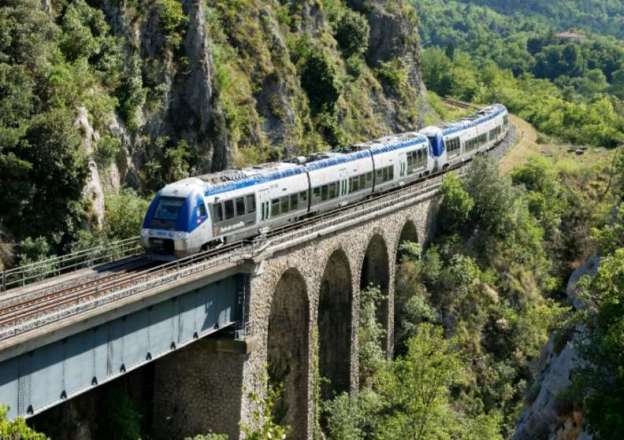
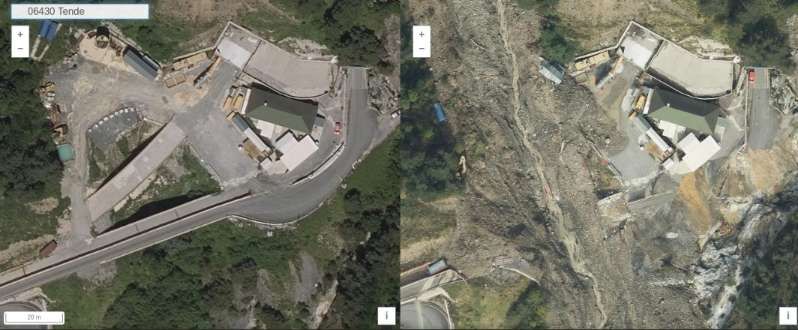
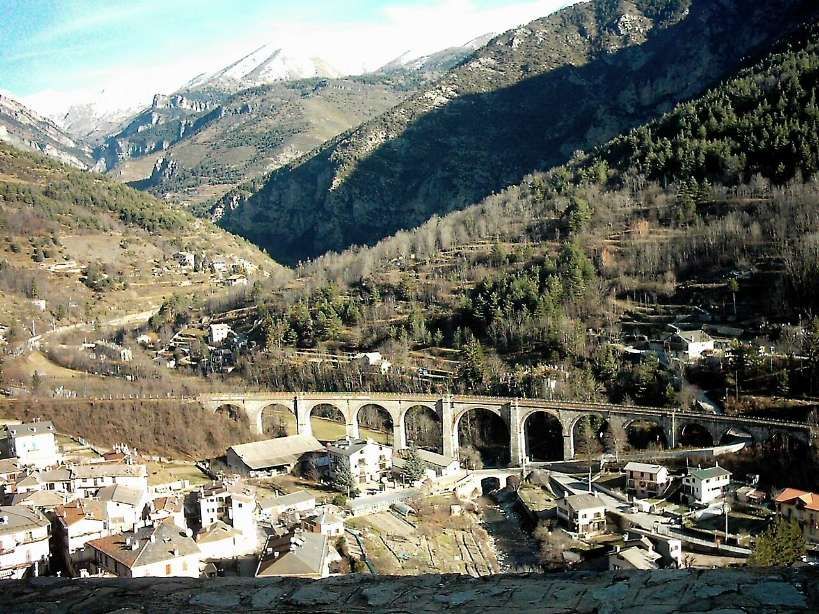
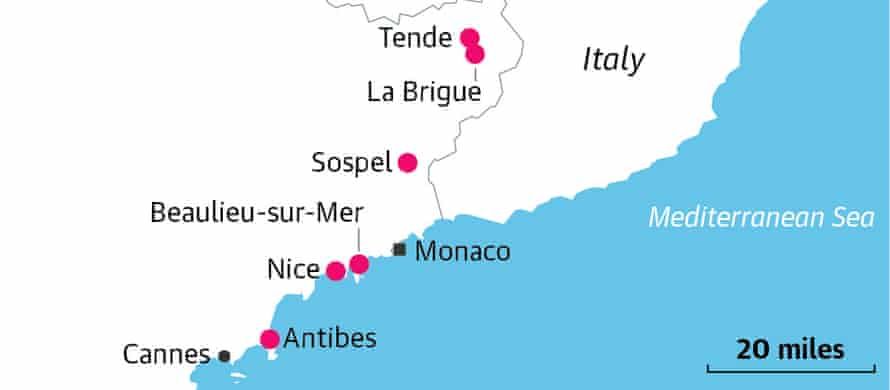
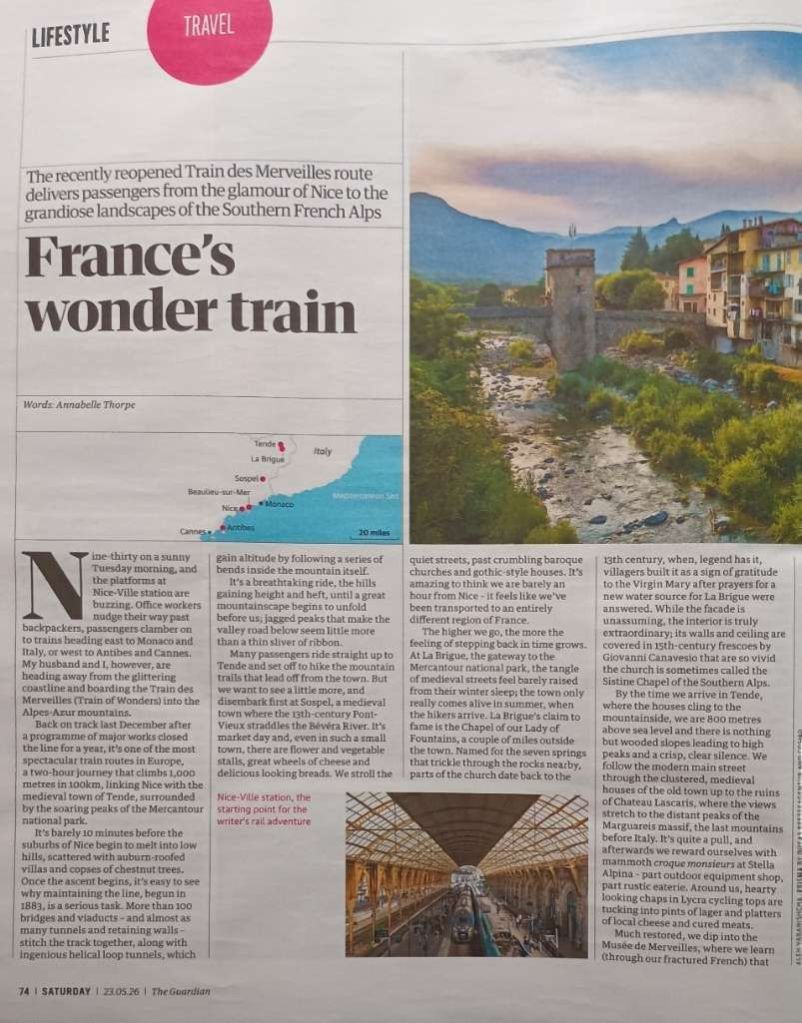
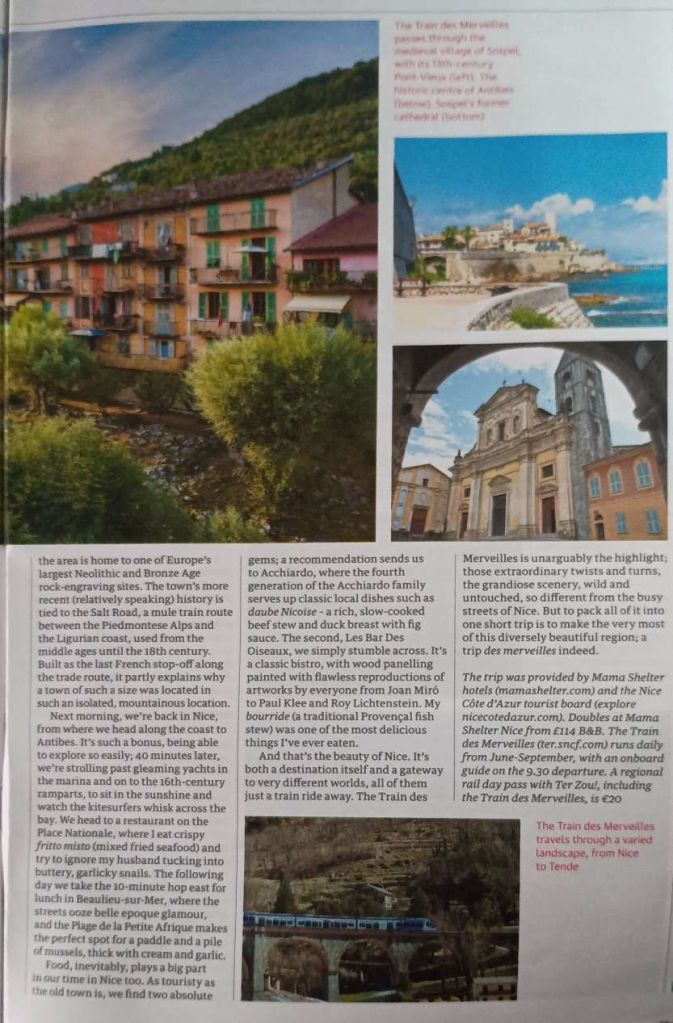
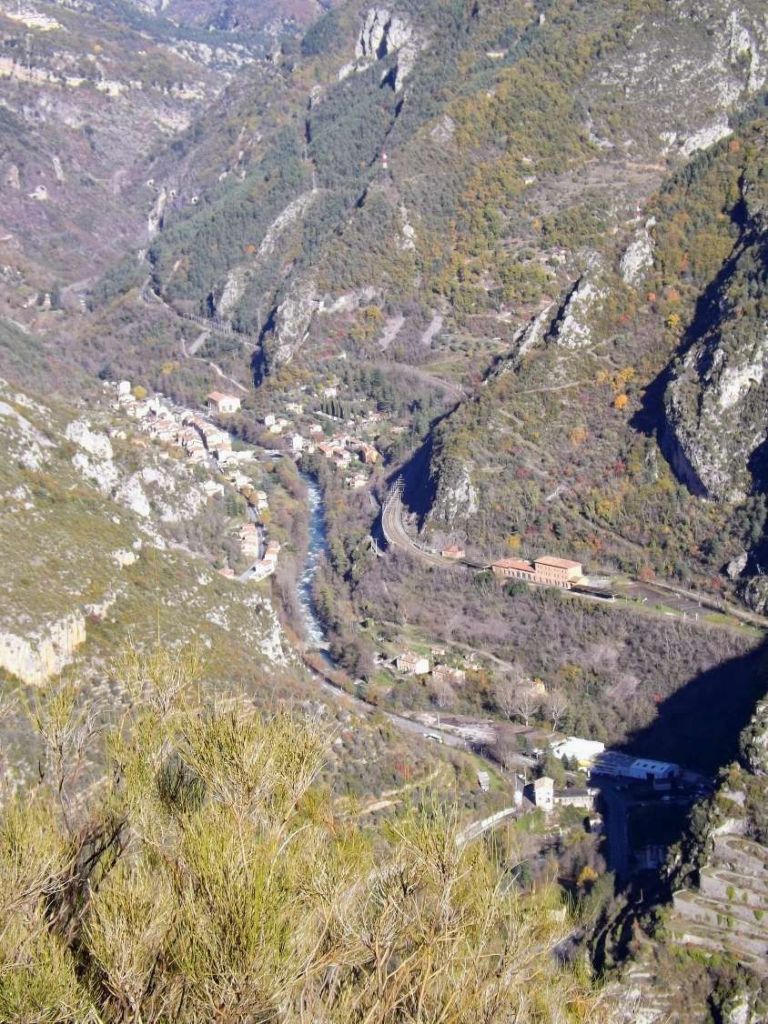
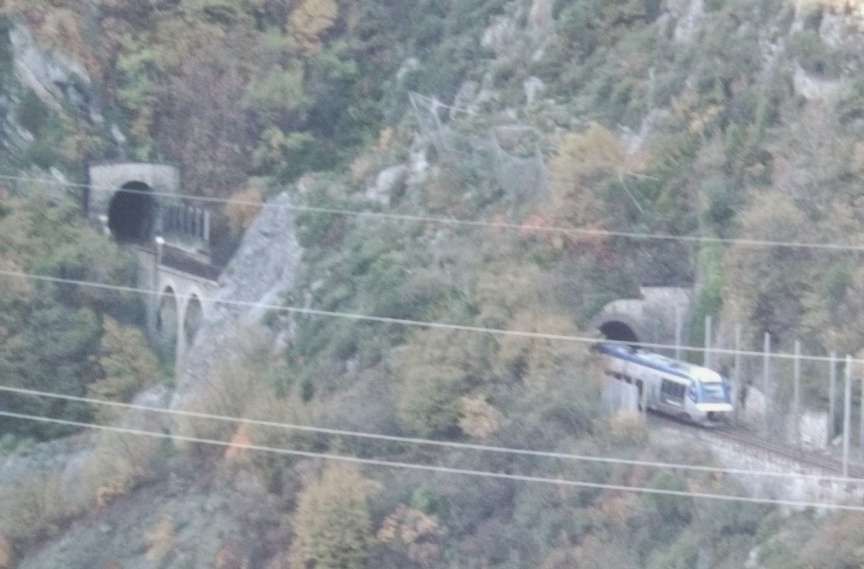
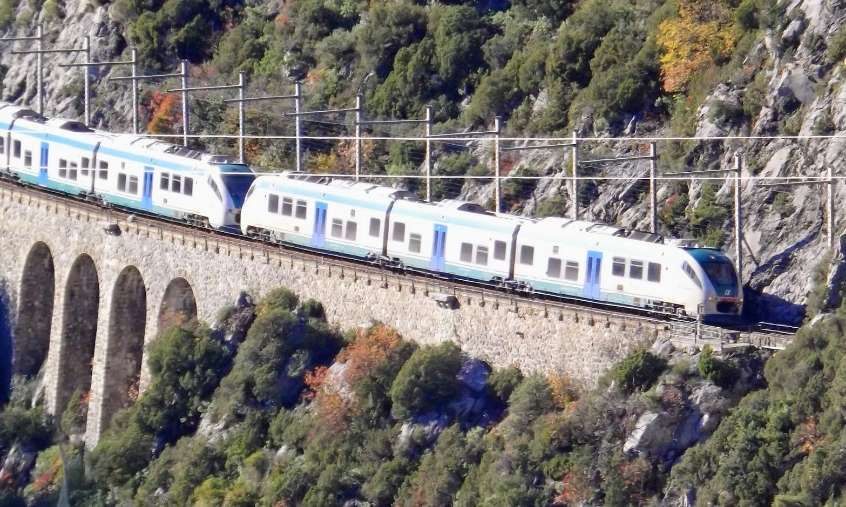
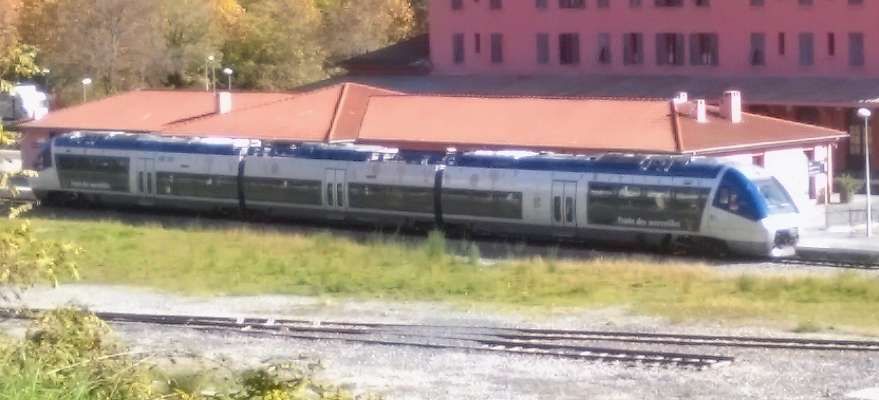
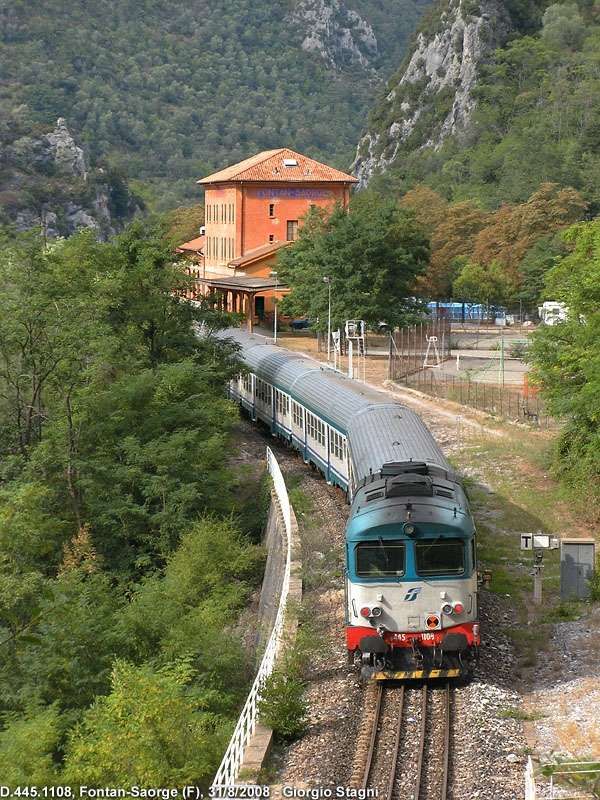
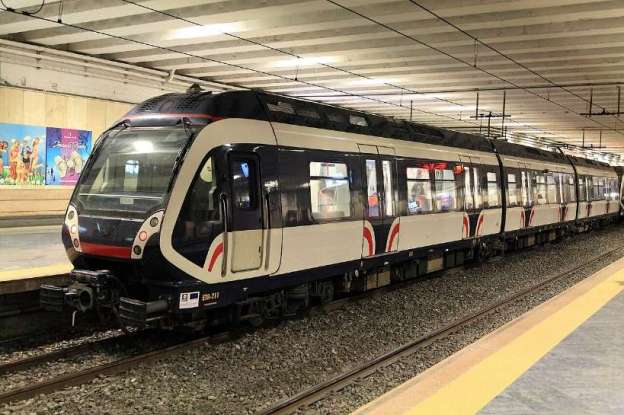
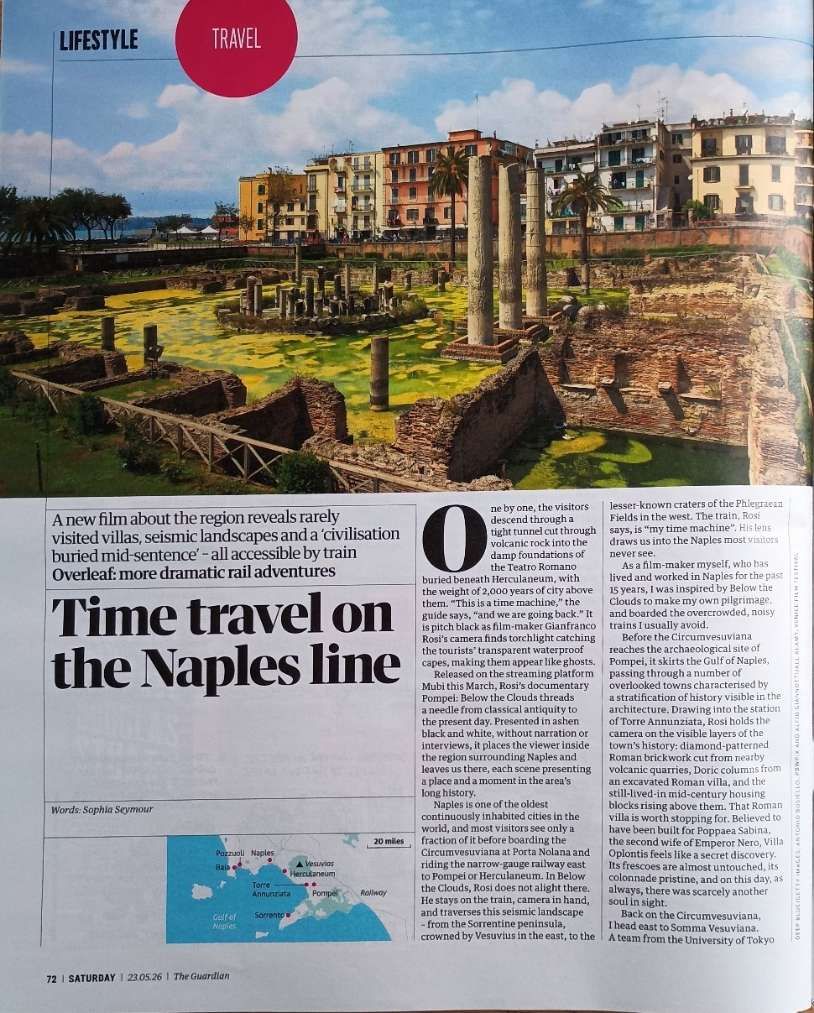
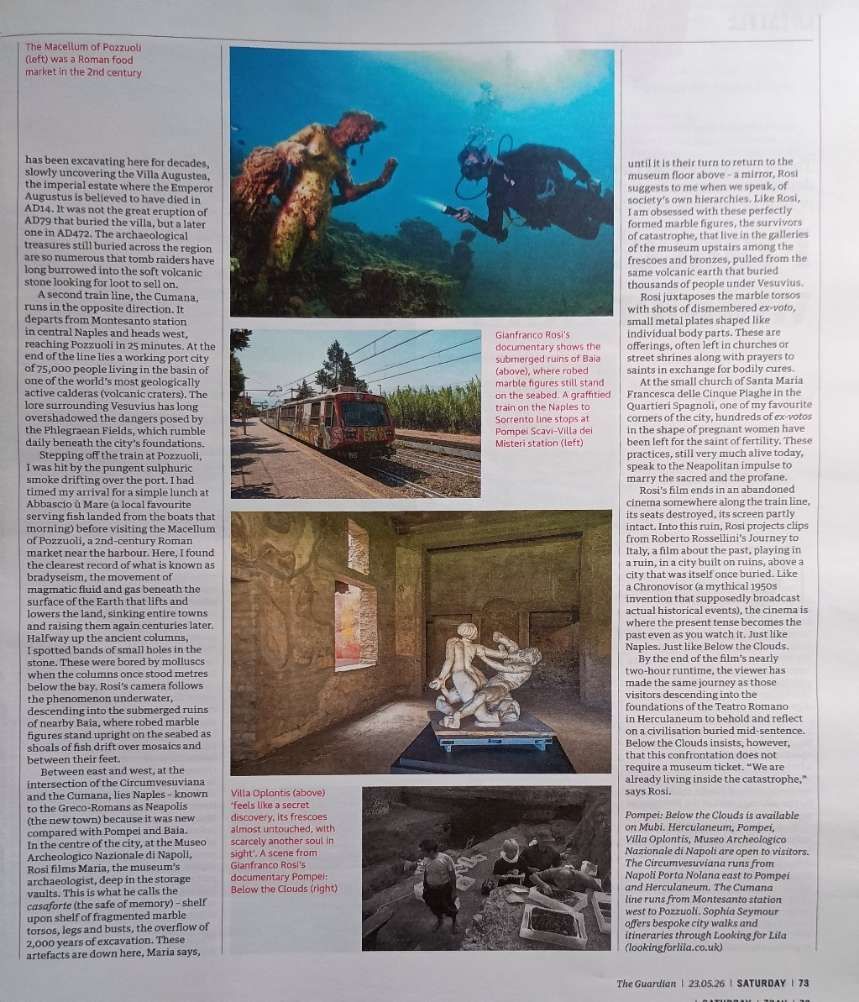
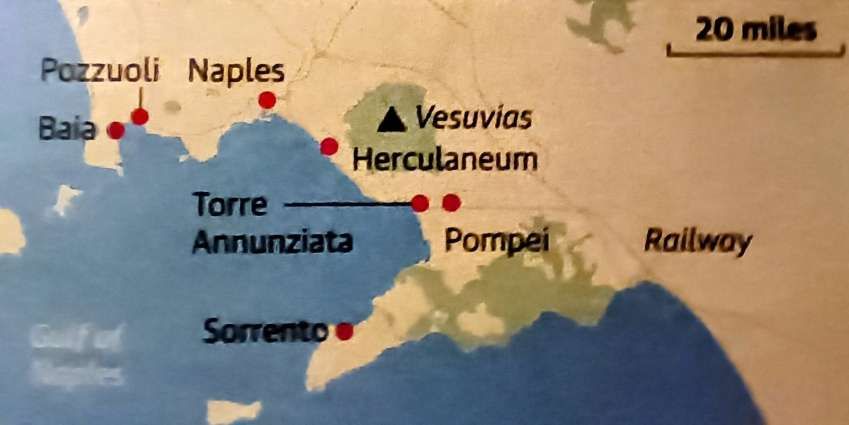
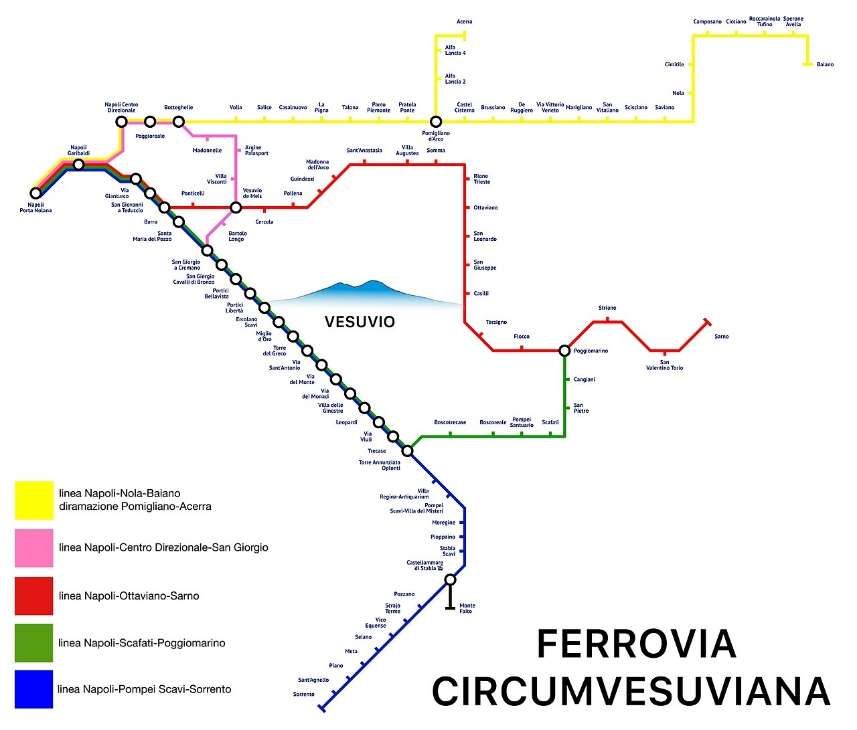
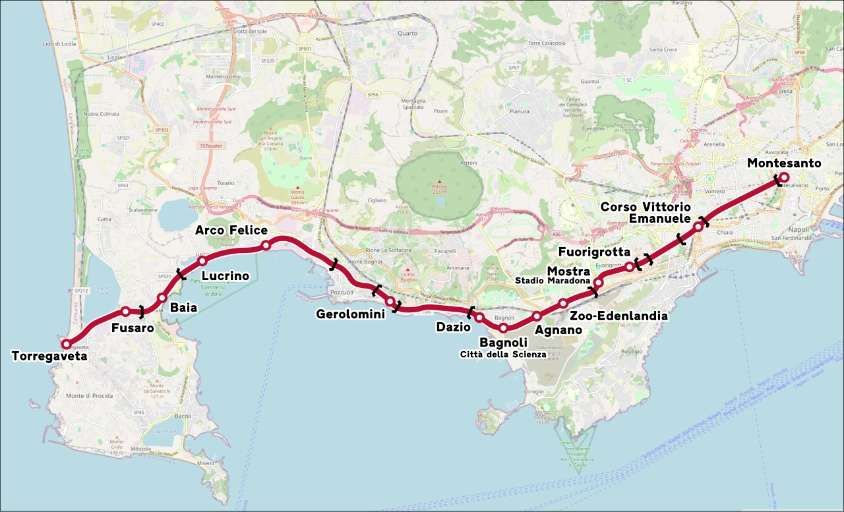
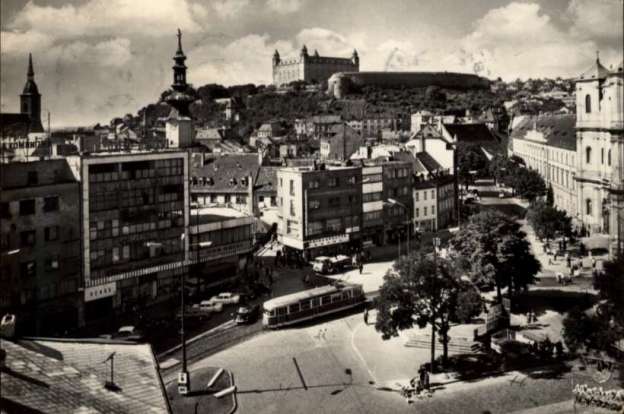
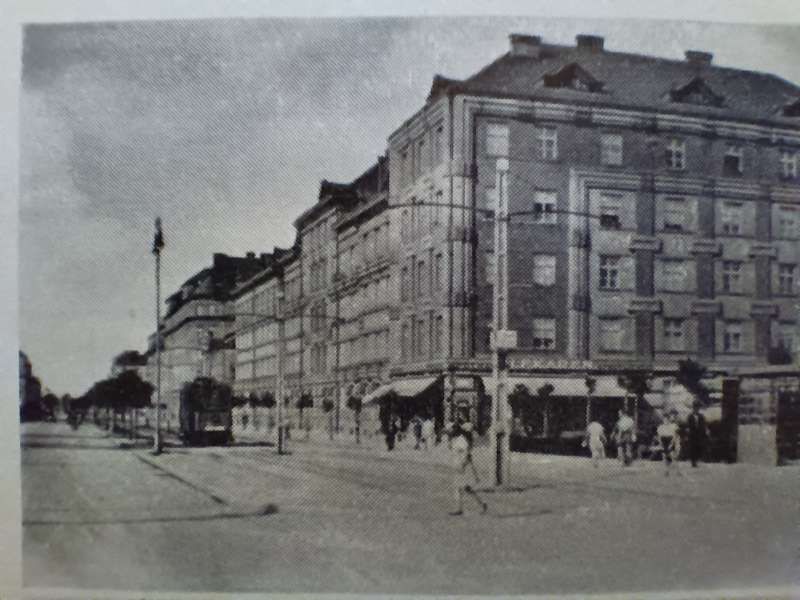
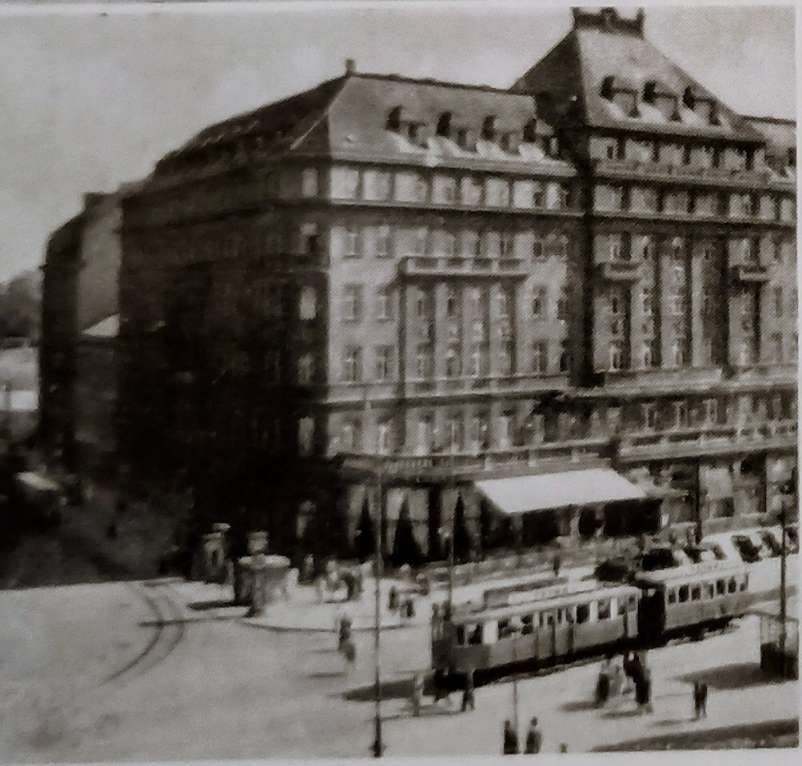
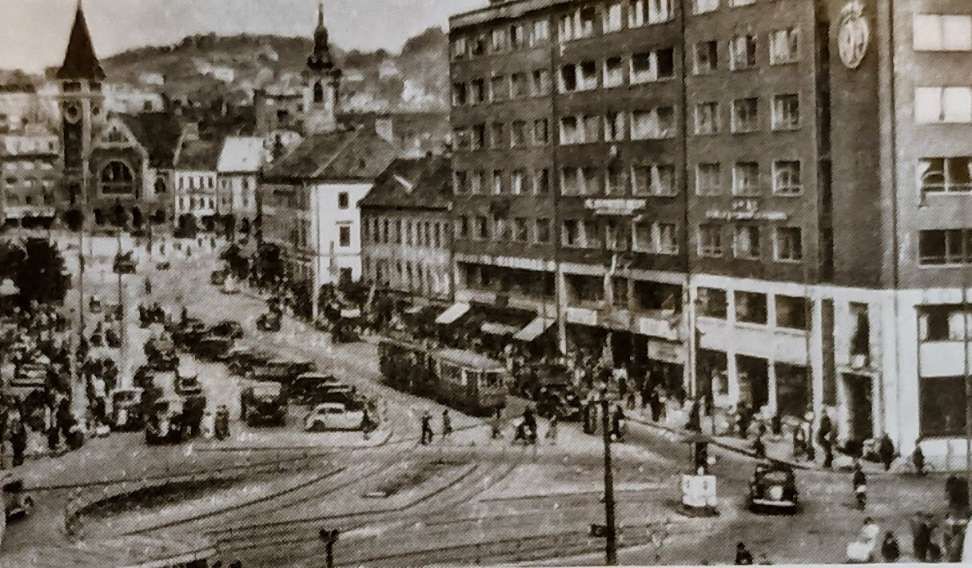
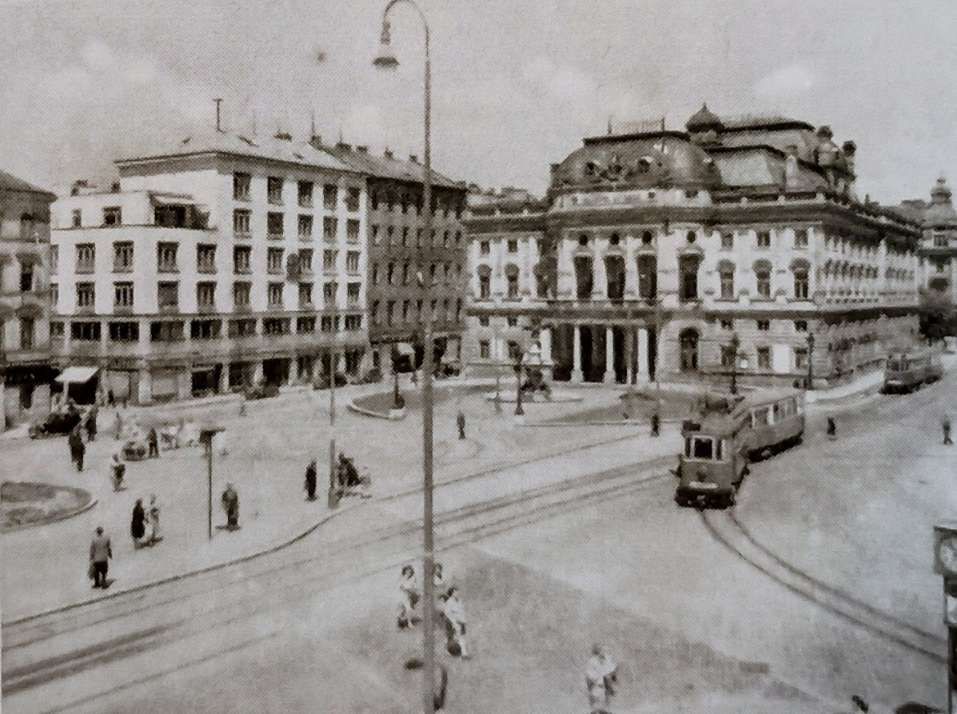
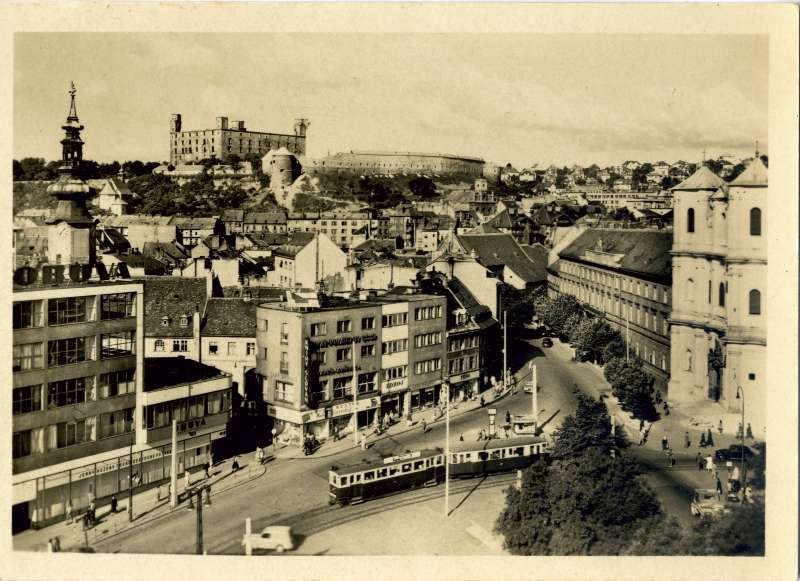
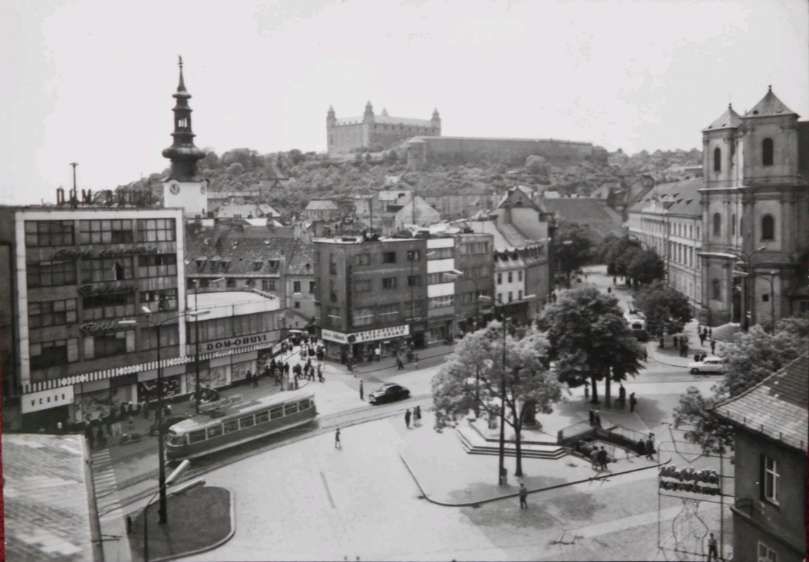
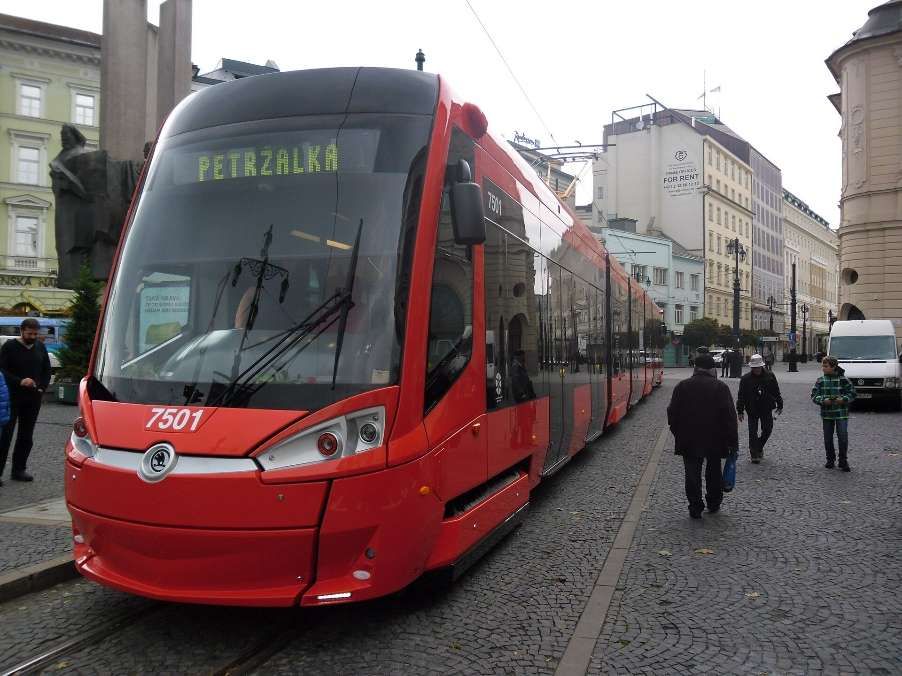
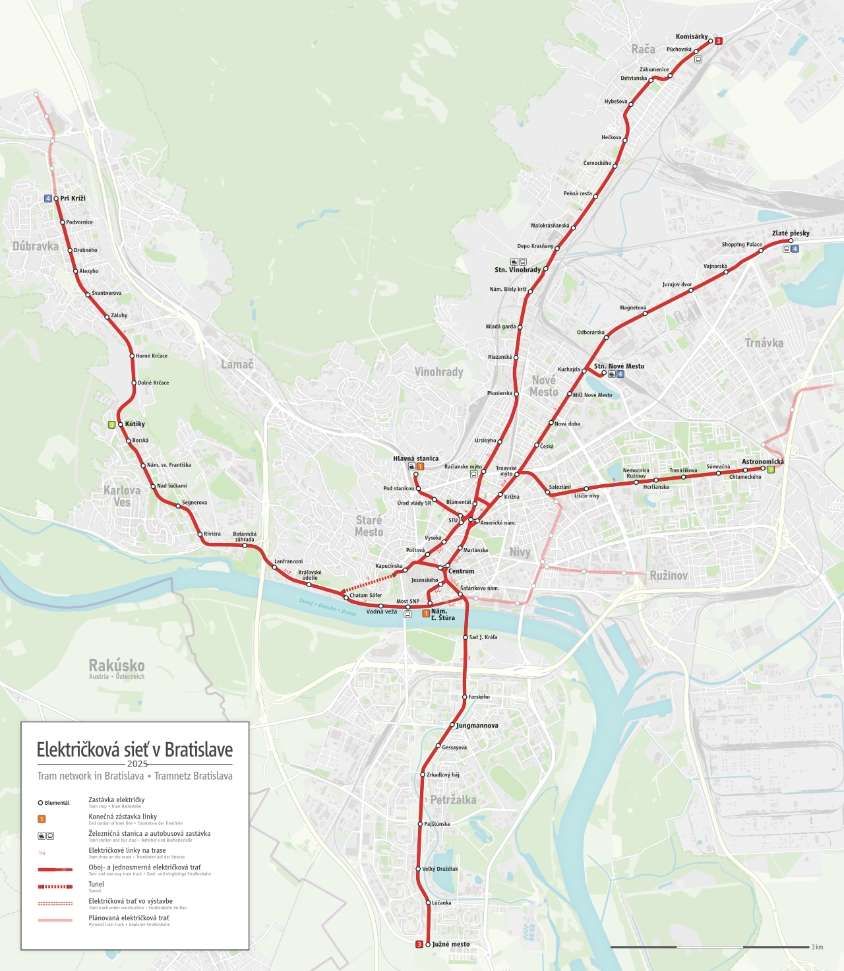
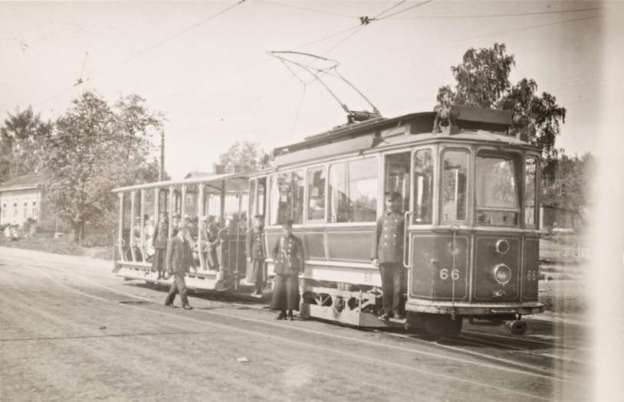
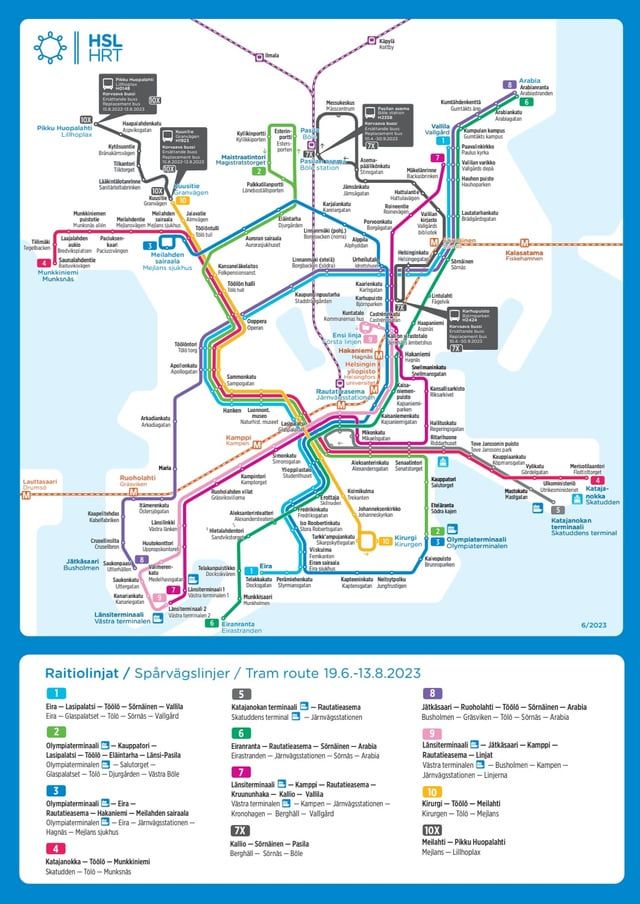
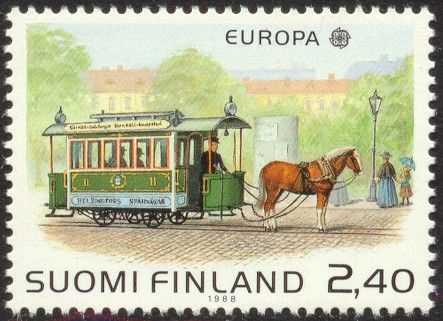
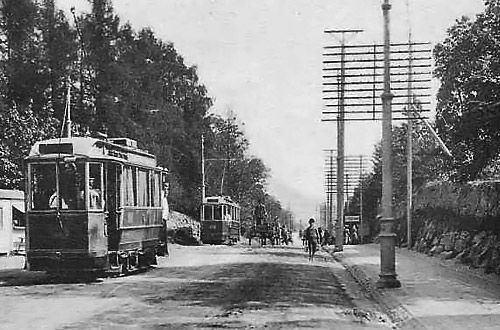
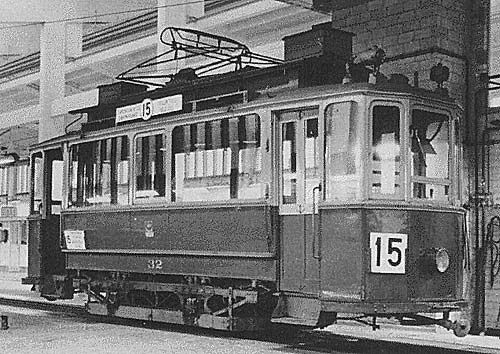
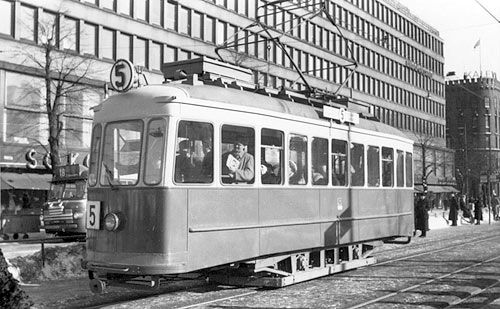
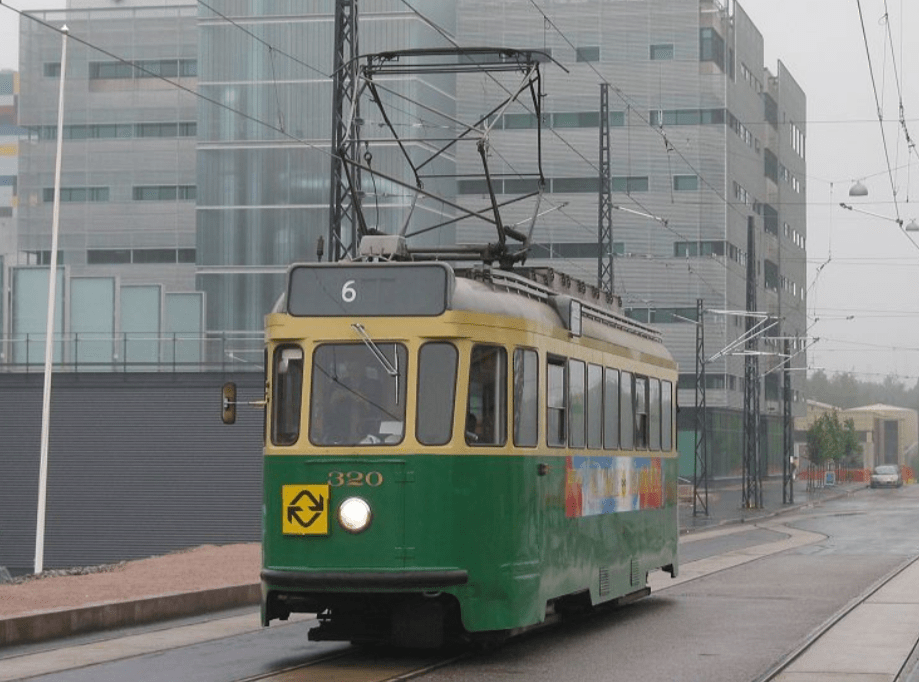
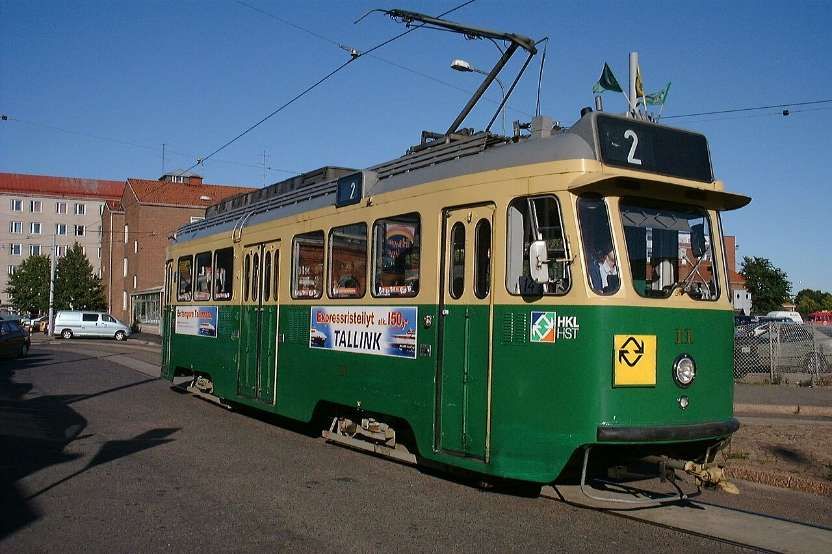
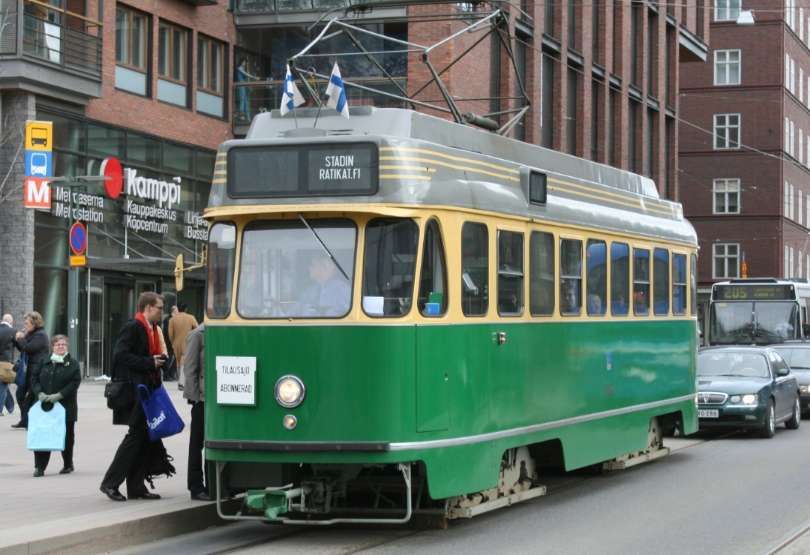
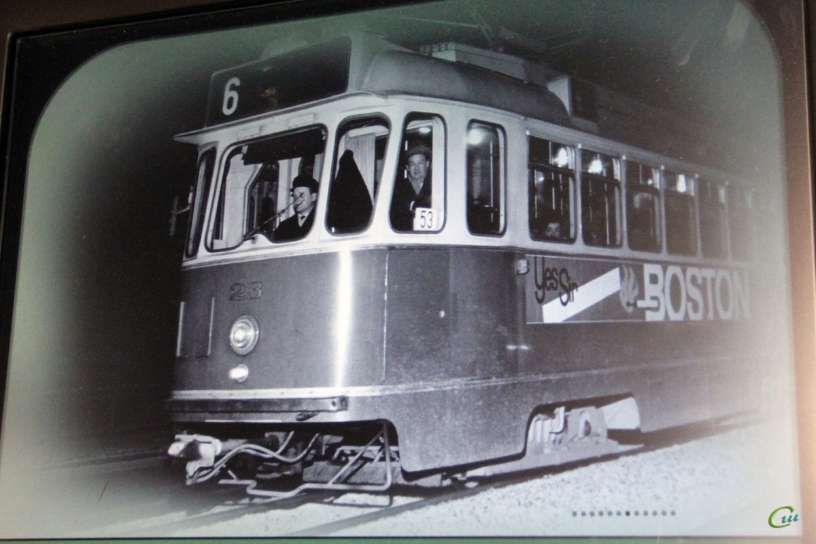
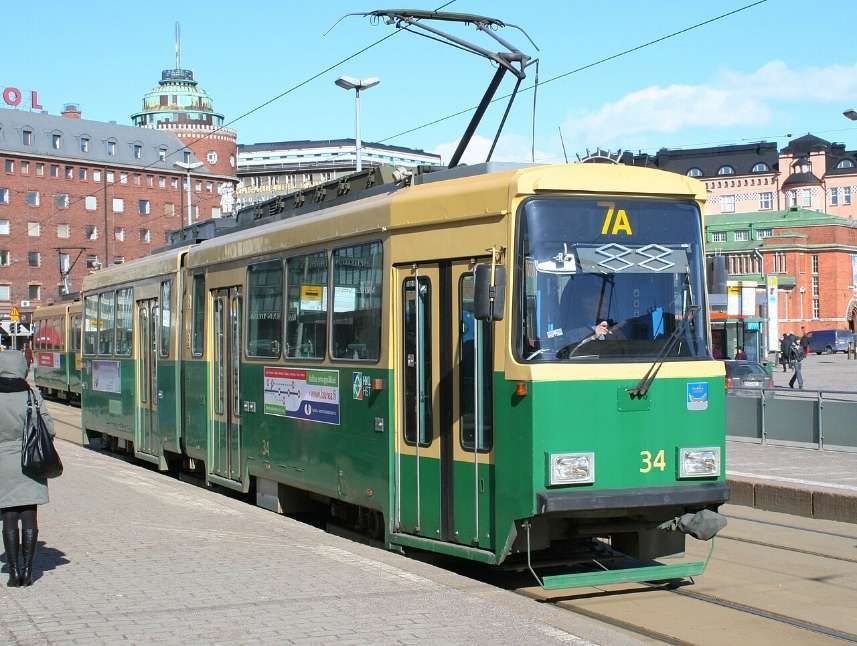
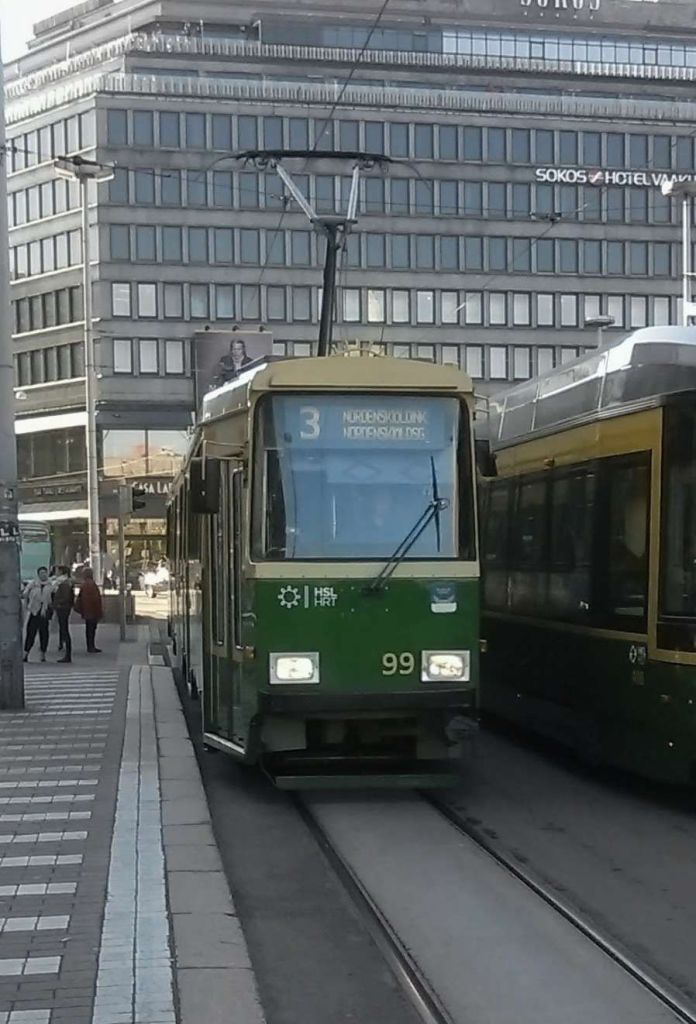
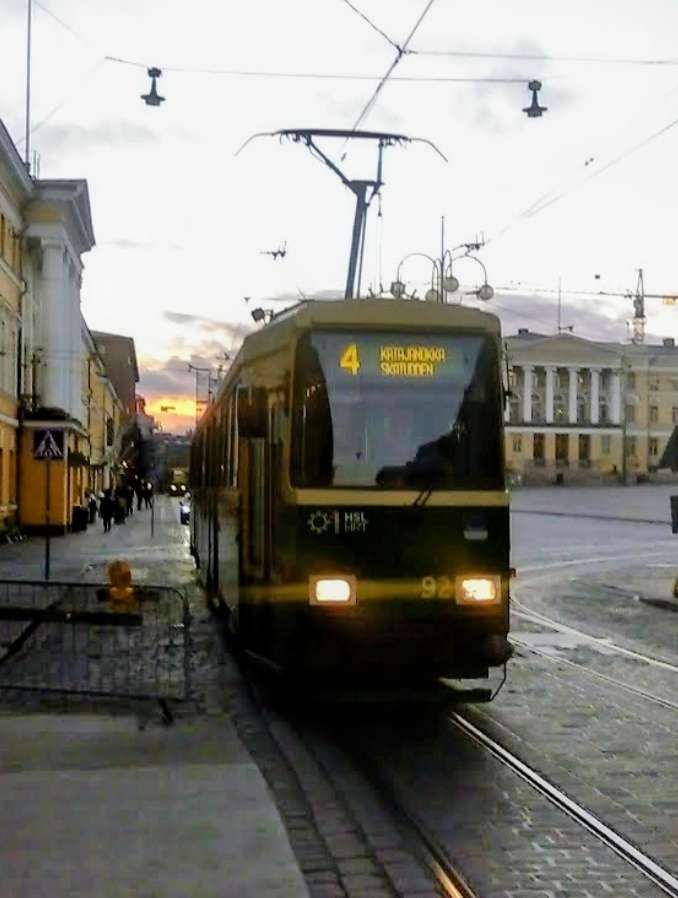
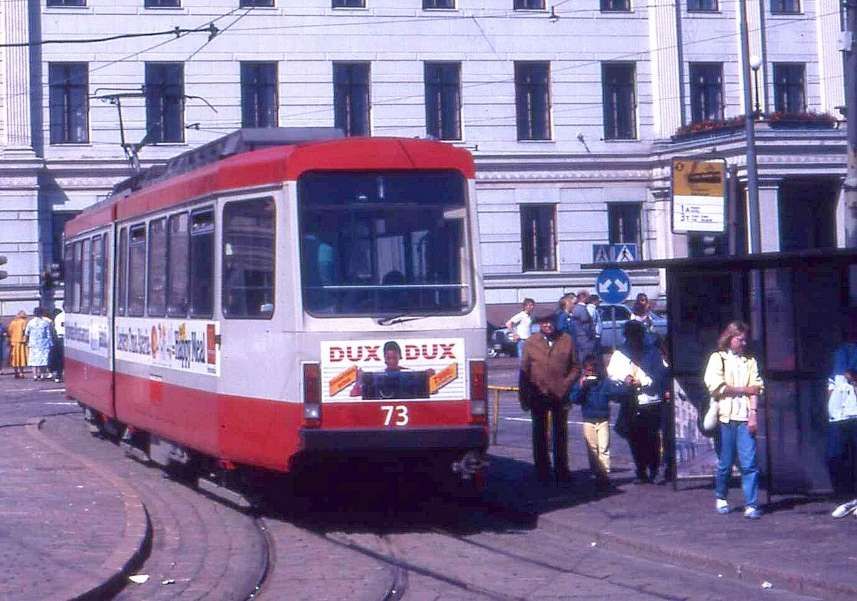
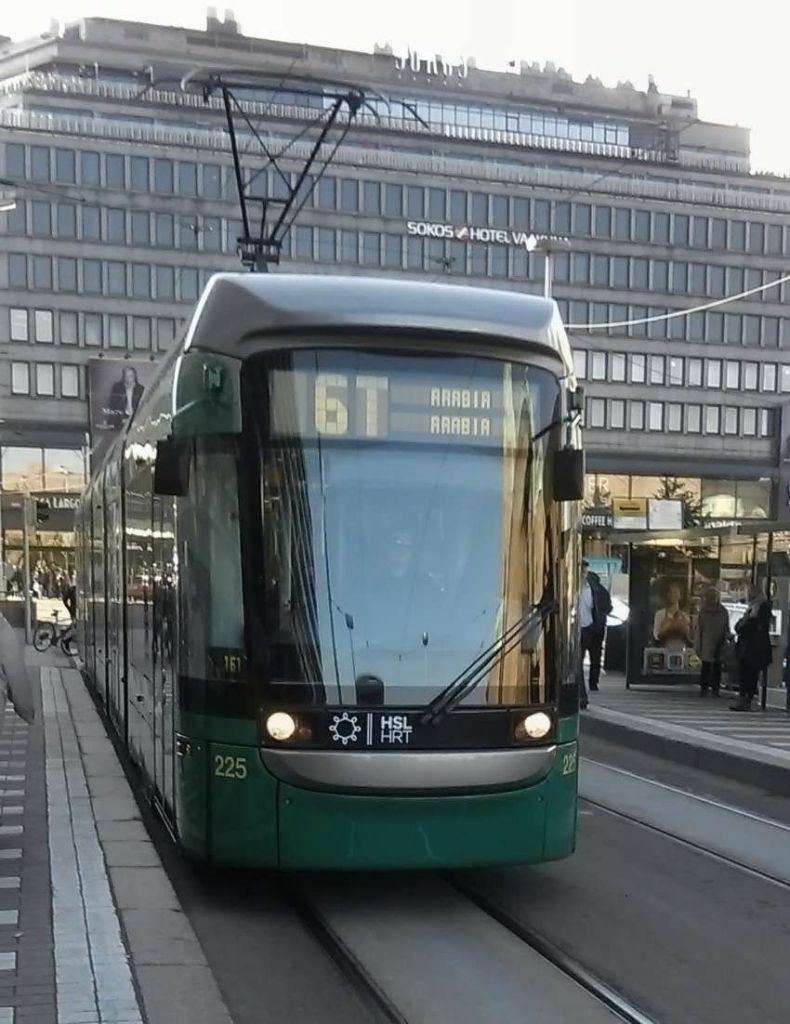
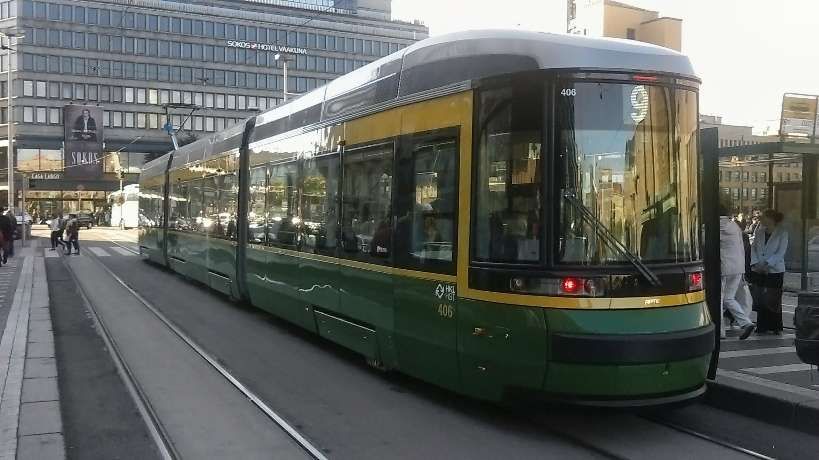
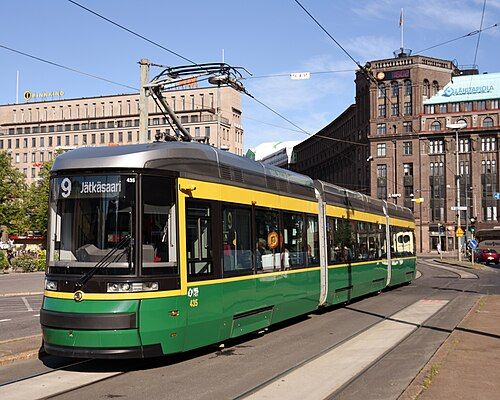
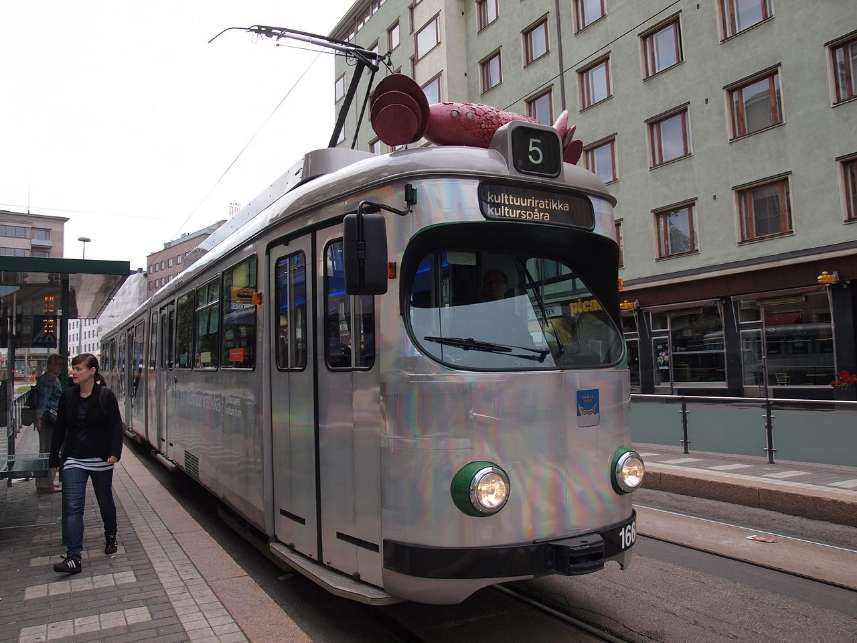
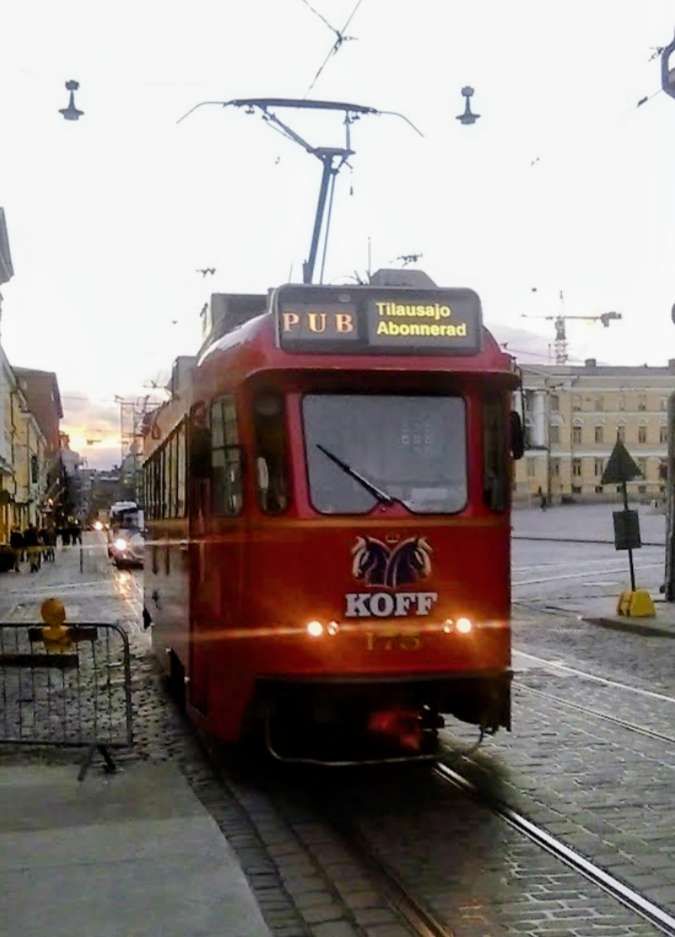
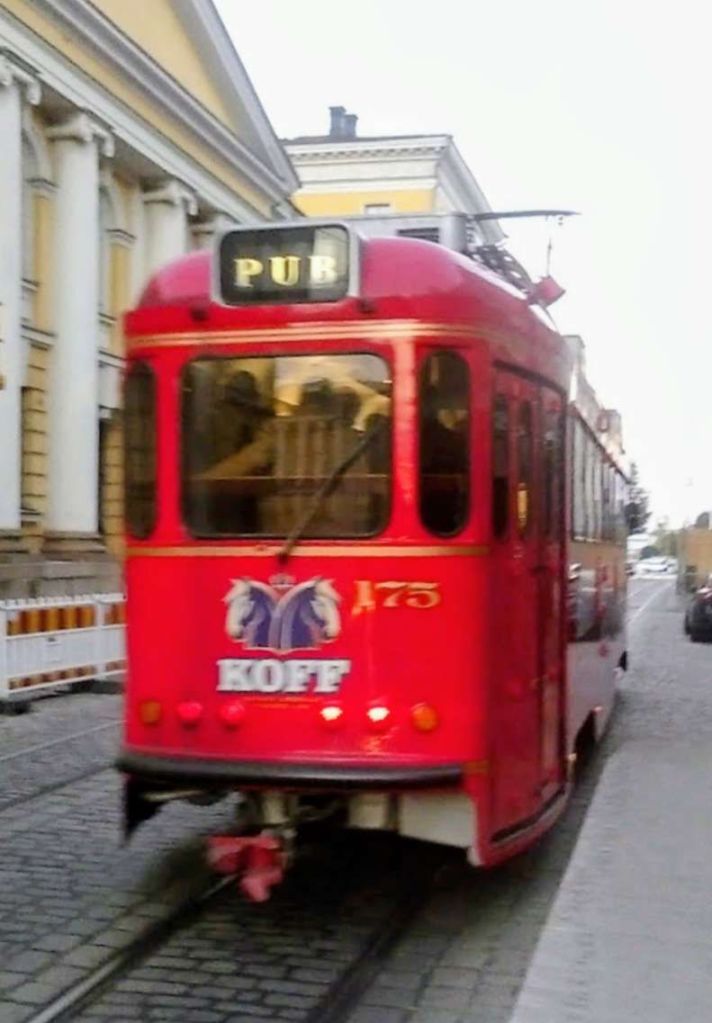
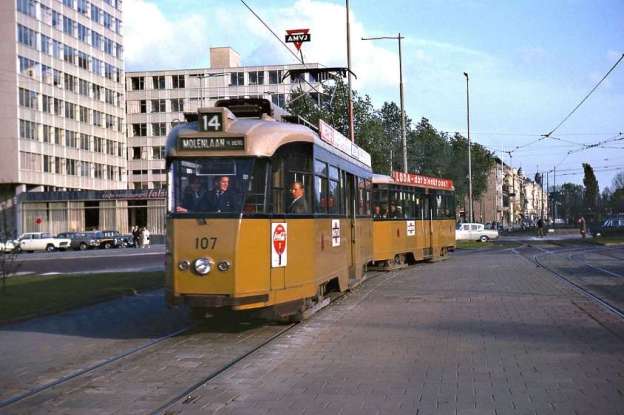
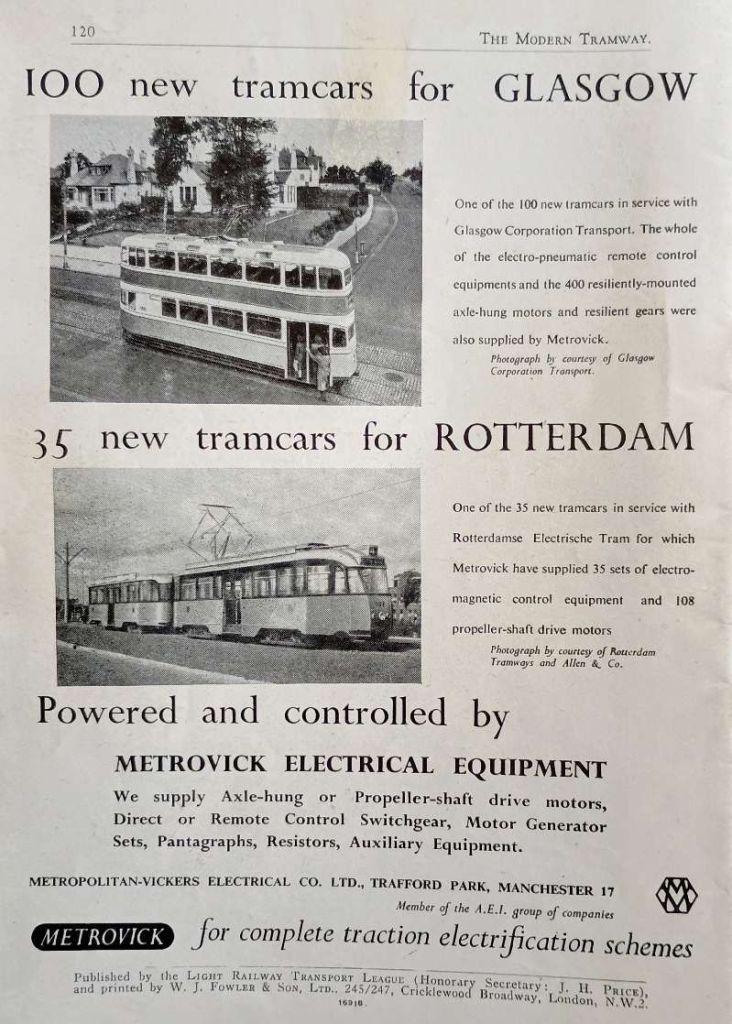
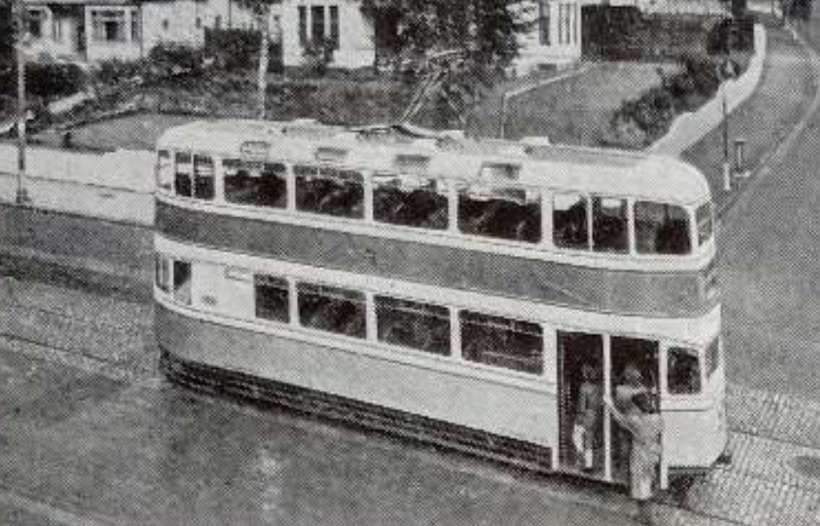
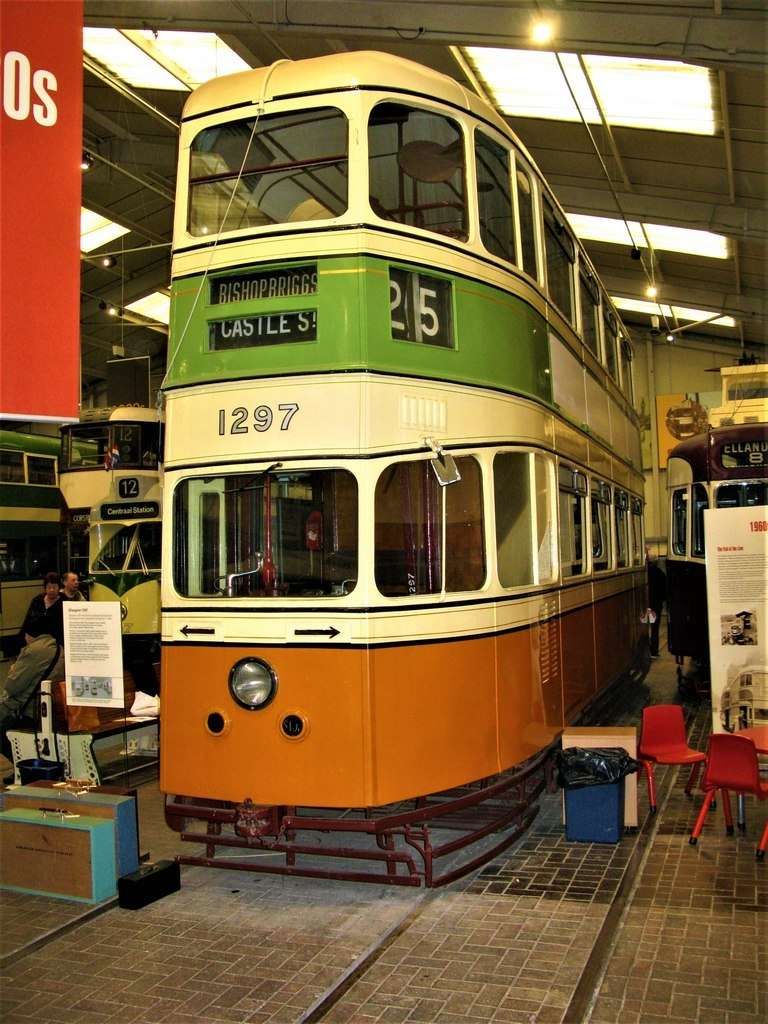
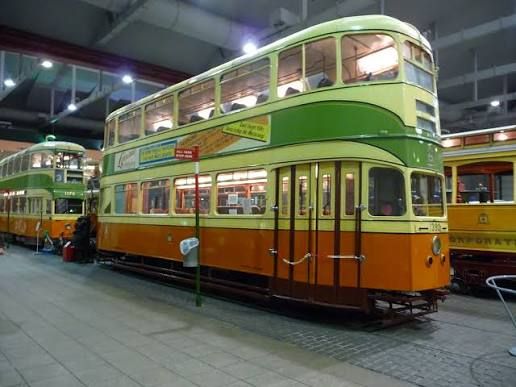
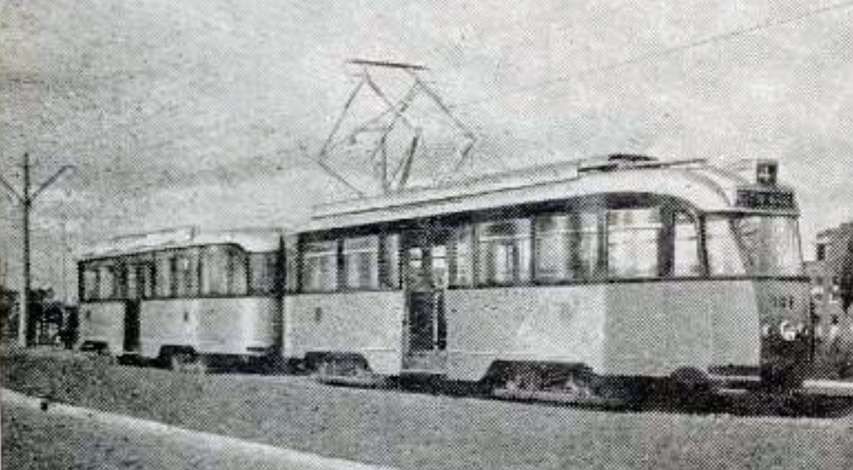
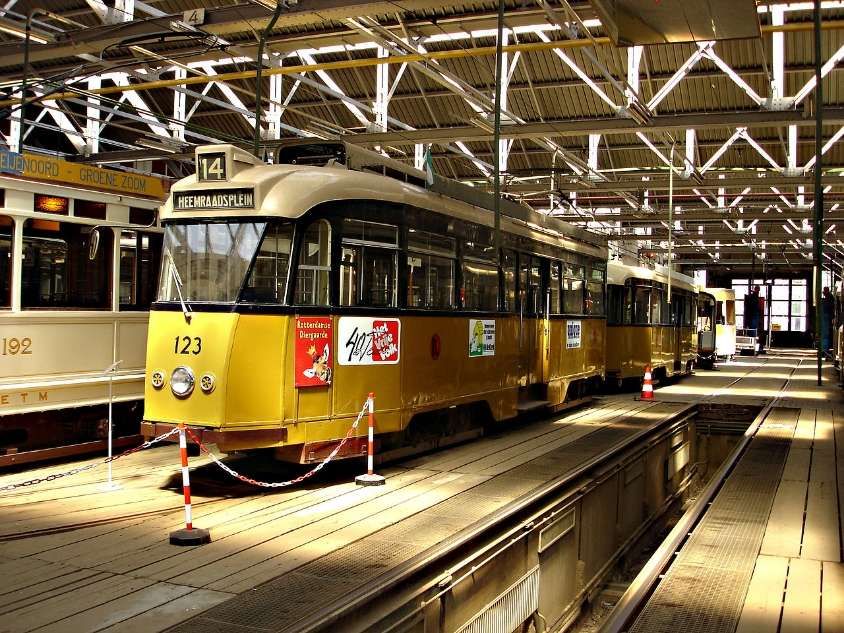
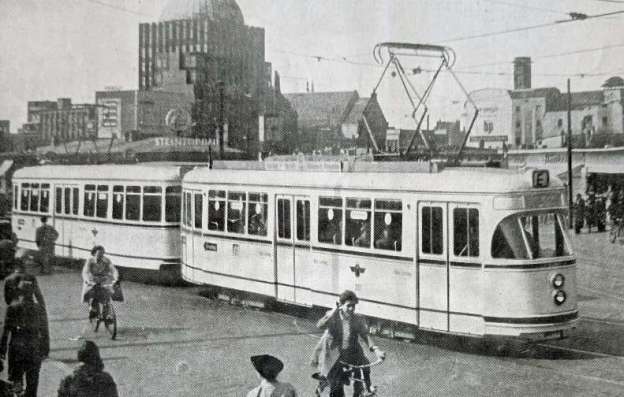
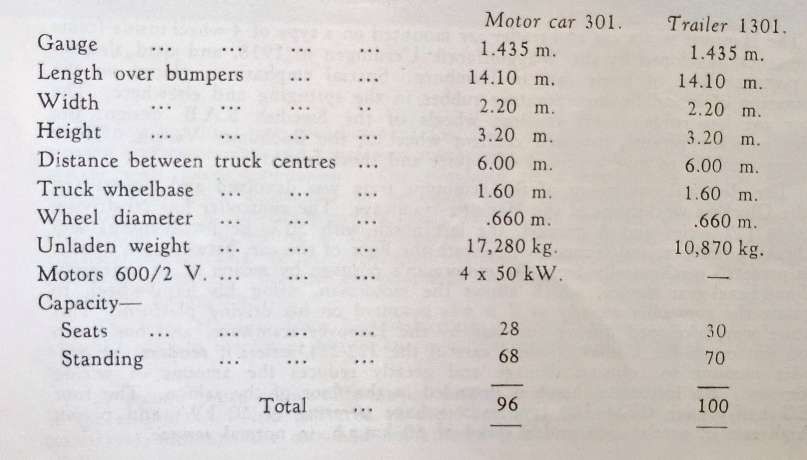
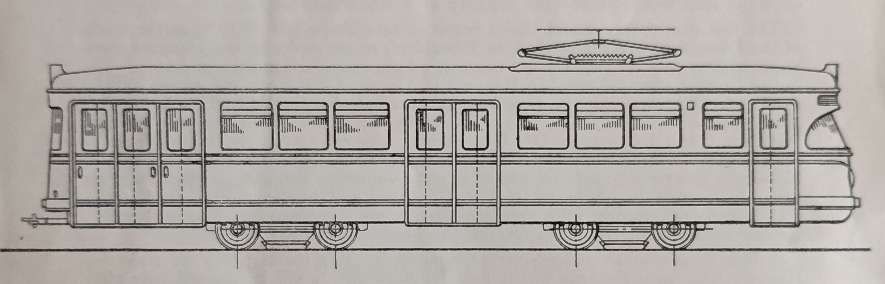
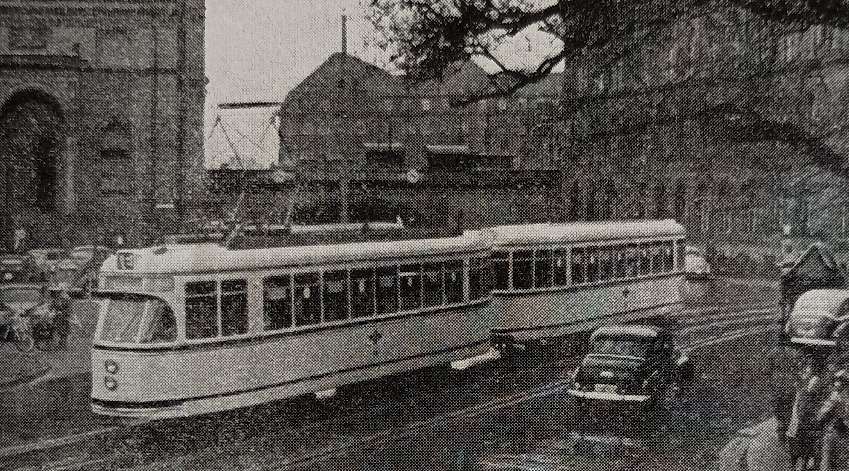
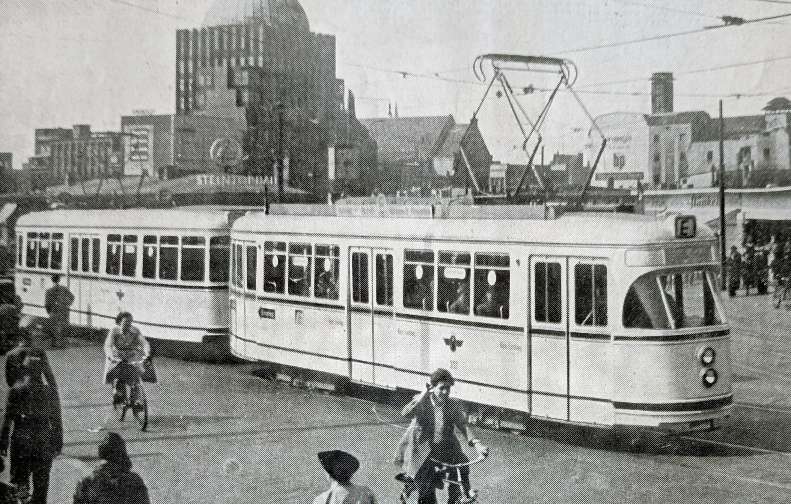
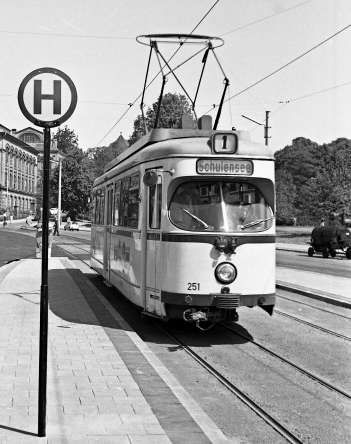
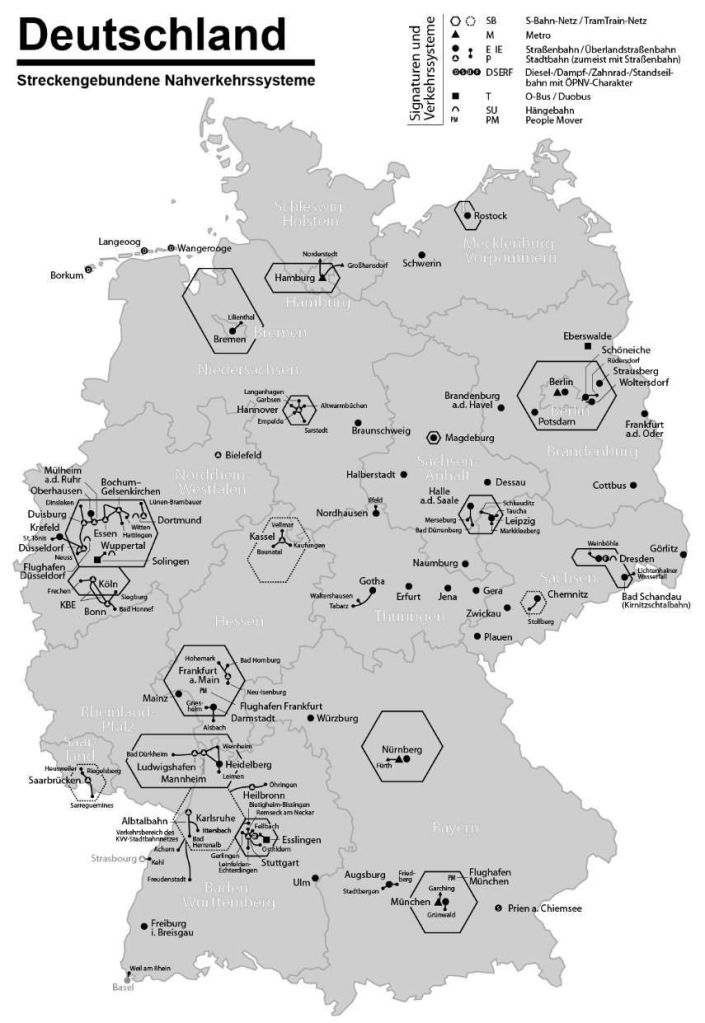
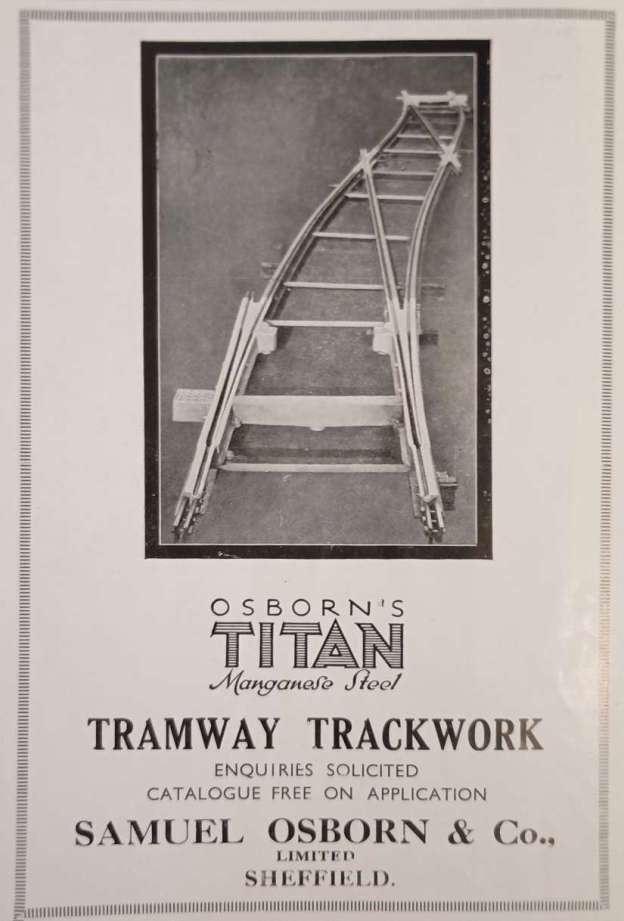
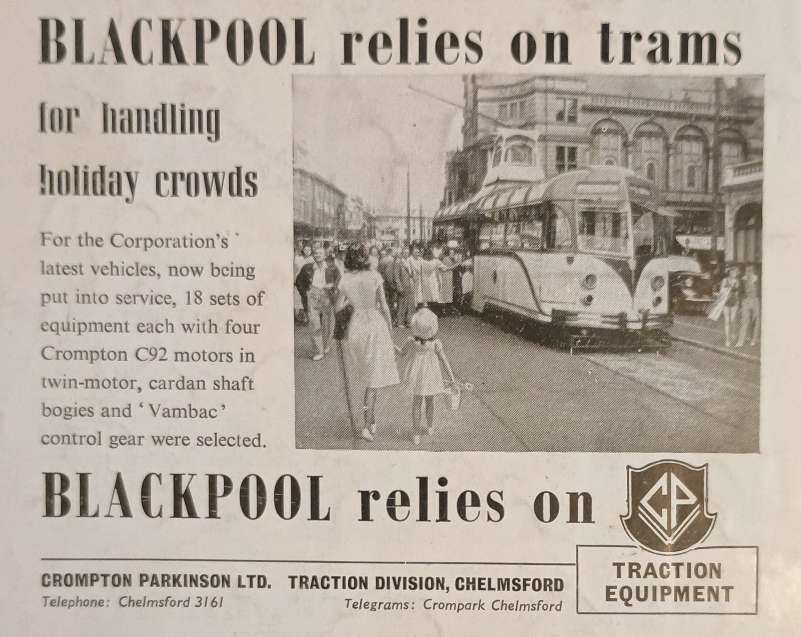
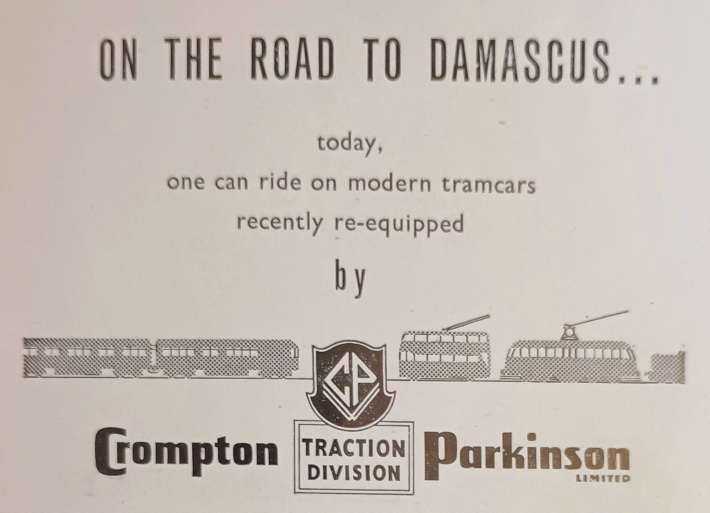
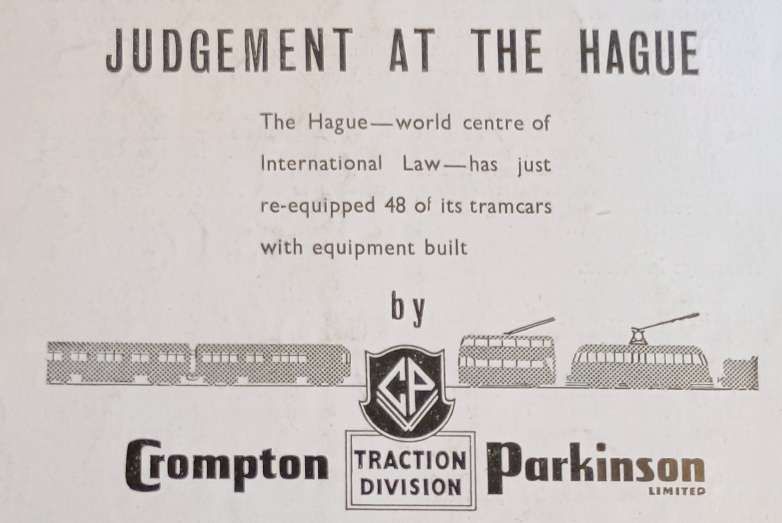
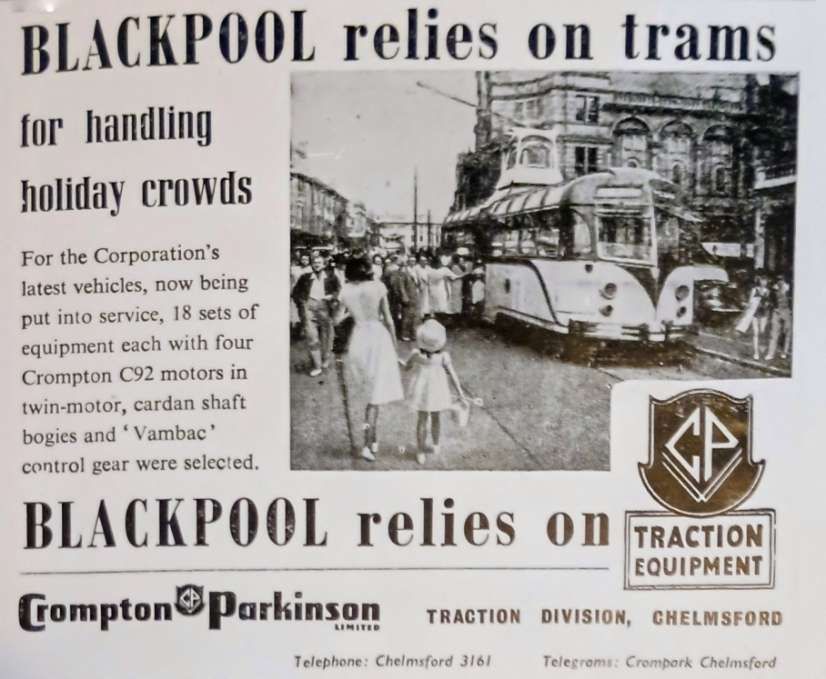
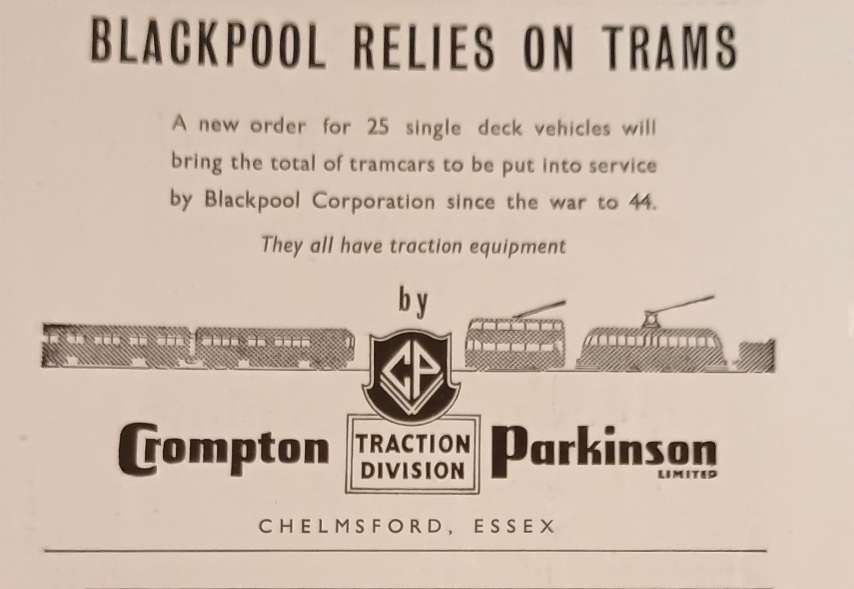
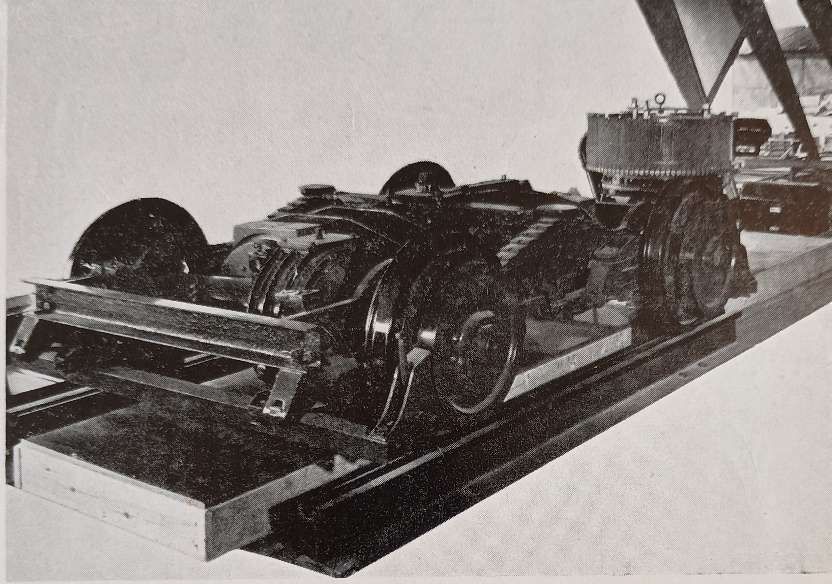
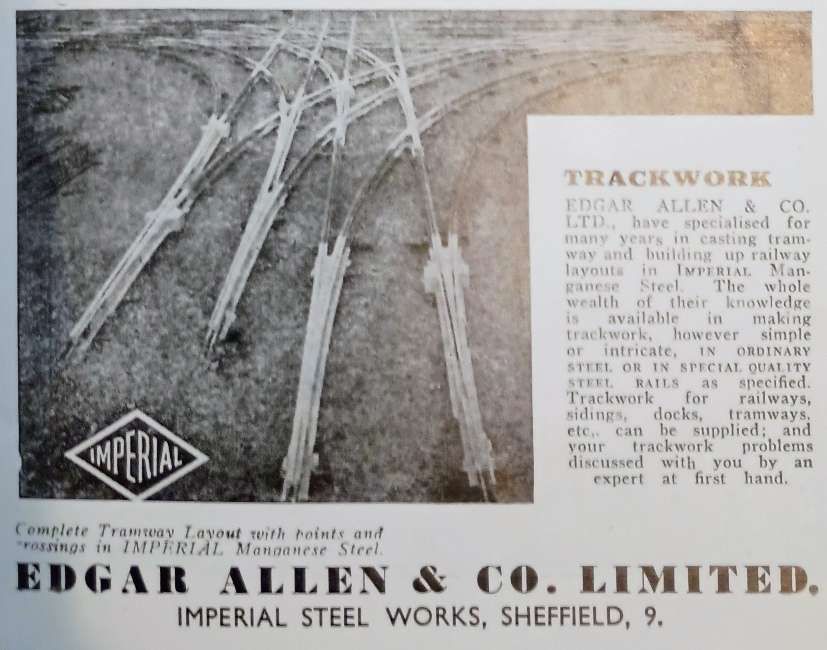
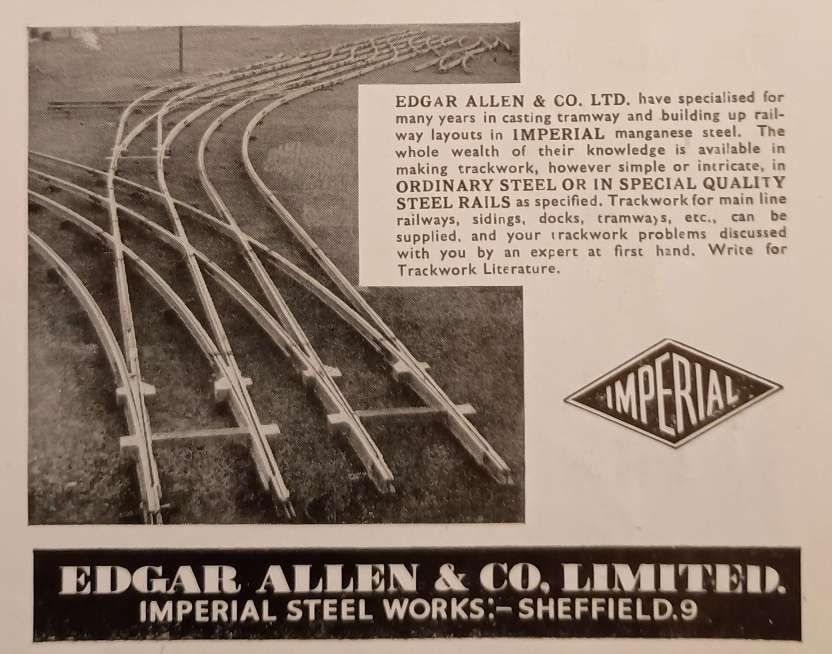
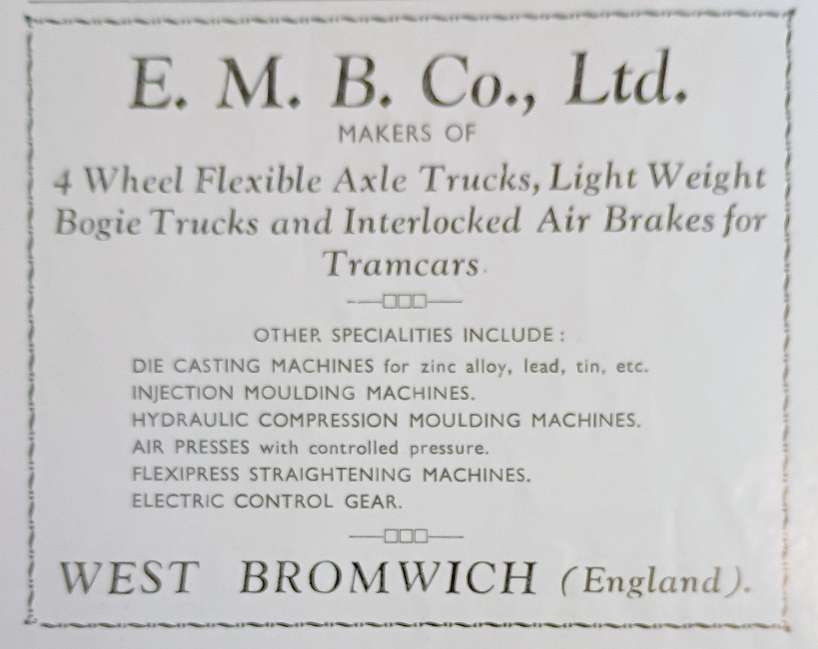
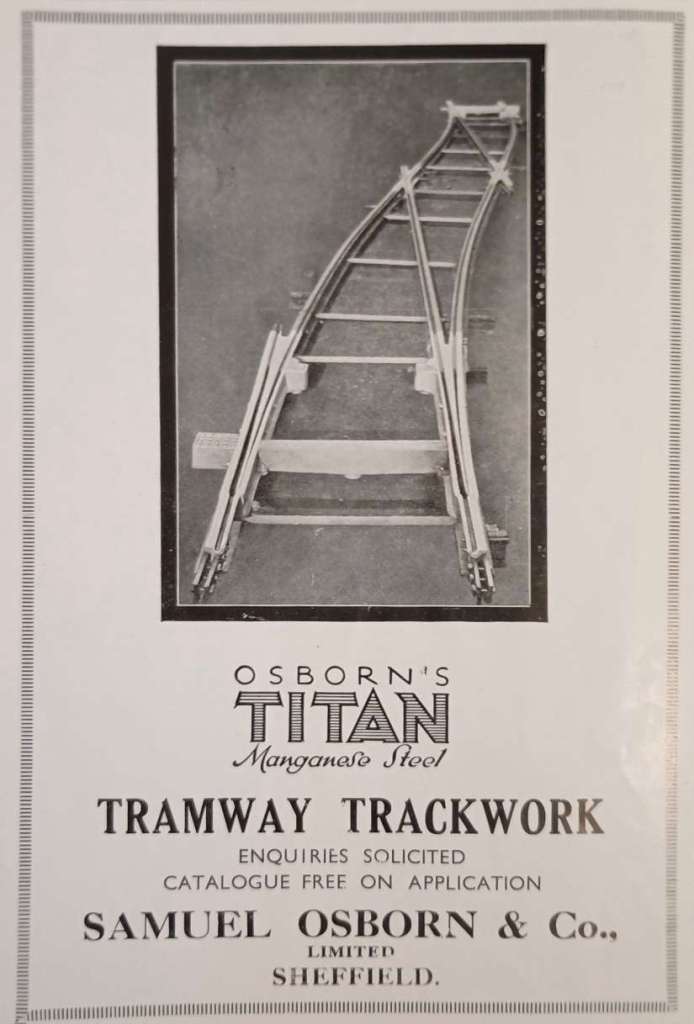
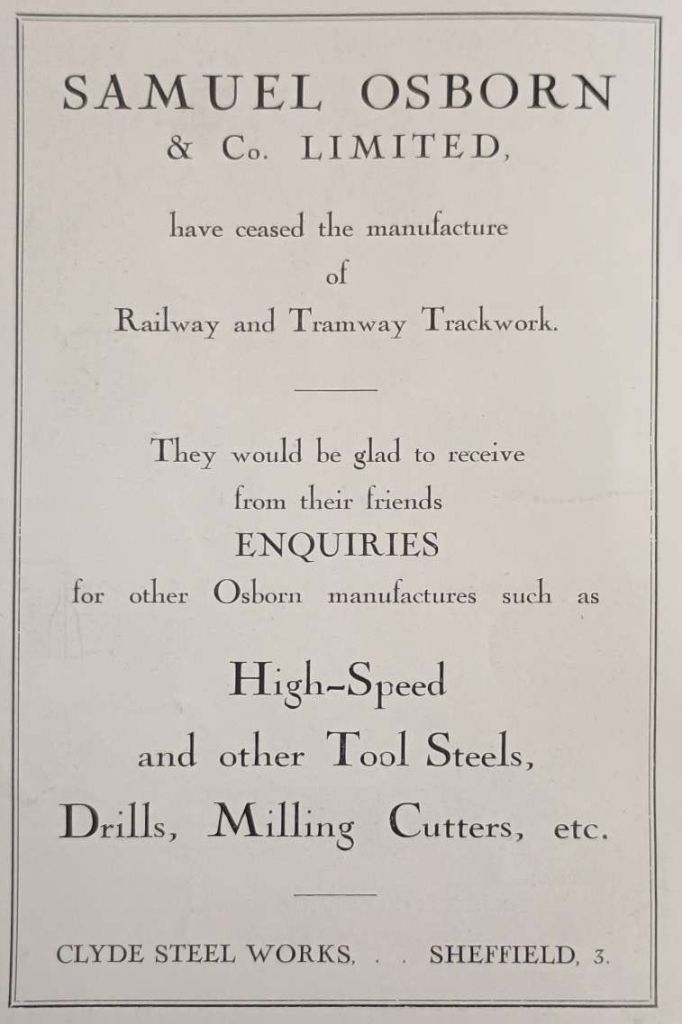
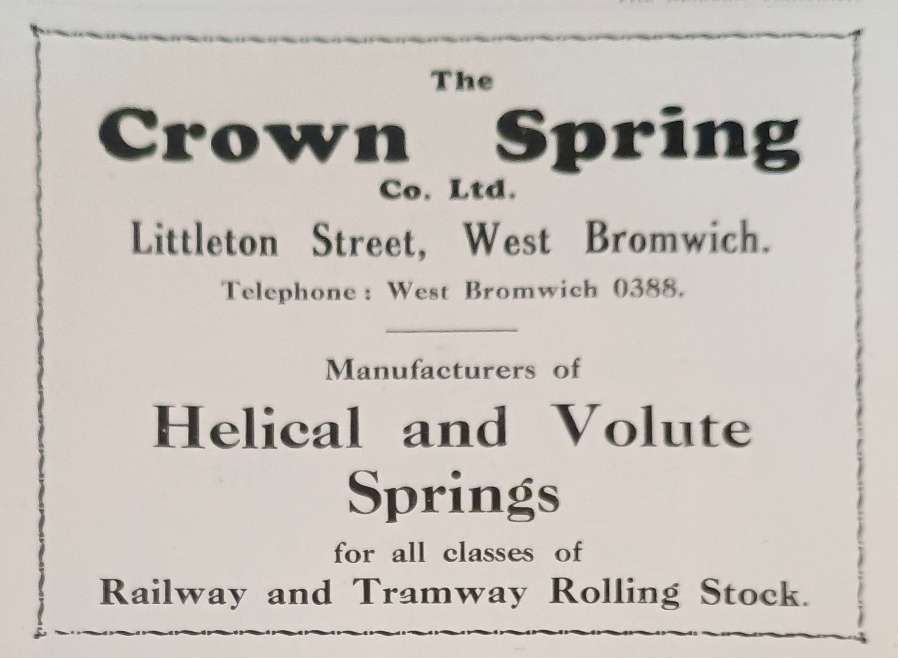
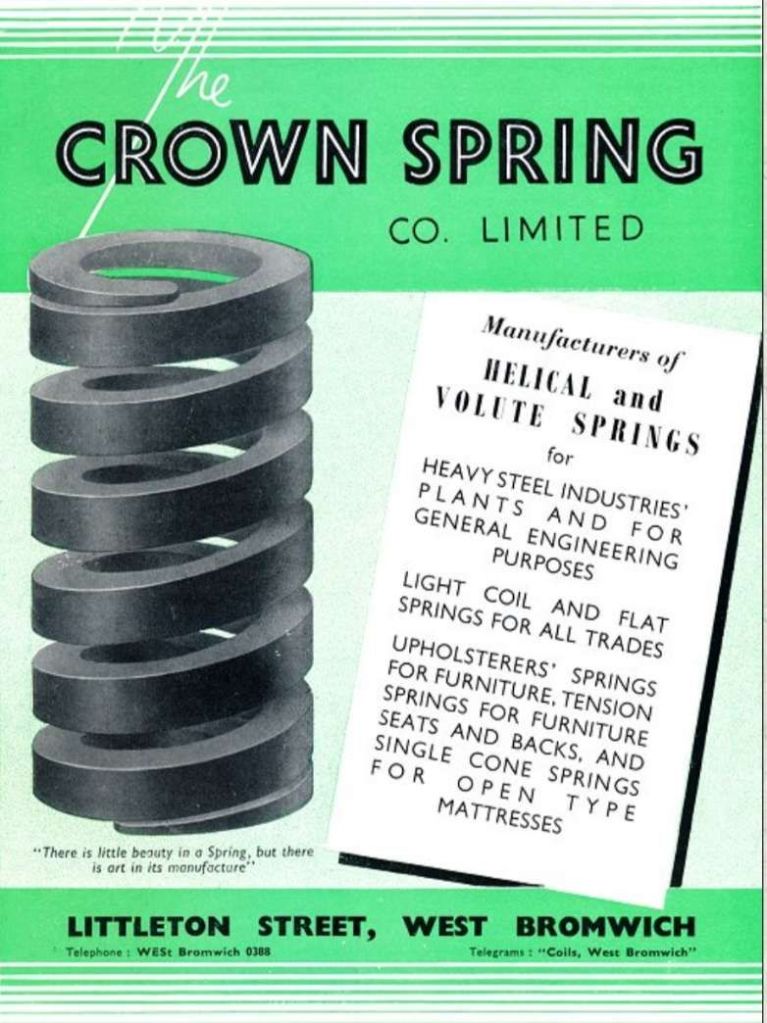
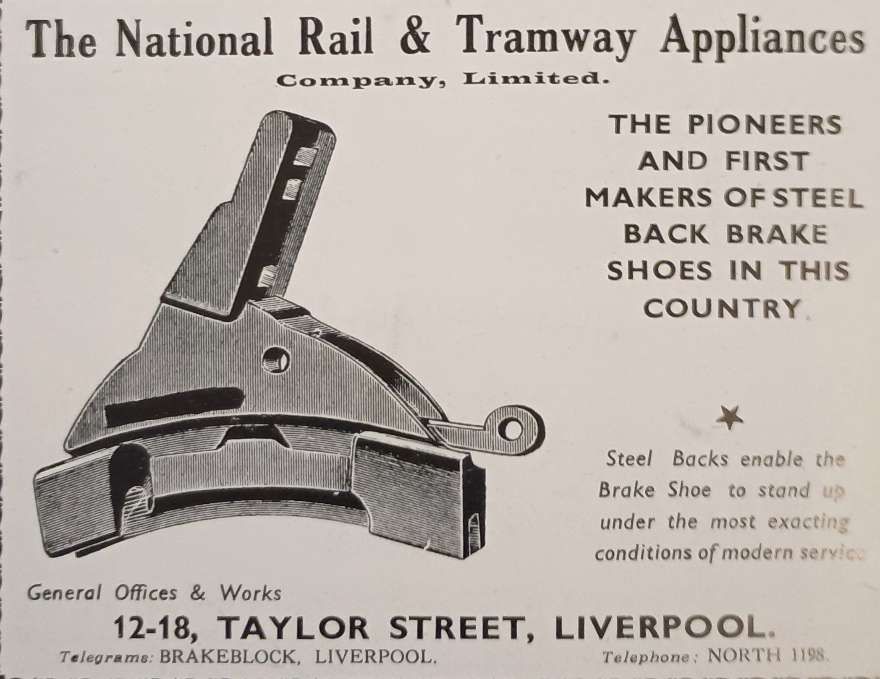
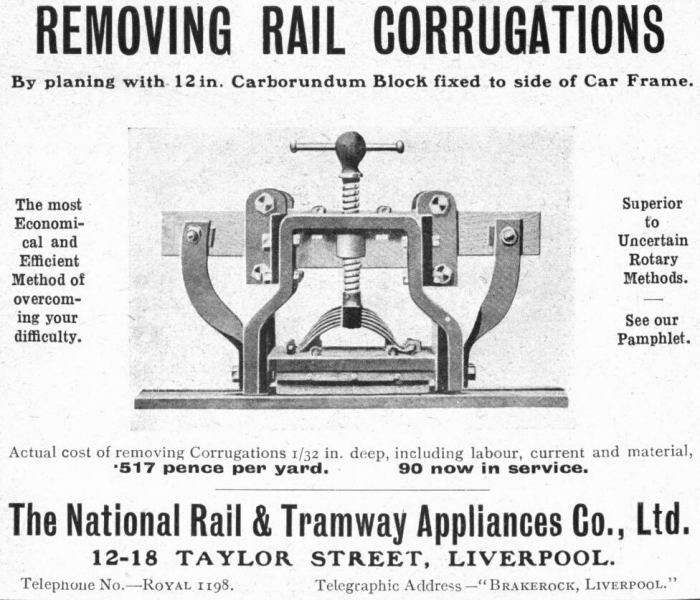
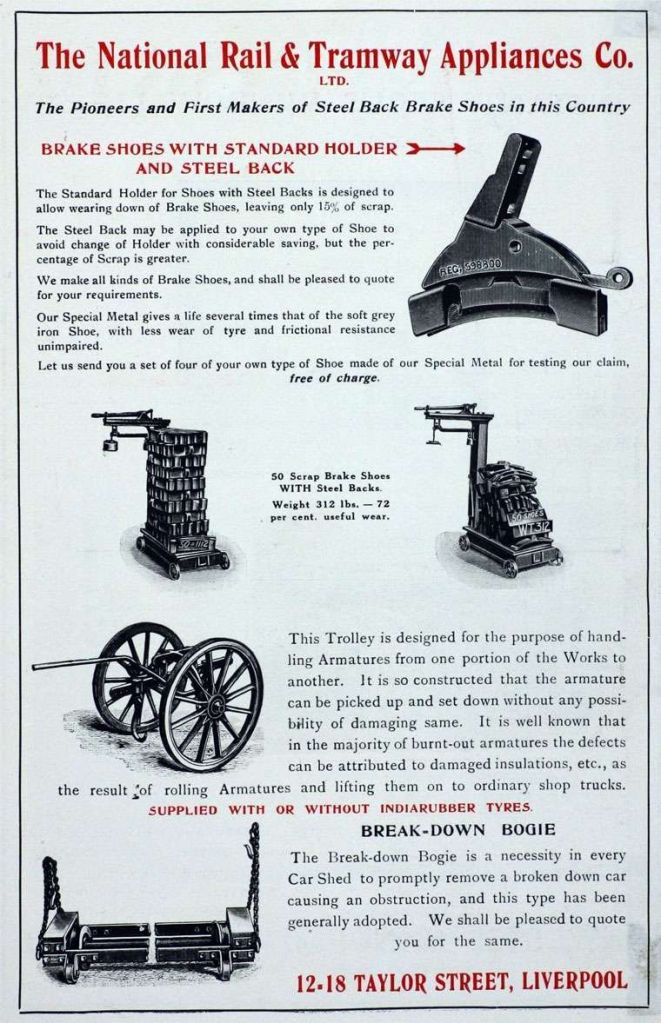
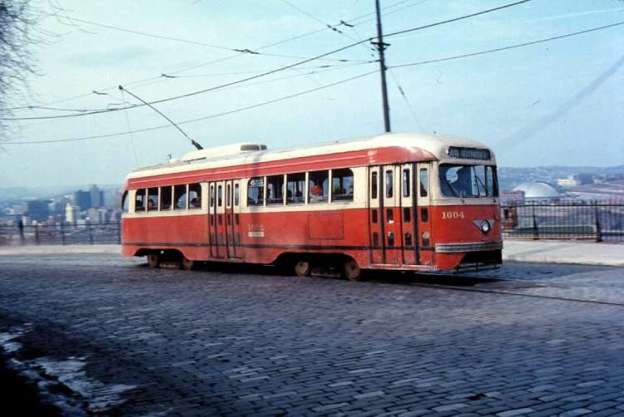
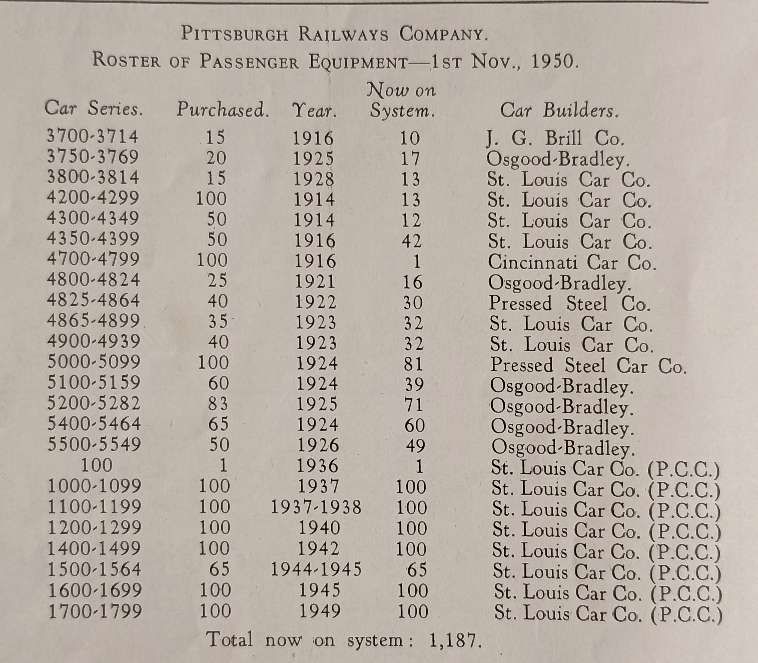
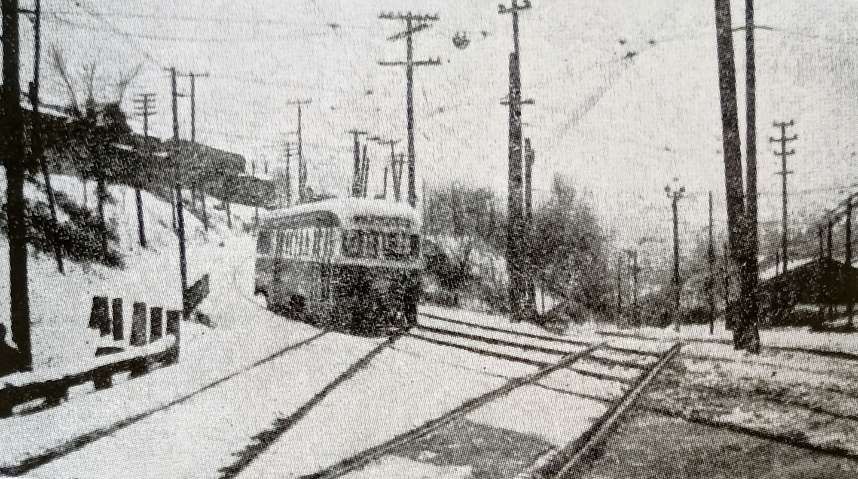
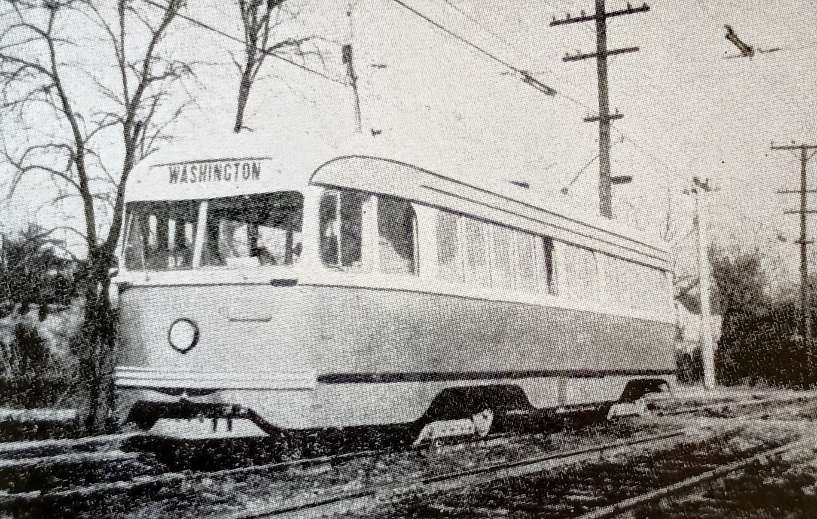
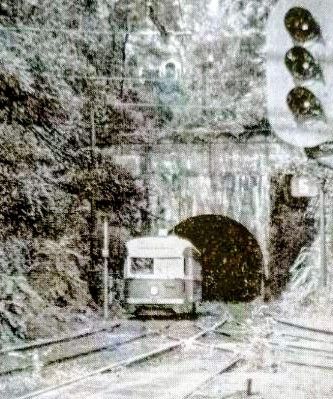
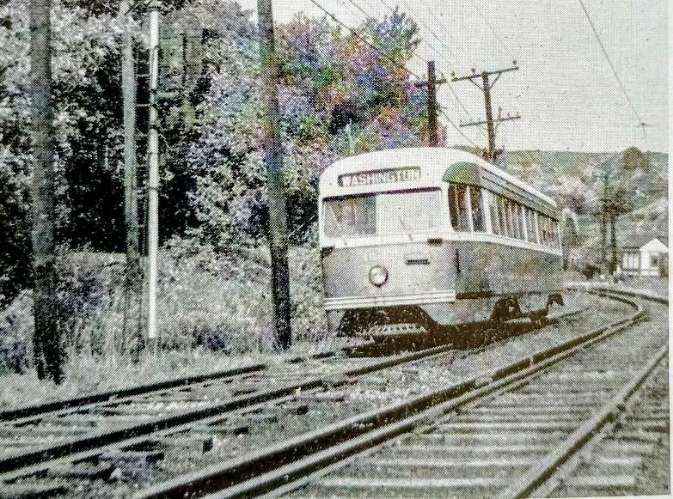
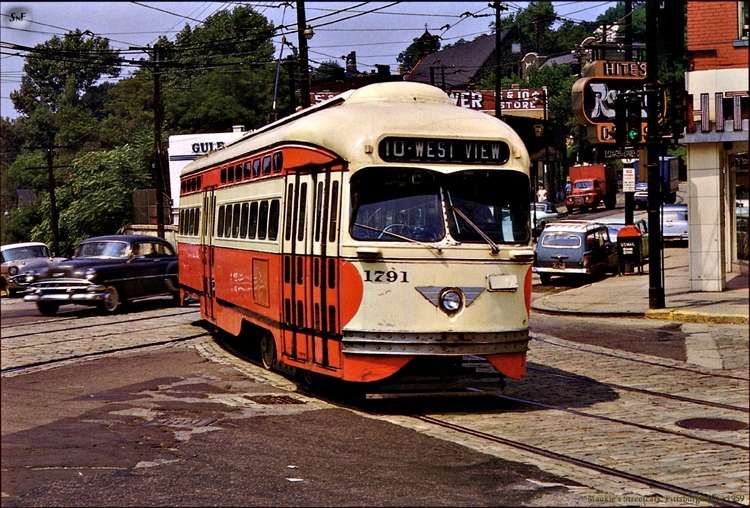
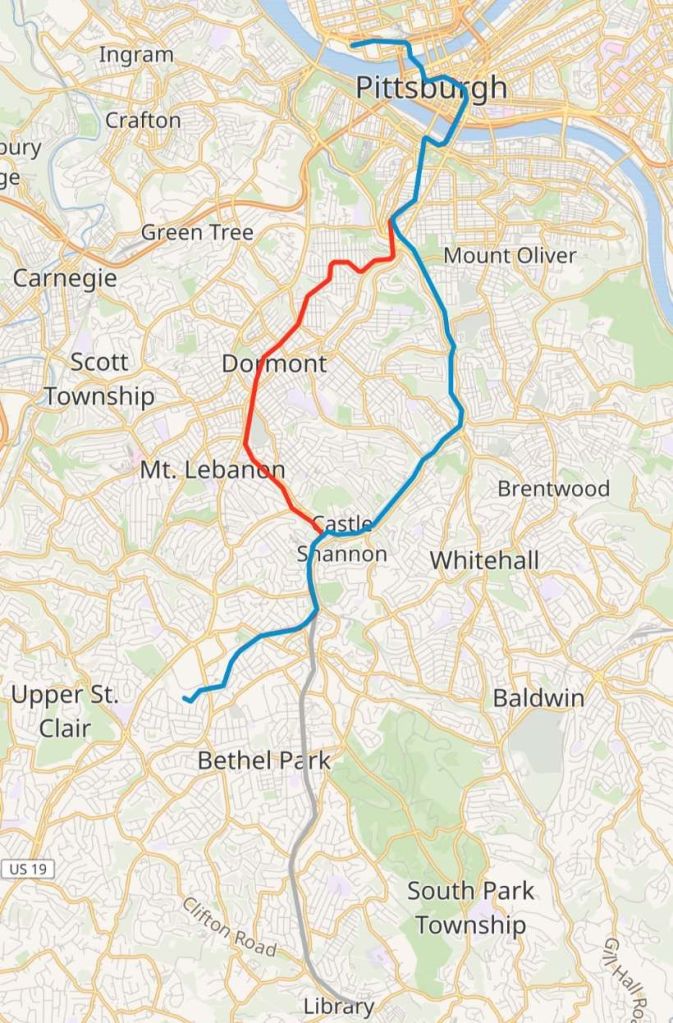
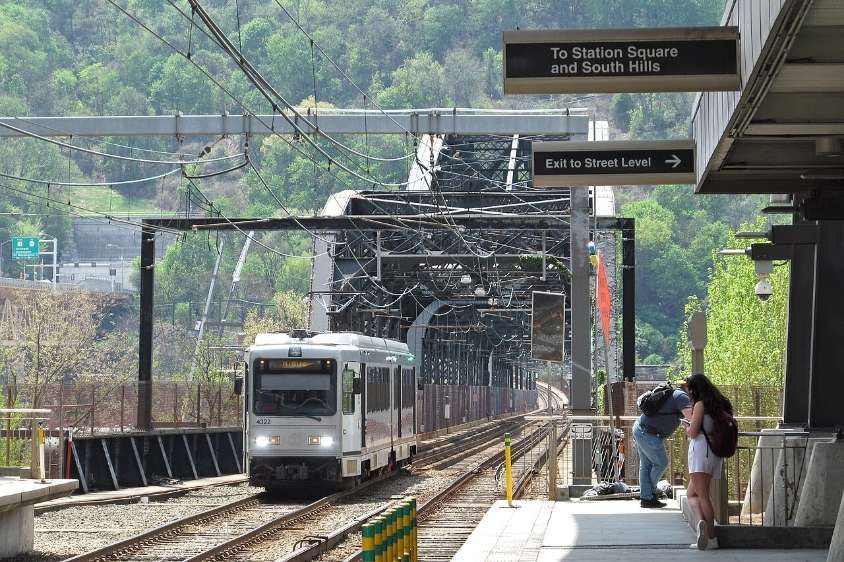
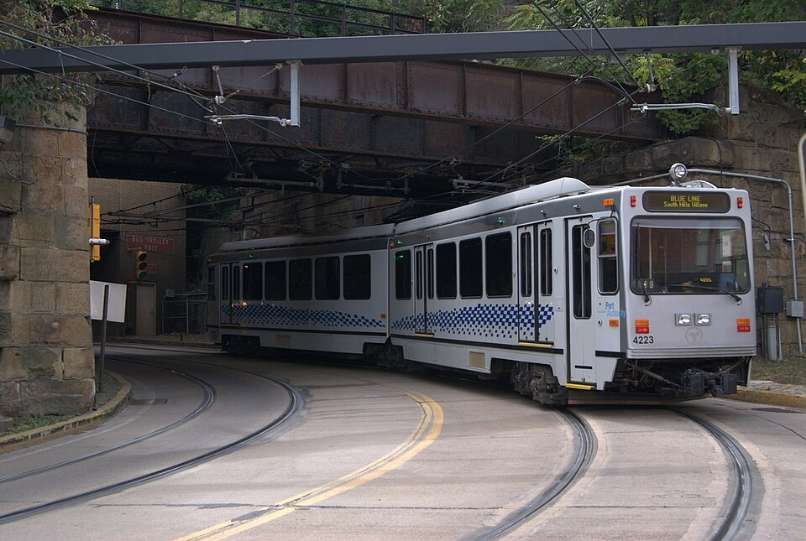
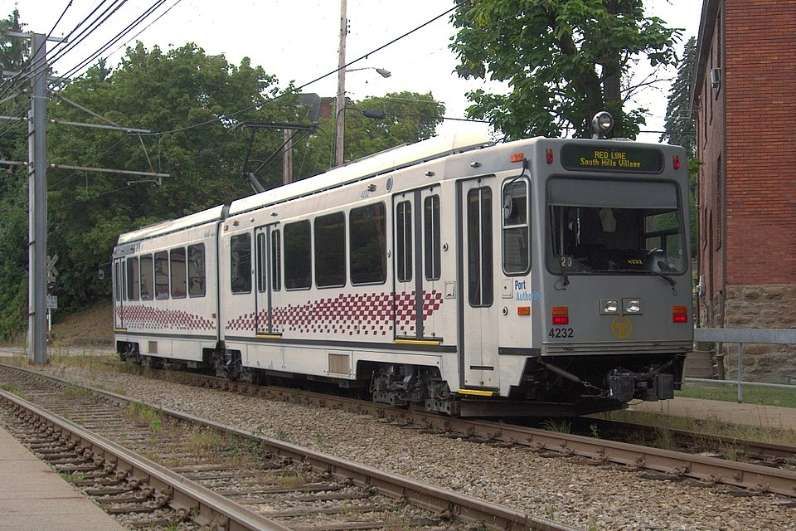
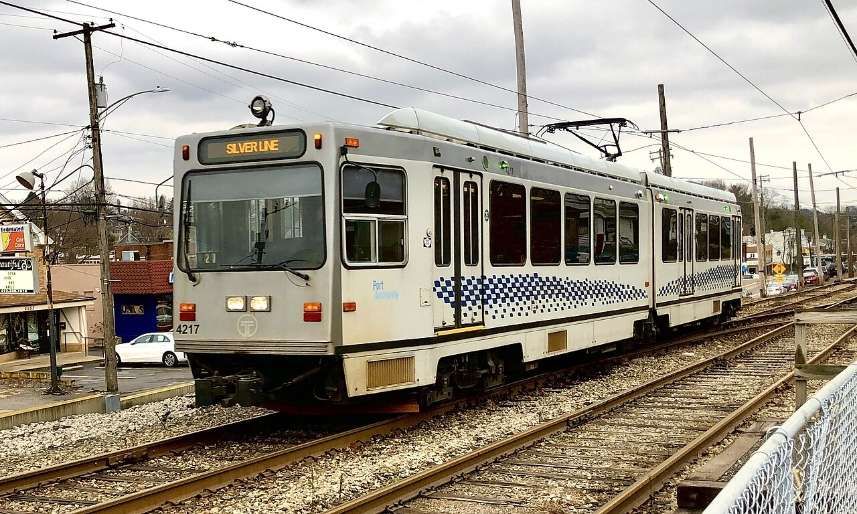
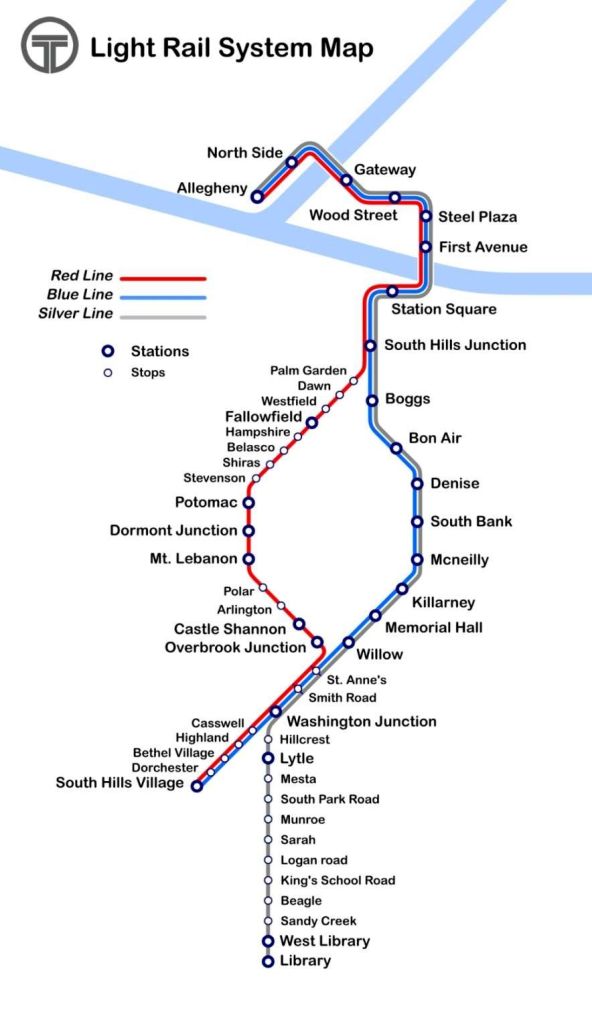
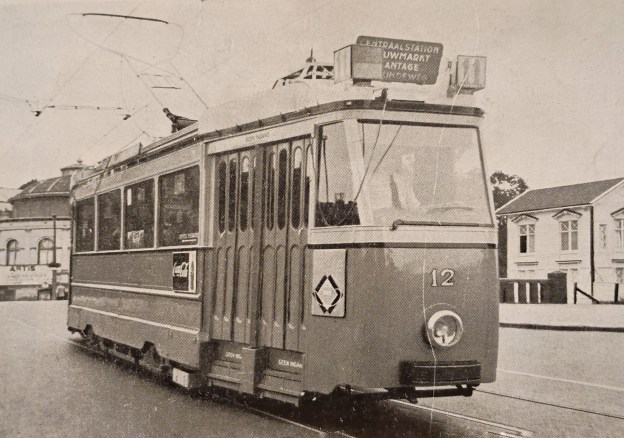
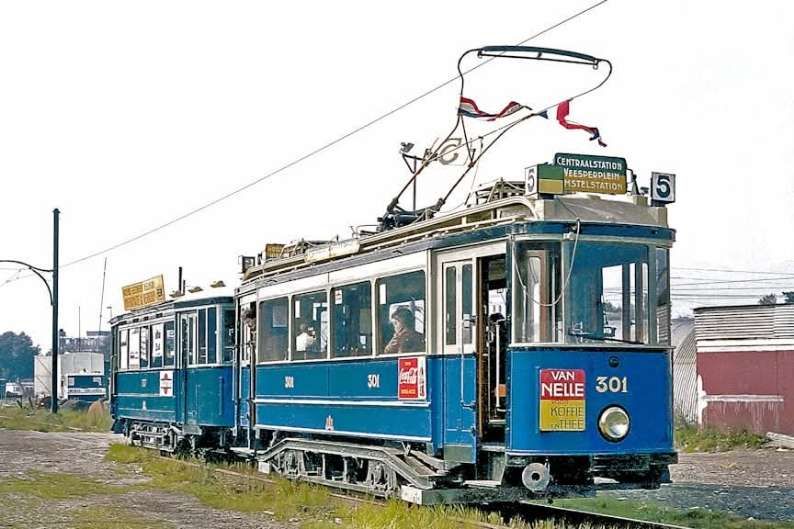
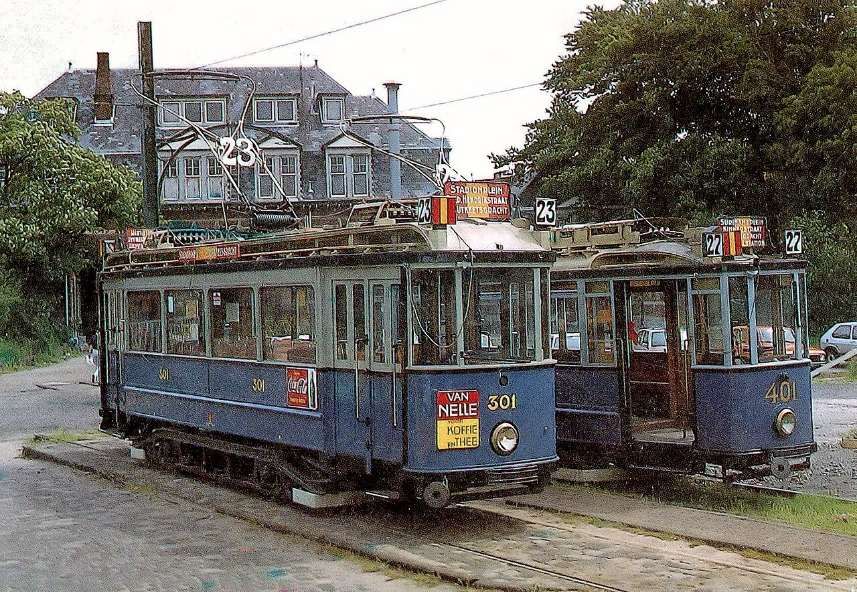
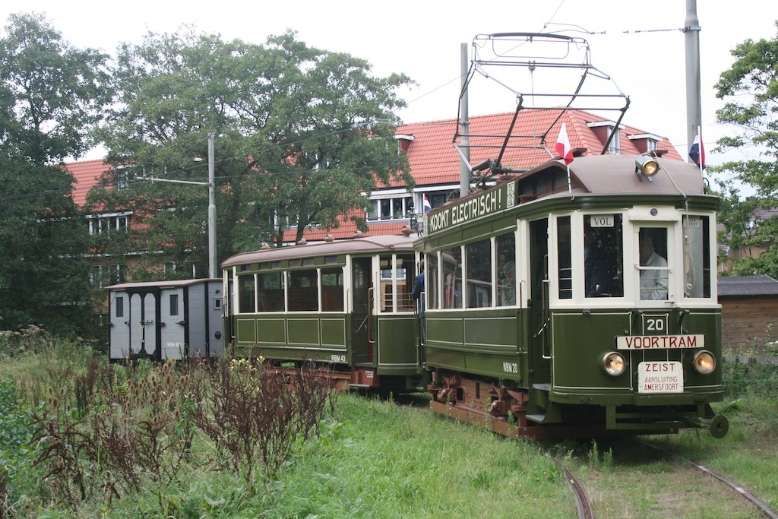
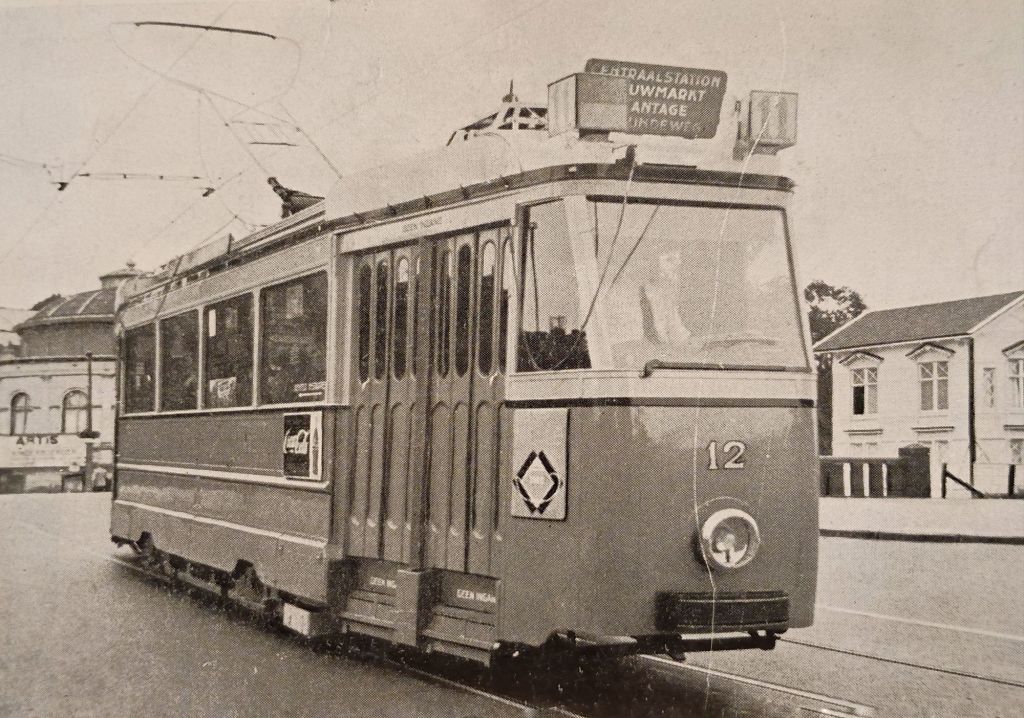
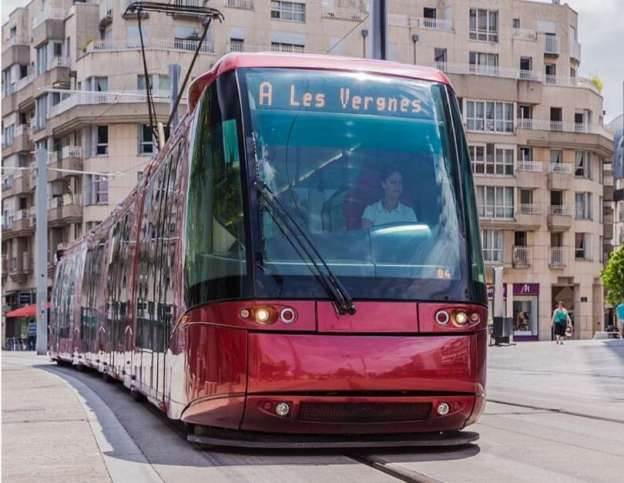
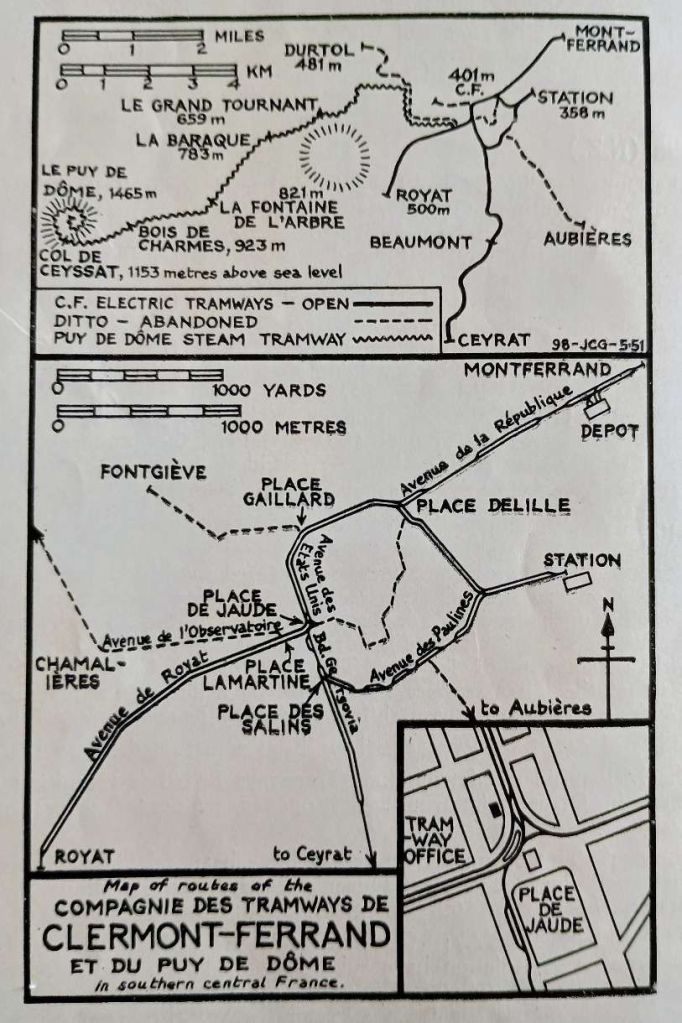
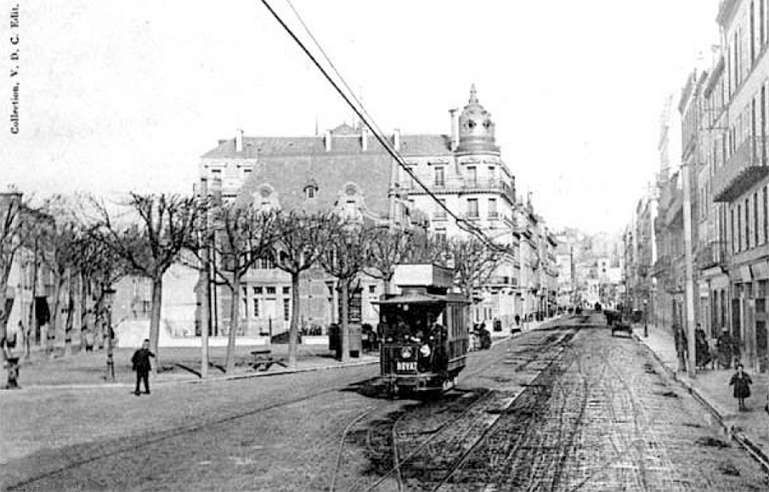
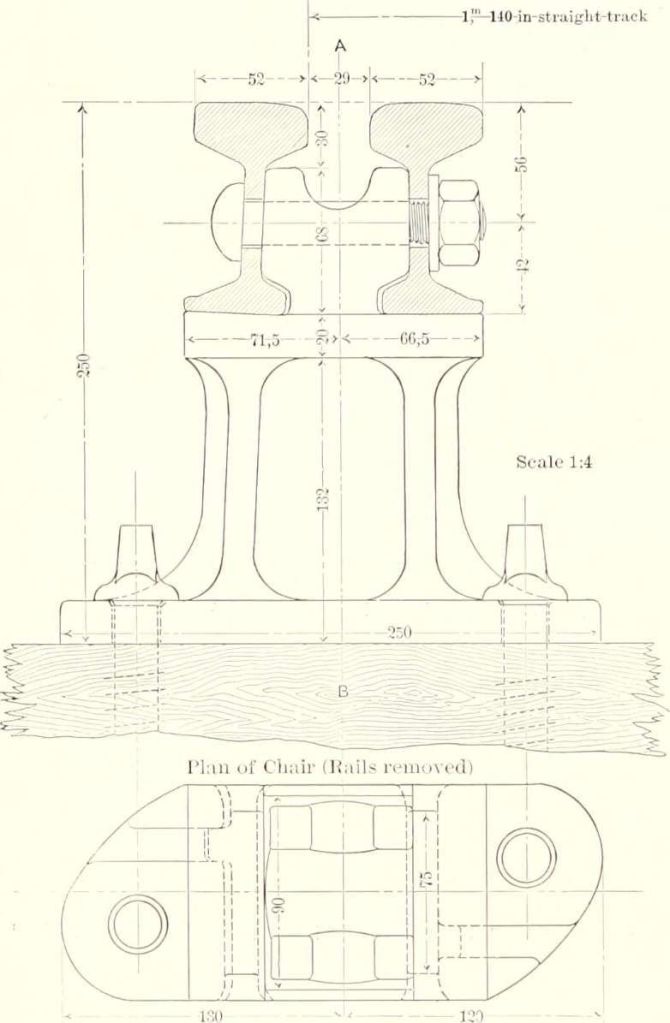
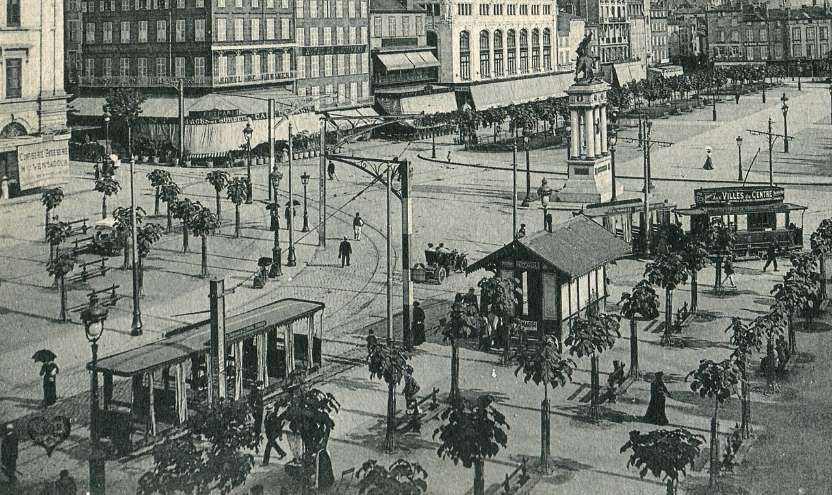
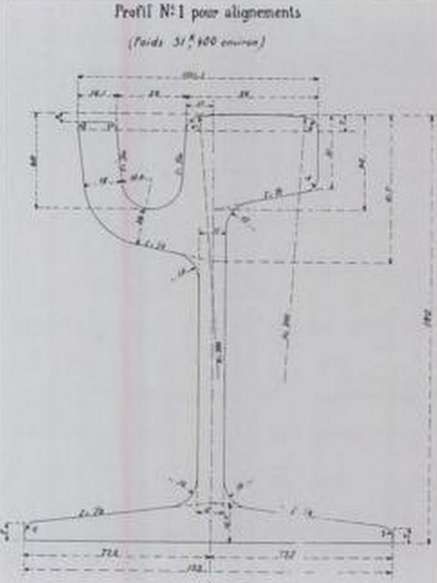
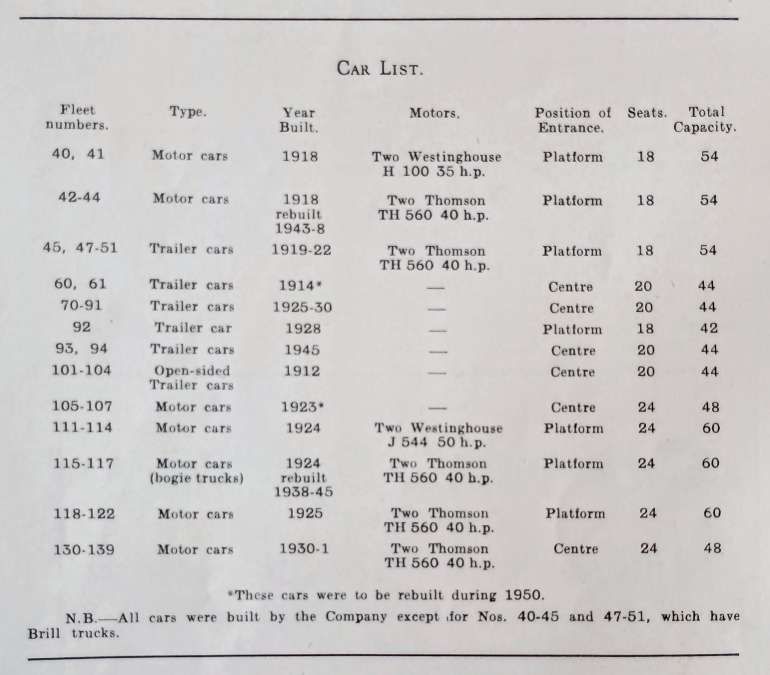
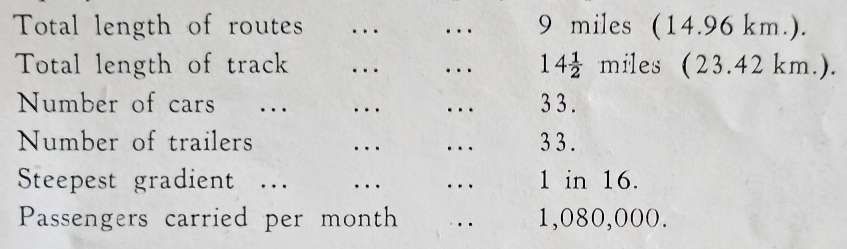
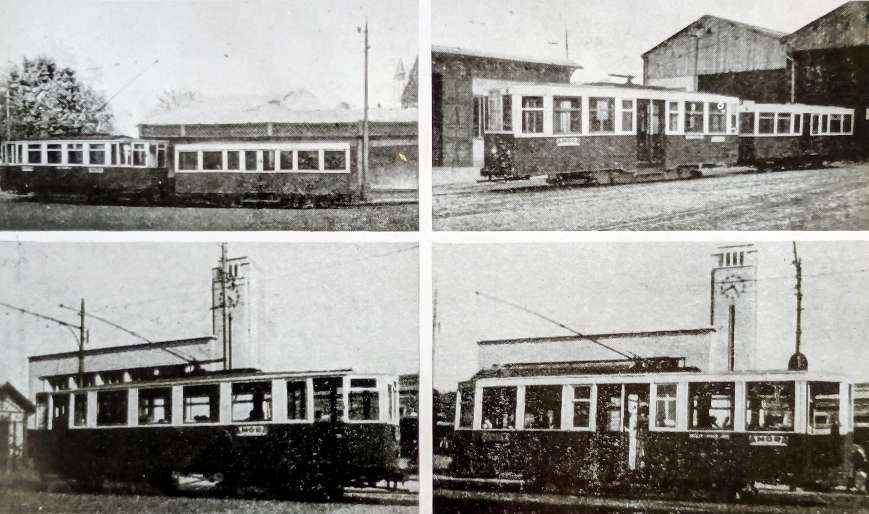
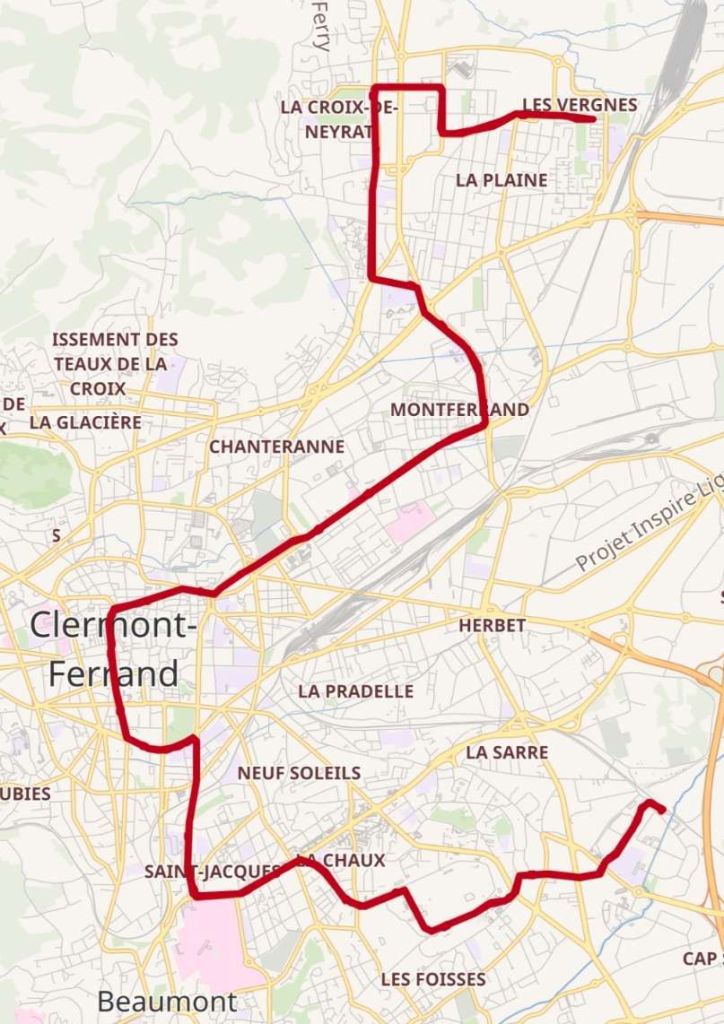
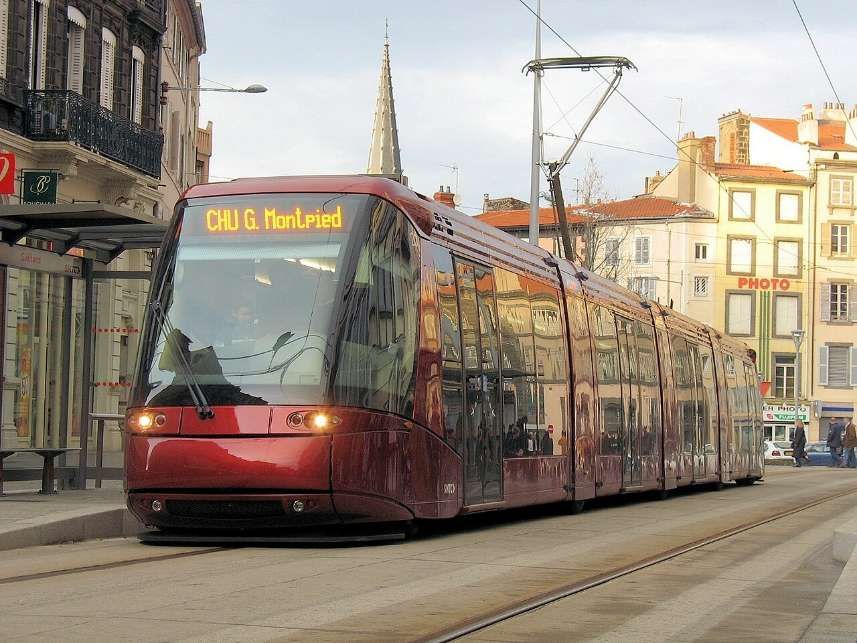


#/media/Dosiero%3AFontan-Saorge_staz_ferr_D.445.jpg)


.jpg)


#/media/File%3AT_Lightrail_an_der_Station_Square_03.jpg)
?wprov=rarw1#/media/File%3ARed_Line_Car%2C_Beechview%2C_2015-09-10%2C_02.jpg)
?wprov=rarw1#/media/File%3ASilver_Line_(cropped).jpg)


.jpg)
#/media/File%3ATramway-electrique-Clermont-Ferrand-cp.jpg)
#/media/File%3AELD_3497_-_CLERMONT-FD_-_Place_de_Jaude_-_Vue_prise_de_l'Hotel_de_la_Poste_(D%C3%A9tail).JPG)
