Tag Archives: L&YR

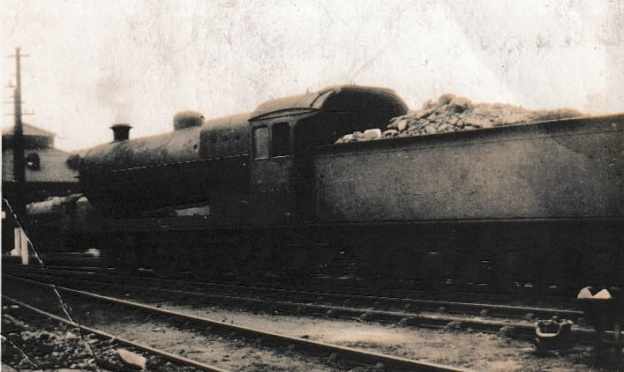
Ex-Lancashire & Yorkshire Railway (L&YR) 0-8-0 Locomotive in LMS Days at Liverpool, Bank Hall Locomotive Shed – 1937

The featured image for this short article is a relatively poor/grainy photograph taken on Sunday 25th July 1937 at Liverpool Bank Hall Engine Shed. Prominent in the photograph and identified by the photographer, is ex-L&YR 0-8-0 7F Locomotive No. 12981. In the background LMS 4-6-0 No. 5229 can be glimpsed. [Unknown Photographer]

In June 2026, I was given an image printed on a postcard in 1937. The photograph was taken at Liverpool Bank Hall Engine Shed (Code 27A) which was in north Liverpool, located just off Stanley Road in Kirkdale/Bootle. This is a ‘down-the-rabbit-hole’ kind of article in which I follow my nose from the photograph above and see where that leads. ….
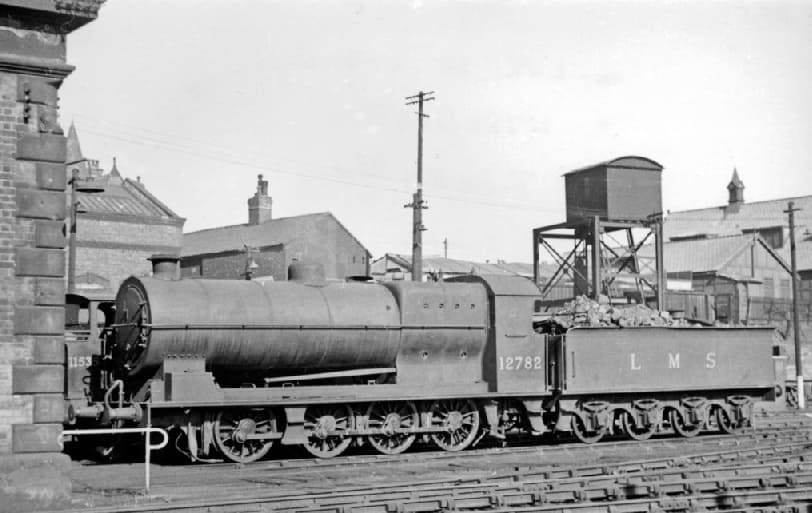
Also seen at Liverpool Bank Hall Locomotive Shed (27A) was No. 12782, another ex-L&YR 0-8-0 locomotive. No. 12782 is one of the survivors of a once numerous class of L&Y Aspinall Class 30 0-8-0 6Fs dating from 1901. It was withdrawn in 9/50, almost the last of its Class. Note the most obvious difference from No. 12981, the cab. This photograph was taken on 20th June 1948, (c) Ben Brooksbank and licenced for reuse under a Creative Commons Attribution Share-alike license 2.0 (CC BY-SA 2.0). [1]
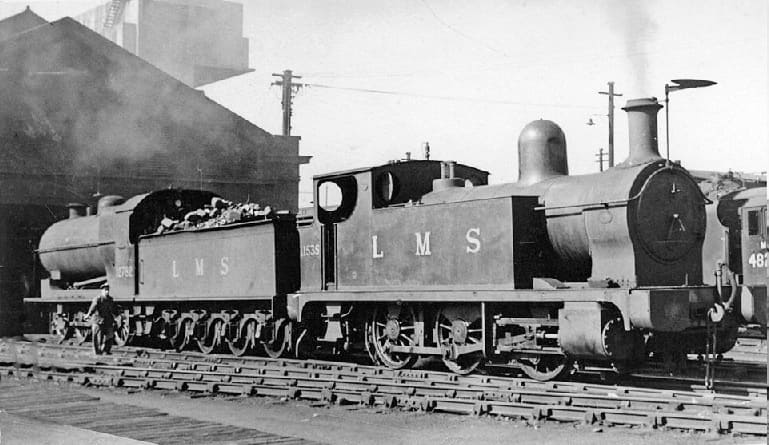
Another view of Locomotive No. 12782 at Bank Hall. On the same road is ex-L&Y 1F 0-6-0T LMS No. 11535, fitted with dumb buffers and swinging spark-arrestor for working in the Docks, (c) Ben Brooksbank and licenced for reuse under a Creative Commons Attribution Share-alike license 2.0 (CC BY-SA 2.0). [2]

Bank Hall Shed was and L&YR shed which was later operated by the LMS and later British Railways, it housed L&YR ‘Pug’ 0-4-0Ts for dock shunting, Class 02 shunters like D2852, and Stanier Class 5s for Liverpool Exchange passenger services.
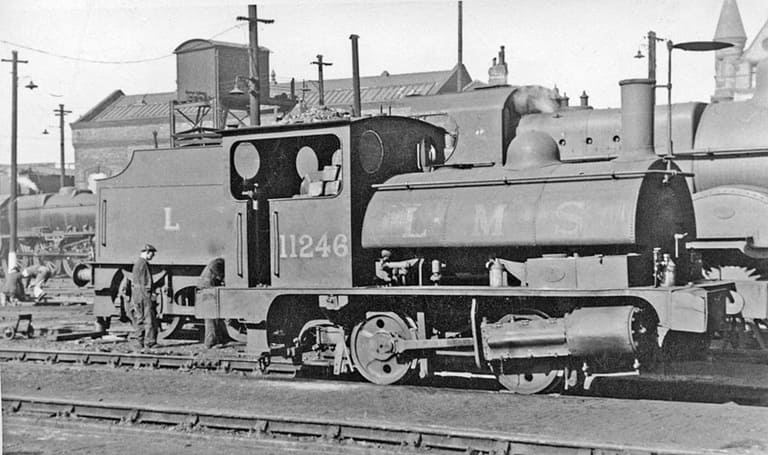
Ex L&YR ‘Pug’ 0-4-0T locomotive – LMS No. 11246 at Liverpool Bank Hall Locomotive Shed on 20th June 1948, (c) Ben Brooksbank and licenced for reuse under a Creative Commons Attribution Share-alike license 2.0 (CC BY-SA 2.0). [3]

Records available online give details of the locomotives on Bank Hall Shed on Sunday 7th March 1937, Sunday 27th February 1938 and Sunday 7th September 1941 do not show No. 12981 as being on shed. This is not conclusive evidence that No. 12981 was not allocated to Bank Hall as it may, in each case, have been out on duty. However, No. 12981 is recorded as being on shed on Saturday 3rd October 1942. [4]

No. 12981 was one of a number of L&YR 0-8-0 locomotives transferred to the LMS at the grouping. L&YR Class 30 locomotives were classified by the LMS as 6F locomotives there are a couple of images of one of these locomotives above. No. 12981 was a L&YR Class 31 locomotive. This class were given a power-rating of 7F by the LMS. “The class was designed by George Hughes and introduced in 1912. The class comprised 115 new locomotives (the 1546 Class, built 1912–21) and 40 rebuilt from two other classes: the 91 Class (built 1900–08) and the 9 Class (built 1918).” [5][6][7][8]
A LMS (ex-L&YR) 7F 0-8-0 at Normanton Shed in 1947. This is No. 12928, built by Hughes c. 1920, withdrawn in September 1947 – soon after this photograph was taken. Note the style of cab on this locomotive matches the cabs on the Class 30 locomotives. (c) Ben Brooksbank and licenced for reuse under a Creative Commons Attribution Share-alike license 2.0 (CC BY-SA 2.0). [9]

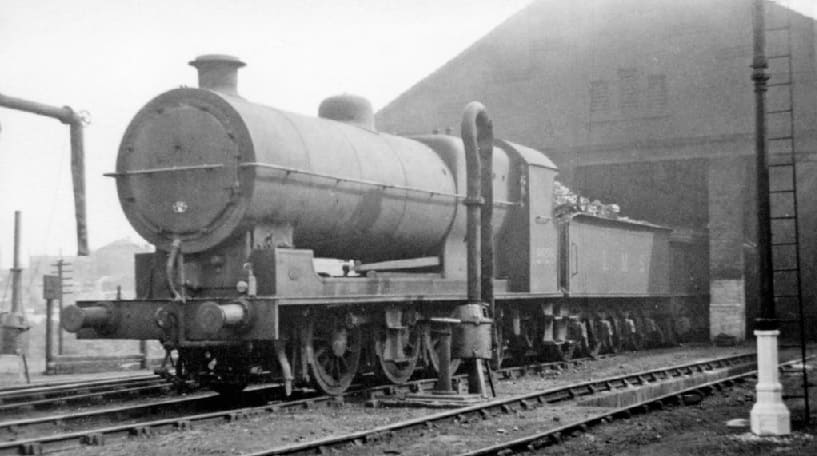
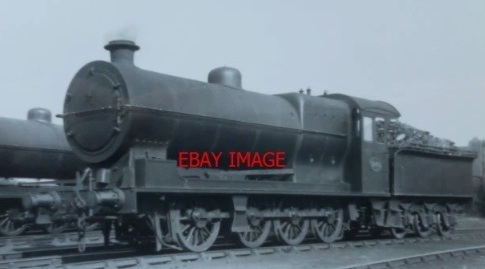
This image was for sale on eBay. It shows the same cab as the featured image for this article above. The vendor describes the locomotive as LMS ex-L&YR Class 91 Loco. No. 1440 (LMS 12981). It appears that No. 12981 was a locomotive rebuilt at Horwich from a Class 91 Locomotive built between 1900 and 1908. [10]
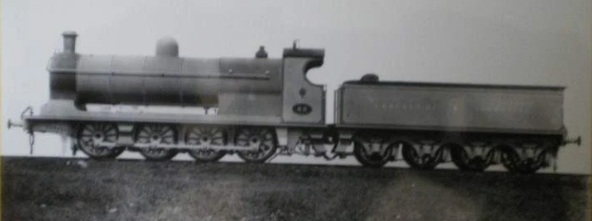
This is also a Class 91 0-8-0 – it has the same cab as the Class 30 locomotives. [11]
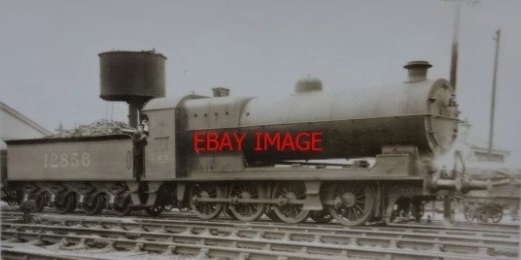
Another image for sale on eBay shows another Class 31 – No. 12856. This has the same cab detail as the Class 30 locomotives. [12]
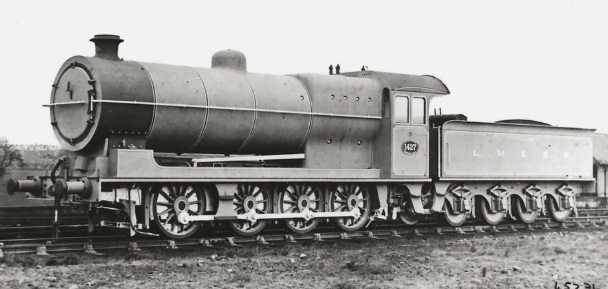
An ex-works photograph of L&YR locomotive No. 1427 which was one of the L&YR’s Class 91 locomotives. It became No. 12990 in LMS days. Note that the cab is the same as No. 12981. Given that this is an ex-works image, it is clear that this batch of locomotives were given a different of cab compared with their cousins. [13]

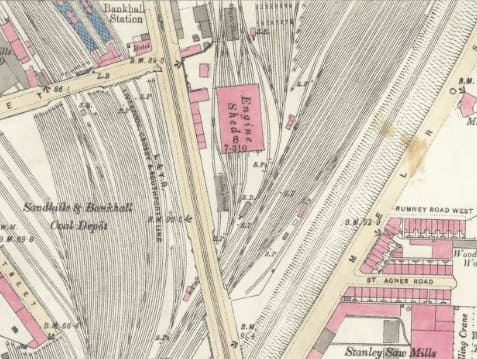
Bank Hall Locomotive Shed was situated off Stanley Road close to the Kirkdale tunnels. The depot was opened in 1865 and closed in 1966. At the time of closure it had two sheds – a brick-built 8-road dead-ended shed and a brick built shed with 4 through roads and 4 dead-end roads. The next two map extracts are taken from the 1st Edition 25″ Ordnance Survey. Two sheets cover the area of the Bank Hall Sheds. The locomotive depot sat to the East of the Liverpool, Crosby and Southport line and Northwest of North Docks Branch (through Kirkdale Railway Station) which were in turn alongside the Cheshire Lines Railway.
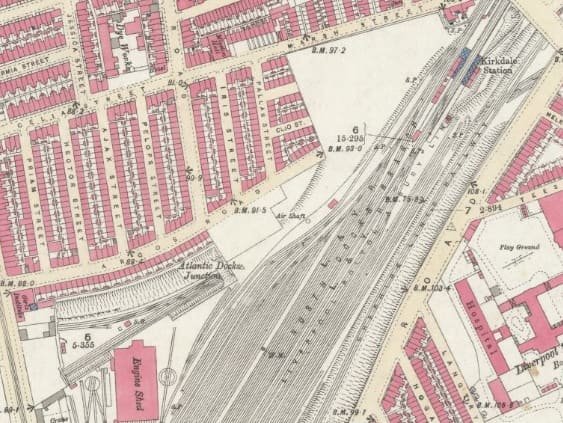
One of the two sheds at Bank Hall Locomotive Depot can be seen at the bottom left of this map extract. Immediately North of the shed is Atlantic Docks Junction (LNWR) which was established on 5th September 1881 It was the point at which the Alexandra Dock branch diverted from the original Bootle branch just east of the Canada Dock Tunnel. Stanley Road is at the bottom left of the extract, with tram lines heading North and South along it. A tramway depot is just to the North of this map extract. Northeast of Kirkdale Station which sits in the top right of this map extract. The North Docks Branch (L&YR) and the Cheshire Lines Railway (CLC) enter Kirkdale tunnels and underground separate with the CLC lines heading Northeast towards Walton-on-the-Hill Railway Station. Two turntables can be seen within the curtilage of locomotive depot. [14]
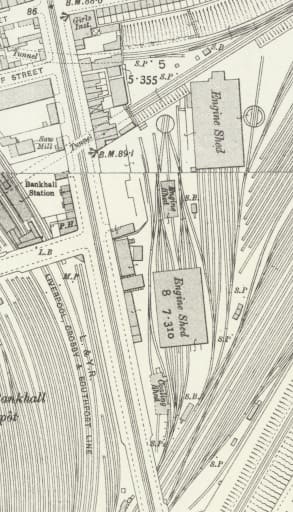
The second of the two engine sheds can be see centre-top of this map extract. Bankhall station can be seen top-left with the Liverpool, Crosby and Southport line curving away to the Northwest. The 4 through roads sit on the west side of the shed. the four dead-end roads enter from the North end of the shed. A multiplicity of marshalling sidings sit to the East of the depot. Stanley Road with its tramway are to the West of the locomotive sheds. [15]

This map extract shows the depot in 1906. The OS Sheet was surveyed in 1906 and published in 1908. There are no obvious differences from the map extracts above. The next edition of the OS mapping of 1924/25 shows no further change from this map extract. [16]
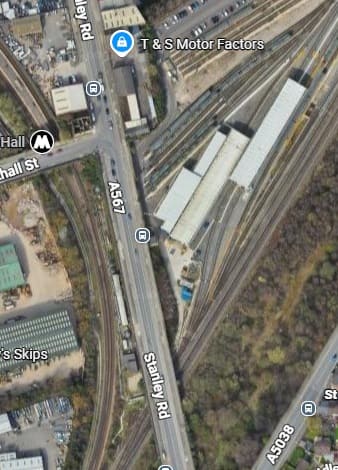
The same location in the 21st century. The site is occupied by Kirkdale Traction Maintenance Depot. It is home to Mersey Rail’s 777 fleet of trains and the engineers workshop for the old 507/8s. [Google Maps, July 2026]

In 1903, the Mersey Railway was electrified; this was the world’s first full electrification of a steam railway. It was followed by the electrification of the Lancashire and Yorkshire Railway line from the Liverpool Exchange railway station to Southport railway station three years later. In 1937, electrification of the Wirral Railway lines to New Brighton railway station and West Kirby railway station enabled service into Liverpool via the Mersey Railway Tunnel. Bank Hall continued to serve and stable steam locomotives, by the 1937, it had one of the large reinforced concrete coaling stages. Shed Bash UK provides details of locomotives stabled/allocated to Bank Hall MPD in the period from 1937 to 1966 when it closed. [4]

Memories of Bank Hall Sheds (27A) in the period 1960-1966 can be found here. [17]

After 1966, with Bank Hall MPD closed remaining steam-powered services were supported from elsewhere and 1968 waw the last of regular steam use in the country.

Between 1966 and 1980, the Mersey Railway became part of the Merseyrail network which was radically transformed from a fragmented group of suburban lines into a unified, metro-style urban transit system. This era saw the introduction of the Merseyrail brand, the construction of the underground city centre tunnels, and the replacement of aging pre-war rolling stock with modern electric trains. Merseyrail made use of the older Class 502 EMU units until 1980.
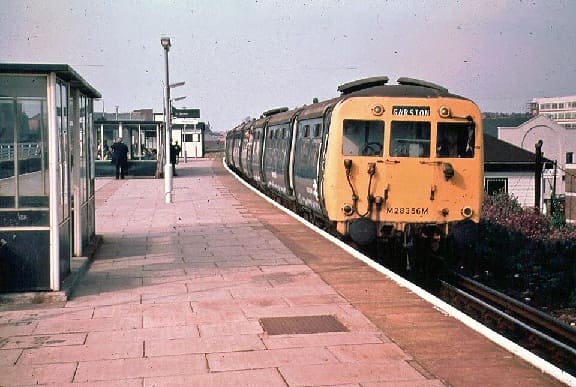
The British Rail Class 502 was a n EMU originally built by the LMS at its Derby Works. Introduced in 1940 and withdrawn by 1980, they spent the whole of their working lives on the electrified railway lines north of Liverpool. Their original livery was LMS maroon. [20]

In the 21st century, modern traction on Mersey Rail includes the older Class 507/8 EMUs and the more modern Class 777 EMUs. These are maintained on the site of the old MPD at Bank Hall.
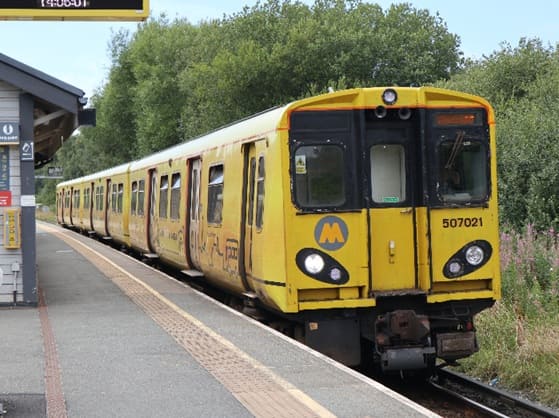
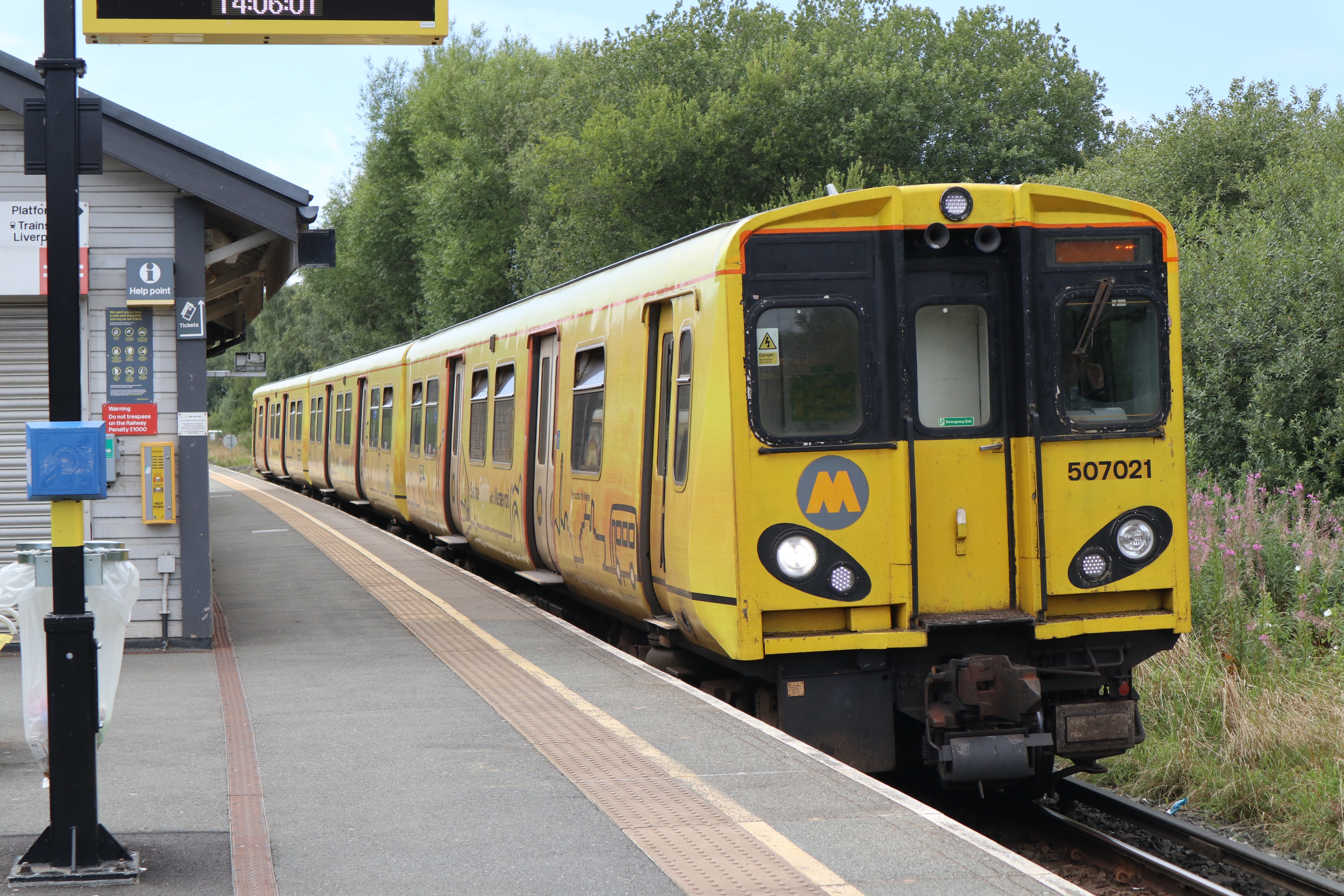
The British Rail Class 507 electric multiple unit (EMU) passenger trains were built by British Rail Engineering Limited at Holgate Road carriage works in two batches from 1978 to 1980. They are a variant of British Rail’s standard 1972 design for suburban EMUs which eventually encompassed 755 vehicles over five classes (Class 313, 314, 315, 507 and 508), (c) Vanmanyo and licensed for reuse under a Creative Commons licence (CC BY-SA 4.0). [18]
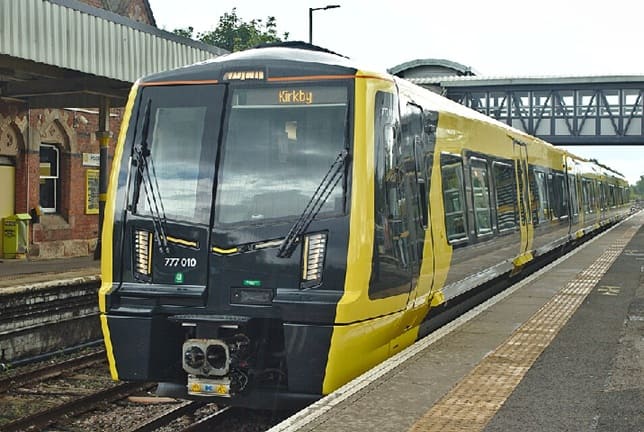
The British Rail Class 777 METRO is a class of electric multiple unit passenger trains delivered by the Swiss rolling stock manufacturer Stadler Rail, being used on the Merseyrail network, (c) Rodhullandemu (2021) and licensed for reuse under a Creative Commons licence (CC BY-SA 4.0). [19]

References

  1. https://www.geograph.org.uk/photo/2606508, accessed on 7th July 2026.
  2. https://www.geograph.org.uk/photo/2217586, accessed on 7th July 2026.
  3. https://www.geograph.org.uk/photo/2224499, accessed on 7th July 2026.
  4. https://shedbashuk.blogspot.com/2013/01/bank-hall-1954-1964.html, accessed on 7th July 2026.
  5. https://en.wikipedia.org/wiki/L%26YR_Class_31, accessed on 7th July 2026.
  6. H. C. Casserley & S. W. Johnston; Locomotives at the Grouping, No.3, LMS; Ian Allan, Shepperton, 1966, p130.
  7. John Marshall; The Lancashire & Yorkshire Railway, Volume 3; David & Charles, Newton Abbot, 1972 p186–8, p260–2, p266, p267–9.
  8. Eric Mason; The Lancashire and Yorkshire Railway in the Twentieth Century; Ian Allan, Shepperton: 1975 [1954], p147–9, p152–6.
  9. https://www.geograph.org.uk/photo/2785803, accessed on 7th July 2026.
  10. https://www.ebay.co.uk/itm/362614969179, accessed on 7th July 2026.
  11. https://www.ebay.co.uk/itm/192886948146, accessed on 7th July 2026.
  12. https://www.ebay.co.uk/itm/362613433191, accessed on 7th July 2026.
  13. https://www.ebay.co.uk/itm/334283762825, accessed on 7th July 2026.
  14. https://maps.nls.uk/view/126523040, accessed on 7th July 2026.
  15. https://maps.nls.uk/view/126523070, accessed on 7th July 2026.
  16. https://maps.nls.uk/geo/explore/#zoom=17.0&lat=53.43776&lon=-2.98547&layers=168&b=ESRIWorld&o=100, accessed on 8th July 2026.
  17. https://www.derbysulzers.com/birkenhead.html, accessed on 8th July 2026.
  18. https://upload.wikimedia.org/wikipedia/commons/9/9d/507021_Bidston.jpg, accessed on 8th July 2026.
  19. https://commons.wikimedia.org/wiki/File:777010_at_Hooton_Station_20210728-1.jpg, accessed on 8th July 2026.
  20. https://en.wikipedia.org/wiki/British_Rail_Class_502#/media/File:Sandhills_1979001_1.jpg, accessed on 8th July 2026.
LNWR “Reversible” Steam Train

The Railway Magazine, August 1922. [1]

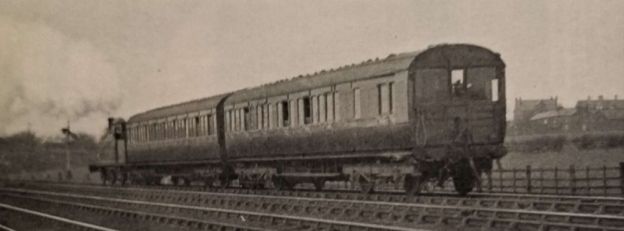
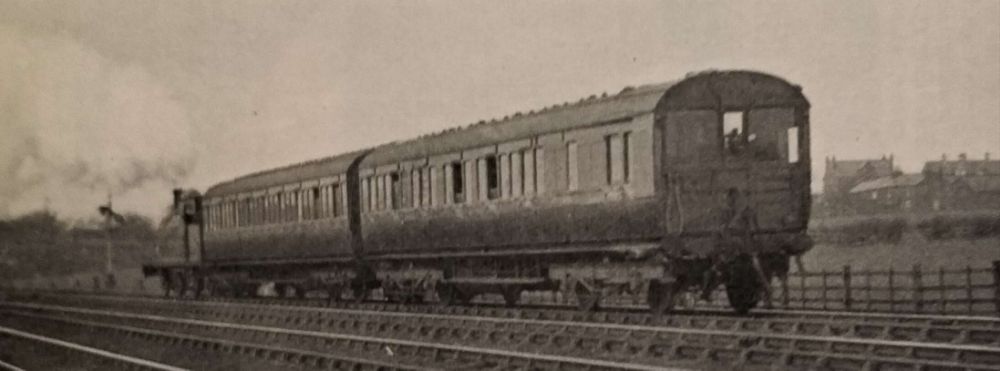
An unattributed article about these LNWR units was carried in the August 1922 issue of The Railway Magazine. From 6th February 1922 a ‘reversible’ or ‘push-and-pull’ train was in use for working locally between Manchester (Victoria) and Atherton.

Courtesy of Mr. Ashton Davies, M.Β.Ε., General Superintendent (Northern Division) of the LNWR, The Railway Magazine was able to illustrate and describe the equipment of the train employed:

“The train normally consists of a tank engine adapted to run with two bogie coaches, but can be increased to four or six coaches when the volume of traffic calls for further accommodation. The vehicles adapted for use in this way are arranged in pairs, providing nine third-class compartments in one vehicle, seating 108 passengers, while the composite carriage has two first-class and four third-class compartments seating 64 passengers, together with luggage and driver’s compartments. There is thus total accommodation for 172 passengers for each unit pair of vehicles. The length over buffers of each coach is 57 ft. 7 in. and the width over the body is 9 ft. The engine is a 2-4-2 radial tank, the diameter of the coupled wheels being 5 ft. 8 in. and of the radial wheels 3 ft. 7 in. Cylinders are 17.5 in. diam. and 26 in. stroke: boiler pressure is 180 lb. per square inch; length over buffers, 37 ft. 2 in. When the train is made up to six coaches the total length over buffers is 382 ft. 8 in. In one direction the engine is operated as with an ordinary steam train, but in the other direction the driver operates the engine from the driver’s compartment at the rear end of the train.” [1: p128]

A General View of a Two-Coach Train ‘Unit’ with the Driver’s Control Compartment Leading. [1: p128]

The locomotives used on the push-pull services in the old Lancashire and Yorkshire Railway area of the then very new combined company were Webb’s 2-4-2T locos. [4]

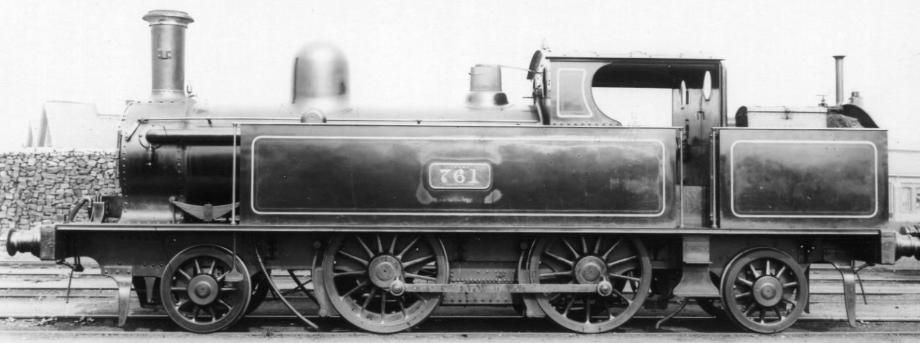
No. 761 appears in this official works photograph from the 19th century, © Public Domain. [5][6]

The LNWR 4ft 6in Tank was a class of 220 passenger 2-4-2T locomotives manufactured by the London and North Western Railway in their Crewe Works between 1879 and 1898. The ‘4ft 6in’ refers to the diameter of the driving wheels. “The design was an extension of the earlier 2234 2-4-0T built from 1876 which became known as ‘Chopper Tanks’. They had been designed for working local passenger trains. From 1909 many locomotives of the class were fitted for Push-Pull working, giving the nickname of ‘Motor Tanks’. … Withdrawals started in 1905: 118 were scrapped in the years up to 1923 grouping, leaving 90 to be passed to the London, Midland and Scottish Railway. They were allocated power class 1P, and assigned the numbers 6515–6600 and 6758–6761; although only 37 survived long enough to receive them: withdrawals restarted in 1924, and when the last was withdrawn in June 1936, the class became extinct. None were preserved.” [5]

The 2-4-2T engines were not the only locos adapted by the LNWR for push-pull working. From 1914 onwards some of the LNWR Webb ‘Coal Tanks’ “were fitted with push-pull ‘motor train’ equipment with the first so equipped being 576 and 597 which were then deployed on the Brynmawr to Ebbw Vale service. The system used by the LNWR involved the use of mechanical rods and linkages which ran beneath the axles of the locomotives. By 1921, the company was operating 30 branches by this method with many being worked by ‘Coal Tanks’. As a result, 55 locomotives had been equipped with the necessary equipment.” [2]

Webb built his class of 500 0-6-0 coal locomotives between 1873 and 1892 for slow freight work. Between 1881 and 1897 he built 300 0-6-2Ts which were tank engine versions of his of the 58320 class. These tank engines became known as ‘Coal Tanks’. “They had the same cheaply produced cast iron wheels and H-section spokes as the tender engines. A trailing radial truck supporting the bunker was added also with two similarly cast iron wheels. … They were almost entirely built of Crewe standard parts, including the radial rear axle. … Most were relieved of freight duties when the extent of their appalling brakes (initially made of wood) were uncovered, and some were fitted for motor train working.” [3]

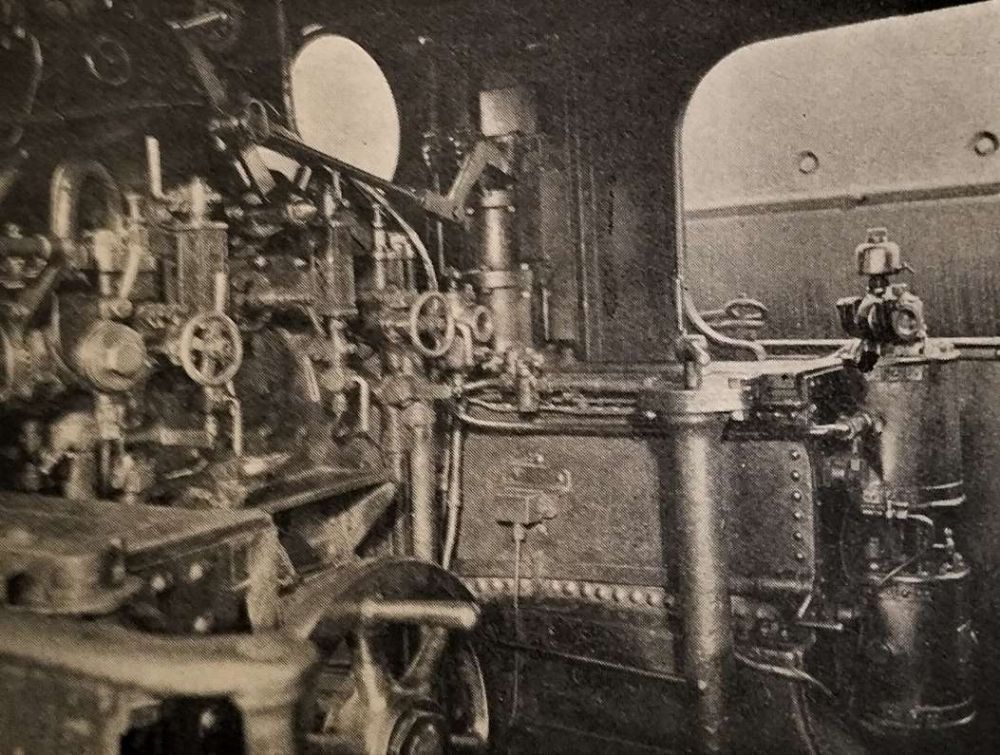
The Interior of the 2-4-2T Locomotive Cab, Showing Regulator Fittings, Steam-Driven Air Compressor, etc. [1: p129]

The Railway Magazine article continues:

“The engine and train are fitted with the automatic vacuum brake. A compressed-air apparatus is installed to operate the regulator handle on the engine, when the driver is controlling from the driver’s compartment.

The regulator handle is shown connected to a rod by means of a French pin; the other end is coupled to an operating air cylinder by means of a bell crank lever. The operating cylinder contains two pistons, one larger than the other; both are mounted on the same piston rod. The chamber between the two pistons is directly connected to an auxiliary reservoir, to which air pressure is supplied through a back pressure valve, so that a sufficient air pressure is always available. The underside of the large piston can be put in communication with the main reservoir or the atmosphere under the control of the driver’s compressed air valve. When air pressure is supplied to the underside of the large piston it is placed in equilibrium, and the air pressure from the auxiliary reservoir then forces up the small piston, and opens the regulator. When the air pressure on the underside of the large piston is destroyed, by opening the driver’s compressed-air valve to atmosphere and closing the air supply from the main reservoir, the air pressure from the auxiliary reservoir forces down the large piston and shuts the regulator. By manipulating the driver’s compressed air valve any desired opening of the regulator may be obtained. … Movement of the regulator on the engine is repeated to the driver by an electrical indicator fixed over the look-out window in the driver’s compartment. The vacuum and pressure gauges are placed on each side of the electrical indicator in the driver’s compartment, above the observation window. A pneumatic whistle is provided to give warning on the road.

A special feature of this train is the driver’s ‘safeguard’ in the event of the driver becoming incapacitated when driving alone from the rear. If he releases his hold of the brake handle in this condition it will act as an ’emergency handle’, immediately shutting the regulator and applying the brake.” [1: p129]

Following the 1923 grouping, the London Midland & Scottish Railway (LMS) became responsible for this fleet of push-pull fitted 2-4-2T and 0-6-2T Locomotives. The LMS took the decision to adopt the Midland Railway’s vacuum-worked push-pull equipment instead of the LNWR system.

As we have already noted, withdrawals of the 2-4-2T locos started as early as 1905: 118 had gone before the 1923 grouping, 90 were passed to the LMS. “They were allocated power class 1P, and assigned the numbers 6515–6600 and 6758–6761; although only 37 survived long enough to receive them: withdrawals restarted in 1924, and when the last was withdrawn in June 1936, the class became extinct. None were preserved.” [5]

In all, 65 of the ‘Coal Tanks’ (0-6-2Ts) received the LMS vacuum-worked push-pull fittings, “12 of them formerly having had the mechanical type. … The use of push-pull equipped ‘Coal Tanks’ was long-lived with the last one running on the Bangor to Bethesda branch as late as 1951.” [2]

References

  1. ‘Reversible’ Steam Train, London & North Western Railway; in The Railway Magazine, London, August 1922, p128-129.
  2. https://www.keymodelworld.com/article/lnwr-webb-coal-tanks-0-6-2t-history, accessed on 25th October 2024.
  3. https://preservedbritishsteamlocomotives.com/2f-58880-58937-0-6-2t-lnwr-webb-coal-tank, accessed on 25th October 2024.
  4. https://www.discountmags.com/magazine/the-railway-march-1-2022-digital/in-this-issue/38, accessed on 25th October 2024.
  5. https://www.hattons.co.uk/directory/vehicledetails/3144969/2_4_2t_class_4_6_chopper_lnwr, accessed on 25th October 2024.
  6. https://en.m.wikipedia.org/wiki/LNWR_4ft_6in_Tank_Class, accessed on 25th October 2024.