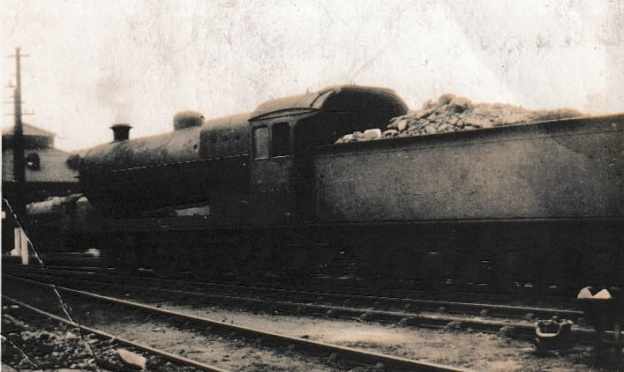
The featured image for this short article is a relatively poor/grainy photograph taken on Sunday 25th July 1937 at Liverpool Bank Hall Engine Shed. Prominent in the photograph and identified by the photographer, is ex-L&YR 0-8-0 7F Locomotive No. 12981. In the background LMS 4-6-0 No. 5229 can be glimpsed. [Unknown Photographer]
In June 2026, I was given an image printed on a postcard in 1937. The photograph was taken at Liverpool Bank Hall Engine Shed (Code 27A) which was in north Liverpool, located just off Stanley Road in Kirkdale/Bootle. This is a ‘down-the-rabbit-hole’ kind of article in which I follow my nose from the photograph above and see where that leads. ….
Bank Hall Shed was and L&YR shed which was later operated by the LMS and later British Railways, it housed L&YR ‘Pug’ 0-4-0Ts for dock shunting, Class 02 shunters like D2852, and Stanier Class 5s for Liverpool Exchange passenger services.
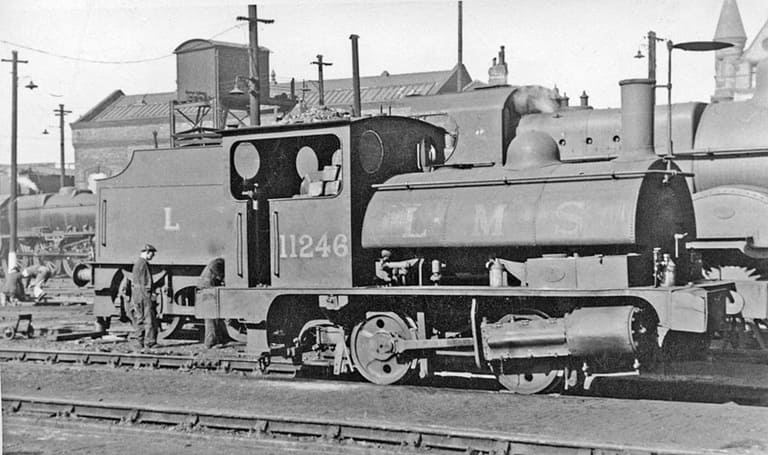
Records available online give details of the locomotives on Bank Hall Shed on Sunday 7th March 1937, Sunday 27th February 1938 and Sunday 7th September 1941 do not show No. 12981 as being on shed. This is not conclusive evidence that No. 12981 was not allocated to Bank Hall as it may, in each case, have been out on duty. However, No. 12981 is recorded as being on shed on Saturday 3rd October 1942. [4]
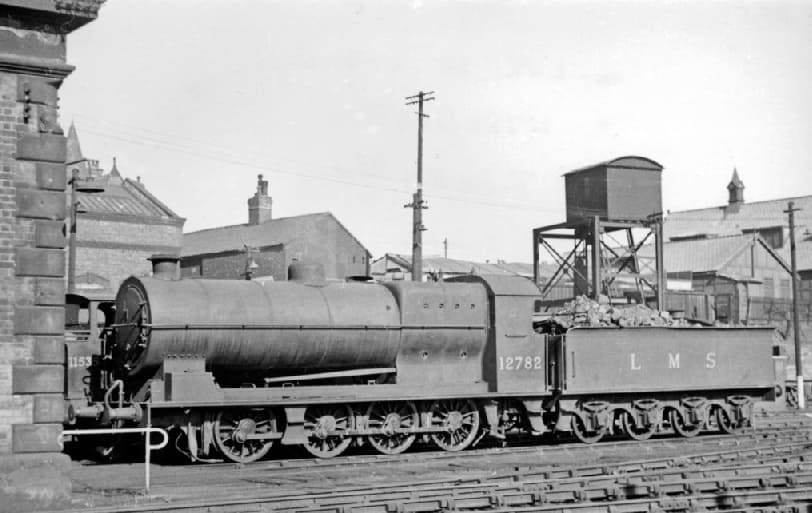
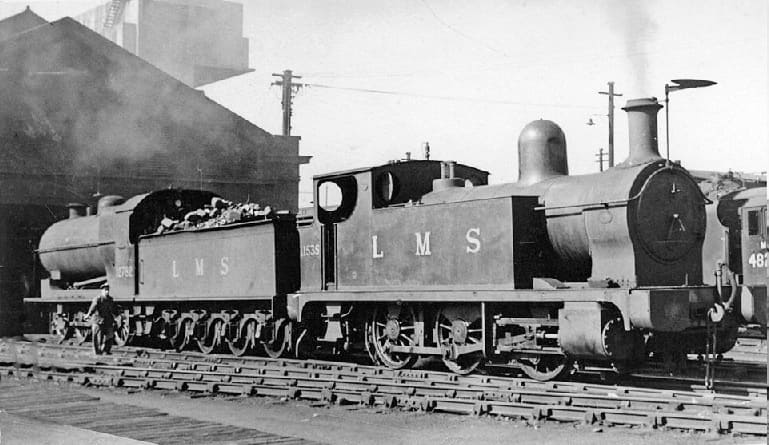
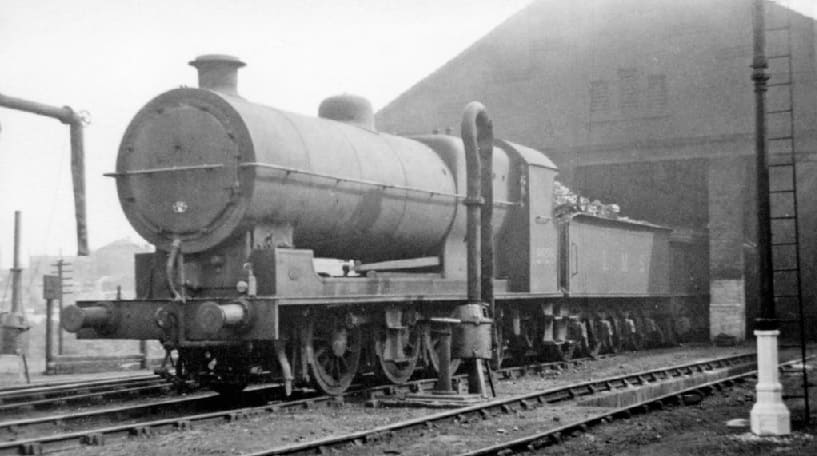
No. 12981 was one of a number of L&YR 0-8-0 locomotives transferred to the LMS at the grouping. L&YR Class 30 locomotives were classified by the LMS as 6F locomotives there are a couple of images of one of these locomotives above. No. 12981 was a L&YR Class 31 locomotive. This class were given a power-rating of 7F by the LMS. “The class was designed by George Hughes and introduced in 1912. The class comprised 115 new locomotives (the 1546 Class, built 1912–21) and 40 rebuilt from two other classes: the 91 Class (built 1900–08) and the 9 Class (built 1918).” [5][6][7][8]
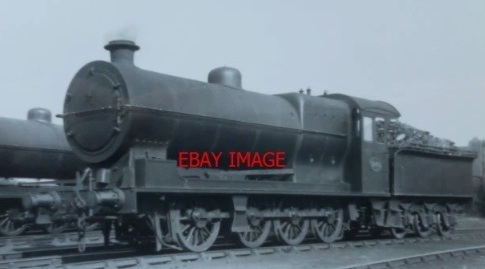
This image was for sale on eBay. It shows the same cab as the featured image for this article above. The vendor describes the locomotive as LMS ex-L&YR Class 91 Loco. No. 1440 (LMS 12981). It appears that No. 12981 was a locomotive rebuilt at Horwich from a Class 91 Locomotive built between 1900 and 1908. [10]
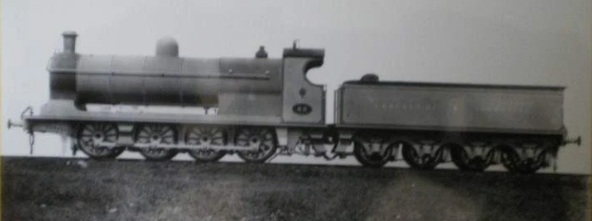
This is also a Class 91 0-8-0 – it has the same cab as the Class 30 locomotives. [11]
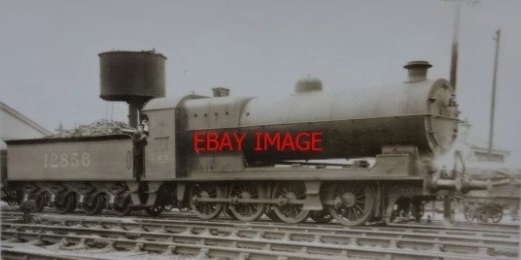
Another image for sale on eBay shows another Class 31 – No. 12856. This has the same cab detail as the Class 30 locomotives. [12]
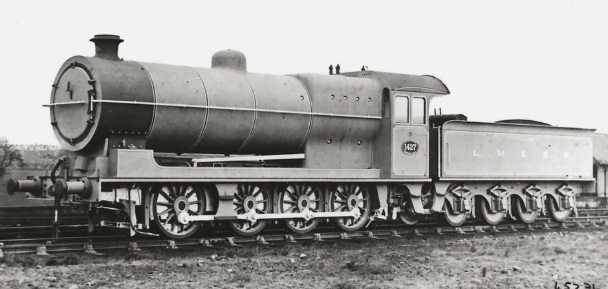
An ex-works photograph of L&YR locomotive No. 1427 which was one of the L&YR’s Class 91 locomotives. It became No. 12990 in LMS days. Note that the cab is the same as No. 12981. Given that this is an ex-works image, it is clear that this batch of locomotives were given a different of cab compared with their cousins. [13]
Bank Hall Locomotive Shed was situated off Stanley Road close to the Kirkdale tunnels. The depot was opened in 1865 and closed in 1966. At the time of closure it had two sheds – a brick-built 8-road dead-ended shed and a brick built shed with 4 through roads and 4 dead-end roads. The next two map extracts are taken from the 1st Edition 25″ Ordnance Survey. Two sheets cover the area of the Bank Hall Sheds. The locomotive depot sat to the East of the Liverpool, Crosby and Southport line and Northwest of North Docks Branch (through Kirkdale Railway Station) which were in turn alongside the Cheshire Lines Railway.
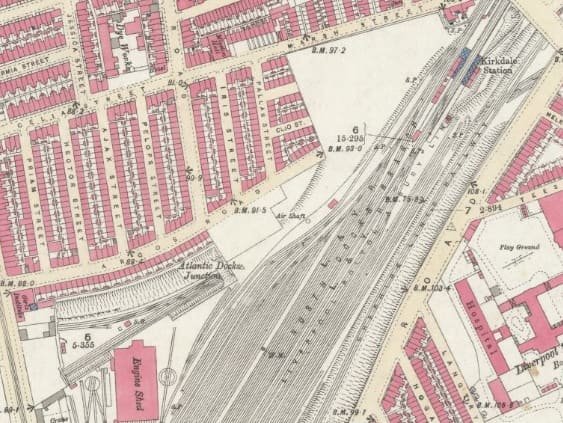
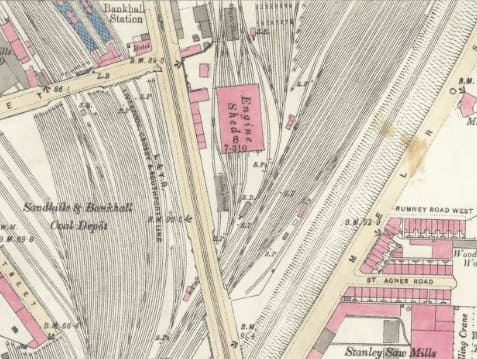
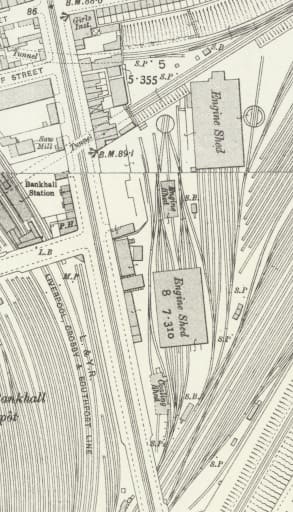
This map extract shows the depot in 1906. The OS Sheet was surveyed in 1906 and published in 1908. There are no obvious differences from the map extracts above. The next edition of the OS mapping of 1924/25 shows no further change from this map extract. [16]
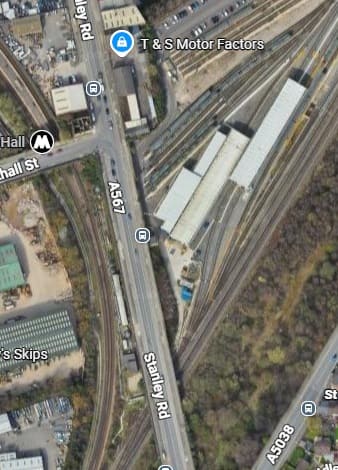
In 1903, the Mersey Railway was electrified; this was the world’s first full electrification of a steam railway. It was followed by the electrification of the Lancashire and Yorkshire Railway line from the Liverpool Exchange railway station to Southport railway station three years later. In 1937, electrification of the Wirral Railway lines to New Brighton railway station and West Kirby railway station enabled service into Liverpool via the Mersey Railway Tunnel. Bank Hall continued to serve and stable steam locomotives, by the 1937, it had one of the large reinforced concrete coaling stages. Shed Bash UK provides details of locomotives stabled/allocated to Bank Hall MPD in the period from 1937 to 1966 when it closed. [4]
Memories of Bank Hall Sheds (27A) in the period 1960-1966 can be found here. [17]
After 1966, with Bank Hall MPD closed remaining steam-powered services were supported from elsewhere and 1968 waw the last of regular steam use in the country.
Between 1966 and 1980, the Mersey Railway became part of the Merseyrail network which was radically transformed from a fragmented group of suburban lines into a unified, metro-style urban transit system. This era saw the introduction of the Merseyrail brand, the construction of the underground city centre tunnels, and the replacement of aging pre-war rolling stock with modern electric trains. Merseyrail made use of the older Class 502 EMU units until 1980.
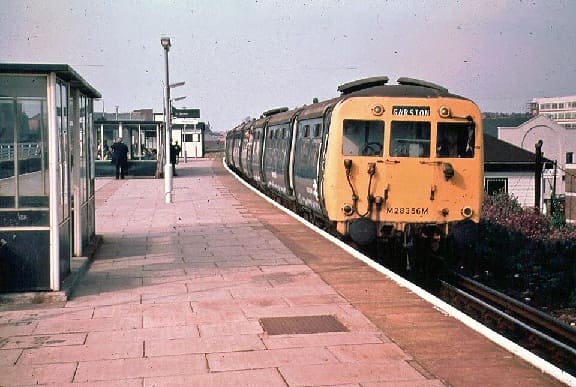
The British Rail Class 502 was a n EMU originally built by the LMS at its Derby Works. Introduced in 1940 and withdrawn by 1980, they spent the whole of their working lives on the electrified railway lines north of Liverpool. Their original livery was LMS maroon. [20]
In the 21st century, modern traction on Mersey Rail includes the older Class 507/8 EMUs and the more modern Class 777 EMUs. These are maintained on the site of the old MPD at Bank Hall.
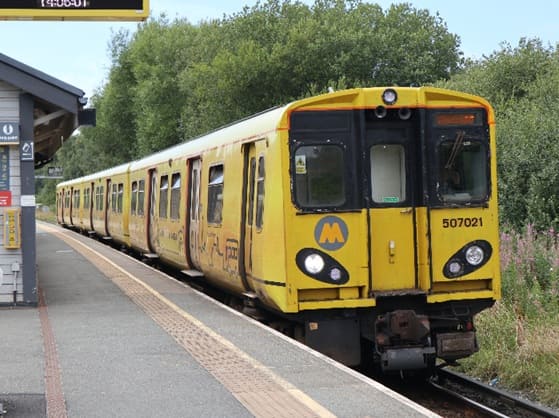
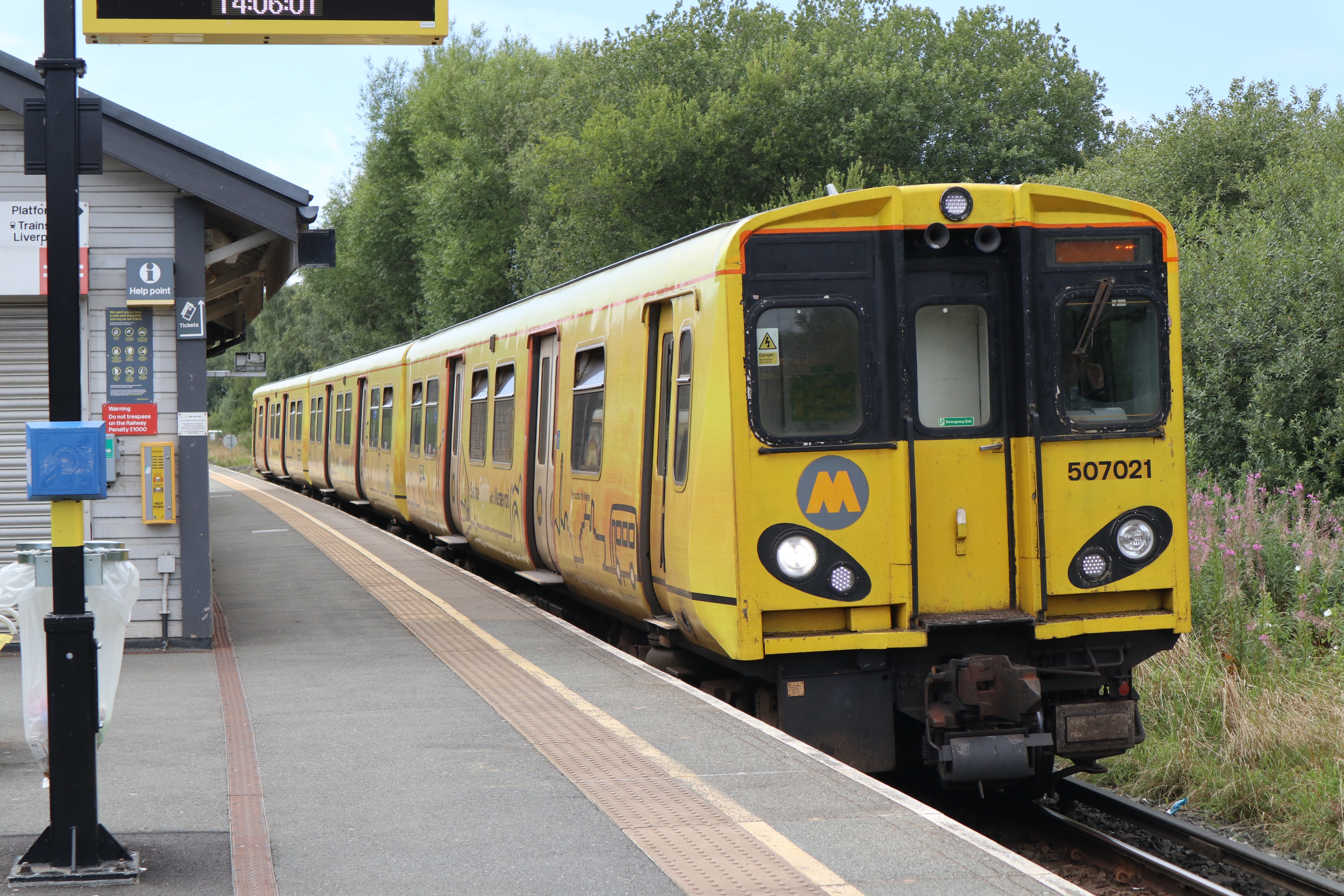
The British Rail Class 507 electric multiple unit (EMU) passenger trains were built by British Rail Engineering Limited at Holgate Road carriage works in two batches from 1978 to 1980. They are a variant of British Rail’s standard 1972 design for suburban EMUs which eventually encompassed 755 vehicles over five classes (Class 313, 314, 315, 507 and 508), (c) Vanmanyo and licensed for reuse under a Creative Commons licence (CC BY-SA 4.0). [18]
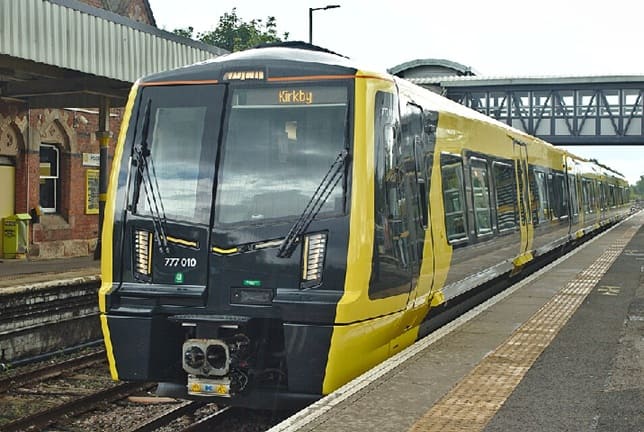
The British Rail Class 777 METRO is a class of electric multiple unit passenger trains delivered by the Swiss rolling stock manufacturer Stadler Rail, being used on the Merseyrail network, (c) Rodhullandemu (2021) and licensed for reuse under a Creative Commons licence (CC BY-SA 4.0). [19]
References
- https://www.geograph.org.uk/photo/2606508, accessed on 7th July 2026.
- https://www.geograph.org.uk/photo/2217586, accessed on 7th July 2026.
- https://www.geograph.org.uk/photo/2224499, accessed on 7th July 2026.
- https://shedbashuk.blogspot.com/2013/01/bank-hall-1954-1964.html, accessed on 7th July 2026.
- https://en.wikipedia.org/wiki/L%26YR_Class_31, accessed on 7th July 2026.
- H. C. Casserley & S. W. Johnston; Locomotives at the Grouping, No.3, LMS; Ian Allan, Shepperton, 1966, p130.
- John Marshall; The Lancashire & Yorkshire Railway, Volume 3; David & Charles, Newton Abbot, 1972 p186–8, p260–2, p266, p267–9.
- Eric Mason; The Lancashire and Yorkshire Railway in the Twentieth Century; Ian Allan, Shepperton: 1975 [1954], p147–9, p152–6.
- https://www.geograph.org.uk/photo/2785803, accessed on 7th July 2026.
- https://www.ebay.co.uk/itm/362614969179, accessed on 7th July 2026.
- https://www.ebay.co.uk/itm/192886948146, accessed on 7th July 2026.
- https://www.ebay.co.uk/itm/362613433191, accessed on 7th July 2026.
- https://www.ebay.co.uk/itm/334283762825, accessed on 7th July 2026.
- https://maps.nls.uk/view/126523040, accessed on 7th July 2026.
- https://maps.nls.uk/view/126523070, accessed on 7th July 2026.
- https://maps.nls.uk/geo/explore/#zoom=17.0&lat=53.43776&lon=-2.98547&layers=168&b=ESRIWorld&o=100, accessed on 8th July 2026.
- https://www.derbysulzers.com/birkenhead.html, accessed on 8th July 2026.
- https://upload.wikimedia.org/wikipedia/commons/9/9d/507021_Bidston.jpg, accessed on 8th July 2026.
- https://commons.wikimedia.org/wiki/File:777010_at_Hooton_Station_20210728-1.jpg, accessed on 8th July 2026.
- https://en.wikipedia.org/wiki/British_Rail_Class_502#/media/File:Sandhills_1979001_1.jpg, accessed on 8th July 2026.