
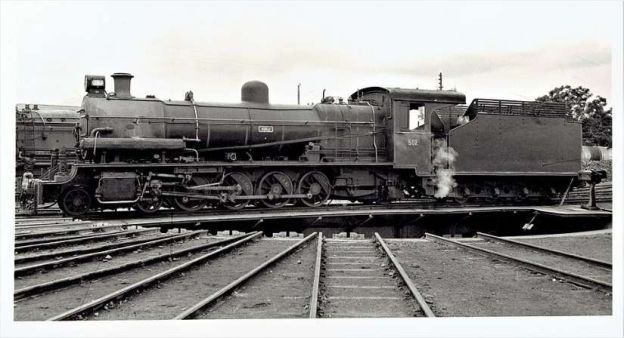
The featured image for this article is a Tanganyika Railway (TR) oil-fuelled RV (River) class 4-8-2 locomotive, later classified as the East African Railways (EAR) 21 class. Locomotives of this Class were used on the Southern Province Railway in the late 1950s and early 1960s, © Public Domain. [6][1: p303]
During the early years of the German Protectorate, consideration had been given to building a third main railway in German East Africa. That railway would have run from Kilwa on the coast to Lake Nyasa (now usually referred to as Lake Malawi). Its name in Swahili is ‘Ziwa Nyasa’. [2]
In 1905. work got as far as the undertaking of a survey of the proposed line for 86 kilometres inland from Kilwa before the Maji-Maji rebellion brought the work to a close. In 1907, the length from Manda Bay on Lake Nyasa to Songea was surveyed. However, it was gradually becoming clear that the Southwest of German East Africa could best be reached by means of a branch line from the Mittelland Bahn.
This proposed alternative was intended to follow a route studied by Herr Denninger from the Central Line “to the Iringa Highlands, llongo and Mbeya. From Mbeya the projected line ran to Fife on the Rhodesian border. Thence a branch was planned to the north end of Lake Nyasa at Mwaya and another to Kasanga on Lake Tanganyika. The whole scheme involved some 1,250 kilometres of railway, through very difficult country requiring several rack sections, and it was estimated to cost 360 million marks (£18,000,000). [However,] the cost and the difficulties were too great and the scheme was abandoned.” [1: p101]
Hill continues:
“In 1907-1908 and 1910-1911 the possibility of reaching the navigable stretch of the Kilombero river from the Rufiji, or from Ruvu, Ngerengere, Mikese or Kilosa on the Central Railway, was investigated. From the Kilombero valley it was proposed to extend the line to Manda Bay on Lake Nyasa. In 1913 five million marks was allocated by the Reich for a scheme to make 125 miles of the Rufiji river navigable. In the years 1912-1914 a detailed survey was also made for a metre-gauge line from Lindi to Masasi through the Lukuledi valley with the idea of an eventual extension to the middle reaches of the Ruvuma. … In 1915, there was a reconnaissance survey for a railway joining the Mittelland Bahn with the Nordbahn. The routes examined lay between Mikese and Kilosa on the Central Line and between Korogwe and Mombo on the Northern Line. [1: p101]
Ultimately it was not until after WW2, that significant progress was made in constructing a metre-gauge line in the Southern Province. …. Hill says:
“The ill-fated East African Groundnuts Scheme had its origin in a world shortage of edible oils and fats which seemed likely to continue for a long time. Proposals for such a scheme were first considered by His Majesty’s Government early in 1946. After a thorough investigation and a most optimistic report which paid inadequate heed to several vital factors, including the notorious variation in the yield of the groundnut crop along the Central line, the scheme was approved. It was proposed, within a few years, to bring into cultivation over 3,000,000 acres of land in Tanganyika, Kenya and Northern Rhodesia. Nearly 80 per cent. of the total acreage projected was to be in Tanganyika. The first areas to be developed, at Kongwa and Urambo, were served by the Central line, but by far the largest area planned was in the Southern Province. This entailed the building of a new railway and a new port equipped with deep-water berths.” [1: p267-268]
Hill’s comments about the development and value of the Southern Province Railway can be found here, together with an assessment of how much we can accurately establish about the route of the line. [3]
The line finally opened in January 1954 but was to cease operations in February 1963 (or July 1962 according to one source. [9]) It outlasted the ill-fated Tanganyika Groundnuts Scheme by a few years in the forlorn hope that it would significantly enhance the economic prospects the South of the country.
Both steam (the RV Class/21 Class; G Class and NZ Class locomotives were used) and diesel locomotives were used (the 80 Class, 81 Class and 83 Class locomotives). [4][9] The diesel locomotive classes referred to in the Wikipedia article about the Southern Province Railway [4] and in David Burton’s book [9] are small diesel shunters. If correct, this suggests than main line movements were powered by steam until the closure of the line.
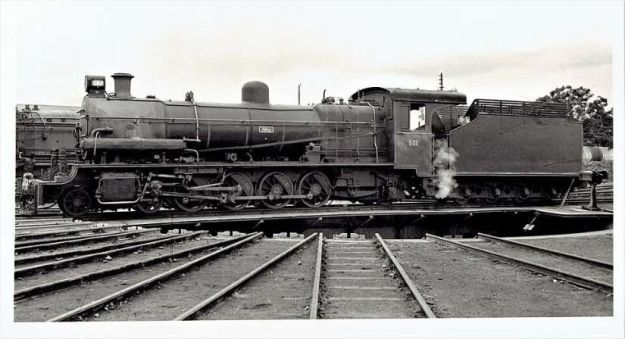
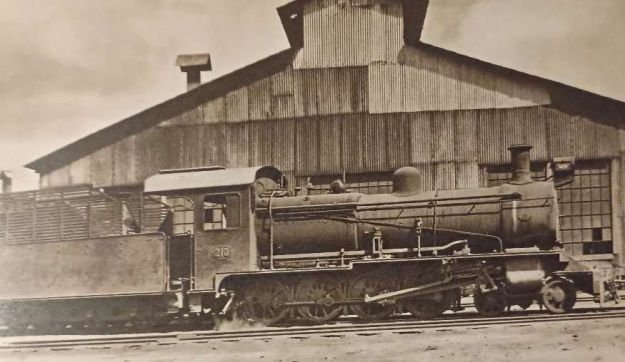
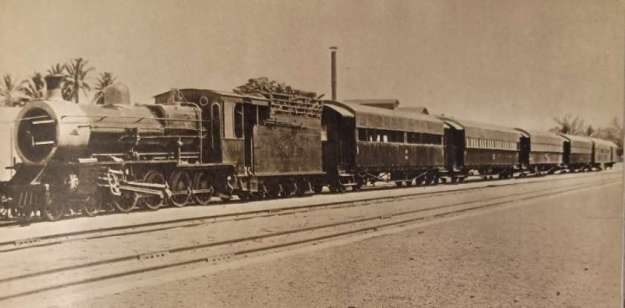
For more details of these three different classes of steam locomotive please click here. [7]
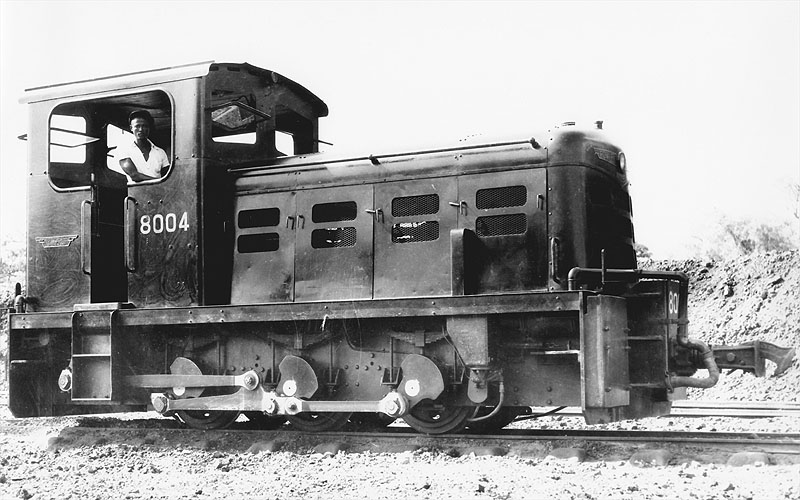
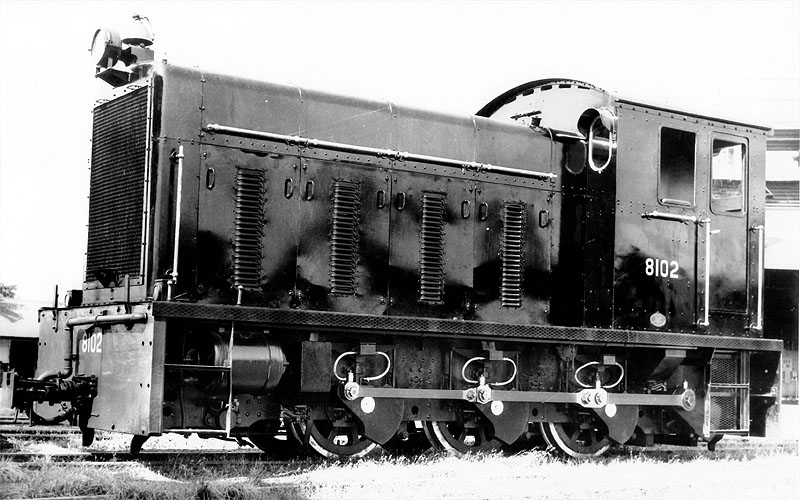
The diesels used on the Southern Province Railway were:
80 Class (later 32 Class) 0-6-0 Locomotives
81 Class (later 33 Class) 0-6-0 Locomotives
83 Class (later 43 Class) 0-8-0 Locomotives
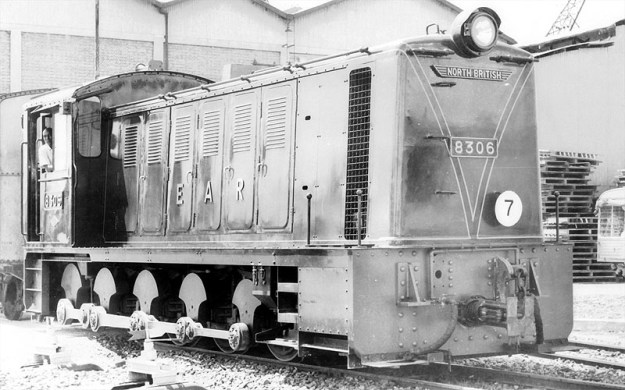
A little more about these 3 classes of diesel locomotive can be gleaned here. [10] Were larger diesel locomotives in use on the Southern Province Railway? One website suggests that they were. [11] However, its illustrations seem to relate to the TAZARA railway and not the Southern Province Railway.
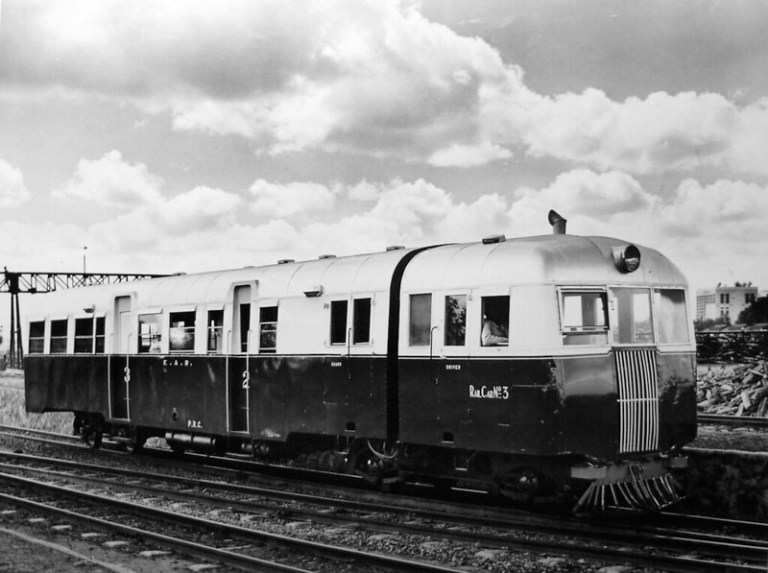
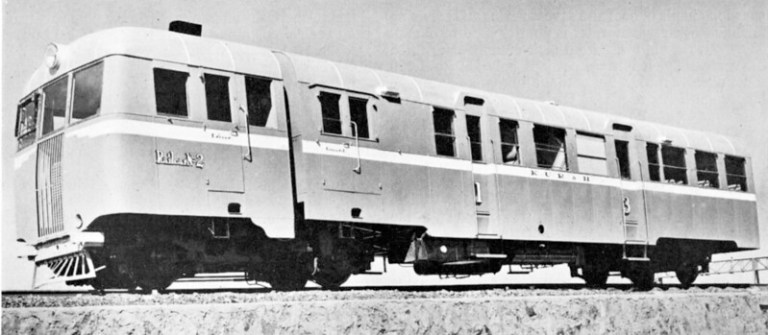
Passenger traffic existed between Mtwara and Nachingwea for which a second hand Diesel Motorized Units of the former Kenya and Uganda Railways was used. [4] The diesel motorized units of the former Kenya and Uganda Railways (KUR/KURH) notably included a small fleet of metre-gauge, 200-horsepower diesel railcars built by Wickham in 1939 and delivered in May 1946. These 58-seater double-bogie units were initially deployed on the Kisumu–Butere branch line before serving on the Southern Province Railway. Two of the class of three locomotives are shown below.
As the 20th century unfolded another line was to traverse the Southern Province – the TAZARA Railway. This will be dealt with in different article.
References
- M.F. Hill; Permanent Way Volume II: The Story of the Tanganyika Railways; East African Railways and Habours, Nairobi, Kenya; Watson & Viney, Aylesbury & Slough, 1957.
- https://en.wikipedia.org/wiki/Lake_Malawi, accessed on 29th May 2026. Lake Malawi is also known as Lake Nyasa in Tanzania and Lago Niassa in Mozambique, is an African Great Lake and the southernmost lake in the East African Rift system, located between Malawi, Mozambique and Tanzania.
- https://rogerfarnworth.com/2026/03/04/narrow-gauge-industrial-lines-in-tanganyika-tanzania.
- https://en.wikipedia.org/wiki/Southern_Province_Railway, accessed on 29th July 2026.
- https://www.flickr.com/photos/29903115@N06/41904741772, accessed on 29th March 2021.
- https://en.wikipedia.org/wiki/TR_RV_class, accessed on 17th July 2026.
- https://rogerfarnworth.com/2026/07/22/railways-of-tanzania-part-15-locomotives-from-the-first-railways-built-by-the-german-colonial-powers-through-to-the-amalgamation-which-formed-east-african-railways-and-harbours-in-1948
- R. Ramaer; Steam Locomotives of the East African Railways; David & Charles, Newton Abbot, 1974.
- David Burton; The Groundnut Line: The Story of the Southern Province Railway of Tanganyika; self-published, Telford, 2014.
- https://rogerfarnworth.com/2018/06/29/uganda-railways-part-26-locomotives-and-rolling-stock-part-d-diesel-1948-to-1977
- https://unitedrepublicoftanzania.com/economy-of-tanzania/infrastructure-in-tanzania/railway-in-tanzania/mtwaras-forgotten-rails-a-glimpse-into-tanzanias-industrial-past, accessed on 29th July 2026.

