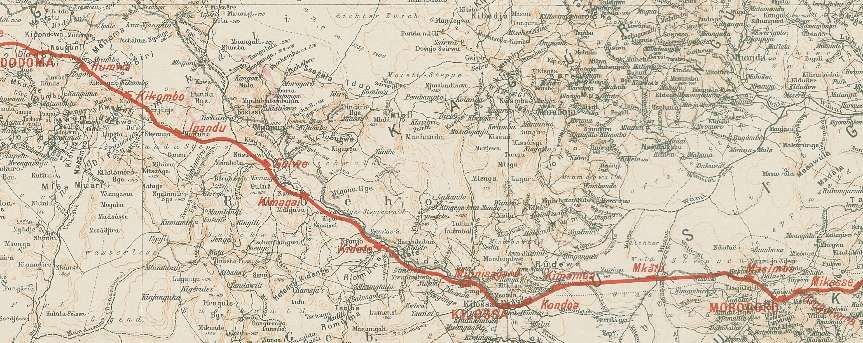
The length of the Central Line which is covered by this article. The map was drafted in the early years of the 20th century under German colonial rule. The place names are the German spellings. This map is licensed for reuse under a Creative Commons licence (CC BY-SA 3.0). [32]
We start the next length of our journey on the Mittelland Bahn (the Central Line) at Mikese just to the West of the junction with the link line between Tanga and Ruvu.
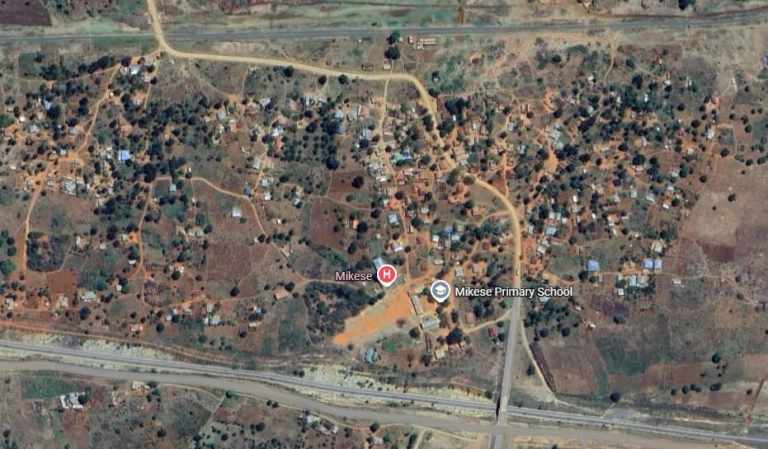
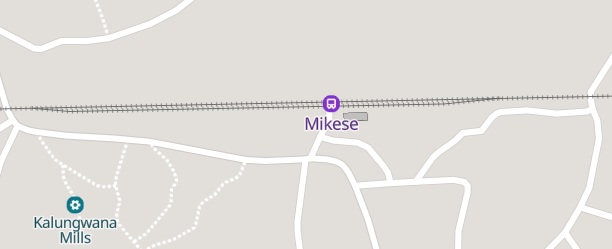
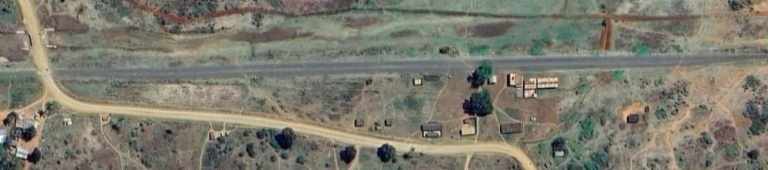
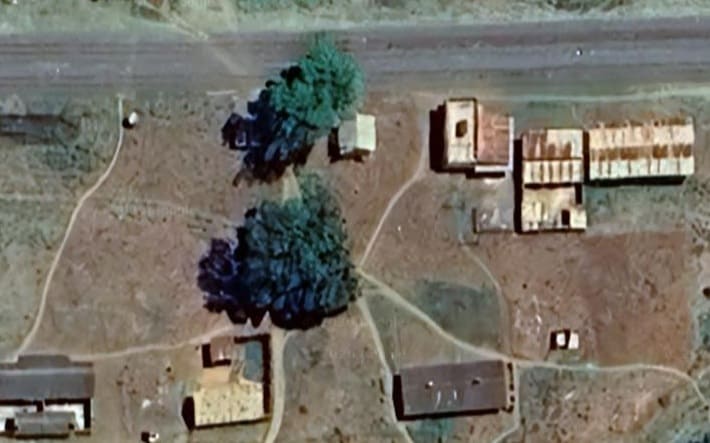
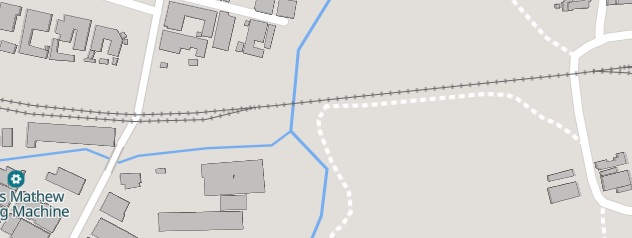
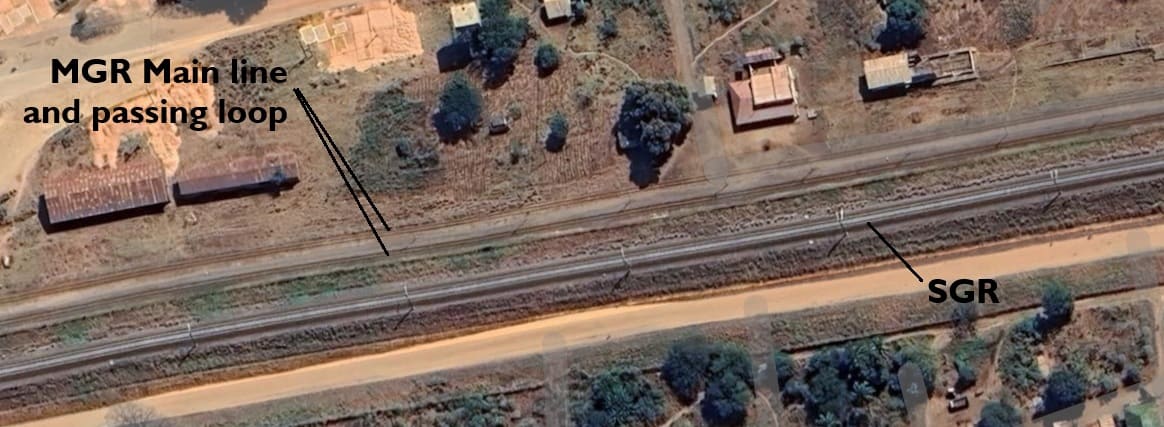
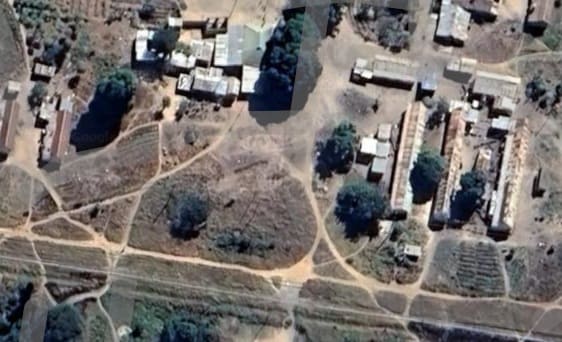
The town of Mikese sat some distance North of the MGR and over time a significant community grew up around the Railway Station, Kalungwana Mills and the Hospital. That community can be seen on this satellite image, the town was off to the North of this image. Both the two railways appear on this image. The MGR is at the top of the image, the SGR at the bottom of the image. The MGR station building can be be made out centre-top of this image. [Google Maps, June, 2026]The MGR Station at Mikese had a passing loop . This is how it appears on MapCarta. [2]Mikese MGR Station. [Google Maps, June 2026]A much closer view of the MGR station buildings at Mikese. [Google Maps, June 2026]
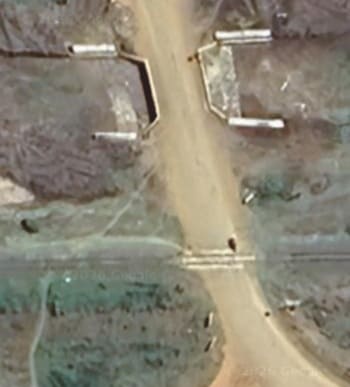
A dry water channel runs East-West on the North side of Mikese Railway station and is bridged by the murram road which leads North towards the small town of Mikese. The bridge and level-crossing tot he West of the railway station are shown here. [Google Maps, July 2026]
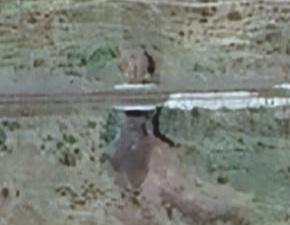
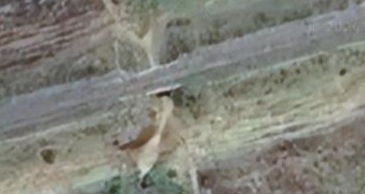
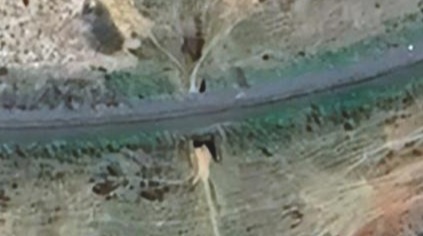
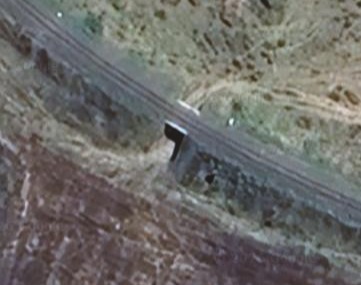
Heading just to the South of West the line heads away from Mikese station. small underbridges provide for water runoff in the wet season. [Google Maps, July 2026]
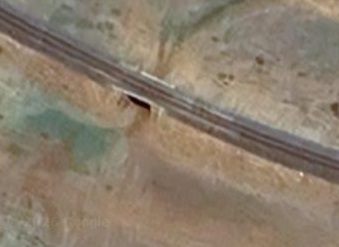
Another small underbridge/culvert. [Google Maps, July 2026]
These small underbridges occur at frequent intervals along the line. [Google Maps, July 2026]
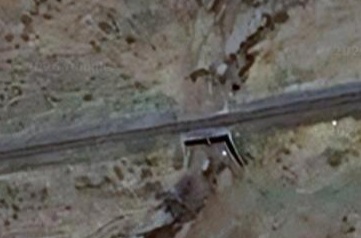
Another of the small underbridges. [Google Maps, July 2026]
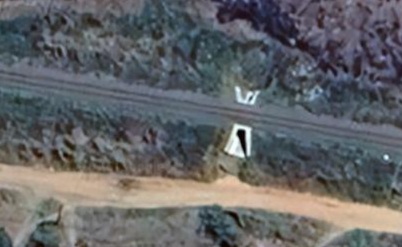
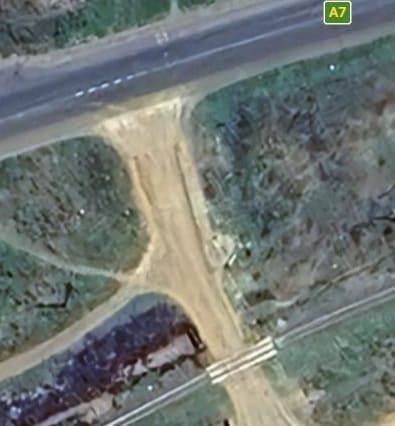
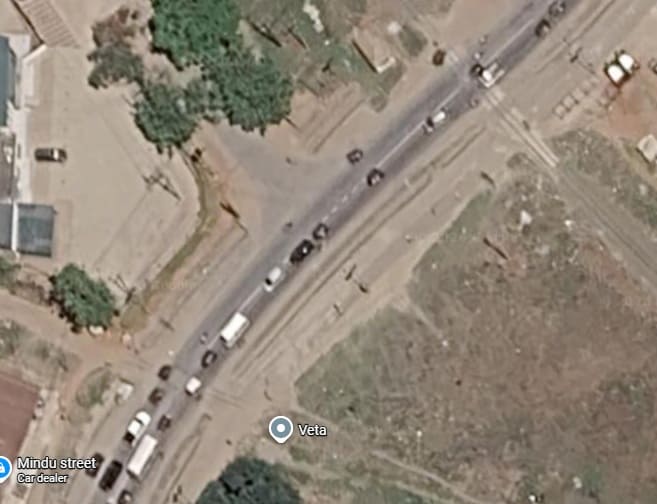
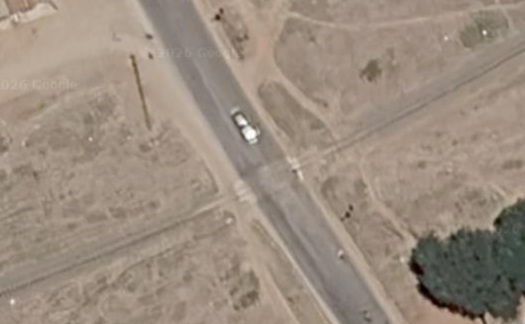
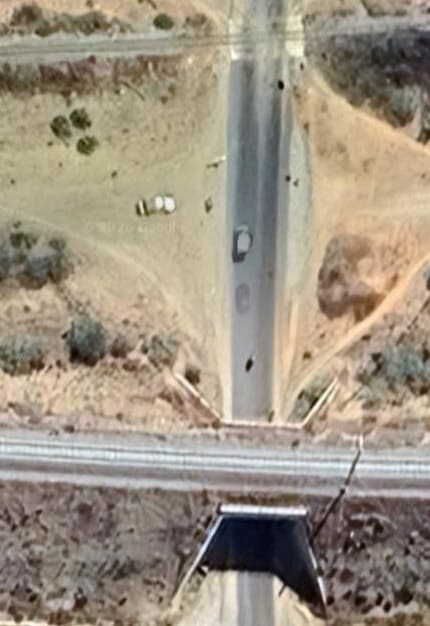
The nest road-crossing is for the road running South from the A7 toward the Standard-gauge line (SGR) on the approach to Mkambarani. [Google Maps, July 2026]
Another culvert under the line on the South side of Mkambarani. The A7 is to the North, a murram road immediately to the South of the line and the SGR only a relatively short distance further South. [Google Maps, July 2026]
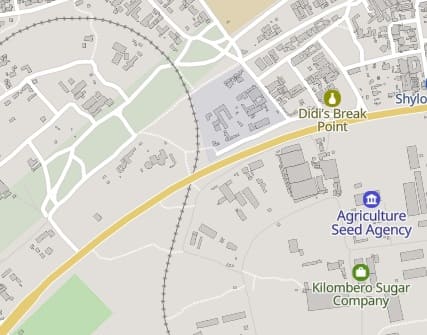
Another feeder road which serves the Mahashree Agro Processing Tanzania Limited’s compound crosses the line in close proximity to its junction with the A7. The industrial compound sits immediately on the North side of the SGR. [Google Maps, July 2026]
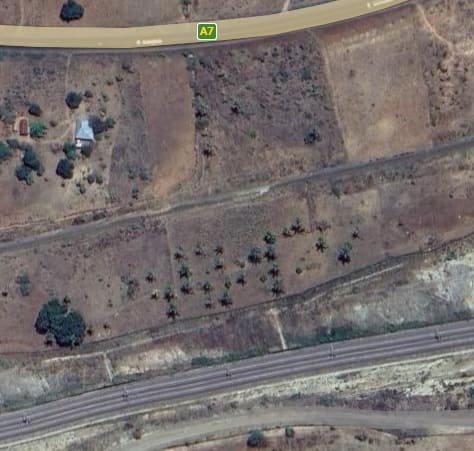
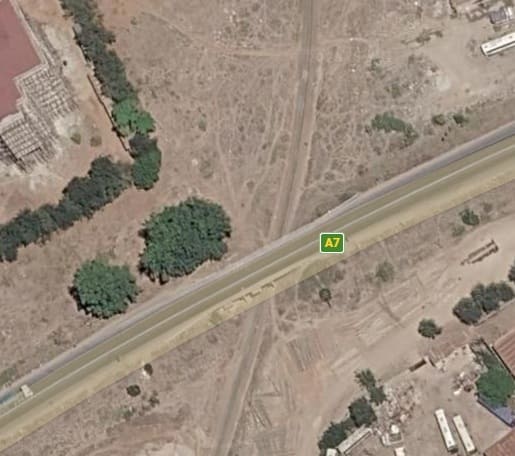
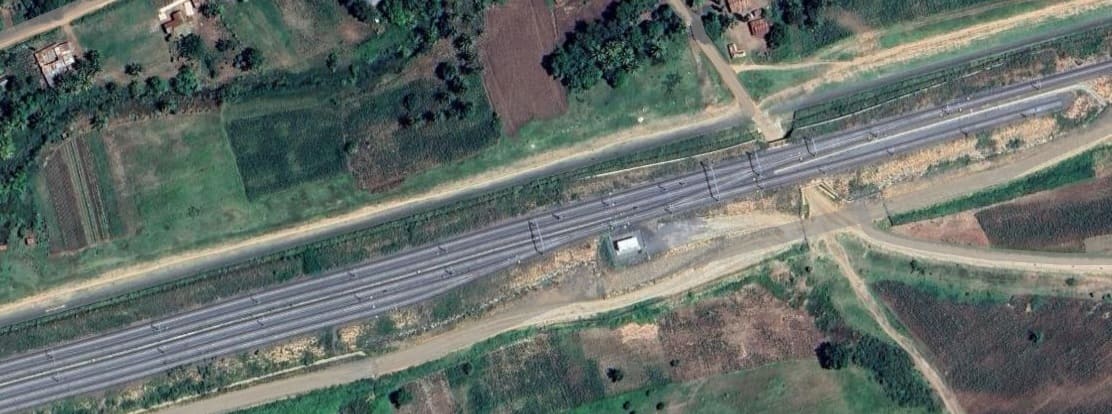
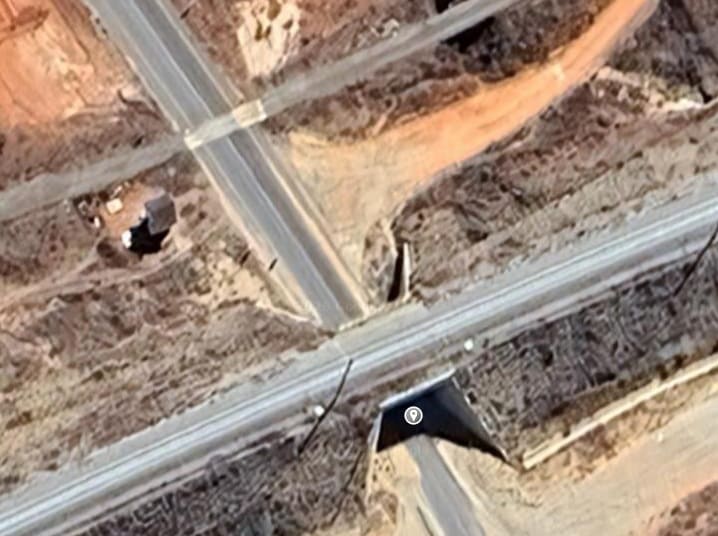
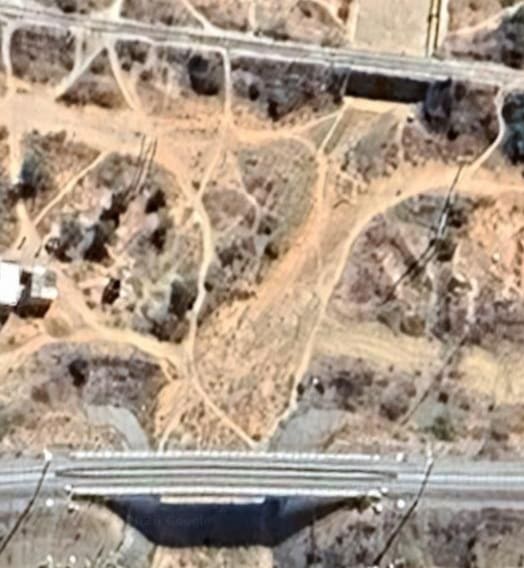
The A7, the MGR and the SGR take close order on the approach to Morogoro. [Google Maps, July 2026]
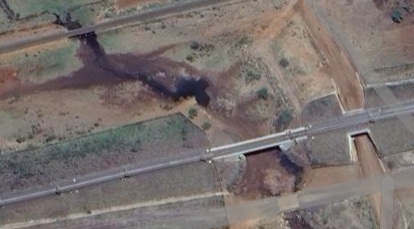
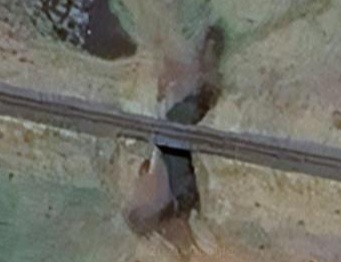
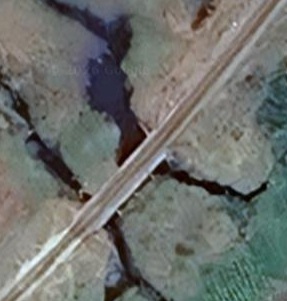
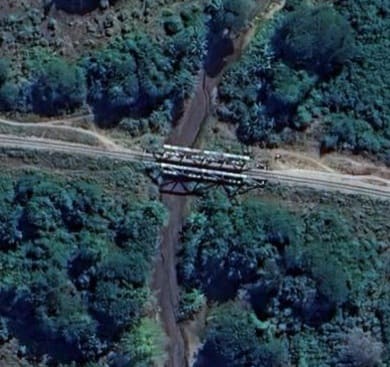
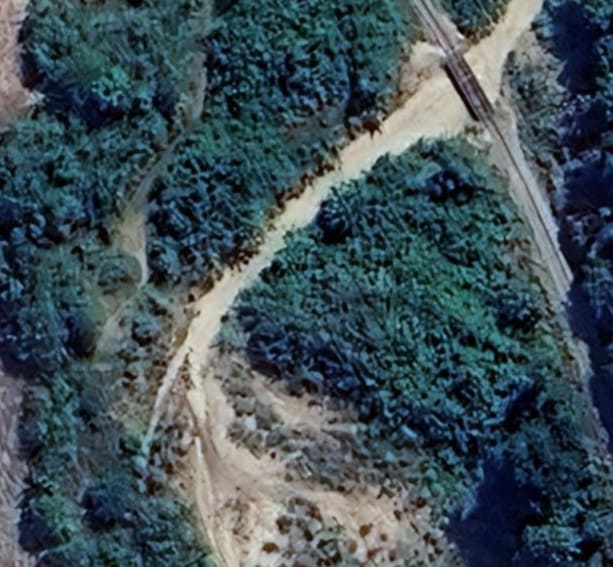
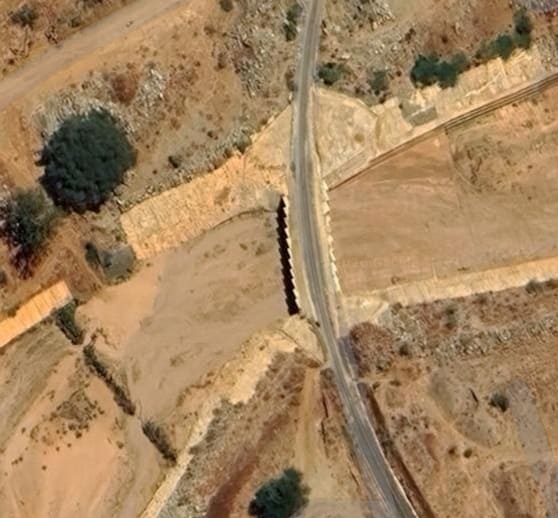
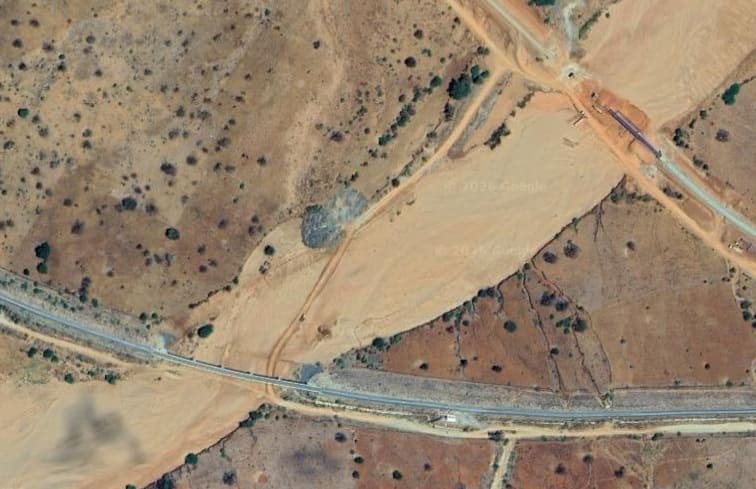
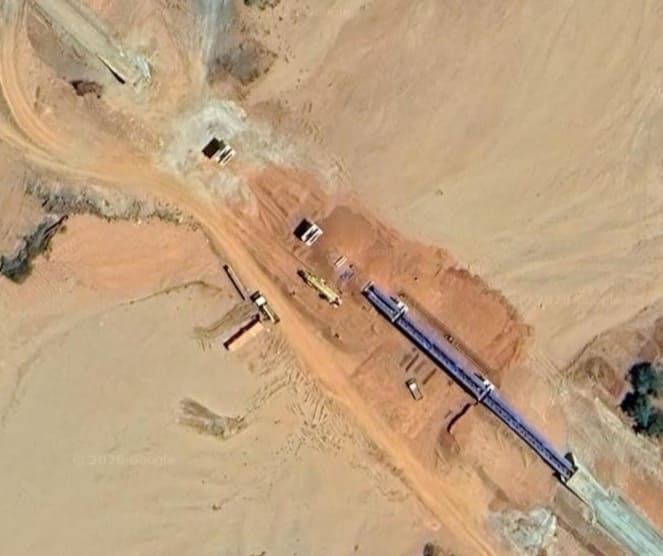
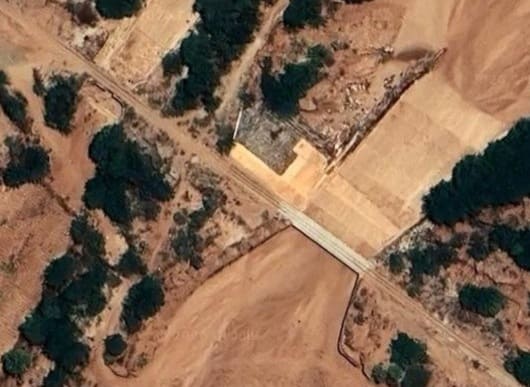
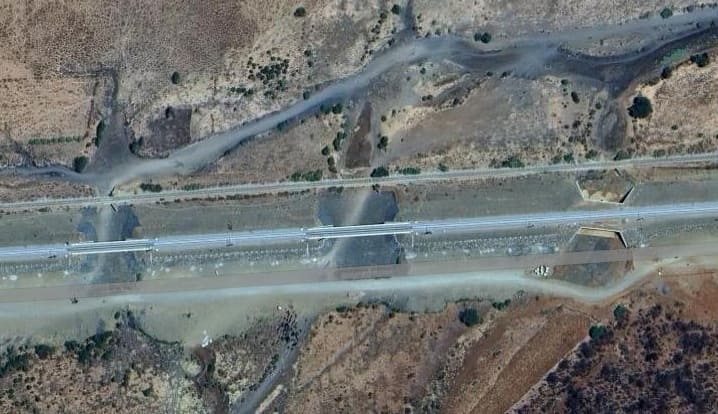
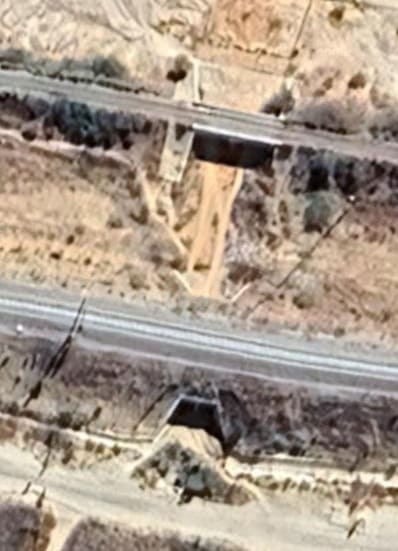
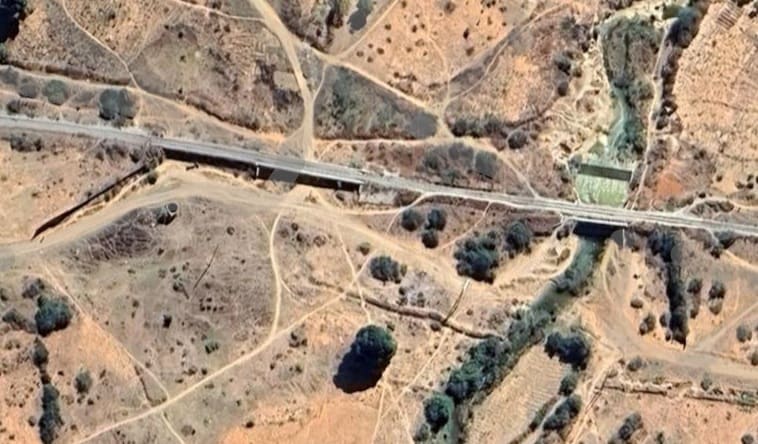
Still to the East of Morogoro, the MGR and the SGR bridge a local watercourse. [Google Maps, July 2026]
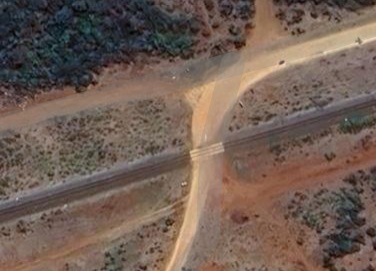
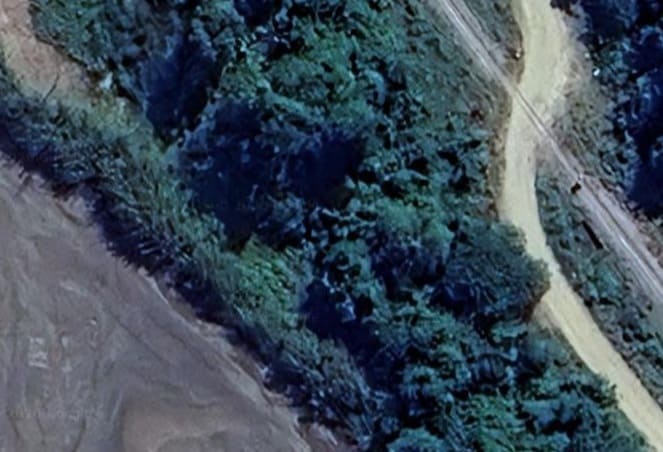
The line is crossed by another minor road. [Google Maps, July 2026]
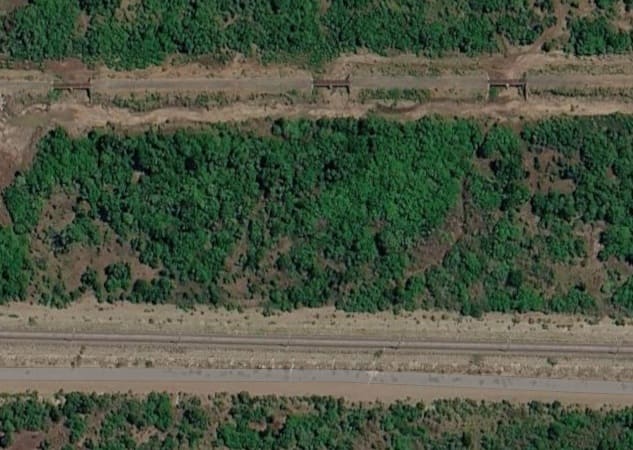
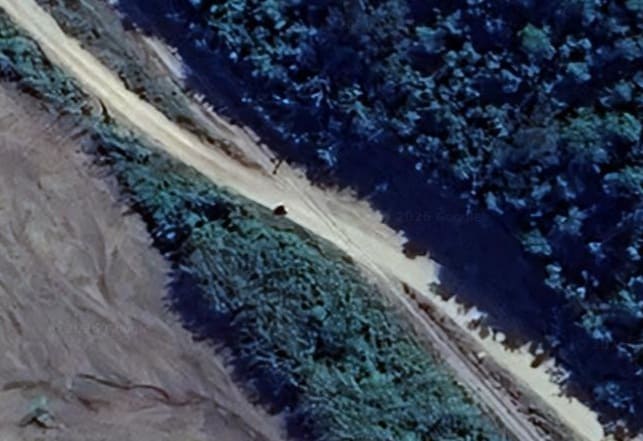
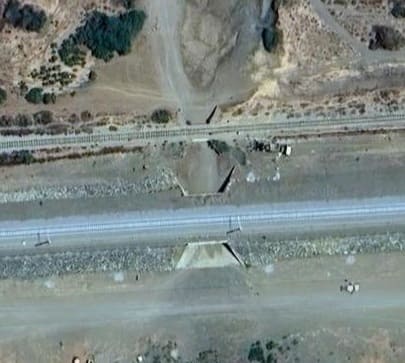
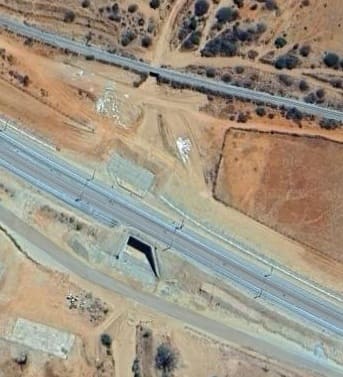
A series of three more culverts provide for wet season water flows. [Google Maps, July 2026]
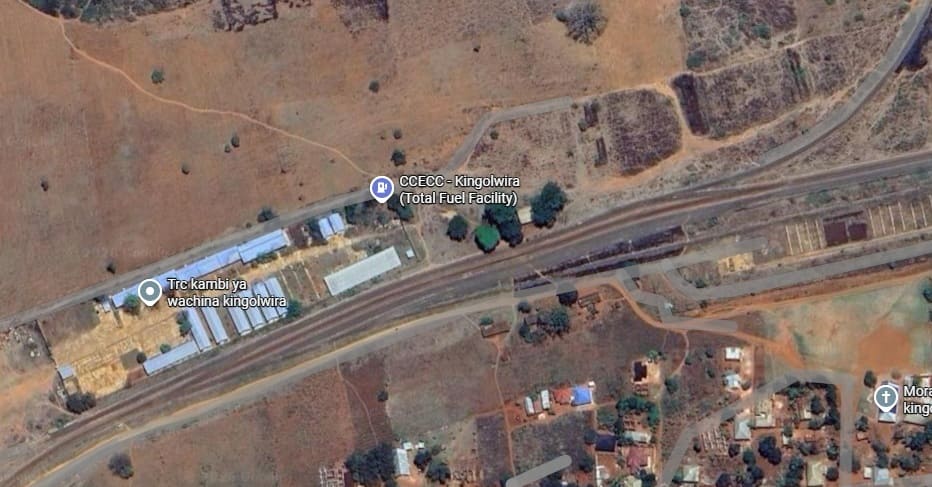
Morogoro Alliance Tobacco is served by the short siding leaving this image top-right. Exchange sidings serve the tobacco plant and CCECC – Kingolwira (Total Fuel Facility) on the left half of this image. [Google Maps, July 2026]
The road-crossing at the West end of the fuel depot. [Google Maps, July 2026]
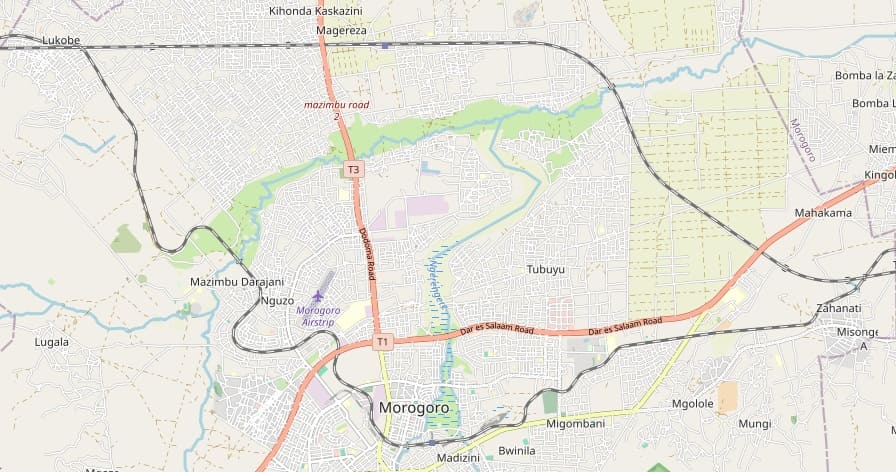
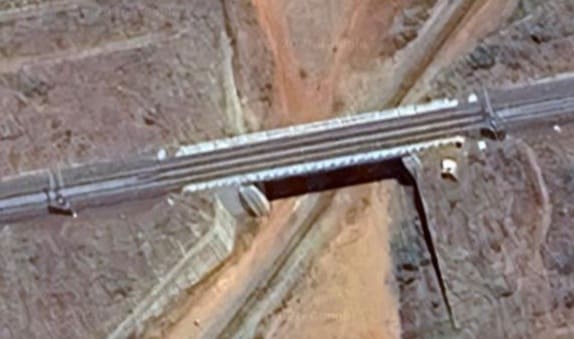
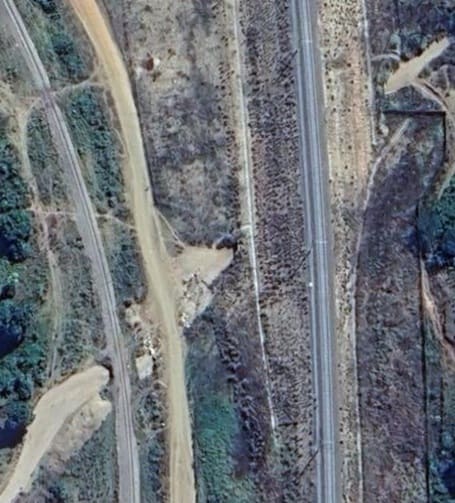
The SGR (to the North) and the MGR (to the South) running through/past Morogoro. On the right of this image, the point where the two lines cross, is a bridge carrying the SGR over the MGR and it can be seen in the first satellite image below. The next series of images take the MGR through Morogoro and then back to the line of the SGR to the Northwest of Morogoro. [4]
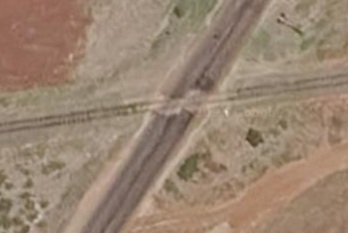
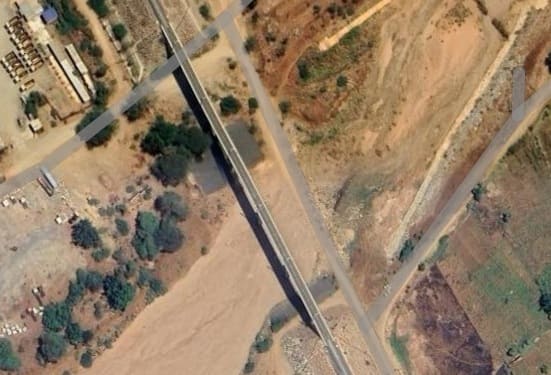
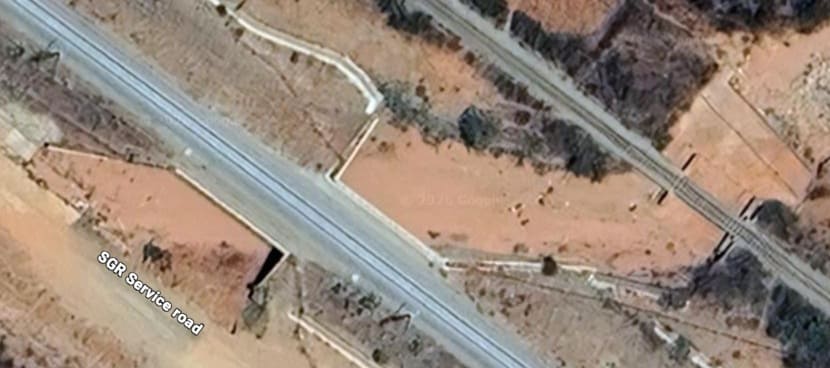
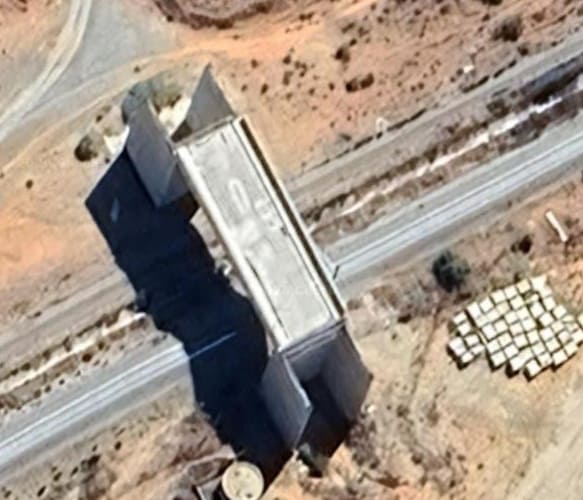
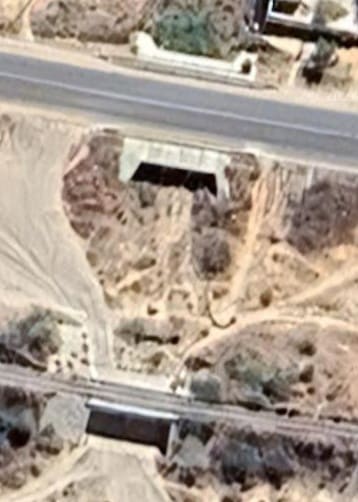
The older MGR is bridged by the SGR closer to Morogoro. [Google Maps, July 2026]
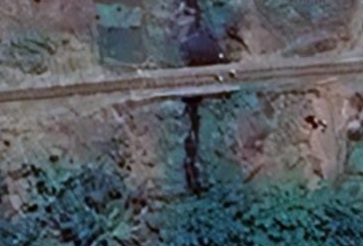
A short distance South if the SGR overbridge, the line crosses another more permanent watercourse. [Google Maps, July 2026]
The next crossing of a local road. [Google Maps, July 2026]
Another watercourse. [Google Maps, July 2026]
Not every road-crossing and watercourse/dry river bed is shown in these photographs, hopefully what is shown gives a good idea of the kind of crossings/bridges on the line.
Another road-crossing. [Google Maps, July 2026]
And another! [Google Maps, July 2026]
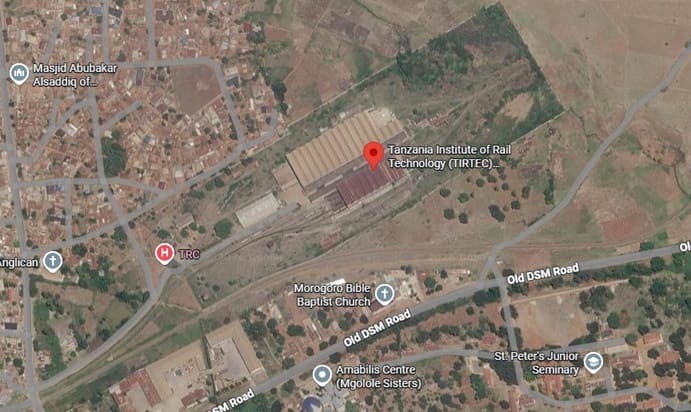
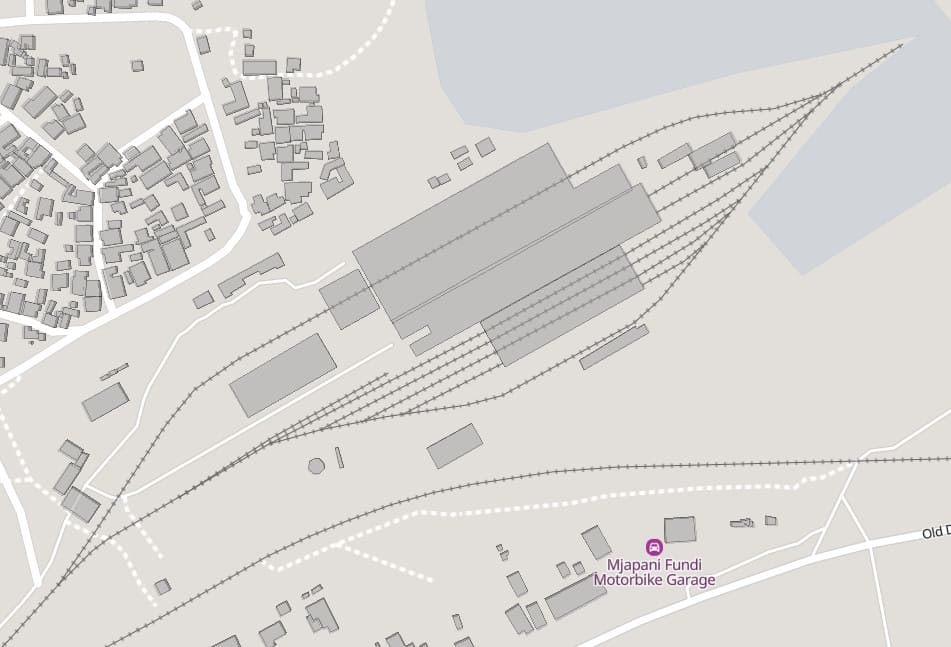
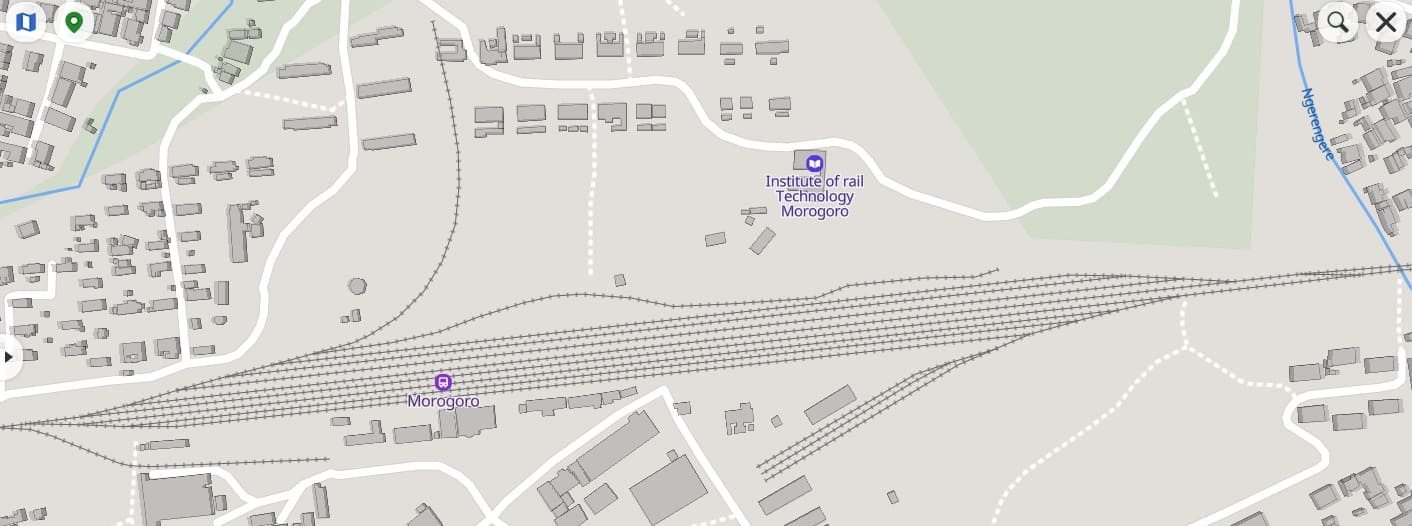
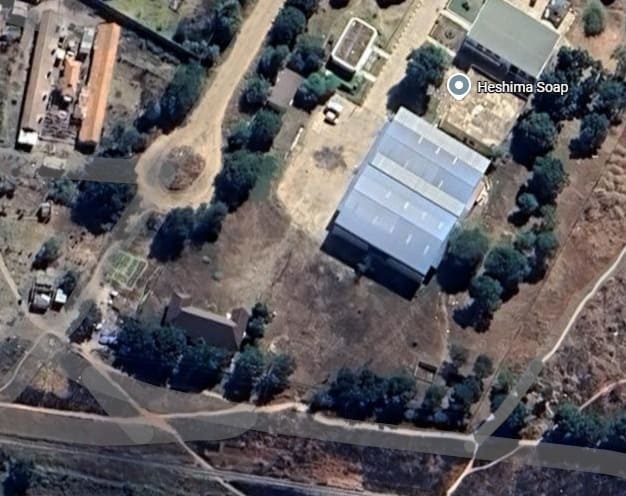
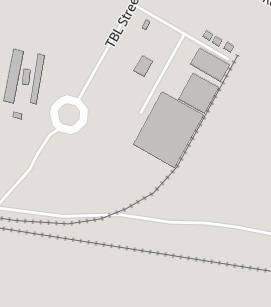
On the North side of the line, before reaching Morogoro Railway Station, is the Tanzania Institute of Rail Technology (TIRTEC) Morogoro Campus which is rail served by a dedicated short branch/sidings.
The Tanzania Institute of Rail Technology (TIRTEC) Morogoro Campus. [Google Maps, July 2026]The site of the Institute as it appears on MapCarta. [3]
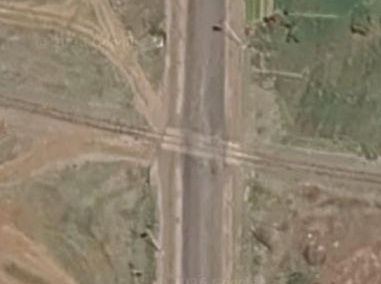
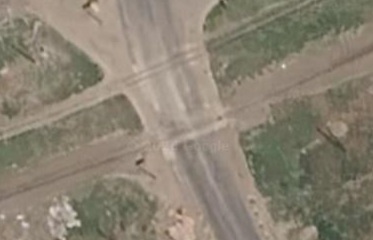
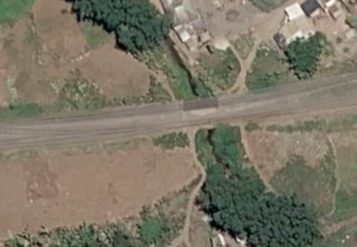
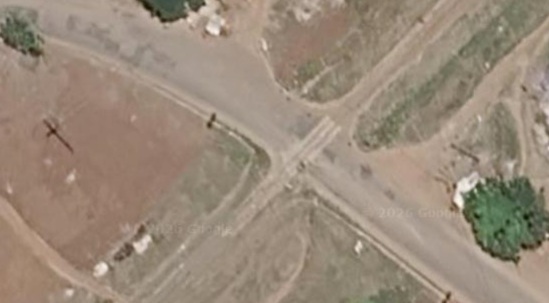
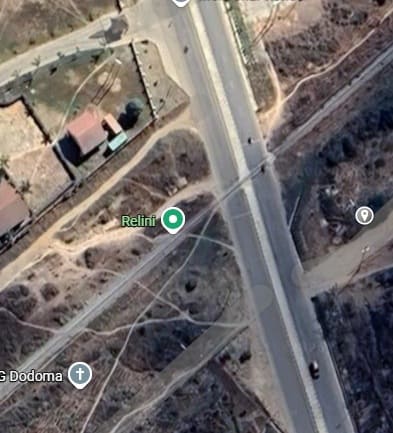
At the Southwest corner of the Tanzania Institute of Rail Technology (TIRTEC) Morogoro Campus a metalled road is crossed by two lines. That towards the bottom of this satellite image is the TR Central Line, to its North is the branch running into the Institute’s site. [Google Maps, July 2026]
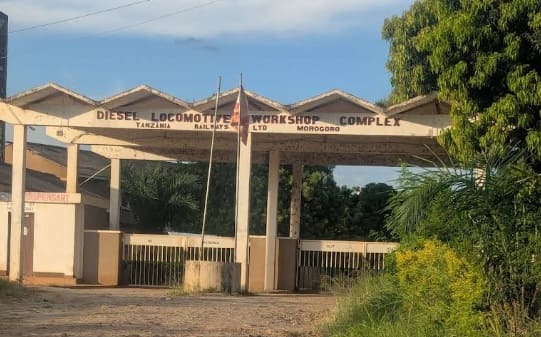
The gateway to the site of the Institute, (c) Aboubakari Jumanne, July 2025. [Google Maps, July 2026]
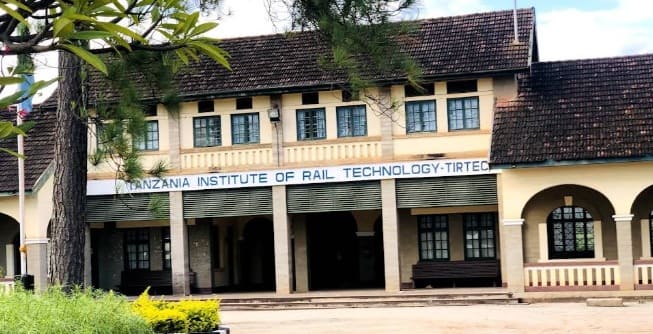
The Tanzania Institute of Rail Technology (TIRTEC) Morogoro Campus main building, (c) Musa Samwel, October 2021. [Google Maps, July 2026]
At the point where the two lines meet the railway bridges another watercourse (the Ngerengere River) immediately to the East of Morogoro Railway Station throat. [Google Maps, July 2026]
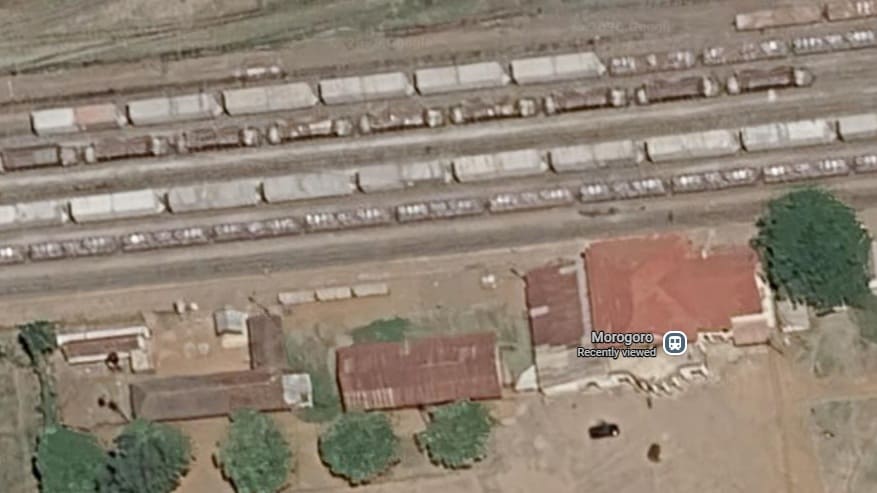
Morogoro Metre Gauge Railway Station. [Google Maps, July 2026]The site of Morogoro Railway Station (MGR) as it appears on MapCarta. [3]
The Metre-Gauge Railway Station is South of the centre of Morogoro, the SGR line runs across the North side of the city.
A much closer view of the Morogoro Railway Station. [Google Maps, July 2026]
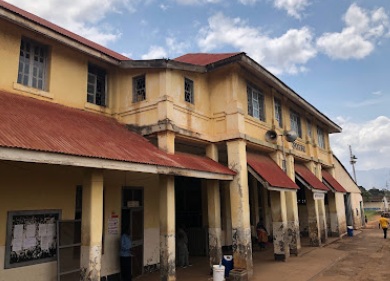
Morogoro Railway Station Building, (c) Peter Lazaro, October 2020. [Google Maps, July 2026]
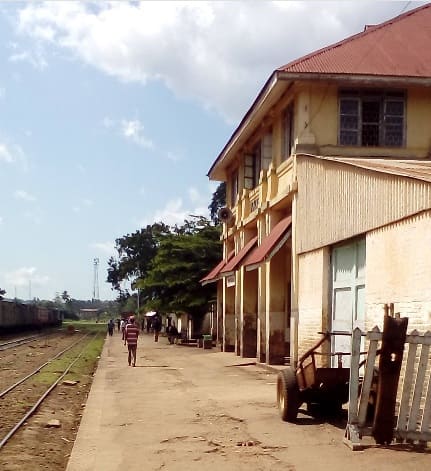
The rail side elevation of the same building, (c) Iman Frank, June 2017. [Google Maps, July 2026]
Morogoro’s legacy Metre-Gauge Railway (MGR) station is no longer used for passenger journeys. The modern Jakaya Kikwete SGR Station built for the new high-speed electric standard gauge rail network sits across the city to the North and now is the main passenger hub for the city.
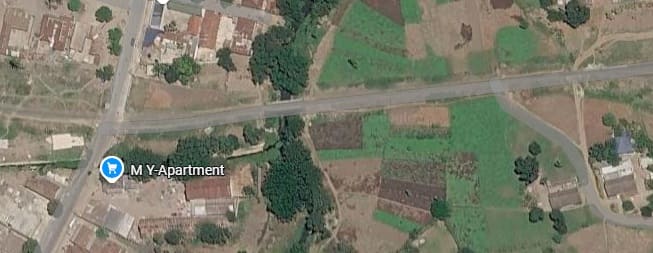
To the West of the Railway Station a single track heads West across a local road and bridges another watercourse (which appears to be a tributary of the Ngerengere River. Just West of the river, the line divides as shown on the MapCarta image immediately below. [Google Maps, July 2026]Approximately the same area as that which appears on the satellite image immediately above. The more southerly of the two lines is a short branch which serves the Tanzania Tobacco Processors Limited (TTPL) site further to the West. [3]
The first road crossings on the two lines cary them across the Korogwe Raod in Morogoro. [Google Maps, June 2026]
The full length of the short siding/branch serving Tanzania Tobacco Processors Limited (TTPL). [3]Another metalled road is crossed both by the branch (bottom-left) and the main line (top-right) before the mainline continues out of Morogoro. [Google Maps, August 2026]
The A7/T1 road bridges the MGR as it leaves the central area of Morogoro. [Google Maps, August 2026][3]
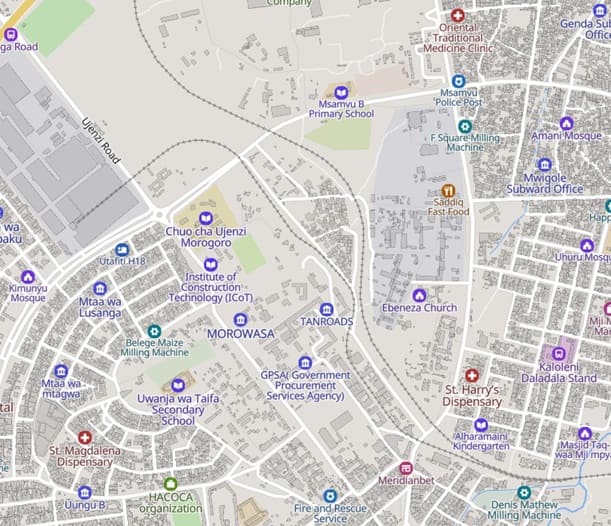
The next metalled road crossed by the line as it wends its way Northwest is the Ujenzi Road. [Google Maps, August 2026]
The Mazimbu Road is the next metalled road crossing the line. [Google Maps, August 2026]
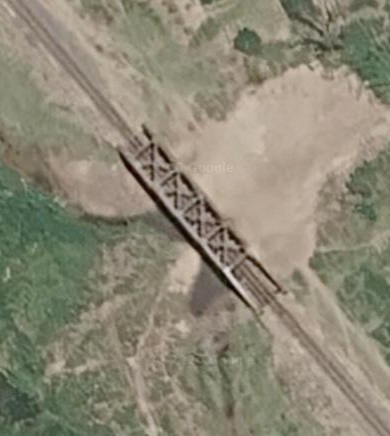
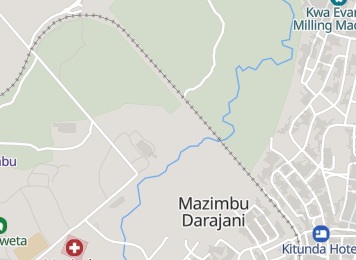
The railway next bridges another tributary of the Ngerengere River. [Google Maps, August 2026][3]
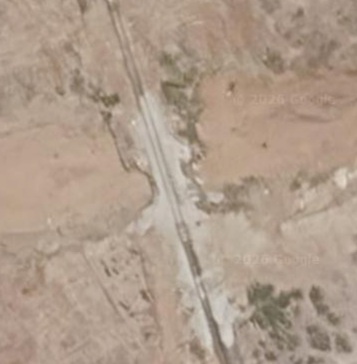
Still heading generally in the north-westerly direction the line cross a number of murram roads before bridging another dry watercourse. [Google Maps, August 2026]
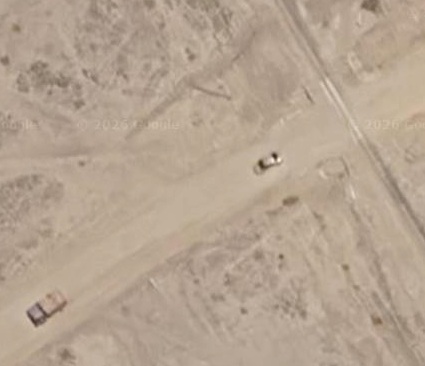
Another murram road is crossed at level before the line encounters the SGR again. [Google Maps, August 2026]
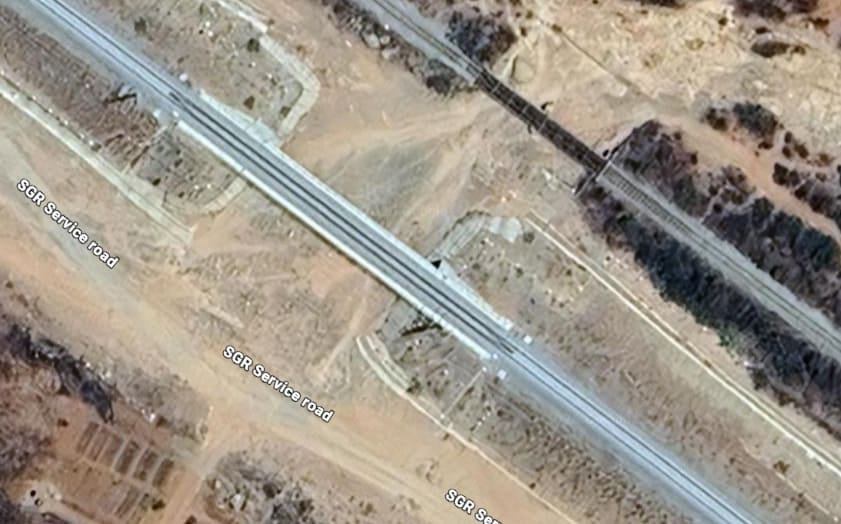
The modern SGR bridges the MGR. [Google Maps, August 2026]The SGR follows the MGR relatively closely over the next few kilometres. [5]
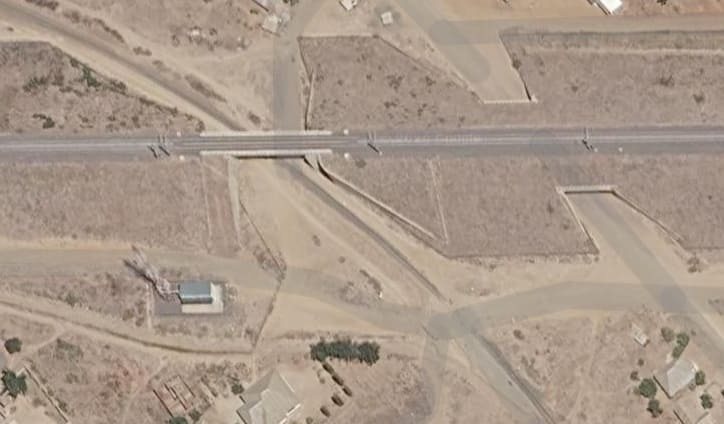
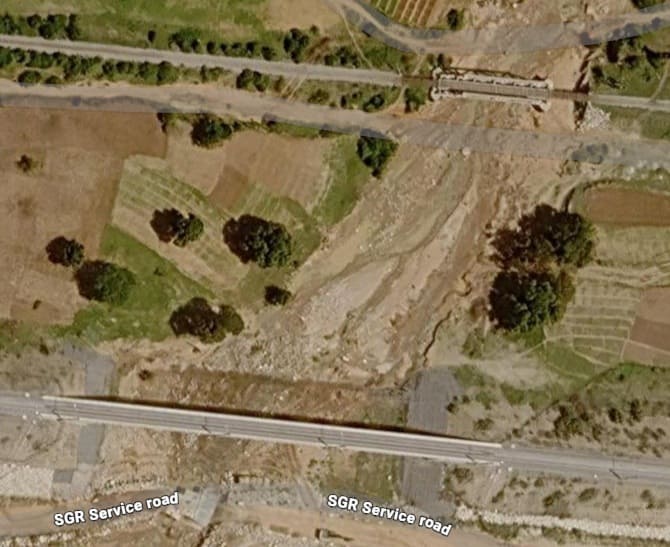
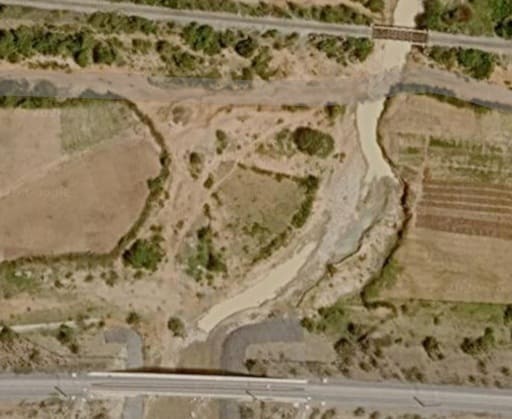
Apart from murram road crossings and minor culverts, this dry watercourse is bridged by both the MGR and the SGR. [Google Maps, August 2026]
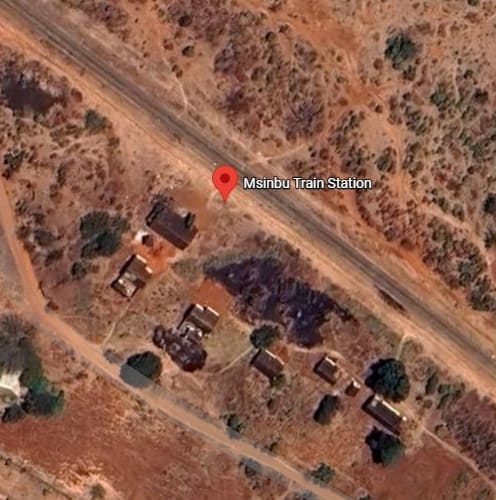
Msinbu has its own halt on the MGR Central Line. [Google Maps, August 2026]
Msinbu is only a small settlement, no provision is made for passing trains.
Over this next length of the route of the MGR it, at first, follows the contours. The SGR, with significantly greater power provided by its locomotives and with much more cash available to invest in the line, take a more direct route. [6]
Again, the line is crossed by murram roads and itself crosses dry watercourses culverted under the track. But little is worthy of specific note apart from the pair of structures over a dry watercourse shown immediately below.
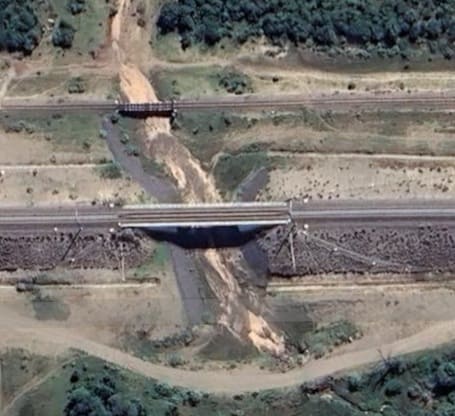
Another dry watercourse which experiences significant water flows in the wet season. [Google Maps, August 2026]
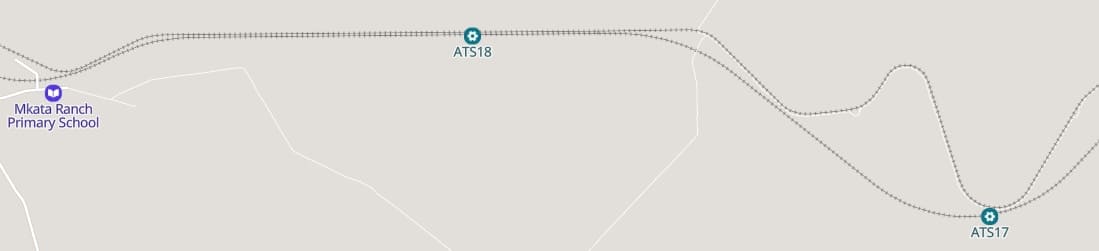
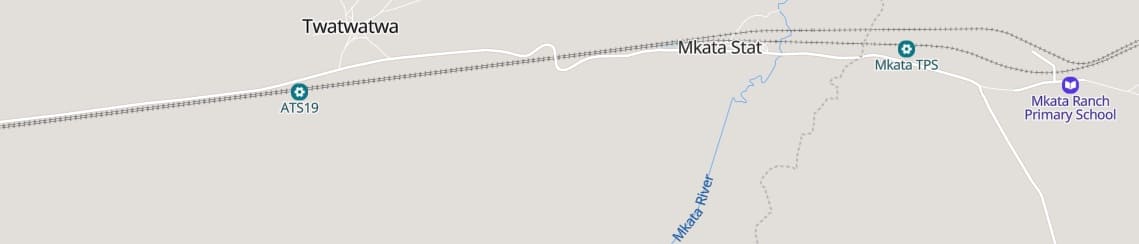
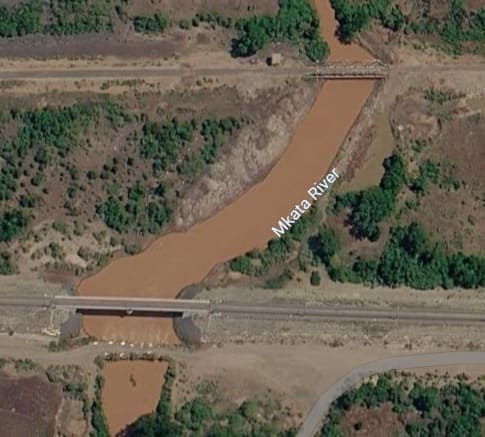
The next feature worthy of note on this next length of the railway is the bridges over the Mkata River about a third into this map extract from the right side. The bridges are shown below. [7]
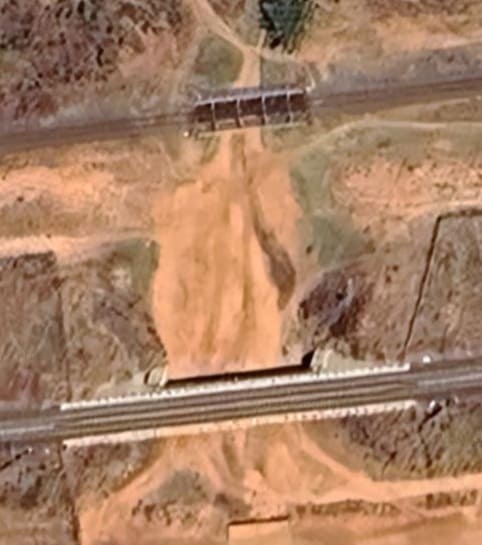
One arm of the Mkata River is crossed by three structures carrying the MGR, the SGR and the SGR service road. [Google Maps, August 2026]
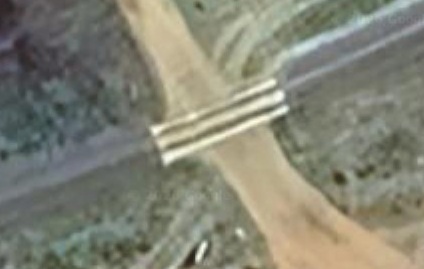
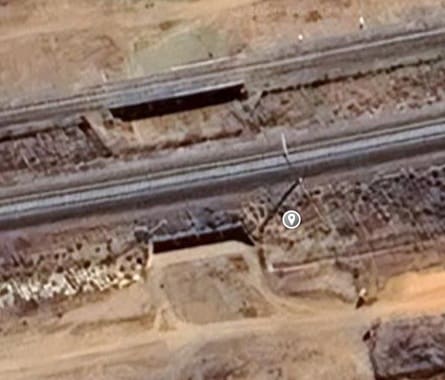
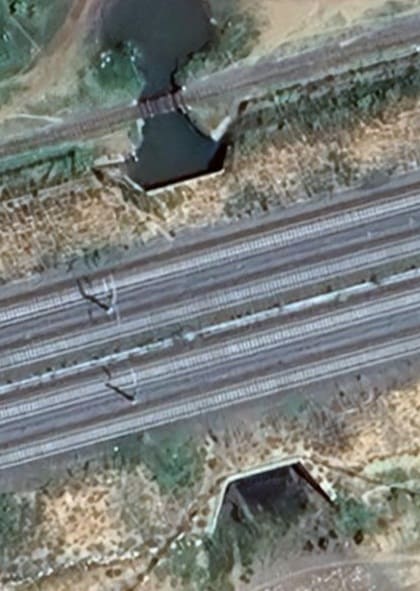
The MGR made provision for significant flows in the wet season, providing three double box culverts. The SGR saw no need to proved additional flood relief. [Google Maps, August 2026]
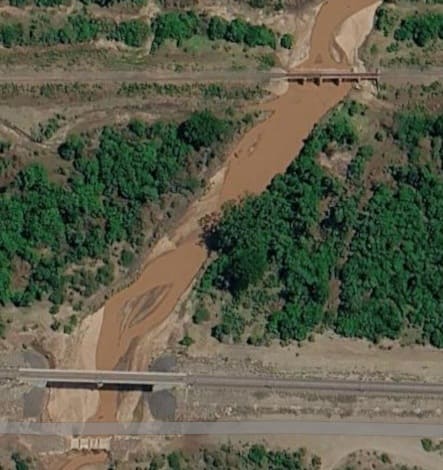
The other (main) arm of the Mkata River is also bridged by three bridges carrying the MGR, the SGR and the SGR service road. [Google Maps, August 2026]
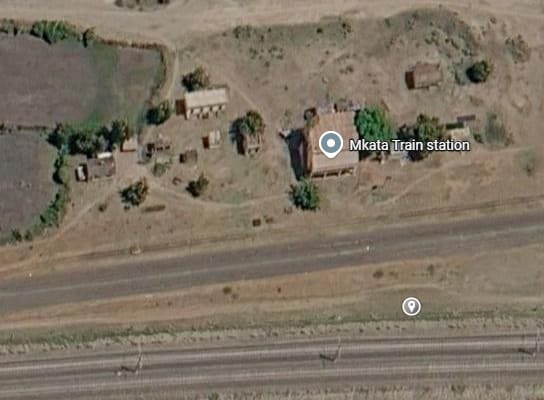
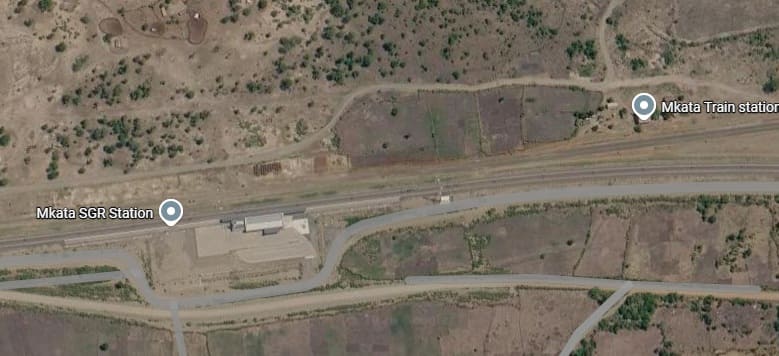
A short distance beyond the Mkata River is a halt on the MGR – named Mkata Railway Station. [Google Maps, August 2026]
This time, the SGR also provides a station just a few hundred meters to the West of the MGR halt. [Google Maps, August 2026]
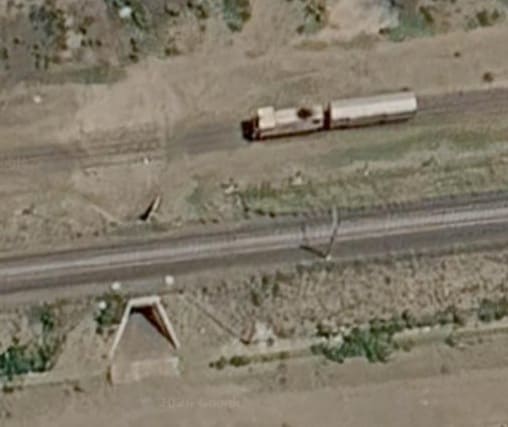
This satellite image is provided primarily for the small consist on the MGR. It appears to be made up of one diesel locomotive and one wagon. [Google Maps, August 2026]
Bothe the Mgr and SGR are now running across open savanna with no significant interruptions and so head Weat on a bearing just South of West for some distance. Occasional culverts permit water runoff in the wet season.
A typical location on the MGR and SGR with culverts provided for wet season flows. [Google Maps, August 2026]
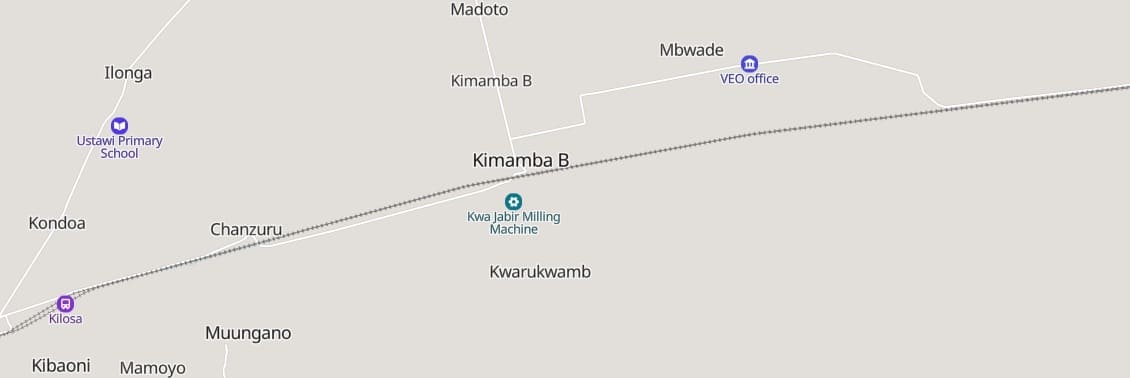
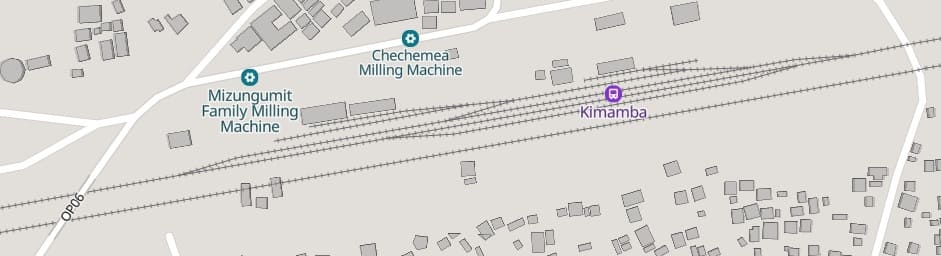
The next station on the MGR is at Kimamba, the next on the SGR is at Kilosa. In between the two are a series of storage sidings on the SGR. [8]Kimamba Railway Station on the MGR as shown on MapCarta. The facilities appear to be much reduced in the view available on Google Maps in 2026. [8]Kimamba Railway Station on the MGR – a passing loop appears to have been retained but the facilities shown on the MapCarta extract have either been removed or are overgrown. [Google Maps, August 2026]
Just to the West of the station at Kimamba a road over-bridge has been constructed which spans both the MGR and the SGR. [Google Maps, August 2026]
Between Kimamba and Kilosa Railway Station on the SGR, a series of sidings run alongside the SGR. The SGR is at high level and bridges a road. The MGR crosses the same road at a level-crossing just to the North of the SGR over-bridge. [Google Maps, August 2026]
The four-track SGR and the single MGR track then span a watercourse. [Google Maps, August 2026]
And a short distance to the West, another watercourse. [Google Maps, August 2026]
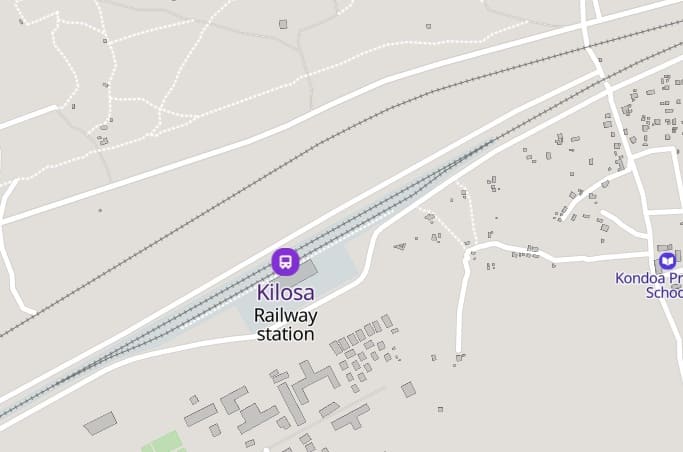
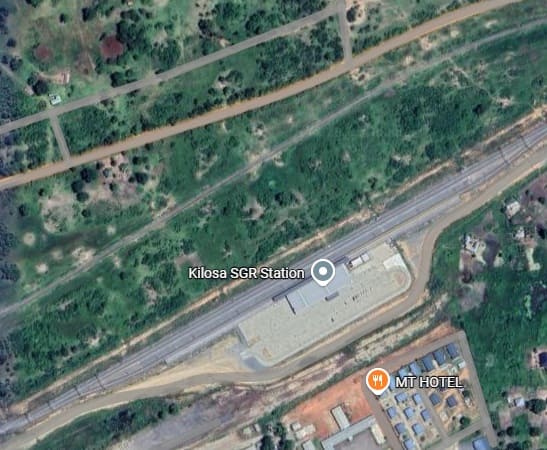
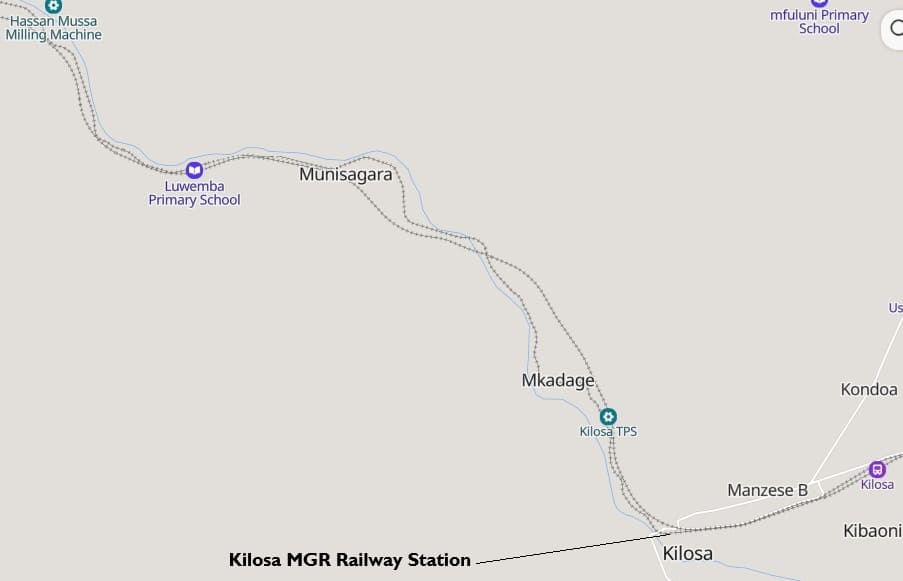
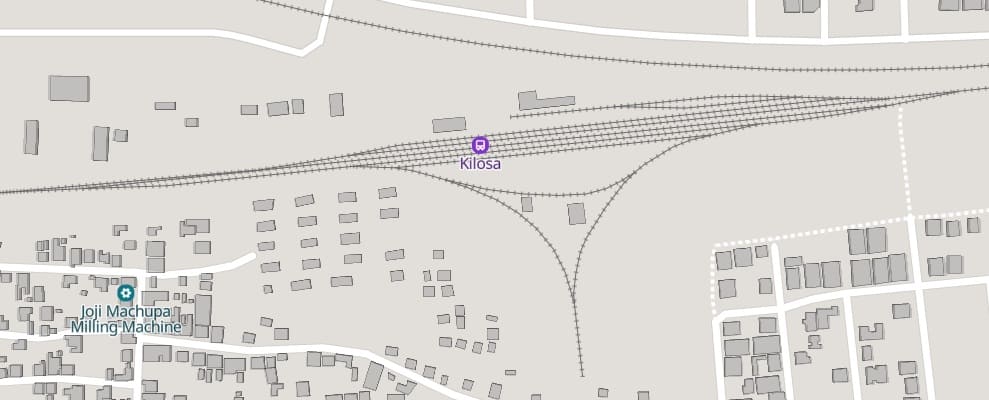
Kilosa Railway Station on the SGR sits to the East of the town – the MGR runs to the Northwest of the SGR. [9]Kilosa Railway Station on the SGR with the MGR to its Northwest. [Google Maps, August 2026]Kilosa MGR Station is at the West end of the town. From here the line meanders alongside the Mkondoa River. [9]The SGR crosses the MGR at high-level to the South of Kilosa town. [Google Map, August 2026]Kilosa MGR Station is further West. The SGR can be seen curving away at the top of this image. [10]Kilosa MGR Station. [Google Maps, August 2026]
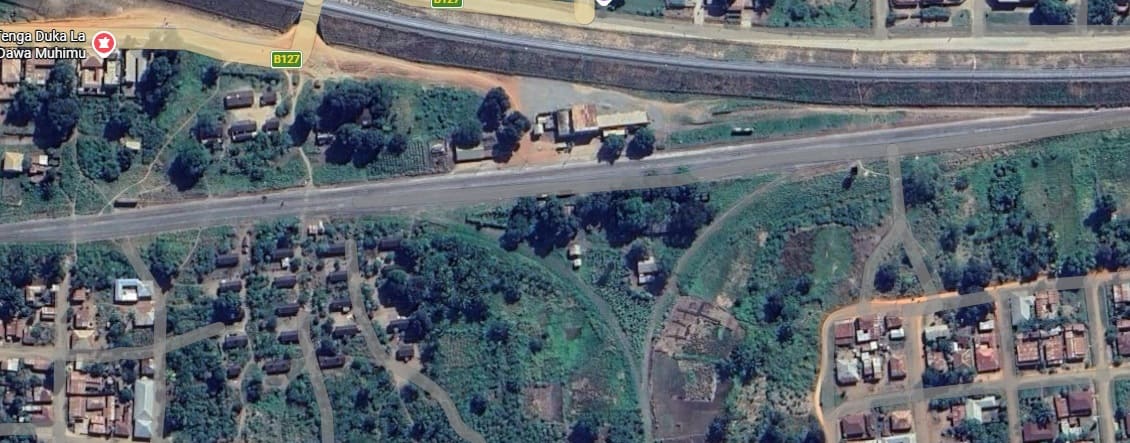
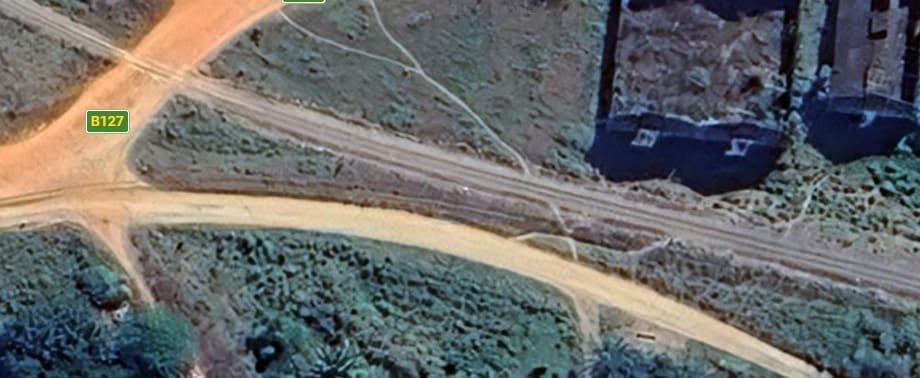
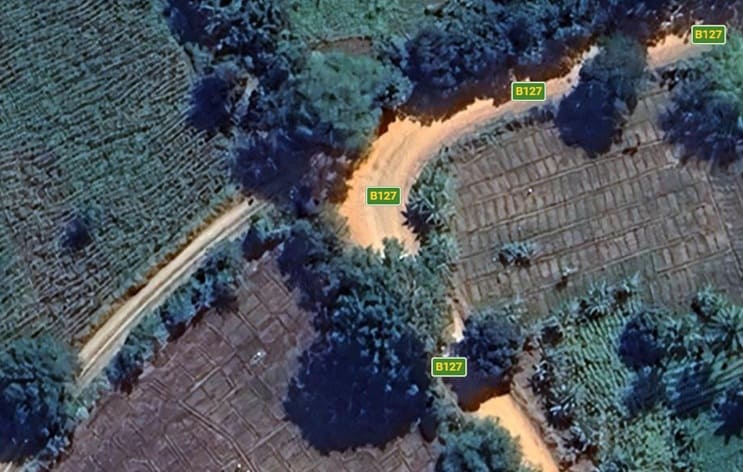
To the West of Kilosa MGR Station , the line begins to turn to the Northwest, a branch line leaves the main line before it crosses the B127. [Google Maps, August 2026]
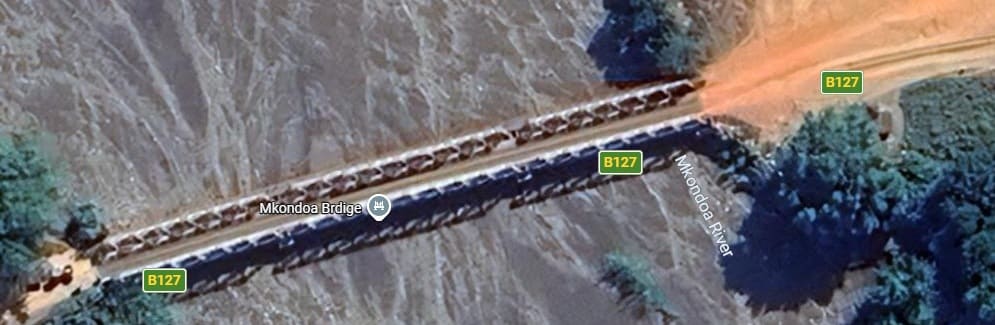
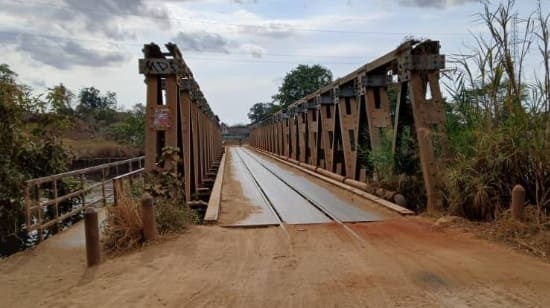
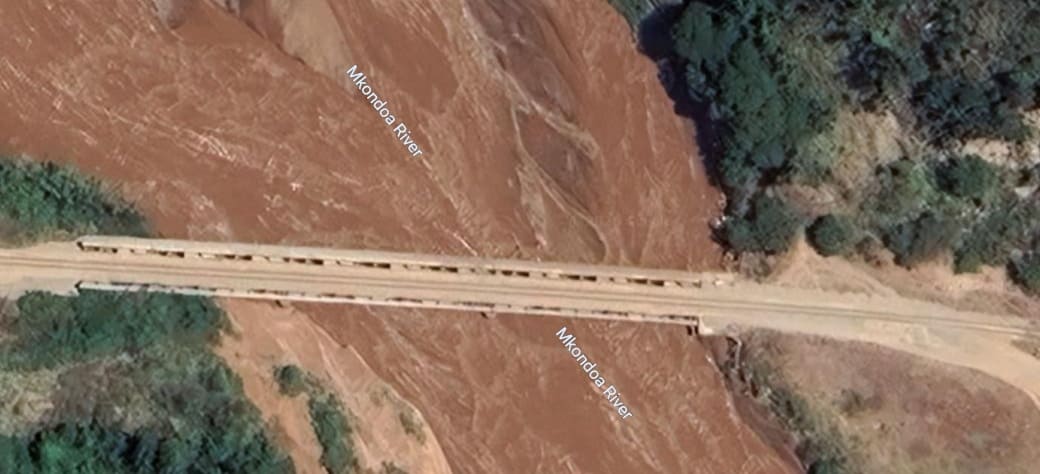
The branch line crosses the Mkondoa River on a shared railway/road bridge. [Google Maps, August 2026]
Mkondoa River Bridge, (c) Matanga Eunyo, August 2024. [Google Maps, August 2026]
On the west side of the river both the road and the branch line turn South. [Google Maps, August 2026]
The branch line which crosses the Mkondoa River serves Mikumi and will be covered in a later article. OpenStreetMap.com shows the line heading South, then Southwest and then South again passing close to the village of Mbamba, into the Mikumi National Park, running parallel to the Iringa Road for a short distance before crossing it and running alongside the T16, again heading South. It crosses the T16 close to Msowero and runs on to serve the ‘Kisombero 1’ Sugar Company and then meets the TAZARA line at Msolwa at the boundary of the Nyerere National Park.
We continue on along the Central Line from Kilosa towards Dodoma.
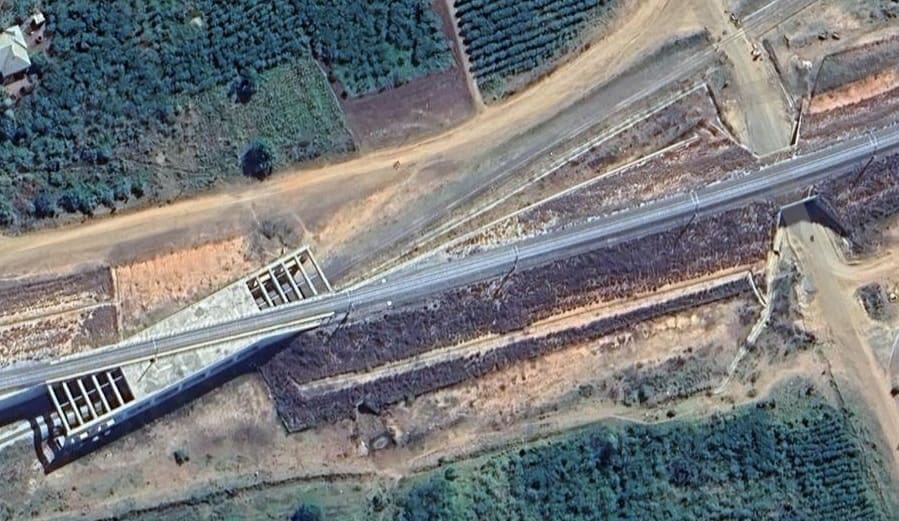
The SGR is once again alongside the MGR but at a higher level. It has passed through a tunnel close to the MGR Station at Kilosa. Here agin we see both lines crossing a dry watercourse with a road between them. [Google Maps, August 2026]
With the SGR a distance away to the North, the MGR crosses a tributary to the Mkondoa River. [Google Maps, August 2026]
Next a dry watercourse is bridged very close to the Mkondoa River which can be seen in the very bottom-left corner of this image. [Google Maps, August 2026]
Road and railway cross close to the bank of the Mkondoa River. [Google Maps, August 2026]
And cross again alongside the river. [Google Maps, August 2026]
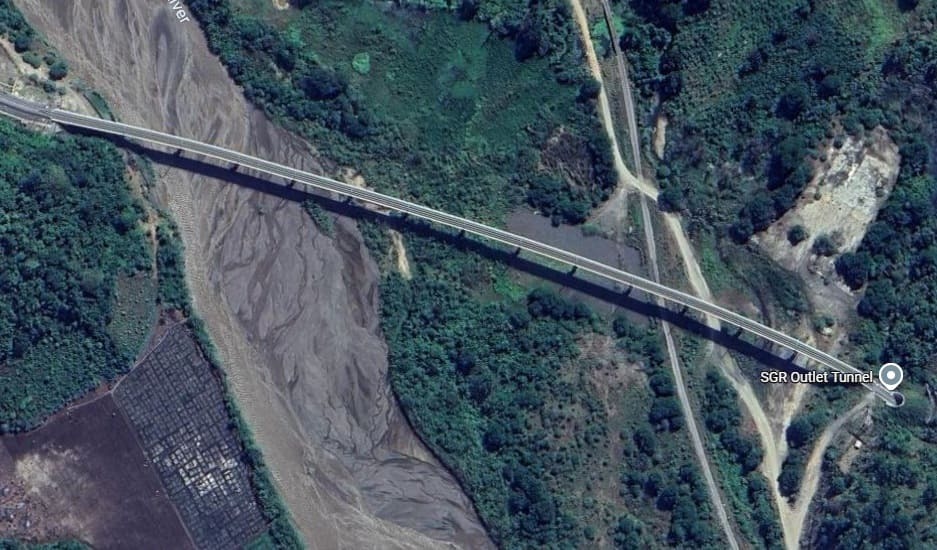
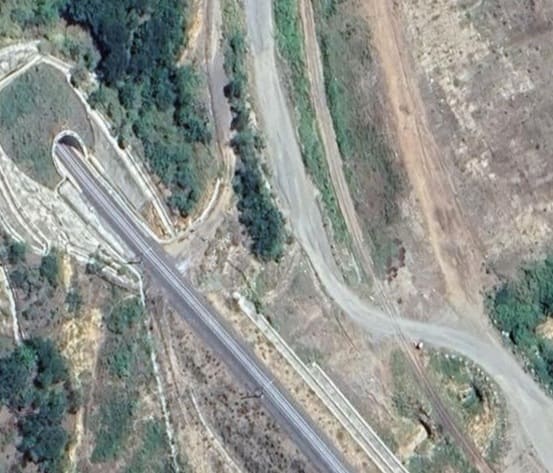
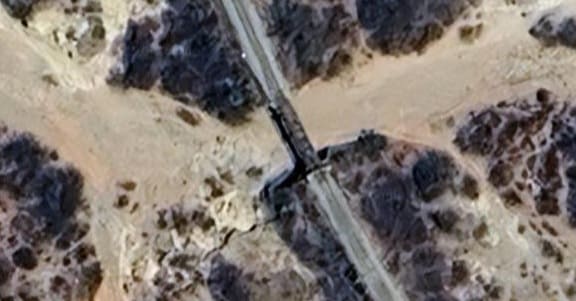
Still alongside the river, the MGR passes under a viaduct carrying the SGR from a tunnel across the Mkondoa River at high level. [Google Maps, August 2026]
The MGR then crosses the river on a combined railway/road bridge. [Goggle Maps, August 2026]
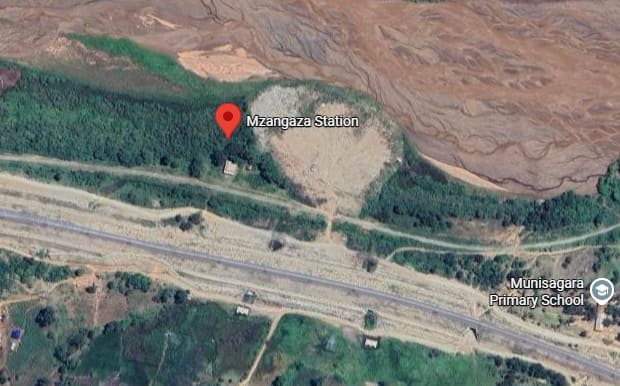
The river, the MGR and the SGR can all be seen on this satellite image which is centred on the MGR Station at Mzangaza. [Google Maps, August 2026]
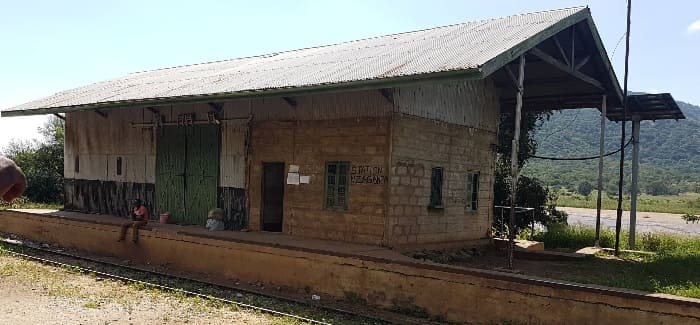
Mzangaza Railway Station with the river beyond, (c) Ali Yüksel, August 2019. [Google Maps, August 2026]
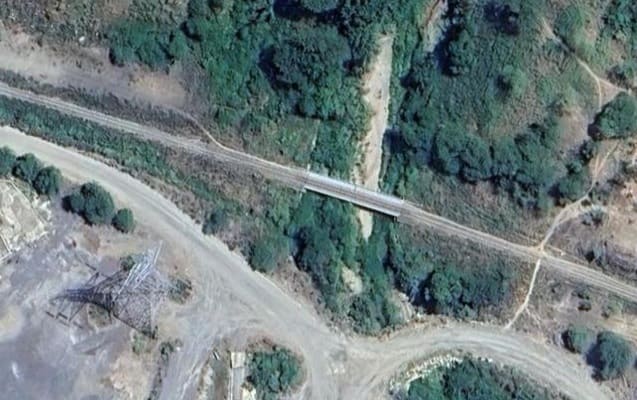
Still on the South side of the Mkondoa River. This drywatercourse would flow north when in spate. It appears to be bridged by a relatively modern structure. [Google Maps, August 2026]
The SGR and the MGR are again close further West. The SGR had the resources to tunnel through a bluff of land whereas the old MGR follows the river edge. [Google Maps, August 2026]
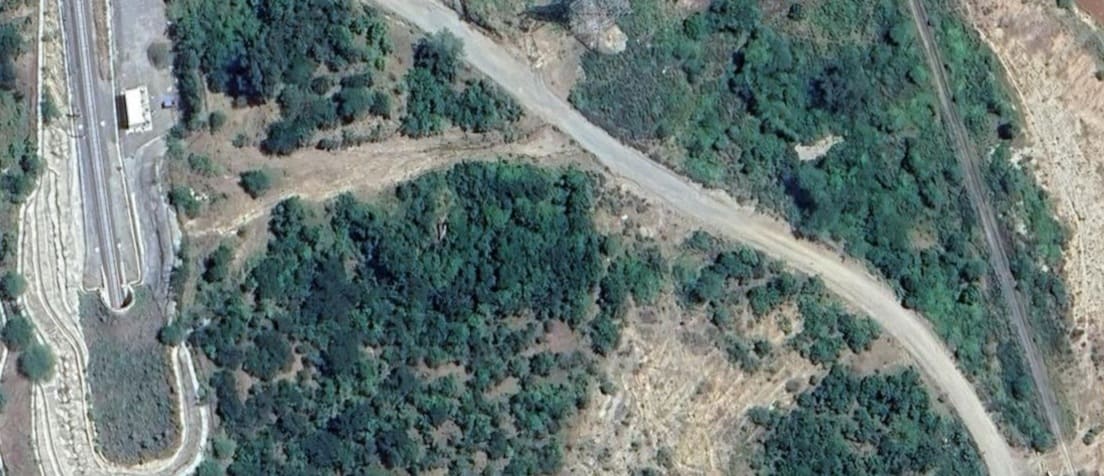
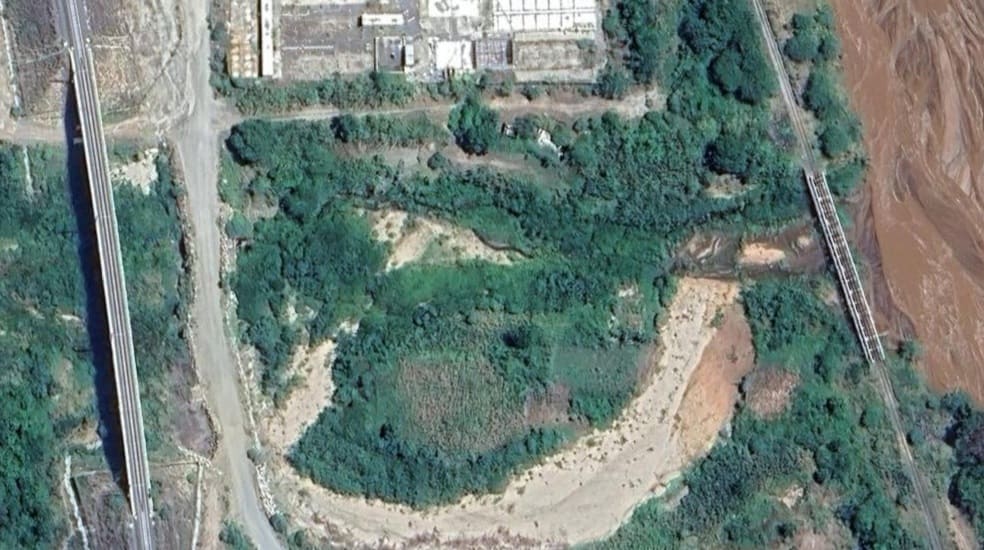
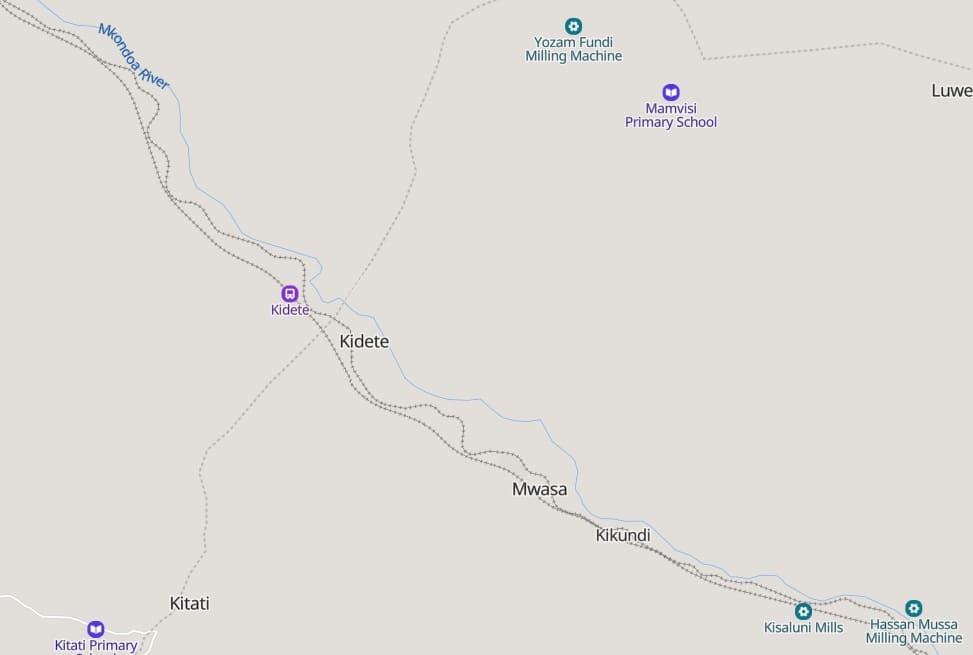
The MGR and the SGR are further apart when the SGR emerges from the North portal of the tunnel. The Mkondoa River can just be seen on the top-right corner of this image. [Google Maps, August 2026]Bopth the SGR and the MGR bridge the next river valley using relatively substantial structures. [Google Maps, August 2026]This next length of the line continues along the valley of the Mkondoa River heading Northwest. Again, the MDr runs with the contours and so follows the river. The SGR follows a more sinuous (smooth) alignment! [11]
Close to Kidete the MGR corsses another relatively significant tributary of the Mkonoa River. It is dry season so very little water flows in the river channel. [Google Maps, August 2026]
A little top the West, the SGR bridge is a more substantial structure! [Google Maps, August 2026]
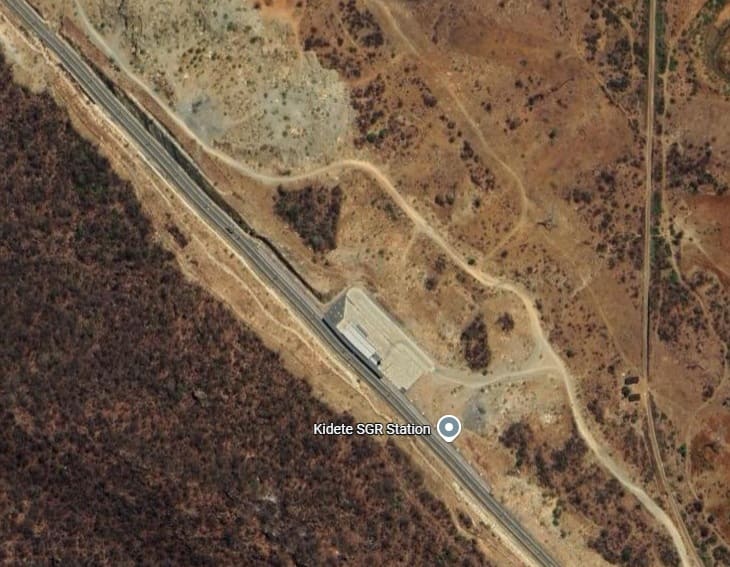
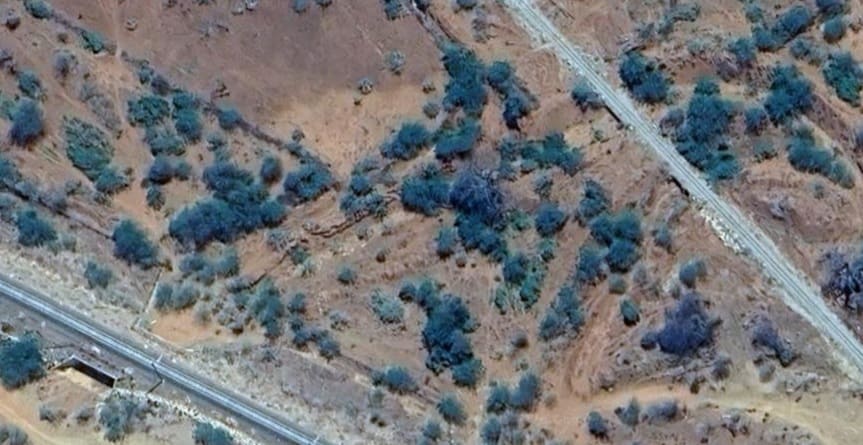
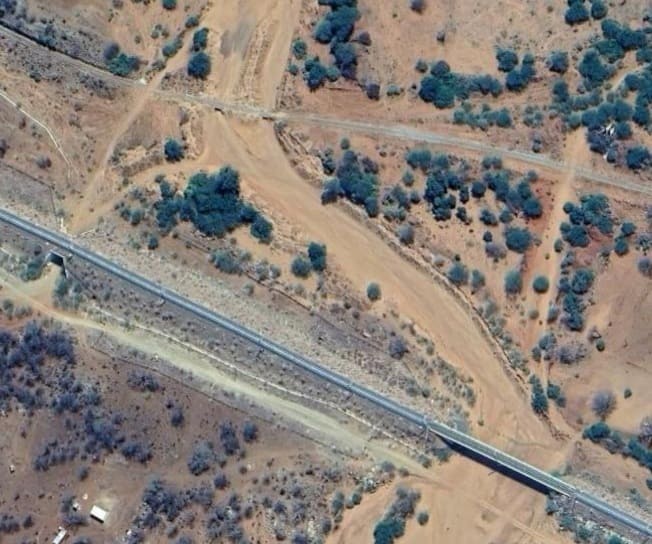
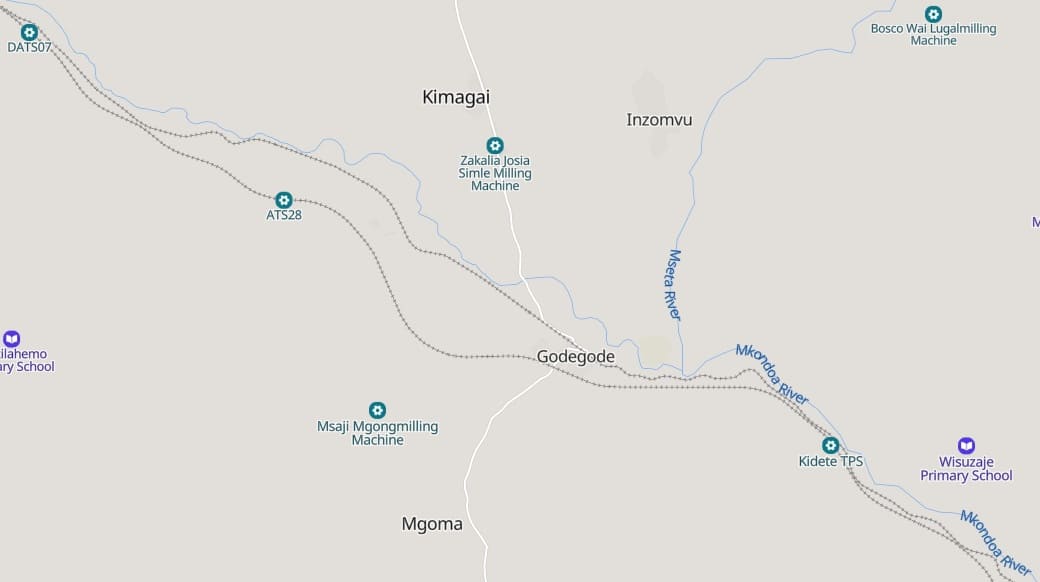
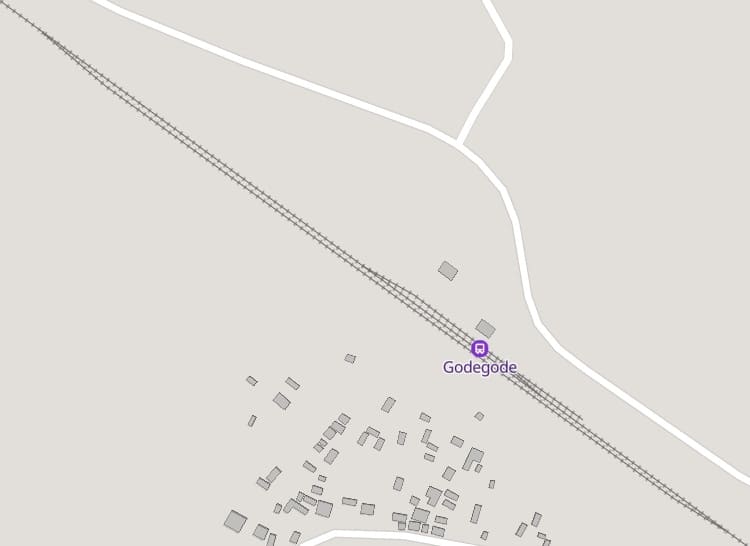
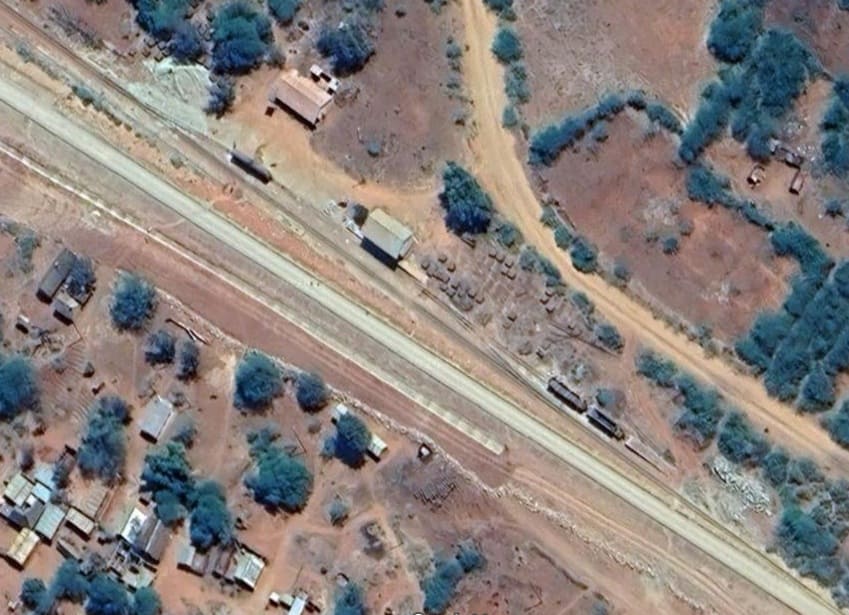
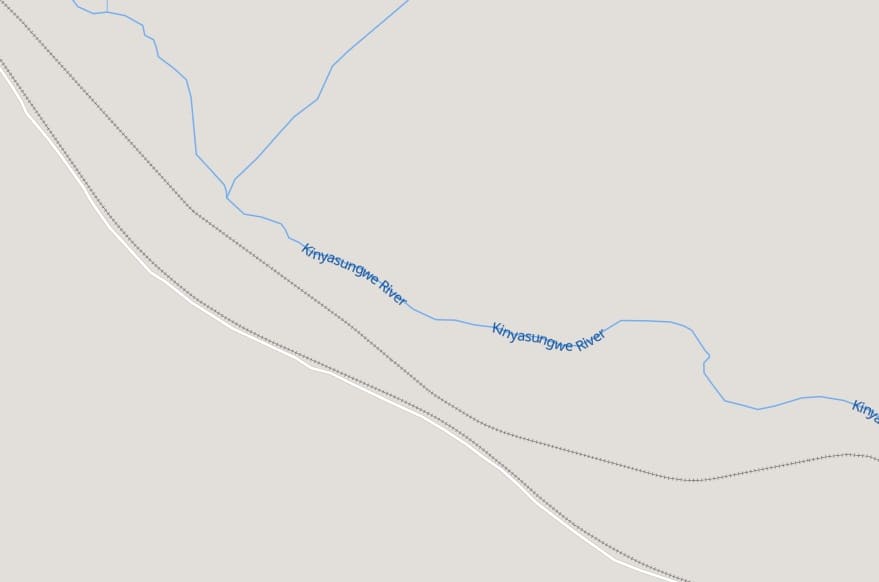
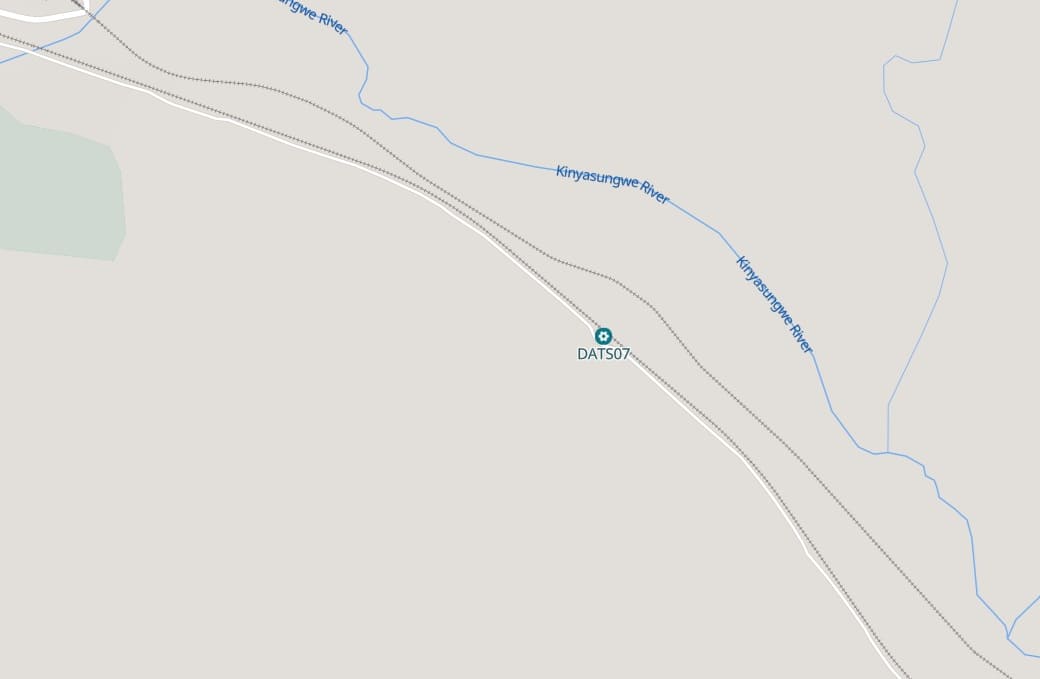
Kidete Railway Station on the SGR is just a short distance to the Northwest, the MGR can be seen running parallel to the river on the right of this image. [Google Maps, August 2026]All along the route there are dry watercourses that carry runoff in the wet season. Both railways provide for these flows. This is another typical location. The SGR has a single span structure (bottom-left), the MGR has two culverts (top-right). Water flow runs towards the Mkondoa River to the Northeast of this location. [Google Maps, August 2026]Another similar location – here water flows to the North. The Mkondoa River is just off the North of the satellite image. [Google Maps, August 2026]The railways continue head Northwest following the valley of the Mkondoa River. Google Maps now gives the river the name ‘Kinyasungwe River. [12]Godegode MGR Station. [13]Godegode Railway Station on the MGR. [Google Maps, August 2026]To the West of Godegode, both railways and the accompanying road cross another dry watercourse (the Idiri River). At the time the image was taken, the road was closed and its bridge was being rebuilt. [Google Maps, August 2026]The road bridge over the watercourse under reconstruction.[Google Maps, August 2026]
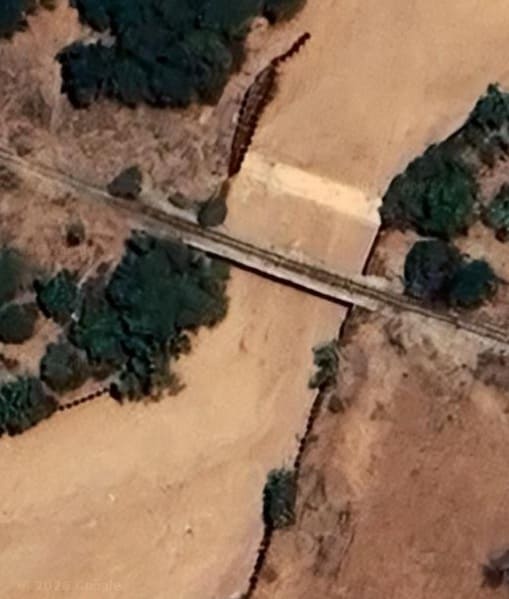
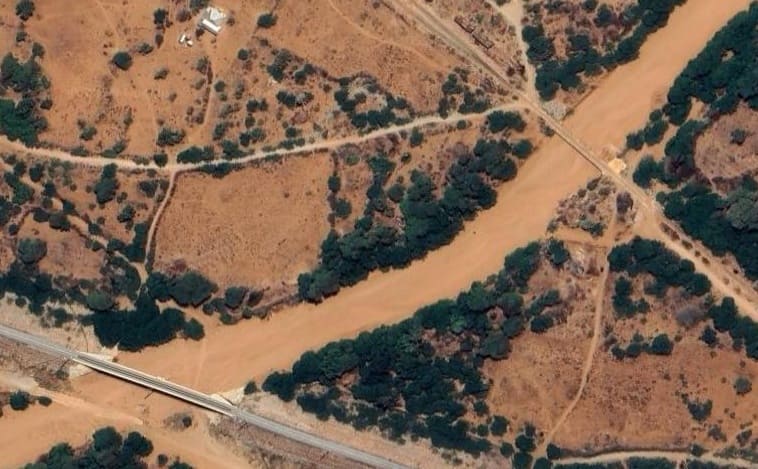
To the Northeast of the SGR and road crossings the MGR crosses the Idiri Riverclose to the Kinyasungwe River – two spans across two different dry beds. The first is a modern concrete structure, the second, below, is older. [Google Maps, August 2026]
The older structure spans a narrower arm of the river. Continuing Northwest, the line crosses further smaller culverts/bridges carry water runoff to the Kinyasungwe River. [Google Maps, August 2026]
Some kilometres further Northwest the line spans another significant dry watercourse. This watercourse is not given a name on either Google Maps of MapCarta. [Google Maps, August 2026]
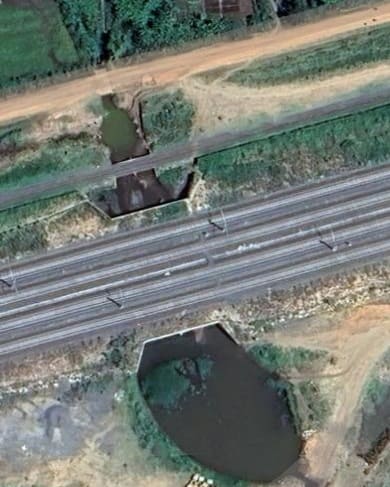
The MGR continues to follow the river valley. The SGR still running on its South side. There is little worthy of note along this length of the line. [13]Again, the two lines, MGR and SGR, continue to follow the Kinyasungwe River valley. At the top-eft of this map extract the two lines cross another significant dry watercourse.[14]The modern SGR bridge is shown in the bottom-left of this satellite image, the MGR bridge is toward the top-right of the image. [Google Maps, August 2026]
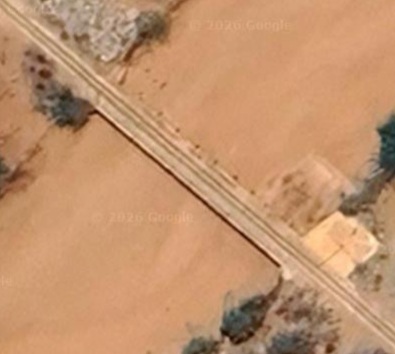
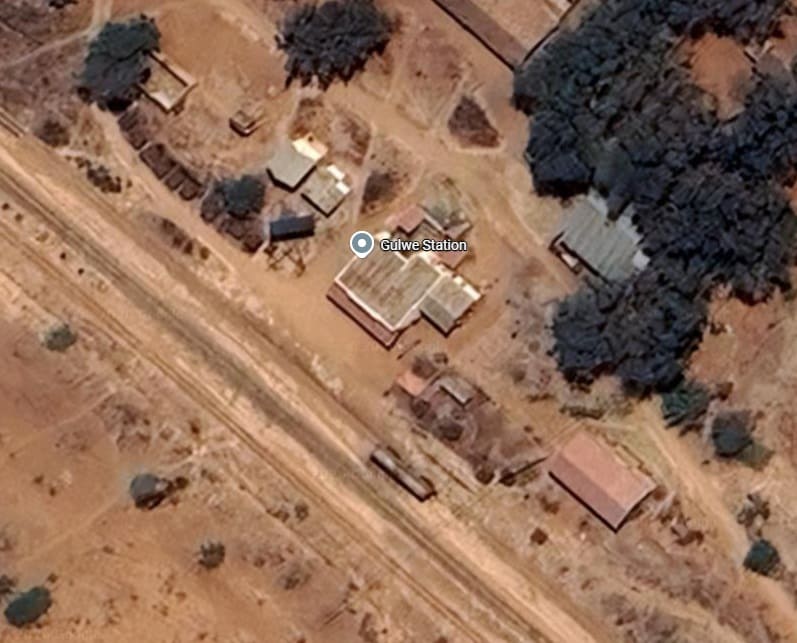
A closer view of the MGR bridge. Just to the Northwest of this bridge the MGR enters Gulwe Railway Station. [Google Maps, August 2026]
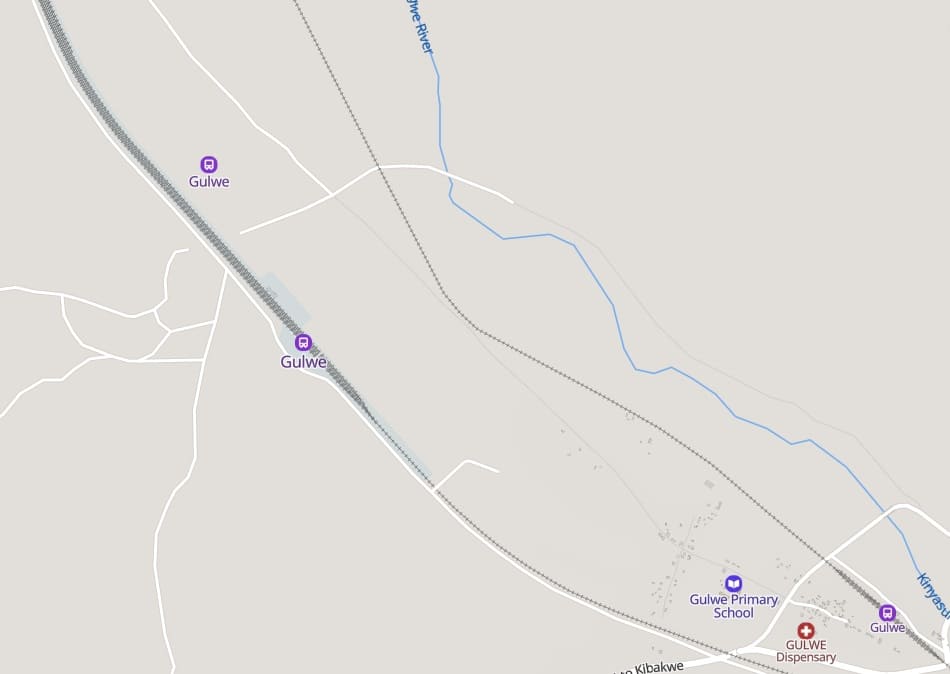
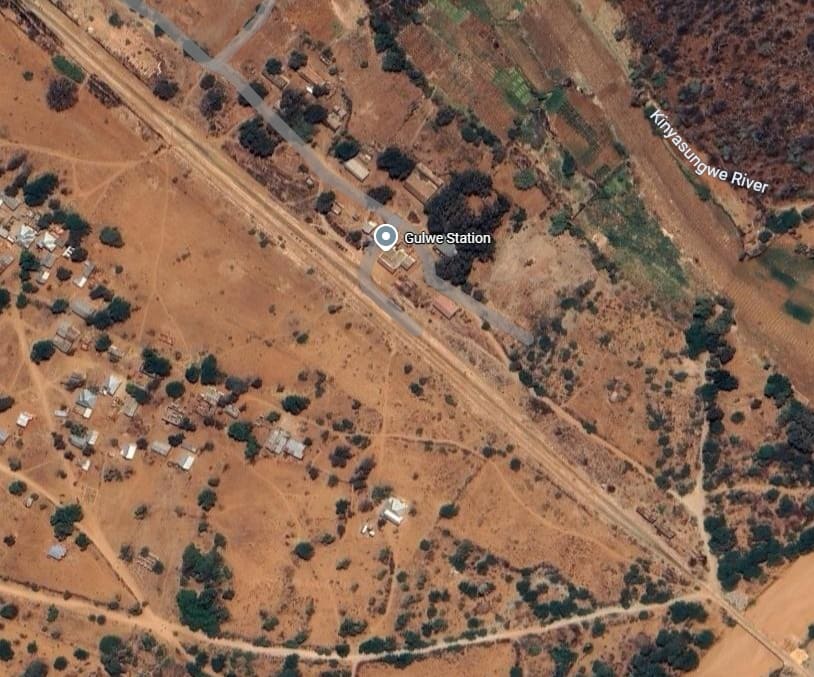
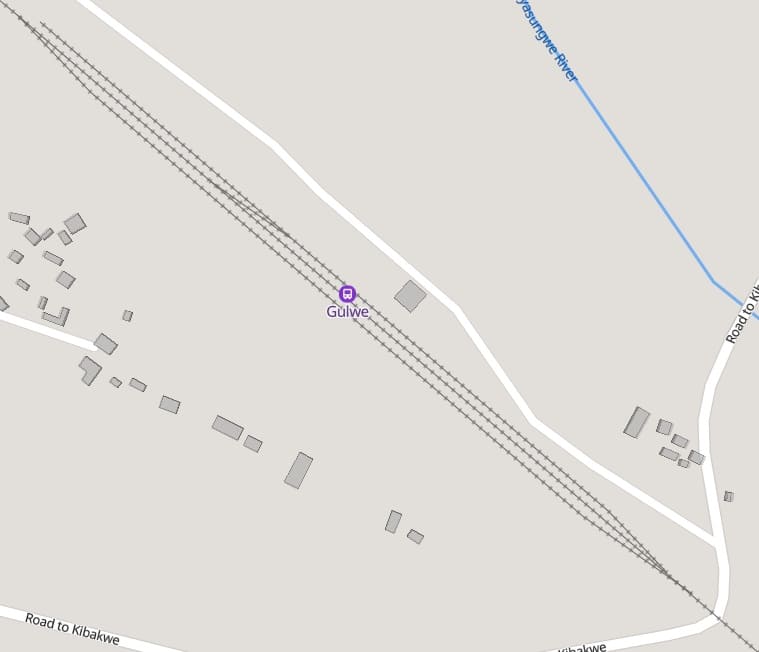
The next length of the two railway lines shows two stations the SGR station being to the West of the MGR station at Gulwe. [15]Gulwe Railway Station on the MGR. [Google Maps, August 2026]Gulwe Railway Station as shown on MapCarta. [16]A closer view of Gulwe MGR Station. [Google Maps, August 2026]
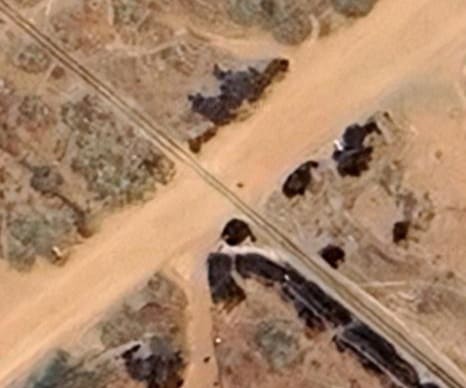
The murram road crossing at the Northwest end of Gulwe Railway Station site. [Google Maps, August 2026]
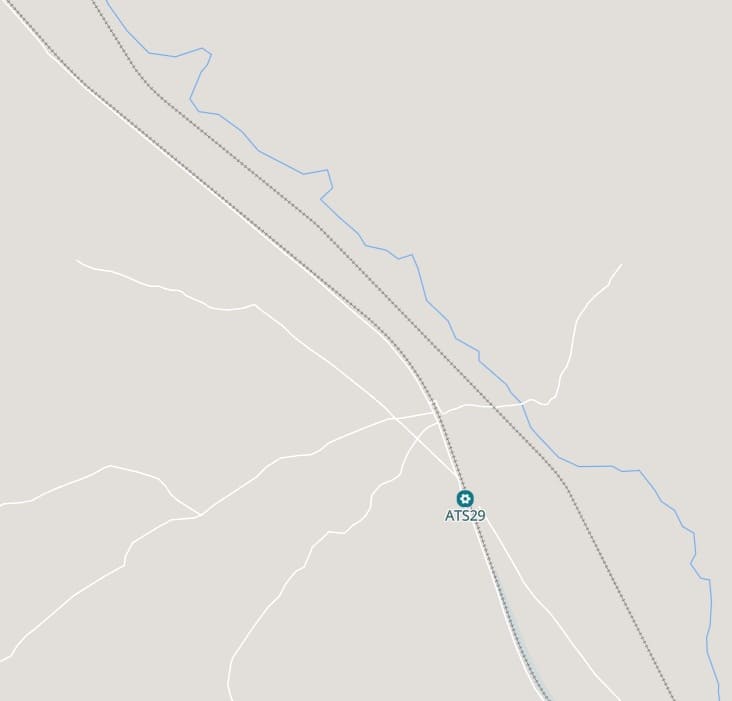
The next length of the line(s) – still following the river running Northwest. [17]
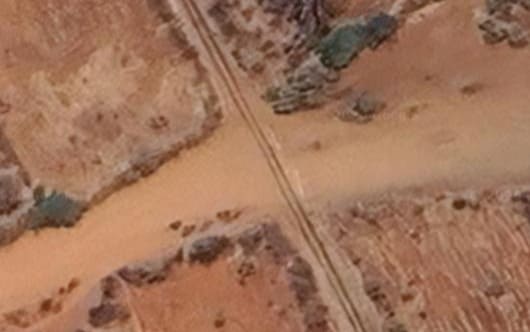
The road-crossing shwn on the MapCarta extract above. [Google Maps, August 2026]
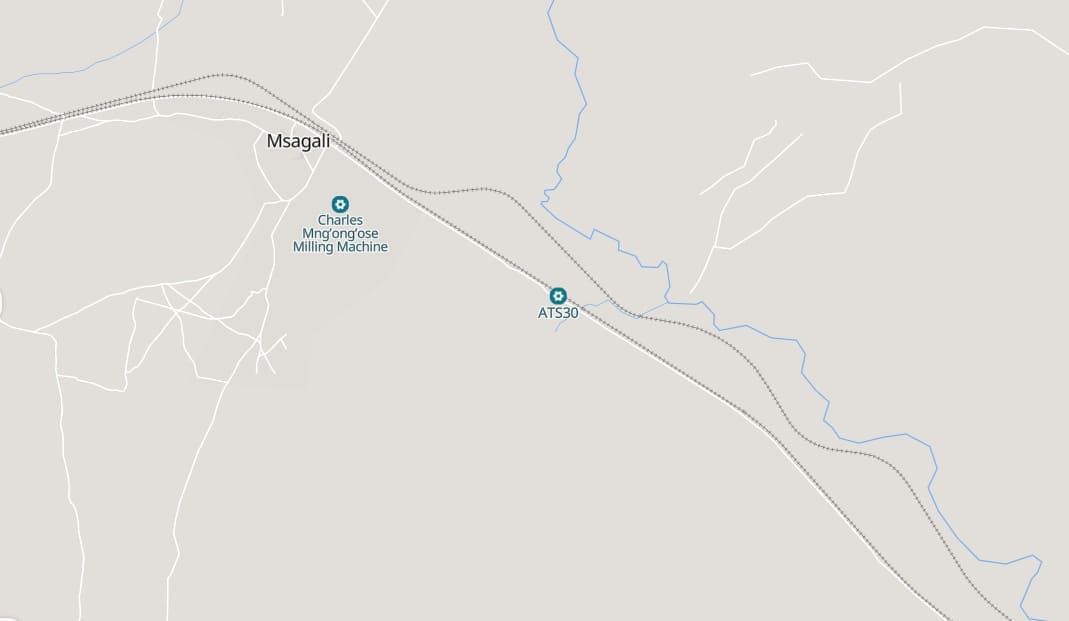
The next length of the line runs through Msagali Railway Station and then turns towards the Southwest. [18]
A murram road passes under the SGR and across the MGR at a level-crossing immediately before the MGR enters Msagali Railway Station. [Google Maps, August 2026]
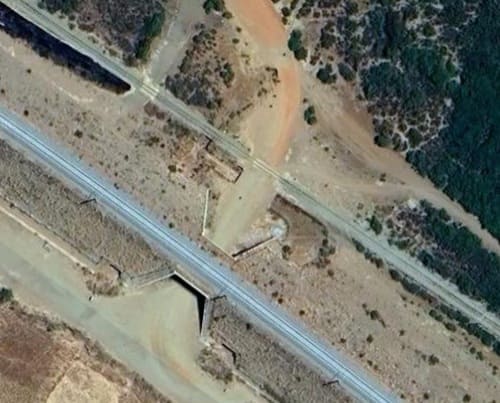
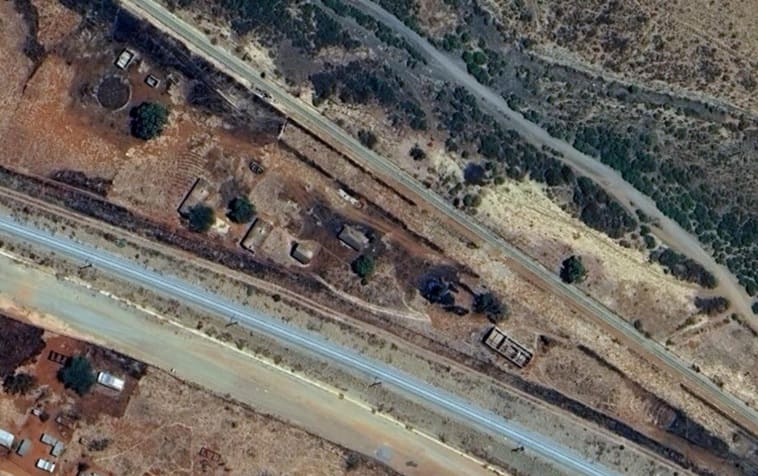
Msagali Railway Station on the MGR. The SGR and its service road are at the bottom of this satellite image, the MGR Station is at the centre of the image with the MGR running bottom-right to top-left. [Google Maps, August 2026]Msagali Railway Station as shown on MapCarta. It is difficult to make out the three lines shown here when looking at the satellite image above. [18]Beyond Msagali, the line is now drifting to the Southwest. [19]Major provision has been made for wet season flows from South to North across the line of both railways. On the SGR a substantial culvert is followed by two bridges. On the MGR, a single-span bridge is followed by a three-span bridge and then a further single-span structure. These structures are to the East of the Msagali TPS on the map extract above.[Google Maps, August 2026]
A short distance further West (before reaching the Msagali TPS), another culvert is provided beneath each line. [Google Maps, August 2026]
Culverts are provided under the SGR and MGR at regular intervals, suggesting significant wet season runoff on relatively flat ground.
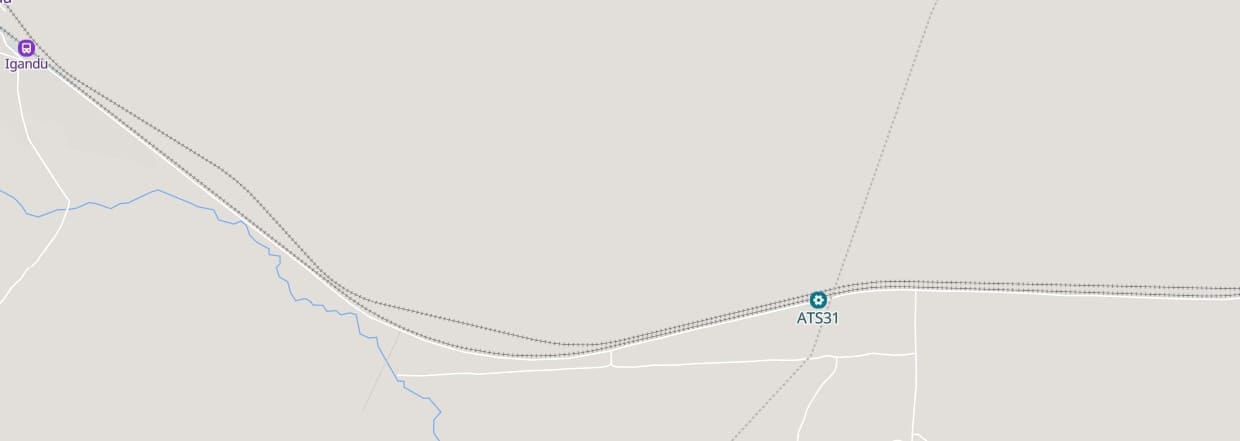
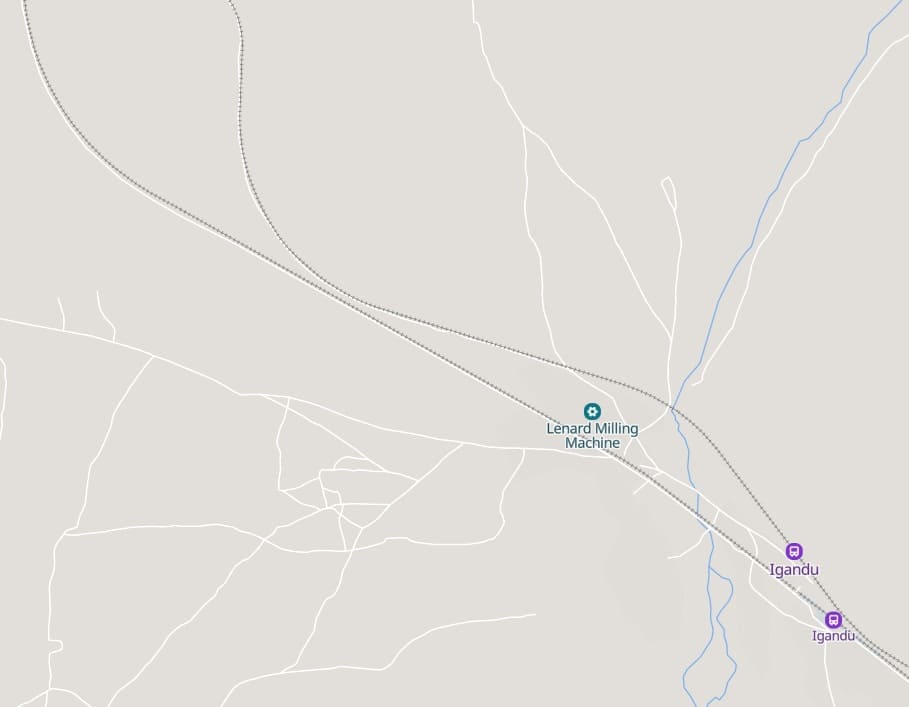
The next length of the SGR/MGR takes the line as far as Igandu. [20]
As mentioned above, culverts continue to be provided relatively frequently to accommodate wet season water flows. [Google Maps, August 2026]
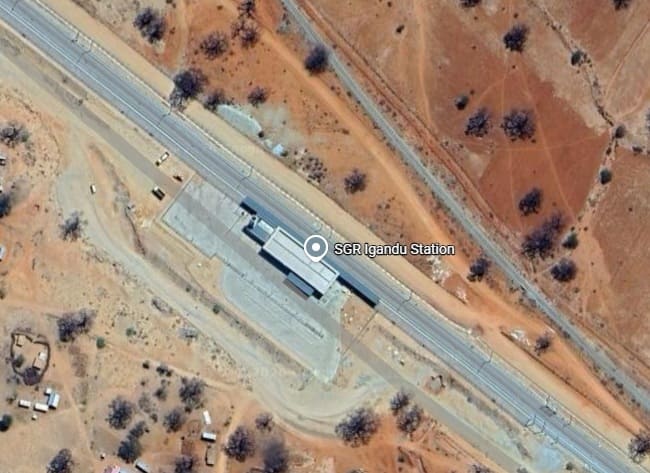
Igandu SGR Station with the MGR running on the North side of the SGR. [Google Maps, August 2026]
The two lines to the Northwest of Igandu. The MGR station sits to the Northwest of the SGR station shown above. [20]Igandu MGR Station. [Google maps, August 2026]
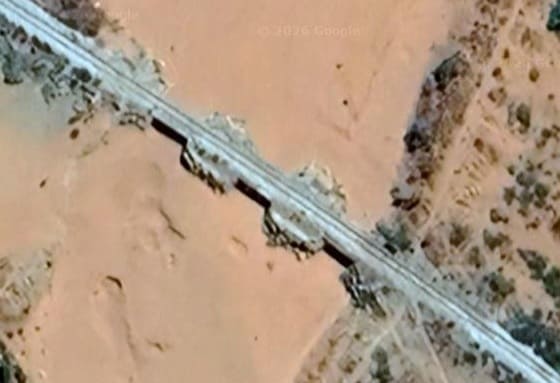
Apart from the regular provision of culverts along the line and a couple of murram road crossings, this more substantive structure is worth noting. Again it carries the line over a dry watercourse. [Google Maps, August 2026]
This next length of the MGR heads North-northwest across open country. There is again little of real note along this length of the line. [21]
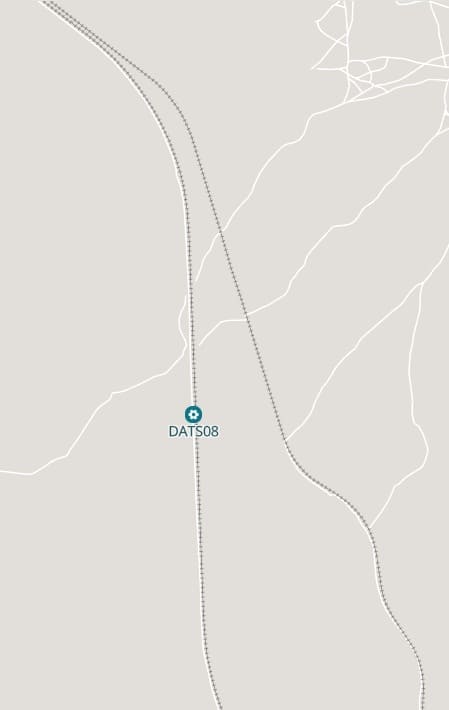
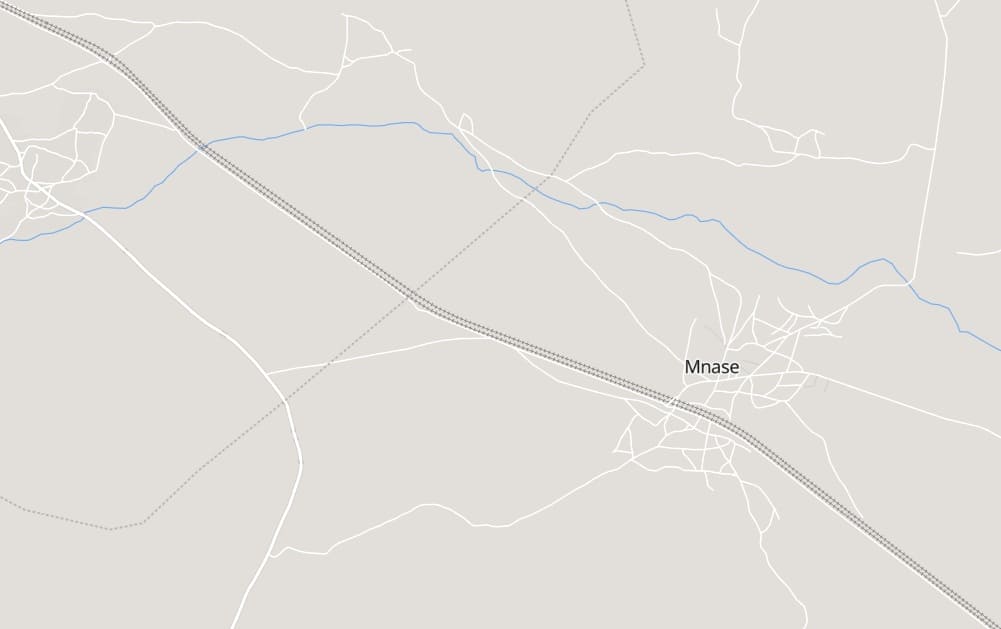
The SGR and the MGR continue Northwest immediately adjacent to each other through Mnase. [22]
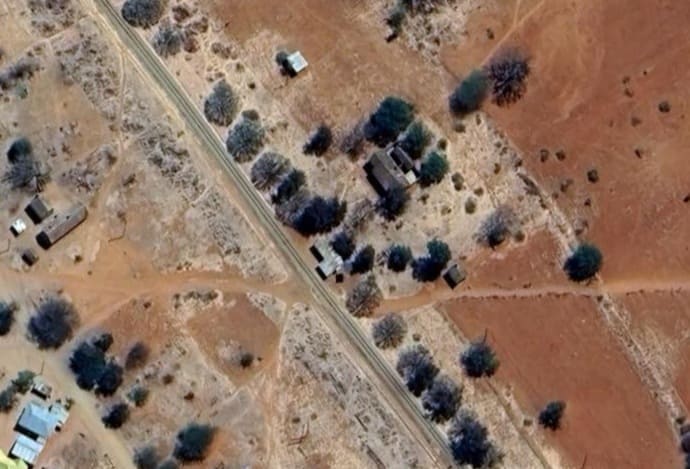
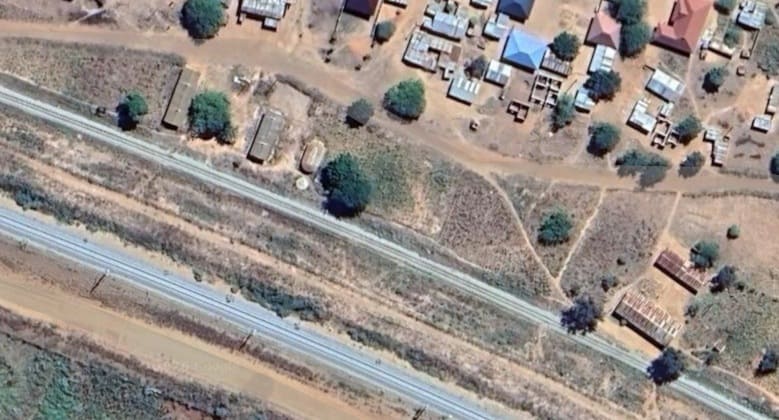
Although there are buildings close to the MGR, there is no indication on MapCarta or Google Maps that there was/is a railway station on the MGR at Mnase. [Google Maps, August 2026]
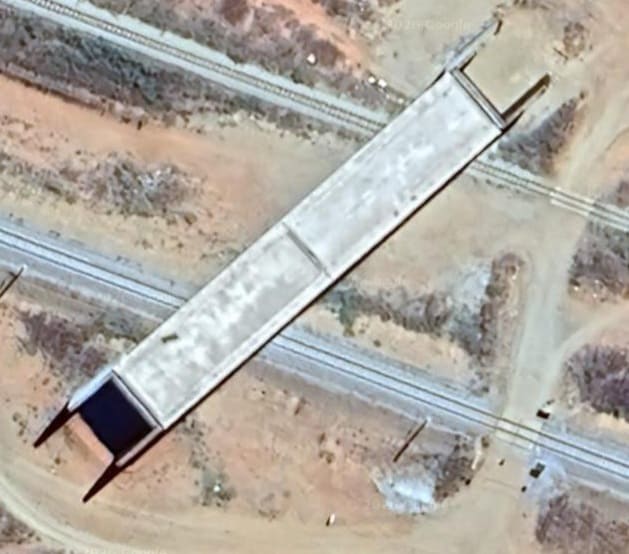
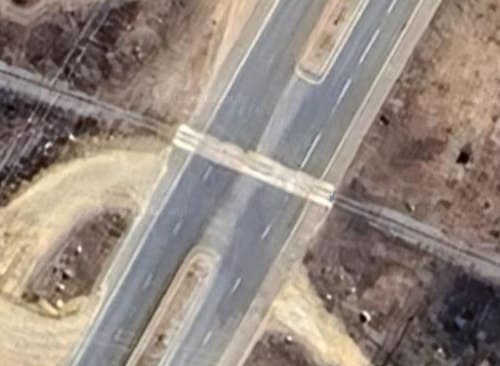
There is, however an interesting structure which spans both the MGR and the SGR at Mnase. It appears that provision has been made for a future highway crossing the two railways.On MapCarta’s mapping the structure is marked ‘OP12’ and is shown as being a highway bridge already in use. [Google Maps, August 2026]
Further Northwest this watercourse is marked on the MapCarta extract above. Again, at the time this satellite image was taken, the watercourse was dry. [Google Maps, August 2026]
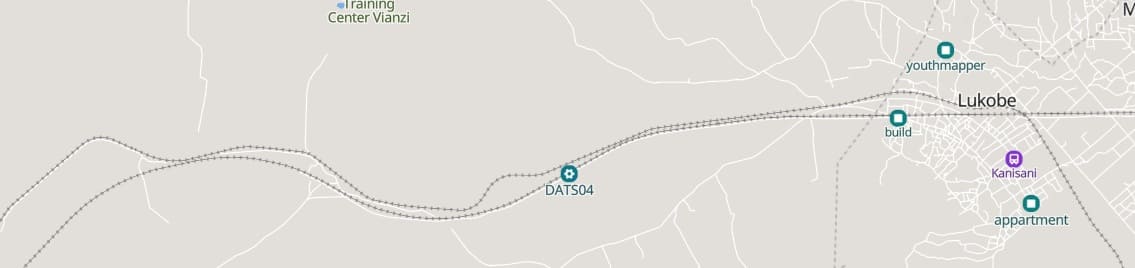
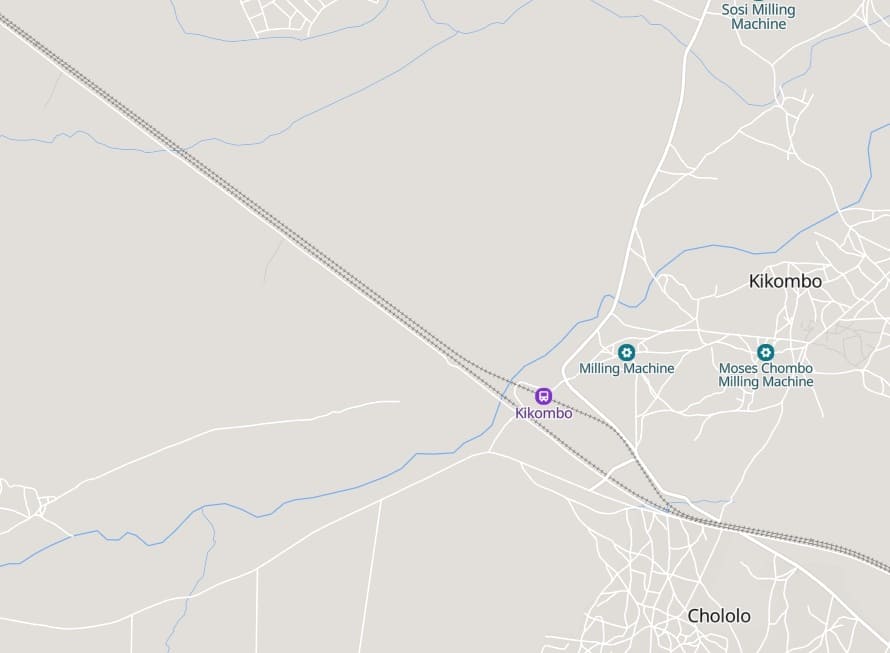
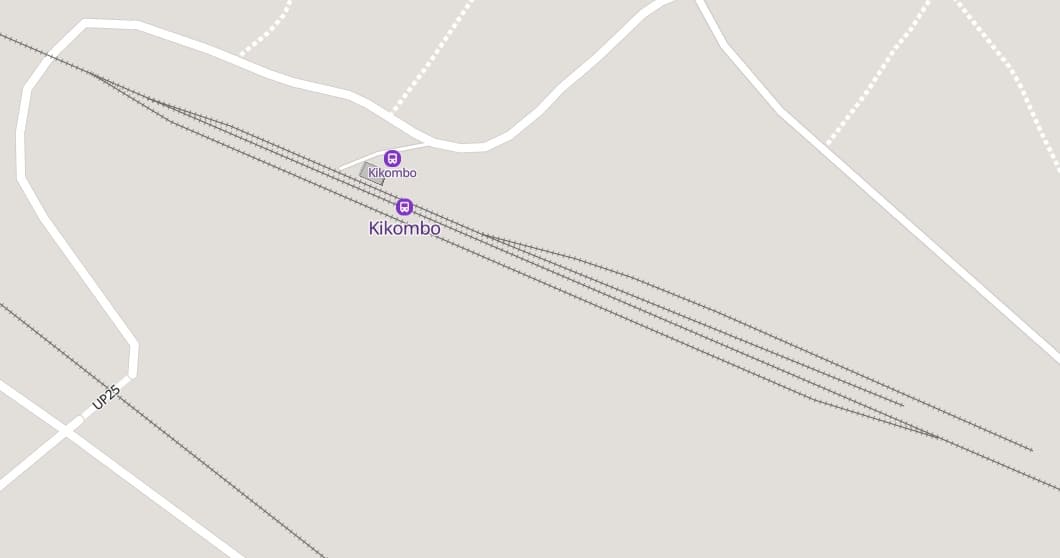
This next length of the line passes to the North of Chololo and to the South of Kikombo. A railway station on the MGR is provided at Kikombo. once beyond the watercourse at the Northwest end of Kikombo Railway Station site, the MGR and the SGR run immediately adjacent to each other heading Northwest. Apart from more culverts to allow wet season water flow across the line of the railway, there is little further of note on this stretch of the MGR, other than a couple of watercourses towards the top-left of this map extract. [23]
A well-used murram road crossing on the approach to Kikombo Railway Station on the MGR. [Google Maps, August 2026]
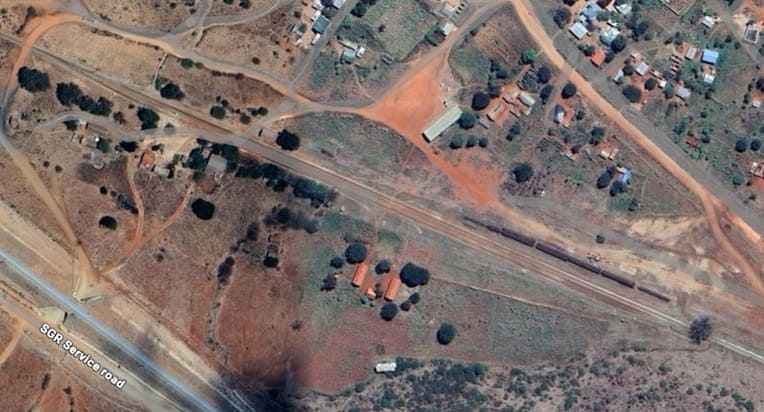
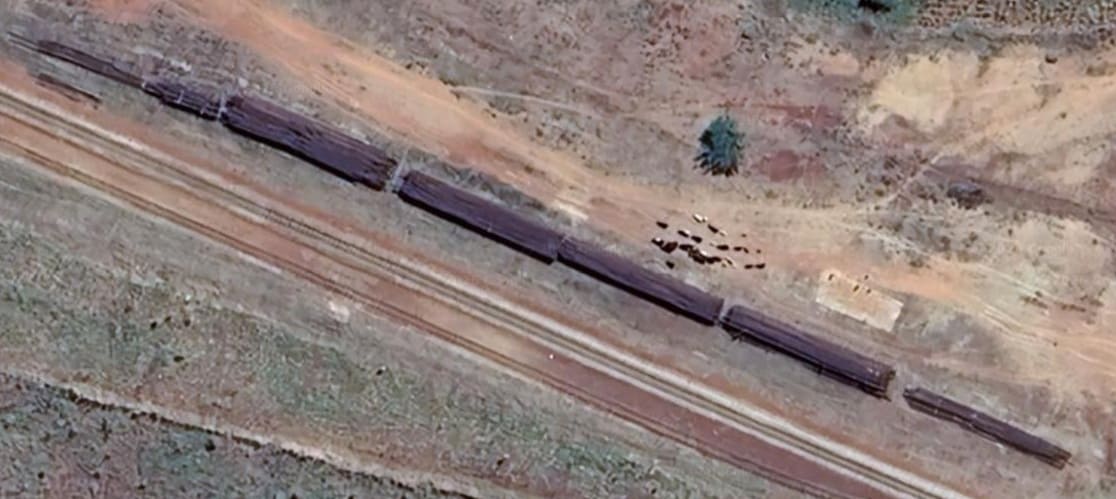
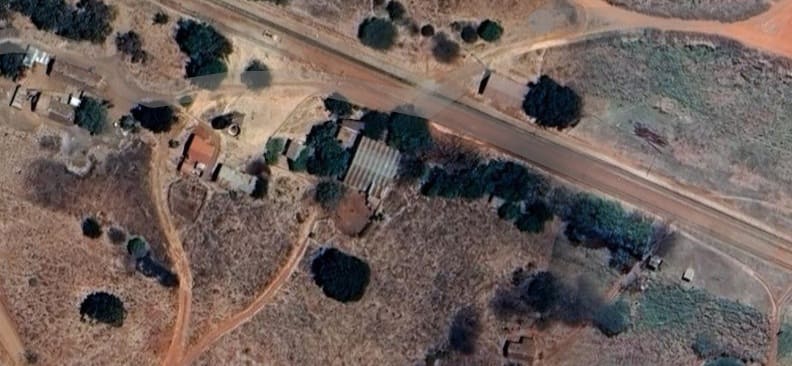
Kikombo Railway Station on the MGR Central Line. Note the bogie wagons stored in the siding to the East of the station. [Google Maps, August 2026]Kikombo Railway Station as it appears on MapCarta. [23]A closer view of the bogie-wagons stored at Kikombo Railway Station. [Google Maps, August 2026]A closer view of the station buildings at Kikombo MGR Station. [Google Maps, August 2026]
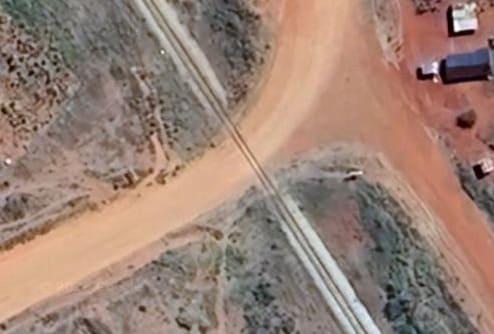
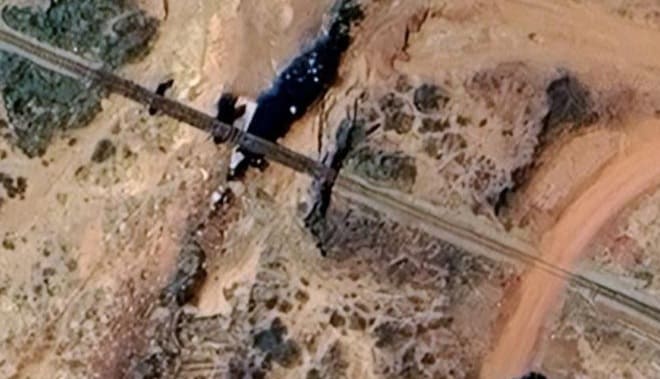
The murram road-crossing at the Northwest end of Kikombo MGR Station site and, just beyond it to the West, a bridge over a dry watercourse. [Google Maps, August 2026]
Another dry water channel which clearly takes significant flows in the wet season. [Google Maps, August 2026]
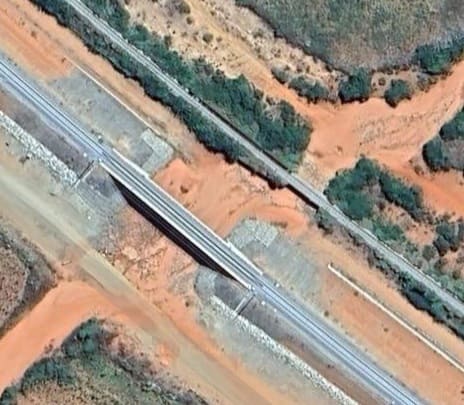
Another significant pair of structures crossing a second watercourse. [Google Maps, August 2026]
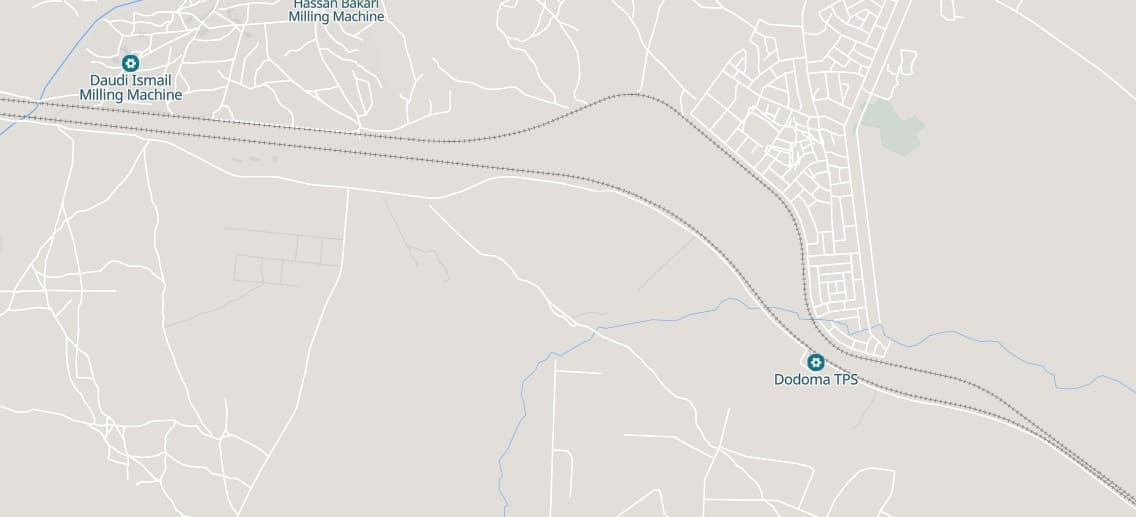
The next length of the line takes us across the South side of Ihumwa. [24]
Another watercourse is crossed by means of a Warren Truss Girder Bridge, just to the North of the flagged Dodoma TPS on the SGR shown on the map extract above. [Google Maps, August 2026]
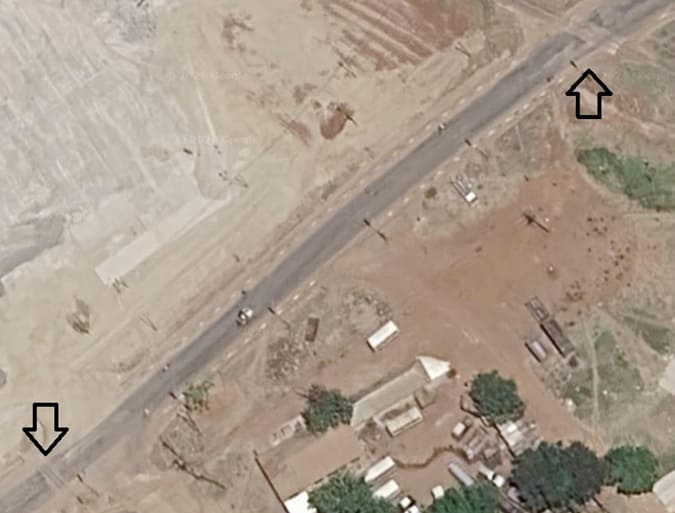
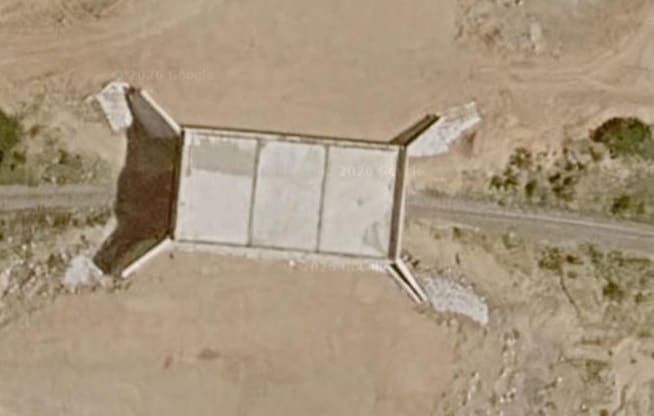
Apart from the frequent culverts over dry watercourses this is the next interesting structure over the MGR. It is not shown on MapCarta but appears on Google Maps. It is a structure completed for a dual carriageway outer ring road for Dodoma for which the formation has been completed. [Google Maps, August 2026]
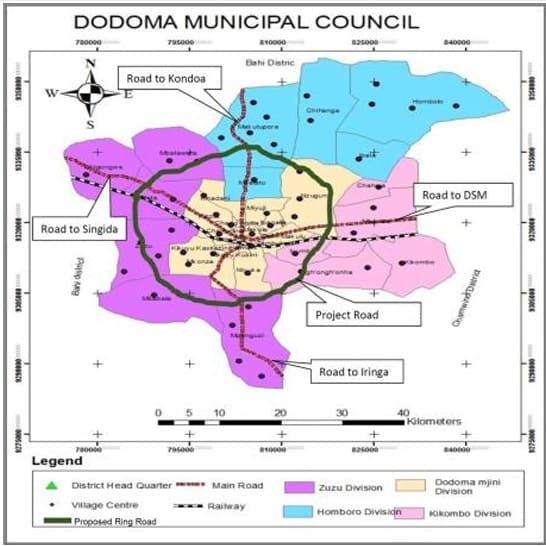
The planned Dodoma Outer Ring Road runs down the East side of Dodoma, starting at Veyula settlement located along the Dodoma –Kondoa trunk road traverses south east towards Ihumwa settlement located along Dodoma-Morogoro trunk road. From Ihumwa, it traverses towards south to the Matumbulu Settlement along Dodoma-Iringa trunk road before then running Northwest around the West side of the city. [25]
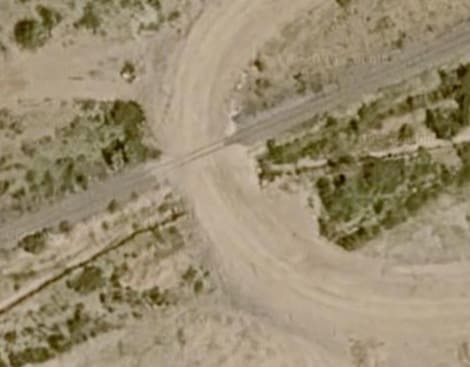
A well-used murram diversion from the Outer Ring Road crosses the MGR to the West of the incomplete bridge. [Google Maps, August 2026]
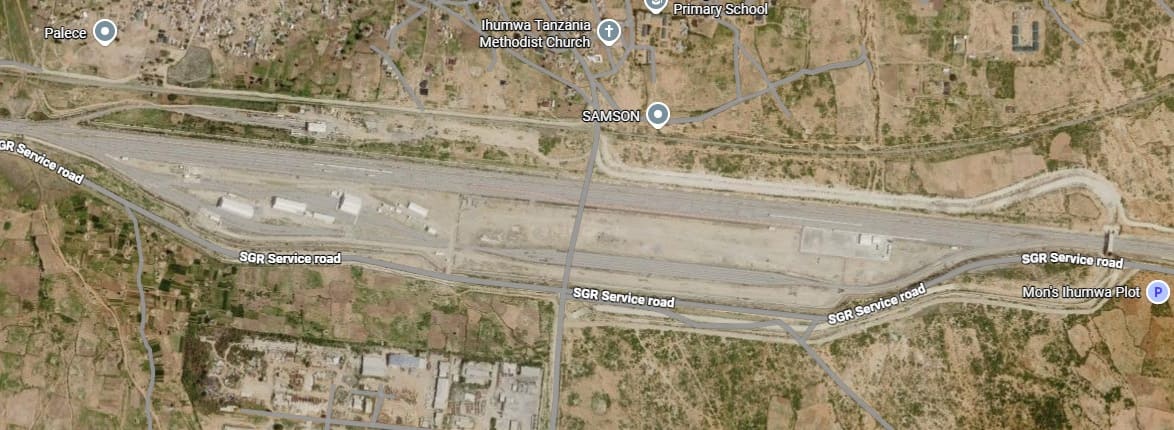
The MGR can be seen on this satellite image just to the North of the SGR yard. This location is about a third into the map extract above from the left side. [Google Maps, August 2026]
Further West the two lines bridge another dry watercourse. This watercourse appears at the left side of the MapCarta map extract above. [Google Maps, August 2026]
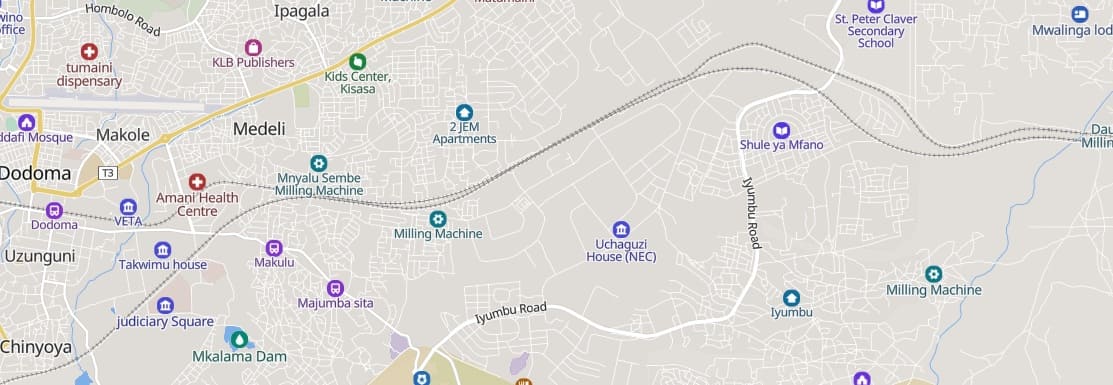
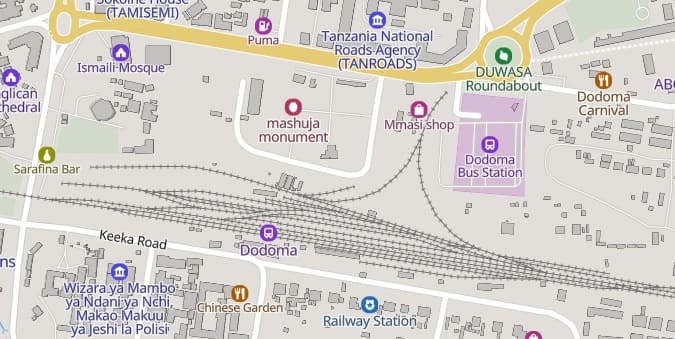
This extract from MapCarta shows the MGR and SGR as far as the centre of Dodoma and the MGR station. [26]
Close to the right of the map extract immediately above another dry watercourse is bridged by both railways. [Google Maps, August 2026]
While the SGR bridges the Iyumbu Road dual carriageway further South, the MGR crosses the dual carriageway at a level-crossing. [Google Maps, August 2026]
Another metalled road is bridged by the SGR but crossed at level by the MGR. [Google Maps, August 2026]
Another bridge over the MGR and SGR completed in advance of the construction of a road to link two suburbs of Dodoma. Culverts to handle water runoff continue to appear frequently. [Google Maps, August 2026]
Another metalled road passes under the SGR and crosses the MGR at level. A little further West a more significant structure carries the MGR over another dry watercourse (below). [Google Maps, August 2026]
Another relatively significant pair of structures carry the lines over another watercourse. The MGR and the SGR begin to separate as the centre of Dodoma approaches. The SGR skirts the centre of Dodoma to the South. [Google Maps, August 2026]
With the SGR sliding away to the South the MGR is accompanied on its way into Dodoma for a short distance by a metalled road to the North of the line. This next watercourse also requires relatively significant structures to cope with the likely wet season water flow, [Google Maps, August 2026]
Only a short distance further into Dodoma, two bridges carry the line over the next watercourse. [Google Maps, August 2026]
The MGR crosses the Morena Road (dual carriageway) at a level-crossing. [Google Maps, August 2026]
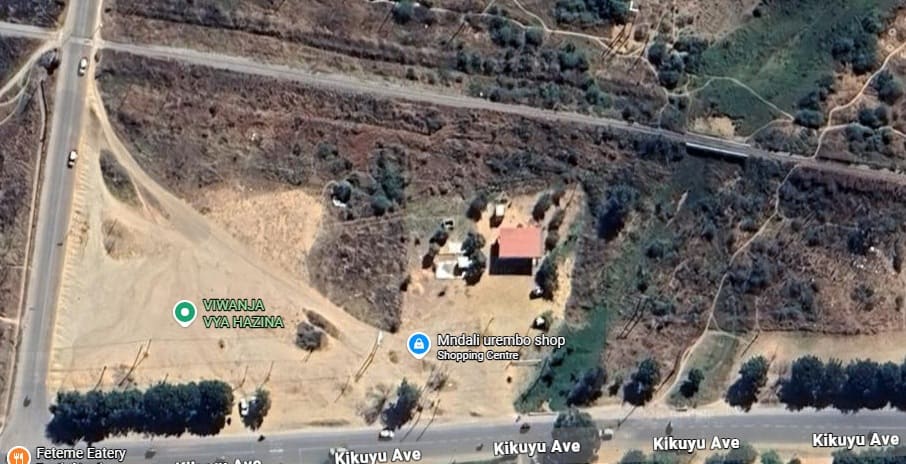
Closing in on the Dodoma MGR Station the line runs to the North of Kikuyu Avenue (OpenStreetMap and MapCarta have this as Jakaya Kikwete Road), crossing another watercourse and another metalled road (Hazina Road) as it does so. [Google Maps, August 2026]
Industrial units to the North of the line are rail served. [Google Maps, August 2026] [27]
More sidings not easily picked out on satellite imagery. [Google Maps, August 2026][27]
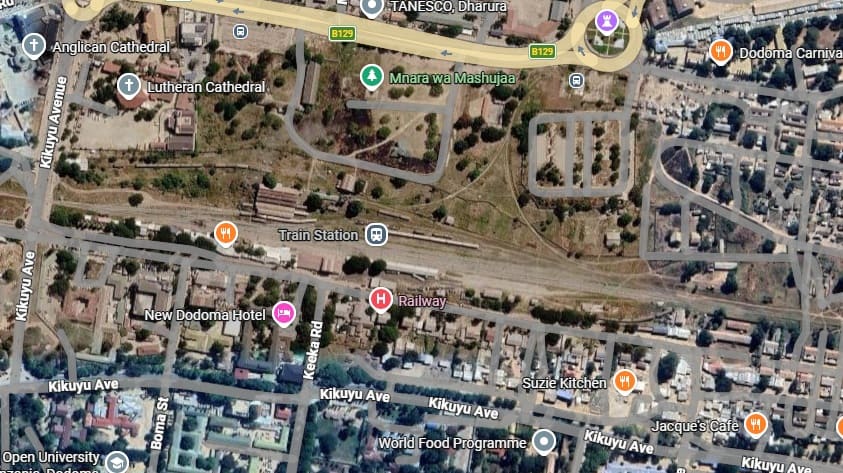
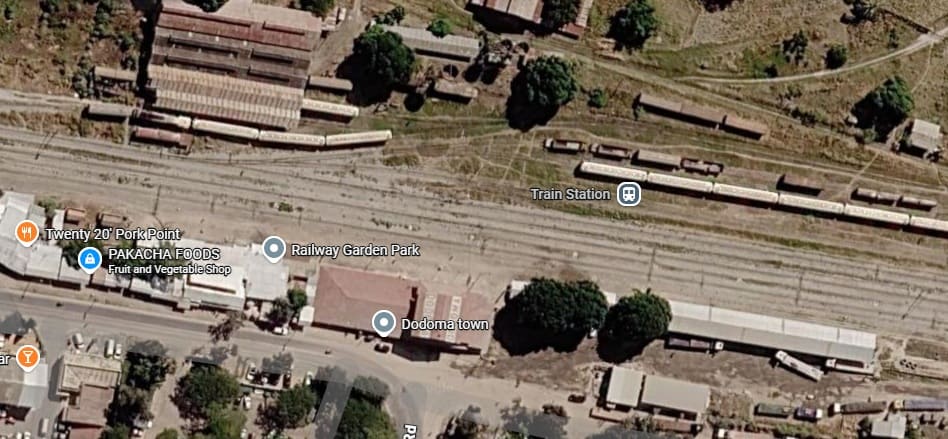
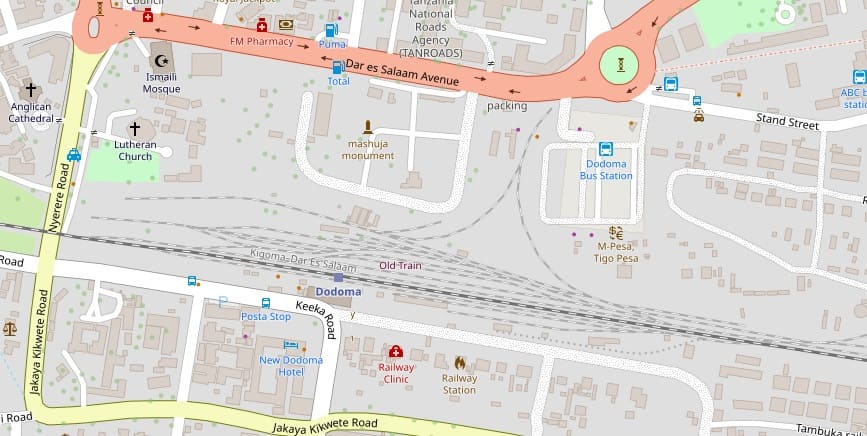
Dodoma Railway Station as shown on Mapcarta. [28]A similar area as shown on the map immediately above. It shows much of the site of the MGR station in Dodoma. [Google Maps, August 2025]A closer view of the main station buildings in Dodoma and the goods yard. [Google Maps, August 2026]Approximately the same area as it appears on OpenStreetMap.org’s mapping. [29]
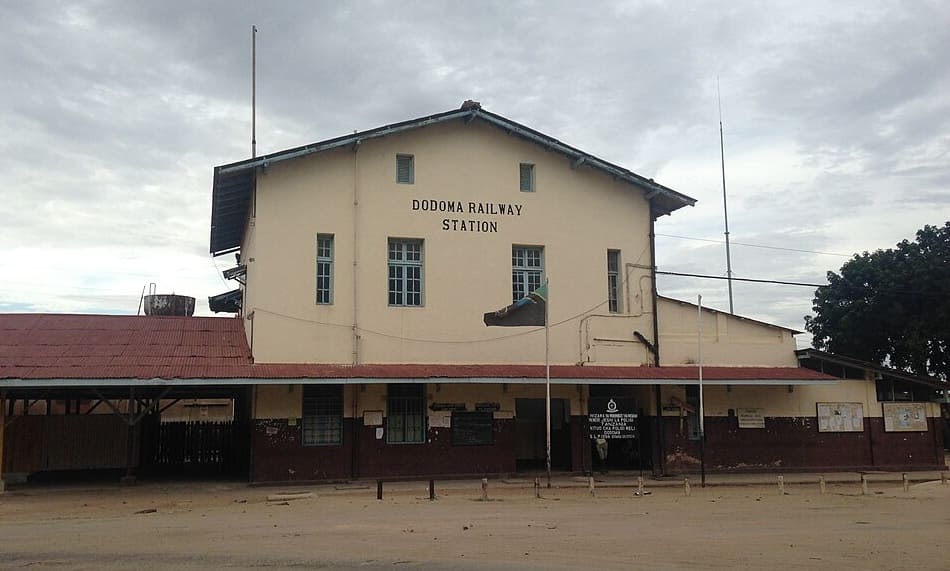
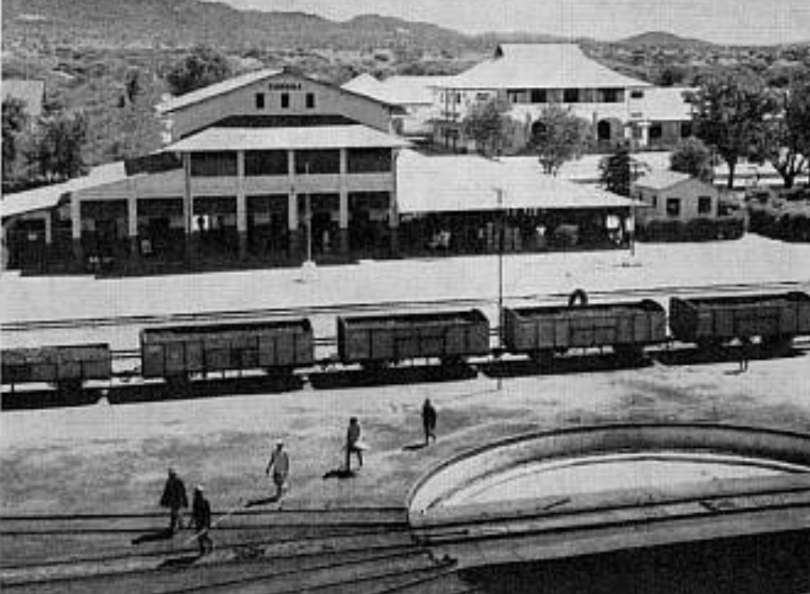
Dodoma Railway Station on the MGR was constructed by the German occupying powers in the early 20th century.
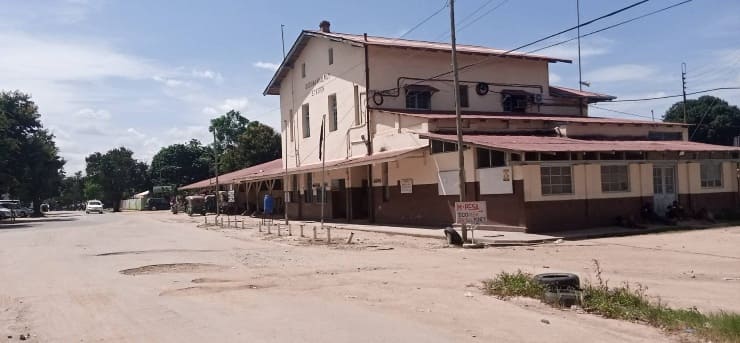
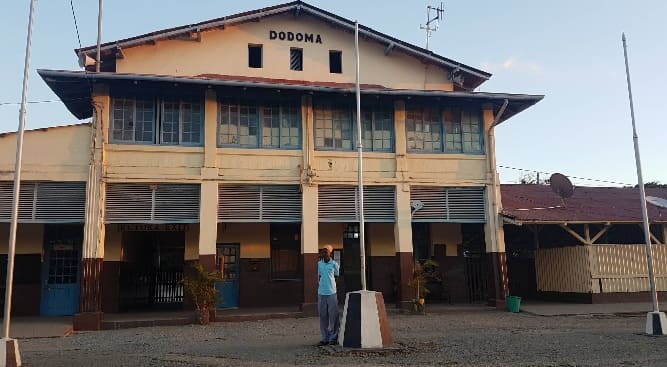
The Metre Gauge Railway Station in Dodoma, (c) Victor Mikheev 2015, and licensed for reuse under a Creative Commons licence (CC BY-SA 4.0). [30]Another view of the MGR Station, (c) Zenj Online Tv, 2021. [Google Maps, August 2026]A rail-side view of the same building, (c) Ali YÜKSEL 2018. [Google Maps, August 2026]Dodoma Railway Station in 1953. [31: p48]
References
M.F. Hill; Permanent Way Volume II: The Story of the Tanganyika Railways; East African Railways and Habours, Nairobi, Kenya; Watson & Viney, Aylesbury & Slough, 1957.
The Tanganyika Guide, 1953; Information Office, Dar-es-Salaam, 1953. [3rd Edition Revised and Enlarged, 180 pages: earlier editions were – first ed 1936, second prepared 1939, but delayed until 1948.
Locomotives used during the EAR years from 1948 onwards will be covered in Part 16 of this series of articles.
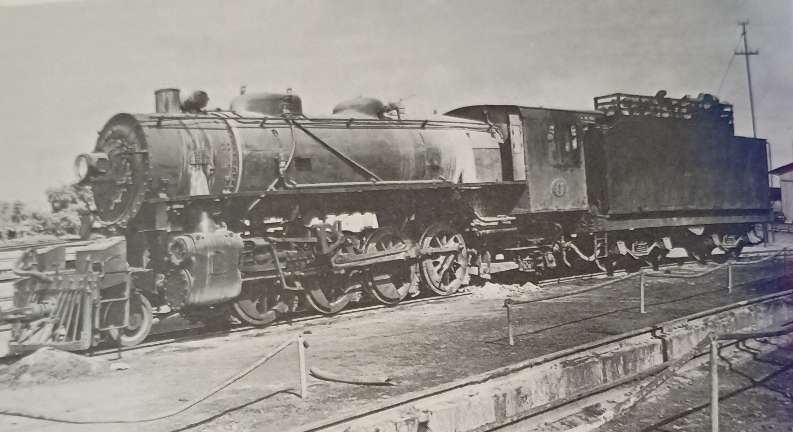
The featured image for this article is Tanganyika Railways 2-8-2 No. 802 of the MacArthur austerity class at Tabora in the early 1950s before its conversion to oil fuel. [1: p68]
This is an overall view of Tanga Railway Station in 1908 during the the years of German East Africa. The station served as the coastal terminus of the Usambara Railway (Usambarabahn or Usambara Eisenbahn (UE)), which was constructed starting in 1893.The photograph was taken by German photographer Carl Vincenti it shows a train, headed by an unidentified early German steam locomotives, preparing to set off inland, (c) Deutsches Historisches Museum, (Inv. No. BA 90/5791)/Carl Vincenti and licensed for reuse under a Creative Commons licence (CC-BY-SA 3.0). [15]
Locomotives in the Years of German East Africa:
UE Class 0-4-2T Locomotives
The Tanga Line (or Usambarabahn) was constructed over a relatively long period, starting in 1893, reached Korogwe in 1905 and Moshi in 1912. Initially the line was operated by five 0-4-2 tank locomotives. Ramear tells us that these five locomotives were built in 1893 by Vulcan (Vulkan) of Stettin. They were built to a standard design which Vulcan had standardised for use in Germany. [1: p19]
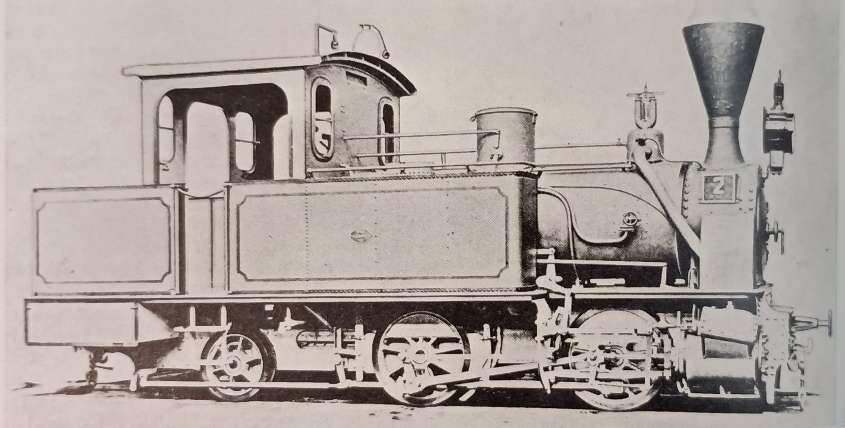
UE Engine No. 1 with an early passenger train ready for departure at Tanga Railway Station. This locomotive is the first in a class of 5 0-4-2T locomotives used on the Usambarabahn (c) Public Domain. [16][1: p19]UE No. 2, one of a class of five 0-4-2T locomotives built by Vulcan of Stetting in 1893, (c) Public Domain. [1: p18]
UE Nos. 6-10 Mallet Class of 0-4-4-0T Locomotives
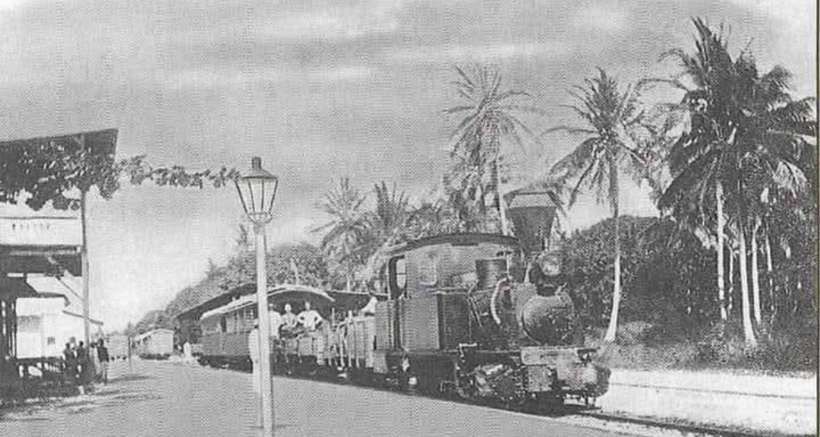
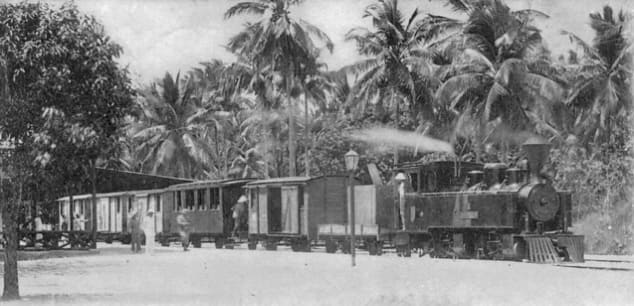
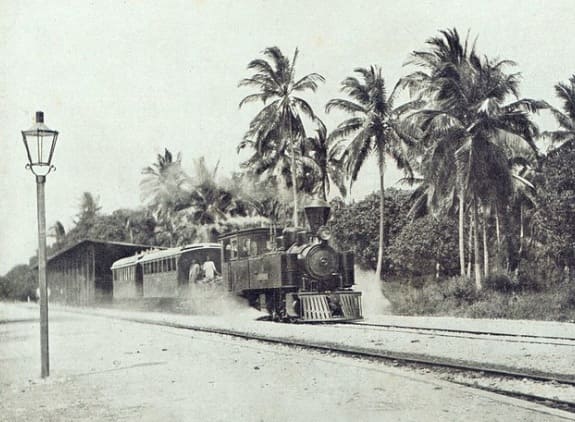
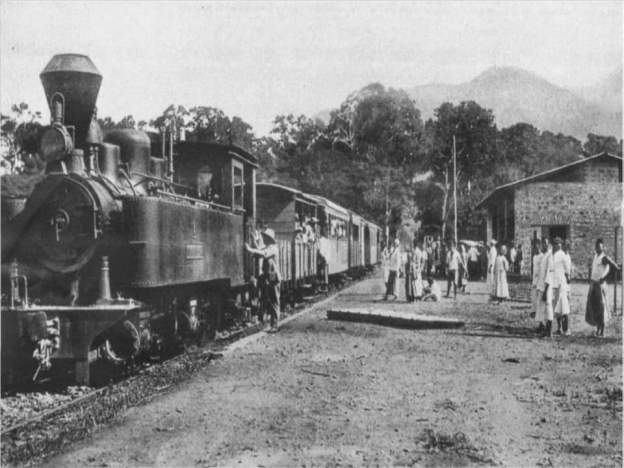
A vintage postcard view of an Usambara Eisenbahn 0-4-4-0T mallet type steam locomotive, one of five built by Arnold Jung (No. 414-418) in 1900 and in charge of a mixed train. These locomotives were UE Nos. 6-10, later Nos. 601-605. [17]Another view of an Usambara Eisenbahn 0-4-4-0T Mallet type steam locomotive in charge of a passenger train which is waiting to depart at Tanga Railway Station. [18]Another view of a Mallet type steam locomotive in charge of a mixed train which is waiting to depart at Njussi Railway Station. [22]UE Mallet 0-4-4-0T No. 8 with a passenger train at Mombo, (c) Public Domain. [1: p20]
UE Nos 11-14 Class 2-8-0T Locomotives
After the line was improved with curves being increased to 200m radius, 8-coupled locomotives became feasible. Ramaer tells us that “Four tank locomotives with a 2-8-0T wheel arrangement were built for the UE by Messrs Orenstein & Koppel in 1908 to a standardised tank engine design used on all German colonial railways in Africa. … They were a distinct improvement over the Mallets. Although they were designed to burn coal, the high price of imported coal meant that they remained on wood fuel, which must have given problems with fireboxes and ashpans.” [1: p19-20] Sadly these locomotives seem not to appear on the Wikipedia list of Orenstein & Koppel locomotives. [23]
For an illustration of this type of locomotive please see the OAEG 2-8-0T below.
UE Nos. 15-16 & Nos. 17-18 Class 2-8-0 Locomotives
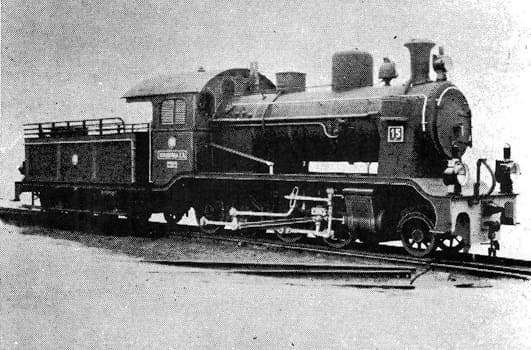
An Orenstein & Koppel (O&K) 2-8-0 locomotive which was one of a class built between 1908 and 1910 for the Usambarabahn. This specific locomotive is UE No. 15. [19]
These 2-8-0 tender locomotives were a significant improvement over the tank engines with a same wheel arrangement – with the side tanks removed and water carried in the tender the boiler size and weight could be increased. These were the last locomotives to eb supplied to the Usambarabahn and it operated with these locomotives well into the years of World War 1. [1: p20]
OAEG 0-4-0T Locomotives
Henschel of Kassel supplied 4 of these locomotives intended for the work of building the line. A further 4 of these locomotives were supplied, to the same design by, Henschel in 1909. [1: p21] In between these two batches of locomotive (in 1907) another 0-4-0T locomotive was put into service, the origins of this locomotive are obscure and it did not match the Henschel-built locomotives. Ramaer presumes that this locomotive was taken over from the contractor, Holzmann & Co. It was built by Markmaschinen (Works No. 26) in 1893. [1: p21, p27]
Ramaer notes that the Henschel engines “could be used as both coal and oil burners, and … had a bunker capacity of ton of coal besides 300 litres (66 gallons) of fuel oil. Their water capacity was 2 m³ (440 gallons). These little engines had a comparatively long life, surviving the war and the subsequent change to British management, and the last did not go out of service before the early 1930s.” [1: p23]
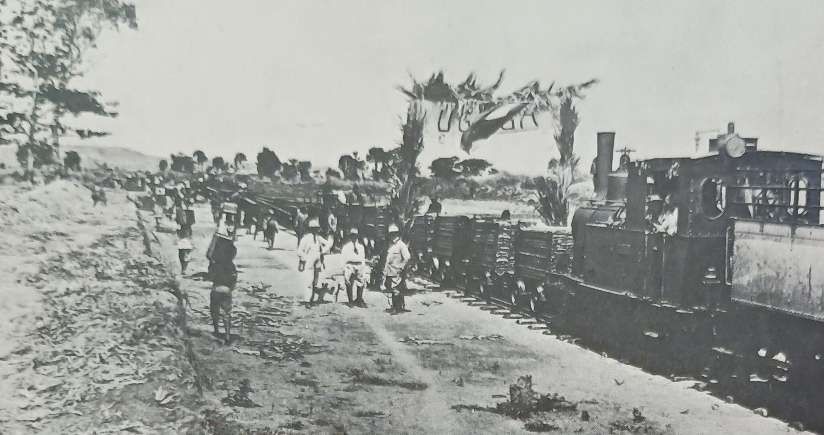
OAEG 0-4-0T Locomotive No. 2 with a line building train at Ugaga (later known as Malagarasi), (c) Public Domain. [1: p21]
OAEG Henschel Mallet Class 0-4-4-0T Locomotives
Just as the Usambarabahn needed to invest in more powerful Mallet types of locomotive which could also accommodate the tight curves on the line, so the OAEG to ordered five comparable Mallet 0-4-4-0Ts, four of which were supplied by Henschel in 1905 and put in service during the first half of 1906 with the fifth following in 1907; like the 0-4-0s they were built for either coal or oil fuel. The OAEG found these Mallets not to be as effective as had been hoped and decided to order Mallets from Henschel with a different wheel arrangement. [1: p23]
OAEG Henschel Mallet Class 2-4-4-0T Locomotives
Henschel supplied a second batch of four locomotives in 1908 as 2-4-4-0Ts with larger boilers and cylinders. They also had a higher working pressure of 14 atmospheres (at) (200lb/sq in) in comparison to 12 at (170lb/sq in) for the earlier engines. While the bunker capacity had been increased from 1.2 to 2.2 tonnes of coal, oil fuel had been discarded. [1: p23]
Mallets proved to be expensive to run and the OAEG realised that if it were to be able to use suitably powered locomotives for the train loads envisaged, it would need to improve the alignment of the later sections of the Mittellandbahn and upgrade to trackwork. This allowed the OEAG to consider using rigid-bodied 8-coupled locomotives.
OAEG 2-4-4-0T No. 27, in the last Mallet class to be built for German East Africa. This locomotive appears in the Wikipedia list of Henschel steam locomotives. [24] It also appears in R. Ramaer’s book (although possibly a slightly different image) [9: p23] and A.E. Durrant’s book about Mallets. [25: p66]
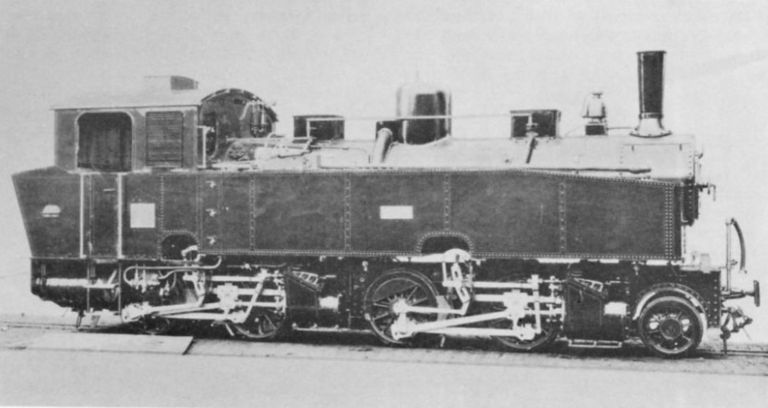
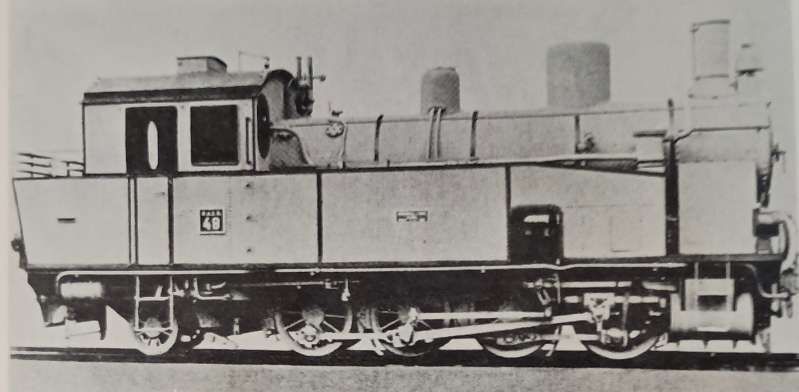
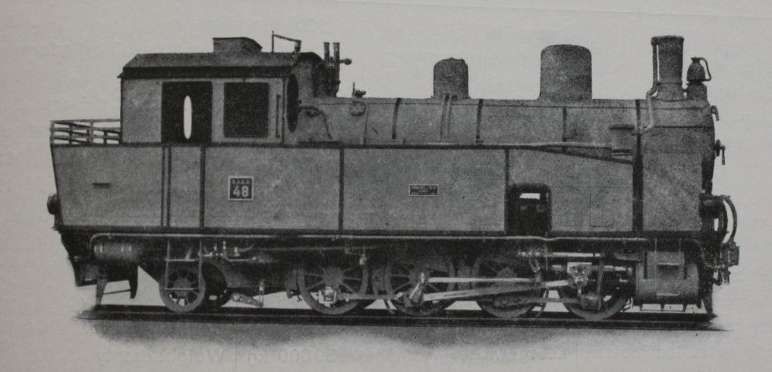
On the whole, the Mallets were not as successful as had been hoped, so it was something of a relief for the OAEG that it was able to use much larger radius curves once the more difficult topography close to the coast gave way to much flatter country. The OAEG was able to look at rigid-framed locomotives. With the invention of the Gölsdorf system [26][27] which allowed spring-controlled side-play in coupled axles at the end of the 19th century. Eight-coupled engines became more feasible. The OAEG took advantage of this innovation and began to introduce eight-coupled locomotives. Ramaer tells us that “The first solution tried was the 0-8-2 tank, built with the pony truck under the fuel bunker to make adhesion independent of diminishing supplies to the maximum possible extent, besides making riding somewhat more comfortable for the crew. High prices for imported coal from Europe had made the railway look for a cheaper alternative and these engines were the first to be built for wood fuel. Henschel supplied them in 1909 as works numbers 9301-2, running numbers 47-8.
OAEG 0-8-2T Locomotives Nos. 47 and 48
One of two OAEG 0-8-2T locomotives supplied to the OAEG by Henchel. This is No. 48, (c) Public Domain. [1: p24]This is the same locomotive but with elements easier to see as the image has a darker hue, (c) Public Domain. [28]
Ramaer tells us that “The first solution tried [by the OAEG] was the 0-8-2 tank, built with the pony truck under the fuel bunker to make adhesion independent of diminishing supplies to the maximum possible extent, besides making riding somewhat more comfortable for the crew. High prices for imported coal from Europe had made the railway look for a cheaper alternative and these engines were the first to be built for wood fuel. Henschel supplied them in 1909 as works numbers 9301-2, running numbers 47-8.” [1: p23]
OAEG 2-8-0T Locomotives Nos 41-44 (also UE 11-14)
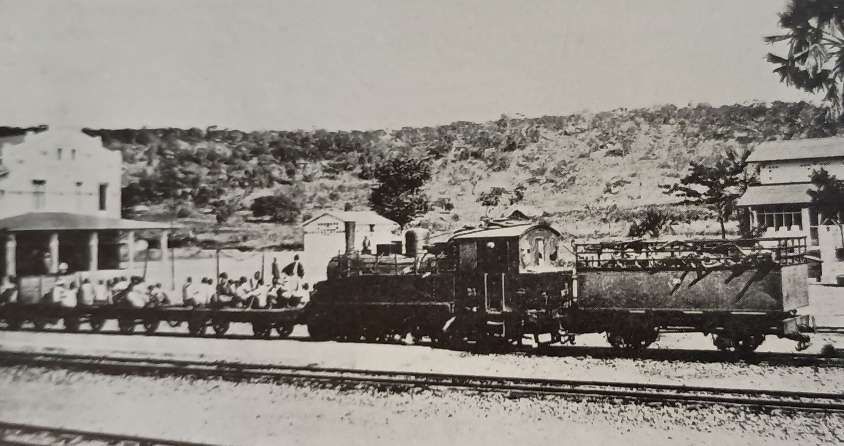
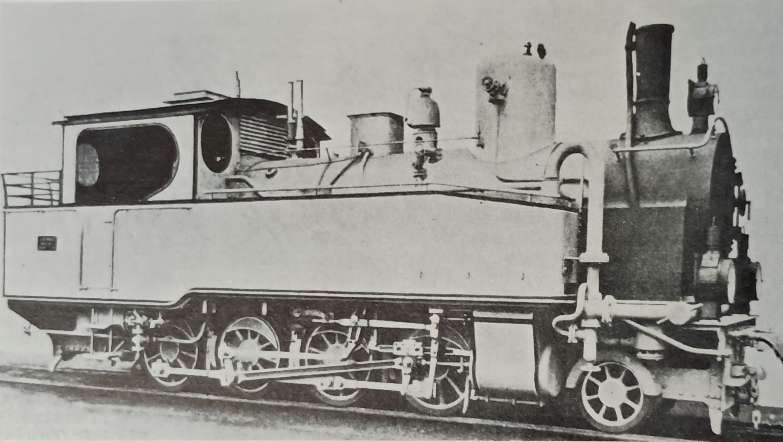
A Borsig-built 2-8-0T. These locomotives served on the OAEG Mittellandbahn, Ramaer tells us that there were 20 of these locomotives in use in East Africa. [1: p24 & 25]
Ramaer tells us that “Simultaneously, Borsig and Orenstein & Koppel introduced an alternative [to the 0-8-2T] and more logical solution in the shape of six 2-8-0T engines, also built for wood fuel. Both types, with only 5½ and 5 cubic metres water capacity respectively, normally carried auxiliary tenders for both water and firewood, besides hoses on the engine to allow for taking water en-route. … From this class and a comparable, but compound engine, supplied, also by Orenstein & Koppel, to South West Africa and Togo, a standardised 2-8-0T locomotive was developed, which was supplied to all German colonial lines in Africa. … Besides serving on other railways, it worked on the Usambarabahn, as described above, and was built for the OAEG by Borsig, O & K, Hanomag (or Georg Egestorff, as this firm was originally known) and Maffei to a total of eighteen engines in 1909-10. Including the engines of the first batches by O & K and Borsig of six locomotives, the total of the Einheitstenderlok (standard tank locomotive) classes amounted to twenty-four engines by the end of German rule.” [1: p25]
These locomotives were far better than the 0-8-2T locos, particularly in respect of their performance at speed. This was of some importance when maximum speeds were raised to 45km/h, and planning envisaged 60km/h (36mph) for the Dar es Salaam-Kigoma mail trains. “The standard tanks were a good, straightforward design and were kept in service for a fairly long period under British management; the last ones … being withdrawn in 1951.” [1: p25]
The series was made up of Orenstein & Koppel locomotives (Works Nos.3223-3226) built in 1909, OAEG Nos. 41-44; Borsig locomotives (Works Nos. 7143-7144) built in 1909, OAEG Nos. 45-46; Henschel locomotives (Works Nos. 9301-9302) built in 1909, OAEG Nos. 47-48; Borsig locomotives (Works Nos. 7153-7155) built in 1909, OAEG Nos. 49-51; Orenstein & Koppel locomotives (Works Nos.3312-3314) built in 1909, OAEG Nos. 52-54; Borsig locomotives (Works Nos. 7552-7555) built in 1910, OAEG Nos. 55-58; Hanomag locomotives (Works Nos. 5845-5948) built in 1910, OAEG Nos. 59-64; Maffei locomotives (Works Nos. 3628-3631) built in 1910,OAEG Nos. 63-66. [1: p27]
OAEG 2-8-0 Locomotives Nos 101-120
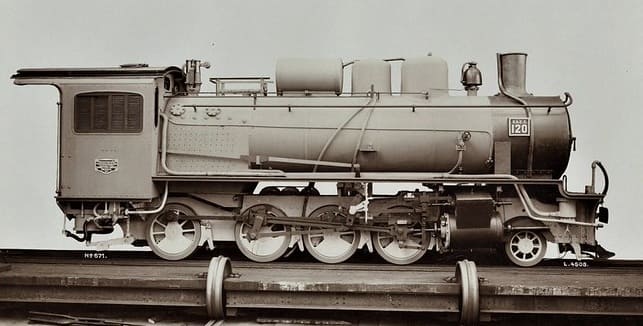
An ex-Works photograph of one of a series of Hannoversche Maschinenbau Hanomag’s 2-8-0 locomotives built for the Ostafrikanische Eisenbahngesellschaft (East African Railway Company). No. 120 was Works No. 6666 of 1913 and was intended for use on the Mittellandbahn running West from Dar-es-Salaam. This locomotive was provided with a tender built by Borsig of Berlin. The locomotive was in use from 1923 to 1937. [20]
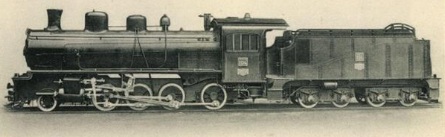
Numbered 101-120 these locomotives were built in three batches, 101-110 (6080-89) in 1911, 111-115 (6597-6601) in 1912 and 116-120 (6662-66) in 1913. The class was intended to include a total of 22 locomotives, but only 20 were built. The locomotives were primarily intended to support the construction and operation of the Central Line (Mittellandbahn or Tanganjikabahn) running from Dar es Salaam to Kigoma. Following World War I and the transition of the region to British administration, the engines entered service with the Tanganyika Railway Company, remaining in use into the late 1920s and 1930s. One of the Class is shown below with its Borsig tender.
An Hanomag 2-8-0 Locomotive with Borsig tender, (c) Public Domain. [21]
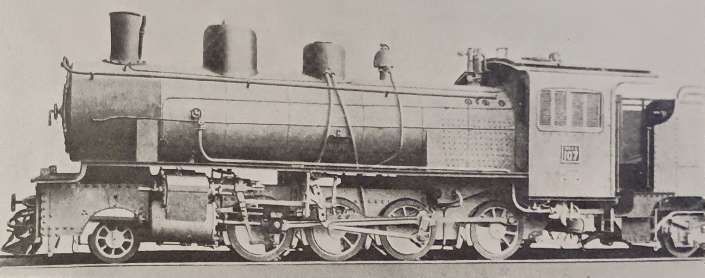
These were the largest and most powerful OAEG locomotives. They were put into service only after the eastern sections of the Mittellandbahn had been relaid with 55lb rail which would accommodate a ten ton axle load. Ramaer says that these locomotives were 46.2 tonnes (45.5 tons) in weight: “On level lines, these engines handled 500-ton trains, and on 1 in 55 gradients 250 tons at 10 1 km/h. Three carried feedwater purifiers/pre-heaters on top of the boiler. In their day, for the narrow gauge, they were advanced locomotives, and in the early post-war years, enginemen commented favourably upon those that survived. Nevertheless, the fact that they were not in line with British engineering practices presumably was the reason that all were scrapped in the period between the wars. The first ones went in the early 1920s, but the last survived until 1937, where it was in use on the Mwanza line. Without doubt the bulk of the class disappeared much earlier than would have been the case if the line had continued under German management.” [1: p25]
OAEG 2-8-0 Locomotive No. 107, one of the first batch of locomotives supplied by Hannoversche Maschinenbau Hanomag. When built these were the heaviest locomotives in East Africa. [1: p25]
One significant problem on the Mittellandbahn was the availability of water for the locomotives
Locomotives under British Management:
Under British administration the Tanganyika Railway started operation on 1st April 1919. It gained a series of different locomotives of German origin and some which the British forces had brought into Tanganyika during the first world war. Much of the German network had been destroyed by the retreating German forces. Ramaer says that around 4 miles was shaved off the journey between Dar-es-Salaam and Kigoma as the opportunity was taken to realign sections of the line to smooth out the worst curves.
Ramaer says that “Of the German locomotives, four classes were initially put into service on the Central Line, 14 of the Hanomag-built 2-8-0 tender locomotives of the former class 101-20 and now classified GG for German Goods, 22 2-8-0Ts, the German Einheits-vlok, now called class GT, for German Tank, 2 0-8-2 tanks and 6 0-4-0T pugs, dating back to the earliest years of the line, when the DKEBBG had used them for line building purposes. Later on, a total of seven 0-4-4-0T and 2-4-4-0T Mallets were also reconditioned.” [1: p53-54]
Only 5 German locos were salvageable on the Tanga Line: “three of the Orenstein & Koppel-built 2-8-0 tender locomotives of the German series 15-18 and two of the standard 2-8-0 tanks. Many of the Hanomag engines on the Central Line needed new cylinder castings, as the Germans had destroyed them in an attempt to prevent subsequent use of the engines. The new castings were made at the Parel works in Bombay of the former Great Indian Peninsula Railway and mostly fitted at Tabora, where the Germans had installed the main workshops for the Central Line. Thus 14 engines could be reconditioned, Nos 102-3, 105-6, 108, 111-17, 119-20.” [1: p54]
“The two 2-8-0 tender classes disappeared after a fairly short life in comparison to other, British-built locomotives on the system. The first engines went in the early 1920s, when money was made available to buy new engines from Britain. The remaining Hanomag locomotives were laid up in about 1932, after the arrival of the new class GA Garratts. One, however, was temporarily brought back into service in 1937, equipped with an electric headlamp, to work the engineering train on the lightly laid Mwanza line, which was very susceptible to washaways, and was always troublesome to operate from the locomotive point of view. All the Mallet tanks were derelict at Tabora works in 1930-31 and were subsequently sold as scrap to Japan.” [1: p54]
TR GT 2-8-0T Class Locomotives
It seems that, of the German fleet, only the 2-8-0T locos had a significant life under British control. Numbered 101 and 102 they were finally scrapped at Nairobi works in 1951.
TR GT Class 2-8-0T in use as a shunter at Tanga. This and its sister locomotive were Orenstein & Koppel locomotives and were the last two German locomotives to be in use on the network in Tanganyika, (c) Public Domain. [1: p53]
In March 1916, while the four members of the class were on their way to India, they were commandeered to assist in the British invasion of German East Africa, where they entered service with the Tanganyika Railway (TR), still carrying their NGSR lettering and numbers 1095–1098. In the early 1930s, they were officially classified as the TR’s NZ class (the NZ being a reference to “Nizam”), and renumbered as 200–203. [4]
The class was later operated by the TR’s successor, the East African Railways (EAR), as its 22 class, numbers 2201–2204. In the late 1940s, two of them were transferred to the Southern Province Railway, [5] the isolated network developed to support the ultimately unsuccessful Tanganyika Groundnuts Scheme. Nos 2202 and 2204 were scrapped in 1952, and 2201 and 2203 in 1956. [4]
TR DL Class 4-8-0 Locomotives
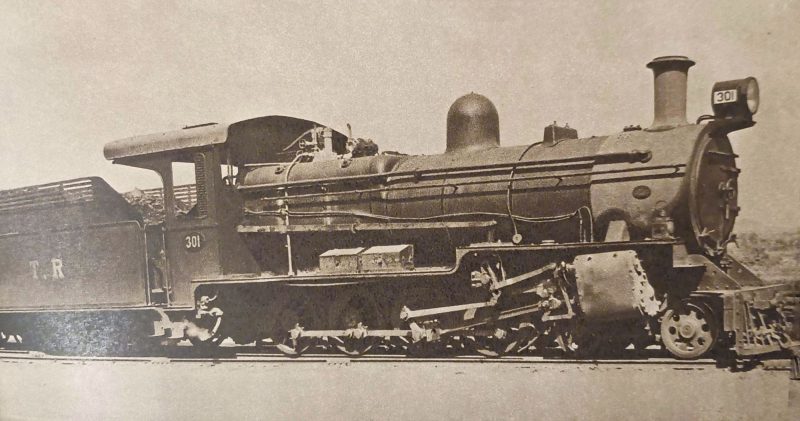
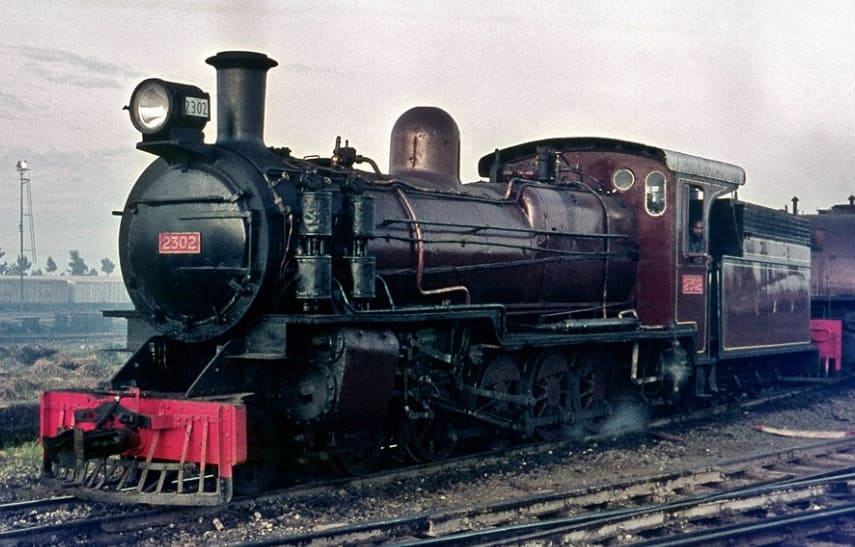
The abbreviation ‘DL’ stands for ‘Development Loan’. The locomotives first carried running numbers 200-205 and later 300-305. They had piston valves and superheater rather than the slide valves and saturated steam of the Nizams.Ramaer says that, “They were derived from the lighter engines of the Nigerian Railways’ Emir Class. Like them, they had narrow fireboxes which were found to be less suitable for wood burning, so that the DLs were used mainly on the section between Dar-es-Salaam and Morogoro, where coal was available.” [1: p56]
TR No. 301 was a TR DL Class 4-8-0 locomotive. It was originally numbered ‘TR No. 201. This Class were the first British locomotives to be built for the TR. They entered service in 1923, (c) Public Domain. [9: p297]The TR DL class, later known as the EAR 23 class, was a class of 4-8-0 steam locomotives derived from the Nigerian Railways Emir class. The six members of the class were built by Beyer, Peacock & Co. in Gorton, Manchester for the Tanganyika Railway (TR). They entered service on the TR in 1923, and were later operated by the TR’s successor, the East African Railways (EAR). No. 2302 was originally numbered TR No. 202 and later TR No. 302, (c) Basil Roberts and licensed for reuse under a Creative Commons licence, (CC BY-SA 4.0). [8]
The DLs were survivors. Ramaer records that they were still is use in 1972 as EAR Class 2301-2306, although it was expected that they would be set aside in 1973. [1: p56]
TR MK 2-8-2 Class Locomotives
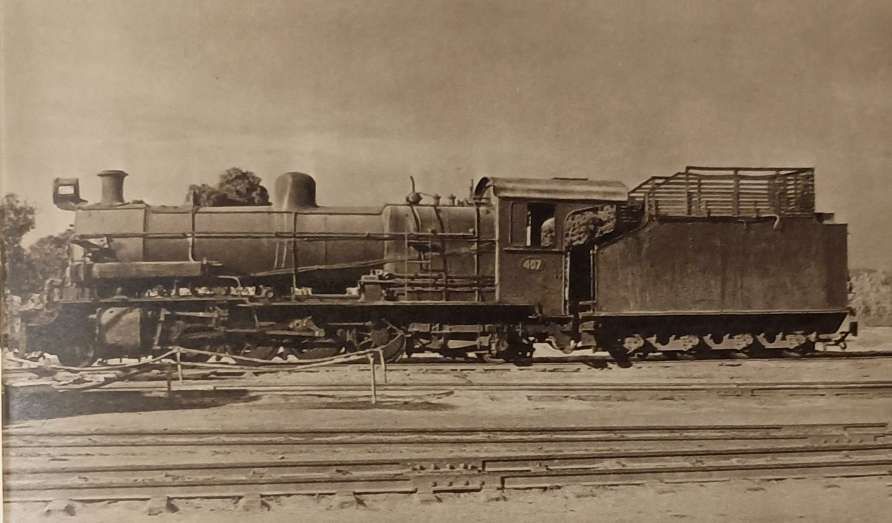
To resolve the problem of the DLs’ narrow fireboxes, a new locomotive design was ordered with a 2-8-2 wheel arrangement. The MK Class had a larger boiler and wider firebox. ‘MK’ was short for ‘Mikado’ which was the standard name across the world for 2-8-2 locomotives.
MK Class 2-8-2 Locomotive No. 407. This class of locomotive entered service in 1925-1927. [9: p299]
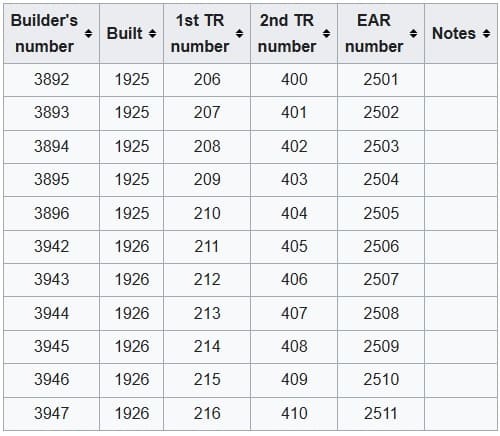
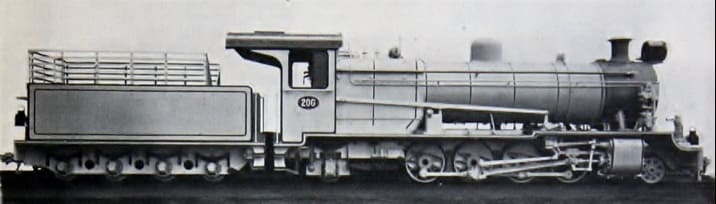
Later known as the EAR 25 class, the eleven members of the class were built by Vulcan Foundry, in Newton-le-Willows, Lancashire, for the Tanganyika Railway (TR). They entered service on the TR in 1925–1927. [10]
The eleven members of the Class were:
The eleven members of the original TR MK Class. [10]Vulcan Foundry ex-Works photo of TR MK 206. [10]
This class was a great success and the Class were still in use at the time Ramaer wrote his book, although he notes that they were now on borrowed time. “One problem with the design of the MK was the fact that the leading pony truck provided insufficient guidance on the sharp curves on the Dar-es-Salaam-Morogoro and the Malagarasi-Kigoma sections, and the design of the Bissel truck [29] left something to be desired.” [1: p57] The solution was a redesign for the next class of locomotive – the RV.
TR RV Class 4-8-2 Locomotives
The RV Class were a redesign of the MK Class – the only significant changes were the extending of the frames by 2 ft 9 in., to accommodate the leading bogie of the 4-8-2 wheel arrangement. Ramaer says that, “As a result of this change it was found necessary to extend the smokebox to keep the cylinders at least roughly in line with the blastpipe and chimney.” [1: p57] The design creted problems – “the greater length of the smokebox created vacuum problems, resulting in insufficient boiler draught. In consequence the RVs were poor steamers and this manifested itself clearly in their early days when they worked the mail trains on the Central Line. They were particularly bad on the Dar-es-Salaam-Morogoro and Kigoma-Kazuramimba sections with ruling gradients of two percent and more, although the below-average quality of firewood on the western section also had something to do with these poor performances.” [1: p57-58] They were nor popular with the train-crews.
At the time of writing of Ramaer’s book (1972?), these locomotives were working out their lives on lighter duties from Morogoro shed and were unlikely to continue in use beyond 1973. [1: p58]
TR G Class 4-8-0 Locomotives (including 4 No. NW Class 4-8-0 Locos)
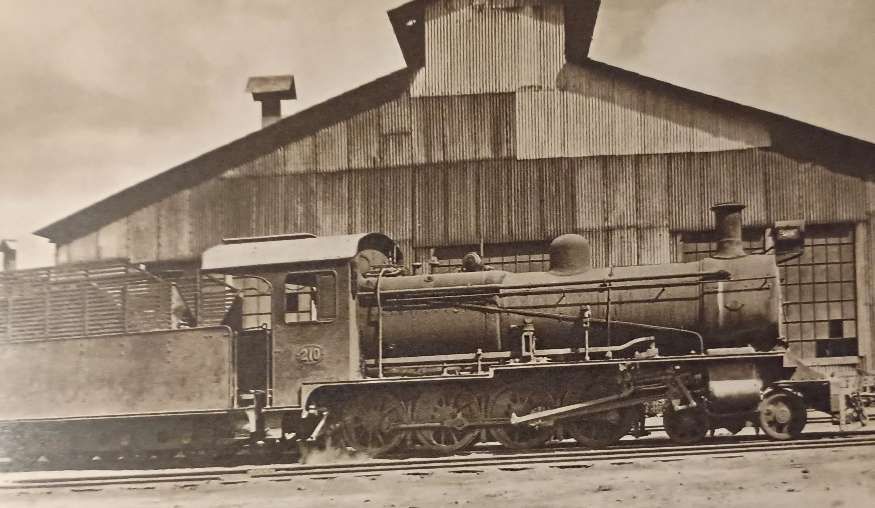
TR Class G 4-8-0 Locomotive No. 210 (later 22 Class) – these locomotives entered service in1928. Hill tells us that these locomotives were obtained to work two specific lengths of railway – the Tanga Line and the Mwanza branch off the Central Line, (c) Public Domain. [9: p299]
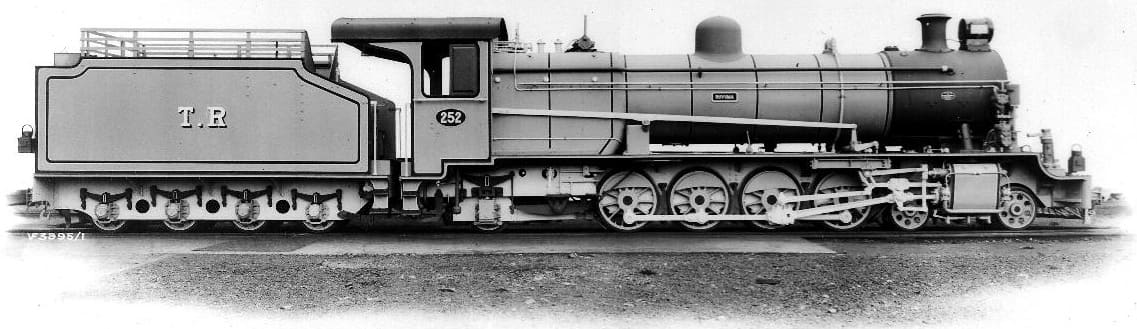
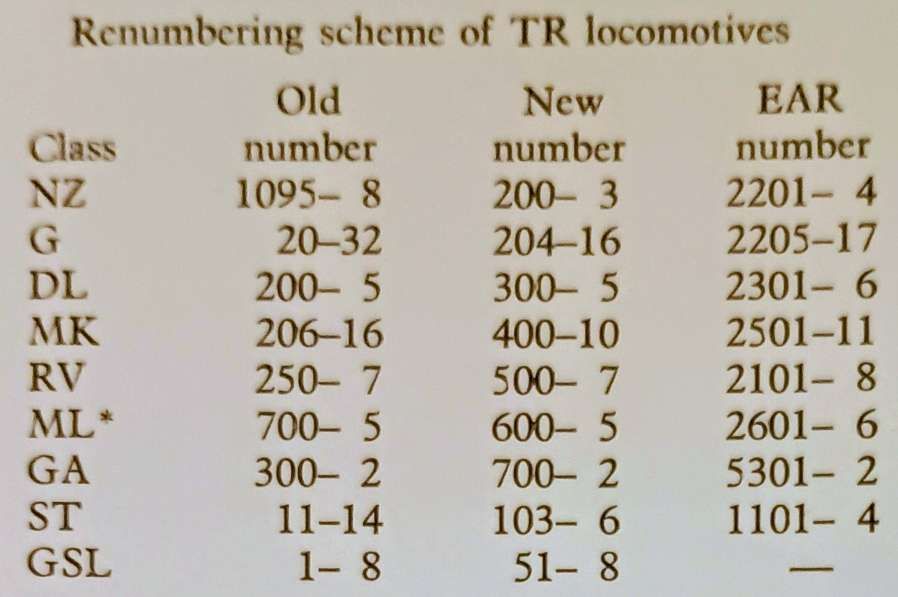
These locomotives were a redesign of the NZ Class. Ramear says: “The four Nizam 4-8-0s obtained in 1916 served as the prototype for the TR’s own G class, a very similar unsuperheated, slide-valve engine, thirteen of which were supplied by Stephenson and Nasmyth Wilson and put in service in 1928-31. They were again closely similar to the original BESA-designed 4-8-0s for India and thus provide, as the last 4-8-0s built for the TR, a direct link with the first engines of this wheel arrangement to see service in this part of the world. The first eight were supplied to the Tanga Line in 1928 and released F class engines 96 and 720, which had become very expensive to maintain. One of the new Gs, unassisted, could handle the mail trains, a marked improvement over the old and obsolete six-coupled engines. The G had an axle load of only 8-8½ tons, a necessity on the light track of the Tanga Line. The reason for their obsolete concept is not quite clear, however, if we remember that these engines were built at the same time as the KUR EA class Mikados. Their original running numbers 20-32 were later changed to 204-16, as the locomotives were considered to be direct descendants of the NZ class locomotives 200-3. After the amalgamation in 1948 the G class engines were renumbered 2205-17 and gradually taken out of service.” [1: p58]
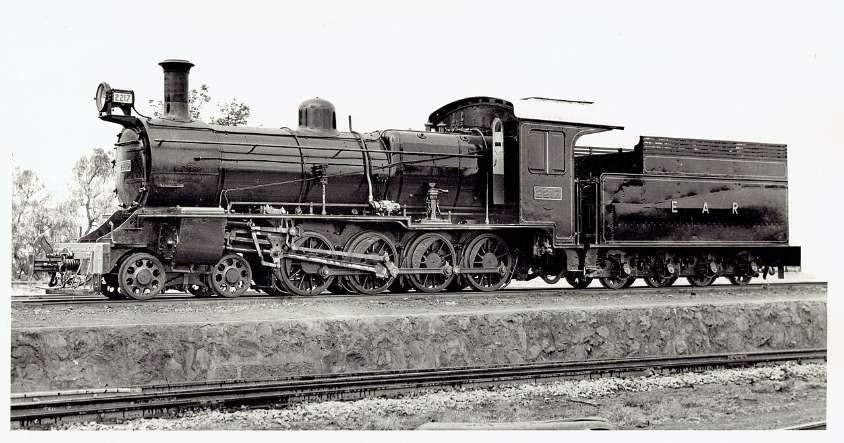
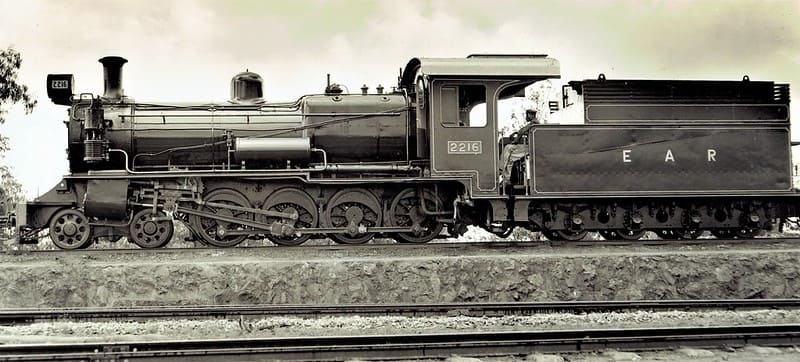
The EAR grouped a number of locomotives into the 22 Class in the late 1940s or early 1950s. This manoeuvre grouped ex-Tanganyika engines alongside a slightly newer batch of 1930 Nasmyth Wilson locomotives (Works Numbers 1588–1591) which also operated as Class 22s. [6]
The Tanganyika Railways Class G included four locomotives from a group initially known as NW Class 4-8-0s but others as well. We have noted above that the NZ Class of locomotives became EAR2201-EAR2204 (not Class G) and that the NW Class (included in Class G) later became EAR2214-EAR2217, two of which are pictured above. Others in Class G were to become: EAR2205 – EAR2209 Stephenson built locomotives (1927) Works Nos. 3959 -3963; EAR2210 – EAR2213 Stephenson built locomotives (1929) Works Nos. 3990-3991 & 4011-4012. [6]
All of the Class 22 locomotives were scrapped between 1956 and 1970. [6]
Renumbering
This table shows the revised numbering in use by the TR in the 1930s and the later EAR numbering scheme.
“The TR changed all running numbers in the early 1930s to a much more logical and consistent system. … Each class started at a round figure in series blocks of hundreds.” [1: p59]
TR ST Class 2-6-2T Locomotives
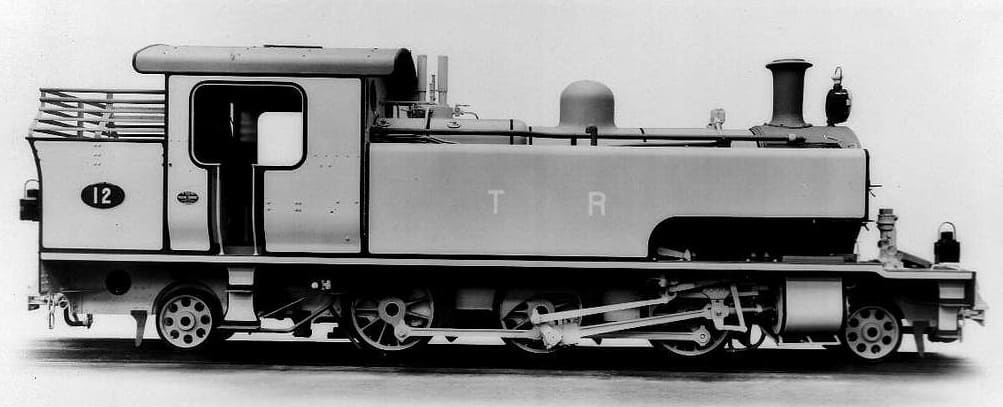
In 1930, the TR received four 2-6-2T shunters (the same type as the KUR ED1 Class). These were designated as the ST Class. They initially had running numbers TR Nos. 11-14, later TR Nos. 103-106. The locomotives were supplied by Vulcan. Under EAR control the locomotives were numbered EAR Nos. 1101-1104. [1: p60]
TR No. 12 was later designated TR No. 104 and later still, EAR No. 1101. This is an ex-Works photograph taken at the Vulcan Works in the UK, (c) Public Domain. [31]
Many of the EAR Class 11 locomotives were adapted to burn oil fuel rather than wood or coal and were still in use in 1972. [1: p60]
TR Sentinel GSL 50 Class Shunters
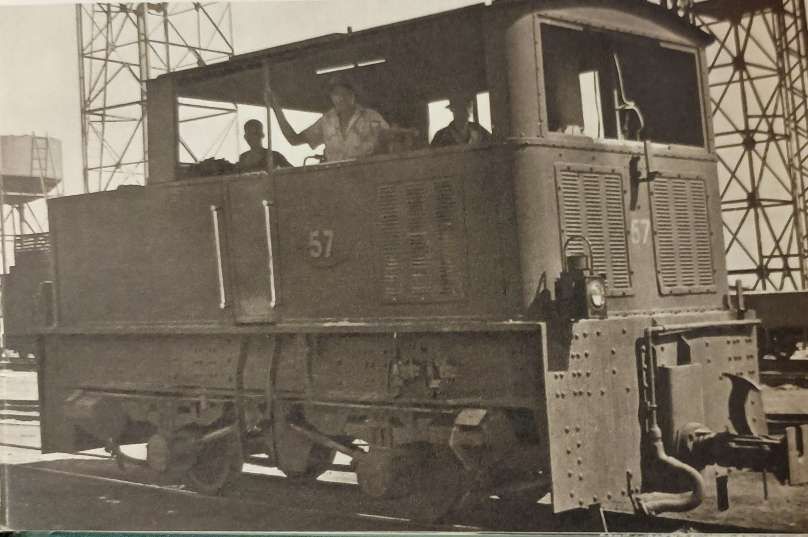
The TR GSL class locomotives were 0-4-0T geared steam locomotives designed for shunting and light duties. Built by Sentinel Waggon Works in Shrewsbury between 1929 and 1931, these locomotives were primarily used for shunting in yards and short-haul operations. A total of eight locomotives were built. They feature a side-tank design with geared drive, providing better traction on tight curves and low-speed manoeuvres, while the 0-4-0T Whyte notation reflects a rigid wheelbase for stability in confined spaces. [14]
A GSL Class Sentinel Shunter. Hill tells us that 8 of these small locomotives were purchased in 1930. They served in various roles until they were scrapped by the EAR in the early 1950s, (c) Public Domain. [9: p301]
Procurement of the GSL class occurred in the late 1920s amid broader post-war modernization initiatives across East African railways, with the Tanganyika Railway ordering eight units (which it numbered 50-57) to bolster yard operations as traffic volumes rose. Economic considerations favoured geared designs for their lower maintenance costs and suitability to tropical conditions, where conventional engines often suffered from corrosion and overheating. [14]
Ramaer tells us that, “Among their duties in the [1930s and 1940s] they were used as shed pilots, particularly for hauling out larger engines from the German-pattern roundhouse sheds to the turn-table, an arrangement frequently used at Central Line depots. After the war, they began showing signs of age and as newly built steam shunters were not readily available, they were replaced by diesels, the first on the TR. The last Sentinels, although outmoded, served at Tabora until the middle 1950s before being scrapped.” [1: p60]
TR GA 4-8-2+2-8-4 Garratt Class Locomotives
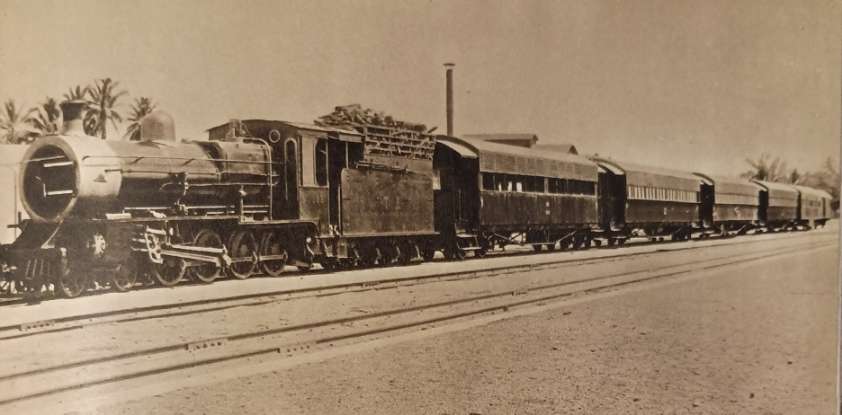
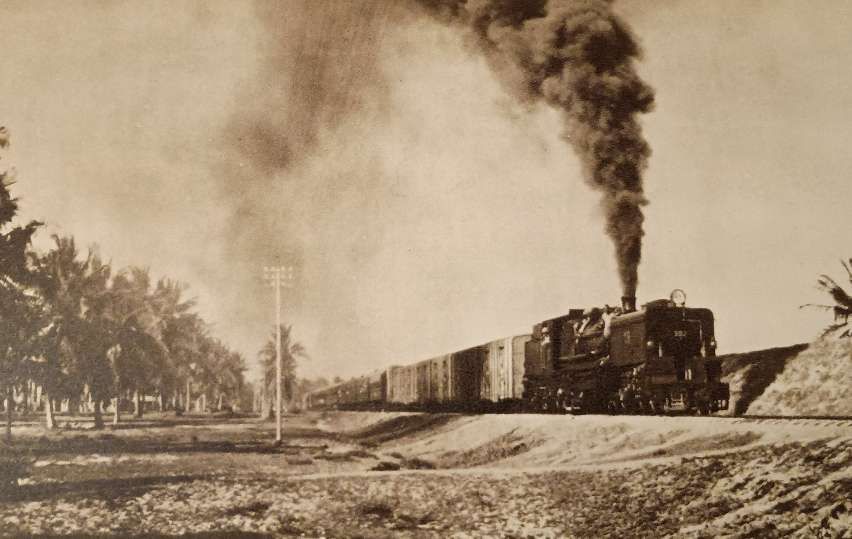
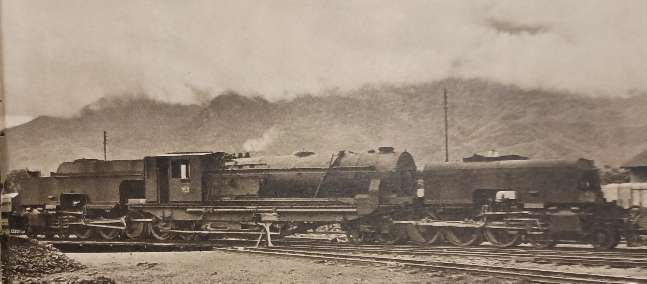
GA Class 4-8-2+2-8-4 Garratt No. 302 at the head of the Dar-es-Salaam -Kigoma mail train. [1: p60][9: facing p230]
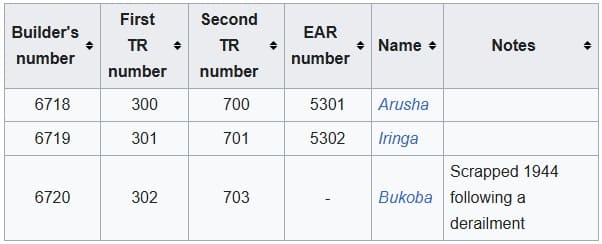
The TR GA class, later known as the EAR 53 class, was a class of 4-8-2+2-8-4 Garratt-type articulated steam locomotives. The three members of the class were built in 1930 by Beyer, Peacock & Co. in Manchester for the Tanganyika Railway (TR). They entered service in 1931, and, with one exception, were later operated by the TR’s successor, the East African Railways (EAR). The class list is shown below. [11]
The GA Class numbered only three locomotives. [11]
The design of the GA class locomotives was based upon that of the Kenya-Uganda Railways (KUR) EC2 class, which was built at about the same time by the North British Locomotive Company for the (KUR). The main design difference was that the GAs had higher, narrower front tanks than the EC2s. With their reduced water capacity, the GAs also had a lower axle loading, which made them suitable for operation over the World War I-damaged bridges on the Central Line in Tanganyika. [11]
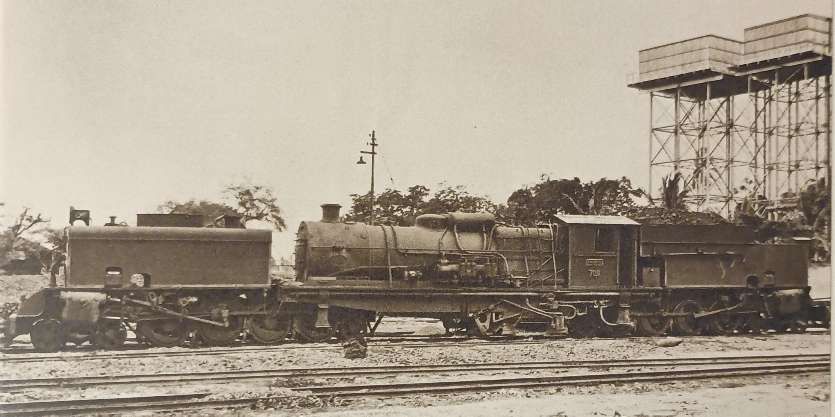
GA Class 4-8-2+2-8-4 Garratt No. 700 which was brought into service between Dar-es-Salaam and Morogoro in 1931. [9: p303]
Upon entry into service in 1931, the GA class locomotives were allocated numbers 300–302. Each of them was also given a name: the first two carried the names Arusha and Iringa, respectively, after the locations of the TR’s big road depots, and no. 302 was named Bukoba. Later, the GAs were renumbered 700–702. [1: p61]
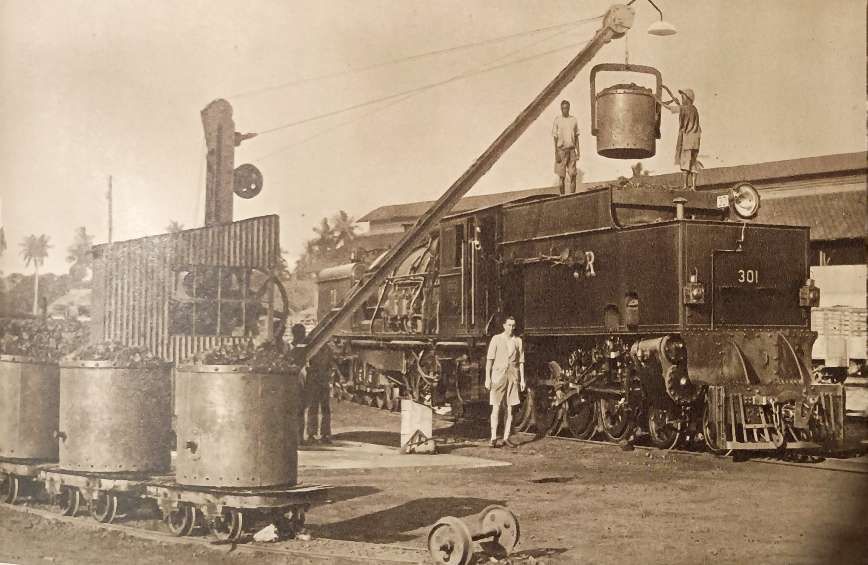
GA Class 4-8-2+2-8-4 Garratt No. TR 301 was coal-fired and can be seen here being refuelled at Tanga. [9: facing p198]
It was the TR’s general policy to allocate tender locomotives to standard duties, and use its Garratts only for the most demanding tasks. The GA class therefore normally worked between Dar-es-Salaam and Morogoro, the heaviest part of the Central Line. [12: p184]
The GA class’s operating costs were markedly lower than those of their predecessors. Even during the Great Depression, when traffic volumes greatly declined, they were of great operational benefit. Following the outbreak of World War II, they became indispensable. [1: p60]
Unfortunately one member of the class, TR No 702 Bukoba, was derailed by a washaway near Mikese during a night of bad weather in 1944. The crew was saved, but the locomotive was almost completely submerged and had to be scrapped. [1: p60]
In 1949, the TR and the KUR were merged to form the EAR, which took over the two survivors, classified them as its 53 class, and renumbered them 5301–5302. [1: p61]
The EAR also equipped the two survivors with a French-style ACFI feedwater heater, one of which had already been fitted to the last member of the KUR EC1 class, no 66. However, the feedwater heaters were later removed, partly because they achieved only limited improvement in thermal efficiency, and also as they had caused similar maintenance problems to those experienced by the KUR. [1: p61]
In the 1950s, the EAR 53 class locomotives were replaced on the Central Line by the new EAR 60 class locomotives, and therefore transferred to the northern part of the EAR system. Later, they returned to what had become Tanzania, to carry out transfer work in Dar-es-Salaam. They were withdrawn and scrapped there in the late 1960s. [1: p61][12: p184]
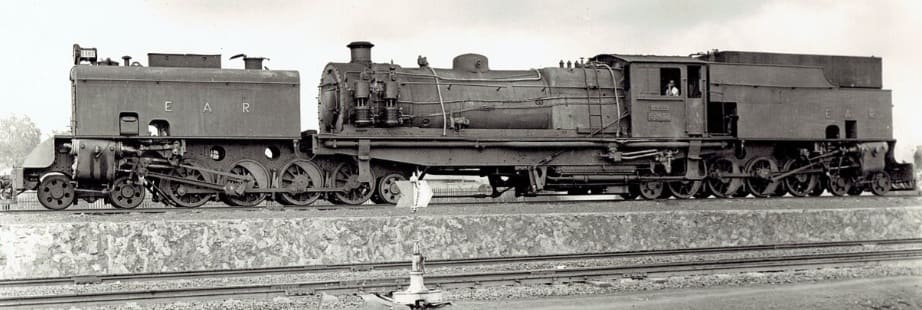
East African Railways publicity photograph of no. 5302 Iringa, c. 1953, (c) Public Domain. [11]
TR GB 4-8-2+2-8-4 Garratt Class Locomotives
The Tanganyika Railway (TR) GB class were 4-8-2+2-8-4 Beyer-Garratt steam locomotives were originally ordered by the British War Department for service in Brazil, although not built. Later the design was used for locomotives for India and Burma. Four were acquired by the TR in 1946 from Burma. They later became members of the East African Railways (EAR) 55 class. [13][1: p64]
GB Class Garratt locomotive No. 753 entered service in 1948 immediately prior to the amalgamation of the TR and the KUR. [9: p307]
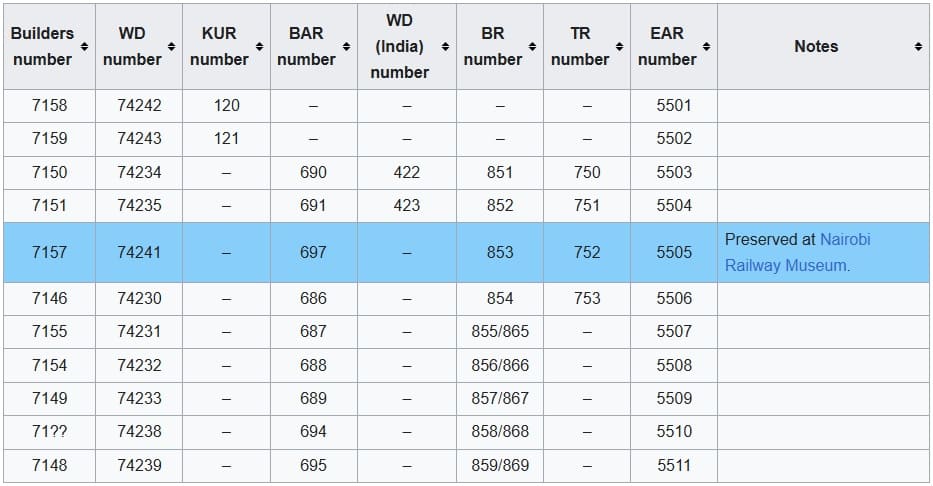
The Garratt locomotives that eventually made up the full 55 Class list were in use on the KUR and the TR. The full list is shown below:
The full EAR 55 Class list: as can be seen 4 of the Class served in Tanganyika, one of which (EAR No. 5505, ex-TR No. 752) is preserved at Nairobi Railway Museum. When serving in Tanganyika before the amalgamation of the two networks, these locomotives were numbered TR 750 – TR 753. [13]
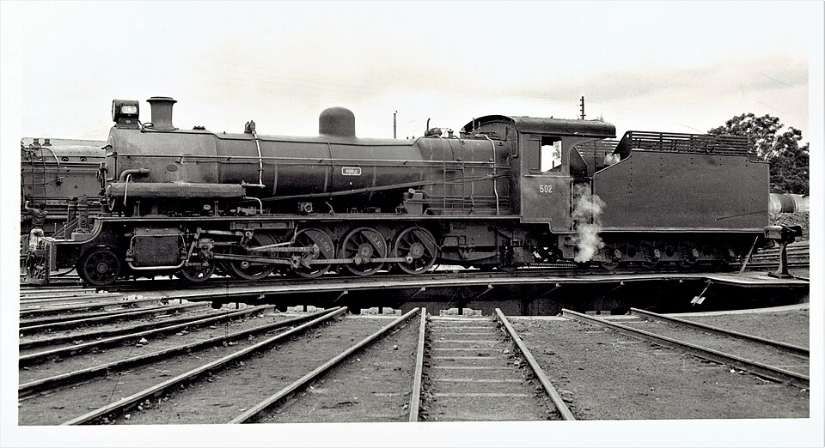
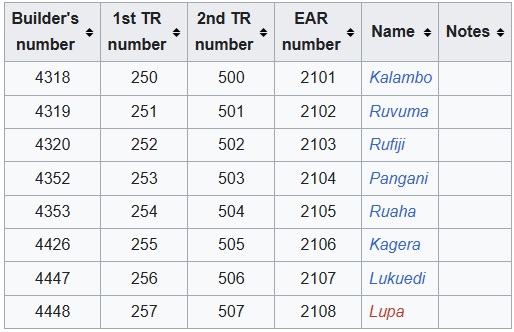
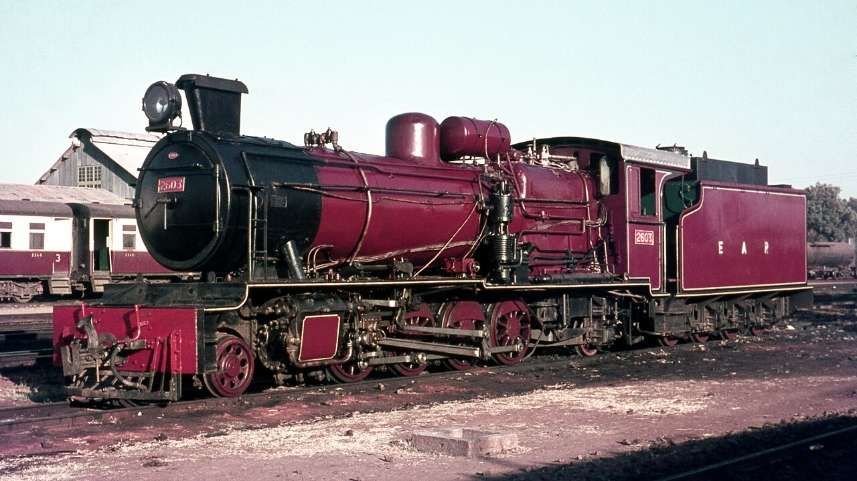
The six members of the ML class (an improved MK design) were built in 1947 by W. G. Bagnall, in Stafford, England, and delivered to the TR. They were later operated by the TR’s successor, the East African Railways (EAR), as its 26 class. In 1952, six further members of the 26 class were delivered to the EAR. They had been built by Vulcan Foundry, of Newton-le-Willows and Robert Stephenson & Hawthorns of North East England. [7]
TR BB Class Locomotives
Four 4-6-0 tender locomotives were found at El Shatt, at the southern end of the Suez Canal opposite Suez. These engines were originally built in 1926 at Ajmer works in India for the Bombay, Baroda and Central India Railway (BB&CI Railway) and “during the war nine were taken to Egypt to serve on the metre gauge Qena-Port Safaga railway from the upper Nile to the Red Sea. The 4-6-0s were found lying idle at El Shatt in 1945 and four were initially taken over by the TR in 1947-8.” [1:p67]
Ramaetr tells us that, “They were not successful in Tanganyika, in fact they were considered poor engines; the round-top fireboxes gave trouble and non-standard parts had been used in their construction. Hence, the five remaining engines were not taken over, while the four that had come to the TR as class BB (for BB&CI), Nos 270-3 later EAR 2001-4, were used mainly for shunting and occasional banking duties. They led a somewhat shadowy existence and even a good photograph of them does not seem to exist, the only one known showing No 272 with its old TR number being cut up at Dar es Salaam about 1957-8.” [1: p67]
Engines of the TR 2-6-0 BB Class being dismantled at Dar-es-Salaam in 1958. [1: p68]
TR MR Class 2-8-2 Locomotives
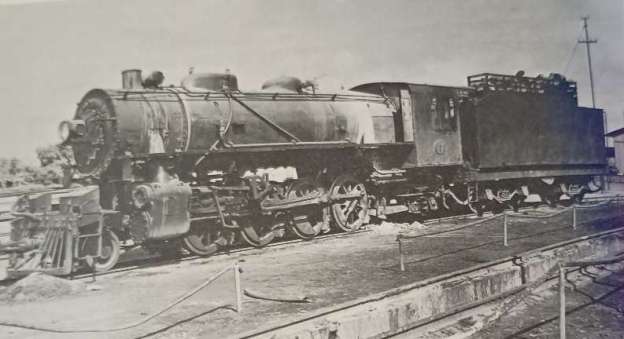
These locomotives were American-built. Many of these engines were built by various American manufacturers, including: Alco; Baldwin; and Davenport. These locomotives were known as ‘MacArthurs’. Those which ended up working on the Tanganyika Railways were manufactured in 1944. [1: p70] and arrived from Malaya in 1949. There were eight locomotives bought in this way which became the MR Class, running numbers 800-807. They were built by three different manufacturers and as a result had minor differences: Alco Nos. 800-802; Baldwin Nos. 803-805; Davenport Nos. 806-807. [1: p70]
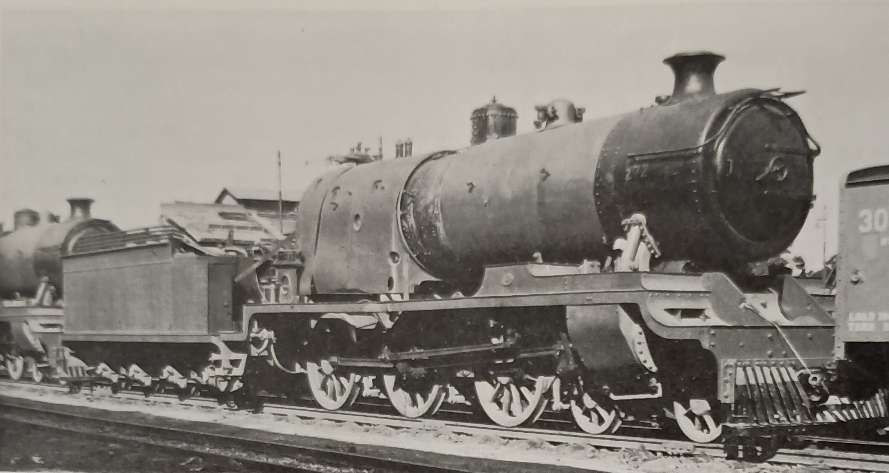
TR 2-8-2 No. 802 of the MacArthur austerity class at Tabora in the early 1950s before its conversion to oil fuel. [1: p68]
Ramaer tells us that, “At first there were problems, and modifications were needed to water tanks and reversing gear, which was undertaken at Nairobi works because of the limited capacity of the shops at Dar-es-Salaam. An additional difficulty was posed by the fact that the engines had not been designed to burn wood fuel. Grates were rather small and no rocking or dropping equipment was available. This circumstance gave rise to criticism because of the high ash residue of the wood fuel and only after the locomotives were converted to burn oil was the problem satisfactorily solved. After conversion the MacArthurs by then classified EAR 2701-8, did reasonably well.” [1; p69] The class was expanded in 1950 under EAR control when eight more were purchased from Malaya and one in parts from Nigeria. The last of these locomotives in service was based at Tabora and had been kept running by cannibalising other members of the class.
TR Sentinel Railcars
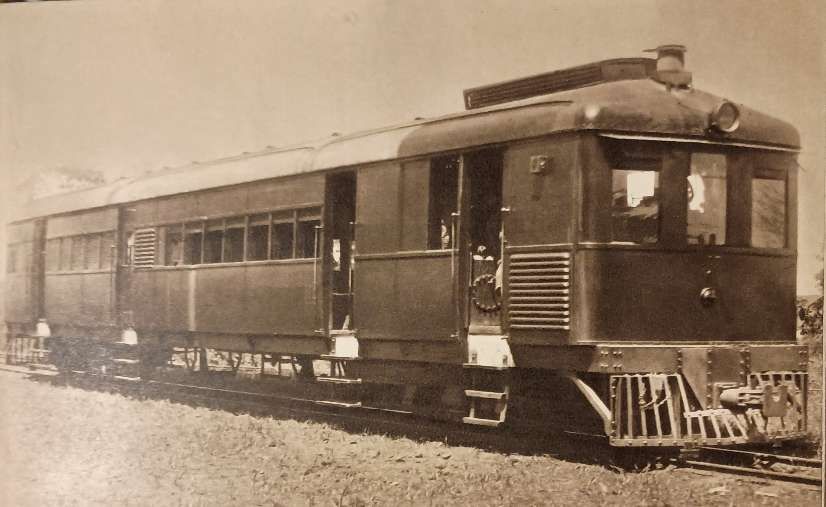
[9: facing p198]
“In 1929, two Sentinel rail cars were put into service between Moshi and Arusha in the North of Tanganyika. Although they were appreciated by the travelling public, they failed to attract sufficient traffic to make them an economic proposition on this section of the line.” [9: p199]
These railcars were manufactured by the Sentinel Waggon Works in Shrewsbury, in partnership with Cammell Laird. They were innovative geared steam-powered cars which were intended to increase service frequency and passenger convenience.
References
R. Ramaer; Steam Locomotives of the East African Railways; David & Charles, Newton Abbot, 1974.
M. F. Hill; Permanent Way Volume II: The Story of the Tanganyika Railways; East African Railways and Habours, Nairobi, Kenya; Watson & Viney, Aylesbury & Slough, 1957.
A.E. Durrant; The Mallet Locomotive; David & Charles, Newton Abbot, Devon, 1974.
The Gölsdorf axle system is used to achieve quiet running and low wear-and-tear when negotiating curves. The axle system comprises a combination of fixed axles and axles that can slide transversely, all within a single, rigid locomotive frame. The system was invented by a young Austrian locomotive builder, Karl Gölsdorf, around the end of the 19th century. The first locomotive to use this principle entered service in 1897. [27]
The Bissell truck (or Bissel truck) is a swiveling bogie or pony truck assembly fitted on steam locomotives. Patented by American engineer Levi Bissell in 1857, its genius lies in placing the pivot pin behind the truck and just ahead of the front driving wheels, shortening the rigid wheelbase and allowing the wheels to smoothly navigate uneven curves. [30]






#/media/File:Tanganjikabahn_(%C3%B6stliches_Blatt).png)

