
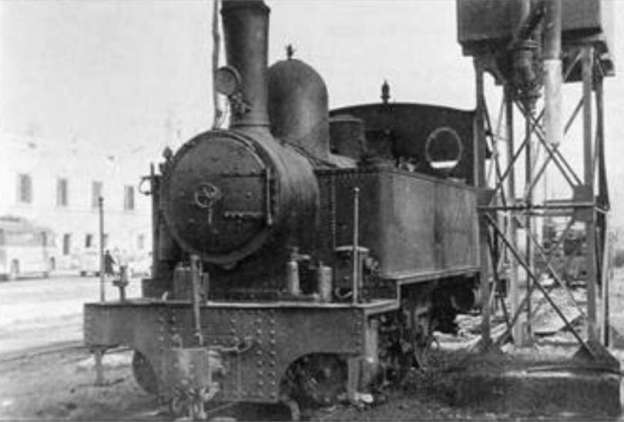
The featured image for this post is No. 21, one of the Ateliers Métallurgiques de Tubize (Belgium) 0-6-0T (030T) Locomotives, at work in the port area of Málaga. This image was shared on the El Ferrocarril en Andalusia Facebook Page on 15th May 2026, © Not known. [13]
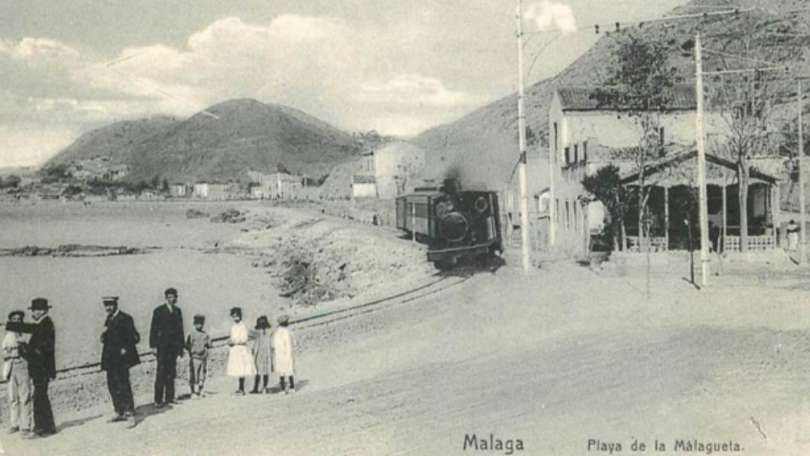
La Cochinita was a narrow-gauge suburban railway line that ran east from Málaga city along the coast through El Cantal cliffs, connecting beach towns like Rincón de la Victoria, La Cala del Moral, Benajarafe, and Torre del Mar. It was opened by 1908 and was active until April 1968.
La Cochinita (the little pig) or the Tren Negro, was a steam train carried passengers and local goods.
Parts of the old railway infrastructure—including historic station buildings, shelters, and a giant memorial mural of La Cochinita painted onto the rock face by local artist Lalone, still preserve the memory of the old coastal line.
The length of line to the East of Málaga usually called La Cochinita was just a relatively small part of a wider metre-gauge network which was constructed and operated by the Compañía de los Ferrocarriles Suburbanos de Málaga (FSM).
I first discovered the metre-gauge line to the East of Málaga on a map extract from O’Shea’s 1895 Guide to Spain and Portugal when I was looking for details of the urban tram network which served the city in the late 19th century and into the 20th century. That network is covered here. [5] …
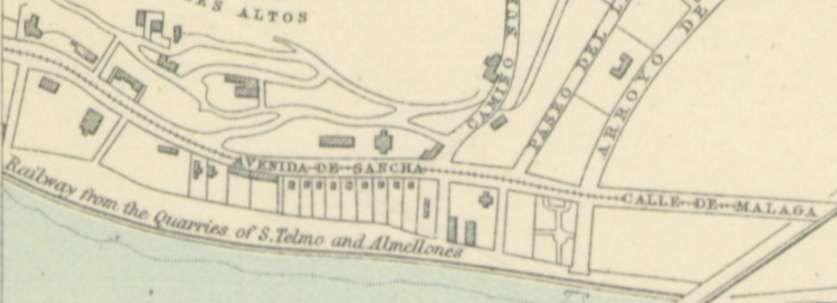
The railway from the quarries at San Telmo and Almellones (Ferrocarril de las Canteras de San Telmo y Almellones) was a late-19th-century coastal industrial rail line built in Málaga, Spain, to transport stone for the expansion of the Port of Málaga. [2][3]
The quarries were opened in 1880 when a major expansion of the Port of Málaga and the construction of a breakwater became necessary. Initially stone was extracted from the hillside of the Torre de San Telmo (in the Pedregalejo area). A small loading dock (Puerto de la Cantera, located where the Baños del Carmen spa sits today) was built to ship the stone by barge to the city port. [3]
An expansion of quarrying to Almellones (1883–1886) soon became necessary. Engineers realized the stone from San Telmo was too small and of insufficient quality. They opened a better quarry further east at Almellones (near El Candado/La Araña). Because Almellones was too far from the main port for direct barge transport, a railway required. It was built in the period from 1883 to 1886. It ran from Almellones to the loading dock at San Telmo. [3]
It was soon realised that transshipment of the stone blocks from the railway to barges at San Telmo could be avoided if the railway was to be extended from San Telmo directly along the eastern coastline into the port works at La Malagueta. This extension was completed in 1889. This direct rail link rendered the small San Telmo loading dock obsolete, allowing it to silt up and eventually become the site of the Baños del Carmen. [3]
The port works were completed in 1897 and the railway was no longer needed. The infrastructure was not removed and was acquired by the Compañía de los Ferrocarriles Suburbanos de Málaga (FSM) for 135,000 pesetas. The company repurposed the coastal right-of-way and made use of the structures built by the port engineers to support the line. The original mineral line was a significant contribution to the construction of the 1905/1906 metre-gauge passenger and freight line running east from Málaga toward El Palo and Vélez-Málaga.
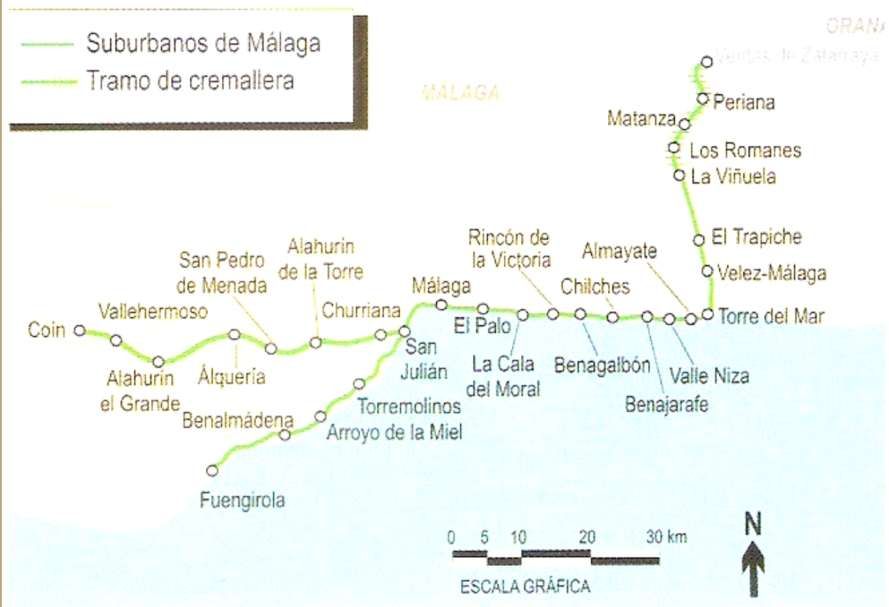
Ferrocarriles Suburbanos de Málaga (FSM) was a 1,000 mm (metre-gauge) regional railway network that operated across the province of Málaga, Spain, from 1908 to 1968. Founded in 1905 with predominantly Belgian capital, the company linked Málaga’s port and city centre with surrounding coastal and inland towns before road competition led to its closure.
The network consisted of three main routes radiating from its central terminal near the Port of Málaga. These are covered in detail in separate articles. They were:
- Málaga – Vélez-Málaga – Ventas de Zafarraya – this line opened in 1908 (Vélez) and 1922 (Zafarraya). It closed in 1960 (Zafarraya) and 1968 (Vélez). It ran 68 km east along the coast via El Palo and Rincón de la Victoria. Turning inland towards Vélez-Málaga, it then climbed 912 metres on its way inland, running into Granada province using three steep rack-and-pinion (cremallera) sections.
- Málaga – Coín – this line was opened 1913 and closed in 1965. It ran West along the Guadalhorce valley via San Julián, Churriana, and Alhaurín el Grande.
- Málaga – Fuengirola – this line opened in 1916 and was closed in 1971. Its closure was instigated by the construction of a replacement broad gauge line. It ran South from San Julián along the western Costa del Sol through Torremolinos and Benalmádena.
Financial difficulties and damage sustained during the Spanish Civil War led to a state take over of the company in 1938 under the Explotación de Ferrocarriles por el Estado (EFE). Management later transferred to FEVE (Ferrocarriles de Vía Estrecha) in 1965 during the final years of operation of the narrow-gauge service.
While the eastern line to Vélez-Málaga and the inland branch to Coín were dismantled in the 1960s, the Fuengirola line was closed in 1971 for total reconstruction. RENFE widened the track to standard 1,668 mm Iberian gauge, electrified the corridor, and placed key sections underground (including through Málaga Airport), reopening it in 1975 as the modern Cercanías Málaga Line C-1.
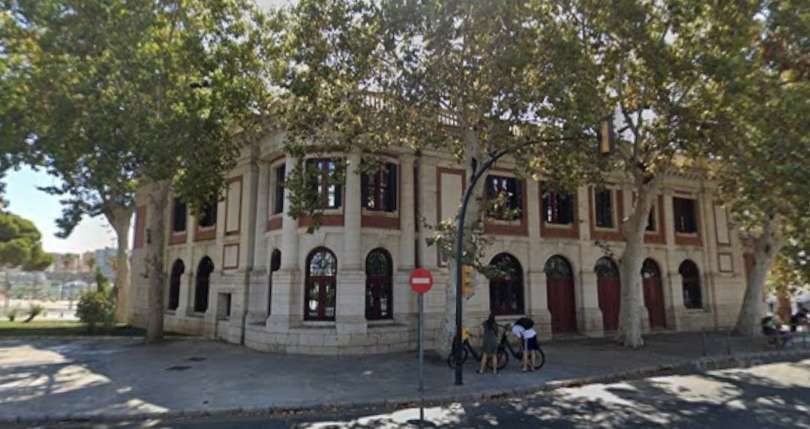
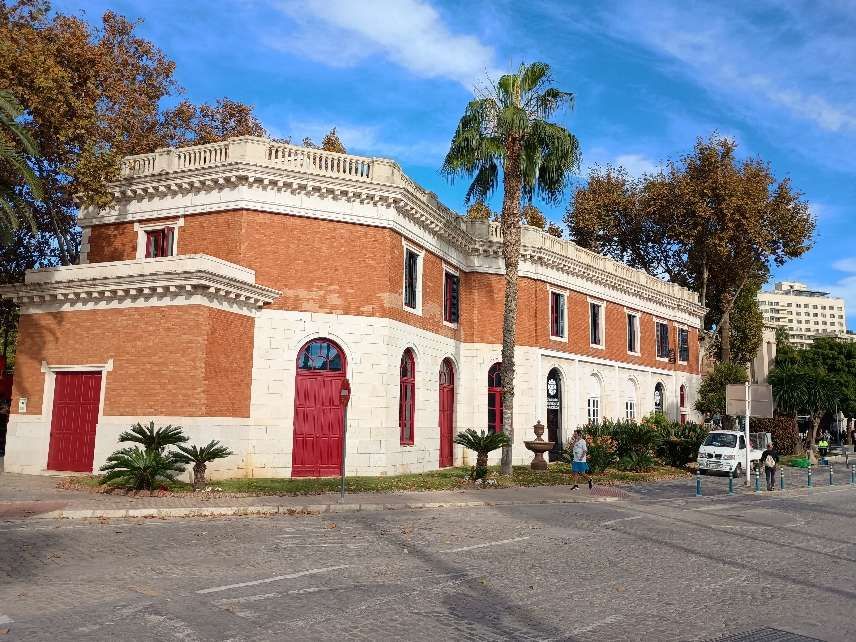
The original 1911 FSM headquarters and passenger station, designed by architects Enrique Verdú and Leopoldo Werner, still stands near Málaga’s port on Plaza de la Marina after being restored in 1995.
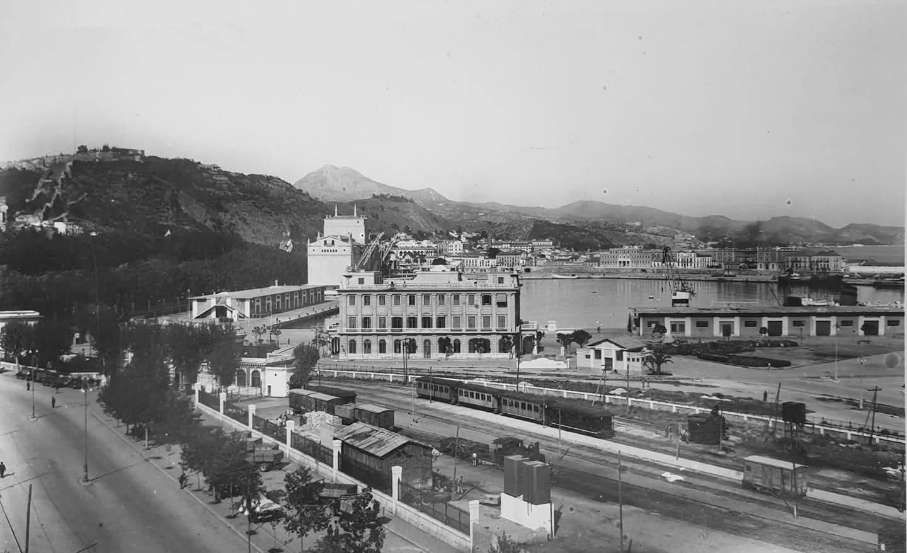
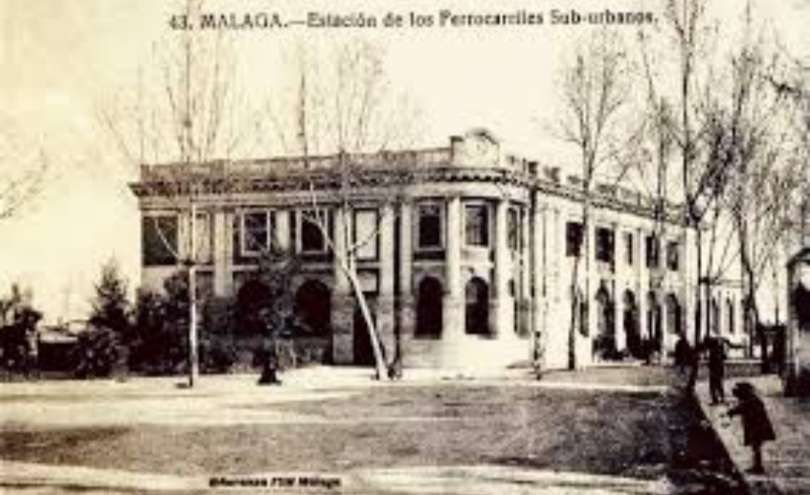
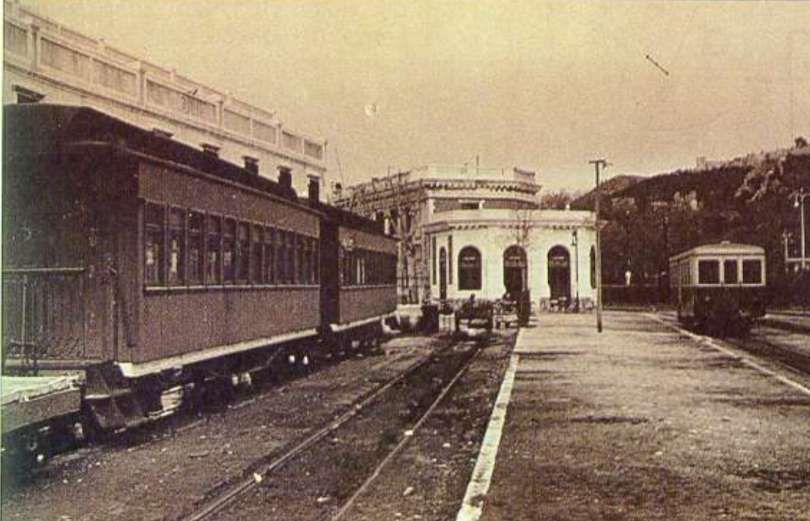
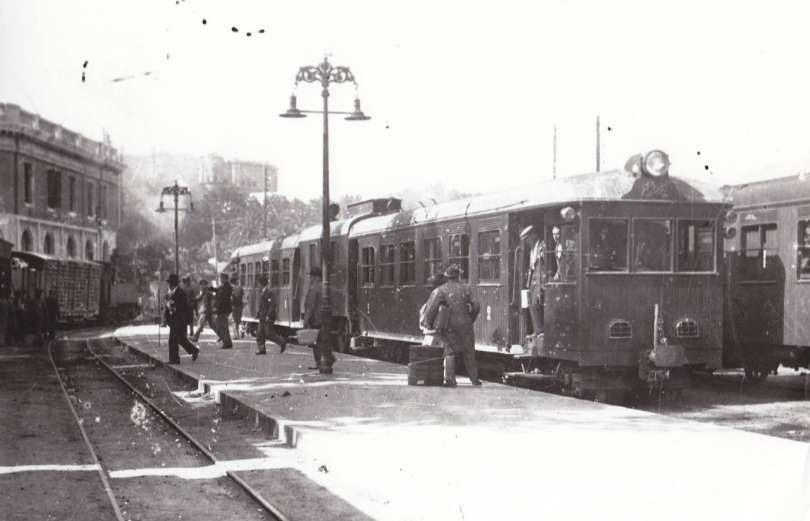
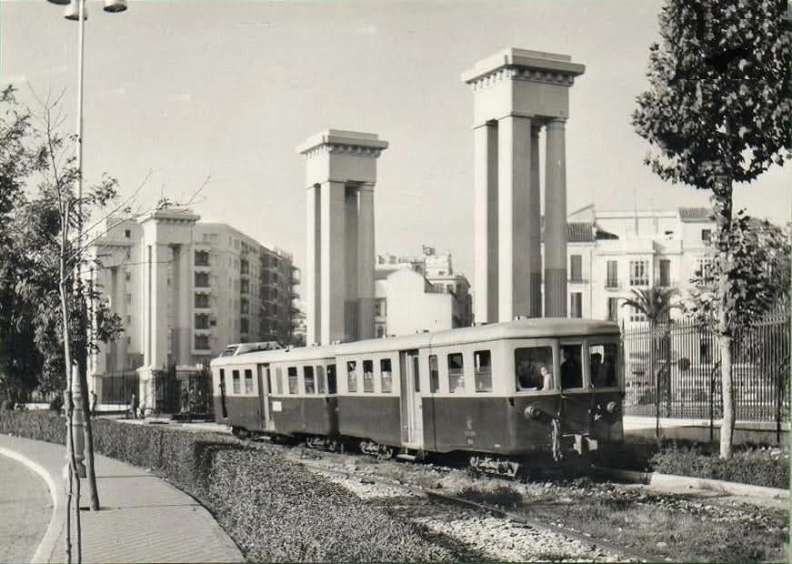
Much of the former eastern trackbed is preserved as walking and cycling trails, including the Rincón de la Victoria Greenway and reopened coastal tunnels. Numerous original station buildings still stand along the route, including those at El Palo, La Cala del Moral, Rincón de la Victoria, Benajarafe, Vélez-Málaga, and Ventas de Zafarraya. This line hugged the eastern shoreline of Málaga, crossing the San Telmo and Jaboneros streams and connecting the cliffs of El Candado and Pedregalejo directly to the eastern docks of Málaga’s harbour.
Locomotives and Rolling Stock
The Ferrocarriles Suburbanos de Málaga (FSM) operated a diverse fleet of 1,000 mm (metre-gauge) steam locomotives, specialized mountain rack engines, and later diesel railcars across its 60-year history. Because the company was founded with Belgian capital, its early motive power came primarily from Belgian and Swiss builders, later supplemented by French and German diesel units under state management (EFE and FEVE).
Steam Locomotives
Steam traction handled all passenger and freight traffic from the network’s opening in 1908 until the mid-1950s, with several engines remaining in freight and backup service right up to the final closures in the late 1960s. [1, 2]
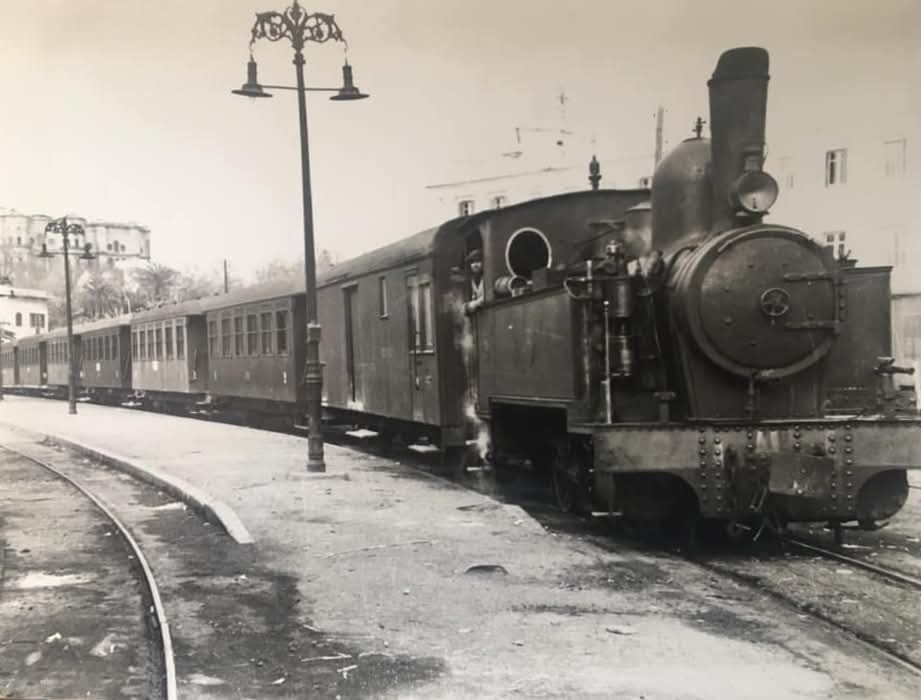
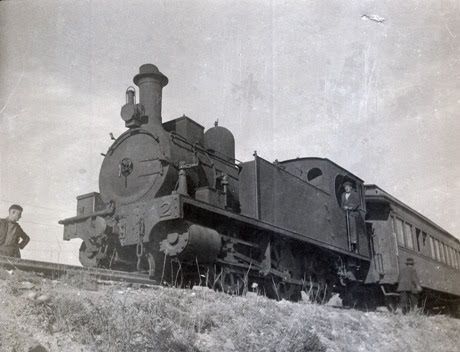
Ateliers Métallurgiques de Tubize (Belgium) 0-6-0T (030T) Locomotives were built between 1907 and 1913. They were numbered 21 to 28 and were the backbone of the coastal and valley lines. These compact tank engines hauled mixed passenger and agricultural freight trains to Vélez-Málaga, Coín, and Fuengirola. [12]
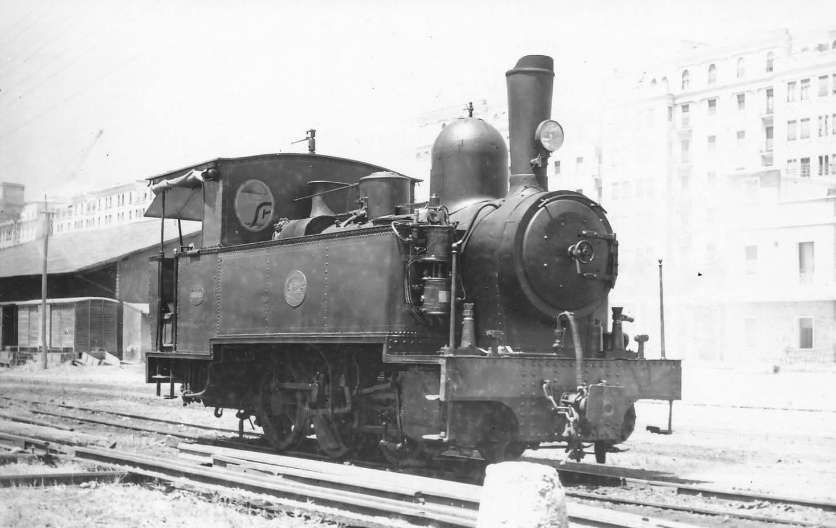
La Meuse/Saint-Léonard (Belgium) 0-8-0T (040T) Locomotives were built in 1920. Only four of these heavier freight engines were used on the network. They were numbered 31–34 (Works Nos. 2850–2853). These locomotives were ordered via Saint-Léonard and subcontracted to La Meuse for heavy sugar-cane, mineral, and port cargo traffic.
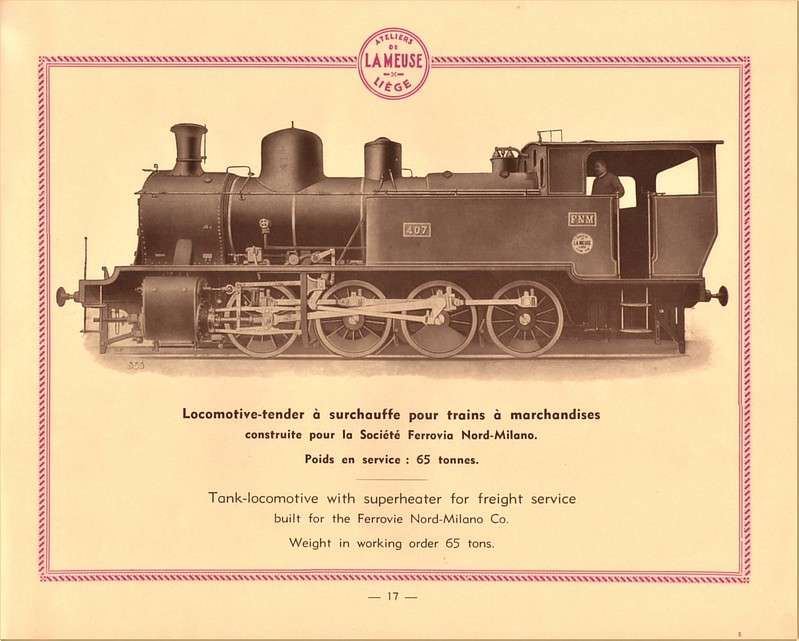
Delivered in 1920, the 0-8-0T engines joined FSM’s earlier fleet of 1906 Tubize 0-6-0Ts (Nos. 21–28) to haul trains across the coastal and inland lines serving Vélez-Málaga, Coín, and Fuengirola. Their eight-coupled wheel arrangement provided high adhesive weight for freight and steep grades without needing a separate tender.
Swiss Locomotive and Machine Works (SLM) 0-6-0T (030T) Rack & Adhesion Locomotives were built between 1920 and 1924. These were three 33-tonne ‘mixed’ compound locomotives built in Winterthur for the Ventas de Zafarraya mountain branch. These locomotives were engineered to switch seamlessly between flat adhesion track and steep Abt rack-and-pinion sections. [6]
Each engine carried separate cylinders for adhesion and rack operation that worked in compound mode once engaged on the cogged rails. A single central toothed wheel exerted 7,000 kg of tractive effort, climbing the 6.5% grades to Periana and Zafarraya at a steady 10–12 km/h. [7][8]
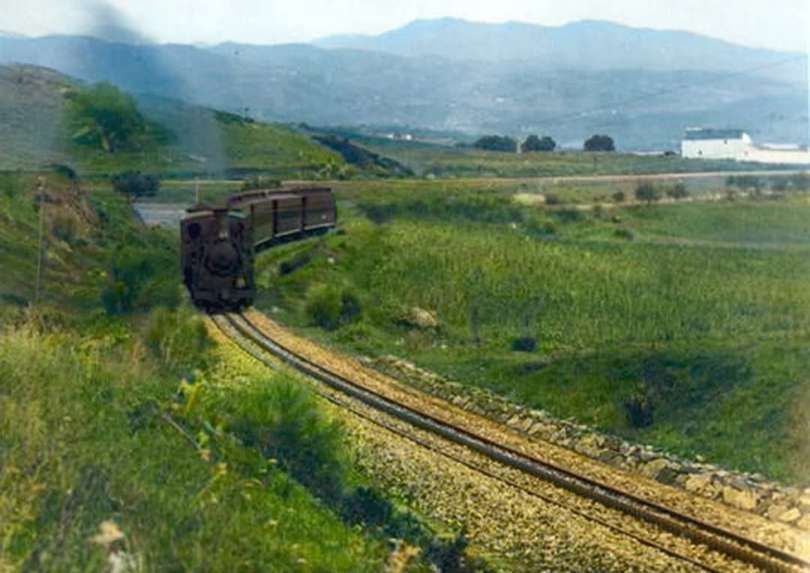
Vasco-Navarro Transfers (Ex-EFE) – three tank engines were transferred by the state in the 1950s from the Ferrocarril Vasco-Navarro line to reinforce services on the Fuengirola route.
Diesel Railcars & Locomotives (1950-1971)
After the Spanish state took over the network under Explotación de Ferrocarriles por el Estado (EFE) and later FEVE, aging steam trains were modernized with diesel traction to cut fuel costs and speed up coastal commuter runs: [9][10]
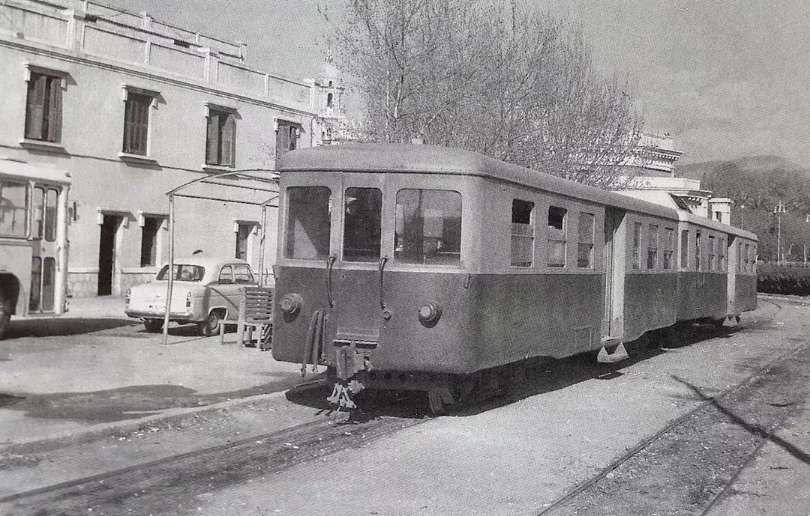
Billard Diesel Railcars (Automotores) – were introduced in the 1950s. These lightweight French-built metre-gauge railcars (often paired with matching passenger trailers) transformed suburban travel on the Fuengirola and Vélez-Málaga lines. Painted in FEVE’s signature green livery, they were affectionately known by locals as “el tren FEVE”. [9][10]
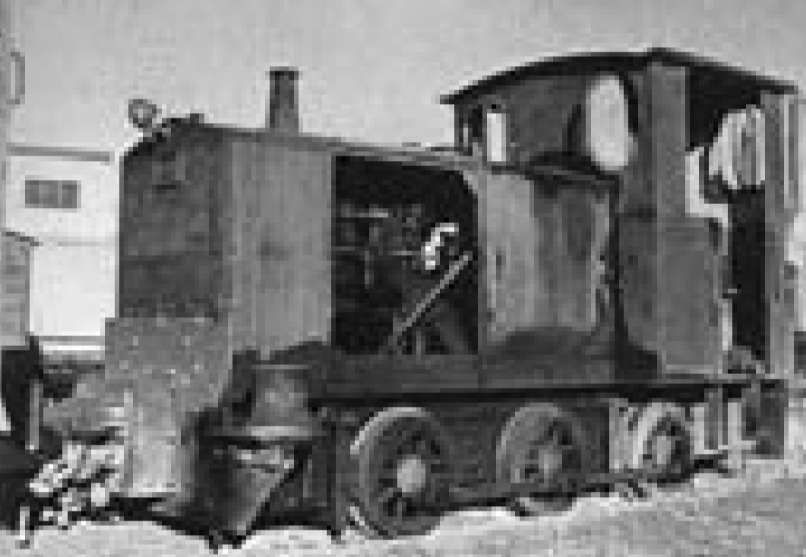
Ferrostaal & Diesel Shunters – In the 1960s, German-built Ferrostaal diesel railcars and small diesel locomotives operated alongside the Billards for passenger and light port duties until the narrow-gauge lines closed between 1965 and 1971. [10][11]
Passenger Coaches & Freight Wagons
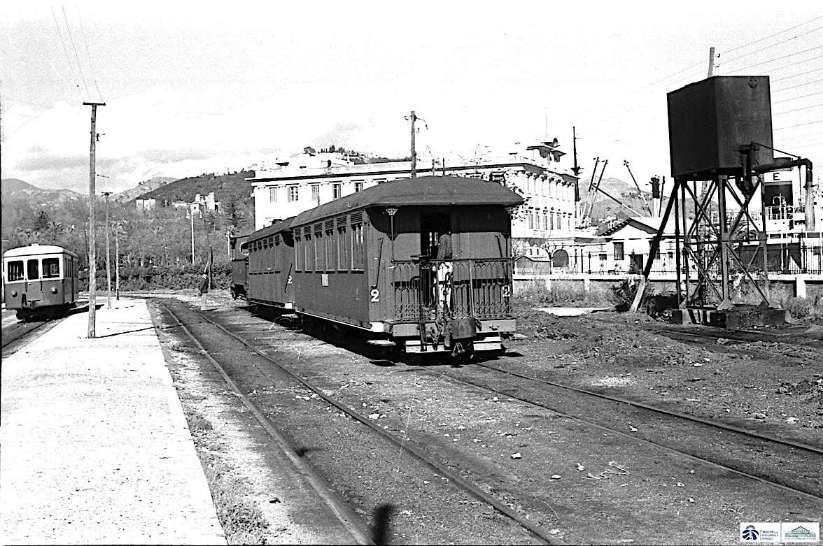
Wooden Bogie Coaches. Early passenger trains used Belgian-built two-axle and bogie wooden carriages with open end balconies, divided into first-, second-, and third-class compartments.
In one of the pictures above, dated 1931, suburban coaching stock is shown. These units are too early to be associated with the Billard railcars. I have not been able to find out anything about the units in the photograph.
Agricultural & Port Rolling Stock. Freight rosters included high-sided open wagons (bordas altas) for hauling sugarcane to the Larios sugar factories in Torre del Mar, ventilated boxcars for raisins and citrus, and flatbeds that ran directly onto the tracks of the Port of Málaga. [2]
References
- Henry O’Shea; Guide to Spain and Portugal; John Lomas (ed.); 1895, p454; via https://commons.wikimedia.org/wiki/File:O%27SHEAS_(1895)_p454_MALAGA.jpg, accessed on 16th November 2026.
- https://www.spanishrailway.com/ferrocarriles-suburbanos-de-malaga, accessed on 18th November 2026.
- https://www.facebook.com/share/p/1CckW6dbQj, accessed on 18th November 2026.
- https://www.fundaciongarciaaguera.org/el-tren-de-coin/el-tren-por-alhaurin-el-grande-expo-foto-grafica-2013-fanzine.pdf, accessed on 19th November 2026.
- https://rogerfarnworth.com/2026/11/18/malagas-historic-tram-network
- https://www.facebook.com/share/p/19N7EnwmB6, accessed on 19th November 2026.
- https://www.docutren.com/historiaferroviaria/malaga2006/pdf/IV10.pdf, accessed on 19th November 2026.
- https://historiastren.blogspot.com/2022/01/los-ferrocarriles-suburbanos-de-malaga_30.html?m=1, accessed on 19th November 2026.
- https://historiastren.blogspot.com/2022/01/los-ferrocarriles-suburbanos-de-malaga_26.html?m=1, accessed on 19th November 2026.
- https://www.andalucia.com/cities/malaga/train/fuengirola/railway-history, accessed on 19th November 2026.
- https://idus.us.es/server/api/core/bitstreams/8ee94700-9670-4a4b-afb0-c9ea4950a411/content, accessed on 19th November 2026.
- https://www.facebook.com/share/1JRxnCHH5o, accessed on 19th November 2026.
- https://www.facebook.com/share/18iZxHUzwu, accessed on 19th November 2026.
- https://flic.kr/p/2dh1AFw, accessed on 19th November 2026.
- https://www.facebook.com/share/p/1FAAnNsGkf, accessed on 19th November 2026.
- https://www.facebook.com/share/1E8GVycJkC, accessed on 19th November 2026.
- https://www.facebook.com/share/1CMHFvYJGZ, accessed on 19th November 2026.
- https://www.facebook.com/share/1RKPehKaGM, accessed on 19th November 2026.
- https://www.facebook.com/share/1FRjFw3TDU, accessed on 19th November 2026.
Appendix 1
The brochure printed for the 2013 Centenary of the Málaga – Coin line of the Compañía de los Ferrocarriles Suburbanos de Málaga (FSM). [4]


