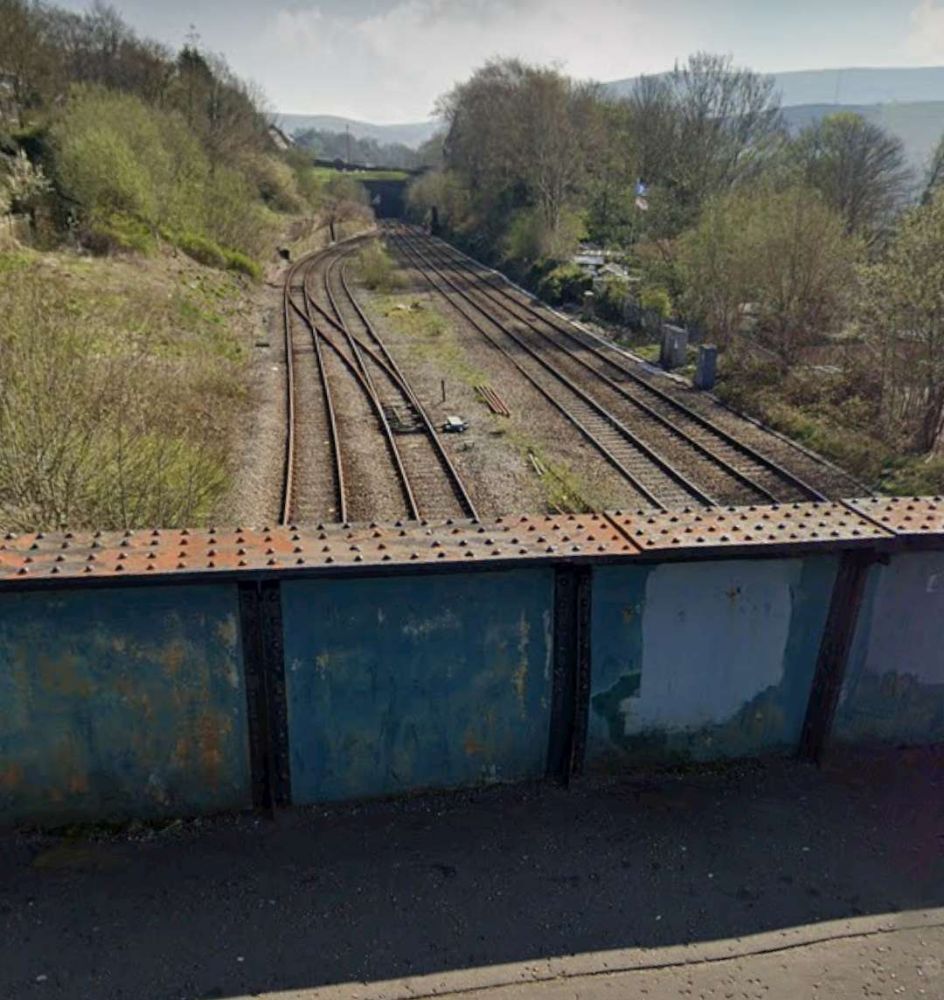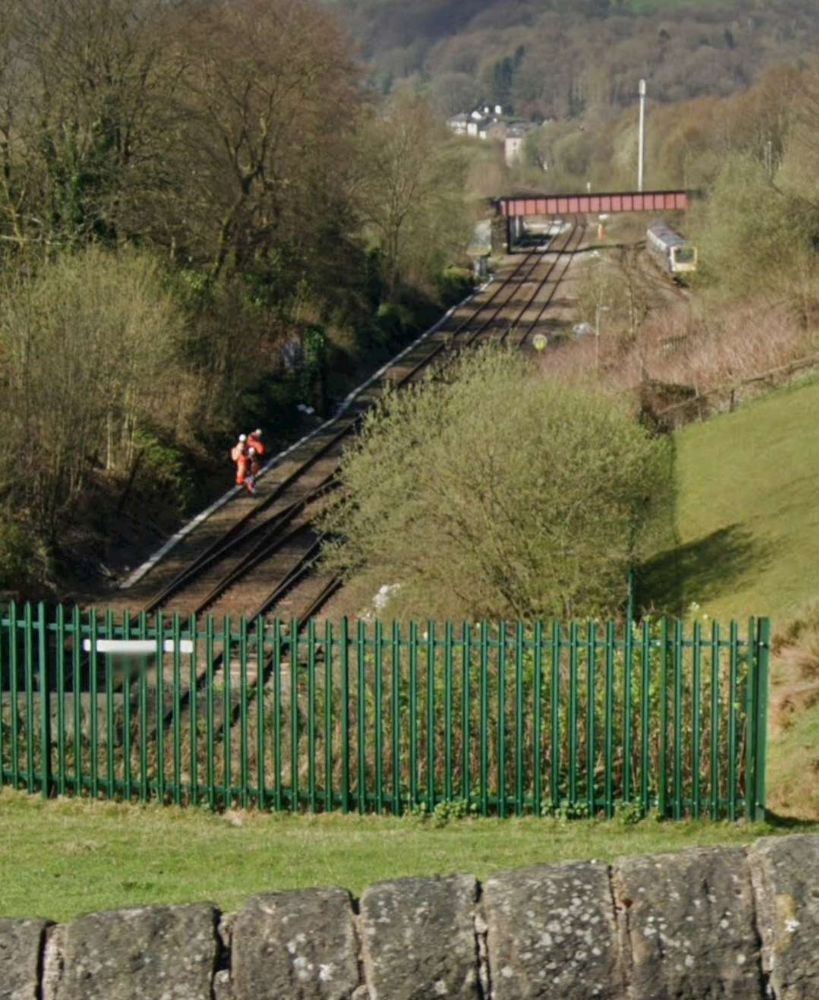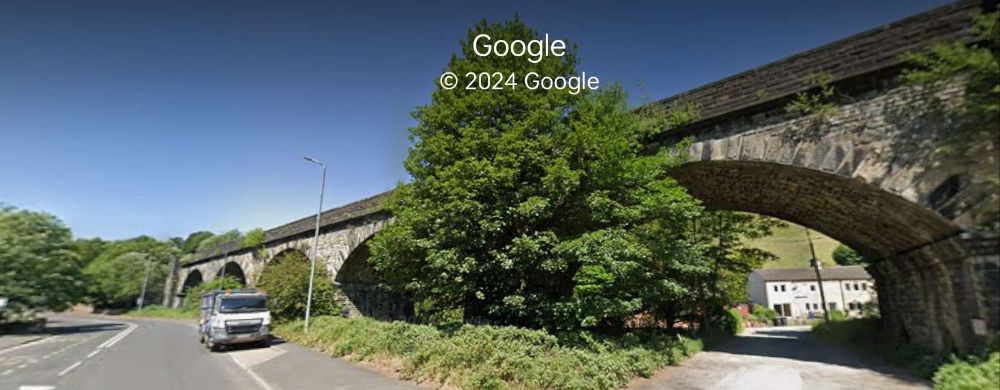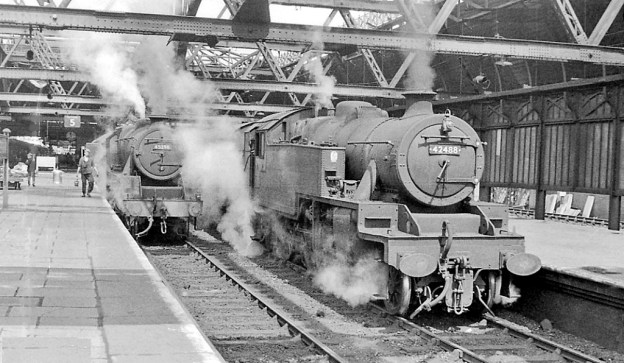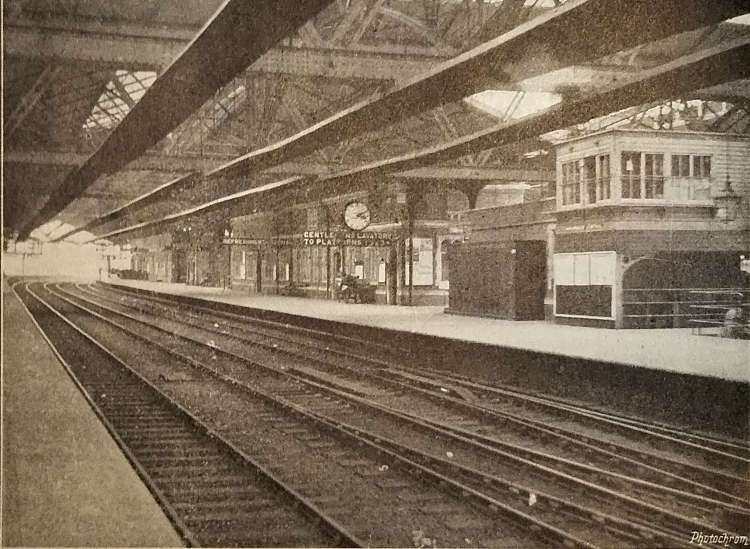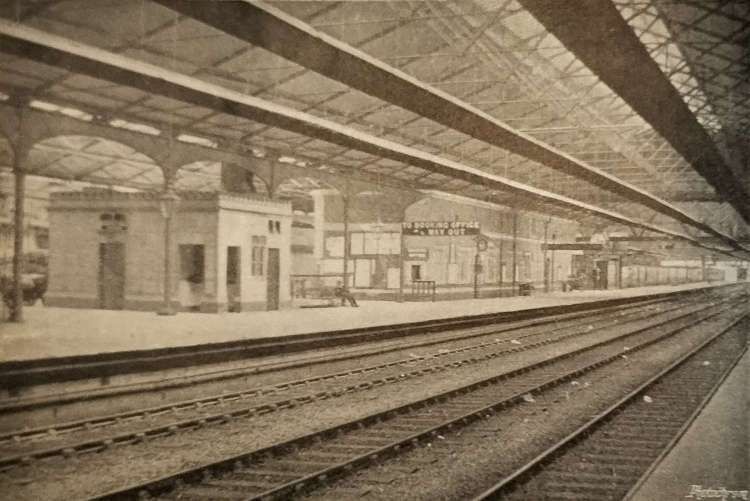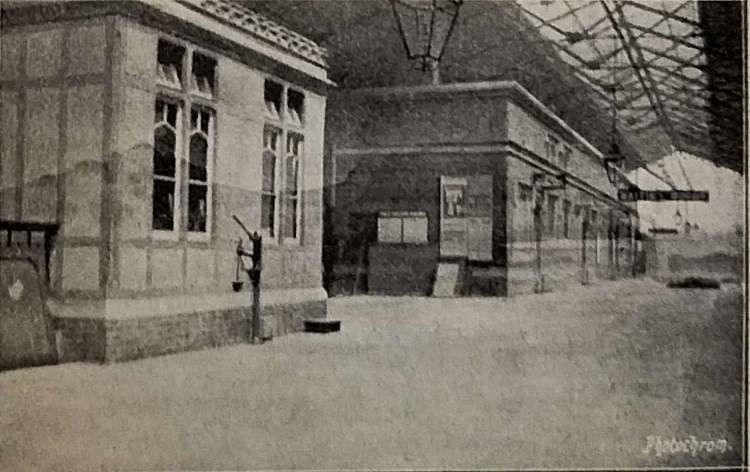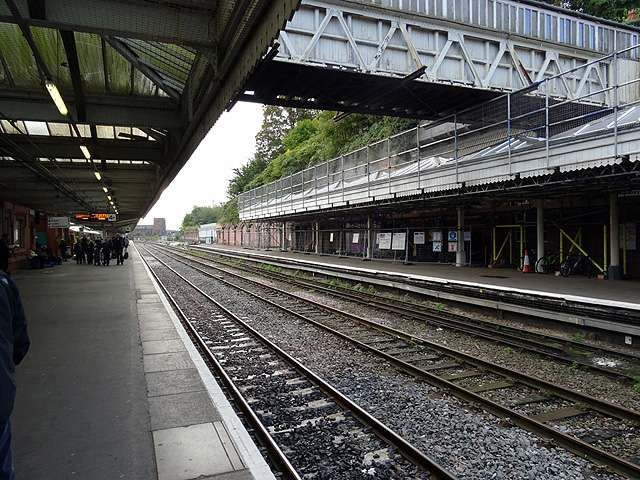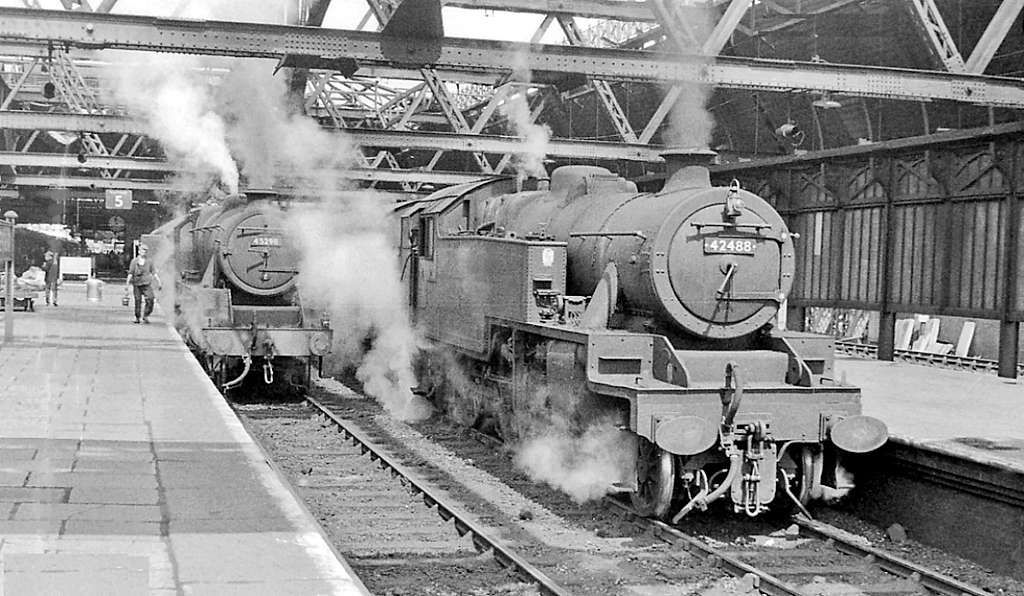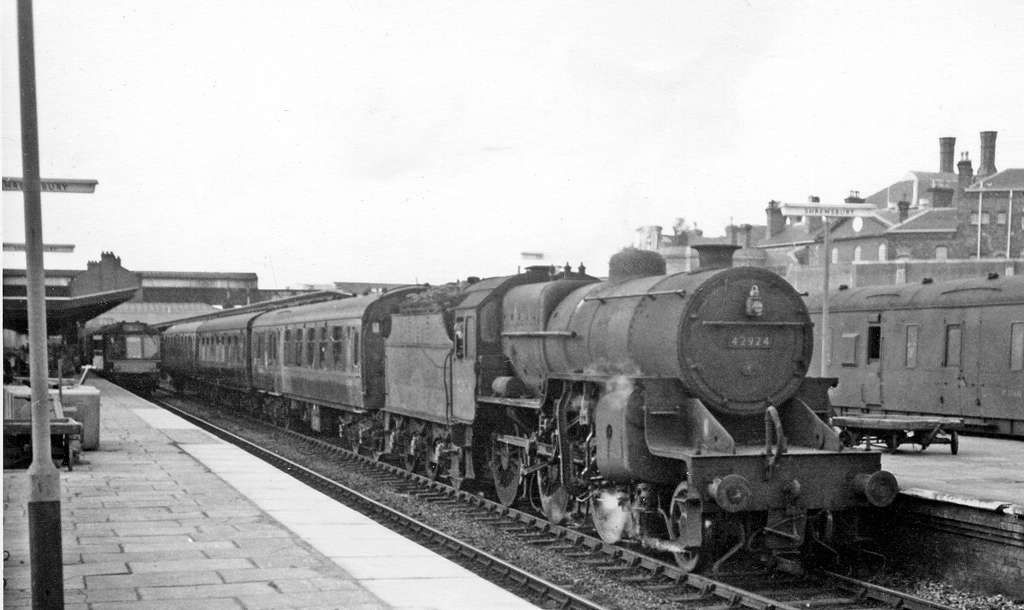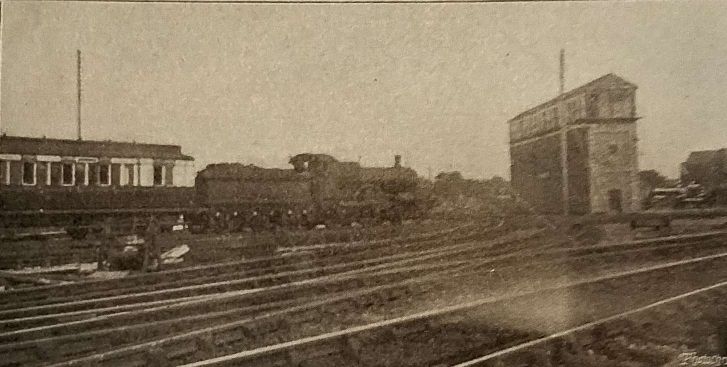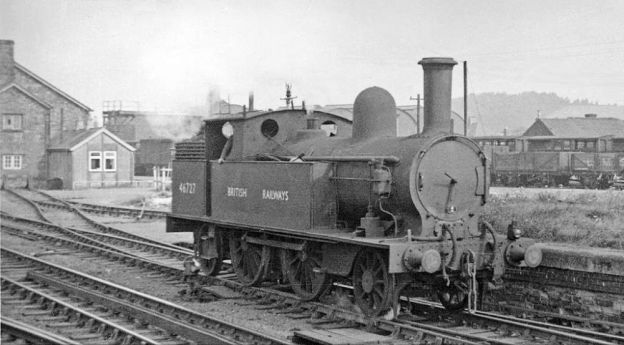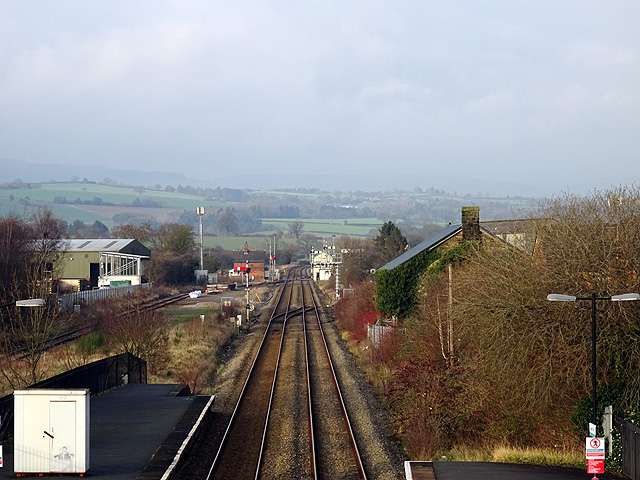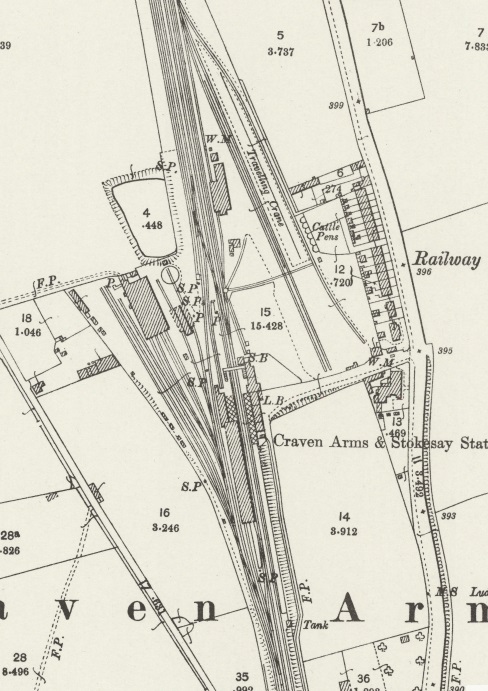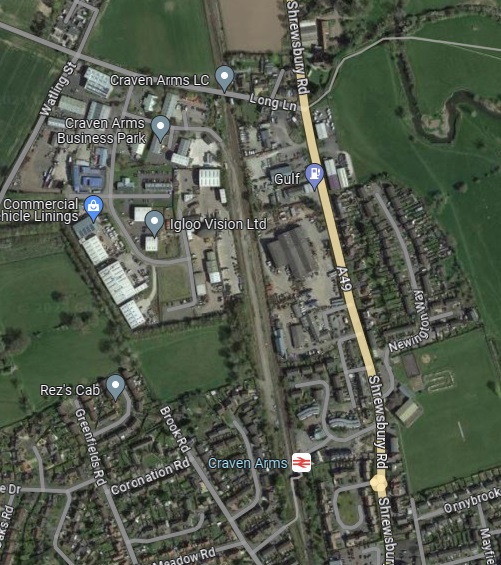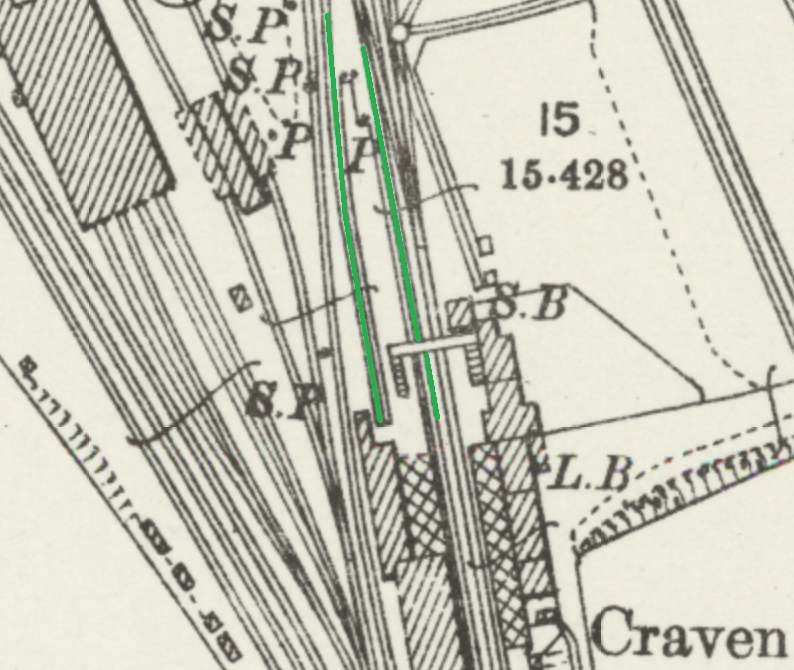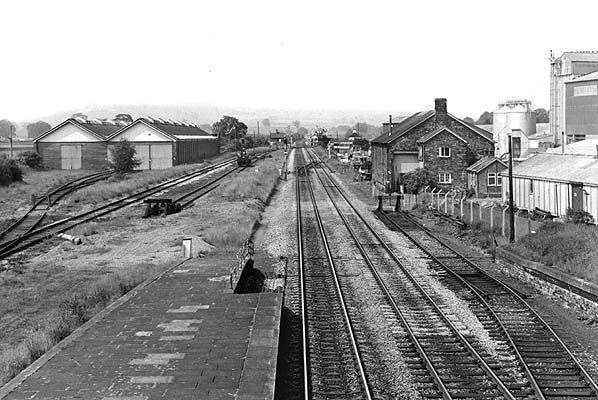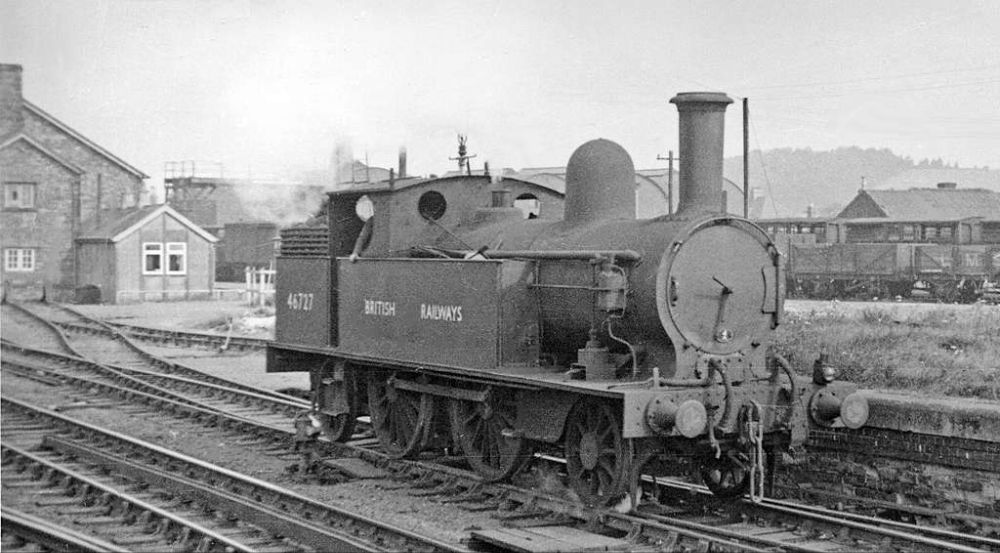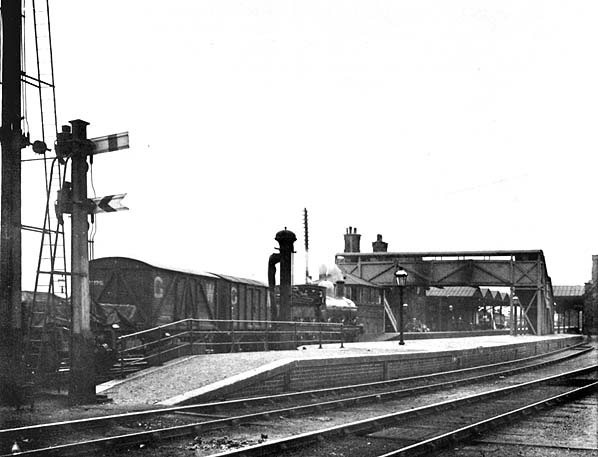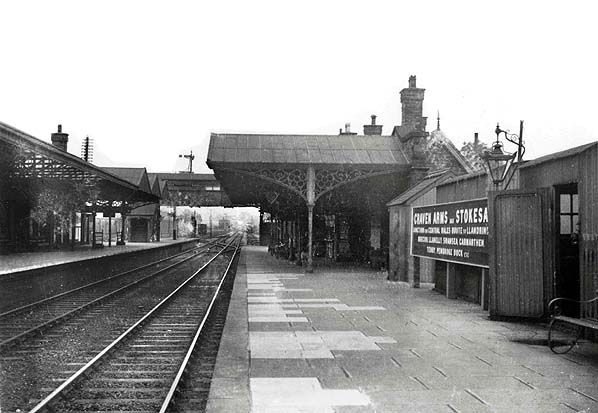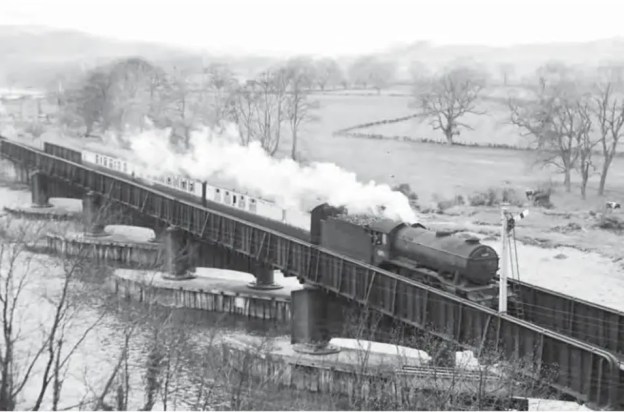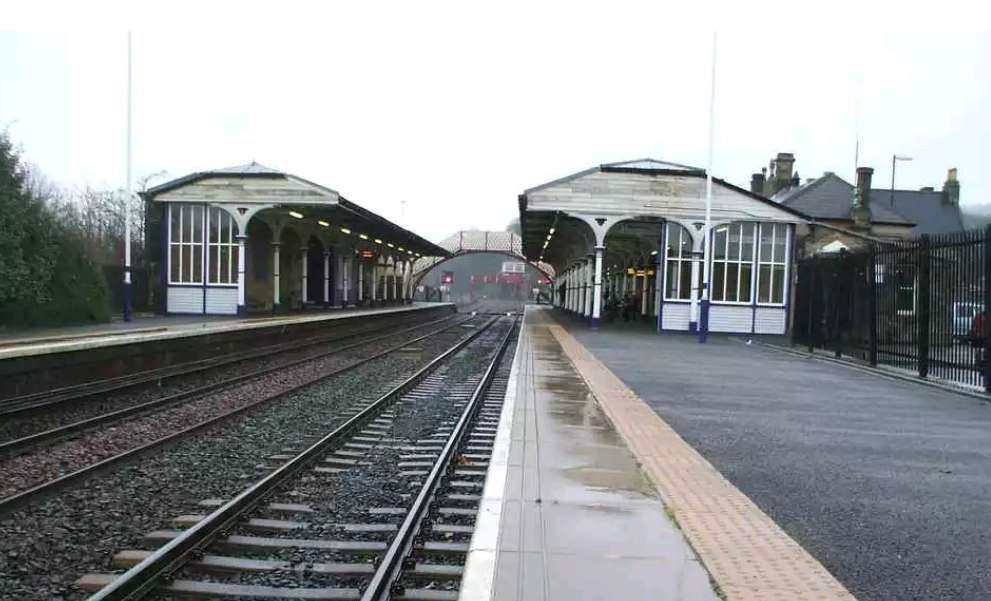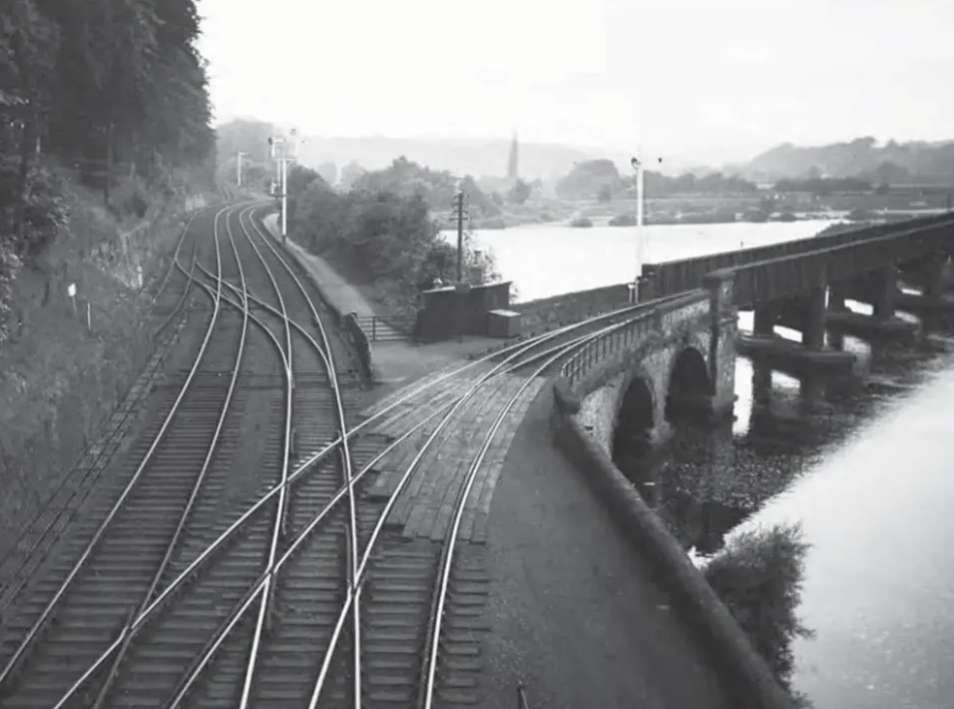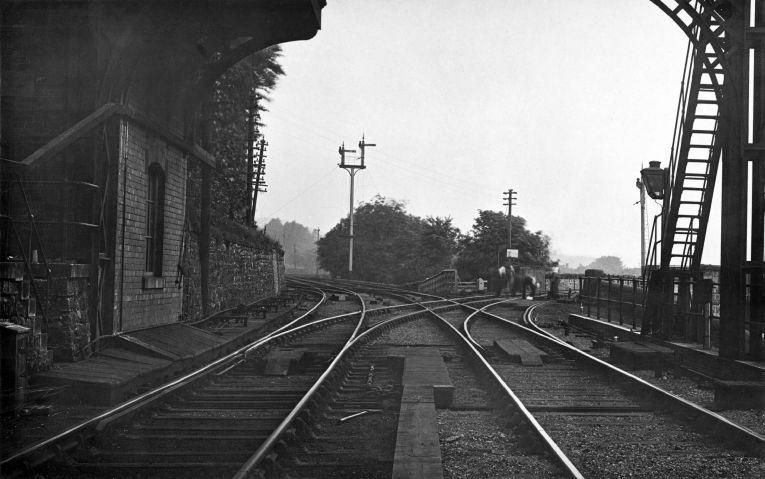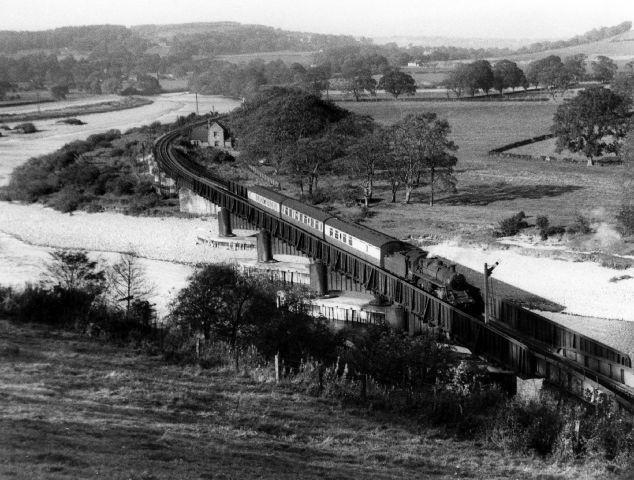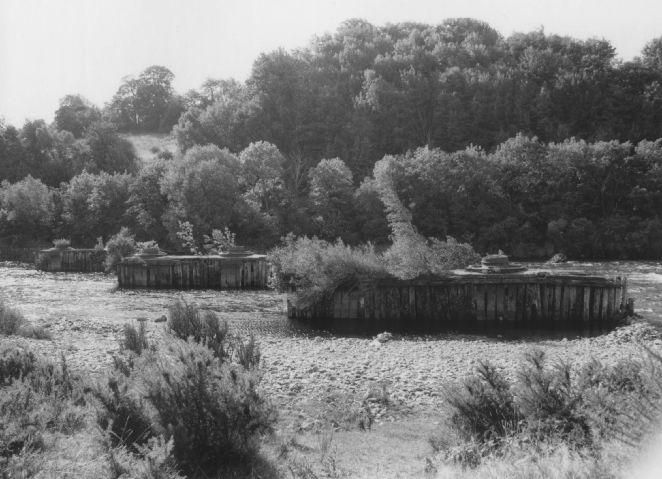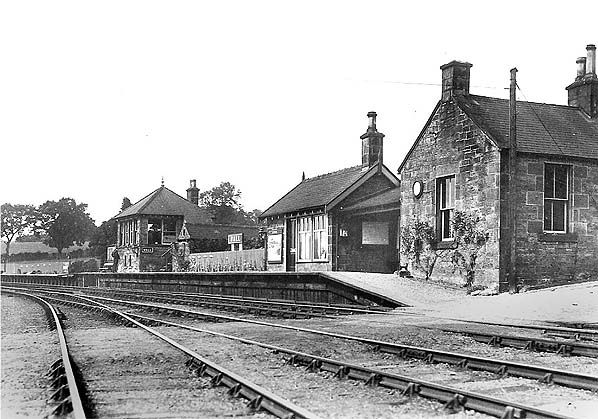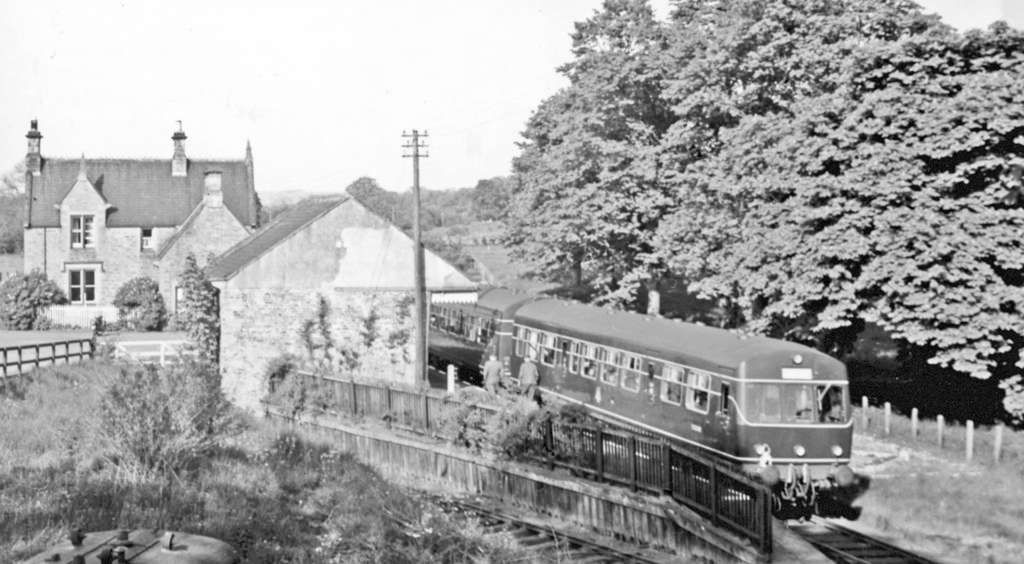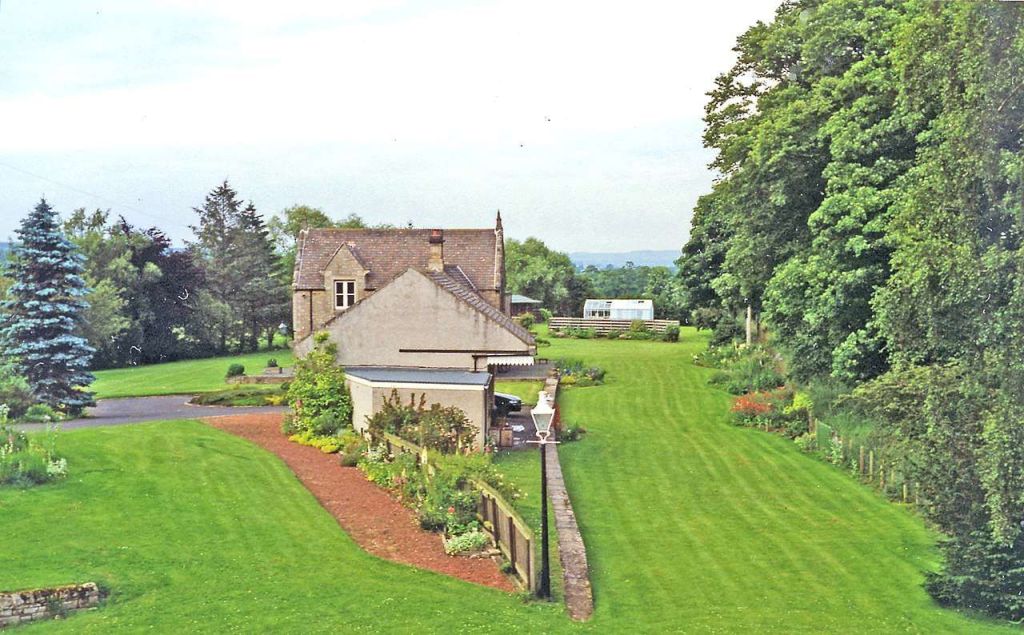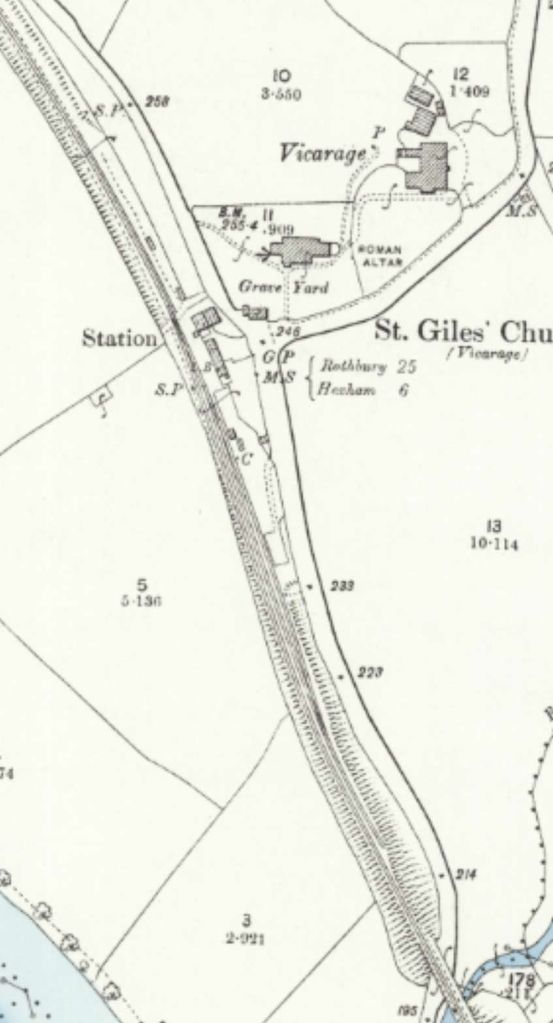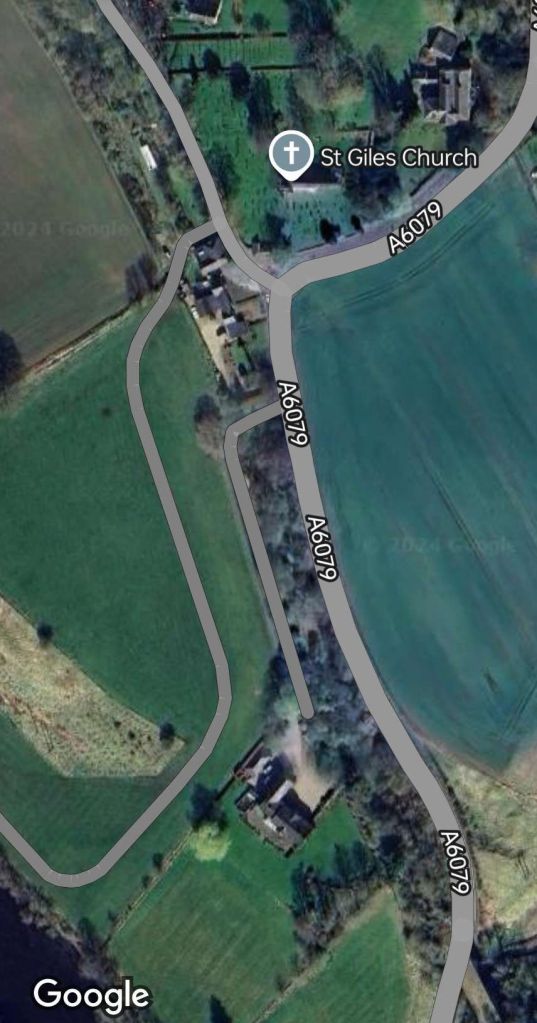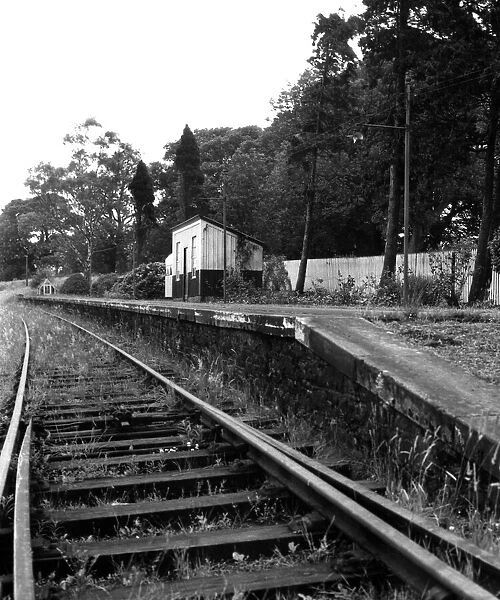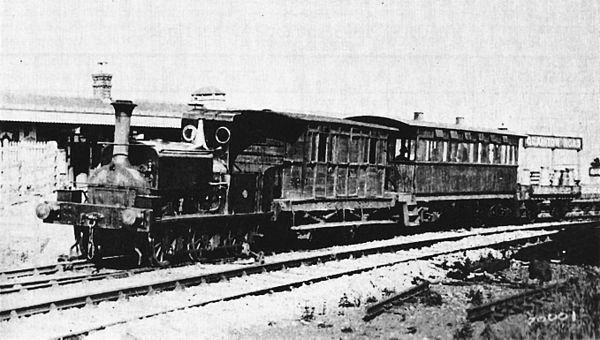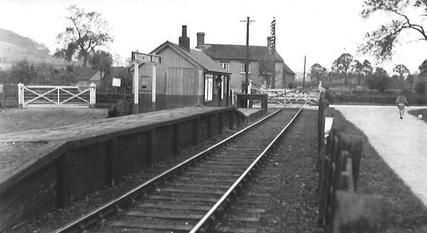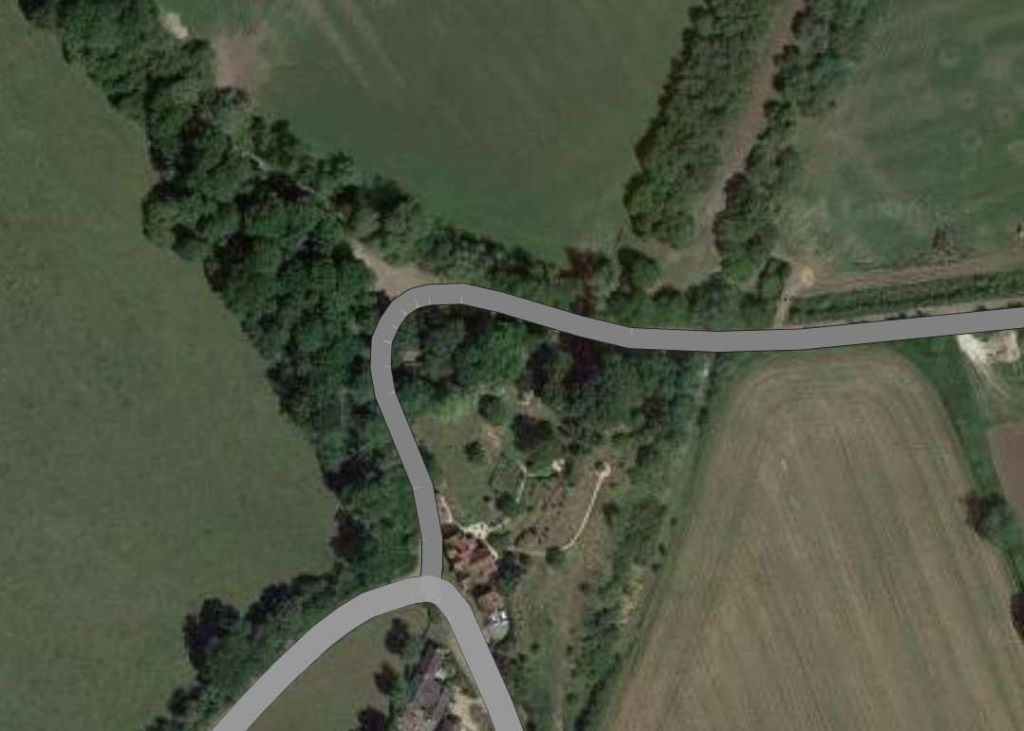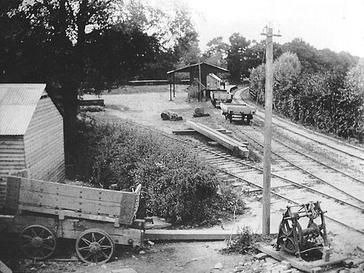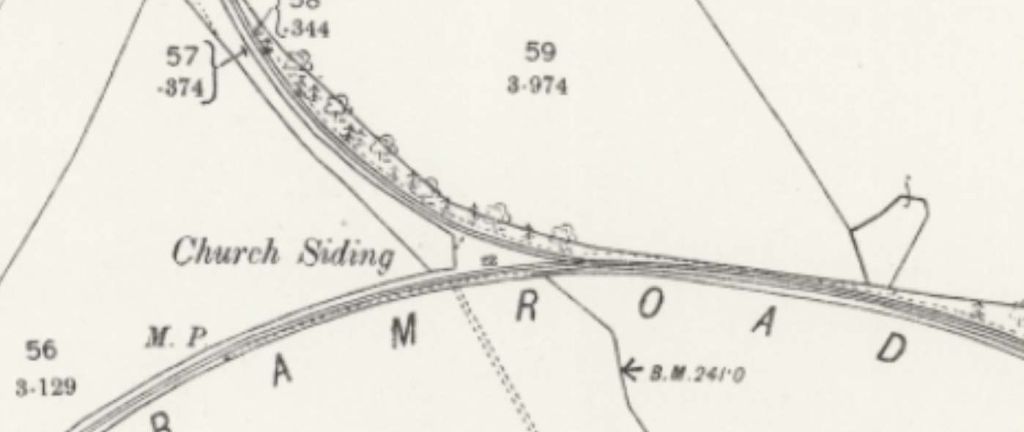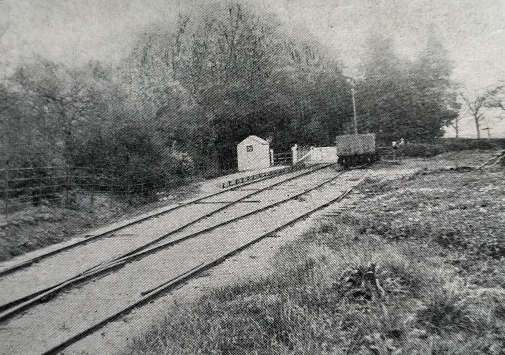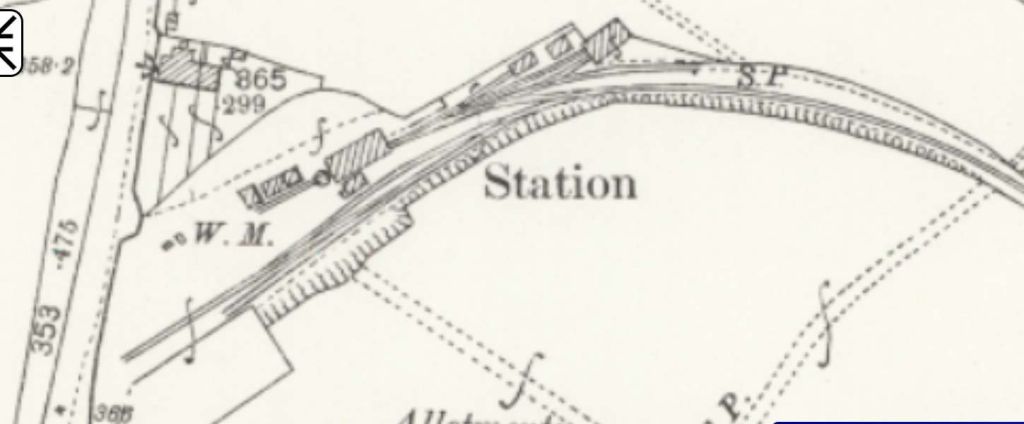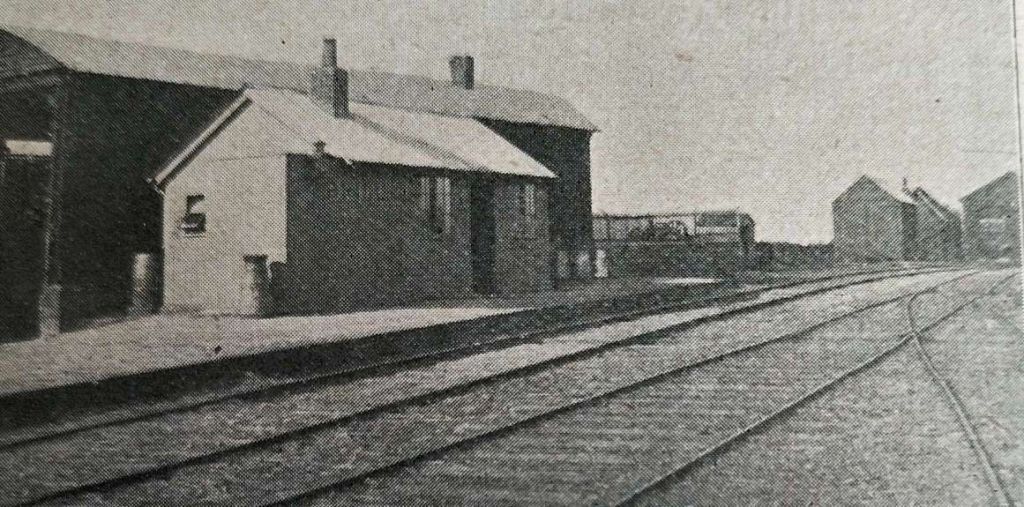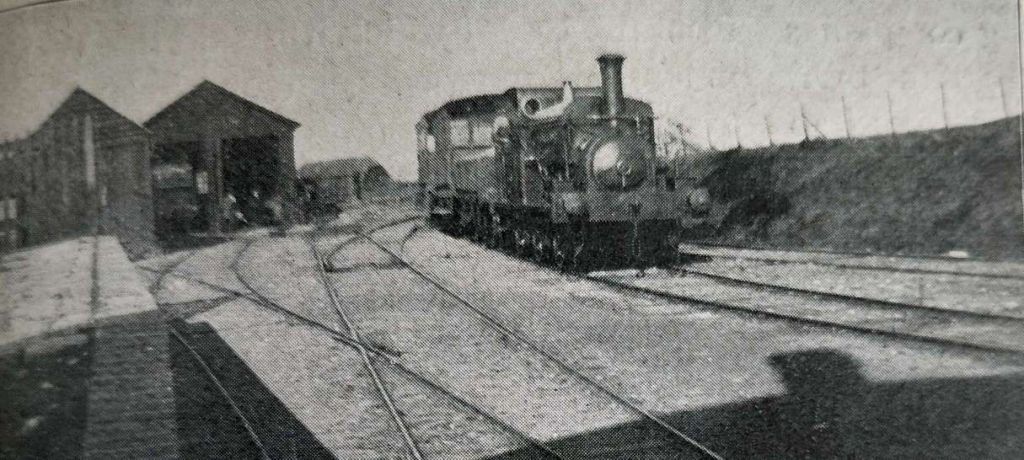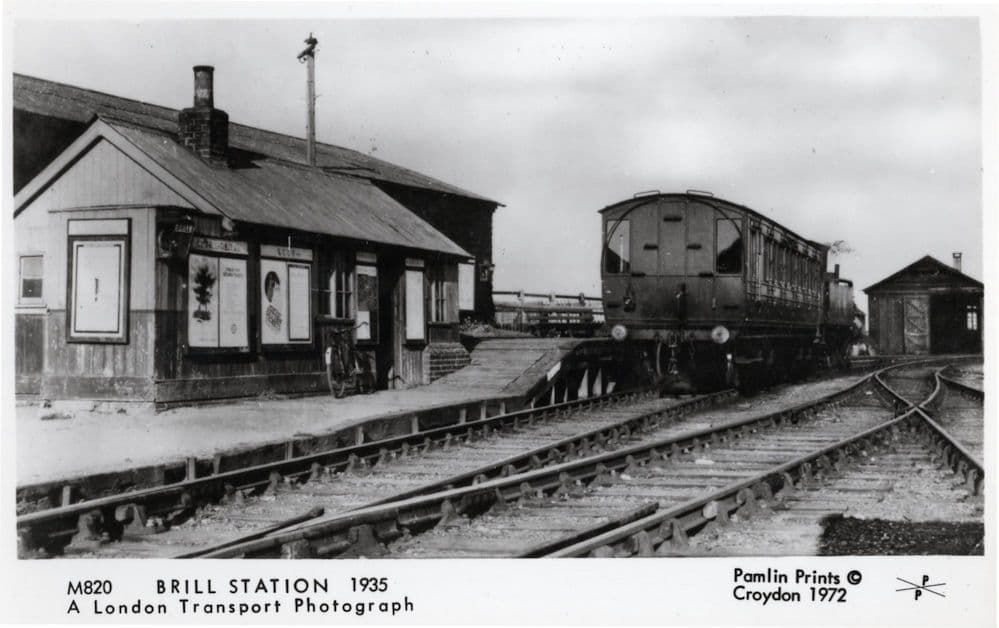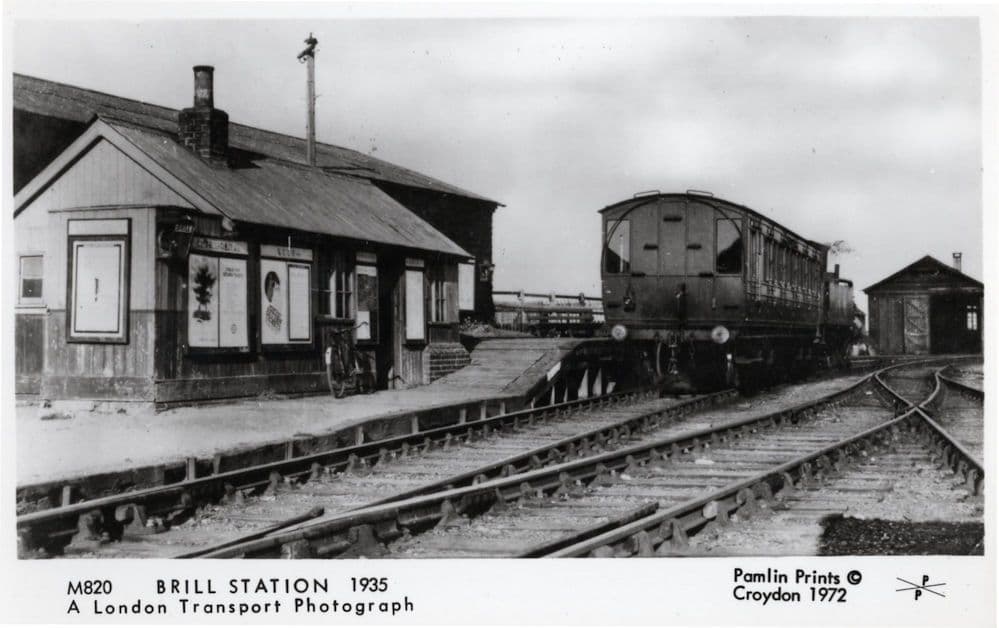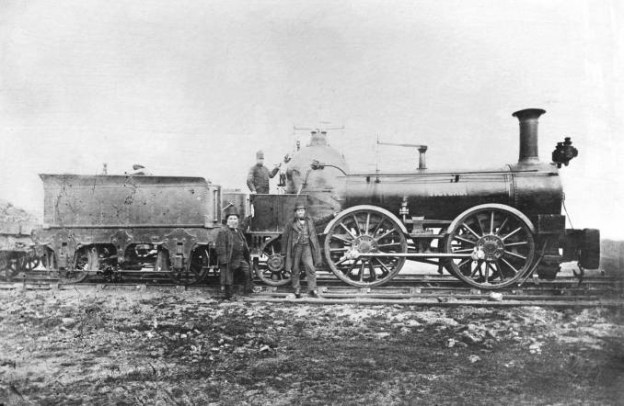
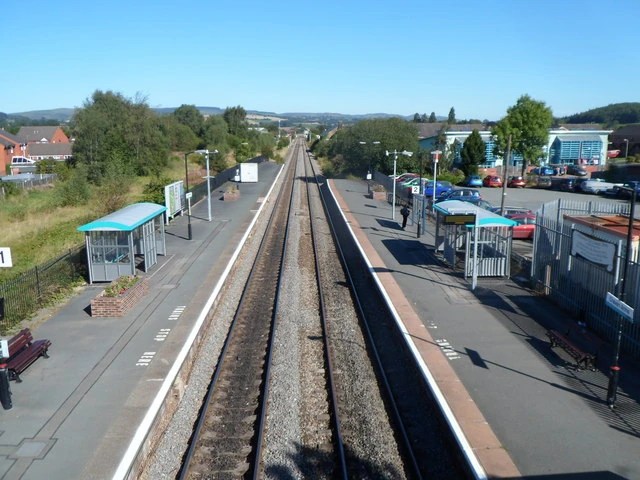
The featured image shows Presthope Station with the 18.00 hrs Craven Arms – Much Wenlock – Wellington train is leaving on 21st April 1951, heading for Much Wenlock. [30]
This article follows on from four other articles which covered the Wellington to Severn Junction Railway and this line from Buildwas to Much Wenlock. The first three articles can be found on these links:
From the commencement of the building of the line between Buildwas and Much Wenlock, the directors hoped that the line could be extended to Craven Arms via Presthope on Wenlock Edge (linking with the limestone quarries/works at that location).
The directors of the Wellington & Severn Junction Railway were, however, fully occupied with the line from Wellington to Buildwas. Another company was set up to build the ‘Wenlock & Craven Arms and Coalbrookdale Extension Railway‘. The bill went through the parliamentary process unopposed and authorised the ‘Wenlock Railway Company‘ to construct the line. Work started on 23rd October 1861.
By 5th December 1864, the line was open from Much Wenlock to Presthope. At this time, because it was a freight-only line, the Board of Trade saw no need for an inspection of the line. It had already been agreed at a meeting held on 4th December 1863 not to proceed with the line from Presthope to Craven Arms for the time being. It was to be three years after the line reached Presthope before the connection to the Shrewsbury & Hereford Railway close to Craven Arms was completed. It was finally opened on 16th December 1867.
Much Wenlock to Presthope
This article focusses on the length of the line which was completed in December 1864 – Much Wenlock to Presthope. Another article will follow the line to the West of Presthope.
Much Wenlock Railway Station had a single platform adjacent to the main running line. A passing loop was provided opposing the platform, and beyond it there was a rockery garden, “large limestone boulders [were] interspersed with shrubs and alpine plants flanked by a row of rhododendron bushes. In the centre of the rockery was a fountain.” [1: p97]
Trains leaving for Craven Arms crossed Sheinton Road/Street Bridge and passed the goods shed and yard on the left and then the engine shed. When the line terminated at Much Wenlock, the goods facilities used until the final closure of the line were the temporary railway station.
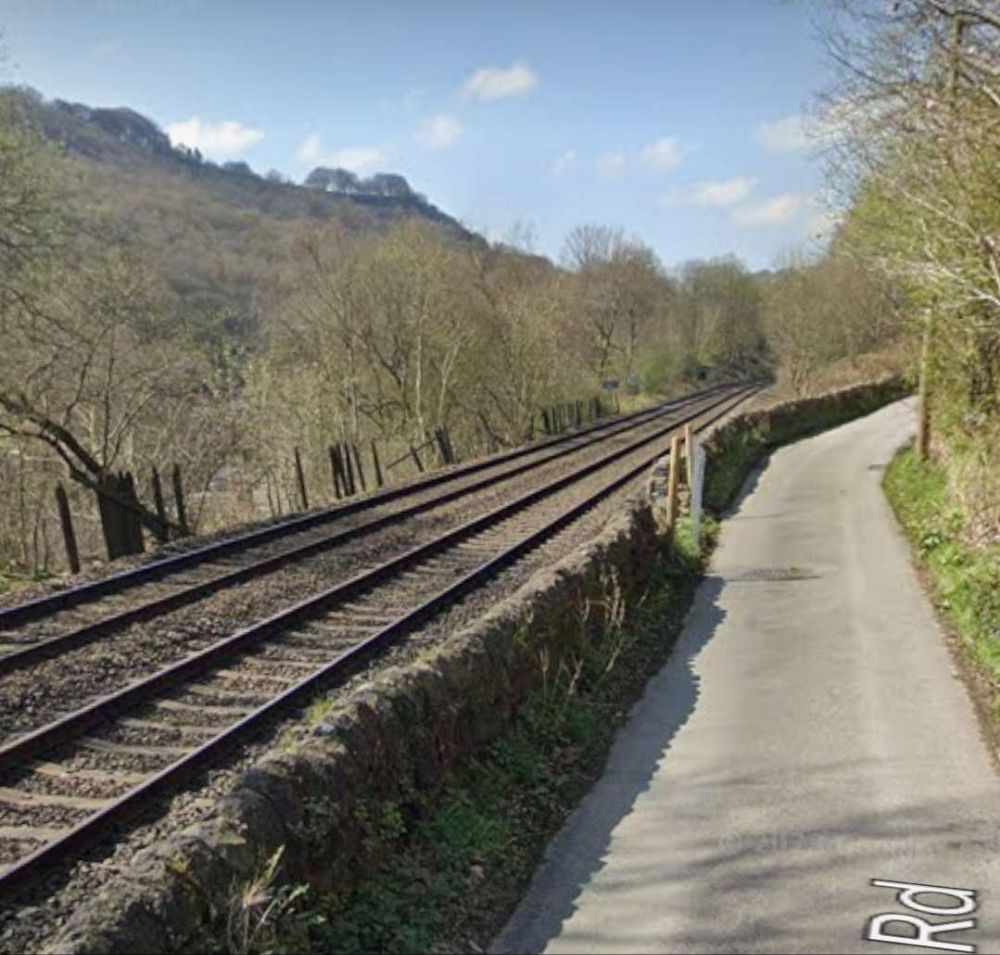
Trains began the climb towards Wenlock Edge. The pictures above show the climb had already begun alongside the goods yard. Neither the goods shed nor the engine shed remain in the 21st century.
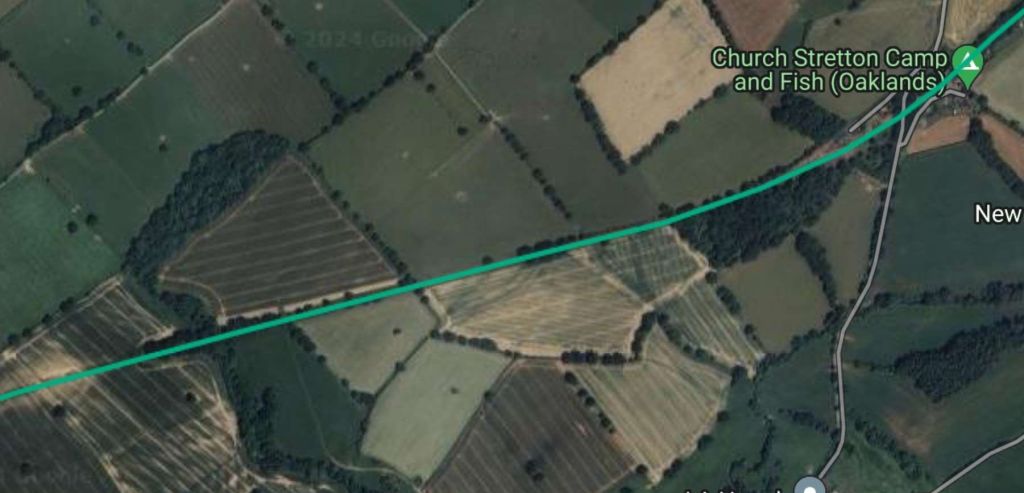
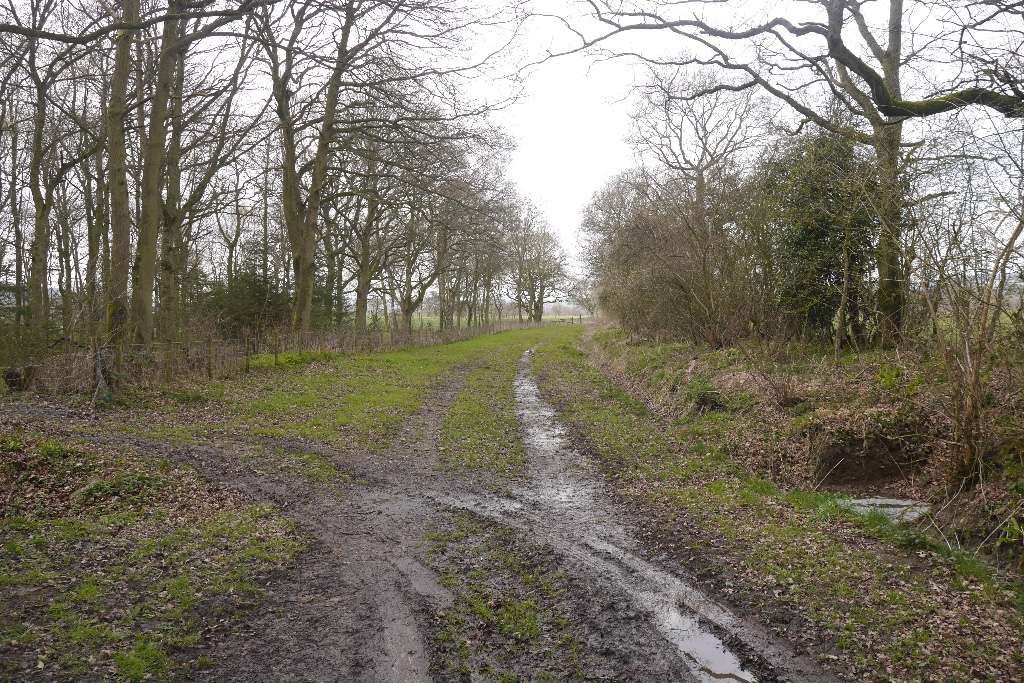
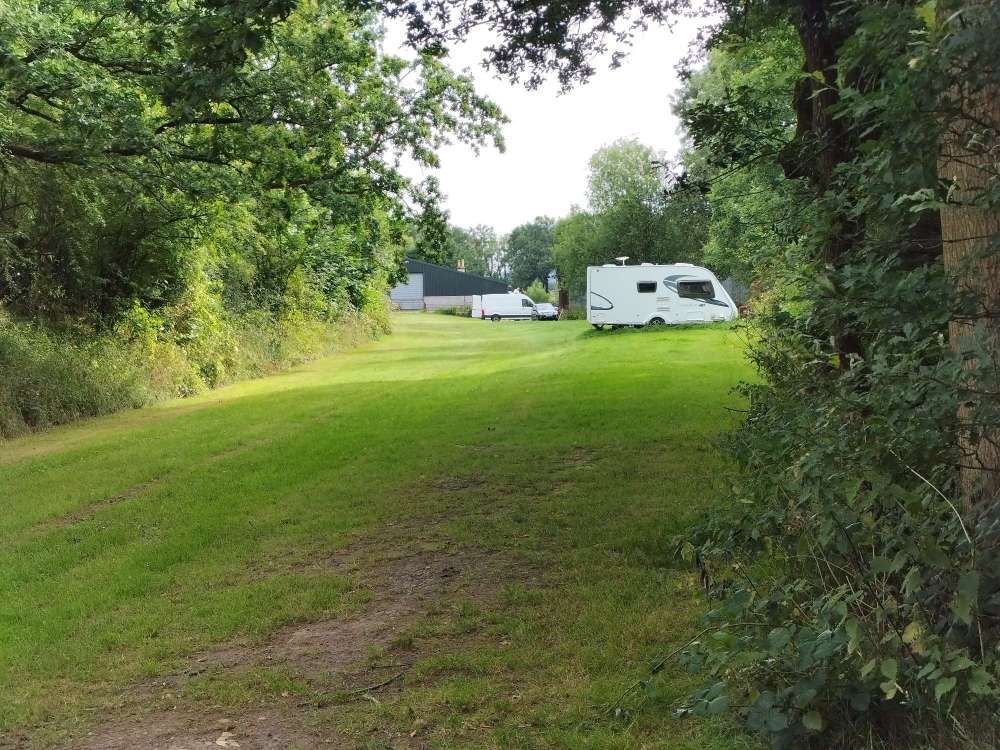
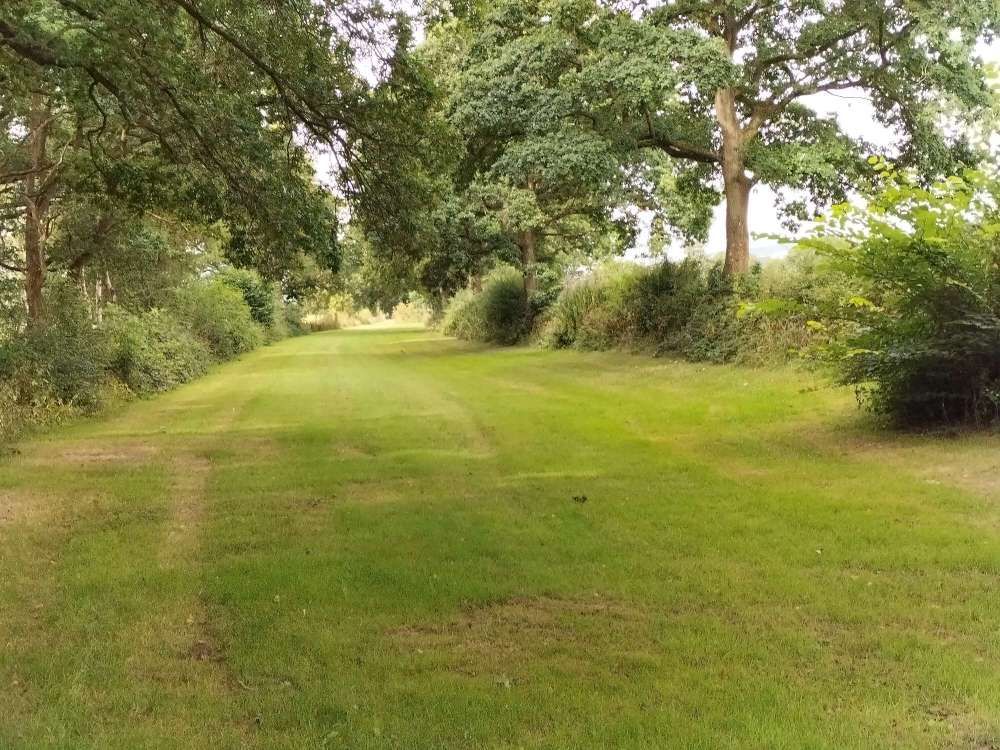
That length is in private hands with a significant length in use as a paddock for horses and a small holding.
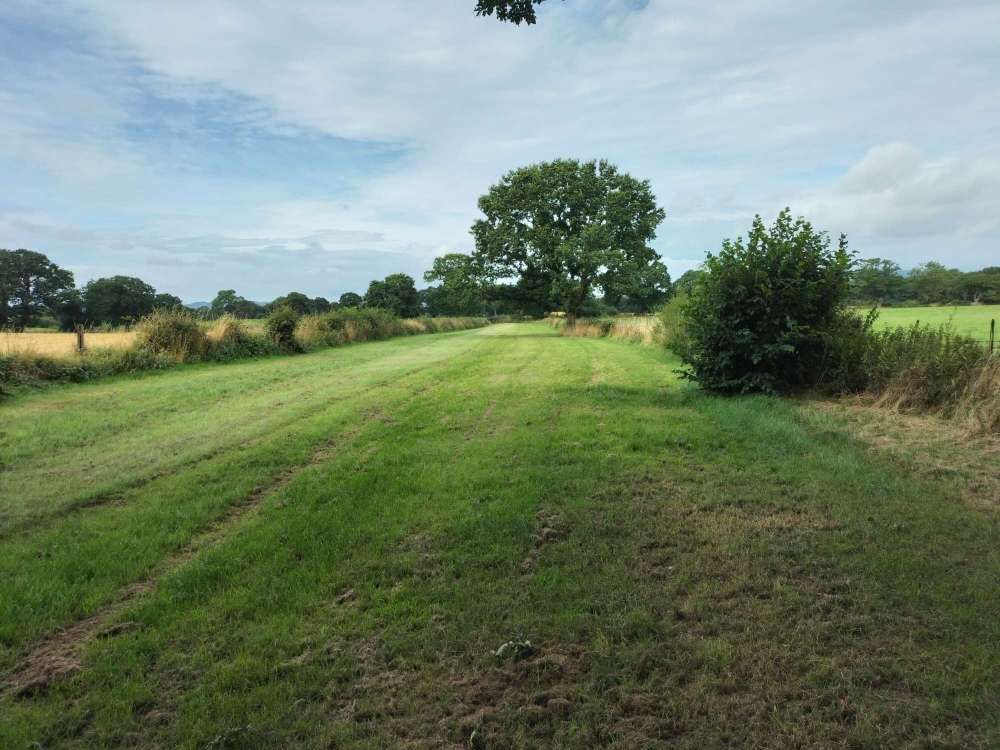
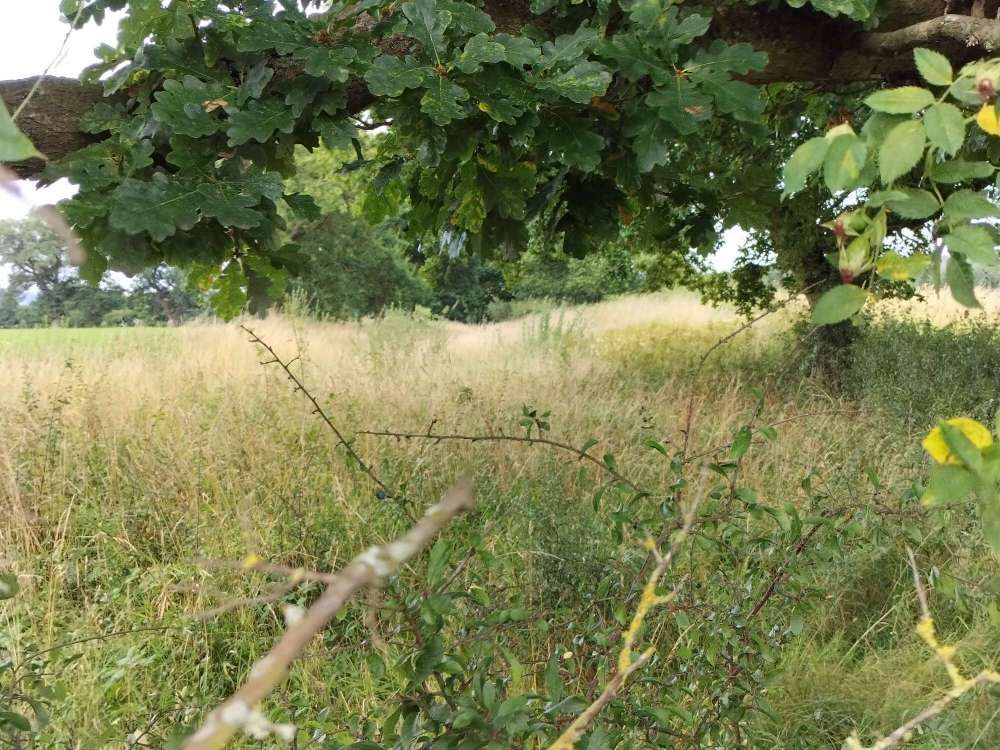
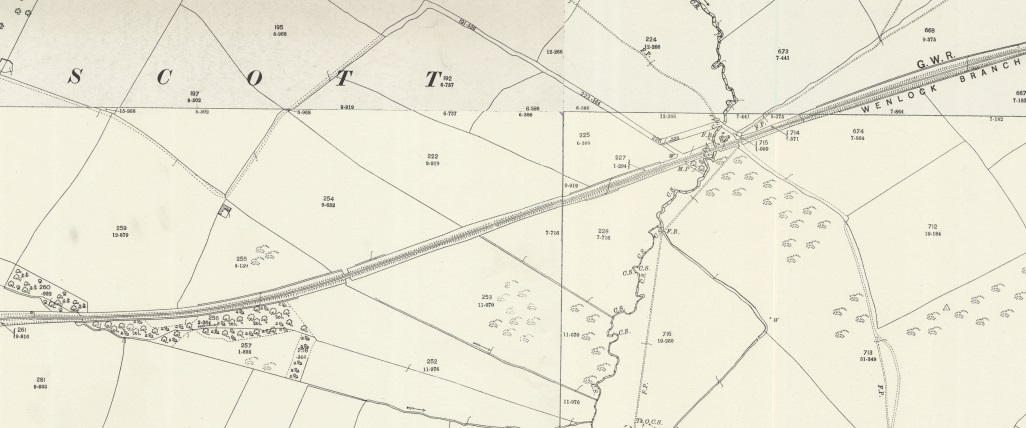
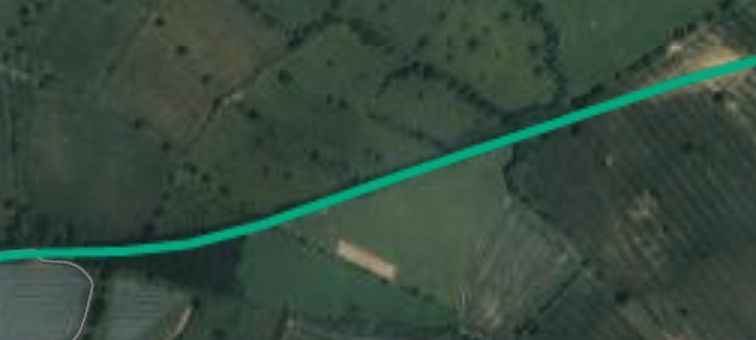
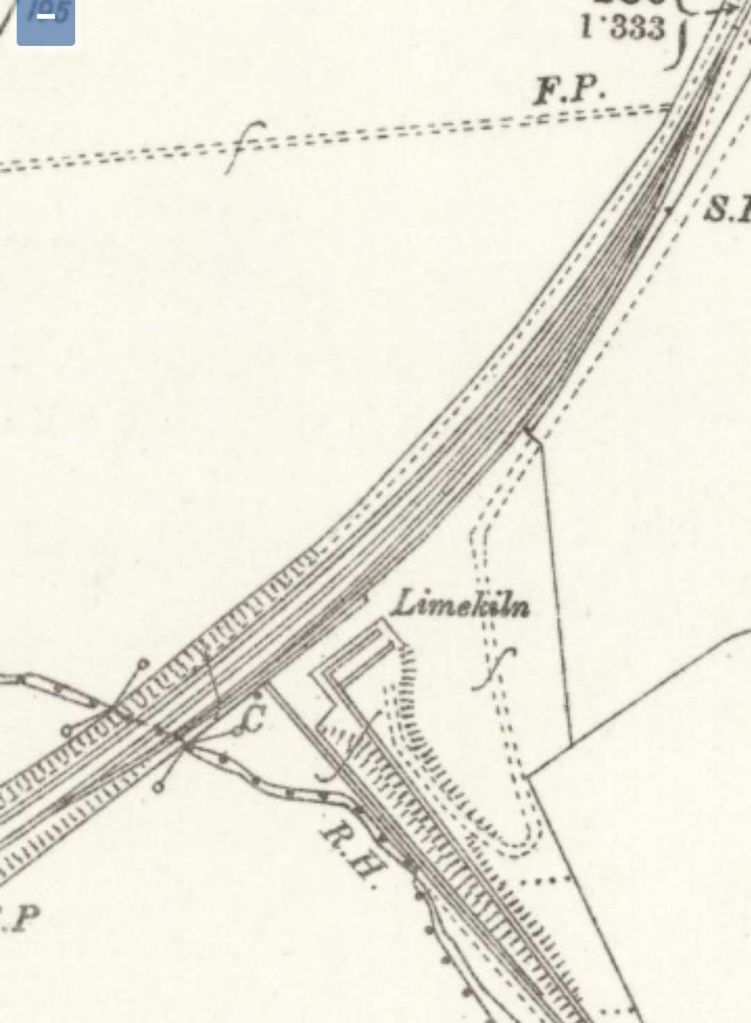
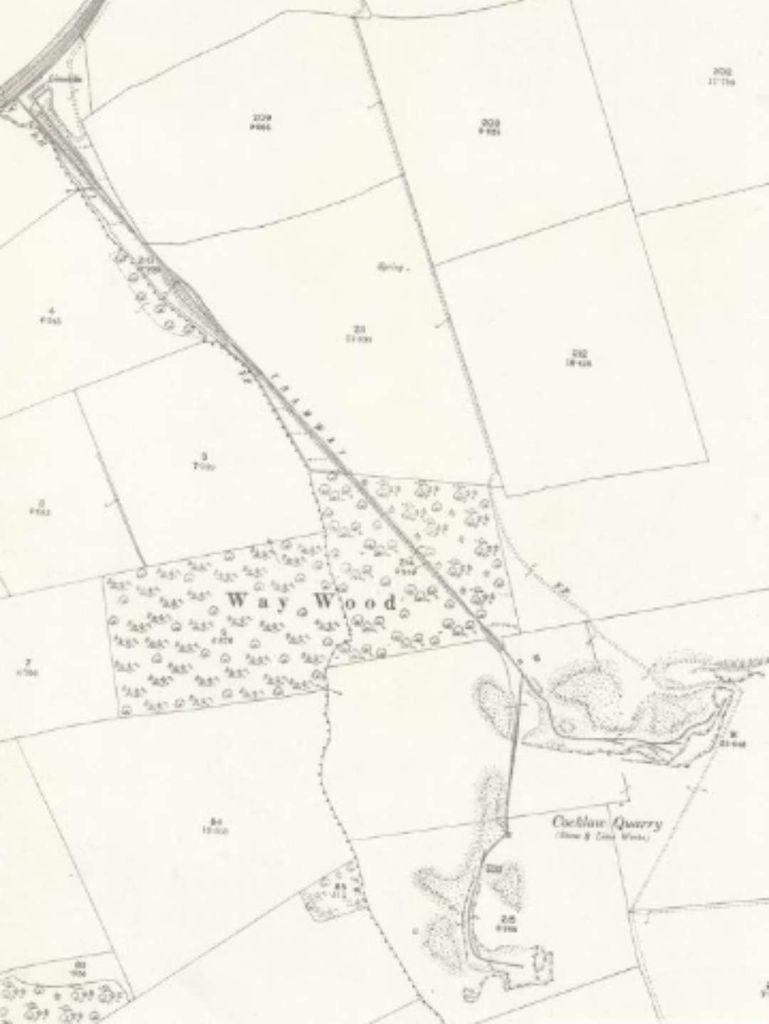
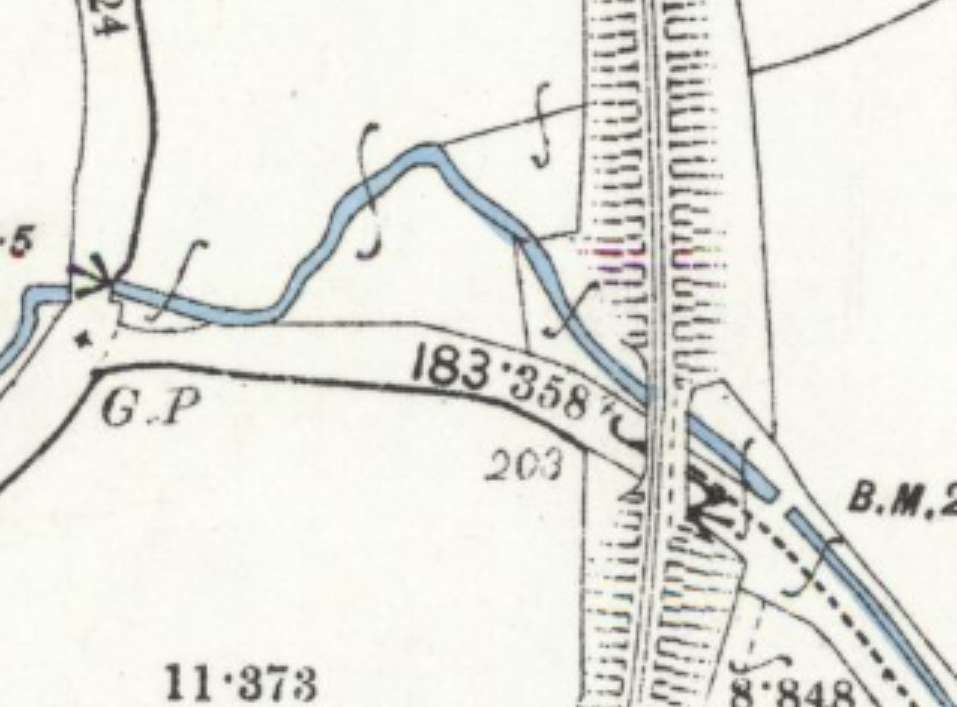
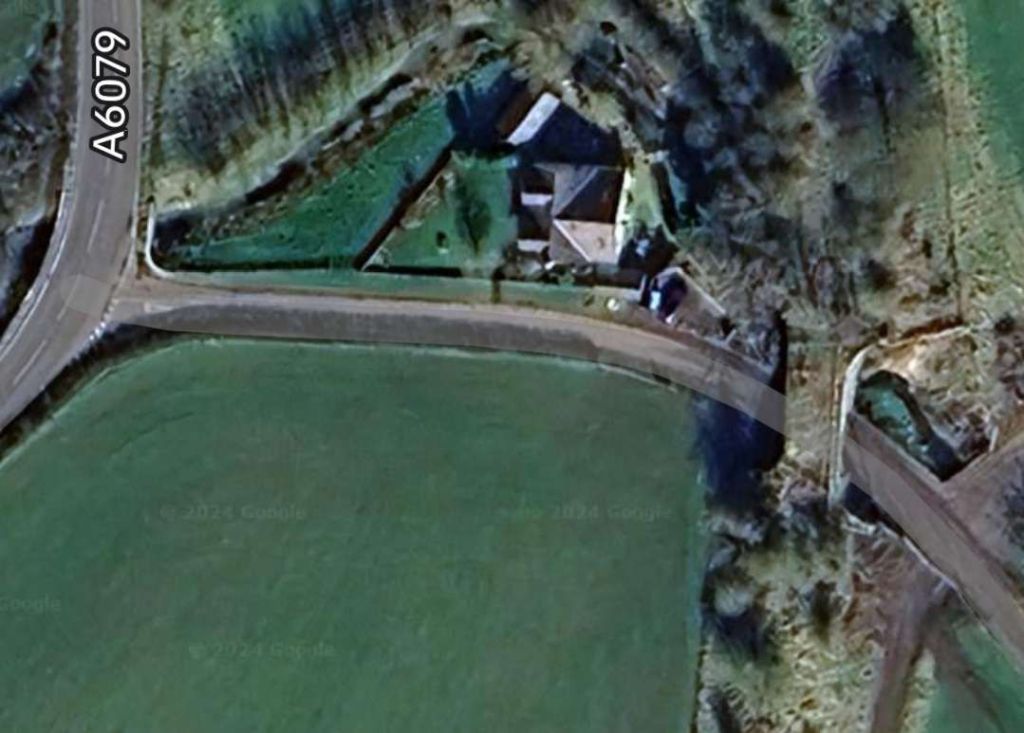
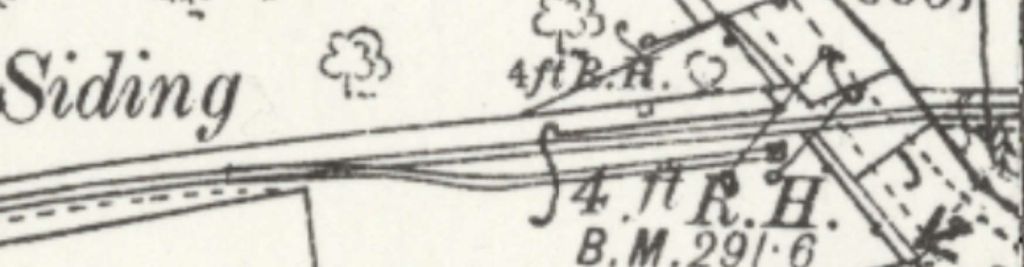
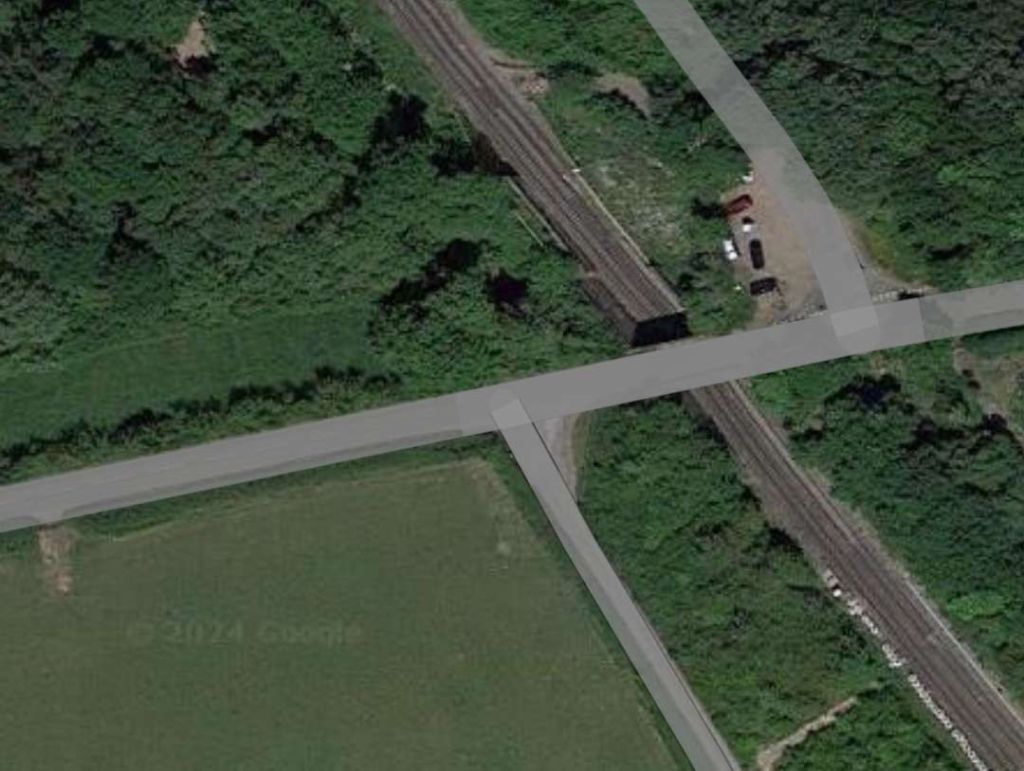
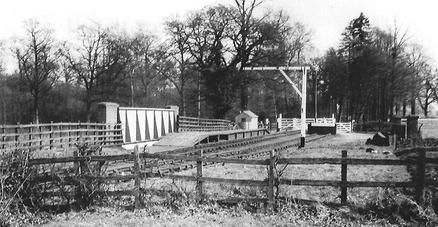
Westwood Halt in around 1960 – seen from the East. The single platform sat on the North side of the line immediately to the East of Westwood Crossing. It was not until 7th December 1935 that the Halt opened. It closed to passenger traffic on 31st December 1951. This picture was shared on the Much Wenlock Memories Facebook Group by Judith Goodman on 8th December 2020. The photographer is not known and the image is used under a Creative Commons Licence (CC BY-SA 4.0). [19]Google Maps image of the site of Westwood Halt. [Google Maps, 12th January 2024]Westwood Crossing seen from the North. The red line marks the approximate centre-line of the old railway. The Halt would have been off to the left of this image. [Google Streetview, 2009]Looking Northwest from Westwood Crossing towards the B4371. [My photograph, 12th January 2024]Looking Southeast from the location of Westwood Crossing. It is not possible to follow the route of the old railway to the West of this location as it is in private hands. To continue following the route requires a diversion along the footpath ahead, across one field to join another track and then heading back Northwest towards the olod line. [My photograph, 12th January 2024]The line leaving Westwood Crossing and heading towards Presthope. [My photograph, 12th January 2024]Westwood Crossing to the next overbridge, as shown on the 25″ Ordnance Survey of 1901. [22]Within a couple of hundred yards, trains passed Westwood Sidings. The sidings served Westwood Quarry. There were ground frames controlling access at each end of the siding. [23]
When the Wenlock Branch opened “limestone was being extracted [at Westwood Quarry] for use in the Madeley Wood Company’s furnaces. Horse-drawn tramways ran from the quarry on to a loading ramp above the sidings.” [1: p97]
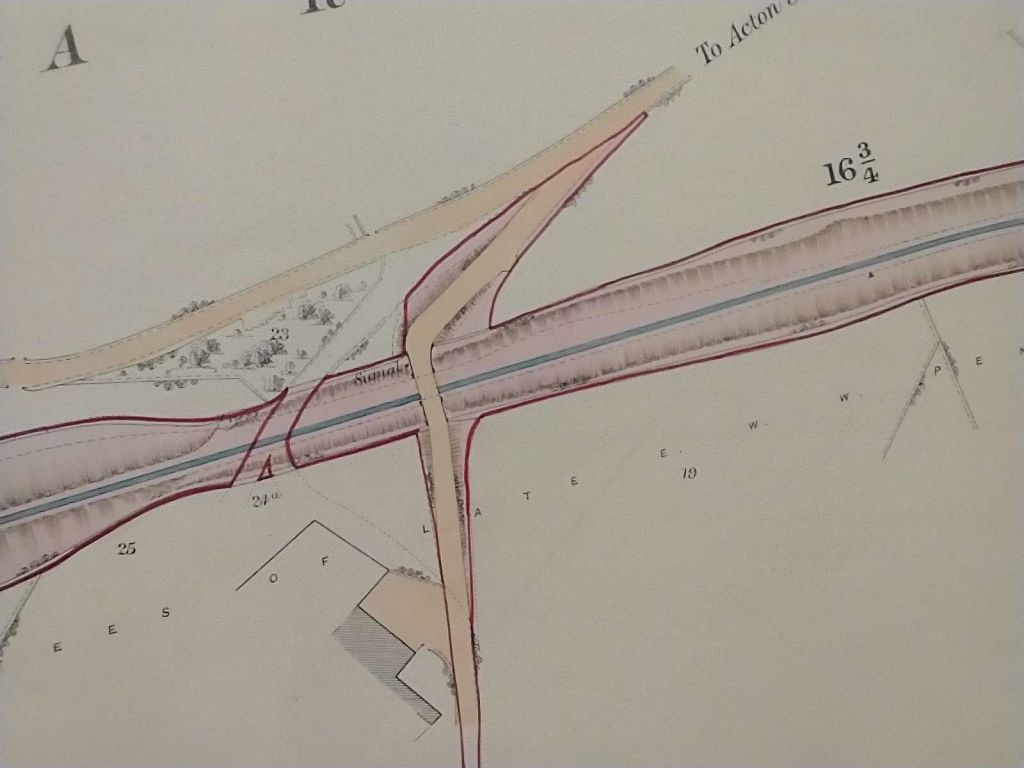
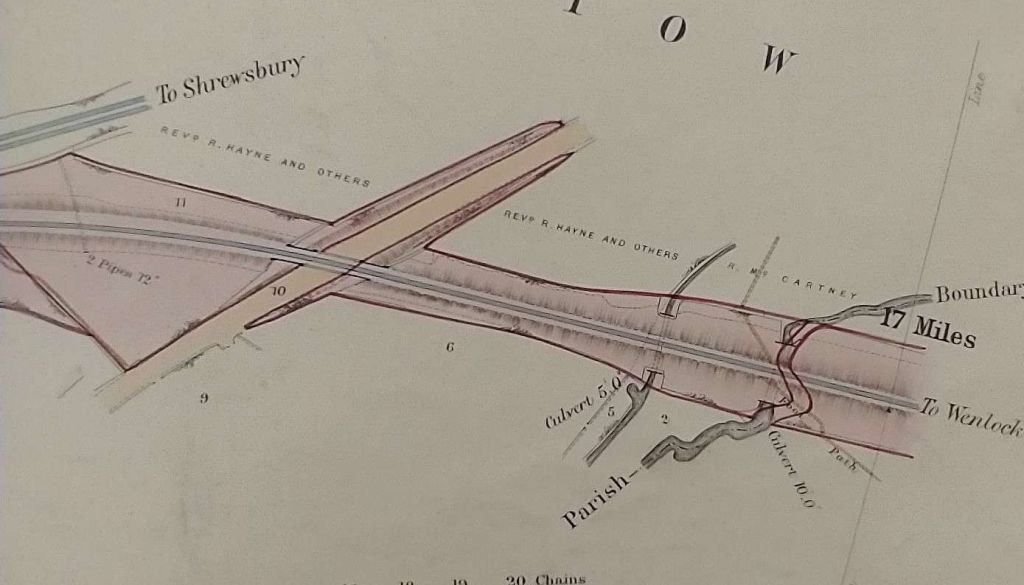
The photographs of the pre-contract drawings for the line were taken by myself and show extracts from the construction plans held in the Shropshire Archive. There is a standard charge of £10 per visit for taking photographs of their records.
The dotted lines on this sketch map are private railways. The Lilleshall Company’s main line runs from Granville and Grange Collieries in the top-right of the sketch map via Old Lodge Ironworks and Priorslee Furnaces down to Hollinswood. This sketch map was included on the Miner’s Walk website which provides information about the local area. [4]
The monochrome photographs included in this article were taken by a number of different photographers. Where possible permission has been sought to include those photographs in this article. Particularly, there are a significant number of photographs taken by A.J.B. Dodd which appear here which were first found on various Facebook Groups. A number were supplied direct by Mike Dodd, A.J.B. Dodd’s son, who curates the photographs taken by his father. Particular thanks are expressed to Mike Dodd for entering into email correspondence about all of these photographs and for his generous permission to use them in this article. [72]
The remaining maps in this article follow the Lilleshall Company’s mainline as far as Hollinswood Sidings. Those sidings sat alongside the GWR mainline from Shrewsbury to Wolverhampton and Birmingham.
Another extract from the 1901 25″ Ordnance Survey. South of the A5 the Snedshill Ironworks sidings merge with the Coalport Branch although they do so after a line leaves heading away to the Southeast, passing to the East of the tunnel portal at the bottom of the map extract.. The Coalport Branch runs to the West of the tunnel portal of the GWR/BR mainline between Shrewsbury and Wolverhampton. The Lilleshall Company mainline curves round to run parallel to the spur closest to the tunnel portal. [21]The main line of the Lilleshall System continued in a South-southeast direction, curving gradually round towards the Southeast. [25]
Photographs taken while looking at the older tramway which predated the standard gauge network can be found in the later part of my article about the old tramway from Sutton Wharf to Oakengates. Those pictures illustrate the approximate route of the standard gauge line as well as the older tramway. To access that article, please click here (https://wordpress.com/post/rogerfarnworth.com/32520). That article also shows modern photographs of the area Southeast of this location on the Lilleshall Company’s network, including the area of Priorslee Furnaces and Hollingswood Sidings as it appears in the 21st century.
This extract is a little further to the Southeast. The Coalport Branch is on the left. The GWR mainline is in cutting running from the top-left of the image to the bottom-centre. The spur from the Snedshill Sidings meets the Lilleshall Company’s mainline just right of the centre point of the image. The line curving back towards the GWR mainline but terminating just above the bottom edge of the image, was originally a tramroad through Hollinswood to Malinslee. Links to articles about the tramroads in this area can be found below.[22]A similar area as covered by the 1901 25″ Ordnance Survey extract above. This extract from the Railmaponline.com satellite imagery shows the modern A442 following the route of the LNWR Coalport Branch with the GWR mainline to the East of it. The complex arrangement of the Lilleshall Company’s railways shows that we are close to what was Priorslee Furnaces. As noted above, the line which curves away to the South from the Company’s railways is a former tramroad which fed into a network of tramroads in the Hollinswood and Malinslee area of what is now Telford. Those tramroads are covered in the linked articles immediately below. [25]Priorslee Furnaces as shown on the 1882 25″ Ordnance Survey. [51]A very similar area to that shown in the extract above, this map extract comes from the 1901 25″ Ordnance Survey. There have been some significant changes to the buildings on the site in the period from 1882 to 1901. Alterations to the railway sidings on the site either accommodate the new structures or are relatively minor in nature. [52]This railmaponline satellite image covers much the same area as the two OS Map extracts above. The sidings shown on this image are indicative rather than definitive but do give a good idea of the area covered by Priorslee Furnaces. The road which runs down through the image is a diverted version of Hollinswood Road which then becomes a footpath. It crosses the GWR Mainline using a bridge which was built at the time the railway was constructed, and then a modern footbridge over the A442. [25]
Much of the area to the Southeast of Oakengates, including Priorslee is also covered in this article:
The tramroads in the Hollinswood/Malinslee area are covered in earlier articles about the Malinslee area (below) and are illustrated in the hand-drawn map from Savage and Smith’s research which appears below:
The Lilleshall Company operated a number of steam engines which it picked up from various sources and some of which it built itself. The remainder of this article is no more than a glimpse of these locomotives on the Lilleshall Company’s network. The authoritative treatment of the motive power on the Lilleshall Company network is the book by Bob Yate, “The Railways and Locos of the Lilleshall Company.” [59]
Yate tells us that, because the Lilleshall Company’s network was extensive, it needed a considerable number of locomotives to operate it. He continues: “Much of the traffic was heavy, so it comes as no surprise to find that the company turned to acquiring former main line company locomotives for some of their more arduous duties. The total number of locomotives rose from four during the mid-1850s to eight by 1870, down to five by 1875, then six by 1886, increasing to nine in 1900 until 1920 when there were eleven. By the 1930s the number was back down to nine.” [59: p67] After WW2, numbers were reduced to five, and once closure was approaching all five were scrapped and two other locomotives were purchased.
R.F. Savage & L.D.W. Smith; The Waggon-ways and Plateways of East Shropshire; Birmingham School of Architecture, 1965. Original document is held by the Archive Office of the Ironbridge Gorge Museum Trust.
Many of the photographs taken by A.J.B. Dodd which appear in this article were first found on various Facebook Groups. A number were supplied direct by Mike Dodd, A.J.B. Dodd’s son who curates the photographs taken by his father. Particular thanks are expressed to Mike Dodd for entering into email correspondence about all of these photographs and for his generous permission to use them in this article.
The featured image above is a picture of the Pilling Pig. It was shared by Mandy Sharpe on the Visions of Trains and Tracks of the North West of England Facebook Group on 19th August 2017. [6]
One of six postcards produced by Dalkeith. This card shows the full length of the line. [16]
In the past, I have written two articles about the Garstang to Knott End Railway, those articles can be found on these two links:
Reading some back copies of Railway Bylines, I came across an article in the March 2002 edition of the magazine about this short rural line. The article was written by R. Supwards with photographs by Douglas Robinson.
The line had a hesitant start and always struggled financially, but it remained independent until being taken over by the LMS at the Grouping but lost its passenger service in 1930. It was closed to goods traffic beyond Pilling at the end of 1950. In the summer of 1963, the line beyond Garstang Town was closed. The remainder of the branch did not last long. It was closed by the end of August 1965.
A ‘Cauliflower’ 0-6-0 locomotive in LMS colours sits at Knott End before setting off towards Pilling and Garstang. This image was shared by Steve Scott on the Visions of Trains and Tracks of the North West of England Facebook Group on 27th August 2017. Permission to use here has been applied for. [7]One of six postcards produced by Dalkeith. The station at Knott End is shown from two different angles on the right of the card. The station layout is shown on the left. [16]
Supwards’ article highlighted the different locomotives used on the line: “until about 1950 the engine was usually a ‘Cauliflower’ 0-6-0 from Preston.” [1: p196] These were followed by “Ivatt Class 2 2-6-0s, with the line being worked on the ‘one engine in steam’ principle. On weekdays the ‘Pilling Pig left Preston (North Union Yard) a little before midday and returned from Pilling at 3.10pm, whereas on Saturdays it left Preston at 7.37am and started back from Pilling at 10.17am. The return trips went to Farington Junction in Preston.” [1: p196]
By the mid-50s, the Ivatt locos were replaced by ex-L&YR 0-6-0s, which in turn were soon replaced by ex-LNWR 0-8-0 locomotives and then, by the late 1950s, Stanier Black 5 4-6-0s.
Supwards’ also records enthusiasts visits to the line. The first he records was on 1st May 1954 (when a joint Stephenson Locomotive Society/Manchester Locomotive Society tour visited Pilling as part of a tour of several ‘goods only’ lines in the area, hauled by 2-6-4T No.42316). [1: p196]
Another railtour took place on 29th May 1958 (a Manchester Locomotive Society brake van trip, which comprised a single brake van attached to the usual branch working in the care of an LMS Black 5 Class 4-6-0 locomotive, No. 45438). [1: p196] By that time Black 5s were the standard motive power on the line and remained so until its closure. [1: p196/198]
Various sites along the length of the branch line. This is another of the six postcards produced and sold by Dalkeith. [16]The Pilling Pig crossing the canal bridge at Nateby near Garstang in the mid-20th century. This image was shared on the Visions of the Trains and Tracks of the North West of England Facebook Group by Ian Gornall on 21st September 2021. It is used by kind permission from Ian Gornall. [3]
Supwards’ short article is supported by a series of photographs taken by Douglas Robinson which are not reproduced here for copyright reasons.
An excellent book about the line was written by Dave Richardson, published by the Cumbrian Railways Association. [4]
The Pilling Pig: A History of the Garstang & Knott End Railway. [4]
There is a superb set of photographs of the branch collated by Paul Johnson on smugmug.com. [5]
Locomotives
As promised in an earlier article about this line, here are some details of the locomotives that served the line in its early years before it was absorbed by the LMS. The basic details come from the Wikipedia article about the line: [8]
1870: Black, Hawthorn 0-4-2ST Hebe
“The line opened on December 5, 1870, running with a single locomotive, Black Hawthorn 0-4-2ST Hebe, passengers boarding any point along the line by request. … In 1872, Hebe broke down, with all services suspended, and soon the company was in rent arrears. The locomotive was repossessed, and for the next three years only occasional horse-drawn trains were run.” [9]
1874: Manning Wardle 0-4-0ST Union
“Services resumed in 1875 using a new locomotive, Manning Wardle 0-4-0ST Union.” [9]
In the late 1870s, Farmer’s Friend, was given the nickname ‘Pilling Pig’ “because of the squeal made by its whistle. This name became colloquially applied to all of the line’s locomotives and even the railway itself.” [9] This locomotive was operational until 1900. [11]
Hudswell Clarke 0-6-0ST ‘Farmer’s Friend’. This is an extract from one of six postcard images printed and sold by Dalkeith. [16]
1885: Hudswell Clarke 0-6-0ST Hope
This locomotive had larger cylinders than Farmer’s Friend (13×20 in rather than 11×17 in) but operated at the same boiler pressure (120 psi). [12]
1897: Hudswell Clarke 0-6-0ST Jubilee Queen
Hudswell Clarke 0-6-0ST ‘Jubilee Queen’. This is another extract from one of six postcard images printed and sold by Dalkeith. [16]
This locomotive had larger cylinders than Hope (15×20) and operated at a higher boiler pressure (140 psi). [12]
1900: Hudswell Clarke 0-6-0ST New Century
This is an enlarged extract from one of the six Dalkeith postcard images. It shows ‘New Century‘ at Garstang Engine Shed. [16]
This loco was a sister loco to Jubilee Queen, and is recorded by Wells [14] as having been purchased at the same time.
1908: Manning Wardle 0-6-0T Knott End
Hudswell Clarke 0-6-0ST ‘Knott End’. This is a third extract from one of six postcard images printed and sold by Dalkeith. [16]
This locomotive had 14×20 in cylinders and operated at 150 psi. [12]
1909: Manning Wardle 2-6-0T Blackpool
Manning Wardle 2-6-0T ‘Blackpool’. This is a fourth extract from one of six postcard images printed and sold by Dalkeith. [16]
This loco had 16×22 in cylinders, operated at 150 psi, and had larger diameter driving wheels (48 in). It was fitted with Isaacson’s patent valve gear. [12][13][14] It was Works No. 1747. Isaacson, together with Edwin Wardle and Charles Edward Charlesworth took out payments for the valve gear in 1907 (patents No’s. 17533 and 27899 of 1907). Atkins is quoted by steamindex.com as saying that “The 2-6-0T was rare on British standard gauge railways. The only other was on the Wrexham, Mold and Connahs Quay Railway – a rebuild from an 0-6-0.” [15]
Other Rolling Stock
Railmotor
In 1920, just a couple of years before the line was absorbed by the new LMS, a railmotor was hired by the G&KE from the LNWR. It was still running on the line in March 1930 when the passenger service ceased. [22: p22] It looked after the majority of passenger services on the line. “Seating 48 third class passengers, this vehicle originally operated in LNWR colours, but was later repainted in LMS red with the number 10698.” [22: p24-25] The last passenger service actually ran on Saturday 29th March, although the formal closure took effect before traffic started on Monday 31st March 1930. [22: p25]
Ex-LNWR Railmotor, LMS No. 10698, paused at Nateby whilst working a passenger service between Knott End and the main line at Garstang & Catterall. No. 10698 was renumbered as 29988 in 1933 and became the last of its type in service running through the war until withdrawal in 1948. (c) Knott End Collection. The photograph is used here by kind permission and can be accessed on the Railscot website, here. [23]
Coaches
The six postcards published by Dalkeith [16] include one showing coaching stock on the line. It is shown below:
Another of the Dalkeith postcards. as with the other postcard images, this appears to be a reproduction is of a Garstang & Knott End Railway poster from 1908. [16]
When the full line was completed to Knott End, eight bogie coaches were supplied by Birmingham Carriage and Wagon Co. Ltd. Since the bogie coaches had no guards compartment they originally worked with the goods brake vans, but in 1909 two new passenger brake vans were introduced.
After the removal.of passenger service from the Garstang to Knott End (G&KE) Railway, it seems that one or two items of rolling stock were transferred to the Wanlockhead branch of the Caledonian Railway in the 1930s. That line was originally the ‘Leadhills and Wanlockhead Light Railway’. [17] A thread on the Caledonian Railway Association Forum [18] explores what is known by members of that Forum.
Apparently, “In the early 1930s a composite coach with end roofed platforms was transferred from the Garstang and Knott End Railway to the Wanlockhead branch. Its LMS number was 17899.” [18]
It appears that “a G&KE 4 wheeled passenger brake van transferred at the same time.” [17]
It was scrapped at the same time as the bogie coach when the Wanlockhead line closed in 1939.[20]
There was an article about the construction, in 7mm/ft (O Gauge), of the two carriages in Model Railway News in October 1959. That article is produced in full below. [19]
A three-page article by N.S. Eagles in Model Railway News, October 1959 features his models of the two coaches. [19]3D images of the two coaches produced for 3D printing. [20]
Apparently, 6 of the 8 G&KE coaches “fetched up at the LMS Carriage depot at Slateford, where they were used as offices and stores until at least 1959.” [17]
Wagons
One of the postcards in the Dalkeith series shows wagons used on the line. One of these is covered above. There were two dedicated coaching brake wagons. In the image below the goods wagons are in grey and the coaching brake in deep red. [16]
The goods wagons on the line are featured on this last image, another of the Dalkeith postcard images. [16]
Drawings of G&KE Railway wagons can be found here. [21]
References
R. Supwards and Douglas Robinson; A Pig of a Job; in Railway Bylines; The Irwell Press, March 2002, p196-200.
Frank K. Walmesley; The Garstang & Knot-End Railway; in The Railway Magazine Volume 22, December 1959, p859–864
Jeffrey Wells; The Pig and Whistle railway: a Lancashire backwater; in BackTrack Volume 7, September 1993, p257–265; a summary is provided on steamindex.com: https://steamindex.com/backtrak/bt7.htm#1993-5, accessed on 9th December 2023.
Philip Atkins; Blackpool – Britain’s most obscure locomotive; in Backtrack Volume 10, January 1996, p40-42; a summary is provided on steamindex.com: https://steamindex.com/backtrak/bt10.htm#10-40 accessed on 9th December 2023.
This article follows on from three other articles which covered the Wellington to Severn Junction Railway and which reached as far along the line as Buildwas. Those articles can be found on these links:
In this article we follow the line from Buildwas to Much Wenlock which was initially the Much Wenlock and Severn Junction Railway, “established by the Much Wenlock and Severn Railway Company. The company itself was formed on 21 July 1859. The railway was later constructed between 1860 and 1862 forming part of the Wellington to Craven Arms Railway.” [1]
The Wellington to Craven Arms Railway was formed by a group of railway companies that eventually joined the Great Western Railway family, and connected Wellington and Shifnal with Coalbrookdale, Buildwas, Much Wenlock and a junction near Craven Arms on the route between Shrewsbury and Hereford. It’s purpose was particularly focussed on the iron, colliery and limestone industries around Coalbrookdale.
The line was built over a number of years by what started out as a number of different independent ventures:
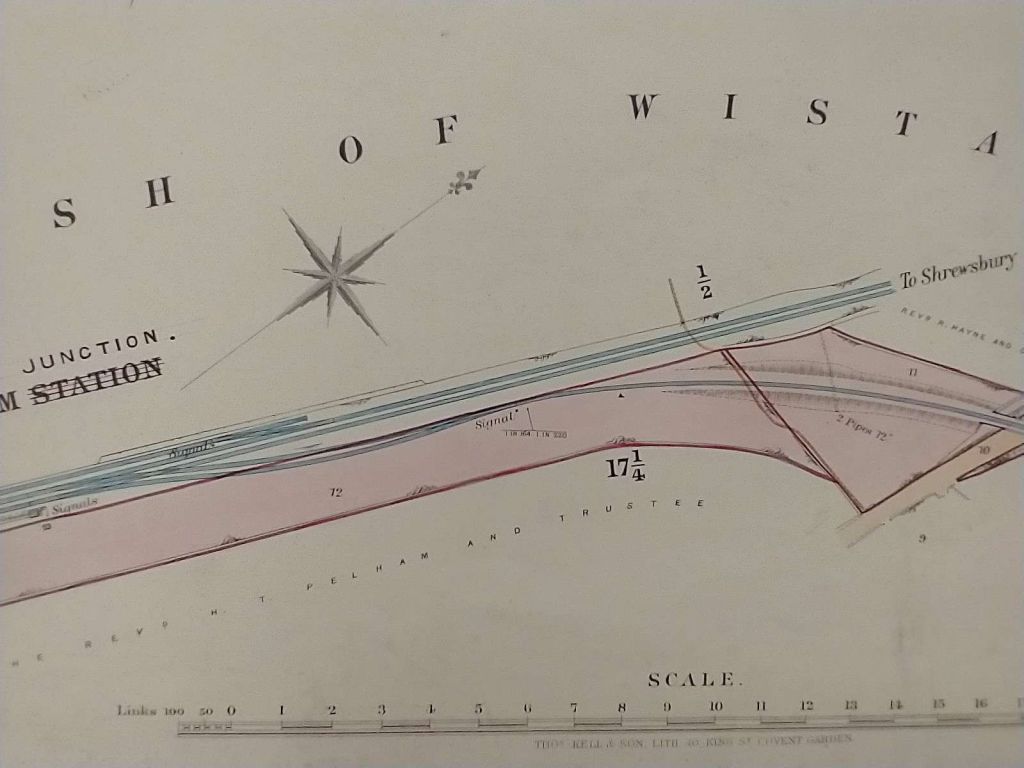
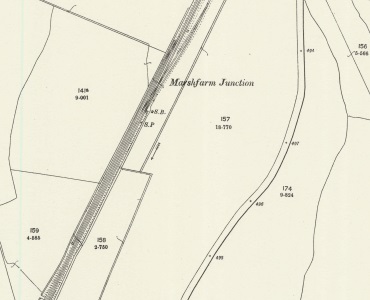
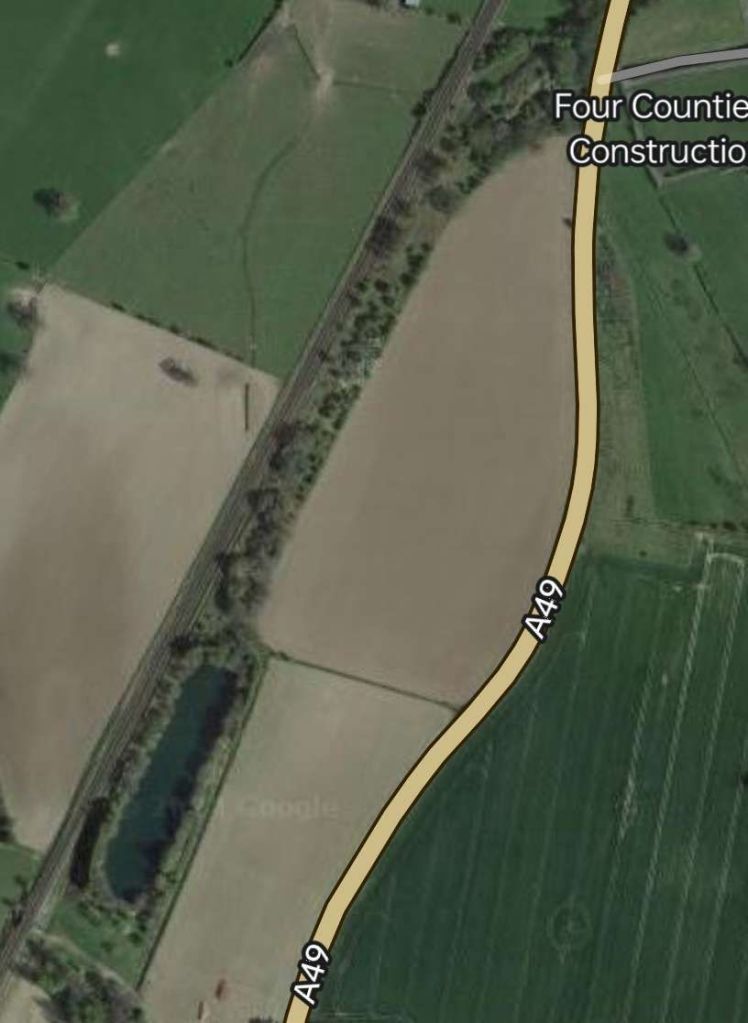
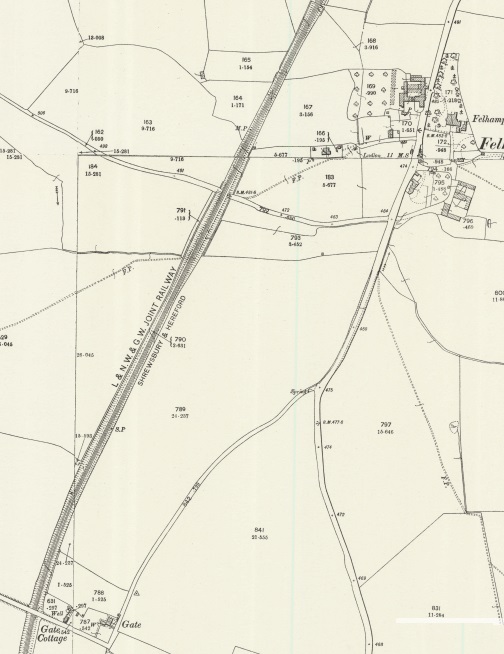
the Wenlock Railway from Much Wenlock to Marsh Farm Junction, north of Craven Arms. [2]
“The Wenlock branch, with its four original constituent companies passed through areas as complex and diverse as its original organisation: from the slag tips and pennystone pit mounds of the East Shropshire coalfield to the wooded crest of Wenlock Edge and Ape Dale. The one central strand however on which the companies focused their attention was the ironworks nestling in the tree-lined Coalbrookdale valley, the success of their venture depending solely on the support which they would receive from the Coalbrookdale Company.” [61: p5]
The railways were opened to traffic between 1854 and 1867. The railways local to Coalbrookdale were heavily used by mineral traffic; the hoped-for trunk hauls to and from South Wales via Craven Arms were not realised. Passenger traffic was never heavy, and was sparse between Much Wenlock and Craven Arms. Passenger traffic closures took place from 1951 and ordinary goods traffic closed down in the 1960s. Ironbridge B Power Station generated significant volumes of merry-go-round coal traffic between 1967 and 2015. The line is now entirely closed to ordinary traffic, but the heritage Telford Steam Railway operates on a section between Lawley and Doseley. [2]
The immediate location of the railway station at Buildwas disappeared under the redevelopment of the power station.
These first few maps are taken from StreetMap.co.uk [17] and show the route of the railway South from Buildwas through Much Wenlock as it appears on 21st century Ordnance Survey mapping. …..
The footpath shown on the map extract above was accessible from the old station access road as far as the field boundary on the North side of railway land but not beyond that point. A public footpath runs East-West across the field shown to the West of the access road and to the South side of the old railway. In 2023, the field was in use to grow potatoes. Walking West along that path brings one to the first remaining significant structure on the line to Much Wenlock. The map extract below shows the line curving round to the South before crossing a farm access road.
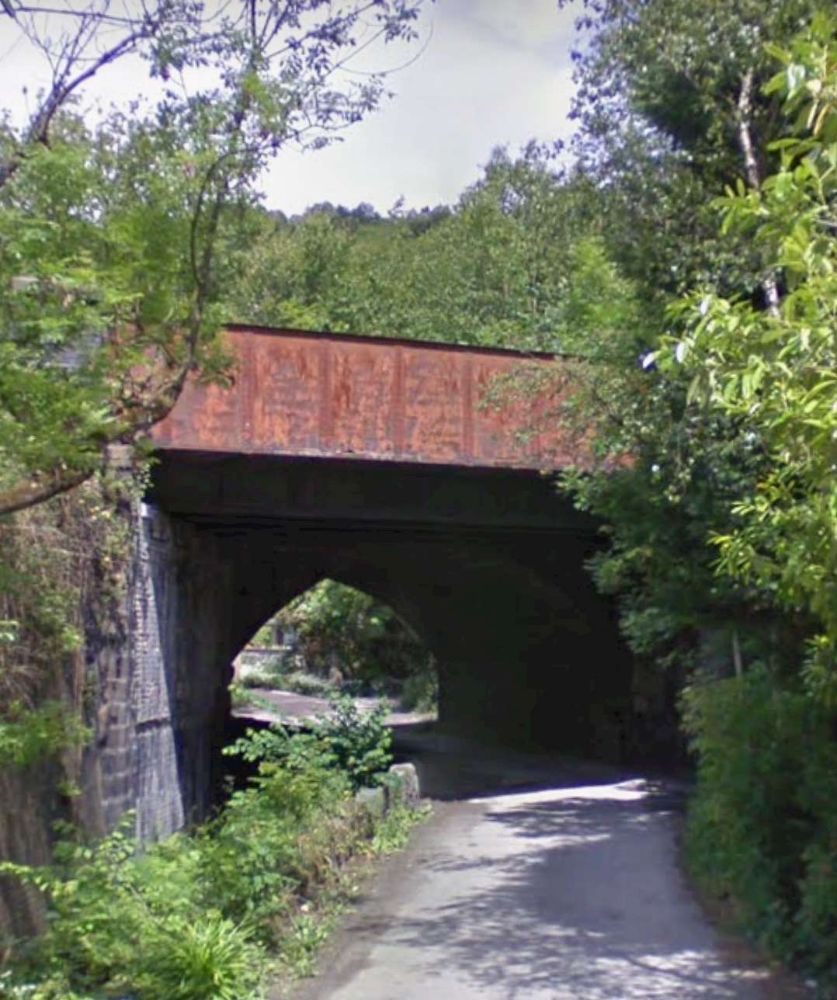
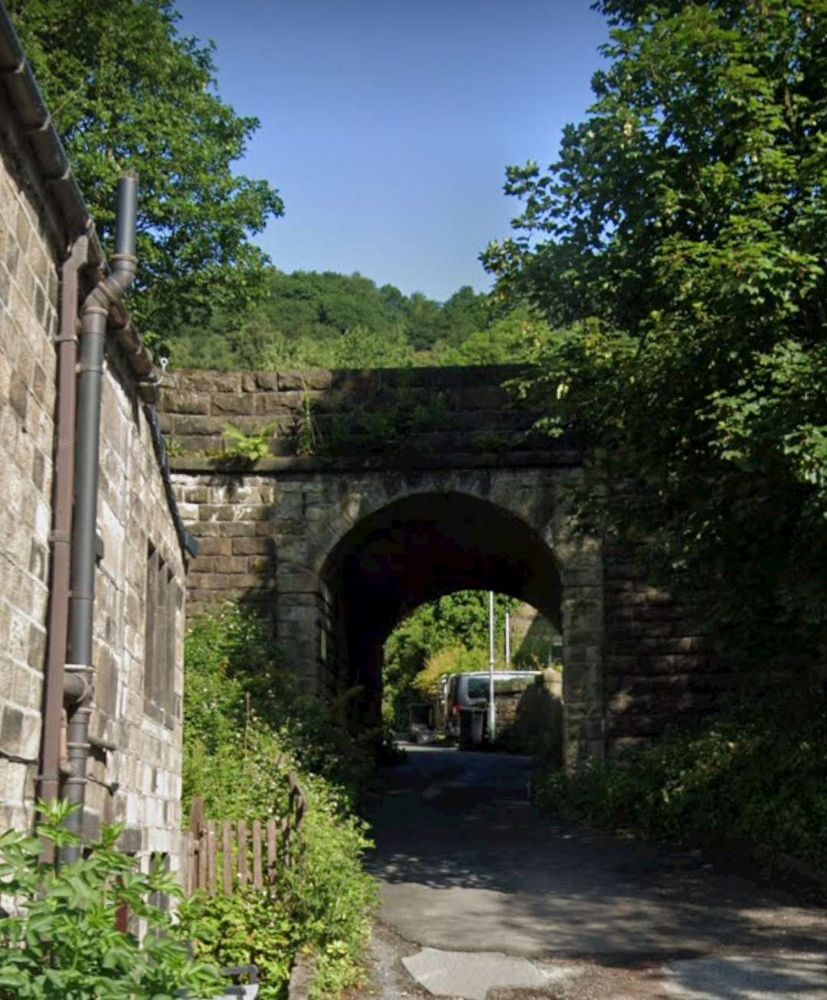
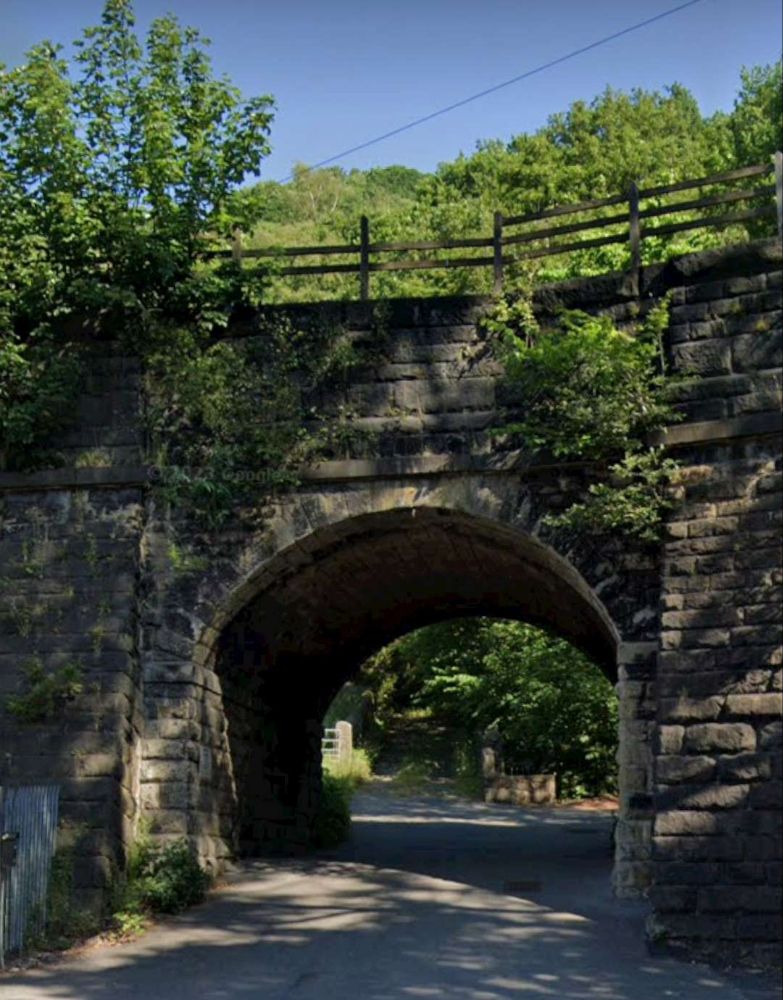
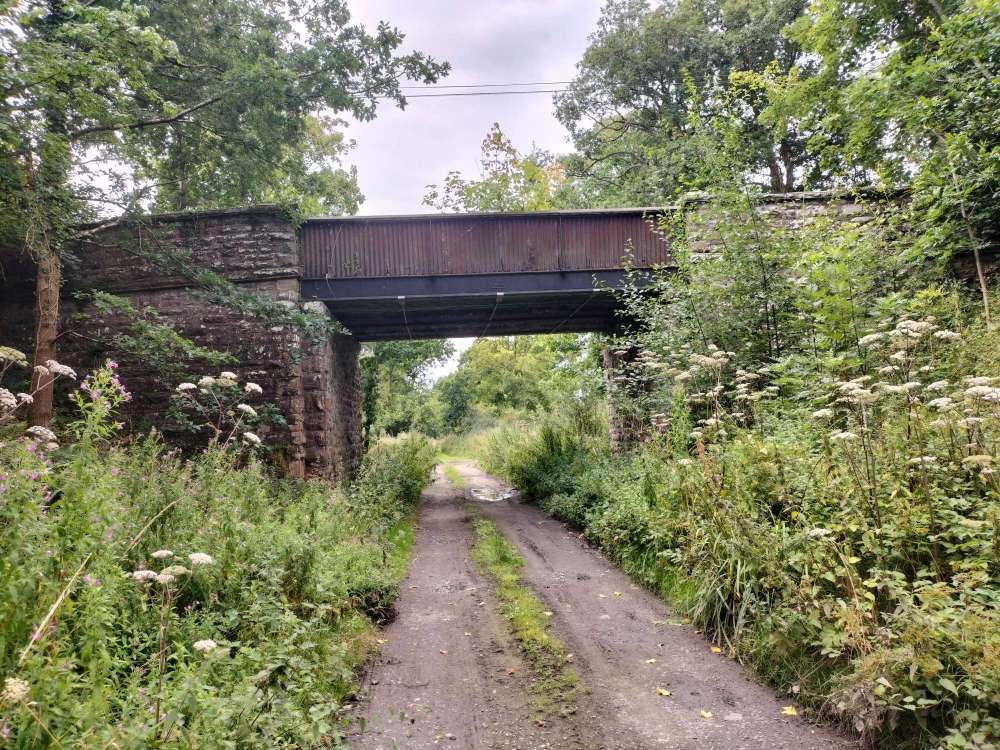
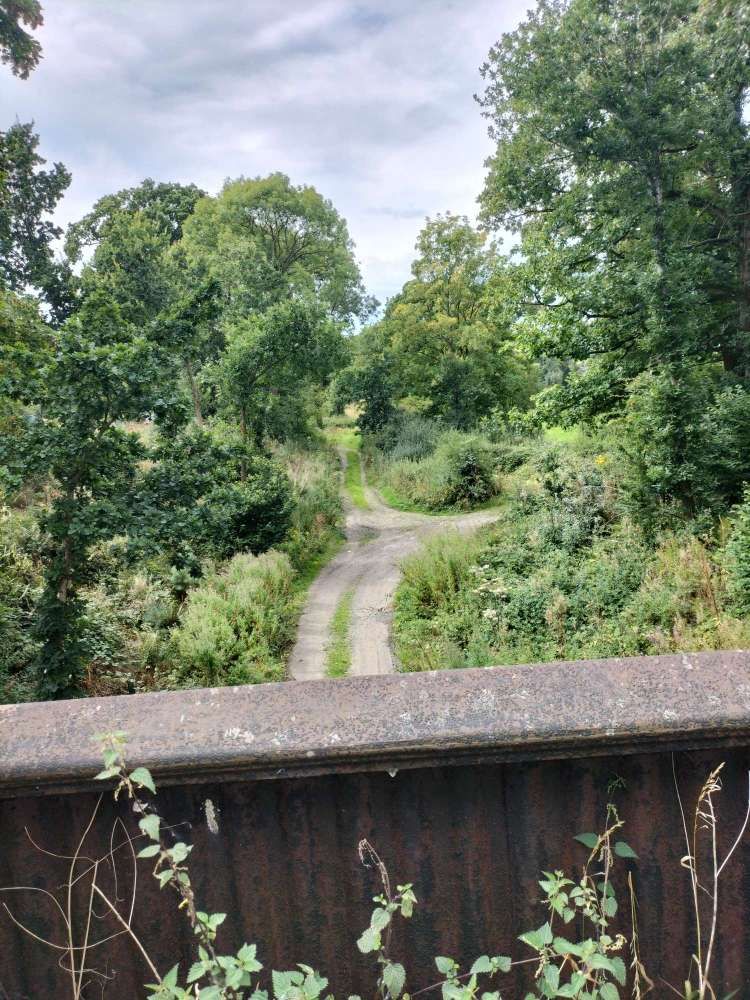
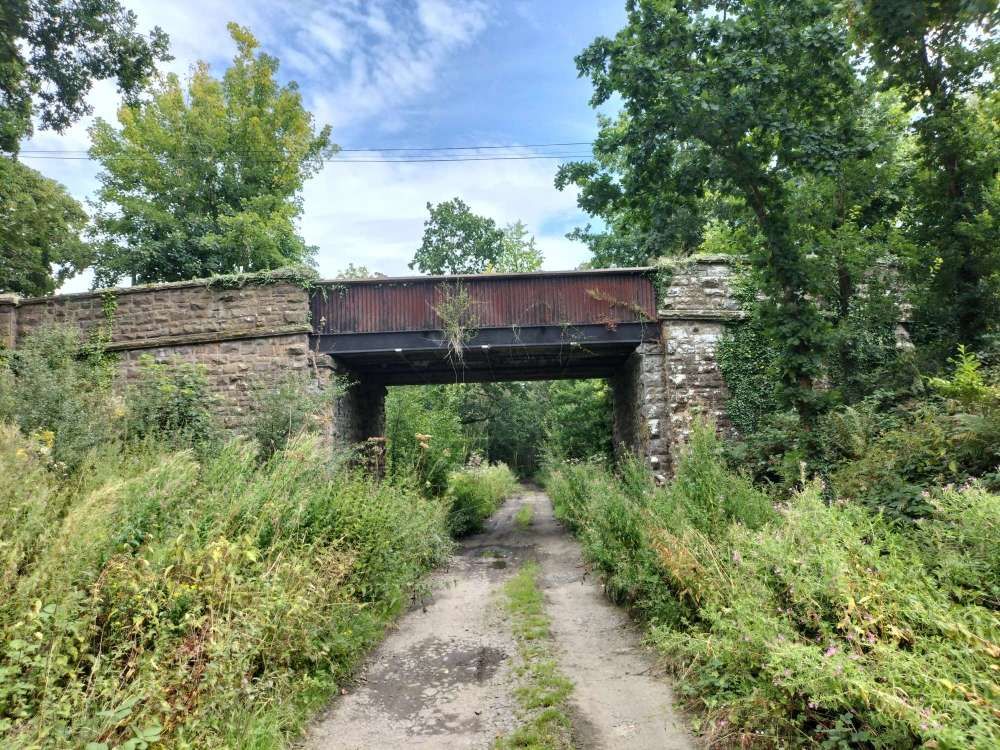
A steep track alongside the underpass leads South-southwest alongside the old railway route to allow field access and it is possible, at the top of that access road, to step onto the old railway formation and follow it for a short distance to the Southwest through increasingly dense vegetation. Walking Northeast along the formation over the accommodation bridge was not feasible because vegetation obstructed the route over the bridge.
As the picture above shows, the trackbed from a point just to the West of the accommodation bridge is inaccessible. The next location where access is possible is at the next minor road on the East side of the A4169.
After clearing the bridge the old line was on embankment for a short distance with the minor road rising to the same height and continuing then on an upward grade. The next two pictures show the old railway formation at the point where the minor road and the old railway formation were at a similar height.
Farley Halt was opened in 1934 and closed in 1962. It had a short timber edged platform with a wooden shelter on the west side of the line behind the former Rock House Inn. The halt could be accessed by steps down from a road over bridge to the south. On the other side of the overbridge was an access siding to Bradley Rock Quarry. The halt has been demolished, but its nameboard can be found displayed 400 metres to the north of the site on a stone barn adjacent to the A4169 Much Wenlock Road. [28]
This next extract from the 1901/1902 Ordnance Survey takes the line as far as Farley Halt which was just on the North side of the road overbridge shown close to Rock House Inn. On the South side of the bridge were the sidings which served Bradley Rock Quarry. It is worth noting the tramways/tramroads associated with the Quarry and the incline and lime kilns to the East. Landowner Liquid Fertilisers now occupy the site of the sidings. [29]This map extract shows the full length of the sidings and most of the tramway/tramroad network on the East side of the old railway as surveyed in 1901. [30]This RailMapOnline extract covers the same length of line as the two map extracts above. [16]Farley Halt before the closure of the line to Much Wenlock. The access road bridge is visible beyond the locomotive. The shelter was made of timber, as can be seen, was the platform edge. [39]
Adrian Knowles
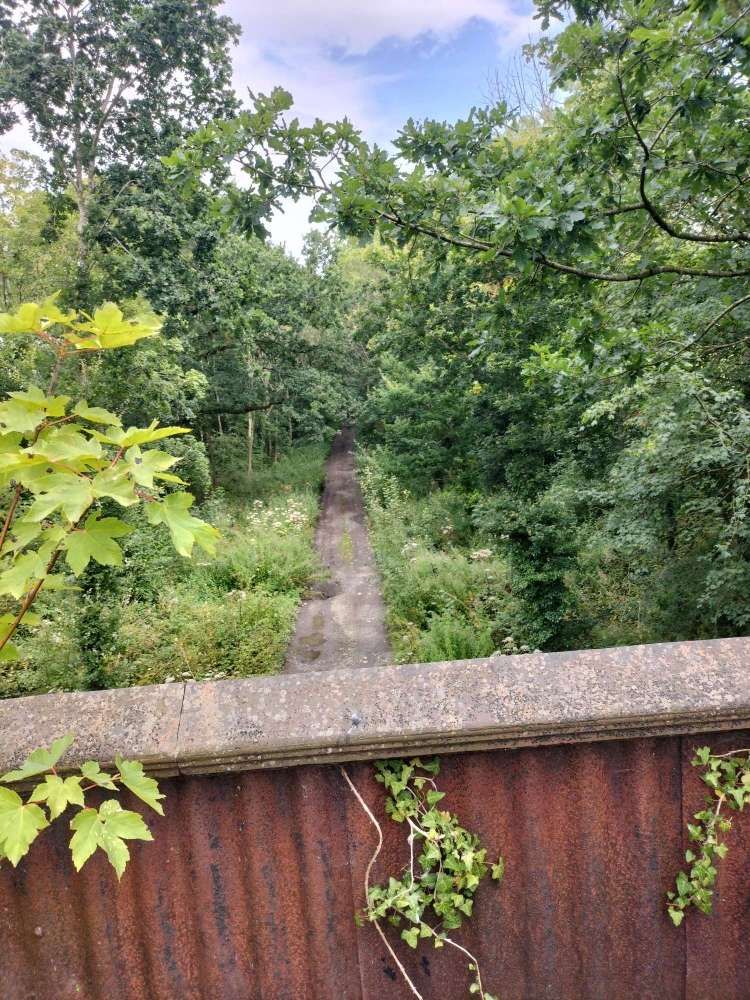
The building shown in this photograph used to Rock House Inn. The railway ran to the East of the Inn and Farley Halt was to the East of the Inn and to the North of the access road to Bradley Rock Quarry. Steps led down from that access road to the wooden-platformed halt. [Google Streetview, June 2022]The Northern Parapet of the bridge over the old railway at the entrance to what was Bradley Rock Quarry. Farley Halt was on the North side of the bridge. [Google Streetview, June 2022]Looking North over the Northern parapet of the bridge. Farley Halt’s platform was on the right-hand (West) side of the line. [My photograph, 19th August 2023]Looking South over the Southern parapet of the bridge towards Much Wenlock. The railway formation between here and the next minor road is overgrown. Bradley Rock Sidings were alongside the railway on this side of the bridge. [My photograph, 19th August 2023]
On the South side of the accommodation bridge were Bradley Rock Sidings. They can be seen clearly on the precontract plan below.
Bradley Rock Quarry appears to have been a relatively significant operation at the turn of 20th century. The Quarry is also known as Farley Quarry and it is under this name that more details can be found online. Much Wenlock is situated in the area of a Limestone outcrop. Kent Geologists Group comment on the Quarry: “The strata exposed in Farley Quarry consist mainly of Wenlock Reef Facies interbedded with nodular and tabular limestones of Silurian age and display clearly the particular feature known as “ball stones”. In the deeper parts of the quarry the strata gradually pass downwards into the Farley member. … The Wenlock Series was subdivided by Bassett et al (1974) into bio-zones based on graptolite fauna and the Farley Member is placed at the top of the Coalbrookdale Formation. Within the Coalbrookdale formation, the uppermost mudstones of the underlying Apedale strata grade upwards over some ten metres into an alternating sequence of grey, shaley mudstones and thin, nodular, buff to blue-grey limestones – the Farley Member.” [31]
It is worth pausing our journey along the Much Wenlock & Severn Junction Railway to wonder what might have been the way in which stone and lime from Bradley Rock Quarry was exported to the probable primary users along the River Severn and to its immediate North. There appears to be no evidence of a tramway along the line of the Much Wenlock & Severn Junction Railway. This suggests that transport from the quarry followed one of two possible routes. The first option was to use the old road from Much Wenlock to Buildwas, and that would have been the original route used. An alternative option was to gain access in some way to the Gleedon Hill Tramroad. John Wooldridge tells us about the tramways/tramroads which served this area. [34]
“In the early 18th century Abraham Darby brought Wenlock stone for iron smelting in Coalbrookdale. As the local iron industry expanded, quarries between Much Wenlock and the River Severn were acquired by ironmasters operating in the southern part of the East Shropshire coalfield. The Wenlock-Buildwas road (now A4169) led to a wharf on the River Severn downstream (East) of Buildwas bridge from where stone was carried downriver to the ironworks. In 1780 William Ferriday of Lightmoor leased stone quarries near Gleedon hill and the Coalbrookdale Company leased quarries nearby. In 1800 William Reynolds leased quarries at Tickwood and Wyke. In the early 19th century the Madeley Wood Company succeeded to the Wenlock quarries of Richard and William Reynolds (probably the quarries at Tickwood and Wyke) and also to the Coalbrookdale Company quarries (probably near Gleedon Hill). The late 19th-century decline of Shropshire’s iron industry curtailed demand for Wenlock stone and Gleedon Hill quarries closed between 1882 and 1901.
The first stone carrying railway may have been built some time after 1800 – the date when William Reynolds took a lease on quarries at Tickwood and Wyke – to transport stone north eastwards, probably to a Severnside wharf on the Buildwas-Benthall boundary (perhaps the area now occupied by Buildwas power station). This railway had gone by 1833 and I have found no other reference to it, nor indeed any trace of it on the ground. Between 1824 and 1833 the Madeley Wood Company built a railway north from Gleedon Hill to a Severnside wharf [a short distance] upstream (west) of Buildwas bridge. In 1862, mainly to improve the transport of limestone to the Severn, and of coal from there to the kilns at Much Wenlock, a steam railway was opened from Buildwas to Much Wenlock [35].” [34]
The railway built by the Madeley Wood Company between 1824 and 1833 was probably the route which was known as the Gleedon Hill Tramroad. This did not follow the valley in the way that the later railway did but ran South from wharves on the River Severn to the West of Buildwas. Bertram Baxter noted that this was about 1.75 miles in length. [34]
The route of the tramway can be followed on the 25″ Ordnance Survey of 1881/1882. Doing so, is beyond the scope of this article but one extract from the 1881/1882 Ordnance Survey will illustrate its relative proximity to the Bradley Rock Quarry.
It should be noted that, while there is clear evidence for the existence of the Gleedon Hill Tramroad and of the red line drawn onto this extract from the 25″ 1881/182 Ordnance Survey being correct, the suggested possible tramway routes are speculative. They do illustrate, however, that they were possibly used to access the Much Wenlock Road by the owners of Gleedon Hill Quarry before the construction of their tramroad. It is possible that they were also able, later, to take materiel from Bradley Rock Quarry to the Gleedon Hill Tramroad. To be able to firm up this possibility, further research would be required. [36]
Adrian Knowles, in his excellent book about the line, “The Wellington, Much Wenlock and Craven Arms Railway, that quarrying ceased at the Bradley Rock Quarry in 1927, “and this ended a quaint tradition. Each morning, just before 10.00am, the quarry timekeeper had stood at the connection to Bradley Sidings from where the crossing keeper’s cottage at Farley could just be seen down the line. The crossing keeper would stand at the door with his arm raised and at the instant he dropped his arm the quarry man would know that the Greenwich time signal had been relayed by telephone. Thus, for many years, railway time was quarry time.” [40: p105]
Apparently, “The redundant quarry buildings were later purchased by the Midland Counties Dairy for conversion to a creamery, mainly engaged in cheese production, which opened in April 1934 under the name ‘Dingle Dairy’. Bradley Sidings were left intact but were seldom used as the Midland Counties Dairy operated its own lorries to collect milk from surrounding farms and despatch the finished cheeses. Even the small tramway, which ran into the old quarry from Bradley Sidings, was left in place but was not used.” [40: p105]
The dairy was active until the mid-to late 1930s, but after its closure the newly formed Railway Executive Committee brought about an agreement for the Sidings to be taken over by the Air Ministry “which cleared most of the old buildings in 1938 and installed 16 large underground oil storage tanks. The original quarry tramway, which had been left in place while the dairy had occupied the site, was removed at this time, but the standard gauge siding and connection to the branch were retained. The establishment of the Air Ministry fuel depot was to have dramatic and exciting implications for the Much Wenlock branch and a hint of what was to come was given when strengthening work was undertaken on an occupation bridge near Farley.” [40: p115-116]
When, on 1st September 1939, the Railway Executive Committee took control of the railways, weight restriction on the Much Wenlock line were substantially lifted. “All ‘red’ engines (except ’47xx 2-8-0s and the ’60xx King’ Class) were now permitted to run from Madeley Junction and Ketley Junction to Builders and as far South as Much Wenlock, subject to a 20mph overall maximum speed limit.” [40: p116]
Local airfields were supplied by the oil stored at Bradley and regularly ’63xx’ Moguls and ’28xx’ heavy freight 2-8-0s were seen on the branch. There may even have been the occasional ‘USA’ 2-8-0 as well.
Since completing this article, I have been contacted by Eddie Challoner. His grandfather had time as the crossing-keeper at this location in the mid-1950s. This article brought back a series of memories for him and he very kindly provided two photographs from that time ….
The next few images were taken along the length of the line to the South of the cottage which is now a public footpath and part of the Jack Mytton Way.
The line runs South passed a lagoon to its right which was not present when the line was built.
Shadwell Rock Quarry was located at the South side of the modern lagoon. It grew significantly in size during the 20th century and its workings have now formed the lagoon which remains into the 21st century.
The various maps above and below show ‘Games Grounds’ or ‘Recreation Ground’. This were called Linden Field. This was the site of the very earliest revival of the World Olympic Movement. the field was immediately to the North of Much Wenlock Railway Station. The first Olympic games were held in 1850 on this field and continue to be held in the 21st century. The 130th games were held in July 2016.
Travelling Southwest from the passenger station, trains crossed Sheinton Street at high level and the either entered the goods yard or continued on towards Craven Arms rising up above the town and along the flanks of Wenlock Edge.
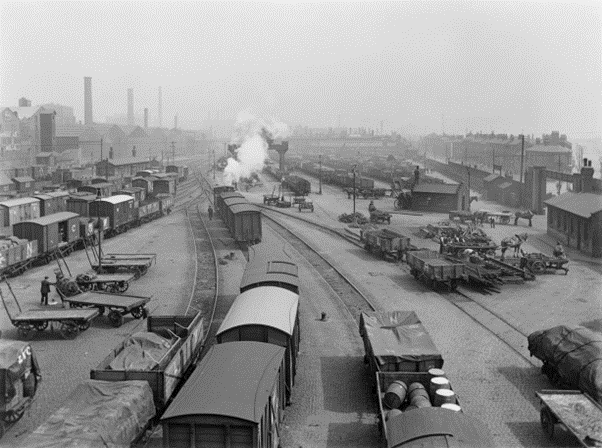
The station goods yard and engine shed were immediately to the Southwest of the railway bridge. We finish this part of our journey along the Wellington to Craven Arms railway in the goods yard at Much Wenlock.
Much Wenlock Engine Shed. This image was shared by Linda West on the Much Wenlock History Facebook Group on 13th March 2018. [54]The goods yard and engine shed at Much Wenlock. This image was shared on the Much Wenlock Memories Facebook Group by Shane Leavesley on 8th September 2014. The line towards Craven Arms runs behind the Engine Shed. [53]
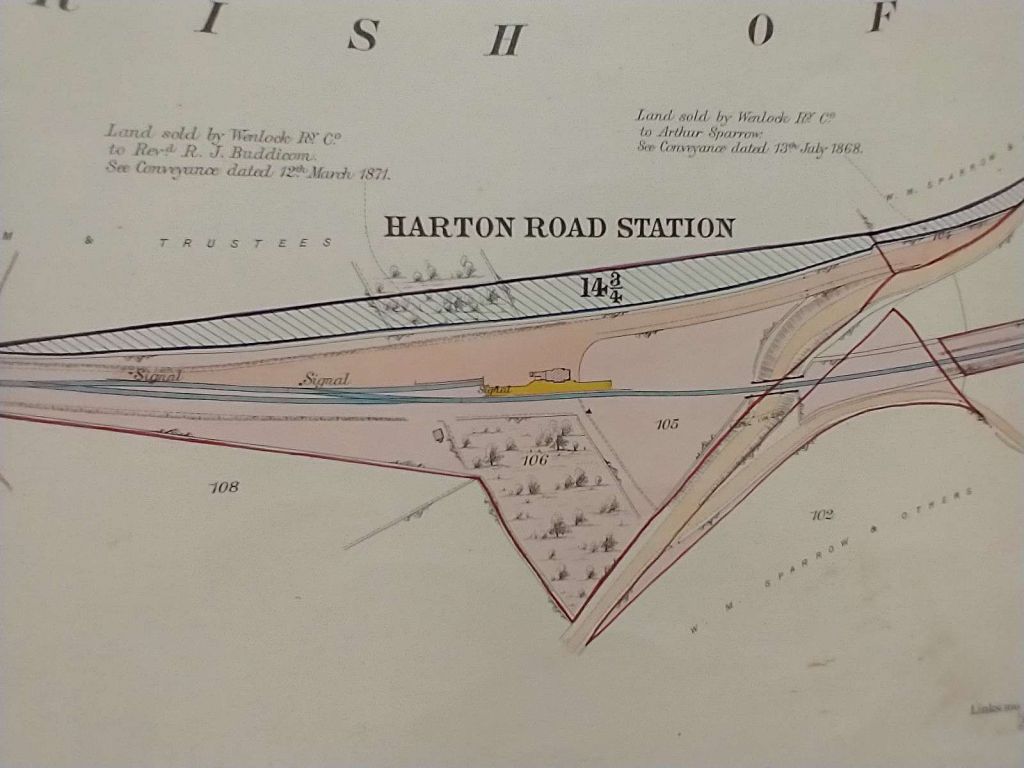
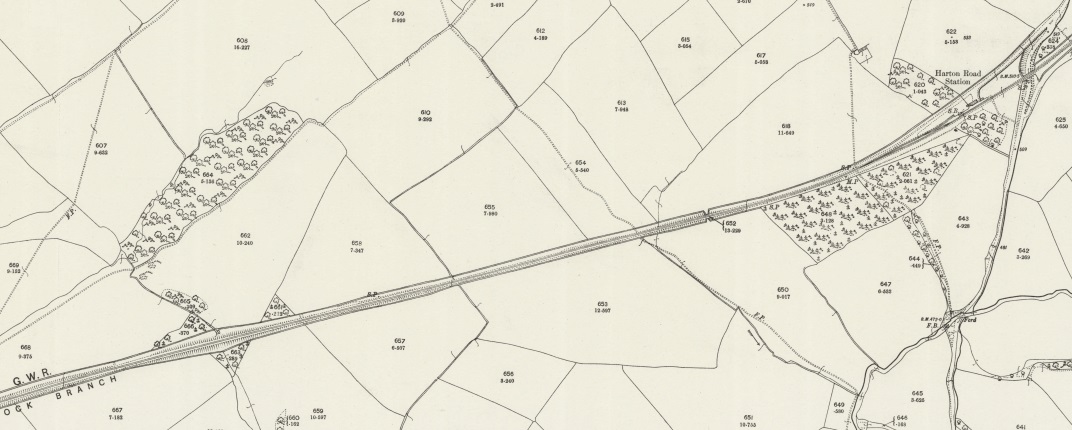
These photographs were taken by myself and show extracts from the construction plans held in the Shropshire Archive. There is a standard charge of £10 per visit for taking photographs of their records.
A History of the County of Shropshire, Volume 10: Munslow Hundred (part), The Liberty and Borough of Wenlock, 1998, p339-477: http://www.british-history.ac.uk., accessed on 14th August 2023.
https:/https://www.geograph.org.uk/photo/3042155/maps.nls.uk/geo/explore/#zoom=17.0&lat=52.60637&lon=-2.54931&layers=168&b=1, accessed on 15th August 2023.
Reading the ‘Modern Tramway’ Journal of May 1983 in Autumn 2023, took me back to the time when I was working for Greater Manchester Council. The County Engineer was A.E. Naylor. I was working in the Engineer’s office in County Hall.
The ‘Modern Tramway’ carried an article by W.J. Wyse about the then recently released rail strategy for the conurbation. [1]
The report was released on 18th February 1983 and summarised the results of six months’ work by BR, the Greater Manchester Council (GMC) and the Greater Manchester PTE, assisted by consultants, ‘to develop an achievable long-term strategy for the maintenance and development of the local rail network, having regard to the likely development of the Intercity network’. It was a report which first made clear intentions for the building of a new ‘tram’-network for Greater Manchester.
Wyse writes:
“From the BR side, there was the important objective of improving Intercity services, so that these need no longer terminate at Manchester. An obvious example of such improvements would be to permit Anglo- Scottish expresses to run from London to Manchester on their way to Preston. The “Picc-Vic” scheme of the early 1970s had had to be abandoned because resources were not available. A later proposal for a low-cost Castlefield curve would have given only limited benefits in terms of improved central area access. Then, in 1980, BR published its proposals for the Windsor Link in Salford which, also using the link via Deansgate and Oxford Road, would enable through running between several interurban and local services. Coupled with the proposed Blackpool-Preston-Manchester electrification, this would also improve access to many Intercity services. Further improvements would follow from the Hazel Grove Chord, linking Hazel Grove with New Mills Central, to give better Intercity services to Sheffield.
The desire to improve the BR facilities in Manchester obviously brought up the possibility of electrifying the existing local rail system at 25 kV, coupling this with converting the 1500-volt lines to Hadfield and Glossop and the 1200-volt third-rail line to Bury all to 25 kV overhead supply. The problem here is that this would be a very expensive solution, so other strategies were considered and compared.
The current rail situation has five distinct areas which create problems that have to be solved in order to improve services. Some of these have already been mentioned, but setting them out in this way shows them in perspective.
1) Rolling stock obsolescence, especially of diesel railcar units.
2) Re-equipment of non-standard electric services now using de supply.
3) Renewal of obsolete signalling systems.
4) Separate north and south suburban railway networks, with lack of links and lack of penetration into and across central Manchester, making rail travel less attractive.
5) Two main Intercity stations, Piccadilly and Victoria, too far apart for easy interchange, and causing duplication of to be abandoned because resources were not facilities.
The GMC has committed itself to maintain the present basic pattern of rail services, and to improve the network to increase the use made of it. This includes better access to existing stations as well as possible new stations, and putting pressure on the government to authorise construction of new class-141 diesel railcar rolling stock.” [1: p146]
The Report proposed a number of alternative strategies.
BR’s intention to focus its Intercity services at Manchester Piccadilly retaining Victoria for provincial interurban and local services was made clear. This would mean a basic framework of Intercity services to Crewe, Macclesfield, Leeds, Preston and Liverpool, and beyond. Other interurban lines would serve Warrington, Chester and Bradford. These main programmes would then govern the re-equipment policies for the local services on these lines.
The rail strategy study concentrated on the lines which carry only local services, and indirect access into and across central Manchester.
The two main options were:
1) a comprehensive system of cross-city rail tunnels with electrification of the whole regional system to 25-kV mainline standards with ‘conventional’ rolling stock; or
2) non-conventional solutions using existing rail routes and a former rail route (to Charlton and Didsbury) with vehicles that could run on existing streets or in tunnels across the city centre to provide a comprehensive network that also would also allow for interchange with the Intercity network.
That second option was then further subdivided into two:
2a) a Light Rail Rapid Transit system using vehicle which were defined as “a cross between a rail vehicle and a tram”; and
2b) replacement of rail tracks by carriageways on which some form of express bus would run.
It was noted that (2b) might create problems for existing and proposed goods facilities.
Greater Manchester Rail Network with the Windsor Link and the Light Rail Transit System. It is interesting to see how much of this proposal has been implemented by 2023 and what additions have been made to the proposals as well. [1: p147]
The conventional rail solution would have meant a rail tunnel between Piccadilly and Victoria Stations with an intermediate stop at Piccadilly Gardens. Another tunnel would have run East-West, connecting the Altrincham line with the Piccadilly line with an intermediate station at Albert Square No reinstatement of the Chrolton-Didsbury line was included.
The non-conventional solutions would have to meet certain criteria:
“i) segregation from the conventional rail network except for grade crossings with limited movement of goods;
ii) routes compatible with development of the conventional rail network;
iii) existing or potential traffic must be sufficient; and
iv) the routes must make a logical network and, for the corridors they serve, give adequate interchange with the main BR network.
These criteria would be satisfied by the following lines; Bury, Rochdale via Oldham, Glossop/Hadfield, Marple/Rose Hill (assuming building of the Hazel Grove chord), Altrincham (with Chester services diverted via Stockport), and the former Midland line to Didsbury.
Interchange with conventional Intercity and local rail services would be given at Victoria, Piccadilly and Deansgate/Central stations. The cross-city routes would meet at Piccadilly Gardens with the equivalent of a triangular junction to provide good access to what they call “the core of the Regional Centre” by all permutations of through-running across the junction.
The routes for the surface link in the city centre [had] been worked out to minimise conflicts with general traffic; apart from the section between Piccadilly Gardens and High Street, the lines would not run through high pedestrian-activity areas. These routes, as shown in the map, have been worked out for a Light Rail solution, but the report indicates that they could be modified for a busway solution.
Alternatives to LRT that were considered include road-based systems (buses and trolleybuses) and dual-mode systems including busways on existing rail formations. The only systems they felt worth considering [were]: LRT, busways and guided buses. [1: p148]
The possible LRT system would require lower standards (in terms of alignment, stations, signalling and vehicle weight) than conventional rail systems. They would be able to run on streets and use existing rail routes at relatively minimal cost. This made them very attractive. Their capacity was stated as between 1,000 and 5,000 passengers per hour, with up to 10,000 in central areas. It was noted that phased development would be possible and that boarding and alighting might well be at close to normal pavement level.
Wyse continues:
“Changes would be needed to the proposed new layout of Piccadilly Gardens, and a number of changes to the road layout to accommodate LRT would have to balance the needs of LRT against other vehicles and pedestrians. An important change of attitude from the more usual approach is the opinion that installation of LRT need not lead to any significant decline in environmental standards, especially if overhead wires can be supported from wires attached to buildings rather than poles.
An LRT system could be extended on to other existing or former rail routes, or considered for other corridors where the roads are wide enough to allow construction. Indeed the wheel [had] now turned full circle, for the LRT could be extended “on-highway, right into the middle of major district centres”, in other words, as a conventional tramway. …
Both busway solutions [were] not … studied in the same detail as LRT solutions. They would require significantly higher capital expenditure for carriageways to replace existing rail tracks on some 90% of the proposed system, but only indicative costs [were] worked out for a carriageway width of 8 m with hard shoulders of 2.5 m. Whilst a guided busway would avoid the need for hard shoulders, there [were] issues of operational reliability and ‘on street’ use. A busway that [could] run on street without extra works or hardware could have advantages over LRT, and feeder services at the outer ends could also use existing roads. Further work would [have been] needed to establish whether capital costs could be reduced without sacrificing the operational and safety aspects. [1: p148-149]
A Comparison of Costs
This table gives an idea, at November 1982 prices, of the relative costs of the different options. The report’s authors noted that these figures do not include thing which were common to all the options, such as the Northwest electrification and the Windsor Link. [1: p149]
As can be seen in Table 1, LRT at surface level is the cheapest estimate by some margin. The report also considered what might be the costs of a first phase of work:
Re-electrifying the Bury line and constructing the Victoria-Piccadilly tunnel – £95 million;
LRT above ground – converting the Bury and Altrincham lines and building the complete city centre network – £38.5 million
LRT city centre network in tunnel, otherwise as the above ground scheme – £56.5 million.
Apparently, no work had yet been done “on assessing the operating costs of the alternative strategies, or on considering the effects of bus operating strategies. … While no assessment [had] been made of the benefits to passengers and the effects on other road users, all options [were] considered likely to give significant benefits compared with the ‘Do Nothing’ alternative.” [1: p149]
Cost comparisons were made with the Tyne & Wear and the London Docklands schemes with figures adjusted to November 1982 levels. Table 2 shows these prices.
This table shows just how significantly lower the estimated costs/mile of the Manchester LRT schemes were when compared with the Tyne & Wear Metro and the London Docklands schemes. The critical figures are in the right-hand column in the table. [1: p149]
Wyse commented that work so far undertaken indicated “that if the present rail network [was] to be retained, an LRT system using existing rail lines which do not carry BR interurban services would appear to offer a significantly cheaper solution than conventional heavy rail and ‘busway’ solutions.” [1: p150]
He also noted that, “Further work [was] needed to consider both the operating costs of the alternatives, with due allowance for revisions to bus services, and the likely order of benefits. … Aspects which need[ed] early consideration include[d]: confirmation of the feasibility of city centre LRT tunnels, the safeguarding of potential LRT and busway routes and facilities, the organisation and management of an LRT or busway system (a joint BR/PTE set up [was] suggested), and finally the opportunities to provide improved cross-conurbation services and connexions to Intercity services for major district centres such as Ashton-under-Lyne.” [1: p150]
Manchester’s Network in 2023
40 years on from thi9s report it is interesting to note how much of what was planned came to fruition. As we know the high cost solution of tunnelling under the city centre was not developed. A Light Rapid Transit solution was given the go-ahead and has met much of what was intended.
The first line constructed was the Altrincham to Bury line through Victoria Station and the centre of the city. A link to Piccadilly Station was also installed in the early years. The following history is gleaned from Wikipedia [3].
Phase I opened in 1992. The original Market Street tram stop handled trams to Bury, with High Street tram stop handling trams from Bury. When Market Street was pedestrianised, High Street stop was closed, and Market Street stop was rebuilt to handle trams in both directions, opening in its new form in 1998.
Shudehill Interchange opened between Victoria station and Market Street in April 2003. The bus station complementing it opened on 29 January 2006.
Phase 2 provided a link with Salford Quays with a line running to Eccles. Cornbrook tram stop was opened in 1995 on the Altrincham line to provide an interchange with the new line to Eccles. There was initially no public access from the street, but this changed on 3 September 2005 when the original fire exit was opened as a public access route.
Two of the original stops; Mosley Street, and Woodlands Road were closed in 2013. The latter being replaced by two new stops (Abraham Moss and Queens Road) opened nearby.
By the mid-2000s, most of the track on the Bury and Altrincham routes was 40+ years old and in need of replacement. In 2006 it was decided that a £107 million programme to replace this worn track would take place in 2007.
Phase 3 entailed a significant expansion of the network. It turned into a series of different phases as different funding arrangements had to be made:
Phase 3a – created four new lines along key transport corridors in Greater Manchester: the Oldham and Rochdale Line (routed northeast to Oldham and Rochdale), the East Manchester Line (routed east to East Manchester and eventually to Ashton-under-Lyne), the South Manchester Line (routed southeast to Chorlton-cum-Hardy and eventually to East Didsbury), and eventually the Airport Line (routed south to Wythenshawe and Manchester Airport). A spur was also added to the network to link from the Eccles line to Media City. The link to Media City was opened in 2010. The Line to Chorlton opened in 2011. The other lines opened gradually between 2011 and 2013.
Phase 3b – Three lines mentioned in the paragraph above were extended from initially shorter lines. The construction of the East Manchester line extension from Droylsden to Ashton-under-Lyne, the East Didsbury extension from Chorlton and the Airport line via Wythenshawe, commenced in 2011 and all was complete by the end of 2014.
The link to Manchester Airport. [5]
Phase 2CC – Second City Centre Crossing – was completed in 2017.
Trafford Park [4] – The Trafford Park line linked the Trafford Centre to the network and opened in 2020.
References
W.J. Wyse; A Rail Strategy for Greater Manchester; in Modern Tramway and Light Rail Transit, Volume 48 No. 545; Light Rail Transit Association and Ian Allan, Shepperton, London; May 1983, p146-150.
The first railways in the area were of wooden rails used during the construction of docks facilities. Some were in use in the Naval Dockyard in 1724, [2] and in 1756 John Smeaton laid some more to help move materials in his workyard on the mainland which was preparing stonework for the Eddystone Lighthouse. [4: p5-8] [1]
Smeaton’s Workyard near the location of Millbay Docks was used for a fastidious trial construction of the lighthouse to ensure that the massive stone blocks used in its construction would fit with each other before undertaking the work on site, 14 miles out to sea. To move these blocks around the Workyard, Smeaton made use of a ‘Rail Road’ which comprised of a four-wheel carriage running on a timber road. In Smeaton’s own words, stones were “delivered upon the four-wheel carriage that runs along the timber road, commonly called at the Collieries, where they are used, a Rail Road: and being landed upon the carriage, any stone can be delivered upon any of the Bankers in the line of the work-sheds on either side: or the carriage being turned a quarter round upon the Turnpike, or Turnrail, it can be carried along the road that goes up the middle of the yard, and be delivered upon any part of its area destined for their deposition; all the stones marked for the same course being deposited together; from which place they can be again taken up upon the carriage, run along the road, and be delivered upon any Banker in the line of sheds, or upon the Platform, and afterwards returned back to the same place of deposition, ready to be carried to sea in their proper order … A Banker in a mason’s yard is a square stone of a suitable size, made use of as a work-bench.” [4: p6-7]
In 1812, John Rennie laid a 3 ft 6 in (1.07 m) gauge metal tramway to help with the construction of the Plymouth Breakwater; rails were laid in the quarry at Oreston and on the breakwater, and loaded wagons were conveyed between the two on ships. [5][1]
Rennie’s use of a ‘Rail Road’ is recorded in three different contemporary accounts: “The first of these is ‘Two Excursions to the Ports of England, Scotland and Ireland in 1816, 1817 and 1818, with a description of the Breakwater at Plymouth and the Caledonian Canal‘ translated from the (French) original of Charles Dupin. The second book … [was]published by J. Johns of “Dock” (soon to become “Devonport”) in a booklet dated November 1820 entitled ‘Interesting Particulars Relative to the Great National Undertaking, the Breakwater now Constructing in Plymouth Sound.’ From these two books, a good picture of Rennie’s little railway can be formed, whilst the third book, Rennie’s own mammoth publication provides yet another set of carefully-scaled drawings, similar to Smeaton’s previous records.” [4: p9-10]
An engraving in Rennie’s book which shows the wagons used on his ‘railway’ [4: illustration between p8 & p9]
Rennie’s 3ft 6in gauge railway allowed horses to bring large stone blocks on flatbed wagons (or smaller stones in wagons fitted with sides), from his quarry at Oreston to a quay where the wagons were turned on a turntable and loaded onto vessels with iron rails in their holds and taken to the sites of the breakwater. On arrival a form of tippler appears to have been used to discharge the wagonloads onto the sides of the breakwater. [4: p10-11]
A second engraving from Rennie’s book which shows the wagons in place in the hold and on the deck of one of the wessels which transported stone from the quarry to the site of the breakwater [4: illustration between p8 & p9]
“The building of the breakwater extended over some thirty years, and in its final stages a railway was actually constructed on the surface of the “wall” enabling the ships to be unloaded in the reverse manner to that of the loading at Oreston, even down to the provision of turn-tables. … This … has given rise to the claim that this was the first rudimentary ‘train ferry’.” [4: p12]
A further engraving from Rennie’s book which shows the breakwater with the railway on its surface. [4: illustration between p8 & p9]
Kendall noted in 1968, that the quarry at Oreston still continued to supply stone for the maintenance of the breakwater. [4: p12]
On their journey around England in 1826 and 1827, Von Oeynhausen and Von Dechen visited the Plymouth Breakwater and the later Plymouth & Dartmoor Railway referred to below. [7: p51-55] Of the Breakwater Railway, they commented: “For the transport of the larger masses of stone, 10 ships of 80 tons burden have been built in the Royal Dockyard. These ships can carry 16 blocks, each of 5 tons weight, in two rows, each block resting on a wagon which runs on a railway. The two railways on the ships are extended to the breakwater by drawbridges; and then the wagons are drawn out of the ships by cranes and unloaded. In this manner, a ship of 80 tons can be unloaded in 40 or 50 minutes. The ships are brought to the place where the stones are required to be laid by the help of buoys.” [7: p55]
A more conventional tramway was opened on 26th September 1823. The 4 ft 6 in (1.37 m) Plymouth & Dartmoor Railway ran from Princetown to Sutton Harbour and the Cattewater. Branches were opened to Cann Quarry in 1829 and to Plympton in 1834, followed by the Lee Moor Tramway in 1854. Haulage on these lines in Plymouth was always by horses (although the Lee Moor Tramway did have two 0-4-0ST locomotives which spent most of their life at the Lee Moor end of the tramway). The Lee Moor line remained in use until 1960. [1][3][6: p9]
The Plymouth & Dartmoor Railway is covered in much greater detail in the article accessed via this link:
Paul Burkhalter; Devonport Dockyard Railway; Twelveheads Press, Truro, 1996.
Eric R. Shepherd; The Plymouth and Dartmoor Railway and the Lee Moor Tramway; ARK Publications (Railways), Newton Abbot, Devon, 1997.
H.G. Kendall; The Plymouth & Dartmoor Railway; The Oakwood Press, Lingfield, Surrey, 1968.
David St John Thomas; West Country Railway History; David & Charles, Newton Abbot, 1973.
Russell Leitch; Plymouth’s Railways in the 1930s including “The Gear’s Poor Relation”; Railway Correspondence & Travel Society, Peterborough, 2002.
C. Von Oeynhausen and H. Von Dechen; Railways in England 1826 and 1827; translated from the German by E.A. Forward and edited by Charles E. Lee and K.R. Gilbert; Newcomen Society, Cambridge, 1971.
I picked up a copy of this book in September 2023. It is large format Hardback book of 272 pages. The listed price is £30.00 but my copy cost me just over £10 plus postage and it is in an excellent pre-owned condition. I had anticipated a well-illustrated book which would be a relatively easy read. I was pleasantly surprised to find that while it was an excellent read, it was also a well-researched, scholarly work with: all maps and illustrations properly catalogued and sources noted; a significant bibliography of scholarly works; and a comprehensive index.
Hayes’ book brings together in one volume the history of waggonways, tramways and tramroads as well as early modern steam railways. It provides some superb copies of contemporary maps. Illustrations and text are exceptionally well laid out. I thoroughly enjoyed reading through some concise introductions to significant plateways and railways of the period.
Wooden Rails and Horse/Manpower
The book begins with a review of significant lines which were first constructed with wooden rails.
– Hayes tells us that, “The earliest definitively documented application of a cross-country railed way in Britain is that of entrepreneur Huntingdon Beaumont: his waggonway ran from Strelley to Wollaton, now in the West part of Nottingham. … Documents fix the date of this first waggonway at between October 1603 and October 1604.” [1: p14]
– Other early waggonways include: some close to Broseley, Shropshire, leading to wharves on the River Severn dated at around 1605; and several feeding to the River Tyne in the 1630s. Practice differed between these two areas. In Shropshire, wagons were usual relatively small on narrow-gauge tracks which fed straight into the mines they served. In the Northeast, wagons were larger and the gauge wider.
– In Wales, a Shropshire-type of waggonway was in use in Neath, Glamorgan before 1700. In Scotland, the first available records, from 1722, cover the Tranant to Cockenzie railway close to Edinburgh which was another Shropshire-style waggonway.
We have evidence that throughout the 1700s, wooden waggonways were in use. Examples include: the Alloa Waggonway (built in 1766); Ralph Allen’s wooden railway in Bath, Somerset (built in 1731); Whitehaven, Cumbria’s waggonways which converged on staiths in the harbour (1735); the Middleton Railway in Leeds (1758); Tyneside/Northumberland/Durham (1608 onwards, significant maps have been retrieved dated 1637, 1761 and 1788). Hayes draws attention to a number of Northeast waggonways: the Plessey Waggonway; the Killingworth Waggonway; waggonways associated with Dunstan Staiths (the last of which closed in 1990!); the Tanfield Waggonway (built between 1725 and 1738); the Beamish South Moor Waggonway (built around 1780); the Pelton Moor (built between 1746 and 1787) and Deanry Moor (built 1779) Waggonways. Hayes also mentions the replica wooden waggonway at Beamish Open-Air Museum. [1: p15-31]
This 1830 map of South Wales, part of the large ‘Map of the Inland Navigations, Canals and Rail Roads with the Situations of the various Mineral Productions throughout Great Britain’, of which many extracts are shown in Hayes’ book, shows a large number of railways despite being published the same year as the opening of the Liverpool Manchester Railway. The majority of the lines shown are plateways. After an early start with edge rails, most of the lines built after about 1800 were of the plateway type. Many of these railways are referred to in the book. [1: p66-67]
The book goes on to focus on the transition between wooden and iron rails, noting the practice of overlaying wooden rails with cast-iron plates, a system which was in use as early as 1767 in Coalbrookdale, Shropshire. [1: p36]
Cast and Wrought Iron
Hayes then looks at the introduction of Cast Iron and the later Wrought (or ‘maleable’) Iron. Again two different practices developed:
– L-shaped plateways with wheels without flanges were in use underground as early as 1787, these were then used above-ground in the Shropshire area, in the Forest of Dean, on a number of lines in South Wales, and by Benjamin Outram on the Butterley Gangroad, Little Eaton Gangway and the Peak Forest Tramway. Other examples include: the Lancatser Canal Tramroad; the Ticknall Tramway; the Caldon Low Tramway; the Surry Iron Railway, the Gloucester and Cheltenham Railway; the Middlebere Plateway, Dorset; the Silkstone Waggonway Near Barnsley; The Forest of Dean and Severn & Wye Railways; the Somerset Coal Canal Railway; the Kilmarnoch & Troon Railway; and the South Wales Railway and Canal Network (including the Hay Railroad between Brecon, Hay and Kington. A departure from the us of L-shaped Cast Iron plates was the use of granite for the Haytor Granite Railway which supplied granite from Dartmoor to wharves on the River Teign. [1: p38-71]
– Edge rails with flanged wheels saw greater early use in the Northeast and on a number of lines in South Wales, although many in South Wales were converted from edge-rails or round bars to plateways because of the influence of Benjamin Outram. Those lines remained as plateways until the 1830s. Wrought or ‘maleable’ iron was initially expensive as larger section rails were used. This changed when first ‘T- section’ and then ‘I-section’ rails were produced by a rolling process. Many early edge railways used short- sections of rail in a fish-belly shape. Hayes details some of the most significant very early iron edge railways: the Forest Line of the Leicester Navigation; the Lake Rock Rail Road; the Belvoir Castle Railway; the Mansfield & Pinxton Railway; the Plymouth & Dartmoor Railway; the Stratford & Moreton Railwaythe Monkland & Kirkintilloch Railway and its later siblings, the Garnkirk & Glasgow Railway, and the Ballochney Railway; the Slate Railways of North Wales, (including the Llandegai, Penrhyn, Nantile and Dinorwic Railways); and the Northeast Coalfield. [1: p72-93]
A short section [1: p94-99] covering inclined planes and stationary engines precedes Hayes coverage of the first ‘Travelling Engines’ and ‘Working Locomotives’ in the ear before Stephenson growing ascendancy. [1: p100-127]
Steam Power
Richard Trevithick was to be the person who solved the question of how to use steam-power on rails as a Travelling Engine. It required the use of high-pressure steam. …
The railway revolution came from a marriage of suitable iron track with a reliable source of mechanical power. Up to the end of the eighteenth century, steam power was in the form of low pressure, large machines, and the few that were mobile were slow and lumbering. The engineer and inventor Richard Trevithick would change everything. His answer was what he called ‘strong steam’ – high-pressure steam coupled with good enough quality of materials and construction to safely contain it. The first of Trevithick’s high-pressure engines was a stationary machine installed at Cook’s Kitchen Mine near Cambare, Cornwall, in 1800. It was reliable, for it was still running seventy years later. … In August 1802, Trevithick had been in Coalbrookdale, where, it seems, the Coalbrookdale Company, an ironworks, began making stationary propulsion engines based on his design. That month Trevithick wrote to a supporter in Cornwall, Davies Giddy, that “the Dale Co have begun a carrage at their own cost for the real-roads and is forceing it with all expedition.” This is significant in that it may be the first surviving reference anywhere to the idea of running a steam locomotive on rails. However, the possibility of a Coalbrookdale locomotive – which would have been the first in the world is a bit of an enigma, since there is no direct evidence of one being built beyond Trevithick’s letter. … When Trevithick’s Penydarren locomotive first ran in South Wales, it did so on a plateway and would have had wheels without flanges. [1: p100-101]
A good introduction to George Stephenson’s early activities [p128-133] is followed by a focus on the Hetton Colliery Railway which, after a competition between engineers, George Stephenson designed with three self-acting inclines and level sections worked by horses or by his locomotives. By the date of opening, Hetton Colliery Railway became the first to be designed specifically for locomotive use and featured three of Stephenson’s ‘patent travelling engines’. “Just over half the route was worked by locomotives. … The other five sections were all inclines. Three were worked on a self-acting basis and two … used engines. Despite being advised by Stephenson … to use maleable- or wrought-iron rails, the Hetton Colliery Railway used …cast-iron edge rails, each 3ft 9 ins long and laid on stone and wooden blocks. They gave the company a lot of trouble. … Despite considerable on-going modifications, … the railway proved conclusively the value of the locomotive engine and provided valuable experience for Stephenson. … [It] lasted for well over a century: the last section closed only in 1972, the result of the decline of the coal industry rather than issues with the railway.” [1: p134-139]
Most early railways were related to mineral interests and carried freight. The first passengers were carried, if at all, as an after thought. On the Swansea & Oystermouth Railway (later known as the Swansea & Mumbles Railway), which was built by 1806 to transport coal, iron ore, and limestone, Benjamin French offered the company £20/year in lieu of tolls “for permission to run a waggon or waggons on the Tram Road… for conveyance of passengers.” The proposal was accepted by the company, and French began his service with what was essentially a stagecoach with the wheels adapted to run on rails on 25 March 1807 – this is the world’s first documented regular rail passenger service. It seems to have been popular, for French’s permission was renewed the following year for £25. Ultimately mineral traffic on the line did not live up to expectation and passenger traffic became relatively more important. After a 9 year hiatus starting in 1855 both horse-power and steam competed for until 1898 when the companies involved merged. The line was by then essentially a tourist attraction, and a pier was built at the western end of the line to provide a destination. In 1929 the line was electrified and had 13 tramcars Popularity grew, and during the depression years of the 1930s 5 million passengers a year were being carried. But the popularity did not last, traffic declined, and the line closed in 1960.
These early railways were local affairs but there were visionaries who perceived that longer distances would soon become possible. Hayes points us to: Benjamin Outram, who proposed a double-track railway from London to Bath; Richard Lovell Edgeworth, who in 1802 published a paper entitled ‘On the Practicability and Advantage of a General System of Rail-roads‘; Thomas Telford, who surveyed a 125 mile route from Glasgow to Berwick in 1809-10, recommending the use of a railway rather than one of his favoured canals; John Stevens (in the US) who argued that railways would be better than canals over longer distances; William James, who in 1802 proposed railways from Bolton to Manchester and Liverpool, and who, in 1808, proposed a General Railroad Company to build a network of railways across Britain; Edward Pease, in 1821, imagined a London to Edinburgh railway; and Thomas Gray, who in 1820 was the first to proposed a detailed railway network covering all of the British Isles which could be used for poor-relief by creating massive levels of employment during its construction. [1: p140-143]
Detailed studies of the Stockton & Darlington Railway [1: p144-167]and the Canterbury & Whitstable Railway [1: p168-171] precede discussion of what Hayes calls ‘the First Modern Railway’, The Liverpool & Manchester Railway. Hayes provides a detailed and well-illustrated ‘chapter’ about that railway, including contemporary maps and images. [1: p172-193]
Another double-page spread from Hayes’ book. [1: p192-193]
Further short studies look at: Agenoria’s Railway and at the batch of locomotives, of which Agenoria was one, the other three being exported to the united States, one of which (the Stourbridge Lion) became the first steam locomotive to run in North America in August 1829; the Cromford & High Peak Railway; the Leicester & Swannington Railway; and the Stanhope & Tyne Railway. Honourable mentions include: the Bristol and Gloucestershire Railway; the Avon & Gloucestershire Railway; the Whitby & Pickering Railway; and the Bodmin & Wadebridge Railway.
Hayes then reflects on the gradual development of a national network of railways and a growing number of skilled railway engineers, [1: p206-225] before picking out one railway, the London & Greenwich Railway, which has a claim to have been the first commuter railway. [1: p226-229]. Hayes closes his book with a short look at the transfer of railway technology from the UK to the rest of the world. [1: p230-259].
Summary
In summary, Hayes book is, as the rear of the dust-jacket claims, “A highly illustrated and readable account of the earliest railways, from the first wooden-railed waggonways to the development of the railway network of the 1840s and beyond. During this period the modern railway engine was invented and refined; it rapidly outpaced the horse and developed into a swift and strong machine that changed the course of world history forever.” [1]
There are 700 maps and other illustrations and the story is brought to life by a lively narrative supported by well chosen photograph and railway ephemera.
The book is something of which its author can be justifiably proud. I thoroughly recommend it’s inclusion on the library of anyone interested in the development of the railways from their early beginnings. It is worth its cover price of £30.00, but if you can find it in good condition for around £10.00 second-hand, then jump at the opportunity to make a purchase!
References
Derek Hayes; The First Railways: Atlas of Early Railways; The Times, HarperCollins, Glasgow, 2017. [2]
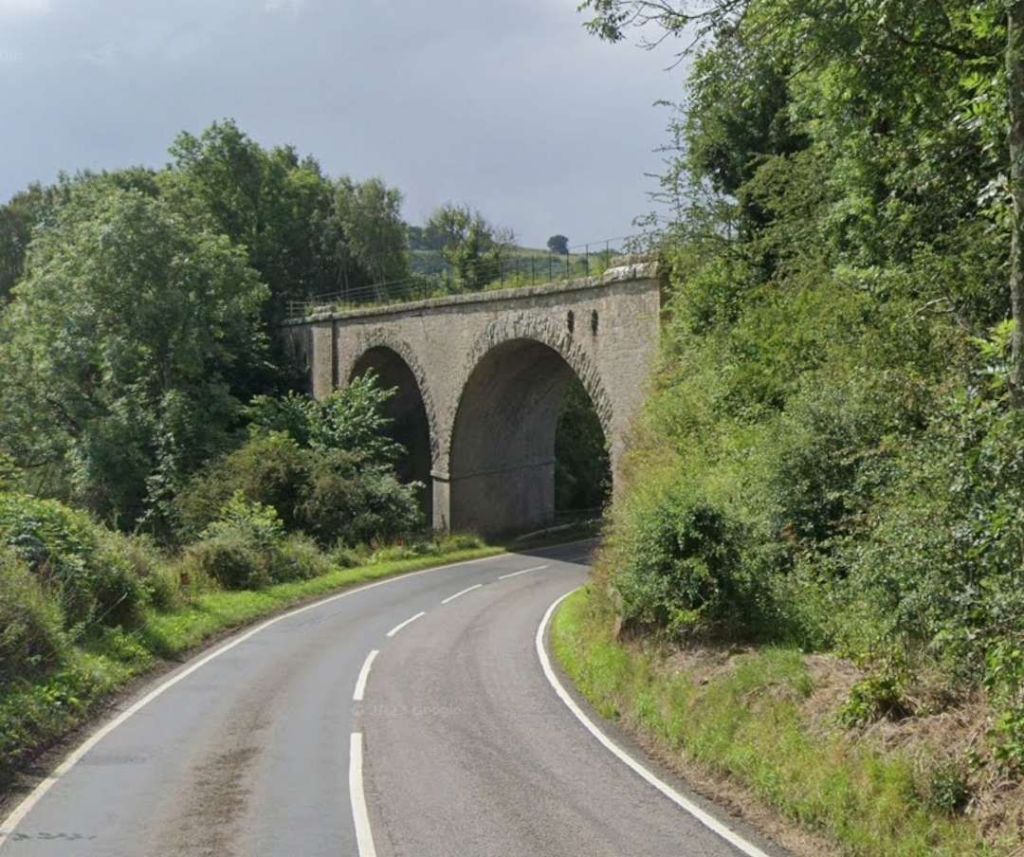
On the road between Purton and Etloe on the Northwest side of the Severn Estuary there is a railway viaduct. Seemingly it sits remote from any former railway. Although you might just be forgiven for thinking that it is a remnant of the Forest of Dean Central Railway, or even associated with the Severn & Wye Railway which ran close to, but to the South of, the hamlet of Purton.
The Severn Bridge Railway Station sat just to the South of Purton on the West Bank of the River Severn. [9]Purton sits just to the North of the Severn Bridge Station on the Severn and Wye Railway. This map extract comes from the 25″ Ordnance Survey of 1901. [10]
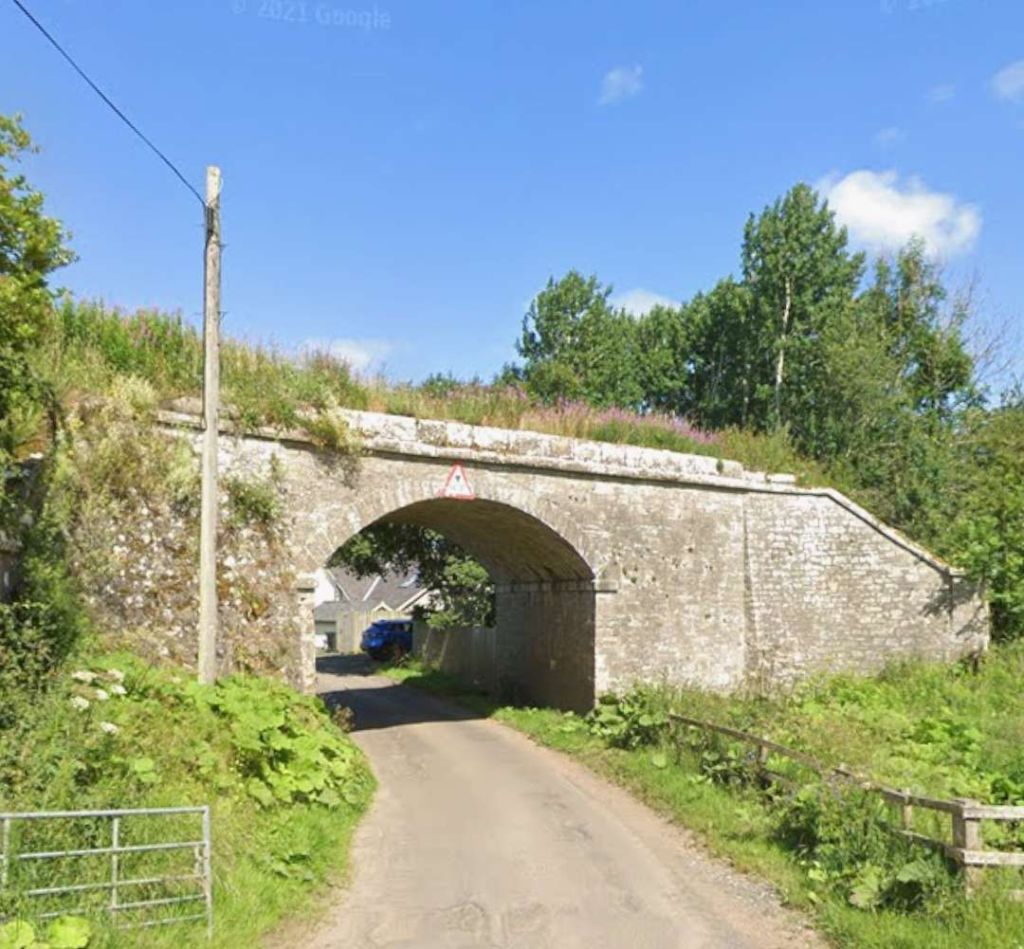
It is, in fact, the main remnant of a planned railway/tramroad – the Purton Steam Carriage Road! It can be seen on the map extract below which shows the viaduct just to the North of the hamlet.
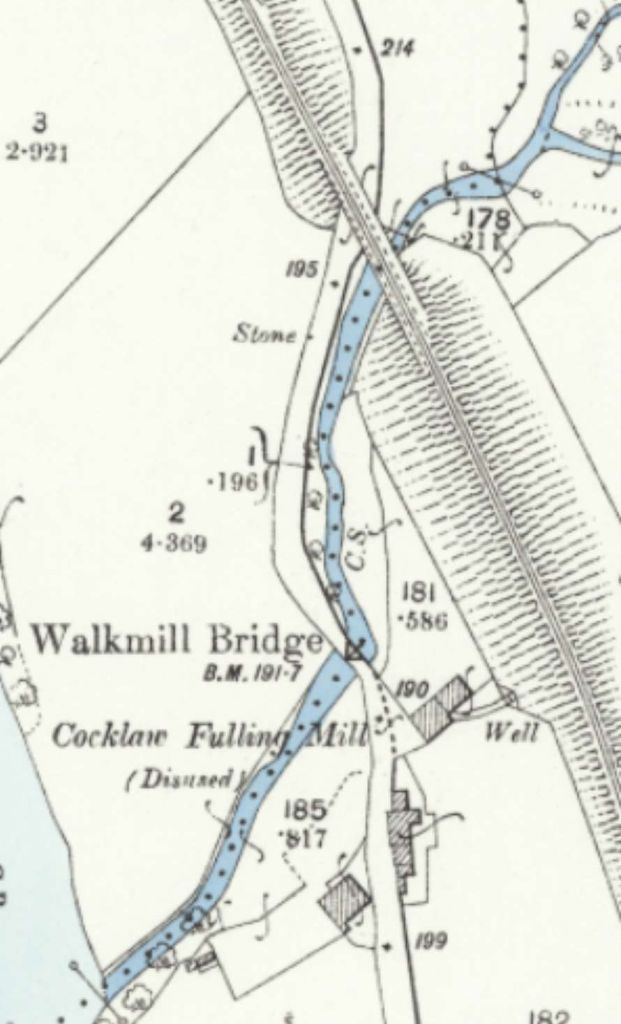
Purton Viaduct appears at the top-left corner of this map extract. The hamlet of Purton is bottom-left. Purton Pill is just below the centre of the extract. Historically, there was a ferry across the River Severn at this location. This map extract comes from the 1879 25″ Ordnance Survey. In 1879, a footpath can be seen following the approximate line of the proposed railway. [11]
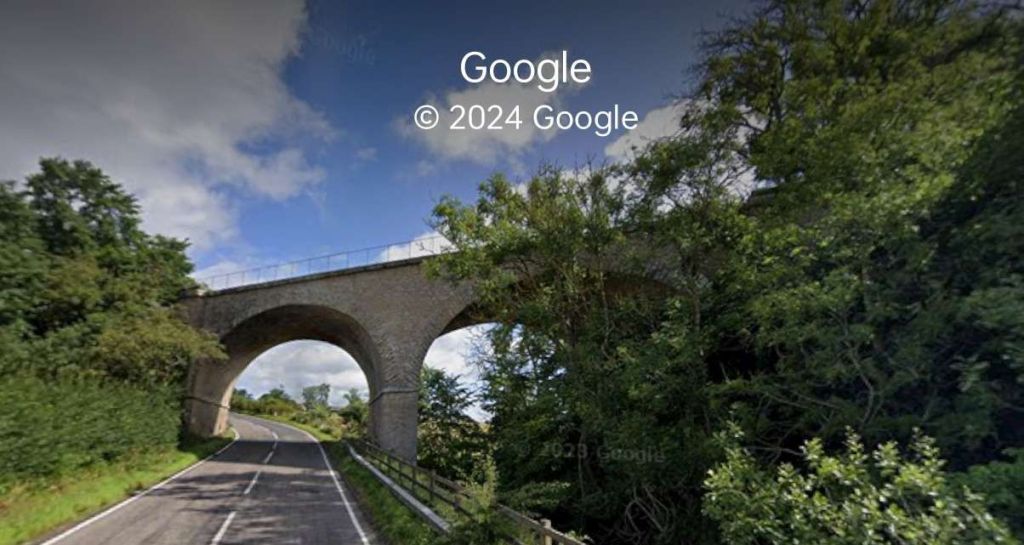
The viaduct was built, circa. 1832, of red sandstone rubble with dressed voussoirs. It has 3 arches of diminishing heights, its main pier is wedge shaped, so that the viaduct is slightly angled. The tallest arch spans the road. The centre arch is damaged on the NE side. Its Southeast wall continues as retaining wall for some distance. Part of the parapet survives at the north west end.
The viaduct is of considerable historical and industrial archaeological interest: the Purton Steam Carriage Road was planned in 1830, just a few years after the Stockton and Darlington Railway first ran in 1825.
Sadly, it was never to carry the goods it was intended for, but it seems to have had considerable effect on local politics at the time, and on later railway enterprises in the area.
“The finance was to come from a prominent local Iron-master, Charles Mathias of Lamphey Court, Pembrokeshire. The viaduct is the most tangible surviving evidence for an industrial scheme which would have involved the first crossing of the Severn on a moveable bridge.” [1]
The Purton Steam Carriage Road Company predated the Forest of Dean Central Railway and intended to build a line, 8 miles or so long, from a purpose-built dock at Purton Pill to the then-new Foxes Bridge Colliery in the Forest of Dean.
A scheme drafted earlier in the century was revived in 1830 and supported by a number of Forest industrialists. As we have already noted, “The promoter of the Parliamentary Bill, presented to Parliament in 1832, was one Charles Mathias, who was so confident of the Bill’s success that he purchased the required land and began construction of the line. Unfortunately, the Bill met strong opposition from the Commissioners of Woods, failed to make its second reading and was withdrawn. Mathias’ premature and misplaced enthusiasm had led to the construction of various bits of railway infrastructure.” [3]
The structures completed included:
All or part of Nibley Hill Tunnel near Blakeney (the portals are each marked as “old quarry” on the 1892-1914 OS 25″ map);
Purton Viaduct is Grade II Listed by Historic England. It is recognised as being of “considerable historical and industrial archaeological interest”, but is suffering from the vegetation which has almost hidden it from view in places! [3]
The viaduct is noted in Neil Parkhouse’s, “Forest of Dean Lines and the Severn Bridge” which is the second volume in Lightmoor Press’, “British Railway History in Colour” series. [6]
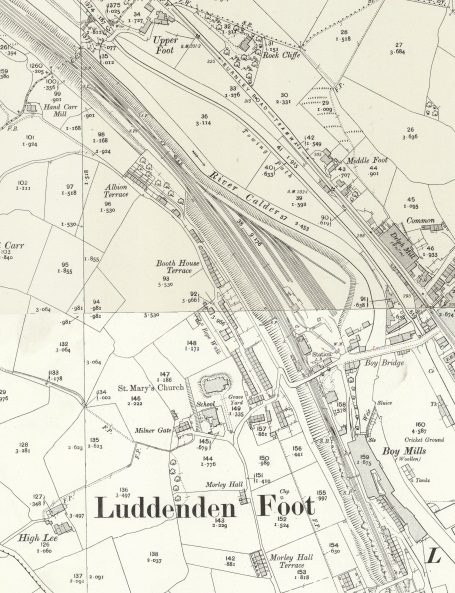
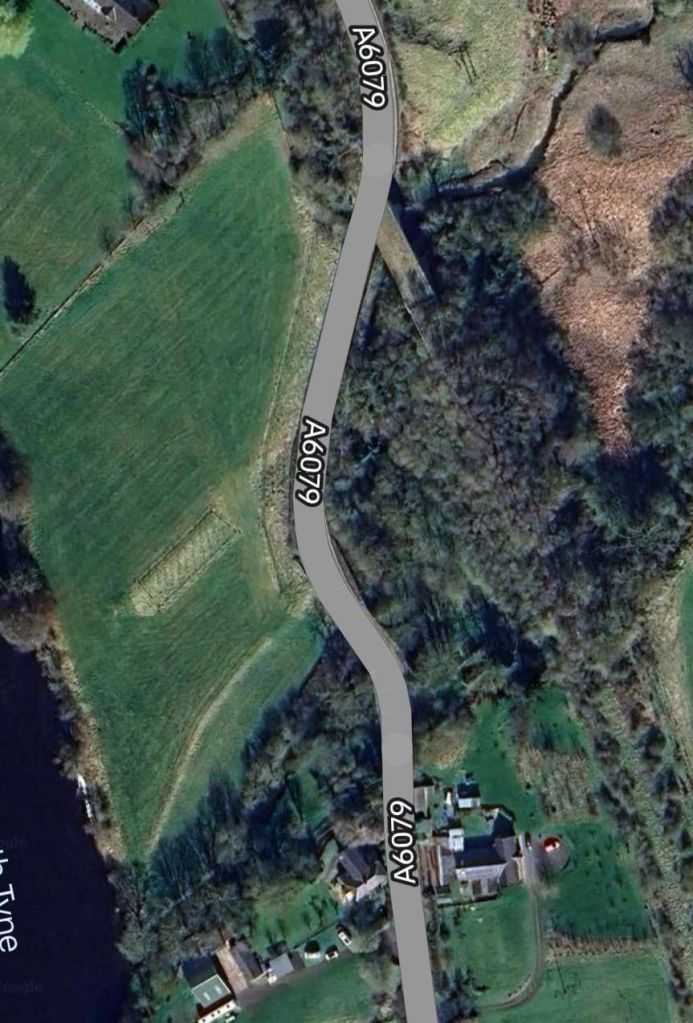
North of the Viaduct, the line of the Purton Steam Carriage Road can be followed on older maps, as the map extract below shows.
Purton Viaduct appears in the bottom-right of this map extract and the route of the planned Purton Steam Carriage Road can be seen as the double-dotted track heading Northwest from the viaduct. This extract is from the 1879 25″ Ordnance Survey. [11]The line of the proposed Carriage Road runs from bottom-right to top-left on this extract from the 25″ 1878/1879 Ordnance Survey. [12]The line of the proposed Carriage Road runs from the bottom-right towards the top-left on this extract from the 25″ 1878/1879 Ordnance Survey. Approximately at the centre of the extract the Ordnance Survey chose to name the made-made defile at Lanesbrookgreen as an Old Quarry. It is in fact the location of what was to be the Southern mouth of Nibley Hill Tunnel. [12]This slightly out of focus extract from the 25″ Ordnance Survey of 1878/1879 shows both the North and South ends of Nibley Hill Tunnel marked as Old Quarries. The road running North-South adjacent to the line of the northerly length of Nibley Hill Tunnel and then crossing its line to the North of the proposed southern portal is now the A48. [12]This composite image overlays modern satellite imagery over the 25″ Ordnance Survey from the turn of the 20th century. The defiles marking the proposed tunnel entrances can be made out at the top and bottom of this image. The A48 is easily made out. [14]
Nibley Hill Tunnel would have been 600 yards in length and would have taken the Purton Steam Carriage Road into the Forest of Dean close to the village of Blakeney.
The Purton Steam Carriage Road was one of two early proposed Tramroads in the Forest of Dean which were close to the line of what became the Forest of Dean Central Railway.
To the North was the proposed Moseley Green and Tilting Mill Tramroad which was intended to link the valley of Blackpool Brook with the outside world by connecting mines in the Moseley Green area with the Bullo Pull Tramroad. It was not pursued. Instead, in 1832, the Purton Steam Carriage Road was devised to access the Blackpool Brook valley. [13]
Its route North of Nibley Hill Tunnel is difficult to identify on the Ordnance Survey mapping of the late-19th and early-20th centuries.
In the early 1950s, Price tells us, “A considerable stir was caused in railway circles by the news that the Russian and Czech railways had introduced a service of through sleeping-cars between Prague and Moscow, overcoming the break of gauge at the Russian frontier. It appeared that the cars could be lifted on jacks, complete with their passengers, while the standard-gauge bogies were run out and replaced by others of the wider Russian gauge. This method was later extended to other routes, and the accompanying photograph, taken in 1957, shows the cars of the Moscow-Berlin Express raised up on electric jacks in the gauge-conversion yard at Brest-Litovsk, on the frontier of Russia and Poland. … Unknown to the Ministry of Communications of the U.S.S.R., something very similar has been going on quite unobtrusively here in these islands, not just in the last decade, but ever since 1933. The place is Laxey, Isle of Man, and the cause is the six-inch difference in gauge between the Manx Electric Railway’s Douglas-Ramsey line and the Snaefell Mountain Railway. The coastal tramway was constructed to the usual Manx gauge of 3 ft. 0 in., but on the Snaefell line this would not have left sufficient room for the centre rail and the gripper wheels and brake-gear, with the result that the mountain line uses a gauge of 3 ft. 6 in. instead.” [1: p19]
Both the MER and the Snaefell lines “have always been under a common management, and in past years, repainting of Snaefell cars was carried out at the mountain line’s car shed by staff who travelled up each day from Derby Castle. Since Snaefell car shed at Laxey is narrow and rather dark, the work was mostly done out of doors, the car being run in and out of the shed each time it rained. After the 1933 fire at the other Laxey car shed had created a float of spare plate-frame bogies, the management decided to use a pair of these to bring Snaefell cars due for overhaul down to the principal Manx Electric workshops at Derby Castle, Douglas. Controller overhauls and motor repairs were already carried out at Douglas, and since 1933 work at Laxey has therefore been confined to routine maintenance, running repairs and truck overhauls.” [1: p19]
The result of this decision was that every now and again (once or twice a year) a Snaefell car had to be lifted off its 3 ft. 6 in. gauge trucks and mounted on 3 ft. gauge bogies to be towed down to Douglas, returning by the same means when its overhaul was completed. This operation was rarely seen by visitors to the Isle of Man as it took place out-of-season.
“The Snaefell 1963 operating season ended on Friday 13th September, and the moving operation started soon after eight o’clock next morning, when Snaefell car No. 4 was brought down from the car shed and run on to the dual-gauge siding. With it came a set of traversing-jacks, various tools, and the necessary wooden packing, kept in the Snaefell car-shed for this twice-yearly operation and any other less foreseeable. eventualities. Four … men then set to work … following a sequence which, like many other Manx Electric operations, is handed down from one generation to the next without ever having found its way into print.” [1: p22]
J.H. Price continues:
“First, the brake-gear and bogie-chains are disconnected, and the bow-collectors roped to the trolley-wire so that the pins can safely be removed, after which the collectors are untied again and lowered to the ground. Once this is done, no part of the car’s circuit can become ‘live’, and next the motor and field connections are broken at their terminals in the junction-boxes, which are housed under the seats and above the motor positions. The body is now merely resting on its two bogies, with no connection between them.
The next stage is to lift the car and exchange the 3 ft. 6 in. gauge bogies for others of 3 ft. 0 in. gauge. In the case of the Russian sleeping-cars mentioned earlier, the two gauges are concentric and the car. bodies need only a straight lift and lowering, but Laxey siding has three rails (not four), and the car body therefore has to be traversed laterally by three inches from the centre-line of the 3 ft. 6 in. gauge to the centre-line of the 3 ft. 0 in. To do this, the staff use a pair of special traversing-jacks with a screw-thread in the base that enables the load to be moved sideways; similar jacks are used by the Royal Engineers to re-rail locomotives, and were also used by them to place Newcastle tram No. 102 on rails at Beaulieu in March, 1959.
Considerations of safety make it preferable to keep one end of the car resting on a chocked bogie, so the Manx Electric use only one pair of jacks, tackling first one end of the car and then the other. First the Snaefell end of the car is lifted, and the 3 ft. 6 in. gauge bogie is pushed out; in this case, it was then towed up to the car shed by Snaefell car No. 1. Meanwhile, two men fetch a 3 ft-gauge plate-frame trailer bogie from Laxey Car Shed and push it by hand along the northbound running line to Laxey station, where it is shunted on to the three-rail siding and run in under the Snae- fell car. The body is then lowered to the horizontal, traversed to suit the centre of the 3 ft. gauge bogie, and landed on the bogie baseplate. A king-pin is then inserted, the loose retaining-chains are secured, and the jacks taken out and re- erected at the other end of the car.
Now comes the turn of the Laxey end (the two ends of the mountain cars are referred to as Laxey end and Snaefell end, not as No. 1 and No. 2, or uphill and down). The car body is raised again on the jacks, and the other Snaefell bogie pushed to the end of the siding. A second plate-frame trailer bogie is then brought up to a nearby position on the northbound Douglas-Ramsey road, derailed with pinch-bars, and manhandled across the tarmac on to the three-rail siding. Once re-railed, the bogie is then run in under the car end, which is lowered, traversed and secured in the same way as before. The Snaefell car is now ready for its trip to Douglas, and as soon as it has been towed away, another Snaefell car collects the remaining 3 ft. 6 in. gauge bogie and takes it up to the Snaefell car-shed, together with the ladder, tools, packing and jacks. [1: p22]
At the suggestion of ‘Modern Tramway’ a member of staff of the MER agreed to make a photographic record of the whole process. The images were then reproduced in ‘Modern Tramway’. The sequence of images appears below, starting with the Snaefell car No.4 being run into the three-rail siding.
Photograph 1: Snaefell No. 4 “is run on to the three-rail siding at Laxey Station; linesmen tie each bow collector to the trolley wire to take the strain off the mountings, then remove the pins from the spring bases, untie the bow and lower it to the ground.” [1: p20]
Photograph 2: “The car body is disconnected from the trucks (electrically and mechanically) and raised on jacks, and the first 3 ft. 6 in. gauge motor bogie pushed out and towed by another car to the Snaefell depot.” [1: p20]
Photograph 3: “A 3 ft. gauge plateframe trailer bogie is brought up by hand from Laxey Car Shed, ready to be placed beneath the mountain end of No. 4.” [1: p20]
Photograph 4: “The trailer bogie is run in under the car, and the body lowered and traversed sideways on to the bogie centre-plate, then secured by a king-pin and side chains.” [1: p20]
Photograph 5: The traversing jacks are re-erected at the other end of the car, the body lifted off the second motor bogie which is then pushed on to the end of the three-rail siding.
Photograph 6: A second plate-frame trailer bogie brought up on to the running line, derailed with crow-bars, and pushed across the tarmac to the three-rail siding.
Photograph 7: The bogie is run in under the Laxey end of No. 4, and the body lowered, tra- versed and secured. The conversion from 3 ft. 6 in. gauge to 3 ft. gauge is now complete.
Photograph 8: MER. saloon No. 22 enters the transfer siding by the rarely-used 3 ft. gauge crossover and is coupled by bar and chain to Snaefell No.4, ready for the trip to Douglas.
With this work taking place on a Friday, Snaefell car No. 4 was taken to Laxey car shed and then moved on Monday 16th September to Douglas.
Snaefell Car No. 4 was built in 1895 as the fourth of a batch of 6 cars and arrived at Laxey in the spring of 1895. MER’s website tells us that, “Power for the Car was by Bow Collectors with Mather and Platt electrical equipment, trucks and controllers, and Braking using the Fell Rail system. As new, the cars were delivered without glazed windows and clerestories. Both were fitted in Spring 1896 (following complaints of wind, as the original canvas roller blinds did not offer much protection).” [2]
“Car No.4 was one of two Snaefell Cars (Car No.2 the other) to carry the Nationalised Green livery, applied from 1958. No.4 became the last car/trailer in the MER/SMR fleets to carry the scheme, it being moved to Derby Castle Car Sheds for repaint and overhaul during September 1963.” [2]
Car No. 4’s last trip on the MER for overhaul was during Winter 1993, moving back by Spring 1995. After this all maintenance on Car No. 4 was undertaken at Laxey. Laxey was significantly remodelled in 2014. The dual-gauge siding is no longer used and in the remodelling a token 3-raol length was included for effect.
References
J.H. Price; The Secret of Laxey Siding; in the Modern Tramway and Light Railway Review, Volume 27, No. 313; Light Railway Transport League and Ian Allan, Hampton Court Surrey, January 1964, p19-23.
The Modern Tramway and Light Railway Review of November 1963 carried an article by C.S. Dunbar about the Kingsway Tram Subway. It seemed an opportune moment to focus on the Subway as the southernmost portion of the tunnel was about to open to motor traffic as the Strand Underpass.
An image in my blog in an article about the last few years of London’s tram network prompted some response. [2] So, having read his article, I thought that reproducing most of C.S. Dunbar’s article here might be of interest to others. …
The former tramway subway ran beneath Aldwych and Kingsway. “When the London County Council, as the tramway authority for the Metropolis, decided that it would itself operate the services as the various leases fell in, the question of joining up the separate company systems became very important, particularly with a view to giving communication between the north and south sides of the river. The decision to clear an insanitary area in Holborn, and to construct Aldwych and Kingsway, led to discussion in 1898 on the possibility of using the new streets for a tramway to connect the northern and southern systems. It was then suggested that instead of running the trams on the streets, a sub-surface line should be constructed as an integral part of the improvement. Something similar had already been done in New York and Boston, and a deputation … was, therefore sent to those places.” [1: p385]
On the strength of their report, an application was made in the 1902 session of parliament for powers “to construct a subway for single-deck tramcars at an estimated cost of £282,000 from Theobalds Road to the Embankment at Waterloo Bridge, from which point a surface line would continue to and over Westminster Bridge. By the LC.C (Subway and Tramways) Act, 1902, the subway itself was approved for the whole proposed length, but the tramway was not authorised beyond the north side of the Strand. The proposed Embankment line was rejected and in fact it took the Council four years to secure powers. Many ridiculous arguments were advanced against the line, the most absurd, probably, being that the trams would interfere with members crossing the road to reach St. Stephen’s Club. Six Bills introduced by the Council between 1892 and 1905 to enable it to carry the tramways across Westminster and other bridges and along the Victoria Embankment were thrown out by one or other House of Parliament, and not until 1906 was the battle resolved in the Council’s favour.” [1: p385-386]
As events were to prove, “a great mistake was made in deciding that the subway should only provide for the passage of single-deck cars, but this decision was reached for three main reasons:
(1) to avoid a large sewer under Holborn would, it was thought, necessitate too steep a descent to be safe for double-deck cars – as it was there was a gradient of 1 in 10 from Theobalds Road;
(2) the position of the District Railway in relation to Waterloo Bridge and the gradient from the Strand presented difficulties in the way of making a satisfactory southern exit;
(3) there was a feeling that it might be found that London traffic could be handled more expeditiously with coupled single-deck cars than with double-deckers.” [1: p386]
“Construction was undertaken at the same time as the new streets were laid out and as well as making provision for the trams, a pipe subway for gas and water mains 10 ft. high and 74 ft. wide was built on each side. The approach from Theobalds Road was by an open cutting 170 ft. long in the middle of the road. The tracks then passed into two cast-iron tubes, 14 ft. 5 in. in diameter and 255 ft. long, which took the tracks under the Holborn branch of the Fleet sewer. The rails were 31 ft. below the road surface when passing under Holborn, rising again at 1 in 10 to Holborn Station. Raised side-walks were provided in the single tunnels. From here to Aldwych the tunnel was 20 ft. wide with a roof of steel troughing just below the street. The running rails were laid on longitudinal wooden sleepers embedded in concrete, and since the conduit would not have to bear the weight of road traffic a special lighter design was used in which the normal slot rails were replaced by plates which could be lifted for maintenance. As usual with L.C.C. tramway figures it is difficult to ascertain the actual cost of the work, but it seems likely that the construction of the subway itself accounted for £133.500 for the 2,920 ft. from Theobalds Road to Aldwych, with a further £112.500 for permanent way and electrical equipment.
At the time the subway was opened it was not connected with any other electrified route, so it was decided to terminate the public service at Aldwych Station (situated at the junction of Aldwych and Kingsway) and to use the tracks which extended southwards from there towards the Strand as a depôt. Inspection pits were therefore constructed under this length and some repair equipment installed. An intermediate station was built at Great Queen Street (subsequently renamed Holborn). Pending the opening of Greenwich power station, current was obtained from the County of London Electric Supply Company at a cost of 1d per unit.
Single Deck Cars
Sixteen Class F tramcars (numbered 552 to 567) were ordered from the United Electric Car Company, Limited, Preston at £750 each. The Board of Trade, then the Government Department concerned with tramways, was very focussed on the risk of fire in the tunnels and the new cars had to be as non-flammable as possible. “The underframes were therefore made of steel angle and channel sections, and the body panels were of sheet steel. The slatted longitudinal seats were of non-flammable Pantasote on angle steel supports; the seating capacity of the cars was 36. Even the adjustable spring roller-blinds, with which the windows were fitted, were supposed to be non-flammable. The inside finish was entirely in aluminium. The cars were 33 ft. 6 in. long over the fenders and 24 ft. 10 in. over the body pillars. The trucks were centre bearing maximum traction bogies by Mountain and Gibson with a 4 ft. 6 in. wheelbase and 311 in diameter driving wheels. The distance between the centre of the driving axles was 14 ft. 6 in. The controllers were by Dick Kerr and included provision for using the electro-magnetic brake for service stops.” [1: p387]
Service 31 had more vicissitudes than the other two. Consequent upon the conversion of part of the Wandsworth service to trolleybuses on 12th September, 1937, it was cut back to Prince’s Head, Battersea. The conversion of the Shoreditch area caused its diversion on 10th December, 1939, to terminate at the lay-by at Islington Green (outside the Agricultural Hall) which had been put in in 1906 but never used for regular services, except possibly for a few weeks in 1909. Destination indicators, however, showed ‘Angel, Islington.’ There was a further curtailment on 6th February, 1943, when the service began working between Bloomsbury and Prince’s Head in peak hours and between Westminster Station and Prince’s Head at other times. This arrangement was unsatisfactory owing to the turning points being on through routes and the cars and crews being based at Holloway, and it was hoped as from January, 1947, to run between Islington Green and Wandsworth High Street. It was not, however, possible to introduce this improvement until 12th November, 1947.
In addition to the 100 E/3 type cars previously mentioned, 160 other cars were built to the fireproof specifications laid down for the Subway (HR/2 class 1854- 1903 and 101-159, E/3 class 160 to 210), and in later years some of these worked regularly on the subway services, particularly after war losses. After Hackney depôt closed, the cars for the subway were provided by Holloway depôt for all three services and also by Wandsworth (for 31), Norwood (33) and Camberwell (35). At one time in 1941, Holloway depôt was cut off for several days by an unexploded bomb and could only operate a shuttle service of two cars between Holloway and Highgate, during which period wooden E/1 cars from South London depôts were perforce used on the subway routes, turning back at Highbury Station. The famous L.C.C. car No. 1 of 1932 was intended for the subway services, with air-operated doors and folding steps for use at the subway stations, and worked from Holloway depôt on these services from 1932 to 1937. This car was sold in 1951 to Leeds and is now preserved at Clapham.
In 1937, the rebuilding of Waterloo Bridge necessitated the diversion of the subway exit to a position centrally beneath the new bridge, at a cost of £70,000 including a new crossing of the District Railway; after the changeover took place, on 21st November, 1937, the curved section of tunnel leading to the former exit in the bridge abutment was walled off and still exists. For the next three years, the trams entered the subway through the bare steelwork, as the new bridge took shape above their heads. In anticipation of a general conversion of the London tramways to trolleybus working, an experimental trolleybus (No. 1379) placed in service on 12th June, 1939, was so designed as to permit passengers to board and alight from the offside at Aldwych and Holborn Stations. Not until some years later did London Transport admit officially that this experiment had been a failure. The war brought a reprieve to the remaining London tramways, and was followed by a decision that the routes still working would be replaced by motor buses and the subway closed.
Owing to a need to replace worn-out buses, tramway replacement did not commence until 1950, when on 1st October, tram service No. 31 (Wandsworth High Street- Islington Green) was replaced by bus service 170 (Wandsworth High Street – Hackney L.T. Garage), running via Norfolk Street northbound and Arundel Street southbound, and taking about eight minutes from Savoy Street to Bloomsbury as against four minutes by tram. From 7th October, 1951, Camberwell depôt was closed for reconstruction and its share of service 35 taken over by New Cross. Finally, on Saturday, 5th April, 1952, trams ran through the Subway for the last time; tram service 35 (Forest Hill – Highgate) was replaced next day by bus service 172, and tram service 33 (West Norwood – Manor House) was replaced by bus service 171, West Norwood – Tottenham (Bruce Grove). The last car to carry passengers through the subway in service was E/3 No. 185, some time after midnight, and in the early hours of the following morning the remaining cars from Holloway depôt were driven south through the Subway to new homes or the scrapyard.
“A clerestory roof was fitted with a trolley plate on top, although the cars never actually carried a trolley-pole but were built solely for conduit operation. The height from the ground to the trolley plate was 11 ft. The internal height to the top of the clerestory was 7 ft. 94 in. and the width was 6 ft. 6 in. over the solebars, 6 ft. 8 in. over the pillars and 6 ft. 10 in. over the roof. There were five windows on each side. The first of the class, No. 552, was built with bulkhead doors of the twin sliding type and had side doors to the unvestibuled platforms, which interworked with the folding steps. These doors were removed before the car entered service, and the remainder of the class had the normal single door in each bulkhead and a simple sheathed chain across the platform sides.
Each bulkhead was fitted with an oil lamp above the nearside bulkhead panel, which showed either a white or red aspect externally and also threw a light into the interior of the car. These were replaced by electric lamps at an early date. Hanging from each canopy was a box for the colour- light headcode, and above the canopy was a destination indicator. Projecting from the roof at both ends was an iron bar; this struck against other bars hanging from signal lamps at the beginning of the descent from Theobalds Road travelling south and that from Holborn Station travelling north, so putting the aspect to red. Corresponding contacts were made on leaving the section in both directions to put the signals back to green, the object, of course, being to prevent more than one car in each direction being on the 1 in 10 gradient at one time.
To provide a northern connection with the subway, it was decided to electrify the line in Theobalds Road (by arrangement with the North Metropolitan Tramways Company, which then held the lease) and to construct a new line in Rosebery Avenue and St. John’s Street to the Angel, Islington. The estimate for this was £40,500, but owing to great difficulties with sub-surface mains and other obstructions the cost eventually reached £47,000. Part of the reconstructed roadway was carried on a concealed iron viaduct. Work was started on the reconstruction on 17th September, 1905. The Board of Trade inspected the Subway and the new line to the Angel on 29th December, 1905, and motormen then, began to be trained.” [1: p387]
A public service from Angel to Aldwych began on 24th February 1906, the delay was down to the Board of Trade’s worries over the non-flammable character of the tramcars. The ceremonial opening included “the first car, painted blue and gold, taking 12 minutes northbound and 10 south. This was good running, remembering that horse cars were working in Theobalds Road. Smoking was not permitted in the cars and this led one councillor to suggest the provision of open cars especially for smokers. Fares were fixed at 1d. from the Angel to Holborn Hall and from Holborn Hall to Aldwych and d. for the full journey. The novelty attracted a considerable number of passen- gers from the start and the takings for the first three days with a two-minute service averaged [just over 2s. 2d.] per mile as against 1s. per mile for the double-deckers in South London.” [1: p387]
Class G Tramcar No. 584 leaving the Subway for Westminster in 1923. The L.C.C. flaman can be seen to the right of the photograph. [1: p389]
“Meanwhile in July, 1905, the Council’s attention had been drawn to the fact that its compulsory powers for the acquisition of land and easements for the construction of the subway from Aldwych to the Embankment would expire in August. It therefore voted £50,000 for the necessary acquisition in the hope that powers for the Embankment tramway would eventually be secured. Actually £9,400 was paid to the Duchy of Lancaster and £15,250 to C. Richards and Company for the extinction of their interests in the arches under Wellington Street. In the Parliamentary session of 1905 powers were secured for an additional station south of the Strand under Wellington Street.
In November, 1905, the Council ordered a further 34 cars of a similar type to the first batch, but this time with Brush bodies, glazed bulkheads and Westinghouse equipment (Nos. 568-601, class G). It had not been possible to build steel bodies as cheaply as timber ones and the cost of these cars came out at £27,761, or nearly £817 each. On the delivery of these cars, there were sufficient to extend the route to Highbury Station on 16th November 1906, after High Street and Upper Street, Islington, had been reconstructed in the short time of 12 weeks. In fact the cars started running before the borough council had completed the wood paving at the sides of the carriageway.
When the Embankment tramway was eventually opened and powers had been obtained for the subway link, work was pushed ahead on the remaining section. This fell on a gradient of 1 in 20 from Kingsway to the Strand, 1 in 108.3 under the Strand, and was then level; it was far more costly to construct than the original length, mainly owing to difficulties in crossing the District Railway. The final 620 ft, in fact, cost £96,000 exclusive of permanent way and equipment. The cost would have been £20,000 more had the proposed station at Wellington Street been built, but in March, 1907, the Council decided that the proposal should be aban- doned, as the site was only 200 yards from the Embankment and the platform would be 32 ft. below ground. This decision enabled the extension to be opened nine months earlier than would have been the case otherwise. The Council undertook the whole of the work by direct labour and completed it in about twelve months. South of Aldwych Station, the tracks curved sharply to the south-west in twin tunnels and continued beneath Aldwych as a single tunnel with brick-arch roof, separating again at the Strand into twin cast-iron tubes which continued to about a third of the way under Lancaster Place. The exit on to the Embankment was through the western wing wall of Waterloo Bridge and here a triangular junction was constructed. The eastern side of the junction, leading towards Blackfriars, was never used and was removed during the 1930 re-construction referred to later.
Through services were inaugurated on 10th April, 1908, from Highbury Station to Tower Bridge and from Highbury Station to Kennington Gate. Fares ranged from 0.5d. to 3d, (the maximum on both routes). Special workmen’s fares of 1d. single and 2d, return were given from any terminus to Waterloo Bridge. The journey times varied from 47 to 50 minutes on the Tower Bridge route and 41 to 44 on the other. A six minute service was given on each route with early morning extras between Highbury and Aldwych. The cars were stabled at Holloway and New Cross depôts.
The Kennington service did not pay and in looking for another route on which to use the single-deck cars, the management thought of Queen’s Road, Battersea, on which it was impossible to run double- deckers owing to a low railway bridge. The Kennington service was therefore diverted on 25th January, 1909, to work between St. Paul’s Road and Lavender Hill via Battersea Park Road, giving a service to the Lavender Hill area while the Wandsworth Road line was being electrified. As Essex Road was being reconstructed at this time, it is possible that cars actually turned at the Angel or at Agricultural Hall for some weeks. The through fare was 4d. and the journey time 52 minutes. Transfer fares to Kennington were given. In May, 1910, the Angel definitely became the northern terminus, with a short service working between St. Paul’s Road and Southampton Row. In the following year, the southern portion was cut back to Vauxhall, the crossover in Wandsworth Road by the gas works being used. Transfers were issued to Battersea On 17th June, 1912, the service was again extended but this time to Clapham Junction via Battersea Park Road and the Sunday afternoon service began to work from Southgate Road. In the summer of 1911 (probably on 22nd June) the Tower Bridge service was extended to Tooley Street (Bermondsey Street), the through fare remaining at 3d. and the journey time being 52 minutes, but a year or so later Tower Bridge again became the terminus. The junction westward into Tooley Street was replaced in 1923 by one in the opposite direction.
Until 1912, the cars carried colour-light headcodes, the original through services displaying red-green-red for Highbury Station – Tower Bridge and blank-green-blank for Highbury Station – Kennington Gate. When L.C.C. routes began to be numbered in September, 1912, the Tower Bridge service became 33 and that to Clapham Junction 35, the number being hung from the canopy. This arrangement, used on double-deck cars only until upper deck stencils were fitted, was retained on the subway cars until 1930. On 28th October, 1913, 35 was altered to run between Highbury and Belvedere Road only, the southern part of the service being taken over by 86 from Embankment to Clapham Junction. At this time cars on 35 turned at a lay-by in St. Paul’s Road at one end of the route and in Lambeth Palace Road at the other. A year or so later, Westminster Station became the southern terminus. Service 33 was withdrawn altogether, but reappeared after the 1914-18 war as a weekday service between Highbury and County Hall, while 35 then became Highgate – County Hall. After the withdrawal of 33, Tower Bridge Road was covered by 68 from Waterloo Station. In July, 1924, both 33 and 35 were extended to the Elephant and Castle via St. Georges Road, obtaining at last a terminus at which the cars could stand without obstructing other through services. The author believes that the subway services were the only ones which ever regularly used the southbound track in St. Georges Road. When cheap mid-day tickets were instituted, Savoy Street was taken as the ‘City terminus’ on southbound cars and Bloomsbury on northbound. [1: p387-389]
Decision to Enlarge
As years went by, the L.C.C. increasingly became aware that single-deck cars could not be made profitable. The use of double-deck rolling stock would allow many useful connections and the movement of rolling-stock across the Thames would be facilitated. The, then current, route for double-deck trams to cross the Thames was via North Finchley, Putney and Wandsworth.
In 1929, the L.C.C. decided to increase the headroom to 16 ft. 6 in. They sought to raise the roof at the northern end and deepen the tunnel at other places. The decision resulted in observations that the subway might well be “enlarged to take motor traffic as well as trams, but the Metropolitan Police Commissioner pointed out that congestion would arise at each end of the tunnel, that a serious traffic block would quickly develop if a vehicle broke down inside, and that there was a danger of exhaust fumes and even fire. The London Traffic Advisory Committee recommended that the tunnel could serve no useful purpose as a motor-way, and the L.C.C. would have nothing to do with the idea. Nevertheless, on the day the subway was reopened, The Times returned to the theme and hoped that the tunnel would be available for omnibuses and other vehicles ‘when tramways have had their day.'” [1: p390]
Dunbar continues:
“The contract was awarded to John Cochrane and Sons, Limited, who started work on the street level on 11th September, 1929, this necessitating the temporary diversion via Hart Street and Theobalds Road of bus services 7 and 184. North of Holborn the roadway was opened up and the twin tunnels replaced (after sewer diversions) by one wide passage with a steel girder roof, while elsewhere the additional headroom was obtained by under-pinning the side walls with concrete and lowering the track by approximately 5 ft. The estimated cost was £326,000 including £76,000 for the reconstruction of the 50 single-deck cars. On and from 16th January, 1930, only one tram service (numbered 33) ran through the subway from Highgate to the Elephant, while 35 worked Highgate – Bloomsbury. The single-deck cars carried passengers through the subway for the last time on Monday morning, 3rd February, 1930, after which the subway was closed altogether, a connection being maintained by temporary L.G.O.C. bus service 175 (Islington – Charing Cross Embankment via Kingsway and Northumberland Avenue, returning via Norfolk Street, Strand and Aldwych). On 14th May another bus service – 161 – was put on between Islington and Waterloo on weekdays only. The two tramway stations were rebuilt and modernised, that at Holborn being finished in travertine, a cream marble used in ancient Rome. Standard trackwork with yokes and slot-rails set in concrete was used in place of the special type evolved for the original construction.
It had been hoped that the subway would be reopened by the Prince of Wales on 17th December, 1930, and in anticipation of this car No. 1930 was painted blue and gold. Actually, however, it was not possible to start experimental runs before 5th January 1931. The formal reopening was performed on Wednesday, 14th January, 1931, by the Chairman of the Council, Major Tasker, car No. 1931 painted white with blue lining being employed, followed by two other cars. These ran from the Embankment to Theobalds Road and back to Holborn Station, where one of the platform seats served as a rostrum for the speeches. Public service commenced at 5 o’clock next morning, with a one-minute headway and a total of 5,000 cars per week. The L.C.C. issued a special booklet describing the subway’s history and reconstruction and listing the new services and transfer facilities, together with the running times. [1: p390]
“The subway service was worked by the new E/3 class cars (Nos. 1904-2003) which had been ordered in June, 1929, from Hurst, Nelson & Co., of Motherwell, and had been working on various South London services until the subway was ready. In the subway, it became necessary to use the drivers’ platforms and the front stairways for boarding and alighting at the island platforms of Holborn and Aldwych stations. The former bar-operated signals at Holborn and Bloomsbury were replaced by others worked by the passage of the plough in the conduit slot. The single-deck cars were withdrawn and the trucks and Westinghouse equipments used under new English Electric composite bodies, but still bearing the original numbers (552-601). The single- deck car bodies were offered for sale in 1930, to be collected at Holloway or Charlton. In earlier years, some of these cars were stabled, first at Jew’s Row and later at Clapham for the Queens Road service, while in 1911 some were sent to Hampstead for the experiment with coupled cars which took place between January and August of that year on the Hampstead – Euston route.
Public service through the subway began again on 15th January, 1931, with three services: 31, Hackney Station – Wandsworth High Street via Shoreditch and Battersea Park Road (73 minutes, weekdays), Hackney – Tooting Junction (Saturday evenings) and Leyton Station L.M.S. – Westminster Station (54 minutes, Sundays); 33, Highbury Station – Water Lane, Brixton (42 minutes, weekday peak hours), with occasional workings to Norbury; 35, Highgate, Archway Tavern-New Cross Gate via Kennington (59 minutes, daily). It was originally intended to work 31 through to Wimbledon via Haydon’s Road, but this was never done. From 19th April to 4th October, 1931, the Sunday working of this service was from Leyton, Baker’s Arms, to Tooting Junction (17 miles). A similar arrangement prevailed in subsequent summers, but for the rest of the year the Sunday workings were between Baker’s Arms and Wandsworth.
Service 33 was altered twice during 1931 and began operating in off-peak hours, being diverted first to Norwood on 14th May, and then at the other end to Manor House on 8th October, after which it remained unchanged. Also on 14th May, 1931, 35 was extended to Forest Hill (Cranston Road) via Brockley, the indicators actually showing Brockley Rise. A Saturday evening and Sunday working was instituted between Highgate and Downham via Brockley – 16 miles the longest tram service ever operated entirely inside the County of London. The dates of this service are uncertain, but it was definitely working on 8th October, 1931. It possibly ceased after 5th March, 1932, on which date the southern terminus of 35 became the lay-by at Forest Hill Station. On 30th June, 1932, the route was diverted via Walworth Road instead of via Kennington and thereafter remained unchanged. On 1st June, 1933, short workings were introduced between Highbury and Elephant and Castle via St. Georges Road. These were numbered 35A.” [1: p390-392]
Route 31 saw a series of different changes over its life. Dunbar tells us that “consequent upon the conversion of part of the Wandsworth service to Trolleybuses on 12th September 1937, it was cut back to Prince’s Head, Battersea. The conversion of the Shoreditch area caused its diversion on 10th December 1939, to terminate at the lay-by at Islington Green (outside the Agricultural Hall) which had been put in in 1906 but never used for regular services, except possibly for a few weeks in 1909. Destination indicators, however, showed ‘Angel, Islington’. There was a further curtailment on 6th February 1943, when the service began working between Bloomsbury and Prince’s Head in peak hours and between Westminster Station and Prince’s Head at other times. This arrangement was unsatisfactory owing to the turning points being on through routes and the cars and crews being based at Holloway, and it was hoped as from January 1947, to run between Islington Green and Wandsworth High Street. It was not, however possible to introduce this improvement until 12th November 1947.”[1: p392-394]
“In addition to the 100 E/3 type cars previously mentioned, 160 other cars were built to the fireproof specifications laid down for the Subway (HR/2 class 1854 to 1903 and 101-159, E/3 class 160 to 210). and in later years some of these worked regularly on the subway services, particularly after war losses. After Hackney depôt closed, the cars for the subway were provided by Holloway depôt for all three services and also by Wandsworth (for 31), Norwood (33) and Camberwell (35). At one time in 1941, Holloway depôt was cut off for several days by an unexploded bomb and could only operate a shuttle service of two cars between Holloway and Highgate, during which period wooden E/ cars from South London depôts were per- force used on the subway routes, turning back at Highbury Station. The famous L.C.C. car No. 1 of 1932 was intended for the subway services, with air-operated doors and folding steps for use at the subway stations, and worked from Holloway depôt on these services from 1932 to 1937. The car was sold in 1951 to Leeds and is preserved at Clapham. [1963]
In 1937, the rebuilding of Waterloo Bridge necessitated the diversion of subway exit to a position centrally beneath the new bridge, at a cost of £70,000 including a new crossing of the District Railway; after the changeover took place, on 21st November, 1937, the curved section of tunnel leading to the former exit in the bridge abutment was walled off and still exists. For the next three years, the trams entered the subway through the bare steelwork, as the new bridge took shape above their heads. In anticipation of a general con- version of the London tramways to trolley- bus working, an experimental trolleybus (No. 1379) placed in service on 12th June 1939, was so designed as to permit passengers to board and alight from the offside at Aldwych and Holborn Stations. Not until some years later did London Transport admit officially that this experiment had been a failure.” [1: p394]
The Second World War meant a reprieve for the remaining tramways in London. Trolleybuses were no longer seen as the future, the decision was taken to replace the trams with motor buses. The decision was taken to close the Subway. In practice tramway closures did not happen quickly. Already worn out buses were replaced first, so tramway replacement did not start until 1950. We have looked at the twilight years of London’s tramways in an earlier post in this series. [4]
On Saturday 5th April 1952, “trams ran through the Subway for the last time. … The last car to carry passengers through the Subway in service was E/3 No. 185, some time after midnight, and in the early hours of the following morning the remaining cars from Holloway depôt were driven South through the Subway to new homes or the scrapyard.” [1: p394]
“The tracks remained unaltered, though disused, until the final abandonment of London’s tramways on 5th July, 1952, after which the street tracks were lifted in stages and those in the subway, cut at the approaches, were left as the longest section remaining in London. A technical committee was set up by the Minister of Transport to report on the possible use of the subway for motor vehicles, and tests with road vehicles were carried out both before and after closure, but the committee concluded that a satisfactory scheme would cost £1,200,000 and the Minister decided that the money could be better used in other ways. An alternative scheme to convert the subway to a car park was rejected because the cost (£175,000) was out of proportion to the benefit. In 1953, London Transport used the subway to store 120 retired buses and coaches in case they were needed for the Coronation, and in 1955 it was used to represent a railway tunnel in the film Bhowani Junction. A film company offered to take over the whole subway as a film studio, but this was rejected on account of the fire risk. Repeated questions in Parliament kept the issue alive, but in 1955 London Transport invited applications for the use of the tunnel as a store for non-flammable goods, and finally leased it in October, 1957, to S. G. Young & Co. of Blackfriars as a store for machine parts. The new tenants introduced fluorescent lighting colour-washed walls, and filled in part of the floor so as to use fork-lift trucks and pallets. After the trolleybus power supply ceased in 1959, the DC automatic pumps beneath the Strand at the lowest point of the subway were re-motored to work from the public supply.
Meanwhile, in June, 1958, the London County Council expressed interest in taking over the subway and creating an underpass for light traffic beneath the Strand and Aldwych to deal with the traffic jams which often extend right across Waterloo Bridge. This plan involved about half the subway, from Lancaster Place to Kemble Street, and received official backing, though not until April 1962, did the Minister of Transport decide to make a grant of 75 per cent towards the estimated total cost of £1,306,512. The consulting engineers were Frederick Snow & Partners, and the contract for the reconstruction, totalling £1,025,233, was awarded in July, 1962, to John Mowlem & Co, who moved in on 1st September, 1962, and promptly began their 15-month task.” [1: p395]
The new underpass opened on 21 January 1964. “It is only 17 feet (5.2 m) wide and, as a result, it is normally one-way northbound because of the side clearances required. The headroom is only 12.5 feet (3.8 m) due to the tunnel having to pass beneath [a] bridge abutment by a 1:12 gradient. An electronic ‘eye’ alerts drivers of tall vehicles and diverts them to an ‘escape route’ to the left of the entrance. However, high vehicles do still try to pass through and so get stuck occasionally.” [5]
“The underpass is a concrete box within the former tram subway, with the road surface at the original track level. At the northern end of the underpass the road rises to the surface on a new carriageway supported by metal pillars. This passes through the site of the former Aldwych tramway station; because of the greater width requirement, 27 trees and some pavement sections were removed for it to be constructed.” [5]
“The tunnel was used by the 521 bus route northbound until it was withdrawn in April 2023. In 2012, the direction of traffic in the tunnel was temporarily reversed, so that it was in use by southbound traffic. This was to facilitate easier traffic flow during the 2012 Summer Olympics.” [5]
References
C.S. Dunbar; London’s Tramway Subway; in Modern Tramway and Light Railway Review, Volume 26 No. 311, November 1963, p385-395.