
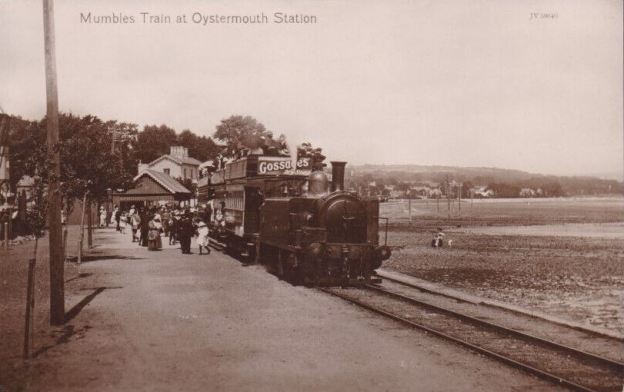
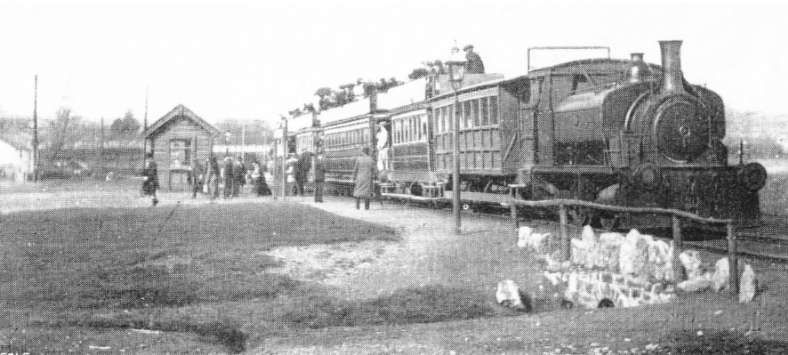
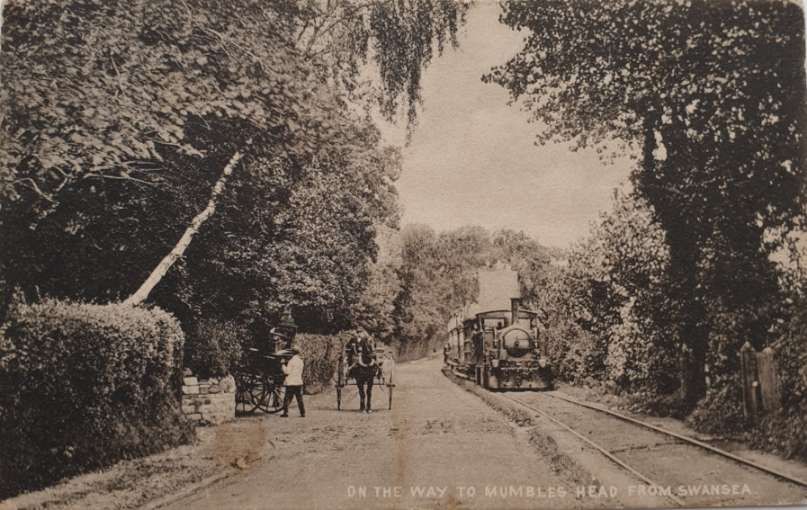
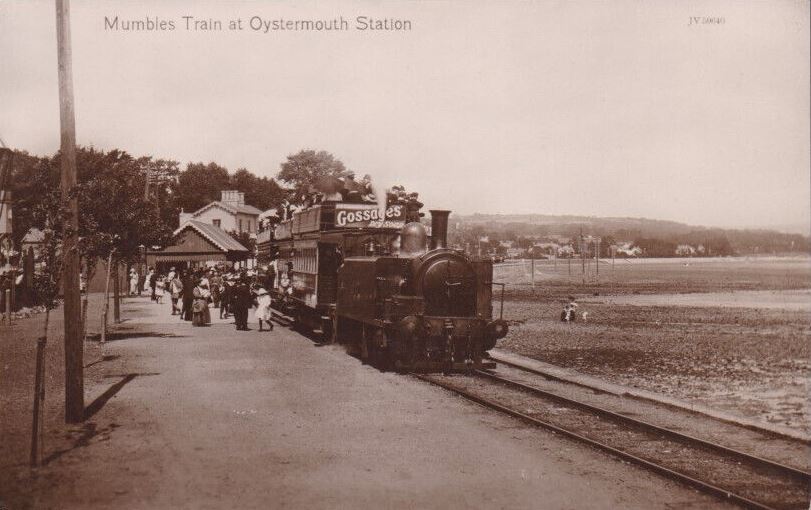
The featured image for this article was taken in the days prior to electrification of the railway. A steam-powered service sits at Oystermouth Station before heading on towards Mumbles Pier, © Public Domain. [37]
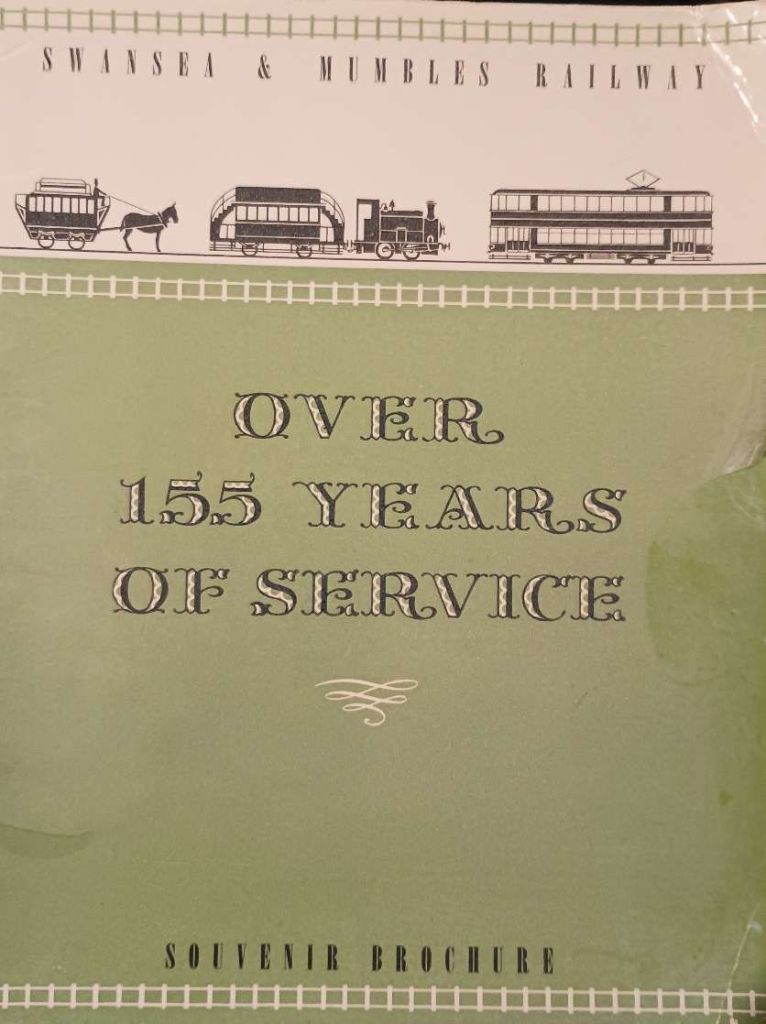
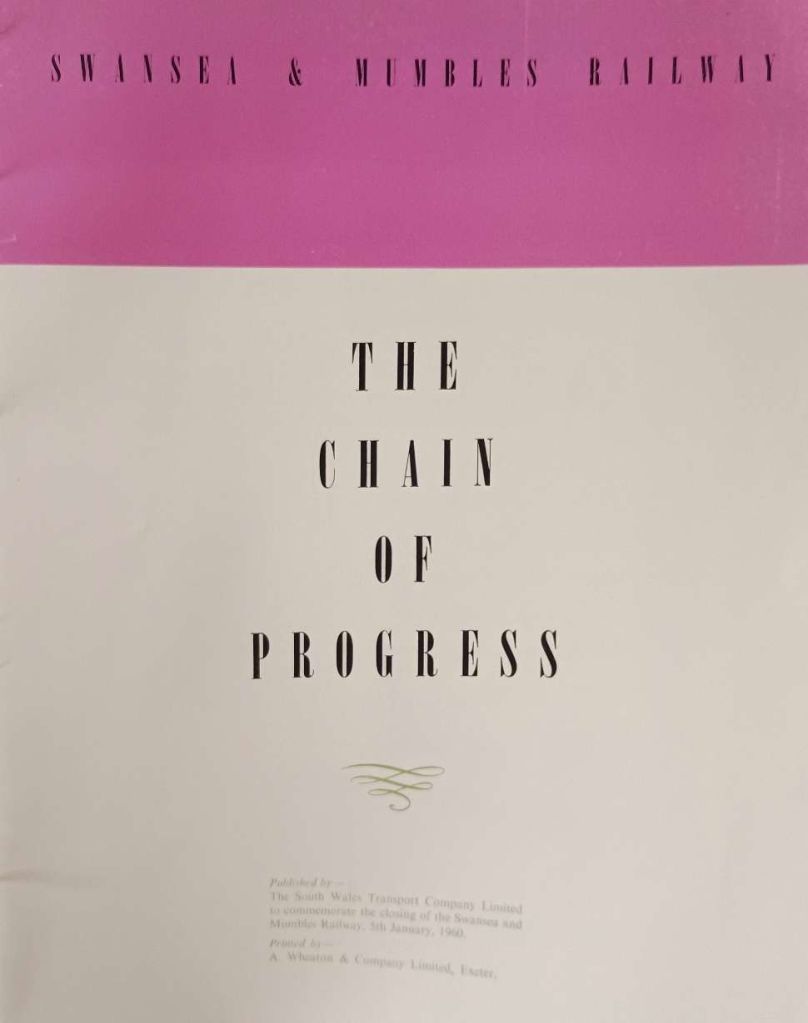
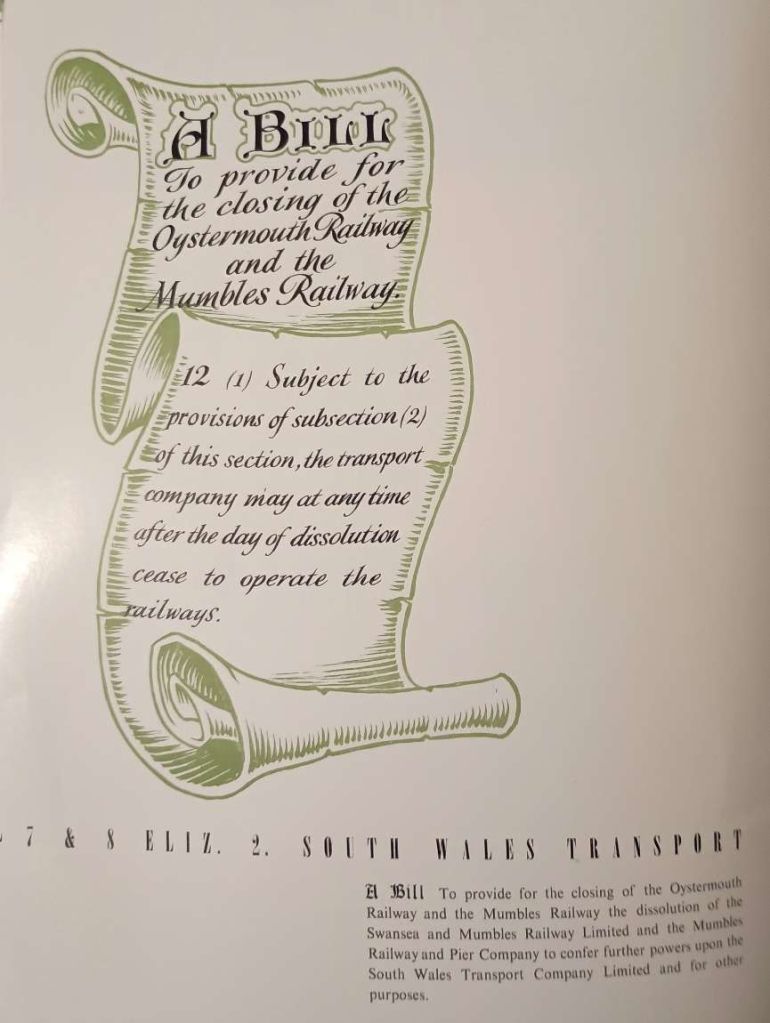
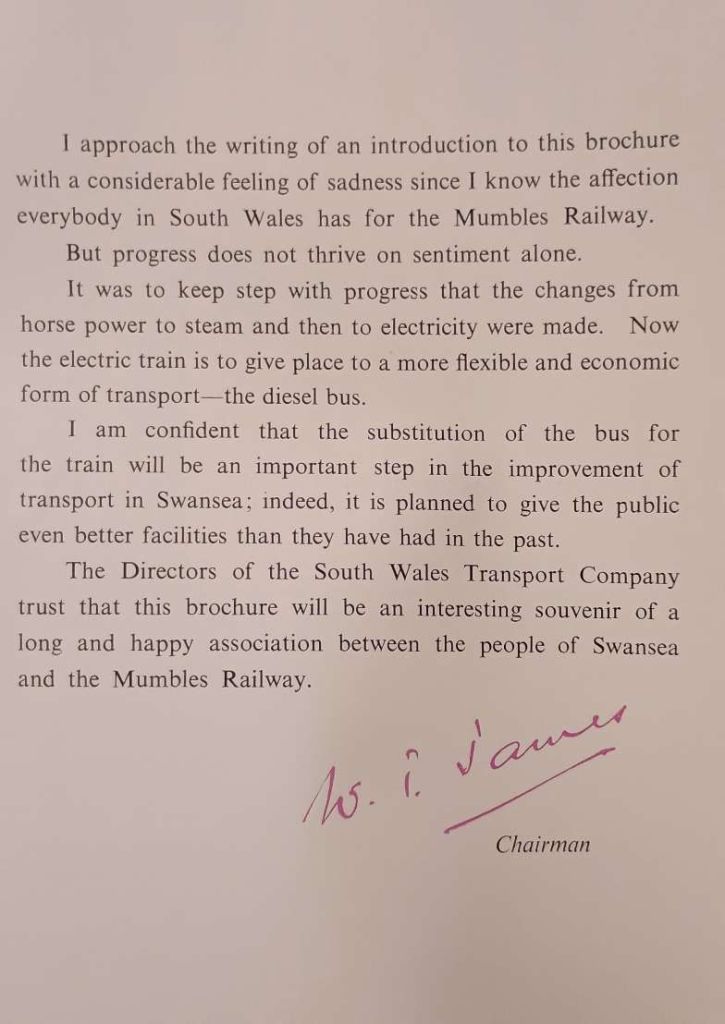
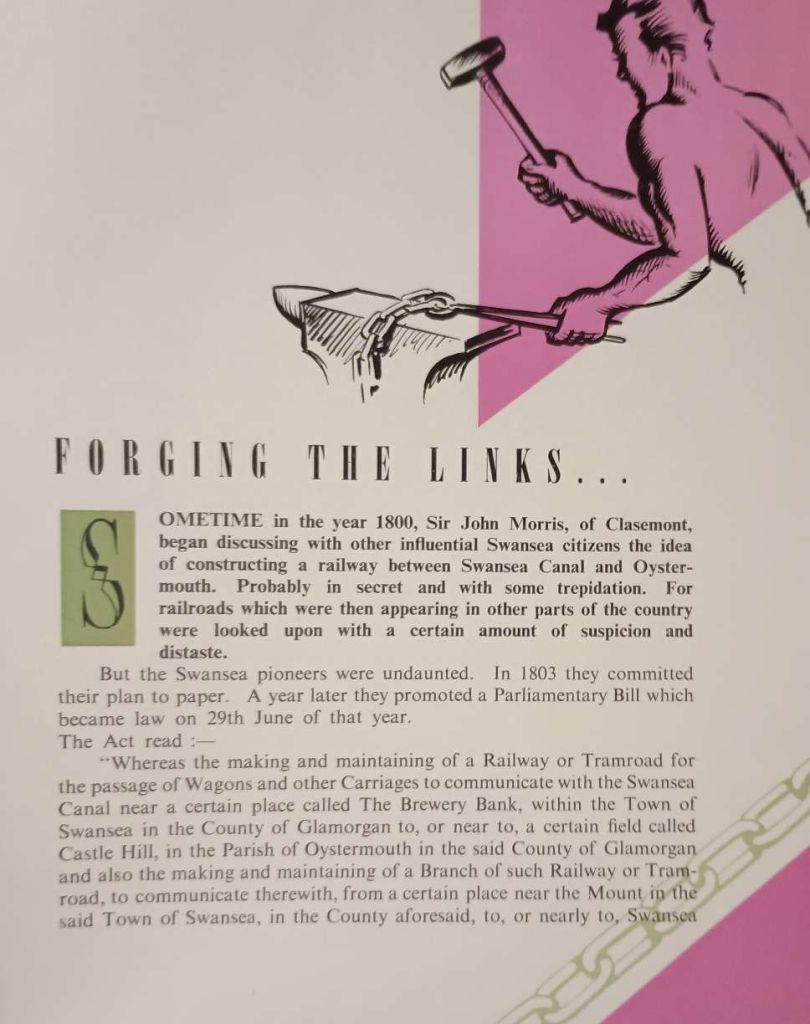
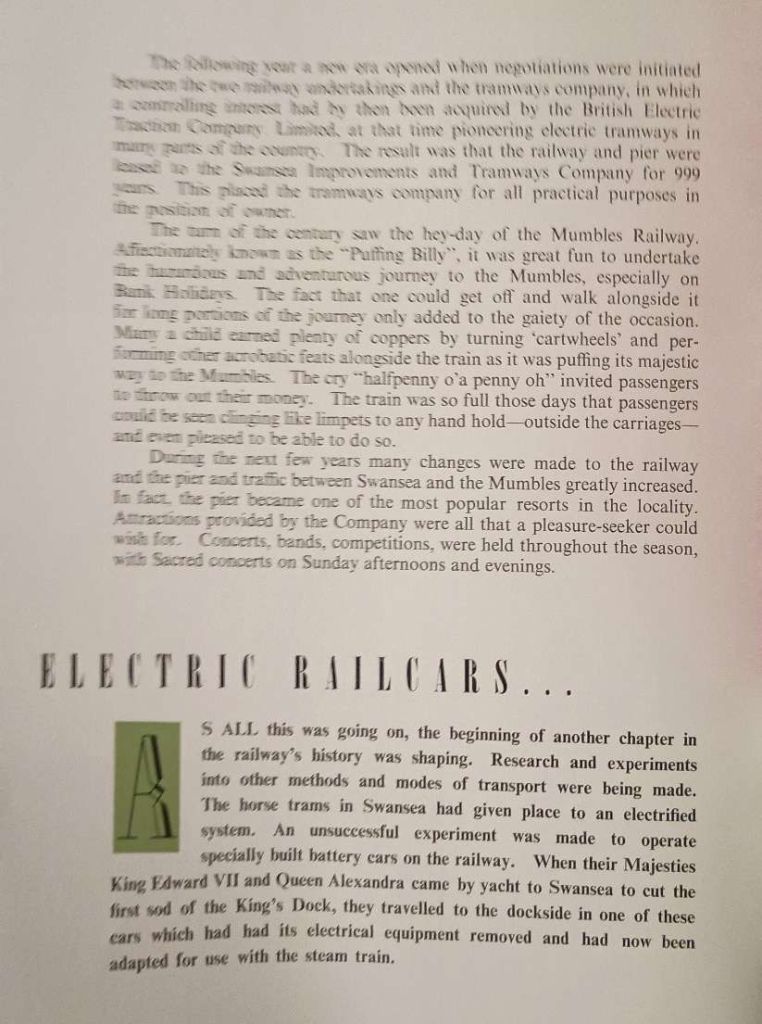
In mid-September 2026, I picked up a copy of the Souvenir Brochure for the closure of the Swansea and Mumbles Railway which occurred on 5th January 1960. Photographs of the pages of the brochure appear in the Appendix to this article.
Throughout the country, the internal combustion engine was beginning its ascendancy and many in national and local government together with those providing transport had been won over by the arguments which supported the rise of petrol and diesel-powered vehicles. Looking back from the 21st century, we can see that, while there was some value in the arguments put forward, the net effect has been significantly disadvantageous to the built environment and to our ability to get around. We also know now that Internal combustion engines have been heavily polluting and have contributed to the warming of our planet.
The closure of the Swansea & Mumbles Railway is just one example among so many, of decision-makers turning away from trams to buses amid the significant rise in car ownership. The reducing patronage of the line was partly caused by these transitions but it was also essentially a self-fulfilling prophecy. Expenditure on maintenance and renewals was perceived as unnecessary because of the lower demand for the service, this in turn resulted in a further lowering in patronage!
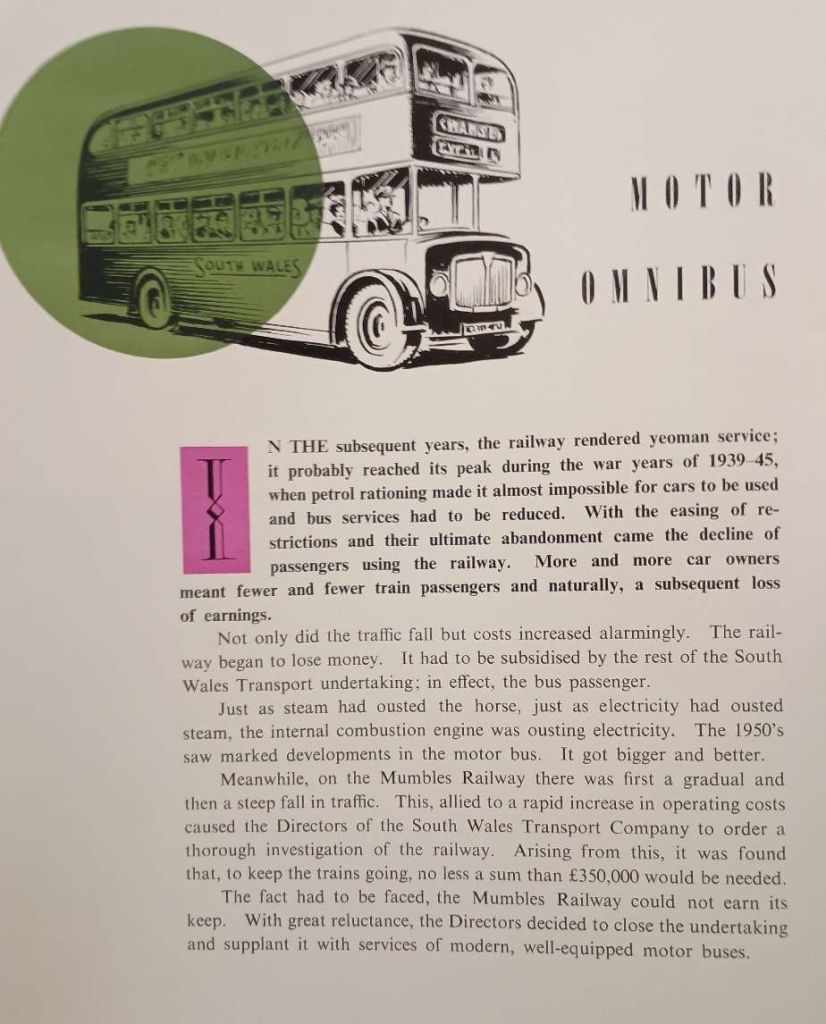
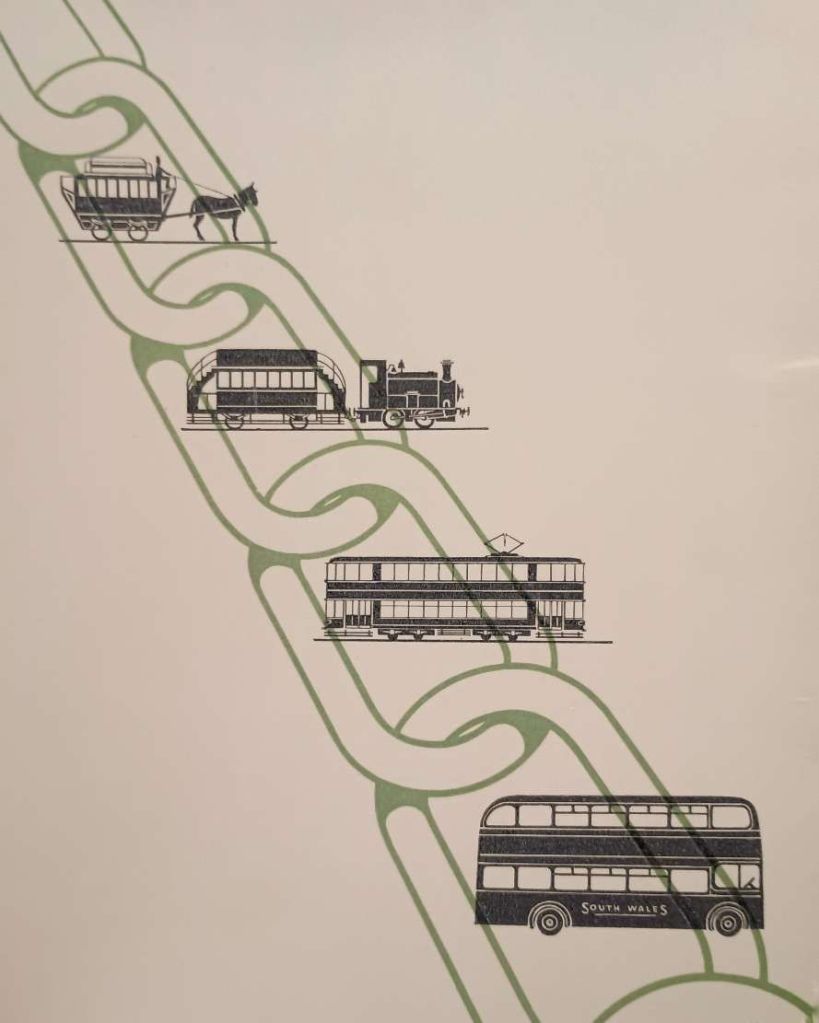
The brochure for the closure of the line talks of the way in which “More and more car owners meant fewer and fewer train passengers and naturally, a subsequent loss of earnings.” [1] It says that, “Not only did the traffic fall but costs increased alarmingly. The railway began to lose money. It had to be subsidised by the rest of the South Wales Transport undertaking; in effect, the bus passenger. Just as steam had ousted the horse, just as electricity had ousted steam, the internal combustion engine was ousting electricity. The 1950’s saw marked developments in the motor bus. It got bigger and better.” [1]
Perhaps inevitably the future horizon began to contract and all decisions were focussed on the here-and-now or the next few years. The result was lower investment and then a very significant cost for upgrading – £350,000. At the end of the 1950s that must have felt like a fortune. The decision was inevitable. The brochure tells us that “With great reluctance, the Directors [of the South Wales Transport Company] decided to close the undertaking and supplant it with services of modern, well-equipped motor buses.” [1]
So ends the story! The brochure finishes with a eulogy and with paragraphs which extol the motor bus as ‘the future’ of public transport:
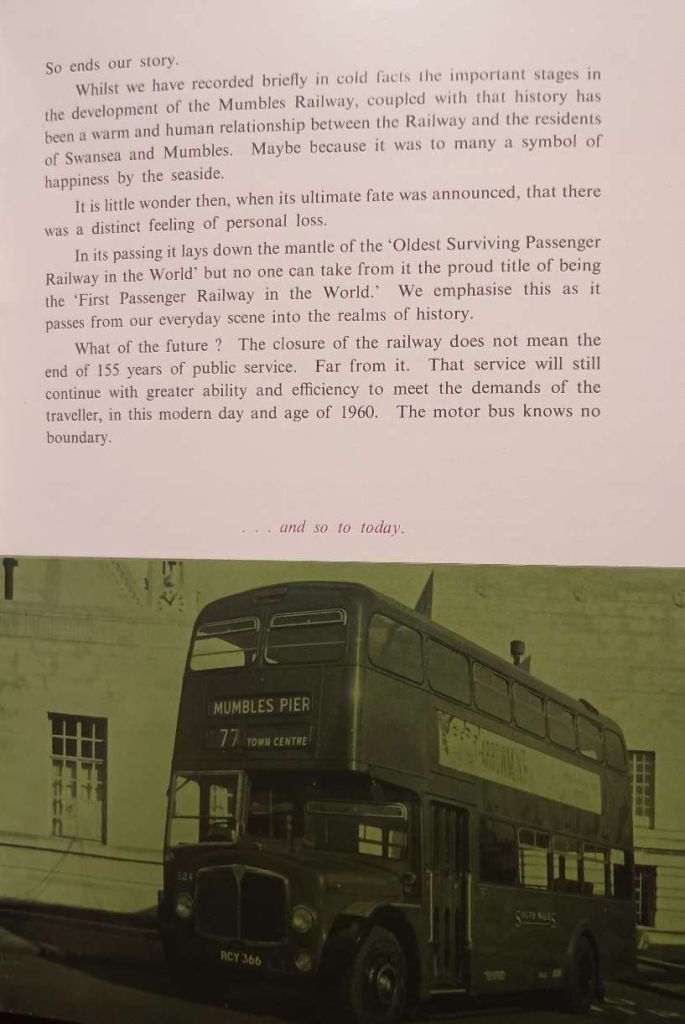
“Whilst we have recorded briefly in cold facts the important stages in the development of the Mumbles Railway, coupled with that history has been a warm and human relationship between the Railway and the residents of Swansea and Mumbles. Maybe because it was to many a symbol of happiness by the seaside.
“It is little wonder then, when its ultimate fate was announced, that there was a distinct feeling of personal loss.
“In its passing it lays down the mantle of the ‘Oldest Surviving Passenger Railway in the World’ but no one can take from it the proud title of being the ‘First Passenger Railway in the World. We emphasise this as it passes from our everyday scene into the realms of history.
What of the future? The closure of the railway does not mean the end of 155 years of public service. Far from it. That service will still continue with greater ability and efficiency to meet the demands of the traveller, in this modern day and age of 1960. The motor bus knows no boundary.” [1]
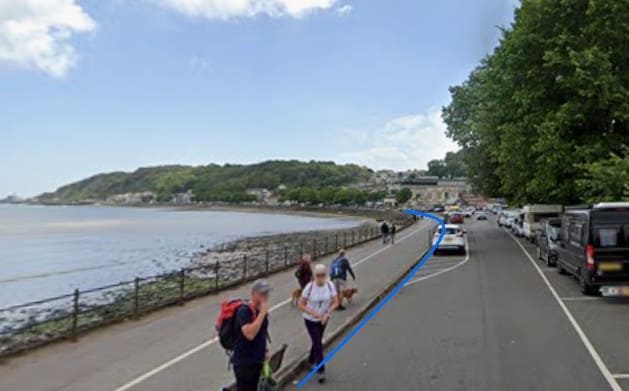
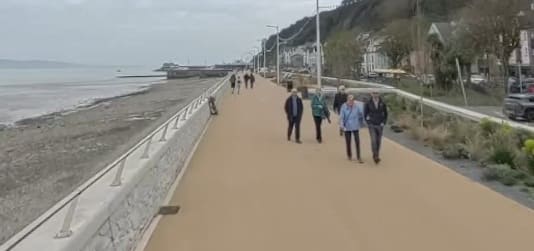
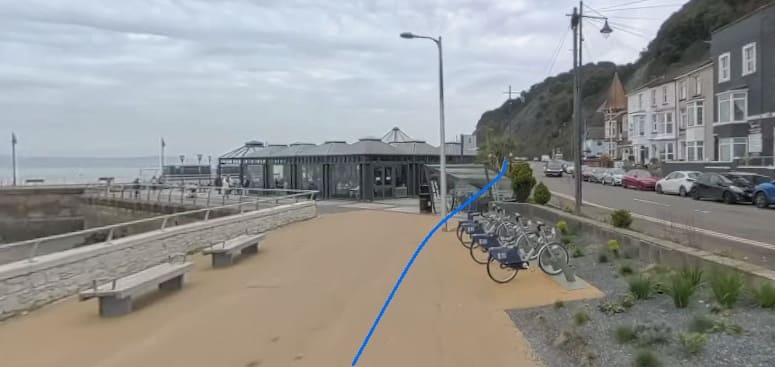
In the 21st century, First Cymru operates frequent regular bus services (such as routes 2A and 2B) connecting Swansea city centre directly to Oystermouth and Mumbles. The former railway route along the seafront now forms part of a popular walking and cycling track. Recent council updates to the Mumbles seafront have even embedded smart aluminium strips into the paving as a visual nod to the old Mumbles Railway tracks. Transport planners and local groups occasionally discuss light rail, tram-train, or wider Swansea Bay Metro concepts, but a dedicated rail link returning to Mumbles remains a long-term proposal rather than an active project.
As we look back from the 21st century, aware of the way things are now perceived, it is reasonable to speculate about ‘what might have been’ had significant investment been made on improvement of the tram network rather than it being set aside in favour of the ‘modern bus’!
A consultancy report – Greengauge21: Shaping Tomorrow’s Railways [2] – concluded that a “Swansea Bay Metro could use the same technology that is being developed for tram-style operation into Cardiff Bay to provide access to Swansea city centre from key valley towns such as Pontypridd and Aberdare. … Given where passenger railways started 214 years ago, someone is bound to ask whether the light rail into Swansea city centre could be extended to Mumbles. That is a challenge we leave for others to ponder.” [2]
The History of the Line
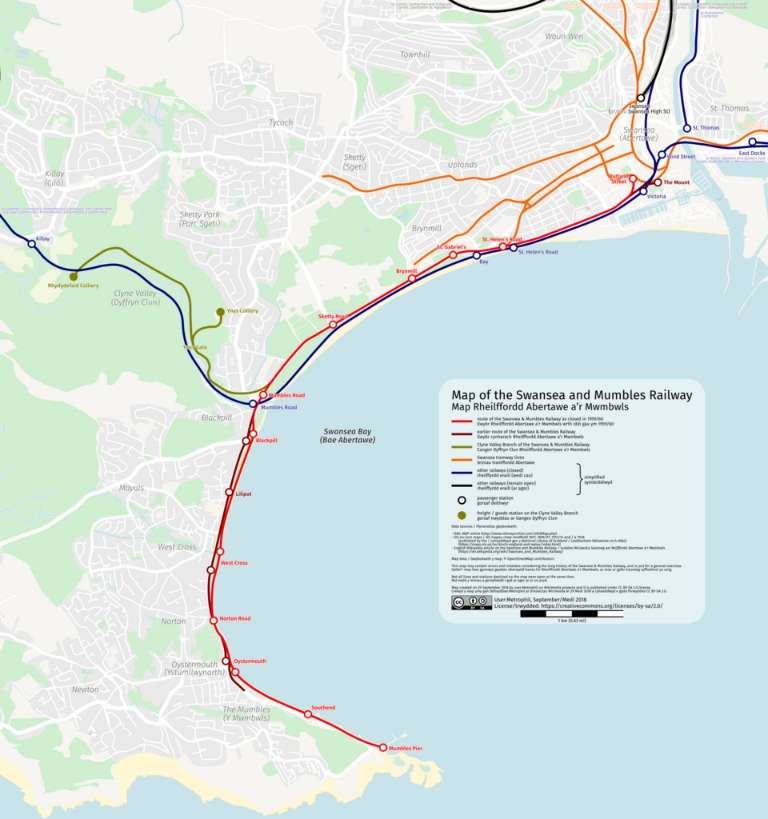
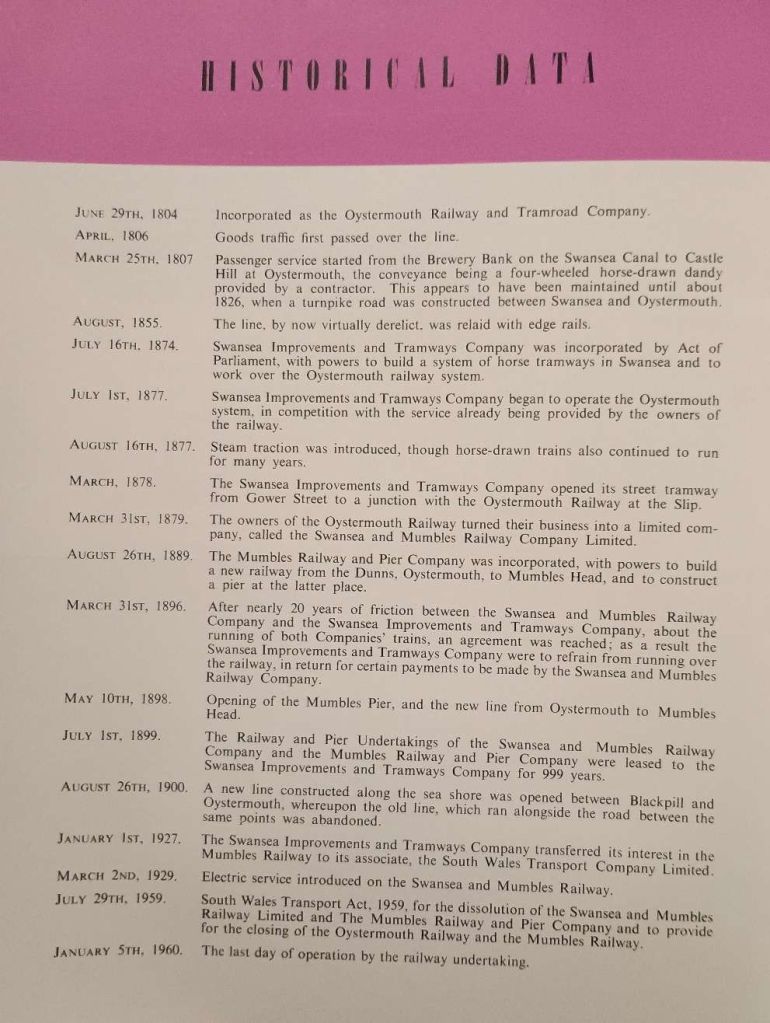
The Swansea and Mumbles Railway stakes a claim to be the world’s first passenger railway. [3] It was originally built under an Act of Parliament, the Oystermouth Railway or Tramroad Act 1804, to move limestone from the quarries of Mumbles to Swansea and to the markets beyond, it carried the world’s first fare-paying railway passengers under an agreement effective from 25th March 1807. It later moved from horse power to steam locomotion, and was finally converted to electric power, using the largest tram cars ever built for service in Britain. [3]
At the time of the railway’s closure, it was claimed to have been the world’s longest serving railway, although this distinction has to be qualified because other railways which were used solely for goods traffic (e.g. the Middleton Railway in Leeds, Yorkshire, dating from 1758) had been operating for longer. [4]
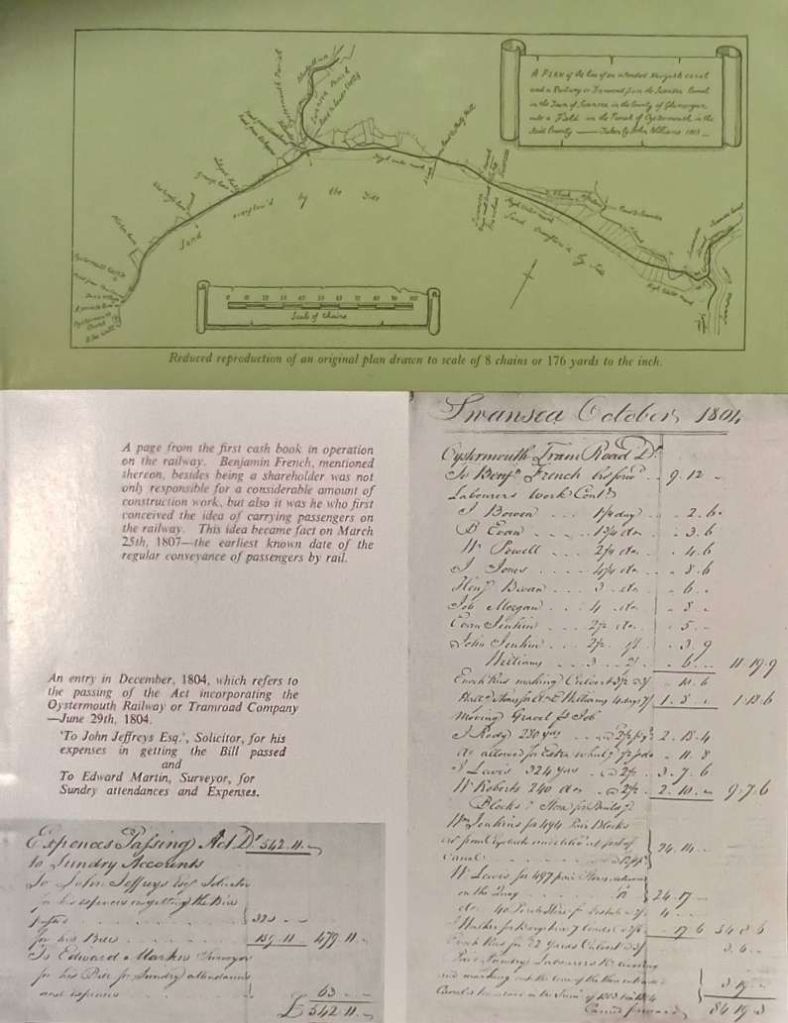
Wikipedia tells us that, “There was no road link between Swansea and Oystermouth at the beginning of the 19th century and the original purpose of the railway was to transport coal, iron ore and limestone. Construction seems to have been completed in 1806 and operations began without formal ceremony, using horse-drawn vehicles. As constructed, the line ran from the Brewery Bank adjacent to the Swansea Canal in Swansea, around the wide sweep of Swansea Bay to a terminus at Castle Hill (near the present-day Clements Quarry) in the tiny isolated fishing village of Oystermouth (known as Mumbles). There was also a branch from Blackpill which ran up the Clyne valley for nearly 1 mile (1.6 km) to Ynys Gate which was intended to promote the development of the valley’s coal reserves.” [4]
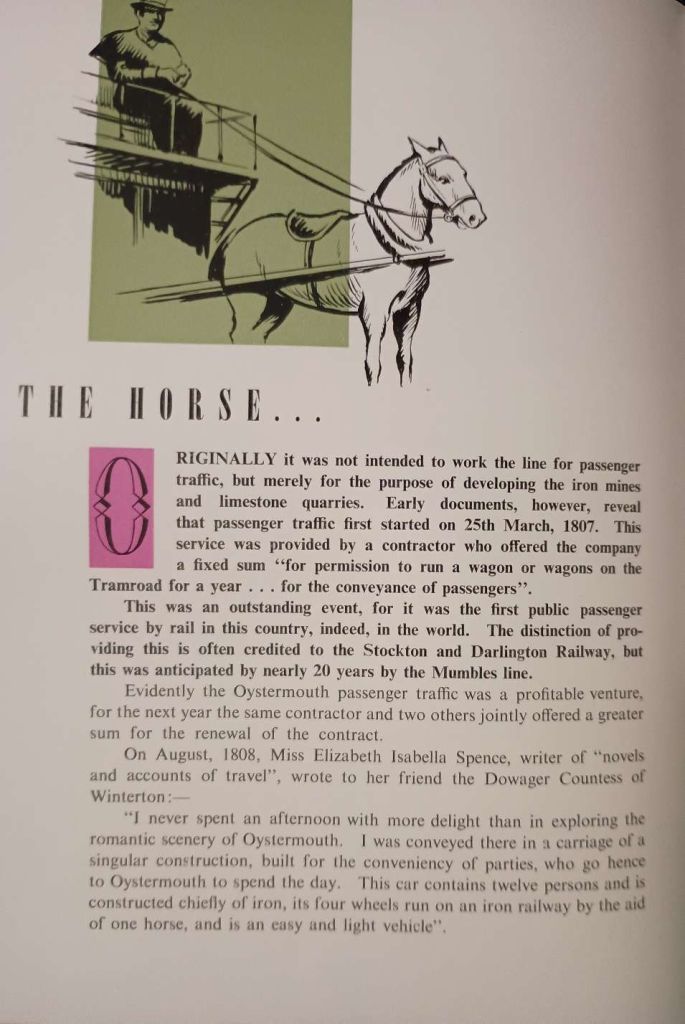
“In February 1807, approval was given to carry passengers along the line, when one of the original proprietors, Benjamin French, offered to pay the company the sum of twenty pounds in lieu of tolls for the right to do so for twelve months from the following quarter day, 25th March 1807. This is usually cited as the date when the first regular service carrying passengers between Swansea and Oystermouth began, thus giving the railway the claim of being the first passenger railway in the world. Passenger services operated from The Mount, the world’s first recorded railway station. [5: p333] The venture was … a success … The following year, French joined with two others in offering the increased sum of twenty five pounds to continue the arrangement for a further year, but the construction of a turnpike road parallel to the railway in the mid-1820s robbed it of much of its traffic and the passenger service (by that time in the hands of one Simon Llewelyn) ceased in 1826 or 1827, ironically just as events elsewhere in the United Kingdom (particularly in the north east of England) were paving the way for the development of railways as a truly national and international transport system for both goods and passengers.” [4]
“In its early days the line operated in the same manner as the contemporary canals and turnpike roads. Tolls and charges were laid down in the enabling act of Parliament and any trader could use the line on provision of a suitable waggon and after paying the appropriate toll to the owning Company. The railway was laid in the form of a plateway, with the rails being approximately 4 ft (1,219 mm) apart.” [6: p48]
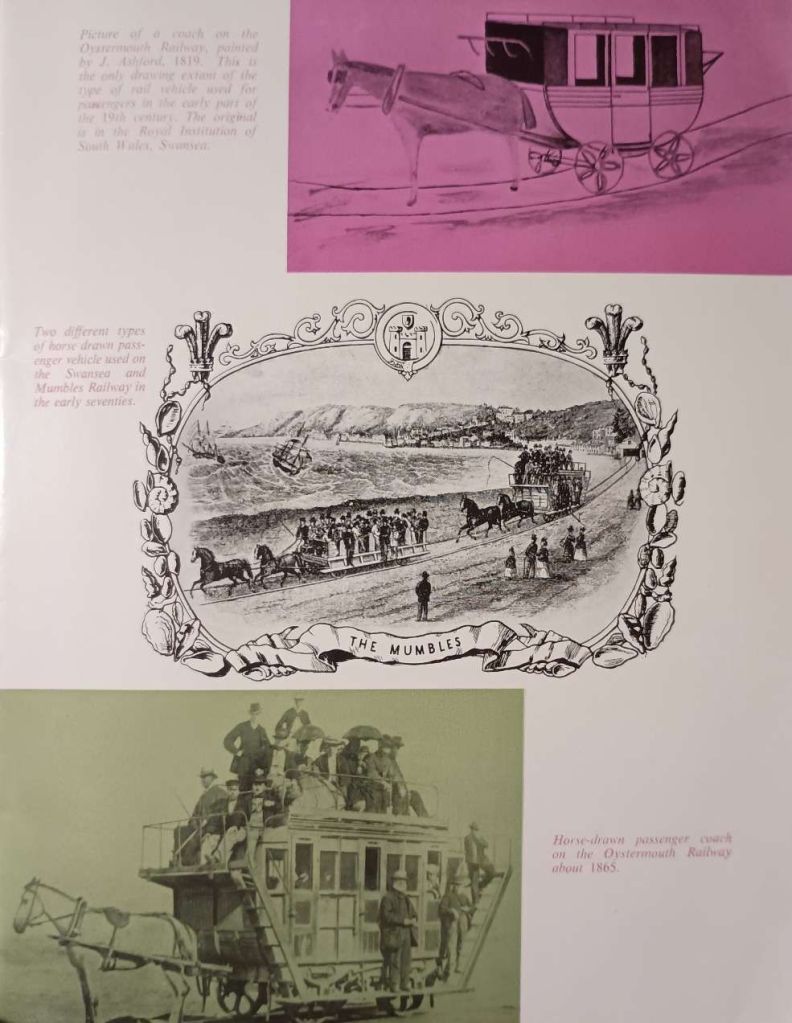
Wikipedia continues: “After cessation of the passenger service the line became derelict and the original company of proprietors virtually moribund. The Clyne valley branch was re-laid in 1841/2 and extended for a further 1 mile (1.6 km) (as a private line) to the Rhydydefaid colliery where George Byng Morris, the son of one of the original proprietors, had started to exploit the coal and iron reserves of the valley. From about 1855, George Byng Morris took the line in hand, re-laid it with edge rails, as a conventional railway, to the standard gauge of 4 ft 8 1⁄2 in (1,435 mm) and reintroduced a horse-drawn passenger service between Swansea and a terminus at The Dunns in Oystermouth.” [4]
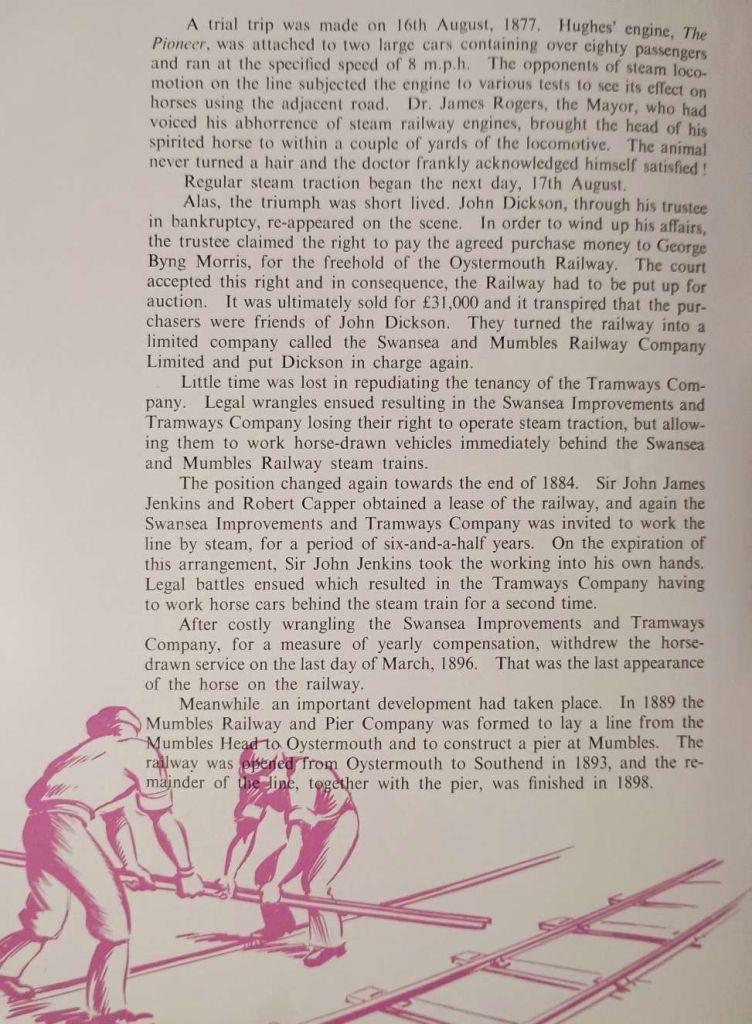
Trials were undertaken in 1877 using “one of Henry Hughes’ patent tramway locomotives, … ‘Pioneer’. These were successful and two further locomotives of the same type were obtained, although a dispute between the Swansea Improvements and Tramway Company (SI&T) (which owned the locomotives) and the line’s then owner, John Dickson (who had come into possession following the death of George Byng Morris) meant that horses continued to operate certain services until 1896.” [4]
More about Hughes’ locomotives can be found here, [7] here, [8] here [9] and here. [10]
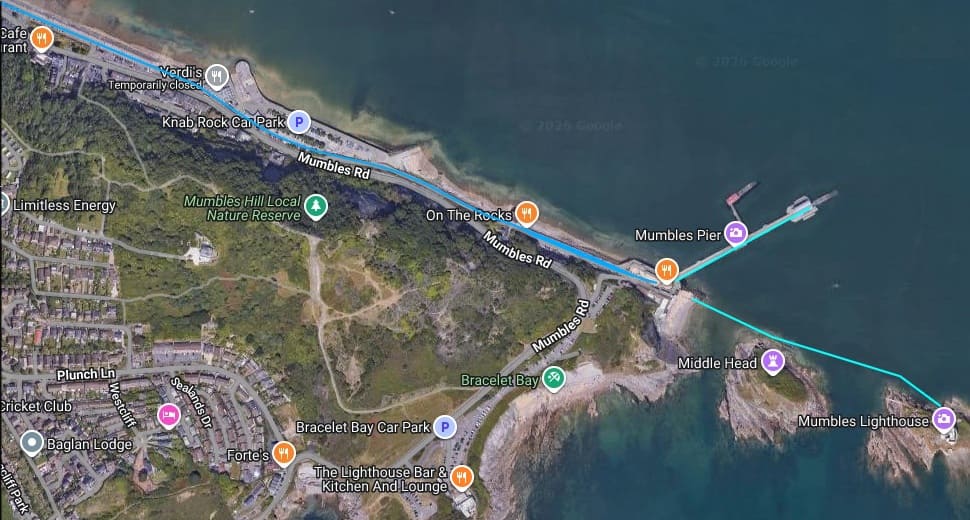
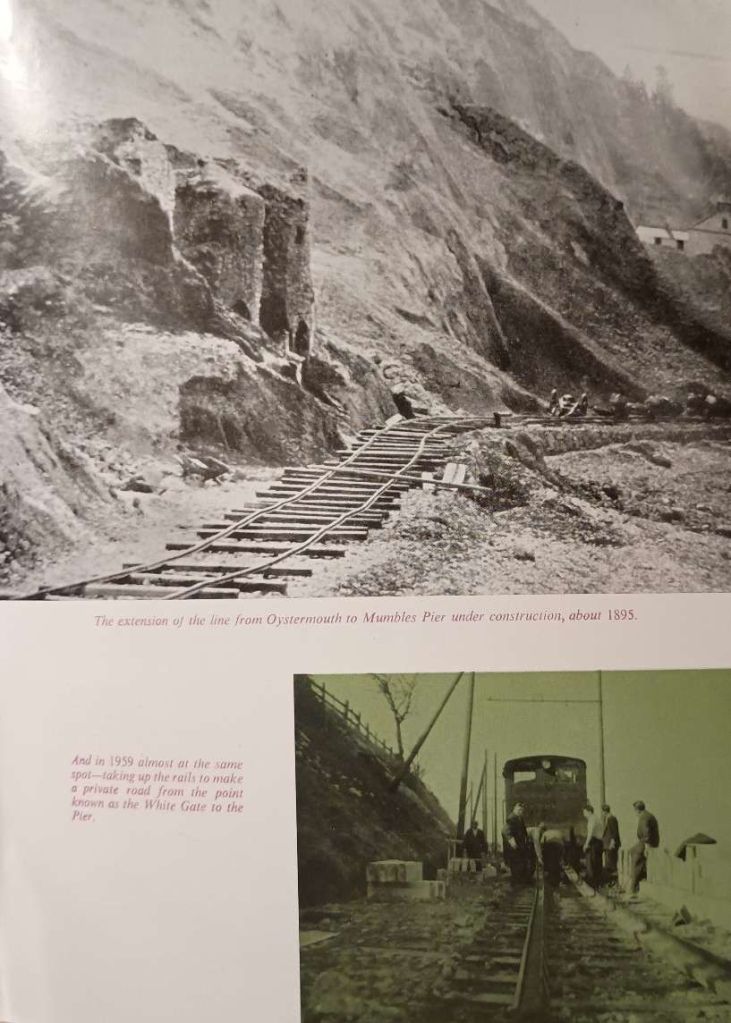
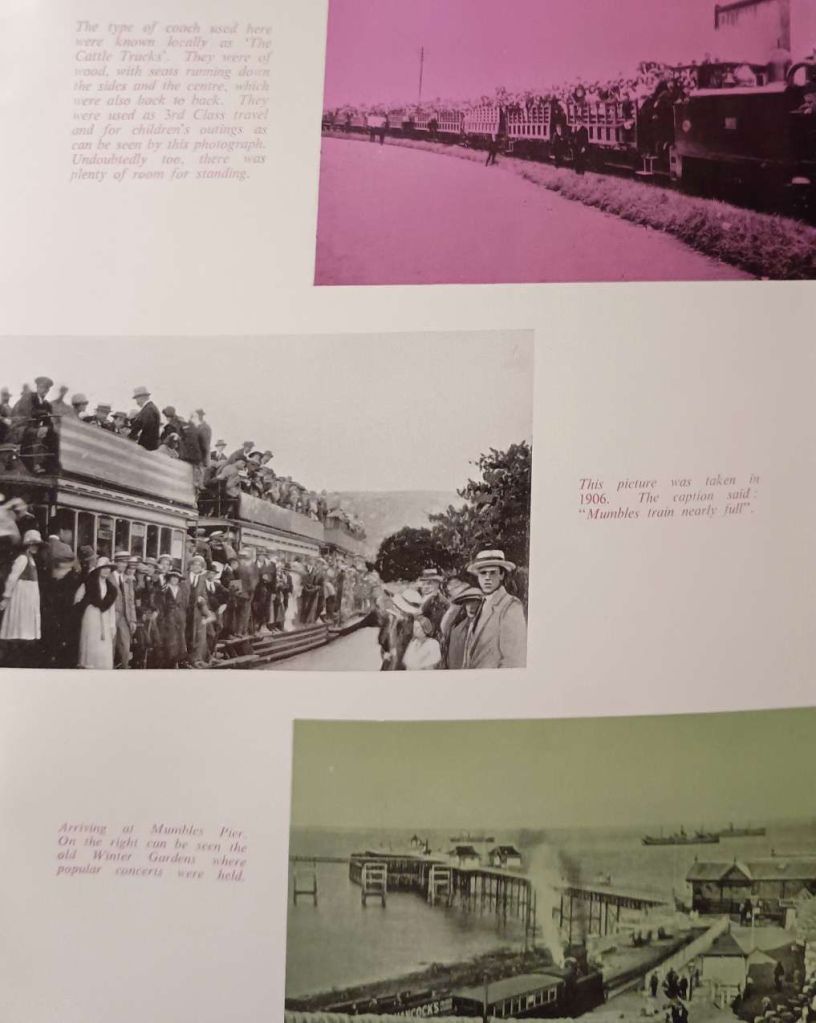
At the end of the 19th century, “there was a junction between the Mumbles Railway and the Swansea town tramway system at the Slip, allowing SI&T cars to run through from Swansea town centre to Oystermouth. The nature of the dispute was such that the Swansea & Mumbles company demanded that the SI&T horse cars should follow their own steam-hauled services on the line. In 1889, a new company, the Mumbles Railway and Pier Company, was incorporated to extend the railway beyond Oystermouth to a new pier close to Mumbles Head. The first section, to Southend, was opened in 1893 and the remainder, including the pier, in 1898.” [4]
“The Clyne valley branch continued to be used for coal traffic from Rhydydefaid pit until its closure in 1885 after which the entire branch fell into disuse. In 1896 the promoters of the Gower Light Railway proposed incorporating it into their scheme but nothing came of it. The original branch to Ynys Gate (as authorised in 1804) was relaid in connection with the Clyne Valley slant (opened 1903) and used for coal traffic until the colliery closed in 1915. The extension of 1841/2 remained abandoned until 1920 when a narrow-gauge tramway was laid on its formation to carry coal from Ynys slant to Ynys Gate. This was used only until 1921 when the slant closed. There was then no further traffic on the branch, although the track remained in situ and was still usable as late as 1936 when it is recorded that a diesel locomotive made a trip up the branch as far as Ynys Gate.” [4]
“A somewhat motley collection of steam locomotives was used to maintain services between 1877 and 1929, beginning with the Hughes tramway locomotives mentioned above (which were actually owned by the SI&T and therefore not able to be used on the railway after 1878). Dickson had purchased two saddle tank locomotives of more conventional outline from the Falcon Engine & Car Works (successor to Hughes’s Locomotive and Tramway Engine Works), and two more from Manning Wardle & Co of Leeds in the early 1880s. A further locomotive (originally numbered 5, later 3) came from the Hunslet Engine Company of Leeds in 1885.” [4]
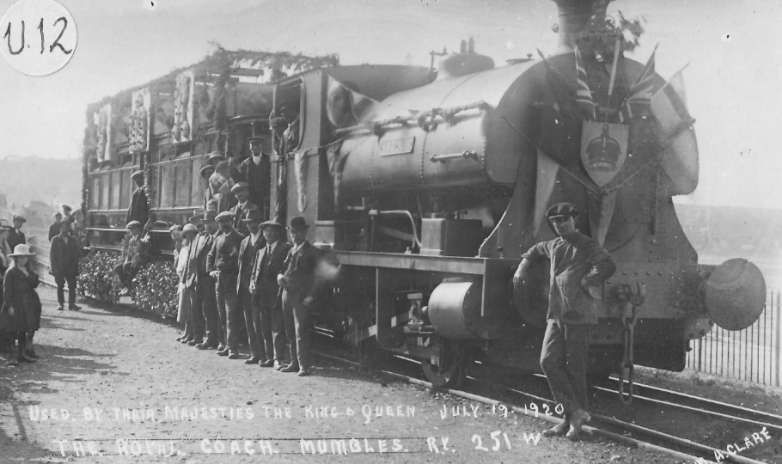
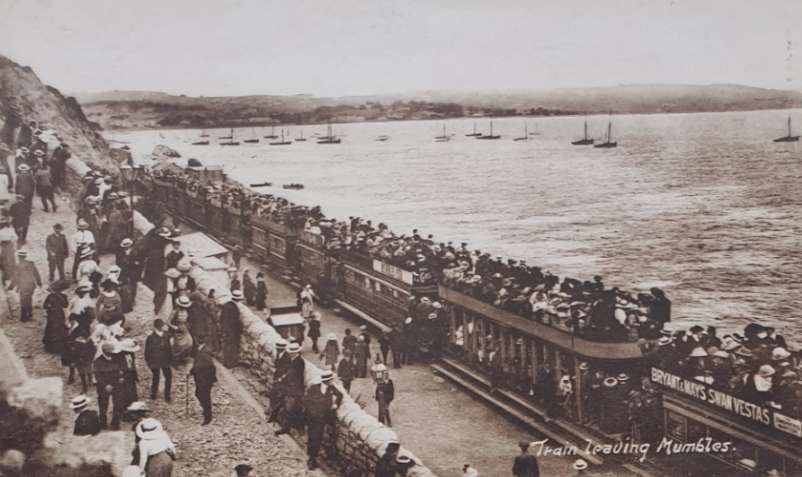
“When the new Swansea and Mumbles Railway Company took over operations in 1890 it ordered two 0-4-0 saddle tank locomotives from Black, Hawthorn & Co of Gateshead. These were delivered in 1891 and numbered 1 and 2; they worked on the line until after the First World War. Two larger 0-6-0 side tank locomotives were obtained from the Hunslet Engine Company in 1898; numbered 4 and 5, they bore the brunt of the passenger service until well into the 1920s. The nominally independent Mumbles Railway and Pier Company ordered a 0-4-0 saddle tank from the Brush Electrical Engineering Co of Loughborough (successor to the Falcon Engine & Car Works) in 1906 and this carried plates reading “MR & P No. 3” to denote its ownership. Finally, a second-hand Avonside 0-6-0ST was obtained and named Swansea. All were tank locomotives of 0-4-0 or 0-6-0 wheel arrangement. Ownership was vested variously in the Swansea and Mumbles Railway Company or the Mumbles Railway and Pier Company (and sometimes transferred between the two for accounting purposes)[4] and as early as the 1890s there is evidence that the railway was having to hire in locomotives to supplement its own fleet. By the 1920s, locomotives were regularly being hired from a local dealer, Charles Williams of Morriston, and frequently appear in photographs of the railway.” [4]
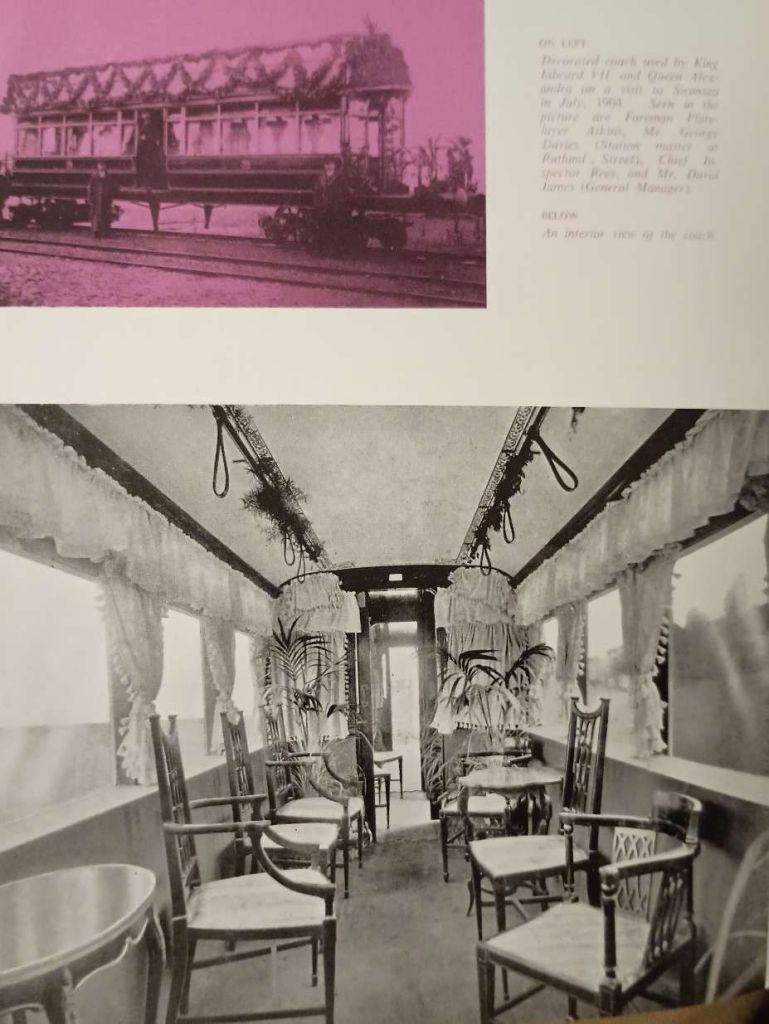
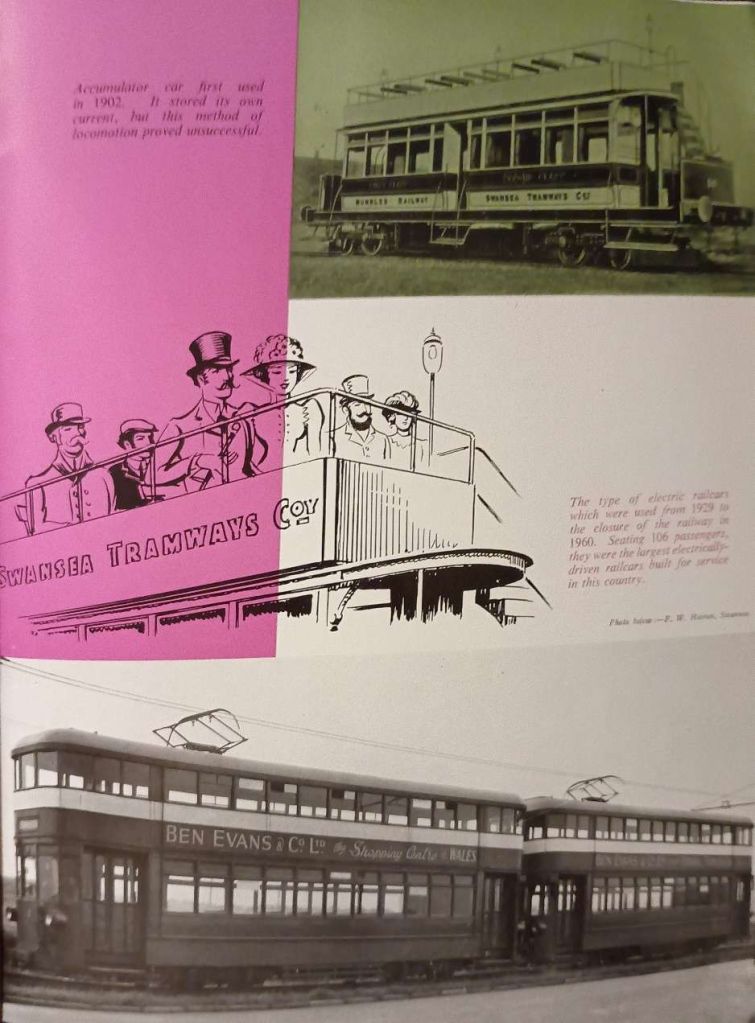
“The line celebrated its centenary in 1904, producing a special commemorative brochure for the occasion. Two years previously, a notable experiment had been carried out, namely the introduction of battery-powered ‘accumulator’ cars. These were not a success, but one of the cars was retained after the electrical equipment had been stripped out and used to convey parties of visiting dignitaries, including King Edward VII when he and his consort, Queen Alexandra, visited Swansea for the ceremonial cutting of the first sod of the King’s Dock in July 1904. The car was used again for the visit of King Edward’s successor, King George V, in 1920, when he officiated at the opening of the Queen’s Dock.” [4]
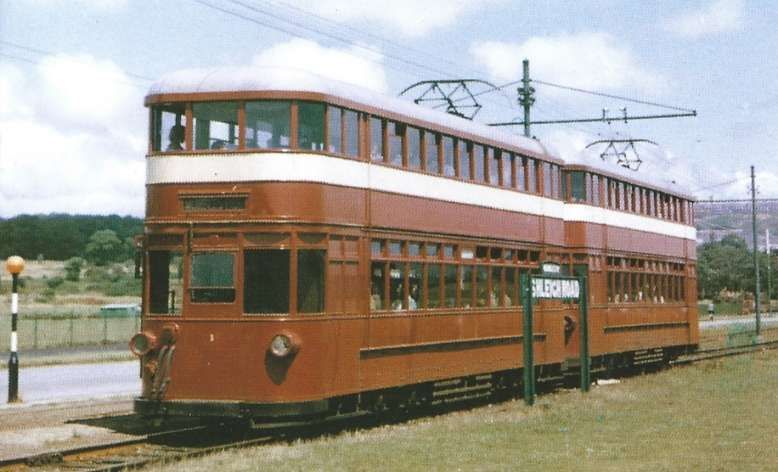
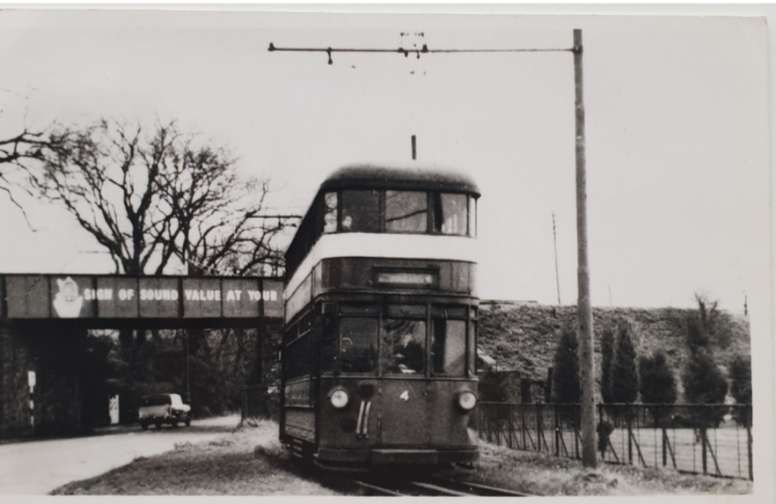
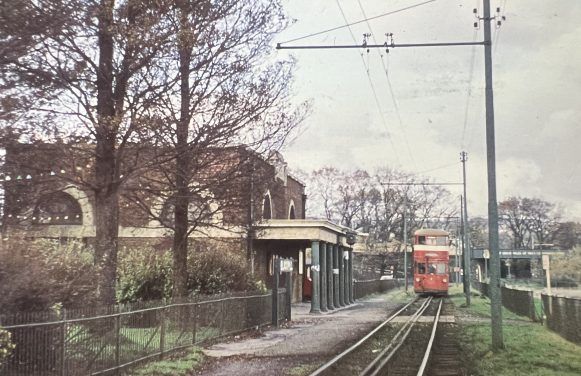
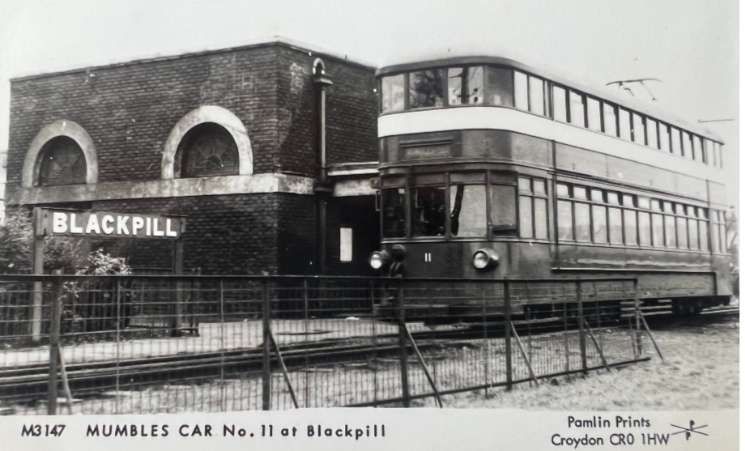
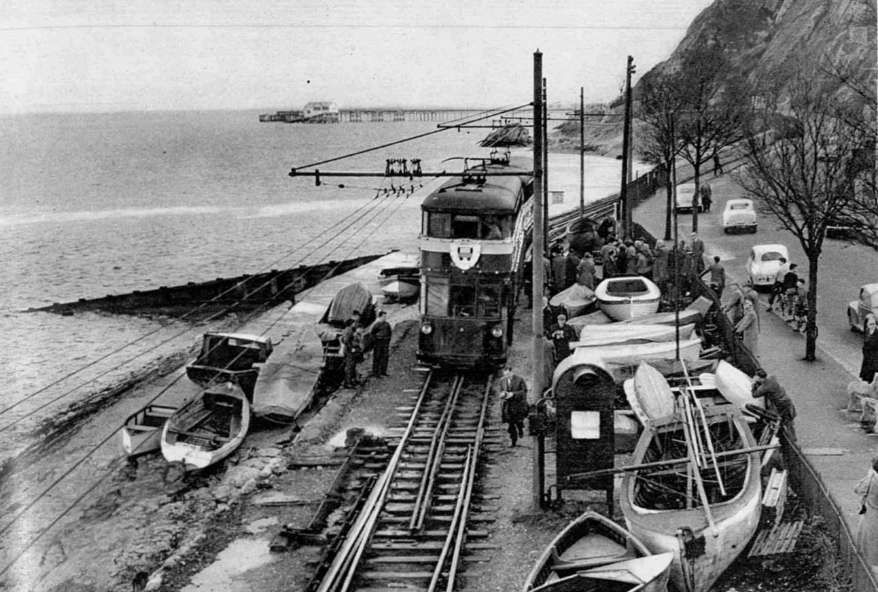
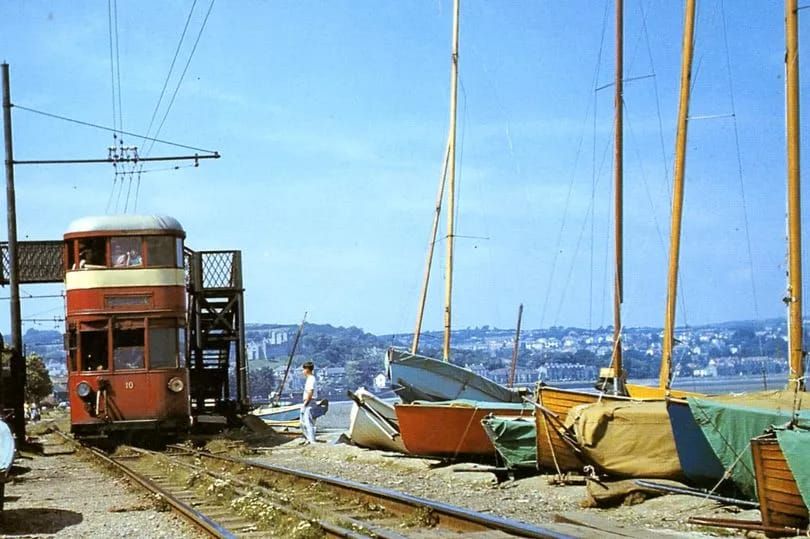
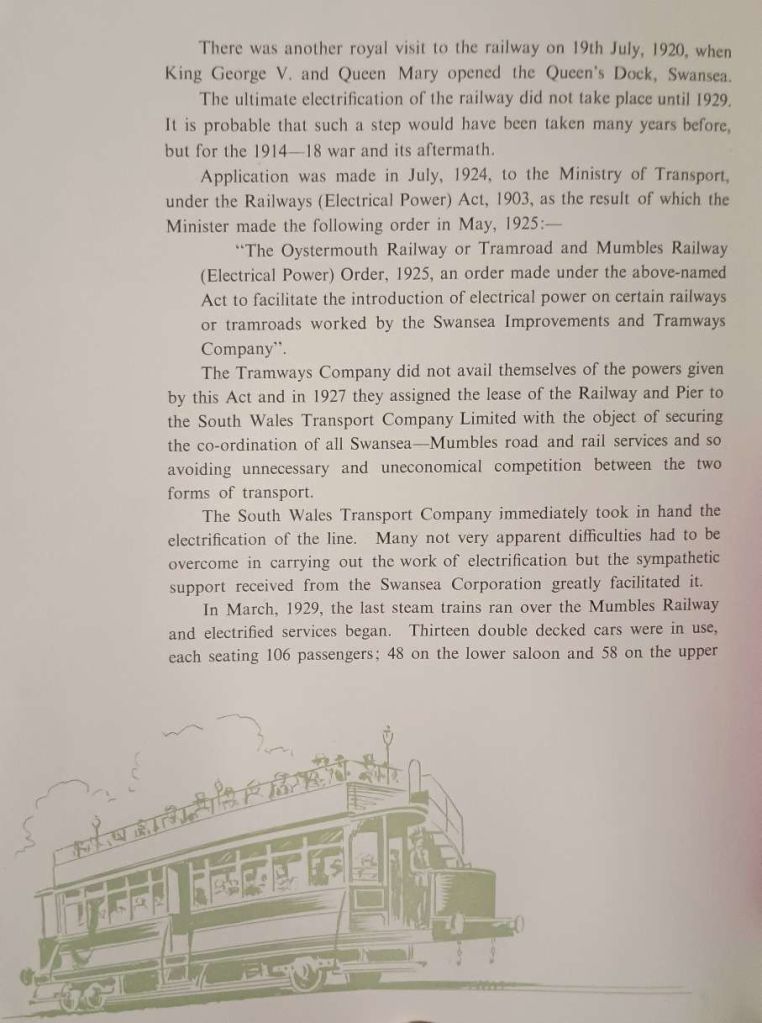
Electrification – “The line was electrified in 1928 at 650 V DC using overhead transmission – giving it the distinction of having used three forms of regular locomotive power over the years (i.e. horse, steam and electricity). Trials began on 6 July 1928 [5] and full electric services were introduced on 2 March 1929, using a fleet of eleven double-deck cars built by the Brush Electrical Engineering Co of Loughborough, in Leicestershire. These were the largest ever built for service in Britain and each could seat 106 passengers. [6] Furthermore, they were frequently operated in pairs, giving a total seating capacity of 212 per train.” [4]
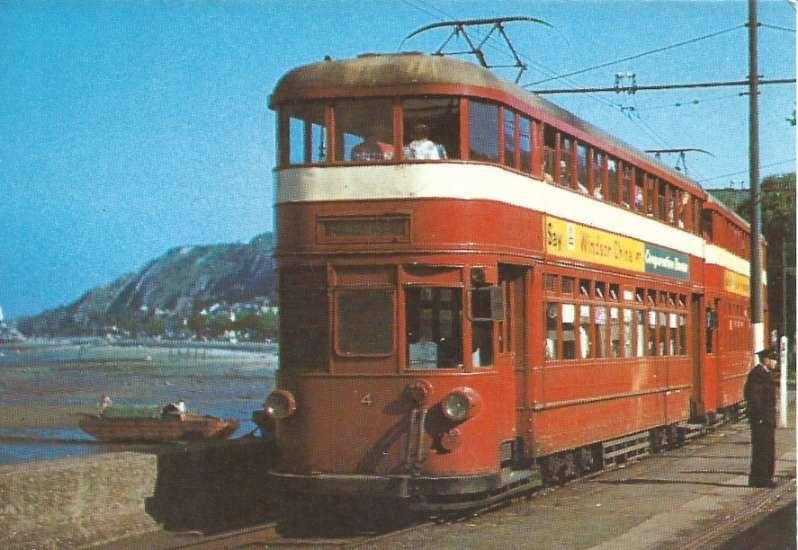
“Two further cars were added later, bringing the fleet strength up to thirteen. A four-wheeled petrol-mechanical locomotive was acquired from Hardy Railmotors of Slough, then in Buckinghamshire, to handle the residual goods traffic on the railway, but this proved to be underpowered and was replaced after a few years by a diesel-mechanical locomotive from John Fowler & Co, of Leeds. The Hardy locomotive was retained for a few years and used for shunting the cars in the depot, which was on the site of the former carriage sheds, adjacent to the Rutland Street terminus, and for inspection of the overhead line equipment, but it had been dismantled by 1954, when parts were used in the construction of a replica horse-drawn car to celebrate the line’s 150th anniversary.” [4]
“In 1958, the South Wales Transport Company (the principal operator of motor bus services in the Swansea town area and predecessor of the modern-day First Cymru company) purchased the railway from the old owning companies (the Swansea and Mumbles Railway Limited, and the Mumbles Railway and Pier Company), having previously been the lessee in succession to the Swansea Improvements and Tramways Company since the 1930s, and the following year went to Parliament with an abandonment bill. Despite vociferous local opposition, the bill became law as the South Wales Transport Act 1959.” [4]
The South Wales Transport Company wasted no time in closing down the line! Their closure brochure/pamphlet is reproduce as Appendix 1 to this article.
There remains a debate about whether the line was a railway or a tramway. This is discussed in Appendix 2 to this article.
The Route
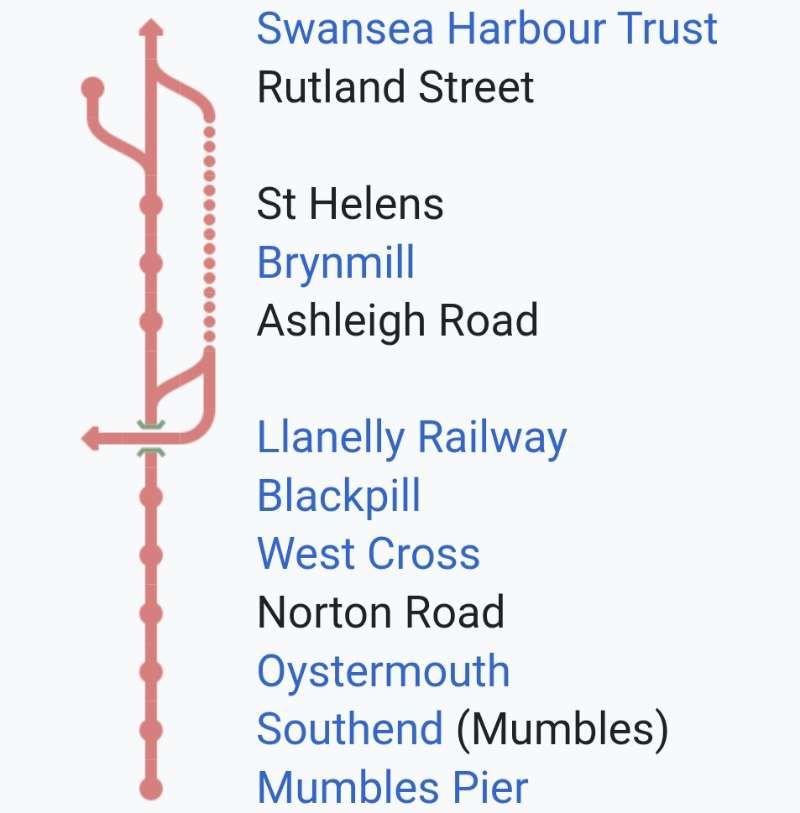
“The railway had a multitude of stopping places over the years, but at the time of electrification in 1929 the officially recognised stations from Swansea to Mumbles (as published in Bradshaw)” [4] were:
- Rutland Street
- St Helen’s (frequently known as “The Slip”)
- Brynmill
- Ashleigh Road
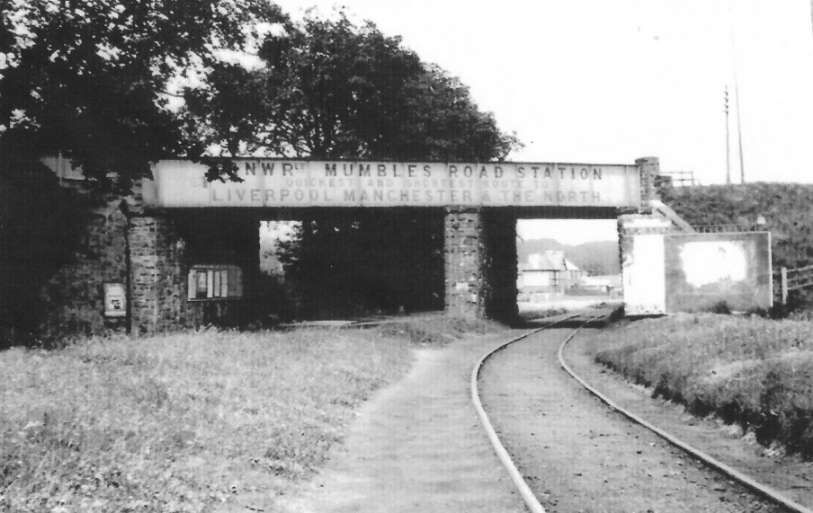
- Between Ashleigh Road and Blackpill stations the railway was crossed by the LM&SR Central Wales line from Swansea Victoria to Shrewsbury, at a point close to the LM&SR Mumbles Road station. There was a Mumbles Road name board under the bridge on the Mumbles Railway line, but if this was an official stopping place for Mumbles Railway cars it was not recognised as such by Bradshaw.
- Blackpill
- West Cross
- Norton Road
- Oystermouth
- Southend
- Mumbles Pier
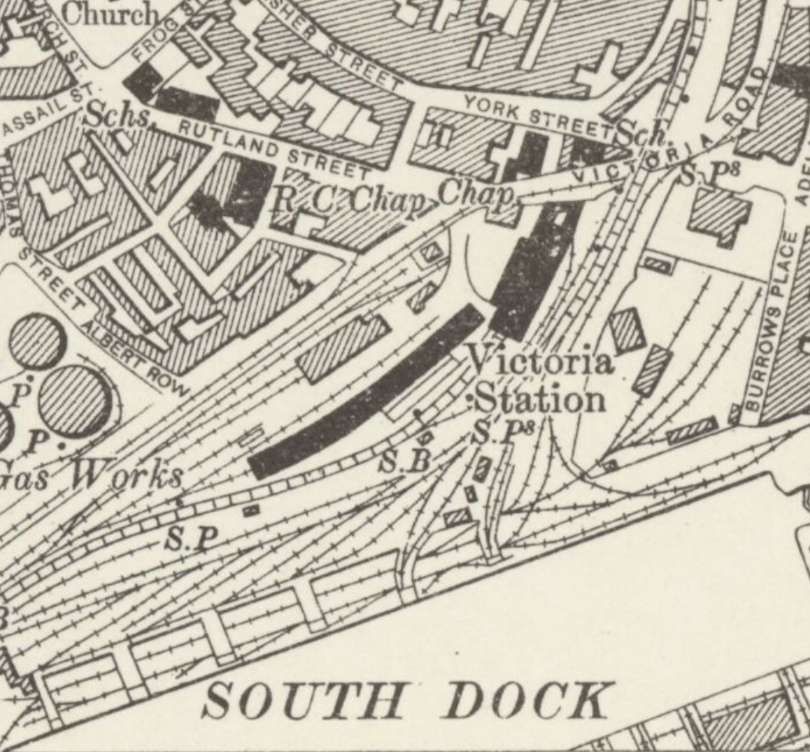
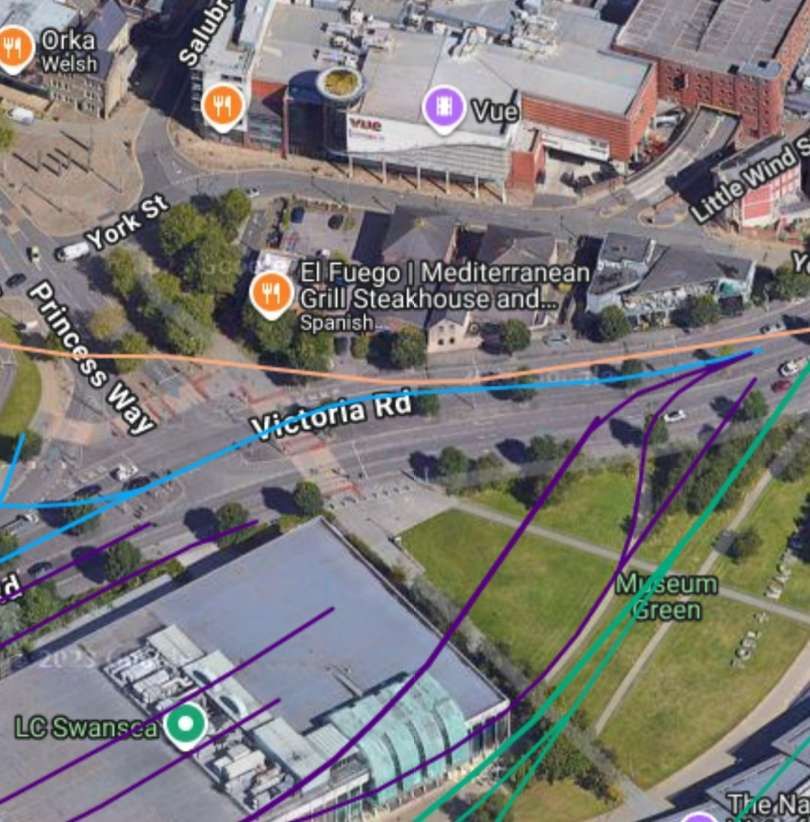
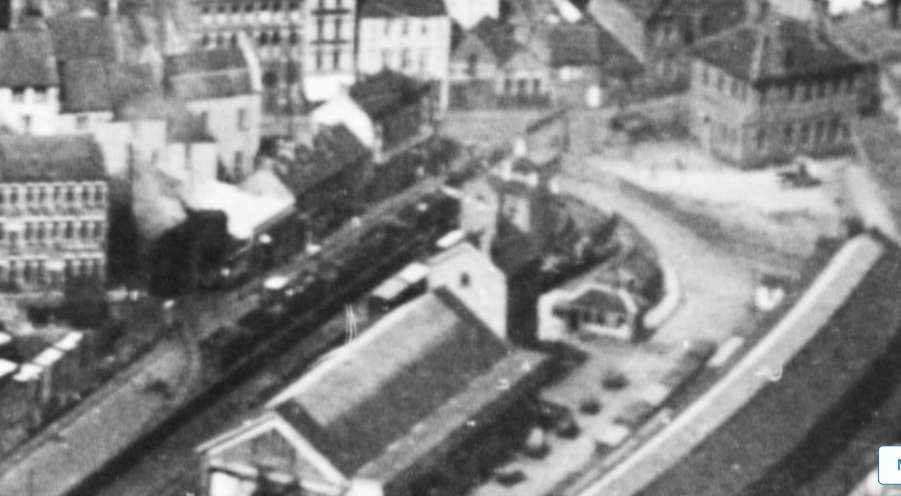
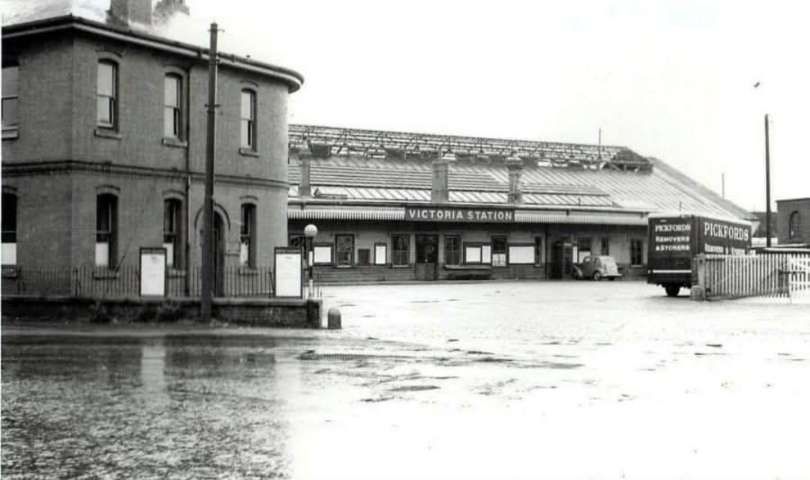
Swansea Victoria was “opened to passenger and goods traffic on 14th December 1867. Owned successively by the Llanelly Railway and Dock Company (1867 to 1871), the Swansea and Carmarthen Railways Company (1871 to 1873), the London and North Western Railway Company (L.N.W.R., 1873 to 1922), the London, Midland and Scottish Railway Company (L.M.S., 1923 to 1947) and British Railways (1948 to 1964), it was served by trains to and from Shrewsbury, Crewe, Liverpool, Manchester and York and formed the southern terminus of the Central Wales line, most of which is still operational as the Heart of Wales Line. Victoria closed in June 1964. … The site was subsequently cleared and used for Swansea Leisure Centre.” [12]
Production of gas at Swansea Gas Works dates back to 1841 when Swansea Gas Light Company began making gas by burning coal. The site ceased producing gas in 1922 and the facility was used for gas distribution until 1949 and then as a gas operations centre.
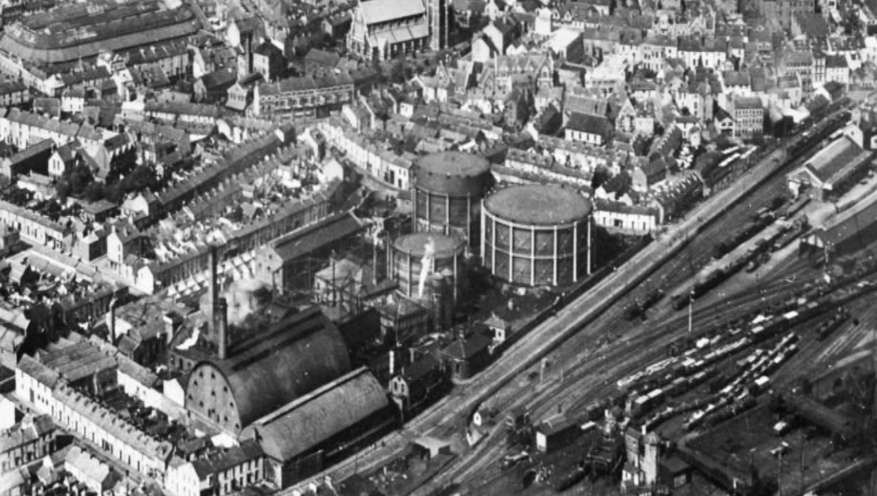
A few more pictures of the Gas Works site can be found here. [14]
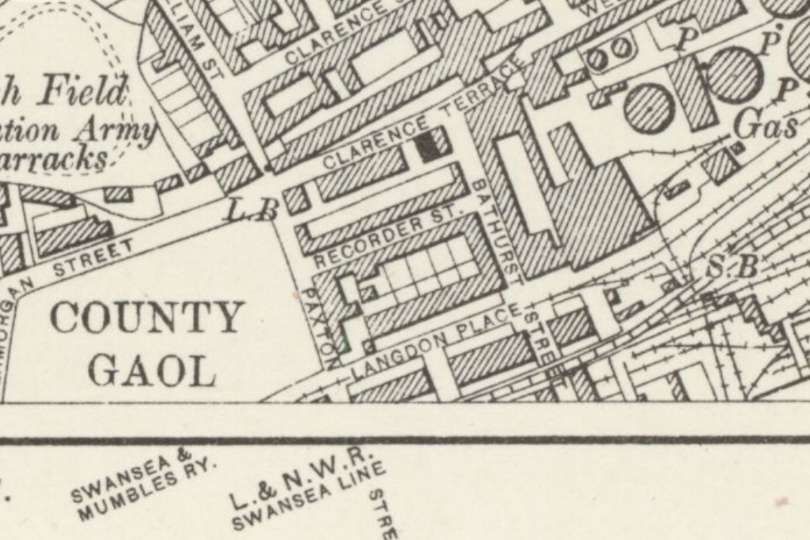
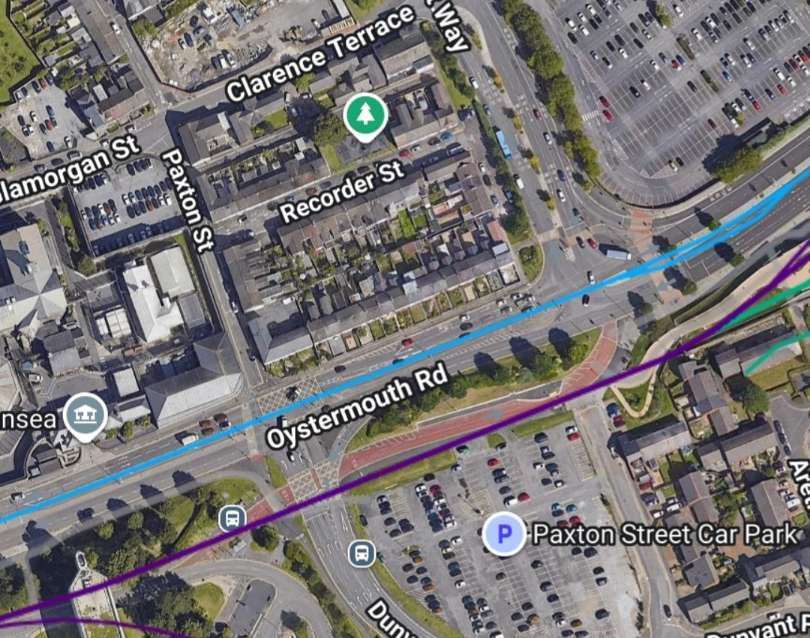
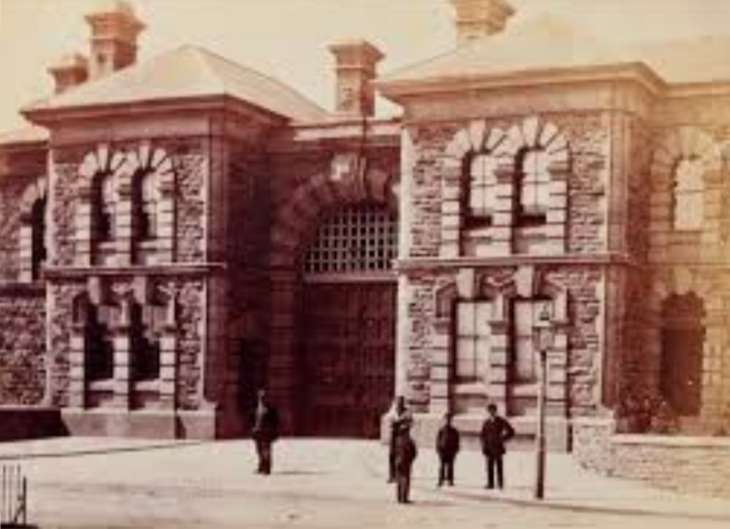
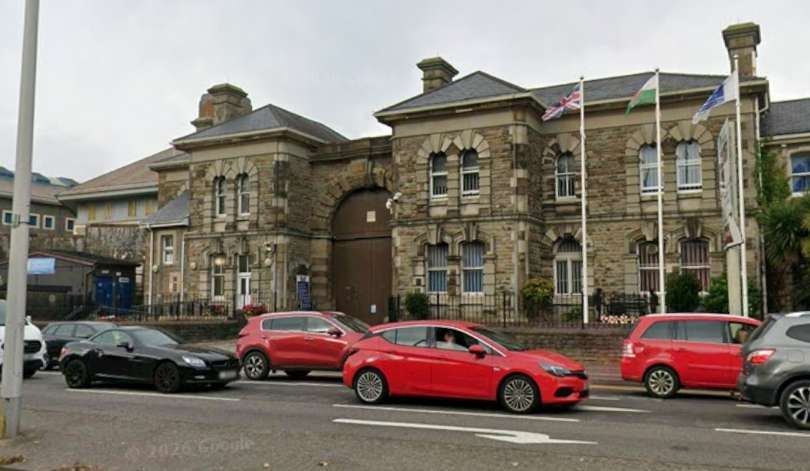
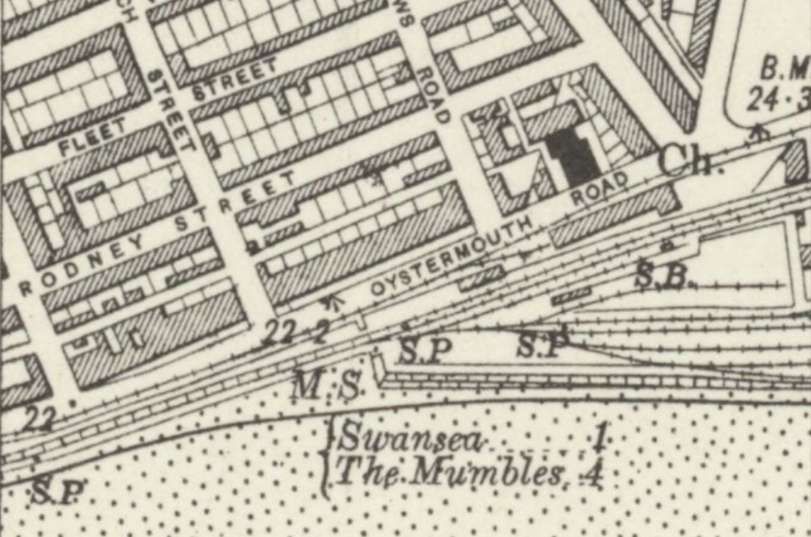
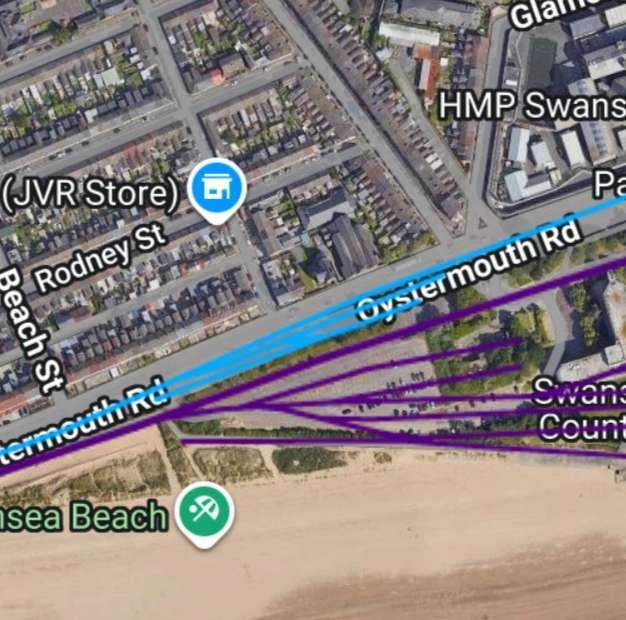
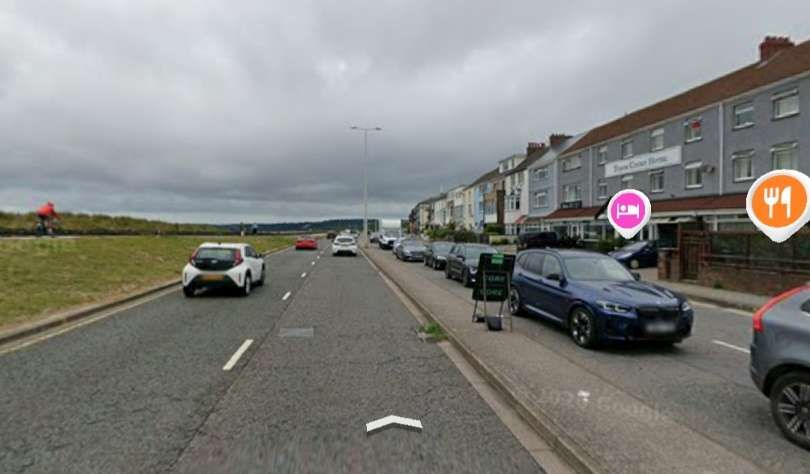
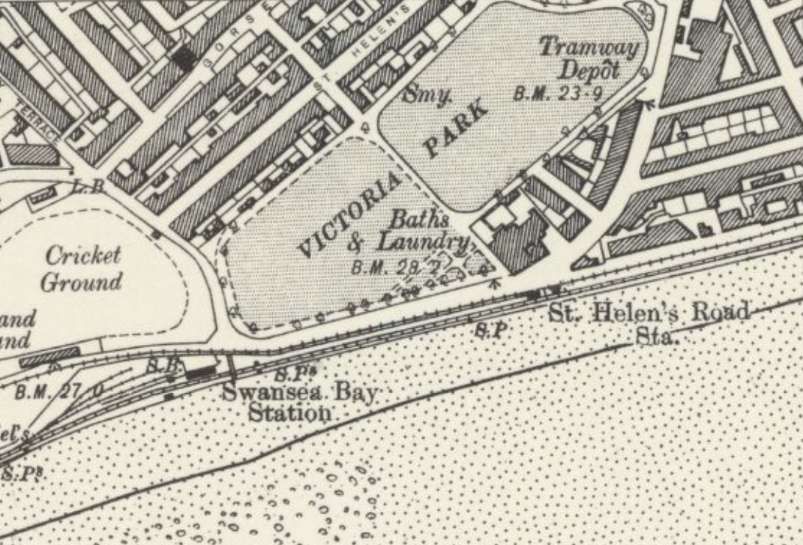
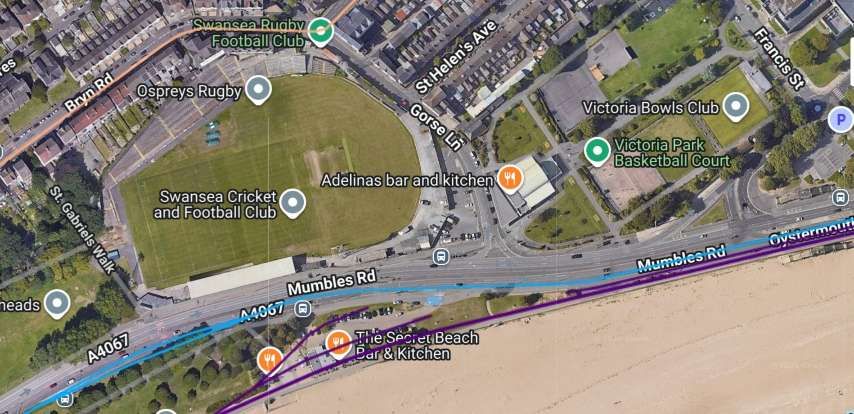
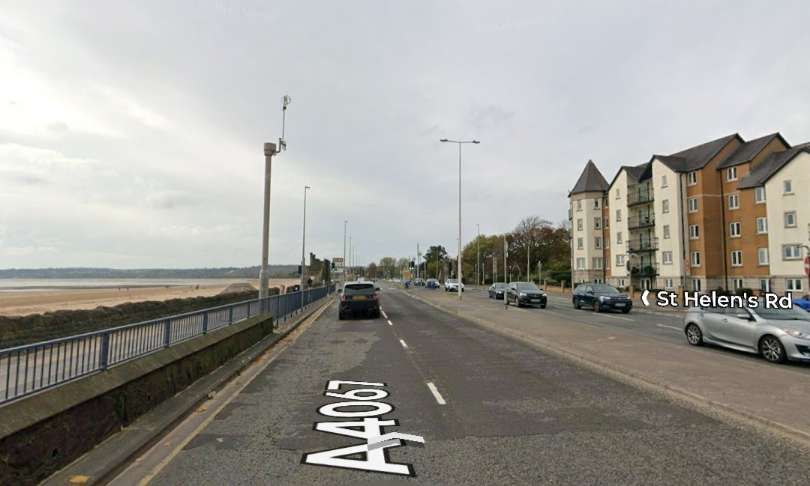
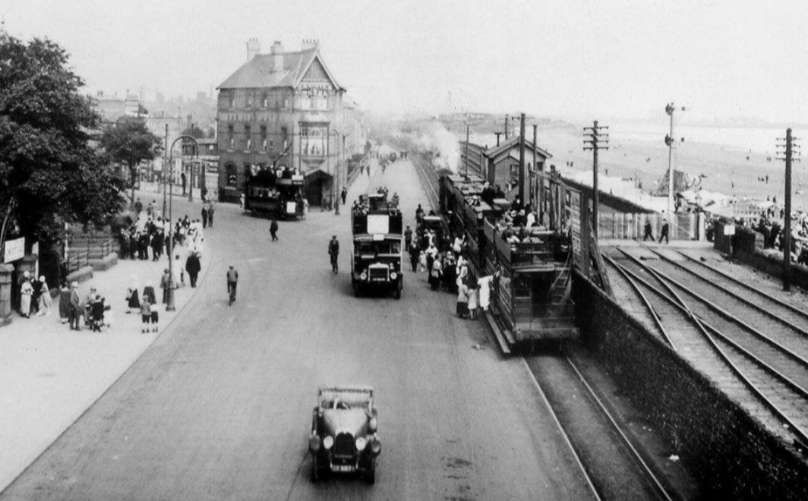
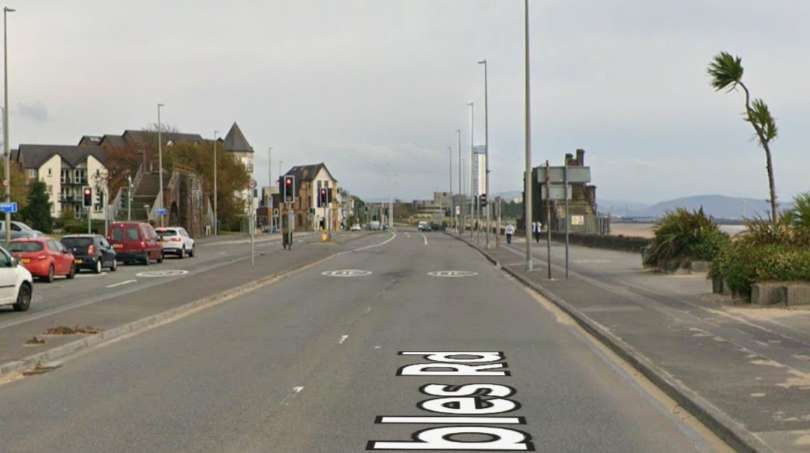
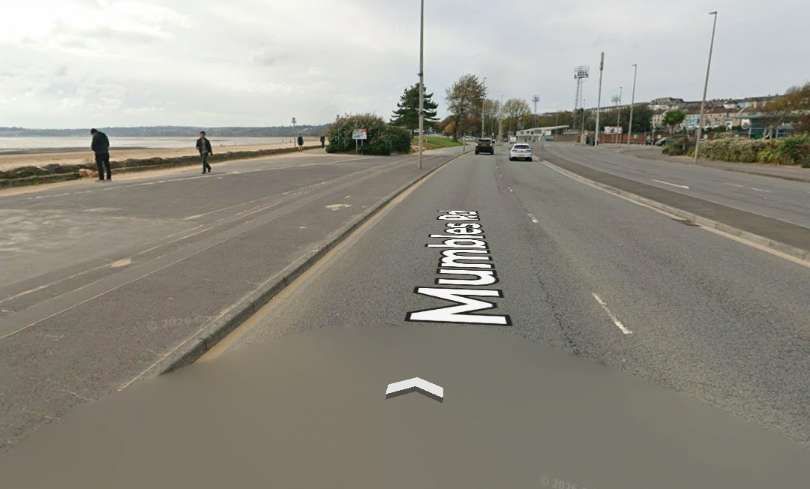
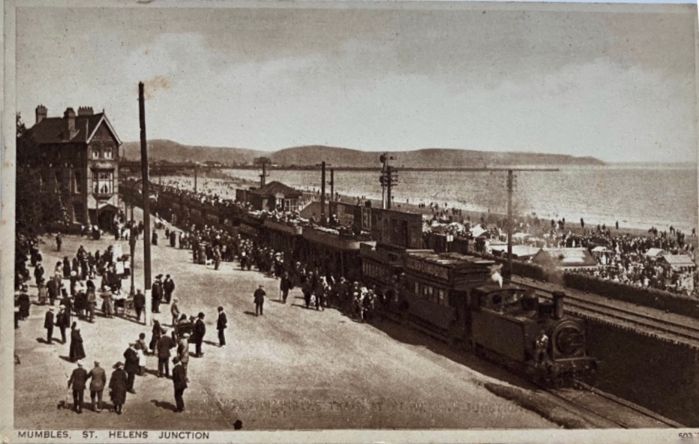
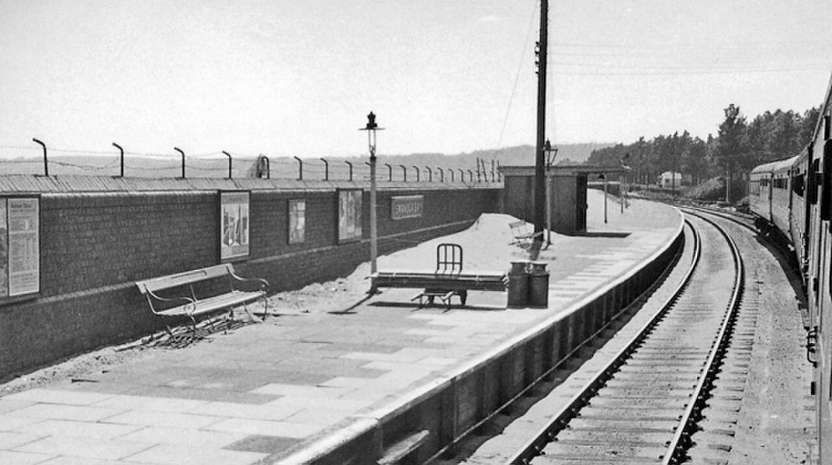
Swansea Bay is a former railway station in Swansea next to Swansea Bay, in South Wales, opened to passenger and goods traffic on 14 December 1867. [21] Owned successively by the Llanelly Railway and Dock Company (1867 to 1871), the Swansea and Carmarthen Railways Company (1871 to 1873), the London and North Western Railway Company (LNWR, 1873 to 1922), the London, Midland and Scottish Railway Company (LMS, 1923 to 1947) and British Railways (1948 to 1964), it was served by trains to and from Shrewsbury, Crewe, Liverpool, Manchester and York and formed the southern terminus of the Central Wales line, most of which is still operational as the Heart of Wales Line. Swansea Bay closed in June 1964, having been listed in the Report on the Reshaping of British Railways (better known as the Beeching Report) the previous year. [22] The former station is near ‘The Slip’ opposite the Bay View Public House. It was adjacent to the Swansea and Mumbles Railway which was closed in 1960, and opposite the Western end of St Helen’s Road, which until the 1930s was the terminus of one of the Town tram lines. [20]
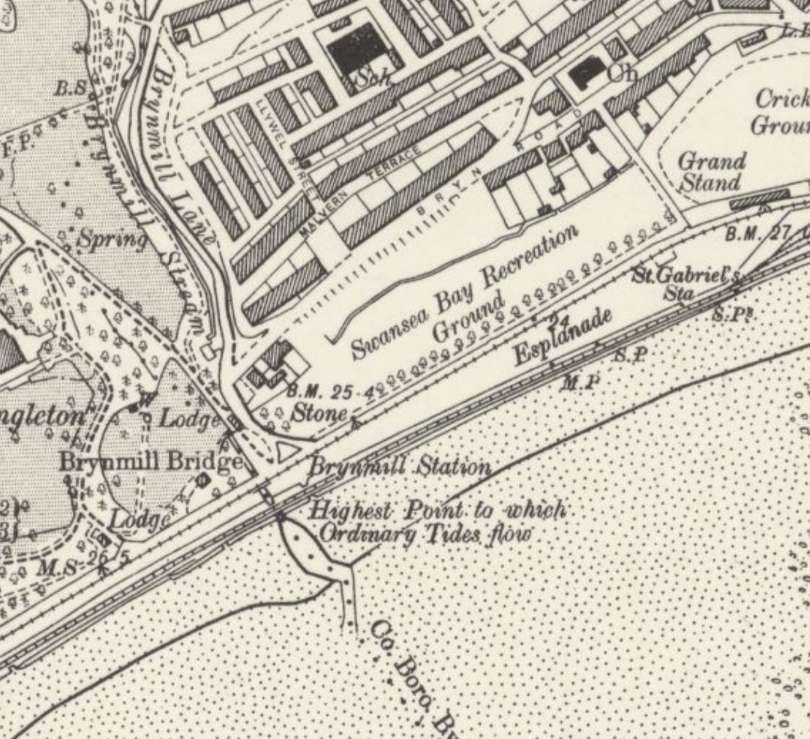
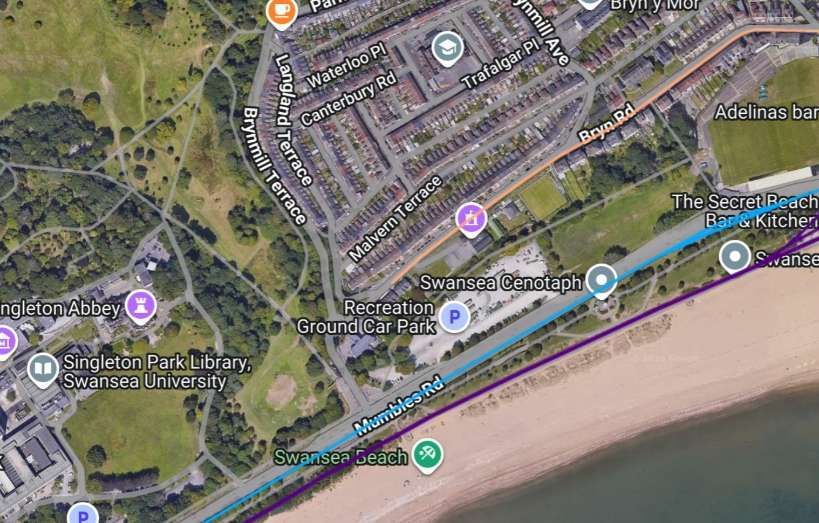
Singleton Park covers approximately 250 acres. An ornamental garden is located in the south, near the entrance to Swansea University, while a walled botanical garden is located in the park centre. On the south-western corner, past the hospital and the university, is a boating lake, as well as a miniature golf course. [23]
Wikipedia tells us that, “The park was originally part of the Vivian family estate. It was purchased by Swansea County Borough Council in 1919 for use as a public park. Park superintendent Daniel Bliss, who was trained at Kew Gardens, conceived of the Singleton Farm botanical gardens and Ornamental Gardens. He was the main driver behind the purchase of the estate. [23]
During the Second World War, the park hosted the Armaments Research Department a detachment of the Woolwich Arsenal under Sir Robert Robertson (1869-1949). While in 1944 over 1500 American soldiers were billeted for training on the beaches prior to landing on Omaha Beach, Normandy. … A Gorsedd stone circle was erected in 1925 for the Eisteddfod held in Singleton Park, Swansea, and was enlarged in 1964. [23]
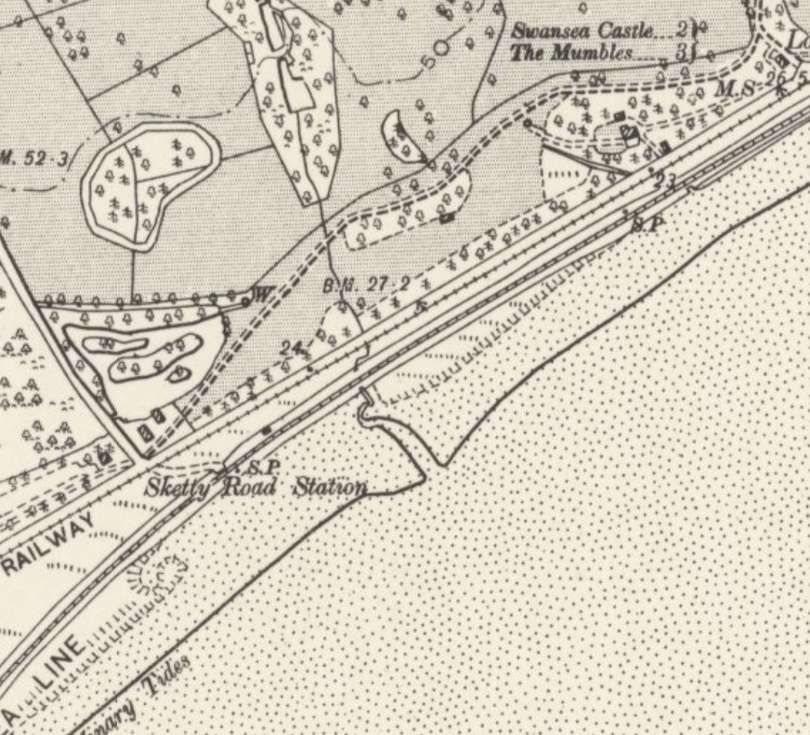
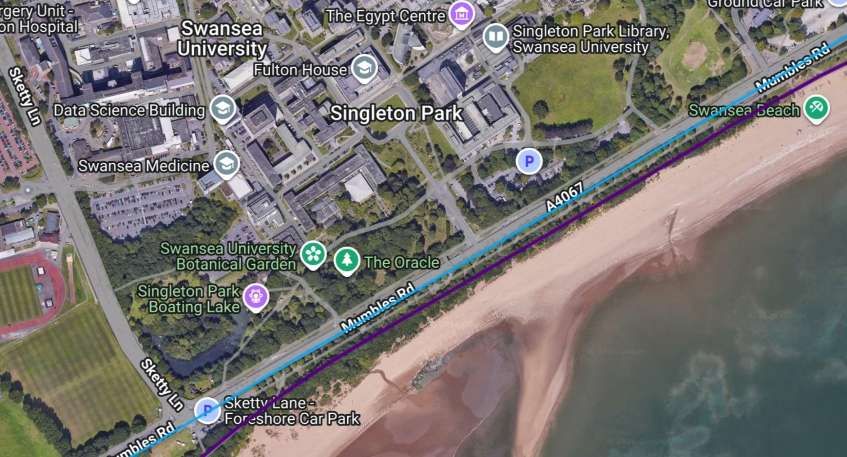
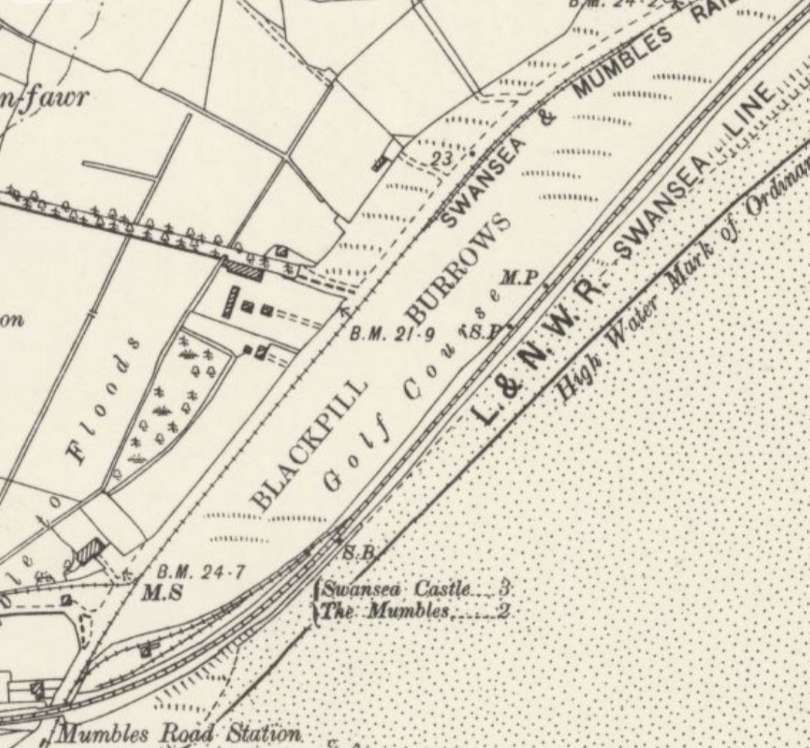
A hundred metres or so short of the railway bridge a branch line left the main line of the Swansea & Mumbles Railway. This branch line was opened in the first decade of the 19th century and remained in use until as late as the Second World War. … The Clyne Valley Tramway is covered in a separate article which can be found here. [27]
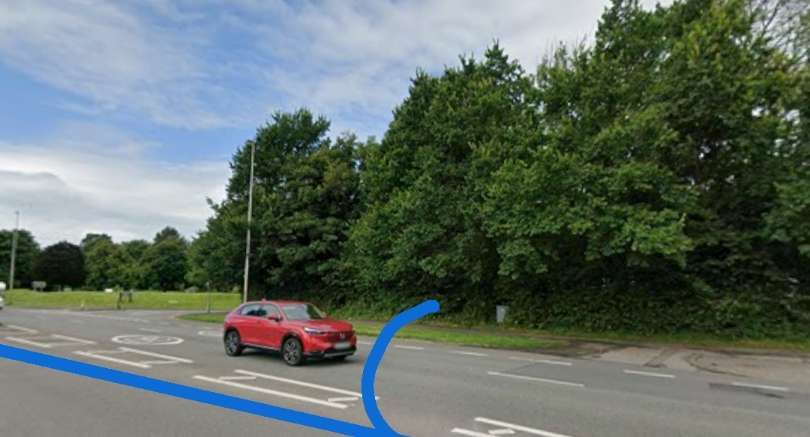
At Mumbles Road Station, the LNWR line crossed over the Swansea & Mumbles Railway and the main coastal road via the Blackpill railway bridge. A Swansea & Mumbles Railway name board was also positioned just under the bridge. The LNWR station featured a goods yard, sidings, and a signal box.
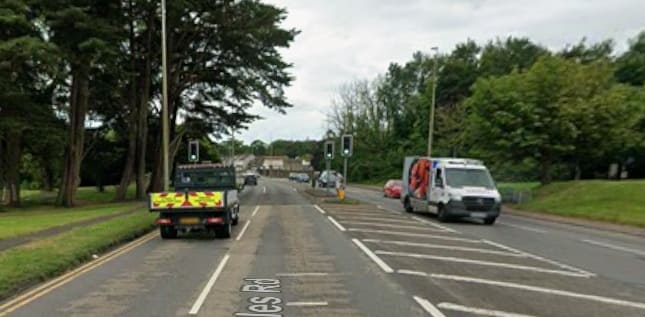
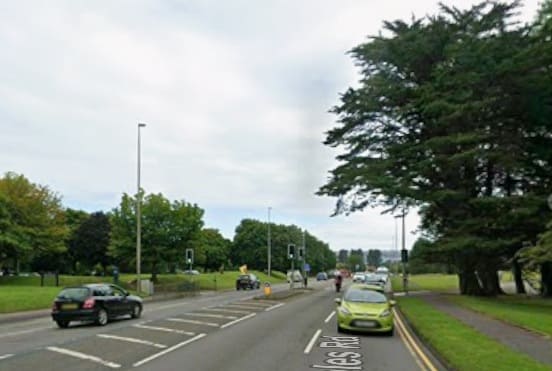
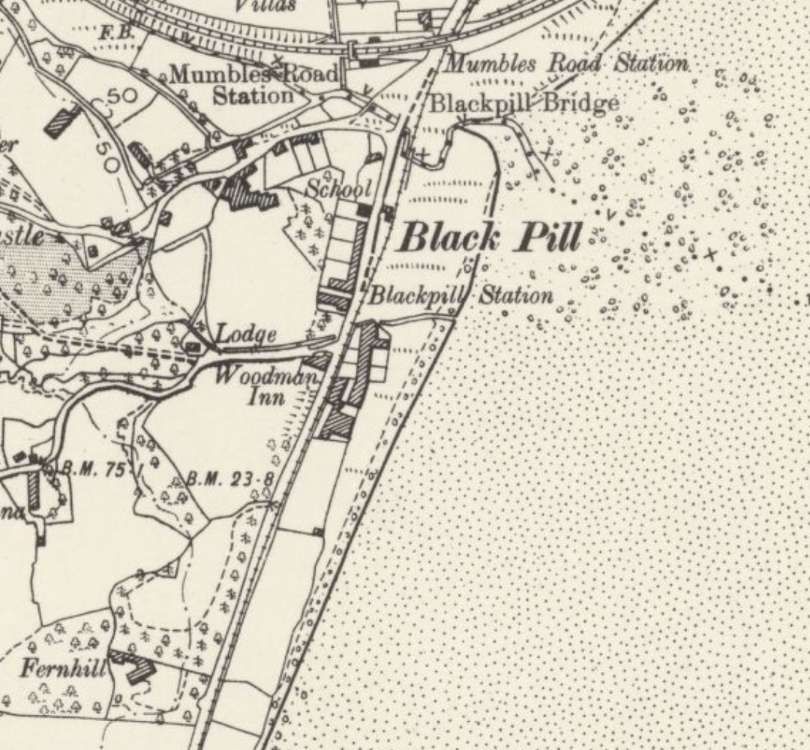
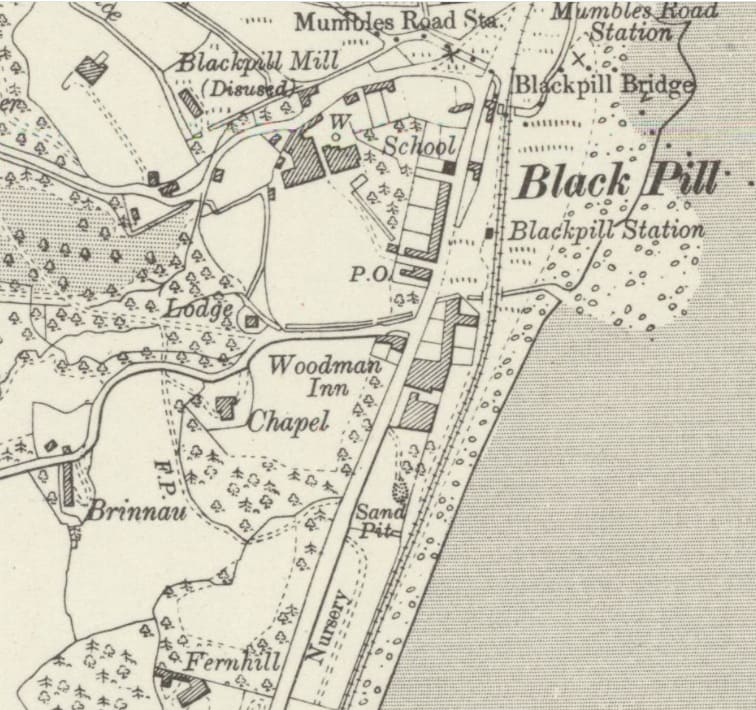
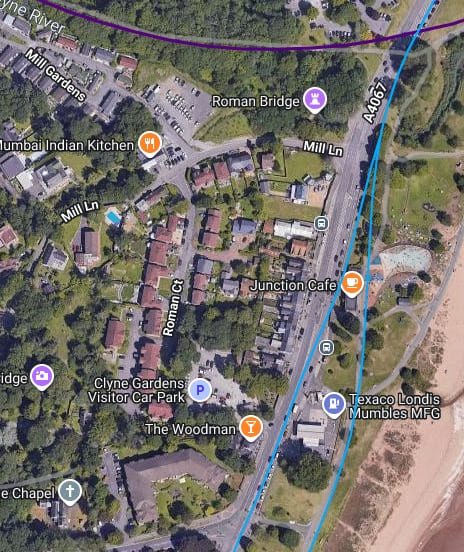
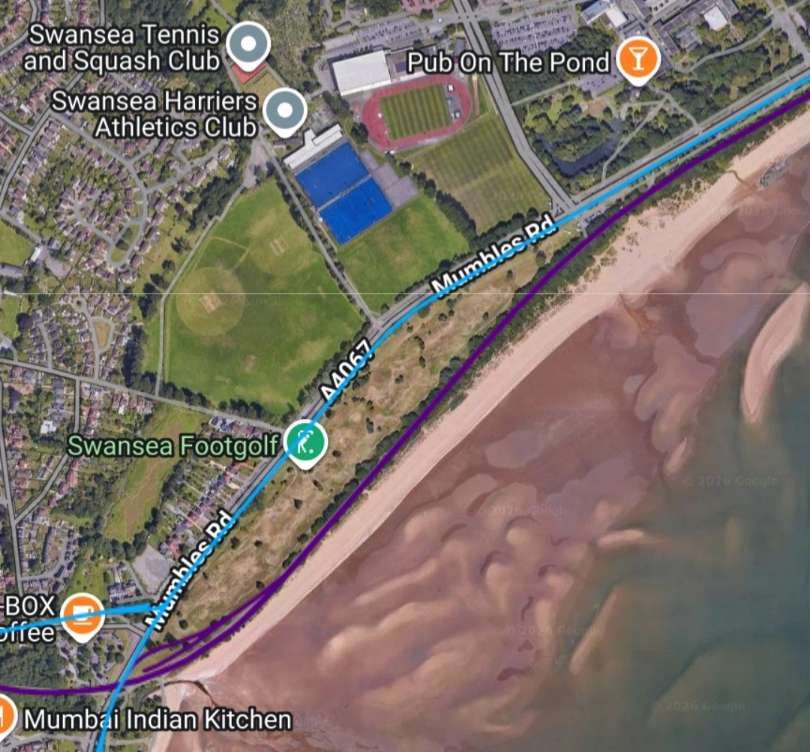
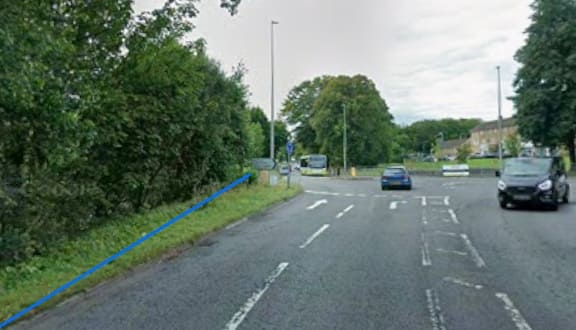
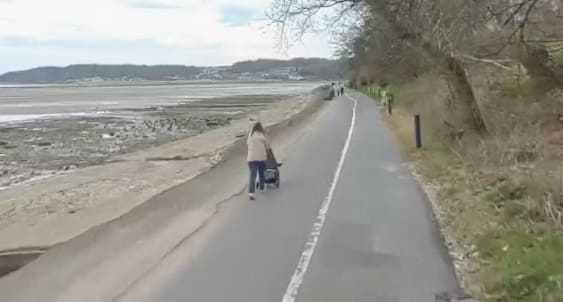
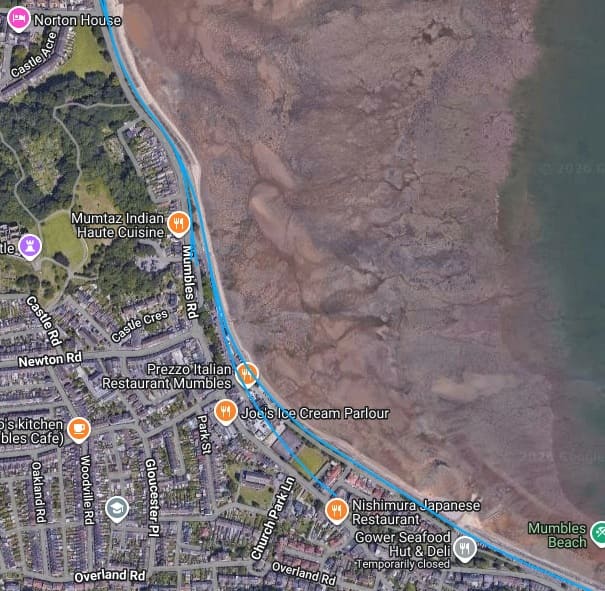
Railmaponline.com shows both alignments superimposed on modern satellite imagery. [17]
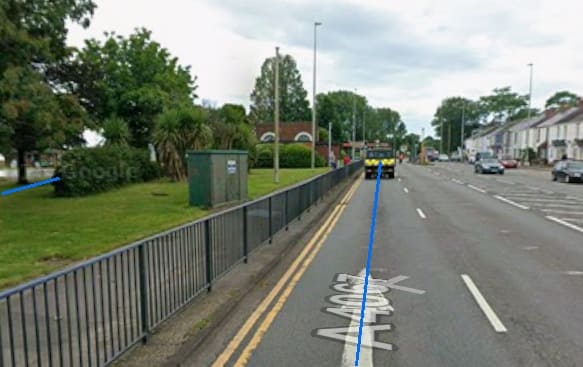
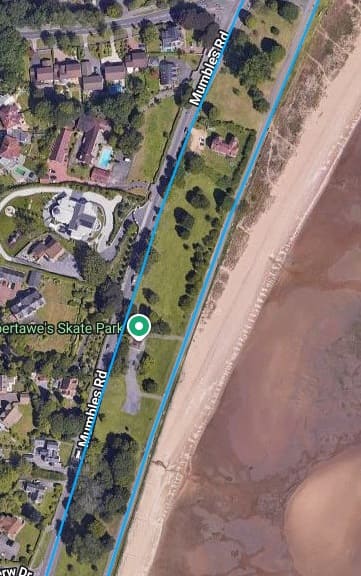
Further South, Railmaponline.com continues to show both alignments superimposed on modern satellite imagery. [17]
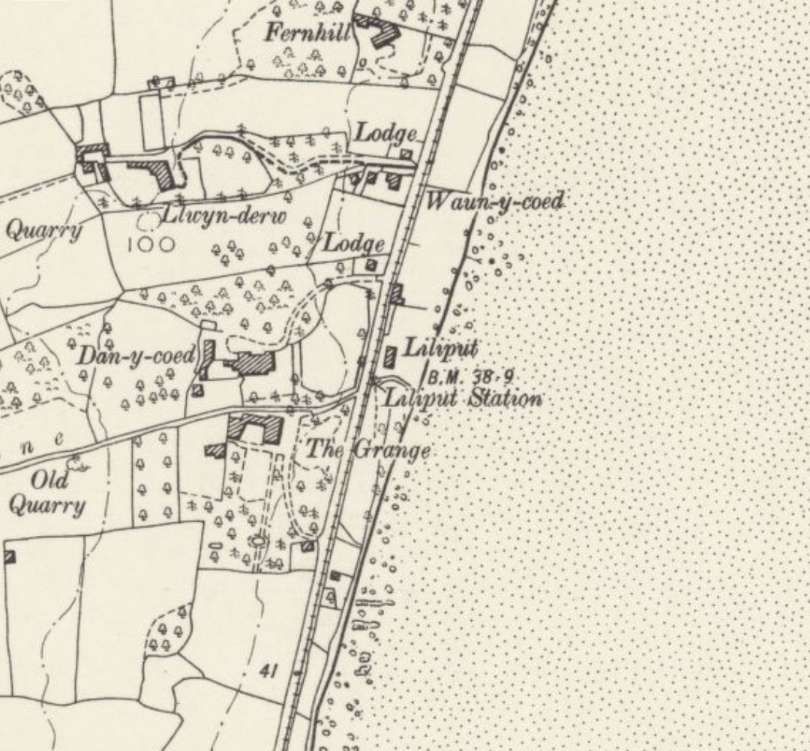
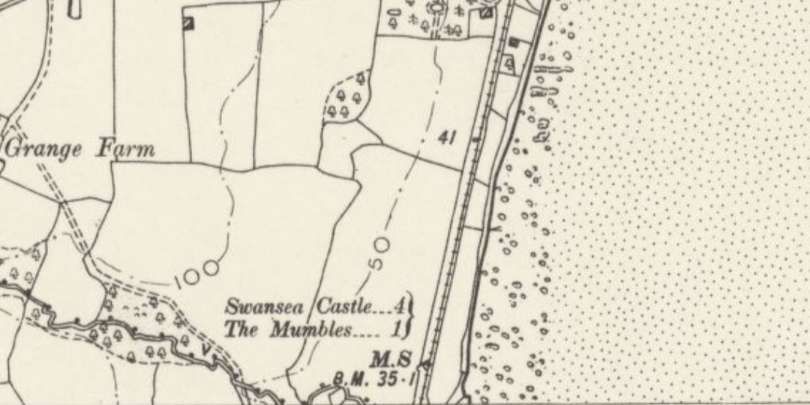
The later alignment with significant storage lines at Liliput. This length also takes us to the bottom edge of the OS Sheet. [28]
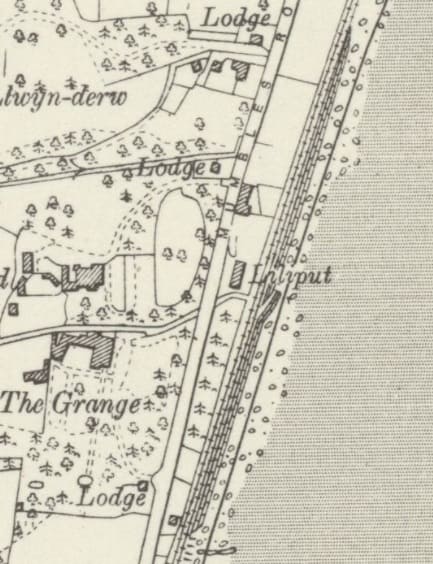
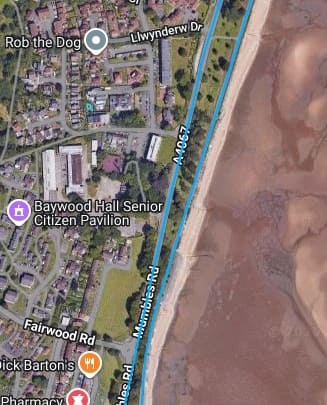
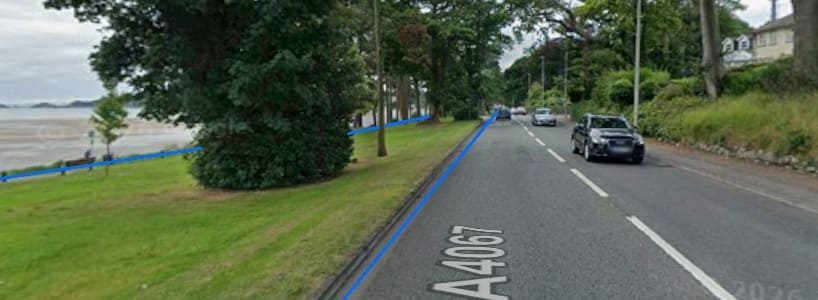
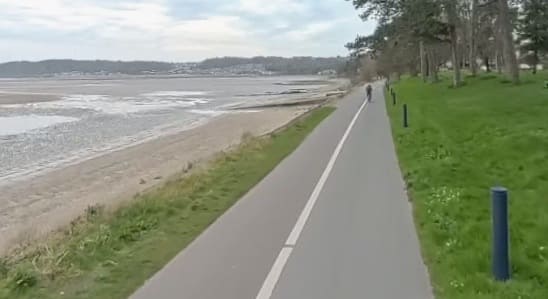
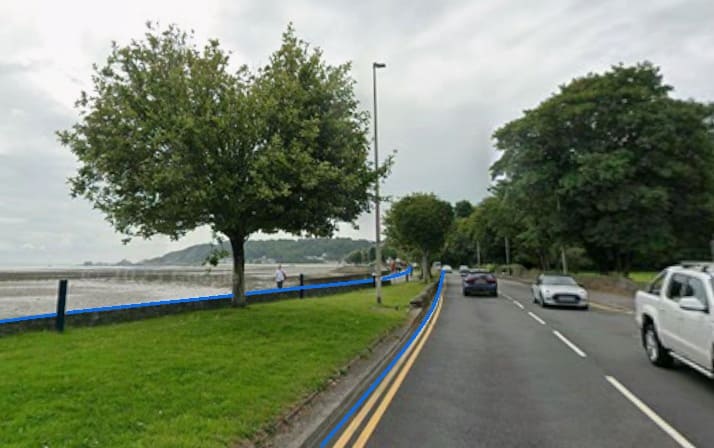
This extract from railmaponline.com shows the two routes continuing through Liliput. [17]
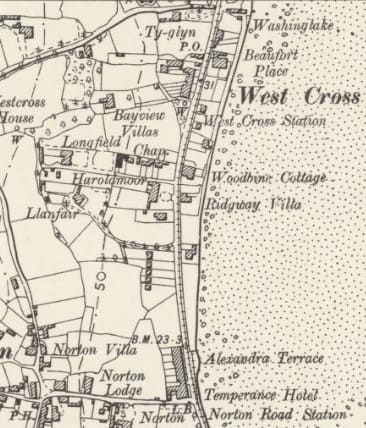
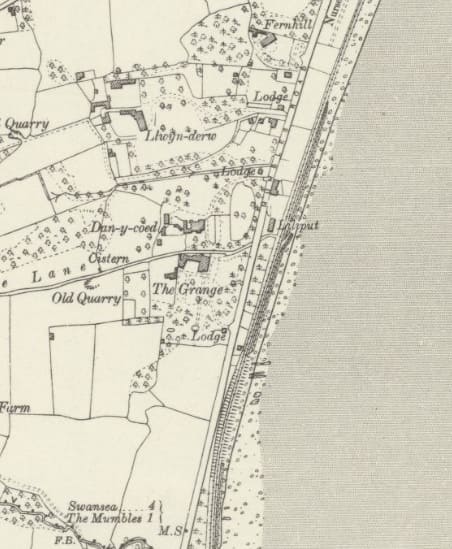
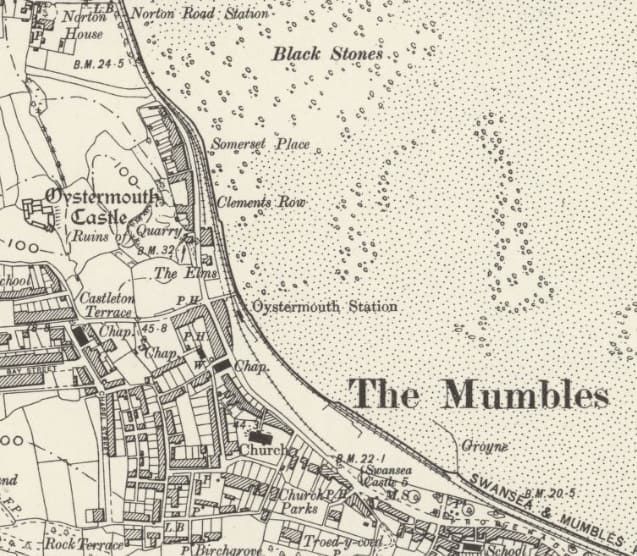
The original alignment as far as Norton Road Station. This is an extract from the 6″ Ordnance Survey of 1896/1897, published in 1900. [29]
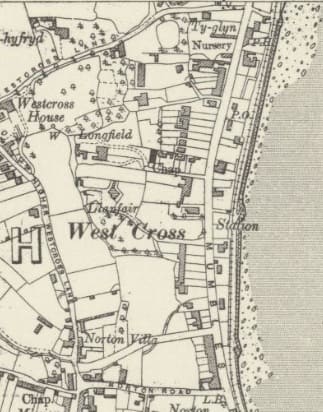
The two alignments meet again at the location of Norton Road Station. By the time of this survey, Norton Road Station appears not to be in use and a station has been provided to the North at West Cross. This extract comes from the 6″ Ordnance Survey of 1913, published in 1921.[30]
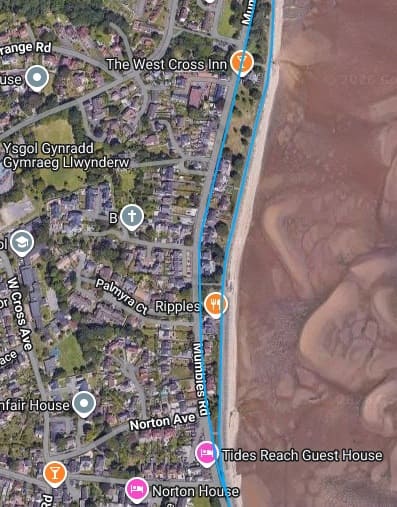
The railmaponline.com extract takes the two lines South as far as Norton Road, where they converge. [17]

References
- The Swansea & Mumbles Railway: Over 155 Years of Service: Souvenir Brochure; The South Wales Transport Company Ltd, 5th January 1960. See the Appendix below.
- https://www.greengauge21.net/the-first-passenger-railway-in-the-world-and-whats-needed-next, accessed on 17th September 2026.
- https://www.bbc.co.uk/wales/southwest/sites/swansea/pages/mumbles_trainanniv.shtml, accessed on 17th September 2026.
- https://en.wikipedia.org/wiki/Swansea_and_Mumbles_Railway, accessed on 17th September 2026.
- Stephen Hughes; The Archaeology of an Early Railway System: The Brecon Forest Tramroads; Royal Commission on Ancient and Historical Monuments in Wales, 1990;; via https://books.google.com/books?id=C-pzUWrCU5sC&pg=PA333, accessed on 17th September 2026.
- Charles E. Lee; The Swansea & Mumbles Railway; Oakwood Press, Oxford, 1988.
- http://www.historywebsite.co.uk/articles/publictransport/steamtrams.htm, accessed on 5th October 2026.
- https://www.gracesguide.co.uk/Hughes%27s_Locomotive_and_Tramway_Engine_Works, accessed on 5th October 2026.
- https://www.gracesguide.co.uk/Henry_Hughes_and_Co, accessed on 5th October 2026.
- https://chasewaterstuff.wordpress.com/2010/04/06/industrial-steam-locomotive-manufacturers-2, accessed on 5th October 2026.
- https://maps.nls.uk/view/102183123, accessed on 11th October 2026.
- https://en.wikipedia.org/wiki/Swansea_Victoria_railway_station, accessed on 11th October 2026.
- https://www.facebook.com/share/p/1JPzG7TisX, accessed on 11th October 2026.
- https://ididitthisway.wordpress.com/gas-works-municipal-swansea-oystermouth, accessed on 11th October 2026.
- https://www.britainfromabove.org.uk/en/image/wpw006114, accessed on 11th October 2026.
- https://encrypted-tbn0.gstatic.com/images?q=tbn:ANd9GcSbBFvcmGbilYmudWxHABpEKI-TwROoo7eioF8XksC0Dw&s=10, accessed on 11th October 2026.
- https://railmaponline.com/uk-and-irish-railways, accessed on 11th October 2026.
- https://maps.nls.uk/view/102342505, accessed on 11th October 2026.
- https://maps.nls.uk/view/102183111, accessed on 11th October 2026.
- https://en.wikipedia.org/wiki/Swansea_Bay_railway_station, accessed on 18th October 2026.
- Contemporary report in The Cambrian newspaper.
- More traffic jams, but we’ve never been better connected; on This is South Wales. 11 December 2009; via https://www.walesonline.co.uk/all-about/swansea, accessed on 18th October 2026.
- https://en.wikipedia.org/wiki/Singleton_Park, accessed on 18th October 2026.
- https://wp.me/pPWIG-Tk, accessed on 18th October 2026.
- https://www.storyofmumbles.org.uk/catalogue_item/mumbles-railway-st-helens-junction-known-as-the-slip-swansea, accessed on 18th October 2026.
- https://www.storyofmumbles.org.uk/catalogue_item/swansea-to-pontarddulais-railway-the-railway-bridge-at-blackpill, accessed on 18th October 2026.
- https://rogerfarnworth.com/2026/10/20/the-clyne-valley-tramway-swansea
- https://maps.nls.uk/view-full/102342499, accessed on 21st October 2026.
- https://maps.nls.uk/view/102183393, accessed on 21st October 2026.
- https://maps.nls.uk/view/102342556, accessed on 21st October 2026.
- https://www.storyofmumbles.org.uk/catalogue_item/mumbles-train, accessed on 21st October 2026.
- https://www.storyofmumbles.org.uk/catalogue_item/mumbles-train-blackpill, accessed on 21st October 2026.
- https://www.storyofmumbles.org.uk/catalogue_item/mumbles-train-at-blackpill-station, accessed on 21st October 2026.
- https://www.storyofmumbles.org.uk/catalogue_item/mumbles-railway-steam-engine-and-carriages-at-blackpill-c1910, accessed on 21st October 2026.
- https://www.storyofmumbles.org.uk/catalogue_item/on-the-way-to-mumbles-head-2, accessed on 21st October 2026.
- https://www.storyofmumbles.org.uk/catalogue_item/swansea-and-mumbles-railway, accessed on 21st October 2026.
- https://en.wikipedia.org/wiki/Oystermouth_railway_station, accessed on 21st October 2026.
- https://www.storyofmumbles.org.uk/catalogue_item/image-of-swansea-bay-taken-from-the-mumbles-pier-featuring-the-mumbles-train, accessed on 22nd October 2026.
- https://www.swanseascoop.com/p/the-mumbles-railway-last-day, accessed on 22nd October 2026.
- https://www.storyofmumbles.org.uk/catalogue_item/two-car-mumbles-train-leaving-oystermouth, accessed on 22nd October 2026.
- https://www.storyofmumbles.org.uk/catalogue_item/mumbles-railway-used-by-their-majesties-the-king-and-queen-19th-july-1920, accessed on 22nd October 2026.
- https://www.geograph.org.uk/photo/1518332, accessed on 22nd October 2026.
Appendix 1
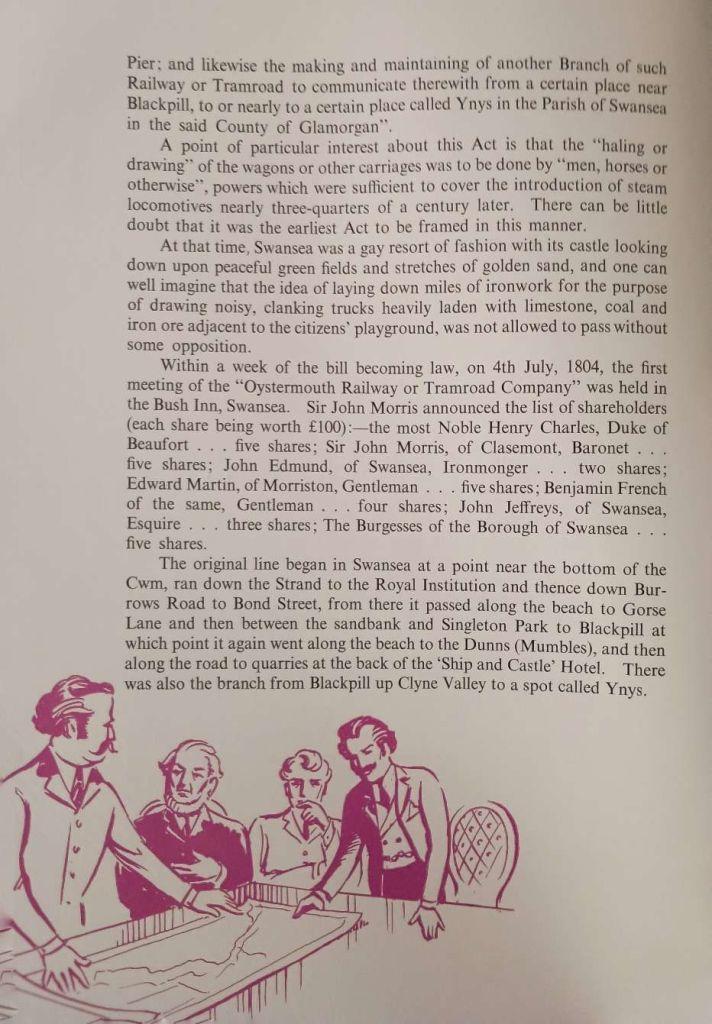
The Swansea & Mumbles Railway: Over 155 Years of Service: Souvenir Brochure
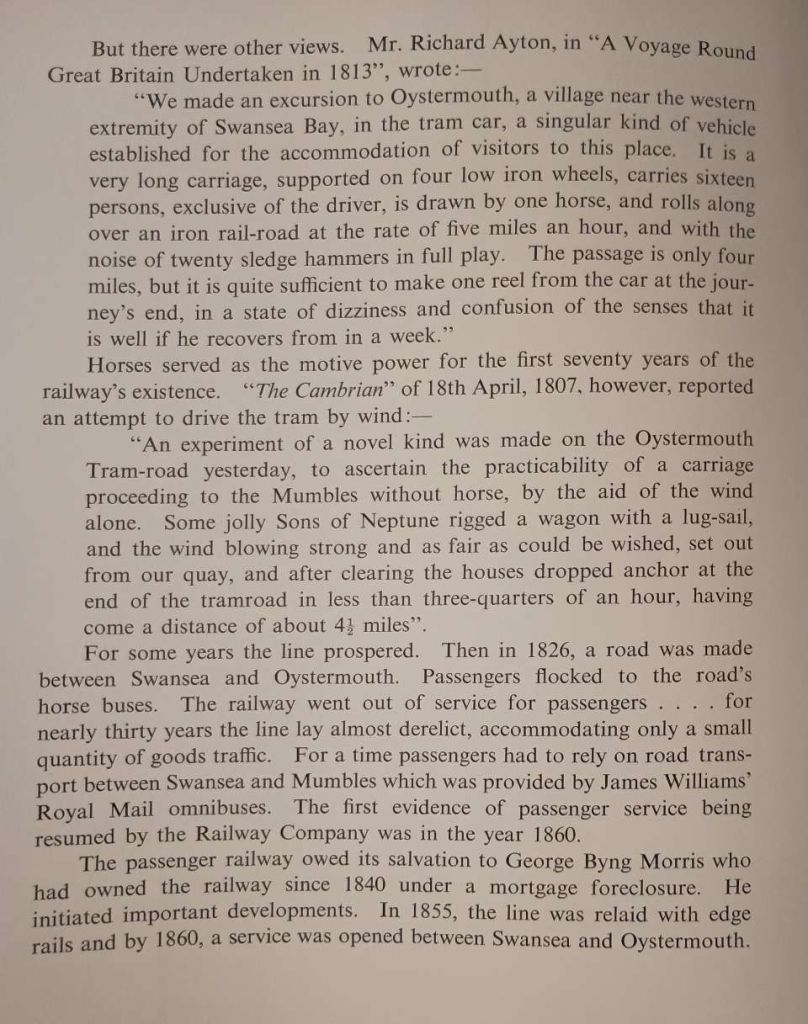
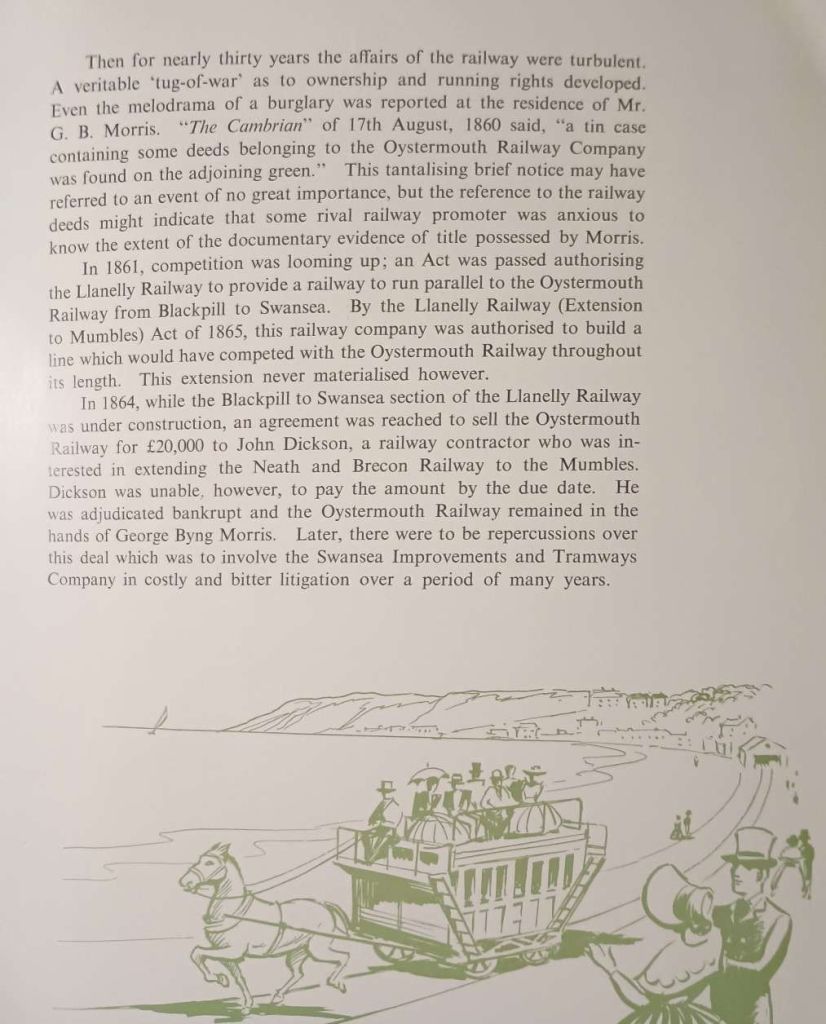
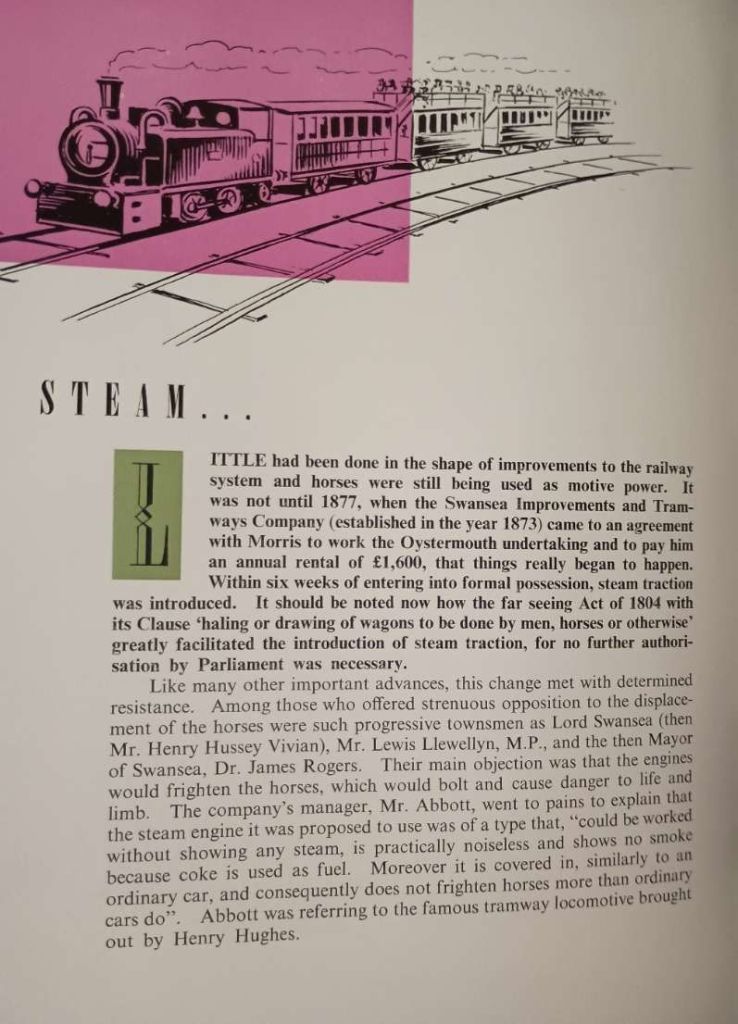
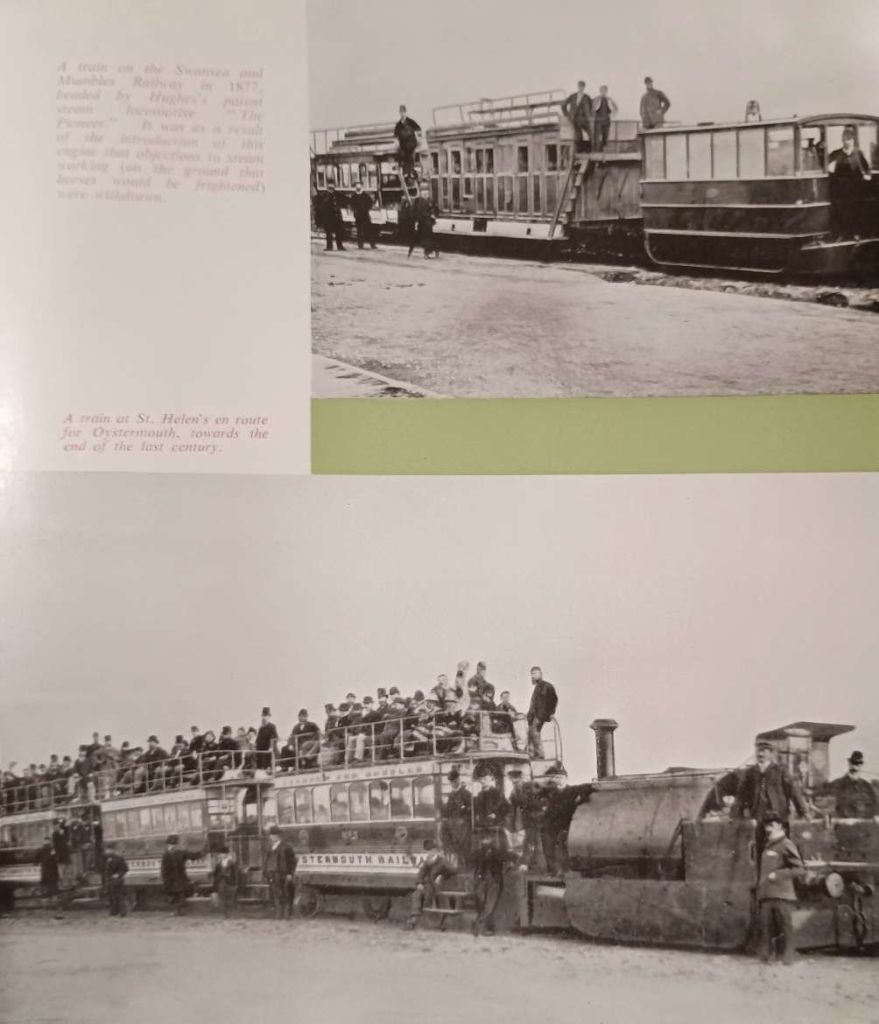
Appendix 2
Railway or Tramway?
“The railway is frequently referred to as a tramway, but the original name of the company of proprietors was the Oystermouth Railway or Tramroad Company, the word tramroad being used in its pre-railway context. The original right of way was unique and it was only after the construction of the turnpike road in the 1820s that the line assumed its roadside character. The introduction of steam locomotion in the 1870s was facilitated by a clause in the original act which authorised the “haling or drawing” of waggons by “men, horses, or otherwise” and owed nothing to the Tramways Act 1870 (33 & 34 Vict. c. 78).” [4]
“The passenger rolling stock used in steam days bore little resemblance to conventional railway carriages, employing open-top, “toast-rack” and “knifeboard” seating, and being built by companies more commonly associated with the construction of urban tramcars, such as G.F. Milnes & Co., Starbuck & Falcon, etc. After electrification the resemblance to an urban tramway became more marked with the introduction of the huge Brush-built electric cars and because of the style of operation (the signalling was used only to regulate entry to the passing loops and not to control the actual running of cars). The track was always laid with conventional railway-type rail and not grooved tram-rail and the railway also handled conventional goods wagons (exchanged with the London and North Western Railway (the London, Midland and Scottish Railway after January 1923) at Mumbles Road station and with the Great Western Railway at the Swansea terminus). In the early nineteenth century a tramway was a line for mineral wagons (trams), the term railway being used when edge rails replaced plates. The term tramway did not become almost exclusively associated with urban transport systems until after the passing of the Tramways Act 1870 (33 & 34 Vict. c. 78).” [4]

