
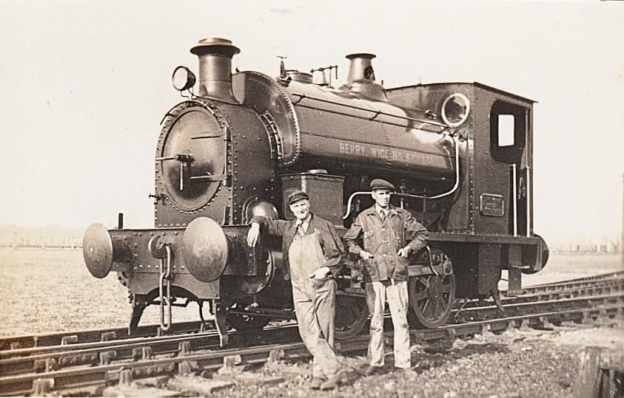
The featured image for this article is ex GWR No. 921 pictured at Kingsnorth at Berry Wiggins Oil Refinery and Bitumen Plant on 3rd April 1933. Prior to becoming GWR 921 on absorption in 1924, this locomotive was Powlesland & Mason No.6 (built in 1906 by Brush Electrical, Works No. 314) and operated at Swansea docks. The locomotive arrived at Berry Wiggins from Sugar Beet & Crop Driers Ltd, Eynsham, Oxfordshire in December 1931. It was sold to Leicester Museums and is now (2025) a static exhibit at the Mountsorrel Railway Museum, near Rothley, Leicestershire. This image was shared on the Industrial Locomotive Enthusiasts Facebook Group by Roger Gregory on 11th April 2025. [64]
As we noted at the beginning of the first article in this short series, a quick look at the Ordnance Survey maps of the North coast of Kent from the first half of the 20th century show a myriad of standard-gauge and narrow-gauge industrial railways. A similar survey of the Medway valley at the same period in the 20th century shows just how many individual Cement Works and other industries once existed there too. This article inevitably cannot provide a comprehensive look at all industrial railways in the area. Hopefully those covered will be both representative of what was present in the past and hopefully of interest to readers.
The Oakwood Press produced two editions (1973, 1990) of a survey of cement works in Kent. The second edition was an enlarged version of the first edition. Page references are to page numbers in the second edition.
B. D. Stoyel & R. W. Kidner [1] divide the various Cement works into three different geographical areas:
- The Thames Estuary (working West to East) – this area is covered here; [2]
- The Medway Estuary
- The Lower Medway – this are is covered here. [36]
Part 2 – The Medway Estuary
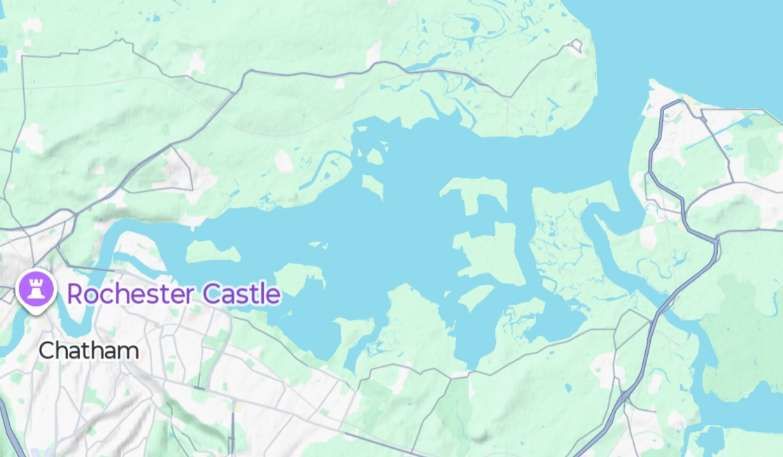
The Medway Estuary has a rich industrial history rooted in shipbuilding, brickmaking, and cement production, and it now functions as a modern hub for shipping and energy supply.
- Historic Industries included:
- Shipbuilding: The Chatham Dockyard served as a primary royal naval shipyard for centuries, driving local employment and heavy engineering. Trenchmanns Wharf on the River Medway has witnessed centuries of maritime activity, from the medieval period through the Industrial Revolution to the present day. [3]
- Brickfields and Cement Works: During the 19th and early 20th centuries, sites like Horrid Hill and local marshes supported intensive mud-digging, brickmaking, and cement manufacturing.
- Traditional Trades: Early uses of the estuary and its banks included grain farming on saltmarsh islands, milling, and paper-making. [5][6]
- Modern Industry and Economy
- Energy Supply: The Isle of Grain is home to the UK’s first Liquefied Natural Gas (LNG) terminal, operating since 2005. [7]
- Shipping and Trade: The estuary remains a crucial commercial trading route with active shipping terminals handling diverse raw materials and cargoes. [7]
- Cultural Sectors:
- Modern regional regeneration strategies — aligned with the Medway Council — focus heavily on nurturing cultural and creative industries, supported by spaces like the Docking Station at Chatham Historic Dockyard. [8] Balance
- Conservation: Despite centuries of heavy industrial use, the area supports delicate ecosystems.
- Designations: The region is protected as a Site of Special Scientific Interest (SSSI) and a Marine Conservation Zone (MCZ), with active restoration projects managed by groups like the Medway Swale Estuary Partnership to safeguard vulnerable saltmarshes against erosion. [9][10][11]
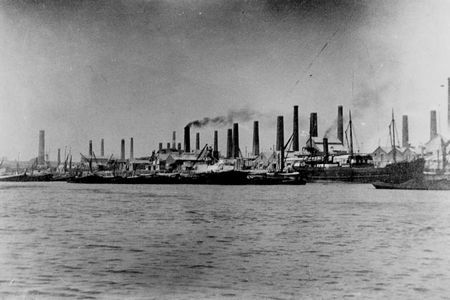
This view of circa. 1911-1912 shows the many chimney stacks along the riverside at Frinsbury Peninsula, (see the note about Frindsbury Peninsula Wharves below) Strood’s cement works included Phoenix, Globe, Bridge, Tingeys, Warren, Crown and Beaver Works, © Public Domain. [4]
- Other wharves on the Medway Estuary included:
- Cuxton Wharf: Located just downstream from Halling, this wharf served local lime kilns and cement facilities.
- Frindsbury Peninsula Wharves: The shoreline near Stroud was dominated by a network of wharves feeding the Phoenix, Globe, Bridge, Crown, and Beaver cement works. These are covered in more detail here. [62]
- Gillingham Riverside Wharves: Positioned further toward the mouth of the river, these wharves handled heavy industrial transport for the Gillingham cement factories.
- Chatham & Rochester Commercial Wharves which included: Blue Boar Wharf at Rochester Riverside which historically handled heavy freight; Old Gun Wharf in Chatham, dates back to the 17th century when it served as an ordnance depot for the Royal Navy; Sun Wharf & Holborn Wharf which were prominent Chatham wharves located right next to Sun Pier; Bloors Wharf in Rainham which was a heavily utilized commercial shipping point for agricultural and industrial goods.
The list of industries and wharves above are not intended to be exhaustive, rather they give a strong impression of the industrial nature of the Medway Estuary. Those which follow are also, most probably, not an exhaustive coverage of industrial lines, rather they are examples of industrial sites and their railways/tramways:
The North and West Sides of the Estuary – the Hundred of Hoo and the Isle of Grain
Stoyel & Kidner do not identify any rail-served cement works to the North and West of the Medway Estuary other than those covered in a previous article at Cliffe. [2] There were however other systems, particularly:
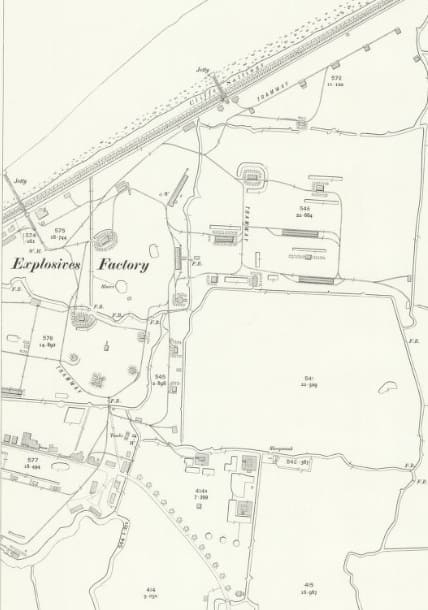
103 – Curtis’s and Harvey’s Explosive Factory – Waywell records this industrial site at Lower Hope Point as an explosive’s factory which was opened in 1900 and closed by 1921.
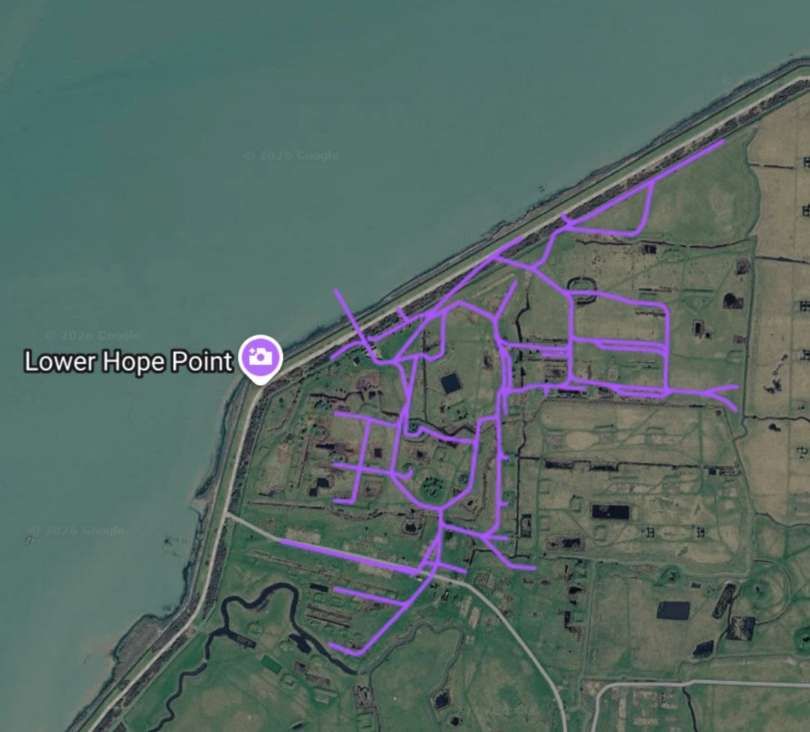
As can be seen on the railmaponline.com satellite imagery above, the 2ft-gauge rail network at the site was extensive and the Company employed four 4-wheel battery electric locomotives (or trucks) but their origin and identities are not known. [25: p133]
The majority of the network is picked up on the 25″ Ordnance Survey of 1907, published in 1908.
An extensive archaeological survey and analysis of the site was undertaken by Rebecca Pullen, Sarah Newsome, Andrew Williams and Wayne D. Cocroft in 2013 for English Heritage. The work extends to two volumes [43][44] and detailed drawings. [46]
The Lodge Hill & Upnor Railway – This railway is covered in a separate article which can be found here. [16]
This railway in its earlier 18″ gauge had a branch between the location of Chattenden Barracks and the village of Hoo. That length of line is covered in the linked article above.
The Chattenden Naval Tramway – this line is covered towards the end of the article about the Lodge Hill & Upnor Railway which can also be found on this link. [16]
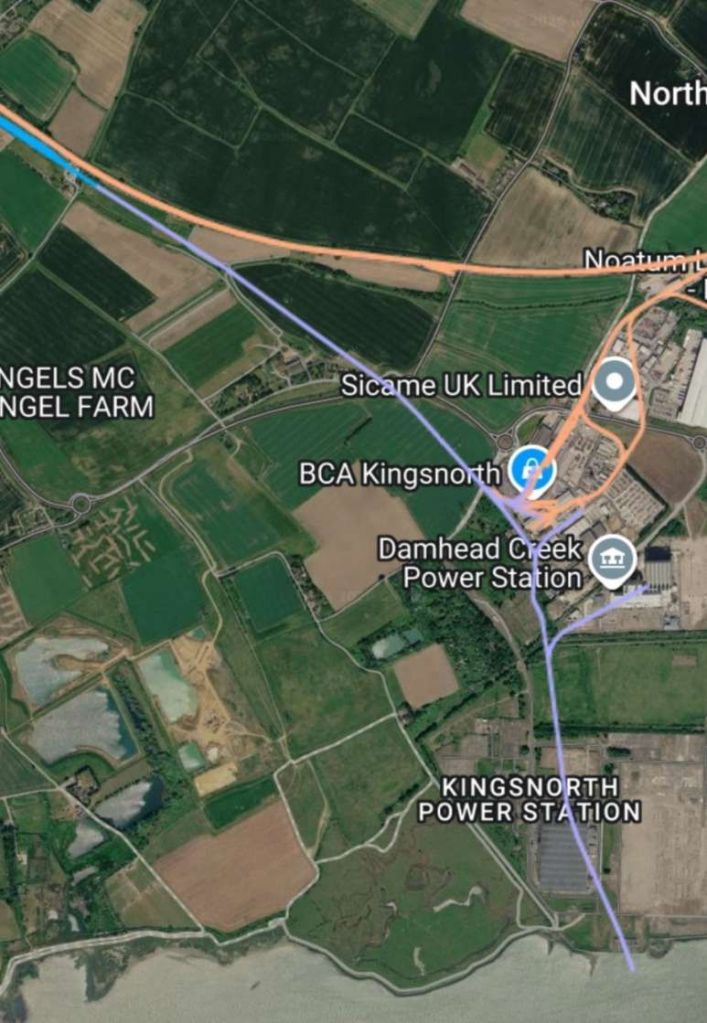
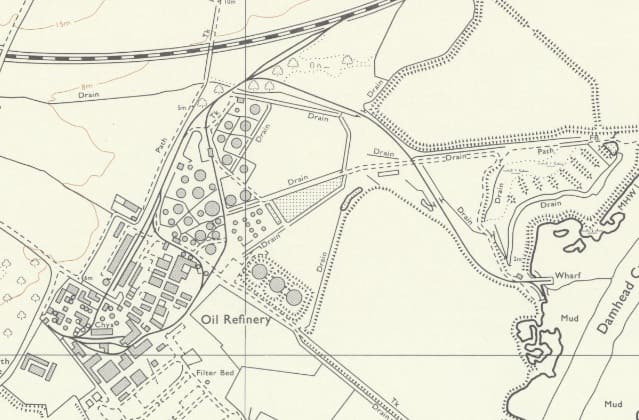
The Kingsnorth Light Railway – was a 1.75-mile standard-gauge industrial and military line in Kent that connected Sharnal Street Station on the Hundred of Hoo line to a naval airship station and pier on the River Medway. It also served the sites which are shown as power stations on the satellite image below: Damhead Creek Power Station (not a power station at the time) and Kingsnorth Power Station (also not rail served). The full length of the Kingsnorth Light Railway is shown on the railmaponline.com satellite image below. There was also a Berry Wiggins Oil Refinery and Holm & Co.’s Chemical Works at Kingsnorth.
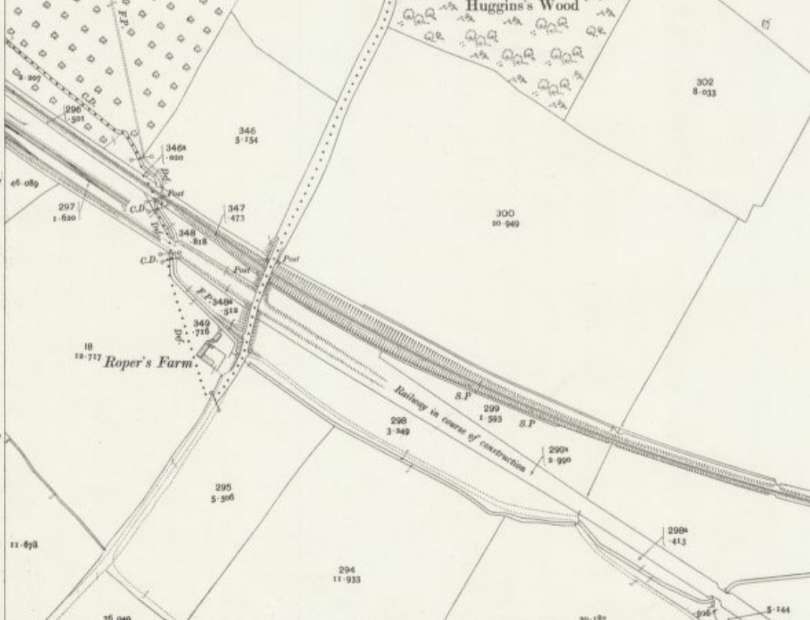
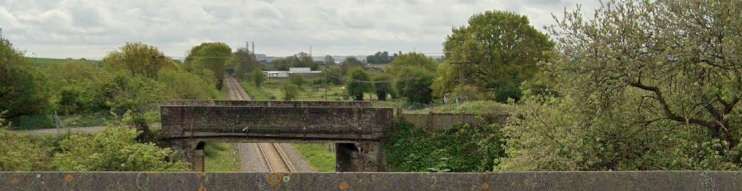
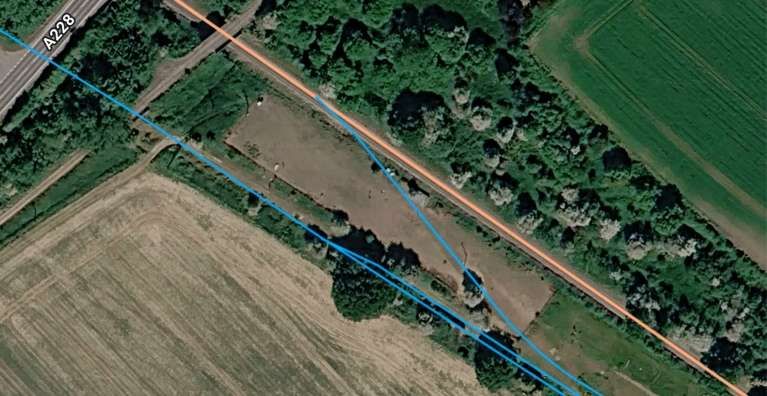
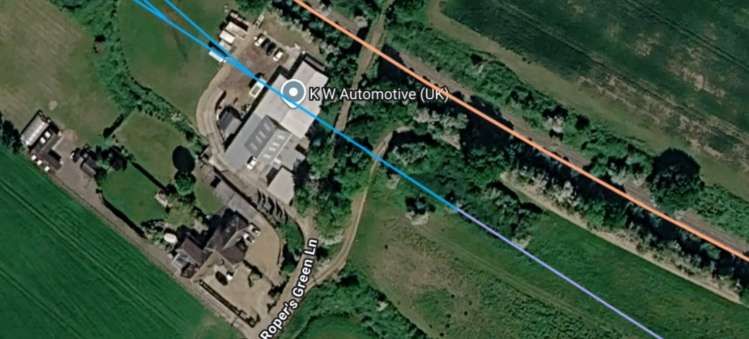
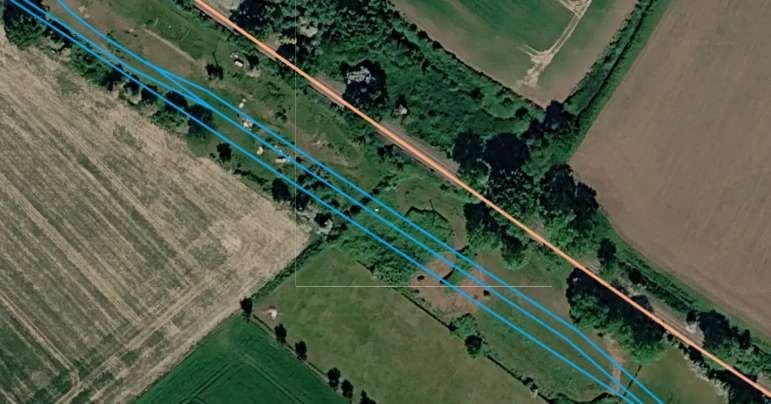
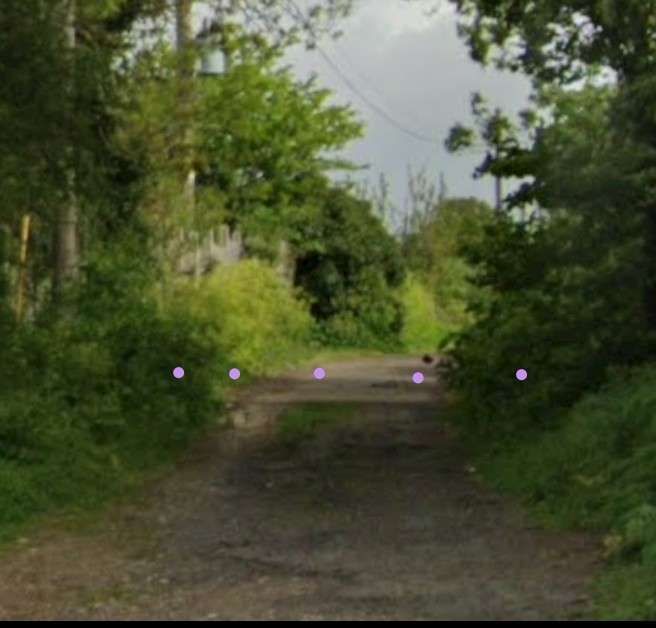
Looking North along Roper’s Green Lane, the lilac dots are a very approximate indication of the route of the line. [Google Streetview, May 2023]
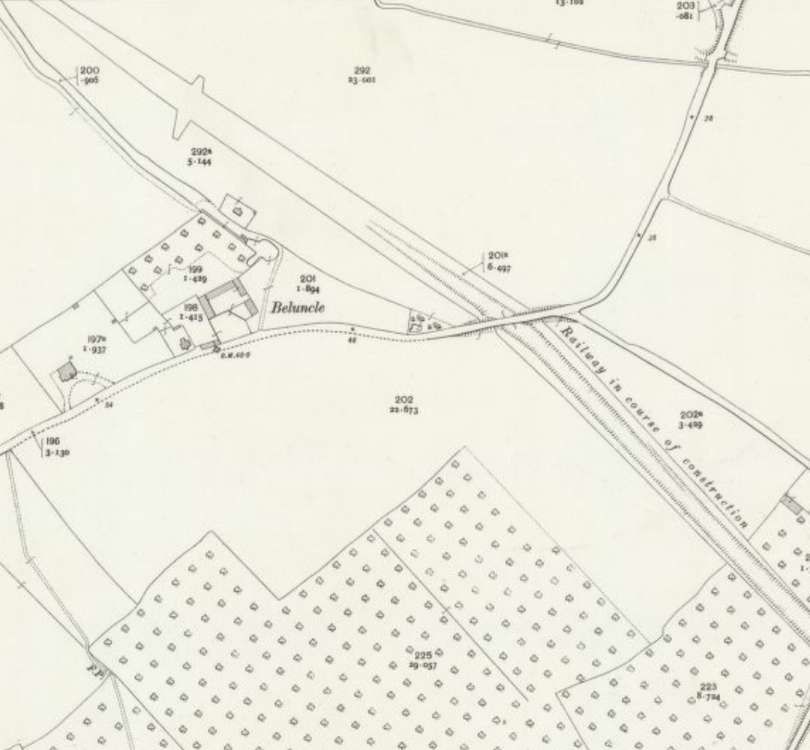
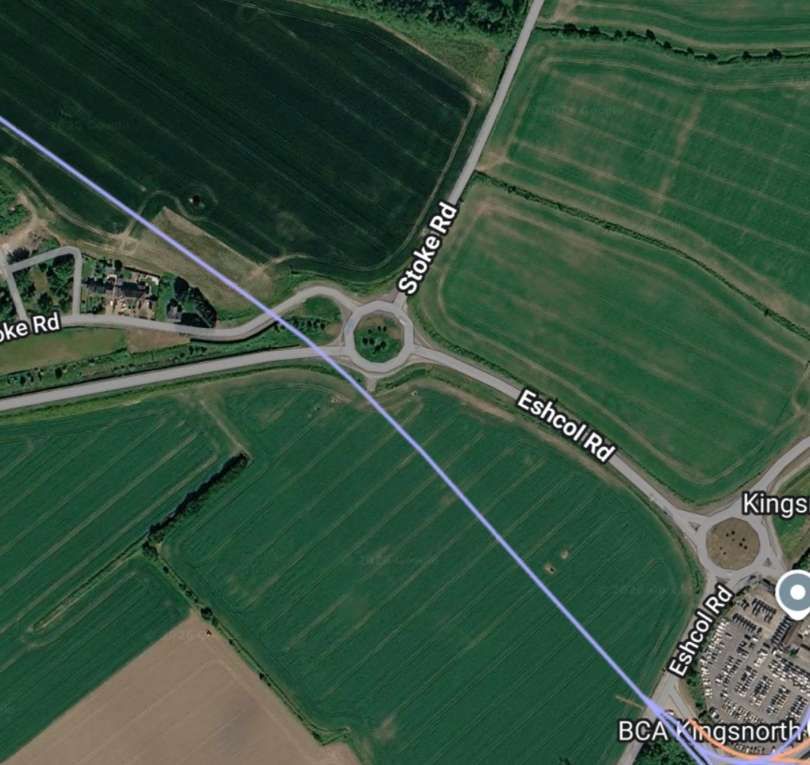
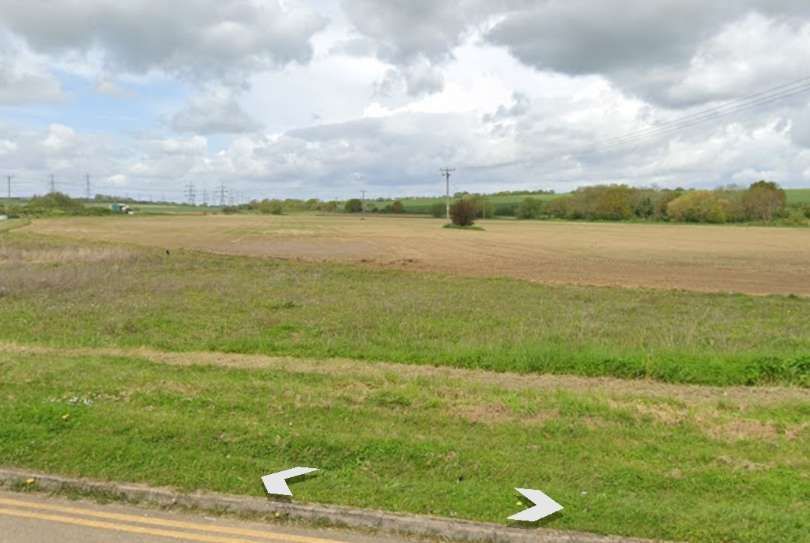
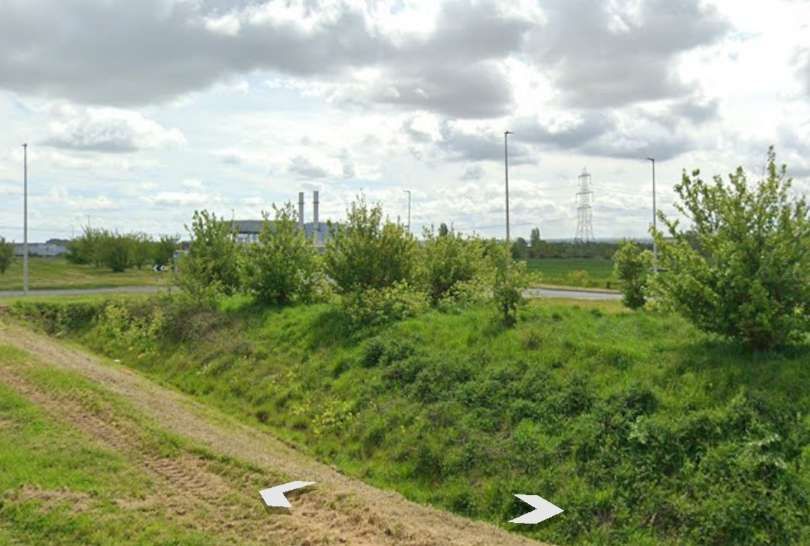
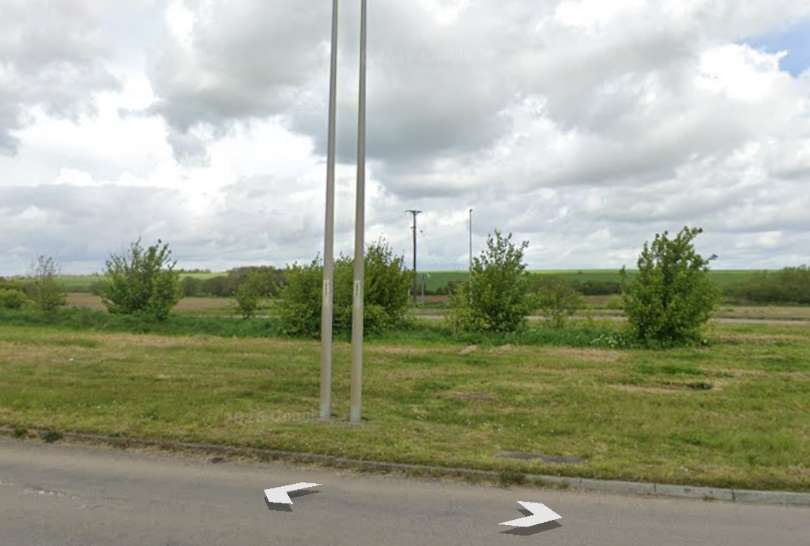
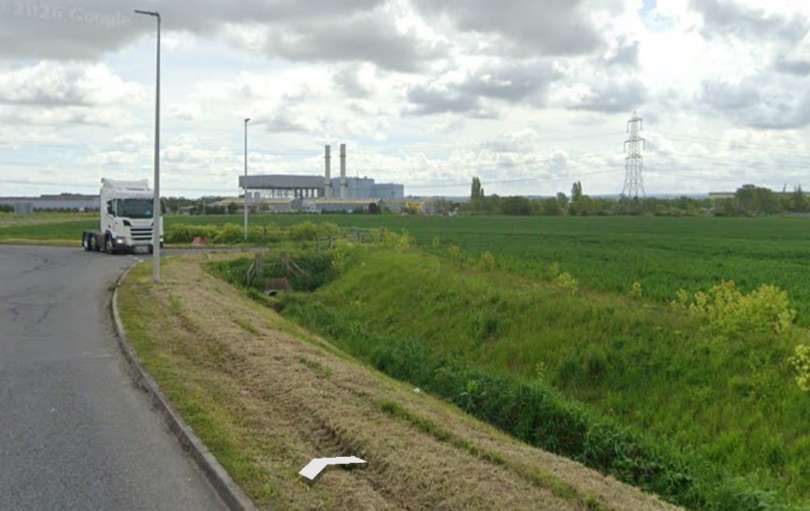
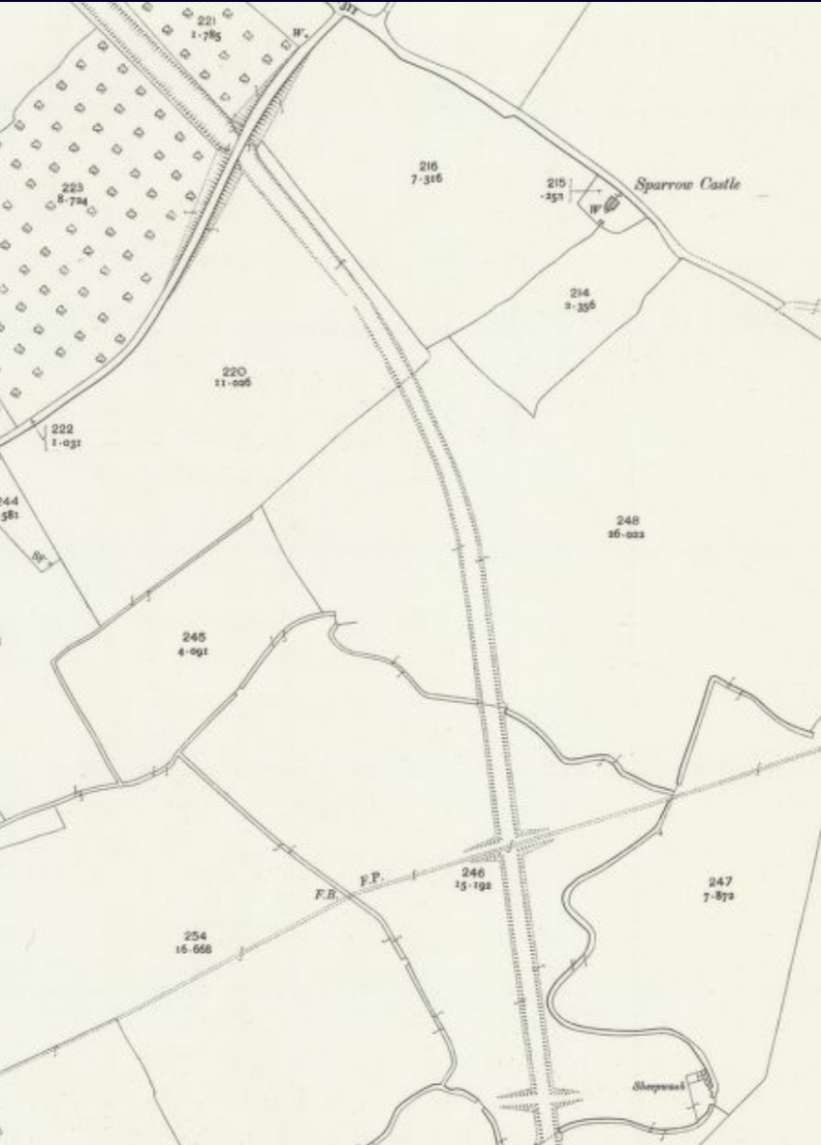
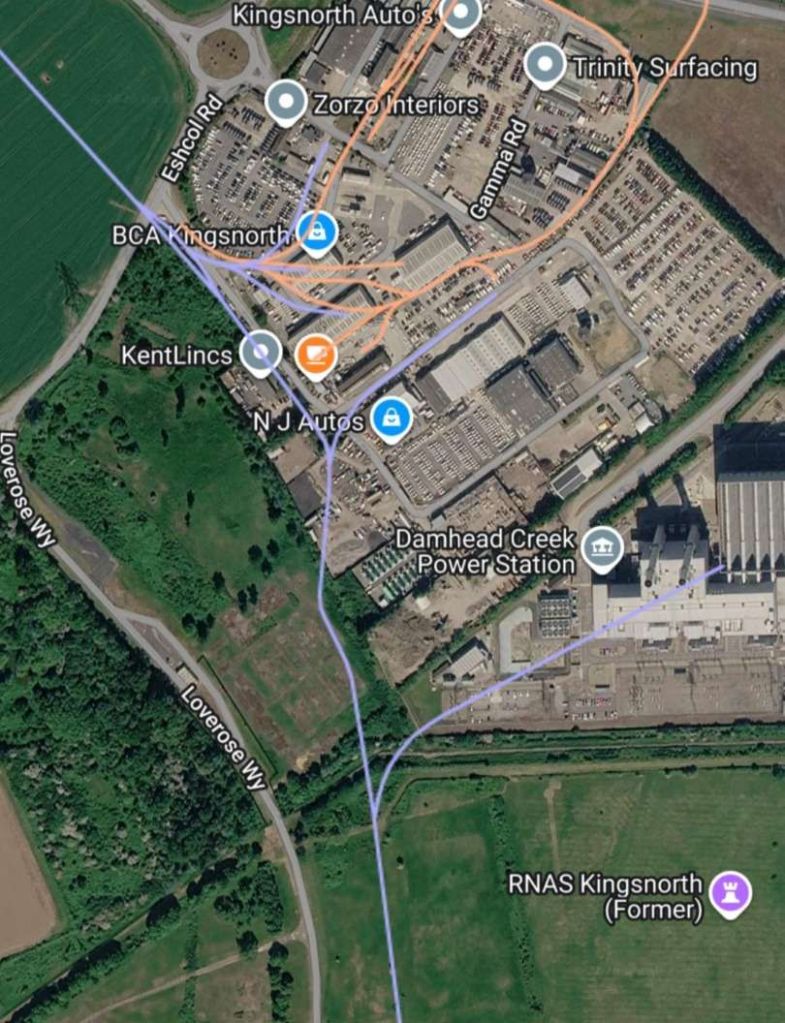
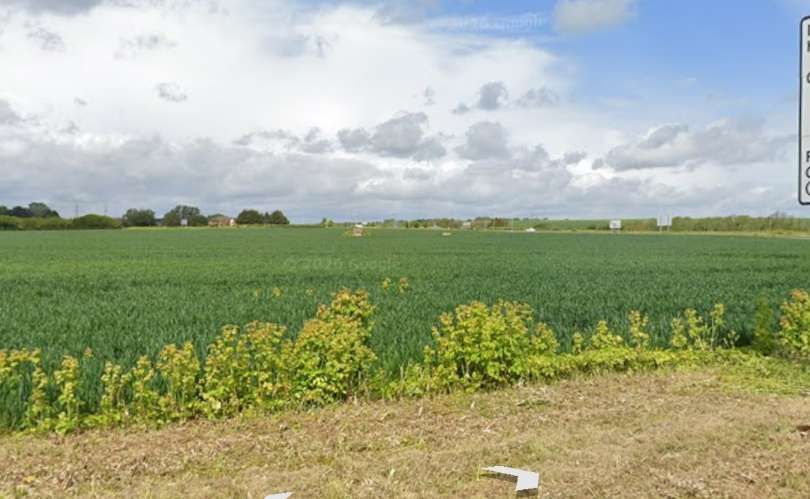
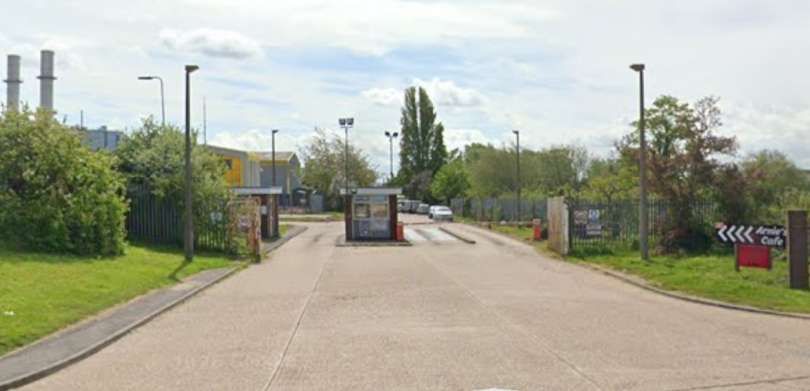
Heading South the line of the KLR was remote from highways and headed South to the Medway Estuary. It predated the construction of the Kingsnorth Power Station.
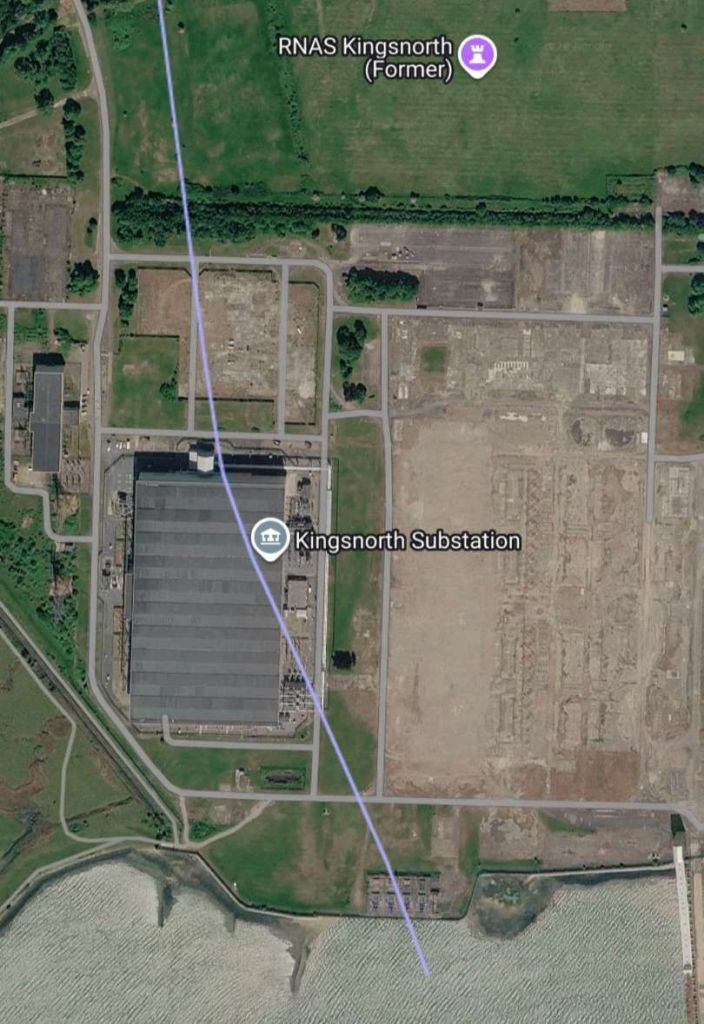
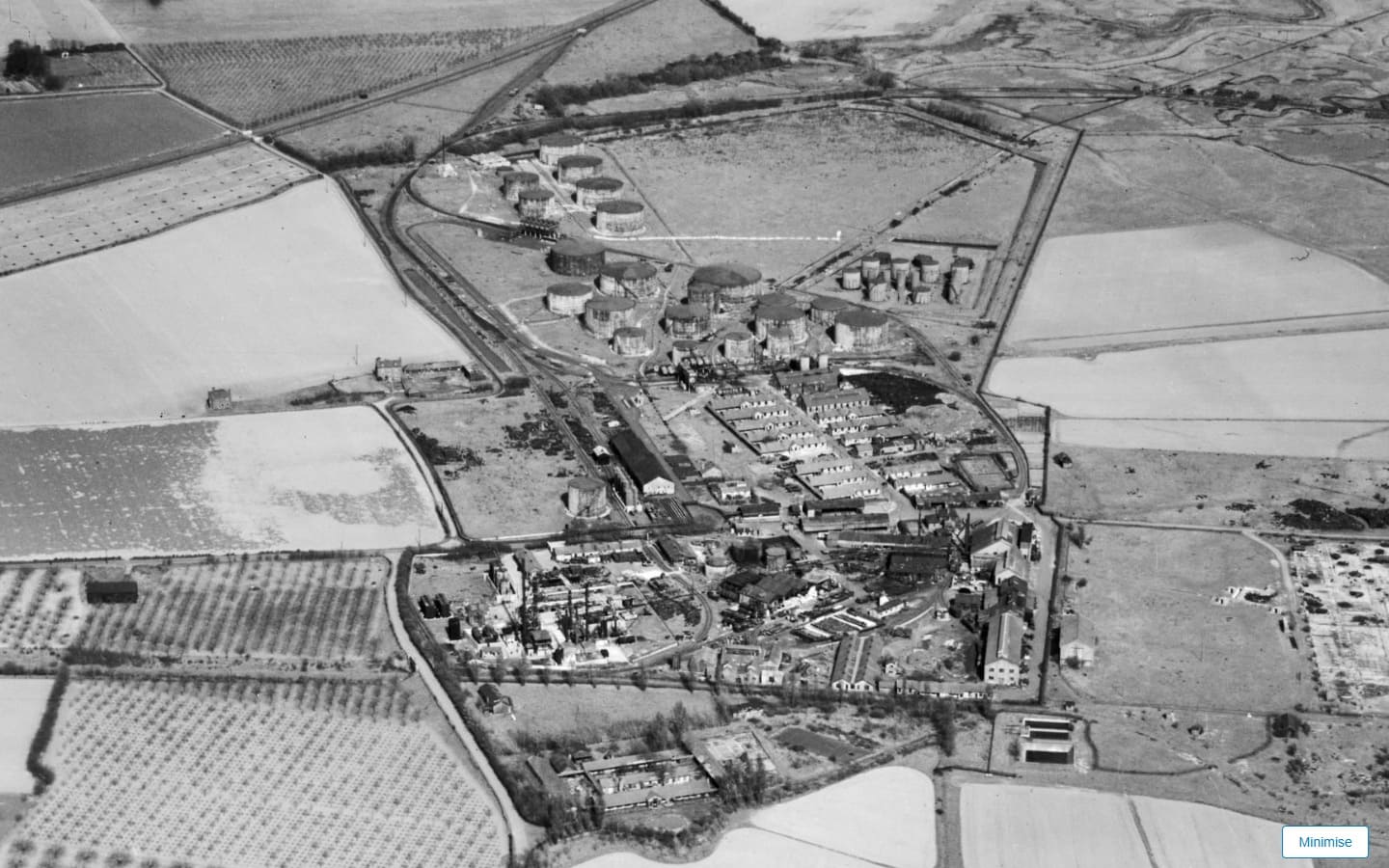
Returning North along the route of the KLR to the location of the Berry Wiggins Oil Refinery ……
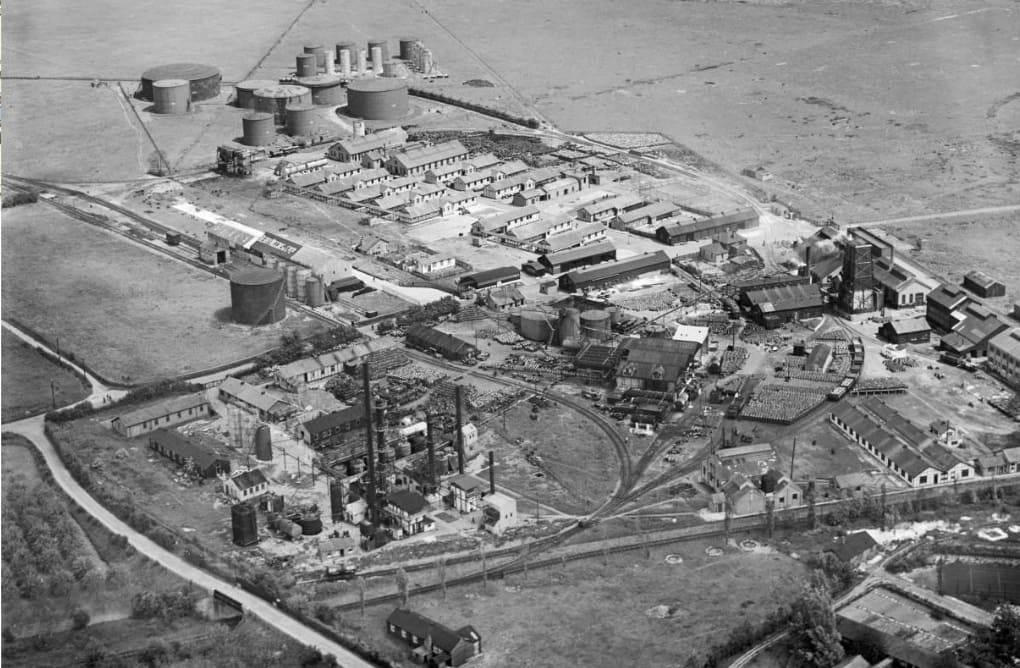
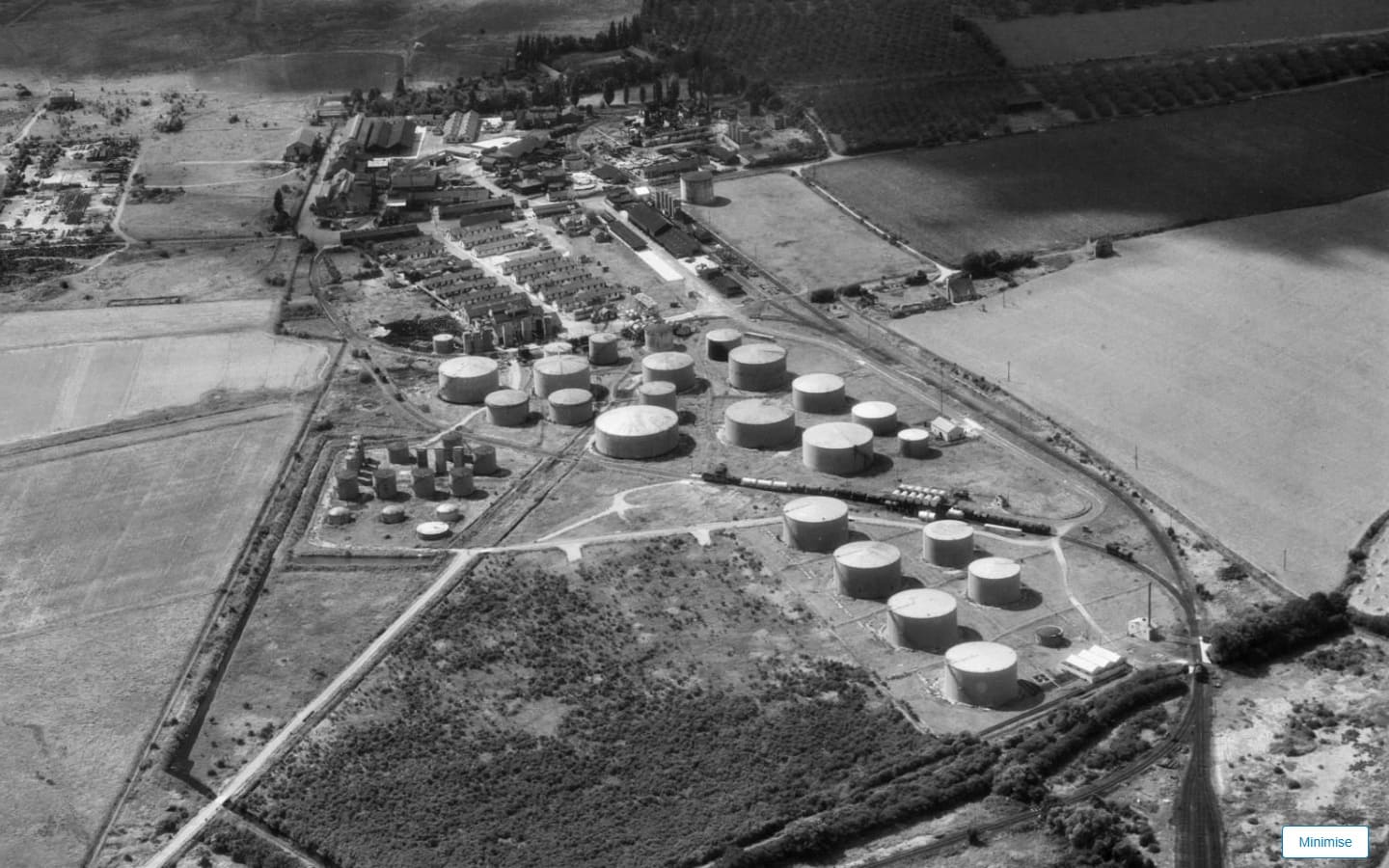
RNAS Kingsnorth was a First World War Royal Navy air station for airships, initially operating as an experimental and training station, it later moved on to large scale production of airships. It also provided anti-submarine patrols. A number of experimental and prototype blimps were designed and tested there and until 1916, it was the lead airship training establishment in the Royal Naval Air Service. It should not to be confused with RAF Kingsnorth, a separate airfield near Ashford in southern Kent under RAF control before and during World War II. [49]
Wikipedia tells us that, “In 1912 an airship station was procured by the Admiralty to test and evaluate airships with Kingsnorth farm (later RNAS Kingsnorth) chosen as the location in 1913. Miskin, the landowner agreed to surrender his lease on Kingsnorth Farm so that an airship test hangar could be built. A further 81 and a half acres were later purchased from Miskin (Barton Farm) to allow the unrestricted manoeuvring of airships in the test phase. The air station initially received a German built Parseval PL-18 airship and undertook evaluations, where it received the service designation Naval Airship No. 4 (NA4). Kingsnorth also received an Astra Torres airship. Experiments were carried out including an unsuccessful attempt to launch a fighter aircraft from a non-rigid balloon.” [49]
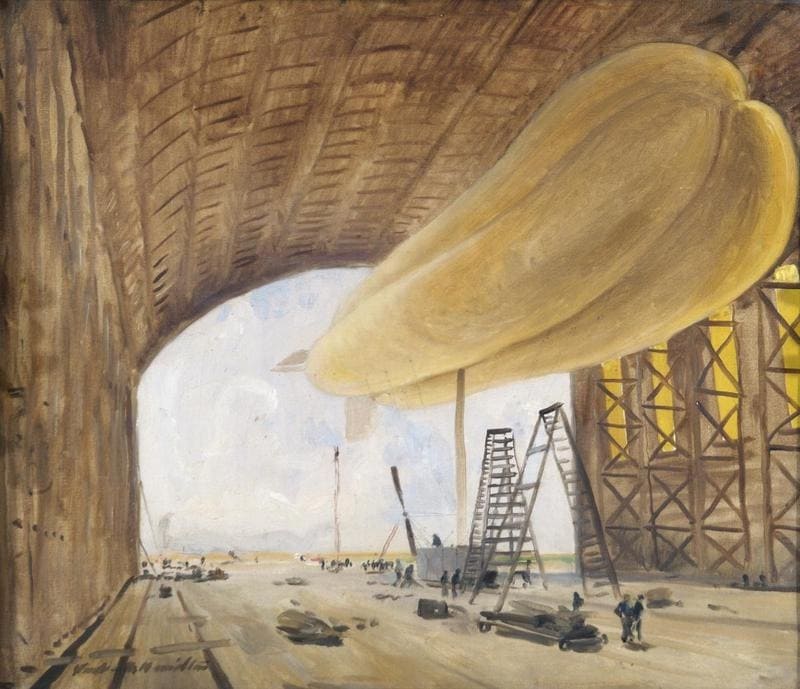
A HMA 3 Astra-Torres Airship in its shed at RNAS Kingsnorth, this is a painting by by Vereker Hamilton – kept as part of the Imperial War museum collection, (c) Public Domain. [50]
RNAS Kingsnorth was commissioned in April 1914 under the control of the Admiralty, first through the Naval Airship Branch, then through the Royal Naval Air Service when the Royal Navy reformed its air branch in July 1914. The RNAS took over the base’s two huge airship sheds and its development and training functions. The first two airships – Astra Torres No. 3 and Parseval No.4 – were used to escort troopships carrying the British Expeditionary Force to France in the summer of 1914. [49]
“RNAS Kingsnorth was involved in the development and flight testing of non-rigid airships, with the SS-class airship (Submarine Scout) being the first type to operate from there, providing anti-submarine defences to the Thames Estuary and southeast coast.[5] The C-Class airship (Coastal Class) type followed, with aircrews trained at the site until the then-named RNAS Cranwell took over this role mid-war. By the start of 1915, there were less than 100 British airmen who could actually fly an airship. It was then decided that RNAS Kingsnorth would be used as a flying training station. Students who had completed the free ballooning courses and ground instruction at RNAS Wormwood Scrubs, would then be passed on to RNAS Kingsnorth for instruction at an operational airship station.” [49]
Testing of the NS-class airship (North Sea) also took place at RNAS Kingsnorth, with successful flight trials first completed in February 1917. By 914, RNAS Kingsnorth was also home to a newly formed Naval Met Service, which provided weather information to airships operating locally over the North Sea. On 1st April 1918 the Royal Flying Corps and the RNAS combined to form the Royal Air Force (RAF) and the station became known as RAF Kingsnorth before decommissioning in 1921. [49]
Holm & Co. Ltd (Kingsnorth Chemical Works) was established to take over the business of a wood pulp agent, manufacturer, merchant importer & dealer in paper-stock which was carried on by A.A. Holm. Alfred, Amundsen Holm was a Norwegian wood-pulp merchant who acquired part of RAF Kingsnorth. The company negotiated with the Admiralty for the lease of the Sharnal Street to Kingsnorth line, the Kingsnorth Light Railway (KLR) as it became known. A licence for running was obtained by Admiralty Deed on 14th August 1924. Holm & Co applied for a light railway order in November 1925 which was turned down in February 1926; a new application was made which was granted in November 1926. On 21st November 1927, the Kingsnorth Light Railway Order was passed. The order permitted the owners to enter into agreements for the construction of junctions between the railway and the railways of the Southern Railway Company. The Admiralty granted the Kingsnorth Light Railway running powers through their sidings at Sharnal Street so that the KLR had access to the Hundred of Hoo branch. [25: p158]
The traffic of Holm & Co was not to be the staple diet of the railway; another firm of chemical manufacturers set up works just to the north east of Holm & Co. This company was Berry Wiggins, who specialised in heavy duty oil and Bitumen products. Their works are covered below. In the early 1930s there was a dispute over the rates that the Berry Wiggins were to pay for the transport of their products. This resulted in Berry Wiggins constructing an independent connection to the Hundred of Hoo Railway which opened in 1932. [25: p1159]
Waywell tells us that the KLR was operated by No.3. a Kerr Stuart 0-4-0ST (Works No. 4227). “For lighter duties a Hardy Petrol shunter (No.3552) was employed. In addition Holm & Co had its own private works line which was 2ft 6in gauge. This line was worked by “Ferret II” Bagnall No. 1853 of 1908. This was a restricted height saddle tank with a dropped cab and footplate. Its vertical height was probably less than six feet. When it was new it saw service at A.C. Beasley’s works at Ratcliffe, Lancashire.” [1: p159]
The KLR met its fate before World War 2, without the traffic of Berry Wiggins there was little to sustain the railway and operations over it slowly petered out as the Holm & Co works was run down. The track was requisitioned and removed by the Royal Engineers in June 1940 as a war time economy, and was sent to Shoeburyness, Chatham & Leysdown.
Ferret II was bought from Blackwell & Son (Engineers) Ltd. in 1925 and was sold or scrapped after April 1936
No. 3 came from Kerr Stuart in 1929 and was sold to the Royal Arsenal Woolwich.
One Hardy locomotive arrived in 1930, a second in 1936. It appears that both were sold or scrapped by the beginning of WWII.
Berry Wiggins Oil Refinery was constructed in 1931 and was the first oil refinery to be built on the Hoo peninsula. It reused a number of buildings that were formerly part of RNAS Kingsnorth including the jetty via which the crude oil was delivered. This was superseded by Bees Ness Jetty which was opened in 1937 and ran for over 2.5km over Stoke Saltings and Stoke Ooze to the deep channel of the Medway. A third jetty called Oakham Ness Jetty was constructed in 1964 to be jointly used with Kingsnorth Power Station. A pipeline ran between the refinery and a small 19th century wharf on Damhead Creek. The Berry Wiggins refinery continued in use until at least 1978 but has since closed and the majority of the site has been demolished. However, a building through which pipes were directed from both the refinery and Bees Ness jetty could still be seen on aerial photographs taken 2007. Bees Ness jetty also survives although it is in a derelict state as does the later Oakham Ness jetty, presumably still in use by Kingsnorth Power Station. This site was mapped from aerial photographs as part of the English Heritage: Hoo Peninsula Landscape Project. [48]
Waywell tells us that, “The refinery used the Kingsnorth Light Railway until 1932 when an independent rail connection was put in east of Beluncle halt, there was also a branch to a wharf on Damhead Creek. Rail traffic ceased [in March] 1972 and the refinery closed in 1977 and was demolished; the site became that of the Kingsnorth Industrial Estate. Later rail traffic in the 1980s was stone for sea defence work which was unloaded and taken away by road transport, and tank cars for cleaning which were tripped to and from Grain refinery. The rail connection to the Hoo Branch was removed in 2002. Berry Wiggins changed its name on 31st December 1979 to K.C.A. Engineering Ltd. E.J. Aldrich Ltd was formed in 1980 and went into voluntary liquidation on 18th April 1986.” [25: p43]
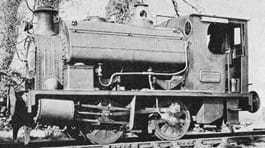
The first locomotive listed below was built by Brush Electrical and supplied via Powesland & Mason, arriving on site in 1931. [25: p44][60]
Locomotives used at the Berry Wiggins Oil Refinery are listed by Waywell [25: p44] as:
- Un-named – an 0-4-0ST with outside cylinders built in 1906 by Brush Electrical (Works No. 314) for Powesland & Mason, which arrived on site from Sugar Beet & Crop Driers Ltd, Eynsham, Oxfordshire in December 1931 (prior to that it was GWR No. 921) The loco was sold on to Leicester Museums, Stoneygate, Leicester on 27th February 1968. [25: p44] [60]
- No.1 – a 4-wheel petrol-mechanical locomotive built by Motor-Rail Ltd (Works No. 4204, built in 1929). This locomotive was supplied new and remained on site until around 1970.
- No. 2 – another $-wheel petrol-mechanical Locomotive built by Motor-Rail Ltd. (Works No. 3880). This locomotive arrived on site sometime in 1930 but required an overhaul in 1931. It was rebuilt by Motor-Rail in1931 (Works No. 4217). It remained on site until it was sold to the Worcester Locomotive Society, Moreton-on-Lugg, Herefordshire in January 1973. [25: p44]
- Titan – an 0-4-0DM, diesel mechanical locomotive built in 1951 by Vulcan Foundries (Works No. D140) and supplied by the Drewry Car Company (their No. 2274). Arriving via Wm Cory & Son Ltd. in early 1965, this locomotive remained on site until it was sold to the Kent & East Sussex Railway by 1985.
- Un-named – another 0-4-0DM built in 1956 by Vulcan Foundries (Works No. D297) and supplied through the Drewry Car Company (their No. 2583) in 1956 to the SEGB before then passing through the hands of Renwick, Wilton & Dobson Ltd. (dealers), Bristol, arriving on site at Berry Wiggins in circa. 1970. This locomotive was sold to the Purfleet Deep Wharf & Storage Co. Ltd. in February 1979. [25: p44]
Kingsnorth Power Station was a dual-fired coal and oil power station. Construction began in 1963 and the power station went live in 1970, although construction continued through until 1973. The four-unit Hinton Heavies station was operated by energy firm E.ON UK, and had a generating capacity of 2,000 megawatts. It was capable of operating on either coal or oil, though in practice oil was used only as a secondary fuel or for startup. It was also capable of co-firing biofuel, up to a maximum of 10% of the station’s fuel mix. A replacement power station, also coal-fired, was considered by owners E.ON, but plans were abandoned. The proposed replacement attracted substantial public protests and criticism, including the 2008 Camp for Climate Action. [52]
Contractors working at Kingsnorth Power Station were, according to Waywell:
- Peter Lind & Co. Ltd. – who utilised two Ruston & Hornsby 4-wheel Diesel-Mechanical locomotives (Works Nos. 195856 & 237929, built in 1939 & 1946 respectively). Both were supplied by Thomas W. Ward by July 1963 and were sent on to Aveley Plant Depot, West Thurrock when no longer needed. [25: p290]
- John Mowlem & Co. Ltd. – who constructed a new cable tunnel from Kingsnorth Power Station to Chesney Marshes circa. 1973. Two NEI Mining Equipment Ltd., locomotives were used fir this contract but no details are known. [25: p298]
Damhead Creek is a tidal waterway which transitioned from a rural marshy landscape into a heavily industrialised zone. Following the closure in 1921 of RAF Kingsnorth. Damhead Creek became a centre for industrial wood pulping. When Kingsnorth Power Station was built, Damhead Creek was modified to act as the discharge channel for the station’s cooling water.
In the late 1990s, the American firm Energy began construction of 792 MW Combined Cycle Gas Turbine (CCGT) power facility. The main station buildings were built directly over a marshy extension of the creek known as Damhead Fleet. Construction concluded at the very end of the century, and the plant formally entered service in February 2001. It had been built by Raytheon Engineers and Constructors and Mitsubishi Heavy Industries, who provided the gas turbine equipment. On 2nd June 2004, the plant was bought by Scottish Power for £317 million. Then it was purchased and operated by Drax Generation Enterprise Ltd in 2018 before being sold to Vitol’s VPI Holding in December 2020. The plant is not rail-served. [51]
The Isle of Grain
A fuel depot with an attached port was established on the Isle of Grain in 1928.
By 1953, Kent Oil Refinery was established by the Anglo-Iranian Oil Company in the south of the Isle of Grain. Over ten million tons of crude oil were processed annually. This led to the building of an oil-fired power station at Grain and dual-fuel-capable power station at Kingsnorth (which, in practice, used coal).
The Anglo-Iranian Oil Company became BP. BP closed the refinery on 27th August 1982. Later, the site was taken over by British Gas plc, which used a small part of the site for the storage of liquefied natural gas. [57]
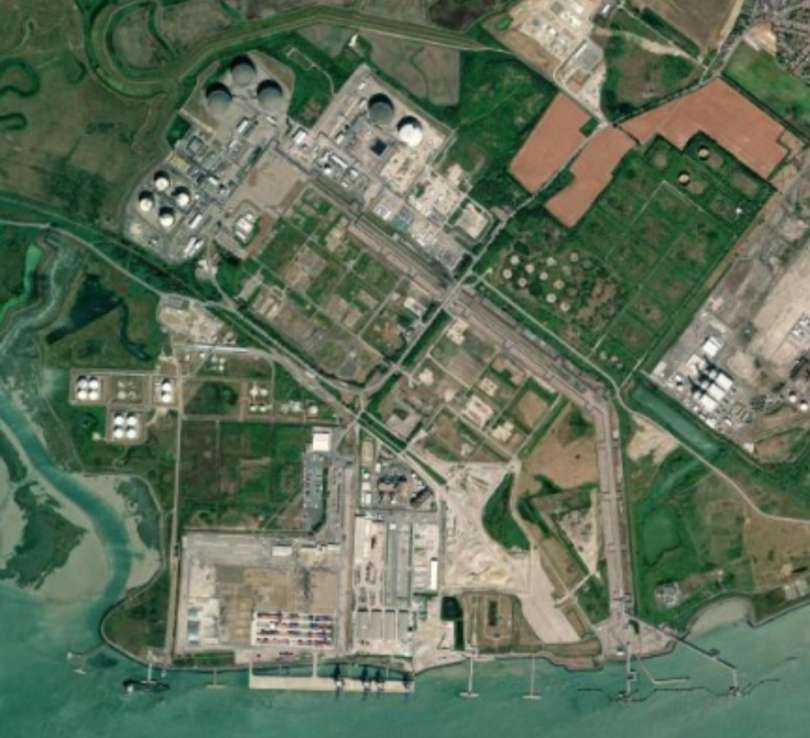
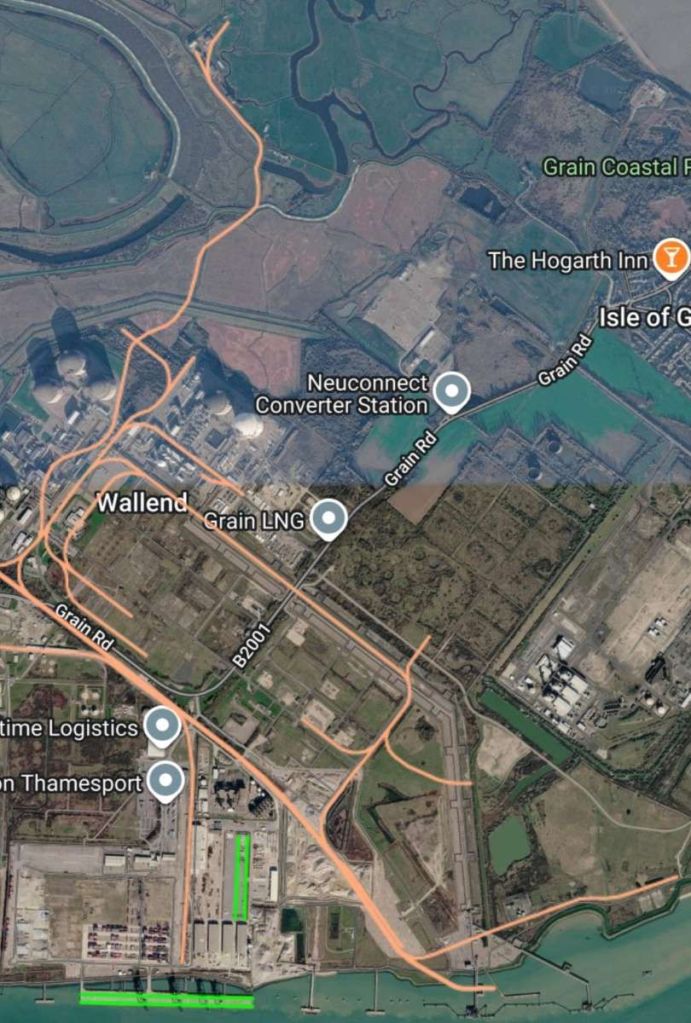
From the outset, the refinery could refine 4,000,000 tons of crude oil annually, the majority of which was shipped in from the Middle East. Smaller quantities were also delivered from Libya, Nigeria, Venezuela, and South America. In all, there were twelve jetties for sea vessels: nine of which could accommodate the largest oil tankers of the era (up to 80,000 tons dead weight). Three jetties served smaller craft of up to 19,000 tons. [58]
The Hoo Peninsula branch provided a passenger service for refinery workers and a single utilitarian prefabricated platform with two faces came into use on 3rd September 1951. Adjacent to the station, David Glasspool tells us, were “four parallel ‘loading’ sidings. Here, pipes were suspended above the tracks on gantries; when tanker wagons were stabled underneath, refined oil could be transferred to them. It would appear likely that these rails were not in use from the outset, instead appearing during the site’s expansion. … The final day of passenger working along the … route, to … Allhallows-on-Sea and Grain, was on Sunday 3rd December 1961, but the refinery … continued to go from strength to strength. Subsequent expansion between 1956 and 1960 increased the annual refining capacity to … 11,000,000 tons (58 times the capacity of nearby Berry Wiggins).” [58]
By 1983, Grain’s refining apparatus was obsolete. Although refining at the site came to an end, shipments to the site continued, and the site was used for storage. Apparently, the last train carrying oil from the site ran in 1999.
The branch continued to be of value: “container flows had commenced along the route in 1990, with the opening of Thamesport, and the former site of Port Victoria station had become a rail-served gravel works. The future of the western-most section of the branch from Hoo Junction had been secure since 1961; in this year, a spur opened to the Portland Cement Works at Cliffe, this of which itself became a gravel operation from 1969 onwards.” [58]
Locomotives serving at the Isle of Grain Refinery included:
- Hudswell Clarke 0-4-0 Diesel-Mechanical Locomotive ‘Margaret’ (Works No. D1031 – built in 1956) which was delivered new to the refinery in October 1956. It worked on-site until May 1960 before moving on to “Denbigshire to work for Limestone Products. Eight years later the loco made its way to Cheshire to work for W. J. Lee – and then just three years on, in 1971, it was sent to Walsh Transport Services in Darwen, Lancashire, for storage. … In 1987, the loco moved on to Fleetwood Loco Centre, and before its move to [the Ribble Steam Railway], had a significant amount of work carried out to its engine and gearbox.” [59][25: p95]
- John Fowler & Co. (Leeds) 0-4-0 Diesel-Mechanical Locomotive ‘Ormsby’ (Works No. 22077 – built in 1938). Ormsby came to the Kent Refinery from Thurrock Chalk & Whitening Co. Ltd, Essex in December 1951. The locomotive only stayed at the Kent Refinery for a short time, going to Harrisons Limeworks Ltd., Shap, Westmorland by April 1954. [25: p95]
- Hudswell Clarke – 0-4-0 Diesel-Mechanical Locomotive (Works No.D708 – built in 1951). This locomotive arrived new in 1951 and was sent to M. Lynch & Son Ltd. in April 1971 and from there it went to Wm. Cory & Son Ltd. [25: p95]
- Hudswell Clarke – 0-4-0 Diesel-Mechanical Locomotive (Works No.D737 – built in 1952). This locomotive arrived new in 1952 and was sent to M. Lynch & Son Ltd. in April 1971 and from there it went to Wm. Cory & Son Ltd. [25: p95]
- William Bagnall – 0-6-0 Diesel-Mechanical Locomotive (Works No. 3151 – built in 1962). This locomotive came on loan in February 1962 and was sent on to Robert, Stephenson & Hawthorns Ltd., Darlington in September of the same year. It was sent later to British Waterways, Sharpness Docks (Marsh 1963). [25: p95]
- Andrew Barclay – 0-4-0 Diesel-Mechanical Locomotive (Works No. 412 – built in 1957). It arrived at Kent Oil Refinery from Gavieside Refinery, Midlothian in 1963. It was sent to Ashmores of Dudley Ltd., Commercial Vehicle Dealers in January 1982. [25: p95]
- Andrew Barclay – 0-4-0 Diesel-Mechanical Locomotive (Works No. 395 – built in 1956). It arrived at Kent Oil Refinery from Thames Matex Ltd., West Thurrock on hire in 1967. It was returned to Thames Matex Ltd in September 1968. [25: p95]
- No. 0006 – Hunslett Engine Co. Ltd. 0-6-0 Diesel Hydraulic Locomotive (Works No. 6971, Built in 1968). It arrived new in 1968 and was sold/scrapped in September 1983.
- WIN 4820-0007 – Hunslett Engine Co. Ltd. 0-6-0 Diesel Hydraulic Locomotive (Works No. 6972, Built in 1968). It arrived new in 1968 and was sold/scrapped in September 1983.
- WIN 4820-0005 – Strachan & Henshaw 4-wheel Diesel-Mechanical Road-Rail Locomotive (Works No. 7508 – built in 1967).It arrived new and was sold or scrapped in around 1976.
- Rolls-Royce Ltd, (Sentinel Works Shrewsbury) 4-wheel Diesel-Mechanical Locomotive (Works No. 10260, built in 1966). This locomotive came on hire from Thomas Hill, Rotherham and was returned there on 9th October 1981.
- WIN 4820-0007 – Thomas Hill supplied 0-6-0 Diesel Hydraulic Locomotive, ‘Man of Kent’ (Supplier No. 294V, built in 1981). This locomotive arrived new in 1981 and was sent to the BP Oil Terminal, Hamble, Hampshire in November 1992.
- WIN 4820-0009 – Thomas Hill supplied 0-6-0 Diesel Hydraulic Locomotive, ‘Kentish Maid’ (Supplier No. 295V, built in 1981). This locomotive arrived new in 1981 and was passed on to the Isle of Grain Bitumen Terminal by 7th July 1993.
- No. 24 F35 – Hunslett Engine Co. Ltd. 0-6-0 Diesel Hydraulic Locomotive (Works No. 6950, Built in 1967). This lcomotive came from the BP Oil Terminal at Hamble in 1989 and was passed on to the Isle of Grain Bitumen Terminal in 1990.
Isle of Grain Bitumen Terminal – this terminal occupied part of the Kent Oil Refinery site and used the last two locomotives mentioned above (WIN 4820-0009 and No. 24 F35). Both of these locomotives were passed on to Coryton Bulk Oil Terminal, Essex circa. October 1999. [25: p95]
Brickworks on the Hundred of Hoo included:
- Hoo St. Werburgh Brickworks which had a short tramway and wharf near West Hoo Creek – advertised for two locomotives at different times – in 1914, for a 2ft 6in gauge locomotive and in 1925, for a 2ft gauge petrol tractor. [25: p159]
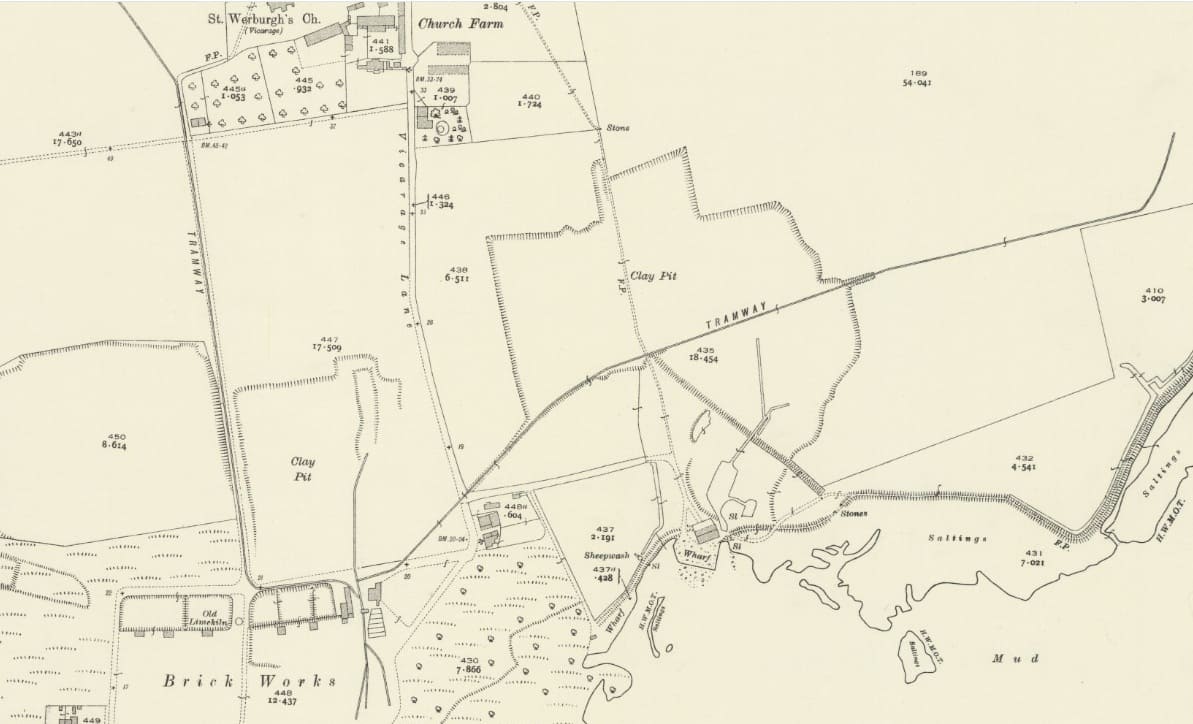
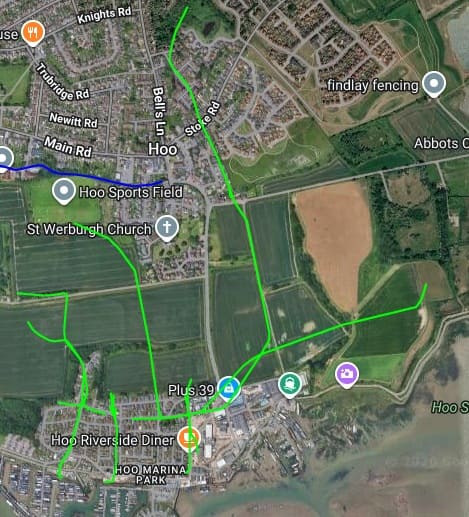
This extract from railmaponline.com’s satellite imagery shows the various tramways which from time to time were in use associated with the brickworks. The brickworks were on what is not the site of Hoo Marina Park. [14]
Stores on the Hundred of Hoo included:
- Belvedere Central Stores Depot, No. 20 which was established on Erith Marsh – It had a standard gauge siding which linked to Cory’s Crabtree sidings and an internal 2ft 6in gauge network. The site operated until 1927 when it was transferred to the West Kent Electric Co. …. Three standard-gauge locomotives were used. The first was ex-LB&SCR No. 642 – built at Brighton Works in 1877 and returned to the LB&SCR in 1919. A second, ‘M/M No.5’, a 4-4-2T, was built in 1885 by Neilson & Co., Glasgow (Works No. 3209), supplied by Ridham Salvage Depot in 1921 and sold on to the East Kent Light Railway on 13th April 1923. The third locomotive was No. 424, also a 4-4-2T Beyer-Peacock locomotive (Works No. 2176, built in 1882) which arrived from W. D. Catterick Camp, North Yorkshire in November 1923 and possibly passed to George Cohen, Sons & Co. Ltd by June 1925. …. Two narrow gauge locomotives were employed on the site: ‘Skylark’ was an 0-4-2T Kerr Stuart locomotive (Works No. 802, built in 1902); and ‘M/M No.7‘ was an 0-6-0T William Bagnall locomotive (Works No.1911, built in 1917). Both of these locomotives had a very short life at the site. They arrived on site in February 1921 from CSD Ridham No. 98 and were removed from site by 15th June 1921, being sent to CSD Neasden No. 31. [25: p188]
- Ridham Central Stores Depot, No. 98 opened on 24th March 1919 and closed on 24th August 1921. The two 2ft 6in gauge locomotives (Skylark and M/M No. 7) were used at Ridham before being sent to Belvedere. [25: p189]
South of Upnor (on the West Bank of the Medway)
Beyond the southern extremity of the Lodge Hill & Upnor Railway were Whitewall Cement Works and a series of Cement Works at Frindsbury. …
- Whitewall Cement Works – these Works are covered in the third article in this series which can be found here. [36]
- The Crown & Quarry Works at Frindsbury – these Works, and those which preceded them, are covered in the article above and in more detail here. [62]
The Aveling & Porter Invicta Works – These works were on the banks of the Medway in Strood. Most of the company’s output was steam roller, tractors and traction engines. The company did produce some railway locomotives based essentially on traction engine practice. This is not the place for a history of the company and its works but it is worth noting here that the company was rail-served, despatching much of their output by rail. This company produced some unconventional steam engines for use primarily in industry. More information can be found on Wikipedia on this link. [28]
The South and East Sides of the Estuary
Gillingham Portland Cement Works … Stoyel & Kidner tell us that, “A cement works was erected at Danes Hill, Gillingham, in 1874, and was acquired in 1893 by John Bazley White & Bros Ltd, from the Gillingham Portland Cement Co. Ltd. Its tramway is said to have been of 3ft 6 in. gauge. The company was taken over by APCM and closed in 1910. The works was reopened in 1920 under different management, but closed at the end of 1935 for two months, after which an Agreement with the Rugby Portland Cement Co. Ltd allowed it to be opened yet again; Rugby purchased it in 1938 and closed it soon afterwards. At this time it is reported that an engine called Excelsior transferred from Batchelors, Halling was still in the works.” [1: p67]
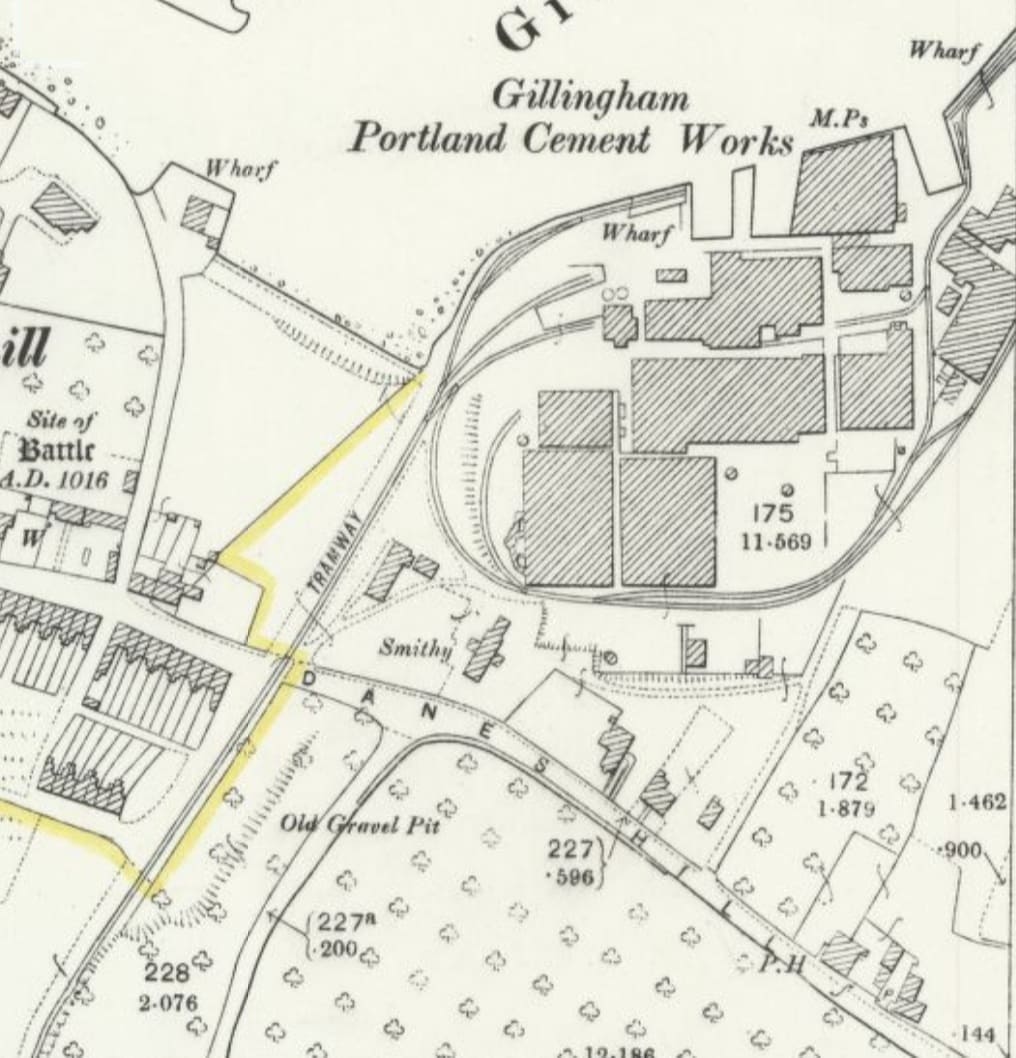
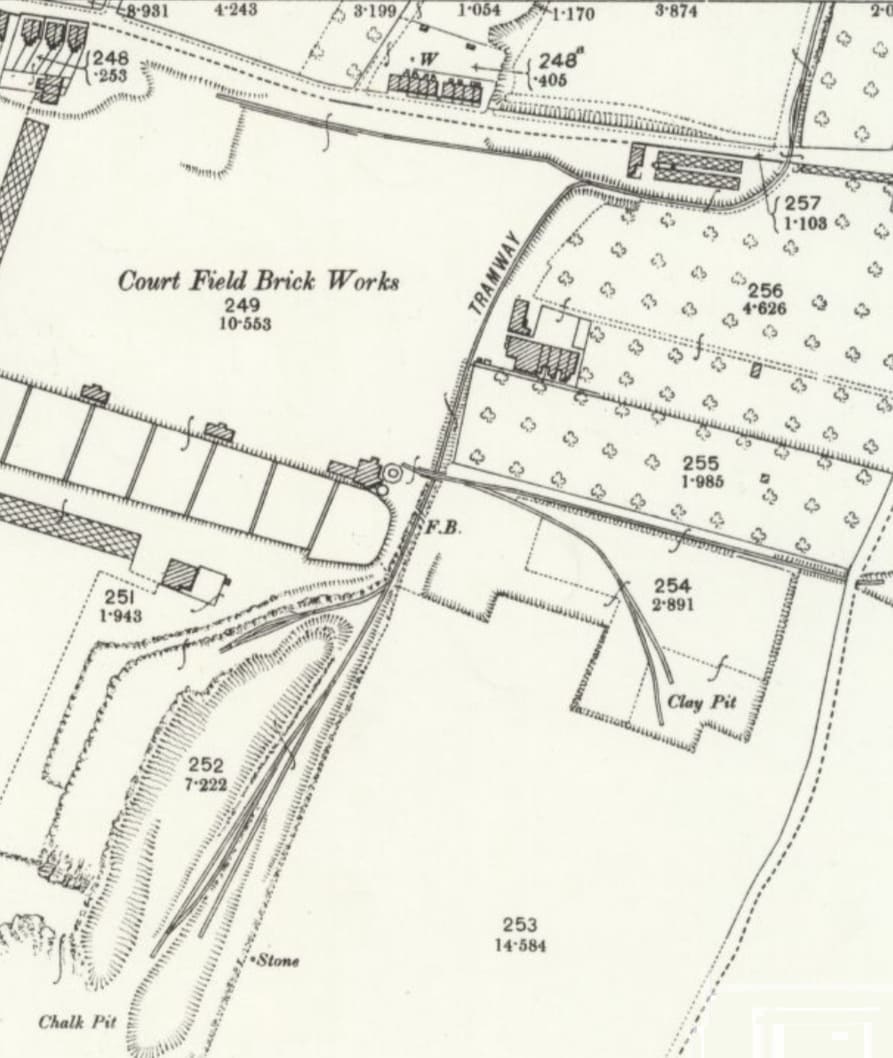
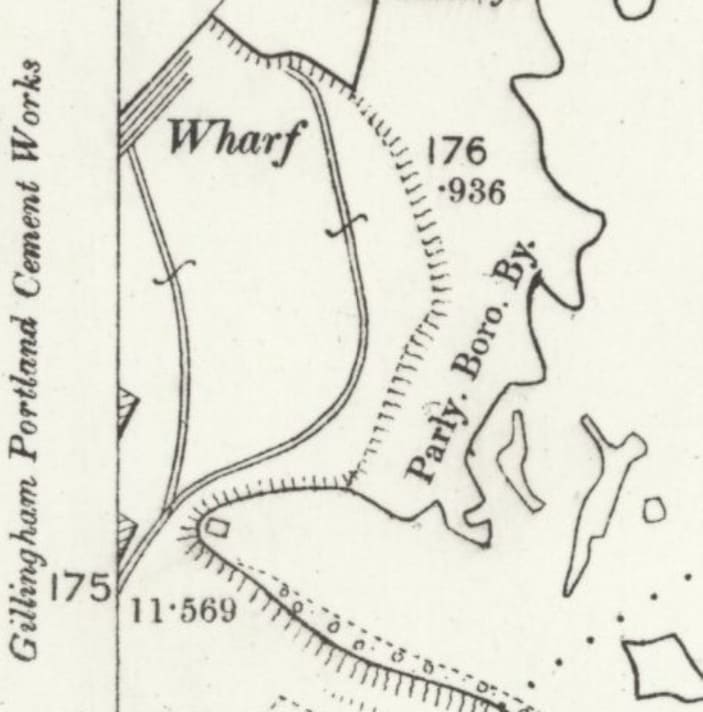
This final map extract shows the tramways associated with the Gillingham Cement Works which sat to its East. [19]
Queenborough Cement Works and allied industries …. Stoyel & Kidner tell us that “The Queenborough Cement Co. Ltd opened in 1882 and by 1896 had a short tramway down to a wharf and creek leading off the River Swale; a siding to the SECR was laid in 1904. The chalk pit also supplied a ceramics manufacturer, A. Johnson & Sons Ltd, established in 1908, which had a narrow gauge tramway.” [1: p67]
The story of these works and the area immediately around Queenborough is covered in a separate article which can be found here. [12]
British Standard Cement Ltd., Rainham …. These were short-lived works opened in 1912, it was operated by the British Standard Cement Co. Ltd., a subsidiary of E. J. & W. Goldsmith Ltd., making branded ‘Capstan’ cement. It was bought in 1928 by the Red Triangle Group and then in 1931 by APCM, closing 1937. A 2ft gauge tramway linked the Works with its Chalk Pit.
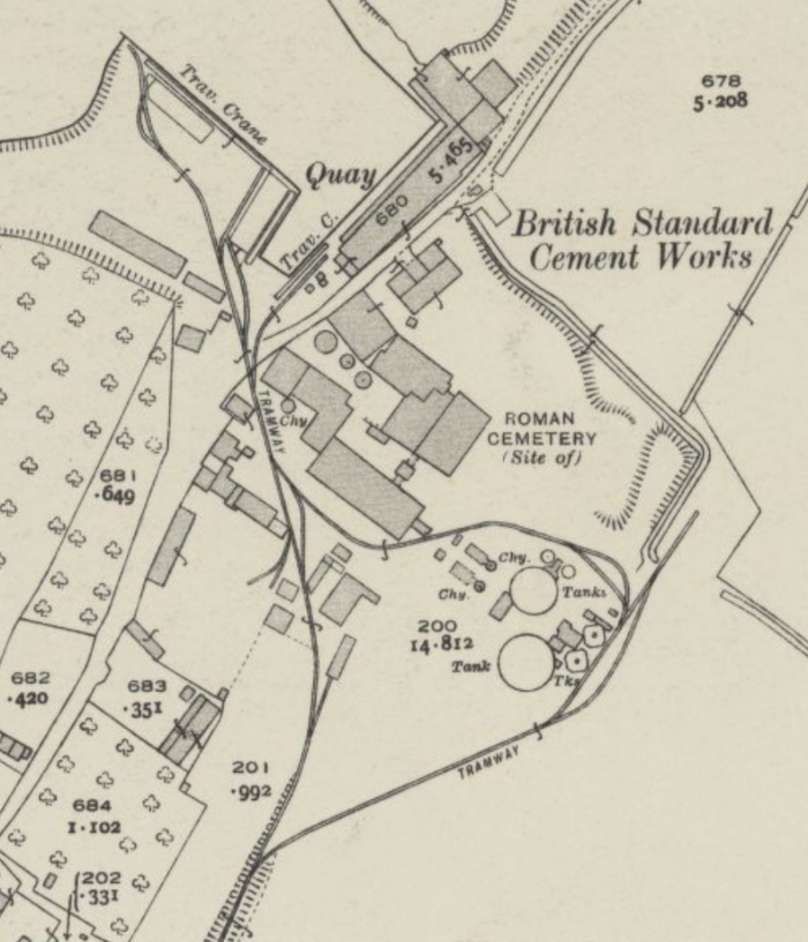
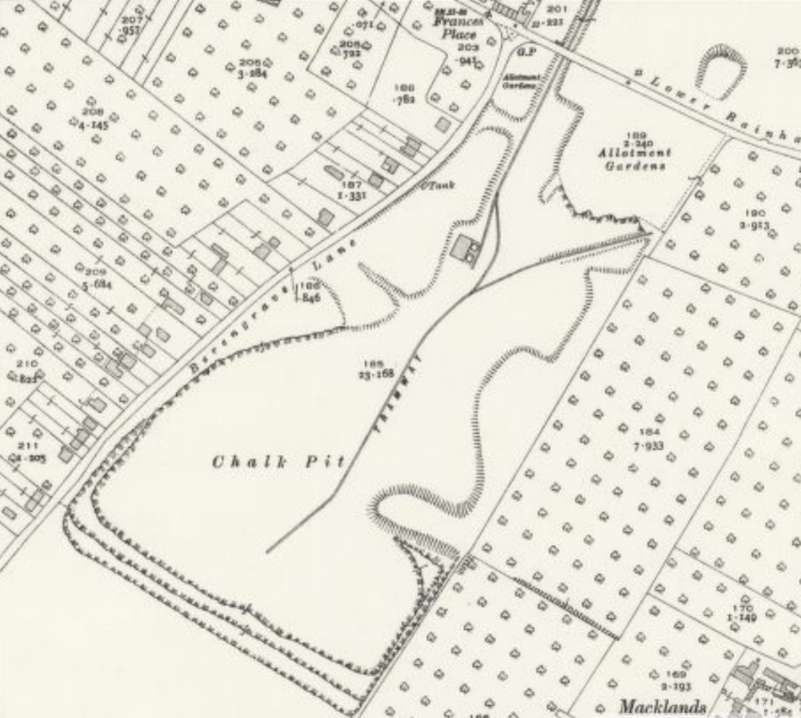
Stoyel & Kidner describe three locomotives which worked at the location:
- Baldwin (Works No. 45142) 4-6-0T (unnamed) built in 1917;
- Bagnall (Works No. 2149) 0-4-0ST ‘Capstan’ built in 1925; and
- Bagnall (Works No. 2262) 0-4-0ST ‘Capstan II’ built in 1927.
The Baldwin holds a particular place in industrial railway history. Although a number of 2ft-gauge Baldwins from WW1 were sold to public narrow-gauge lines in Britain, only one was purchased for industrial working. No. 45142 was that locomotive. [15: photo 31]
Stoyel & Kidner say that, “The Baldwin locomotive was acquired in 1918 from the War Dept Light Railways (their No. 560) and was rebuilt by W.G. Bagnall Ltd in 1918 before starting work at Rainham. The other two locomotives were supplied new and in 1933 were transferred to the BPCM Ltd’s works at Beeding, Sussex. The Baldwin locomotive remained derelict at the works for some time afterwards and was then presumably scrapped.” [1: p69]
East Kent Chalk Quarry Co. Ltd., Gillingham, Sharps Green Cement Works Co. Ltd … The Gillingham address was probably no more than a mailing address. The company owned a small chalk pit just north of the SECR at a place now known as Lower Twydall.
Stoyel & Kidner tell us that a “railway ran northwards [from a chalk pit] under the main road at Sharps Green and on to the narrow peninsular forming the end of Bartlett Creek. Here Mr Alfred Castle had a wharf and barges to take chalk to his works at Queenborough; he also owned the quarry and the railway, but the cement works at Horrid Hill at the tip of the peninsular, known as Sharps Green Cement Works, was owned by C.L. Cary and B.P. Cary. It was opened in 1902, and taken over by APCM in 1910, being closed in February 1913.” [1: p69]
Almost the full length of the tramway appears on the map extracts below. The tramway led to a Wharf on the North side of the ‘island’ called Horrid Hill. The tramway does not appear on the next OS sheet to the North, although the Wharf does.
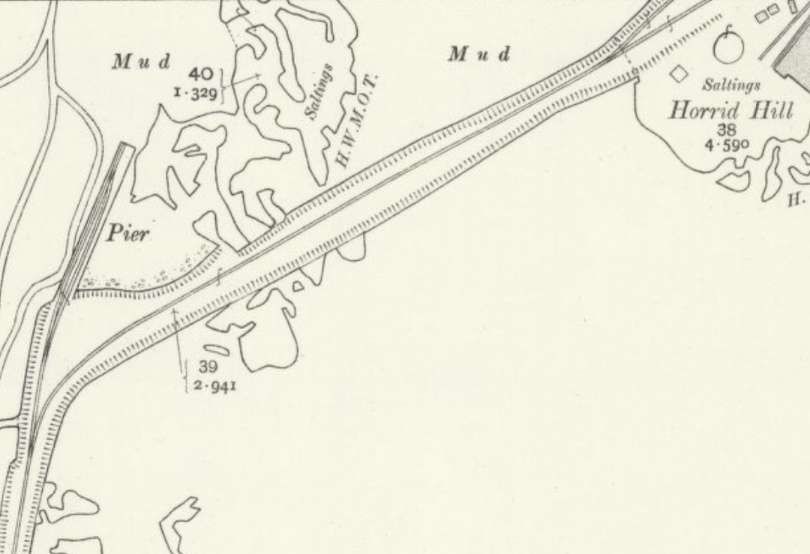
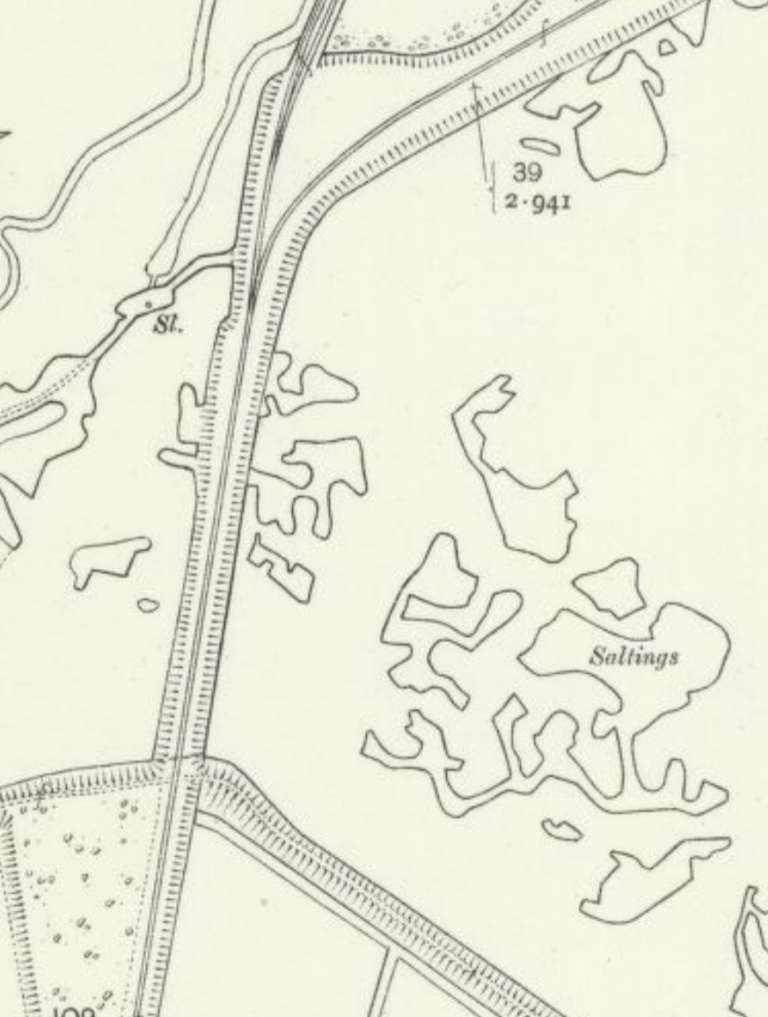
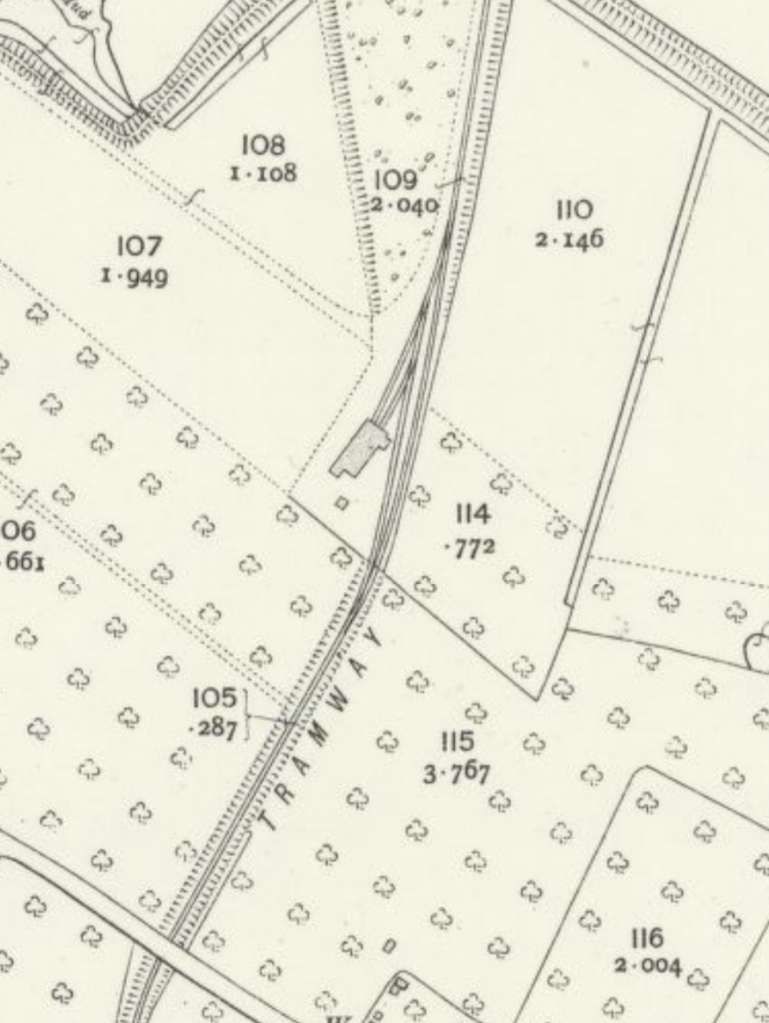
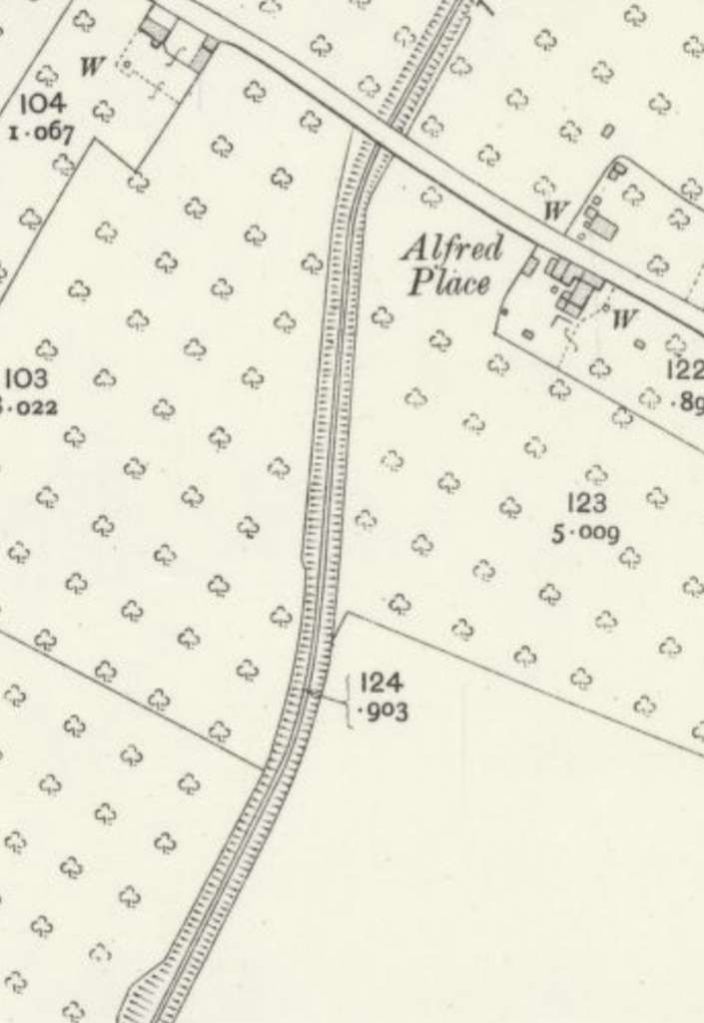
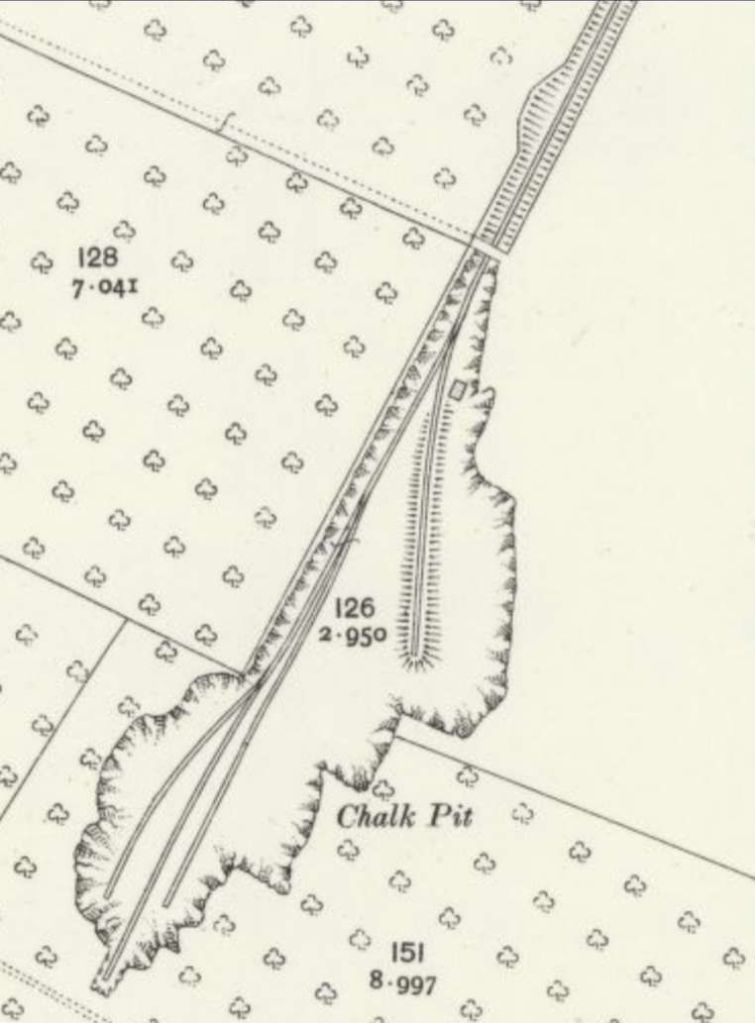
Stoyel & Kidner note that two Aveling & Porter locomotives were supplied new to East Kent:
- ‘Venture’ 0-4-0WTG Aveling & Porter Works No. 4612, built in 1900.
- ‘Success’ 0-4-0WTG Aveling & Porter Works No. 5082 built in 1902.
‘Venture’ had been sold by 1911 to the Sussex Portland Cement Co. Ltd, Beeding, near Shoreham (acquired by BPCM in 1911), and ‘Success’ was later sold to Queenborough Wharf Co. Ltd.
Smeed Dean & Co. Ltd …. Stoyel & Kinder tell us that a Works was set up in 1850 at Sittingbourne on the East bank of Milton Creek close to the village of Murston by George Smeed which mainly produced bricks, but later also lime and cement. The company Smeed Dean & Co. Ltd was formed in 1876. [1: p69]
The company joined the Red Triangle Group when it formed. The Red Triangle Group was the informal but universal name of the Allied Cement Manufacturers Ltd., which operated seven plants in the UK (British Standard, Dunstable, Ellesmere Port, Harbury, Holborough, Rhee Valley and Sittingbourne). The failed Red Triangle Group became part of APCM in 1931. These works closed in 1970.
Stoyel & Kidner tell us that “a railway of 3ft 7½ in. gauge ran from the East Hall clay pits, just west of Tonge Road, to some sheds and then on under Murston Road to the Smeed Dean complex.” [1: p70]
The tramway network associated with Smeed Dean is covered by these next two map extracts.
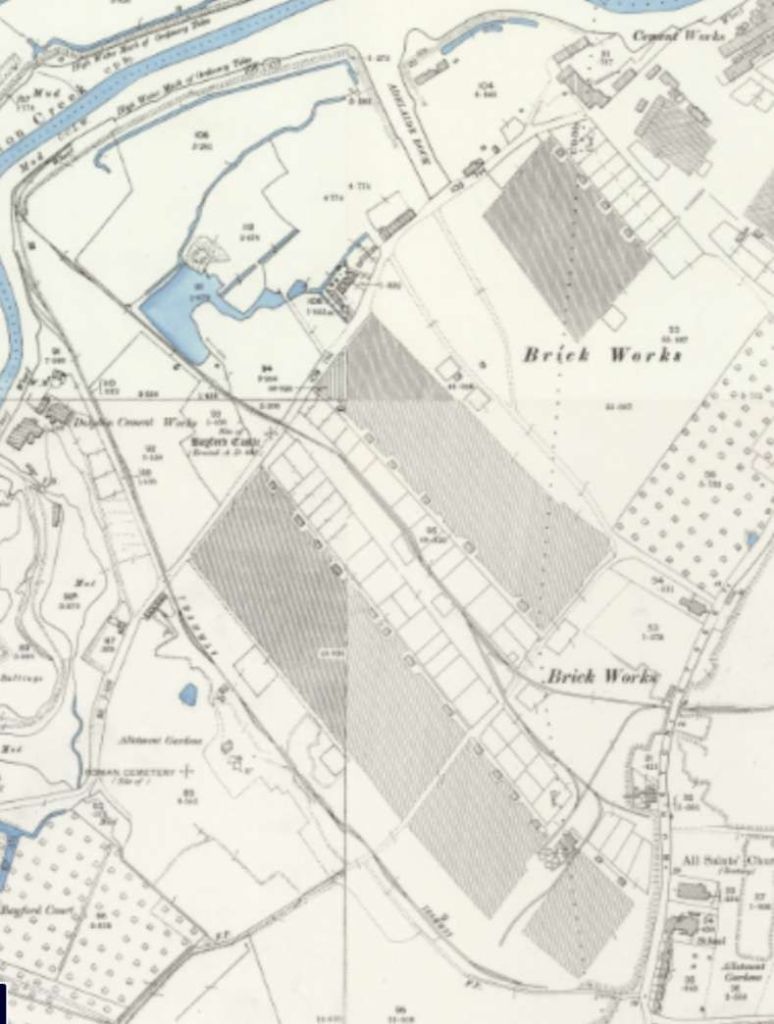
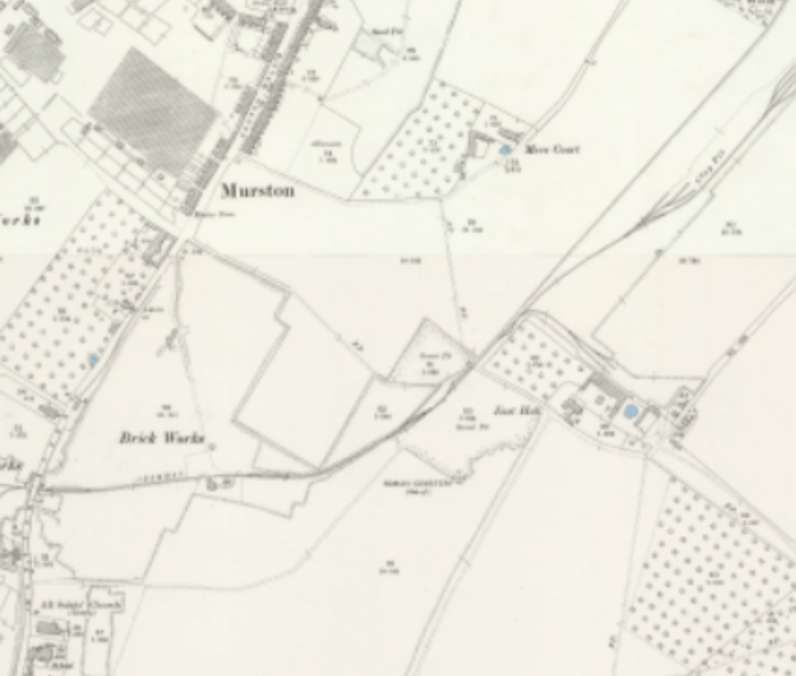
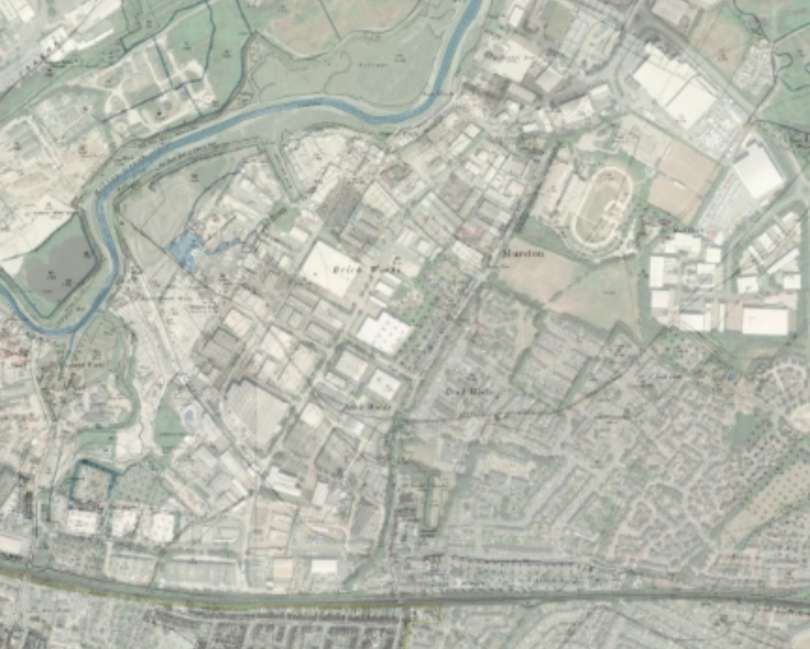
According to Stoyel & Kidner, locomotives used on this tramway were supplied new but to different designs. [1: p70] The company did not give them names. They were:
- 0-4-2T Kerr Stuart (Works No. 656) built in 1900;
- 0-4-0T Kerr Stuart (Works No. 701) built in 1900;
- 0-4-2T Kerr Stuart (Works No. 811) built in 1903;
Stoyel & Kidner say that, “The two earlier locomotives were scrapped in 1949 when the railway system was discontinued, but the 1903 one remained in storage in its shed until it was finally broken up in 1957.” [1: p70]
Broom Bank Railway …. Stoyel & Kidner tells that this railway was 4ft 3in-gauge opened in 1933, and ran from just North of Smeed Dean cement works. eastwards to East Hall, then North through Mere Court to clay pits near Little Murston. This seems to be much the same route as followed by the northern arm of the Smeed Dean network from earlier in the century. The later OS Map (surveyed in 1938, published in 1946) [22] shows a very similar alignment to that on the map extracts above.
Stoyel & Kidner note the similarity in alignment between the two networks but emphasise the difference in gauge. They note that two locomotives were employed on this line, both of which must have arrived after deployment elsewhere as both we manufactured well before the Broom. bank Railway opened.
- Wouldham – an 0-4-0ST built in 1920 by Barclay (Works No. 1679); and
- Venture – another 0-4-0ST built by Manning Wardle (Works No. 1835).
Stoyel & Kidner tell us that “both these locomotives were transferred from the BPCM Works at Wouldham Hall, in 1934 and 1935 respectively, and the rather unusual gauge was no doubt chosen for no better reason than the fact that these locomotives and other rolling stock happened to be available at the time. Venture was scrapped in 1949, but Wouldham lingered on to meet the same fate in 1962. Diesel locomotives were in use by 1956.” [1: p70] They do not provide details of the diesel locomotives used on the line.
APCM Ltd, Highsted, Sittingbourne (Highsted Chalk Pits) …. Stoyel & Kidner tell us that, “Just North of the hamlet of Highsted, there was a group of pits whose railway was unconnected with any other, supplying chalk to the Smeed Dean works latterly through a large-bore pipeline, mixed with water. A pit to the east of Highsted road was opened first, about 1896, served by a narrow gauge railway. Later a larger pit the other side of the road was opened up. and the two were connected by tunnel. The railway was taken up in World War I and replaced in 1927 by a standard gauge line; this was also out of use in 1942-7. After re-opening, a third pit was opened up south of Tunstall Road, entered by a tunnel at the south-east end of the second pit, electrically worked.” [1: p70]
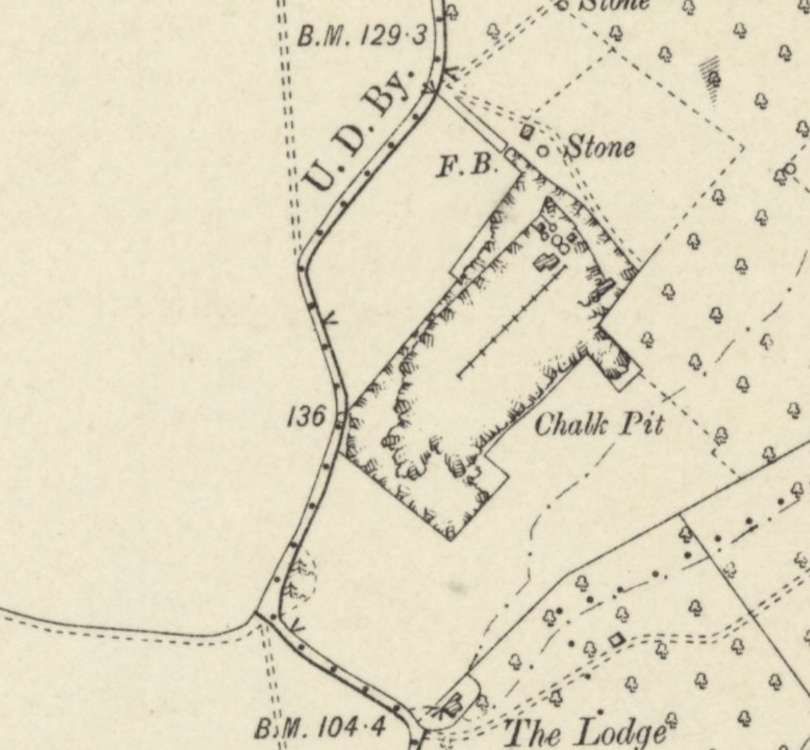
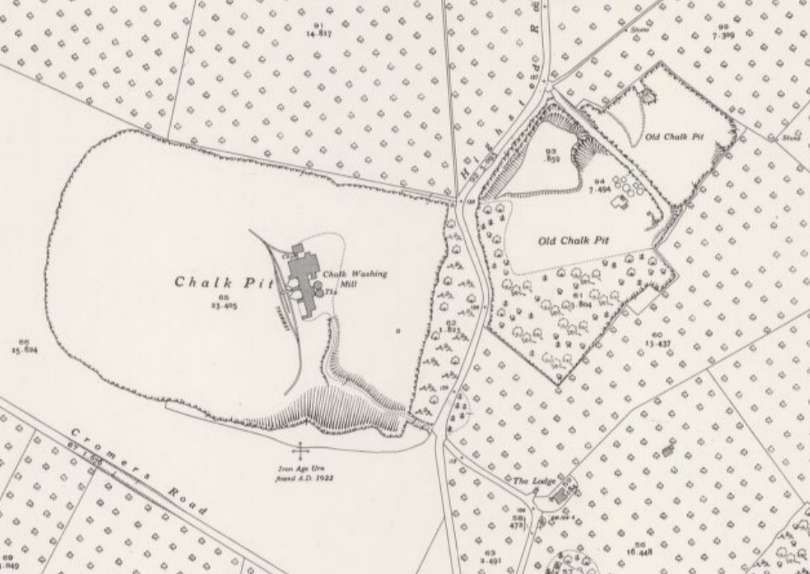
The only locomotive recorded at this site was:
Tay – an 0-4-0ST built in 1924 by Barclay (Works No. 1828) and arrived on site in 1927 once the line had been converted to standard-gauge.
The locomotive was bought from the Avonmouth contract of Sir W. Arrol & Co. “In 1942, it was transferred to the BPCM Ltd’s Works at Greenhithe and was almost immediately re-transferred to the APCM Ltd’s Dunstable Works. It remained there until 1946 when it returned to Greenhithe and went back to Highsted in 1947. It remained in the chalk pit here until it was scrapped in 1962.” [1: p71]
Stoyel & Kidner also note that, “The equipment for the electrical working of the third pit came from the G. & T. Earle, Hope Works in Derbyshire; there was a live centre rail taking 250V power from a motor generator. The three locomotives weighed 15 tons. with two 27 hp motors; two were built by Metropolitan-Vickers in 1927 and one in 1935 by Hawthorn Leslie. Trains of seven wagons took 56 tons of chalk from the pit to the old washeries, from which it was piped as slurry. Electric working started in November 1958 and ceased in 1970 when the works closed down.” [1: p71]
There is some discussion about modern explorations of the tunnels associated with these chalk pits here. [23]
Other Cement Works …. There was an F.C. Barron & Co. cement works on the east side of Otterham Creek but Stoyel & Kidner note that there was no evidence of a railway at that location. They also note other Cement Works in the general area which include, “Crown Quay Cement Works (F. Rosher & Co.) Sittingbourne; Dolphin Cement Works (C. Burley Ltd) on Milton Creek; Elmley Cement Works (later Maclean Levett), established about 1854 on Elmley Isle; there are no details of railways.” [1: p71]
Other Rail-Served Industries located in and to the South of the Medway Estuary
Medway Ports Authority on Hoo Ness Island
Waywell notes that while the present location is under the jurisdiction of Medway Ports Authority it has had a series of different owners – originally the Admiralty, then the Ministry of Public Building & Works, then the Department of the Environment (until 1985). A 2ft 6in-gauge tramway ran round the perimeter of the island – at first this was used for the transport and disposal of mud dredged from Chatham Docks, later, when a pipeline replaced the tramway, the tramway was used only for maintenance. That tramway appears to have been replaced by a 2ft-gauge tramway in 1952. [25: p177]
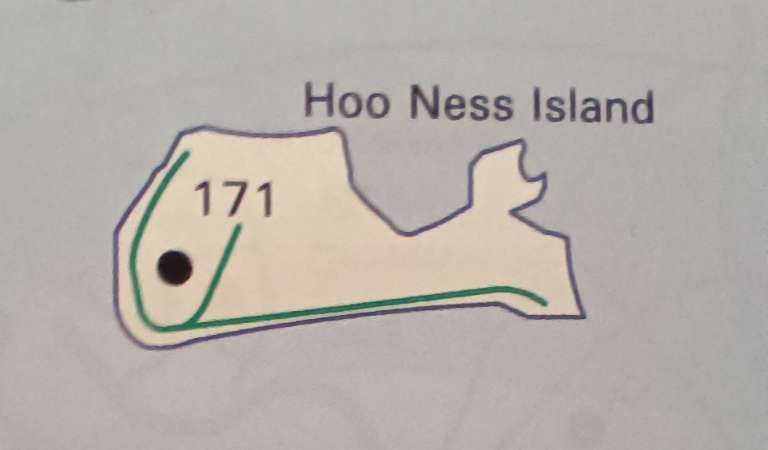
In 2ft 6in-gauge days (pre 1952) 9 locomotives are recorded as in use by Waywell, in 2ft-gauge days (post 1952) 4 locomotives are recorded. [25: p177]
The full list of these locomotives can be found in Waywell’s book. [25: p177] It is, however, worth noting here that apart from five 4 wheel petrol/paraffin mechanical locomotives (onje of which was rebuilt) the 2ft 6in-gauge locomotives were:
- Ascension (an 0-4-0T Avonside Engine locomotive (Works No. 1480) built in 1904 arrived here after service on the Chattenden & Upnor Railway by July 1914. It was set aside or scrapped after 6th June 1928. [25: p177]
- Nipper & Ness (two 0-4-0ST Barclay locomotives (Works Nos. 1895 & 1947) built respectively in 1909 and 1911 were supplied new from the manufacturer. [25: p177]
- Sirdar (an 0-4-0T Kerr Stuartlocomotive (Works No.749) built in 1903 came to the site after being used in a number of locations. Waywell lists these as “Henry Lovatt & Sons, contractors, [until] 1914, originally Leek & Manifold Valley Light Railway (1902-1904) contract, Staffordshire; (possibly thence Manchester Ship Canal No.9 Dock, Salford (1902-1905) contract, Lancashire).” [25: p177]
After 1952 – one of the 2ft 6in-gauge 4-wheel petrol/paraffin mechanical locomotives was re-gauged to 2ft. Another petrol/paraffin mechanical locomotive was purchased and the two locomotives served together on the island until 1962 when they were sent to the dealers, George Cohen, Sons & Co. Ltd,
In 1962, two 4-wheel diesel mechanical locomotives were employed, remaining on the island until 27th April 1990 and were then sold into preservation.
Chatham Dockyard
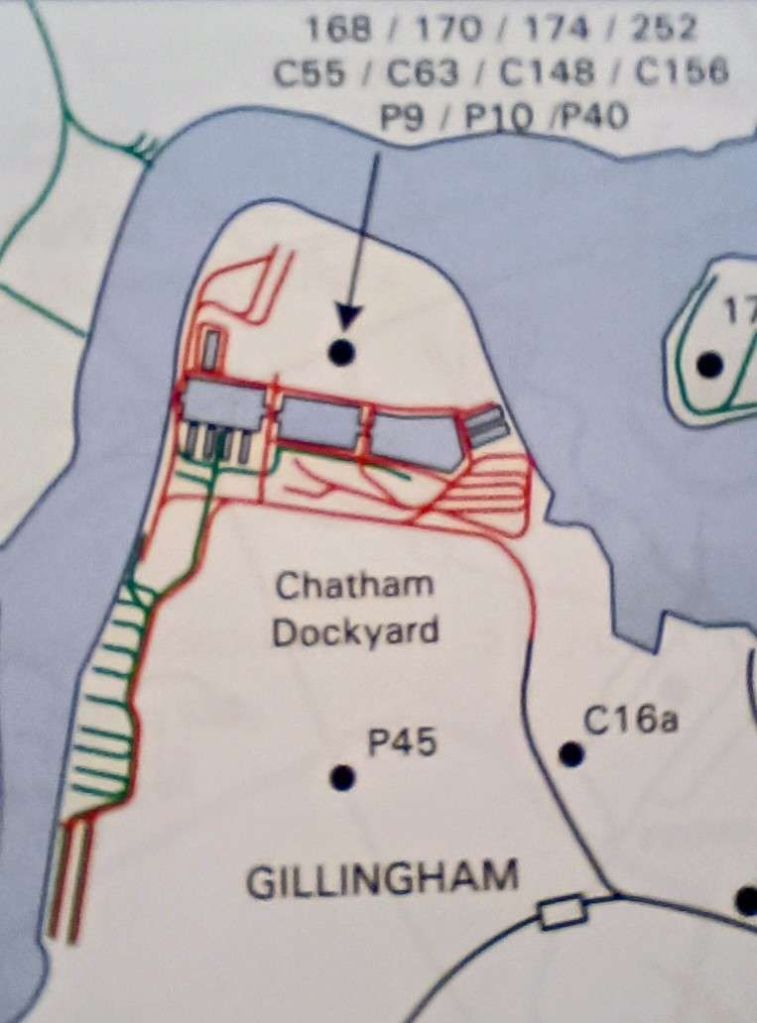
All of the sites referenced in the top right of this extract from a CAD drawing in Robin Waywell’s book on The Industrial Railways & Locomotives of Kent [25: p15] are covered in a separate article which can be found here. [27]
Two separate locations outside of the dockyard are highlighted in the image above:
P45 – The Royal Engineer’s Museum – it was established in its present location in 1987. It has standard-gauge and 2ft-gauge exhibits but is not within the scope of this article. [25: p372]
C16a – Ball & Gammon Chatham Contract – Ball & Gammon undertook the construction of a branch line from the London, Chatham & Dover Railway (LC&DR) into Chatham Dockyard between 1875 and 1877. Waywell says that the work cost circa £57,000, opening on 16th February 1877. The contractor’s railway may have been 3ft 6in-gauge. One Aveling & Porter locomotive was used on the work: [25: p272]
- Burnt Oak – 4 wheel WTG (geared transmission), built in 1868 by Aveling & Porter (Works No. 447) arrived from Aveling &Porter in May 1875 possibly after repairs. [25: p272]
168, 170, 174, 252 – Chatham Dockyard – all are covered in a separate article which is reference above. [27]
C55, C63, C148, C156 – Chatham Dockyard Contracts – all are covered in a separate article which is reference above. [27]
P9, P10, P40 – Chatham Historic Dockyard Trust, Chatham Steam Restoration Co., North Downs Steam Railway – all are preservation activities not strictly relevant to this article, all operate or operated within the Dockyard complex. Please see the separate article about the Dockyard. [27]
Rochester
Three locations South of the River Medway are highlighted in the image below which is also an extract from the CAD drawing in Robin Waywell’s book on The Industrial Railways & Locomotives of Kent. [25: p15]
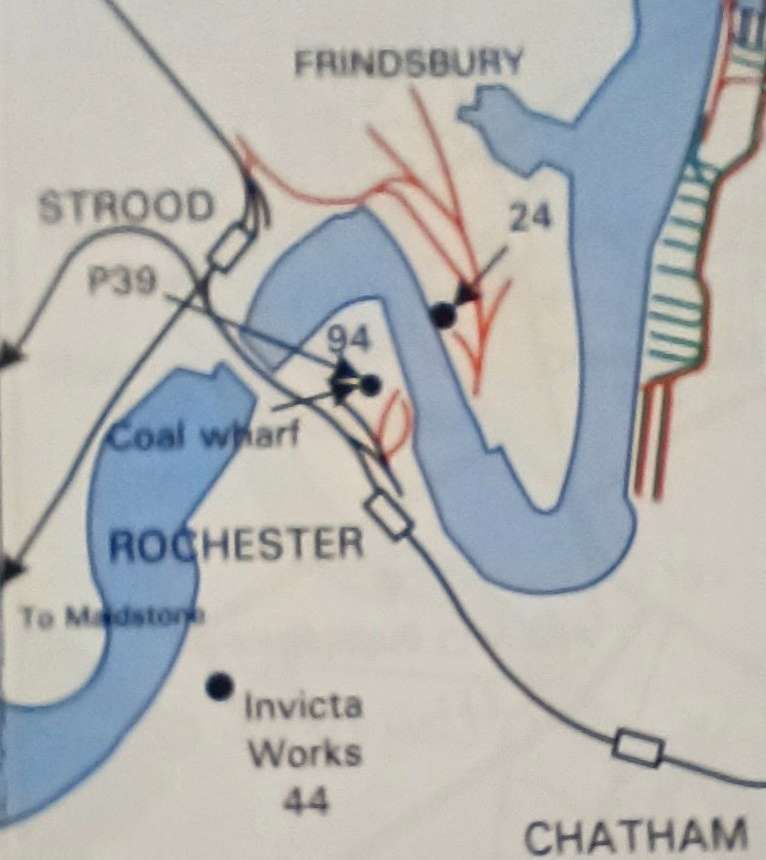
Three locations are noted by Robin Waywell:
44 – Invicta Works, Aveling & Porter – Most of the company’s output was steam roller, tractors and traction engines. The company did produce some railway locomotives based essentially on traction engine practice. This is not the place for a history of the company and its works but it is worth noting here that the company was rail-served, despatching much of their output by rail. However, the location marked by Waywell [25: p15] appears to be incorrect. The factory was on the Northwest side of the Medway in Strood. More information can be found on Wikipedia on this link. [28]
94 – William Cory’s Coal Wharf – had a travelling crane and extensive railway sidings which were laid in 1909 on land built up with chalk fill. These sidings had a connection to the Rochester-Canterbury line just to the North of Rochester Railway Station. The Wharf closed in 1970 but the site was worked for British Gypsum Ltd (Fridays only) until around 1984.
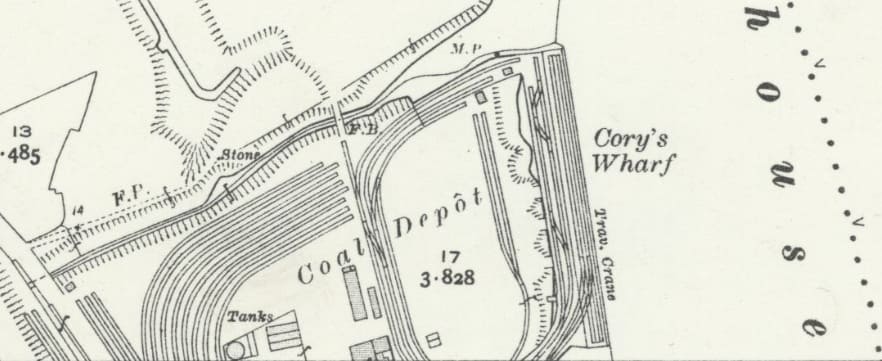
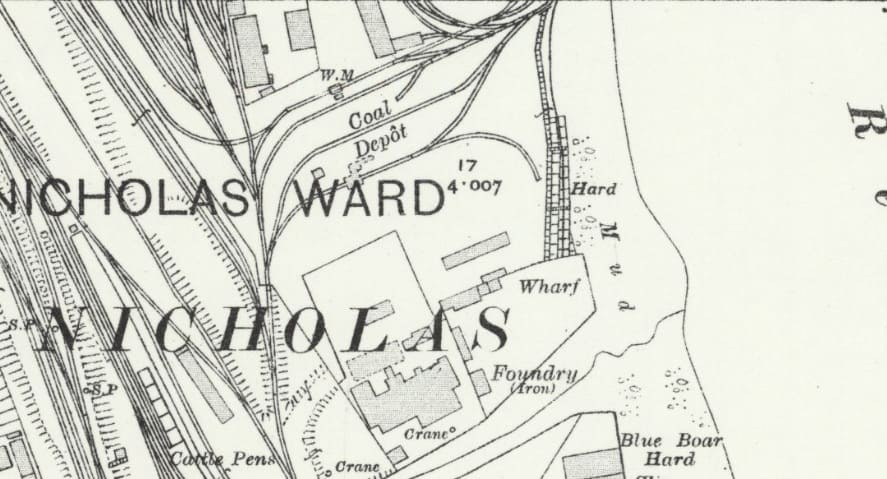
Waywell records a number of standard-gauge locomotives employed at the site: [5: p121-122]
- Bristol – an 0-6-0ST, built in1901 by Avonside Engine Co. (Works No 1427) arrived new and was sent to Erith Wharf. [5: p121-122]
- Erith – an 0-4-0ST, built in 1904 by Manning Wardle (Works No. 1638) arrived new and was scrapped or sold by 1950. [5: p121-122]
- Belvedere – a 4-wheel WTG – built by Aveling & Porter (Works No. 3888) in 1897, ex-Erith Wharf in April 1909, sent on to Gallons Wharf, Essex by April 1950. [5: p121-122]
- (Jetty) – an 0-4-0ST, built in 1910 by Avonside Engine Co. (Works No. 1578) arrived from Gallons Wharf, Essex in July 1948 and was sold or scrapped in 1950. [5: p121-122]
- Purfleet – an 0-4-0ST, built in 1919 by Manning Wardle (Works No. 1973) arrived from Erith Wharf in July 1938 and was sent to Purfleet Wharf, Essex by 1950. [5: p121-122]
- Woolwich – 4wVBT – built in 1927 by Sentinel, Shrewsbury (Works No.8796) arrived from Gallons Wharf, Essex by April 1950 and scrapped in 1956. [5: p122]
- Charlton – 4wVBT – built in 1933 by Sentinel, Shrewsbury (Works No.7060) arrived from Gallons Wharf, Essex by April 1950 and scrapped in 1956. [5: p122]
- Belvedere – 4wVBT – built in 1945 by Sentinel, Shrewsbury (Works No.9365) arrived from Gallons Wharf, Essex by May 1950 and was sent to Thomas Hill, Rotherham in 1957 and thence to Thomas E. Gray Ltd, Burton Latimer, Northamptonshire in May 1958. [5: p122]
- Greenwich – 4wVBT – built in 1929 by Sentinel, Shrewsbury (Works No.7696) arrived from Gallons Wharf, Essex by January 1952 and scrapped in 1956. [5: p122]
- R39 – Thalia – an 0-4-0DM – built in 1954 by Robert Stephenson & Hawthorns Ltd. (Works No.7816) and supplied via Drewry Car Co. Ltd. (No.2503) in 1954, arrived new and was sent for preservation at the North Downs Steam Railway, Chatham Dockyard on 7th September 1985. [5: p122]
- Telemon – an 0-4-0DM – built in 1955 by Vulcan Foundry (Works No.D295) and supplied via Drewry Car Co. Ltd. (No.2568) in 1955, arrived new and was sent to Strood Depot in 1973 and thence to Stone Lodge, Dartford after 3rd January 1988. [5: p122][5: p367]
P39 – William Cory & Son Ltd, Cory’s Wharf, Rochester – Waywell separately identifies the preservation activities of the company which, while not strictly relevant here, encompassed the following standard-gauge locomotives: [5: p367]
- No. 1 – Scottie – an 0-4-0DM, built in1957 by Ruston Hornsby (Works No. 412427) came from Higham Station site in June 1983 and was sent to Chatham Dockyard, after 5th May 1984 and before 24th November 1984, but returned on 13th December 1986 and was then sent to Stone Lodge, Dartford after 21st December 1987. [5: p367]
- No. 2 – Burt – an 0-4-0DM, built in1950 by Motor Rail Ltd (Works No. 9019) came from Higham Station site in June 1983 and was sent to Chatham Dockyard, after 5th May 1984 and before 24th November 1984, but returned on 6th December 1986, and was then sent to Stone Lodge, Dartford by 3rd January 1988. [5: p367]
- No. 4 – (No. 3) – 0-4-0DH, built in1959 by John Fowler (Leeds) (Works No. 4220008) came from Higham Station site in June 1983 and was sent to Chatham Dockyard, after 5th May 1984 and before 24th November 1984, but returned on 5th May 1987, and was then sent to Stone Lodge, Dartford by 3rd January 1988. [5: p367]
- No. 6 – (20287) Princess Margaret – an 0-4-0 DM, built in1948 by Barclays (Works No. 376) arrived from Chatham Dockyard 29th December 1986 and was sent to Stone Lodge, Dartford by June 1987.
- No. 8 – Octane – an 0-4-0DE, built in 1958 by Yorkshire Engine Co. (Works No.2686) arrived from Esso Ltd, Purfleet, Essex on25th April 1987 and was sent to Stone Lodge, Dartford after 3rd January 1988. [5: p367]
- No.9 – R40 Telemon – (see Telemon above).
- No. 3 – North Downs – an 0-6-0DT – built in 1955 by Robert Stephenson & Hawthorns Ltd. (Works No.7846) arrived from Chatham Dockyard by June 1987 and was sent to Stone Lodge, Dartford after 3rd January 1988. [5: p367]
Along the South Side of the Estuary
Of the Works noted by Robin Waywell an number have already been covered above. These include:
114 – East Kent Chalk Quarry Co. Ltd., Gillingham, Sharps Green Cement Works Co. Lt. [5: p140]
41 – British Standard Cement Ltd., Rainham. [5: p73]
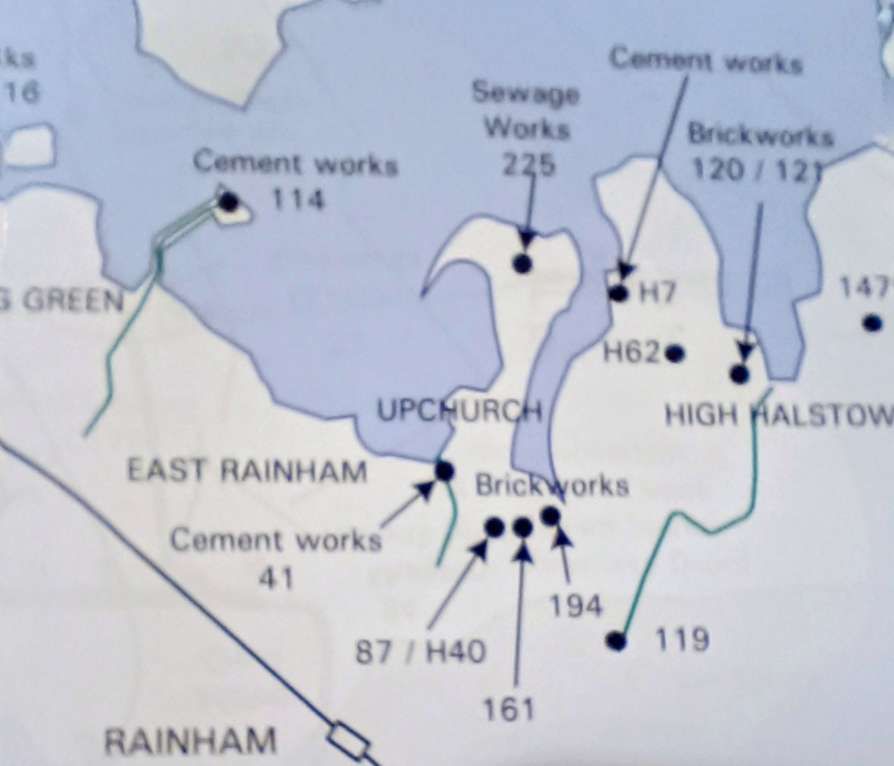
Works not already covered include:
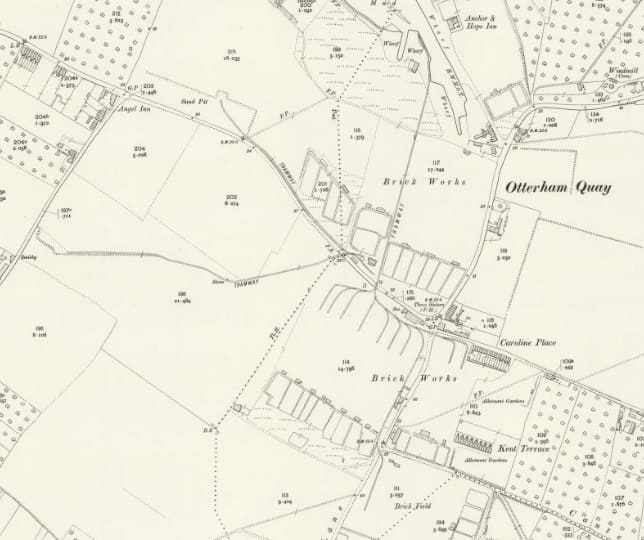
87/H40 – Rainham Brickfield – Brickfields operated by Joseph Edward Butcher, located on both sides of Otterham Quay Lane with a tramway between the brickfields and clay pits; in operation by 1867 until at least 1882; later taken over by Eastwoods Ltd. Gauge: 3ft 0in. [5: p118] Adjacent were Otterham Quay Brickworks established by A. J. Knight by 1891 with a tramway to a wharf at Otterham Quay. the works closed after 1913, but certainly by 1924. [5: p389] Records have an Aveling & Porter 2-2-0WTG locomotive (Works No. 1574) of 1879 being delivered new to the Brickworks. [5: p118]
Waywell also identifies companies that seem to have operated later in the 20th century on these sites. These are covered separately below – London & Rochester Trading Co. Ltd (Rainham Brickworks), [25: p173-174, but see the notes below] and Redland Bricks Ltd (Otterham Works). [25: p200, but see notes below]
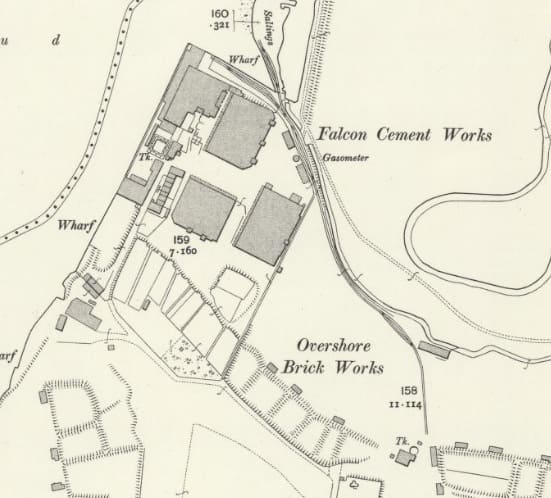
Close by were Falcon Cement Works and Overshore Brickworks, established in the 19th century these works operated Operated under various ownerships—including Burge and Barron, F.C. Barron and Co., and Barrons Cement Co.—before being acquired by the Associated Portland Cement Manufacturers (BPCM/Blue Circle) in 1911 and closing permanently in 1913. As can be seen below the company’s wharf and Overshore Brickworks were rail-served but not more widely connected to the rail network. Typically, this would have been a 2ft-gauge line. [32][25: p382]
119 – Gore Farm Clay Pit, Upchurch – this clay pit had a 2ft-gauge tramway and a wash mill.
120/121 – Lower Halstow Brickworks and Workshops – it appears that the same 2ft-gauge tramway served these locations as well.
Lower Halstow Brickworks appear to have extended over a relatively large area. Here, and extending onto the next OS Sheet to the South, we see the site to the North of Lower Halstow village. [35]
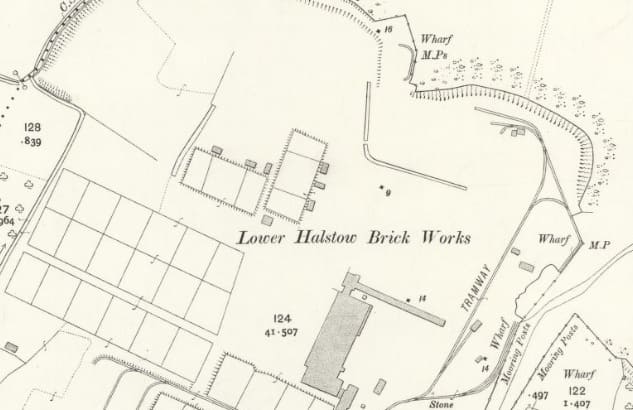
Here we see the most southerly portion of the works on the North side off Lower Halstow village and the village of Lower Halstow, [34]
The map extract below shows the more southerly area of the brickworks sited to the Southwest of the village of Lower Halstow. [34]
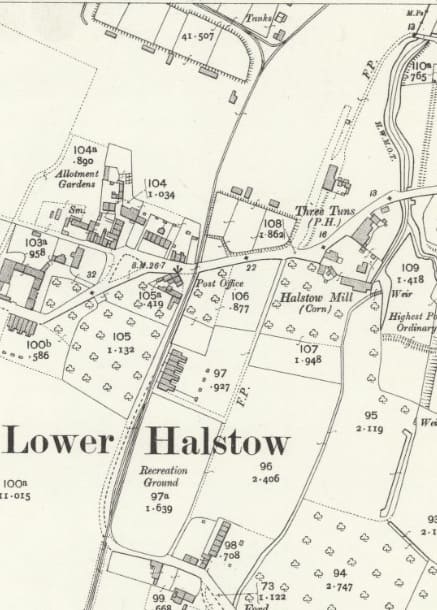
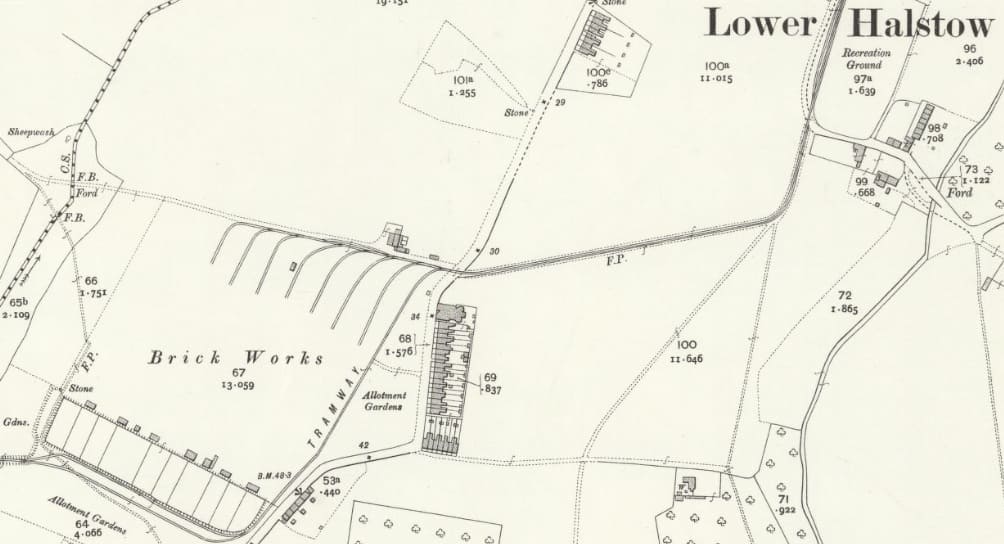
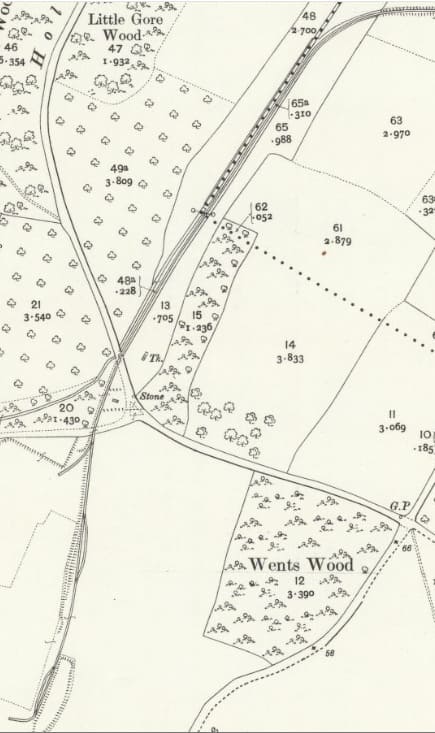
The most southerly length of the tramway which ran through Lower Halstow Brickworks, also runs along side Little Gore Woods to claypits to the Southeast of Gore as show on the 25″ Ordnance Survey of 1906, published in 1908. [34]
Gore Farm had two 2ft-gauge locos:
A 4wDM built in 1936 by F. C. Hibberd & Co. (Works No. 2009) which, by July 1958, was resident at Lower Halstow Workshops; [5: p144] and a 4wDM built in 1930 by Orenstein & Koppel (Works No. 4105) possibly supplied by Wm. Jones, Greenwich which was sent on to Bobbing Clay Pits in 1955. [5: p144]
Also worthy of note is another Brickworks and tramway network to the Northwest of Lower Halstow, North of Upchurch, close to Frog Farm and Wetham Green which is shown on the map extract below. [35]
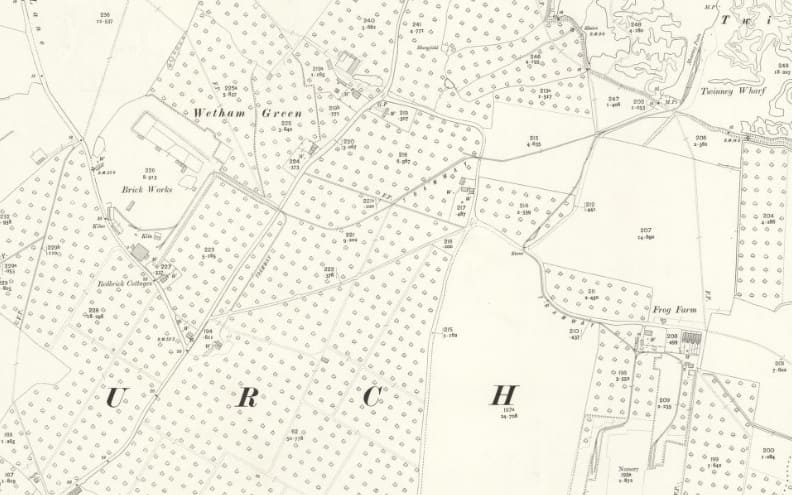
Between Lower Halstow Brickworks and Workshops,
, Waywell records nine unnamed 4-wheel locos. These are:
- 4wWE (overhead wire-powered electric locomotive) – built around 1900 by A. Hurst & Son, Dewsbury, Supplier not known, sent to M. Lynch & Son for scrap in around 1920; [5: p144]
- 4wPM – built in 1933 by F. C. Hibberd (Works No.1828) – ex Hibberd’s possibly on hire, previously at Orb Works Newport, Monmouthshire, returned to Hibberd’s where it was rebuilt as Works No.2004; [5: p144]
- 4wPM – built in 1935 by F. C. Hibberd (Works No.1905) – ex Hibberd’s, previously at Middle Level Commissioners, March, scrapped on site; [5: p144]
- 4wDM – built in1939 by Ruston & Hornsby (Works No. 198258), arrived from Orton Brickworks, Cambridgeshire by August 1956, scrapped on site; [5: p144 &145]
- 4wDM – built in 1936 by F.C. Hibberd (Works No. 2009), arrived new at Gore Farm Pits (noted above) and moved to Lower Halstow Brickworks by July 1958, scrapped in 1967; [5: p145]
- 4wDM – built in 1935 by F.C. Hibberd (Works No. 1934) arrived from Barrington Cement Works, Cambs. after August 1953, definitely here by11th August 1956, scrapped on site; [5: p145]
- 4wDM – built by Orenstein & Koppel (build date and works number not known) may have been supplied by Wm. Jones Ltd., Greenwich – certainly present by 24th August 1964, probably scrapped on site; [5: p145]
- 4wDM – built in 1934 by Motor Rail Ltd. (Works No. 5862) arrived from Orchard Farm Clay Pits by April 1966, sent to Allbrook Brickworks, Hampshire by April 1967; [5: p145] and
- 4wDM – built in 1941 by Motor Rail Ltd. (Works No. 8626) arrived from Orchard Farm Clay Pits by April 1966, scrapped around 1967. [5: p145]
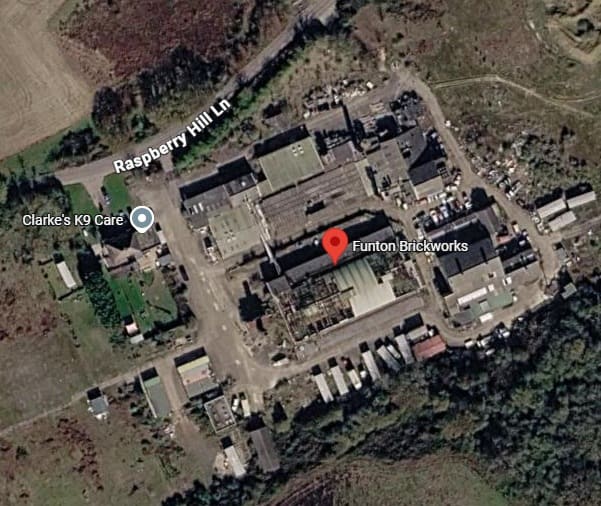
147 – Ibstock Building Products Ltd, Funton Works, Lower Halstow – this brickworks was built in the 1930s. It was used as a War Department Store during WW2. First owned by Newington Bricks Ltd., then by Eastwoods Ltd., then by Redland Bricks Ltd. and then by Ibstock Bricks Ltd. Limited information is available about the locomotives used internally. It seems that there were two different gauges both electrically powered:
3 locos were 4ft-gauge all built locally – 2w-2WE
2 locos were 2ft-gauge, again locally produced, a 4wBE of 1956 and a 2w-2BE of 1979. [5: p162]
161 – London & Rochester Trading Co. Ltd (Rainham Brickworks) – were a company of barge & ship owners. By 1924 the Company owned 60 sailing barges. By 1930, the Company also operated a brickworks at Otterham Quay. The works had a 2ft-gauge tramway from a pug mill which crossed the Lower Rainham Road to a chalk pit. [25: p173-174]
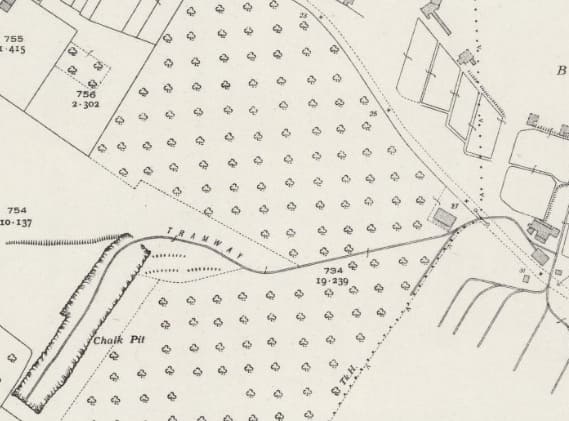
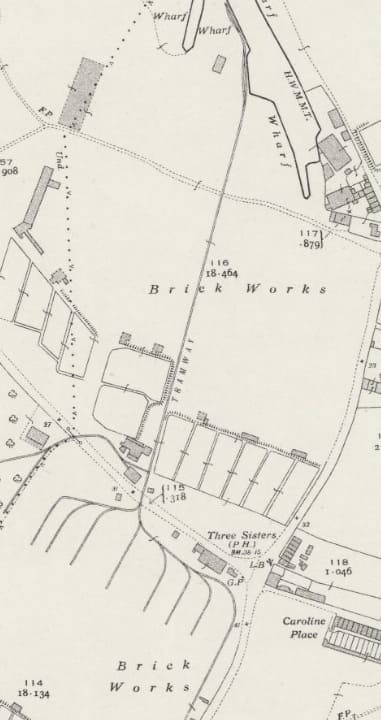
Two separate tramway networks appear on the 25″ Ordnance Survey of 1938, published in 1946. These appear of the two adjacent extracts from the same OS sheet. [37]
Waywell list three locomotives as having been active at the site. All three were 4-wheel petrol mechanical locomotives built by F. C. Hibberd & Co. Ltd – all were scrapped by April 1948:
- Works No. 1539 built in 1927
- Works No. 1598 built in 1928
- Works No. 1631 built in 1929
194 – Redland Bricks Ltd (Otterham Works) – Alternatively, one of these brickworks may have been operated by Redland Bricks Ltd. Waywell notes a a 2ft-gauge tramway from the Brickfield to Otterham Quay which also had a 2ft-gauge cable operated line. the Site was closed by 1991. two 4-wheel battery electric locomotives built by Redland cam second hand to these works in 1956 (from Fulton) and 1974 (from Warnham). Bother were scrapped by August 1992. [25: p200]
180 – Newington Brickworks – a brickworks located next to the A2 to the West of Sittingbourne. It was listed in directories from 1948 . Initially locomotive worked but superseded by hand-working. [25: p189] Track was 2ft-gauge and the three locomotives were all 4-wheel diesel mechanical locos:
- Ruston & Hornsby (Works No. 182140), built in 1936 and arrived on site from Hoo Brickworks by 22nd July 1948 – sent to Cremer Whiting & Co. Ltd., Ospringe after 2nd August 1954 and by July 1958.
- Ruston & Hornsby (Works No. 222094), built in 1946 and arrived on site from the War Department, Liphook, Hampshire after 28th March 1957 – sent to Cremer Whiting & Co. Ltd., Ospringe after 2nd August 1954 and by July 1958.
- Hunslett (Works No. 2449), built 1941, originally War Department and arrived on site from Fred Watkins Ltd. dealer by July 1958 – sent to Cremer Whiting & Co. Ltd., Ospringe around 1962. [25: p189,190]
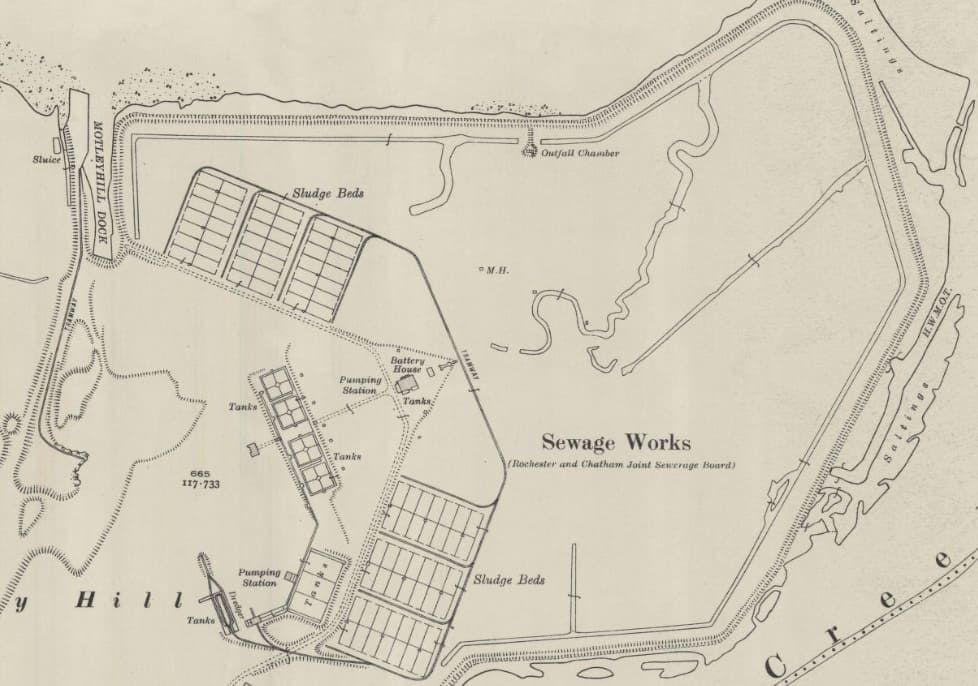
225 – Motney Hill Sewage Works, Rainham – operated by Rochester, Chatham & Gillingham Joint Sewerage Board until 1st April 1974. The original rail system was 20″-gauge and was replaced in 1952 by a 2ft-gauge system. The rail system finally closed in 1978. [25: p 218] The Wastewater Treatment Works is now operated by Southern Water. [38]
Waywell lists three 20″-gauge locomotives as having been active at the site before 1952. All three were 4-wheel petrol mechanical locomotives built by F. C. Hibberd & Co. Ltd.:
- Works No. 1690 built in 1930
- Works No. 1806 built in 1932
- Works No. 2036 built in 1937
All were disposed of after 1952, apparently two were sent to W. Morris, Bromyard & Linton Light Railway, Herefordshire in 1978. [25: p 218-219]
Waywell lists two 2ft-gauge $-wheel diesel mechanical locomotives built by Motor Rail which arrived new in 1952 and which were both sent on to W. Morris,Bromyard & Linton Light Railway, Herefordshire in 1978. [25: p 218-219] The two locomotives were:
- Works No. 9676 built in 1952
- Works No. 9677 built in 1952
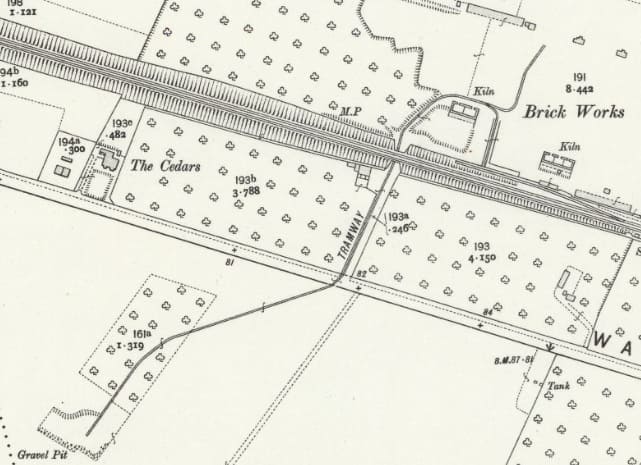
H62 – Upchurch Brickworks (Wakeley Brothers) – Waywell records these brickworks as being established by 1874 and sat on Poot Lane, Upchurch. The Works had a horse-worked tramway that connected to clay pits near Frog Farm. The Works closed sometime after 1918 and definitely by 1922.
C16 – Ball & Gammon, Gillingham Contract – a contract for construction of a Wharf at Gillingham was let on 15th February 1867 to J. H. Ball & Co., it involved the construction of a wharf at Government expense because expansion of Chatham Dockyard had taken other land adjacent to its site. The contract ran from 1867 to 1872. Two Aveling & Porter locomotives were used on the contract on what were probably 3ft 6In gauge rails: [25: p272]
- Unnamed – 4-wheel WTG built in 1868 (Works No. 320) came new to the site and was scrapped at the end of the contract.
- Burnt Oak – 4-wheel WTG built in 1868 (Works No. 447) came new to the site and returned to Aveling & Porter for repairs?
C16a – Ball & Co., Chatham Contract – a contract for the construction of a branch line from the LCDR into Chatham Dockyard. The contract ran from 1875 to 1877 and made used of ‘Burnt Oak‘ after repairs? at Aveling & Porter. [25: p272] This location was noted above when taking a quick look at Chatham Dockyard. [27]
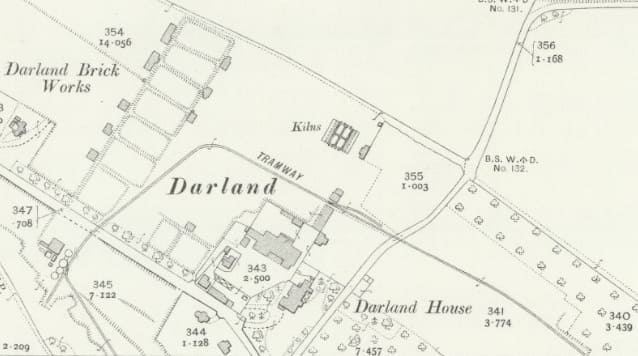
H6 – Darland Brickworks – in operation from 1899, had a narrow gauge tramway which is shown on the 25″ Ordnance Survey 1906/1907, published in 1909. No further details are known. [25: p381]
H30 – Court Field Brickworks, Gillingham – were established by 1874 and had a tramway to clay and chalk pits which was probably worked by horses. Thew proprietor’s death in 1903 led to then closure of the works soon after, [25: p387]
References
- B. D. Stoyel & R. W. Kidner; The Cement Railways of Kent; The Oakwood Press (LP70], Headington, Oxford, 1973 & 1990.
- https://rogerfarnworth.com/2026/08/26/kents-cement-and-other-industrial-railways-part-1
- https://www.medway-moorings.co.uk/history, accessed on 7th September 2026.
- https://apps.medway.gov.uk/apps/medwayimages/details.asp?pga=160&searchtype=&search=strood&pg=28, accessed on 7th September 2026.
- https://petesfavouritethings.blog/2016/04/07/river-medway-industrial-legacy, accessed on 9th September 2026.
- https://en.wikipedia.org/wiki/River_Medway, accessed on 9th September 2026.
- https://msep.org.uk/the-estuary, accessed on 9th September 2026.
- https://www.medway.gov.uk/news/article/1703/medways_creative_vision_institutions_unite_to_nurture_socio-economic_and_cultural_growth)Environmental, accessed on 9th September 2026.
- https://www.bbc.co.uk/news/articles/cr5j2grpzmqo), accessed on 9th September 2026.
- https://msep.org.uk/the-estuary/), accessed on 9th September 2026.
- https://en.wikipedia.org/wiki/Medway_Estuary_and_Marshes, accessed on 9th September 2026.
- https://rogerfarnworth.com/2026/09/17/queenborough-cement-works-and-associated-industries-at-queenborough
- https://maps.nls.uk/view/103677350, accessed on 17th September 2026.
- https://maps.nls.uk/view/103677344, accessed on 17th September 2026.
- Andrew Neale & David Smith; Industrial Railways of the South East; Middleton Press, Midhurst, West Sussex, 1984.
- https://rogerfarnworth.com/2026/09/26/the-lodge-hill-upnor-railway-chattenden-upnor-railway-and-the-chattenden-naval-tramway-kent
- https://maps.nls.uk/view/103677182, accessed on 16th September 2026.
- https://maps.nls.uk/view/103677218, accessed on 16th September 2026.
- https://maps.nls.uk/view/103677317, accessed on 16th September 2026.
- https://maps.nls.uk/geo/explore/#zoom=15.4&lat=51.34755&lon=0.75938&layers=168&b=ESRIWorld&o=100, accessed on 19th September 2026.
- https://maps.nls.uk/geo/explore/#zoom=15.4&lat=51.34755&lon=0.75938&layers=168&b=ESRIWorld&o=50, accessed on 19th September 2026.
- https://maps.nls.uk/view/101429103, accessed on 19th September 2026.
- https://www.28dayslater.co.uk/threads/highsted-chalk-pits-kent-jun-2018.113293, accessed on 19th September 2026.
- https://maps.nls.uk/view/101429106, accessed on 19th September 2026.
- Robin Waywell; Industrial Railways and Locomotives of Kent; Industrial Railway Society, 2016.
- https://maps.nls.uk/view/103678859, accessed on 19th September 2026.
- The article on this blog about Chatham Dockyard. …
- https://en.wikipedia.org/wiki/Aveling_and_Porter, accessed on 22nd September 2026.
- https://maps.nls.uk/view/103677167, accessed on 22nd September 2026.
- https://maps.nls.uk/view/103677206, accessed on 22nd September 2026.
- https://maps.nls.uk/view/103677389, accessed on 23rd September 2026.
- https://www.cementkilns.co.uk/cement_kiln_falcon.html, accessed on 23rd September 2026.
- https://maps.nls.uk/view/103677353, accessed on 23rd September 2026.
- https://maps.nls.uk/view/103677395, accessed on 23rd September 2026.
- https://maps.nls.uk/view/103677359, accessed on 23rd September 2026.
- The article on this blog about the Industrial Sites alongside the Lower Medway.
- https://maps.nls.uk/view/103677383, accessed on 28th September 2026.
- https://www.wastebook.co.uk/directory/motney-hillwaste-water-treatment-works-southern-water-services-limited/#google_vignette, accessed on 28th September 2026.
- https://maps.nls.uk/view/103677350, accessed on 28th September 2026.
- https://maps.nls.uk/view/103677428, accessed on 28th September 2026.
- https://heritage.kent.gov.uk/Monument/MKE16584, accessed on 28th September 2026.
- https://maps.nls.uk/view/103675694, accessed on 28th September 2026.
- https://historicengland.org.uk/research/results/reports/7477/CurtissandHarveyLtdExplosivesFactoryCliffeandCliffeWoodsMedwayArchaeologicalSurveyandAnalysisoftheFactoryRemainsVolume1, accessed on 28th September 2026.
- https://historicengland.org.uk/research/results/reports/7478/CurtissandHarveyLtdExplosivesFactoryCliffeandCliffeWoodsMedwayArchaeologicalSurveyandAnalysisoftheFactoryRemainsVolume2, accessed on 28th September 2026.
- https://historicengland.org.uk/research/results/reports/7479/CurtissandHarveyLtdExplosivesFactoryCliffeandCliffeWoodsMedwayArchaeologicalSurveyandAnalysisoftheFactoryRemainsFullSurveyDrawings, accessed on 28th September 2026.
- https://www.britainfromabove.org.uk/en/image/EPW000062, accessed on 24th October 2026.
- https://www.britainfromabove.org.uk/en/image/EAW032066, accessed on 24th October 2026.
- https://heritage.kent.gov.uk/Monument/MKE100214, accessed on 24th October 2026.
- https://en.wikipedia.org/wiki/RNAS_Kingsnorth, accessed on 24th October 2026.
- https://commons.wikimedia.org/wiki/File:Vereker_Hamilton_HMA3.jpg, accessed on 24th October 2026.
- https://en.wikipedia.org/wiki/Damhead_Creek_power_station, accessed on 24th October 2026.
- https://en.wikipedia.org/wiki/Kingsnorth_power_station, accessed on 24th October 2026.
- https://maps.nls.uk/view/189261620, accessed on 24th October 2026.
- https://maps.nls.uk/view/103676444, accessed on 25th October 2026.
- https://maps.nls.uk/view/103676462, accessed on 25th October 2026.
- https://railmaponline.com/uk-and-irish-railways, accessed on various dates in September and October 2026.
- https://www.gracesguide.co.uk/Kent_Refinery, accessed on 25th October 2026.
- https://kentrail.uk/grain_refinery.htm, accessed on 25th October 2026.
- https://ribblesteamrailway.wordpress.com/category/diesel-locos, accessed on 25th October 2026.
- https://preservedbritishsteamlocomotives.com/921-powesland-mason-0-4-0st, accessed on 26th October 2026.
- https://maps.nls.uk/view/103676417, accessed on 26th October 2026.
- https://rogerfarnworth.com/2026/10/27/crown-and-quarry-cement-works-frindsbury-peninsula/
- https://maps.nls.uk/view/103677263, accessed on 27th October 2026.
- https://www.facebook.com/groups/163976490369879/posts/8942040572563383, accessed on 28th October 2026.
- https://www.britainfromabove.org.uk/en/image/EPW047584, accessed on 29th October 2026.


