
I have h eard it said that Islam is a violent religion. I have been told that the Qur’an legitimises violence and that the interpretation put on the message of the Qur’an by those called Islamic terrorists does not distort the message of the Qur’an.
I don’t know enough about Islam or the Qur’an to speak with authority. However, it seems to me that for every argument that Islam is a religion of the sword there are equally well constructed arguments that it is a religion of peace. Here are a few …..
http://www.huffingtonpost.com/kabir-helminski/does-the-quran-really-adv_b_722114.html (cf: http://www.barakainstitute.org/articles/is-islam-a-religion-of-the-sword)
http://islam.about.com/od/terrorism/f/terrorism_verse.htm
http://www.islamicwritings.org/quran/peace/does-the-quran-teach-violence/
http://acc.teachmideast.org/texts.php?module_id=2&reading_id=62&sequence=9
There are also those who have made comparisons between the Bible and the Qur’an. Here is one example …
http://www.npr.org/templates/story/story.php?storyId=124494788
Ultimately, almost every argument has a counter argument. So, for example, this is a response to Patrick Sookhdeo’s Article (July 30, 2005) in London’s The Spectator , “The Myth of a Moderate Islam” …
http://www.islam101.com/terror/mythViolence.htm
I am no expert, but all I hear in these articles is argument and counter-argument which seek to portray Islam as violent, or non-violent. I cannot easily determine right from wrong.
I do know something, however, about the Bible and I have spent a lot of time studying it over the years. I am a Christian and I have something of an implicit faith that God speaks through the Bible. I am also convinced that the message that God wants us to hear through the scriptures is one of love, forgiveness, grace and faith and that God’s kingdom is a kingdom of righteousness and faith. I pray for that kingdom to become a reality here on earth.
However sure I am that this is the message of the Bible – both Old and New Testaments – I have to accept that the Bible is a book full of stories, many of which contain violence. It is a book which contains instructions, which it claims come from God, which speak of violent retribution. I believe that I have integrity when I say that God’s kingdom is a kingdom of justice and peace. But my scriptures contain a great deal of violence, some of which, even in context, appears to be justified by the writers of the text.
So, for example, there is the story of Samson who in Judges 16 kills himself in order to take out a large number of his enemies. His actions appear to be justified in the story, yet they are essentially the same as many of the suicide terrorists of today.
There are instructions from God – see Deuteronomy 7: 1-2, Deuteronomy 20:10-17 and Numbers 31:17-18.
Then there are Jesus’ own words in his parables … see for example, Luke 19: 26-27. Of course, this is only a parable, a story, and these are the words of a character in the story, but …. there are also Jesus’ words: ‘I have not come to bring peace but a sword.’ (Matthew 10:34).
There are many more references to killing and violence throughout the Bible. It is possible, because of its relative length compared to the Qur’an, that there are considerably more references in the Bible to violence and killing than there are in the Qur’an.
If I believe that I have integrity when I argue that Christianity is not a violent religion, but a religion of peace and justice, forgiveness and grace … then surely it is possible that when a Muslim friend argues that Islam is not a violent religion, this is also the case – he or she is speaking with integrity.
There is much that is different between Islam and Christianity.
As a Christian, I am firmly convinced that, in Christ, God is reconciling the world to himself; that God, in Christ, takes into himself the sin of the world, my sin. As a Christian, I believe that, in Christ, God is with us, Emmanuel, not remote and ‘other’.
But I really don’t have any firm grounds for claiming that Islam is a more violent faith than Christianity. I need to listen to, and believe, the majority of Muslims who tell me that their faith is a faith of peace and not of the sword.
 Interruptions can be really irritating. … I always tried, when I worked for Stockport Council to maintain an open door policy for the people who worked for me. However, it did not stop me feeling aggrieved every time my concentration was interrupted!
 We can’t do everything but even if we just do something, we make a difference. There is a story of someone who watched a man walking along a beach where for some reason thousands of starfish had become stranded above the usual tide line – they covered the beach. The man was picking up individual starfish and throwing them back into the ocean one by one. This person asked the man why he bothered – you can’t possibly save them all….. the reply was “But I can save these ones from dying in some shell hunter’s collection.” It clearly wasn’t possible for him to retrieve them all, but he was giving a precious few another chance to live. We see this same thing in Jesus; unable to respond personally to everyone in the crowd, he helped some – and made a difference.
 The readings set for Sunday 21st June in the Anglican lectionary are Mark 4:35-41, Job 38:1-11 and 2 Corinthians 6:1-13. The passage from Mark 4 reads:
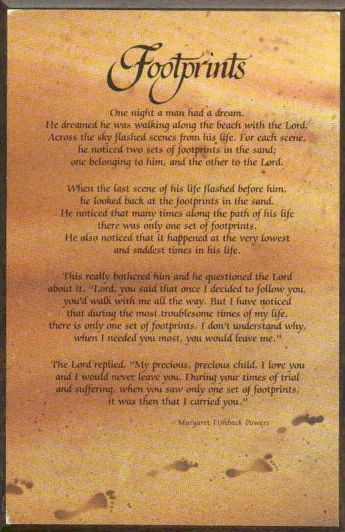 God does not deal with us in predictable ways. We want to feel his presence all the time. When actually what we may need is to begin to grow in faith, to grow in our confidence that God is there with us even when it doesn’t seem to be the case. God wants us to grow to be strong in faith. And so will be times when we need to remind ourselves that God is intimately concerned with us, with me, giving me life, giving me purpose and giving me hope for the future.
 ter seed on the ground, and would sleep and rise night and day, and the seed would sprout and grow, he does not know how. The earth produces of itself, first the stalk, then the head, then the full grain in the head. But when the grain is ripe, at once he goes in with his sickle, because the harvest has come.”
 He also said, “With what can we compare the kingdom of God, or what parable will we use for it? It is like a mustard seed, which, when sown upon the ground, is the smallest of all the seeds on earth; yet when it is sown it grows up and becomes the greatest of all shrubs, and puts forth large branches, so that the birds of the air can make nests in its shade.”

 On 1st Sunday after Trinity this year the lectionary asks churches to read Mark 3:20-35 as the Gospel reading. This is a difficult reading, full of quite strange concepts and ideas. How should we read a passage like this?
 Today is often a day when clergy seek to try to explain the Trinity. Usually we end up struggling to avoid heresy as we look for images which aid understanding. It seems to me that perhaps the most important part of the doctrine of the Trinity is that the Godhead is made up of three persons in eternal relationship. A relationship that has been broken only once, at the cross. Three persons, one God, eternally united by love. So it seems good that one of the readings set for today is the quintessential passage about the love of God explained by Jesus to Nicodemus – John 3:1-17.

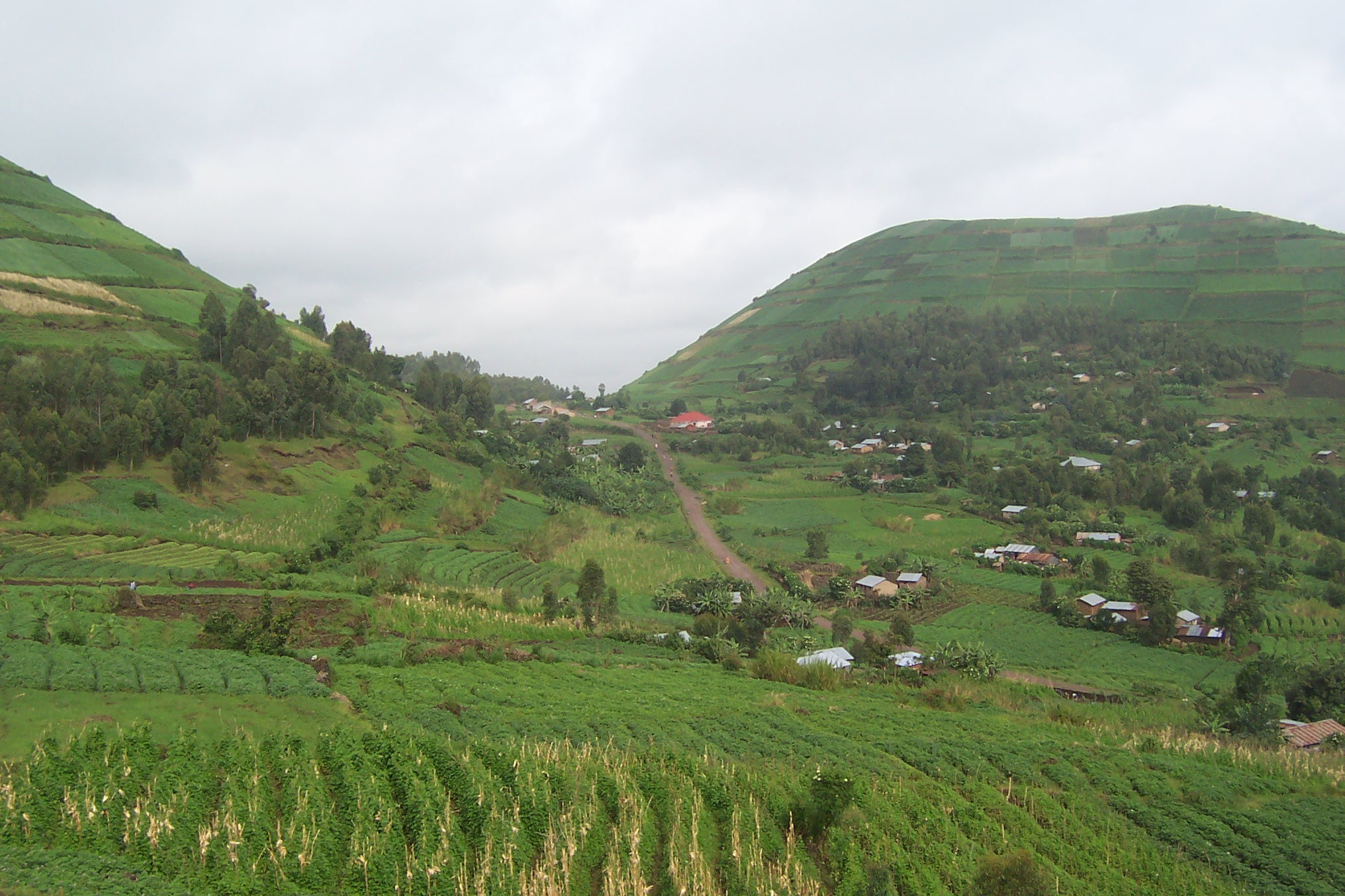

 Christmas time and they formed a committee led by the local church leader and they have decided together on the size and construction of the tank. They have employed local contractors and the tank has been built. When I was in Uganda in April, they had completed the reinforced floor of the tank and were well on with the constriction of the walls.
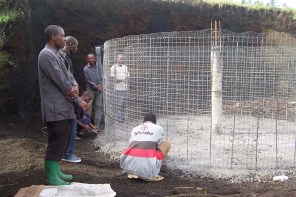 Once the tank is completed it will be fed from the roof of the church and one of the local houses and it will hold enough for very basic use by villagers throughout the dry season.








 Before you click on the link below it is worth stopping for a moment to ask yourself one question: “How important to me is the number of Facebook ‘friends’ I have?”
