Now, here is a thing. We have got used to the idea that church is becoming increasingly irrelevant in the modern world. We have come to believe that the Christian faith, in particular, is declining rapidly. Recent work by YouGov and the Bible Society calls these assumptions into question. Their work suggests that the opposite is in fact true!
“For decades,” says Paul Williams, Chief Executive Officer of the Bible Society, “Church attendance and nominal adherence to Christianity has been declining, and it has been assumed that this decline would continue and was in some sense an inevitable product of modernity. While the decline has certainly been real, we now know that the trend has been reversed. The tide of faith, whose ‘melancholy, long-withdrawing roar’ was described by Matthew Arnold, has now turned.” [1:p4]
He goes on to say that the results of a thorough and robust study “demonstrate that over the space of only six years, there has been a significant growth in the numbers of people going to church; Christians are practising their religion more intentionally; more young people are finding faith; more people are reading the Bible. … Large numbers of young adults, male and female, have started going to church, reading the Bible regularly, practising prayer and worshipping Jesus Christ as God. A new generation is finding hope in the Christian message and in established Christian communities. This hope is both personal and social. It appears to meet a hunger for connection, belonging and purpose but it also helps frame meaningful engagement in the world to address some of the intractable problems that we all face – injustice, inequality, climate change – and to form an alternative to the individualistic, competitive, materialistic worldview that has come to dominate western societies in recent decades.” [1: p4]
Paul Williams goes on to say: “There will be an instinct to use these results to support one or other of the various narratives that mark our contested cultural moment. But I urge the reader to pay attention to the detail of this study to understand what is happening. A remarkable new and life-giving phenomenon seems to be under way in Britain. The past few decades have witnessed a widespread empirical falsification of the secularisation thesis, mainly because in all parts of the world except Western Europe the world has become more, not less religious. This report suggests that even this outlier may not remain so for much longer.”
Background
McAleer & Barward-Symmons comment:
“For many decades now, the general assumption has been that Christianity, and in particular churchgoing, in England and Wales is in a state of permanent decline. Survey data, media headlines and prominent thinkers all seemed to point in one direction, with published attendance and membership figures from major denominations appearing to confirm this. From the sociological insistence in the 1960s that secularisation was inevitable and the new atheism of the 2000s, through to the more recent findings from the 2021 census showing the perilous collapse of Christian identity and headlines from last year proclaiming we were entering Britain’s first ‘atheist age’, the story seems clear – Christianity, particularly active Christianity, is on the way out.
Yet over the past few years, a different story has been emerging from the peripheries. In the United States, young men are heading to church in remarkable numbers, [2] transforming the landscape of the Church. Recent data even shows that young adults in the UK are more spiritual and less atheistic than older generations. [3] Prominent public atheists have been questioning their beliefs, while key public figures – from intellectuals such as Jordan Peterson and Tom Holland through to popular culture figures and athletes – have been open about their engagement with Christianity. More significantly, stories are emerging from the ground, including those collected by people such as Justin Brierley and Lamorna Ash, showing that young people in particular are exploring Christianity in a new way, suggesting that the previous assumptions may need to be shifted. But firm numbers have been hard to come by – until now.
Using nationally representative data through a prestigious polling agency, The Quiet Revival demonstrates that far from declining, the Church has grown. In particular we see that ‘Gen Z’ young adults are more likely to attend church regularly than any generation ahead of them bar the over-65s, and in particular we see that young men are attending in remarkable numbers. The Church is transforming before our eyes, and the figures presented in this report show the proof. As outlined throughout, this fact has implications both for civil society and for Christian denominations, networks and congregations. It is hard to overstate its importance both for our national self-understanding and for the Church’s understanding of itself.” [1: p12]
The Key Findings of the Report
Having a Christian faith is again being normalised and is arguably even culturally attractive. 12% of adults in England and Wales are attending church monthly. … “Church attendance in England and Wales is on the rise. This represents a startling change to decades-long trends and presumptions, with the most dramatic increase seen among young people, particularly young men. In 2018, just 4% of 18–24-year-olds said they attended church at least monthly. Today this has risen to 16%, with young men increasing from 4% to 21%, and young women from 3% to 12%. This is now the second most likely age group to attend church regularly. Overall, churchgoing Christians now make up 12% of the population, up from 8% in 2018. In numerical terms, that’s growth from 3.7m in 2018 to 5.8m in 2024 – an increase of 56%.” [1: p6]
Young adults are finding their way into church in remarkable numbers. 32% of churchgoers aged 18–54 are from an ethnic minority. … In addition to absolute growth in churchgoing, including among the white population, the Church in England and Wales is also becoming more diverse. Just under 1 in 5 churchgoers (19%) are from an ethnic minority, but among 18–54-year-olds this rises to 1 in 3 (32%). At the same time Catholicism has risen sharply and Pentecostalism has become the third biggest Christian tradition, with the share of churchgoers identifying as Anglicans dropping steadily. [1: p6]
This is a growing Church interested in belonging, believing and practising. 67% of churchgoing Christians read the Bible at least weekly outside of church. … Alongside this significant demographic change within churches, we see evidence of an active and vibrant Church. Rates of belief in God remain high, while both Bible reading and rates of confidence in the Bible have increased among churchgoers compared to 2018, indicating that new attenders are just as engaged in Christian belief and practice. [1: p7]
The idea that Britons are to some extent Christian ‘by default’ is rapidly diminishing. 27% of adults say they are Christian but don’t regularly go to church, compared to 32% in 2018. … At the same time, those who don’t engage in practices such as churchgoing or Bible reading are less likely than ever to identify themselves as Christian. Christianity increasingly involves an active commitment rather than a passive cultural label, and there is a clear difference between churchgoing and non-churchgoing Christians. [1: p7]
Our youngest group is showing above average engagement in spiritual practice. 35% of 18–24-year olds say there is ‘definitely a God/gods or higher power’. … The young people in our sample don’t just go to church more, they show above-average levels of warmth to spirituality, the Church and spiritual practice. This group of 18–24-year-olds are the most likely to pray regularly, with 40% saying they pray at least monthly. More than half of them (51%) have engaged with a spiritual practice over the past six months, compared to 42% of those older than them. They are also the group most interested in learning more about the Bible, with 37% of 18–24s saying they are curious to discover more about it. [1: p8]
Churchgoers show the lowest reports of feeling frequently anxious and depressed. 63% of 18–34-year-old churchgoers say they feel close to people in their local area, compared to 25% of non-churchgoers their age. … With much of the population, in particular young people, struggling with mental health, loneliness and a loss of meaning in life, Church appears to be offering an answer. We found that churchgoers are more likely than non-churchgoers to report higher life satisfaction and a greater feeling of connection to their community than non-churchgoers. They are also less likely to report frequently feeling anxious or depressed – particularly young women. [1: p8]
Churchgoers are more likely to desire social change and to engage in social activism activities. 79% of churchgoers agree it’s important to them to try to make a difference in the world. … This is not solely about personal development, however, and we also see that churchgoers are more likely to actively participate in activities aimed at benefitting the community around them. Churchgoers are more likely to volunteer, donate to foodbanks and give to charitable causes, demonstrating the positive effect of Christian faith on their lives – and the impact that a rise in churchgoing can have on society as a whole. [1: p9]
Young Christians report finding the Bible more challenging than older Christians. 35% of 18–34-year-old churchgoers agree that their faith is undermined when they think/read about some parts of the Bible. … There is clear need for more discipleship around Scripture. Approximately one-third of churchgoers say they lack confidence in navigating or understanding the Bible and speaking about it with others. Among young Christians, rates of Bible reading, Bible confidence, and interest in learning more are high. However, we also see that compared to older churchgoers, they are more likely to say the media and British culture often shake their faith in the Bible and report they have less confidence in the Bible than they used to. They are also the age group to report they find learning about the Bible to be challenging. This poses a challenge to the Church but also an opportunity to tap into and learn from their energy and enthusiasm while enabling them to go deeper into Scripture. [1: p9]
We see openness even among non-churchgoers towards Christianity and the Bible. 34% of 18–24-year-old non-churchgoers would attend church if invited by a friend. … The astonishing growth in churchgoing is matched by an openness to Christianity and the Bible: 31% of non-churchgoers say they would attend church if invited by a friend or family member, rising to 34% among 18–24-year-olds. Over half of non-churchgoers (56%) would be happy for a Christian friend to pray for them, while 18% say they would be interested in learning more about the Bible. Relationships are key here: over a fifth (22%) of non-churchgoing 18–34s say they would read the Bible if recommended by a family member or friend they trust, compared to 13% who would if a trusted celebrity or public thinker recommended it. [1: p10]
The tide of faith is coming in again, and the Church needs to adjust to a new and strangely hopeful reality. … We have four recommendations in response to this data. First, we urge policy-makers and opinion-formers to take more account of the existence of churchgoing Christians in society. Second, the Church should work on increasing Bible discipleship to grow Bible confidence and through this tap into the increased openness and cultural opportunity. Third, the Church should engage in intergenerational conversations within congregations and more widely, to enable churchgoers to learn from one another’s wisdom. Finally, it should recognise the importance and impact of authentic personal relationships.[1: p10]
About the Research
The report’s authors provide the following commentary on the report:
“The report references two data sets commissioned by Bible Society to track attitudes to the Bible and Christianity and related religious behaviours in the adult population of England and Wales. Both surveys were conducted by YouGov on large, nationally representative samples.
The 2018 sample surveyed 19,101 adults in England and Wales, while the 2024 sample surveyed 13,146 adults. Both samples therefore give a 1% margin of error at a 99% confidence level, meaning they are highly reliable. The surveys were conducted through YouGov’s online panel to population targets, and further refined with post stratification weighting. It is worth noting that because we surveyed adults, we are not able to comment in depth on the portion of the population, or the Church, which is under 18.
All figures, unless otherwise stated, are from YouGov Plc. In 2018: total sample size was 19,101 adults. Fieldwork was undertaken between 11th October and 13th November 2018. The survey was carried out online. The figures have been weighted and are representative of all England/Wales adults (aged 18+). Ethnicity targets are based on 2011 census data.
In 2024: total sample size was 13,146 adults. Fieldwork was undertaken between 4th November and 2nd December 2024. The survey was carried out online. The figures have been weighted and are representative of all England/Wales adults (aged 18+). Ethnicity targets are based on 2021 census data. Throughout the report, we refer to ‘churchgoers’. By this we mean people who both describe themselves as Christian and go to church at least once a month – around 30% of all those who identify as Christian. At times we also mention trends seen among other faiths. As the primary focus of this report is on exploring Christians (both practising and nonchurchgoers) and those with no religion, we have not explored non-Christian faiths by religion; rather, they are grouped together. There are obvious limits to this approach, and therefore all our observations on non-Christian faiths could be nuanced further in future studies.
Due to GDPR sensitivities, questions pertaining to religious practice like church attendance and Bible reading were optional. On these questions a small percentage of the sample refused to answer – circa 3%. This is in line with the standard dropout rate. Where we make population claims, such as the number of adults who say they go to church regularly, we have recoded refusals as ‘prefer not to say’ to keep the full base in the sample. However, as we do not know the churchgoing status of these participants, when we compare churchgoers to non-churchgoers in Chapters 2–4, participants who did not answer have been removed from analysis, rather than categorised as non-churchgoers. Including or removing them has little or no effect on the overall figures.
We know the results of this report will be surprising to some and will naturally raise further questions about the methodology behind it. To help answer some of these we’ve included an FAQ section at the end of the report.” [1: p11] That FAQ section appears below.
FAQs
Is this just down to immigration? – In short, no. The Church in England and Wales in undeniably changing shape and becoming more diverse, just as Britain as a whole is becoming more diverse. However, the growth in churchgoing among young people is seen at scale among young White people. While these could all be migrants, at the scale we’re seeing it seems highly unlikely.
It is worth noting that in between the surveys new census data was made available, which means the sampling targets were changed between the waves to ensure the sample reflects the most up-to-date view of what England and Wales looks like. This has primarily impacted how many people of Black, Asian, and other Minority Ethnicities are in the sample. As people in these ethnic groups are more likely to be Christian, this has naturally had an effect on the shape of the data, particularly when it comes to averages, and some of the trends we observe reflect this. This is not problematic, and indeed, gives us a better picture of the Church today, but we have exercised caution in drawing comparisons between the 2018 and 2024 waves when it comes to ethnicity trends outside of the white population.
Is the methodology sound? – Yes, both surveys we draw from are based on large, representative samples from one of the country’s leading research companies. Both sample sizes give a 1% margin of error at a 99% confidence level, meaning they are highly reliable. While minor changes were made to the questionnaire between the 2018 and 2024 waves, all questions used for comparison have remained the same, and the surveys were conducted under the same conditions at the same time of year. For more information see https://yougov.co.uk/about/panel-methodology
Could there be something about the sample? – In polling research we are always reliant on trusting that what participants say is a true reflection of what they think and how they act. While it is possible participants may not be answering truthfully, or have misunderstood our questions, we would need to question in turn why these effects have only become observed in 2024, and not previous survey waves. All research panels have bias, and non-probability sampling is always at risk of producing a non-representative sample. It is also theoretically possible the sample has polled a disproportionate number of young Christians. At this sample size, and the way the YouGov panel is built and maintained, this is again highly unlikely.
If you are interested in reading the report, please click on the link below and you’ll be taken to a page where you can download the report and a PowerPoint presentation.
In 1850, the Edge Hill yards occupied 40 acres, with room for 1,782 wagons. By 1873, the yards spread over 104 acres and could accommodate 3,215 wagons. In 1894, they were 200 acres in size, with 60 miles of lines with a capacity of 6,828 wagons. At the turn of the 20th century there was still space on the site for further expansion, if required.
The gradient across the site meant that wagons moved around the site under their own weight. To prevent dangerous runaways a system of hooks attached to heavy chains was employed at key locations across the site. These are marked on the diagram above by the letter ‘A’.
A sketch showing the chain-drag and hook used throughout the LNWR’s yard to arrest runaway wagons. [1: p234]
“For ‘arresting’ runaway wagons, a heavy cable was set in a wrought iron tank between and below the level of the rails. A steel hook lay in a loose socket at the height of a wagon axle, nine inches inside one rail: the cable was connected to the hook and the weight of the former, when dragged over the soft ballast, stopped the runaways. The hook socket and hook were lowered by a lever when a train passed over it, the lever working a signal arm at the same time. When the hook was – raised the signal stood at ‘danger‘.” [1: p235]
The LNWR recorded the use of the ‘Chain Drag’ – “There is no doubt … that this simple safeguard was an important factor, affording as it did a security against possible runaways which enables the whole scheme of shunting by gravitation to be carried out and worked with the greatest despatch.” [1: p235] Considerable damage and inconvenience, and maybe a major disaster, had been avoided through its use.
Contemporary LNWR records from June 1875 to June 1895 illustrate the value of these chain drags. They record the cause of each deployment of a chain drag: [2: p235]
Defective wagon brakes … 28
Wagons not sufficiently secured by shunters … 37
Failure to lower the hook to allow the passage of a train … 32
Hook raised too soon before the last vehicle had passed … 9
Defects in signals, couplings, etc. … 10
Carelessness (generally the responsibility of shunters … 52
Drawn out by loose chains hanging from wagons … 2
Hook lever slipped from shunter’s hand … 2
Misunderstanding between shunters … 9
Unknown causes … 25
“During the above period the ‘chain drag’ was required on 206 occasions and it did not once fail to stop the runaways without, moreover, any ‘injury to them or their loads’. Six ‘chain drags’ were in use, varying from 86 cwt to 109 cwt of stud cable in each drag.” [1: p238]
These ‘chain drags’ are one instance of the retarders needed in marshalling yards. The ‘chain drag’ is, however, purely a means of stopping runaway wagons rather than a mechanism to control the speed of wagons descending through a yard. Retarders, generally, are some form of mechanical brakes, often pneumatic, hydraulic, or spring-driven, which are strategically placed to control the speed of rolling wagons as they descend through a yard. They help prevent collisions by allowing operators to adjust the speed of cars to the distance they are to roll, avoiding violent impacts. Among others, these include:
Clasp Retarders – large, air or hydraulically powered beams that squeeze the wheels at rail level; and
Piston Retarders – which extract energy from the railcar as it rolls over them, offering a quieter alternative to clasp retarders.
Clasp Retarders
Typical Clasp Retarders, these were photographed at the LNER’s Whitemoor Marshalling Yards. [3]
The LNER’s marshalling yard at Whitemoor was separated into an ‘up’ yard and a ‘down’ yard. “Both yards are equipped with retarders, or rail brakes, the up yard having four hydraulic brakes and the down yard two eddy current brakes. The retarders are placed at the foot of the hump on the first four – or in the down yard the first two – leads after the king points. Their purpose is to slow down the railway trucks which are travelling at too high a speed and to keep a suitable spacing between successive wagons.” [3]
“It is necessary to brake the wagons as they run off the hump, to prevent them from colliding with the vehicles already in the sidings, and so causing damage both to the wagons and their loads. The purpose of these rail-brakes is to do away with the braking by hand required in an ordinary hump yard, where a large staff is needed. This hand-braking always involves risk. Further, the steepening of the hump gradients at Whitemoor, to accelerate the sorting, causes the wagons to run down at greater speed, and makes a powerful system, of braking the more essential. The intensity of the braking force, with these rail-brakes, can be adjusted according to whether the siding into which the wagon is about to run is full or empty; in the latter instance a longer run is needed, and the brakes will be applied with less severity.” [3]
“The brakes consist of four longitudinal brake beams, one on either side of both running rails. Two of these beams are fixed and the others are pivoted. … These beams are carried on a table or platform which, in turn, is mounted on the pistons of a number of hydraulic cylinders. Thus when water at pressure is admitted to the cylinders the whole table moves upwards, so that the “feet” of the brake beams engage with the flanges of the wheels and results in the squeezing of the wheels between the brake beams. If the pressure in the cylinders is increased sufficiently the wagon will be lifted off the running rails and will ride on the feet of the pivoted beams.” [3]
Cross-sections through the hydraulic retarders in the ‘up’ yard at Whitemoor showing them at rest and in active braking mode. [3]
“In the construction of the eddy current brake, as used in the ‘ down’ yard, there are four brake beams, two for each rail. These beams form the north and south poles of a large electromagnet and are mounted on packets of loose plates which in turn rest on massive iron ‘cores’.” [3]
The action of electric brakes working on the eddy-current principle is illustrated in this diagram. Mounted on movable plates, brake beams pull inwards on being energized by the electro-magnet. The main braking effect is due to eddy-currents set up, in the wheels, and this action is assisted by the friction of the beams which grip the wagon wheels. These electric brakes are used in the down yard at Whitemoor. [3]
“The cores shown in the diagram above are spaced about 7 ft apart throughout the length of the brake, and round each is a coil which is supplied with direct current. Thus when the coils are electrically energized the whole brake becomes a large electro-magnet, with the brake beams as its poles. As these poles arc mounted on loose plates, they pull inwards on to the wagon wheels. As the wagon passes through the brake the wheels rotate in a strong magnetic flux and eddy currents are set up in the wheel tyres, thus retarding the wagon. … This effect can be reproduced simply by rotating a disk of any electrically conductive material between the poles of a horse-shoe magnet. While a certain amount of friction must necessarily be present owing to the fact that the beams are actually in contact with the wheel tyres, the main braking effect is obtained by eddy currents, and it is this fact that distinguishes the action of this brake from that of the hydraulic brake, which relies entirely upon friction.” [3] Springs are provided at intervals along the brakes in order to pull the beams apart when the brake is switched off.
Piston Retarders
Piston retarders can operate either by compressed air or by hydraulics. Those shown in the image below are paired Dowty Retarder/Booster units. A full discussion of these units and their development over time can be found here. [2]
Hydraulic booster/retarders at Tinsley yard near Sheffield [2: p22]Typical Piston Boosters/Retarders. These are compressed air booster/retarder units in pairs. [2: p26]
“Joule Piston Retarders are self-contained, hydraulically operated devices installed on railway tracks to control the speed of rolling stock. These retarders require no external power source, making them efficient and reliable tools for managing train speeds in marshaling yards. … They are effective speed retarders. After being plunged by a rail [wagon], they immediately pop up with higher resistance to being pressed in again, so if the next wheel comes by too soon it applies more resistance against it.” [4] They appear to be used, primarily, in North America.
Joule Piston Retarders at Balmer Yard, Seattle, USA. [5]
An excellent video of retarders at work can be seen here. [9]
Other instances of retarders
In Chippenham, Wiltshire, UK a series of tests were undertaken with different retarders. A series of photos can be seen here. [6]
Sorting Goods Wagons: The Fascinating Story of Whitemoor Marshalling Yards, where Goods Wagons are Swiftly and Automatically made up into New Trains; in Railway Wonders of the World, https://www.railwaywondersoftheworld.com/sorting-goods.html, accessed on 5th April 2025.
Isaiah 43:16-21, Philippians 3:4b-14 & John 12:1-8
Passion Sunday – 6th April 2025
I don’t know whether anyone has ever told you to just “Go with the flow!” To sit back, accept that you’re not in control of circumstances and see what happens. The idea of doing this is for many of us quite scary. Like being on the big-dipper or the Pepsi-Max (The Big One) at Blackpool. Or like those who participate in Comic Relief, doing something funny for money.
On ‘The Big One’, riders are trapped. In for the ride … no escape. Perhaps that’s one of the reasons that I don’t like going on rides like ‘The Big One’ – I’m not in control and, partly because of that, I’m scared stiff.
Anyone who agrees to take part in Comic Relief probably must feel that they just have to ‘go with the flow’.
The bible readings set for Passion Sunday this year seem suggest that we should see the Christian life this way. ….
Listen to Isaiah speaking on God’s behalf: “God is doing a New Thing. Don’t remember the former things, or consider the things of old – the way it has always been. I am about to do a new thing, now it springs forth, do you not perceive it?”
“I’m setting aside all your normal terms of reference,” says God. “I am going to do something completely new, completely different. It will be scary, but I want you to trust me! It’ll be just as though the desert has become a fertile river valley – you won’t know what to make of it.”
Can you imagine the response of Isaiah’s listeners – looking sideways at each other. “Phew, what are we letting ourselves in for?”
Now listen to Paul speaking in Philippians: “I regard everything as loss because of the surpassing value of knowing Christ Jesus my Lord. … I want to know Christ and the power of his resurrection and the sharing of his sufferings by becoming like him in his death, if somehow I may attain the resurrection from the dead.”
If Isaiah was talking about a New Thing, Paul is talking about an Overwhelming Thing. He has been so bowled over by his encounter with Jesus that he is prepared for anything to happen to him, willing to do anything for the sake of the Gospel. He has been overwhelmed by the love of God and that is now at the centre of who he is. Nothing else matters compared to knowing Christ. And how do we respond when we hear Paul talking like this? How do you respond?
“Well, if that is what being a Christian is all about it’s not for me!”
“Don’t get too enthusiastic about this Roger, just remember that we are British, we don’t go overboard about anything.”
And hey, you’re right we are not all like St. Paul! We must be ourselves.
But Paul isn’t asking us to be like him. … He is, though, suggesting that we should be ‘overwhelmed’ by the Gospel. Paul longs that God’s love will overwhelm us to the point that we place relationship with God first in our lives – not because nothing else matters, but because we will only have a right perspective, on the other things that matter so much to us, if we engage with them knowing that we are fully loved and accepted by God.
A New Thing. An Overwhelming Thing. And then we come to look at out Gospel reading.
Mary does something so completely over the top. An Extravagant Thing. She blows ten months wages’ worth of perfume in one extravagant act of worship. In a poignant act of love which reflects on Jesus suffering and death. Not only does she blow her wealth on Jesus, but she’s just not worried what others will think of her actions. She did something a prostitute might do (we know that this because of the way the story is reported in other Gospels). An extravagant, overwhelming response to the love of God shown to Mary in Jesus.
Our readings call on us to “Go with the Flow” – to abandon ourselves to God’s love – to let him do a new thing in us and with us. To be overwhelmed by his love and then to respond extravagantly in love to God – just like Mary did.
What might this mean for us now?
These are challenging passages – just three reflections.
Firstly, Church of England churches (perhaps other denominations too) are in the Annual Meetings season. A time when we think both about the past and what the future might hold. Perhaps we need at this time to commit ourselves to watch out for what God is doing. To expect that it will be different from the past. Something completely new – just like the passage in Isaiah suggested. Perhaps we need to agree at our Annual General Meetings that we won’t just insist on things being the way that they always have been. That we will welcome whatever the new thing is that God is doing.
Secondly: perhaps we need to give time to our faith, to listening to what God says in his Word. To hearing and feeling the depth of his love for us. To allowing ourselves to be overwhelmed by his love. There is an opportunity to do this in Holy Week and Easter Services. But perhaps this needs to be something that is on-going in our lives.
And finally, Mary’s extravagant response, gives us real cause for reflection. How generous are we as churches or as individuals. Could the way we give to God ever be described as extravagant, risky or overwhelming? …. If the answer is, ‘No!’ Then we have to allow Mary’s extravagant actions to challenge us.
How much does God’s love for us mean to us? What might we risk for it? Our reputations? Our savings? People’s approval? Mary seems to risk everything. Might we consider giving a little more of ourselves, our time, our energy, our resources. Might we do a little more than we think we can, might we slip just outside our comfort zone, might we give only just a little more than we can afford?
It might feel as though we are out of control. We may be afraid that it will be like The Big One (Pepsi-max), or it might feel like we have just committed ourselves to do something outrageous for Comic Relief.
What we actually discover is that, as we release ourselves to follow Jesus, we are swept up in the arms of God. For as we give of ourselves to God, God gives so much more of himself to us.
Stanley Jenkins tells us that “The opening of the Inverness & Rossshire Railway between Inverness and Dingwall on 11th June 1862 brought the benefits of rail transport to a prosperous farming area in Ross & Cromarty. The line was completed throughout to Invergordon on 25th March 1863, while a series of subsequent extensions eventually resulted in the creation of the Highland Railway’s ‘Far North’ line between Inverness and Wick. Inevitably the 161½ mile ‘Far North’ line omitted large numbers of places that would have benefited from direct rail links, and for this reason several branch-line schemes were put into effect during the latter part of the 19th century.” [1: p48]
“The Black Isle peninsula, between the Beauly and Cromarty Firths, became the focal point for two such schemes, only one of which was successful.” [1: p48]
Wikipedia tells us that “The Highland Railway was surprised when in 1889 the Great North of Scotland Railway (GNoSR) proposed the construction of a railway to Fortrose, … The GNoSR operated a network from Aberdeen and the nearest place to Inverness served by it was at Elgin, some distance away. The branch would have been detached from the owning railway, but running through the Black Isle it would have made a junction with the Highland Railway at Muir of Ord. A ferry operation from Fortrose to Ardersier, on the south side of the Moray, was included in the plans. Ardersier was then known as Campbelltown, and a railway branch to it was included. Two other schemes striking into Highland territory were proposed at the same time, elevating Highland Railway discomfort about its competitive position.” [2][3]
“The two companies had been adversaries for some time, and in 1883 and the following years there had been a state of continual warfare over junctions, frontiers and running powers. … The Highland saw at once that if this branch were built, it would be easy for the GNoSR to demand running powers into Inverness to reach its branch, and in that way the rival company would have gained access to the Highland’s stronghold.” [2]
After considerable ‘argument’ between the two companies, the GNoSR and the Highland Railway each submitted Bills to the UK Parliament for a line to Fortrose.
It was the Highland Railway’s scheme which received Parliamentary consent on 4th July 1890. Jenkins tells us that it was for a “16 mile branch line between Muir of Ord, on the ‘Far North’ line, and the fishing port of Rosemarkie. The gentle topography of the Black Isle ensured that the proposed line could be built with relative ease, and on 1st February 1894 a single line was opened as far as Fortrose a distance of 13 miles 45 chains. The final section between Fortrose and Rosemarkie was never built, the terminal station at Fortrose being deemed a suitable railhead for the surrounding district.” [1: p48]
“The Fortrose branch provided useful transport facilities … on the South side of the Black Isle, but it was felt that better facilities were needed on the North side of the peninsula. The 1896 Light Railways Act offered a solution to this local transport problem, and on 1st August 1902 a Light Railway Order was obtained for construction of a 19 mile line between Conon, on the ‘Far North’ line, and Cromarty. Work began at the Cromarty end, but subsequent progress was painfully slow, and extensions of Time Orders were obtained in 1907, and again in 1910. … About six miles of track was actually laid between Cromarty and Newhall, but all work was suspended in 1914 on the outbreak of World War I. At that time, construction work was in hand on a further two miles of line, but little had been done on the remaining eleven miles of line to Conon. The track was lifted around 1915 for use in the war effort, leaving the earthworks and other engineering features of the unfinished light railway in a derelict condition.” [1: p49]
“If the Cromarty & Dingwall Light Railway had been completed it would have had stations at Alcaig Ferry, Culbokie, Drumcudden, and Newhall. Other halts may have been opened once the line was in operation, while there were also suggestions that the route might be extended south-westwards from Cromarty to Rosemarkie and Fortrose, thereby creating a scenic ‘coastal’ route around the Black Isle that would have had considerable potential as a tourist attraction. Unfortunately the changed economic conditions after World War I meant that schemes of this kind were no longer viable, and the Fortrose branch was therefore left in splendid isolation as the only completed railway in the Black Isle area.” [1: p49]
“The Fortrose route was worked as a feeder branch for the ‘Far North’ line, and as such it was moderately-successful. Like other Highland Railway branch lines it was normally worked by small tank locomotives such as the Dübs 4-4-0Ts. Other engines seen on the line were Drummond’s well-known 0-4-4 branch-line tanks.” [1: p49]
The Route from Muir of Ord to Fortrose
The extracts below from the 25″ Ordnance Survey of 1904, published in 1906 cover the site of Muir of Ord Railway Station. [6] Jenkins tells us that “Muir of Ord – the junction station for branch services to Fortrose – was opened on 11th June 1862 when the initial section of the Highland ‘Far North’ line was brought into use between Inverness and Dingwall.” [1: p49]
“The station was orientated from North to South, with its main station building on the down, or northbound side. The track layout was relatively complex, with sidings on both sides of the running line and a lengthy crossing loop.The main goods yard, with accommodation for coal, livestock, furniture, machinery, and general-merchandise traffic, was situated to the south of the platforms on the down side. One of the yard sidings passed through a goods shed, while others were used mainly for coal or other forms of wagon-load traffic. Further sidings were available on the up side, and one of these gave access to a 50ft diameter locomotive turntable.” [1: p49]
Wikipedia tells us that “The station is 13 miles 4 chains (13.05 mi; 21.0 km) from Inverness, between Beauly and Conon Bridge, and is the location of the sole remaining passing loop on the single line between Dingwall and Inverness.” [5]
“The station building and platform canopy were erected in 1894, [5][7] 32 years after the station itself opened. [8] Passenger services on the branch ceased on 1 October 1951, but the branch remained open for freight until 13 June 1960. Muir of Ord station was closed on 13 June 1960 but reopened in 1976, on 4 October.” [5][8]
“After the railway bridge across the River Ness washed away in February 1989, isolating the entire network north of Inverness, Muir of Ord was chosen as the location for a temporary depot, from which the stranded rolling stock could operate the service to the highland communities which depended on the line.” [5][9]
“In November 2015, work commenced on a new A862 road bridge at the northern end of the station.” [5][10]
The project cost £3.7 million and was completed in the Summer of 2017. [11]
This ESRI satellite image supplied by the NLS shows the station site after the reconstruction of the raod bridge. [6]
Wikipedia tells us that “in the 21st century, both station platforms have modern waiting shelters and benches, with step-free access. There is a car park and bike racks adjacent to platform 1, along with a help point near to the entrance from the car park.” [5]
“As there are no facilities to purchase tickets, passengers must buy one in advance, or from the guard on the train.” [5]
“The station has a passing loop 32 chains (700 yd; 640 m) long, flanked by two platforms which can each accommodate a ten-coach train.” [5][12]
“On 11th June 1862 the Inverness and Ross-shire Railway opened their line between Inverness and Dingwall. It included a station at the village of Tarradale but the company decided to name it after the nearby cattle tryst (market), Muir of Ord. Eventually the name Muir of Ord was applied to the surrounding area.” [14]
“On leaving Muir of Ord, branch trains diverged eastwards, and having, executed a full 90 degree turn the route maintained its easterly heading for about two miles.” [1: p49]
A further extract from the 25″ Ordnance Survey of 1904, published in 1906. This extract shows the brach leaving the main line just North of the Station and heading East. [17]The same area as shown on ESRI satellite imagery provided by the NLS, in the 21st century. [17]As the line curved to the East it was crossed at level by a track. [17]
Additional sidings on the north side of the station provided locomotive facilities for the branch engine. The main engine siding gave access to a 50ft turntable, while a ‘kick-back’ spur ran into a single-road engine shed; another siding served as a coaling road. The station building was a typical Highland Railway timber-framed structure which was similar to its counterparts at Hopeman and Burghead, albeit with a second cross-wing at the left-hand end (when viewed from the platform). The resulting building was thus an ‘H-plan’ structure with a central block flanked by two cross-wings.” [1: p51]
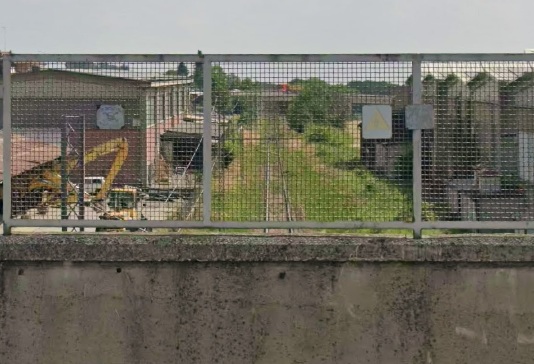
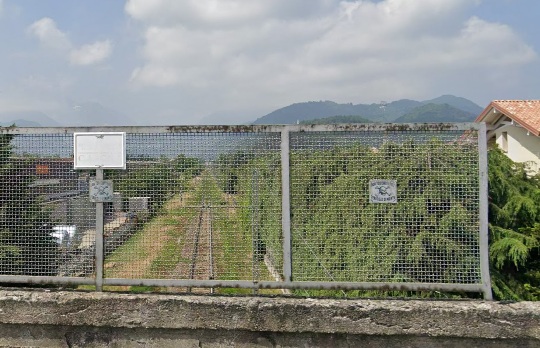
In the 21st century, the track has been replaced by a modern estate road – Highfield Circle. The road entering bottom-centre is Fairmuir Road, that leaving top-right is part of Highfiels Curcle. These two roads approximately follow the line of the old railway. [17]A short distance to the East the line was in cutting and bridged by a minor road. [17]ESRI satellite imagery from the NLS shows the realigned road in the 21st century. The approximate line of the old road (blue) and railway (red) have been superimposed on the image. The modern road is named ‘Balvaird Road’. [17]A short distance further East the line was crossed by a farm access raod at a level-crossing. [18]The same location in the 21st century as shown on Google Maps satellite imagery. The lane is now named ‘Hawthorne Road’. [Google Maps, March 2025]Looking North along Hawthorne Road, across the line of the old railway (marked approximately by the red line). Google Streetview, September 2021]Looking West from Hawthorne Road along the line of the old railway towards Muir of Ord. The line of the railway is gated by the single-bar gate and it ran from there towars the distant trees. [Google Streetview, September 2021]A footpath follows the line of the old railway to the East of Hawthorne Road. [Google Streetview, September 2021]
From Hawthorne Road eastwards a public footpath follows the line of the old railway. There is a leaflet of walks for the area around Muir of Ord. One of the four walks included in the leaflet includes a length of the old railway. [19]
For a short length the old railway formation has been ploughed back into farmland. The next image looks back along the line of the old railway from a point further to the East.
After passing under the accommodation bridge, the old line ran east in cutting through what is now Spital Wood. Then, ” curving east-north-eastwards,” Jenkins tells us, “the railway continued to Redcastle (3 miles 58 chains), where the single-platform station was equipped with a full range of accommodation for goods, passengers, and livestock traffic.” [1: p49]
“Beyond [Redcastle], trains climbed towards the 250ft contour, the line’s modest summit of around 260ft above mean sea level being sited near the next station at Allangrange. Situated some 5 miles 39 chains from the junction, Allangrange was another fully-equipped station with provision for a range of goods traffic.” [1: p49]
The line continued in an East-northeast direction towards Allangrange Railway Station. [28]The same area as shown on the 21st century NLS ESRI satellite imagery. [28]Looking Southwest along the old railway towards Redcastle Station from the minor road towards the left of the satellite image above. [Google Streetview, April 2011]Looking Northeast along the old railway towards Fort from the minor road towards the left of the satellite image above. [Google Streetview, April 2011]Looking Southwest along the line of the old railway from the A832. [Google Streetview, March 2023]Looking Northeast along the line of the old railway from the A832. [Google Streetview, July 2008]Again, still heading East-northeast, trains drew closer to Allangrange Railway Station. [29]The same area in the 21st century. [29]
The line curved round from an East-northeast direction to and easterly alignment before entering Allangrange Railway Station.
From the point at which the old line crossed another lane, this is the view back towards Redcastle Station. The tree at the centre of the image on the horizon stand immediately adjacent to the line of the railway. [Little can be seen looking towards Allangrange Railway Station from the minor road as the rail alignment close to the road is overwhelmed by vegetation. [Google Streetview, September 2021]The line curved round to run in an easterly direction through Allangrange Railway Station which had a reasonable sized goods yard to the West of the passenger facilities. [30] The same location in the 21st century. The major road at the West end of the old station site is the modern A9 dual carriageway. [30]This is the view East along the line of the old railway from the A9 dual carriageway. [Google Streetview, March 2023]Noe looking East from the A9 through the trees and through the site of Allangrange Railway Station. [Google Streetview, March 2023]Looking West from the old A9 into Allangrange Station site. [Google Streetview, March 2023]Looking East from the old A9 towards Fortrose. [Google Streetview, March 2023]
Beyond Allangrange Station, and heading east-north-eastwards again, “the single-line railway descended towards Munlochy (8 miles 2 chains) which, like the other intermediate stations on the Fortrose branch, was fully-equipped for all forms of goods traffic.” [1: p49]
Three images of Munlochy Railway Station can be seen online at http://www.ambaile.co.ukhere, [53] here [54] and here. [55] Kind permission has been given to reproduce two of these images in this article.
Munlochy Railway Station looking Northeast. [53]Munlochy Railway Station, looking Southwest along the platform. [54]Looking Northeast through the station site from Cameron Crescent. [Google Streetview, September 2021]Again, looking NorthEast through the station site along Station Court. [Google Streetview, September 2021]Looking back Southwest from Millbank Road (B9161) through the station site. [Google Streetview, March 2023]Looking Northeast along the line of the old railway from Millbank Road (B9161) towards Fortrose. The A842 is just to the left. [Google Streetview, March 2023]
“From Munlochy the route passed over a small underline bridge, and with the A833 (later A832) road maintaining a parallel course to the left, Fortrose trains reached Avoch Station (11 miles 25 chains).” [1: p49]
“From Avoch, the line continued north-eastwards for a further … three miles to its terminus at Fortrose where, some 13 miles 45 chains from Muir of Ord, journeys came to an end in a surprisingly large station.” [1: p49-51]
“Fortrose had just one platform on the up side, with a run-round loop to the north and a four-siding goods yard to the south. One of the goods sidings passed through a goods shed, while another served a loading bank; a spur at the west end of the goods yard formed a short headshunt.” [1: p51]
Fortrose Railway passenger station building had “the booking hall and general waiting-room … in the centre part of the building, while the booking office and toilets were housed in the ends. The timber structure was clad in American-style vertical matchboarding, with thin cover strips affixed at each join to produce a ‘ribbed’ effect.” [1: p52] The centre block was recessed between the cross-wings to create a roofed waiting area at the front of the station.
Additional photographs of the Station can be found on the www.ambaile.co.uk website here, [73] here [74] and here. [75] Kind permission has been given to reproduce these photographs here.
Fortrose Railway Station from the end of the platform in 1912, showing the station building. A branch train is in the platform and a locomotive is on the turntable in the background. [73]Fortrose Railway Station seen from the Northeast (adjacent to the buffers). Llocomotive No. 57594 is described in the notes for the next image. Here it is about to be turned to take its train back to Muir of Ord. [74]Locomotive No. 57594 has just been turned and is being readied to haul the last train from Fortrose. The locomotive is an ex-Caledonian ‘812’ Class 0-6-0, built in August 1900 as CR No. 856, becoming LMS No. 17594 and finally BR No. 57594. It was withdrawn in December 1962. [75]
Decline and Closure
The Fortrose branch was relatively successful. Its passenger services were maintained throughout the LMS era. But the line “became increasingly vulnerable to road competition after World War II, and for this reason its passenger services were withdrawn with effect from 1st October 1951. Goods traffic lingered on for a few more years, but the end came in 1960, with the line being closed to all traffic from 13th June of that year.” [1: p52]
References
Stanley Jenkins; Highland Railway Minor Lines: 2; in Rex Kennedy (ed.); Steam Days; Red Gauntlet Publications, Bournemouth, Dorset, January 2002; p48-57.
After completing a series of articles about Genova’s transport system at the end of 2024, beginning of 2025, I came across a series of three articles in the ‘Light Rail & Modern Tramway Journal’ dating from 1995. This article covers those three pieces. …
Written, 30 years ago, Barry Cross’ articles help us to engage with the changes to the transport systems in Genova over the decades.
Part 1: August 1995 – The Demise of the Old Tram Network and the Development of the Metro
Barry Cross says that “as far as tramway enthusiasts are concerned, the city lost most of its attractions in the 1960s, when the remaining interurban tram routes were abandoned, and public transport became synonymous with travelling by diesel bus. … Nevertheless, the curious topography of the city, which to all intents and purposes is built on a narrow coastal enclave, has meant that some rather curious forms of public transport have survived. Flying the tramway flag during the lean years has been the Granarolo rack tramway, whose two cars resemble both tramway and funicular vehicles. … Then there are the two conventional funiculars: the Sant’Anna and Zecca-Righi, which provide rapid access from the port to the residential districts in the hills above. Finally, the Genova-Casella electric light railway offers one of the most scenic and exhilarating rides to be found anywhere on the European continent.” [1: p251]
In the years prior to 1995, the municipality once again “decided to embrace tramway technology, in a desperate effort to improve public transport because of the severe deterioration in traffic conditions. The result [was] the construction of an entirely new light metro, recreating in part the coastal tramway abandoned in the 1960s. Despite only three stations having so far [in 1995] opened, patronage of the line already exceed[ed] expectations.” [1: p251]
In May and June 1964, Modern Tramway carried a two-part article on the tramways and light railways of Genova by Joachim von Rohr. Barry Cross attempts, in his articles, to show developments in the city up to 1995. This will provide an opportunity to compare the situation in the mid-1990s with that in 2024/2025.
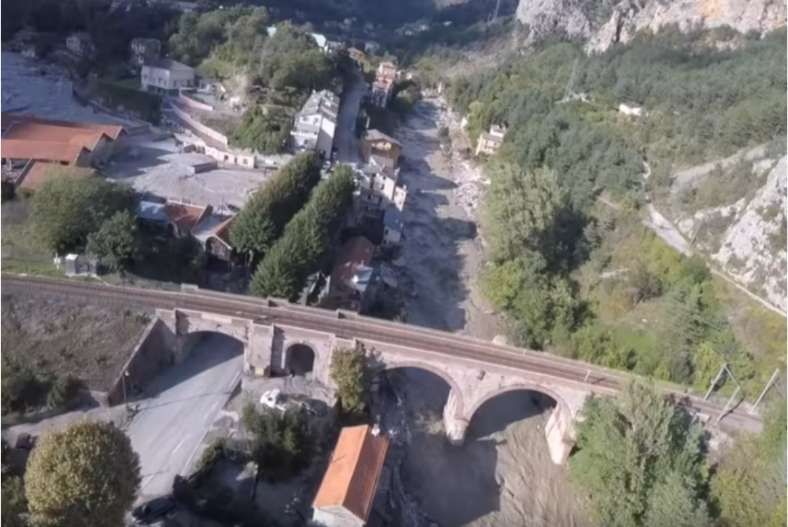
“In the 1960s, many Italian cities felt the urge to ‘modernise’ their public transport systems, a term which all too often meant the closure of efficient, if rather run-down tramway networks. Genova was no exception. Unusually, it was the urban routes that closed first, these being abandoned in the late 1950s, although the interurban routes continued to operate (and decline) well into the 1960s. … The interurban system essentially consisted of four metre-gauge routes emanating from the central Genova Caricamento terminus. Two of the routes ran along the coast, one west to Voltri (16.9 km) and the other east to Nervi (approximately 12 km), while the other two served inland destinations, along the Polcevera valley to Pontedecimo (15.1 km) and to Prato (13.6 km), situated in the Bisagno valley.” [1: p251]
Cross continues: “On 25th May 1964, the so-called ponente route to Voltri was abandoned to the west of Sampierdarena, involving the withdrawal of seven separate services. Worse still, tram tracks in Via Francia were also lifted to permit construction of a connection with the strade soprelevata (elevated roadway), in which the municipal authorities had placed so much faith as a means of decongesting the city’s narrow and winding streets. … As a direct result of this, route 7 had to be cut back from Caricamento to Sampierdarena and route 26 entirely abandoned on 27th June. Furthermore, the survival of the Pontedecimo route had become ever more precarious given that its only connection to the rest of the system was henceforth via the Certosa tram tunnel.” [1: p251]
The Pontedecimo route survived until 1st October 1964. On that day, “tramway operation through the Certosa tunnel ceased. All remaining routes were replaced by motor buses on 27th December 1966, the last tram to run in public service being car 935 on route 12 to Prato.” [1: p251]
By the 1960s, trams in the 700 and 800 series were the oldest on the network, dating from 1931 and 1934, both bogie cars. All were very much at the end of their working lives and were the first to be scrapped. Two of the 700 series trams are shown below. The first is No. 762, the second is No. 766. Trams No. 751-800 were bidirectional bogie-cars built in 1931. These were known as ‘long Casteggini’ type trams. [4][5]
The 800 series were numbered from 801 to 820 (UITE) were bidirectional bogie-cars built by Piaggio in 1932. These were known as ‘short Casteggini’ type trams. [4] Tram No. 821 is shown below at the tram terminus at Bratte in Bolzaneto. This image was shared on the Foto Genova Antica Facebook Group by Enrico Pinna on 14th October 2023. [6]
There were three types of articulated car on the network at that time. Cross says that “the most numerous of these were the 78 cars of the 1600 series, which were single-ended and the result of rebuilding from older stock, while the 15 cars of the 1700 were double-articulated vehicles ‘two-rooms-and-a-bath’ variety, also rebuilt from older cars in 1954-5, Maintenance of all of these cars was poor in their final years in service. … Genova’s most modern interurban cars were the six-axle 1100 series, built in 1942, of which there were only four examples, and the streamlined bogie cars of the 900 series. Both were bi-directional, with the articulated cars carrying two trolleys. The 900-series cars were the backbone of the interurban service and predominantly worked routes 10, 11, 16, 24 and 26. Both series were well maintained. with an eye to resale once the interurban network had been closed.” [1: p251]
Details of these four tram types can be found here. [7]
It was hoped that first, Beograd and then Zagreb might purchase the 900 series, even Madrid seems to have made enquiries, but “two and a half years after the Genova tramways closed, [the 900 series] cars were still to be found standing in their depots and were eventually broken up, with no buyer having been found.” [1: p251]
Cross recorded that “two cars, 962 and 973, were preserved, and in 1989 a scheme emerged to use them to provide passenger services on a metre-gauge heritage tramway, linking Piazza Caricamento and Piazza Ferrari along a pedestrianised Via San Lorenzo. However, in true Italian style, nothing [had] yet been decided.” [1: p252] I have not been able to find any evidence that the heritage service was brought into operation.
Cross goes on to say that “Articulated cars 1101-4 were sold to the Neuchâtel tramway (TN) in Switzerland, with car 1104 arriving on 29th March 1966 for a set of preliminary trials. These were so successful that TN bought all four and put them into service on route 5 in Autumn 1966. The Genova trolley poles were replaced by pantographs, and heating also had to be fitted, since this had been totally unnecessary in the balmy Mediterranean climate.” [1: p252]
Interurban trams were replaced by FS multiple-unit, rapid-transit trains along the coast between Nervi and Voltri or Pontedecimo in order to reach the centre of Genova. Withdrawal of the city centre trams “left Genova with 130 trolleybuses as its only means of electric urban public transport, but even these eventually succumbed to replacement by diesel bus. However, as time passed, it became ever more obvious that a huge mistake had been made in withdrawing the trams. … The elevated roadway did not prove the panacea that its planners had wished for, while motor buses did nothing to improve the traffic flow … their stops on Genova’s narrow, winding and steep roads effectively blocked the flow of all traffic!” [1: p252]
The municipality decided to reopen the Certosa tram tunnel for use by diesel buses. This required forced air ventilation to maintain reasonable air quality in the tunnel. It “reopened for bus operation on 1st October 1967, although width restrictions made it impossible for two-way working. … Instead, a token block system had to be introduced, with buses passing through the tunnel in alternate directions at nine-minute intervals. This resulted in a serious capacity problem during the rush hour, which could be overcome only by sending convoys of three instead of single buses through the tunnel. … Unfortunately, the tunnel’s ventilation system simply could not cope with the upsurge in exhaust emissions. Indeed, the Il Lavoro’ newspaper shocked the general public when it featured a photograph of a bus on route 10 leaving the tunnel with its driver clearly seen wearing a gas mask!” [1: p252]
Other solutions had to be found. “In the 1920s, Genova had been tempted to undertake construction of a conventional heavy metro, influenced by the developing trend in some other European cities. However. successful implementation of the proper scheme had been undermined by its daunting cost.” [1: p252]
A study by the Marron Institute of Urban Management looking at possible urban transit solutions considered a number of Italian cities including Genova. It comments: “Despite several attempts in the interwar period to develop metro rail networks in Rome, Milan, Genoa and Naples, the first proper metro line opened only in the mid-1950s. Metro construction finally gained momentum during the postwar years, characterized by fast urbanization and dramatic economic growth, but was hindered by the lack of a national transit policy, which finally emerged in the late 1980s, and by an essentially car-oriented transport policy.” [8: p15]
The idea of Metro for Genova was resurrected in 1972. “Trial borings were undertaken as a prelude to the construction of an 18-km two-line metro system. Ironically, the first line would run along the coast from Multedo in the west to Sturla in the east. duplicating in part the withdrawn coastal tramway! … The economics of building even a single cross-city line with, at most, two branches, proved beyond the financial capability of a city with a population of only 800,000. The decision not to proceed with the scheme was inevitable, leaving the city’s transport planners with little option but to continue with the status quo until a viable alternative could be found. … In the early 1970s, an alternative plan [was] put forward … to reuse old railway tunnels abandoned in the post-war period to provide a metro-style suburban rail service. The success of this scheme relied upon FS permitting metro cars to share tracks with conventional trains on the existing harbour line. But this it was not prepared to do. … After a change of political control in 1975, the Comunale di Genova set up a joint FS-AMT (Azienda Municipalizzata Trasporti) commission to examine the possibility of reusing previously-abandoned railway infrastructure to provide some sort of metro service. … A visit was paid to the Grazie tunnel, linking Brignole with Piazza Cavour, to assess its suitability, and also to the former Certosa tramway tunnel.” [1: p252]
Use of the Certosa tunnel by diesel buses had proved to be a failure. Instead of converting it for use by trolleybuses “it was proposed to build a Metropolitana Leggera (light metro) linking Rivarolo with Brignole by means of the tunnel. … Phase 1 would involve the construction of the Rivarolo Principe section. A reserved alignment would be built along Via Iori and Via Canepari, from where the trams would run through the tunnel to Dinegro. Here, traffic-light priority would allow the cars to cross Via Venezia and move to a further surface reservation along Via Buozzi. Finally, at Principe FS station, there would be a turning circle formed by Via Adua and Via San Benedetto. The Board of Directors of the AMT gave the project its full backing, with the Comunale following suit shortly afterwards. On 24th February 1981, the municipality, doubtless with an eye on the forthcoming June elections, approved an ITL 8000 M grant for the rehabilitation of the Certosa tunnel. although inflation eventually pushed this up to ITL 11 000 M. The central government also became involved, pledging investment worth ITL 165 000 M to build the entire 7.645-km Rivarolo-Brignole line. Ansaldo Trasporti was subsequently awarded a turnkey contract to both build and equip the line.” [1: p252-253]
Cross continues: “On 8th February 1982, the Certosa tunnel was closed to bus traffic for the last time. … In all, 540 days were spent on rehabilitating the tunnel structure, although much more work was required before tram services could start. … In 1985, work on the project proceeded very slowly, while some drastic changes were made to the eventual alignment. In the revised plan, none of the surface sections of the line had survived. From Rivarolo to Brin, the line would be on an elevated alignment, crossing the double-track FS railway line via the Compasso park. Trams would then pass through the Certosa tunnel and cross under Via Venezia and Piazza Dinegro via a new 300-m cut-and-cover subway, continuing to Principe entirely in subway. The Principe-Brignole section would still run on the dock railway as planned, then via the Grazie tunnel to Brignole FS.” [1: p253]
The municipality set a “theoretical capacity of 36 000 passengers per hour and direction [for] the line, whose trains would draw current from a 750-volt de overhead contact wire. However, curves of 150-m radius would have to be negotiated, and rolling stock would have to be designed to operate on tunnel gradients as steep as 4%. The track design would require sleepers to be enclosed in rubber sleeves to absorb noise and vibration, following successful use of such a system in Wien (Vienna).” [1: p253]
This was a much heavier metro than had originally been planned, and would be both more expensive and slower to implement – the first phase costing ITL 1150,000 M and taking 9 years to build! It was hoped to start passenger services by the end of 1989, in the end it opened in June 1990. The first phase was 2.6 km in length and had cost ITL 100,000 M/km! The line proved to be very popular. “One and a half years later, 3.5 million passengers had used the line. … It had been hoped that the line would be extended from Dinegro to San Giorgio in 1992. However, more delays ensured that only the 900m Dinegro-Principe section would be ready in time. This was duly inaugurated on 27th July 1992, and was expected to increase substantially the initial line’s patronage, since Principe is Genova’s main long-distance railway terminus and a new suburban station, San Tomaso, was being built nearby. A further two ‘metro’ sets were put into service to cope with the expected increase in traffic.” [1: p253]
Cross was writing in 1995 and reported that work was ongoing on the next length of the Metro. In the end, work on that next section of the line to Caricamento was not completed until 2003. The next section to De Ferrari (underground station at Piazza De Ferrari) was completed in 2005, and that to Brignole in 2012. [9][10]
Part 2: September 1995 – Casella Line Begins to Realise Tourist Potential
Cross notes the significant delays which affected the first scheme promoted by the ‘Societédi Ferrovie Elettriche Liguri‘ (SFEL) in 1915, which meant that It was not “until 1926 that construction was able to start on the metre-gauge line, which was to be electrified at 2.4 kV DC by the ‘Societé Ernesto Breda, which won contracts to supply the overhead and sub-stations, as well as the initial rolling stock.” [2: p295]
He also comments on the use of the contractor’s steam locomotive “to power the first train between Genova and Casella Deposito on 24th June 1929; then, on 31st August, the operating company laid on a special train for the Archbishop of Genova’s pastoral visit to Pino, with a regular passenger service starting the following day. However,” he says, “the line’s official inauguration had to wait until 28th October 1929.” [2: p295]
The line was notable for 60-metre radius curves and maximum gradients of 4.5%, imposed on engineers by the need to cross steep gradients between the Bisagno, Polcevera and Scrivia valleys. cross continues: “A non-counterweighted catenary was preferred over most of the line, although a simple transversal suspension overhead sufficed in stations, depot area and between the upper terminus and the depot. Very light 27 kg/m rail was standard throughout. The initial fleet of Breda vehicles operated by SFEL was:
3 Bo-Bo motor baggage cars (001-003) rated at 270 kW, featuring the novel Breda-Somaini energy recuperation system;
4 3rd-class bogie trailers (50-53);
3 1st/3rd-class trailers (20-22);
16 assorted goods wagons.
The Casella Deposito-Casella Paese section, originally planned in 1930, eventually opened in 1952, crossing the Scrivia river via a new combined road/rail bridge. Trains shared the road with cars, and the 1 km line terminated in mid-highway on the village outskirts.” [2: p295]
Cross comments that, throughout its life, the line made use, primarily, of second-hand rolling stock. “The first items acquired as early as 1935. In that year, three railcars came from the Montebelluna-Asolo and Montebelluna-Valdobbiadene lines operated by the former ‘Societé Veneta’, which ceased trading in 1931. These vehicles had been built at Padova by MAN in 1913 for operation at 975 V DC, but had to be modified at Genova. They had distinctive match-boarded sides, maximum-traction trucks, and retained original fleet numbers 054-056. With only two motors per car, they were rather slow, particularly with trailers.” [2: p295]
Cross notes that “World War II did little permanent damage, although rolling stock was worn out after almost continuous use evacuating families from Genova city while under bombardment. The Government Commission, which assumed managerial responsibility for the line in 1949, acquired supplementary stock from the 950-mm ‘Sangritana’ light railway (SFAA), almost totally destroyed in the war.” [2: p295] Of these, two electric locomotives were re-gauged, they were numbered 28 & 29, had 360-kW motors which “drew power via two pantograph-style bow collectors, one leading and one trailing, and could reach speeds of 50 km/h. They kept their original numbers when put on the Casella line in the 1950s and later acquired bus-type seats for 16 passengers.” [2: p295]
In January 1963, the line acquired significant amounts of stock and fixtures of the Ferrovia Elettrica Val de Fiemme (FEVF), which operated the Ora-Predazza metre-gauge line “three Bo-Bo baggage locomotives [B51-52, A2] driven by 310 kW motors and capable of a maximum speed of 60 km/h; three three-bogie rail cars … which drew power via a single rhomboidal pantograph to feed a 310 kW motor permitting speeds of 60 km/h; 36 bogie-trailers, of which C101-2 were long vehicles and C103-6 short; and … several goods wagons.” [2: p295] Of the fixtures, “the FEVF provided two static converters, replacing the FGC’s original generating equipment. These were installed at Vicomorasso and raised the line voltage from 2.4 kV DC to 2.6 kV. Unfortunately, this new equipment did not permit recuperation of energy and resulted in withdrawal of all earlier rolling stock, except that acquired from Sangritana lines.” [2: p295]
Furthermore, “in 1968, the recently-closed Spoleto-Norcia (SSIF) electric light railway yielded four 950-mm gauge railcars, built by Carminati & Toselli/TIBB in 1926 and later rebuilt by Casaltra/TIBB in 1957 with new electrical equipment, with 360-kW motors permitting maximum speeds of 60 km/h. They arrived at Genova in 1970 and entered revenue service a year later, the delay being for regauging. … Although originally numbered A1-4, they were altered to A4-7 to avoid conflict with earlier-acquired FEVF stock.” [2: p295]
Cross talks of the line struggling through the last 40 years of the 20th century. “When Joachim von Rohr visited the FGC in 1963, he noted Casella depot was particularly run down. Although renewal of the ballast was taking place, the use of short, not welded rails, plus a tendency to bend rail at joints, made for some eventful running. … On 17th January 1974, railcar A3 was derailed on poor track. On 31st October, a judge ordered closure on safety grounds, so urgent repairs were undertaken to permit a limited reopening between Genova and Sant’Antonino, and Campi SL and Casella in early 1975. Full operation resumed on 2nd March, with railcars now fitted with speedometers. … Money was not forthcoming to repair damaged A3, and the poor mechanical state of locomotive 28 also prompted its withdrawal. However money was made available to replace original rail with heavier 36-kg/m lengths, a task not completed until 1979. Maximum speeds were raised slightly, to reduce journey times from 1 hr to 55 min. In 1980-1, Casella Paese terminus was relocated from street to reserved track, and a new depot built at Vicomorasso. … In early 1990, Ansaldo Trasporti was awarded a contract to upgrade FGC installations. Overhead was replaced at a cost of ITL 5500 million, with original masts replaced by standard fitments. Voltage was raised to 3 kV DC, and a 1987 government grant allowed replacement of two sets of manual points in stations by electric ones.” [2: p295]
A gradual programme of rolling stock modernisation began in the early 1970s, “two-tone blue livery replaced the original red and cream, replaced in turn in 1980 by brown and cream. This new livery was to grace nine trailers rebodied by the Mantovana-based company ‘Gleismac’ in the early 1980s. However, C103-4 were not included, whilst C22 had already been rebuilt into a bar car at the end of the 1960s. Then, in 1985, damaged railcar A3 was completely rebuilt with a newly-designed body, chopper-controlled electronics from EEA of Genova, and two pantographs. At the same time, two Faiveley double-bracket pantographs were experimentally fitted to B51 and A4. … ‘Gleismac’ also supplied a BB diesel-hydraulic locomotive for works trains and insurance against power failure. Built by Gmeinder of West Germany in 1964, it was sold to ‘Gleismac’ from the ‘Sudwestdeutsche Eisenbahn Gesellschaft’ (SWEG) in 1986, and is now numbered D1. More recently, the bogies of disused locomotives B51-2 have been used by ‘Firema-Cittadella’ to build two new electric railcars, identical in appearance to existing railcar A3. The first, A8, was handed over to the FGC on 28th June 1993, with A9 following on 28th October. Unlike A3, both new cars can operate in multiple.” [2: p 295-296] Writing in 1995, Cross expressed the hope that if new bogies could be found, B51 might return to traffic. As far as I can tell, this did not occur. He also noted that Ferrocarril Genova Casella (FGC) was planning to buy two entirely new railcars similar to A3, A8 and A9 and three new trailers with a baggage compartment and a lift for the disabled. Two were built in 1998 (A11 and A12).
Cross also suggests that FGC planned “to rebuild railcar Al, with only A2 to be left in its original Carminati & Toselli 1920s condition. Both [were] reported fitted with modernised bogies. As for the four ex-Spoleto-Norcia railcars, at least one [was to] be de-motored to become a trailer. A4 [had] been given a new coat of cream and brown, and trailer C21, rebuilt by ‘Gleismac’ in the early 1980s, a curious livery of cream and blue.” [2: p296]
More information about railcars on the line can be found here. [12]
Looking forward from late-1995, Cross anticipated the purchase by the FGC of surviving rolling-stock from the closed Rimini-San Marino light railway. That line was operational for only twelve years between 1932 and 1944. “A significant engineering feat of its time, it included seventeen tunnels, three bridges, and three viaducts to negotiate the steep terrain. During the Second World War, the line was bombed and closed, after which its tunnels sheltered refugees during the Battles of Rimini and San Marino. After the war, the railway was abandoned in favour of the SS72 state road, San Marino Highway, and Funivia di San Marino. … In 2012, an 800-metre (1⁄2-mile) section was reopened as a heritage railway in San Marino, running between Piazzale della Stazione and near Via Napoleone.The restored section comprises the original railway’s final horseshoe turn through the 502-metre (1,647-foot) Montale tunnel.” [13] Cross anticipated that the FGC would buy the “four electric railcars, five trailers and 14 wagons, most for revenue service in Genova,” [2: p296] that were not required for the planned heritage line.
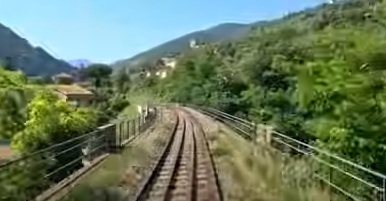
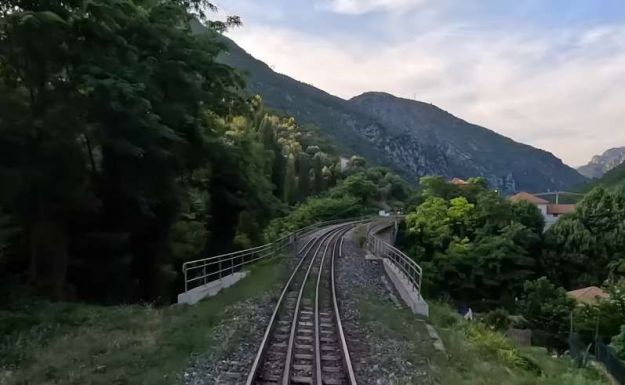
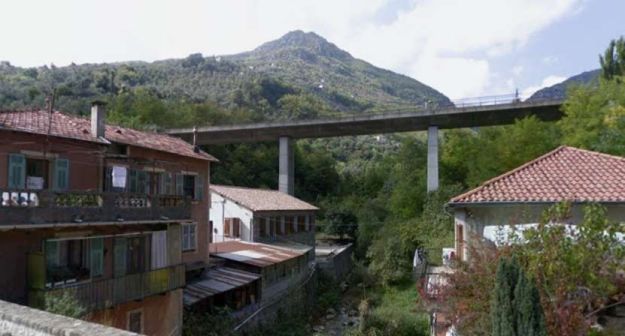
Cross comments that the distance of the Genova terminus at Piazza Manin from the central area of the city, means that the walk is quite daunting in summer months, but an extension into the heart of the city would be impractical because of the difference in height between the city centre and Piazza Manin. The terminus is situated high above the Bisagno valley which means that passengers see some fine views of the city soon after leaving the station. In describing the route, Cross speaks of a long viaduct “at Sant’Antonino which has four 10-metre arches. Departing services climb Sunday me 271 m in 9 km to reach Trensasco, located at 364 m above sea level. The line is cut into a ledge on the valley wall and near Cappuccio runs around the so-called ‘Colombo curve’ over the Viminate slope. The sharp bends give an exhilarating ride and are testament to the fact that the line engineers chose to bend with valley contours and even enter side valleys to avoid major tunnelling and expensive viaducts. … The line passes only through areas of sparse population, and former station buildings are so dilapidated it is often impossible to make out their names. Just before arriving at Campi (10 km), a small tunnel takes the line away from the main valley and shifts interest to the other side of the line. At Campi itself, up and down trains generally pass, and the guard of the ascending train has to advise control of his train’s arrival via a lineside telephone.” [2: p296]
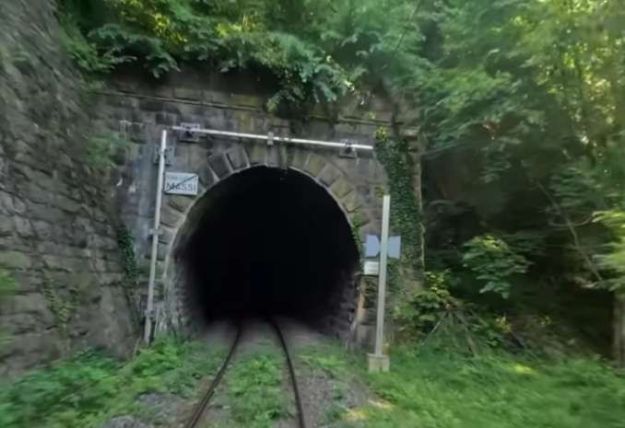
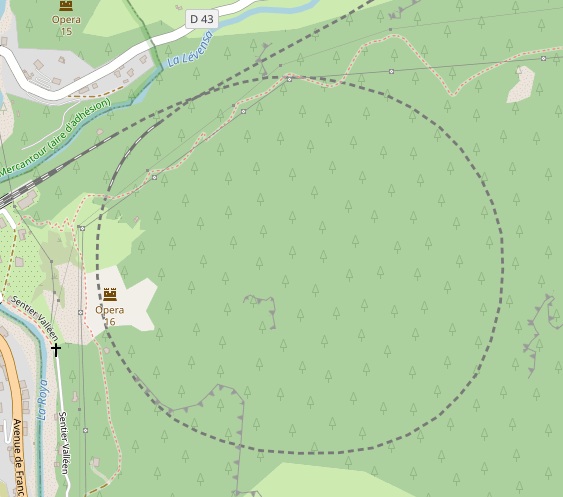
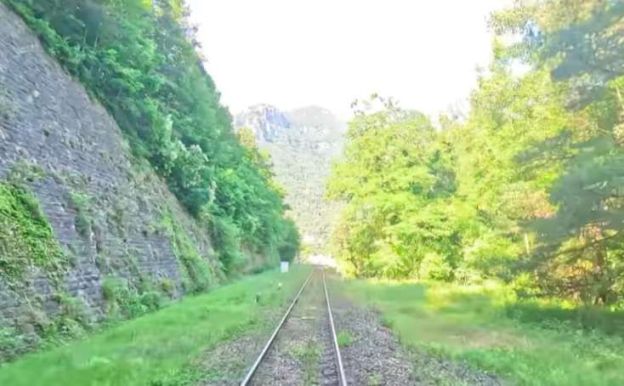
“Having arrived at 365 m above sea level, the line then descends towards Torrazza (11 km) and Vicomorasso (15 km), where the only sub-station is located and a spur line gives access to a small car shed. Withdrawn rolling stock has also been dumped here in recent years, while the station also provides passing facilities. Thereafter, the real assault begins and the line passes through some spectacular mountain scenery by means of loops and a spiral tunnel, climbing 100 m in a mere 2km before emerging into the Polcevera basin, with its notable chestnut and acacia woods. For one brief instant it is possible to see tracks below at three different levels! Another passing point is the small halt of Sant’Olcese Tullo.” [2: p296]
Cross continues his anecdotal account of a journey North along the line. He says that “the line continues to climb, although less dramatically in the mountainous terrain. There is one particularly dramatic hairpin bend near Sant Olcese, and near the following halt of Busalletta, fine views can be obtained of Monte Sella, 811 m. The railway summit is reached at Crocetta halt, 458 m above sea level and 22 km from Genova. It is possible to see the parallel road, which has done much to abstract traffic away from the line in recent years. There are also many small level crossings along the length of the line; the insignificant ones remain unprotected, while major crossing points are guarded by either automatic half-barriers and warning tones or simply flashing lights and audible tones.” [2: p296]
“Casella Deposito (24 km) is just before the main depot site and has only an anonymous raised concrete platform to betray its whereabouts. The main line leads into a three track fan at the depot, where maintenance equipment is located and vehicle overhauls carried out. Nearby is the site of a quarry which supplied the FGC’s ballast. Appreciable goods traffic (now all lost), led to a ramp being built at Piazza Manin station to permit stone to be directly off-loaded from wagons into lorries in the street below.” [2: p296]
“Trains must reverse to gain the Casella village line, sometimes achieved with a second railcar. On the last leg of the journey, the 1952-built combined road and rail bridge has the railway track on reserved and fenced aligament to one side. Thereafter, it is less than 1 km to the terminus, on the outskirts of the small village of Casella. Two-track Paese station is unmanned, although there is a small bar to welcome thirsty passengers. … The village has no special tourist attractions other than a few bars and restaurants, all mentioned in the FGC timetable. However, the cool mountain air makes a change from the oppressive heat of the coast, and an important magnet for day-trippers.” [2: p296]
Cross notes his sources for his article of which two are articles in the predecessor journal to the Light Railway and Modern Tramway – Modern Tramway. He quotes the news pages of that magazine from 1962 onwards and a specific article by Joachim von Rohr. [14] He also consulted an article in Mondo Ferrovario. [15]
As a separate note within his article, Cross comments on what he records as ‘The FGC’s First Serious Efforts to Attract New Traffic‘. …
“At the start of the 1970s, the FGC began its first serious attempts to attract excursion traffic. While Genova municipal authorities were doing their best to dissuade unnecessary car journeys in the city, the light railway offered free parking at Genova Piazza Manin station to holders of return tickets. … This certainly offered scope for development, given the dramatic and beautiful countryside and ancient churches and forts within reasonable walking distance of stations.
This initiative has developed quite dramatically, and the policy of the FGC is now oriented towards the tourist market. It has put together a Belle Epoque train, formed of ‘heritage’ stock. The three-car train made its inaugural run on 5th November 1989 and is powered by the oldest surviving electric locomotive in Italy, No. 29 of the former Sangritana railway. … Passenger accommodation consists of ex-Val di Fiemme trailers C101 and C104, which retain original wooden furniture and bronze and brass fittings, accompanied by bar car No. C22. A major overhaul on No. C22 was undertaken in 1990, considerably upgrading its interior and also increasing capacity. … In expectation of an increase in visitors for the 1992 Columbus anniversary celebrations, the historic train had a regular Saturday working during June, July and August. The train has proved popular with both wedding and communion parties.
Near both Campi and Sardorella stations, the FGC has created playgrounds and picnic areas; the facilities at Sardorella can only be reached via the FGC. In 1990-1, the FGC began a bicycle transport service using a specially converted wagon; alternatively, customers can hire bicycles at cheap rates in Casella village.” [2: p296]
The images below show Locomotive D1 which operates the tourist train. …
Locomotive D1 responsible for a single coach. [18]
And here with two coaches. [18]
And here, escaping from a tunnel portal. [19]
“Locomotive D1 was built in 1964 on behalf of the German railways by the manufacturer Gmeinder & Co. by adapting the MaK V100 standard-gauge locomotive to metre gauge, it was numbered V52 902 (later 252 902) and used on the 28 km long Mosbach-Mudau metre-gauge line. When it’s service on that line came to an end (2nd June 1973), it was first converted to standard-gauge by Gmeinder and used by Sudwestdeutsche Eisenbahngesellschaft (SWEG) which put it to work on the Breisach-Endingen-Riegel line (numbered VL46-01). In 1986, it was sold to the Gleismac company which converted it to metre-gauge and then sold it to the FGC. It was used to haul construction and passenger trains during the renovation of the overhead line. It was then set aside at Casella Deposito for over 10 years until in 2008 it was sent to Monopoli where it was rebuilt by 2014 and it returned to service on the line in November 2015.” [12][16][17]
Sadly, when we stayed in Genova in November 2024, the line was not operational and undergoing significant maintenance.
Part 3: October 1995 – Granarolo, Funiculars and the Guidovia
Cross’ third article about Genova begins by looking at the rack railway which ran from Piazza Principe, adjacent to Genova’s principal railway station to the small hilltop community of Granarolo. … Cross says: “The project was approved on 15th February 1896 and the line opened as an electric rack tramway on 1st January 1901, although the SGFM subsequently passed into liquidation on 2nd March 1902. Management of the line was then transferred to the Societé De Bernardi & Co (DBC), but this lasted only until 1907, when the concession passed to one Luigi Parodi, a former director of DBC. Upon his death in 1918, the municipality assumed control of the line, overhauled it and handed day-to-day management over to the Consorzio Nazionale Cooperative Combattenti, which stayed in control until 30th November 1934. On the following day, the Azienda Autonoma Autobus became the new owner of the line, this being then absorbed by the Unione Italiana Tranvie Elettriche! Despite the bewildering number of owners in the early years, the line has somehow managed to remain open ever since with no change in ownership.” [3: p333]
“The 1.1-km tramway was built to the unusual gauge of 1200 mm, entirely on reservation. The lower station is at Salita di San Rocco (24 m above sea level) and the upper at Granarolo (220 m). The maximum gradient is about 23.5%. The Riggenbach rack system was chosen, with the rack at railhead level. Rail came from the Ilva company, 21 kg/m in 10.5 m lengths. … In 1950, the line was slightly extended at the upper station to permit a combined depot and workshop to be built. The lower station was also rebuilt, but still contains the inscription Ferrovia Principe Granarolo. The lower terminus is just to the west of Principe FS station and was built between two long tunnels. The lower part of the line runs through the city’s busy San Rocco district. At the passing loop, there is a station for ascending cars only. Beyond, the line has been laid directly on the slope of the Granarolo hill.” [3: p333]
Cross reports that: “The earliest recorded rolling stock was rebuilt in 1929 by Piaggio of Genova with CGE electrical equipment and two 38-kW Ansaldo traction motors. The bodies are unusual, with longitudinal seating, stepped floors and an inclined roof at the upper end, not unlike funicular cars. The two cars are 7.8 m long, 1.9 m wide and have four external doors, two per platform, and two interior doors. Service speed is 7 km/h, both ascending and descending, and capacity is 45 passengers. … The tramway uses a 550 V dc overhead contact wire, with current supplied from a sub-station which also supplied the urban trams. Each car has two trolleys, although during the day descending cars require no current, since the main braking system does not use the trolley; cars descending at night are obliged to raise one trolley to provide on-board illumination. … An interesting safety feature that persisted until recently was the fitting of two small wheels to the lower end of each car to extend the wheelbase and prevent their overturning in the event of an emergency stop. At the end of each journey, the driver wound up a counterweight, to activate an emergency braking system. This unusual device required the driver to keep his hand on a special wheel to hold off the brakes while the car was in motion. The cars had a conventional rheostatic brake which effectively operated on the cogwheel. Since there was no moveable paintwork, the cars were also fitted with double-flanged wheels on my new side and unplanned broad rollers on the other to permit negotiation over the midway passing place.” [3: p333]
Cross continues: “When both the urban and suburban tramways closed, the municipality had to make a decision on the rack line. Rather than scrap a substantial tourist asset, it was decided to undertake a major overhaul of the line and also rebuild the first of the two tramcar-type vehicles. From August 1975 to July 1976, services were suspended while all the rail was renewed and the two cars lost some of their idiosyncratic features. Two-tone green livery was replaced by orange. … In 1981, the service was modified to reflect completion of a parallel road, which at last made it possible for the AMT to put on a parallel bus service. The rack tram now [in 1995] runs every 30 minutes and its 15-minute journey time normally requires only one car, the other being stationed either at the upper terminus or near the Via Bari halt, where there is an inspection pit.” [3: p333]
Cross notes that “The Granarolo rack tramway has always suffered from a lack of traffic. In the early 1960s, it only carried 1000-1200 passengers per day and, today [in 1995] the situation is little changed. However, long-term plans for the line envisage its extension down to the coast and also further up into the mountain, where it will connect with the Genova-Casella light railway, rerouted to serve the planned upper terminus. … Older plans proposed converting the line into a funicular, reducing the current four staff to three, even two if the whole line were automated. However, in 1989, consultants MTC-Italia proposed upgrading the line whilst maintaining it as a rack tramway, suggesting replacement of the Riggenbach system by ‘something easier to maintain’ and widening the gauge to 1435mm.” [3: p333]
Cross reported that plans would have included “two new standard-gauge bogie cars, 24.5 m long and 2.2 m wide, with a maximum permitted axle load of 8 tonnes. Each car would accommodate 36 seated and 172 standing passengers. An acceleration of 1 m/s² was proposed, with a surprisingly high maximum speed of 75 km/h. The traction supply would have to be upgraded to 750 V DC. Although approved by the AMT in November 1990, no finance [had] yet been released to enable it to be implemented. In 1994, both cars were painted in red, bringing their livery into line with that [of] the two urban funiculars.” [3: p333]
Wikipedia notes that “In 2002, car 2 was sent away for an overhaul, but the bankruptcy of the original contractor and the involvement of a replacement in an alleged bribery scandal meant that the overhaul was not completed and the car returned to the line until March 2019. The overhaul included the replacement of the car floor, lighting, safety systems, electric drive, air conditioning and a new driver’s seat. Between 2002 and 2019, service was provided by car 1 operating alone. AMT now [2019] plans to use the rebuilt car to double the service frequency to every 15 minutes. ” [21]
Forward to 2024/2025 and our visit to Genova in November 2024. … When we were in Genova, we found this rack railway closed for maintenance work. Fabio Canessa reported in 20th May 2024 [20] on endless inconvenience for the inhabitants of Genova, with the line to Granarolo to be closed for major works for 2 years and the principality still waiting for news on an additional car for the line. [The notes from his report below have translated into English by Google Translate.]
Canessa noted that a series of interventions that would “force the closure of the system between the valley terminus and the stop on Via Bari for the entire duration of the construction site. … It [would] involve replicating the same interventions carried out in 2012 on the upstream section. … The project, includes the consolidation of the historic walls, which are no longer up to standard, the creation of a lateral walkway to allow passengers to move away safely in the event of a breakdown, a sort of overflow pipe that runs parallel to the railway and discharges the water collected by the canal, the reconstruction of the pylons with the same look as the upper section and the reconstruction of the overhead line. …In addition, the stop on Via Centurione , which is currently unusable on the downstream side, will be fixed.” [20]
“For the works, just over 2 million euros [were] allocated by the Region under an agreement with the Ministry of Infrastructure dating back three years. However, these resources are not yet available to AMT [on 20th May 2024], …the contract is being awarded, … but …. the works cannot be assigned until the Region … [provides] the money. The situation should be unblocked by June [2024] so that the construction site can be opened in the summer. In the meantime, the expropriations are being defined , which will concern small portions of private land necessary to move back the pylons and make room for the walkway.” [20]
“The bottom line, for the residents of San Teodoro and Granarolo who often have no alternatives to the rack railway except walking, is that until 2026 the service will be limited to the via Bari-Granarolo section . Initially there was talk of 12-18 months, then the forecasts worsened. Unfortunately not all the work can be done at the same time, safety must be guaranteed.” [20]
“The same section of the rack railway was closed for six months in 2021 to replace the tracks, sleepers, pylon plinths and also part of the contact line. The odyssey began in the early 2000s with the start of restyling work on one of the two cars , a story that lasted almost twenty years. … Speaking of carriages, it is not yet certain what the timing will be for the third one: the Region had allocated 3.5 million euros for the construction. … The contract was awarded to SVI of Lucignano (Arezzo) with a contractual expiry date set for September 2028. Even in this case, however, the Region must first unlock the necessary resources.” [20]
The Principe – Granarolo Rack Railway. [22]
The Zecca Righi Funicular
Cross tells us that plans to build “the Zecca Righi rack-braked funicular were first brought to the attention of the Genova public by a Mr Bucher on 30th June 1891. This was to start in Piazza della Zecca and proceed northwards in tunnel for 700 m. A station at Carnonara would have public access in an open shaft at 348 metres, while Montegalletto station was to be located at the upper entrance to the tunnel. Here, a transfer would be made to a second line, 820 m long and built entirely above ground. This would feature two intermediate stations, at Fossato and San Simone, with the upper terminus situated at the Chiappe wall on Righi mountain, from where tremendous views can be obtained of the Bisagno valley.” [3: p333]
Cross notes that Abt rack braking was preferred. ABT rack braking utilises two or even three different rack profiles, each half offset from each other. Trackopedia says that, “The tooth spacing is larger than with the other rack systems (120 mm). The advantage is that the profiles are always installed offset, so there are no full joints. Due to the low thickness of the profiles, they can be fitted or rotated much more easily by hand, which makes maintenance easier. In the curve, the outer profile should theoretically be longer. With short profiles, the difference in length is equalized at the joint.” [23]
Initially, a 900-mm track gauge was chosen for the line, “but this was later changed to metre gauge. The project was given the go-ahead and construction of what was classed as a secondary railway was begun. The upper line opened on 30th April 1895, while the steeper gradients encountered on the lower line delayed its opening until 13th February 1897.” [3: p333]
“The two lines gave trouble-free operation for the next 70 years, but were rebuilt into a single funicular during a much-needed modernisation programme instigated by AMT, the new owner. Bell of Luzern undertook the conversion, with two high-capacity metal-bodied cars replacing the original wooden rolling stock. The new funicular cars had rigid suspension and driving gear consisted of 2 x 125-kW motors, permitting a speed of 4.4 m/s. Each car could accommodate 100 passengers, restricting the maximum one-way traffic flow to 400 passengers per hour, with a 15-minute journey time.” [3: p333-334]
Cross continues: “A second modernisation programme was announced in 1985. It was decided to introduce partial automation to reduce staff costs, with Ansaldo Trasporti and Nuova Agudio awarded the contract. The line was closed on 3rd August 1987 and replaced by substitute buses. The old track was replaced by heavier 50 kg/m rail mounted on rubber to reduce noise emission, while the winding motors, electrical equipment, telephone system and safety equipment were also replaced. The modern day line is 1.4 km long with a difference in height of 278 m between the two termini. Average gradient is 19.9%, with some sections as steep as 34%. … The new twin-car units, driven by 2 x 458-kW winding motors, and with sliding doors, have a speed of 6 m/s, cutting the journey time to 10 minutes and increasing the one-way passenger capacity to about 1800/hour, each train holding up to 156 passengers (16 seated) on seven stepped levels. Modern suspension has also greatly improved the ride quality, while electricity for car lighting is picked up by a mini-pantograph from a simple overhead.” [3: p334]
Cross concludes his notes about this funicular: “The two-car trains, which have been painted in a striking red livery with an orange zig-zag stripe outlined in white, can call at all seven stations, although the intermediate stops at Carbonara, Santa Nicola (urban bus connection), Madonnetta (religious shrine), Preve and San Simone are request stops signalled both by passengers waiting on station platforms and those inside the cars. The starting sequence is automatic, but cars are nevertheless, single-manned. No tickets are sold on any funicular premises, although ticket cancellers are provided on cars, and the tariff is that of the urban bus network.” [3: p334]
The Sant’ Anna Funicular
The Sant’ Anna Funicular on 18th May 2015 – Car No. 1 at the summit station, (c) Tiia Monto and licenced for reuse under a Creative Commons Licennce (CC BY-SA 3.0). [29]
Cross offers two short paragraphs about this line. …
“There are not many rail lines offering an end-to-end journey time of around one minute, but this is all that is necessary to travel on the 353 metres between Piazza Portello and Corso Magenta on the Sant’ Anna funicular. So short is the line that it is possible to see both cars from either station. The present day installations were supplied by Agudio Poma of Torino and consist of two small red cars, driven by a 42-kW motor, with bodywork from Merighi, Neri & Roversi.” [3: p334]
“Operation is automatic, although each car has a driving cab, and the 54-m height difference, starting at 20 m above sea level at Piazza Portello, is undertaken at a track speed of 4 m/s, with the passing place at a relatively flat location. Each car has eight seats on two stepped levels with a nominal total capacity of 30, giving a capacity of 180 passengers per direction per hour, with departures every ten minutes. Entry to the funicular is controlled by a turnstile, with boarding and alighting passengers segregated. The line is operated by AMT, so one day FS-AMT passes can be used.” [3: p334]
La Guidovia del Santuario della Guardia
In my survey of the different lines serving Genova, I missed this line completely. This is perhaps not surprising as it closed in October 1967!
A 1934 advertising poster for the line. [26]The sanctuary of the Madonna della Guardia, on Mount Figogna, in the Polcevera Valley, is frequented by believers from all over Liguria. Around 1490 the apparition of the Virgin to a peasant gave rise first to a simple chapel and then, between 1528 and 1530, to a true sanctuary. In 1890 there was a further renovation with the construction of the current church. A hospice was built next to it and the complex covered the entire summit of the mountain. [27]
This map of the line can be found on the Marklinfan.com website and is embedded here The terminal at Serro can be seen in the bottom-right of the image. The shrine is towards the top-left of the sketch map. [26]A watercolour sketch of one of the Cars used on the line. [27]
Cross says: “Some 250,000 visitors per year are attracted to the religious shrine on Monte Figogna, 817 m above sea level and from where spectacular views can be obtained over the Polcevera valley and the Mediterranean. The idea of providing a fixed link emerged in 1891, although a Belgian initiative dating from 1906 stalled for want of finance. It was not until 1926 that the Ferrovia Santuario della Guardia company was founded and subsequently undertook construction. … On 29th July 1929, the company inaugurated an initial 8.8-km section, linking the lower station of Serro di San Quirico, halfway between Bolzaneto and Pontedecimo and at 66 m above sea level, with a temporary upper terminus at Ca’Bianca (676 m). From Genova, it was possible to reach Serro, nestling between two steelworks and some oil refineries, via the UITE tramways. The remaining 1.7-km section was finally opened on 23rd June 1934. In all, there was a 130-m height difference between upper and lower termini with maximum gradients of 8.3% (the average was 6.5%) and minimum curve radius of 25 m. The line was single-track, with seven passing points and 10 Intermediate stations.” [3: p334]
Cross comments: “The Guidovia was highly unusual in that it featured petrol-engined solid-rubber-tyred vehicles which followed two parallel 200-mm wide concrete tracks. Inside these, conventional metre-gauge Vignole 9 kg/m rails acted as a guide path for flanges located on the inside of the wheels. … Iron tie-rods separated the rails at a fixed gauge, with conventional sleepers unnecessary since the weight of the vehicles was placed off the rails and on the concrete pathways. Known as the Laviosa guidance system, it was invented by the Corazza brothers, who owned the line. Rubber tyres were chosen because they gave twice the adhesion of steel wheels acting on steel rails, and made it possible for the vehicles to overcome the numerous steep gradients on the slopes of Monte Figogna.” [3: p334]
Annotated in Italian, this sketch shows the construction of the permanent way. [26]
Construction work showing the light Vignole rails and the ties which maintained the guage. This image is embedded from the marklinfan.com website. [26]
This image shows the size of the concrete bed on which the rubber-tyred wheels would run. [26]
This is probably the earliest form of guided bus technology used across the world and should be seen as the precursor of a number of other systems. [25]
Cross continues: “Both freight and passengers were carried, with passenger cars often hauling goods wagons. The journey was usually accomplished in 45 minutes at a speed of 12 km/h, although the cars had a theoretical maximum speed of 18 km/h. … The weekday timetable consisted of five return journeys, ten at weekends, although many other specials were put on for groups of visitors. Indeed, it was not unknown for the Guidovia to carry 3000 passengers in one day. In all, 30-35 staff operated the line, of which 11 were drivers, each responsible for the upkeep of his own vehicle. The depot and workshops were next to the lower terminus, which was equipped with a small turntable; others also at the upper terminus and at Gaiazza.” [3: p334]
The Cars were unidirectional and required turning at both terminii of the line. Staff called the turntables used ‘giostre‘ (carousels).
A Car being turned at the Serro terminus. [26]
A Car being turned at the upper terminus. [26]
A superb view of the Santuario della Guardia and the summit station of the Guidovia. [28]
This image shows both an unidentified Car and the Santuario della Guardia. It is embedded here from the stagniweb.it website. [28]
“The original fleet consisted of five bi-directional 90-hp petrol-engined cars (1-5), built by Officine Laviosa of Piacenza, with bodies made of waterproof oil-cloth. There were two Giardiniera trailers. In 1936, three single-cab cars (6-8) of slightly higher capacity were added. Changes were made to cars 1-5: their rear cabs were removed and a more powerful, 120-hp diesel engine fitted. In 1952, the two existing trailers were motored, using MAN diesel engines, to cater for rising patronage. An eleventh aluminium-bodied car also existed.” [3: p334] Cross was unable in his article to provide details of that aluminium-bodied car. More details have come to light since he wrote his article.
This picture of aluminium-bodied Car No. 11 is embedded from the marklinfan.com website. No. 11 was the last Car built for the line. Built in 1955 to cope with the increase in users, it was made of aluminum and had different windows, double lights, and was equipped with automatic compressed air doors. It was built in the company’s Serro Workshops. [26]Another photograph of Car No. 11 taken at the summit station. This image is displayed on one of the explanatory panels at the station. [28]A drawing of one of the earlier Cars also from the display boards at the summit station. [28]
1:200,000 Touring Club Italiano map from 1964 shows the route of the line. The Guidovia is drawn from Madonna della Guardia to Bolzaneto. [28]
Cross says that at about the same time as Car No. 11 was built, Cars No. 2 and No. 4 underwent a complete revision, involving a livery change from light green to two-tone green. Ultimately, “the line closed in October 1967 with the expiry of the company’s concession. Track and superstructure had been allowed to deteriorate, and rolling stock was also life-expired. In the 1970s, the company laid on a bus service on a new road that had opened up the Santuario.” [3: p334]
A few pictures follow which have been embedded from the stagniweb.it website. They give a good idea of the condition of the line in the 21st century. …
The tie-bars and rails. [28]
The concrete platform. [28]
Approaching the summit. [28]
The display boards at the summit are housed in a shelter which simulates one of the old cars used on the line. [28]
Cross acknowledged the following sources for his notes on the rack railway, the funiculars and the Guidovia line;
Ferrovia Principe-Granarolo by A. Sasso & C. Serra (Mondo Ferroviario, October 1991).
The Tramways and Light Railways of Genova by J. von Rohr (Modern Tramway, June 1964)
Nuova Funicolare per Genova by Alessandro Sasso (Mondo Ferroviario, April 1990).
News pages of Modern Tramway 1962 et seq Guidovia della Guardia by A. Sasso & C. Serra Mondo Ferroviario, December 1990).
The Tramways and Light Railways of Genova byl von Rohr, (Modern Tramway, June 1964)
References for this full article
Barry Cross; Genova: Back in the Tramway Business Part 1: The Interurbans and the ‘Light Metro’; in Light Rail & Modern Tramway, August 1995, p251-253.
Barry Cross; The Tramways of Genova Part 2: Casella Line Begins to Realise Tourist Potential; in Light Rail & Modern Tramway, September 1995, p295-296.
Barry Cross; The Tramways of Genova: Concluded: Granalaro, Funiculars and the Guidova; in Light Rail & Modern Tramway, October 1995, p333-334.
Stanley Jenkins comments: “Situated at the head of a fertile valley some five miles inland from the Cromarty Firth, Strathpeffer was once famous as a health spa and fashionable holiday resort. Although the medicinal value of the local mineral springs had been known for many years, the village did not really develop until the Victorian era when the Countess of Cromartie was instrumental in creating a Central European-style spa in this remote part of Scotland.” [1: p53]
When the first section of the Dingwall & Skye Railway opened on 19th August 1870 the Strathpeffer area became much better connected. However, the new line ran well to the North of the village. The line had a station named ‘Strathpeffer’ but it was 2 miles from the spa and at a much higher level. The station ended up in that location because of the opposition of a local landowner to a far better route for the Dingwall & Skye line, which would have passed through the village. The result was a steeply inclined (1 in 50) line climbing to the summit at Raven Rock
The distant station meant that the increasingly popular spa had to provide a horse-drawn road service for increasing numbers of upper-middle class clients. Stanley Jenkins tells us that “It soon became clear … that a direct rail link was needed. Meanwhile, in 1880 the Dingwall & Skye Railway was merged with the Highland Railway, and following this development it was agreed that a short branch line would be built to Strathpeffer. The proposed line would follow a route similar to that suggested for the Dingwall & Skye Railway in the 1860s, albeit with a terminal station in Strathpeffer, rather than a through station as originally planned. Accordingly, on 28th July 1884 powers were obtained for the construction of a 2 mile 38 chain railway from Fodderty Junction, on the Dingwall & Skye Railway, to Strathpeffer. The authorised line ran west-south-westwards across easy terrain towards its destination, and with few physical obstacles to hinder the work of construction good progress was made. The single-track branch was opened on 3rd June 1885, the original Strathpeffer station on the Dingwall & Skye route having been renamed Achterneed just two days earlier.” [1: p53]
The line was single-track and had no intermediate stations. As there was no station at Fodderty Junction, trains ran to and from Dingwall. Jenkins comments that the railway terminated at Strathpeffer “in a spacious terminus, while at Dingwall the Highland Railway company provided a new junction station with much improved facilities.” [1: p53]
Jenkins notes that lines like that serving Strathpeffer “attracted a certain amount of excursion and leisure traffic during the Edwardian period. Indeed, the Strathpeffer branch was albeit briefly – served by a ‘named’ train. In 1911, the ‘Strathpeffer Spa Express’ was introduced as a special Tuesdays-only working that left Aviemore at 2.30pm and ran non-stop to Dingwall; the train then continued westwards to Strathpeffer, with an arrival time of 4.15pm. This prestigious service ran in conjunction with a train that left Perth at 11.50pm, the idea being that through travellers would be able to reach their hotels with time to wash and change before dinner. Curiously there was no corresponding up service, and one assumes that travellers were expected to return southwards on normal branch services. A similar through service was available on Saturdays during the Edwardian period; this working normally left Inverness at 3.00pm, and it called intermediately at Beauly, Muir of Ord, and Dingwall. In the up direction the balancing southbound service departed from Strathpeffer at around 8.15pm. These through workings catered primarily for visitors to the larger hotels in Strathpeffer, and in this context it is interesting to note that the Highland Railway opened its own hotel in 1911. The through services were withdrawn at the start of World War I, the ‘Strathpeffer Spa Express’ being deleted in 1915, while the Inverness through trains ran for the last time in 1914.” [1: p53]
The two extracts below from the 25″ Ordnance Survey of 1904 give an overview of Dingwall Railway Station and village. The full length of the station site and the junction of the line to Skye are included on this extract from the 25″ Ordnance Survey from the turn of the 20th century. [14]
Jenkins notes that “In its later years the route was treated as a minor branch line, with a service of around half a dozen trains each-way between Strathpeffer and the junction station at Dingwall. The latter station was opened on 11th June 1862 when the first section of the Inverness & Ross-shire Railway was brought into operation. In its early years the station was a very basic affair which hardly seemed appropriate for the county town of Ross & Cromarty. The station became a junction following the opening of the Dingwall & Skye Railway on 19th August 1870, but Dingwall did not reach its fully-developed form until the construction of the Strathpeffer line in the following decade.” [1: p55]
Jenkins tells us that “In view of the importance attached to the Strathpeffer scheme, it was decided that new and much-improved station buildings would be constructed, while a separate bay platform was installed at the north end of the station for use by terminating branch trains. The new station building was in effect a de-luxe version of the usual Highland Railway design, stone being utilised instead of the normal timber construction, while the building was given a substantial glass & iron platform canopy formed of seven transverse bays. The up and down platforms were linked by a lattice girder footbridge, and there was a small waiting-room block on the up side.” [1: p55]
“The track layout at Dingwall incorporated a number of loops and sidings, while the goods yard contained a range of facilities for all forms of traffic including coal, livestock, vehicles, and general merchandise; a 4ton yard crane was capable of dealing with timber or other large or heavy consignments. The station was signalled from two standard Highland Railway signal cabins known as Dingwall South and Dingwall North boxes.” [1: p55-56]
The junction between the line to Kyle of Lochalsh and the line North to Wick. The line to the North of the station, bridges the River Peffery (which is still tidal at this point) just to the South of the junction. Strathpeffer trains followed the Kyle of Lochalsh line to the West as far as Fodderty Junction. This is an extract from the ESRI satellite imagery provided by the NLS. [14]The road from Dingwall to Strathpeffer crossed the line at a level crossing. The crossing-keepers cottage can be seen on the South side of the railway line, to the East of the road. This is another extract from the 25″ Ordnance Survey from the early years of the 20th century. [19]The same area on the 21st century ESRI satellite imagery. [19]Looking North along the A834 through the level crossing with the Kyle of Lochalsh railway line. [Google Streetview, March 2023]Looking East from the A834 at the level crossing with the Kyle of Lochalsh railway line. [Google Streetview, March 2023]Looking West from the A834 at the same location. [Google Streetview, March 2023]
Jenkins tells us that, “On departure from Dingwall, branch trains proceeded westwards along the Kyle of Lochalsh line for a distance of 2 miles 22 chains. At Fodderty Junction the Strathpeffer route continued westwards, whereas the Kyle line turned sharply north-westwards on its way to Raven Rock Summit.” [1: p55-56]
Immediately to the North of Fodderty Junction, just off the top edge of the two images above, the Kyle of Lochalsh line crosses the modern A834 – the road from Dingwall to Strathpeffer.
“Until 1936, Fodderty Junction was worked from a small signalbox controlling home and distant signals in each direction, as well as the junction points. The junction was later operated by a hand generator from Dingwall North Box, with key-token operation on the ‘main-line’ section between Dingwall North and Achterneed, and one-engine-in-steam working for branch trains between Dingwall North and Strathpeffer. This mode of operation presented certain problems in that there had to be various ‘fail-safe’ arrangements between the two systems of single-line working. The Strathpeffer branch was therefore worked by a Tyer’s Occupation Key, which prevented conflicting movements on the main line between Dingwall North and Fodderty Junction, and ensured the safe operation of the one engine-in-steam section between Fodderty Junction and Strathpeffer.” [1: p56]
“Fodderty Junction Signal Box was reopened in June 1940 in connection with heavy wartime traffic on the Kyle of Lochalsh line. This situation pertained until August 1944, when the box was again closed. The box itself was a typical Highland Railway structure, while a small stone cottage was available nearby for the benefit of the signalman and his family.” [1: p56]
“Having gained their own line at Fodderty Junction, branch trains proceeded generally westwards along the south side of a fertile valley. The route was not quite straight, and as the railway approached its destination the single line was heading approximately west-south-westwards. Slowing for the final approach to the terminus, down trains passed a fixed distant signal, after which they came to rest in an attractive station, some 2 miles 38 chains from Fodderty Junction and 4 miles 60 chains from the start of the journey at Dingwall.” [1: p56]
Incidentally, for those who are unfamiliar with the full range of imperial units, a ‘chain’ is 22 yards in length (66 feet) and there are 80 chains to one mile. Initially the length of a chain varied between different jurisdictions but standardisation occurred in 1824 with the introduction of the imperial system of units. [2] A 66 ft. chain was made up of 100 links. [3]
The journey along the branch was relatively easy work for the locomotives employed. The approximately 2.5 miles to the terminus at Strathpeffer was on easy grades.
“Like other Highland Railway branch-line stations Strathpeffer was well laid-out, with a lengthy platform for passenger traffic on the up side and a small goods yard on the down side of the line. The platform line was flanked by an engine-release road, which was equipped with a short dead-end spur at its western end. Although only one platform was provided, there was sufficient space for a second platform on the down side if traffic requirements had ever justified such a facility. There was a short loading dock beside the spur at the end of the run-round loop, and this could, if necessary, have been extended eastwards to form a second full-length platform.” [1: p56]
“The station building was similar to those at other Highland branch-line terminals, albeit somewhat larger. This typical single-storey timber-framed structure was clad in the usual vertical weatherboarding, while its low-pitched slated roof was punctuated by an array of squat chimney stacks. As at Dingwall, an extensive ridge & furrow platform canopy was provided, eleven transverse bays being supported on a dozen vertical iron columns with ornate quatrefoil spandrels. The Highland Railway was not, by any definition, a rich company, and the provision of this lavishly-appointed station underlined the company’s commitment to the development of passenger traffic at Strathpeffer.” [1: p56]
https://canmore.org.uk/collection/44840 shows Stroudley 0-6-0 saddletank locomotive LMS 16118 (originally named ‘Balnain’ and later ‘Dornoch’) in Strathpeffer Station. [NB. This image can only be viewed on canmore.org.uk website as is not available for download.]
“The goods yard contained three dead-end sidings, one of which passed through a typical Highland Railway timber goods shed while another terminated alongside a raised loading bank. The yard was entered by means of a siding connection on the up side of the running line, the single turnout facing the direction of down trains. The main form of goods traffic handled here was domestic coal for consumption in the nearby hotels and guest houses, although it seems likely that a considerable amount of building material would have been handled at Strathpeffer during the Victorian period when many new buildings were being erected in the immediate vicinity.” [1: p56]
“The terminus was signalled from a small signal cabin on the down side of the run-round loop. The box contained an 11-lever frame with three spare levers. There was just one working signal, this being an up starting signal that was locked in the ‘danger’ position when the key token for the Dingwall North to Strathpeffer section was placed in the Strathpeffer key-token instrument. As a further safety measure a catch-point and sand-drag was provided beside the starting signal, and once set for the sand-drag the catch-point could not be reset until the key-token had been withdrawn from the Strathpeffer instrument.” [1: p57]
“Other features of interest at Strathpeffer station included a water tank and a well-built stone cottage for the stationmaster, both of these structures being situated to the south of the platform on the down side of the line. The station was well-sited in relation to the village (or ‘The Strath’, as it was known locally), and visitors arriving by train did not have far to walk in order to reach their hotels.” [1: p57]
“Strathpeffer was well-equipped with shops, golf courses, gardens and a pump room, all of these amenities being designed to cater for the needs of upper-middle class Victorian visitors.” [1: p57]
“Sadly, the heyday of Strathpeffer as a fashionable resort came to an end with the outbreak of war in August 1914, and in retrospect the LMS era was a period of slow but inexorable decline. Passenger services lingered on until the end of World War II, but the end came on 23rd February 1946 from which date the railway was closed to passenger traffic. Goods services continued until March 1951, after which the branch was closed in its entirety. Demolition was soon accomplished, but the once-elegant station building at Strathpeffer survived in a derelict condition.” [1: p57]
“In due course the delights of Strathpeffer were rediscovered by spa enthusiasts, conservationists, and students of Victorian architecture, and in recent years the Spa Pavilion and other buildings have been lovingly restored. Happily, the station building was sufficiently intact to attract funding for its restoration, and in 1980 this timber-framed Highland Railway structure was reopened as a craft centre and museum. In its new role, the restored station forms a fitting memorial, not only to the Strathpeffer line, but also to the other minor lines that once abounded in this corner of Scotland.” [1: p57]
Stanley Jenkins; Highland Railway Minor Lines: 2; in Rex Kennedy (ed.); Steam Days; Red Gauntlet Publications, Bournemouth, Dorset, January 2002; p48-57.
William John Macquorn Rankine; A Manual of Civil Engineering (2nd ed.); Griffin Bohn & Company, London, 1863, p3.
The first tramway in San Sebastian (Donostia in Basque), owned by La Compañía del Tranvía de San Sebastián (TSS), opened on 18th July 1887 as a metre-gauge horse-powered line. “It provided a service from the eastern suburb of Ategorrieta to and from the town centre and beach. The tramway was then extended beyond Ategorrieta to the town of Herrera, including 2.1 km of reserved track and a 100-metre tunnel, avoiding the severe gradients of the Miracruz hill. The single-track-and-loop line eventually reached Rentería in 1890.” [1: p185]
The Compañía del Tranvía de San Sebastián (CTSS) was founded on 28th August 1886 and is one of the oldest businesses in Gipuzkoa. At first, it provided Horse-powered services in the city. [2]
“The horse trams, known as ‘motor de sangre’ (literally blood engines), soon showed their limitations and for this reason the heads of the Company studied ways to modernise the transport system.” [2] It hoped to upgrade services by using steam trams but environmental concerns resulted in the local authority refusing the Company’s application. Instead, the Genèva-based Compagnie de l’Industrie Electrique et Mécanique was awarded the contract to build a line across the city. “A partial electric service was inaugurated on 22nd August 1887, and through running between San Sebastián and Rentería became a reality on 30th October. The rolling stock was built in Zaragoza using Thury (later Sécheron) electrical equipment, and consisted originally of motor trams 1-10 capable of hauling two trailers at 24 km/h. Several extensions were added to the tramway system until there were nine numbered services (1-9) all of which started from Alameda in the centre of San Sebastian.” [1: p185]
San Sebastian’s tramways were built to metre-gauge.
On 22nd August 1897, the first electric trams began to circulate between Rentería and Ategorrieta and the electrification of the city was completed on 22nd October of that same year. Donostia became the second city in Spain to have electrical trams (after Bilbao whose first line was up and running in 1896) and the first to electrify all its services (the Basque capital still had horse trams on some lines until 1909). [2]A tram at the Monte Ulia tramway terminus. [3]San Sebastian, Gros district and Mount Ulia, circa 1919. [3]
Barry Cross says: “Given the success of the urban tramways, it came as no surprise when the local entrepreneur, Vicente Machimbarena y Gorgoza, applied for the concession to build a 3.09-km ‘railway’ up the side of Monte Ulía, in 1893. The relevant legislation came into effect in 1895 and specified electric traction with overhead supply and the use of a rack to surmount a maximum gradient of 6%. However, when the engineer, Narciso Puig de la Bellacasa, was asked to undertake the initial surveys in 1896, they were for an adhesion line only. It was not until 1900 that sufficient money (ESP 530 000) had been raised to form the company, ‘Ferrocarril de Ulía’. Work on its construction began the same year, and the line opened on 9th July 1902. Although conceived as a railway, the completed metre-gauge line was merely an extension of the town tramways, with which it connected at Ategorrieta. As built, the continuous gradient varied between 4.5 and 5.5%, the only flat section being the mid-point passing loop.” [1: p185]
Cross continues: “The composition of the initial tramcar fleet accurately reflected the line’s tourist nature, since both the three two-axle motor trams and six trailers were of an open crossbench design known as ‘jardineras’. All cars were built in Zaragoza by Carde y Escoriaza, which equipped the motor cars with 2 x 52-kW motors and both rheostatic braking and electromagnetic track brakes. The early success of the line prompted the company to buy a further three motors and six trailers of the same design in 1907.” [1: p185]
The original tram service ran every 30 minutes. This was improved to 15 minutes from 1907. There were no intermediate stops on the climb up Monte Ulia. The tourist tram’s main purpose was to reach the summit.
Aerocar
The ‘Ferrocarril de Ulía’ Company, while paying a 2% dividend in 1904 also increased its capital to ESP 1 million with a view to building “something variously described as a ‘Tranvía Aereo’ and as a ‘Transbordador Funicular’. It opened on 30th September 1907 and proved to be one of the world’s first passenger suspension cableways, similar in concept although not in design to the aerial cableway across the Devil’s Dyke near Brighton, which had been built 13 years earlier. It began near the Monte Ulía tram terminus and rose gently just above the tree-tops to the Peña de las Aguilas, from where visitors could obtain impressive views along the Cantabrican coast.” [1: p186]
A close view of the fragile-looking passenger car of the Tranvia Aereo’. [4]
The next four images are postcard views of the Monte Ulia Aerocar. ….
“The world’s first aerial tram was probably the one built in 1644 by Adam Wiebe. It was used to move soil to build defences. Other mining systems were developed in the 1860s by Hodgson, and Andrew Smith Hallidie. Hallidie went on to perfect a line of mining and people tramways after 1867 in California and Nevada. Leonardo Torres Quevedo built his first aerial cableway in 1887. His first for passengers was this one at San Sebastian Donostia in 1907.” [3] Wikipedia’s Spanish site suggests that the cableway closed in 1912. [4] certainly, “Monte Ulia’s tramway and cableway were to be seriously threatened from 1912 onwards by the creation of rival attractions on Monte Igueldo, the mountain across the bay. Earlier but unrealised schemes had envisaged running a tramway around the base of this impressive mountain on a sort of Marine Drive, and taking it out to sea on a jetty to the island of Santa Clara, where a casino was to be built. However, so ambitious a project never materialised, and it was later decided to build a funicular instead. This would run from Ondarreta to the top of Monte Igueldo and be provided with a connecting tram service via a short branch line from the Venta-Berri Alameda tramway operated by the TSS.” [1: p186]
After 1912, the Monte Ulia line became progressively more unprofitable and closed down in 1916. However the ‘Aerocar’ story does not end in 1916 in San Sebastian. For a little more, please head through this article beyond the next section about a funicular railway. …
The Funicular de Igueldo
Cross tells us that “The main promoter of this new scheme was Emilio Huici, and the engineer in charge of the funicular project was Severiano Goni, who later built the Artxanda funicular in Bilbao. The Swiss firm of Von Roll supplied the electrical and mechanical equipment, leaving it to a local workshop to manufacture the funicular car bodies. Each car had five compartments with 30 seats and room for 20 standing. The line was 312 metres long and climbed 151 metres at gradients between 32 and 58%, making it the steepest of its kind in Spain.” [1: p186]
“The funicular opened for business on 25th August 1912, offering visitors to the summit the chance to dine at its restaurant until midnight, or to take “five o’clock tea” on a terrace overlooking San Sebastián. A return trip to the summit cost ESP 0.50, while from 5th September 1912 onwards the mountain enjoyed a through tram service from Alameda to the lower station of the funicular.” [1: p186]
The travelling distance of 320 metres connected Ondarreta Beach at the bottom, with the popular Monte Igueldo Amusement Park at the top, offering spectacular coastal views of La Concha Bay along the way. [3]
The next four images are postcard views of the funicular railway. …
The Spanish Aerocar in North America!
Cross points us to a similar but larger ‘Aerocar’ which was opened in 1915 in North America. It crossed the Whirlpool Rapids on the Canadian side of Niagara Falls. “It was built by the Spanish engineer, Leonardo Torres Quevedo, who, undaunted by the financial failure of his first cableway on Monte Ulía, had been persuaded to build a second. Its success can be measured by the fact that it survives to this very day.” [1: p186]The Canadian has been upgraded several times since 1916 (in 1961, 1967 and 1984).[1] The system uses one car that carries 35 standing passengers over a one-kilometre trip.[2]
The Canadian has been upgraded several times since 1916 (in 1961, 1967 and 1984). The system uses one car that carries 35 standing passengers over a one-kilometre trip. [5]
Three images of the Canadian ‘Spanish Aerocar’ follow below. …
Three images of the Aerocar’. [6]
The ride on the ‘Aerocar’ is featured on the Niagara Parks website. [7]
References
Barry Cross; The Spanish Aerocar; in Light Railway and Modern Tramway, July 1992, p185-186.
Flicking through a number of old magazines passed to me by a friend here in Telford, I came across a supplement published by The Railway Magazine in December 1990, “Eric Treacy: The Classic Years.” [1]
The Rt. Revd. Eric Treacy MBE, LLD, Lord Bishop of Wakefield from 1968 until 1976, died on Appleby Station on 13th May 1978. He left behind a large collection of railway photographs, taken over more than four decades.
In 1932, he was ordained deacon in the Church of England and priest a year later, serving as curate at Liverpool parish church from 1932 to 1934. [4] Wikipedia tells that “he took up railway photography, being inspired by visiting Liverpool Lime Street and getting to know his parishioners who worked on the railway. His photographic work appeared in various magazines during the 1930s.” [3]
His railway photography “was interrupted by the Second World War when he served as Military Chaplain. On 12th March 1940, he was commissioned as Chaplain to the Forces 4th Class (equivalent to captain). [5] On 10th May 1945, it was announced that Treacy had been Mentioned in Despatches ‘in recognition of gallant and distinguished services in North West Europe’. [6] He was promoted to a Chaplain to the Forces 3rd Class (equivalent to major). On 24th January 1946, he was appointed a Member of the Order of the British Empire (MBE).” [7][3]
In 1946 Treacy published his first book which contained images of L.M.S. locomotives. [8] On demobilisation he became Rector of Keighley and in 1949 was appointed Archdeacon of Halifax. [9] In 1961, he became Bishop of Pontefract [3] and in 1968, Treacy became Bishop of Wakefield. [1: p2]
The Railway Magazine Supplement comments that Treacy was “a devout man of the church as well as a talented lineside photographer (and frequent footplate passenger!) his atmospheric work never failed to portray his passionate love of railways, quickly establishing him as one of Britain’s foremost railway photographers.” [1: p2]
By 1935, “he was sending work regularly to The Railway Magazine signed ‘Rev E. Treacy, 2 Edge Lane, Liverpool’, showing London Midland & Scottish trains, many of them still worked by former London & North Western Railway locomotives, around that great city. Shap was an early discovery, and he spent many hours walking the fells and awaiting Anglo-Scottish expresses as they slogged their way to the summit. The zenith of his work undoubtedly came with the Stanier Pacifics, and to those who remember, it is virtually impossible to think of Eric Treacy without also the thunderous reminder of a ‘Princess Royal’ or ‘Coronation’ Pacific unleashing its full fury against that formidable climb with 15 bogies and more in tow.” [1: p2]
Lorna Hogger says that “Treacy befriended drivers and firemen in his congregation and often persuaded them to make smoke effects for his pictures. … He took time to plan his photographs days in advance, checking the weather and position of the sun at the time the train was due, and coming to know the locations well. Treacy rarely took unplanned shots, the equipment and large glass negatives being too expensive for acting on impulse.” [8]
Lorna Hogger also tells us that Treacy “joined the Railway Photographic Society in 1935, but unlike many of his peers he described his pictures as ‘emotional rather than technical’, enabling him to create stunning landscapes. This is evident in the photograph below which shows a goods train crossing the Ribblehead Viaduct.” [8]
The Railway Magazine Supplement continues: “No less atmospheric were his photographs of departures from major stations: think of Treacy, and sooty masterpieces of ‘Royal Scot’ or ‘Patriot’ 4-6-0s getting to grips with heavy trains at the foot of the deep rock cuttings out of Liverpool Lime Street come to mind, or perhaps an A4 Pacific trying to find its feet at the head of an Edinburgh-bound express at Kings Cross.” [1: p2]
The Railway Magazine Supplement concludes: “Throughout the transformation of the ‘Big Four’ to British Railways, and into modernisation when diesel locomotives began appearing on major routes, Treacy was there, and his legacy of ‘Deltics’ at Leeds or ‘Peaks’ on trans-Pennine services have all the richness and imagination of his steam photos.” [1: p2]
Photograph albums of Treacy’s work include:
Canon Eric Treacy; My Best Railway Photographs: No.1 L.M.S.; Ian Allan Ltd, London, 1946.
Eric Treacy; Roaming the Northern Rails; Ian Allan Ltd, London, 1976.
Eric Treacy; Roaming the East Coast Main Line; Ian Allan Ltd, London, 1977.
Eric Treacy; Lure of Steam; Ian Allan, London, 1969, 1980.
Eric Treacy; Glory of Steam; Ian Allan, London, 1981 (reprint?)
G. Freeman Allen; Great Railway Photographs by Eric Treacy; Peerage Books, London, 1982.
P.B. Whitehouse & G. Freeman Allen; Eric Treacy: Railway Photographer; David and Charles, Newton Abbott, 1983.
P.B. Whitehouse & J. Powell; Treacy’s Routes North; 1985.
P.B. Whitehouse & J. Powell; Treacy’s British Rail; 1990.
Eric Treacy; Portrait of Steam; 1991(reprint).
Eric Treacy; The Best of Eric Treacy; Atlantic Transport Publishers, 1994.
David Jenkinson & Patrick Whitehouse; Eric Treacy’s L.M.S.; Oxford Publishing Company, 1988.
References
Eric Treacy: The Classic Years; in The Railway Magazine (supplement), December 1990.
The featured image above shows a Caledonian Railway West Coast Dining Train hauled by Caledonian Railway 4–6–0 Locomotive No. 49.
Wikipedia tells us that “The Caledonian Railway (CR) was one of the two biggest of the five major Scottish railway companies prior to the 1923 Grouping. It was formed in 1845 with the objective of forming a link between English railways and Glasgow. It progressively extended its network and reached Edinburgh and Aberdeen, with a dense network of branch lines in the area surrounding Glasgow. It was absorbed* into the London, Midland and Scottish Railway in 1923. Many of its principal routes are still used, and the original main line between Carlisle and Glasgow is in use as part of the West Coast Main Line railway (with a modified entry into Glasgow itself).” [3]
* technically the Caley was not ‘absorbed’ but rather ‘amalgamated’ into the LMS.
Paul Drew says, “A little after eight o’clock on daylight weekday evenings in the years just before World War I, at Carlisle Citadel Station there was performed a colourful ceremony; it was the arrival from Euston of ‘The 2pm’ the West Coast Anglo-Scottish express par excellence and its making over by the London & North Western Railway (LNWR)to the Caledonian Railway (CR), with a change of engine. The occasion was impressive after sunset too, but the gaslight killed the colours of the locomotives and coaching stock; not only LNW and Caledonian were to be seen, but also Midland, North Eastern, Maryport & Carlisle, North British, and Glasgow & South Western. The seven railways and their several liveries made Carlisle Citadel the epitome of pre-1914 variety and splendour on Britain’s railways. The 2pm was sometimes called ‘The Corridor’ because in the 1890s it was the first West Coast train to include corridor stock.” [1: p4]
A Dunalastair II Locomotive, northbound with a mixture of the best Caledonian and West Coast joint stock. [86]
He continues: “In would come the 2pm behind an Experiment or, later, a Claughton 4-6-0 in LNWR blackberry black, austere perhaps, with a black tender devoid of identification for everybody should know an LNW engine. The coaches would be lettered WCJS (West Coast Joint Stock) but they would be the latest achievement of LNW design, specially built for the 2pm. The livery would be LNW-cream above the waistline and, below, that indescribable mixture of dark purple and brown; nearby, just for contrast, there might be some Caledonian main-line stock in cream and purple-lake, ruddier than the LNW lower panelling, and wearing the Caledonian coat of arms. (It was far more eloquent heraldry than the groups of shire and city arms favoured by most other companies, signifying among other things the Kingdom and Royal House of Scotland.) The 2pm consisted of seven, or sometimes up to nine, 12-wheel vehicles, with portions for Glasgow Central and Edinburgh Princes Street, which divided at Symington or Strawfrank Junction, or sometimes Carstairs.” [1: p4]
The Caledonian Railway Coat of Arms. [2]
Drew continues his evocative description of a late afternoon and early evening at Carlisle: “The North Western engine would run off into the yard and then would appear a massive eight-wheel Azure-Blue tender bearing on its side the Caledonian arms flanked by the initials CR. Beyond, there would loom into sight the great bulk of one of the Cardean class of inside-cylinder 4-6-0s, perhaps No 903 Cardean itself, a vision of Azure boiler, splashers and cab sides, purple-lake underframes, and scarlet buffer beam, and one of the most powerful and efficient inside-cylinder 4-6-0s, and indeed of any 4-6-0s, of a British railway.” [1: p4]
The CR was the first major railway to adopt a blue livery for its locomotives. The CR adopted the colour in the very early days of the company. Drew tells us that, “the CR’s ‘Azure Blue’ was achieved by mixing white paint at the company’s St Rollox (Glasgow) works with expensive darker blue, to economise; some CR engines painted in the Perth shops were finished in darker blue without the white admixture. Neither livery and especially the lighter has been surpassed by any of the blues essayed by other railways in the later years of steam.” [1: p4]
Caledonian Railway Class 60 4-6-0 steam locomotive, No 14652, banked by a Caledonian Railway 0-4-4T, No 15163 on the West Coast Main Line in 1935. Travelling into Scotland, the West Coast Main Line faces a formidable climb of ten miles at 1 in 100 from Beattock station to the summit. In steam days nearly all trains were assisted from the rear, as shown in this photograph. The train also appears to consist of ventilated vans and containers for meat traffic. [87]
Drew continues: “Cardean or a sister-engine would be coupled up and, after a blast of the Caley whistle, the miniature foghorn that contrasted so well with the shriller piping of other companies’ locomotives, the express pulled out on its 39.7-mile 44-minute run to Beattock at the foot of the 10-mile Beattock Bank. A stop of only two minutes was allowed at Beattock for buffering up the banking engine and ‘The Corridor’ was off on its next lap to Symington or other point of detachment of the Edinburgh vehicles. Overall timing allowed from Carlisle to Glasgow was 123 minutes, so that the train was due at Central at 22:16, eight hours 16 minutes after leaving Euston, and only one minute after the 84-hour Euston-Glasgow and Kings Cross-Edinburgh timings which the West and East Coast companies had agreed between themselves rather unprogressively after the second series of the so-called Races to the North of 1895.” [1: p4]
Close co-operation between the CR and the LNWR was the order of the day, as was a similar co-operation between The North British Railway and the North Eastern Railway on the east coast of the UK. But Carlisle was the frontier between the two and the Cr was independent of the LNWR in most things.
A general map of the Caledonian Railway network, Public Domain. [4]
In the 1830s and 1840s much thought was given to building a railway from central Scotland to join the growing English railway network. The hilly terrain and sparse population of the Southern Uplands made the choice of route contentious. [5]
Caledonian Railway 4-6-0 steam locomotive No. 910 on a heavy passenger duty! [90]
Drew tells us that “the Caledonian was conceived as a link between England and central Scotland and Glasgow before the most northerly component of the railways – the Lancaster & Carlisle Railway, eventually amalgamated into the LNWR – was projected. Alone of the four Anglo-Scottish trunk routes proposed in the late 1830s, the CR line from the south. from Carlisle via Annandale and Beattock, forking near Symington for Glasgow and Edinburgh, served both cities equally well. The Annandale route was chosen by that great engineer Joseph Locke. after some hesitation, in preference to the route via Dumfries. Nithsdale and Kilmarnock, which was more or less the alignment of the Glasgow & South Western and could not reach Edinburgh except through industrial Lanarkshire or by a detour through difficult terrain south of Glasgow.” [1: p5]
Wikipedia comments that, “the Caledonian Railway succeeded in opening its line by way of a summit at Beattock in 1847 and 1848. It connected Glasgow and Edinburgh with Carlisle, and there was a branch to connect with another railway to Perth. The approaches to Glasgow were over existing mineral lines, but a superior route was later built.” [5] The Carlisle-Glasgow main line was the Caledonian’s first trunk route. The Caledonian Railway Act received the Royal Assent on 31st July 1845, and the first section was opened from Carlisle to Beattock on 10th September 1847. The two cities of Edinburgh and Glasgow were reached by 15th February 1848. Drew tells us that, “the Glasgow terminus, Buchanan Street, was not opened until the following year. The station first used was Port Dundas, approached over the metals of the Glasgow, Garnkirk & Coatbridge [Railway], which the CR absorbed.” [1:p5]
Wikipedia comments: “Glasgow was reached over the Glasgow, Garnkirk and Coatbridge Railway (successor to the Garnkirk and Glasgow Railway), and the Wishaw and Coltness Railway, which the Caledonian had leased from 1st January 1847 and 1st January 1846 respectively. The Glasgow station was [initially] the Townhead terminus of the Glasgow, Garnkirk and Coatbridge Railway.” [3][8]
Wikipedia continues: “During the process of seeking Parliamentary authorisation, the Caledonian observed that the Clydesdale Junction Railway was being promoted. The Caledonian acquired that line during its construction, and it opened in 1849. It gave an alternative and shorter access to another Glasgow passenger terminal, named South Side, and to the Clyde quays at General Terminus (over the connected General Terminus and Glasgow Harbour Railway). The South Side station was already being used by the Glasgow, Barrhead and Neilston Direct Railway, worked by the Caledonian. One day, they hoped, they might extend that line into Ayrshire. Meanwhile, the line was leased (for 999 years) to the Caledonian in 1849.” [3][8][21][24]
“The Caledonian recognised that the Townhead terminus was unsatisfactory and constructed a deviation from Milton Junction to a new Glasgow terminus at Buchanan Street. It opened on 1st November 1849.” [3]
Glasgow Buchanan Street station buildings remained essentially unaltered over the years until their closure to passenger traffic in November 1966 when all remaining services transferred to Queen Street Railway Station.
Drew comments that the other two routes considered for trunk routes between the central belt of Scotland and the English network were one via the East Coast and the other inland from Newcastle via Hexham. He states that, “by the East Coast route of the North British from Berwick-on-Tweed there was no reasonable alternative to passing through Edinburgh (or through hilly country in its southern suburbs) to get to Glasgow. The fourth projected Anglo-Scottish route was from Newcastle to Edinburgh via Hexham and inland from the eventual East Coast main line; only disjointed branch lines, mostly closed, mark part of its course today.” [1: p5]
The Caledonian’s Edinburgh terminus was originally on Lothian Road. It opened in 1848 and had a single platform which served both arrivals and departures, and a two-road goods shed with a single loading platform. During 1865, the Caledonian was considering how to improve it, and considered making arrangements with the North British Railway to use Waverley Station. The local authority was anxious that there should be a single main station in the city. However the North British was hostile in principle, and the idea came to nothing. [7][8]
Major extension was essential, and “on 2nd May 1870 a new temporary station was opened adjacent to, and to the north of Lothian Road; it was named Princes Street. It was a wooden structure; the Caledonian was short of cash at this time and a more imposing terminal was not affordable. The passenger part of the station now had two platforms.” [7]
During 1890 the wooden terminus building at Princes Street was partly dismantled in preparation for improvement, “when on 16th June a fire broke out, substantially destroying much of the buildings. The new, spacious station accommodation was progressively brought into use in 1893 and 1894; it had nine platforms, and had cost over £250,000. Powers were obtained for building an adjacent hotel, but it was not opened, as the Caledonian Hotel, until December 1903.” [7][8]
The Caledonian Railway eventually served nearly all the economically important areas of the Lowlands other than the Fife coalfield. It was an outlet to the rest of the UK for trafic from the Northeast – particularly fish. It was in strident competition in and around Glasgow and throughout the central Lowlands with the NBR and GSWR. In Edinburgh, Perth, Dundee and along the coast to Aberdeen it was striving against the NBR, and at Ardrossan it battled against the GSWR. “It had to fight hard for most of its traffic, which comprised coal and other minerals, livestock, distillers’ grain and other agricultural produce; Glasgow and Edinburgh suburban commuters including train and steamer passengers ‘doon the water’ to and from the Clyde coast and islands; Glasgow-Edinburgh and Glasgow-Dundee inter-city passengers; and a high proportion of the Anglo-Scottish freight and passenger traffic because so much of England – for example, the West Riding and the Midlands could be reached equally well by Carlisle and by Berwick.” [1: p7]
Wikipedia comments that “as 1849 drew to a close, the Caledonian Railway had completed its first task: the railway was open from Glasgow and Edinburgh to Carlisle, with through trains running to and from London. Between Glasgow and Edinburgh a competitive service was run, although the Edinburgh and Glasgow Railway completed the journey faster. Carlisle Citadel station was in use, jointly owned with the London and North Western Railway. Through trains ran to Stirling and Perth over the Scottish Central Railway line from Greenhill.” [5]
The Caledonian’s trunk line progressed North towards Aberdeen from Peth and a branch was provided from Perth to Dundee. “Joseph Locke played the chief part in planning and co-ordinating the construction of a series of independent concerns which, after rather complex amalgamations, in 1866 took Caledonian trains into Aberdeen on CR tracks. Chief among them were the Scottish Central [Railway] and the Scottish North Eastern [Railway]. … The relatively low cost of construction through Strathmore and complications involving the North British [Railway] in Angus … influenced the main route eastwards from Perth via Glamis and Forfar to meet the North British at Kinnibar Junction. … Dundee was a CR terminus for most CR traffic. East of Dundee (and with a separate passenger terminus in that city) was the Dundee & Arbroath Joint line (CR and NBR). CR Aberdeen trains did not run via Dundee, as they do today after closure of the Strathmore line.” [1: p7]
The Caledonian Railway had intended to lease, or absorb, the Scottish Central Railway (SCR), which obtained its act of Parliament on the same day as the Caledonian. The SCR needed a partner railway to get access to Glasgow and Edinburgh, that was provided by the Edinburgh and Glasgow Railway (E&GR). The SCR opened from Greenhill Junction with the E&GR to Perth on 22 May 1848, and the Caledonian opened its branch to reach Greenhill Junction on 7 August 1848. The SCR remained independent for some time, building Perth General station. Because it provided access for a number of railways to Perth, the station was managed by a Joint Committee. The Perth General Station Joint Committee, later the Perth Joint Station Committee, was formed in 1859 to manage Perth railway station, initially consisting of the Scottish Central Railway, North British Railway, Scottish North Eastern Railway, and the Inverness and Perth Junction Railway, later including the Caledonian Railway, North British Railway and Highland Railway. [9][10]
The SCR itself managed to absorb some local railways; the Crieff Junction Railway had opened from Crieff to what later became Gleneagles station in 1856, and it was worked by the SCR and absorbed in 1865. [9]
In 1858 the Dunblane, Doune and Callander Railway was opened in 1858. It achieved considerable significance as the starting point for the Callander and Oban Railway. It was absorbed by the SCR in 1865 immediately before the SCR amalgamated with the Caledonian Railway on 1st August 1865, finally having gained Parliamentary approval to do so. [9]
The Scottish Midland Junction Railway (SMJR) “built a line from Perth to Forfar; at Perth it used the Scottish Central Railway joint station. The main line ran through the fertile area of Strathmore and the SMJR adopted two existing short lines that were on a suitable alignment. They were the Newtyle and Coupar Angus Railway and the Newtyle and Glammiss Railway. Both were unsuccessful adjuncts to the Dundee and Newtyle Railway, built using stone block sleepers and a track gauge of 4 ft 6+1⁄2 in (1,384 mm). The two short lines were modernised and altered to double track using standard gauge. At Forfar the SMJR joined the Arbroath and Forfar Railway, another earlier stone block railway, in this case using the track gauge of 5 ft 6 in (1,676 mm). The SMJR opened in 1848.” [3]
The NBR had, for many years, running powers over the CR, from Kinnaber to Aberdeen but was not competitive in the speed to the journey North until the 1890s, after completion of the Forth Bridge. Drew tells us that “railway strategy in Scotland was utterly changed by the failure of the Caledonian in the 1850s to amalgamate with the poverty-stricken 47-mile Edinburgh & Glasgow Railway. (The CR at that time had financial and administrative troubles of its own, which had led it in 1849 to propose operation of the CR system by the LNWR, which Euston turned down flat.) The CR continued to run its own Glasgow-Edinburgh trains over its own route, which remained circuitous at the western end until Glasgow Central was opened in 1879. The Edinburgh & Glasgow was absorbed into the NBR in 1865.” [1: p7] That take-over secured access for the NBR to Glasgow, the Firth of Clyde and much of the central Lowlands.
Drew comments: “The NBR improved the Glasgow Edinburgh passenger services and developed them as both inter-city and Anglo-Scottish trains. Only later did the CR begin to run rival, and in some ways better, Glasgow-Edinburgh expresses over its slightly shorter though more steeply graded line: it was spared, of course, the Cowlairs incline up from the North British Glasgow Queen Street terminus.” [1: p7]
The Aberdeen Railway was “to run north from Guthrie, a few miles northwest of Arbroath. Joining the Arbroath and Forfar Railway (A&FR) there, it obtained access to both termini of that line. It was authorised to lease the A&FR. The Aberdeen Railway may have underestimated the cost of upgrading the A&FR’s stone block track, and it ran out of money building its own main line; its construction was delayed and it encountered political difficulty in Aberdeen itself. It opened in 1850 to Ferryhill, on the southern margin of the city, extending to Guild Street station in 1854. There were branches to Brechin and Montrose.” [3]
From its inception, the Caledonian Railway saw itself as the creator of an extensive network in Scotland, and “it set about gaining control of as many other Scottish railways as possible. It did so not by purchasing them, but by leasing them. This had the advantage that no payment was required at first, only a periodical payment much later. The Caledonian negotiated with the SCR, the SMJR and the Aberdeen Railway and believed it had captured them, but the SCR had other ideas. Much later the Caledonian found that the periodical lease payments were unaffordable, and it was rescued by the legal opinion that the lease agreements had been ultra vires.” [3]
An important development in the history of Scottish railways was the “completion in 1863 of the Perth to Inverness via Forres route of what became soon afterwards the Highland Railway (HR). It gave much better access from the south to the central and northern Highlands and was just in time to enable the Caledonian to profit [from] the rapid growth of tourism in the Highlands. The CR was the chief source of HR passenger and freight traffic from and to the south. During the grouse-shooting and deer stalking seasons the trains between Euston and HR stations [via] the West Coast route, the CR and Perth included many horses and carriages.” [1: p7] These were only replaced by motor vehicles as the Edwardian era developed. The Caledonian encourged the upper class passtimes. “It was indulgent about attaching and detaching horseboxes, carriage flats and motorcar vans at its own stations … Many of the extra West Coast expresses during the season included such vehicles, which caused relatively minor marshalling problems south of Perth.” [1: p7]
At Perth, “long caravans of miscellaneous vehicles were made up and remarshalled. They included not only West and East Coast Joint Stock but also Midland & North British sleeping cars which ran between St Pancras and Inverness via Carlisle, Edinburgh and Perth.” [1: p7]
The Highland main line was mostly only a single track: there was often a motive-power shortage at peak periods, so that trains were often made over late to the CR at Perth. Northbound LNWR trains were often late at Carlisle, perhaps due to difficulties securing sufficient motive power. The LNWR had frequent recurse to double-heading until more powerful locomotives appeared in the early years of the 20th century. The Caledonian often found itself having to make up for the delayes caused by these other companies.
The Caledonian’s own mountainous route – the line from Dunblane via Callander and Crianlarich to Oban – is covered in a separate article which can be found here. [11] The punctuality record on that line was good, “partly because there was competition with the NBR West Highland line from 1898 onwards for traffic to the Western Isles.” [1: p8]
Drew tells us that, “a service which was more inter-city than its name implied, the ‘Grampian Corridor Express’ of 1905, from Glasgow and Edinburgh to Aberdeen, was selected for the allocation of new trainsets of magnificent 12-wheel vehicles. The Grampian ran from Buchanan Street to Perth, where it combined with an Edinburgh Princes Street portion that ran over part of the NBR Edinburgh-Glasgow main line from near Edinburgh to Larbert.” [1: p8] … He also notes the “CR’s regard for its Glasgow-Edinburgh expresses, for which some of the new coaches were 12-wheel non-bogie coaches with elliptical roofs.” [1: p8]
Drew draws attention to: the expansion of the Caledonian’s Clyde shipping services in the late 19th century, with new branches, stations and piers; and the construction of the Caledonian sub-surface lines under the centre of Glasgow (the Glasgow Central Railway. [1: p8]
The Glasgow Central Railway was built by the Caledonian Railway, running in tunnel east to west through the city centre. “It was opened in stages from 1894 and opened up new journey opportunities for passengers and enabled the Caledonian Railway to access docks and industrial locations on the north bank of the River Clyde. An intensive and popular train service was operated, but the long tunnel sections with frequent steam trains were smoky and heartily disliked.” [12] The CR’s line in the centre of the city “paralleled the North British Railway routes in the area, and after nationalisation of the railways the line declined and was closed in stages from 1959 to 1964.” [12]
Drew, writing in 1975, points forward to possible future uses of the closed tunnels [1: p8] and in 1979, “the central part of the route was reopened as an electrically operated passenger railway, the Argyle Line; this was greatly popular and enhanced connecting routes to west and east made this a valuable link through the city once more. The Argyle Line section is in heavy use today, but the other parts remain closed.” [12]
Wikipedia tells us that the Argyle Line “serves the commercial and shopping districts of Glasgow’s central area, and connects towns from West Dunbartonshire to South Lanarkshire. Named for Glasgow’s Argyle Street, the line uses the earlier cut-and-cover tunnel running beneath that thoroughfare. … The term ‘Argyle Line’ is commonly used to describe:the extensive urban passenger train service that connects the towns and suburbs of North Clyde with Motherwell, Larkhall, and Lanark, to the southeast. Of the 48 stations, 4 are in West Dunbartonshire, 4 in East Dunbartonshire, 17 in Glasgow City, 10 in North Lanarkshire, and 13 in South Lanarkshire; and thecentral portion of railway infrastructure encompassing less than 5 miles (8 km).” [12]
Drew continues: “Associated with the underground lines was the rebuilding and expansion of Glasgow Central passenger station including a low-level station on the CR underground; widening of the bridge over the Clyde to 20 tracks and creation of what for many years was, and in many ways still is, Britain’s most convenient major passenger terminus, in the heart of the city. Electrification and dieselisation have enabled Central to swallow the traffic (admittedly smaller than before as regards the number of trains) previously dealt with at St Enoch Station on closure by British Rail of the former GSWR terminus.” [1: p8]
The Caledonian Railway Bridge crosses the River Clyde at Broomielaw adjacent to Glasgow Central Station. The first structure built between 1876 and 1878 for the Caledonian Railway Company and opened on 1st August 1879, “was engineered by Blyth and Cunningham and built by Sir William Arrol & Co. It consisted of wrought iron lattice girders linked at the top by a light arched lattice girder, and carried on a cast iron arch over twin piers in the river. The piers are formed of cast iron cylinders sunk to bedrock and filled with concrete, and then extended above the river with Dalbeattie granite.” [14]
“The approach span over Clyde Place to the south was 60 feet (18 m) long and over Broomielaw to the north of the river was 90 feet (27 m) long. The navigation spans were 164 feet (50 m), 184 feet (56 m) and 152 feet (46 m) long. The bridge carried four tracks into the new Glasgow Central Station.” [15][18]
The second bridge was built between 1899–1905 during the expansion of Central Station, to a design by D. A. Matheson, chief engineer of the Caledonian Railway. Arrol and Co. was the contractor for this bridge as well. [17] “The foundations for the bridge are rectangular sunk caissons, sunk by the compressed air chamber method used on the Forth Bridge to a depth of up to 48 feet (15 m) below the river bed. The central span is 194 feet (59 m) long with Linville truss girders 15 feet 9 inches (4.80 m) deep. The parapet girders are around 10 feet (3.0 m) deep, and suspended on curved brackets. There are a minimum of eight parallel main girders in the width. The spans are of lengths 160 feet (49 m), 200 feet (61 m) and 178 feet (54 m), and the structure contains 11,000 tonnes (11,000 long tons; 12,000 short tons) of steel. [17] The total length of the bridge between the abutments is 702 feet 6 inches (214.12 m).” [18][19]
“The bridge varies in width from 35 to 62.5 metres (115 to 205 ft) and carries up to ten tracks. [17][18] It leads immediately into Glasgow Central Station on the north bank of the river. At the time of its opening, it was believed to be the widest railway bridge in existence.” [18][19]
A Caledonian Railway coke train, Plean, circa. 1910. [89]
The Caledonian’s goods operations were always commercially enterprising. The CR served all of Sctland’s main coalfields, with the exception of that in Fifeshire, and most of the heavy industry in the Glasgow area. “It was linked directly with the ports of Glasgow and its outposts on the Firth of Clyde with Leith (Edinburgh), Dundee and Aberdeen, and it virtually created Grangemouth. The Caledonian led the way in designing and providing for its customers’ new wagons, including high-capacity vehicles, for a variety of consignments. It was an early operator of fast freight trains. One of its major feats was co-operation with the English lines during World War I in moving vast tonnages of coal for warships in Scapa Flow in the Orkneys. The trains ran mostly from South Wales and the CR accepted them at Carlisle and made them over to the Highland at Perth. HR had the hardest task, of working heavy coal trains over its 300 miles of route from Perth via Inverness to Thurso, for shipment to Scapa.” [1: p9]
Although the CR was formed as an inter-city trunk line it coped manfully with other demands. “Local interests in Lanark promoted a branch line to their town, opening in 1855. Coal owners in South Lanarkshire [22] pressed for a railway connection, and the Lesmahagow Railway was formed by them, opening in 1856. It was later absorbed by the Caledonian, but other lines followed in the sparsely populated but mineral-rich area. As new coal mines opened, so new branches were needed, connecting Coalburn, Stonehouse, Strathaven, Muirkirk and Darvel and many other places, with new lines built right up until 1905. When the coal became exhausted in the second half of the 20th century, the railways were progressively closed; passenger traffic had always been light and it too disappeared. Only the passenger traffic to the Lanark and Larkhall branches remain in operation.” [3][8][21]
“In North Lanarkshire, the North British Railway was a keen competitor, having taken over the Monkland Railways. The area contained the rapidly-growing iron production area surrounding Coatbridge, and servicing that industry with coal and iron ore, and transport to local and more distant metal processing locations, dominated the Caledonian’s activity in the region. The Rutherglen and Coatbridge line, later linking Airdrie, and the Carfin to Midcalder line were routes with significant passenger traffic. Many lines to coal and iron ore pits further east were built, but serving remote areas the lines closed when the mineral extraction ceased.” [3][8][21]
Busby and East Kilbride: After rail connections became established at Barrhead (we noted above that the CR took a 999 year lease on the Glasgow, Barrhead and Neilston Direct Railway, the Glasgow & South Western Railway also built a branch to Barrhead. [26]) various interests in Bushby demanded a railway connection. This was opened by the CR in 1866. It was extended in 1868 to East Kilbride, although at that time the then small village did not generate much business for the railway. [3][8][21]
Branches South of Carstairs: When the main line was built, no branches were provided in the thinly populated terrain of the Southern Uplands. Subsequently, four independent companies made branches themselves, and the Caledonian built two. “The Symington, Biggar and Broughton Railway was opened in 1860, having been taken over by the Caledonian during construction. It was extended to Peebles in 1864.” [3][21]
The independent Dumfries, Lochmaben and Lockerbie Railway was opened in 1863. It “was encouraged by the Caledonian Railway, giving westward access into Dumfriesshire, and worked by it; the Caledonian acquired the line in 1865.” [3]
The Portpatrick Railwayopened “between Castle Douglas and Portpatrick in 1861–62 and the Caledonian Railway worked that railway; it obtained running powers over the G&SWR between Dumfries and Castle Douglas, and at a stroke the Caledonian had penetrated deep into the south-west, and to the ferry service to the north of Ireland, territory that the G&SWR had assumed was its own. The Portpatrick Railway later reformed with the Wigtownshire Railway as the Portpatrick and Wigtownshire Joint Railway; the Caledonian was a one-quarter owner.” [3][27][28]
Wikipedia continues: “The North British Railway opened its branch line to Dolphinton, east of Carstairs, and the Caledonian feared that the next step would be an incursion by the NBR into Caledonian territory, possibly seeking running powers on the main line. To head this off, the Caledonian built its own Dolphinton Branch from Carstairs; it opened in 1867. Dolphinton had a population of 260 and two railways, and traffic was correspondingly meagre, and the line closed in 1945 to passengers and in 1950 to goods.” [3][21]
“The independent Solway Junction Railway was opened in 1869, linking iron mines in Cumberland with the Caledonian Railway at Kirtlebridge, crossing the Solway Firth by a 1,940 yd (1,770 m) viaduct; the company worked the line itself. It considerably shortened the route to the Lanarkshire ironworks, and was heavily used at first, but the traffic was depleted by cheap imported iron ore within a decade. The Scottish part of the line was acquired by the Caledonian Railway in 1873, and the whole line in 1895. Serious ice damage and later heavy maintenance costs made the line seriously unprofitable and it was closed in 1921.” [3][29]
After 1880, the Caledonian’s network continued to expand. Wikipedia tells us that, “The Moffat Railway was opened from Beattock on 2nd April 1883. It was just over 1.5 miles (2.4 km) long. It was worked by the Caledonian and absorbed on 11th November 1889. The Caledonian Railway sought to develop both Moffat and Peebles as watering places, and ran The Tinto Express from both places, combining at Symington, to Edinburgh and Glasgow for several years.” [3][21]
The “Leadhills and Wanlockhead Branch was opened as a light railway from Elvanfoot in 1901–02. With challenging gradients to reach Scotland’s highest village in otherwise remote territory, the line scraped a bare living and closed in 1938.” [3][21]
In 1862, “the Greenock and Wemyss Bay Railway was authorised. It was an independent company intending to provide a fast connection from Rothesay on the Isle of Bute; it opened on 13th May 1865 and in August 1893 it amalgamated with the Caledonian Railway, having been operated by the Caledonian Railway since its opening.” [3][8][30: p78]
Wikipedia tells us that in 1889, the CR “opened an extension line from Greenock to Gourock, more conveniently situated than Greenock; this involved the expensive construction of Newton Street Tunnel, the longest in Scotland.” [3][31]
At this time after feeling frustrated with the performance of independent steamer operators, the CR sought powers to operate the vessels directly; this was refused by Parliament. So the company founded the nominally independent Caledonian Steam Packet Company (CSPC) in 1889. “The CSPC expanded its routes and services considerably; following nationalisation of the railways in 1948 it became owned by British Railways, but was divested in 1968 and later became a constituent of Caledonian MacBrayne (CalMac), which remains in state ownership.” [3][32]
Late in the 19th century, the CR began to focus on the development of suburban lines around Glasgow and Paisley. Wikipedia notes that “The Cathcart District Railway was promoted as an independent concern but heavily supported by the Caledonian. It opened in 1886 from Pollokshields to Mount Florida and Cathcart (the eastern arm of the present-day Cathcart Circle Line) in 1886, and was extended via Shawlands to form a loop in 1894. It was worked by the Caledonian, although the company retained its independence until 1923.” [3]
We have already noted the the Glasgow Central Railway which eventually became The ‘Argyle Line’. [3][25] “The Paisley and Barrhead District Railway was incorporated in 1897 and transferred to the Caledonian in 1902; it [linked] Paisley and Barrhead [to] enable a circular service from Glasgow. The line was substantially ready in 1902 but by now street tramways were electrically operated and eminently successful. It was plain that a passenger service would not be viable against tram competition and the intended passenger service was never started.” [3][30]
North of the River Clyde was both heavily populated and highly industrialised. Initiallt it was the preserve of the North British Railway and its satellites, but its importance encouraged the Caledonian to enter the area. “The Lanarkshire and Dumbartonshire Railway[33] was nominally independent, running from near Maryhill to Dumbarton, opening progressively between 1894 and 1896. In 1896 the Caledonian gained access to Loch Lomond with the opening of the Dumbarton and Balloch Joint Railway (originally built by the Caledonian and Dumbartonshire Junction Railway), built jointly with the NBR.” [3][33][36]
In 1888, the Lanarkshire and Ayrshire Railway opened a 6.5-mile (10.5 km) line “from Giffen on the Glasgow, Barrhead and Kilmarnock Joint Railway to Ardrossan. Its purpose was to shorten the route for Caledonian mineral traffic, and it was worked by the Caledonian. In 1903–04 it was extended eastwards to Cathcart and Newton, enabling the heavy mineral trains to avoid the Joint Line and the congested area around Gushetfaulds from the Lanarkshire coalfields to Ardrossan Harbour.” [3][21][34][35] Today, the only operational sections of the line are those between Newton and Neilston. Now two suburban branch lines (Newton to Glasgow Central via Kirkhill and Neilston to Glasgow Central via the Mount Florida side of the Cathcart Circle). Electrified in the early 1960s, these lines carry frequent suburban passenger trains. [35]
Around Edinburgh, an intersting development was the construction of theGranton Harbour Branch which opened in 1861, funded equally by the harbour authorities and the CR. Granton Harbour was a large industrial harbour built by lighthouse engineer, Robert Stevenson. [37]. In 1864, the Leith North Branch from the Granton line at Pilton to Leith was built, opening to passengers in 1879. [38] When, after 1900, “the port authorities built new modern docks to the east of the former Leith docks, and the Caledonian further extended its Leith line to reach the new facilities: the Leith New Lines opened in 1903. It had been planned to open a passenger service on the line, and passenger stations had been built, but tram competition made it clear that an inner suburban passenger railway was unviable and the passenger service was never inaugurated.” [3]
Wikipedia continues: “The Edinburgh main line passed close to numerous mineral workings, and several short branches and connections were made to collieries, iron workings and shale oil plants. The Wilsontown Branch from Auchengray, opened in 1860 was the most significant, and carried a passenger service.” [3] The Wilsontown Branch was a three and three-quarter mile long railway line that served the village of Wilsontown in Lanarkshire and several collieries, running from a bay platform at Auchengray Railway Station to Wilsontown Railway Station, which was the passenger terminus. [39]
The Wishaw and Coltness Railway, ran for approximately 11 miles from Chapel Colliery, at Newmains in North Lanarkshire … to the Monkland and Kirkintilloch Railway near Whifflet, giving a means of transport for minerals around Newmains to market in Glasgow and Edinburgh. built to 4ft 6 in gauge, it had several branches serving pits and ironworks. [40] The line was leased by the CR and re-gauged. In 1869, the line was extended from near Cleland Ironworks “to Midcalder Junction on the Edinburgh main line, passing through Shotts, Fauldhouse and Midcalder. This line connected to many further mines and industrial sites, and gave the Caledonian a passenger route between Glasgow and Edinburgh that competed with the North British Railway’s route through Falkirk.” [3]
The CR’s main line did not connect with a significant industiral area on the Water of Leith Southwest of Edinburgh. To address this, a branch line from Slateford to Balerno opened on 1st August 1874. [41] “The line was successful in encouraging residential building, especially at Colinton, and also leisure excursions: for a time it was known as ‘the picnic line’, but it too succumbed to more convenient transport facilities by road, and it closed to passengers in 1943.” [3]
Speculative residential development encouraged the construction of the Barnton Branch, Barnton was West of Edinburgh. “The branch line opened on 1st March 1894; the terminus was named Cramond Brig at first. The Caledonian intended to make the line into a loop, returning to the city by way of Corstorphine, but this idea was shelved.” [3][8][21]
The Callander & Oban Line was initially an independent company, it had been promised financial support by the Scottish Central Railway (SCR). The Caledonian absorbed the SCR in 1865 and the directors were dismayed at the level of commitment to a difficult construction scheme barely started. Construction took many years, reaching a station serving Killin in 1870 and Oban in 1880. The line ran on a shoestring – finances were always tight and the line was never profitable although it contributed greatly to the development of the town of Oban. A branch serving Killin was opened in 1886, [42] and another to serve Ballachulish, opened in 1903. [3][43] Articles about the Ballachulish Branch can be found here, [44] here, [45] and here. [46]
The western part of the line from Crianlarich to Oban remains open, connected to the ex-NBR West Highland Line, but the remainder has closed. [3][47][48] An article about the Callander & Oban Railway can be found here. [11]
The Strathearn Lines: “the Perth, Almond Valley and Methven Railway opened in 1858 to connect Methven to the SMJR network; it was extended to Crieff when the Crieff & Methven Railway opened in 1866.” [3][49] It eventually became part of the CR network through acquisitions and mergers.
“The upsurge in tourism in Strathearn encouraged many visitors, who used Crieff as a railhead and continued by road. In 1893 the Crieff and Comrie Railway made a short extension into Strathearn, and this encouraged ideas of completing a link right through to the Callander and Oban line. There were wild dreams of Irish cattle imports coming to Perth markets over the route. This became the Lochearnhead, St Fillans and Comrie Railway; due to serious problems raising capital, it took from 1901 to 1905 to open fully. The through traffic never developed and passenger connections at Balquhidder were poor, discouraging through travel.” [3][51]
The CR wanted the extension to Lochearnhead and the Callander and Oban line. “Moreover, it was concerned that the rival North British Railway would build such a line, abstracting much of its traffic in the area. When the Comrie company opened discussions with the Caledonian about selling their line, they found that the Caledonian was willing. In fact its offer was remarkably generous: they would repay the share capital in full, pay off the mortgage loan, and settle MacKay’s claim. This was put to a Special Shareholders’ Meeting on 9th February 1898. The shareholders agreed and the company was vested in the Caledonian Railway by Act of 1st August 1898.” [50][51]
Locomotives of the Caledonian Railway
The Caledonian Railway Locomotive Works were originally at Greenock but moved to St. Rollox, Glasgow, in 1856. Greenock Works and Shed opened in 1841 adjacent to the Greenock terminus of the Glasgow, Paisley & Greenock Railway (GP&GR). [53] The Caledonian Railway leased to GP&GR line in 1846 and at that time the Greenock Shed and Works wer enlarged to accommodate the CR’s needs. [53] The shed remained in use until 1885 when a railway extension from Greenock to Gourock required its removal and rellocation to Greenock Ladyburn Shed. [54]
“The class number used for Caledonian Railway engines was the stock number of the first member of the class to reach traffic. Hence earlier/lower numbered classes could well have appeared later in time. … Until the appointment of Dugald Drummond, unlike most other British railways, almost all engines had outside cylinders, and the 0-6-0 arrangement was quite rare, goods engines being of type 2-4-0 or 0-4-2. Passenger engines were normally 2-2-2.” [52][55]
Wikipedia tabulates all of the locomotives used by the Caledonian Railway under the names of the railway’s Chief Mechanical Engineers. The tables can be found here. [52]
Lightmoor Press published two excellent books about locomotives of the Caledonian Railway. The first by David Hamilton – Caledonian Railway Locomotives: The Formative Years – in 2019. [63] The second by H. J. C. Cornwell – Caledonian Railway Locomotives: The Classic Years – in 2020. [64]
The following series of images cover a range of examples of the Caledonian Railway’s motive power:
Drew comments that, “all Caledonian locomotives had to work hard. Every route, even Glasgow Central to Edinburgh, had its testing sections, and the Glasgow-Edinburgh expresses stopped relatively frequently to cater for outer-suburban passengers. Apart from the Glasgow-Carlisle main line, most Caledonian express passenger working involved getting away from the numerous stops necessitated by the sparse population. Some of the most exacting work was on the Clyde steamer boat trains, where every second counted in competition with the NBR and GSWR.” [1: p11]
Caledonian Railway Rolling Stock
Carriages: Lightmoor Press has released a book by Mike Williams which covers the passenger rolling-stock of the Caledonian Railway: Mike Williams; Caledonian Railway Carriages; Lightmoor Press, Lydney, 2015. [69] Mike Williams describes the carriages owned and operated by the Caledonian Railway from its opening until the 1923 Grouping, with 250 photographs and over 300 drawings. A well-produced and informative volume commensurate with the usual standard of Lightmoor Press publications.
Lightmoor Press describes the content: “The topics covered include the CR’s reaction to technological developments in railway passenger transport and the increasing attention paid to passenger comfort and convenience. The description of its carriage livery challenges some aspects of ‘received wisdom’ and deals with furnishing and internal décor. General service stock is reviewed to the end of McIntosh’s tenure in 1914, plus the carriages acquired from the West Coast Joint Stock fleet, the Pullman cars and the final designs in the Pickersgill regime. The CR Ambulance Train and other carriages in war-time service are described along with vehicles which were not part of general service stock. Saloons, Invalid carriages, Post Office vehicles, the Prison Van, Inchture horse bus and the Connel Ferry rail motor are all covered, along with some proposed designs that never saw service, including a steam rail motor. Appendices give information about the number of carriages in the fleet, their numbers, carriage orders and building dates and list the available drawings of carriages and components, with their location.” [70]
The Railway Wonders of the World article about the Caledonian Railway includes these paragraphs:
“The passenger work of the Caledonian is of high repute for speed and accommodation. As we have said enough of the West Coast service we will content ourselves here with the Grampian Corridor Express as an example. This train is made up of four varieties of coaches, composite, brake composite, brake third, and third. Each of these is 65 ft long in the body, and 68 ft 6-in over buffers, the width being 9 ft. The under-frames over headstocks are 64 ft 10-in, 44 ft between the bogie centres, and 7 ft 5-in over the sole bars, the wheel base being 56 ft.
In the composite the space between the partitions is 7 ft 4⅝-in in the first class, and 6 ft 4½-in in the third; in the brake composite it is 7 ft in the first class and 6 ft in the third, the brake compartment taking up 12 ft 2¾-in. In the brake third, in which the brake compartment occupies 27 ft 4½-in, it is 6 ft, and in the third it is 6 ft 2⅝-in. The composite seats 30 first-class passengers three aside and 24 third class four aside, the brake composite seats 18 first and 32 third, the brake third seats 40, and the third 72. The composite weighs 38 tons 4 cwt, the brake composite weighs 38 tons 11 cwt, the brake third weighs 35 tons 5 cwt, and the third 36 tons 10 cwt. These details are given to show, among other things, that appearances may be deceptive; in carriages seemingly alike there may be a difference in the knee-space making all the difference in the comfort, though in this case the smallest, 6 ft, is ample for any one of reasonable stature and attitude.
This heavy train – the Grampian – does 30 miles an hour up Dunblane bank, part of which is 1 in 73, for Beattock is not the stiffest gradient on the line, that being the 1 in 40 on the Bonnybridge branch. It is the 10 a.m. out of Buchanan Street and the 9.30 out of Edinburgh joining at Perth, where the restaurant car is put on; and the Glasgow portion weighs over 250 tons. It is not the fastest on the line, that being the 10.5 from Forfar to Perth, 321 miles in 33 minutes, the longest non-stop being the 2.17 a.m. from Carlisle to Perth, 150¾ miles in three hours; but with the exception of the Granite City Express, leaving Glasgow at 5 p.m, it is perhaps the best known.” [73]
Drawings of the Caledonian Railway Coaching Stock can be found on the Caley Coaches Ltd. website. [85] Caley Coaches Ltd. provides drawings and photographs to support its range of kits including for: 57′ Non-corridor coaches; 57′ Semi-corridor coaches; 57′ Corridor coaches; Grampian Stock; 65′ Slip Coaches; Edinburgh & Glasgow Stock; and 4 wheel “Balerno Branch” Coaches.
Wagons and Non-Passenger Coaching Stock: Lightmoor Press has also released a book by Mike Williams which covers the non-passenger rolling-stock of the Caledonian Railway: Mike Williams; Caledonian Railway Wagons and Non-Passenger Caoching Stock; Lightmoor Press, Lydney, 2013. [71]
Mike Williams details the history of the Caledonian Railways wagons from 1847 until the grouping in 1923 when the Company became part of the LMS.
Lightmoor Press says that research for the book is “based on Board minutes and other official sources, whilst over 250 official drawings have been examined. The introduction details the sources of information used and a chapter on the industrial development of Scotland outlines its influence on the size and diversity of the wagon fleet. The types of wagons and numbers in service are tabulated and the financial pressures which hamstrung the modernisation programme begun in the early 1900s are also described. An overview is offered of technical developments, which discusses how two Locomotive Superintendents transformed the wagon fleet. The liveries of wagons and Non-Passenger Coaching Stock are next described, supplemented in each case by the systems used by the Caledonian to allocate running numbers. Photographic evidence and drawings depict a far more complex picture than that presented previously. Eleven chapters then deal with different types of wagons, ranging from those built by the thousand, to small numbers of wagons for special traffic. Building dates are given for each design, whilst design developments are described and supported by photographs and works drawings. Sample running numbers are included for modellers. A further chapter describes the Caledonian’s relationship with the private traders who ran wagons over the system. Appendices list the construction orders undertaken by the company and outside contractors. The surviving works drawings are listed, with their archive references, and the photographs in an official album dating from 1900 are described. A final appendix gives information about drawings for the modeller, supported by specially commissioned drawings of details characteristic of Caledonian wagons. Produced in association with the Caledonian Railway Association.” [72]
These next few images show a few different Caledonian Railway good wagons:
Two Caledonian Railway bogie flat wagons loaded with a large steel column and base, in Glasgow, circa. 1910. [88]
To Conclude …
Paul Drew concludes his article with these words: “The Caledonian achieved its zenith in the years 1900-14. There was no activity in which it did not shine; passenger stations such as Glasgow Central, Edinburgh Princes Street, Stirling, Dundee West. and (with the Great North of Scotland) Aberdeen Joint; hotels; signalling, both semaphore and the pioneer electro-pneumatic installation at Glasgow Central; and Pullman cars, which it ran on the Oban line (as observation cars), the Glasgow-Edinburgh service and elsewhere. … [It] undoubtedly justified its claim to be the premier line of Scotland.” [1: p11]
References
Paul Drew; Caledonian Retrospect; in, Brian Stephenson (ed.), Trains Illustrated No. 14, Ian Allan, Walton-on-Thames, 1975, p4-11.
D. A. Matheson; The New Clyde Bridge of the Caledonian Railway at Glasgow. (Including Appendix and Plates); in The Institution of Civil Engineers, Minutes of the Proceedings, No. 182, (Paper No. 3764) 1910, p4–58; via https://www.icevirtuallibrary.com/doi/10.1680/imotp.1910.16924, accessed on 18th March 2025.
John Thomas revised J. S. Paterson; A Regional History of the Railways of Great Britain: Volume 6, Scotland, the Lowlands and the Borders; David and Charles, Newton Abbot, 1984.
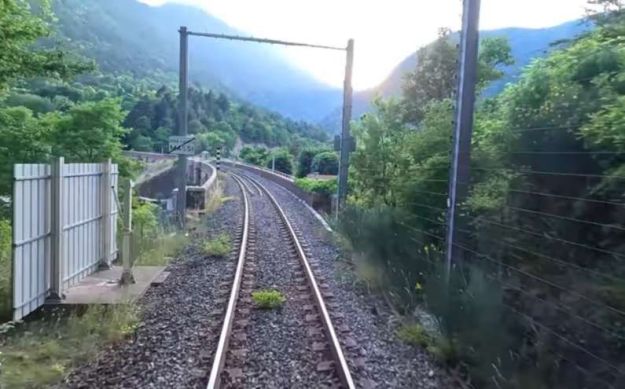
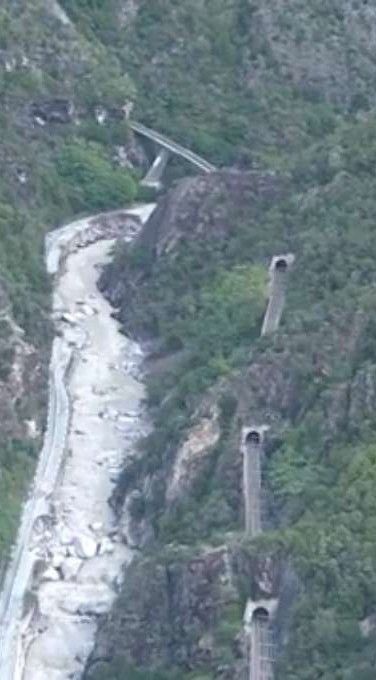
John Thomas; The Callander and Oban Railway; David and Charles, Newton Abbot, 1966
John Thomas and David Turnock; A Regional History of the Railways of Great Britain: Volume 15: North of Scotland; David and Charles, Newton Abbot, 1989.
Charles Rous-Marten; British Locomotives in 1903; in the Bulletin of the International Railway Congress.
R. Essery & D. Jenkinson; An Illustrated History of L.M.S. Locomotives, Volume Three: Absorbed Pre-Group Classes, Northern Division; Oxford Publishing Company, 1986.
David Hamilton; Caledonian Railway Locomotives: The Formative Years; Lightmoor Press Lydney, 2019.
H. J. C. Cornwell; Caledonian Railway Locomotives: The Classic Years; Lightmoor Press, Lydney, 2020.
Images of animals are common in fables and fairy stories. They’re not so common in the New Testament. Sheep and Shepherd’s appear now and then, but in today’s Gospel we have two in the space of a few short verses. Two very contrasting images – Herod the fox and Jesus, the mother hen.
Fox and hen are ancient foes, as many a tale tells us.
They often start like this…. “Once upon a time there was a little Red Hen, who lived on a farm all by herself. An old Fox, crafty and sly, had a den in the rocks, on a hill near her house. …” – You may have told tha kind of story to your own children – certainly many parents have.
Are you familiar with the story? If not, there is a version of it at the end of this article…
Fox and hen – cunning evil fox, gentle little clever hen. That’s the pattern. It must ever have been so! For Luke cleverly juxtaposes the two images. Herod, the fox, the creature who eats chicken for supper. Jesus, the mother hen, who desperately loves her silly chicks and does everything she can to protect them.
First the fox: this Herod is not the same Herod who massacred the innocents. This Herod is his son. This Herod only makes a few short appearances in Luke’s gospel, yet he has a pivotal place in it. Luke’s purpose in writing his Gospel is to answer just one question. And it is Herod the fox who asks the question in Luke Chapter 9 – “Who is this man about whom I hear such things?” And, says Luke, … Herod tried to see Jesus.
Luke the evangelist reminds us of the aim and purpose of evangelism -to invite just that question and to encourage that quest.
And Herod is still wondering who Jesus is when towards the end of the Gospel of Luke, Jesus is brought before him at his trial.
We used to give our ancient Kings interesting and descriptive names Edward the Confessor, Ethelred the Unready. This Herod could be given a similar name. Herod the ambivalent, or Herod the undecided. For although he wanted to know more about Jesus he was never ready to act one way or the other. And in Luke 23, he sends Jesus back to Pilate for a final life or death decision.
Luke compares Herod, the cunning fox who stayed in power by careful political manoeuvring, with Jesus. Herod used Jerusalem as his power base, Jesus wept over Jerusalem. Jesus says that he longs for Jerusalem as a mother hen gathers her chicks under her wings in times of trouble.
This is not an image that we focus on so often…. Christ as lamb of God, or as the lion of Judah, resonate with our faith. Jesus the mother hen seems faintly ridiculous – why is that?
We know that God is neither masculine nor feminine – but God cannot be called “it” for the Bible reminds us time and again that God has a personality. Most often male imagery is used to speak about God, but by no means every time. … In our short Gospel reading, God is compared to a mother hen and the feminine image is important. God broods over Jerusalem with a depth of self-sacrificial love. He longs for their safety and eternal security and will do anything to give life to his children.
Perhaps this image of God, of Jesus, as the mother hen seems ridiculous because hens are seemingly brainless, clucking birds They are angular funny birds. It does seem … just ridiculous to compare God to a hen! But perhaps that is the point after all. For the hen destined for the pot is no more or no less helpless than the lamb led to slaughter.
The prophet Isaiah reminds us that the “man of sorrows” had no form or comeliness that we should admire him. Isaiah suggested that if we had seen him suffering we would have hid our faces in embarrassment – “we hid as it were our faces from him.”
Yes, hens are silly little things. But there is a story told of a fast moving grass fire and of a hen caught out in the open with her chicks. As the flames approached the hen could see that she and her brood would never out run the danger and so she gathered her chicks under her wings and settles down as tight to the ground as she can. The flames rapidly passed over the place where she sat and moved on across the grassland. As the ground cooled around her roasted body there was movement under her wings and the young chicks pushed their way out into the open and began to forage for scraps in the scarred landscape.
Luke compares Jesus, the mother hen who would die to protect her chicks, with the political authority of the day, Herod, the Fox, who held onto power by ruthless cunning.
We worship a God who describes himself to us in the person of Jesus, who broods over us, longing for good for us, longing for our security and peace. In our prayers, and as we say the creed together we express our confident trust in that ‘mother-hen’ kind of love that God has for us.
_____________________________________________
The Fox and the Little Red Hen
Once upon a time there was a little Red Hen, who lived on a farm all by herself. An old Fox, crafty and sly, had a den in the rocks, on a hill near her house. Many and many a night this old Fox used to lie awake and think to himself how good that little Red Hen would taste if he could once get her in his big kettle and boil her for dinner. But he couldn’t catch the little Red Hen, because she was too wise for him. Every time she went out to market she locked the door of the house behind her, and as soon as she came in again she locked the door behind her and put the key in her apron pocket, where she kept her scissors and a sugar cookie.
At last the old Fox thought up a way to catch the little Red Hen. Early in the morning he said to his old mother, “Have the kettle boiling when I come home tonight, for I’ll be bringing the little Red Hen for supper.” Then he took a big bag and slung it over his shoulder, and walked till he came to the little Red Hen’s house. The little Red Hen was just coming out of her door to pick up a few sticks for kindling wood. So the old Fox hid behind the wood-pile, and as soon as she bent down to get a stick, into the house he slipped, and scurried behind the door. In a minute the little Red Hen came quickly in, and shut the door and locked it. “I’m glad I’m safely in,” she said.
Just as she said it, she turned round, and there stood the ugly old Fox, with his big bag over his shoulder. Whiff! how scared the little Red Hen was! She dropped her apronful of sticks, and flew up to the big beam across the ceiling. There she perched, and she said to the old Fox, down below, “You may as well go home, for you can’t get me.”
“Can’t I, though!” said the Fox. And what do you think he did? He stood on the floor underneath the little Red Hen and twirled round in a circle after his own tail. And as he spun, and spun, and spun, faster, and faster, and faster, the poor little Red Hen got so dizzy watching him that she couldn’t hold on to the perch. She dropped off, and the old Fox picked her up and put her in his bag, slung the bag over his shoulder, and started for home, where the kettle was boiling.
He had a very long way to go, up hill, and the little Red Hen was still so dizzy that she didn’t know where she was. But when the dizziness began to go off, she whisked her little scissors out of her apron pocket, and snip! she cut a little hole in the bag; then she poked her head out and saw where she was, and as soon as they came to a good spot she cut the hole bigger and jumped out herself. There was a great big stone lying there, and the little Red Hen picked it up and put it in the bag as quick as a wink.
Then she ran as fast as she could till she came to her own little farm-house, and she went in and locked the door with the big key. The old Fox went on carrying the stone and never knew the difference. My, but it bumped him well! He was pretty tired when he got home. But he was so pleased to think of the supper he was going to have that he did not mind that at all. As soon as his mother opened the door he said, “Is the kettle boiling?”
“Yes,” said his mother; “have you got the little Red Hen?”
“I have,” said the old Fox. “When I open the bag you hold the cover off the kettle and I’ll shake the bag so that the Hen will fall in, and then you pop the cover on, before she can jump out.”
“All right,” said his mean old mother; and she stood close by the boiling kettle, ready to put the cover on.
The Fox lifted the big, heavy bag up till it was over the open kettle, and gave it a shake. Splash! thump! splash! In went the stone and out came the boiling water, all over the old Fox and the old Fox’s mother! And they were scalded to death. But the little Red Hen lived happily ever after, in her own little farmhouse.