
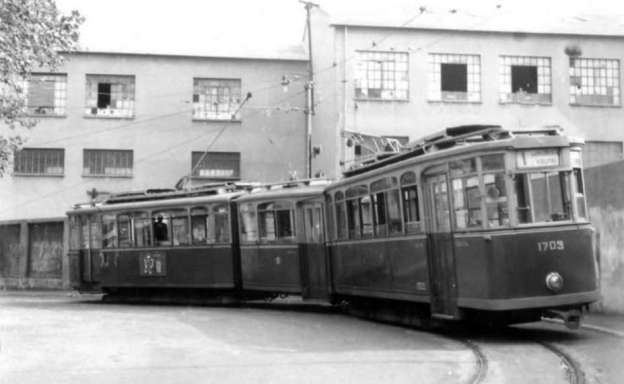
The first three articles in this series covered the network as it was established by the beginning of the First World War. These articles can be found here, [1] here [2] and here. [3]
The fourth article looked at the period between WW1 and WW2. It can be found here. [4] This fifth article covers the period after WW2 to the eventual closure of the network.
The Network during World War 2
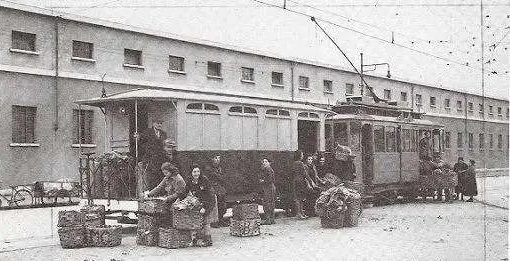
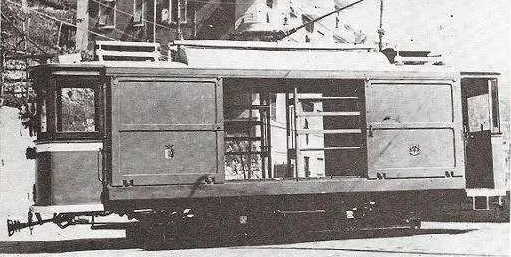
During the war period, new work was suspended and maintenance was reduced to a minimum; tunnels were used as air raid shelters, and the service schedules were redistributed to avoid the tunnels. Suburban lines acquired considerable importance for the transport of evacuees, especially in the morning and evening. The transport of goods also became important and some older trams were adapted to accommodate the service. Fruit and vegetables were transported to the central market and to the local markets. Building materials for urgent works were carried, as we’re a variety of other goods. Examples of these adapted vehicles can be found close to the end of this article. [36]
After WW2 and the Decline of the Network
The modernization of the tram network, covered in the fourth article in this series, was abruptly interrupted by the Second World War which saw significant damage to the network and rolling stock. After the War the Littorio depot-workshop was renamed for ‘Romeo Guglielmetti’, a tram driver and martyr of the partisan resistance. [19][20: p238-239] .
The poor condition of much of the network resulted in trams being restricted to main arteries and the introduction of trolleybuses on the rest of the network. Trolleybuses were trailed in 1938 but it was 1949 before planned introduction occurred. obsolescence and degradation of large parts of the network were the reasons that led to the choice of maintaining the tram only on the ‘main lines’, introducing tolleybuses as replacements for the tram on the secondary lines. In reality the project had already begun before the conflict (the first trolleybuses had been activated in 1938), [20: p227] but only in 1949 was the decision planned in detail. [21: p88]
Trams were removed from the central area of the city where trolleybuses were perceived, not being tied to tracks, to be more flexible and better able to negotiate heavy traffic. The lines in the hills were also converted to a trolleybus service (the rubber-wheeled vehicles, having greater grip, guaranteed quicker restarts and with less energy expenditure. [19][20: p255-256]
The result of these changes was effectively to create two different networks (East and West), linked only by a line along the coast as shown on the map below which shows the tram network as it existed in 1956. [19][21: p93]
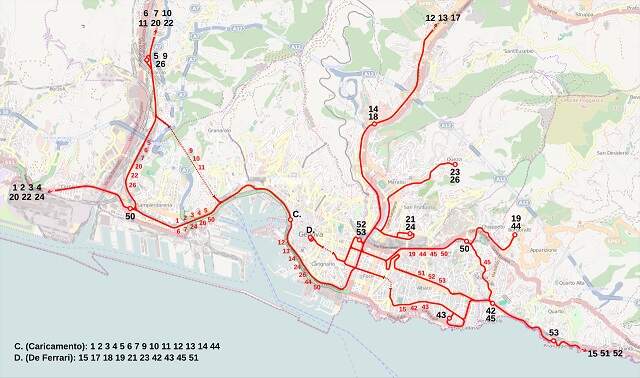
By 1956 trams served the following routes: [21: p126]
1 Banco San Giorgio – Voltri
2 Banco San Giorgio – Pegli
3 Banco San Giorgio – Sestri
4 Banco San Giorgio – Pra’ Palmaro
5 Banco San Giorgio – Sampierdarena – Rivarolo
6 Banco San Giorgio – Sampierdarena – Bolzaneto
7 Banco San Giorgio – Sampierdarena – Pontedecimo
9 Banco San Giorgio – Galleria Certosa – Rivarolo
10 Banco San Giorgio – Galleria Certosa – Bolzaneto
11 Banco San Giorgio – Galleria Certosa – Pontedecimo
12 Banco San Giorgio – Prato
13 Banco San Giorgio – Giro del Fullo
14 Banco San Giorgio – Staglieno
15 De Ferrari – Galleria Mameli – Nervi
17 De Ferrari – Prato
18 De Ferrari – Staglieno
19 De Ferrari – Borgoratti
20 Bolzaneto – Pegli
21 De Ferrari – San Fruttuoso
22 Bolzaneto – Pra’ Palmaro
23 De Ferrari – Quezzi
24 San Fruttuoso – Sestri
26 Quezzi – Rivarolo
42 De Ferrari – Galleria Mameli – Sturla
43 De Ferrari – via Giordano Bruno
44 Banco San Giorgio – Borgoratti
45 De Ferrari – San Martino – Sturla
50 San Martino – Sampierdarena
51 De Ferrari – San Francesco d’Albaro – Nervi
52 Brignole – San Francesco d’Albaro – Nervi
53 Brignole – San Francesco d’Albaro – Priaruggia
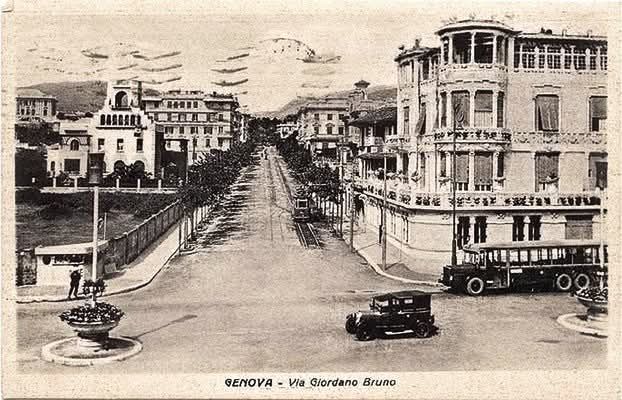
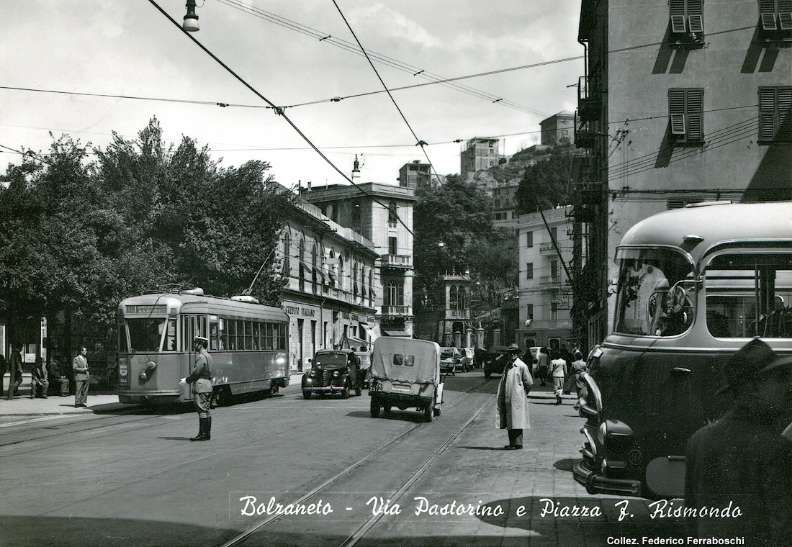
In the period after WW2, there was a dramatic increase in private car ownership and as a result increased congestion in the city centre and on main arterial routes. Conflicts between trams and private vehicles became regular occurrences and there was increasing wear of the rails.
Despite efforts to adapt the network to the needs of car traffic, the 1949 plan was soon overtaken by events: the economic ‘boom’ then underway was leading to an enormous increase in private motorisation, which had not originally been envisaged on such a scale.
After a few years, even the so-called ‘power lines’, which had been planned to be maintained, revealed all their inefficiency: almost the entire network ran in a mixed manner with road traffic, leading not only to continuous conflicts between trams and private vehicles, but also to an ever-increasing wear on the rails. [20: p265]
Thus in 1956 the decision was taken, despite significant opposition, to manage the decline of the network and to introduce a replacement bus network. Buses had become preferable to both trams and trolleybuses because of their unconstrained movement, not hampered by rails or overhead lines. [19][20: p265]
The removal of the tram lines began in 1964 with the closure of the Ponente and Val Polcevera lines. [21: p105] This also led to the closure of the Galleria Certosa. After a long period of disuse, Galleria Certosa was reopened in the 1990s and used by the Metro. [19]
“In 1965, the city acquired the remaining holding and the UITE’s activities were transferred to the Azienda Municipalizzata Trasporti (AMT).” [16][17]
However, “the municipalisation of the Company, … did not bring the expected results. The last UITE balance sheets showed a substantial positive balance, the subsequent AMT financial statements showed increasingly significant deficits. This was not, however, unique to Genoa, it was a phenomenon common to many public transport companies which, subordinated to the electoral needs of the parties in government in a local area, saw fare policies being dictated by political imperatives, often only partially covering operational expenses. Additionally: the speed of the general traffic, through which trams had to travel, decreased due to congestion; inflation became a significant factor; lines were established serving new residential areas; personnel costs increased significantly; and AMT were expected to acquire and run services beyond the immediate Genoa conurbation.” [17]
On 18th July 1965, lines along the coast road, which included the terminus in Piazza Caricamento, were closed and, on 10th November 1965, the last line on the East side of the city centre was closed. [21: p106]
Only two lines in the Bisagno valley remained in operation – Line 12 (Via Brigata Bisagno – Prato) and Line 13 (Via Brigata Bisagno – Giro del Fullo) which were left until last because they served as a connection to the Guglielmetti workshop, where the trams were progressively concentrated and decommissioned. Both Line 12 and Line 13 ran along the right bank of the River Bisagno. [19][21: p106]
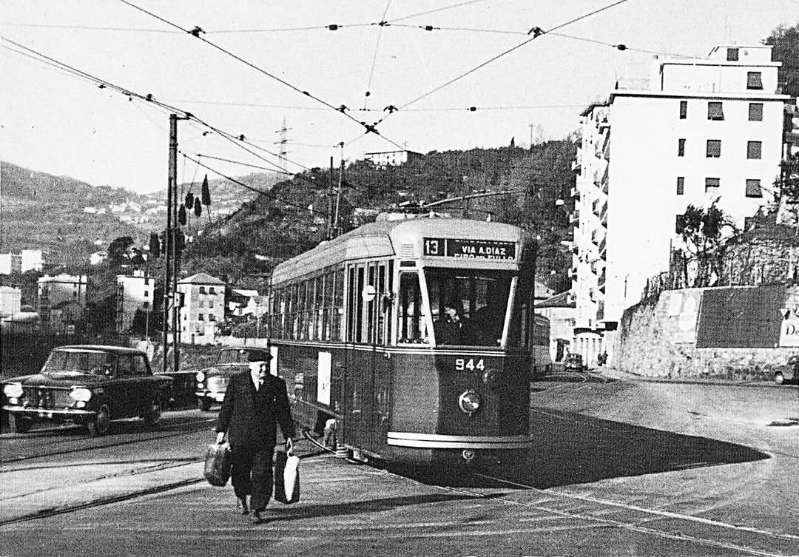
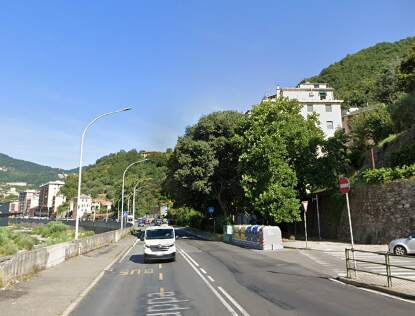
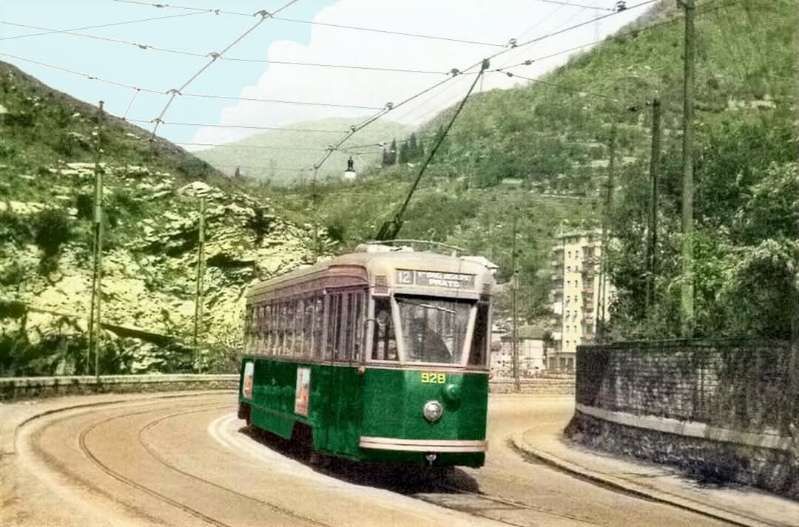
Foto Genova Antica Facebook Group by Domenico Fornara on 24th March 2021, (c) Unknown. [9]
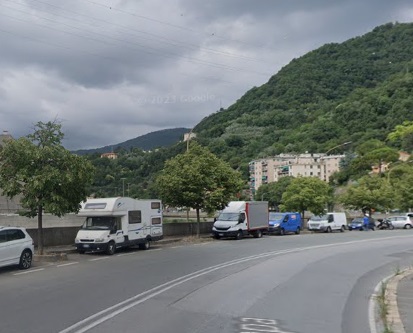
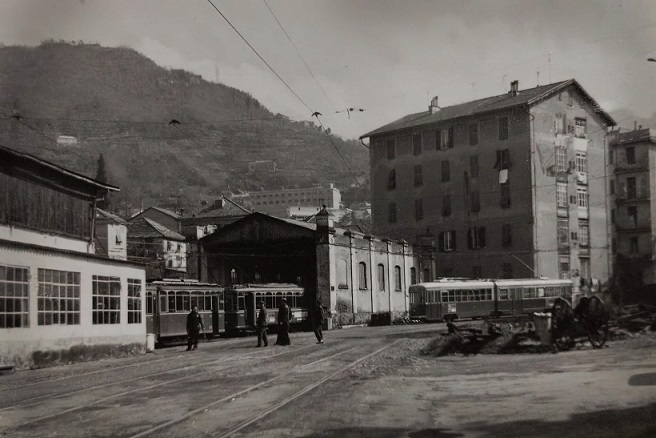
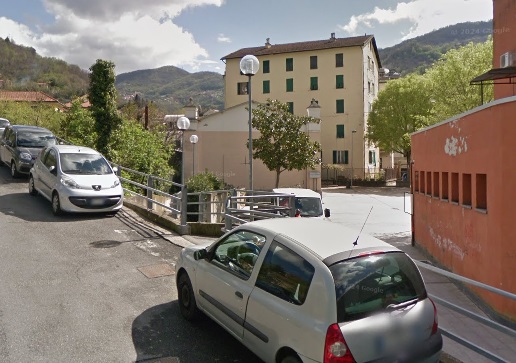
Tram services in Genoa ceased definitively on the night between 26th and 27th December 1966, with the last runs of Line 12. [19][21: p110]
Genoa’s tram network was in operation from 1878 to 1966, during this time it was the main public transport service in the Ligurian capital.
Rolling Stock
AMT claims to record details of all the trams used on the network throughout its history. [20: p653-660] This list, however, does not appear to be exhaustive as photographs exist of trams with numbers not included in this list! These are noted below. ……
Trams No. 1-45 (AEG/SATO) were two-axle cars built by Grondona, Comi & Co. in 1899/1900. They were later rebuilt by the UITE between 1922 and 1927. [19]
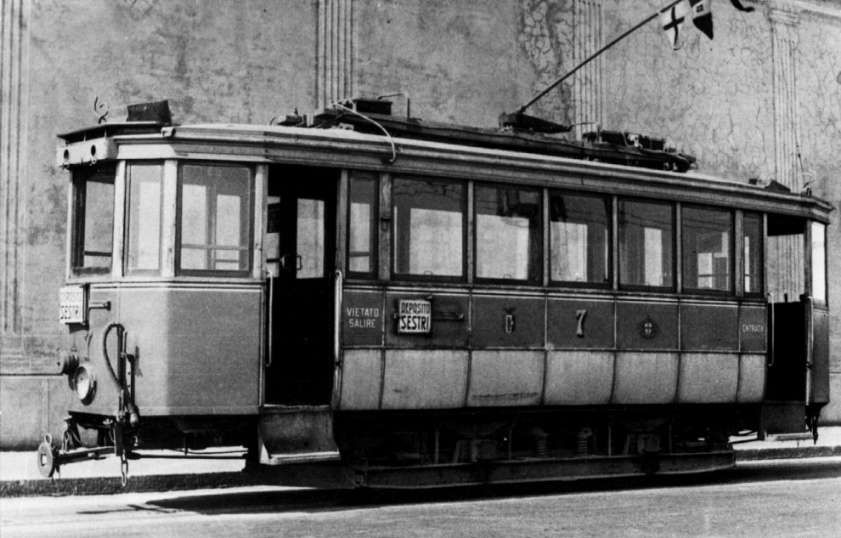
Trams No. 46-55 (AEG/SATO) were two-axle cars built by Miani, Silvestri & Co. in 1900. These were rebuilt by Piaggio in 1926. [19]
Trams No. 56-75 (AEG/SATO) were two-axle cars built by Officine Meccaniche in 1901. These were rebuilt by Piaggio in 1926. [19]
Trams No. 76-100 (AEG/SATO) were two-axle cars built by Reggiane Boker in 1907.
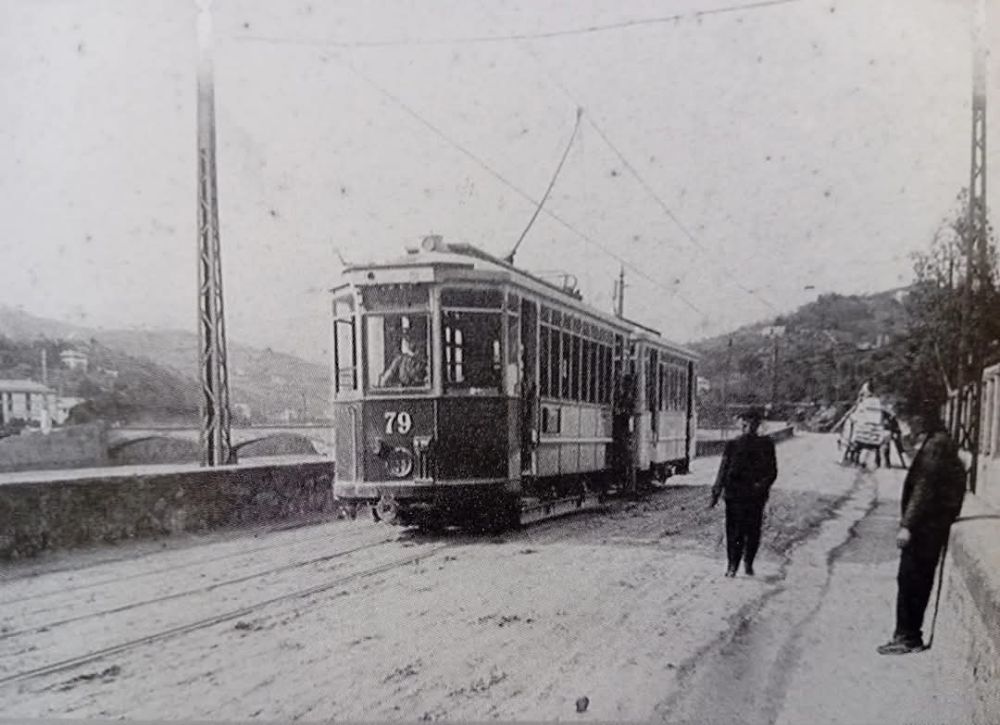
Trams No. 100-110 (SFEF) were two-axle bidirectional cars built by Miani, Silvestri & Co. in 1895. The image immediately below shows one of these trams bearing the number 111. This suggests that the range of numbers taken by these trams was wider. [19]
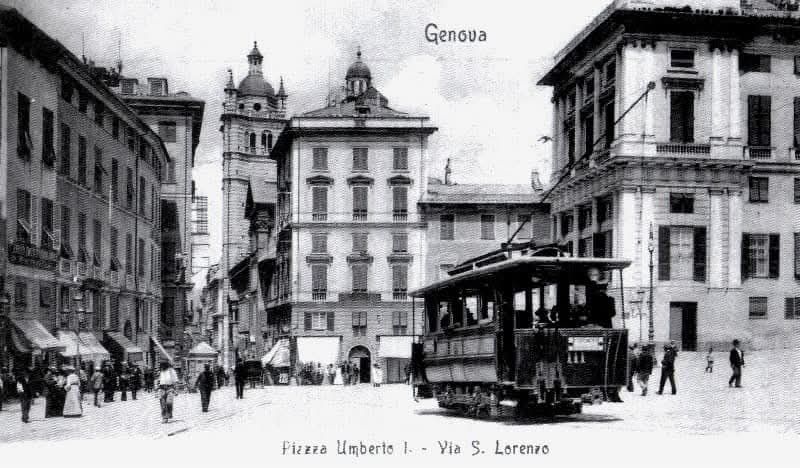
Trams No. 101-110 were replacement two-axle bidirectional cars built by Bagnara in 1925. [19]
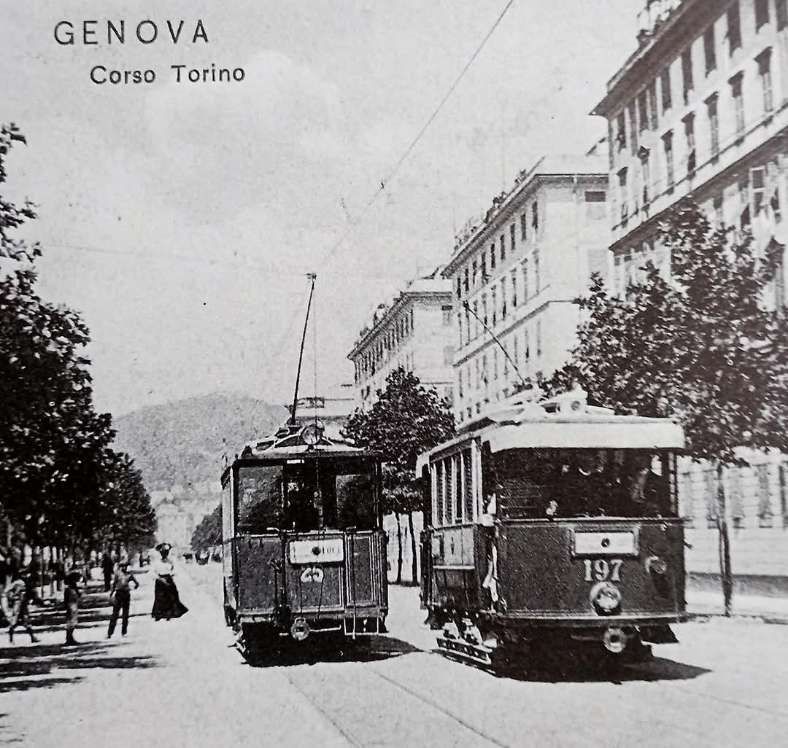
Trams No. 171-200 were two-axle bidirectional cars built by Grondona, Comi & Co. in 1897. [19] Might this class be more numerous? Perhaps 111-200? Given the numbering of these trams, in the year of build quoted a little too early? [19]
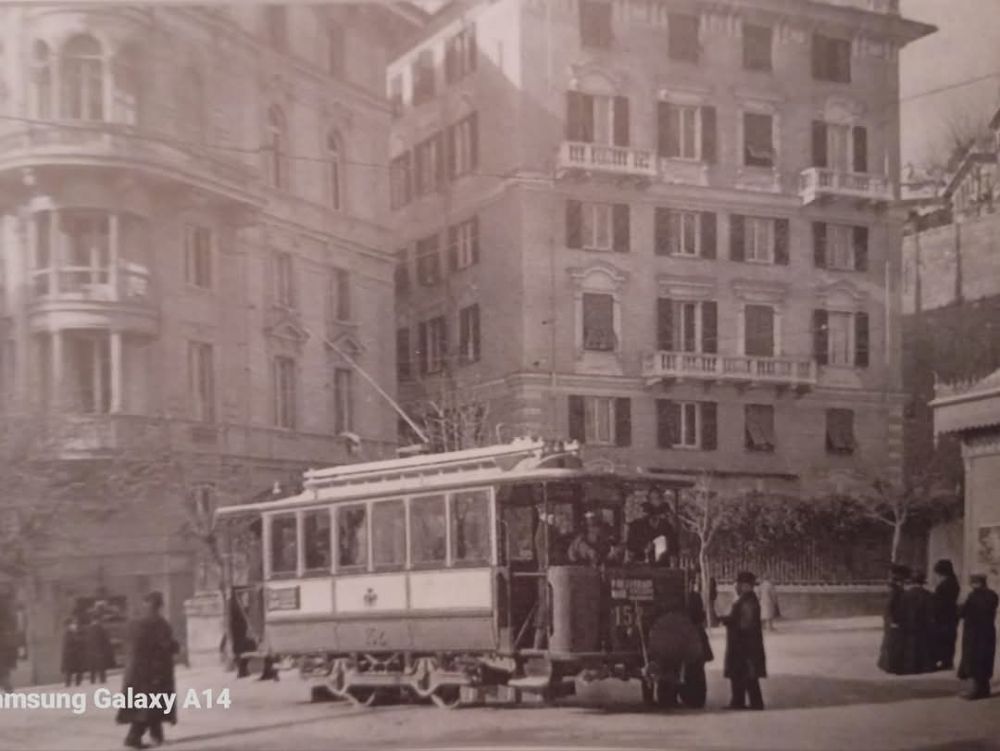
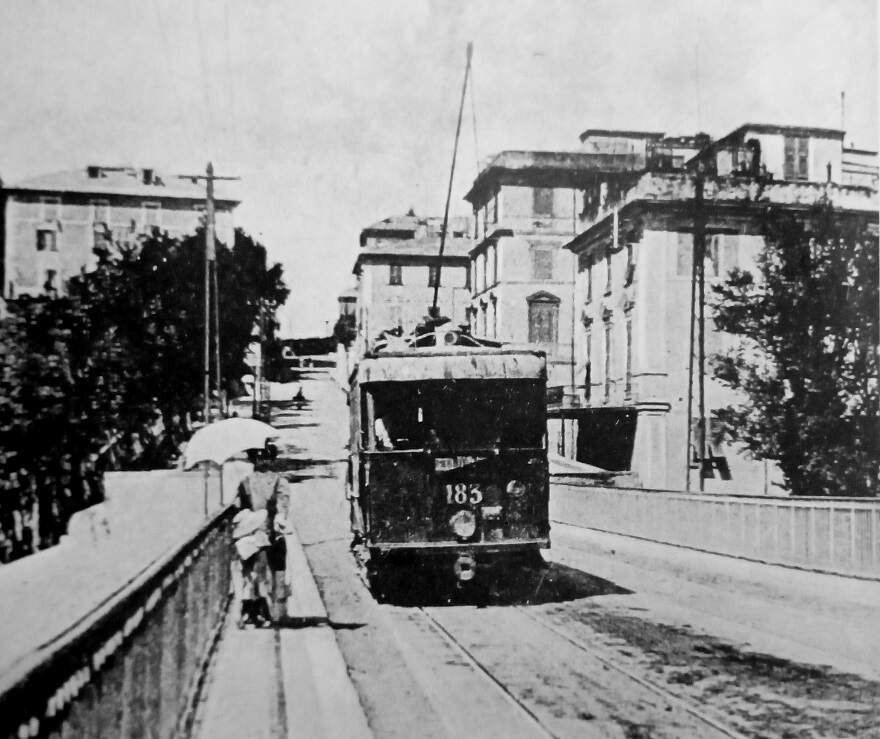
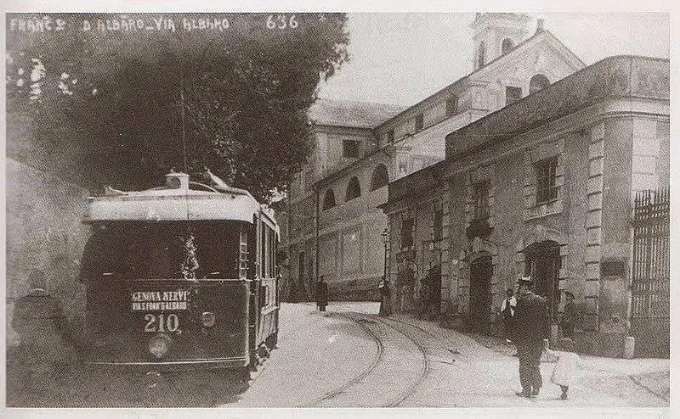
Trams No. 221-250 (UITE) were two-axle bidirectional cars built by Clemente Nobili & Fratelli Böker in 1906. [19]
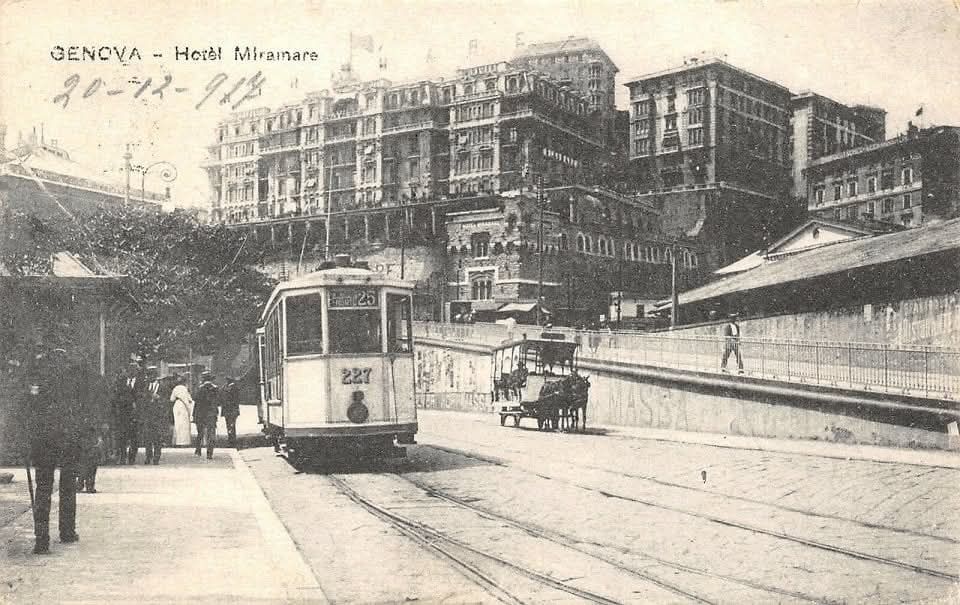
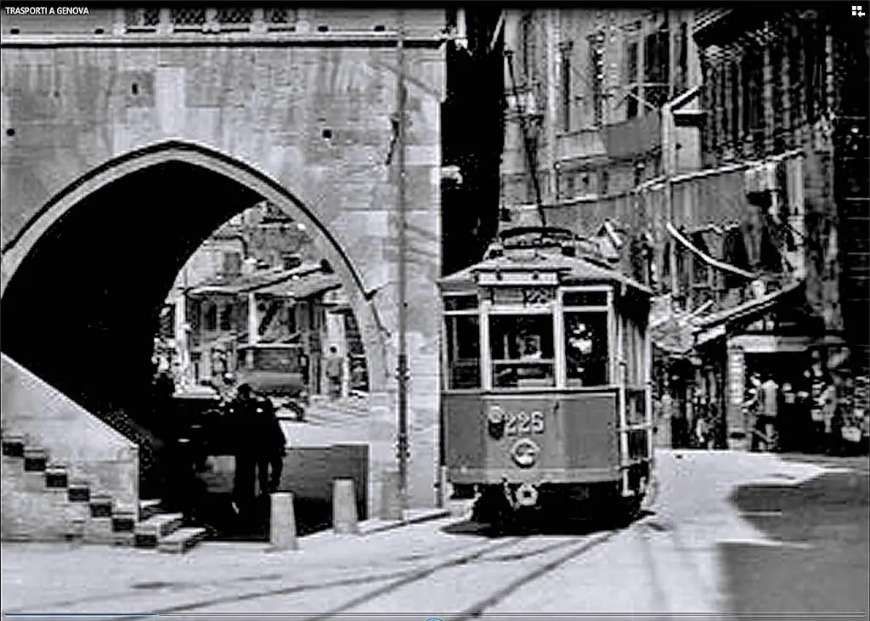
Trams No. 251-280 (UITE) were two-axle bidirectional cars built by Reggiane Boker in 1907. [19]
Trams No. 281-305 (UITE) were two-axle bidirectional cars built by Reggiane Boker in 1907. [19]
Trams No. 101-120 and 347-386 (UITE) were two-axle bidirectional cars built by Bagnara San Giorgio/Ansaldo built in 1925 and 1927. [19]
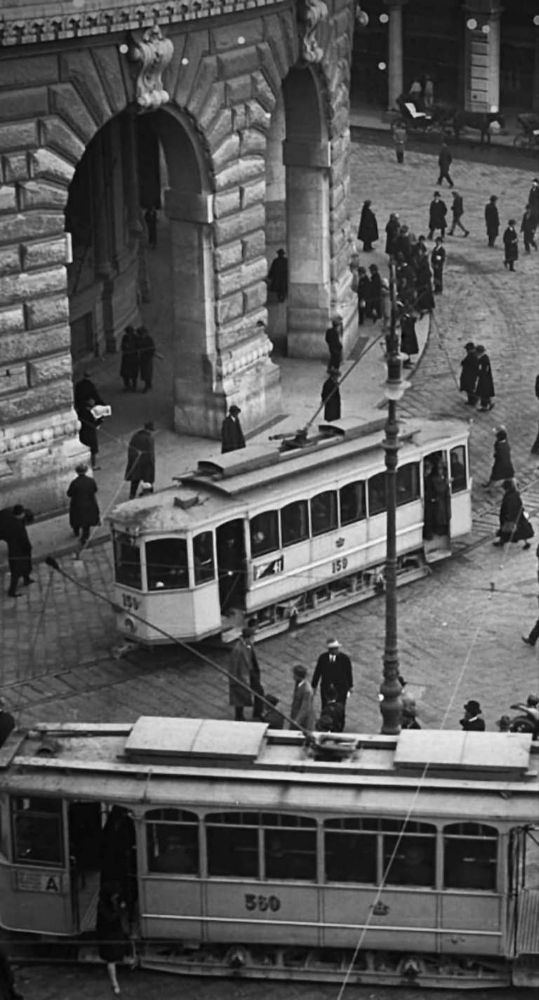
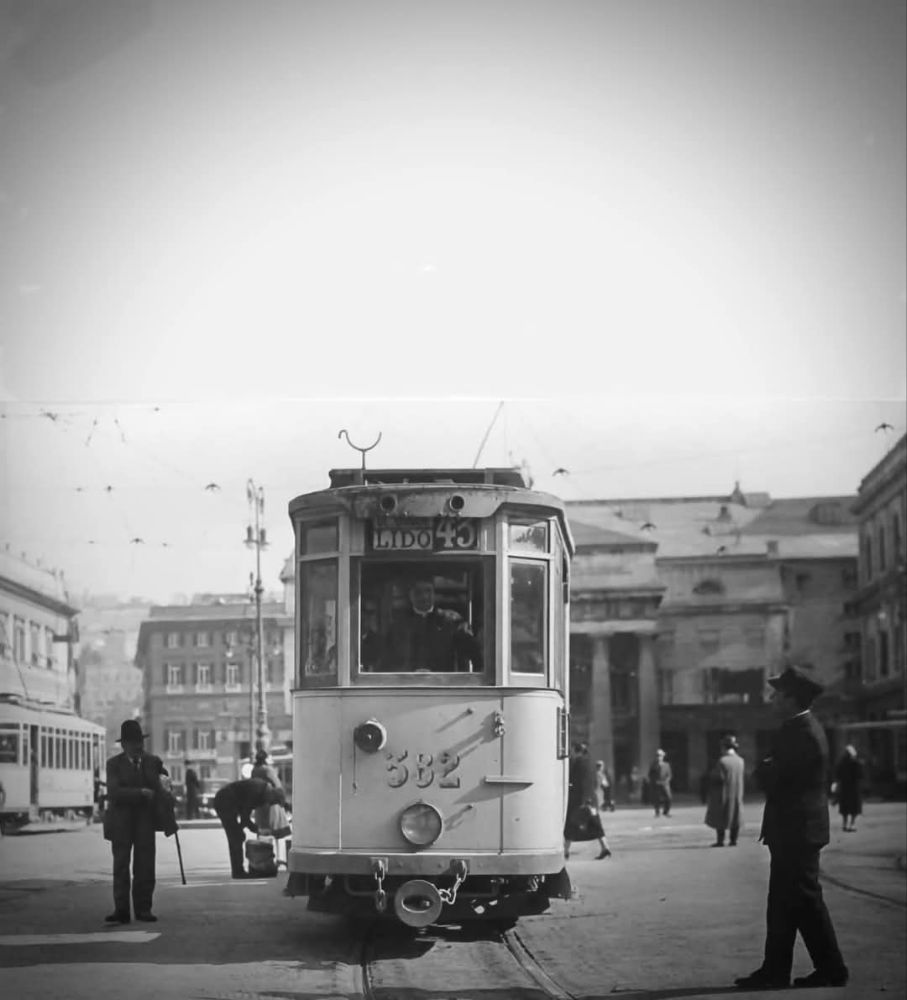
Trams No. 363, 364 (SFEF) were two-axle bidirectional cars built by Savigliano in 1893. These vehicles were converted into trailer-cars in 1900. [19]
Trams No. 387 and 388 were prototypes received in 1929/1930 along with Trailer No. 389. ………
UITE 400 Series Trailers
I have not been able to find information about this series of trailer cars.
UITE 600 Series Trams and Trailers
I have not been able to find information about tram cars in this series. However, numbers 621-650 were trailers which were used with the 700 series trams below.
UITE 700 Series Trams
Given the success of the prototypes No. 387 and No. 388 and the trailer No. 389 of 1929 and 1930, UITE purchased 50 bogie-trams, 25 constructed by Ansaldo (Nos. 751-775) and 25 constructed by Piaggio (Nos. 776-800) and 30 trailers supplied
by Carminati & Toselli (Nos. 621-650). [36]
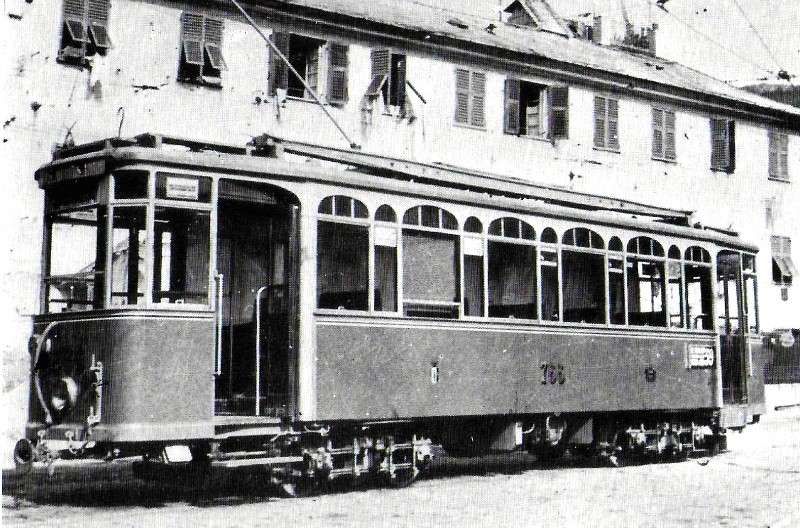
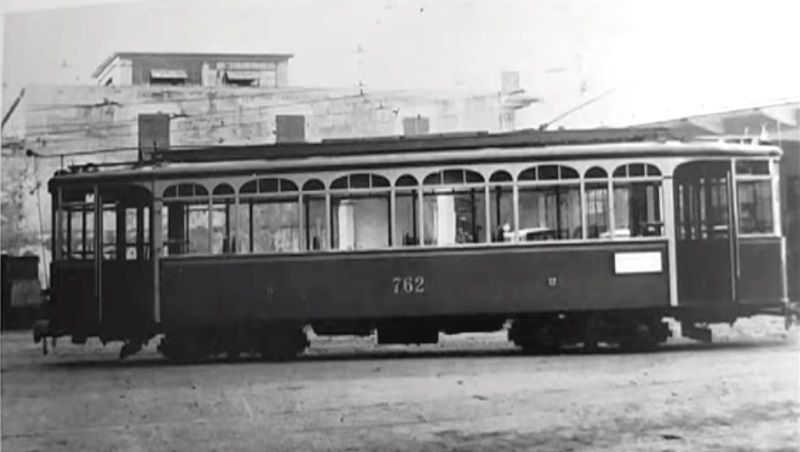
Trams No. 751-800 were bidirectional bogie-cars built in 1931. These were known as ‘long Casteggini’ type trams. [19]
UITE 800 Series Trams
Trams No. 801-820 (UITE) were bidirectional bogie-cars built by Piaggio in 1932. These were known as ‘short Casteggini’ type trams. [19]
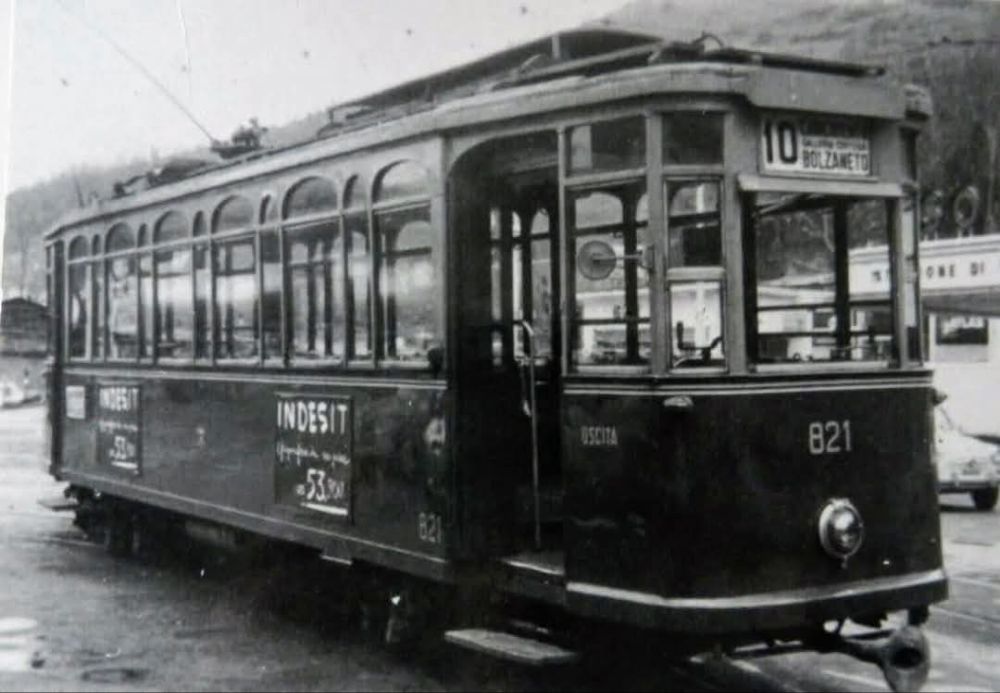
Trams No. 821-850 (UITE) were unidirectional bogie-cars built by Piaggio in 1934. These were known as ‘long Casteggini’ type trams (originally built as trailer-cars). [19]
UITE 900 Series Trams
The 900 series electric tramcars were designed by the Unione Italiana Tramways Elettrici (UITE) and built by the UITE and other companies, also known as ‘Littorine’ or ‘Genova’ type, were a series of bidirectional, metre-gauge tramcars in service on the Genoa tram network .
The vehicles were designed in 1939 and 94 vehicles entered service on the Genovese network in 1939 and 1940. They were in service until 1966. Six (or possibly seven) other vehicles were built to the same specification and sold to Breda and used elsewhere. Five (or perhaps six) were put to use in Belgrade and one in Innsbruck.
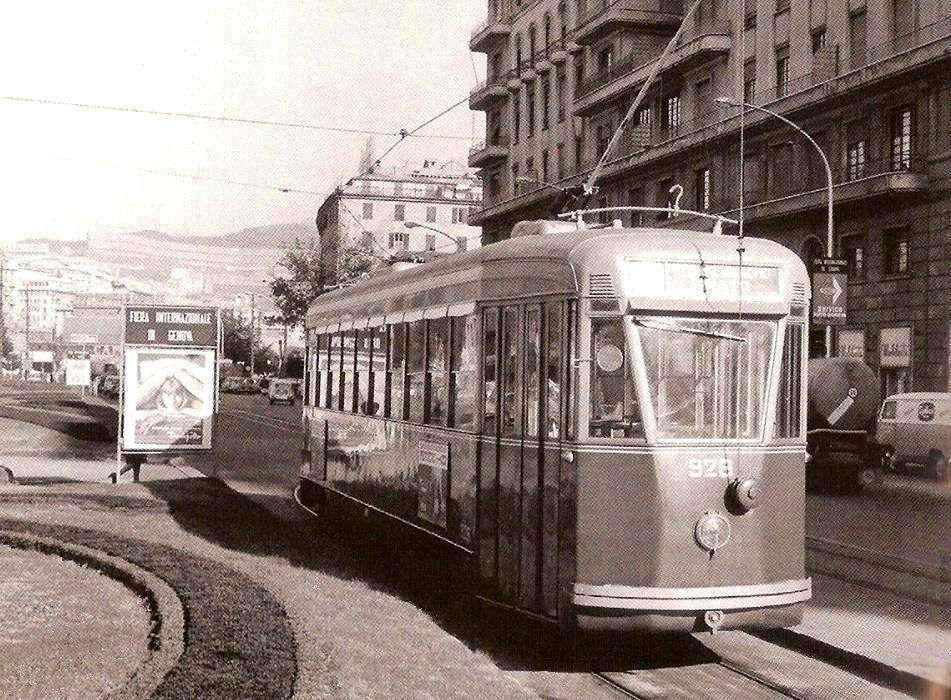
Builders were: UITE, Piaggio, Bagnara, Ansaldo, Breda; bogies were from TIBB and CGE workshops. These vehicles were 13.56 metres long, 2.15 metres wide and 3.12 metres high. They had 25 seats and could accommodate a further 85 people standing. They weighed 18.6 tonnes empty. They had 4 No. 45hp Ansaldo LC 229 electric motors.
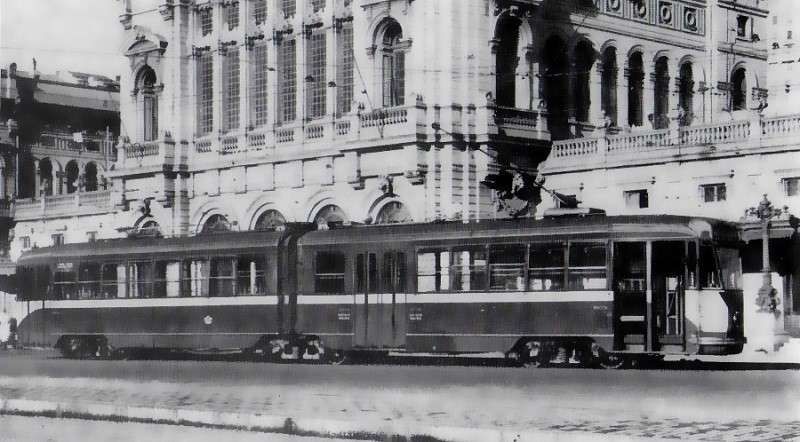
In exchange for the units sold to Breda in 1940, UITE received four two-bodied articulated units which went on to form the 1100 series. They were the first articulated trams used in Genova. [15]
UITE 1100 Series Trams
There were four of these articulated units (1101-1104) which were supplied to the UITE by Breda in 1942. These units operated in Genova until 1965/1966 when they were sold to Neuchâtel and continued in service there until 1988. Built by Breda with electrical parts supplied by TIBB, the units were 20.65 metres long and accommodated 33 people seated and up to 142 standing. They weighed 27 tonnes empty. [14]
UITE 1200 Series Trams
These were numbered 1221-1250. They were reconstructions by UITE in 1948-1949 (in an unidirectional, articulated form) of the 221 to 250 series. They were known as ‘Lambrette’ trams. [19]
UITE 1600 Series Trams
These were numbered 1601-1678. They were reconstructions by UITE in 1949-1950 (in an unidirectional, articulated form) of 600 and 400 series cars. The old two-axle cars of the 600 series were joined to trailers of the two-axle 400 series. The transformations were decided in order to have large-capacity vehicles with significant management savings compared to a complex consisting of a tractor and trailer, which required the presence of two ticket collectors. [13][19]
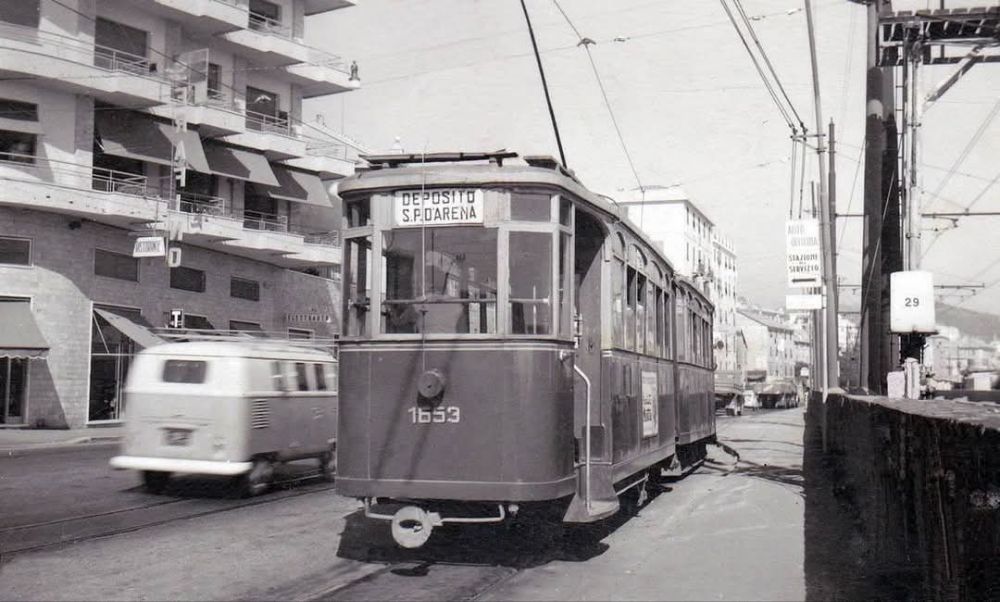
These units were 16.80 metres long with a capacity of 24 seated and 104 standing passengers. They weighed 18.2 tonnes unladen and were powered by 2 No. 70hp motors. They served on routes in Ponente and the Bisagno and Polcevera valleys. They received several improvements to electrical equipment, resulting in enhanced power and speed, in 1958 and 1960. [13]
UITE 1700 Series Trams
These were numbered 1700-1715 They were reconstructions of pairs of two-axle cars in 1954 and 1955 They were bidirectional units. [19]
These units were obtained by joining two old two-axle carriages with a small suspended central body in between. The resulting configuration, quite common for the time, was nicknamed ‘two rooms and kitchen’ (‘due camere e cucina:) and allowed for large-capacity cars to be had at little expense. The transformation, designed by the engineer Remigio Casteggini of UITE, was carried out on some cars by the UITE workshops, on others by Piaggio of Sestri Ponente. The first six entered service in 1954 , followed by another nine the following year. [12]
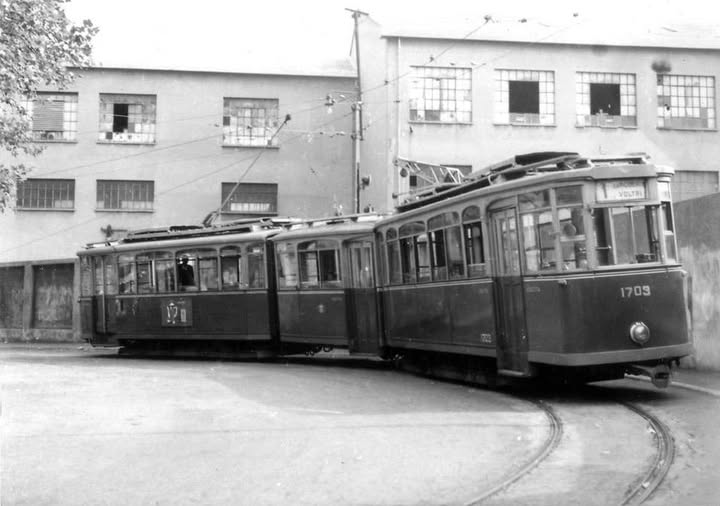
These units were 20.88 metres long and had capacity for 26 seated passengers and 127 standing. They were 26.5 tonnes unladen and were powered by 4 No. 45hp motors. [12]
The 1700 series units were employed primarily on Line No. 1 (Piazza Banco di San Georgio to Voltri. [12]
Luggage, Freight and Workmen’s Trams and Trailers
References
- https://rogerfarnworth.com/2024/12/03/genoas-early-tram-network-part-1-general-introduction-tunnels-the-years-before-world-war-one-and-the-early-western-network
- https://rogerfarnworth.com/2024/12/08/genoas-early-tram-network-part-2-the-western-half-of-the-eastern-network
- https://rogerfarnworth.com/2024/12/14/genoas-early-tram-network-part-3-the-remainder-of-the-eastern-network-before-the-first-world-war
- https://rogerfarnworth.com/2024/12/18/genoas-early-tram-network-part-4-world-war-1-to-world-war-2
- https://www.facebook.com/share/p/xf71AuPv18UThcLN, accessed on 12th December 2024.
- https://www.facebook.com/photo/?fbid=1680392355366178&set=gm.1397702246995601, accessed on 19th December 2024.
- https://www.treniebinari.it/treniebinari/tram/linee-tranviarie-dismesse-liguria.html, accessed on 19th December 2024.
- https://www.facebook.com/photo/?fbid=10225435757056579&set=gm.7057767330989036&idorvanity=574539035978597, accessed on 19th December 2024.
- https://www.facebook.com/photo/?fbid=10222892964385274&set=gm.3698637050235431, accessed on 19th December 2024.
- https://www.marklinfan.com/f/topic.asp?TOPIC_ID=4530, accessed on 20th December 2024.
- https://www.amicidipontecarrega.it/2019/05/22/le-grandi-strade-piccole-di-genova-il-falso-mito-di-una-citta-troppo-stretta, accessed on 20th December 2024..
- https://it.m.wikipedia.org/wiki/Tram_UITE_serie_1700, accessed on 20th December 2024.
- https://it.m.wikipedia.org/wiki/Tram_UITE_serie_1600, accessed on 20th December 2024.
- https://it.m.wikipedia.org/wiki/Tram_UITE_serie_1100, accessed on 19th December 2024.
- https://it.m.wikipedia.org/wiki/Tram_UITE_serie_900, accessed on 19th December 2024.
- https://en.m.wikipedia.org/wiki/AMT_Genova, accessed on 15th November 2024.
- Storia [History] (in Italian). AMT Genova; https://www.amt.genova.it/amt/amt-istituzionale/storia, accessed on 15th November 2024.
- http://www.uwrbancenter.comune.genova.it/sites/default/files/quaderno_arch_2011_03_21.pdf, accessed on 16th November 2024.
- Rete tranviaria di Genova; https://it.wikipedia.org/wiki/Rete_tranviaria_di_Genova, accessed on 26th November 2024.
- AMT (ed.); History of public transport in Genoa; Genoa, SAGEP Editrice, 1980.
- Paolo Gassani; Photo history of the tramway in Genoa, Genoa, Nuova Editrice Genovese, 1982.
- https://www.facebook.com/share/p/4KDeRr6gMdLiv86E, accessed on 20th December 2024.
- https://www.facebook.com/share/p/56U5RHNiYy2iTrR6ht, accessed on 20th December 2024
- https://www.facebook.com/groups/fotogenovaantica/permalink/6392740554158387/?app=fbl, accessed on 12th December 2024.
- https://www.facebook.com/share/p/JagNiVpX1KMfGBb5, accessed on 21st December 2024.
- https://www.facebook.com/photo/?fbid=830015374527522&set=pcb.3715897175176085, accessed on 14th December 2024
- https://www.facebook.com/groups/fotogenovaantica/permalink/7107415732690862/?app=fbl, accessed on 14th December 2024.
- https://www.facebook.com/share/p/gBZTNL8Ex9VsvaKv, accessed on 20th December 2024.
- https://www.facebook.com/share/p/N2Cw4M7R4igWZmjy, accessed on 21st December 2024.
- https://www.facebook.com/share/p/UmobQGmrwfxs8tZp, accessed on 21st December 2024
- https://www.facebook.com/groups/fotogenovaantica/permalink/7150000391765729/?app=fbl, accessed on 21st December 2024.
- https://www.facebook.com/groups/fotogenovaantica/permalink/2174302596002225/?app=fbl, accessed on 21st December 2024.
- https://genova.repubblica.it/cronaca/2016/01/13/foto/dai_tram_al_metro_120_anni_di_trasporti_pubblici_a_genova-131126729/1/., accessed on 21st December 2024.
- https://www.facebook.com/photo/?fbid=2810624945900888&set=a.1385960088367388, accessed on 21st December 2024.
- https://www.facebook.com/photo/?fbid=250986243601911&set=gm.4601090983268483, accessed on 21st December 2024.
- https://www.marklinfan.com/f/topic.asp?TOPIC_ID=4530&whichpage=2, accessed on 21st December 2024
 Roger Farnworth
Pingback: Genova (Genoa) Addendum – Light Rail & Modern Tramway, August, September & October 1995 – including La Guidovia del Santuario della Guardia | Roger Farnworth