

The featured image for this article shows an unidentified 0-4-0ST (Peckett?) in charge of a train at the Washmills associated with Bevan’s Cement Works. After 1926, these were sited to the South of Northfleet and works trains required tunnels under the High Street in order to gain access to the Works. This image was shared by Andy Howdle on the Industrial Locomotive Enthusiasts Page Facebook Group on 28th August 2025 and is shared here with his kind permission. [10]
Knight, Bevan & Sturge Ltd. was established in 1853 between the River Thames and the centre of Northfleet. Although Thomas Bevan became sole proprietor, the firm continued to operate as Knight, Bevan & Sturge until it became one of the constituent companies of APCM in 1900. [1: p54]
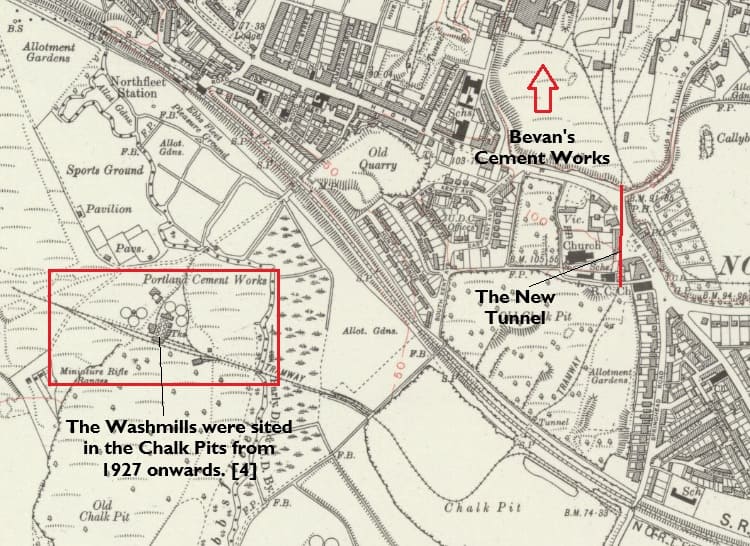
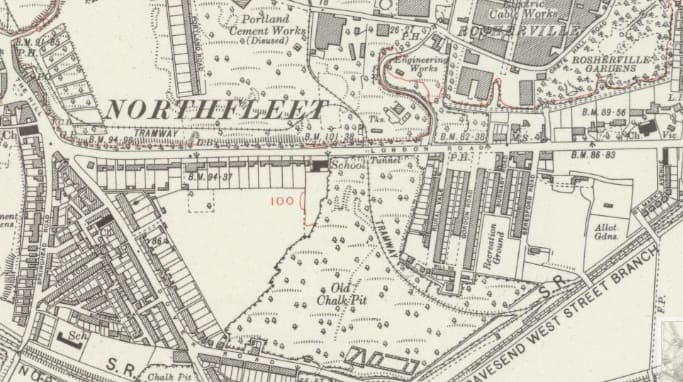
Quarries were opened to the South of Northfleet and a 2ft 8.5in gauge linked them to the Works. Northfleet High Street runs along a ridge of high ground and as a result a tunnel was needed to allow access by rail between the Works and the quarries. [1: p54]
The Narrow Gauge Rail Network
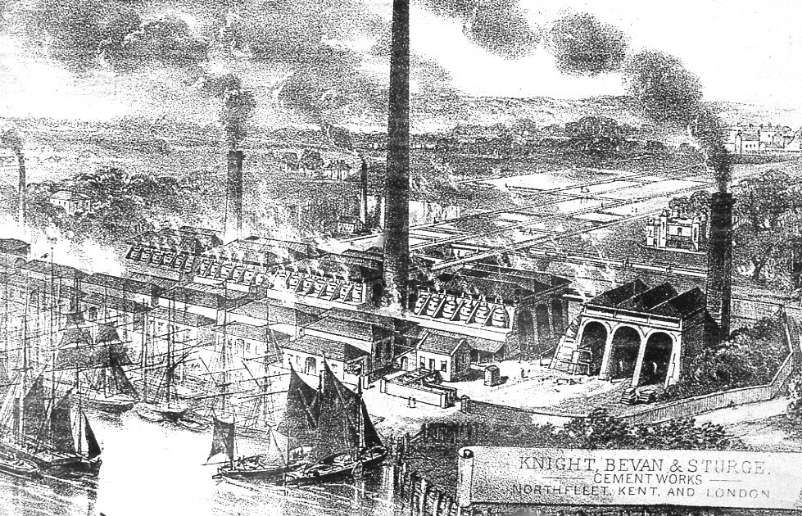

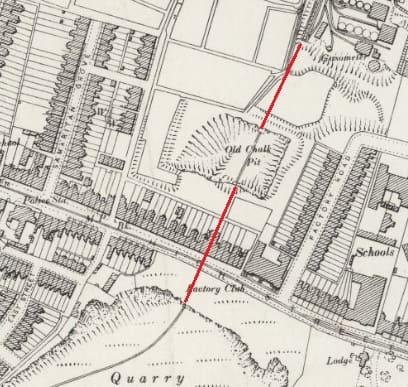
This further extract from the 25″ Ordnance Survey of 1895 shows the tunnel which took narrow-gauge engines and wagons through the ridge between the Chalk Pits and Bevan’s Works. [8]
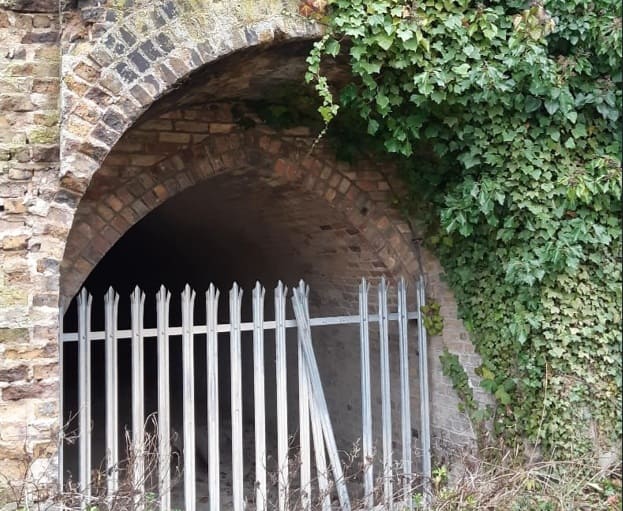
One of the four tunnel mouths on the narrow-gauge. All of which are on the map extract above. [11]
Stoyel & Kidner list the locomotives that operated on the narrow-gauge network. [1: p60]
Three locomotives built by Neath Abbey Ironworks are recorded by Stoyel & Kidner as being in use at the Works. [1: p60]
Neath Abbey Ironworks Commenced locomotive building in 1829 to designs of Henry Taylor. The Ironworks ceased manufacturing locomotives in 1880 after having built around 35 locomotives. Henry Taylor was works manager when the firm went out of business. [5][6]
Two of the three Neath-built locomotives were built in 1874, the third was built in 1880, all had 8″ x 16″ cylinders. Stoyel & Kidner could only name the third, Comet.
The next locomotive listed is an unnamed Aveling & Porter, Works No. 952. It was a one cylinder (6″ x 10″) 4 hp 0-4-0WTG engine with 3ft wheels built in 1873.
The other narrow-gauge locomotives were all 0-4-0ST engines:
Meteor – built in 1893 by Black Hawthorn, Works No. 1085, had 8.5″ x 16″ outside cylinders and 2′ 6″ wheels.
Aerolite – built in 1894 by Black Hawthorn, Works No. 1107, had 8.5″ x 12″ outside cylinders and 2′ 6″ wheels.
Satellite – built in 1894 by Chapman & Furneaux, Works No. 1182, had 8.5″ x 16″ outside cylinders and 2′ 6″ wheels.
Planet – built in 1902 by Hudswell Clarke, Works No. 631, had 8.5″ x 16″ outside cylinders and 2′ 6″ wheels.
Rocket – built in 1906 by Hawthorn Leslie, Works No. 2649, had 8.5″ x 16″ outside cylinders and 2′ 6″ wheels.
Comet – built in 1921 by Hawthorn Leslie, Works No. 3506, had 8.5″ x 16″ outside cylinders and 2′ 6″ wheels.
Tolfa – little detail is available about this engine possibly employed by Bevan’s.
Rota – little detail is available about this engine possibly employed by Bevan’s.
Stoyel & Kidner note that all these locomotives were purchased new, two were scrapped circa 1926 when the rail network was re-gauged. Meteor, Planet and Comet were transferred to Alkerden Clay Pits in 1928. [1: p60]
The Standard Gauge Network
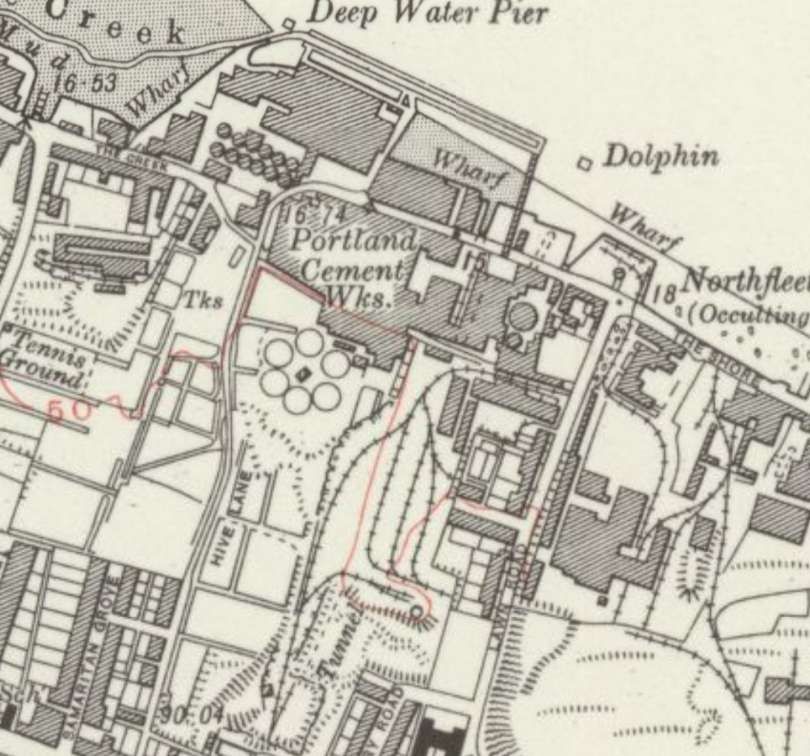
The Works were rebuilt in 1925 and a standard-gauge rail network replaced the narrow-gauge one. A new tunnel to the East of the narrow-gauge tunnel was constructed. The new network also connected with the Perry Street sidings of the former LCDR Gravesend West branch. [1: p60]
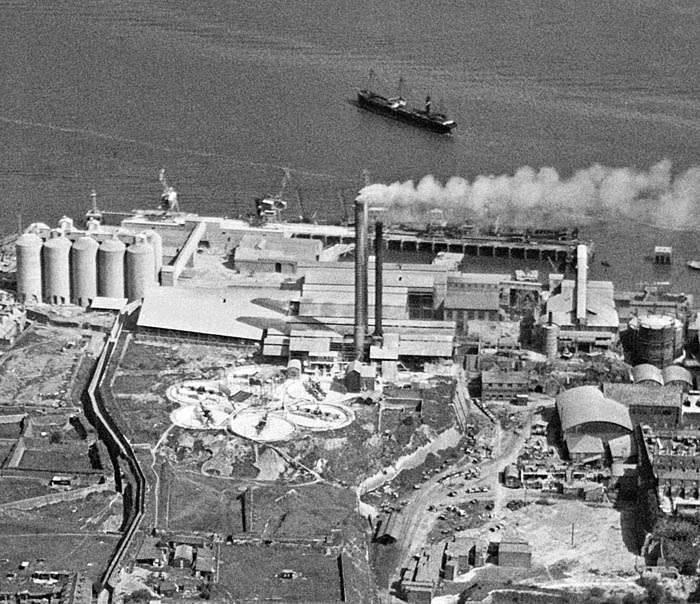
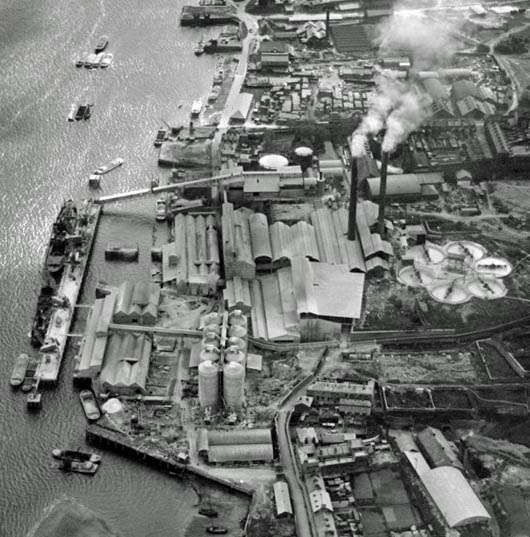
Another view of the reconstructed Works, this time from the Northwest, © Historic England – NMR Aerofilms Collection. Catalogue number EPW017640. [3]
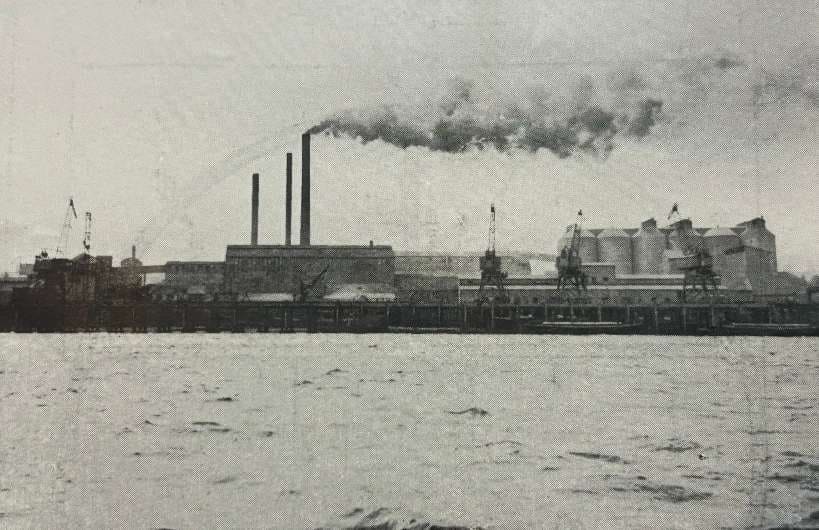
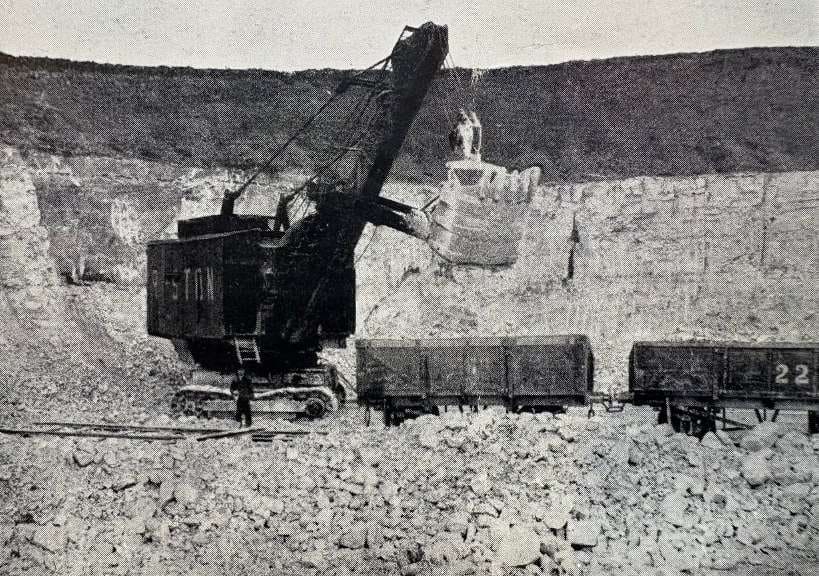
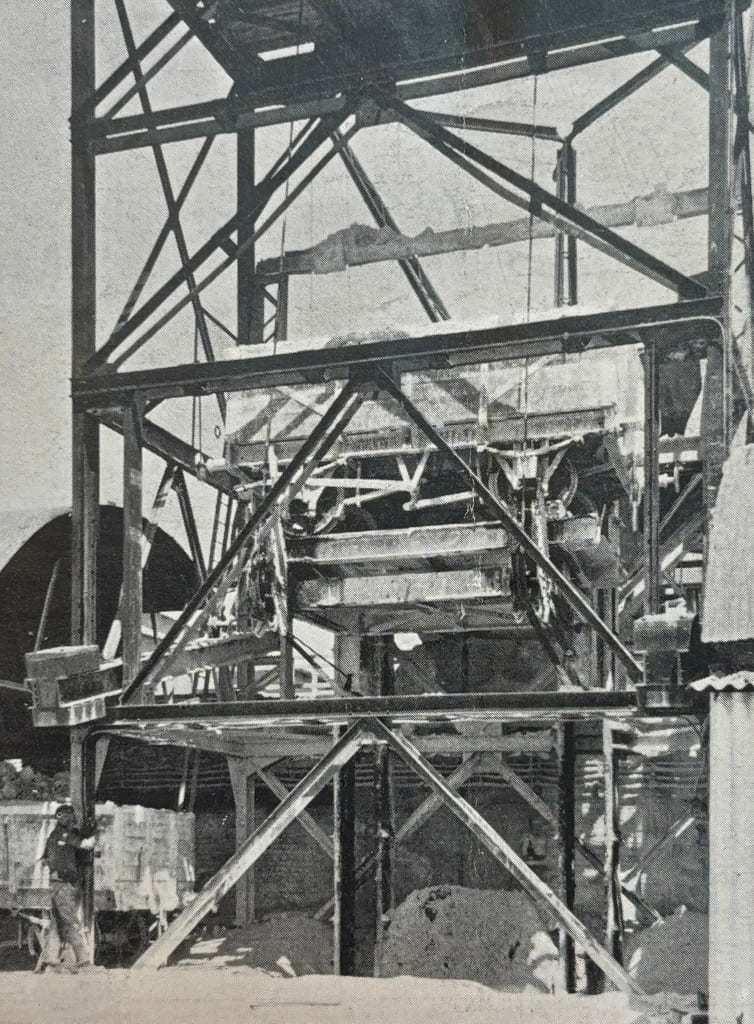
Steam navvies were put to work in the quarries and for some time the chalk was transported to the works via the Washmills shown below. Much later, the chalk was slurried to allow it to be pumped to the Works by pipeline. [1: p60]
Footage of Steam Navvies at work in one of the chalk pits along the South side of the River Thames can be seen here. [12]
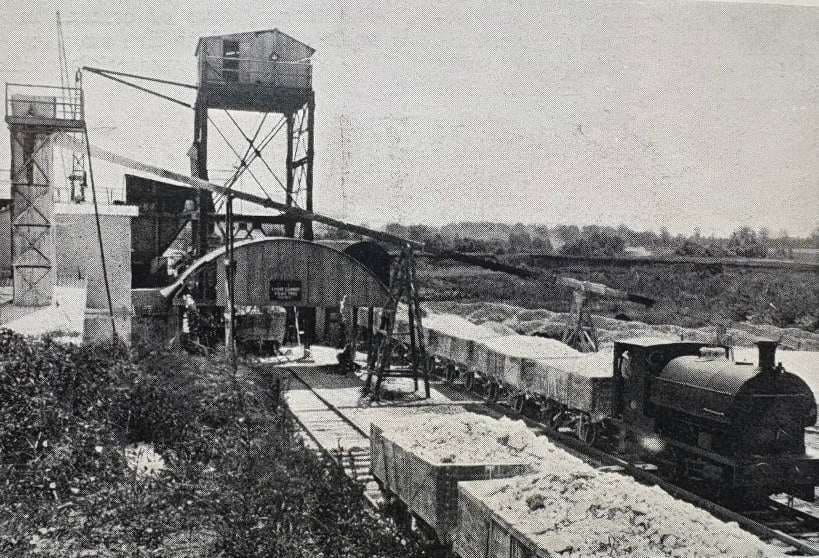
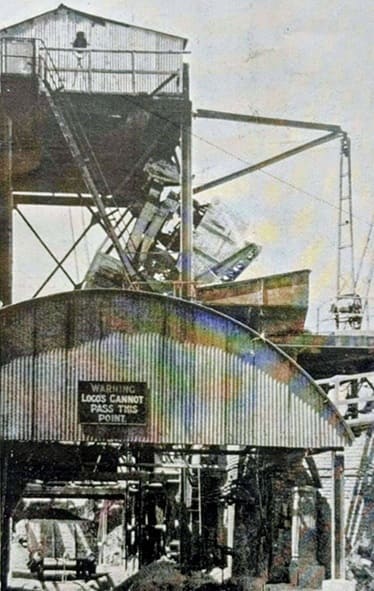
Closer views of the Washmills. These images were shared by Andy Howdle on the Industrial Locomotive Enthusiasts Page Facebook Group on 28th August 2025 and are shared with his kind permission. [10]
The locomotives on the standard gauge system were as follows:
No. 1 – 0-4-0ST built in 1926 by Peckett, Works No. 1701, supplied new but fitted at Northfleet with an ‘Aquastatic’ water softener. It had outside cylinders (14″ x 22″), 3′ 2.5″ wheels. It was transferred to the West Thurrock Works of BPCM in 1934. [1: p60,61]
No. 2 – 0-4-0ST built in 1926 by Peckett, Works No. 1899, supplied new but rebuilt with a rear bunker which upset its balance. It was again re uilt in 1946. It had outside cylinders (14″ x 22″), 3′ 2.5″ wheels. It went to Kent Works at Stone. [1: p60,61]
No. 3 – 0-4-0ST built in 1899 by Peckett, Works No. 759, outside cylinders (12″ x 18″), 2′ 9″ wheels. This locomotive came second-hand from Hilton’s Works, Halling and was transferred to the Crown & Quarry Works at Frindsbury in 1934. [1: p60,61]
No. 4 – 0-4-0ST built in 1900 by Peckett, Works No. 829, outside cylinders (12″ x 18″), 2′ 9″ wheels. This engine came second-hand from Lee’s Works at Halling and was scrapped in 1966. [1: p60,61]
No. 5 – 0-4-0ST built in 1902 by Peckett, Works No. 967, outside cylinders (10″ x 14″), 2′ 6.5″ wheels. This locomotive came second-hand from New Globe Works, Greenhithe in 1933 (their No. 4) and was scrapped in 1966. [1: p60,61]
No. 3 – 0-6-0ST built in 1931 by Avonside, Works No. 2001, outside cylinders (14″ x 22″), 3′ 6″ wheels. This locomotive was purchased second-hand via Messrs Cohen in 1934. Previously it worked on the Southampton Docks extension works for the joint contractors Nuttall and Mowlem. It did not last long at Bevan’s. As a six-coupled engine it was not suited to the site. It was broken up in 1951. [1: p60,61]
Duvals – 0-4-0ST built in 1899 by Bagnall, Works No. 1583, outside cylinders (10″ x 15″), 2′ 6″ wheels.. This engine came second-hand from Gray’s Chalk Quarries Co. Ltd. in 1951 and was scrapped in 1958. [1: p60,61]
An unnamed 0-4-0ST built in 1940 by Peckett, Works No. 1985, outside cylinders (14″ x 22″), 3′ 2.5″ wheels, was borrowed from Kent Works in 1945. [1: p61]
An unnamed 0-4-0ST built in 1929 by Hawthorn Leslie, Works No. 3719, outside cylinders (15″ x 22″), 3′ 5″ wheels, was borrowed from Swanscombe Works in 1955. [1: p61]
Stoyel & Kinder tell us that the railway was last used in September 1964, being replaced by conveyor-belting. The Works closed in 1970.
It is worth noting that the Works never had a “rail link for product, and used the river for most of its transportation, maintaining the best deep water jetty on the south bank. There was no main line rail link at all until 1915, when the loss of sea-borne coal supply led to a hurried connection of the plant to the Rosherville branch line.” [4]
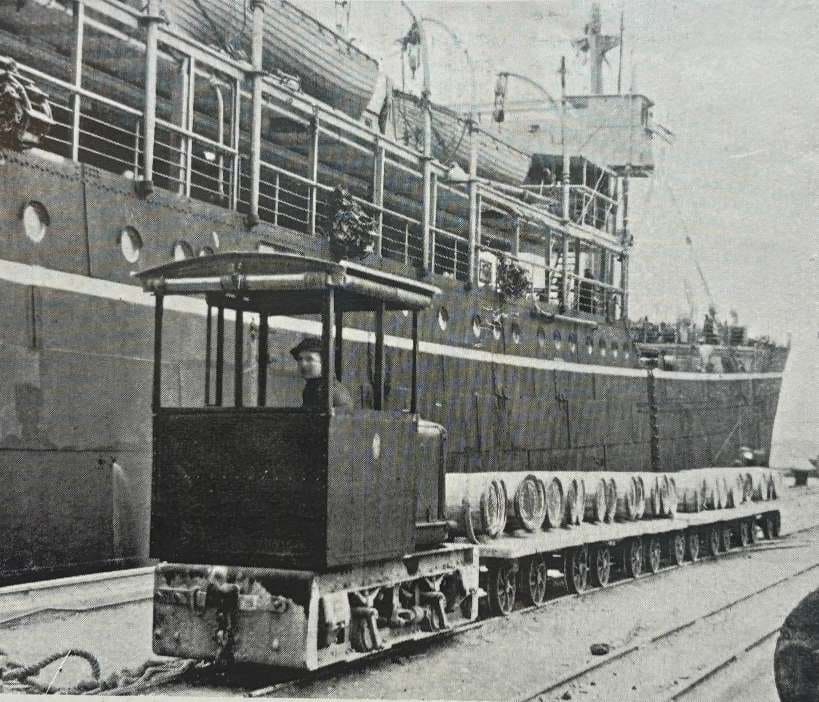
2ft Narrow Gauge Line on the Riverside Wharf
A 2ft narrow-gauge railway served the Work’s wharves on the River Thames.
Miscellaneous!
References
- B. D. Stoyel & R. W. Kidner; The Cement Railways of Kent; Oakwood Press, Headington, Oxford, 1973, 1990, p54-62, page numbers are from the 2nd Edition.
- https://www.britainfromabove.org.uk/image/epw017642, accessed on 23rd August 2026.
- https://www.britainfromabove.org.uk/image/epw017640, accessed on 23rd August 2026.
- https://www.cementkilns.co.uk/cement_kiln_bevans.html, accessed on 23rd August 2026.
- https://www.gracesguide.co.uk/Neath_Abbey_Iron_Co, accessed on 23rd August 2026.
- The Engineer 29th January 1937.
- https://commons.wikimedia.org/wiki/File:Knight,_Bevan_and_Sturge_cement_works,_Northfleet.jpg, accessed on 23rd August 2026.
- https://maps.nls.uk/view/104191142, accessed on 23rd August 2026.
- https://maps.nls.uk/view/101428125, accessed in 23rd August 2026.
- https://www.facebook.com/share/p/1DmzSjPJqt/, accessed on 24th August 2026.
- https://harbourvillage.whatyouthink.co.uk/northfleet, accessed on 24th August 2026.
- https://www.facebook.com/share/v/1JhBrkatvH, accessed on 24th August 2026.
- https://youtu.be/yIqmwrx9XQc, accessed on 24th August 2026.


