The Lilleshall Company was a dominant force in the East Shropshire area and developed a network of canals and tramroads to transport goods between their many different sites. “The company’s origins date back to 1764 when Earl Gower formed a company to construct the Donnington Wood Canal on his estate. In 1802 the Lilleshall Company was founded by the Marquess of Stafford in partnership with four local capitalists.” [31]
Bob Yate, in his important book, “The Railways and Locomotives of the Lilleshall Company,” introduces the historical development of the transport provision of the Lilleshall Company, referring first to the Company’s canal network. The construction of these canals which, while of some significance, was unable to provide for all of the sites being built and run by the Company.
“In order to reach the workings of the pits, quarries and works that these canals served, a system of tramways was soon developed. These were almost certainly constructed using wrought iron rails from the start, and were definitely of plateway construction.” [1: p36]
Yate goes on to explain that the tramroads/tramways/plateways had various gauges and comments that these short lines “linking the workings to the canals, gradually lengthened as their usefulness became apparent. So it was that in October, 1797 the ironmaster Thomas Botfield agreed with his landlord, Isaac Browne to carry 1,200 tons of coal each month from Malins Lee (about two miles south of Oakengates):to some convenient wharf or quay adjoining the River Severn, and to the railway intended to be made by John Bishton & Co. and the said Thomas Botfield, or to some intermediate wharf or bank between the said works and the River Severn upon the line of the intended railway.” [1: p35]
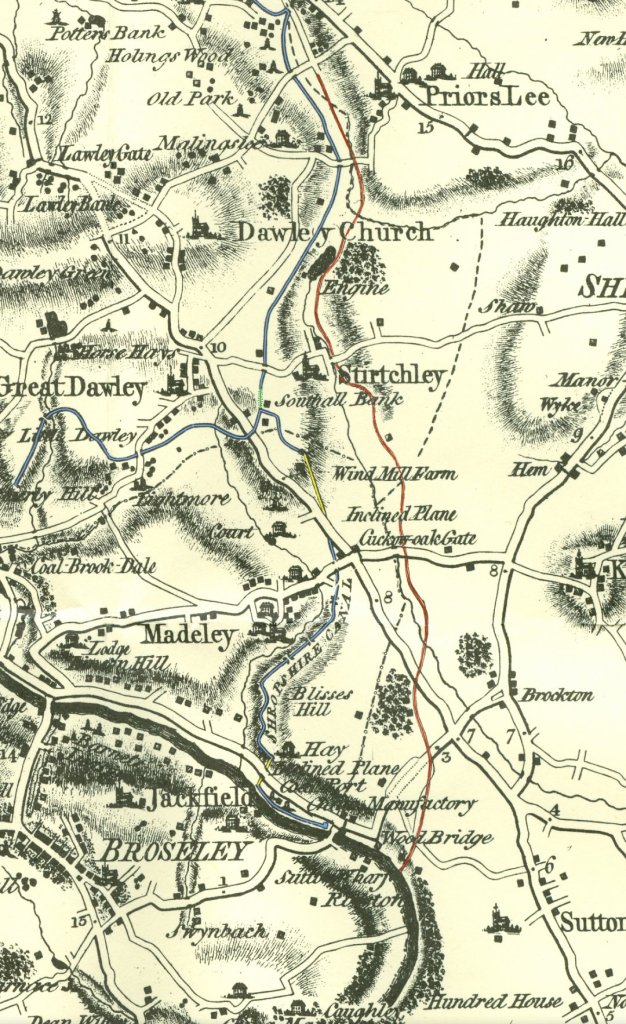
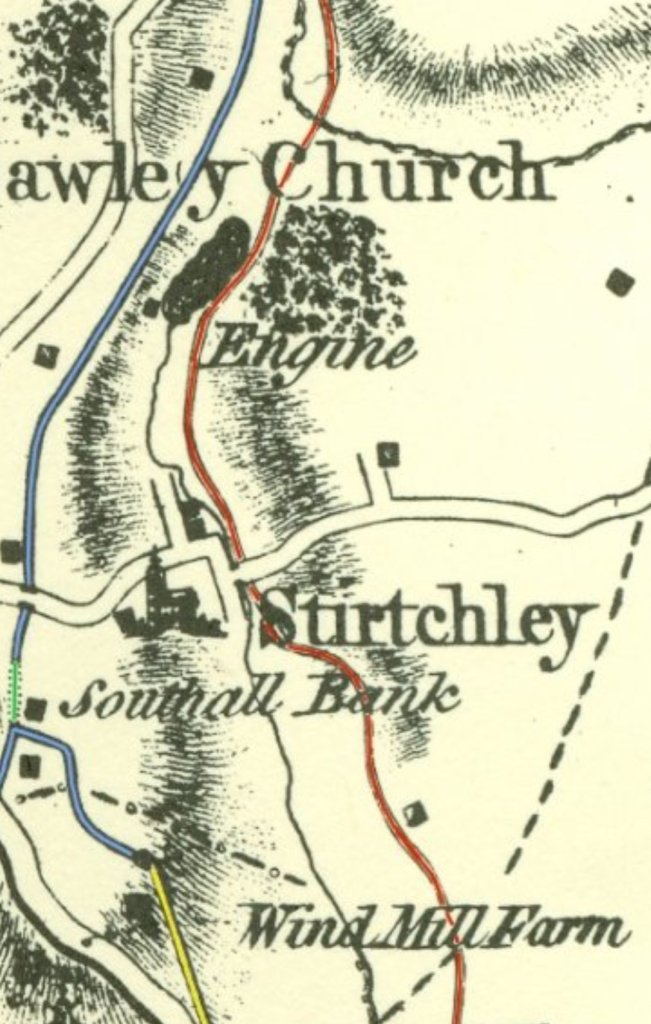
An extract from Robert Baugh’s Map of Shropshire of 1808. The red line drawn onto the map was added by ‘Dawley History’. The map from which the extract was taken is available on the ‘Dawley History’ website. It is worth noting that St. Leonard’s Malinslee, next door to which we live, is shown as Dawley Church. [7]
Yate continues: “This railway was working by 1799, running from Sutton Wharf, near Coalport, to Hollinswood, where it connected with several ironworks and mines to the north in the area of Priorslee. The total length of this line was about eight miles, and it is presumed to have been horse worked. Bishton and Onions, whose ironworks was situated at Snedshill, were certainly involved in the original line, and by 1812 it had become the property of the [Lilleshall] Company. This is recorded on Robert Baugh’s map of 1808, and again on the Ordnance Survey maps of 1814 and 1817, although in the latter two cases it is not shown in its entirety.” [1: p35]
Yate notes that the Company were sending down around 50,000 tons of coal annually and much iron. “However, the Shropshire Canal was not enjoying the most robust of business climates, and attempted in June 1812 to negotiate for the Company’s business, although this seems to have been unsuccessful. However, in April 1815, William Horton on behalf of the [Lilleshall] Company agreed that the tramway would be removed, and that its business would be transferred to the canal. In turn, the Company: received compensation of some £500. as well as favourable tonnage rates.” [1: p35]
This means that the direct tramroad link to the River Severn was very short-lived.
The closure of this mainline tramroad/tramway had little effect on the ‘internal’ network of routes serving the Lilleshall Company’s various pits and works. Yate tells us that, by 1833, the main tramways were: a line running along Freestone Avenue to Lawn Pit, near to Priorslee Hall, and to Woodhouse Colliery; branches east of Stafford Street, Oakengates and north of Freestone Avenue; a continuation of the main line northwards crossing Station Hill, Oakengates to the east of the Shropshire Canal, and on to meet the Wrockwardine inclined plane near to Donnington Wood. [1: p35]
“By 1856, further tramways had been laid around the area of Snedshill Ironworks linking to the canalside warehouses, and branches reaching out to the waste heaps south and west of the ironworks. These spoil heap lines continued to expand in subsequent years around the Priorslee Ironworks, and south therefrom.” [1: p35]
Several of the coal pits in the Donnington Wood area were, by 1837, linked directly to the Old Lodge Furnaces and no longer needed to make use of the canal network. These tramroads were horse-drawn with minor exceptions on short, level runs where trams were manhandled. Yate comments: “It is nonetheless interesting to consider that wayleaves were granted in 1692 at Madeley and in 1749 at Coalbrookdale to permit the use of oxen. Admittedly this was over the roads of the area, but a good case could possibly be made for their employment as motive power on the tramroads, as surely local customs would be a powerful influence.” [1: p35]
Using the canal network became increasingly problematic. The underground workings in the area caused some subsidence and as a consequence canals could require significant repairs and be out if action for a time.
The Lilleshall Company’s tramroads eventually developed into a significant standard-gauge network. The later part of the transport story of the Lilleshall Company is for another time and another article!
In this article we concentrate on, what was, a relatively early (1799 to 1815), wrought-iron plateway tramroad. Perhaps we should bear in mind that it is possible that the Lilleshall Company saw no major financial advantage in lifting the whole line from Sutton Wharf into the Company’s industrial heartland and that elements of this tramroad came to be used as part of a later network of tramroads or railways If this was not true for the wrought-iron plates/rails themselves, it is much more likely that any embankments and cuttings could be used in this way. This may perhaps be something we will discover along the way.
The Tramroad Running North from Sutton Wharf
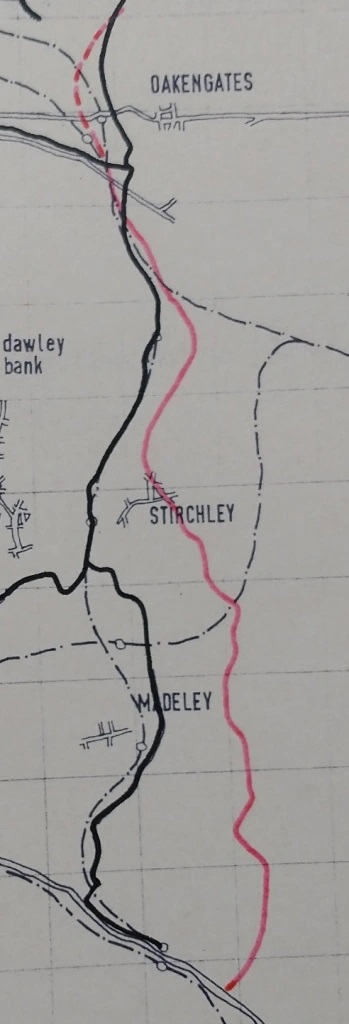
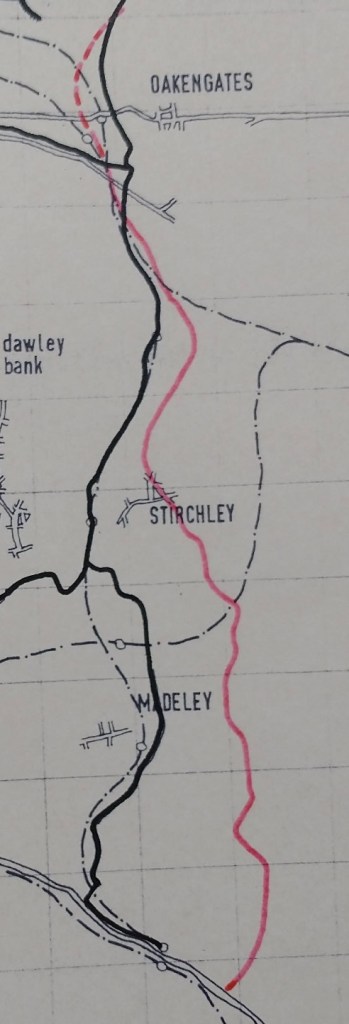
Savage and Smith provide some information about the line in their research in ‘The Waggon-ways and Plateways of East Shropshire‘. They provide two different series of drawings – the first set are 1″ to a mile plans relating to specific eras in the development of the local tramroads. The extract here is taken from the plan which relating to 1801-1820. [2: p85]
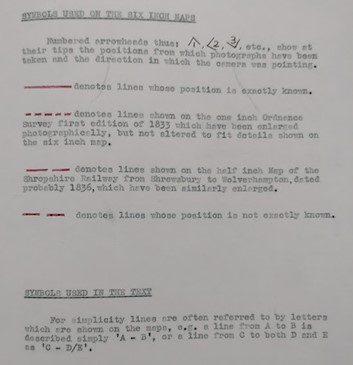
The line is shown in red ink, the Shropshire Canal is the heavy black line. The dotted and dashed thin lines are later railway routes. The short red dashes at the North end of the tramroad indicate that the route of the tramroad is not as certain as the length shown in continuous red ink.
Savage and Smith comment on the tramroad: “In 1808 Robert Baugh’s map of Shropshire shows the line from Oakengates to Sutton Wharf, but not with any great accuracy. Part of it is shown on the two inch ordnance survey of 1814 and 1817, but only as far as Holmer Farm. After this it disappears. Its owners seem to have been the Lilleshall Company and they sent down annually 50,000 tons of coal and much iron. It was agreed to remove it and transfer business to the Shropshire canal for compensation of £500 and a guarantee of favourable rates.” [2: p140]
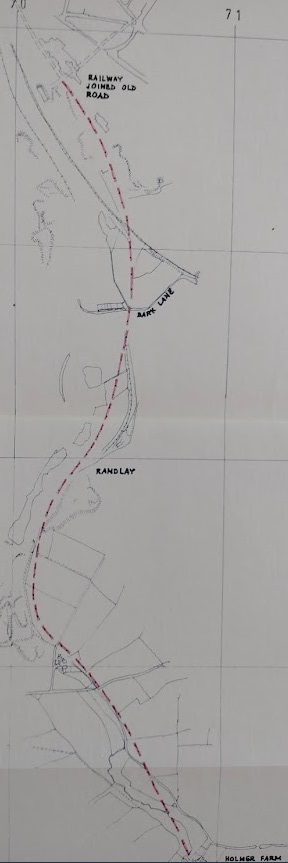
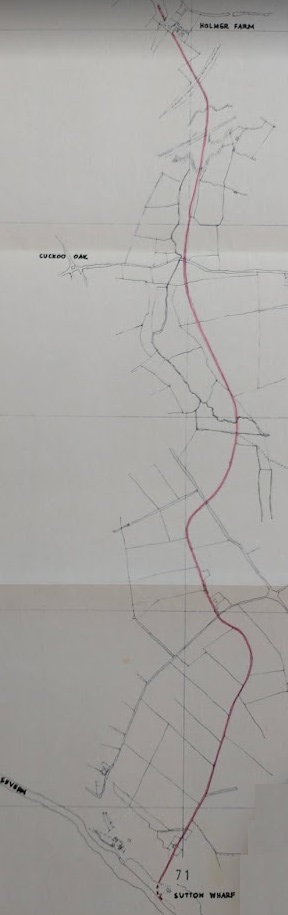
The second series of plans provided by Savage and Smith are to a scale 6″ to a mile. At this larger scale, it at first seems that they are not prepared to show the same level of certainty over the actual route of the tramroad than on the 1″ to a mile map above. In fact the difference between the two lines shown has as much to do with the scale of the source mapping used. The long dashed red line in the more northerly section of the plans produced here indicates that the route was obtained from a 0.5″ to a mile plan. So they acknowledge that, while the route definitely existed, issues with scaling inevitably mean that there is greater uncertainty over the detailed alignment. We are probably best advised to see the route from Sutton Wharf to Holmer Farm as relatively reliable and to check the detail of the route from that point North. The 6″ to a mile plan is a fold-out plan and because of its length, difficult to photograph.
Savage and Smith also only show the line running to the North of Dark Lane, rather than around the West of Oakengates. With these provisos Savage and Smith show much of the length of the Sutton Wharf tramroad.
My photographs of the 6″ plan are not of the greatest clarity. But the two images provided here give sufficient clarity to make out the significant features that Savage and Smith recorded in the 1960s. [2: p139]
Their contribution is important, as they were able, in their onsite surveys, to record details subsequently lost with the remodelling of the landscape and the construction of new transport arteries by the Telford Development Corporation.
Our investigation of the route of the tramroad begins at its southern end at Sutton Wharf.
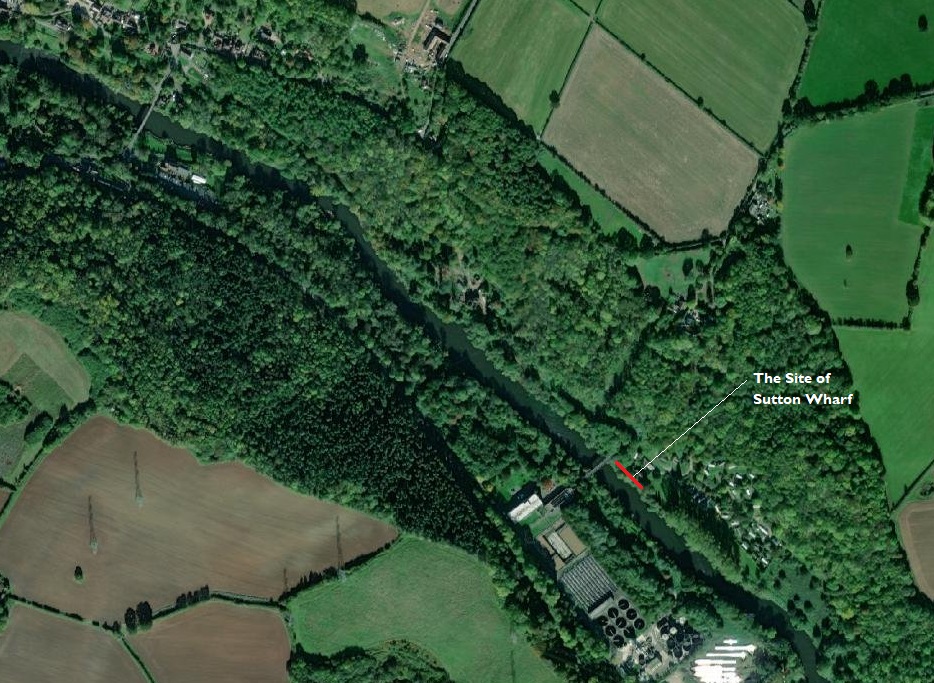
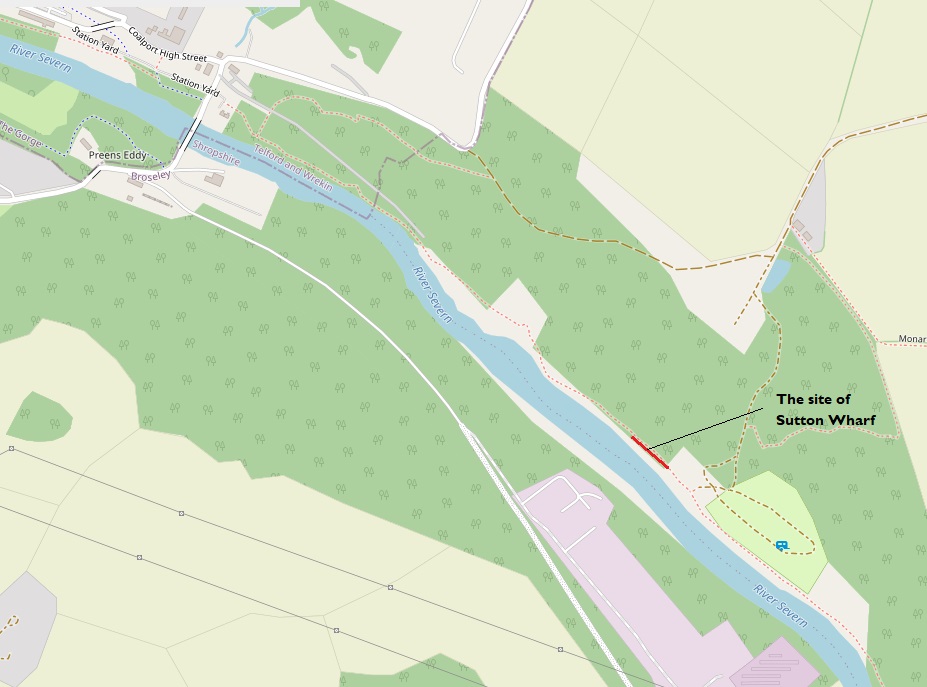
Below the key to Savage and Smith’s 6″ to a mile drawings there are a series of maps and satellite images showing the location of the Wharf.
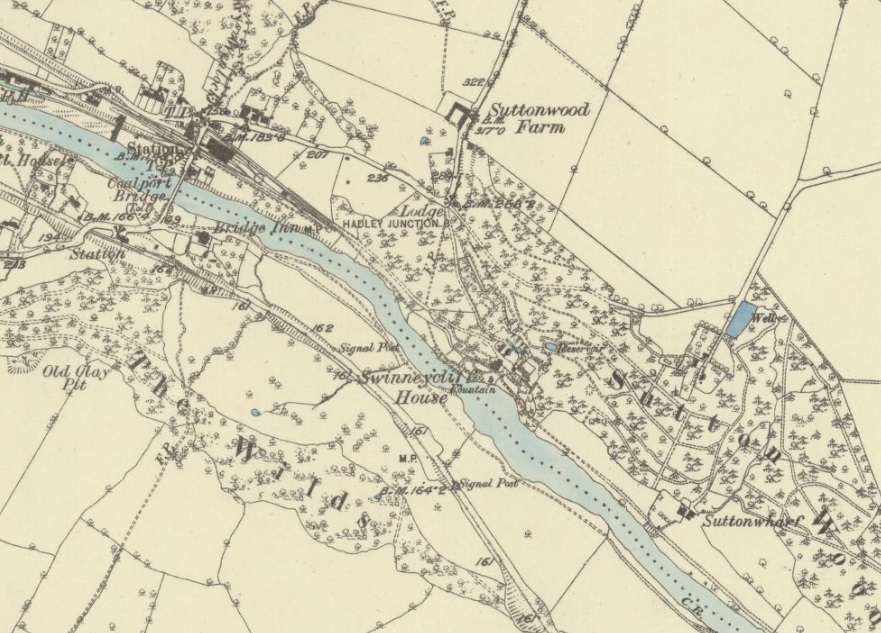
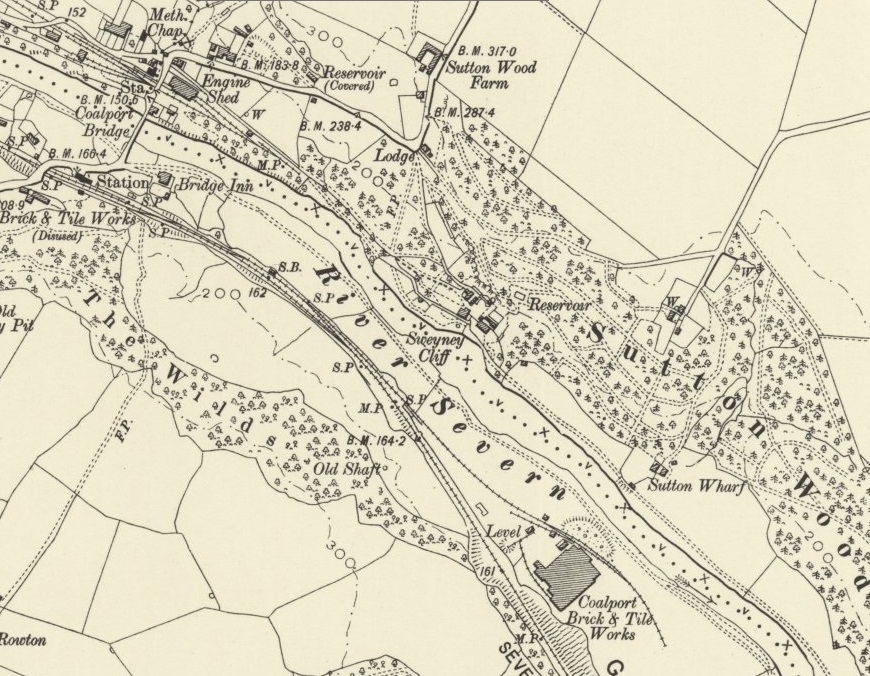
The 6″ Ordnance Surveys of 1881/82, published in 1883 and of 1901, published in 1902 show the railways serving the immediate area to the West and South of Sutton Wharf. The GWR Severn Valley Railway is to the South of the River Severn with its station close to Bridge Inn. The LNWR Coalport Branch is on the North side of the Severn. The two stations are linked by Coalport Bridge.
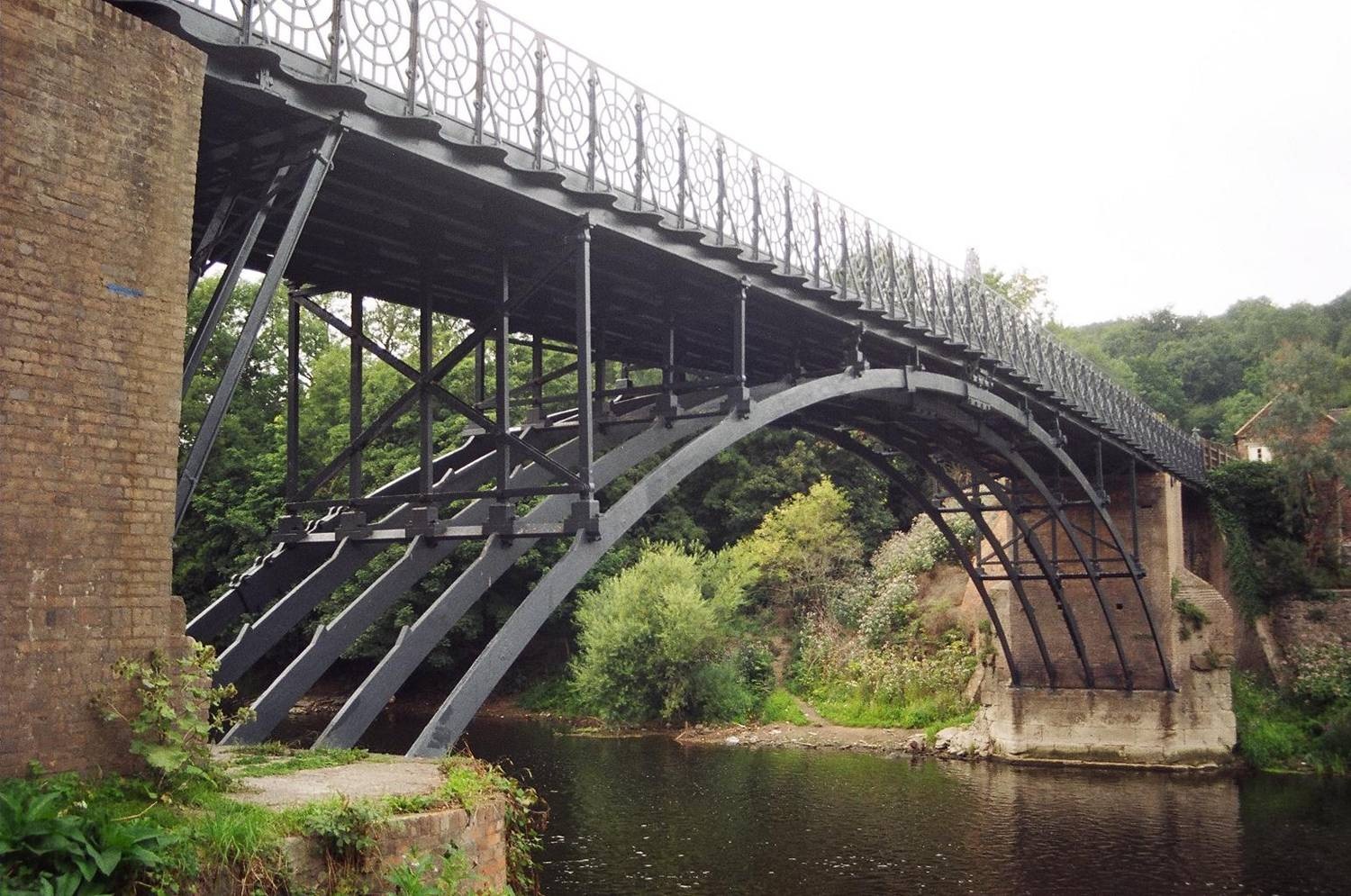
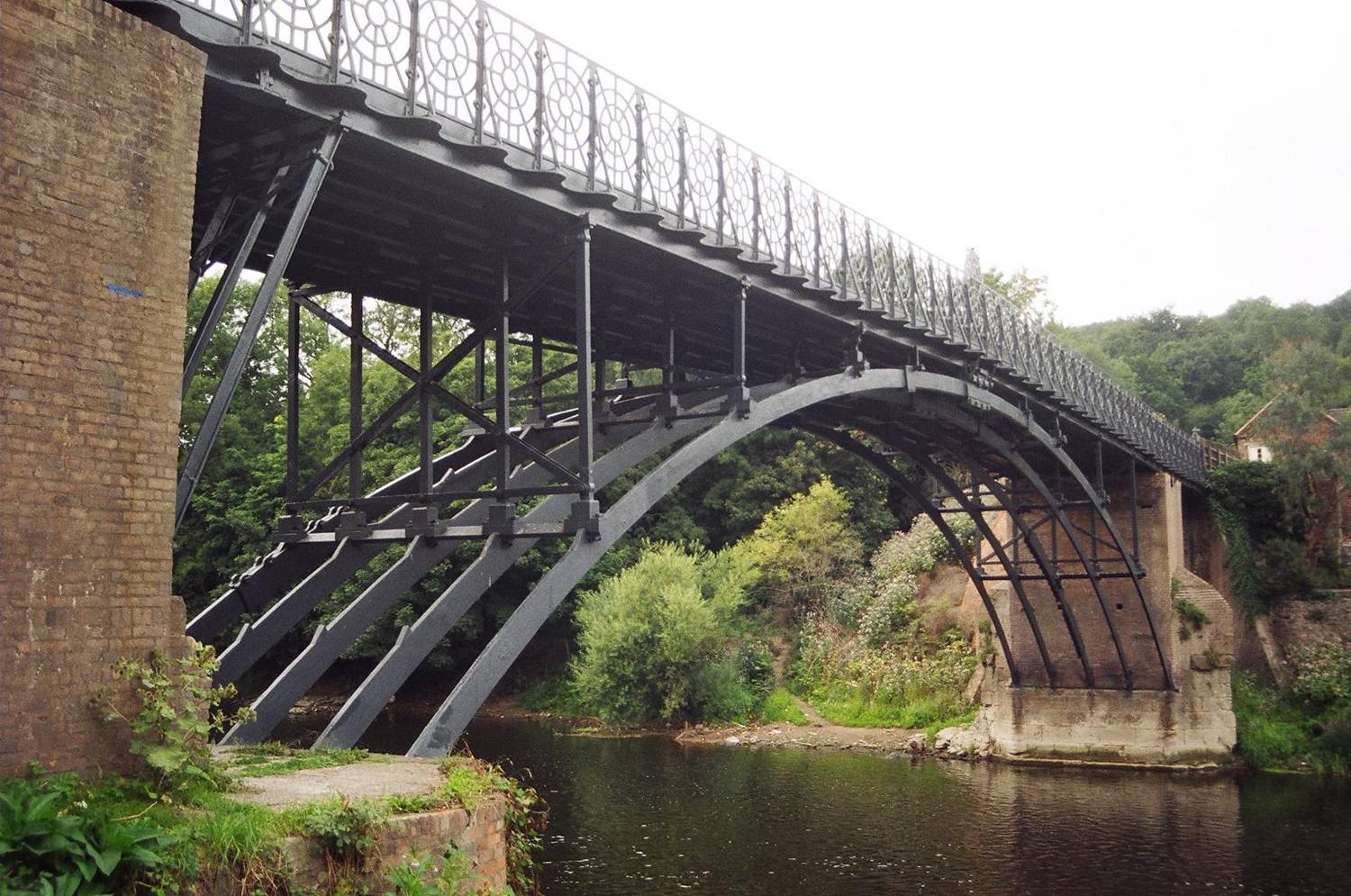
Coalport Bridge remains in use in the 21st century, the two railways have disappeared. One picture of the bridge as it appears in the 21st century is provided below. The LNWR line is now the Silkin Way which links the River Severn with the centre of Telford. The Severn Valley Railway Coalport Station is, in 2023, a site with a variety of different holiday accommodation available.
The 6″ Ordnance Survey of 1881/82 published in 1883. This shows the new railways serving the immediate area to the West and South of Sutton Wharf. The GWR Severn Valley Railway is to the South of The River Severn with its station close to Bridge Inn. The LNWR Coalport Branch is on the North side of the Severn. The two stations are linked by Coalport Bridge. [3]The same area as shown on the 6″ Ordnance Survey of 1901, published in 1903. Twenty years after the 1881/82 survey the most significant change in the immediate area of Sutton Wharf is the appearance of Coalport Brick & Tile Works on the South bank of the River Severn. [4]The same area as in the map extracts above but this time as shown on the modern ESRI satellite imagery also provided by the NLS (National Library of Scotland}. Coalport Bridge remains. The two railway stations have seen major changes. The station site on the North bank of the Severn is now the Southern end of the Silkin Way, a cycle path/footpath leading North to central Telford. The station on the South Bank is now, the 2023, holiday accommodation. There is a new private bridge across the River Severn just to the West of Sutton Wharf. [4]The same area once again, this time on OpenStreetMap with the location of the old wharf marked. The route of the old tramroad is identified by the dotted line which points towards the Wharf. It can be seen to the North of the northern boundary of Sutton Wood. [5]This photograh of Coalport Bridge has been released into the public domain by its author, Peterlewis at English Wikipedia. This applies worldwide. [8]
As an aside, here are some details about Coalport Bridge as provided on Wikipedia: “Architect and bridge-builder William Hayward (1740–1782) designed the first crossing over the Severn at Coalport, based on two timber framed arches built on stone abutments and a pier. It was originally built by Robert Palmer, a local timber yard owner based in Madeley Wood, and opened in 1780. The bridge, known as Wood Bridge, connected the parish of Broseley on the south bank of the river with the Sheep Wash in the parish of Madeley and Sutton Maddock on the north bank. … The wooden bridge was short-lived and lasted less than 5 years until 1795, when severe winter flooding virtually washed away the mid-stream supporting pier.” [9]
The bridge remained closed from 1795 until the Trustees had it rebuilt in 1799 “as a hybrid of wood, brick and cast-iron parts, cast by John Onions (Proprietor’s Minute Book 1791–1827). The two original spans were removed and replaced by a single span of three cast iron ribs, which sprang from the original outer sandstone pier bases. The bridge deck was further supported by two square brick piers, the northern one constructed directly on top of the stone pier base and the southern one set back slightly towards the river bank. The remainder of the superstructure was built of wood and may have reused some of the original beams. However, by 1817, this bridge was failing again, attributed to the insufficient number of cast iron ribs proving inadequate for the volume of traffic. Consequently, the bridge proprietors decided to rebuild Coalport Bridge once again, this time completely in iron. The quality of the castings is good, especially by comparison with the castings of the Iron Bridge upstream. The bridge was recently (2005) renovated and the static load lowered by replacing cast iron plates used for the roadway with composite carbon fibre/fibreglass plates, with substantial weight saving.” [9]
“The date of 1818 displayed on its midspan panel refers to this substantial work which allowed the bridge, subscribed to by Charles Guest, one of the principal trustees, to stand without major repairs for the next 187 years.” [9] In 2004-2005, during the closure (which lasted about a year), not only were major works undertaken to the span of the bridge, it was also necessary to reconstruct the two brick arches supporting the verges at the south side of the bridge. The bridge “still takes vehicular traffic, unlike the more famous Iron Bridge, albeit limited to a single line of traffic, a 3-tonne weight limit and a height restriction of 6 ft 6in (1.98 cm).” [9]
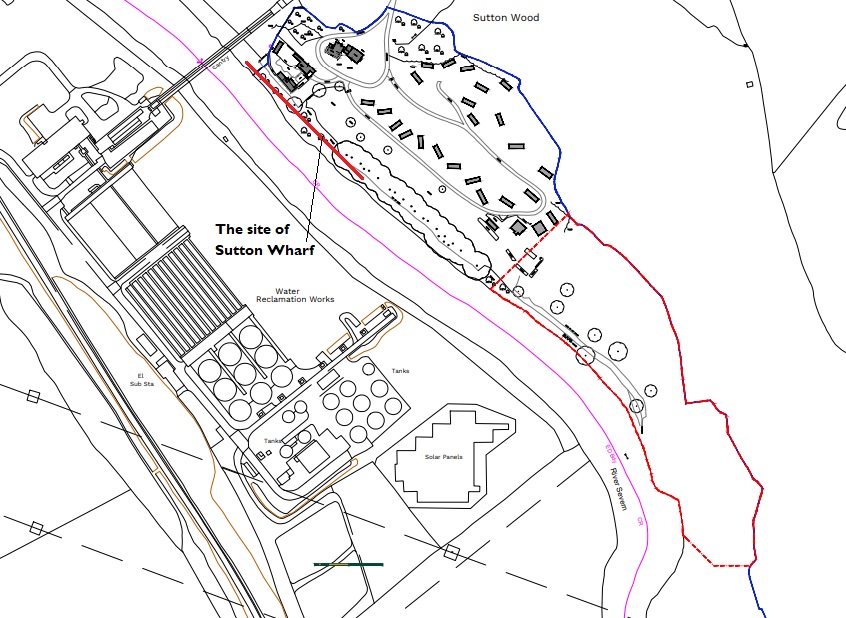
An extract from a plan submitted to Telford and Wrekin Council as part of a planning application for the extension of the Sutton Wharf Caravan Park. The approximate location of the Wharf is shown by the bold red line. [6]
From the Wharf, an inclined plane was needed to gain height to the land above the Severn Gorge. The location of the incline is shown below.
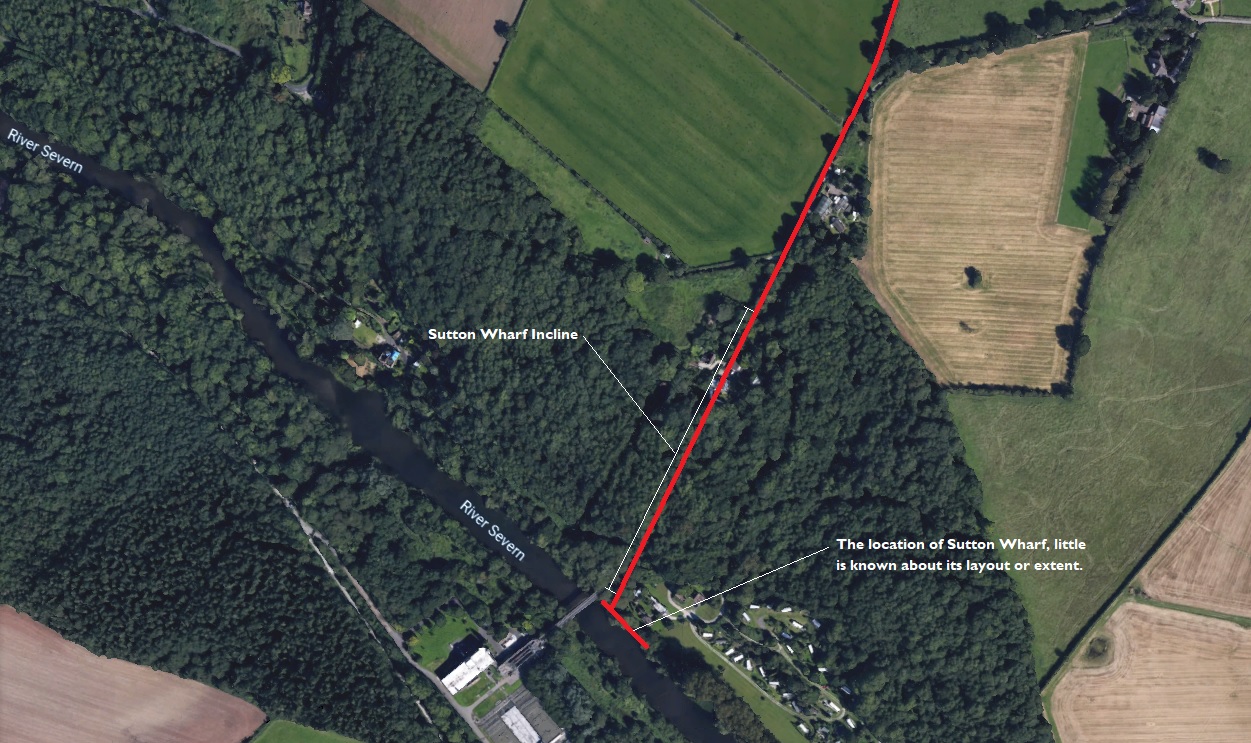
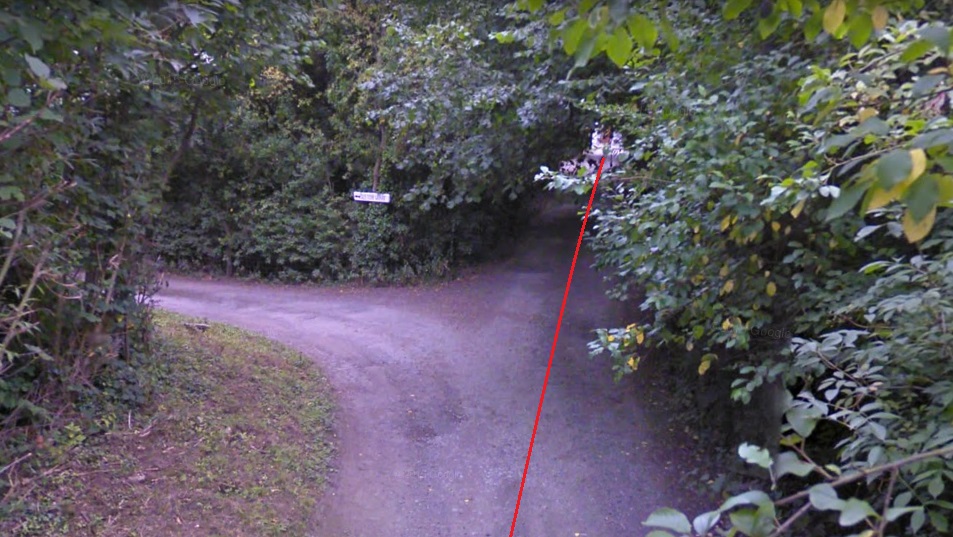
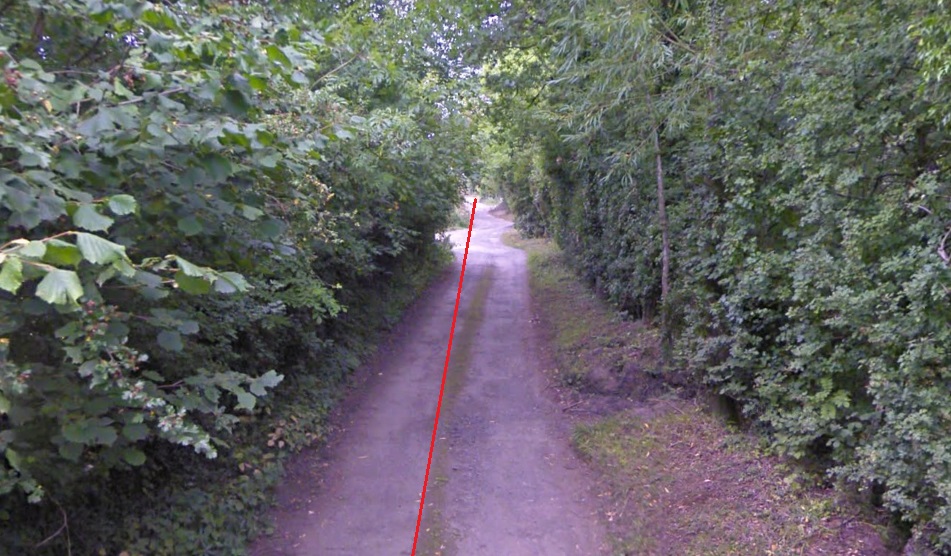
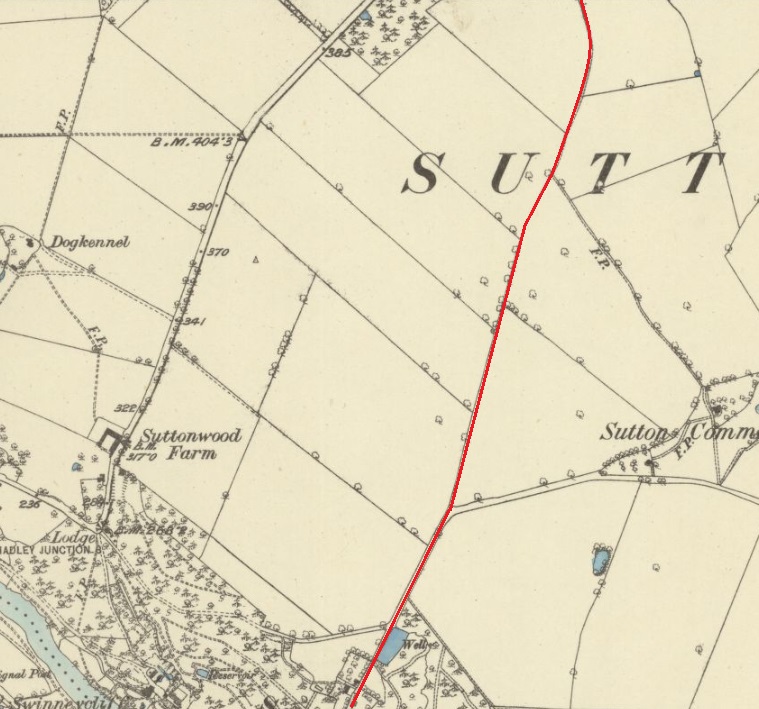
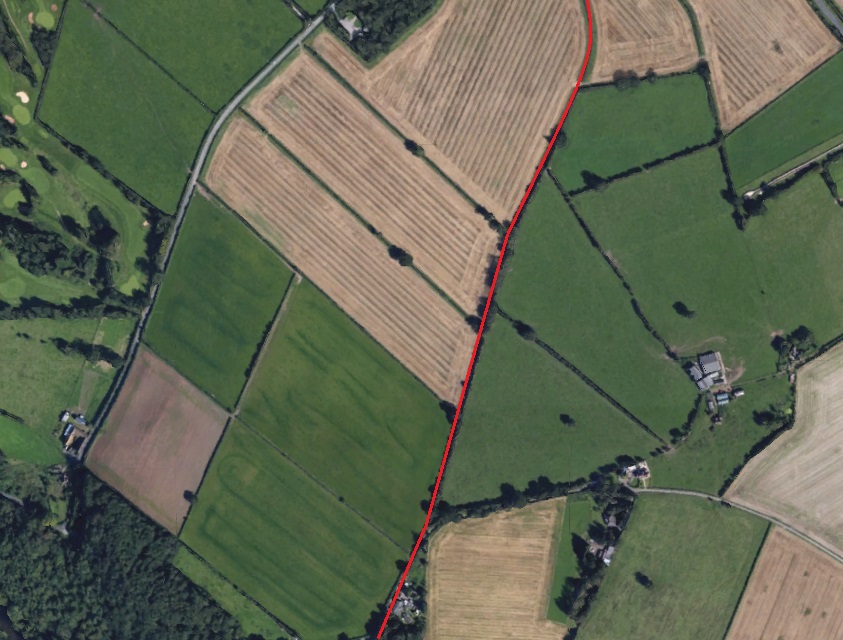
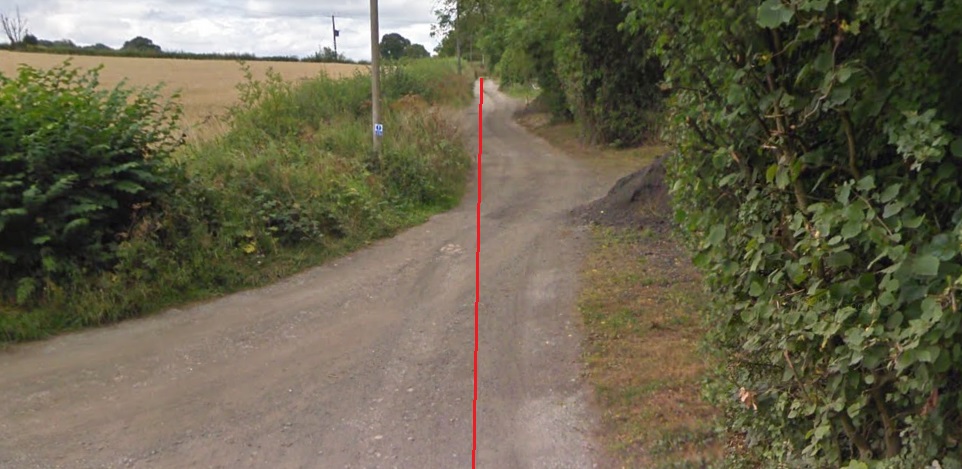
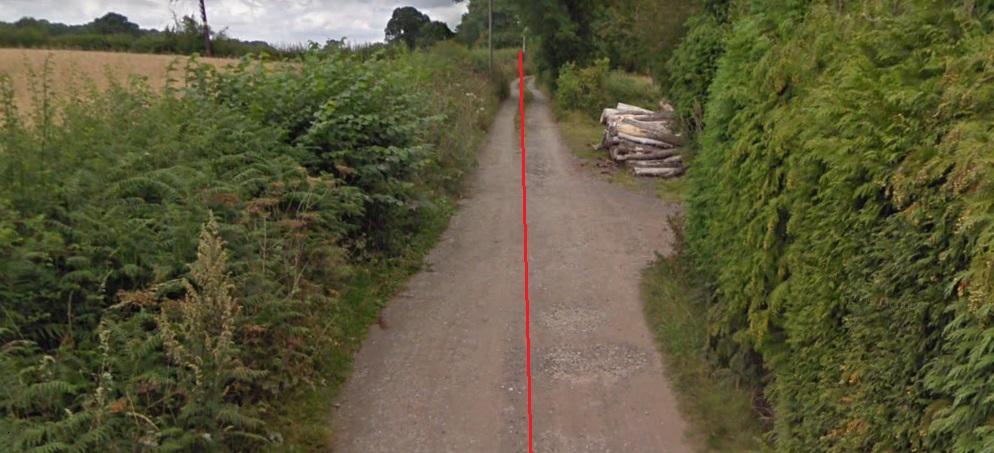
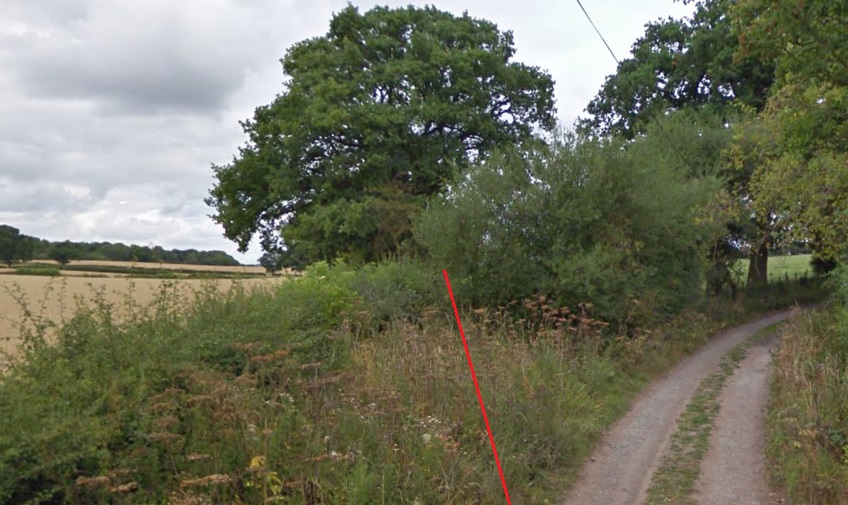
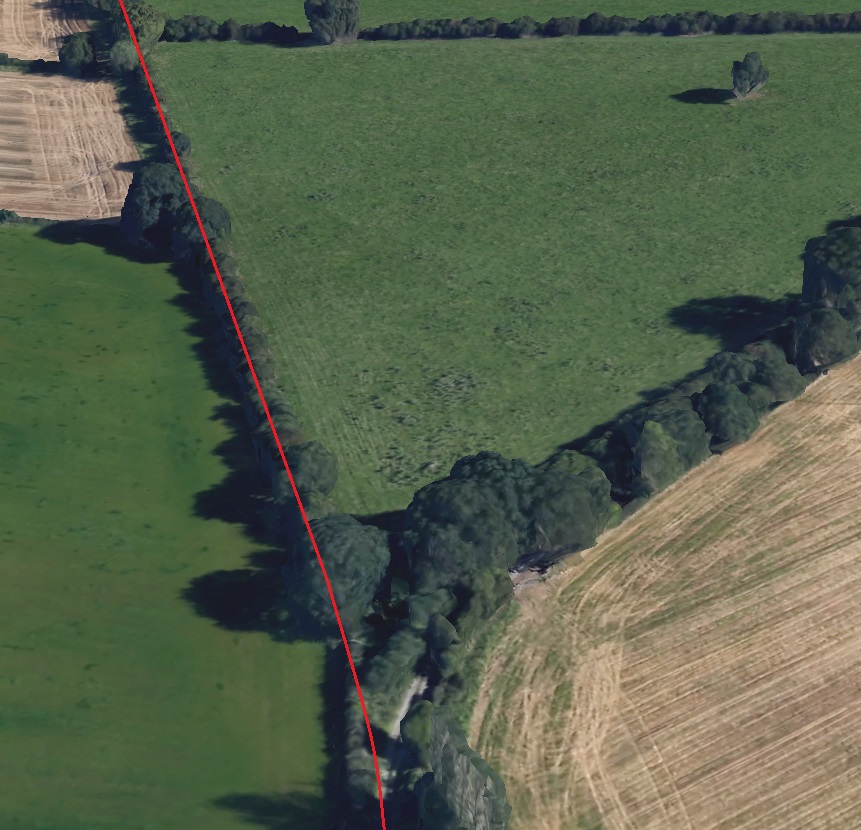
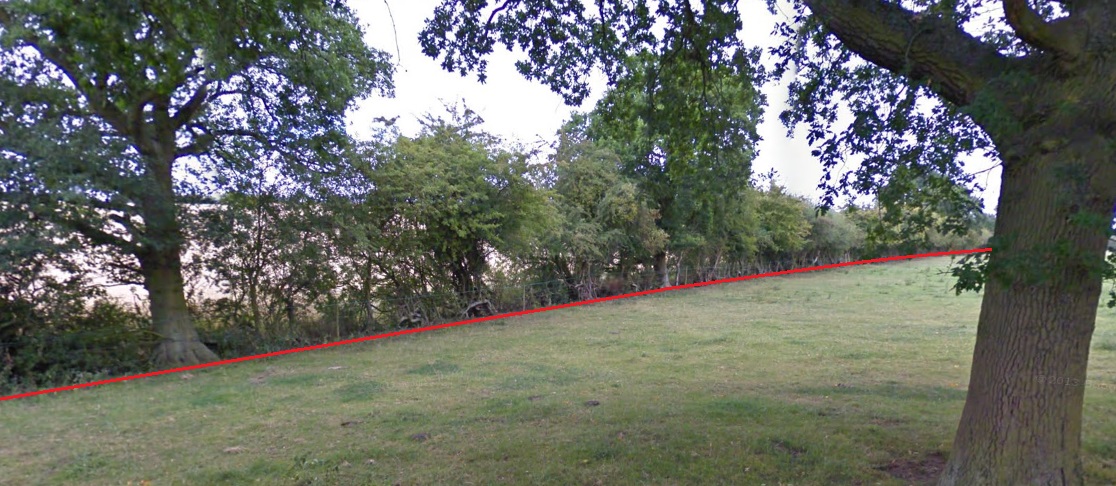
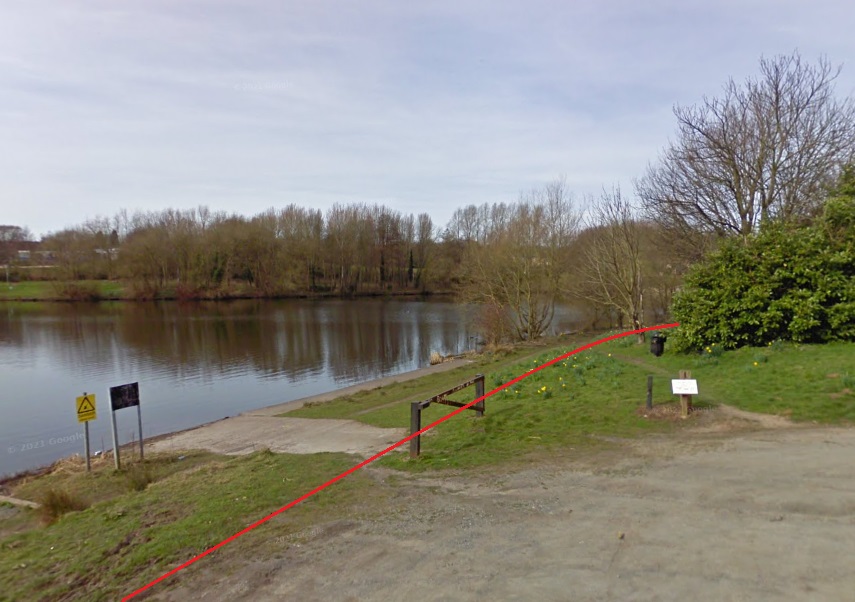
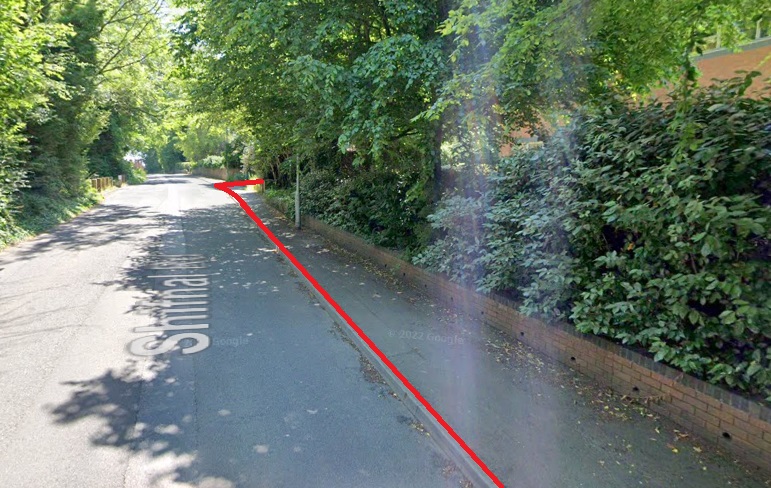
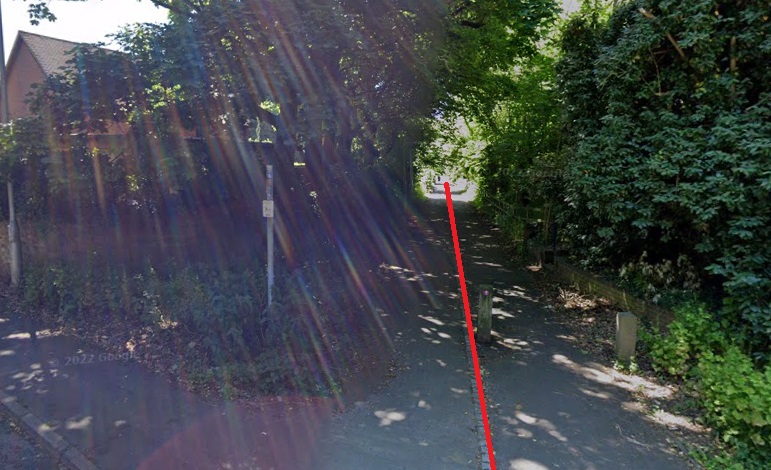
This Google Earth satellite image focusses on the North side of the River Severn and Sutton Wood. The Wharf location is again marked and the line of the Inclined Plane shown. Beyond the top of the incline the tramroad headed in a north-northeast direction following first a modern metalled minor road and then modern field boundaries. [Google Earth]The route of the tramroad as it approached the top of the Inclined Plane. This photograph is taken facing South on the line of the tramroad. [Google Streetview]Turning through 180 degrees to look along the route of the tramroad as it headed away from the River Severn. [Google Streetview]The old tramroad followed the field boundaries heading North. Towards the top of this extract from the 6″ Ordnance Survey its formation was used by a later footpath. [3]Approximately the same area as in the map extract above but shown, this time on modern satellite imagery [Google Earth]Continuing North along the line of the old tramroad. The formation from the top of the incline is followed, in 2023, by a minor road. [Google Streetview]The minor road continues northwards along the line of the old tramroad. [Google Streetview]The minor road turns towards the Northeast. The field boundary shows the line of the old tramroad. [Google Streetview]Google Earth’s bird’s eye view (3D) of the same location. The road turns away to the Northeast. The tramroad continues in a Northerly direction. [Google Earth]A very short distance along the minor road, we get this view of the field boundary and the route of the old tramroad. {Google Streetview]
The next opportunity to look at the line of the tramroad comes at the point where its route is joined by a footpath which appears on the 1882 Ordnance Survey above and still is in existence today. The route appears on the modern 1:25,000 Ordnance Survey Explorer Series mapping as shown below.
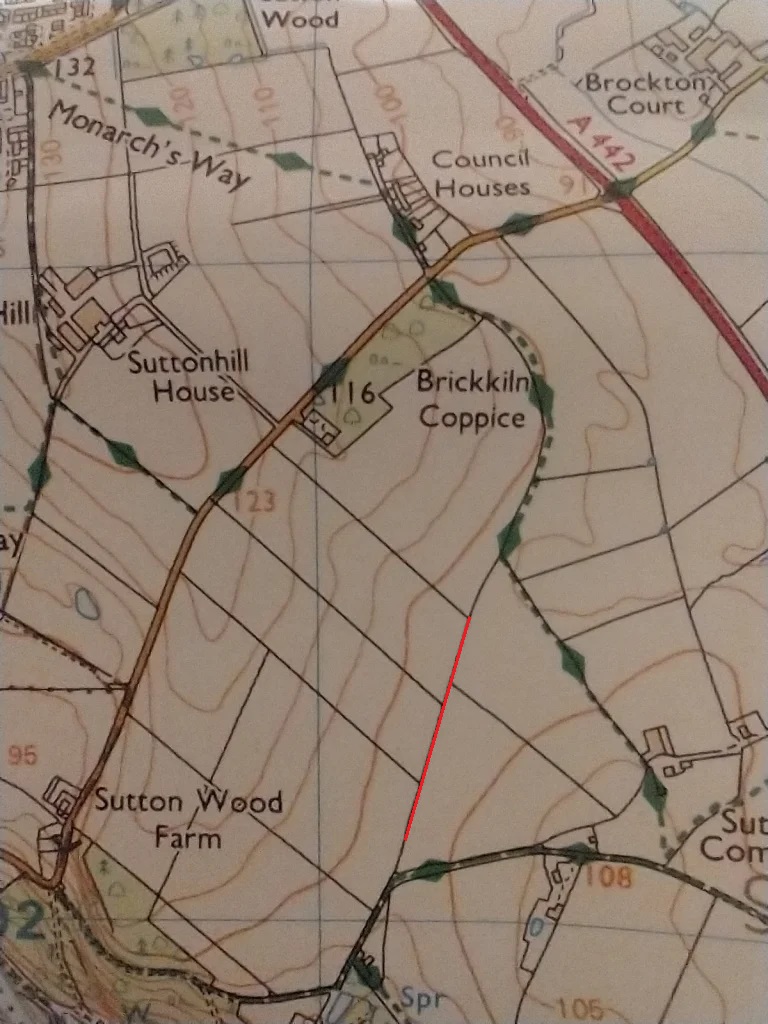
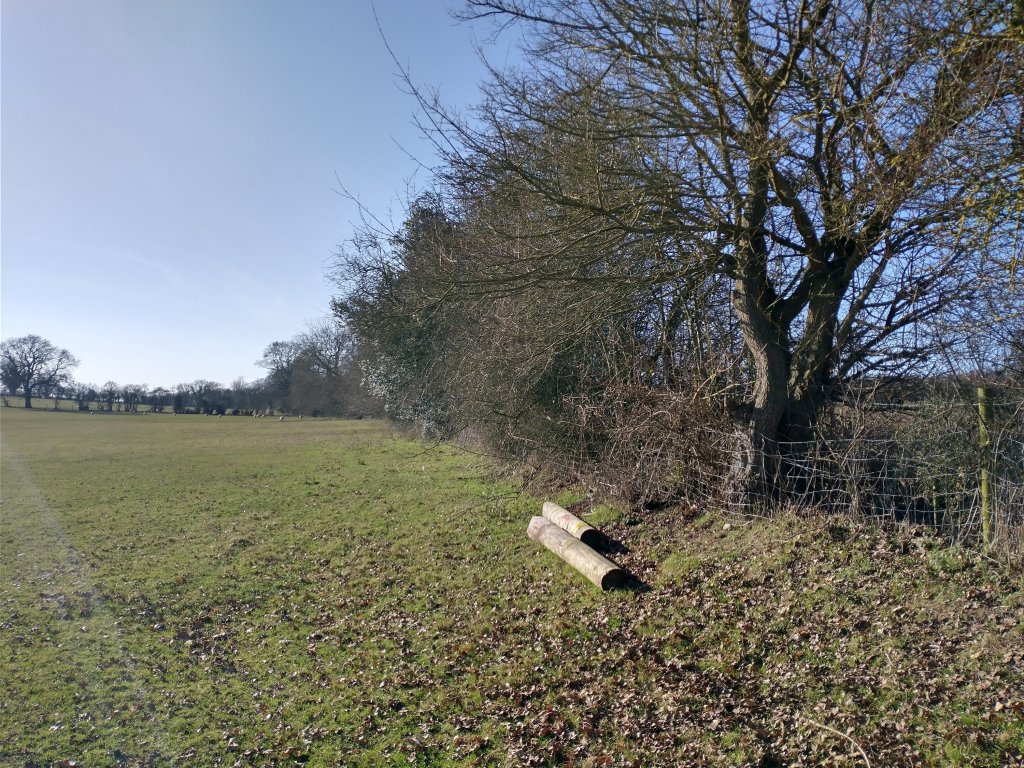
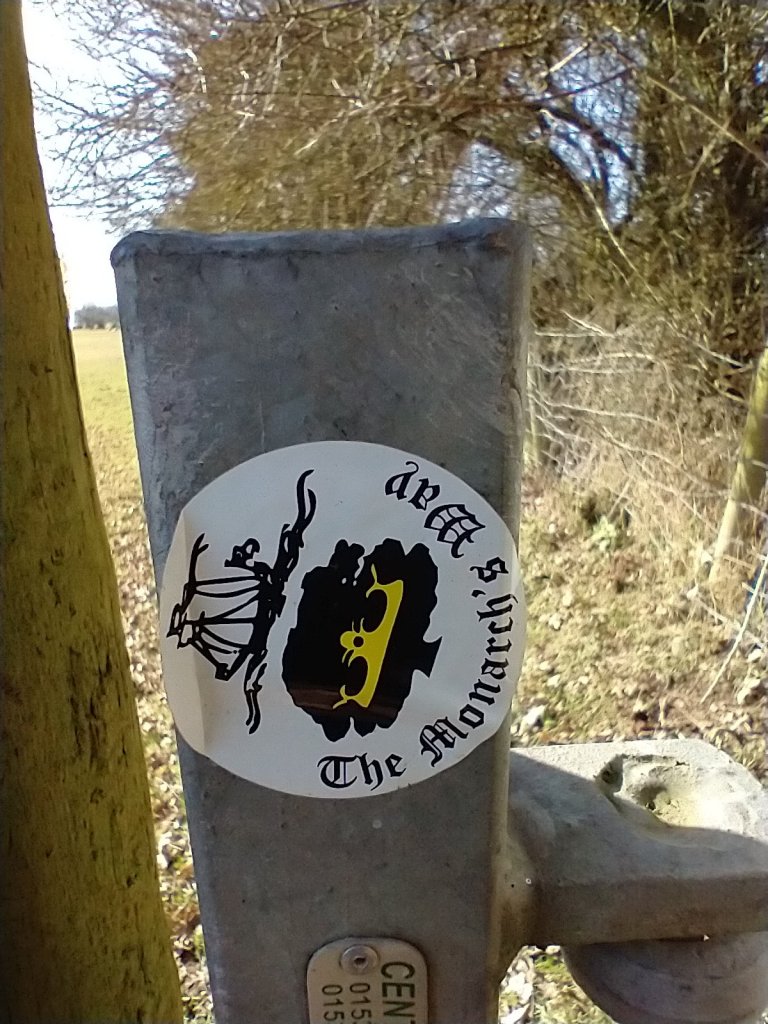
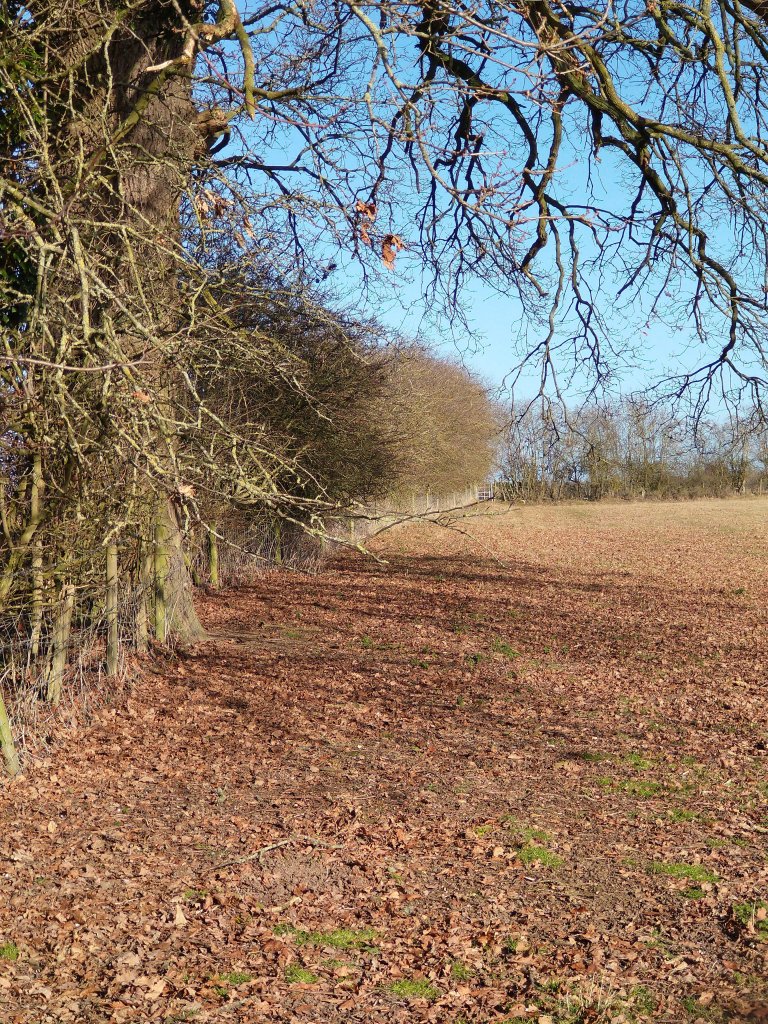
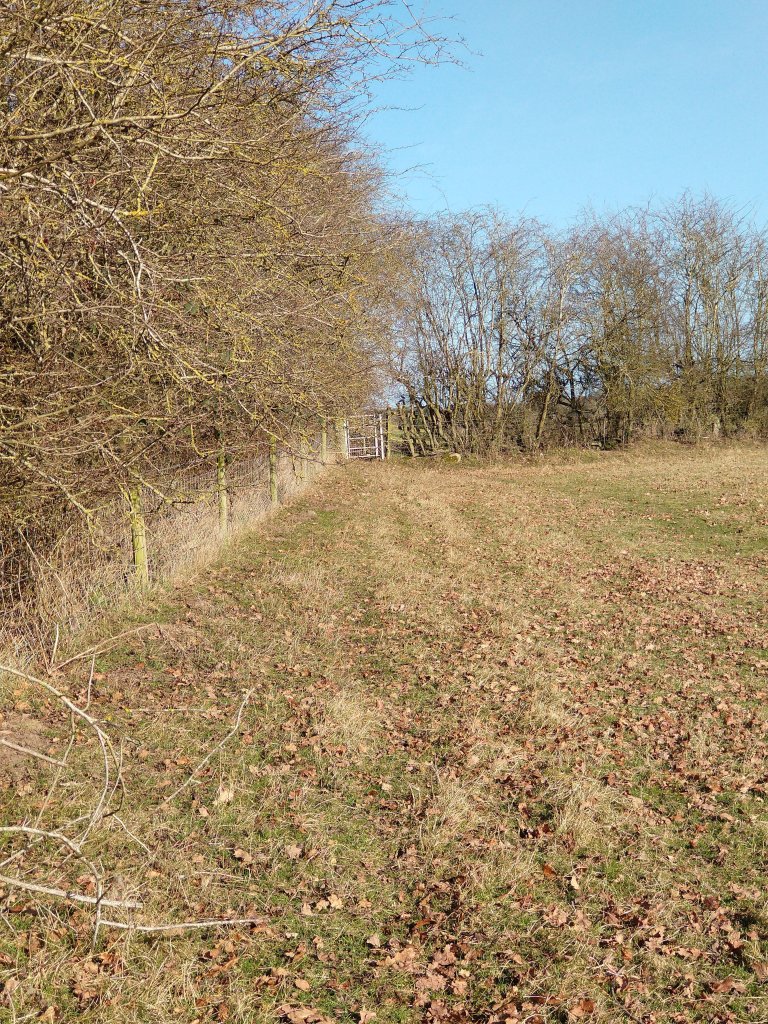
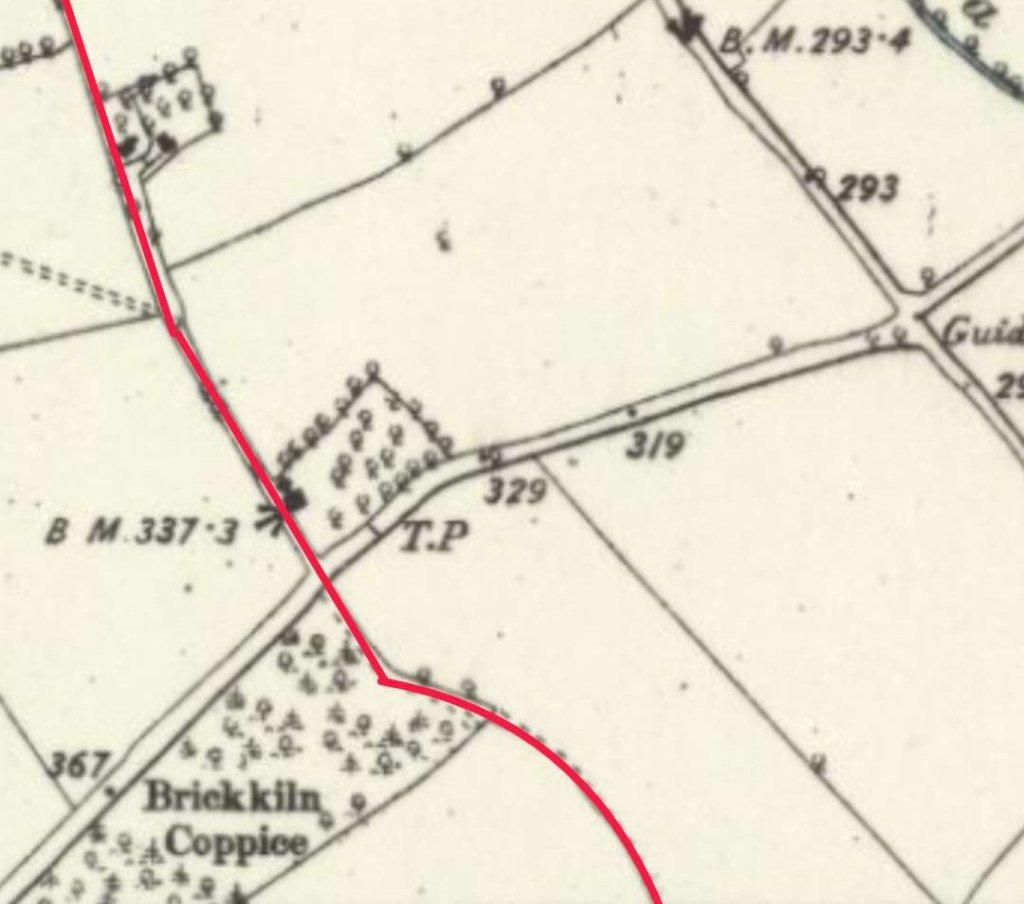
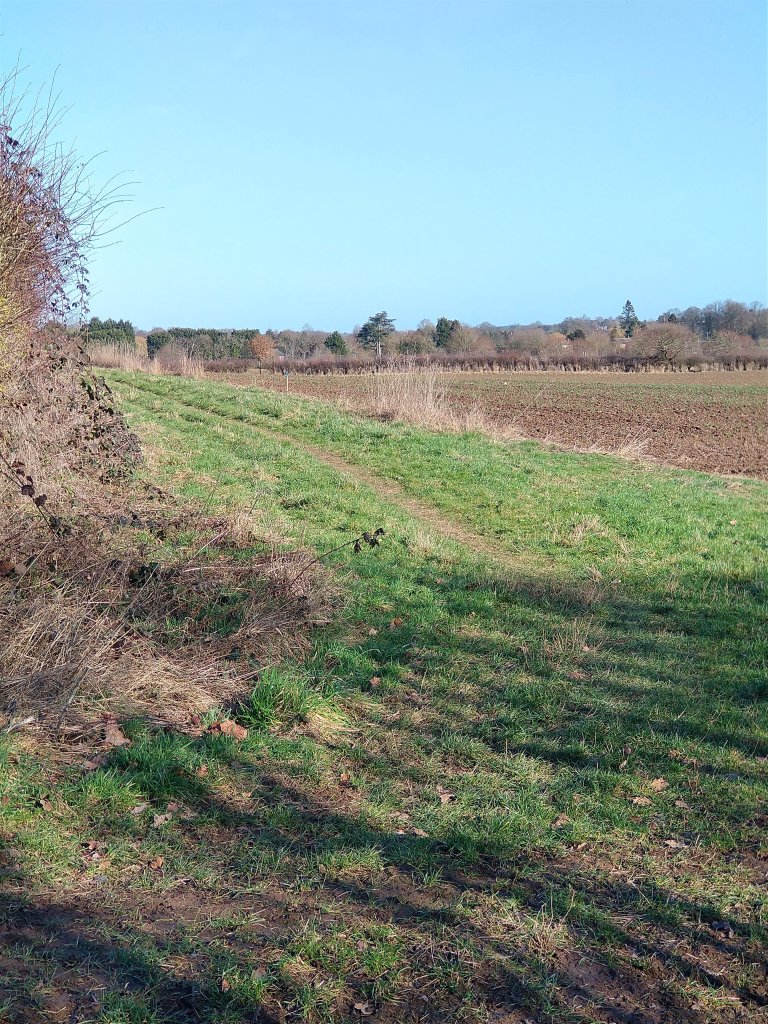
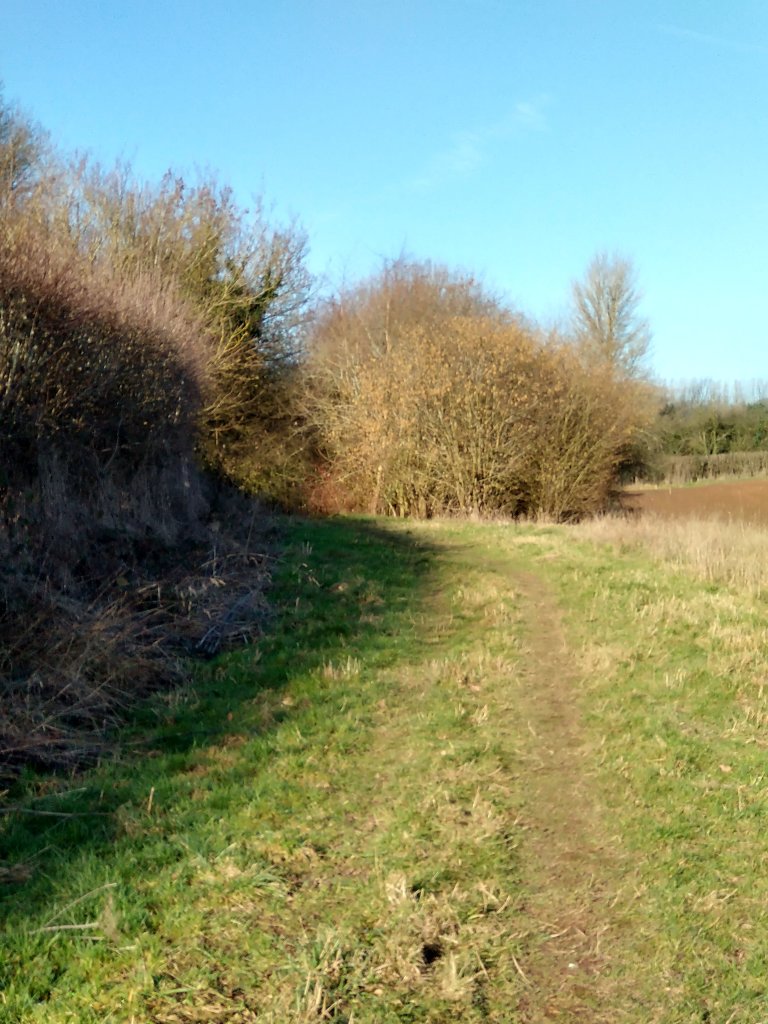
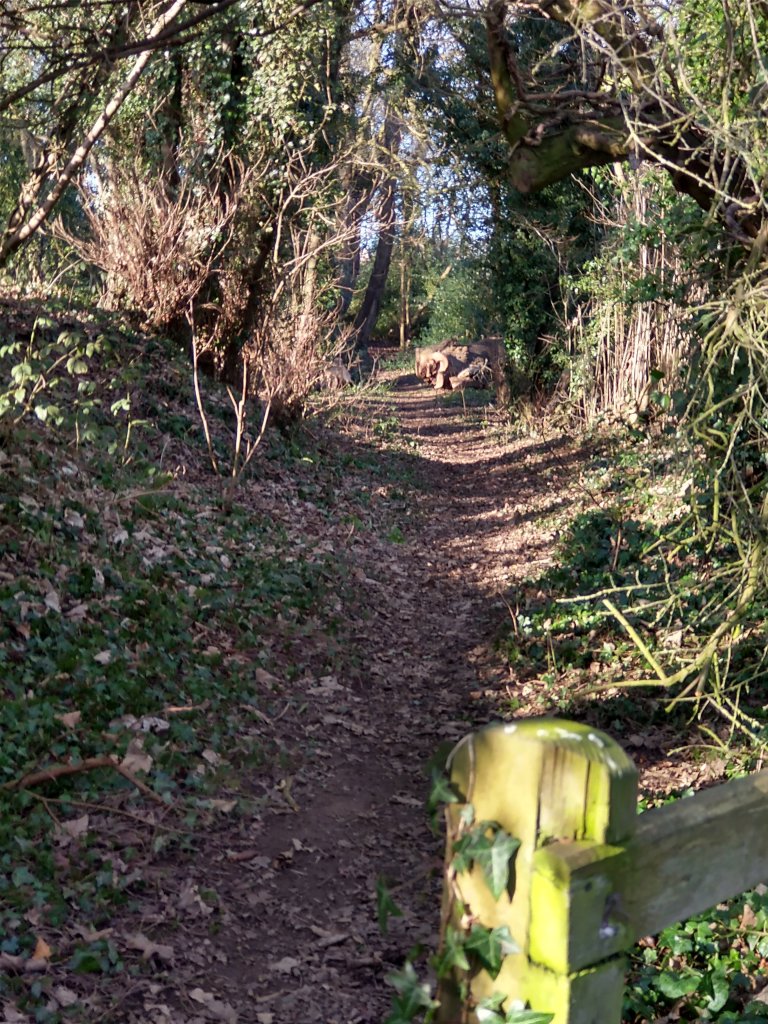
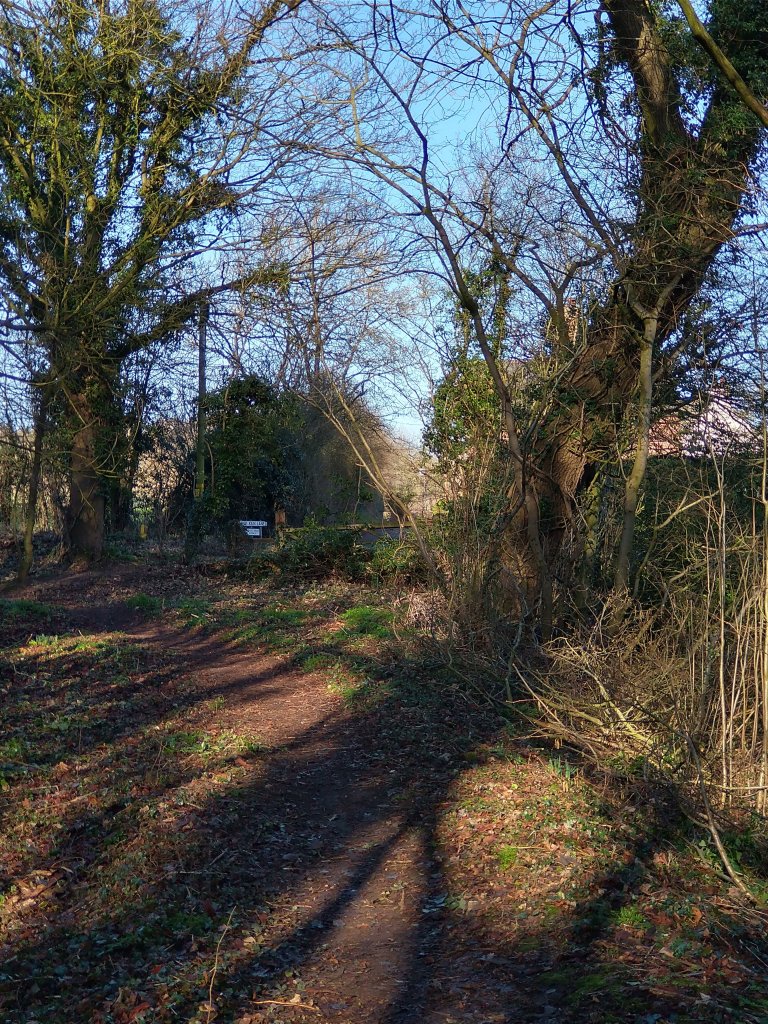
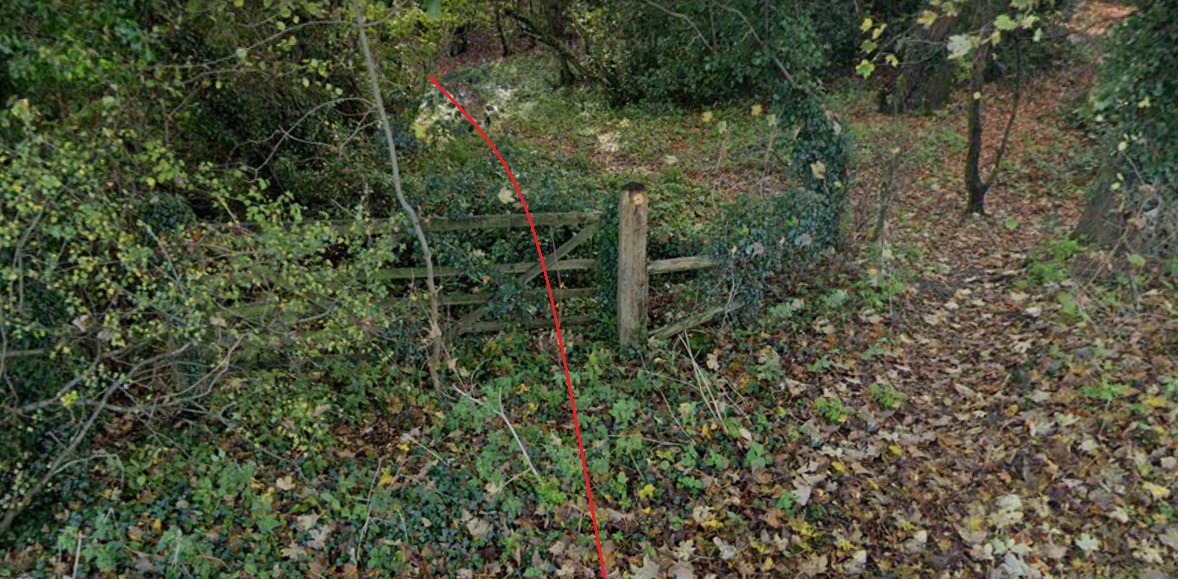
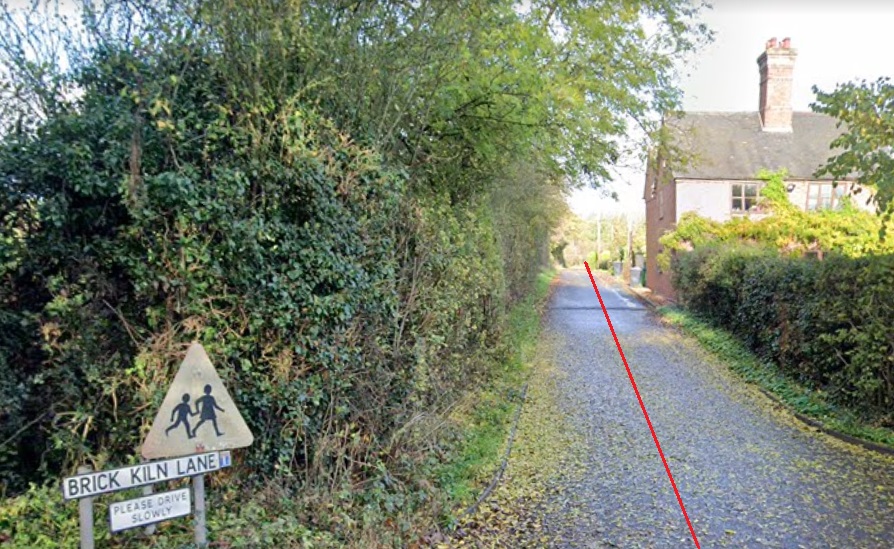
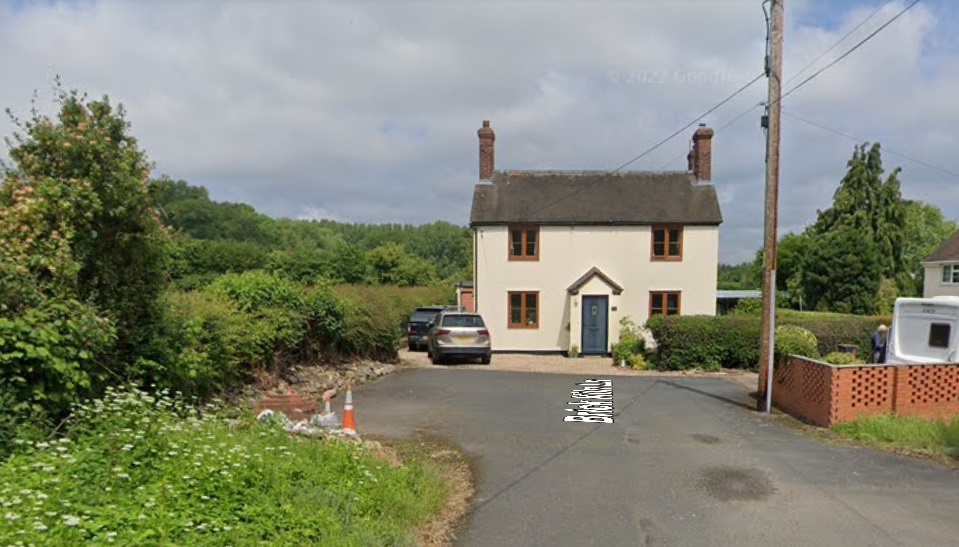
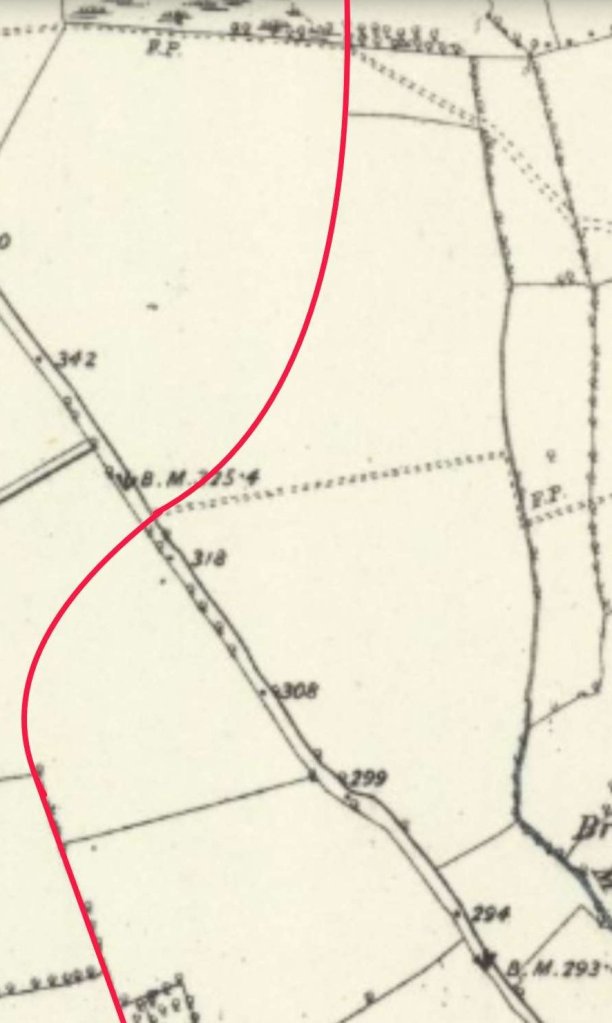
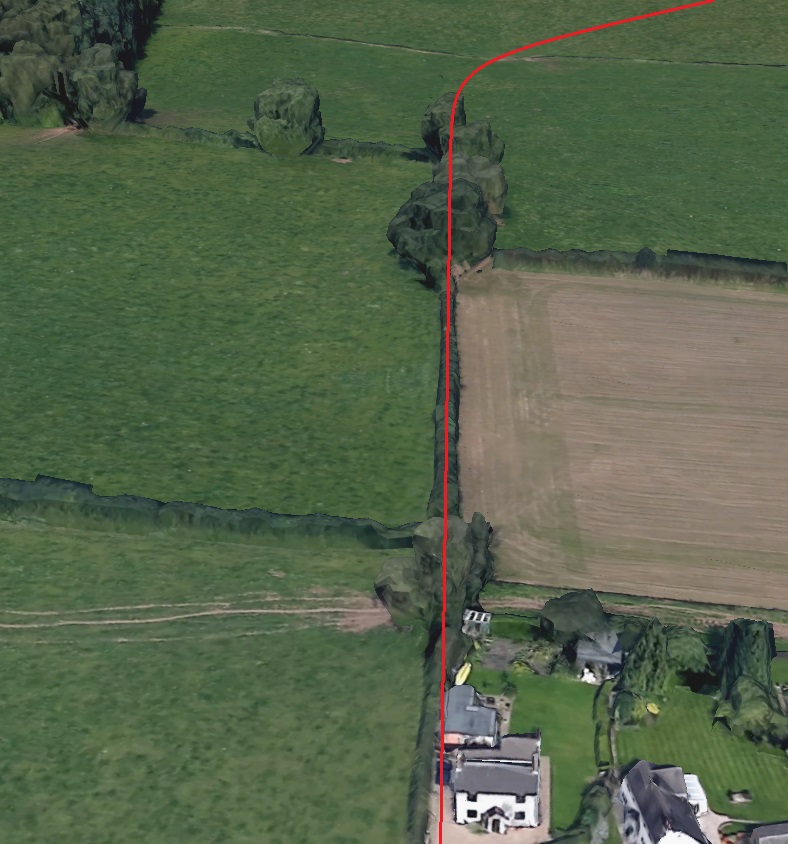
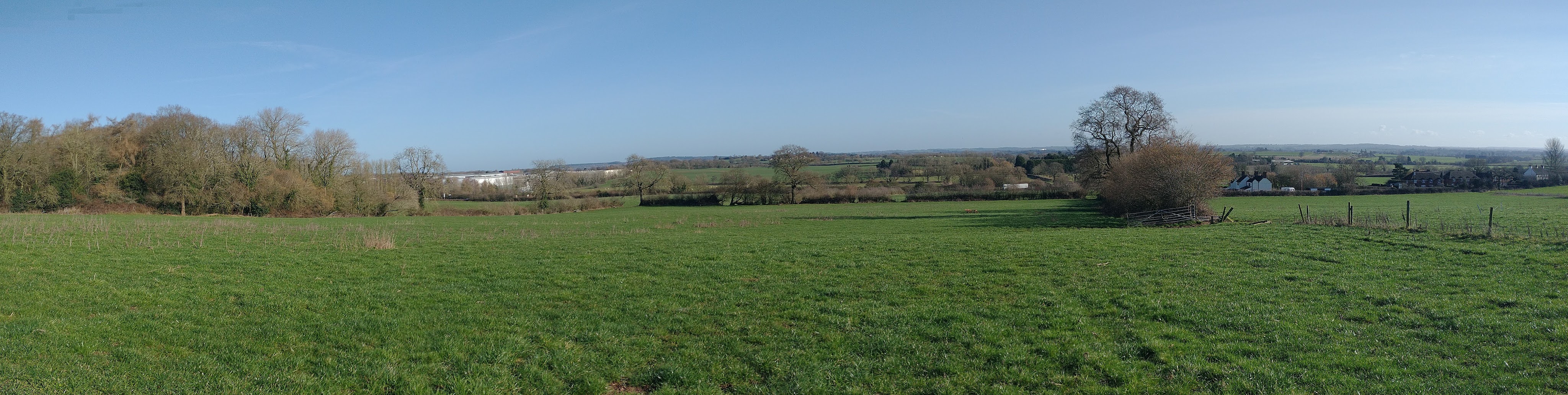
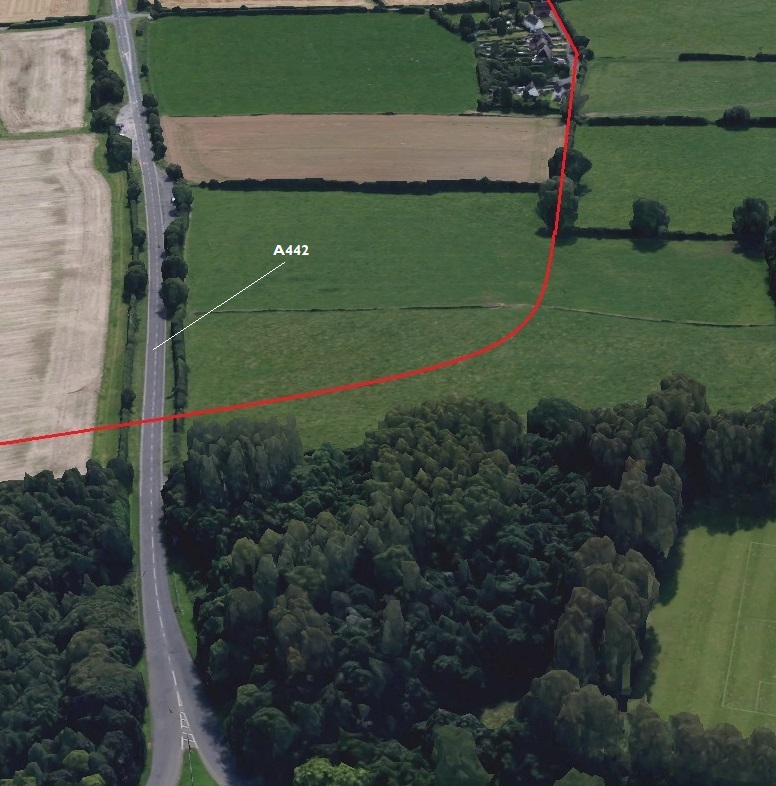
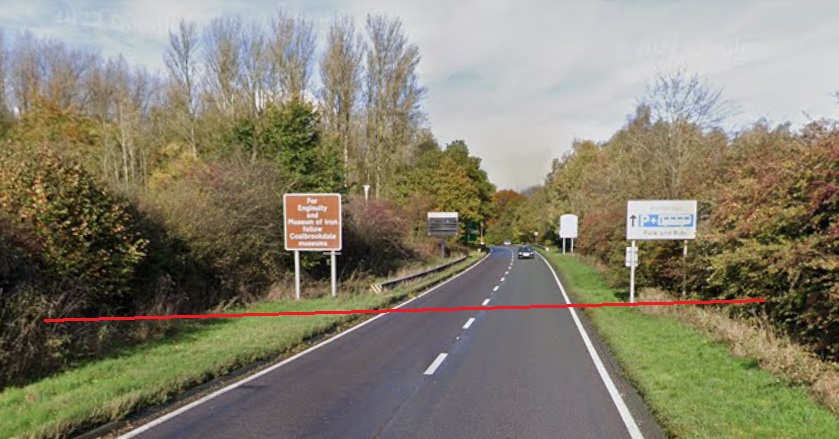
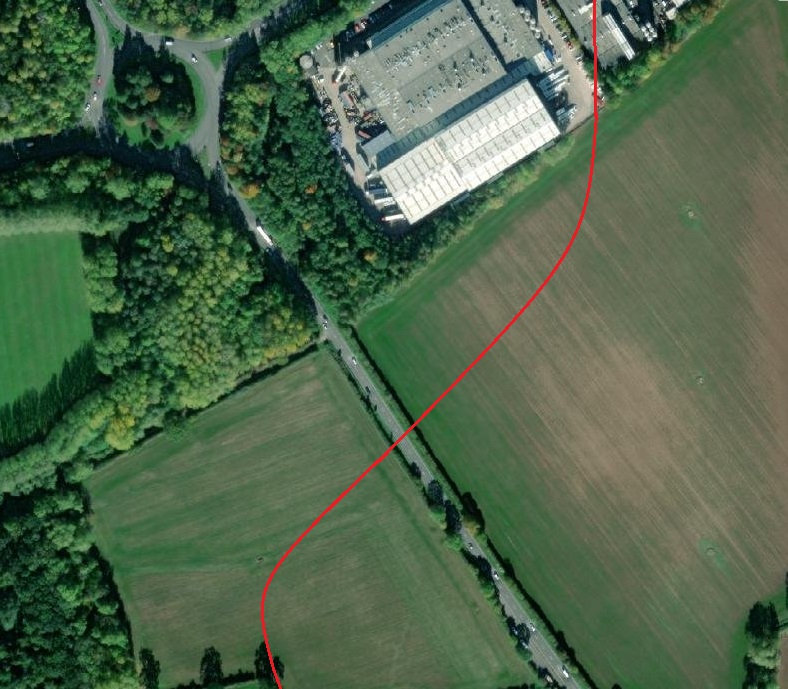
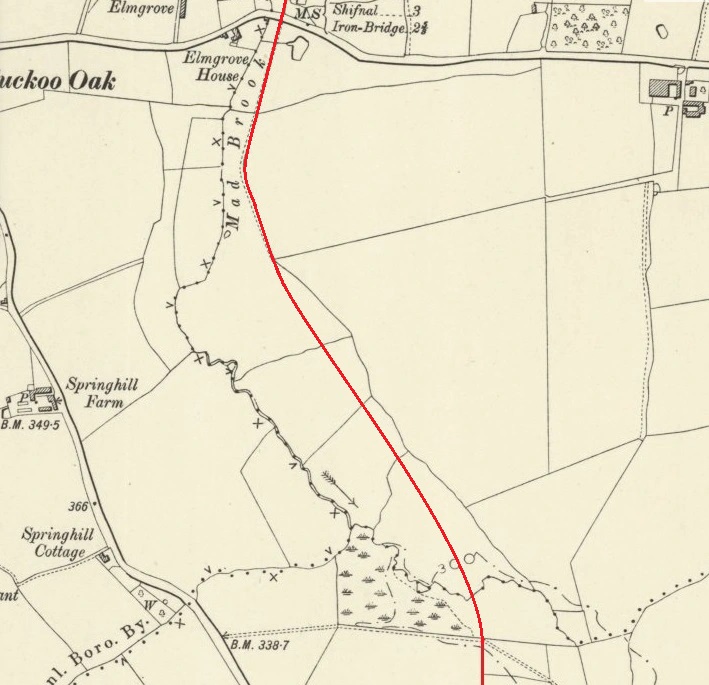
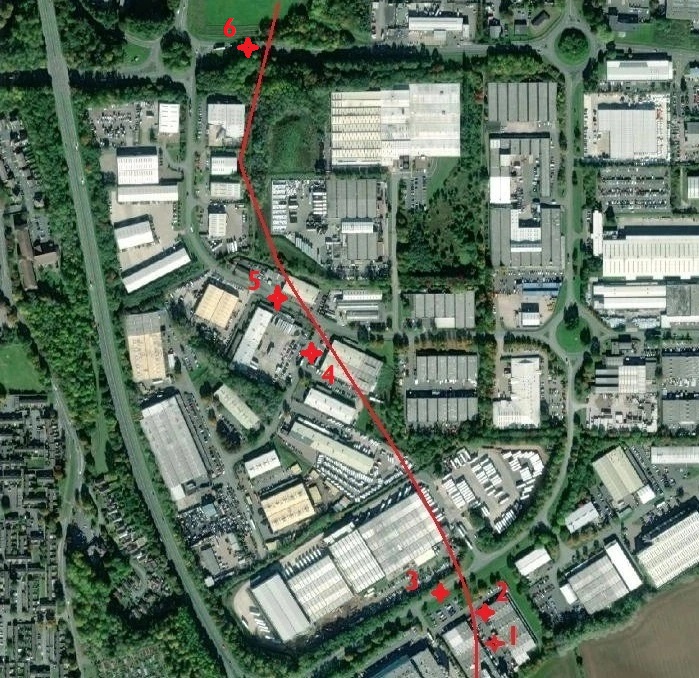
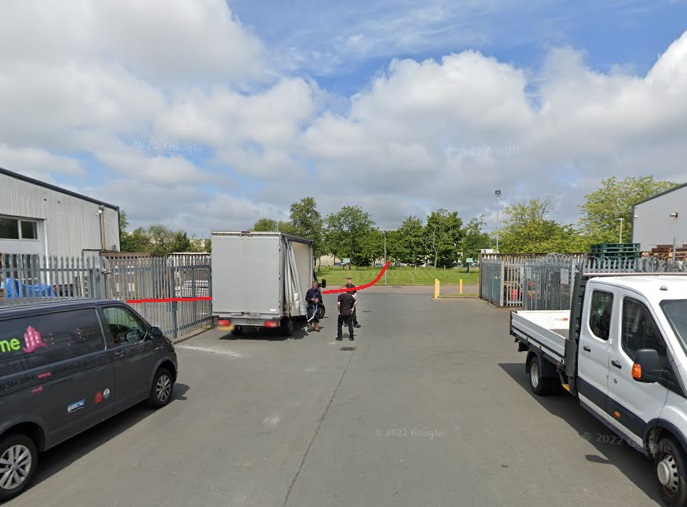
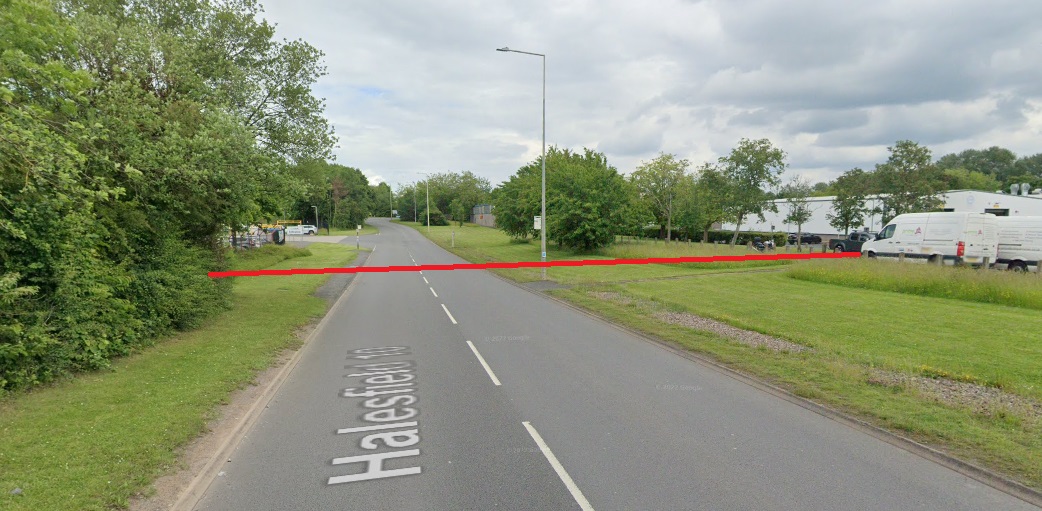
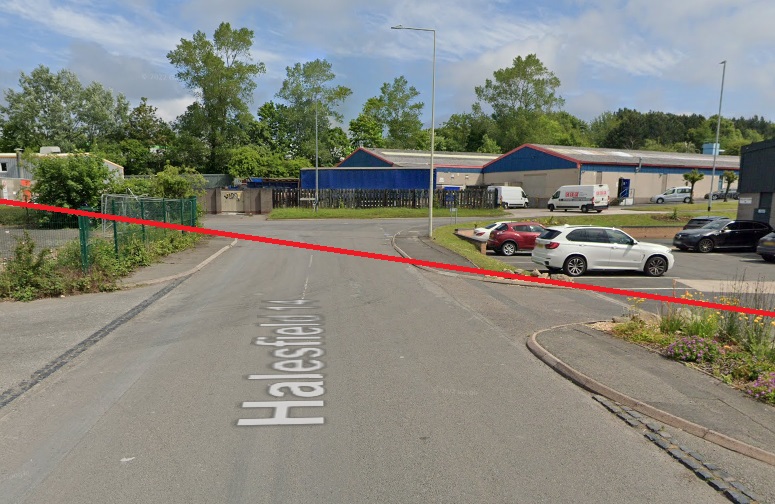
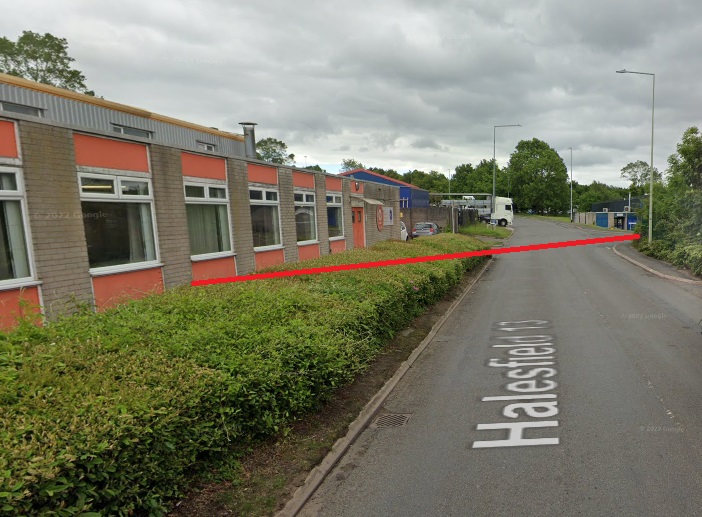
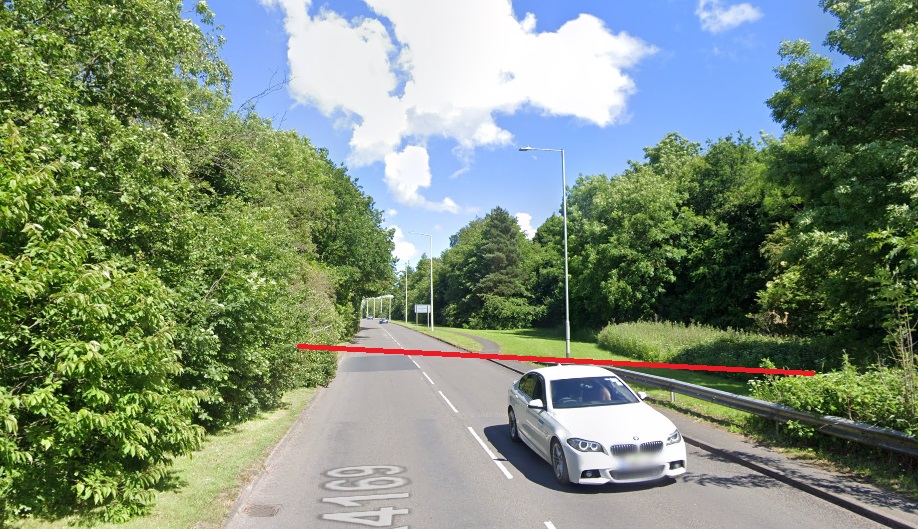
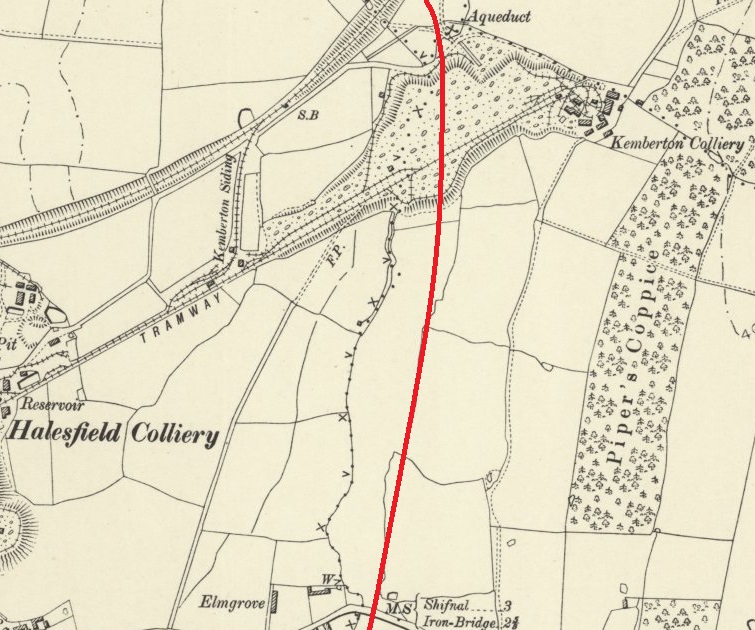
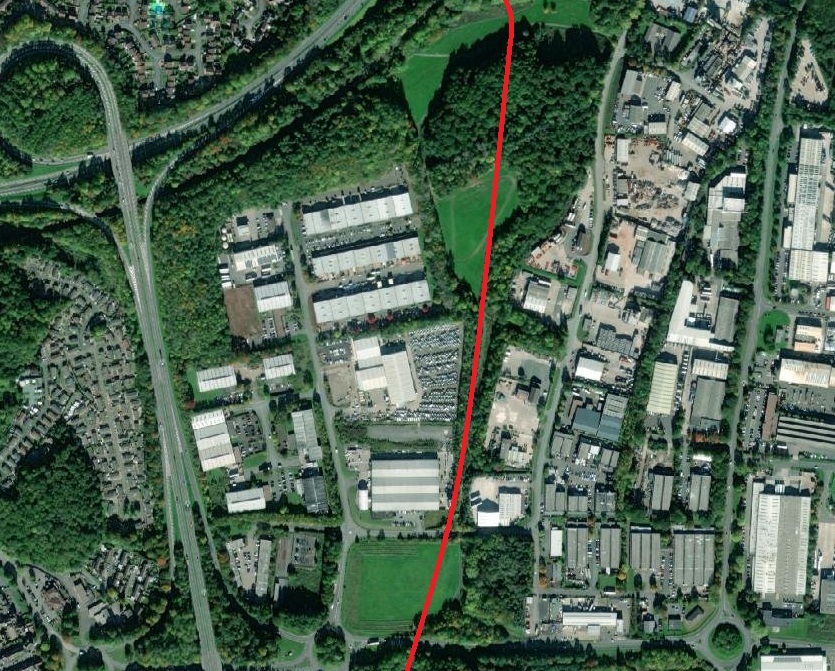
The route of the tramroad is shown by the straight red line along the field boundaries in the extract from the 1:25,000 Ordnance Survey. The route North of that red line curved around towards the Northwest following the line of the Monarch’s Way Footpath. It passes to the North of Brickkiln Coppice and crosses the road which links Coalport to the A442. [OS Explorer Sheet 242]Looking back South along the field boundary which marks the line of the old tramroad from the point that the Monarch’s Way begins to follow the route of the tramroad. [My photograph, 9th February 2023]The symbol for the Monarch’s Way which has been placed on various gateposts along the route. [My photograph, 9th February 2023]The old tramroad route continues to follow the field boundaries as it runs North. [My photograph, 9th February 2023]The old tramway route passes through the gate ahead and remains alongside the field boundaries beyond. [My photograph, 9th February 2023]Looking back to the South through the kissing gate which appeared in the last photograph. [My photo, 9th February 2023]The 6″ Ordnance Survey of 1882 has a redline imposed which shows that the old tramroad route curves round to the Northeast edge of Brickkiln Coppice, crosses the road between Coalport and the A442 and runs North-northwest along Brick Kiln Lane. [10]Looking North, once again, the tramroad route begins to turn away to the Northeast. [My photograph, 9th February 2023]The alignment of the old tramroad ran through the Northeastern edge of Brickkiln Coppice. [My photograph, 9th February 2023]The Monarch’s Way continues to follow the old tramroad route through the Coppice. [My photograph, 9th February 2023]The route of the old tramroad crosses the road from Coalport to the A442 and runs onto Brick Kiln Lane. [My photograph, 9th February 2023]Looking back along the line of the old tramroad from the road linking Coalport to the A442.The red line highlights the route through the Northeaast end of Brickkiln Coppice. [Google Streetview]The old tramroad route is now followed, in the 21st century, by Brick Kiln Lane. [Google Street View]The property ahead has been built across the line of the old tramroad which continued North from this point. Its route, at first, follows the line of modern field boundaries and then crosses open fields. [Google Streetview]This next extract from the 6″ Ordnance Survey shows the old tramroad running North-northwest and then curving round to cross the line of the A442 in a Northeasterly direction and then curving back to the North. [10]Google Earth’s 3D view looking North from the top of Brick Kiln Lane shows the line of the old tramroad running North. [Google Earth]This panoramic view is taken from the field to the East of the old tramroad route. The old tramroad line followed the hedge running across the picture. [My photograph, 9th February 2023]Google 3D image looking back to the South. The old tramroad turned towards the East at the end of the field boundary and crossed the line of the modern A442. [Google Earth]Looking North along the A442. The actual point at which the tramroad crossed the line of the road is difficult to determine. This location is approximately correct. [Google Streetview]In plan on this satellite image we can see the approximate alignment of the tramroad crossing the A442 and then turning to the North into what is now an industrial estate.The 1901 6″ Ordnance Survey with the next length of the route of the old tramroad shown. It crossed Mad Brook and ran North-northwest close to the field boundaries before turning North-northeast. [11]The same area as that covered by the Ordance Survey map extract immediately above. What was open fields is now the Halesfield Industrial Estate. It is only feasibile to provide approximate locations where the old tramroad route crosses modern industrial estate roads. [11]The view North-northwest from point ‘1’ on the satellite image above. [Google Streetview, June 2022]The view North-northwest from point ‘2’ on the satellite image above. [Google Streetview, June 2022]The view Northeast along Halesfield 10, from point ‘3’ on the satellite image above. [Google Streetview, June 2022]The view North-northeast along Halesfield 14, from point ‘4’ on the satellite image above. [Google Streetview, June 2022]The view East-southeast along Halesfield 13, from point ‘5’ on the satellite image above. [Google Streetview, June 2022]The view East along the A4169, from point ‘6’ on the satellite image above. [Google Streetview, June 2022]The 1901 6″ Ordnance Survey with the next length of the route of the old tramroad shown. It approximately followed field boundaries while heading North-northeast beofre curving round to the North. Tramroads/tramways are shown on the OS Mapping of 1901. These would not have been present while the tramroad we are following was active. Neither Halesfield Colliery nor Kemberton Colliery were active at the time that the Lilleshall tramroad was in use. The local landscape will have been significantly altered by the spoil heap shown on this 1901 mapping. [12]The same area as that covered by the Ordance Survey map extract immediately above. What was open fields is now, very much, part of the urban environment. It is only feasible to provide approximate locations where the old tramroad route crosses modern roads. [12]
Two collieries appear on the 1901 OS mapping – Halesfield and Kemberton Collieries. These would not have been present when the tramroad was active in this area. By the 1950s these two pits were worked as one by the NCB and together employed over 800 men. “John Anstice sank Kemberton Pit when director of the family company in 1864 mainly for coal but it also produced ironstone and fireclay. … Halesfield was sunk as an ironstone and coal mine in the 1830s and continued to work coal until the 1920s, it later became the upcast and pumping shafts for Kemberton pit.” [13]
Apart from the A4169 at the bottom of the satellite image (which is already shown above), the only modern road which crosses the line of this section of the old tramroad Is Halesfield 18. Google Streetview images in this area were taken at the height of Summer in 2022 when vegetation was at its most abundant and as a result show nothing of note.
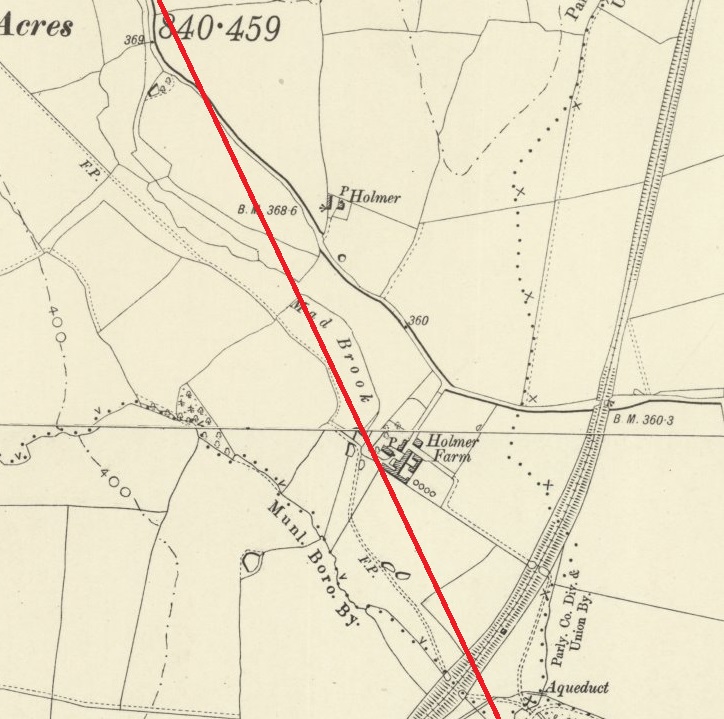
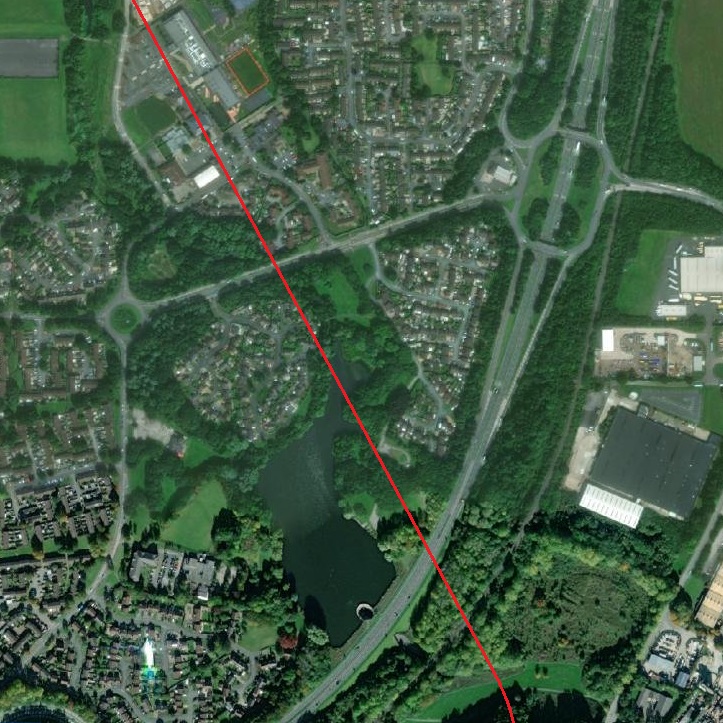
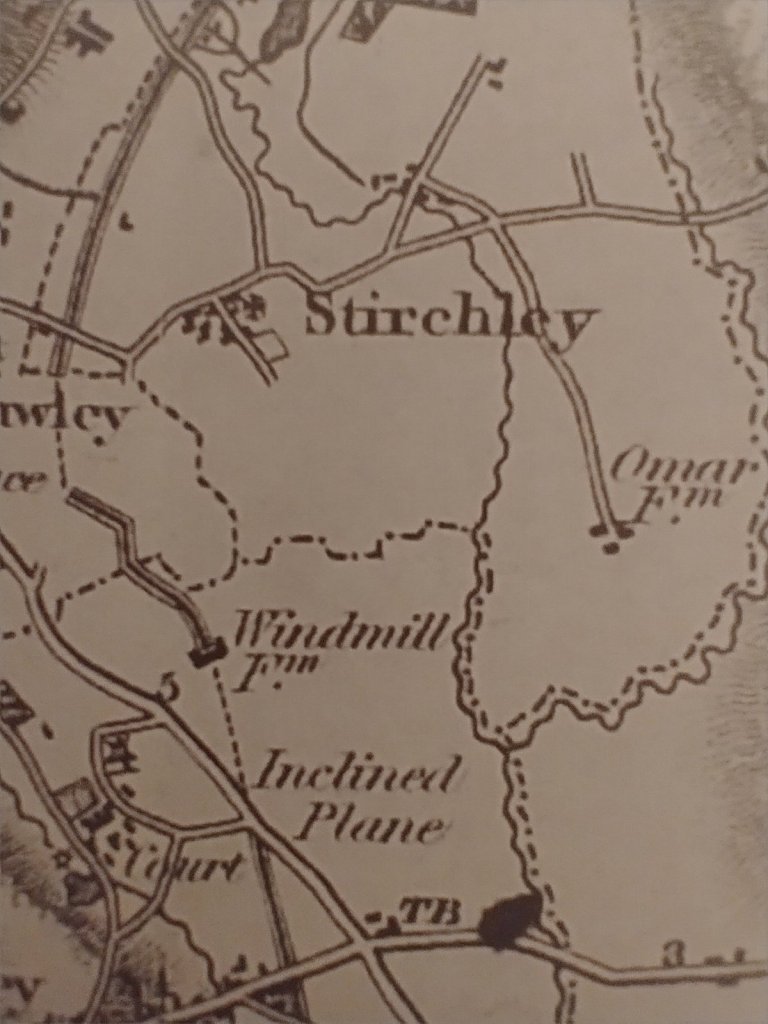
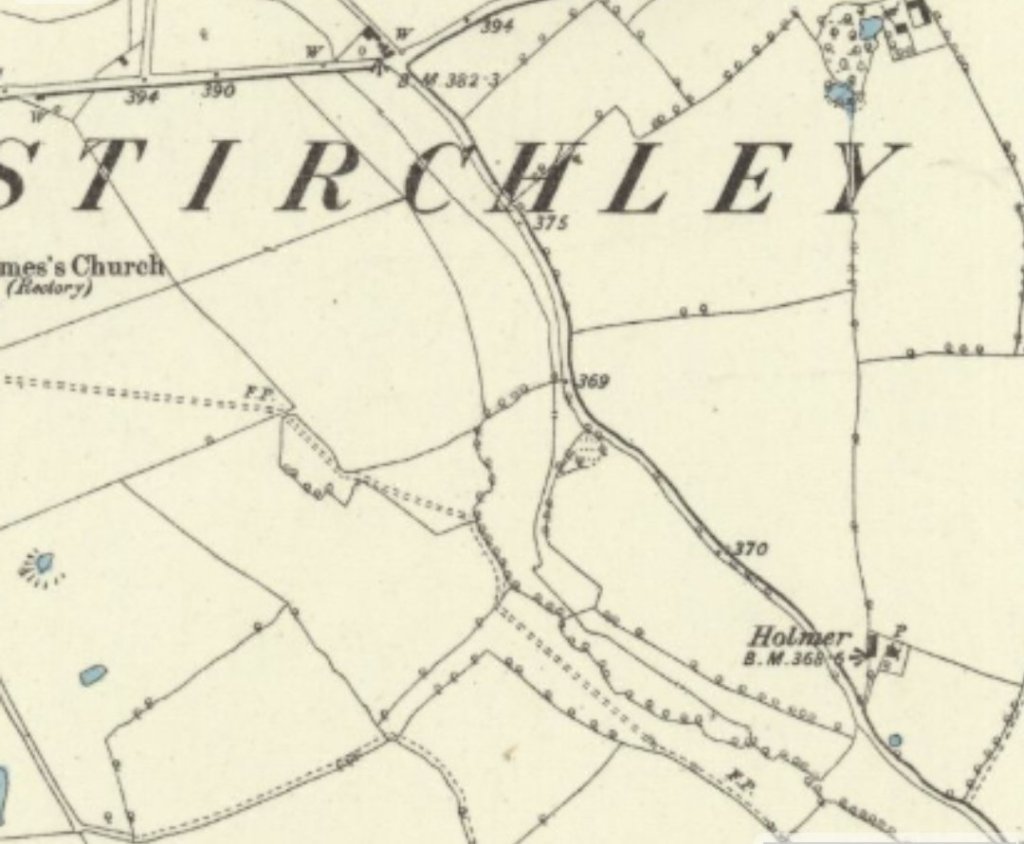
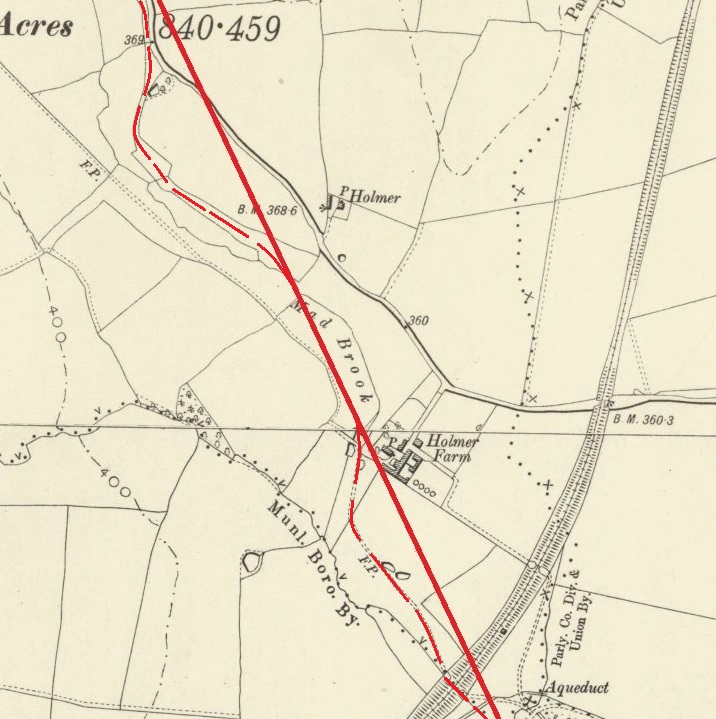
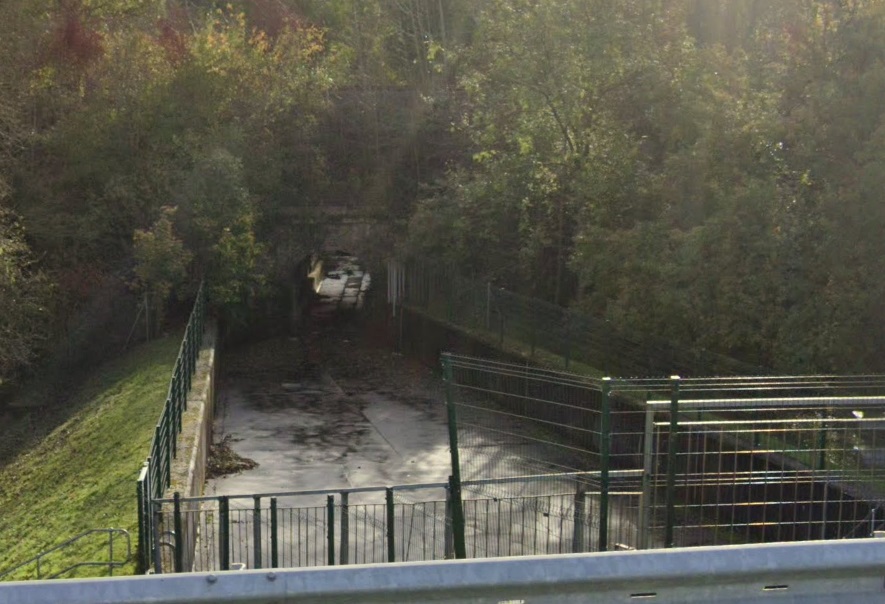
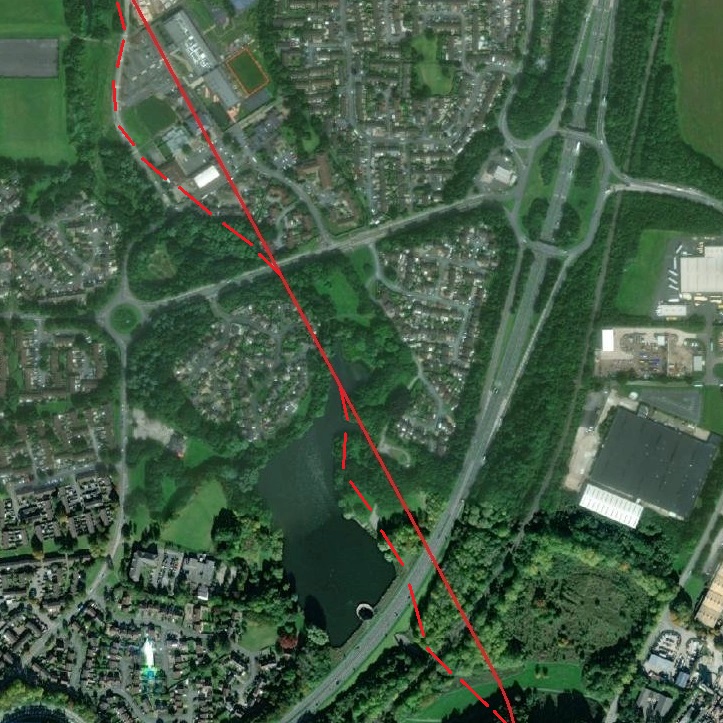
The next extract from the 1901 6″ Ordnance Survey has the line as drawn by Savage and Smith continuing North-northwest, running very close to the buildings of Holmer Farm and across Mad Brook twice before crossing the lane between The Hem and Stirchley, Northwest of Holmer. There are some reasons to question the Savage and Smith alignment. They have transferred the alignment from the 0.5 to 1 mile drawings produced in 1836 for the proposed Shropshire Railway between Shrewsbury and Wolverhampton. [14]The same area as shown in the 6″ OS map extract above but on the modern ESRI satellite imagery from the NLS. Savage and Smith’s alignment of the old tramway is superimposed again. [14]A closer extract from the Robert Baugh’s Map of Shropshire of 1808 which we have already seen. The red line drawn indicates the route of the Tramroad. The map from which the extract was taken is available on the ‘Dawley History’ website. At first sight, this map suggests a different alignment in the vicinity of Stirchley to that recorded by Savage and Smith, as it shows the village of Stirchley very close to the line of the old tramroad. However, it also shows Mad Brook very close to Stirchley. I am reasonably convinced that the old tramroad ran relatively close to the line of the brook. On this map this occurs close to Stirchley but to the south there is some distance between them. The position of the brook as shown on the 1827 and1836 maps below matches later Ordnance Survey mapping and aligns much more closely with the tramroad route shown on this extract from Baugh’s Map. [7]An extract from Greenwood’s Map of 1827 showing Mad Brook running further to the East. [18]This map was included in the British History Online Website. [16] It comes from A History of the County of Shropshire: Volume 11, Telford. [17] Sadly, for our purposes the line of what would by then have been a disused tramroad is no longer shown. However, the field boundaries in the vicinity of the brook are unusual. There appears to be a corridor roughly following the route of Mad Brook which appears on later mapping as well. In my naivety I would have expected the field boundaries to extend down towards the brook.Mad Brook is a lot less obvious on the 6″ OS Mapping of 1883, but the corridor of land is evident again. [15]Returning to the 6″ OS map extract from 1901 that we have already seen. Savage and Smith’s plotted line remains but I have added what appears to be the more likely route of the old tramroad as a red-dashed line. The illustrated discussion above covers the more northerly deviation. The more southerly deviation follows the line of a footpath which may well have been on the old formation. If correct then the tramroad would have run immediately alongside Mad Brook where by, by 1901, the brook passed under the more modern railway. However, the line shown seems more logical to me than the relatively arbitrary straight line. I’d be interested in any reflections on this from others. [14]If my assumption is correct that the tramroad ran close to Mad Brook at the bottom of the 6″ OS map extract above then this culvert is on its approximate line. When the railway was built, Mad Brook was culverted here. The outfall from Holmer Lake now runs under the A442 and through the stone culvert. The picture is taken from the Southwest bound carriageway of the A442, Queensway. [Google Streetview, October 2022]
Our discussion about the old tramroad alignment is essentially speculative. We are in a better position than Savage and Smith were to trace routes using modern technology, but even so our possible route remains speculative. I have reproduced in in approximation on the same modern satellite image as were encountered above. Should it be correct, then some of its route can be followed and some locations can be photographed but all with a healthy sense of scepticism.
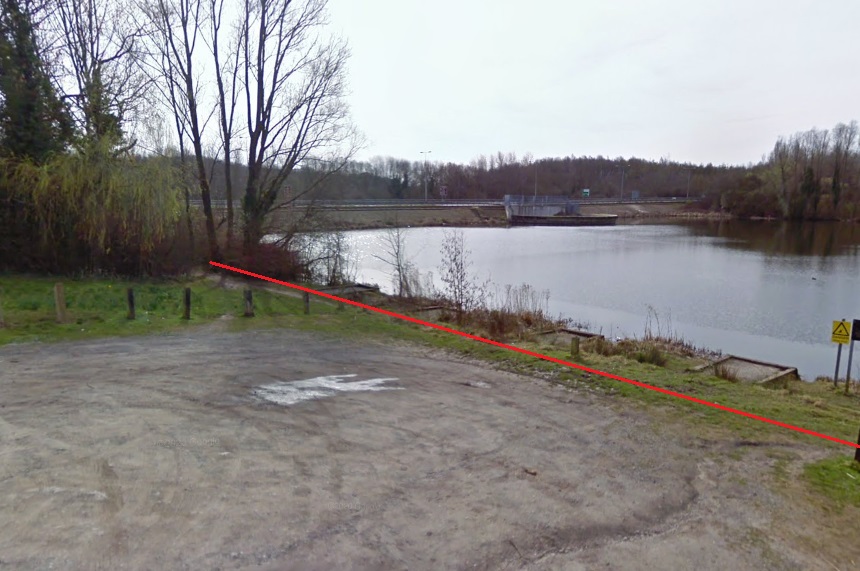
The ERSI satellite image which we have already seen, with a sketch of my suggested route of the tramroad included alongside the Savage and Smith alignment. MY suggestion is shown by red-dashed lines. [14]Holmer Lake looking South towards the outfall. The tramroad would have crossed the line of the a442 a few hundred feet to the left of the outfall. The redline shown on the photograph is an approximation to my suggested route of the tramroad. [Google Streetview, March 2009]
Holmer Lake is a reservoir owned by Severn Trent Water and serves Telford and the surrounding areas. The land around Holmer Lake includes areas of woodland and grassland. [19] Mad Brook was dammed in in 1968-70 to create a balancing reservoir at the behest of Telford Development Corporation. [16][17]
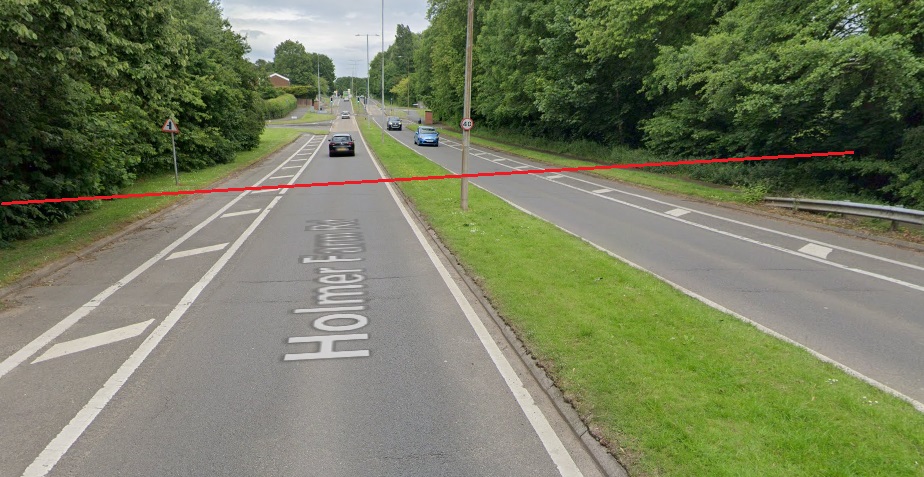
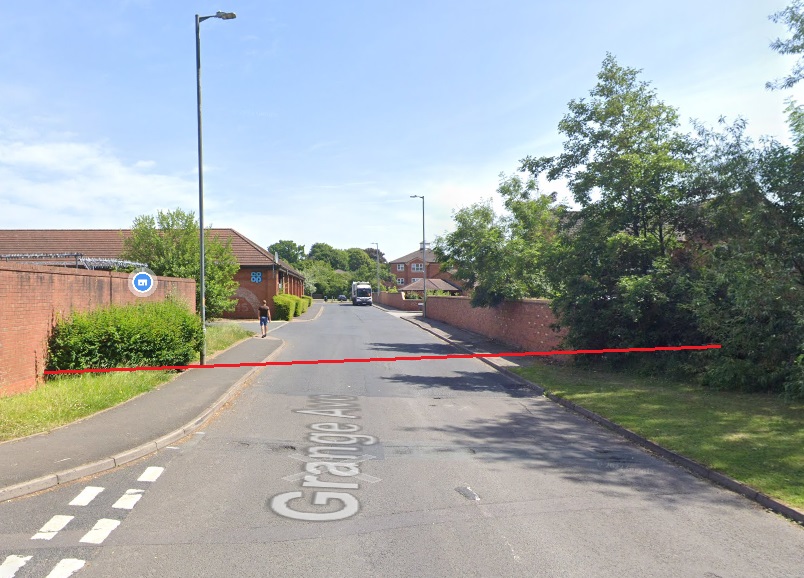
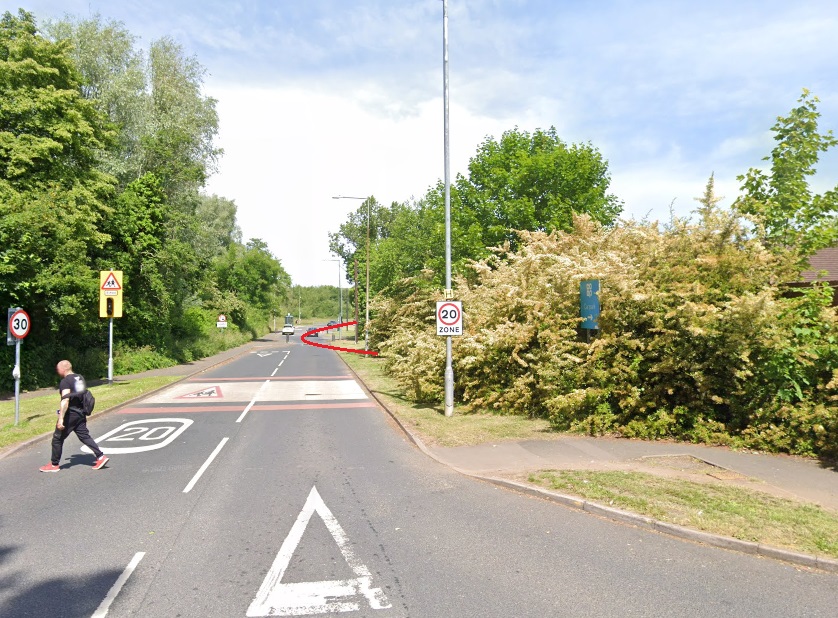
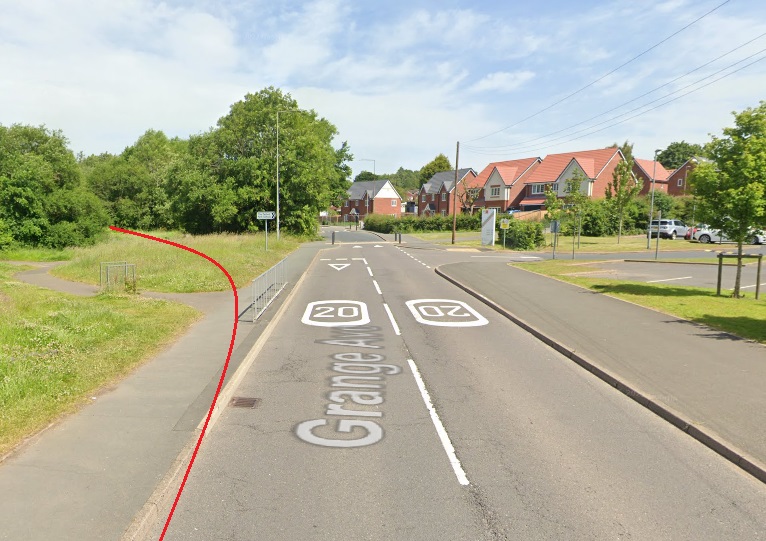
Holmer Lake agin, this time looking Northwest from the same spot in the photo above. [Google Streetview, March 2009]Looking East along Holmer Farm Road, showing, very approximately, the route of the old tramroad. [Google Streetview, June 2022]Looking East-Northeast along Grange Avenue showing the approximate line of the old tramroad. [Google Streetview, June 2022]Turning about 90 degrees to the North-Northwest, we look along another arm of Grange Avenue with the route of the old tramroad suggested by the red line, entering from the right, running for a distance along the road in a North-Northwest direction and approximately following the modern road as it curves to the right ahead. [Google Streetview, June 2022]Further North along Grange Avenue, the route of the old tramroad probably veered away from the modern road. Mad Brook still runs close to the old tramroad route and is just off to the left of this photograph. [Google Streetview, June2022.
The next length of the old tramroad brings us passed the site of Grange Farm and Grange Colliery, Stirchley Ironworks and close to Randlay Pool. Mad Brook meanders North, initially close to the line of the old tramroad, moving away West beyond Grange Farm and then getting lost in the midst of Stirchley/Oldpark Ironworks.
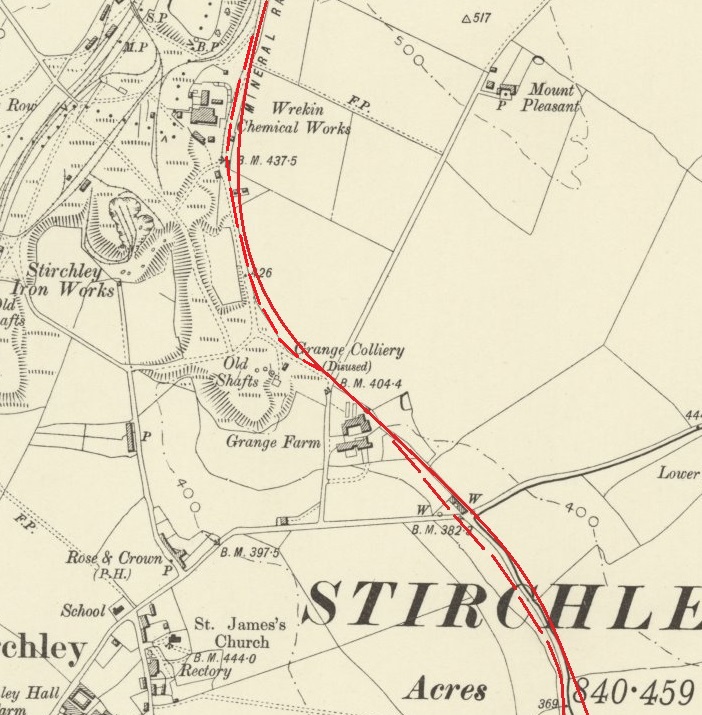
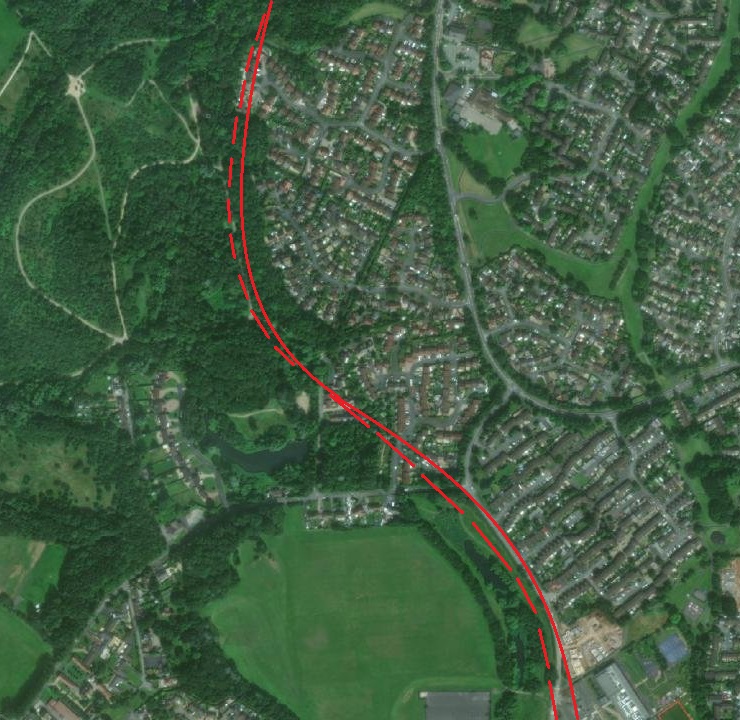
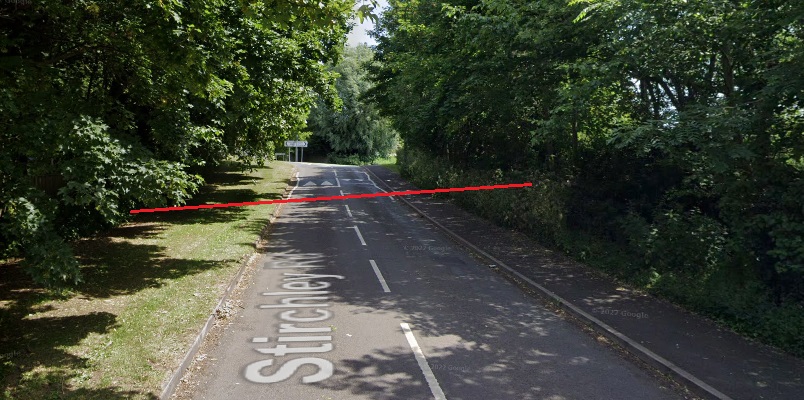
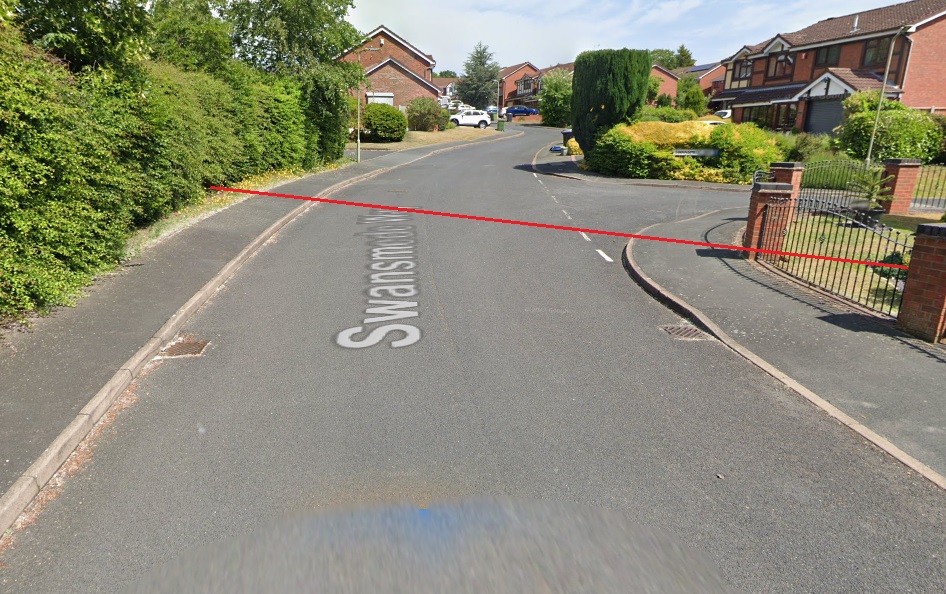
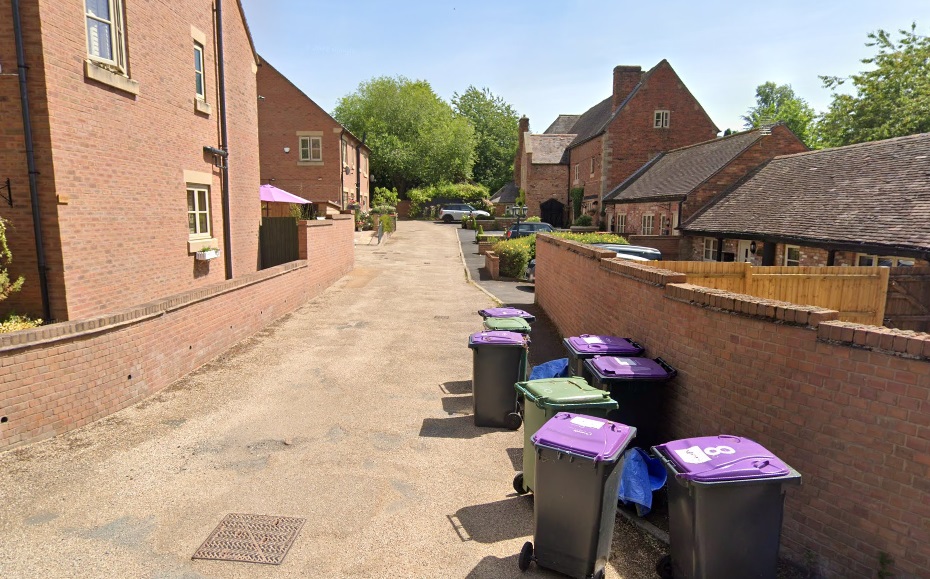
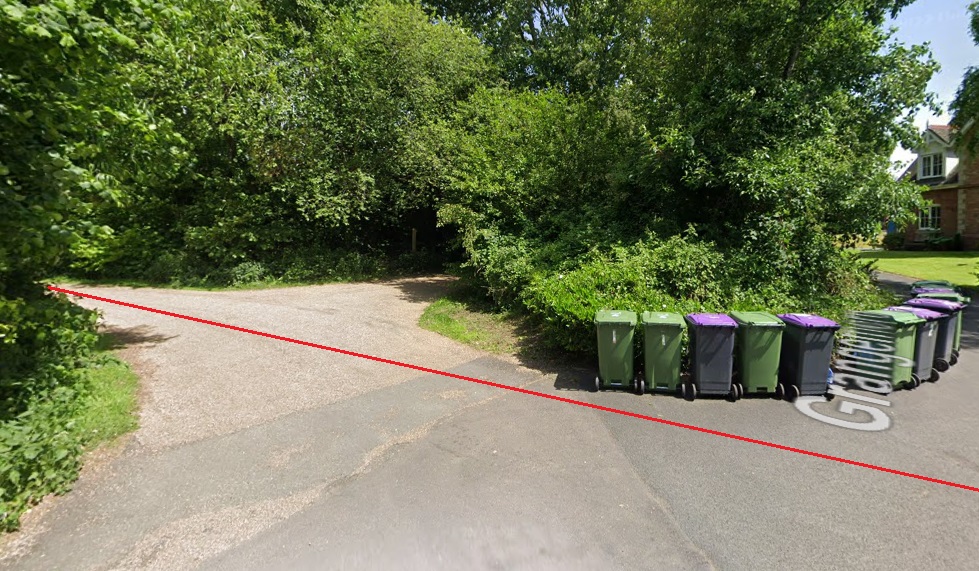
Savage and Smith’s traced alignment for the tramroad has been transferred to this next extract from the 6″ Ordnance Survey of 1901 as the solid, but sinuous, red line. It seems to me to be likely that the actual route was close to the line drawn by Savage and Smith, but just a very short distance to the West over the length Southeast of Grange Farm and a lesser distance to the West over the length immediately Northwest of Grange Farm. [20]A similar area to that on the OS map above with an imposed solid red line indicating, approximately, Savage and Smith’s traced tramroad route and my assessment of the likely route in the line of red dashes. There is very little difference between the two routes both have to have passed to the East side of Grange Farm. Both are difficult to plot on the modern landscape which is now heavily wooded. [20]Looking East on Stirchley Road towards Grange Avenue from above the line of Mad Brook. The Savage and Smith traced line of the tramroad would have crossed the line of Stirchley Road close to the junction. The red line shown is an approximation to my assessment of the route which seeks to follow map features on the older OS mapping. [Google Streetview, June 2022]Looking North along Swansmede Way across the probable line of the old tramroad. [Google Streetview, June 2022]The view from the West on Grangemere into the site old what was Grange Farm. The old tramroad would have run across the photograph beyond the older farm buildings on the right, probably in what is now a wooded area beyond. [Google Streetview, June 2022]Looking North at the top of Grangemere in the 21st century. The old tramroad alignment is suggested by the red line. [Google Streetview]
These images are taken at and around the site of Grange Colliery. On the image above, the spoil heaps from the colliery were immediately off-screen to the left the colliery yard ahead to the North. The image below was taken a from a point just to the North of the bins awaiting collection and looking to the left.
Grange Colliery probably opened by 1833. The extent of seams that could be worked was restricted by the Limestone fault, east of which the coal lay deeper. [21][17] By 1881 all the pits except Grange colliery had been closed. Despite the lease of mineral rights at Grange Colliery to Alfred Seymour Jones of Wrexham in 1893, the colliery was closed in 1894. [21][17]
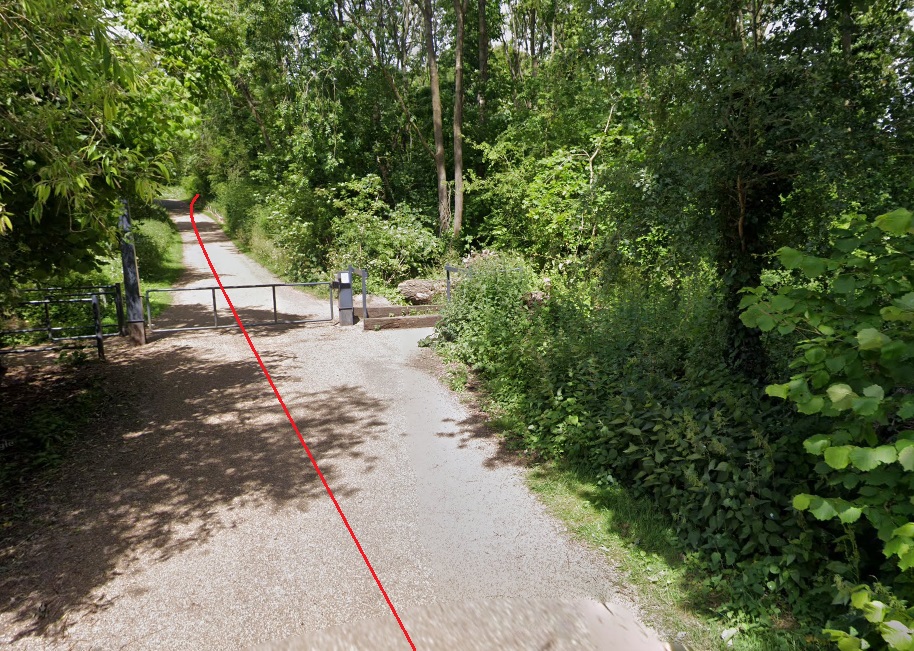
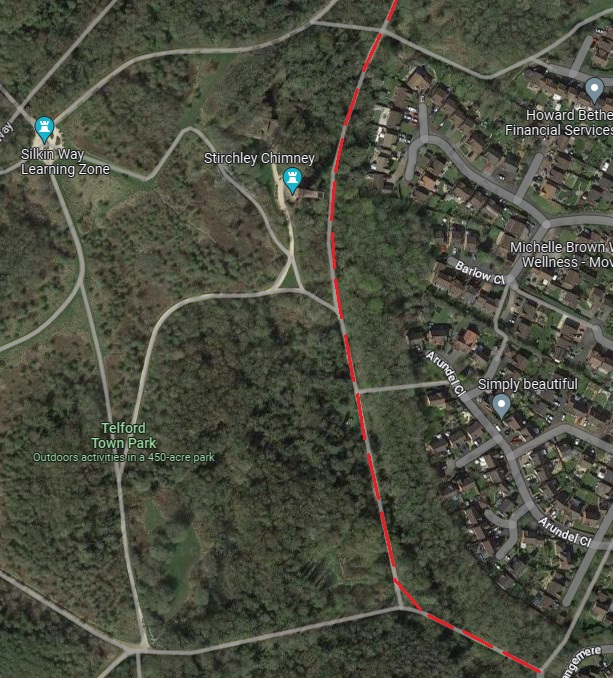
Looking Northeast from the top of Grangemere along a modern path which leads into Telford Town Park today. This track is likely to follow the line of the old tramroad from Sutton Wharf. In the area ahead and to the North there were a number of major industrial sites all linked by a series of tramroads which post-dated the tramroad that we are following but predated the later railways. [Google Streetview, June 2022]The route of the old tramroad from Sutton Wharf is show by a red-dashed line on this 2023 Google Maps satellite view. The paths in Telford Town Park are clearly marked on Google Maps. The path at the East side of the Park passing close to Stirchley Chimney is very likely to be on the line of the old tramroad. [Google Maps, February 2023]
The closer satellite view of part of Telford Town Park above gives us a good point to stop to think about the historical timeline in the immediate vicinity of Stirchley Chimney. The tramroads in this immediate area were looked at in an earlier article in this series which can be found here. [22]
Savage and Smith [2] and other sources provide sufficient information to allow us to pull together that timeline. We have already noted that the tramroad was operating by 1799 and abandoned by 1815. Other Tramroads around Stirchley and along the route of the Shropshire Canal came along, generally, in piecemeal fashion.
The canal predated the Tramroad. It was built to link Donnington Wood with Coalport on the River Severn, a distance of about 7 miles. Construction commenced in 1789 near Oakengates and reached Blists Hill relatively quickly. A shaft and tunnel were intended to get loads down to river level. However, it seems as though natural tar was found oozing out of the tunnel wall and it was turned into a tar extraction business. In its place the Hay Incline was built to bring tub boats down to river level. [23] The incline has also been covered previous articles: here [24] and here. [25]
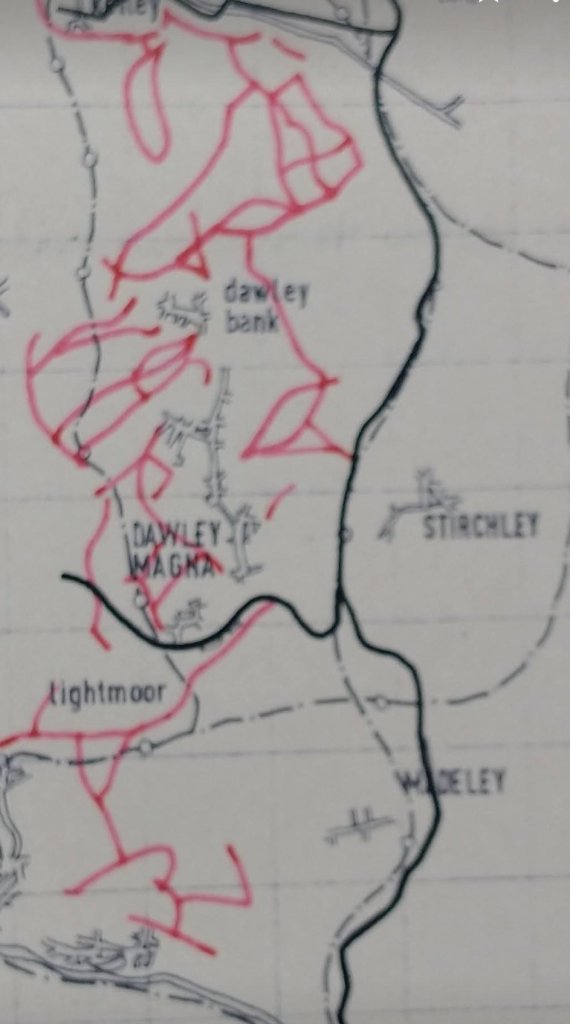
Once the canal has been completed a number of businesses decided to use the canal as a route to the outside world. Before 1830 a wharf had been established on the West side of the Canal close to Hinkshay/Stirchley Pools which provided for colleries, brickworks and ironworks to the West and North.
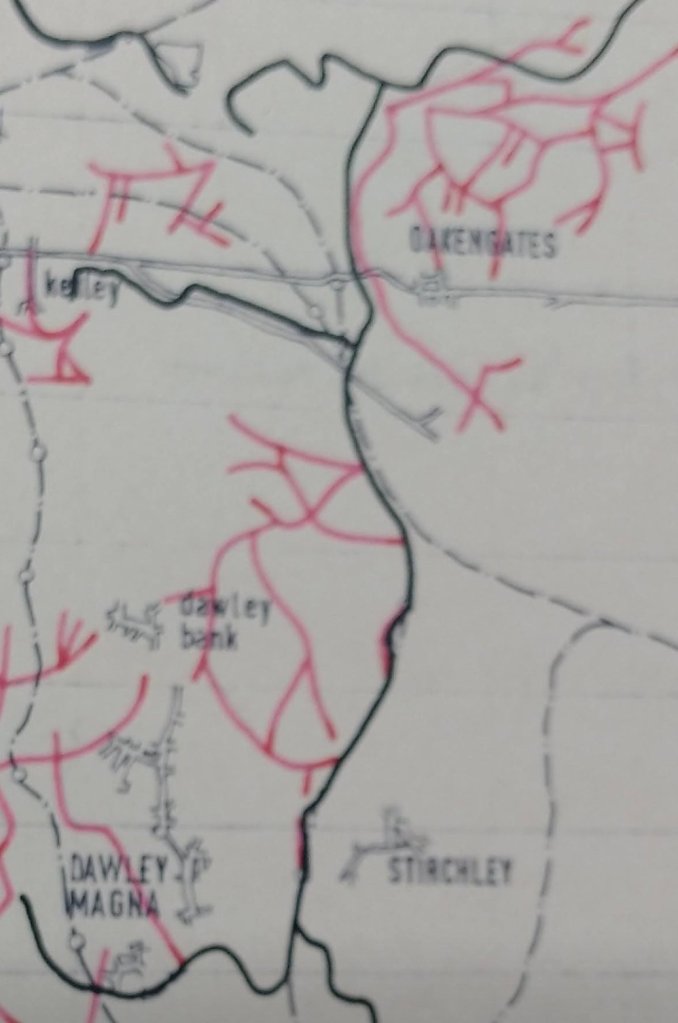
A somewhat out of focus extract from Savage and Smith’s 1″ to one mile drawing of local tramroads which appeared in the period 1821 to 1830. The black lines are the canal network, the red lines, the tramroad network. The Tramroad link to the wharf at the Shropshire Canal can be seen to the Northwest of Stirchley. [2: p87]Also rather out of focus, this extract is taken from Savage and Smith’s 1″ to one mile covering the period 1831 to 1840. There are additional links to the canal and a significant increase in Tramroads around Oakengates. [2: p89]
The 1840s saw minor additions to the tramroad network around Madeley (South of Stirchley), the next decade saw considerable developments alongside the canal as shown on the next Savage and Smith extract below.
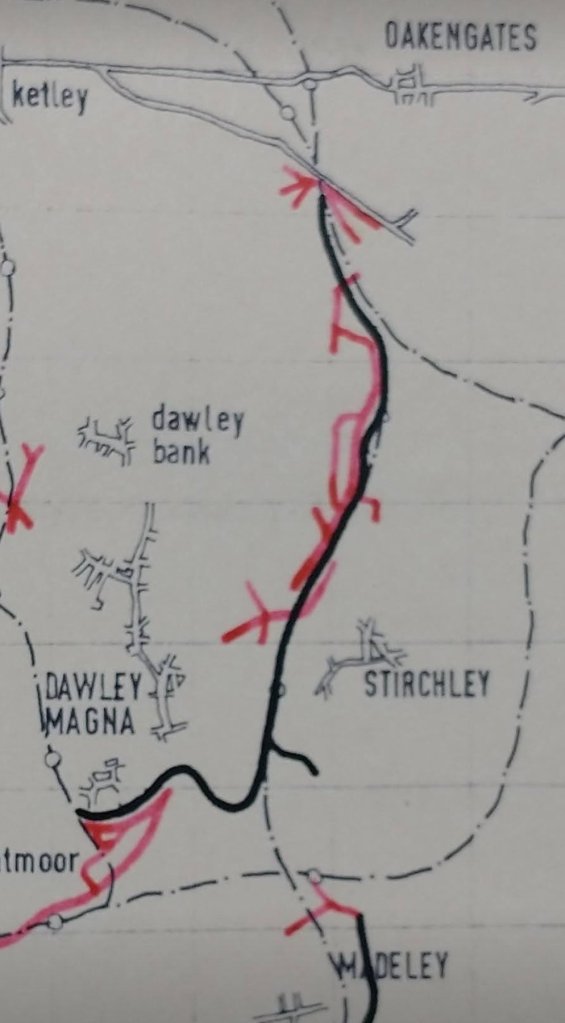
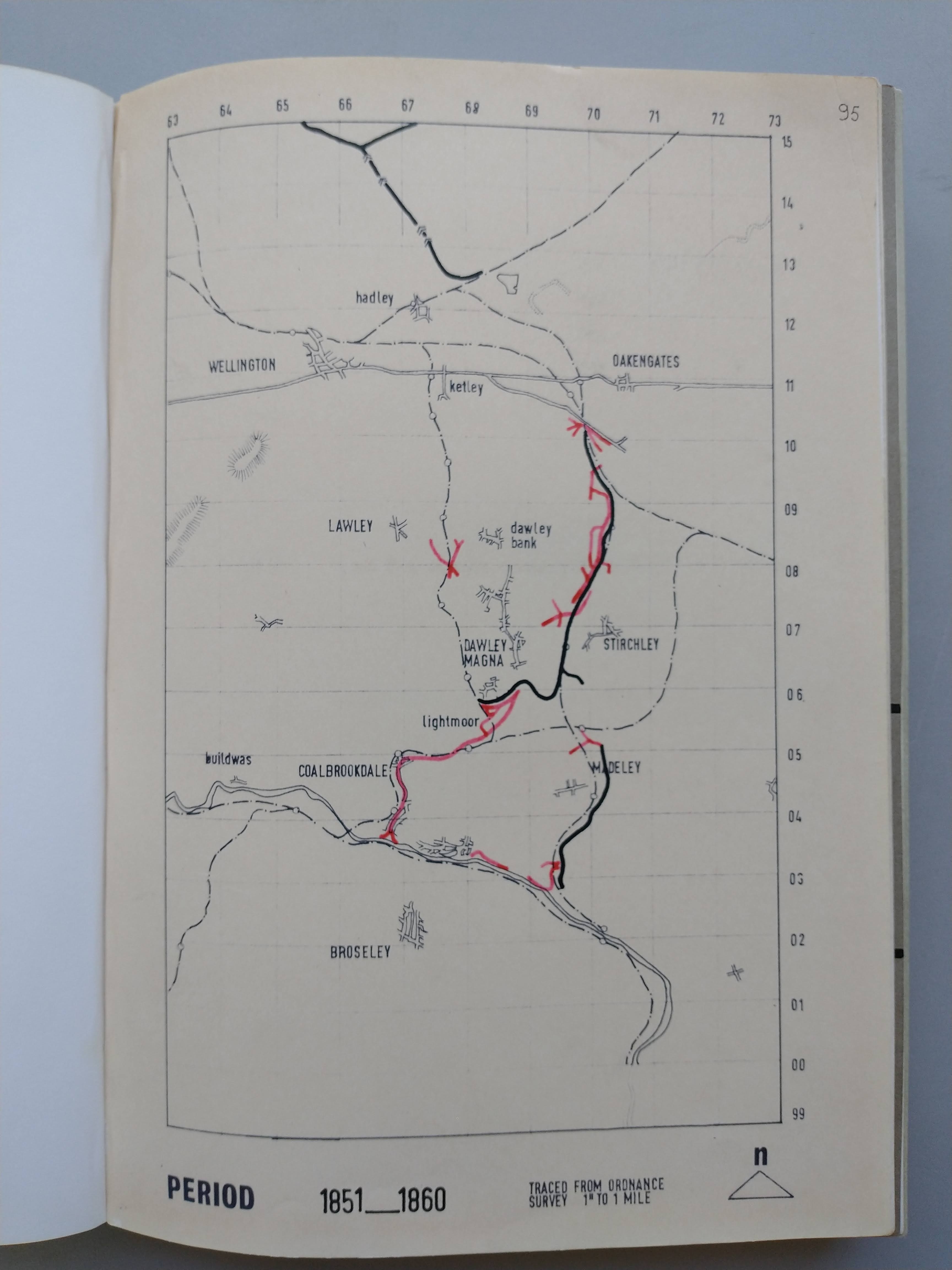
Better focus, this time! This extract is taken from Savage and Smith’s 1″ to one mile covering the period 1851 to 1860. There are additional tramroad routes following the canal and a small additions around Madeley. The canal is gradually becoming less significant and a length between Stirchley and Madeley has by this time been closed. Savage and Smith are still showing very little to the East of the Canal, just two short lengths. [2: p95]
There was little change in the immediate area over the next 15 years. The next image covers the period 1876-1900 and again only shows minor changes to tramroads in the vicinity of Stirchley The railways now dominate the transport landscape.
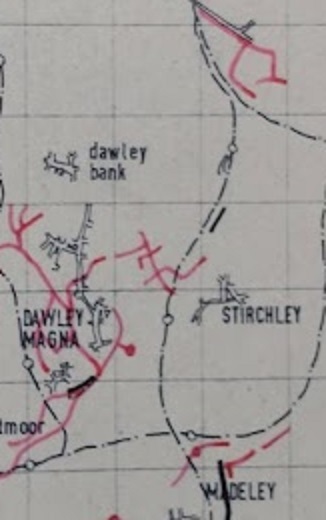
Savage and Smith’s plan covering 1876-1900. The Wharf on the canal Northwest of Stirchley is now a wharf alongside the LNWR Coalport Branch, a change that only required a bridge over a remain length of the canal. Significant tramroad changes can be seen to the West and serve pits in the Dawley Area taking goods to Lightmoor and Coalbrookdale. [2: p99]
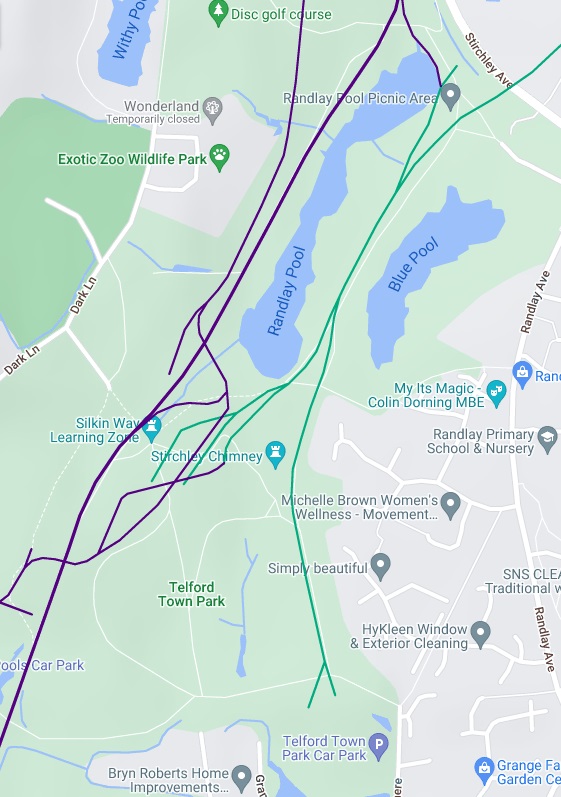
Missing from Savage and Smith’s 1″ to one mile drawings is the GWR branch parallel to the LNWR branch and running from the North down towards Stirchley. The route of that line is shown below in a turquoise colour on the mapping supplied by RailMapOnline.
RailMapOnline extract cover the area shown on the Google Maps satellite image above. As can be seen, its route replaced tramroad access to Grange Colliery and the Ironworks closer to Randlay Pool. [26]
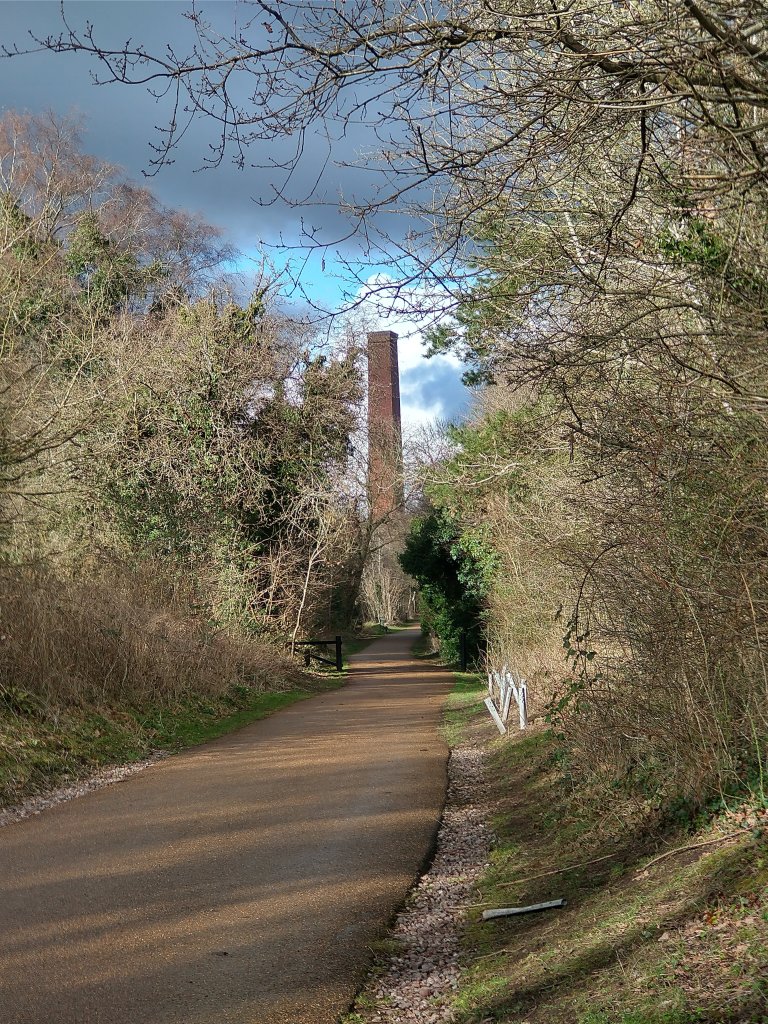
The next few photographs take us along the route of what is the old tramroad from Sutton Wharf and that of the GWR Mineral Line along the East side of Stirchley Chimney which still stands in the 21st century.
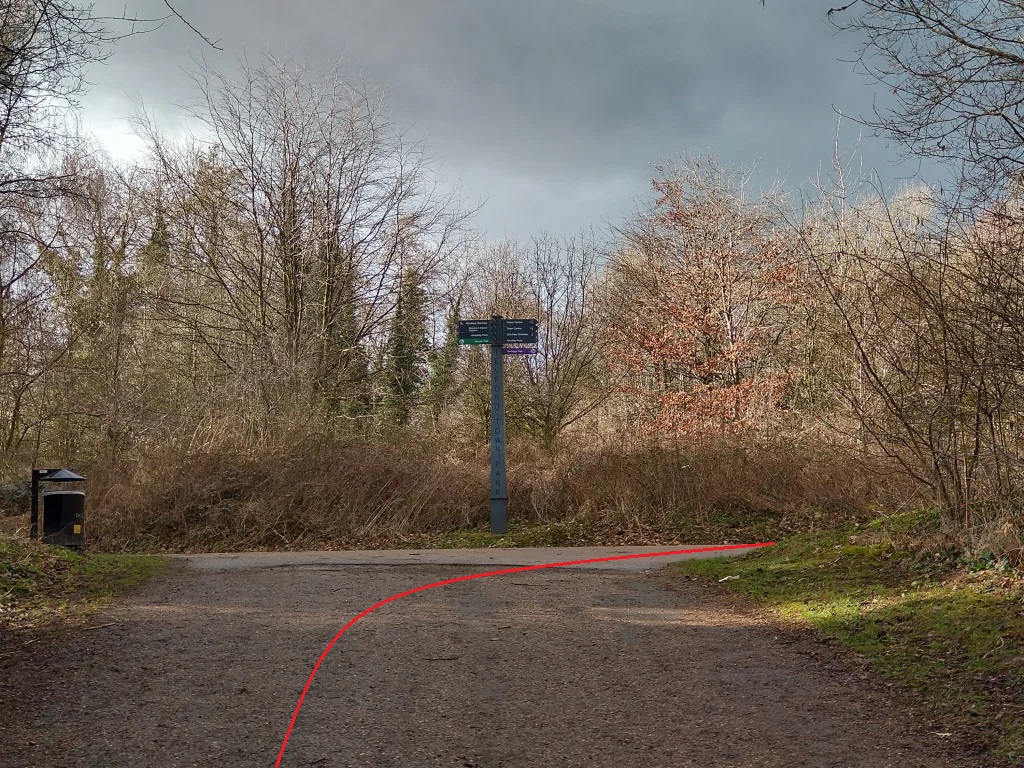
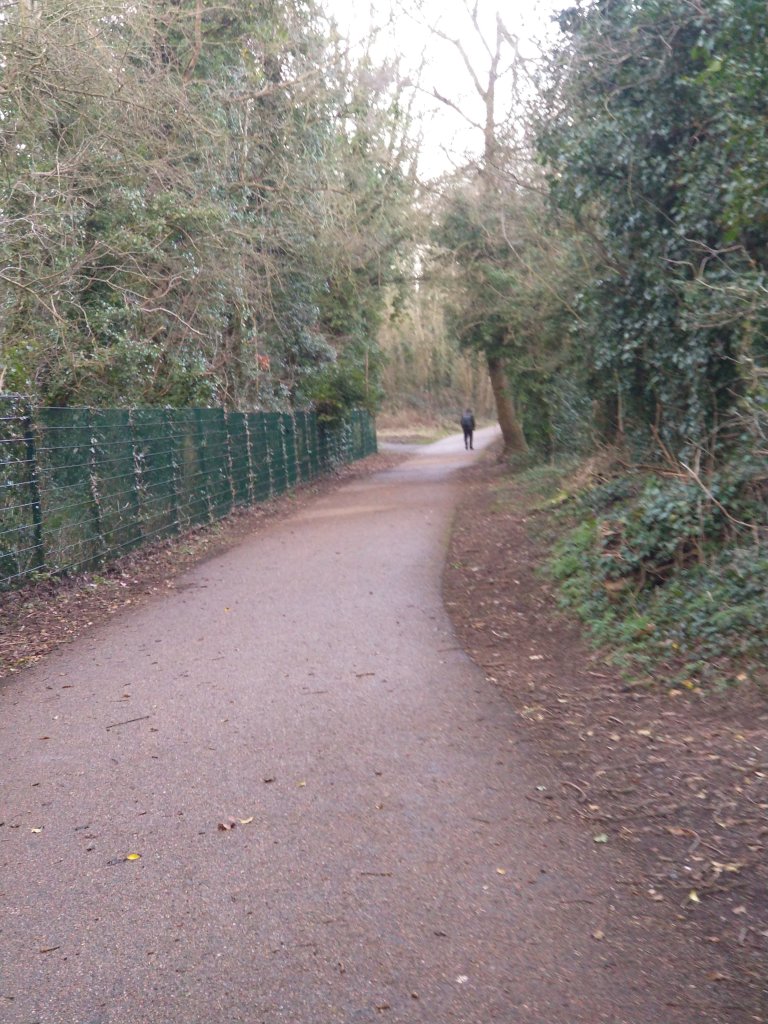
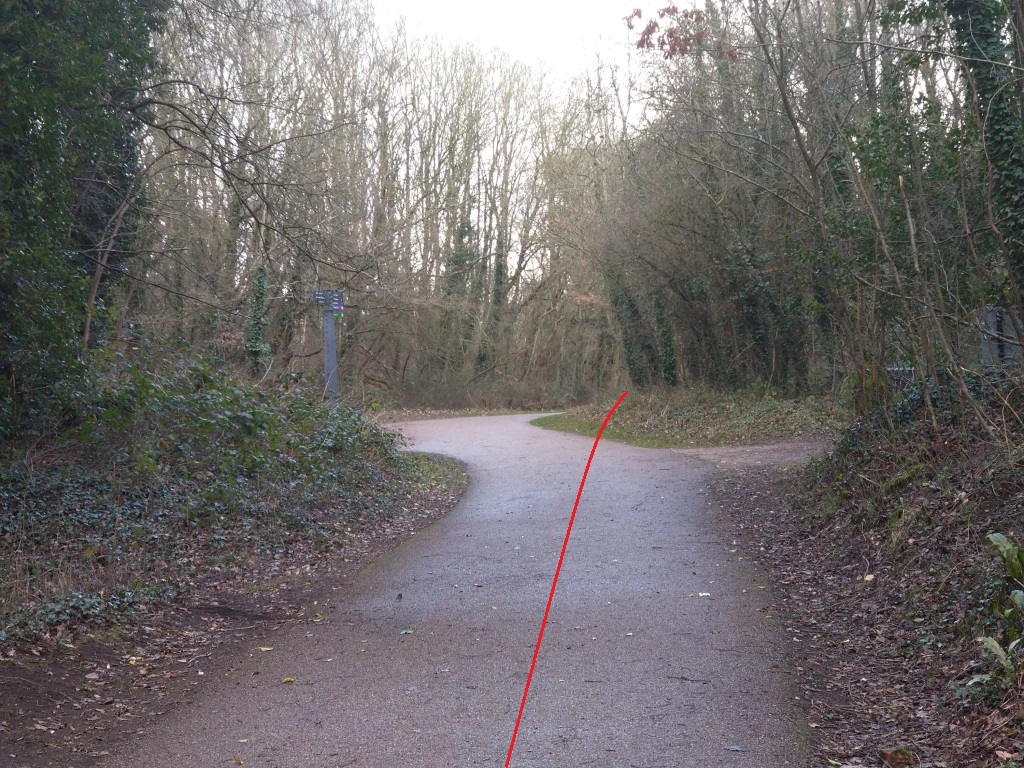
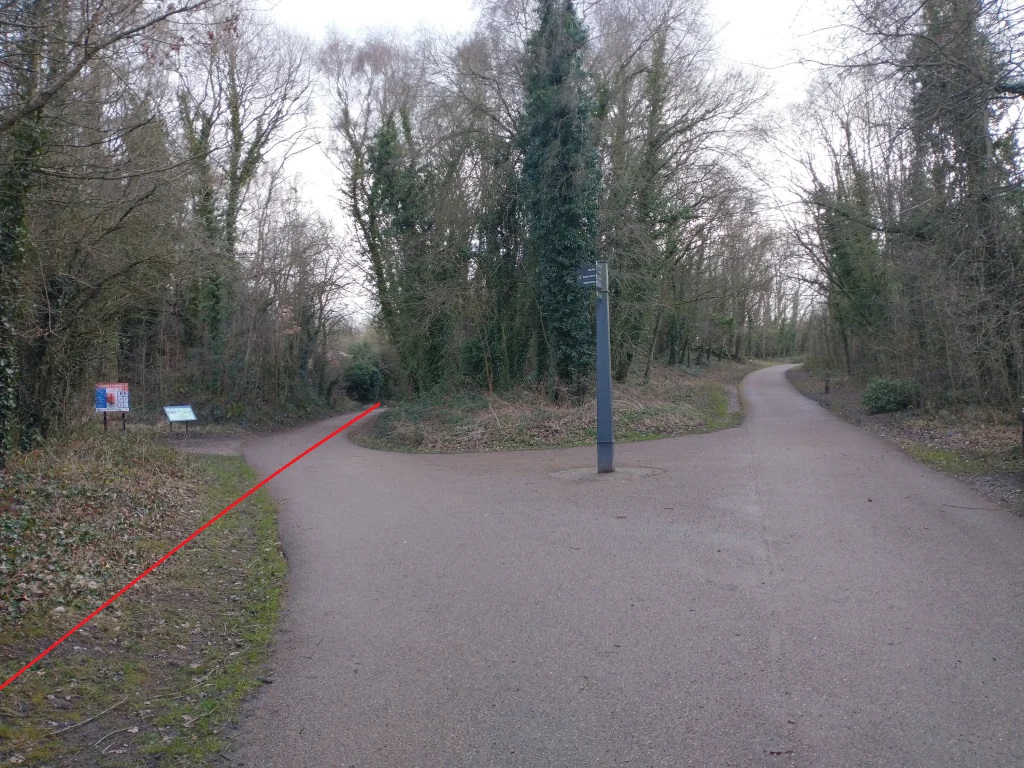
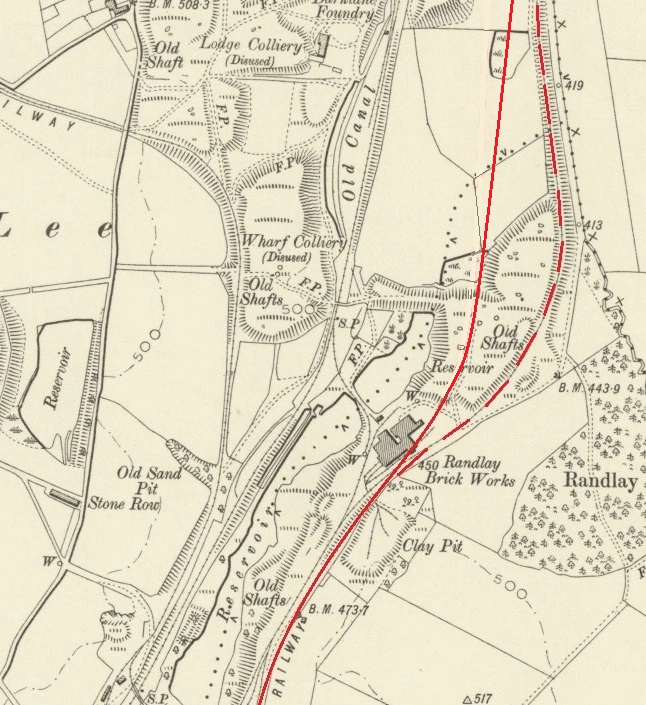
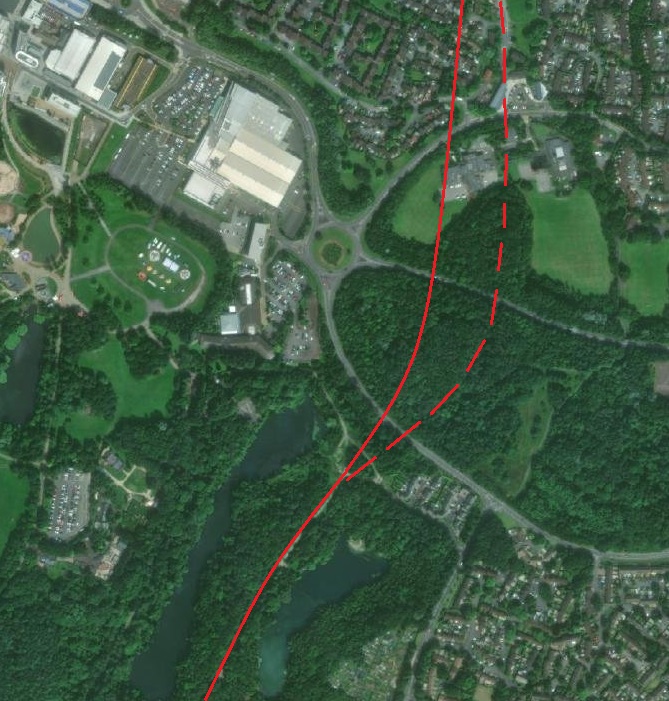
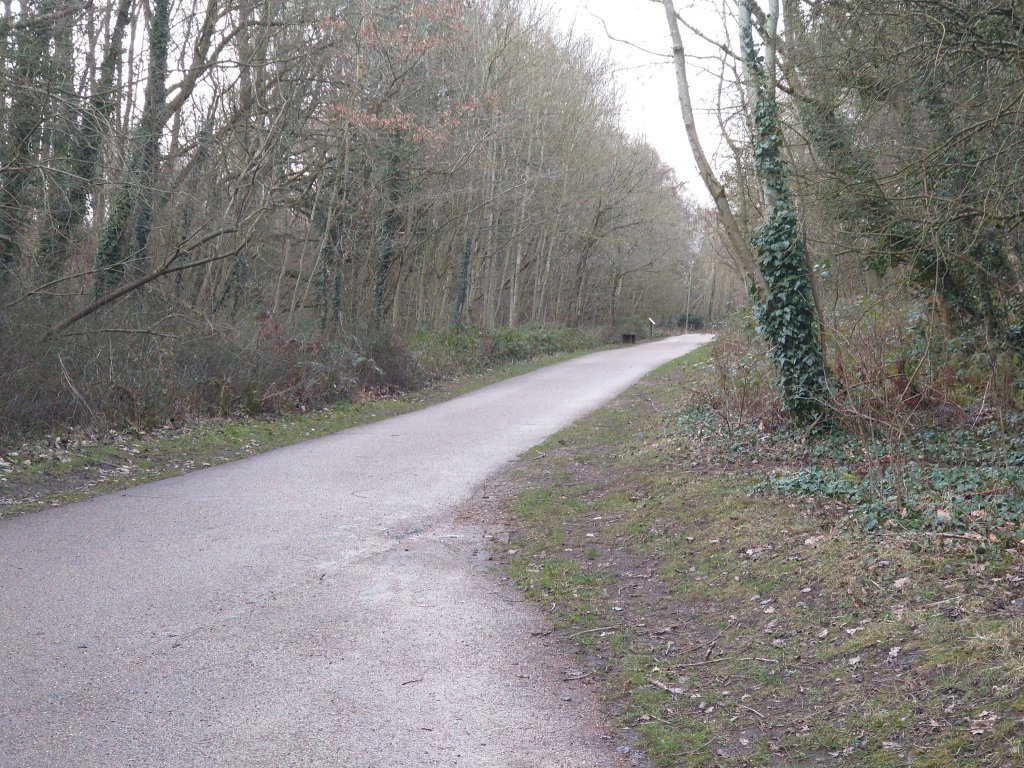
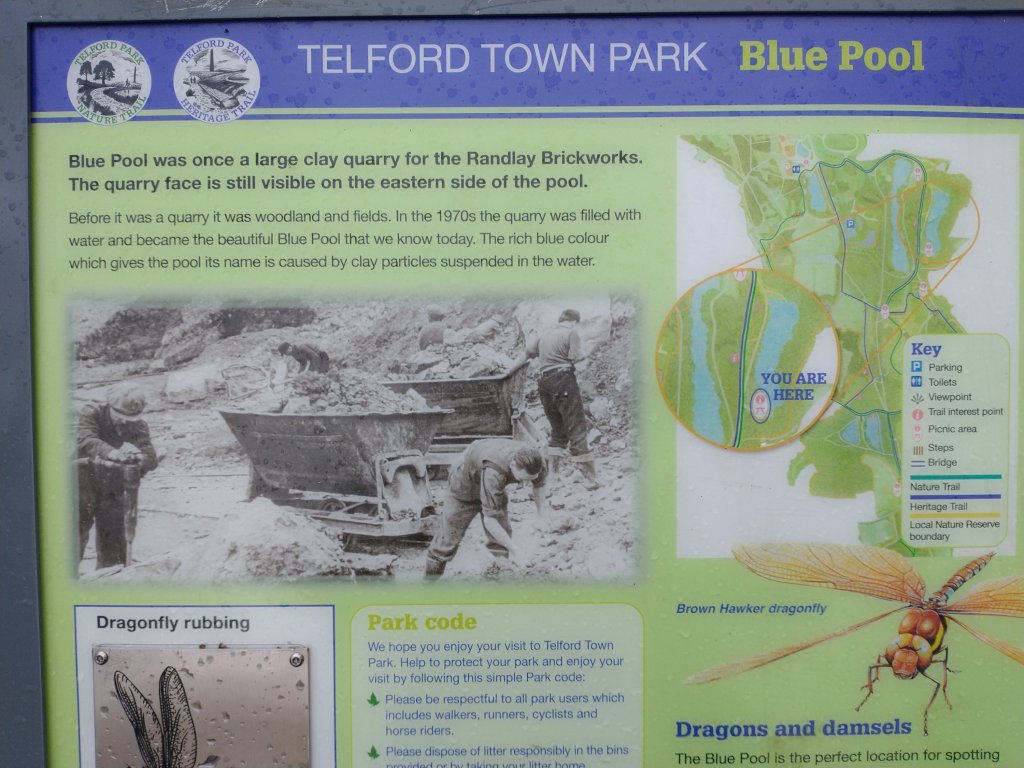
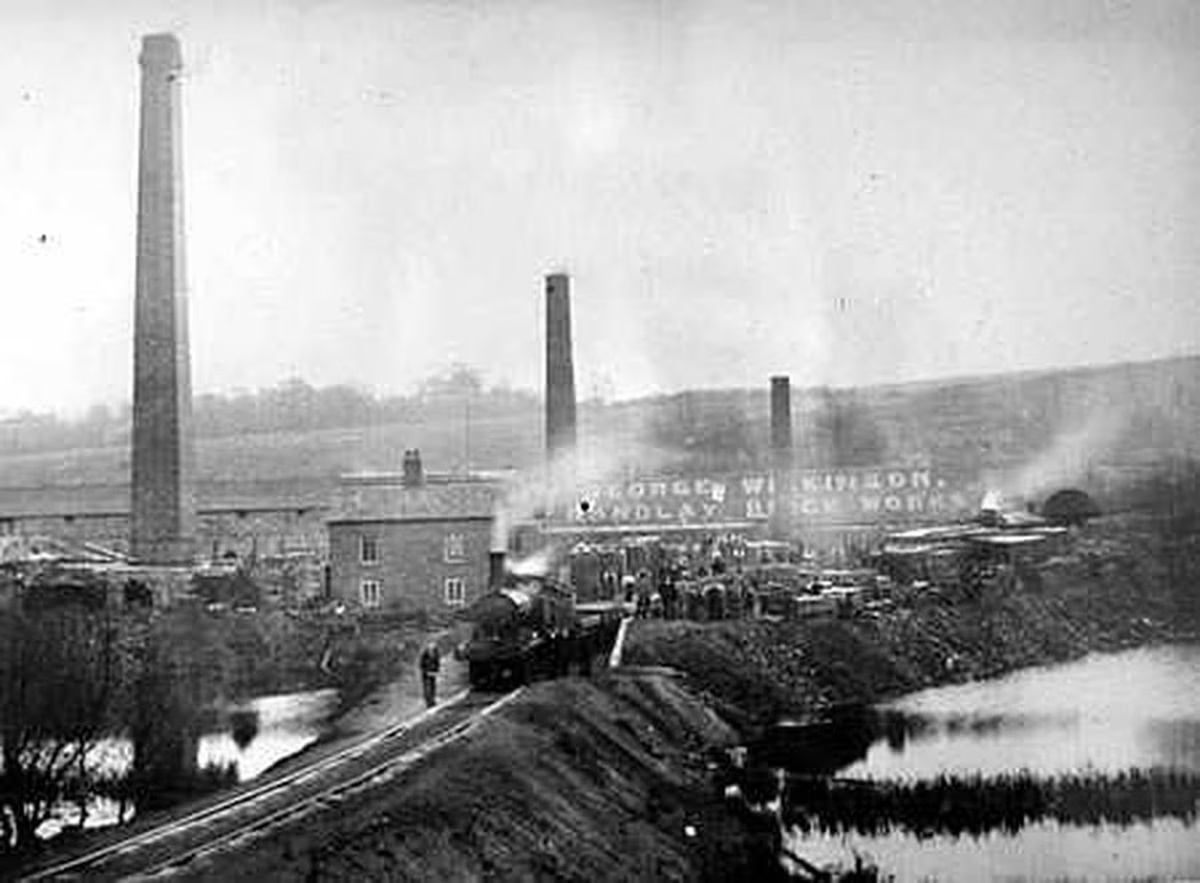
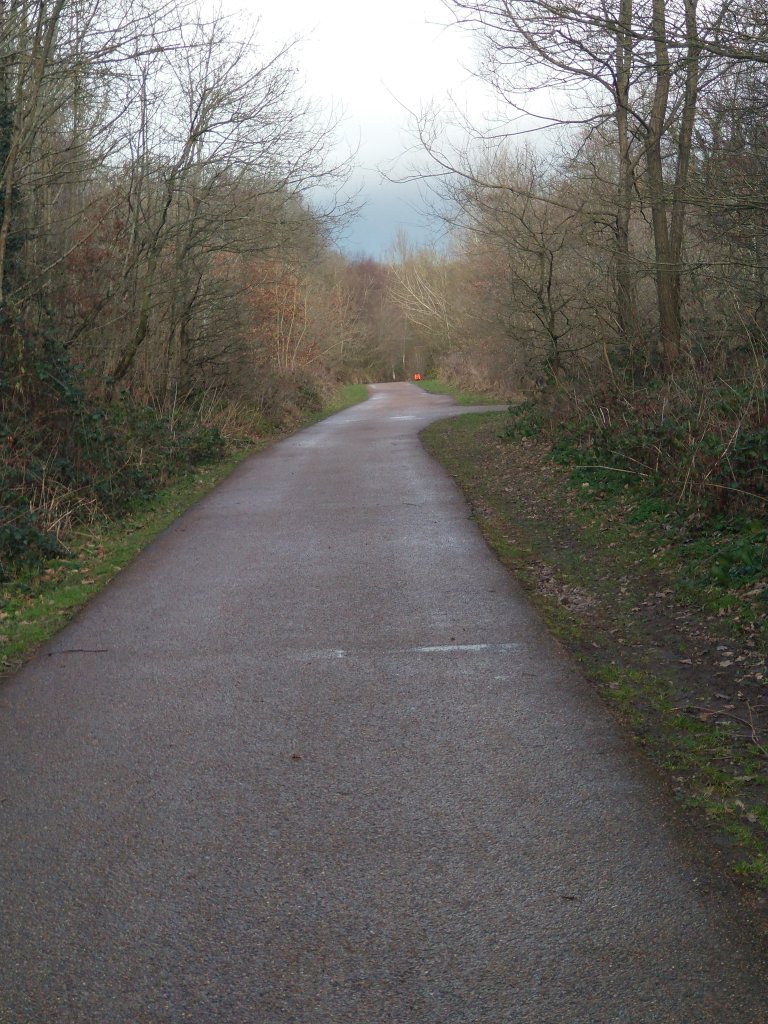
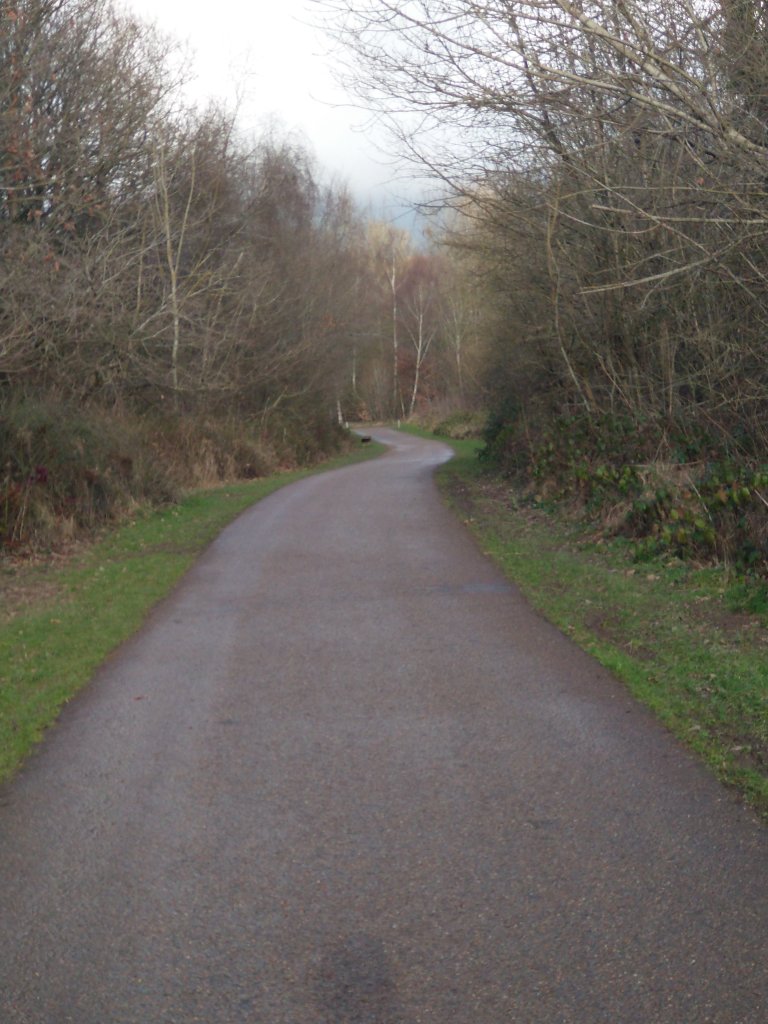
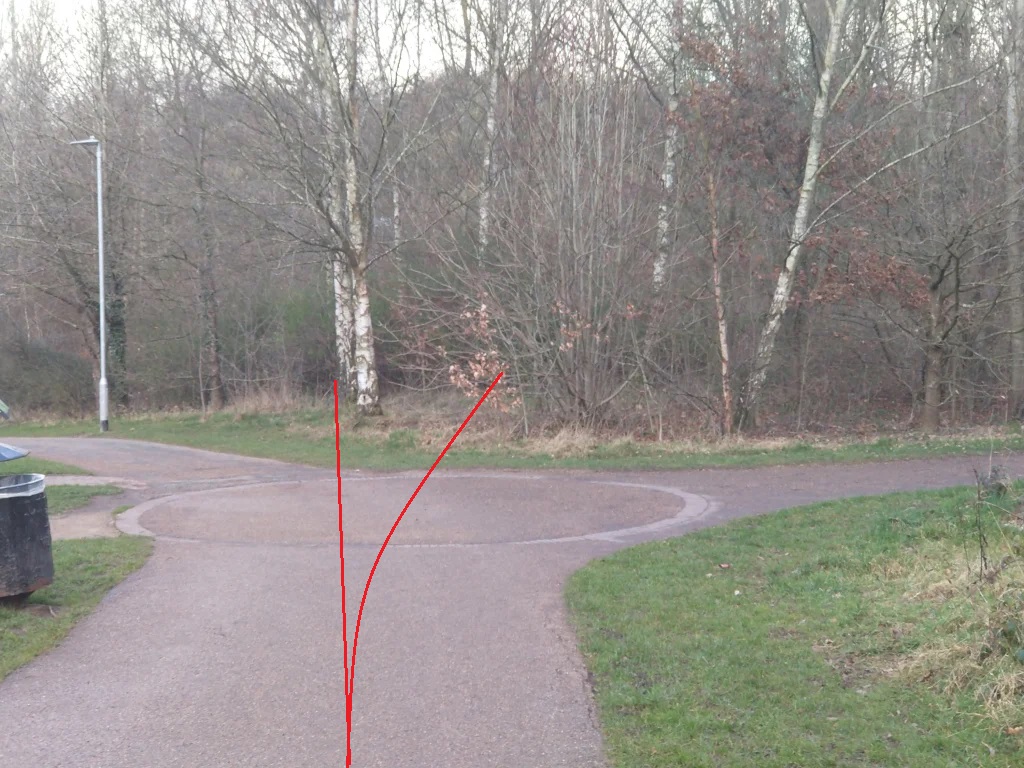
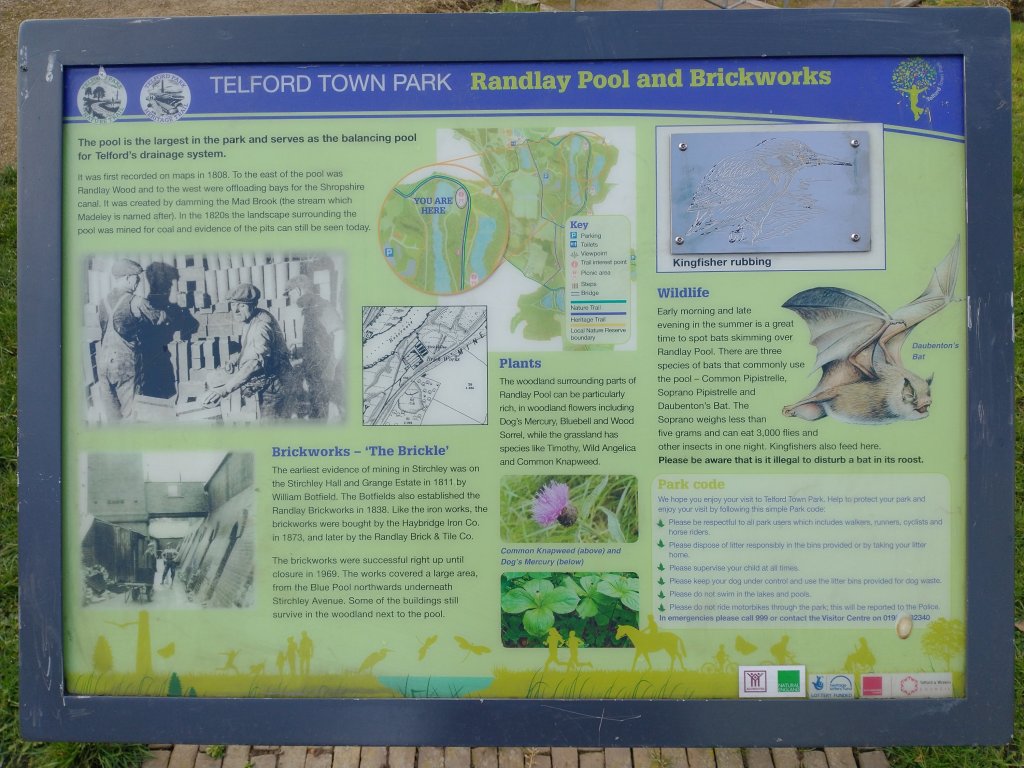
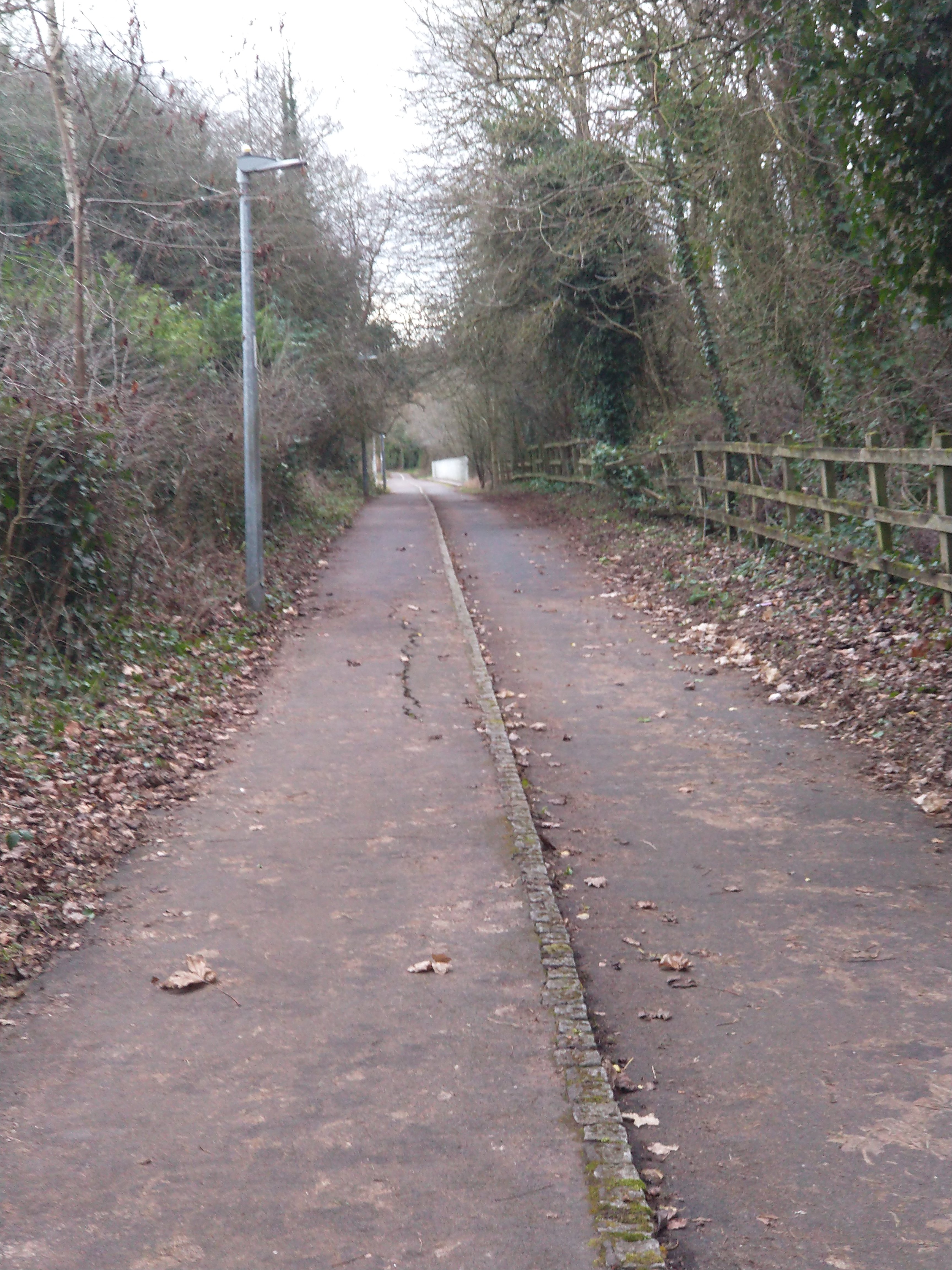
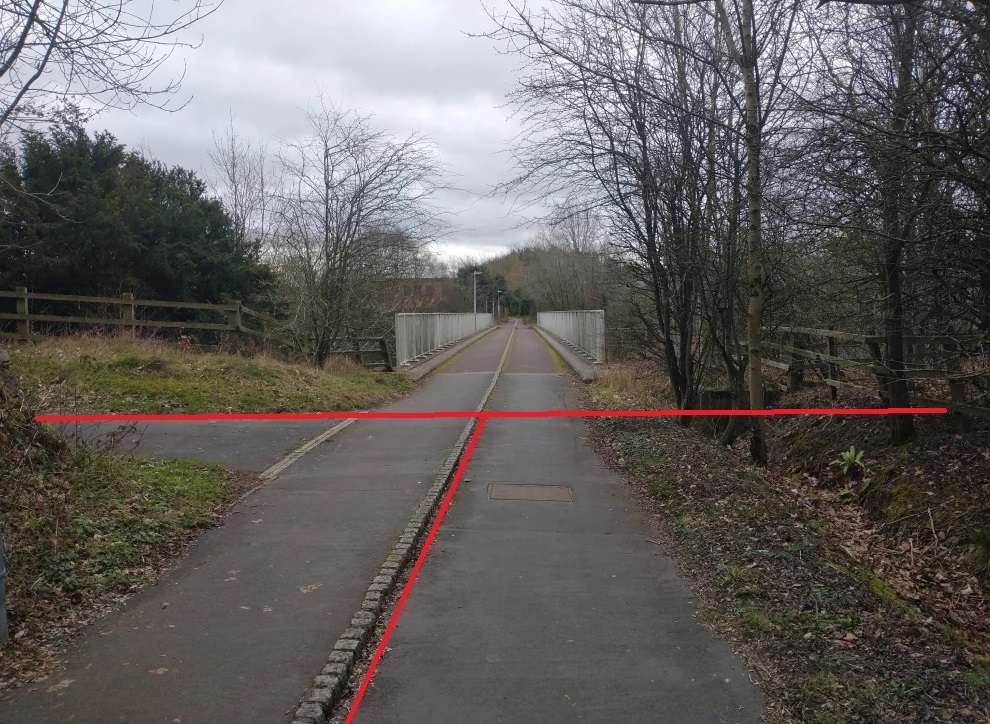
At the bottom-right of the Google Maps satellite image above, the old tramroad route runs from the top of Grangemere into Telford Town Park in a Northwesterly direction before turning North onto the line of one of two arms of the old GWR Mineral Railway. [My photo, 22nd February 2022]The route North runs close to Strichley Chimney. [My photo, 22nd February 2023]The line followed a large radius right-hand curve passing to the East of the remaining Stirchley Chimney which is just off this picture to the left. The fencing protects the public from what is a significant drop within the area immediately around the chimney. [My photo, 22nd February 2023]Looking North along the line of the old tramroad. Blue Pool is to the right of this image, Randlay Pool beyond the trees to the left. In later years, two branches of the old Mineral Railway met at this point. [My photograph, 22nd February 2023]Looking back to the South, the old tramroad alignment is shown as a red line, Blue Pool is to the left, Randlay Pools to the right and the paths follow the two branches of the later Mineral Railway. [My photograph, 22nd February 2023]This next extract from the 6″ Ordnance Survey of 1901 shows, as a solid red line, the approximate route of the old tramroad as plotted by Savage and Smith in the 1960s and taken from early 0.5″ to one mile scale mapping. There is no apparent indication of earthworks along this line. The railway embankments present on the 1901 OS mapping suggest that the line drawn by Savage and Smith is unlikely to be the actual route of the old tramroad. It is only my opinion, but it would seem more likely, given relative levels, that the earthworks used by later tramroads and the GWR Mineral Railway are likely to be enhanced versions of the earthworks required by the much earlier tramroad from Sutton Wharf. The difference in scale between Savage and Smith’s source drawings and the 6″ to 1 mile scale on which they plotted their route mean that there is every possibility that my alternative is correct and still remains within reasonable tolerances to allow their line to be seen as reasonably accurate given the resources available to them in the 1960s. [27]The same area as in the OS map extract above but on modern satellite imagery with the routes discussed shown as on the OS mapping. The area has been transformed beyond recognition. After the time of the OS map extract above a quarry was opened up to the East of the Randlay Pool, and when exhausted became what is known in the 21st century as Blue Pool. The large building top-left is Telford International Exhibition Centre. [27]The old tramroad and the later Mineral Railway run Northwards on what is now a path In Telford Town Park between Randlay Pool and Blue Pool. [My Photograph, 22nd February 2023]Part of the information board at Blue Pool. [My photograph, 22nd February 2023]An information board alongside the footpath which follows the route of the old tramroad and the Mineral Railway. [My photograph, 22nd February 2023]The image shown on the top-right of the information board is difficult to make out as there is fogging and scratching to the protective sheet over the face of the noticeboard. This is the same image, sourced from the pages of the Shropshire Star. It shows Randlay Brickworks which sat a couple of hundred metres North of the information board and features what is likely to be a LNWR locomotive on the branch on embankment across the Randlay Pool. If so, the old tramroad route and the GWR Mineral Branch would follow a line behind the buildings of the Works. [28]
The information board reads: “From at least 1882, the Great Western Railway (GWR) ran a mineral railway from Hollinswood down the Randlay valley to serve the coal and iron industries in Stirchley. Within the Town Park, this followed a course from Randlay Brickworks to the Grange. … The Mineral Railway stopped travelling South to the Grange between 1903 and 1929 and terminated at the Wrekin chemical works. [These were at the present location of Stirchley Chimney.] Its use finally reached the end of the line in 1954. The line of the Mineral Railway is preserved today on this pathway and evidence remains including posts, buildings and artefacts.” There is also a note on the board about a network of sidings which linked various industrial works to the main line of the mineral railway alongside a sketch-map of the area.
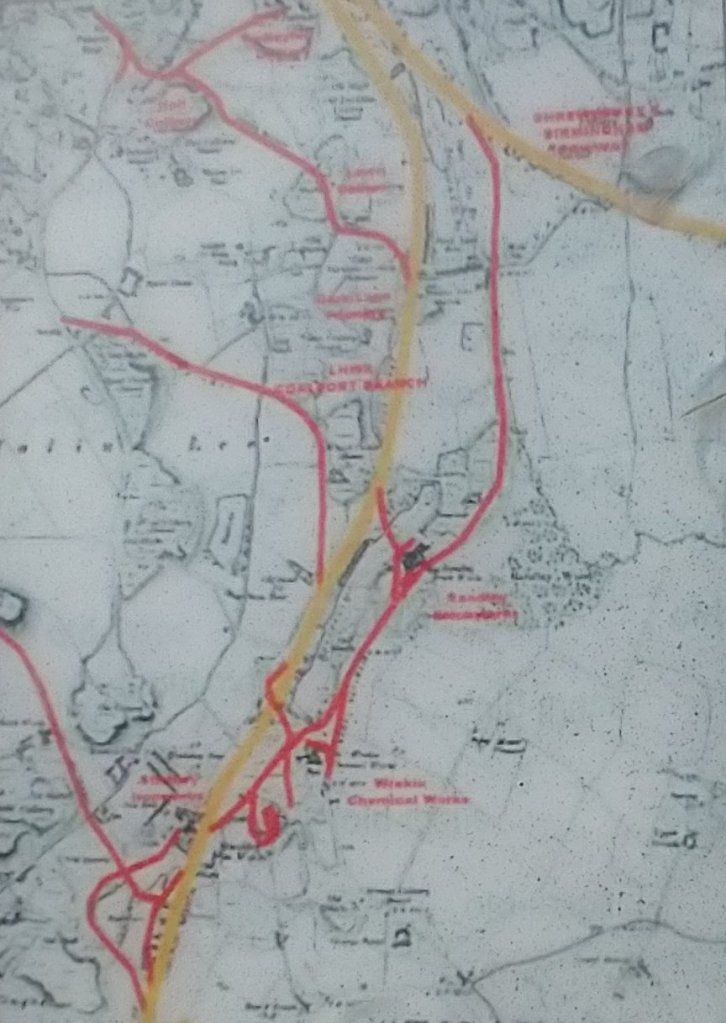
The sketch-map from the information board, a little out of focus and fogged because of the deterioration of the covering plastic protection to the board. Various industrial railways and tramroads are shown. The wide yellow line running North-South is the LNWR Coalport Branch, that in the top-right corner is the main line between Shrewsbury and Wolverhampton which was once part of the GWR. The red line leaving the GWr line close to the top of the image and running parallel to but to the East of the LNWR branch is the GWR Mineral Line to Stirchley. Other red lines give an impression of the different tramroads link with the teo standard gauge branch lines. [My photograph, 22nd February 2023]The footpath continues to follow the old tramroad and Mineral Railway line Northwards [My photograph, 22nd February 2023]Further North, approaching the site of the Randlay Brickworks, the footpath continues to follow the old tramroad and Mineral Railway line Northwards [My photograph, 22nd February 2023]To the left of this image is the site of Randlay Brickworks and beyond it the top end of Randlay Pool. The old tramroad and the later Mineral Railway continue northwards towards Hollinswood and Oakengates. Savage and Smith’s drawn route of the tramroad is approximately the left hand red line. The old mineral railway and my suggestion of the actual route of the old tramroad is the right hand red line. [My photograph, 22nd February 2023]The information board that the Randlay Brickworks site. [My photograph, 22nd February 2023]
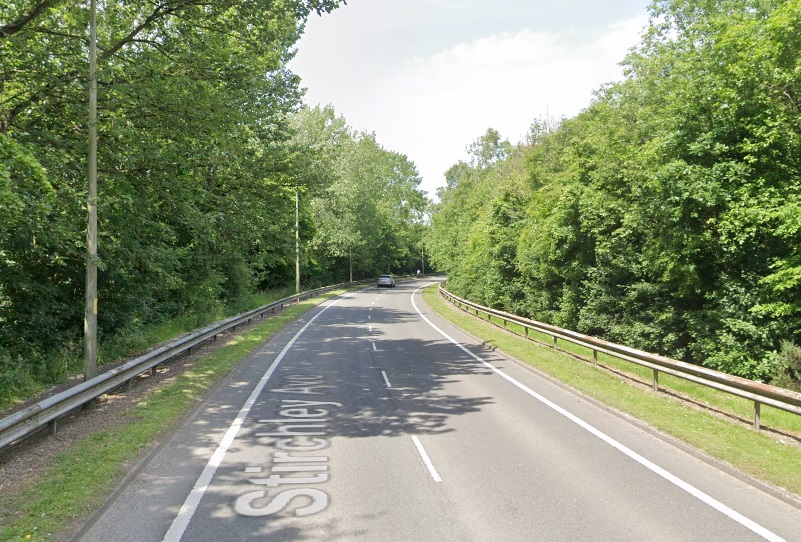
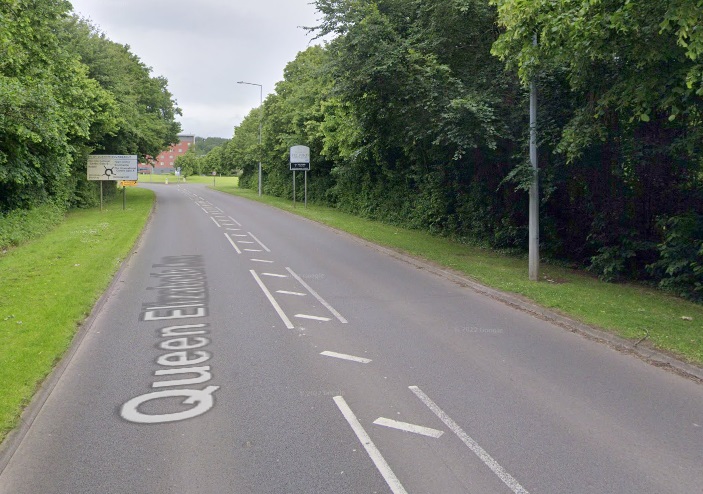
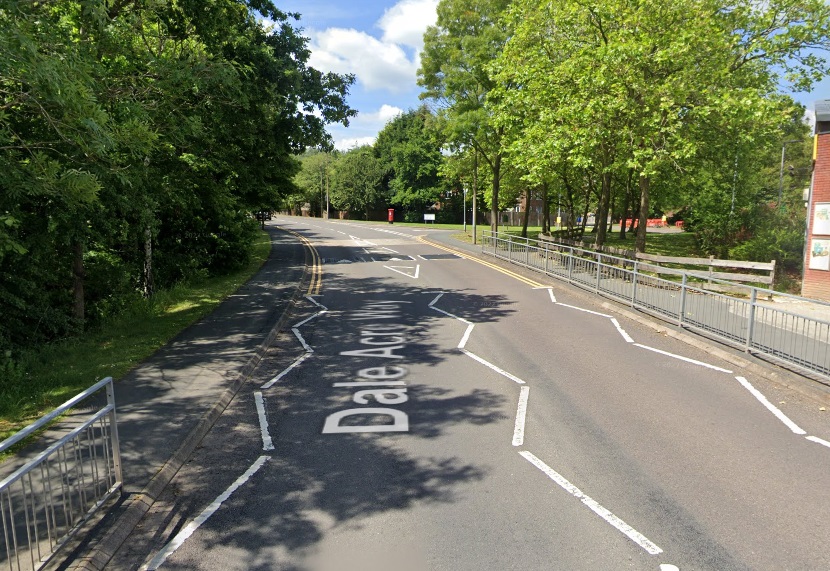
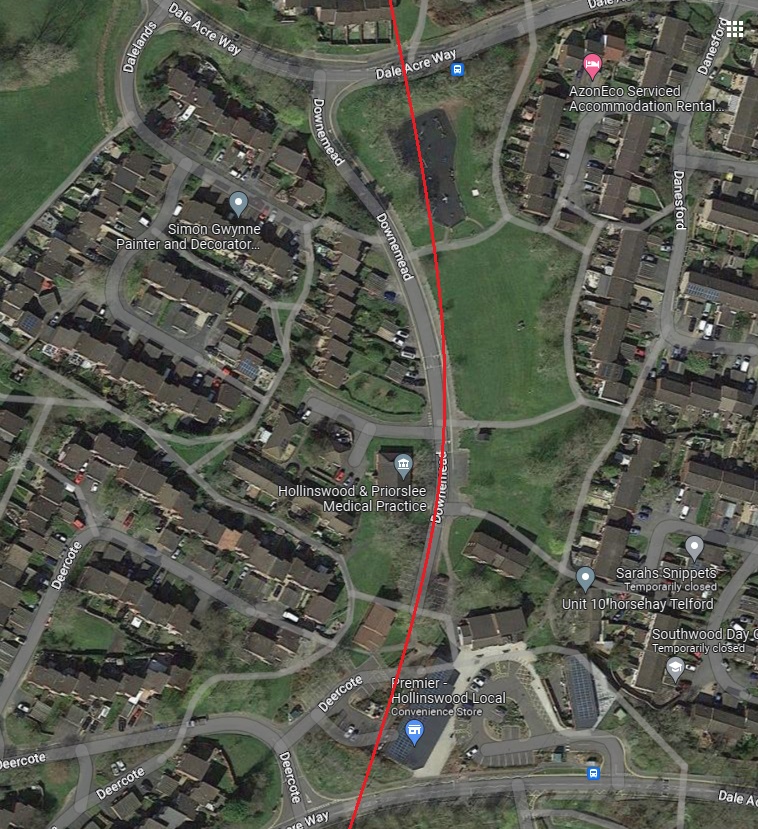
North of Randlay Pool the line of the old tramroad and the line of the GWR Mineral railway plunge into undergrowth and the topography of the area beyond this point for some distance is very unlikely to be the same as that present in 1901. In the top half of the satellite image above the lines crossed three modern roads, Stirchley Avenue, Queen Elizabeth Avenue and Dale Acre Way, then run geographically along the line of Downemead for a short way.
Stirchley Avenue looking Northwest towards the exhibition centre. The old tramroad crossed the line of the road somewhere on this curve. [Google Streetview, June 2022]Queen Elizabeth Avenue looking West toward the exhibition centre. The old tramroad crossed the road somewhere this side of the road signs ahead. [Google Streetview, June 2022]Dale Acre Way in Hollinswood, looking Southwest towards the roundabout close to the exhibition centre. The old tramroad route crosses Dale Acre Way between the camera and the Deercote Road junction ahead in the vicinity of Hollinswood Local Centre which is just off this picture to the right.A closer image of Downemead showing the approximate alignment of the old tramroad and the later Mineral Railway. [Google Maps, February 2023]
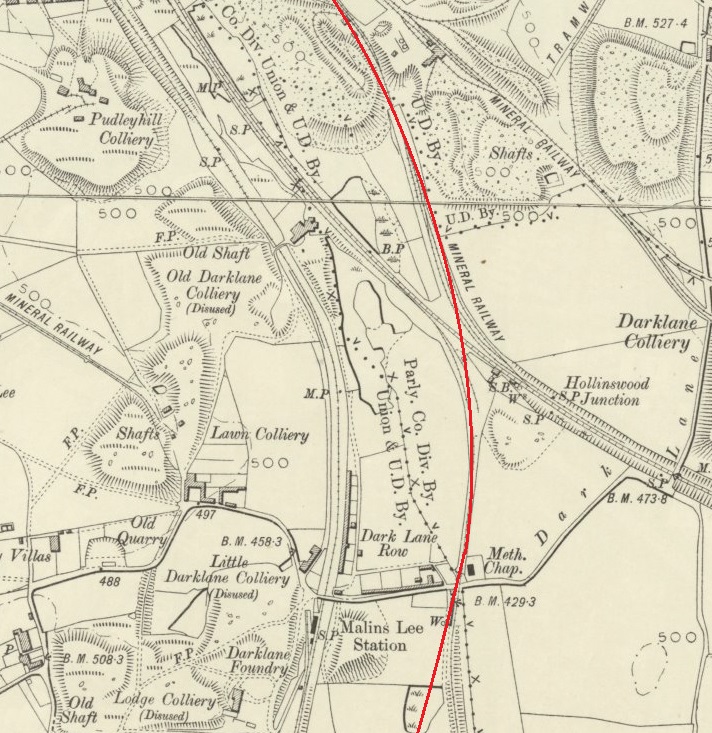
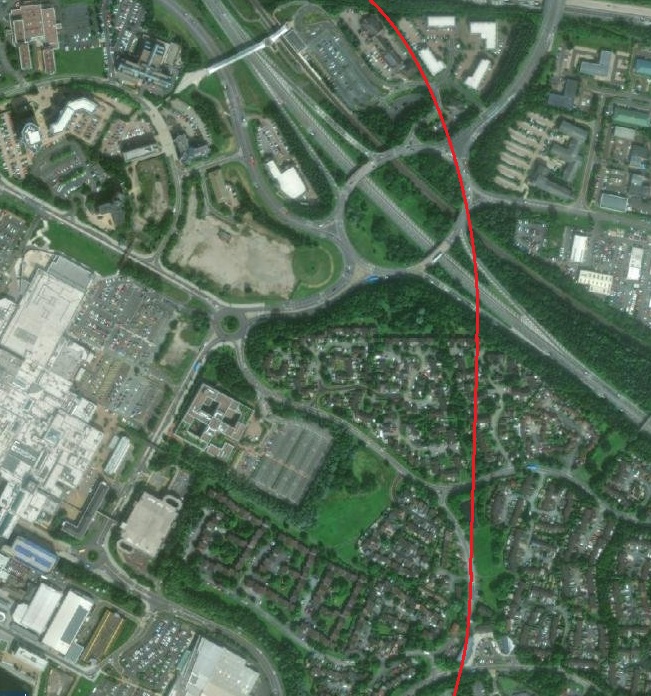
On the extract from the satellite imagery below the line is picked up running approximately along Downemead before crossing Dale Acre Way once again. At the point where Downemead meets Dale Acre Way at its North end, Dale Acre Way is running approximately along what was Dark Lane shown on the 6″ Ordnance Survey immediately below. Comparing the two images immediately below shows how much topographic change has occurred in the 120 years since the 1901 Ordnance Survey. Effectively the only feature which remains in the 21st century is the Shrewsbury to Wolverhampton Mainline railway which runs from top-left to bottom-right across both the map and the satellite image.
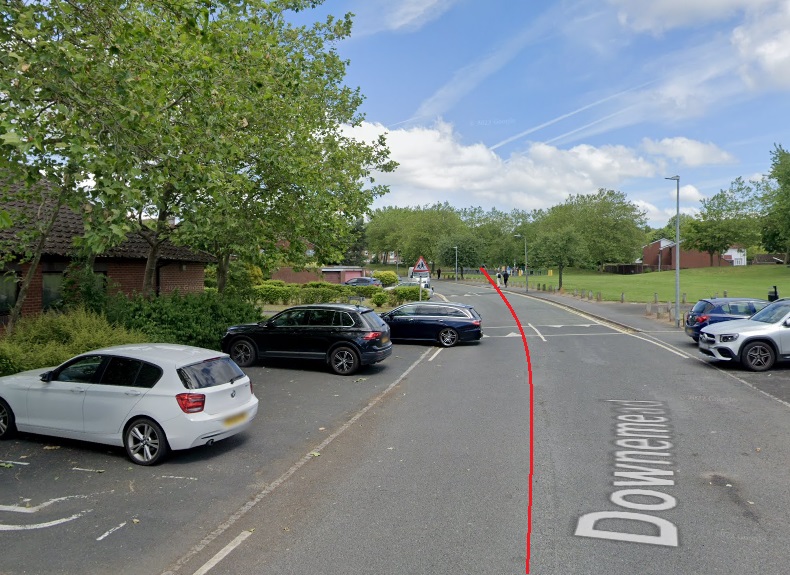
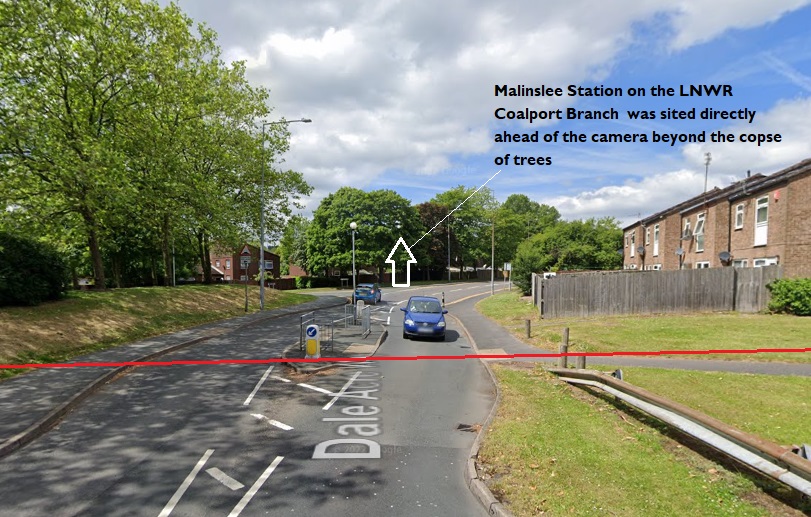
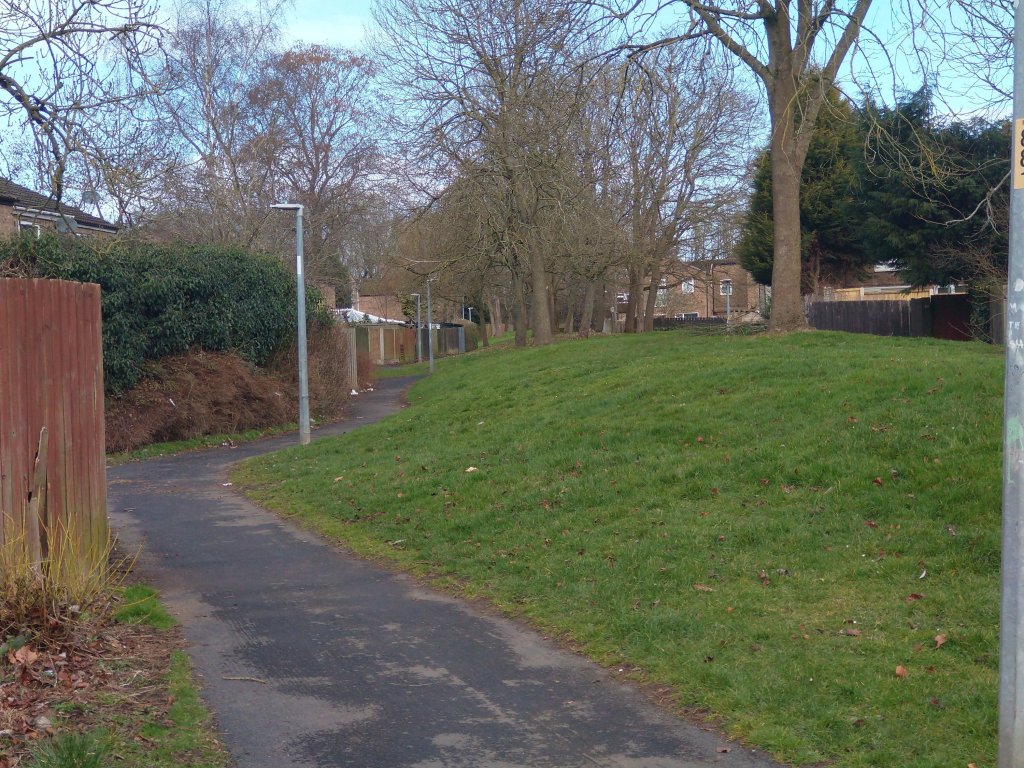
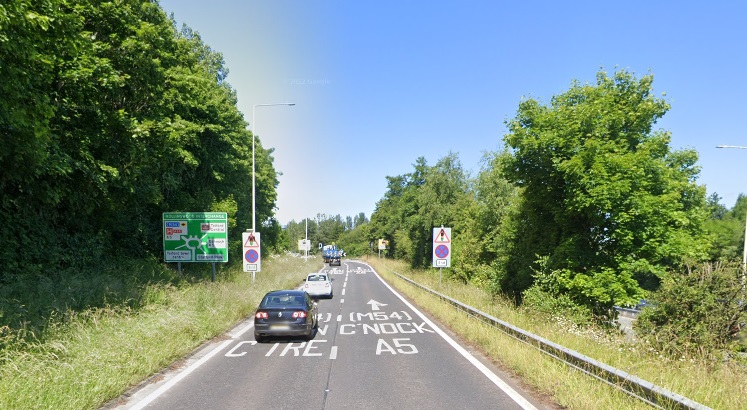
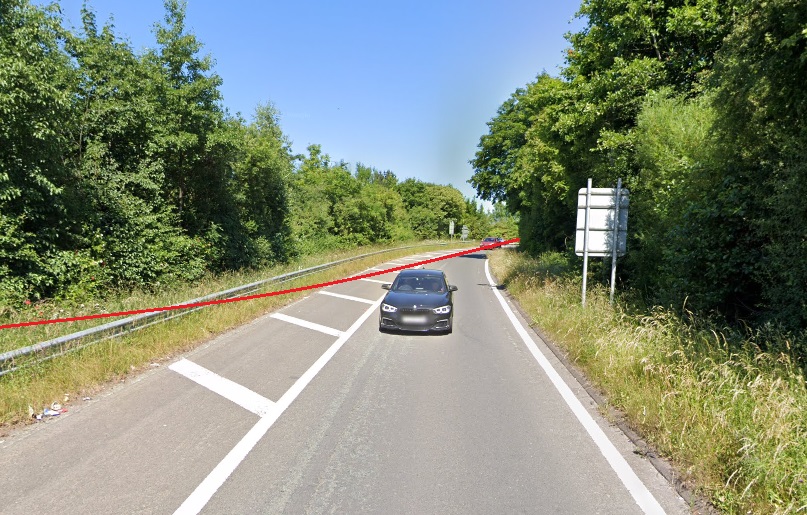
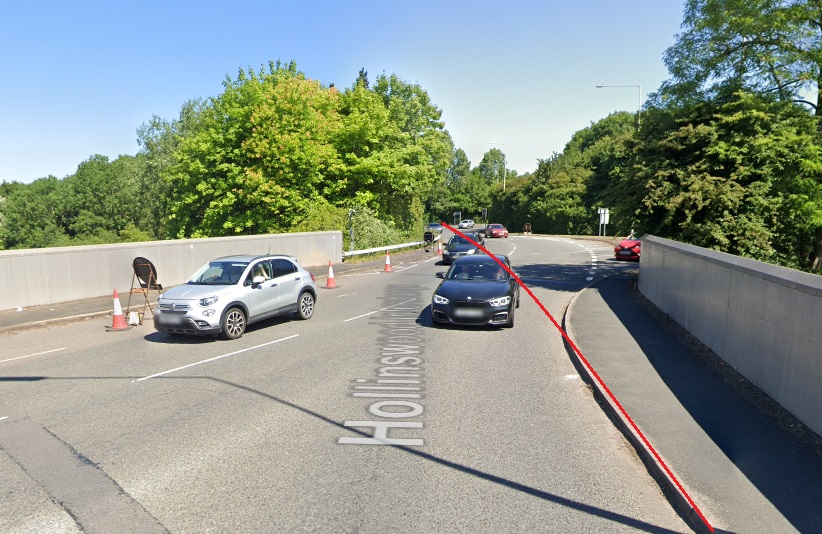
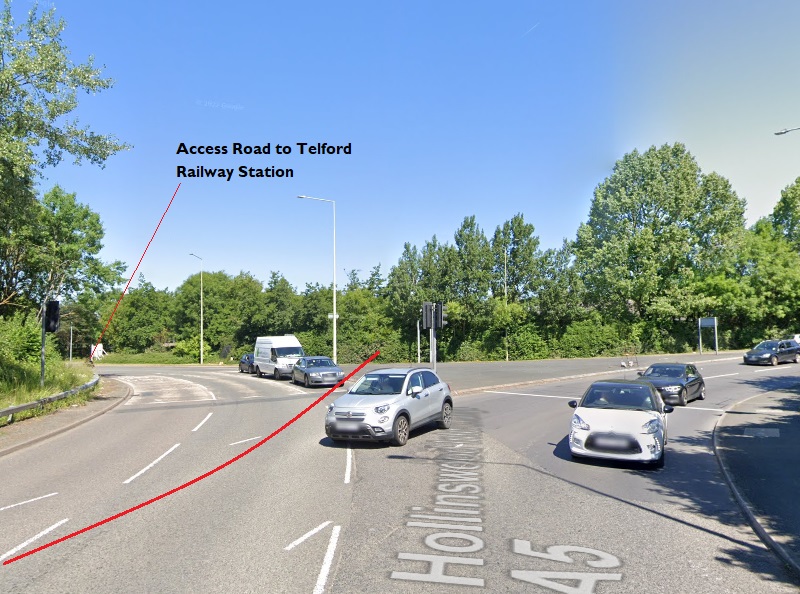
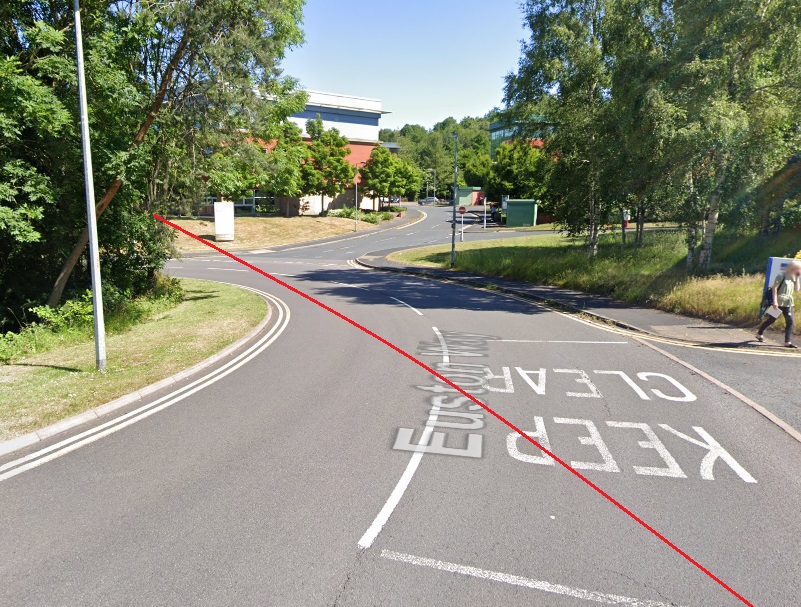
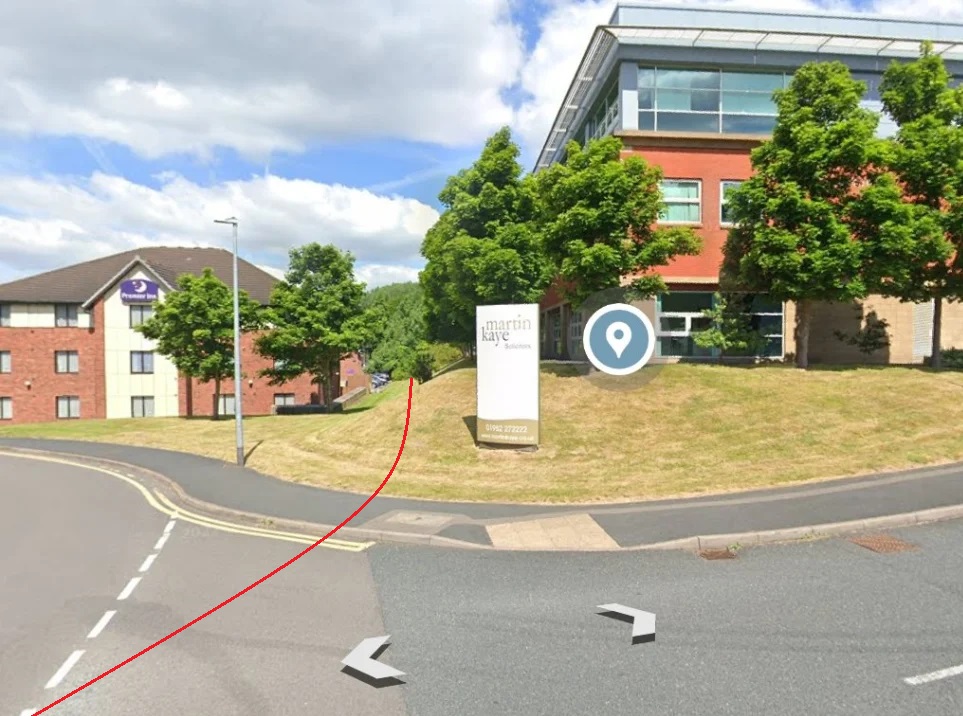
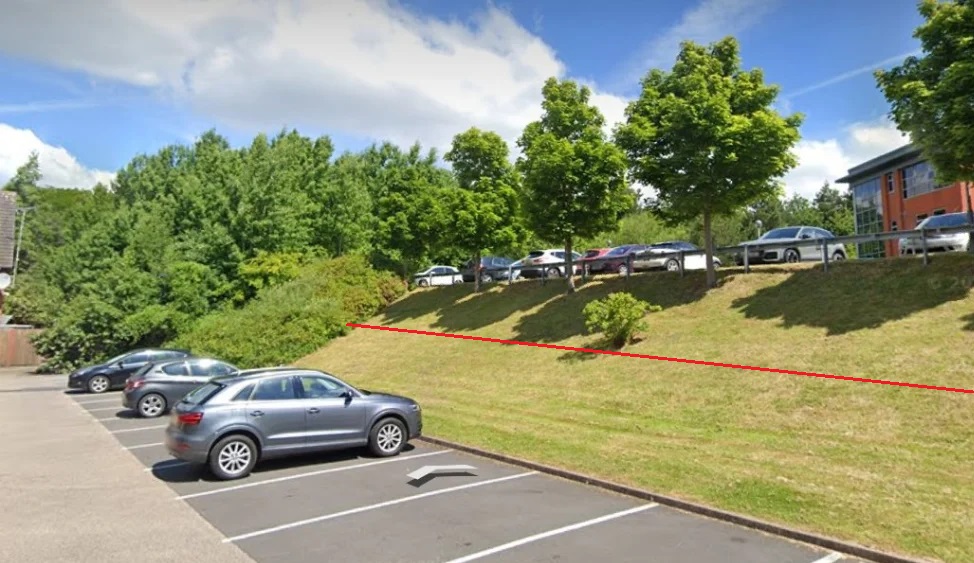
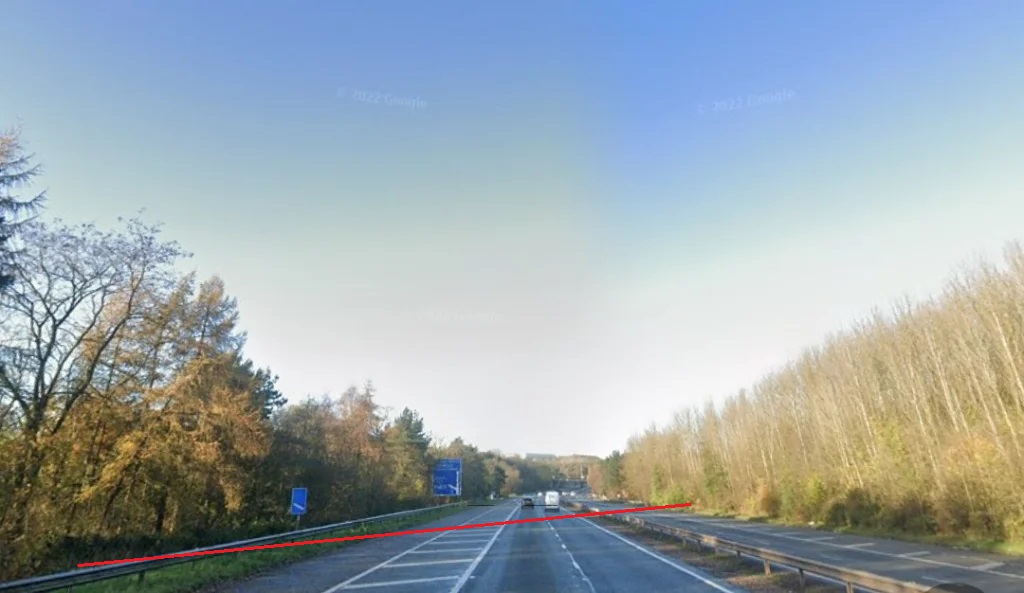
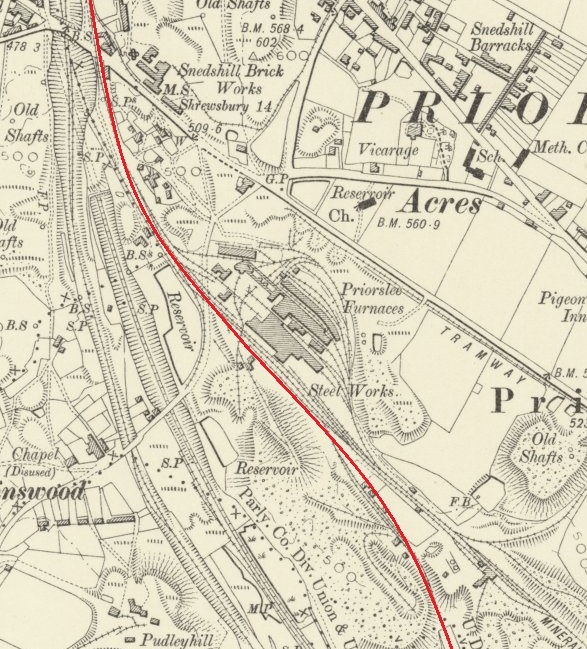
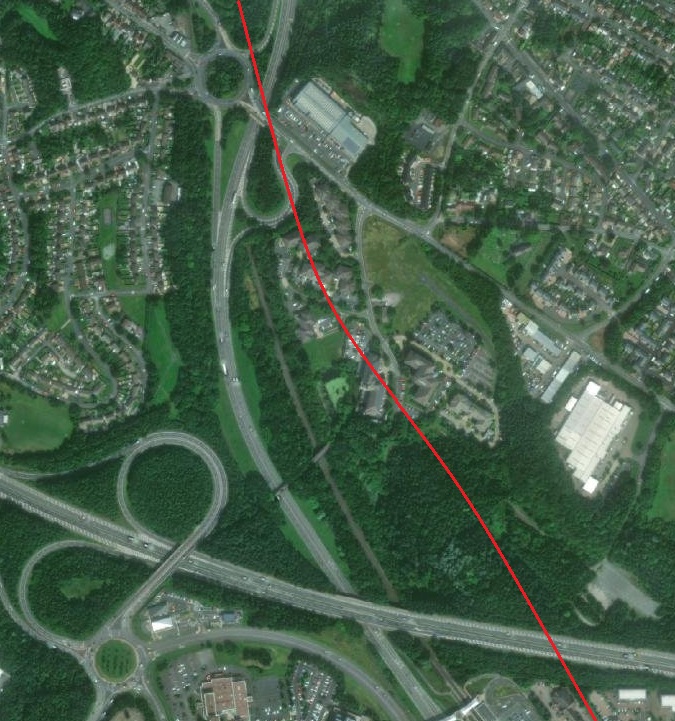
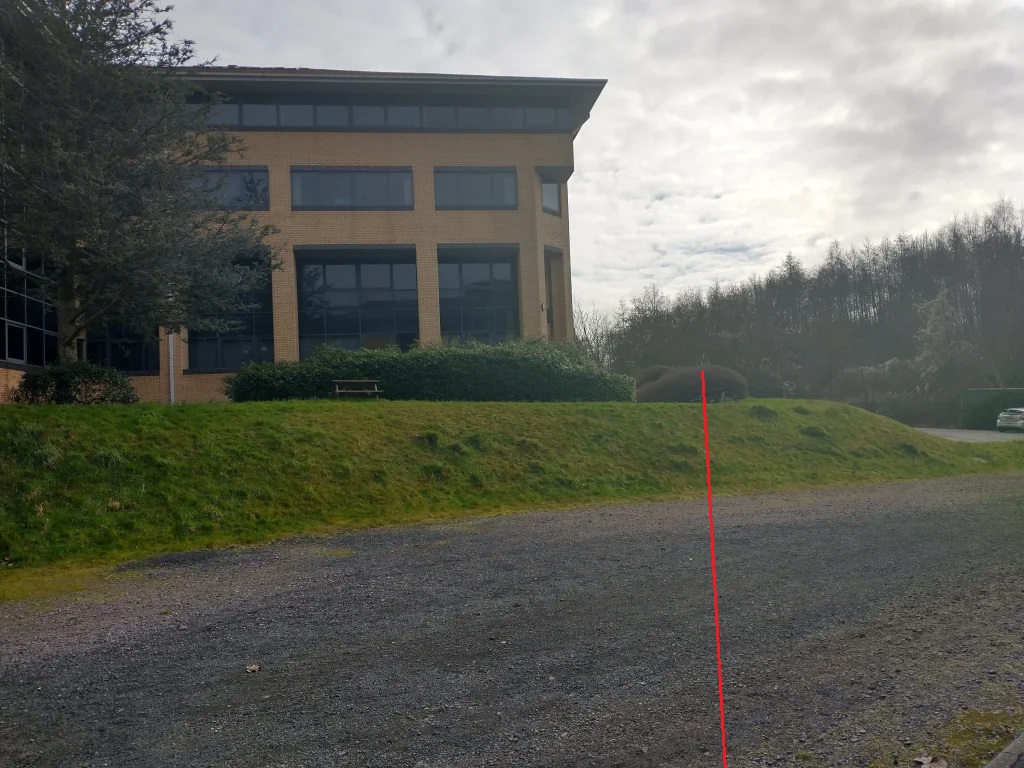
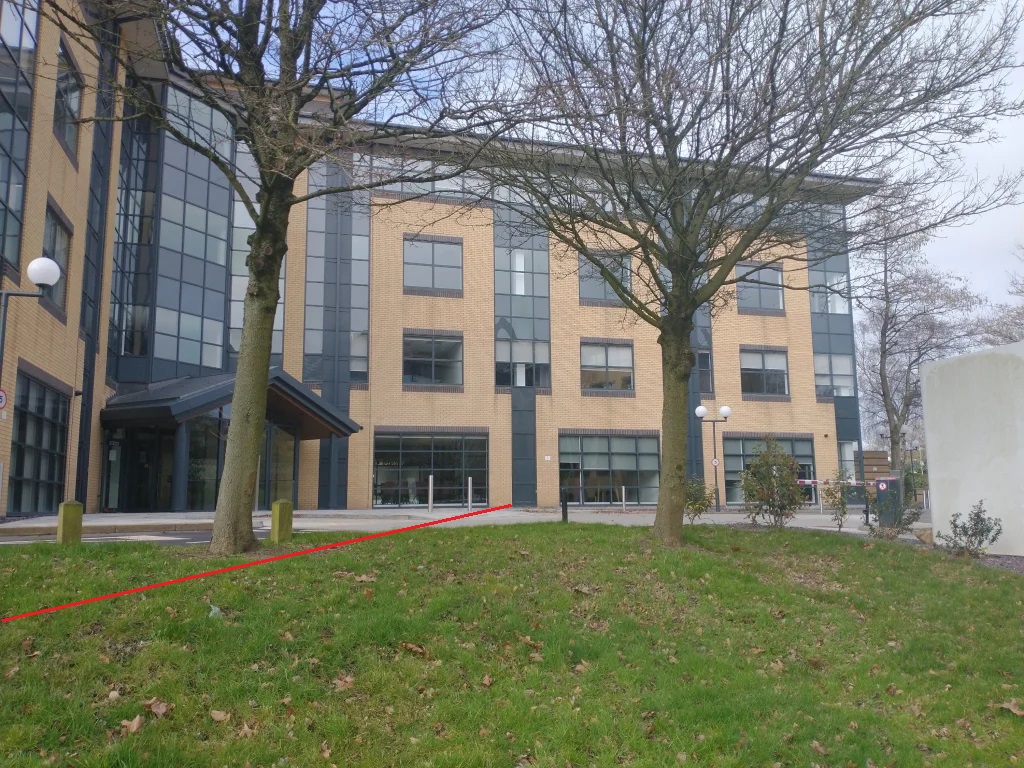
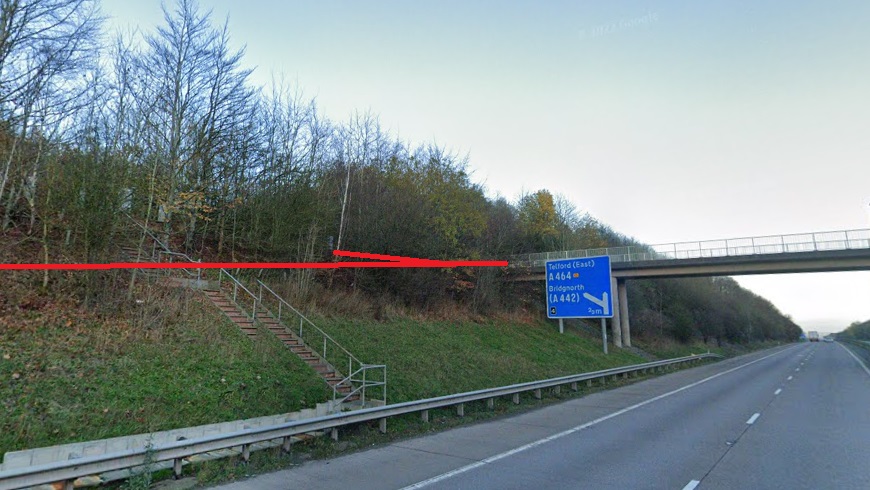
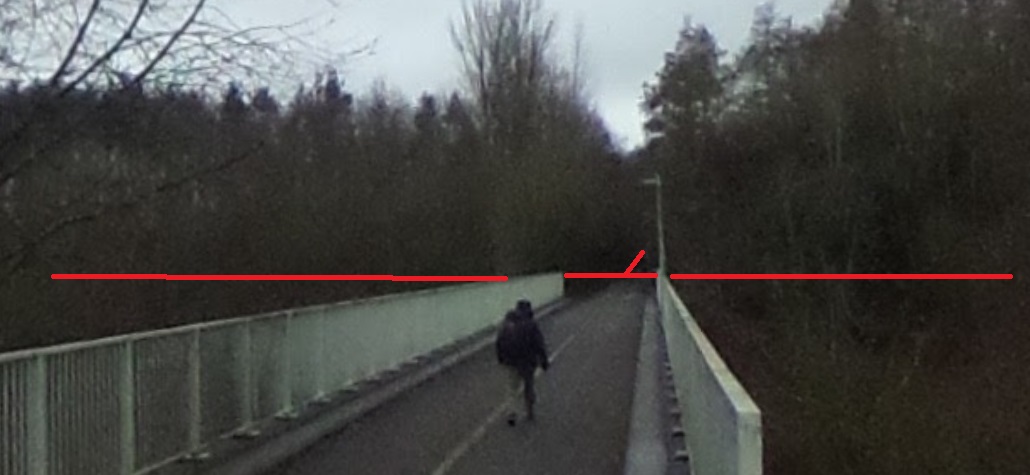
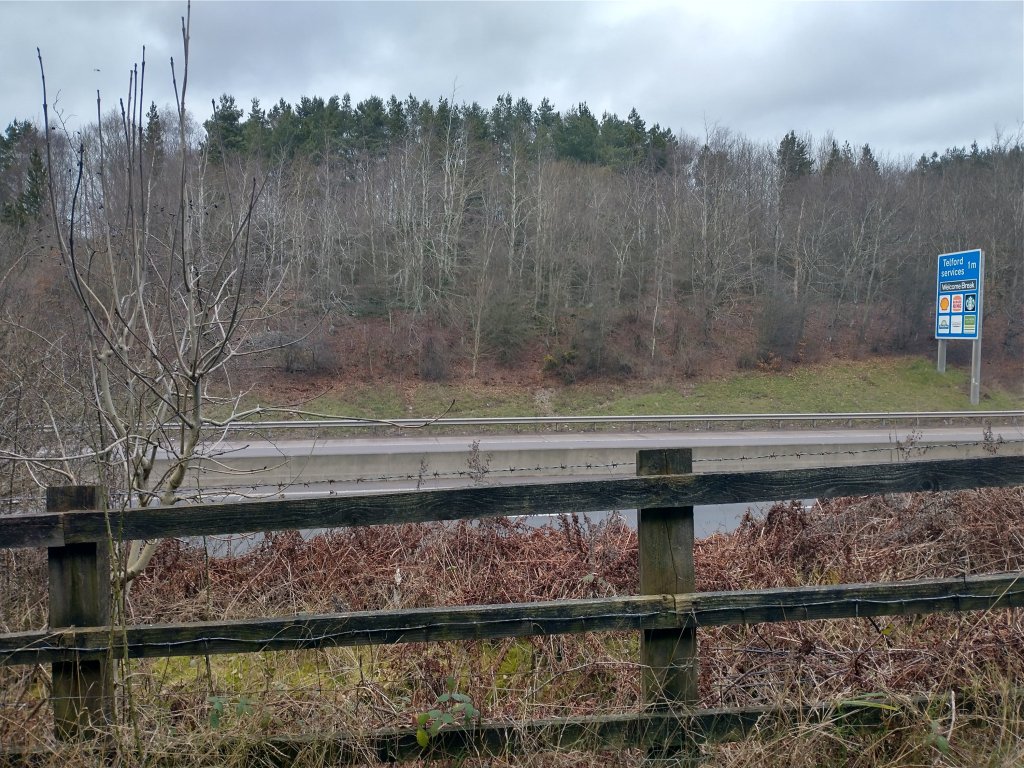
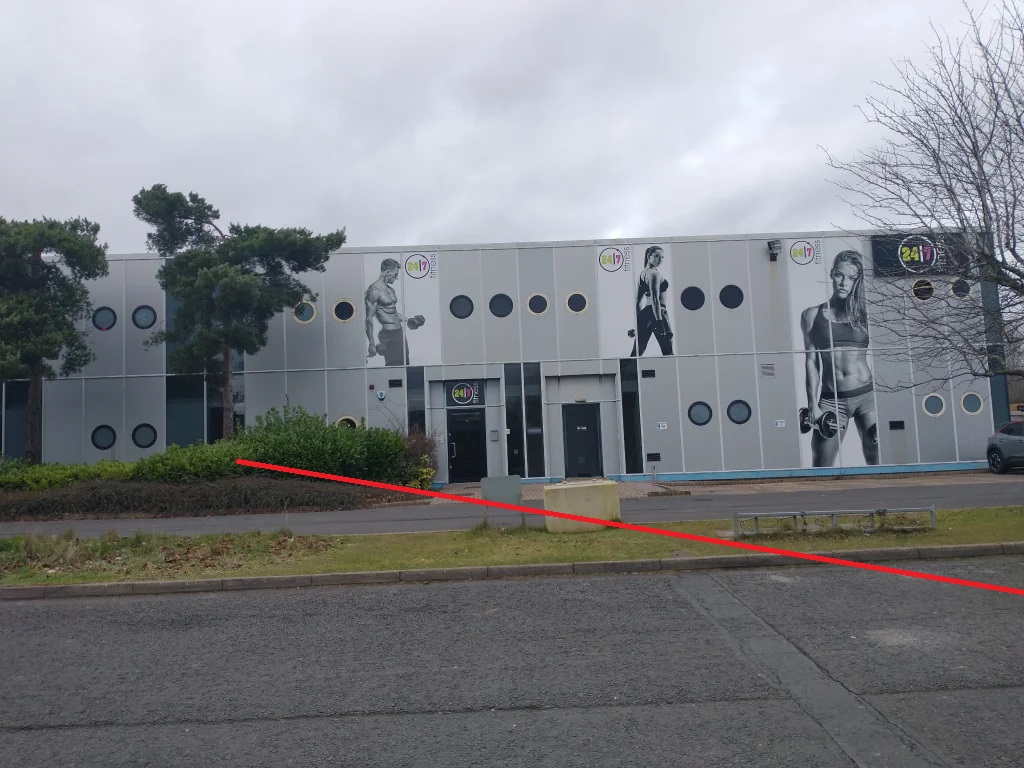
This next extract from the 6″ Ordnance Survey of 1901 shows, as a solid red line, the approximate route of the old tramroad/Mineral Railway. Both Savage and Smith’s plotted line and the old Mineral Railway resume the same course. [29]The same area on ESRI satellite imagery (NLS) as shown in the 6″ OS map extract above. The line drawn is inevitably approximate and represents a line transferred from the 6″ OS map extract, which itself is transferred from Savage and Smith’s 6″ to 1 mile drawing of the line. Savage and Smith scaled from 0.5″ to 1 mile original plans up to 6″ to 1 mile. [29]Looking North on Downemead along the approximate line of the old tramroad [ Google Streetview, June 2022]Further North on Downmead, the old tramroad alignment is shown running North through what is now a children’s play area to the East of Downemead. The junction of Downemead with Dale Acre Way can just be picked out ahead. [Google Streetview, June 2022]Looking West along Dale Acre Way across the line of the old tramroad and later Mineral Railway. [Google Streetview, June 2022]Looking North from Dale Acre Way along a green passageway which very approximately follows the line of the old Tramroad/Mineral Railway. The probable alignment is under the housing visible through the trees right of centre of the image. [My photograph, 25th February 2023]Looking North from the end of Duffryn towards the A442 which is just beyond the trees ahead. [Google Streetview, June 2022]Looking Northwest along the slip road from the A442. The old tramroad crossed the line of the slip road at around the position of the white-painted directions on the tarmac. It is impossible to be sure to the relative levels of road an old tramroad. {Google Streetview, June 2022]Looking Northwest along the other slip road to the A442 towards the roundabout which sits above the main road. The redline shows the approximate route of the old tramroad, but please note again, that it is impossible to be sure to the relative levels of the modern road and the old tramroad/Mineral Railway. [Google Streetview, June 2022]Looking North across the railway lie which passes under the roundabout. The line is still in use as the main line between Wolverhampton and Shrewsbury. Telford Railway Station is ahead to the left of the image beyond the trees. [Google Streetview, June 2022].Beyond the vegetation ahead the line of the old tramroad crosses the access road to the Railway Station. [Google Streetview, June 2022]Euston Way looking North-northwest. The line of the old tramroad runs to the left of the building at the centre of the image. [Google Streetview, June 2022]Looking Northwest at the junction of Euston Way and the access road to Titan House. The old tramroad/Mineral Railway route runs directly ahead between the Premier Inn on the left and the office block on the right. [Google Streetview, June 2022]The view North from the rear carpark of the Premier Inn. The old tramroad ran along what is now an embankment parallel to the kerb edge of the carpark. [Google Streetview, June 2022]The M54 looking West, the old Tramroad/Mineral Railway route crosses the motorway on an angle in the vicinity of the 100 metre marker for the junction slip road. [Google Streetview, November 2022]
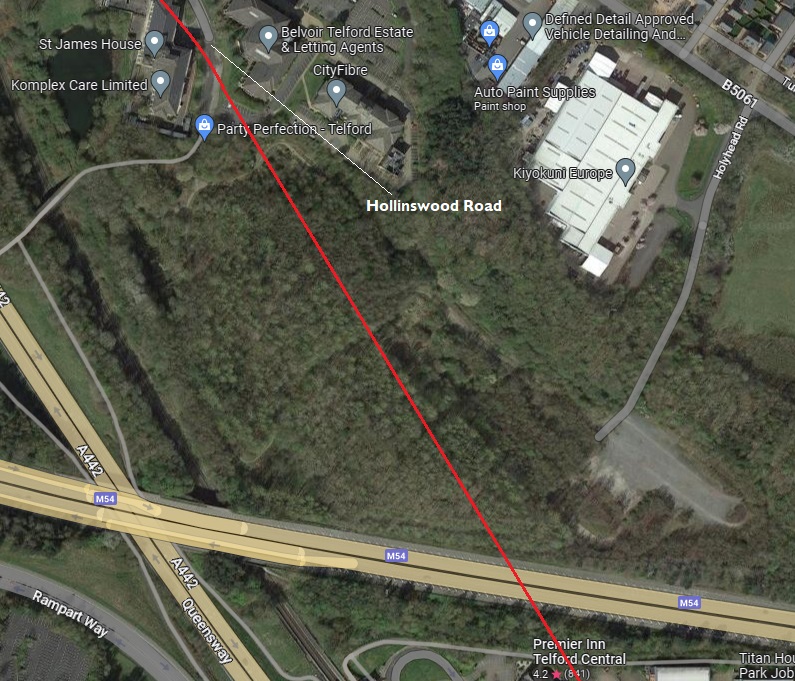
From the North side of the M54 as far as Hollinswood Road, the modern ladscape is heavily wooded and it would be impossible to pick out important features on the ground as the satellite image below shows.
North of the M54 there are no features on the modern landscape until the old line crosses the modern Hollinswood Road. [Google Maps, February 2023]On this next extract from the 6″ Ordnance Survey of 1901, once again, the red line shows the approximate route of the old tramroad. Snedshill Brickworks and Priorslee Furnaces were close to the route of the old line. [30]A very similar area to that shown on the 6″ OS mapping above. [30]Looking back from the end of the tarmac on Hollinswood Road along the line of the old tramroad to the South East into the woods mentioned above. {My photograph, 25th February 2023]St. James House on Hollinswood Road with the route of the old tramroad travelling Northwest shown by the redline. [My photograph, 25th February 2023]Looking back to the South-southeast towards St. James’ House. [My photograph, 25th February 2023]Looking North-northwest along the line of the old tramroad. [My photograph, 25th February 2023]
Beyond the buildings shown above the old tramroad route crosses the A442 slip road which is just beyond the industrial estate as shown below. …
The A442 sliproad as shown on Google Streetview with the approximate route of the old line marked by the red line. [Google Streetview, June 2022]Looking North-northwest across the A442. The line of the old tramroad was close to straight through this length, linking the approximate points it passed through leaves a curve which is the result of image distortion in the camera! [Google Streetview, June 2022]The old line curved away North into what is now woodland running alongside the A442. [Google Streetview, June 2022]
It is at this point that we leave the old line. We are close to Oakengates and there was at one time a very large number of different tramroads ahead, part of the Lilleshall Company’s internal network. We will pick up this tramroad when we look at that network.
References
Bob Yate; The Railways and Locomotives of the Lilleshall Company; Irwell Press, Clophill, Bedfordshire, 2008.
R.F. Savage & L.D.W. Smith; The Waggon-ways and Plateways of East Shropshire; Birmingham School of Architecture, 1965. Original document is held by the Archive Office of the Ironbridge Gorge Museum Trust.
A P Baggs, D C Cox, Jessie McFall, P A Stamper and A J L Winchester; Stirchley: Manor and other estates; in ed. G C Baugh and C R Elrington; A History of the County of Shropshire: Volume 11, Telford; London, 1985, p185-189; via British History Online, http://www.british-history.ac.uk/vch/salop/vol11/pp185-189, accessed 20th February 2023.
Christopher Greenwood; Map of the County of Salop, 1827; Facsimile Copy, Shropshire Archaeological and Historical Society, 2008.
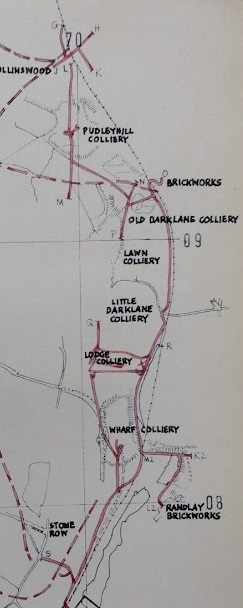
The area covered by this article is the area on the East side of Savage & Smith’s tracing [1: p164] and is as shown in the adjacent extract.
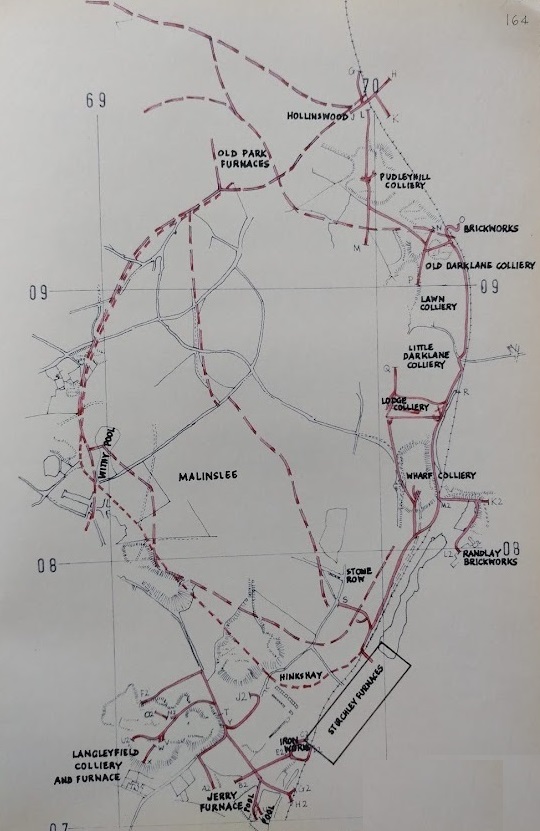
They included the line of the Coalport Branch on their plan (the continuous thin black line with circular dots). The Stirchley Branch was a little to the East of the Coalport Branch. It ran down past the Randlay Brickworks towards Old Park Ironworks which were South of the bottom end of Randlay Pool. Savage & Smith grouped the two ironworks in the vicinity under one title of ‘Stirchley Furnaces’.
It should be noted that the Shropshire Canal pre-dated the Coalport Branch but was on very much the same line as the railway. Small deviations in the alignment remain visible in the 21st century, particularly the length close to Hinkshay Pools and that close to Wharf and Lodge Collieries.
Tramroads on the remainder of the tracing [1:p164] are covered in previous articles, particularly those noted below.
This is the full page referred to. [1: p164]
Earlier articles about the tramways covered on this map can be found at:
The tramways alongside first the old Shropshire Canal and the later LNWR Coalport Branch were not all operational at the same time. However, Savage and Smith were highly confident of the routes of most of these tramways. Only a few lengths are shown as dotted on these plans. The solid red lines are those which they could locate relatively precisely.
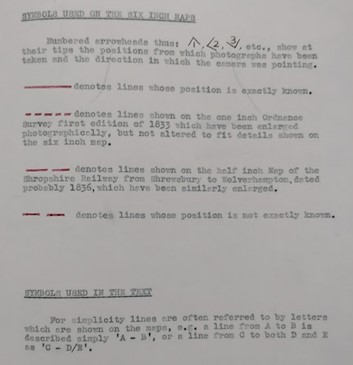
As can be seen on these drawings, the lines associated with the Shropshire Canal Coalport Branch and the later LNWR Coalport Branch railway are shown as solid red. The lines shown with the longer red dashes are translated from the 1836 Shropshire Railway Map. The scale of that map is relatively small – just ½” to a mile. The shorter red dashes denote lines as drawn on the 1833 1” Ordnance Survey. Enlarging from both of these maps leaves room for discrepancies to be introduced.
Savage and Smith highlight many of these lines on a 1″ to the mile map representing tramway additions between 1851 – 1860. During that decade their 1″ plan shows the Shropshire Canal as active to the North of Stirchley but without a northern outlet to the wider canal network. At the southern end of the active canal, the Lightmoor branch to the South of Dawley Magna suggests that much of the movement of goods on the canal was related to the Lightmoor Ironworks and the Lightmoor Brick and Tile Works. Unless there was only local movements during this period, perhaps associated with the Priorslee Furnaces and any other works in that immediate area.
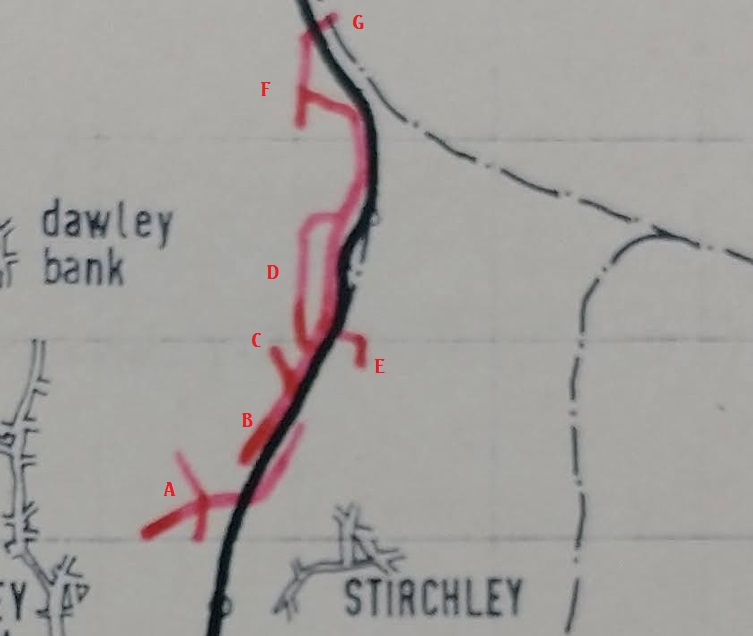
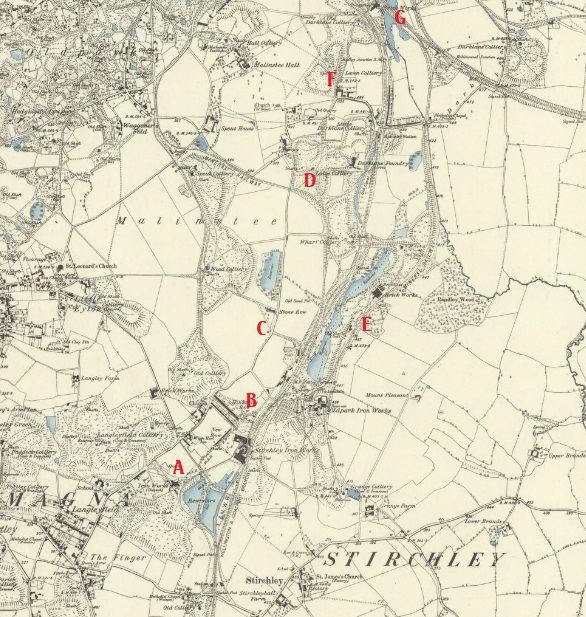
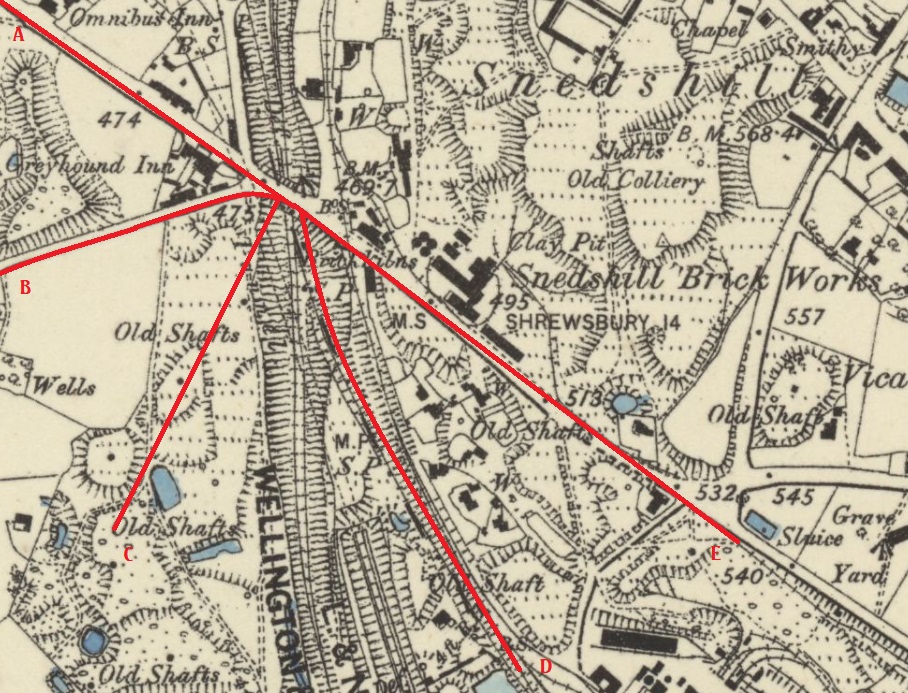
Tramway/Tramroad changes in the 1850s. [1: p95]An enlarged extract from Savage & Smith’s 1″ to a mile plan of the Malinslee area (1851-1860), showing some of the tramroad routes alongside the Shropshire Canal. [1: p95]The Ordnance Survey of 1881/1882 published in 1888. The lettered locations match those on the Savage & Smith extract above. Further details are provided below. [2]
Savage & Smith provide notes about the Tramways/Tramroads close to the line of the LNWR Coalport Branch (and the Shropshire Canal Coalport Branch). They comment: “By 1856, there is a considerable amount of industry along the canal from Hinkshay to Shedshill. The upper reservoir at Hinkshay had appeared before 1833, but the site of the lower reservoir was in 1856 just a small canal basin with a line running to it probably from Langleyfield Colliery. A line from Jerry Furnaces to the ironworks at the rear of New Row crosses it at right angles and a common type and gauge of rail cannot be assumed. This second railway from Jerry Furnaces reverses and continues in to Stirchley Furnaces. … To the north of Stirchley Furnaces the line runs on the west side of the canal on the towpath. There is a branch near Stone Row, perhaps to pits; to Randley Brickworks and perhaps to pits to the north of the brick- works; to Wharf Colliery and Lodge Colliery; past Dark Lane Foundry; to old Darklane Colliery and Lawn Colliery with a branch to old Darklane Brickworks. After a reverse the line carries on to Dudleyhill Colliery and Hollinswood Ironworks ” [6: p166]
The tramroads marked are:
A: Tramroads in the immediate area of Stirchley Ironworks.
B: A line to the North of Stirchley Ironworks on the West side of the Canal, on or alongside the towpath.
C: a branch near Stone Row which probably extended further than shown by Savage & Smith to Wood Colliery to the Northwest of Stone Row.
D: a looped branch probably serving Wharf Colliery, Darklane Foundry, Lodge Colliery, Little Darklane Colliery and Lawn Colliery.
E: a short branch to pit heads to the Southwest of Randlay Brickworks, perhaps also serving the Brickworks.
F: Tramways around Old Darklane Colliery.
G: a short branch serving the Brickworks at Hollinswood.
Another enlarged extract from Savage & Smith’s 1″ to a mile plan of the Malinslee area (1851-1860), showing their remaining tramroad routes close to the Shropshire Canal. The red letters match those on the 6″ Ordnance Survey plan immediately below [1: p95]An extract from the 1881/1882 Ordnance Survey published in 1888. The redlines drawn on the extract match those drawn by Savage & Smith on their plan above. In the period from 1855 through to 1880 the profile of theland in this vicinity was markedly altered by the construction of the railways shown on the map. Lines to A, B, C and D have all gone by 1881. The line to E connects with the line running East-southeast from Priorslee Furnaces and shown on plans below. [2]
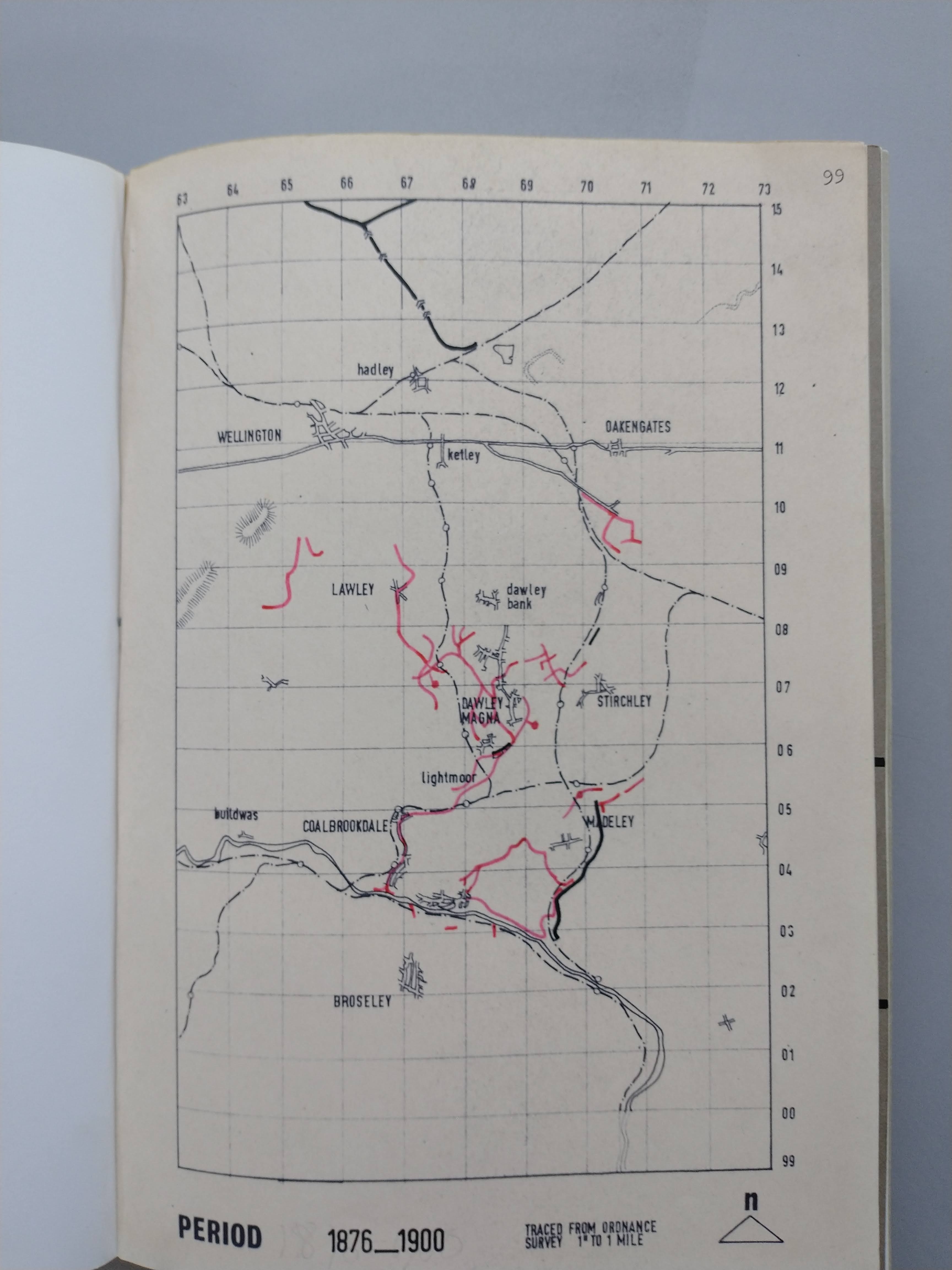
By the 1860s, Savage & Smith show that the Shropshire Canal was no longer in use. Between the 1870s and the turn of the 20th century, some further minor additions to the network in the immediate are of Stirchley and just to the South of Oakengates associated with the Priorslee furnaces can be seen on their 1″ to the mile
Tramway/Tramroad changes between 1876 and 1900. [1: p99]
The later changes to the tramroad/tramway network relate partly to the coming, in 1861, of the Standard-Gauge LNWR railway branch to Coalport. Stirchley and Jerry Furnaces – on the 1876-1900 map, have tramroad links to the railway.
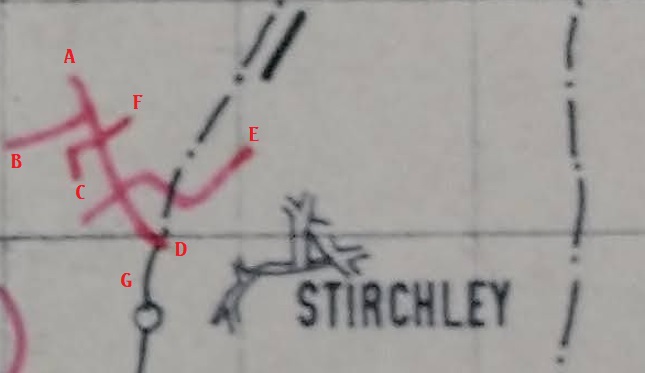
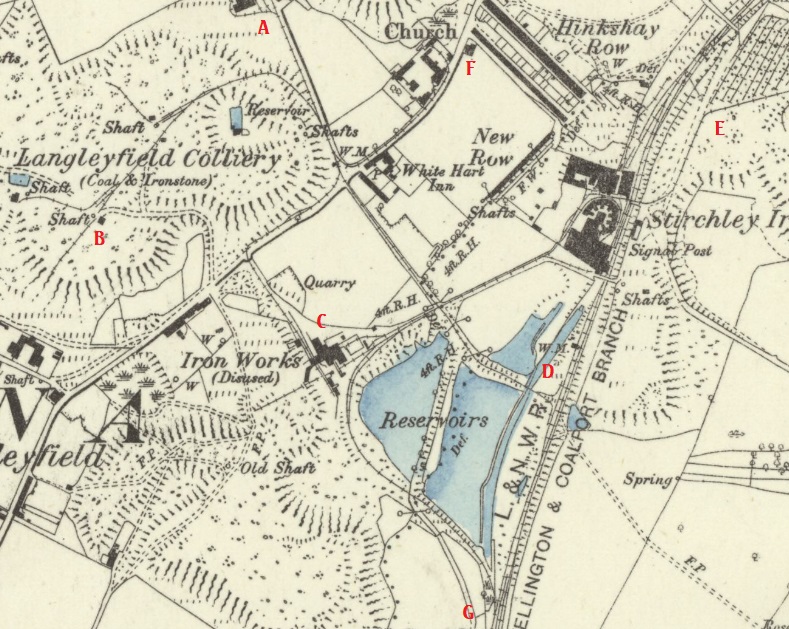
The tramroad/tramway network changes to permit access to the LNWR line close to Stirchley. The locations marked with red letters match those on the OS map extract below. [1: p99]The Ordnance Survey of 1881/1882 published in 1888. The lettered locations match those on the Savage & Smith extract above. [2]
A: Langley Fields Brickworks, at on e time this line extended Northwest towards St. Leonard’s, Malinslee to serve Little Eyton Colliery.
B: Langleyfield Colliery.
C: Jerry Ironworks – serve by two different lengths of tramroad, one at high level and one at low level.
D: A connection which crossed the old Shropshire Canal to a wharf running alongside the LNWR Branch.
E: a line connecting Stirchley and Oldpark Ironworks to the network and so providing access to the wharf at D.
F: access to an ironworks to the Northwest of Hinkshay Row.
G: A line which curved round the West side of Hinkshay Pools to provide access to another length of wharf alongside the LNWR branch close to Dawley & Stirchley Railway Station. This is not shown on the plan drawn by Savage & Smith.
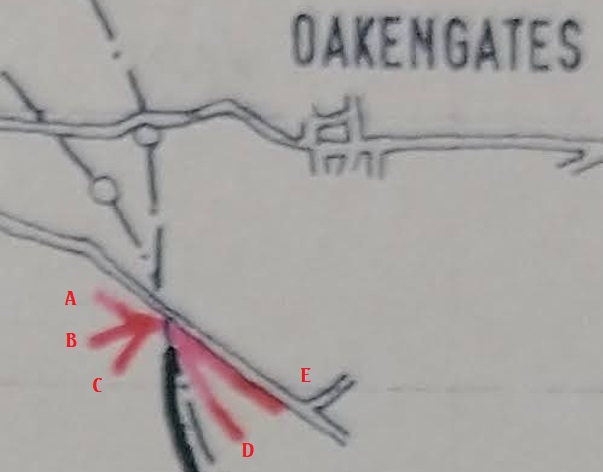
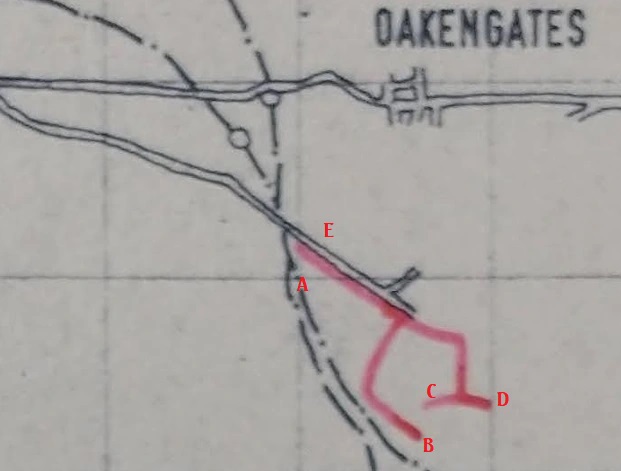
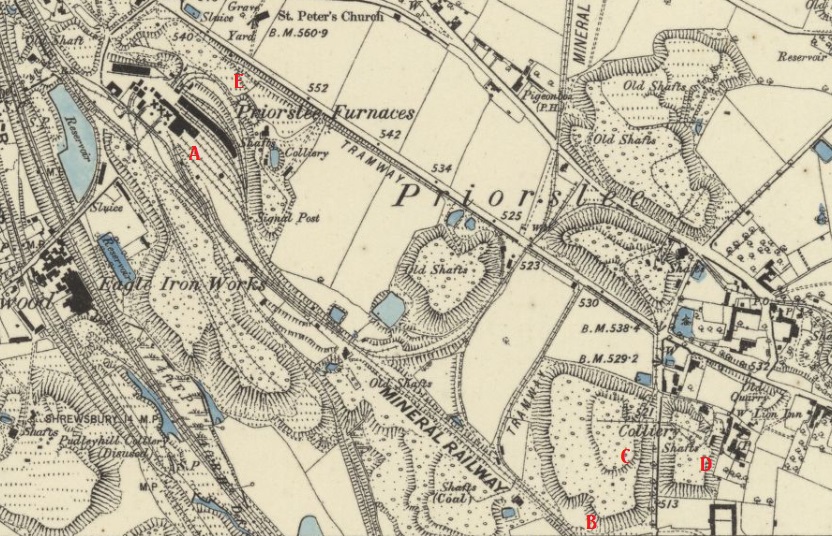
The other changes between 1876 and 1900 relate to Priorslee, where tramroads are shown to the Southeast of Priorslee Furnaces. The 6” Ordnance Survey of 1903 shows the bottom arm at this location linking Darklane Colliery to the Furnaces. The upper arm is shown on the 6” Ordnance Survey of 1885 as serving a colliery adjacent to the Lion Inn. The tramroad link to the colliery is not shown on the later survey.
The tramroad/tramway network changes associated with Priorslee Furnaces. The locations marked with red letters match those on the Ordnance Survey extract below. [1: p99]The 1880/1882 Ordnance Survey published in 1885 showing the Oakengates/Priorslee area. The locations marked by red letters match those highlighted on the Savage & Smith extract above. [3]
A: Priorslee Furnaces.
B: Darklane Colliery.
C & D: tramroads serving a colliery adjacent to the Lion Inn..
E: the tramroad access from Priorslee Furnaces.
Telford in the 21st century
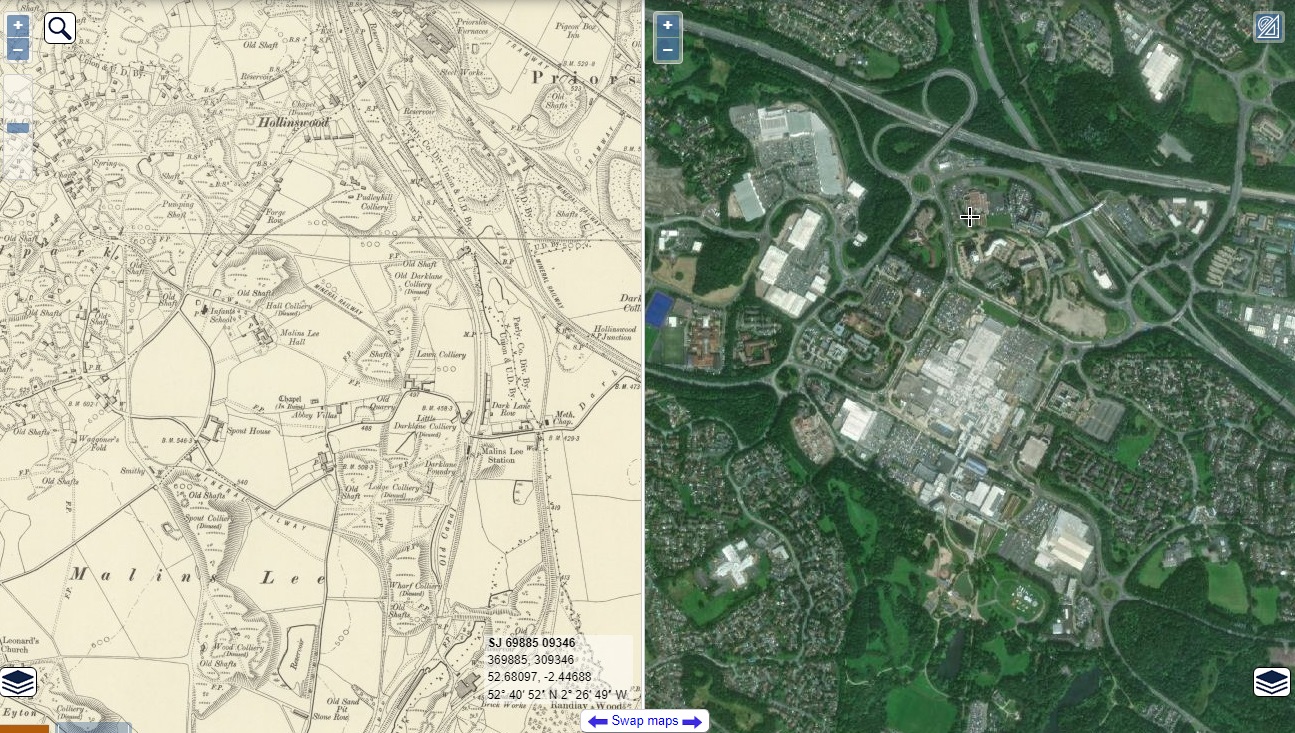
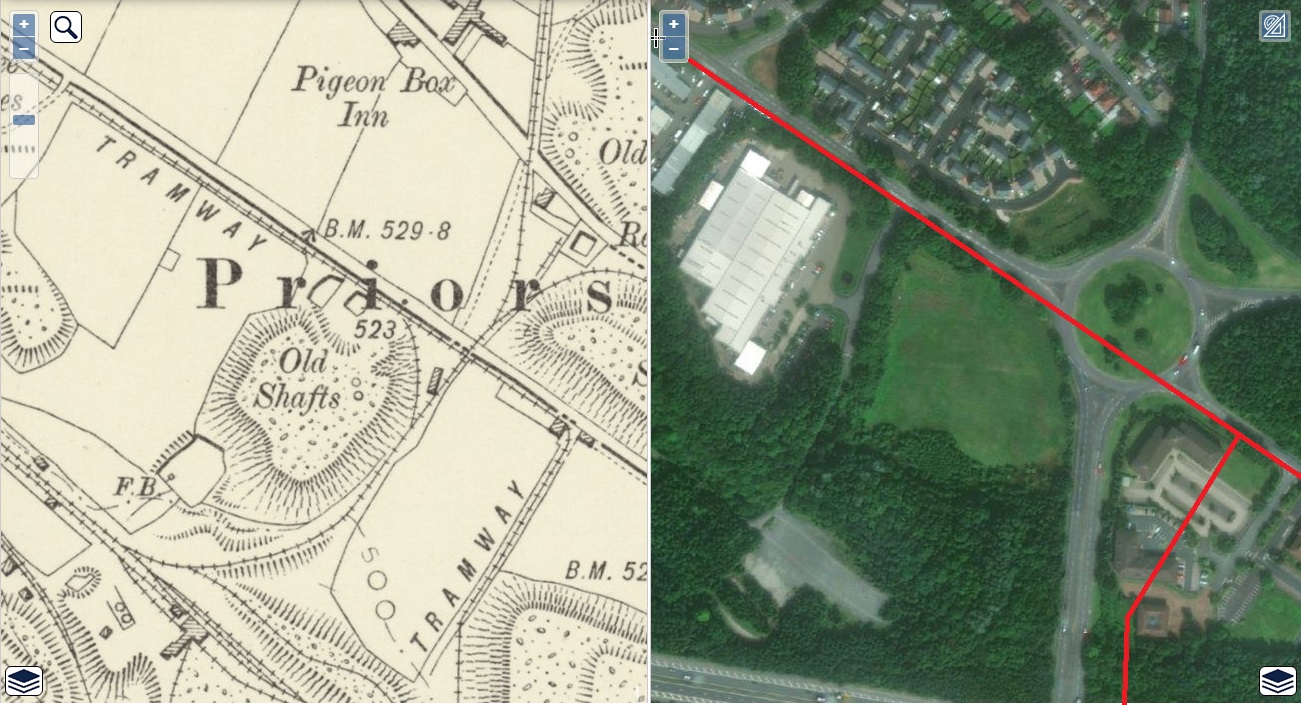
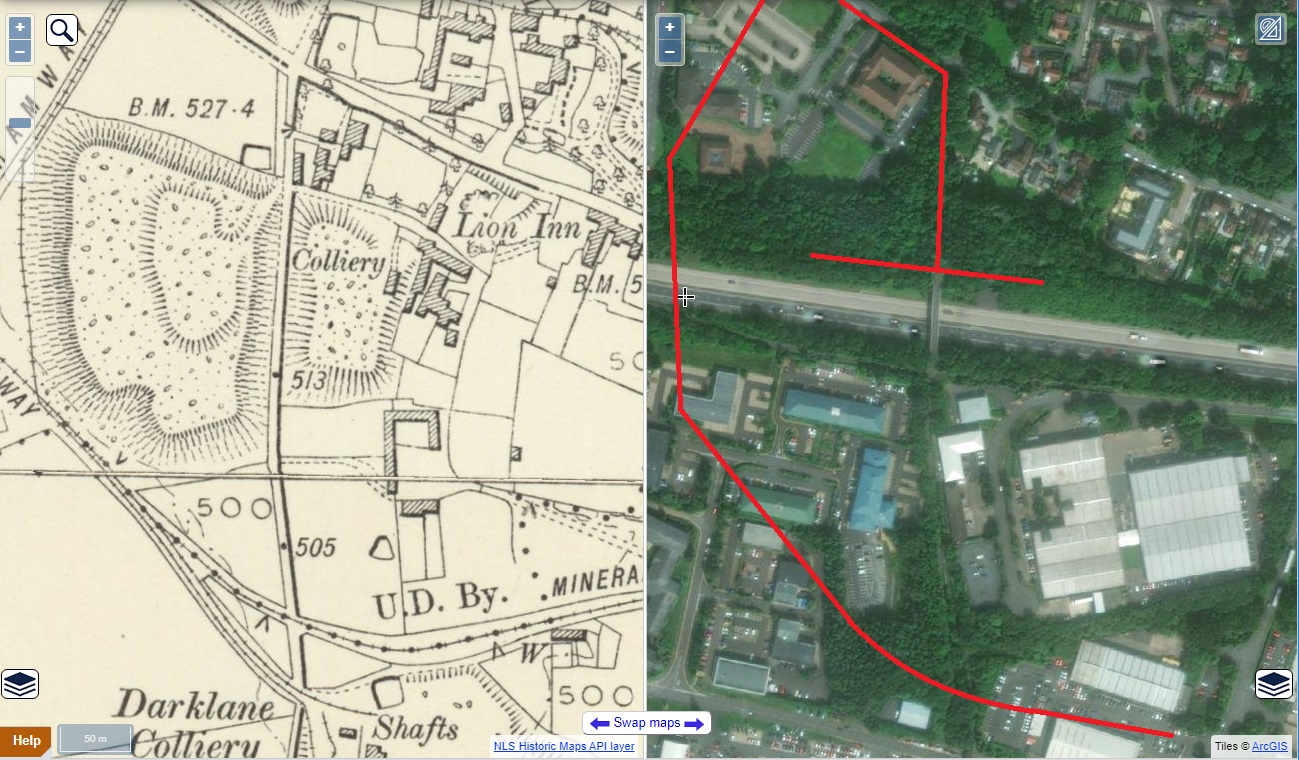
The area covered by these maps has been dramatically altered by the construction of Telford Town Centre. The centre of Telford sits directly over the area covered by this article. This is demonstrated by the side-by-side image provided below. 21st century satellite imagery is set alongside the 1901 Ordnance Survey.
The National Library of Scotland provides a version of its mapping software that allows two different images to be placed side by side and geographically related to each other. The image on the right covers the same area as that on the left. [4]
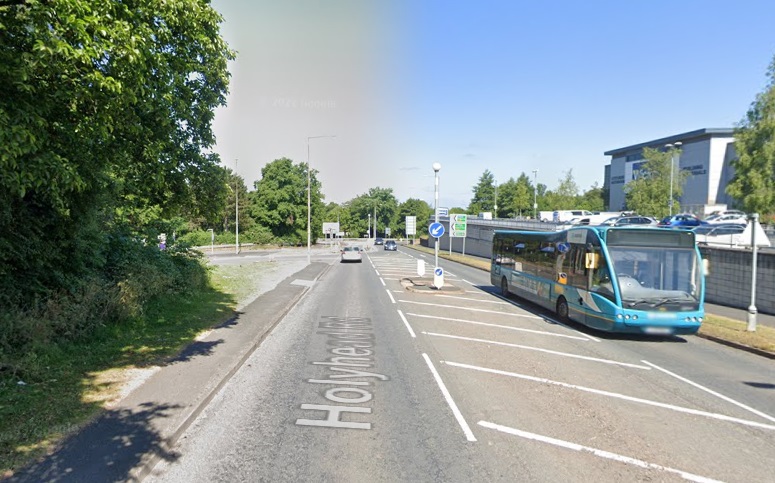
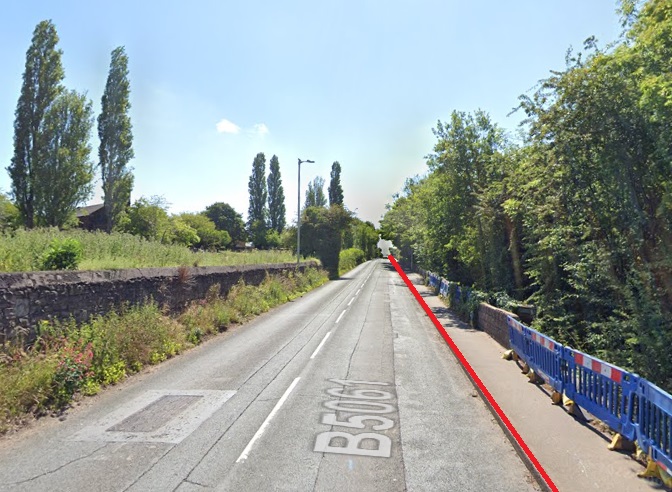
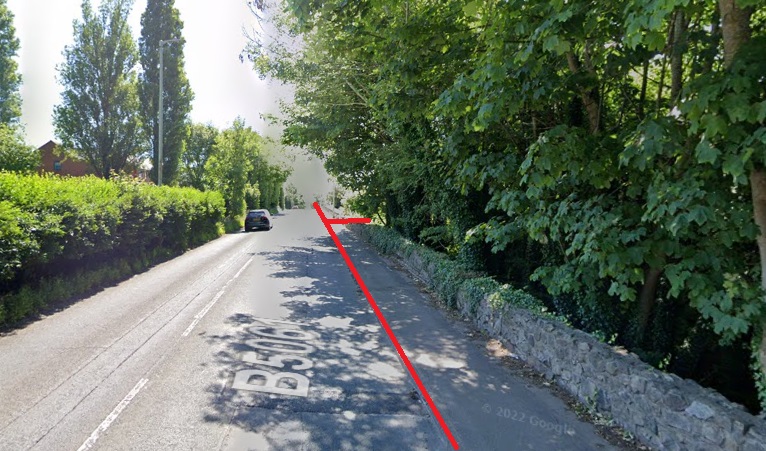
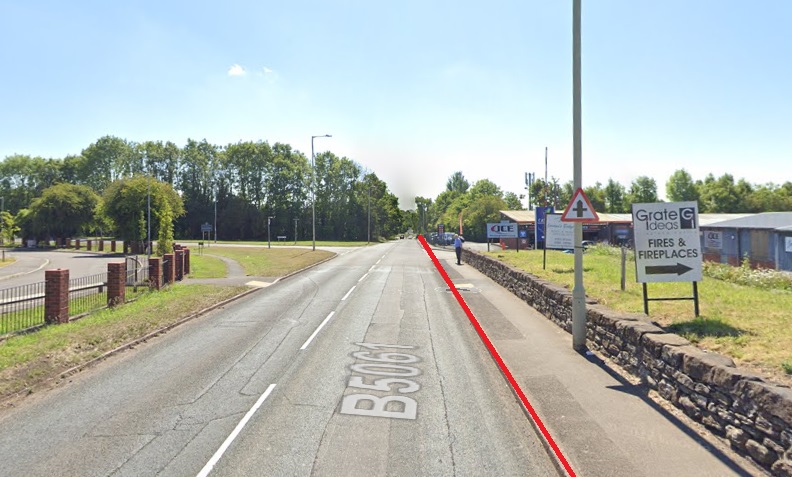
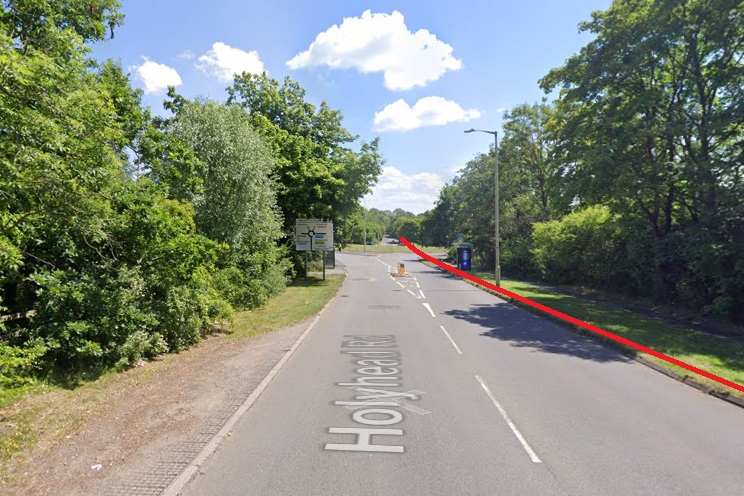
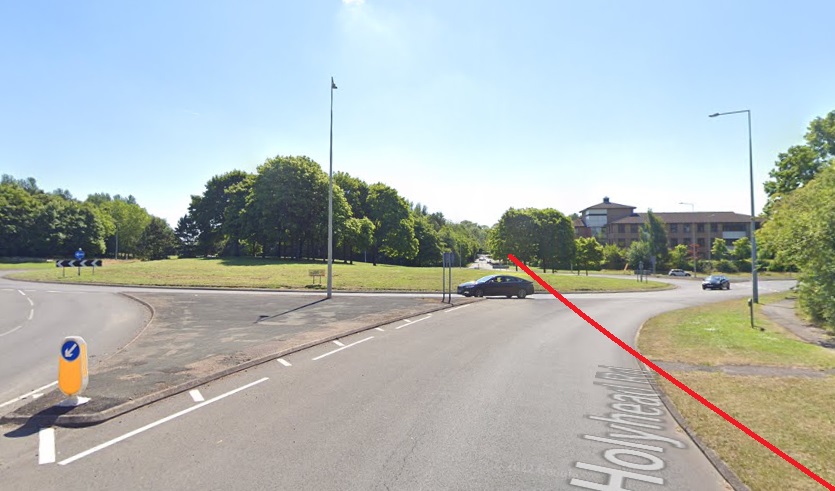
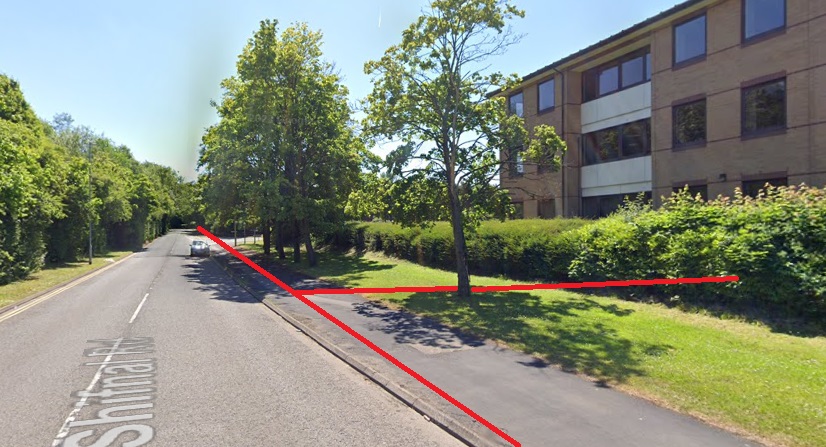
The area around Priorslee Furnaces in 1901 and in the 21st century. By 1901 the Furnaces made use of the Mineral railway to their Southside rather than access to the tramroad along Holyhead Road. On the 1901 mapping the tramroad link into the works ahs been cut. This suggests that the line along Holyhead Road was probably no longer active by 1901. [5]Facing Northwest along Holyhead Road in June 2022. The access road from the A442 Queensway is ahead on the left. The old tramroad would have run roughly where the footpath is on the left. [Google Streetview]Turning through 180 degrees and now looking Southeast, the tramroad was on the south side of the road. [Google Streetview, June 2022]A little further to the Southeast and the tramroad was still alongside Holyhead Road (B5061). [Google Streetview, June 2022]we are now running alongside the site of what were Priorslee Furnaces. There was a tramroad access from the site to the tramroad running alongside Holyhead Road. [Google Streetview, June 2022]Further Southeast the tramroad continued to follow the verge of Holyhead Road. [Google Streetview, June 2022]East of Priorslee Furnaces the tramroad ran on the South side of Holyhead Road. A branch headed South towards Darklane Colliery. The ‘mainline’ only contiued a short distance further East. [6]Further Southeast and now approaching the modern roundabout shown on the side-by-side image from the NLS above. [Google Streetview, June 2022]Looking Southeast across the roundabout towards Shiffnal Road. The tramroad alignment remains on the south side of the road. [Google Streetview, June 2022]On the other side of the roundabout and now on Shiffnal Road. The tramroad ‘mainline continues Southeast toward Stafford Colliery, the branch heads towards Darklane Colliery and, as it is under modern buildings cannot be followed on the North side of theM54. Photos of the area it travelled on the South side of the M% can be found further below [Google Streetview, June 2022]Both the Darklane branch and the ‘Mainline’ terminate in these images. The DarkLane route cannot easily be found on site, apart from the approximate location of what would have been its at-level crossing of what was once a road and is now a footpath. That to the Stafford Colliery near the Red Lion Pub can still be followed! [7]For a short distance further the tramroad remained alongside the old road before turning sharply to the South along what is now a footpath and cycleway. [Google Streetview, June 2022]Looking South from Shiffnal Road along the footpath/cycleway which follows the route of the old tramroad to Stafford Colliery. [Google Streetview, June 2022]Looking South from a point 100 metres or so along the footpath/cycleway which follows the route of the old tramroad to Stafford Colliery. [My photograph, 2nd February 2023]The approximate limit of the tramroad heading South. [My photograph, 2nd February 2023]This view from the Eastbound carriageway of the M54 shows the footbridge which carries the path that followed the line of tramroad. The Stafford Colliery was on the North side of what is now the motorway. Somewhere close to the top of the motorway cutting is the location of two tramroad arms which ran approximately East-West serving the Stafford Colliery site. [Google Streetview, November 2022]Looking North along the line of the footbridge which crosses the M54. Shiffnal Road is ahead beyond the site of the old Stafford Colliery. The redlines are indicative of the tramroads serving the colliery. [Google Streetview, March 2021]
The tramway/tramroad route which led to Darklane Colliery crossed the line of the M54 a short distance to the West of the modern footbridge.
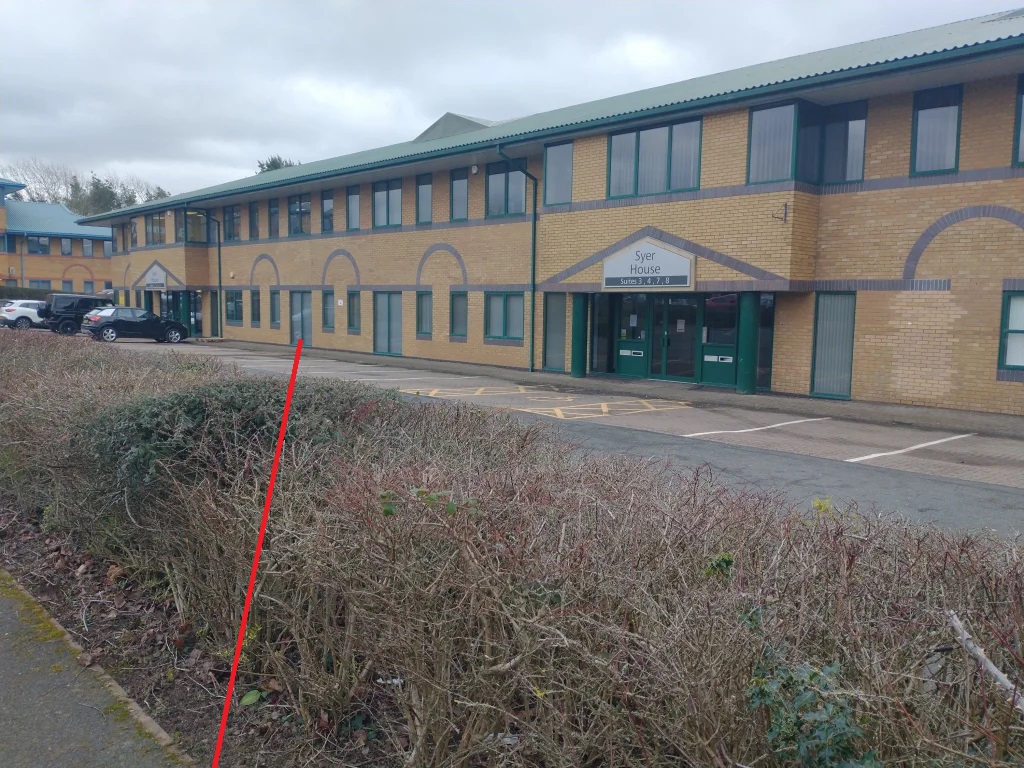
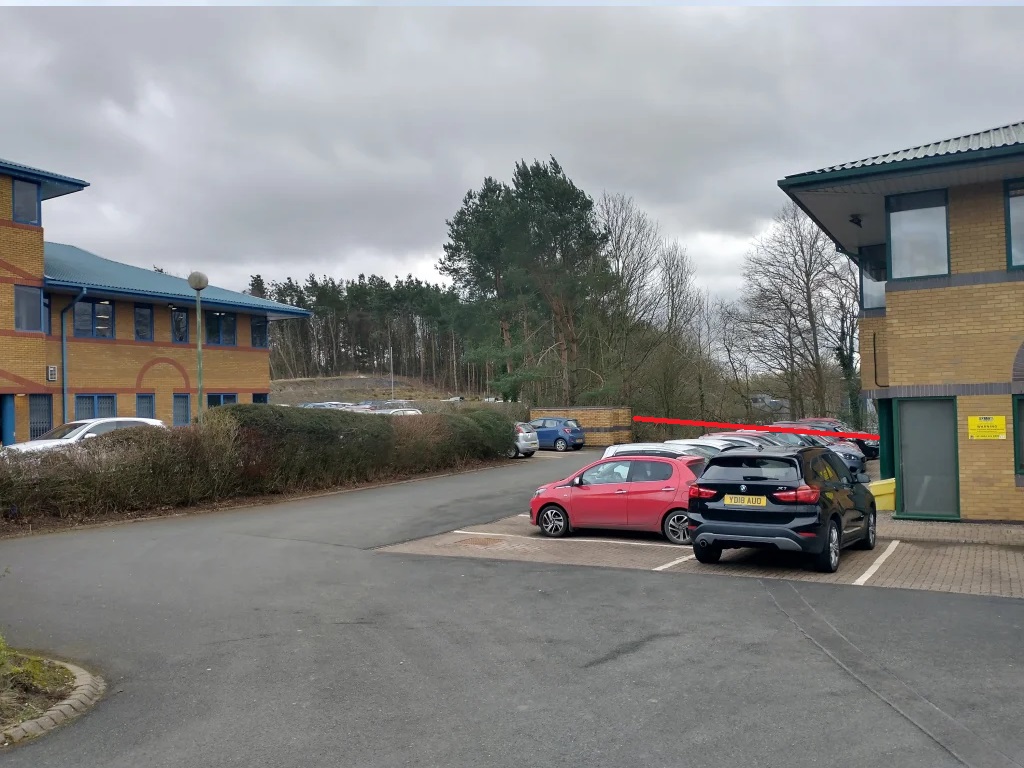
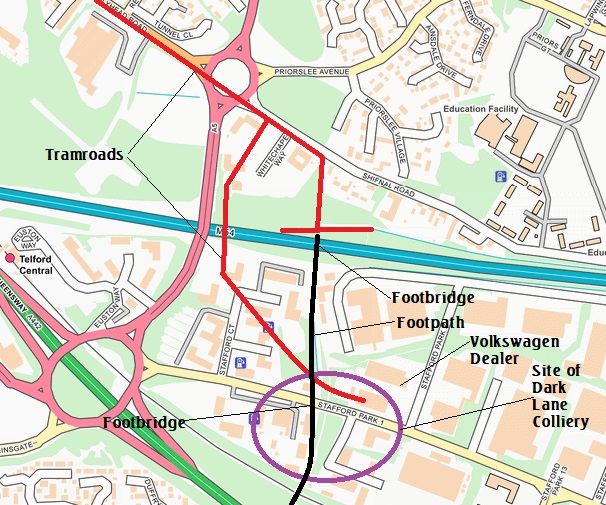
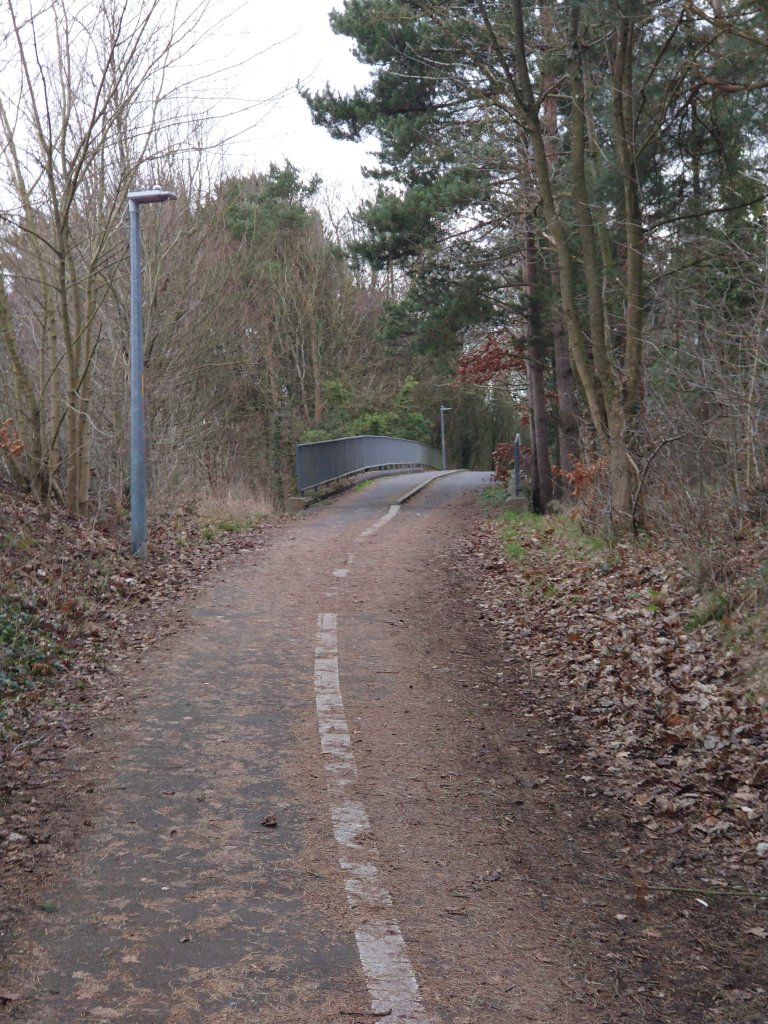
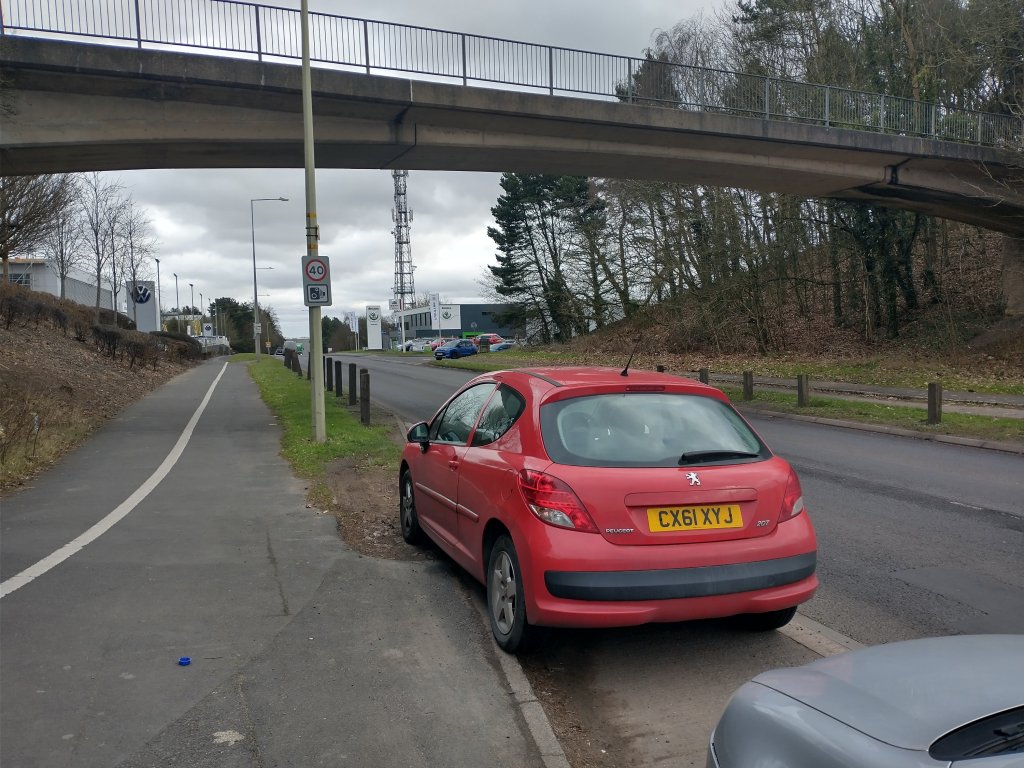
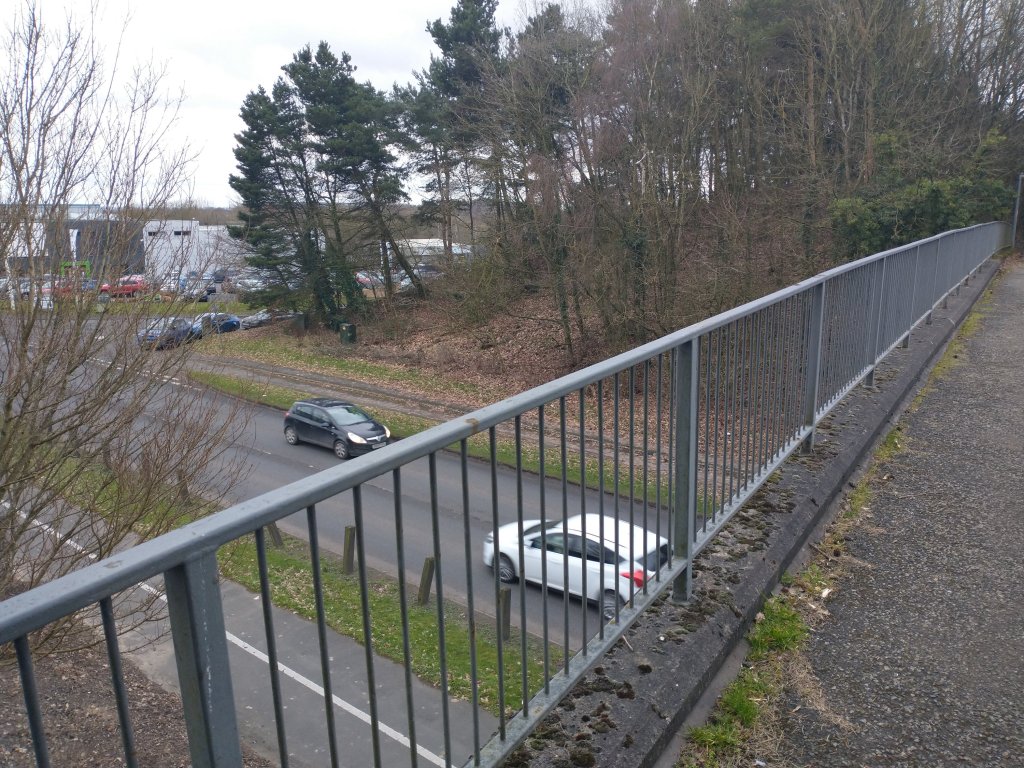
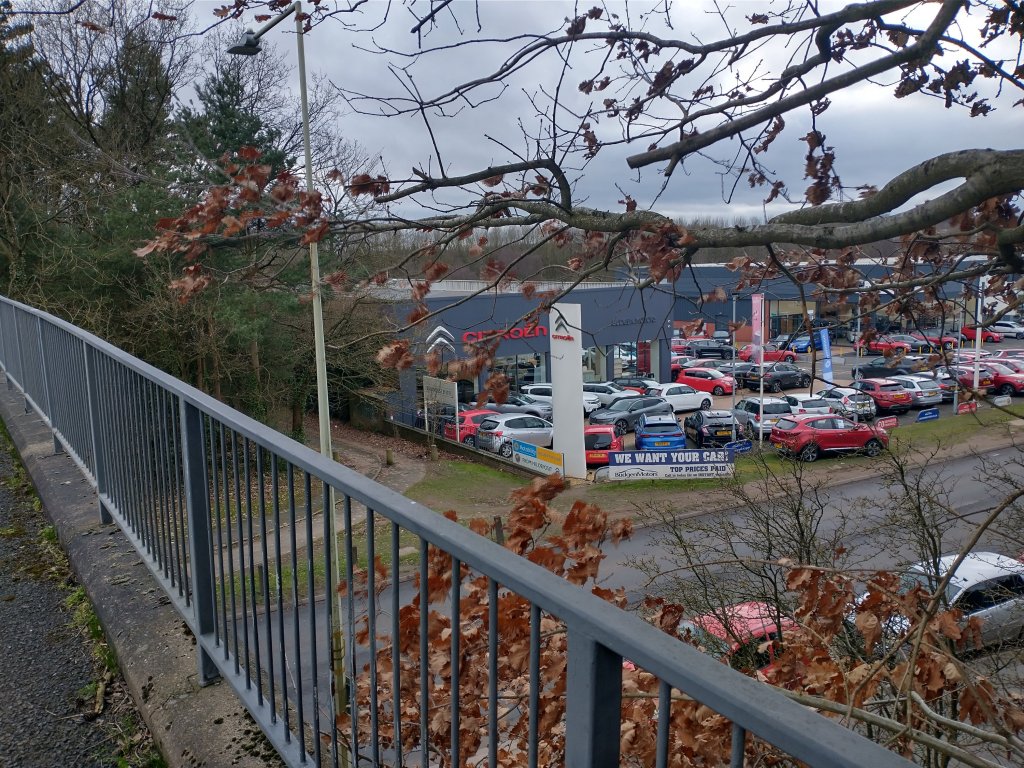
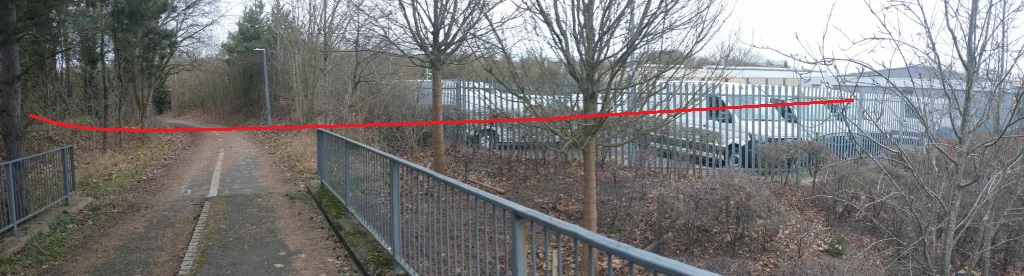
Looking North across the M54, on the approximate line of the old tramroad/tramway. [My photograph, 2nd February 2023]Looking approximately in a northerly direction. The old tramway ran approximately as shown by the red line. [My photograph, 2nd February 2023]Turning through around135 degrees to the East this is the view along the line of the tramway/tramroad. The alignment is roughly as shown by the red line. [My photograph, 2nd February 2023]The tramroad ran on a line which now runs from the rear of Syer House towards the Volkswagen dealership on Stafford Park 1. It would have passed the spoil heaps from Darklane Colliery as it did so. Darklane Colliery straddled the line of Stafford Park 1.Sketch of the old tramroad route on the modern ‘Street Map’ of the immediate area. [8]The footbridge over Stafford Park 1 sits over the site of Darklane Colliery. [My photograph, 2nd February 2023]Looking East along Stafford Park 1 which is spanned by a modern footbridge. The photograph is taken from within the site of Darklane Colliery. [My photo, 2nd February 2023]Two views looking South over the site of Darklane Colliery from the footbridge spanning Stafford Park 1. [My photo, 2nd February 2023]This final photograph looks North along the footpath/cycleway and shows the approximate route of the tramway/tramroad which terminated a short distance to the East of the modern footpath. [My photograph, 2nd February 2023]
References
R.F. Savage & L.D.W. Smith; The Waggon-ways and Plateways of East Shropshire; Birmingham School of Architecture, 1965. Original document is held by the Archive Office of the Ironbridge Gorge Museum Trust.
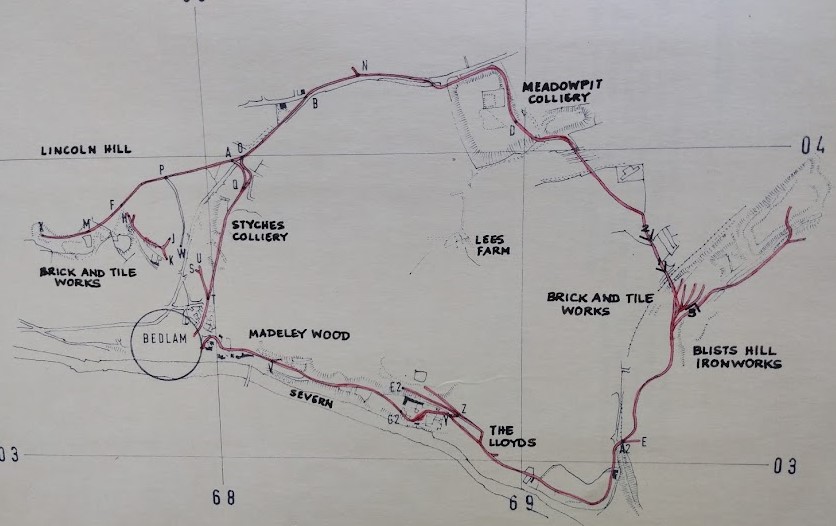
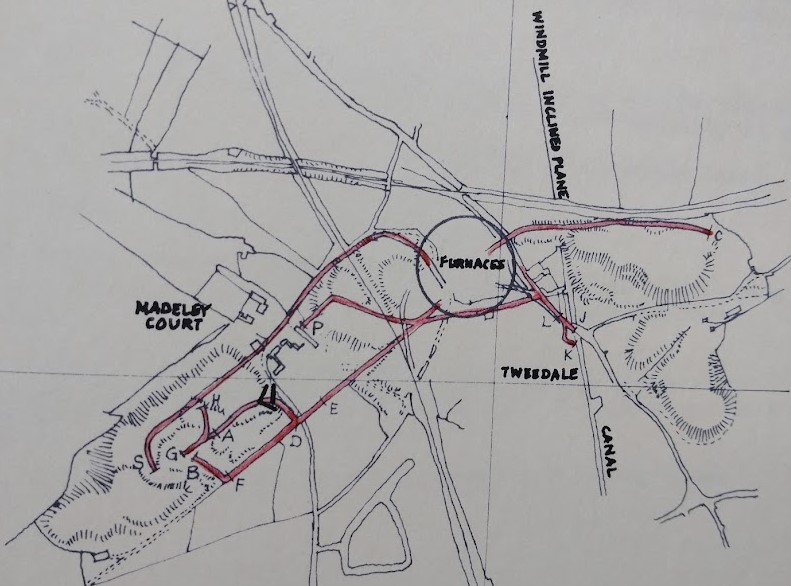
I have recently undertaken a detailed review of a book by R.F. Savage and L.D.W. Smith entitled, The Waggon-ways and Plate-ways of East Shropshire. [1] This was a research paper produced in 1965. The original document is held in the Archive Office of the Ironbridge Gorge Museum Trust. It was a timely document. Large parts of the area surveyed by the authors were changed almost beyond recognition as the Development Corporation got to work on creating what became the new town of Telford, where (in 2023) I now live. Their work included a detailed series of drawing produced by hand, tracing as best they could the lines of tramroads from smaller scaled plans onto 6″ to the mile and 1″ to the mile drawings. There are two examples of their 6″ to the mile plans below.
Savage & Smith’s 6″ to the mile plan of the Madeley Wood and Bedlam Furnace Area on the North side of the River Severn Gorge. [1] Savage & Smith’s 6″ to the mile plan of the Madeley Court Area to the North of the River Severn Gorge. [1]
Savage & Smith were diligent in their research and careful in their documenting of the historic sources and information gleaned on site. The resulting document is wonderful and I have enjoyed engaging with it. This document alone would justify a research visit to the Ironbridge Gorge Museum Trust Archive. My thanks to the Archive for the welcome offered to me and their generous agreement to my using the material from this resource.
As a result of undertaking this and other research at the Archive, I was asked to give a talk at one of the meetings of the Friends of the Ironbridge Gorge Museum Trust. The detailed notes associated with the talk and a PowerPoint presentation can be downloaded using the links below.
The PowerPoint presentation used on 18th October 2023.
I hope that these notes and slides are of interest to some. It is possible that you may read them and find things in the notes that are incorrect. If so, please do let me know. I will be using this material for future talks. I would really appreciate any comments that you might have.
References
R.F. Savage & L.D.W. Smith; The Waggon-ways and Plate-ways of East Shropshire, Birmingham School of Architecture, 1965. An original document is held by the Archive Office of the Ironbridge Gorge Museum Trust.
This is a first look at the Ketley area just a few miles from where we live in Malinslee.
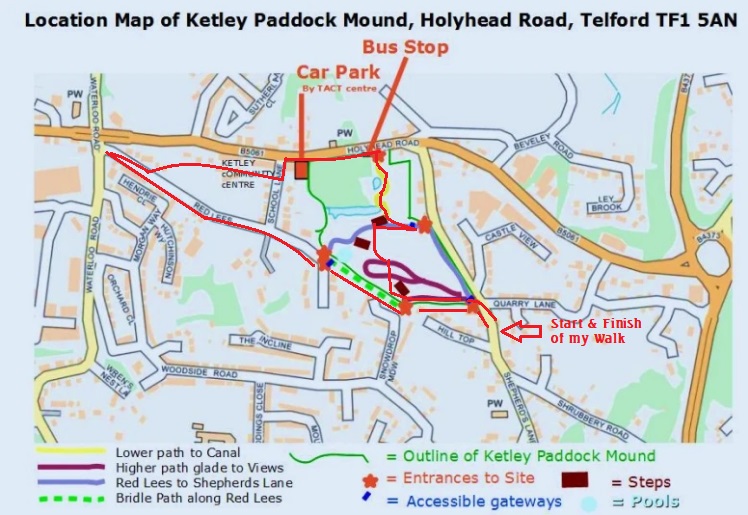
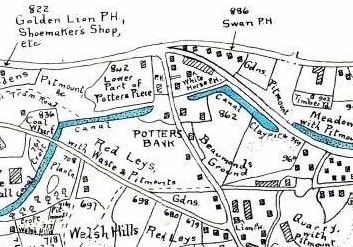
This was a short walk which encompassed a variety of industrial remains. The route taken is shown by the red line on the image below which comes from the Ketley Paddock Mound website. ……
Ketley Paddock Mound. [26]
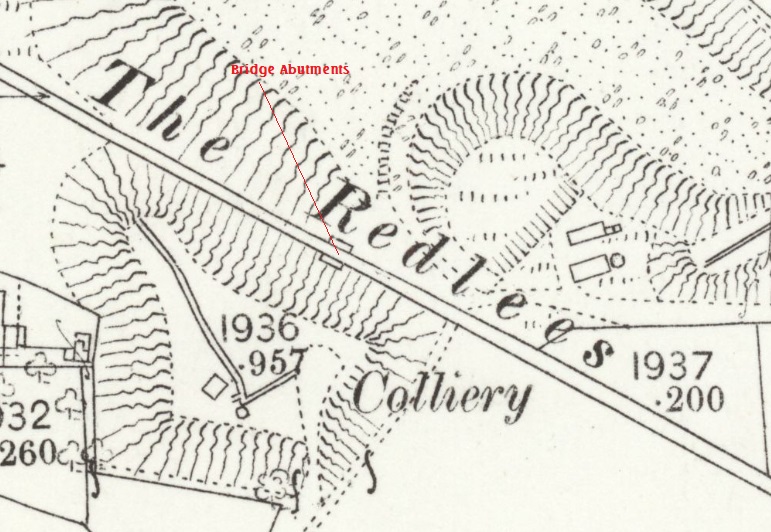
I parked close to the church of St. Mary the Virgin in Red Lake and walked North up Shepherd’s Lane, turning left into Hill Top. Hill Top becomes Red Lees. The route of Red Lees was crossed by a high-level tramway which probably linked a colliery to what is now called Ketley Paddock Mound and was a colliery slag heap. the extract from the 1882 25″ OS Map below shows the location.
Tramway Bridge abutments or piers shown on the 1882 25″ OS Map. [1]
It seems to me to be unlikely that the tramway which used this bridge was directly associated with a larger network of tramways in the area. The map extract shows other short sections of tramway immediately at the colliery location and is seems highly likely that there was a need to cross Red Lees at high-level to reach the large slag heap to the North of the lane.
The view Northwest on Red Lees on 2nd June 2022. The shaping of the stonework to the right of this image suggests that it was a pier and that the bridge was therefore a two span structure. [My Photograph]The view Southeast along Red Lees on 2nd June 2022. [My photograph]
Recently, reading ‘A Ketley Mon’ by Terry Low, I came across an older photograph at this location. It was taken in 1906 and shows the pier probably at its fullest height. It seems as though it was originally built in masonry and, at a later date, extended upwards in brick. Whilst it is impossible to be sure what this means, it suggests that there was a need at some stage to lift the line of the tramway. An obvious explanation for this would be the growth of the slag heap which is to the right of the picture below.
Red Lees in 1906, looking Northwest. The old colliery was to the left of this image, the slag heap to the right. In all probability a timber deack was used to carry the tramway rails. Each span would have been made up of a horizontal deck supported at third points by raking timber props. [Photographer not known – Alan Harper collection][2: p27] The image also appears on the Historic Ketley website. [5]
Walking Northwest from the location of the tramway bridge, it was apparent that this section of Red Lees followed a straight course. Possible explanations for this include:
the development of the colliery and the slag heap required an established right of way to be redrawn to accommodate the work. I cannot find maps early enough to look at what predated the industry at this location; or
Red Lees itself, may have been part of the route of a tramway.
It would be interesting to be able to test these ‘theories’, if earlier detailed maps were available.
Red Lees to the Northwest of the tramway bridge remains looking to the Northwest on 2nd June 2022. [My photograph]
We know from early maps that the Ketley Canal once crossed Red Lees to the East of Ketley Hall.
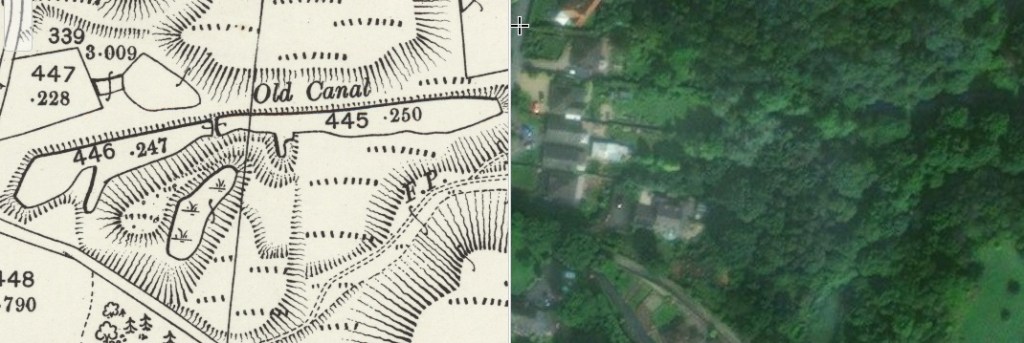
A extract from a hand drawn map which was posted on The Ketley History Group on Facebook. The Ketley Canal is shown in blue on the sketch map and crosses Red Lees immediately adjacent to Ketley Hall which appears far-left on this extract.[3]This image appeaars on the website of the Friends of Ketley Paddock Mound. It also shows the canal route passing under Red Lees just East of Ketley Hall. [4]In this image taken from the National Library of Scotland’s website the 25″ OS Map, published in 1902, is placed immediately alongside precisely the same area on modern satellite imagery. The canal arm is central to the image. The wider area at the western end of the remaining canal (in 1902) was a wharf. [6]This image shows the two images above superimposed on each other. The old wharf can be seen to be under the site of modern housing on the North side of Red Lees. The Hall was to the South. According to the earlier images, the canal continued down the East side of the Hall. It then probably ran West on the South side of the Hall. [7]This picture shows a map of Ketley Paddock Mound which is on display on the South side of the nature reserve. The blue dotted line, superimposed on the image, shows the approximate line of the canal as it passes under Red Lees. The present length of the canal arm is shown in light blue on the original sign board. The Friends of Ketley Paddock Mound’s website can be found here. [My photograph, 2nd June 2022]A view from Red Lees footpath looking Northwest to where it widens out to become a road. There is a slight rise in the road surface just in front of where the pedestrian is walking. This is the most likely location for what would have been an arched bridge, now buried and inaccessible. [My photograph, 2nd June 2022]
I followed Red Lees down to the junction with the B5061, before walking back along Red Lees following what probably was a tramway route which then drifted away from Red Lees to the Northeast as shown on tthe sketch map at the head of this article. The Ketley History website says the following: “Behind the Victorian school building that is now Ketley Community Centre, there is a footpath that leads down to Red Lees and this is also the line of a tramway, probably to serve the coal wharf that was situated on Ketley Canal where School Lane meets Red Lees now.” [5]
The view Northwest towards the junction with the B5061. [My photograph]The view from Red Lees along the line of the probable tramway. [My photograph]The view Northeast along the line of the tramway. [My photograph]Further along the tramway route with what was Ketley primary school in sight. [My photograph]Looking along the route of the tramway to what was the Canal Wharf area. The old school buildings are on the left. [My photograph]
I turned to the left and walked along School Lane to the B5061, which, incidentally was the A5 and so was Thomas Telford’s trunk road to North Wales, and so it carries the name ‘Holyhead Road’.
The Ketley Canal
TheKetley Canal was about 1.5 miles (2.4km) long. It linked the Shropshire Canal, in the small town of Oakengates, with Ketley Iron Works. It was built in the late 18th century (around 1788) and required the construction of an inclined plane to lower and raise tub-boats a little over 70ft between the level of the Works and the higher ground that it travelled over from Oakengates. [8]
The inclined plane was the first effective inclined plane in the UK. [9]
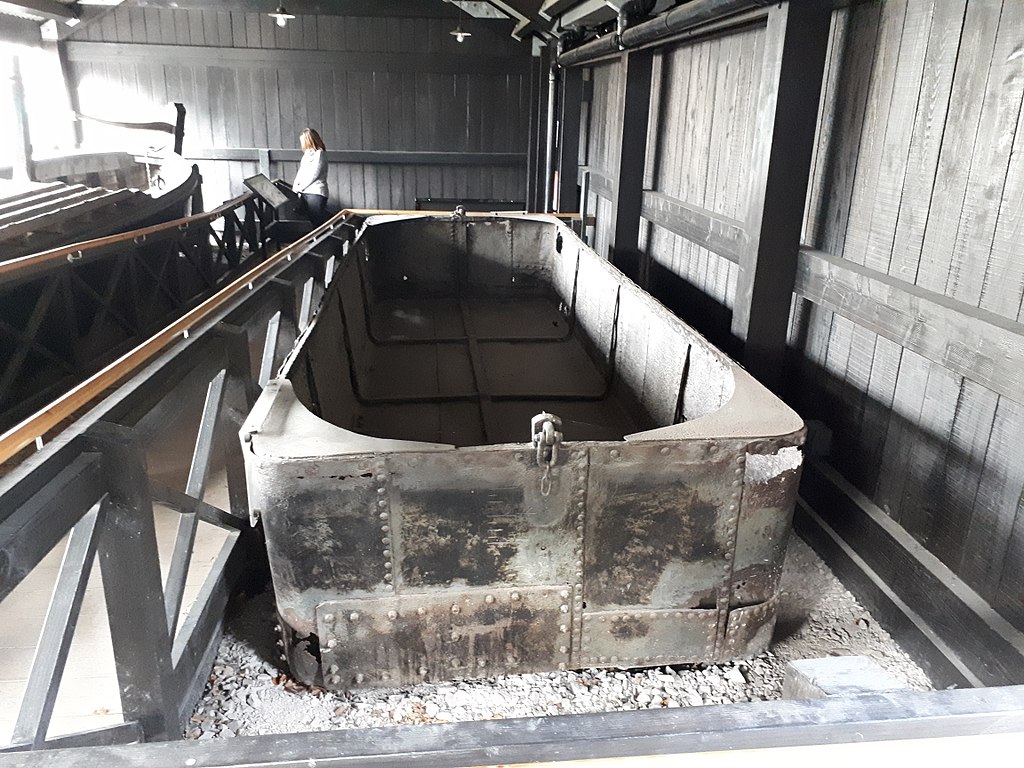
The canal predominantly carried coal and ironstone in horse-drawn tub-boats. These tub-boats where in use across Shropshire and beyond. They “were rectangular in plan, 19 feet 9 inches long x 6 feet 2 inches wide made of wrought-iron plates rivetted together. An inclined plane consisted of two rails laid parallel to each other, on each of which ran a cradle raised or lowered by a wire rope and capable of carrying one tub boat at a time. The descending cradle assisted in balancing the weight of the ascending one and the extra power required was supplied by a stationary winding engine. A boat descending an inclined plane entered a chamber where it was manoeuvred over a submerged cradle. Once in place, the boat was secured to the cradle in readiness for its journey down the plane. The cradle was then hauled up over a sill and onto the plane, at which point it was still inside the chamber. When everything was ready it commenced its descent, which required just a few minutes, and a small number of workmen were able to complete the whole operation.” [12]
The inclined plane lasted in service until 1816, closing with Ketley Iron Works. The length of canal between Ketley and Oakengates remained open for more than 60 more years until the 1880s.
“One tub-boat is preserved in the Blists Hill Victorian Town museum. It was rescued from a farm in 1972, where it was in use as a water tank. Before its discovery, it was thought that all tub boats on the Shropshire Canal were made of wood.” [13]
This tub-boat is on display at Blists Hill Museum near Ironbridge in Shropshire.
The canal ran on the north side of Holyhead Road. A few hundred yards to the West of Shepherd’s Lane the canal passed under the Holyhead Road. It “clung to the southern side of the main road for a few hundred yards … but then it moved away from the road, heading westward at the backs of what are now gardens on Holyhead Road until it reached Shepherd’s Lane.” [9]
The Eastern portal of Shepherd’s Lane Tunnel is still visible in a private garden. [4]
The canal entered a short tunnel under Shepherd’s Lane and emerged into Ketley Paddock Mound (as it is now called). The length of canal which is preserved in the nature reserve can be reached from a number of directions.
The route I took was to walk East along Holyhead Road to the bus stop adjacent to one entrance to Ketley Paddock Mound. The bus stop is a delight! It was painted in 2018 by Fran O’Boyle and funded by the Ketley Parish Council and the Friends of Ketley Paddock Mound. [10][11]
The bus stop which is owned by Ketley Parish Council is outside Ketley Paddock Mound was decorated in 2018. It was created by Fran O’Boyle and funded by the Parish and the Friends of Ketley Paddock Mound. [10][11]
And I then entered the nature reserve through the gate visible in the photograph above. Immediately inside the gate is another public information board. The image below is an extract from my photograph of the board. …
Entering the nature reserve from adjacent to the Bus Stop on Holyhead Road, the path climbs through open meadow and paddock. It curves round a small pond before the remaining section of the Ketley Canal is reached. [15]
This next sequence of photos shows the walk up to the remaining section of the Ketley Canal as highlighted on the map extract immediately above.
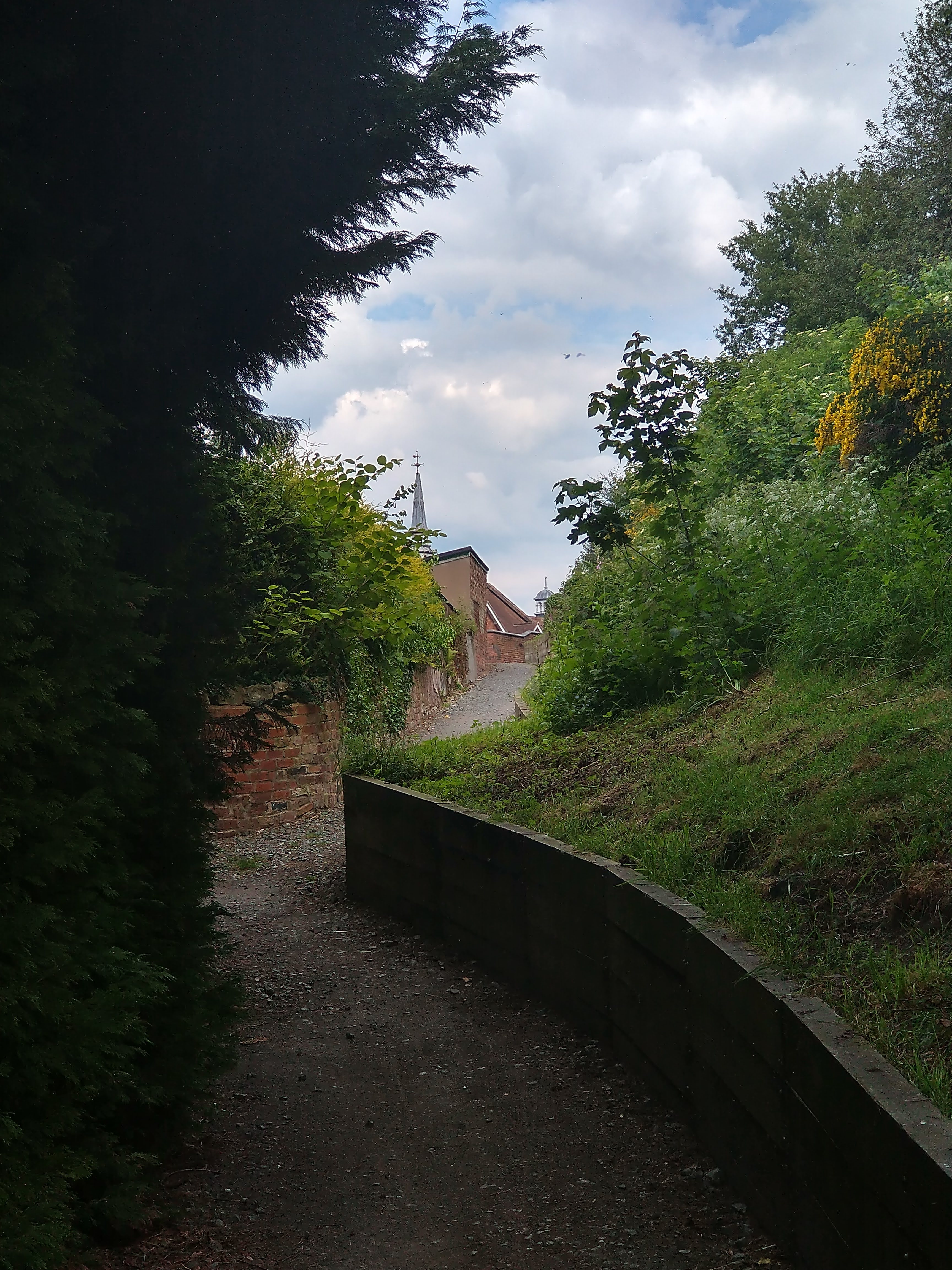
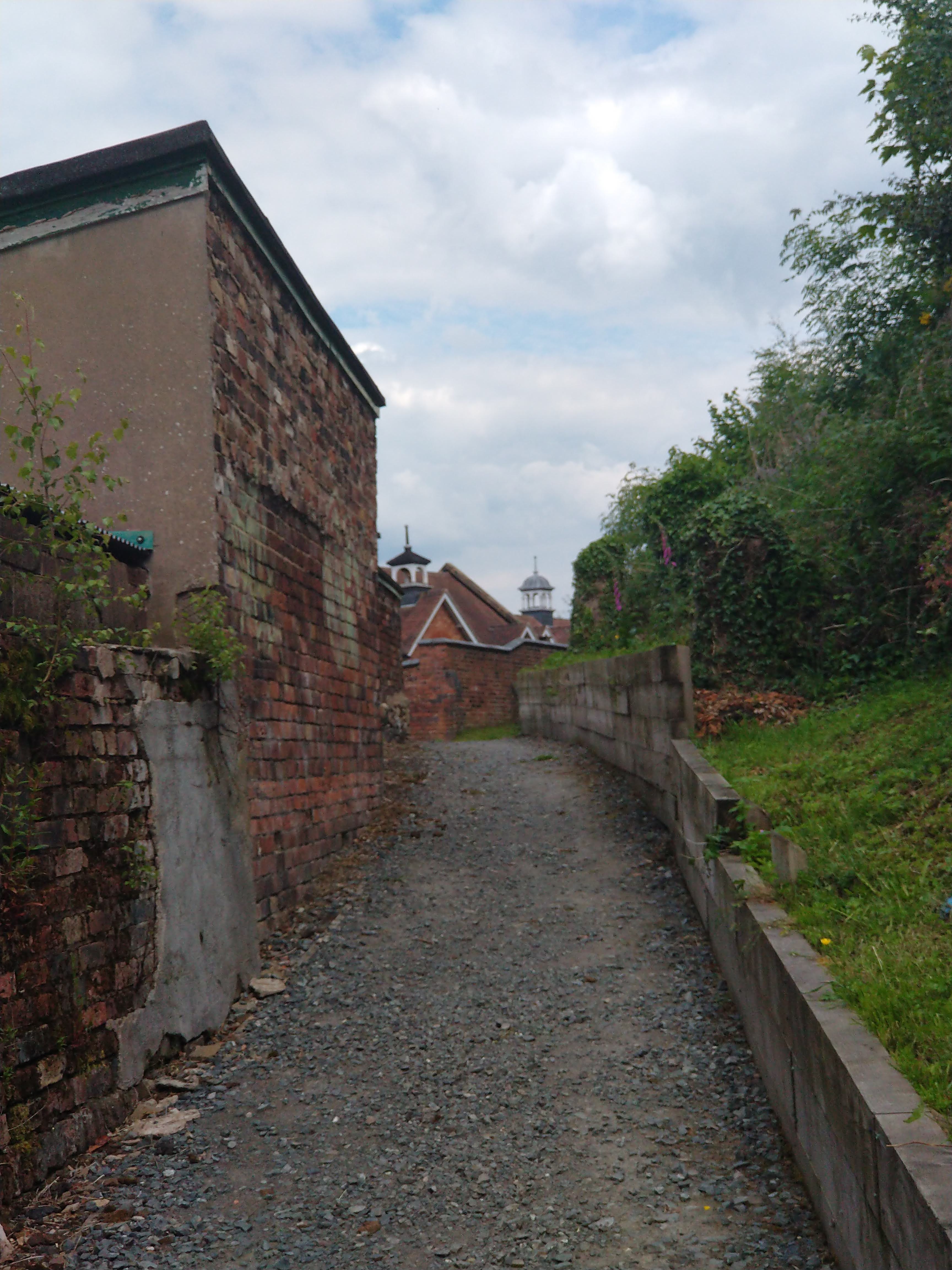
The path from Holyhead Raod. [My photograph]Buttercups in flower in the paddock to the East of the footpath. [My photograph]The footpath winds gently up hill to the old canal. [My photograph]The Ketley Canal. This remaining section of the tub-boat canal is now given over to nature. Just before taking this picture I watched a Kingfisher fly along the length of the water. Behind the camera is the cutting which led to the tunnel under Shepherd’s Lane. [My photograph, 2nd June 2022]
The walk back to my car took me over the top of the Paddock Mound which was the slag-heap made up of arisings from local pits and mines.