
I have enjoyed being a member of the Narrow Gauge Society for a number of years. One of the benefits of membership is the regular mailing.
The Narrow Gauge Railway Society sends out a bimonthly mailing in which ‘Narrow Gauge News’ (a full colour A4 update for readers covering what has been happening across a wide range of different narrow gauge lines in both the UK and around the world) is accompanied by one, sometimes two, more detailed studies of contemporary and more historic narrow gauge lines.
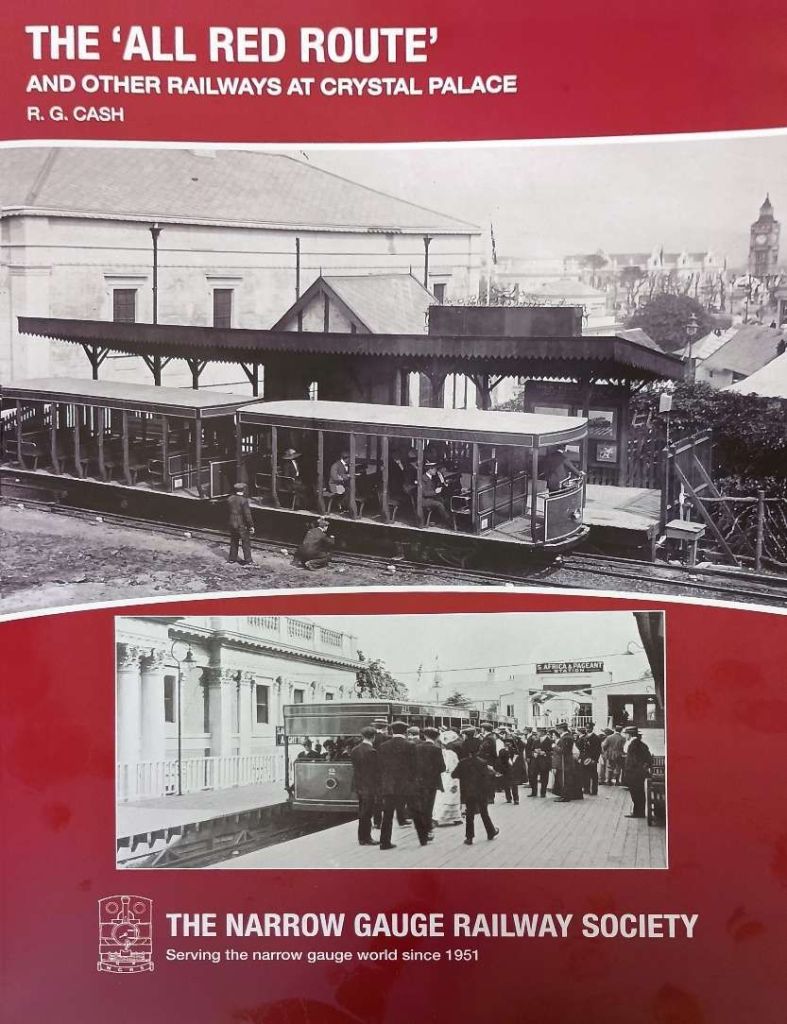
In October 2026, the latest mailing included two other A4 ‘bookazines’. The first being a single issue paper recorded as ‘The Narrow Gauge No. 302’ which focusses on various railways at Crystal Palace, written by R. G. Cash. [1]
The inside front cover has a map (a public domain image) of the Festival of Empire and Imperial Exhibition of 1911. …
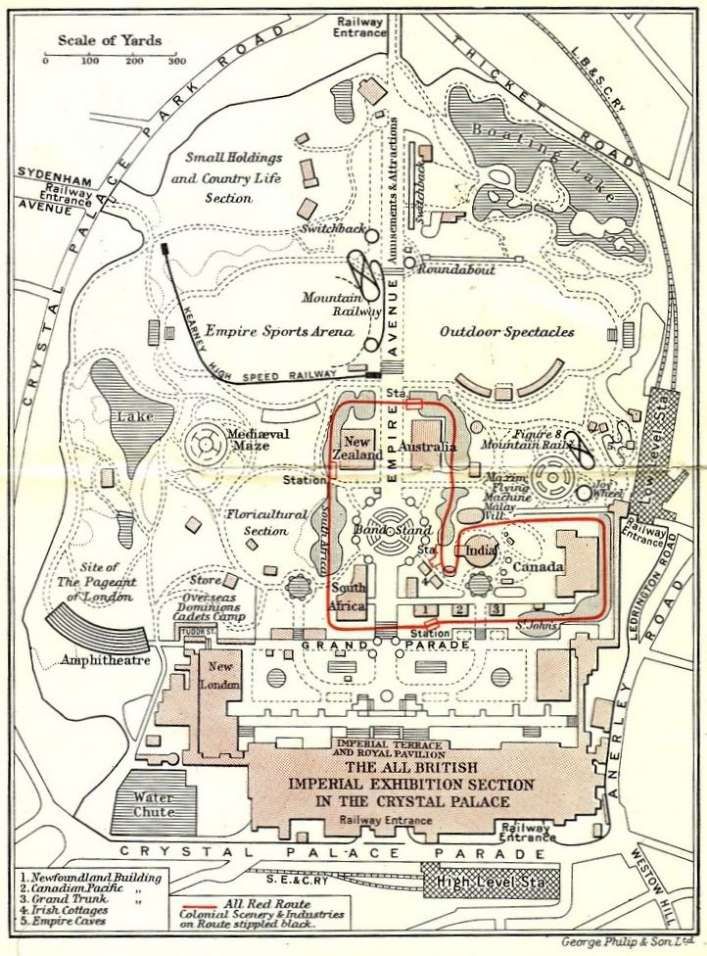
The ‘All Red Route’ was “a somewhat convoluted circuitous route of over a mile with stations near the principal buildings.” [1: p4]
Cash’s paper describes the track and route of the line. 60lb/yard flat-bottomed rail in 30ft lengths was spiked to wooden sleepers on 12″ of ballast. It is believed that it was a 3ft 6in-gauge railway. Trains ran at one-minute intervals in an anti-clockwise direction at a maximum speed of 4mph. Signals were not used.
Cash notes that the builders of the line “were keen to exploit the capabilities of electric traction and confidently laid out the line with gradients steeper than those on the Manx Electric Railway, which may have given the ride something of a ‘roller-coaster’ character, though the low speed would have mitigated this effect. There were also many … scenes and tableaux … which could be seen from the train. … The railway was reported to be ‘Highly successful’ and one of the most interesting features of the Exhibition.” [1: p6]
Rolling Stock – although built as a railway, rolling stock was typical of the electric tramways of the period.
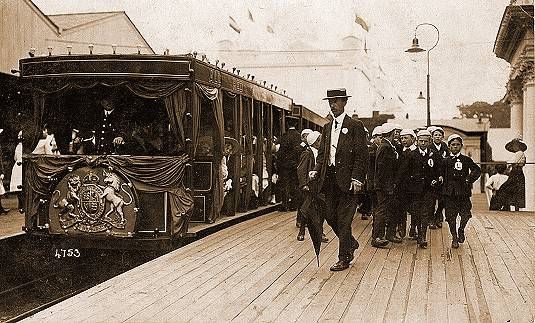
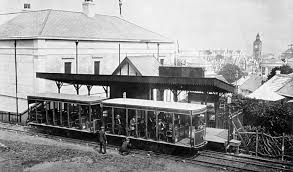
‘All Red Route’ tramcars at the Newfoundland Station, possibly the India Station, both buildings were close to the stop. Cash notes that the current collectors can be seen. The cars were paired together, a motor car and a trailer, © Public Domain. [1: p7][10]
Current collectors protruded from the sides of the trucks, one at the rear of the leading wheel of the motor car and one just behind the trailing wheel of the trailer.
Apparently, the All Red Route (including it power plant) cost £90,000 to build (that is over £70,000 per mile). Each train (moti car plus trailer) could carry 80 passengers around the route of the line in between 15 and 20 minutes. [1: p8]
Cash goes on to consider the costs of the Exhibition and what happened to the rolling stock before discussing:
- Other railways that were on use during the Exhibition/Festival;
- Pneumatic railways on the site (1864);
- Electric pioneers (1881 & 1882);
- Hydraulic pioneers (1891);
- Looping the Loop! – perhaps the first amusement ride in the UK to invert its riders (1902-1907]
- Miniature Railways – a 15in-gauge line which circled the drained basin of the Grand Fountain (1910 and not renewed for the 1911 exhibition). There were later proposals for similar lines in the park through the years, at least one of which was used (between 1990 & 1996).
The Narrow Gauge – Number 303
The second ‘bookazine’ is the September edition of ‘The Narrow Gauge’ – No. 303. In 2026, the Narrow Gauge Railway Society celebrates 75 years serving the narrow gauge world since 1951. This is reflected on the front cover of ‘The Narrow Gauge No. 303’. [2]
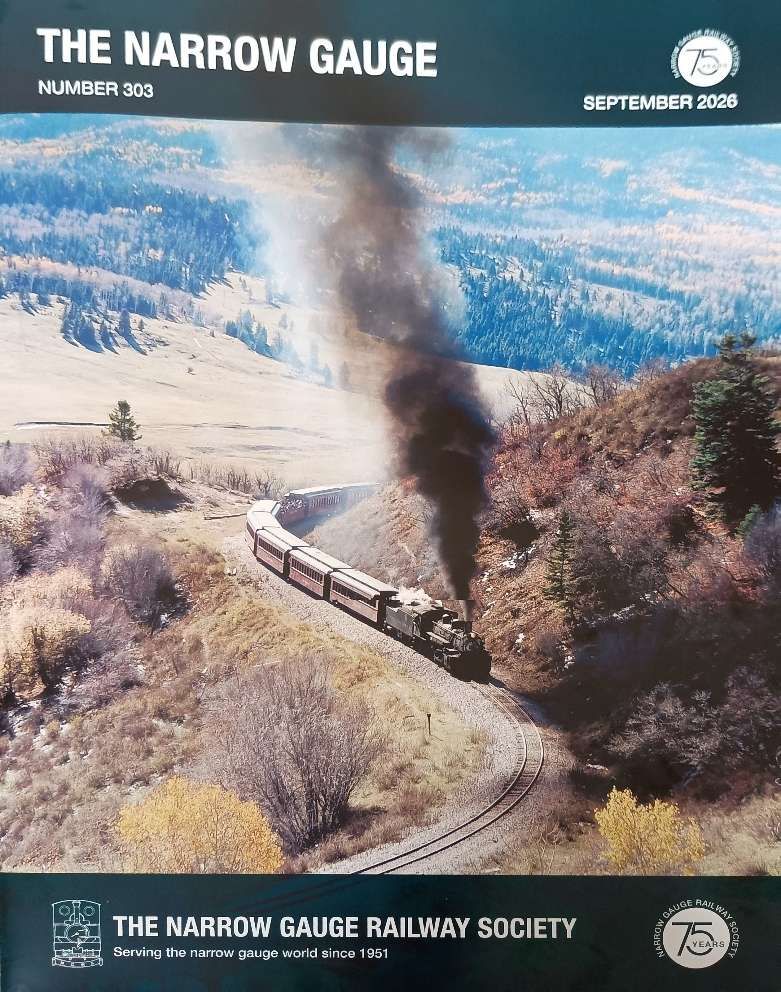
This second volume includes:
- Slaggyford Light Rail – Philip Champion (p3-9);
- Early Petrol-Electric Railcars in Prussia – David Meller (p10-22);
- The Cumbres & Toltec Scenic Railroad: Part 1 – Jim Stancliffe (p23-33); and
- A few shorter items.
Slaggyford Light Rail – Philip Champion tells the story of a privately owned 2ft-gauge railway which sat on an ‘island’ in the South Tyne River which was also the location of a caravan site. First in use in 1978, the line was owned by W. G. Horseman. He sold the line in 1981 to Bob Cant who renamed it ‘Slaggyford Lake Railway’. Cant closed the line in 2001 and much later, after his death, his collection was sold by auction (January 2025). Philip Champion includes in his article, information about the various locomotives and rolling stock used on the railway.
Early Petrol-Electric Railcars in Prussia – David Meller provides a survey of various narrow-gauge lines in Prussia before WW1, with some still active up to and beyond WW2.
Meller first introduces us to The Kleinbahn Pogegen–Schmalleningken (Pogegen-Schmalleningken Railway), located in the historic Memelland region of East Prussia, which was a pioneer in using petrol-electric (or benzole-electric) railcars.
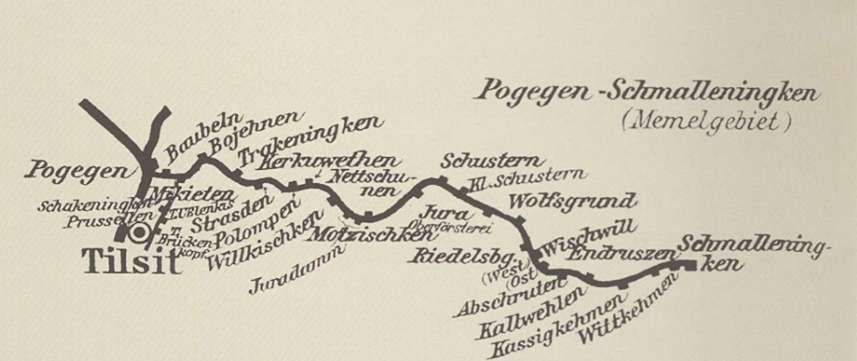
Meller points out that details of these first Petrol-Electric Railcars were provided in an article from the 11th February 1909 edition of Elektritechnische-Zeitschrift which is now available online in the Internet Archive. [4]
Illustrations provided by Miller come directly from that article. …
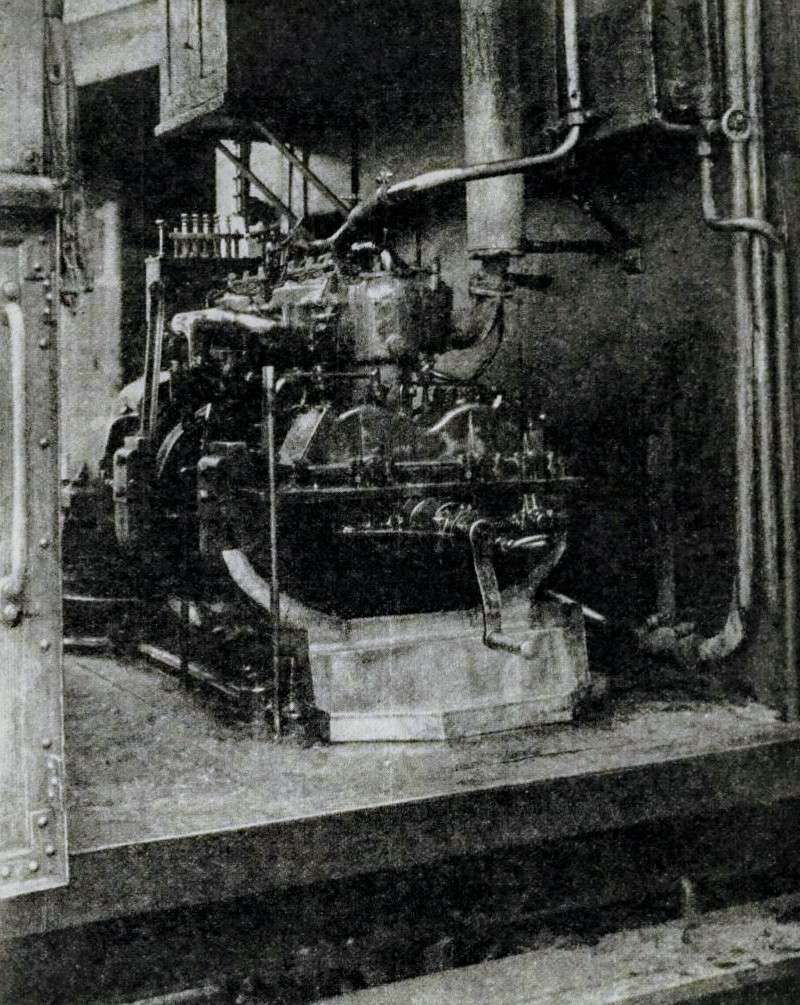
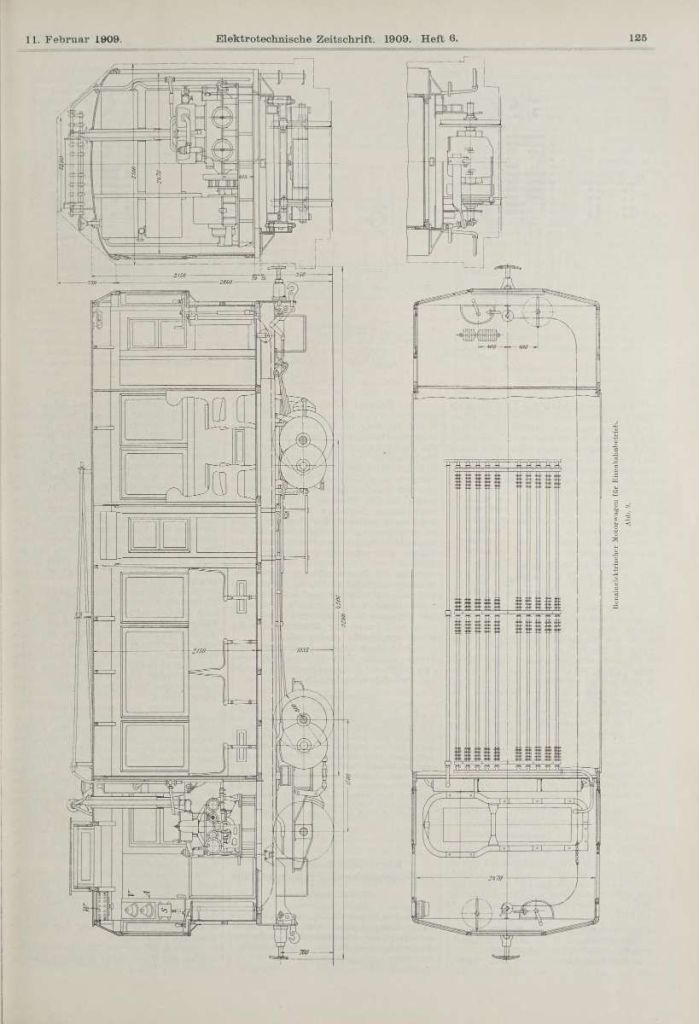
Meller then turns to the 750mm-gauge Konigsberger Kleinbahn which had three Petrol-Electric Railcars numbered 51, 52 and 53 in its fleet. This line was owned by the same company as the Pogegen-Schmalleningken line (Aktiengesellschaft fur Verkehrswesen – AVG).
In the autumn of 1911, the German electrical giant AEG (Allgemeine Elekricitats-Gesellschaft), the coachbuilder Waggonfabrik L. Steinfurt (based in Königsberg), and the engine manufacturer NAG (Neue Automobil-Gesellschaft) delivered a four-axle prototype railcar to the Königsberger Kleinbahn. Test runs showed that whole electrical and mechanical equipment performed well, vibration was excessive. This was overcome by moving the power unit away from the passenger accommodation.
The revised vehicle entered service in 1914 and was followed by two more.
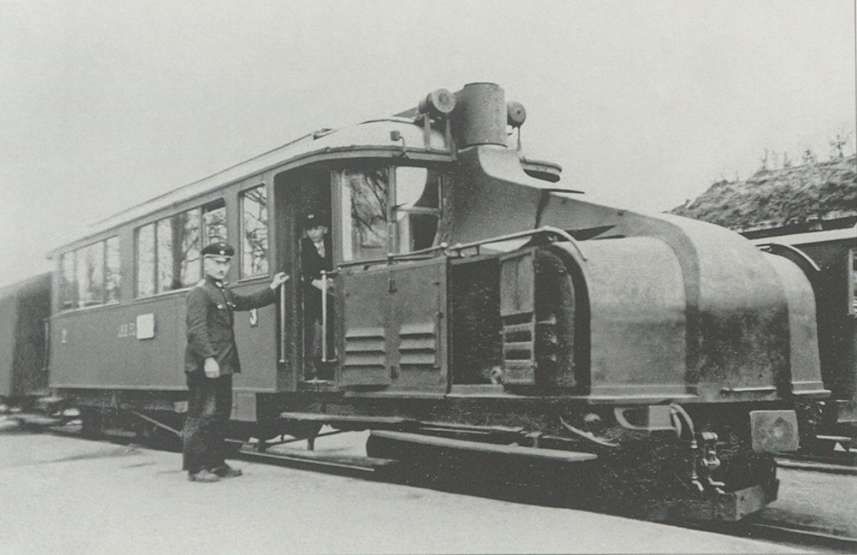
Next Meller focusses on the Insterburger Kleinbahn which purchased three of the same design of units used on the Konigsberger Kleinbahn and, interestingly, also numbered the Railcars 51, 52 and 53.
He follows this with a look at the Gleiwitz-Rauden-Ratibor Line which seems to have purchased the final member of a batch of seven Railcars of the type used by the Konigsberger Kleinbahn and Insterburger Kleinbahn. This particular vehicle seems to have travelled around a number of venues before arriving at this line. It appears to have been recorded at the ‘Baltic Exhibition’ in Malmö, Sweden in 1914. Meller believes that it may have been seen at other exhibitions at least including the Weimar Bauhaus international architecture exhibition in 1923 and at Stuttgart in 1924. It was bought by the Gleiwitz line in 1925. But, Meller, says there are particularly concerns about this narrative and it is possible that the story of the seven Railcars is more complex!
The photographs included with the text of Meller’s article can be found along with the original German Schweizerische Bauzeitung article on a German discussion forum, here. [6]
The Cumbres & Toltec Scenic Railroad (C&TSR): Part 1 – Jim Stancliffe writes that this railroad was opened in 1971. It is a tourist line and lays claim to being the longest and highest steam-powered narrow gauge railroad in North America. Stancliffe describes the project to revive the line as “arguably, the most ambitious heritage project of its kind in the world at the time.” [2: p23]
As the Denver & Rio Grande Railroad (D&RGR) network entered terminal decline in the year either side of WW2, many of its narrow gauge routes were abandoned. The main passenger service on the narrow gauge was the ‘San Juan‘ which ran daily each way between Samosa and Durango, but it was withdrawn in 1951. The only remaining passenger service was the ‘Silverton‘, which ran as a mixed train, three times a week, each way between Durango and Silverton. [2: p25]
The D&RGR retained the Silverton Branch as a steam hauled summer tourist attraction until 1980. A buyer was sought and found in 1981. The new owner redeveloped the line as the Durango & Silverton Narrow Gauge Railroad (D&SR)
Separately, abandonment of much of the network was pursued by the Railway Company and preservation of a length of the network between Antonio and Chama was considered by New Mexico and then by Colorado. Stancliffe says that, “In July 1970, the states jointly purchased the track and line structures along the 64 mile long route between Antonito and Chama. The purchase included 9 steam locomotives and over 130 freight and works cars. The total cost for the whole package was $547,120. Whilst the purchase included all the yards and buildings at Chama, there were no available facilities at Antonito. These were all still required by the D&RGR.” [2: p27]
Stancliffe goes on to describe the birth of what became the ‘Cumbres & Toltec Scenic Railroad’.
The first train ran on 26th June 1971 but despite the initial air of optimism the deep recession caused by the oil crisis impacted the viability of the Railroad. In parallel there was a need for the two US states to find more effective ways of working together.
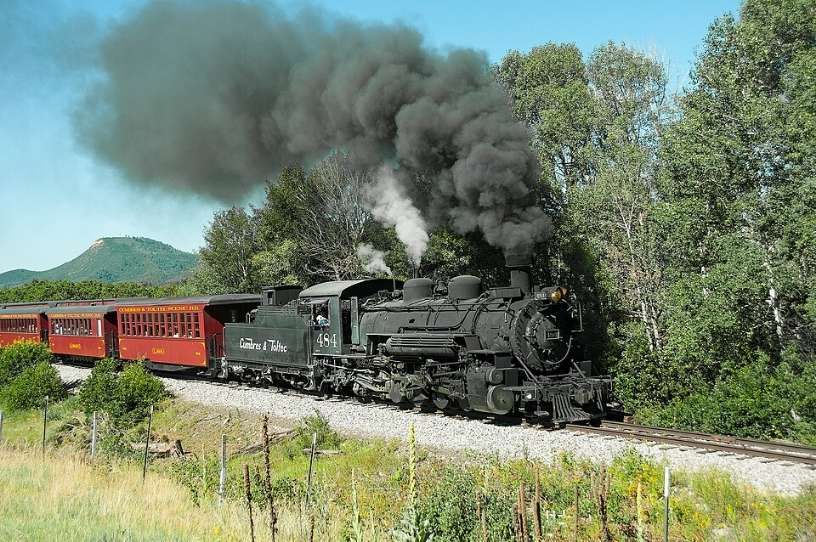
Various crises followed; the operating company had its contract terminated and another company was appointed. The volunteer organisation which was maintaining stock was removed from the site and eventually a new volunteer organisation was formed – the Friends of the Cumbres & Toltec Scenic Railroad (The Friends).
The new operating company (Kyle Railways) brought about a change in fortune for the C&TSR. In 1987, ridership was a record 38,721 people, and ridership continued to increase throughout the 1990s. In 1995, the total was 59,871. But by the end of the 1996 season, Kyle Railways, gave up their lease. The next lease holders survived in role only until the end of the 1999 season. After the lease was advertised once again, no suitable applicants applied. In February 2000, The Friends made an offer to run the railroad. The friends set up a not-for-profit company: the Rio Grande Railroad Preservation Corporation (RGRPC). This arrangement only lasted until the end of the 2005 season. Further negotiations saw The Friends forming another non-profit to run the day-to-day operations with capital funding for necessary works being the responsibility of the two states. Various factors meant that this new arrangement lasted only until the end of the 2011 season.
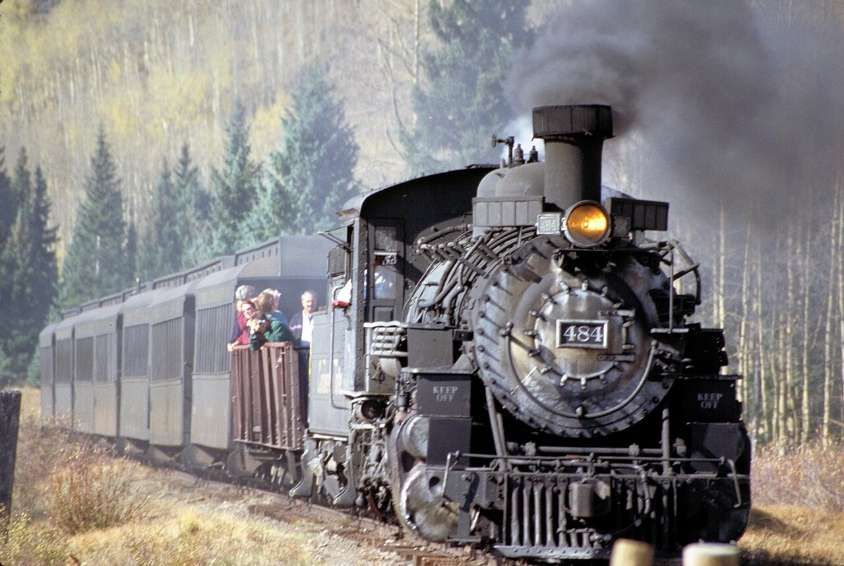
This seems, throughout Stancliffe’s article, to have been the ongoing experience of those running the railway – periods when reasonable progress was being made with passenger numbers being to rise towards a break even position, and then an incident or problem which set things back.
The late 2010s saw fragile good progress destroyed by COVID and in the 2020s a similar set back saw the restaurant kitchens at the intermediate stop at Osier, and dry weather causing significant damage to water supplies along the line.
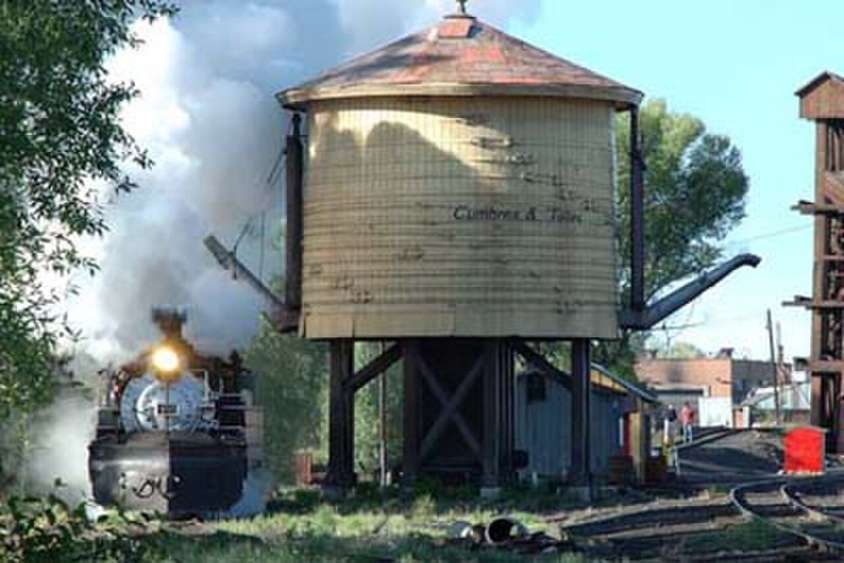
Stancliffe has set the scene for Part 2 which will follow in a later edition of ‘The Narrow Gauge’.
And finally ….
I hope that this series of notes about the mailing sent out at the end of September 2026 might encourage new interest from non-members in the Narrow Gauge Railway Society.
References
- The Narrow Gauge No. 302; the Narrow Gauge Railway Society, September 2026.
- The Narrow Gauge No. 303; the Narrow Gauge Railway Society, September 2026.
- https://de.wikipedia.org/wiki/Kleinbahn_Pogegen%E2%80%93Schmalleningken, accessed on 4th October 2026.
- https://archive.org/details/elektrotechnisch3019unse/page/123/mode/1up, accessed on 4th October 2026.
- https://de.wikipedia.org/wiki/Insterburger_Kleinbahnen_51%E2%80%9353#/media/Datei:OEG_VT_53_historische_Aufnahme.png
- https://www.drehscheibe-online.de/foren/read.php?17,7259617, accessed on 4th October 2026.
- https://commons.wikimedia.org/wiki/File:Festival_of_Empire_1911_Map_%28cropped%29.jpg, accessed on 5th October 2026.
- https://en.wikipedia.org/wiki/Cumbres_and_Toltec_Scenic_Railroad, accessed on 5th October 2026.
- https://www.tramwayinfo.com/Tramframe.htm?https://www.tramwayinfo.com/trampostcards/Postc250.htm, accessed on 5th October 2026.
- https://jbarchive.co.uk/products/lo-6134-festival-of-empire-all-red-route-railway-crystal-palace, accessed on 5th October 2026.


