

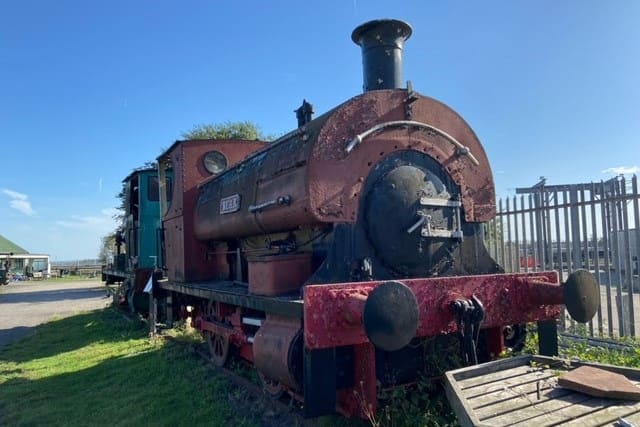
The featured image for this article is Manning-Wardle Works No.1601 (1903) ‘Matthew Murray’, Class L 0-6-0ST. Built for P. & W. Anderson & Co. for the construction of Kent Portland Cement Works, Stone, Kent. Sold to Kent Portland Cement Co. Ltd and later Associated Portland Cement Manufacturers Ltd, Stone, where it worked the chalk quarry and kiln system from 1922 until withdrawn in 1967. While working at the Kent Portland Cement Works the locomotive was named ‘Arthur’. It is photographed at the Middleton Railway, Leeds, where it is preserved. This locomotive is the last surviving example of its class, © THTRail2013 and licensed for reuse under a Creative Commons Licence (CC BY-SA 4.0). [6]
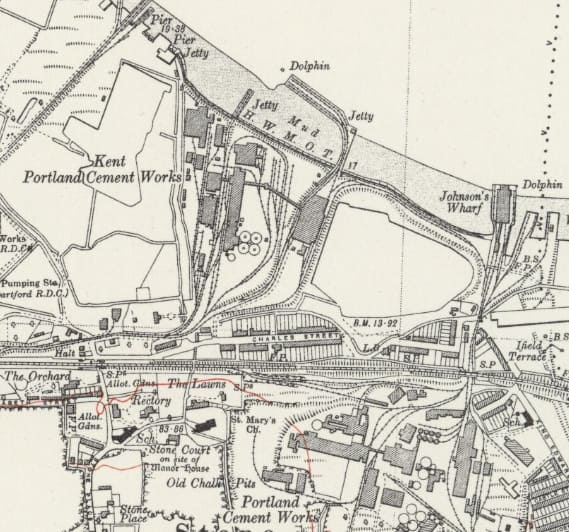
Kent Works was built between 1919 and 1922. It had an extensive 4ft 3in railway “which ran inland to large chalk pits, connected with the lines of the Stone Court Chalk and Ballast Co. and … to Johnson’s Works next door.” [1: p4]
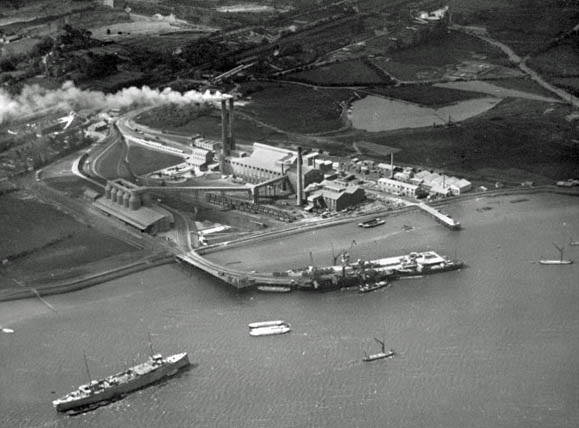
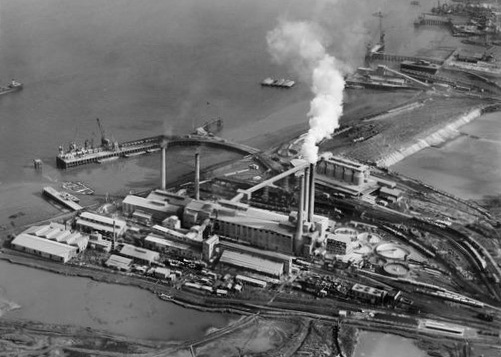
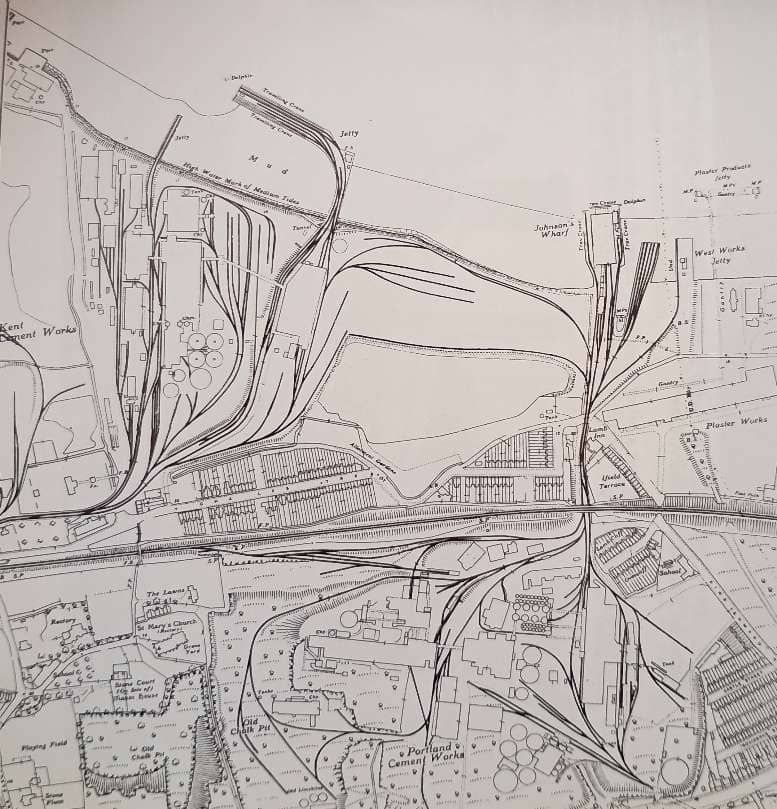
According to Stoyel & Kidner the Kent Works were built between 1919 and 1922 by contractors P. & W. Anderson for the Kent Portland Cement Co. Ltd, “but only a year after its completion the company was acquired by APCM. It is situated on the Thames foreshore about ½ mile north-east of Stone Crossing Halt between the railway (and road) and the river, where there was a jetty. There were extensive store areas and sidings between the main works and the SR exchange siding immediately west of Stone Crossing Halt.” [3: p14]
“It is probable that chalk was originally taken from the pit south of Cotton Lane; however by 1930 a large pit east of this, south of Elizabeth Street, was being worked. … This was progressively opened out down to London Road, and finally a tunnel under that road reached the southernmost pit.” [3: p14]
“The method of working a face was to lay a double track approaching it, singling at the actual face. As the engine hauled away the full wagons, the empty train would be propelled under the excavator, thus losing no time. The six-coupled engines could take some 16 wagons, loaded to about 3-4 yards each; though with a split-level face the gradient to the top level was sometimes severe, it was always in favour of the loaded trains.” [3: p14]
“In 1963, a cutting was built to connect the pit with that of Johnson’s Branch: there had always been a certain amount of interchange between the two works by a line along the bank of the river.” [3: p14]
Apparently “there was a well-built locomotive shed on the western edge of the works area.” [3: p19]
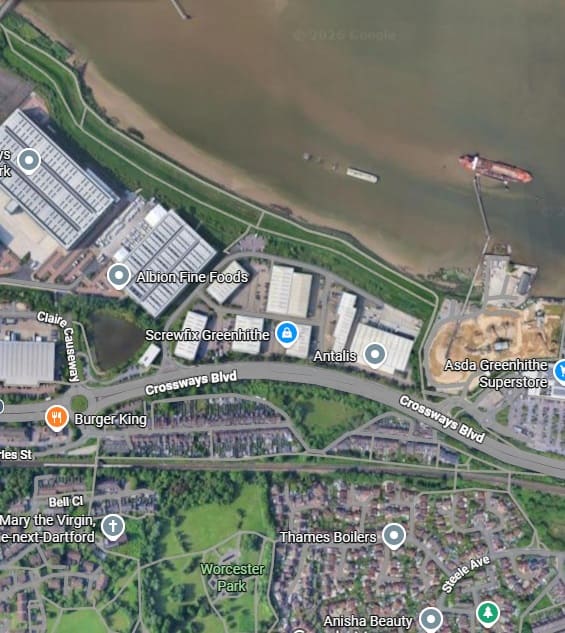
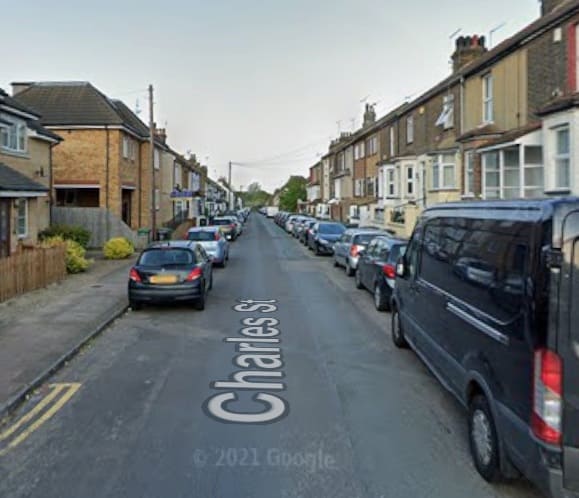
Looking East along Charles Street from close to the roundabout junction with Crossways Boulevard. [Google Streetview, May 2018]
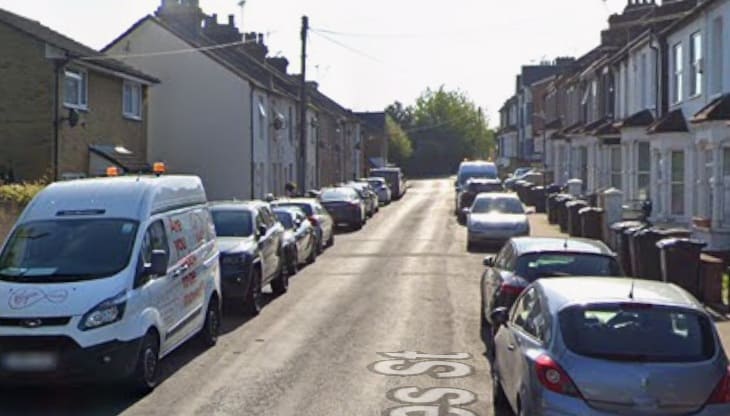
Looking East again along the extension to Charles Street to the East of the modern green open space. [Google Streetview, May 2018]
Locomotives
Stoyel & Kidner tell us that the company purchased its first locomotives second-hand from the contractor that built the works. These were:
Stone 0-6-0ST Hudswell Clarke, Works No. 298, built in 1888, it had inside cylinders (12″ x 18″) and 3′ 0″ wheels.
Toronto 0-4-0ST Hudswell Clarke, Works No. 571, built in 1900, it had outside cylinders (10″ x 16″) and 2′ 9″ wheels.
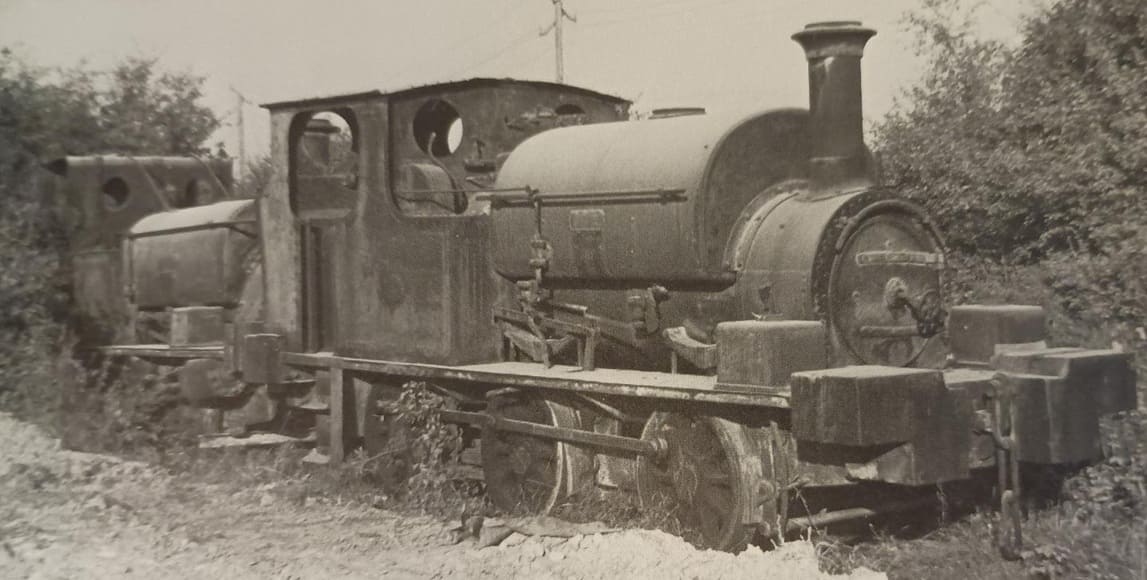
Arthur 0-6-0ST Manning Wardle, Works No. 1601, built in 1903, it had inside cylinders (12″ x 18″) and 3′ 0″ wheels. Arthur continued in use at the works until 1967 [2: photo No. 23] and has survived into preservation, residing at The Middleton Railway in Leeds, although under a different name.

Apex 0-6-0ST Manning Wardle, Works No. 1657, built in 1905, it had inside cylinders (12″ x 18″) and 3′ 0″ wheels. [3: p19] ‘Apex’ was not as fortunate as ‘Arthur’, it only survived in use until 1960 and was scrapped in that year.
They were soon supplemented by other second-hand locomotives transferred from other works owned by APCM.
Hilton 0-4-0ST Peckett, Works No. 633, built in 1896, it had outside cylinders (12″ x 18″) and 2′ 9″ wheels. ‘Hilton’ came from Hilton Works, Halling. I have not been able to find a photograph of No. 633, Hilton. However, Peckett Works No.614 ‘Bear’ was also built in1896, and was of the same W4 class as Works No. 633, with the characteristic open-backed cab.
Elephant 0-4-0ST Brush (Flacon/Henry Hughes), Works No. 287, built in 1899, it had outside cylinders (10′ x 18″) and 3′ 0″ wheels. This came from Tolhurst Works, Northfleet.
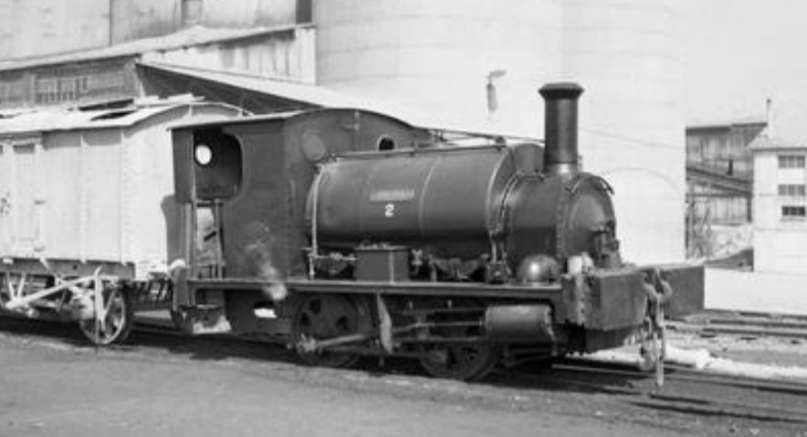
Clarence – an 0-4-0ST Andrew Barclay & Sons, Works No. ???, built in ????, had outside cylinders (10″ x 18″) and 3′ 3″ wheels. This came from Hilton Works, Grays. [3: p19]
Wouldham – Hatherill & Hatherill tell us that ‘Wouldham’, an 0-4-0ST Andrew Barclay & Sons, Works No. 1679 arrived at Kent Works in 1920. They provide the works drawing below which indicates that the cylinder size matches that of ‘Clarence’. It is possible that ‘Wouldham’ was renamed ‘Clarence’ on arrival at Kent Works.
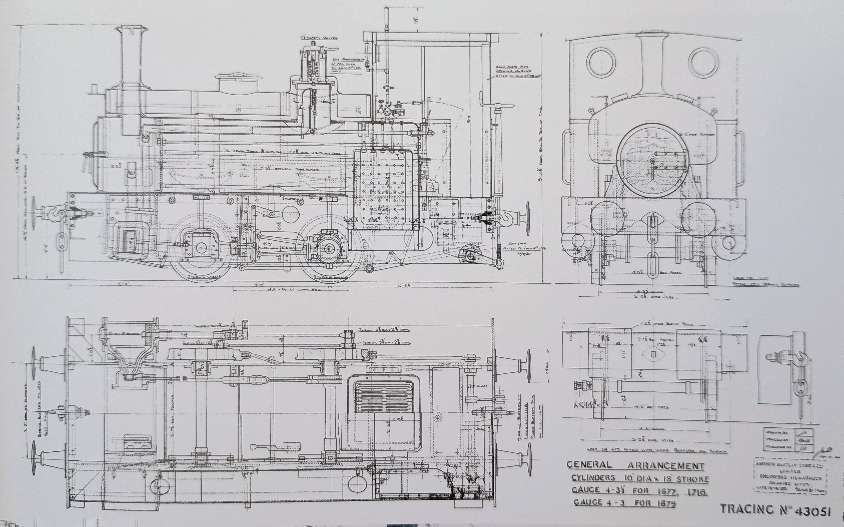
Stoyel & Kidner tell us that Kent Cement Works rebuilt Elephant and Apex in 1927 and Clarence in 1928. Stone was rebuilt by its makers in 1909.
Two new locomotives were the next to be purchased:
0-4-0ST Peckett, Works No. 1804, built 1935 (outside cylinders, 14″ x 22″ and 3′ 2½” wheels)
0-4-0ST Robert Stephenson & Hawthorns, Works No. 7336, built 1947 (outside cylinders, 14″ x 22″ and 3′ 8″ wheels)
After the war another 0-4-0ST Peckett was acquired second-hand from the Woolwich Arsenal. It was Works No. 1985, built in 1940 (outside cylinders 14″ x 20″).
Cab roofs of the second-hand locomotives had to be adapted after arrival to suit the tunnels on site.
Stoyel & Kidner tell us that “Stone and Toronto were scrapped in 1950 and in 1953 running numbers were allotted to the remaining locomotives as follows:
No. 1 Clarence; No. 2 Elephant; No. 3 Arthur; No. 4 Apex; No. 5 Hilton; No. 6 Peckett 1804; No. 7 Peckett 1985; No. 8 R.S.H. 7336.”
And finally, No. 2 at Northfleet Works was subsequently transferred to Stone, it became No. 9, it was an 0-4-0ST Peckett, Works No. 1702, built in 1926 (outside cylinders 14″ x 22″ and 3′ 2″. [3: p19]
Peckett & Sons Ltd. No. 1985 of 1940 was acquired after WW2 from Woolwich Arsenal and became Kent Works No. 7 Although a standard 0-4-0ST Peckett design (Class W6) with 14″ cylinders. Its appearance was changed by a lowering of the cab roof at the eaves to give clearance in the tunnels.
Robert Stephenson & Hawthorns (RSH) No. 7336 of 1947 became Kent Works Locomotive No. 8. This design of 16″ cylinder 0-4-0ST locomotives was used at several of the cement works in Kent. Like the Peckett design, these engines needed the eaves of the cab roof lowering to give clearance in the Works’ tunnels.
References
- A & G Hatherill; Narrow Gauge & Industrial Album; RCL Publications, Gaendolbenmaen, Gwynedd, 2004.
- Andrew Neale/Chalk Pits Museum; Industrial Railways of the South-East; Middleton Press, 1984.
- B. D. Stoyel & R. W. Kinder; The Cement Railways of Kent; Oakwood Press, Headington, Oxford, 1973, 1990.
- https://www.britainfromabove.org.uk/image/epw017653, accessed on 16th August 2026.
- https://www.britainfromabove.org.uk/image/epw060570, accessed on 16th August 2026.
- https://commons.wikimedia.org/wiki/File:Matthew_Murray_at_Middleton_Park.jpg, accessed on 16th August 2026.
- https://www.brc-stockbook.co.uk/614.htm, accessed on 17th August 2026.
- https://maps.nls.uk/view/101428080, accessed on 17th August 2026.


Pingback: Kent’s Cement and Other Industrial Railways – Part 1 | Roger Farnworth