Tag Archives: Uganda

Muhabura – Wisdom from Uganda – A thought for the day!

It is only days now before I am back in Uganda again. It will be three short weeks and Jo, my wife, will not be with me as she has to continue to work in the UK. I have just been thinking back to my first visit to Uganda in 1994. …….

Proverbs 8: 1-3 (ESV)

Does not wisdom call? Does not understanding raise her voice? On the heights beside the way, at the crossroads she takes her stand; beside the gates in front of the town, at the entrance to the portals she cries aloud.

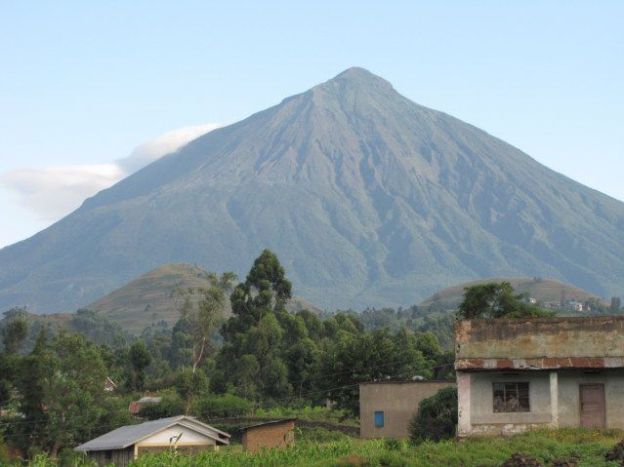
Mt. Muhabura

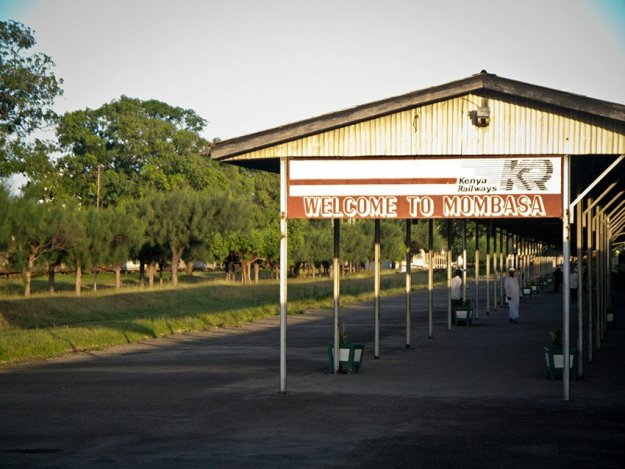
When I first went to Uganda in 1994, I travelled by train from Mombasa. A beautiful journey travelled at a snail’s pace in some ancient but well kept carriages and with silver service for meals and attendants who made up beds for passengers. The journey took for ever and included an unscheduled stop in Jinga because of a freight train derailment closer to Kampala. Our train waited 6 hours in Jinga!

On the last leg of the journey to Kampala, I was reading from Proverbs 8 – the passage above. It was as we came into the suburbs of Kampala that I looked up from reading to notice on the skyline a number of different religious buildings. I remember seeing two cathedrals, a Bahai temple and a mosque (I think). Here were various claims to wisdom calling out from the heights, ‘Listen to me!’

Kampala is a city of many hills and it seemed to me, on that first day that I saw it, to have a religious building on the top of each one.

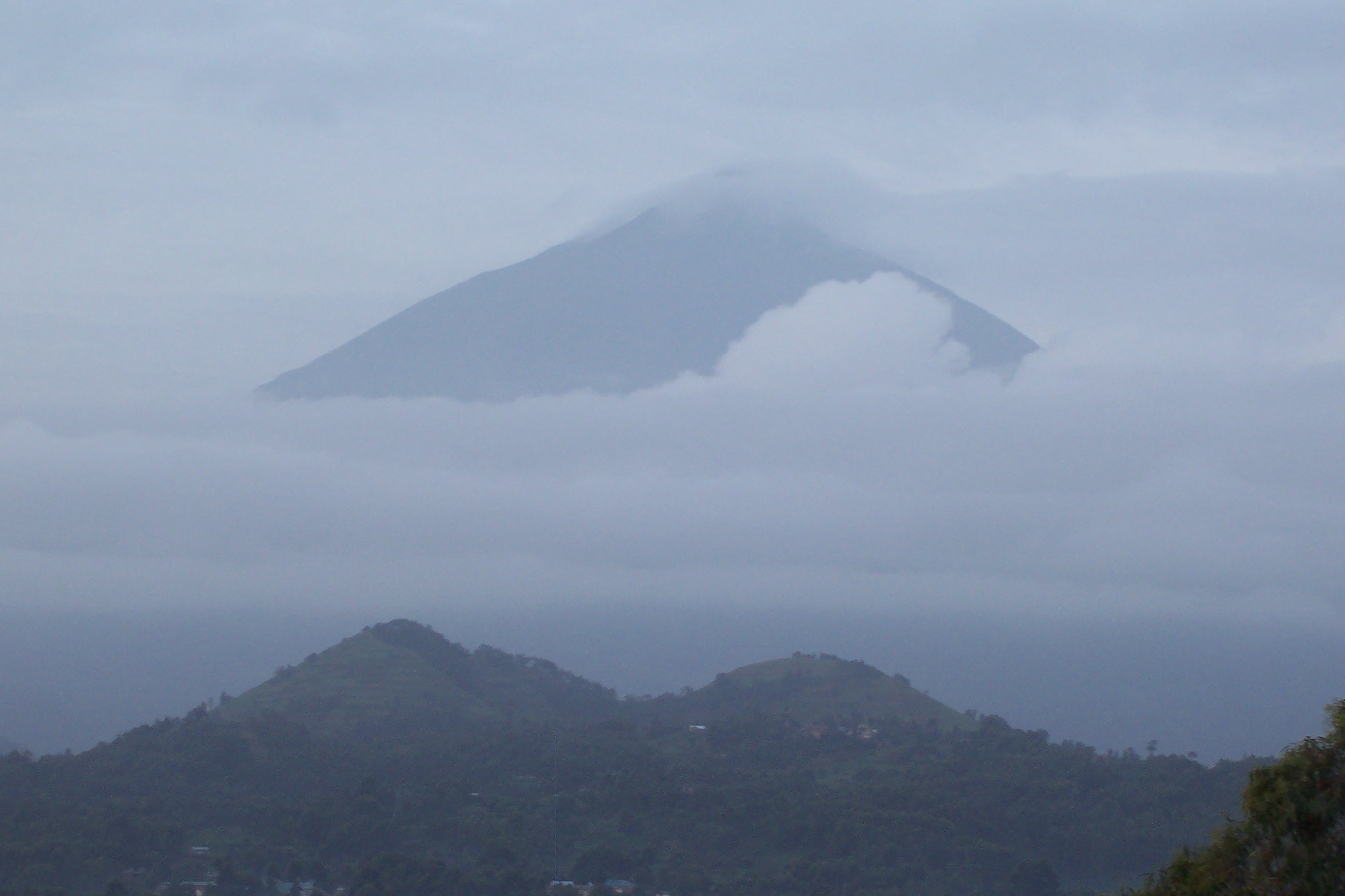
I travelled down in a car from Kampala to Kisoro, a long journey, really long. Half way through the last leg of the journey, travelling over dirt roads, I caught a glimpse of Mt. Muhabura. It was the dry season and the dust in the air meant that I did not see it again until leaving Kisoro when I travelled back over the same road to Kabale.

Mount Muhabura, also known as Mount Muhavura, is an inactive volcano in the Virunga Mountains on the border between Rwanda and Uganda. At 4,127 metres (13,540 ft) Muhabura is the third highest of the eight major mountains of the mountain range, which is a part of the Albertine Rift, the western branch of the East African Rift. Its summit contains a small crater lake. The limited evidence for this volcano suggests that it last erupted some time in the Holocene, but the exact date is not known. Muhabura is partly in the Volcanoes National Park, Rwanda and partly in the Mgahinga Gorilla National Park, Uganda. [1]

Anyone from Kisoro will tell you what the name of the mountain means and hence why the Diocese is named after it. Muhabura is ‘the guide’, the ‘one who leads me home’ – a mountain visible for miles around calling the people back to their homeland.

It strikes me again now, as it did back in 1994, that ‘Muhabura’ is an excellent name for a diocese. It is our Christian calling to be people who call others back to faith, back to where they belong. The wisdom of the Christian faith is not primarily intellectual, it is not ‘clever’, per see. Christian wisdom is primarily about relationship, about knowing God.

Someone is truly wise in God’s eyes when they are one of his people, in relationship with him, listening to his word, and full of his all-embracing inclusive love. When we gather together as Christians we aspire to be those in whom God’s wisdom dwells, to be a community faithfully drawing those around us back home, back to God. So we should be like Mt. Muhabura, a true and faithful guide, in an uncertain world.

Proverbs 8:1-3 has more for us than this. … Wisdom stands at the crossroads; …….. beside the gates in front of the town, at the entrance to the portals she cries aloud.

100_6105

Proverbs 8:1-3 also encourages us to count on God’s wisdom at the crossroads, at the place of decision, the place where we have to make choices. And it encourages us to seek wisdom in the gates of the city. The place of business for any community in Old Testament times was the gates of the city. It was where the village elders met, it was often the market place. God’s wisdom is not just spiritual wisdom but practical wisdom, and available to us as we go about the daily business, decusion-making and transactions of our working lives.

References

1. https://en.m.wikipedia.org/wiki/Mount_Muhabura, accessed on 30th September 2022.

The Uganda Railway – Part 30 – The Railway Magazine 1950 – June 1950

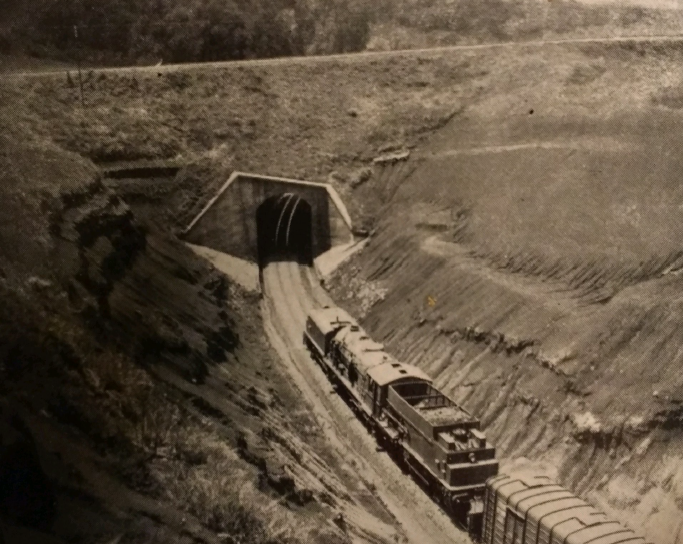
Reading through old copies of The Railway Magazine, I came across this article in the June 1950 copy. I thought it might be of interest alongside my earlier post about traction on the East African Railways:

The Uganda Railway – Part 25 – Locomotives and Rolling Stock – Part C (Steam – 1948 to 1977)

and my previous (most recent) post in this series ….

The Uganda Railway – Part 29 – The Railway Magazine 1950 – April 1950

The article was entitled: Kenya and Uganda Railway Locomotives and was written by G. Gibson CME, E.A.R.&H. [1] It included a number of photographs of early locomotives on what was once called the Uganda Railway

Class F 0-6-0 Locomotive. [2]

Class B 2-6-0 Locomotive. [2]

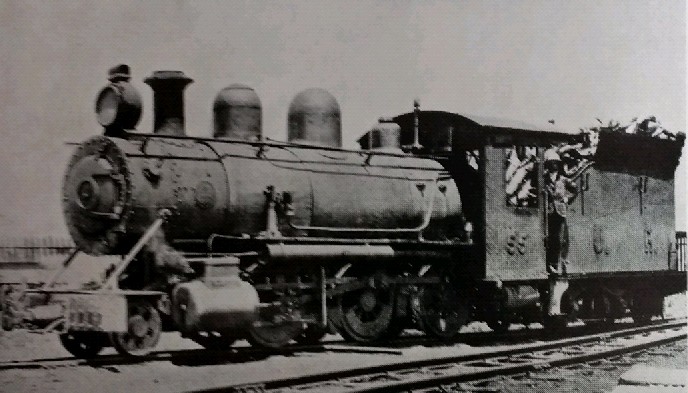
Class N 2-6-0 Locomotive, introduced in 1896. [1]

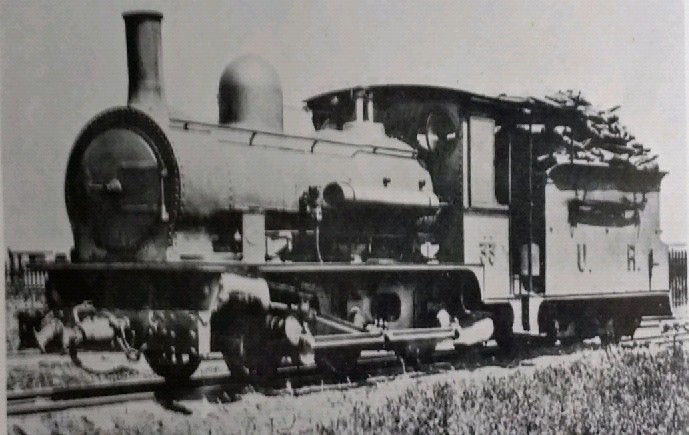
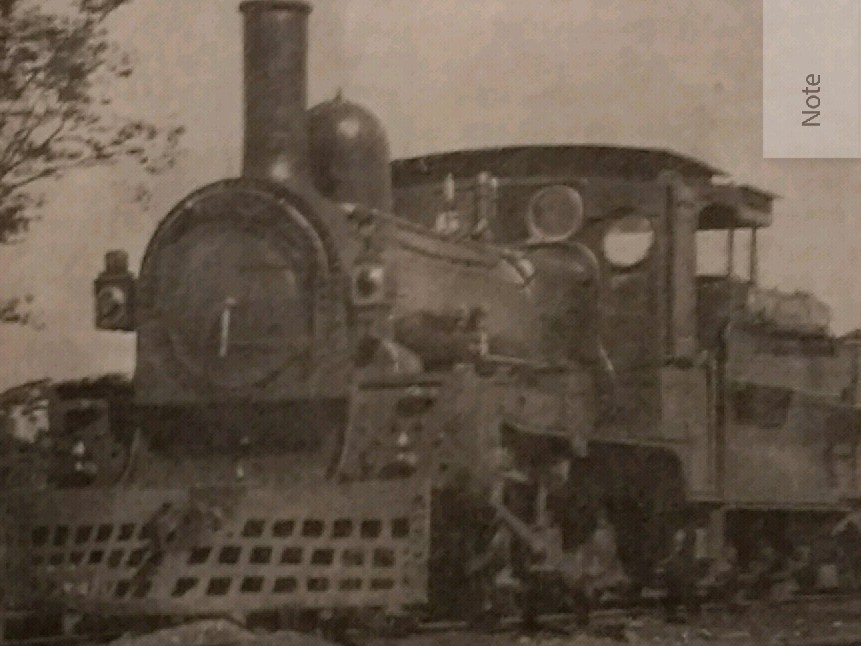
Two locomotives were imported from India to commence construction work

Gibson states, “There appears to be no detailed description of the locomotives available today, nor is it certain that they were both of the same type, as both ” A ” and ” E ” class engines are mentioned in early papers. They were certainly very small, and the Chief Engineer reported them as being incapable of hauling more than two wagons on a 1 in 30 grade.”

The ‘N’ class locomotives are the first for which details available. Eight were started work in 1896, and a further eight in 1899.  Gibson states that  some were fitted with, “Joy’s valve gear and the balance with Walschaerts link motion. These engines suffered from one serious defect, in that they continually derailed.”

To strengthen the roster and  provide more reliable motive power than the than the ‘N’ class, eight ‘F’ class engines were delivered in 1897 and a further 26 followed in due course. In the latter part of 1897, orders were placed with Baldwins for 36 engines, known as the ‘B’ class; 20 were came in 1899 and the balance in 1900. “They proved reliable in service, but more expensive to maintain than the ‘F’ class. They were typical of American design at that time, with bar frames, and sand box mounted on the boiler top.”

By 1910 both these classes were in poor shape. They were kept in service druing the Great War and were not finally written off until 1931. Several of them were destroyed by mines laid by enemy raiding parties. “In April and May, 1915, some 50 attempts were made on the railway by such parties, often resulting in fatal casualties among train crews.”

By 1910, more power was essential. Orders were placed with the North British Locomotive Company, in 1911 for 18 Mallet-type compound locomotives which arrived in 1913/14. They were marginally re-designed locally which improves things but they remained unpopular with drivers. Failures continued to happen often and they were scrapped in 1930.

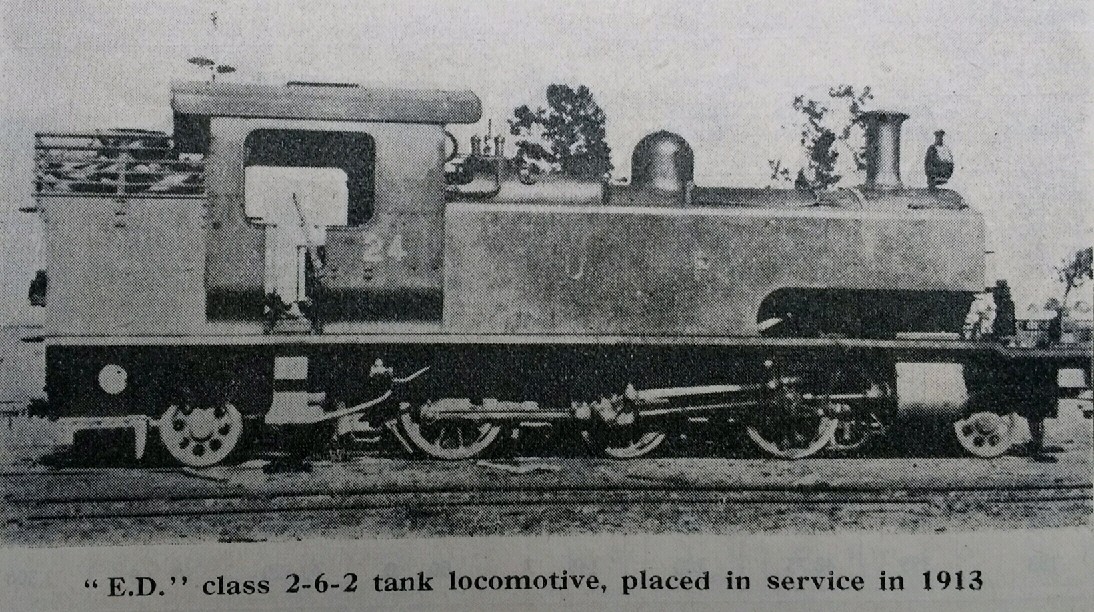
Also in around 1910, “three side-tank engines were ordered from Nasmyth, Wilson, known locally as the ‘E.D.’ class, and placed in service in 1913. They proved successful and were employed on main line traffic … but with fuel consumptions equal to the older engines. They were scrapped in 1938.”Class E.D. 2-6-2 Locomotive. [4]

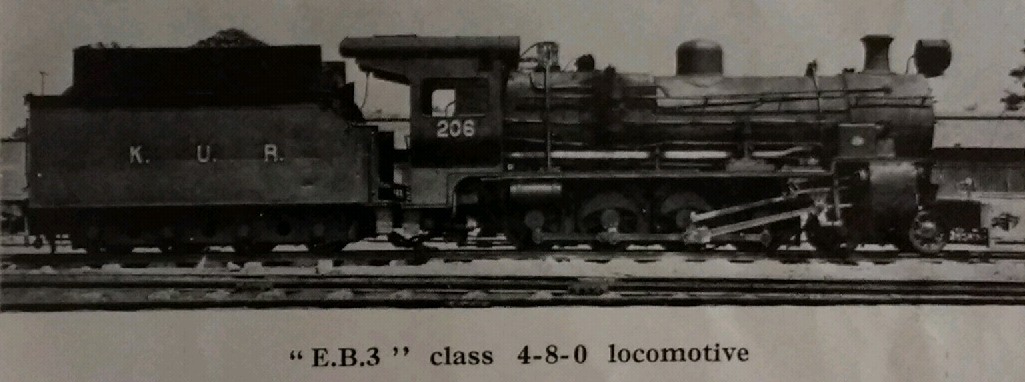
Seven ‘E.B.’ class engines were put into service at the outbreak of the Great War. Thirty four further ‘E.B.’ class locos were purchased. They had minor design differences and so were classes ‘E.B.1’. Seventeen started work in 1920 and seventeen in 1921. The first E.B. locomotives were disposed of in 1934 as were the majority of if the E.B.1’s. six were still in use when the Railway Magazine article was written.

“The ‘E.B.’ class were built by Nasmyth, Wilson & Co. Ltd., and the ‘E.B.1’ class by the North British Locomotive Co. Ltd. Oil fuel equipment was first tried out in the colony on one of these engines.”

The history of the different locomotive types is continued with reference to the ‘ Class E.E’ which was supplied by Nasmyth, Wilson & Co. Ltd. They were placed in service in 1913 and 1914. It had been expected that they would be withdrawn in 1939 but the advent of the Second World War changed things and they were still in use in 1950 when the Railway Magazine article was written. They were similar to the ‘E.D.’s  but by adding a trailing bogie in place of the pony, water capacity was increased by a half to 1200 gallons and fuel capacity by 2/3rds to 2.5 tonnes .

Superheaters  were trialed in 1921, Nasmyth, Wilson, produced two locos with similar specs.  to the ‘E.B.’ and ‘EAU’ Locomotives with Robinson superheaters fitted, they were known as the ‘E.B.2’ Class. They served well and were disposed of in 1934 after being very heavily worked. Those trials resulted in the purchase of  62 No. ‘E.B.3′ Class engines, all of which  were still in service in 1950. Class EB3 Locomotive. [3]

By 1950 they had been relegated to branch-line and pick-up traffic because more powerful locomotive were now in play.

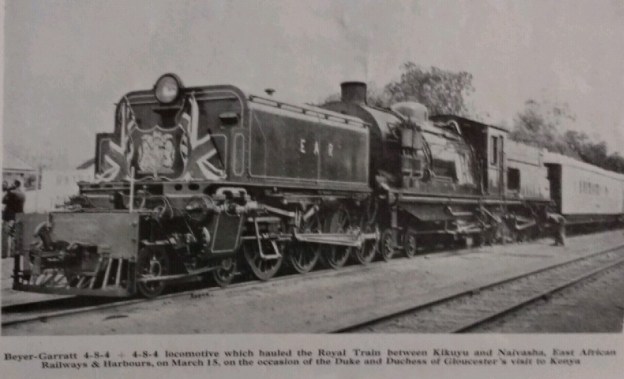
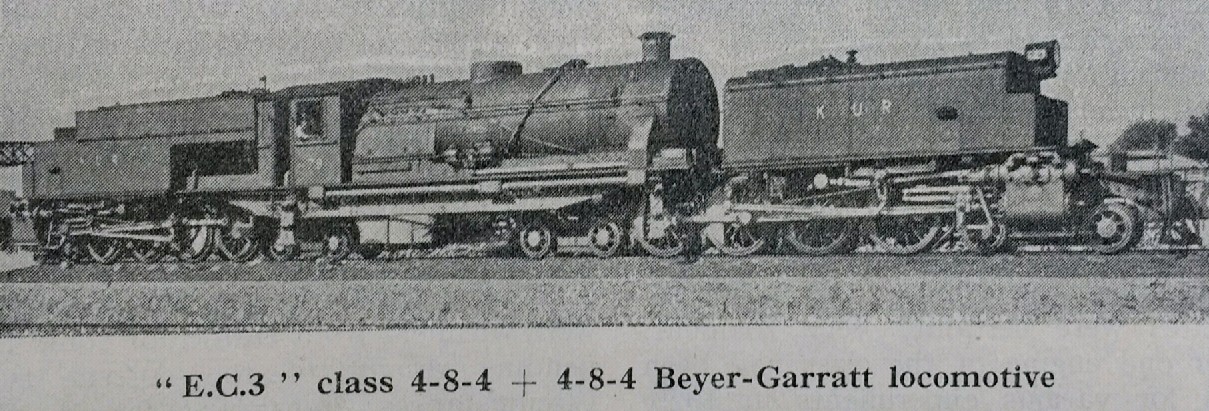
In the late 1920s, 21 ‘E.E.’ CLass shunters with 2-4-2 wheel arrangements were employed and they were followed by a further 6 of the Class in the 1930s. The late 1920 saw thw arrival of the first Beyer-Garratt type engines, “which later were to become the mainstay of the railway’s motive power. An initial order for four ‘E.C.’ class was received and they were put into service immediately. The wheel arrangement and the motion was based on the ‘E.B.3’ type, with slightly smaller cylinders, and the axle-load limited to 10 tons to enable the engines to be used on the 50-lb track of branch lines.”Class EC3 4-8-4+4-8-4 Beyer-Garratt Locomotive. [4]

In 1939, these four engines, with two of a later class, were sold to Indo-China to make room for six engines of a heavier type.

I have posted about these locomotives in another article:

Beyer-Garratts to IndoChina-Yunnan Railways

The success of these first Garratt’s led to an order for a further 12 Garratt type locos from Beyer, Peacock & Co. Ltd. Minor modifications meant that these were designated as the ‘E.C.1’ class. The adhesive weight was increased to 83.85 tons; total weight to 134.6 tons; water capacity to 5,250 gallons; and fuel to 10 tons.

“In 1931, ten ” E.C.2 ” class Garratt locomotives, made by the North British Locomotive Co. Ltd., were imported. They [were] a little heavier than the ” E.C.1 ” class, having an adhesive weight of 87.95 tons and a total weight in working order of 142.1 tons. In all other leading particulars they are identical although there are a few differences in detail where infringement of established patents might occur.”

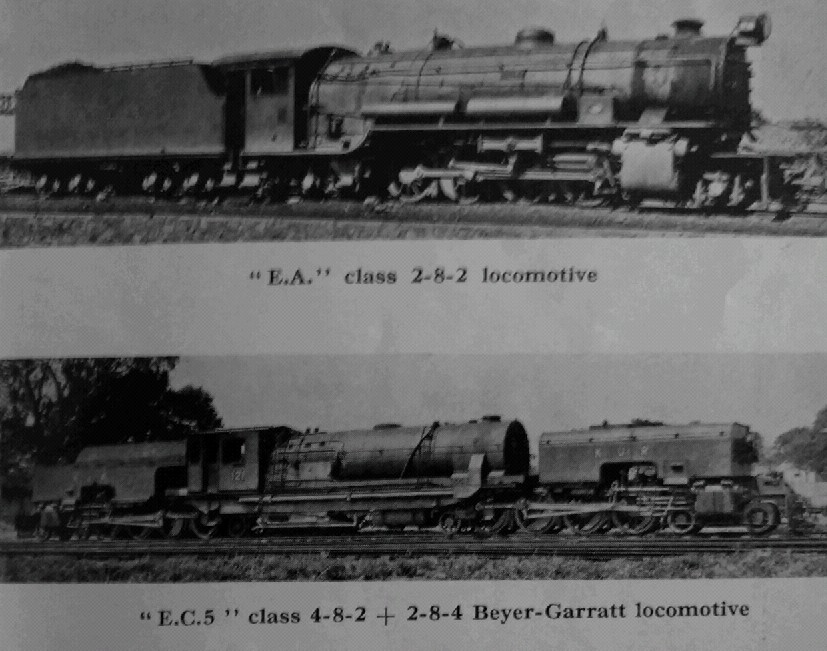
Six 2-8-2 engines were also ordered and arrived in the colony in 1925, but were not placed in service until 1927-28. They were designated as the ‘E.A.’ class.. They performed really well but by 1950 had been relegated to “long distance through goods traffic between the capital and Mombasa, being limited by their 17.5 tons of axle load to this section, which until recently (1950) was the only line laid with 80-lb. rails.” Class EA and EC5 Locomotives. [3]

IN 1950, plans were afoot to refurbish the ‘E.A.’ Class.

After 1930, all locomotives purchased were of the Beyer-Garratt type:

  • 1939: 6 No. ‘E.C.3’ engines.
  • 1940: 2 No.  further ‘E.C.3’ locomotives.
  • 1941: 4 No.  further ‘E.C.3’ locomotives.

“They recorded large mileages during the late war, when traffic demands were the heaviest in the history of the railway. One engine covered 243,000 miles between shopping for heavy repairs, while several ran over 200,000. The boilers are fitted with arch tubes and thermic syphons. The maximum axleload (was) 11.75 tons, which limit(ed) their use to anything but main line traffic, where they (were) used on mail and through freight trains, hauling loads of up to 575 tons on 2% grades.”

  • 1944: 7 No. ‘E.C.4’ Class Garratts came from the War Department. By 1950, they were still the most powerful locomotives on the network. 
  • 1945: 2 No. ‘E.C.5’ Class ‘Burma Type’ locomotives. These moved south to Tanganyika in 1949.
  • 1949: 6 No. ‘E.C.6’ locomotives almost identical in design to the ‘Burma Type’.

In 1950 further Beyer-Garratt type locomotives were on order.

1. G. Gibson; Kenya & Uganda Railway Locomotives; The Railway Magazine, Volume 96, No. 590, p401-405.

2. The Railway Magazine, Volume 96, No. 590, p398.

3. The Railway Magazine, Volume 96, No. 590, p399.

4.The Railway Magazine, Volume 96, No. 590, p404.

5. The Railway Magazine, Volume 96, No. 590, p402-403.

The Uganda Railway – Part 29 – The Railway Magazine 1950 – April 1950

I have been looking through old railway magazines over the Christmas break in 2018 and came across articles in the 1950 editions of the Railway Magazine which relate to this series of posts. The first is in the April 1950 edition of the magazine. ……..

The April 1950 edition of The Railway Magazine [1] contains the first of these articles written by Thomas H. Cobb.

He begins with a relatively short description of the route of the line, first focussing on the route via Kisumu (Port Florence) and Port Bell to Kampala and then on the route via Tororo.

He comments: “These lines have always been state railways, though they are administered as a separate department.”

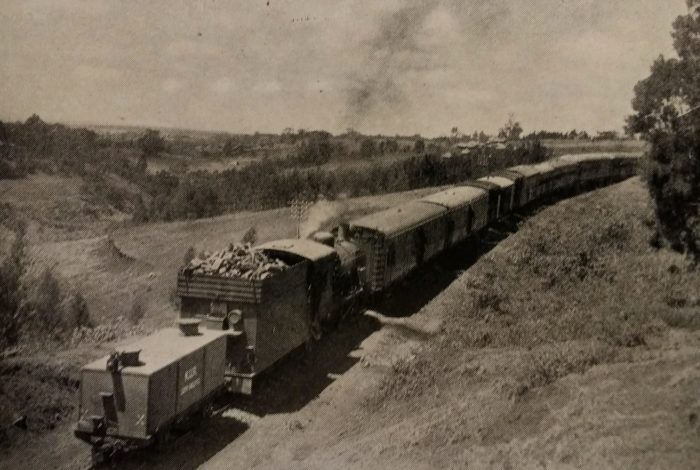
Cobb goes on to describe a journey on the line. He notes: “There is practically no difference between first and second class, except that the former have a fan and bed-reading lamps, and are slightly less crowded. Third class carriages have wooden seats and centre corridors; they are always crammed to bursting point. Hire of bedding, and food in the restaurant cars is cheap, and passengers are officially encouraged not to tip company servants – but they do. Speed is never high; the up mail train covers the first 30 miles out of Mombasa in 100 min., including two stops. All trains stop at all stations, with the exception of a few ‘local’ stations neat Mombasa and an odd flag stop or two usually missed by the mails.”

The Uganda Mail heading for Lake Victoria in the Kikuyu Hills, banked by 4-8-0 Locomotive No. 69. [2]

An EC3 at the spiral close to Timboroa Station. [2]

He concludes with some trivia:

  • from Mbulamuti to Jinja the east-west main line runs distinctly eastwards for about 20 miles.
  • The curves on the line have the inner edge of the outer rail oiled by hand twice a week.
  • The two summits of 8,322 and 9,136 ft. on the Kisumu and Kampala lines respectively are only 20 miles apart, but on quite separate lines, yet they have each pursued an independent course of over 60 miles from their divergence at Nakuru.
  • The only racial discrimination on the railway is against Europeans, as they are not issued with tickets below second class, even for trains which consist of third class carriages only.

References

  1. Thomas H. Cobb; The Kenya-Uganda Railway; in The Railway Magazine No. 588 Vol. 96 April 1950, p262-267.
  2. The Railway Magazine April 1950, p250.

The Uganda Railway – Part 1

From late April to mid May 2018 my wife and I were in Uganda. This was my 6th visit to the country. On the first, in 1994, I travelled to Kampala from Mombasa on the railway. It was a fantastic journey in a slow moving train with silver service in the dining car and with beds made up for us by staff each night. There were two separate trains, a njght train from Mkmbasa to Nairobi run by the then Kenya Railways and a train from Nairobi to Kampala run by Uganda Railways.

The track is metre-gauge.

This short series of posts tells the story of the line to 2018 and then looks forward from that year into the future. In recent times the railway system in Uganda has had a chequered history and had been relatively badly managed, as you will see. The present network is in a dilapidated state. The network is shown in the image below.


The country of Uganda has about 1,350 kms of railway lines and most of it has not been operational for over 25 years. Repairs had been completed on the Tororo-Gulu line and were still ongoing on the Gulu-Pakwach Line in early 2014. [1]

The railway originating at Mombasa on the Indian Ocean connects to Tororo in Uganda, where it branches westward to Jinja, Kampala, and Kasese and northward to Mbale, Soroti, Lira, Gulu, and Pakwach (to the south-east of Arua and on the northern edge of the Murchison Falls National Park – the Pakwach Bridge crosses the White Nile close to the town).

There was no chance, in 2018, for me to check out the railway system. After a very short stay in Kampala we spent the rest of our time in the south-west of the country in Kyegegwa, Rukungiri and Kisoro.

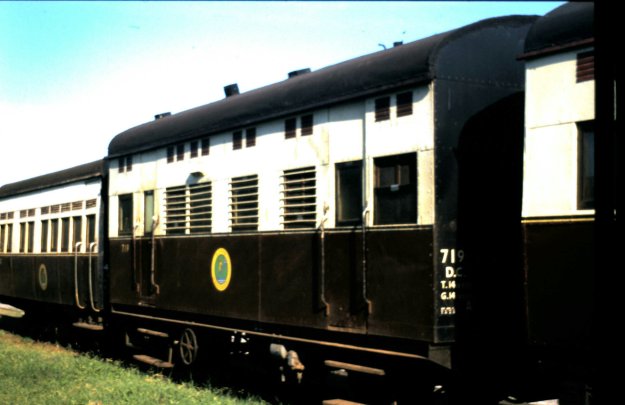
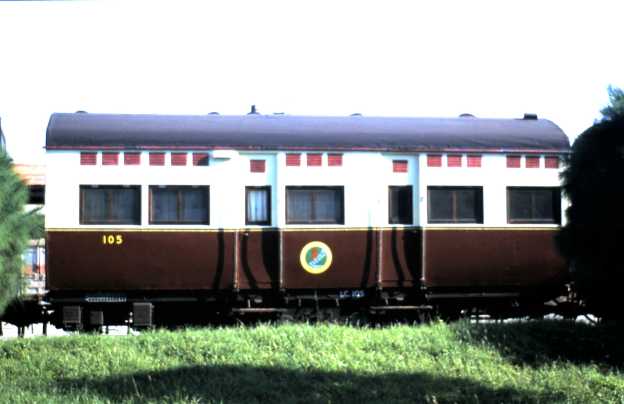
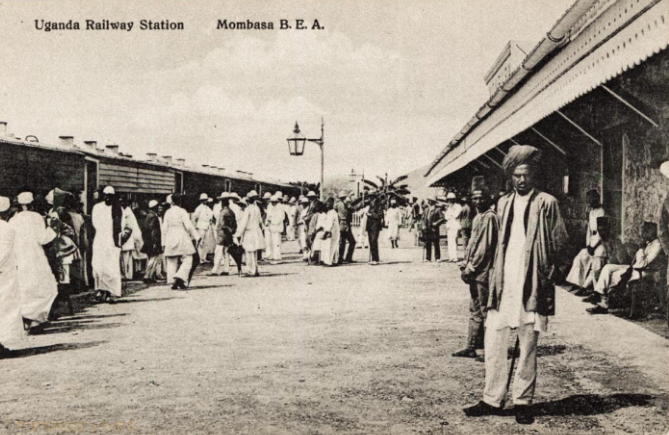
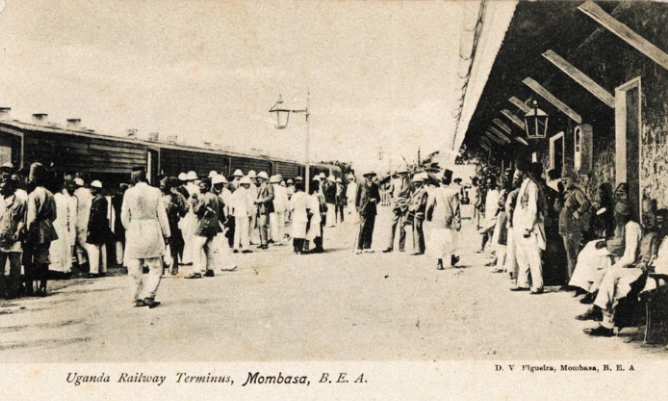
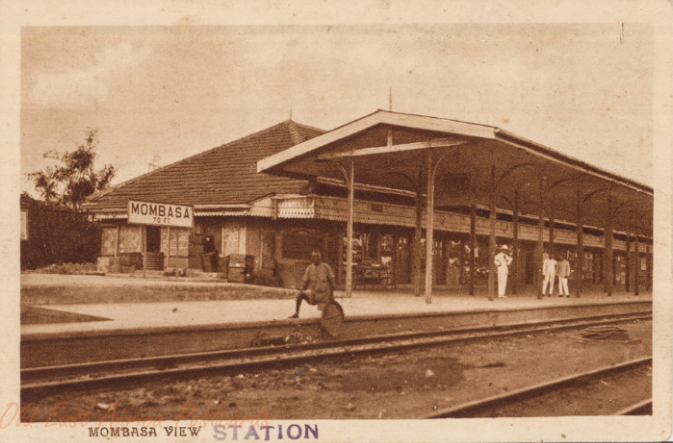
Back in 1994, I was taking slides and being very careful not to exhaust my supply of film. How much things have changed! I do have four pictures, taken at Mombasa railway station, of coaches from the early to mid 20th Century which were stored among slightly more modern stock, at least three seemed still to be in use. …..

The last photo above is courtesy of Jennifer Wu (https://www.flickr.com/photos/wippetywu/8333244855), those below are some early postcards of the station in Mombasa.

The Early History of the Line

The Uganda Railway was built during what became known as the Scramble for Africa, (the struggle between European powers for dominance in Africa). It provided a strategic link between the coast at Mombasa and the Great Lakes region. In doing so, it effectively secured British domination of the region.[2],[3]

The Uganda Railway was named for its ultimate destination. Its original length of 660 miles (or 1056 kilometres) lay entirely in what we now call Kenya.

Work on the railway began at the port of Mombasa, in what was then called British East Africa, in 1896. The intended terminus at Kisumu on the shores of Lake Victoria was reached in 1901.[2],[4]

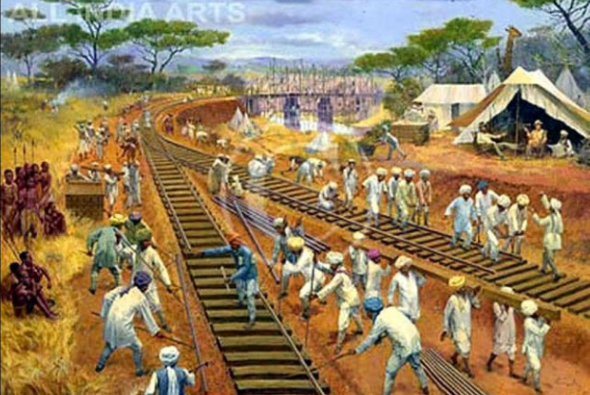
Construction was carried out principally by labourers from the Indian subcontinent, 32,000 of whom were brought in because of a lack of local labour in very sparcely populated areas of East Africa. The horrendous truth is that the line was built on the lives of those labourers. 2,498 workers died during the construction of the railway.[2],[5] An artists impression of the work is shown in the image below (courtesy of Charan Kundi).
Many of the labourers returned to India but 6,724 decided to remain after the line’s completion, creating a community of Indian East Africans.

The railway is, almost in its entirety, single-track. A massive logistical exercise was put in place to import from India a very significant amount of steelwork – rails; fishplates and bolts; keys; and girders. Over 1.2 million sleepers were also required. To secure the necessary throughput of materials, Kilindini Harbour ws created in Mombasa. “The railway was a huge logistical achievement and became strategically and economically vital for both Uganda and Kenya. It helped to suppress slavery, by removing the need for humans in the transport of goods.” [2],[6]

The railway line had a significant impact. It effectively created Uganda and Kenya as the countries that they became. As we have already noted, the railway defeated the slave trade in British East Africa. It allowed heavy equipment to be transported with relative ease.

The use of indian sub-continent labour resulted in a very significant minority of Asians in East Africa. These Indians worked as “dukawallas” (shopkeepers), artisans, traders, clerks, and, finally, lower-level administrators. Excluded from the middle and senior ranks of the colonial government and from farming, they became a commercial middleman and professional community.[7] The British administration encouraged European settlement and farms were set up for coffee and tea production with the railway available to ensure easy shipping to Europe for processing. As the numbers of settlers and farms increased native populations became alienated from their land and seeds were sown for the later struggle for independence. At the same time, inceeases in white settlement made demands on the railway. New small stations were required to allow transportation of agricultural produce. These stations included: Nakuru, Naivasha, Tigoni, Kijabe and Sigona.

In addition, the railway contributed to increased urbanisation. Many of today’s towns in Kenya, and some in Uganda, have reulted from the presence of the railway. Mombasa urbanisation can be traced to the start of the construction of the line. Nairobi was a rail depot placed in the middle of a swamp, and is now the capital of Kenya. Other towns for which this is true are … Kikuyu, Naivasha, Nakuru (where the main line splits, one branch going to Kisumu and the other to Uganda), Nanyuki, Eldoret (originally called “64″ its distance, in miles, from the railhead at the time), Kitale (a small farming community in the foothills of Mount Elgon), Kisumu (then called port Florence, a city and port on Lake Victoria allowing ferry transport between Kenya, Tanganyika (modern Tanzania) and Uganda), Port Bell (a rail-linked port, near to Kampala, on Lake Victoria allowing ferry transport between Kenya, Tanganyika and Uganda), and Jinja.

Tourism also began to develop. “The railway provided a ‘modern’ means of transport from the East African coast to the higher plateaus of the interior. US president Theodore Roosevelt is one of the notable people who had safari adventures aboard a train in the early days of the use of the Kenya-Uganda railway.”[7]

The railway also opened up the interior to systematic government programmes to attack slavery, witchcraft, disease and famine. [7]

We have already heard that close to 2,500 of the 32,000 workers on the line died during its construction. There are two particular causes worthy of significant note.

The first concerns the death of a number of conctruction workers in 1898 during the building of a bridge across the Tsavo River. Hunting mainly at night, a pair of maneless male lions stalked and killed at least 28 Indian and African workers – although some accounts put the number of victims as high as 135.[2],[8] The picture above shows one of the two lions and Lieutenant-Colonel John H Petterson who killed it.

The second concerns resistance from locals. Building the railway met local resistance on various occasions. A major incident was the Kedong Massacre, when the Maasai attacked a railway worker’s caravan killing around 500 people because two Maasai girls had been raped. An Englishman unconnected to the railway, Andrew Dick, led a counter-attack against them, but ran out of ammunition and was speared to death by the Maasai.[2],[9] At the turn of the 20th century, the railway construction was disturbed by the resistance of the Nandi people led by Koitalel Arap Samoei. He was killed in 1905 by Richard Meinertzhagen, finally ending the Nandi resistance.[2],[9]

Some of the socio-economic background to the construction of the Uganda Railway will be considered in later articles in this series.

References

1. Lucy Styles, Uganda Railway Assessment, January 2014 (updated to June 2015); http://dlca.logcluster.org/plugins/servlet/mobile#content/view/3375402, accessedon 8th May 2018.

2. Wikipedia, Uganda Railway; https://en.m.wikipedia.org/wiki/Uganda_Railway, accessed on 6th May 2018.

3. Richard T. Ogonda & George M. Onyango; Development of Transport and Communication. In William Robert Ochieng’; Historical Studies and Social Change in Western Kenya. Nairobi: East African Educational Publishers, 2002. p219–231.

4. Richard T. Ogonda; Transport and Communications in the Colonial Economy. In William Robert Ochieng’ & R. M. Maxon; An Economic History of Kenya. Nairobi: East African Educational Publishers, 1992. p129–146.

5. Christian Wolmar; Blood, Iron & Gold: How the Railways Transformed the World. London: Atlantic Books, 2009.

6. Frank Richardson Cana; British East Africa. In Hugh Chisholm. Encyclopædia Britannica. 4 (11th ed.). Cambridge University Press, 1911. p601–606.

7. The Enzi Museum, Construction of the Kenya-Uganda Railway;
http://www.enzimuseum.org/archives/275, accessed on 8th May 2018.

8. Man eating lions – not (as) many dead; Railway Gazette International. 27 November 2009. http://www.railwaygazette.com/news/single-view/view/man-eating-lions-not-as-many-dead.html, accessed on 8th May 2018.
9. David Kaiza; End of Lunatic Express; The East African. 21 September 2009. http://www.theeastafrican.co.ke/magazine/-/434746/660876/-/view/printVersion/-/32dc3d/-/index.html, accessed on 8th May 2018.