
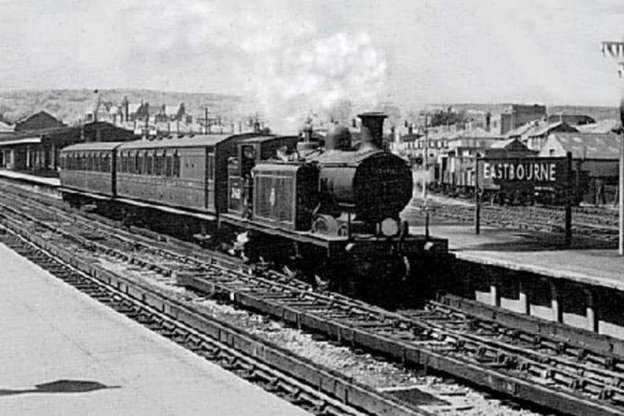
The featured image for this article shows a two coach train awaiting departure at Eastbourne Railway Station. It think that the locomotive is an ex-LB&SCR E4 0-6-2T in BR livery. These locomotives were originally numbered 463-503, 507–520, 556–566, and 577-582. The number on the smoke box is not legible in the photograph. The exact locomotive shown in the photograph cannot easily be determined from the image. [21]
When the first railway was projected southwards from London to the Sussex Coast, its promoters had as their objective Brighton, which already was a well-established holiday resort. The eastern extension of this main line served the county town of Lewes, and had reached the western outskirts of St. Leonards by the summer of 1846, but it was not until 14th May 1849, that a 4.5-mile branch was opened from Polegate to serve Eastbourne, which was then little more than a village. The advent of the railway marked the beginning of the growth of Eastbourne as a holiday resort and residential area. At the end of the 1849s, Eastbourne’s population was around 2,500. By 1953, the town was a county borough, with a population of nearly 58,000, and in 2026 the population is around 105,000. [1] It has been suggested that the modern town of Eastbourne “was virtually created by the seventh Duke of Devonshire in the mid-nineteenth century, [but] there is little doubt that the advent of the former London, Brighton & South Coast Railway in 1849 was the influencing factor in promoting,” [3: p723] the growth of the town.
Since the inauguration of the line in 1849, the original modest terminus of the branch was twice superseded by a larger station. The first station was built in 1849, this was rebuilt in 1866 and rebuilt yet again in 1886. [2]
Stones writes: “An Act of 18th June 1846, authorised the London, Brighton & South Coast Railway Company (successors to the Brighton, Lewes & Hastings Railway) to construct two short lines from Polegate, to Eastbourne and Hailsham respectively, and these were completed and officially opened simultaneously on 14th May 1849. Originally, it had been intended that after leaving Polegate, the Eastbourne branch should pass through the village of Willingdon, and terminate in what is today the Old Town of Eastbourne, situated about a mile-and-a-half from the coast. However, because of the undulating nature of this route, and other considerations, it was finally decided to construct the line further to the East, with a terminus at the neighbouring and growing residential hamlet of South-Bourne, half-way between East-Bourne and the sea. As a result the Eastbourne branch, four-and-a-half miles in length, ran south-east from Polegate and traversed the Bourn or Willingdon Level, which forms part of an extensive plain extending to the east from the slopes of the South Downs. Although the terminal station was named ‘Eastbourne’ when the branch was opened in 1849, it was actually in South-Bourne, which was subsequently to disappear in name and become an important part of modern Eastbourne.” [3: p723,725]
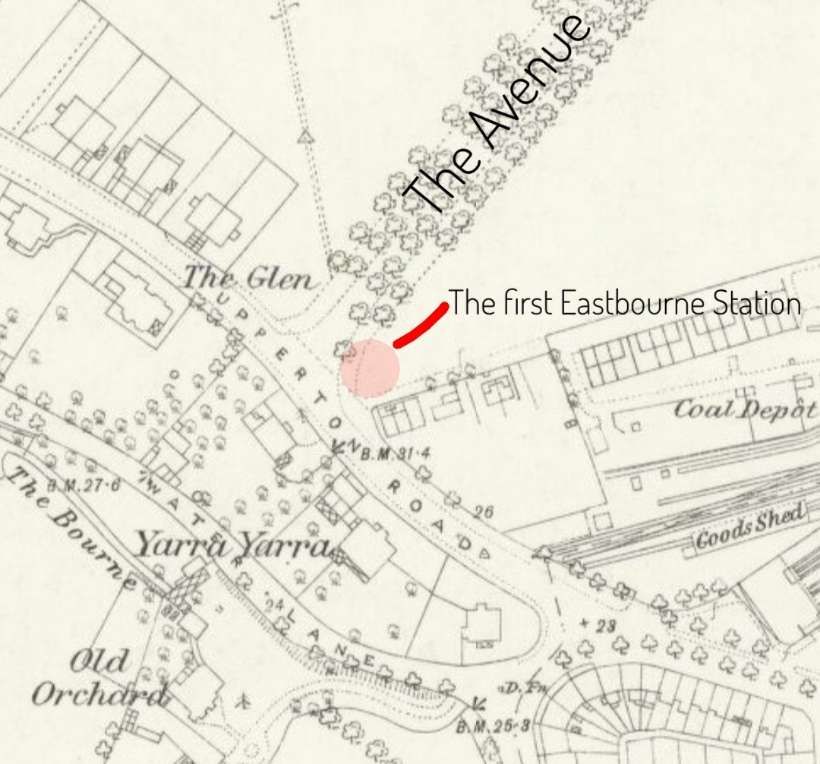
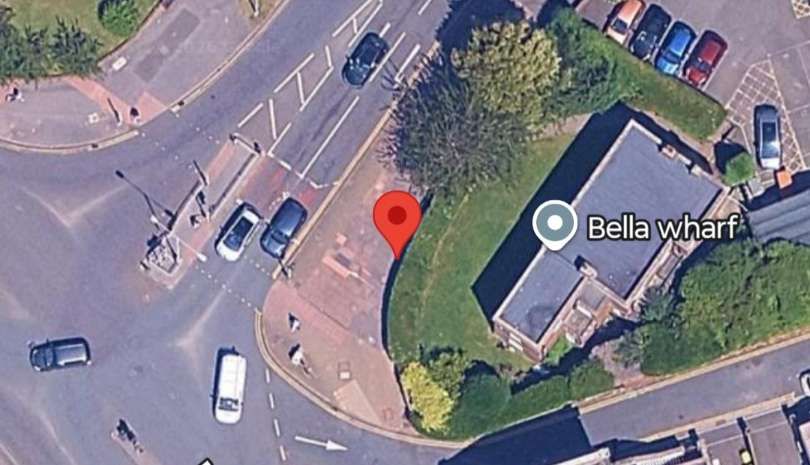
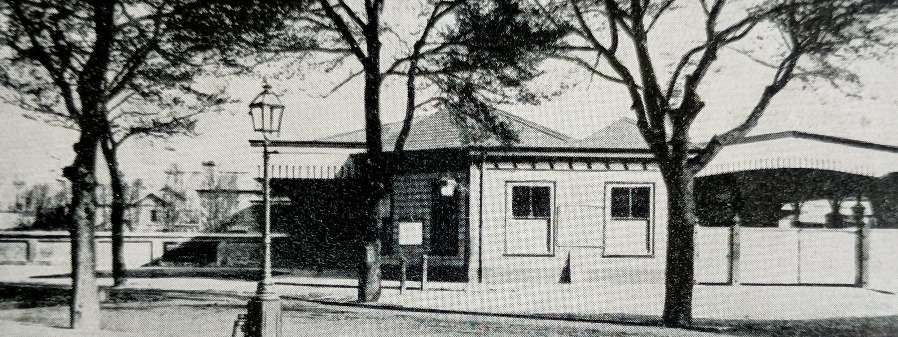
Stones tells us that “The first station at Eastbourne was situated to the west of the present terminus; the building was a small modest timber structure measuring 20 ft. by 12 ft. Several years later, the original station and tracks were removed to allow Upperton Road to pass over the site and link up with the main thoroughfare, Terminus Road. The old station building was moved and erected on the west side of the existing goods yard where it was converted into a dwelling house at present known as No. 1, Wharf Road.” [3: p725] In 1953, the building still stood but was over-shadowed by modern buildings.
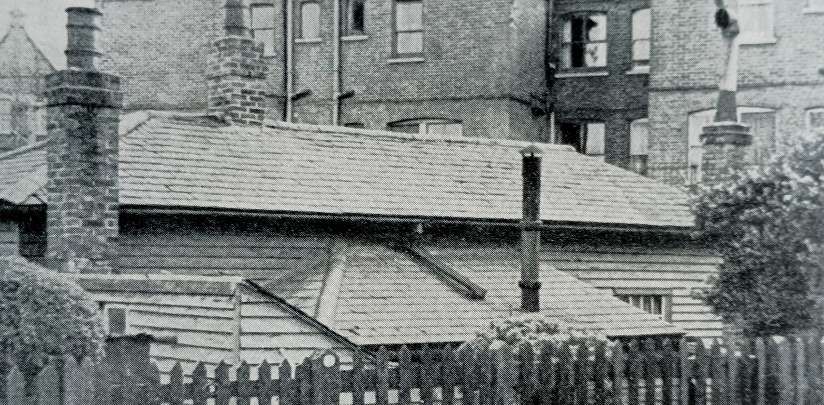
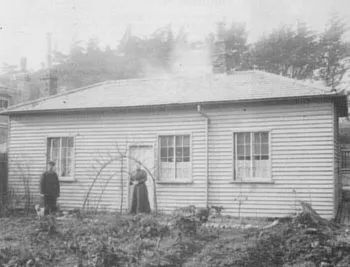
Another view of the original station building, this time in its original location close to the end of The Avenue. [4]
Stones tells us that when the line was opened, “two engines were stationed at Eastbourne but one was always kept in reserve. The other worked a shuttle service of local trains between Eastbourne and Hailsham via Polegate, where, at that time, the engine had to run round its train. At the commencement there were few trains, but by 1854 the service had increased to nine trains in each direction on weekdays. Passengers for London, Brighton, and Hastings were obliged to change at Polegate for some years, and this inconvenience proved a constant source of annoyance to Eastbourne residents, who considered that the importance of the town was being relegated by the poor railway facilities provided. This opinion was substantiated by the fact that in Bradshaw’s Monthly Descriptive Railway Guide for June 1857, the timetable did not even mention Eastbourne, and gave Brighton, Newhaven, St. Leonards, and Hastings as the important stations on the coast.” [3: p725]
In 1866, or perhaps as late as 1872, a replacement station was constructed at the corner of Terminus Road and Gildredge Road.
Apparently, the connecting service between Eastbourne and London in 1866 comprised seven trains daily in each direction.
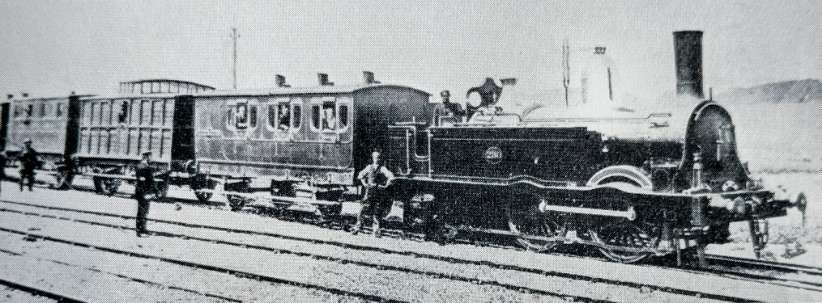
Improvements to the service to and from London occurred in 1875 when, Stones writes, “several trains running between London and Hastings were provided with through coaches to and from Eastbourne, which were attached or detached at Polegate. At the same time, the 5 pm express from London Bridge to Brighton slipped a portion (first class only at ordinary fare) for Eastbourne at Haywards Heath.” [3: p725-726]
It was not until September 1880 that Eastbourne was finally connected with Tunbridge Wells when a line from Hailsham to Eridge was opened. “On 1st April 1884, a service of two expresses daily in each direction between Charing Cross and Eastbourne was inaugurated. … The new service did not prove a success … and was withdrawn on 31st December 1885” after agreement had been reached between the SER and the LB&SCR for a sharing of traffic receipts. [3: p727]
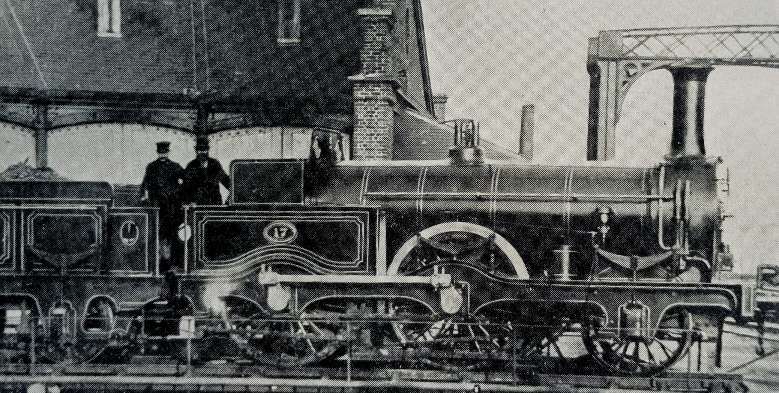
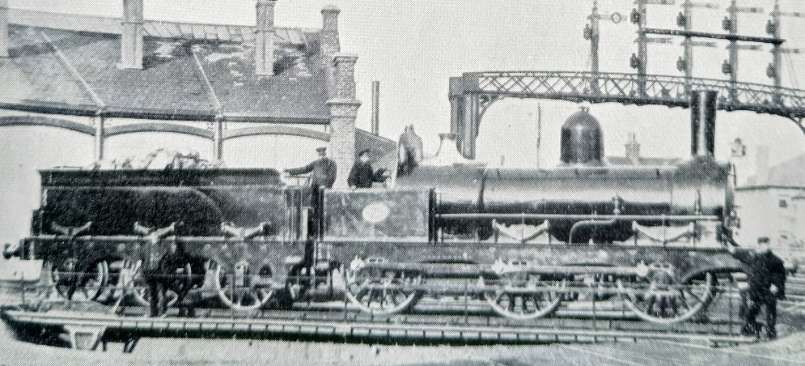
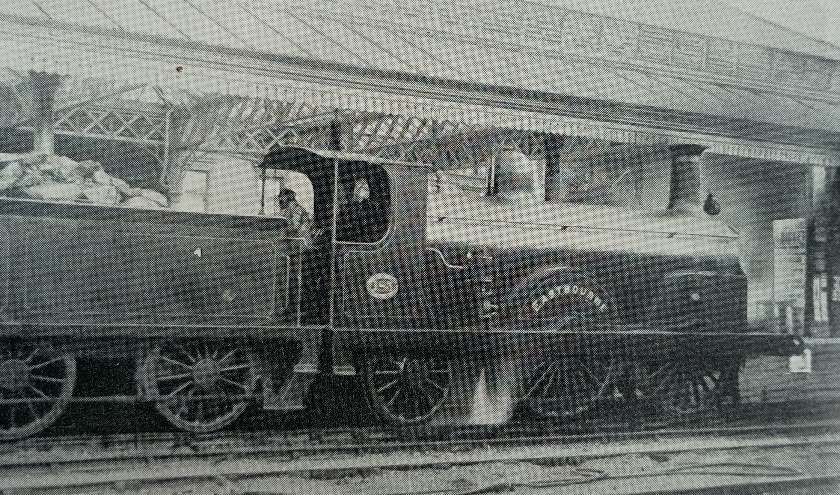
By 1904, agreement had finally been reached between the LB&SCR and the LNWR to run through coaches between Liverpool and Brighton and Eastbourne. Stones says, “This popular innovation, which obviated crossing London, soon developed into what was known as the ‘Sunny South Special’, which conveyed through portions from Liverpool (Lime Street), Manchester (London Road) and Birmingham (New Street). Up to the time of grouping this train was composed of LNWR. rolling stock, and included dining-car facilities. The service commenced to run daily (Sundays excepted) in each direction on 23rd July 1904, via Brighton and terminating at Eastbourne.” [3: p728]
At the time Stones was writing in 1953, the service had not been resurrected after the war.
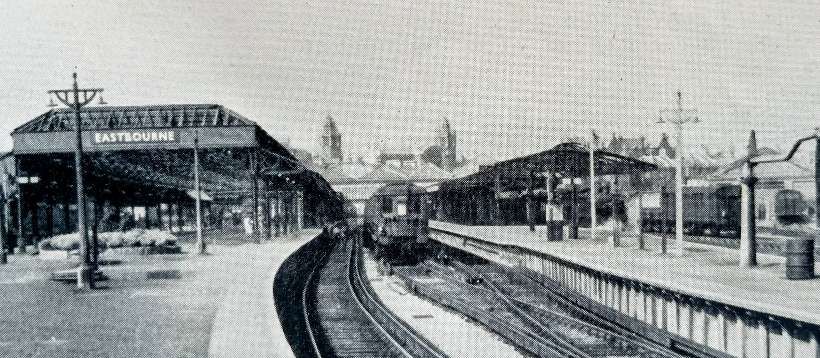
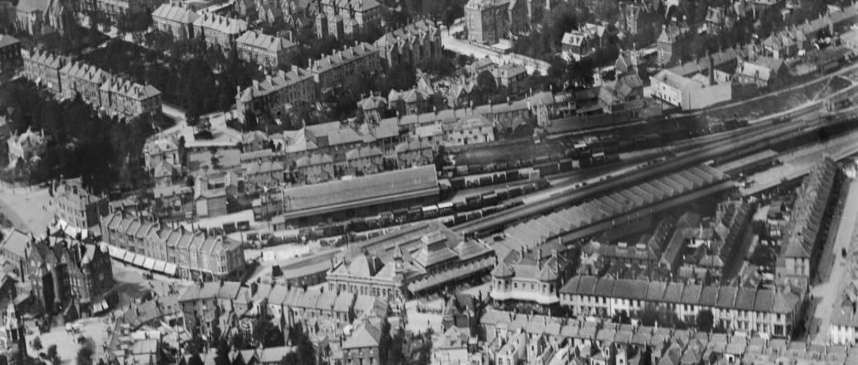
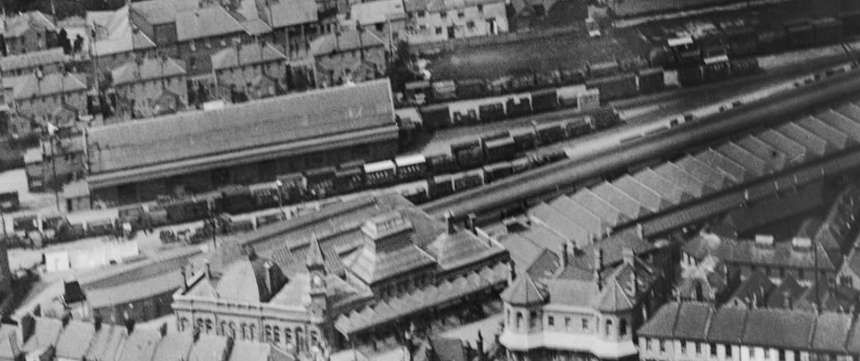
In 1953, Stones described Eastbourne Station: “The present station at Eastbourne consists of two island platforms served by four terminal tracks capable of holding 12-car electric trains. On the east side of the station there is a covered roadway for taxis and other vehicles between platforms 3 and 4, originally known as the arrival side. The platforms lead to a large circulating area around which are located the refreshment and dining rooms, waiting rooms, parcels office, and so on, with the booking hall at the western entrance to the station. During the second world war, the platforms and tracks were severely damaged by bombs on several occasions, and although most of the repairs have been completed, part of the platform awnings are still of a temporary character.” [3: p728]
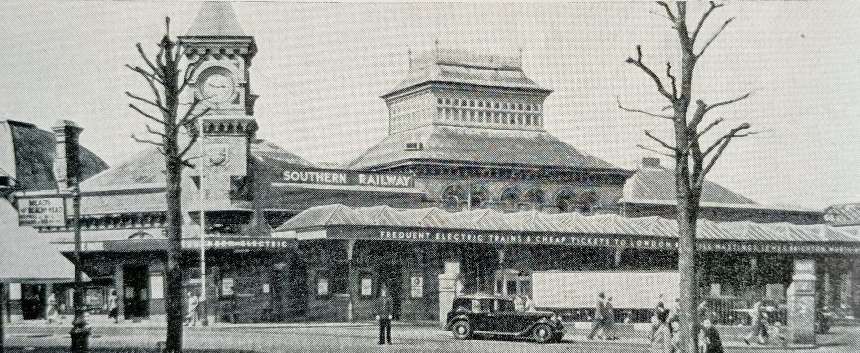
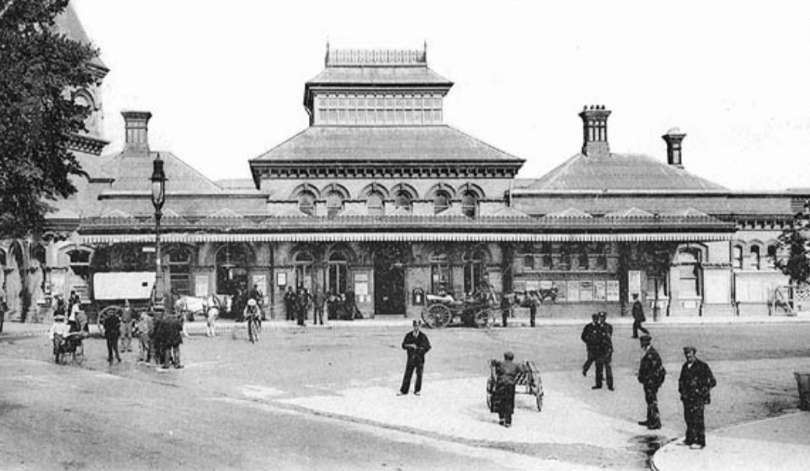
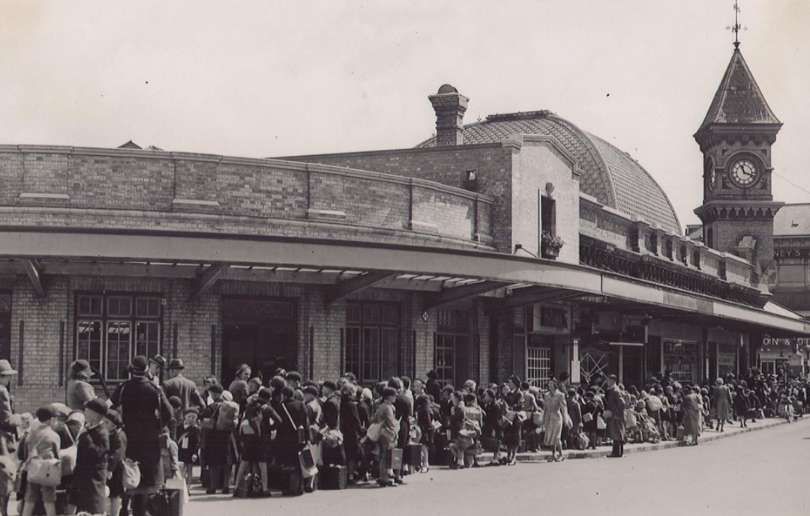
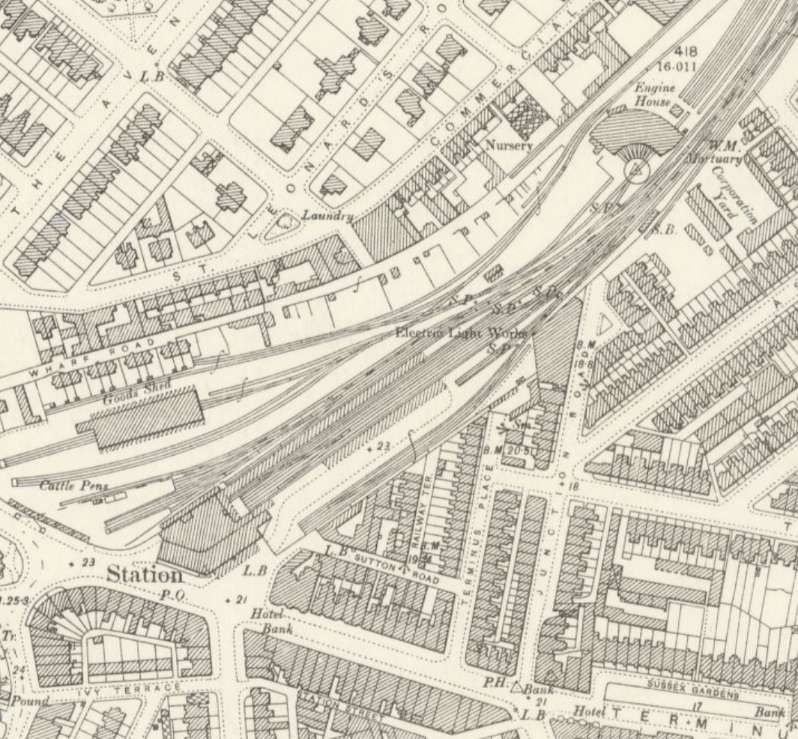
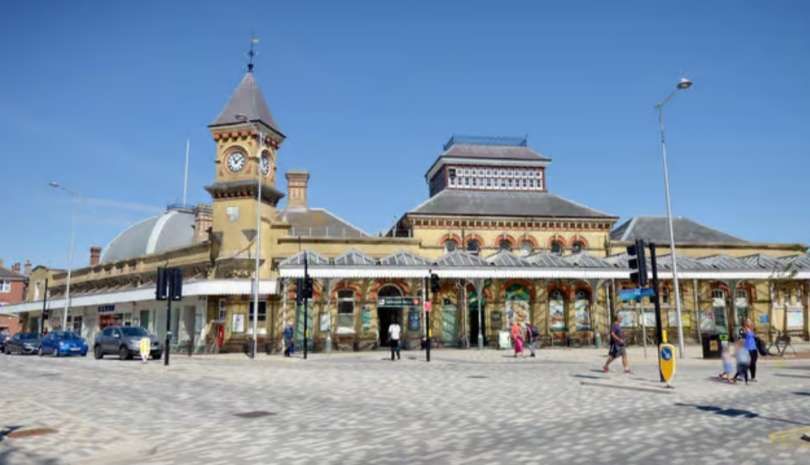
The present building is essentially that which was built in 1886, designed by F.D. Brick, which had a vaulted canopy and lantern roof, similar to Lewes. “The station had 4 platforms which increased in length over the years. There was also two run around loops between platforms 2 and 3. Over the years one of the runaround loops was lost as platforms 1 and 2 were built wider. On 12th April 1977 platform 4 was shortened from a 12 coach to an 8 coach length to make way for the ring road construction. And was taken out of use and the track lifted during the Eastbourne re-signalling in 1991.” [7]
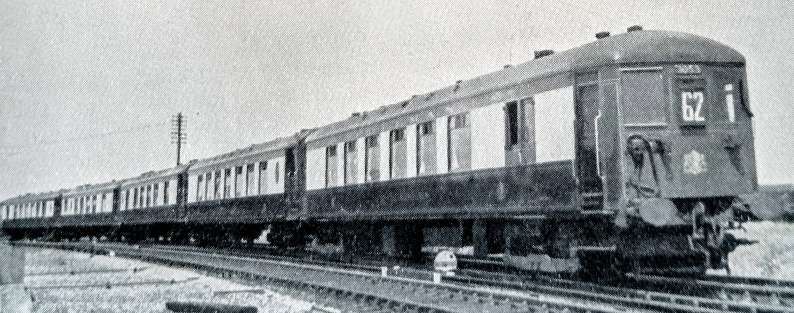
The line into Eastbourne was electrified by July 1935. Stones comments in 1953 that: “the number of trains to and from London (Victoria and London Bridge) has been increased and there is now an hourly service of fast electric trains with Pullman or buffet-car facilities; the journey takes about 1 hour 25 min. The fastest timing maintained during the summer months is by the non-stop all-Pullman train, successor to the former “Eastbourne Sunday Limited” inaugurated by the LB&SCR many years ago. This train, which makes one round trip on Sundays only, covers the down journey in 79 min. With the exception of the steam trains from Eastbourne to Hailsham and Tunbridge Wells, the remaining local passenger services, to and from Brighton and Hastings, are all operated by two- or four-car electric trains.” [3: p728]
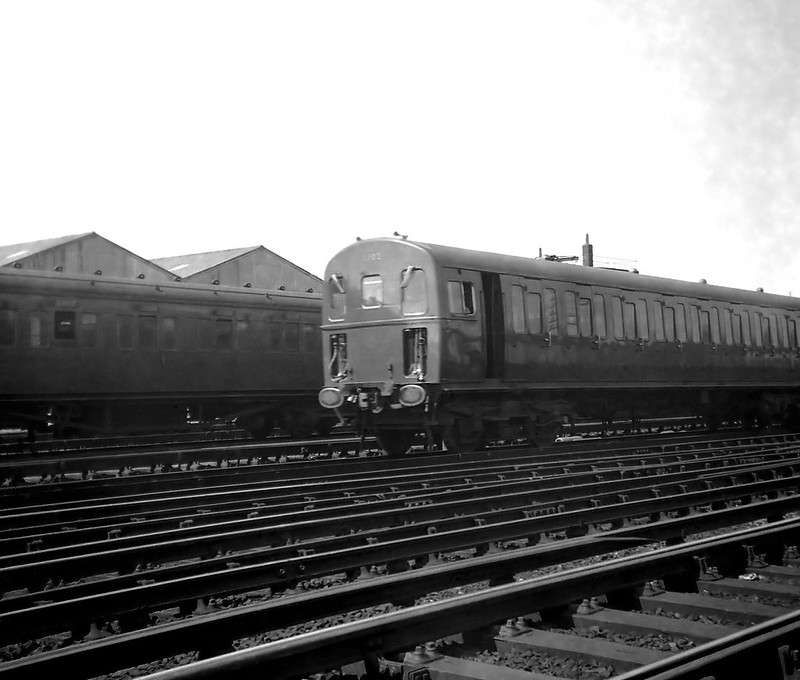
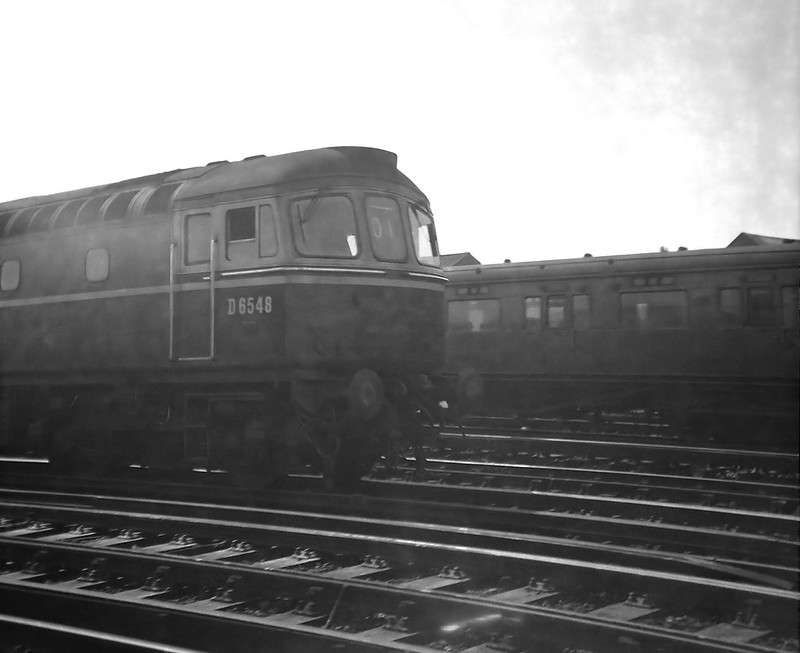
Seen from Ashford Road, just outside Eastbourne station, this is Class 33 Bo-Bo diesel/electric loco D6548. Built in 1961 it was renumbered 33030 in 1973. It survived into preservation. The carriage in the background is interesting. It may be an SECR (or early Southern Railway) car built for boat train services to Dover and Folkestone. These carriages had flat sides, a wooden slatted construction and were “classless” – they were presumably considered comfortable enough to satisfy any class of passenger. When steam was phased out these carriages turned up all over the place, and this one may have been for use on the Heathfield line, © Dick Gilbert and licensed for reuse under a Creative Commons licence (CC BY 2.0). [12]
Stones continues: “West of the passenger station lie the goods shed and yard, and carriage sidings for both electric and steam rolling stock. A short distance from the terminus on the east side of the line is the coal yard, and, beyond, a siding about a mile in length runs in an easterly direction to serve the local gas and electricity works. This siding was formerly known as the Crumbles Branch as originally the line continued on to that part of the sea-shore called “The Crumbles,” where the LB&SCR installed a shingle ballast plant. Because of the extended use of stone ballast, this was dismantled some years ago and the extension to the coast was taken up. Traffic in and out of the passenger station, goods yard, carriage sidings and locomotive depot is controlled by one signal cabin with a manual frame of 72 levers, which is situated at the entrance to the terminus on the east side of the line.” [3: p728]
Stones writes: “The existing locomotive depot at Eastbourne is located about half a mile from the passenger station on the west side of the line and is connected by a single track running parallel with the up and down main lines. The site on which the depot stands was purchased by the LB&SCR in the early part of the present [20th] century for new carriage and wagon works to replace older and smaller installations at Brighton. However, because of opposition from the local authorities, the scheme was abandoned and the works were eventually constructed at Lancing.” [3: p729-730]
Stones tells us that “The present running shed, which is of the through type, was built in 1911 to replace an earlier and smaller shed of the half-roundhouse type opposite the signal cabin on a site now occupied by the carriage sidings at the station. Since electrification, Eastbourne shed has lost much of its importance and now houses only a few locomotives for goods and shunting services and for the local passenger trains to and from Hailsham and Tunbridge Wells. In recent years, several of the sidings adjoining the shed have been used to stable spare locomotives and those waiting to be broken up. During the war, the shed was severely damaged by air attack.” [3: p730]
In the paragraphs above, Stones has identified a number of interesting features of the station:
- Goods Shed, Sidings and Coal Yard
- Carriage Sidings
- The mile long siding which was once the start of the ‘Crumbles Branch’
- The Shingles Ballast Plant
- The history of the engine shed
A. Goods Shed, Sidings and Coal Yard
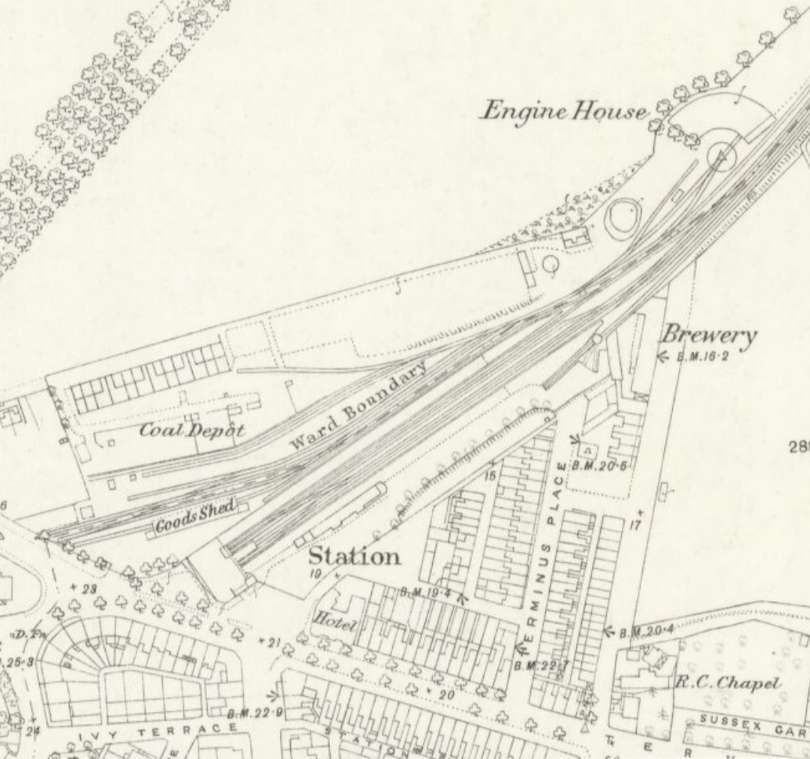
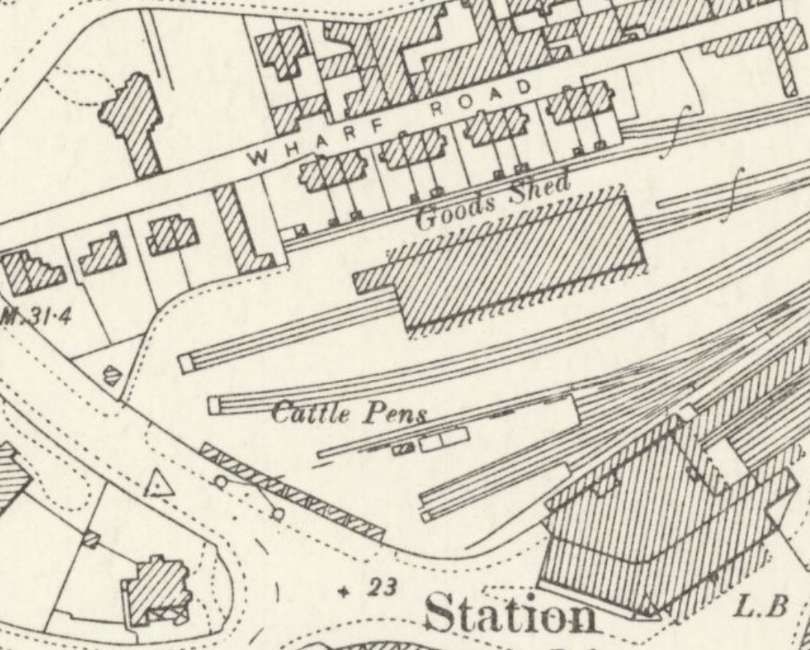
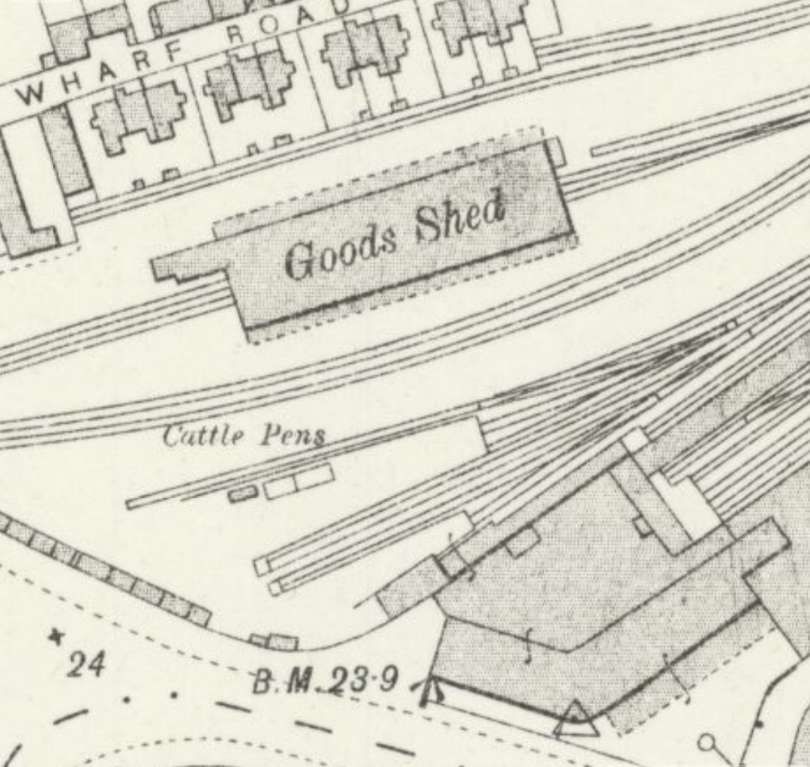
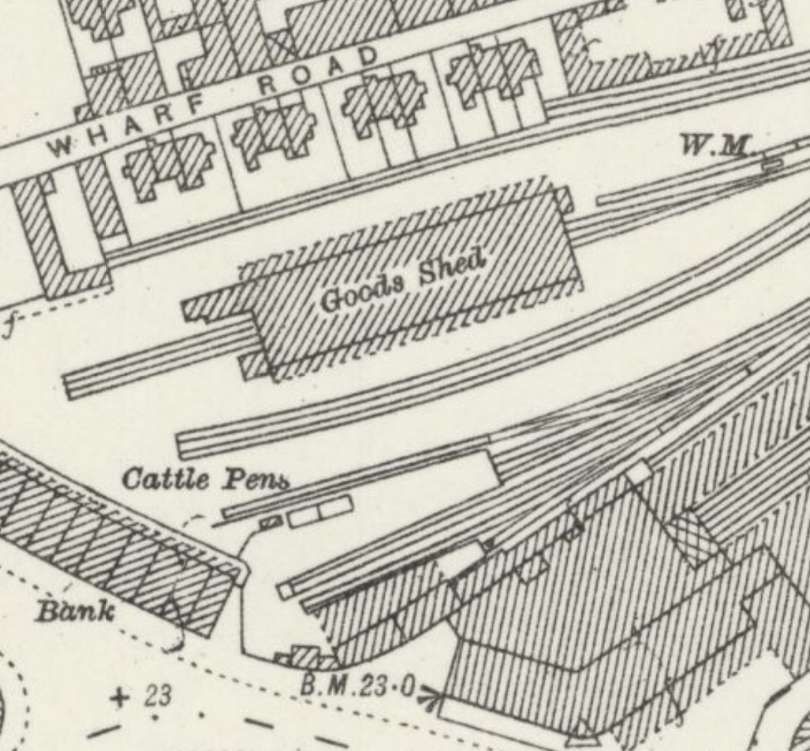
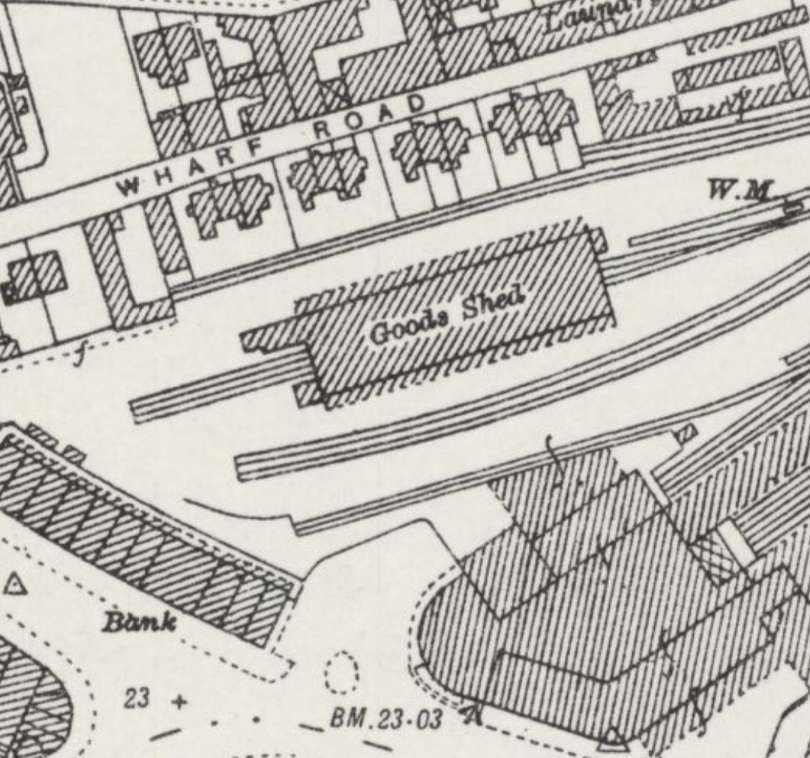
The following sequence of extracts from 25″ Ordnance Surveys in chronological order, illustrates the changes in the layout of the goods facilities at Eastbourne over time
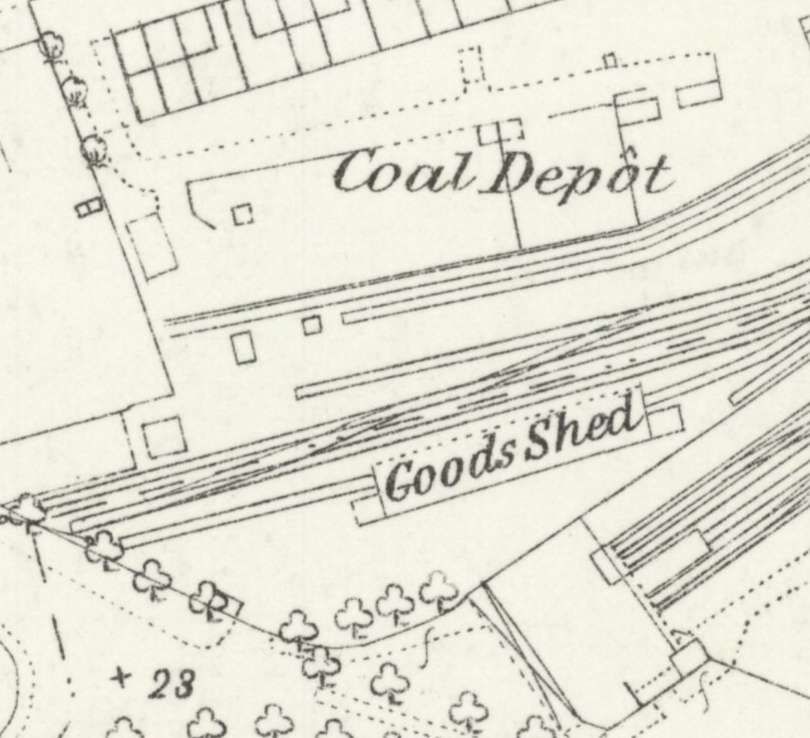
The Coal depot disappears between 1874 and 1898 and Wharf Road takes its place. The coal wharf might be the original of the name of the road. Holding seems to have been built on the site of the old coal depot. The Goods Shed seems to have been rebuilt a distance from the passenger station and cattle pens have been added to the site.
B. Carriage Sidings
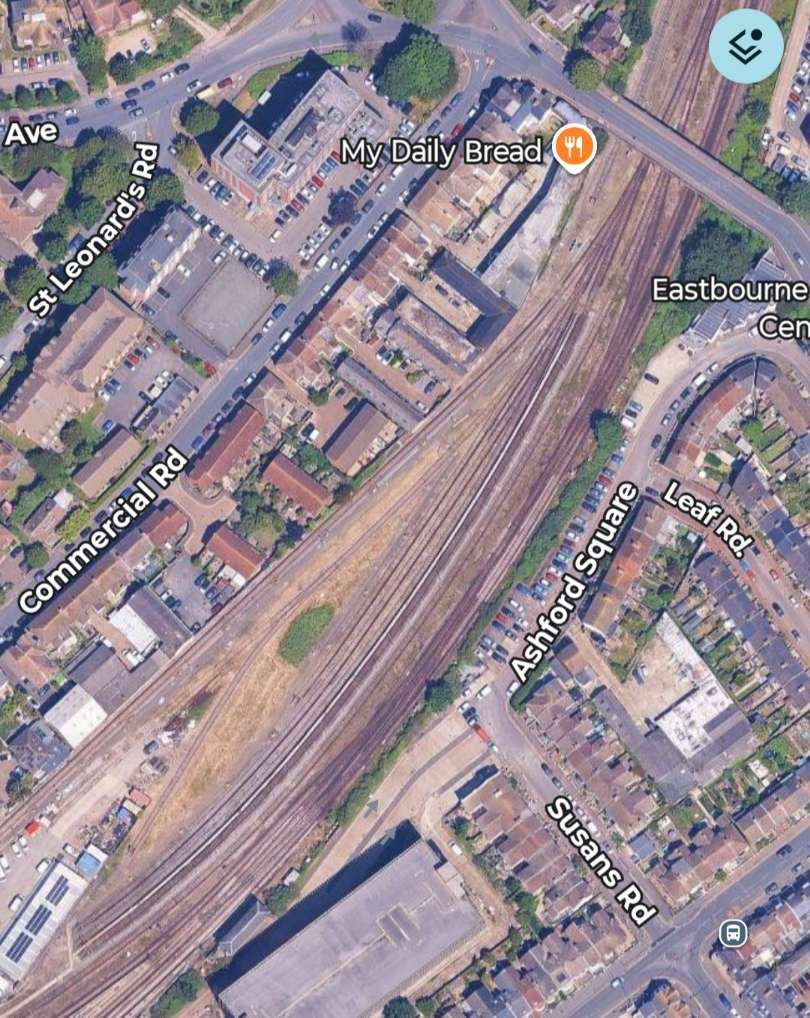
In the 21st century, the carriage sidings provide stabling and overnight parking for Southern Class 377 and Class 442 Electric Multiple Units (EMUs). They include a carriage cleaning road and an engineer’s siding.
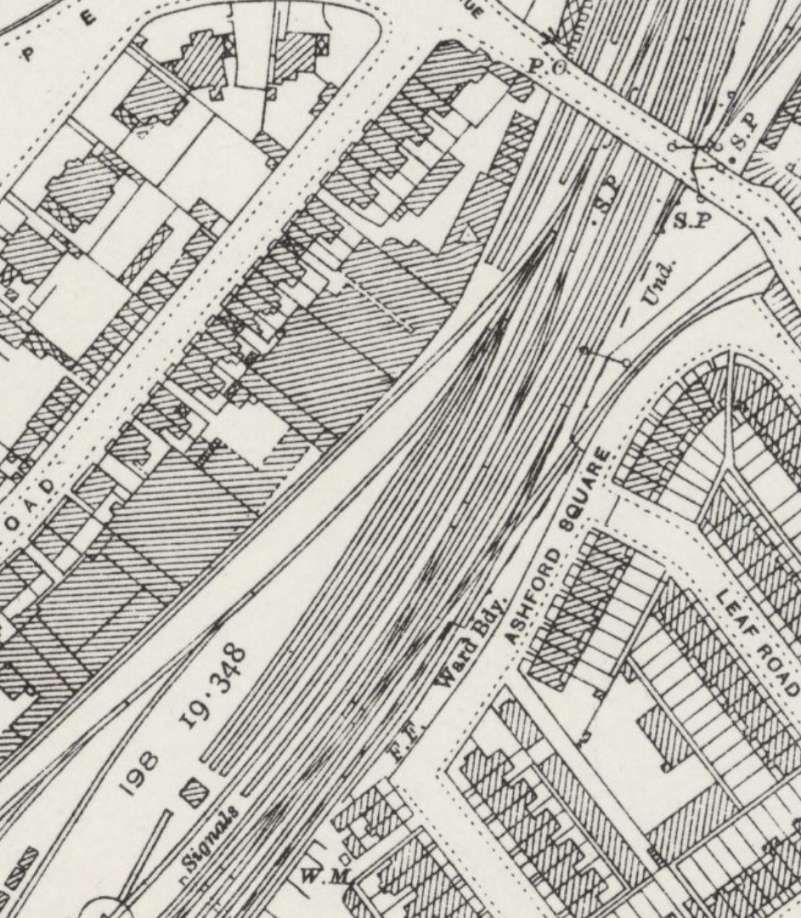
The site of the current carriage sidings occupy the historic location of Eastbourne’s early engine sheds (opened in 1849 and later replaced in 1876 and 1911 – see the paragraphs about the engine sheds below). The track layout and sidings were historically controlled by Eastbourne’s Victorian signal box built in 1882. [17]
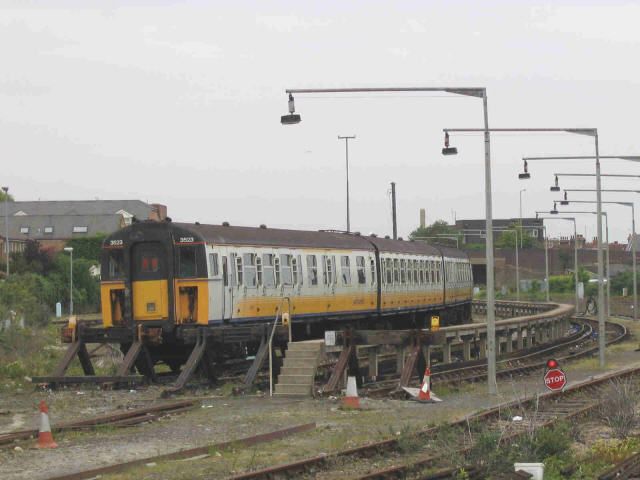
Redundant ‘slam door’ electric units in the carriage sidings outside Eastbourne station, © Stephen Craven and licensed for reuse under a Creative Commons Licence (CC BY-SA 2.0). [18]
C. The Crumbles Branch
A separate article covers this line. It can be found here. [16]
D. The Shingles/Crumbles Ballast Plant
The ballast plant on the Shingles (Crumbles) at Eastbourne was served by the Crumbles Branch. The Crumbles was a vast, desolate expanse of coastal shingle and marshland east of Eastbourne. The LB&SCR recognized the immense value of the site’s heavily compacted beach shingle and negotiated the purchase of large quantities of shingle from the local landowner, the Duke of Devonshire. They installed a dedicated shingle ballast plant directly on the shore to extract, process, and load the aggregate. At its height, the operation was removing roughly 250,000 tons of shingle per year. This material was vital for providing the structural foundation (ballast) for railway tracks across the southeast of England and was even shipped to London for projects like the construction of the Thames Embankment. [20]
By the 1920s and early 1930s, the newly formed Southern Railway began phasing out smooth beach shingle in favour of sharper, more durable angular granite chippings. The ballast plant closed in 1932. Please also look at the dedicated article about the Crumbles Branch, here. [16]
E. The Engine Sheds
By 1874 a roundhouse engine shed and turntable sat alongside the line out of Eastbourne Railway Station. That structure was still in place at the time of the 1908 Ordnance Survey, but had gone by the time of the 1925 Ordnance Survey.
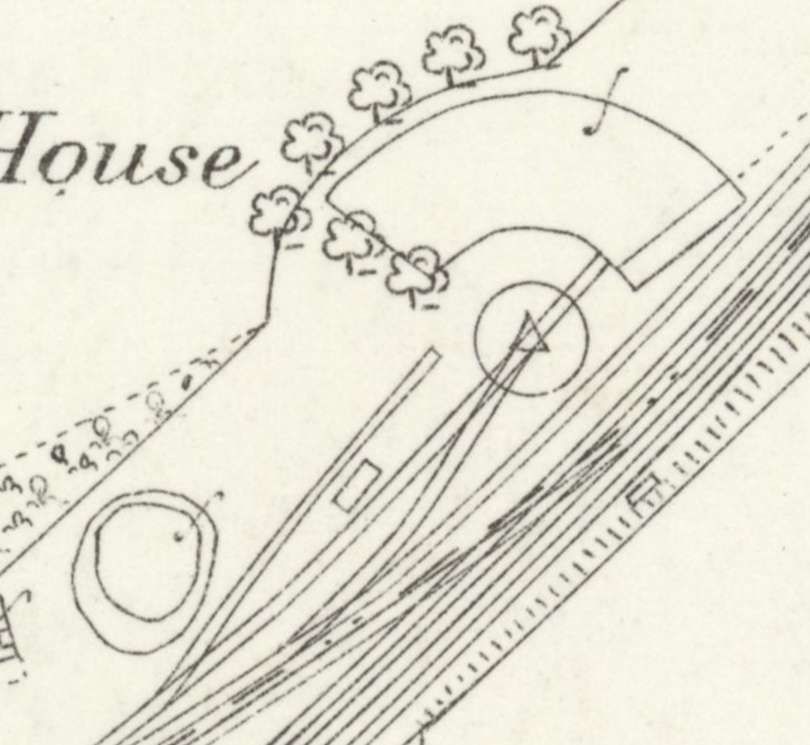
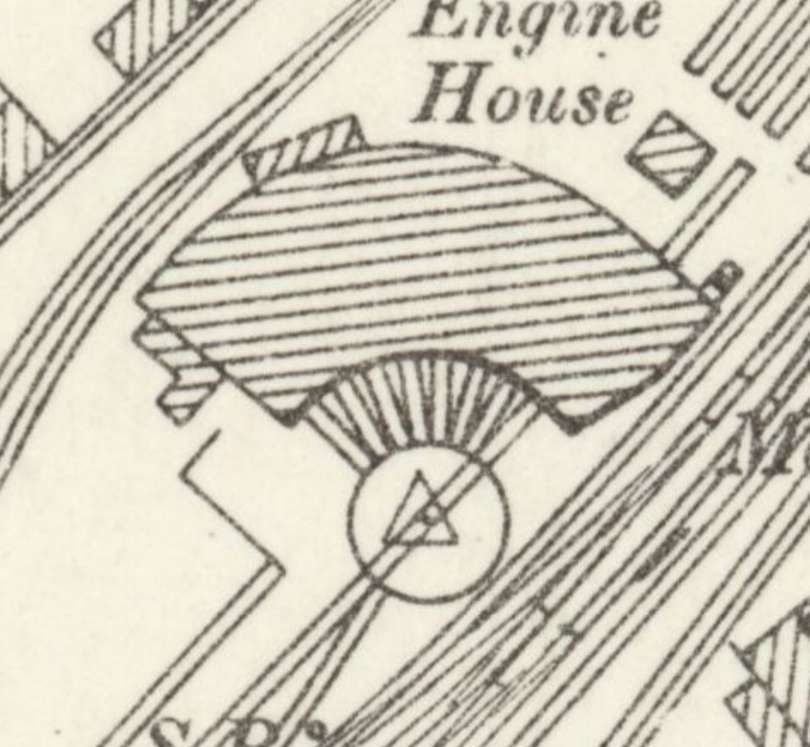
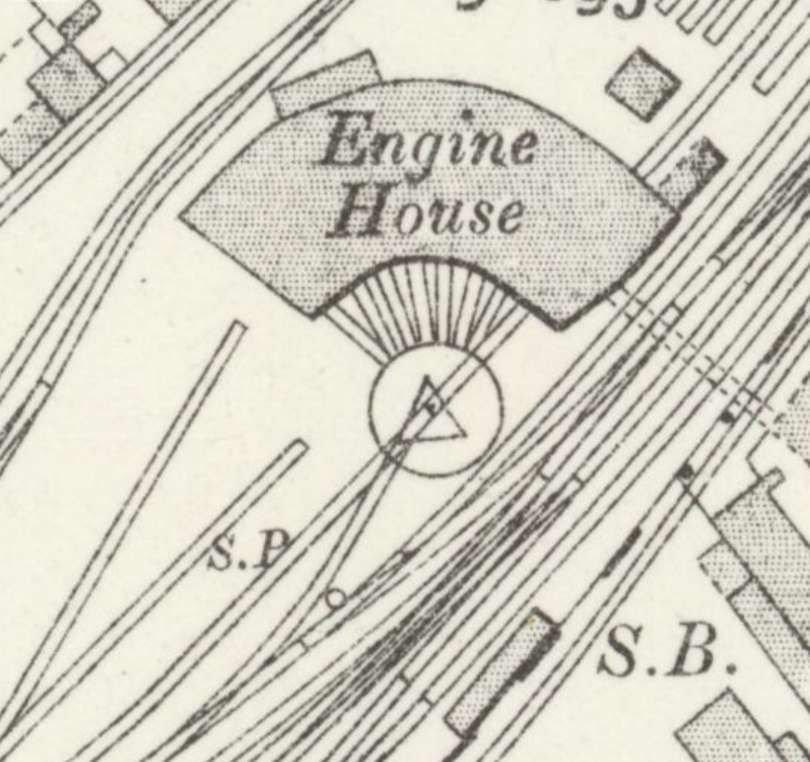
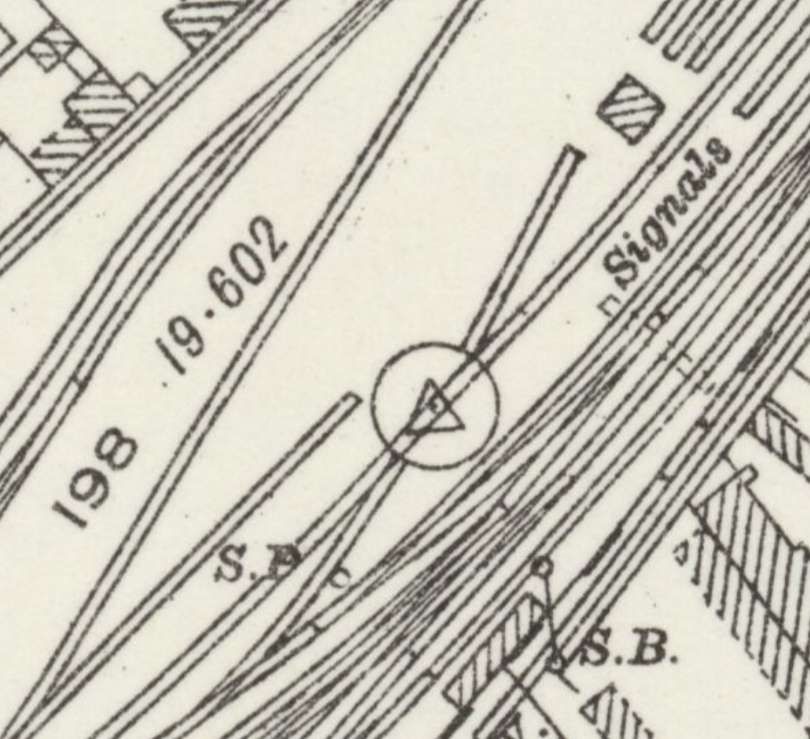
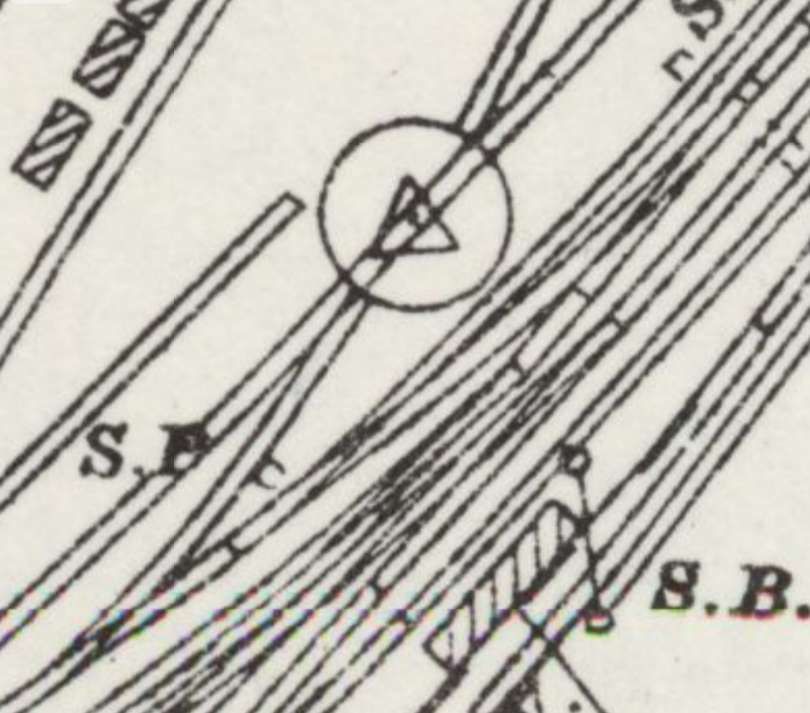
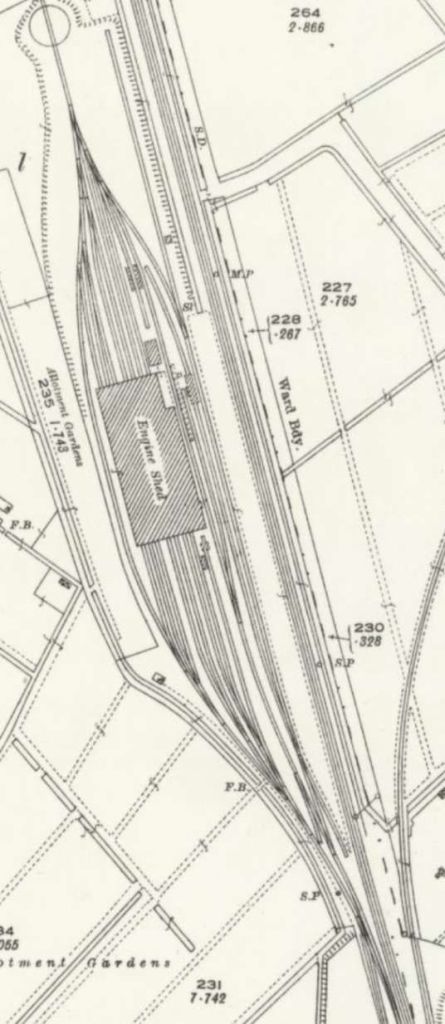
The site of the new engine shed at Eastbourne, as it appears on the Ordnance Survey of 1925. It was built to replace the original shed which had sat much closer to the station. This location is to the North of Whitley Road. Note the Crumbles Branch which moves away from the main line and heads North-northeast. [13]
Locomotive Names
Both the LB&SCR. and its successor, the Southern Railway, honoured Eastbourne by allocating several locomotive names directly associated with the town. As early as 1881, William Stroudley gave the name ‘Eastbourne’ to a rebuilt 2-2-2 express locomotive with 6 ft. 6 in. wheels, No. 491. This engine, which was one of six which had been rebuilt and renumbered by Stroudley the same year, was originally designed by J. C. Craven and built by Nasmyth Wilson & Company in 1867, when it was numbered 241. In 1889, three of the famous ‘Gladstone’ class 0-4-2 locomotives Nos. 183 to 185 were named ‘Eastbourne’, ‘Carew D. Gilbert’ (an influential Eastbourne resident and member of a well known local family over part of whose land the railway was constructed), and ‘George A. Wallis’ (the first Mayor of Eastbourne, from 1883 to 1885). These were followed in 1898 by a Stroudley 0-6-2 tank locomotive, No. 469, which was named ‘Beachy Head’. Two of the aforementioned names were subsequently perpetuated by the Southern Railway; a former LB&SCR. Atlantic No. 2424, was named ‘Beachy Head’, and in 1933 ‘Schools’ class 4-4-0 No. 914 received the name ‘Eastbourne’ after the town’s public school.
References
- https://www.visionofbritain.org.uk/unit/10056433/cube/TOT_POP, accessed on 27th August 2026.
- https://en.wikipedia.org/wiki/Eastbourne_railway_station, accessed on 27th August 2026.
- H. R. Stones; Railway Development at Eastbourne; in The Railway Magazine Volume 99, No. 631, Tothill Press, London, November 1953, p723-730.
- https://www.eastbournehistory.org.uk/timeline, accessed on 27th August 2026.
- https://maps.nls.uk/view/103675456, accessed on 27th August 2026
- https://maps.nls.uk/view/103675453, accessed on 27th August 2026.
- https://www.geocaching.com/geocache/GC69JC1_sidetracked-eastbourne, accessed on 27th August 2026.
- https://www.sussexexpress.co.uk/news/transport/how-to-get-to-airbourne-after-train-derailment-near-lewes-causes-major-disruption-8920816, accessed on 27th August 2026.
- https://maps.nls.uk/view/103675450, accessed on 28th August 2026.
- https://maps.nls.uk/view/103675447, accessed on 28th August 2026.
- https://maps.nls.uk/view/103675444, accessed on 28th August 2026.
- https://www.flickr.com/photos/harryclaggers/43482880200/in/photostream, accessed on 28th August 2026.
- https://maps.nls.uk/view/103675414, accessed on 30th August 2026.
- https://maps.nls.uk/geo/explore/#zoom=16.3&lat=50.78143&lon=0.28531&layers=168&b=ESRIWorld&o=0, accessed on 30th August 2026.
- https://www.britainfromabove.org.uk/en/image/EPW000751, accessed on 31st August 2026.
- https://rogerfarnworth.com/2026/09/13/the-crumbles-branch-eastbourne
- https://en.wikipedia.org/wiki/Eastbourne_Carriage_Sidings, accessed on 17th October 2026.
- https://www.geograph.org.uk/photo/231770, accessed on 17th October 2026.
- https://maps.nls.uk/view/103675444, accessed on 17th October 2026.
- https://sremg.org.uk/RlyMag/RailwayDevelopmentsAtEastbourne-2.pdf, accessed on 17th October 2026.
- https://www.sussexexpress.co.uk/heritage-and-retro/retro/eastbourne-looking-back-11-pictures-of-steam-diesel-and-electric-locomotives-through-the-ages-4985228, accessed on 17th October 2026.

