
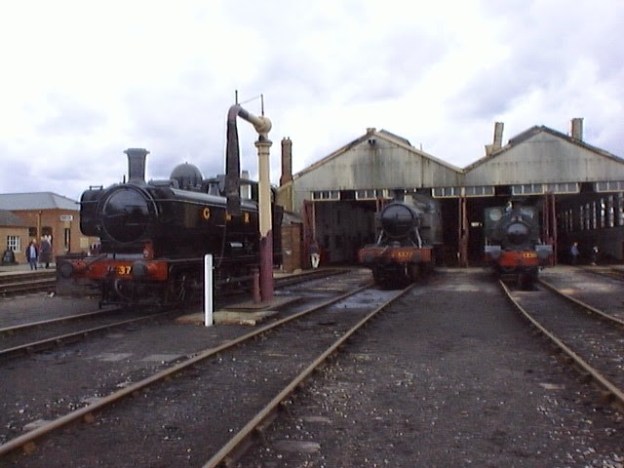
The featured image for this article is a photograph of the engine shed at Didcot Railway Centre taken in 2003. [My photograph, May 2003]
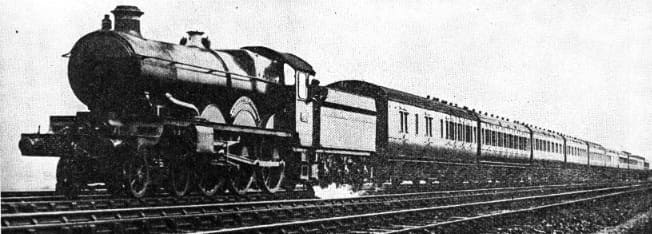
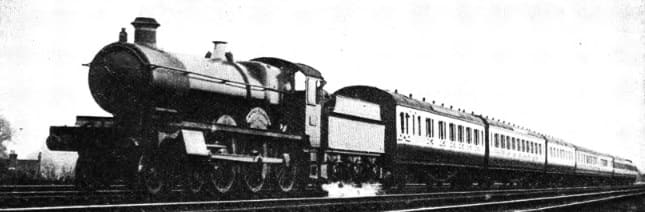
We start this article with a couple of photographs from the late 1920s/early 1930s showing express services from Paddington to Didcot.
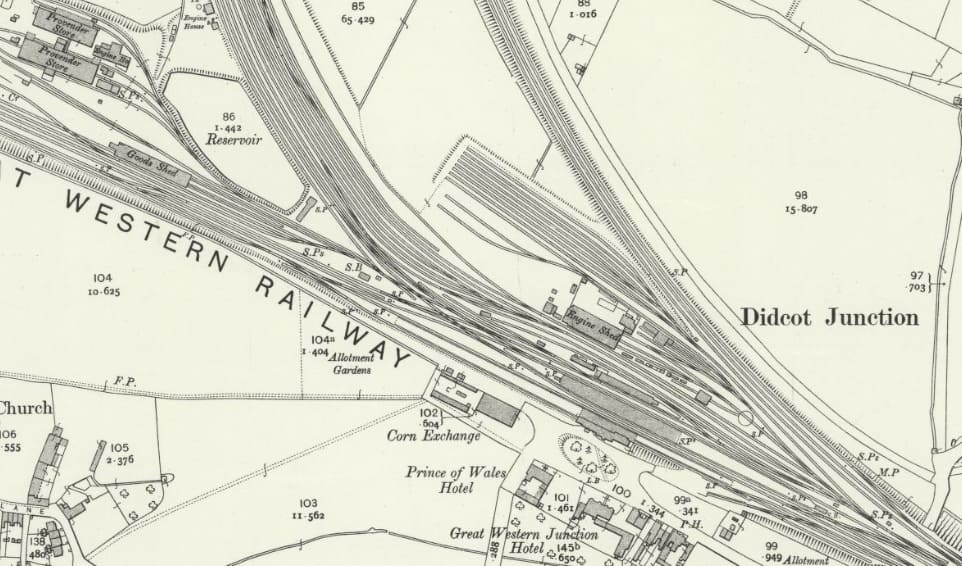
Didcot Railway Station sat at the point where the line to Oxford diverged from the London-Bristol main line. It was an important interchange. The railway reached Didcot in 1839 and the station opened in 1844. It was rebuilt after fire in 1855. The timber island platforms in this view date from that rebuilding. The two-storey brick booking office in the image below was a later addition, dating from the early years of the 20th century. The booking office was rebuilt in the 1980s when the station was renamed Didcot Parkway. Only in the latter half of the 20th century has the town itself grown to match the importance of its railway station.
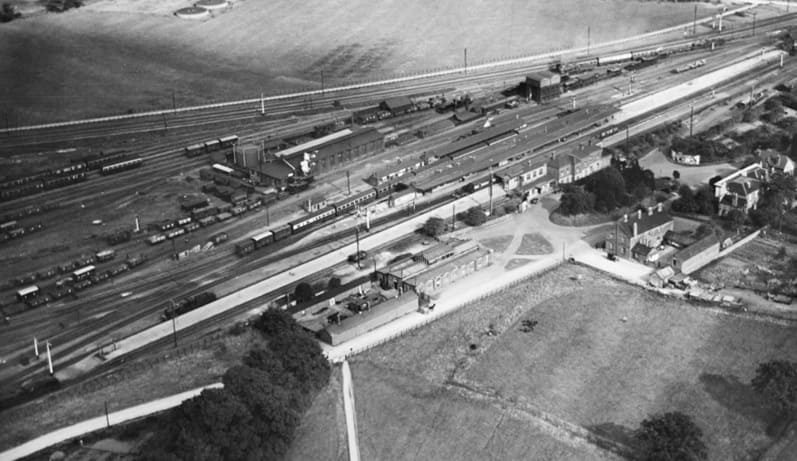
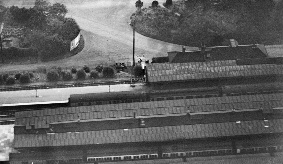
This extract from another aerial image, this time facing South and looking across the site of Didcot Railway Station. The station buildings are in the top-right quadrant of the image (c) Historic England (1928) EPW024648. [8]
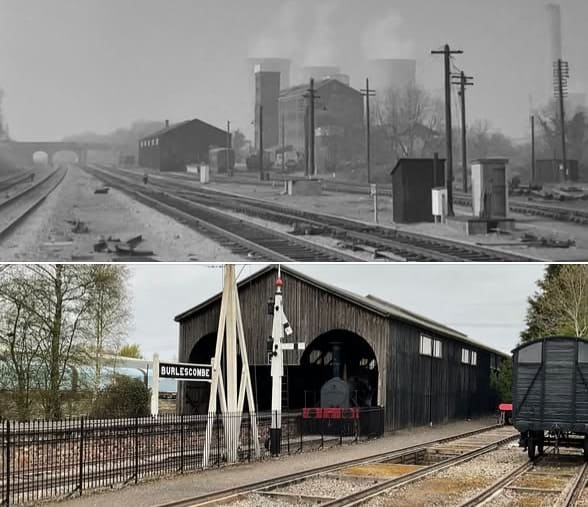
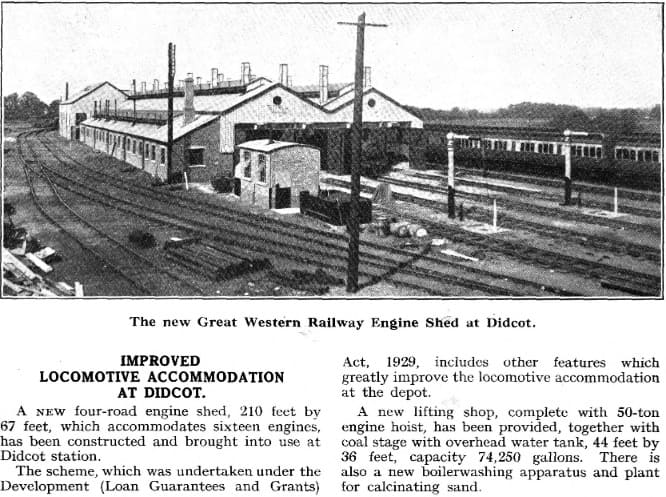
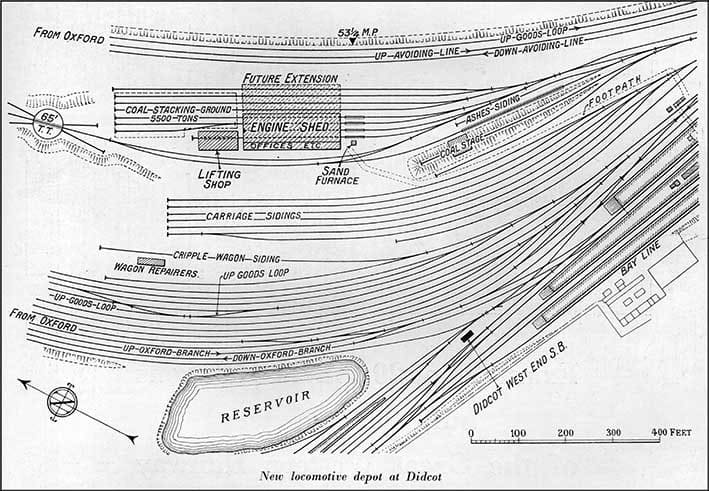
In 1932, a large four-road engine shed (210ft x 67ft) was built which could accommodate sixteen to twenty-four locomotives. In addition to the shed, a new lifting shop, with 50-ton hoist, has been provided, together with a large coaling stage with an overhead 74,250-gallon water-tank (44ft x 36ft). There was also new boiler-washing apparatus and plant for calcinating sand.
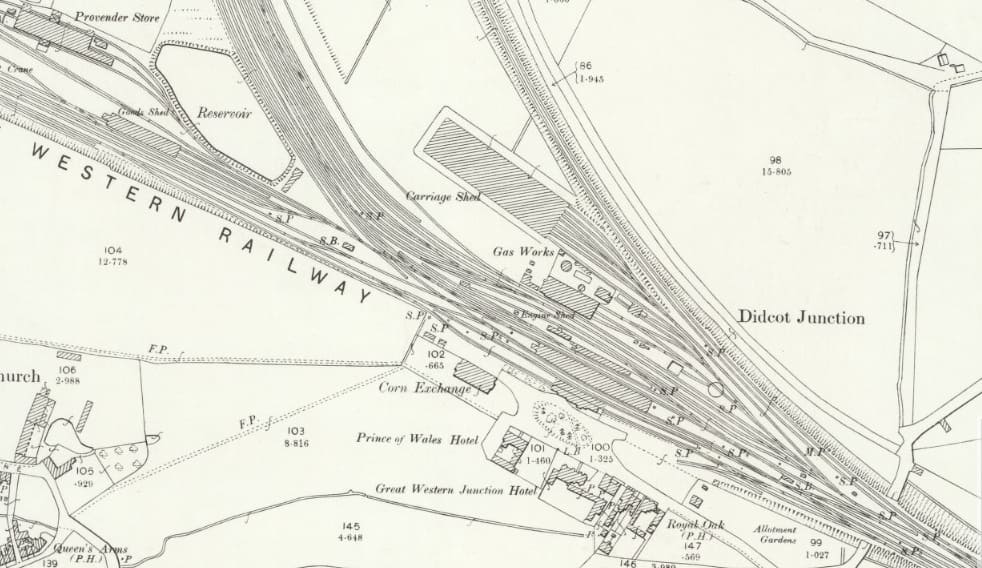
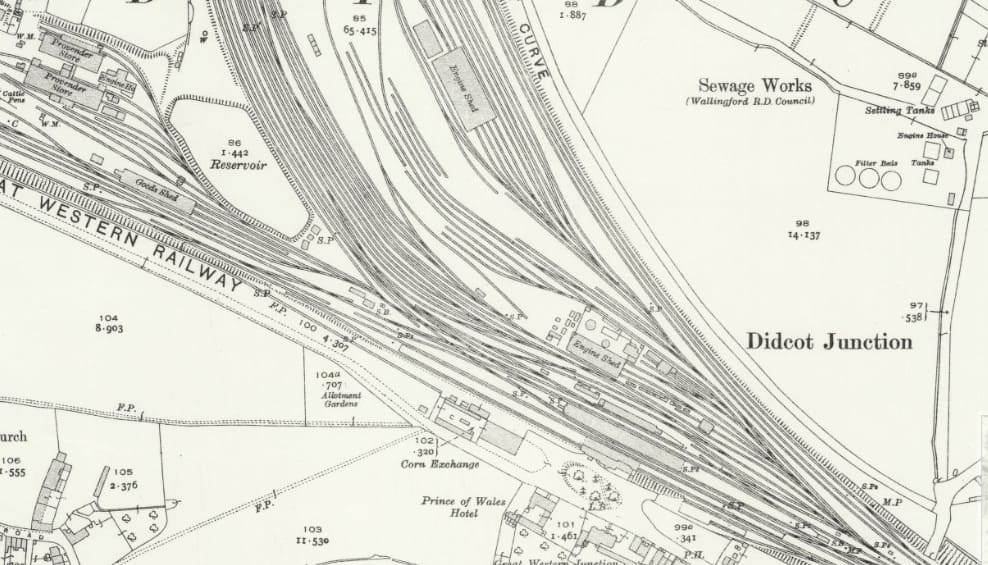
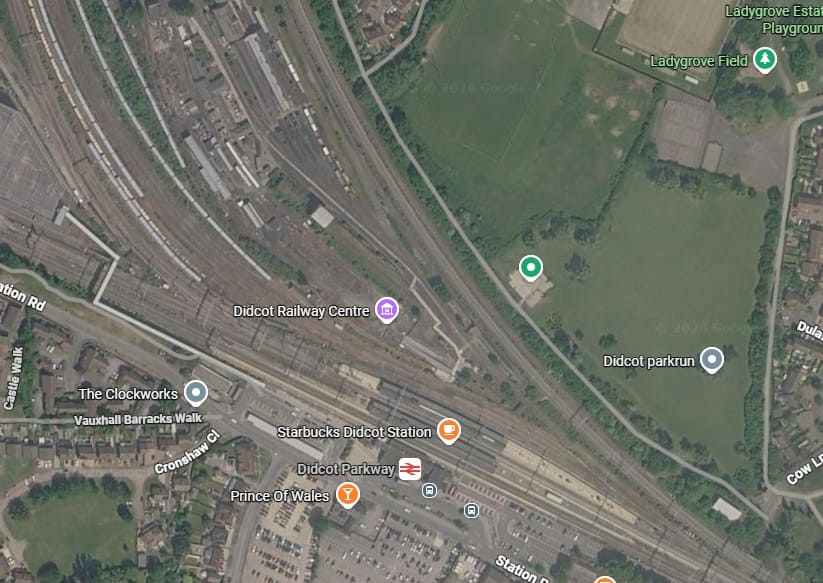
Following on the standardisation of locomotives, The GWR also sought to streamline and improve its maintenance facilities. It provided a number of new locomotive depots incorporating arrangements for enabling repairs and maintenance to be efficiently carried out. One of these was at Didcot, where the old locomotive depot was swept away and an entirely new depot provided on the triangle between the western main line and the line to Oxford and the North.
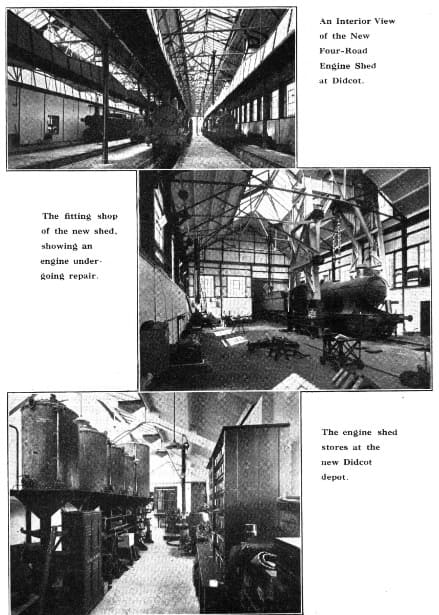
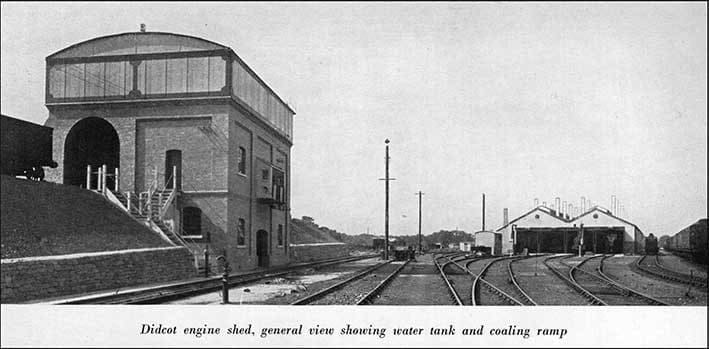
The 1932-built locomotive shed also included offices, stores and enginemen’s rooms, arranged along the south-west side of the building. They are commodious, well-lighted and warmed, and washing facilities are provided for enginemen, chargemen, fitters, mechanics, cleaners and shedmen. All the enginemen’s notices, instructions and roster sheets are contained in glass cases by which means they are kept flat, clean and easily discernible, and are posted up in a lobby between the stores and the offices. [10]
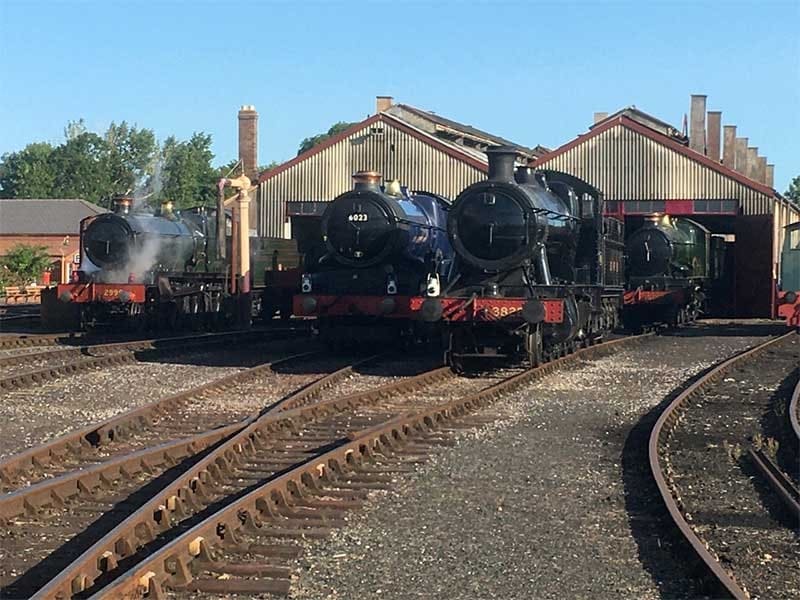
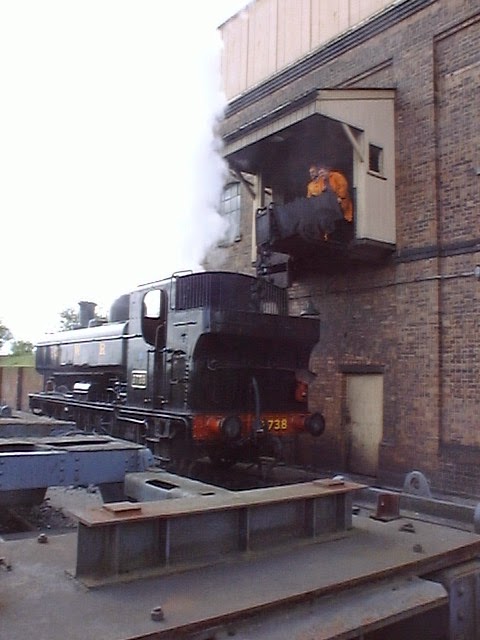
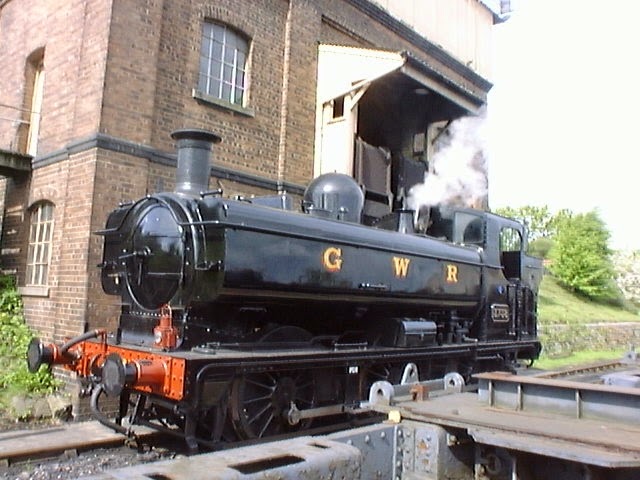
Photographs of the Coaling Stage at Didcot in May 2003. [My photographs, May 2003]
1932-1985
Little changed at Didcot in the years after WW2. The whole site remained virtually unchanged during the nationalised ownership of British Railways, but for the engine shed taking on the new code of 81E. The standard allocation of locomotives remained much the same as before nationalisation, with Halls, Dukedogs and Panniers making up the bulk of the depot’s fleet.
The gradual replacement of steam by diesel traction resulted in the closure of the locomotive facilities in June 1965.
In 1967, the Great Western Society took over the 1932 engine shed and surrounding infrastructure to establish a living railway museum – Didcot Railway Centre.
Didcot Parkway
Didcot Railway Station was renamed ‘Didcot Parkway’ in 1985. “A new main building for the station was built along with a new 600-space car park on the site of the former provender store to the west of the station for Park and Ride use. These were opened on 29th July 1985 by David Mitchell MP, Parliamentary Under Secretary of State for Transport, and on that date the station was renamed Didcot Parkway.” [9]
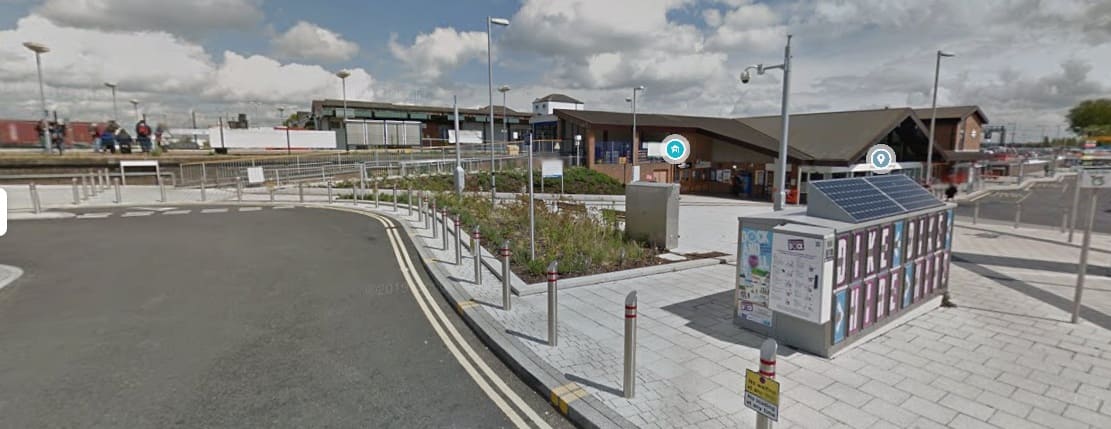
More recently, in 2018, a multi-storey car park was opened, costing £20 million and increasing the number of spaces by 65% to 1800. The car park also has a sheltered footbridge. In 2021, a new cycle storage hub was constructed, providing 600 covered spaces, LED lighting, CCTV cameras and a bike repair station. The project cost £1m, and was completed by a partnership of GWR, DfT and Network Rail. The station was served by some ‘Cross Country’ services until 2003, when Virgin ‘Cross Country’ ceased to call at the station, with all services using the Didcot East curve to and from the Oxford line. As at December 2018, one late night ‘Cross Country’ service from Reading to Birmingham New Street passed through Didcot Parkway to allow drivers to retain route knowledge. Passenger services on the West Curve ceased for a time after Thames Trains’ Oxford to Bristol Temple Meads service was withdrawn in 2003 but was reinstated on Saturdays in 2024. [9]
References
- https://www.britainfromabove.org.uk/en/image/EPW024646, 9th September 2026.
- https://www.gettyimages.com/detail/961476136, accessed on 11th September 2026
- https://www.facebook.com/groups/1614960195255335/posts/26251905641134115, accessed on 11th September 2026.
- https://www.greatwesterntrust.org.uk/PDFViewer/web/viewer.html?file=%2fFilename.ashx%3ftableName%3dta_journals%26columnName%3dfilename%26recordId%3d469%26page%3d12%26end%3d13, accessed on 11th September 2026.
- https://www.greatwesterntrust.org.uk/PDFViewer/web/viewer.html?file=%2fFilename.ashx%3ftableName%3dta_journals%26columnName%3dfilename%26recordId%3d474%26page%3d12%26end%3d12, accessed on 11th September 2026.
- https://www.greatwesterntrust.org.uk/PDFViewer/web/viewer.html?file=%2fFilename.ashx%3ftableName%3dta_journals%26columnName%3dfilename%26recordId%3d547%26page%3d8%26end%3d8, accessed on 11th September 2026.
- https://www.greatwesterntrust.org.uk/PDFViewer/web/viewer.html?file=%2fFilename.ashx%3ftableName%3dta_journals%26columnName%3dfilename%26recordId%3d547%26page%3d7%26end%3d7, accessed on 11th September 2026.
- https://www.britainfromabove.org.uk/image/epw024648, accessed on 11th September 2026.
- https://en.wikipedia.org/wiki/Didcot_Parkway_railway_station, accessed on 11th September 2026.
- https://didcotrailwaycentre.org.uk/article.php/310/the-1932-engine-shed-when-new, accessed on 11th September 2026.
- https://didcotrailwaycentre.org.uk/article.php/17/1932-engine-shed, accessed on 11th September 2026.
- https://maps.nls.uk/view/104196166, accessed on 11th September 2026.
- https://maps.nls.uk/view/104196163, accessed on 11th September 2026.
- https://maps.nls.uk/view/104196160, accessed on 11th September 2026.

