
The Modern Tramway of July 1951 included an article by Peter J. Jacques about the tramways of Clermont-Ferrand. [1]
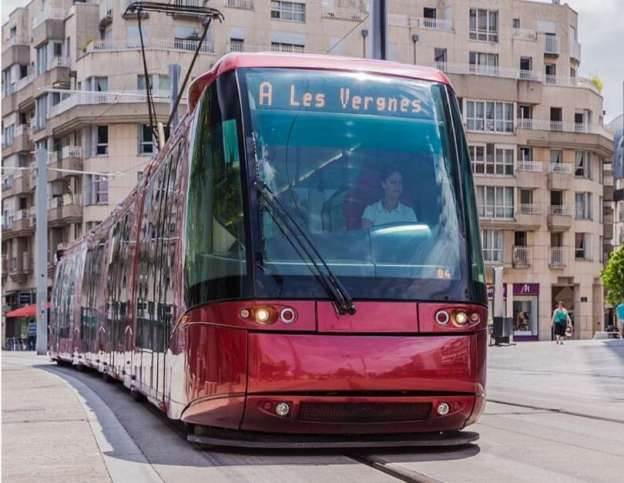
The featured image for this article is a photograph of one of Clermont-Ferrand’s modern trams. The initial fleet was 26 trains, but in September 2019, the fleet was expanded to 30 trains. Every STE 4 model consists of 4 cars, for a length of 32 metres (105 ft), © William Crochot and licenced for reuse under a Creative Commons licence (CC BY-SA 4.0). [2]
Jacques wrote:
“The French city of Clermont-Ferrand has a population of approximately 100,000 and is situated in the mountainous Departement of Puy de Dome. Most of the local transport is provided by the Compagne des Tramways de Clermont-Ferrand et du Puy de Dome, which operates tram services over four routes and several bus services. The tramcar fleet comprises 66 single-deck cars, including 33 trailers. The system is interesting, not merely because of its present day policy of retention and modernisation, but also on account of its importance in the history of French Tramways.” [1: p156]
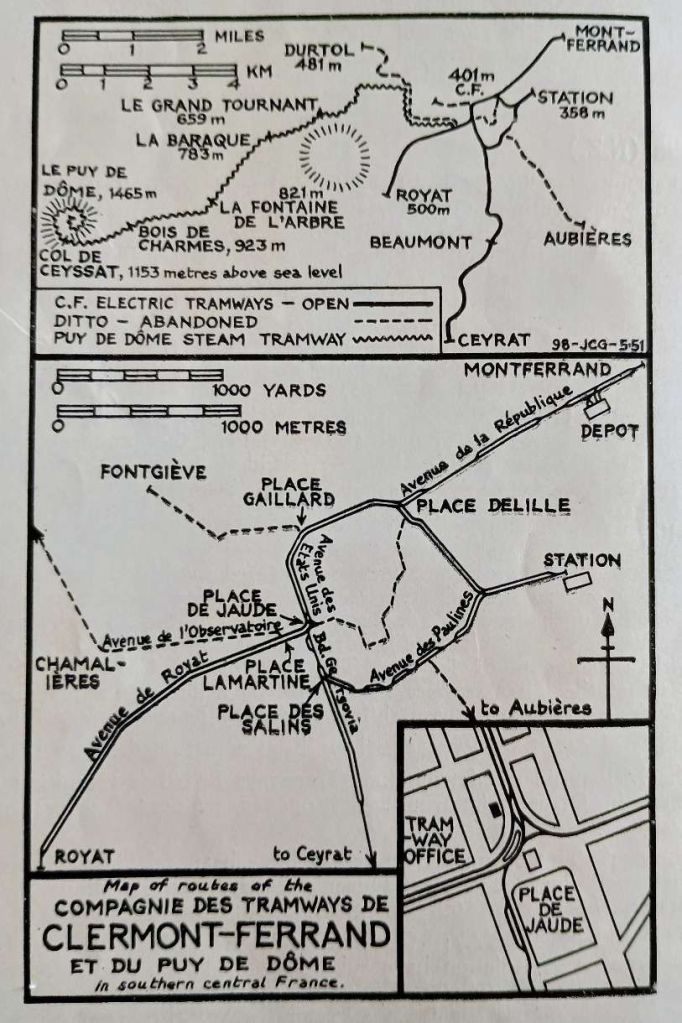
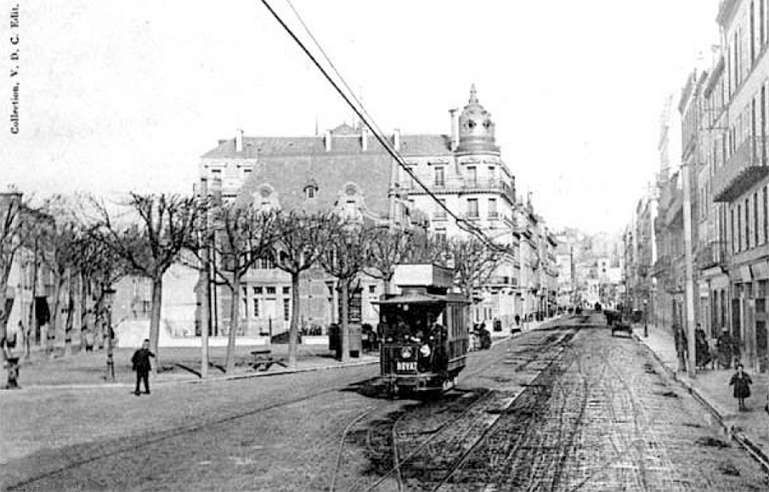
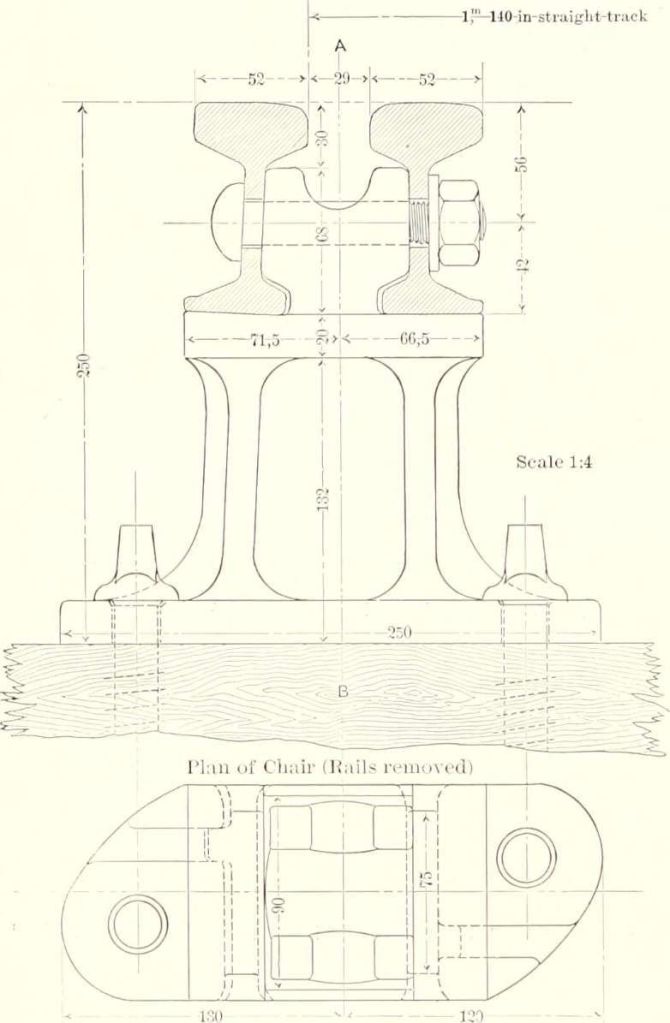
“It was at Clermont-Ferrand that the first French electric tramway was installed in 1888; the line ran from Montferrand to Royat and was built by M. Claret, the father of the present [in 1951] Director.vthere was a branch line to the station and a depot at Montferrand. Current was collected, by means of a shoe which the car towed at the end of a wire, from a rectangular tube suspended 6 metres above the track. ‘Marsillon’ type rails [3] were used, laid on wooden sleepers and held in position by cast-iron chairs. The cars were 4-wheel single-deckers fitted with ‘Thury’ type motors.” [1: p156-157]
Marsillon Type Rails: two pictures of this rail type are shown below. Antoine-Léon Marsillon (1824-1892) was responsible for the design.
Thury Type Motors: were pioneering direct-current (DC) traction motors and high-voltage DC (HVDC) power systems developed by the Swiss-French engineer René Thury in the late 19th and early 20th centuries. Thury’s innovative designs were heavily utilized across early European tramways and electrified mountain railways. Clermont-Ferrand used Thury 25-horsepower motors. A single motor drove one axle via a gear train, and the second axle was driven by connection rods coupled to the first. [4]
Jacques continued:
“Two years later, an experiment was made with surface-contact current collection on a stretch of track 219 yards long, using the Claret Vuilleumier system, although it was never adopted in Clermont-Ferrand, the success of the trial in that city led M. Claret to construct a tramway on this system in Paris, from the Place de la République to Romainville. (The latter tramway was the first electric route in the French capital and was opened in 1896).
“In 1903, another route was added to the Clermont-Ferrand tramways; it followed a winding course from the Place Delille to the Place de Jaude. In 1906, a light railway was constructed from the Place Lamartine to the summit of the Puy de Dôme mountain, to the west of the city. This line was worked by steam tank locomotives hauling three or four 4-wheeled carriages. The depot was at Durtol.
“In the course of the next few years, normal overhead wires were installed in place of the overhead “tubes,” and the cars were fitted with trolley poles; at the same time the track was entirely relaid with ‘Broca’ rails.
“New trailer cars were built in 1912 and these open-sided bogie vehicles are still [in 1951] used during the summer months. The following year saw the construction of new lines to Fontgiève and to the station via the Place des Salins. The line to Vallières and Beaumont was opened in 1914, and several new trailers with partly-open bodywork were built in that year. The route from the Place Delille to the Place de Jaude was closed in 1915.” [1: p157]
The Claret Vuilleumier System of Current Collection: The Claret-Vuilleumier system was an early, now obsolete surface-contact method for powering electric trams without overhead wires. Developed in the late 19th century, it used electromagnetic, road-level studs that only became energized as a tram passed over them, delivering power to the vehicle through an under-carriage skate. It was most notably implemented on tram lines in Paris (such as the République-Romainville line), the system was engineered to eliminate the visual “wire pollution” of overhead catenaries in city centres. It solved the shock hazard problem of exposed surface studs through an ingenious, albeit troublesome, mechanical setup. [5]
Small iron contact studs were spaced about 2.5 metres apart and protruded roughly 5 mm above the cobblestone surface. The studs were not permanently live. Instead, they were connected to a series of underground switches controlled by a master mechanism. As the tram rolled over the track, magnets on the vehicle triggered the underground switch. The stud directly beneath the tram became energized with 500–600 volts to power the tram’s motors, while the studs ahead and behind remained safely dead. [5]
Broca Rail: (often called a grooved or girder rail) is a specialized steel track invented in the late 19th century. It is primarily used for streetcars and trams, featuring a built-in groove that allows trains to sit flush with paved city streets without disrupting car traffic or pedestrian walking paths. [6]
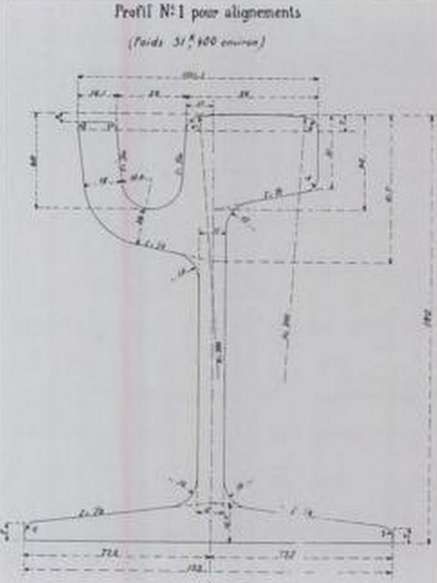
‘Broca’ rail was designed by Georges Broca, © Public domain. [7]
Jacques continued:
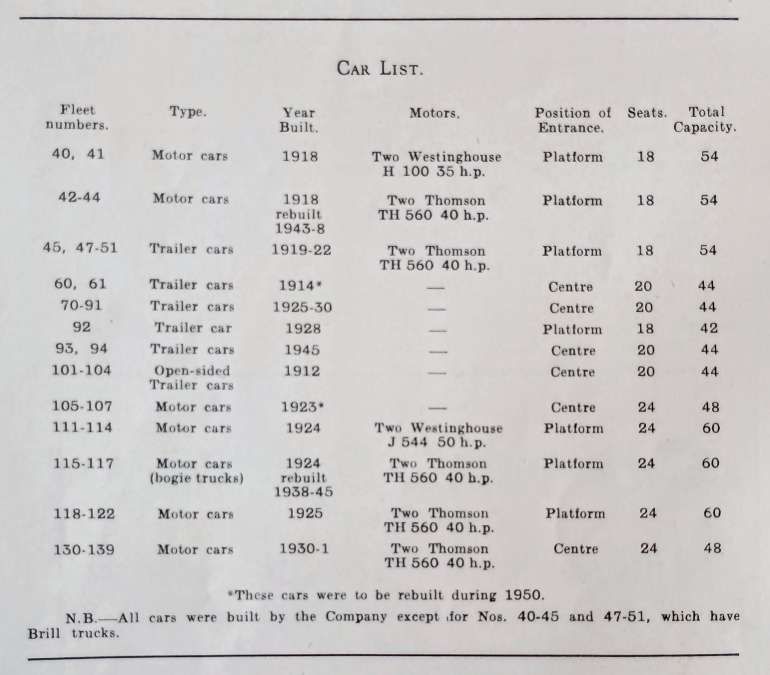
“In 1918, the Company built 5 new motor trams fitted with two Westinghouse H 100 35 h.p. motors and these were followed by 6 more of the same type between 1919 and 1922. During the latter year, the Beaumont line was extended to Ceyrat, a distance of over 4 miles from the city centre.
“The Puy de Dôme railway was closed in 1926 and a road was built on the right-of-way. The line as far as Durtol was retained for a time as an electric tramway but was shortly replaced by a bus route. In 1928, the Aubière line was opened and in the following year, the short Fontgiève line was closed. The replacing bus service also served other outlying districts not yet sufficiently developed to require tramway service.” [1: p158]
Jacques narrative continued:
“Between 1923 and 1930, 12 new motor trams and 23 trailers were added to the fleet. Of these, four motor cars (Nos. 111-14) were fitted with two Westinghouse J544 50 h.p. motors, while the remaining 8, Nos. 115-22, were of improved design with independent suspension, fitted with two Thomson TH 560 40 h.p. motors. In 1930, a new tramcar was built at the Company’s workshops. Of modern design with centre entrances and independent suspension, it had two Thomson TH 560 40 h.p. motors and had seats for 24 passengers in two saloons with room for 24 standing passengers on its large central platform. The success of this car led to the construction of nine others, all of which were in service by the end of 1931. This type are numbered 130-139. In 1938, work began on the reconstruction of Nos. 115-117, the only bogie motor trams in the fleet. In 1943, three more cars, Nos. 42-44 were rebuilt and given Thomson TH 560 40 h.p. motors. Two new trailers were built in 1945 (Nos. 93-4).” [2: p158]
The Westinghouse J544 50 h.p. Motor: was an early-20th-century direct current (DC) traction motor rated at 50 horsepower. Widely used on streetcars and interurban railways in North America, these motors provided the high starting torque and reliability necessary to modernize urban public transit.
The Thomson TH 560 40 h.p. Motor (or GE-560): was an early 40-horsepower electric railway motor. It as manufactured at the turn of the 20th century by the British Thomson-Houston (BTH) company (and its American parent, General Electric).
Jacques continued:
“At the end of the Second World War, the future of the tramways was discussed and it was decided to retain trams on all routes except that serving Aubière; this route was closed in December, 1949. The overhaul and repainting of all cars was begun and a new livery of bright red and cream was chosen to replace the former maroon and cream. Many cars have now been repainted and five trailers which do not conform to the standard pattern (60, 61, 105-7) are being rebuilt with central double doors. All work is carried out in the Company’s own workshops at Montferrand.
“At present, four routes are worked, the cars carrying a coloured destination board, as follows:
– Yellow: Station – Place des Salins – Place de Jaude – Place Delille – Station.
– Red: Station – Place Delille – Place de Jaude – Place des Salins – Station.
– Blue: Royat Chamalières – Place de Jaude – Place Delille – Montferrand.
– White: Place de Jaude – Vallières – Beaumont – Ceyrat.
“The headway on the Station and Montferrand Royat routes is usually six minutes. The Ceyrat route has short workings to Vallières and Beaumont. Ceyrat cars maintain a headway of 40 minutes which is shortened to 20 minutes as required. Cars run to Beaumont and Vallières every 20 and 10 minutes respectively. One car is sufficient to operate the Vallières short working and it is usually one of the 118-122 type.
“An interesting feature of the system is the provision of curbside or island loading facilities at the termini and main stops. All termini have sheltered waiting rooms and there are small enquiry offices at the station and the Place de Jaude.
“As Clermont-Ferrand is an important tourist centre, heavy demands are placed on the tramways during the summer months. Royat is a celebrated spa and its population increases from 3,500 to 10,000 between June and September. Ceyrat lies in the heart of beautiful hilly countryside and is much visited. The trams have no difficulty in handling the crowds and the ordinary service to Royat is capable of carrying nearly a thousand passengers an hour (ten trains an hour with an average capacity of 98). Seats in the open-sided trailers are eagerly sought when these cars are in service.
It is encouraging to note that there is no bias in favour of any one form of transport; whilst the Company have abandoned certain lines unsuitable for tramway operation, they are retaining tramcars on the more heavily-burdened routes. In addition to the reconditioning of cars already mentioned, the Company is opening a new sub-station (with three mercury vapour rectifiers) and ultra-modern passenger shelters have been built at Montferrand, Royat and the Place de Jaude. Trolleybuses are to replace motor buses on the Durtol route and if the area develops any further, the trams may yet run again to that district.” [1: p159 & 161]
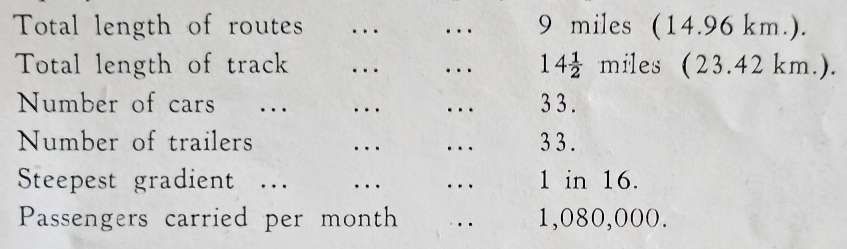
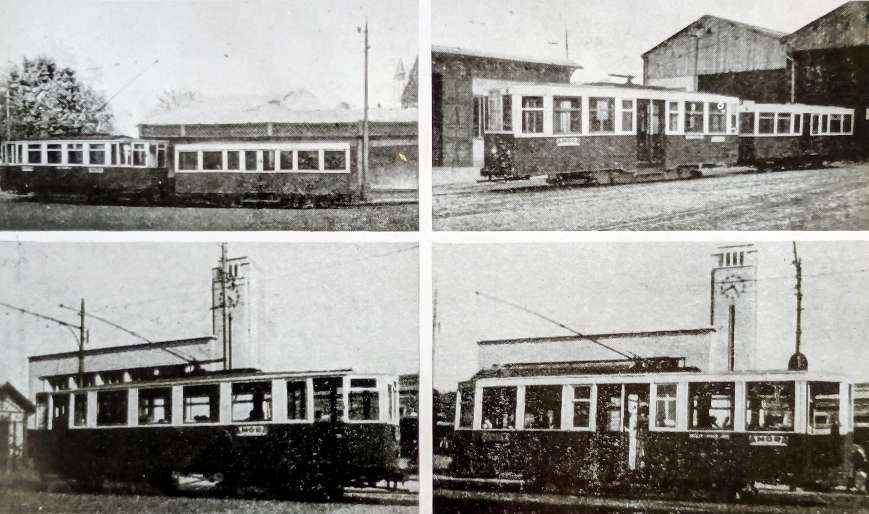
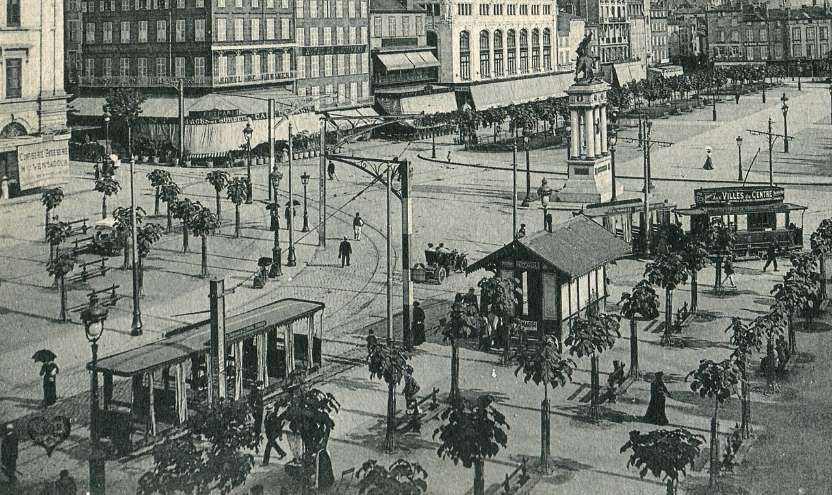
Just 5 years after Jacques article, the tram network in Clermont-Ferrand was closed in favour of buses. “The last tram in Clermont-Ferrand ran on 17th March 1956. After this, public transportation in the city was solely by bus. In many places, the rails were paved over to make way for cars.” [8]
Clermont-Ferrand’s Modern Tramway
“In the 1970s, concern over the consequences of automobile use increased. In the 1983 Elections, a tramway was proposed by Socialist mayor Roger Quilliot in his re-election campaign. … However, the tram project was only seriously considered … in 1990. The development of the system was given to SOFRETU (now Systra), which proposed the building of two tramlines: one north–south line (which would eventually become Line A), and an east–west line. In 1996, bids were solicited for the rolling stock for the tramway. Alstom proposed that Alstom Citadis trams be used for the system, and Alstom Citadis trams were bought for Line A on 14th October 1996. Thus, the first tramway followed SOFRETU’s proposal, which corresponded to the present day Line A. However, due to pressure from the Chamber of Commerce and industries in Clermont-Ferrand (mostly Michelin), this initial tramway project was halted.” [8]
A revised project was proposed in 2000 and bids were sought in 2002. The contract was won by Lohr Industrie. A first section was opened in November 2006 with the remainder of the originally proposed network opening in 2007. The line had to be closed for seven weeks in 2013 to renovate many station platforms due to their deterioration. [8]
“In 2011, an extension of Line A to Vergnes was initiated. Work began in December 2011 and took almost 2 years.” [8]
“On 14th December 2013, the 2-kilometre (1.2 mile) extension of Line A from Champratel to Vergnes opened to the public. This extension was part of the ‘Reorganization of Les Verges Region’ program, mainly to ease access to the Stade Gabriel Montpied.” [8]
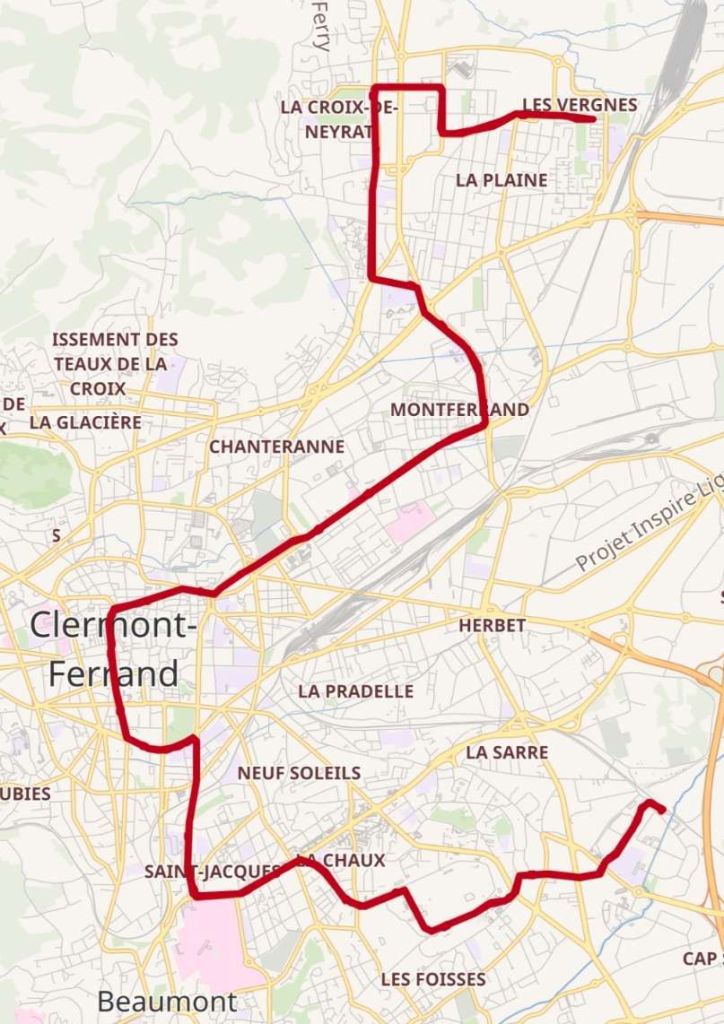
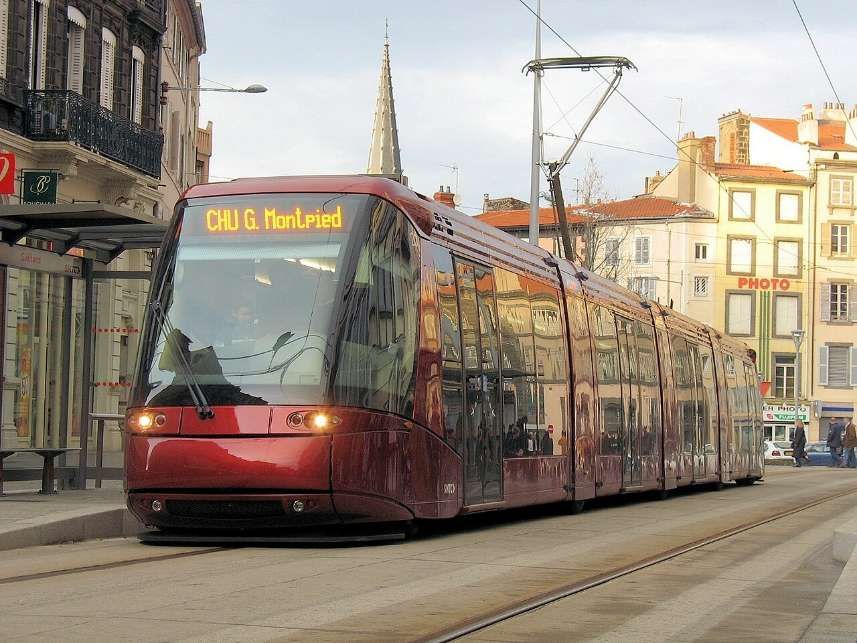
“The tramway of Clermont-Ferrand uses Translohr technology. The initial fleet was 26 trains, but in September 2019, the fleet was expanded to 30 trains. Every STE 4 model consists of 4 cars, for a length of 32 metres (105 ft). … Every train has a maximum capacity of 238 people with around 40 sitting. Six trains were priced at approximately 14 million euros.” [8]
References
- P. J. Jacques; The Tramways of Clermont-Ferrand; in The Modern Tramway Volume 14 No. 163, July 1951, p156-159 & p161.
- https://en.wikipedia.org/wiki/Clermont-Ferrand_tramway#/media/File%3ATranslohr_STE4_-_143.jpg, accessed on 18th May 2026.
- https://commons.wikimedia.org/wiki/Category:Marsillon_rail, accessed on 18th May 2026.
- https://en.wikipedia.org/wiki/History_of_electric_power_transmission, accessed on 18th May 2026.
- https://www.citytransport.info/Trams02.htm, accessed on 18th May 2026.
- https://www.glorycrane.com/grooved-rails., accessed on 18th May 2026.
- https://commons.wikimedia.org/wiki/Category:Broca_rail#/media/File%3AProfil_du_Rail_Broca%2C_en_forme_du_champignon._Profil_N%C2%B01_pour_alignements_(Doc._Archives_de_Paris).jpg, accessed on 18th May 2026.
- https://en.wikipedia.org/wiki/Clermont-Ferrand_dtramway, accessed on 18th May 2026.
- https://en.wikipedia.org/wiki/Clermont-Ferrand_tramway#/map/0, accessed on 18th May 2026.
- https://en.wikipedia.org/wiki/Clermont-Ferrand_tramway_(1890%E2%80%931956)#/media/File%3ATramway-electrique-Clermont-Ferrand-cp.jpg, accessed on 18th May 2026.
- https://en.wikipedia.org/wiki/Clermont-Ferrand_tramway_(1890%E2%80%931956)#/media/File%3AELD_3497_-_CLERMONT-FD_-_Place_de_Jaude_-_Vue_prise_de_l’Hotel_de_la_Poste_(D%C3%A9tail).JPG, accessed on 18th May 2026.
- https://en.wikipedia.org/wiki/Clermont-Ferrand_tramway#/media/File%3ATramway-clermont-ferrand-2.jpg, accessed on 18th May 2026.


.jpg)
#/media/File%3ATramway-electrique-Clermont-Ferrand-cp.jpg)
#/media/File%3AELD_3497_-_CLERMONT-FD_-_Place_de_Jaude_-_Vue_prise_de_l'Hotel_de_la_Poste_(D%C3%A9tail).JPG)
