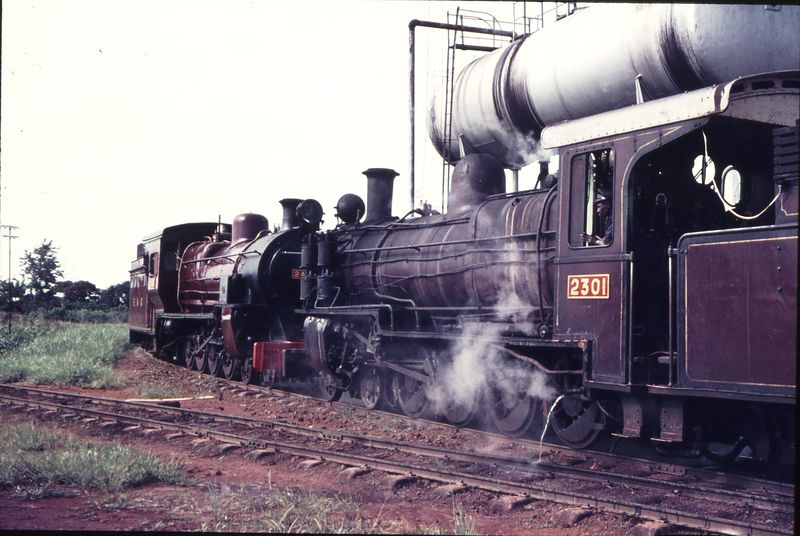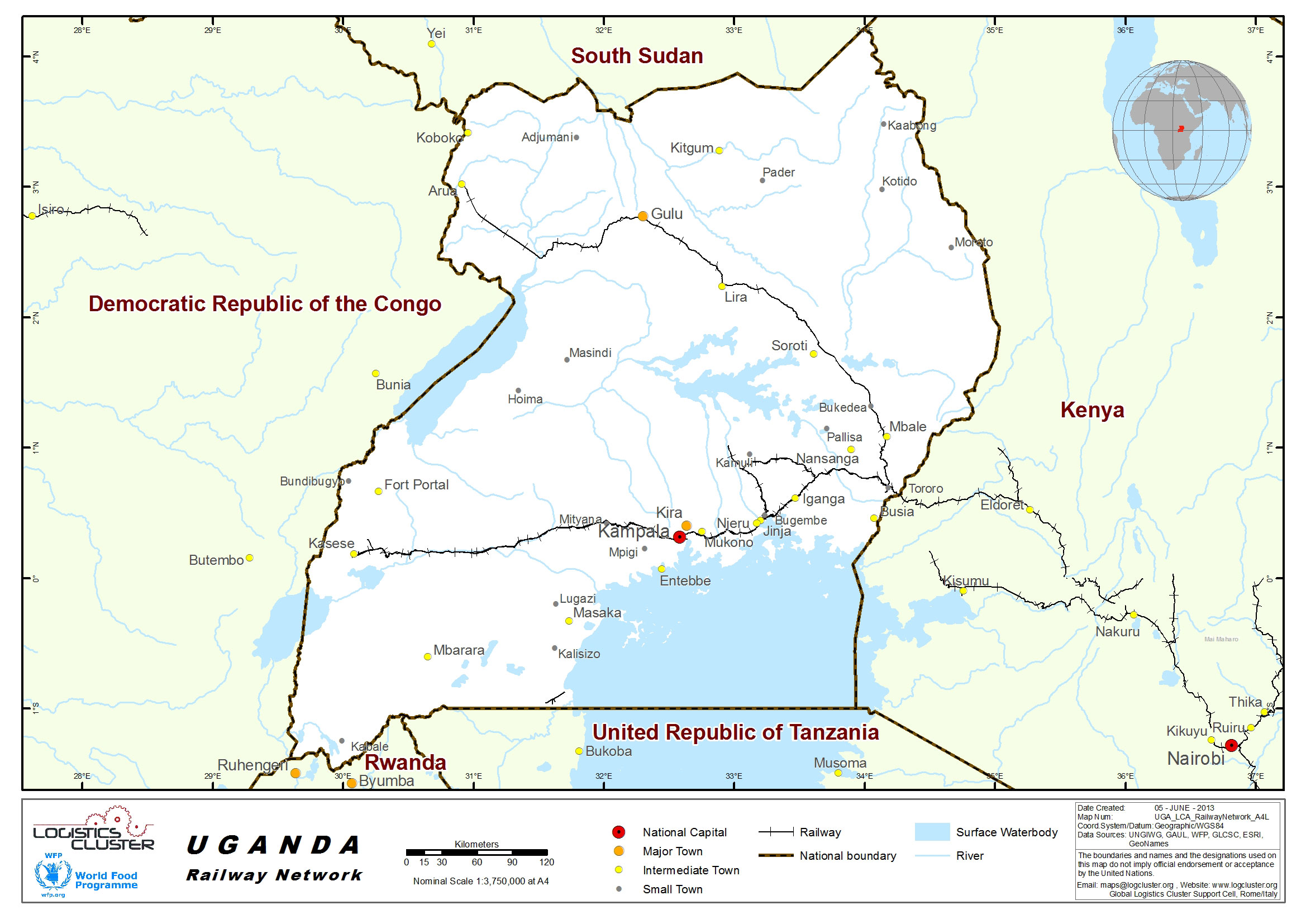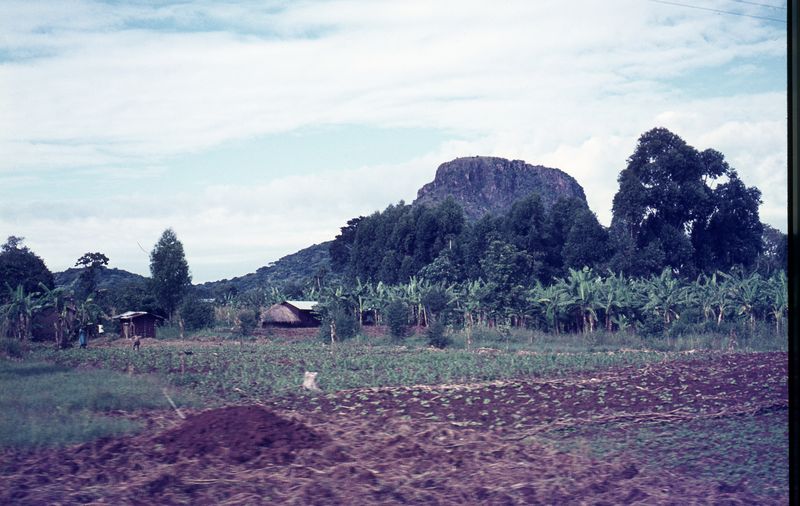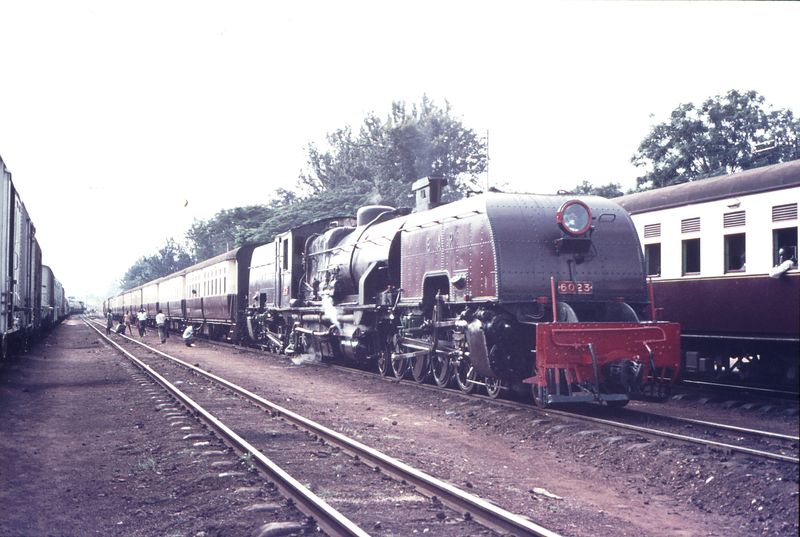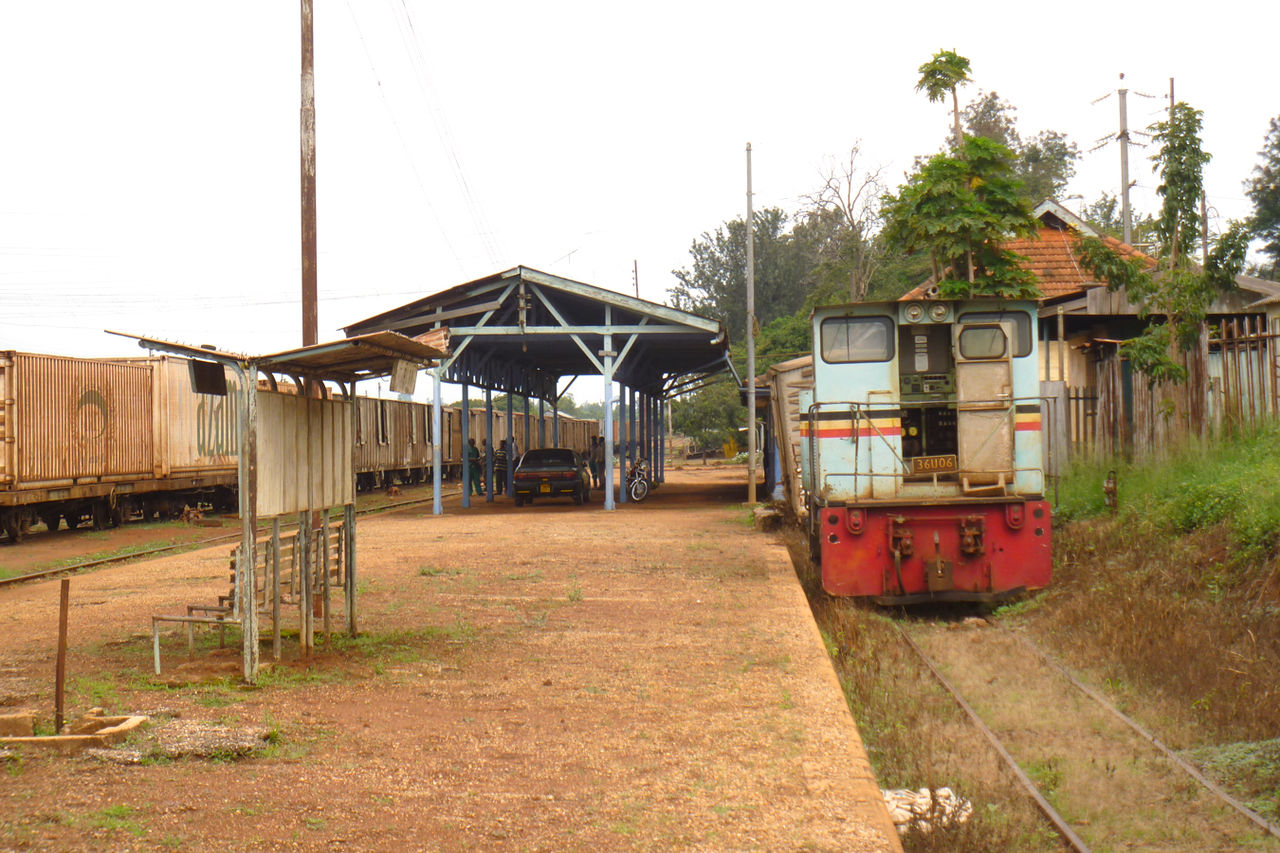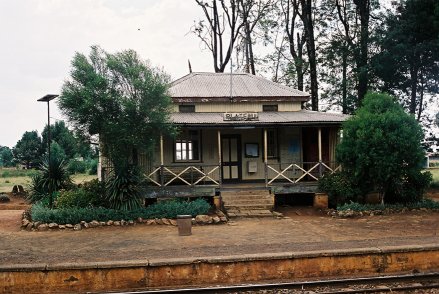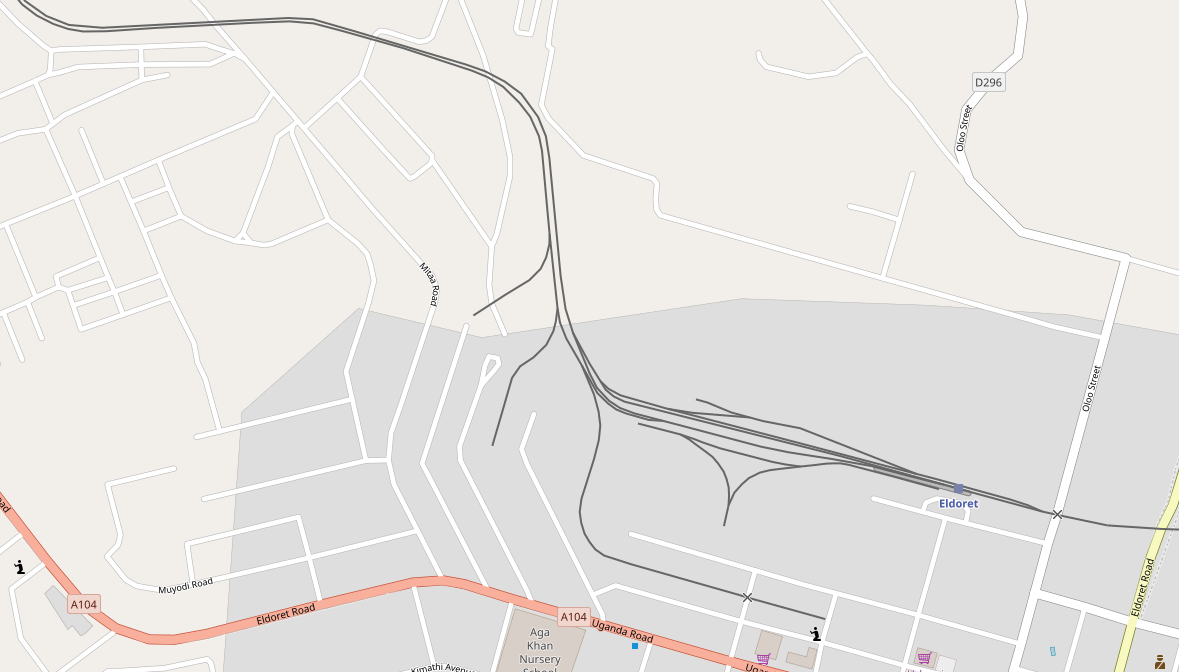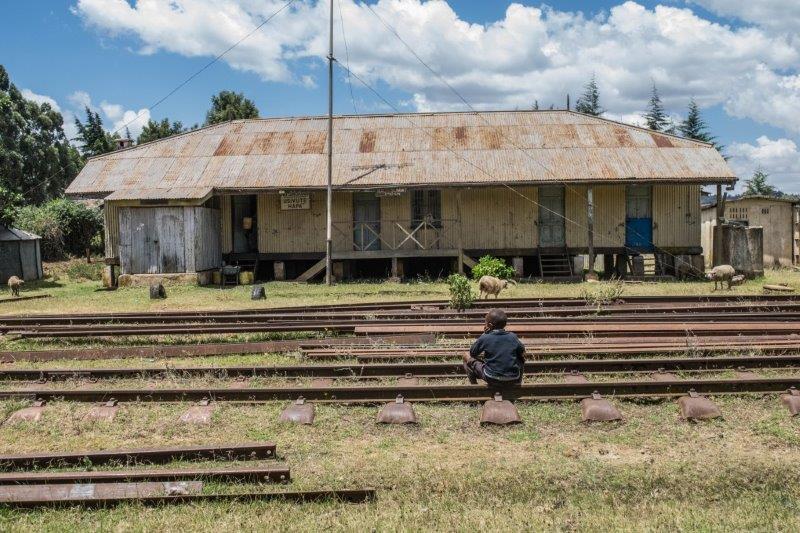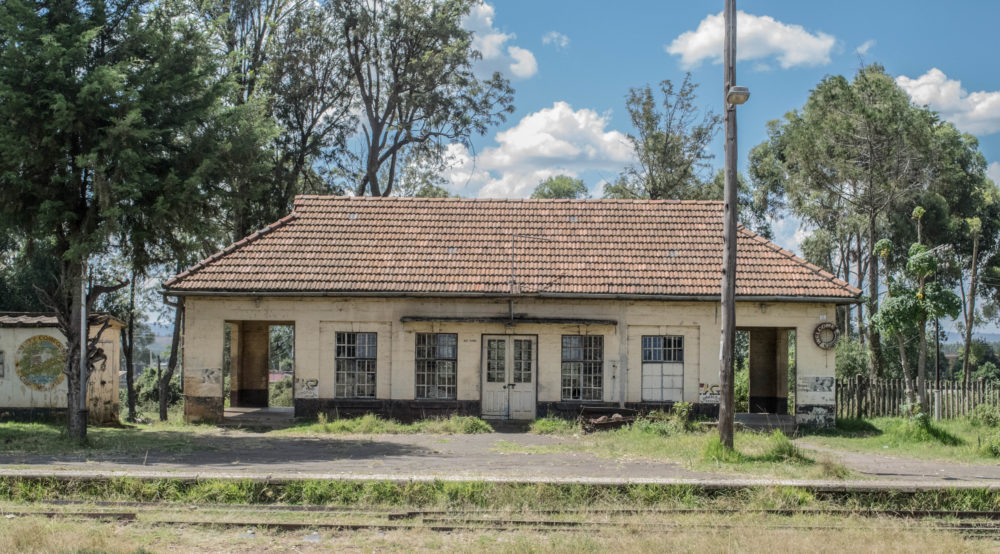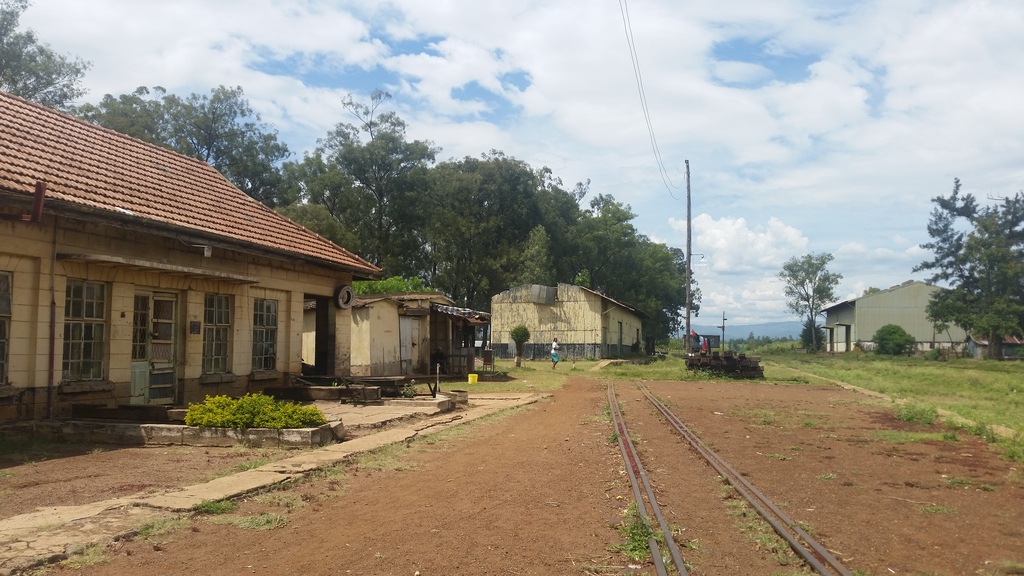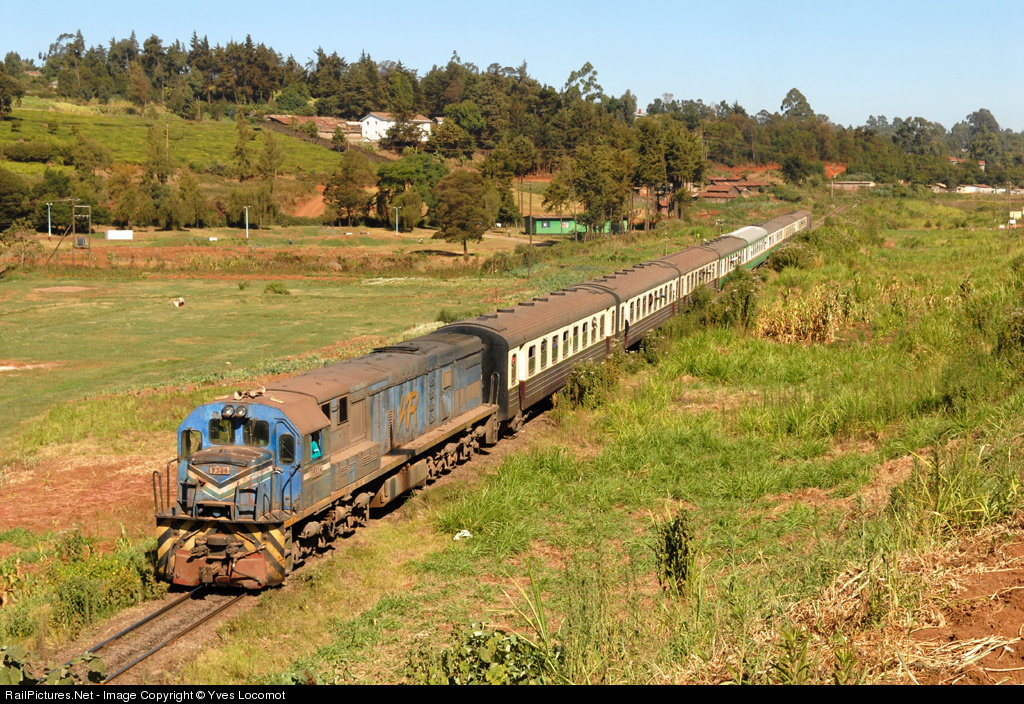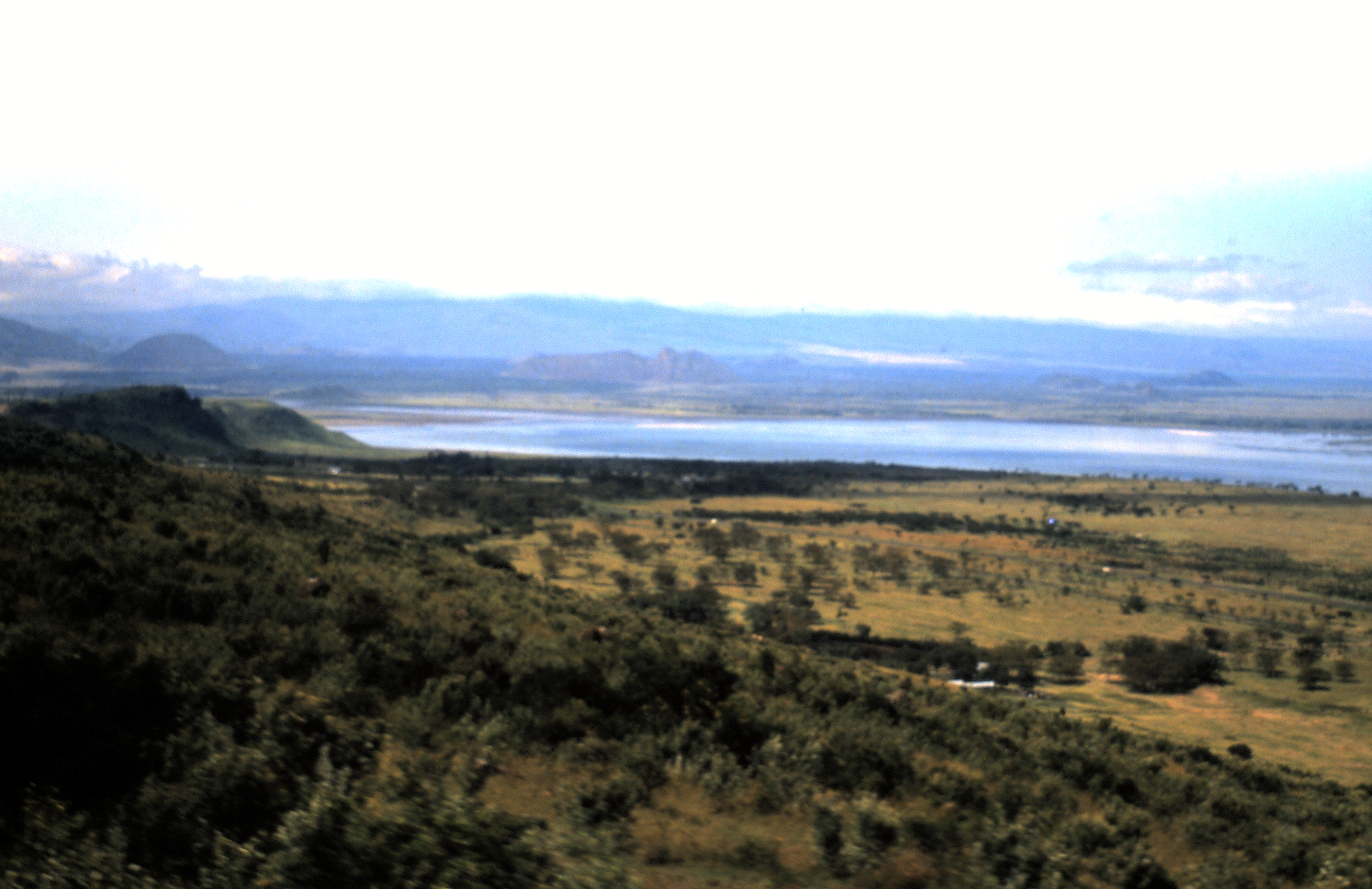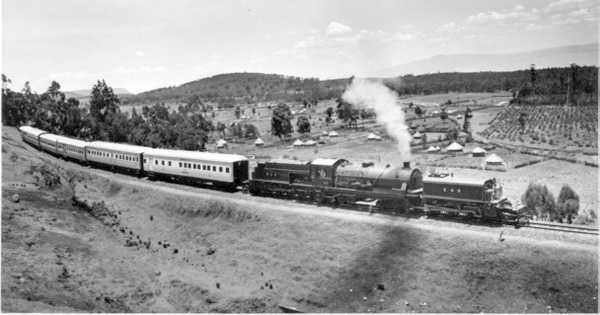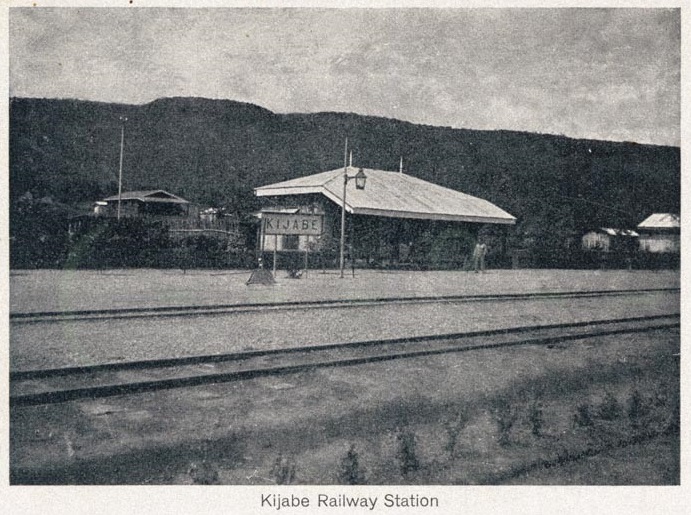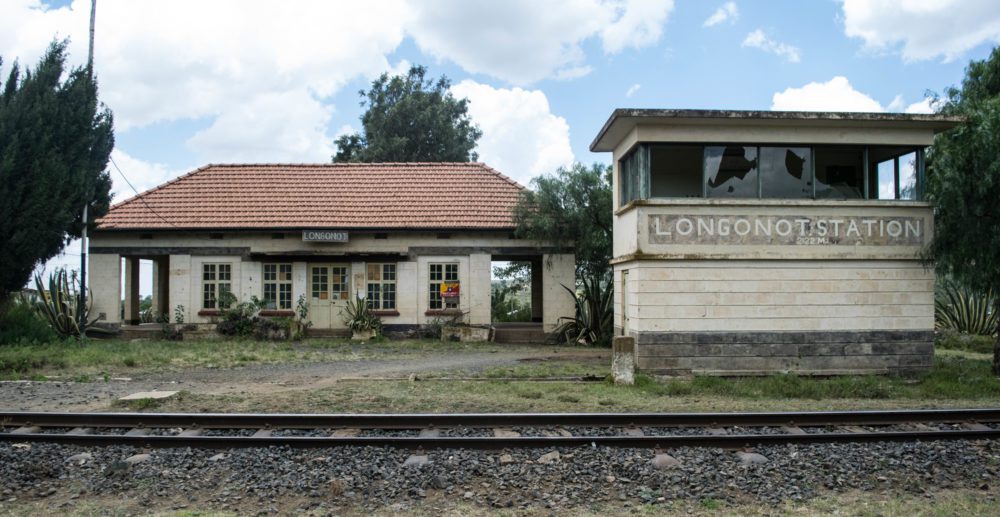
Category Archives: Uganda, Kenya and Tanzania Railways

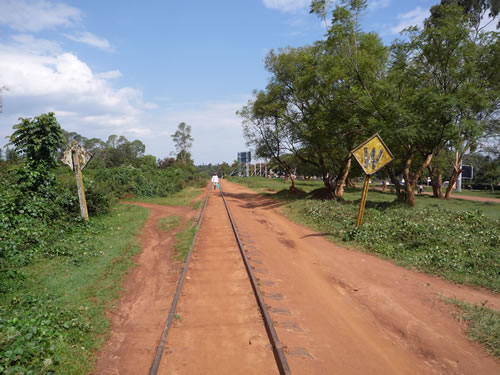
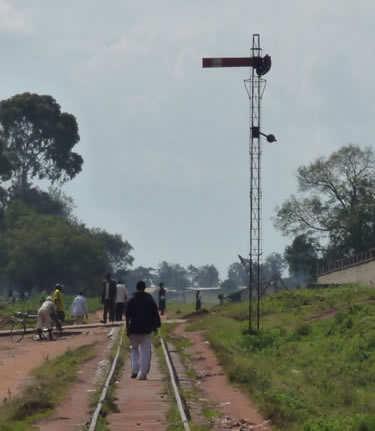
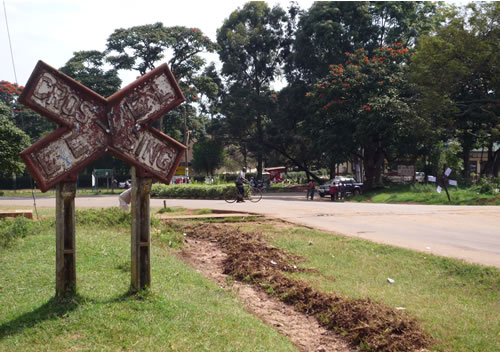
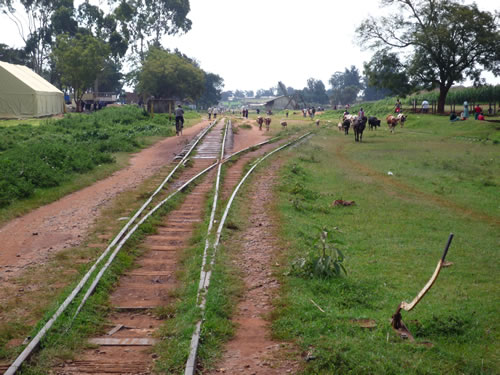
Various posts about railways in East Africa

The Uganda Railway – Part 11 – The Branch from Kisumu to Butere

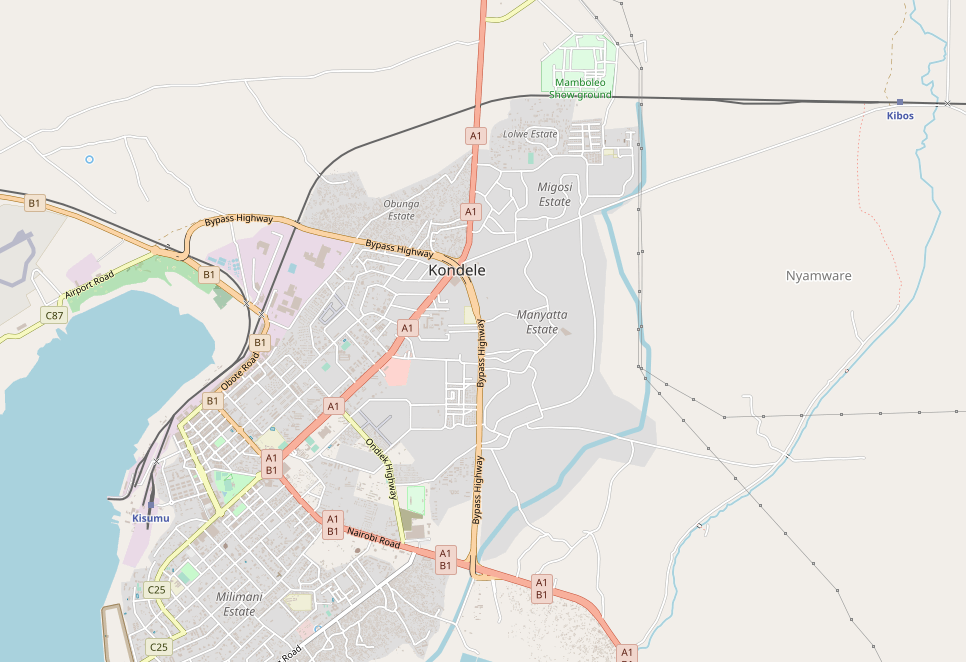
We start with some useless trivia, or some vitally important information about Kisumu. Which it is depends on your personality and perspective! This is only a very short post about a branch line which has very little traffic on it, the line from Kisumu to Butere.

Kisumu, officially known as Kisumu City (and formerly Port Florence), is a Kenyan inland port city on Lake Victoria and the capital city of Kisumu County, Kenya. At an elevation of 1,131 m (3,711 ft), the city-county has an estimated population of 968,879, while the metropolitan region comprising the city and its suburbs and satellite towns of Maseno, Kondele and Ahero was estimated at over 1 million in early 2017. It is the third largest city in Kenya after the capital, Nairobi, and the coastal city of Mombasa. Kisumu is the principal city of western Kenya, the immediate former capital of Nyanza Province, the headquarters of Kisumu County and the proposed headquarters of the Lake Region Economic Block, which is a conglomeration of 13 counties in Western Kenya. It is the largest city in western Kenya and the second most important city after Kampala in the greater Lake Victoria basin.

Kisumu port was founded in 1901 as the main inland terminal of the Uganda Railway named “Port Florence”. Although trade stagnated in the 1980s and 1990s, it is again growing around oil exports.

Kisumu literally means a place of barter trade “sumo”. The city has “Friendship” status with Cheltenham, United Kingdom and “sister city” status with Roanoke, Virginia and Boulder, Colorado, United States. [1]

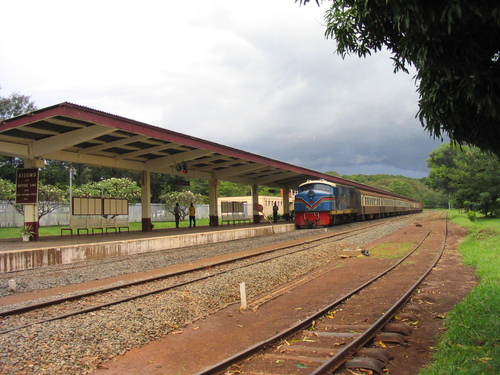
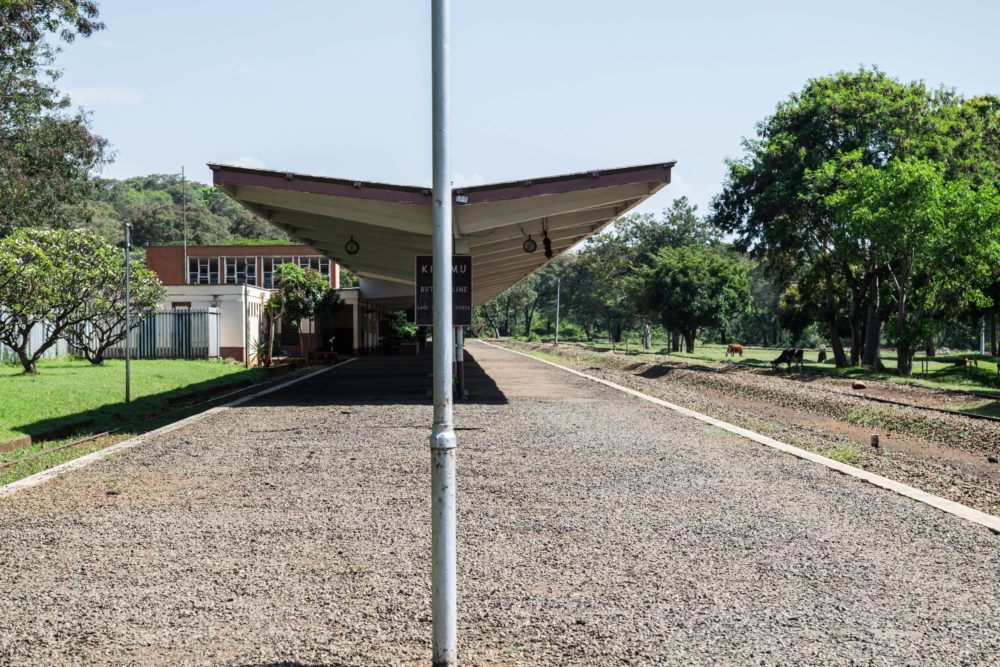
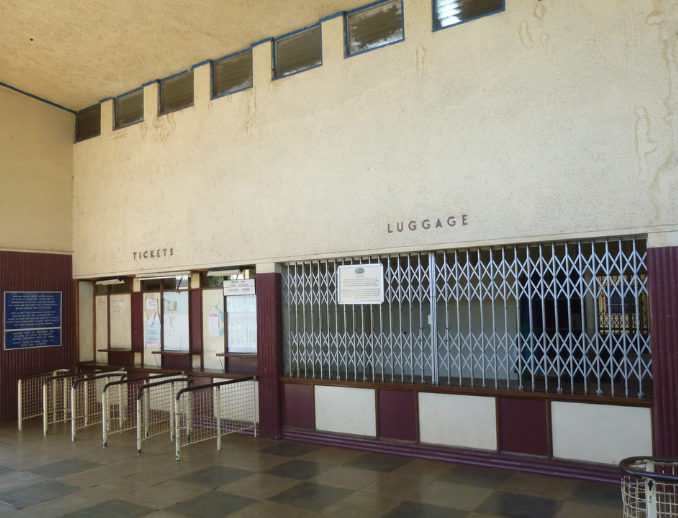
As we noted in the last post in this series, Kisumu Railway Station is currently abandonned, although this may change in the relativel;y near future

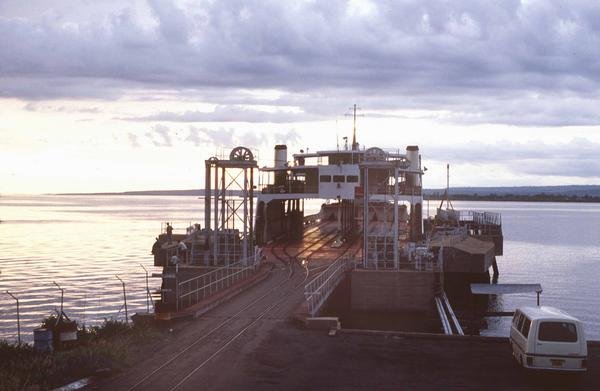
At the turn of the Twentieth Century, Kisumu was chosen as the destination for the Uganda Railway. Kisumu is not and was not in Uganda. But it was the port on Lake Victoria from which steam ships sailed to Port Bell for Kampala. The Railway did not reach Kampala until the 1930s. After this the mainline to Kisumu became just a branch from Nakuru. In the mid-sixites, two rail ferries – the UMOJA and the UHURU – were commissioned for lake service, principally between Kisumu, Jinja and Mwanza. Here one of them prepares for an evening departure, (c) James Waite. [2]

Before we set off down the short branch to Butere. Here are a few photos of locomotives at Kisumu from the middle of the 20th Century. All are taken by James Waite and used with his kind consent. [2]

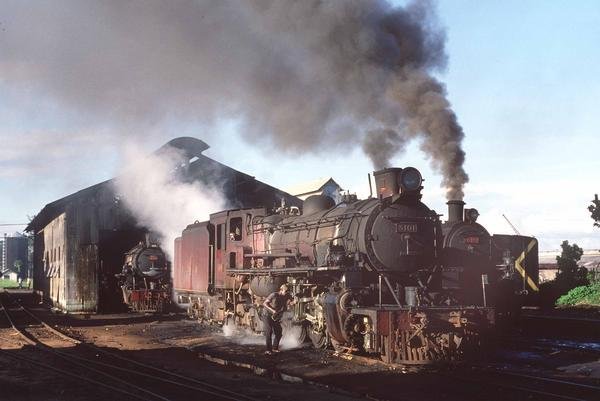
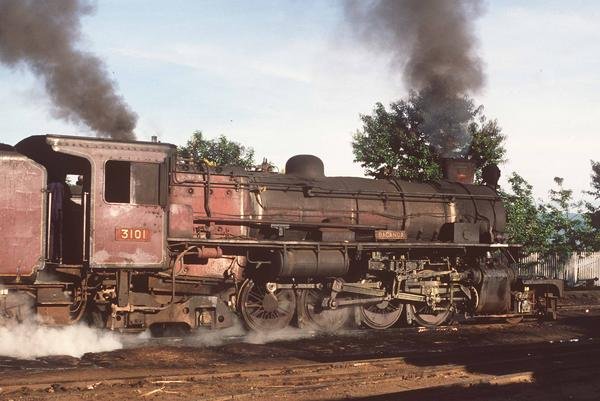
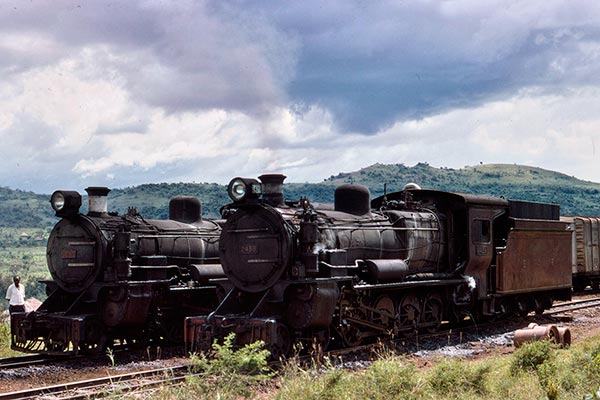
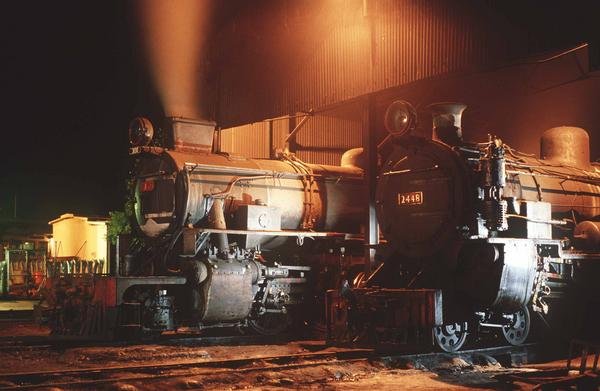
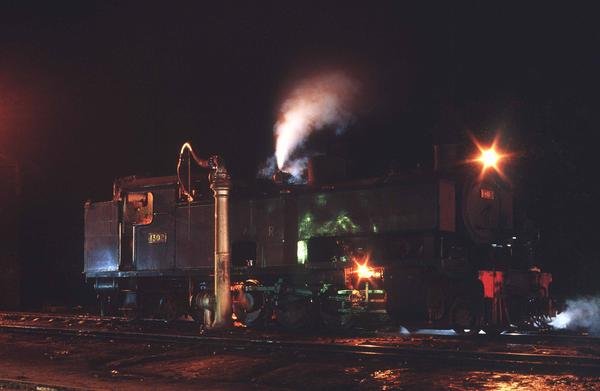
Class 31 No. 3130 spends the night at Kisumu motive power depot in company with Class 24 No. 2448 (c) James Waite. [2] Tank Engine No. 1302 lets off steam in Kisumu, (c) James Waite. [2] Morning at Kisumu as Tribal Class No. 3101 gets up steam, (c) James Waite. [2]No. 3101 sets off for a day’s work.  It is perhaps surprising that, as a Kenyan locomotive, it has retained its BAGANDA name plate (c) James Waite. [2]

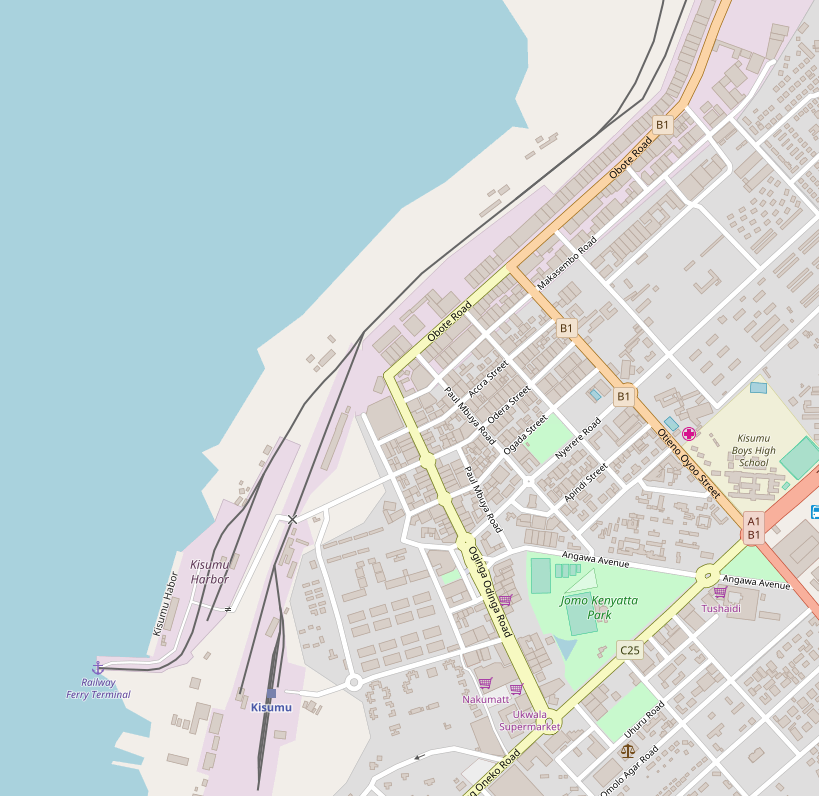
We leave Kisumu Station travelling for a very short distance back down the line towards Nairobi. Just beyond the station throat and alongside Obote Road the Butere branch leaves the mainline.

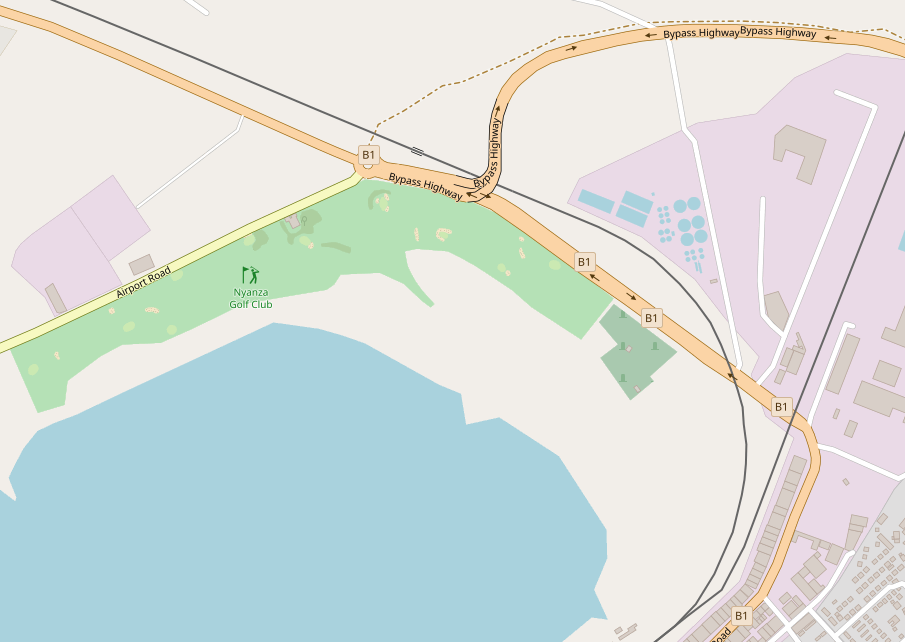
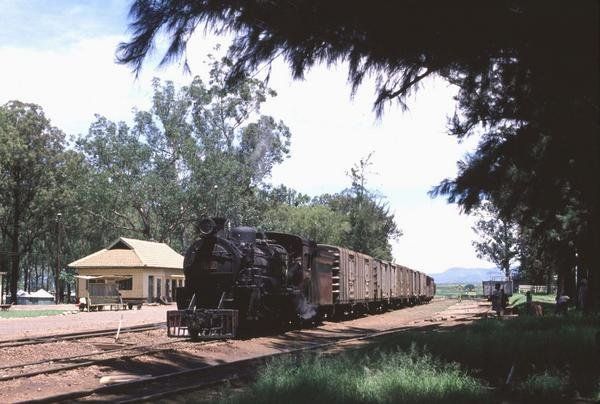
The mainline heads north and the branch heads west towards Kisian, running on the North side of the B1 road.Tribal Class No. 3130 (formerly Karamojong) departing Kisumu with one of the three daily services to Butere, (c) James Waite. [2]

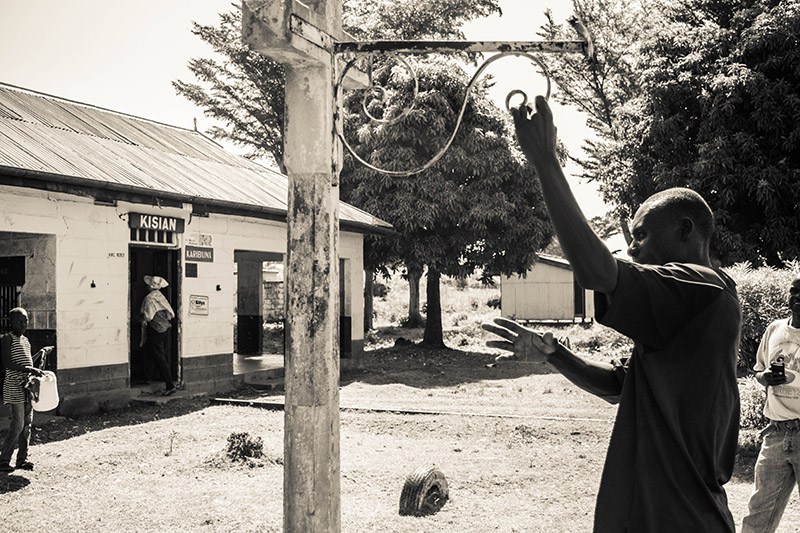
Kisian Station. [3]

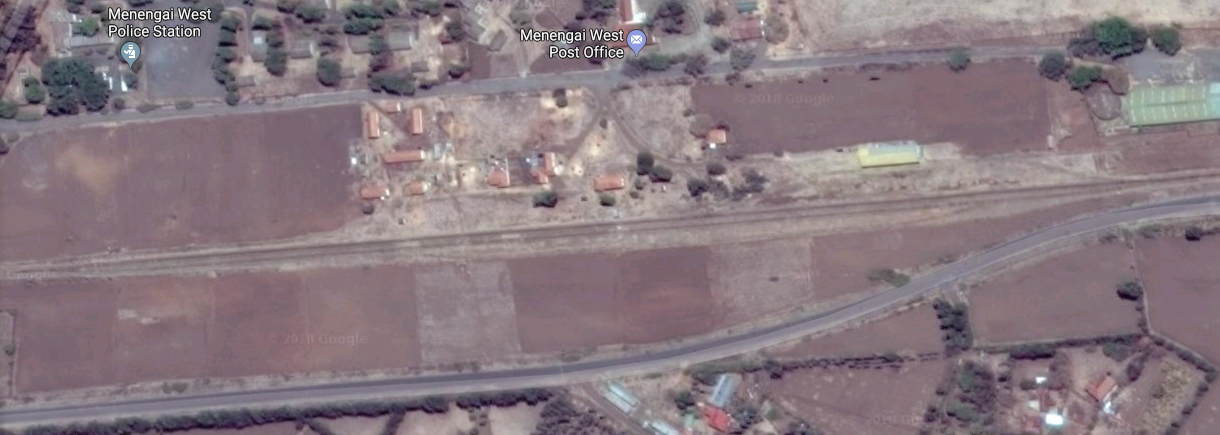
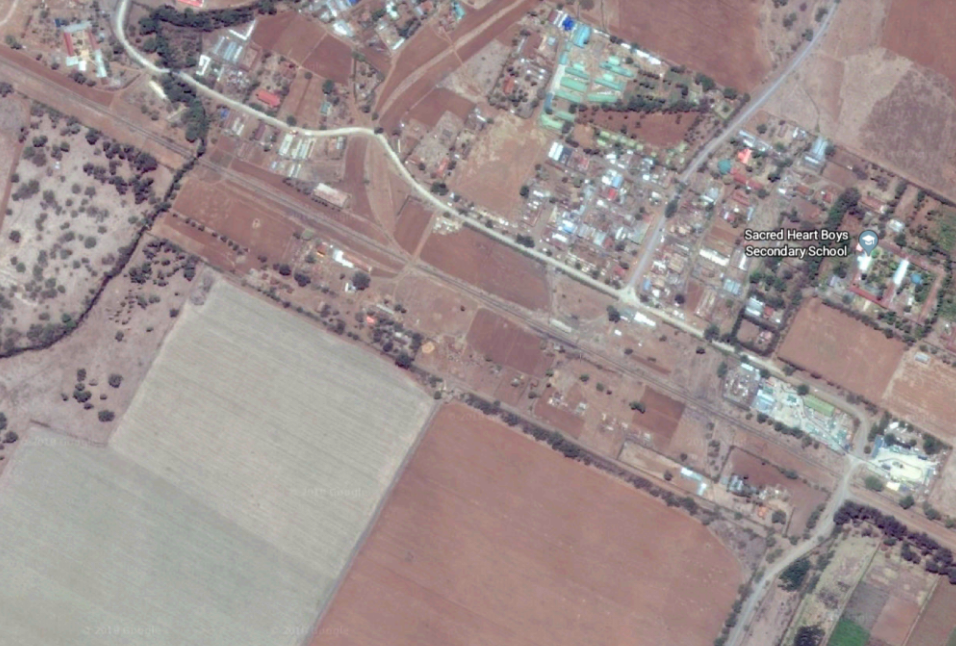
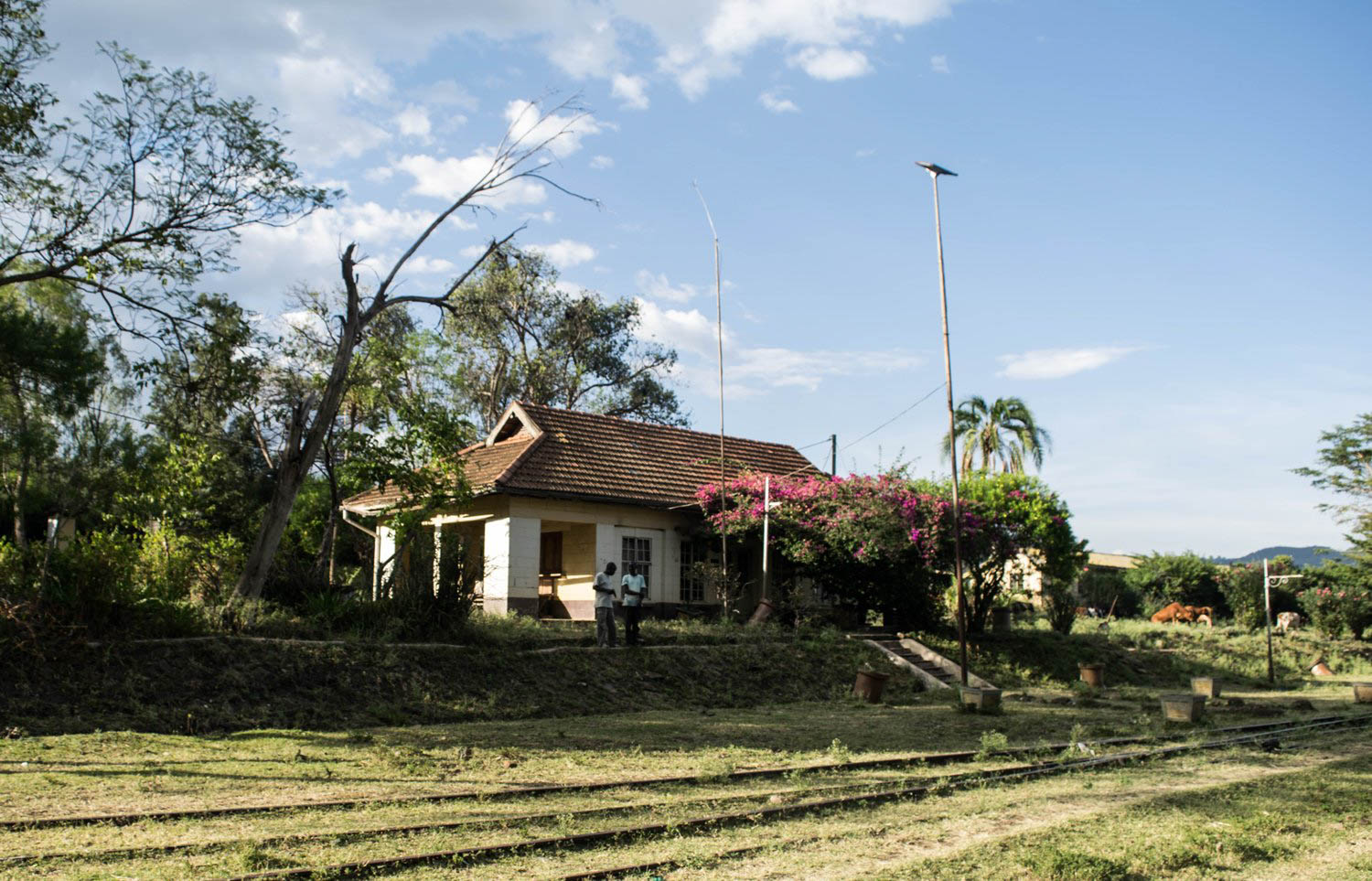
Yala railway stationWe travel on through Lela Station and very quickly after that through Maseno Station. A short distance further on and the train passes through Luanda Station, and then on over the Yala River to Yala Railway Station. Sadly, there are very few pictures of these stations available on the internet, but one great source is Rob Dickinson’s site. [4]

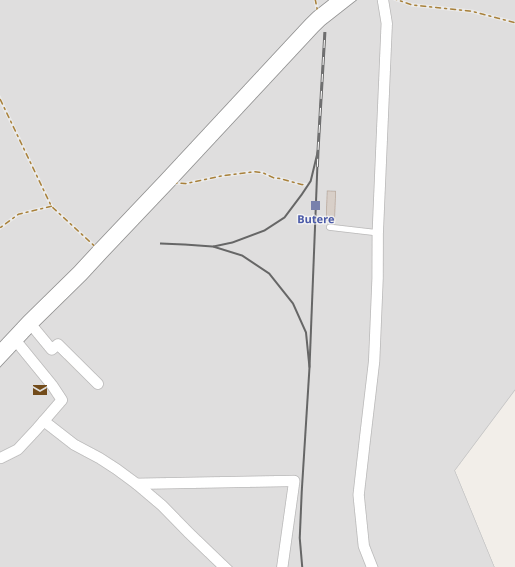
Beyond Yala, the line travels just a short distance north to Namasoli and then on to the end of the line at Butere. Butere was, like many other town’s in the area heavily dependent on sugar cane.


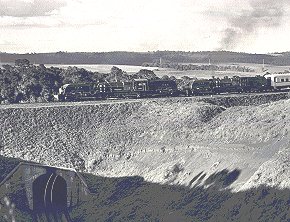
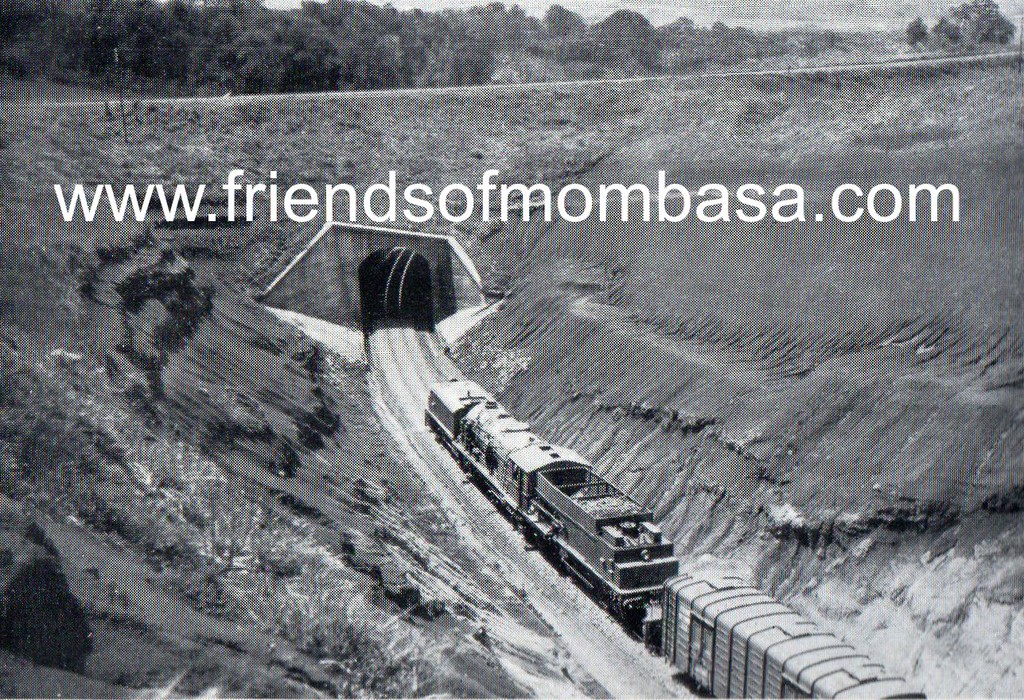
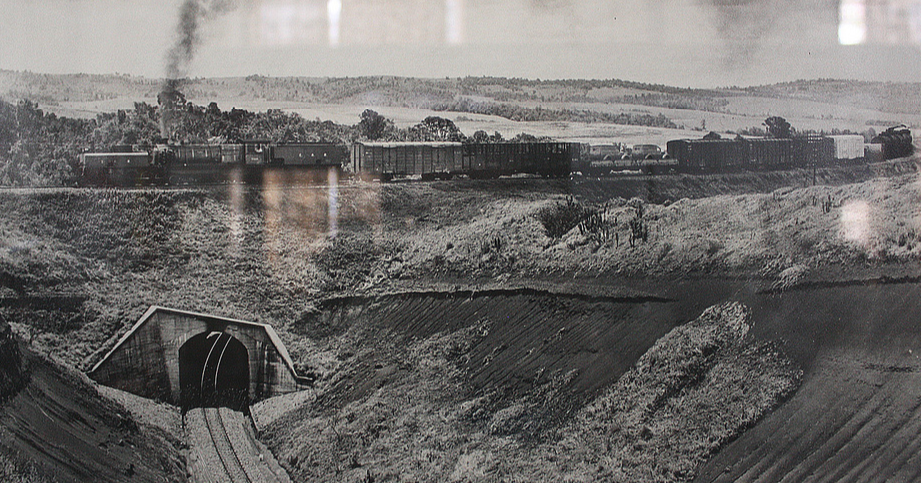
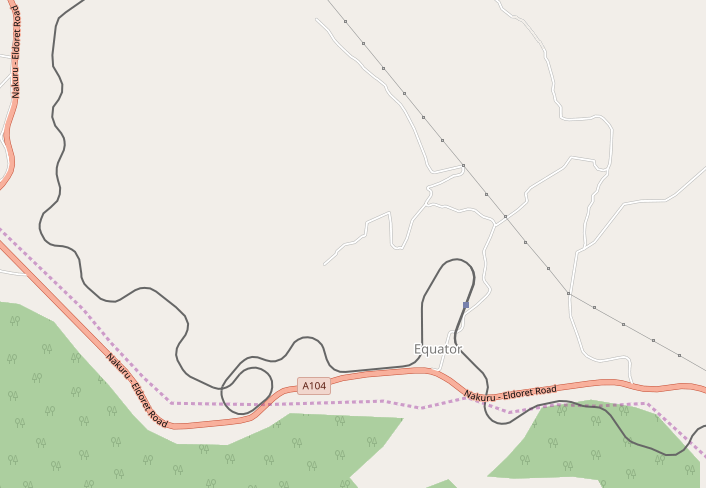
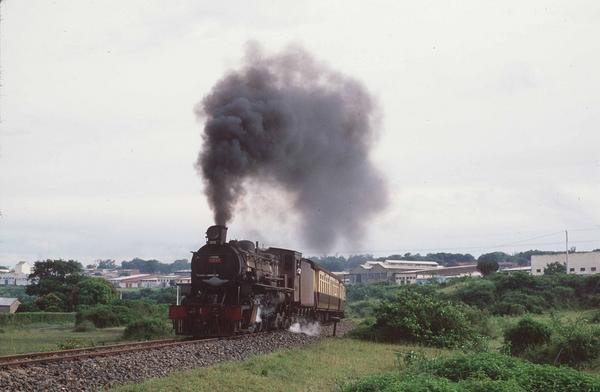
Apparently not making deliberate smoke for the camera, Tribal Class No. 3130 heads across the equator towards Butere, (c) James Waite. [2]

References

  1. https://en.wikipedia.org/wiki/Kisumu, accessed on 25th May 2018.
  2. http://www.mccrow.org.uk/EastAfrica/EastAfricanRailways/NairobiKisumu.htm, used by kind permission from James Waite, first accessed on 25th May 2018, reviewed on 16th March 2021.
  3. http://www.savetherailway.com, accessed on 24th May 2018.
  4. https://www.internationalsteam.co.uk/safari/kenyawest.htm, accessed on 29th March 2021.

The Uganda Railway – Part 10 – West of Nakuru – the line to Kisumu.

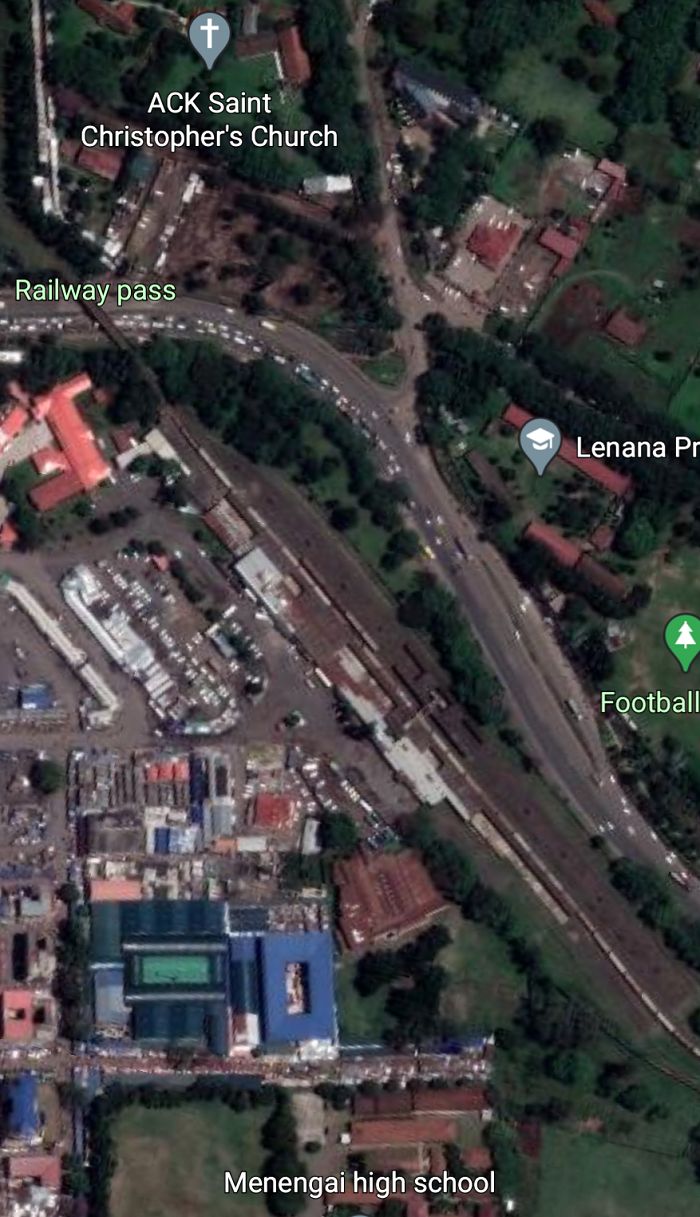
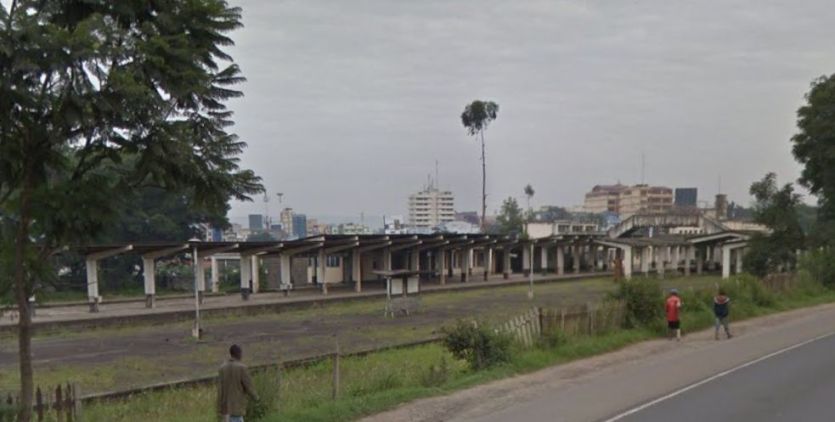
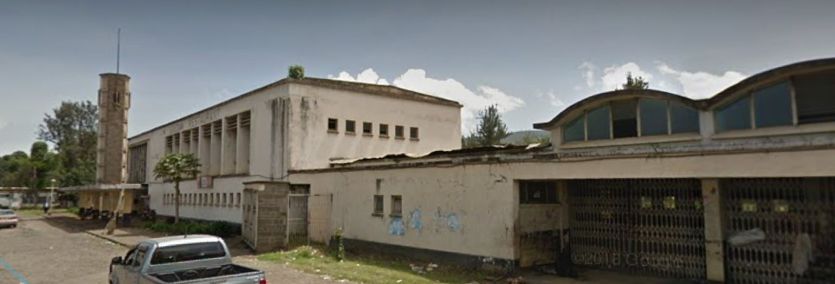
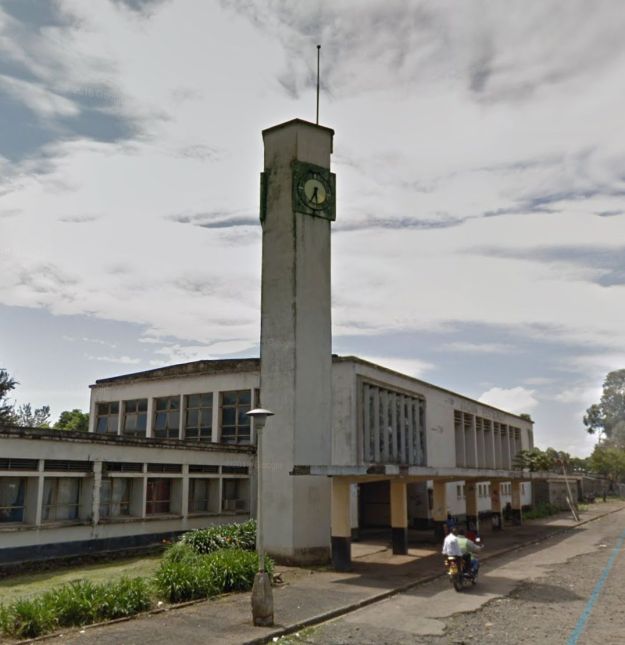
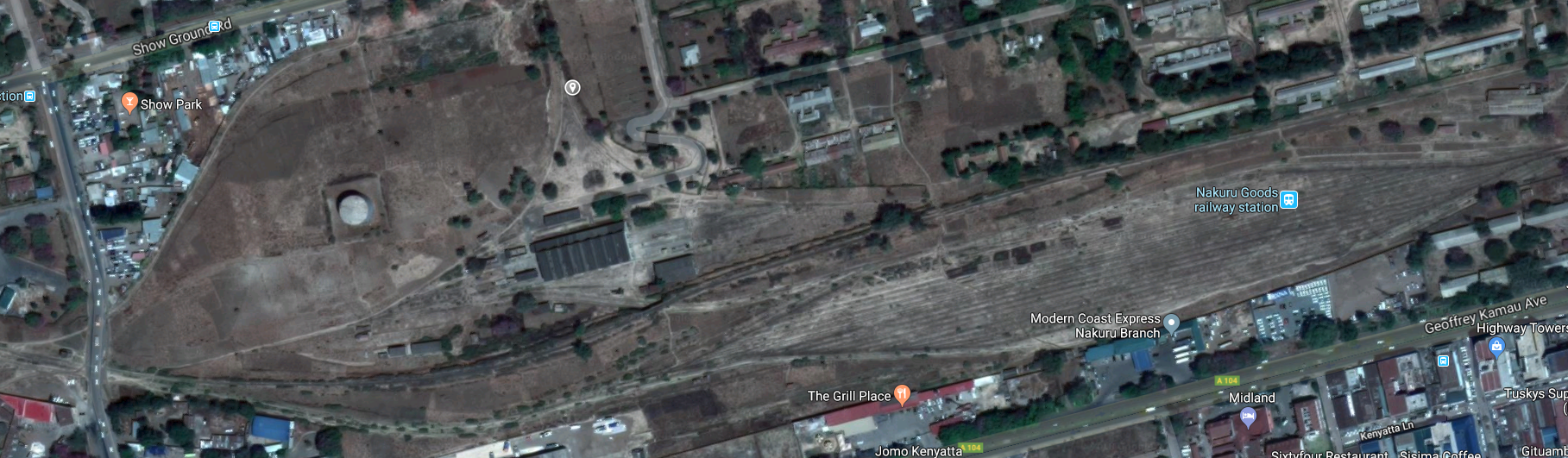
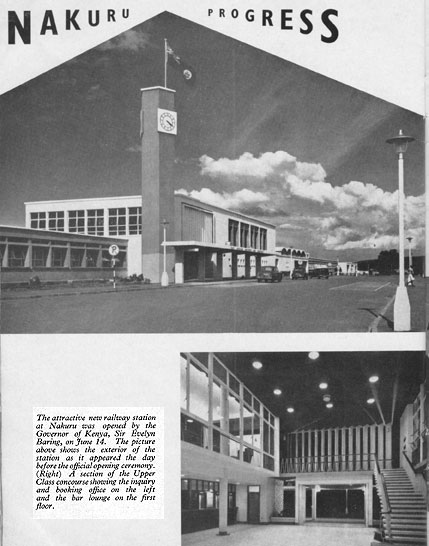
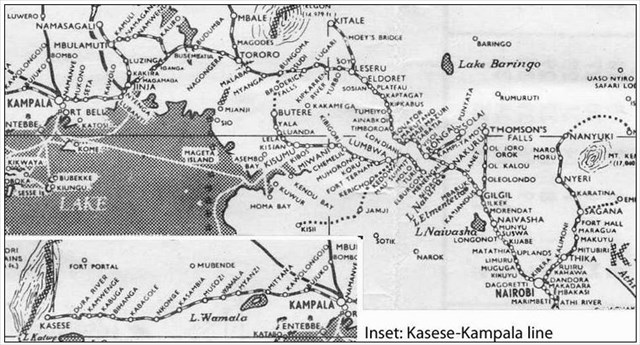
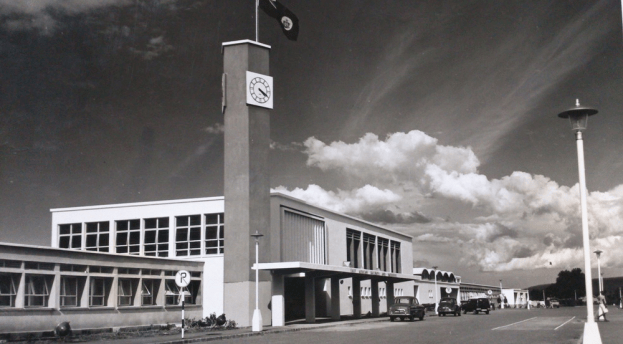
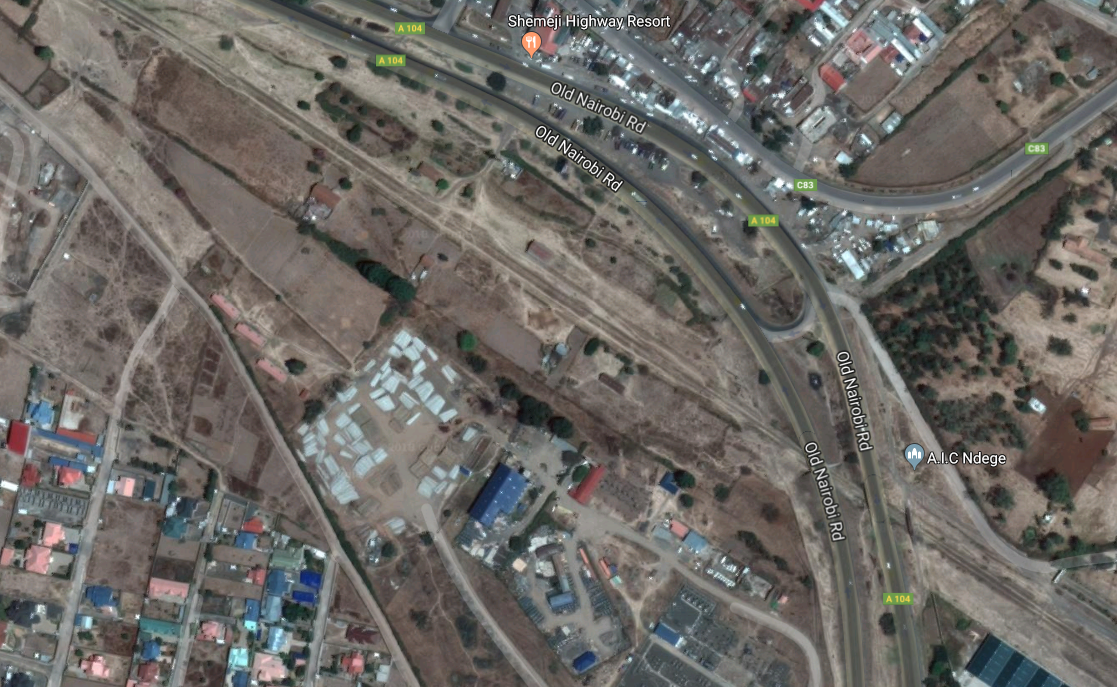
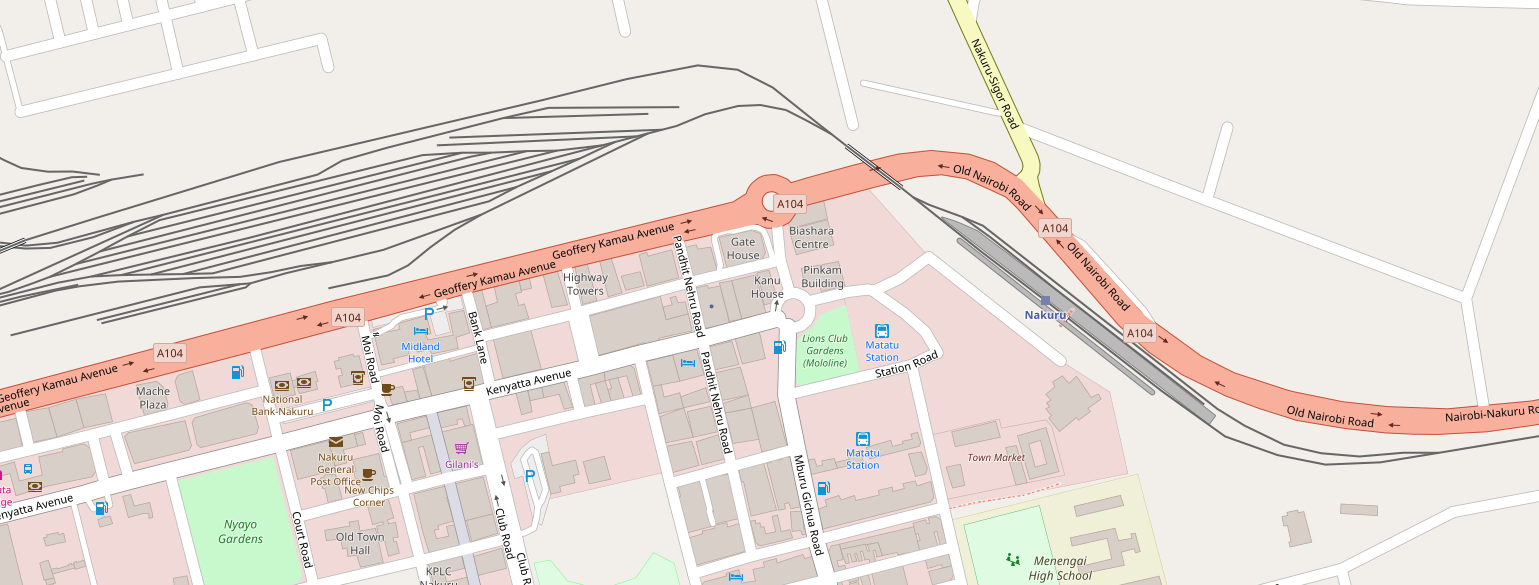
Nakuru railway station sits on the east side of the centre of Nakuru and to the east of the goods yard and MPD. The new station was completed in 1957.Nakuru is a junction station. The original Uganda Railway travelled west from Nakuru to Kisumu on Lake Victoria and a steamer service provided access to Kampala via Port Bell. Once the railway was built to Kampala and beyond, the line to Kisumu became a branch-line. Before we travel on to Kampala on the main-line we need to explore the original line to Kisumu and its branch-line to Butere. Progress along the main line will need to wait for a later post.

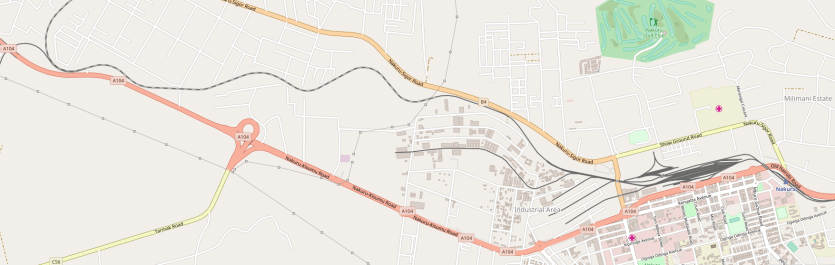
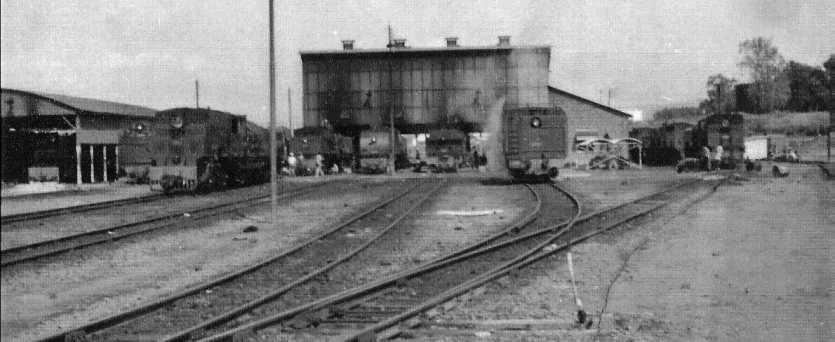
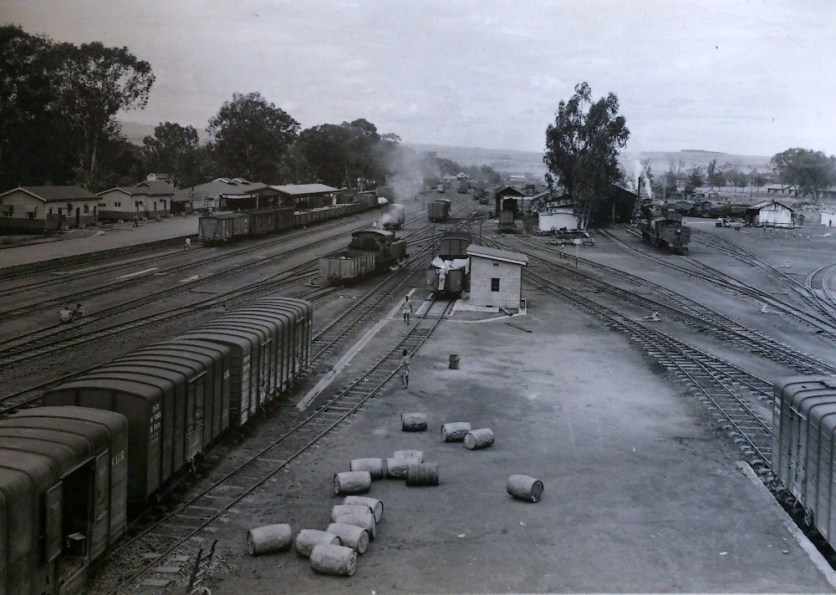
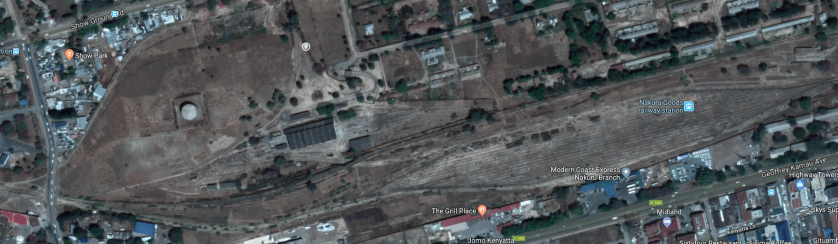
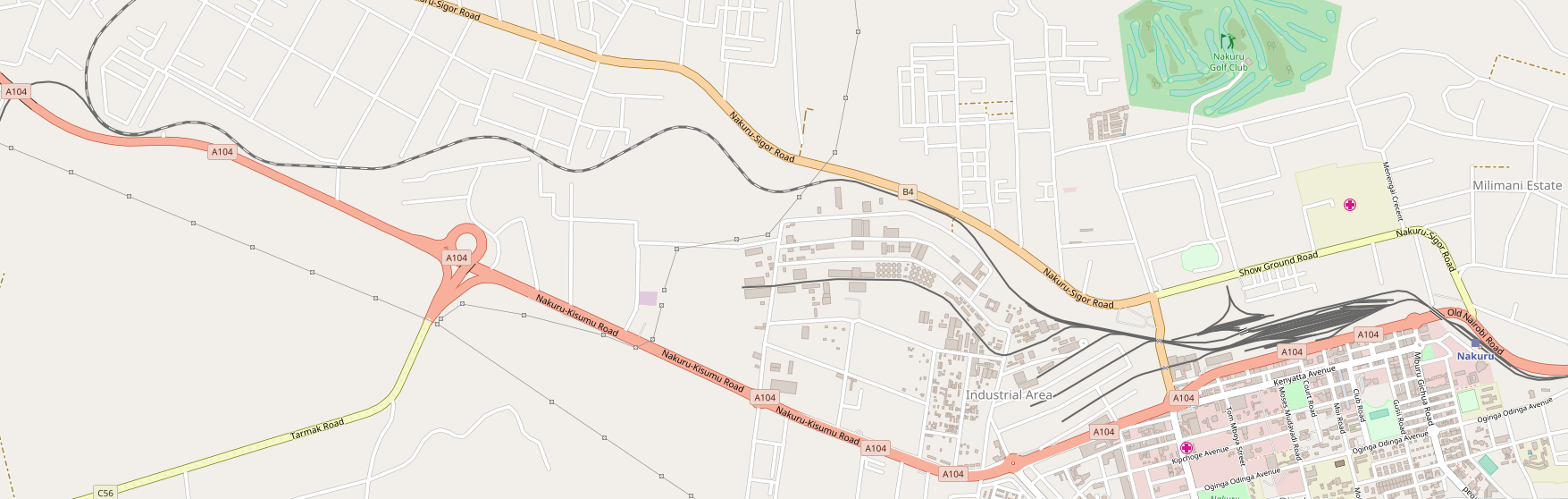
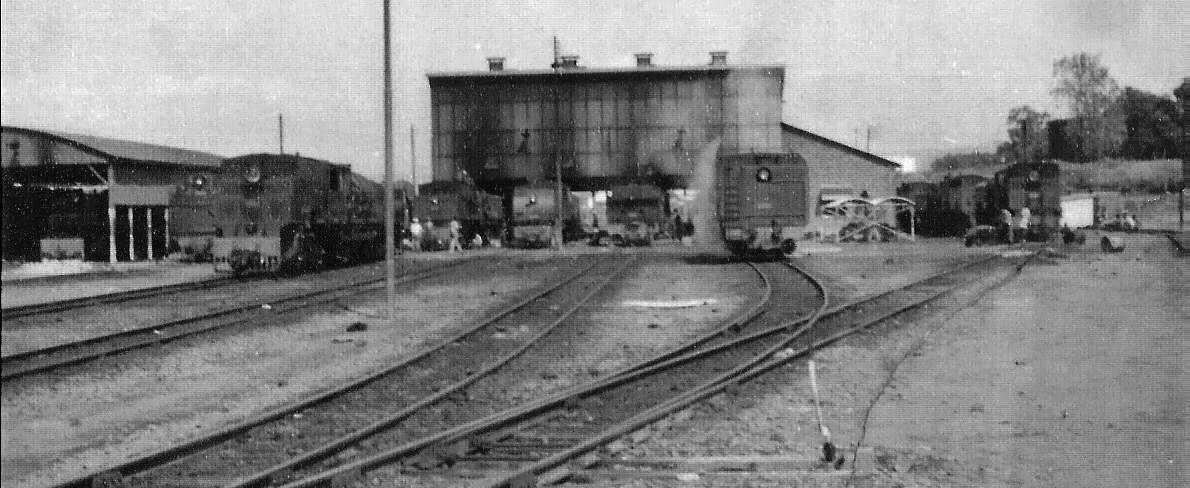
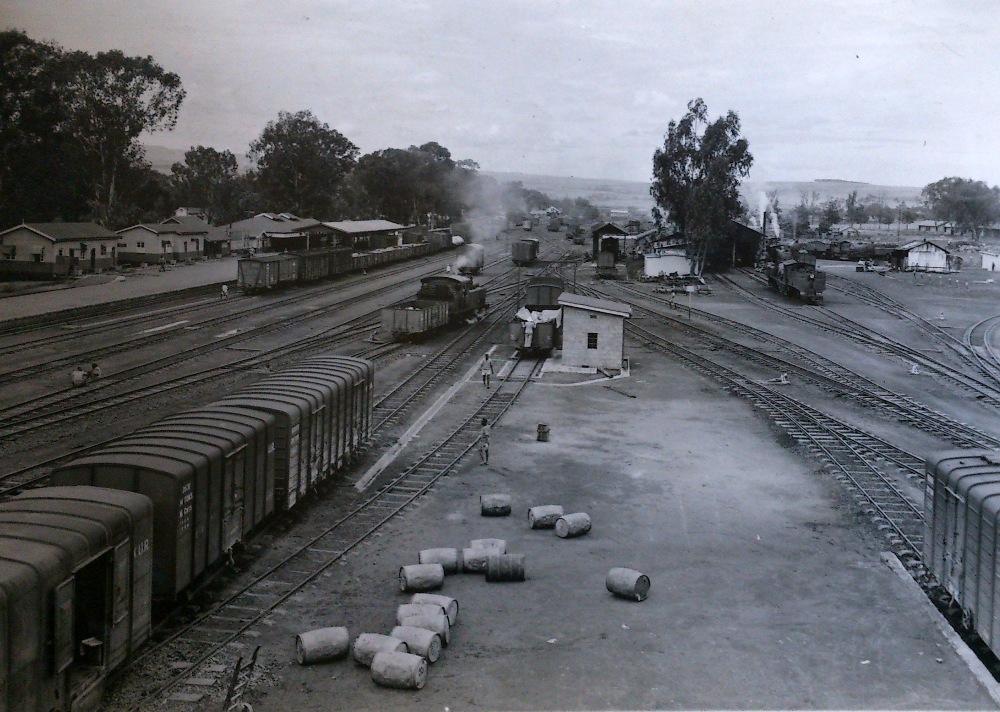
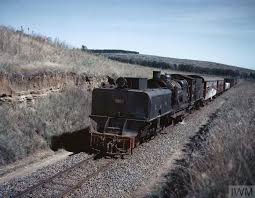
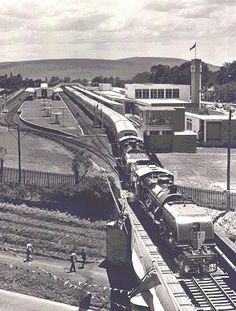
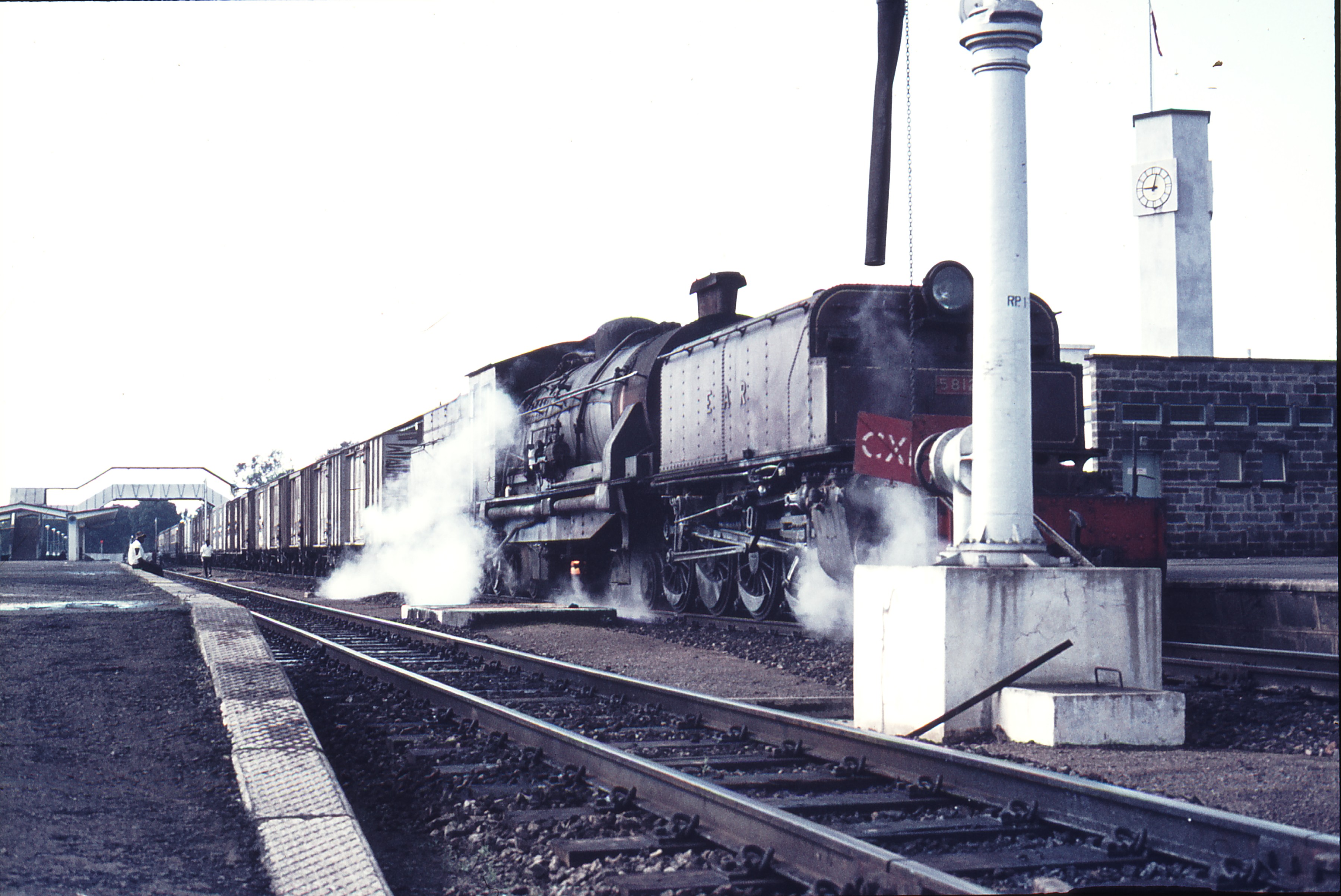
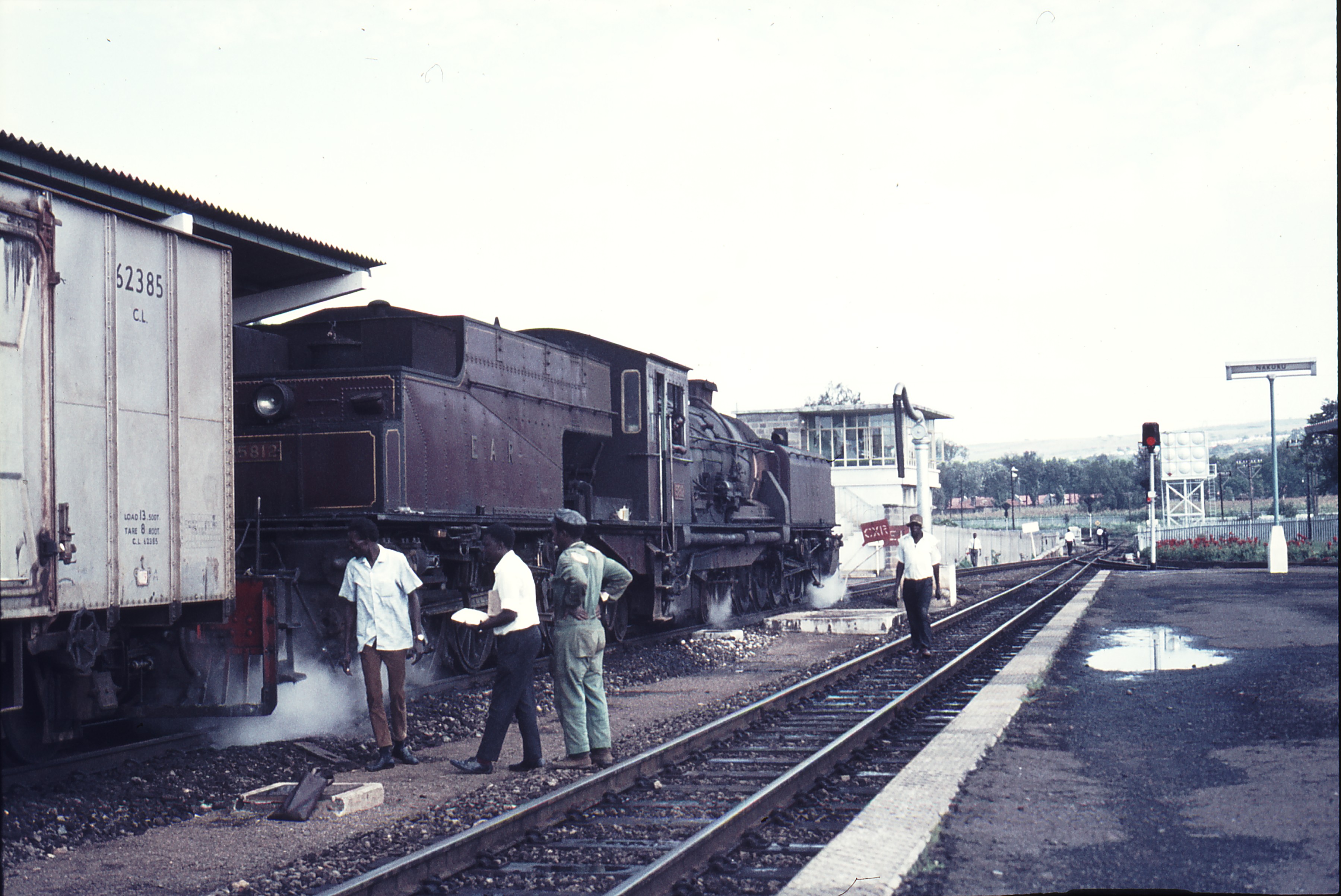
We being the journey to Kisumu at Nakuru railway station, which, in its current form, dates from 1957. The picture below shows the station yard at Nakuru around the turn of the 20th Century.Once past the MPD, the line followed the Nakuru-Sgor Road (B4) for a short distance before swinging away to run alongside the Nakuru-Kisumu Road (A104). A short distance travelled on the North side of the A104 led to the junction between the Kampala and the Kisumu lines. The Kampala line set off in a northerly direction and the Kisumu line swung sharply away the south going under the A104 and then south-southeast to run alongside the Tarmak Road (A56) to Njoro and its station.[5]111548: Mile 454-2F West of Nakuru Kenya Mixed to Kisumu 5812, © Weston Longford. [1] Another mixed train is shown in the picture on the right. The image comes from the Imperial War Museum and is entitled, “A Train Leaving Nakuru in the Rift Valley on the Long Climb over the Mau Escarpment to Kisumu in Kenya (Circa 1950s).” This mention of the Mau Escarpment has jogged my memory about an incline on the line to the West of Nakuru and this will require further investigation!

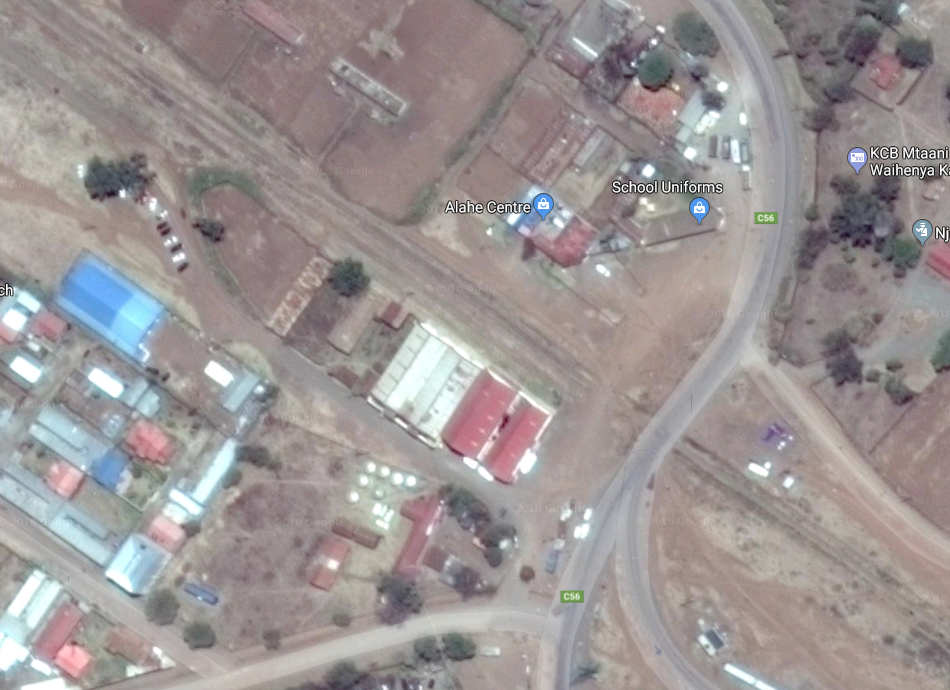
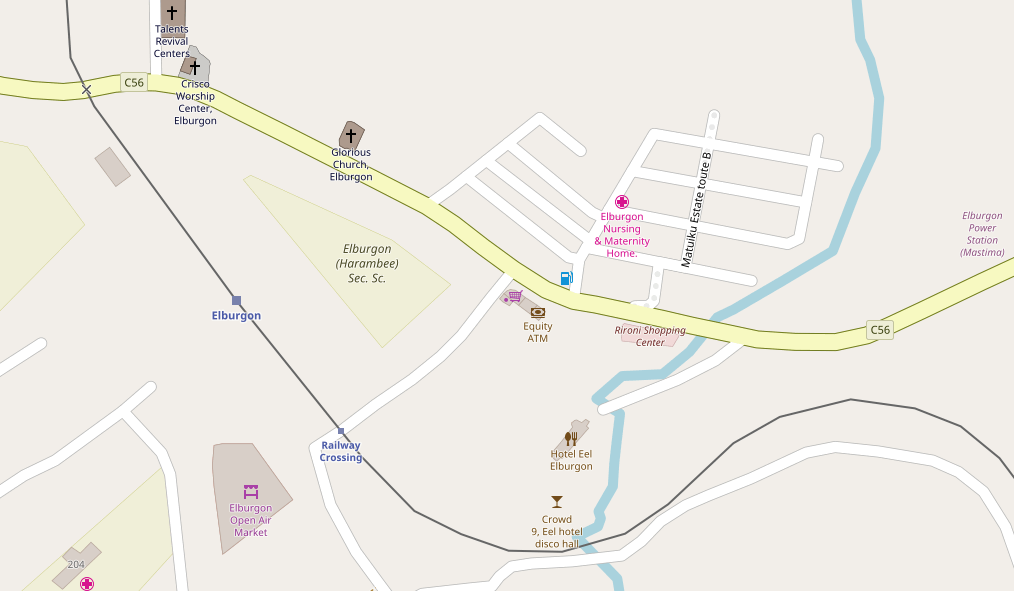
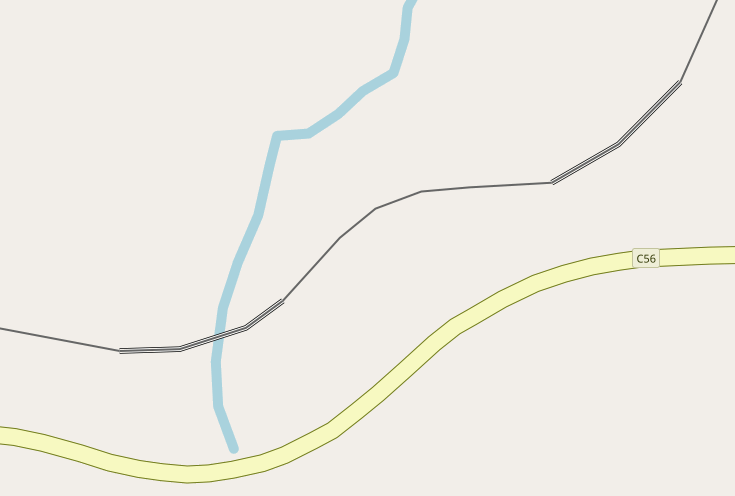
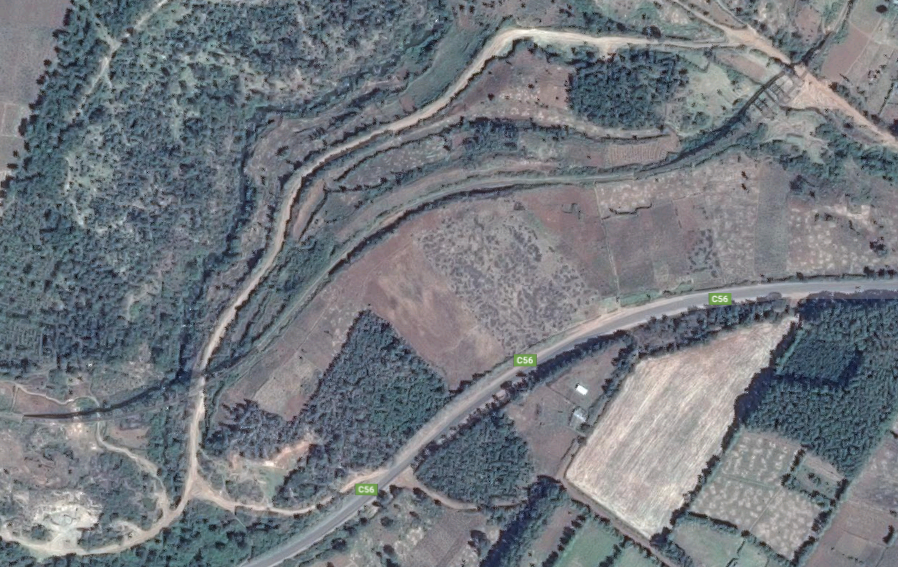
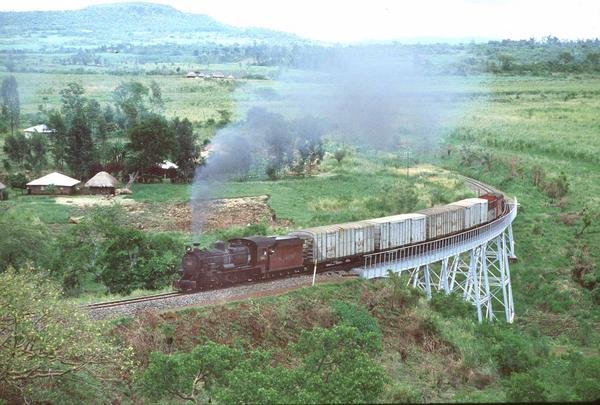
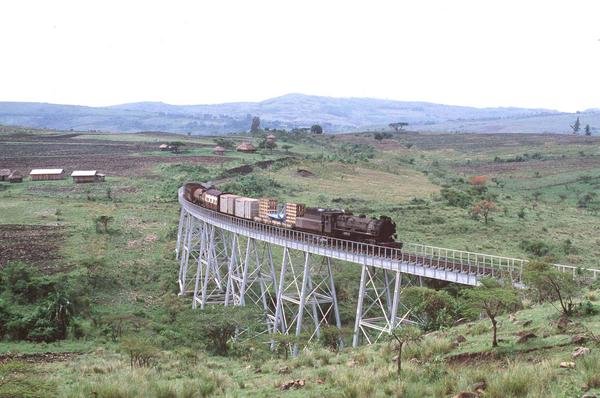
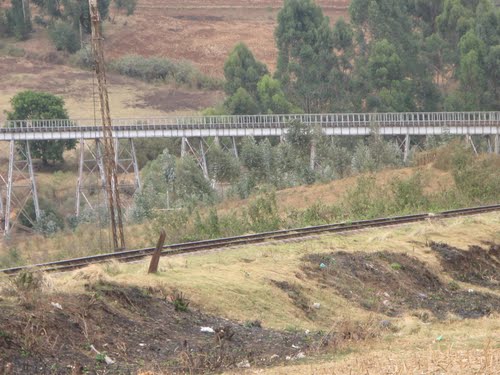
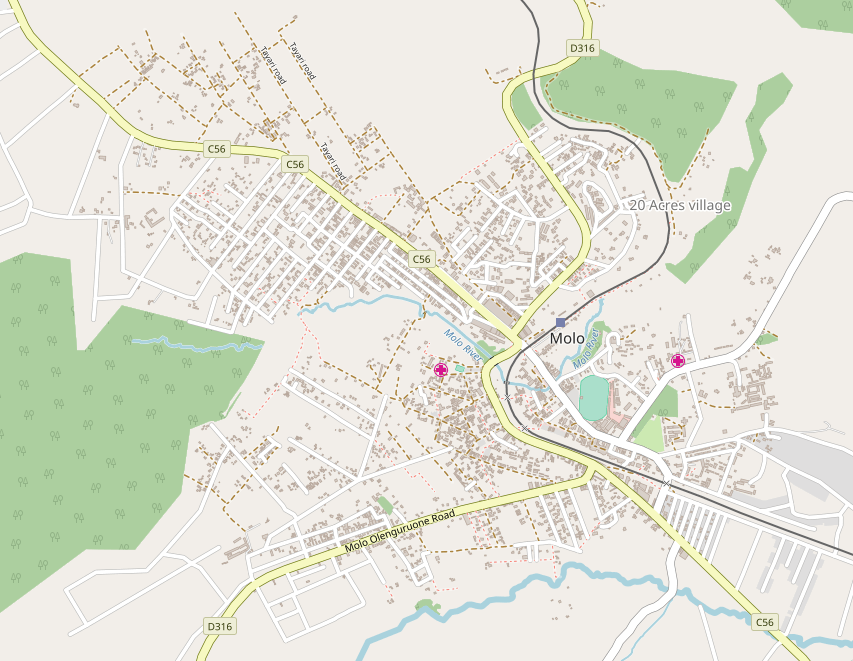
After Njoro, trains ran parallel to the C56 for a kilometre or so before meandering away to the south of the road only meeting it again at Elburgon.At Elburgon the railway swings north, crossing the C56 and circumnavigating a residential area before swinging back once again towards the C56 and crossing two viaducts. These were two trestle bridges as can be seen by the shadows cast by the sun on the satellite image below.Trestle bridges were the typical bridge structures on the Kisumu line. Two of these viaducts are shown in the images immediately below.[2] Both are © James Waite. The line continues to follow the C56 on its journey to the next town, Molo, passing through the small settlement of Turi and over another trestle bridge close to that village.[3]

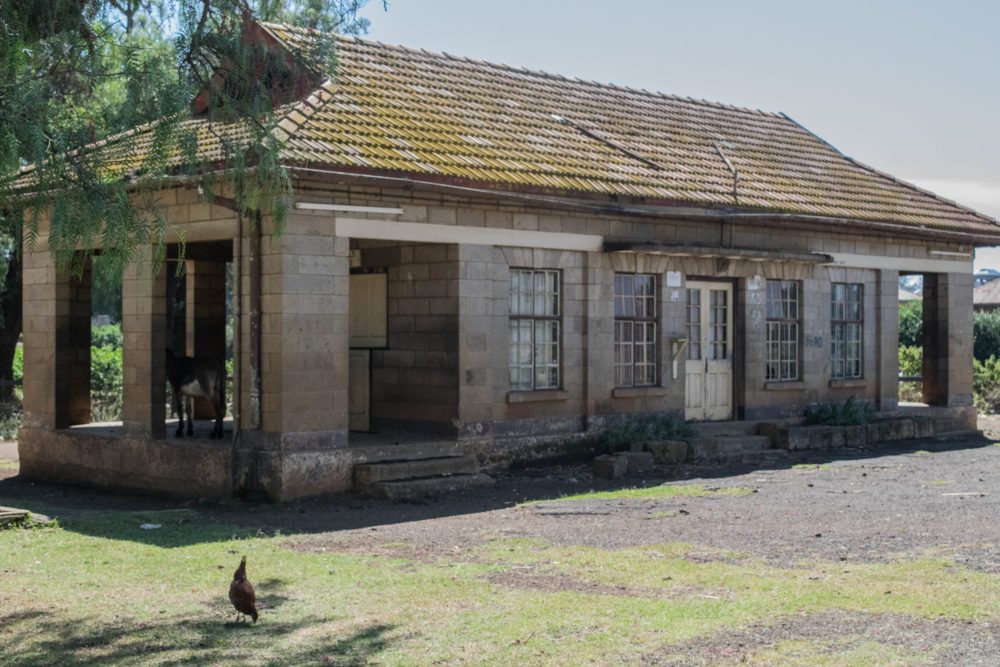
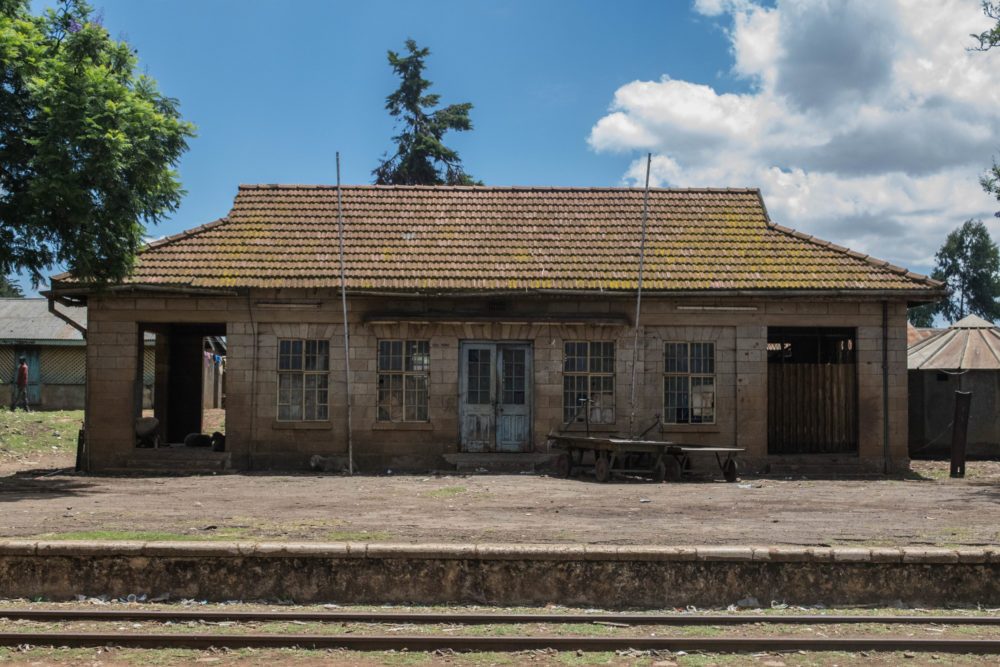
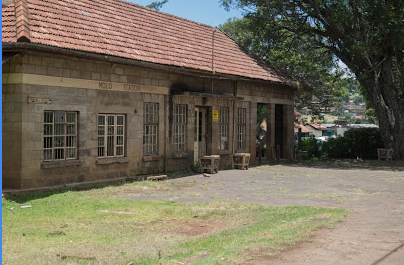
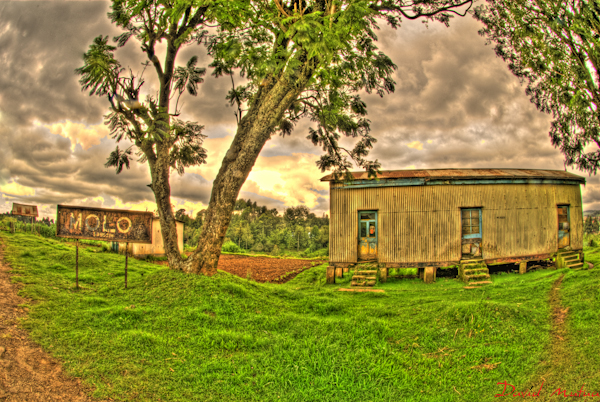
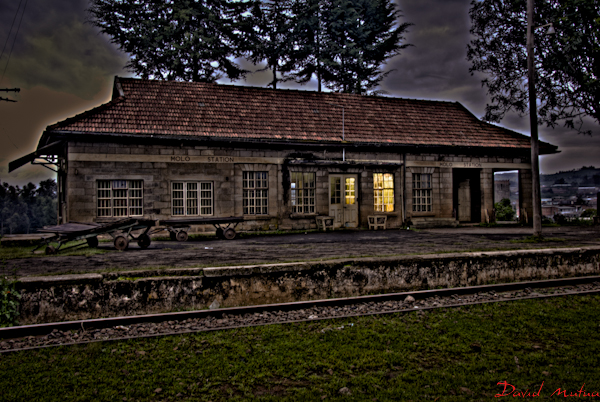
Molo Railway Station building, like others we have already encountered on the line, s built in stone and so feels a substantial building.

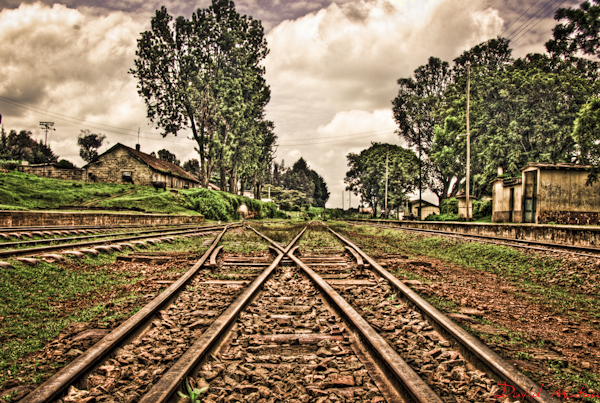
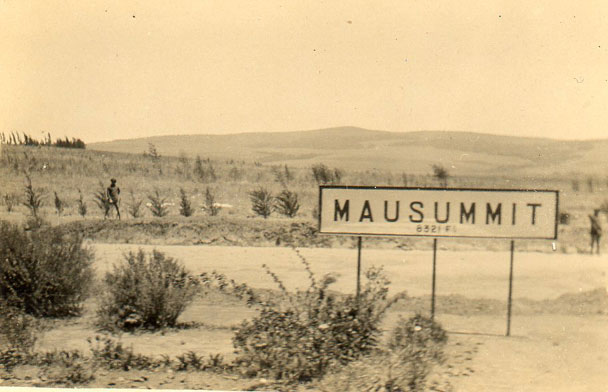
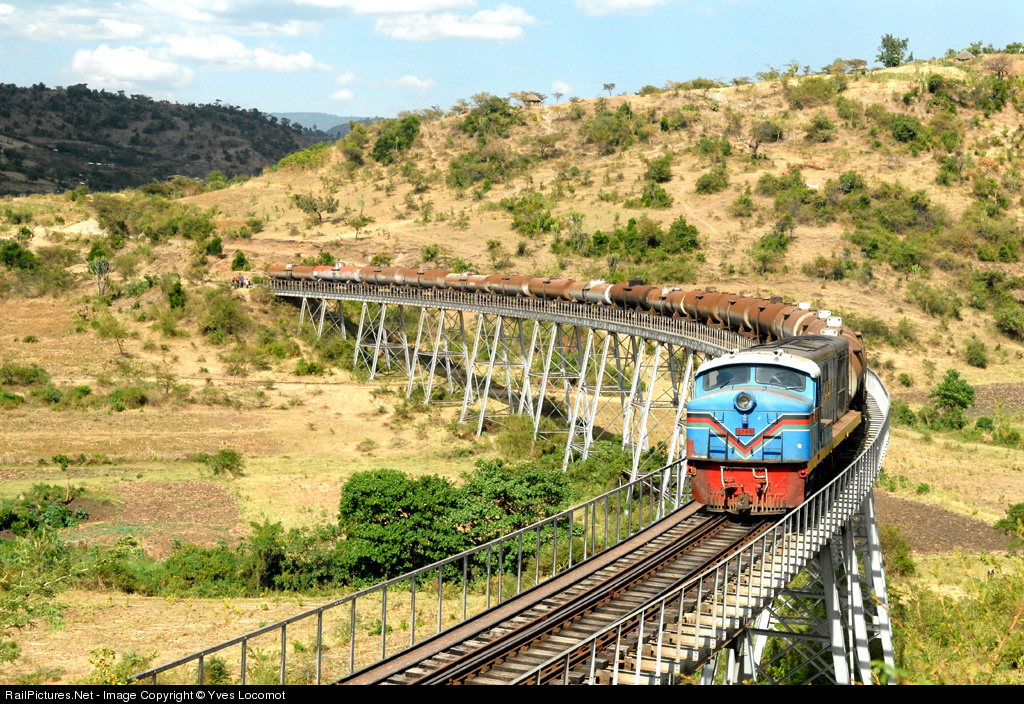
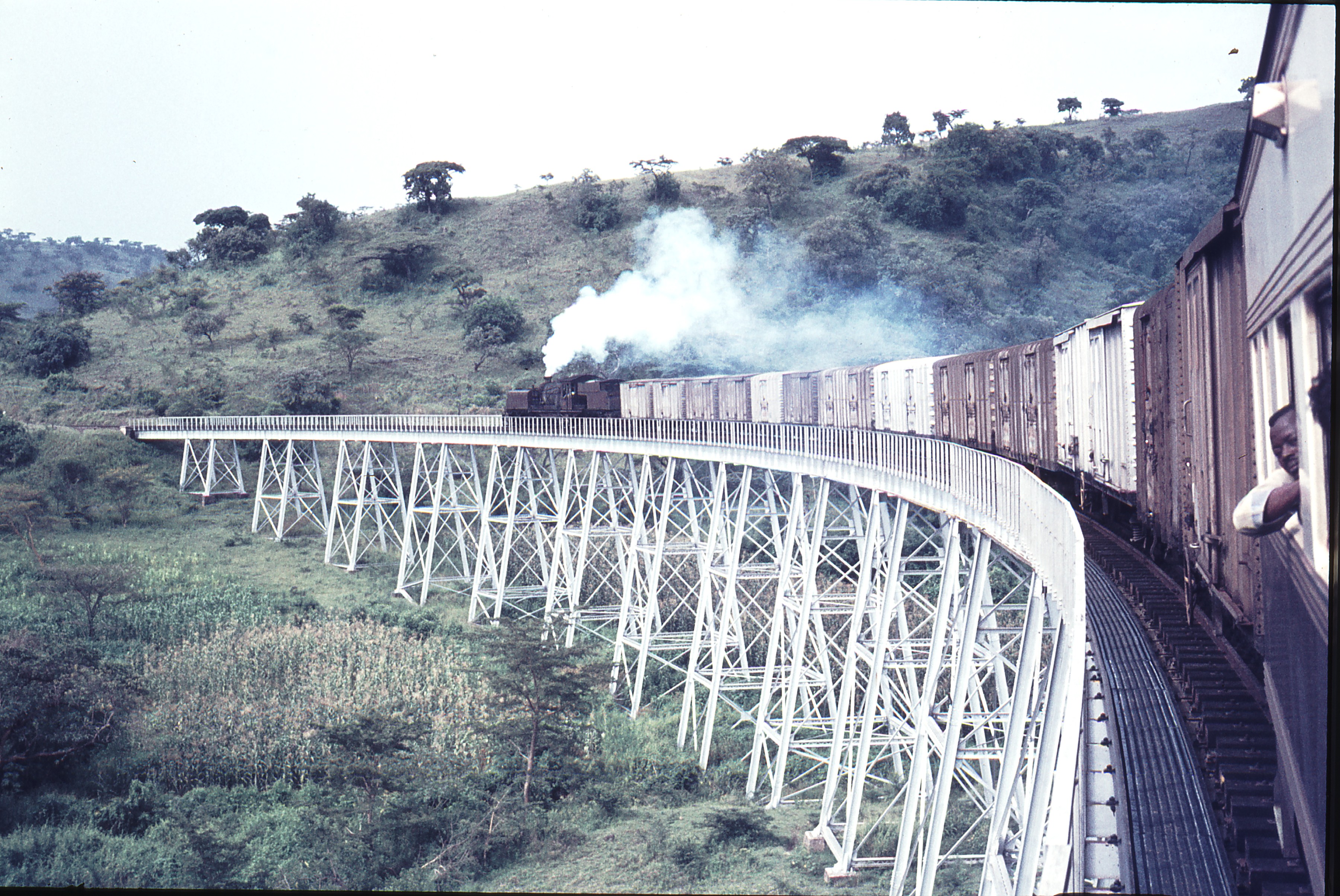
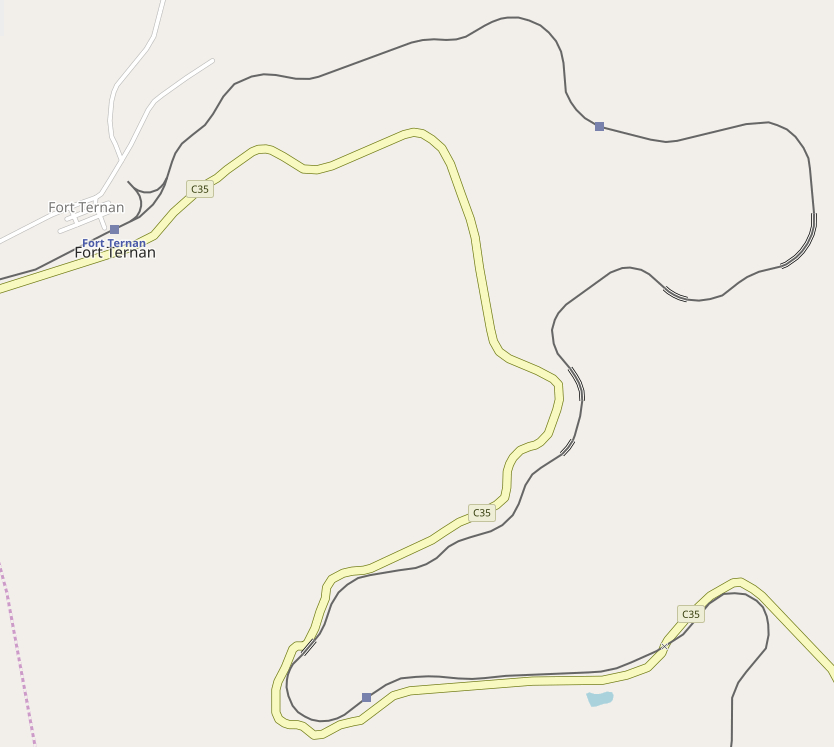
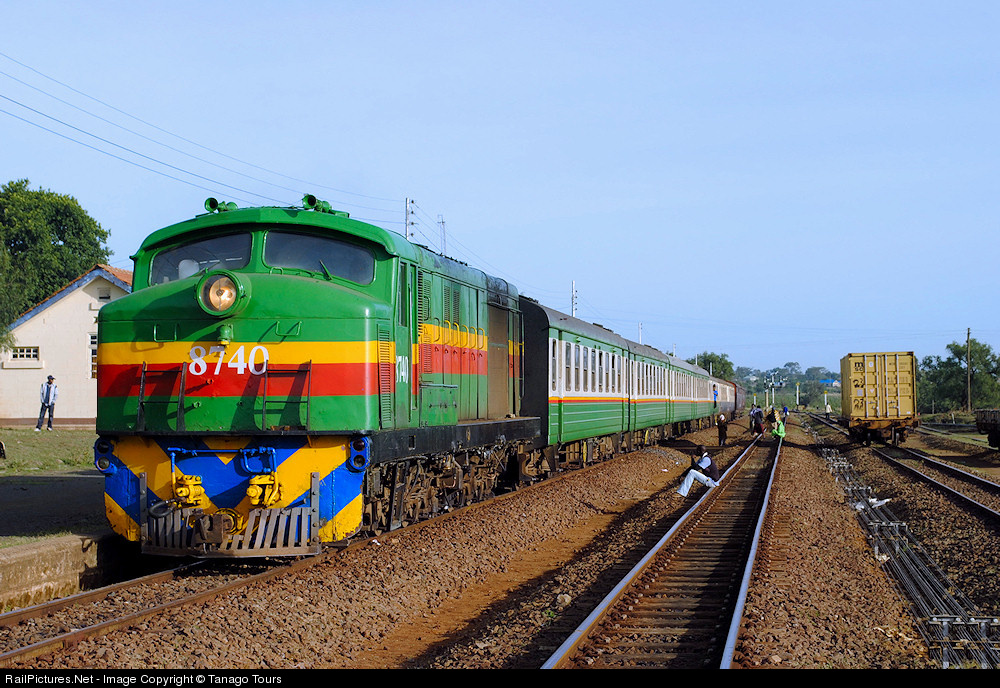
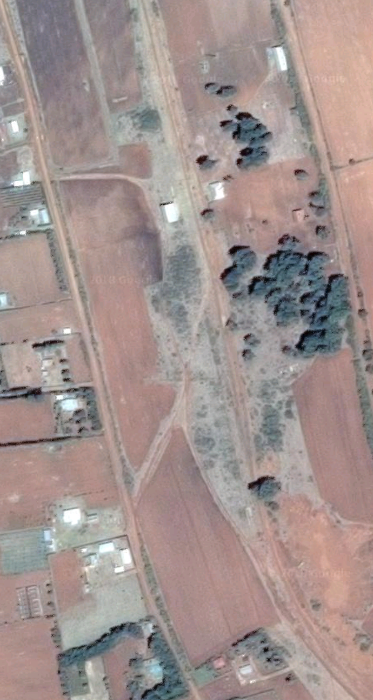
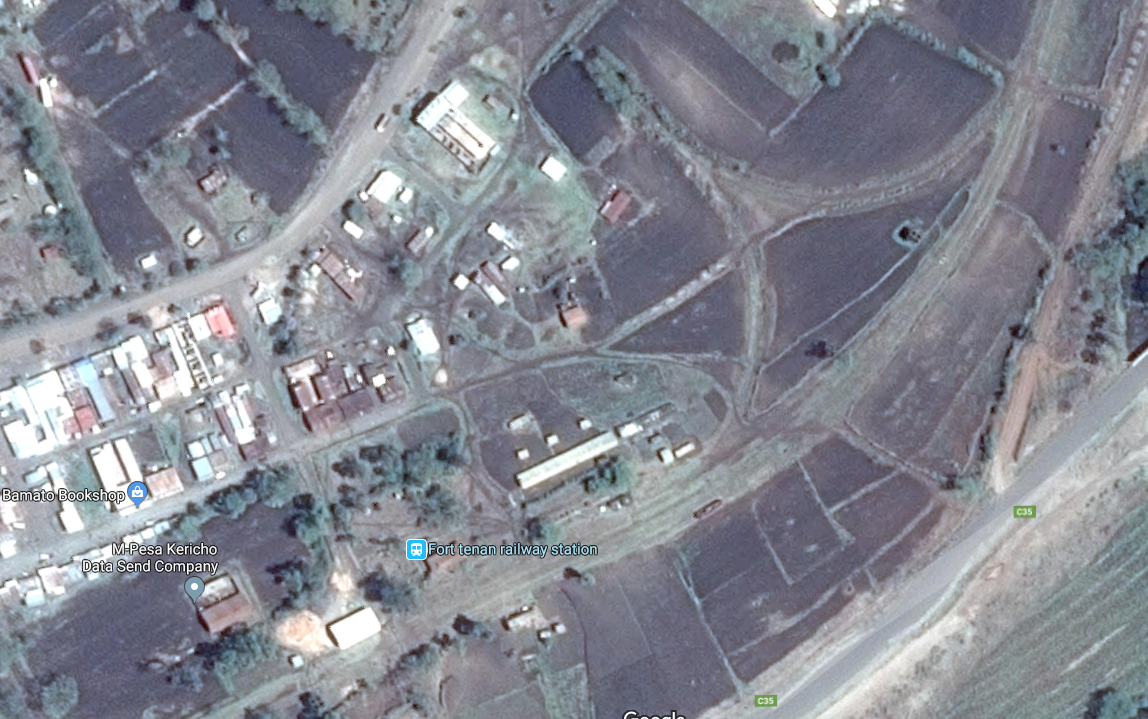
Alongside these notes are two photographs of the station building, they are traditionally shot and as such provide a good insight into what the building was like. The pictures which follow are part of a photo essay by David Mutuma which he has called “Lil’ Town in the Forest”. They are stylised and reflect his perspective on the buildings. They are enjoyable, but further than that, for the purposes of this blog, they pick up details of the station which I have not been able to find in respect of other stations on the line.[4] Beyond Molo, the next station is Mau Summit. This is adjacent to the C56 and easily accessible.A series of stations follow – Londiani, Kedowa, Lumbwa, Kipkelion and Tunnel, before we arrive at Fort Ternan.Londiani. [5]Class 30 No. 3020 ‘Nyaturu’ at Kipkelion Station © Donald Mac.[10]Kipkelion main railway offices above and Lumbwa station buildings below, © Anita Chepkoech. [6]After following the C56 and then the B1 road. The railway finds itself following a circuitous path through the stations above before getting to Fort Ternan. Over the last few kilometres into the town the railway follows the C35. The nature of the landscape means that a series of trestle viaducts were necessary to keep gradient as shallow as possible.Class 87 No. 8740  at Fort Ternan, © Yves Locomot.[7]111557: Mile 536-11F between Tunnel and Fort Ternan, on the same viaduct, Class 58 Garratt No. 5812 is in charge of a westbound mixed goods train. [1]Fort Ternan had a triangle for reversing of locomotives as can be seen in the map extract above and the satellite image below.Fort Ternan Railway Station.[5]
Class 24 No. 2448 waits in the loop at Fort Ternan for the Nakuru goods to arrive, © James Waite.[8]Two Class 24 locos at Fort Ternan in 1977, © Lou Johnson.[9]


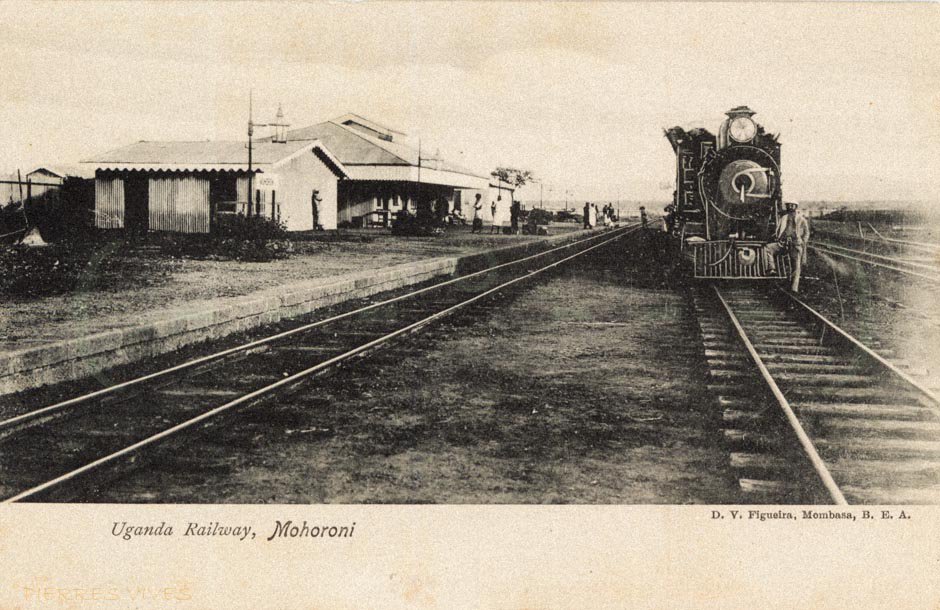
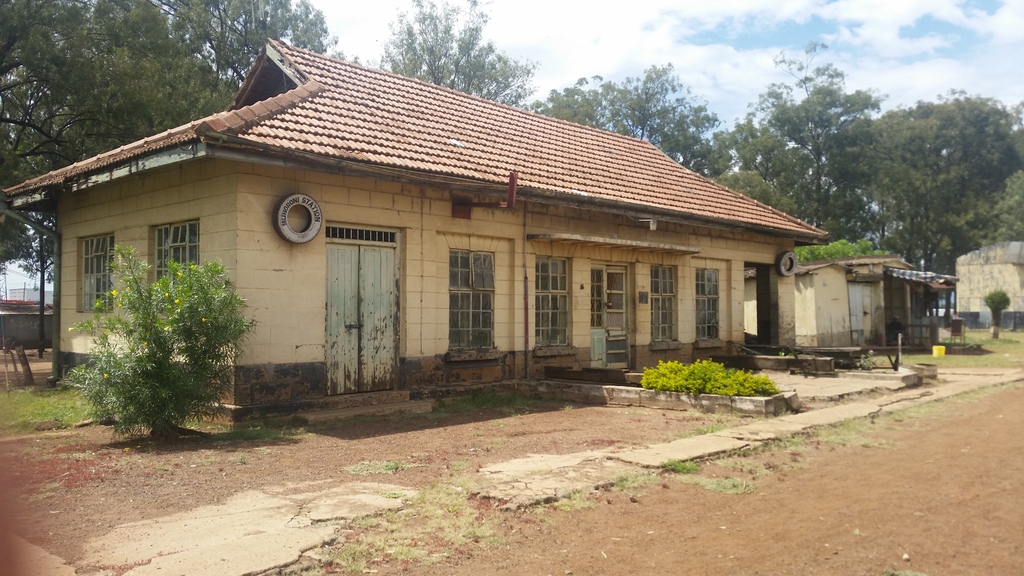
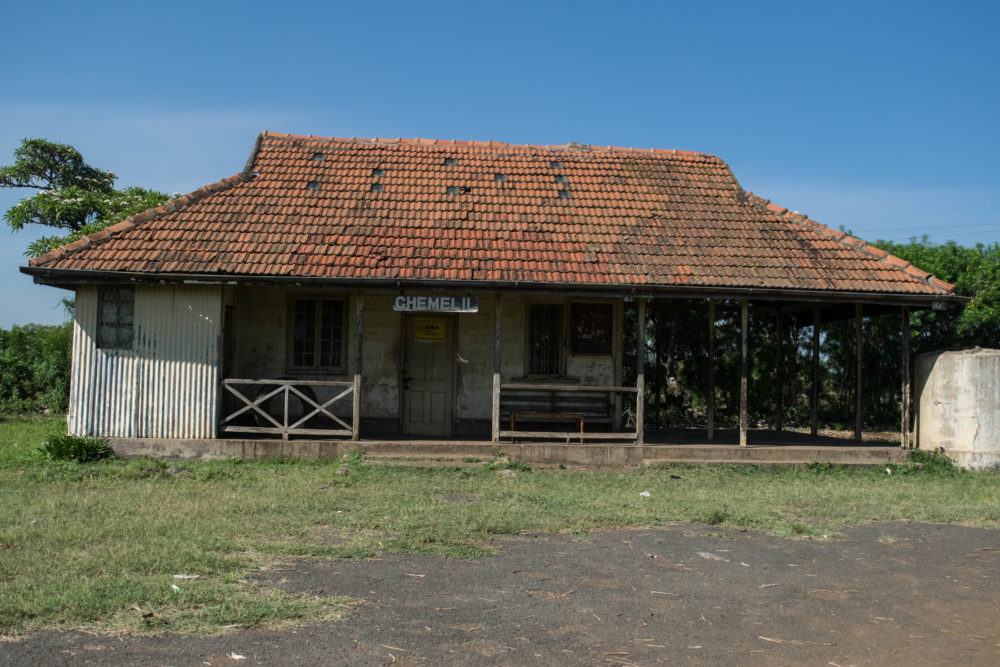
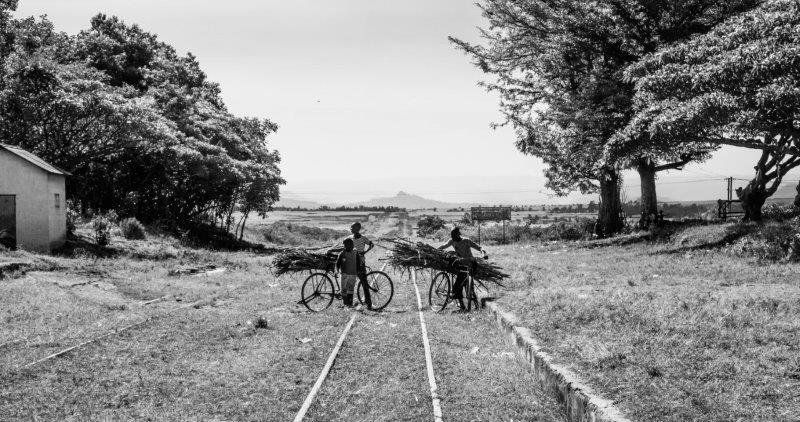
We travel on through Koru Station, then Muhoroni Station, and we have pictures of that station below.Then we pass through Chemelil Station, the picture below was taken sometime in the mid-1950s. [11]Chemelil Railway Station.[5]Children cross the tracks at Chemelil.[5]

Further along the line we cross the Nyando River and pass through Kibigori Station. Now travelling due west the line passes through Miwani (below) and Kibos Stations before reaching Kisumu on Lake Victoria.

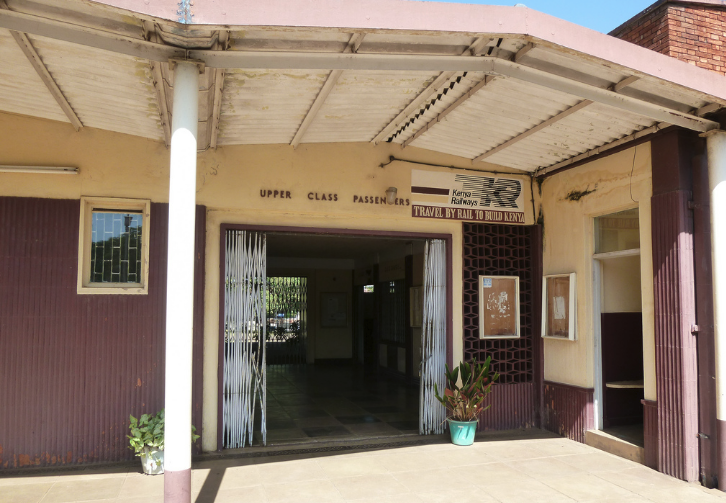
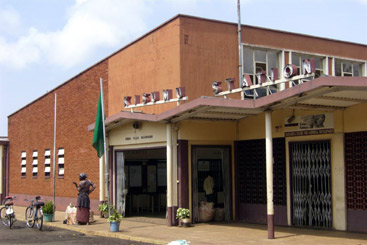
On the plan below the picture of Miwani, we can see the terminus at Kisumu and also the branch-line which heads westwards to Butere.Kisumu’s station canopies are of a similar design to those at Nyakuru. Sadly, the station gets a lot less use than it used to. It has been closed for some time now and its condition is deteriorating.Kisumu railway station, Kenya

Some of these pictures of the station come from a site dedicated to saving stations along the Lunatic Line and were taken in 2016.[5] Others were taken in 2011,[12] by Richard Portsmouth.

The town holds out a hope that the SGR which will soon reach Naivasha and will continue to Kisumu. The proposal that they have submitted involves the SGR taking over the site of the present station.[13]

The short branch from Kisumu to Butare will be the subject of a separate post.


References

  1. http://www.westonlangford.com, accessed on 25th May 2018.
  2. http://www.mccrow.org.uk/eastafrica/eastafricanrailways/KampalaNairobi.htm, accessed on 24th May 2018.
  3. http://ke.geoview.info/kenya_uganda_railway_bridge_at_turi_molo_in_kenya_built_in_1901,50149067p, accessed on 25th May 2018.
  4. http://www.davidmutua.com, accessed on 25th May 2018.
  5. http://www.savetherailway.com, accessed on 24th May 2018.
  6. https://www.nation.co.ke/lifestyle/dn2/Kipkelion-railway-British-colonialists-George-Hamilton/957860-4254230-28bxr/index.html, accessed on 25th May 2018.
  7. http://www.railpictures.net, accessed on 25th May 2018.
  8. http://www.mccrow.org.uk/eastafrica/eastafricanrailways/NairobiKisumu.htm, accessed on 25th May 2018.
  9. https://www.world-railways.co.uk/general-photo-028, accessed on 25th May 2018.
  10. http://trip-suggest.com/kenya/rift-valley/fort-ternan, accessed on 25th May 2018.
  11. https://www.pinterest.com/pin/554083560377608216, accessed on 25th May 2018.
  12. https://www.flickr.com/photos/62358811@N02/sets/72157626548108635/with/5699139410, accessed on 25th May 2018.
  13. http://architecture.uonbi.ac.ke/sites/default/files/cae/builtenviron/architecture/2_0.pdf, accessed on 25th may 2018.


The Uganda Railway – Part 9 – Naivasha to Nakuru

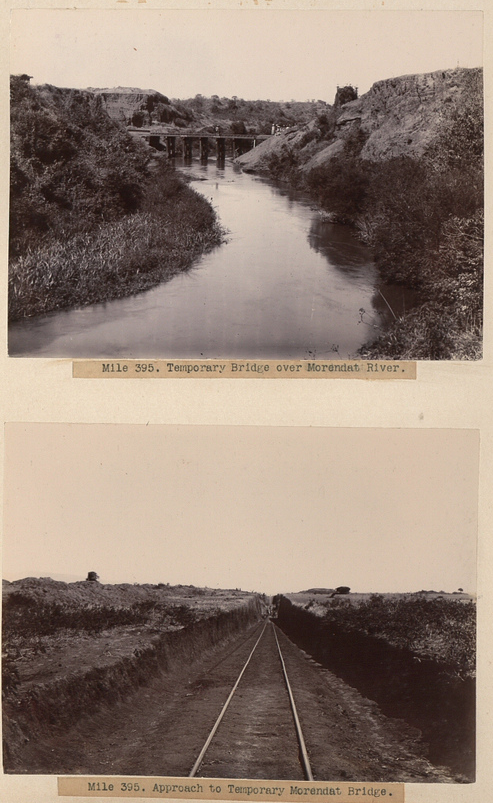
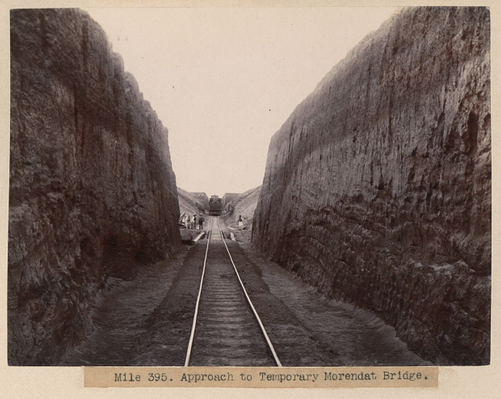
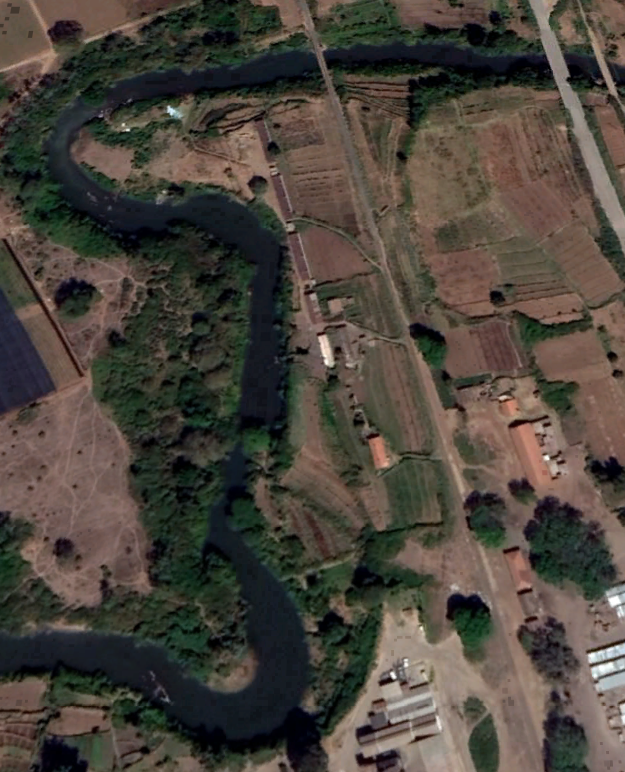
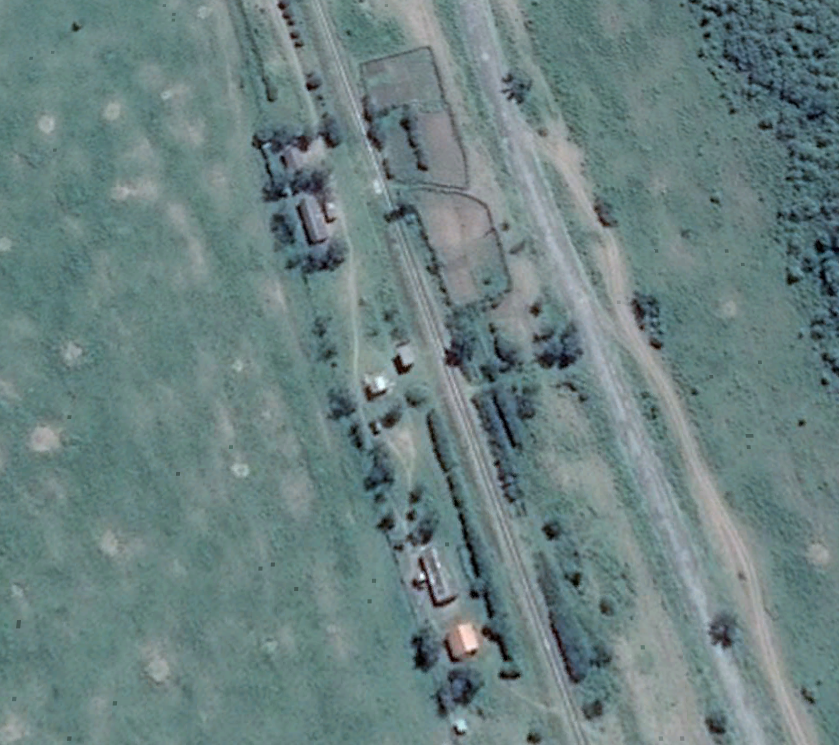
We start the next leg of the journey at Naivasha Railway Station. Class 30 2-8-4 No. 3020 “Nyaturu” (NBL 27466/1955) stands at Naivasha, it is one of three locomotives restored by Nairobi Railway Museum and was originally in use on the Tanzanian part of the EAR system (c) James Waite. [1]As we leave Naivasha, the railway continues in a north-westerly direction through Morendat Station, over Morendat River Bridge and through Ilkek Station to Gilgil. Morendat Station and River Bridge on Google Satellite Image.Ilkek Station.

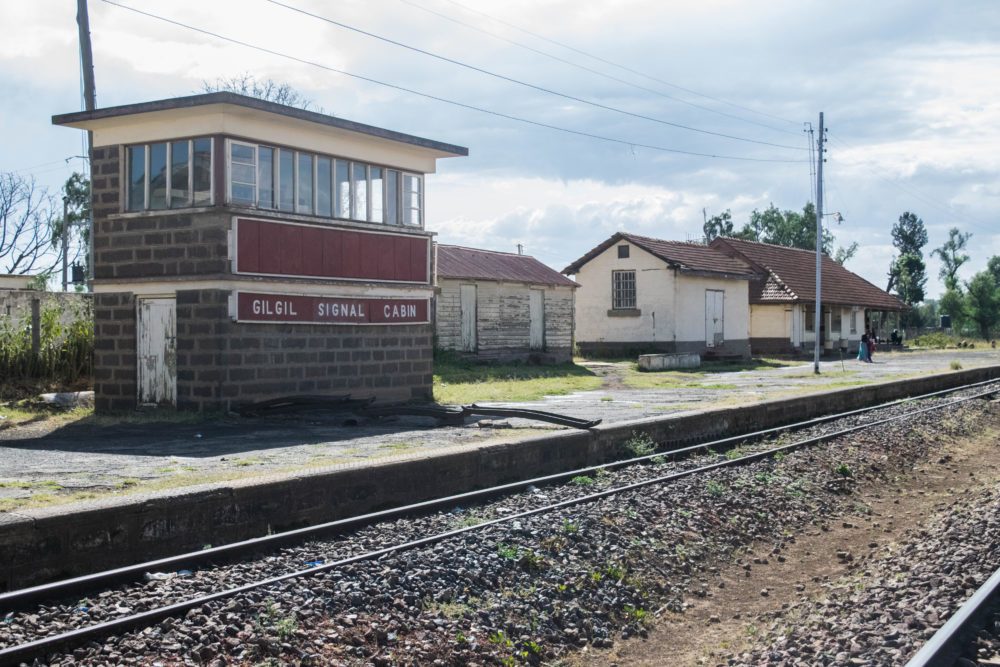
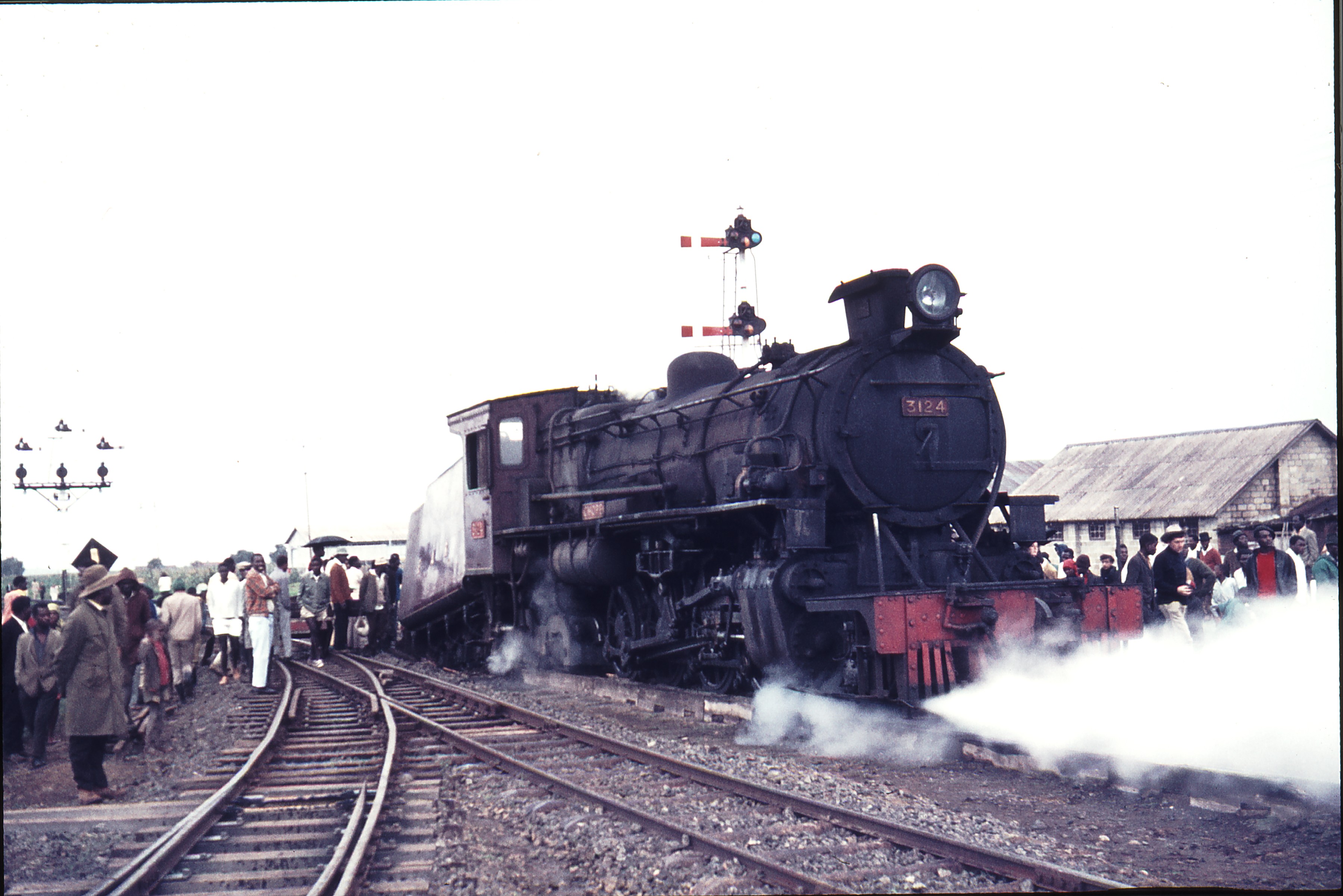
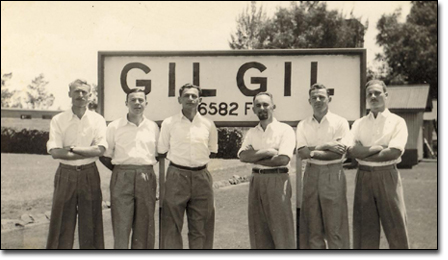
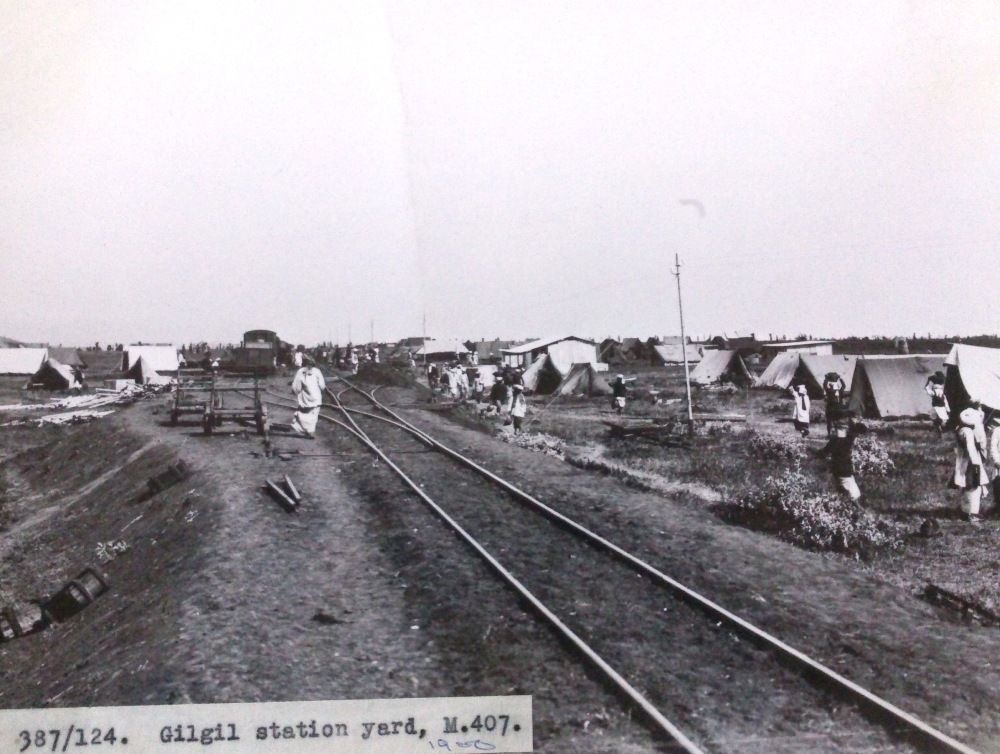
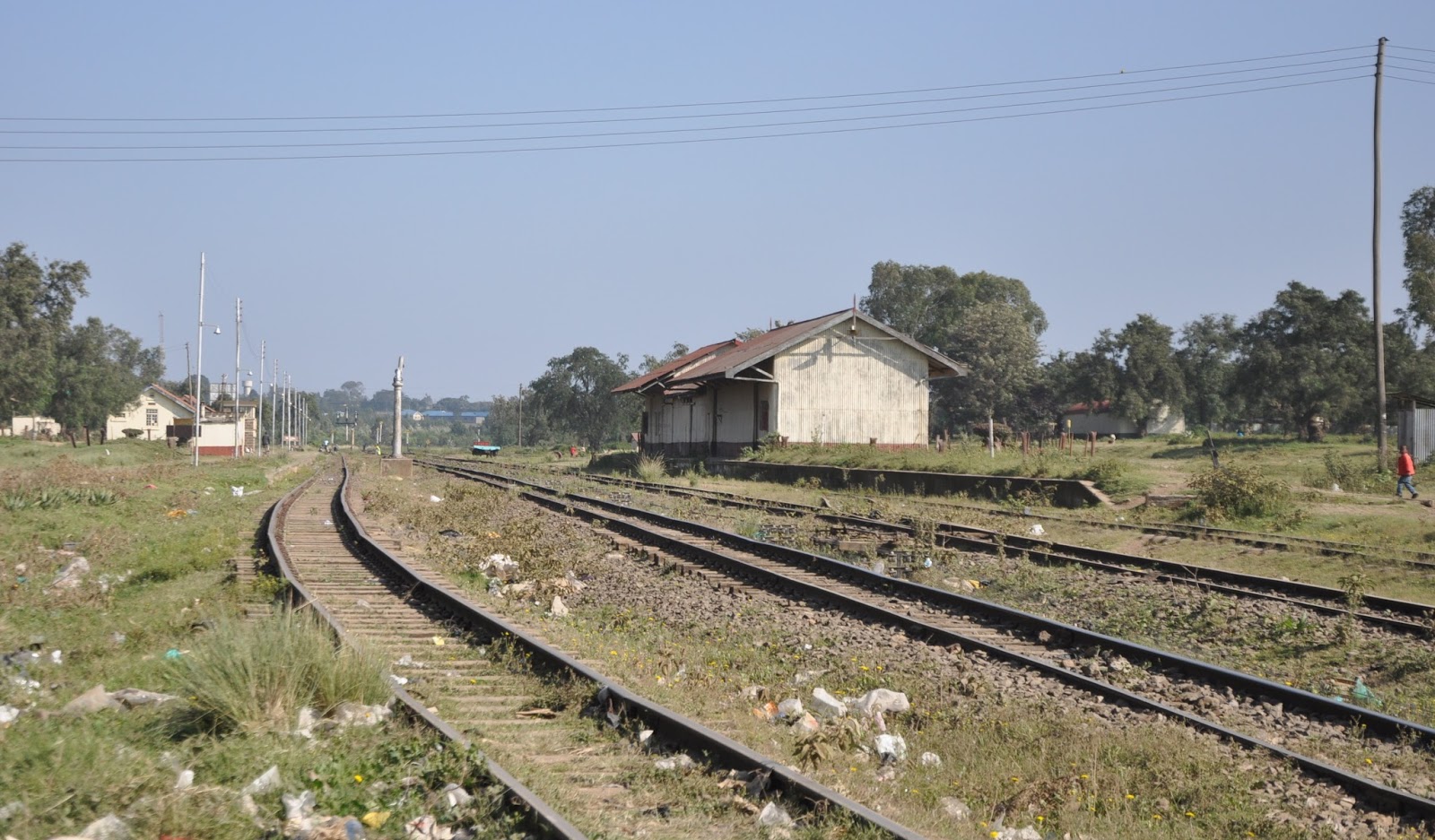
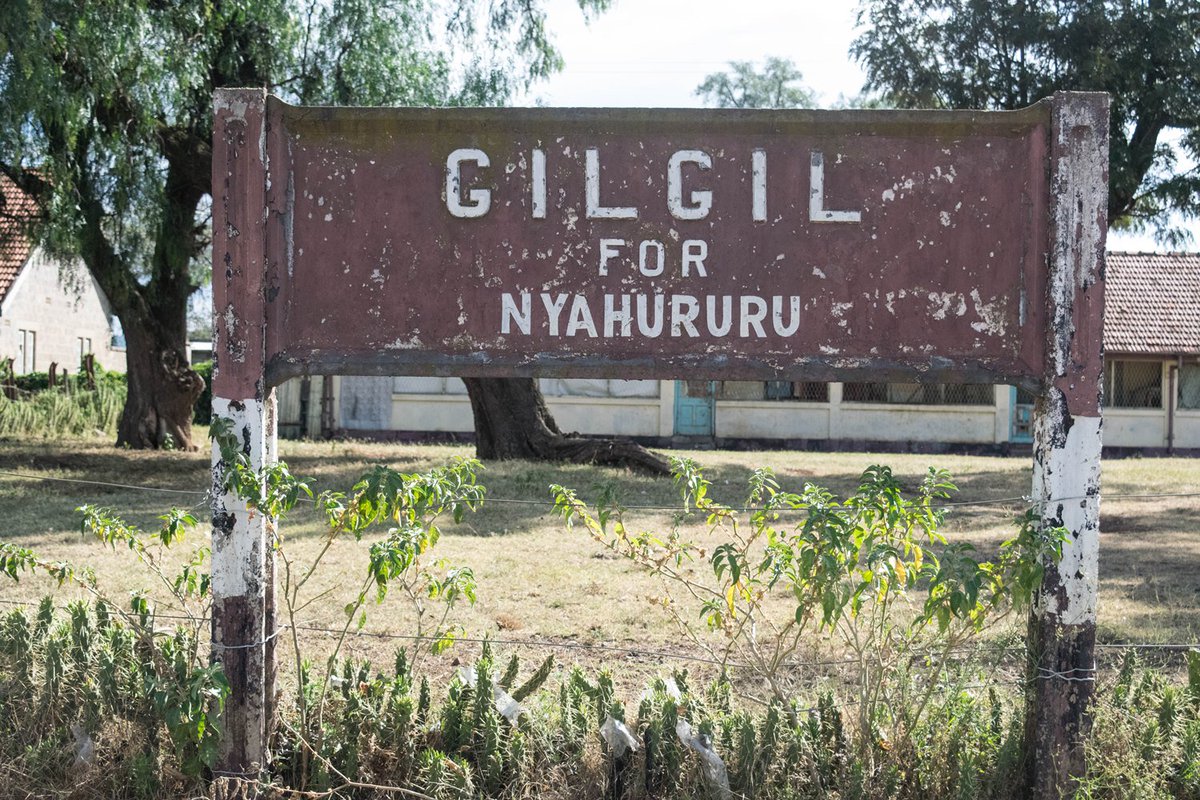
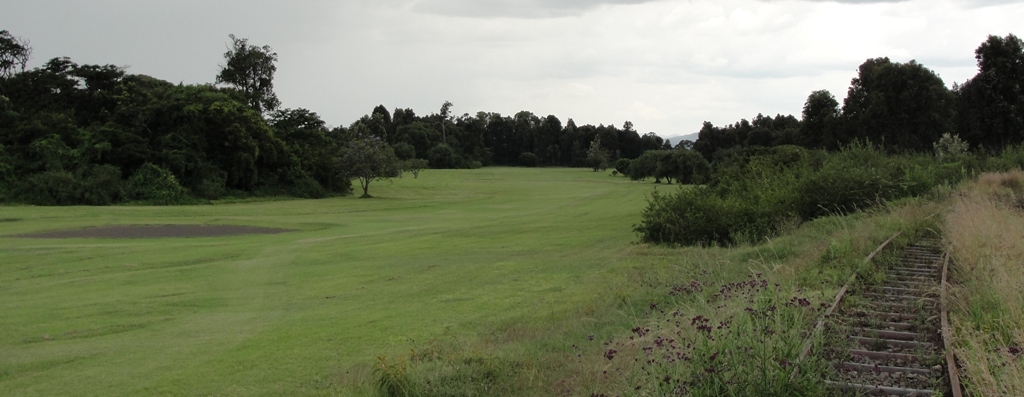
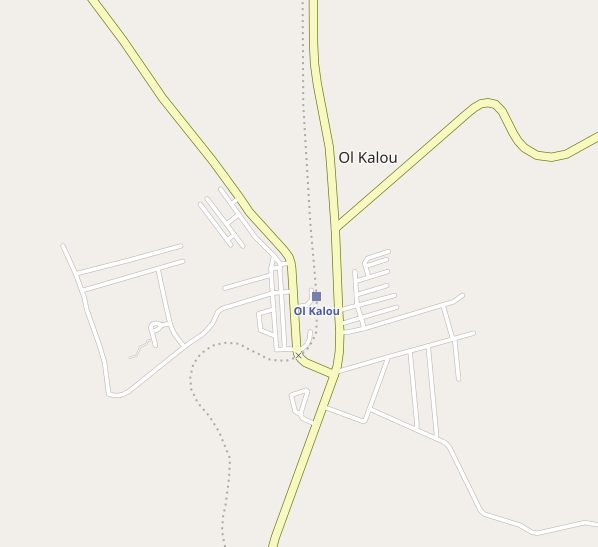
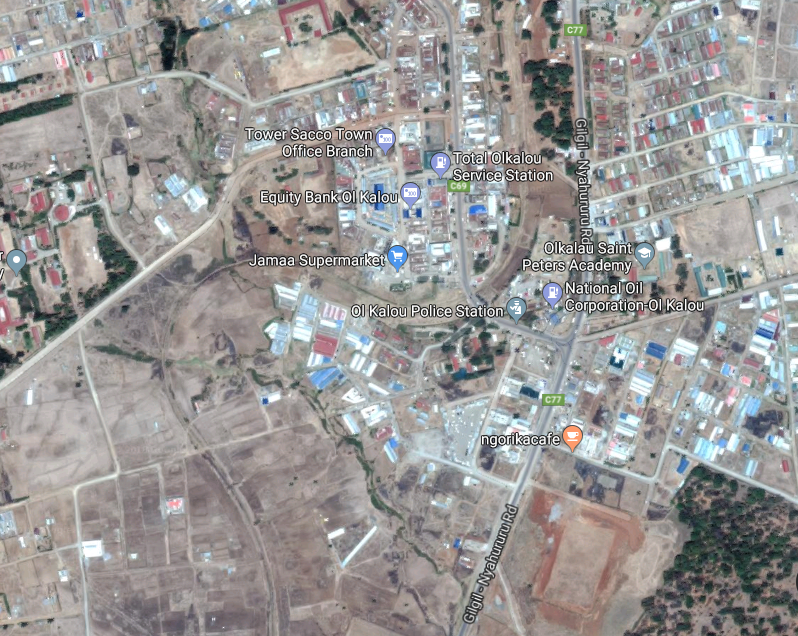
Gilgil is the first town after Naivasha along the line.111464: Gilgil Kenya 3124 Chope Derailed – taken on 24th August 1971, (c) Weston Langford.[2] Three images of Gilgil Station seemingly abandonned in 2013 …….[3],[4],[5]Gilgil was the junction station for the line to Nyahururu. This branch ran through Oleolondo and Ol Kalou to reach Nyahururu, the branch terminus. It left the mainline just to the East of Gilgil and followed what is now the C77 road from Gilgil. The line snaked around passing through Gilgil Golf Course and can be seen alongside the 4th hole of the 9-hole course in the image below.[6]After the golf course the line swung away from the C77 to the south-east and then for a very short distance ran alongside what is now the D390 before turning to the north and eventually regaining a path  a 100 metres or a bit more to the east of the C&7 running north towards Oleolondo where the line crossed the road at grade. It conitnued to follow the C77 northwards but now on its west side until reaching a station halt at Ol Kalou.

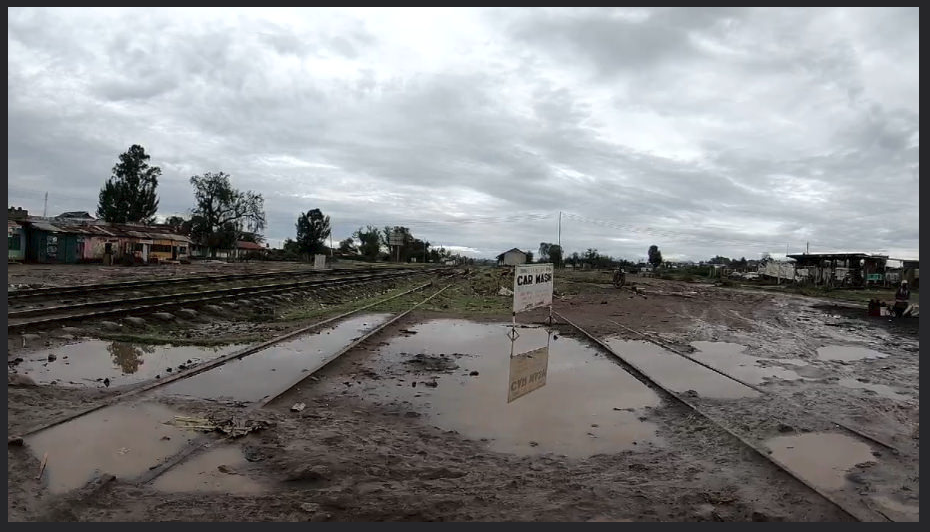
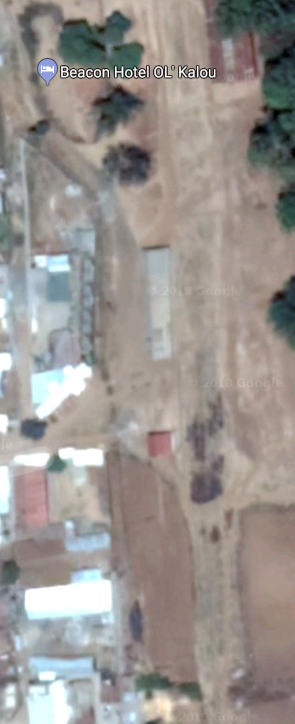
The old station site at Ol Kalou remains open and undeveloped as can be seen on the adjacent satellite images from Google Earth.

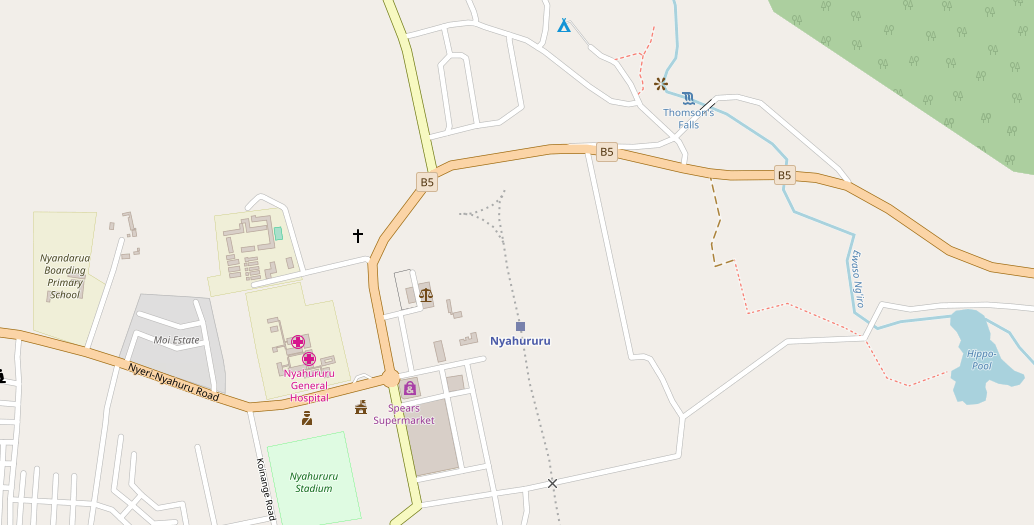
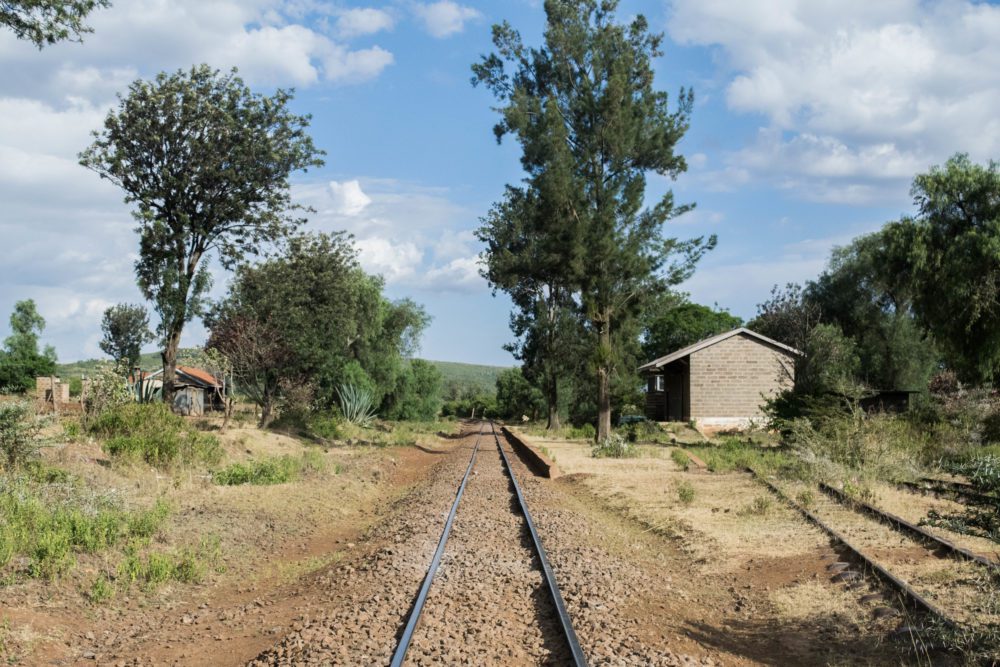
From Ol Kalou the abandonned line continued north alongside the C77, always within about 100 metres of it and then crossing over to the east side of the road a kilometre or two north of Ol Kalou before reaching its terminus at Nyahururu.

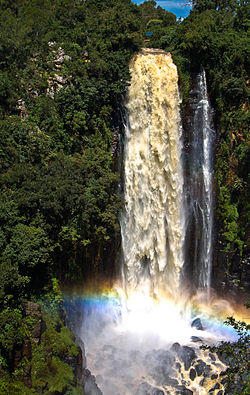
In the images above the tourist attraction which probably supported the branch-line while it was in operation can be seen – the Thompson Falls gave their name to the town in colonial times. Nyahururu was founded as Thomson’s Falls after the 243 ft (74m) high Thomson’s Falls on Ewaso Narok river, a tributary of the Ewaso Nyiro River, which drains from the Aberdare mountain ranges. It is on the Junction of Ol Kalou-Rumuruti road and the Nyeri-Nakuru road.

The town grew around a railway from Gilgil opened in 1929 (and now effectively abandoned). As well as providing access to a tourist attraction the line supported local industry. The town was once an important player in the timber milling industry, and the now defunct National Pencil Company had a factory there. It is also an important milk processing hub.[7]

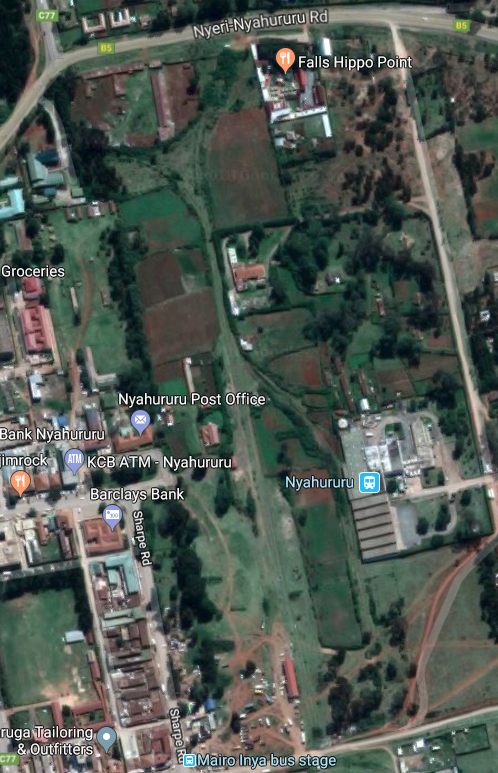
The map and satellite image show the location of the railway terminus and the turning triangle for locomotives.

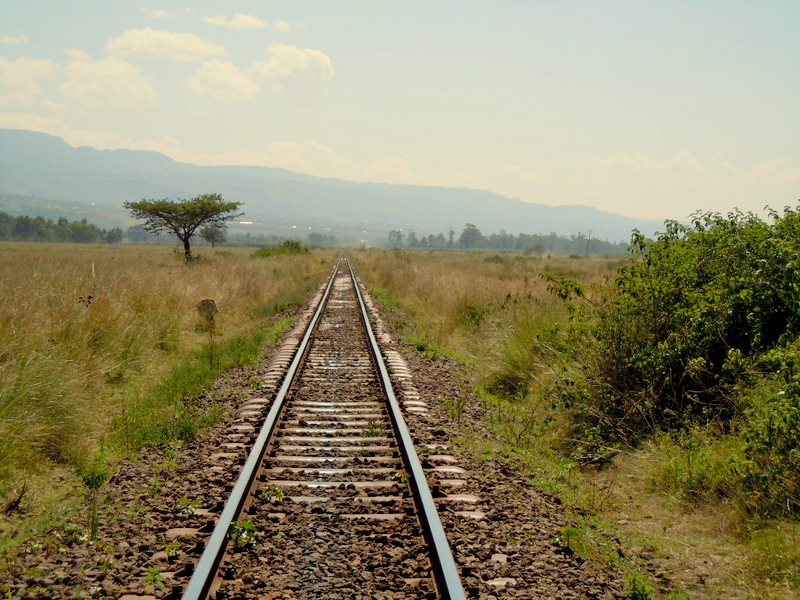
We return now to the mainline and travel on from Gilgil. The next station on the mainline is Kariandusi.Kariandusi village is a settlement in Nakuru County, Kenya. It is located 17.5 miles from Nakuru town and 7.5 miles from Gilgil town. Inhabitants of Kariandusi settled in the area in early 1980s in the former Lord Egerton Cole and Lord Delamere ranches. The area has a well established tourism industry, with Kariandusi prehistoric site, Lake Elementaita, Several Hot Springs and booming hospitality industry providing the economic growth for the area.[8] It sits close to the lake and under the significant local peak know as Table Mountain.

The prehistoric site is amongst the first discoveries of Lower Paleolithic sites in East Africa. There is enough geological evidence to show that in the past, large lakes, sometimes reaching levels hundreds of meters higher than the Present Lake Nakuru and Elementaita, occupied this basin.

Dating back between 700,000 to 1 million years old, Kariandusi is possibly the first Acheulian site to have been found in Situ in East Africa. Dr. Leakey, a renowned paleontologist, believed that this was a factory site of the Acheulian period. He made this conclusion after numerous collections of specimens were found lying in the Kariandusi riverbed.

This living site of he hand-axe man, was discovered in 1928. A rise in the Lake level drove pre-historic men from their lake-side home and buried all the tools and weapons which they left behind in a hurry. The Acheulian stage of the great hand-axe culture, to which this site belongs, is found over a very widespread area from England, France, and Southwest Europe generally to Cape Town.[9]

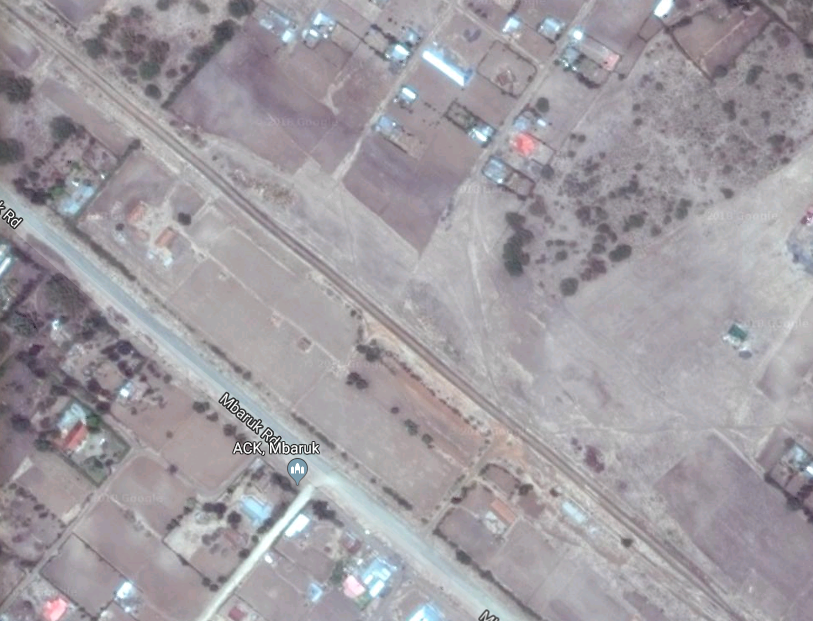
The image above is typical of the scenery in this area of the Rift Valley and is taken close to Mbaruk the next station on the line. The satellite image below shows the passing loop and station at Mbaruk.The last station before Nakuru itself is in Nakuru’s suburbs at Lanet and the location is shown in the satellite image below.Nakuru is the final destination for this blog post.

Nakuru was the most modern station on the line – complete with a public address system, colour light signalling and double track westbound between Nakuru East and the divergence of the former mainline to Kisumu.  During stops at Nakuru passengers could buy refreshments, books and newspapers from a trolley which passed down the platform while the locomotive was being changed, © Malcolm McCrow.[10]

111545: Nakuru Kenya 0920 Mixed to Kisumu 5812©Weston Langford.[2]111546: Nakuru Kenya 0920 Mixed to Kisumu 5812©Weston Langford.[2]111547: Nakuru Kenya 0920 Mixed to Kisumu 5812©Weston Langford.[2]

References

  1. http://www.internationalsteam.co.uk/trains/kenya11.htm, accessed on 24th May 2018. The photograph was taken by James Waite. He comments: This photograph, “took a long time to set up, even by the standards of night photos. I had gone out to Naivasha on the empty stock of the steam special and spent the night at the Bell Inn on the main street at Naivasha opposite the station. As I was travelling light I didn’t take a tripod with me and it wasn’t until I was talking to the loco’s support crew over supper the previous evening that I realised they would be lighting up before dawn. I walked over to the station and took my suitcase with me to use as a camera stand. The light was too dim for my camera’s autofocus to work, and its manual focus setting was erratic. I ended up taking something like 20 to 30 exposures, each at a slightly different focus, and only this one worked out properly by the time I had eliminated all those suffering from shake because of the lack of a tripod. I only had ten minutes or so between inky-black dark and too much dawn light as the sun comes up so quickly close to the equator.
    Everyone else on the photo tour had spent the previous afternoon visiting Nairobi works, spent the night in the city and travelled out to Naivasha by road for the start of the photo charter, and I counted myself very lucky to have been able to enjoy the ride in the empty train down the side of the escarpment into the Rift Valley in the afternoon sunshine, as well as being able to take this night shot without having to work around other photographers.
  2. http://www.westonlangford.com, accessed on 25th May 2018.
  3. http://jimstotherssabbatical.blogspot.co.uk/2013/08/sabbaticalday-19-12-august-correction.html, accessed on 25th May 2018.
  4. https://innovation.journalismgrants.org/projects/chinas-train-to-african-development, accessed on 25th May 2018.
  5. https://www.flickr.com/photos/156858441@N07/26344179857/in/photolist-G8WNRx, accessed on 25th May 2018.
  6. http://www.shoestringgolfer.com/2011/11/gilgil-golf-club-great-rift-valley, accessed on 25th May 2018.
  7. https://en.wikipedia.org/wiki/Nyahururu, accessed on 25th May 2018.
  8. https://en.wikipedia.org/wiki/Kariandusi, accessed on 25th May 2018.
  9. http://www.museums.or.ke/kariandusi, accessed on 25th May 2018.
  10. http://www.mccrow.org.uk/eastafrica/eastafricanrailways/KampalaNairobi.htm, accessed on 24th May 2018.

The Uganda Railway – Part 8 – West of Nairobi (Nairobi to Naivasha)

In 1994, I had a few hours waiting at Nairobi Railway Station before getting on the train to Kampala. It was a fantastic journey at a very slow speed with the journey length extended by a 6 hour stop in Jinja waiting for a derailed goods train to be re-positioned on the rails in the section between Jinja and Kampala. My pictures were sadly not of the highest standard and I was having problems with my SLR camera by this time. The next two pictures prove that I was there but achieve little else!Later in my 1994 trip, I spent a day with a friend in Kibera Slum, again, the pictures are of a very low quality. One of the first places encountered by the railway west of Nairobi is the Kibera slum. The date stamp on two of the photos remind me of the time of year I was there. Travelling across Kenya and then into the South West of Uganda became a real expedition as I ended up spending two weeks just over the border from Rwanda at the time of the genocide in that country.

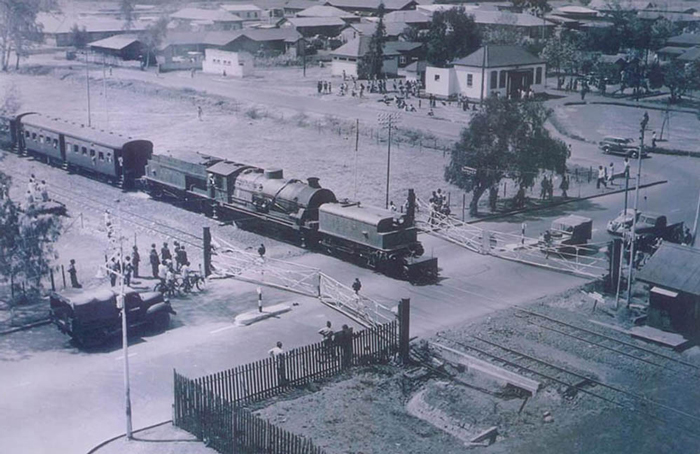
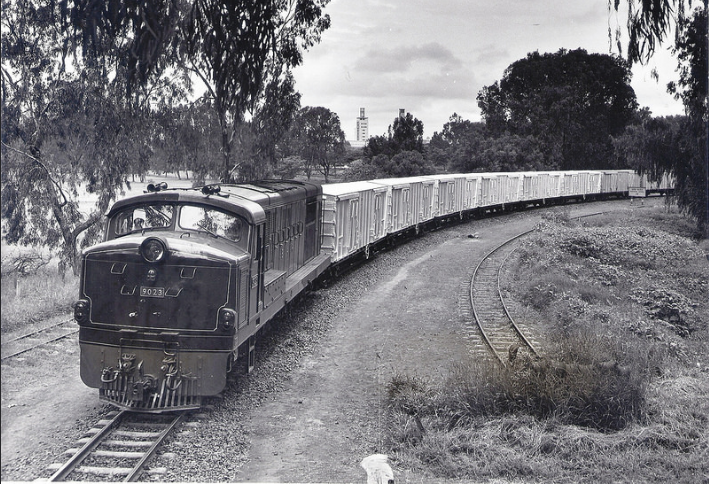
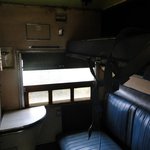
Trains left Nairobi Central Station in a generally south-westerly direction and the line meandered through the suburbs of the city. The adjacent picture shows the interior of a carriage on the train in 1994. The image below shows a Garratt hauled train to the West of Nairobi Station in the post war period, © East African Railways.

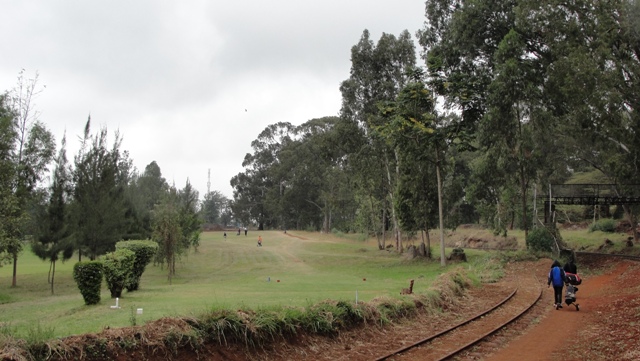
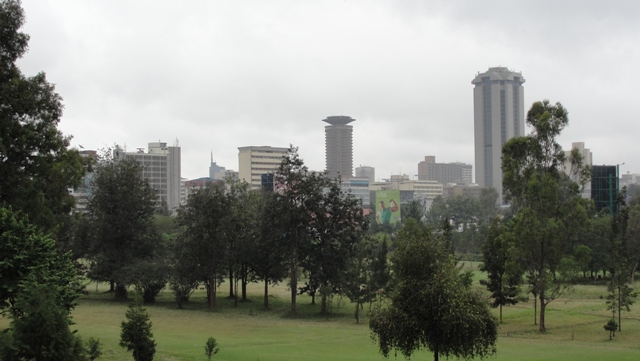
Trains first crossed the 9-hole Kenya Railway Golf Course! In 1921, the wife of the Kenya Railways manager, Mrs Couper, established a Golf Club for the Kenya Uganda Railways staff and in 1924 it opened its membership to non-railways staff. The course still revolves heavily around the railway line, which passes straight through the middle of the course. The only hole though where it comes into play is the 2nd, where your tee shot could cause some damage to a passing train if not connected well! [1] The footbridge over the railway can be seen on the right of the first photograph below. The third image below is taken from that footbridge

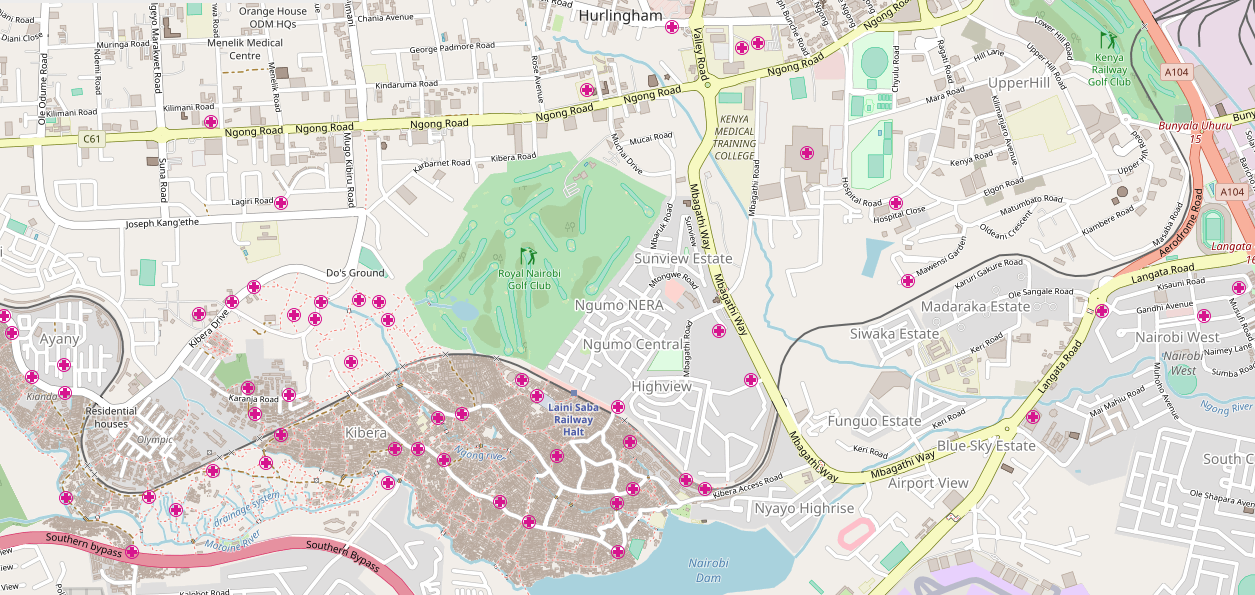
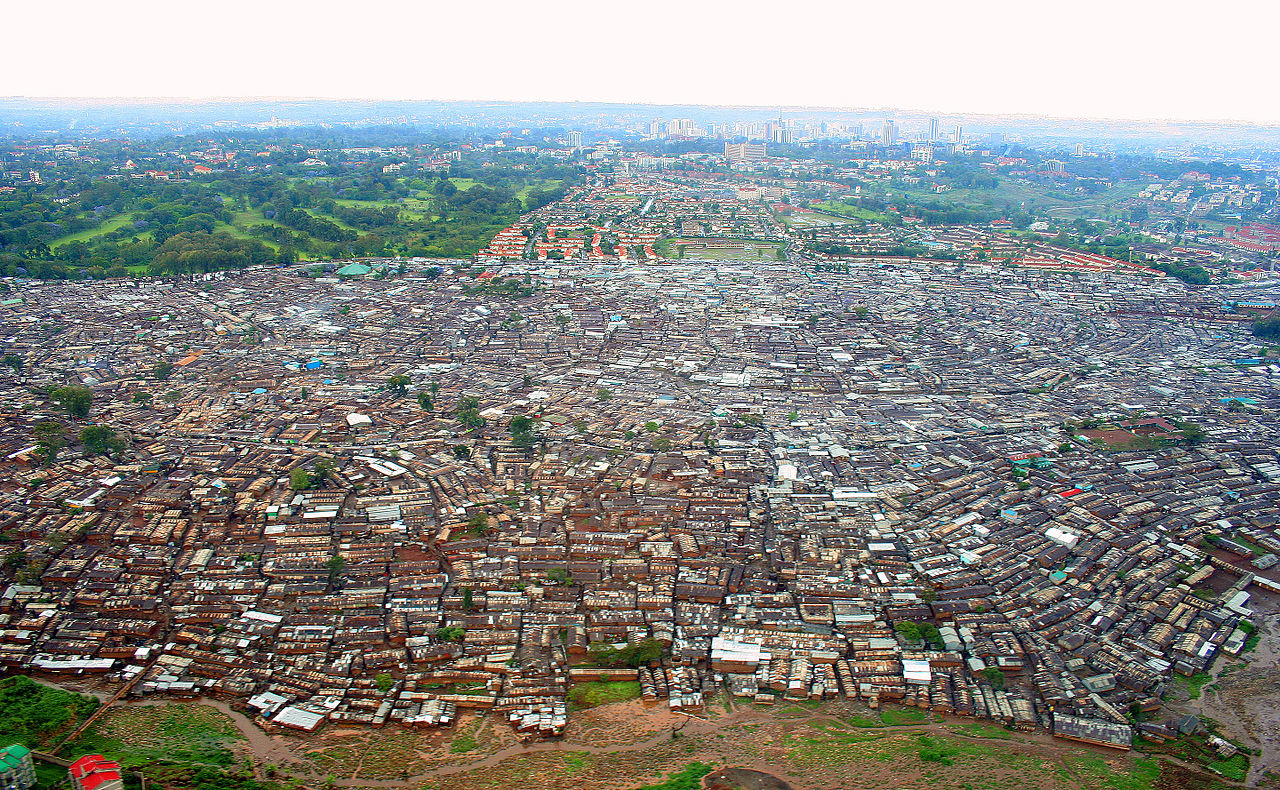
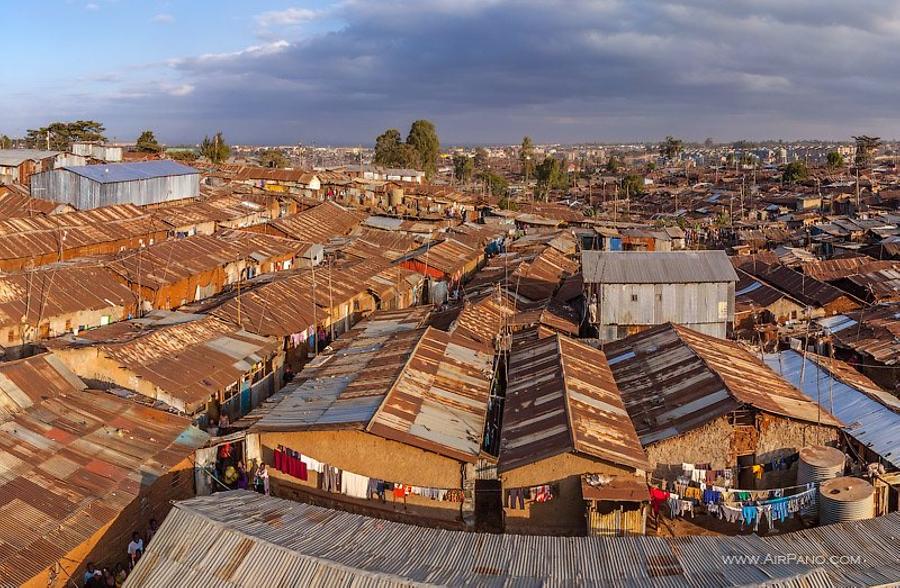
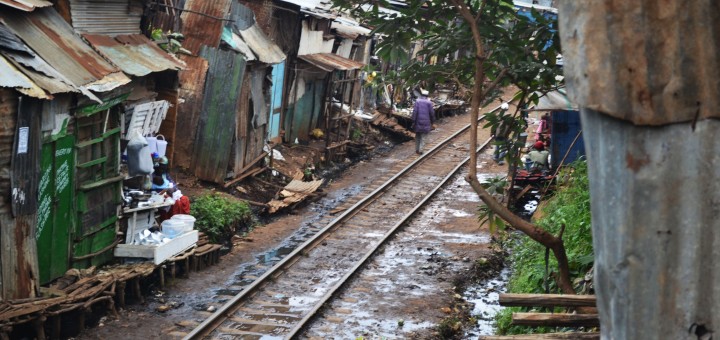
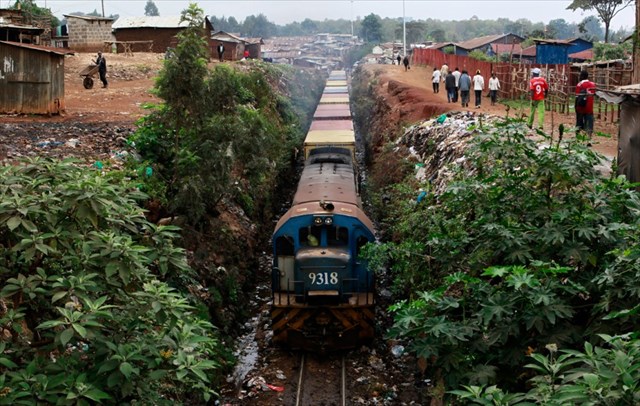
The line winds its way through the relatively affluent areas before reaching Kibera, 6.6 kilometres (4.1 miles) from the city centre. [2] Kibera is the largest slum in Nairobi, and the largest urban slum in Africa. [3][4][5] The 2009 Kenya Population and Housing Census reports Kibera’s population as 170,070, contrary to previous estimates of one or two million people. [6] Other sources suggest the total Kibera population may be 500,000 to well over 1,000,000 depending on which slums are included in defining Kibera. [7][8][9][10]

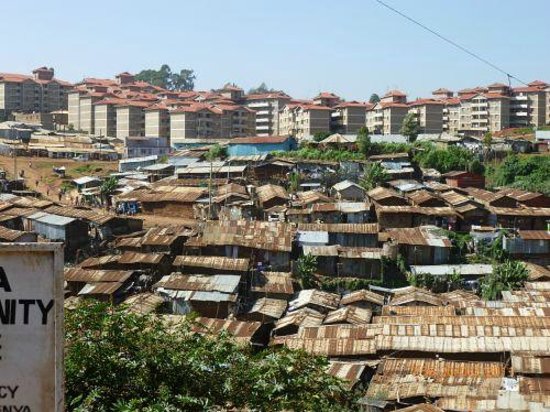
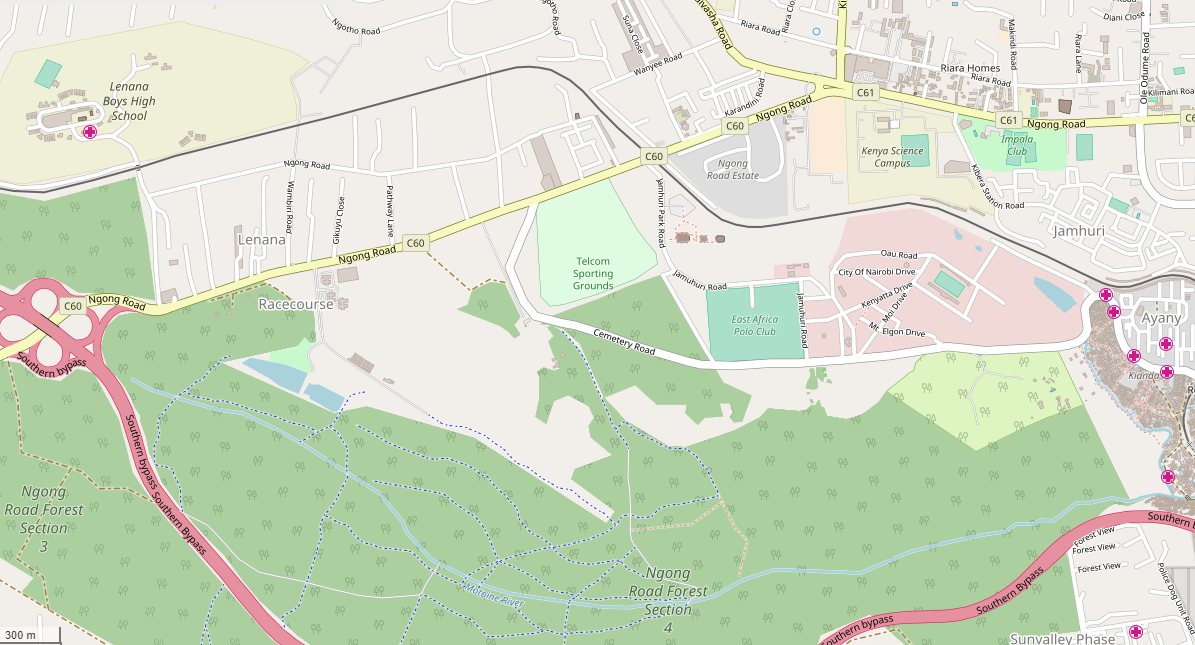
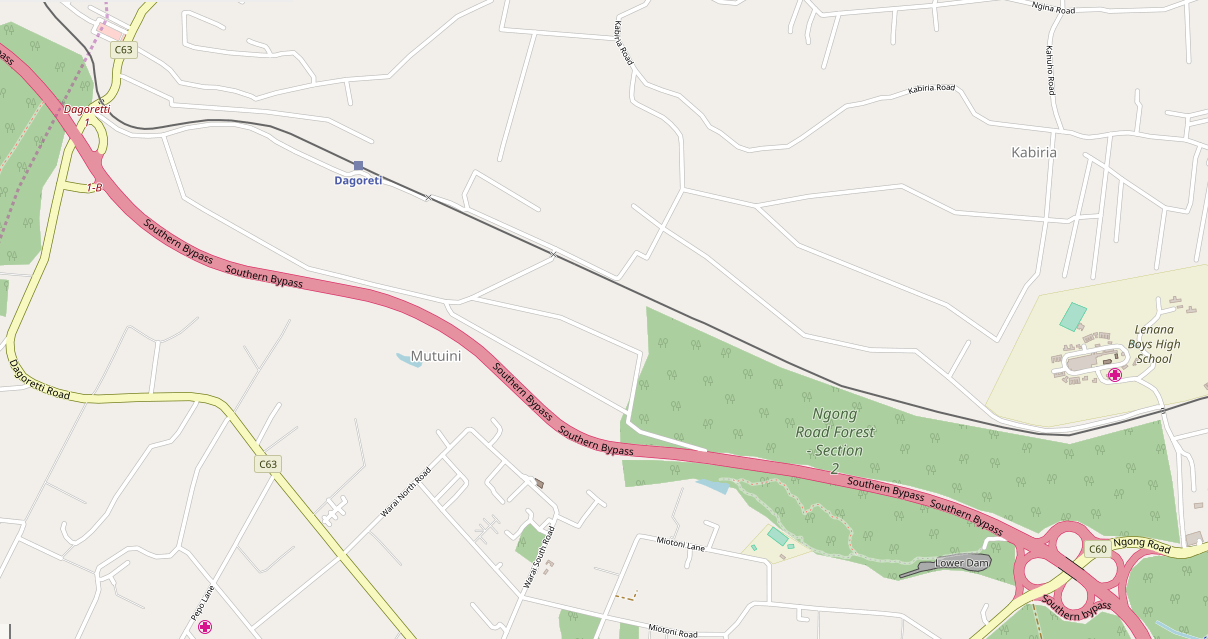
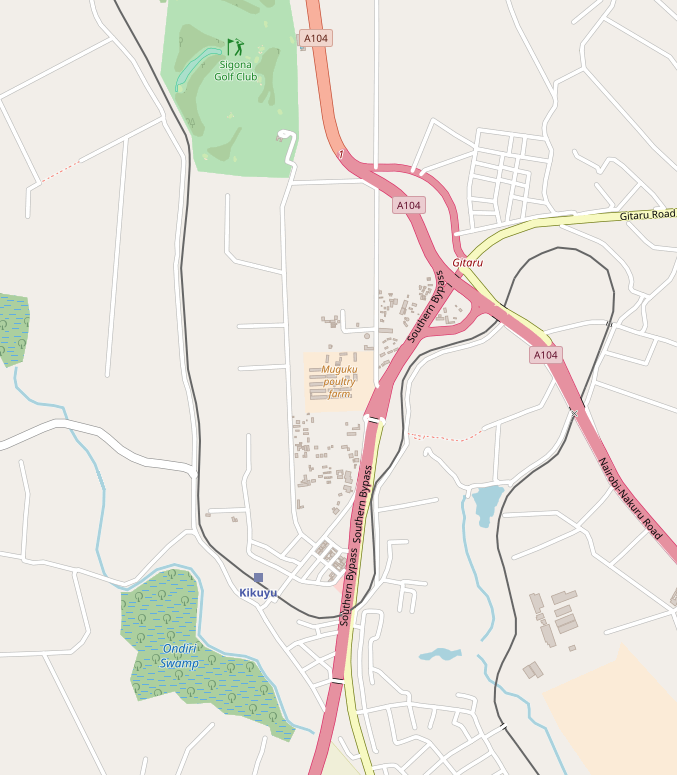
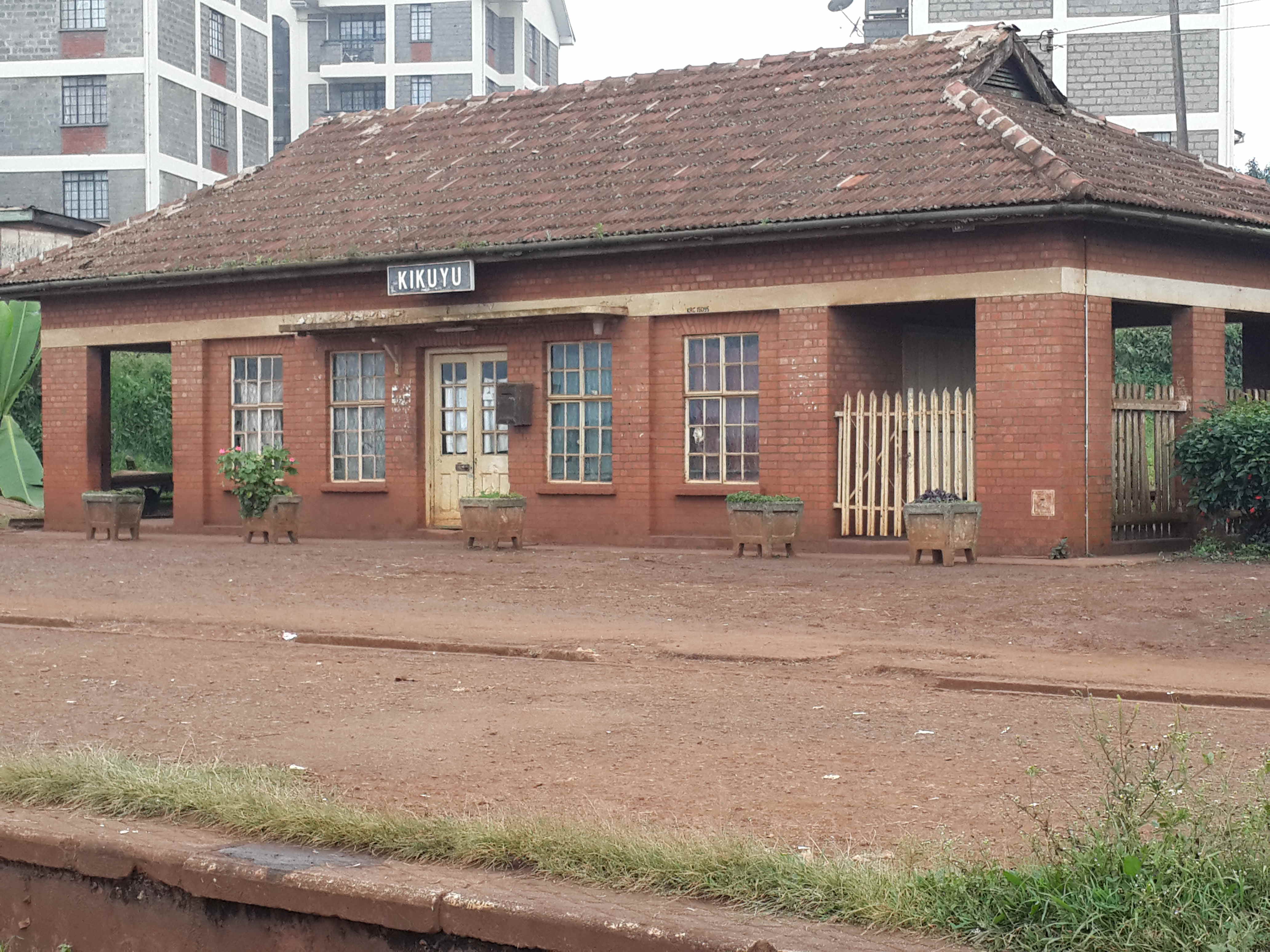
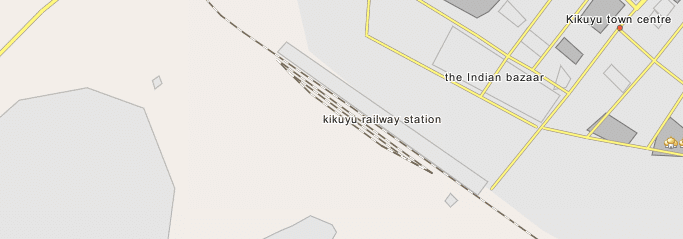
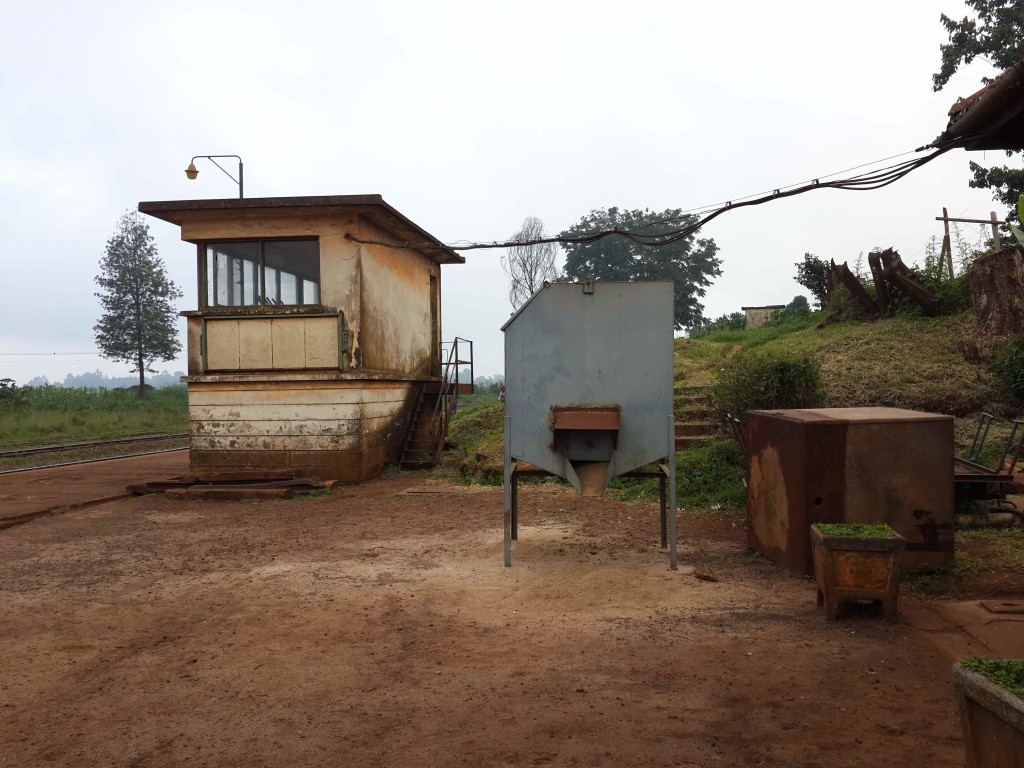
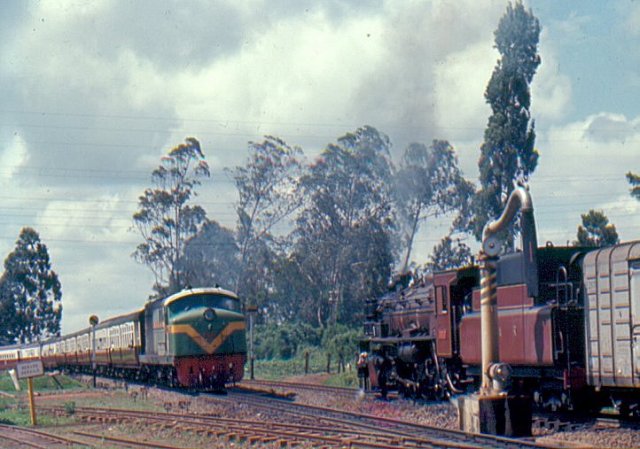
Most of Kibera slum residents live in extreme poverty, earning less than $1.00 per day. Unemployment rates are high. Persons living with HIV in the slum are many, as are AIDS cases. [11] Cases of assault and rape are common. There are few schools, and most people cannot afford education for their children. Clean water is scarce. Diseases caused by poor hygiene are prevalent. A great majority living in the slum lack access to basic services, including electricity, running water, and medical care.[12]Significant slum clearance was underway when I was in Kibera in 1994 and the elements of the slum which were on the north side of the railway seem now to have been replaced by high-end apartments, but the slum still exists, as can be seen below.After passing alongside/through Kibera, the railway meanders in a generally westward direction through the Nairobi suburbs, north of the Ngong Road Forest and north of the Racecourse and through Dagoretti Station.The railway travels North-northwest for a time and then switches back, crosses the Nairobi Southern By-Pass and enters Kikuyu Station.Kikuyu Station is 20 kilometres or so from Nairobi, railway officers established a temporary base in Kikuyu while they supervised work on the laying of the track down at the rift valley escarpment. [13]A green liveried East African Railways Corporation Loco heads an all classes passenger train into Kikuyu while a freight train headed by a Class 29 awaits departure, © Kevin Patience. [14]

After Kikuyu, the railway travels almost due north to Muguga and then Limuru. On the way to Limuru, trains pass through a 1.7 kilometre long tunnel.

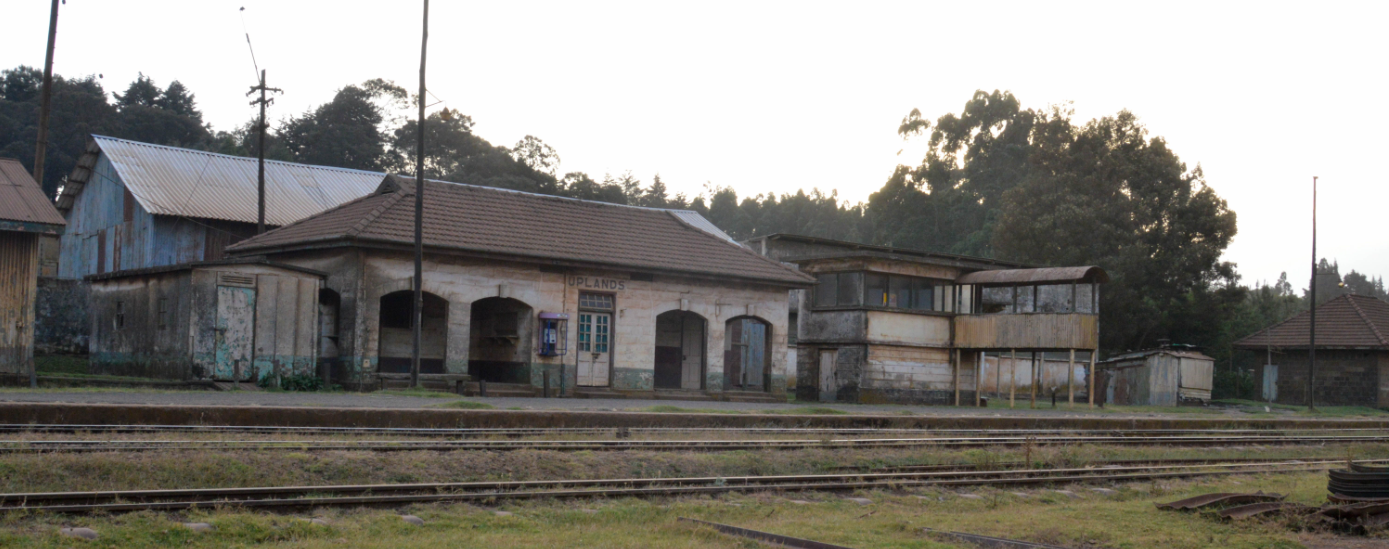
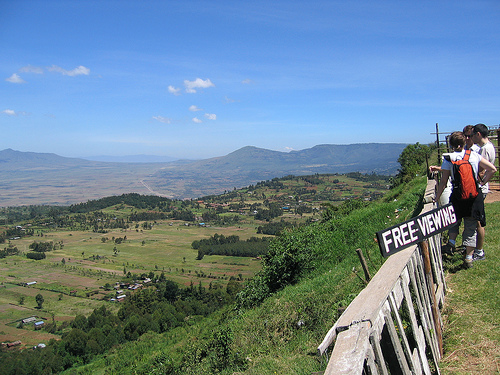
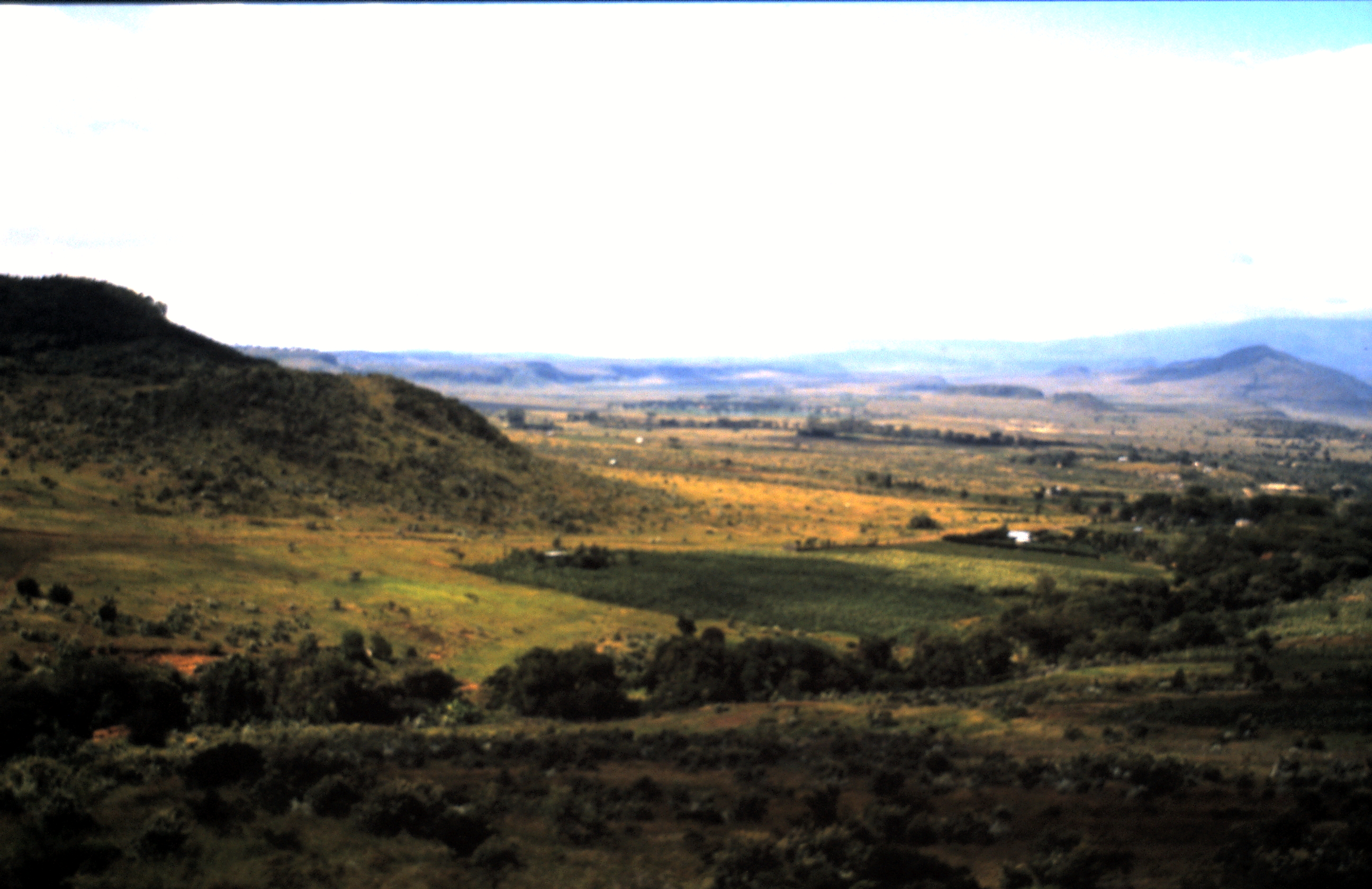
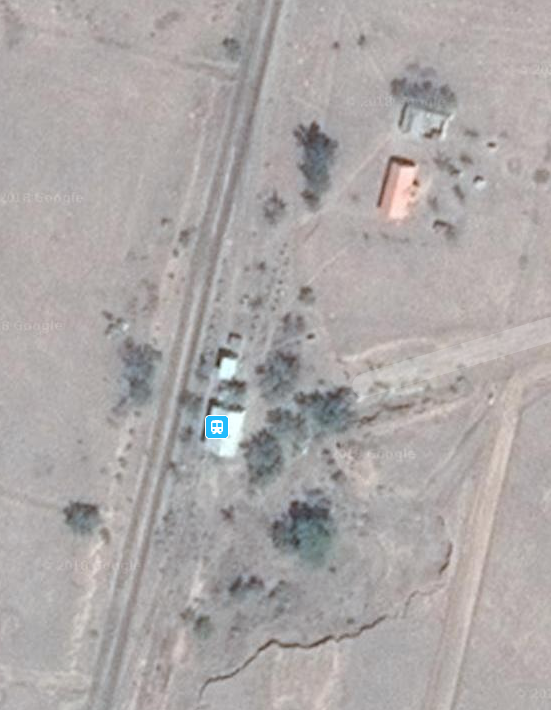
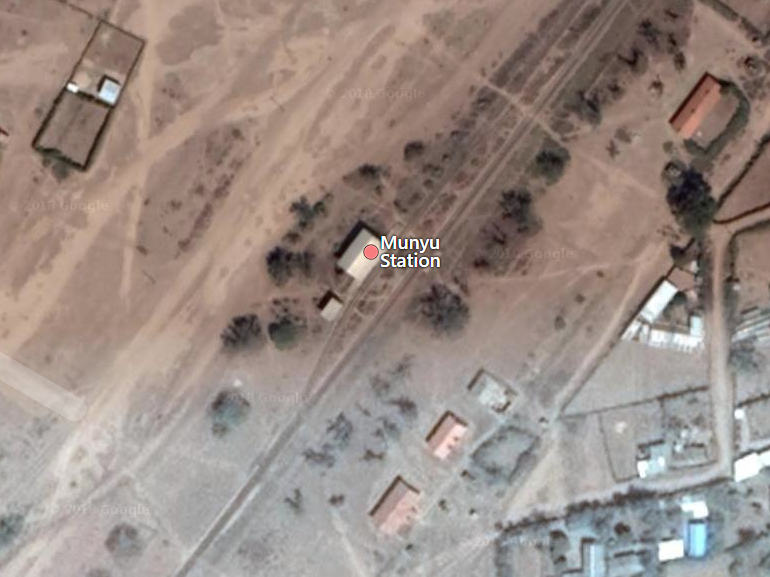
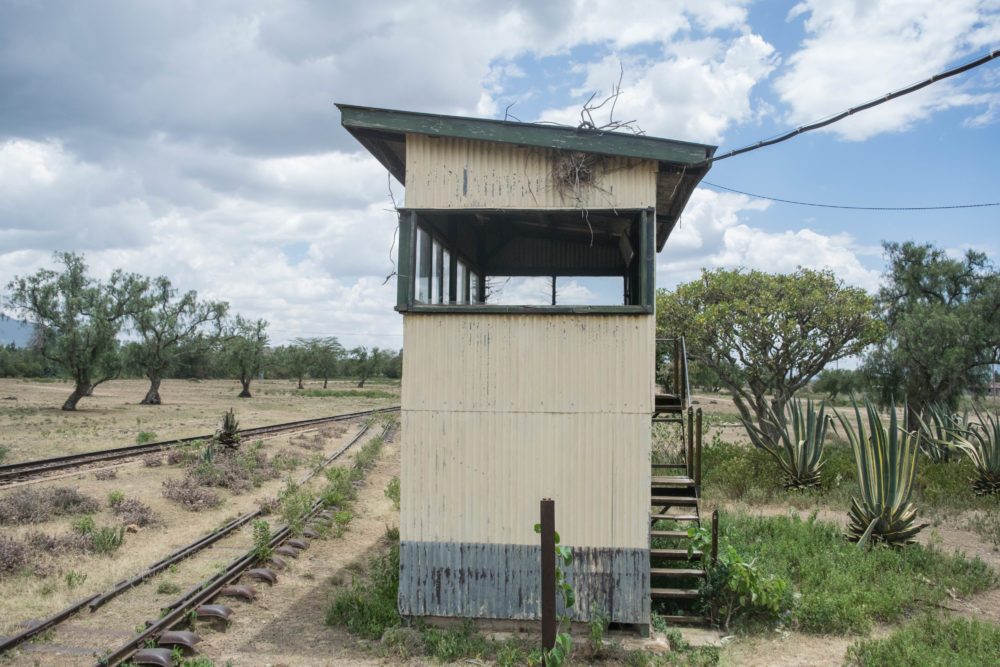
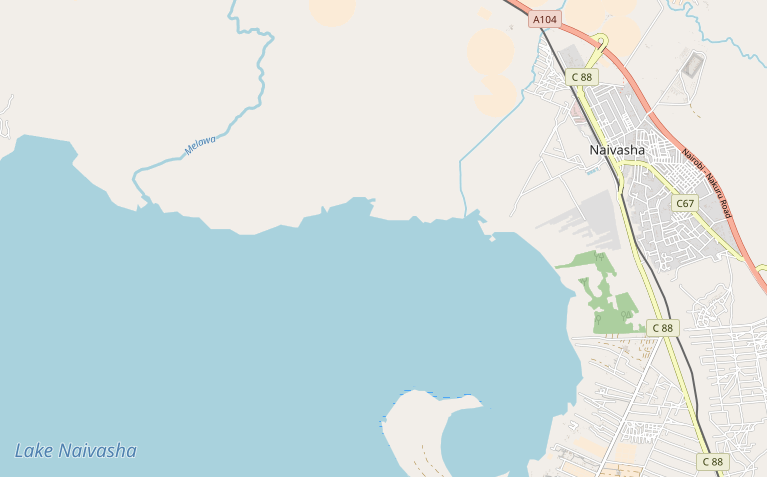
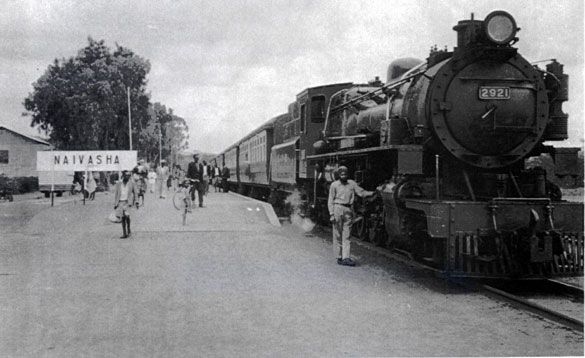
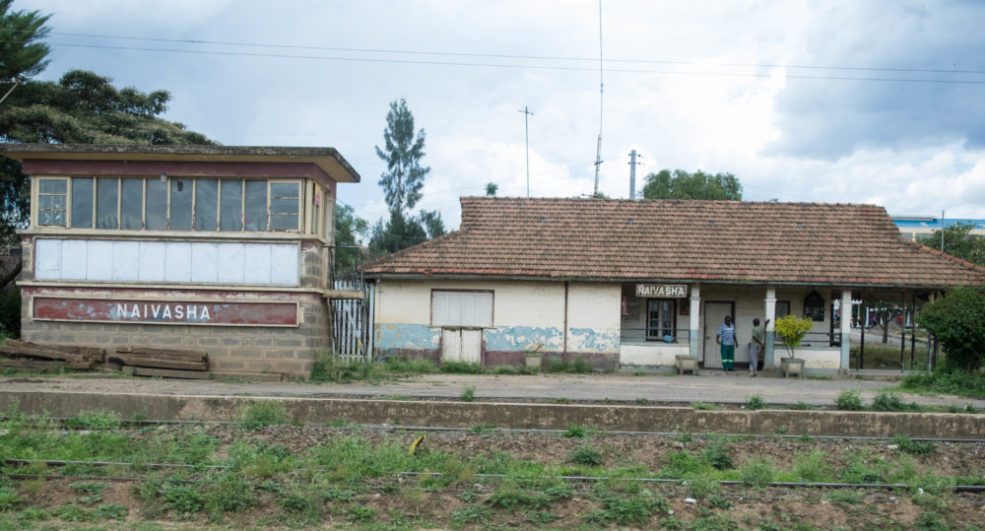
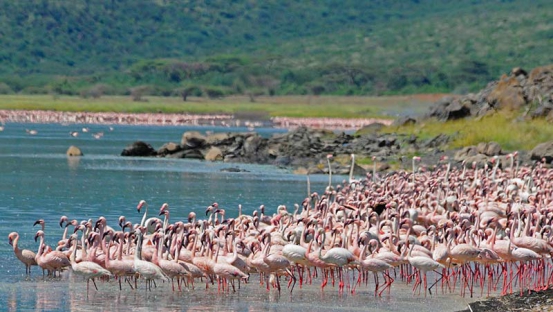
Limuru is  located on the eastern edge of the Great Rift Valley about 27 kilometres (17 mi), by road, northwest of Nairobi. Most of the area of Limuru is now what was previously known as the “white highlands”, a rich agricultural land just south of the equator. The term “white highlands” derived from the British and other Europeans who realised the productive potential of this area and settled in large numbers with the support of the colonial government, establishing coffee and tea plantations, cereal farms and ranches. The altitude of the town is about 2,500 metres. [15]A Mail Train has just exited Limuru Tunnel, © Iain Mulligan. [14]Limuru Footbridge. [16]From Limuru, trains begin their decent into the Rift Valley, through Uplands (Lari),  Matathia,  Kijabe, Longonot, Suswa and Munyu stations before reach Naivasha in the valley floor.Uplands (Lari) Station.The two images immediately above were taken by me in 1994 looking down into the Rift Valley.Royal train bearing TRH The Duke and Duchess of Gloucester approaching Matathia station in the Kenya Highlands, then to Uganda 1950. [17]Longonot Railway Station. [18]Mount Longonot. [19] SuswaMunyuMunyu Signal BoxNaivasha. [18] Lake Naivasha

Two Postscripts

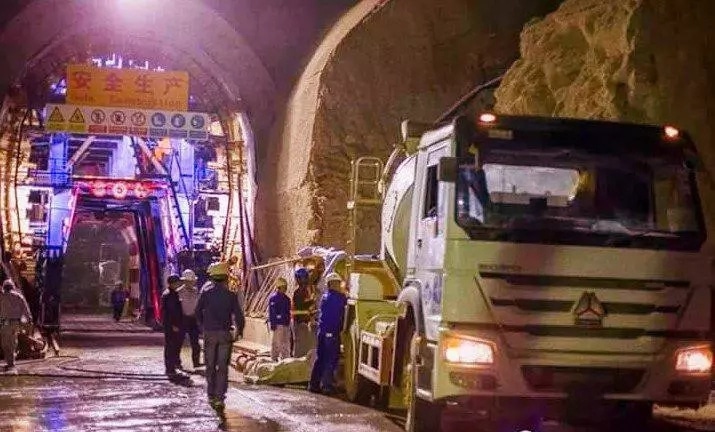
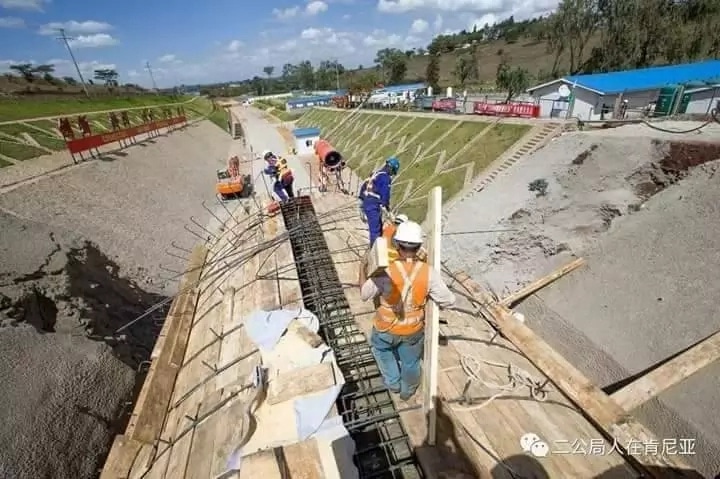
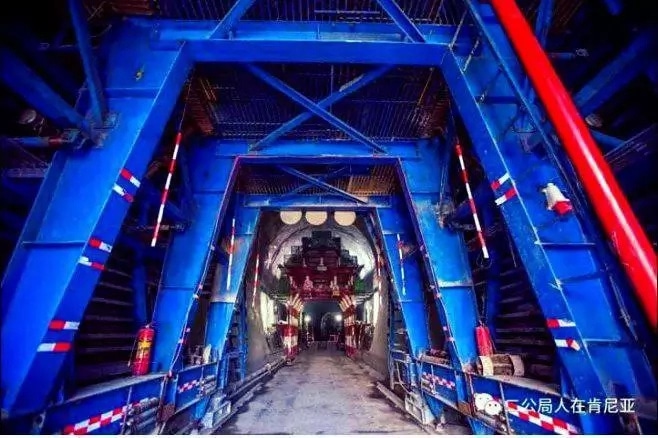
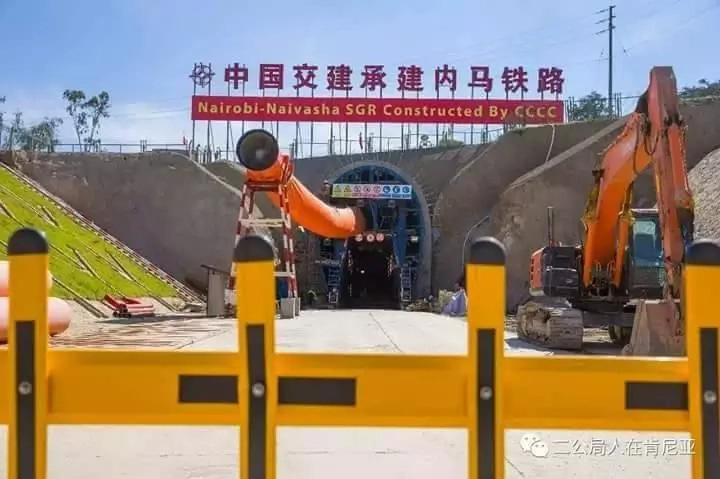
Postscript A – The Future ………. This length of the Uganda Railway coincides with the current programme of work on the SGR. A line from Nairobi to Naivasha should be completed in 2019. Major work is being undertaken as I write this blog in May 2018. A significant tunnel is being built as part of the work.[20]

Construction of SGR phase II from Nairobi-Naivasha is on course as Kenyans already enjoy the stretch from Mombasa-Nairobi. The extension to the geothermal town on Naivasha was launched by Uhuru in 2015. The line is being undertaken by China Road and Bridge Corporation at a cost of KSh 105 billion.

SGR phase 2 was funded by the Export-Import Bank of China, earmarking a loan of a total of KSh 357 billion. The finance is meant to cater for the construction of the Railway up to Kisumu and rule out land hitches by reimbursing displaced persons.[20]

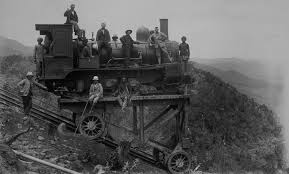
Postscript B – The Past ……….. In order to allow the original Uganda Railway construction to proceed at pace and incline was created. It was a primitive form of Funicular Railway, built on a steep and straight incline with trolleys on which locomotives and wagons could be lowered. It lasted in operation for only about 15 months before the main railway reached the valley floor and it became redundant.

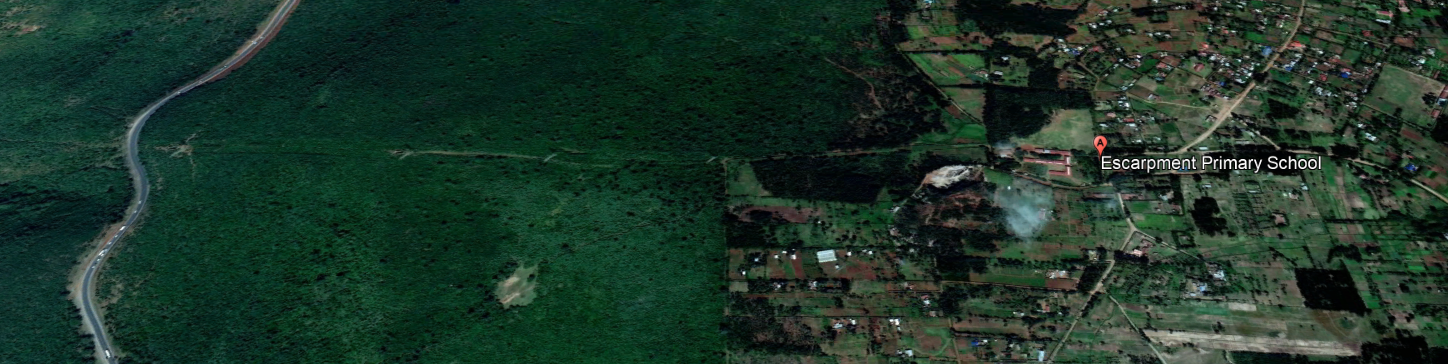
While the incline was only in use for a few months during the construction of the railway, the main line passed through Escarpment Station until 1948 before being rerouted. [21] The line of the incline can be seen in the satellite image below running west from the Primary school across the centre of the image. and the remains of winding houses can be seen on the image and more clearly on Google Earth.

References

  1. http://www.shoestringgolfer.com/2011/10/kenya-railway-golf-club-nairobi, accessed on 24th May 2018.
  2. “Kibera to Nairobi”. Google Maps. Google, accessed on 26th May 2017.
  3. “A Trip Through Kenya’s Kibera Slum”. International Medical Corps. 27th March 2006, accessed on 31st January 2013.
  4. “Sanitation – vacutug | Participating countries”. Un-Habitat, accessed on 31st January 2013.
  5. http://www.dominionpaper.ca/articles/1703 Machetes, Ethnic Conflict and Reductionism
    Karanja, Muchiri (3 September 2010). “Myth shattered: Kibera numbers fail to add up”. Daily Nation. acessed on 4th September 2010.
  6. Annabel S. Erulkar, James K. Matheka. “Adolescence in the Kibera Slums of Nairobi Kenya” (PDF). Population Council. Archived from the original (PDF) on 11th May 2012, accessed on 10th July 2012.
  7. Understanding the Grassroots Dynamics of Slums in Nairobi: The Dilemma of Kibera Informal Settlements Emmanuel MUTISYA and Masaru YARIME, International Transaction Journal of Engineering, Management, & Applied Sciences & Technologies, Volume 2, No.2 (2011); pages 197–213
  8. Audio Slideshow: Dr. Biden Sees the Neighborhoods of Kenya The White House, United States (June 2010)
  9. Kibera: How slum lords cash in on misery Kimathi Mutegi, The Nation, Kenya (19th September 2013).
  10. Archived copy on the Wayback Machine from 12th October 2013.
  11. “Video: The women of Kibera in Kenya | Amnesty International”. Amnesty.org. 4th March 2009, accessed on 18th October 2010.
  12. Wikipedia, Kibera; https://en.wikipedia.org/wiki/Kibera, accessed on 24th May 2018.
  13. https://www.theeagora.com/the-lunatic-express-a-photo-essay-on-the-uganda-railway, accessed on 15th May 2018.
  14. http://www.mccrow.org.uk/eastafrica/eastafricanrailways/KampalaNairobi.htm, accessed on 24th May 2018.
  15. Wikipedia, Limuru; https://en.wikipedia.org/wiki/Limuru, accessed on 24th May 2018.
  16. http://robertbiu.com/2016/02/13/not-a-weaver-bird-but-a-weaver-man, accessed on 24th May 2018.
  17. https://imagineuganda.wordpress.com/2012/05/11/uganda-50-a-revolving-industrial-aspect, accessed on 24th May 2018.
  18. http://www.savetherailway.com, accessed 15th May 2018.
  19. https://thetreasureblog.wordpress.com/tag/mt-longonot, accessed on 24th May 2018.
  20. https://www.tuko.co.ke/247982-4-glorious-photos-underground-tunnel-sgr-nairobi-naivasha.html#247982, accessed on 24th May 2018.
  21. http://www.friendsoftherail.com/forum/viewtopic.php?t=8362, accessed on 24th May 2018.

The Uganda Railway – Part 7 – Nairobi Railway Station, Good Yard, MPD and Railway Museum

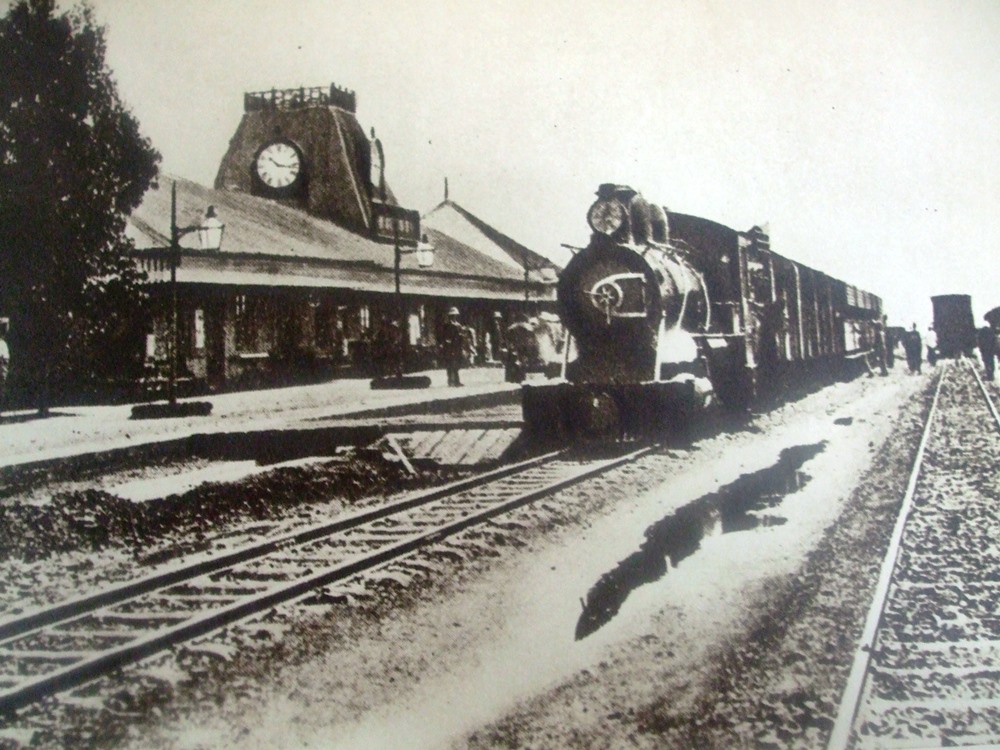
Nairobi is a city that was created by the Uganda Railway! There was nothing on the site of the present capital city of Kenya before railway construction started in the last years of the 19th Century.The first two shots show the location as the settlement was beginning to grow.Train leaving Nairobi for Mombasa in 1900.Nairobi Railway Station in the early 1900s.

Nairobi was founded in 1899 by the colonial authorities in British East Africa, as a rail depot on the Uganda Railway.[1] The town quickly grew to replace Machakos as the capital of Kenya in 1907. After independence in 1963, Nairobi became the capital of the Republic of Kenya.[2] During Kenya’s colonial period, the city became a centre for the colony’s coffee, tea and sisal industry.[3]

The city lies on the River Athi in the southern part of the country, and has an elevation of 1,795 metres (5,889 ft) above sea level.[4]

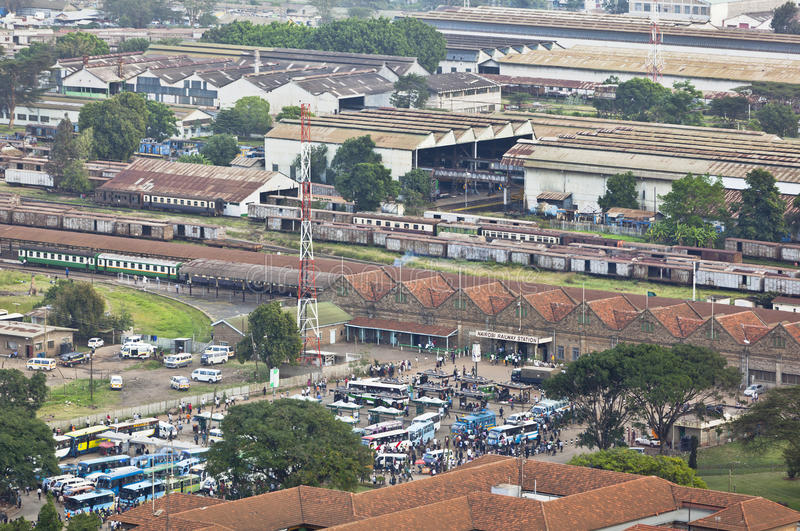
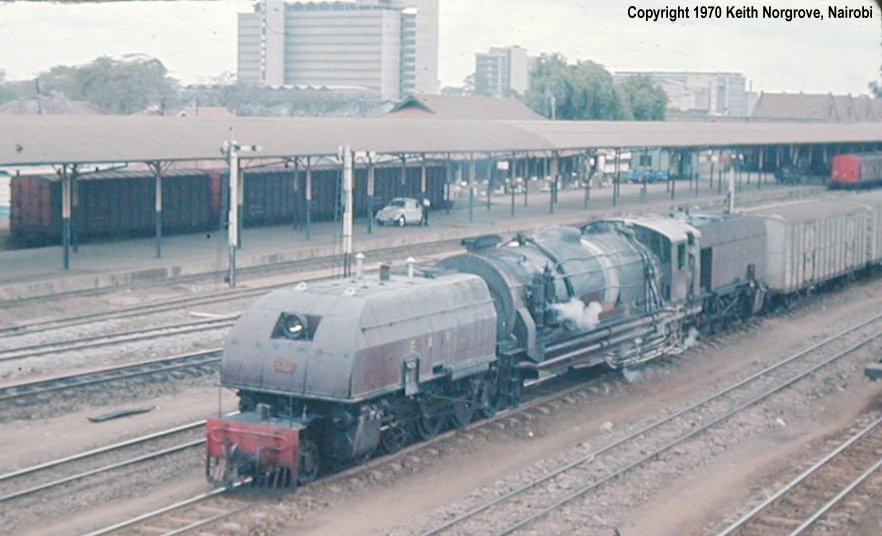
The present station is utilitarian and functional and shows none of the colonial splendour of some Indian railway stations.Class 58 Garratt ready to leave Nairobi Station for Mombasa (1955).[6] East African Railways Class59 class 4-8-2+2-8-4, No. 5910 “Mount Hanang,” oil fired, weighing in at 251t with a tractive effort of 83,350lbs, is shown in the two pictures above arriving in Nairobi with a goods train from Mombasa in 1970.[7]

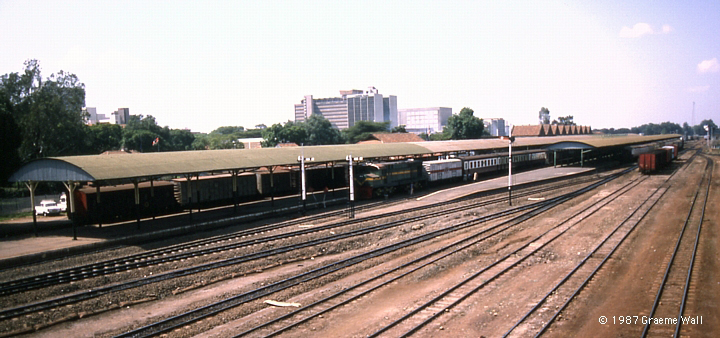
Nairobi Railway Station in 1987, © Graeme Wall.[8]

Commuter Trains

The Nairobi suburbs are served by commuter trains. Not all as heavily loaded as that shown below.

There are daily services from Nairobi Suburbs into the Central Station.[11]

An interesting project saw officially sanctioned graffiti replacing unauthorised graffiti. Trains had been badly disfigured but of greater significance was the fact that in the days around  elections in 2007,  the balloting ignited deadly ethnic tensions. Weeks of violence left more than a 1,000 people dead and hundreds of thousands of Kenyans were left homeless. The ethnic tension was particularly toxic in the Kibera, one of the largest slums in Africa, in the heart of Nairobi. It is the focal point of rival ethnicity and unemployed youth.

Hoping to avoid a repeat of that violence in the election process in 2013, a Brooklyn artist and educator Joe Bergner launched a project that used graffiti art to encourage peace and unity against ethnicity and political groups.

The project is called ‘Kibera Walls for Peace’.  Peace murals were painted by local youth around Kibera. The project approached and worked with Rift Valley Railways to use the commuter trains as a canvas to spread peace messages and togetherness. The railways had been a major target in the previous post-election violence, especially the route through Kibera. In 2007, mobs of young people tore up the train tracks that connect Kenya and Uganda and sold them for scrap metal.

The idea of having graffiti artists come on board to spray the 10 coaches of a commuter train was an idea well received, since most of the Kibera dwellers use the commuter train to and from work. It’s their main means of transport. The train travels through the massive Nairobi slum of Kibera advertising peace. A portrait of Martin Luther King Jnr and the Kenyan flag grace the last coach. The message reads from the front to the back and looks like a sentence that’s beautifully crafted. Tuwache ukabila…tuwache ubaguzi…tuishi kwa amani.[12]
Freight and Goods Sidings

These next few pictures cover the good sidings adjacent to the station.

Sidings close to the platforms.

Oil tanks sitting idle.

The same sidings from a different direction.

Class 31 No. 3143 ‘Somal’ heads a freight through Nairobi Yard. Note the lower quadrant signals: up country the norm was a 3 aspect upper quadrant signal – vertical, line clear; 45 degree, caution; horizontal, stop. © Anthony Potterton.[9]A Class 60 Garratt with name plates removed pauses in Nairobi. © Kevin Patience.[9]Another Class 60 heads a freight out of Nairobi Yard for the Nanyuki Branch, © James Waite.[9]

Nairobi Shed

In Steam days ……EAR Garratt at works entrance, Nairobi Sep 1977, © Whiteflyman.[13]EAR Class 60 Garratt 6008, Nairobi MPD, Sep 1977, © Whiteflyman.[13]Princess Margaret's visit to Nairobi 1956 (Dad - Neil Rossenrode, standing at the back on right)Staff at Nairobi MPD on the occasion of Princess Margaret’s visit in 1956.[14] 5919 ‘Mount Lengai’ at Nairobi Shed, © James Waite.[10] No. 5912 ‘Mount Oldeani’ on the fuelling road at Nairobi MPD, © James Waite.[10] Nairobi Shed in the lengthening shadows of the rapidly setting sun in 1975. A  Class 13 4-8-4T with a Class 31 and two Class 11 tank engines in the background, © Anthony Potterton.[10] Line-up of East African Railways motive power at Nairobi MPD with Class 60 Garratt 6024 Sir James Hayes Saddler prominent left and Class 57/58 right. Five Class 59 Garratts, two Class 29 (Tribal) and two tank engines are also quite clearly discernable. The post card was probably produced around 1955-6, © EAR&H. [10]

Nairobi Railway Museum

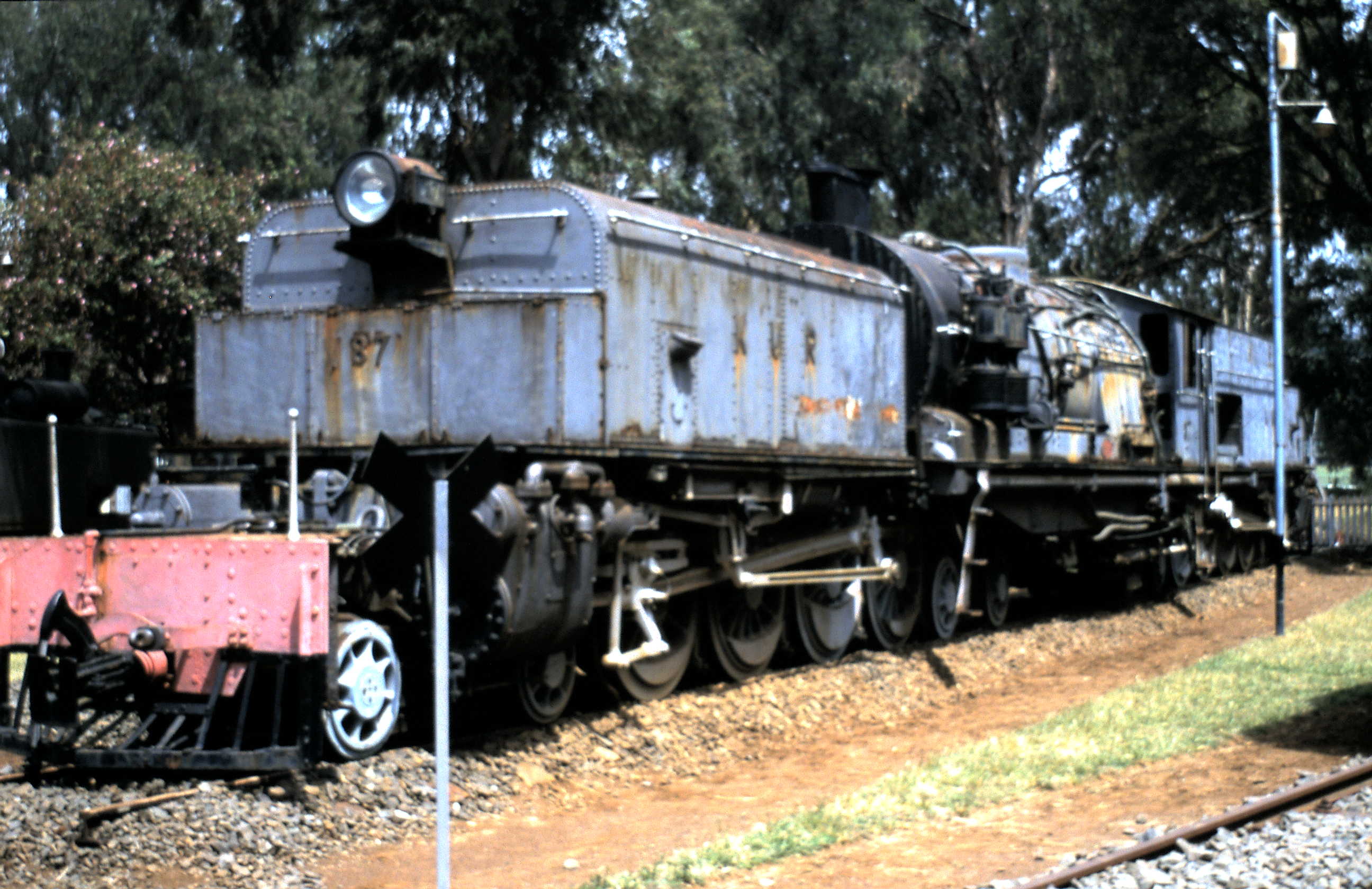
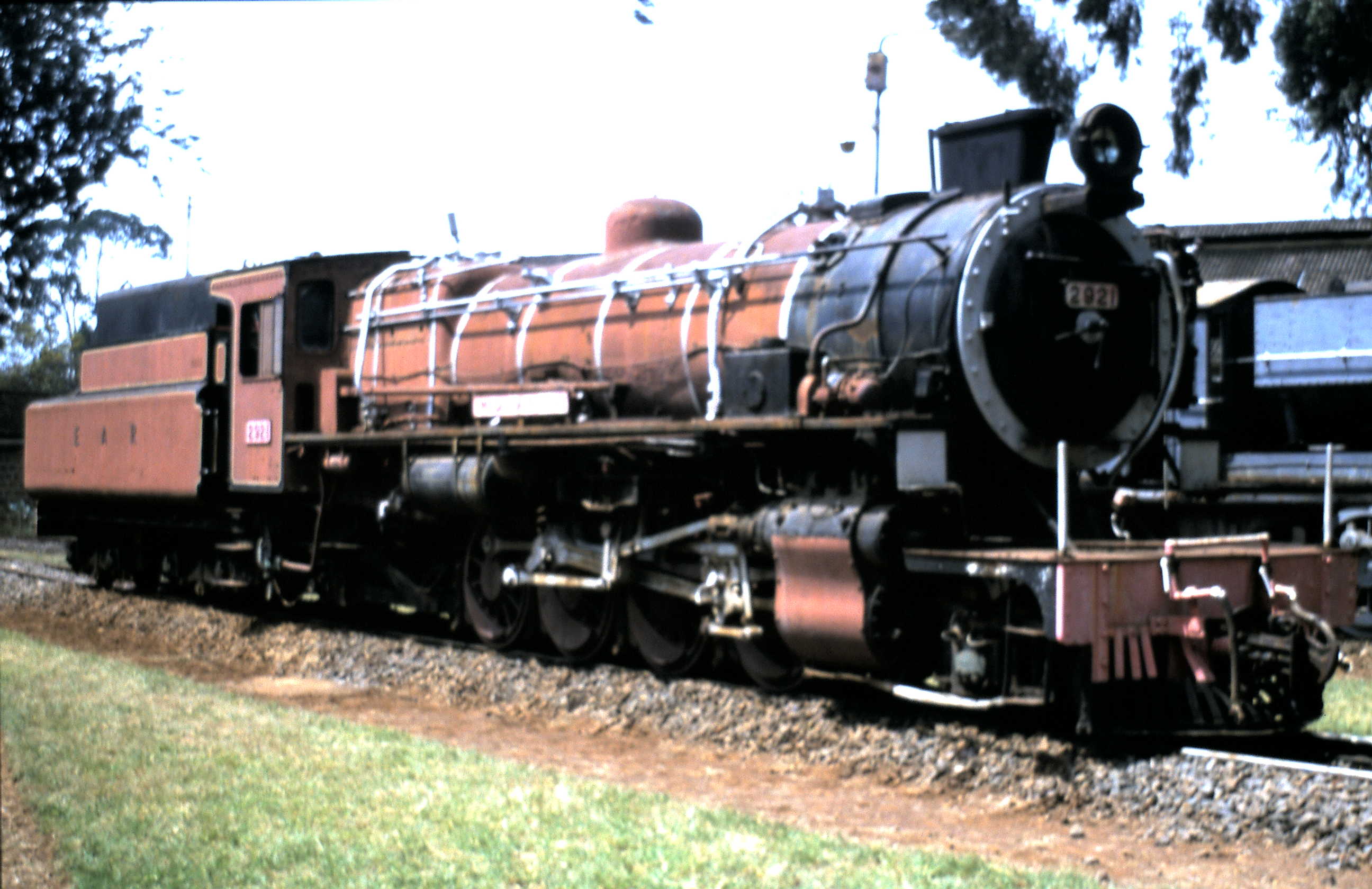
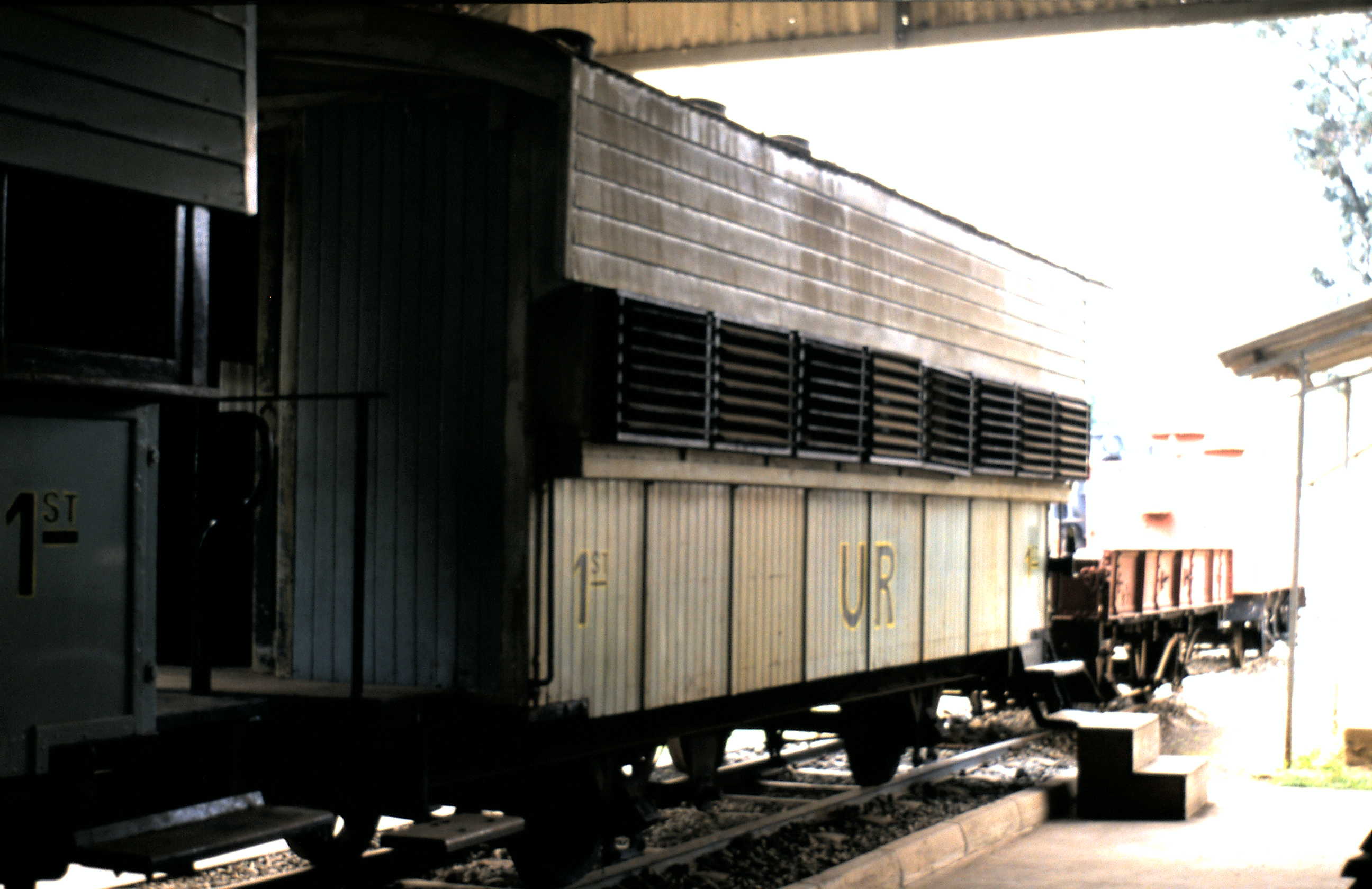
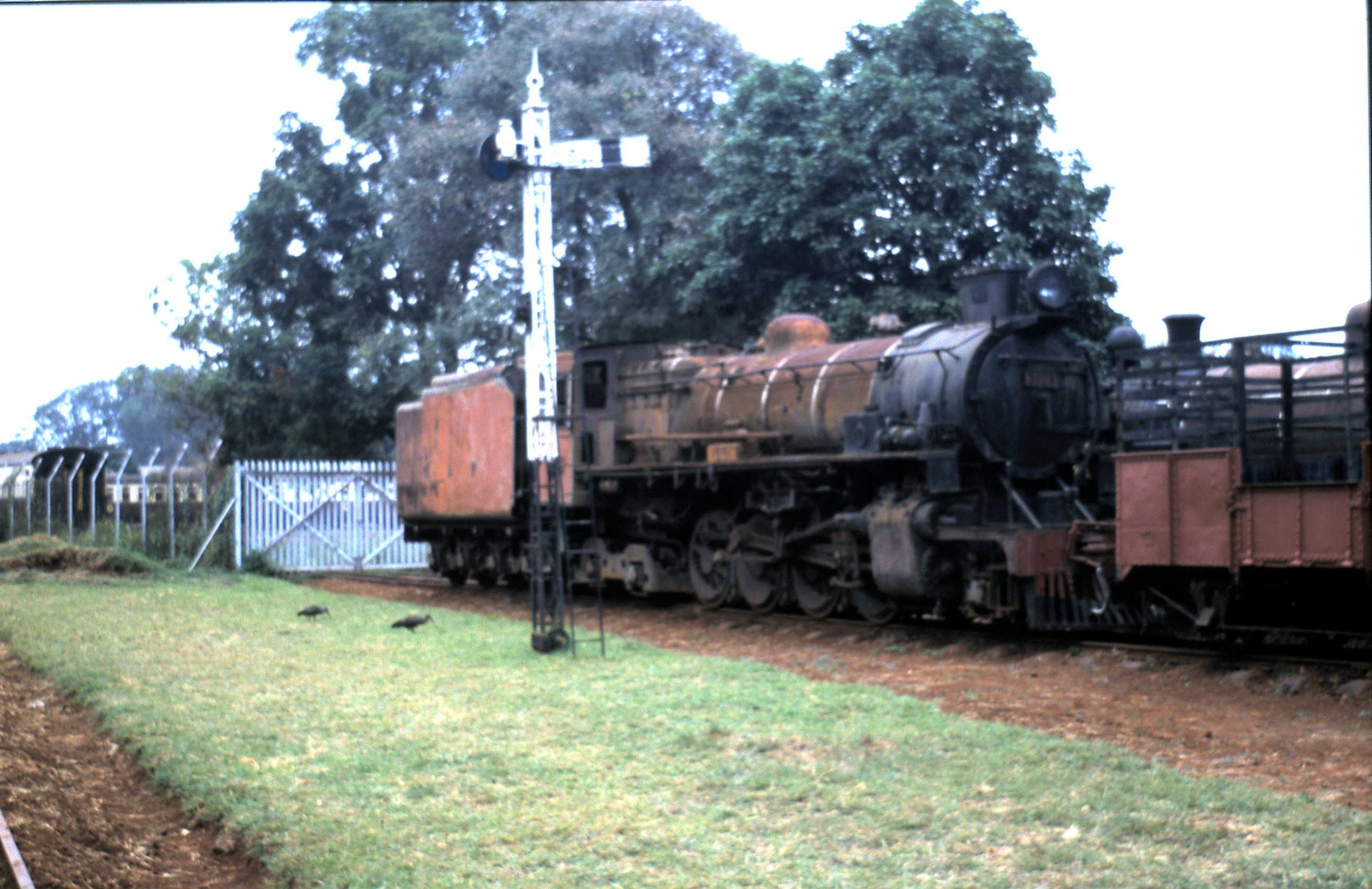
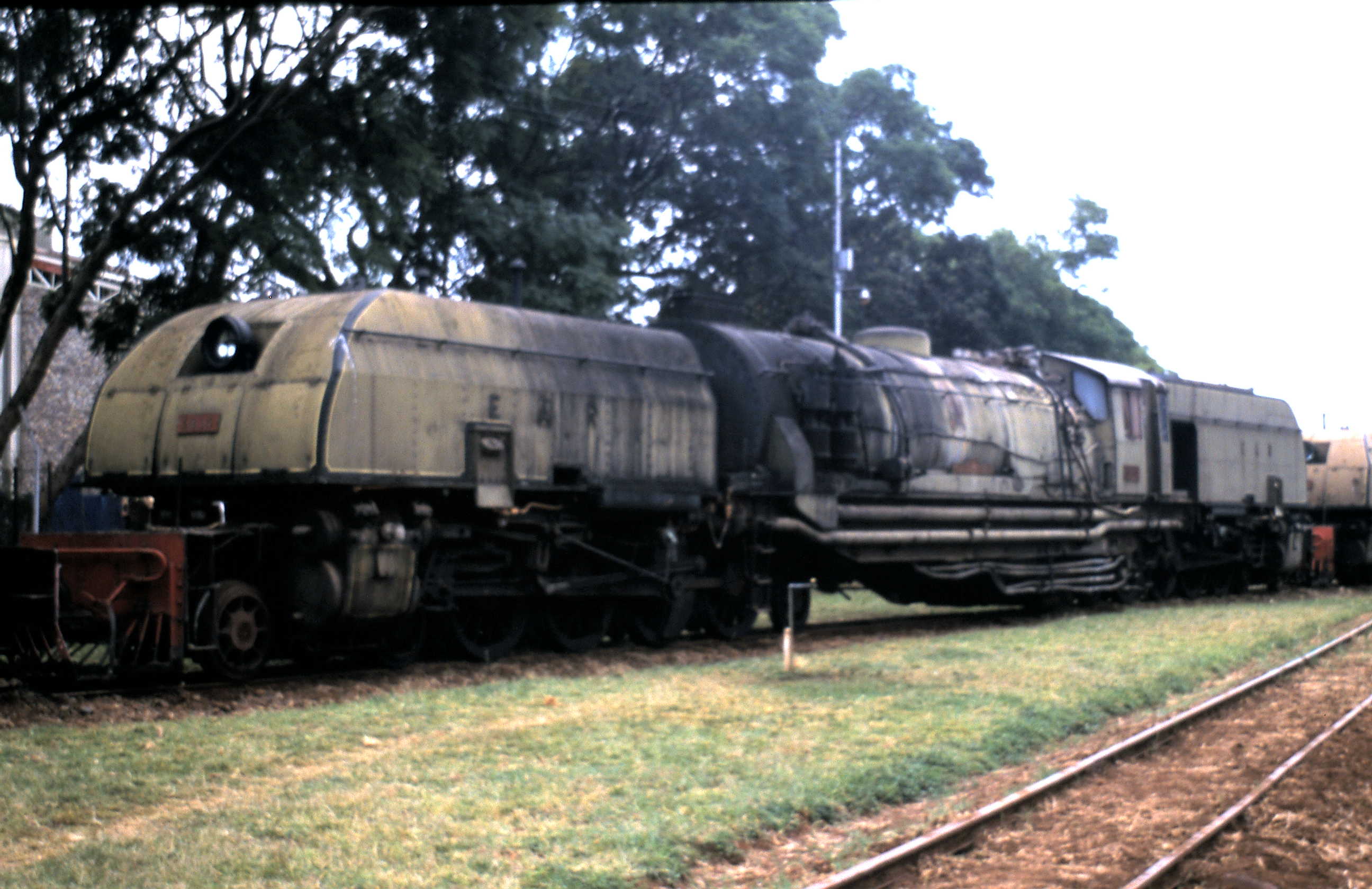
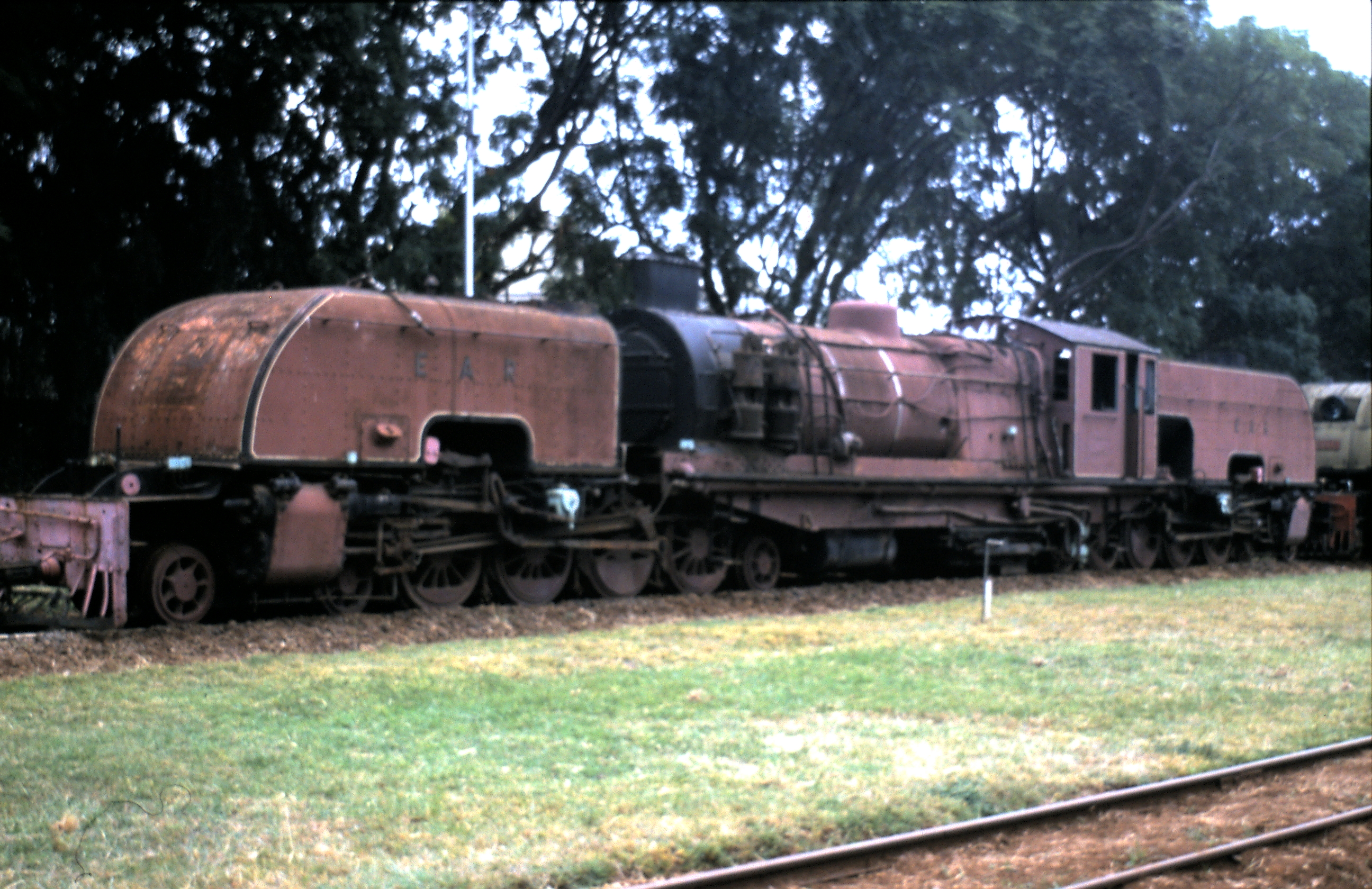
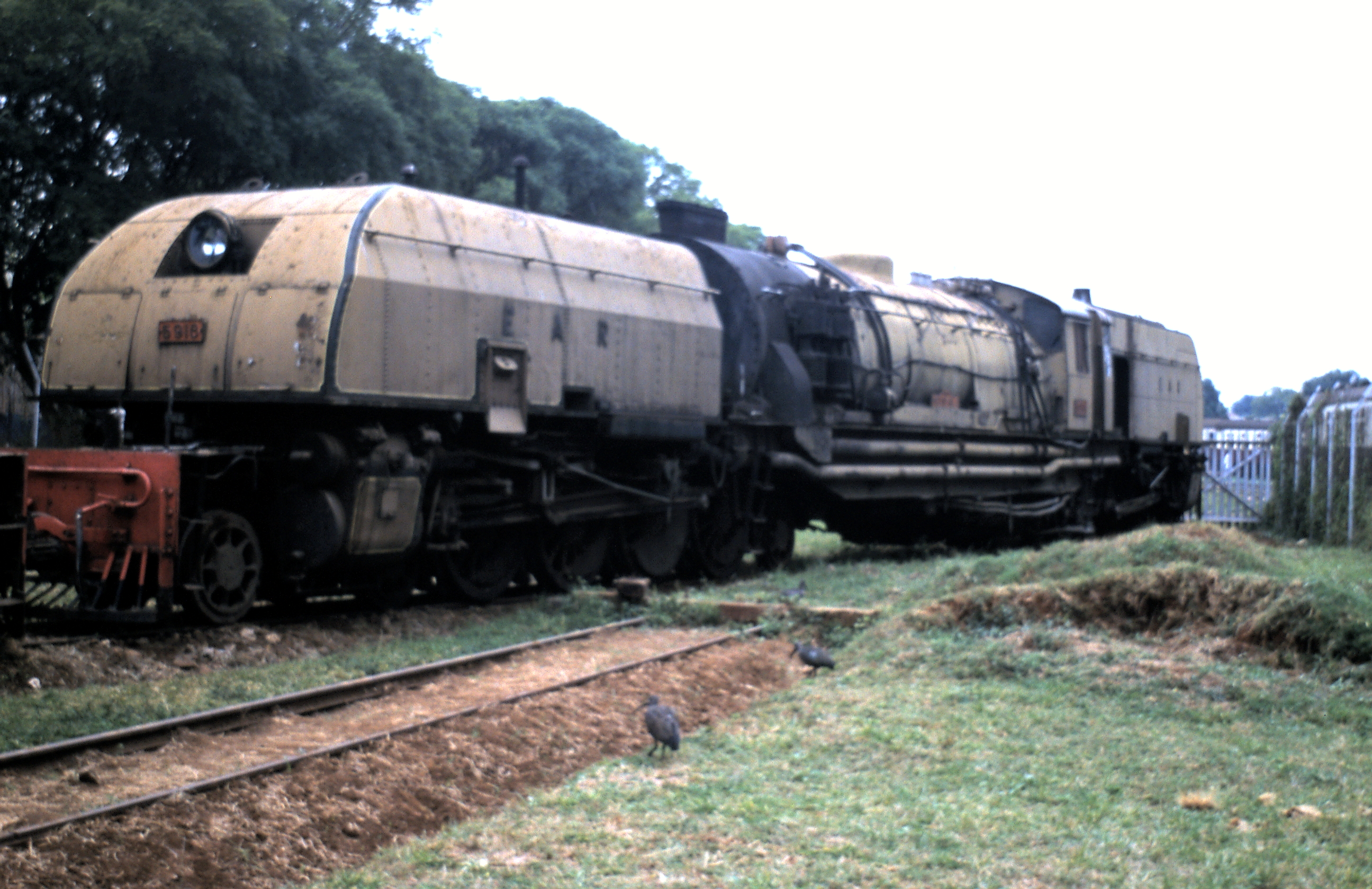
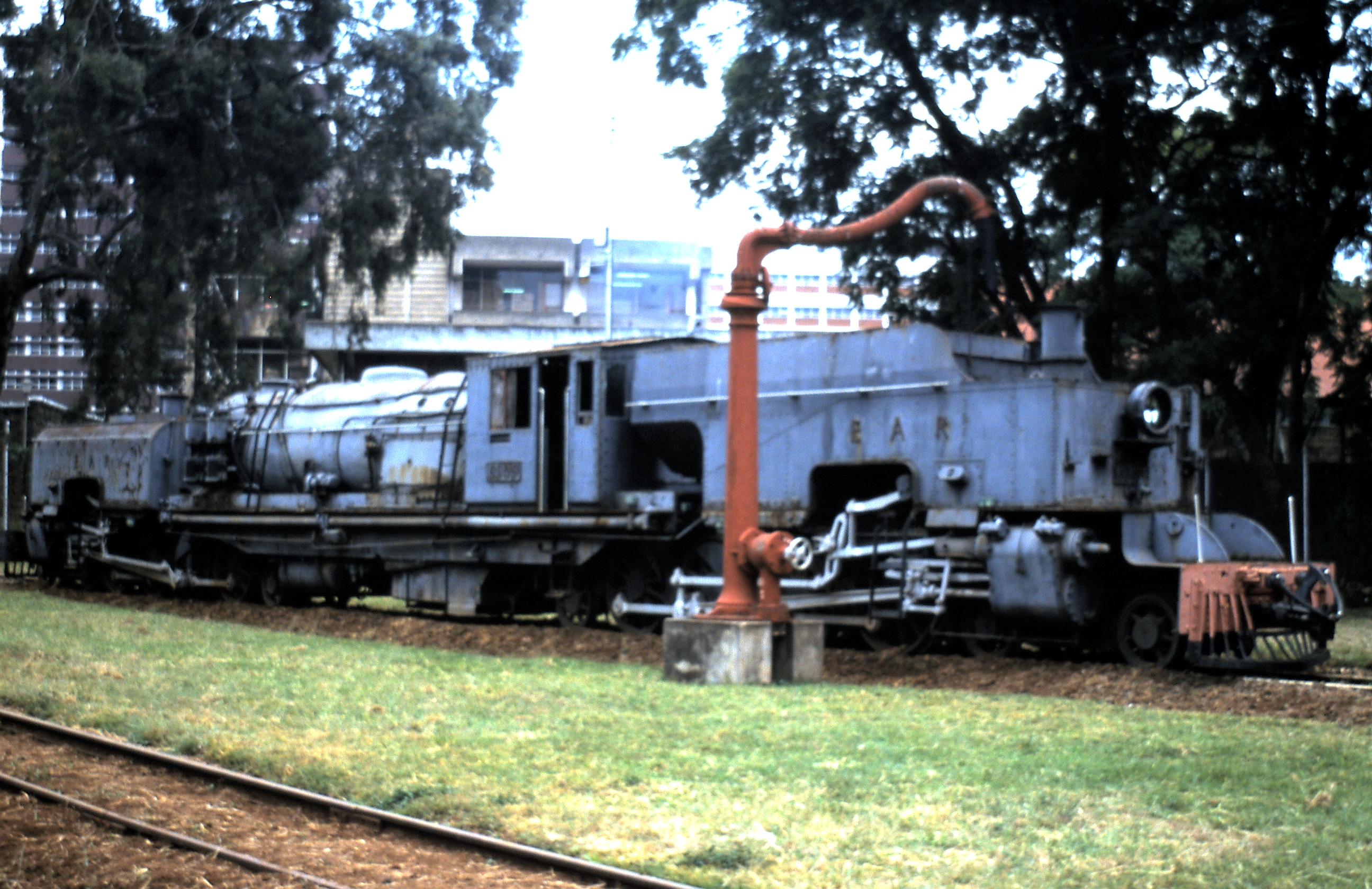
I visited Nairobi Railway Museum in 1994. It was in a relatively run-down state and many of the locomotives stored there were rusting away. These next 13 pictures are from 1994 and were taken as slides. The quality is not good but the ability to wander around next to some of the remaining Beyer Garratt locomotives was an experience to remember. The Museum has changed a bit since 1994, and there are now even some of these machines back in steam on the railways in Kenya.Image may contain: train and outdoor5918Class 59 Garratt No. 5918 ‘Mt Gelai’ in Steam in 2004.[15]

And finally ….. a drone’s eye view of the Museum in the 21st Century!

References

  1. Roger S. Greenway, Timothy M. Monsma, Cities: missions’ new frontier, (Baker Book House: 1989), p.163.
  2. City-Data.com. “Nairobi History”. http://www.city-data.com, accessed on 22nd May 2018.
  3. “History – Nairobi”. City-data.com, accessed on 22nd May 2018.
  4. AlNinga. “Attractions of Nairobi”. alninga.com. Archived from the original on 30 September 2007, accessed on 22nd May 2018.
  5. Nairobi, Wikipediahttps://en.m.wikipedia.org/wiki/Nairobi, accessed on 22nd May 2018.
  6. https://www.pinterest.com/pin/559361216211036942, accessed on 22nd May 2018.
  7. http://www.norgrove.me.uk/garratts.htm, accessed on 22nd May 2018.
  8. http://www.greywall.demon.co.uk/rail/Kenya/nrm.html, accessed on 22nd May 2018.
  9. http://www.mccrow.org.uk/EastAfrica/EastAfricanRailways/NairobiMombasa.htm, accessed on 15th May 2018.
  10. http://www.mccrow.org.uk/EastAfrica/EastAfricanRailways/NairobiMPD.htm accessed on 22nd May 2018.
  11. https://metaphorimages.photoshelter.com/image/I0000e12YBt5NpVA, accessed on 23rd May 2018.
  12. https://joelukhovi.wordpress.com/tag/rift-valley-railways, accessed on 23rd May 2018.
  13. http://picssr.com/photos/13661517@N06?nsid=13661517@N06, accessed on 23rd May 2018.
  14. https://www.pinterest.co.uk/pin/462463455475676221, accessed on 23rd May 2018.
  15. http://www.greywall.demon.co.uk/rail/Kenya/nrm.html, accessed on 23rd May 2018.


The Uganda Railway – Part 6 – Ulu to Nairobi

Our journey along the Uganda Railway continues ………….

Ulu is our starting point for the next leg of the journey. The station can be seen on the satellite image below. It is at the top of the photograph and approximately in the middle of the image. Ulu is located in the region of Kajiado. The distance from Ulu to Kenya’s capital Nairobi is approximately 69 km/43 miles (as the crow flies).[1]  This next leg of our journey is not a long one!Leaving Ulu for Nairobi, trains travel in a North-easterly direction before eventually swinging round to the North-west towards Konza.Just before we reach Konza a branch-line diverts off the mainline in a south-westerly direction. Konza is the junction for the line which serves Magadi Soda Works. The branch travels via  Kajiado, Kenya Marble Quarry, Elangata Wuas, Singiraini, and Koora to Magadi Soda Works. I visited the Soda Works in 1994, travelling there by car from Nairobi. The first six pictures below are my own and the quality is not great.  Road is the easiest way to access Magadi despite the railway link.[3] One other way of visiting Lake Magadi is to take the Jaza train. [2] Konza Station is reached just after the branch-line leaves the mainline.Early daylight at Konza –  © Peter Ritchie.[4]The line then follows a north-north-easterly path until it reaches Kitengela (Kapiti Plains Estate/Stony Athi) and turns northeast towards Athi River. As the line approaches Athi River it passes the new SGR Station of Athi River and then turns sharply to the west and enters the town. Two short branches leave the mainline at Athi River, serving the Blue Triangle Cement Company (East African Portland Cement) works to the West if the town.Class 58 Garratt in about 1960 – the locomotive has been fitted with a Giesel ejector. No. 5810 is seen at Athi River, 16 miles from Nairobi – © Iain Mullilgan.[4]Class 59 Garratt, No. 5918 sitting in the late afternoon sun at Athi River waiting for the return working above. Below, a fireman’s eye view as the train sets off for Nairobi.[6]EARC 92 Class diesel arriving as Class 59 Garratt No. 5904 Mount Elgon at Athi River – © James Waite.[4]

The mainline crosses the Athi River just after the station and then passes under the new SGR line.Mount Elgon and its train depart across the Athi River for Nairobi – © Iain Mullilgan. [4]Mount Elgon and its train continue across the Athi River for Nairobi – © James Waite.[4]

After crossing the Athi River the metre-gauge railway passes through Marimbeti Station before reaching Embakasi Station. As can be seen from the map below, Embakasi is the location of the present Nairobi terminus of the SGR line, some distance away from the city centre.The next few pictures show Embakasi in the days long before the SGR was imagined!An unidentified 59 Class heading a freight over the Athi Plain – © Iain Mulligan.[4]Class 60 Garratt  No. 6003 Sir Stewart Symes before it was fitted with a Giesel ejector.  The train is near Embakasi – © Iain Mulligan.[4]Class 59 heads No 4 Down near Embakasi. The train would have departed Nairobi at 1545, calling at all stations to Mombasa where it was due to arrive at 0710 the following morning – just 50 minutes ahead of No 2 Down – the Mail Train which will have left Nairobi at 1830 for Athi River, Konza, Mtito Andei, Voi and Mombasa © Iain Mulligan.[4]

Beyond Embakasi the railway passed through a marshalling yard and then through Imara Daima Station before swinging round to the North-East.It then crossed the Ngong River in the southern suburbs of Nairobi.The first passenger train from the coast crosses the Ngong River Bridge which was completed as part of the Embakasi/Nairobi realignment in 1958. PHOTO – EAR&H.[4]

A short branch-line joins the mainline from the East just as it swings round to travel almost due West and is immediately joined by another branch, this time much longer. This branch headed off in a Northerly and then Northeasterly direction and terminated at Nanyuki. On the way it passed through Dandora, Githurai, Kahawa, Ruiru, Kalimoni (Juja), Komo and Thika Stations.Tribal Class 3109 Bahororo takes water at Thika.  © Iain Mulligan.[8]

Beyond Thika, the line passed through Mitubiri, Santamor, Makuyu, Saba Saba, Maragua, Murang’a, Sagana, Makaungu, Karatina, Nyeri, and Naro Moru Stations, before arriving at Nanyuki.

A Class 31 was permanently stabled at Sagana to double head freights over the 3.5% grade to Nanyuki, © Iain Mulligan.[8]

Nanyuki is a market town in Laikipia County of Kenya lying northwest of Mount Kenya along the A2 road and at the terminus of the branch railway from Nairobi. It is situated just north of the Equator. It was founded in 1907 by British settlers, some of whose descendants still live in and around the town. Nanyuki is currently the main airfield (airbase) of the Kenya Air Force. The British Army also keeps a base at The Nanyuki Show Ground (NSG) from where it conducts yearly desert and jungle training exercises on the mountain and in the arid areas to the north.[7]Nanyuki – branch terminus

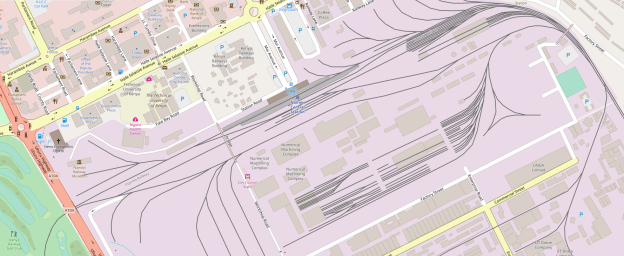
After passing the Nanyuki branch-line, the railway is now in the industrial heart of Nairobi with a whole series of branches and sidings. Approaching Nairobi Central Station it passes through two more stations/halts, at Makadara and Makongeni. Then we arrive at Nairobi Central Station. The next two photographs are more of my poorer slide photos from 1994. The one’s following have been culled over time off the internet.The map above focusses more specifically on Nairobi Station. The lines leaving the right of the image head for Mombasa, the line leaving the left of the image is the line heading West to Kisumu and to Uganda.

The next post in this series about the Uganda Railway will spend time in Nairobi and will also visit the Railway Museum.[9]

References

  1. http://kenya.places-in-the-world.com/178769-place-ulu.html, accessed on 21st May 2018.
  2. http://www.lakemagadiadventures.com/jaza_train_to_lake_magadi, accessed on 21st May 2018.
  3. Lake Magadi Soda by Road from Nairobi; https://www.tripadvisor.co.uk/ShowUserReviews-g1137919-d6609180-r234172046-Lake_Magadi_Conservancy-Magadi_Rift_Valley_Province.html, accessed on 21st May 2018.
  4. http://www.mccrow.org.uk/EastAfrica/EastAfricanRailways/NairobiMombasa.htm, accessed on 15th May 2018.
  5. https://www.pinterest.co.uk/pin/554083560377607665, accessed on 21st May 2018.
  6. http://www.trevorheath.com/livesteaming/Kenya.htm, accessed on 21st May 2018.
  7. https://en.m.wikipedia.org/wiki/Nanyuki, accessed on 21st May 2018.
  8. http://www.mccrow.org.uk/EastAfrica/EastAfricanRailways/NairobiNanyuki.htm, accessed on 21st May 2018.
  9. http://www.xinhuanet.com/english/2016-05/18/c_135369174.htm, accessed on 22nd May 2018.

Mombasa, Kenya – A very early tramway?

I came across some photographs while doing some research for my posts about the Uganda Railway. Further investigation led to a discovery of a very early tramway system in Mombasa. The adjacent image was one of these. There are clearly a set of tracks running on the streets of Mombasa.

Further investigation highlighted the existence of what was called a ‘trolley'[1]There were stations throughout Mombasa Island. The next picture shows the station at Kilindini.[1] It did not take long to find a significant number of other photographs showing the trolley and the tracks used.The trolley track, ran from Mbarak Hinawy Road (Vasco da Gama Street) to Government Square (Customs Area, Leven House) and on to Nkrumah Road (Macdonald Terrace) past the Old Law Court on to Kilindini. It provided access to the “Jubilee Hall” (put up to commemorate the English Queen Victoria’s diamond jubilee in 1897 and also used as a meeting place for Old Town elders until 1950’s) and veered to the right to the famous Mombasa Club which was also built in 1897 by the trader Rex Boustead.[1]Old postcard showing the main street (Ndia Kuu) in Old town. You can see the trolleys in the bottom left hand corner of the picture.[2]Between 1890 and the early 1920s, Mombasa Island was serv­ed by an unusual transport system. A light two-foot gauge railway line was laid across the island from Government Square (in the old port) to Kilindini docks, and on it were pushed by hand small trolleys which could carry goods or passengers. By 1903 a branch had been laid to the station (then in Treasury Square), the hospital, the sub-­commissioner’s house, the lighthouse at Ras Serani, the sports club and to the cemetery.

In 1900 it cost 4 annas to travel from Government Square to Kilindini, or 2 annas as far as the station. If two trolleys met on a single line, the lower ranking officer or civilian had to have his trolley lifted from the rails to allow his senior to pass.

The trolleys were withdrawn in about 1923, after which people had the choice of walking, hiring a rickshaw or taking a motor car. The first car arrived in Kenya in about 1900. A horse and carriage was a rare phenomenon, horses being very susceptible to local diseases.[1]

A replica trolley stands in the courtyard of Fort Jesus, on some reconstructed original line.[2]The track for the two-foot gauge trolley line came from an abortive attempt to build a railway into the interior, The “Central African Railway” which had reached a mere 11 kilometres inland from Mombasa Island![3]

The ” Central African Railway” had an interesting history ……. [1] The story which follows is sourced mainly from the Friends of Mombasa Website.

Sir William Mackinnon, the ship owner in charge of the IBEA (Imperial British East Africa) Company, lost no time in writing to Lord Salisbury, six months after the signing of the Brussels Treaty, suggesting Government assistance for the construction of a 60-mile (96.5 kms) railway inland from Mombasa. He also sought aid for opening up roads and forming “stations” along the route to Lake Victoria.

As a result of this successful appeal, the Director of the IBEA in London was able to send out sufficient materials and rolling stock for building a narrow gauge light railway to cost £50,000. The following year construction got under-way, starting from a point on the mainland opposite Mombasa Island, at the head of what has now become Kilindini Harbour.

It was given the very ambitious title of the “Central African Railway”, and as a symbol of the good intentions of the IBEA to open up the hinterland, sounded very impressive., but the venture got no further than seven miles (11.2 kms) before work stopped. Although it covered no more than a tiny fraction of the distance to Lake Victoria and the source of the Nile, the “Central Africa Railway” did secure a place for itself in history as one of the first railways to be built in East Africa, albeit no wider than two feet (61 cms) gauge. The tracks were later pulled up and, together with some of the unused rails, were re-laid to form the trolley line on Mombasa Island. Until 1923 this line was mainly used by Government officials, the more senior of whom had their own trolleys and received monthly allowances to pay the Africans employed to push them.

In its original form the “Central Africa Railway” was used only once for official purposes. It was used, however, as a stylish conveyance for picnic parties venturing inland from the port.

By 1893, the IBEA had withdrawn from Buganda, but remained temporarily at Mombasa until the British Government finally “took the plunge” by declaring a protectorate over the Buganda Kingdom and neighbouring lands as an alternative to outright annexation. It then began to consider a “proper” railway that would run all the way from the Indian Ocean to Lake Victoria. Not only would this be a really serious indication of Britain’s intentions to open up the interior for trade, and combat slavery, but it would be useful for transporting British troops, whom the government in London thought would be necessary for maintaining a permanent garrison at the source of the White Nile, near Jinja.

This post should perhaps, therefore have been written before may posts about the development of the Uganda Railway![4]

I was blissfully unaware of this little bit of railway history when I wandered round Mombasa Island before embarking on the night train for the journey to Nairobi and Kampala.No automatic alt text available.On the left of the picture above is a replica of a Mombasa trolley. [5]

References

  1. http://www.friendsofmombasa.com/british-empire-in-east-africa/east-african-railways, accessed on 11th May 2018.
  2. http://www.oldeastafricapostcards.com/?page_id=512, accessed 12th May 2018.
  3. http://www.greywall.demon.co.uk/rail/Kenya/nrm.html, accessed on 22nd May 2018.
  4. The posts on my blog start with the Uganda Railway Story and continue to review the line along its full length. Please see https://rogerfarnworth.wordpress.com/category/uganda.
  5. https://www.facebook.com/nrailwaymuseum/photos/pcb.1699207140092552/1699205880092678/?type=3&theater, accessed on 23rd May 2018.

The Uganda Railway – Part 5 – Voi to Ulu

We start this next post with a variety of images from the station at Voi, and from its immediate surroundings. The first picture is the featured image which shows the publicity photo for the railhead reaching Voi in 1897.Class 59 Garratt No. 5902, Ruwenzori Mountains takes on water at Voi Station. Image result for voi railwayVoi Station Sign. [1]An old colonial-era railway line sits near the site of the new Mombasa-Nairobi Standard Gauge Railway line under construction in Voi, Kenya. Bloomberg photo by Riccardo Gangale.[8]

EAR Class 59 Garratt No. 5902 “Ruwenzori Mountains” heads away from Voi with a Mombasa to Nairobi Goods train on 10th December 1976 © Bingley Hall, on flickr.[2]Class 59, 5914 at the same location. [5]The map shows the branch-line to Moshi as a dotted line turning away from the A109 and following the A23 to the bottom left of the image. The route is bridged by the SGR. The next two images are taken of trains on that branch-line. Both show the same locomotive, Class 60 Garratt No. 6013, © CPH 3 on flickr.[3]Class 59 Garratt en-route to Voi – © James Waite.[4]

Travelling north from Voi and after the branch to Moshi turns away to the West, the line passes through Irima, Ndi and Manyani Stations and between the two game reserves of Tsavo East and Tsavo West in a corridor which also includes the A109 road between Mombasa and Nairobi and the new SGR.Irima Railway Station.Ndi Railway Station.Manyani © Thomas Roland on Flickr [6]

The SGR and the A109 run consistently parallel to each other the metre-gauge line follows a route which best works with the contours of the land. All three pass through Tsavo.

Tsavo railway station was some distance from the village.An image from google maps. [7]The metre-gauge line crosses a relatively low level bridge over the Tsavo River, just beyond Tsavo Station, which can be seen in the next few images, the first of which is taken from the A109 bridge over the Tsavo River.Class 59 Garratt, 5903 Mount Meru, on Tsavo Bridge, heading towards Voi – © James Waite.[4]Another shot of the bridge. [6]

The last image at Tsavo shows the construction work on the SGR viaduct across the Tsavo River … all along the length of the new line provision is made to allow wildlife access under the line and to avoid high-speed collisions between trains and wildlife.

Moving on from Tsavo the line continues to meander in a generally North-westerly direction for a number of kilometres on almost exactly the same line as the SGR, through Kyulu Railway Station.[9]
And Kenani Railway Station,[9] and then Kanga, before reaching Mtito Andei.
Mtito Andei is the nearest stop on the SGR to Tsavo.[10]It supersedes the station on the old metre-gauge line, although that line may well remain open for goods traffic.[9]

The old metre-gauge line continues on through Kathekani, Darajani, Ngwata, Masongaleni,  Kikumbulyu, and Kibwezi.Darajani, © Matthew O’Connor on flickr. [11]The last three sepia pictures are courtesy of the UK National Archive. [12]

The Railway continues in a north-westerly direction through Mbuinzau, Makindu, Ikoyo,  Kiboko, Simba,  Kabati and Emali Stations

Plan of Makindu Station and sidings.[12] The following photos are from Dr Gurraj Singh Jabal [14] and a few other sources.There was a rail accident at Makindu on 29th March 1958.

Emali. [9]

After Email, is passes through Nzai, Sultan Hamud, Kima, Kalembwani and Kiu Stations before reaching Ulu.Kima. [9] Kalembwani. [9] Ulu. [9]Ulu. [15]

We finish this leg of the journey at Ulu and look forward to travelling on to Nairobi in the next post.


References

1. https://theeagora.wordpress.com/2013/08/03/voi-railway-station, accessed on 19th May 2018.

2. https://www.flickr.com/photos/markcarter/14338441191/in/photolist-nR3g2i-sYdBgH, accessed on 19th May 2018.

3. https://www.flickr.com/photos/steam_locos/12132360645/in/photolist-ju6w8P-iDJaq6-iFiks9-iFkoFj, accessed on 20th May 2018.

4. http://www.mccrow.org.uk/EastAfrica/EastAfricanRailways/NairobiMombasa.htm, accessed on 19th May 2018.

5. https://www.pinterest.co.uk/pin/688839705474887109, accessed on 20th May 2018.

6. https://strategicdepth.org/2017/06, accessed on 20th May 2018.

7. https://www.google.co.uk/maps/place/Tsavo+Station/@-2.9931068,38.4689082,3a,75y,90t/data=!3m8!1e2!3m6!1sAF1QipP4jOul9RQMOMR3VrJAfu6wgE7GFS4rrEiAIhTD!2e10!3e12!6shttps:%2F%2Flh5.googleusercontent.com%2Fp%2FAF1QipP4jOul9RQMOMR3VrJAfu6wgE7GFS4rrEiAIhTD%3Dw129-h86-k-no!7i6000!8i4000!4m5!3m4!1s0x183959f41c019539:0x786fe9903739f4c5!8m2!3d-2.9931068!4d38.4689069, accessed on 20th May 2018.

8. https://www.bloomberg.com/news/articles/2016-04-08/africa-s-30-billion-rail-renaissance-holds-ticket-for-trade, accessed on 20th May 2018.

9. http://www.savetherailway.com/railway-stations, accessed on 18th May 2018.

10. https://www.google.co.uk/maps/uv?hl=en&pb=!1s0x183bb8751a761d9b%3A0x1c2fac4b35e4a8bf!2m22!2m2!1i80!2i80!3m1!2i20!16m16!1b1!2m2!1m1!1e1!2m2!1m1!1e3!2m2!1m1!1e5!2m2!1m1!1e4!2m2!1m1!1e6!3m1!7e115!4shttps%3A%2F%2Flh5.googleusercontent.com%2Fp%2FAF1QipO1kG9cbCL_gJ17EFd6RpYfv7oz1cTQUYj2HzDz%3Dw240-h160-k-no!5sMtito%20Andei%20railway%20station%20-%20Google%20Search&imagekey=!1e10!2sAF1QipOUxm6EAfKZtxK1rg-xvRhE1dQw39qbHCaKRHMB&sa=X&ved=0ahUKEwiX8tWvgpXbAhUfOsAKHQa4BOYQoioIjwEwDg, accessed on 20th May 2018.

11. https://www.flickr.com/photos/hadenoak/29842259871/in/photolist-Mt4oaV-kaYDpr-8nLN2m-bPabo4-bAfL3A-aCVMTM-FLyXgK-FRQ2qr-GxHPuU-GxHPKy-bPapRi-bAfwiy-NQoAC-r4WnTo-aWe2DD-fnT25s-bokDL-9HDBH5-6EDL3M-jh9DA9-aWiuJx-Jz64hu-NA9jZ-LbXZSJ-f9iWQE-8u155z-peR8pW-8oNqcF-aWivXi-7wknz8-9WNrqo-aWivNx-cyUfZw-aWe2z2-aWitUR-cyUfJ7-7wkniM-9ePedD-aWivAV-aWe3YH-6EDKRv-aWe1PD-aWe2wR-ReNwV5-LinKah-aWe39x-dZgfjY-8NqyQB-aeZZzh-7XevFt, accessed on 20th May 2018.

12. UK National Archives; http://www.nationalarchives.gov.uk, accessed on 20th May 2018.

13. https://www.openstreetmap.org/#map=17/-2.28318/37.82820, accessed on 20th May 2018.

14. http://www.savetherailway.com/remembering-makindu-station, accessed on 20th May 2018.

15. http://ke.geoview.info/ulu_railway_station,109548331p, accessed on 21st May 2018.

The Uganda Railway – Part 4 – Mazeras to Voi

The next instalment of the journey from Mombasa to Kampala.

We start at Mazeras Station.

The railway roughly follows the Mombasa to Nairobi Road in a North-north-westerly direction to the next station on the line, Mariakani, a distance of 15 kilometres. The first image is ©Rohn Wood. [1] The second image below is © East African Corridors (Image 5031), [2] and the third image (consisting of two photographs comes from the National Archive Library (CO 1069-185-81). [3]

Mariakani is the first stop on the new Standard Gauge Railway (SGR) after leaviing Mombasa.

From Mariakani, the metre-gauge line continued a further 13 kilometres in a Northwesterly direction to Maji ya Chumvi, initially the railway and road followed a similar path, but just under halfway between the two stations as the crow flies,the road and the old metre-gauge line separate to allow a steadier grade for the railway. For a short distance railway and river are close to each other before the railway crosses the river and heads for Maji Ya Chumvi.Maji Ya Chumvi River Bridge

In the map below the deviation away from the road is evident and the location of the bridge over the river. The line of the SGR is also visible. The road and metre-gauge line converge once again at Maji ya Cumvi and the road crosses the railway line at that point.

Beyond the road crossing the railway heads on a further 16 kilometres in a westerly direction to Samburu village (not to be confused with Saburu County and the Wildlife reserve of the same name which is in that county).The image immediately above is a photograph taken in 2015 and can be found in a library of photos of stations on the metre-gauge line.[4] The photo of Mazeras Station, further above, comes from that same library. Much more ancient images follow. The first two come from very early in the line’s history and were both taken at Samburu. The third is a later image of the station from the early 1900s. An interesting digital 3D model of this station has been created by ADH (African Digital Heritage).[5]

After Samburu, the line continued west-north-west to Taru a distance of about 18 kilometres.

From Taru, we head on to Mackinnon Road Station, probably so named because it was at the junction between the old Mackinnon ox-cart road, construction of which was started in 1890 by the British East Africa Company, and the railway. Quickly, once the railway was complete the Ox-cart road became disused.[6]The railway was some distance north of the Nairobi to Mombasa Road at Taru. En-route to Mackinnon Road it converged again with the line of the road, before deviating north and then approaching the line of the road very closely.At Mackinnon Road, as can be seen above, the old metre-gauge railway route through the town has been superseded by the SGR.5903 at Mackinnon Road – Class 59 Beyer-Garratt on a Nairobi-Mombasa freight train near Mackinnon Road on 21st February 1978, © James Waite.[7]

In Dec 1977 No.5918 Mount Gelai hauls the A38 goods eastwards over steep
gradients towards Mackinnon Road. The 59 class was well suited to hauling heavy loads.
They had double the tractive effort of any locomotive employed on passenger service in the UK, where they were built in 1955.[8]. The next three photos can be found on the same reference.[8]Mackinnon Road  Jennifer Wu. [9]Mackinnon Road Inspection Vehicle, National Archives.Mackinnon Road  Ken Flottman. [10]

Immediately adjacent to the running lines of both the metre-gauge line and the SGR is Mackinnon Road Mosque. The track of the metre-gauge line can be seen in the image below.

Travelling on from Mackinnon Road, the railway travels in a straight line in a North-westerly direction. The next station is Miasenyi at the corner of the Tsavo East National Park. And then along the boundary of the park is passes through intermediate stations at Buchuma, Wangala and Maungu before passing under the new SGR.

Bucuma Railway Station.

The new SGR station at Miasenyi is shown above the old railway station at Maungu, below.

There is another station at Ndara before we reach Voi.At Voi, the SGR station is outside the town limits and south of the River Voi, The metre-gauge line is in the centre of the urban area and north of the River Voi. The images below show the SGR station.
The remaining images in this post show different aspects of the metre-gauge line in and around Voi and station at Voi. Voi is the largest town in Taita-Taveta County in southern Kenya, in the former Coast Province. It lies at the western edge of the Taru Desert, south and west of the Tsavo East National Park. The Sagala Hills are to the south. [12] It is also a junction station with a branch-line leaving the Nairobi-Mombasa line to head into Kenya. Stations on that branch-line are Mwatate,  Bura,  Mashoti,  Maktau,  Murka,  Ziwani and  Taveta, all in Kenya. The line connects with the Tanzanian main-line at Moshi, close to Mt. Kilimanjaro.
The River Voi Bridge, not far before the Station at Voi.Tribal Class 3113 Bamba in the passing loop near Voi. Note the meticulously maintained ballast. –  © James Waite. [11]A 59 Class at speed with a tank train train near Voi –  © James Waite. [11]5903 Mount Meru at Voi with a train from Taveta in the loop, © James Waite. [11]2455 detaches from its train and prepares to take on water at Voi –  © James Waite. [11]1307 4-8-4T takes water at Voi Shed – © James Waite. [11]

Station name board in 1979 © CPH3 on Flickr [13] and a considerably old picture courtesy of the National Archive of the Eastern End of Voi Station.


References

1. https://www.flickr.com/photos/99955440@N00/5769666434/in/photolist-9MR3Pu-ozRbFX-oQksuC-ozTi1V-fY73g6-f7yutZ-ZYFAJw-6CyFbU-9we32a-8wscyi-8ws5yH-8wrsnM-eDFyrF-8wu1L1-a471FW-8wvJJm-ohCG7b-8wuzqE-f7QNcg-f7t5ep-8wsgyR-8wvdph-8wraCr-9eNPFi-8wvk27-ofDfwN-eDFz7x-8wrjar-o1cHbg-8wtWab-ctLxKh-ojrcLp-8wqYyH-8wqSbH-8wr416-dsfbym-8wr7vP-8wu5K9-o98cvX-8wvMyJ-ozRx1q-8wv83L-8wvxZJ-8wsq3K-ojre6i-gJqL1G-8wuVzC-G5N9ne-ohF7Wk-G5N9fk, accessed on 16th May 2018.

2. https://www.flickr.com/photos/47611518@N05/4938958783/in/photolist-8wrsnM-eDFyrF-8wu1L1-a471FW-8wvJJm-ohCG7b-8wuzqE-f7QNcg-f7t5ep-8wsgyR-8wvdph-8wraCr-9eNPFi-8wvk27-ofDfwN-eDFz7x-8wrjar-o1cHbg-8wtWab-ctLxKh-ojrcLp-8wqYyH-8wqSbH-8wr416-dsfbym-8wr7vP-8wu5K9-o98cvX-8wvMyJ-ozRx1q-8wv83L-8wvxZJ-8wsq3K-ojre6i-gJqL1G-8wuVzC-G5N9ne-ohF7Wk-G5N9fk-8wvm4G-8wuBqL-ohF3Ck-8wuPXw-9XYj2v-o98cDx-8WMrNX-opkeZ4-CVkCYJ-8WQyTE-4Wm3nw, accessed on 16th May 2018.

3. https://www.flickr.com/photos/nationalarchives/5407104131/in/photolist-9eNPFi-8wvk27-ofDfwN-eDFz7x-8wrjar-o1cHbg-8wtWab-ctLxKh-ojrcLp-8wqYyH-8wqSbH-8wr416-dsfbym-8wr7vP-8wu5K9-8wvMyJ-ozRx1q-8WMrNX-8WQyTE-8wv83L-8wvxZJ-8wsq3K-ojre6i-8wuVzC-G5N9ne-ohF7Wk-G5N9fk-8wvm4G-8wuBqL-ohF3Ck-8wuPXw-o98cDx-9XYj2v-opkeZ4-CVkCYJ-4Wm3nw-4WgHP2-4WkxAd-KmrH99-874wuf-8wvGVf-8WQx99-CVkDbN-ejxoqQ-f7QNwF-ofDdwq-f863wq-9XYxe2-8WMtVD-f7QNqT, accessed on 16th May 2018.

4. #Savetherailway; http://www.savetherailway.com, accessed on 14th May 2018.

5. African Digital Heritagehttp://africandigitalheritage.com/2017/11/21/3d-reconstruction-of-samburu-railway-station.

6. Wikipedia, Mackinnon Roadhttps://en.wikipedia.org/wiki/Mackinnon_Road, accessed on 19th May 2018.

7. https://www.narrow-gauge.co.uk/gallery/show.php?image_id=472&cat_id=93, accessed on 19th May 2018.

8. Sikh Heritage in East Africahttps://www.sikhnet.com/news/sikh-heritage-east-africa, accessed on 19th May 2018.

9. https://www.flickr.com/photos/wippetywu/8334292244/in/photolist-dCVoSC-QsEenu-RaD6ny-6MTzC7-dGtqHS-cyt9W9-673J6P-yENGnZ-dNcMXE-9eSeFo-EPDdqs-8nNbSk-au78S2-dsRSfD-dsRZmb-T7YJZB-EPD4NN-dsS285-pRFA4Y-oUKYKU-DTNExR-JxcHi6-JxcHrc-dRKYJy-dsRY5s-DTsZts-DQatYa-au6W7i-Sx6upE-itmJVp-DQauNg-JxcHSn-pTuNZj-fr49Ei-e8Ujgm-frirKj-frirys-e8NEUk-e8NERK-wxHG4-wxHGQ-oj1Vwc-oCfZK2-oj1qDd-oj1r1L-9eC7YM-oraXMr-DQatEp-oAtmPU-9eFjX9, accessed on 19th May 2018.

10. https://www.flickr.com/photos/oaxacania/3350214665/in/photolist-dCVoSC-QsEenu-RaD6ny-6MTzC7-dGtqHS-cyt9W9-673J6P-yENGnZ-dNcMXE-9eSeFo-EPDdqs-8nNbSk-au78S2-dsRSfD-dsRZmb-T7YJZB-EPD4NN-dsS285-pRFA4Y-oUKYKU-DTNExR-JxcHi6-JxcHrc-dRKYJy-dsRY5s-DTsZts-DQatYa-au6W7i-Sx6upE-itmJVp-DQauNg-JxcHSn-pTuNZj-fr49Ei-e8Ujgm-frirKj-frirys-e8NEUk-e8NERK-wxHG4-wxHGQ-oj1Vwc-oCfZK2-oj1qDd-oj1r1L-9eC7YM-oraXMr-DQatEp-oAtmPU-9eFjX9, accessed on 19th May 2018.

11. http://www.mccrow.org.uk/EastAfrica/EastAfricanRailways/NairobiMombasa.htm, accessed on 19th May 2018.

12. Wikipedia, Voi; https://en.wikipedia.org/wiki/Voi, accessed on 19th May 2018.

13. https://www.flickr.com/photos/steam_locos/11603191816/in/photolist-iFkoFj-aLaZ5n-9eFoeL, accessed on 19th May 2018.

The Uganda Railway – Part 3 – Mombasa to Mazeras

This post follows the line of the Uganda Railway from Mombasa. In the light of the advent of a standard gauge line between Mombasa and Nairobi, there is a campaign to save some of the older stations and perhaps part of the metre-gauge line as well. Some of the pictures of stations come from the campaign website.[1]

We start at Mombasa. The first image is a Google Earth satellite image showing the station and some immediate goods sidings. the station is in the middle of Mombasa Island and at the heart of the city.

The station retains it old colonial style but has been upstaged by the new standard-gauge station on the mainland.

Trains travelled north out of the station throat passing the station engine shed. The pictures of the shed are courtesy of the Friends of Mombasa website.[2]

The line was joined by a branch from Mbaraki Creek and then had a series of small industrial branches evident to the west of the line, before first swinging to the north-east and then back to a roughly north-westerly trajectory to cross the water between Mombasa Island and the mainland.

Once on the mainland the mainline turned west and then north. The picture above is courtesy of the Friends of Mombasa.[2] These two images of Garratt locomotives are taken close to the bridge on Mombasa Island.[3] They are both publicity pictures for East African Railways.

download6c89ff1a_f0_2fPictures_2fScreenshots_2fScreenshot_2018-05-14-09-47-15As the line turned to the north it was joined by a branch which served the Chamgamwe Oil Refinery to the south. Next came the first station on the line at Chamgamwe. The photographs of this station from the 1960s and 1970s are courtesy of Malcolm McCrow’s website [3] and are copyright Malcolm McCrow and Kevin Patience.

This picture shows a single-headed goods train arriving at Chamgamwe from Nairobi.

Double-headed by Class 59 Garratts a goods train travels through Chamgamwe Station in the two pictures above.

As we travel further along the line, the next station is Miritini. This is the location of the terminus of the new SGR (Standard Gauge Railway). It is close to the north end of the runway of Moi International Airport. The route of the line is marked on the map below just below the Mombasa Road. The two satallite images below show the line passing through a goods marshalling yard to the north-east of the airport and then travelling passed the north end of the runway.

Class 59 Garratt 5911 Mount Sekerri from Nairobi arrives beneath the palm tress at Miritini hauling a tank train.[4] 
The passenger train station in Miritini, Mombasa, on May 2017. [5]
At the time of writing of this blog post, the old metre-gauge line can still be followed on the satellite images provided by Google Earth beyond Mirtini. The next significant points on the line are the station and spiral at Mazeras. The spiral is encountered first and a kilometre or two further along the line we encounter the station.

Approaching the spiral from Mombasa the railway has been following the Mombasa to Nairobi main roadroad andntravelling in a roughly westerly direction. The map and the satellite image below show the railway separating from the road and travelling in a south-westerly direction towards the spiral.

Nairobi-bound trains pass under the higher level of the spiral before then crossing over the lower line. Malcolm McCrow provides a few images from 1970s. [3] I have not yet been able to find any other pictures.
An evening train from Mombasa approaches the spiral, © Peter Ritchie (1971).

The view from the cab of a Class 59 Garratt as it comes down off the spiral and passes under the higher line. ©Kevin Patience.

The Morning Train A02 from Nairobi descends the Mazeras Spiral as it heads for its 8:00am arrival in Mombasa, © Peter Ritchie.

And before we leave the spiral, a sequence showing Class 59 Garratt No. 5918 Mount Gelai negotiating the spiral in 1975.[3] The picture quality is lower as these images come from  video, © Ian Stone.Mazeras station comes a short distance north along the line.

In the next post we will travel on toward Voi and then on to Nairobi.


References

1. #Savetherailway; http://www.savetherailway.com, accessed on 14th May 2018.

2. The Friends of Mombasahttp://www.friendsofmombasa.com, accessed on 15th May 2018.

3. McCrow.org.uk; http://www.mccrow.org.uk/EastAfrica/EastAfricanRailways/NairobiMombasa.htm, accessed 14th May 2018.

4. https://www.pinterest.com/pin/554083560377607729, accessed on 15th May 2018, sourced from http://www.mccrow.org.uk © Kevin Patience.

5. Photo courtesy of the Nation Media Group photographer, Jeff Angote; Ng’ang’a Mbugua; SGR can open up Kenya if we build lines to feed it; Friday 2nd June 2017, https://www.nation.co.ke/oped/opinion/sgr-can-open-up-kenya-if-we-build-service-lines-to-feed-it/440808-3953710-bxs6l0z/index.html, accessed on 15th May 2018.