The last thing we want to do when we have been hurt, is to forgive!
When Peter comes to Jesus to ask how often he should forgive someone – he believes that he is setting a high standard: “How often should I forgive? 7 times?” And Jesus response leaves him reeling – not seven times but seventy-seven times – or in some translations seventy times seven – 490 times. “As often as is necessary,” is Jesus’ response. ‘Keep forgiving until you completely lose count!’
Jesus then tells a story to help us understand that it is because we have been loved so much, forgiven so much ourselves by God, that we should forgive others. Jesus’ story is about a servant who has a wife and children and has overspent on all his credit cards, someone who has maxed out. He has stacked up a huge amount of debt with his boss.
The Boss calls for his servant and demands repayment of what is owed. The servant falls on his knees and begs to be given more time to pay. The master, the boss, feels sorry for his servant and lets him off the whole debt! Just like that! The debt is cancelled. How does the servant feel?
So, here is this happy, free servant. He’s wandering back from the house of his master, his boss, to tell his family the good news. He’s over the moon, he’s delighted, it is wonderful. And he meets a fellow servant of his boss, his master. This fellow servant owes him a few quid.
And the same thing happens; this other servant falls on his  knees and begs to be given more time to pay. But what does the first servant do? He grabs him by the neck and shakes him and has him thrown into prison until he can pay the debt.
I think Jesus wants us to ask ourselves this question: Is it reasonable for the first servant to behave this way with the second? Is it fair and right? What do we think?
No, it isn’t. Yet forgiveness remains something we find difficult – often impossible. Not just in our personal circumstances … As we think back over the last 100 years we can remember many seemingly unforgivable acts. The Holocaust, South African Apatheid, The Rwandan Genocide, ethnic cleansing in the Balkans, the troubles in Northern Ireland, the Moors Murders, the Shipman affair, 9/11 and 7/7. And as we dwell on those atrocities we feel the pain of those who took the greatest hurt, we feel something of their anger and we feel justified in refusing to allow the possibility of forgiveness to the perpetrators. They are unforgiveable – forgiveness is surely not possible for the Hitlers, the Hutu Interahamwe, Myra Hindley and Ian Brady, Harold Shipman, for the terrorists who bombed the twin towers in New York or the bus and tube in London, for those who behead their enemies …………
And yet … there is another perspective we have to hear. We have to hear the voices of people like Desmond Tutu who suffered under the injustice of Apartheid, who became Archbishop of Cape Town, who organised the Truth and Reconciliation Commission in South Africa, who also had a part to play in the aftermath of the Rwandan Genocide.
In his book, “No Future Without Forgiveness” about the work of reconciliation in South Africa, he talks of visiting Rwanda in 1995 and of speaking in a stadium rally: … “I told them that the cycle of reprisal and counter-reprisal that had characterized their national history had to be broken, and that the only way to do this was to go beyond retributive justice to restorative justice, to move on to forgiveness, because without it there was no future.”
In the 1990s, I remember watching the mother of one of the Moors Murders victims talking about her feelings for Myra Hindley. Her anger was fully justified. No one can rightly argue that she should feel anything else towards those who destroyed her family. However what was just as obvious was that her anger and her ongoing inability to let go, if not to forgive, had a deep effect on her own life, it was evident that over many years she had carried her bitterness and anger. Not a waking moment had gone by without the desire for revenge. And in this sense she was trapped, she was unable to move on. We might reflect that in such circumstances it would be impossible to move on and certainly we have no right to judge, for her life was destroyed when her child was taken from her. But the fact remains, that she was not only devastated by the murder of her child, she was also held trapped by subsequent feelings which would not let her go.
A striking example, in 2011, of a different response, was that demonstrated by Tariq Jahan in Birmingham after the death of his son – killed by a car driven directly at him in what was perceived to be a racist and hate motivated crime. Tariq’s own ability to see beyond his own grief, and his courageous comments to the media, started a very long, and no doubt extremely painful, process for himself, of being able to let go of the anger and bitterness he must feel. But not only did he begin to set himself free, his timely comments set his own community free from a desperate cycle of revenge
These matters are not easy to engage with.
When we think of forgiveness as letting the other  person off the hook, of setting them free, then perhaps we can understand and sympathize with a refusal to forgive. But when we realize that a failure to forgive doesn’t so much imprison the one who has harmed us, but rather imprisons us in bitterness and hatred, in a constant desire for revenge – then we have to forgive, we have to let go – for without doing so we cannot move on, we are trapped, we are imprisoned by our own choice. And as a result we continue to give the person who harmed us in the past, on-going power over us. We get hurt again and again.
Put like this, it seems that for our own sanity, forgiveness is ultimately our only option. We have to begin, however hard it is to do so, to find a way to forgive.
Jesus suggests in his story that we’ll only begin to be able to forgive, if we can comprehend how much we ourselves are loved, how much we been forgiven. Jesus says that it is when we know that we are loved without conditions, that we can begin to show that kind of love to others. The love God has for us is that kind of love.
Every time we have a baptism I am reminded of that love. Baptism is a sign of God’s forgiving, generous love, offered to a child before he or she can possibly have done enough to deserve that love. Our baptism and the repeated occasions when we see a child or an adult baptized are our personal sign of God’s love.
Baptism reminds all of us that we are loved by God – no matter what. It’s a sign that if we give our lives to God, then we’ll begin to understand that we have been loved and accepted from the beginning.
We need to hold onto this truth – that real forgiveness is ours. Baptism is a sign of this.
Our regular Sunday services also allow time for confession and for us to hear God’s words of forgiveness for us. Reminders of just how crucial forgiveness is.
It is in the security and strength of God’s forgiving love that we can be free to love, and that we can begin to forgive others generously in return. Yes, for their sake and for God’s sake, but also perhaps most crucially for the sake of our own health and well-being as well.

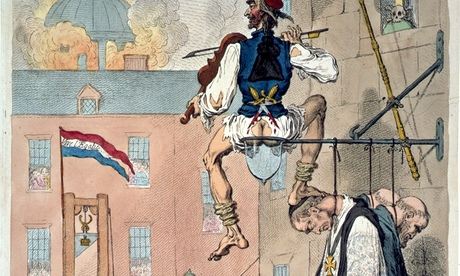 understand that there is no neutral territory in these matters, a secular society is just as dogmatic as a society based on other values and just as likely to commit atrocities in defence of its own values.
 reflecting on the actions of Islamists and clearly helping us to understand that the sense of revulsion at atrocious actions is shared by Muslim, Christian, humanist.
 brooding music portrays an overwhelming sense of chaos and darkness. I imagine that the composer would use discordant modern themes to convey a sense of disorder. Then over this music comes the main theme of the symphony – quietly at first, starting with flute and piccolo, and gradually engaging the whole orchestra. Like a wind gradually rising from a gentle breeze to a violent gale. God’s mighty wind sweeps across the universe. God is speaking, and his very words change the universe for ever. “Let there be light” and light appears. God saw that it was good, and Day and Night were born.
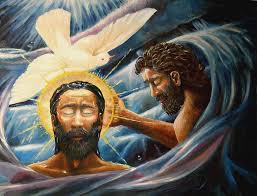 appears we return to that same discordant, abrupt and harsh theme that we heard right at the beginning of the symphony. His harsh manner, his odd clothing, his strange habits all seem to echo the chaos and darkness of Genesis. The sound from the orchestra builds and noise of the crowds coming to John for baptism shake the concert hall and then John’s voice can be heard as a sharp solo, perhaps, by the oboe cutting through the surrounding noise.





 On Remembrance Sunday we join with millions around our world in remembering the many men and women who have given their lives in the different conflicts of the past 100 and more years. People who either by choice, or through compulsion, have risked their lives in the pursuit of peace and justice. We owe our freedom to many such people who have stood up against tyranny and oppression – to people who risked everything, laying themselves on the line.
 Israel was an occupied land. There were taxes on agricultural yield and a personal ‘poll tax’. That’s why the Romans took a census to count how much tax they could levy. Paying tax in Roman coin was a threefold burden to the people of Israel: no-one liked paying taxes, Israel hated foreign rule and this tax reminded them of their invaders, and the image of Caesar on the coin was regarded as idolatry, breaking the command about graven images in Exodus.
 I have been reading books by Jasvinder Sanghera.
 In all that is going on in Syria and Iraq these words from John Bell seem very appropriate. They remind us that we cannot claim the high moral ground, without first examining our motives and attitudes.
 I picked up the Church Times over the weekend and discovered an interesting interview. Jasvinder Sanghera founded Karma Nirvana in 1993 as a helpline for people in danger of honour abuse and honour kilings.
 She tells more stories of British victims in her second book, Daughters of Shame.
 international charity that has been instrumental in developing several refuge centres across the United Kingdom which serve as safe-housing for South Asian men and women fleeing forced marriages
 awards in recognition for her contribution in the field of forced marriages and honour based violence including:
