New Fancy Colliery and it Railways

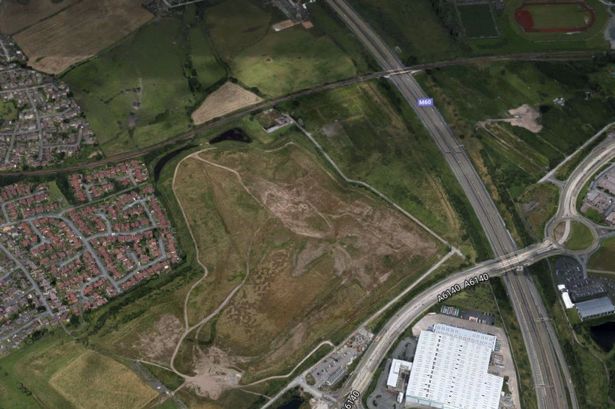
New Fancy was a colliery on the Forest of Dean Coalfield near Parkend in Gloucestershire, England. After the colliery closed its spoil heap was landscaped. The site has a picnic area, and viewing site from where goshawks can be seen. It is linked to the Forest of Dean Family Cycle Trail. The top of the old coal mine spoil heap has been converted into a viewing site for birdwatchers, and gives panoramas over an extensive forested area. It is best known for viewing raptors, especially goshawks, best seen from late morning onwards in February and March.

New Fancy sculptureThere are now two significant sculptures at the site. The first is the Roll of Honour sculpture which was commissioned by the Forest of Dean Local History Society to honour those who worked and were killed or injured in the mines and quarries of the Forest of Dean. It was buil by Graham Tyler and John Wakefield and was unveiled in 2005. It consists of three elements – stone, iron (represented by rusted steel), and coal (represented by carved and blackened local oak) – and stands around 11 feet (3.4 m) high. Stainless steel discs set into the sculpture represent the tokens carried by miners to determine who was below ground in the event of accidents.
The second is the Forest of Dean Geomap, a 900 square feet (84 m2) sculpture of the Geomap-New-Fancygeology and mines of the area, was unveiled at the New Fancy picnic site in May 2008. It was commissioned by the local history society, who received a grant from DEFRA’s Aggregates Levy Sustainability Fund, and was constructed by sculptor David Yeates of Mitcheldean before being assembled on site. The rock strata depicted are built from samples of the rock they represent. Metal discs represent the locations of the main iron and coal mines and quarries, with black lines to represent coal seams and white lines for railway routes. It is flat and polished, but not shiny, and is intended to be walked on.
The Colliery

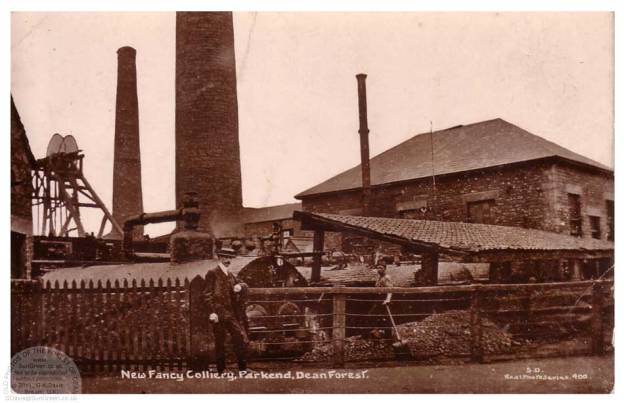
New-Fancy-Colliery-b-w-1Wikipedia suggests thst the New Fancy colliery was opened by Edward Protheroe in 1827, as part of the Park End Coal Company in the Forest of Dean. It seems that he acquired the interest from his uncle in 1812. Details are scarce, however the 1841 Coal Awards confirmed the possession of the New Fancy gale to Edward Protheroe. In the Third Schedule to the 1841 Awards it is mentioned that in 1831 Edward Protheroe was granted a license to erect a pumping and winding engine at New Fancy but it is likely that this was not done as in a list of coal works in March 1841 there is no mention of New Fancy. The gale itself was certainly being worked by 1840, probably through the Parkend gale, as in that year Protheroe stated that he required a ‘better, cheaper, outlet’ for his New Fancy coals. The cheaper outlet would come about by sinking a shaft on the New Fancy gale thus avoiding the wayleave charged by the Crown on all coal from one gale passing through the barrier into another. The New Fancy gale award covered the coal in the Churchway High Delf, Rockey, Starkey, Park End High Delf, Little Delf and Smith Coal veins.

Parkend-New-Fancy-c1905By around 1852 it seems that two shafts were being sunk. These seem to have been completed in 1857. At the first half-yearly meeting of the Forest of Dean Central Railway Company it was stated that the colliery ‘was in a forward state and will when opened afford large traffic’. The colliery was producing coal by 1860 when 250 tons a day were being sent over the Severn & Wye’s Kidnalls Mill, or Moseley Green, branch of the tramroad. A connection to this branch had been authorised and built in 1859. It was to be another ten years before the colliery gained a railway connection in the form of a branch of the Forest of Dean Central which was authorised under a Crown license dated 6th April 1868. The large traffic hoped for over this route diminished rapidly when the Mineral Loop was opened in 1872 and a connection was made to the colliery. It is likely that the rails on the Central’s connection had been removed by 1878.
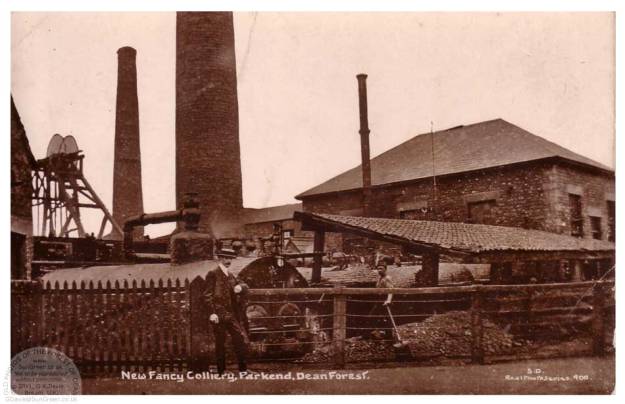
New_Fancy_Mosely-GreenWikipedia suggests that, by 1860, the Colliery was owned by Sully & Company and in 1885 was sold to the Parkend & New Fancy Collieries Company. However, this may be an oversimplification. By 1878 James Sully was the only remaining partner in the Park End Coal Company and the Parkend Coal Company Ltd. was formed to acquire the collieries. The subscribers to the new company were James Sully and Richard Sully, both described as coal merchants from Bridgewater, Somerset, John Nicholls, also of Bridgewater, William Unwin of Oxford, John Bailey, Sydney Thomas of Parkend House, colliery manager and Thomas Thomas.
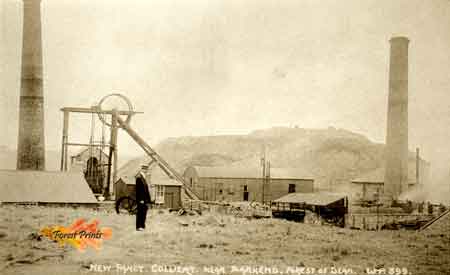
Parkend-New-FancyIt appears that the new company may have been heavily in debt from the start. By 1880 it was in difficulties. At that time the company wasthought to possess nine-hundred acres of coal in the Starkey seam in connection with New Fancy. Probably the collieries were bought by a Mr. Jackson in 1881.
In 1883 the management of New Fancy were negotiating with the Great Western Railway, who worked the Forest of Dean Central, to be reconnected to their line at Howbeach as the rates via the Central to Lydney were 5d per ton cheaper. This was undoubtedly a ploy to gain cheaper rates from the Severn & Wye in which the colliery company was sucessful. However heavy mortgages led to closure in 1883 and a new confederation acquired the collieries in 1884.
New machinery was installed with the first compressed air coal cutters in the district and probably in the West of England being used. The reason for their introduction was the high cost of coal production at New Fancy due to the thinness of the seams. They averaged only 17 inches with the thickest being the Parkend High Delf at three feet.
In March 1885, the collieries were sold again to a new company called the Parkend & New Fancy Collieries Co. Ltd. From about 1888 onwards coal from the Parkend gale was worked out through New Fancy as the shaft was closer to the coal being worked and therefore haulage costs were reduced. In December 1889 a Severn & Wye minute records that the company had acquired the deep gales underlying their property and again asked if the S & W would give a concession on the coal rates as the colliery could be opened to the Central.
The company continued trading until in March 1892 the Parkend Deep Navigation Collieries Co. Ltd. bought up the company in exchange for 4,000 fully paid up £10 shares.
The Parkend Deep Navigation Collieries Co. Ltd. had been incorporated in October 1890 with an authorised capital of £100,000 in £10 shares. The subscribers were William Cooper, Parkend; William Esau Heard, Newport; John Witson, Cardiff; John Gething, Newport; William Thomas, Lydney; Arthur Graham, Parkend; and Percy Marfell of Lydney. The first 4,000 shares were allocated to the Parkend and New Fancy Collieries Co. Ltd. in consideration of their concern. A further 1,000 shares were issued to a John Griffiths of Willsbury for the purchase of the Rising Sun and Union Colliery from him. Up to 1904 only a further 739 shares were taken up as the number of members of the company was limited to fifty and it was not intended to invite the public to subscribe. Thomas Hedges Deakin was the Managing Director and Chairman of the company.
In 1914 electric equipment was installed to power pumping plant, haulage engines and coal cutting machinery. The generating station was alongside the Castlemain pumping engine at Parkend and a pole route was constructed to bring the power to the colliery.
The output of New Fancy steadily declined until final closure in August 1944. From 1940 it had averaged about 350 wagons per week.
The site of the New Fancy Colliery is a scheduled monument.
Railways
The Colliery was first served by a tramway, and then by two different railway lines … the Forest of Dean Central Railway and the Severn and Wye Railway Mineral Loop. The Forest of Dean Central Railway was very hopeful of a large coal traffic from the Colliery and was commercially dependent on that expectation. The Mineral Loop provided connections to a number of forest collieries and was a more successful venture than the Central Railway.


References
https://en.m.wikipedia.org/wiki/New_Fancy
http://lightmoor.co.uk/forestcoal/CoalNewFancy.html
https://rogerfarnworth.wordpress.com/2014/10/07/the-forest-of-dean-central-railway/

Great is the Darkness …..

There is a song which is sung relatively often at St. Peter’s Church in Ashton-under-Lyne. It starts like this:

‘Deep is the darkness that covers the earth, oppression, injustice and pain. Nations are slipping in hopeless despair. ………’

While the song goes on to call on Jesus to: ‘Pour out [his] spirit on us today’, the first words of the song have always seemed to me to be a very negative beginning.

The song is based on the words of Isaiah 60:2 …… ‘See, darkness covers the earth and thick darkness is over the peoples, but the LORD rises upon you and his glory appears over you.’

Our experience of life over the end of May and beginning of June seems to be very appropriately summed up in the first words of the song. ‘Deep is the darkness‘ ….. This has been a very difficult time. The bomb in Manchester Arena killed 22 and maimed many more. Two attacks in Kabul, Afghanistan have killed over 100 people and left so very many injured. The attack on a church in Egypt was devastating for the Christian community there. Then came the van and knife attack in Central London. ….

‘Deep is the darkness that covers the earth, oppression, injustice and pain.’

We feel unable to make sense of all that is going on, we feel anger and despair, we grieve for the loss of innocent young lives. Why does God allow these things to happen?

‘Why’ and ‘How could’ questions are important, often they challenge our faith. How could a God of love permit such atrocities to take place? Ultimately, however these questions don’t take us very far, especially when the darkness we encounter is the result of human actions.

We are sentient beings who make our own choices. It is only when we are free to make our choices that love can thrive. It is because we are not automatons that we are free to make mistakes, free to make wrong choices, but also free to love. Freedom allows us to place others ahead of ourselves.

Love, peace and joy are offered to us as we faithfully follow Jesus. It is when we look elsewhere for meaning, that we open ourselves up to the darkness.  It is when we think that we know best that we lose sight of the light and allow the darkness in.

The song goes on to say: ‘Come Lord Jesus, … pour out Your spirit on us today. May now Your church rise with power and love, [your] glorious gospel proclaim. In every nation salvation will come to those who believe in Your name. Help us bring light to this world. ….’

No doubt you watched some of the concert held at Old Trafford Cricket Ground on Sunday 4th June. The call from so many of the artists at that event was for love to triumph over darkness and hatred.

Just as darkness only thrives where there is no light, so hatred only wins where love is absent. Perhaps it was no coincidence that the 4th June was Pentecost, the day when we celebrate the gift of the Holy Spirit to the first disciples. It is the Holy Spirit at work in each of us that enables us to love others, to place their needs first. It is the Holy Spirit who enables us to be those who bring light into the darkest places. It is the Holy Spirit that reassures us that we are loved, that we are safe in God’s loving embrace. It is the Holy Spirit who sets us free to love others because we are sure that we are loved.

The better questions are not, ‘Why’ or ‘How could …’ questions. The better questions are ‘What next’ questions: What can we do to overcome hatred with love in our own communities? What can we do to shed light into the darkest places of our own lives and communities? What can I do to ensure that I do not act out of envy or hatred, but rather act out of love?

“Do not be dismayed by the brokenness of the world. All things break. And all things can be mended. Not with time, as they say, but with intention. So go. Love intentionally, extravagantly, unconditionally. The broken world waits in darkness for the light that is you.

L.R. Knost

Matthew 17:1-9 – The Transfiguration

transfiguration-2I have two brothers and a sister – all younger than me. Academically, three of us did pretty well: we could read well before we went to school, we passed the 11 plus and got into the local grammar schools where we lived in King’s Lynn in Norfolk.

One of my brothers was different (and I hope he does not  mind me talking about him here). He struggled with his reading, only really getting going when he was about 8 years old – he went to the local secondary modern, and for the first 4 years there achieved little more, academically, than propping up the class with his results. Nothing academic seemed to interest him.

At least that was true until he decided what he wanted to do with his life. He set his heart on being a policeman. He was told that he needed some basic CSEs to get into training college and he began to work, he worked his socks off. He scraped the CSEs he needed and got into Hendon Police Training College in London. He had found something he loved and he was transformed – when he graduated from Hendon he came top of his intake.

Dare I say that he was transfigured by his desire to be a policeman? You may know a similar story of someone you know being changed in quite a dramatic way.

Late in his life, the Cellist and Conductor Pablo Casals was full of arthritis, but even at the age of 90 whenever he picked up his bow and began to play his Cello he was transformed. He became agile and supple – the artist that he had always been – consumed by what he was playing.

Illness and incapacity have been part the experience of many great people – Charles Darwin, Sigmund Freud, Florence Nightingale (she did most of her campaigning from her sick bed) – to mention just a few. For them, like Pablo Casals, when they were engaged in their most brilliant work, the limits which bound them just seemed to fall away.

You see, people can be transfigured in their experience of life. In some cases, out of pain, … beauty, humanity and ingenuity can be born.

And the more mundane of us – you and me?

Our lives too can be transfigured by finding our vocation, the thing that we do well. This is something that many people who have been called to be priests say, it is almost as though they have found themselves in a way that they had not done before. If you are interested, try asking one of us clergy, or perhaps someone else in one of the caring professions, perhaps even try reflecting on your own experience of discovering what you were going to do with your own life.

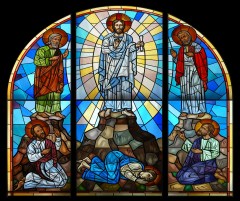
We’ve read today of Jesus’ transfiguration. … At the transfiguration, Jesus is revealed, as more than a carpenter turned Rabbi; more than a man whose legs ached as he walked round Israel; more than a preacher whose voice could fail after hours of speaking to crowds. More even, than one who could bruise and bleed when tortured and crucified. He’s revealed as God’s Son in human form, truly God and truly human.

We don’t know how Jesus= transfiguration relates to our perhaps lesser experiences of transfiguration. He was, after all, divine as well as human. But through his resurrection, and through our own baptism, we have been promised some share in his divinity. And simply by being human we have a capacity for being more … for being different. When our attention is held, much that’s negative in our lives, seems to get set aside.

It is possible to change, to be different.

Don’t let anyone tell you it isn’t. It is God’s work, and it is an essential part of the Gospel which we believe; that we are not trapped, not held captive by our past or by our present. This is a theme of our Gospel reading as we approach Lent. Transformation, transfiguration, is possible for us who follow Jesus. Not just momentary transfiguration, but transformation that will affect and change our future.

We know that this happened to Peter, James and John – cowering, frightened men became powerful proponents of the Gospel, fearlessly facing danger and death because they had been transfigured, transformed by the love of God. Jesus momentary experience became their permanent experience. The Gospels ask us to believe that the same can happen for us, as we let God work in our lives.

Salt and Light – Isaiah 58:1-12 and Matthew 5:13-20

During this past week we have celebrated Candlemas, the Feast of the Presentation. It is a point of change int he church’s year. Mary and Joseph take Jesus to the Temple to receive God’s blessing.  There they meet Simeon and Anna, two old people who had been faithfully waiting for God to break into their world.  When they saw Jesus they realised that this was who they had been waiting for – in Simeon’s words; “my eyes have seen your salvation, which you have prepared in the presence of all peoples, a light for revelation to the Gentiles and for glory to your people Israel.” But Simeon also says to Mary, “and a sword will pierce your own soul too.”

Just as Mary’s thoughts are disturbed by Simeon’s words, so at Candlemas, we mark the end of the season of Epiphany and start our journey towards the Cross and Good Friday, through Lent and Holy Week and on to Easter.  Candlemas is often celebrated surrounded by candles, the theme of light is important The reading set for the 4th Sunday Before Lent continue this theme.

In the Old Testment reading, Isaiah talked about what God looks for in his faithful people – let me remind you of his words…..

“When you share your food with the hungry
    and provide the poor wanderer with shelter—
when you see the naked and clothe them,
    and do not to turn away from your own flesh and blood?
Then your light will break forth like the dawn,
    and your healing will quickly appear;
then your righteousness will go before you,
    and the glory of the Lord will be your rear guard.
Then you will call, and the Lord will answer;
    you will cry for help, and he will say: Here am I.”

“If you do away with the yoke of oppression,
    with the pointing finger and malicious talk,
and if you spend yourselves in behalf of the hungry
    and satisfy the needs of the oppressed,
then your light will rise in the darkness,”

Isaiah reminds us that shining with the light of God’s love in the word around us is about caring for those who lack food, shelter and things to wear and caring for those who are oppressed.  He also reminds us to take care with the way we communicate – that if we point our finger and indulge in malicious talk then we are not letting our light shine.   The challenge is clear … “let your light rise in the darkness,” says Isaiah. Challenging stuff indeed!

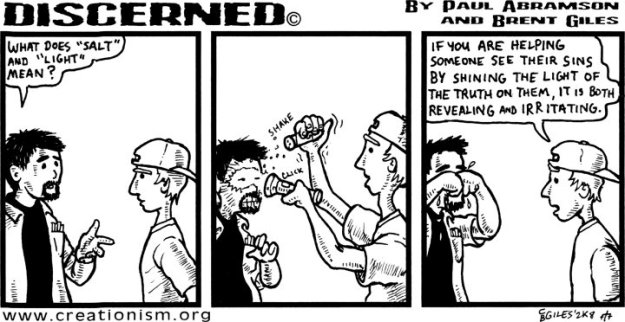
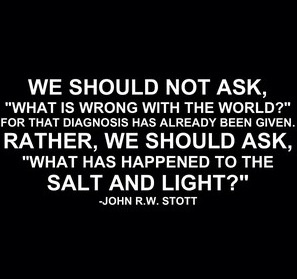
Matthew uses two images to help us understand what it means for us to draw people closer to God.  “As Christians,” he says, you are called to be salt and light to the world.  To be ‘the light of the world…… letting our light shine before others, so that they may see the good we do and praise God.’  To be the ‘salt of the earth’.

Both salt and light make a great difference.  Salt not only preserves and disinfects but it brings out the full flavour of other ingredients.  Light allows everyone to see clearly what’s around them.  So, we are called to do those things that let God’s light shine out from us, we are called to make a difference in the lives of those we meet.  In all we say, think and do, God asks us to reflect his values, his love, his life, his light.

However, if light and salt are not used carefully they can destroy rather than enhance. When you are cooking, adding the right amount of salt is critical to producing a dish that has a good flavour.  Too much and you’ve ruined the dish, all you will taste is salt and no-one will want to eat it.  Just the right amount, and you won’t actually taste the salt but the dish will be delicious – all the other flavours will be enhanced.  Used well, salt is helpful, used in a way that dominates, it is overpowering and destroys!discerned_saltandlight

We also have to be careful with light.  … Have you noticed how when people drive towards you in the dark, often your eyes get pulled towards their headlights and you get distracted from the road in front of you. … or if someone has shone a bright light straight at you, you’ll know how you are blinded and can’t see anything.  For light to be useful, it has to be carefully directed and its level balanced.  Too bright and in the wrong direction and no-one can see anything.  But just the right level of brightness and shining at what we want people to see, then it makes all the difference in the world.

Matthew prompts us to think about whether we are salt and light, but he also prompts us to consider how we are salt and light.

Things had gone wrong for the people Isaiah was talking to.  They had made their adherence to their religion a show – something to boast about. They were being heavy handed with the salt and shining the light too brightly into the eyes of others, so that all anyone could see was them carefully following religious practices. Their behaviour hid the reality of God’s love.  They didn’t make a difference in the lives of others and so were not working with God but against him.

1d5e83e00422b659f2c4a4a8dddb2678What about us?  What do people see when they look at us? Do we obscure the light? Or do others see people who are different, who are making a difference?  Do they see people who reveal God’s love, God’s peace, God’s joy and God’s hope?  Do they see people who are salt and light to the world?
What might we do to ensure that we are both salt and light in our world? I think Isaiah is very clear, and we could do a lot worse than listening to his agenda for mission:

“When you share your food with the hungry
    and provide the poor wanderer with shelter—
when you see the naked and clothe them,
    and do not to turn away from your own flesh and blood?
Then your light will break forth like the dawn,
    and your healing will quickly appear;
then your righteousness will go before you,
    and the glory of the Lord will be your rear guard.
Then you will call, and the Lord will answer;
    you will cry for help, and he will say: Here am I.”

“If you do away with the yoke of oppression,
    with the pointing finger and malicious talk,
and if you spend yourselves in behalf of the hungry
    and satisfy the needs of the oppressed,
then your light will rise in the darkness.”

Amen.


matthew5-13-15-scripturephoto_lg

St. Zacchaeus – Luke 19: 1-10

Sometimes someone will say to me – I’d like to come to church but I=m really just not good enough. I don’t have enough faith. Some people think that you are not acceptable in church unless you meet some sort of list of requirements.

Any church that gives you that kind of impression, has, somewhere along the line, got something very wrong; for Jesus would have no truck with those kinds of ideas. Jesus was always to be found among those who thought they were beyond the reach of God’s love.

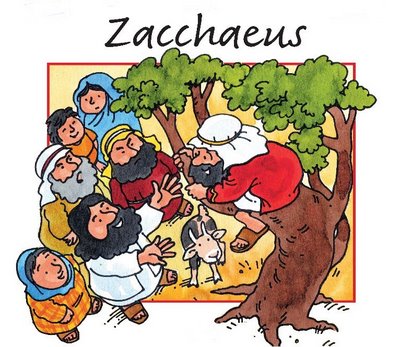
Jesus’ willingness to be with those rejected by society extended even to the quislings of the day, the stooges of the Roman occupying powers – the tax collectors. Our Gospel reading tells the story of Zacchaeus and his encounter with Jesus. Zacchaeus is desperate to meet with Jesus and equally Jesus is delighted to meet with Zacchaeus, very happy to risk the scorn of the crowd for the sake of a man who clearly knows his own need to be changed.

Love, in Jesus, reaches out to this outcast and love changes him completely. All Zacchaeus did was to look out for Jesus and then welcome him when he came his way. That, ultimately, is what Christianity is all about – it is not about being good, although that may well result from an encounter with Jesus – for Zacchaeus was changed completely by his encounter with Jesus. No, being a Christian is not ultimately about being good. It’s not even about attending Church religiously every Sunday, although that is a real help to many – for it is good to be among people who are just as aware of their own shortcomings and their need of God’s love. And we really do all have shortcomings and we really do need God’s love and forgiveness, and each other’s love and forgiveness too.

No, being a Christian is not about being good, not about attending Church every Sunday – being a Christian is all about being real with ourselves and about meeting with God in Jesus. Zacchaeus was befriended by Jesus. As a result he saw himself as he really was and he was changed. In our churches each week, in those who make up our congregations, there’s a group of people who just like Zacchaeus have begun to see themselves as they really are and who have begun to acknowledge that they need God’s love in their lives. And on All Saints Sunday, we remind ourselves that people like this are called Saints.

Saints are people who are growing in their awareness that they need God’s love in their lives. Love that searches us out. Love that asks only that we come to him as we are, that we do not pretend that we are better than we are. Love, that by its very nature draws the best out of us. Love that transforms us. Love that chooses to call a sinner a saint, not because of some unreasonable blindness to their faults, but because that love is so strong, so overpowering, love unto death, that nothing can stand in its way.

catholic-cross-drawing-clipart-panda-free-clipart-images-x0wdhb-clipartHere is love, says the Bible, not that we first loved God but that God first loved us and sent his Son to die for us. The love of God comes to us at a cost – the death of Jesus. Come as you are, says Jesus and reaches out his arms wide on the cross. God dies at Easter so as to make reconciliation possible. We can come as we are because all that gets in the way between us and God was defeated in the death of Jesus. This is love, real vulnerable love, love which bore shame and rejection so as to bring reconciliation.

All we have to do is say, ‘Thank you, Jesus’. Jesus replies, ‘You’re welcome. You are welcome. Come as you are. Come just as you are.’

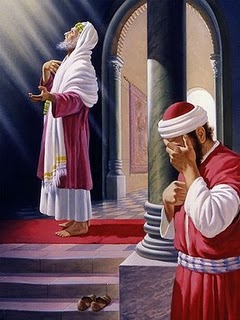
Luke 18: 9-14 – A Pharisee and a Tax Collector went to the Temple to Pray …..

Pharisees have really had bad press. To call someone a Pharisee is to suggest that they’re stuck-up, sanctimonious, hypocritical, self-righteous, unable to bend. That they think that they’re always right.

And indeed this is the impression we get from reading the Gospels. Today’s Gospel a case in point – the Pharisee seems to be hard & self-righteous, not someone we’d want to spend time with – whereas the tax collector, by his very confession of guilt, is the warm approachable character, the one that we’d like to be associated with – a character that provokes our empathy.

Elsewhere Jesus reserves some of his most vitriolic language for the Pharisees. He calls them ‘white-washed sepulchres’, ‘hypocrites’

With the benefit of 2000 years of reading the Gospel story – almost anyone, non-churchgoers included will tell you that to call someone a Pharisee is to insult them.

Because of this we lose the real impact of the Gospel story. We’ve already type cast the characters and we know what the story is about. We associate with the tax collector and we encourage ourselves to greater personal repentance and humility – or we may even allow ourselves to think we behave in the same humble, self-deprecating way. ‘Lord, I thank you that I am not like this Pharisee,’ we might pray!

If we really want to hear what Jesus was talking about, we need to try to understand how Pharisees and tax collectors were seen by the people to whom Jesus was speaking. So, for a moment, lets try to do that.

The Pharisees were part of a group in Israel called the ‘Hasidaeans’, which translates as ‘God’s loyal ones’, a group that tried really hard to follow the teaching of the OT. The name Pharisee means ‘the separated ones’, separate because of their desire to follow the OT teaching as faithfully as they could. There was a period when they were the dominant political force in Israel, but by the time of Jesus they had suffered persecution under Herod and had concluded that spiritual ends could not be attained by political means.

They were a group who believed that Israel had gone into exile in OT times because it had failed to keep God’s law, the Torah. They believed strongly in the unity and holiness of God and the absolute authority of the Torah. They stressed tithing, had very high ethical standards.

When seen like this, Pharisees are not the unattractive people that we believe them to be. In fact, dare I say it, we might even feel that it would be good if the Church was like them, maintaining high ethical standards in our society, giving at a level that means that God=s work is not constrained by resources. Perhaps we have something to learn from the Pharisees!!

When it comes to tax collectors we’ve perhaps a greater understanding. We still have a sense that the tax man takes from us what is rightfully ours. The feeling against tax collectors in Jesus’ time was a bit stronger. They were the quislings, the people who aided & abetted the occupying power, often using their position for personal gain. Roman stooges, worthy of contempt.

Now if this is what Pharisees were like, if this was how tax collectors were seen, what effect might Jesus’ story have had on his listeners? It would have been difficult for Jesus to find more distinctly opposite characters. The Pharisee loyal to Israel, persecuted, at times, by the Romans, faithful to the Torah … versus the tax collector, the bogie-man.

It is unlikely that people would have seen the Pharisee’s words in the story as presumptuous. Everything he said about himself was true. People would have believed that he was the one close to God. He was the faithful church attender of his day, he was the highest Sunday giver in the Church, he had great integrity in his business dealing, he didn’t fiddle his tax, he was to be commended above anyone else as an example of a truly religious person. We might say, A ‘good Christian!’

But Jesus makes it clear that the penitent tax collector is accepted by God when the faithful Pharisee is not.  We are not supposed to see ourselves in this story, in the person of the humble tax collector, but in the Pharisee, secure in his faith.

Just as Jesus warns the committed religious people of his day against complacency, so he challenges us, the faithful ones, the ones who go to church on a cold Sunday morning.

There’s no room, Jesus says, for sitting on our laurels, believing that we have got life sorted, believing that there is no more we need to do. For if we do this, the shocking challenge of the Gospel is that we may well watch the drug addict, the prostitute, the alcoholic, the gambler, the thief, … even a modern day tax collector, show evidence of real repentance and be accepted by God when we are left out in the cold.

All is Vanity – Ecclesiastes 1:2,12-14;2:18-23; Colossians 3:1-11 & Luke 12:13-21

Sunday 31st July 2016

Ecclesiastes 1:2,12-14;2:18-23; Colossians 3:1-11 & Luke 12:13-21

Two of the readings set in the lectionary for Sunday 31st July 2016 really are pretty depressing!!! The writer of Ecclesiastes tells us that ‘all is vanity and a chasing after the wind.’ Jesus tells a story of someone who relaxes back to enjoy his earnings only to die before he can reap the benefit!

Ecclesiastes, book of--search for meaningEcclesiastes is one of series of Old Testament books known as ‘Wisdom’ Literature – Job, Psalms, Proverbs, Ecclesiastes, Song of Solomon, Lamentations. Books which contain reflections on the way the world was at the time they were written. Books which remain surprisingly relevant to our own world.

Ecclesiastes is written by someone who claims to be a Teacher, but someone who clearly has spent much of his life experimenting with all that life has to offer. He seems more like a typical teenager – in rebellion, determined to find out for himself, not prepared to listen to the wisdom of the earlier generation.

If you read through the twelve chapters of Ecclesiastes, you’ll find that the ‘Teacher’ pursues pleasure, wealth and possessions, he enjoys power and honour, he studies to become wise beyond all other people, he works hard in ‘honest toil’. And at the end of each of his escapades his reflections remain the same. All is vanity, just like chasing after the wind.

But can we really dismiss the Teacher as no more than a young man sowing his wild oats, another Prodigal Son, and comment in a patronising way, “He’ll settle down one day!” … Or allow ourselves a self-congratulatory, “Told you so! If you live that way you’ll reap your just reward.” … Is Ecclesiastes merely a defence of good steady living, good stewardship?

We might have thought so until we read the Gospel reading.

Jesus tells a story of a rich man. … In Jesus day, much as now, riches were interpreted as a sign of God’s blessing. This rich man is someone who has done really well for himself. Bought wisely, farmed well, and produced good crops. This is someone to look up to. Someone to place on a pedestal. Someone who is an example of industry and sensible provision. Someone who deserves to enjoy the fruit of his labours. Clearly someone that God has blessed! He has every right to celebrate … And isn’t he just the opposite of the ‘Teacher’ in Ecclesiastes?

But, “No!,” says Jesus, “This man is a fool!” ………………

Why? Because he is chasing illusive shadows, chasing the wind. Riches and wealth, Jesus says, are good for a season, but they have no eternal value. There’s more to life than that!

The rich man is to discover, the same thing as the ‘Teacher’ in Ecclesiastes. When we focus solely on things, on material wealth, the most we achieve is momentary pleasure and possibly a large inheritance for others to enjoy, or fight over.

It is not that God is in some way vindictive. It’s not a case of God taking the hump because we don’t give him time. It’s the way life is. The very best we can hope for in life, is that we get what we set our hearts on.

‘And’, says the ‘Teacher’, … ‘pursuing only these immediate things is like chasing the wind!’ … It doesn’t satisfy, it can’t hope to… Why? Because we are made for relationship, relationship with other people, but in the final analysis, relationship with God.

At the end of Ecclesiastes the Teacher says, “Remember your Creator, remember your God.” It is relationship with God that everything else has its place. Shape up, says the Teacher in Ecclesiastes, get your life back on track. Set your hearts on knowing God and you will be set free to enjoy what he provides.

Jesus agrees.  …. The important thing, he says, is being rich toward God.

Paul’s letter to the Colossians needs to be heeded!

‘If you have been raised with Christ, seek the things that are above, where Christ is, seated at the right hand of God. Set your minds on things that are above, not on things that are on earth, for you have died and your life is hidden with Christ in God’.

This passage from Colossians could easily have been written as a commentary on the passages from Luke and Ecclesiastes. “Choose to be renewed in the image of your creator,” says Paul, “and in that renewal there is no longer Greek and Jew, circumcised and uncircumcised, barbarian, Scythian, slave and free; but Christ is all and in all!”  …….All one in Christ – no longer male or female, straight or gay, rich or poor, no longer wise or foolish, … no longer are we to be determined by such temporal things, for we are in Christ and in Christ we are free.

Neither Ecclesiastes nor Luke are really as negative as they seem. They’re not intended to leave us feeling depressed. There’s nothing ‘killjoy’ about them. But they are a realistic reflection on the results of pursuing life without God. Whether we sow our wild oats and experiment with all that life can bring, or we get on with life, doing what others expect, working hard. It is ultimately meaningless – like chasing after the wind.

Only when we pursue relationship with God, and only when we place relationships with others above our material needs, only then say Jesus and the ‘Teacher’ and Paul too,  … only then will life begin to have meaning, for then it is wrapped up in the Christ who sets us free.