Tag Archives: Stockton & Darlington Railway

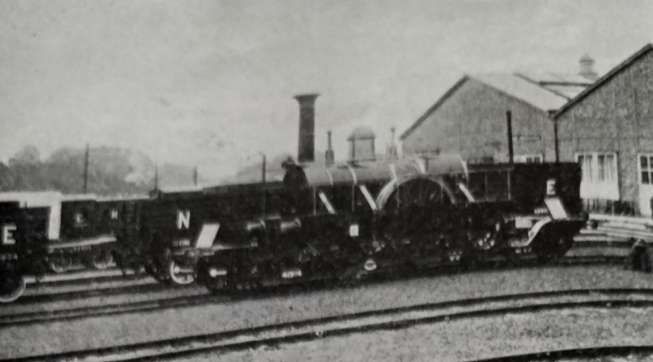
The Mother of All Inventions. …

Why were railways created?

What were the circumstances which brought about their existence?

History does not make it easy to take out one example from a steady continuum of change. …

David Wilson writes: “There have been track or plateways since Roman times. You might say that these could be brought within the term railway and therefore the Romans invented the railway.” [1: p61]

Except there were railways of a sort, at least as far back at 600 BCE, possibly going back even further, maybe as far back as 1000 BCE. The clearest example being the Diolkos Trackway. [2] This was a paved trackway near Corinth in Ancient Greece which enabled boats to be moved overland across the Isthmus of Corinth.

David Wilson continues: “For most people, however, the railways began with the Stockton and Darlington (S&D), though I’m sure many people already appreciate that history is not always what it seems.” [1: p61]

David Wilson tells us that if one wished to take the view that the first ever railway was the first to have been authorised by Parliament, then the first railway was built in Leeds – The Middleton Railway. “The Middleton Railway was given Parliamentary Assent in 1758 and began using steam traction in 1812, two years before the advent of Mr Stephenson’s first locomotive, ‘Blucher’, and 13 years before the opening of the S&D.” [1: p61]

But there is more to consider. … The Lake Lock Rail Road opened in 1798 (arguably the world’s first public railway). It carried coal from the Outwood area to the Aire and Calder navigation canal at Lake Lock near Wakefield. [3][4] The Surrey Iron Railway was the first railway to be authorised by the UK Parliament (21st May 1801).  It was a horse-drawn railway which ran between Wandsworth and Croydon. [5][6][7][8][9] It was followed by The Carmarthenshire Railway or Tramroad (authorised by Act pf Parliament on 3rd June 1802). It was a horse-drawn goods line, located in Southwest Wales, the first public railway first authorised by Act of Parliament in Wales.[3][10][11][12]

The Low Moor Furnace Waggonway was constructed in 1802. It connected Barnby Furnace Colliery to Barnby Basin on the Barnsley Canal. It was replaced in 1809 by The Silkstone Waggonway which operated until 1870. [19][20] The Merthyr Tramroad, between Merthyr Tydfil and Abercynon, also opened in 1802. [5][13][14][15][16][17][18] The Lancaster Canal Tramroad (also known as the Walton Summit Tramway or the Old Tram Road), was completed in 1803. It linked the north and south ends of the Lancaster Canal across the Ribble valley. [21][22]

The first steam locomotive to pull a commercial load on rails was Penydarren (or Pen-y-Darren) was built by Richard Trevithick. It was used to haul iron from Merthyr Tydfil to Abercynon, Wales. The first train carried a load of 10 tons of iron. On one occasion it successfully hauled 25 tons. However, as the weight of the locomotive was about 5 tons the locomotive’s weight broke many of the cast iron plate rails. [5][13][14][15][16][17]

We could go on to mention:

  • The Croydon, Merstham & Godstone Goods Railway opened in 1805; [23]
  • The Sirhowy Tramroad opened in 1805; [24]
  • The Ruabon Brook Tramway (also known as Jessop’s Tramway or the Shropshire Union Tramway) also opened in 1805; [25][26][27][28]
  • The Middlebere Plateway (or Middlebere Tramway) opened on the Isle of Purbeck in 1806; [29][30][31][32]
  • The Monmouthshire Canal Tramway, open by 1806; [33][34]
  • The Oystermouth Railway, opened in 1806; [35][36] and
  • The Doctor’s Tramroad, Treforest which opened in 1809. [37][38][39]
  • The Monmouth Railway authorised by the UK Parliament in 1811. [5][72][73]
  • The Kilmarnock & Troon Railway which opened in 1812. [5][74][75][76][77]
  • The Killingworth Waggonway of which a first stretch opened in 1762 and which was extended in 1802, 1808 and 1820. [78][79][80][81][82][83]
  • The Haytor Granite Railway of 1820 which not only transported granite from Dartmoor as freight but ran on granite rails. [84]

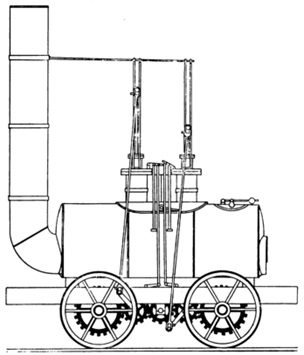
The drawing of the locomotive Blücher (below) was done by Clement E. Stretton, © Public Domain. Blücher was built by George Stephenson for the Killingworth Waggonway. It was the first of a series of locomotives which established his reputation as an engine designer and eventually “Father of the Railways”.
We could list other railways opening before the S&D in 1825. The use of steam power at The Merthyr Tramroad and The Middleton Railway preceded its use on the S&D. A very strong claim to be the most significant development in the early 1800s could be made on behalf of The Middleton Railway. But it is the Stockton & Darlington (S&D) Railway which has caught the imagination and it is the 200th anniversary of the S&D which is being celebrated in 2025 as the beginning of the railway age.

Why is this?

It is clear that the claim to fame of the Stockton and Darlington (S&D) is lessened, at least, by the prior claim of the Middleton Railway both as first to be sanctioned by Parliament and first to make commercial use of steam power. The claims associated with other railways which preceded the S&D also must be significant. However, there is one important and fundamental difference between it and them. David Wilson says that, unlike the Middleton Railway, “the S&D was constructed with a view to carrying other companies’ goods and, to a lesser extent, to carry people.” [1: p61]

In addition, he says, “Bear in mind the distinction between the carriage of goods and people, and between carrying one’s own goods and those of others. In many ways this type of division is what distinguishes the modern concept of the railway as a system for the transport of goods and passengers on a hire and reward basis from the early plateways and railways such as the Middleton, which were not essentially built to carry anything other than goods, typically coal, for their owners.” [1: p61]

Perhaps, though, there are more grounds for the place taken in history by the S&D. Rather than just running between a pithead and a coal wharf on a canal, river or road and serving specific industrial concerns, the S&D also was built by public subscription and linked one town to another.

David Wilson continues: “To arrive at a description of what constitutes a railway we have to enlarge our definition to include not only Parliamentary Sanction, the use of rails or tracks, and the carriage of goods, but also the carriage of the public, the carriage of public goods and that one settlement be joined to another by the laying of a line paid for through the issue of shares. Thus … a railway is a set of tracks laid between two centres of habitation, which carries goods or people for commercial reward and has been authorised by Act of Parliament. It will have been built through the raising of public funds, either through the sale of shares in it or via government spending from the public purse.” [1: p61]

Let’s return to the era before the existence of the steam locomotive, the era of that list of lines highlighted above (and many more).

David Wilson comments: “The growth of the coal mining industry in the later part of the 17th and early 18th century had led to a growth in the plateway systems used to move the coal from the pit head to [a road], canal or river for shipment to the growing cities and the newly built mills. By as early as 1645 there were wagonways taking coal from the Durham coalfields down to the Tyne. By 1800 there were more than 100 miles of these plateways in the Tyneside area alone.” [1: p61]

Similar developments were taking place elsewhere in the UK:

  • The first overground railway line in England may have been a wooden-railed, horse-drawn tramroad which was built at Prescot, near Liverpool, around 1600 and possibly as early as 1594. Owned by Philip Layton, the line carried coal from a pit near Prescot Hall to a terminus about half a mile away. [40]
  • The Wollaton Waggonway in Nottinghamshire was in use by 1604. [5]
  • In East Shropshire and around the Severn Gorge; [41][42] A railway was made at Broseley in Shropshire some time before 1605 to carry coal for James Clifford from his mines down to the River Severn to be loaded onto barges and carried to riverside towns. It is possible that Clifford’s ‘railway’ was in use as early as 1570 and a similar line may well have been constructed by William Brooke near Madeley, again down to the River Severn. [43: p21] By 1775, there were a number of both short and long tramroads in the area around the Severn Gorge.
  • The Tranent to Cockenzie Waggonway was built by the York Buildings Company of London, to transport coal from the Tranent pits to the salt pans at Cockenzie and the Harbour at Port Seton, in Haddingtonshire, now East Lothian. [5][44]
  • The Alloa Wagon Way was constructed in 1768 by the Erskines of Mar in Alloa, to carry coal from the Clackmannanshire coalfields of central Scotland to the Port of Alloa. [45]
  • The Halbeath Railway opened in 1783, from the colliery at Halbeath to the harbour at Inverkeithing. [46][47]
  • The Charnwood Forest Canal, sometimes known as the ‘Forest Line of the Leicester Navigation’ was, under the guidance of William Jessop, using railways to supplement the canal between Nanpantan and Loughborough wharf, Leicestershire by 1789. [5][48]
  • The Butterley Gangroad (or Crich Rail-way) was built by Benjamin Outram in 1793. [49][50][51][52][53][54][55][56][57]
  • The Earl of Carlisle’s Waggonway opened in 1799 from coal pits owned by George Howard, 6th Earl of Carlisle around Lambley to Brampton, Cumbria. [51][58] There is some confusion over dates. The earliest opening date quoted is 1774, the latest 1799. [59] Dendy Marshall says that it was built in 1775. [60] C.E. Lee says it was constructed in 1798. [59][61]

It is perhaps easy to loose sight of the scale of these industrial undertakings. The rapid expansion of mining, plateways and railways “led to an increase in the numbers of horses in use … and a growth in the amount of horse feed needed. By 1727 The Tanfield Waggonway, in Co. Durham, carried 830 wagon loads of coal daily that’s a lot of horses.” [1: p61][5][62][63] “In 1804, the Middleton Colliery line was carrying 194 loads per day. Each wagon held about 2.5 tons and required the use of one horse and driver.” [1: p61]

A crisis in the use of horses and wagons occurred early in the 19th century with the advent of the Napoleonic Wars. The conflict became a significant drain on both horse and horse feed availability. The resulting inflation in the price of horses and feed lowered the profitability of each wagon load of coal. David Wilson says that, “The more visionary (or greedy, depending on your point of view) pit owners started to search for alternatives to the horse to move their goods to market. They provided their pit engineers with money and materials to experiment with steam power to replace horse power.” [1: p61]

Of course, steam power wasn’t new. Knowledge of the power of steam had been around since before the Common Era in Greek society [64][65][66] and the pits themselves had steam engines for pumping out the water and for lifting coal to the surface, or as winding engines on rope-worked inclines. [66][67] Newcomen’s first engine was installed for pumping in a mine in 1712 at Dudley Castle in Staffordshire. [66][68] What was new was first, the expiry of Boulton & Watt’s patent for a high-pressure steam engine, [5][69] and second, the idea of making the steam engine mobile, thus creating the steam locomotive. What eventually became even more revolutionary was the idea of creating a network of railways to serve the whole country. [1: p61]

We sometimes talk of a ‘perfect storm’ (a particularly violent storm arising from a rare combination of adverse meteorological factors), when we are talking about a series of adverse conditions occurring at the same time – a situation caused by a combination of unfavourable circumstances. The opposite of a ‘perfect storm’ is usually assumed to be a period of calm. However, the true opposite of a perfect storm is the occurrence (co-occurence) of a series of positive factors which combine to produce something significantly valuable. Wilson says that “as with almost anything man-made, there must be certain ingredients present. To bake a cake you need eggs, flour, milk etc. and in creating a railway you need, metalworking skills, engineering expertise, labour, capital and an incentive.” [1: 61]

The early years of the 19th century saw a timely co-incidence of these and other factors:

  • growing shortages of horse and feed coupled to the rising prices of both;
  • poor road conditions;
  • a rapidly developing understanding of engineering – Wilson suggests that this was “as a consequence of the more theoretical works of philosophers such as Newton, Descartes and Leibniz. … Such men have a reputation as creators or exponents of the mechanistic world view. Prior to the works of these men many had thought, and indeed some still do think, that the earth was a living entity. However, the views espoused by Newton, Descartes and Leibniz came to be accepted, the world was made up of dead, lifeless and inert matter, here to benefit mankind;” [1: p62]
  • the availability of skilled and unskilled labour – particularly the ‘navigators’ who were skilled in the techniques of earthworks, tunneling and bridge building – the men who had earlier built the canals. (“These men were to become the skilled labour of the railway construction industry and in turn they passed on their skills to the former farm labourers who were recruited to railway works as the lines progressed along their routes“); [1: p62]
  • developing metalworking skills – “the Darby family, who set up the … Coalbrookdale foundry. had acquired new skills in metalworking from tinkers, in what is now the Netherlands;” [1: p62] After constructing Ironbridge, “the Coalbrookdale ironmasters began to widen their horizons. One of their number, John “Iron Mad” Wilkinson, constructed what was reputedly the first iron barge and, more importantly, … the smiths of Coalbrookdale collaborated with Richard Trevithick in the construction of his locomotive – they cast the cylinder block and the plates for the construction of the boiler;” [1: p62]
  • the increasing availability of financial capital;
  • the increasing birth rate and the better health of the work-force which provided the necessary labour while engineering work was still labour-intensive.

The Availability of Capital

Among the physical factors listed above is an interesting financial factor which will bear some scrutiny. Wilson tells us that “the capital to build the world’s first public railway came, not from the Government, but from the Society of Friends, the Quakers.” [1: p62] He notes too that the Darby family whose Coalbrookdale plant had such a formative influence in the early days of the industrial revolution, were also Quakers. Wilson explains that Quakers were isolated from much of society and public life because of a refusal to sign up to the articles of faith of the established church. However, the same religious views made them sympathetic to works performed for the public good. Various Quaker families began to take an interest in the developing railway sphere. The website quakersintheword.org [70] tells the story of the significant role played in financing railways played by the Quakers.

In 1818 a small group of Quaker businessmen, including Edward Pease and his son Joseph from Darlington, Benjamin Flounders and the banker Jonathan Backhouse, met to discuss the possibility of building a railway from Darlington, passing several collieries, to the port of Stockton.” [70] 

The Act of Parliament required for the work to take place faced significant delays in the parliamentary process. “The delay proved very significant, as in April 1821 Edward met George Stephenson and recruited him as an engineer for the railway. The original intention had been that the coaches would be horse drawn, just like all the others now in existence. However, George convinced Edward that steam engines were the future for railways, and that he could build them. The Pease family then put up much of the capital that enabled Stephenson to establish a company in Newcastle, where he built the locomotives.” [70]

After the opening of the Stockton & Darlington Railway, “the railway network grew under the guidance of Edward’s son Joseph, who opened the Stockton & Middlesbrough branch in 1828. … In 1833 Joseph became the first Quaker to enter Parliament and the railway interests passed to his brother Henry. In 1838, Henry opened the Bishop Auckland & Weardale line, followed by the Middlesbrough and Redcar line in 1846. Henry wanted to traverse the Pennines and in 1854 he started the Darlington & Barnard Castle line, which opened in 1856.” [70]

Quakers were often involved in railway developments in the 19th century, for instance, “in 1824, a group of merchants, including Quaker philanthropist and anti-slavery campaigner James Cropper, went to see the Stockton and Darlington railway.  They soon began building the Liverpool and Manchester railway, which opened in 1830.” [70]

Incidentally, Quakers “were also responsible for two innovations that improved the way these new passenger railways worked – timetables and tickets. James Cropper produced a 12-page timetable for the Liverpool and Manchester railway, probably the first railway timetable ever.  It was the forerunner of Quaker George Bradshaw’s Railway Companion, published in 1839. Bradshaw’s became a household name for anyone using the railways. … The second innovation was the railway ticket. In 1839 Thomas Edmundson, another Quaker, was appointed station master at Milton, on the Newcastle and Carlisle line.  He was unhappy that customers paid their fares directly to him without receiving a receipt.  Consequently he introduced the railway ticket, which came into general use with the creation of the Railway Clearing House in 1842.” [70]

The Birth Rate and Increasing Health of the UK Population

Wilson points us to one more significant factor in the development of railways in the early 19th century. “Seemingly disconnected and irrelevant factors were playing their part. During the period from the end of the civil war (1649) onwards there was a growing awareness of the value of the human being as resource, and a concerted effort was made to increase the birth rate and to cut the death rate. … This did not stem from any rise in humanitarianism but from a recognition that people were worth money. After all, in the 1640s and on into the 19th century, slavery was still common throughout the so-called civilised world, including Britain. Improvements in diet and sanitation increased life exресtancy. It is no coincidence that the first workhouses began to appear around the middle of the 17th century – a reasonably fit and healthy population produced more than a sickly and unfit one.” [1: p62]

By the beginning of the 19th century, the conditions were in place for a major economic expansion. A growing empire and military strength ensured the supply of raw materials and provided a growing market place for the products made from them. An expanding population provided the physical means by which the empire might be held together. Technology provided the ability to carry out the grand design. The workhouses and other reforms had created a disciplined workforce.” [1: p62-63]

By 1850, a quarter of a million workers – a force bigger than the Army and Navy combined – had laid down 3,000 miles of railway line across Britain, connecting people like never before. [71]

And Finally …

Wilson suggests one other, less definable, reason for the dramatic welcome given to steam technology in particular. He suggests that there was a more visceral connection to steam power which predisposed humanity to embrace the technology.

No doubt, the S&D was at the forefront of engineering developments it was “the white heat of technology, the frontier of science.” [1: p63] Wilson asks us to consider that there was (and still is) a connection between “a piece of primitive industrial technology, the steam locomotive and its enduring popularity, and an ancient, and some might say mystical, view of the world.” [1: p63]

Wilson says: “Prior to the advent of the mechanistic world view in which cause and effect, hard science and hard facts are the order of the day, people held to a more animistic philosophy. Miners would pray to the earth before digging it up. … In this more mystic view of the world things were not made of chemicals and atoms, molecules and the force of gravity. They were composed of the four elements – earth, air, fire and water.” [1: p63] He asks us to consider whether “the reason so many people took to the steam engine and the railway when it began was that the steam locomotive has a unique blend of the four elements not only in its construction but in the very forces and requirements necessary for its movement. … [It] is made from the ores of the earth, heated by fire which needs air to burn. The metals from the forge are then tempered by water whilst being shaped on the anvil. In order to make the steam locomotive work, coal, or part of the earth, is consumed along with air in a fire which turns water into steam which in turn brings the locomotive to life.” [1: p63]

We all know that all men, are just little boys at heart. Increasingly women are involved in the preservation movement. There seems to be a deep emotional connection for many of us between the steam beasts of earth, wind, fire and water that reigned over the railway networks for the world for more than a century and a half and our own psyche, something deeply ‘elemental’!

Whatever the cause, the early 19th century saw humanity embrace steam-power and the benefits it brought with open arms and wallets.

References

  1. David Wilson; Mother of Inventions; in the Evening Mail Supplement, 1st June 1993, p61-63.
  2. https://en.m.wikipedia.org/wiki/Diolkos, accessed on 2nd March 2025.
  3. https://en.wikipedia.org/wiki/1790s_in_rail_transport, accessed on 20th February 2025.
  4. https://web.archive.org/web/20100604080339/http://www.stanleyhistoryonline.com/Lake-Lock-Rail-Road.html, accessed on 8th January 2025.
  5. https://en.wikipedia.org/wiki/Timeline_of_railway_history, accessed on 7th January 2025.
  6. https://web.archive.org/web/20070523122428/http://www.stephensonloco.fsbusiness.co.uk/surreyiron.htm, accessed on 9th January 2025.
  7.  Dorian Gerhold; The Rise and Fall of the Surrey Iron Railway, 1802–46 (PDF); in Surrey Archaeological Collections, Vol. 95, 2010, p193–210; via https://archaeologydataservice.ac.uk/archiveDS/archiveDownload?t=arch-379-1/dissemination/pdf/vol_95/surreyac095_193-210_gerhold.pdf, accessed on 6th February 2025.
  8. https://en.wikipedia.org/wiki/1801_in_rail_transport, accessed on 20th February 2025.
  9. https://en.wikipedia.org/wiki/Surrey_Iron_Railway, accessed on 20th February 2025.
  10. https://coflein.gov.uk/en/site/275707, accessed on 8th January 2025.
  11.  https://en.wikipedia.org/wiki/1802_in_rail_transport, accessed on 20th February 2025.
  12.  M.R. Connop Price; The Llanelly & Mynydd Mawr Railway; Oakwood Press, Oxford, 1992.
  13. https://rogerfarnworth.com/2019/02/02/the-penydarren-tramroad-south-wales-part-1
  14. https://rogerfarnworth.com/2019/02/06/the-penydarren-tramroad-south-wales-part-2
  15. https://coflein.gov.uk/en/site/91513, accessed on 8th January 2025.
  16. https://www.irsociety.co.uk/Archives/59/Penydarren.htm, accessed on 8th January 2025.
  17. https://coflein.gov.uk/en/site/91513, accessed on 8th January 2025.
  18. https://en.wikipedia.org/wiki/Merthyr_Tramroad, accessed on 20th February 2025.
  19. https://en.wikipedia.org/wiki/Low_Moor_Ironworks, accessed on 20th February 2025.
  20. Silkstone Waggonway, South Yorkshire: Survey Report (PDF). Vol. 1; Yorkshire Archaeological Trust,  August 2012; via https://web.archive.org/web/20160311113301/http://iadb.co.uk/epip/Silkstone%20Waggonway%20Vol%201%20text%20plates%20figures.pdf, accessed on 20th February 2025.
  21. https://en.wikipedia.org/wiki/Lancaster_Canal_Tramroad, accessed on 20th February 2025.
  22. S. Barritt; The Old Tramroad – Walton Summit to Preston Basin; Carnegie Publishing, Lancaster, 2000.
  23. Paul W. Sowan; The Croyden, Mertsham & Godstone Iron Railway: A Short Chapter in a Long Story; The Bourne Society (LHR45), Croydon, London, 2006, LHR45, p53-69; via https://bournesoc.org.uk/bslivewp/wp-content/uploads/CMG-Iron-Railway-SECURE.pdf, accessed on 9th January 2025.
  24. https://en.wikipedia.org/wiki/Sirhowy_Railway#Sirhowy_Tramroad, accessed on 20th February 2025.
  25. Alan Jowett; Jowett’s Railway Atlas; Patrick Stephens Limited, 1989, p57, 59.
  26. https://en.wikipedia.org/wiki/Ruabon_Brook_Tramway, accessed on 20th February 2025.
  27. Trefynant – Opening of Branch Railway at Trefynant Works; in Wrexham Advertiser, 6th January 1866, p8.
  28. Meeting of the Wrexham District Highways’ Board; in Wrexham Advertiser. 26th January 1867, p5.
  29. https://en.wikipedia.org/wiki/Middlebere_Plateway, accessed on 20th February 2025.
  30. R.W. Kidner; The Railways of Purbeck (Third ed.); Oakwood Press, 2000.
  31. Purbeck’s clay railways; in Dorset Life Magazine, January 2007; via https://web.archive.org/web/20070927150728/http://www.dorsetlife.co.uk/articles/ArticlesDetail.asp?ID=599, accessed on 20th February 2025.
  32. Middlebere Plateway; The Purbeck Mineral & Mining Museum; via https://web.archive.org/web/20070928063415/http://www.pmmmg.org/Middlebere.htm, accessed on 20th February 2025.
  33. https://en.wikipedia.org/wiki/Monmouthshire_and_Brecon_Canal#Monmouthshire_Canal_Tramway, accessed on 20th February 2025.
  34. https://coflein.gov.uk/en/site/308291, accessed on 20th February 2025.
  35. https://en.wikipedia.org/wiki/1807_in_rail_transport, accessed on 20th February 2025.
  36. https://en.wikipedia.org/wiki/Swansea_and_Mumbles_Railway, accessed on 9th January 2025.
  37. https://cof, lein.gov.uk/en/site/407018/?ref=goodoil.news, accessed on 20th February 2025.
  38. https://coflein.gov.uk/en/site/96185, accessed on 20th February 2025.
  39. https://britishlistedbuildings.co.uk/300024912-machine-bridge-also-known-as-pont-y-doctor-pontypridd/photos/147433, accessed on 20th February 2025.
  40. Mark Jones; Lancashire Railways – The History of Steam; Countryside Books, Newbury, 2012 p. 5.
  41. https://rogerfarnworth.com/2022/04/25/ancient-tramroads-near-telford-part-1-tramroads
  42. https://rogerfarnworth.com/2022/04/26/ancient-tramroads-near-telford-part-2-the-coalbrookdale-company-tramroads-shown-on-the-1882-83-6-os-maps-published-in-1887-and-later-surveys
  43. Peter King, The First Shropshire Railways in G. Boyes (ed.), in Early Railways 4: Papers from the 4th International Early Railways Conference 2008, Six Martlets, Sudbury, 2010, p70–84.
  44. https://en.wikipedia.org/wiki/Tranent_to_Cockenzie_Waggonway, accessed on 25th February 2025.
  45. An oblique aerial photograph taken facing north shows a general view in 1928 of Alloa, its Town Hall, Marshill and Church Street. The wagon road which was used to transport coal from the Holton area of Sauchie to Alloa harbour. Although the tracks are gone the road still exists from Station Hotel down to South School. https://www.britainfromabove.org.uk/image/SPW020247, accessed on 7th January 2025.
  46. https://en.wikipedia.org/wiki/1780s_in_rail_transport, accessed on 25th February 2025.
  47. Mark Poustie; Halbeath Railway; via https://www.railscot.co.uk/articles/Halbeath_Railway/#google_vignette, accessed on 25th February 2025.
  48. https://waterways.org.uk/waterways/discover-the-waterways/charnwood-forest-canal, accessed on 8th January 2025.
  49. Early Years; https://web.archive.org/web/20180120205818/http://www.butterleygangroad.co.uk/bgearlyyears.html, accessed on 8th January 2025.
  50. https://heritagecalling.com/2015/03/17/heritage-highlights-where-is-one-of-the-worlds-oldest-surviving-railway-tunnels, accessed on 8th January 2025.
  51. https://en.wikipedia.org/wiki/1790s_in_rail_transport, accessed on 20th February 2025.
  52. https://en.wikipedia.org/wiki/Butterley_Gangroad, accessed on 22nd February 2025.
  53.  https://historicengland.org.uk/listing/the-list/list-entry/1422984?section=official-list-entry, accessed on 22nd February 2025.
  54.  https://www.bbc.co.uk/news/uk-england-derbyshire-31951751, accessed on 22nd February 2025.
  55.  P. Riden; Outram, Benjamin (bap. 1764, d. 1805); in the Oxford Dictionary of National Biography; Oxford University Press, Oxford, 2004; via, https://www.oxforddnb.com/display/10.1093/ref:odnb/9780198614128.001.0001/odnb-9780198614128-e-20959, accessed on 22nd February 2025.
  56. https://historicengland.org.uk/listing/the-list/list-entry/1109195?section=official-list-entry, accessed on 22nd February 2025.
  57. https://en.wikipedia.org/wiki/Steam_Horse_locomotive, accessed on 22nd February 2025.
  58. Brian Webb & David A. Gordon; Lord Carlisle’s Railways; Railway Correspondence & Travel Society, 1978.
  59. https://en.wikipedia.org/wiki/Brampton_Railway, accessed on 25th February 2025.
  60. C.F. Dendy Marshall; A History of British Railways Down to the Year 1830; Oxford University Press, London. 1938, 1971.
  61. C.E. Lee; The Brampton Railway; in The Railway Magazine, May and June 1942.
  62. https://en.wikipedia.org/wiki/Tanfield_Railway, accessed on 25th February 2025.
  63. Tanfield Railway; Wear – BBC Home; via https://www.bbc.co.uk/wear/content/articles/2008/05/20/tanfield_main_feature.shtml, accessed on 25th February 2025.
  64. Hero (Heron) of Alexandria, described in detail what is thought to be the first working steam engine. He called it an aeolipile (“wind ball”). His design was a sealed caldron of water was placed over a heat source. As the water boiled, steam rose into the pipes and into the hollow sphere. The steam escaped from two bent outlet tubes on the ball, resulting in rotation of the ball. The principle he used in his design is similar to that of today’s jet propulsion. Hero (Heron) did not consider this invention being useful for everyday applications: he considered his aeolipile invention as a novelty, a remarkable toy. https://www.smith.edu/hsc/museum/ancient_inventions/steamengine2.html, accessed on 3rd March 2025. The same device was also mentioned by Vitruvius in De Architectura about 100 years earlier. [66]
  65. https://blogs.bl.uk/digitisedmanuscripts/2020/12/ancient-steam-engines.html, accessed on 3rd March 2025.
  66. https://en.wikipedia.org/wiki/History_of_the_steam_engine, accessed on 3rd March 2025.
  67. In 1712, Thomas Newcomen’s atmospheric engine became the first commercially successful engine using the principle of the piston and cylinder, which was the fundamental type of steam engine used until the early 20th century. The steam engine was used to pump water out of coal mines. [66]
  68. Steven Johnson; The Invention of Air: A story of Science, Faith, Revolution and the Birth of America; Riverhood Books, New York, 2008.
  69. https://mises.org/mises-daily/james-watt-monopolist, accessed on 8th January 2025.
  70. https://www.quakersintheworld.org/quakers-in-action/286/Railways-in-Britain, accessed on 3rd March 2025.
  71. https://www.railwaymuseum.org.uk/objects-and-stories/navvies-workers-who-built-railways, accessed on 3rd March 2025.
  72. https://co-curate.ncl.ac.uk/wylam-wagonway, accessed on 15th January 2025.
  73. https://www.twsitelines.info/smr/1032, accessed on 15th January 2025.
  74. https://en.wikipedia.org/wiki/Kilmarnock_and_Troon_Railway, accessed on 20th February 2025.
  75. Campbell Highet; The Glasgow and South Western Railway; Oakwood Press, Lingfield, 1965.
  76. https://en.wikipedia.org/wiki/1812_in_rail_transport, accessed on 20th February 2025.
  77. C.J.A. Robertson; The Origins of the Scottish Railway System 1722–1844; John Donald Publishers, Edinburgh, 1983.
  78. https://my.northtyneside.gov.uk/sites/default/files/web-page-related-files/Killingworth%20Moor%20Archaeological%20Assessment.pdf, accessed on 3rd March 2025.
  79. https://co-curate.ncl.ac.uk/blucher, accessed on 15th January 2025.
  80. https://en.wikipedia.org/wiki/Killingworth_locomotives
  81. Clement E. Stretton; The Railway World, Volume VI; 1897.
  82. https://co-curate.ncl.ac.uk/killingworth-waggonway, accessed on 15th January 2025.
  83. https://www.northeastheritagelibrary.co.uk/coalsarchive/ww07/killingworth-waggonway, accessed on 15th January 2025.
  84. https://en.wikipedia.org/wiki/Haytor_Granite_Tramway, accessed on 27th April 2025
1825-1925: The Railway Centenary Celebrations at Darlington, 1st to 3rd July 1925 – The Railway Magazine, August 1925
A significant proportion of the August 1925 edition of The Railway Magazine [1] was dedicated to coverage of the Centenary celebrations at Darlington. Given the short timescale between the event and the publication date of the August issue of the magazine (?late July?), and given that modern digital techniques were in no way available, the achievement of publication in such a short time is to be admired.

Writing at the end of 2024, in just a few months the 200th anniversary will occur, it will be interesting to see what celebrations will be taking place in the Summer of 2025. See, for example, the National Railway Museum‘s plans for 2025. [42]

G.A. Sekon offered The Railway Magazine’s congratulations to the organisers of the 1925 exhibition on their organisational achievements and on the “comprehensiveness and interest of the exhibits brought together.” [1: p101] He also notes that the opportunity was taken by the King to appoint many different leading railway officers to the Order of the British Empire these included: four CBEs (Mr. R. C. Irwin, Secretary, L.M.S.R., Mr. E. A. Bolter, Secretary, G.W.R., Mr. G. Davidson, Divisional General Manager, North Eastern Area, L.N.E.R., and Mr. G. S. Szlumper, Assistant General Manager, Southern Railway), eight OBEs and fourteen MBEs.

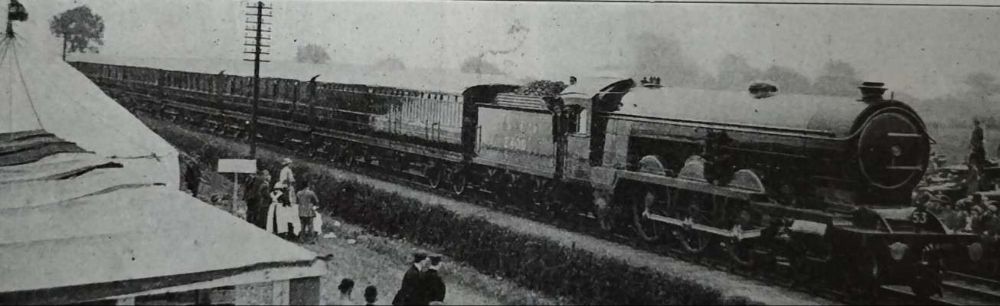
The ‘main event’ was the procession which was “witnessed at ease and in comfort by many hundreds of thousands in view of the accessibility of the route practically from end to end and the arrangements whereby landowners generously allowed access to fields adjoining the line.” [1: p103]

The event was opened by HRH. the Duke of York, accompanied by the Duchess of York.  (The Duke of York being the future George VI who became King unexpectedly following the abdication of his brother, King Edward VIII, in December 1936.)

In his opening address Mr. W. Whitelaw made it clear that, “The Exhibition was the result of the co-operation of five great railway companies, assisted by many friends from all parts of the country, who possessed interesting relics of the first passenger railway in the kingdom. It seemed very fitting that the commencement of the celebration of what took place on 27th September 1825, should be in that great railway town of Darlington. If Darlington did not own all the credit for the science of railways, at any rate no one could deny or challenge the statement that Darlington was the home of the first great railway statesman, Edward Pease.”

The Procession

A short (20 minute) film of the procession/cavalcade can be viewed here. [35]

The centenary celebrations were held in July to allow guests from foreign countries visiting the International Railway Congress to take part. An exhibition of rolling stock at the new Faverdale Wagon Works in Darlington was opened by the Duke and Duchess of York (later King George VI and the Queen Mother). The following day the royal couple watched as procession of locomotives passed between Stockton and Oak Tree Junction, starting with a Hetton Colliery locomotive that had been built in 1822 and finishing with a replica train of ten chaldron waggons and ‘the company’s coach’ hauled by Locomotive No.1 propelled by a petrol engine in a specially built tender.” [45] A copy of the original programme for the procession can be found here. [46]

The procession was due to have 54 items, one of which had to be withdrawn (the North British Locomotive Company’s geared turbine condensing locomotive). [1: p123] The final list was: [8]

  • 1. Hetton Colliery locomotive – 1822.
  • 2. S. & D.R. “Derwent” – 1845.
  • 3. NBR 0-6-0 No. 381 (LNER J31 10114) – 1867.
  • 4. NER 0-6-0 No. 1275 – 1874.
  • 5. LNER J26 0-6-0 No. 517 (ex NER) – 1905.
  • 6. LNER B16 4-6-0 No. 934 (ex NER) – 1921.
  • 7. LNER K3 2-6-0 No. 203 – 1925.
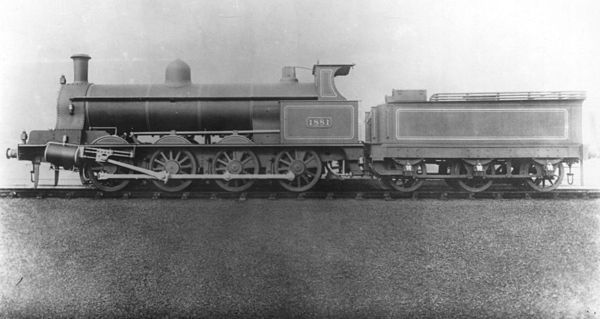
  • 8. LNWR 0-8-0 No. 1881 (LMS 8900) – 1901.
  • 9. LMS 0-8-0 No. 9446 (ex LNWR) – 1922.
  • 10. LNER 02 2-8-0 No. 3501 – 1924.
  • 11. GWR 2-8-0 No. 4700 – 1919
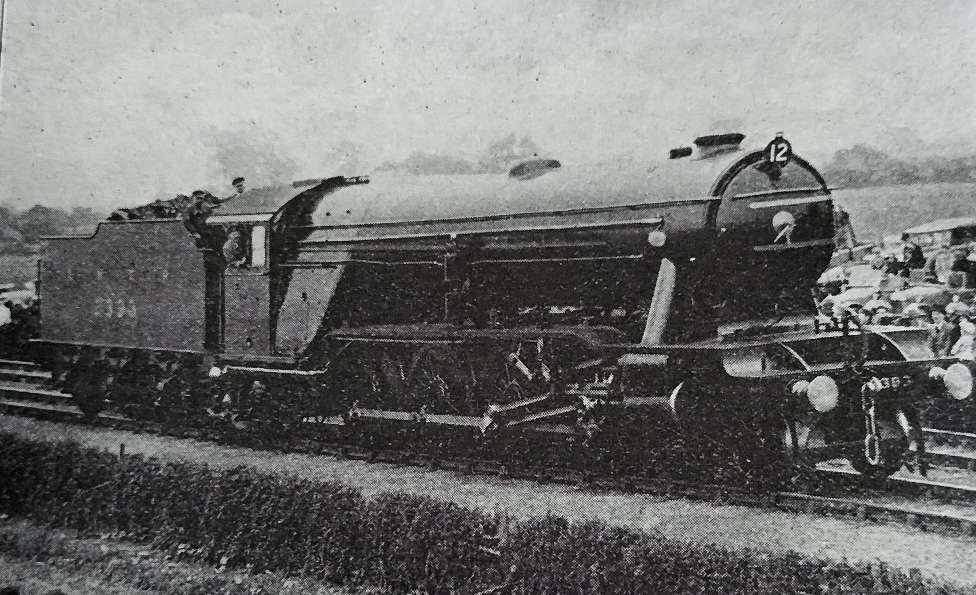
  • 12. LNER P1 2-8-2 No. 2393 – 1925.
  • 13. LNER electric loco No. 9 (hauled by J71 0-6-0T 317) (ex NER) – 1914.
  • 14. GWR 2-2-2 “North Star”(replica), (on wagon, hauled by J71 0-6-0T No. 181) – 1837.
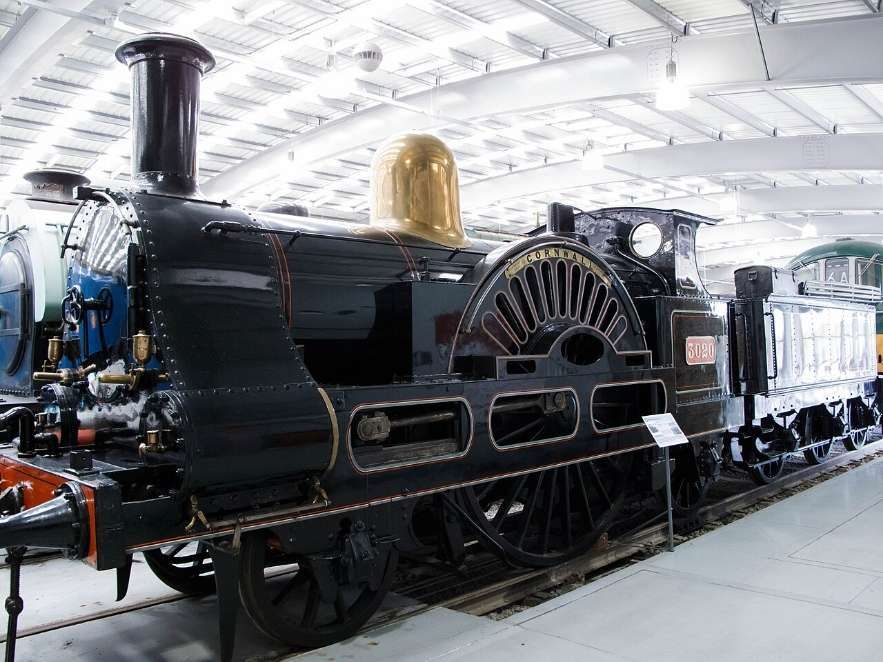
  • 15. LNWR 2-2-2 No. 3020 “Cornwall” – 1847.
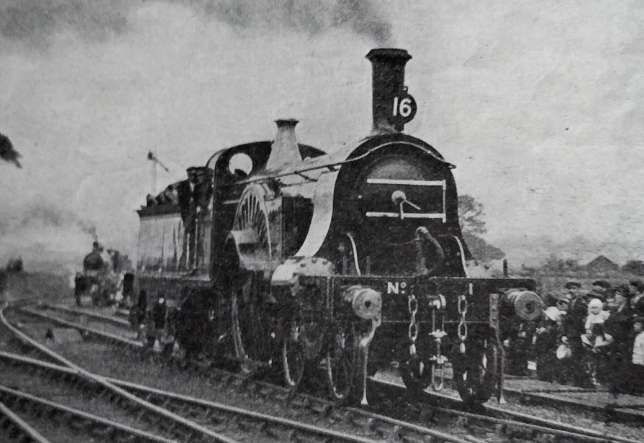
  • 16. GNR 4-2-2 No. 1 – 1870.
  • 17. MR 4-2-2 No. 679 – 1899.
  • 18. LNER X4 4-2-2 No. 5972 (exGCR) – 1900.
  • 19. NER Class 901 2-4-0 No. 910 – 1875.
  • 20. LNER E5 2-4-0 No. 1463 (ex NER) – 1885.
  • 21. LNER D17/1 4-4-0 No. 1620 (ex NER) – 1892.
  • 22. LNER D15 4-4-0 No. 8900 “Claud Hamilton” (ex GER) – 1900.
  • 23. LNER C2 4-4-2 No. 3990 “Henry Oakley” (ex GNR) – 1898.
  • 24. LNER C1 4-4-2 No. 3251 (ex GNR) – 1902.
  • 25. LNER C11 4-4-2 No. 9902 “Highland Chief” (ex NBR) – 1911.
  • 26. LNER C7 4-4-2 No. 2207 (ex NER) – 1917.
  • 27. LNER B13 4-6-0 No. 2006 (ex NER) – 1900.
  • 28. LNER B3 4-6-0 No. 6169 “Lord Faringdon” (ex GCR) – 1917.
  • 29. LMS 4-6-0 No. 5900 “Sir Gilbert Claughton” (ex LNWR) – 1913.
  • 30. LNER A1 4-6-2 No. 2563 “William Whitelaw” – 1924
  • 31. Withdrawn
  • 32. LNER electric loco No. 13 (hauled by J71 0-6-0T No. 1163) – 1922.
  • 33. LNER X1 2-2-4T No. 66 “Aerolite” (ex NER) – 1851.
  • 34. LNER J61 0-6-0ST No. 6469 (ex GCR) – 1873.
  • 35. LNER Y6 0-4-0T No. 7133 (ex GER) – 1897.
  • 36. LNER G6 0-4-4T No. 949 (ex NER) – 1874.
  • 37. LNER G5 0-4-4T No. 1334 (ex NER) – 1901.
  • 38. LNER H1 4-4-4T No. 2152 (ex NER) – 1913.
  • 39. LNER A5 4-6-2T No. 5088 (ex GCR) – 1923.
  • 40. LMS 4-6-4T No. 11112 – 1924.
  • 41. GWR 2-8-0T No. 5225 – 1924.
  • 42. LNER U1 2-8-8-2 No. 2395 – 1925.
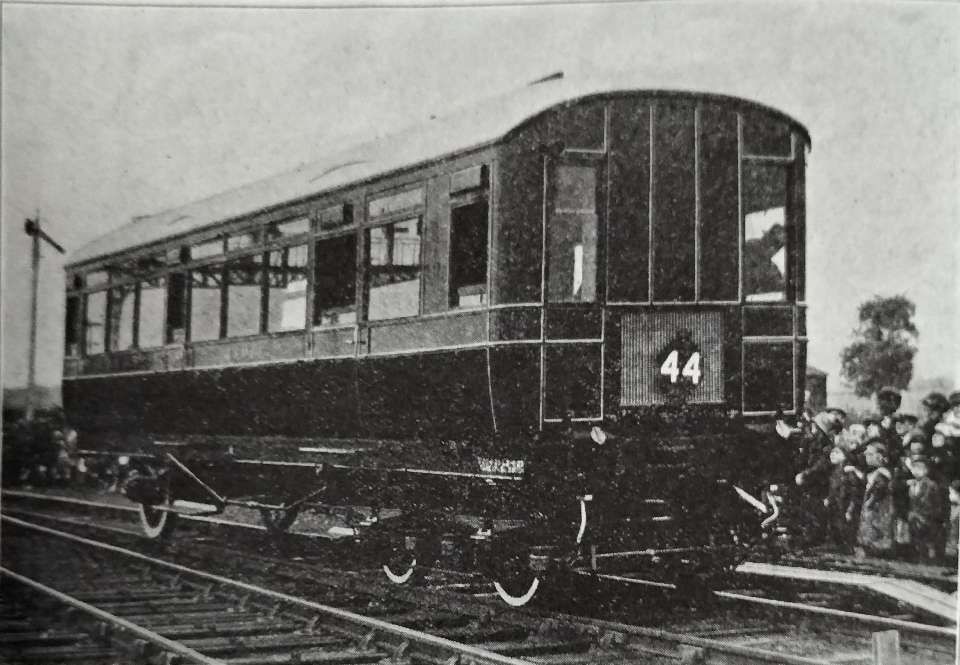
  • 43. LNER Railbus 130Y (ex NER) – 1922.
  • 44. LNER petrol autocar No. 2105Y – 1923.
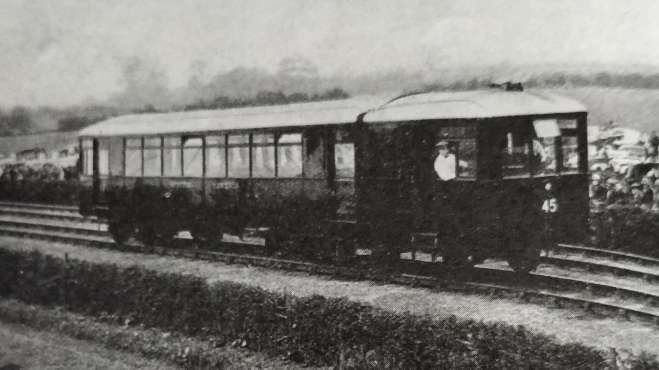
  • 45. Sentinel steam railcar – 1925.
  • 46. LNER Q7 0-8-0 No. 904 (ex NER) on mineral train. – 1919.
  • 47. LNER Q5 0-8-0 No. 130 (ex NER) hauling tableaux train.
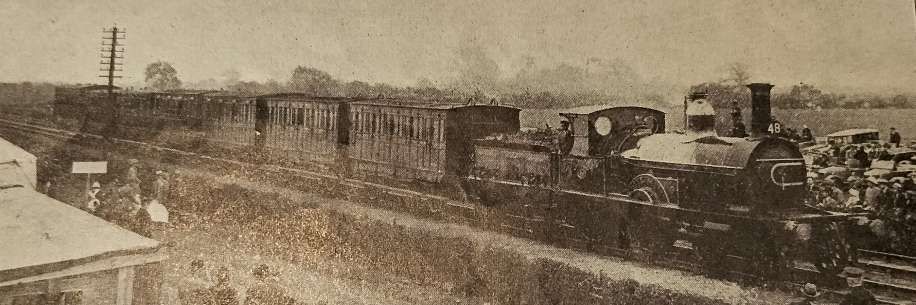
  • 48. GNSR 4-4-0 No. 45A and train of old 4-wheel coaches – 1865.
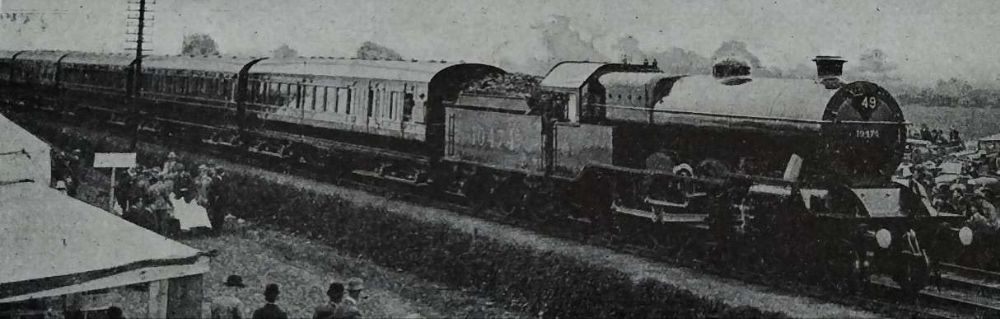
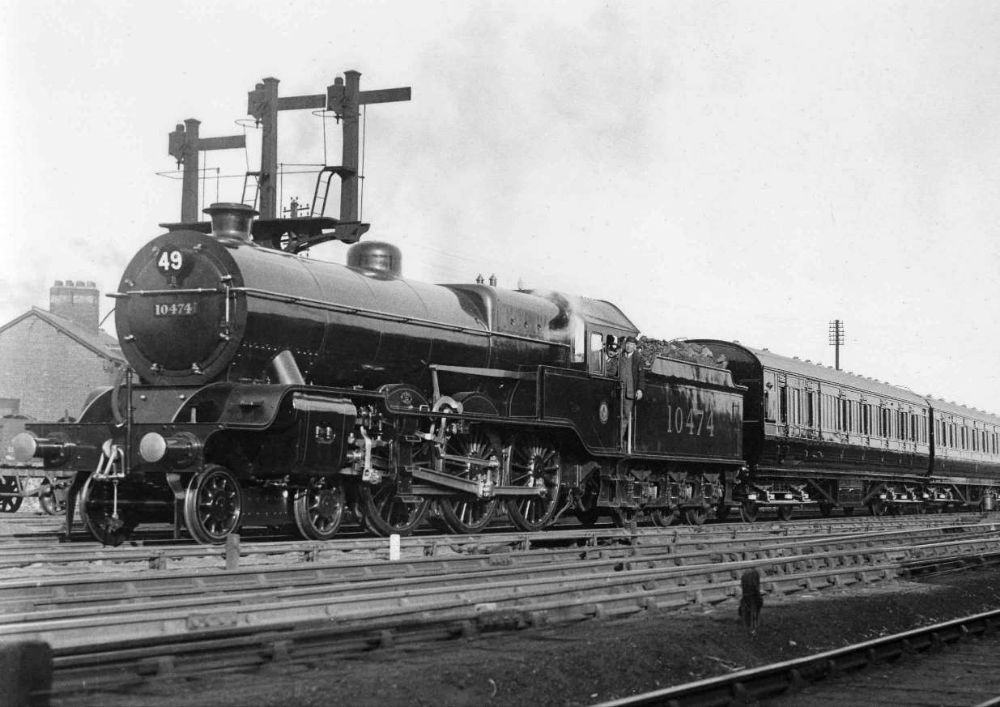
  • 49. LMS 4-6-0 No. 10474 with vestibule coaches. – 1925.
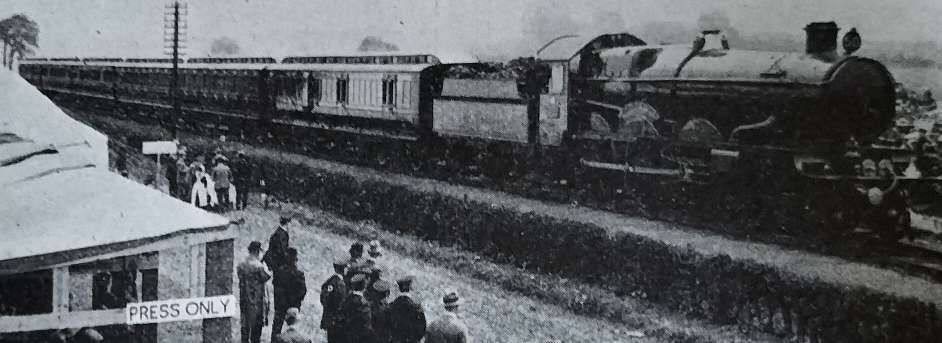
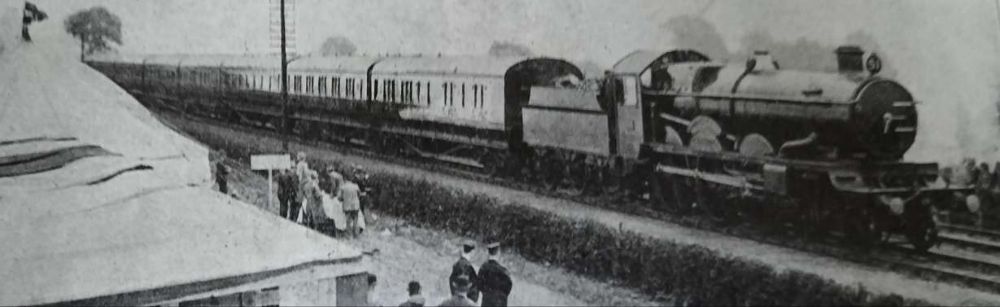
  • 50. GWR 4-6-0 No. 4082 “Windsor Castle” with GWR royal train – 1924.
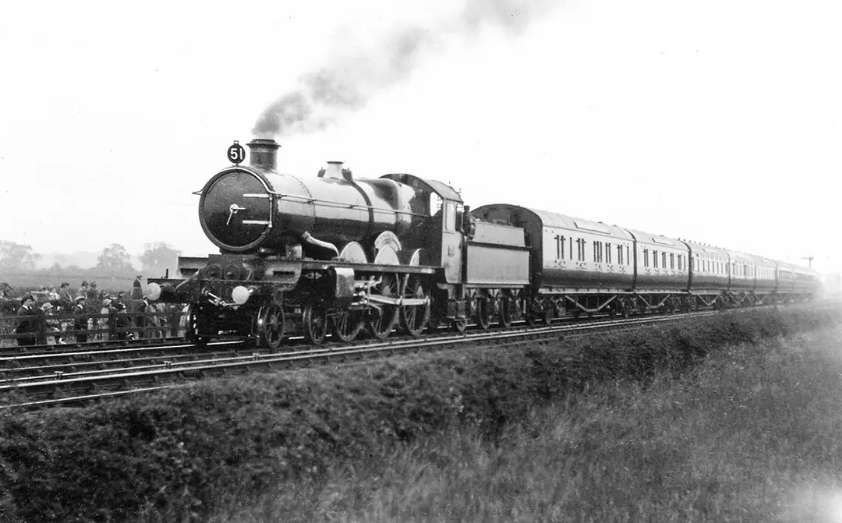
  • 51. GWR 4-6-0 No. 111 “Viscount Churchill” with coaches.
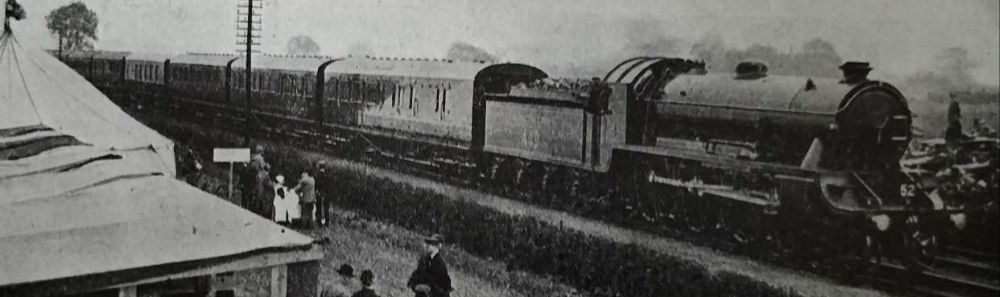
  • 52. SR 4-6-0 No. 449 “Sir Torre” with coaches. – 1925.
  • 53. LNER A2 4-6-2 No. 2400 “City of Newcastle” with coaches. – 1922.
  • 54. “Locomotion” – 1825

This list can be found on the Stockton & Darlington Rail Centre website. [8]

Of these items, The Railway Magazine chose to highlight a number of these including:

  • 1. The Hetton Colliery Locomotive

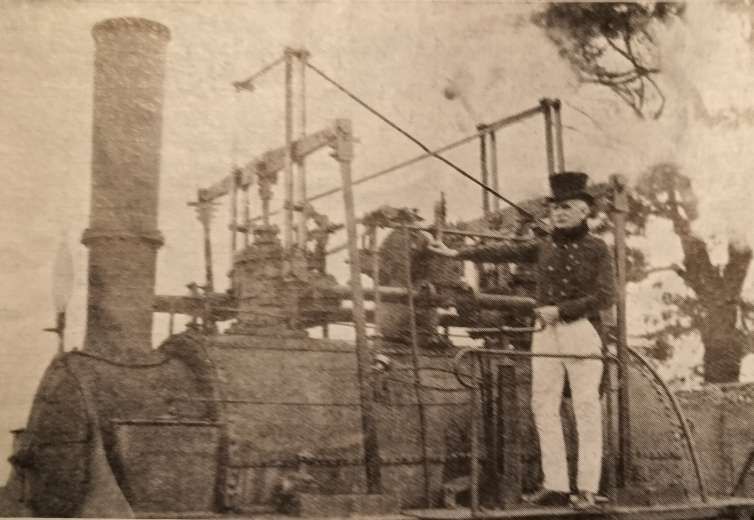
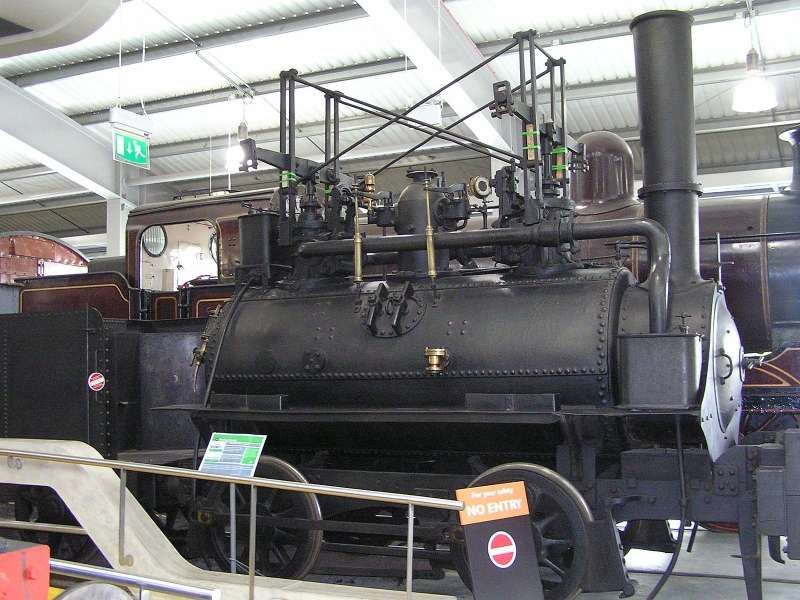
The procession was headed by the old Hetton Colliery engine, built in 1822 by George Stephenson and Nicholas Wood, previous to the establishment of Stephenson’s works at Newcastle-on-Tyne. The engine, by the way, was rebuilt in 1857, and again in 1882, when the link motion, at present fitted, was added.” [1: p109]

The Hetton Colliery Locomotive (‘Lyon’ or ‘Lyons’), © Public Domain. [1: p110]
The same locomotive, ‘Lyon’ or ‘Lyons’ on display at Shildon Museum in 2009. It is an 0-4-0 loco dating back as far as 1821 but significantly refurbished/rebuilt in 1852 (or 1857) and again in 1882, © Gillett’s Crossing and licenced for reuse under a Creative Commons Licence (CC BY-SA 2.0). [2]
  • 2. The ‘Derwent’

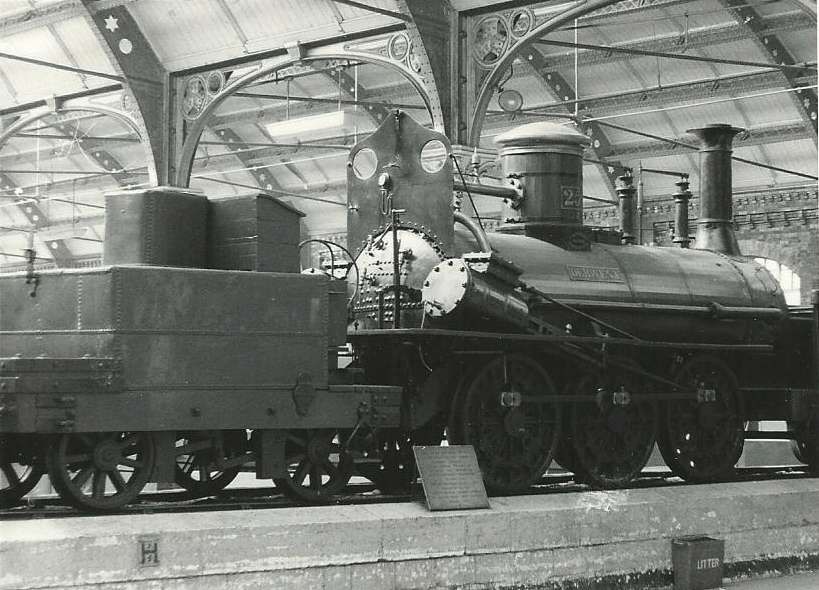
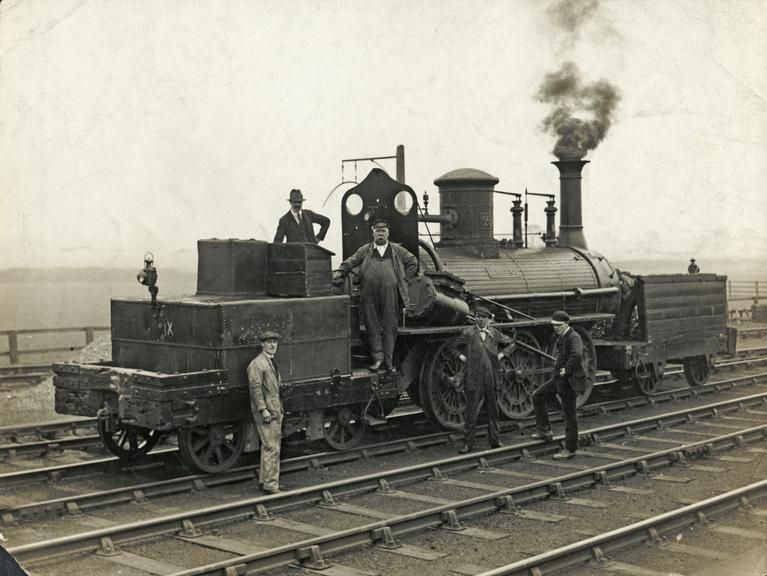
Next in order came the old ‘Derwent’, a mineral engine of Timothy Hackworth’s design, which was built in 1845 by William and Alf Kitching, of the Hopetown Foundry, Darlington, for the Stockton and Darlington Railway. The ‘Derwent’ also ran under its own steam.” [1: p109]

The ‘Derwent’, © Public Domain. [1: p110]
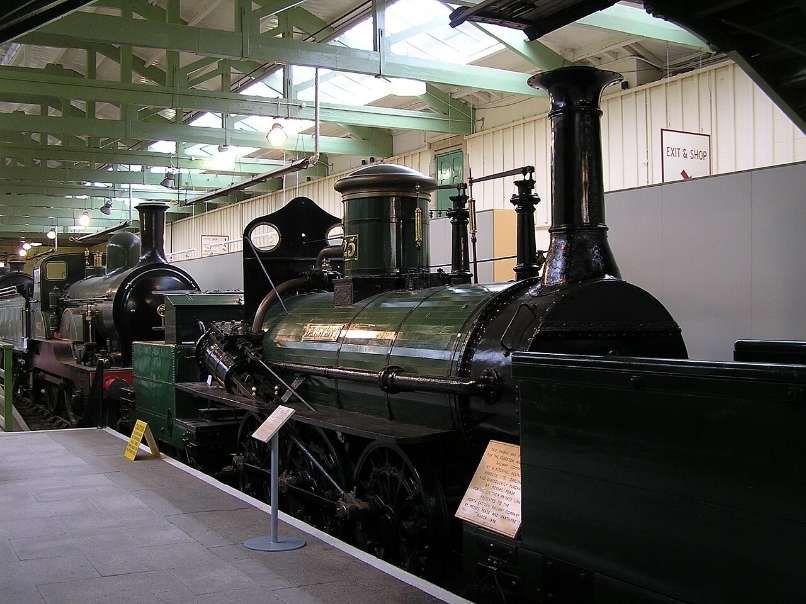
‘Derwent’ on a plinth at Darlington. Hackworth 0-6-0 No.25 “Derwent” (with a tender each end) built in 1845 by W & A. Kitching for the Stockton & Darlington Railway. It passed to the North Eastern Railway in 1863 and then withdrawn in 1869 and was sold to Pease & Partners for construction of the Waskerley Resevoir. The NER bought it for preservation in 1898 and it was eventually put on display in Darlington Station, where this photograph was taken in July 1972, © Hugh Llewellyn and licenced for reuse under a Creative Commons Licence (CC BY-SA 2.0). [3]
The same locomotive, ‘Derwent’ on display in Darlington (Head of Steam) in 2009, © Gillett’s Crossing and licenced for reuse under a Creative Commons Licence (CC BY-SA 2.0). NB. ‘Head of Steam’ is now, in 2024, part of Hometown Darlington. [4]
‘Derwent’ again: this image is held in the Science Museum Collection – Science Museum Group. Steam locomotive No. 25 “Derwent”, Stockton & Darlington Railway. 1978-7012 Science Museum Group Collection Online, and authorised for reuse under a Creative Commons Licence (CC Zero). [5]

Then followed a number of engines more or less familiar to the present generation [1925], although two of them were built over 50 years ago. A 1925 modern goods express 2-6-0, with special valve gear, and a mineral engine 2-8-0 with three cylinders, were a great contrast to the veterans that had passed earlier. Then followed a “Mikado” type of locomotive built at the Doncaster works of the L.N.E.R., for fast mineral work, but even greater interest was shown in a model of the old North Star, built in 1837 by Robert Stephenson and Co., which was mounted on a Great Western ‘crocodile’, drawn by a locomotive. Several specimens of the single-driver expresses popular in the latter half of the [19th century]  were in the procession, including the Cornwall, which has a driving wheel of 8 ft. 6 in. in diameter the largest locomotive driving wheel still in service in the world.” [1: p109]

  • 4. 0-6-0 Stockton & Darlington Goods

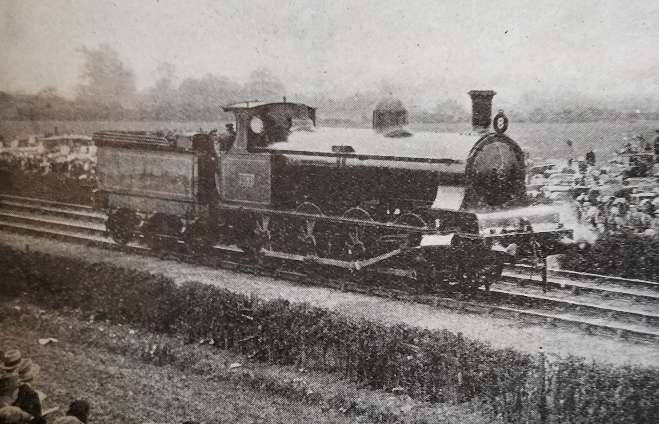
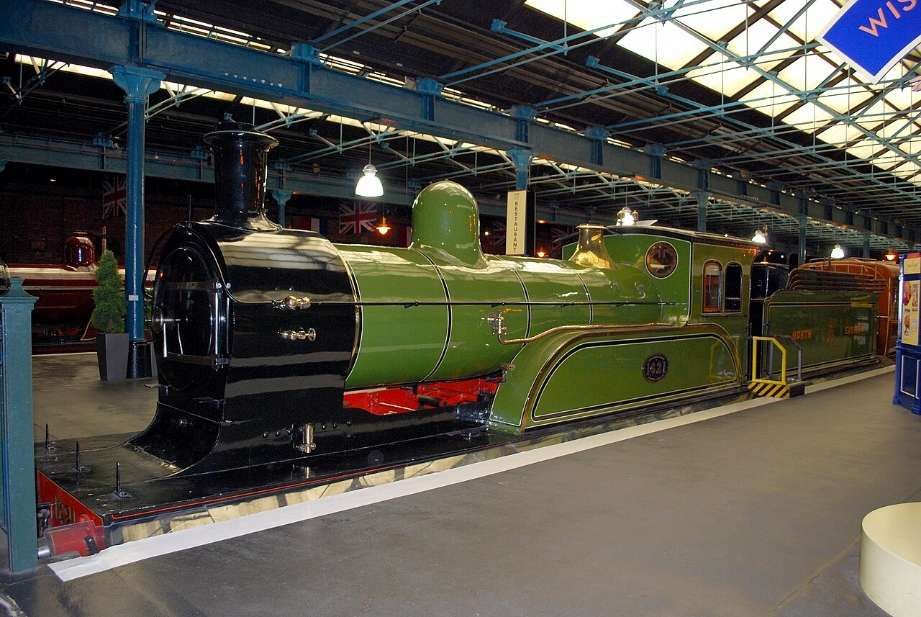
Fourth in the procession was a typical 0-6-0 locomotive from the Stockton and Darlington (S&D) Railway. This was probably NER No. 1275 which was the only NER 1001 Class locomotive to survive into LNER ownership. It was built by Dübs & Co., Glasgow, and was delivered to the S&D in May 1874. 1275 entered into LNER ownership with an official mileage of 908,984 miles. Still in its NER livery, it was quickly withdrawn on 16th February 1923. [6]

More details can be found on the Preserved British Steam Locomotives website. [6]

0-6-0 Stockton & Darlington Goods, © Public Domain. [1: p111]

This locomotive is preserved as part of the National Collection and is on static display at the National Railway Museum at York. [6]

NER No. 1275 is preserved in the National Railway Museum in York: Science Museum Group. NER 0-6-0 ‘1001’ class steam locomotive and tender, No 1275, 1874. 1975-7009 Science Museum Group Collection Online. [7]
  • 8. LNWR No. 1881, 0-8-0 Webb Compound Locomotive (LMS No. 8900 of 1901)
LNWR No. 1881, © Public Domain. [1: p111]

The LNWR Class B was a class of 0-8-0 steam locomotives introduced in 1901. These locomotives were a development of the three-cylinder compound Class A (though this letter classification was not introduced until 1911), they had a 4-cylinder compound arrangement. 170 were built between 1901 and 1904. [9]

Another photograph of LNWR No. 1881 at Crewe in grey livery for its ex-works photograph. It was designated as a Class B locomotive by the LNWR from 1911 onwards. This was given the LMS No. 8900, © Public Domain. [9]
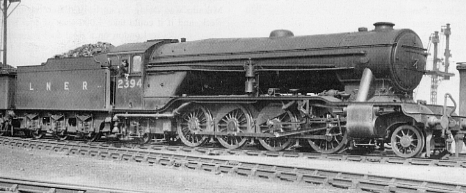
  • 12. LNER P1 2-8-2 No. 2393 ‘Mikado’

The London and North Eastern Railway Class P1 Mineral 2-8-2 Mikado was a class of two steam locomotives designed by Nigel Gresley. They were two of the most powerful freight locomotives ever designed for a British railway. It was initially intended they be a more powerful 2-10-0 version of the earlier Class O2 2-8-0s. The design was submitted in August 1923, for use between Peterborough and London, and also between Immingham and Wath marshalling yard. The power was quoted as being 25% more than the O2.” [21]

LNER P1 2-8-2 ‘Mikado’ No. 2393, © Public Domain. [1: p114]
Gresley P1 Mikado, No. 2394, © Public Domain. [22]

No. 2393 was completed in June 1925, just in time for the Stockton & Darlington Centenary celebrations in July. It was fitted with a Robinson superheater, whilst No. 2394 (completed in November) had the “E Double” superheater recommended by The Superheater Co.” [22]

  • 14. GWR 2-2-2 ‘North Star’ (replica)

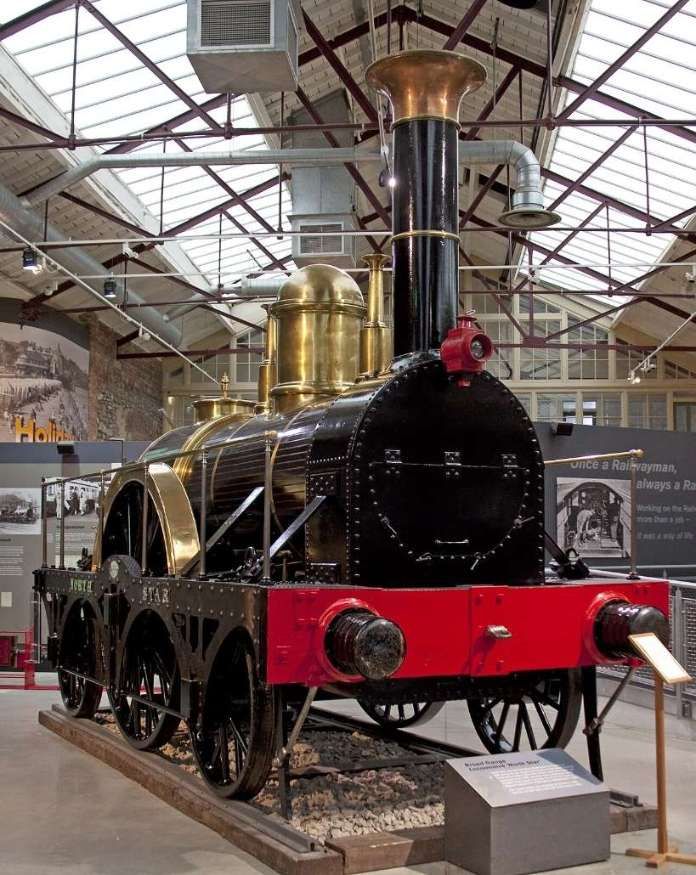
North Star was the first GWR locomotive, it on 31st May 1838 it worked the inaugural train for the company’s directors. More details can be found on the Preserved British Steam Locomotives website. [10]

A replica of the 1837 built GWR 2-2-2 ‘North Star’ (on a wagon which was hauled by J71 0-6-0T No. 181 when in the procession) © Public Domain. [1: p112]
‘North Star’ on display in Swindon in 2011. It is a replica built in 1923 including a number of parts from the original locomotive, © Tony Hisgett and licenced for reuse under a Creative Commons Licence (CC BY 2.0). [11]
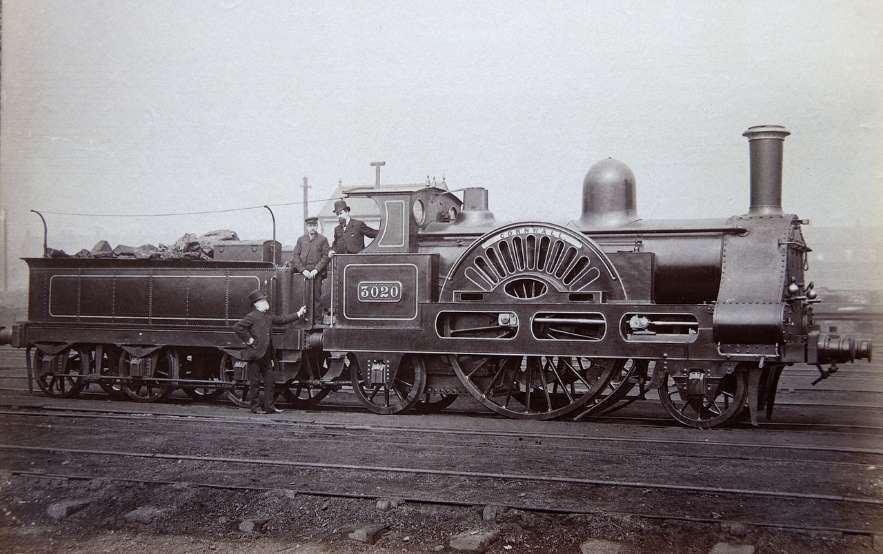
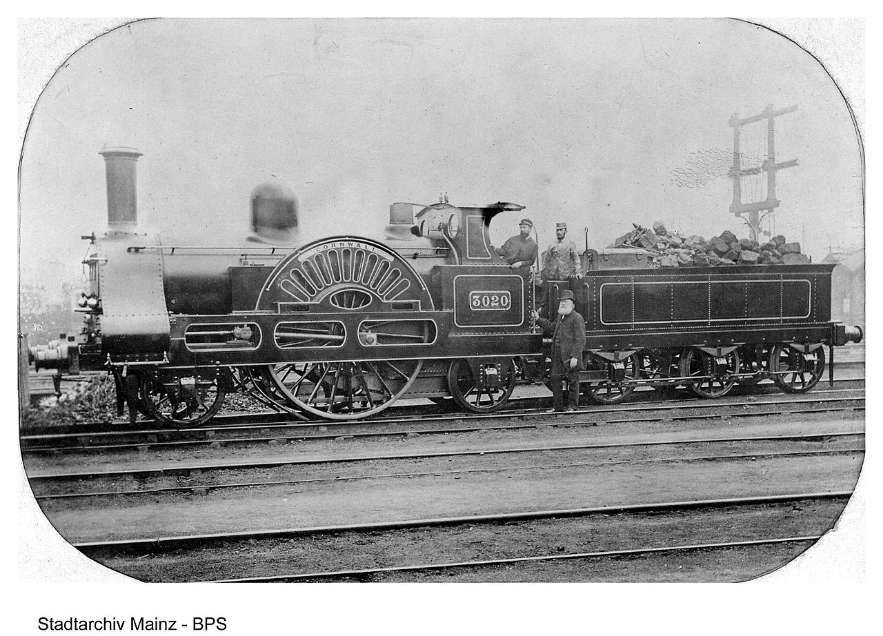
  • 15. LNWR 2-2-2 No. 3020 ‘Cornwall – 1847

Built in 1847, ‘Cornwall’ is a preserved steam locomotive. She was built as a 4-2-2 at Crewe Works in 1847, but was extensively rebuilt and converted into her current form in 1858. [12]

The ‘ Cornwall’, © Public Domain. [1: p113]

Wikipedia tells us that, “In 1858, Ramsbottom redesigned Cornwall almost completely. Little survived unchanged, other than the outside frames and the centres of the drivers. The boiler was … moved entirely above the driving axle, without any notches, channels or tubes. … New cylinders and valve gear were provided. … The wheel arrangement was [changed to] 2-2-2. … Ramsbottom also included his newly designed tamper-proof safety valves.” [12]

There was another minor rebuild in the 1870s providing a typical LNWR style of cab, with a short roof and semi-open sides. It was renumbered 3020 in June 1886. [12]

‘Cornwall’ after the 1858 rebuild, at Ordsall Lane shed, Manchester, circa. 1890, © Tony Hisgett and licenced for reuse under a Creative Commons Licence (CC BY 2.0). [12]
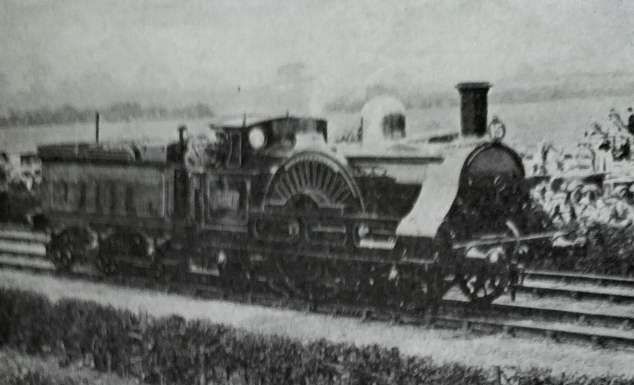
‘Cornwall’ after the 1858 rebuild, viewed from the other side at an unknown location and uncertain date, © Public Domain. [12]
‘Cornwall’ on display at Shildon in 2011, © James E. Pets and licensed for reuse under a Creative Commons Licence (CC BY-SA 3.0). [13]
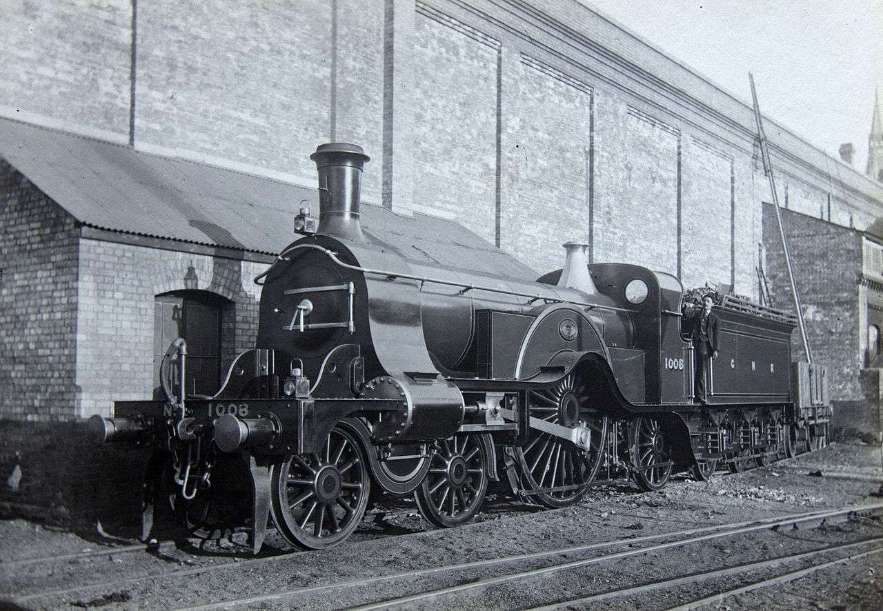
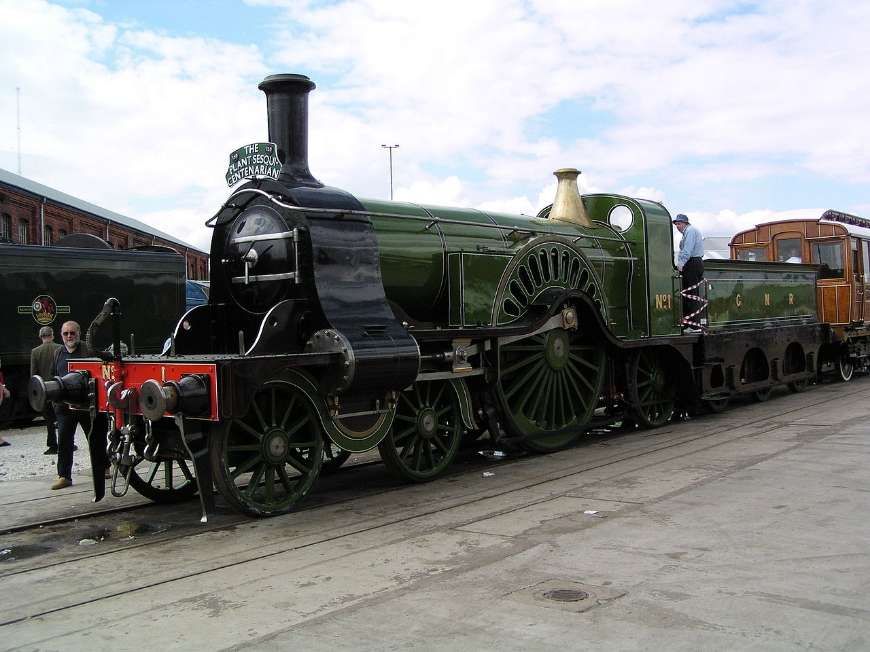
  • 16. GNR 8ft Single No. 1

The Great Northern Railway (GNR) No. 1 Class Stirling Single was a class of steam locomotive designed for express passenger work. Designed by Patrick Stirling, they were characterised by a single pair of large (8 ft 1 in) driving wheels which led to the nickname ‘eight-footer’. Originally the locomotive was designed to haul up to 26 passenger carriages at an average speed of 47 miles per hour (76 km/h). It could reach speeds of up to 85 mph (137 km/h). [14]

GNR 8ft Single No. 1, © Public Domain. [1: p113]
A three-quarter view of a GNR 8ft Single (No. 1008), © Tony Hisgett and licensed for reuse under a Creative Commons Licence (CC BY 2.0). [15]

The first of the class, No. 1 is the only engine to be preserved. It is exhibited at the National Railway Museum, York. It was restored to running order during the 1930s for the fiftieth anniversary of the Race to the North and steamed again during the 1980s.” [14]

Stirling Single No. 1 at Doncaster Works in 2003, © Our Phellap and authorised for reuse under a Creative Commons Licence (CC BY-SA 3.0). [16]
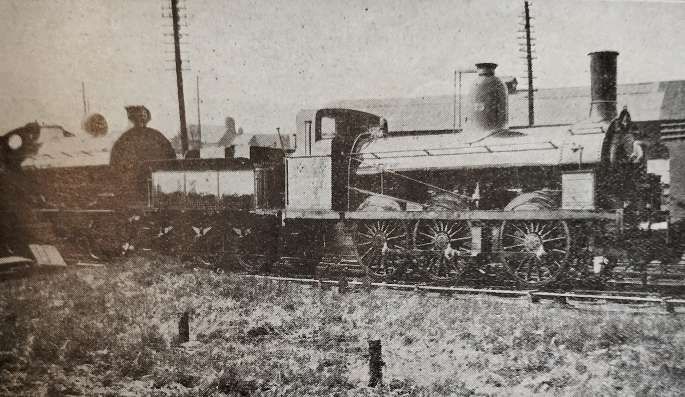
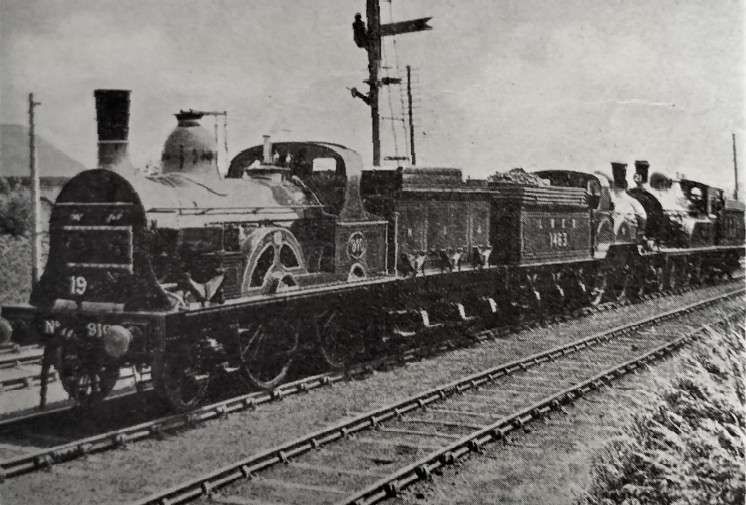
This series of three locomotives were No. 19, 1875 built NER Class 901 2-4-0 No. 910; No. 20, 1885 built LNER E5 2-4-0 No. 1463 (ex NER); and No. 21, 1892 built LNER D17/1 4-4-0 No. 1620 (ex NER) © Public Domain. [1: p112]

The three locomotives shown in the image above are:

  • 19. 1875 built NER Class 901 2-4-0 No. 910;
  • 20. 1885 built LNER E5 2-4-0 No. 1463 (ex NER);
  • 21. 1892 built LNER D17/1 4-4-0 No. 1620 (ex NER)

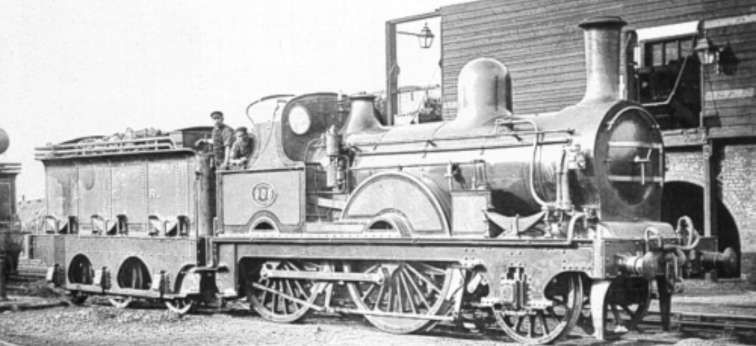
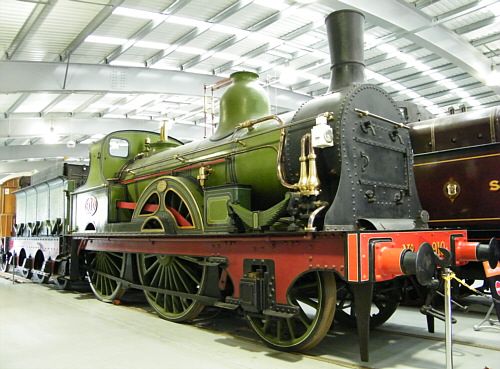
The LNER Encyclopedia says that “Fletcher’s ‘901’ class was his final express passenger design for the … NER. The ‘901’ Class was created in 1872 to provide new more powerful express locomotives to replace the 16in cylinder locomotives still being used by the NER for express work. The first two locomotives, Nos. 901/2, were built at Gateshead in 1872. Whilst these were being built, two batches of ten each were ordered from Beyer, Peacock & Co and Neilson & Co. These twenty engines were built and delivered in 1873. A further 33 were built at Gateshead between 1873 and 1882 in four batches.” [17]

A Fletcher NER ‘901’ 2-4-0 Locomotive, © Public Domain. [17]
In preservation No. 910 is now a part of the National Collection and is currently located at the Shildon Locomotion. [17]

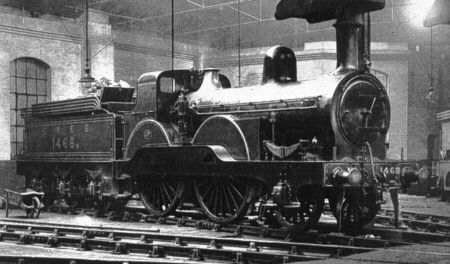
The LNER Encyclopedia says that the  “new E5 locomotives were direct descendents of Fletcher’s ‘901’s. The cab design was changed, and a completely new tender design was used. A total of twenty E5s were built in 1885, with Darlington and Gateshead building ten each.” [18]

E5 No. 1463 is owned by the National Collection, but is on loan to the Darlington ‘Head of Steam’ Museum, now known as ‘Hopetown Darlington’s. [18]

The LNER Encyclopedia also notes that the NER Class M1 (later Class M) locomotives were Wilson Worsdell’s first express passenger locomotives for the North Eastern Railway (NER). … Twenty Class M1 locomotives were built at Gateshead between 1892 and 1894. More information can be found on the LNER Encyclopedia website. [19] These NER M1 locomotives became the LNER D17/1 Class at the grouping. [20]

Preserved NER M1 locomotive No. 1621 at the National Railway Museum at Shildon in 2010, © Hugh Llewellyn and licenced for reuse under a Creative Commons Licence (CC BY-SA 2.0). [20]
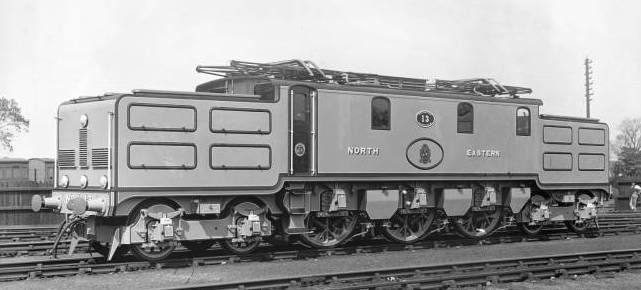
  • 32. LNER electric loco No. 13 (hauled by J71 0-6-0T No. 1163) – 1922
LNER electric loco No. 13 (built in 1922 and hauled by J71 0-6-0T No. 1163). No. 13 seems quite dull alongside a sparkling No. 1163, © Public Domain. [1: p117]

The LNER operated a surprising variety of electric locomotives and multiple units. Although its electric operations were eclipsed by the Southern, the LNER had the largest electric locomotive stud of the Big Four companies. More about the various electric locks and multiple units can be found on the LNER Encyclopedia website. [27]

Sir Vincent Raven was a great believer in the electrification of main lines. After the success of the Shildon-Newport electrification, he planned to electrify the North Eastern Railway’s (NER) stretch of the East Coast main line from York to Newcastle. As a part of this plan, authorisation was granted in March 1920 to build the prototype electric passenger locomotive No. 13. This had a 2-Co-2 (4-6-4) wheel arrangement, and was built at Darlington with electrical equipment provided by Metropolitan-Vickers.” [28] The loco was completed in 1922 just before the NER became part of the LNER in 1923.

Electric Locomotive No. 13 in a bright grey livery. In 1919 the North Eastern Railway made plans to electrify its York-Newcastle stretch of the East Coast Main Line and this locomotive was a prototype built for hauling passenger trains. It had an electrically heated boiler to generate steam for train heating. It transferred into LNER ownership in 1923. The LNER did not give class numbers to its electric locomotives. It survived into BR days and was in 1946 designated Class EE1, © Public Domain. [29]
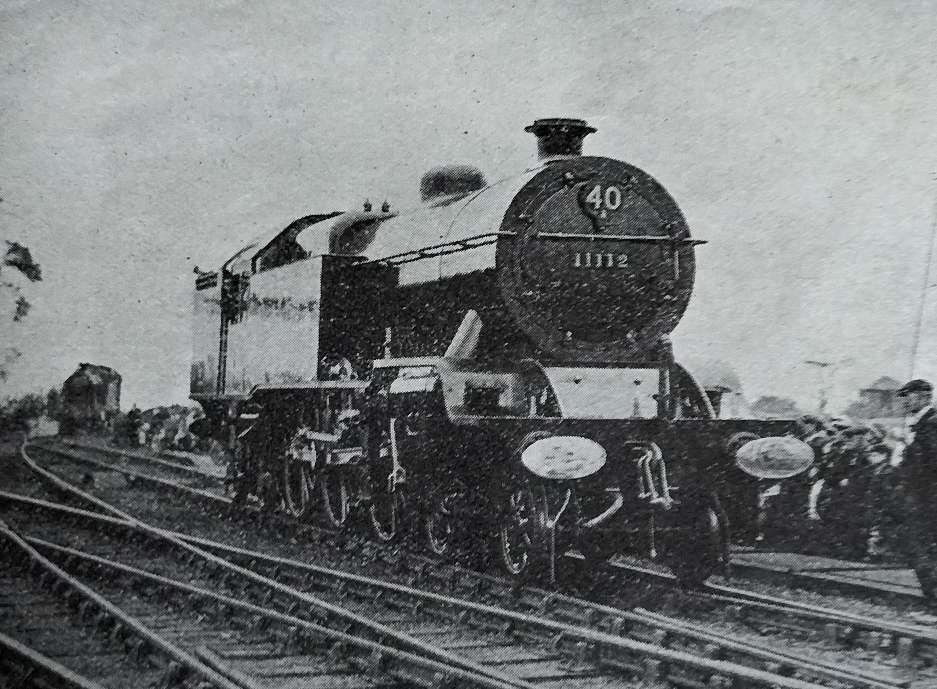
  • 40. LMS 4-6-4T No. 11112 – 1924.
LMS (ex-L&YR) Four-cylinder 4-6-4T Locomotive No. 11112, © Public Domain. [1: p 115]

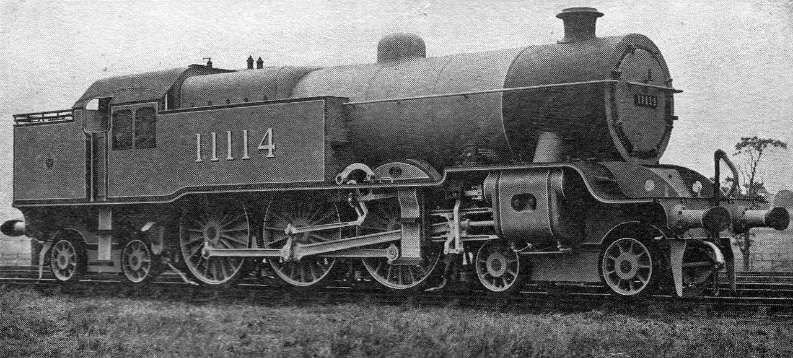
The Lancashire and Yorkshire Railway (L&YR) Hughes 4-6-4T class of steam locomotives were a 4-6-4T version of the L&YR Class 8 (‘Dreadnought’ Class 4-6-0), hence they were known as ‘Dreadnought tanks’. All were actually built by the LMS in 1924 after the grouping, albeit at the L&YR’s Horwich Works. Withdrawals started in 1938, with three engines (11112, 11115, 11116), one each in 1939 and 1940 (11113 and 11111 respectively), four in 1941 (11114, 11117–11119) and the last (11110) in January 1942. No examples were preserved. [23]

Another example of the same class, No. 11114. [23]
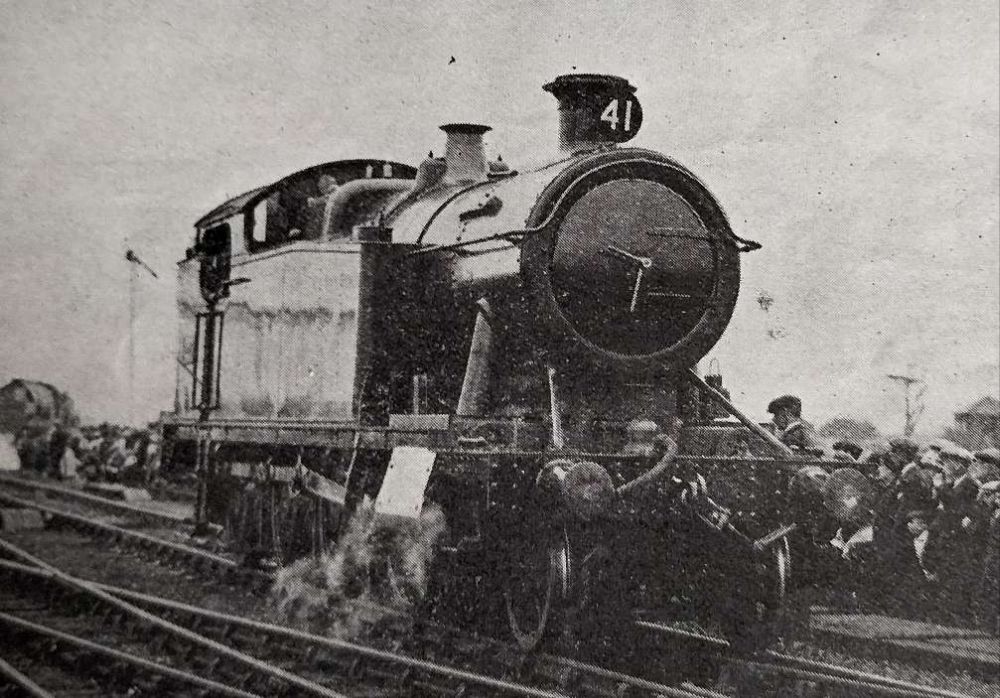
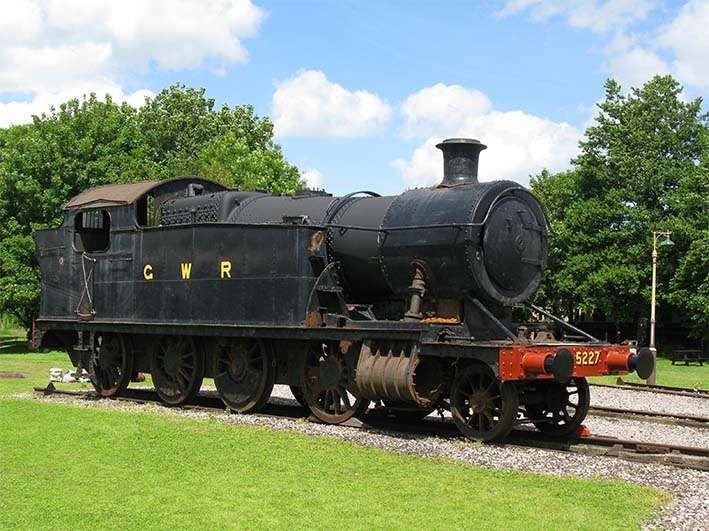
  • 41. GWR 2-8-0T Locomotive No. 5225

The 4200 class of 2-8-0T engines was designed to work the heavy short-haul coal and mineral trains in South Wales. They were designed using standard GWR parts as used in the 2800 class. A total of 205 locomotives were built (including the 5205 class) between 1910 and 1940. They were the only 2-8-0T to run in Britain. [24]

GWR 2-8-0T Locomotive No. 5225, one of the later versions of this class with outside steam pipes and raised framing over the cylinders, © Public Domain. [1: p115]

The first engine to be built was 4201 in 1910 (4200 was a later engine built in 1923). Between 1910 and 1930 195 were built numbered 4200-4299 and 5200-5294. 5205 onwards had larger cylinders and other minor alterations and were known as the 5205 class.” [24]

GWR 2-8-0T No. 5227 at Didcot, © Didcot Railway Centre. [25]

Five examples of the 4200 class and three members of the 5205 class have been preserved (4247, 4248, 4253, 4270, 4277, 5224, 5229 and 5239). There are also three locomotives preserved from the 7200 class which were rebuilds of the 5205 series 5264 rebuilt as 7229, 5275 rebuilt as 7202 and 5277 rebuilt as 7200).” [24]

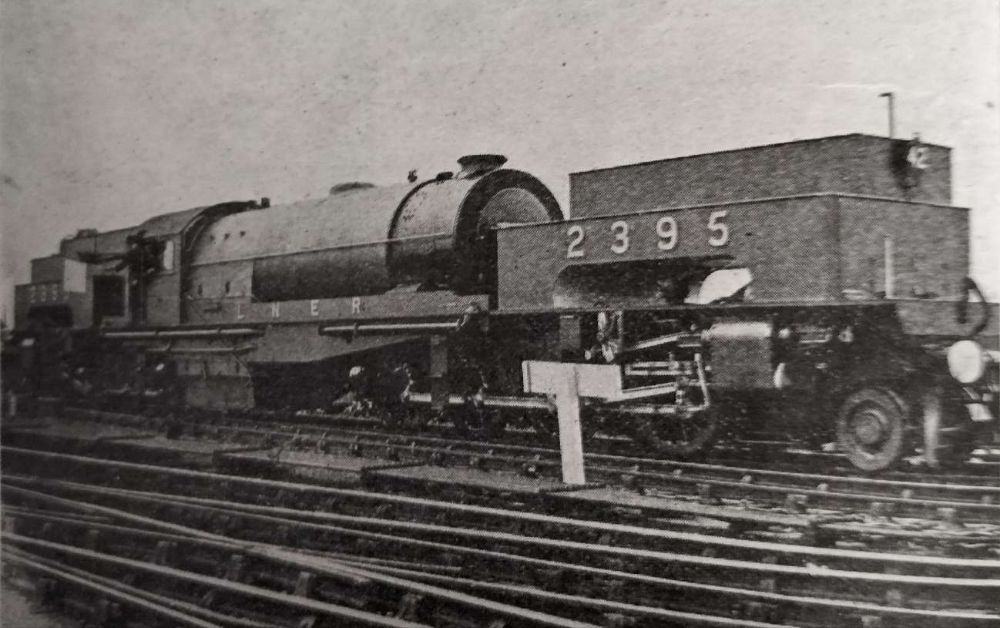
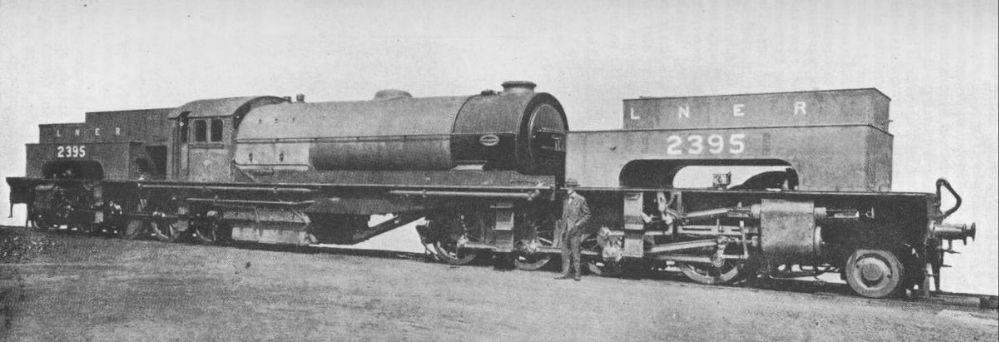
  • 42. LNER ‘Garratt’ Locomotive No. 2395

The London and North Eastern Railway Class U1 was a solitary 2-8-0+0-8-2 Garratt locomotive designed for banking coal trains over the Worsborough Bank,[i] a steeply graded line in South Yorkshire and part of the Woodhead Route. It was both the longest and the most powerful steam locomotive ever to run in Britain. It was built in 1925 with the motion at each end being based on an existing 2-8-0 design. The original number was 2395, and it was renumbered 9999 in March 1946, and then 69999 after nationalisation in 1948, although it retained its cab-side plate bearing its original number throughout its life. The locomotive ran for some time as an oil burner, and was tried out on the Lickey Incline in 1949–1950 and again, after the electrification of its home line, in 1955. These trials were unsuccessful, and so the locomotive was withdrawn in 1955 and scrapped.” [26]

LNER Class U1 heavy duty freight locomotive No. 2395 © Public Domain. [1: p114]

The locomotive was constructed in just 3 weeks in 1925, perhaps with the Stockton & Darlington centenary celebrations in mind. It was ready just in time and sent in the standard outshopped grey livery before being painted black. [26]

Ex-works photograph of LNWR Class U1 Garrett Locomotive, © Public Domain. [26]
  • 43. LNER Petrol Railcar/Railmotor No. 130Y, later 2105Y

The 1920s were quite an era for experimentation on the railways of the UK. This Railcar/Railmotor is included in a number looked at elsewhere on this blog. The relevant article can be found here. [30]

The North Eastern Railway (NER) “authorised the construction of the experimental Petrol Autocar No. 2105 on 21st September 1922. On 19th October, Raven reported the purchase of a 6-cylinder 105hp Daimler engine from the Slough Trading Estate Co. Ltd. The remainder of the vehicle was built at York Carriage Works and was completed in July 1923. By this time, Grouping had occurred, and the autocar was given the LNER number 2105Y. It was later renumbered as No. 22105 in August 1926.” [31]

LNER Railcar No. 2105Y, © Public Domain. [1: p116]
  • 45. Sentinel-Cammel Steam Railmotor of 1925
Sentinel Steam Railmotor, © Public Domain. [1: p116]

Sentinel produced a significant number of steam railcars/railmotors. They are covered elsewhere on this blog. Please click here. [33]

The LNER arranged for trials of two Sentinel railmotors in 1924. After those trials, adaptations were made including providing larger boilers. The result was ideal for LNER uses and a series of 80 units were purchased. The first two large boiler railcars were ordered on 11th December 1924. These railcars used the bodies from the trial railcars and the cost was discounted accordingly. Numbered Nos. 12E & 13E, the railcars entered service with the LNER in May 1925 and were classified as Diagram 14600-614E. [34] They were ‘state of art’ units available just in time for the Stockton & Darlington celebrations.

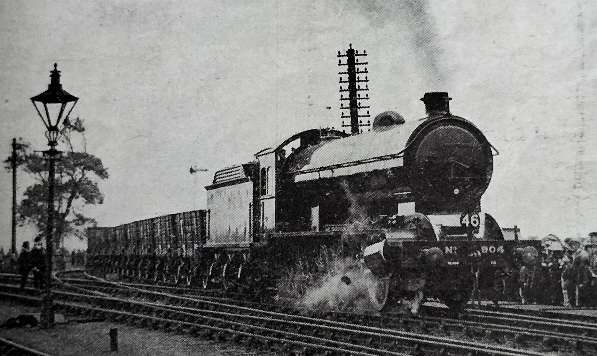
  • 46. LNER 0-8-0 Q7 (formerly NER T3) with mineral wagons.
A rake of mineral wagons behind LNER 0-8-0 Q7 No. 904, © Public Domain. [1: p117]

The North Eastern Railway Class T3, classified as Class Q7 by the LNER, was a class of 0-8-0 steam locomotive designed for heavy freight. Five were built by the NER in 1919 and a further 10 by the LNER in 1924. No. 904 was put in charge of a rake of mineral wagons for the procession. [32]

No. 901 is preserved at Darlington. …

LNER Class Q7 No. 901 (BR 63460) has survived and is preserved at Darlington. It is the only one of the Class to have survived, © Gillett’s Crossing and licenced for reuse under a Creative Commons Licence (CC BY 2.0). [32]
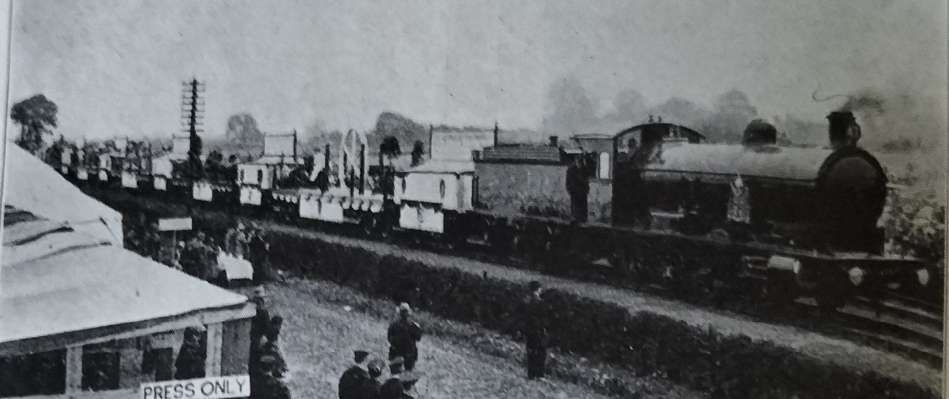
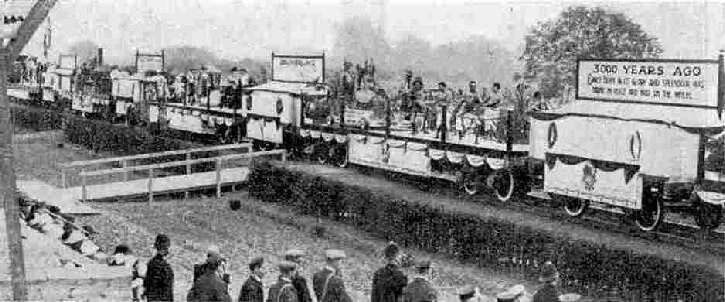
  • 47. LNER Q5 0-8-0 No. 130 (ex NER) hauling tableaux train
LNER Q5 0-8-0 No. 130 (ex NER) hauling tableaux train, © Public Domain. [1: p120]
The tableaux train passing the grandstand, © Public Domain. [37]
A tableau from the train above, © Public Domain. [1: p121]

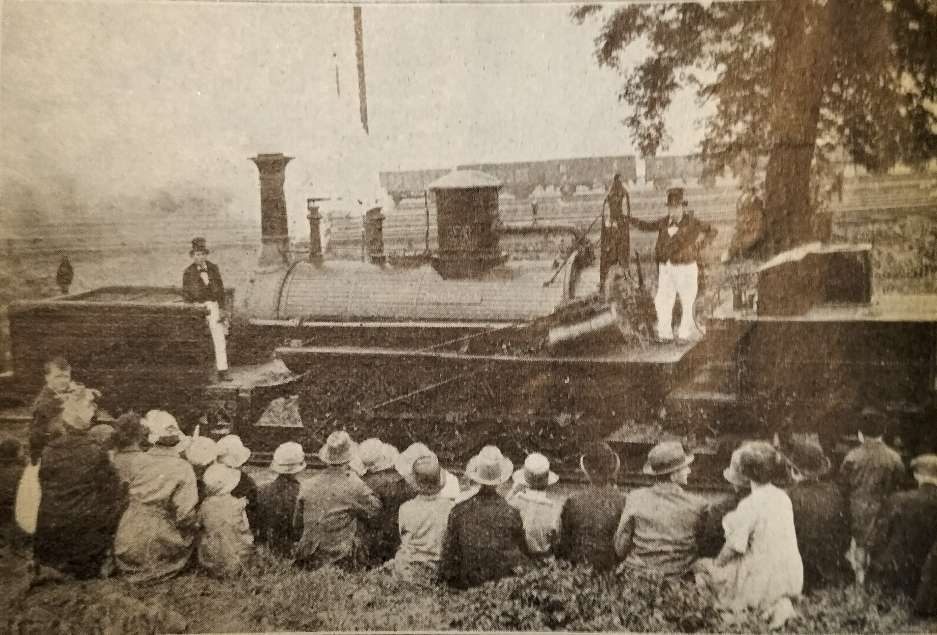
This train consisted of a series of tableaux depicting the history of the wheel. It was described in the publication ‘Railway Wonders of the World’ like this: “The tableaux consisted of six wagons each carrying a separate ‘picture’. The first was allegorical and depicted a number of astrologers grouped at one side of a symbolic wheel, with a scene showing modern engineering practice on the other. The two scenes were joined through the spokes of the wheel by a huge chain, representing the links of time. The second tableau showed a tribe of prehistoric men, who, having felled a tree with their flint axes, were shown transporting the trunk on logs used as rollers – the earliest form of the wheel. Then came an Egyptian scene in which one of the royal Pharaohs was being drawn on a wheeled platform by slaves, showing how the Egyptians started the wheel in its manifold forms so that, through the ages that followed, progress successively moved on the wheels of chariot, wain, and coach. This was followed by the fourth tableaux showing how the wheel was discarded for a time when Sedan chairs were used, and the fifth depicting the story of the wheel in transport opening its most famous chapter when Stephenson mounted an engine on wheels and steam locomotion began. On one side of this wagon Stephenson was explaining the working of a model of “Locomotion No. 1” to a group of friends and workmen, whilst on the other side modem mechanics were working with present-day materials and tools. The final tableau showed how the railways of the world have grown from the few miles of permanent way uniting Stockton and Darlington.” [37]

  • 48. GNSR 4-4-0 No. 45A and train of old 4-wheel coaches
Great North of Scotland Railway 4-4-0 No. 45A and train of old 4-wheel coaches – 1865, © Public Domain. [1: p126]

The locomotive was one of a Class which transferred to the LNER. More details can be found here. [38]

No. 45A was repainted in GNSR green to take part in the Stockton & Darlington Centenary celebrations. It was withdrawn on 31st July 1925 shortly after its return. There was some talk of preservation, and it was temporarily employed as a shunter at the Inverurie Works. However, preservation was not to be, and No. 45A was scrapped soon afterwards. [38]

  • 49. LMS Train of Vestibule Stock behind LMS 4-6-0 No. 10474
LMS Train of 9 No. Vestibule Carriages, © Public Domain. [1: p118]

LMS 4-6-0 No. 10474 was a Class 8 4-6-0 steam locomotive to a Lancashire & Yorkshire Railway design that was built for the LMS by Horwich Works in 1925. 10474 and its siblings were used on express passenger trains for the LMS. [36]

Its train is made up of nine vestibule carriages built at Derby and used on the West Coast route to Scotland. [1: p124]

The same train in the procession/cavalcade at the Stockton & Darlington centenary celebrations, © Public Domain. [36]
  • 50. GWR Royal Train behind GWR 4-6-0 No. 4082 ‘Windsor Castle’
GWR Royal Train, © Public Domain. [1: p120]

No. 4082 ‘Windsor Castle’, “was chosen as the Royal engine from the time that it was driven from Swindon works to Swindon station by King George V accompanied by Queen Mary on 28th April 1924. Plaques were mounted on the side of the cab to commemorate the occasion.” [39]

  • 51. GWR Train of Articulated Vehicles behind GWR 4-6-0 No. 111 ‘Viscount Churchill’
GWR Train of Articulated Vehicles, © Public Domain. [1: p118]

No 111 ‘Viscount Churchill’ (converted into a Castle class 4-6-0 from ‘The Great Bear’) took charge of a train of express passenger articulated coaches. Didcot Railway Centre says that the new GWR articulated coaches “came as a surprise to many as the railway press was unaware they had been developed. The train had one two-coach unit and two three-coach units. The formation was one brake first, one first, one first restaurant car, one kitchen car, one third restaurant car, two third-class coaches and a brake third. The first-class coach interiors were finished in walnut and the third-class in mahogany.” [40]

A direct view of GWR No. 111 and its train, © Public Domain. [40]
  • 52. SR Train of New Stock behind SR 4-6-0 No. 449 ‘Sir Torre’
SR Train of New Stock, © Public Domain. [1: p119]

The LSWR N15 class was a British 2–cylinder 4-6-0 express passenger steam locomotive designed by Robert Urie. The class had “a complex build history spanning three sub-classes and ten years of construction from 1918 to 1927. The first batch of the class was constructed for the London and South Western Railway (LSWR), where they hauled heavy express passenger trains to the south coast ports and further west to Exeter. After the Lord Nelsons, they were the second biggest 4-6-0 passenger locomotives on the Southern Railway. They could reach speeds of up to 90 mph (145 km/h).” [41] The Southern Railway (SR) publicity department gave the N15 locomotives names associated with Arthurian legend; the class hence becoming known as King Arthurs.

  • 53. LNER Train of Articulated Stock behind LNER A2 4-6-2 No. 2400 ‘City of Newcastle’
LNER Train of Articulated Stock, © Public Domain. [1: p119]

The LNER Class A2 4-6-2 steam locomotive was designed by Vincent Raven for the North Eastern Railway (as NER class 4.6.2). Two were built by the NER in 1922 before the grouping and another three by the LNER in 1924. Their LNER numbers were 2400–2404. All five locomotives were named by the LNER. ‘City of Newcastle’ was the first of the class. [43]

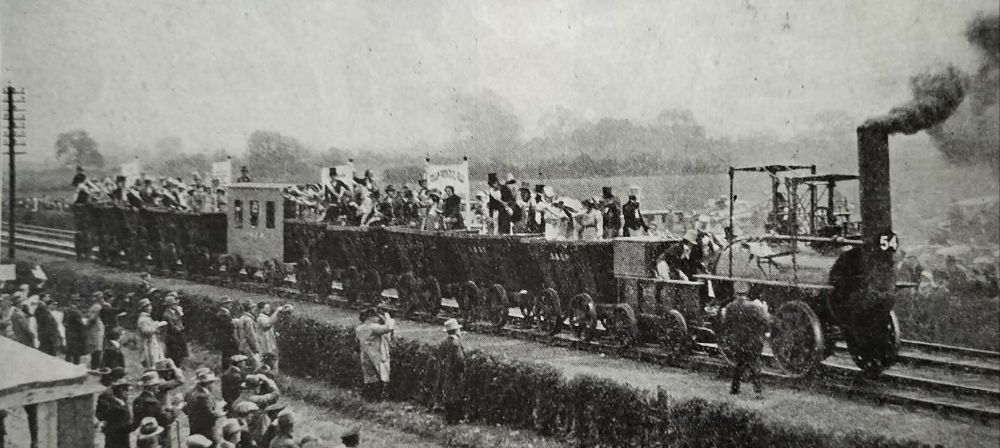
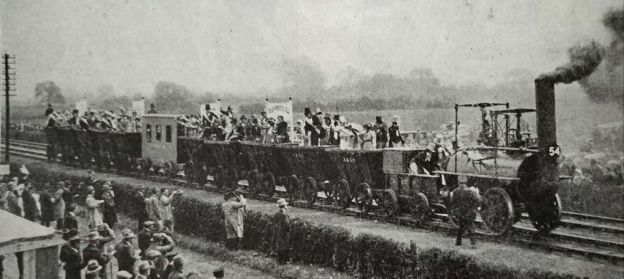
  • 54. Locomotion No. 1 and a replica train
Locomotion No. 1 and a replica train, © Public Domain. [1: p122]

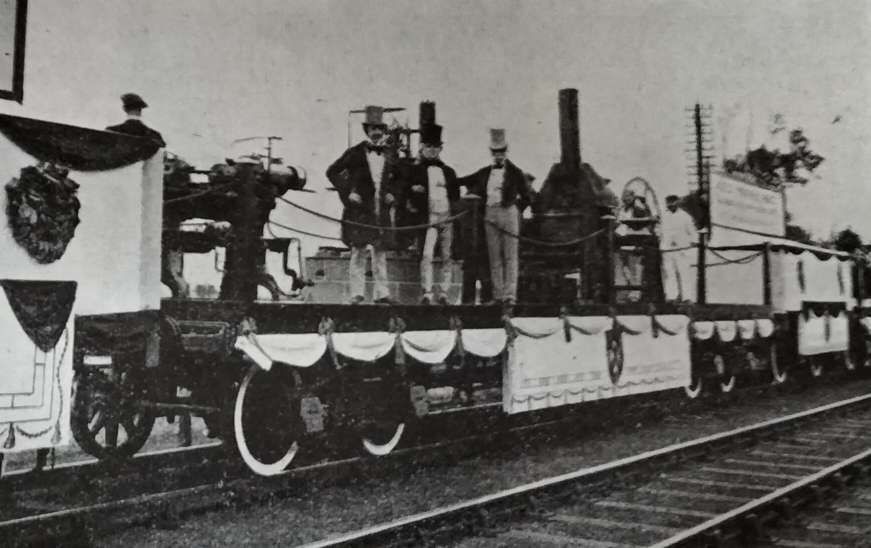
The replica train pulled by a modern incarnation of ‘Locomotion No.1’ was the last element of the procession/cavalcade. It was somewhat shorter than the original train of September 1825. ..

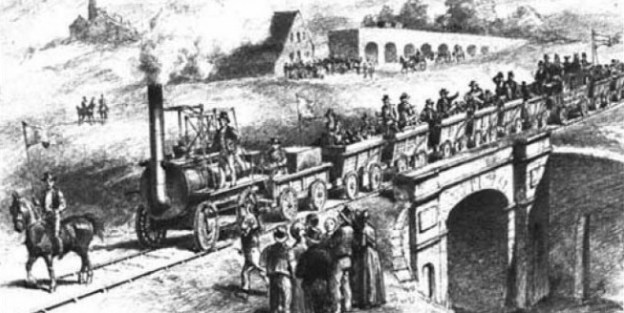
On 27th September 1825, Locomotion No. 1 hauled the first train on the Stockton and Darlington Railway, driven by George Stephenson. The train consisted of Locomotion No.1, eleven wagons of coal, the carriage ‘Experiment’, and a further 20 wagons of passengers, guests, and workmen. Around 300 tickets had been sold, but about twice as many people were believed to have been aboard. The train, which had an estimated weight of 80 metric tons and was 400 feet long, reached a maximum speed of 12 mph, and took two hours to complete the first 8.7 miles of the journey to Darlington, slowed by a derailed wagon and a blocked feed pump valve for an average speed of 8 mph. [44]

Locomotion No. 1 (originally named Active) … was built in 1825 by … George and Robert Stephenson at their manufacturing firm, Robert Stephenson and Company. It became the first steam locomotive to haul a passenger-carrying train on a public railway … [It] was ordered by the Stockton and Darlington Railway Company in September 1824; its design benefitted from George Stephenson’s experience building his series of Killingworth locomotives. It is believed that Locomotion No. 1 was the first locomotive to make use of coupling rods to link together its driving wheels, reducing the chance of the wheels slipping on the iron rails. However, the centre-flue boiler proved to be a weakness, providing a poorer heating surface than later multi-flue boilers. … Locomotion hauled the first train on the Stockton and Darlington Railway, the first locomotive to run on a public railway. On 1st July 1828, it was heavily damaged when its boiler exploded at Aycliffe Lane station, killing its driver, John Cree. It was rebuilt, but as a consequence of the rapid advances in locomotive design, [it] became obsolete within a decade. It was used on the railway until 1850, after which it was converted into a stationary engine. In 1857, as a consequence of its historical importance, Locomotion was preserved and put on display. Between 1892 and 1975, it was on static display at one of the platforms at Darlington Bank Top railway station, and was then on display at the Head of Steam museum based at Darlington North Road railway station between 1975 and 2021. It was then moved to the Locomotion museum in Shildon. A working replica of Locomotion was built, and following years of operation at Beamish Museum was put on display at the Head of Steam museum.” [44]

The Exhibition

At the Railway Centenary Exhibition held in the LΝΕR’s Faverdale Wagon Works and Sidings at Darlington “was gathered together the biggest and most interesting collection of railway appliances, locomotives, rolling stock and other material ever exhibited in this country. The locomotives and rolling stock on rails at the exhibition sidings numbered 99, whilst in the building were three locomotives and about 650 other items. … The railways were naturally the chief exhibitors, but many extremely interesting items were loaned from private collections.” [1: p127]

The Railway Magazine went on to list all the major exhibits, some of which were in the cavalcade/procession covered above.

The details given in The Railway Magazine are reproduced in the Appendix below.

The exhibition was comprehensive, giving an outstanding insight into the world of railways in Great Britain.

Appendix – Exhibition Items

The Railway Magazine … [1: p127-130]

In the outdoor catalogue were: the model of North Star, constructed for the exhibition, utilising the original driving wheels. Nearby was the Invicta, Canterbury and Whitstable Railway, built by R. Stephenson & Co., in 1830, and a 2-2-2 engine constructed by Bury, Curtis & Kennedy in 1846 for the Great Southern Railway. Two locomotives came from Belgium, one a 2-2-2 saddle tank, with tender built for the 3-ft. 7-in. gauge Anvers-Gand Railway in 1844, the other a full-size model of a 2-2-2 engine built in 1835 for the Belgian State Railways. Other old locomotives included the Derwent, Cornwall and the Hetton Colliery locomotive, which led the van in the Centenary procession. There was also the historic Locomotion, and a full size model of the Rocket. The remaining locomotives are tabulated according to groups, subdivided on the basis of original ownership.

Of these, the sections of the LNER were responsible for 33 locomotives.

The NER‘s total was 14:

No. 949 0-4-4 5-ft. passenger tank built by Neilson & Co. in 1874, designed by E. Fletcher;

No. 1334, 0-4-4 5-ft. 11-in. passenger tank built at Darlington in 1901, designed by Wilson Worsdell;

No. 2151, 4-4-4 5-ft. 9-in. passenger tank, 3 cylinders, built at Darlington in 1913, designed by Sir Vincent Raven;

No. 1275, 0-6-0 5-ft. mineral engine, built in 1874 by Dubs & Co., designed by W. Bouch;

No. 517, 0-6-0 4-ft. 74-in. mineral engine built at Gateshead in 1905, designed by W. Worsdell;

No. 934, 4-6-0 5-ft. 8-in. express goods engine, 3 cylinders, built at Gateshead in 1921, designed by Sir Vincent Raven;

No. 902, 0-8-0, 4-ft. 71-in. 3-cylinder mineral engine, built at Darlington in 1919, designed by Sir Vincent Raven;

No. 910, 2-4-0, 7-ft. express passenger engine, built at Gateshead in 1875, designed by E. Fletcher;

No. 1463, 2-4-0 7-ft. express passenger engine, built at Darlington in 1885, “Tennant” type;

No. 1620 4-4-0 7-ft. 1.25-in. express passenger engine, built at Gateshead, 1892, by W. Worsdell;

No. 2207, 4-4-2, 6-ft. 10-in. express passenger engine, 3 cylinders, built at Darlington, 1911, designed by Sir Vincent Raven;

No. 2006, 4-6-0 6-ft. 11-in. express passenger engine, built at Gateshead, 1900, designed by W. Worsdell, Gold Medal, Paris, 1900;

No. 9, 0-4-4-0 4-ft. electric freight engine, built at Darlington, 1914, designed by Sir Vincent Raven;

No. 13, 4-6-4, 6-ft. 8-in. electric express engine, built at Darlington, 1922, designed by Sir Vincent Raven.

The Great Central section was represented by four engines:

No. 6499, 0-6-0, 3-ft. 9-in, saddle tank shunting engine, built by Manning Wardle & Co., 1876, for the Manchester, Sheffield and Lincolnshire Railway;

No. 5088, 4-6-2 5-ft. 7-in. passenger side tank engine, built at Gorton, 1923, designed by J. G. Robinson;

No. 5972, 4-2-2 7-ft. 9-in. inside cylinder express passenger engine, built at Gorton, 1900, designed by H. Pollitt;

No. 6169, Lord Faringdon, 4-6-0 6-ft. 9-in. 4-cylinder express passenger engine, built at Gorton, designed by J. G. Robinson.

Two locomotives represented the GE section

No. 7133 was a 0-4-0 3-ft. 1-in. enclosed tramway engine built at Stratford in 1897;

No. 8900 (1900), Claud Hamilton, 4-4-0 7-ft. express passenger engine, built at Stratford, 1900, designed by J. Holden. Gold Medal Paris Exhibi- tion, 1900.

The GN section showed three engines:

The celebrated No. 1, 4-2-2 8-ft. 2-in. express engine, with outside cylinders, built at Doncaster, 1872, designed by P. Stirling:

No. 3990 (No. 990), 4-4-2 6-ft. 8-in. express engine, built at Doncaster, 1898, designed by H. A. Ivatt, the first “Atlantic” engine constructed in Great Britain;

No. 3251 (No. 251), 4-4-2 6-ft. 8-in. express engine, built at Doncaster, 1902, designed by H. A. Ivatt, the first engine on a British railway with a wide firebox.

The NBR section was represented by two engines:

No. 10114, 0-6-0 5-ft. 13-in. goods engine, built by Neilson & Co. in 1868, designed by T. Wheatley;

No. 9902, Highland Chief, 4-4-2 6-ft. 9-in, express engine, built by R. Stephenson & Co., 1911, designed by W. P. Reid.

The GNSR section was represented by No. 45A, 4-4-0 5-ft. 61-in. mixed traffic engine, built in 1866 by Neilson & Co., designed by W. Cowan.

The remaining seven locomotives exhibited by the LNER. were built since the grouping of the railways:

“Garratt” type 2-8-0+0-8-2, built by Beyer Peacock & Co., 1825, fitted with H. N. Gresley’s valve gear, driving wheels, 4-ft. 8-in. diameter, 6 cylinders (three to each truck), the first 6-cylinder “Garratt” locomotive, weight in working order, 176tons;

No. 203, 2-6-0 3-cylinder 5-ft. 8-in. express goods engine, built an Darlington, 1925, designed by H. N. Gresley (No. 202, a similar engine, was shown in the Exhibition building);

No 3499, 2-8-0 3-cylinder 4-ft. 8-in. mineral engine, built at Doncaster, 1924, designed by H. N. Gresley;

No. 2393, “Mikado” type (2-8-2) 3-cylinder 5-ft. 2-in. mineral engine, fitted with “booster” to drive trailing wheels, built at Doncaster, 1925, designed by H. N. Gresley;

No. 2563, William Whitelaw, 4-6-2 3-cylinder 6-ft. 8-in. express engine, designed by H. N. Gresley;

No. 2400, City of Newcastle, 4-6-2 3-cylinder 6-ft. 8-in. express engine, built at Darlington, 1922, designed by Sir Vincent Raven.

The LMS exhibit of modern locomotives comprised six engines: …

Three LNWR engines: …

No. 1881, 4-cylinder compound 4-ft. 3-in. mineral engine, built at Crewe, 1901, designed by F. W. Webb;

No. 9446, 0-8-0 4-ft. 2-in. goods engine, built at Crewe, 1922, designed by C. J. B. Cooke;

No. 5900, Sir Gilbert Claughton, 4-cylinder, 6-ft. 3-in. express engine, built at Crewe, 1913, designed by C. J. B. Cooke.

The Midland section exhibit was No. 679, 4-2-2 7-ft. 91-in. express engine, built at Derby, 1899, designed by S. W. Johnson.

The L&YR section showed No. 10474, 4-6-0 4-cylinder 6-ft. 3-in. express, built at Horwich, designed by G. Hughes.

The LMS specimen was No. 11112, 4-cylinder 6-ft. 3-in. passenger tank, built at Horwich, 1924, designed by G. Hughes.

The Somerset & Dorset Joint Railway No. 86 2-8-0 4-ft. 71-in. mineral engine, built by R. Stephenson & Co., 1825, designed by Sir H. Fowler (LMS)

The GWR was represented by three modern locomotives:

No. 5225, 2-8-0 4-ft. 7-in. mineral tank engine, built at Swindon, designed by G. J. Churchward;

No. 4700, 2-8-0 5-ft. 8-in. express goods engine, built at Swindon in 1919, designed by G. J. Churchward;

No. 4082, Windsor Castle, 4-6-0 4-cylinder 6-ft. 8-in. express, built at Swindon, designed by C. B. Collett. This is the locomotive the King and Queen drove at Swindon.

The SR was represented by No 449, Sir Torre, at the head of the train of modern coaches.

In addition there were: the City and South London Railway‘s old electric engine supplied for the opening of the railway in 1890. The LNER showed a petrol bus for rail service, a petrol autocar, and a Sentinel-Cammell steam coach.

Modern rolling-stock-passenger and freight was represented in profusion: …

A complete train by each of the four groups: …

GWR – showed an articulated rake of coaches and a 10-compartment third-class corridor coach, 70ft long;

LNER – showed a similar articulated rake and an electric coach, a Post Office van, a sleeper with first-class berths and third-class compartments, a twin (articulated) sleeper, a ‘triplet’ dining set, corridor third etc.;

SR – sent Pullman Car ‘Lydia’, whilst the Pullman Car Company exhibited ‘Niobe’;

LMS – showed a first-class corridor coach, Queen Victoria’s saloon (and indoors – Queen Adelaide’s carriage);

London Electric Railways by one of the latest tube coaches.

Also in view were:

The “Dandy” coach from the Port Carlisle Railway;

A Stockton & Darlington carriage built circa 1850;

A GNSR coach from circa 1865.

The wide range of modern freight vehicles was well shown by the 18 wagons, etc, of different types exhibited by the LNER, varying from a four-wheeled horse-box to a set of three 60-ton flat wagons tight coupled for conveying 160-ton guns. The GWR showed a 20-ton mineral wagon, a 35-ton well trolley, a 30-ton articulated gun wagon, and a 70-ft. rail or timber truck. There were a few items of old goods rolling-stock, including a ‘Chaldron’ coal wagon built in 1826.

Within the building the fine display of signalling appliances from the earliest days, through the crude interlocking of some sixty years ago to the present perfect locking apparatus, electrical and mechanical, attracted much attention. So did the many specimens representing all periods during the past 100 years of the rails, chairs, and sleepers that go to make up the permanent way. Chief interest was taken in the numerous models, many on a large scale, and as regards locomotives chiefly working models, actuated by compressed air. Of the 46 locomotive models there were two of the Locomotion, while several GWR. broad-gauge engines made a fine display. The Metropolitan Railway was a big exhibitor in this section, showing seven or eight models of locomotives of various railways. A quarter-size model of the GNR’s 8-ft. 1-in. single (Stirling’s famous 4-2-2 type) was prominent, as, too, was the Dandy Cart, with horse aboard, as attached to the rear of horse-hauled mineral trains. Here also were models in plenty of railway bridges and viaducts, railway coaches, steamers, &c. Early railway tickets, bills, time-tables, passes, medals, &c., were to be seen in profusion, with specimens of Edmondson’s ticket-dating presses and ticket-printing machines invented in 1840, and taken from actual work to be shown at Faverdale. Railway-station bells, besides early signal and hand lamps of various types, were represented, whilst the many loan collections of literature and maps relative to early railways provided information of rare value to those interested in the development of the railway system.

References

  1. G.A. Sekon, ed.; 1825-1925: The Railway Centenary Celebrations at Darlington, 1st to 3rd July 1925; in The Railway Magazine, London, No. 338, August 1925, p101-142.
  2. https://commons.m.wikimedia.org/wiki/File:Hetton_Colliery_0-4-0_(1822_or_1851)_Locomotion_Shildon_29.06.2009_P6290048_(9989613283).jpg, accessed on 27th December 2024.
  3. https://commons.m.wikimedia.org/wiki/File:S%26DR_Derwent_(Hugh_Llewelyn).jpg, accessed on 27th December 2024.
  4. https://commons.m.wikimedia.org/wiki/File:Stockton_%26_Darlington_0-6-0_25_%27Derwent%27_Head_of_Steam,_Darlington_30.06.2009_P6300113_(10192716434).jpg, accessed on 27th December 2024.
  5. https://collection.sciencemuseumgroup.org.uk/objects/co205769/steam-locomotive-no-25-derwent-stockton-darlington-railway, accessed on 27th December 2024.
  6. https://preservedbritishsteamlocomotives.com/sd-class-1001-0-6-0-stockton-darlington-railway-1275, accessed on 28th December 2024.
  7. https://collection.sciencemuseumgroup.org.uk/objects/co205734/ner-0-6-0-1001-class-steam-locomotive-and-tender-no-1275-1874, accessed on 28th December 2024.
  8. http://www.railcentre.co.uk/RailHistory/Stockton/Pages/StocktonPage6.html, accessed on 28th December 2024.
  9. https://en.m.wikipedia.org/wiki/LNWR_Class_B, accessed on 28th December 2024.
  10. https://preservedbritishsteamlocomotives.com/north-star-2-2-2-gwr-broad-gauge, accessed on 28th December 2024.
  11. https://commons.m.wikimedia.org/wiki/File:North_Star_Steam_museum_Swindon.jpg, accessed on 28th December 2024.
  12. https://en.m.wikipedia.org/wiki/LNWR_2-2-2_3020_Cornwall, accessed on 28th December 2024.
  13. https://commons.m.wikimedia.org/wiki/File:LNWR_locomotive,_%22Cornwall%22.jpg, accessed on 28th December 2024.
  14. https://en.m.wikipedia.org/wiki/GNR_Stirling_4-2-2, accessed on 29th December 2024.
  15. https://en.m.wikipedia.org/wiki/GNR_Stirling_4-2-2#/media/File%3A4-2-2_GNR_1008.jpg, accessed on 28th December 2024.
  16. https://en.m.wikipedia.org/wiki/GNR_Stirling_4-2-2#/media/File%3AGNR_Stirling_1_at_Doncaster_Works.jpg, accessed on 29th December 2024.
  17. https://www.lner.info/locos/E/ner_901.php, accessed on 29th December 2024.
  18. https://www.lner.info/locos/E/e5.php, accessed on 29th December 2024.
  19. https://www.lner.info/locos/D/d17.php, accessed on 29th December 2024.
  20. https://en.m.wikipedia.org/wiki/NER_Class_M1, accessed on 29th December 2024.
  21. https://en.m.wikipedia.org/wiki/LNER_Class_P1, accessed on 30th December 2024.
  22. https://www.lner.info/locos/P/p1.php, accessed on 30th December 2024.
  23. https://en.m.wikipedia.org/wiki/L%26YR_Hughes_4-6-4T, accessed on 30th December 2024.
  24. https://preservedbritishsteamlocomotives.com/4200-2-8-2t-gwr-churchward-4200-4299-5200-5204https://preservedbritishsteamlocomotives.com/4200-2-8-2t-gwr-churchward-4200-429, accessed on 30th December 2024.
  25. https://didcotrailwaycentre.org.uk/article.php/71/5227-5205-class, accessed on 30th December 2024.
  26. https://en.m.wikipedia.org/wiki/LNER_Class_U1, accessed on 30th December 2024.
  27. https://www.lner.info/locos/Electric/electric.php, accessed on 30th December 2024.
  28. https://www.lner.info/locos/Electric/ee1.php, accessed on 30th December 2024.
  29. https://en.m.wikipedia.org/wiki/LNER_Class_EE1#/media/File%3ANorth_Eastern_Railway_electric_locomotive_No_13.jpg, accessed on 30th December 2024.
  30. https://rogerfarnworth.com/2024/08/08/petrol-railmotors-the-railway-magazine-september-1922
  31. https://www.lner.info/locos/IC/ner_petrol_autocar.php, accessed on 30th December 2024.
  32. https://en.m.wikipedia.org/wiki/NER_Class_T3, accessed on 30th December 2024.
  33. https://rogerfarnworth.com/2024/06/26/steam-railmotors-part-6-after-the-grouping
  34. https://www.lner.info/locos/Railcar/sentinel.php, accessed on 30th December 2024.
  35. https://player.bfi.org.uk/free/film/watch-the-official-film-of-the-railway-centenary-1925-online, accessed on 31st December 2024.
  36. https://locomotive.fandom.com/wiki/L%26YR_Class_8_No._10474, accessed on 31st December 2024.
  37. https://www.railwaywondersoftheworld.com/railway_centenary.html, accessed on 31st December 2024.
  38. https://www.lner.info/locos/D/d47.php, accessed on 31st December 2024.
  39. http://www.greatwestern.org.uk/m_in_cas_40827013.htm, accessed on 31st December 2024.
  40. https://www.facebook.com/161421647218065/posts/pfbid0otP6Sxuamk1BURpmy2cZ6opNaZmjVDnwY8AcomKmaoE3YioDGEtK8jZmsRQ2yAZAl/?app=fbl, accessed on 31st December 2024.
  41. https://en.m.wikipedia.org/wiki/LSWR_N15_class, accessed on 31st December 2024.
  42. https://blog.railwaymuseum.org.uk/2025-celebrating-200-years-of-the-stockton-darlington-railway, accessed on 31st December 2024.
  43. https://en.m.wikipedia.org/wiki/LNER_Class_A2, accessed on 31st December 2024.
  44. https://en.m.wikipedia.org/wiki/Locomotion_No._1, accessed on 31st December 2024.
  45. https://en.m.wikipedia.org/wiki/Stockton_and_Darlington_Railway, accessed on 31st December 2024.
  46. https://wp.me/p9H29O-Ao, accessed on 31st December 2024.