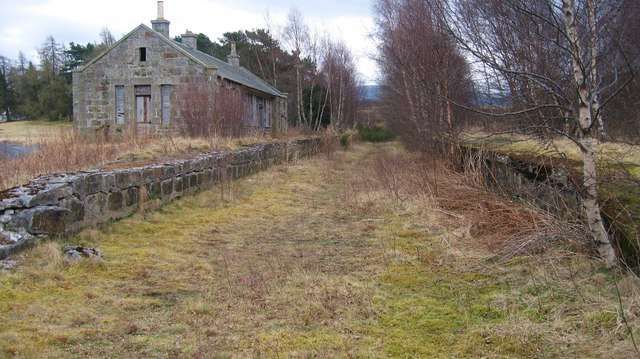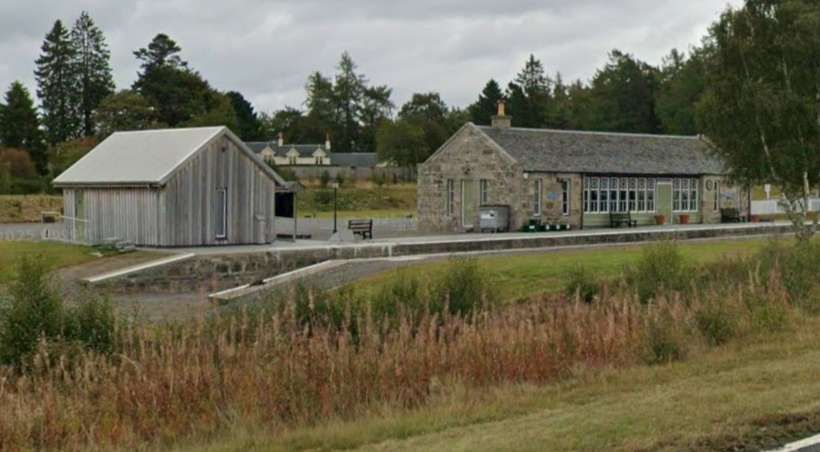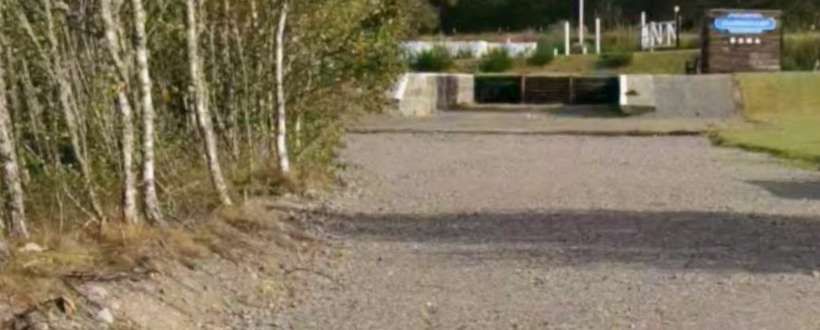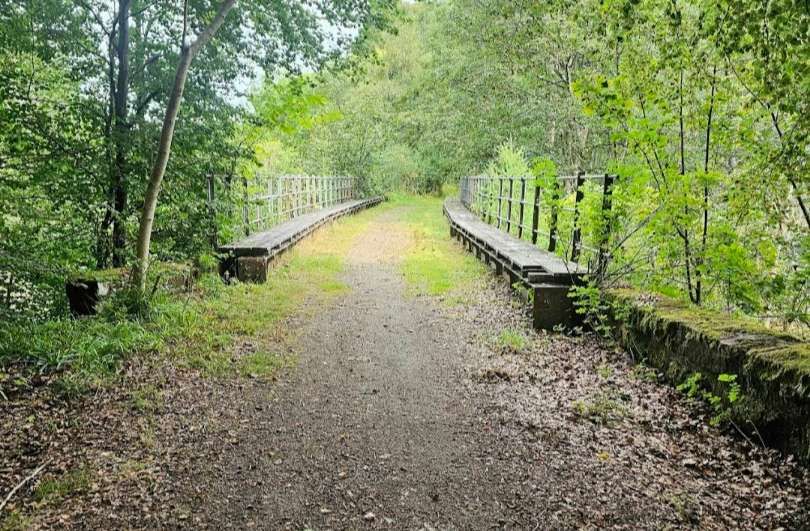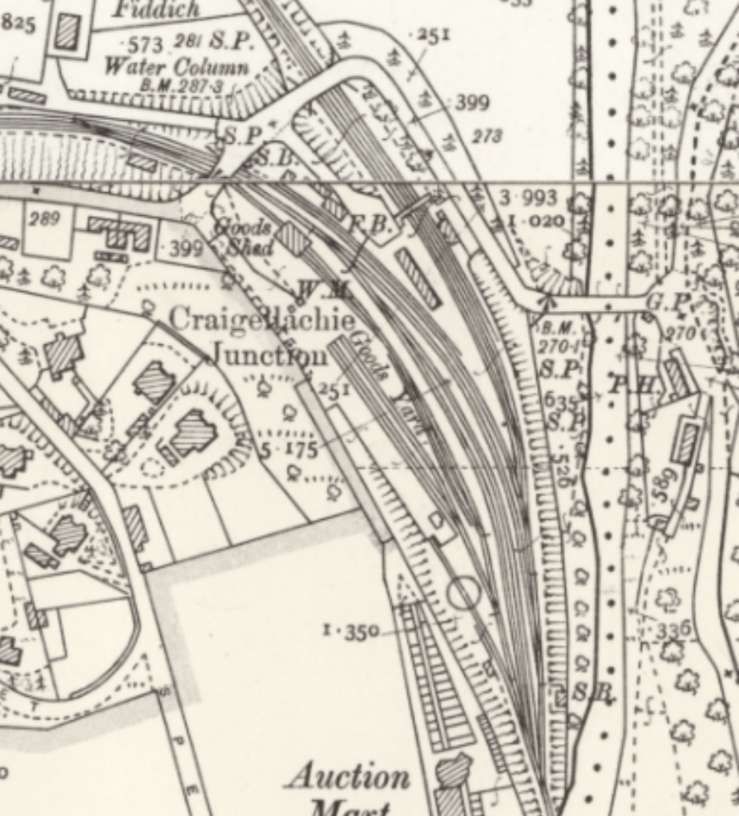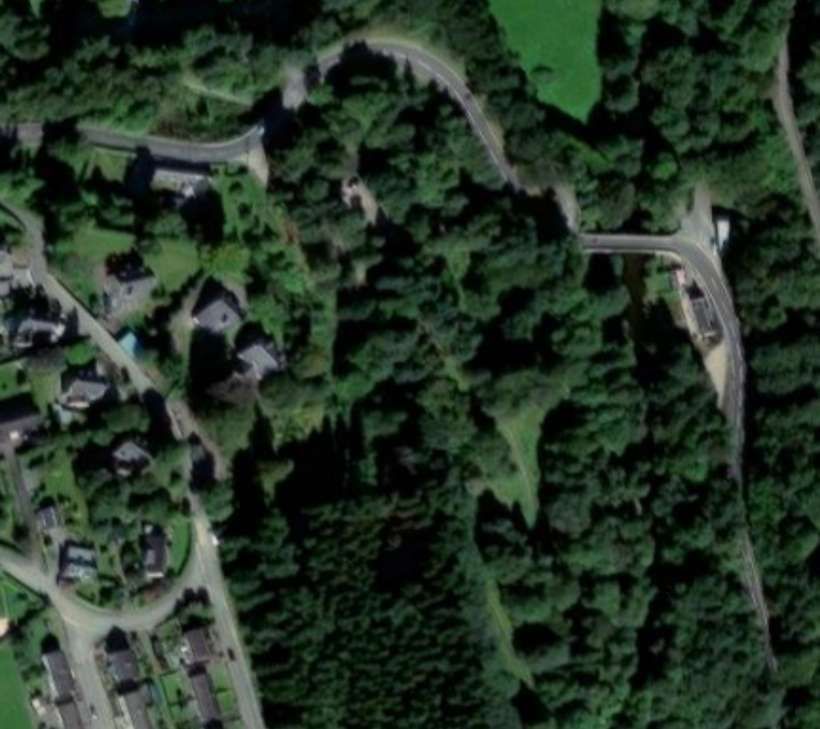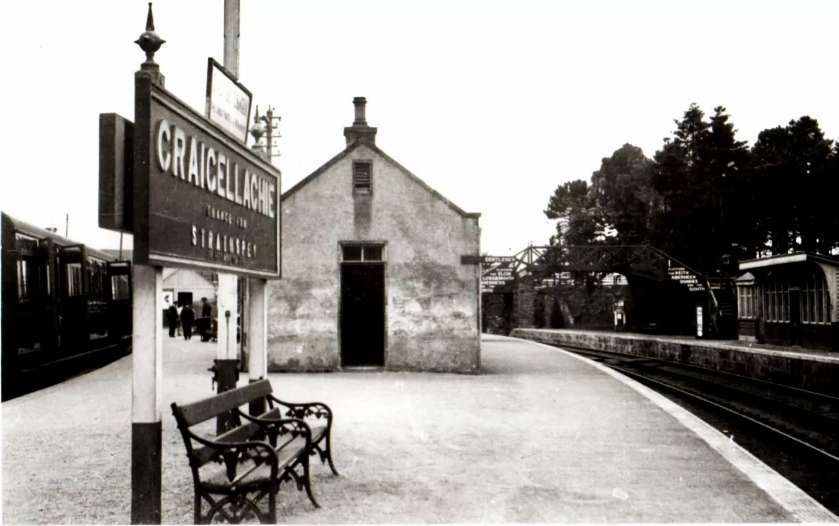
Tag Archives: Ballindalloch

The Strathspey Line – Part 3 – Ballindalloch Railway Station to Boat of Garten

This is the third article following the Strathspey Line. The first can be found here. [3] The second can be found here. [4]

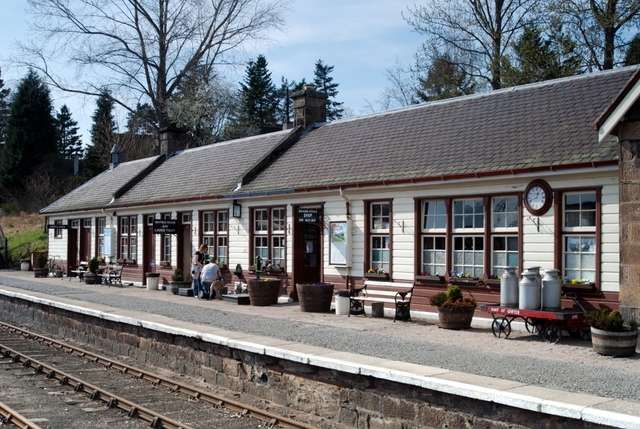
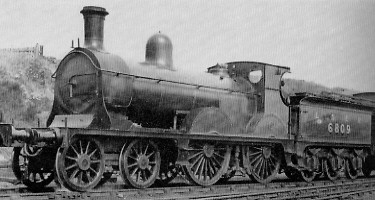
The featured image above is a Manson O class 4-4-0 locomotive. When the GNSR Directors requested larger engines to handle increasing passenger traffic loads, and Manson designed his Class O (LNER D42) locomotives to meet this need. Initially allocated to main line passenger duties between Aberdeen and Elgin, as later 4-4-0s (e.g..the D40s) were introduced, they were displaced to secondary duties. By the time of the Grouping (1923), they could be found across the GNSR system, including at Boat of Garten working the Speyside Line. [32]

We start this next leg of the journey at Ballindalloch Railway Station.
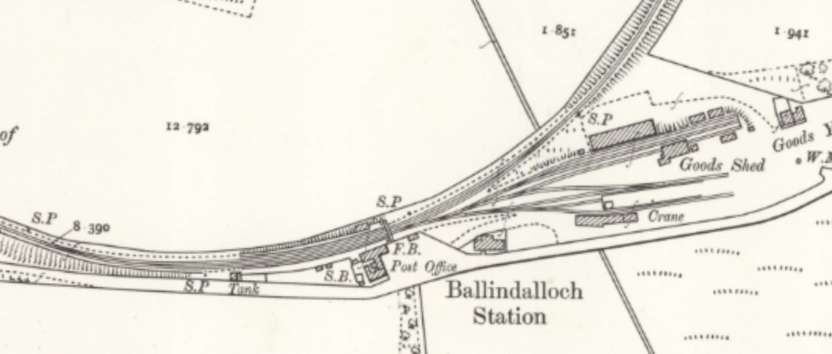
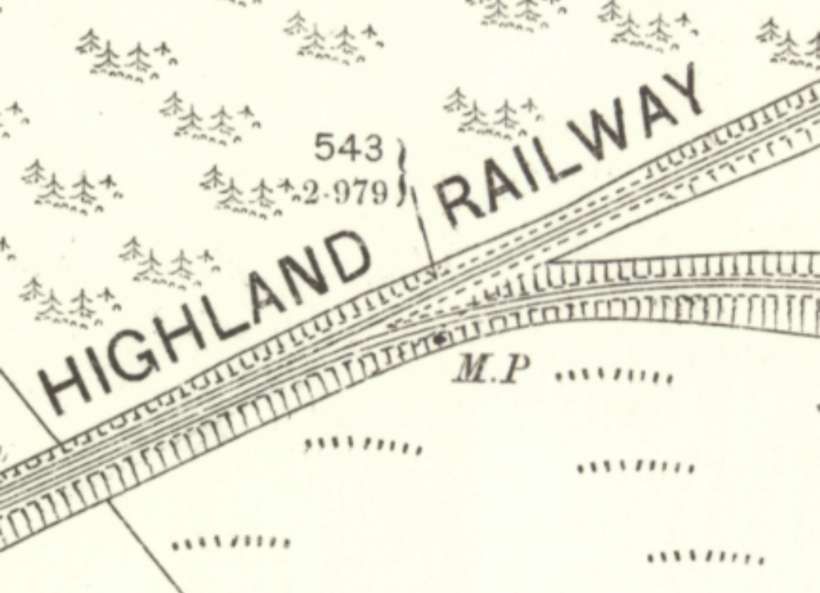
Ballindalloch Railway Station as it appears on the 25″ Ordnance Survey of 1902, published in 1905. [5]
The location of Ballindalloch Railway Station as it appears on the satellite imagery provided by railmaponline.com. [6]

The scenery undergoes a change beyond Ballindalloch, and the woods that have so far characterised the journey give place to the wilder moorland country of upper Strathspey. [2: p6]
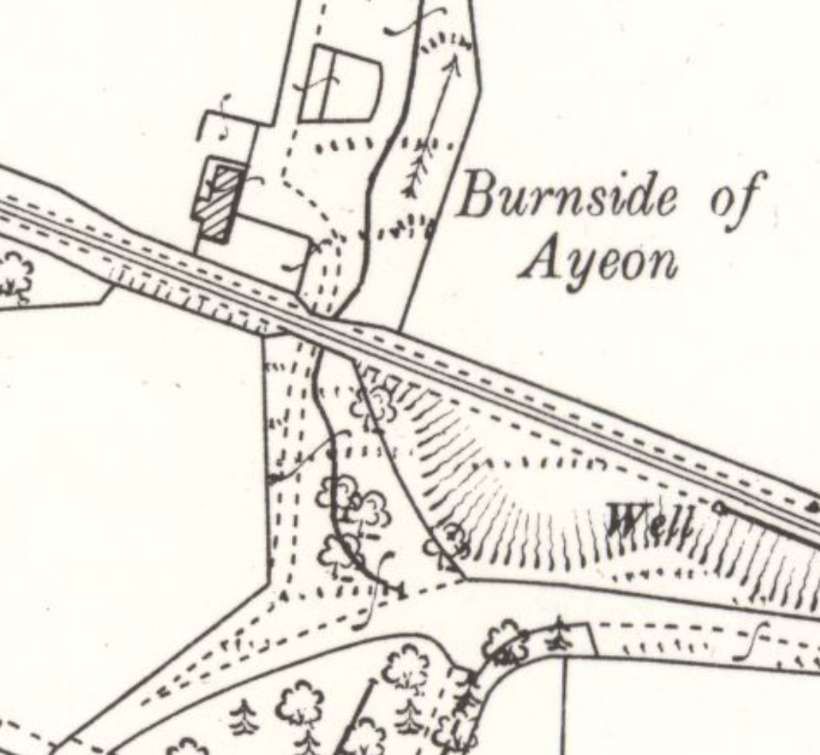
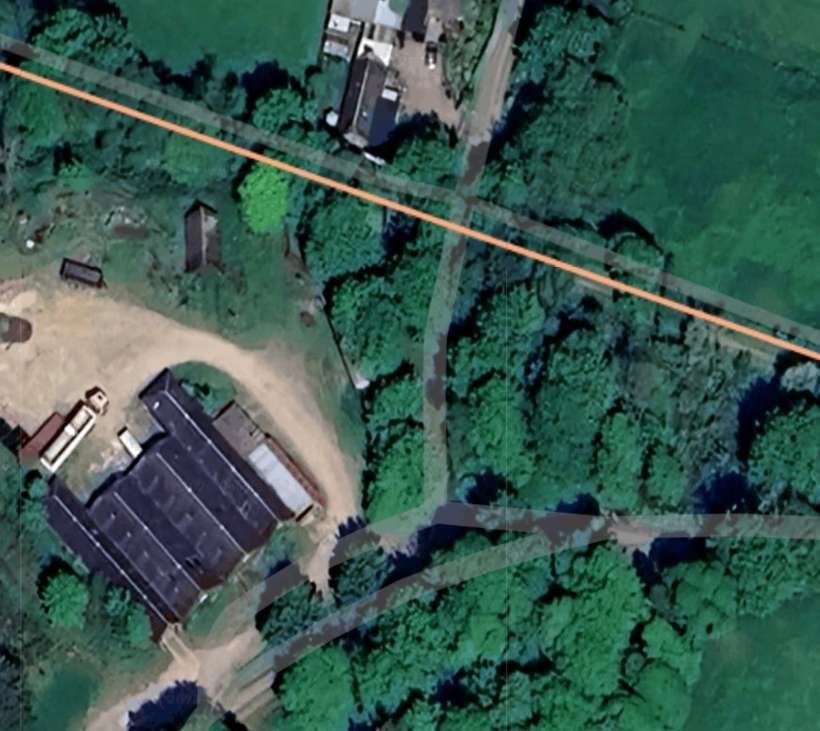
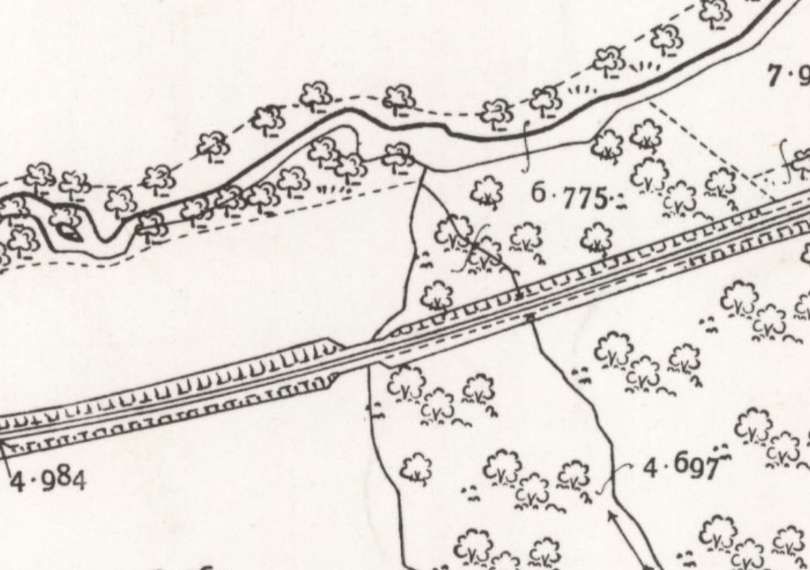
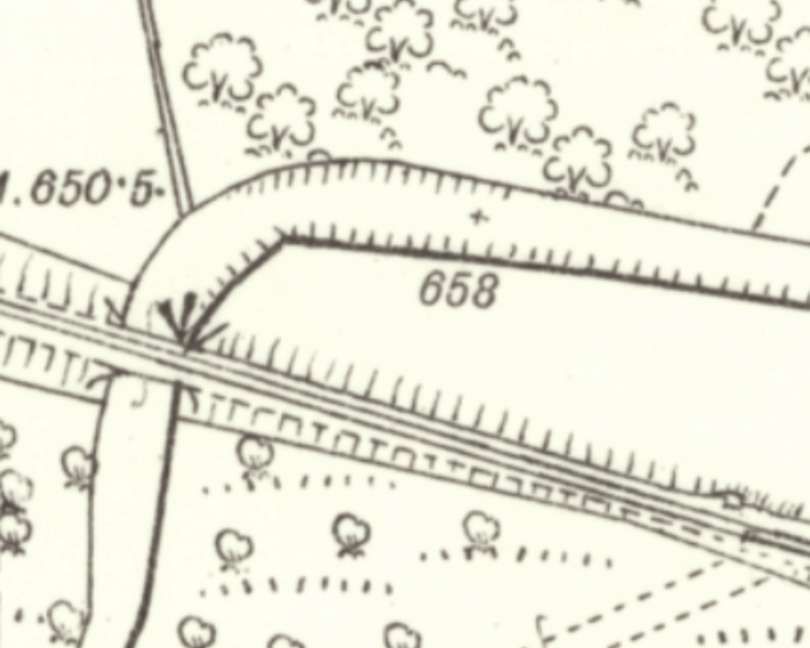
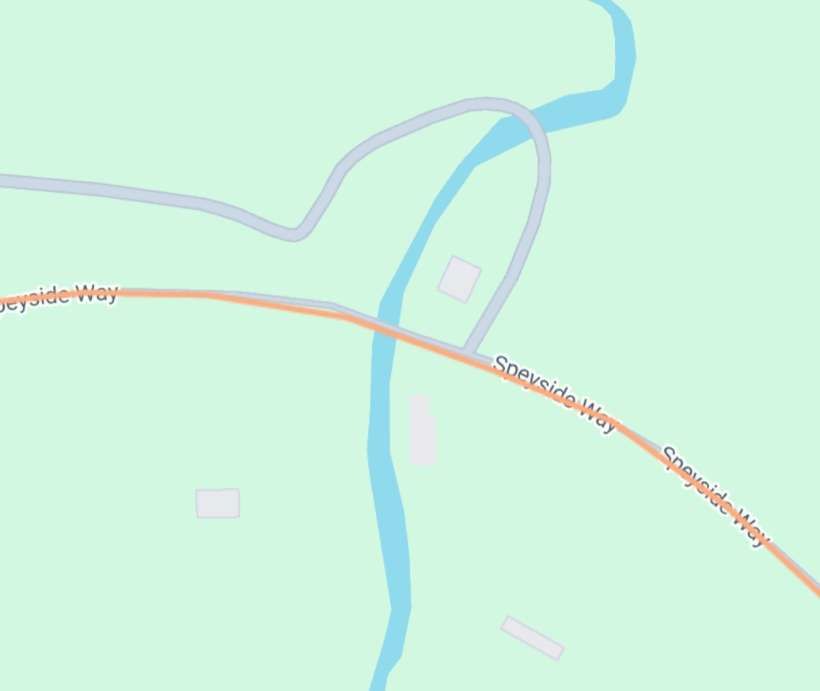
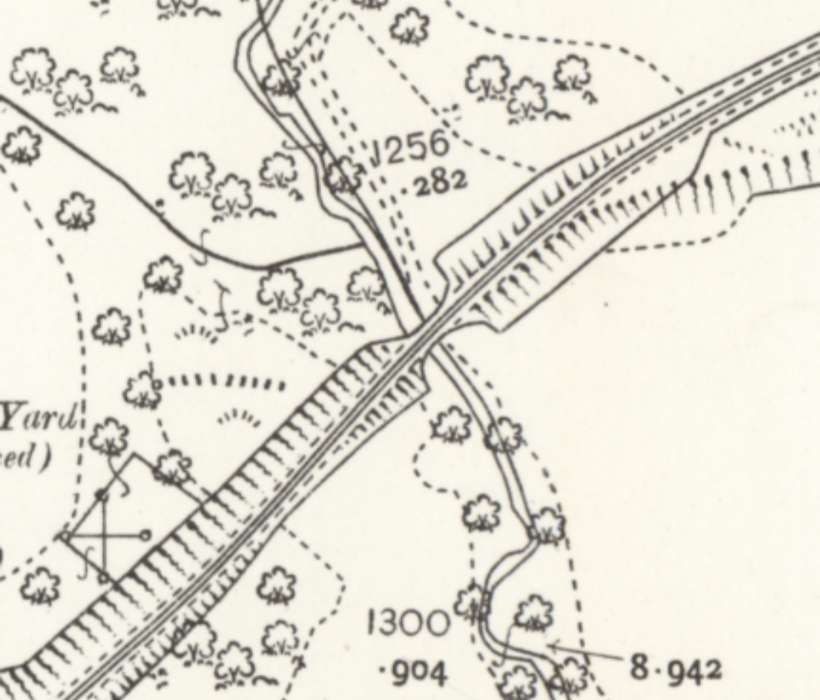
Just to the West of Ballindalloch Railway Station the line bridged the Burn of Ayeon. [7]
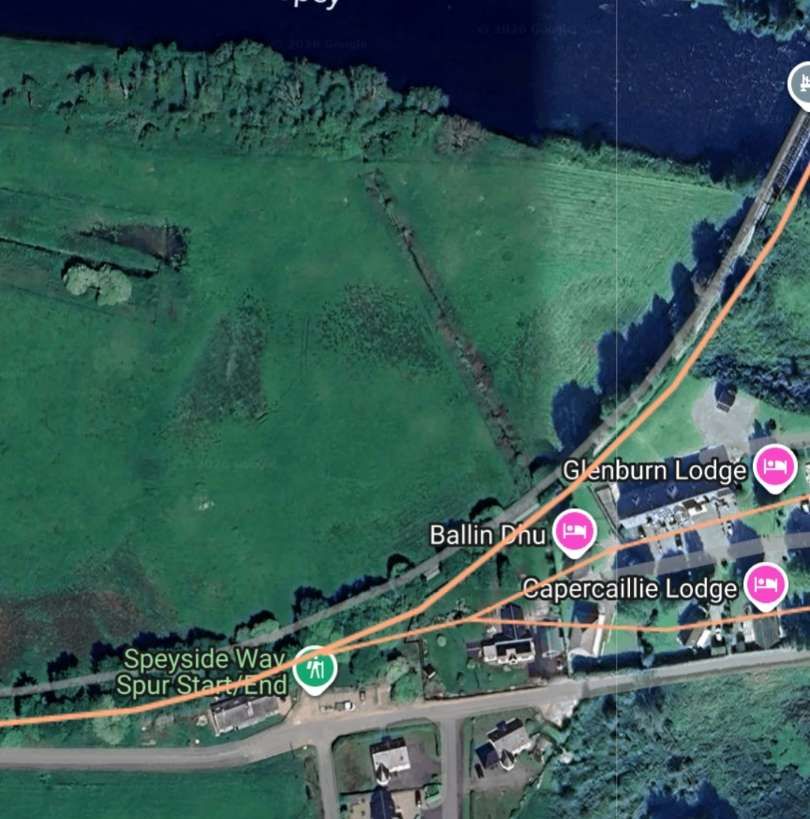
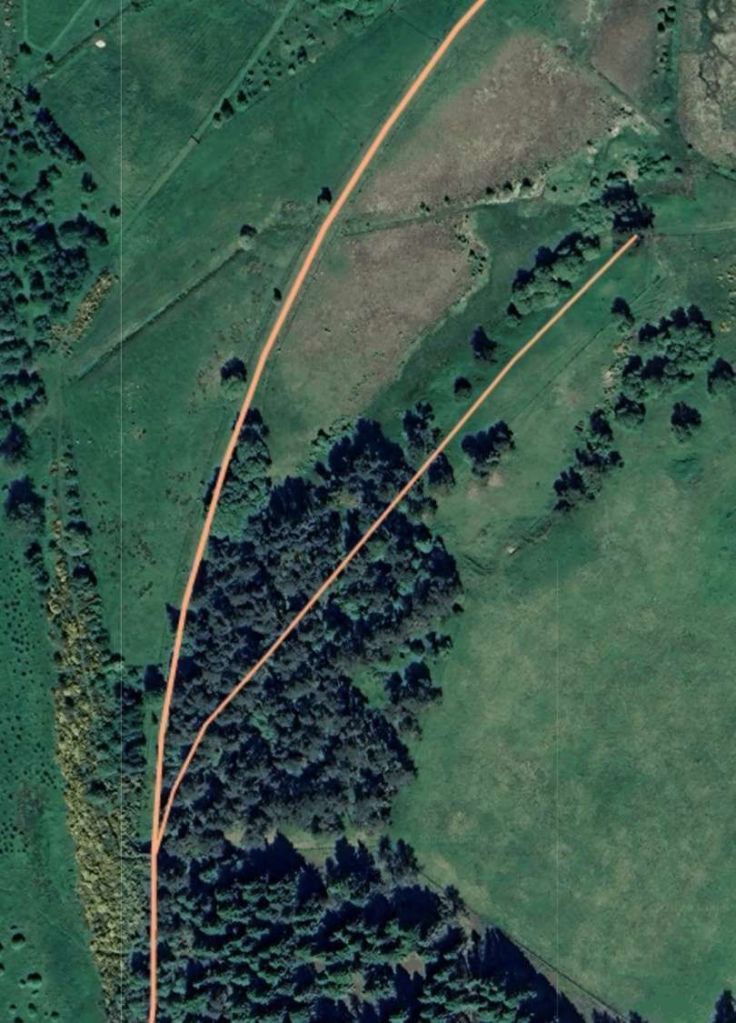
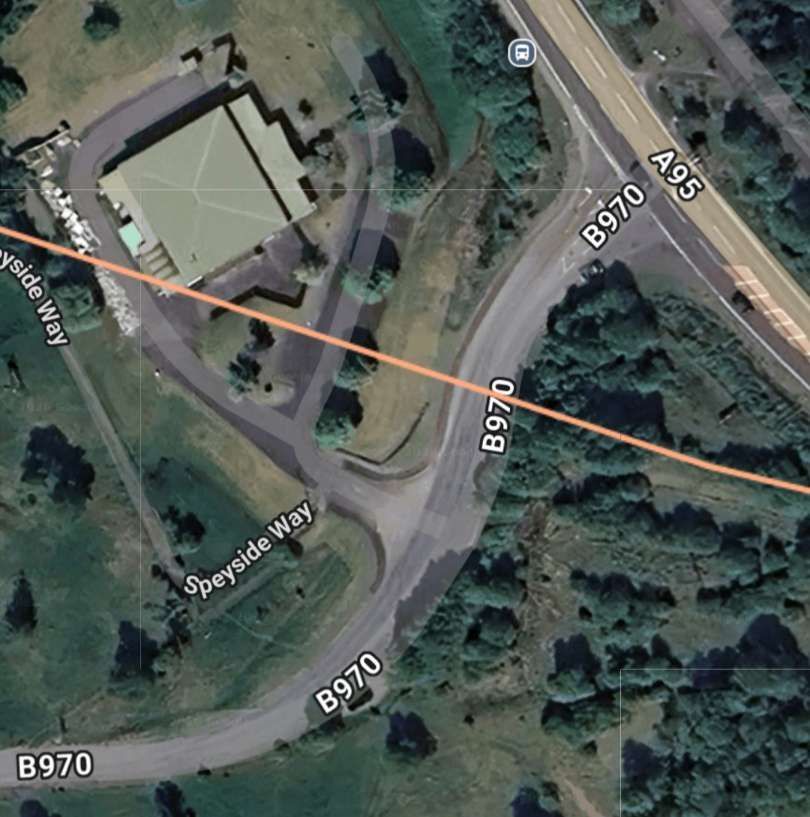
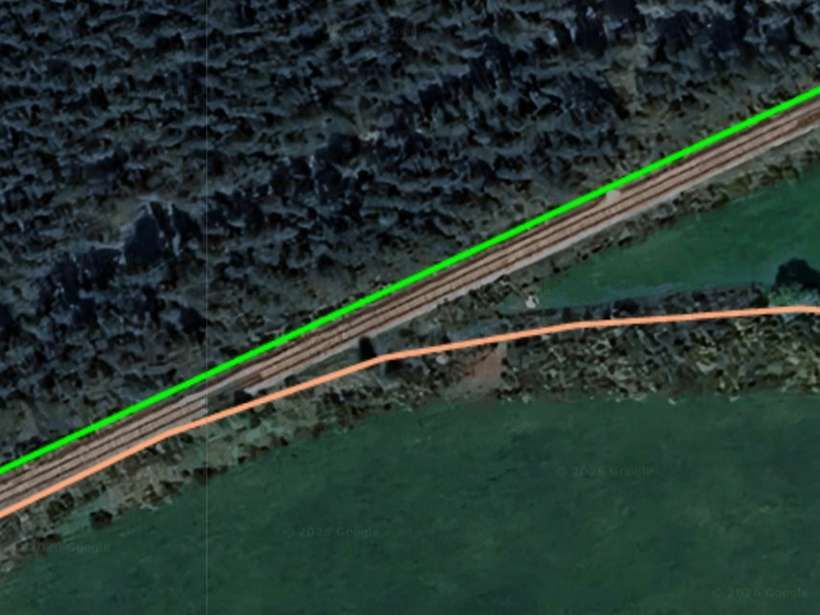
The same location in the 21st century with the line of the old railway superimposed on modern satellite imagery. [6]
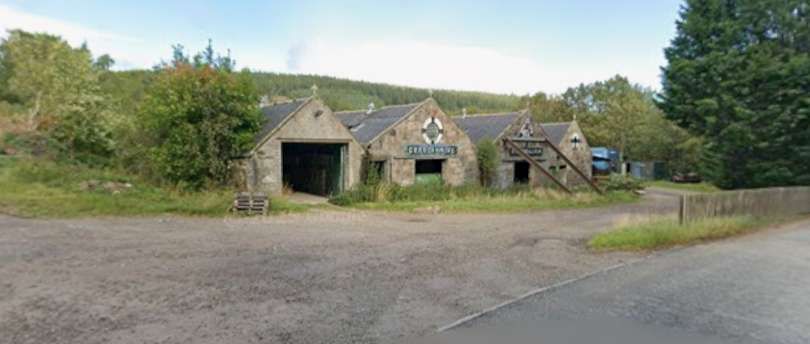
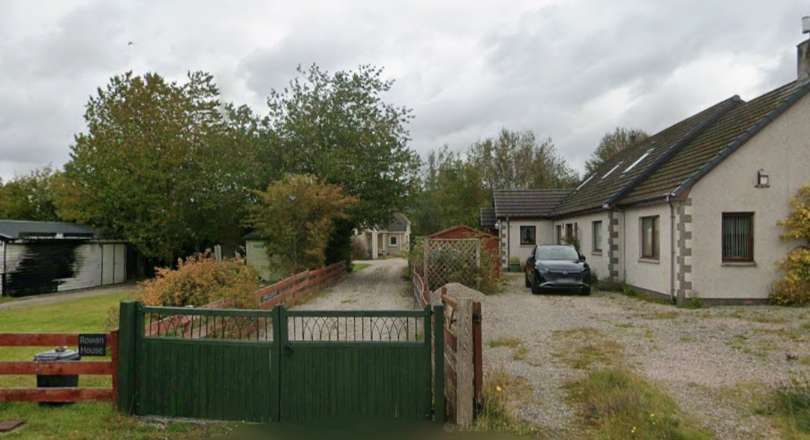
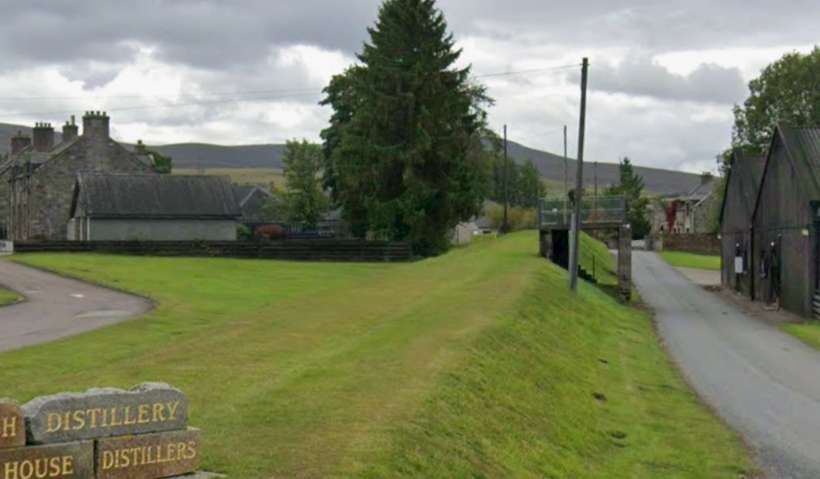
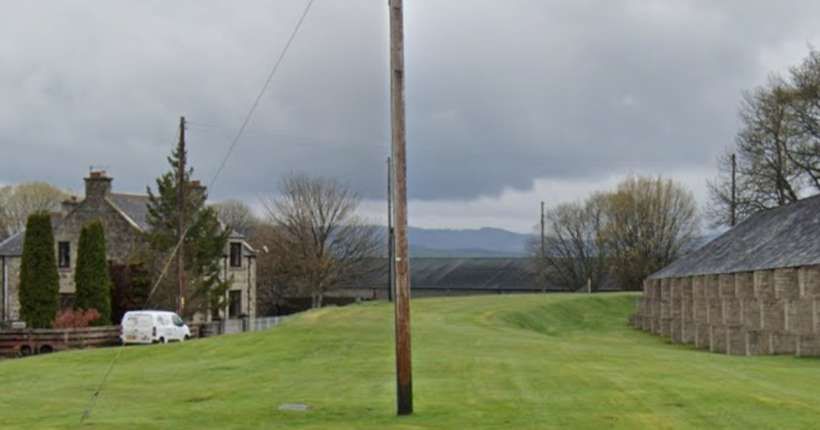
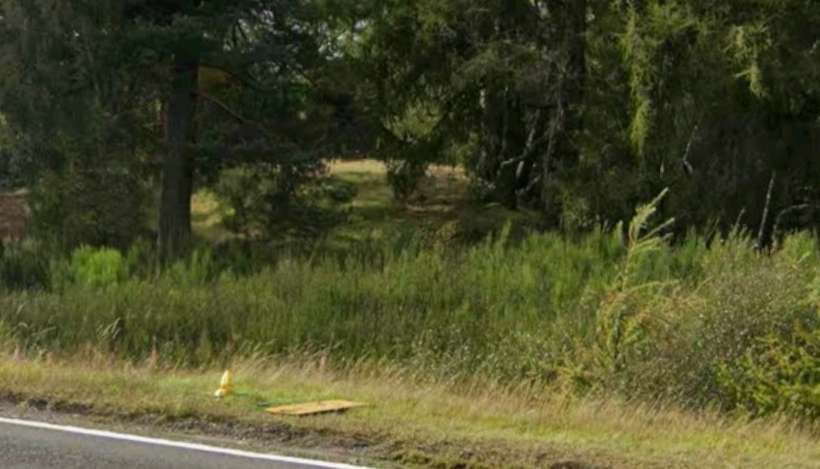
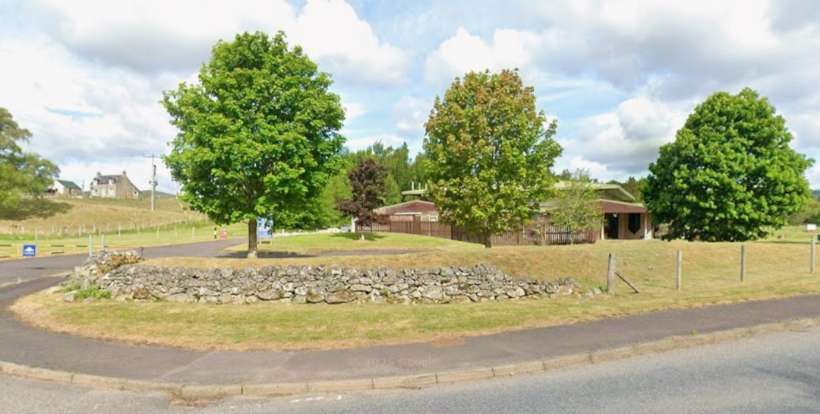
The warehousing on the above satellite image seen from the road, the old railway was beyond these buildings. [Google Streetview, September 2025]
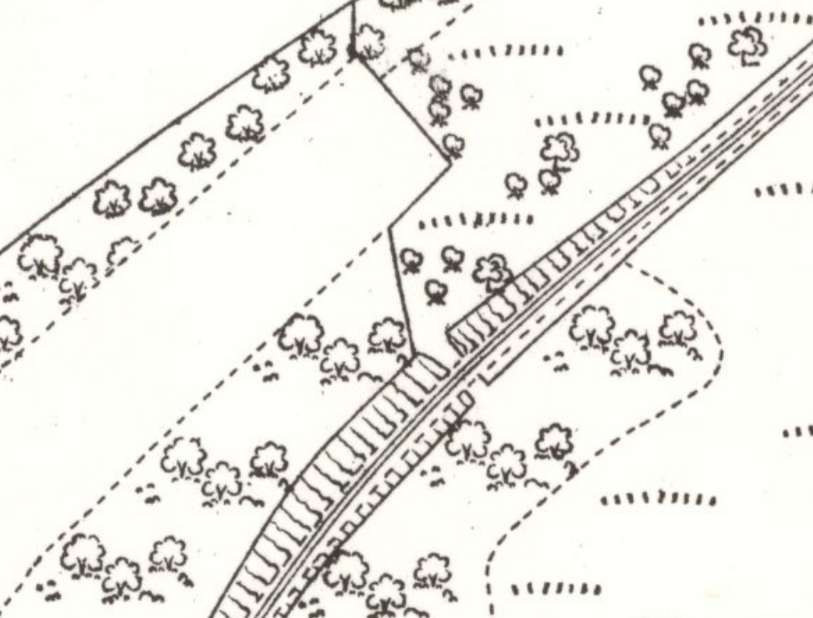
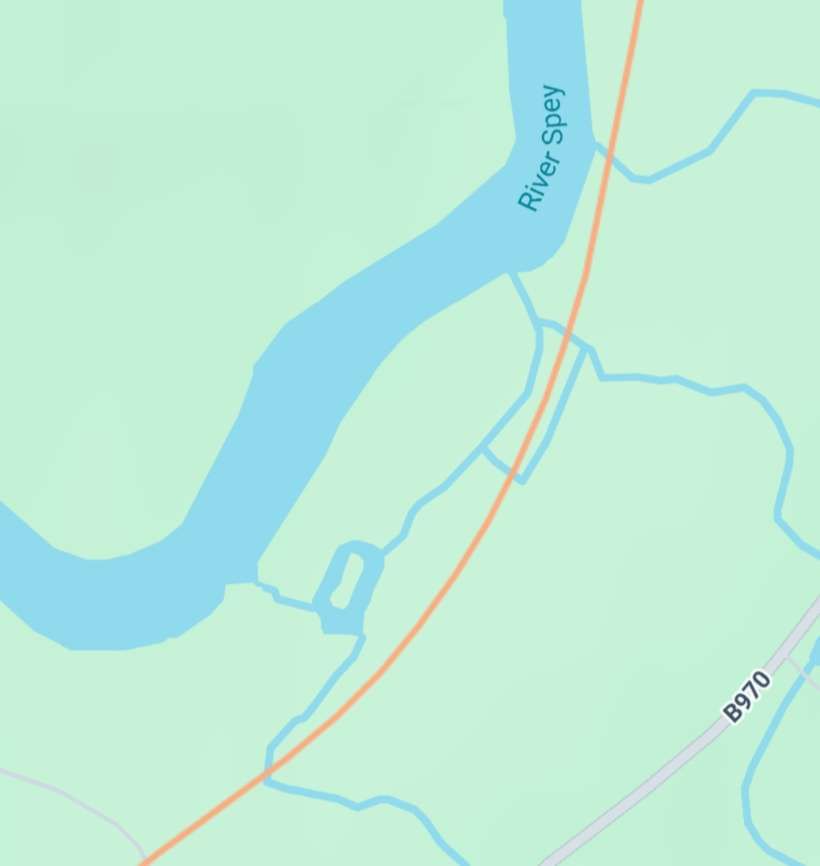
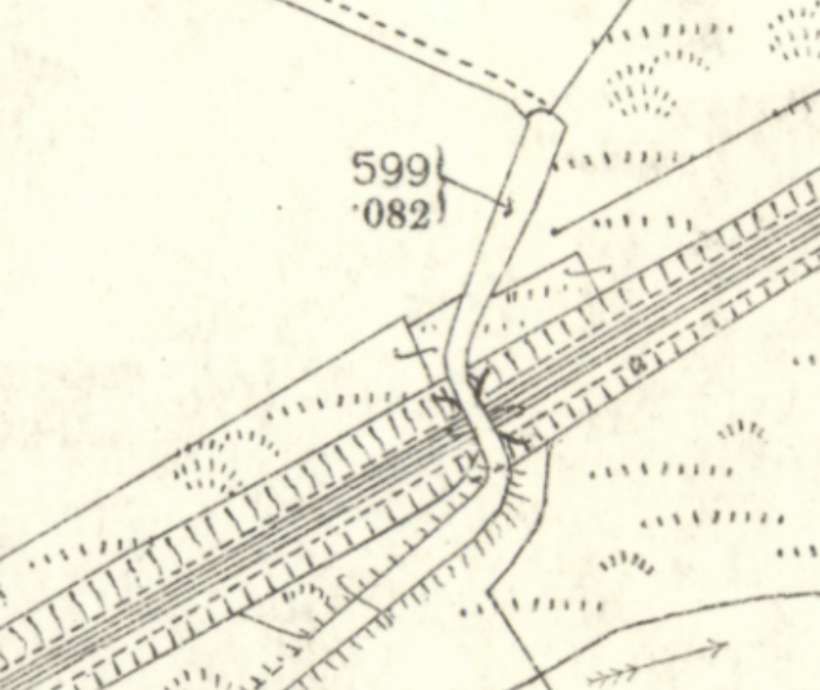
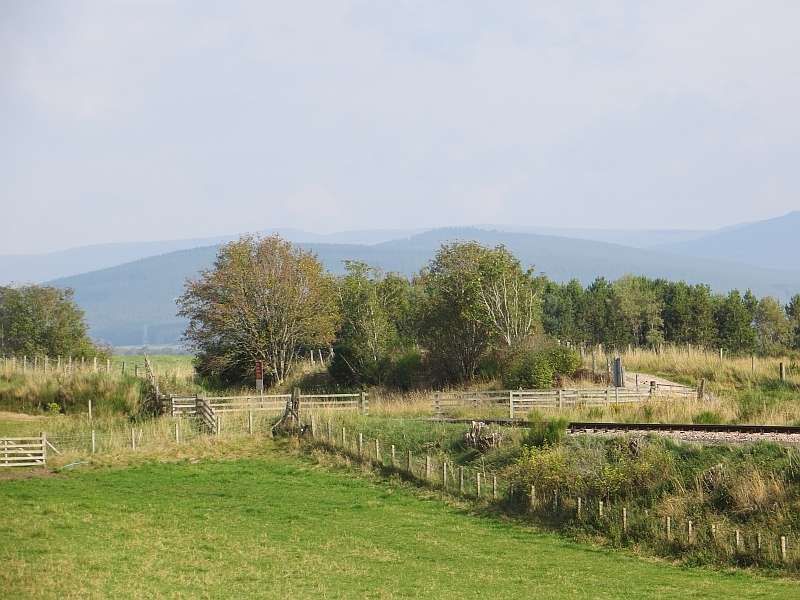
As the line curved towards the South following the course of the River Spey, a cattle-creep allowed access from the fields to the river bank. [8]
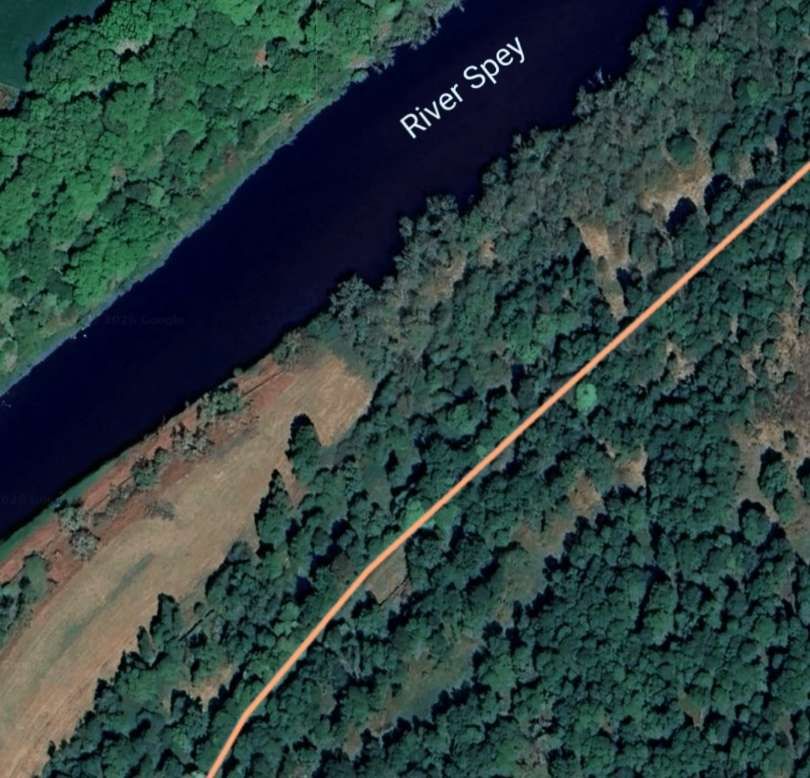
The same location in the 21st century. [6]
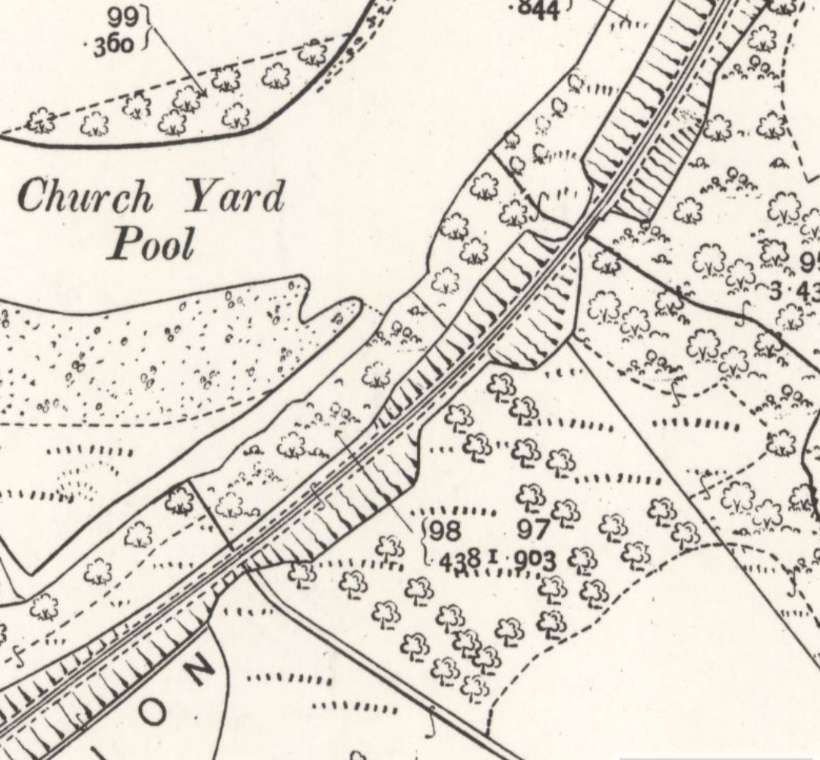
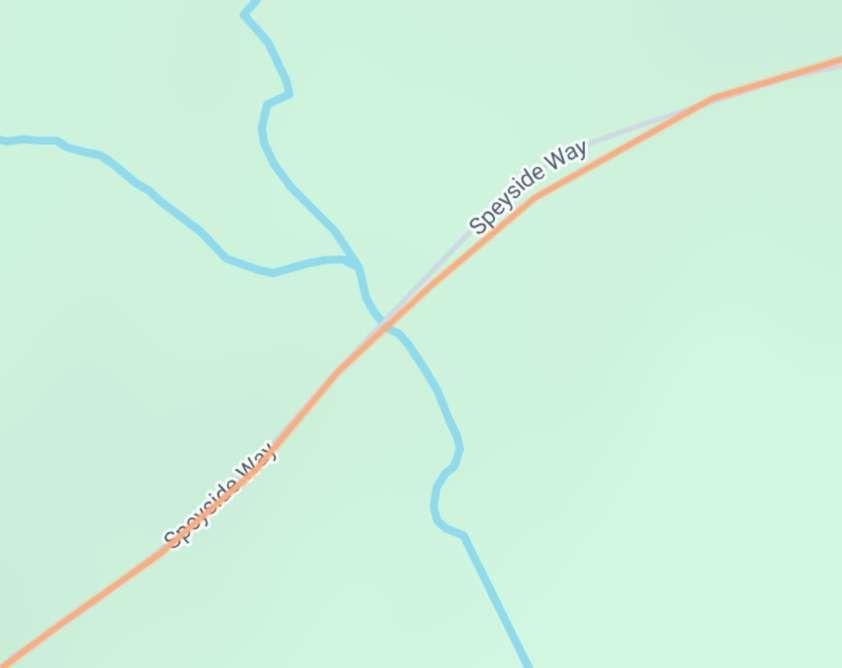
Near Church Yard Pool on the River Spey, two Futher small burns were bridged by the railway just prior to meeting the river. The first encountered is Achvochkie Burn, the next was Faeshellach Burn. [9]
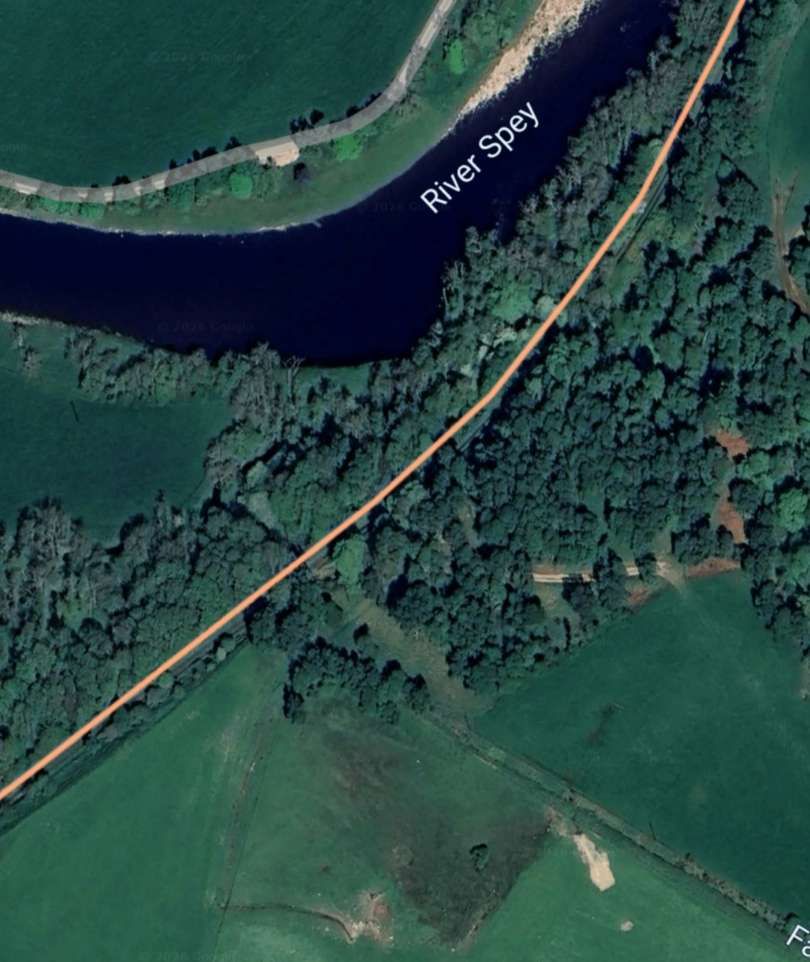
The same location in the 21st century. [6]
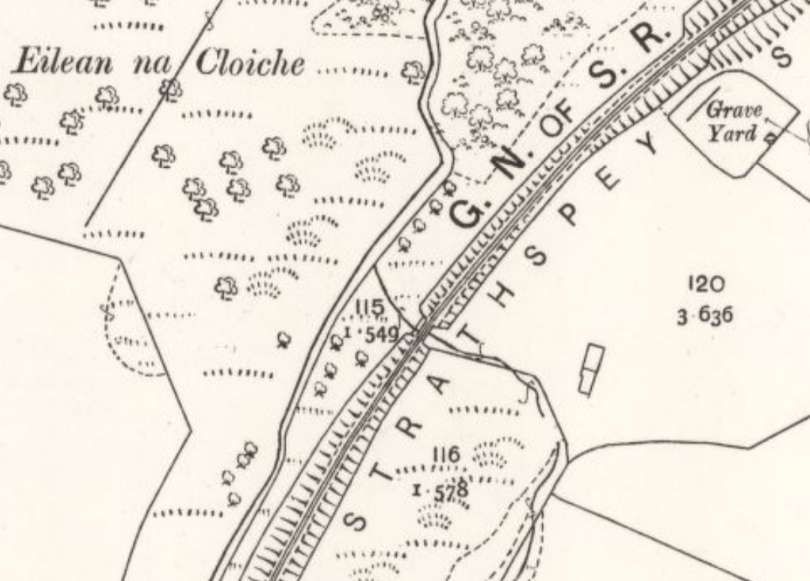
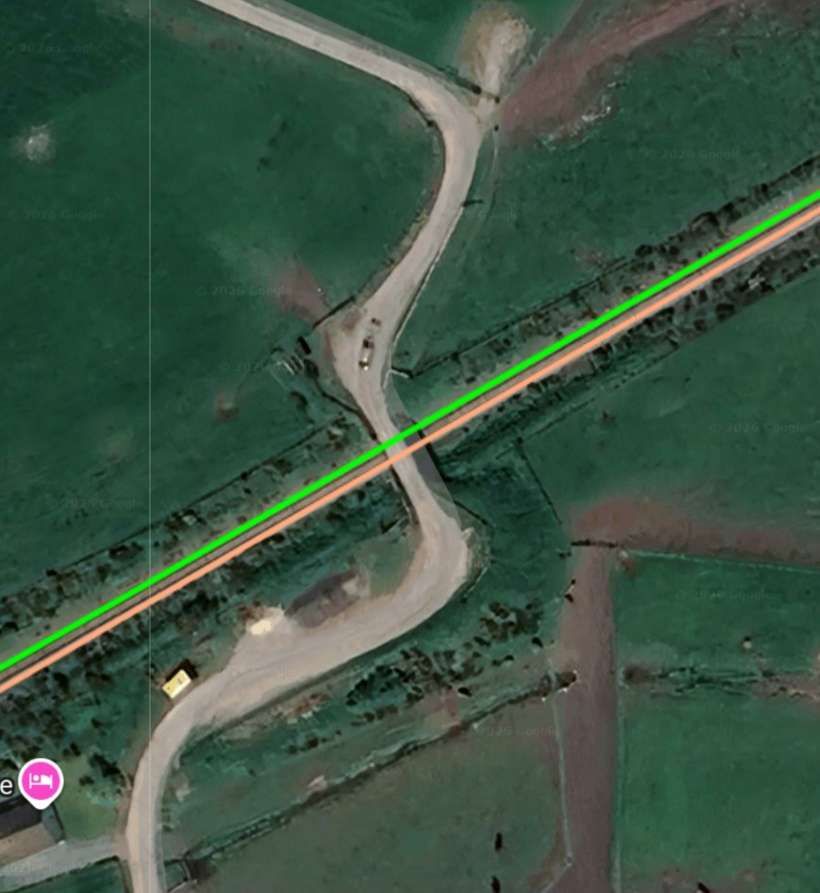
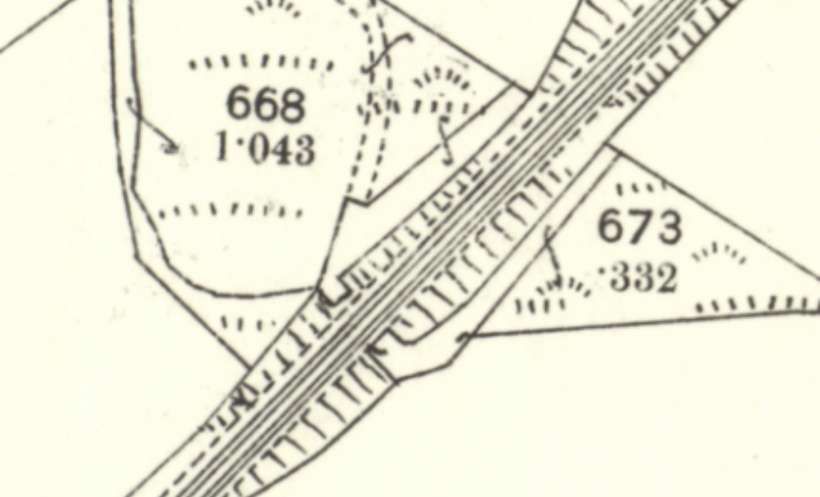
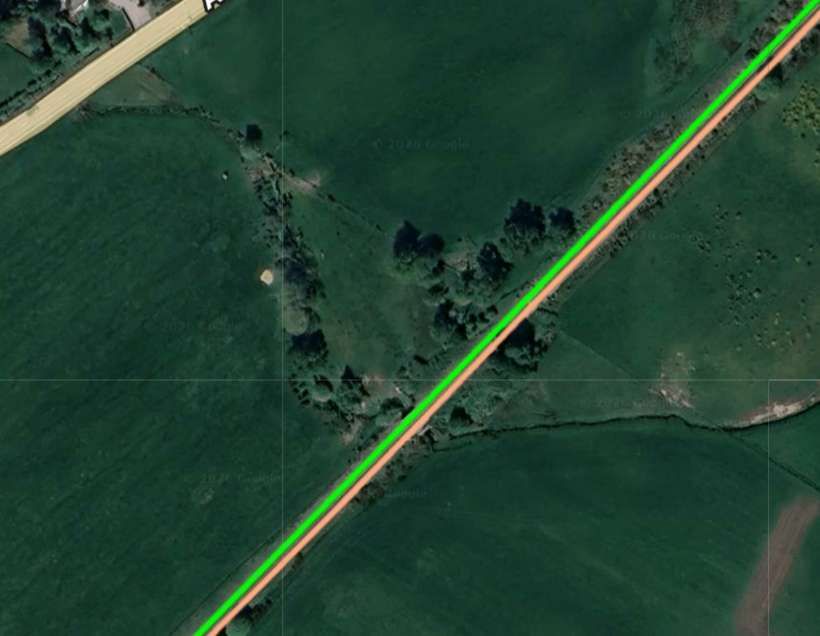
As the line headed Southwest two further burns were crossed, the first is shown here, Caechan Ruadh. [9]
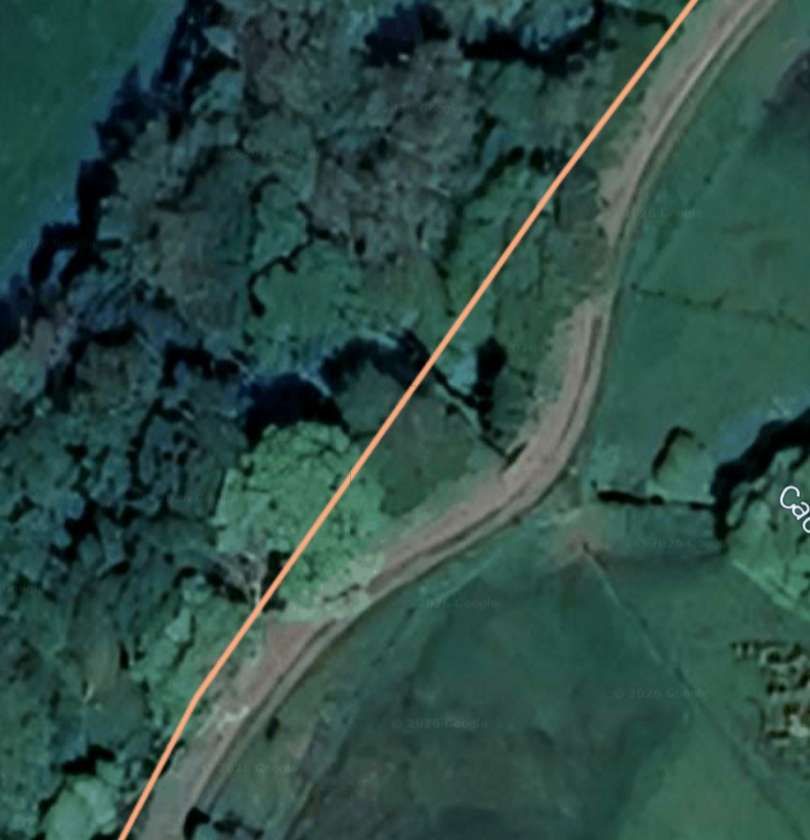
Approximately the same area in the 21st century as that in the Ordnance Survey extract above. [6]
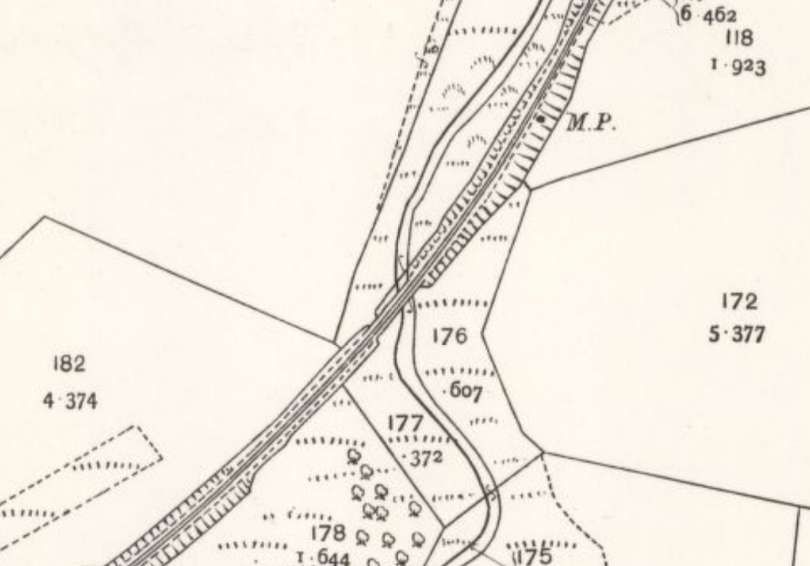
The second and more substantial burn is the Burn of Advie. [9]
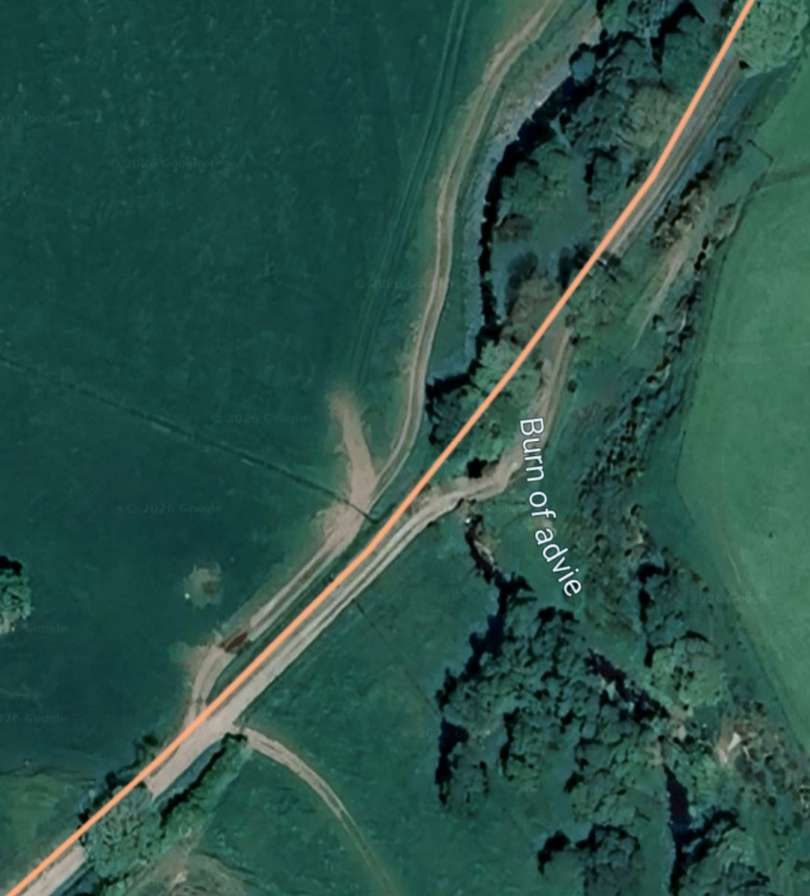
Approximately the same area in the 21st century as that in the Ordnance Survey extract above. [6]
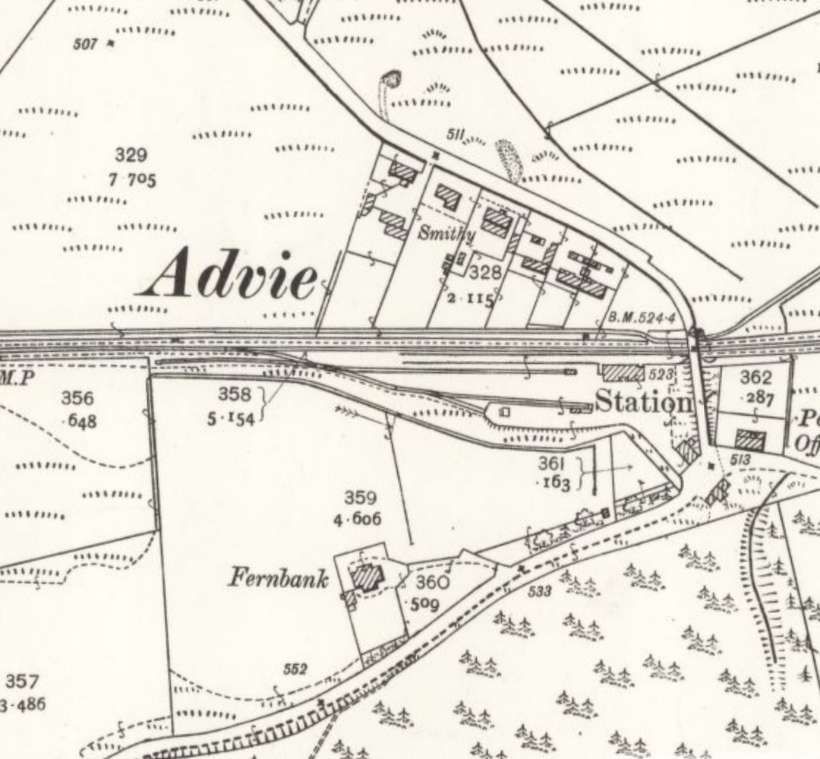
Advie Railway Station at the turn of the 20th century. [10]
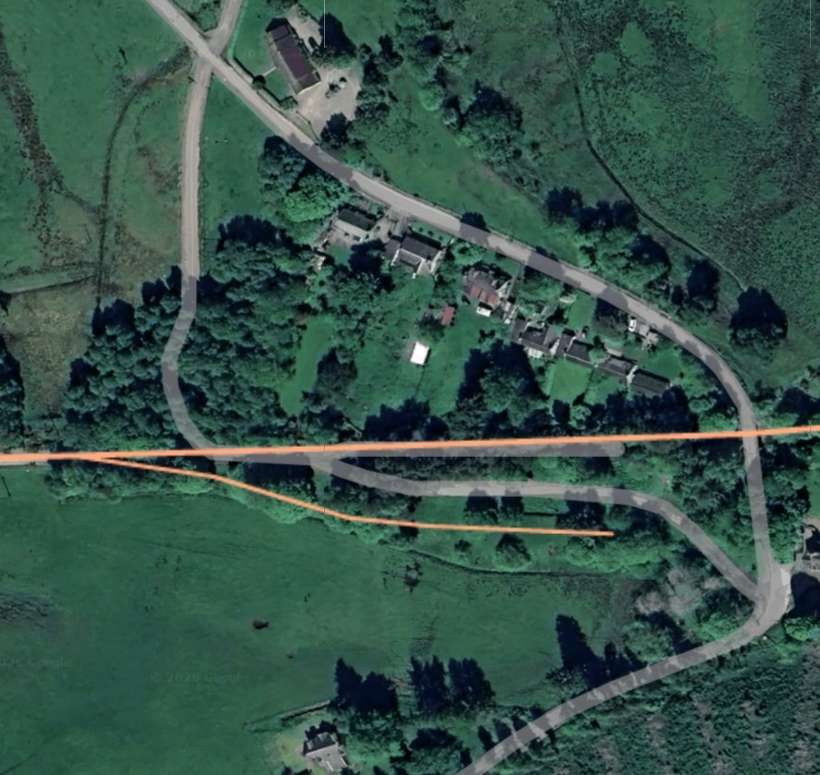
Approximately the same area in the 21st century as that in the Ordnance Survey extract above. This is the location of Advie station as shown on the railmaponline.com satellite imagery. [6]

Photographs of Advie Station when the line was operating and after the track had been lifted can be found here. [15]

The original Advie station, opened on 1st July 1863 as a simple halt at the north end of the road from Mains of Advie, was short-lived and relocated westward, with the replacement Advie station opening on 1st September 1868 to better accommodate growing needs. This second station featured a single platform on the south side of the line, initially short but later extended, along with a timber waiting room building, a goods yard accessed from the west including a siding, and facilities supporting local freight such as agricultural produce and goods from nearby Tormore Distillery. Today, remnants of the station, including the platform and a former railway building, survive as part of the disused line now incorporated into the Strathspey Way long-distance footpath. [11]
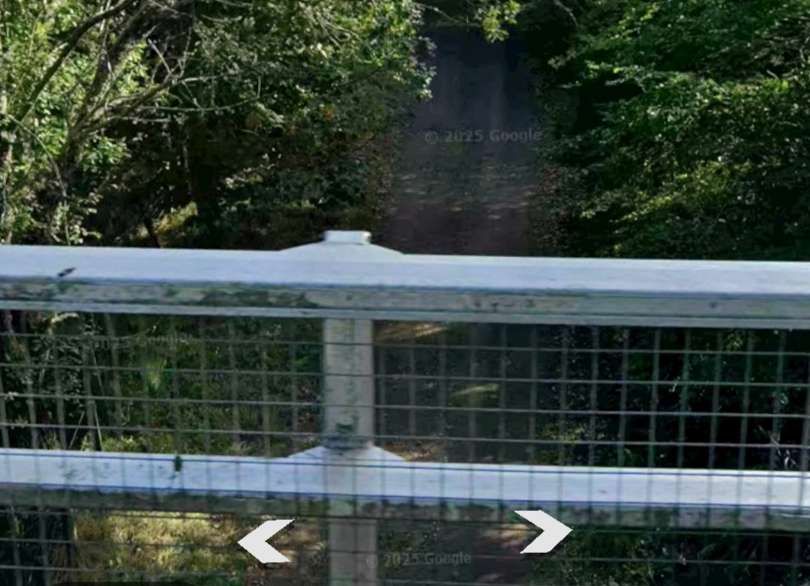
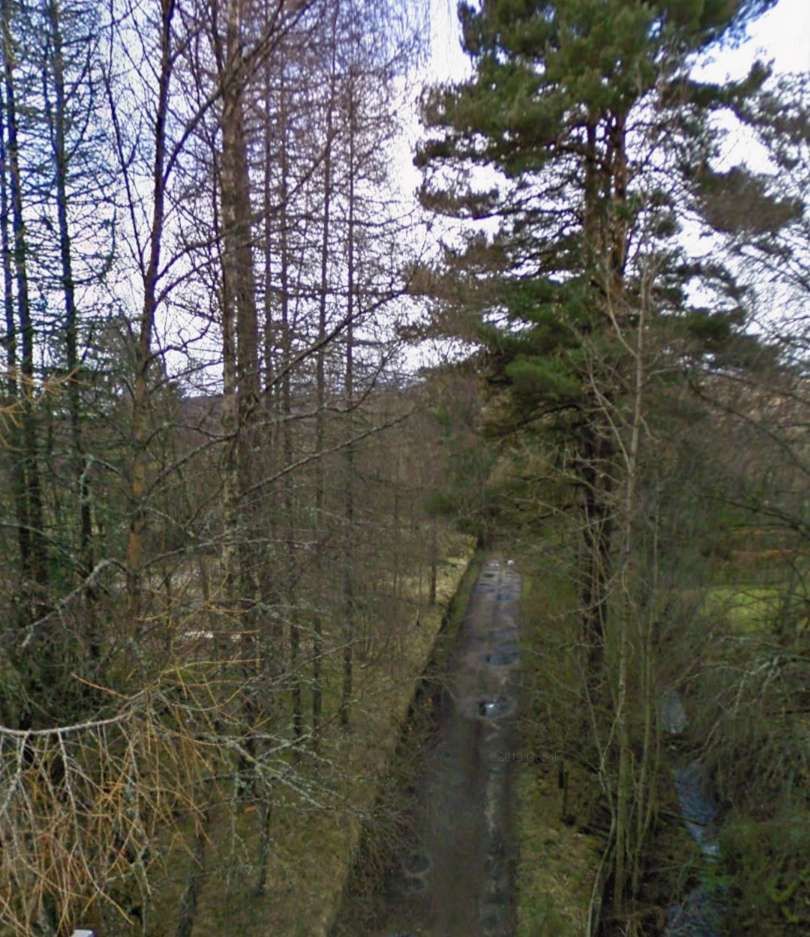
Looking East from the bridge at the East end of the Advie station site. [Google Streetview, September 2025]
The view West from the bridge in 2009. By 2025 vegetation had grown so that this view was impossible. [Google Streetview, March 2009]
The view East through the station from the West end of the platform. [Google Streetview, August 2011]

The line curved round to the South following the river.
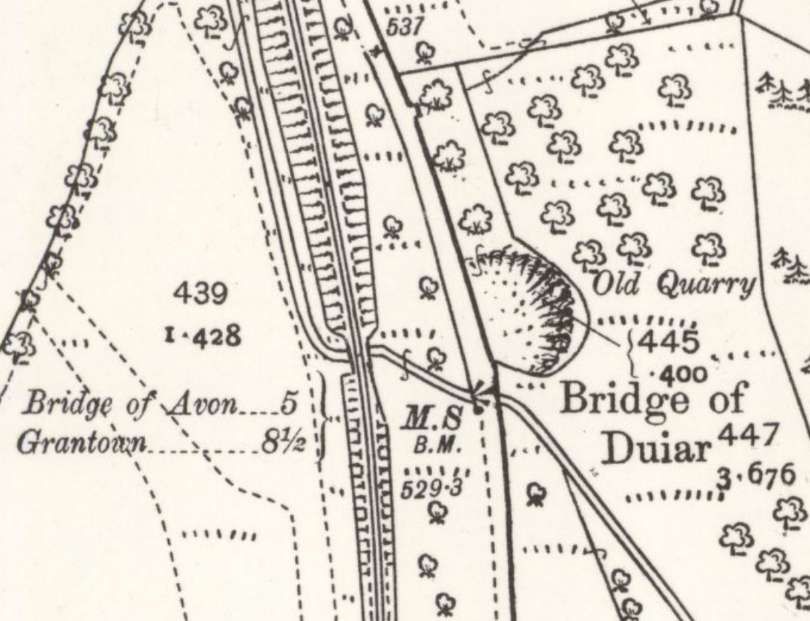
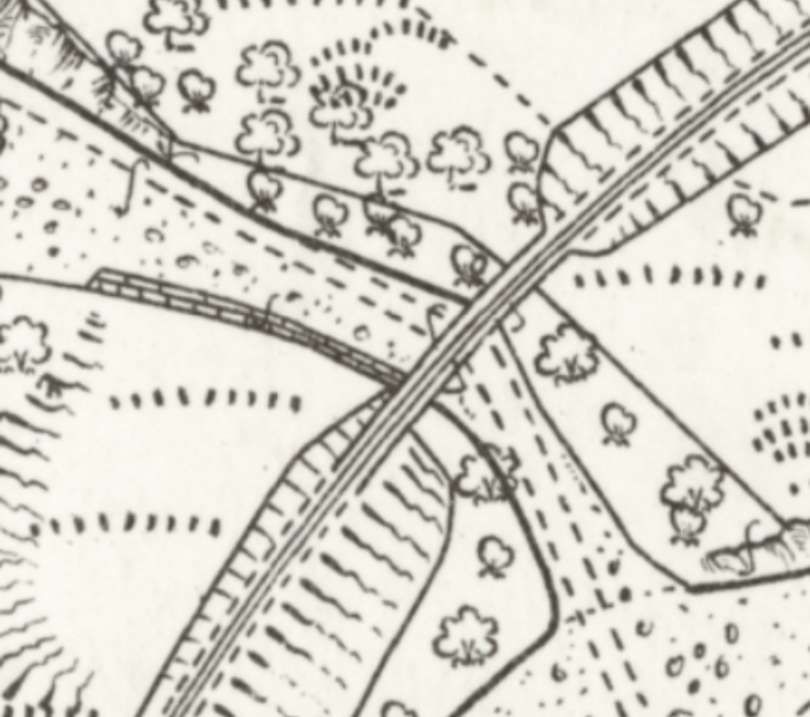
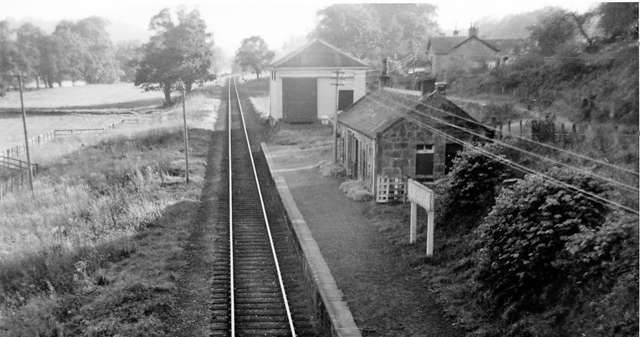
Burn of Duiar was bridged close to the Bridge of Duiar. [12]
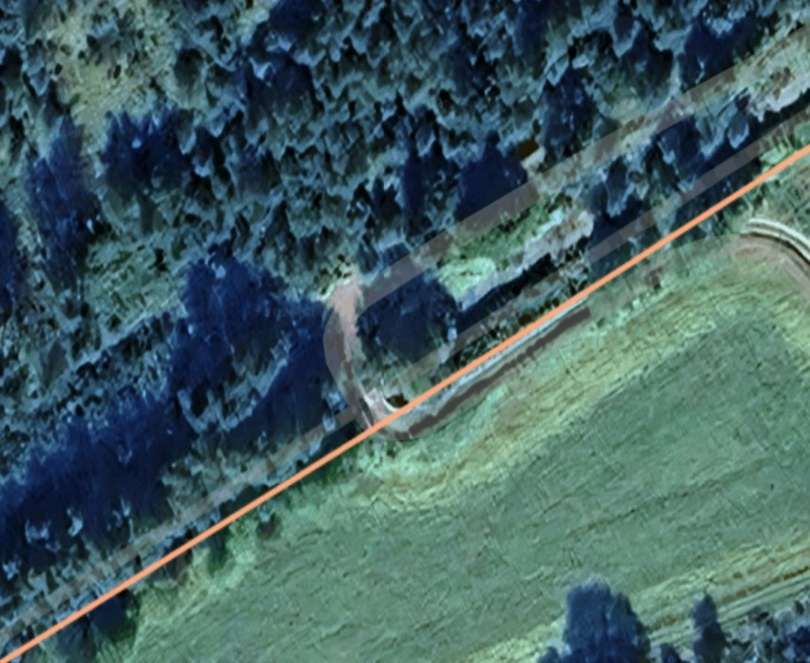
The same location in the 21st century. [6]
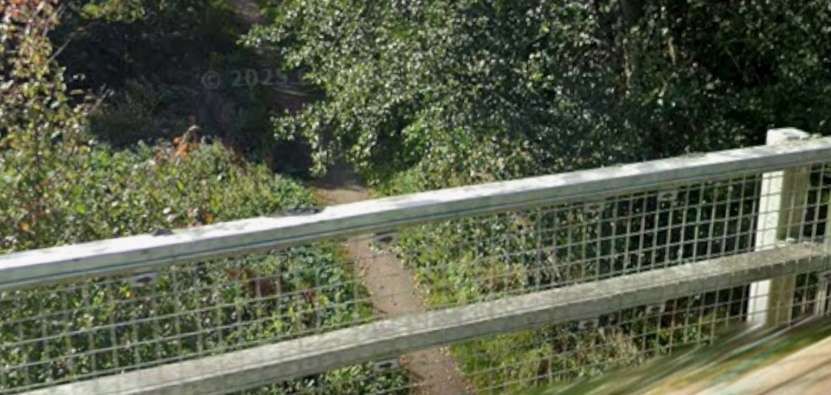
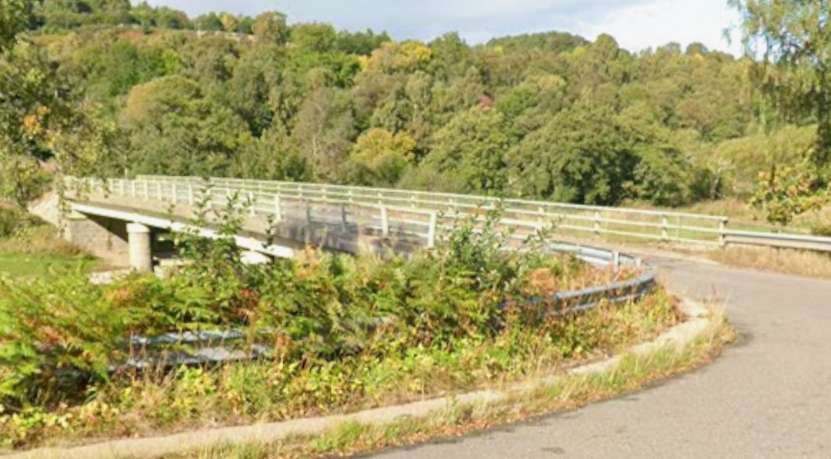
The view from the Bridge of Duiar towards the route of the old railway line. [Google Streetview, September 2026]

Six miles separate the non-crossing stations of Advie and Cromdale, but when the line was opened this section was broken by a rather isolated station at Dalvey (spelled Dalvie in the very early timetables). Closed in 1868, the buildings and platform have long since been dismantled, but the site of the station, some three miles from Advie, can still be identified.” [2: p6]
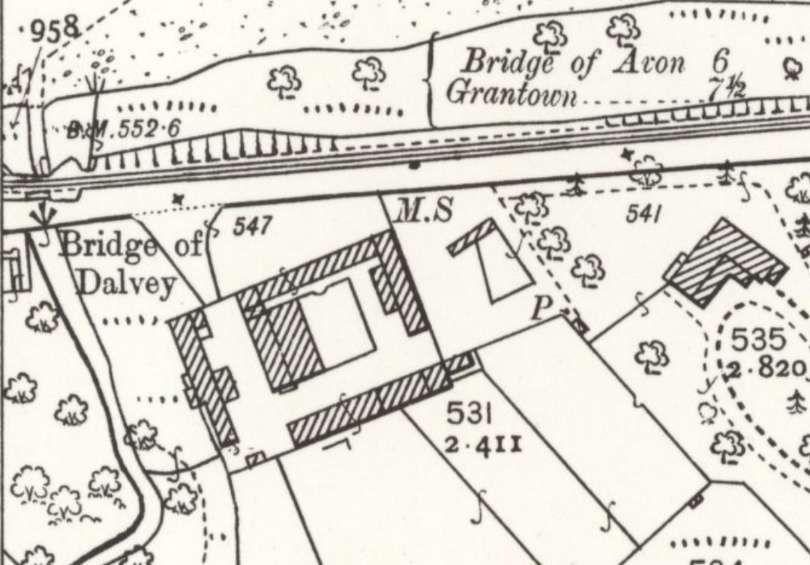
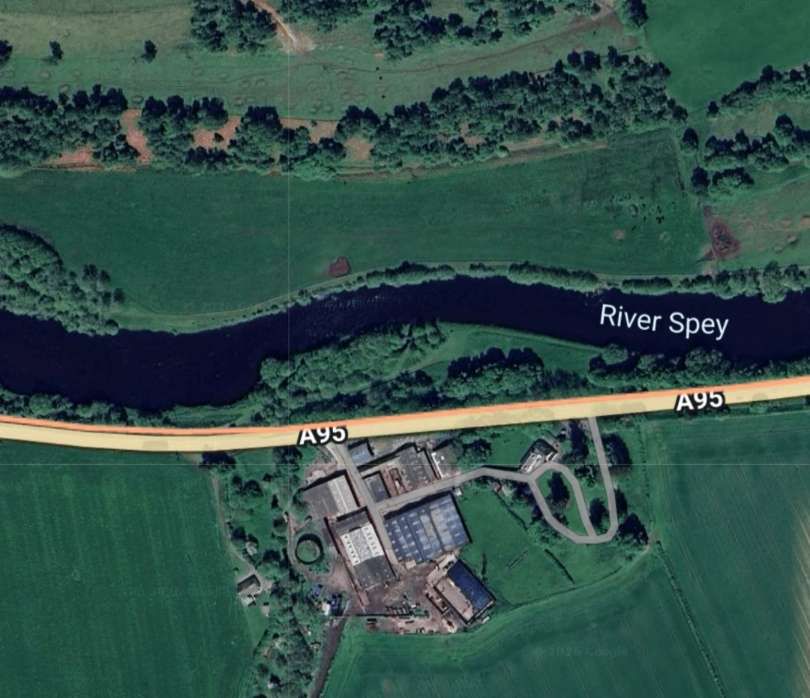
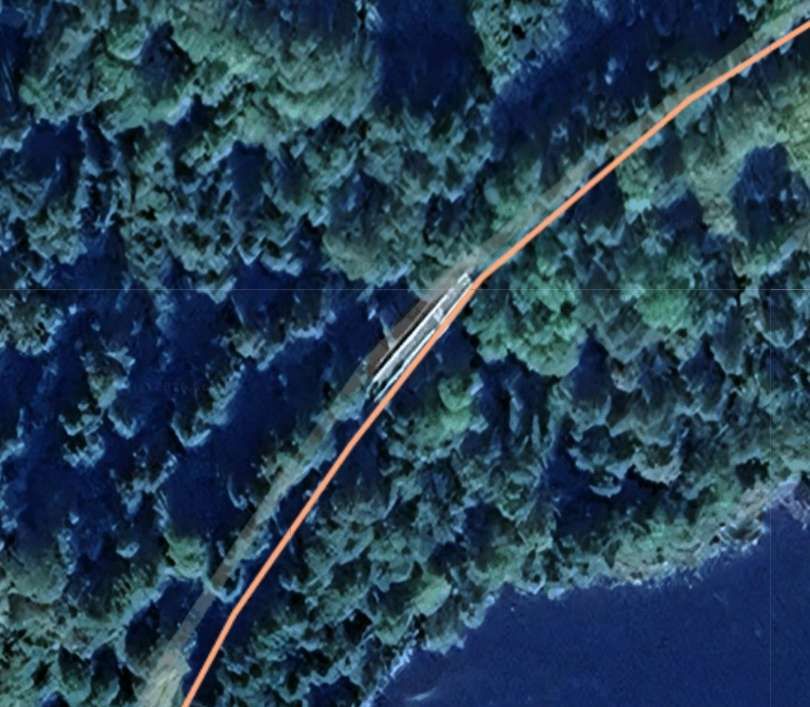
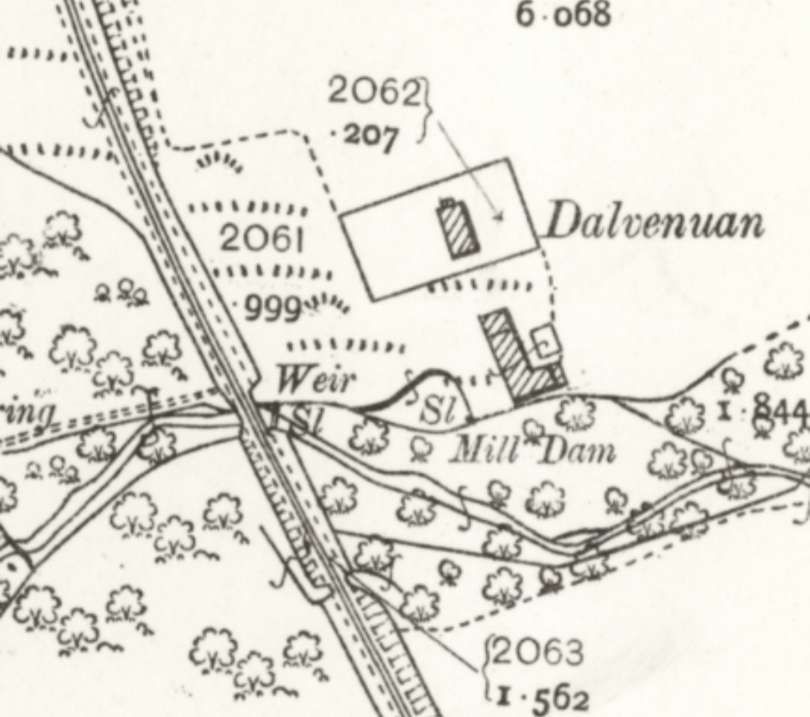
Burn of Dalvey was a bridged adjacent to the Bridge of Dalvey. For a short time after the building of the line there was a station at this location. [13]
The same location in the 21st century. [6]
The view East along the A95 across the Bridge of Dalvey. The railway bridge was immediately adjacent to the road bridge. The parapet railings can still be seen to the left of the road bridge.
Burn of Dalcapple was bridged to the West of the road which would become the A95. [14]
The same location in the 21st century. [6]
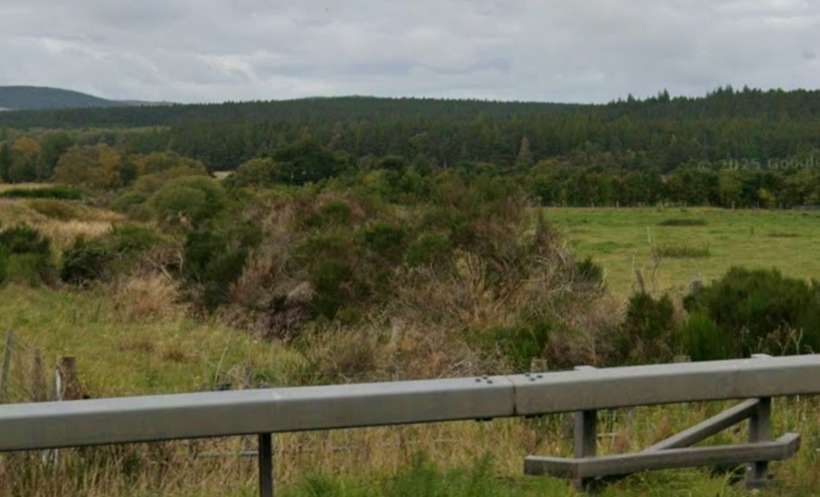
The view to the West from the A95 at the road bridge over the Burn of Cromdale. The railway line is across the field visible in the foreground.
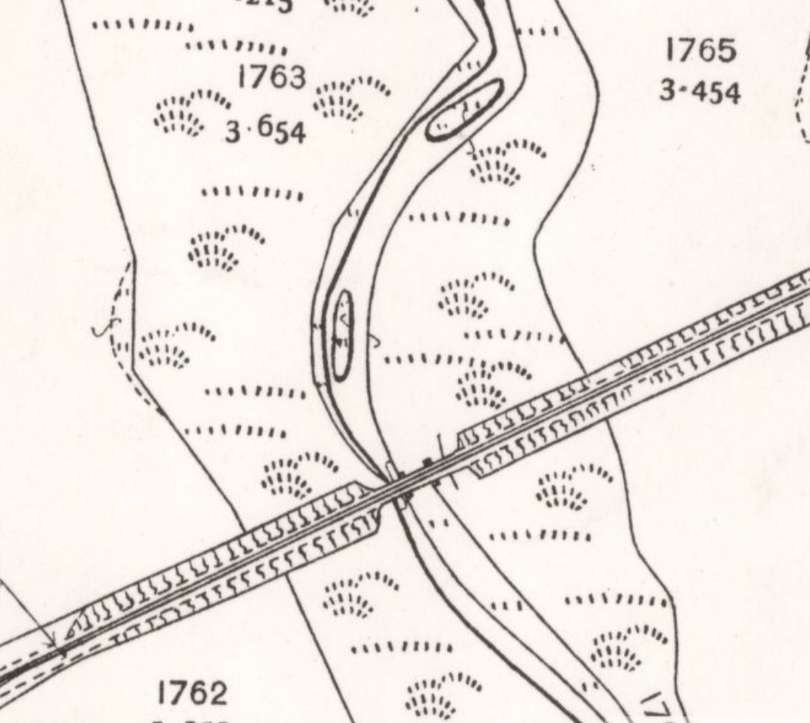
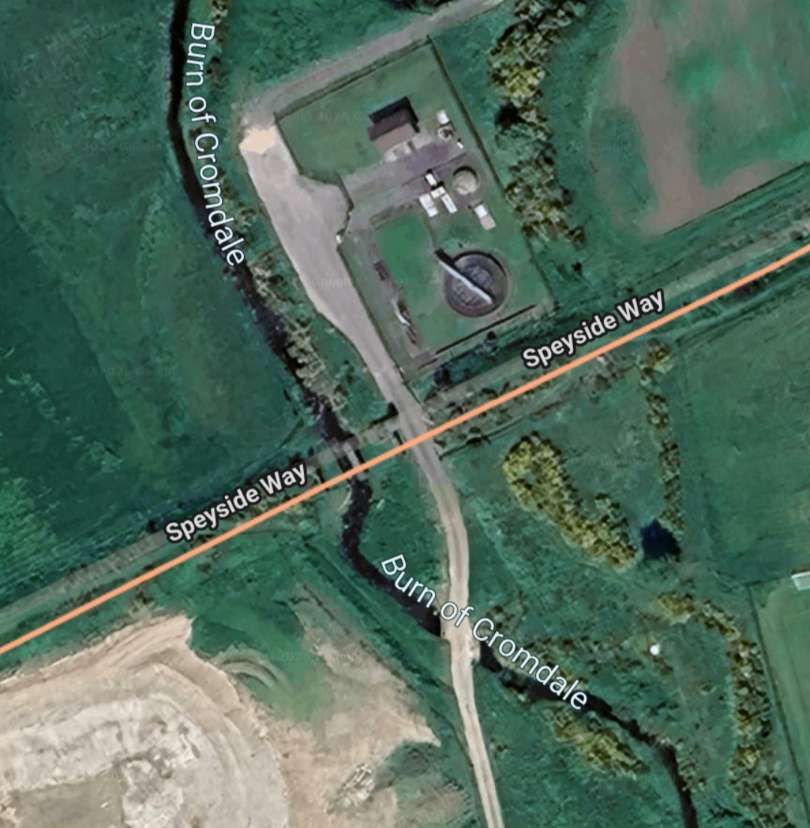
Burn of Cromdale was bridged only a short distance to the East of Cromdale Railway Station. [14]
The same location in the 21st century. [6]
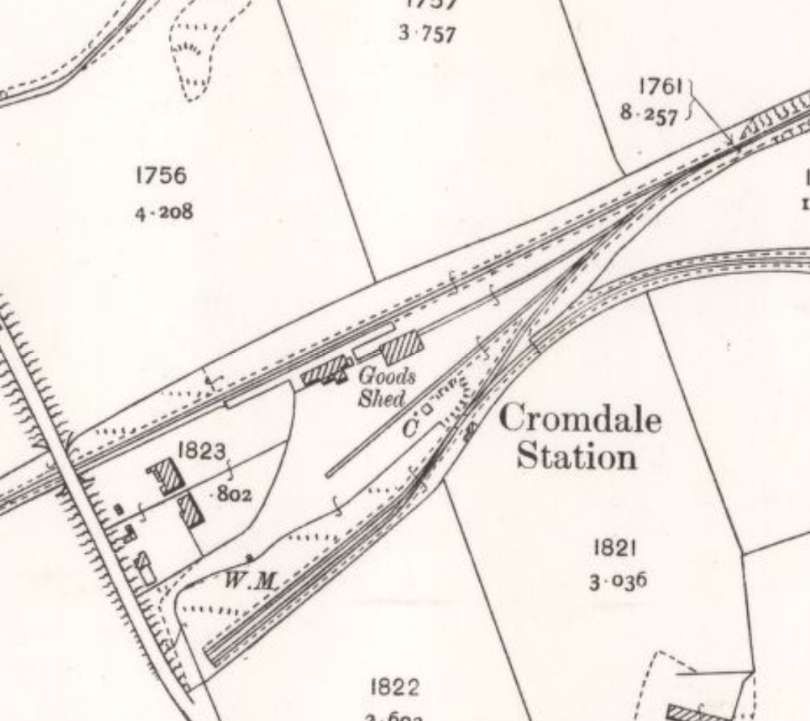
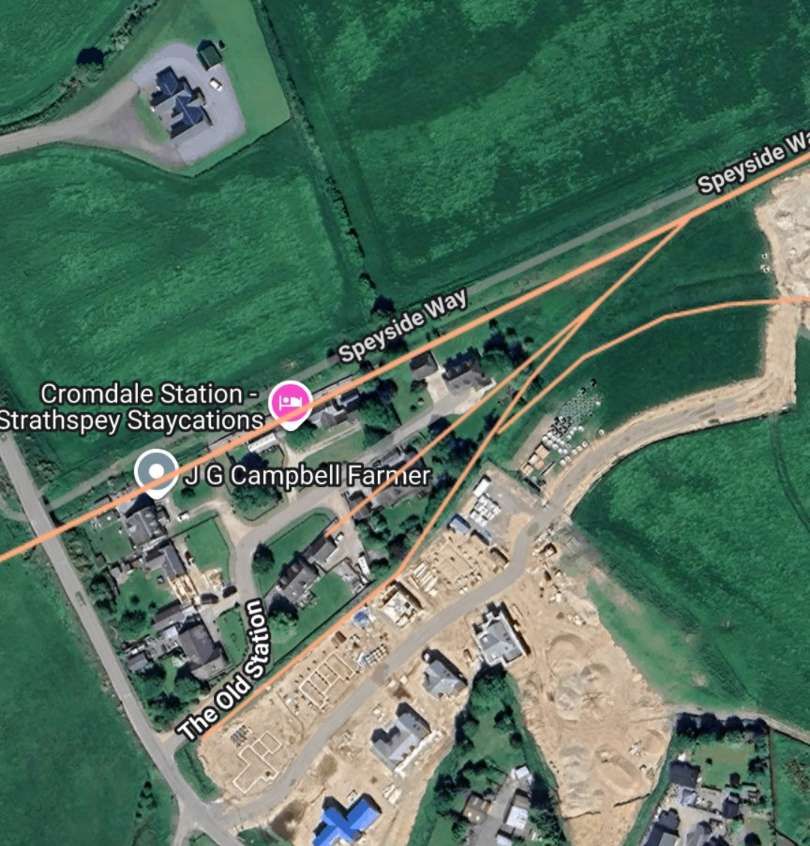
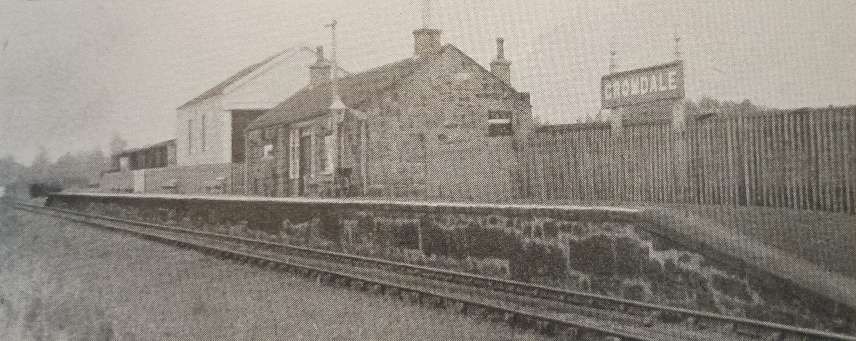
Cromdale Railway Station was a short distance to the North of the village. A branch left the Speyside Line at the station which served the Balmenach Distillery. [14]
The same location in the 21st century. [6]
This photograph taken by H.A. Vallance, shows the station buildings at Cromdale which were typical of GNSR stations on the line. The view looks East through the station site, © Public Domain. [2: p7]

Photographs of the station during the diesel era can be found here. [17]
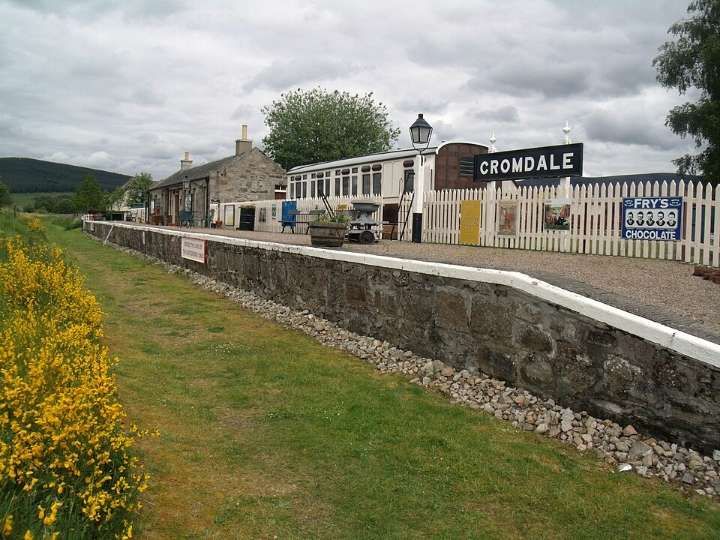
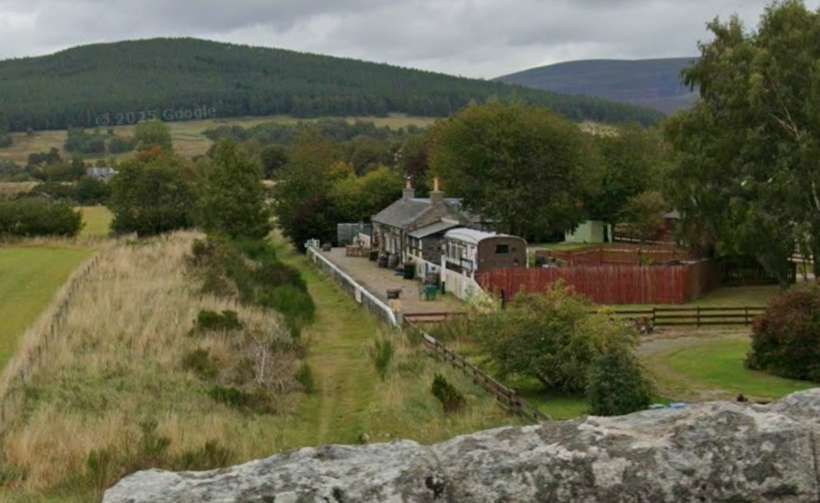
Cromdale Railway Station in 2012, © Euan Nelson and licensed for reuse under a Creative Commons licence (CC BY-SA 2.0). [16]
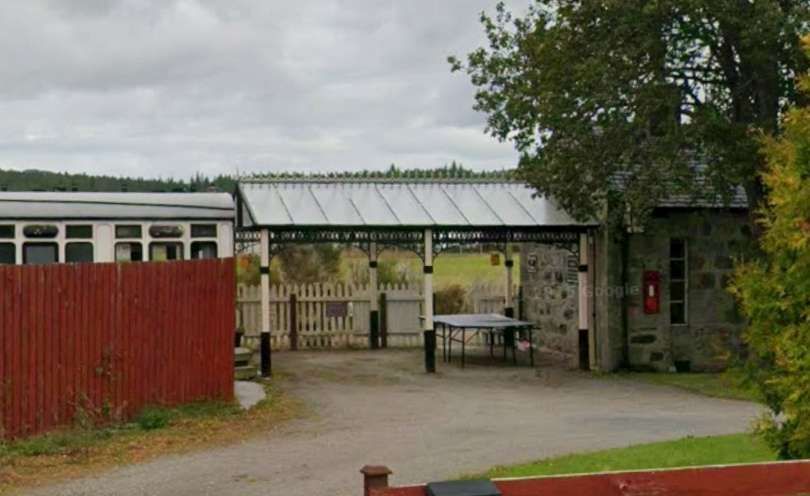
The view Northeast through the station from the bridge at the Southwest end of the station site. The station is now a ‘Staycation’ holiday location. [Google Streetview, September 2025]
The view North into the old station site, which in the 21st century is a staycation location, from the road called The Old Station. [Google Streetview, September 2025]
The view Northeast from the Northeast end of the road called The Old Station. The driveway and the building to the right sit over the beginning of the branch to Balmenach Distillery. [Google Streetview, September 2025]
Turning through 180°, this is the view from the bridge at the end of the station site, Southwest along the line of the old railway. [Google Streetview, September 2025]

At Cromdale, a branch serves a distillery more than a mile south-east of the station.” [2: p6] We will follow the line of this branch before returning to the Strathspey Line Southwest of Cromdale Station.
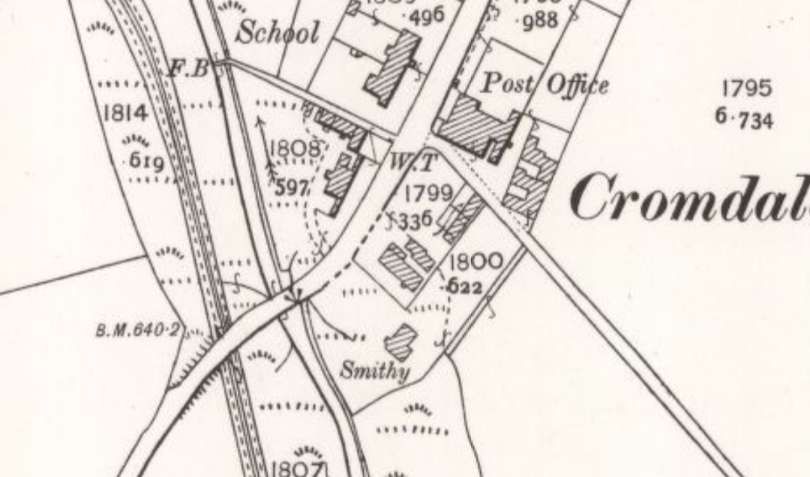
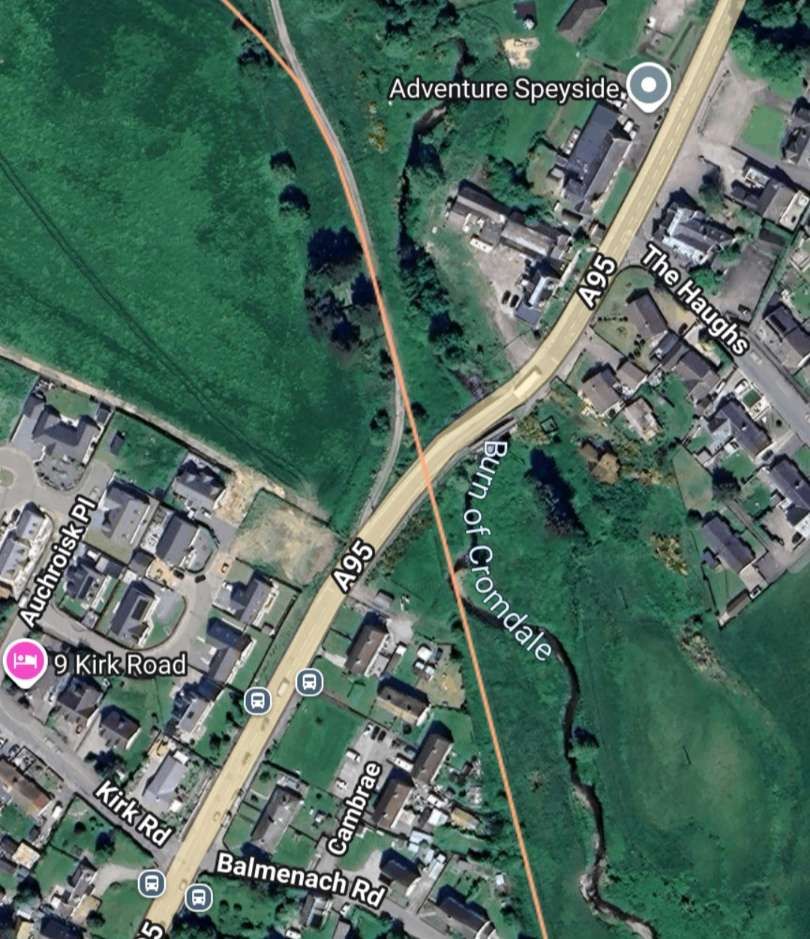
Cromdale village sat on the East side of the Branch. The main road through the village bridged the branch line. [14]
The same location in the 21st century. [6]
The view North from the A95 towards Cromdale Station Yard along the line of the old branch line.
Looking South from the A95 along the line of the old railway towards Balmenach Distillery. [Google Streetview, September 2025]
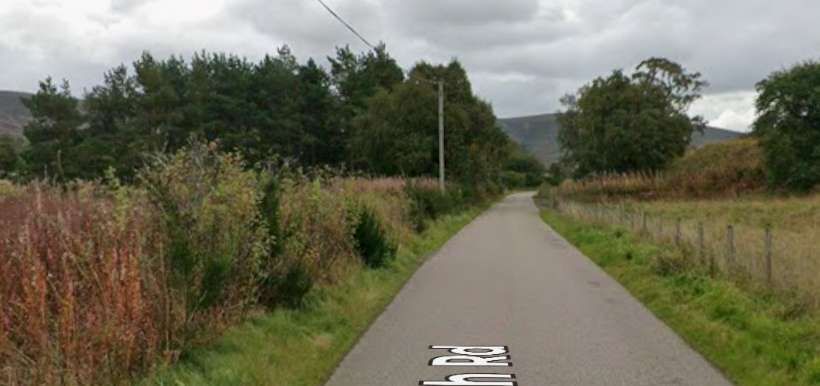
The line followed the Balmenach Road towards the distillery. Looking South the line was on the left of the road. [Google Streetview, September 2025]
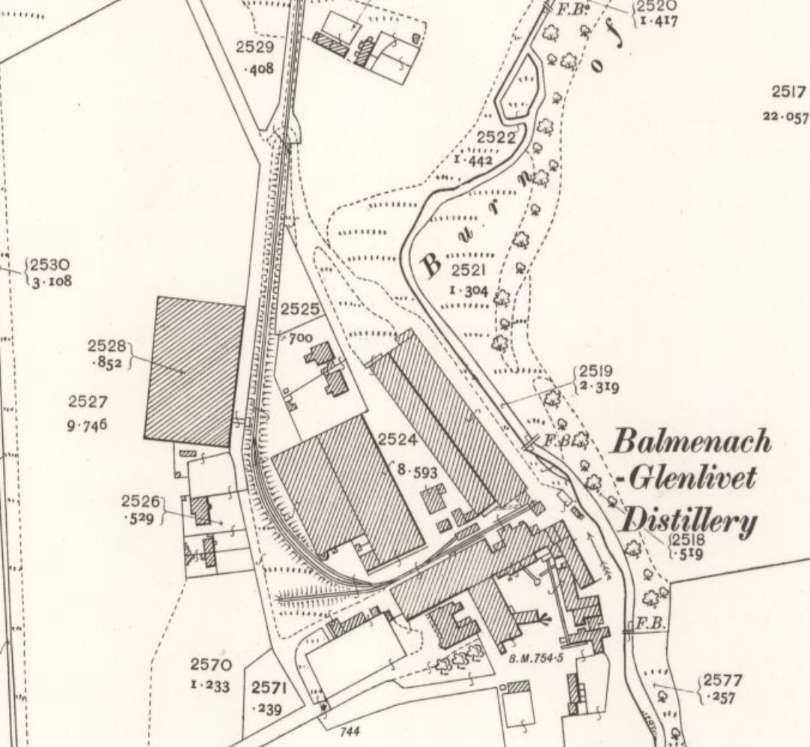
The terminus of the branch at Balmenach- Glenlivet Distillery, South of Cromdale. [15]
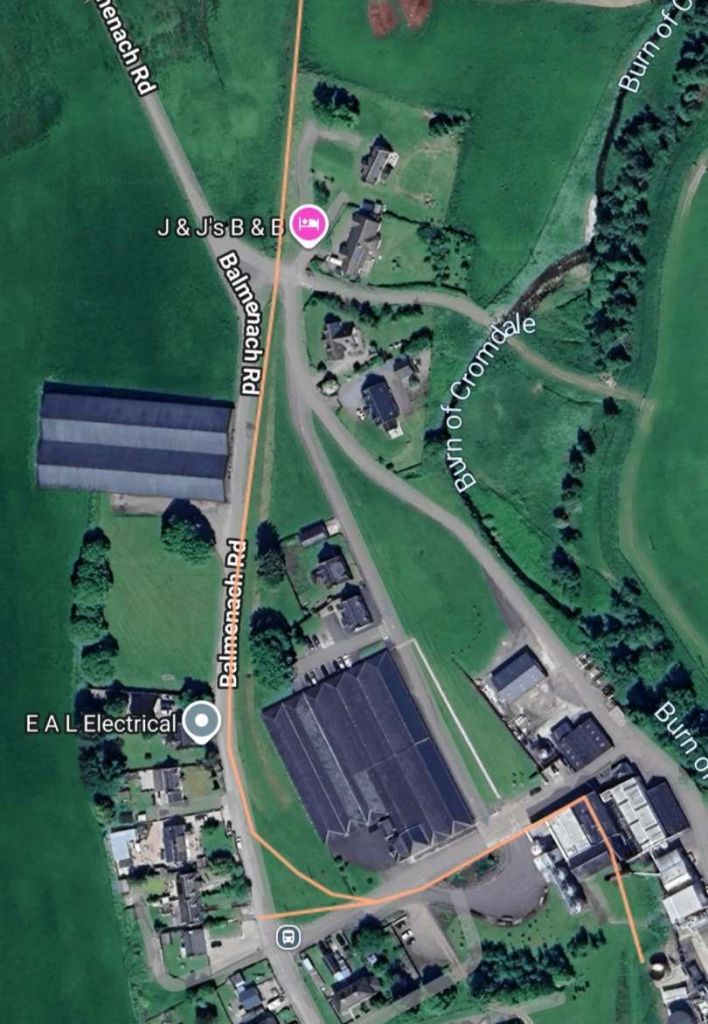
The same location in the 21st century. [6]
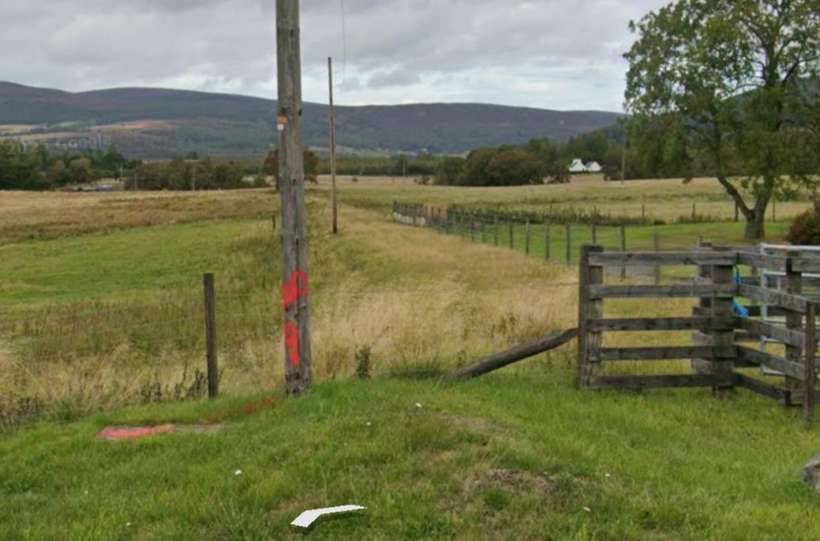
The view back to the North from the Distillery entrance along the shallow embankment which used to carry the branch line. [Google Streetview, September 2025]
Turning through 180°, the line continued on a slight embankment into the distillery site [Google Streetview, September 2025]
A final view from the end of the branch looking back along the embankment which carried the line North away from the distillery. [Google Streetview, April 2022]

Beyond Cromdale, “The train crosses the boundary between Morayshire and Inverness-shire beyond Cromdale, and reaches Grantown-on-Spey, 24.25 miles from Craigellachie.” [2: p6]

Continuing Southwest on the Strathspey Line. ….

We pass under the road bridge and head Southwest along the Strathspey Line. Seen here from the road bridge. [Google Streetview, September 2025]

The line curved round to the South and began to run alongside the Spey once again. …..
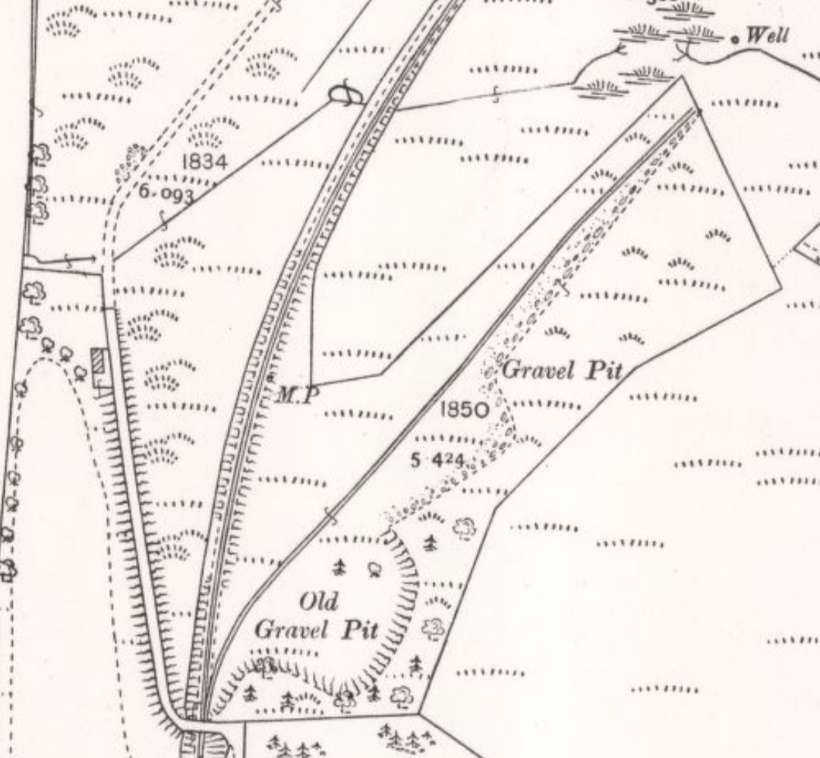
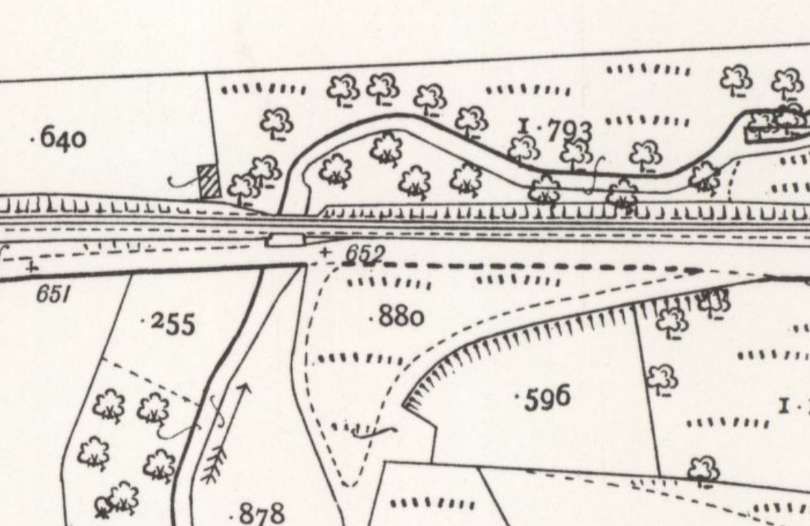
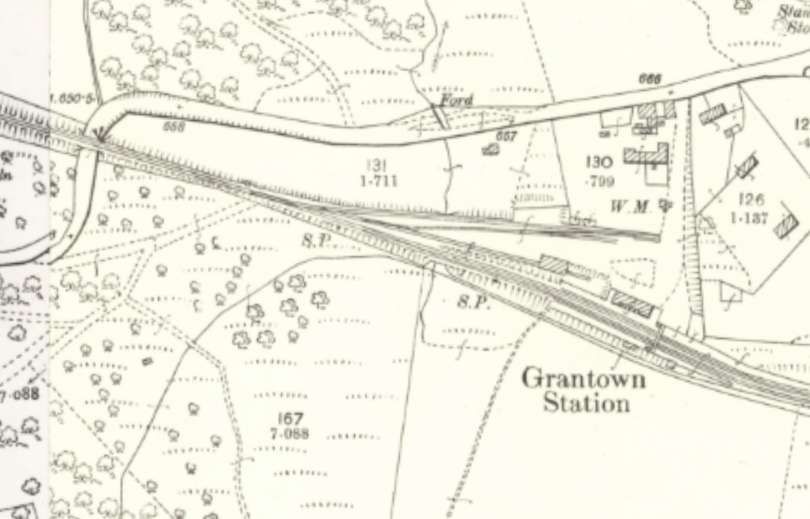
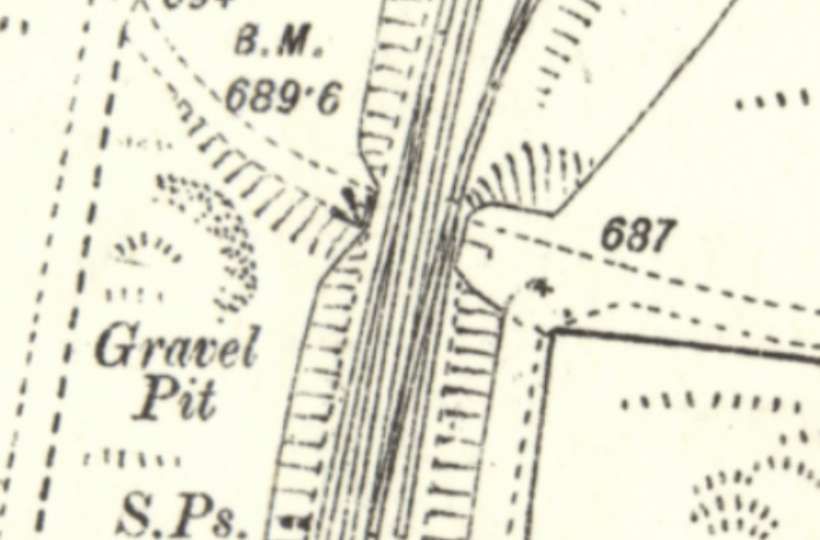
An access road from the Mains of Cromdale bridged the line and ran South alongside it. Just to The North of the bridge the line was joined by a short siding which served old gravel pits. This is the 25″Ordnance Survey from the turn of the 20th century again. [18]
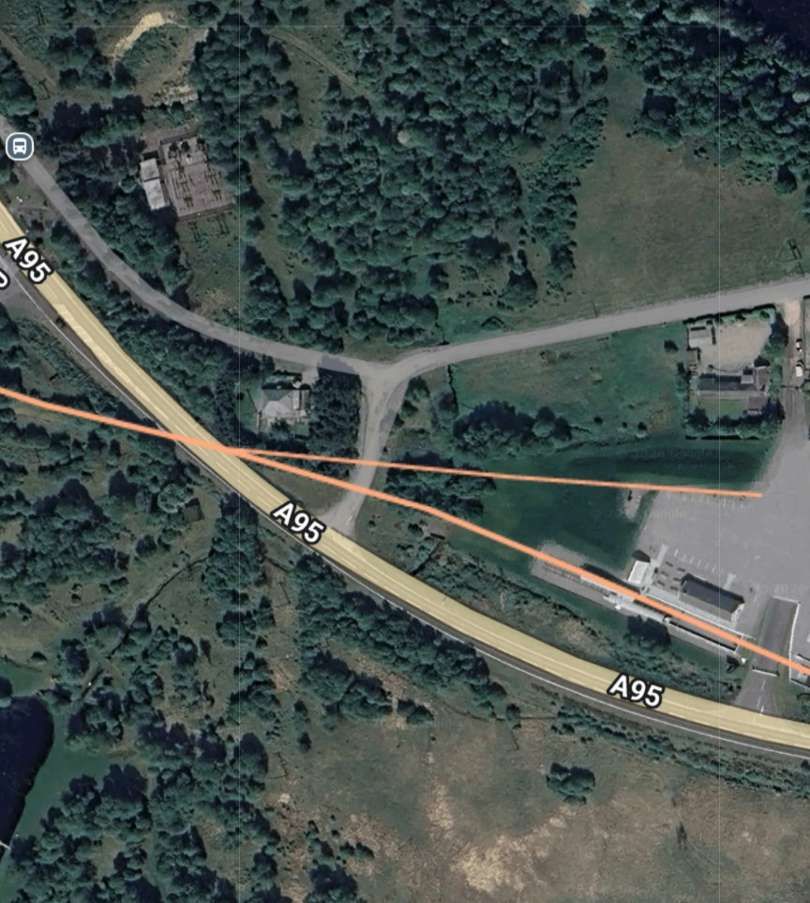
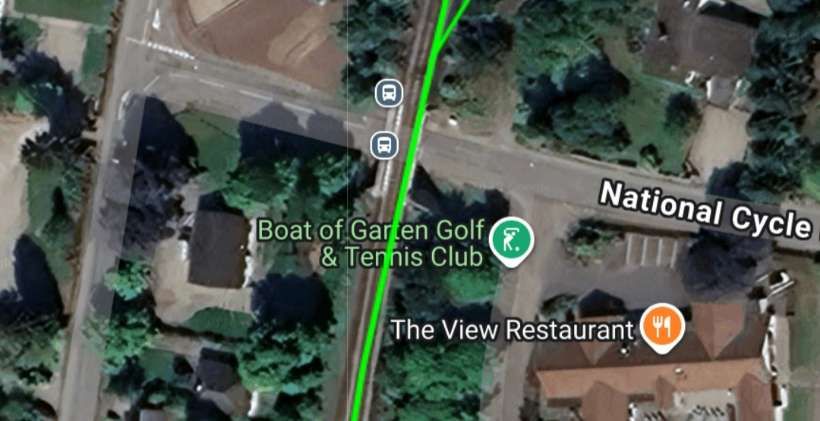
The same length of the old railway as it appears on the satellite imagery from railmaponline.com. [6]
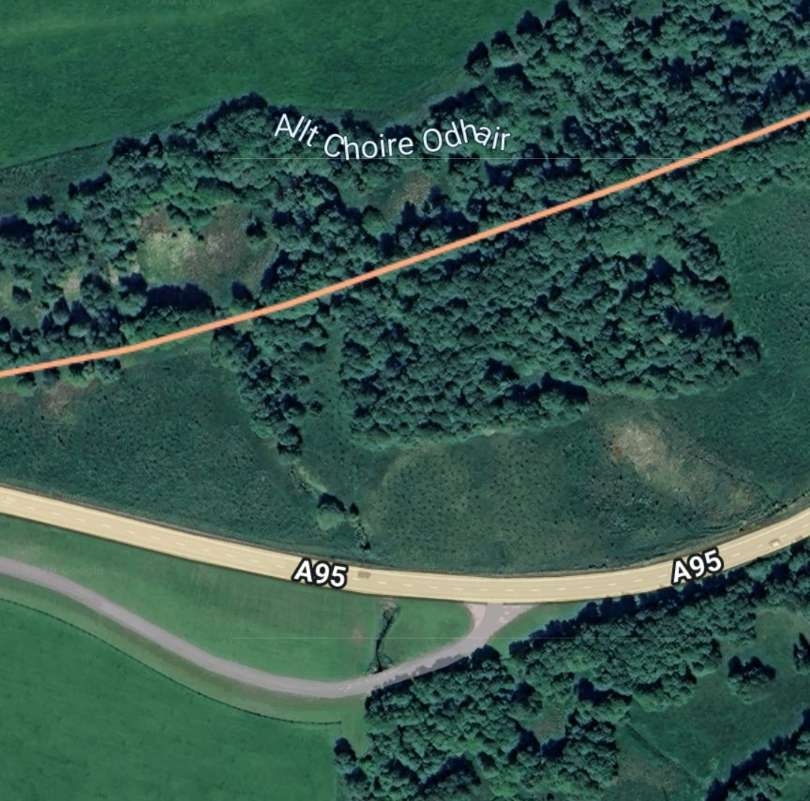
The line bridged two small tributary burns of the Allt Choire Odhair. [19]
The same location in the 21st century. [6]
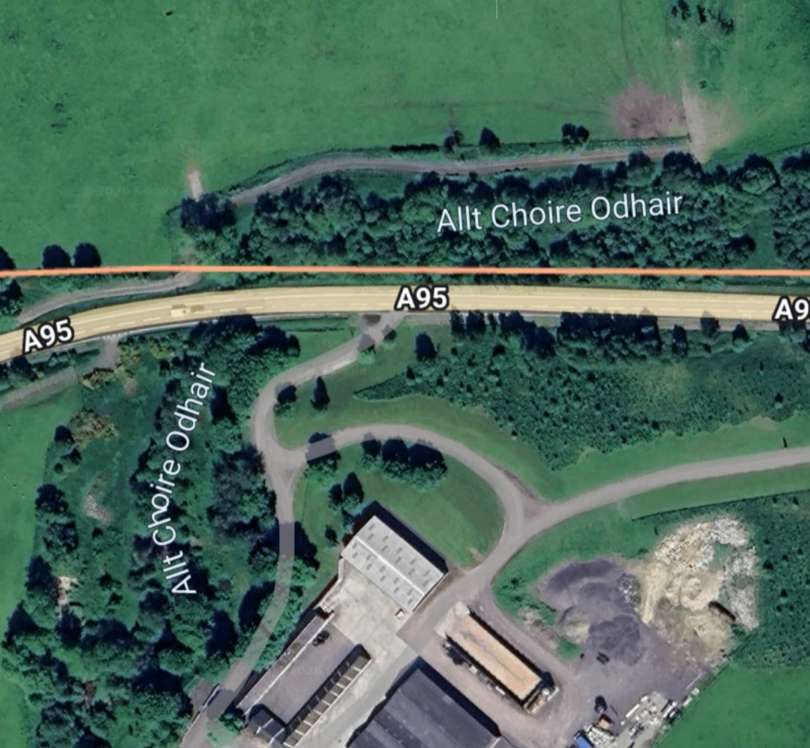
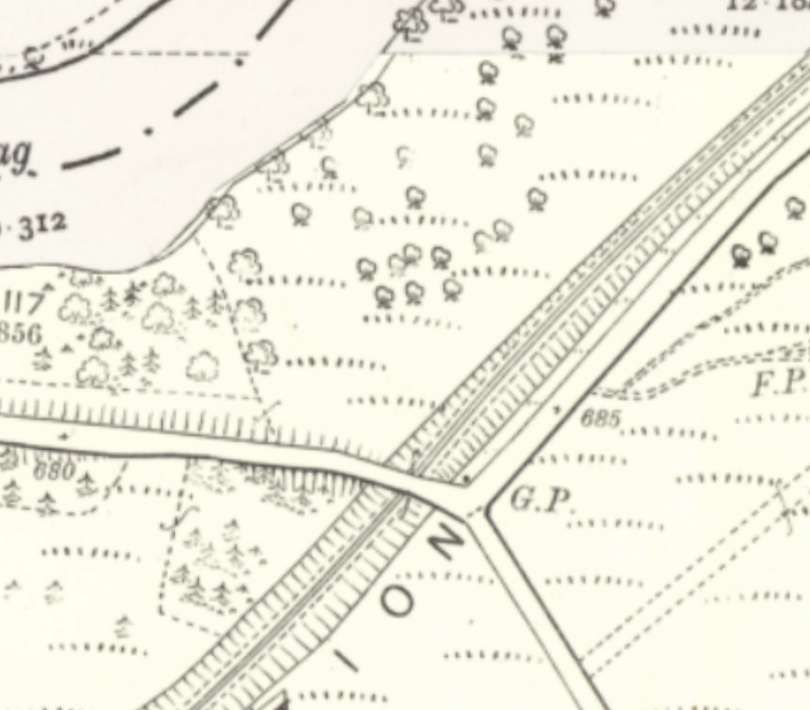
It then bridged the Allt Choire Odhair itself. [19]
The same length of line shown on 21st century satellite imagery. [6]

Across the River Spey from Speybridge the railway ran into Grantown Railway Station. …
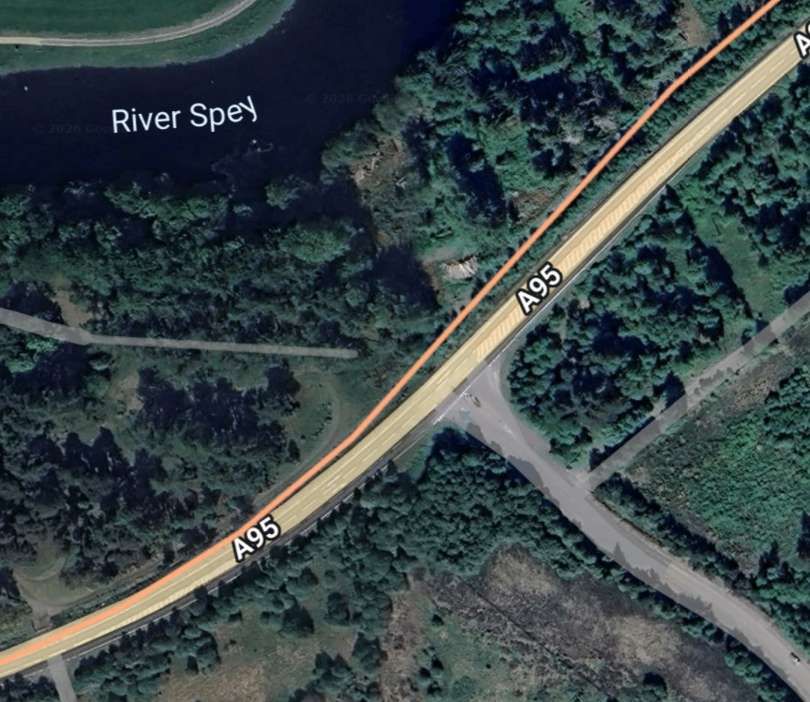
The same location in the 21st century. [6]
Across the River Spey from Speybridge the line was bridged by the old road to Speybridge which would have been the A95 before the new road was built. [21]
Looking West along the line of the old road where it crossed over the railway [Google Streetview, September 2025]
Looking East towards the old railway from the old A95. [Google Streetview, September 2025]
The line ran into Grantown Railway station. [22]
The location of Grantown Railway Station as it appears in the 21st century. It was renamed Grantown-on-Spey East during the 20th century. [6]
The Grantown-on-Spey East Railway Station in April 2008, © Paul Anderson and licensed for reuse under a Creative Commons licence (CC BY-SA 2.0). [28]

More photographs of the station can be found here. [29]

Founded in 1776, Grantown-on-Spey is laid out on a spacious and regular plan on the western (Morayshire) side of the Spey. In addition to its importance as a local business centre, it enjoys considerable favour as a holiday resort. The station on the Strathspey line (now designated Grantown-on-Spey East, to distinguish it from the former Highland Railway station) is on the opposite side of the river, in a rather isolated position, more than a mile from the town, and is in Inverness-shire. The layout and the buildings are similar to those at the other crossing stations.” [2: p6]

Three images follow below, of the site of Grantown East Railway Station as it appears in the 21st century. …
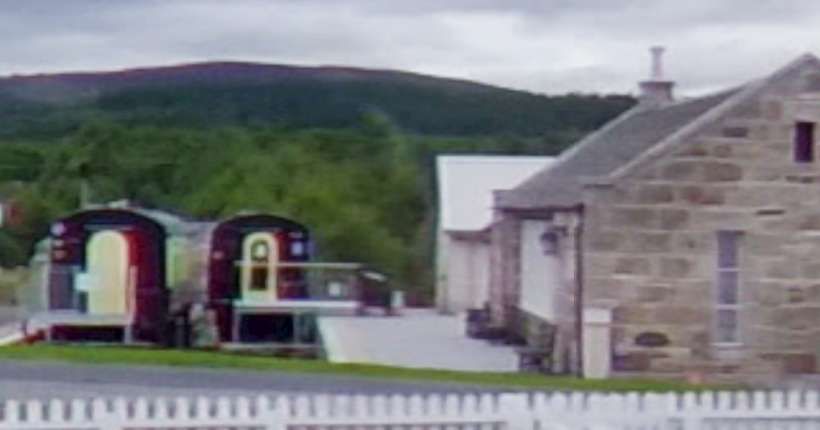
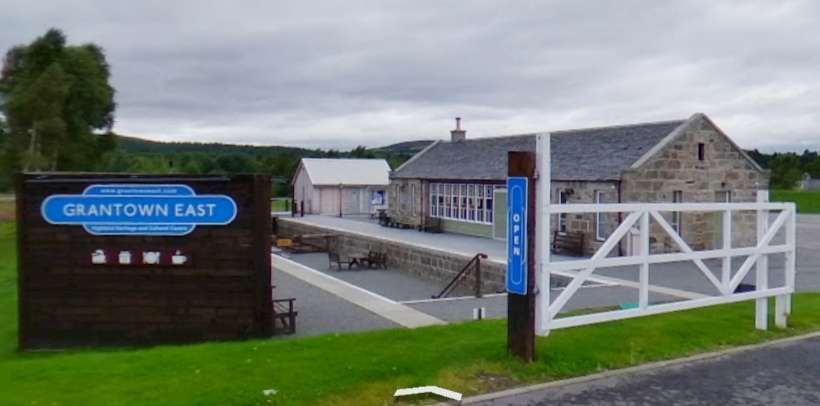
The three images above show the Grantown Railway Station site as it appears in the 21st century. [Google Streetview, September 2025]
Looking back along the line of the railway from the West end of the station site. [Google Streetview, September 2025]
Looking West along the route of the old line from the same location as the last image. [Google Streetview, September 2025]
As it left the station heading West it bridged the old road from Speybridge to the Southwest. [22]
The same location in the 21st century. [6]
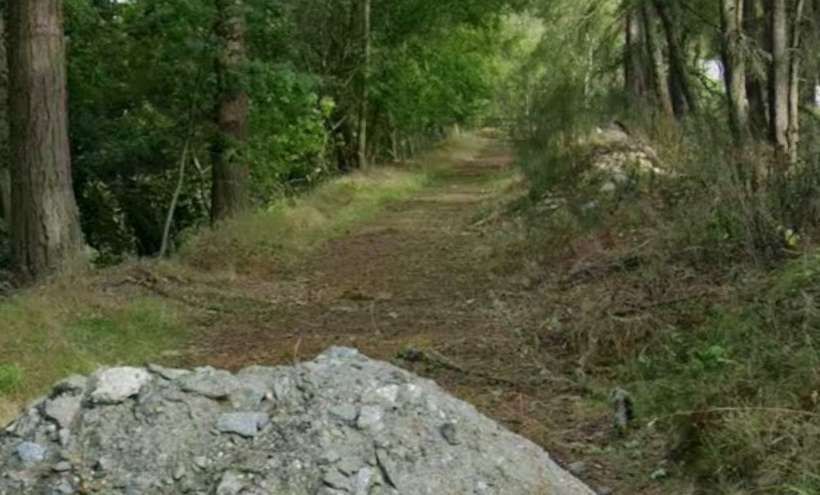
Looking West-northwest along the line of the old railway. The Speyside Way rejoins the line of the old railway just a few hundred metres ahead. The view looking back towards Grantown Railway Station from this point is obscured by vegetation. [Google Streetview, May 2025]

Between Grantown and Nethy Bridge, the railway reaches its summit, 702 ft. above sea-level, the highest on the former Great North of Scotland Railway. The gradual ascent from Craigellachie (270 ft. above sea-level) is in complete contrast to the steep fall into Strathspey from Dufftown, and involves no gradient steeper than 1 in 75, and that for short distances only. The summit is in open moorland country, and snow fences protect the railway from drifts during winter blizzards.” [2: p6 & 8]

A short distance along the line it spanned three streams in short succession.
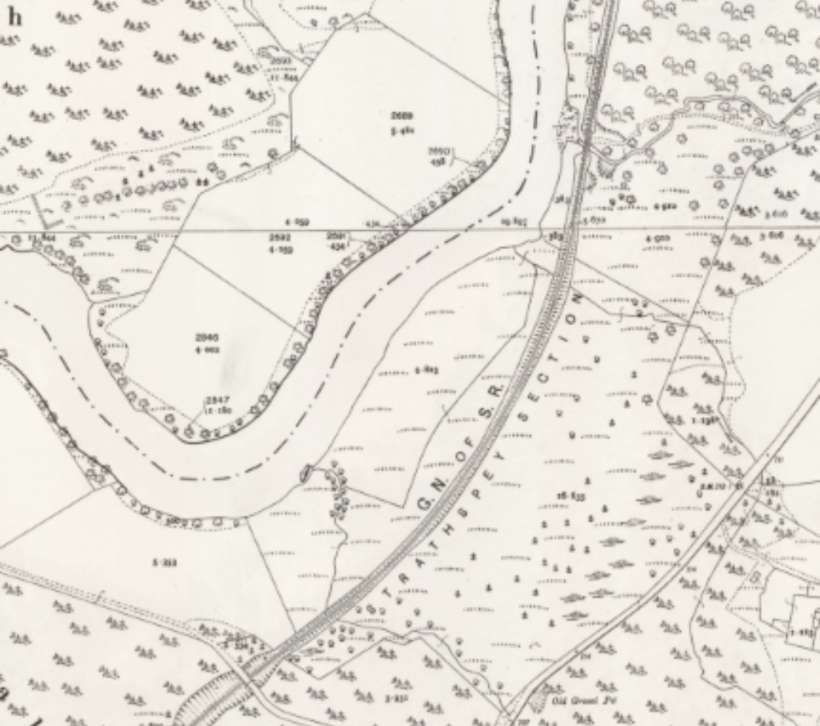
The length of line referred to above. The most northerly stream is Auchernack Burn. The other two are not named on the OS mapping. [23]
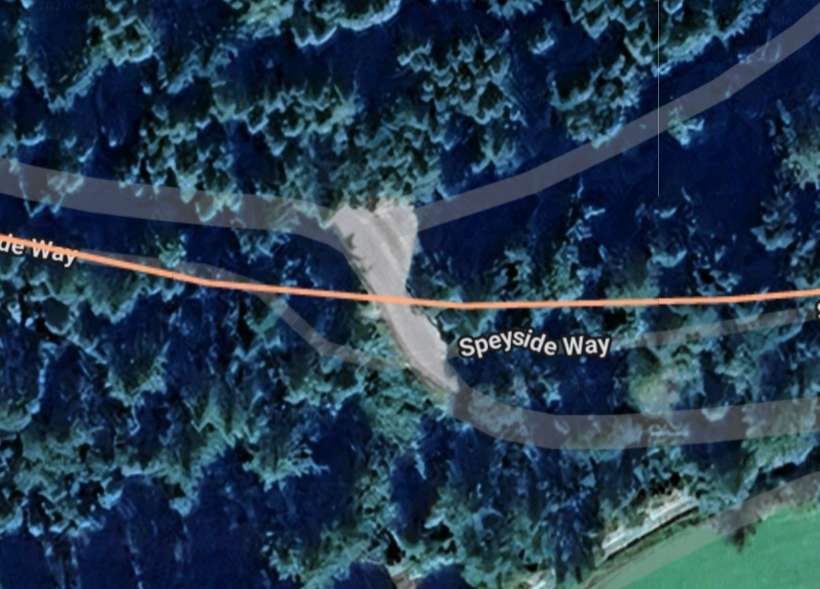
The area is heavily wooded so little is visible other than the tree canopy on satellite imagery. The railmaponline.com mapping shows the lines of the streams in the 21st century most clearly.

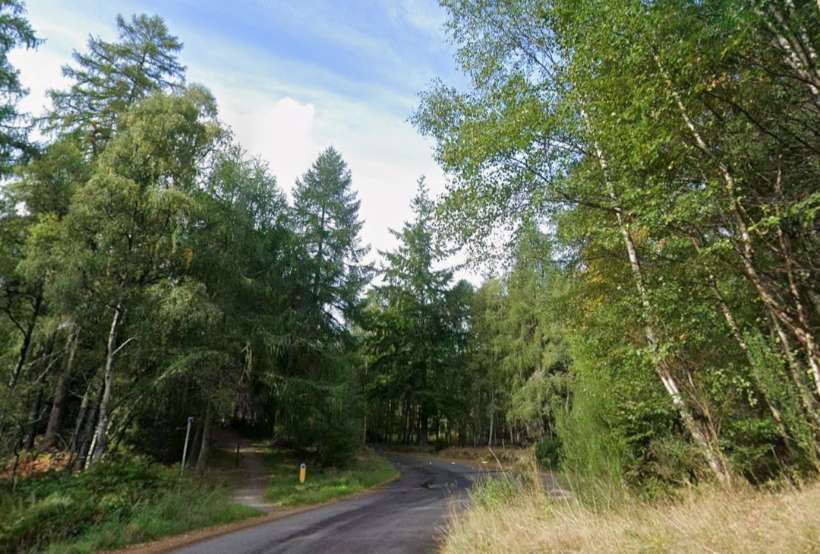
The line was then bridged by an access road. …
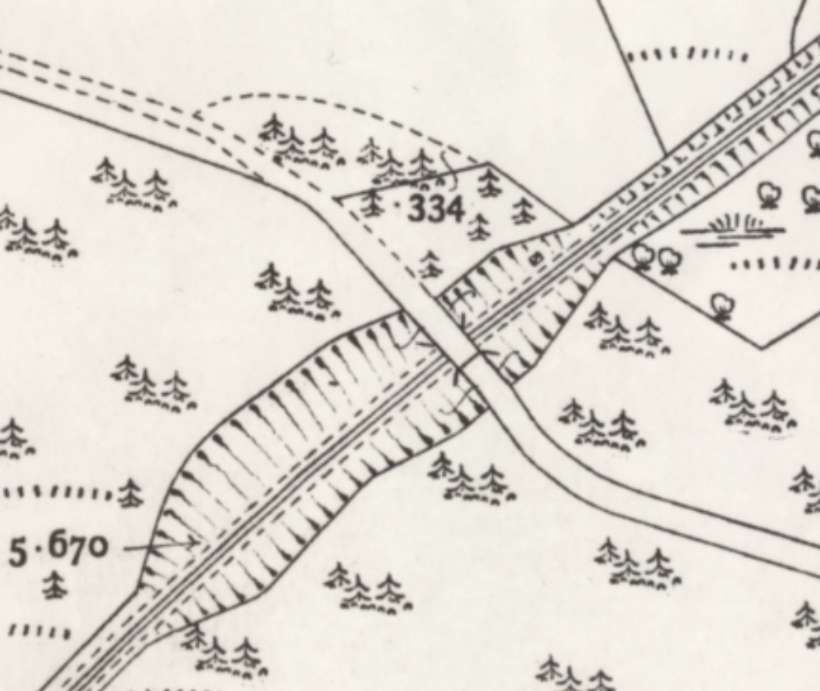
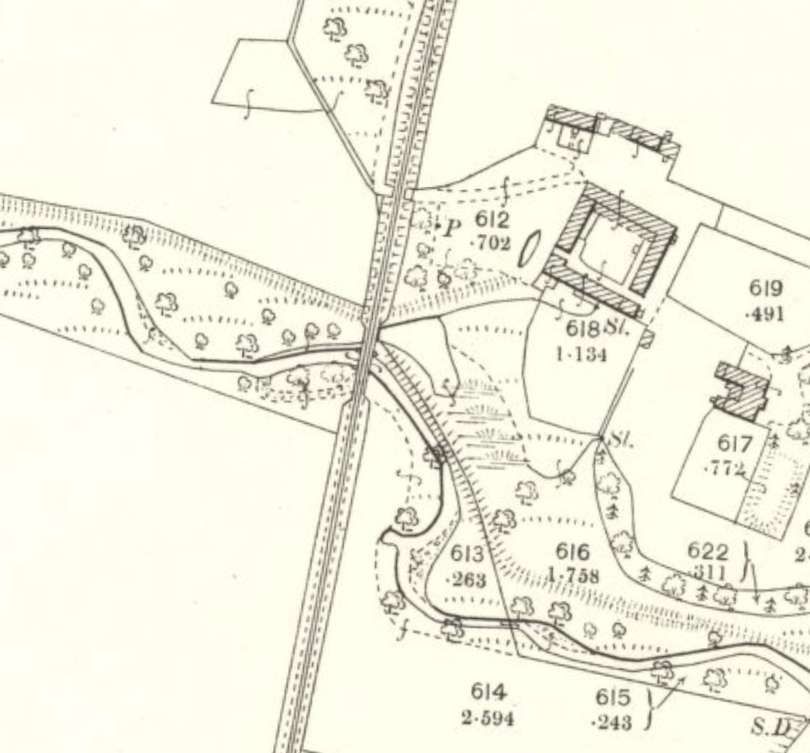
A farm access road bridged the line. [24]
The same location on railmaponline.com mapping. [6]
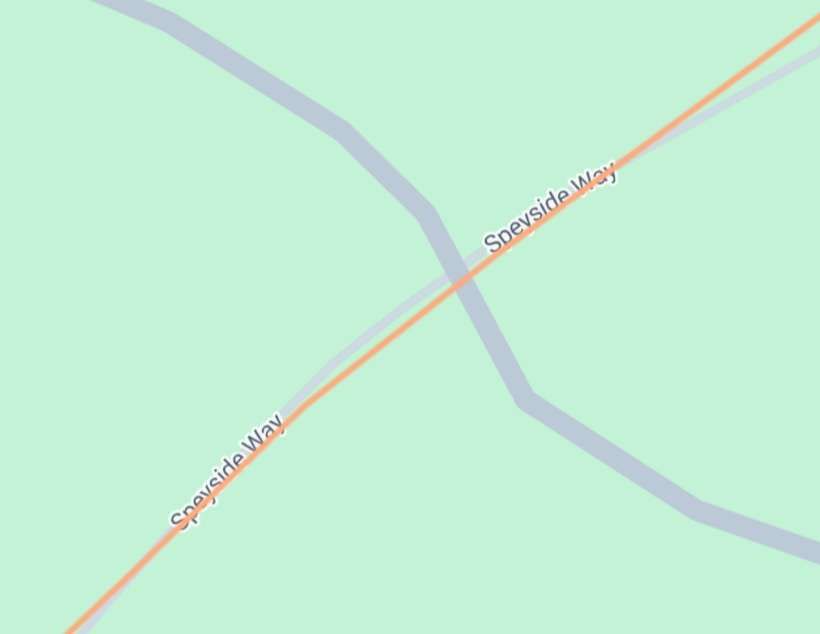
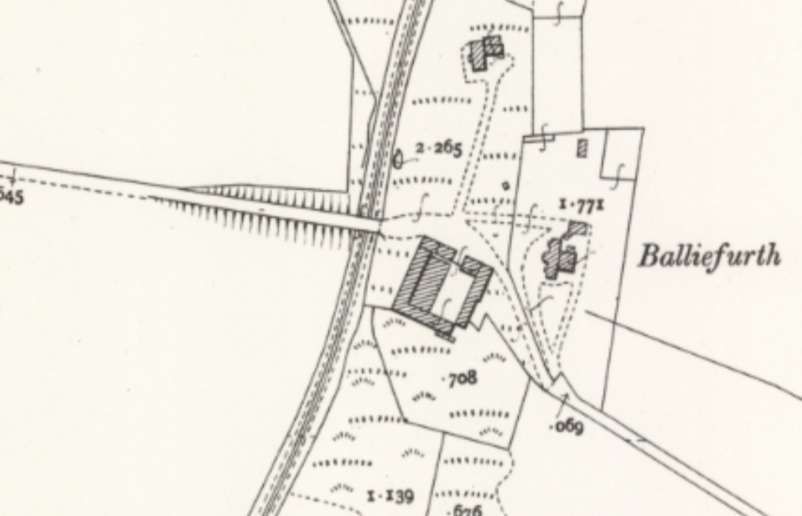
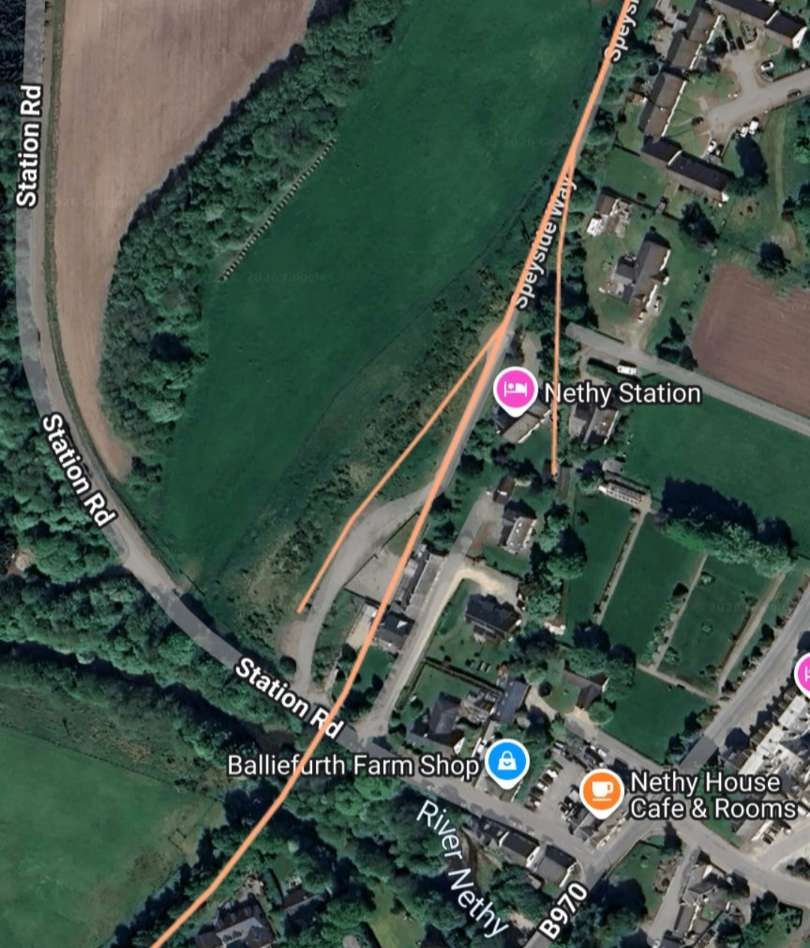
The access Road to Balliefurth Farm also bridged the line. [27]
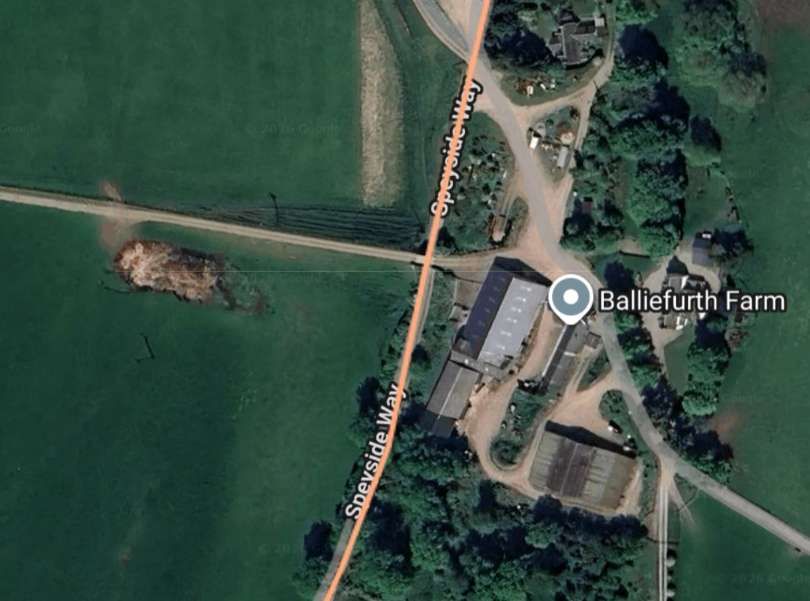
The same access road in the 21st century. [6]
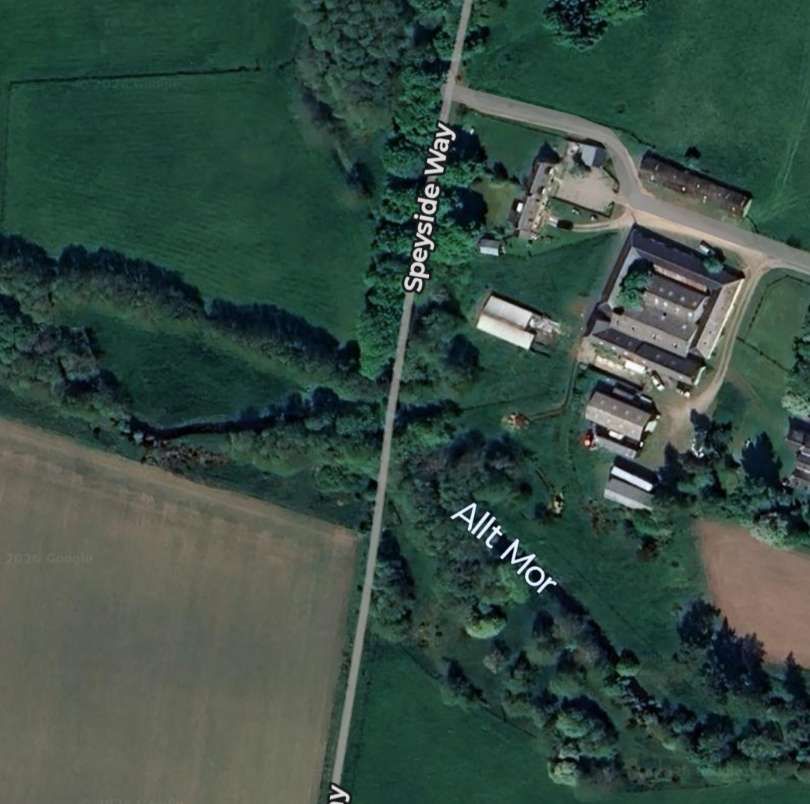
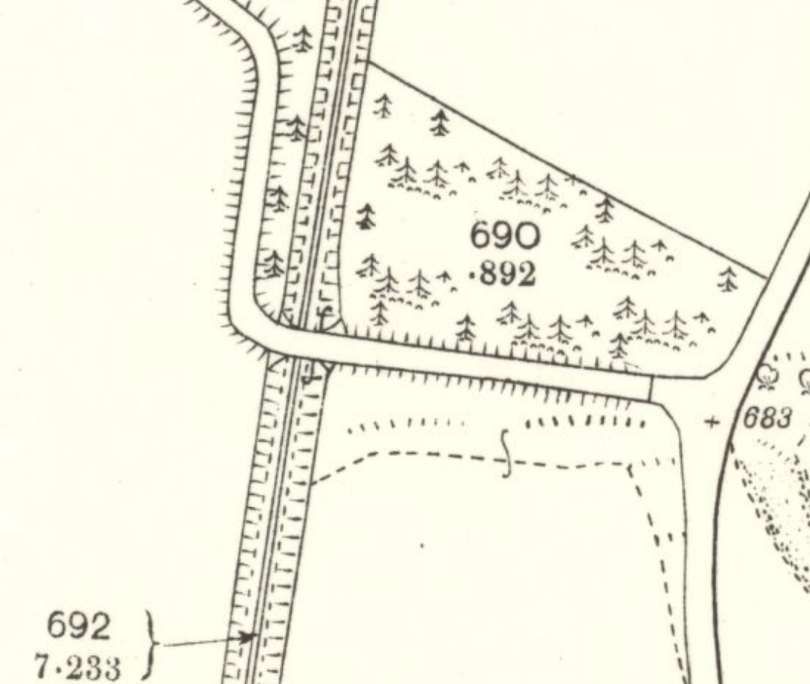
The bridge over Allt Mor. [20]
The same location in the 21st century. [Google Maps, February 2026]
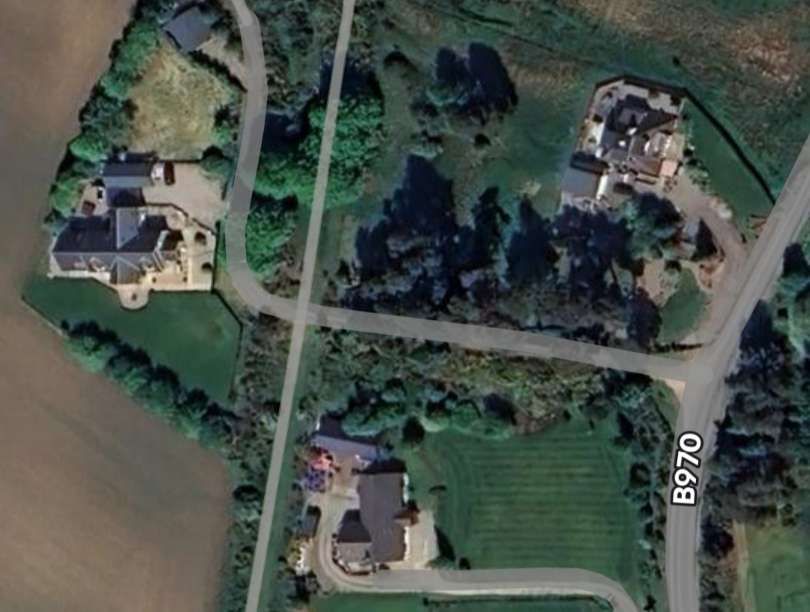
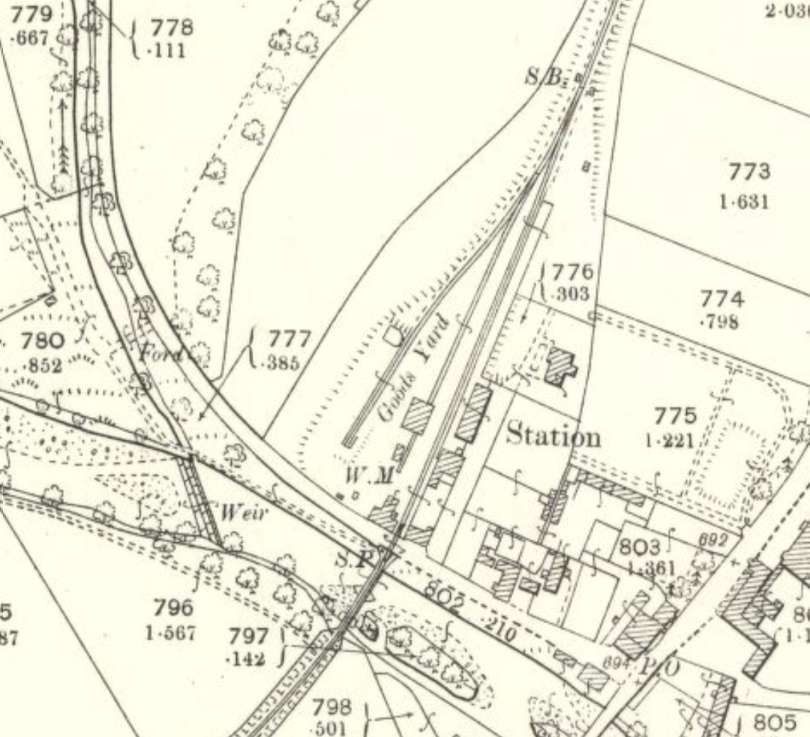
Another farm access crossed the line South of Allt Mor. [25]
The same location in the 21st century. [Google Maps, February 2026]
Nethy Bridge Railway Station at the turn of the 20th century. [26]
The location of the Nethy Bridge Railway Station in the 21st century. [6]
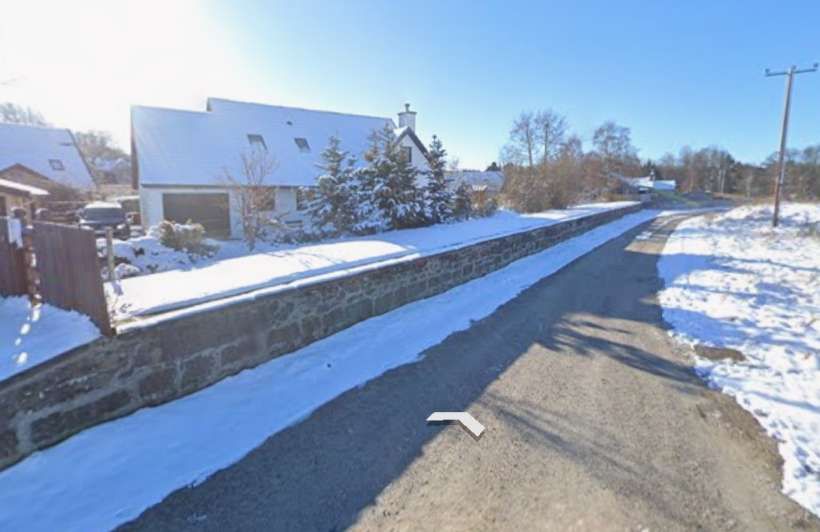
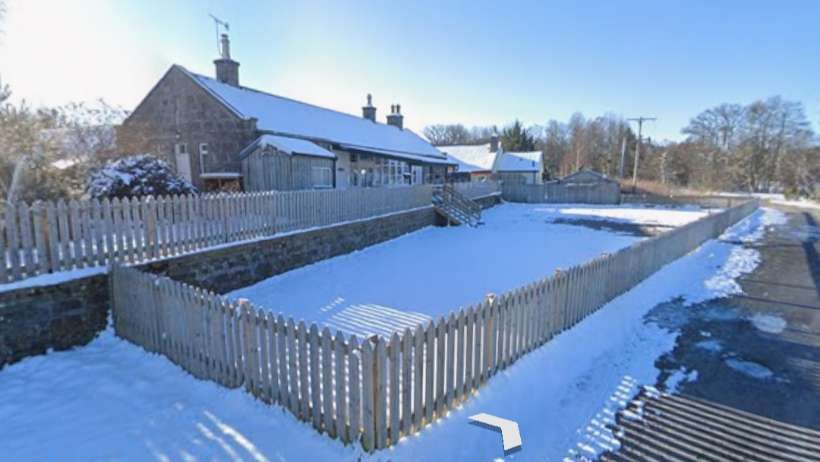
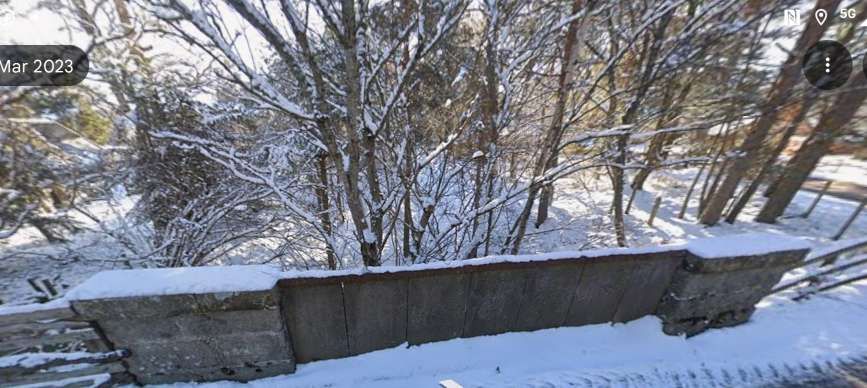
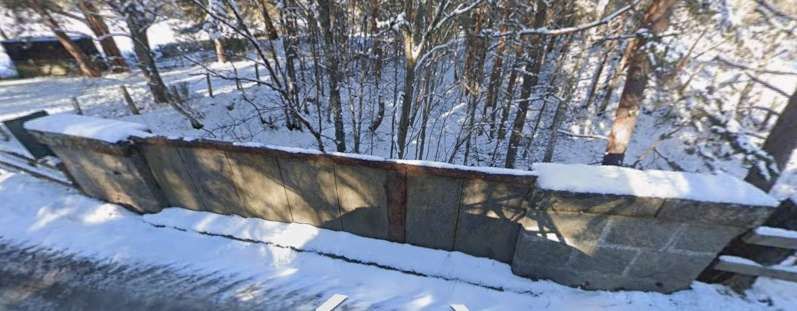
The platform at Nethy Bridge Railway Station, seen in the snow, from the Speyside Way. [Google Streetview, March 2023]
Nethy Bridge Railway Station, seen in the snow, from the Speyside Way. [Google Streetview, March 2023]

A series of photographs of Nethy Bridge Railway Station can be found here. [30]
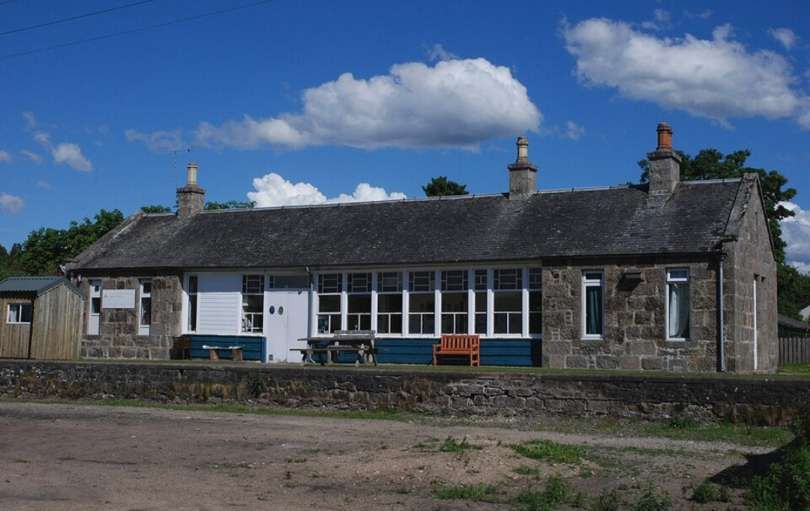
Nethy Bridge Railway Station building in the 21st century, © Nigel Brown and licensed for reuse under a Creative Commons licence (CC BY-SA 2.0). [33]

Originally named Abernethy when it opened on the Strathspey Railway, the station was renamed Nethy Bridge on 1st November 1867 to avoid confusion with another Abernethy station near Perth, after which misdirected goods deliveries occurred.” [31]

Construction of the station was straightforward, reflecting its rural setting in the sparsely populated Abernethy area, with a basic single-platform layout designed for modest traffic volumes. Key engineering features included a substantial rail bridge spanning the River Nethy immediately adjacent to the station, whose stone supports remain visible today as remnants of the original infrastructure.” [31]

The name change for the station prompted a corresponding renaming of the nearby village from Abernethy—known in Scottish Gaelic as Obar Neithich—to Nethy Bridge, reflecting the influence of the expanding rail network on local identity; however, Abernethy remains in common local use for the broader parish area.” [31]

In the station’s early years through the late 19th century, operations focused on fundamental passenger and goods handling along the single-track Strathspey Railway, which connected remote Highland settlements to broader networks at Craigellachie and later Boat of Garten. The station primarily accommodated local residents traveling for work, markets, and social purposes, while also supporting the nascent tourism to Speyside’s scenic landscapes and sporting estates, with basic platforms and a modest goods shed facilitating timber, agricultural produce, and visitor luggage.” [31]

Safety measures were implemented from the outset on this lightly trafficked branch line, including a signal box to control train movements and manned level crossing gates at the nearby road intersection, essential for managing single-line working and preventing collisions in the rural setting.” [31]
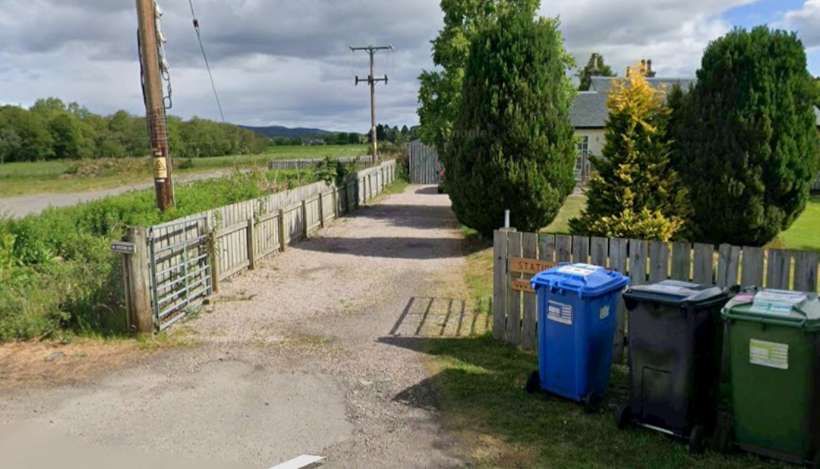
Looking back into Nethy Bridge Station site along the line of the old railway from what was a level-crossing. [Google Streetview, May 2025]
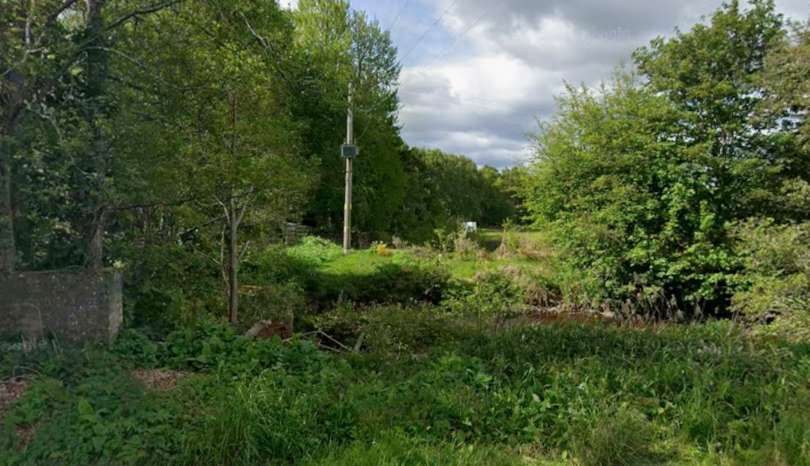
Turning through 180° and looking ahead along the line of the old railway. [Google Streetview, May 2025]

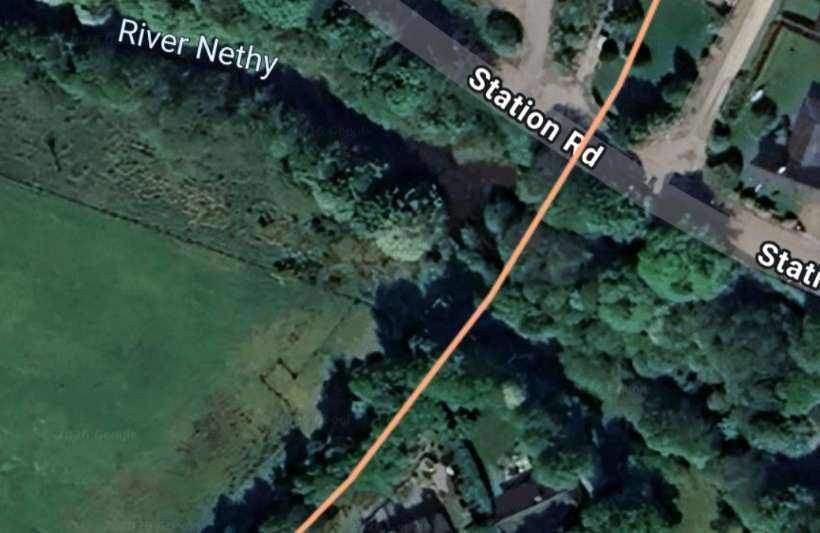
Immediately after crossing the road at the South end of the station site, the railway bridged the River Nethy. The railway then turned “sharply westward, and crosses the Spey for the third time on a girder bridge of five spans supported on masonry piers. It then curves back towards the south, and runs beside the main line of the former Highland Railway to Boat of Garten, 33.5 miles from Craigellachie. Throughout the final stages of the journey, the Cairngorms rise boldly on the eastern horizon, their dark outlines relieved by the snow which frequently lingers in the corries until midsummer.” [2: p8-9]
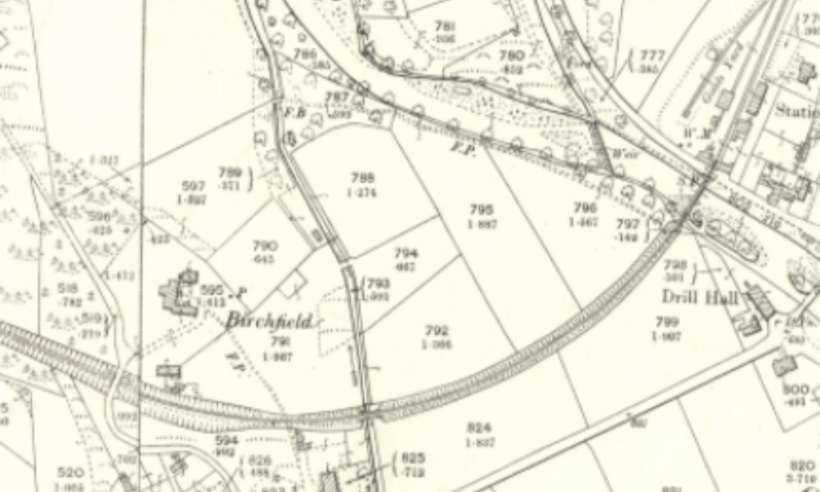
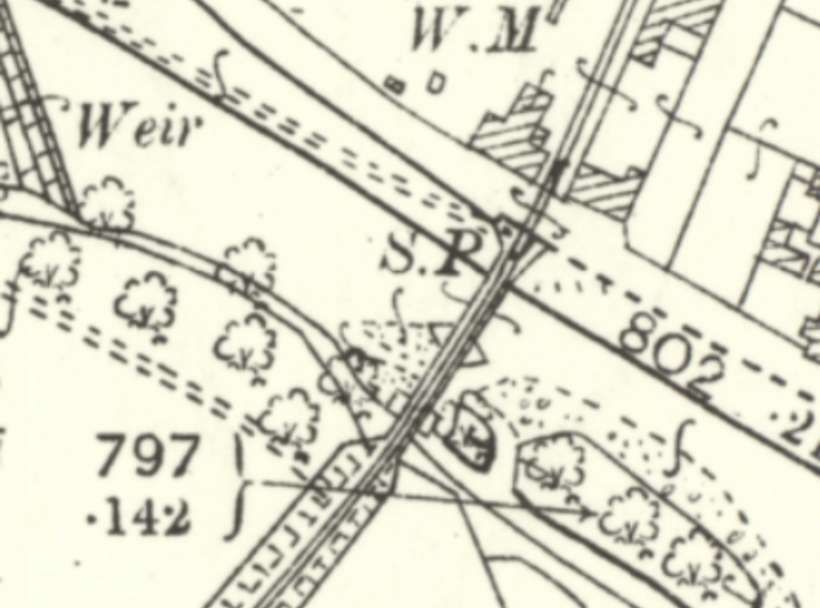
The sharp right bend to the South of Nethy Bridge Railway Station, as it appears on the OS mapping from the turn of the 20th century. [34]
The bridge across the River Nethy. [34]
The same location in the 21st century. [6]
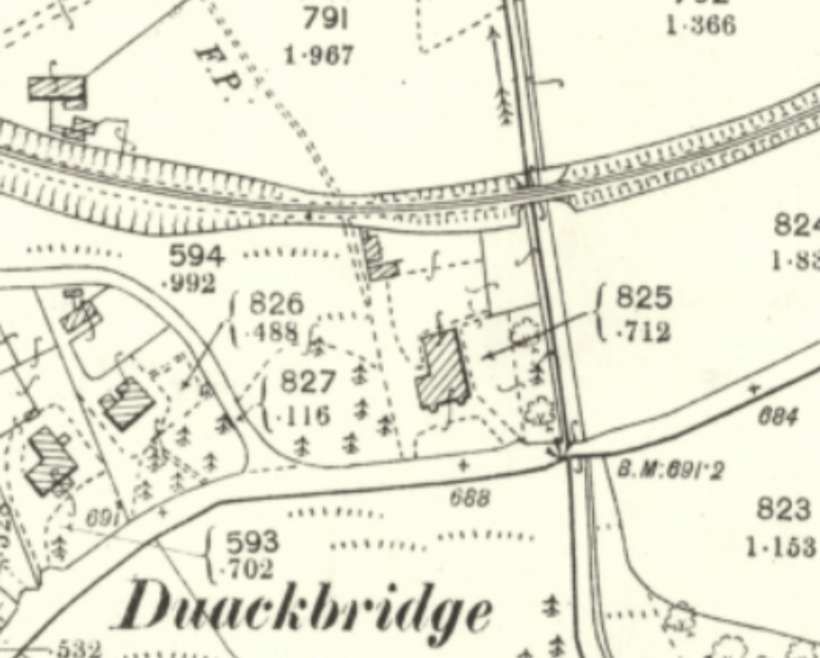
Close to Duackbridge the line bridged the Duack Burn. [34]
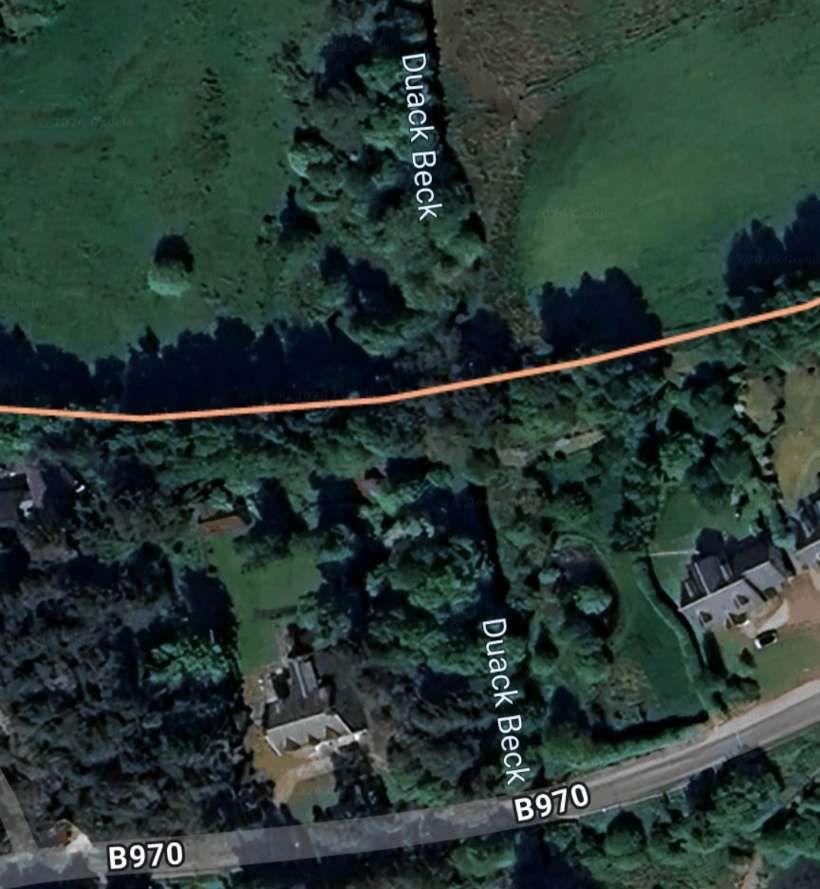
The same location in the 21st century. [6]
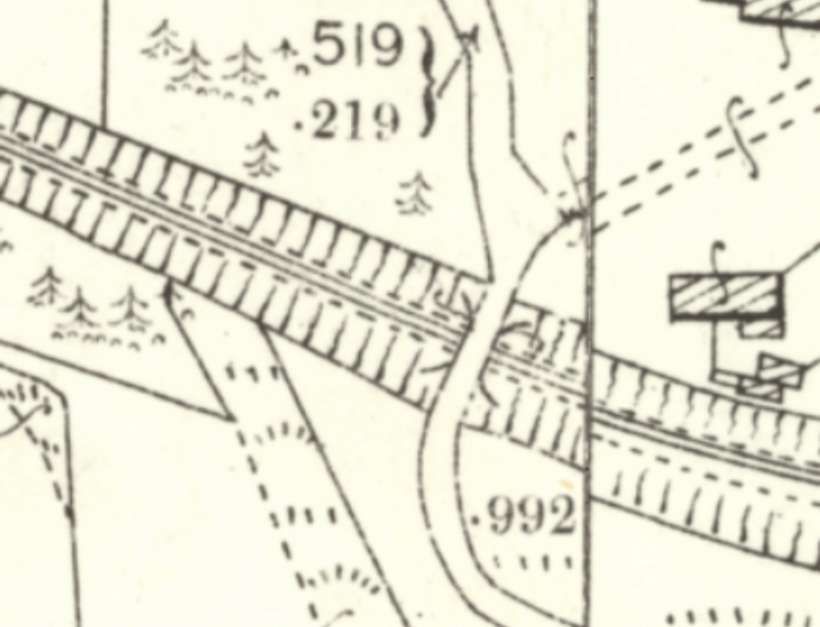
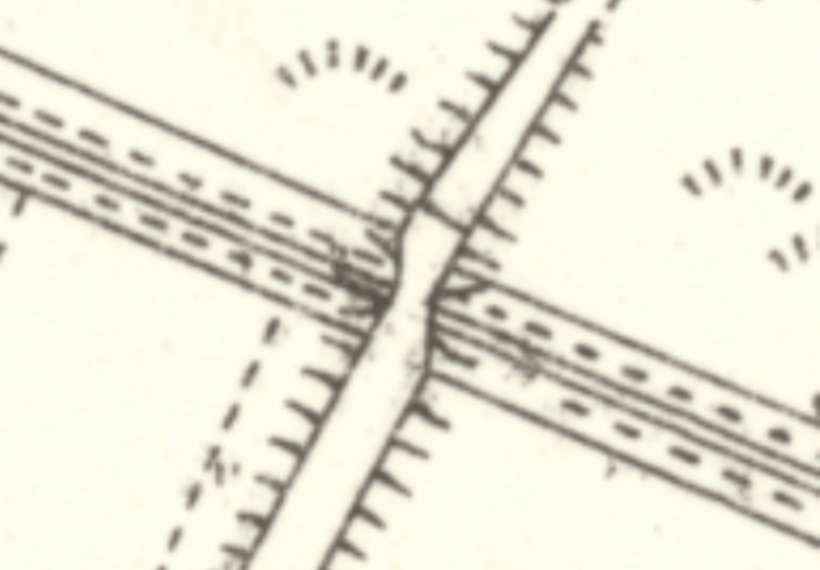
Northwest of Duackbridge, the line is bridged by a minor road. [34]
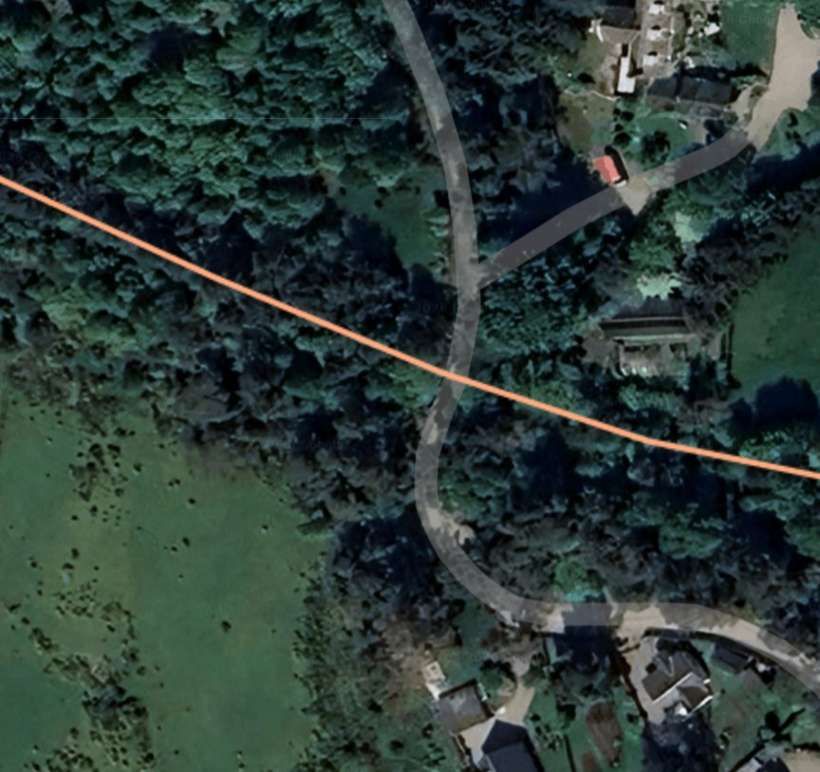
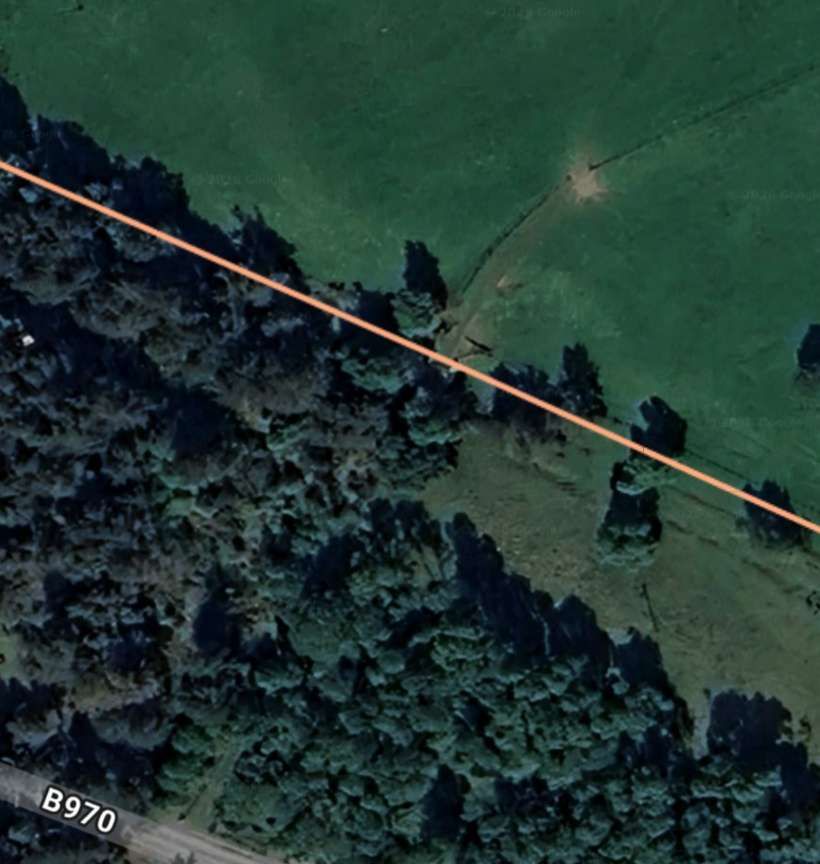
The same location in the 21st century. [6]
Looking back to the East from the bridge over the old railway’s line. [Google Streetview, March 2023]
Looking West from the same bridge. [6]
Another access road crosses the line before the old railway reached another bridge over the River Spey. [35]
The same location in the 21st century. [6]
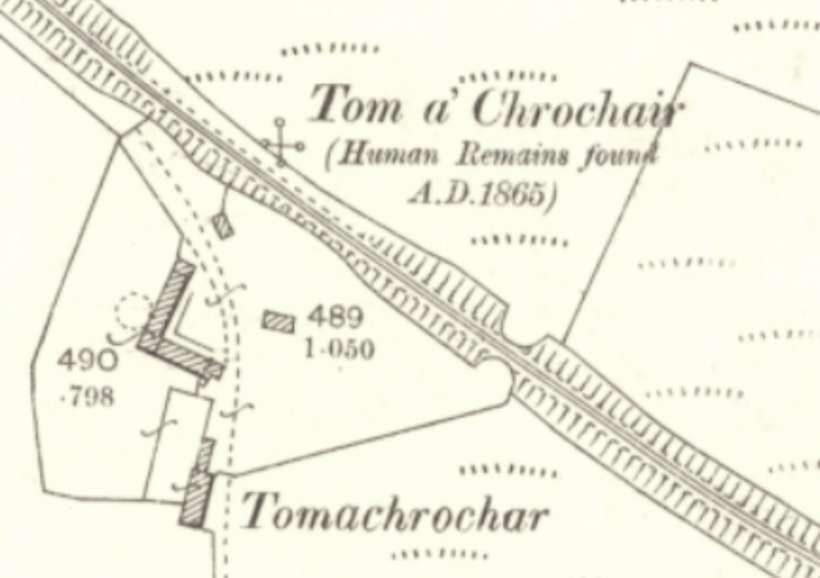
A cattle creep at Tomachrochar. [36]
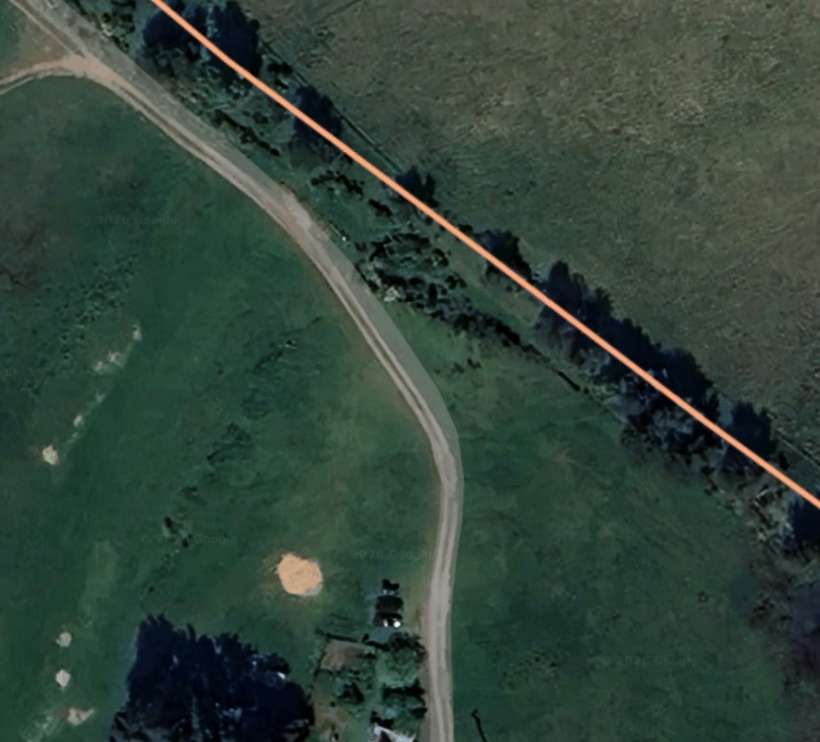
Roughly the same location in the 21st century. [6]
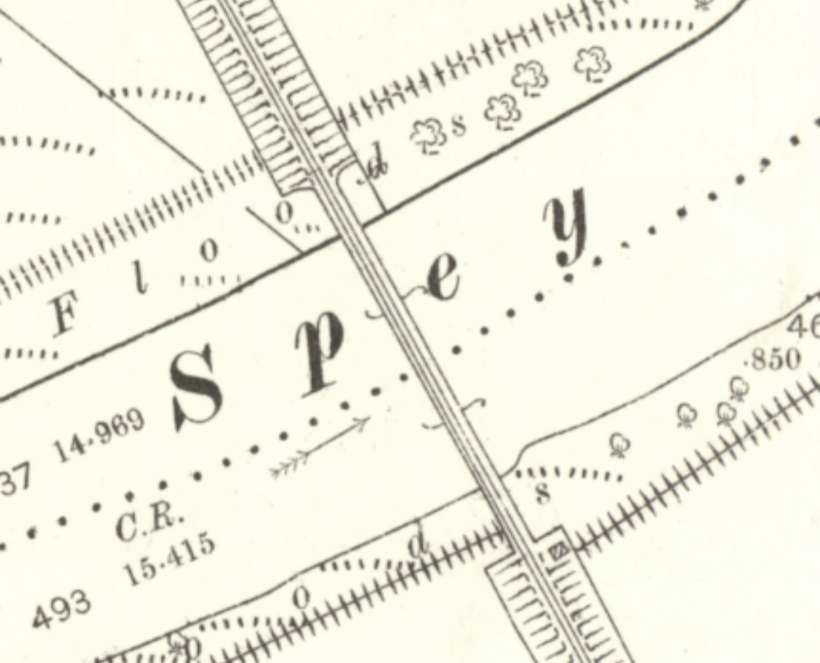
The bridge over the River Spey. [37]
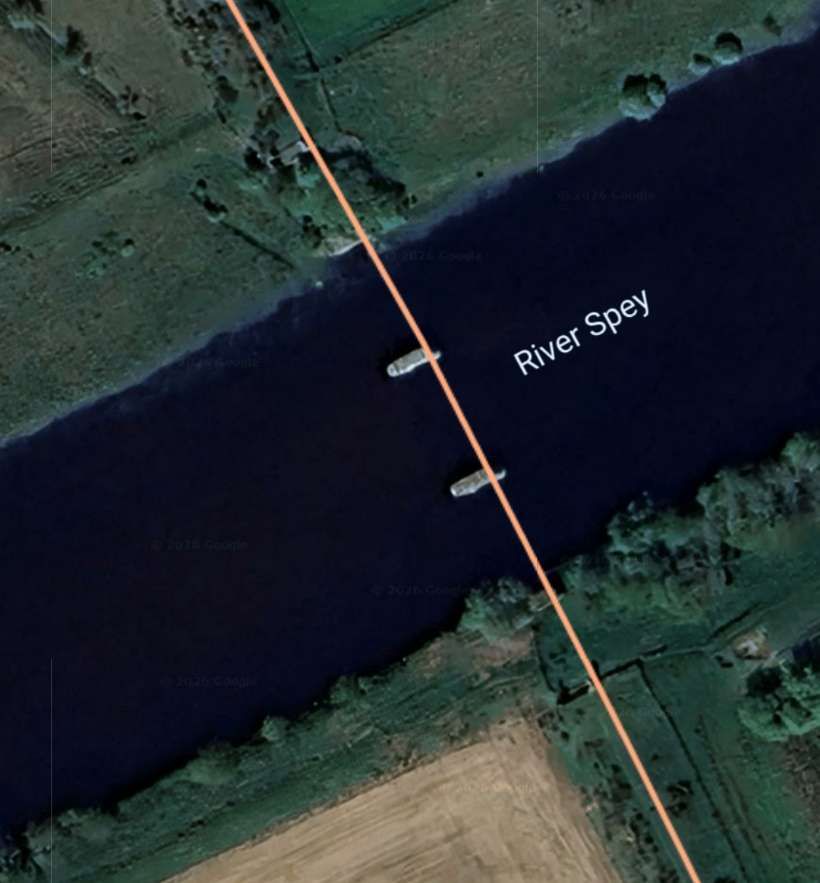
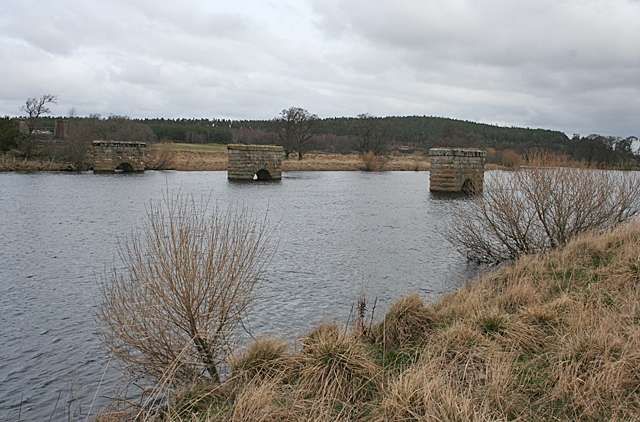
The bridge abutments and piers still remain in the 21st century. [6]
The remaining piers of the bridge over the River Spey, seen from 100 metres upstream on the South bank, © Anne Burgess and licenced for reuse under a Creative Commons licence (CC BY-SA 2.0). [43]
The line met the Highland Railway shortly after crossing the river. There was no junction at this point. The two lines ran parallel to each other into Boat of Garten Railway Station. [38]
The same location in the 21st century. [6]
A field access bridge over the two lines. [39]
The same location in the 21st century. [6]
A view of the level-crossing from the West, © Richard Webb and licensed for reuse under a Creative Commons licence (CC BY-SA 2.0). [44]
Further to the Southwest, a cattle creep passed under the two lines. [40]
The same location in the 21st century. [6]
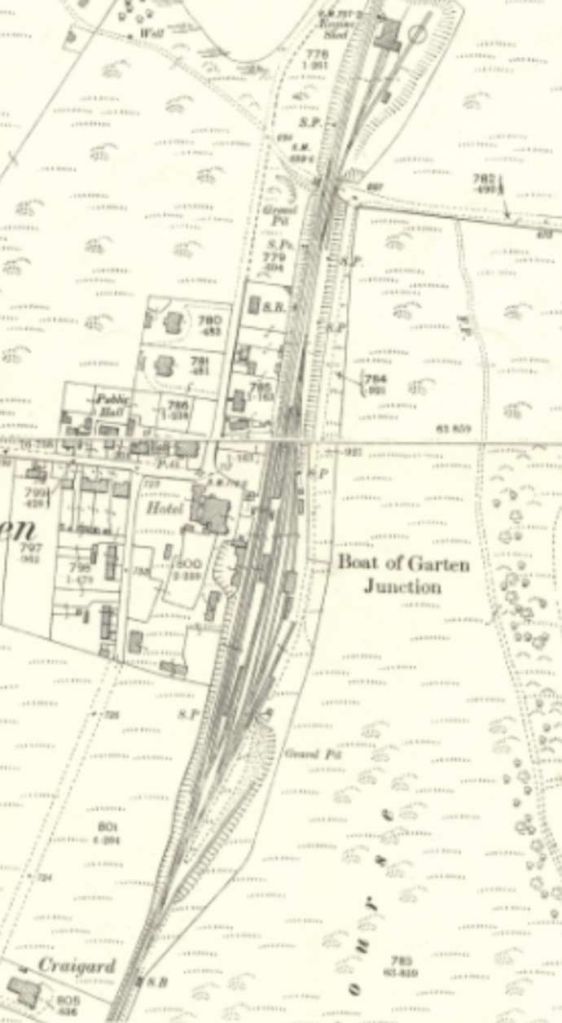
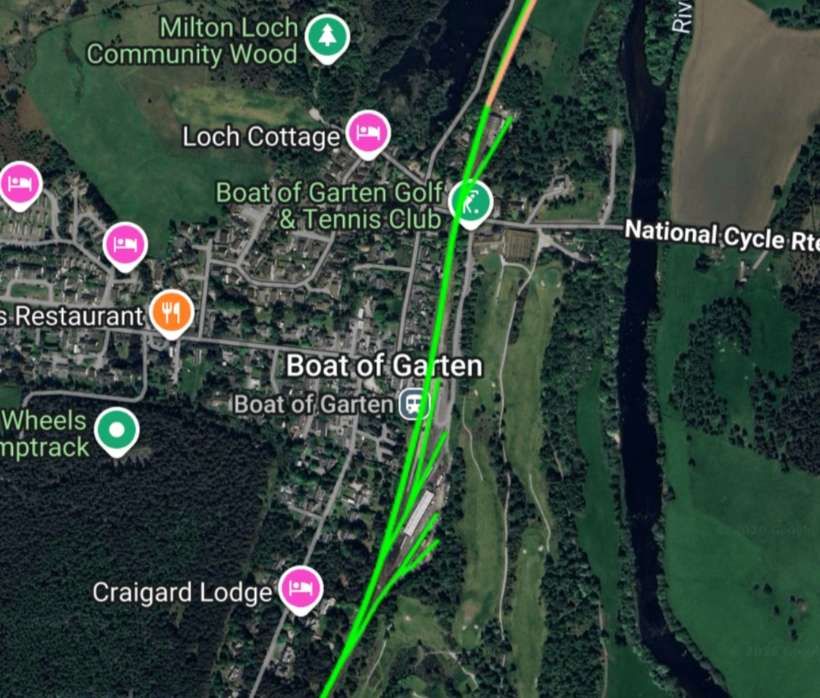
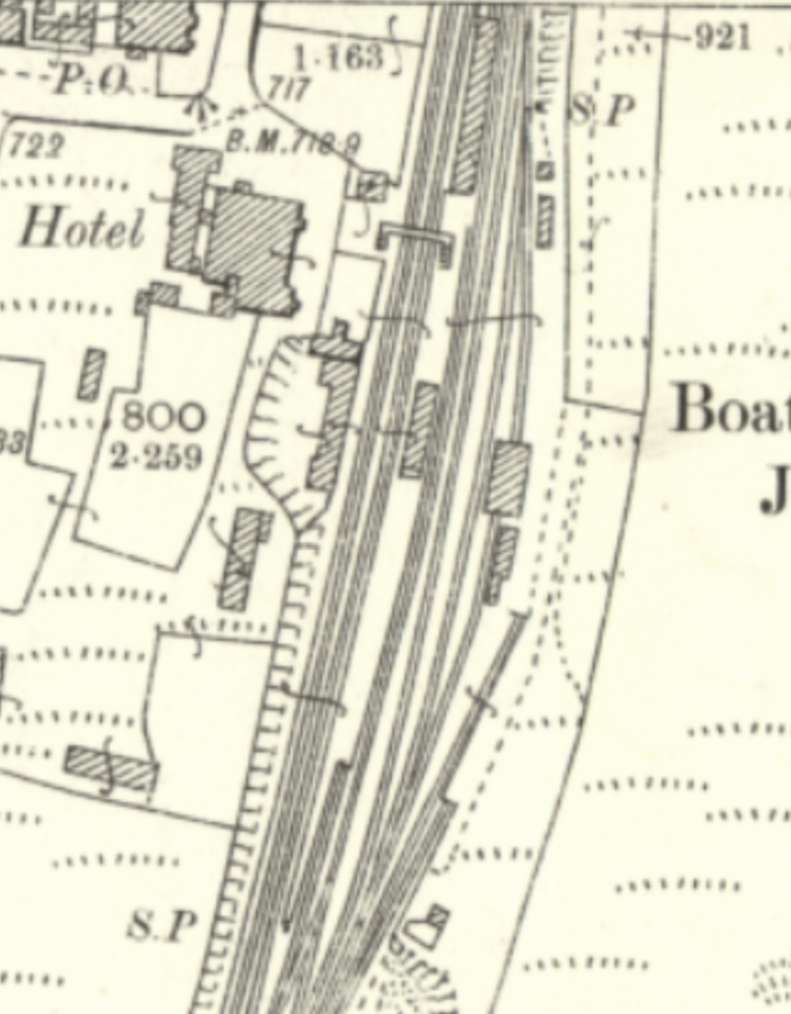
A slightly out of focus overall view of Boat of Garten Railway Station. [41]
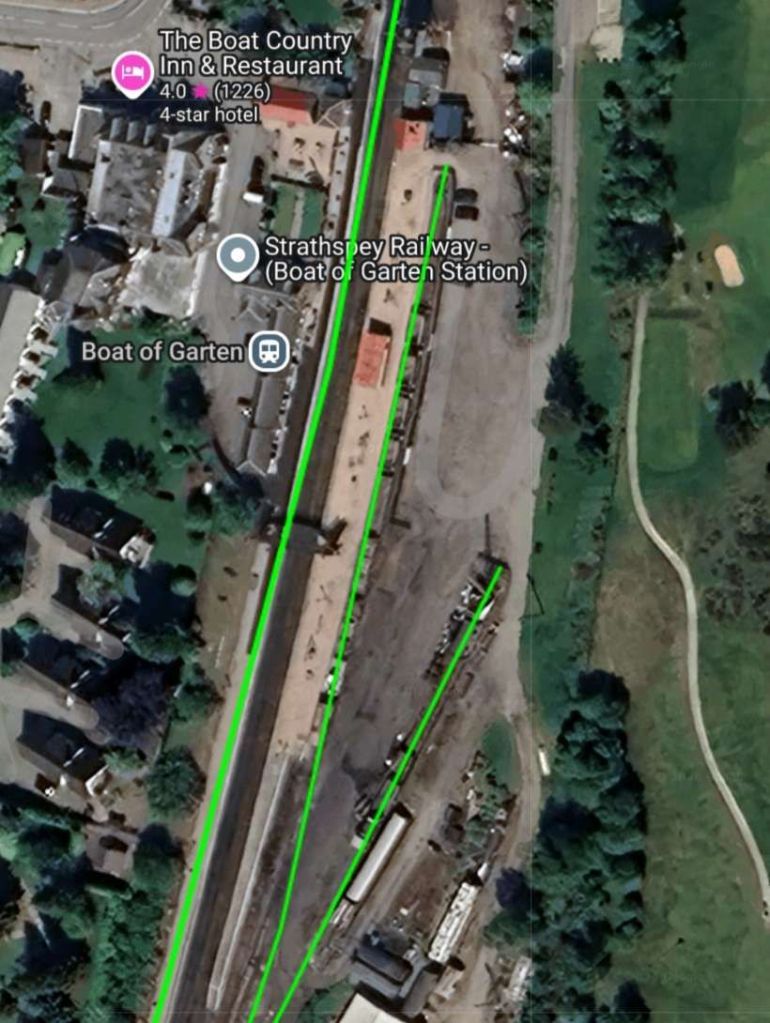
Boat of Garten Railway Station in the 21st century. [6]
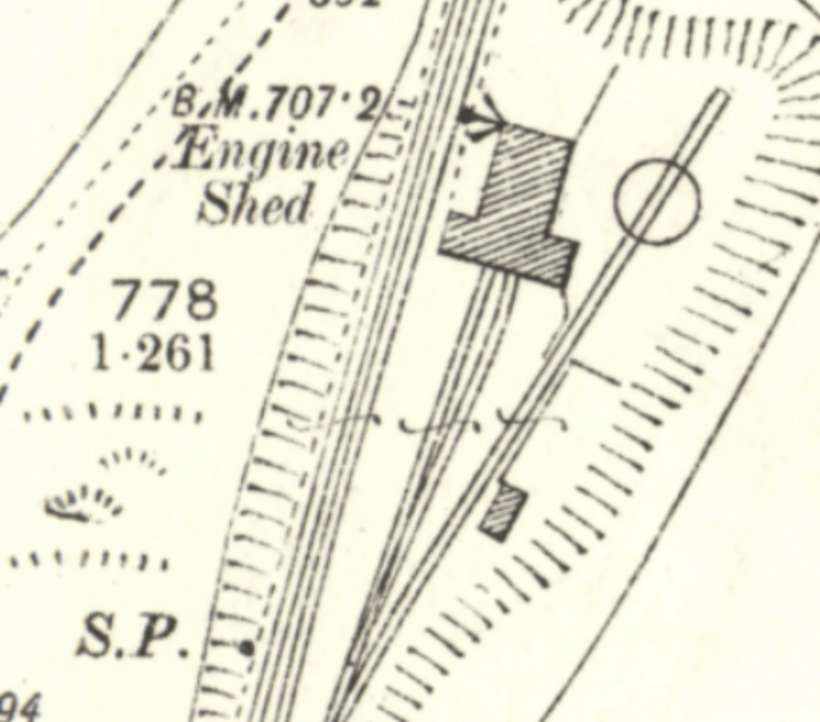
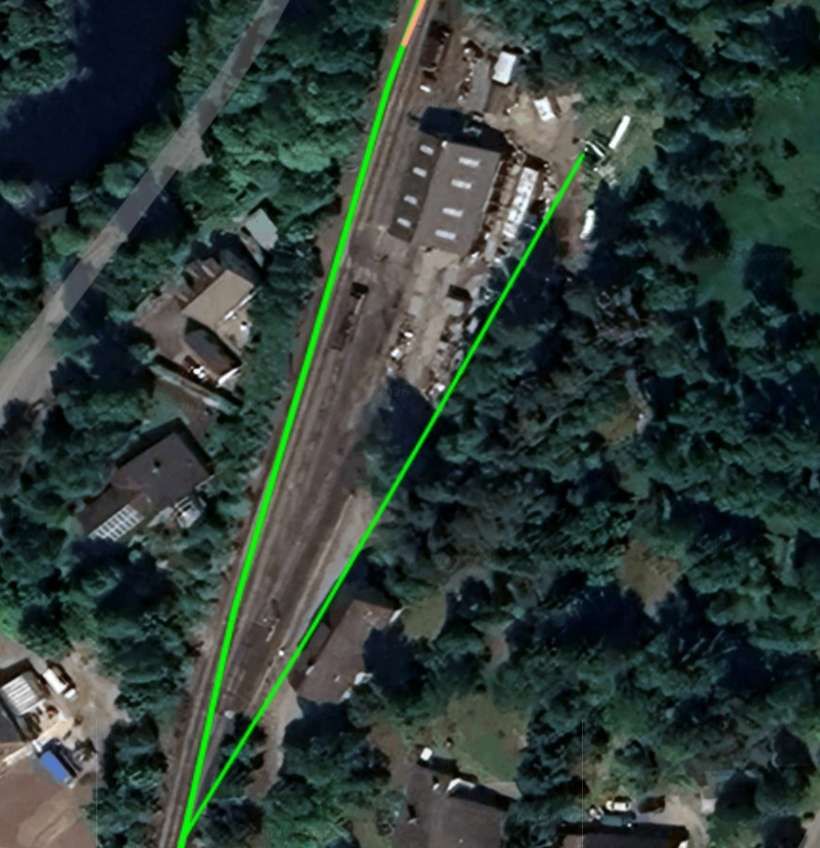
The GNSR Engine Shed and turntable. [41]
The same location in the 21st century. [6]
The underpass North of the Station. [41]
The same location in the 21st century. [6]
The station platforms at Boat of Garten. [41]
The same location in the 21st century. [6]
Boat of Garten Station building, © Donald H. Bain and licenced for reuse under a Creative Commons licence (CC BY-SA 2.0). [45]

The southbound platform at Boat of Garten Station is an island, the outer face of which is used by the Strathspey trains. The layout includes a run-round loop, and sidings for the exchange of traffic. The only physical connection between the two railways formerly was at the south end of the station, but [in the 1950s] an improved junction, allowing trains to run direct between Strathspey line and the Highland line platforms, [was] provided at the north end.” [2: p9]

Services on the Strathspey Line

H.A. Vallance describes services on the line: “The early train services on the Strathspey line call for little comment. The trains stopped at all stations, and were characterised by their leisurely progress. There were three trains in each direction in summer, and two in winter, but with the gradual improvement of services on the Great North after the early 1880s, the number of services was increased, and there was some improvement in speed. At least three trains were run throughout the year, and in summer there were additional trains, some of which worked only between Craigellachie and Ballindalloch. The services suffered some reduction during the first world war from which they never fully recovered. In [the period before Vallance was writing] there [were] three trains in each direction, and the journey time for the 33.5 miles between Craigellachie and Boat of Garten [was] about 1.25 hour.” [2: p9]

“In the early years of the [20th] century, the GNSR introduced a summer programme of long-distance half-day excursions by special trains from Aberdeen on Wednesdays and Saturdays. The first of these trips to the Speyside line was on 17th June 1905, and the fare for the return journey to Boat of Garten (101.25 miles each way) was 2s. 6d. The train ran non-stop between Aberdeen and Craigellachie (68 miles) in 85 min., and reached Boat of Garten in 2.25 hours.” [2: p9]

During the summer of 1906, the journey “was extended for 17 miles over the Highland Railway, from Boat of Garten to Kingussie, but this innovation lasted for one season only. By 1909, the non-stop run had been shortened to 64 miles by the addition of a stop at Dufftown. The GNSR. had no restaurant cars, but lunches provided by the Palace Hotel, Aberdeen, owned by the railway company, were served on the outward journey in saloon carriages fitted with tables. Teas were served on the return journey.” [2: p51]

After being withdrawn during the first world war, these excursions were re-introduced by the London & North Eastern Railway, but at increased fares. The catering arrangements were improved by the provision of a fully-equipped restaurant car, and the trains also ran on Sundays, thus becoming the first Sunday services on the Strathspey line. The trains were again withdrawn on the outbreak of the second world war, and [were not] restored.” [2: p5]

The sharp curves on the lines between Keith and Elgin are said to have led the GNSR to use locomotives with a leading bogie at an early date. For many years after its opening in 1863, the Strathspey line was worked by some of the first 4-4-0s built for the company. ” [2: p51]

Successive locomotive superintendents perpetuated the 4-4-0 wheel arrangement for general mixed-traffic duties, and, as the older locomotives were withdrawn from service, several of these types appeared on the Boat of Garten trains. Six-coupled engines were unknown on the line until after grouping, when 4-6-0s from the former Great Eastern Railway were sent to North-East Scotland, and were used on the Strathspey excursion trains. In [the 1950s], British Railways standard 2-6-0s … worked the passenger services, and class “K” 2-6-0s [worked] goods trains.” [2: p51]

On 3rd November 1958, the services on the Strathspey line were re-organised by the introduction of one of the new diesel railbuses. … These vehicles, which [had] seats for 56 passengers, and a top speed of 55 m.p.h., [were] designed for use on routes on which traffic [was] light. The railbus [made] three journeys in each direction daily on the Strathspey line, and the only remaining steam-hauled passenger service [was] the late evening train from Craigellachie, on Saturdays only, which convey[ed] a through coach from Aberdeen.” [2: p51]

Advantage [was] taken of the ease with which a diesel unit can be reversed to extend the railbus journeys over the main line between Craigellachie and Elgin. The introduction of through services between Strathspey and Elgin was among the suggestions made in an article on the possibilities of light diesel units in the North of Scotland, which appeared in The Railway Magazine for January, 1956. Two journeys in each direction also [were] extended between Boat of Garten and Aviemore. distance from Aviemore to Elgin via Craigellachie is 51 miles, and the railbus [was] thus covering a daily mileage of almost 300, or 1,800 miles a week.” [2: p51]

A significant series of photographs at locations along the line can be seen here. [42]

References

  1. The Railway Magazine Volume 105 No. 693, Tothill Press, London, January 1959.
  2. H.A. Vallance; The Strathspey Line; in The Railway Magazine Volume 105 No. 693, Tothill Press, London, January 1959, p3-9 & 51.
  3. https://rogerfarnworth.com/2026/01/16/the-strathspey-line-part-1-keith-to-dufftown
  4. https://rogerfarnworth.com/2026/01/29/the-strathspey-line-part-2-dufftown-to-ballindalloch
  5. https://maps.nls.uk/geo/explore/#zoom=16.2&lat=57.41331&lon=-3.38888&layers=168&b=ESRIWorld&o=100, accessed on 30th January 2026.
  6. https://railmaponline.com/UKIEMap.php, accessed on 30th January 2026.
  7. https://maps.nls.uk/view/82870827, accessed on 30th January 2026.
  8. https://maps.nls.uk/view/82870824, accessed on 30th January 2026
  9. https://maps.nls.uk/view/82879632, accessed on 30th January 2/26.
  10. https://maps.nls.uk/view/82879599, accessed on 30th January 2026
  11. https://grokipedia.com/page/advie_railway_station, accessed on 30th January 2026.
  12. https://maps.nls.uk/view/82879605, accessed on 31st January 2026.
  13. https://maps.nls.uk/view/82879617, accessed on 31st January 2026
  14. https://maps.nls.uk/view/82879665, accessed on 31st January 2026.
  15. http://gnsra.org.uk/advie%20station.htm, accessed on 31st January 2026.
  16. https://www.geograph.org.uk/photo/2992200, accessed on 31st January 2026.
  17. http://gnsra.org.uk/cromdale%20station.htm, accessed on 31st January 2026.
  18. https://maps.nls.uk/view/82879665, accessed on 1st February 2026.
  19. https://maps.nls.uk/view/82879668, accessed on 1st February 2026.
  20. https://maps.nls.uk/view/82887360, accessed on 1st February 2026.
  21. https://maps.nls.uk/geo/explore/#zoom=17.4&lat=57.31730&lon=-3.59117&layers=168&b=ESRIWorld&o=100, accessed on 1st February 2026.
  22. https://maps.nls.uk/geo/explore/#zoom=16.9&lat=57.31647&lon=-3.59883&layers=168&b=ESRIWorld&o=100, accessed on 1st February 2026.
  23. https://maps.nls.uk/geo/explore/#zoom=16.4&lat=57.30237&lon=-3.62673&layers=168&b=ESRIWorld&o=100, accessed on 1st February 2026.
  24. https://maps.nls.uk/geo/explore/#zoom=17.3&lat=57.29968&lon=-3.62981&layers=168&b=ESRIWorld&o=100, accessed on 1st February 2026.
  25. https://maps.nls.uk/geo/explore/#zoom=16.6&lat=57.27186&lon=-3.65567&layers=168&b=ESRIWorld&o=100, accessed on 1st February 2026.
  26. https://maps.nls.uk/geo/explore/#zoom=16.6&lat=57.26688&lon=-3.65847&layers=168&b=ESRIWorld&o=100, accessed o. 1st February 2026.
  27. https://maps.nls.uk/geo/explore/#zoom=16.6&lat=57.29298&lon=-3.63738&layers=168&b=ESRIWorld&o=100, accessed on 1st February 2026.
  28. https://www.geograph.org.uk/photo/776038, accessed on 1st February 2026.
  29. https://www.railscot.co.uk/locations/G/Grantown-on-Spey_East/slideshow.html, accessed on 1st February 2026.
  30. https://www.railscot.co.uk/locations/N/Nethy_Bridge/slideshow.html, accessed on 1st February 2026.
  31. https://grokipedia.com/page/nethy_bridge_railway_station, accessed on 1st February 2026.
  32. https://www.lner.info/locos/D/d42.php, accessed on 3rd February 2026.
  33. https://www.geograph.org.uk/photo/1375905, accessed on 3rd February 2026.
  34. https://maps.nls.uk/geo/explore/#zoom=16.2&lat=57.26571&lon=-3.66131&layers=168&b=ESRIWorld&o=100, accessed on 3rd February 2026.
  35. https://maps.nls.uk/geo/explore/#zoom=17.3&lat=57.26749&lon=-3.67683&layers=168&b=ESRIWorld&o=100, accessed on 3rd February 2026.
  36. https://maps.nls.uk/geo/explore/#zoom=17.3&lat=57.27007&lon=-3.68530&layers=168&b=ESRIWorld&o=100, accessed on 3rd February 2026.
  37. https://maps.nls.uk/geo/explore/#zoom=17.3&lat=57.27306&lon=-3.69028&layers=168&b=ESRIWorld&o=100, accessed on 3rd February 2026.
  38. https://maps.nls.uk/geo/explore/#zoom=17.3&lat=57.27654&lon=-3.69814&layers=168&b=ESRIWorld&o=100, accessed on 3rd February 2026.
  39. https://maps.nls.uk/geo/explore/#zoom=17.3&lat=57.27240&lon=-3.71136&layers=168&b=ESRIWorld&o=100, accessed on 3rd February 2026.
  40. https://maps.nls.uk/geo/explore/#zoom=17.3&lat=57.26156&lon=-3.73707&layers=168&b=ESRIWorld&o=100, accessed on 3rd February 2026.
  41. https://maps.nls.uk/geo/explore/#zoom=16.5&lat=57.24988&lon=-3.75161&layers=168&b=ESRIWorld&o=100, accessed on 3rd February 2026.
  42. https://www.railscot.co.uk/companies/S/Strathspey_Railway/22.html, accessed on 3rd February 2026.
  43. https://www.geograph.org.uk/photo/6104082, accessed on 3rd February 2026.
  44. https://www.geograph.org.uk/photo/4176571, accessed on 3rd February 2026.
  45. https://www.geograph.org.uk/photo/3448622, accessed on 3rd February 2026.
The Strathspey Line – Part 2 – Dufftown to Ballindalloch

This is the second article following the Strathspey Line. The first can be found here. [22]

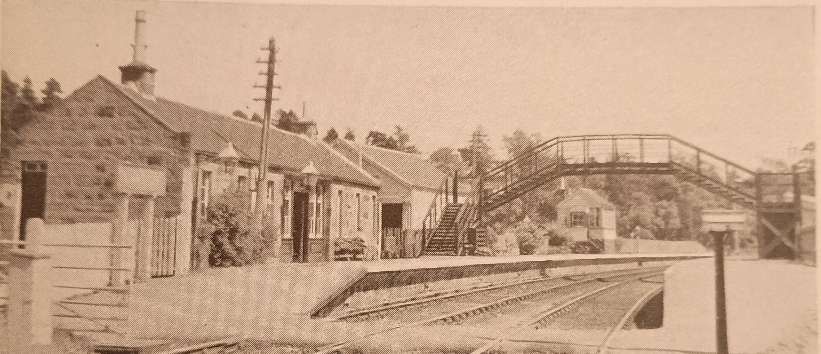
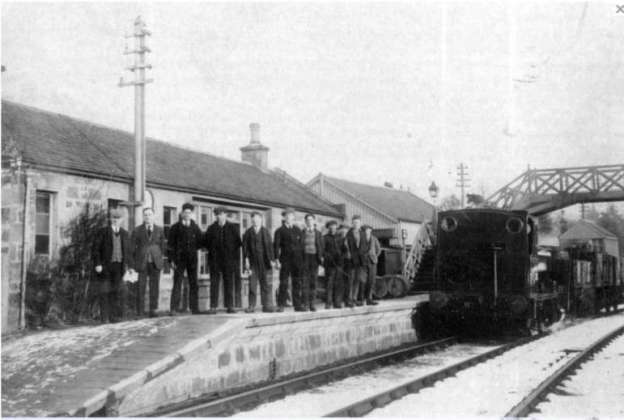
The featured image above shows Carron Railway Station early in the 20th century, © Public Domain. [61]

We start this next leg of the journey in Dufftown at the Railway Station which is the terminus of the Keith & Dufftown Railway.

Dufftown Railway Station at the turn of the 29th century. [3]

Beyond Dufftown we continue a descent at 1 in 78 and 1 in 80 through the Fiddich Gorge. “The engineering works on this section include two masonry bridges over the Fiddich, a deep rock cutting at Corbie’s Craig, and a diversion of the river to enable an embankment to be formed on what had been the bed of the stream. The line emerges from the gorge at Craigellachie, a short distance from the confluence of the Fiddich and the Spey.” [1: p5-6]

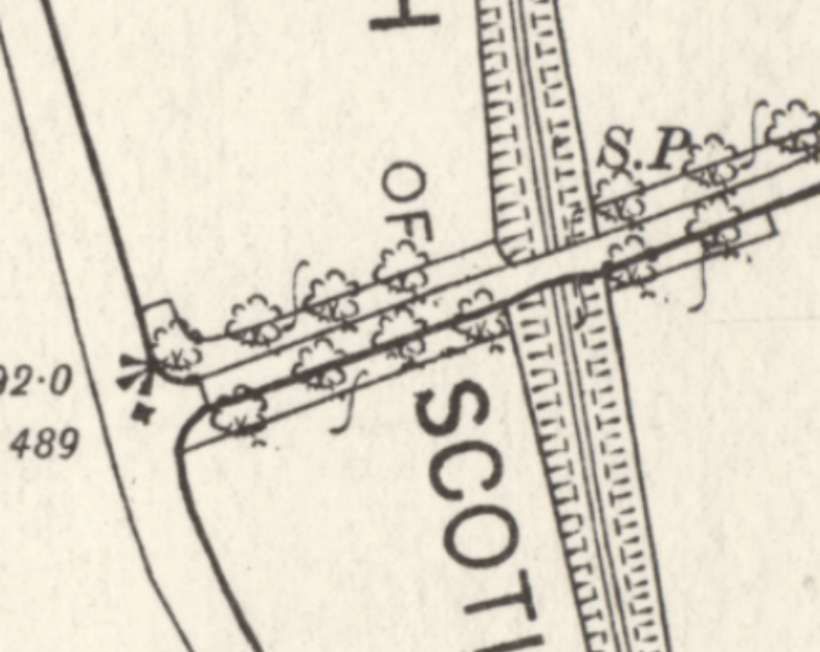
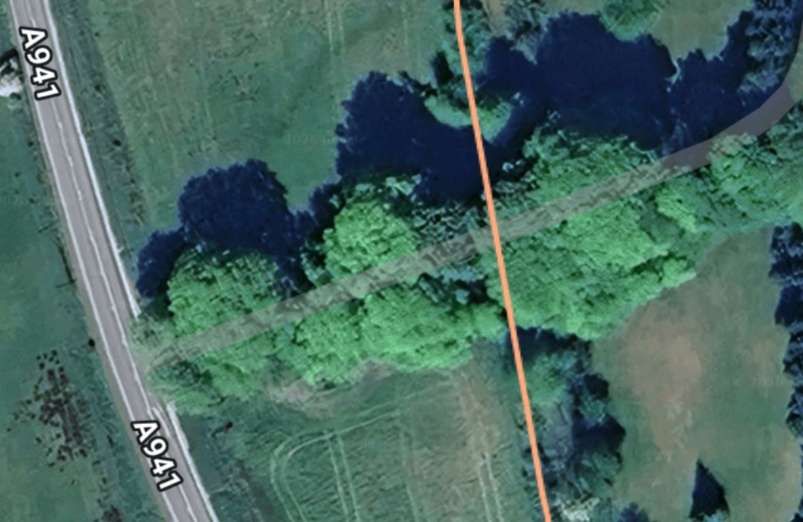
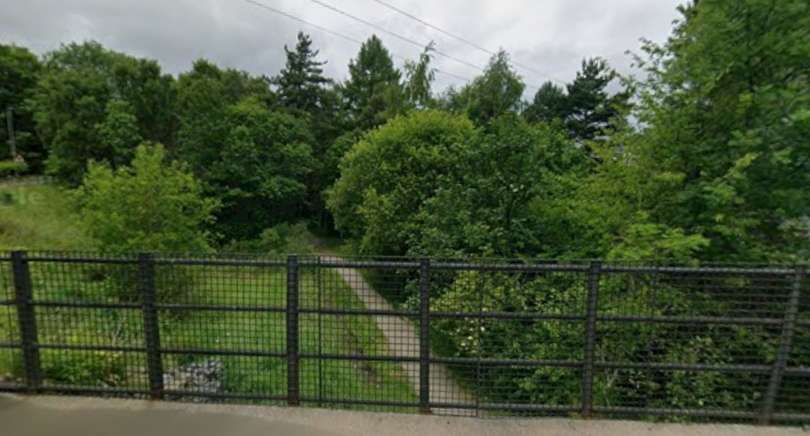
A short distance North of Dufftown Railway Station, the line bridged an access road. [4]
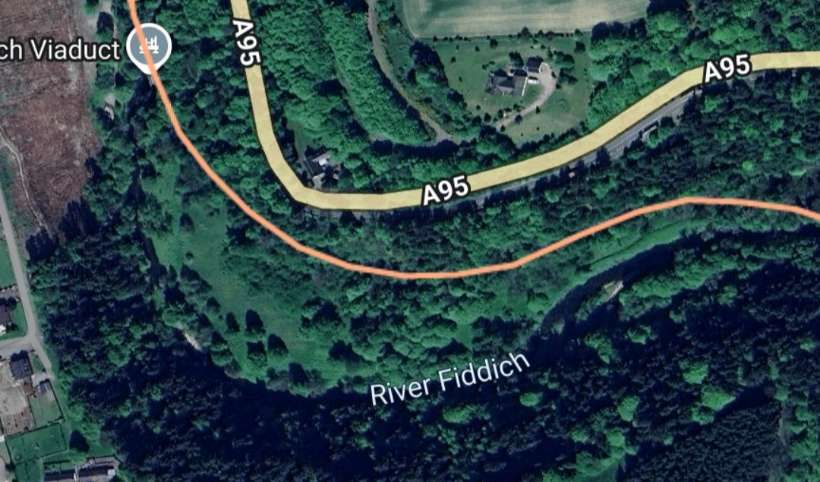
The A941 runs alongside the route of the old railway (shown orange on this extract from the satellite imagery provided by railmaponline.com). The house which appears top left matches that which appears in the same location on the map extract. Duff Town is a new access road. The original road under the line turned East close to the house. [5]
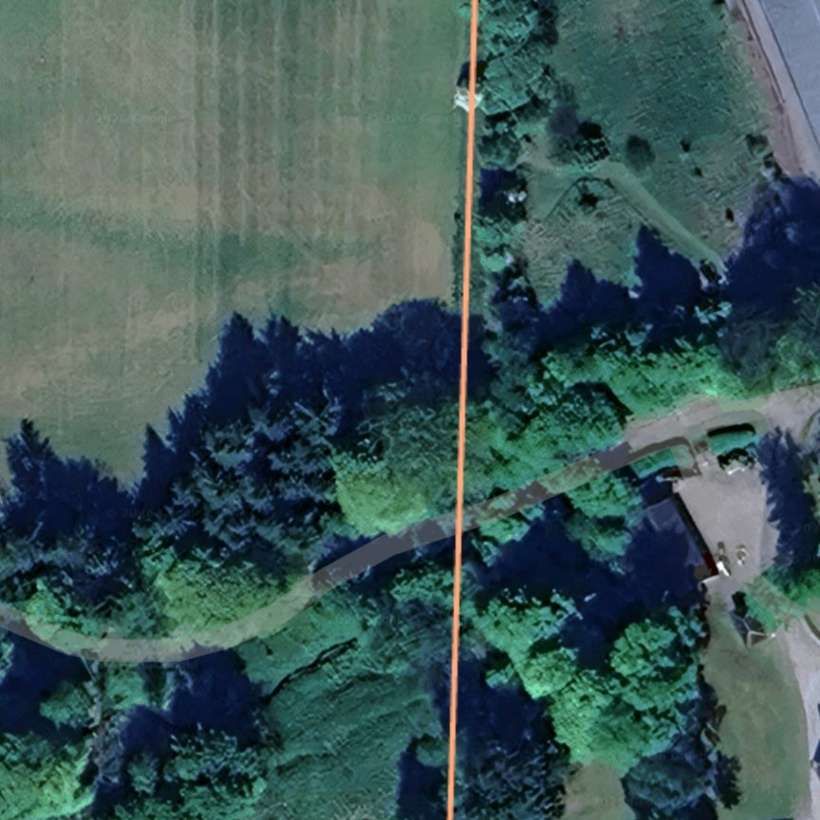
The next location along the line was a bridge carrying an access road to Balvenie House. [6]
The same location in the 21st century. [5]
The line bridged the next minor road which crossed the line to the North of Balvenie House. [6]
The same location in the 21st century. [5]
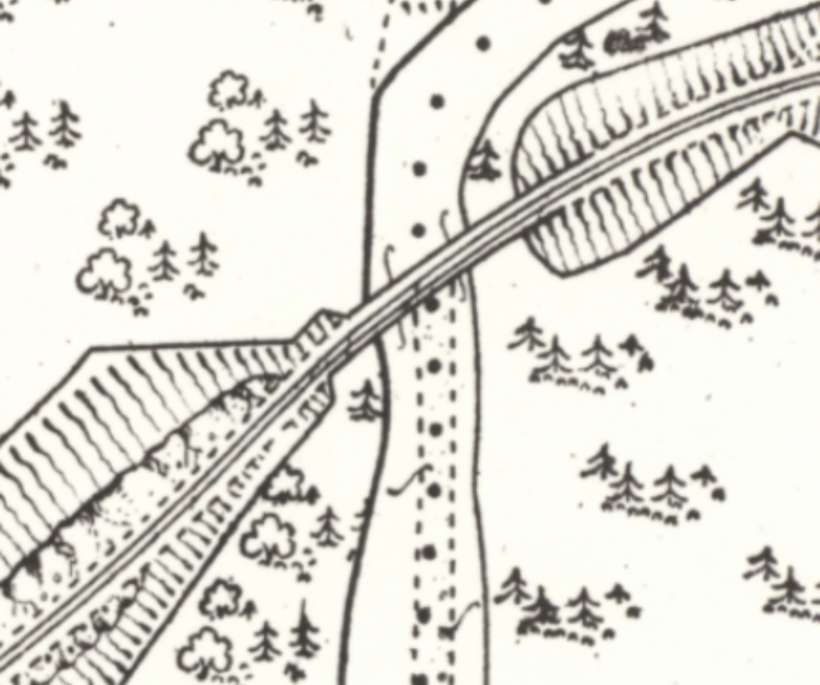
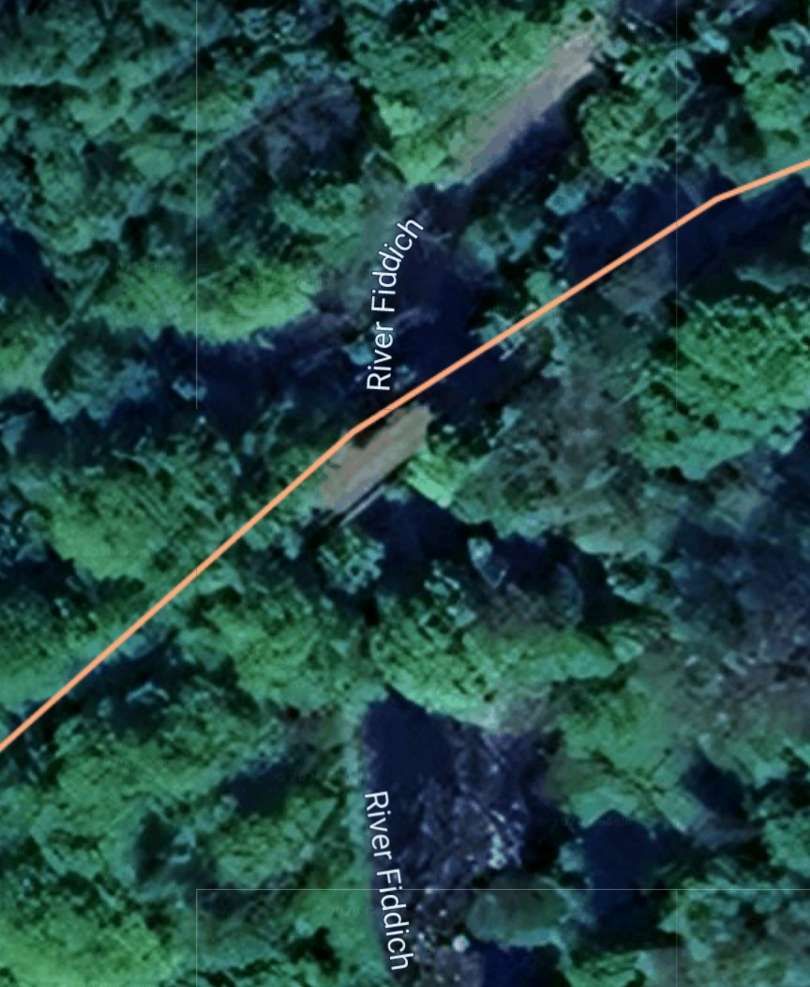
The next structure was a bridge over the River Fiddich which the line has been following since Dufftown. [7]
The same location in the 21st century. [5]
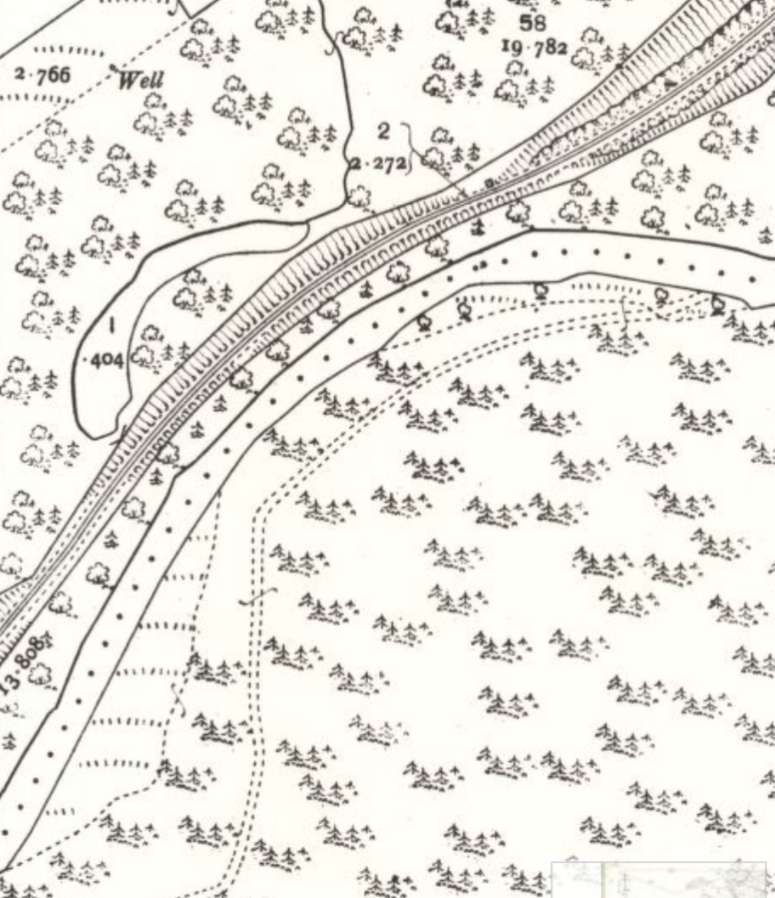
Construction of the line required the diversion of a short length of the River Fiddich. [7]
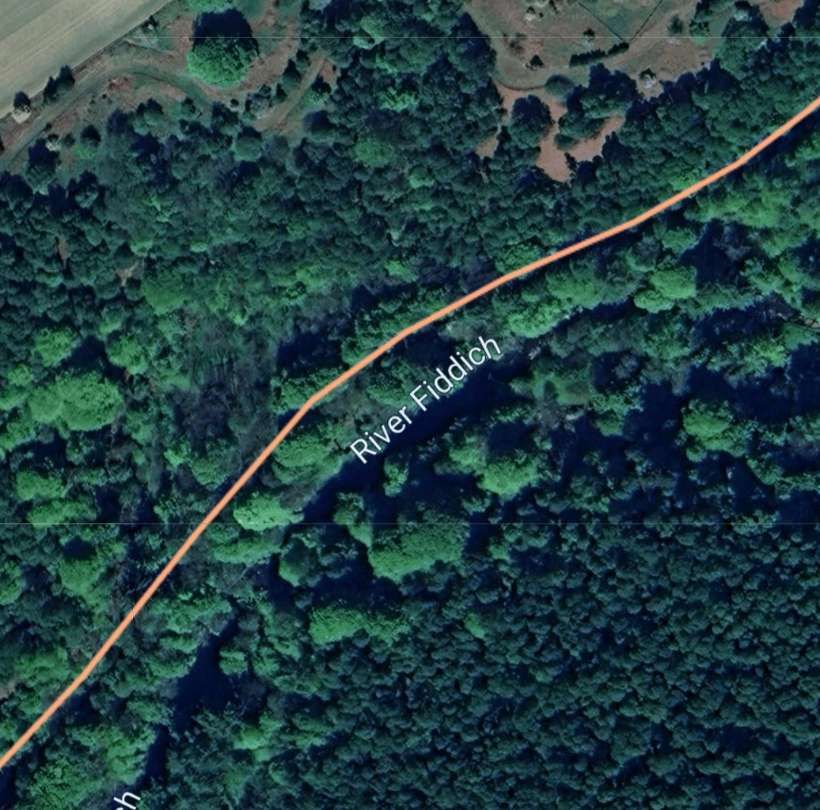
The same location in the 21st century. [5]

The railway continues its sinuous way down the valley of the River Fiddich before reaching Popine Mills. …

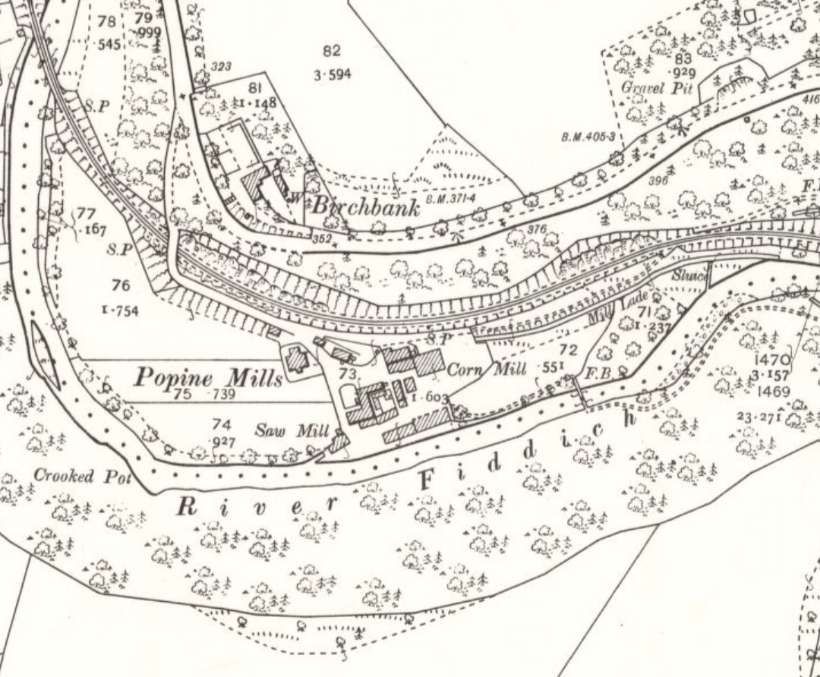
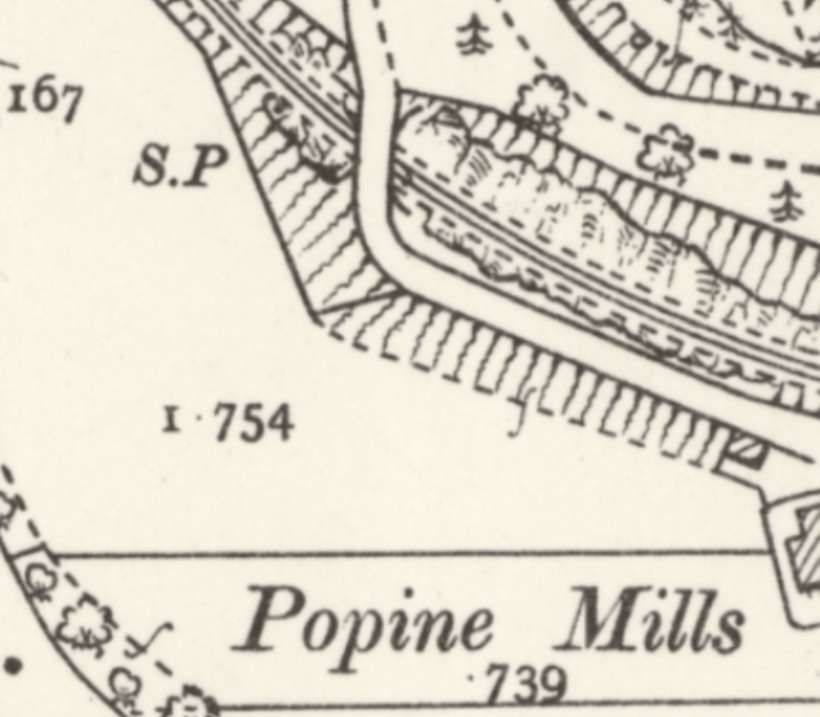
Just prior to bridging the River Fiddich once again, the line ran to the North of Popine Mills. [8]
Approximately the same area as it appears on the satellite imagery provided by railmaponline.com. The orange line marks the approximate route of the railway. [5]
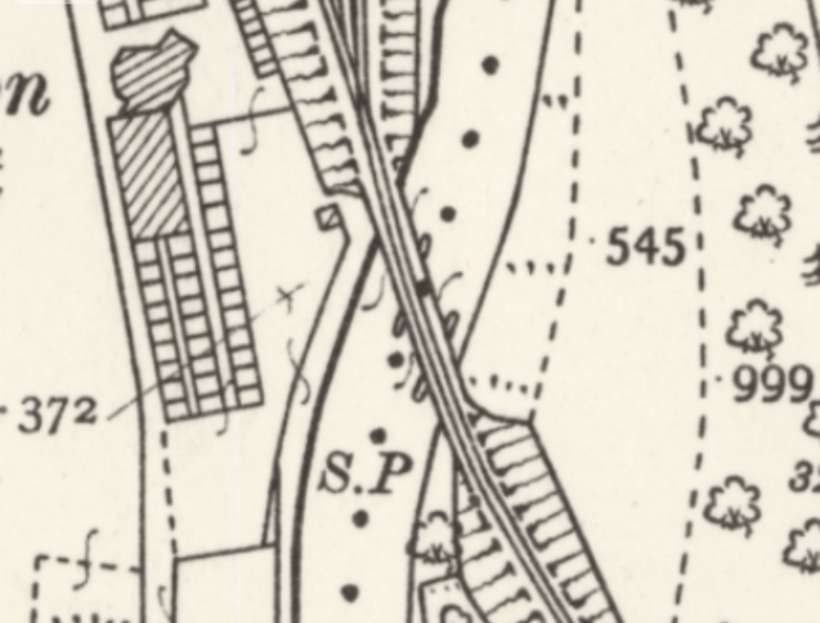
Just beyond Popine Mills a minor road which provided access to the mills bridged the line. There is no sign of the access road on modern satellite imagery. [8]
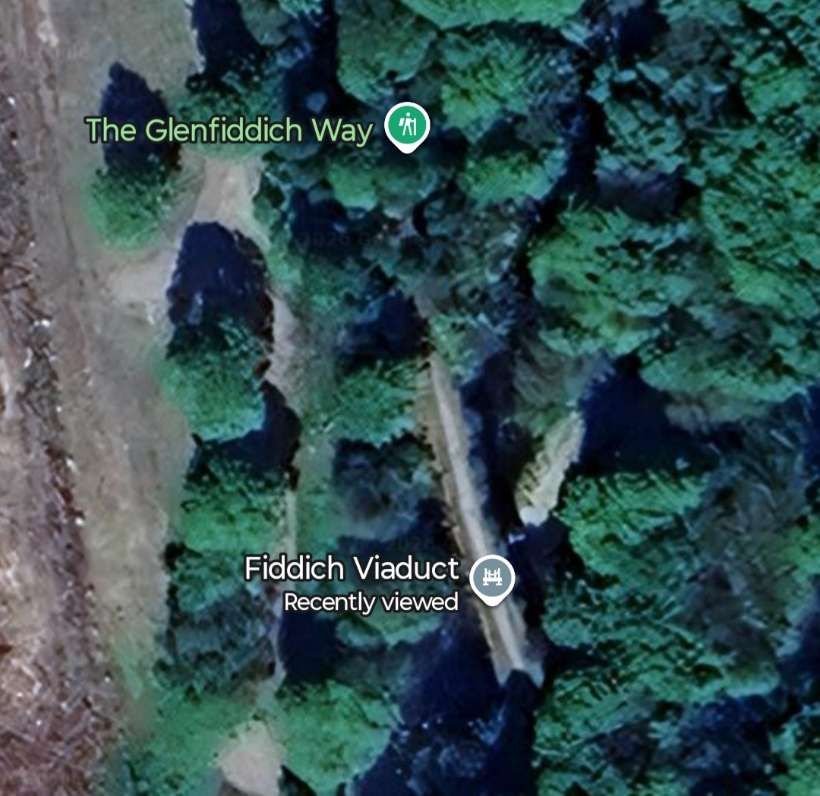
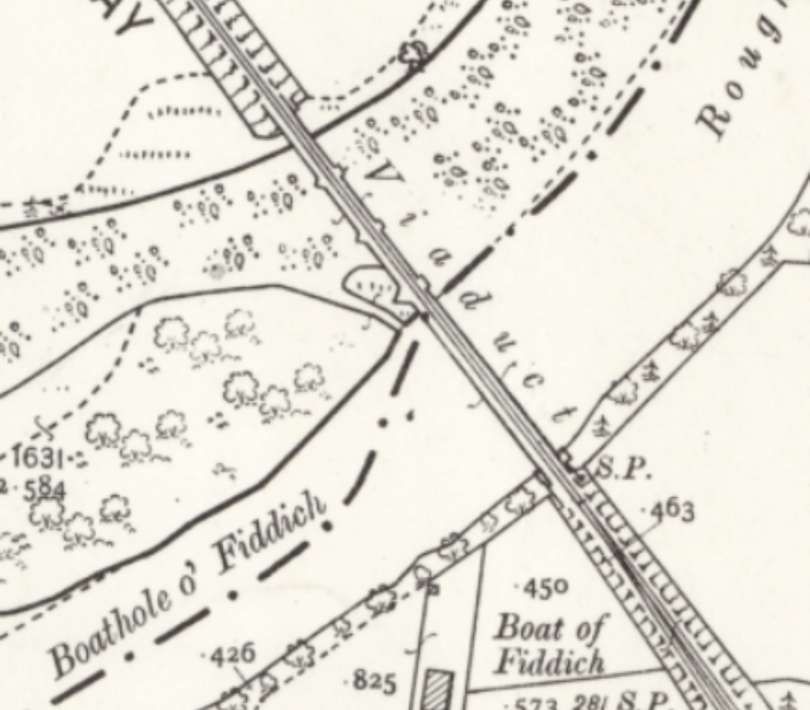
The Fiddich Viaduct, Craigellachie was a three-span girder bridge. [8][17]
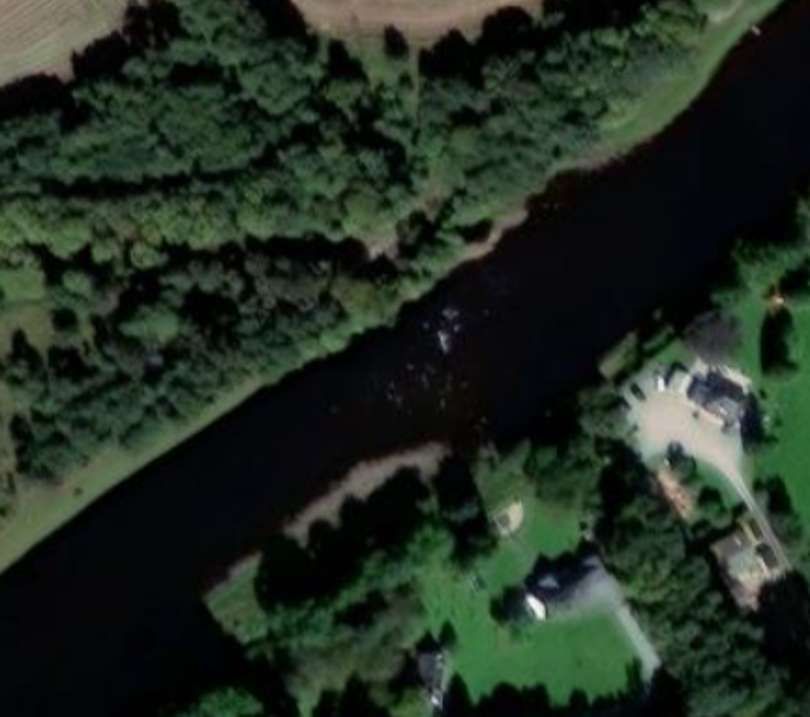
The Fiddich Viaduct in the 21st century is now used as a footpath crossing of the River Fiddich on The Glenfiddich Way. [Google Maps, January 2026]
The Fiddich Viaduct, © Joseph Snitch, September 2025. [Google Streetview, September 2025]

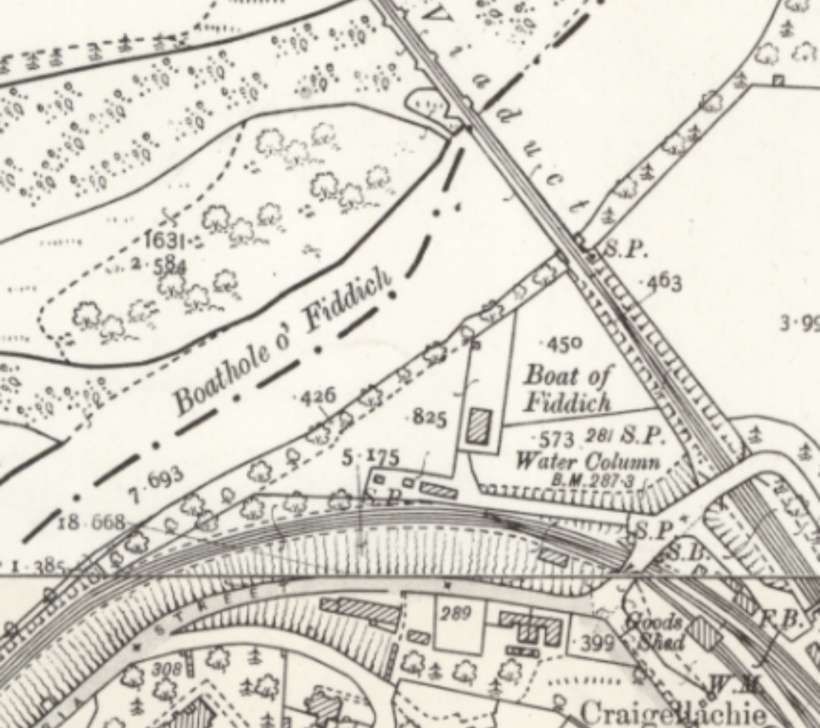
Once across the viaduct trains immediately entered Craigellachie Junction Railway Station. The River Fiddich was on the East side of the station site.

Craigellachie Junction Railway Station at the turn of the 20th century. [9]
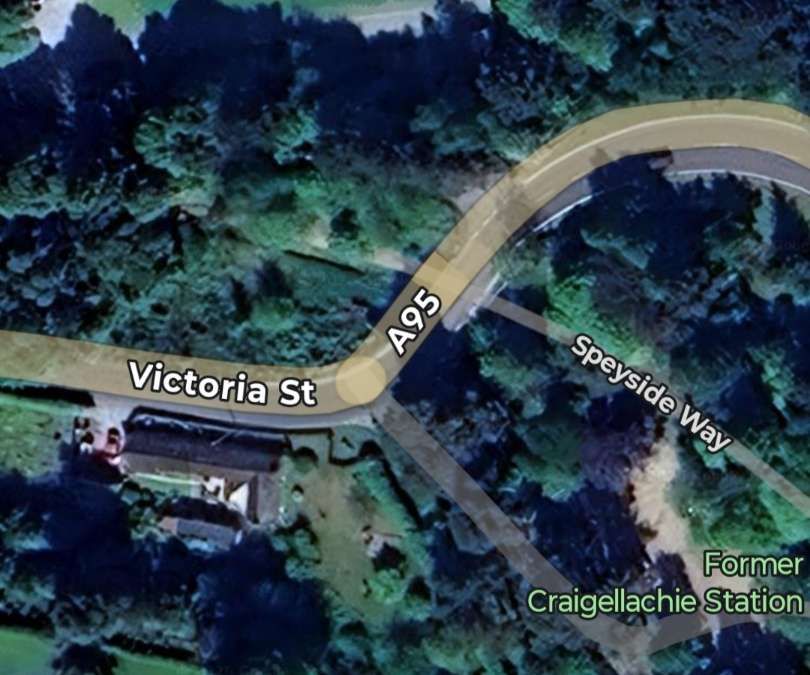
The ESRI satellite imagery shows approximately the same area in the 21st century. [9]
The ‘middle’ platform at Craigellachie. The platform for the Speyside Railway is on the left. The two platform faces that served the line to and from Elgin are on the right of this image. This photograph was shared on the Disused Stations Facebook Group by Brian Prevett on 23rd October 2024. The photographer is not known. [15]
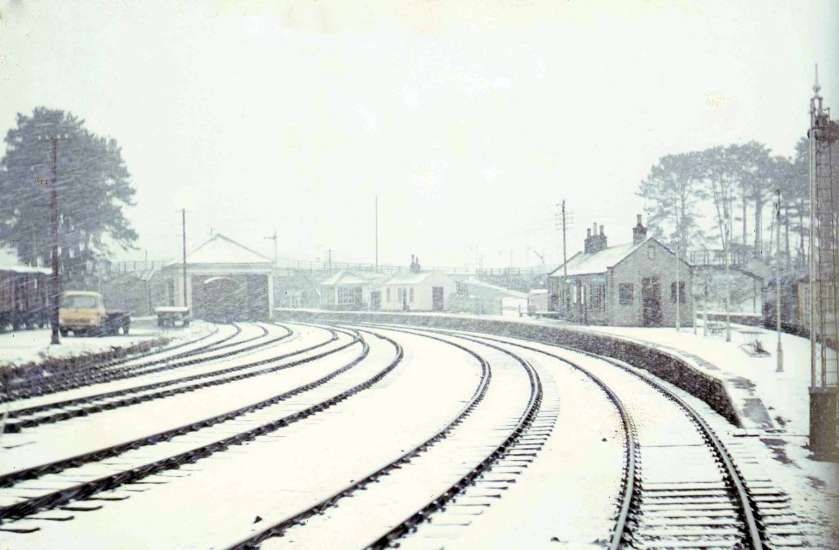
A snowbound 1968 view of the station which shows the Speyside platform face with the platforms on the Elgin line at the right of the image – the footbridge can just be made out. This image was shared on the Disused Stations Facebook Group by John Clark on 30th May 2018. He comments: “The line through the station remained open until 15th November 1971 when the section between Dufftown and Aberlour closed to freight. … Despite the blizzard the shot was taken on 6th April 1968. [16]
The view Southeast through the Station in 1988, towards Keith and Aberdeen, © Ben Brooksbank and licenced for reuse under a Creative Commons licence (CC BY-SA 2.0). [10]
The remains of one of the platforms at Craigellachie Station. This view looks Southeast through the station, © Anne Burgess, September 2018, and authorised for reuse under a Creative Commons licence (CC BY-SA 2.0). [11]
The view Northwest through Craigellachie Station. At the far end of the platform is the bridge carrying the A95 road over the railway line, © Anne Burgess, September 2018, and authorised for reuse under a Creative Commons licence (CC BY-SA 2.0). [12]

An excellent photograph of steam at Craigellachie can be found here. [23]

Craigellachie Junction Railway Station was opened as Strathspey Junction on 1st July 1863 by the Great North of Scotland Railway. It was renamed Craigellachie on 1st June 1864. There was a large goods yard to the west. The station closed to passengers on 6th May 1968 and to goods traffic on 4th November 1968. [13]

This was a three platform station and junction, with two platforms on the route between Elgin East and Keith via Dufftown and one platform on the Strathspey route to Boat of Garten.  Almost immediately after leaving the station, trains for Elgin crossed the Craigellachie Bridge to reach Dandaleith.

The erstwhile railway bridge over the River Spey. It should not be confused with Thomas Telford’s road bridge further to the West of this location. This railway bridge carried the line to Elgin. [14]
The same location in the 21st century as shown on the ESRI satellite imagery supplied by the National Library of Scotland (NLS). [14]

The main station building at Craigellachie Junction Railway Station was a long single-storey building situated on the platform between the Elgin line and the Boat of Garten line. There was a smaller waiting room structure on the platform that served Dufftown trains from Elgin. There was a goods yard on the West side of the station site. A turntable sat at the Southwest corner of the site.

The station had three signal boxes, all opened in 1900. The South box, “located on the east side at the south end of the station at the junction between the Boat of Garten and Elgin East routes and the turn out for the goods yard. This box above the west bank of the River Fiddich with a large stone base. The line crossed over the Fiddich just to the south by a girder bridge.” [17]

The other two signal boxes, the West box and the North box were at the North end of the two platforms.

Vallance wrote of Craigellachie Station: “Craigellachie Station … has three, platform faces, of which two serve the Elgin line, and the third the Boat of Garten trains. Sidings and a run-round loop for locomotives adjoin the third platform.” [1: p6]

In a relatively deep cuttings, the Speyside Line curved away from Craigellachie Station to the West and then Southwest. [18]
The same location in the 21st century. The Speyside Way follows the old railway formation. [Google Maps, January 2026]
Looking back into the station site from the modern A95 bridge. The Goods Shed once sat to the right of this image. [Google Streetview, June 2025]
Looking forward along the Speyside Way (which follows the old railway route) from the A95 overbridge. [Google Streetview, June 2025]

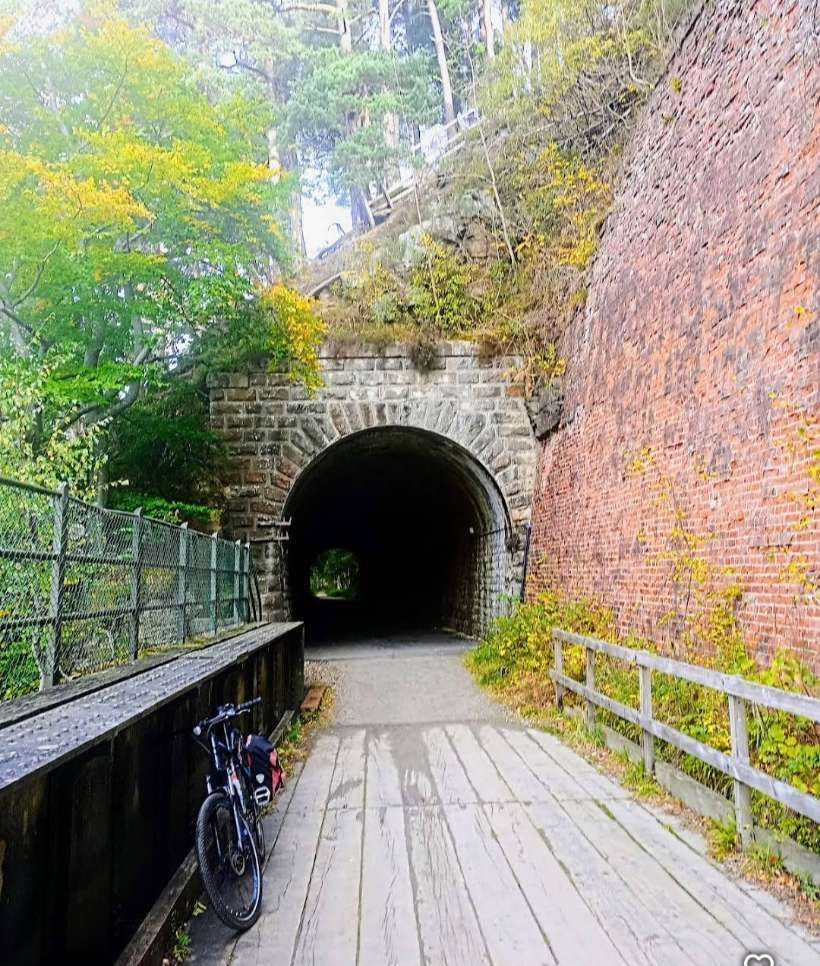
Vallance continues: “The Strathspey line reaches the right bank of the Spey a short distance beyond the station, and a glimpse is caught of Telford’s graceful iron bridge. with embattled towers, erected in 1815 to carry the Elgin road over the river. The train then passes through a short tunnel (65 yd. long), the only one on the line, and one of the very few on the former Great North of Scotland Railway.” [1: p6]

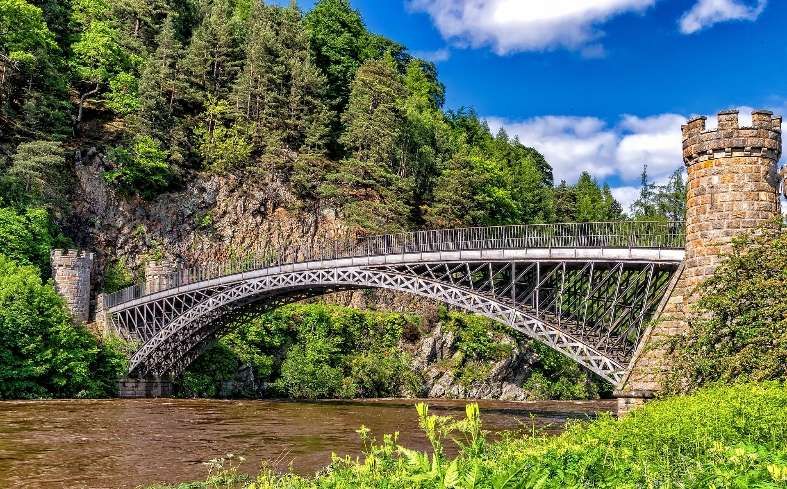
Telford’s graceful Craigellachie Bridge seen from the East.  © Tama66, and made available under a Creative Commons licence (CC0 – Public Domain. The bridge is a cast iron arched structure. It was actually opened to traffic in 1814. [19]
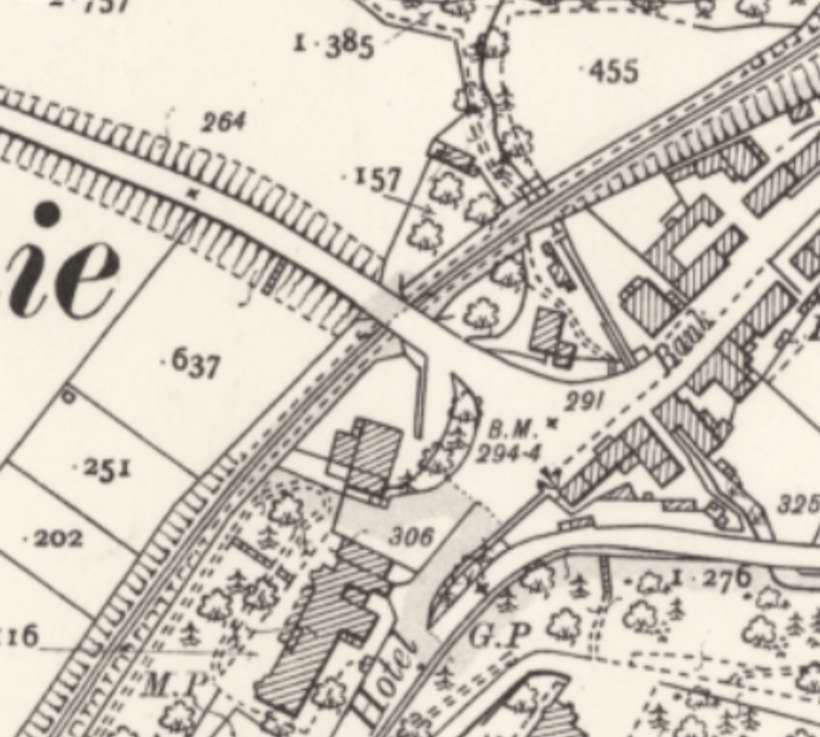
The Elgin Road crossed the line before crossing Telford’s bridge. [20]
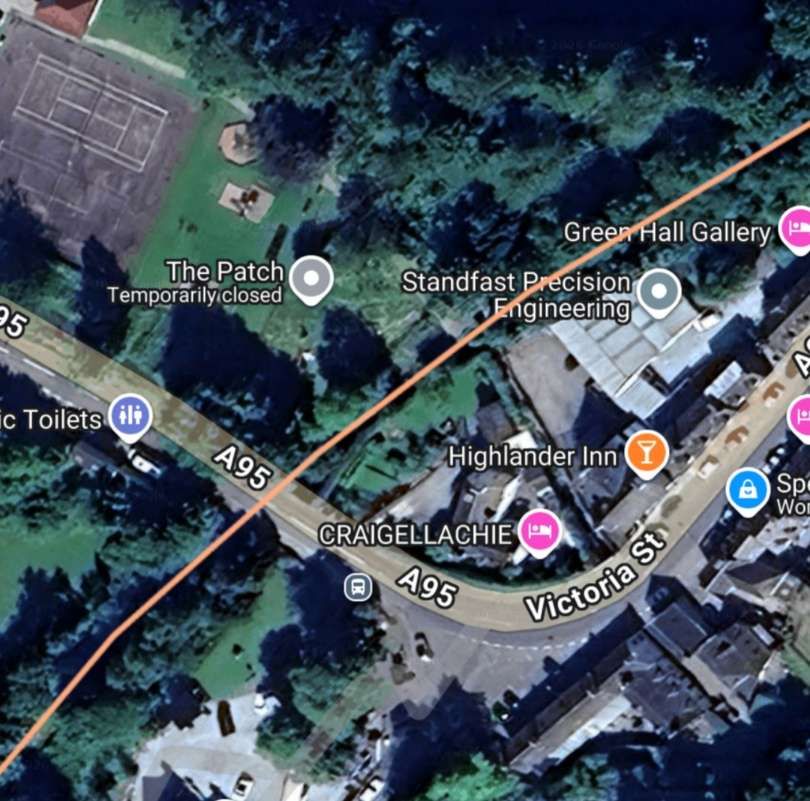
The same location in the 21st century. [5]
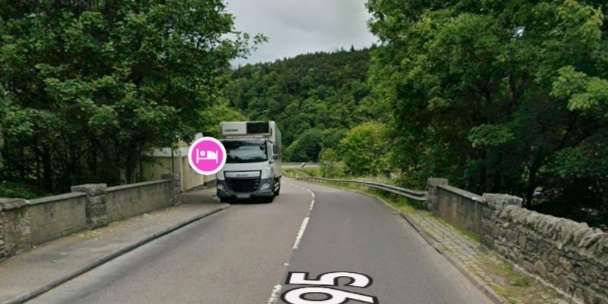
Looking Northwest along the A95, the parapets of the bridge over the Speyside Way (the old Speyside Line) are visible on each side of the road. [Google Streetview, June 2025]
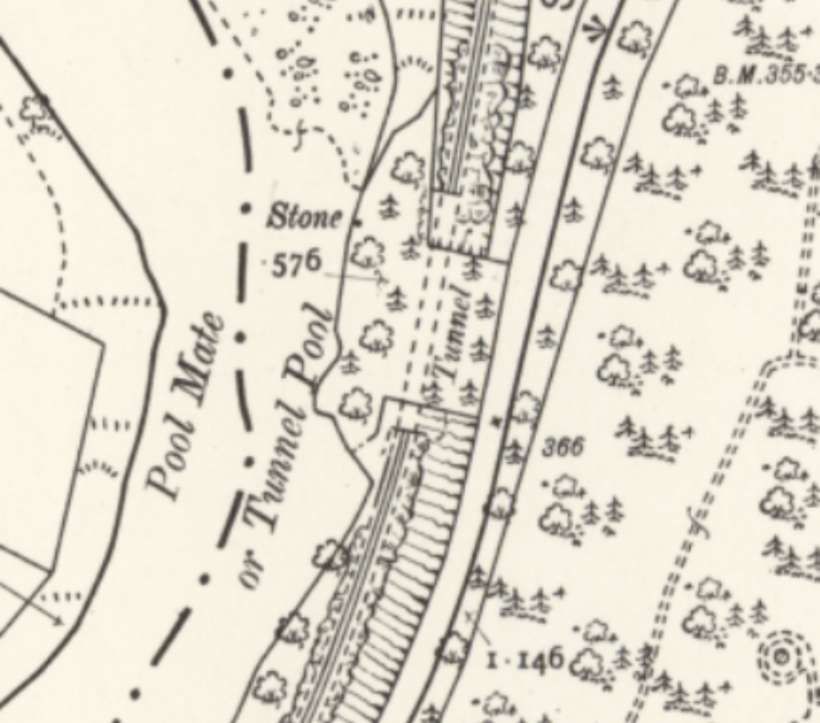
The short tunnel mentioned by Vallance sits between the River Spey and [21]
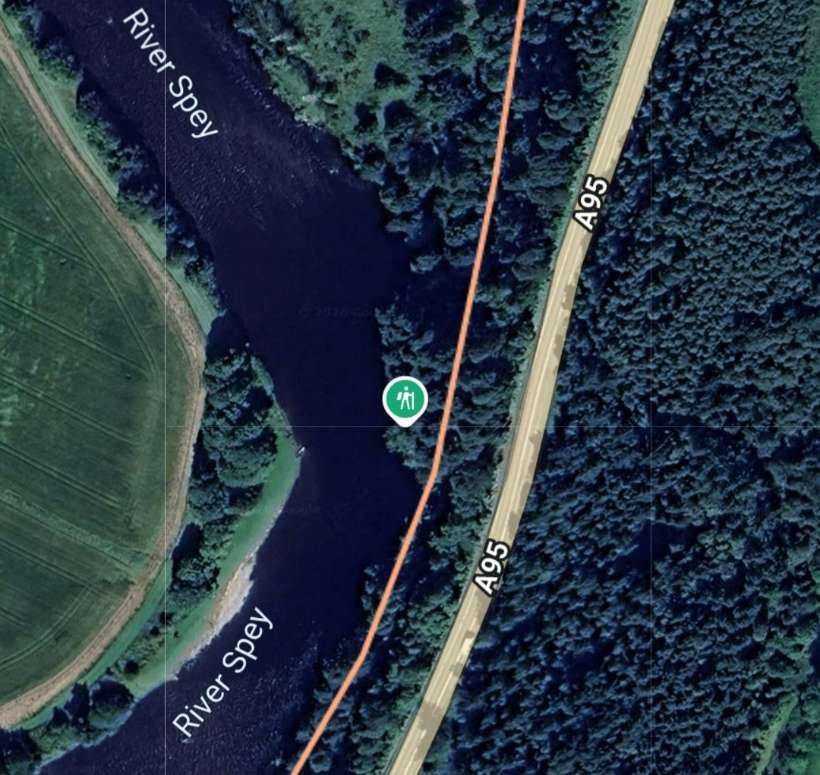
The same location in the 21st century. The green flag marks the approximate location of the tunnel, one very few on the whole of the old Great North of Scotland Railway network. [5]
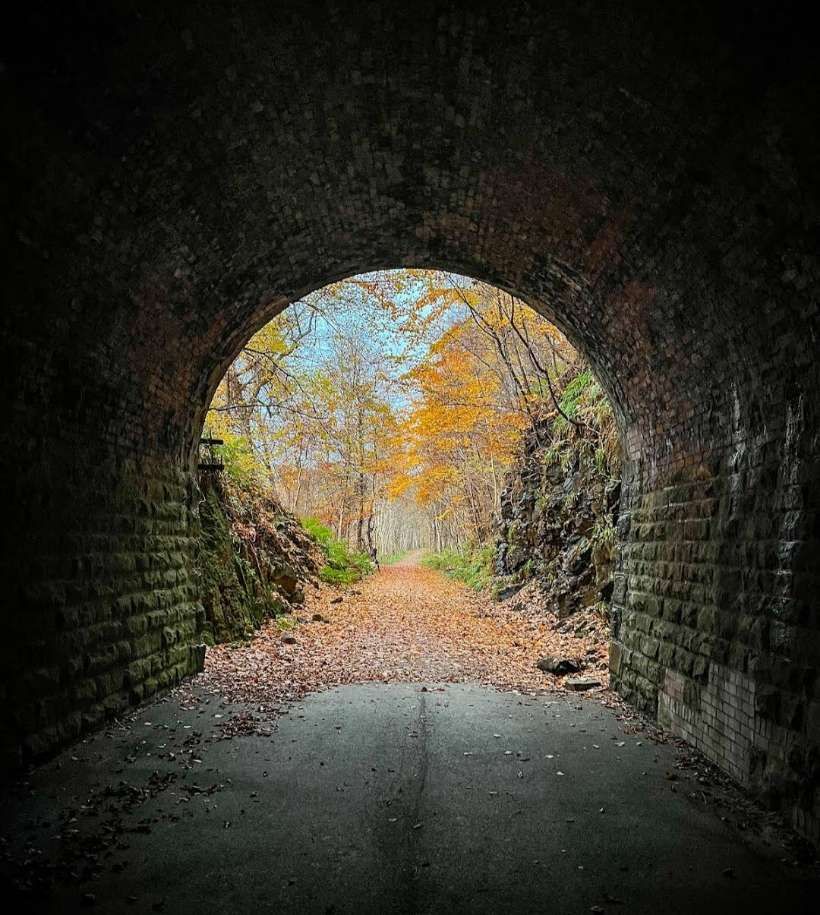
Looking North from the tunnel mouth, © Simon Bliault, 2023. [Google Maps, January 2026]
This view shows the South Portal of the tunnel, © Howard Lennox, 2023. [Google Maps, January 2026]

Vallance continues: “A run of 4.75 miles beside the wooded banks of the river takes the train past the crossing station of Aberlour to the single-platform halt of Dailuaine.” [1: p6]

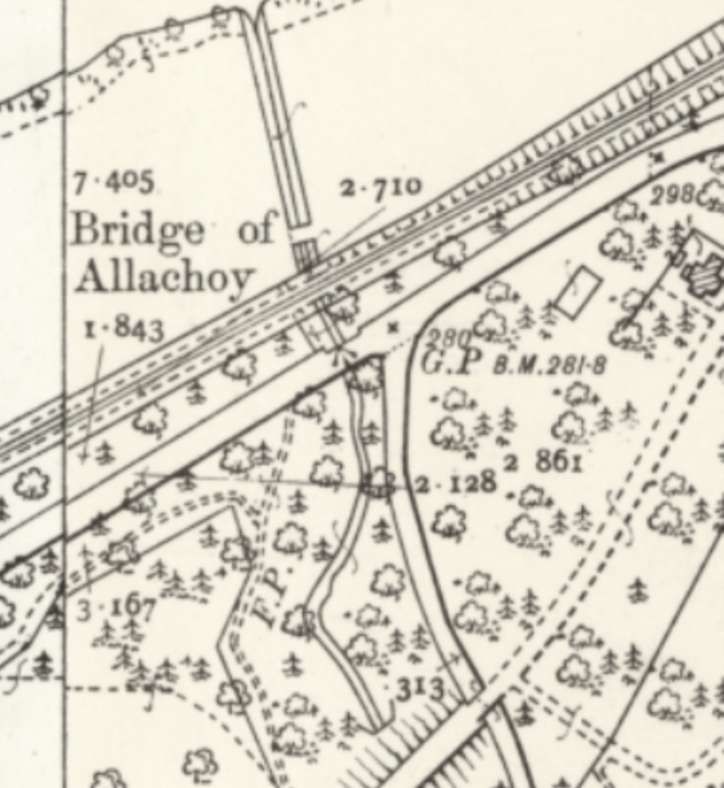
The line spans a tributary of the River Spey – the Burn of Allachoy. [28]
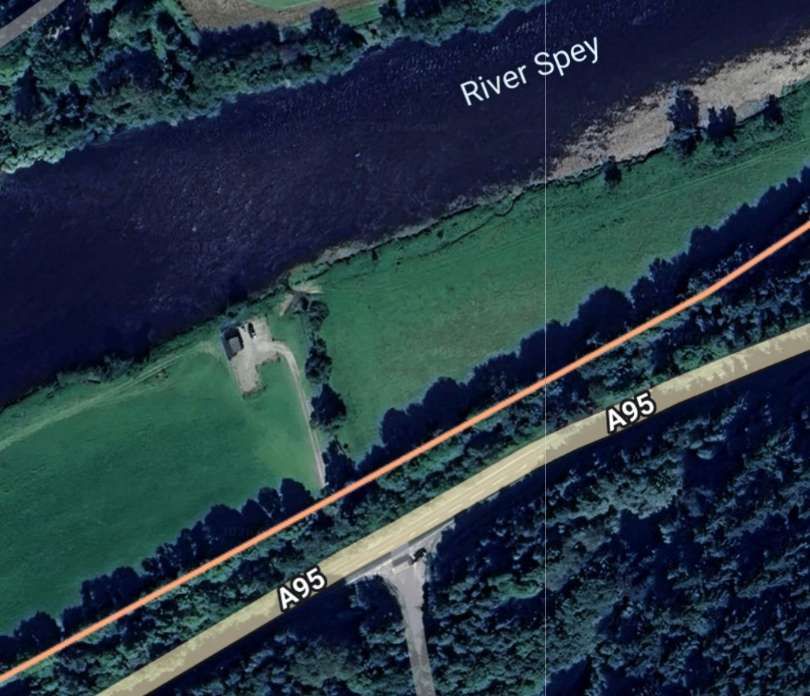
The same location in the 21st century. [14]
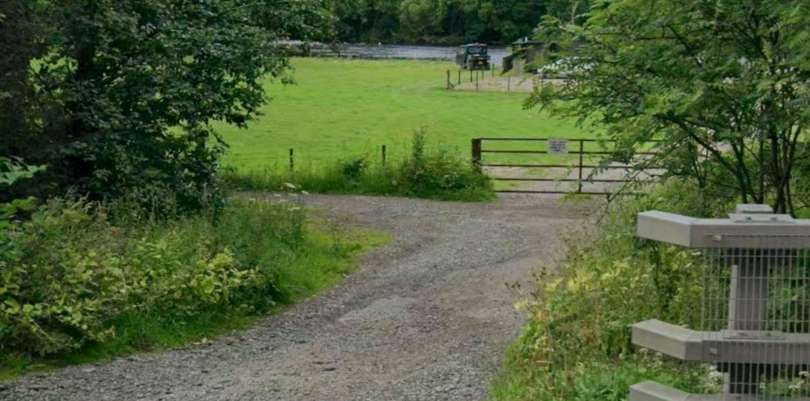
Looking North from the A95 towards the River Spey, which can just be seen in the photograph, from adjacent to the Bridge of Allachoy. The track running parallel to the road and crossing the field access is the formation of the old railway and now The Speyside Way. [Google Streetview, June 2025]
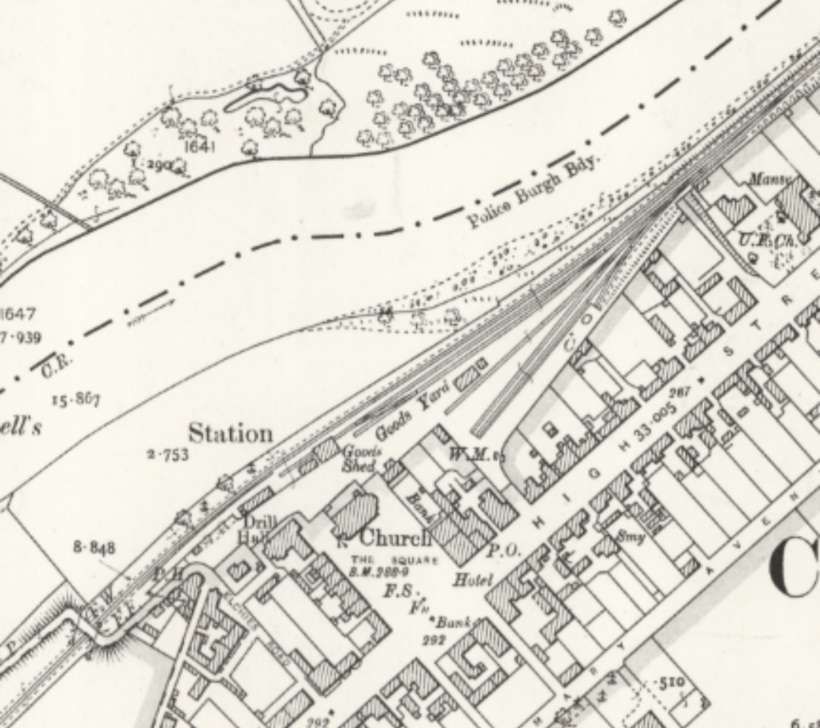
Aberlour Railway Station and Goods Yard at the turn of the 20th century. The village’s full name is Charlestown of Aberlour. [29]
The same area in the 21st century. [14]

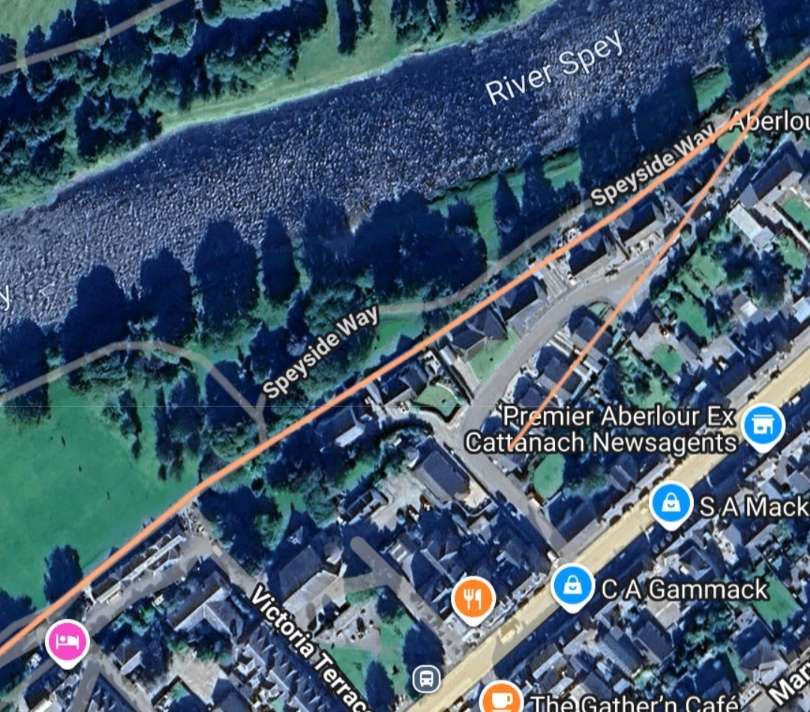
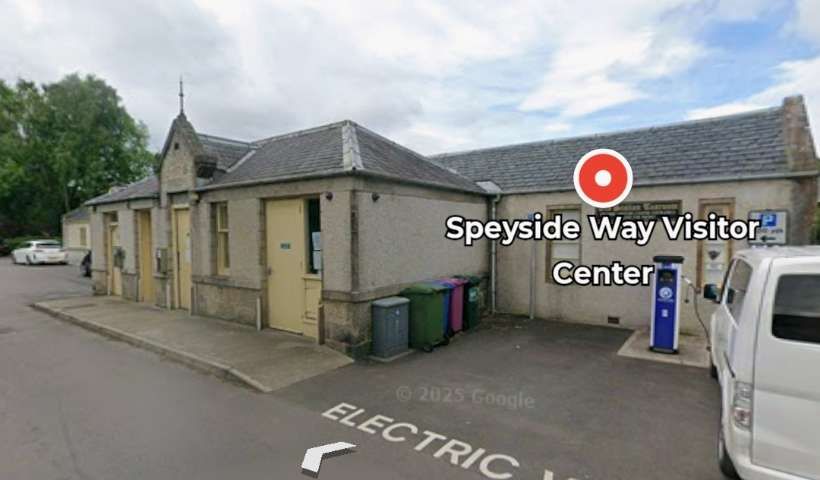
The village was founded by Charles Grant of Elchies in 1812 – with the name of Charlestown of Aberlour after his son Charles. It is commonly referred to simply as Aberlour. [30] The railway Station closed to passengers in 1965 and to freight in 1971. The station building is now the Speyside Way Visitor Centre and Cafe. [31]

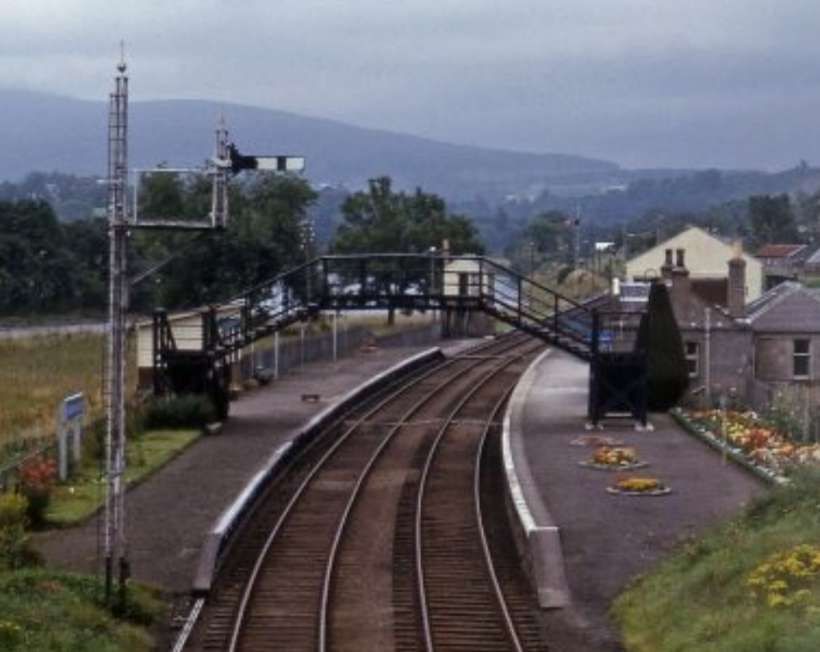
Looking Northeast through Aberlour Railway Station from the footbridge carrying a public right of way over the line at the Southwest end of the station site. When opened, Aberlour was a single platform station. The goods yard was to the Northeast of the station, accessed from the North. The loop, signal box and second platform were added in 1910. The signal box sat at the Northeast end of the additional platform, directly opposite the Goods shed.  The station closed to passengers in 1965. The signal box closed 3 years later, when the Aberlour became the terminus of the linefrom Dufftown. The station closed to freight in 1971. [31]
The original station building at Aberlour Railway Station, seen from the East. [Google Streetview, June 2025]
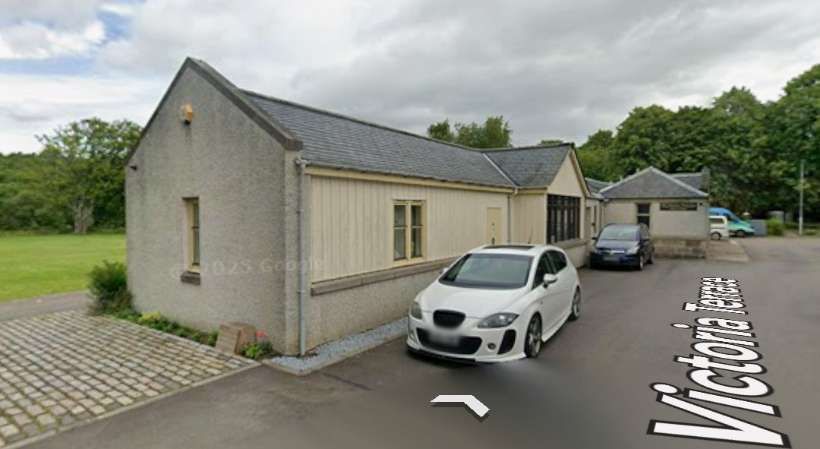
Aberlour Railway Station building, seen from the South. The running lines were beyond the building and would have been visible to the left of the building. [Google Streetview, June 2025]
Only a short distance to the Southwest of the station the line bridged the Burn of Aberlour which spilled into the River Spey a short distance to the Northwest of the line. [32]

The next significant location on the line was some distance further to the Southwest bridging another stream close to Dailuaine Halt.

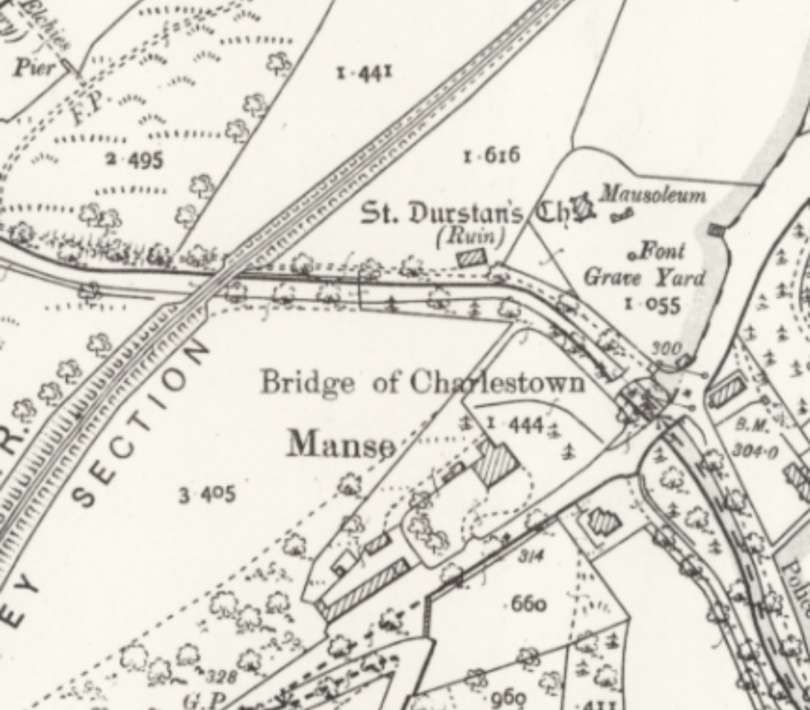
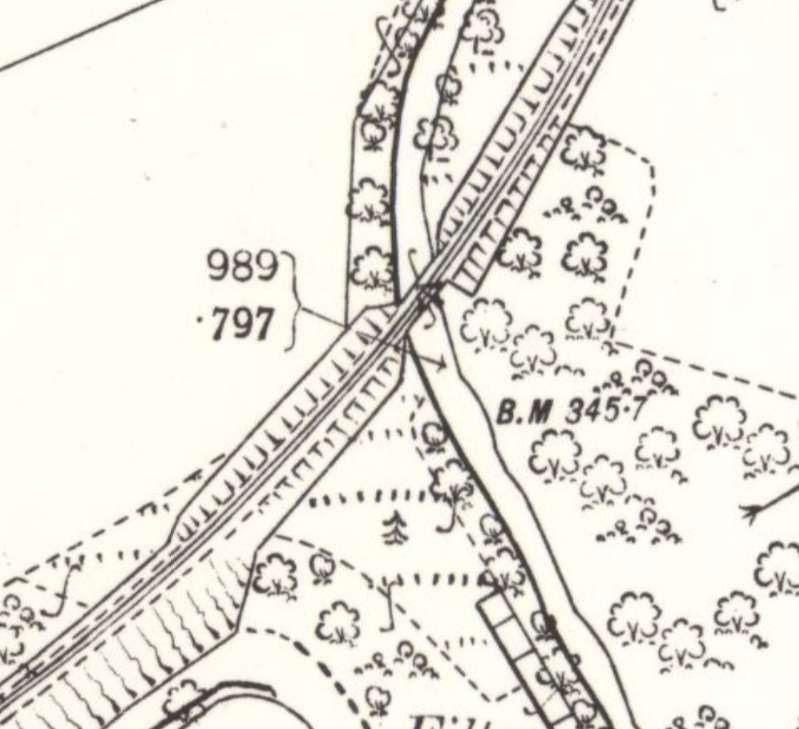
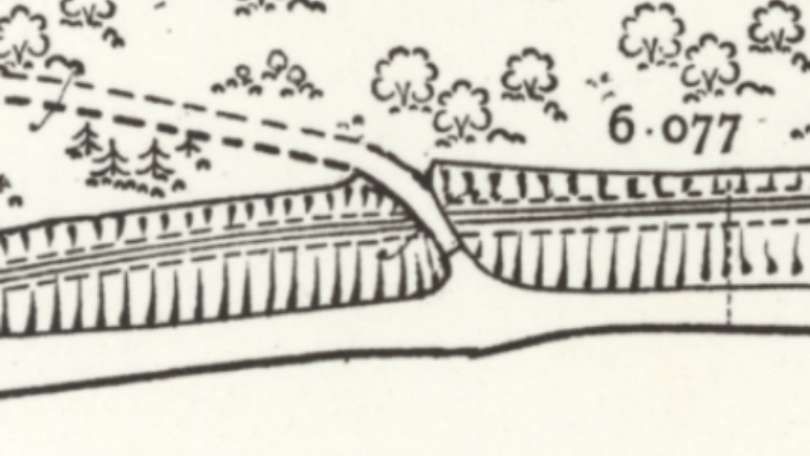
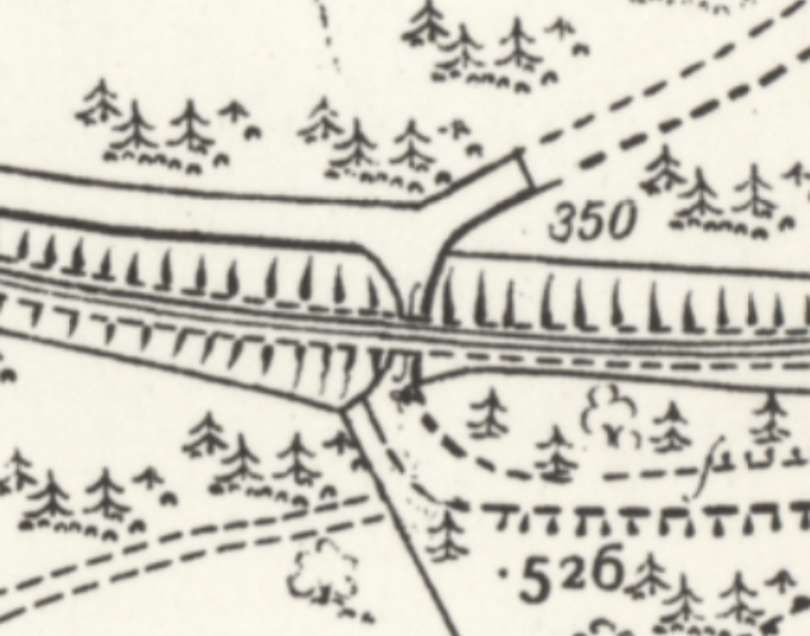
The Dailuaine-Glenlivet Distillery was South of this location. The railway bridge over the tributary of the Spey is shown here on an extract from the 25″ Ordnance Survey revision of 1903, published 1905. The distillery remains active and is owned by Diageo in the 21st century. [24]
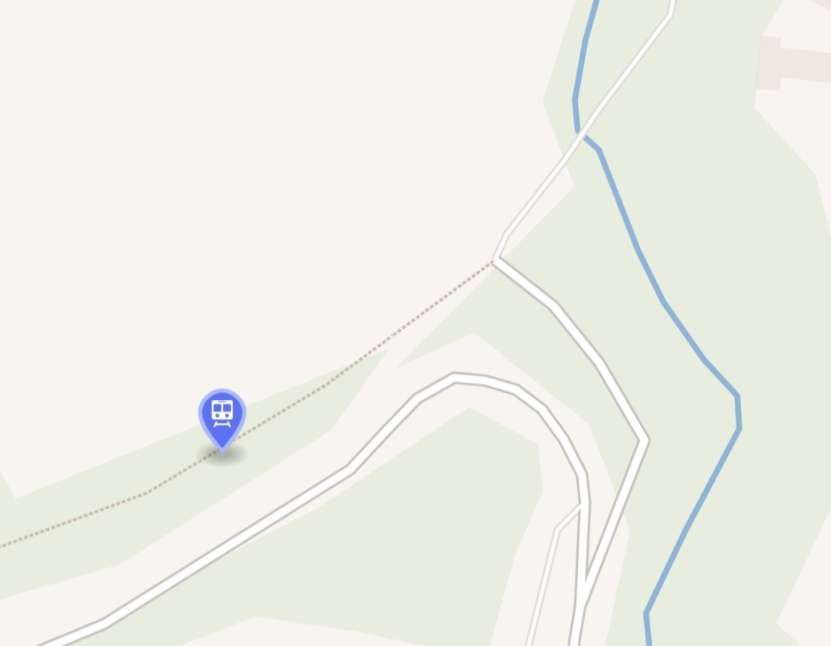
The location of Dailuaine Halt. The halt opened in November 1933 and closed to both passengers and goods on 18th October 1965. [25]
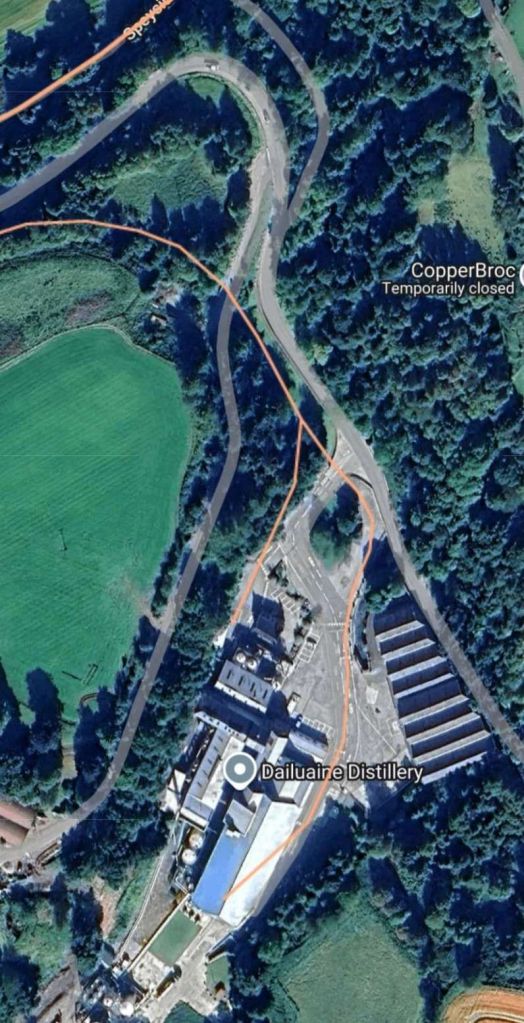
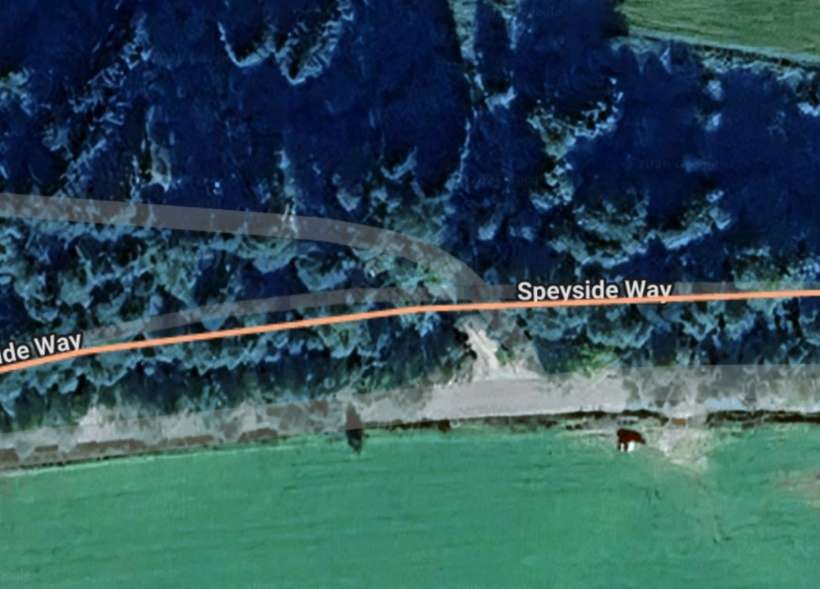
This extract from the railmaponline.com satellite imagery shows the site of the Dailuaine Distillery. The Speyside line runs across the top-left corner of this extract. The thinner orange line is the short branch which served the distillery. [14]
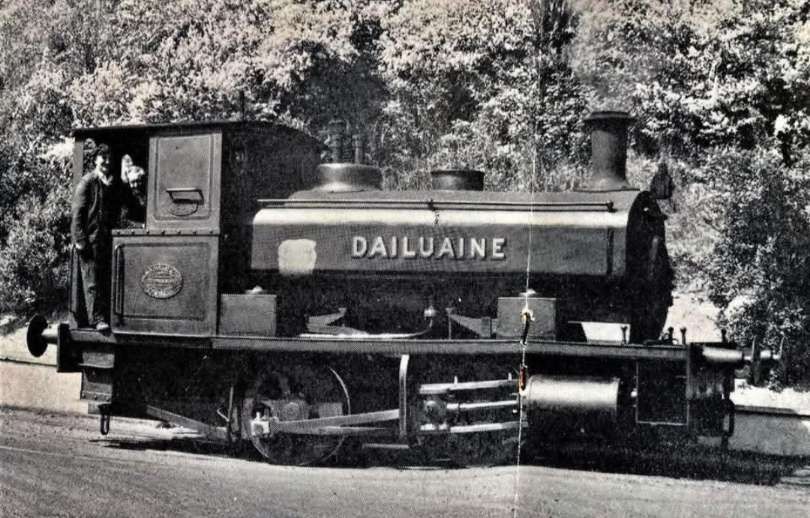
A dedicated Barclay locomotive served the branch. [26]

More photographs of the Dailuaine Distillery branch and its locomotive can be found here. [27]

On its way West the line passed under the access road to Carron House. [33]
The same location in the 21st century. [14]

A short distance to the West. The industrial line formed a junction with the main line before the line crossed the River Spey and entered Carron Railway Station. in so doing, the line left “Banffshire, and [crossed] to the Morayshire side of the Spey on [the Bridge of Carron] with a central iron span of 150 ft., flanked on each side by a single masonry arch, which also [carried] a public road.” [1: p6]

Before reaching the Bridge Of Carron the line bridged a minor road which continued alongside the line and crossed the Bridge of Carron alongside the railway. [33]
The same location shown on railmaponline.com,’s satellite imagery. [14]
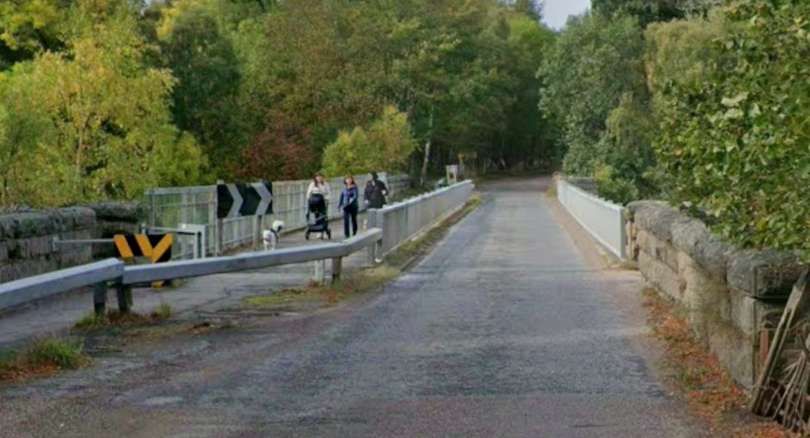
Seen from the South, this is the location where the line bridged the road. [Google Streetview, September 2025]
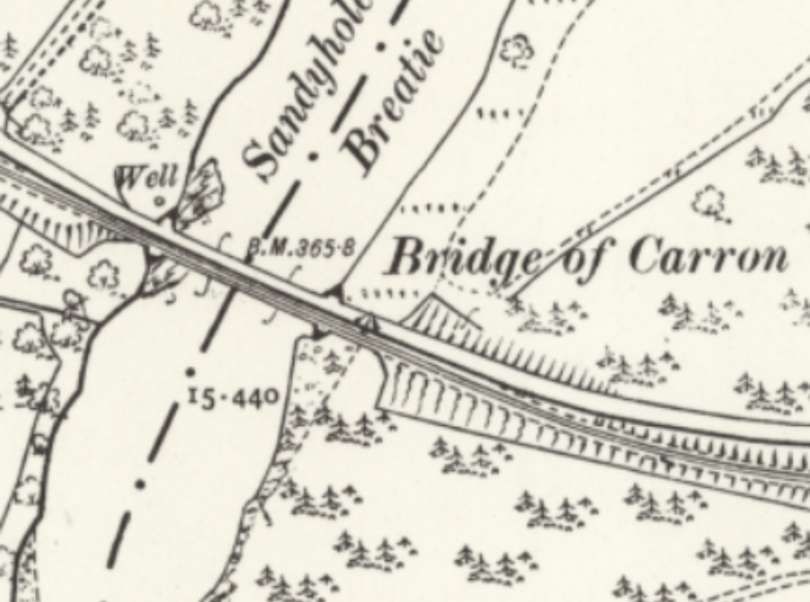
Railway and Road crossed the Bridge of Carron over the River Spey on the same structure. [34]
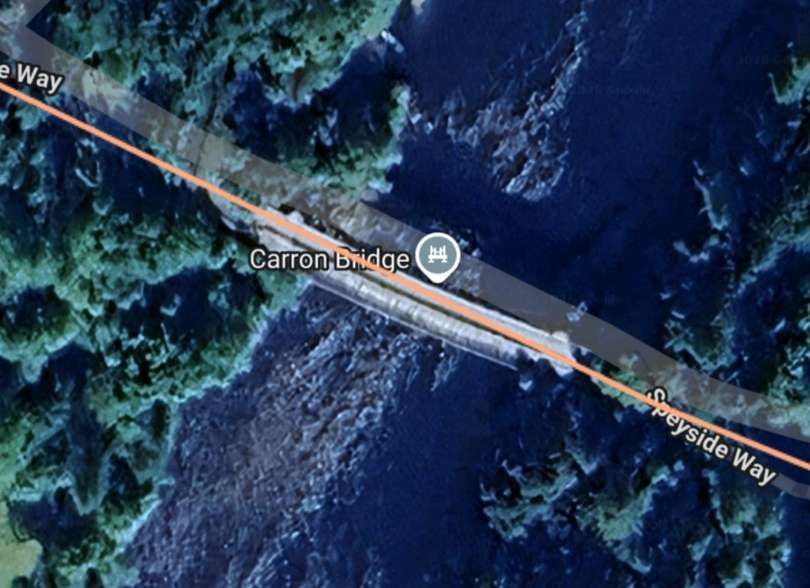
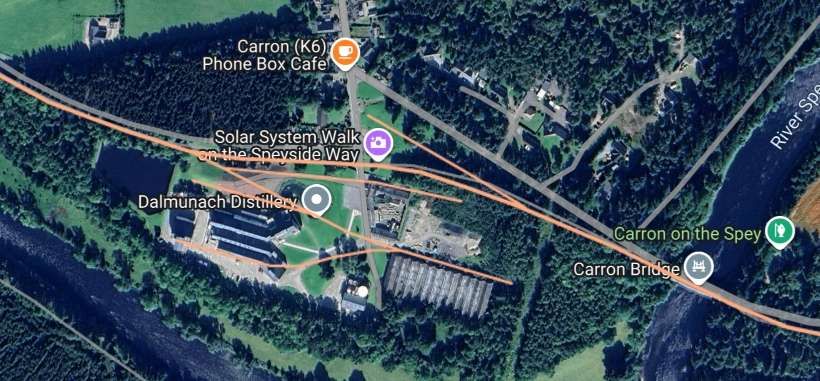
The Bridge of Carron as shown on the satellite imagery from railmaponline.com. [14]
The Bridge of Carron seen from the Southeast. Trains crossed the bridge to the left of the road. The Speyside Way now uses the railway route over the bridge. [Google Streetview, September 2025]

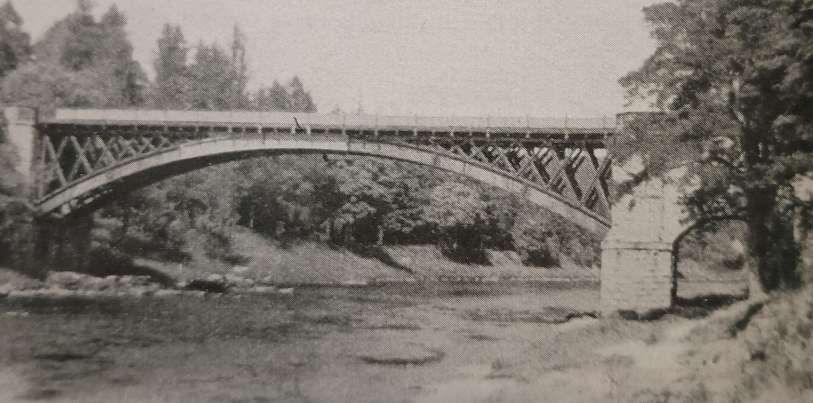
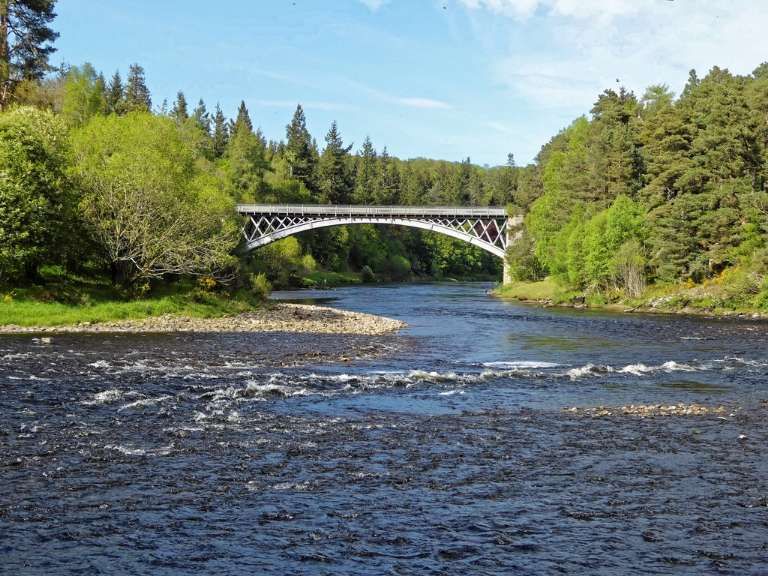
The Bridge of Carron was built for the Strathspey Railway in 1863, to a design by Alexander Gibb, an engineer for the Great North of Scotland Railway. It was fabricated by the iron founders William McKinnon and Co. It originally carried both the railway and a roadway. [35]

This photograph of the Bridge of Carron was taken by H.A. Vallance, © Public Domain. [2: p8]
This photograph of the Bridge of Carron was taken on 16th May 2014. The structure is an intricate cast iron bridge, thought to be one of the last large-span cast iron bridges to be built in the UK, © Valenta and licensed for reuse under a Creative Commons licence (CC BY-SA 2.0). [36]
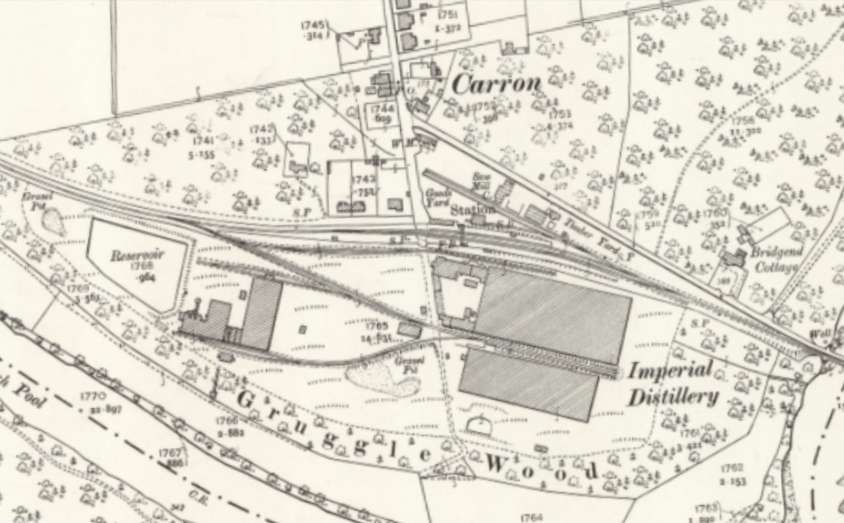
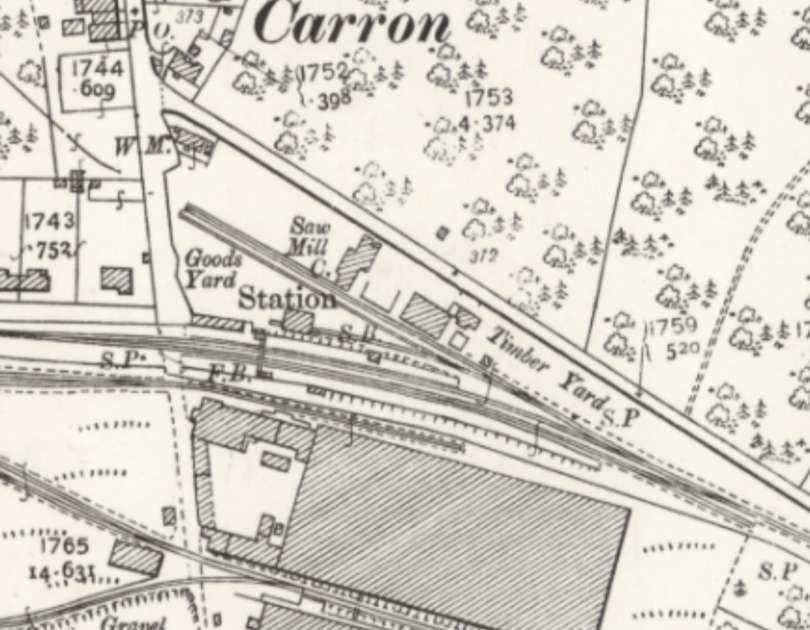
Just beyond the Bridge of Carron the line entered Carron Railway Station which sat alongside the Imperial Distillery which was rail served by a small number of sidings. The private sidings were accessed from the Strathspey line beyond the level crossing to the West of Carron Station. [37]
Approximately the same area as it appears on the railmaponline.com satellite imagery. [14]
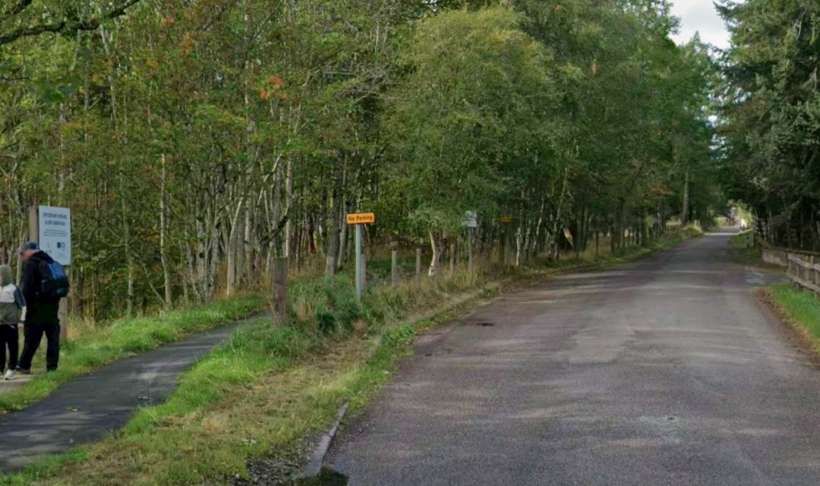
On the other side of the Bridge of Carron we see the road ahead with the route of the old railway alongside. [Google Streetview, September 2025]

Once over the Bridge of Carron the goods yard of the railway station opened out alongside the road with a Saw Mill and timber yard immediately next to the road. The railway curved gently through the Station.

The station opened on 1st July 1863 with only one platform but another was later added. To the north was a goods yard and to the west were sidings that served the Imperial distillery. The station closed to passengers on 18th October 1965 and closed to goods on 4th November 1968. The station building has survived. [37]
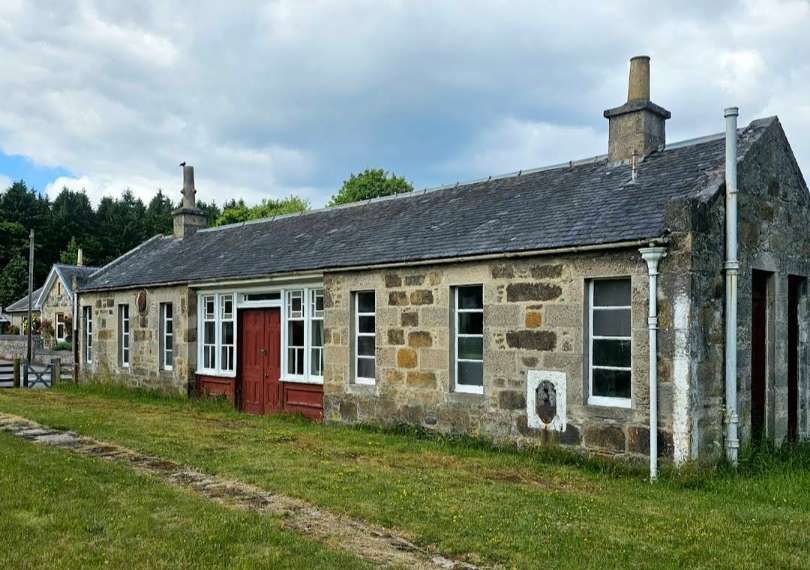
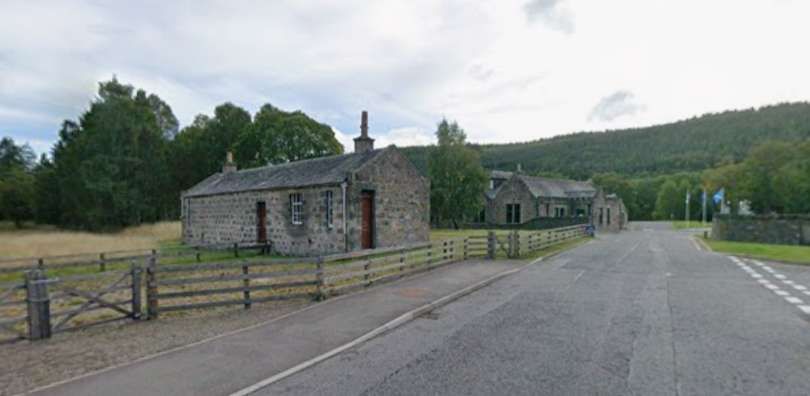
Carron Railway Station, seen from the West. The Goods Yard was on the North side of the line behind the signal box. The station building , which is closest to the camera, has survived. [1: p7]
Carron Railway Station building in the 21st century, seen from the Southeast, © Joseph Snitch and shared on Google Maps in January 2026.
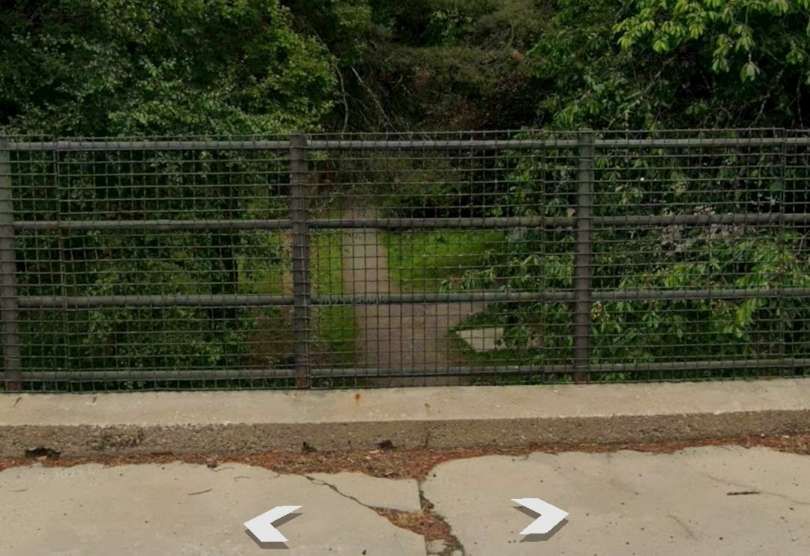
Carron Railway Station building seen from the Northwest. [Google Streetview, September 2025]

An August 1978 view of the station after closure can be found here, [38] and another view, here. [39]

Vallance continues: “Carron Station … has a crossing loop, and its solidly-constructed stone buildings are typical of those provided by the G.N.S.R. at many other roadside stations. The large whisky distilleries at Carron and at Knockando, 2.5 miles further on, bring a considerable amount of traffic to the railway.” [1: p6]

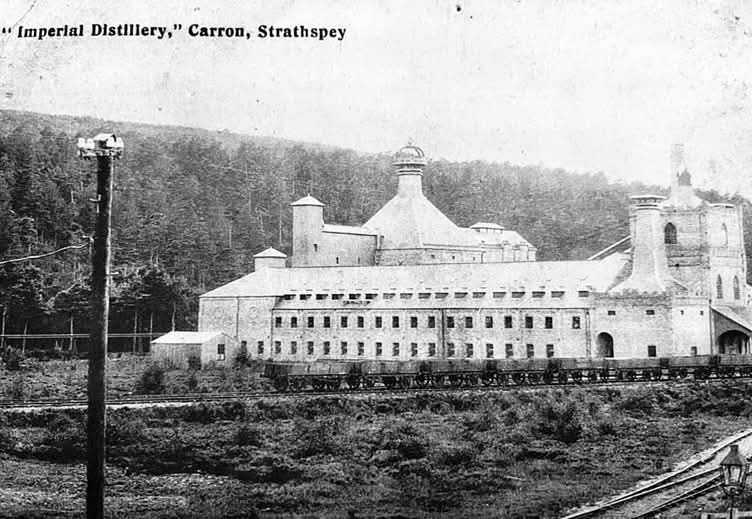
Imperial Distillery which was immediately to the South of the Station, was built by Thomas Mackenzie in 1897. In 1925, Imperial joined The Distillers Company, in 1989, it was sold to Allied Distillers. The distillery was demolished in 2013 and a new distillery, Dalmunach, established on the site in 2015. [40]

A monochrome postcard image of Imperial Distillery, Carron. Note the large rake of wagons! This image was shared on Facebook by Graeme Scott on 8th August 2024, © Public  Domain. [41]

The line continued West from Carron ….

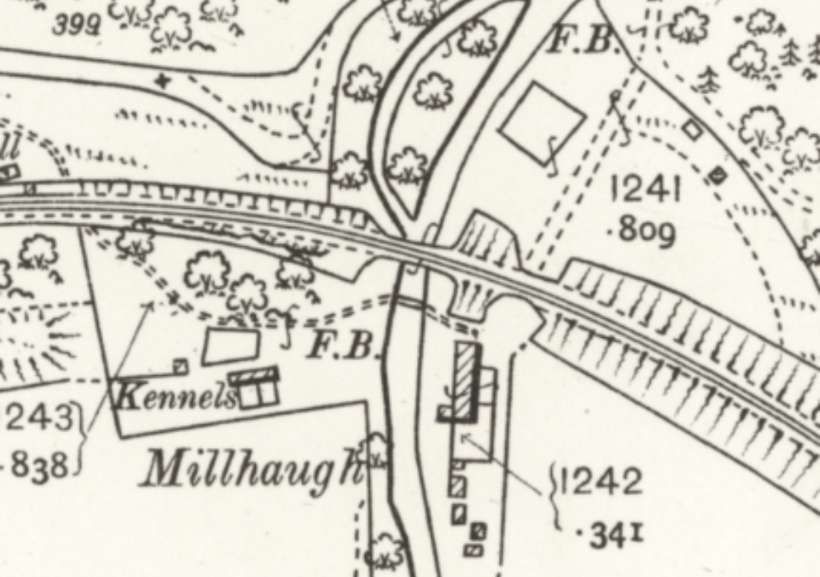
At Millhaugh the line bridged the Ballintomb Burn. [42]
The same location on mapping provided by railmsponline.com. Satellite imagery shows very little of interest at this location as the area is heavily wooded. [14]
Another burn is bridged just a short distance to the West. [43]
The same location on railmaponline.com’s mapping. Tree cover means that it is impossible to see features below the canopy on the satellite imagery. [14]

The line continues on the North bank of the Spey running by Knockando distillery.

Vallance writing in 1959, says that, “When the railway was opened, there was no station between Carron and Blacksboat, a distance of 4.75 miles, but on 1st September 1869, a platform, at which certain trains called by request, was opened at Knockando, 1.25 miles from Carron. This platform (now known as Knockando House Halt) ranks as an unadvertised private station for the Knockando estate. On 1st July 1899, a public station was brought into use at a distillery siding, 1.25 miles south of the private platform. Known at first as Dalbeallie, the name of this station became Knockando on 1st May 1905.” [1: p6]

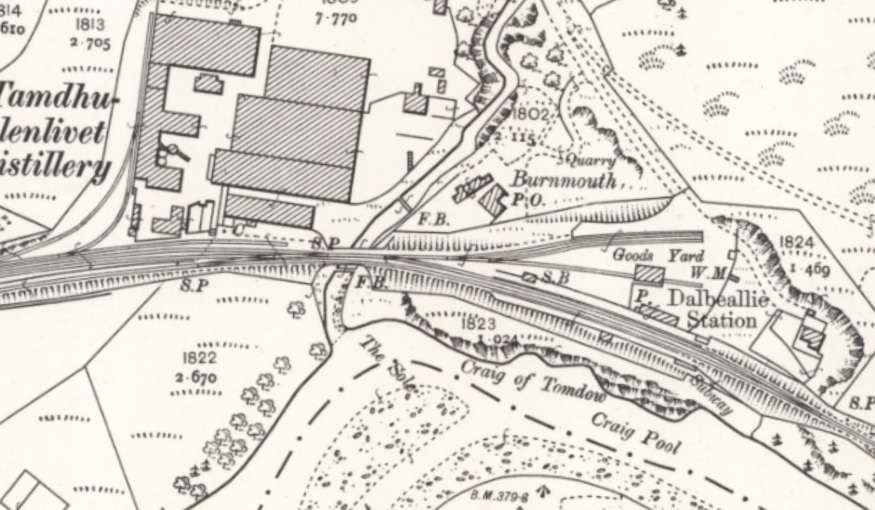
Further West from Knockando Distillery, the line enters Dalbeallie Railway Station which itself sat just to the East of the Tamdhu-Glenlivet Distillery. [44]
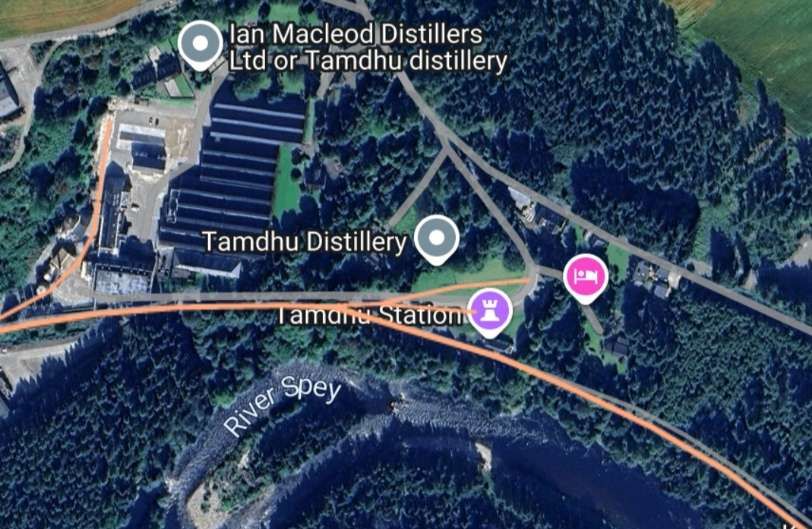
Dalbeallie Railway Station  became Knockando Railway Station in 1905. It is marked on the railmaponline.com satellite imagery as Tamdhu Station. [14]
Dalbeallie Railway Station while still open, early in the 20th century. [45]
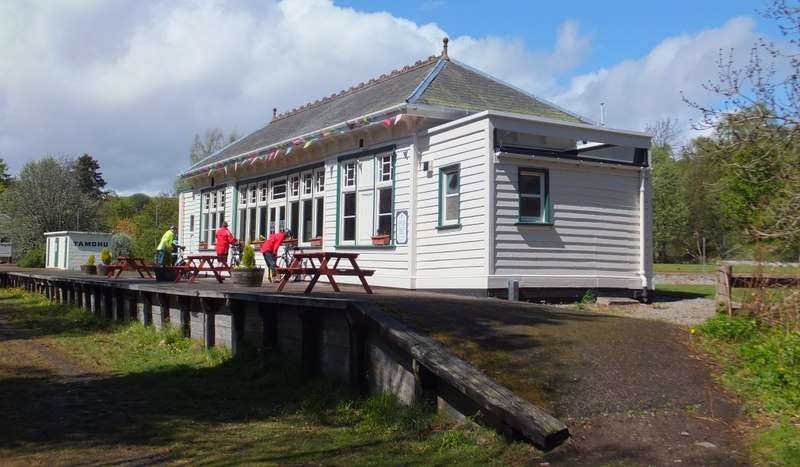
Dalbeallie until 1905, then Knockando or Tamdhu Railway Station into the 21st century, now a pleasant stop on the Speyside Way, © Alpin Stewart and licenced for reuse under a Creative Commons licence (CC BY-SA 2.0). [46]

More about the Tamdhu Distillery and its whisky can be found here. [47]

As trains left the station travelling West they crossed the Knockando Burn and ran to the South of the Tamdhu Distillery. The distillery was rail served from sidings alongside the Speyside Line.

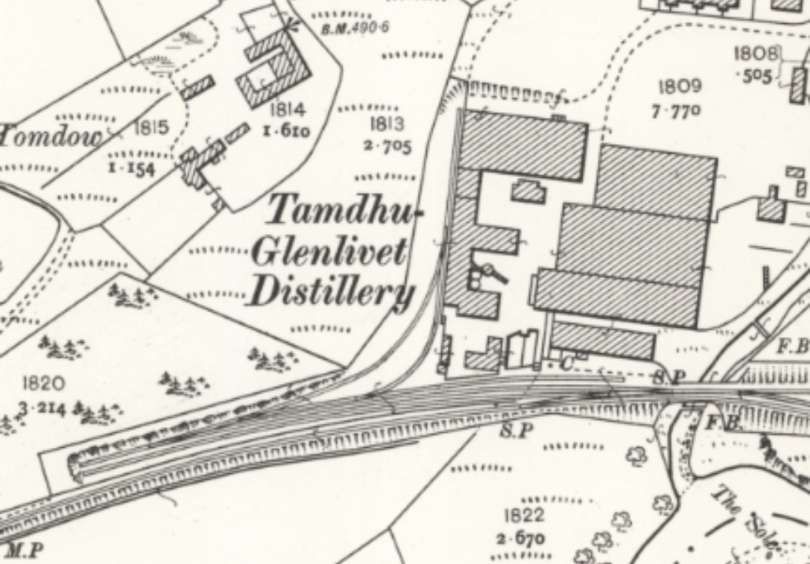
The Tamdhu Distillery – a set of three sidings ran parallel to the main line with further sidings on the West side of the distillery. [48]

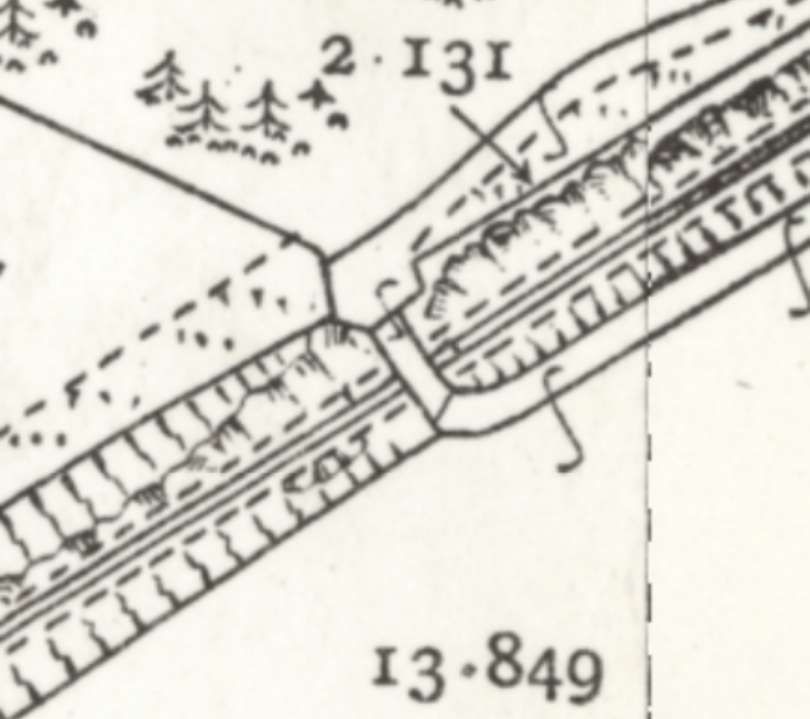
Beyond the Tamdhu Distillery, the Speyside Line curved round to the South following the river bank and crossed the burn shown on the map extract below. Vallance, writing about this location, says: “About three-quarters of a mile beyond Knockando, the railway crosses the Allt Arder, a tributary of the Spey, on a masonry bridge of three spans, one of 50 ft. and two of 40 ft. Difficulty was experienced in obtaining sound foundations for the piers of this structure, and after loose boulders and shingle had been excavated to a depth of 16 ft., piles had to be driven for a further 15ft.” [1: p6]

The line passes under a field access bridge before reaching the viaduct mentioned above. [49]
The same location in the 21st century. [14]
This extract from the 25″ Ordnance Survey from the turn of the 20th century, shows the viaduct over Allt Arder mentioned by Vallance above. [49]
The same location in the 21st century. [14]
The railway crossed the burn at Dalvenuan and continued in a southerly direction. [49]
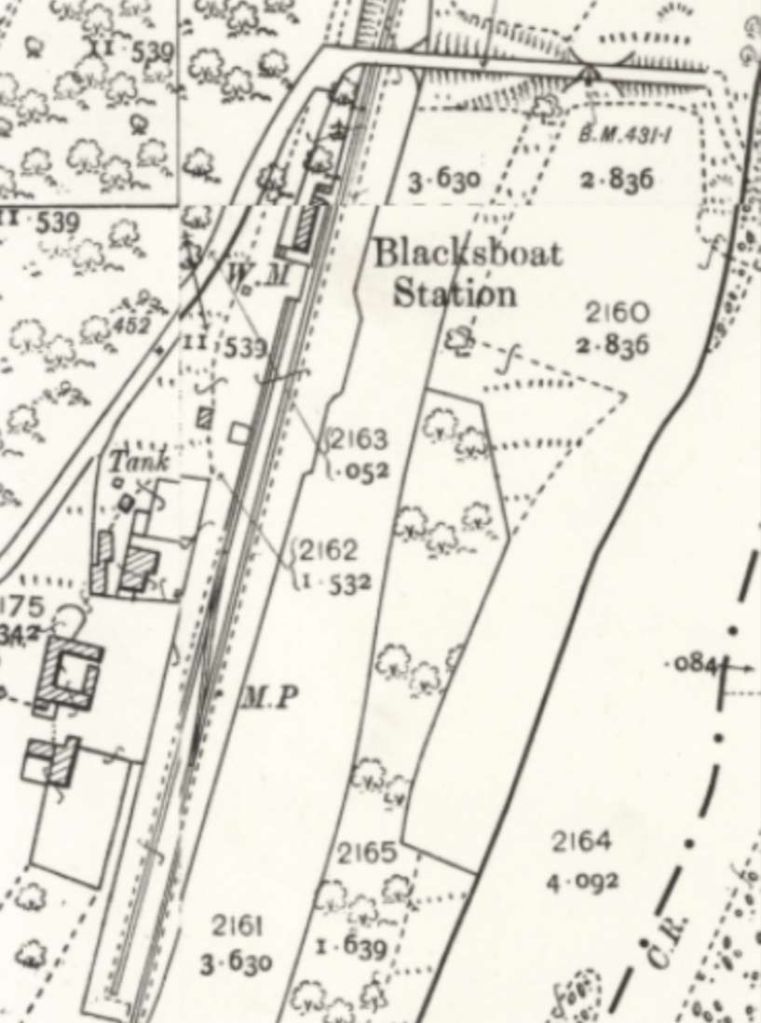
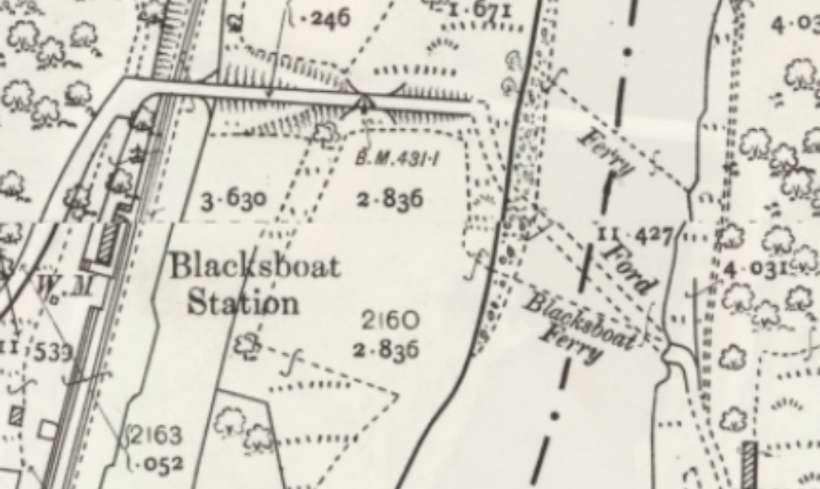
The next station was Blacksboat Railway Station which sat close to the River Spey. Approaching the station from the North trains passed under an access road to the river bank. [50]
The access track at the North end of the Station led down to a ford which allowed access across the Spey when water levels were low. The ford was supplemented by two ferry routes for when river levels were higher. [50]
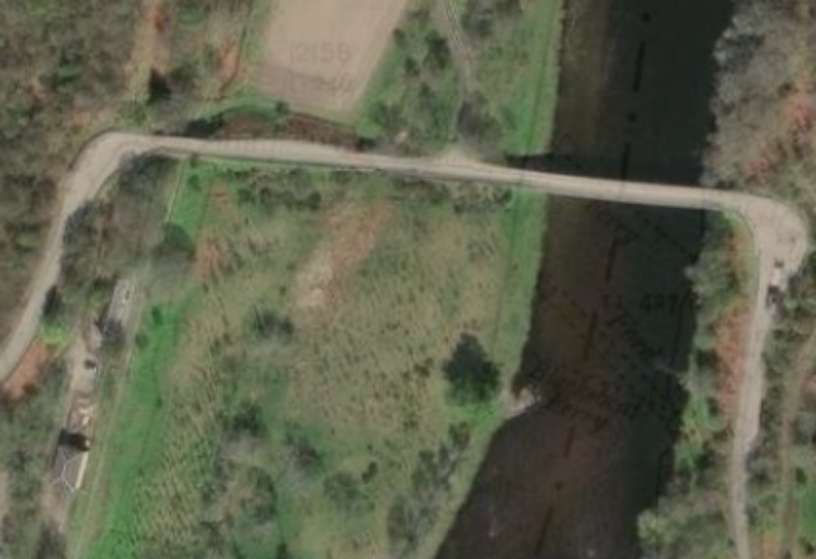
The same location in the 21st century as it appears on the ESRI satellite imagery provided by the National Library of Scotland (NLS). [50]
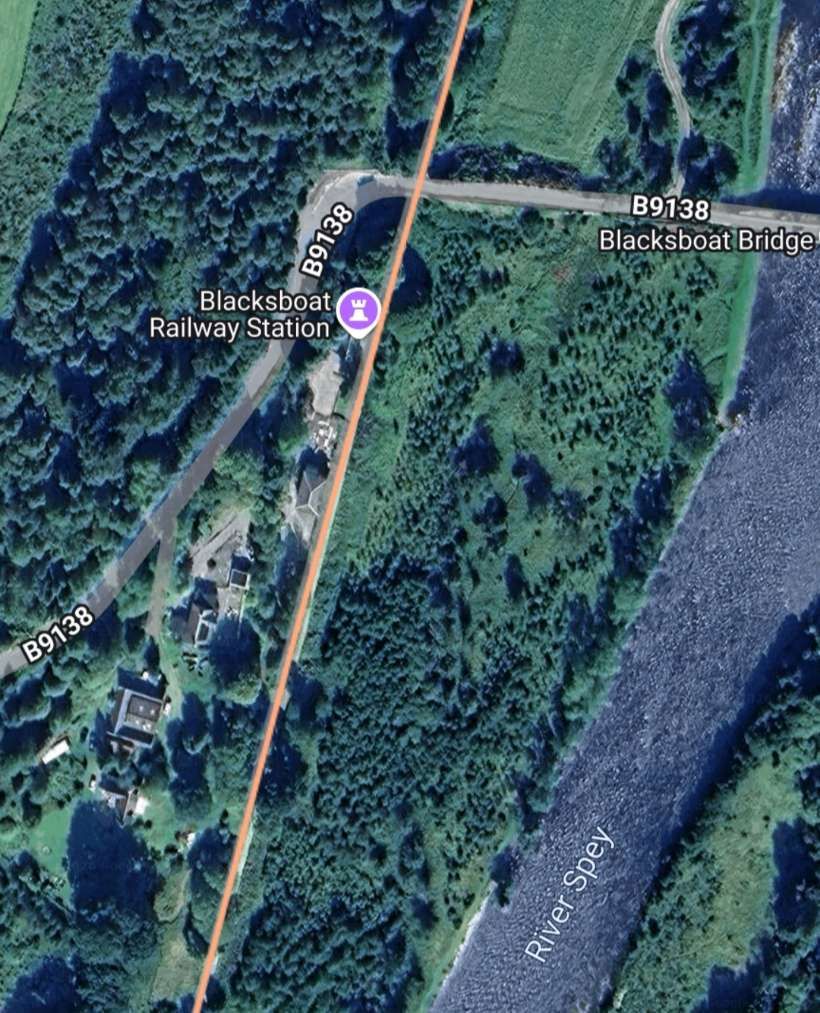
The satellite imagery from railmaponline.com shows the old railway in orange, the location of Blacksboat Railway Station and the B9138. [14]
Looking back North from the B9138 bridge over the Speyside Way – the old railway line. [Google Streetview, September 2025]
Looking South from the same bridge in 1961 through Blacksboat Station, © Ben Brooksbank and licenced for reuse under a Creative Commons licence (CC BY-SA 2.0). [51]
The same view in the 21st century. [Google Streetview, September 2025]
As an aside, this is the Blacksboat river bridge carrying the B9138 over the River Spey. This photograph was taken from the road on the East bank of the river. [Google Streetview, September 2025]

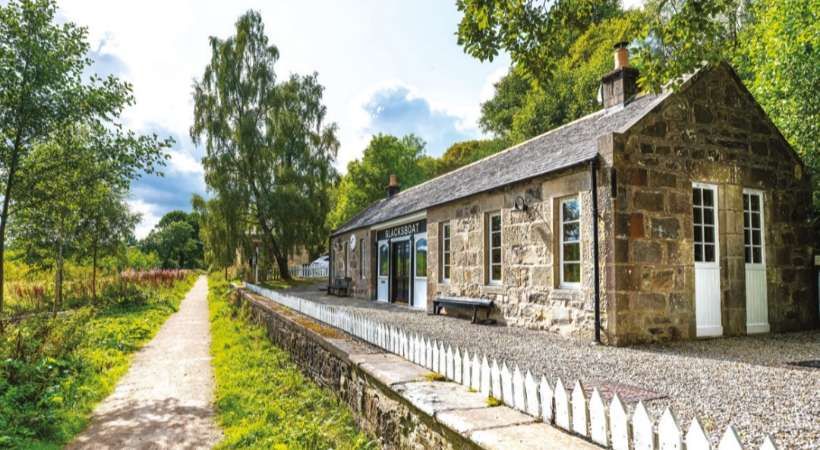
Blacksboat Railway Station opened on 1st July 1863. It had a rectangular-shaped building and a wooden goods shed. The station closed to both passengers and goods traffic on 18th October 1965. [52] It had a single platform on the West side of the line and a small Goods Yard to the South. The station building is well-preserved.bdetsils of the building can be found here. [53]

Looking South, this is the station building in the 21st century. [53]
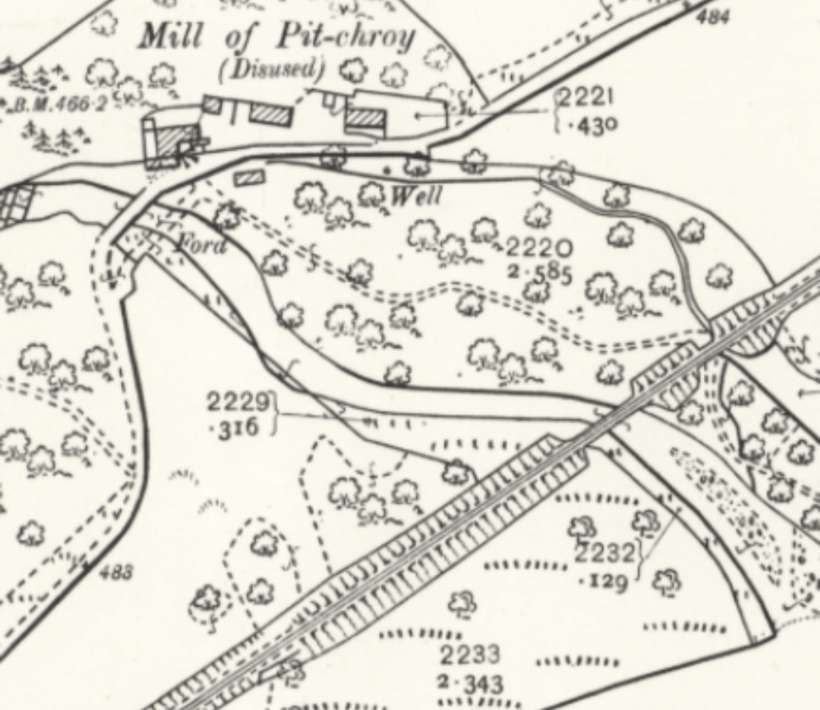
Close to the Mill of Pit-chroy the line bridged Allt a’ Gheallaidh (Burn of the Promise). [54]
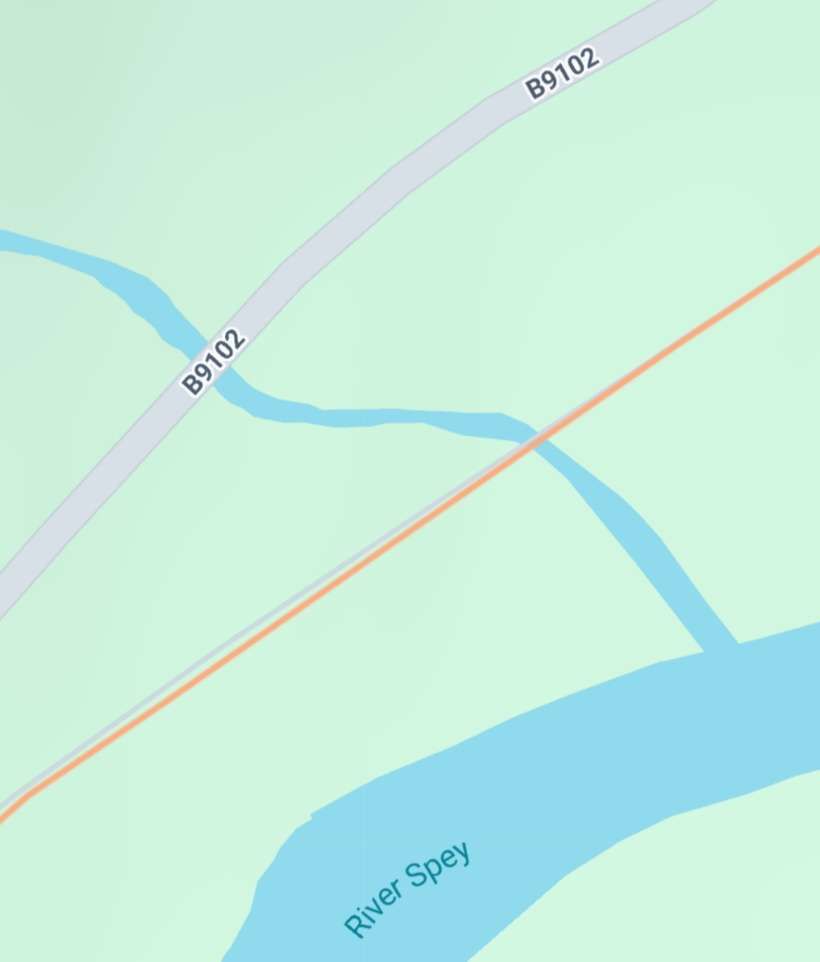
The satellite imagery from railmaponline.com shows very little as the tree canopy hides the topography. The mapping shows that the original road alignment has been changed significantly in the area close to the Allt a’ Gheallaidh. Following the line of the road on Google Streetview it is not possible to identify the location of the stream. [14]
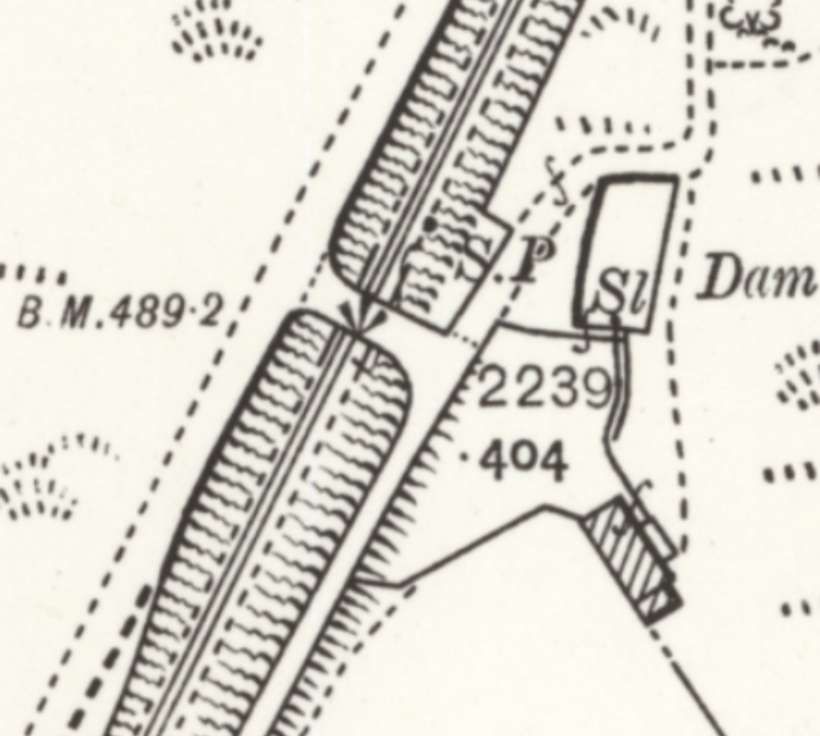
The next significant structure on the 25″ Ordnance Survey from the turn of the 20th century is this bridge over the line. It gave access to Dalnapot (just off the bottom of this map extract. [55]
A wider area is shown on this extract from the satellite imagery from railmaponline.com. [14]
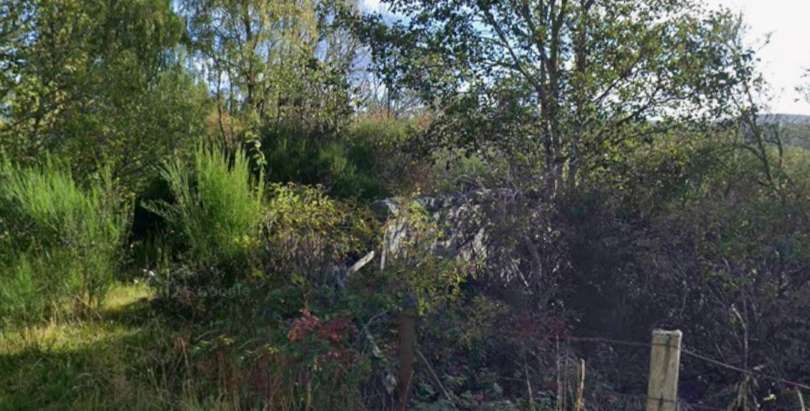
O er this length of the line the road runs at the top of the cutting which carried the old railway. At the location of the bridge shown on the OS Map extract above it is just possible to make out the parapet wall of the bridge in this modern view. [Google Streetview, September 2025]

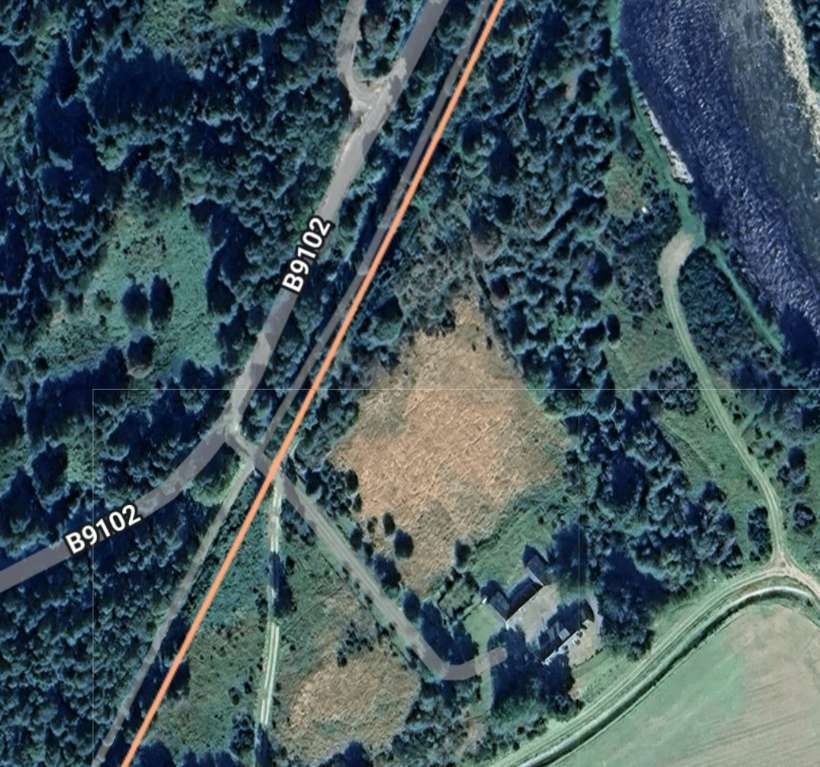
The access road to Dalnapot ran down the far side of the cutting from the bridge. That lane has been abandoned in favour of a more direct route between the B9102 and Dalnapot Futher South along the line of the old railway.

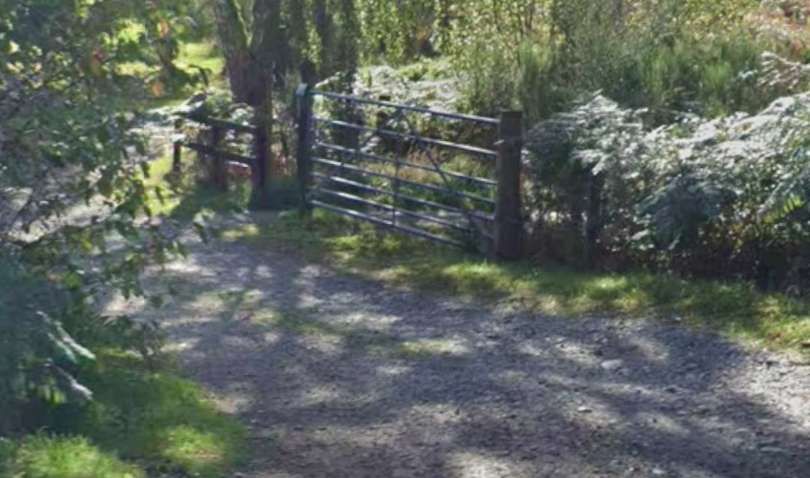
Looking Southeast from the B9102 into the access road to Dalnapot the old railway crosses the access road at level just a short distance down the access road. [Google Streetview, September 2025]

Vallance continues his narrative: “Beyond the single-platform station of Blacksboat, the train returns to the Banffshire side of the Spey on a lattice girder bridge of 198 ft. span, and reaches Ballindalloch Station, 12.25 miles from Craigellachie. In less than a mile, however, the county boundary crosses to the eastern side of the river, and Morayshire is re-entered.” [1: p6]

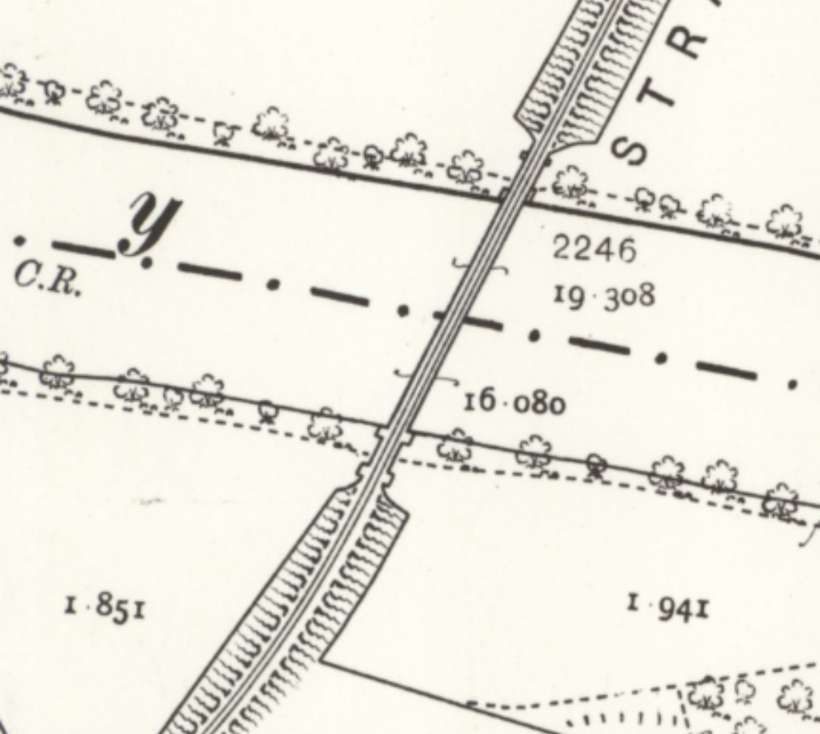
A short distance further South the Strathspey Line crossed the River Spey again over Ballindalloch Viaduct. [56]
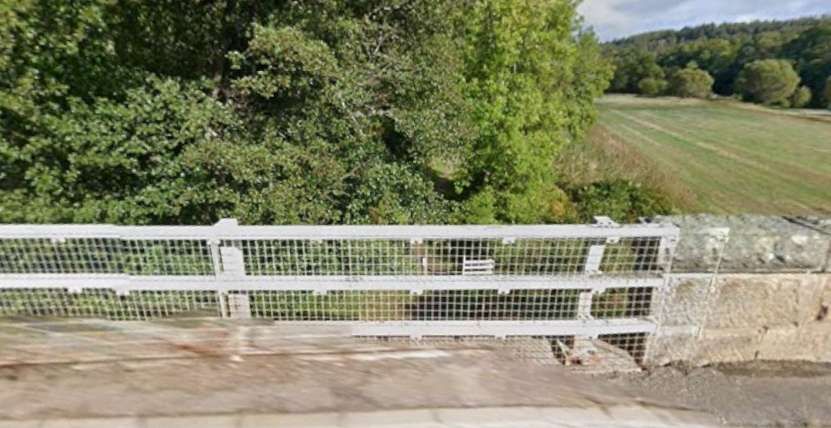
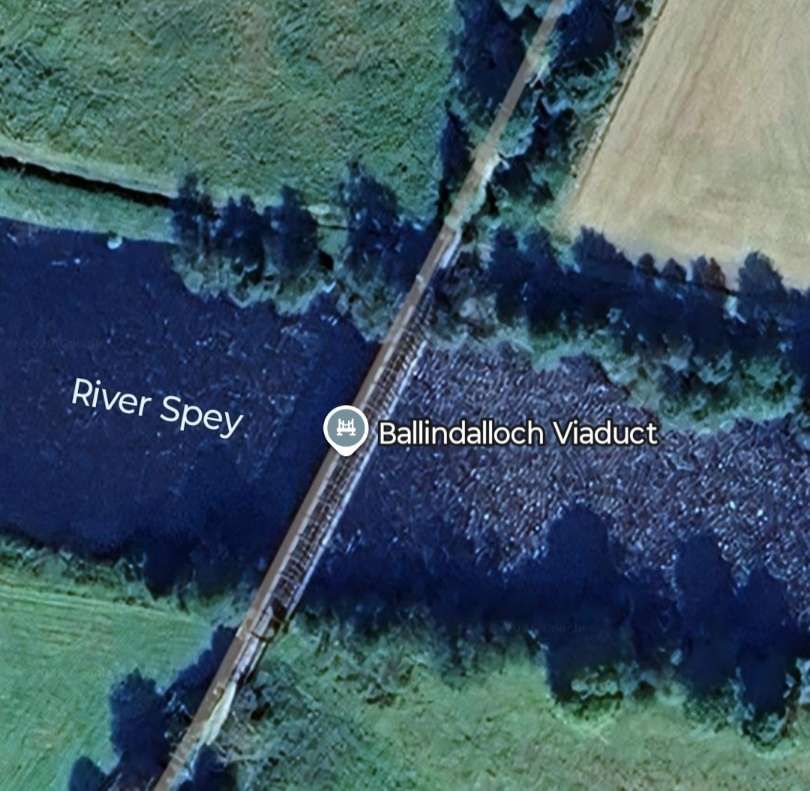
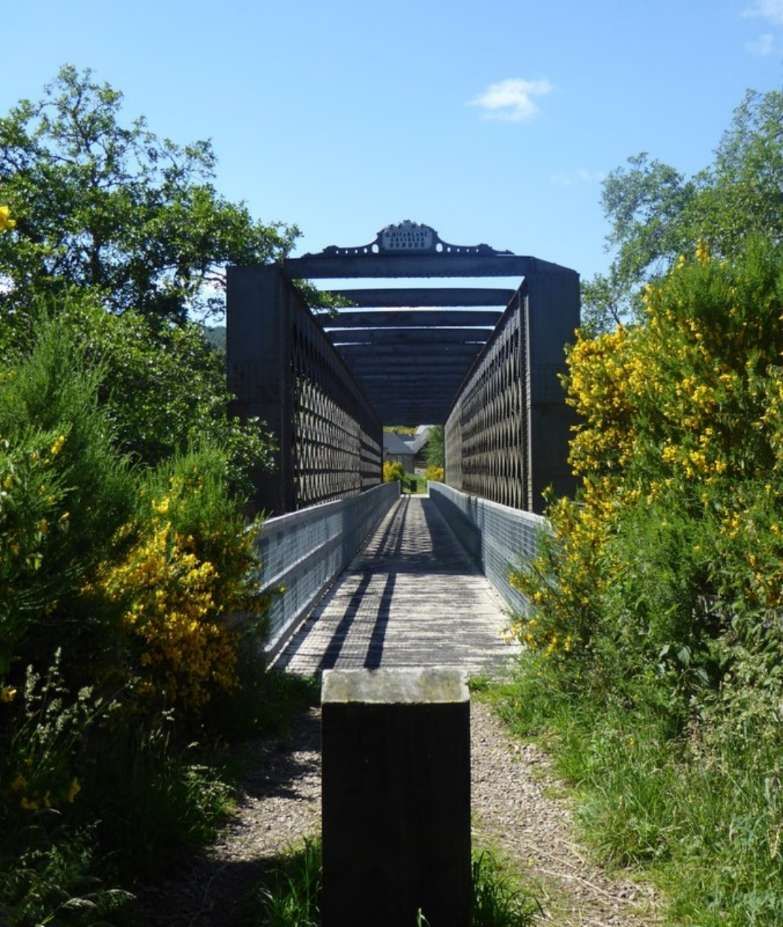
Ballindalloch Viaduct remains in use in the 31st century carrying the Speyside Way. [Google Maps, January 2026]
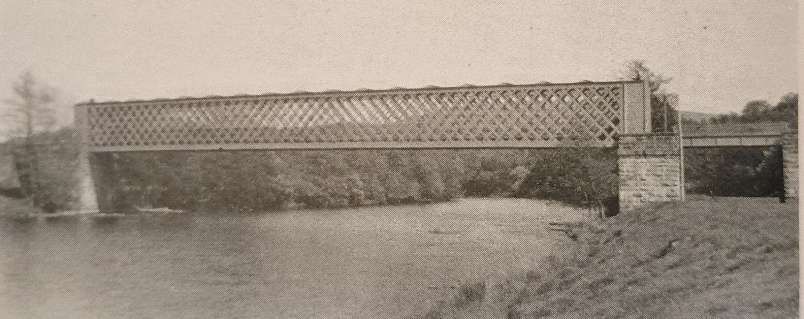
This photograph of Ballindalloch Viaduct was taken by H.A. Vallance, © Public Domain. [2: p8]

Ballindalloch Viaduct crosses the Spey at Ballindaloch, linking the parishes of Inveravon in Banffshire and Knockando in Moray. It is a wrought iron lattice girder bridge, with a single-span of 195 feet (59 metres), supported by rubble abutments, and with plate girder spans at either end giving an overall length of around 250 feet (75 metres). The viaduct was designated a Category A listed building in 1987, and was a scheduled monument until 2006. It is open to pedestrians and cyclists, forming a part of the Speyside Way. [57]

Looking South over Ballindalloch Viaduct, © Alan O’Dowd and licensed for reuse under a Creative Commons licence (CC BY-SA 2.0). [58]

Immediately after crossing the River Spey over Ballindalloch Viaduct, trains entered Ballindalloch Railway Station which was situated on a relatively tightly curved length of the Strathspey Line.

Ballindalloch Railway Station as it appears on 25″ OS mapping from the turn of the 20th century. [59]
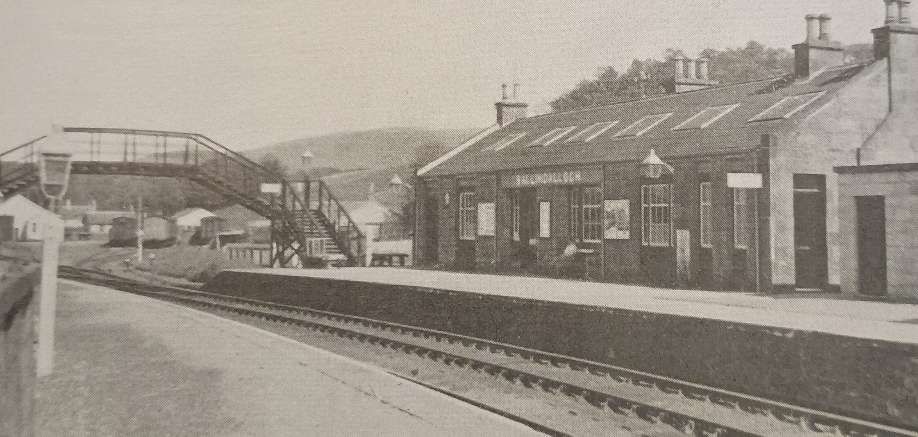
Ballindalloch Railway Station looking towards Craigellachie, © H.A. Vallance, Public Domain. [1: p7]
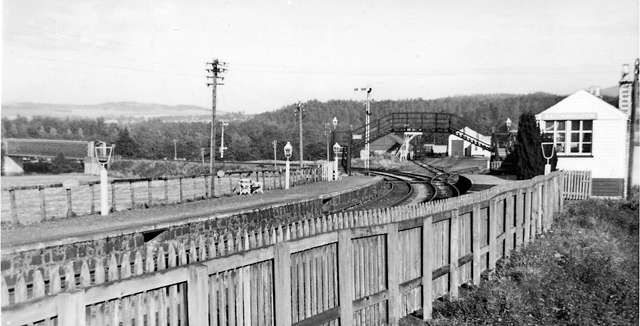
Still looking towards Craigellachie, this view is taken from a location a little further West through Ballindalloch Railway Station in 1961, © Ben Brooksbank and licenced for reuse under a Creative Commons licence (CC BY-SA 2.0). [59]

Ballindalloch Railway Station opened on 1st July 1863 by the Great North of Scotland Railway. To the north was Cragganmore distillery, which had opened because it was close to the railway. There were two goods sheds: a two-storey goods shed that connected with the distillery and the other was in the middle of the large goods yard which was to the east of the station site. The two-storey goods shed was used to store whisky from the distillery. The station closed to both passengers and goods traffic on 18th October 1965. [60]

References

  1. The Railway Magazine Volume 105 No. 693, Tothill Press, London, January 1959.
  2. H.A. Vallance; The Strathspey Line; in The Railway Magazine Volume 105 No. 693, Tothill Press, London, January 1959, p3-9.
  3. https://maps.nls.uk/geo/explore/#zoom=16.7&lat=57.45846&lon=-3.13049&layers=168&b=ESRIWorld&o=100, accessed on 16th January 2026.
  4. https://maps.nls.uk/view/82870776, accessed on 16th January 2026.
  5. https://railmaponline.com/UKIEMap.php, accessed on 16th January 2026.
  6. https://maps.nls.uk/view/82870764, accessed on 16th January 2026.
  7. https://maps.nls.uk/view/82870581, accessed on 16th January 2026.
  8. https://maps.nls.uk/view/82870545, accessed on 17th January 2026.
  9. https://maps.nls.uk/geo/explore/#zoom=16.8&lat=57.49141&lon=-3.18201&layers=168&b=ESRIWorld&o=100, accessed on 17th January 2026.
  10. https://www.geograph.org.uk/photo/3156785, accessed on 17th January 2026.
  11. https://www.geograph.org.uk/photo/5924067, accessed on 17th January 2026.
  12. https://www.geograph.org.uk/photo/5924068, accessed on 17th January 2026.
  13. https://en.wikipedia.org/wiki/Craigellachie_railway_station, accessed on 17th January 2026.
  14. https://maps.nls.uk/geo/explore/#zoom=17.3&lat=57.49327&lon=-3.18402&layers=168&b=ESRIWorld&o=100, accessed on 17th January 2026.
  15. https://www.facebook.com/share/p/1ACNrA4Umd, accessed on 17th January 2026.
  16. https://www.facebook.com/share/p/1GhhuAuYE4, accessed on 17th January 2026.
  17. https://www.railscot.co.uk/locations/C/Craigellachie_2nd, accessed on 18th January 2026.
  18. https://maps.nls.uk/geo/explore/#zoom=16.6&lat=57.49236&lon=-3.18419&layers=168&b=ESRIWorld&o=100, accessed on 18th January 2026.
  19. https://pixabay.com/photos/bridge-metal-framework-scotland-2406071, accessed on 18th January 2026.
  20. https://maps.nls.uk/geo/explore/#zoom=17.2&lat=57.48989&lon=-3.18980&layers=168&b=ESRIWorld&o=97, accessed on 18th January 2026.
  21. https://maps.nls.uk/geo/explore/#zoom=18.0&lat=57.48364&lon=-3.19528&layers=168&b=ESRIWorld&o=100, accessed on 18th January 2026.
  22. https://rogerfarnworth.com/2026/01/16/the-strathspey-line-part-1-keith-to-dufftown
  23. https://www.facebook.com/share/p/16yN97FHEZ, accessed on 18th January 2026.
  24. https://maps.nls.uk/view/82870734, accessed on 27th January 2026.
  25. https://en.wikipedia.org/wiki/Dailuaine_Halt_railway_station, accessed on 27th January 2026.
  26. The original source for this image has not been recorded. It was shared on the BR: Disused Railway Stations: Britain and Ireland Facebook Group by Mark Davidson on 26th December 2025, https://www.facebook.com/share/p/1D2Xsot4Un, accessed on 27th January 2026.
  27. https://www.speysidevisitorcentre.scot/railway-gallery, accessed on 27th January 2026.
  28. https://maps.nls.uk/geo/explore/#zoom=17.5&lat=57.48068&lon=-3.20074&layers=168&b=ESRIWorld&o=100, accessed on 27th January 2026.
  29. https://maps.nls.uk/geo/explore/#zoom=16.4&lat=57.47204&lon=-3.22537&layers=168&b=ESRIWorld&o=100, accessed on 27th January 2026.
  30. https://en.wikipedia.org/wiki/Aberlour, accessed on 27th January 2026.
  31. https://www.speysidevisitorcentre.scot, accessed on 27th January 2026.
  32. https://maps.nls.uk/geo/explore/#zoom=16.9&lat=57.46927&lon=-3.23164&layers=168&b=ESRIWorld&o=100, accessed on 27th January 2026.
  33. https://maps.nls.uk/geo/explore/#zoom=17.6&lat=57.45395&lon=-3.29108&layers=168&b=ESRIWorld&o=100, accessed on 28th January 2026.
  34. https://maps.nls.uk/geo/explore/#zoom=17.6&lat=57.45438&lon=-3.29397&layers=168&b=ESRIWorld&o=100, accessed on 28th January 2026.
  35. https://en.wikipedia.org/wiki/Carron_Bridge_(River_Spey, accessed on 28th January 2026.
  36. https://www.geograph.org.uk/photo/4810444, accessed on 28th January 2026.
  37. https://maps.nls.uk/geo/explore/#zoom=15.7&lat=57.45592&lon=-3.29906&layers=168&b=ESRIWorld&o=100, accessed on 28th January 2026.
  38. https://www.facebook.com/share/p/1DyezX4UMU, accessed on 28th January 2026.
  39. https://www.facebook.com/share/p/1DYLhhAZT6, accessed on 28th January 2026.
  40. https://en.wikipedia.org/wiki/Imperial_distillery, accessed on 28th January 2026.
  41. https://www.facebook.com/share/p/1DSTE4hokA, accessed on 28th January 2026.
  42. https://maps.nls.uk/geo/explore/#zoom=18.1&lat=57.46416&lon=-3.32475&layers=168&b=ESRIWorld&o=99, accessed on 28th January 2026.
  43. https://maps.nls.uk/geo/explore/#zoom=17.8&lat=57.46359&lon=-3.32959&layers=168&b=ESRIWorld&o=100, accessed on 28th January 2026.
  44. https://maps.nls.uk/geo/explore/#zoom=16.1&lat=57.45918&lon=-3.35144&layers=168&b=ESRIWorld&o=100, accessed on 28th January 2026.
  45. https://tour-scotland-photographs.blogspot.com/2016/01/old-photograph-railway-statiom.html?m=1, accessed on 28th January 2026
  46. https://www.geograph.org.uk/photo/4481751, accessed on 28th January 2026.
  47. https://www.tamdhu.com, accessed on 28th January 2026.
  48. https://maps.nls.uk/geo/explore/#zoom=16.6&lat=57.45940&lon=-3.35453&layers=168&b=ESRIWorld&o=100, accessed on 28th January 2026.
  49. https://maps.nls.uk/geo/explore/#zoom=17.1&lat=57.44677&lon=-3.36446&layers=168&b=ESRIWorld&o=100, accessed on 28th January 2026.
  50. https://maps.nls.uk/geo/explore/#zoom=17.1&lat=57.43376&lon=-3.36126&layers=168&b=ESRIWorld&o=92, accessed on 28th January 2026.
  51. https://www.geograph.org.uk/photo/1821111, accessed on 28th January 2026.
  52. https://en.wikipedia.org/wiki/Blacksboat_railway_station, accessed on 28th January 2026.
  53. https://content.knightfrank.com/property/prh012394818/brochures/en/prh012394818-en-brochure-5fd5c7a8-3c29-45a6-a0ea-609a65decad0-1.pdf, accessed on 28th January 2026.
  54. https://maps.nls.uk/geo/explore/#zoom=16.8&lat=57.42306&lon=-3.37478&layers=168&b=ESRIWorld&o=100, accessed on 28th January 2026.
  55. https://maps.nls.uk/geo/explore/#zoom=18.3&lat=57.41756&lon=-3.38208&layers=168&b=ESRIWorld&o=100, accessed on 28th January 2026.
  56. https://maps.nls.uk/geo/explore/#zoom=17.3&lat=57.41422&lon=-3.38543&layers=168&b=ESRIWorld&o=100, accessed on 28th January 2026.
  57. https://en.wikipedia.org/wiki/Ballindalloch_Railway_Bridge, accessed on 28th January 2026.
  58. https://www.geograph.org.uk/photo/5020155, accessed on 28th January 2026.
  59. https://www.geograph.org.uk/photo/1747084, accessed on 29th January 2026.
  60. https://en.wikipedia.org/wiki/Ballindalloch_railway_station, accessed on 29th January 2026.
  61. http://gnsra.org.uk/carron%20station.htm, accessed on 29th January 2026.