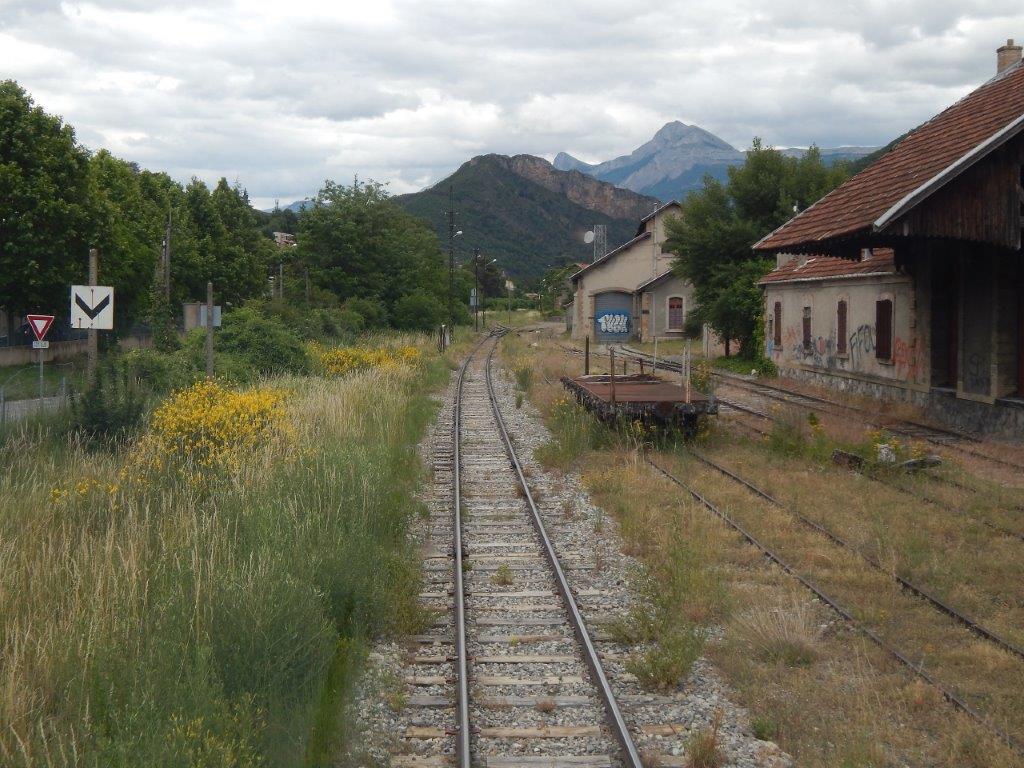
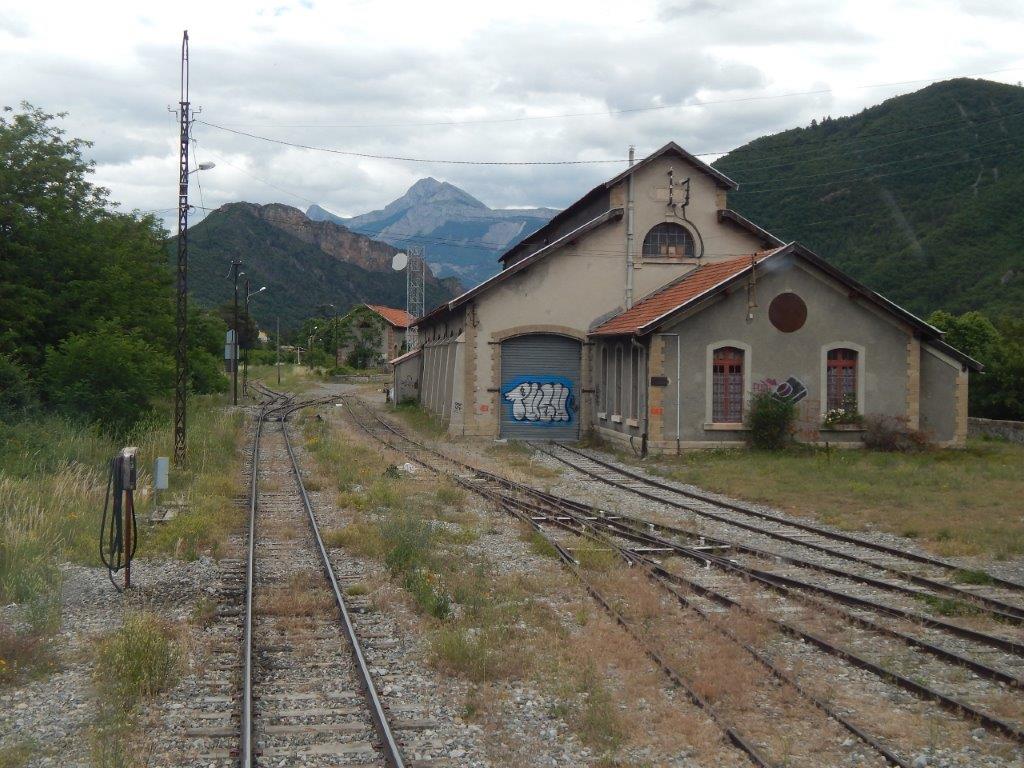
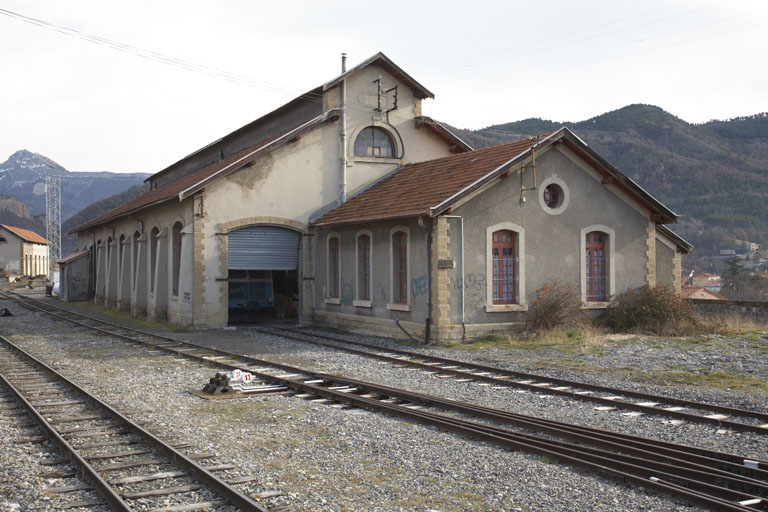
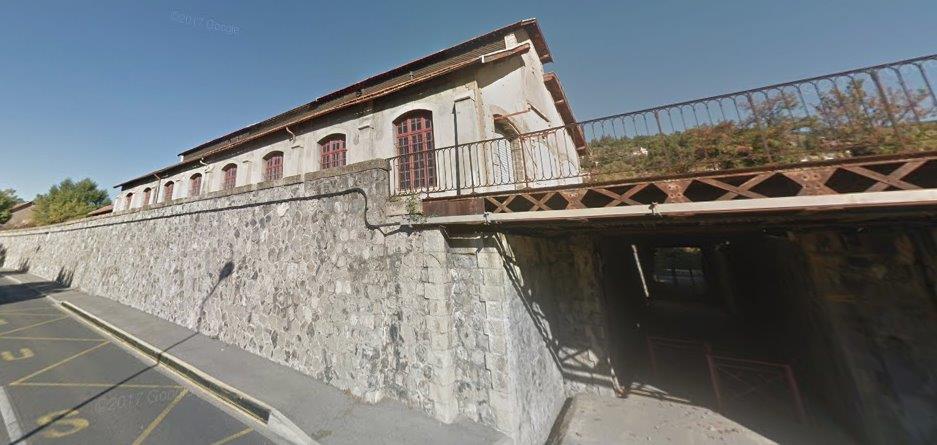
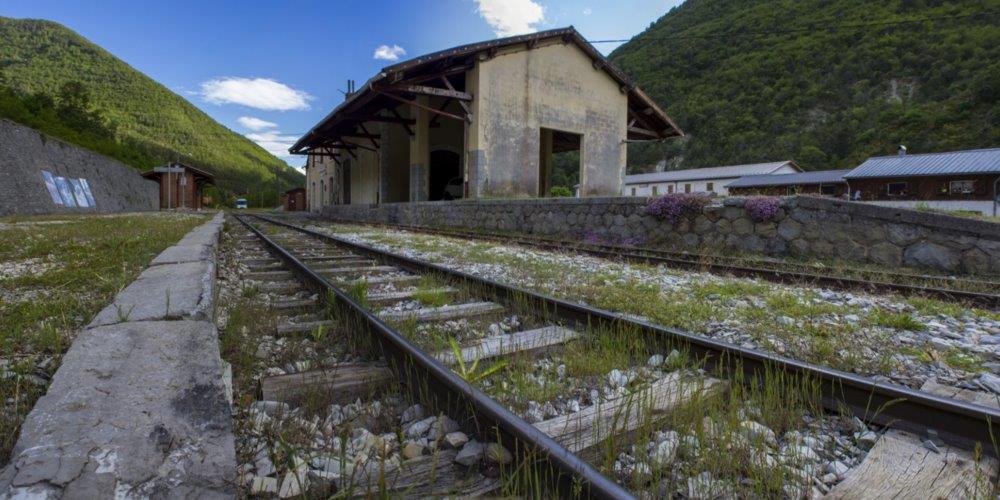
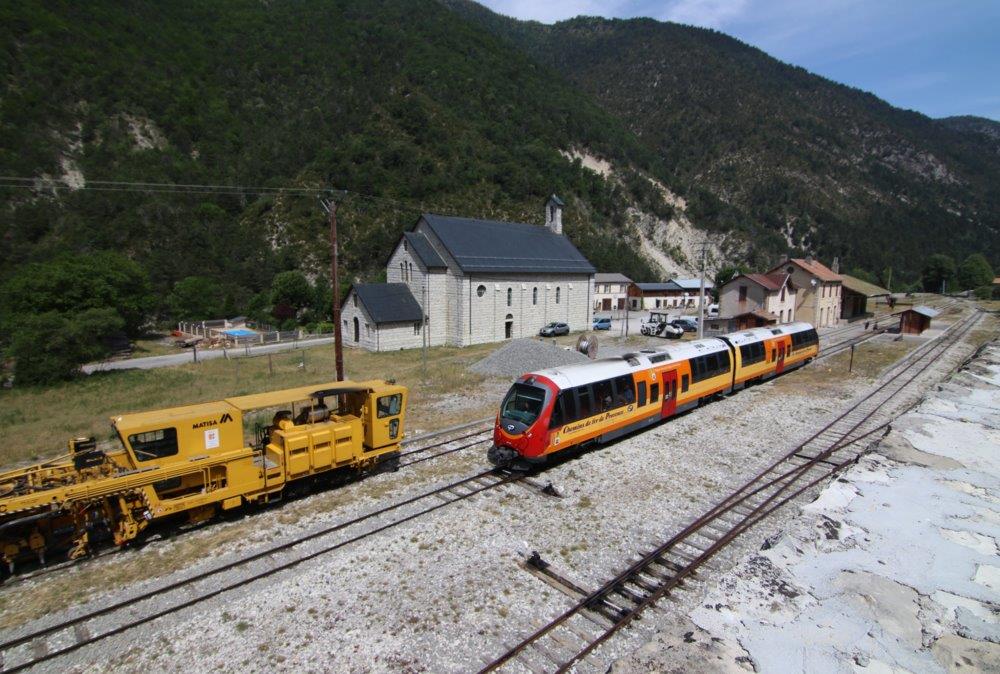
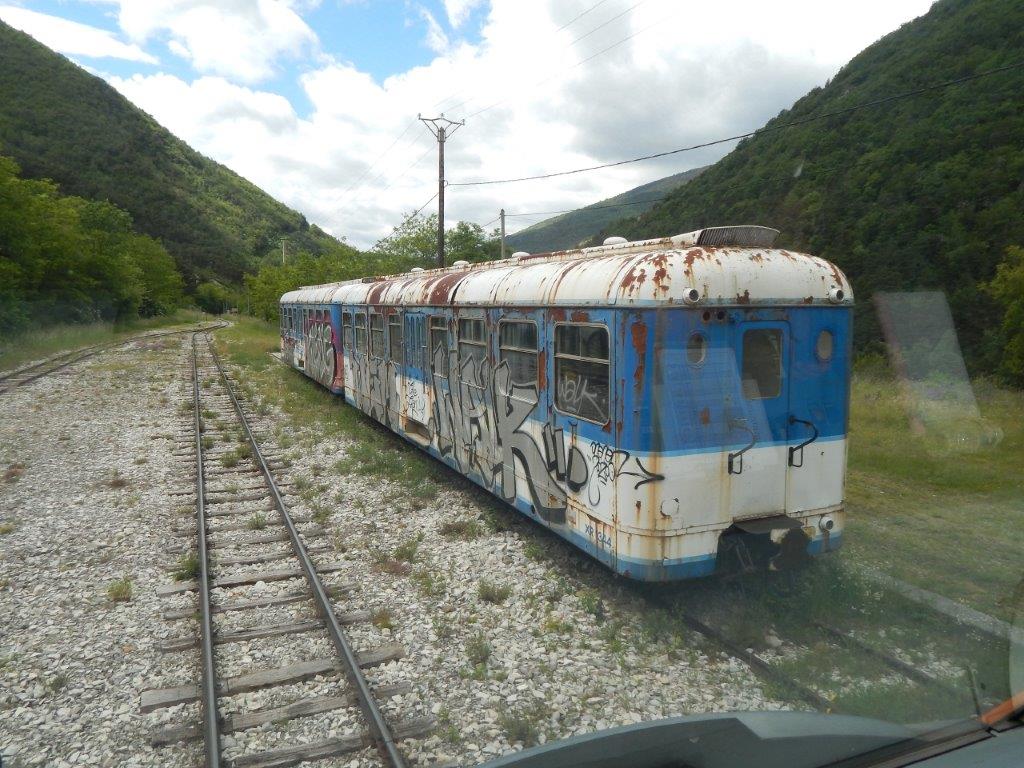
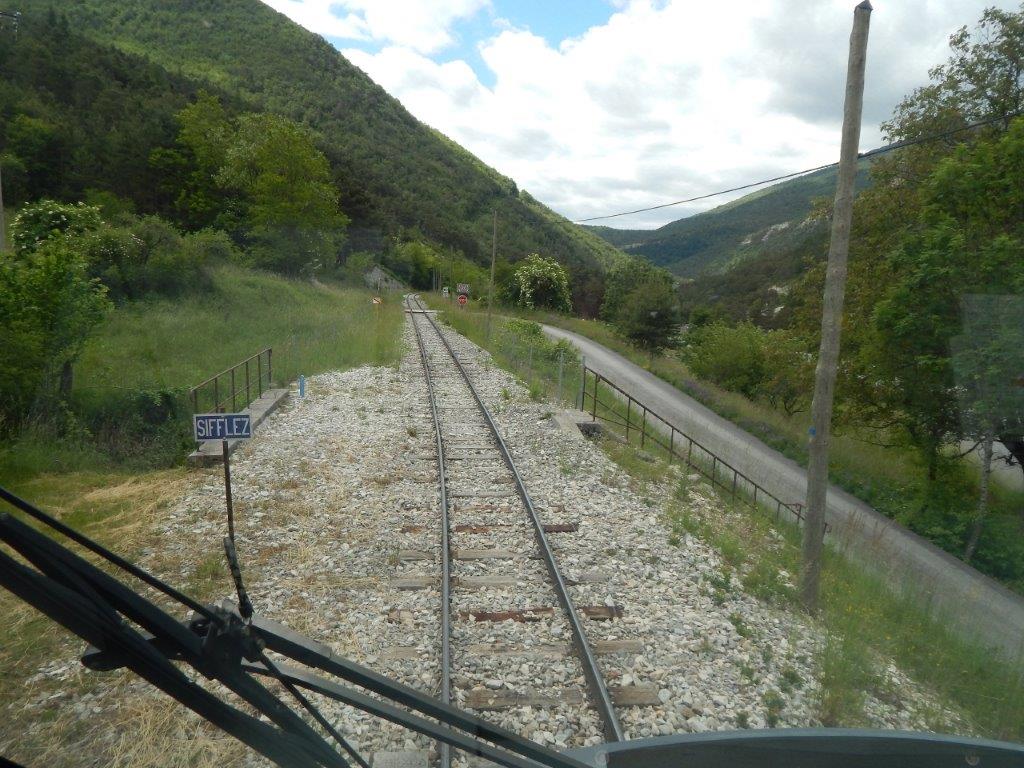
Category Archives: Railways and Tramways Around Nice

Various posts about the railways and tramways in Provence and Les Alpes Maritime.

Nice to Digne-les-Bains Part 14 – Mezel to Digne (Chemins de Fer de Provence 78)

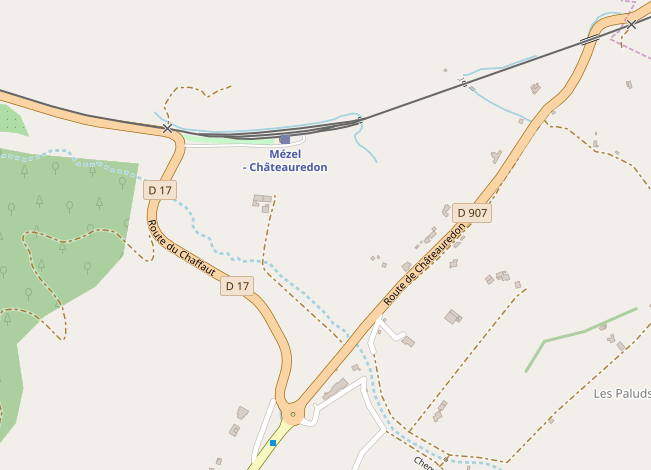
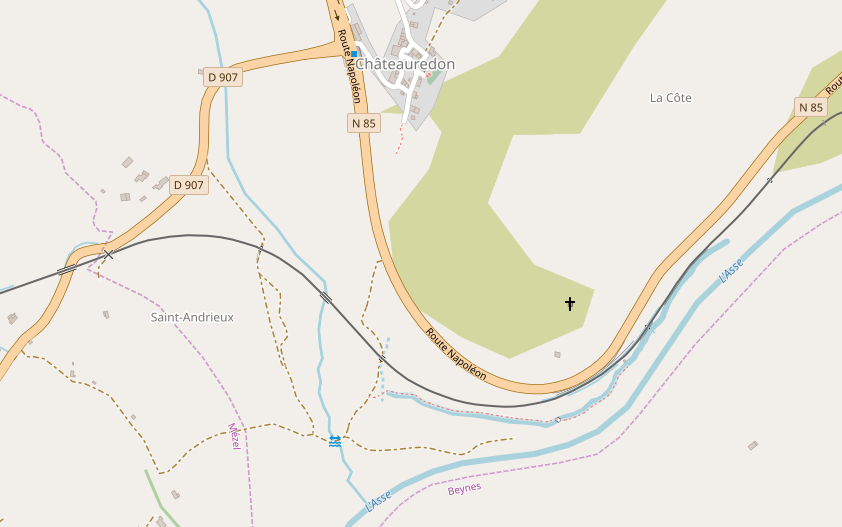
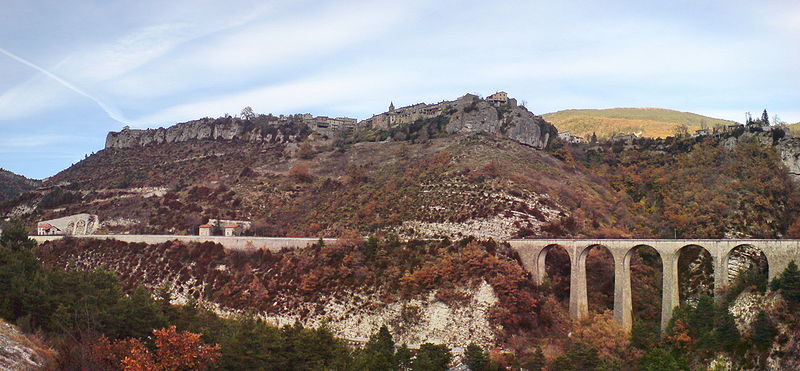
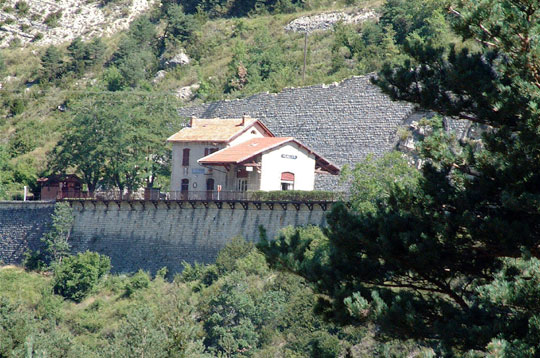
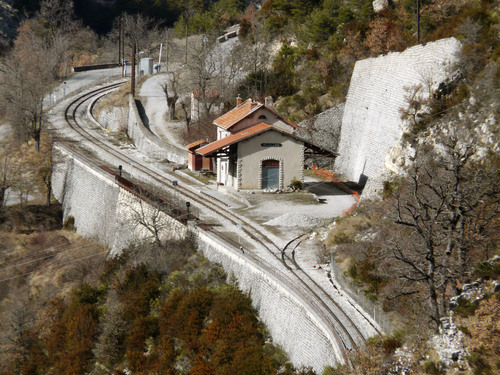
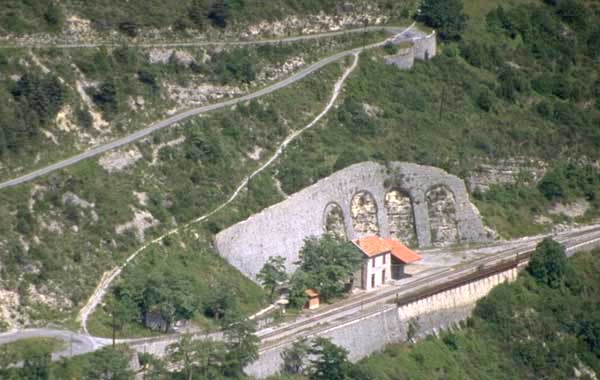
Mezel and Châteauredon are two villages in the valley of l’Asse. Mézel is a small village, 15 km south of Digne-les-Bains. It’s a long, narrow village, with one long main street, the Rue Grande, set back from the D907 road that passes by on the East side of the village. Mezel is just under 1.5km south of the railway station. Châteauredon is also a small village. It is less than 1.5km to the Northeast of the railway station. The l’Asse flows to the Southeast of both villages.

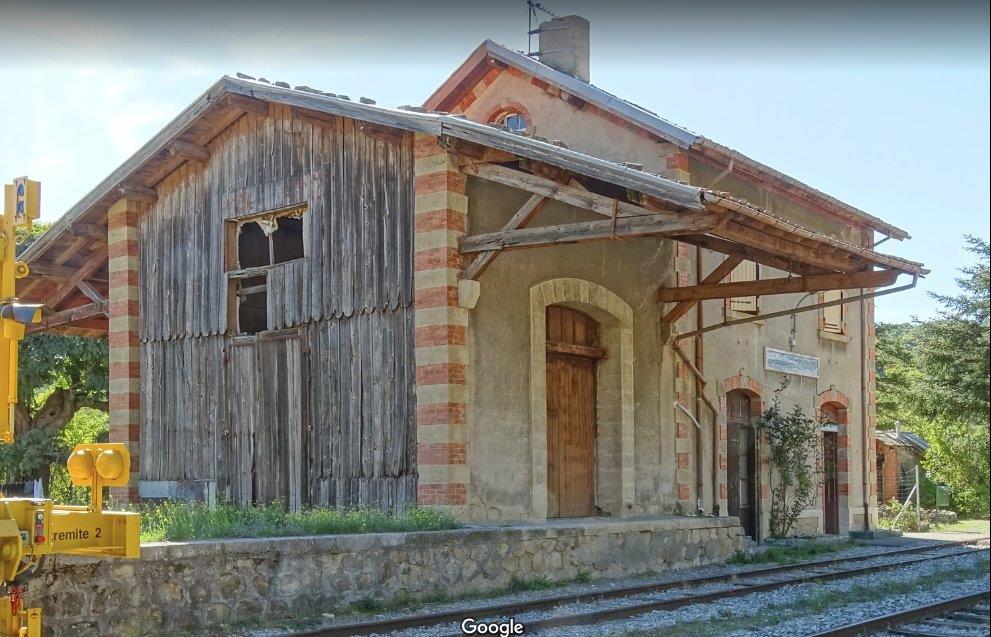
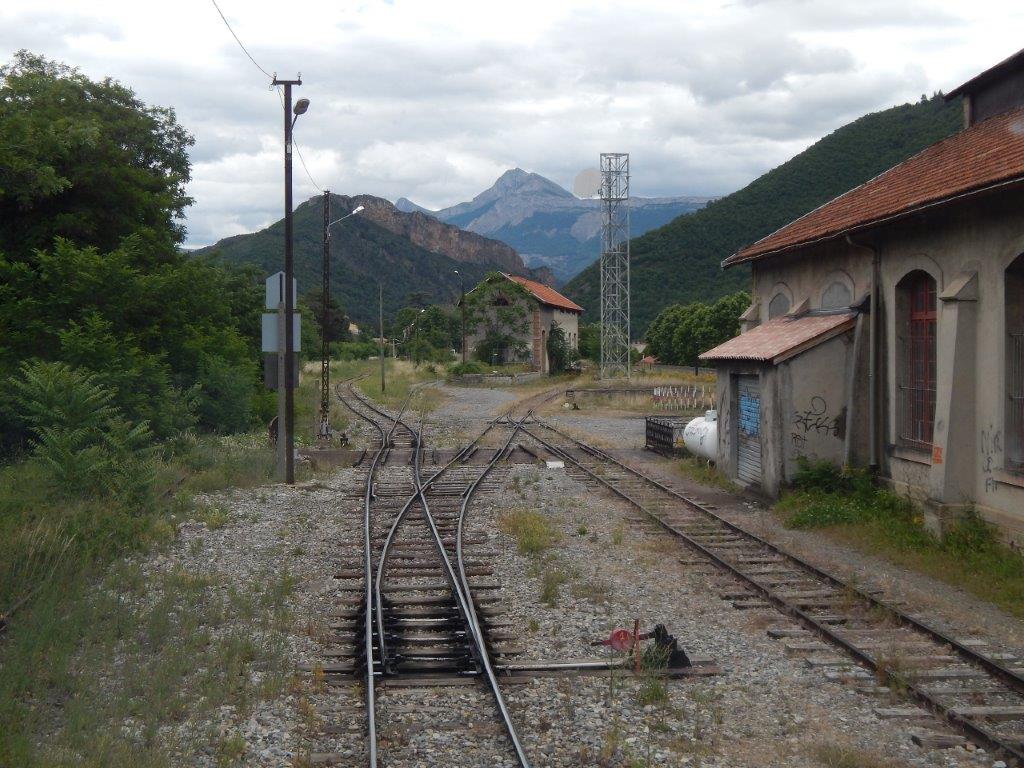
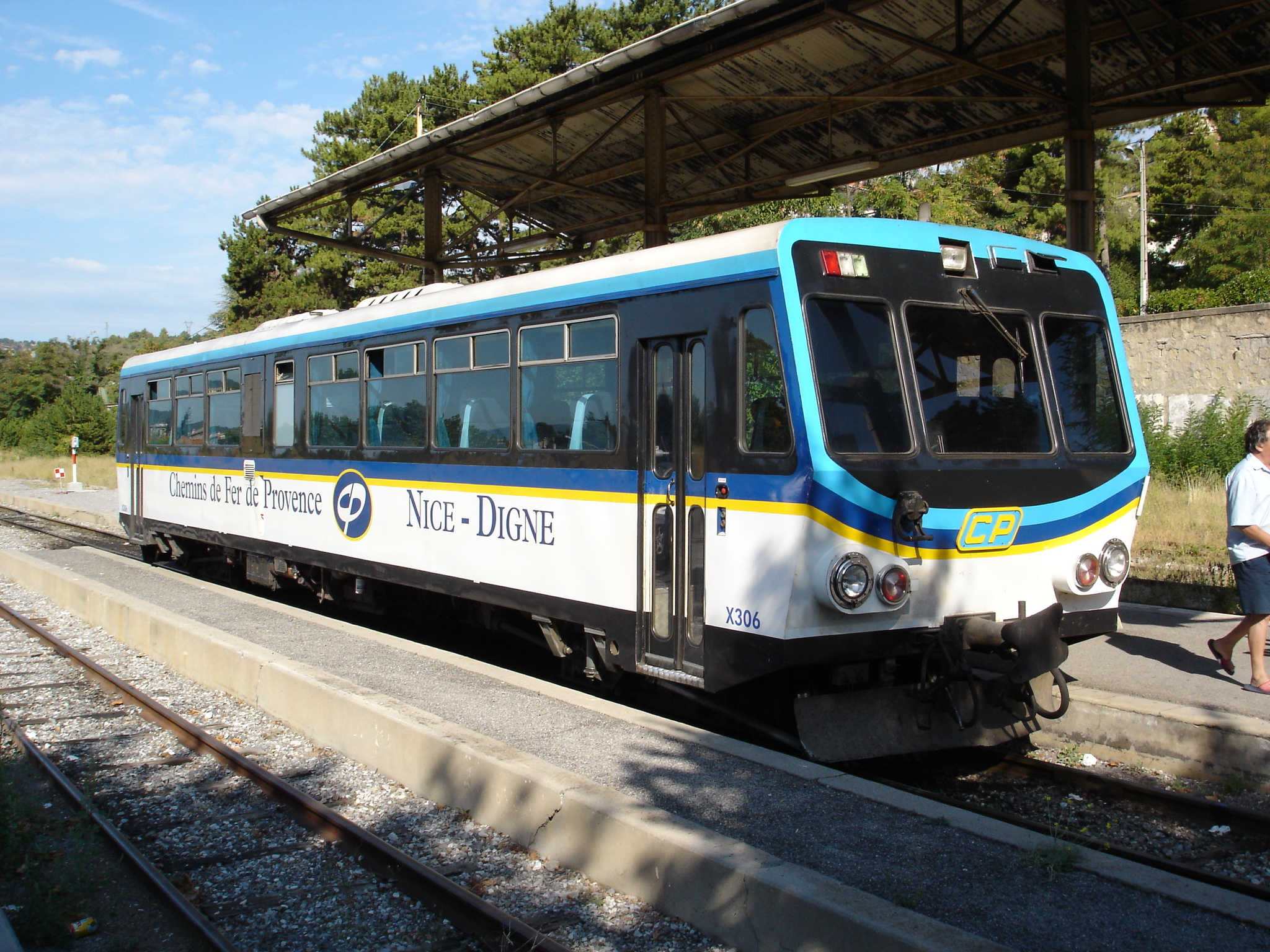
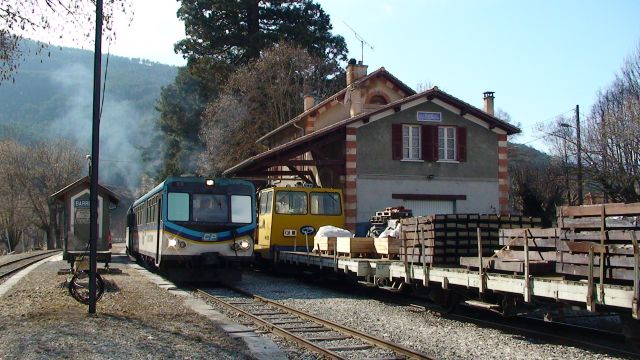
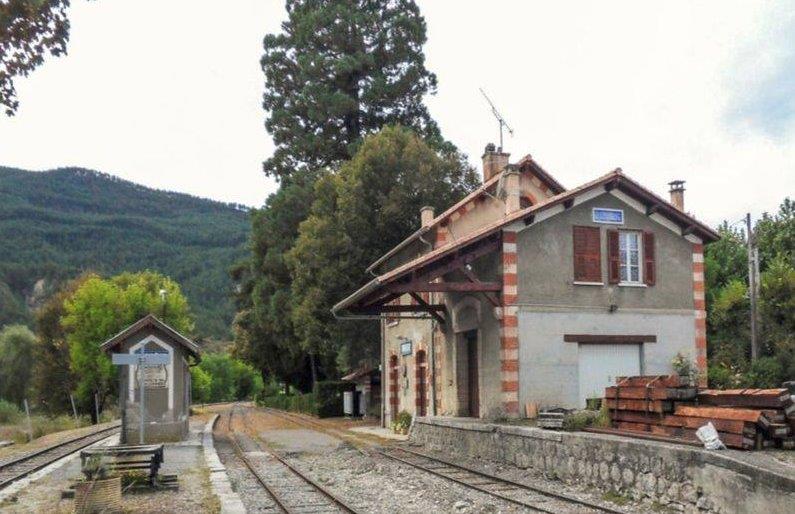
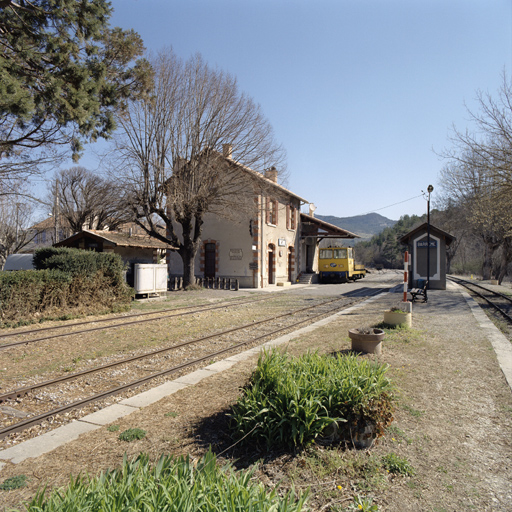
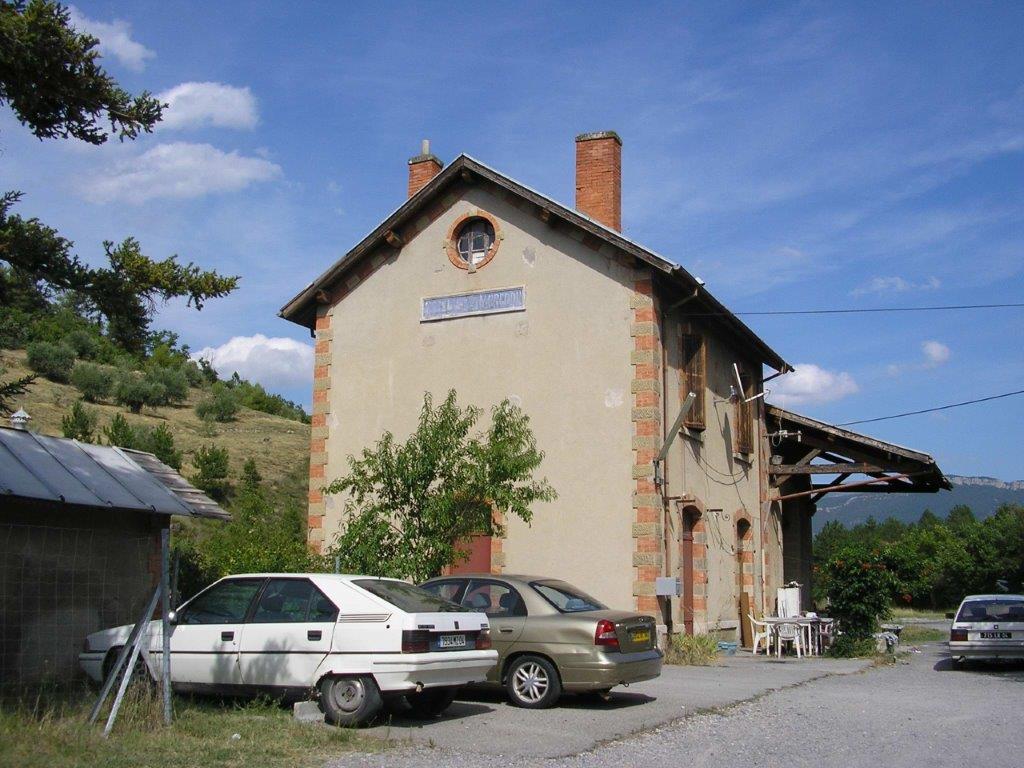
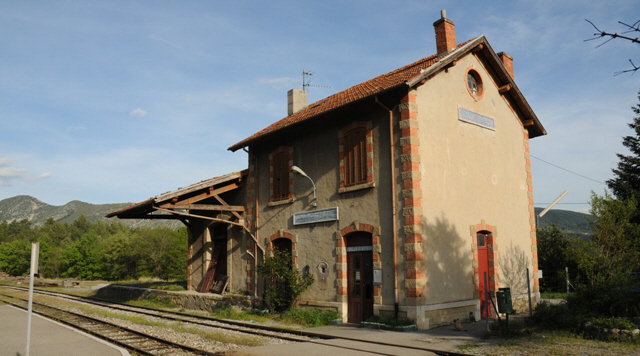
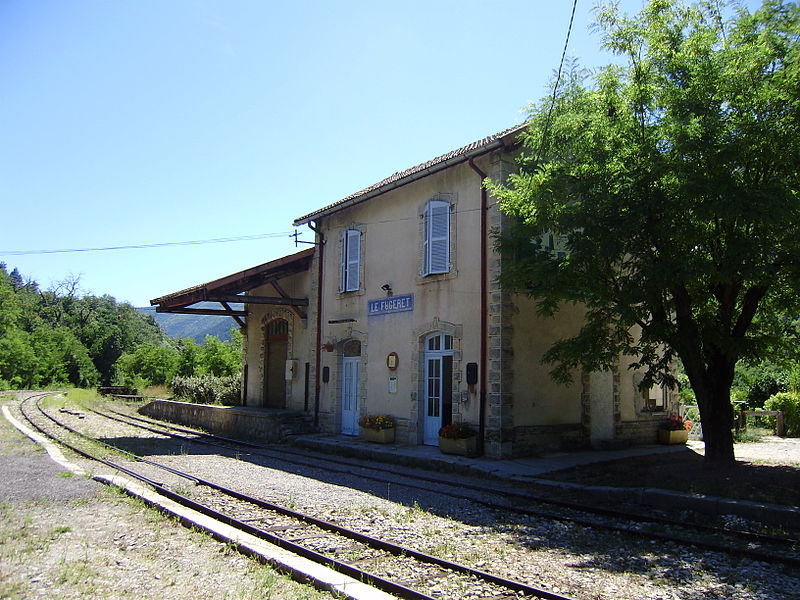
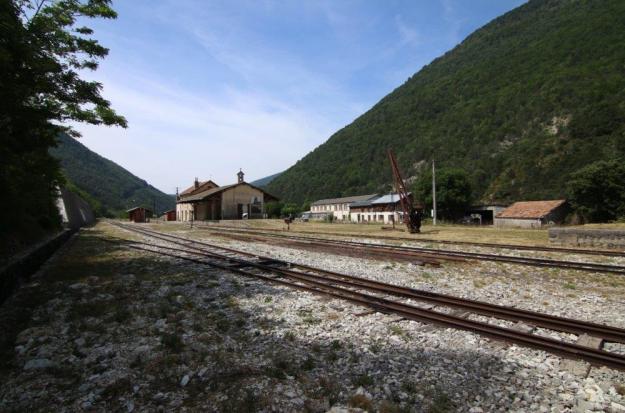
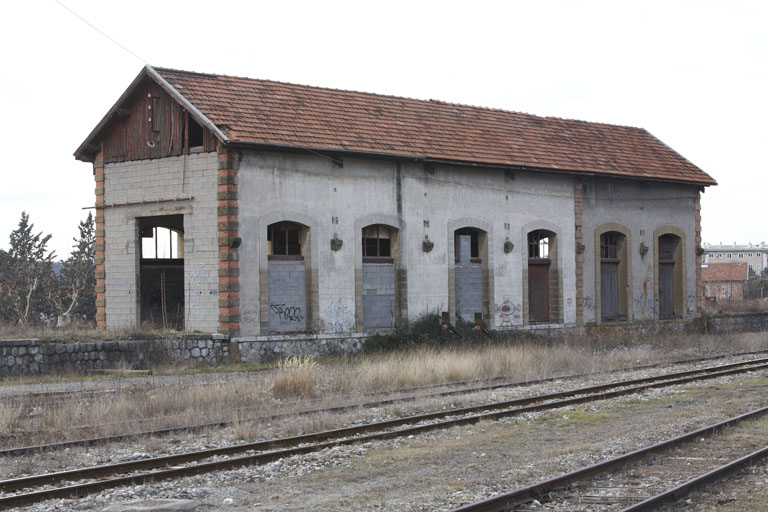
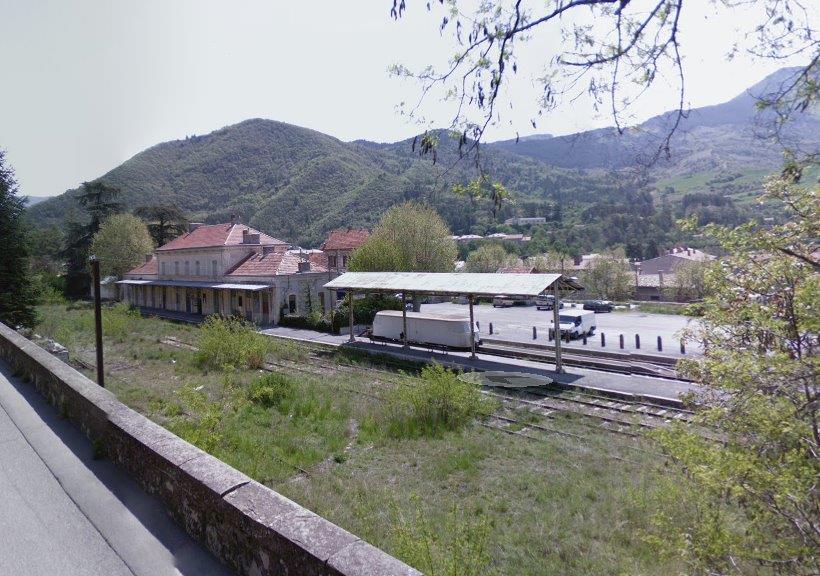
Mezel/Châteauredon Station is roughly midway between the two villages and is sited between the ‘D907’ and the ‘D17’.Mézel/Châteauredon Station, (c) Kjell Strandberg. [1]

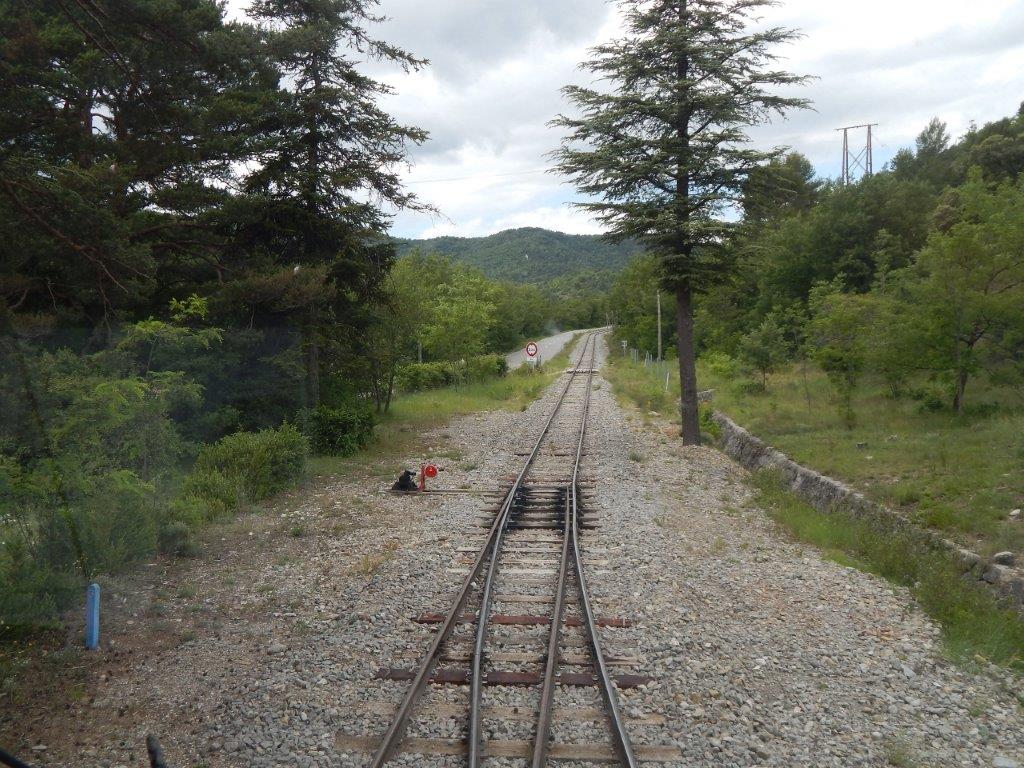
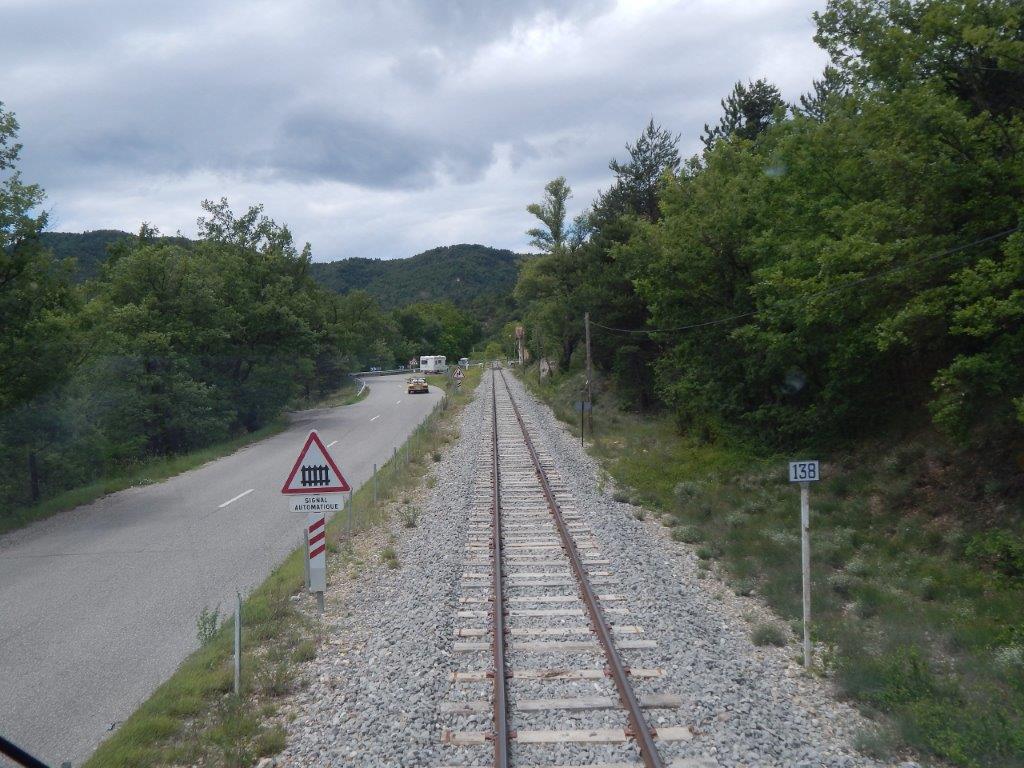
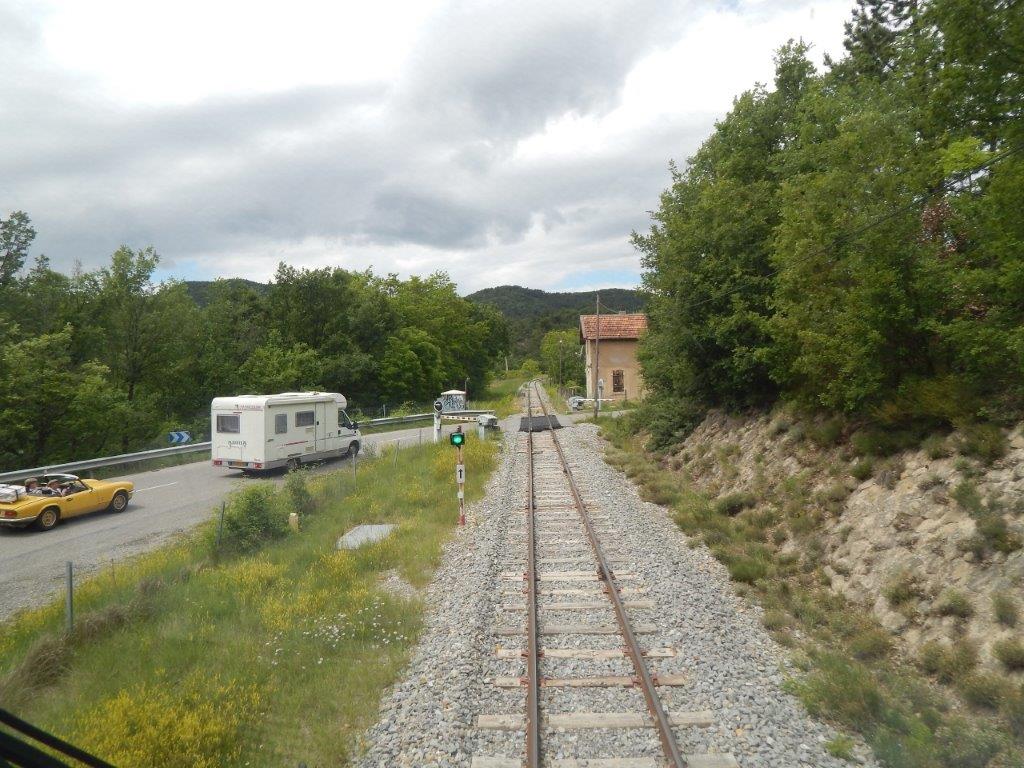
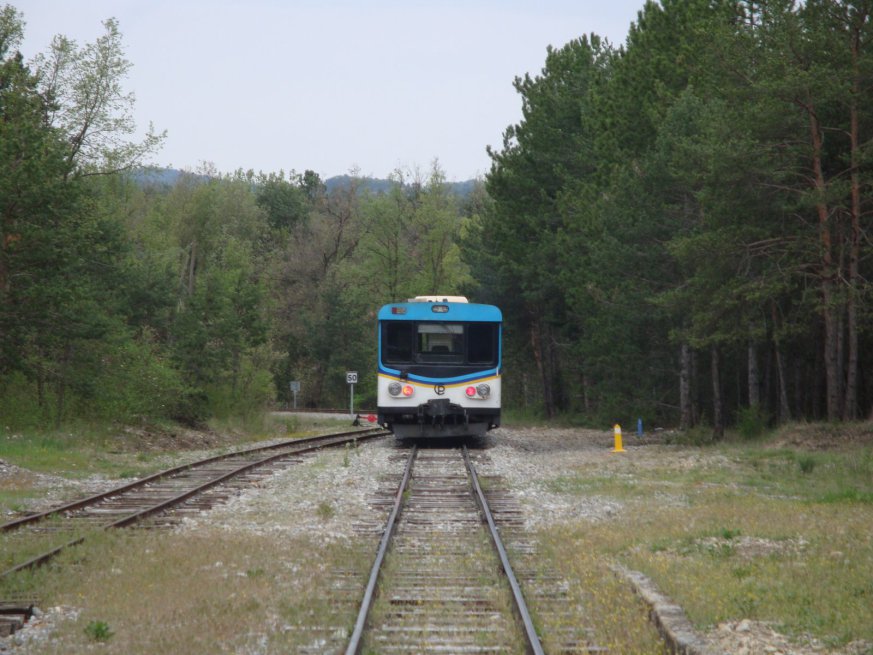
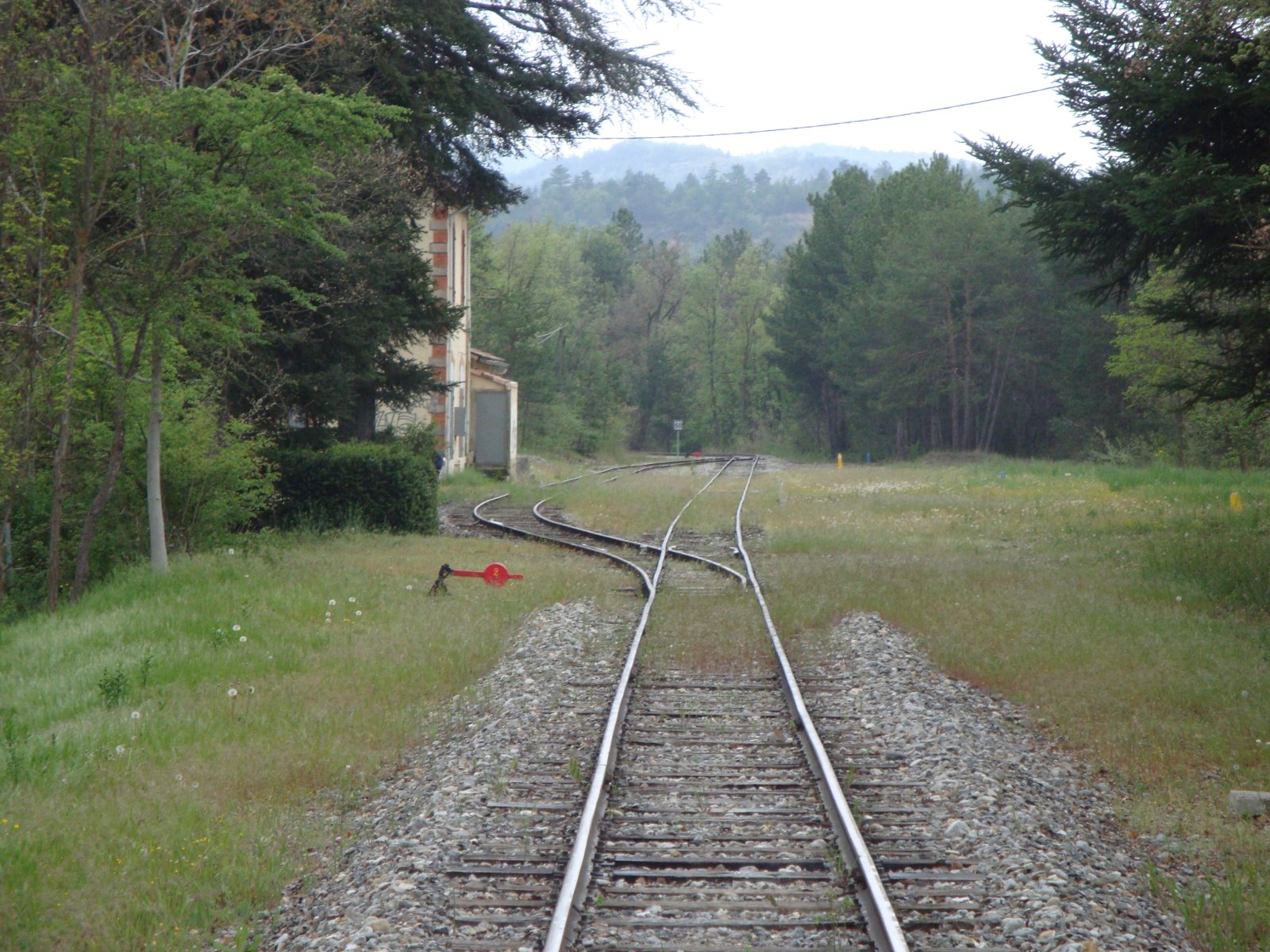
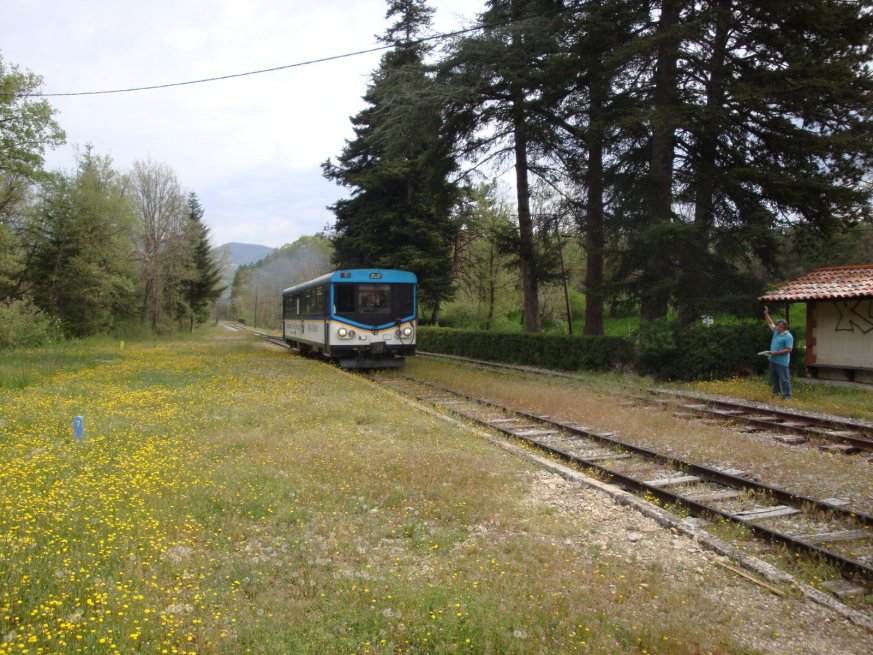
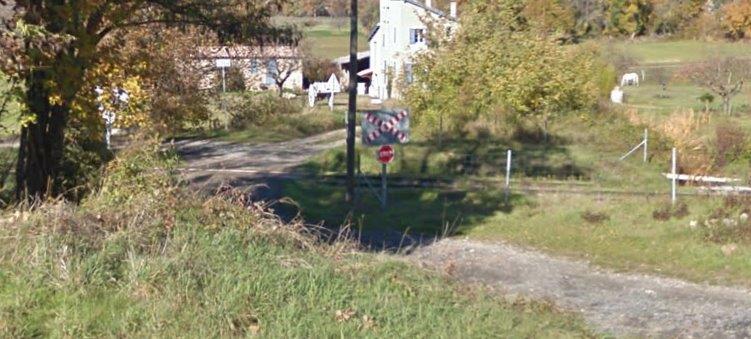
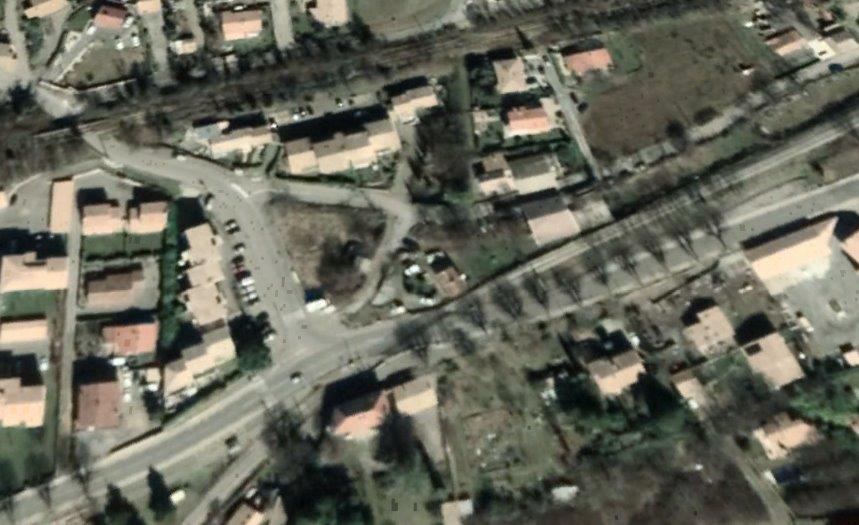
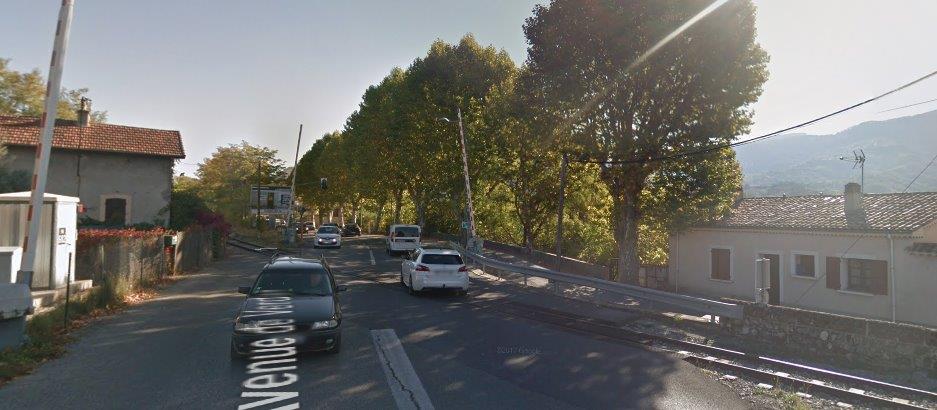
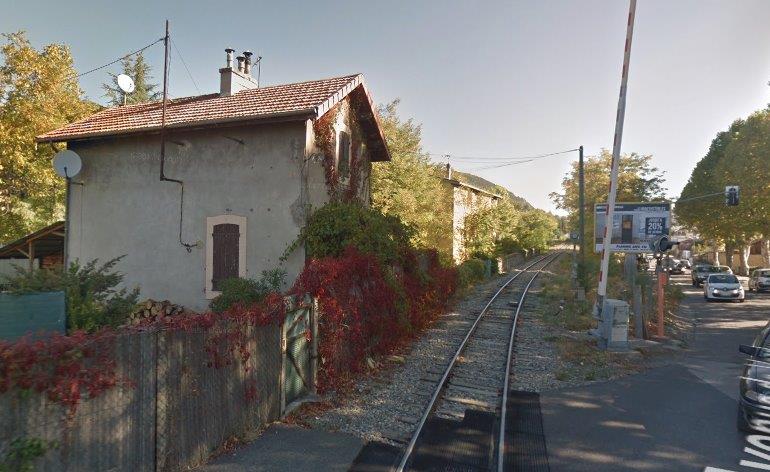
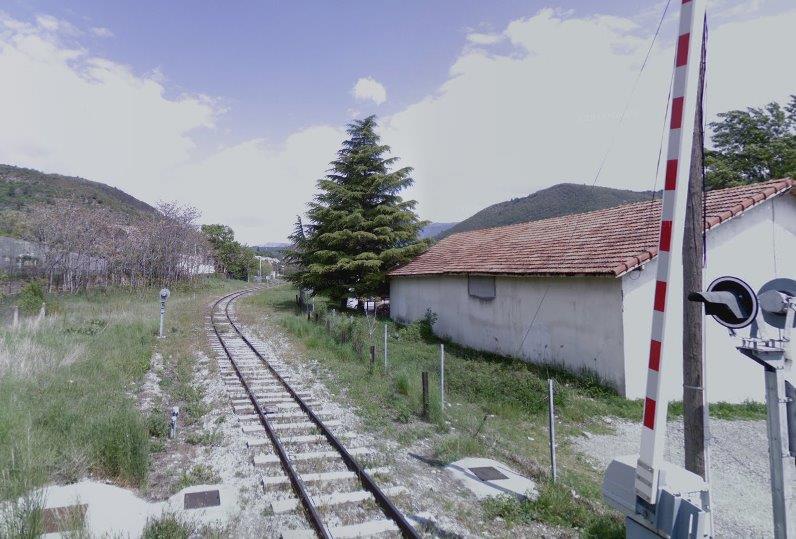
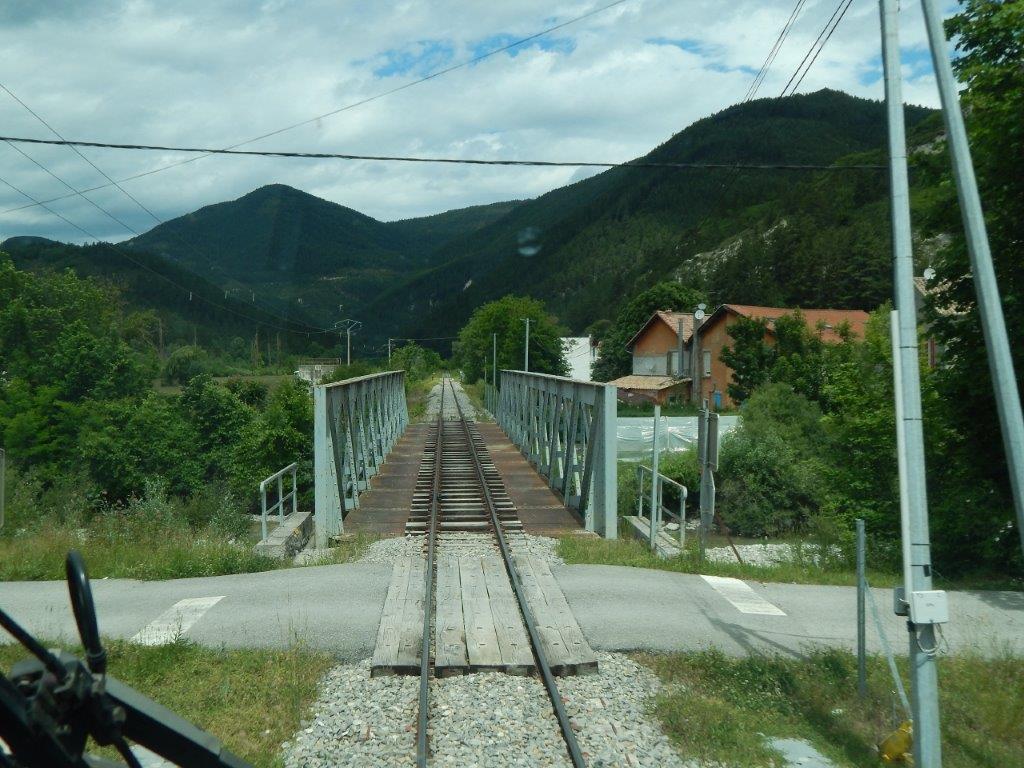
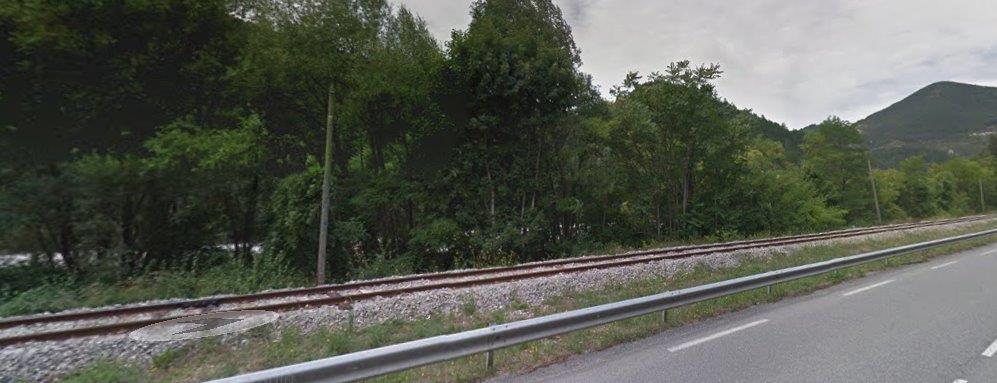
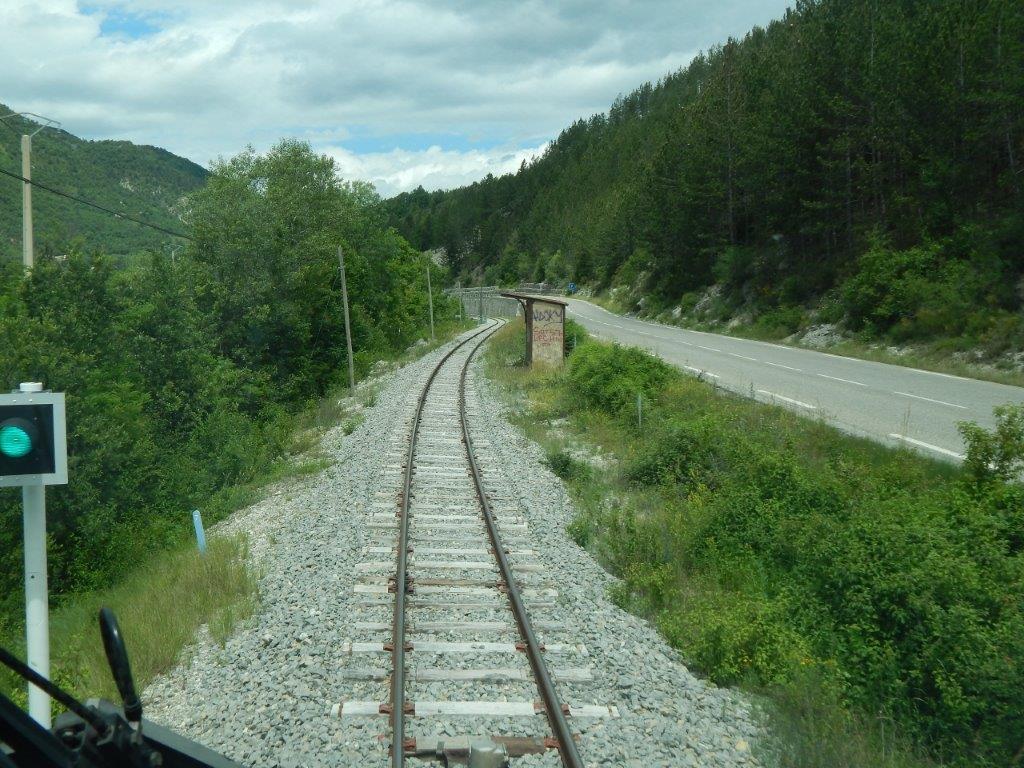
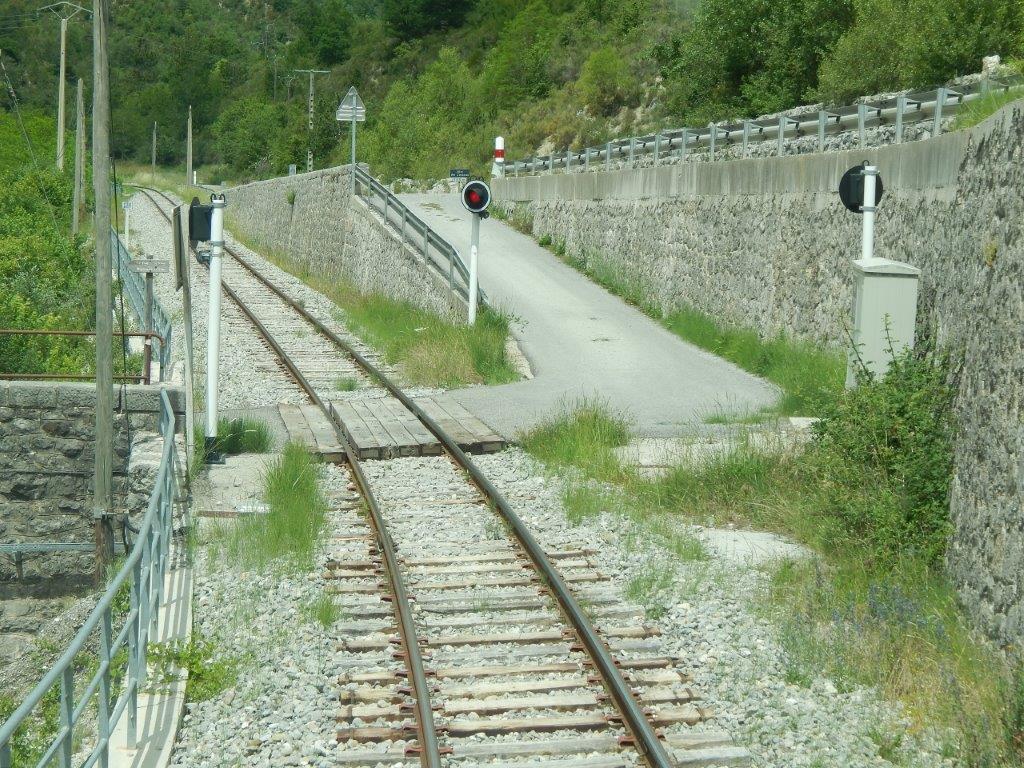
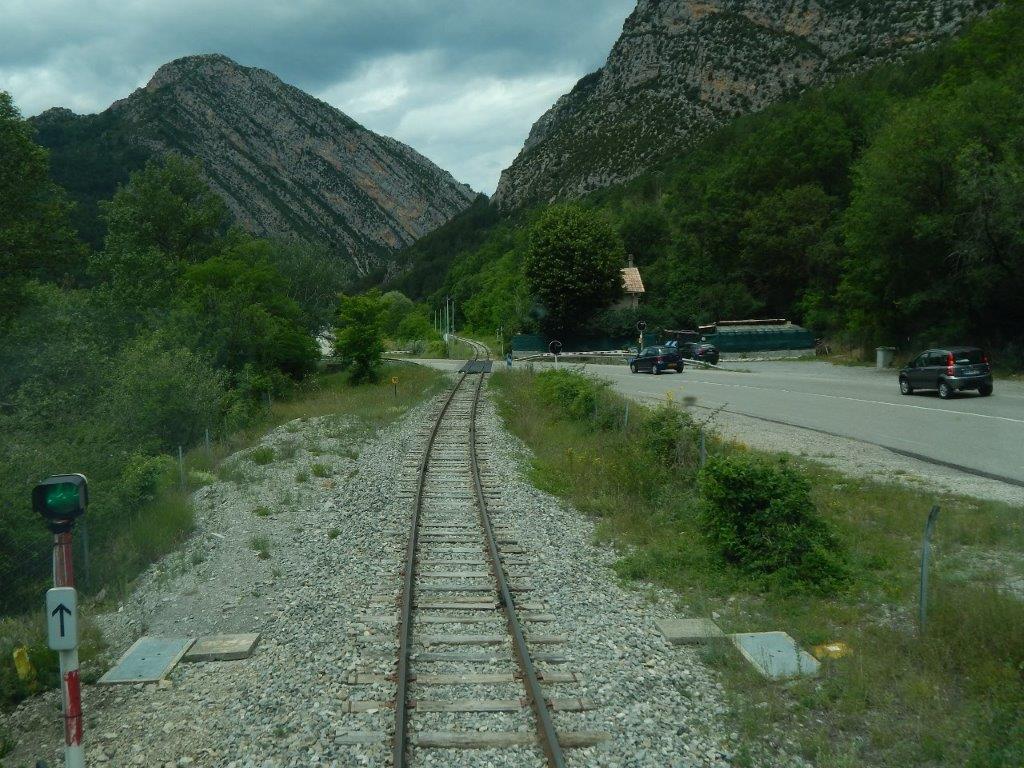
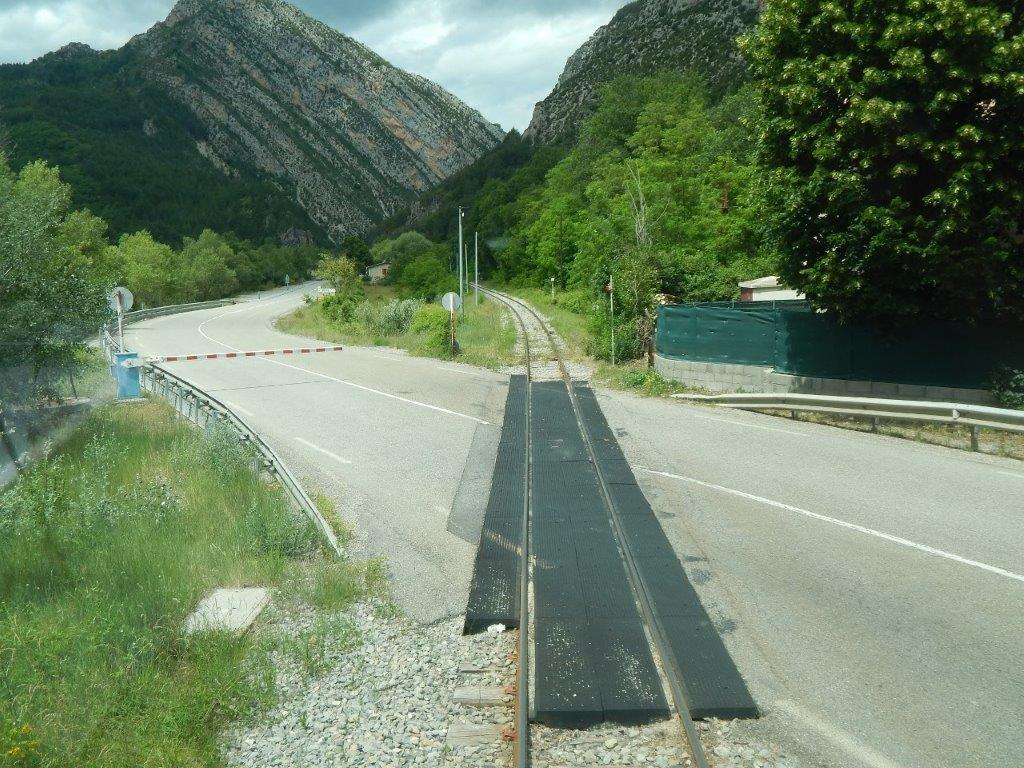
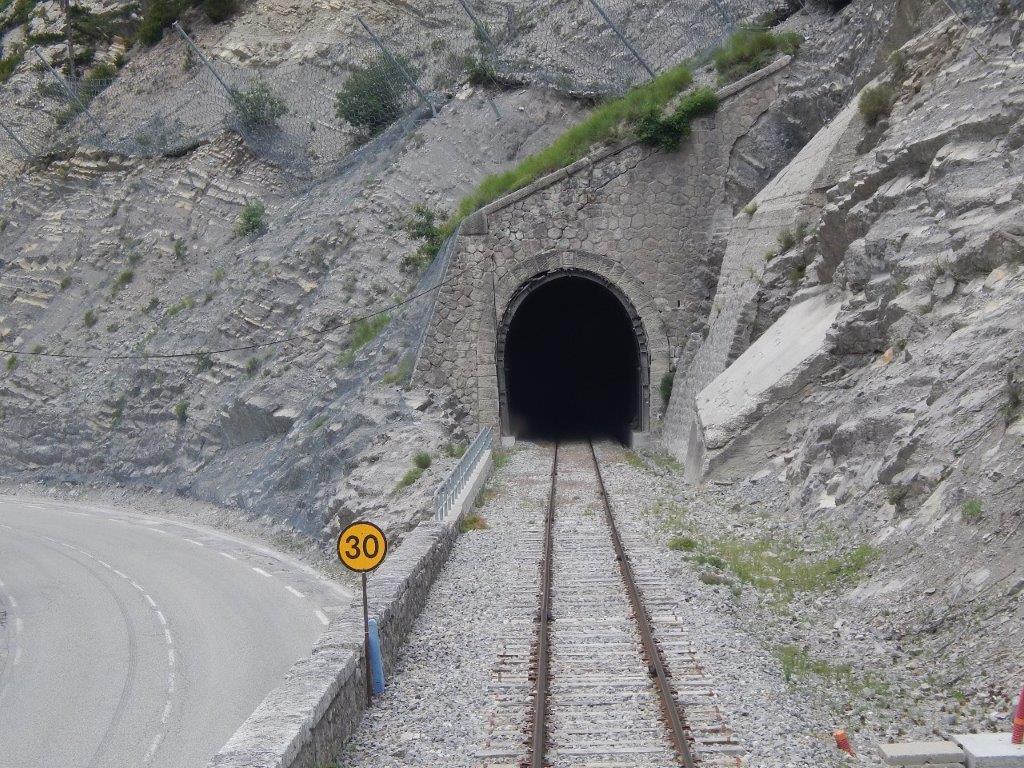
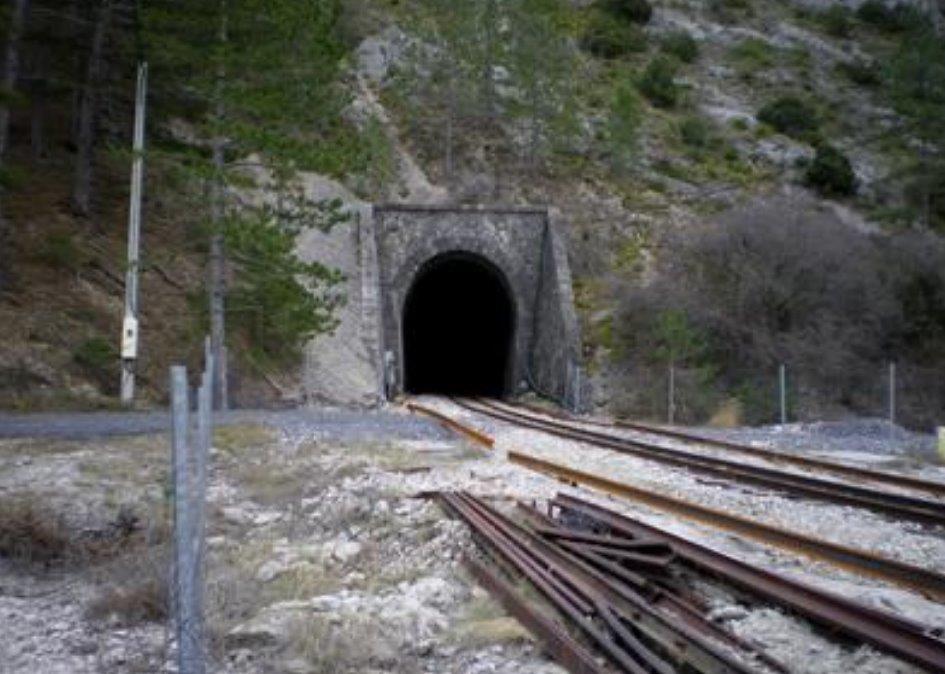
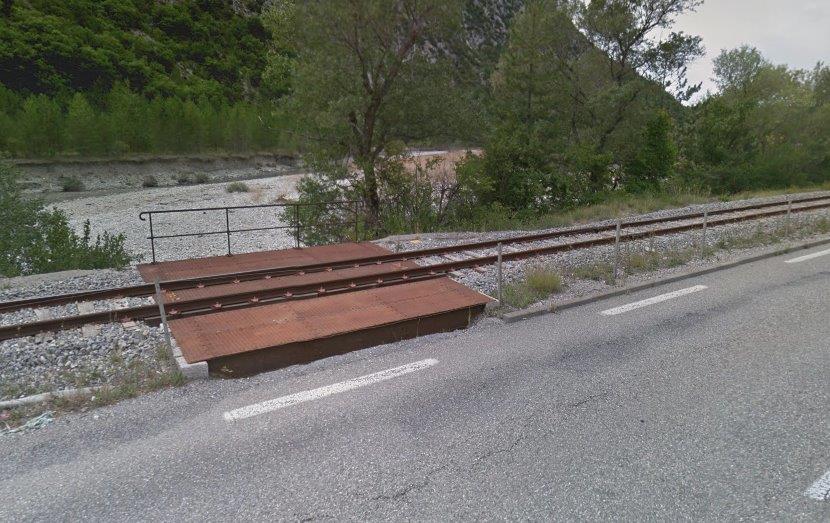
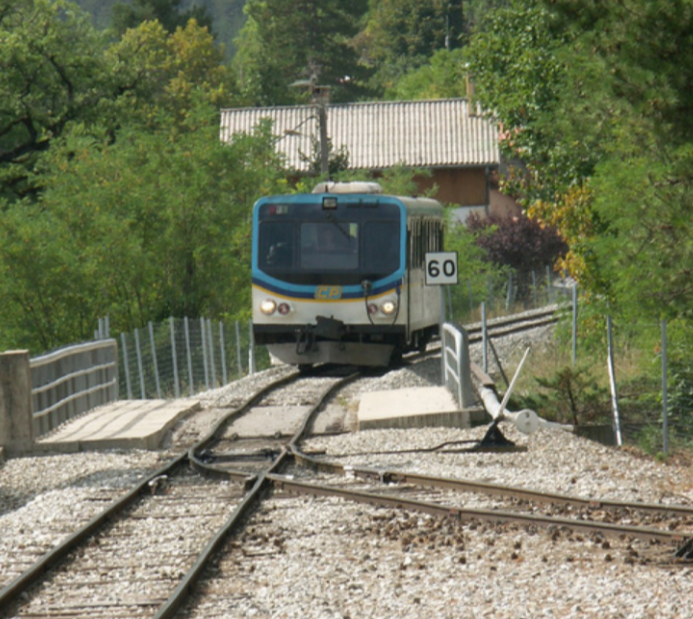
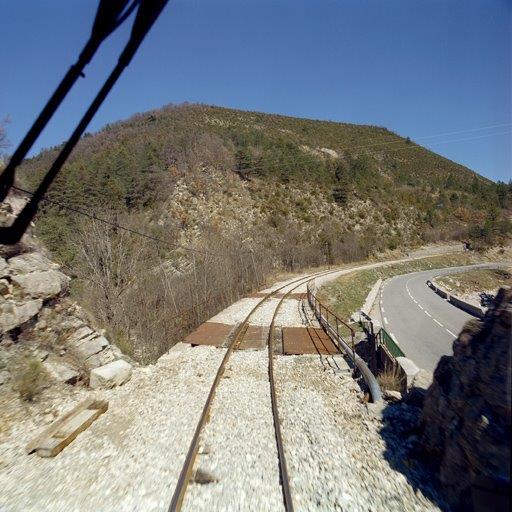
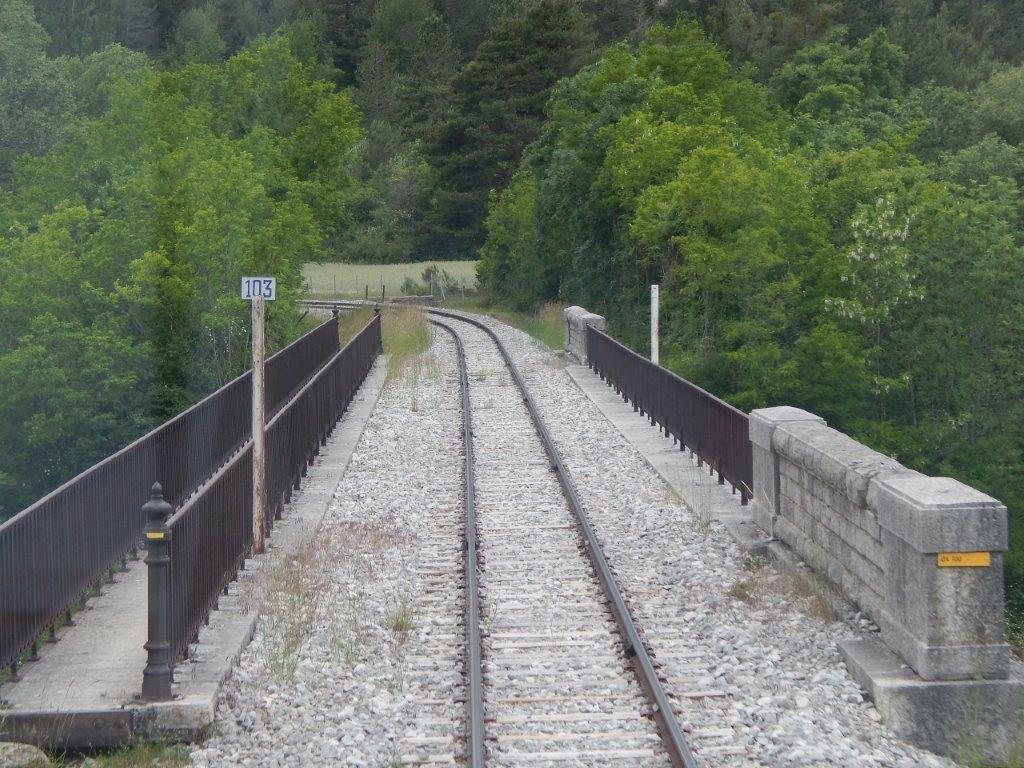
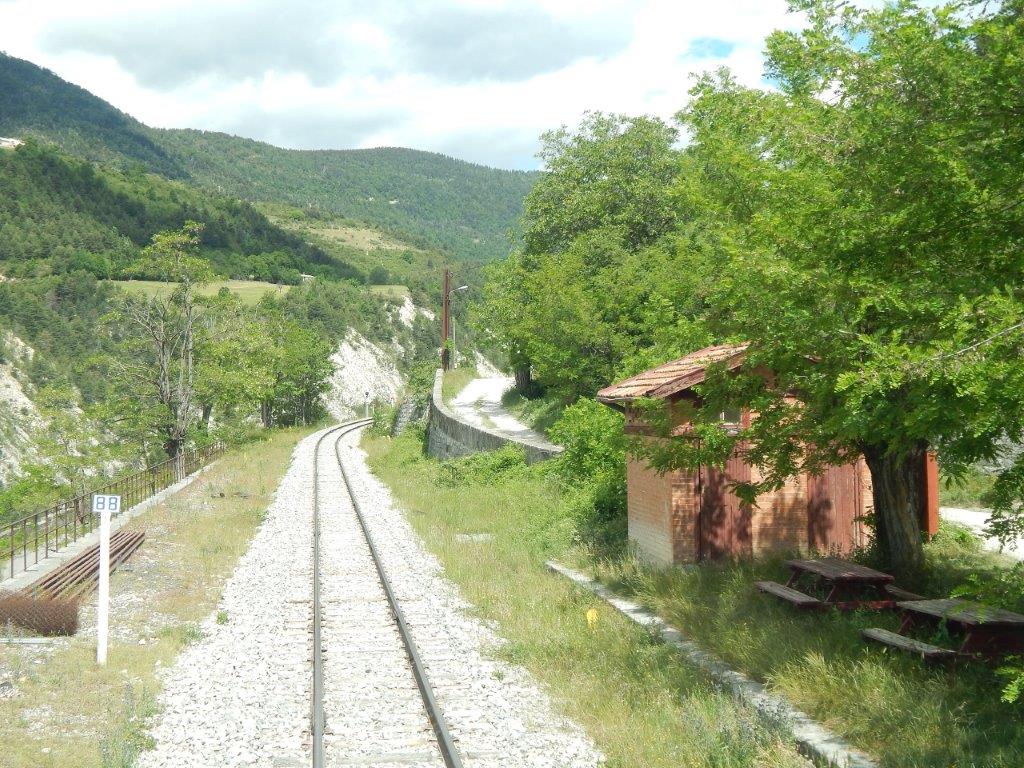
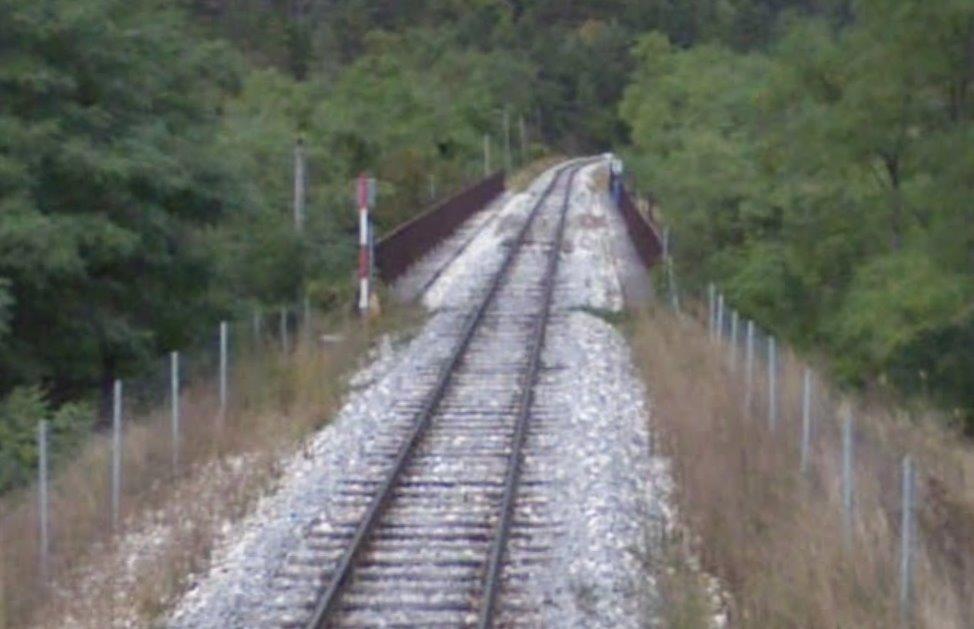
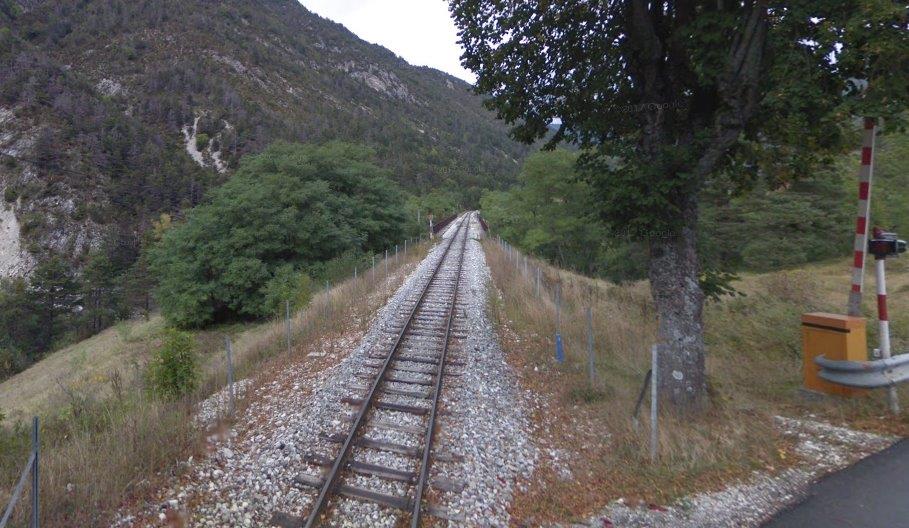
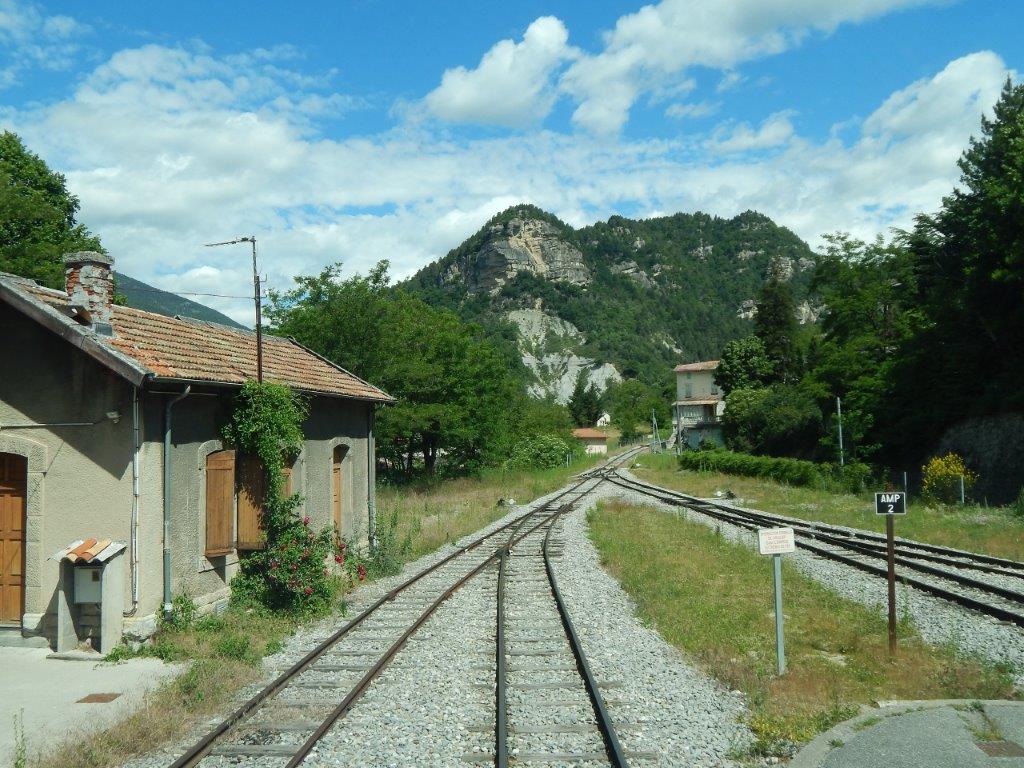
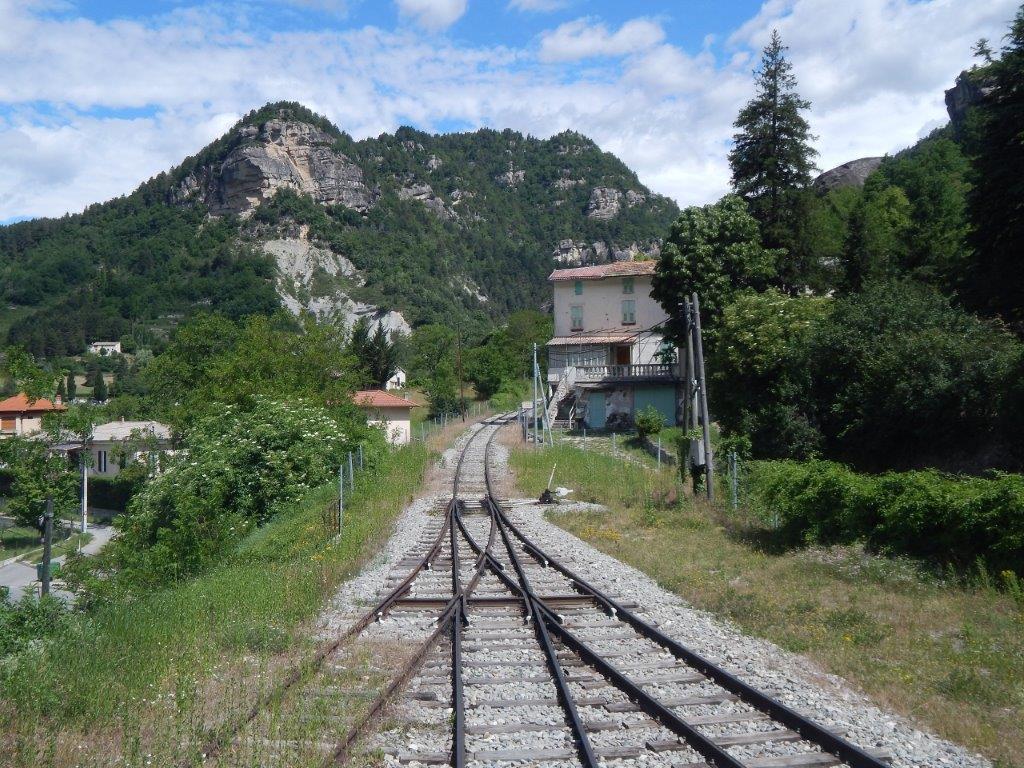
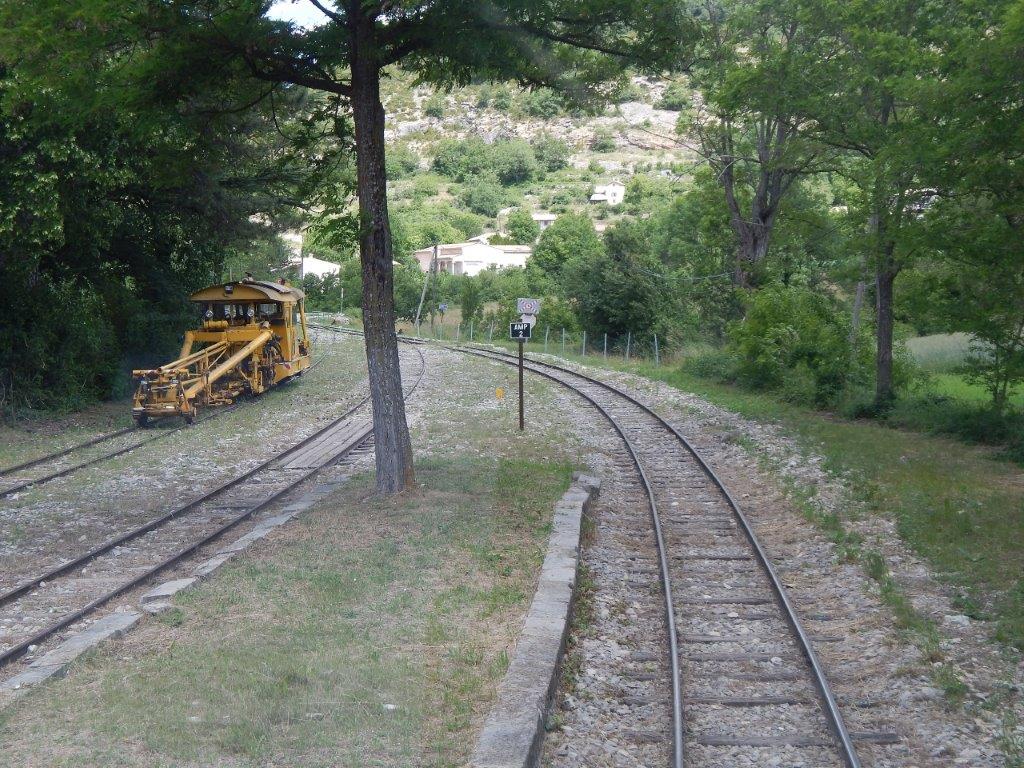
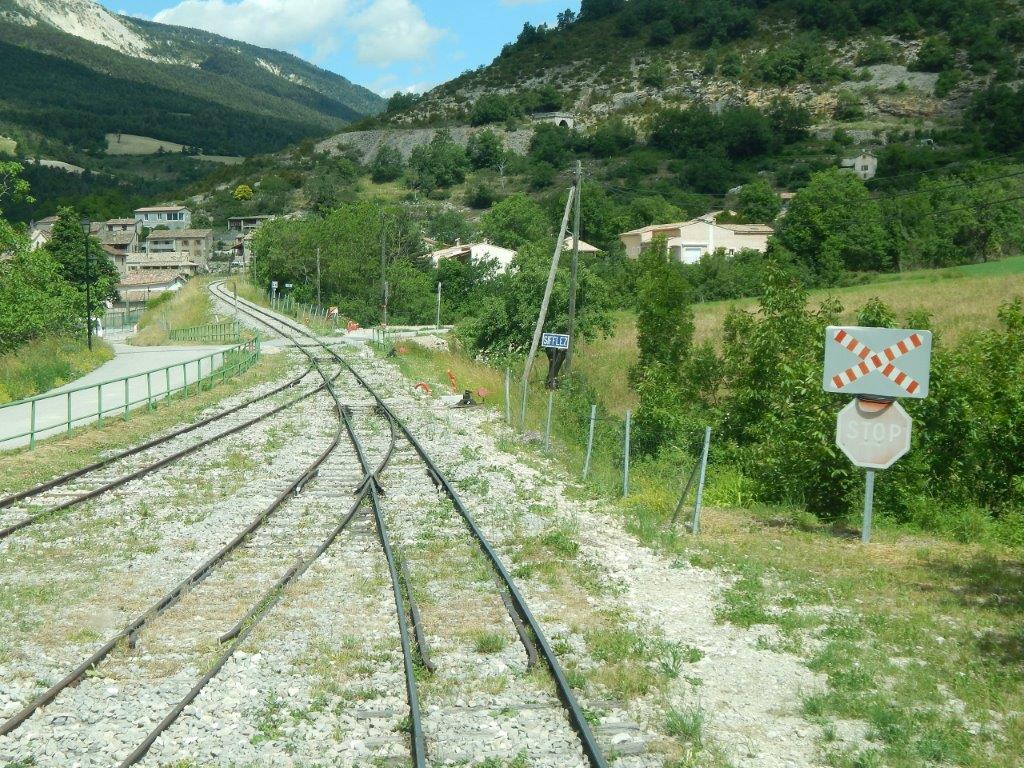
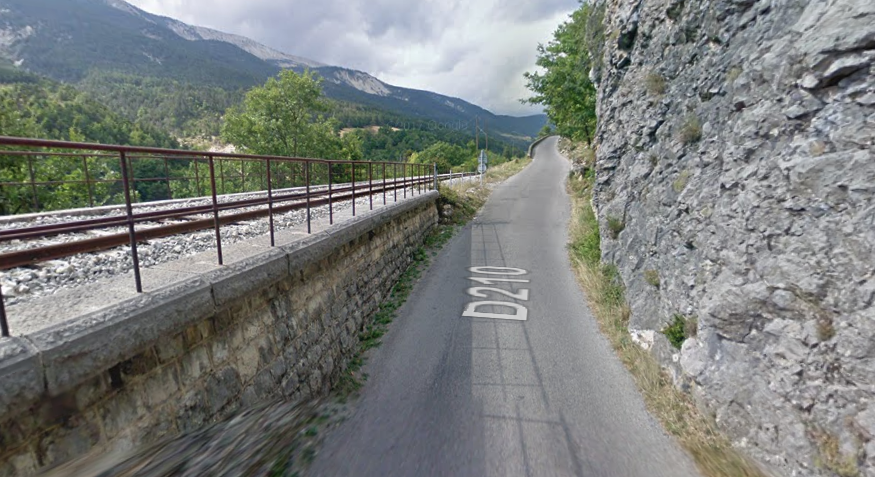
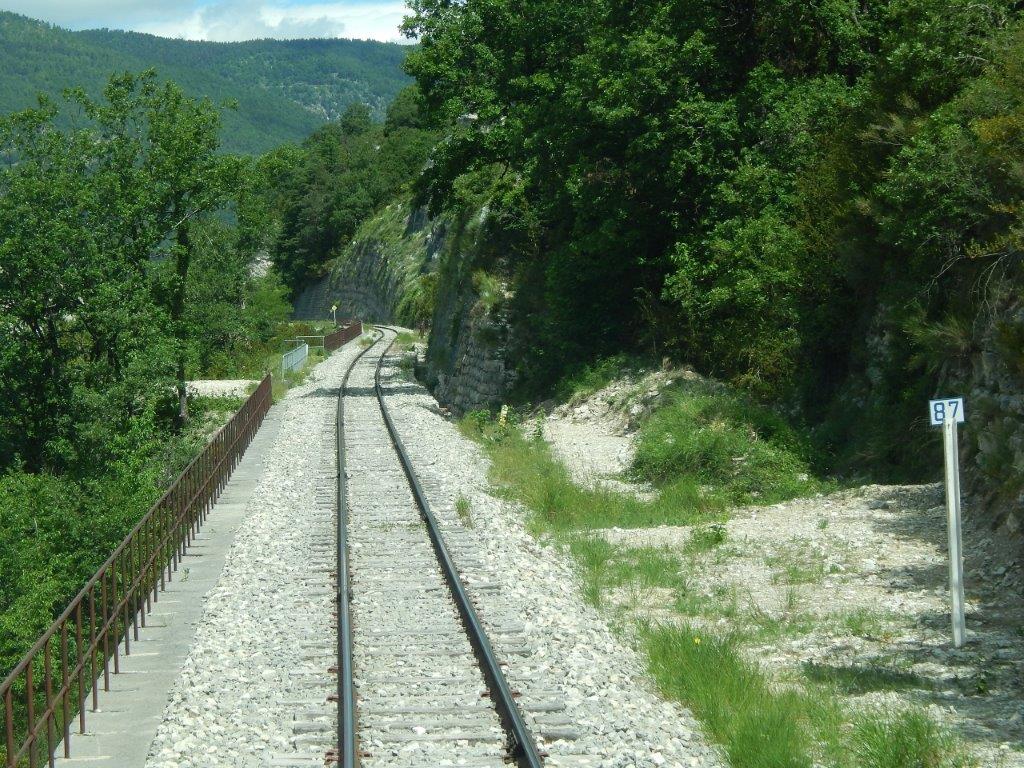
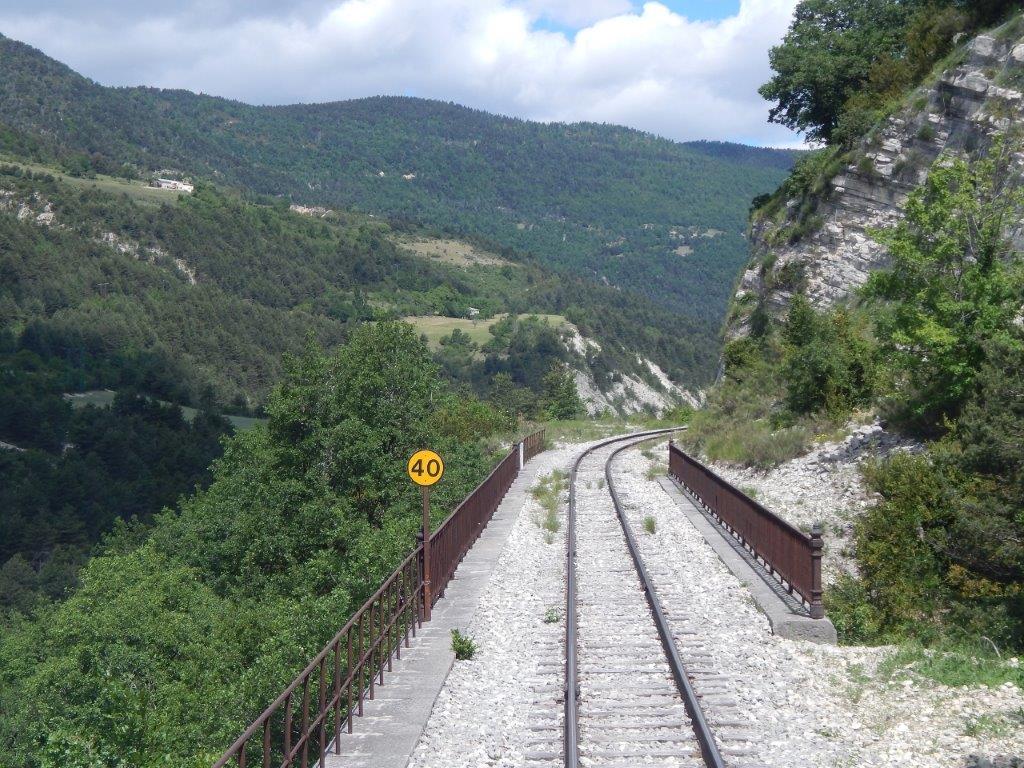
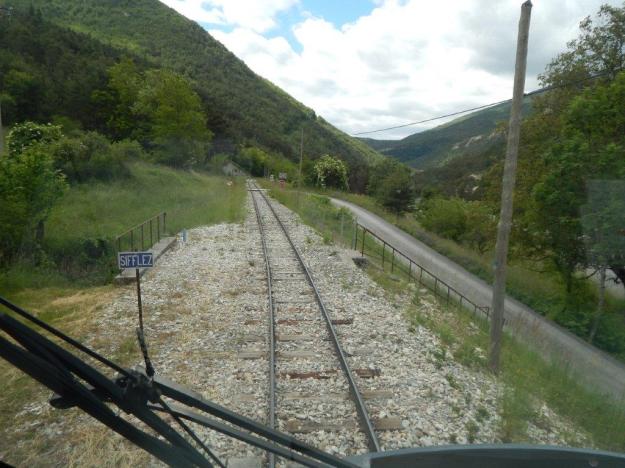
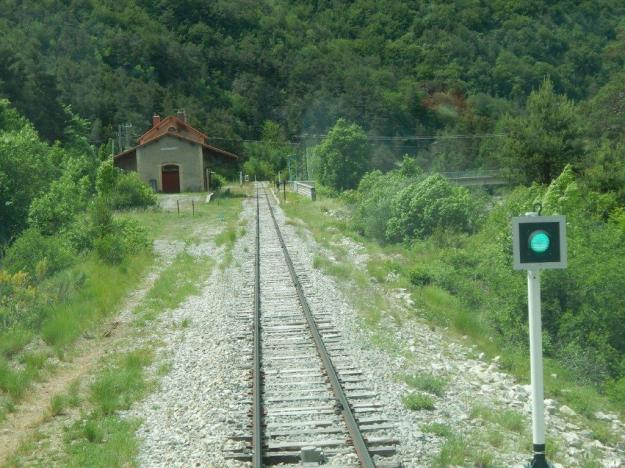
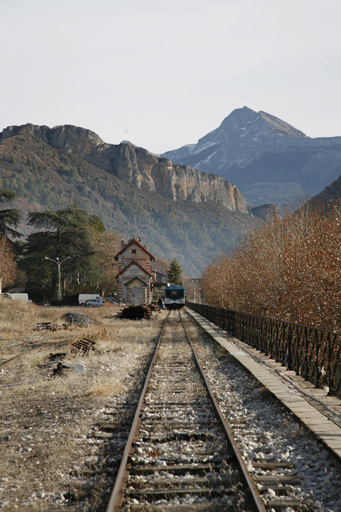
We set off from the station, initially in a westerly direction and the line runs on the north side of the ‘D17’ which can be seen to the left of the line in the first image below.Just under a kilometre from the station, the ‘D17’ crosses the line by means of a level crossing. The two images above are taken from the cab of an autorail approaching the level crossing. [2]

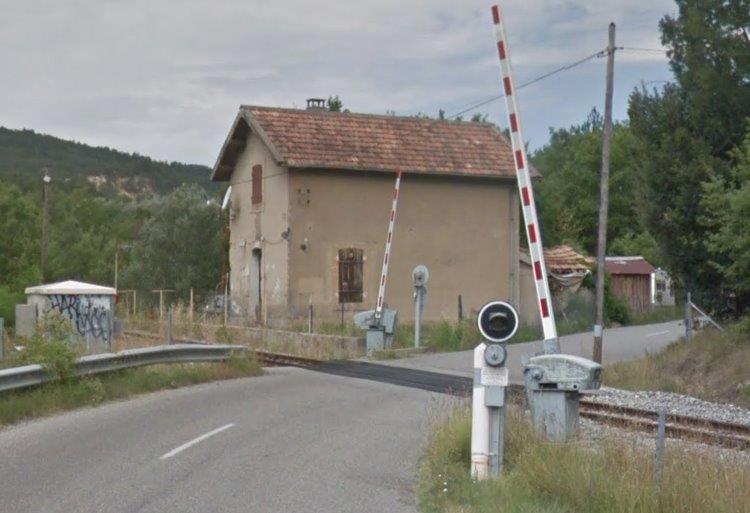
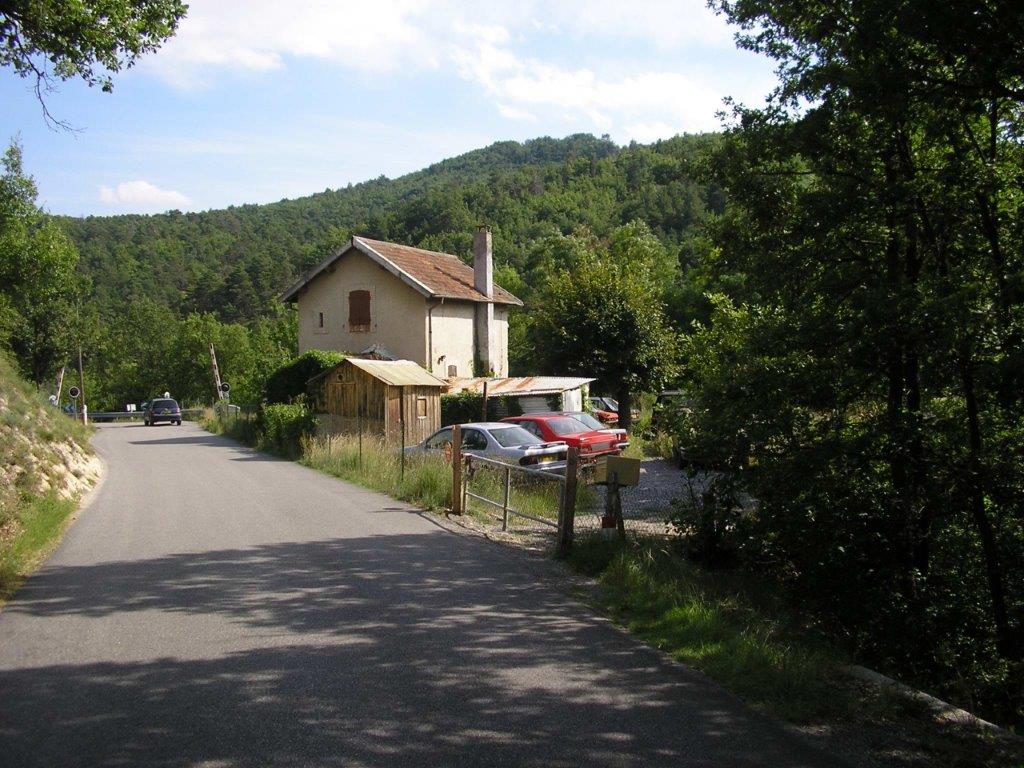
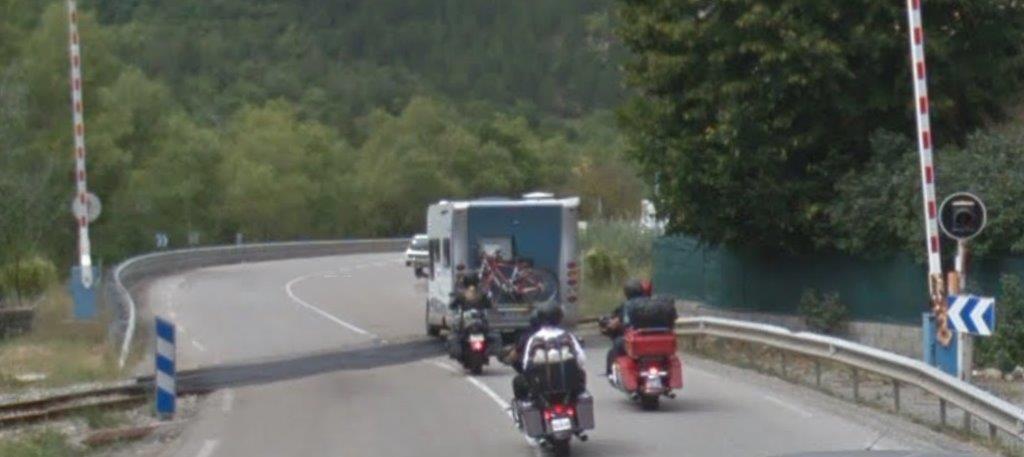
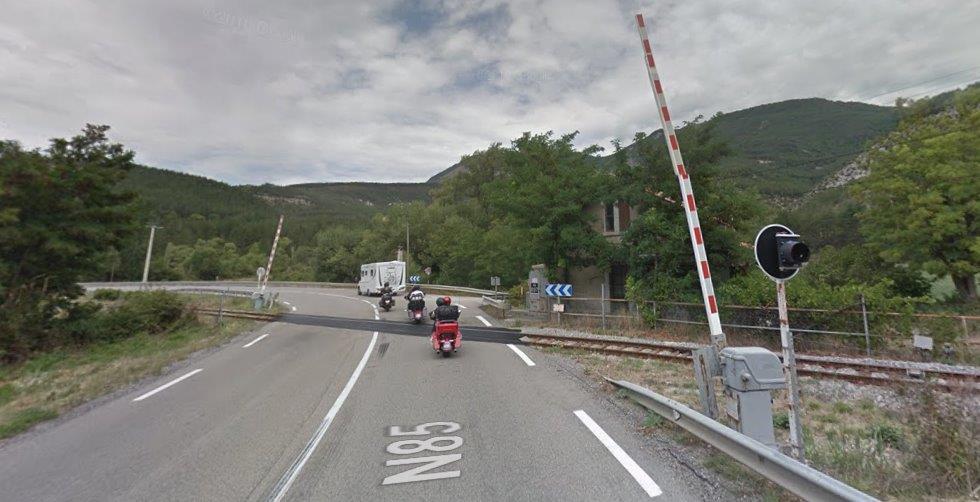
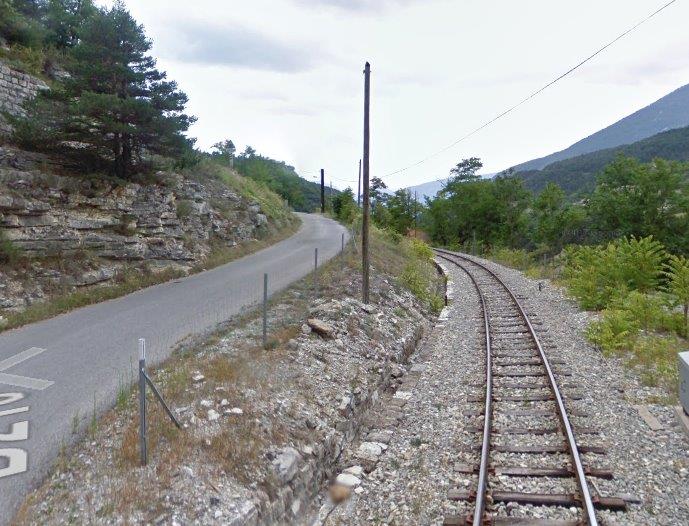
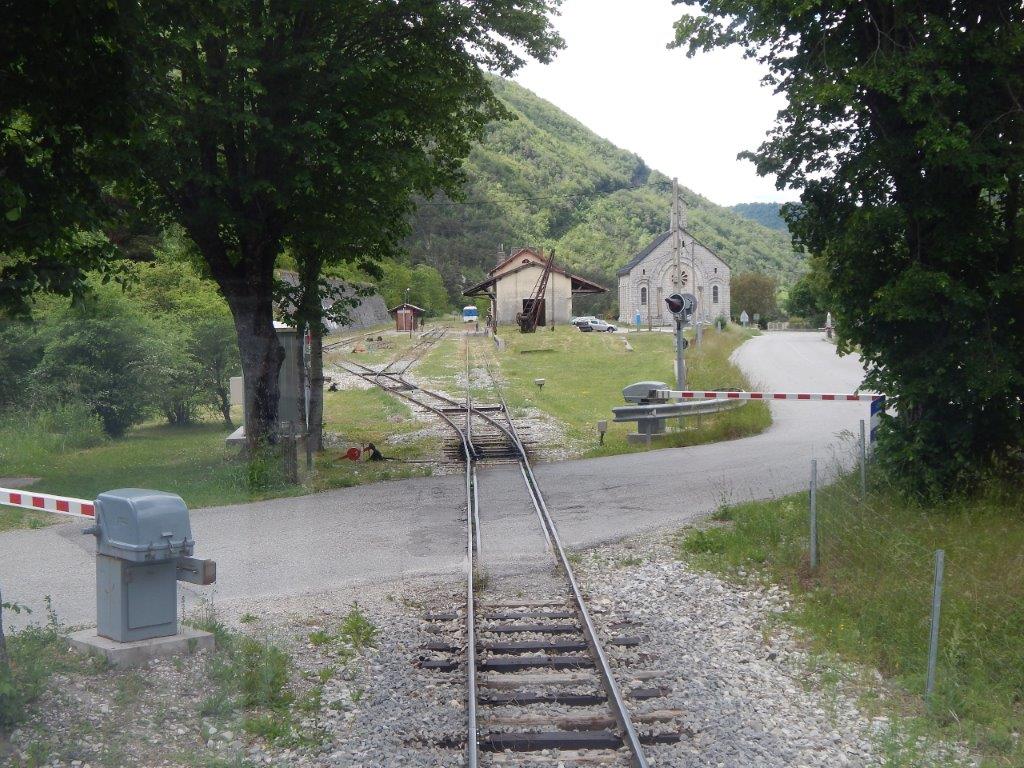
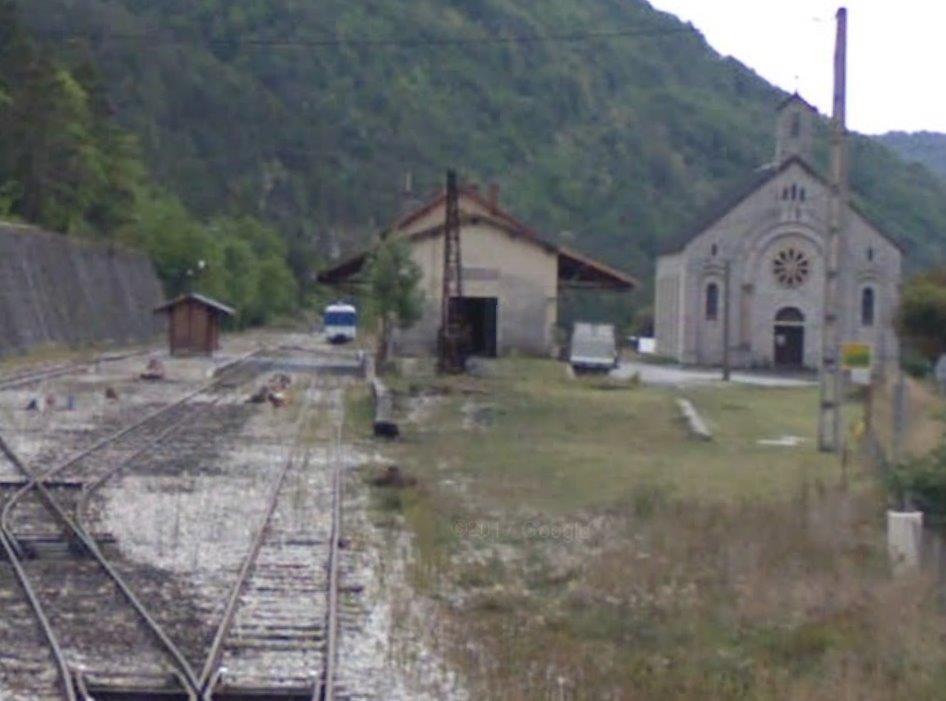
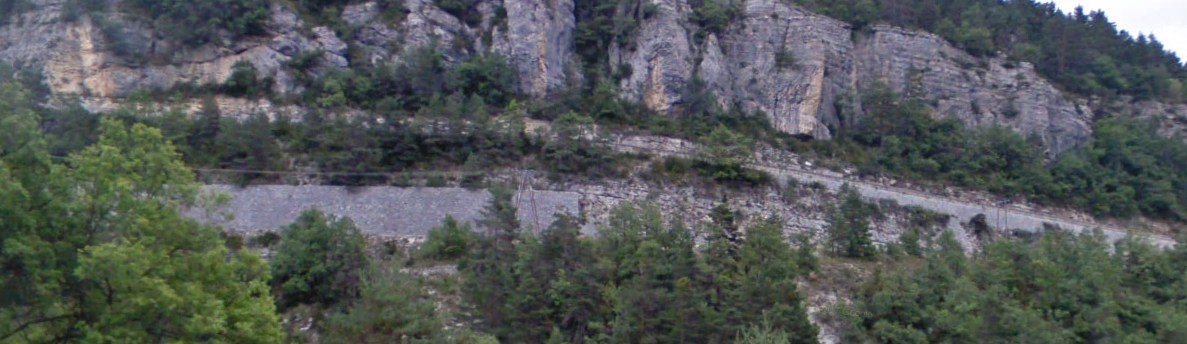
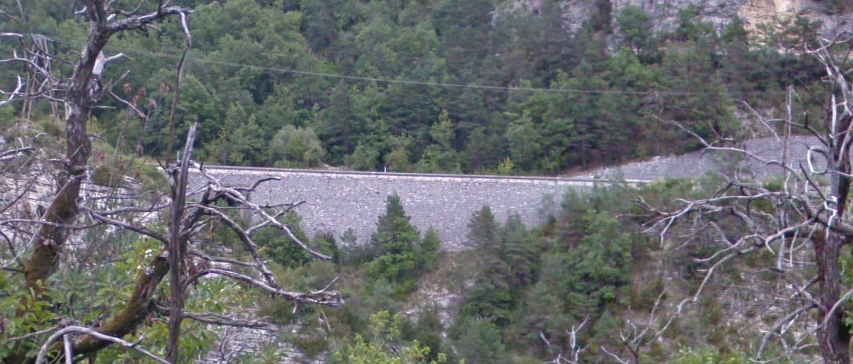
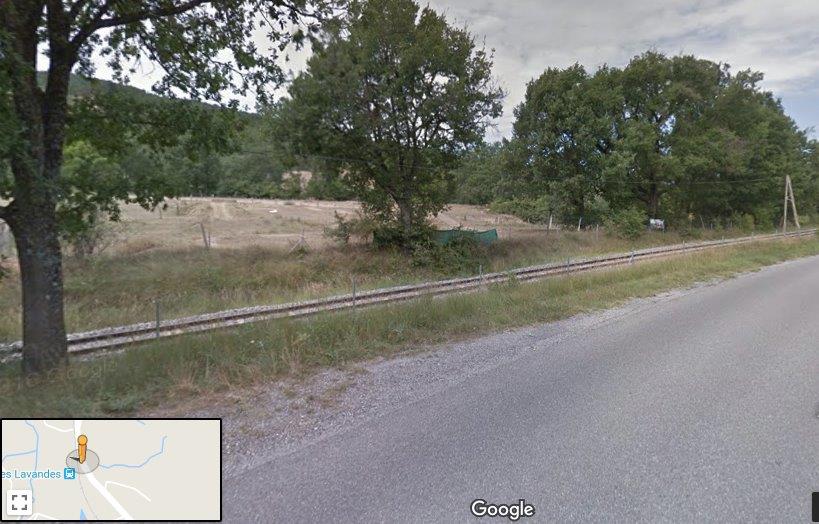
The two views below come from Google Streetview. The first is taken of the crossing looking northwest, the second is taken looking back to the Southeast.The crossing keeper’s cottage remains!

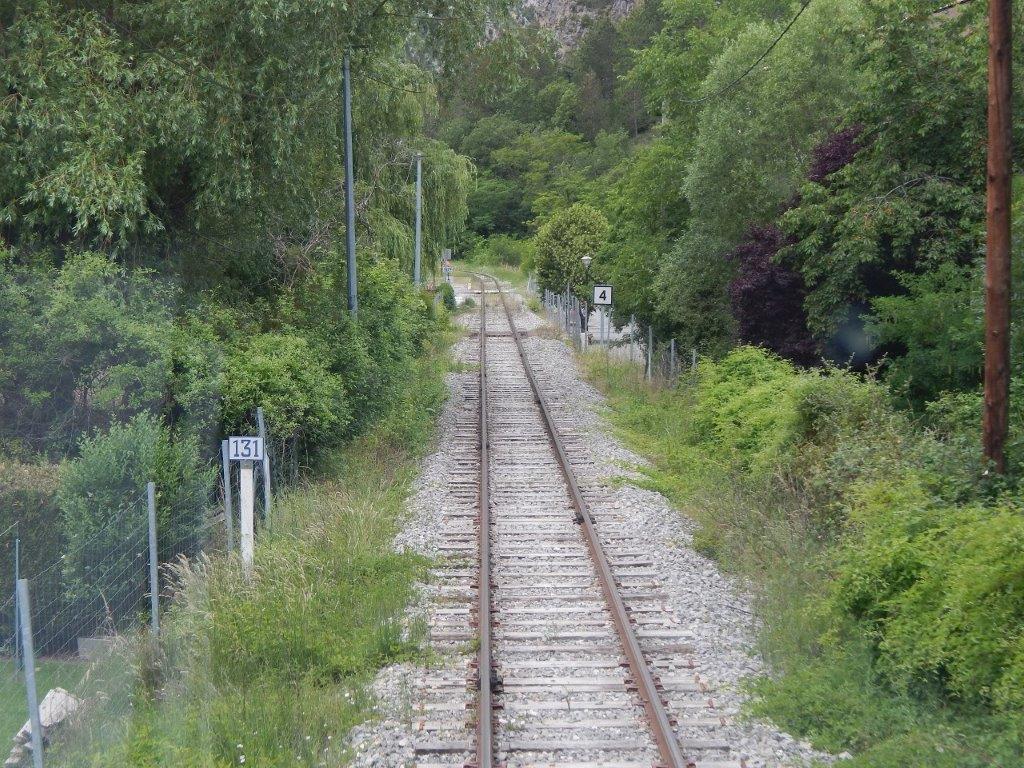
The road continues to follow the railway but now on its northeast side. They are immediately adjacent to one another once again by the time the railway reaches l’Arrêt des Lavandes.

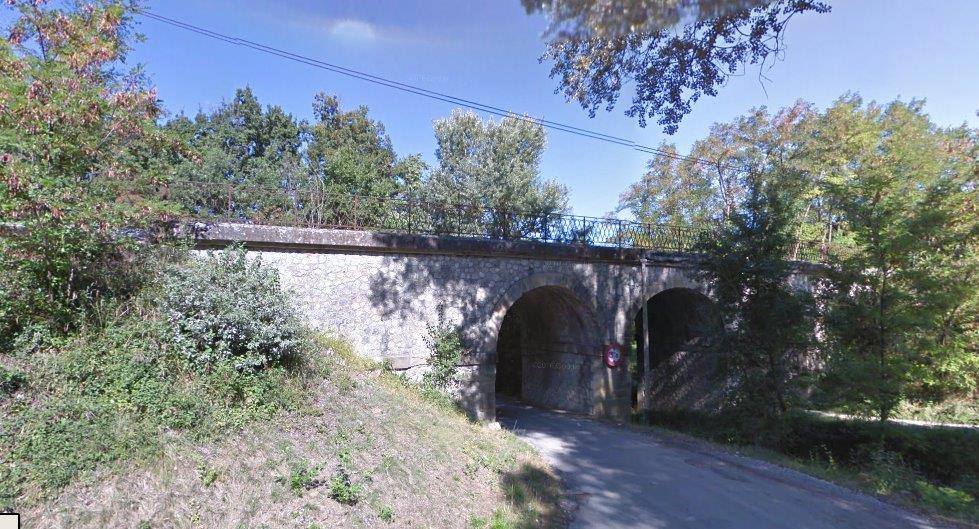
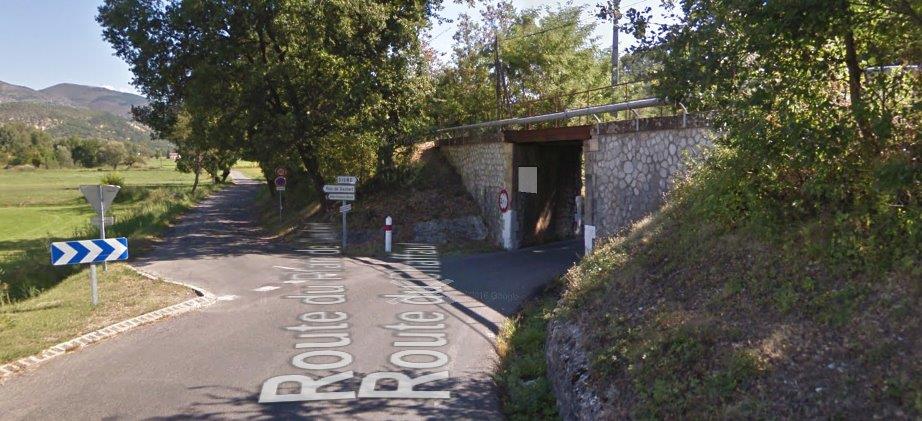
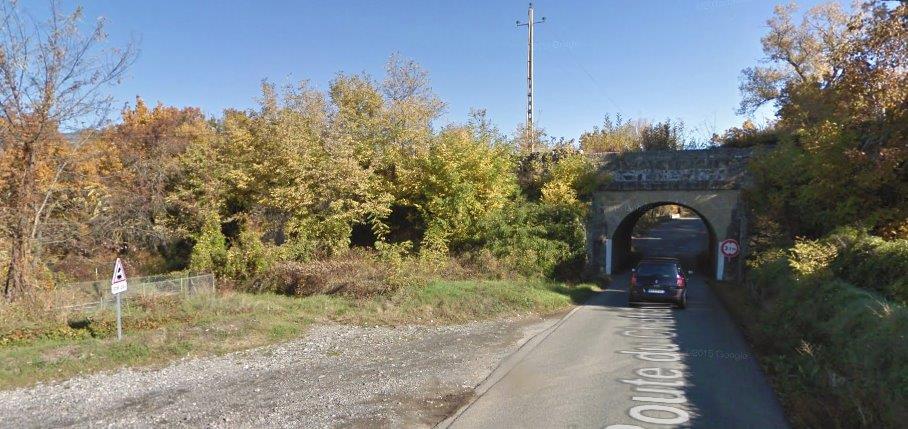
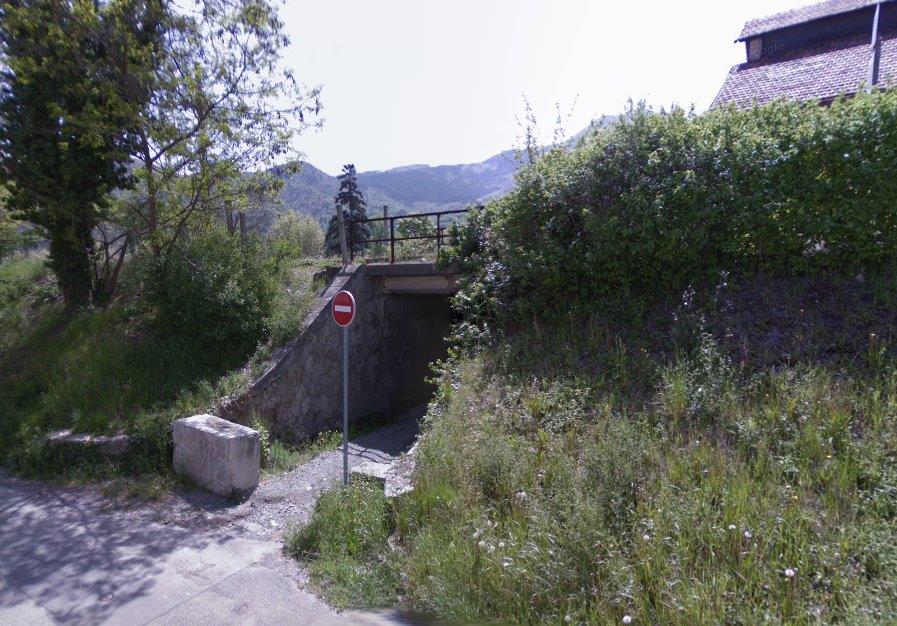
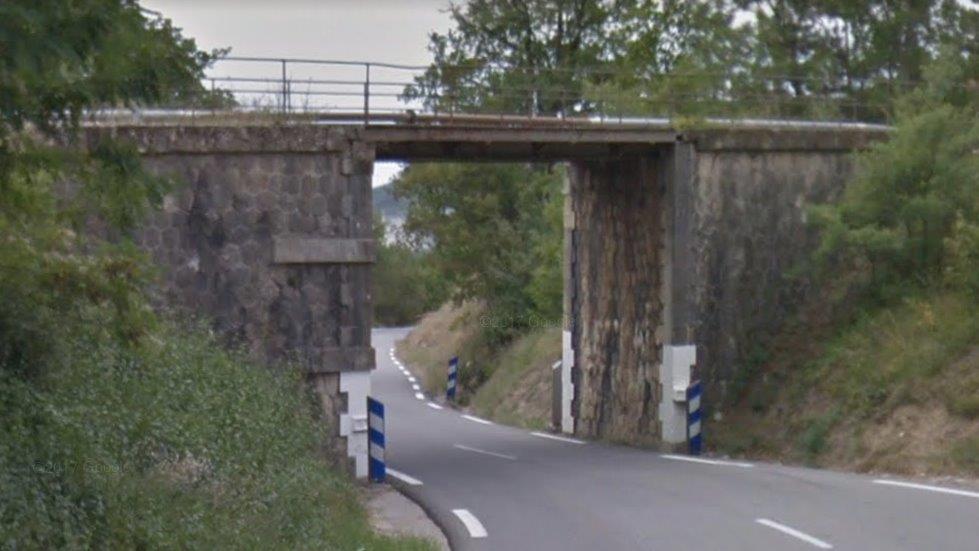
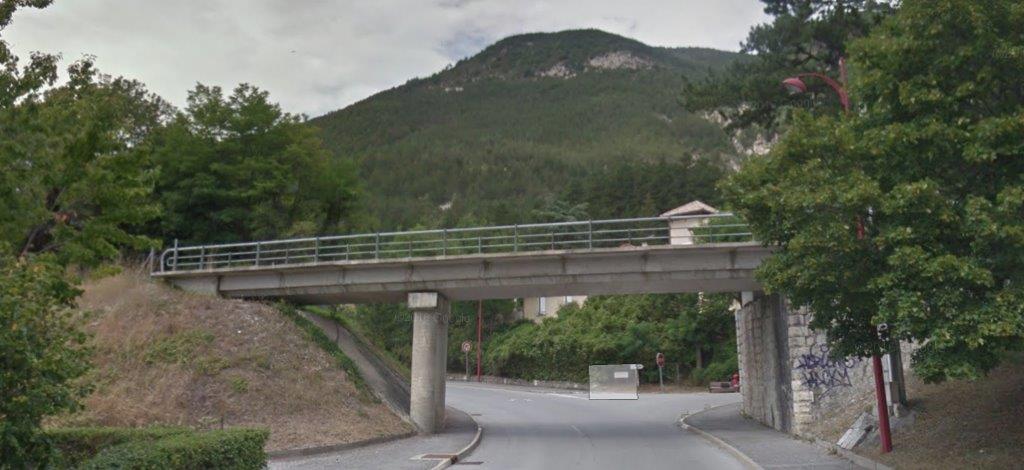
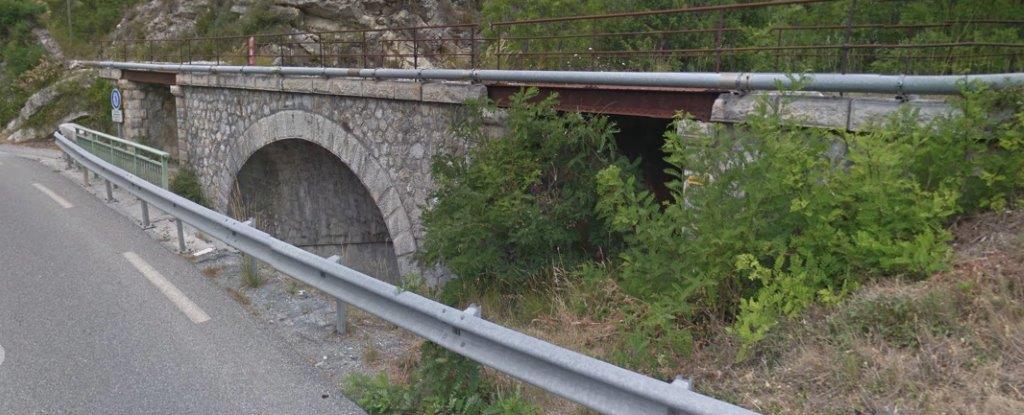
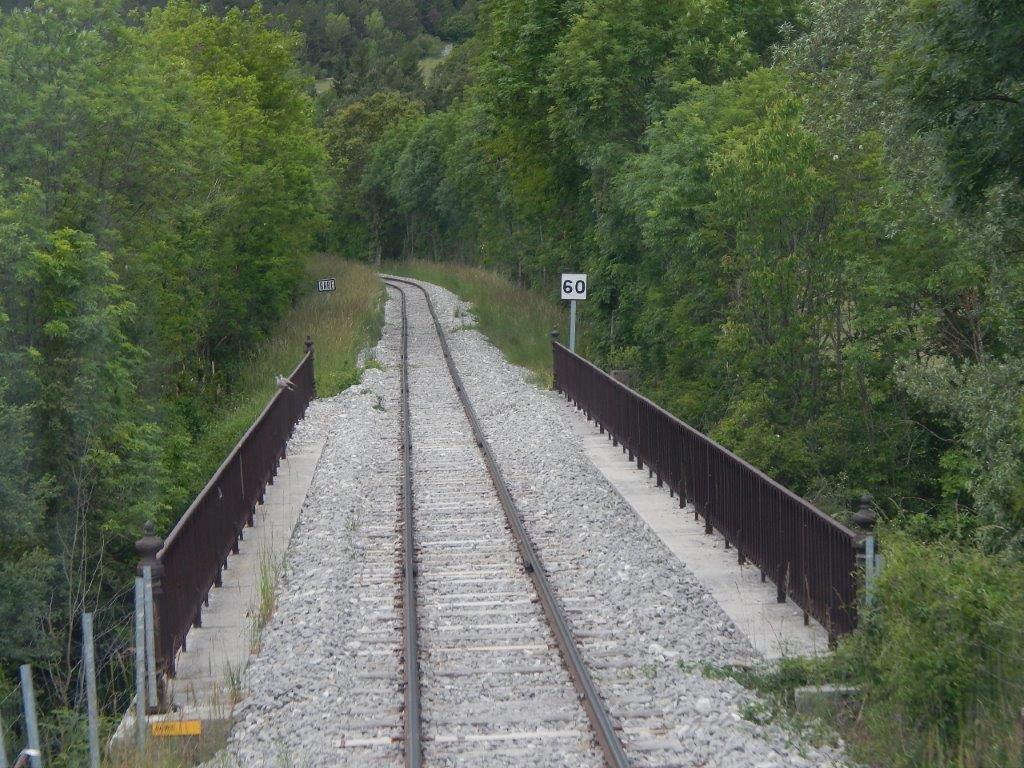
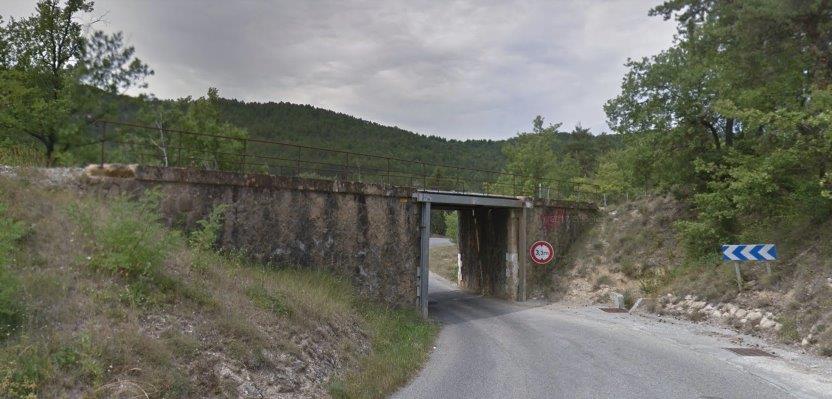
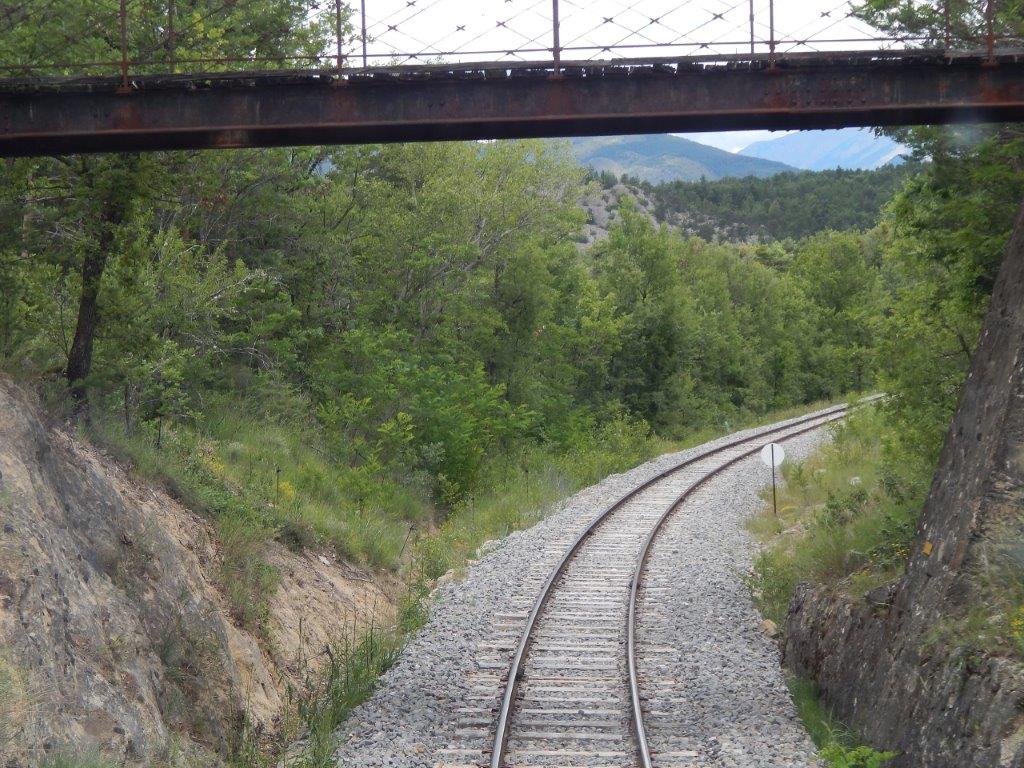
Road and rail remain close for a further kilometre or so before the road turns sharply under the railway through a low single lane bridge. Immediately after the bridge (below) the railway turns through 90 degrees from a northwesterly trajectory to a northeasterly alignment and gradually pulls away from the ‘D17’.The railway curves away to the north. [2]

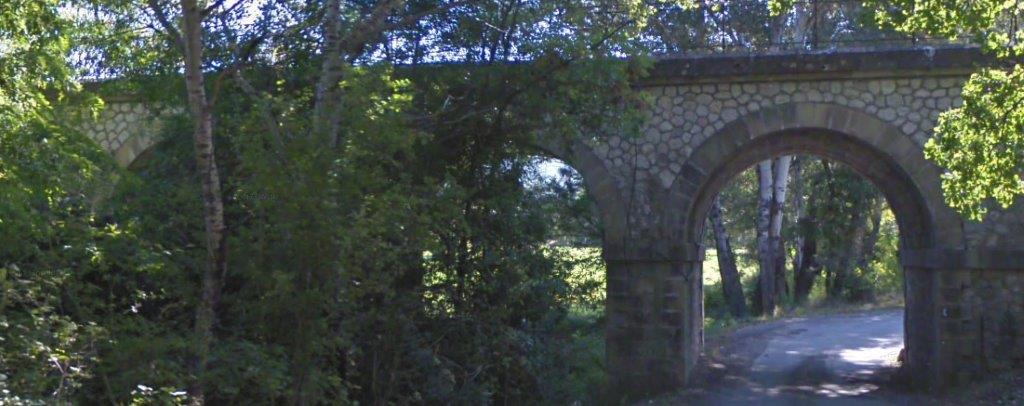
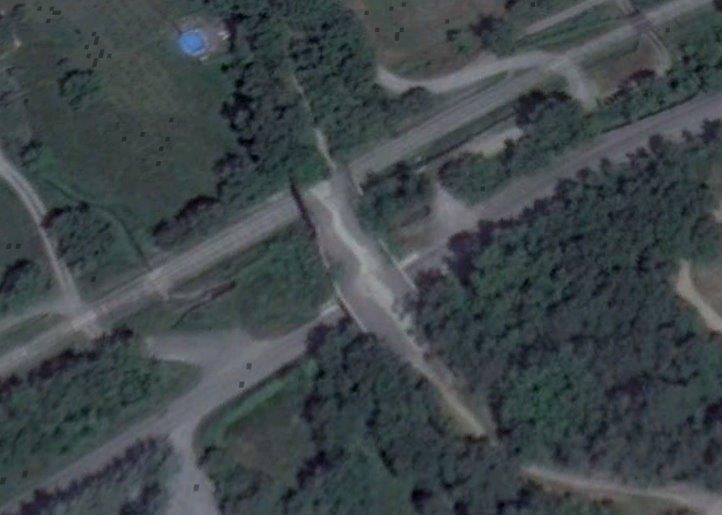
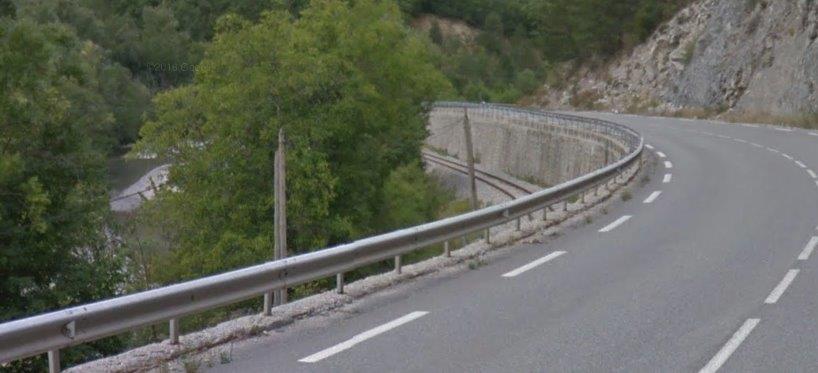
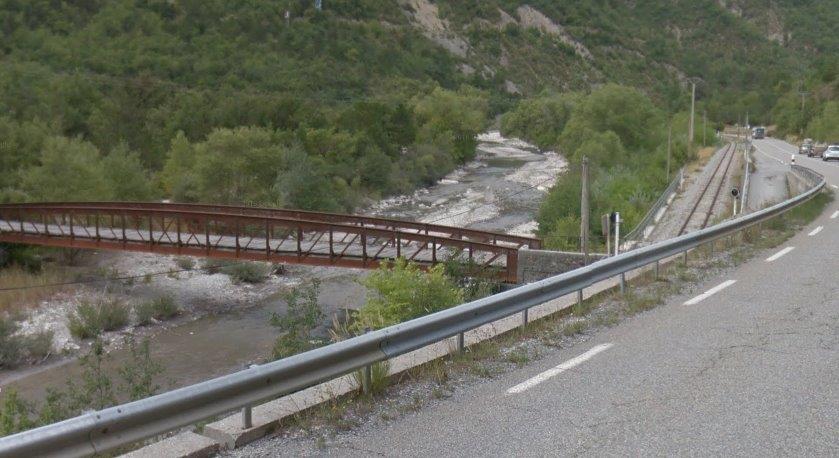
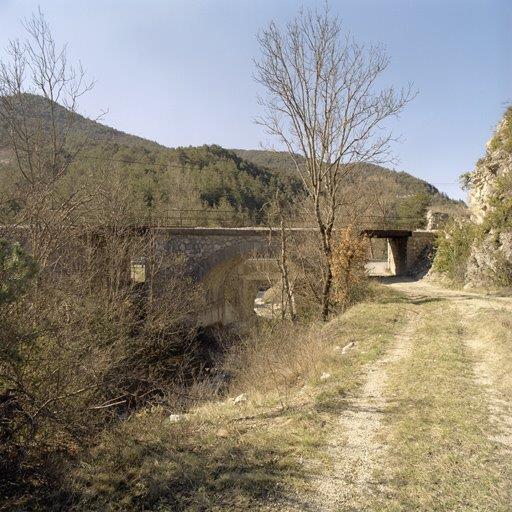
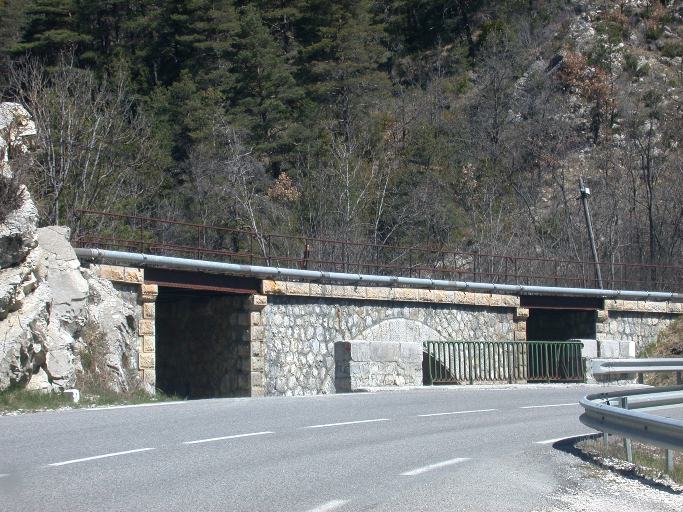
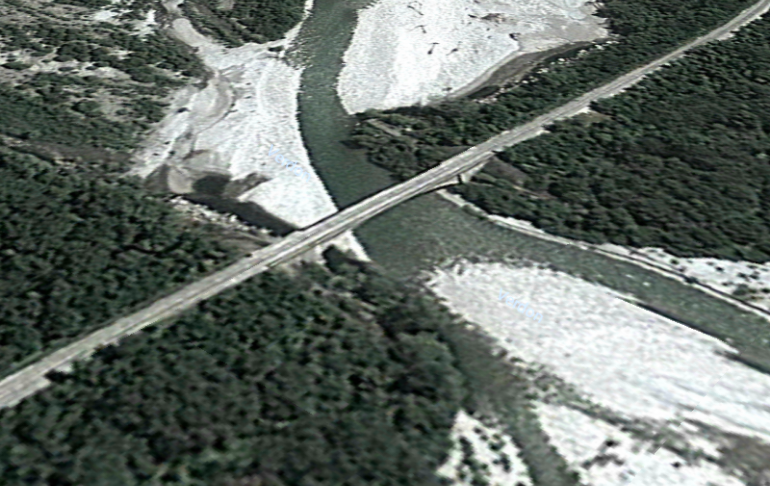
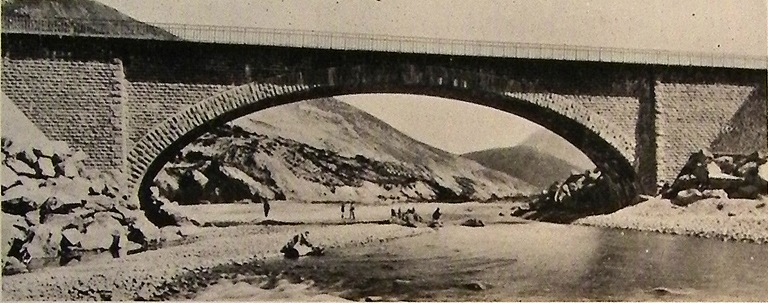
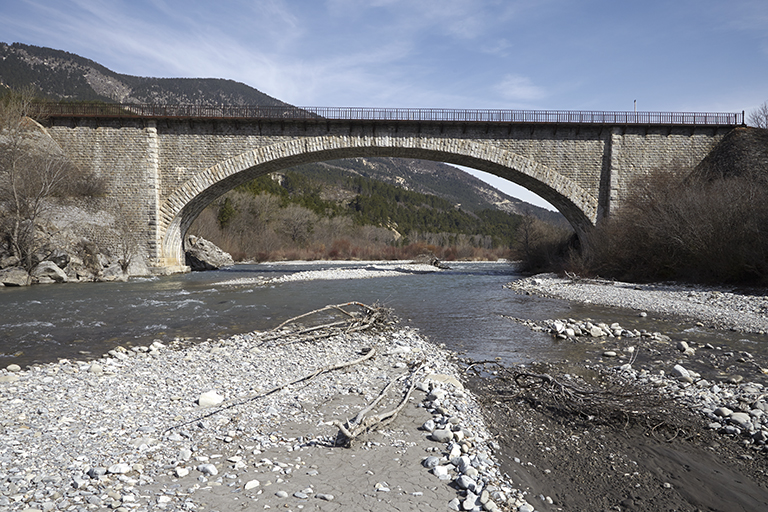
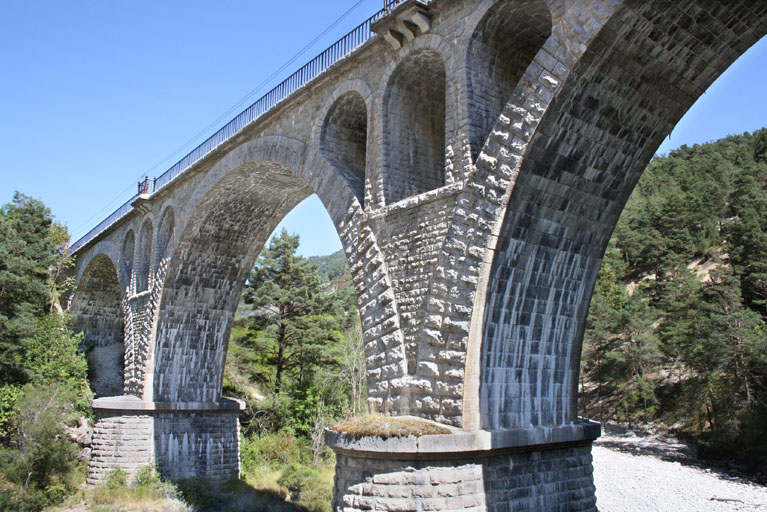
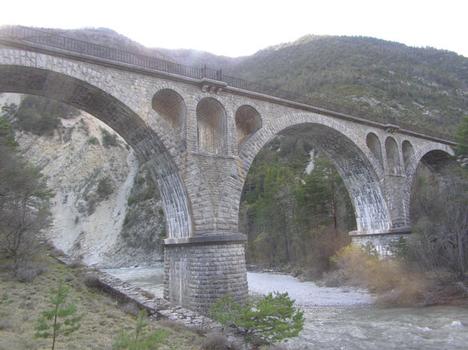
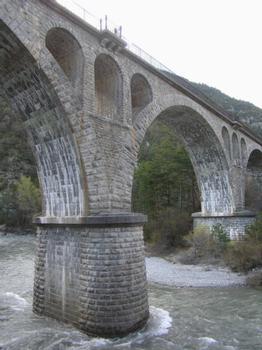
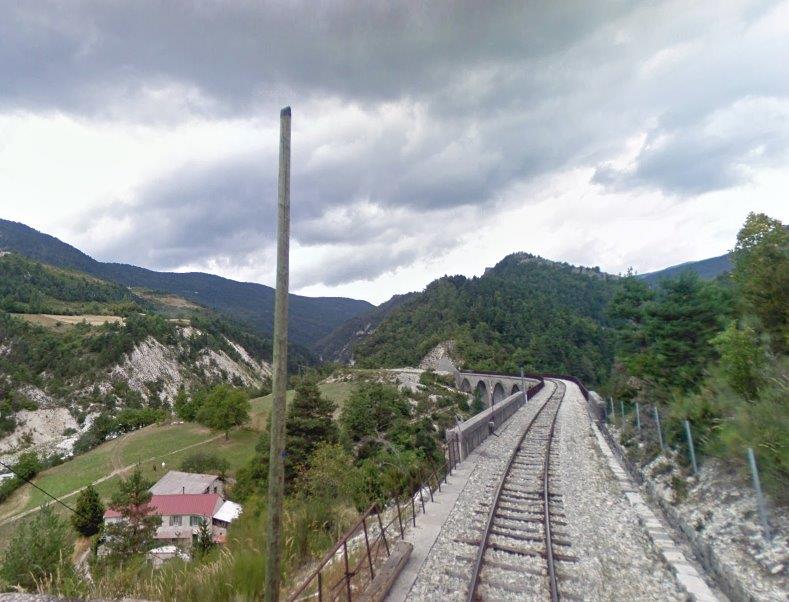
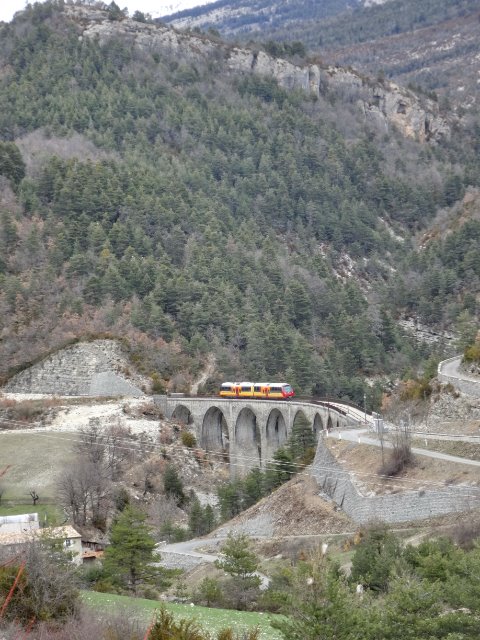
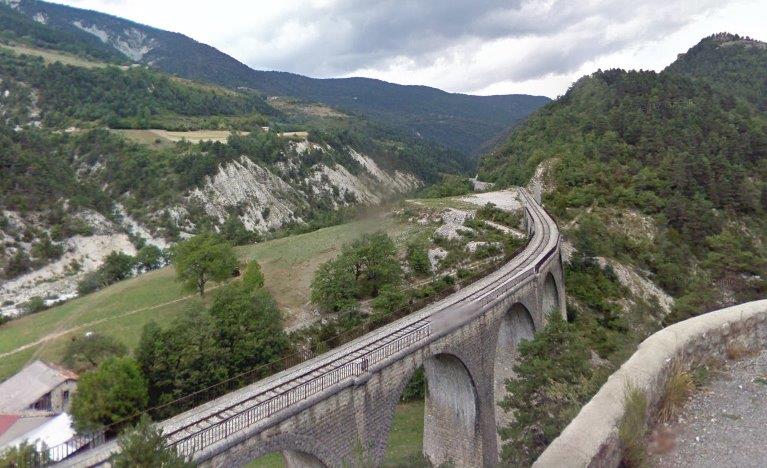
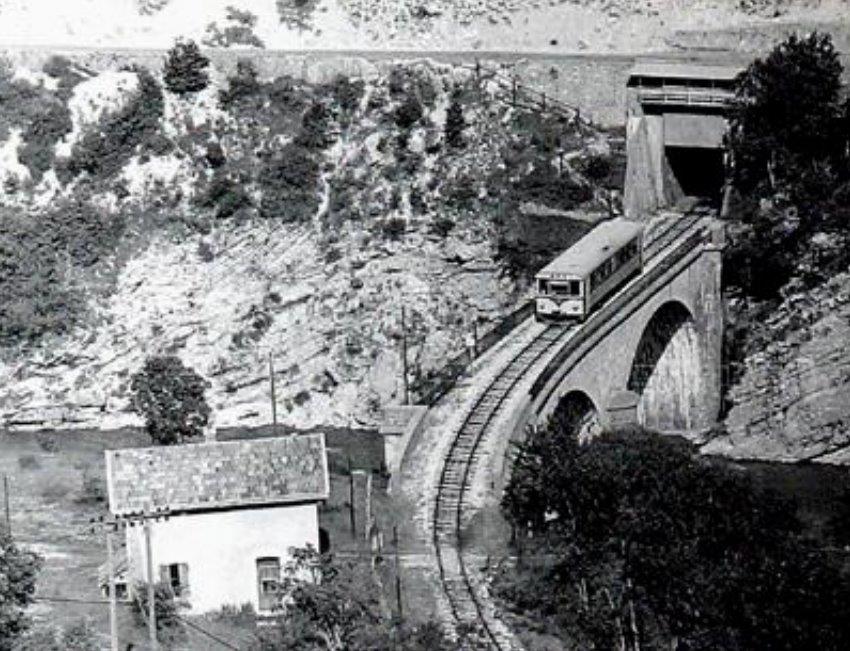
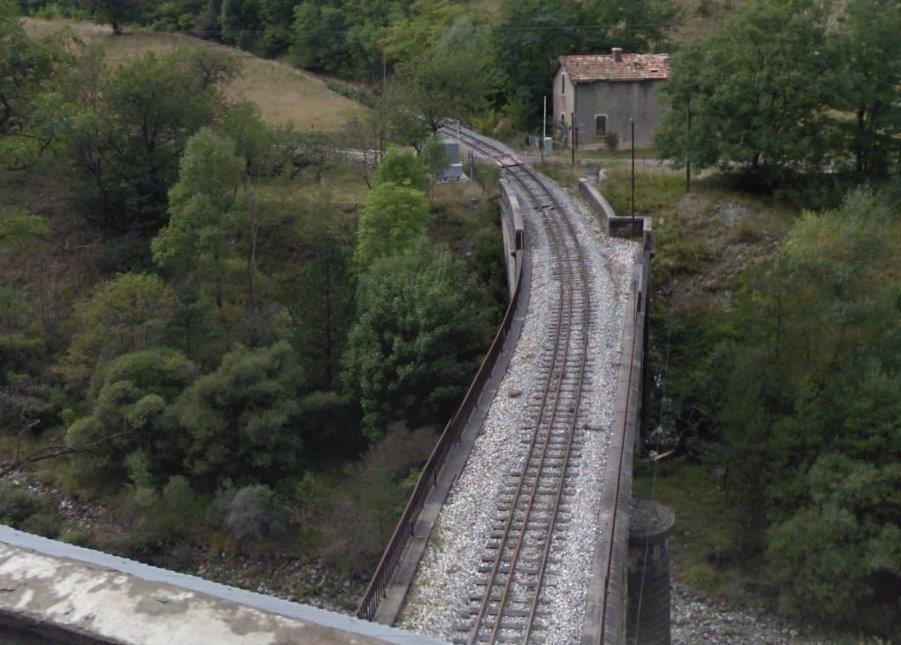
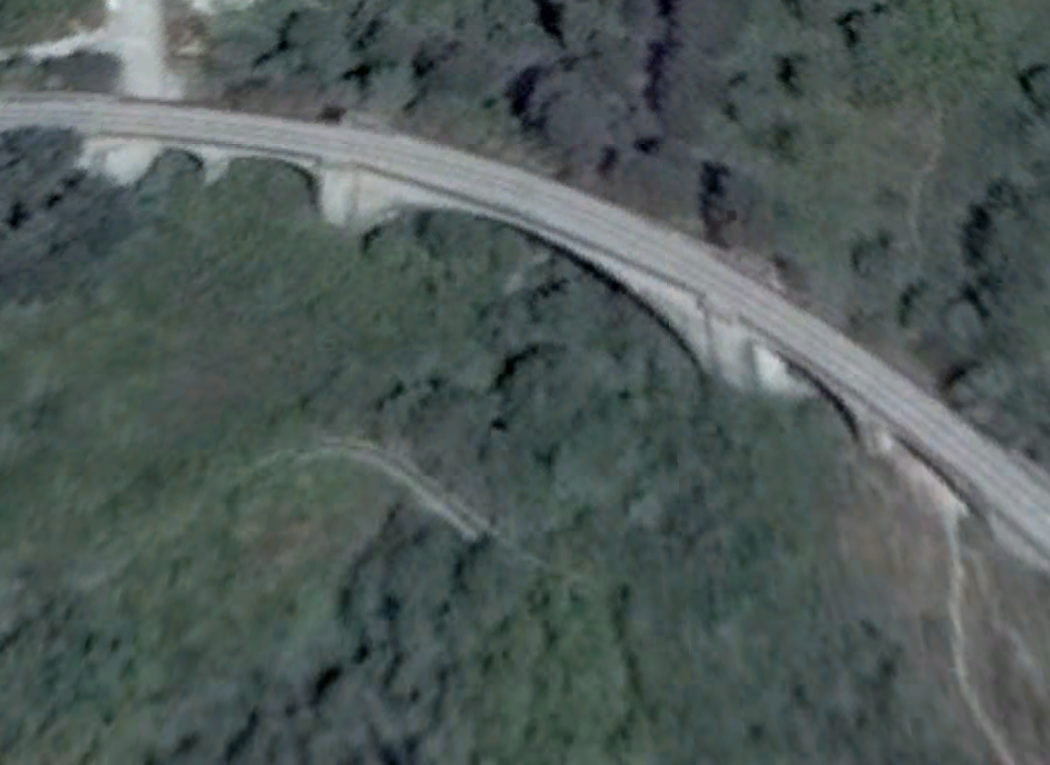
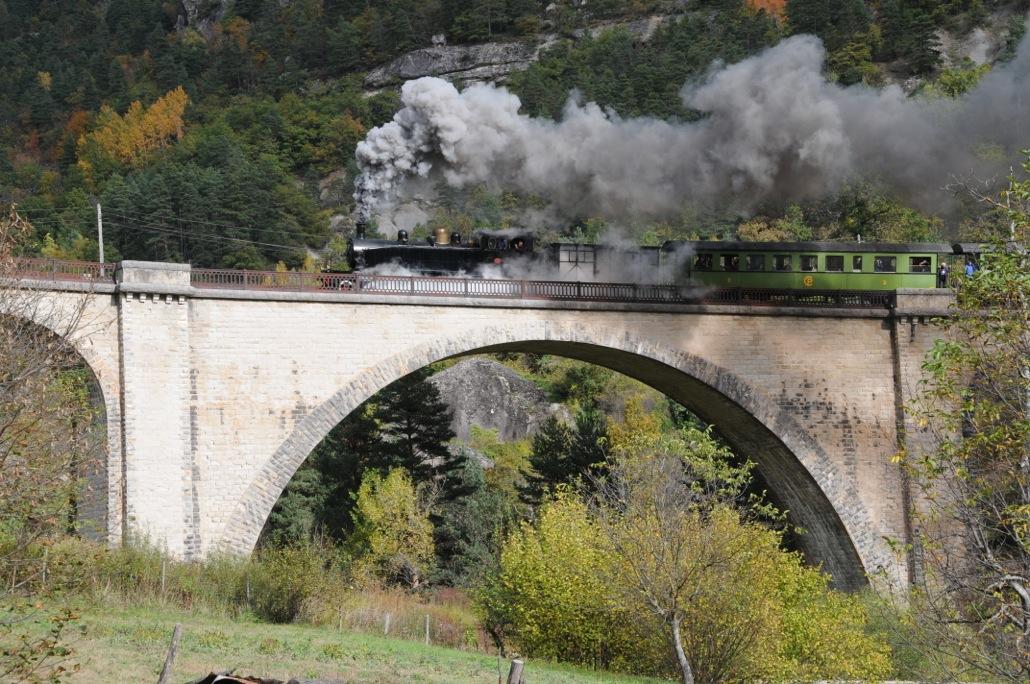
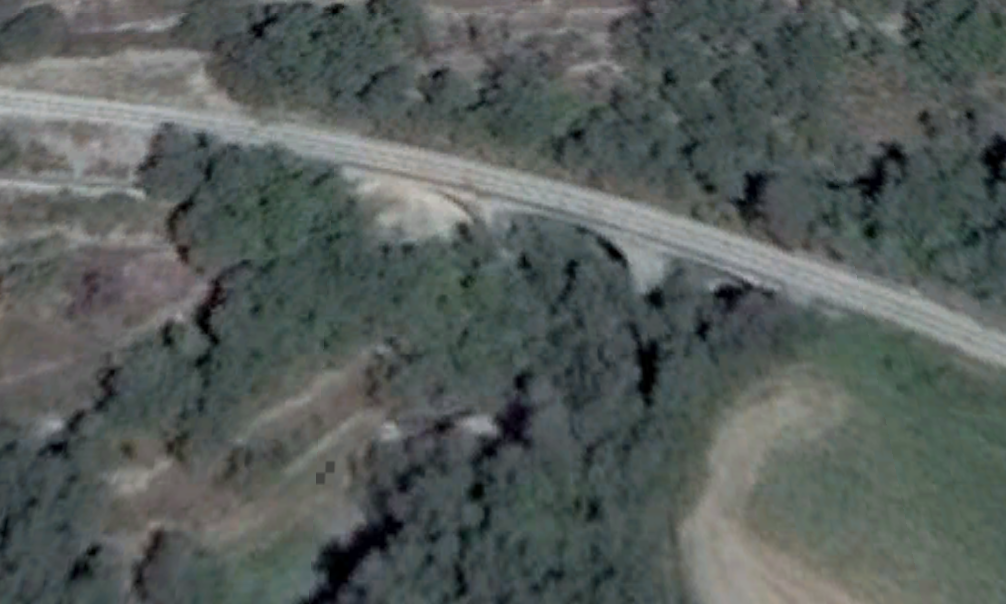
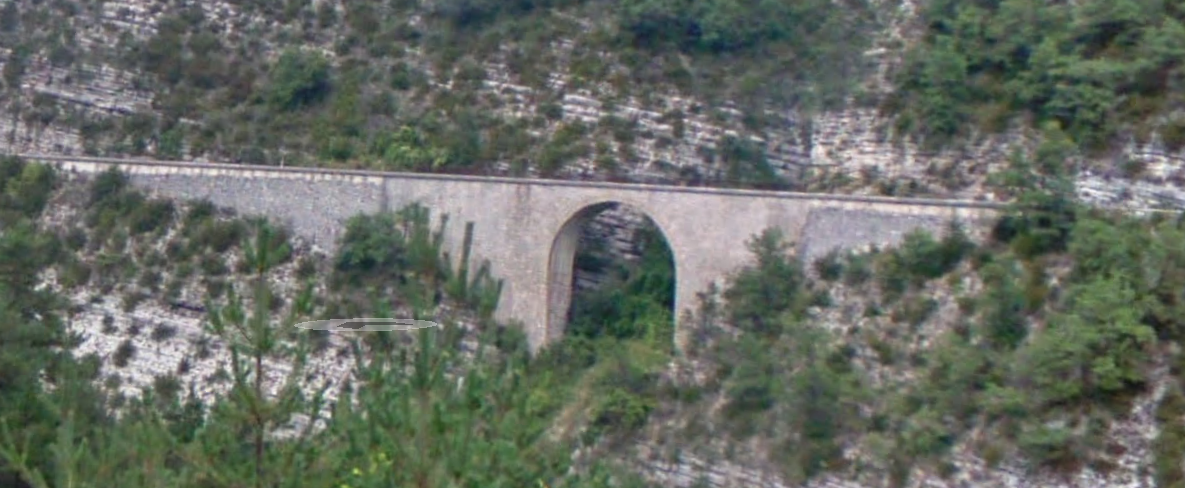
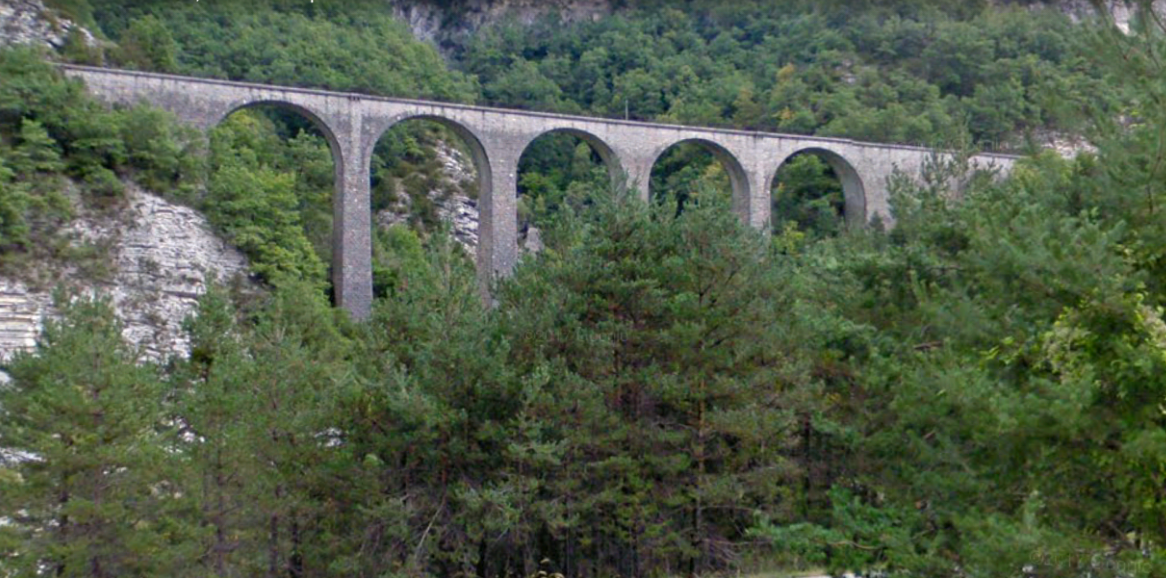
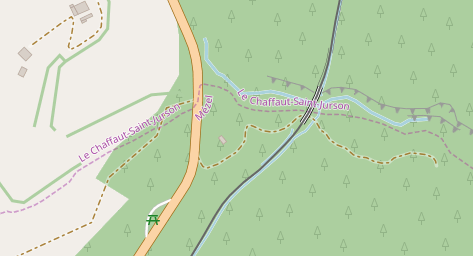
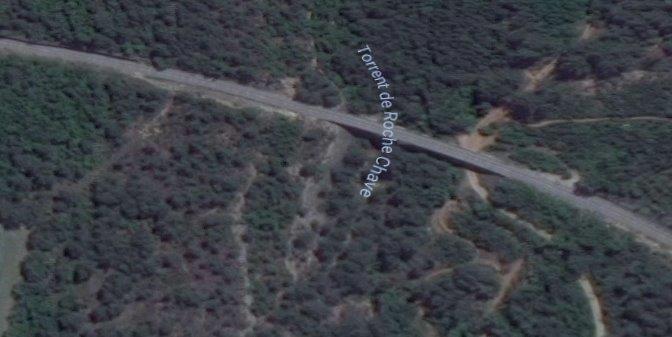
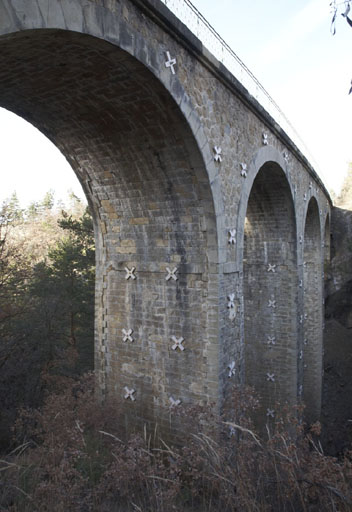
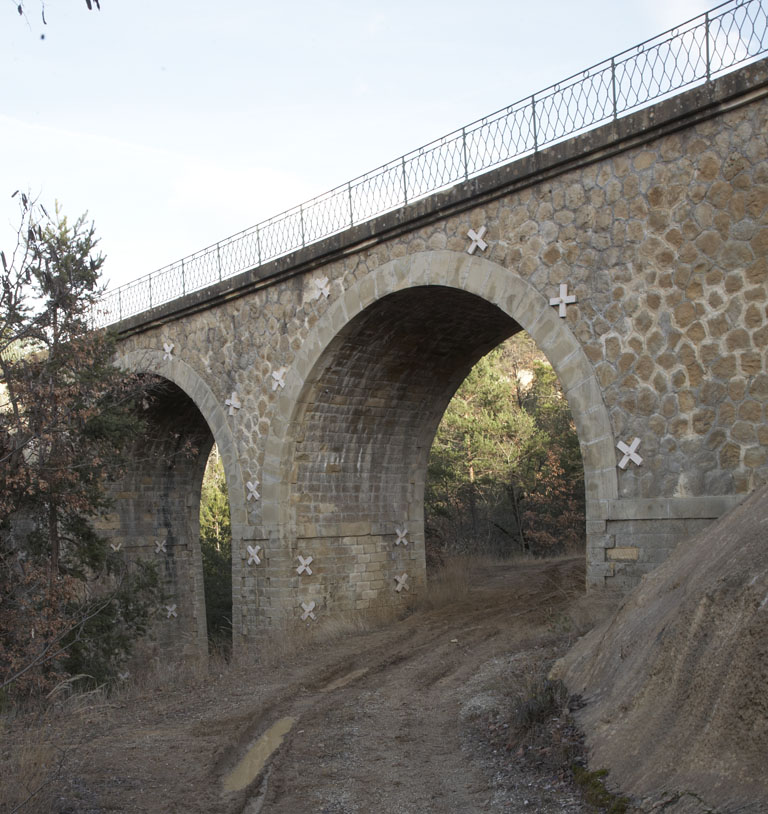
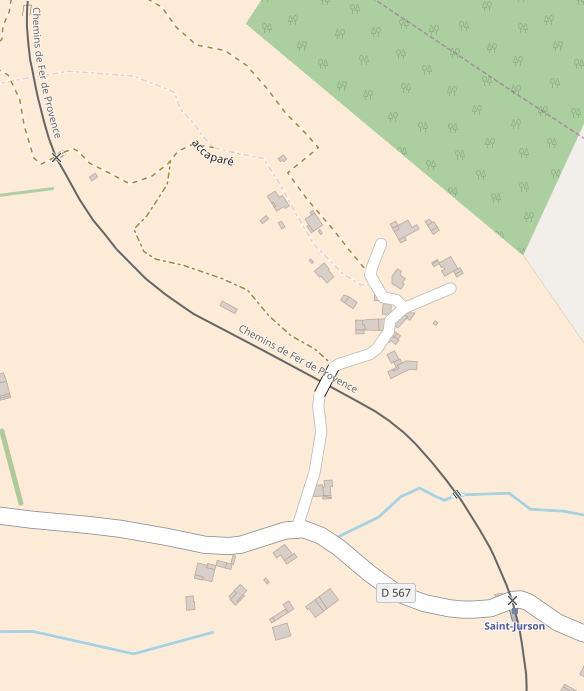
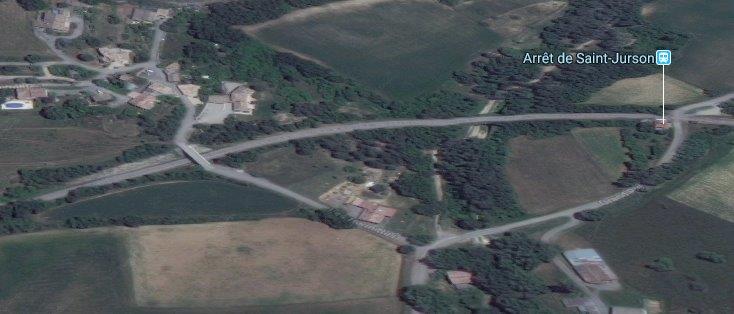
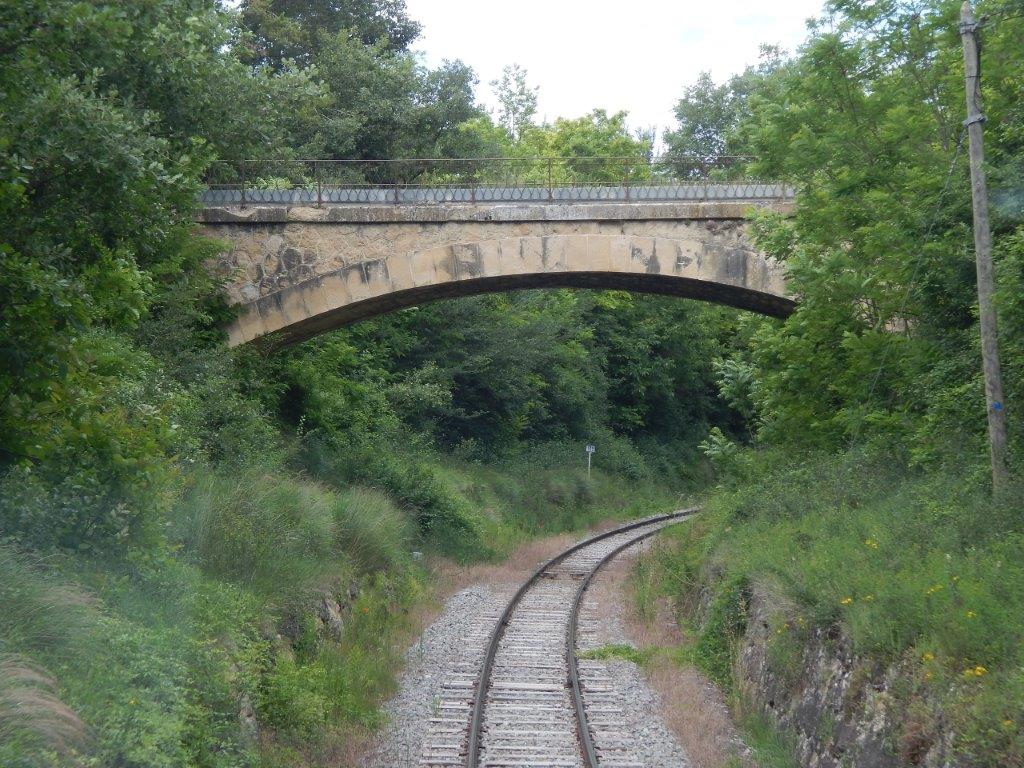
The next structure on the line is the bridge of Le Chaffaut de Saint-Jurson over the Torrent de Roche Chave as shown on the adjacent map and the staellite image below.The bridge is a fine masonry arched viaduct, seen first from the upstream side. [3]And then from the downstream side. [3]

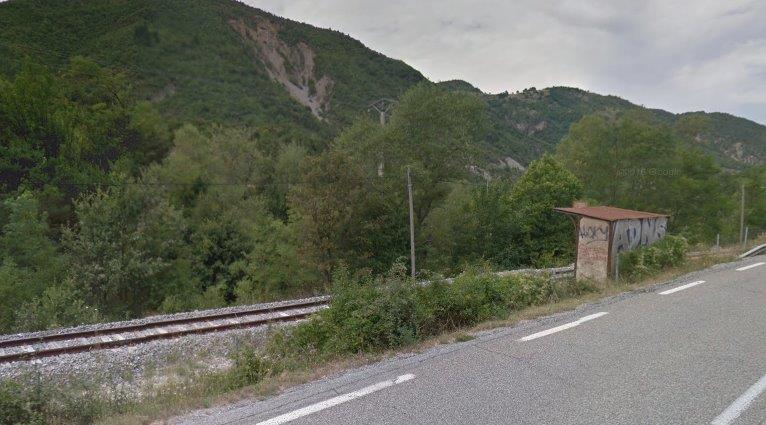
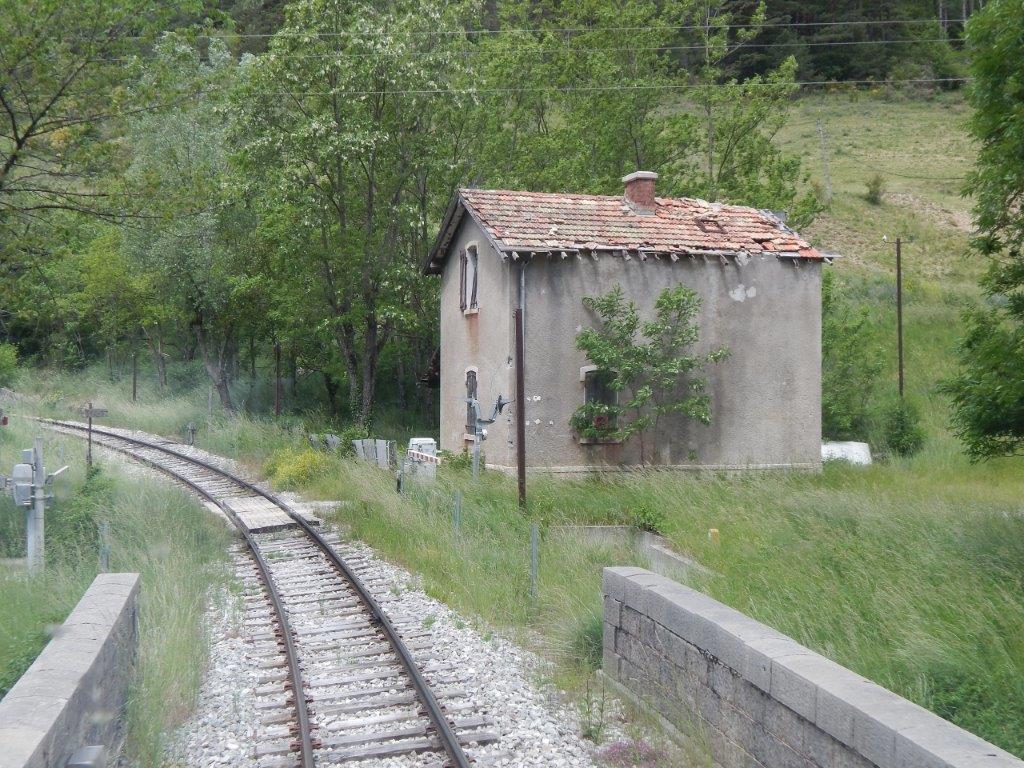
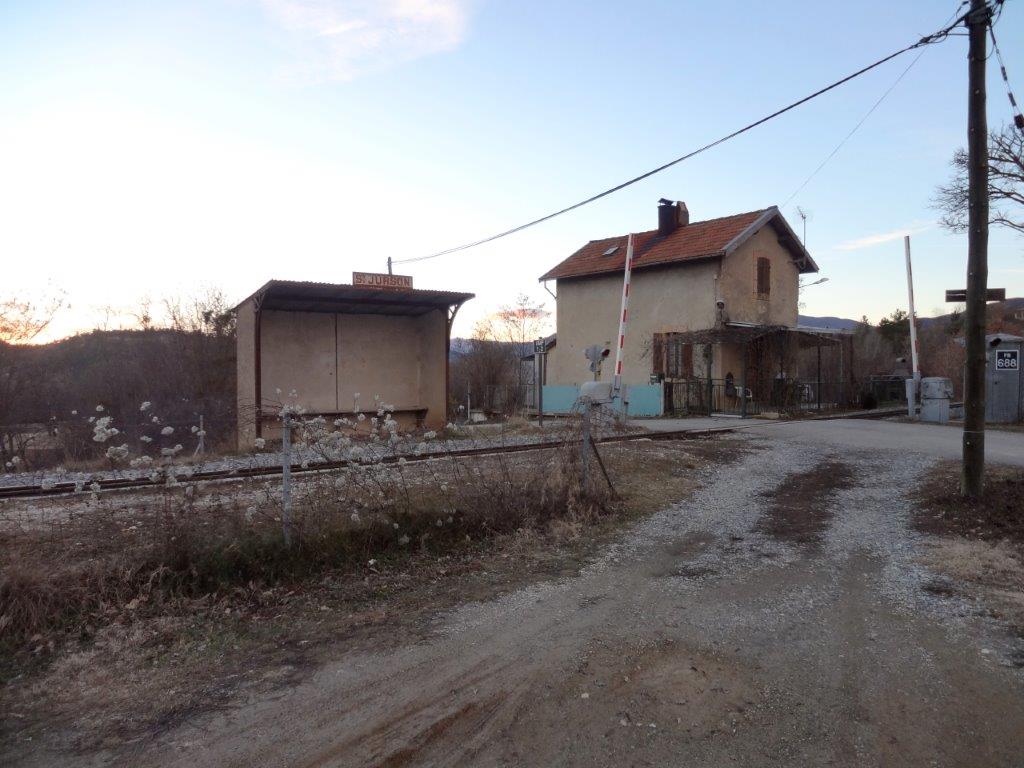
About a kilometre further north is the Arrêt de Saint-Jurson, immediately adjacent to a level crossing for the village road.L’Arrêt de Saint-Jurson, immediately adjacent the level crossing and so very close to what was the crossing keepers cottage. [4]

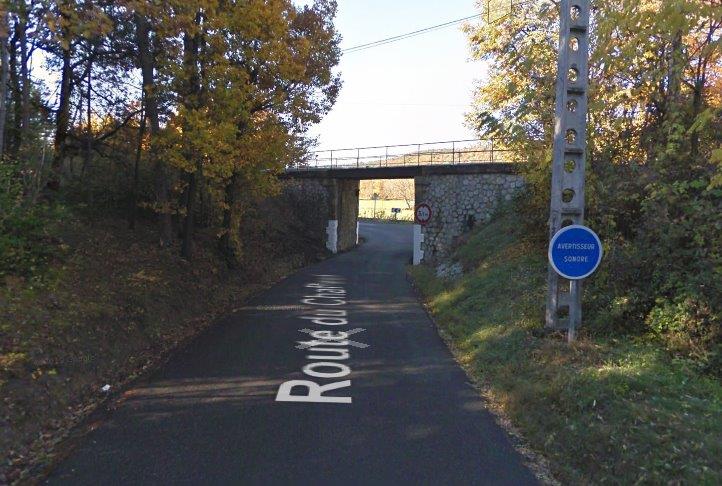
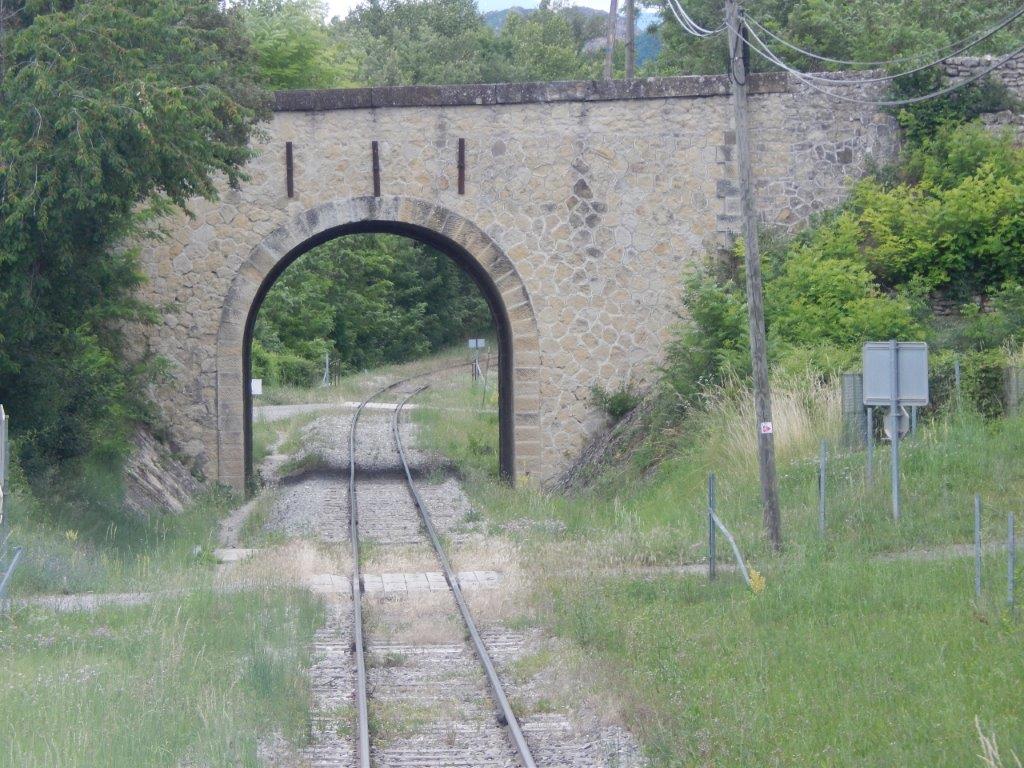
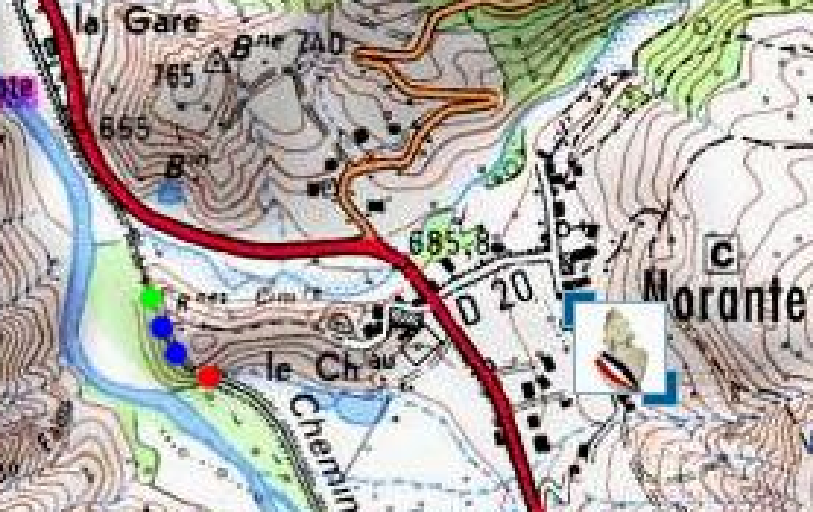
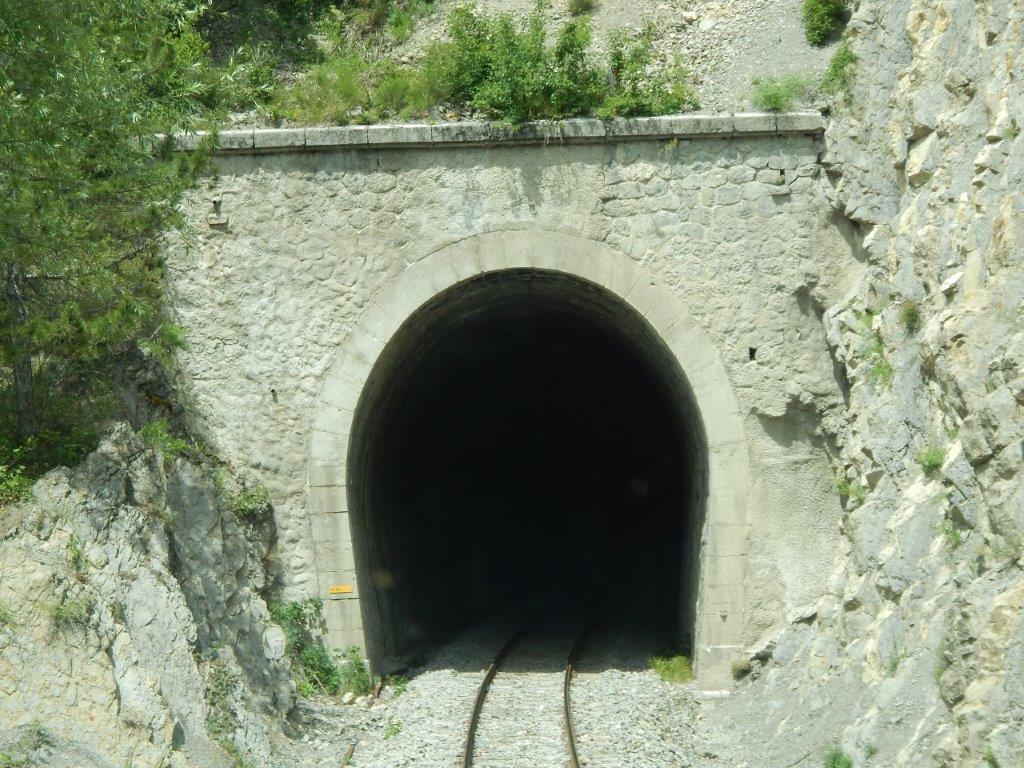
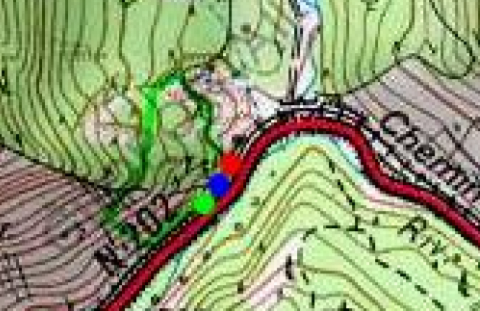
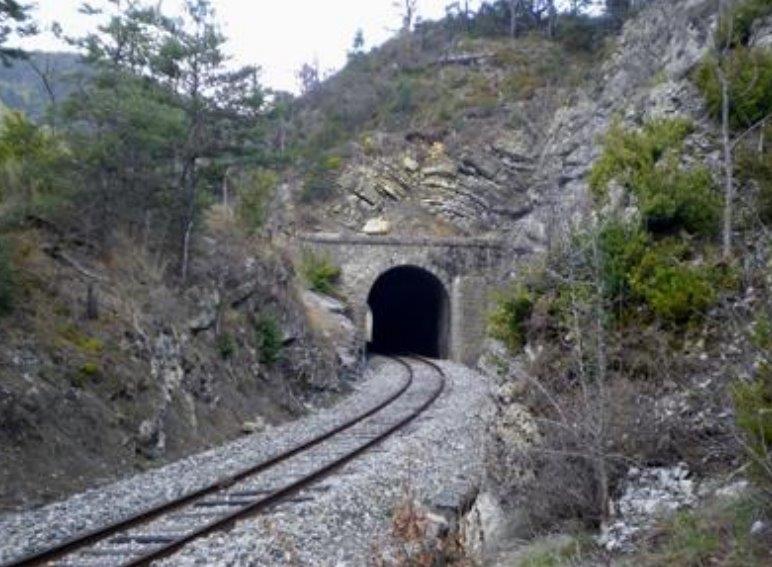
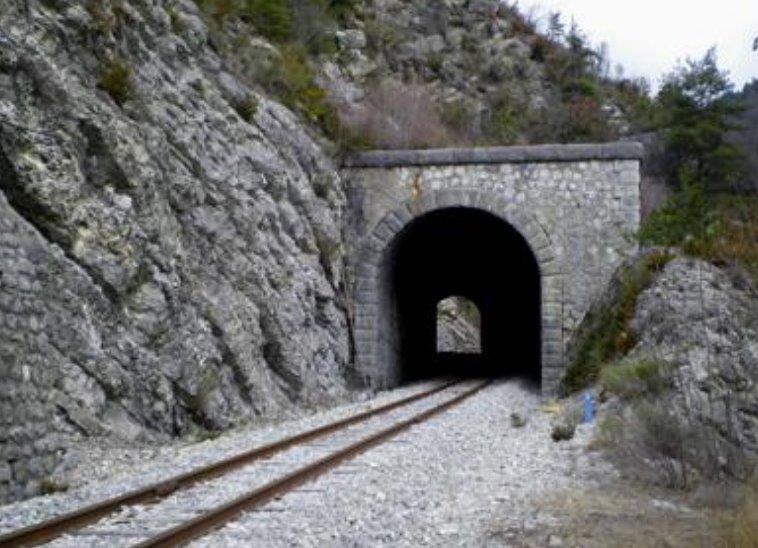
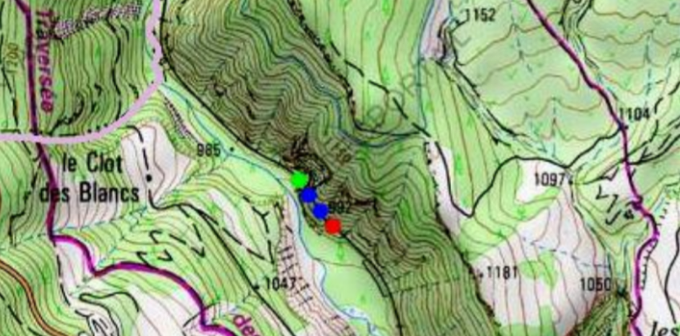
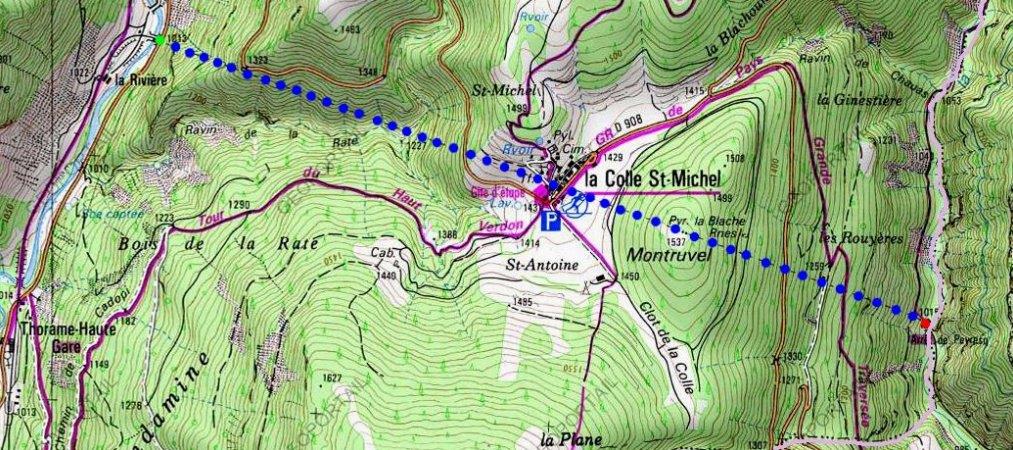
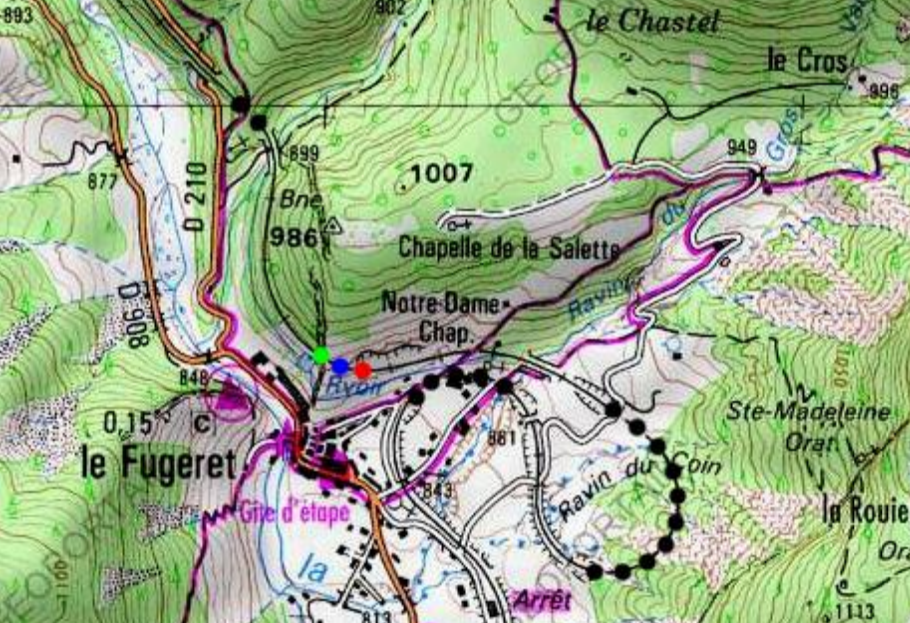
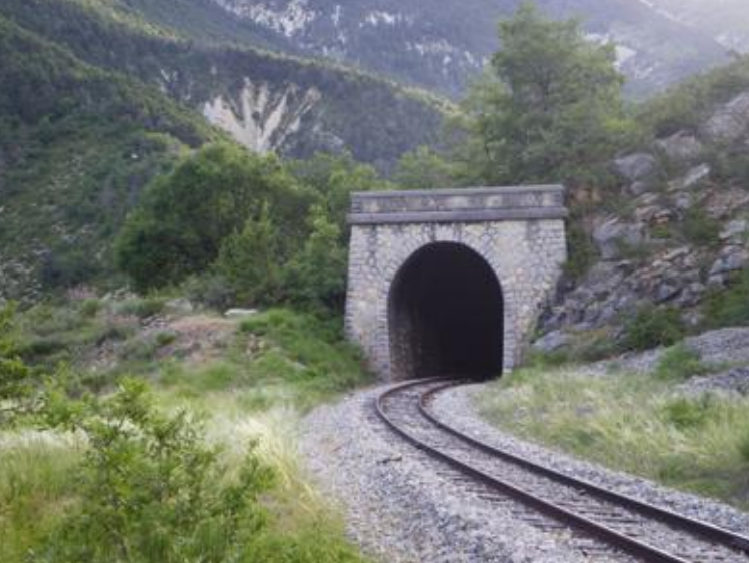
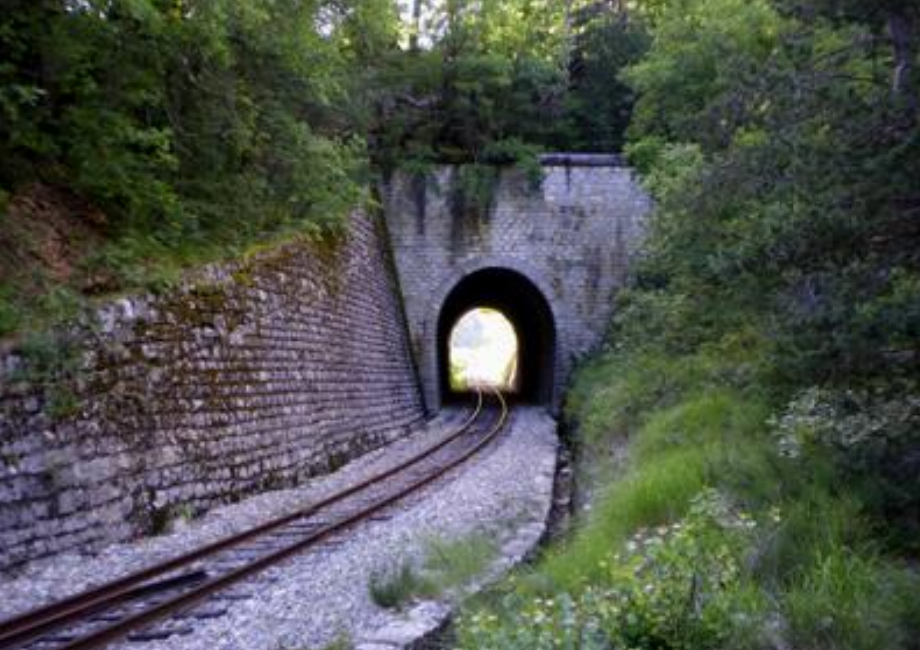
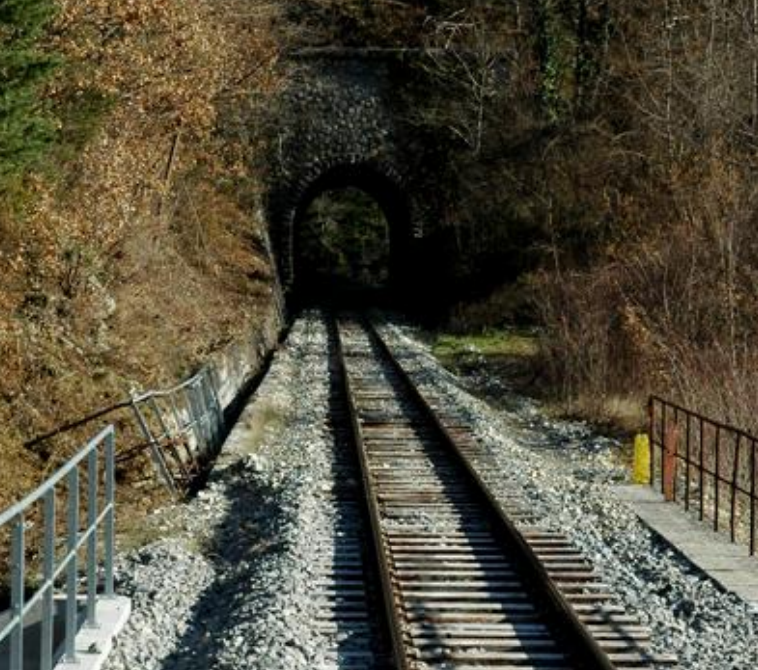
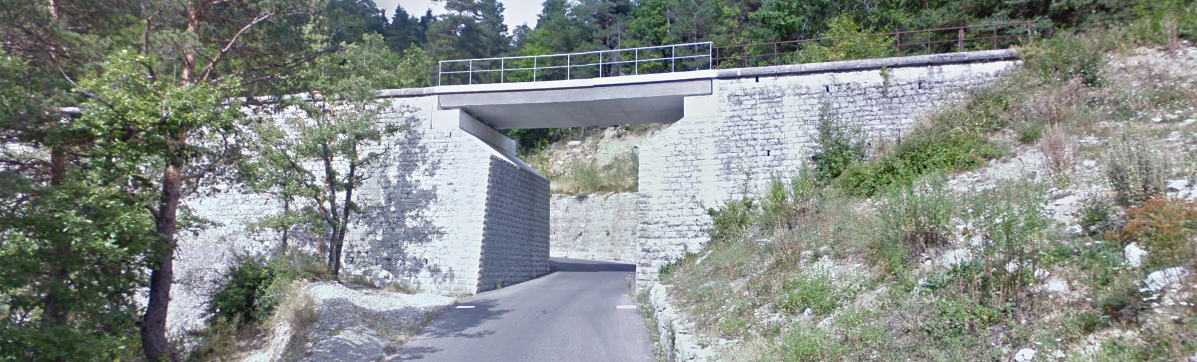
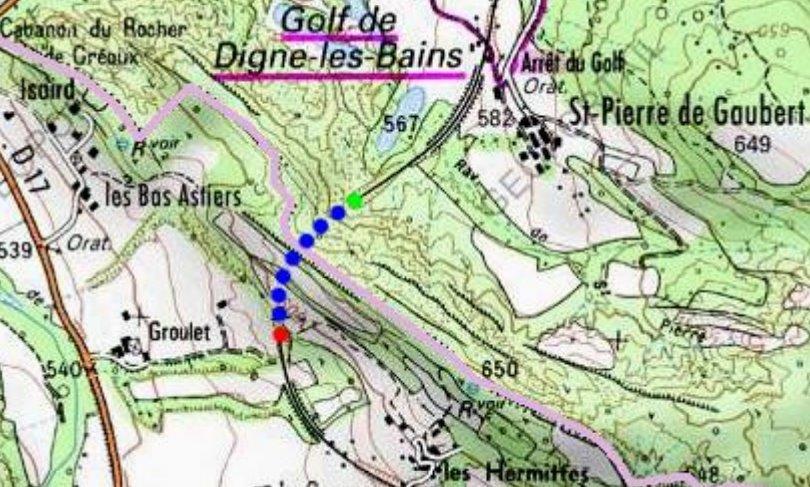
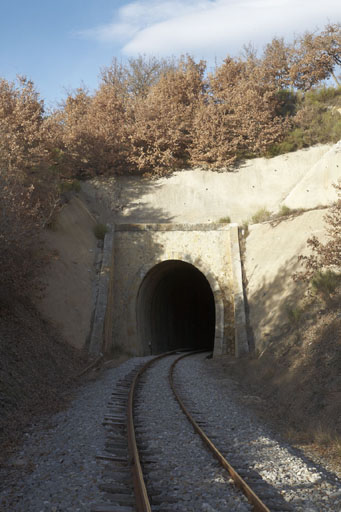
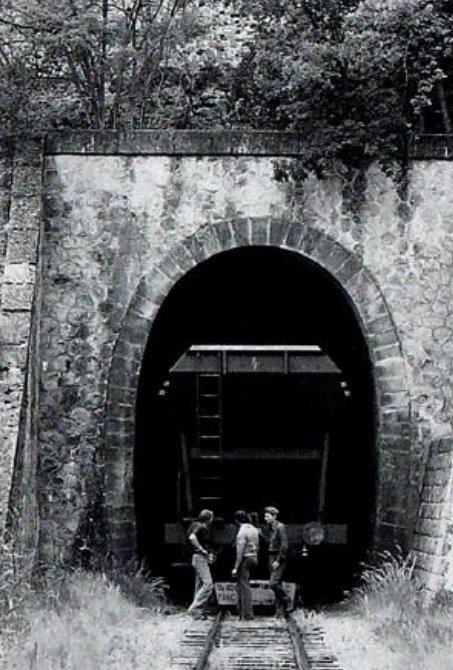
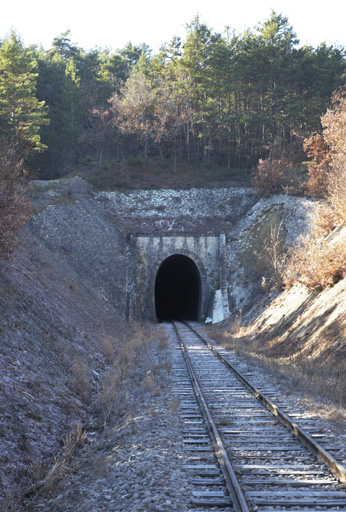
After the Halt for Saint-Jurson, the railway curves gently round towards a Westerly direction, crossing the Torrent du Bat de l’Anesse and then passing under and accommodation bridge which carries part of the road called Les Hermittes over the line. After travelling under the overbridge, trains then sweep round to a more Northerly direction before entering the Tunnel des Hermittes. The tunnel is 300 metres long and sits about 580 metres above sea-level. Once again the tunnel is marked on the plan below with red, blue and green dots. [5]

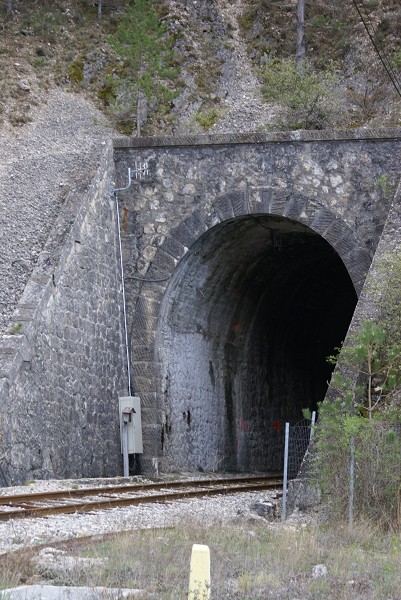
The southern portal. [6]Two images (above) of the northeastern portal. [5][6]

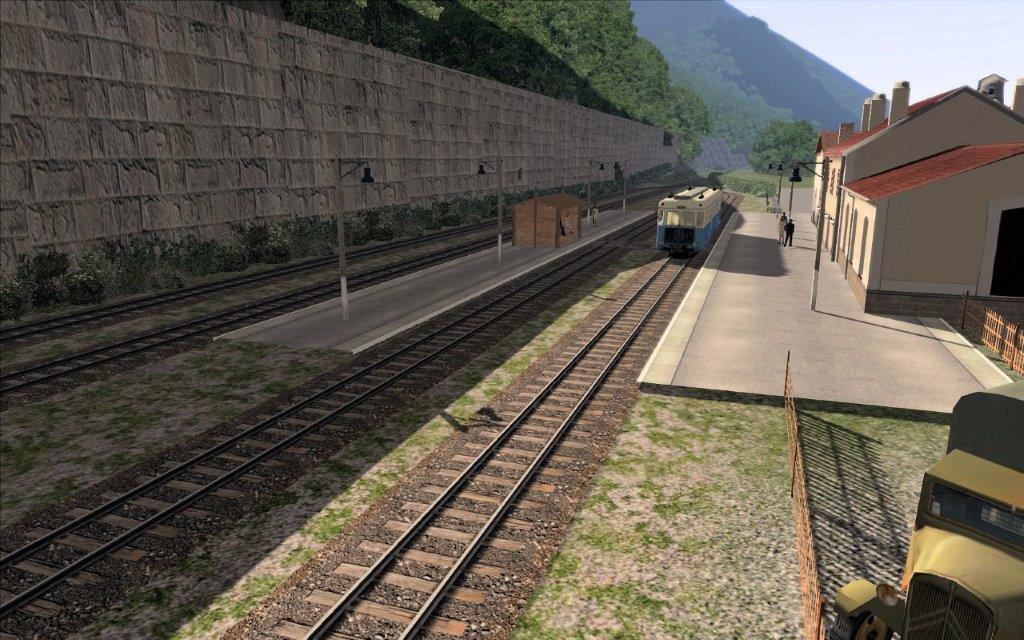
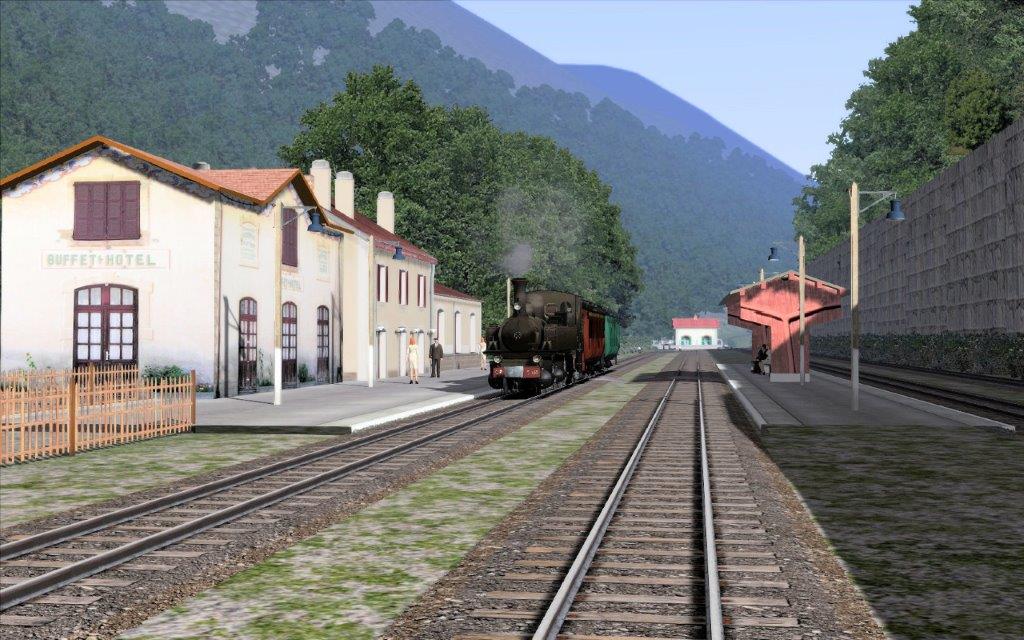
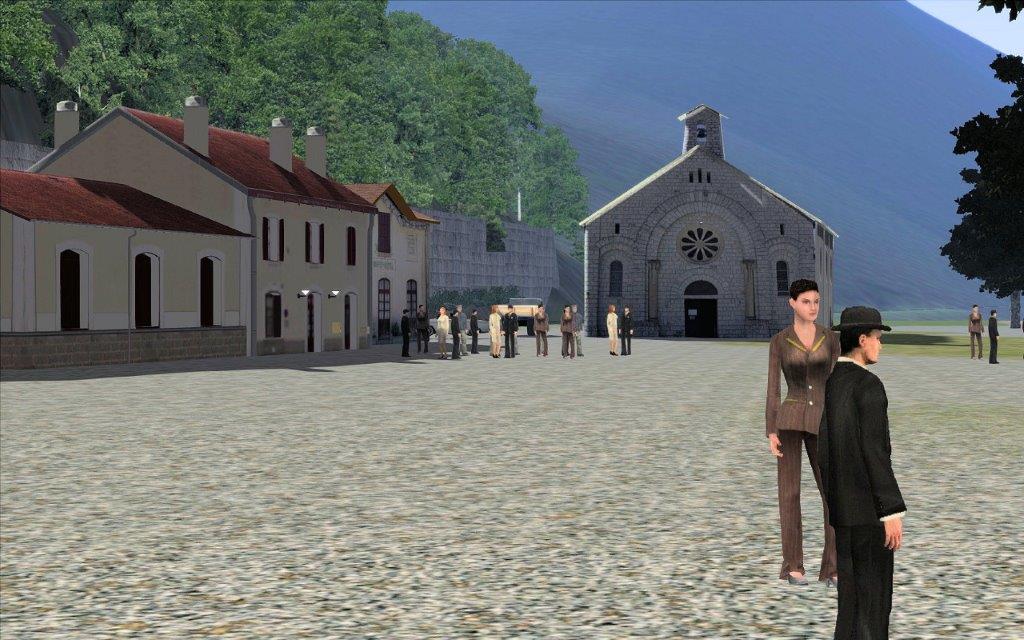
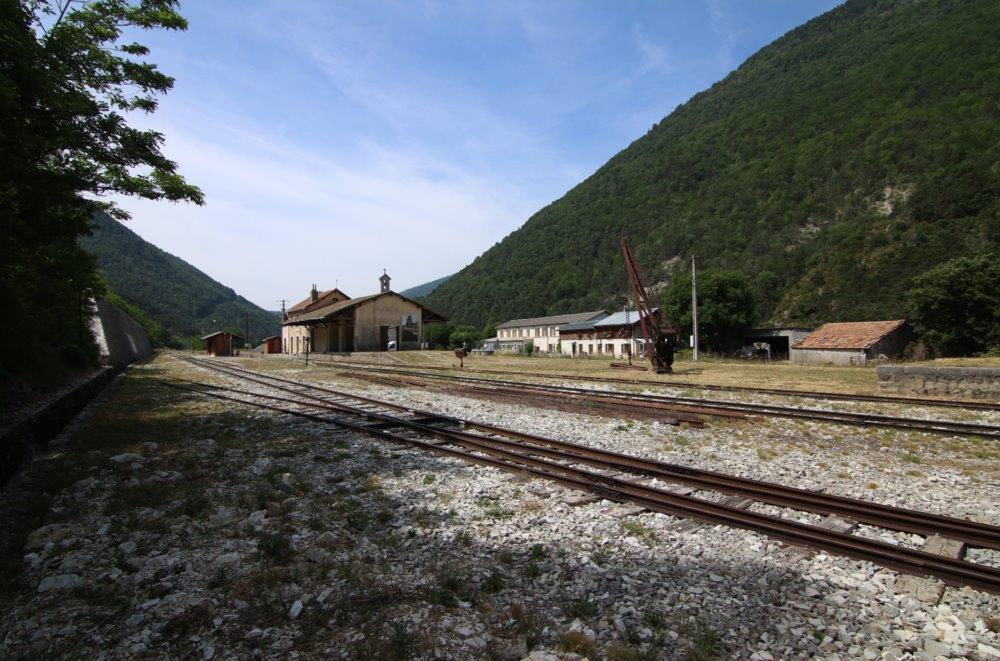
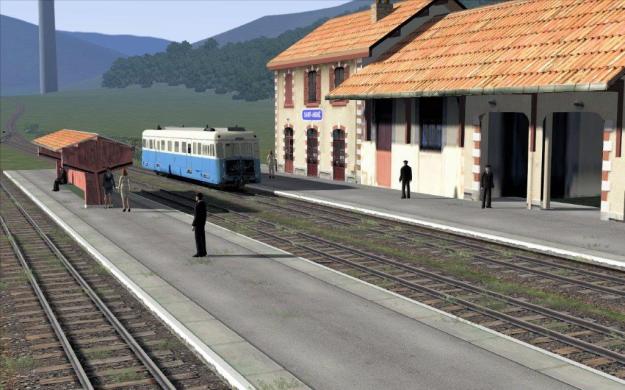
After leaving the northeastern portal of the Tunnel des Hermittes, trains crossed the Ravin de Saint-Pierre and entered the small halt which serves the Golf Course at Digne-les-Bains. L’Arret on the rail-simulator. [7] I have not been able to find any photographs of the halt.

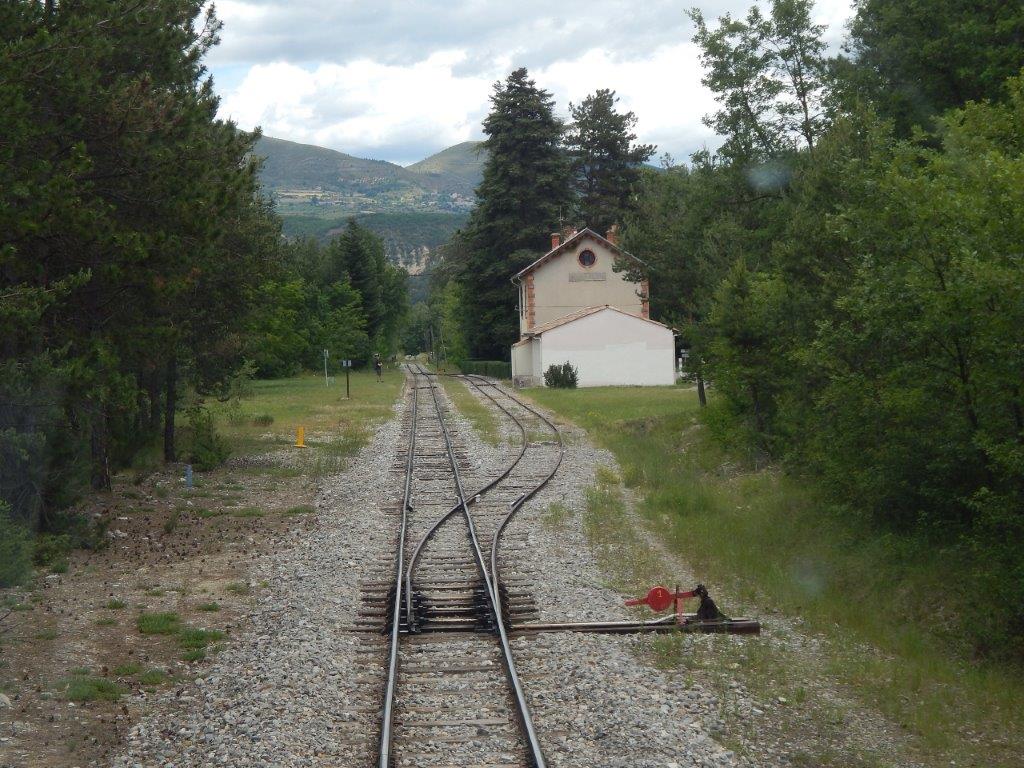
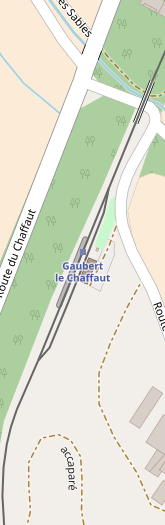
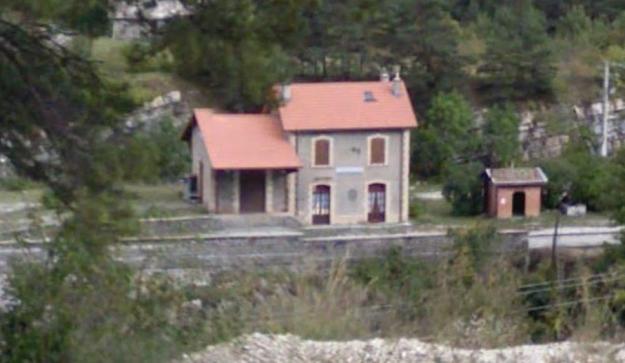
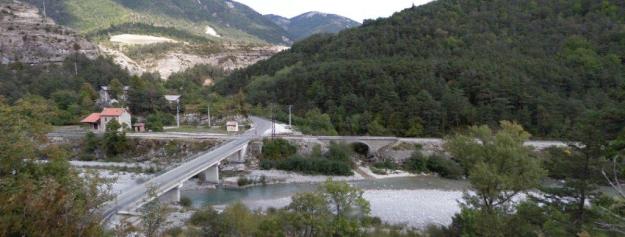
North of the Golf Course, the line begins to run alongside the Route de Chaffaut and then enters another Station – La Gare de Gaubert-Le Chaffaut. A driver’s eye view (above) approaching the Gare de Gaubert-Le Chaffaut from Nice. [2]

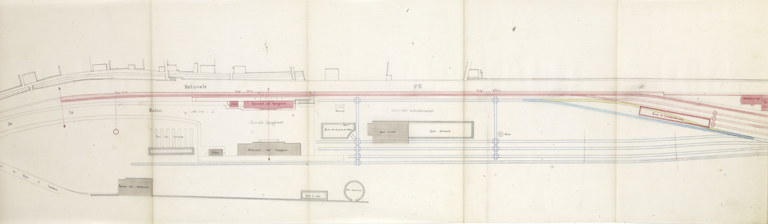
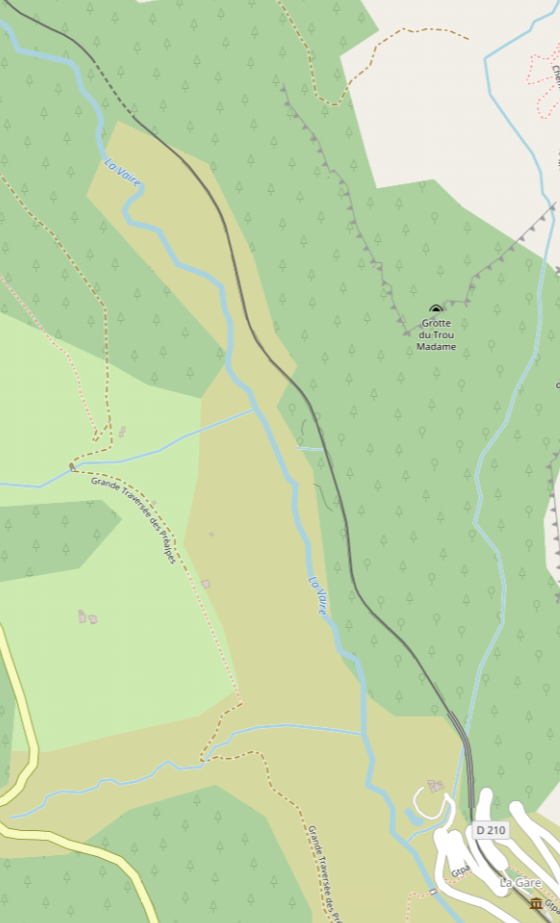
The adjacent map shows the station site and the viaduct to the north.

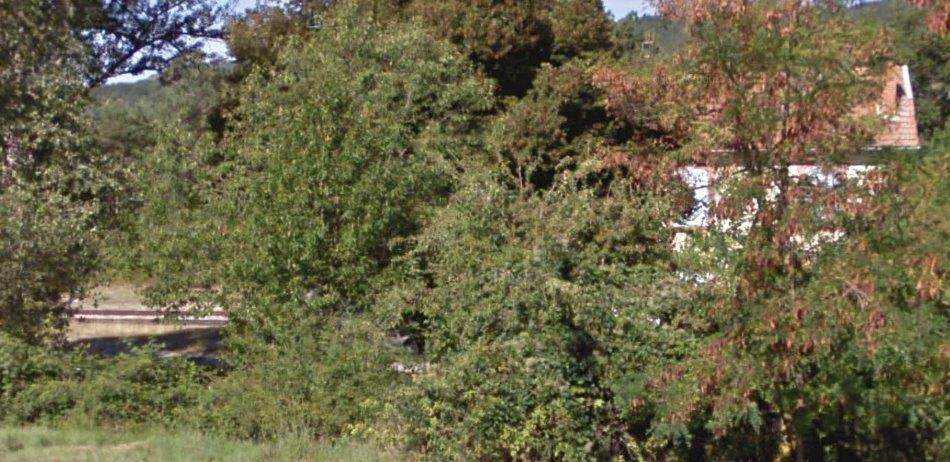
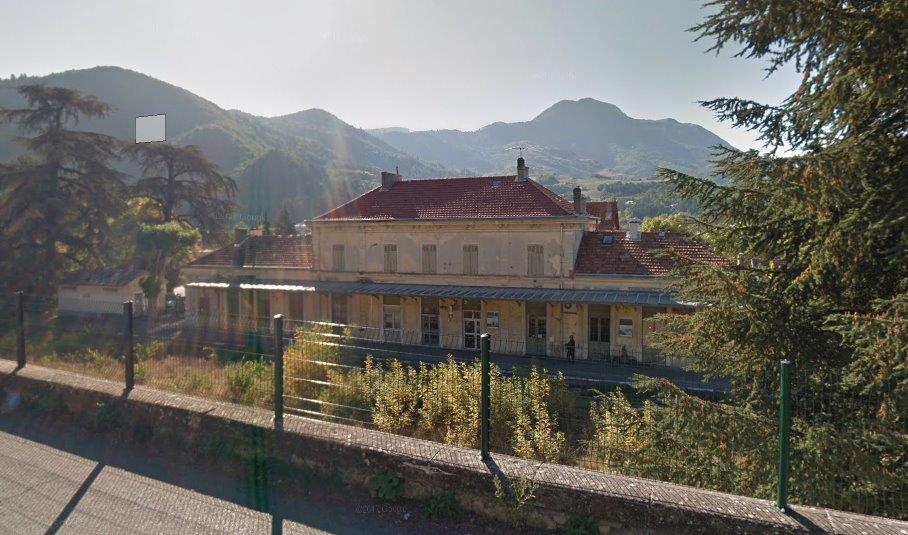
The first image below is taken from the narrow lane to the East of the station.

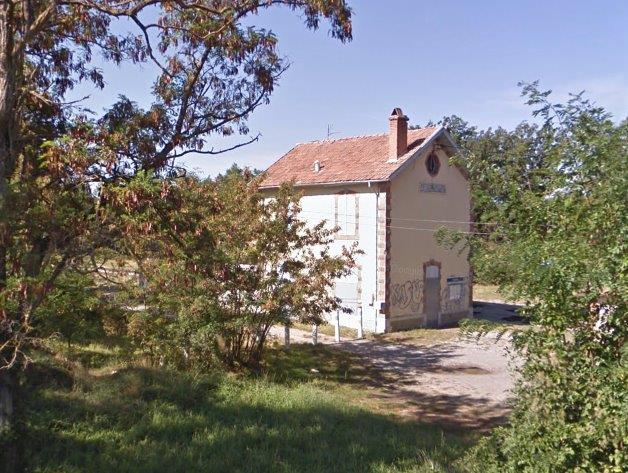
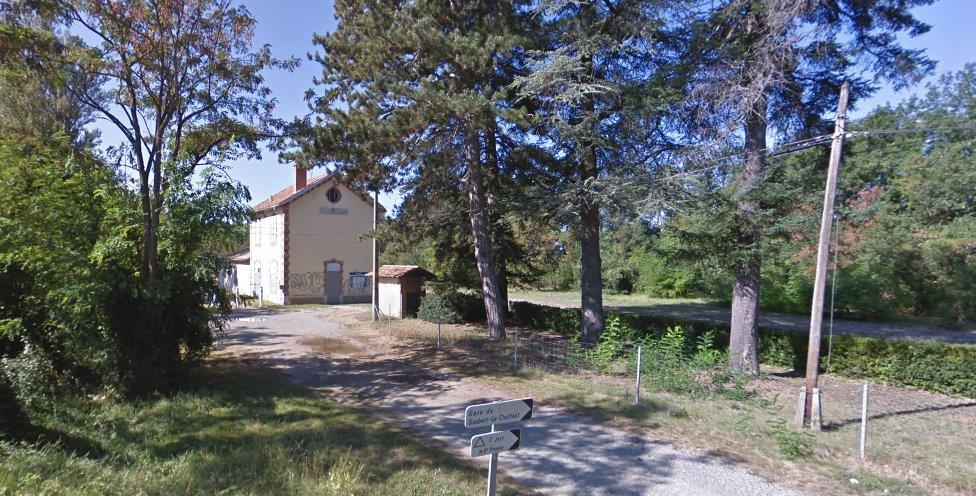
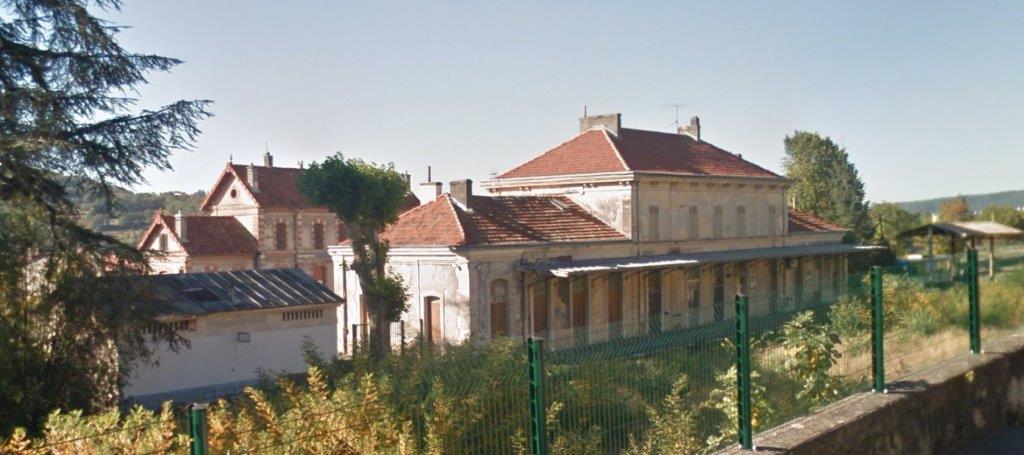
The next two are taken from the same lane, the first just north of the station building the next a little further to the north of the station buildings.

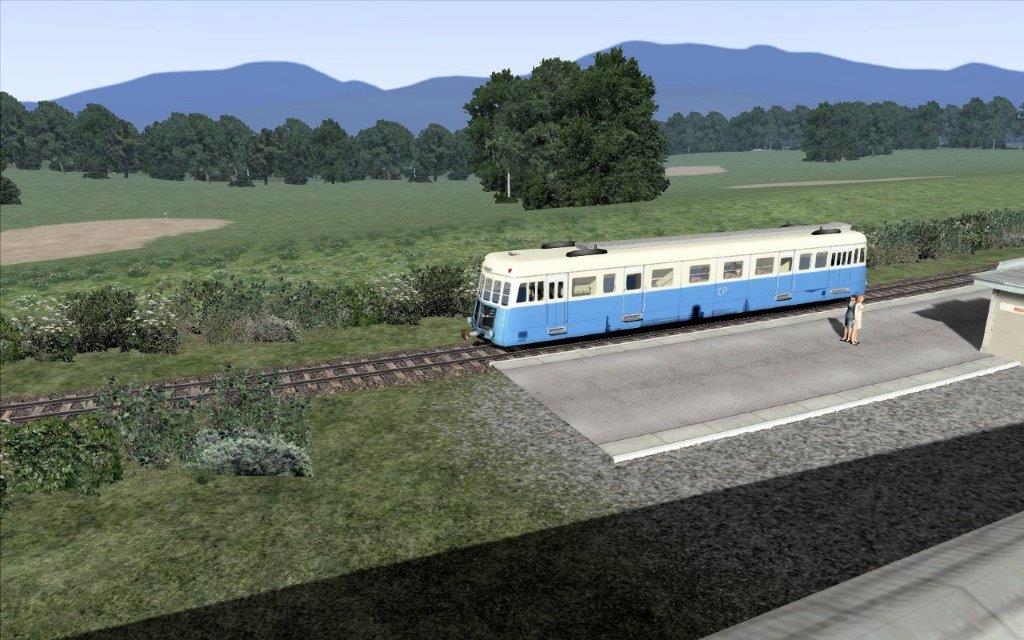
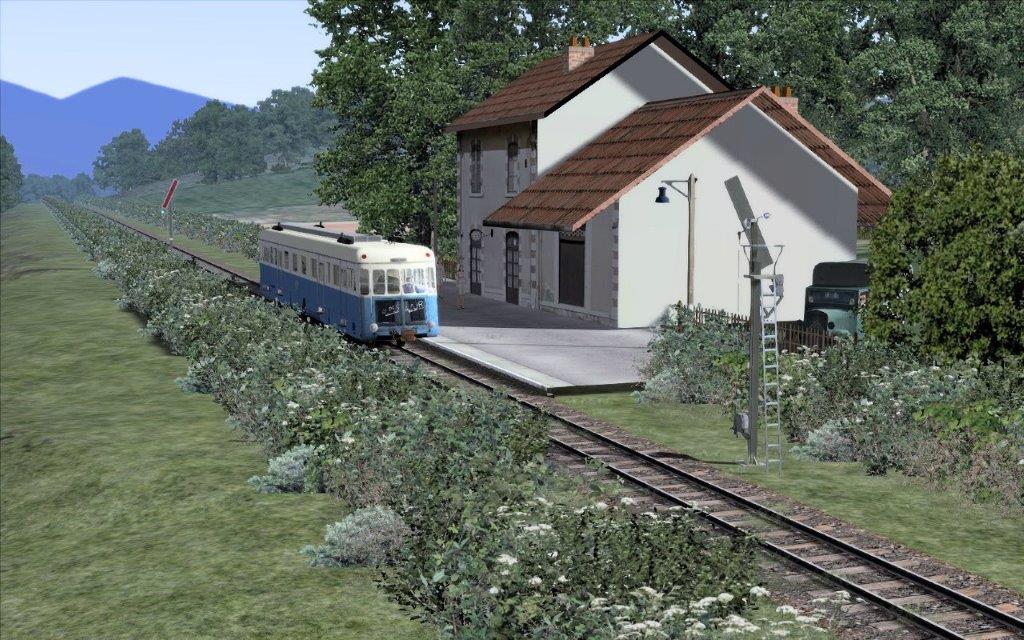
The fourth image below is a rail-simulator image of the station. A rail-simulator image of la Gare de Gaubert-Le Chaffaut. [7]Looking toward Nice with an Autorail leaving the station. [8]Looking back through the station site after the train sets off for Digne. [8]An Autorail arrives from Digne. [8]

Immediately after leaving the station heading for Digne trains pass over a small viaduct which takes the line across a single lane road and the Ravin des Beaumes. The Viaduct over the Ravin des Beaumes, viewed from the East.The Viaduct over the Ravin des Beaumes, viewed from the West. On the D12 looking Northeast, the line crosses the road on a low-headroom bridge. Looking back along the D12 to the railway over-bridge.

A little further along the line it encounters an aqueduct. As can be seen below the aqueduct is dry at the surface. The first image below show an accommodation road-crossing on the left of the satellite image above, which is immediately followed by two views of the aqueduct. One showing its bridge of the D12 and the other over the railway. The last of the four images immediately below shows the line beyond the aqueduct and is taken from the D12. A driver’s eye view of the Aqueduc de Gaubert. [2]

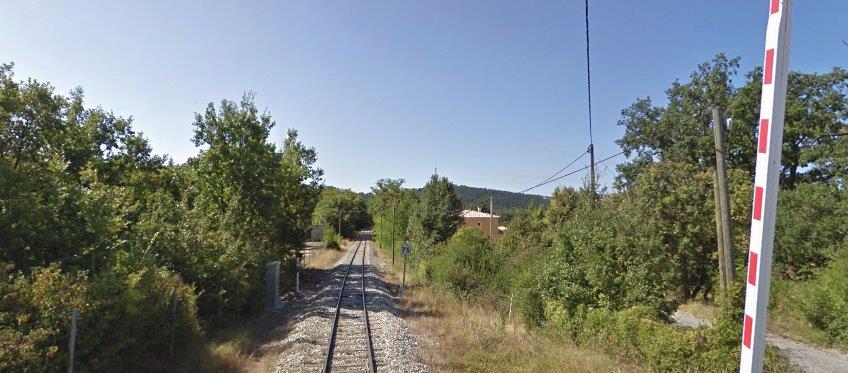
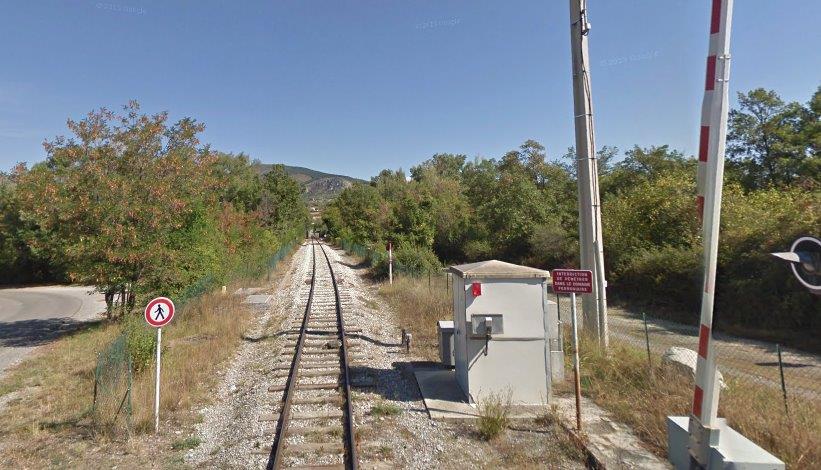
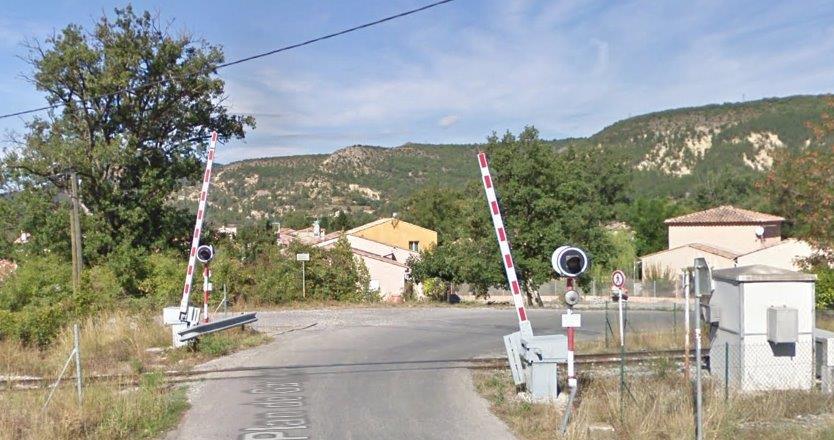
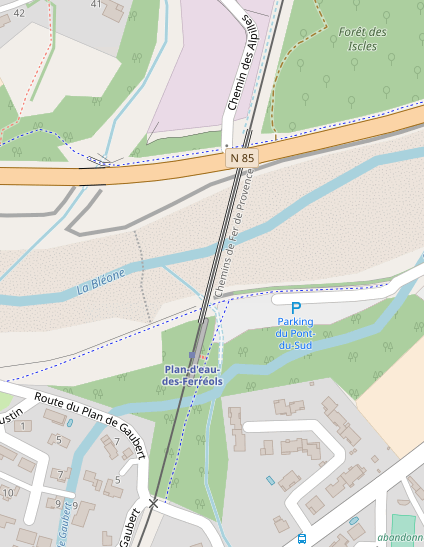
The next point of reference on the line is the level-crossing at Route du Plan de Gaubert. The fist image below looks back along the line towards Mezel, the second looks forward to Digne, and the third shows the level-crossing viewed from the East.The level-crossing appears at the bottom of the adjacent map.

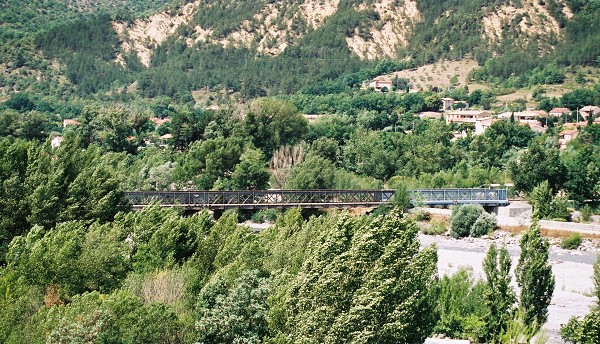
There is another halt just to the south of the river – L’Arret du Plan d’eau des Ferreols and then the line crosses La Bleone  and the N85 on its way into Digne-les-Bains.

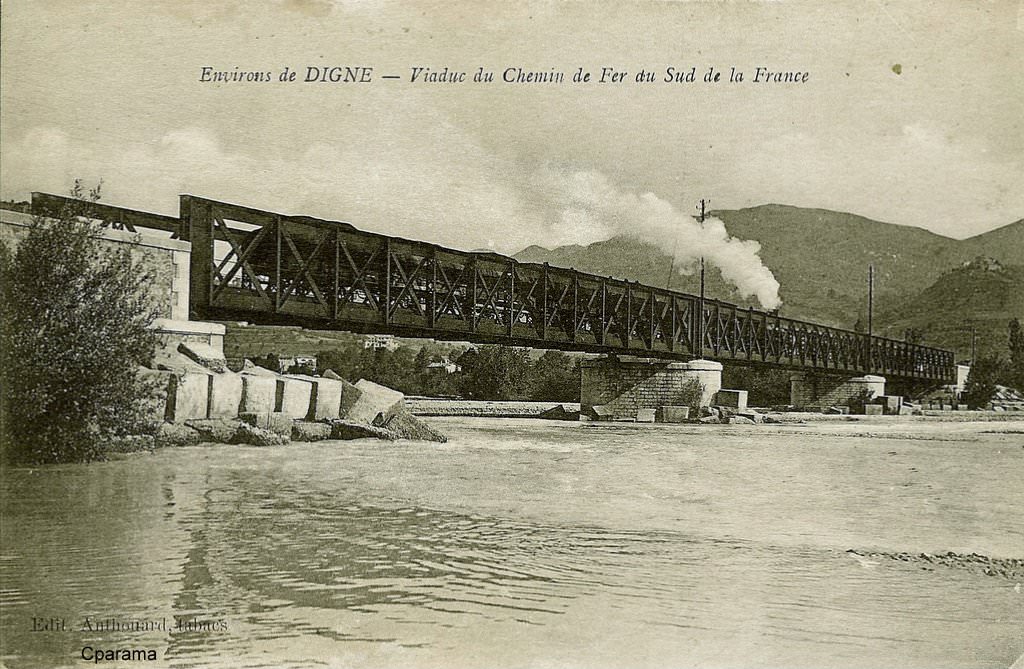
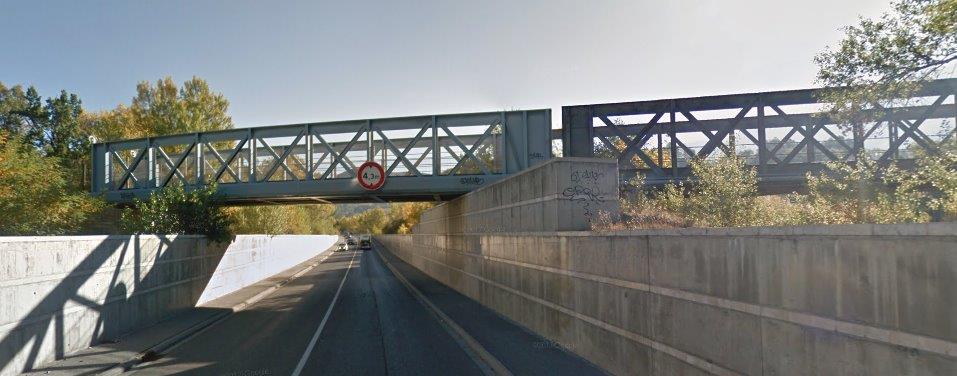
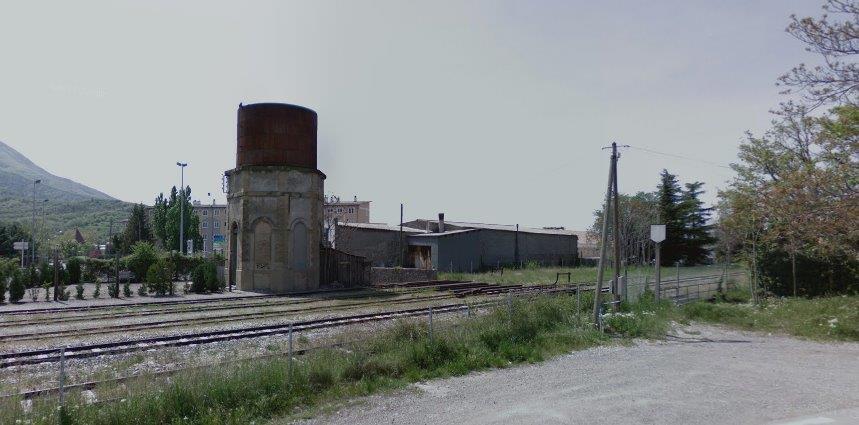
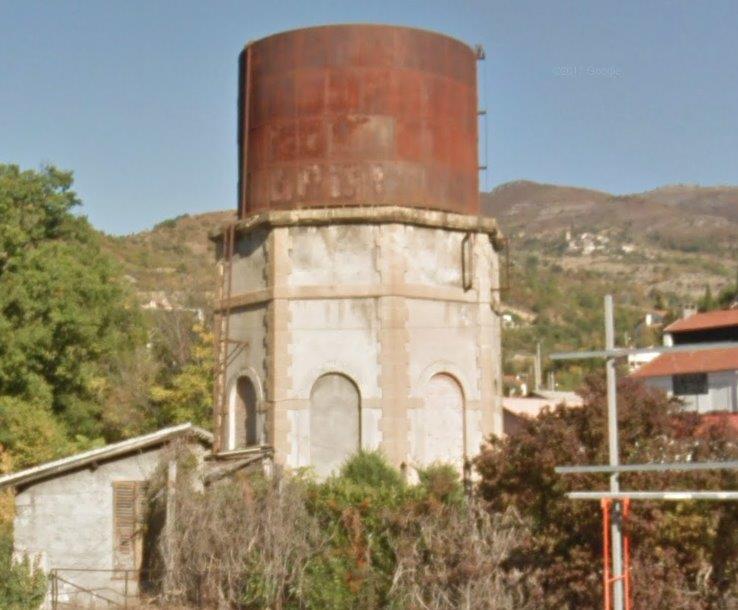
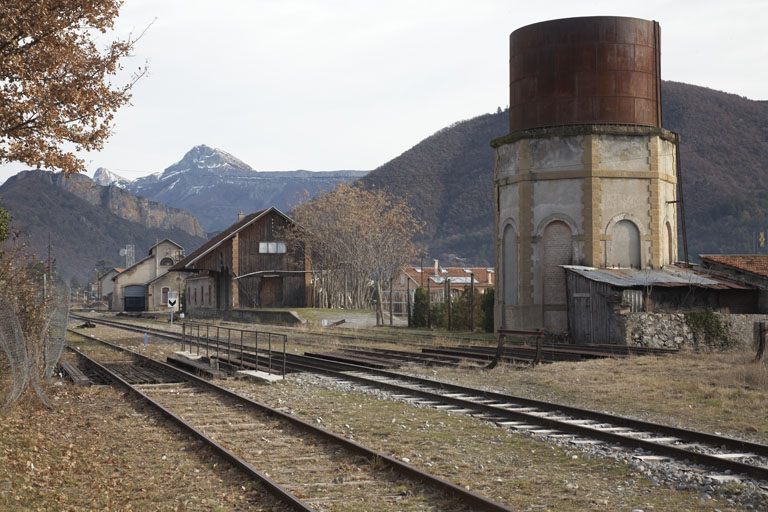
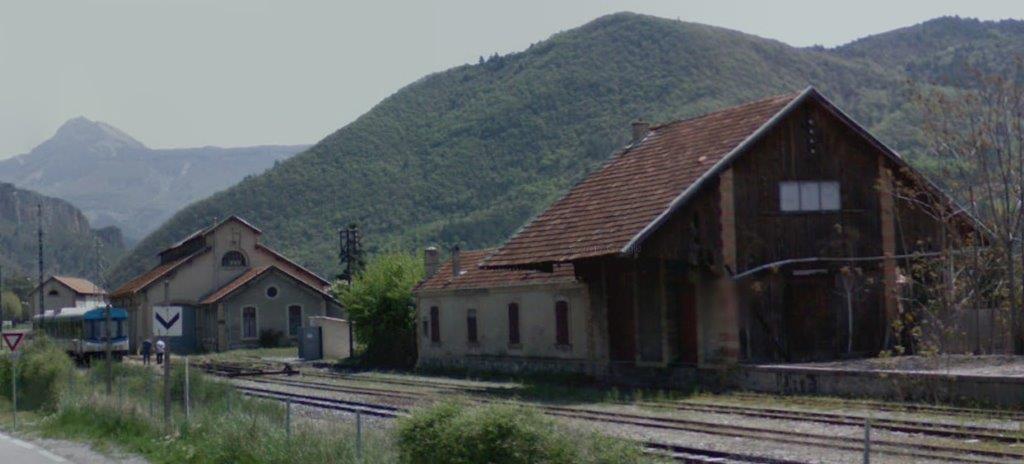
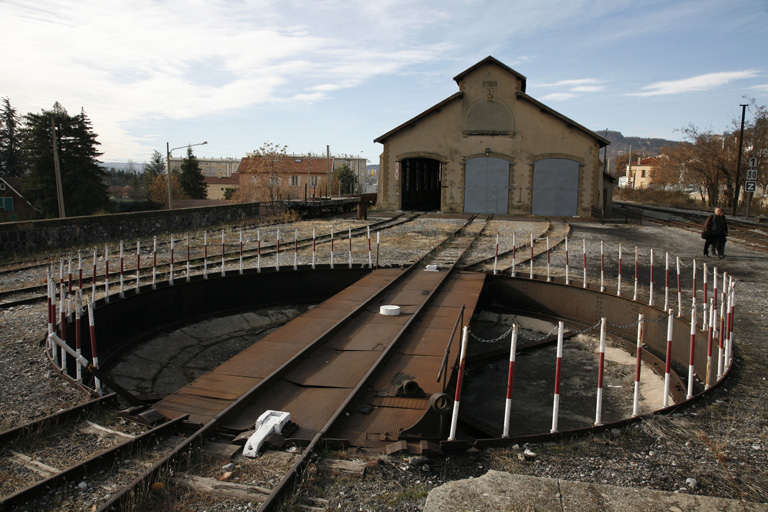
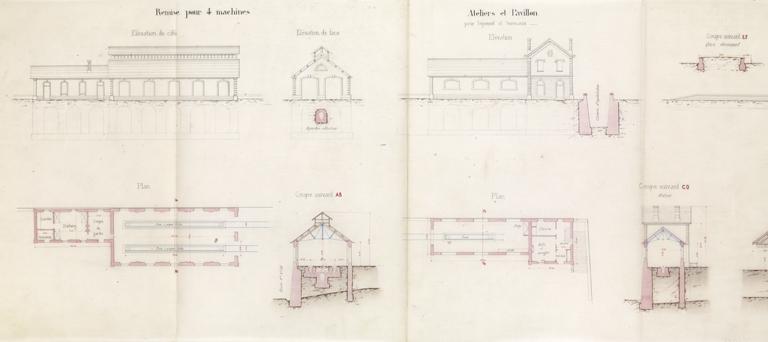
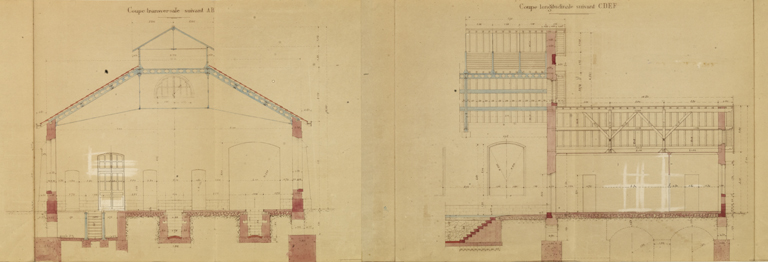
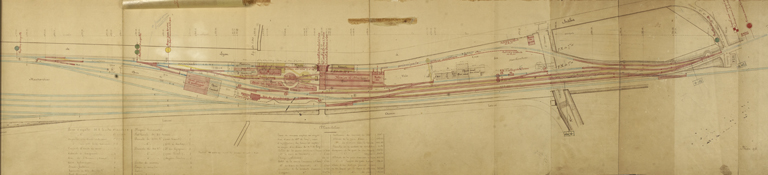
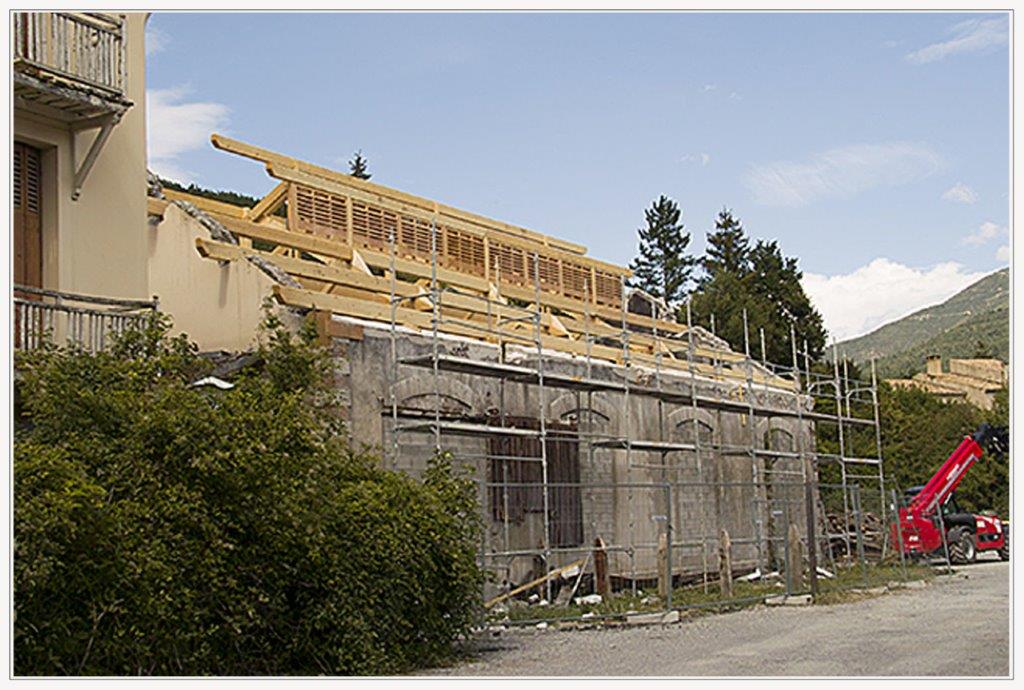
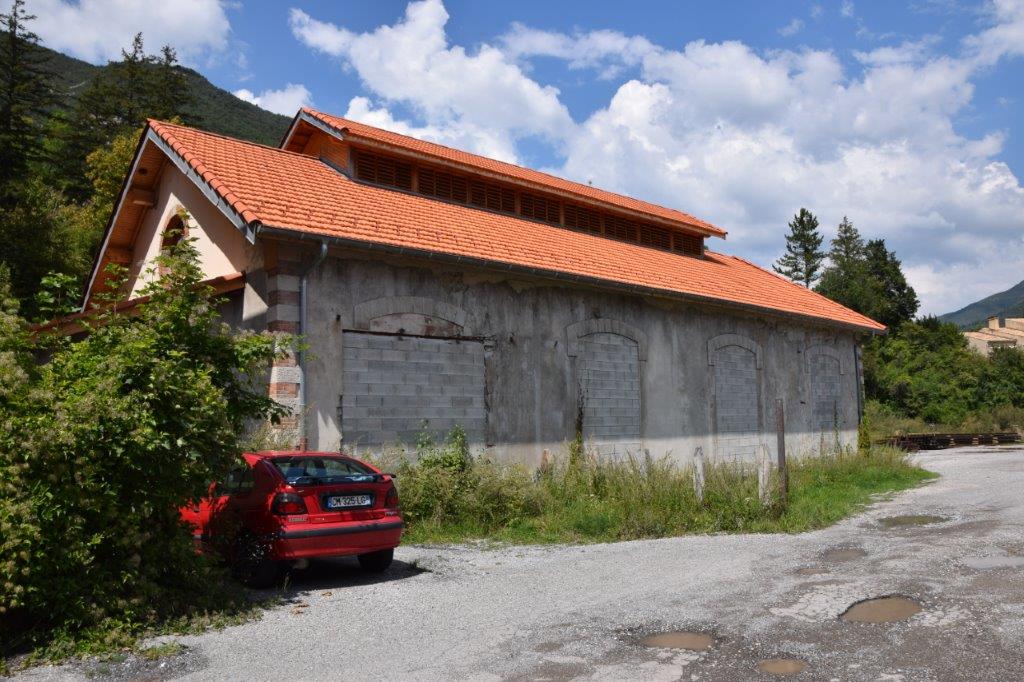
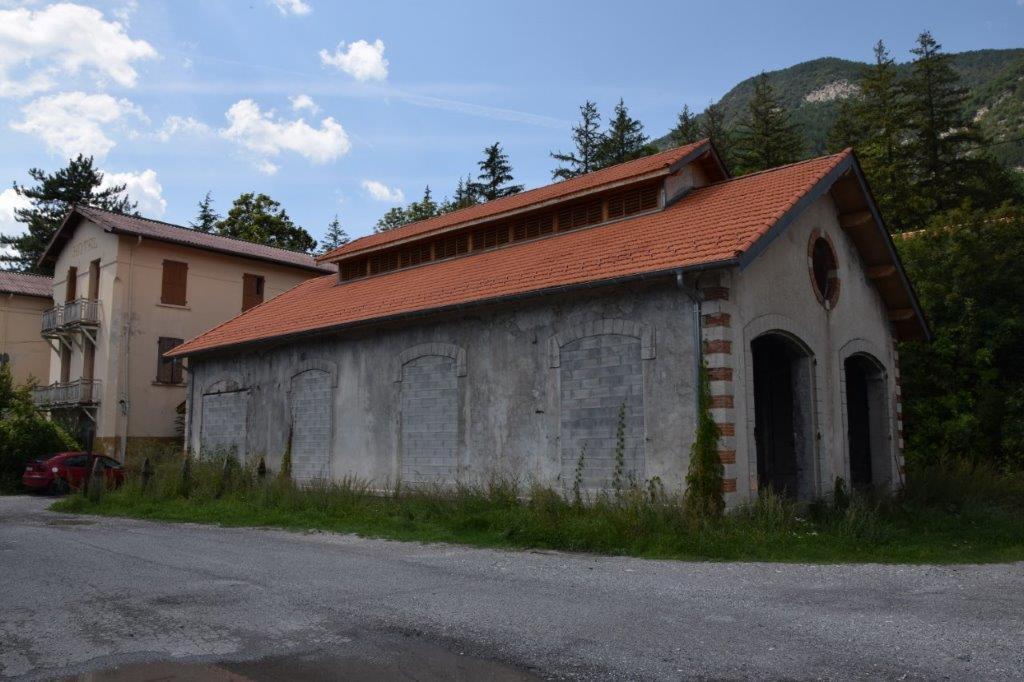
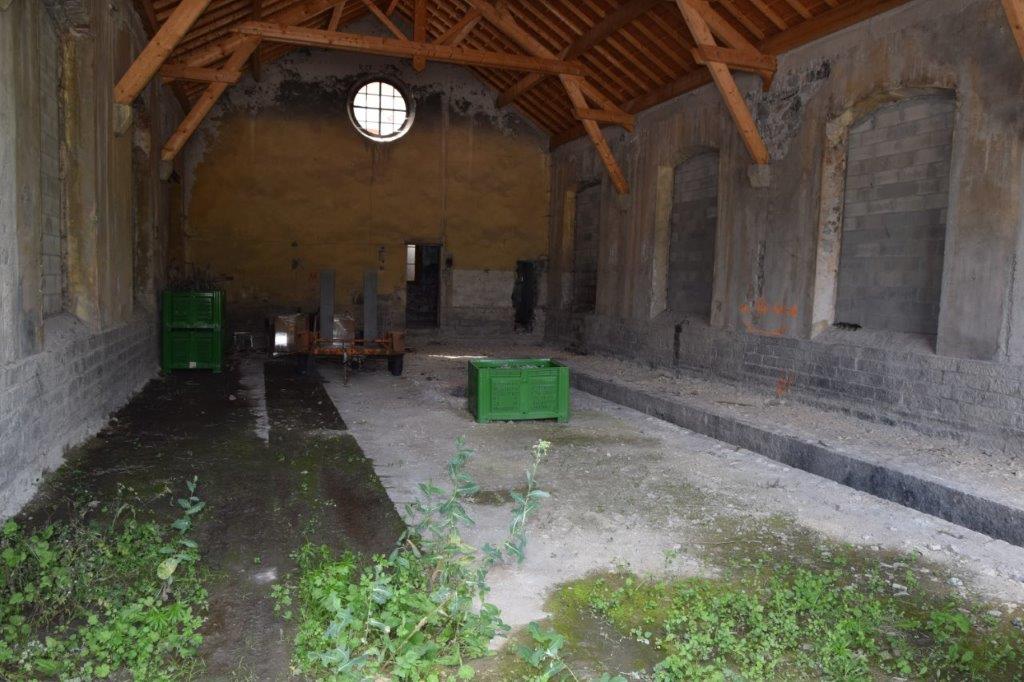
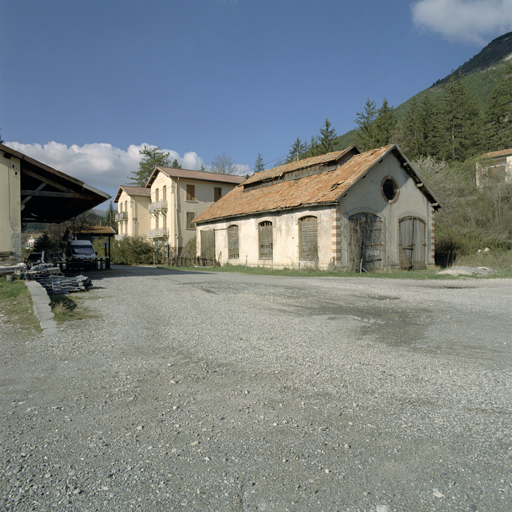
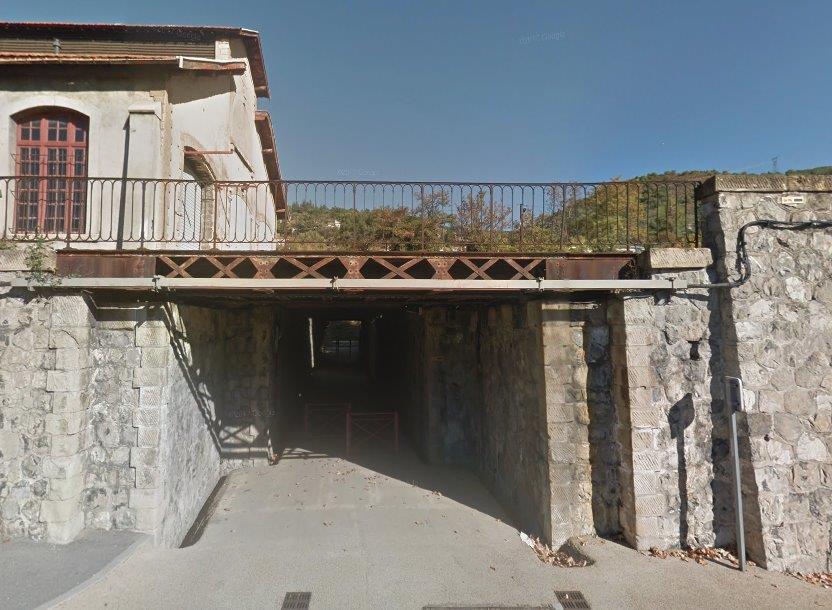
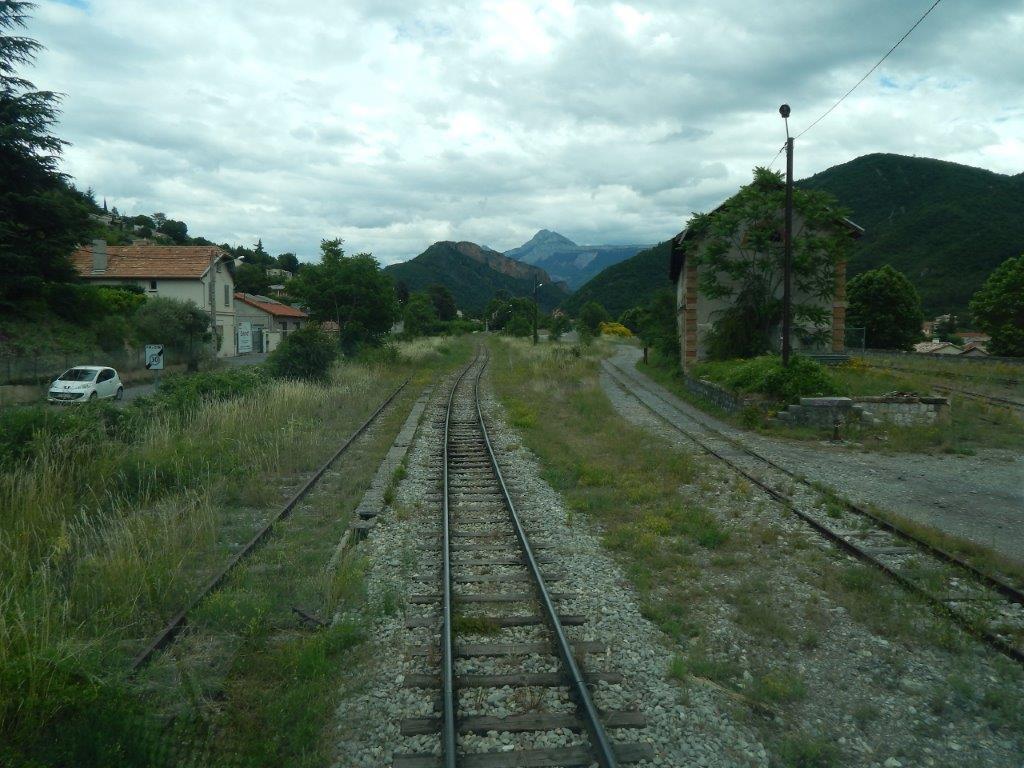
An early postcard image showing the bridge over La Bleone. [10]Railway bridge over La Bleone and the N85 with the span over the road appearing to be much newer than the spans over the river! [9]The railway bridge over the river and N85 viewed from the West on the N85.A plan of the whole station site.The level crossing on Route Napoléon, Avenue de Verdon.The level crossing on Route Napoléon, Avenue de Verdon.The crossing keeper’s cottage, looking towards the terminus at Digne.Looking ahead towards Digne Station from the level-crossing on  Chemin du Hameau des Hautes Sieyès.The water tower at the mouth of the station yard in Digne – the railway stations are off to the left by a few hundred yards. Then picture is taken from the north side of the tracks.A view of the same water tower from the south.A line side view of the water tower and the station yard beyond. [15]Two images of the goods shed, the second is from the cab of an Autorail.  [2]A drawing of the good shed. [15]The Engine Shed seen from the cab of an Autorail travelling towards the passenger station buildings. [2]A line side view of the Engine shed looking East towards the passenger facilities at the station. [15]The Engine Shed from the south side of the station complex.A driver’s eye view of the line from the engine shed looking east towards the station platforms. [2]The turntable and Engine shed looking West. [15]Two drawings (above) of the Engine Shed. [15]Two images (above) of the pedestrian underpass just to the east of the Engine Shed. The first shows the north entrance and the second, the with entrance.Looking ahead from the cab of an Autorail. This gives a good idea of the length of the station site. The passenger facilities seem to be a very long way distant. [2]A larger scale map of the station complex.

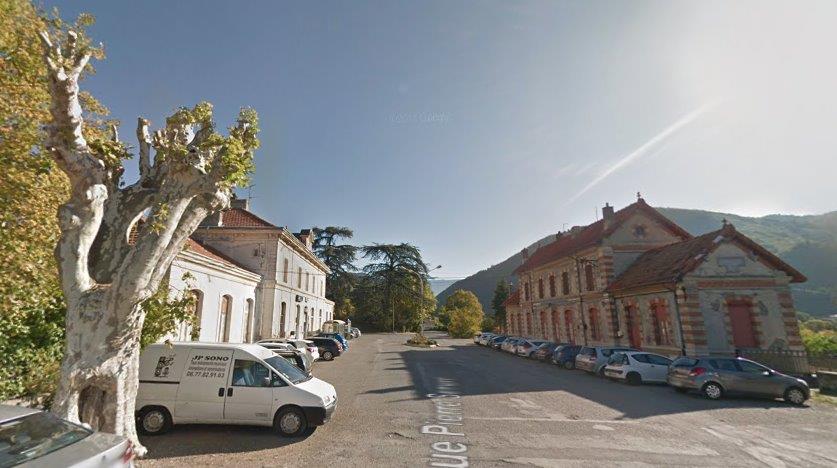
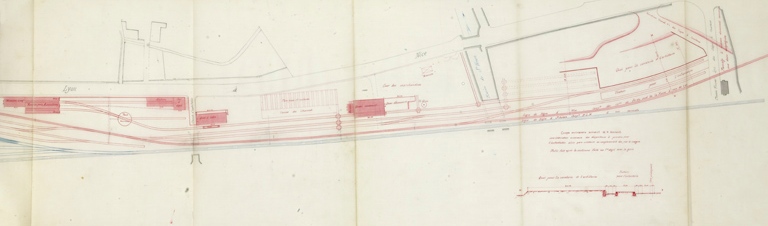
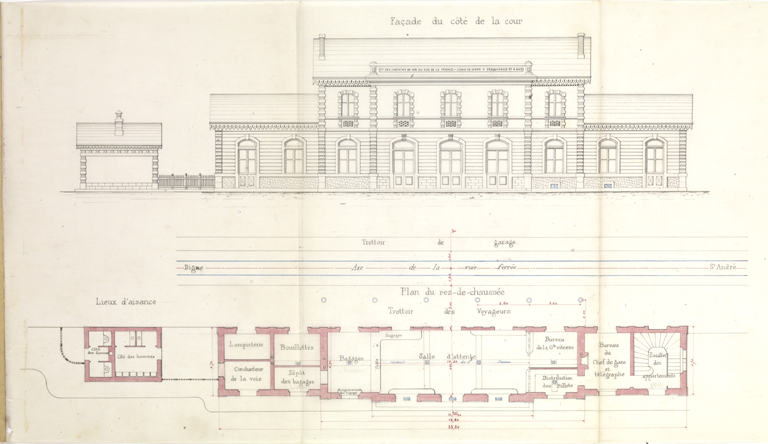
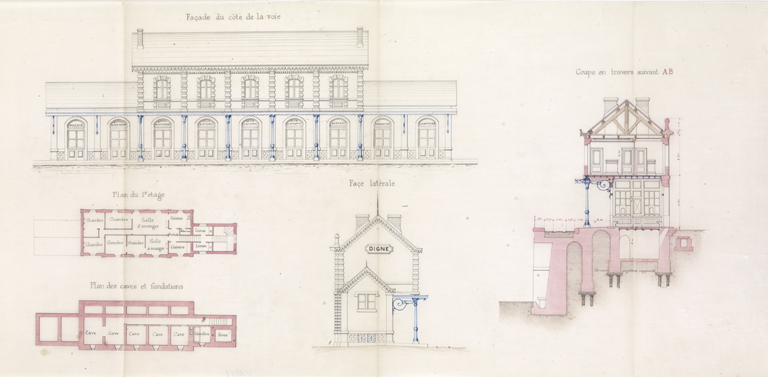
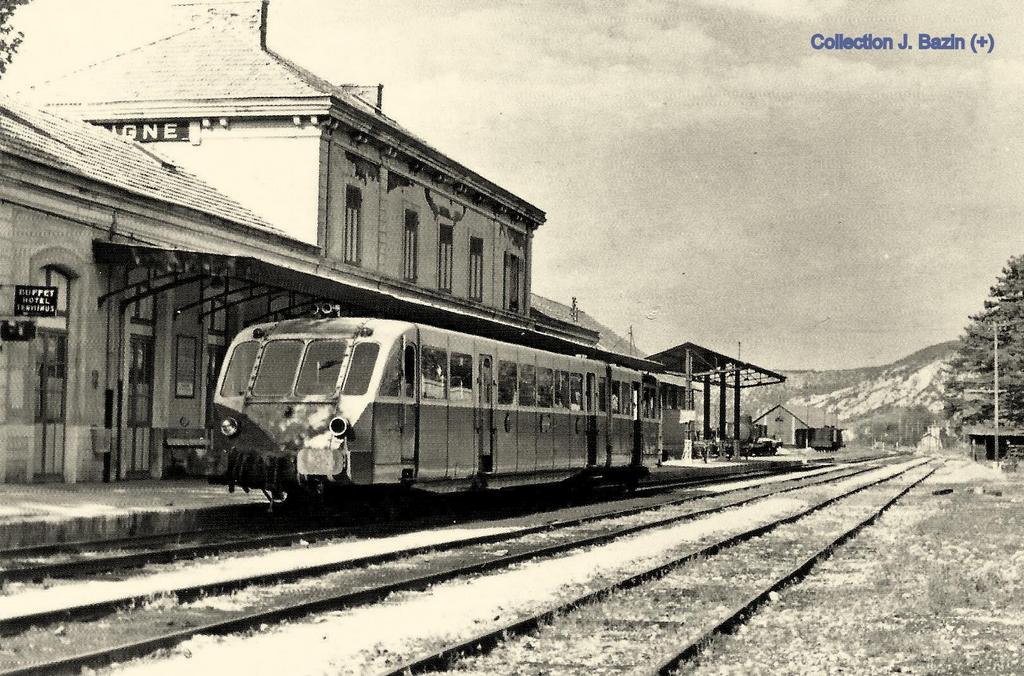
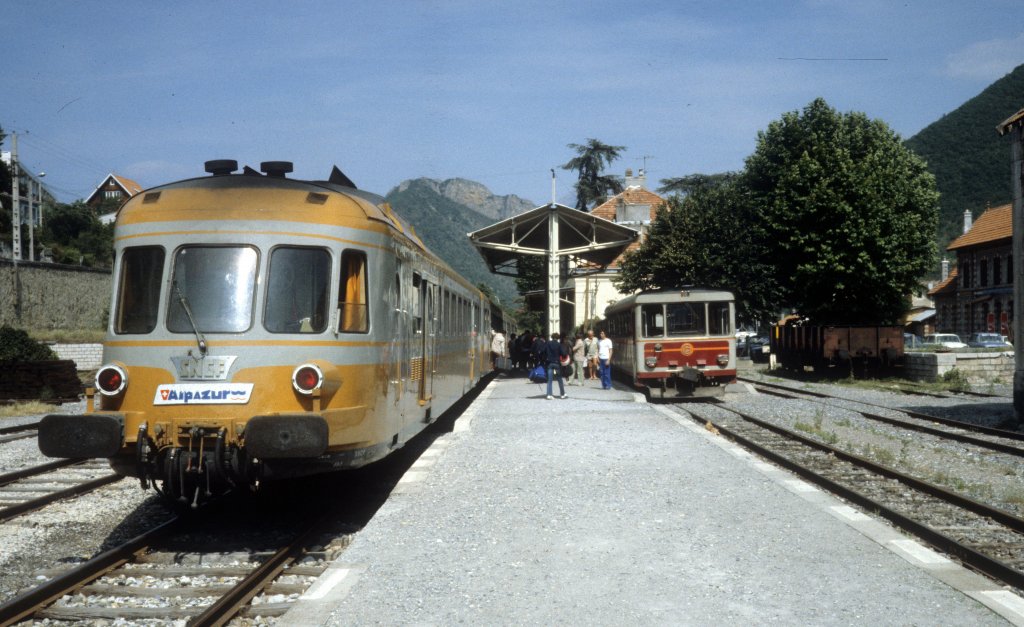
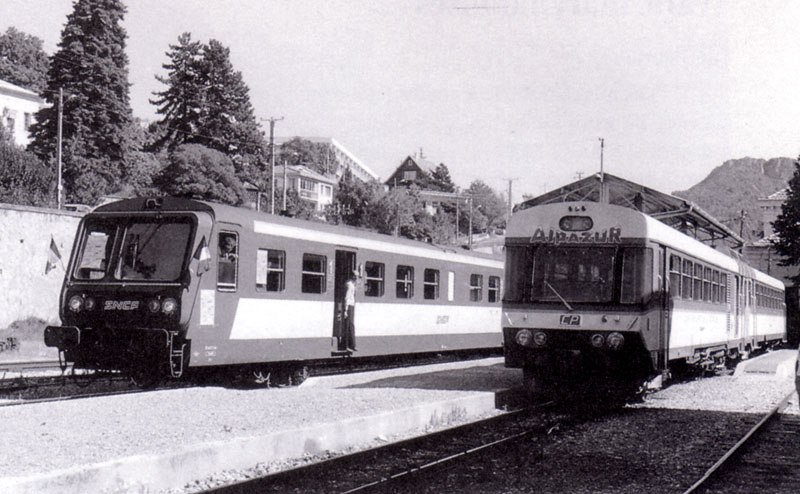
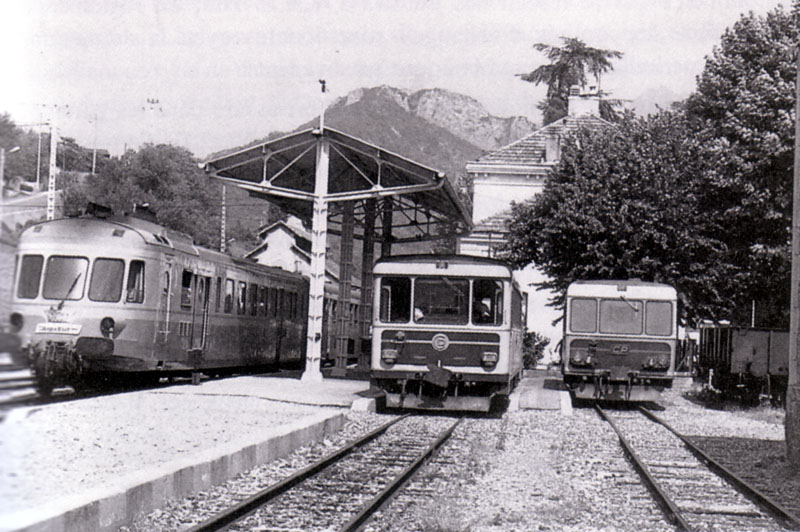
The transfer building and platform set aside for the transshipment of goods from the metre-gauge line from Nice to the standard-gauge branch which fed Digne from the mainline to the West. [15]The original passenger station building for the metre-gauge line. [15]The station courtyard looking East, with the metre-gauge station building to the right and the original standard gauge facilities on the left. [15]Modern traction stabled on the line to the old station building. [13]A view across the passenger facilities of the station complex taken from the northwest.A view of the shared station platform at Digne in the 1980s. [12]Three images (above) in monochrome showing the shared passenger facilities at Digne. [16]A later image of the station after the removal of the standard-gauge lines. [13]A closer view showing the platform in use in the early 21st Century and the old station building for the Nice to Digne line. [13]The early 21st Century station! [13]The early 21st Century station. [13]Images of the standard gauge station from the North side of the complex.A closer view of the station forecourt highlighting the proximity of the two station buildings and their different architecture.The immediate station plan in the early 21st Century.These three images (above) show different iterations in the planning of the station with the bottom image best reflecting what was built on the site. [15] In the 20th Century the facilities for the metre-gauge line were altered to provide a shared platform with the standard-gauge branch.

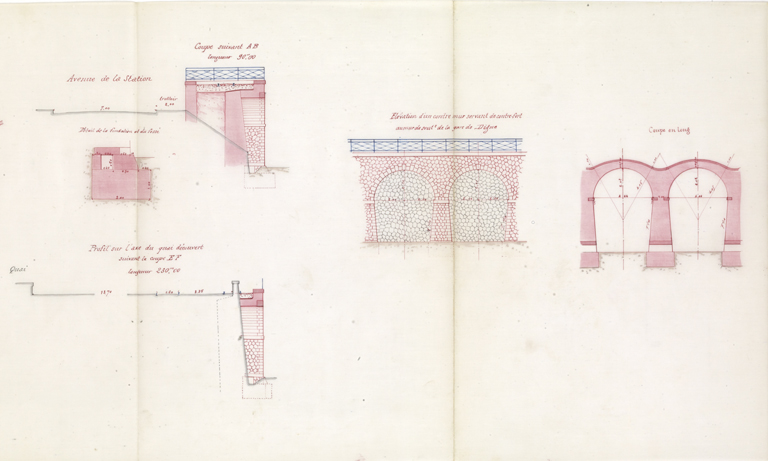
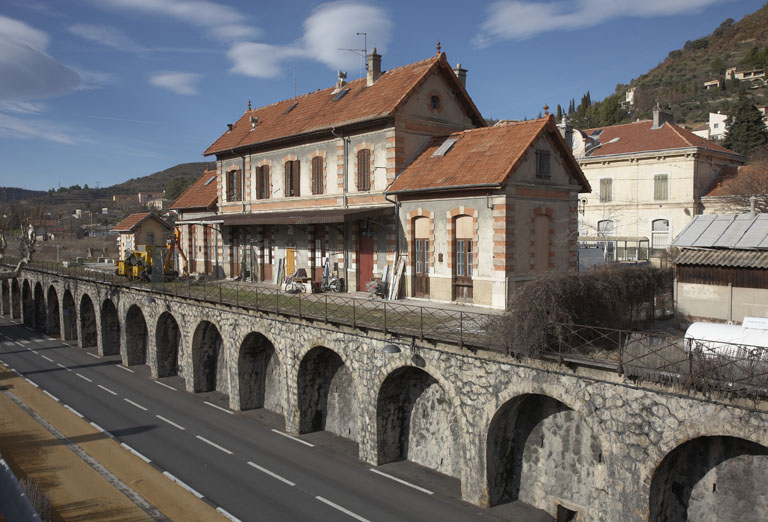
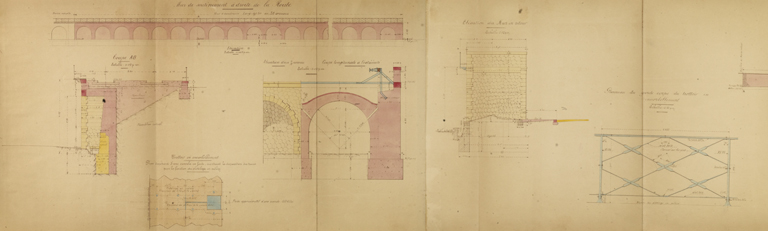
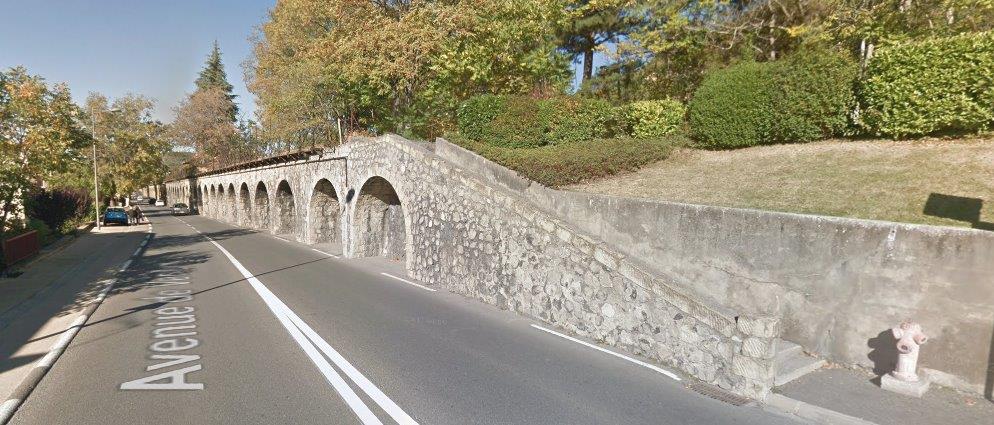
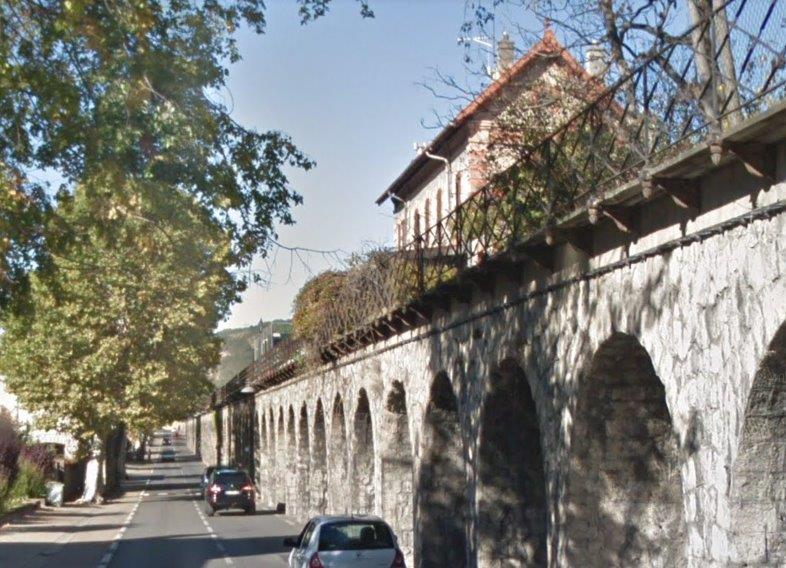
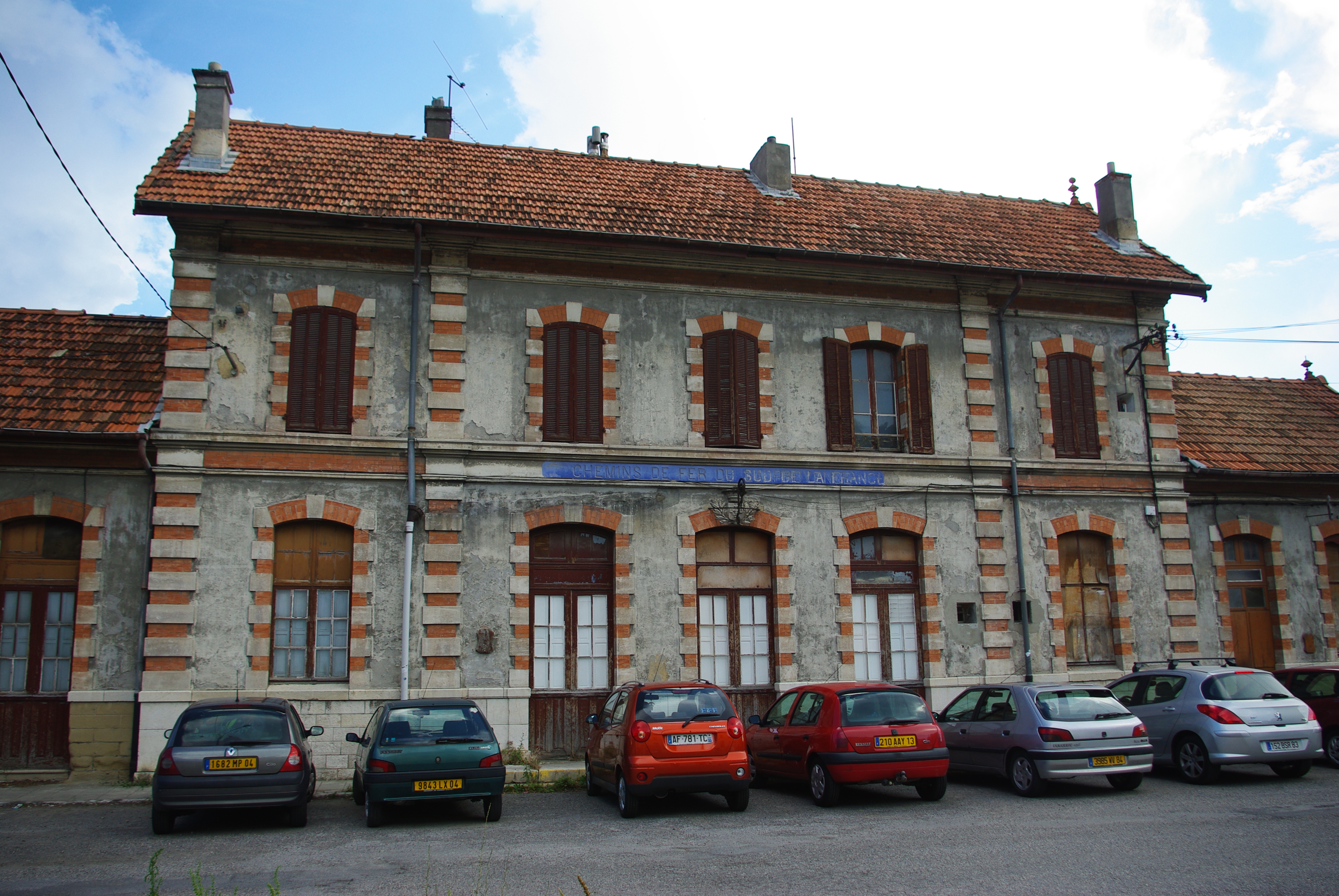
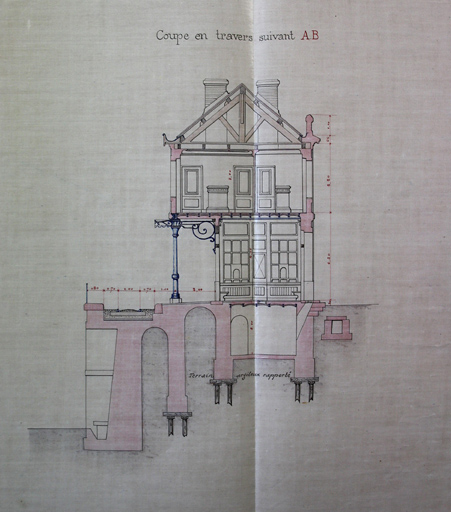
On the south side of the site the land drops away from the station and in order to maximise the space on the site a significant retaining wall had to be built on the south boundary of the site.One plan showing the construction of the retaining wall. [11]An impressive shot of the Nice-Digne Line Station building and the retaining wall supporting it above the Avenue de Verdun.  [13]A further diagram of the retaining wall. [15]The retaining wall in the early 21st Century, two views (above) taken from Google Streetview.The Chemins de Fer de Provence Station Hall. [13]Three drawings of the Chemins de Fer de Provence Station Building. [15]

Two videos are included below which give a good idea of the condition of the station site. [14]

To finish this blog post I will include some postcard images of the station site from earlier year and then reflect a little on what might be happening in the future.

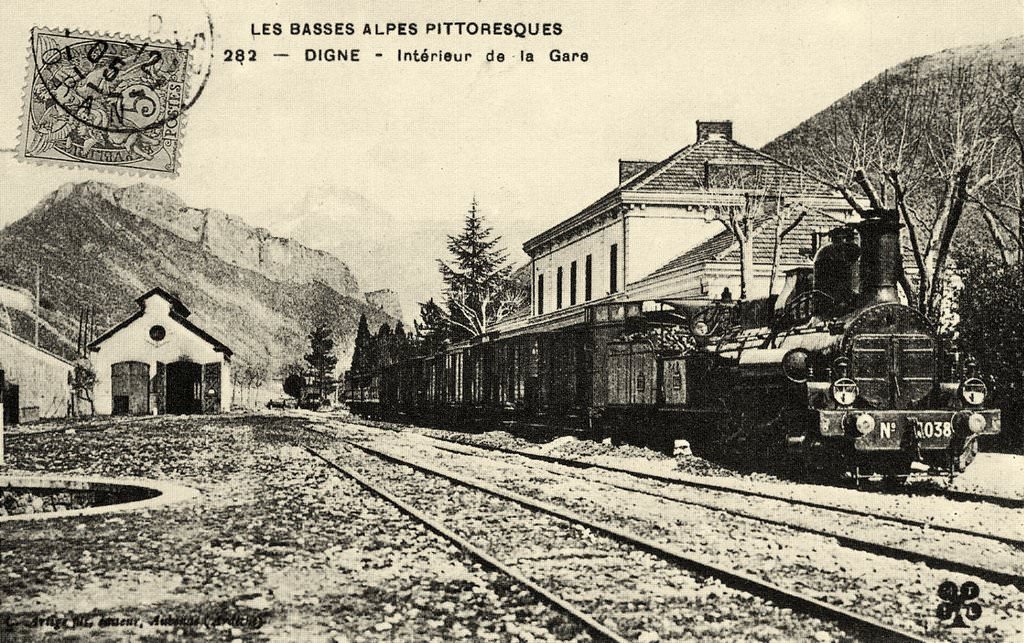
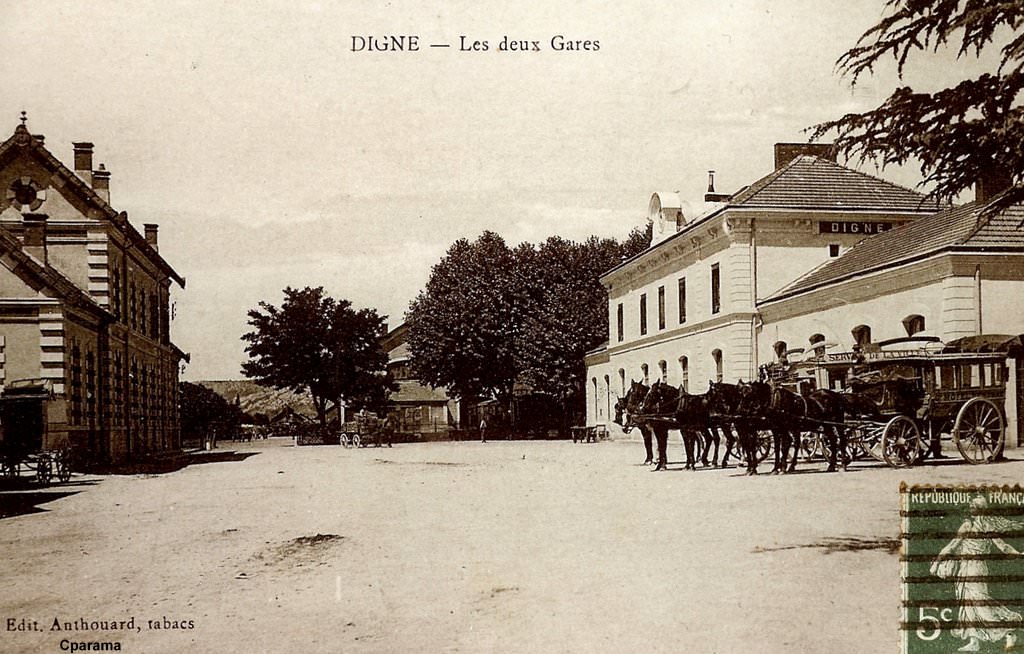
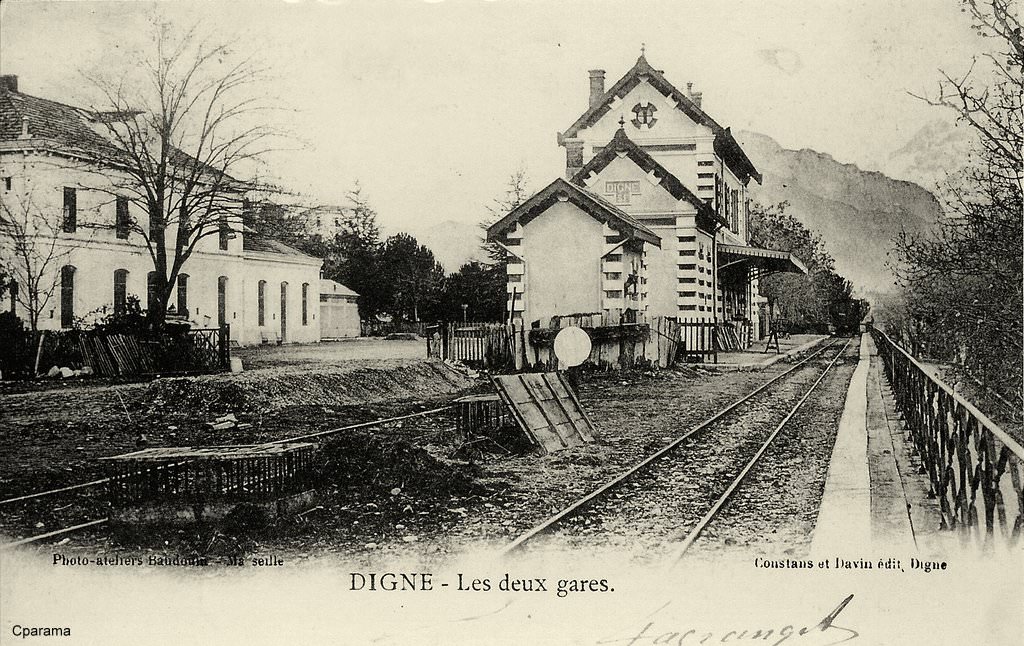
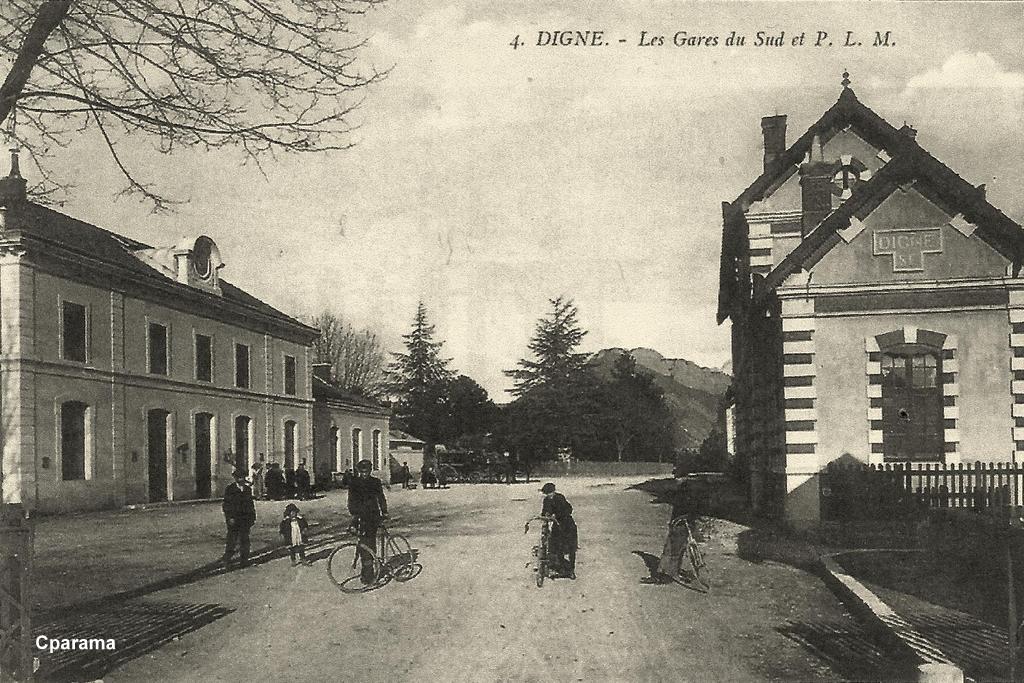
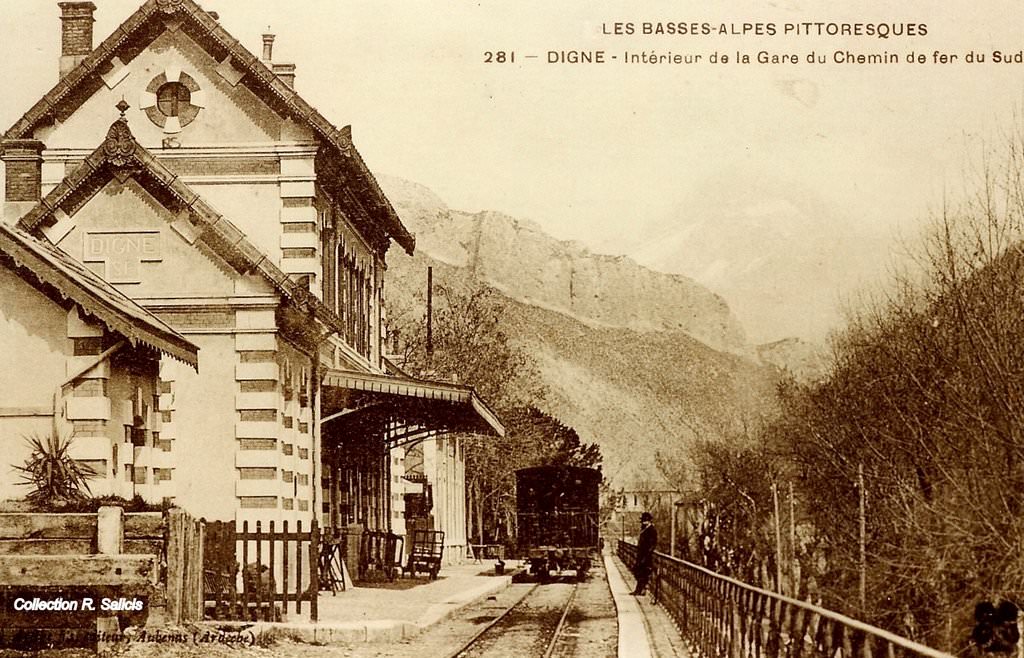
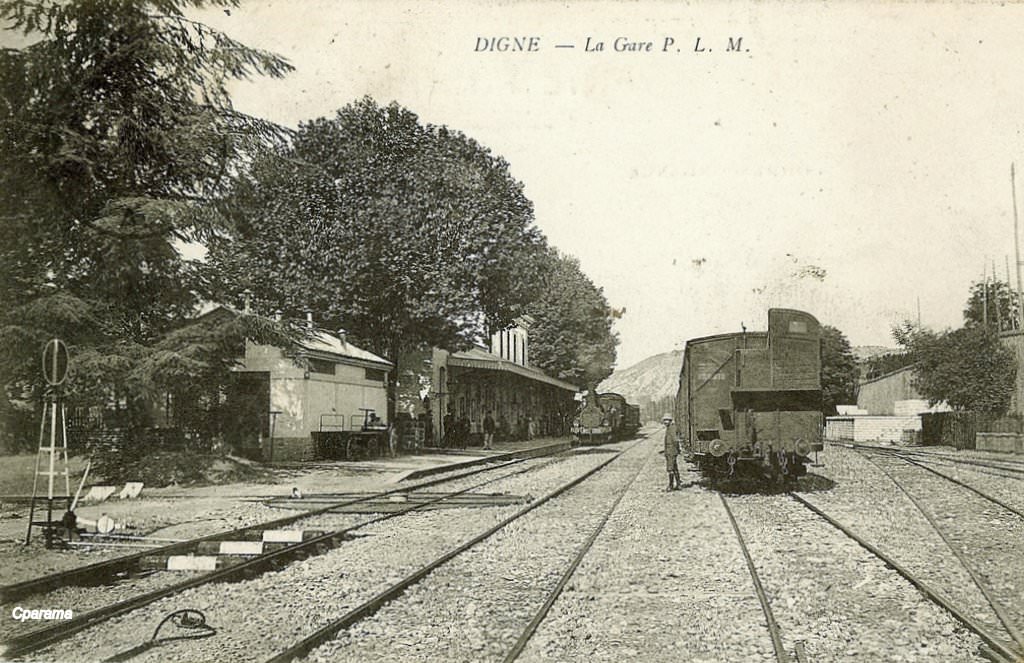
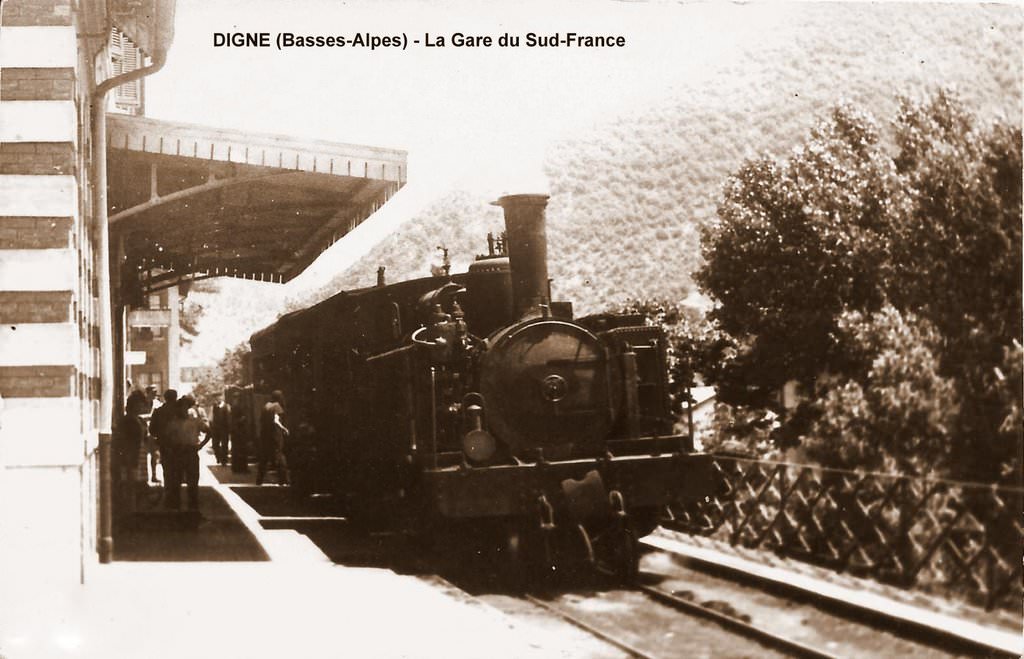
First the postcards from the CPArama website …..The standard-gauge PLM station and engine shed. [10]The station courtyard. [10]The two stations taken from the top of the retaining wall at the south side of the site. [10]The station courtyard from the West. [10]The PLM station looking West. [10]The Chemins de Fer de Provence Station Building. [10]The PLM Station taken from alongside the standard-gauge Engine Shed. [10]An early steam-hauled service is about to set off on the journey towards Nice. [10]

And finally, what about the future. ….

Traffic on the metre-gauge line is hampered by that fact that the standard-gauge connection to Digne has been cut. Christopher James has mentioned that there has been talk of a possible metre-gauge line extension to meet the SNCF mainline at Château-Arnoux Saint-Auban, however, this is probably beyond the resources of the Chemins de Fer de Provence.

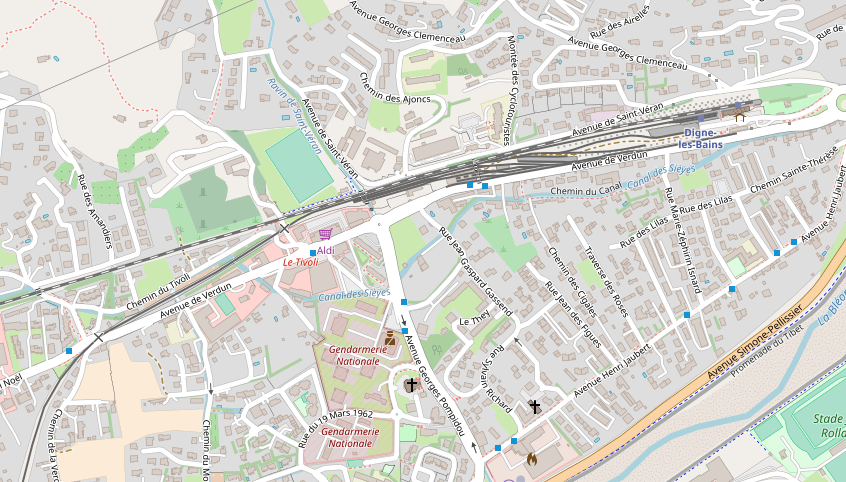
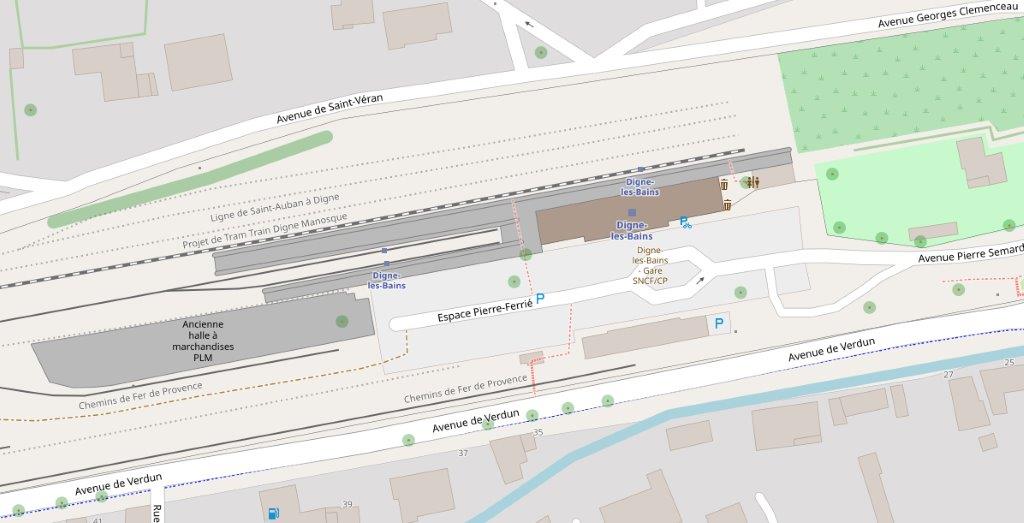
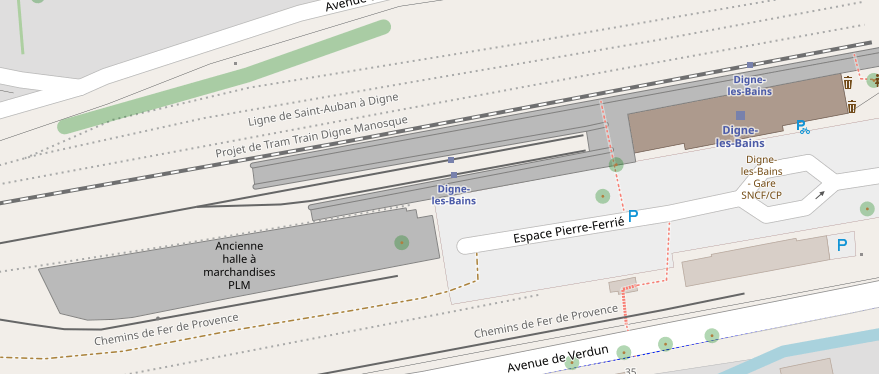
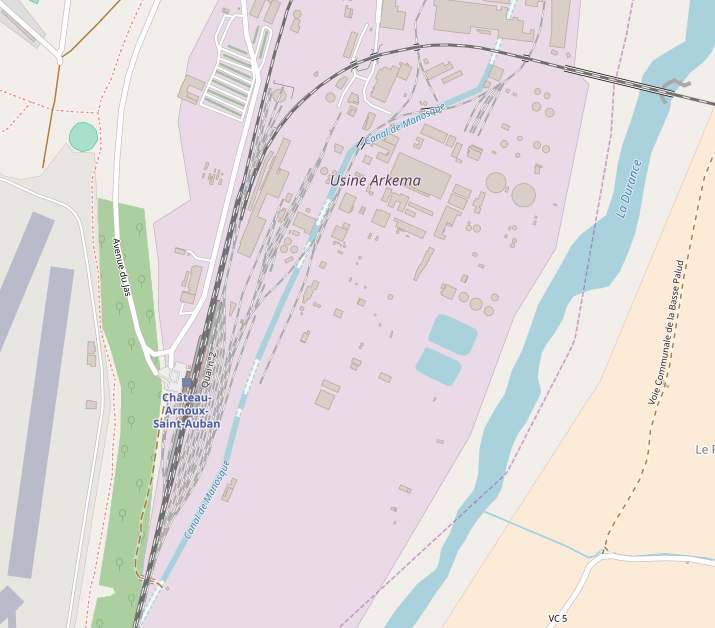
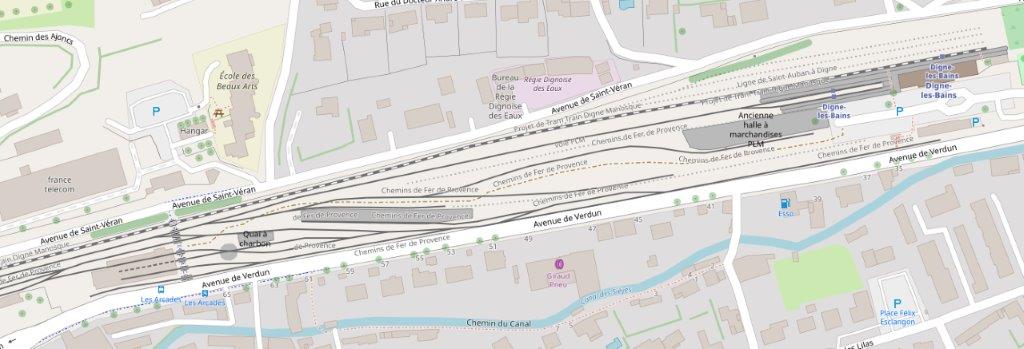
In looking for plans of the Station Site at Digne les Bains, I noticed reference to a ‘Project de Tram Train Digne Manosque’. It can bee seen on the Openstreetmap plan below and is shown as a dotted line which runs from Digne (immediately below) to Château-Arnoux Saint-Auban.The project is intended to use the old standard-gauge formation and its line into Château-Arnoux Saint-Auban is shown above. The project now has a website: http://transport-provence-alpes.centerblog.net/12-projet-multimodal-digne-sisteron-manosque. Is the scheme feasible? There are some questions about this which appear in the comments on the website.

How likely is this scheme, does anyone know?

References

  1. https://www.google.co.uk/maps/place/M%C3%A9zel%2FCh%C3%A2teauredon/@44.010038,6.201066,3a,75y,90t/data=!3m8!1e2!3m6!1sAF1QipMAOPyxuAbfSVVUTAyfZOew2a0G07LK1iGfYxyI!2e10!3e12!6shttps:%2F%2Flh5.googleusercontent.com%2Fp%2FAF1QipMAOPyxuAbfSVVUTAyfZOew2a0G07LK1iGfYxyI%3Dw129-h86-k-no!7i1500!8i1000!4m5!3m4!1s0x12cb91840c767ed3:0xa02521aa30f35bdd!8m2!3d44.0097448!4d6.2007228, accessed on 19th August 2018.
  2. http://www.rd-rail.fr/1-PHOTOS/PH43/index-ph43.html, accessed on 12th August 2018.
  3. https://dossiersinventaire.maregionsud.fr/gertrude-diffusion/dossier/ponts-des-chemins-de-fer-de-provence/6db00f0d-4794-4fb9-8d66-a7675e5c748b, accessed on 12th August 2018.
  4. https://fr.wikipedia.org/wiki/Le_Chaffaut-Saint-Jurson, accessed on 20th August 2018.
  5. http://www.tunnels-ferroviaires.org/tu04/04070.2.pdf, accessed on 20th August 2018.
  6. https://dossiersinventaire.maregionsud.fr//gertrude-diffusion/dossier/tunnel-ferroviaire-des-hermittes/77ea863f-d328-4776-b1ec-90bb186ff2aa/illustration/0, accessed on 20th August 2018.
  7. http://www.railsim-fr.com/forum/index.php?/topic/10163-le-train-des-pignes/&page=2, accessed on 15th August 2018.
  8. https://leonardetsesamis.com/1er-mai-2010-a-la-gare-de-gaubert-le-chaffaut, accessed on 20th August 2018.
  9. https://structurae.net/structures/digne-railroad-bridge, accessed on 21st August 2018.
  10. https://www.cparama.com/forum/digne-les-bains-t8.html, accessed on 21st August 2018.
  11. https://dossiersinventaire.maregionsud.fr//gertrude-diffusion/illustrations/info?id=89daf5fe-9604-4fba-8755-6a48acf5a242&slug=ivr9320110400342nuc2a, accessed on 21st August 2018.
  12. https://fr.wikipedia.org/wiki/Ligne_de_Saint-Auban_%C3%A0_Digne, accessed on 1st August 2018.
  13. https://mapio.net/place/16814242, accessed on 21st August 2018.
  14. These two videos are available on YouTube.
  15. https://dossiersinventaire.maregionsud.fr/gertrude-diffusion/dossier/gare-de-digne-les-bains/704d17b3-45a1-4cec-bd88-9dc73d3724af, accessed on 21st August 2018.
  16. http://cccp.trainprovence.free.fr/cccp/article-alpazur2007.html, accessed on 21st August 2018.

Nice to Digne-les-Bains Part 13 – Barrême to Mezel (Chemins de Fer de Provence 77)

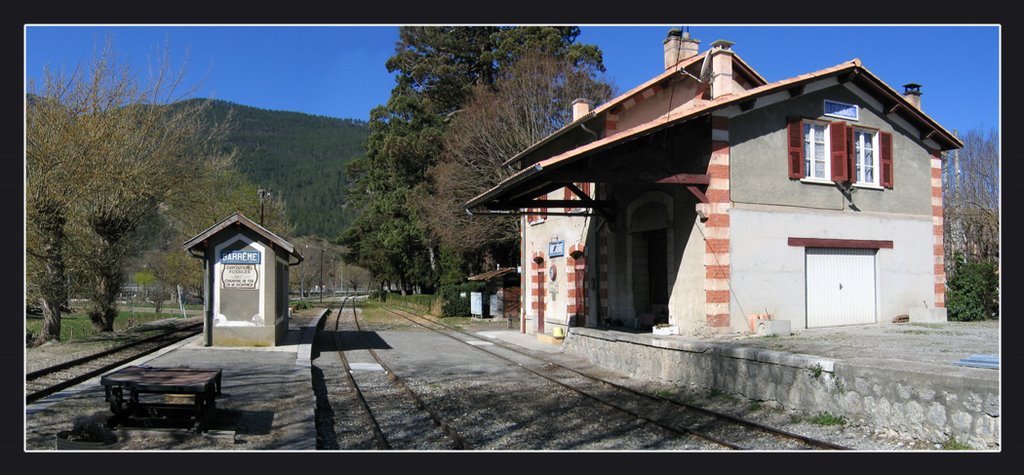
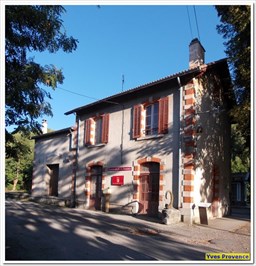
We resume our journey at the Station in Barrême. The first picture shows it on a glorious day and in its best light!

The station at Barrême. [4]

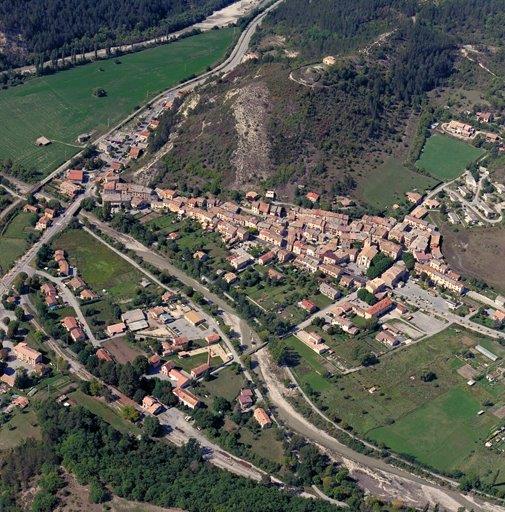
An aerial overview of Barreme with the Station visible to the bottom left of the image, (c) Marc Heller. [12]

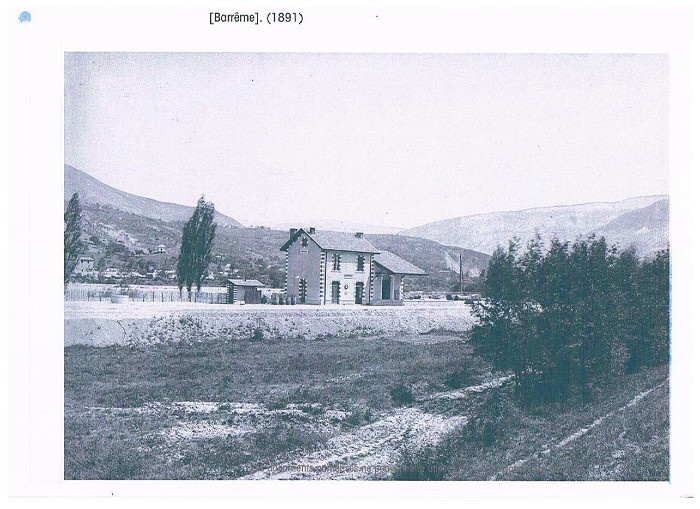
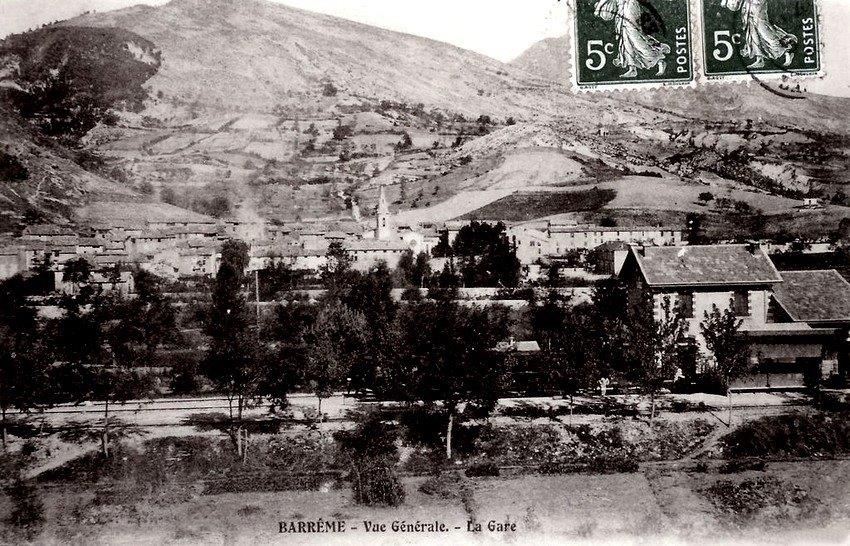
The Station appears quite lonely in 1891! [7]

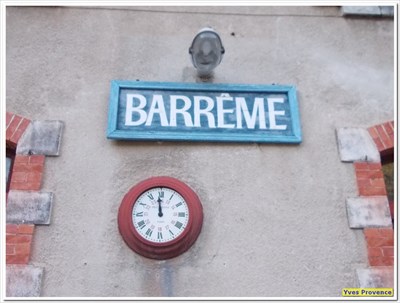
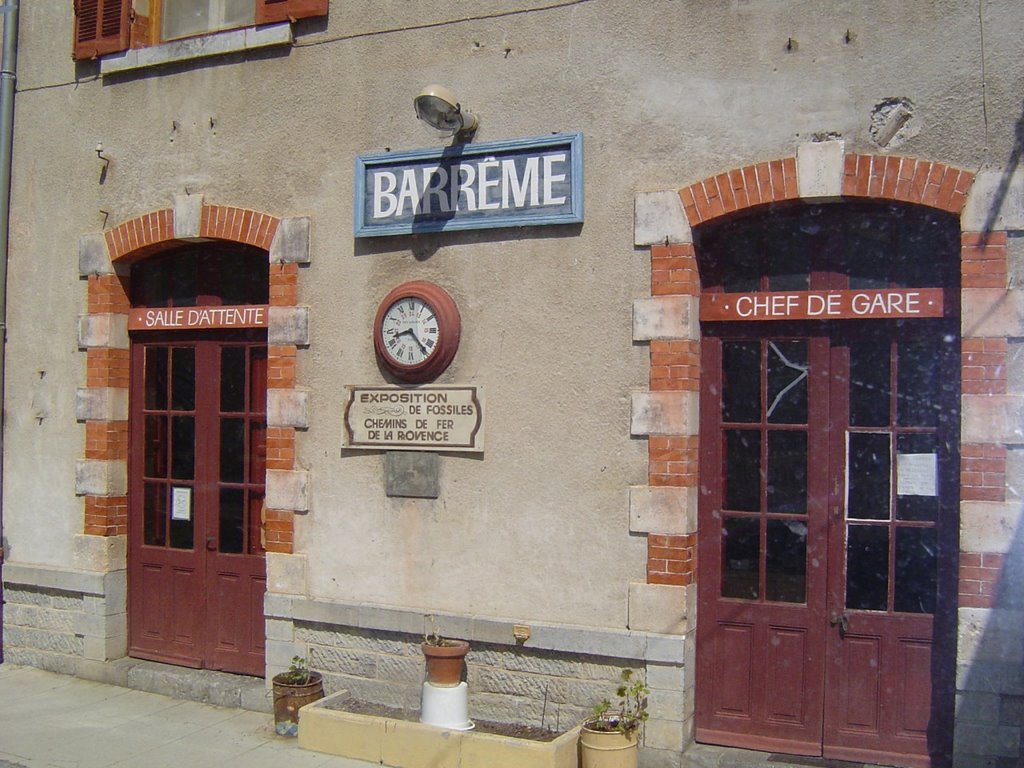
Two views of the station clock. [1][8]

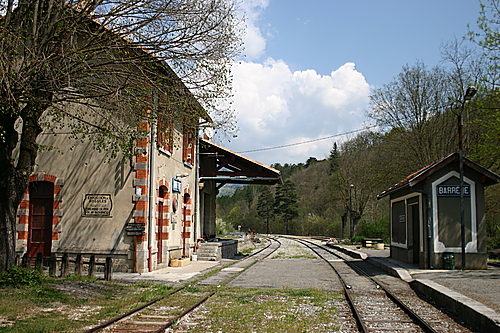
The Station as approached from Digne. [2]

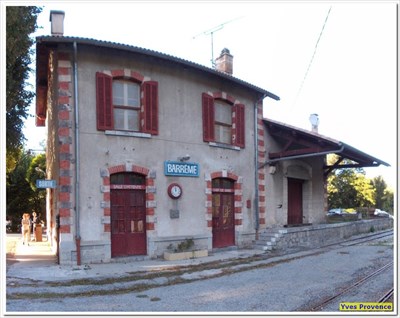
La gare de Barrême, (c) Yves Provence. [1]

La gare de Barrême, (c) Yves Provence. [1]

La gare de Barrême, (c) Yves Provence. [1]

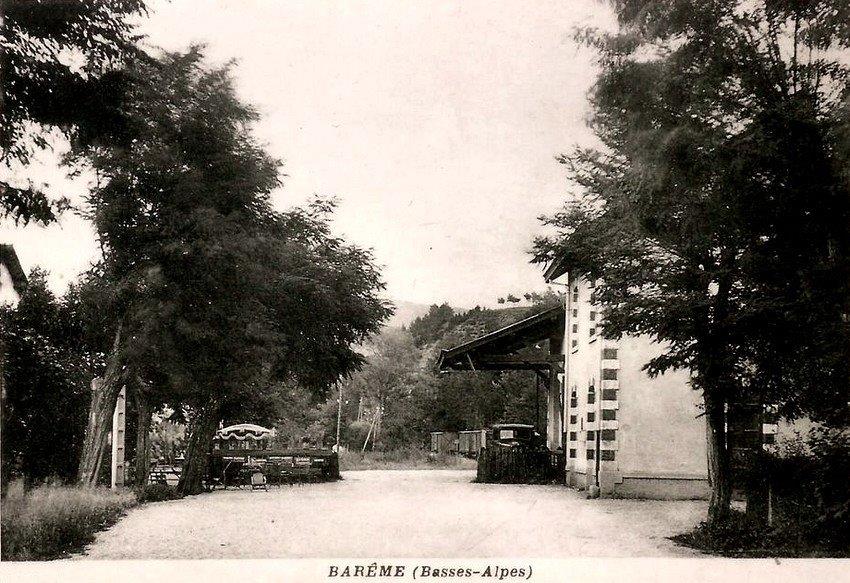
General View of the Station. [3]

The station courtyard. [3]

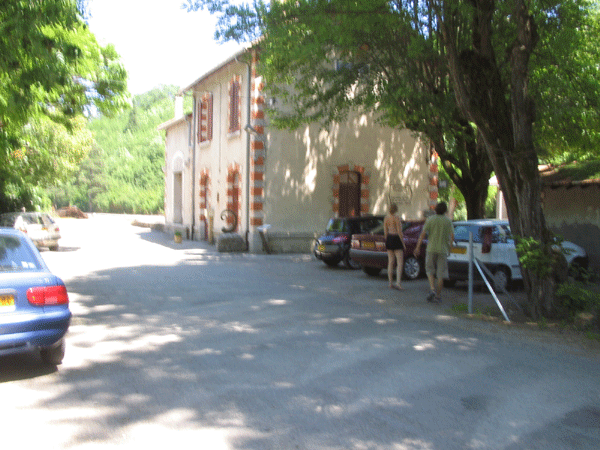
The station courtyard in 21st Century. [5]

Barreme Station with Autorail travelling towards Nice and a construction train brought by the DU-102 draisine, (c) La bête de Calvi. [6]

A very similar view without the trains! [10]

Modern traction at Barrême. [9]

A view from the South, (c) Marc Heller. [11]

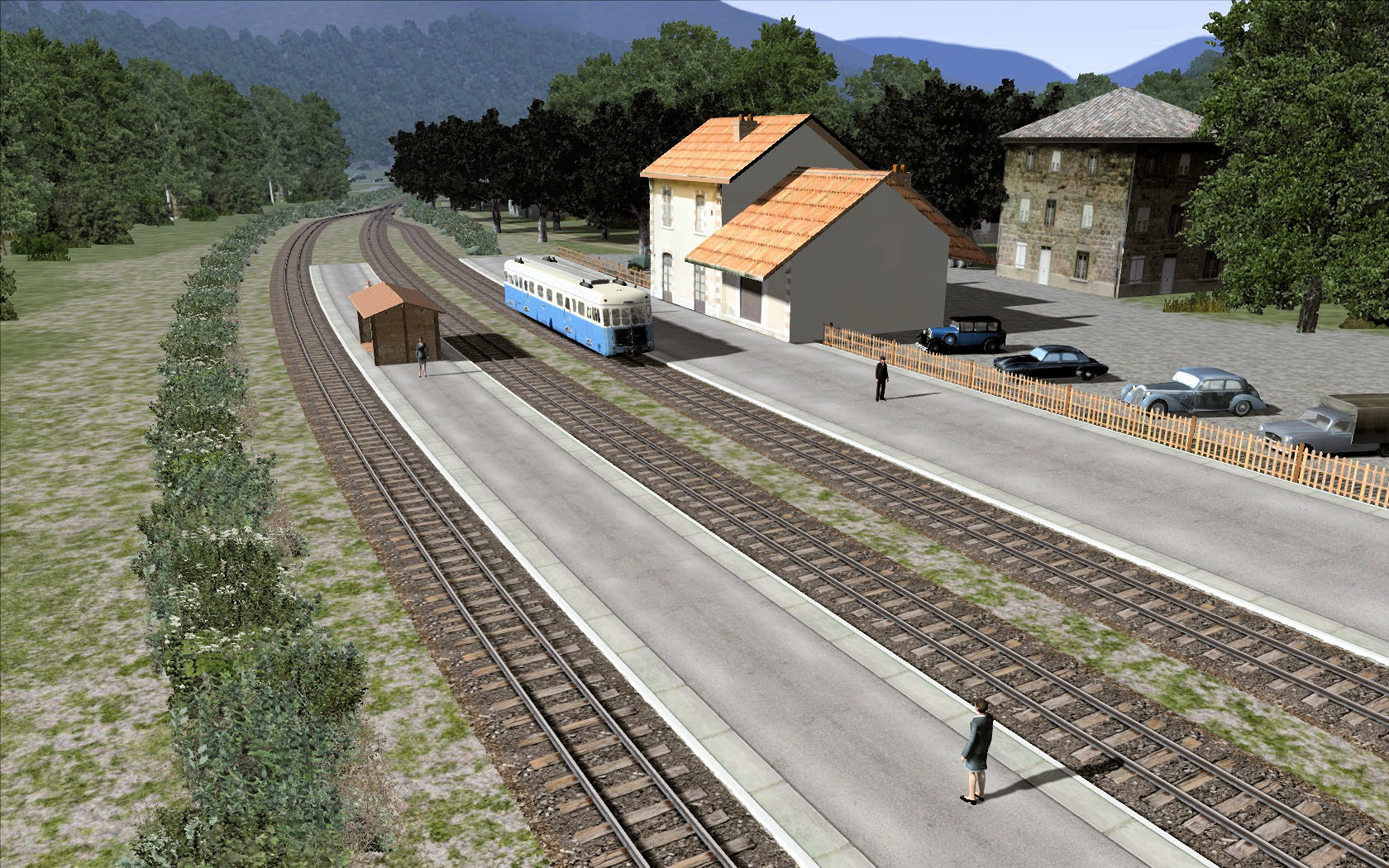
The station on the rail-simulator. [31]

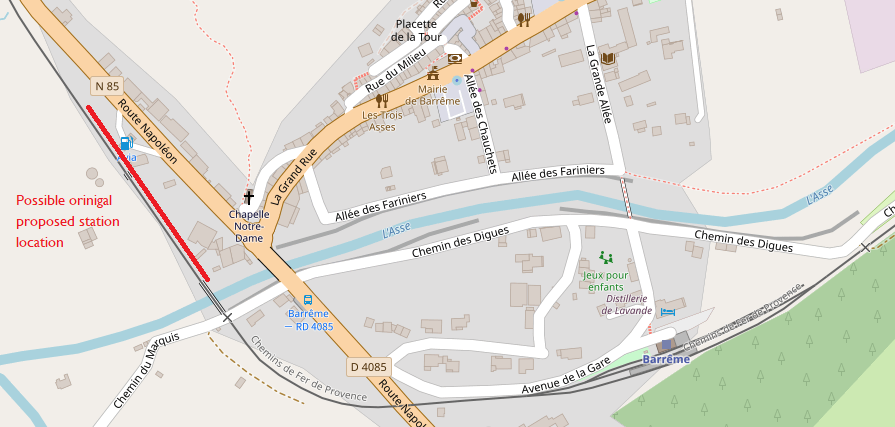
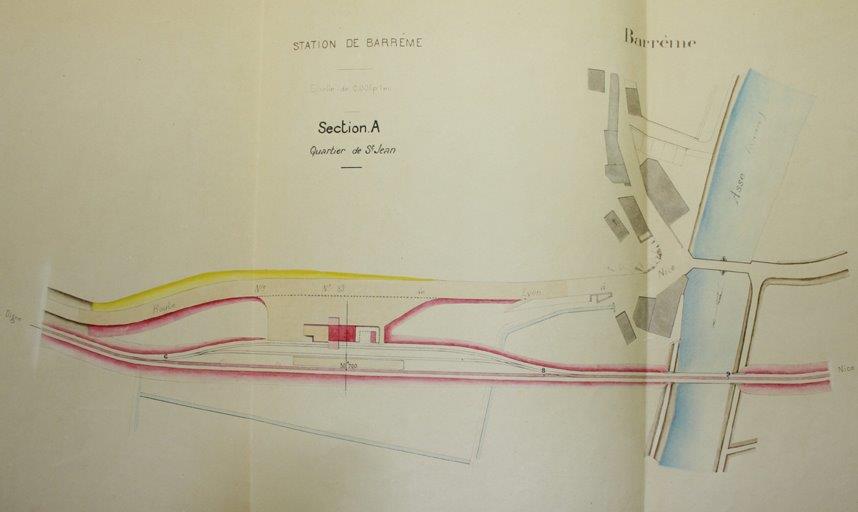
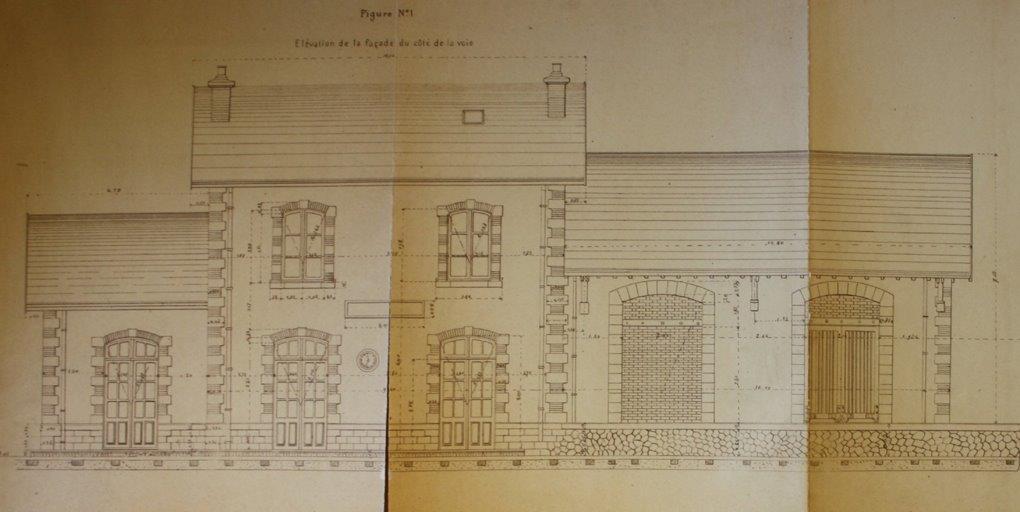
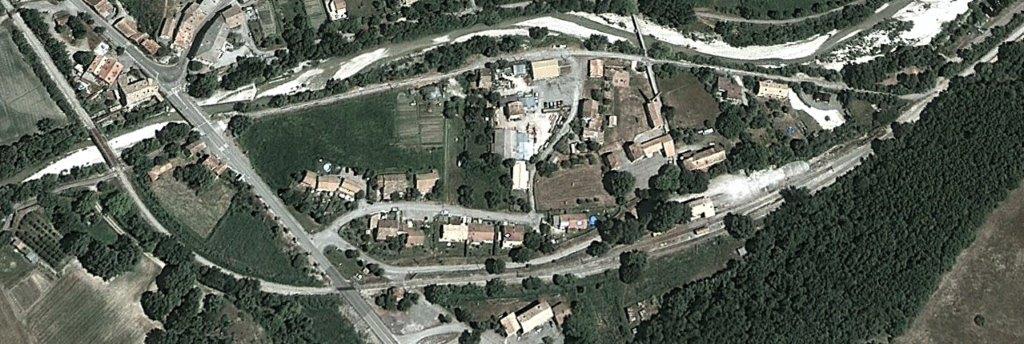
As an interesting aside, research on line suggests that the final location of Barreme station was not the location originally intended. I have found a sequence of drawings which seem to locate the station to the north-west of the present location further along the Nice -Digne line, beyond the bridge in the village centre. It is possible that I have misunderstood the drawings, but it seems that there was another location planned and that the station would have had larger facilities if the original plans went ahead. That location is shown in red on the plan below.

Plan of originally proposed railway station. [12]

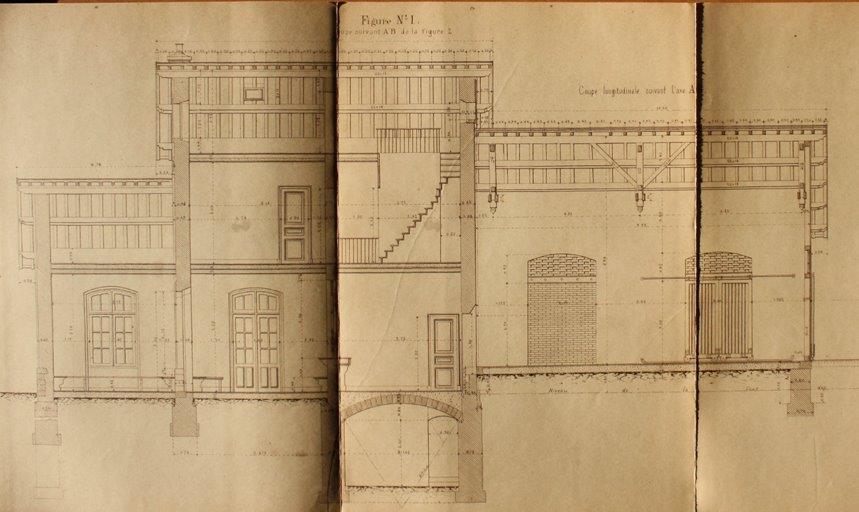
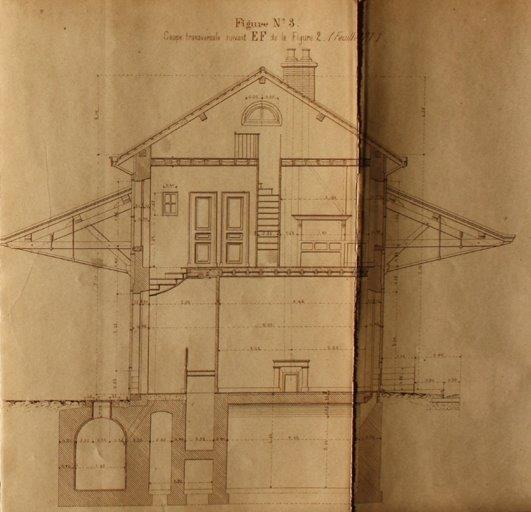
Three images (immediately above] showing the plans for the originally proposed station buildings on the first planned site of the station. [12]

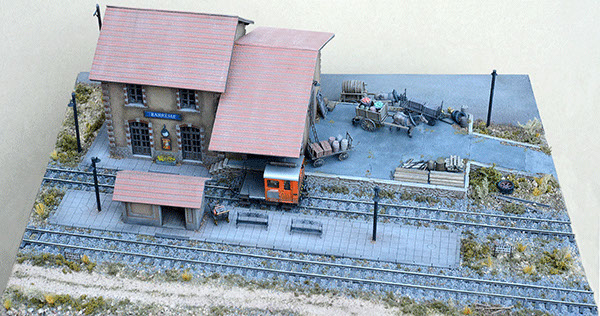
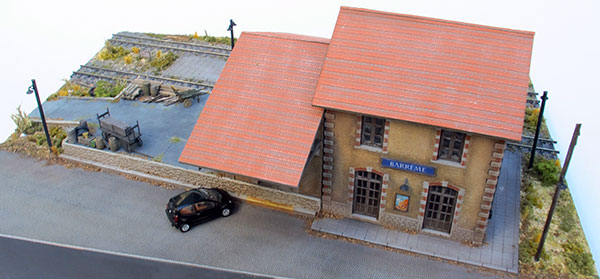
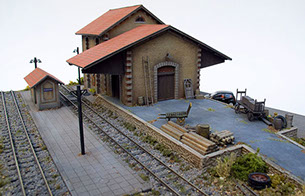
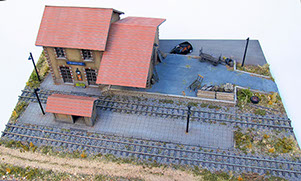
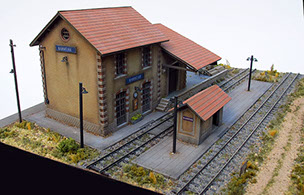
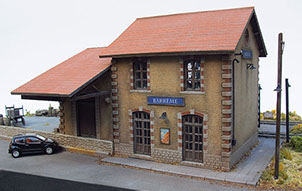
A further interesting aside is the fact that Barreme Station has been used as the source for a model by Aubertrain (http://aubertrain.com/modules.html). These next few pictures give a sense of the quality of the model. [16] The diorama is 602 x 400 x 250 mm in size.

These last two pictures can be found on the site, “http://dignois.fr/Barreme-vieux” and purport to show an early steam engine at Barreme Station. If this is correct, then the station shelter was rebuilt some time after the pictures were taken. [13]

We leave Barreme Station on the train an immediately cross the L’Asse de Moriez just before its confluence with L’Asse de Blieux.

Barreme Bridge [15]

Barreme Bridge [14]

Beyond the village limits, road, rail and river once again run in very close proximity. The road is now the N85 and the river is now l’Asse. In the photograph below the road and river are immediately next to each other and the river can just be picked out beyond the first line of trees and vegetation.

A driver’s eye view of the next Halt on the line – l’Arret de Saut de Loup. [15]

At times the River Asse runs through some relatively steep sided Gorges and road, rail and river squeeze through the narrow space available, as Google Streetview shows below.

The next Halt is Arrêt du Poil-Majastres which can be seen in the image below.

Road, rail and river continue in close proximity. The next image shows the bridge crossing L’Asse for the route,”Lu Buis Noire East.” It is followed by a driver’s eye view of the same location.

Le Buis Noire East seen from the cab of an Autorail. [15]

The line drops steadily down the valley of l’Asse towards Norante. Its route favours the river rather than the road until, close to Chaudon-Norante, it enters another tunnel – the Tunnel de Norante. By this time the line has dropped to an altitude of about 650 metres above sea-level. The tunnel is 137 metres long and is marked on the map below by the red, blue and green dots. [17] The next station is Chaudon-Norante and can be seen in the top left of the map.

The southern portal of the Tunnel de Norante. [15]

The Northern portal of the tunnel. [17]

Immediately after trains emerge from the Tunnel de Norante they cross another simple girder bridge. [15]

And then quickly arrive at Chaudon-Norante Railway Station. A driver’s eye view from the cab of an Autorail shows the approach to the station. [15]

The station at Chaudon-Norante in 2013. [18]

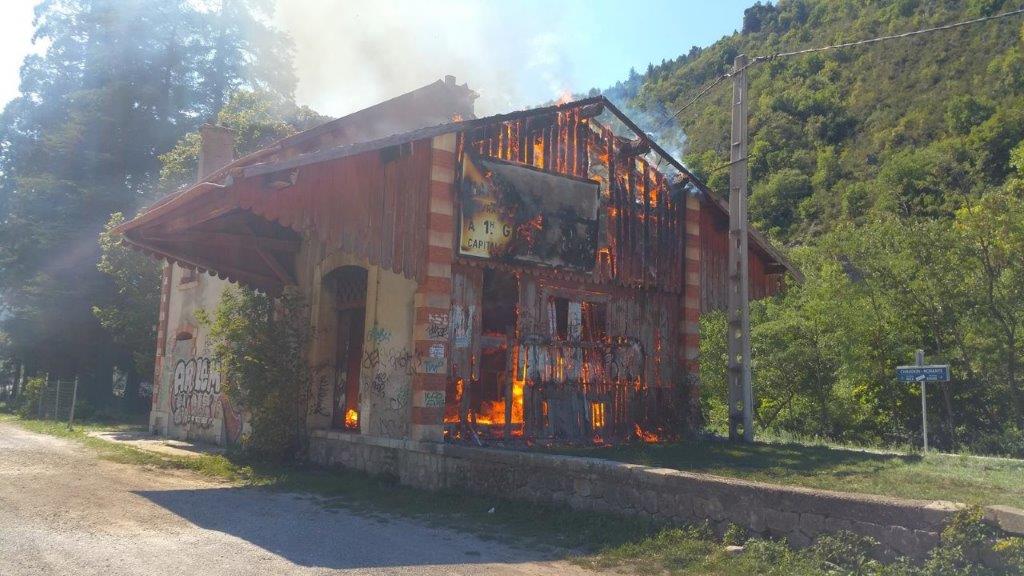
The station on fire in the winter of 2015/2016. [19]

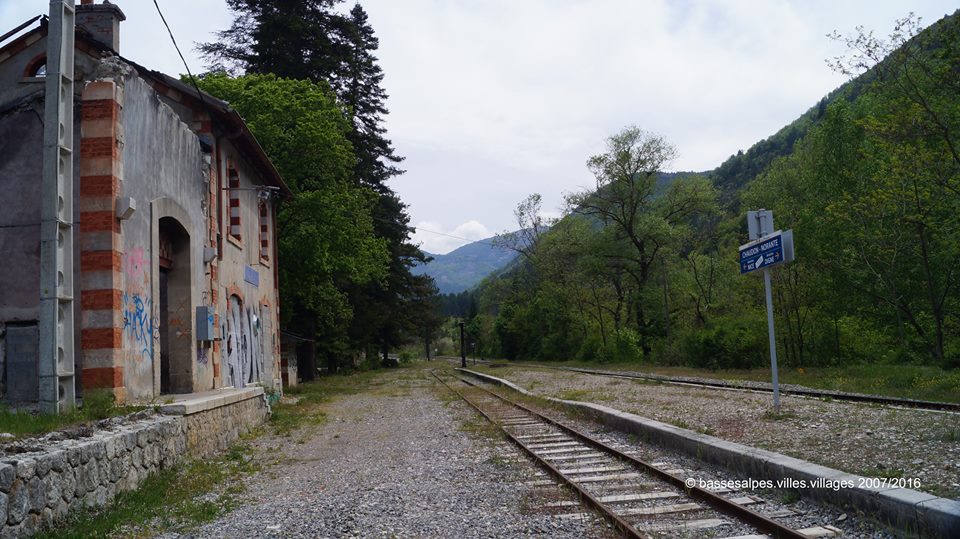
The station after the fire, taken from the passenger platform in 2016, (c) Jean-Pierre Alpes. [20]

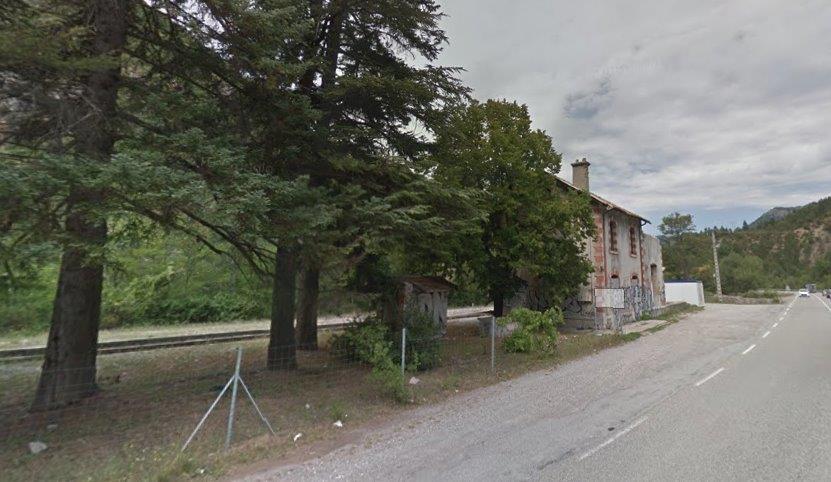
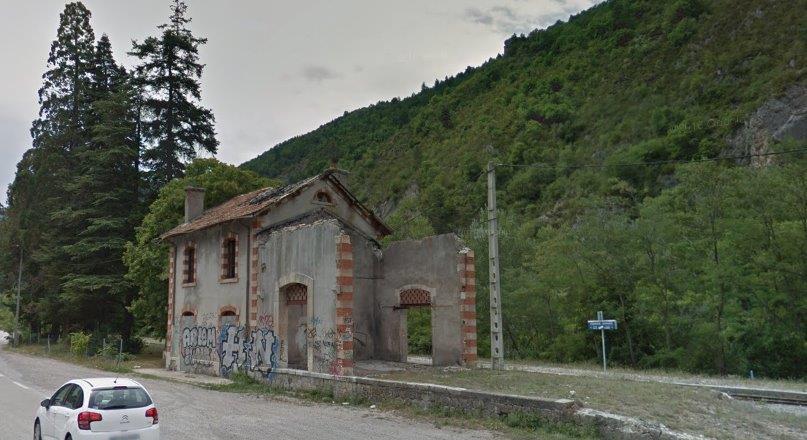
The two images above show the station viewed from the road in 2018, they are taken from Google Streetview and clearly show the damage to the building resulting from the fire a couple of years earlier.

The station on the rail-simulator. [31]

The line ahead to Digne. [18]

Road rail and river continue in close proximity down the valley from Chaudon-Norente, until the railway passes under the road and into a tunnel.

Looking back up the valley of l’Asse (above) from over the portal of the tunnel.

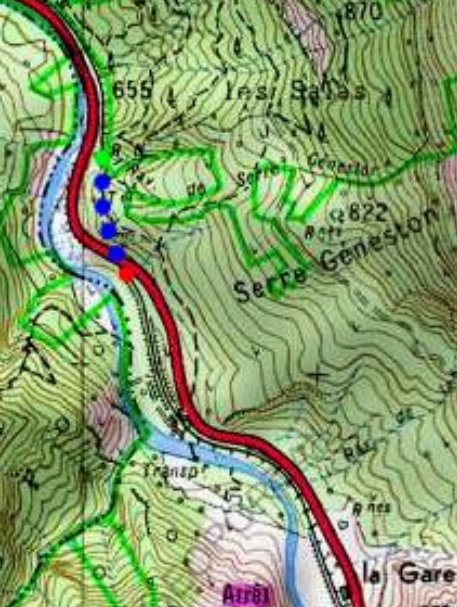
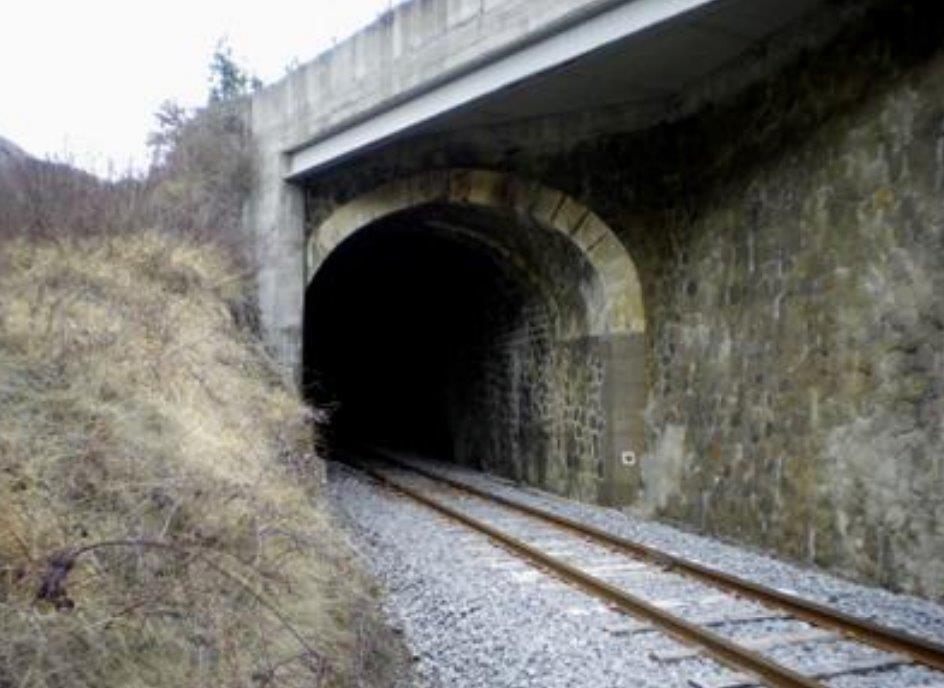
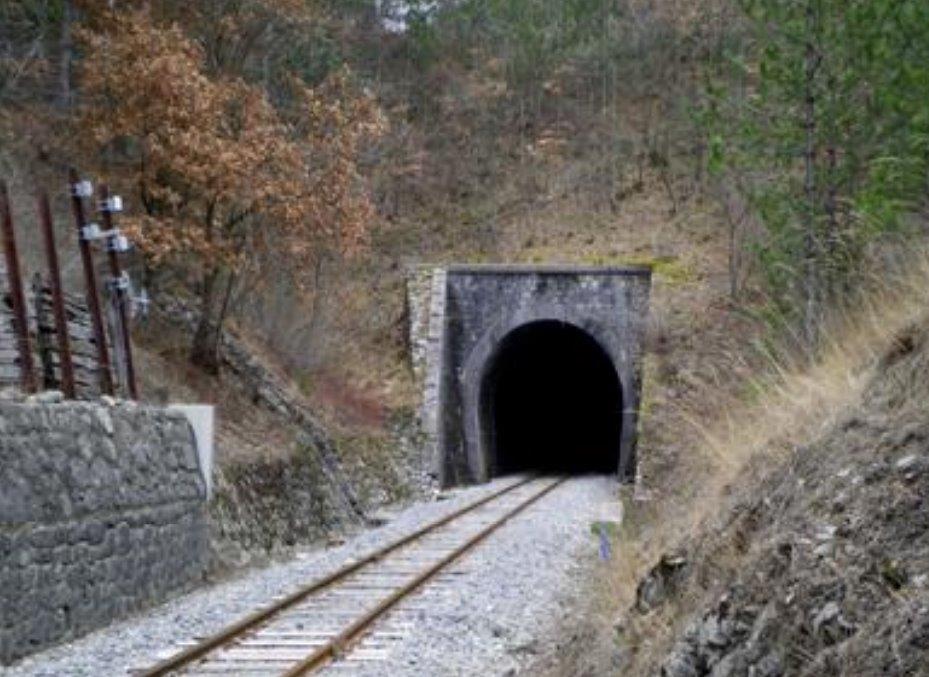
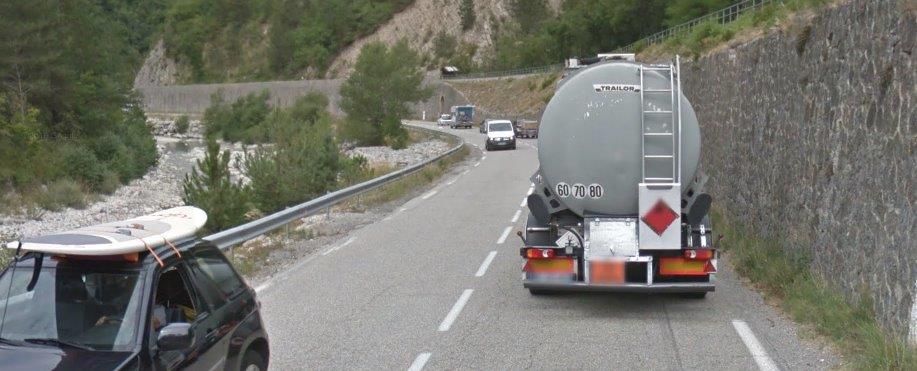
The Tunnel de Serre Geneston is at an altitude of 655 metres above sea-level and is 213 metres long. [21] The N85 has been realigned over the southern portal of the tunnel to remove a sharp bend in its alignment. This means that the original portal is shrouded by a concrete span.

This can been seen in the first image below.

The southern portal of the Tunnel de Serre Geneston. [21]

Northern portal of the Tunnel de Serre Geneston. [21]

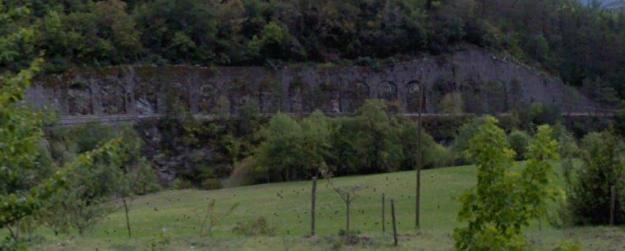
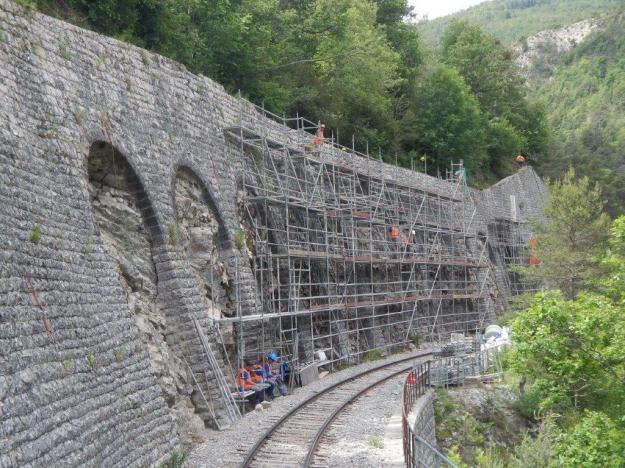
After the Tunnel de Serre Geneston the railway , road and river are once again close together, this time, however, the railway is considerably higher than both road and river and its formation is supported by a lengthy retaining wall.

Arched masonry culverts permit drainage.

After quite a length of masonry retaining wall, the next significant structure on the railway is the bridge which carries it over the N85 at …………………………… The images below show the view of the structure from the south and then from the north. It probably constitutes the least attractive bridge on the Nice to Digne Railway line!

In a short distance the railway drops to be at a similar level to the river and while running in very close proximity once again, this time is is the road held up above the railway on a significant retaining wall.

Within a couple of kilometres the road and railway are back at the same level and the railway is immediately alongside the road. The pictures below of the girder bridge over Ravin de Couinier show how closely road and rail are aligned. The first is from Google Streetview, the next three are from https://dossiersinventaire.maregionsud.fr. [22]

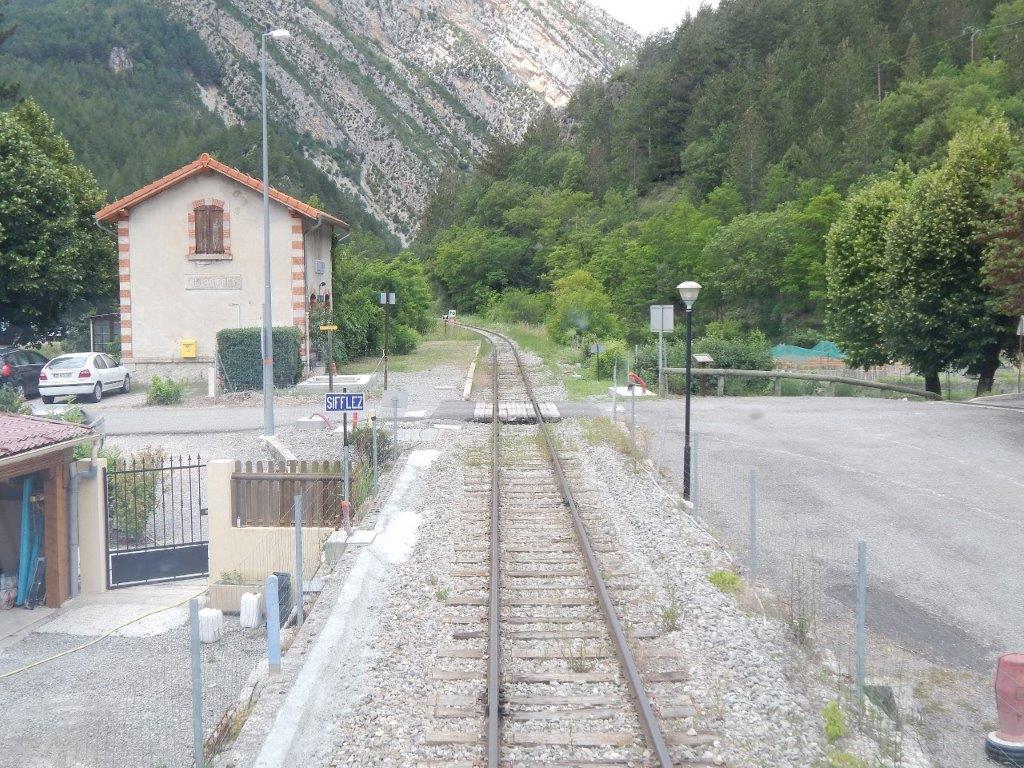
In Chabrières, Entrages, road and rail cross each other again, this time at a level-crossing which is shown in the three images below.

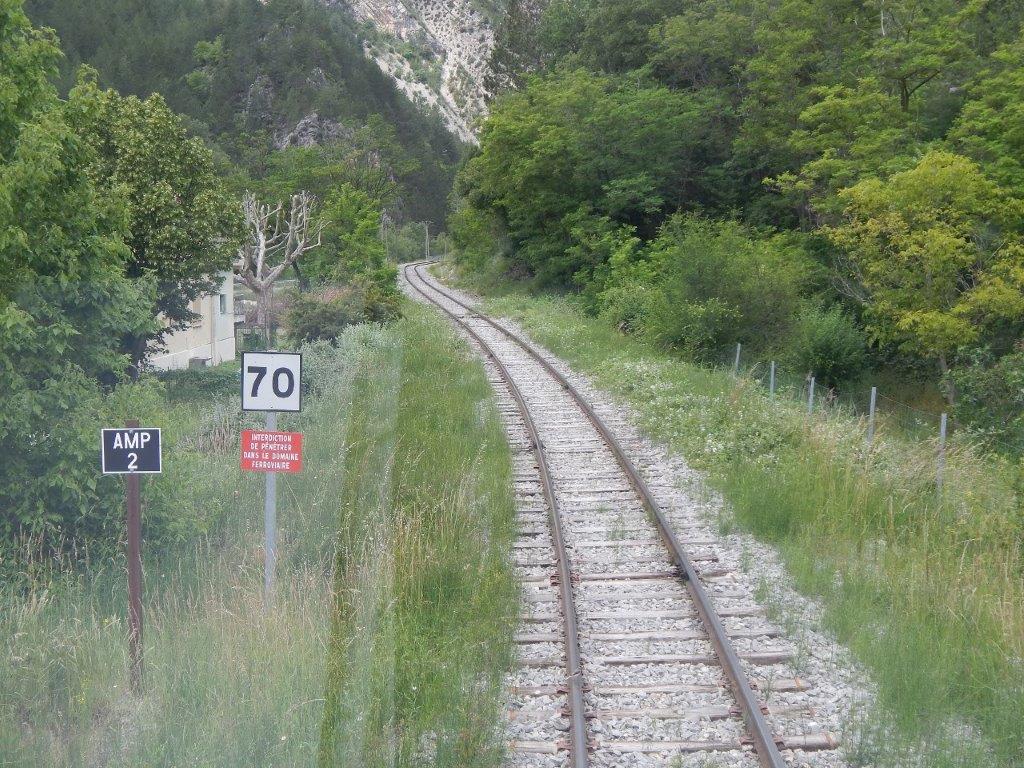
A train driver’s eye view approaching the crossing. [15]

A van driver’s eye view approaching the level-crossing.

A view from the cab of a Autorail as it crosses the N85 at the level-crossing. [15]

The approach to the Halt at Chabrieres. [15]

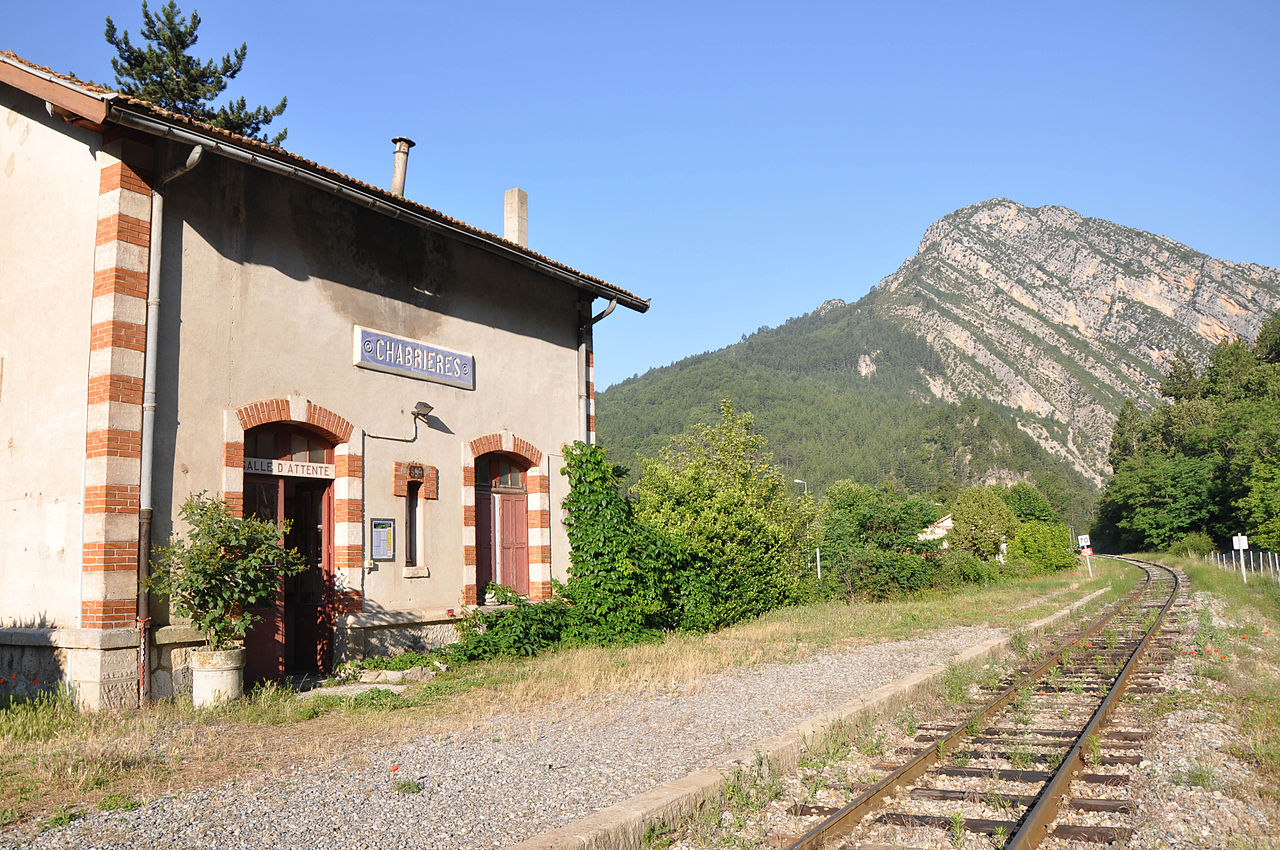
The Halt at Chabrieres. [15]

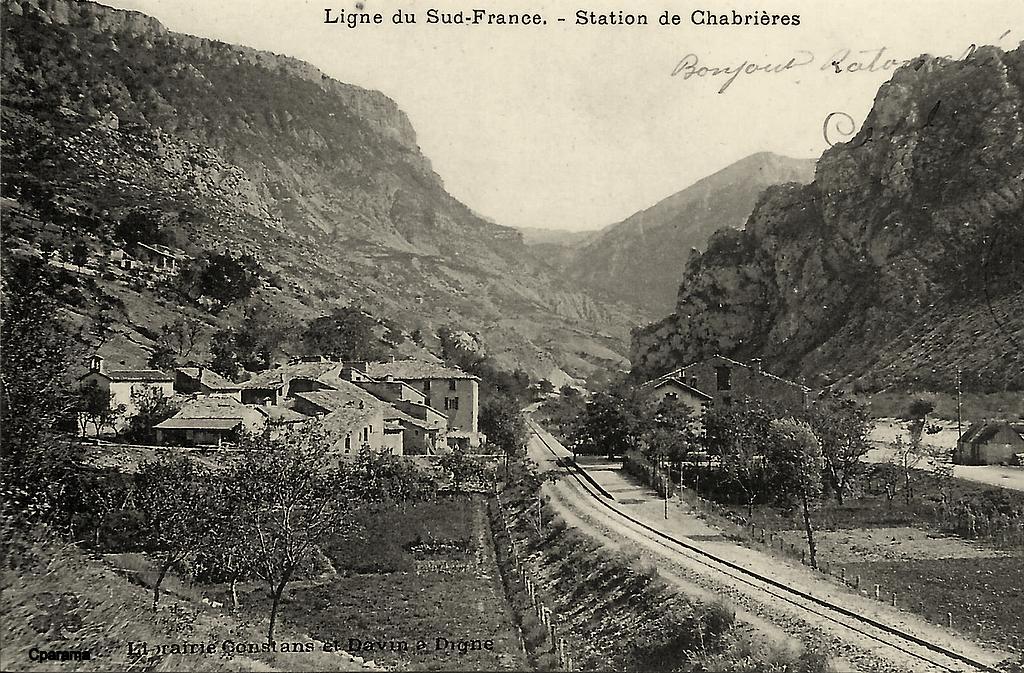
The halt at Chabrieres. [32]

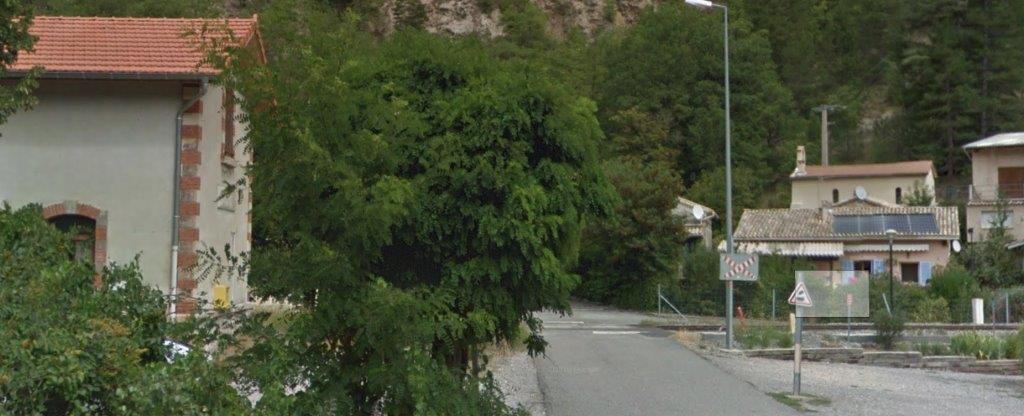
The Halt and crossing at Chabrieres seen from the N85.

Chabrières Halt. [23]

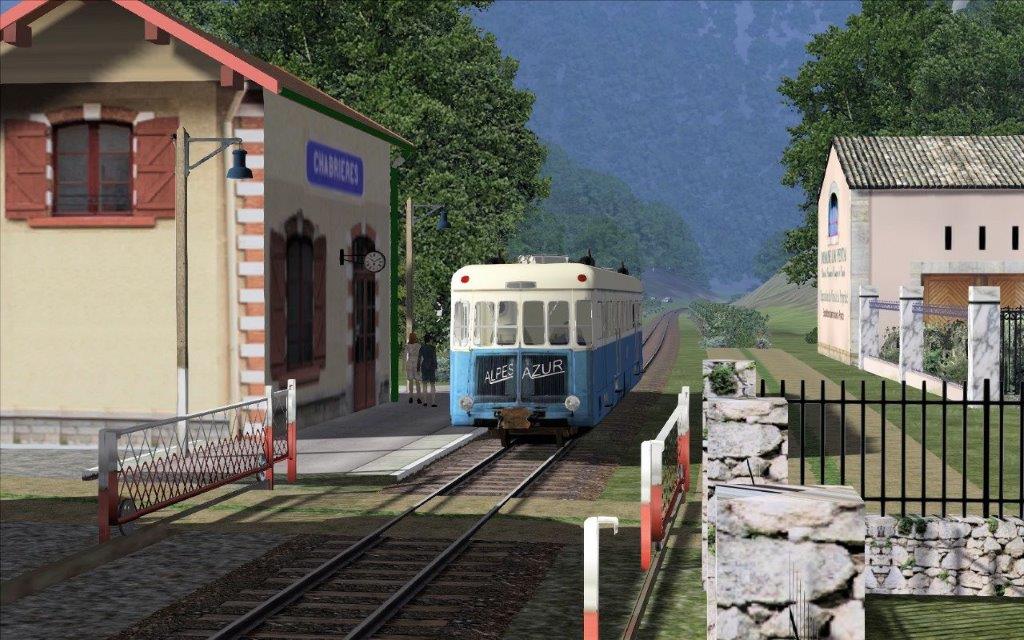
The station on the rail-simulator. [31]

The line West of Chabrières. [15]

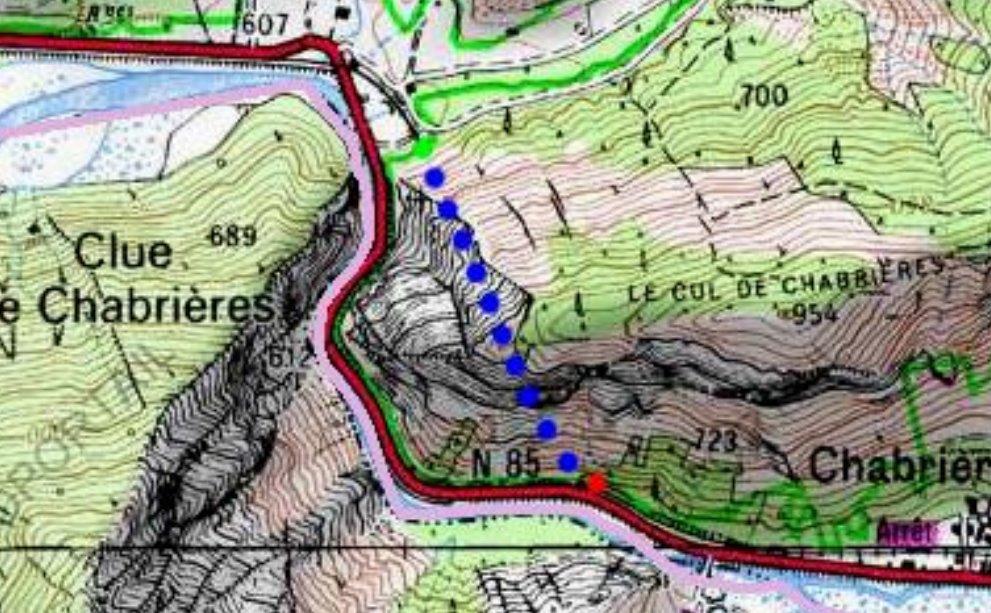
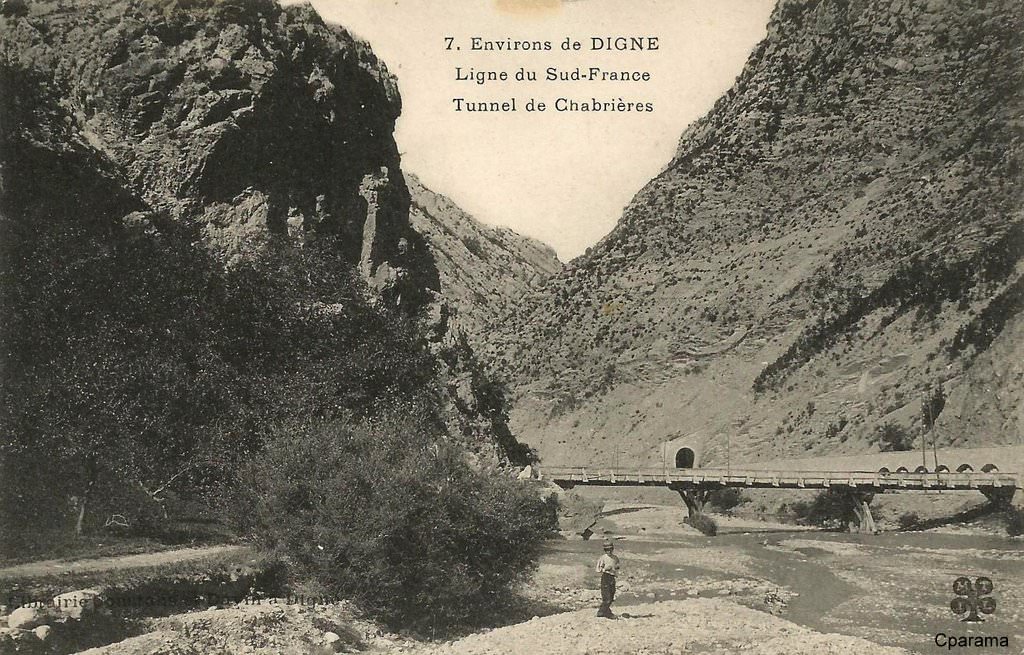
To the West of Chabieres, the line turns northwards and then enters the Tunnel de la Clue-de-Chabrières. We are now about 600 metres above sea-level and the tunnel is nearly 600 metres long! It is marked by the usual red, blue and green dots on the map below. [24]

The South Portal from some distance upstream on the other bank of the river. [32]

The South Portal of the tunnel. [15]

The North Portal of the Tunnel is shown in the two images above [24] and below, (c) Nicolas Janberg. [25]

A short distance after the train passed through the tunnel it went through another request halt – l’Arret de de Saint-Michel-de-Cousson. I have not been able to find pictures of this halt. It then, once again crossed the main road at a level-crossing.

Road, rail and river all once again in close proximity and a typical small span bridge carrying the railway over a minor tributary of l’Asse.

The line continues alongside the road for about a kilometre before swinging away to the south following the north bank of the l’Asse. A further kilometer West and the road rail and river are once again close for a short distance as the valley narrows. The N85 road then turns away north into the village of Chateauredon, and the river turns away south leaving the railway on its own to cross the valley of the Saint-Jean a tributary of l’Asse!

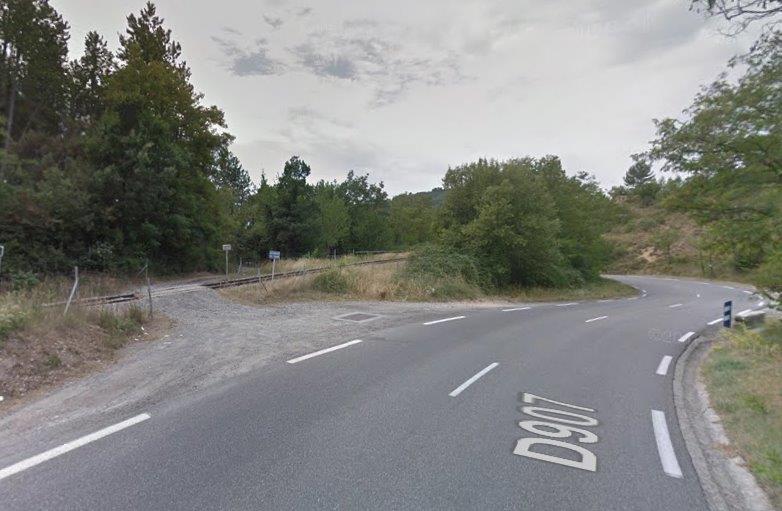
As we approach Mézel/Châteauredon station the ‘D907’ road approaches the railway and an accommodation level-crossing takes a very minor access road to the south of the line, see immediately below. In the second image below, the ‘D907’ has dropped below the level of the railway and passes under it via a small girder bridge.

The approach to the station from the east as seen from the cab of an approaching Autorail. [15]

The same Autorail enters the station. [15]

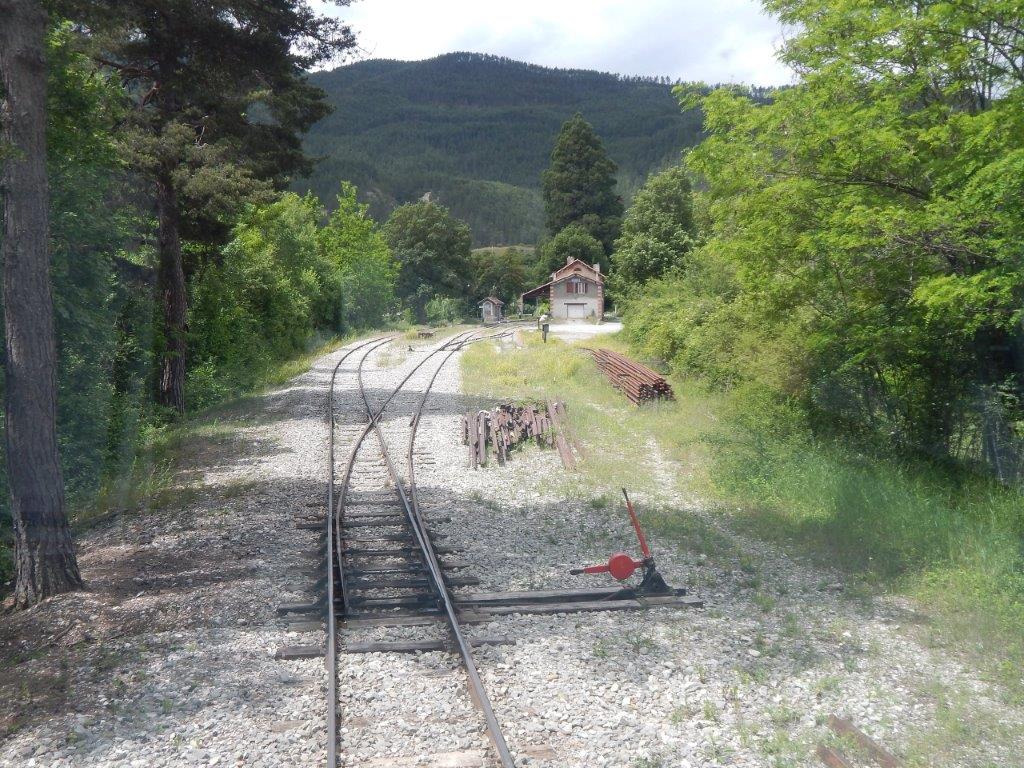
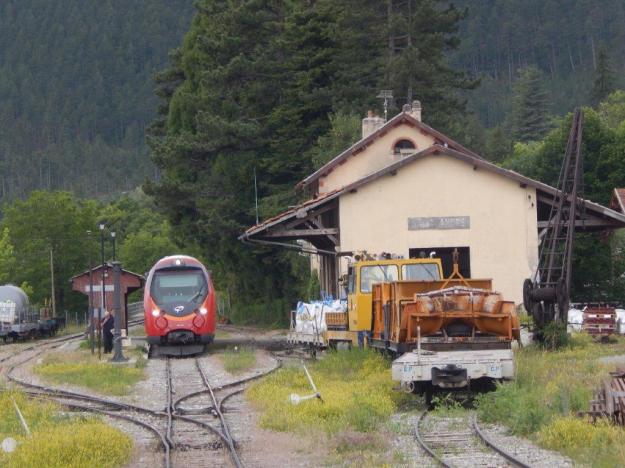
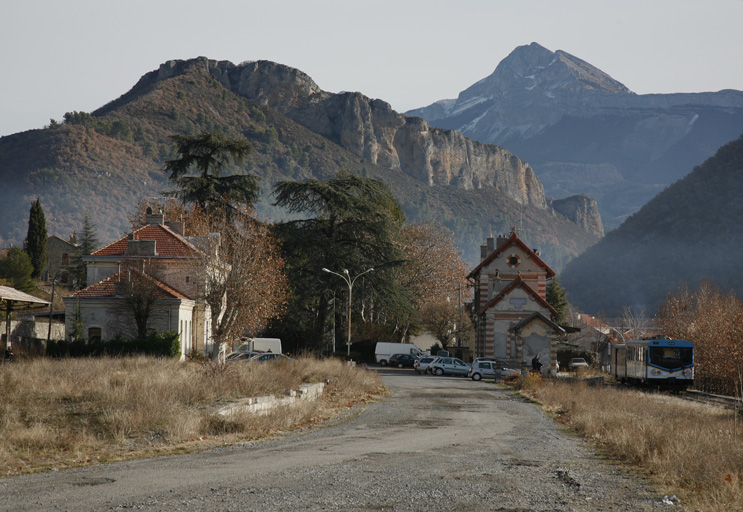
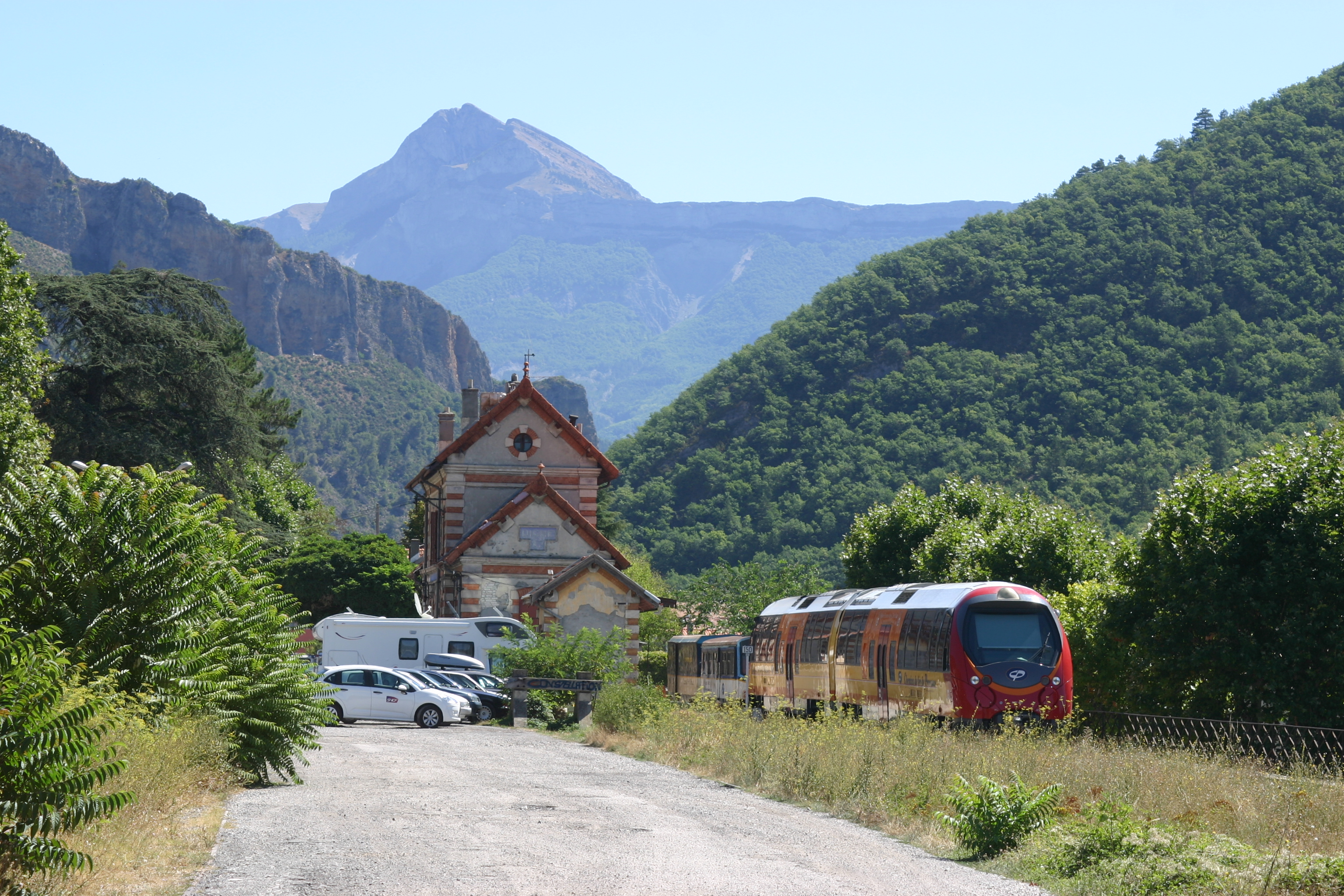
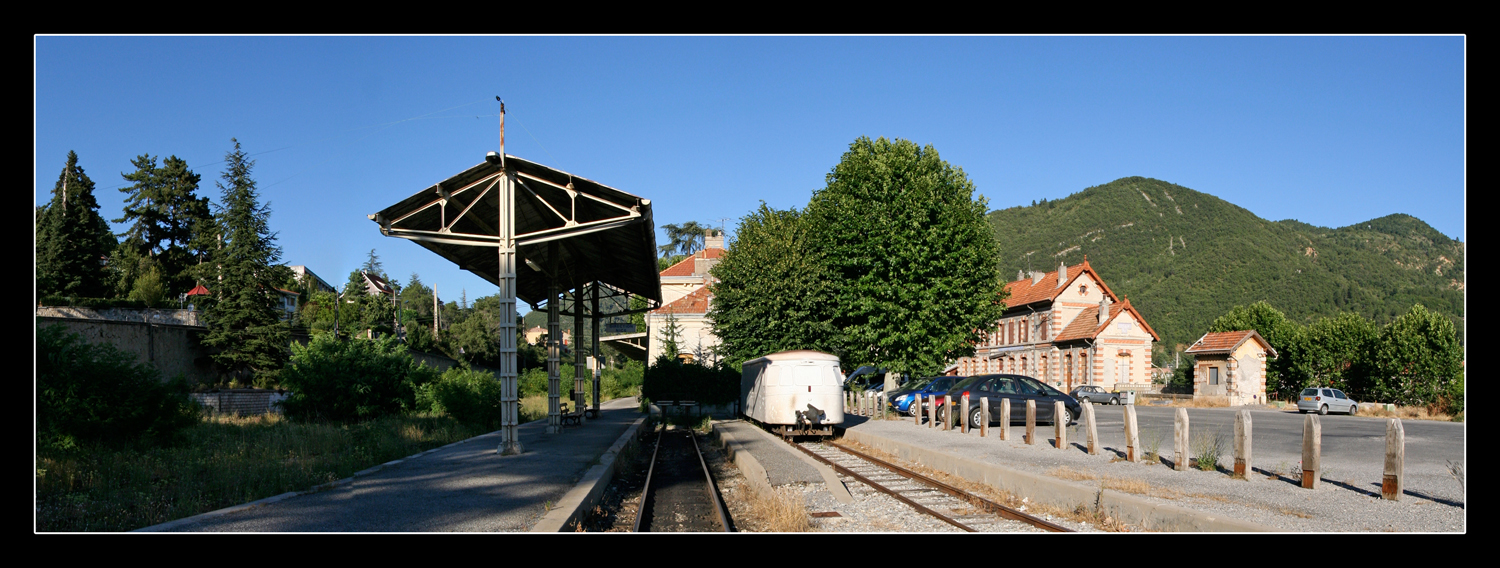
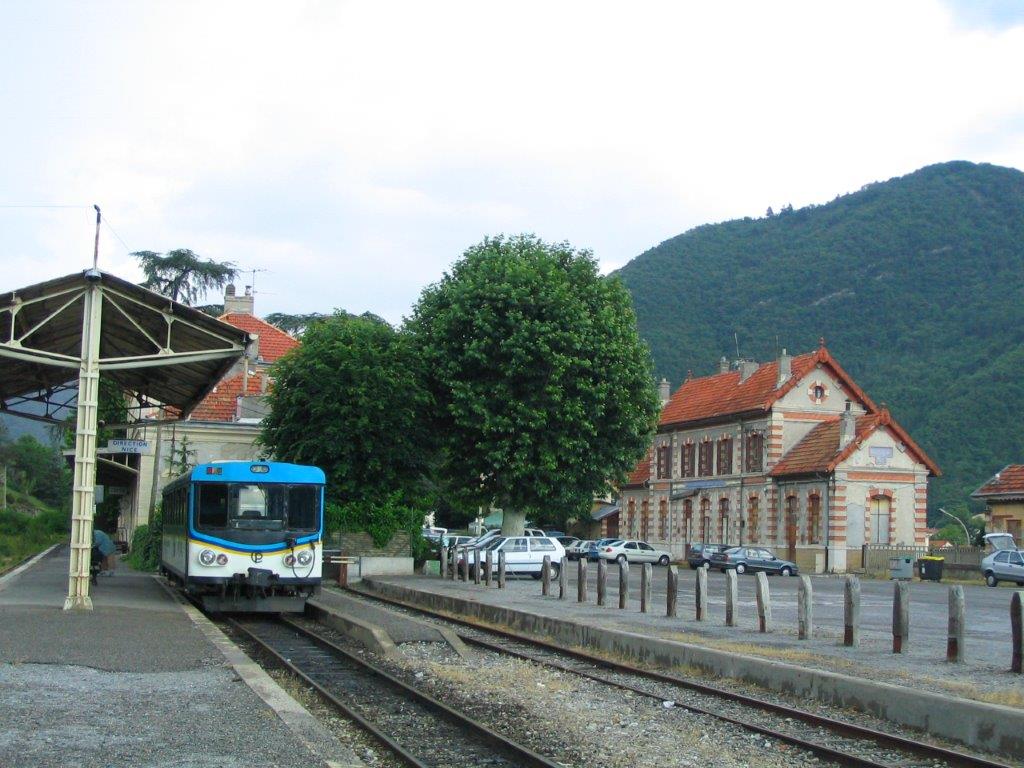
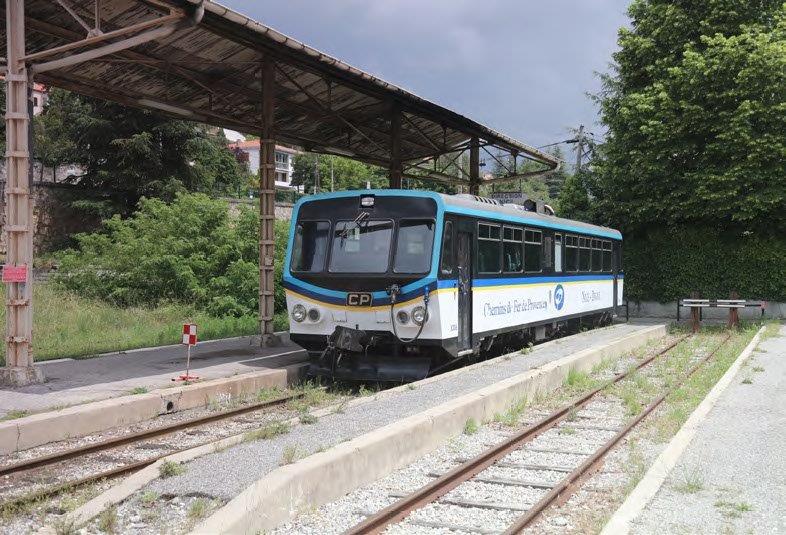
Mézel/Châteauredon Station [26]

Mézel/Châteauredon Station [27]

Mézel/Châteauredon Station Courtyard [28]

Mézel/Châteauredon Station [29]

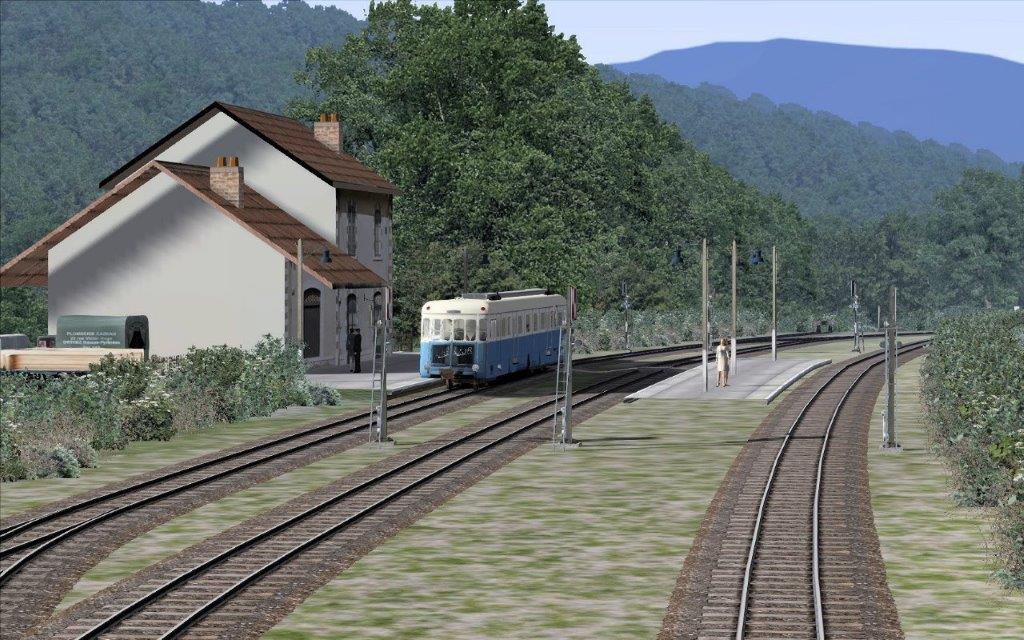
The station on the rail-simulator. [31]

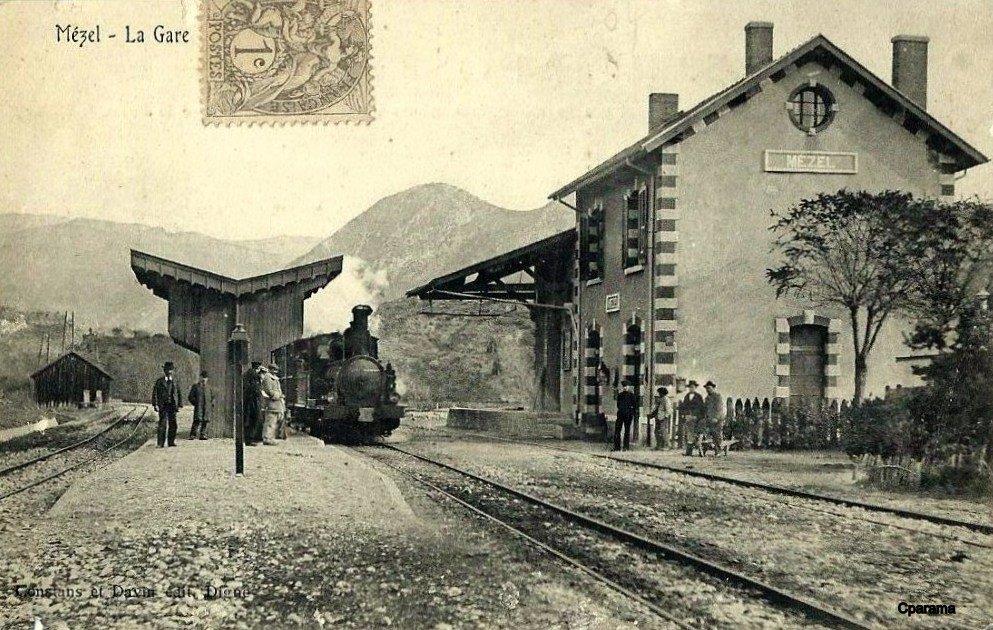
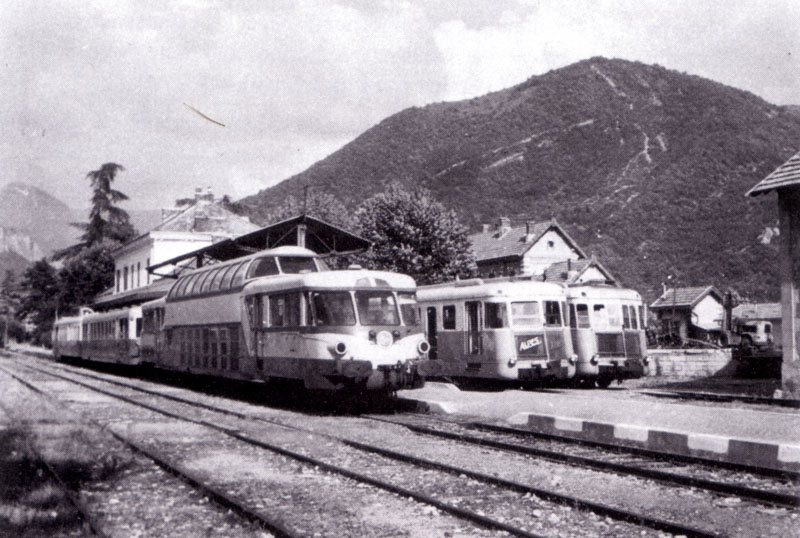
Mézel/Châteauredon Station in an old postcard. [30]

It is here at this station – Mézel/Châteauredon – that we take our next break.

References

  1. http://www.waymarking.com/waymarks/WMW8ER_La_gare_de_Barrme_Barrme_Paca_France, accessed on 17th August 2018.
  2. http://trip-suggest.com/france/provence-alpes-cote-d-azur/barreme, accessed on 17th August 2018.
  3. http://www.en-noir-et-blanc.com/barreme-p1-701.html, accessed on 17th August 2018.
  4. https://mapio.net/s/43790270, accessed on 17th August 2018.
  5. http://cccp.traindespignes.free.fr/gare-barreme.html, accessed on 17th August 2018.
  6. http://www.passion-metrique.net/forums/viewtopic.php?f=2&t=4143&start=765, accessed on 17th August 2018.
  7. http://www.verdon-info.net/2016/08/barreme-le-sequoia-le-plus-grand-de-paca.html, accessed on 17th August 2018.
  8. https://mapio.net/a/57410889/?lang=nl, accessed on 17th August 2018.
  9. https://www.delcampe.it/it/collections/item/373607900.html, accessed on 17th August 2018.
  10. https://www.facebook.com/289910237832039/photos/a.289916164498113/1051891281633927/?type=3&theater, accessed on 17th August 2018.
  11. https://dossiersinventaire.maregionsud.fr/gertrude-diffusion/dossier/gare-de-barreme/7ee076c7-a125-4622-b1a3-41f475e0f8ef/illustration/5, accessed on 17th August 2018.
  12. https://dossiersinventaire.maregionsud.fr/gertrude-diffusion/dossier/gare-de-barreme/7ee076c7-a125-4622-b1a3-41f475e0f8ef, accessed on 17th August 2018.
  13. http://dignois.fr/Barreme-vieux, accessed on 17th August 2018.
  14. https://dossiersinventaire.maregionsud.fr/gertrude-diffusion/dossier/ponts-des-chemins-de-fer-de-provence/6db00f0d-4794-4fb9-8d66-a7675e5c748b, accessed on 17th August 2018.
  15. http://www.rd-rail.fr/1-PHOTOS/PH43/index-ph43.html, accessed on 10th August 2018.
  16. http://aubertrain.com/modules.html, accessed on 17th August 2018. When the website was viewed in August 2018 the price of the completed model of the station buildings was 875 euros!
  17. http://www.tunnels-ferroviaires.org/tu04/04055.2.pdf, accessed on 18th August 2018.
  18. https://fr.wikipedia.org/wiki/Gare_de_Chaudon-Norante, accessed on 18th August 2018.
  19. https://www.google.co.uk/url?sa=i&source=images&cd=&ved=2ahUKEwiFqcumuvbcAhVQhRoKHbBrBnkQjhx6BAgBEAM&url=https%3A%2F%2Fwww.pinterest.co.uk%2Fbluebird_492000%2Flocomotives-%25C3%25A0-vapeur%2F&psig=AOvVaw0HSlDauOM5V4uBMFKql98x&ust=1534676352265699, accessed on 18th August 2018.
  20. https://www.facebook.com/photo.php?fbid=477991545741335&set=pcb.1058518700888525&type=3&theater, accessed on 18th August 2018.
  21. http://www.tunnels-ferroviaires.org/tu04/04055.1.pdf, accessed on 18th August 2018.
  22. https://dossiersinventaire.maregionsud.fr/gertrude-diffusion/recherche/globale?texte=couinier, accessed on 18th August 2018.
  23. https://fr.wikipedia.org/wiki/Gare_de_Chabri%C3%A8res, accessed on 18th August 2018.
  24. http://www.tunnels-ferroviaires.org/tu04/04074.1.pdf, accessed on 18th August 2018.
  25. https://structurae.net/structures/clue-de-chabrieres-tunnel, accessed on 18th August 2018.
  26. https://commons.wikimedia.org/wiki/File:Gare_de_M%C3%A9zel-Ch%C3%A2teauredon,_hangar_et_quai_%C3%A0_marchandises.JPG
  27. https://de.wikipedia.org/wiki/Ch%C3%A2teauredon
  28. https://mapio.net/a/56352403/?lang=sk
  29. http://gecp.asso.fr/mezel.html
  30. http://www.cparama.com/forum/mezel-t28158.html
  31. http://www.railsim-fr.com/forum/index.php?/topic/10163-le-train-des-pignes/&page=2, accessed on 20th August 2018.
  32. https://www.cparama.com/forum/entrages-t24780.html

Nice to Digne-les-Bains Part 12 – Saint-Andre-les-Alpes to Barrême. (Chemins de Fer de Provence 76)

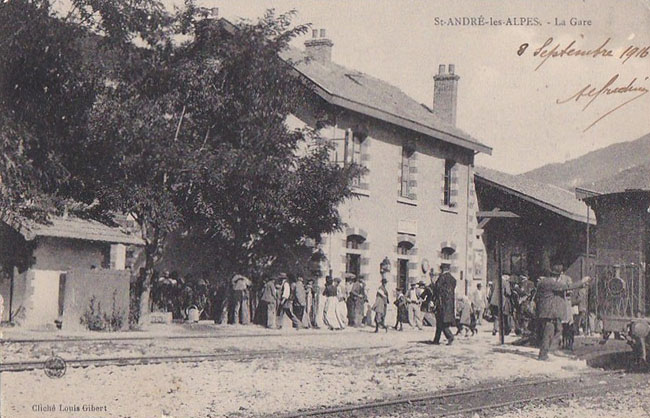
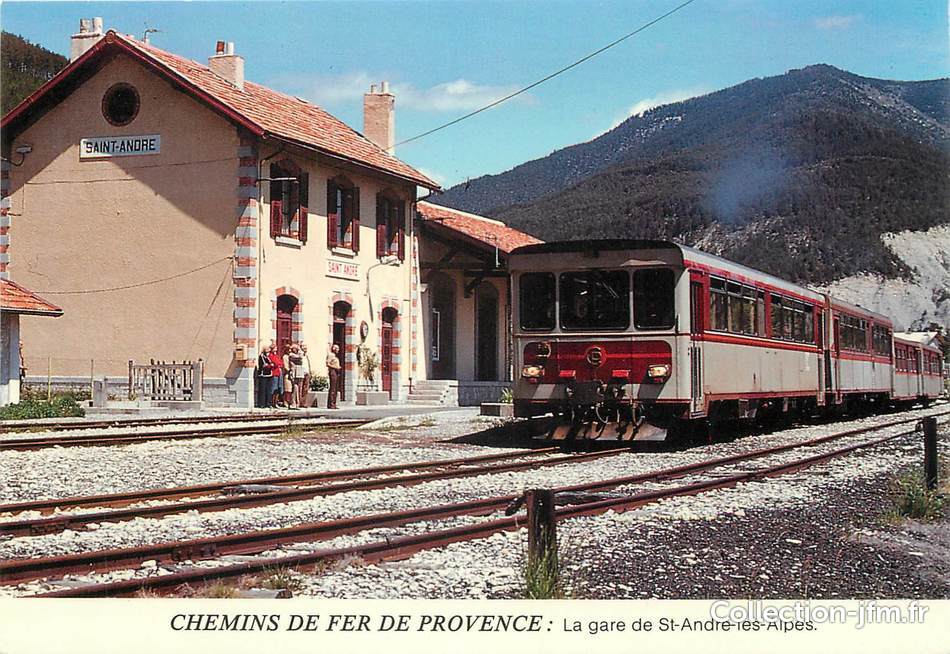
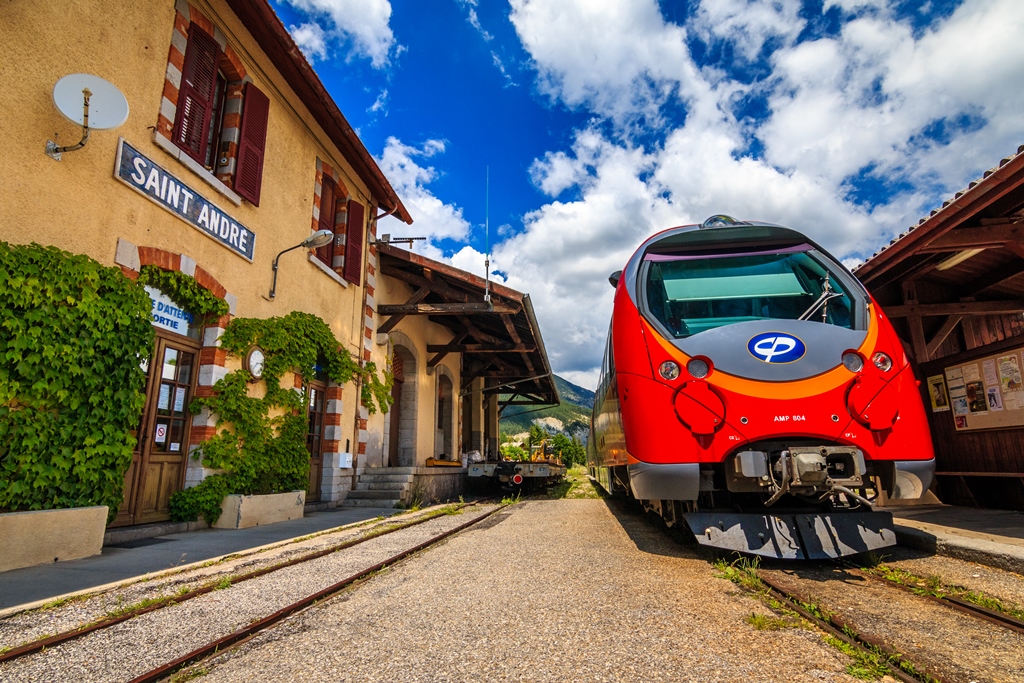
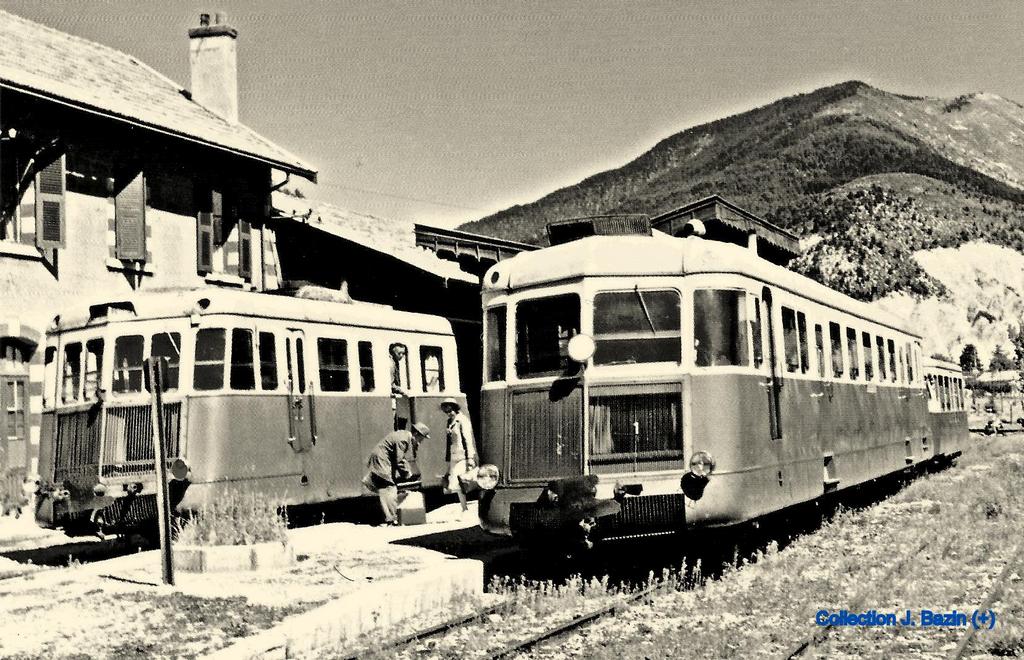
Our journey recommences in Saint-Andre-les-Alpes. The feature image shows the village with the station in the foreground. The image immediately below gives a panoramic view of the village from the north, showing the first of the lakes in the Verdon valley behind the village, as well as the railway station in the bottom-right. [4]The advantage of travelling in a DMU or an Autorail is that views along the line ahead are possible. This DMU is preparing to leave Saint-Andre. [4]

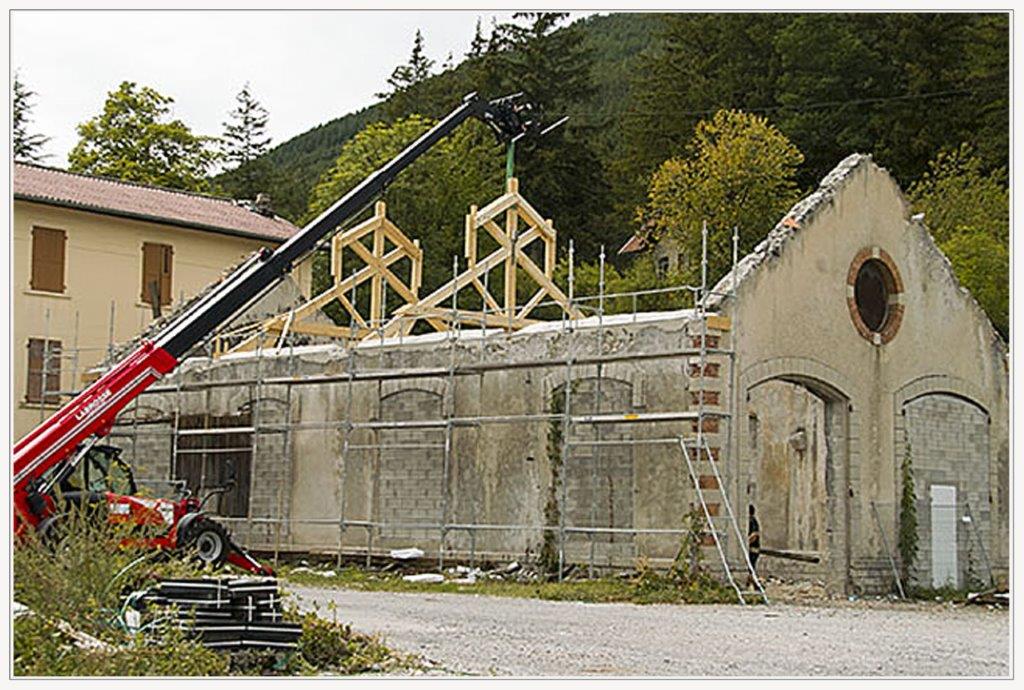
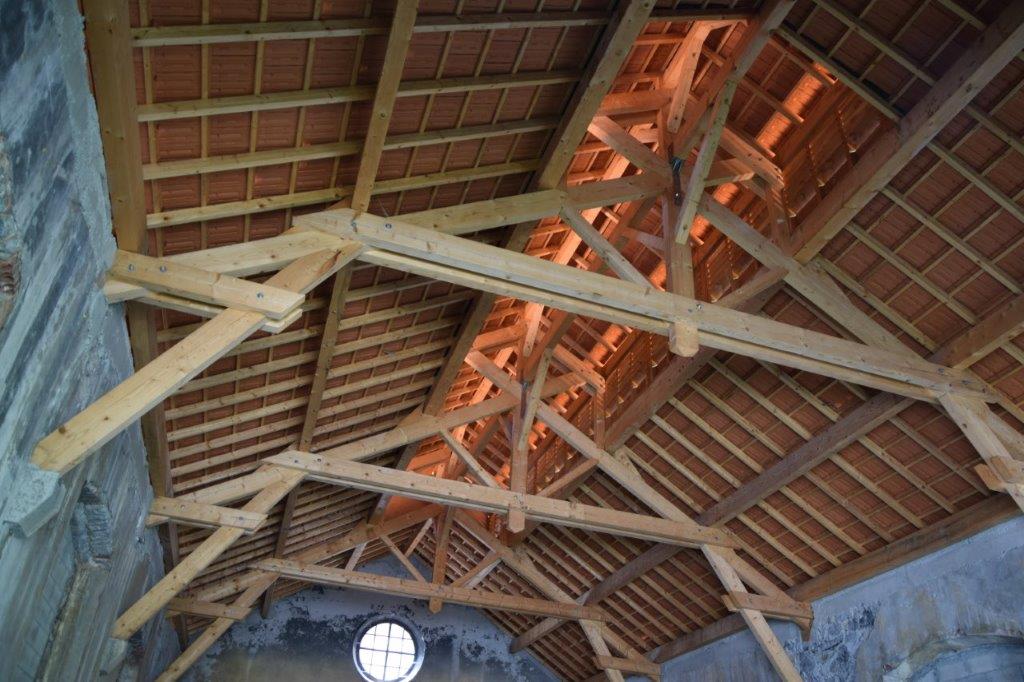
Recently, the engine shed at Saint-Andre was fully refurbished by Chemins de Fer de Provence with fincance from the PACA region. The two images immediately below show this work underway. [5]The shed was falling into disrepair. It dates from the opening of the line in 1911. Without prior warning, work started in 2014 on the restoration work. http://www.verdon-info.net reported on the work in September 2014. They established through talking to a railway employee, Stéphane, that: “This is a building for the office of the district chief between Thorame and Digne les Bains, the premises for the employees of the canton of Saint André les Alpes, and the storage of the Praisine and other maintenance machines. At the moment we are restoring the building and then will start the works of tracks to join the building.” [5]  The four images immediately above show that the roof of the engine shed was fully restored to an as built condition, (c) Christopher James.[16]The two images above show wagons at Saint-Andre-les-Alpes Station, (c) Triede. [6]The driver’s view as the train sets off from Saint-Andre-les-Alpes. [1]A rear view of an Autorail heading for Digne, or is it an Autorail travelling from Digne? Quite probably as the headlights are on! (c) © JMi 2. There is quite a bit of foreshortening in the image as the bridge on the station side of the Autorail is over a road.  [2] Two views of the modern bridge just to the south of the station in Saint-Andre-les-Alpes. 

Saint-Andre sits to the north of the stretch of the River Verdon which includes its famous Gorges. My wife and I spent a day in these Gorges in November 2017.

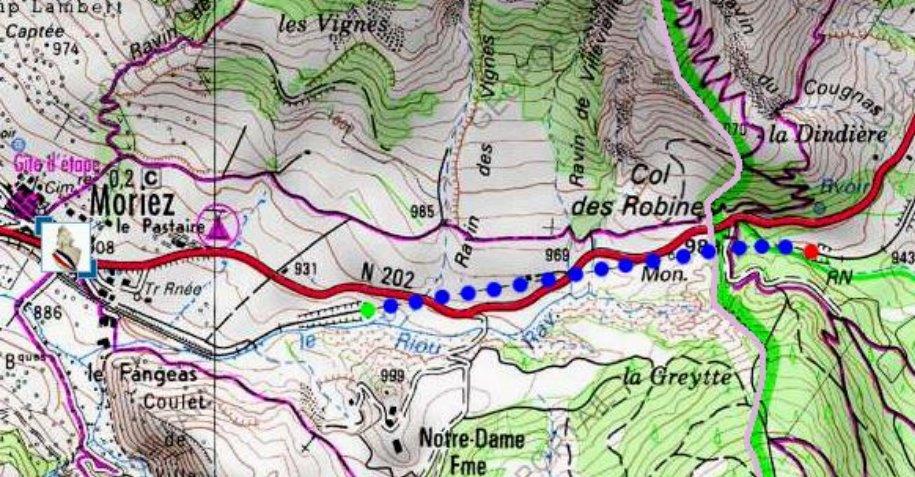
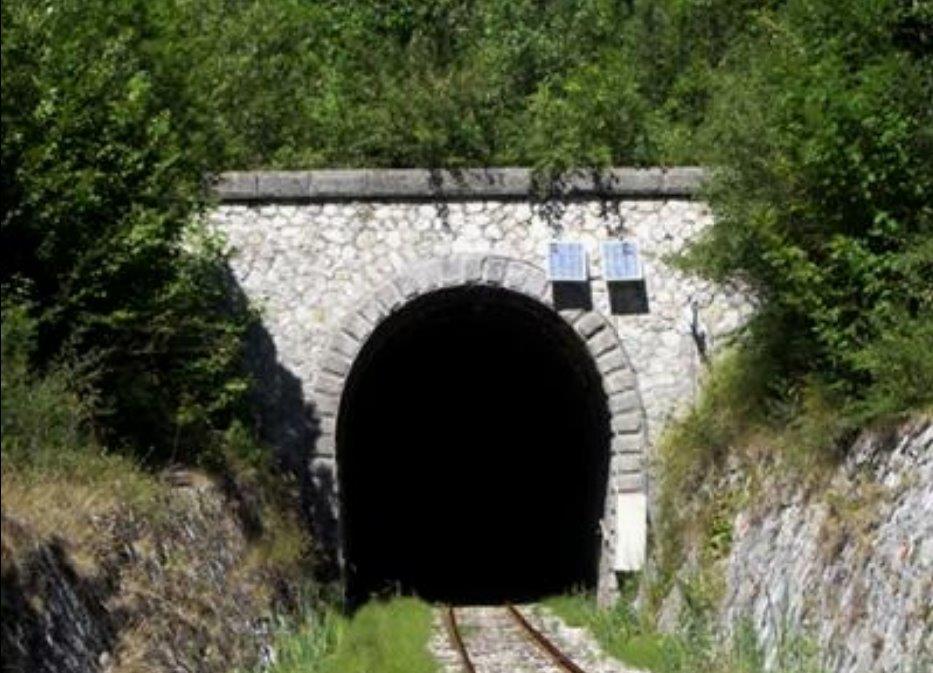
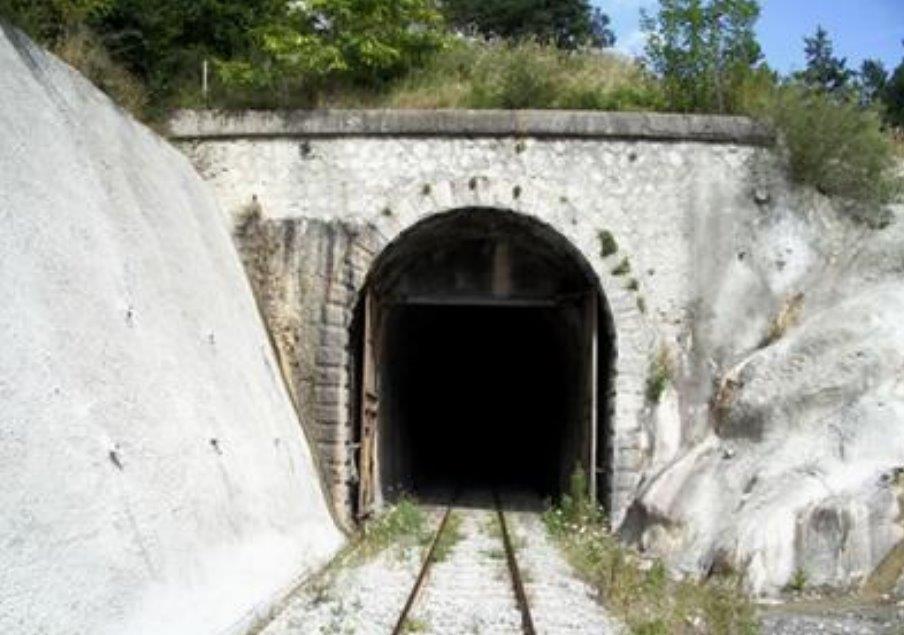
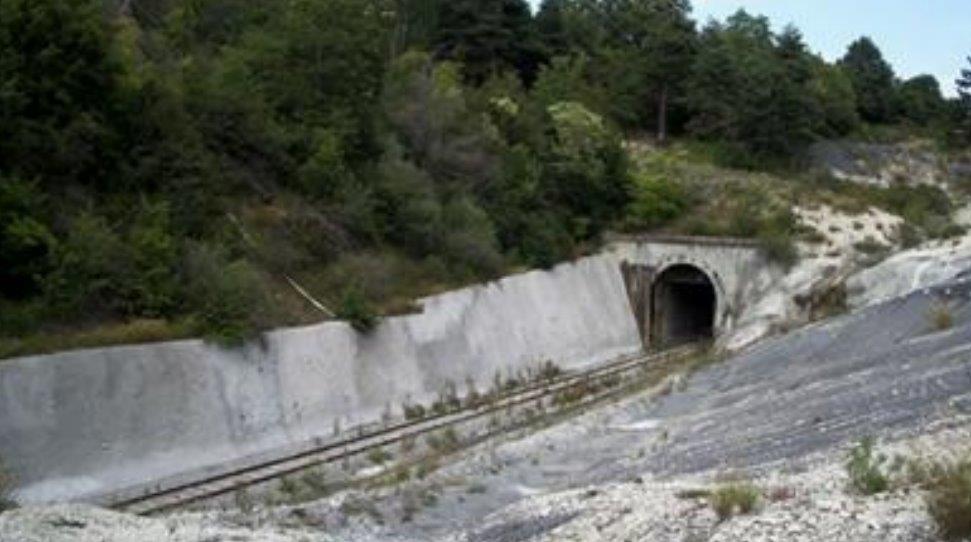
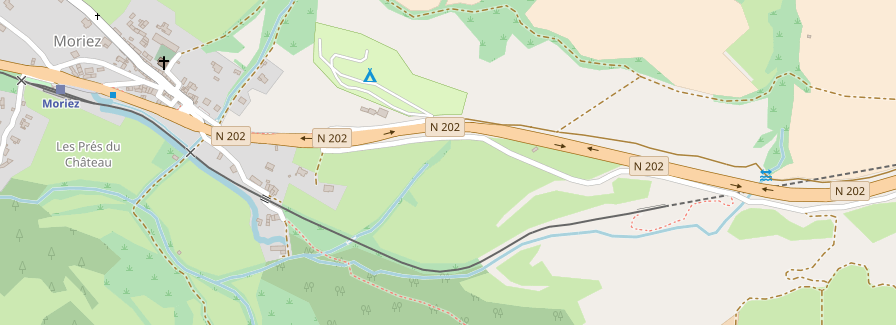
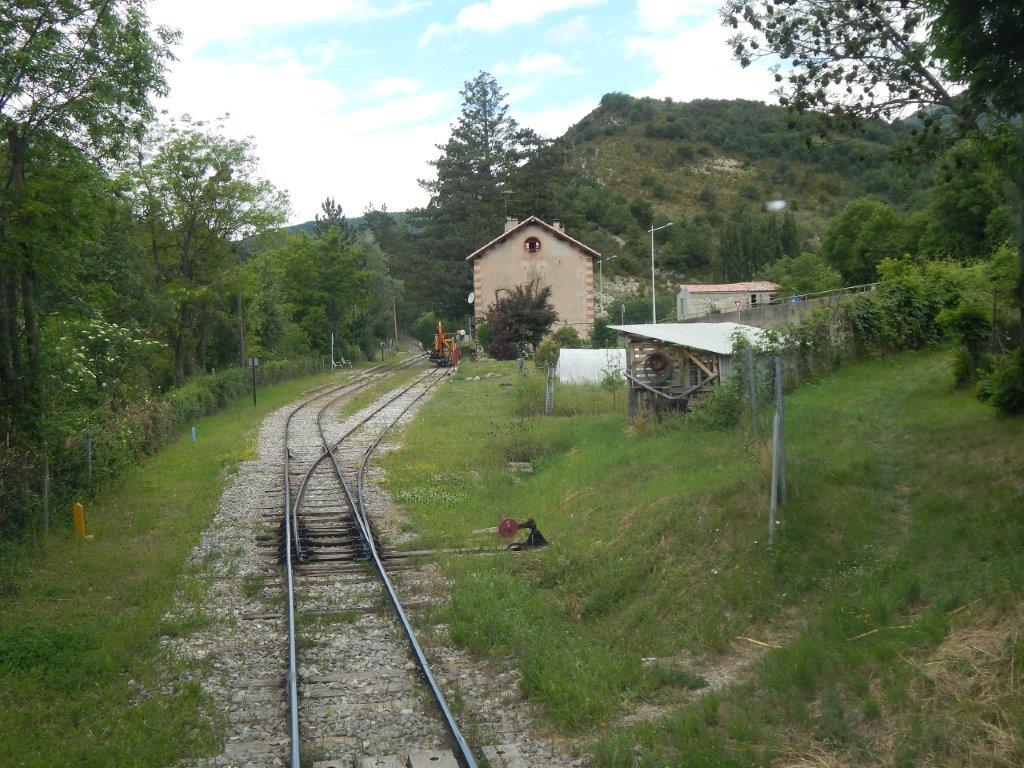
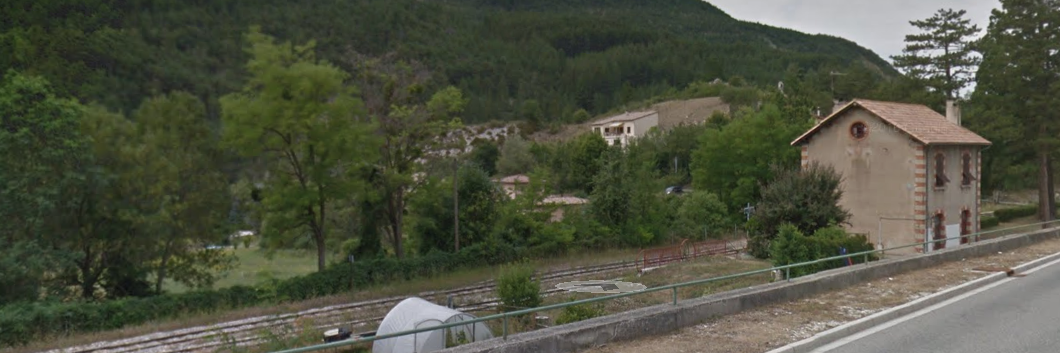
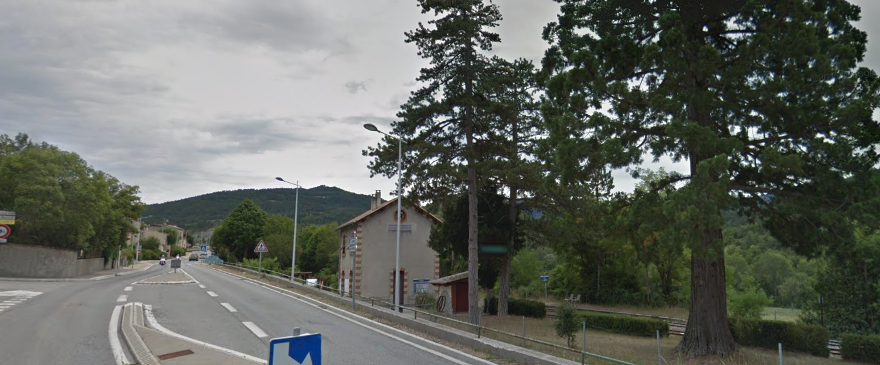
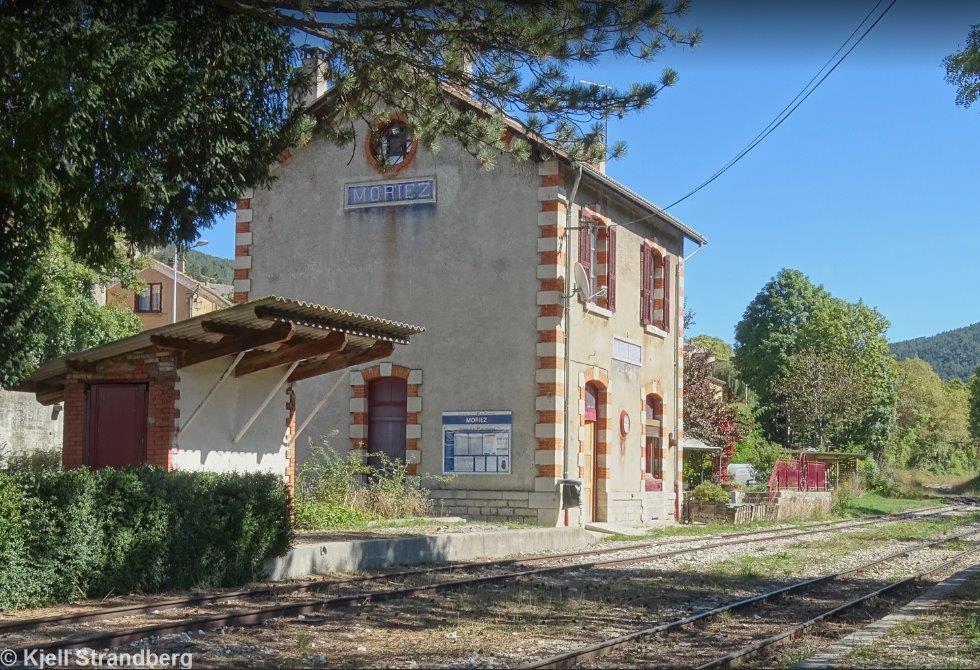
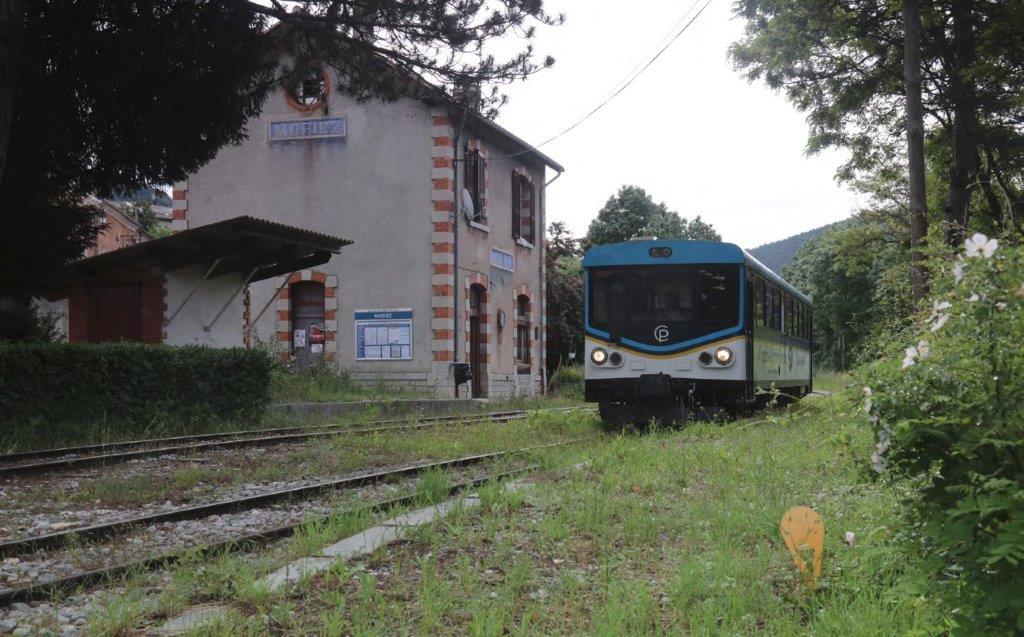
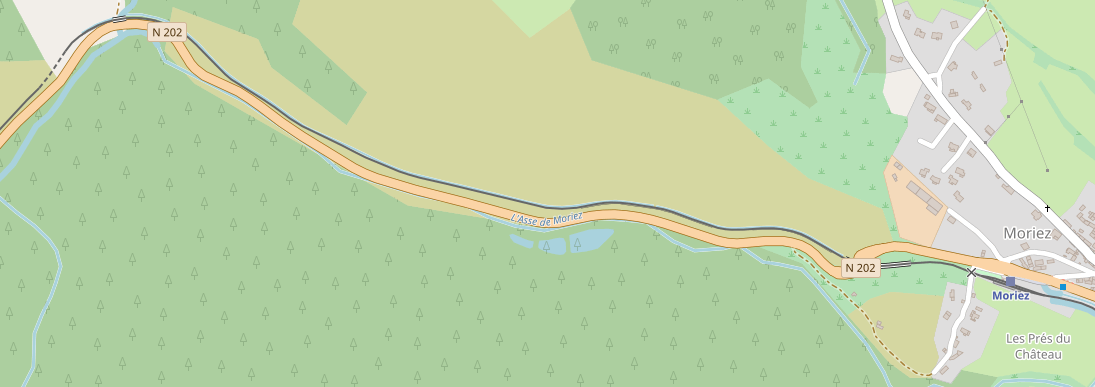
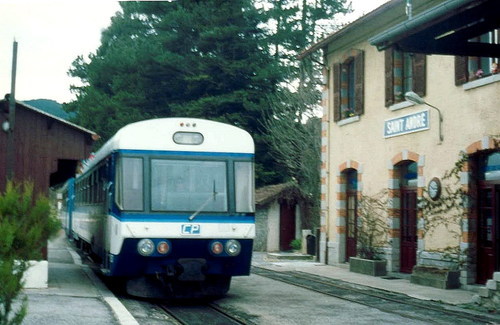
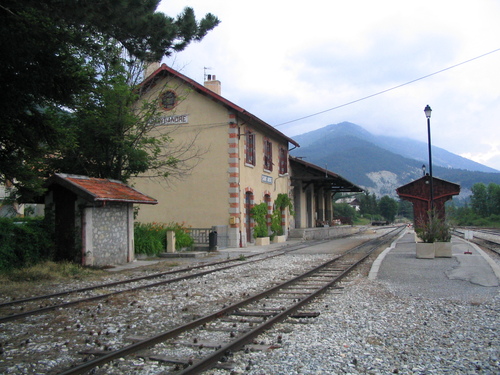
The railway turns away to the West following the N202 road, rather than following the River through the Gorges du Verdon. The OpenStreetMap below shows the station at Saint-Andre in the top right and, after the bridge over the N202, the next major structure on the route, the Tunnel de Moriez in the bottom left as a dotted line.The Tunnel de Moriez passes under the Col des Robines. It is 1195 metres long and at an altitude of approximately 940 metres above sea-level. It is roughly on an east-west alignment, as shown below. It is marked by  red, blue and green dots. [7]To the East, the railway lines swings sharply into the tunnel mouth. The line leaving the tunnel to the West passes through a deep cutting before meandering its way across a small accommodation bridge into Moriez. The East Portal. [7] Two images of the West Portal. [7]The railway is now in the Ravin de le Riou and follows the river into the village of Moriez.A driver’s eye view of our arrival at Moriez. [1]Moriez Station taken from just to the East along the N202.Moriez Station from along the N202 to the West.Moreiz Satation (c) Kjell Strandberg. [8]Chemins de Fer de Provence unit No. X304 arrives at Moriez with the 09:27 from St. Andre
les Alpes to Digne les Bains on 13th June 2018, (c) Jeff Nicholls. [16]Looking west from Moriez Station (c) Grüni sen. [11]After Moriez, the line follows Le Riou and then L’Asse de Moriez down its valley. It crosses Moriez Viaduct just to the west of the village and then runs parallel to both the road N202 and the river. Two images of Moriez Viaduct. [9]An early image of the viaduct, (c) Frédéric Pauvarel. [10]Moriez Viaduct from railside. [13]

As the map above shows, road, rail and river run in parallel travelling west down the valley of Le Riou. The bridge at Hyeges spans a tributary of L’Asse de Moriez – the Torrent d’Hyeges.The bridge at Hyeges.A driver’s eye view of the bridge at Hyeges. [14]The bridge at Hyeges from the North West (c) Marc Heller [12]The Bridge at Hyeges from the South West, (c) Géraud Buffa. [14]Chemin de Fer de Provence railcar X304 crosses Hyeges viaduct near Moriez with the 09:27 from St. Andre les Alpes to Digne les Bains on 13th June 2018, (c) Jeff Nicholls. [16]

Immediately beyond the bridge the railway enters the Tunnel de Hyeges. This tunnel is only 72 metres in length. The red, blue and green dots fix its location on the adjacent map. [15] The bridge can also be picked out on the north side of the N202 just to the east of the tunnel. The portals of the tunnel are shown below. The East Portal. [15]The West Portal. [15]

The road N202, L’Asse de Moriez and the railway continue to run in parallel. A view looking East towards Moriez along the valley with L’Asse de Moriez below the road to the right.

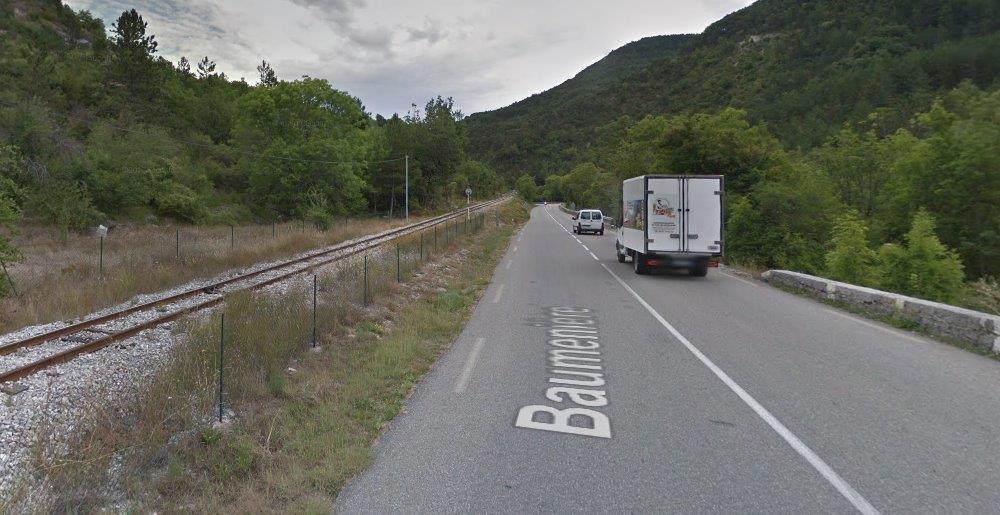
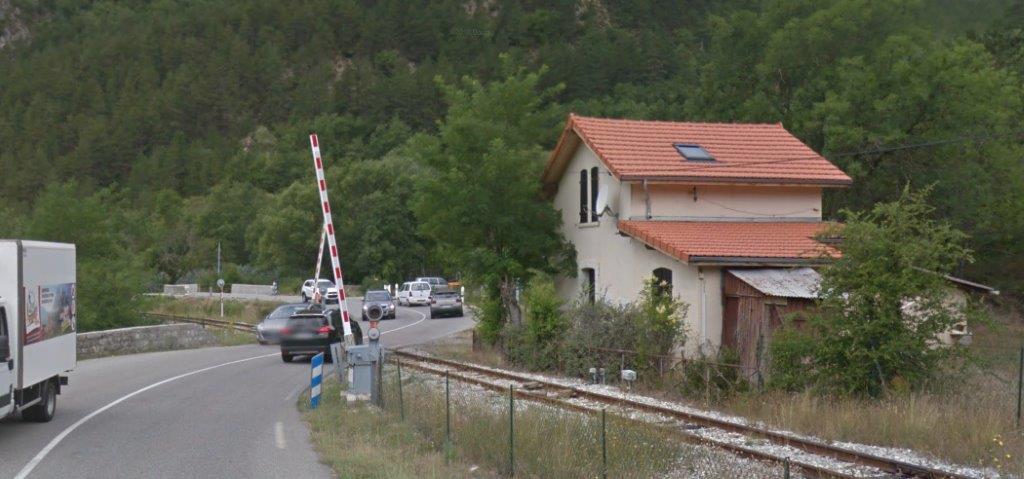
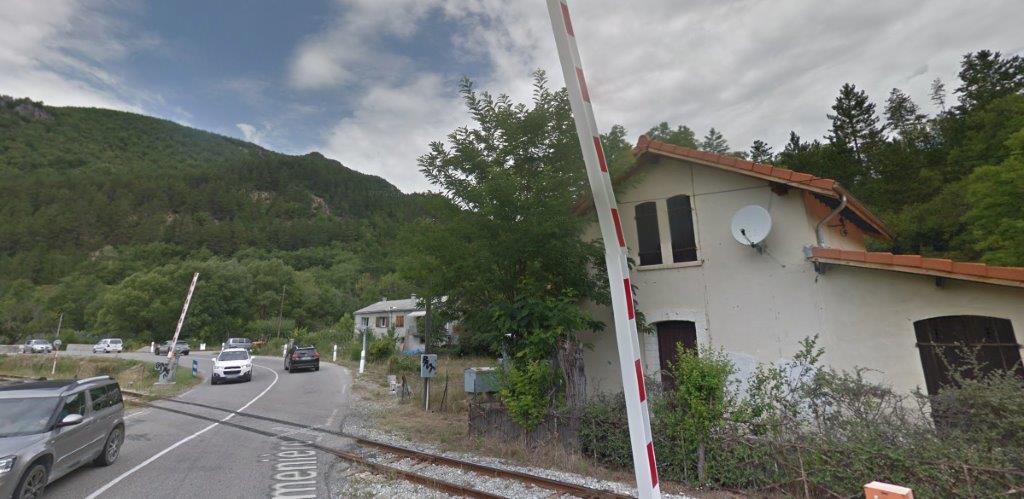
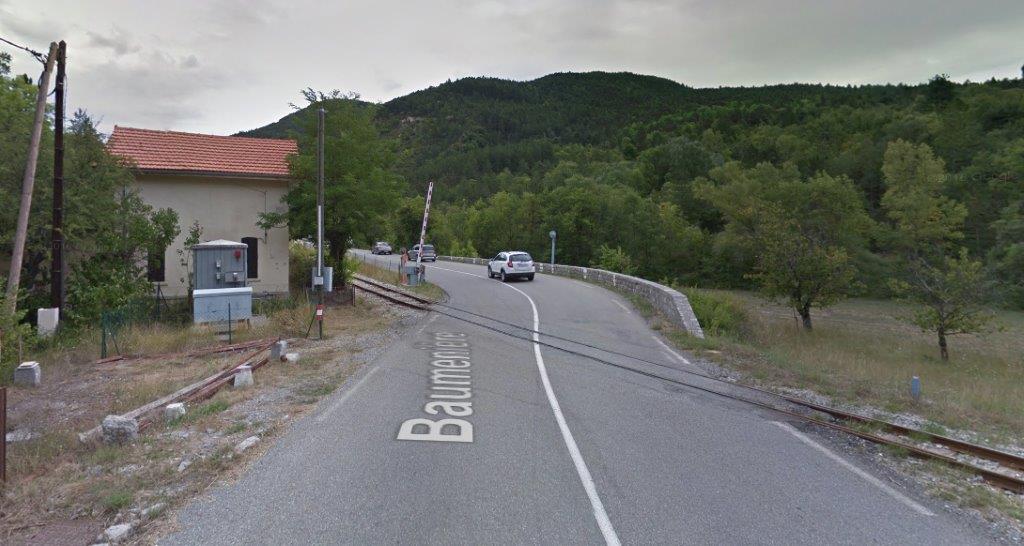
Although the road and rail switch sides at a level crossing at Baumeniere. Some Google Streetview images of the crossing and crossing keeper’s house follow.The railway now continues  between road and river, crossing a tributary of l’Asse de Moriez just down the valley from the level crossing – Ravin de BouquetRoad rail and river are still together at the next level-crossing, below, at Clôt de Moune.We continue southwest down the valley of l’Asse de Moriez.The bridge over the Ravin de la Gourre.

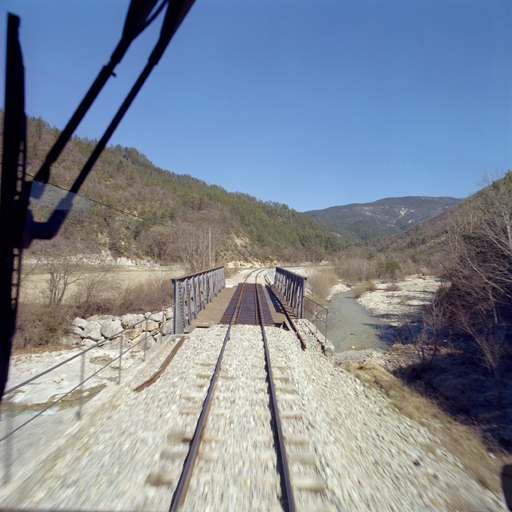
A series of other culverts and small bridges carry the line over a relatively broad flat area in the valley before the valley narrows once again. In the image below, taken from Google Streetview the river is below the railway to the left and the road has recently been widened requiring removal of part of the rock face on the right.Old road, new road railway and river are all visible in the satellite image below. Just under 1 kilometre to the east of l’Arret de la Tuilière the railway crosses l’Asse de Moriez on a relatively small girder bridge.A driver’s eye view of the bridge over L’Asse de Moriez, (c) Marc Heller. [14]Railcars Nos. X304 and X306 of the Chemin de Fer de Provence metre gauge Nice – Digne
line chug along between Moriez and Barreme with the 15:23 service from St. Andre les Alpes
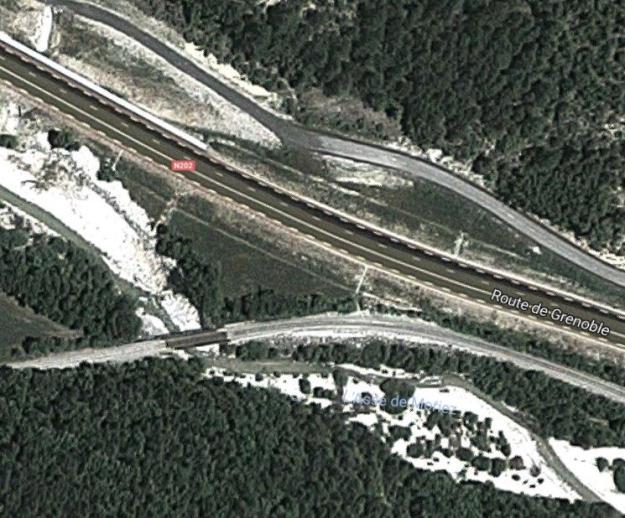
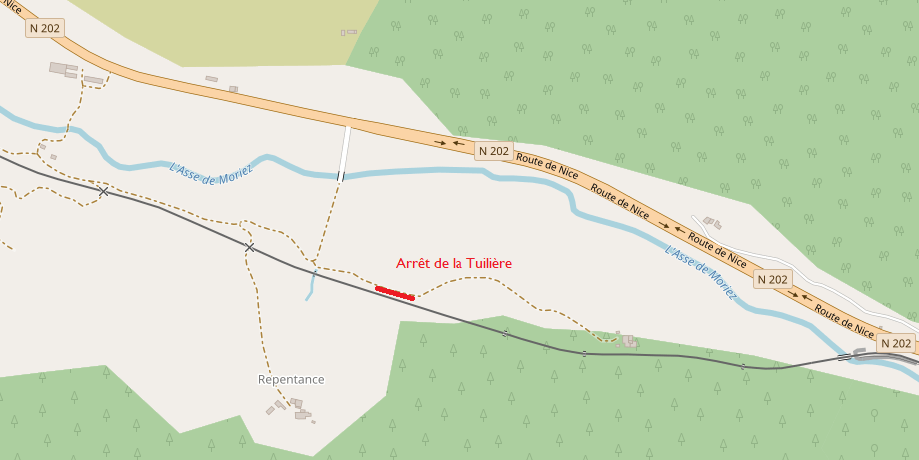
to Digne les Bains on 8th June 2018. During the summer of 2018, this was the only northern section of the Nice – Digne metre gauge line in operation due to heavy engineering work taking place over several months between St Andre and Plan du Var, (c) Jeff Nicholls. [16]The bridge on the image above appears to the right side of the map immediately above. Arrêt de la Tuilière is shown marked in red. Interestingly to the south of the station there is a small hamlet called ‘Repentance’.

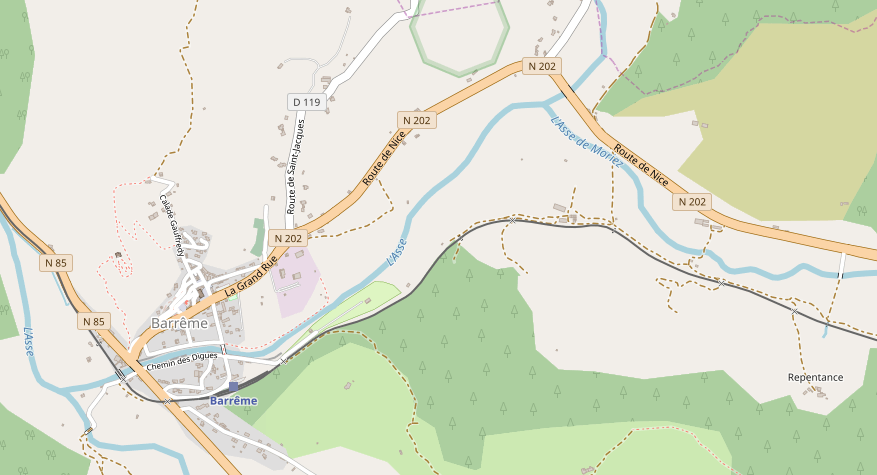
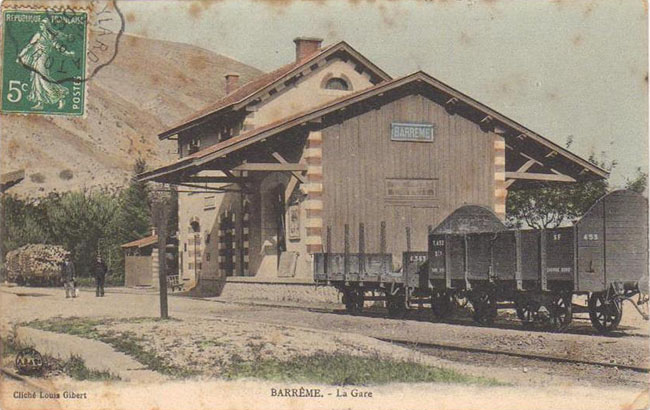
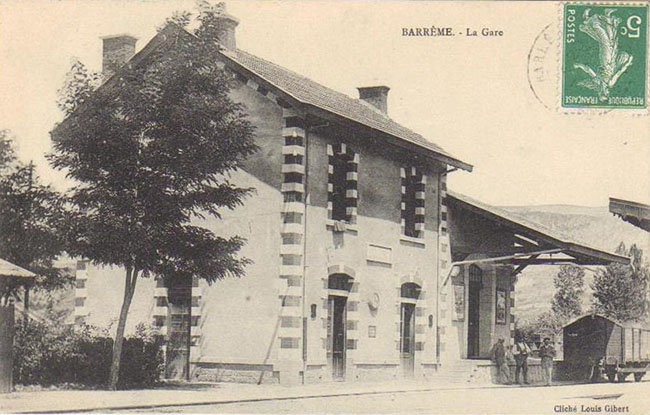
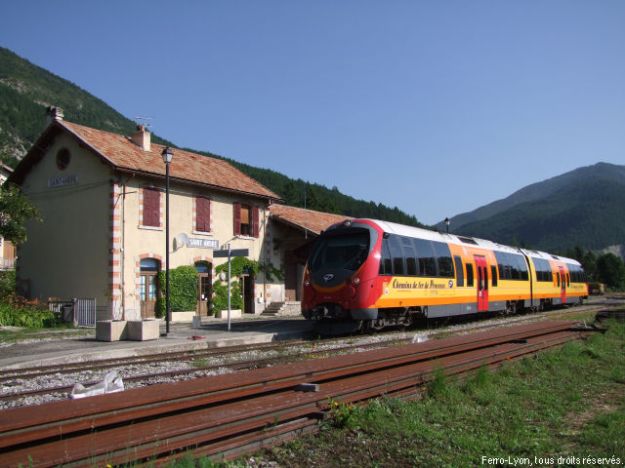
Beyond ‘Repentance the railway has only a short distance to travel before entering the village of Barrême. The map below shows this length of the journey. The satellite image focusses on the village of Barrême.A driver’s eye view of our arrival at Barrême. [1]Old postcards showing the station at Barrême. [3]

It is at Barrême that we take the next break in our journey towards Digne-les-Bains.

References

  1. http://www.rd-rail.fr/1-PHOTOS/PH43/index-ph43.html, accessed on 12th August 2018.
  2. http://www.proxiti.info/photoscommune.php?o=04136&n=La%20Mure-Argens, accessed on 9th August 2018.
  3. http://ubaye-en-cartes.e-monsite.com/pages/catalogues-des-editeurs/louis-gibert-photographe-editeur-a-saint-andre-les-alpes.html, accessed on 11th August 2018.
  4. https://m.facebook.com/Viroulada-en-Tren-dei-Pigna-289910237832039/?modal=admin_todo_tour&ref=page_creation_announcement&notif_t=page_invite&notif_id=1534228488097465, accessed on 14th August 2018.
  5. http://www.verdon-info.net/2014/09/saint-andre-les-alpes-les-travaux-des-annexes-de-la-gare-sont-en-bonne-voie.html, accessed on 16th August 2018.
  6. http://trip-suggest.com/france/provence-alpes-cote-d-azur/la-mure-argens, accessed on 16th August 2018.
  7. http://www.tunnels-ferroviaires.org/tu04/04133.2.pdf, accessed on 16th August 2018.
  8. https://www.google.co.uk/maps/@43.96093,6.468418,3a,75y,90t/data=!3m8!1e2!3m6!1sAF1QipMRYN0KdwYWFrzmemE0420CdG6aTnfUWmawsPjn!2e10!3e12!6shttps:%2F%2Flh5.googleusercontent.com%2Fp%2FAF1QipMRYN0KdwYWFrzmemE0420CdG6aTnfUWmawsPjn%3Dw203-h135-k-no!7i1500!8i1000, accessed on 16th August 2018.
  9. https://structurae.net/structures/moriez-viaduct, accessed on 16th August 2018.
  10. https://dossiersinventaire.maregionsud.fr//gertrude-diffusion/illustration/ivr9320110400179nuc2a/fcb49e2e-e534-4a6e-89a8-03a3653fadd0, accessed on 16th August 2018.
  11. http://www.map-france.com/Moriez-04170/photos-Moriez.html, accessed on 17th August 2018.
  12. https://dossiersinventaire.maregionsud.fr/gertrude-diffusion/dossier/ponts-des-chemins-de-fer-de-provence/6db00f0d-4794-4fb9-8d66-a7675e5c748b, accessed on 17th August 2018.
  13. https://www.google.co.uk/url?sa=i&source=images&cd=&ved=2ahUKEwisqfi6zfPcAhUFyIUKHaUTBfkQjhx6BAgBEAI&url=https%3A%2F%2Fdossiersinventaire.regionpaca.fr%2Fgertrude-diffusion%2Fdossier%2Fpdf%2F1c12de06-0c5a-45db-869f-ffa51aeba1e8%2Fviaduc-ferroviaire-de-moriez.pdf%3Fvignette%3DCompletSansLiens&psig=AOvVaw2RsidYGG5Vx-jGHZ36w8GY&ust=1534578739888539, accessed on 17th August 2018.
  14. https://dossiersinventaire.maregionsud.fr/gertrude-diffusion/dossier/ponts-des-chemins-de-fer-de-provence/6db00f0d-4794-4fb9-8d66-a7675e5c748b, accessed on 17th August 2018.
  15. http://www.tunnels-ferroviaires.org/tu04/04133.1.pdf, accessed on 17th August 2018.
  16. http://www.railtalk.org/product/issue-142-xtra, accessed on 19th August 2018.
  17. These pictures have very kindly been supplied by Christopher James on 21st August 2018.

Nice to Digne-les-Bains Part 11 – Thorame-Haute to Saint-Andre-les-Alpes (Chemins de Fer de Provence 75)

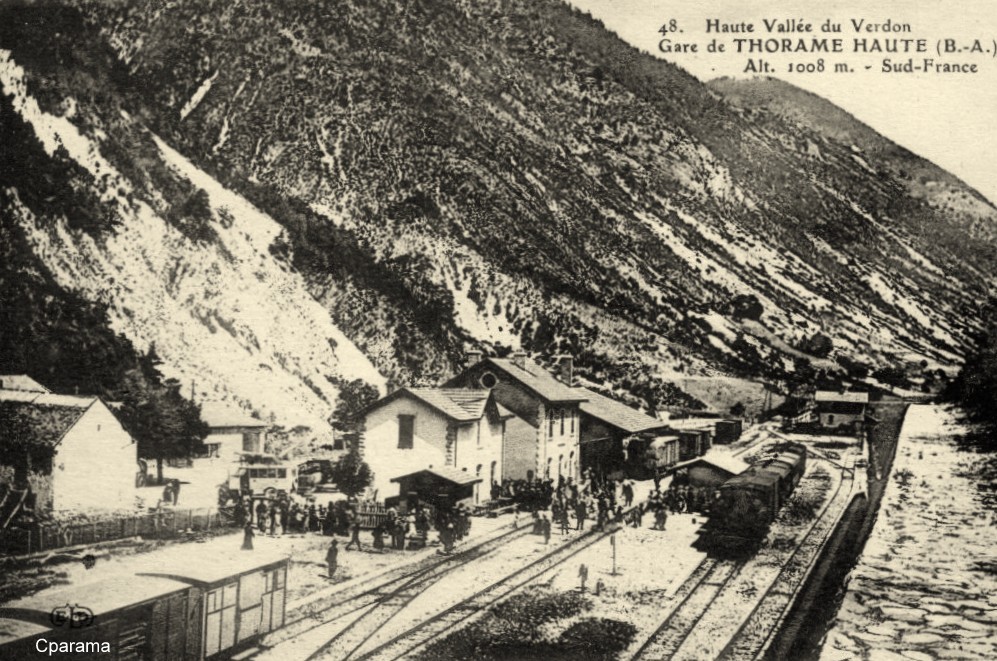
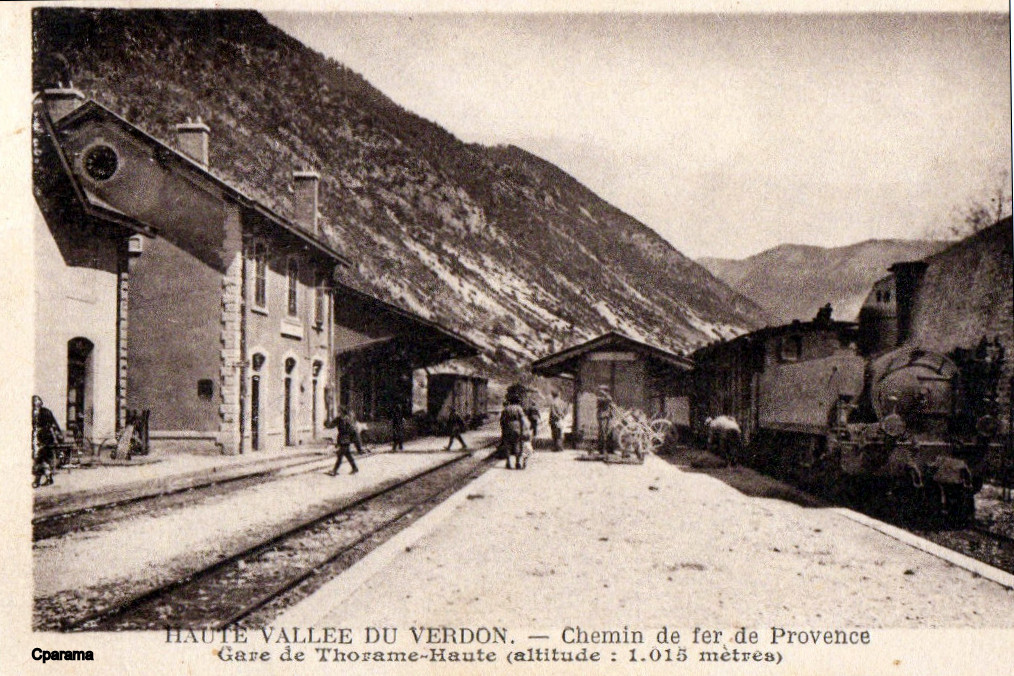
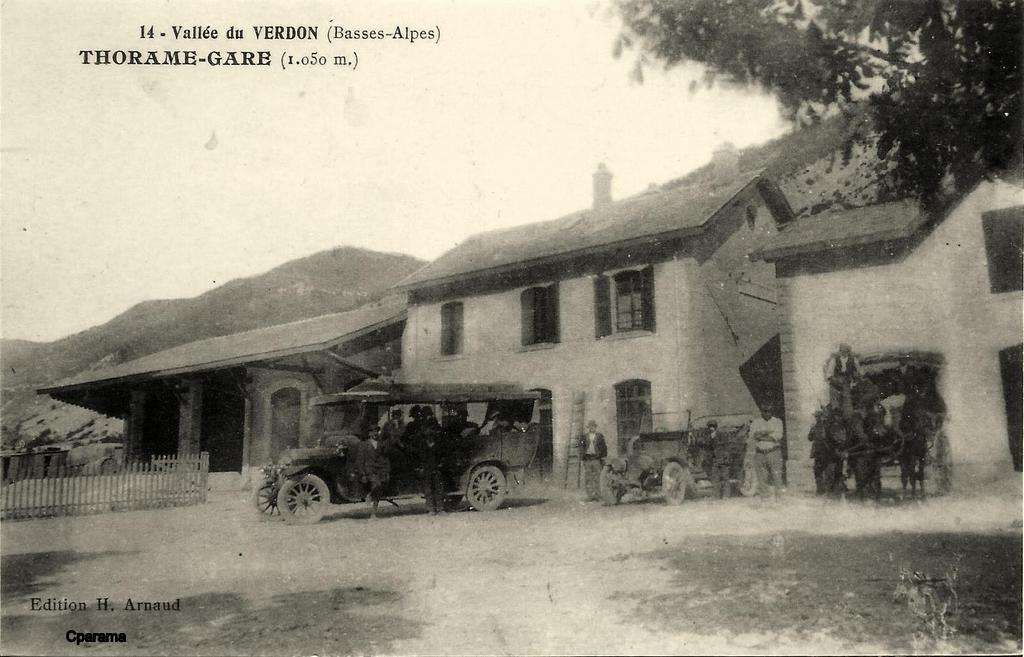
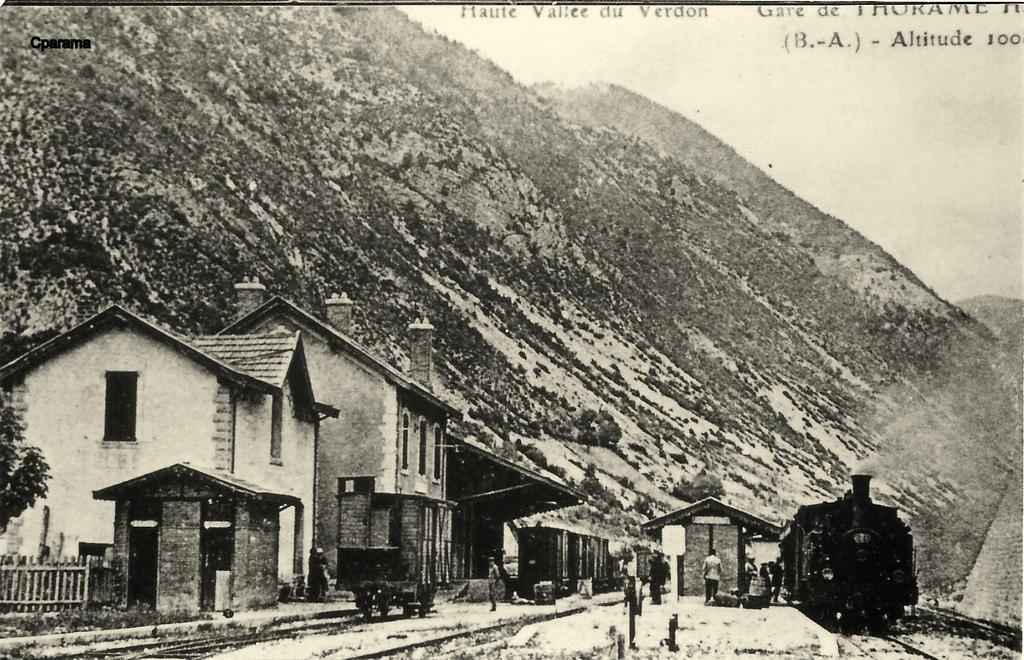
We will be resuming our journey from Thorame-Haute in just a few minutes, but as we wait for the train on to Digne, there are a few things to take in.

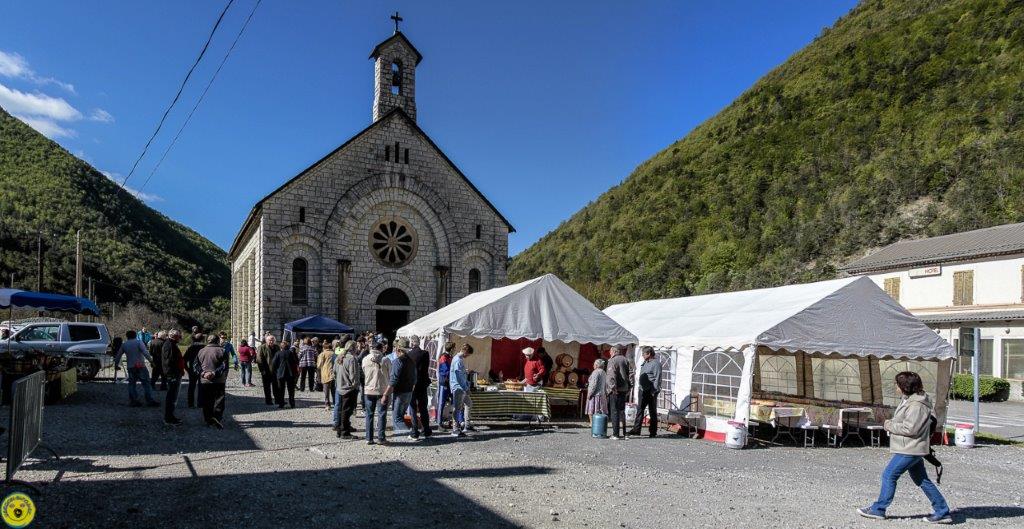
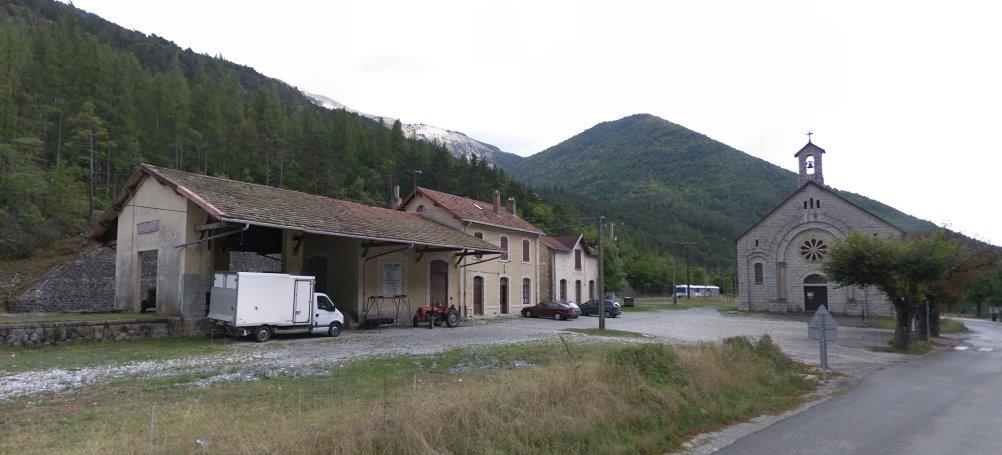
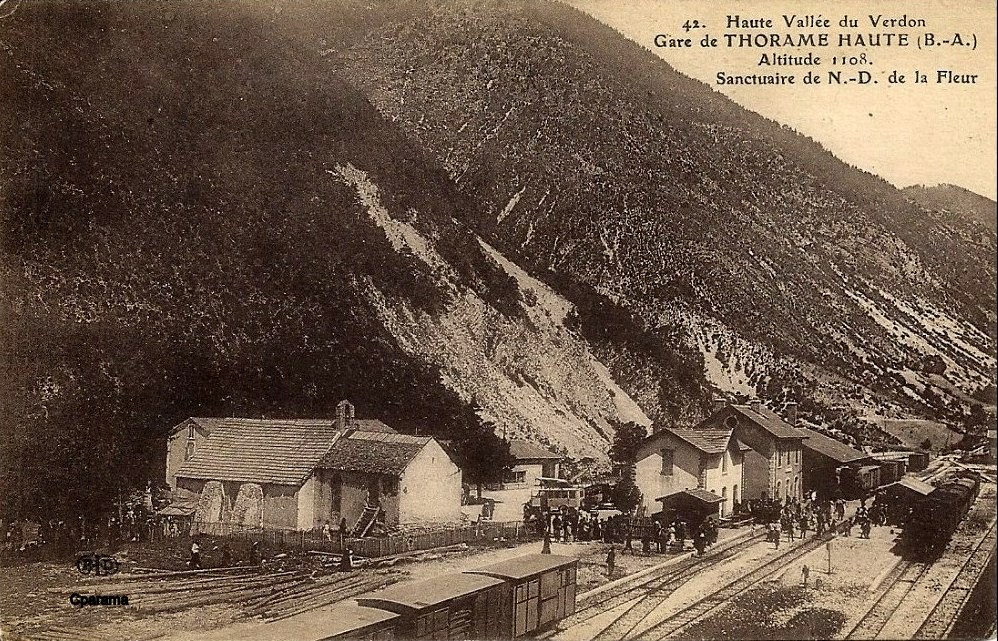
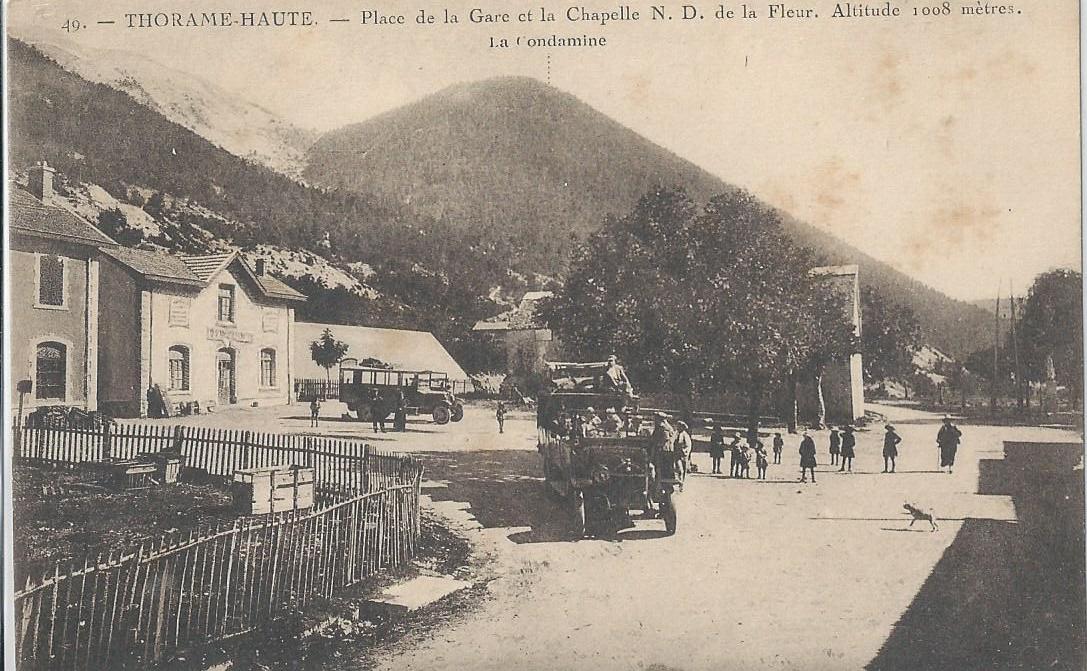
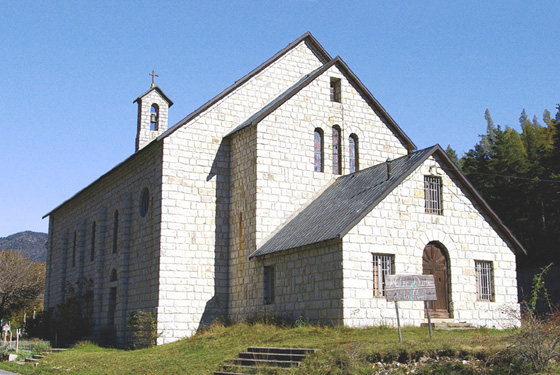
The first is the large chapel which has been built close to the station and which does not appear in the earliest postcard views of the station, nor in pictures which predate the railway’s arrival in Thorame-Haute. The site of the station was, and still is, the location of a special celebration in the Roman Catholic Church’s year in Provence. ….

The second, is the station itself.

1. Notre Dame de la Fleur

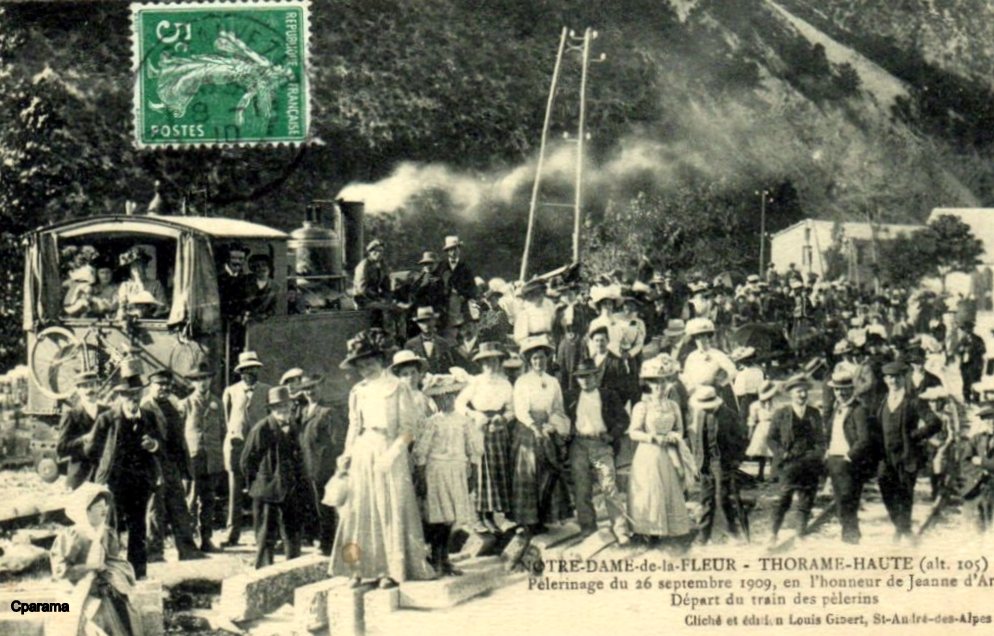
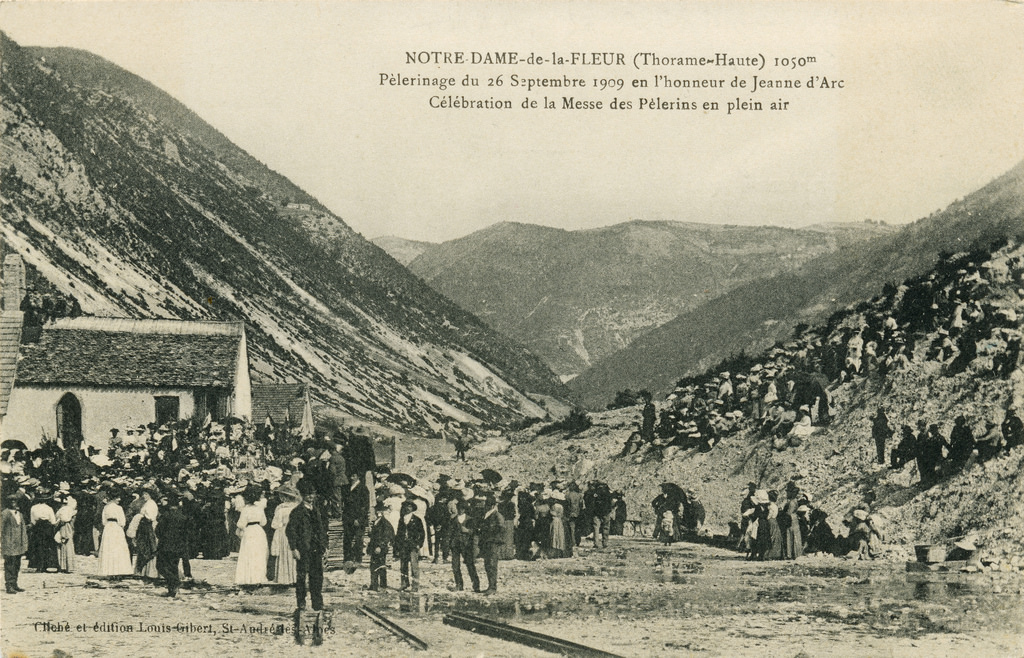
Thorame-Haute hosts an annual celebration in Pentecost each year, and also seems to be popular for other celebrations during the year. The first two postcard images show a celebration in honour of Joan of Arc which took place in the open air on 26th September 1909.
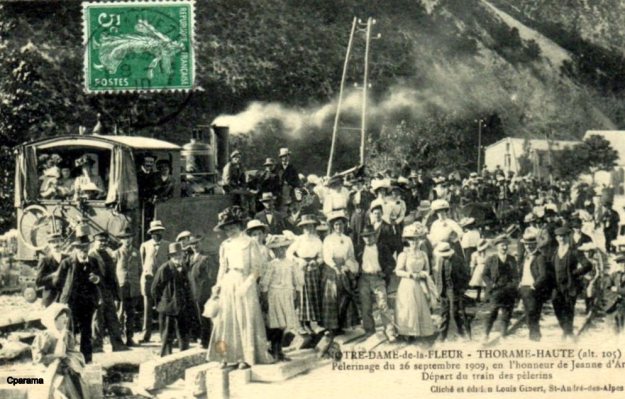
Large crowds gathered on 26th September 1909 before the railway had been extended through the mountain to the valley of La Vaire. [1]
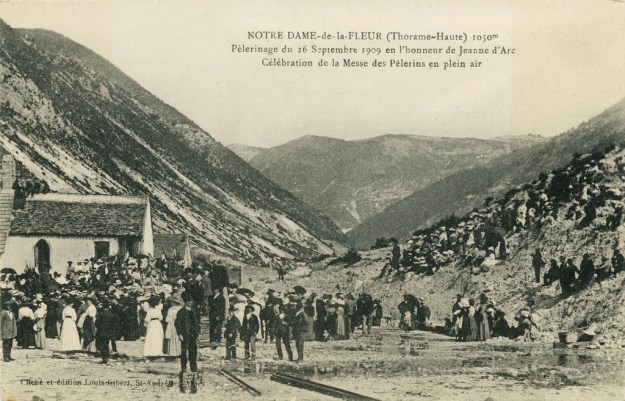
This second postcard view was taken on the same date and shows the small chapel which existed at Thorame-Haute at that time. The festival celebrations were taking place in the open air. [2]

But … these are not pictures of the major annual celebration. A little research into local customs provided more information on the Pentecost season celebration associated with Notre Dame de la Fleur. I also want to acknowledge Christopher James’s help it identifying the reason for the chapel at the location of the station.

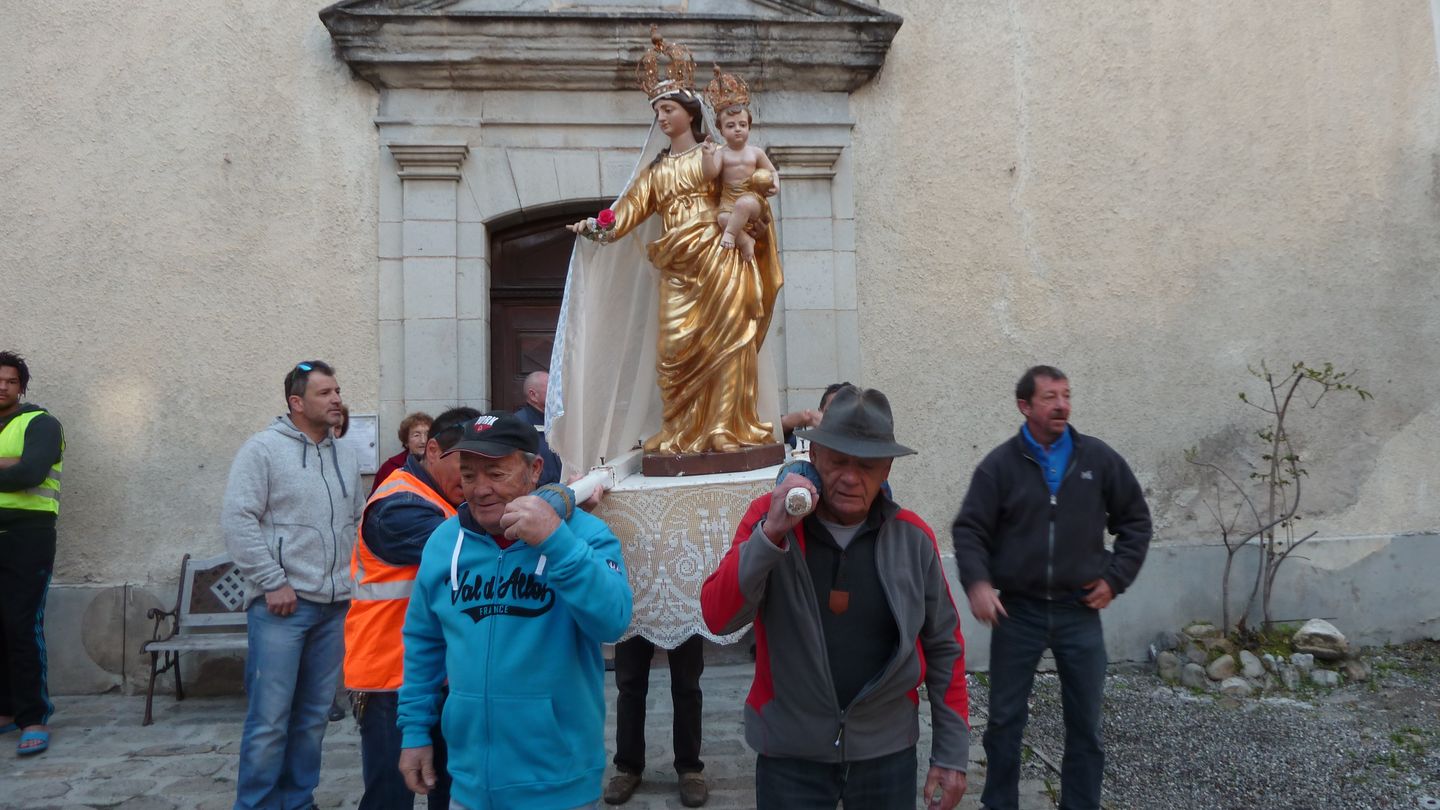
In the fifteenth century, a peasant farmer lived in Thorame, possessor of a modest herd which he led himself to pasture. He was a Christian with patriarchal customs. One day, he appeared before the municipal magistrates claiming the appearance of angels who marked a location, eight kilometers from Thorame, for the site of a chapel to be built in honour of the Virgin Mary. He had led his flock to the abandoned area and while he was praying, an angel appeared to him and as his vision ended he saw a single rose which came from the garden of heaven – a sign left for the shepherd to authenticate his vision, which earned the Virgin Mary the title of “Our Lady of the Flower. [3][10]

Fr. Juvenal Pélissier was born in Allos on 1st January 1879. In 1920, he was entrusted with the spiritual education of the parishioners of Méailles and Peiresc, in 1925 he moved to the parish of Thorame Haute. For many years he made every effort to create a new chapel at the site of the vision and visitation. His parish newsletters continually and consistently focus on the legend of Our Lady of the Flower. Eventually the foundations were started in 1936. [10]
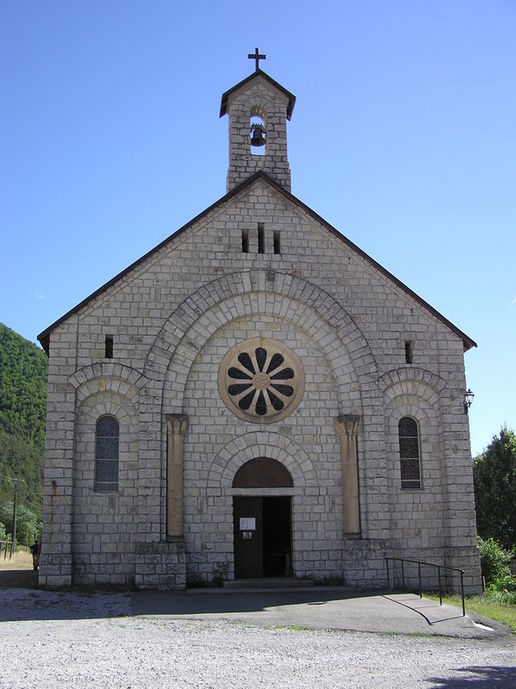
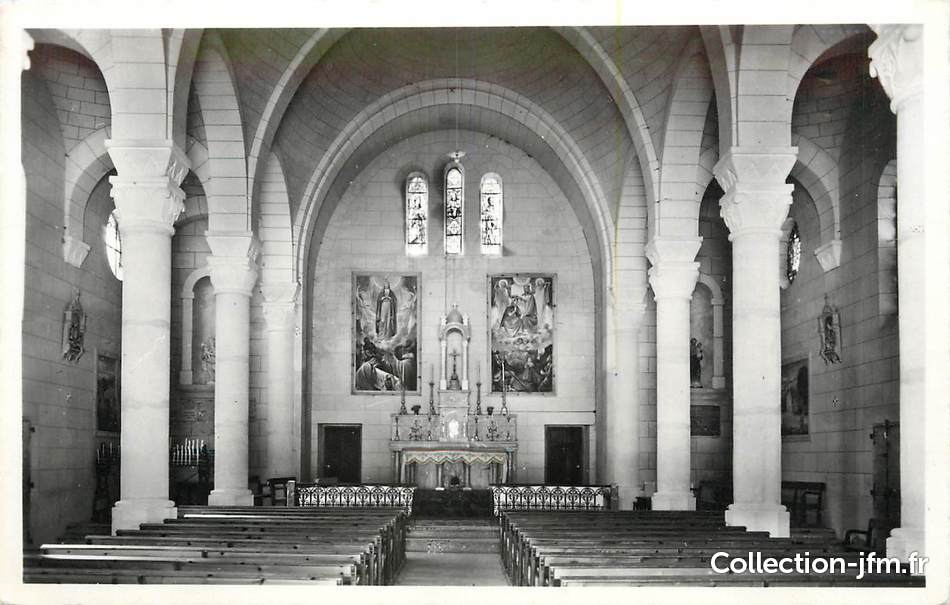
The present chapel building dates from the 1930s. It is the work of Abbot Juvenal Pélissier who worked alone for more than a decade to raise money for a new chapel. It stained-glass windows represent different species of flowers which grow in the valley of the Verdon. [3]
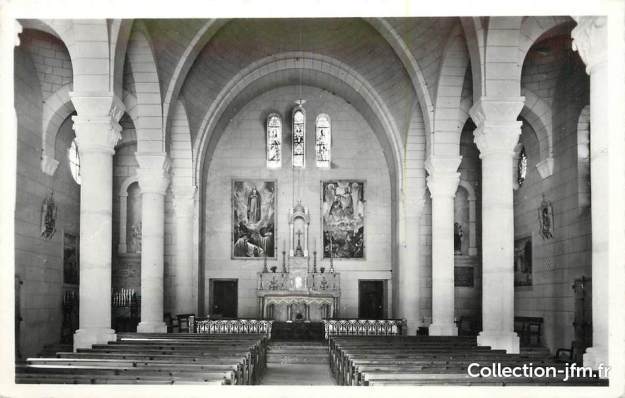
A postcard view of the interior of the chapel. [6]
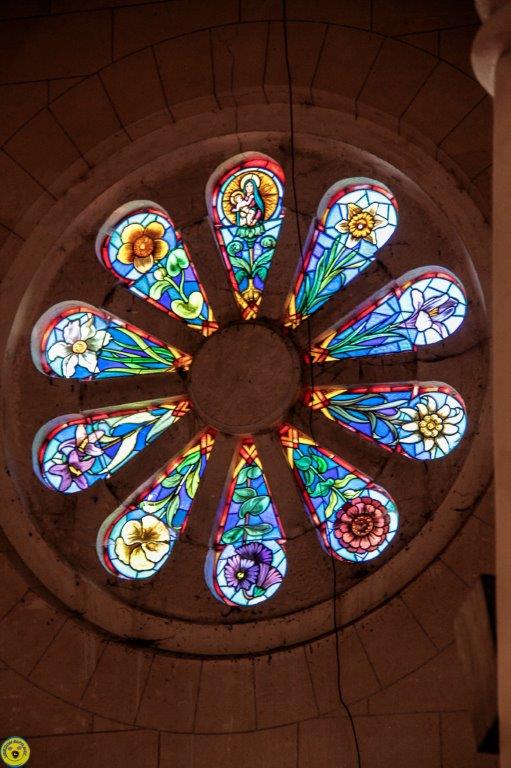
The Chapel’s Rose Window. [7]
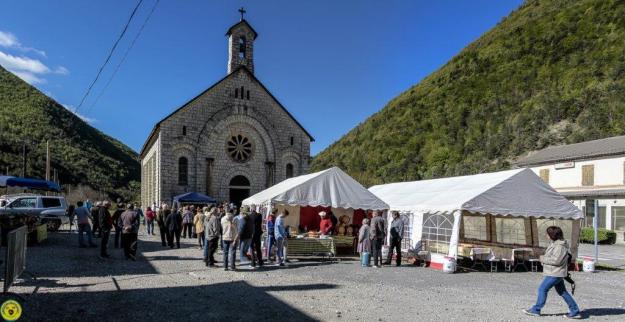
The day of the Festival. [7]
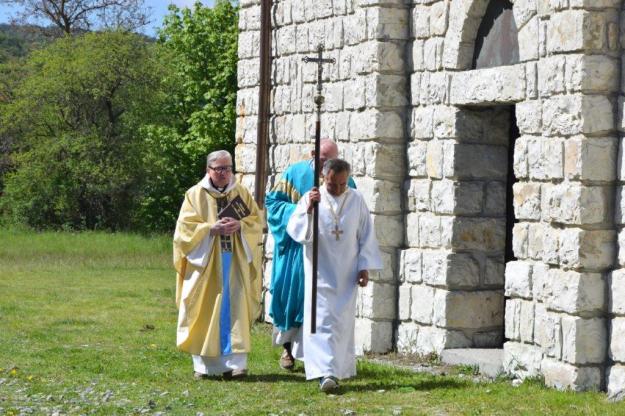
The day of the Festival, (c) Christopher James. [33]
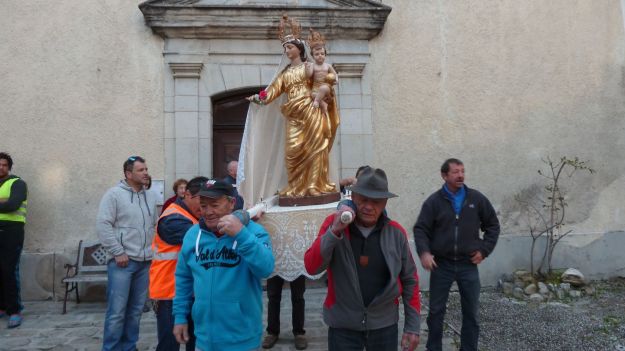
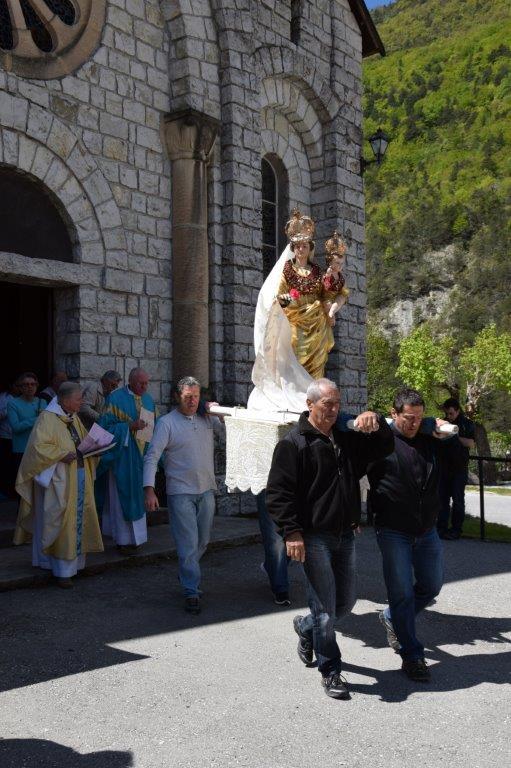
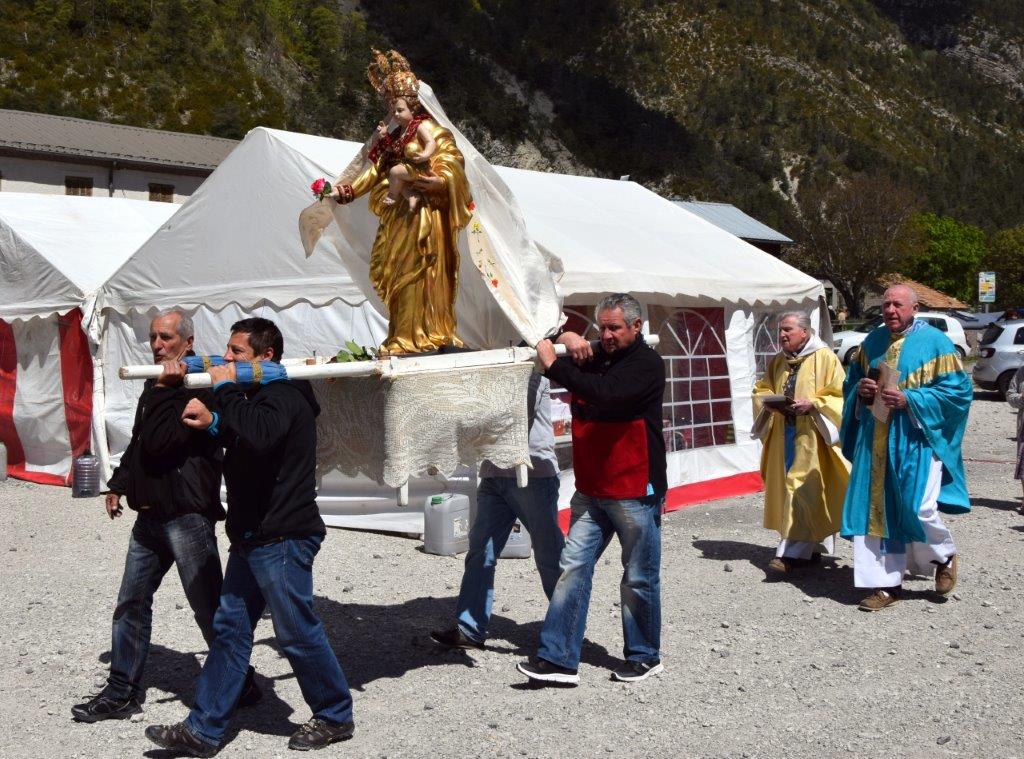
The pilgrimage. [11]

The pilgrimage, (c) Christopher James. [33]
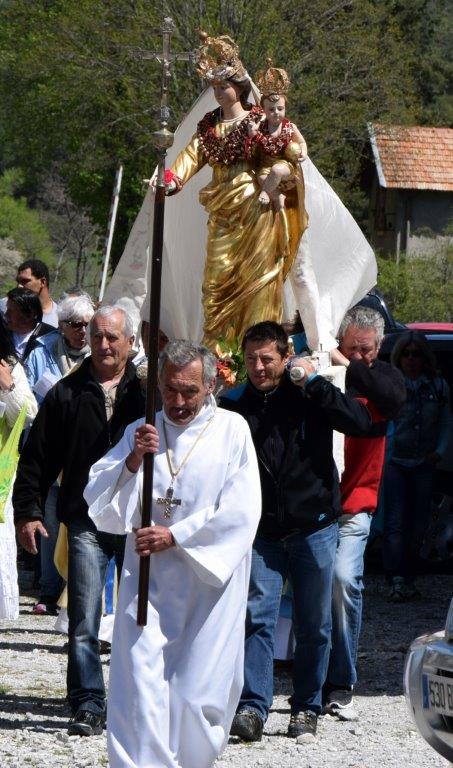
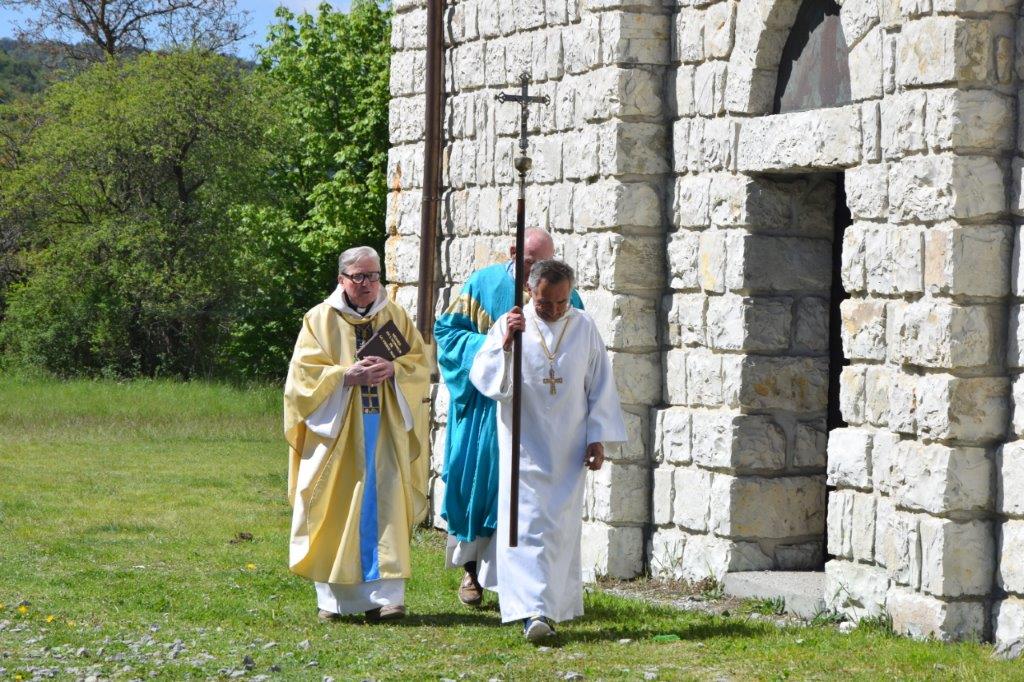
The pilgrimage, (c) Christopher James. Christopher James says that the Crucifer is known locally as ‘Cocoa’. [33]
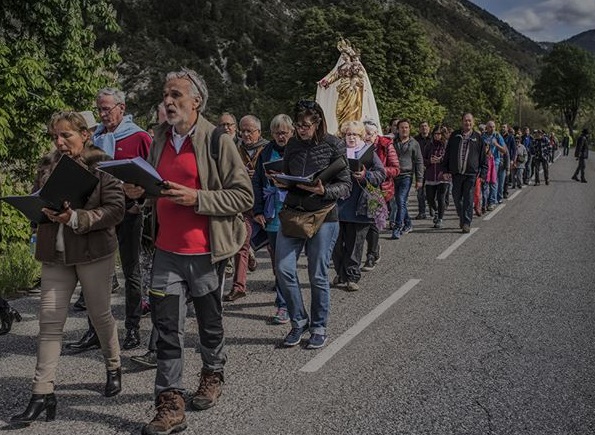
The pilgrimage. [12]
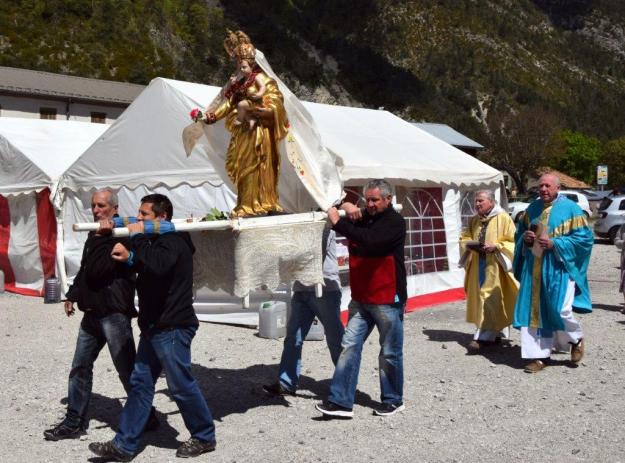
The pilgrimage, (c) Christopher James. [33]

Notre Dame de la Fleur. [7]

The tradition of the pilgrimage of Our Lady of the flower is still an integral part of the annual life of the inhabitants of Upper Verdon. The event is organised by volunteers. They prepare for the procession which starts in the main village of Thorame-Haute and ends at the railway station. In 2016, Marc LIboa and a team of volunteers provided a “reward meal” for all who participated in the procession.
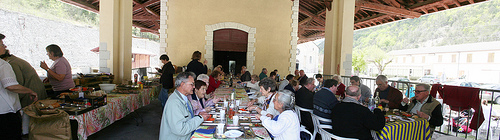
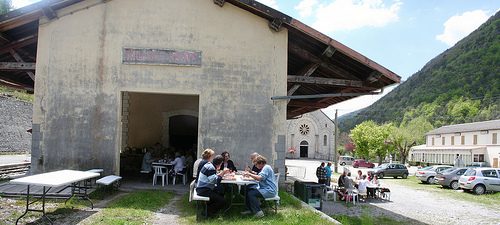
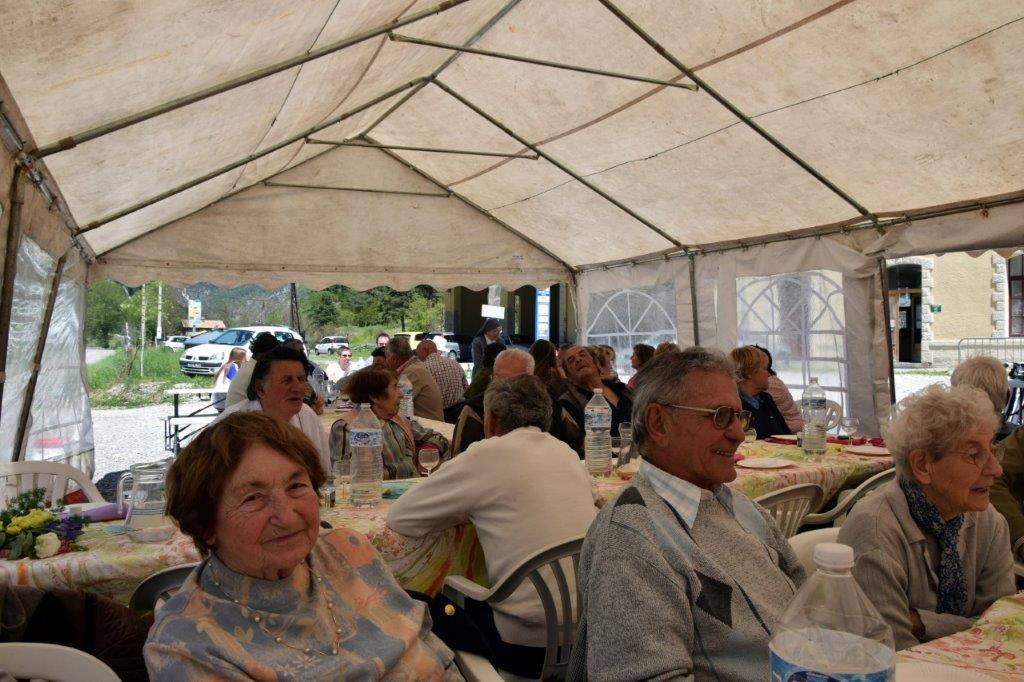
The images immediately above show the participants in the festival eating in the shadow of the station close to the chapel. [5]
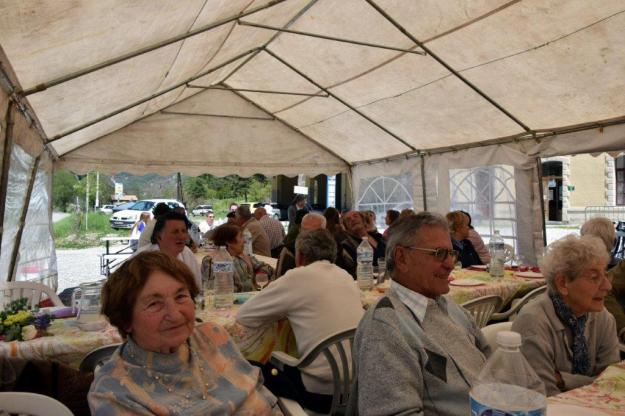
A similar scene (c) Christopher James. [33]

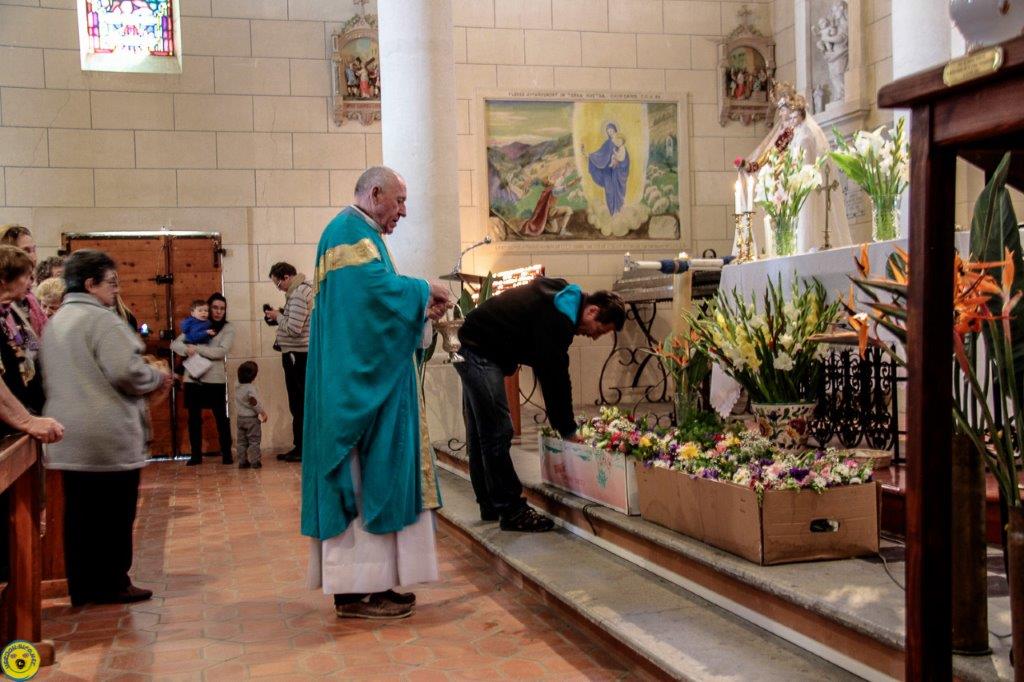
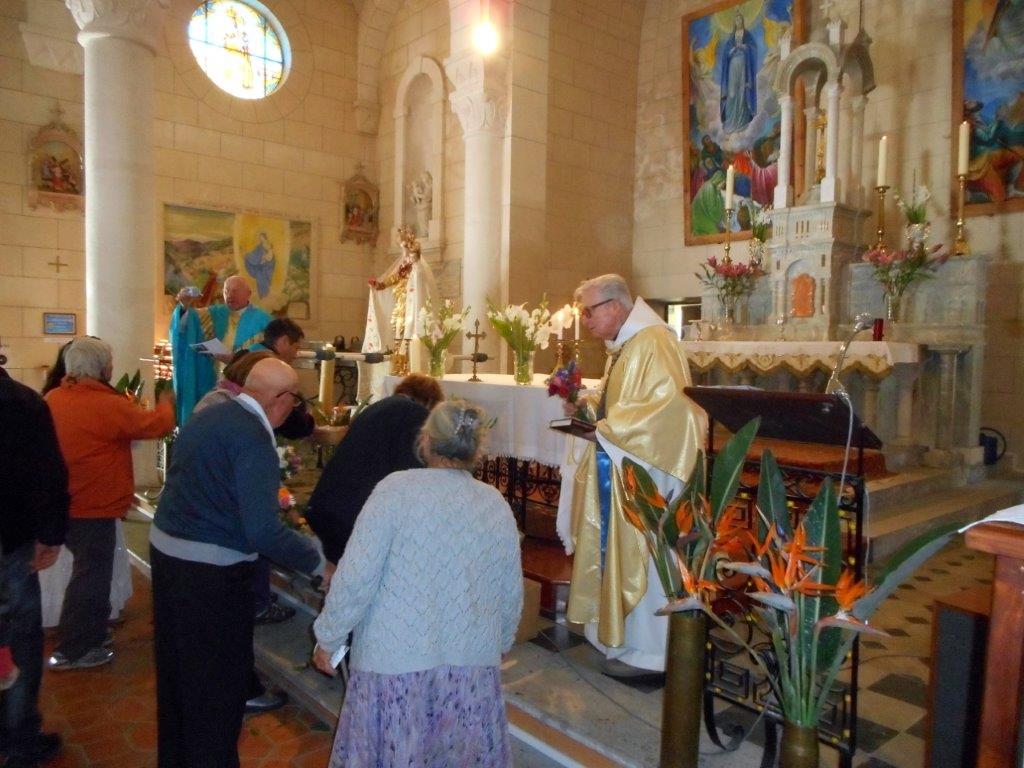
After this the religious ceremony took place, “orchestrated by Father Benedict of Colmars the Alps, Father Jean Boudoux Canon of Barrême and Jean-Louis Colombano who assisted them. Pilgrims were numerous and everyone was able to leave with a bouquet of blessed flowers, beautiful flowers prepared … by volunteers.” [7]
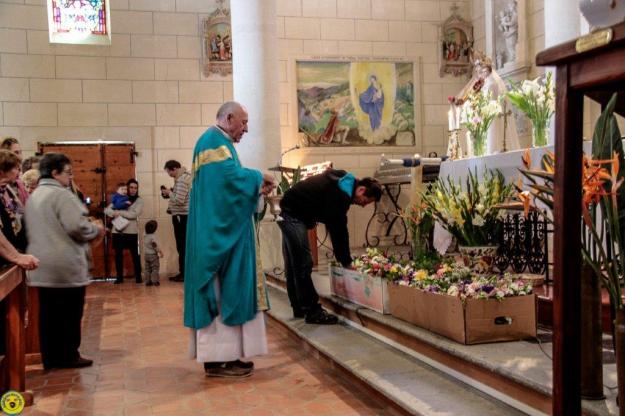
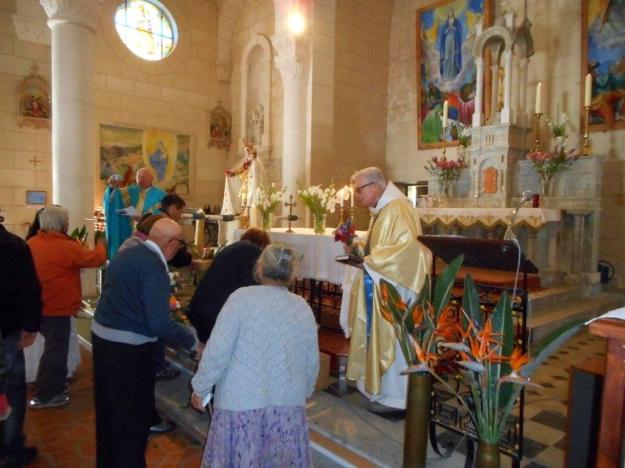
Inside the chapel, (c) Christopher James. [33]
Another view of the Chapel. [8]

2. Thorame-Haute Station

We noted towards the end of the last but one post that the site of the station at Thorame-Haute was inundated in the period immediately prior to it being due to be opened. A major rock fall delayed the opening of the line and required a significant retaining wall to be built in 1909 to 1911 to hold the land above the station.
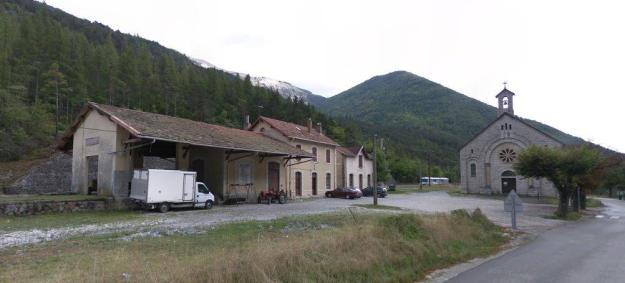
The station site, the picture is taken from the D955 with the River Verdon behind the photographer. The retaining wall referred to in the text can just be seen to the left of the goods shed.
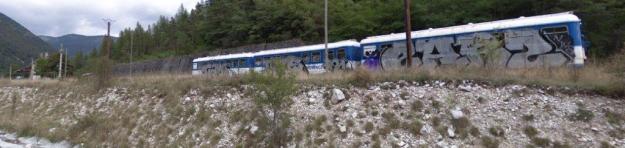
The same retaining wall is visible behind the stored carriages above. The station can just be picked out to the left of the image. This picture is also taken from the D955.

It can be seen more clearly in this picture. [13]
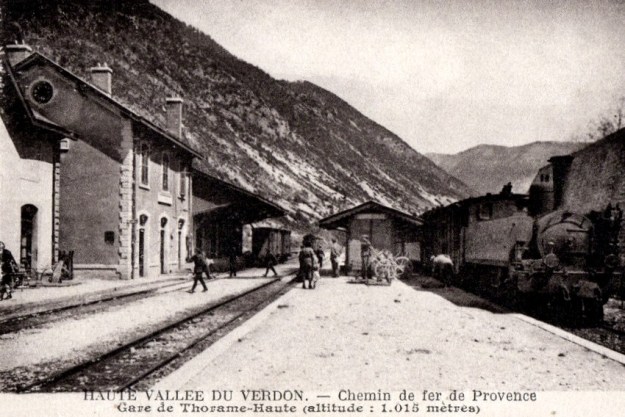
It is also evident on the right hand side of this postcard view.
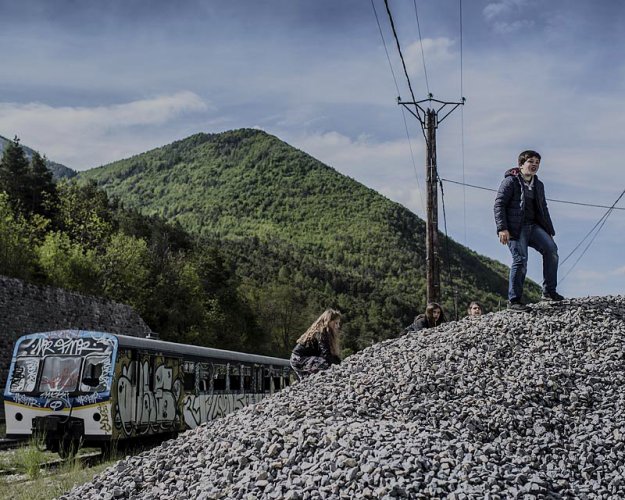
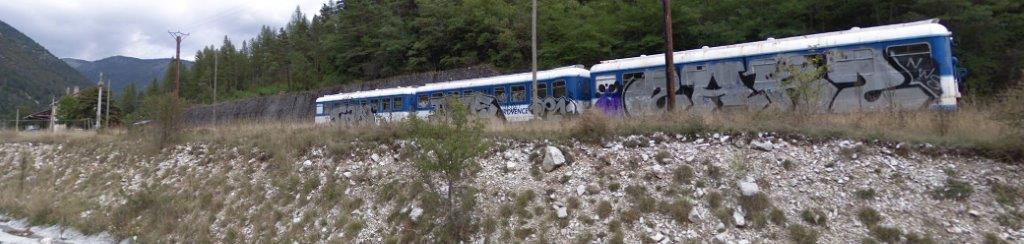
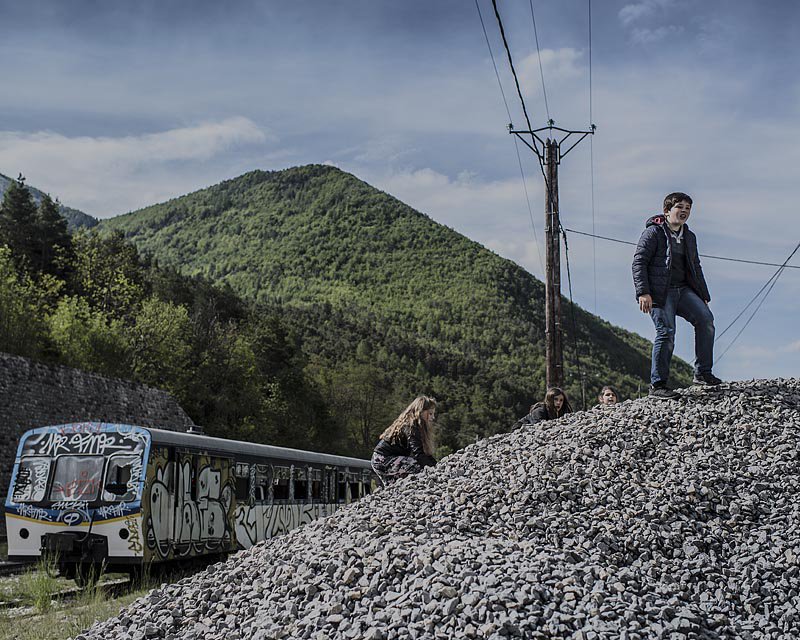
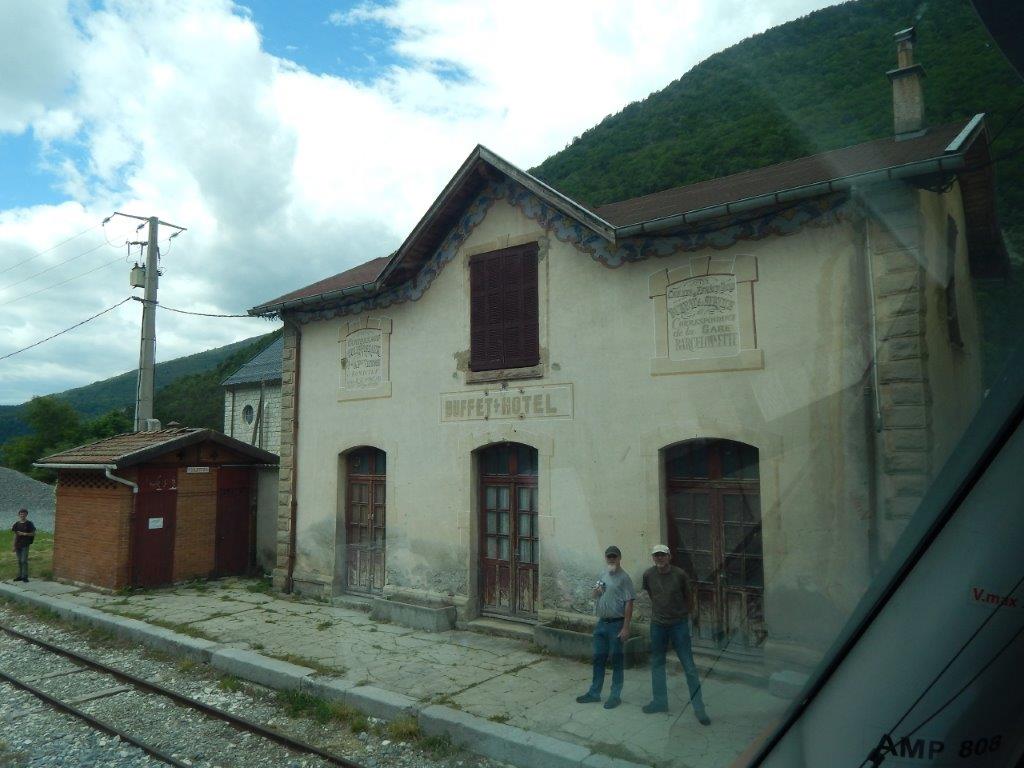
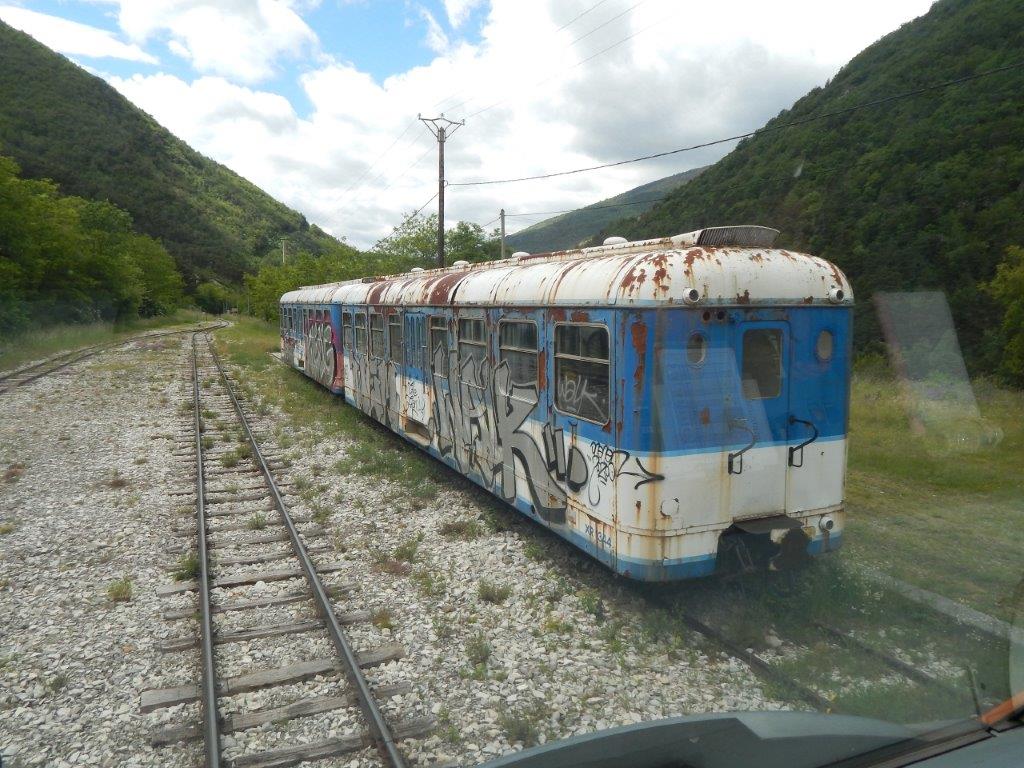
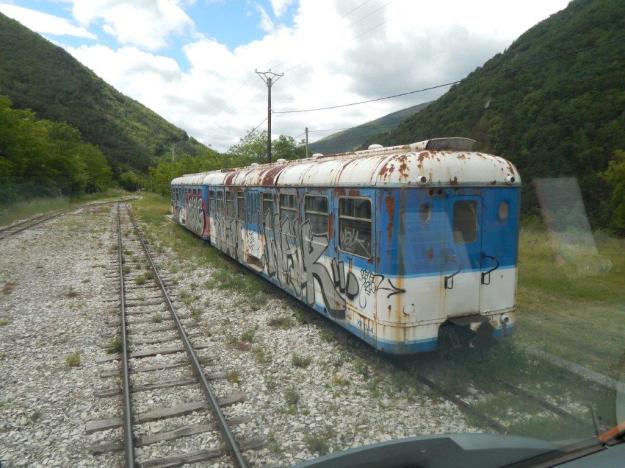
A few photographs of the station show that a siding to the south of the station has been used for storage of redundant stock. It is clear that the metal surfaces of the carriages are ideal for graffiti paint! [9]
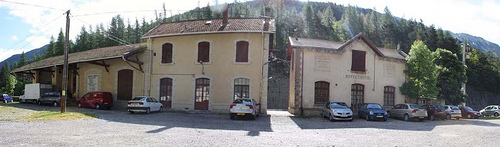
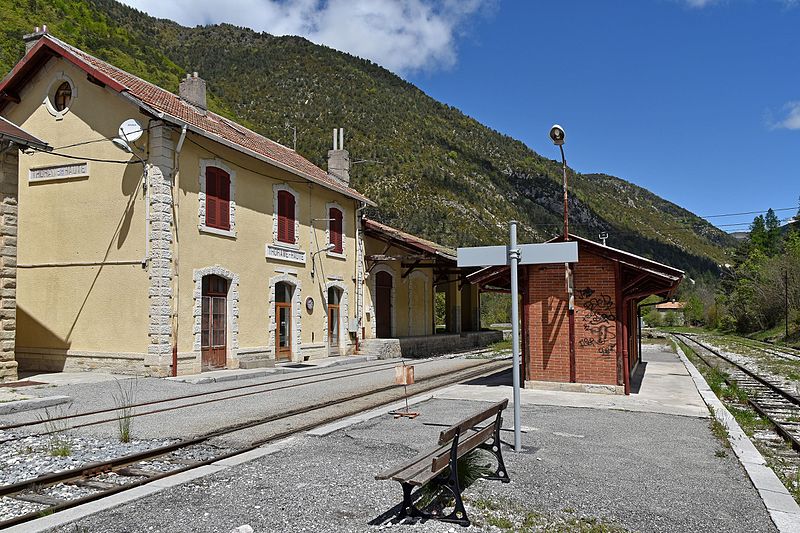
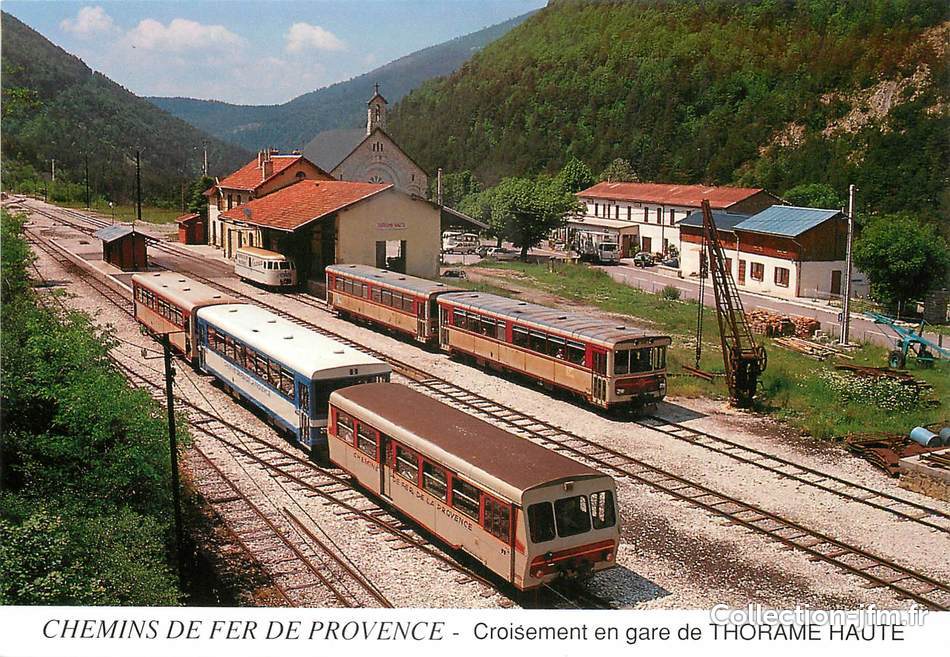
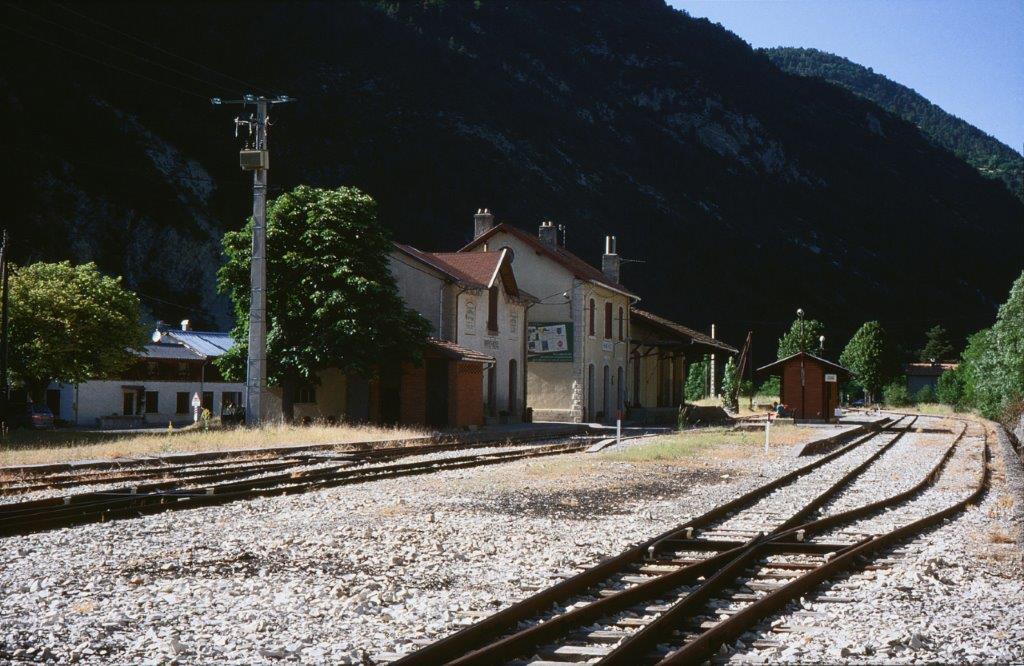
This panorama shot shows the three main parts of the station buildings, from left to right – the goods shed, the passenger facilities and the station buffet or restaurant. [4]

There is a rail simulator version of this line and I thought it might be of interest to see some stills from http://www.railsim-fr.com which show how this station has been treated. three pictures follow below. [14]
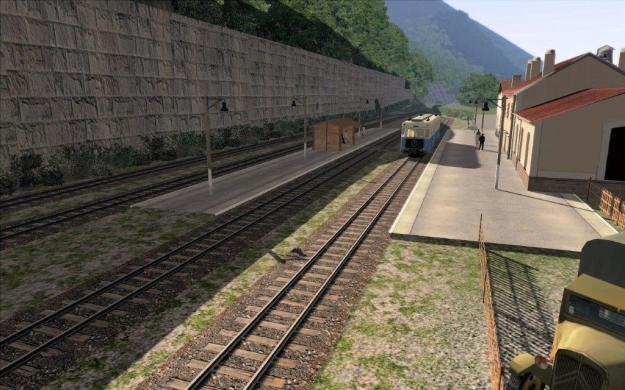
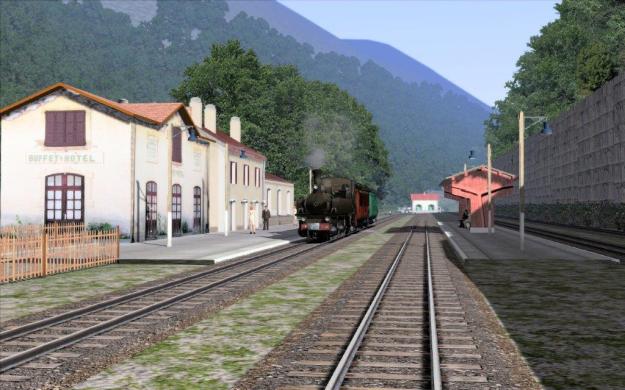
The overall impression is excellent, there are some detailed issues – such as the roof of the goods shed and the detail of the waiting shelter on the central platform in one of the images. Overall, these computer generated images give a good idea of the railway as it passes through the landscape. Tanguy has posted three images on the http://www.railsim-fr.com/forum for comparison … copies are provided below. [14]
This last image is taken from the top of the retaining wall referred to in the text. [14]

The onward journey

We climb about our train to head away south down the Verdon valley.The first two images below show a driver’s eye view as we leave the station. First we pass stored rolling stock and then head off down the single-track line. [15]
The D955 follows alongside the line at a lower level until it swings across the Verdon on the arch bridge above. A retaining wall is shown on the left of the picture which hods the railway above the road. The hillside above and below the line is very steep and retaining walls are needed along the length to secure the rock face above the railway formation.
The first image above is taken from the D955 on the west side of the valley of the Verdon. The second is taken from the driver’s cab in an Autorail on the line. [15] Both show the size of the retaining walls along this section of the line.

The next station is Allons-Argens. This next view is also taken from the cab of an Autorail, it shows the approach to the station. [15]
The station building from across the valley on the D955.

The D52 crosses the Verdon from the D955 and provides access to the station and on up the valley of L’Ivoire to Allons.
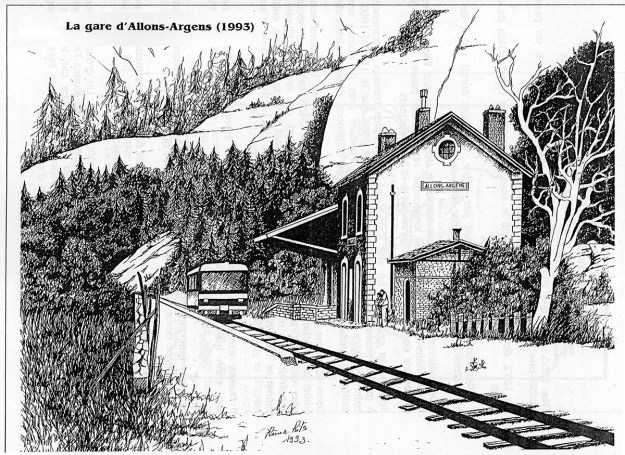
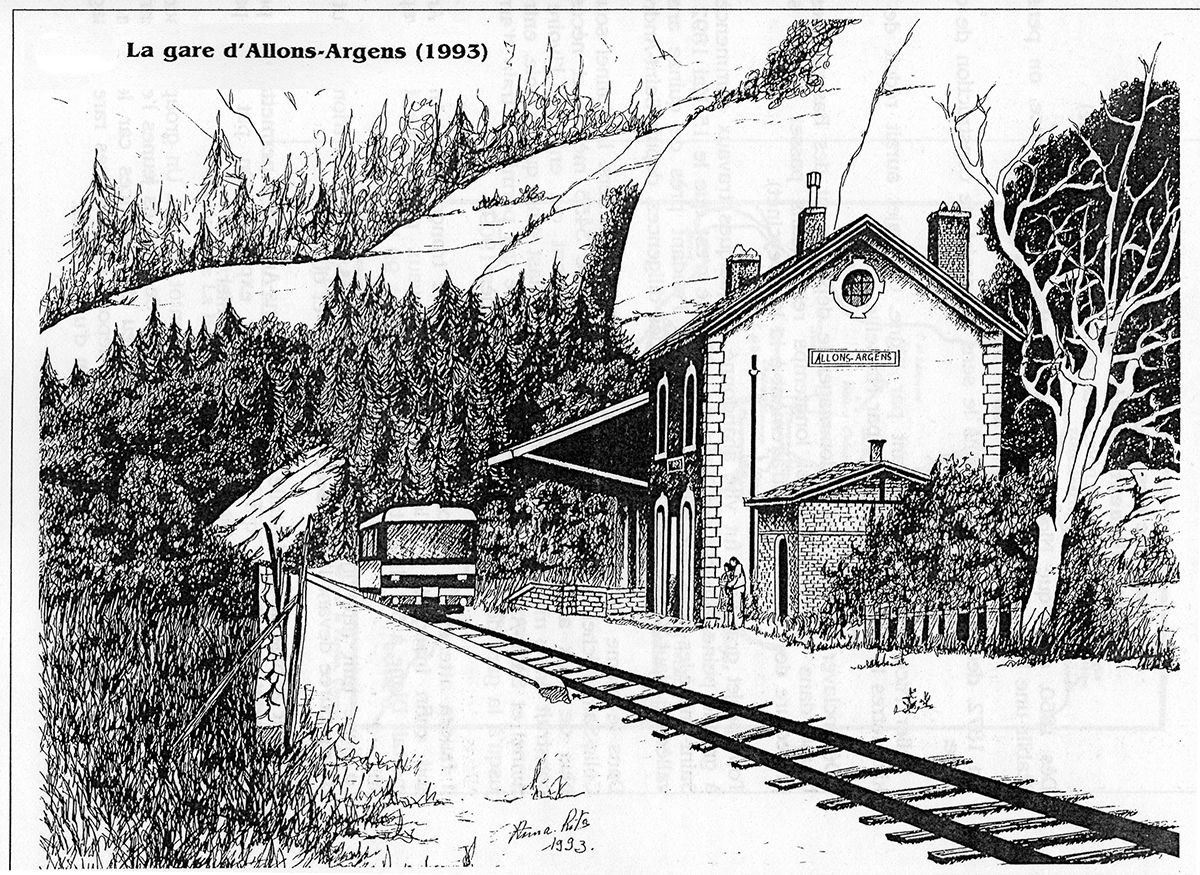
Allons Argens Station drawn by Phillips Vernet. [17]
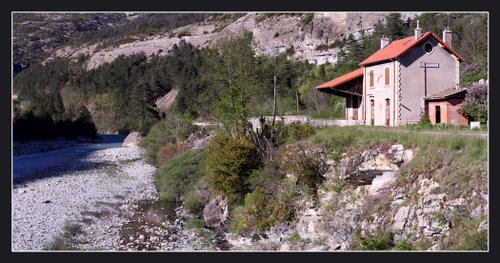
Allons Argens Station from the river bank. [16]
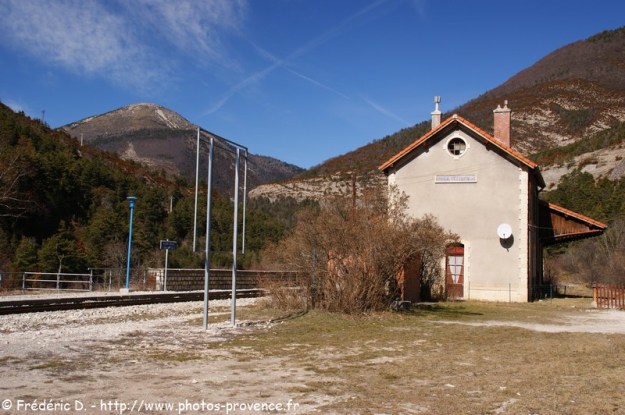
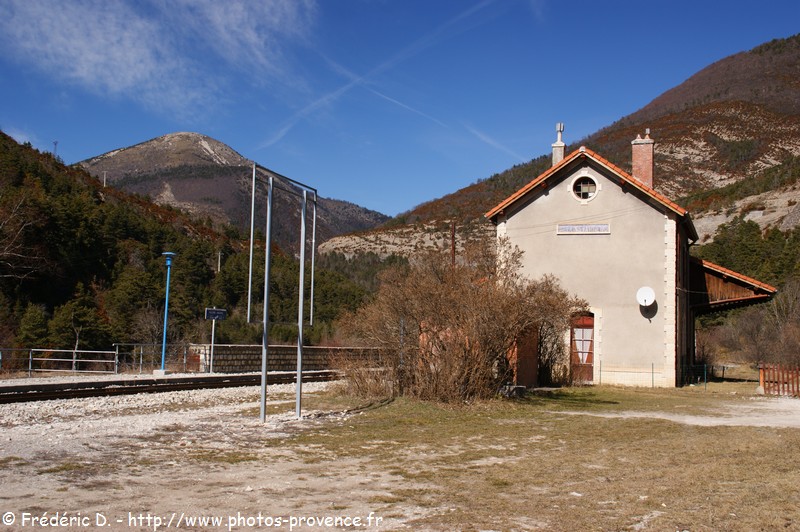
Allons Argens Station from its access road. [18]

The old station buildings are fenced off. [19]

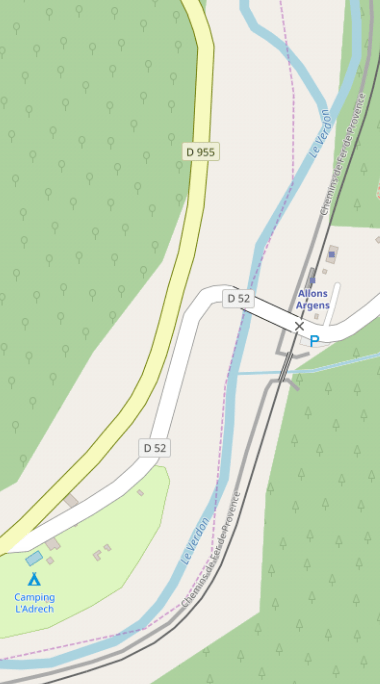
The station is a request stop and no facilities are provided for trains to pass. [19]

Immediately after Allons Argens Halt the railway crossed the River Ivoire on a single span stone arch bridge.

The line, which has been travelling in a generally southerly direction, curves first to the west and then to the south as it follows the east bank of the River Verdon. In about five kilometres, it crosses the river to the west bank and arrives at the village of La Mure-Argens.
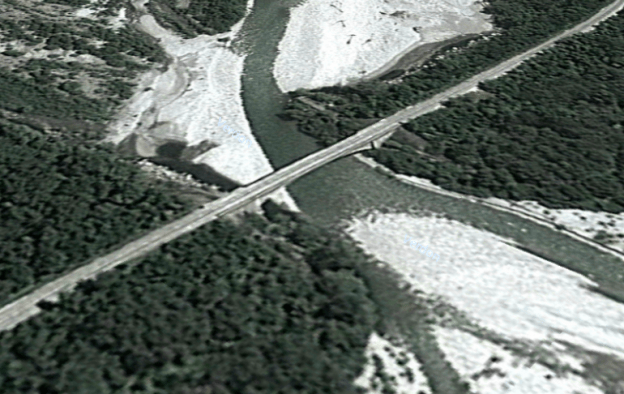
Google Earth image of the bridge across the river. The view is taken looking North.
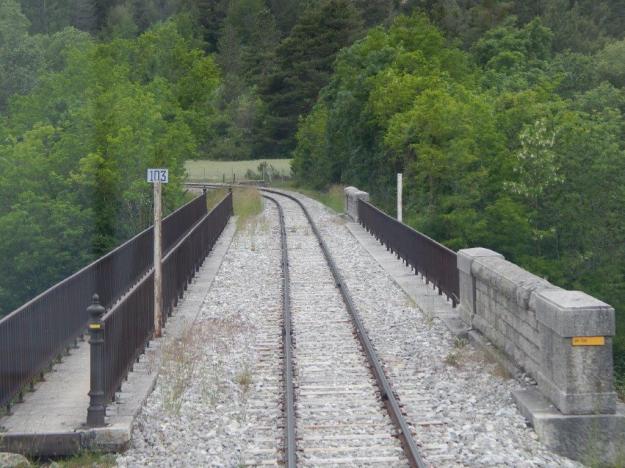
Driver’s view across the Bridge. [15]
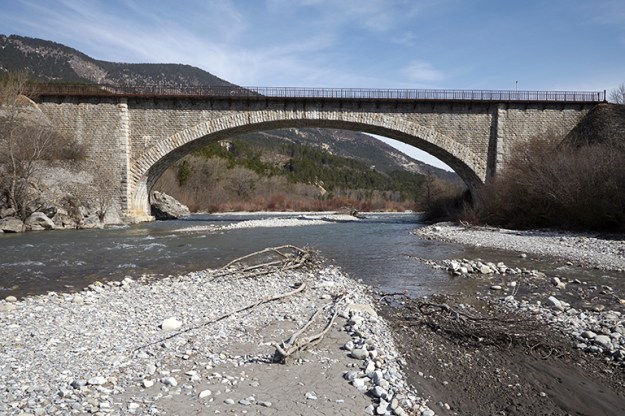
Two images (above) of the rail bridge over the Verdon near La Mure Argens. [22]
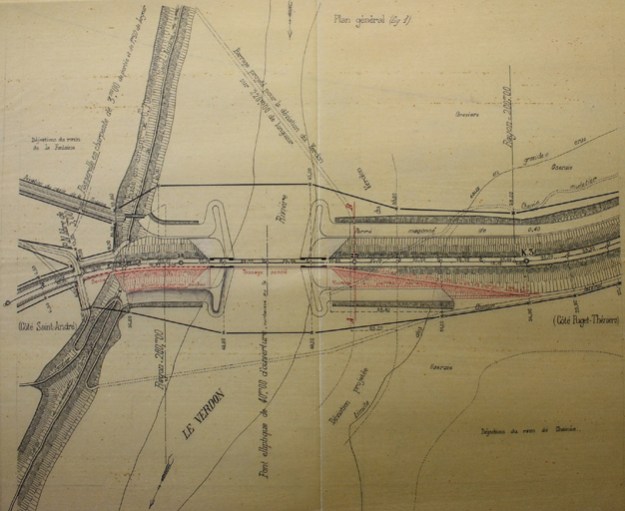
A constriction plan for the same bridge, for a footway extension to the side of the bridge. [22]


A series of smaller photos, show aspects of the bridge and include two of the design drawings! [22] And then we move on the the village of La Mure Argens.

The two images immediately above were sent to me in August 2018 by Christopher James and show GECP ‘The Portuguese’ cross the bridge across the Verdon, (c) Christopher James.
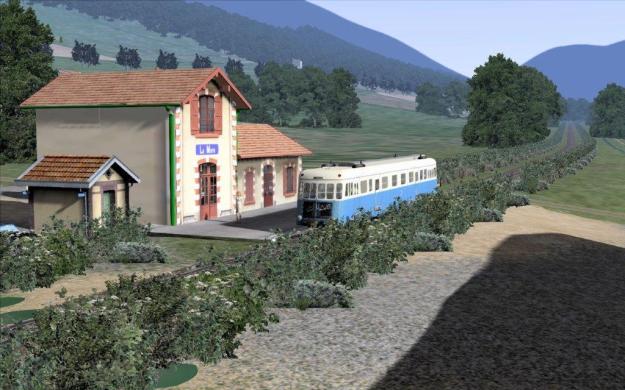
The station at La Mure Argens (above) as depicted on a rail simulator. [15]

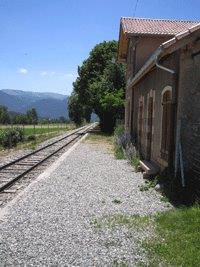
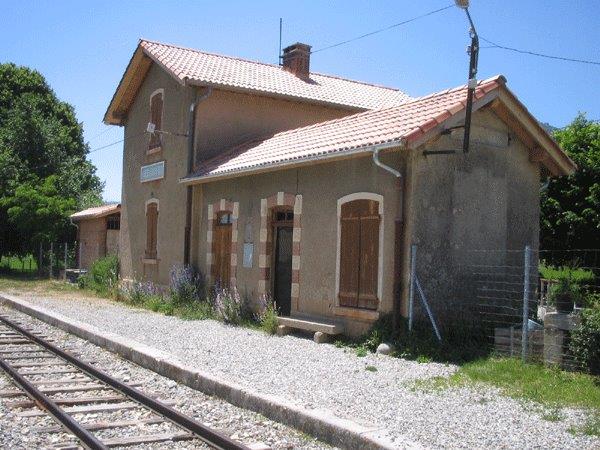
The station was no more than a halt with no facility for trains to pass. The village was around 1 kilometre northwest of the station which was set in open fields. The first image looks southwest along the short platform. The second image shows the station building elevation and is taken from the fields opposite. Both are from the CCCP website. [20]

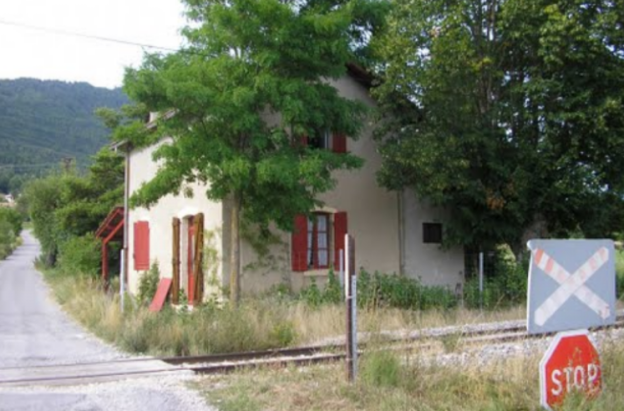
Two level crossings which retain their crossing keeper’s houses take the railway across roads to the south of the town. The first shows the cottage in a copse of trees next to the line. The second covers a more major road.
The first road crossing taken from the southeast, (c) Paul Garnier. [21]
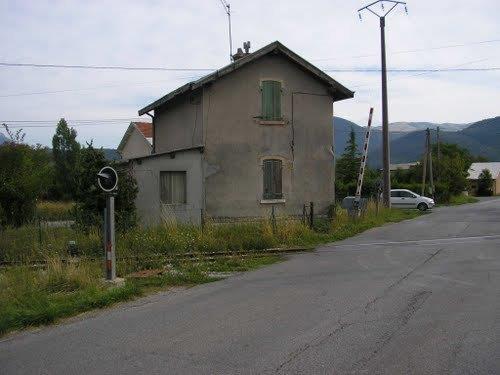
The second road crossing. The picture is taken from the north and is taken from Google Streetview.

Leaving La Mure Argens the railway crossed the valley of the River Issole on another graceful single span arch bridge of the same design as that crossing the Verdon north of La Mure Argens.
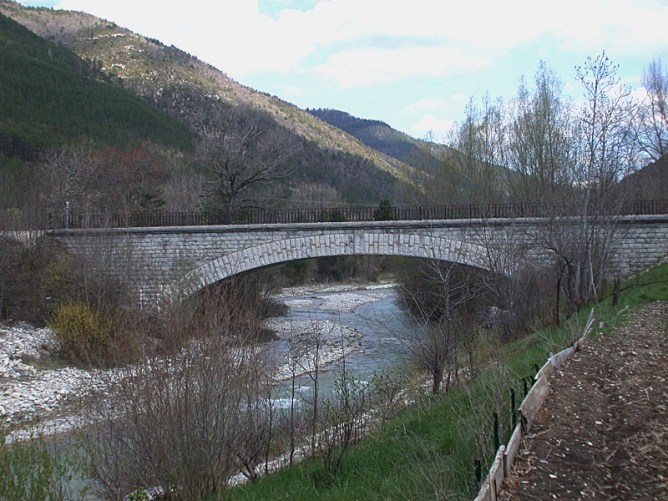
The Bridge over the River Issole. [23]
Driver’s view across the Bridge. [15]
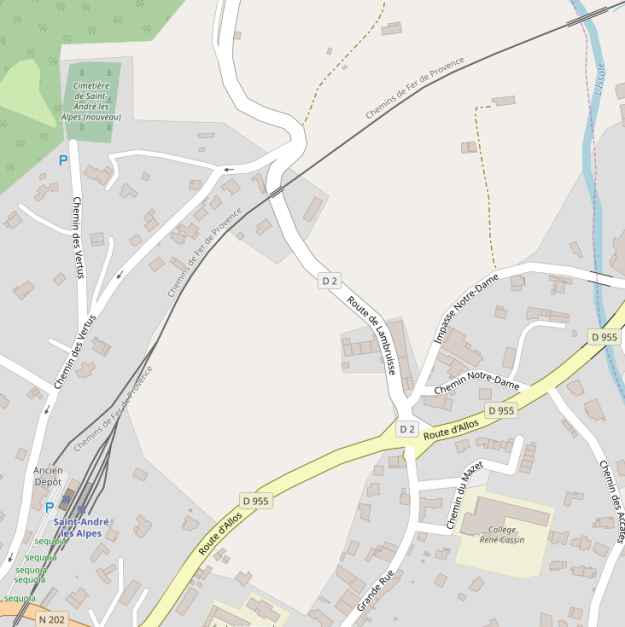
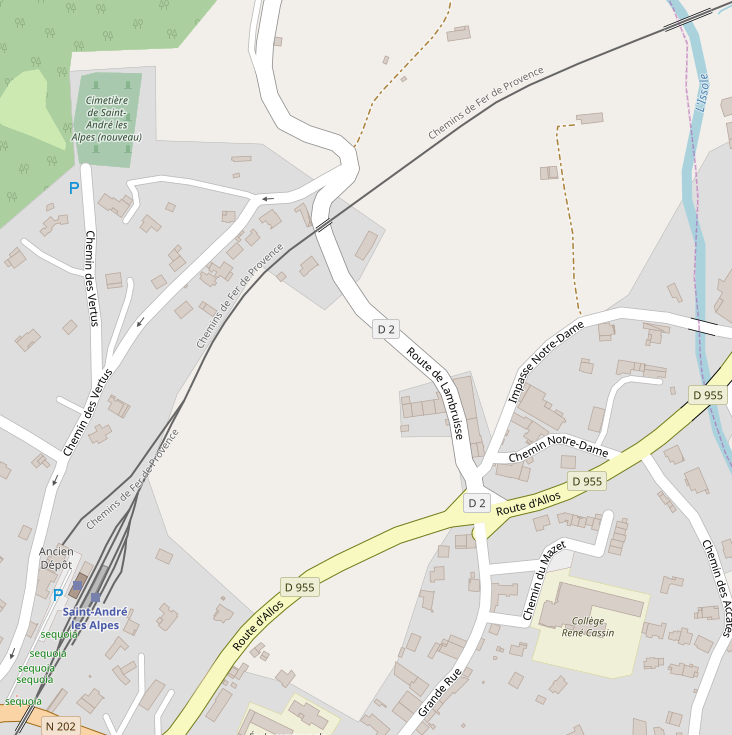
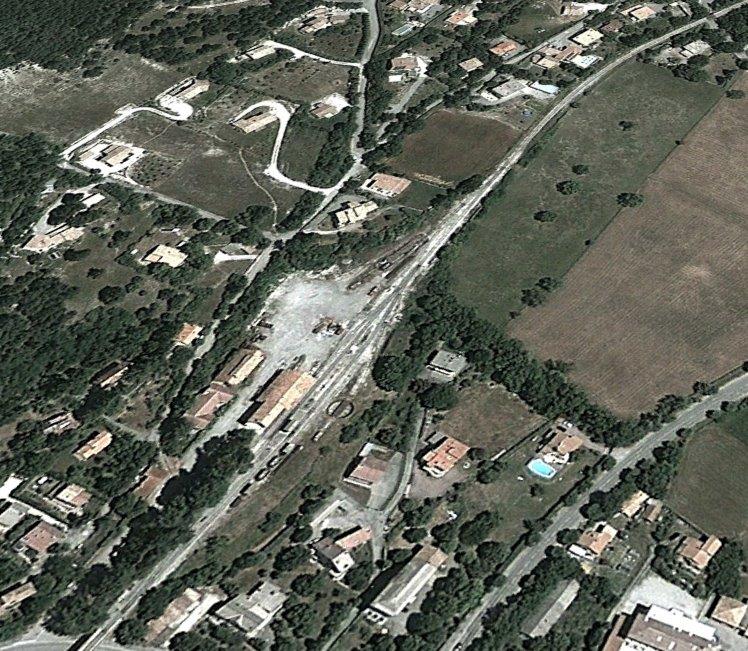
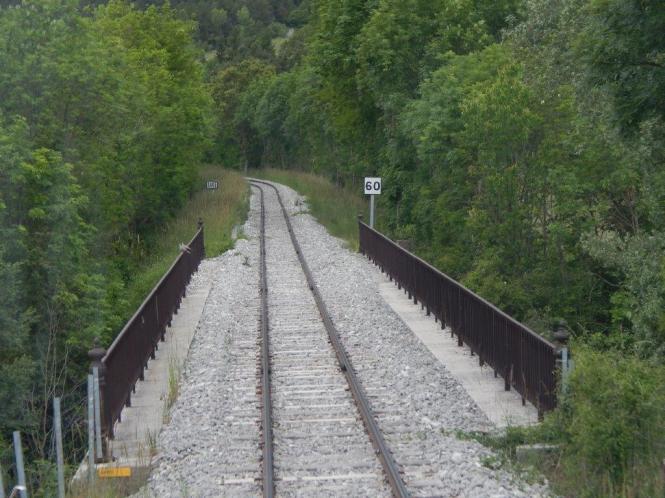
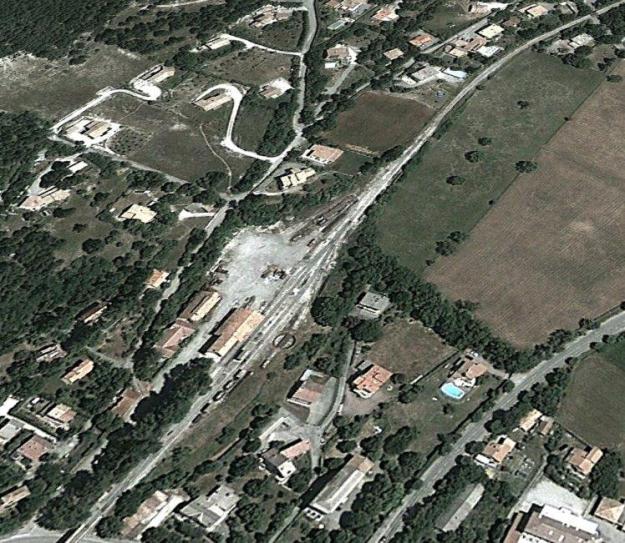
Beyond the bridge over the River Issole (visible in the top right corner of the map above), the railway gradually drifts from a south-westerly course to a south-southwesterly course as it approaches Saint-Andre-les-Alpes railway station (in the bottom left above). there was a bridge over Route de Lambruisse (top right of the satellite image below) and the line then fed into the station.
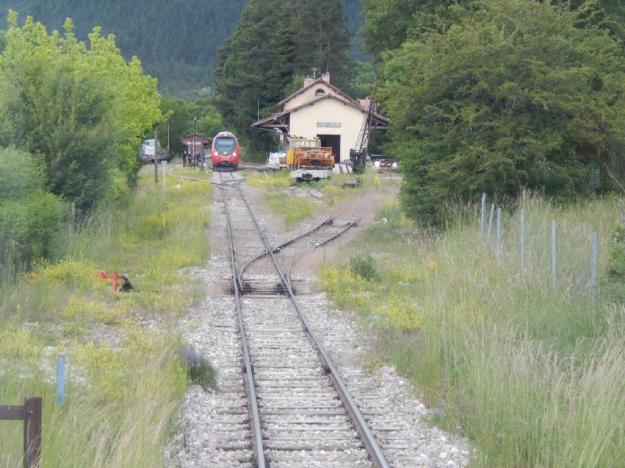
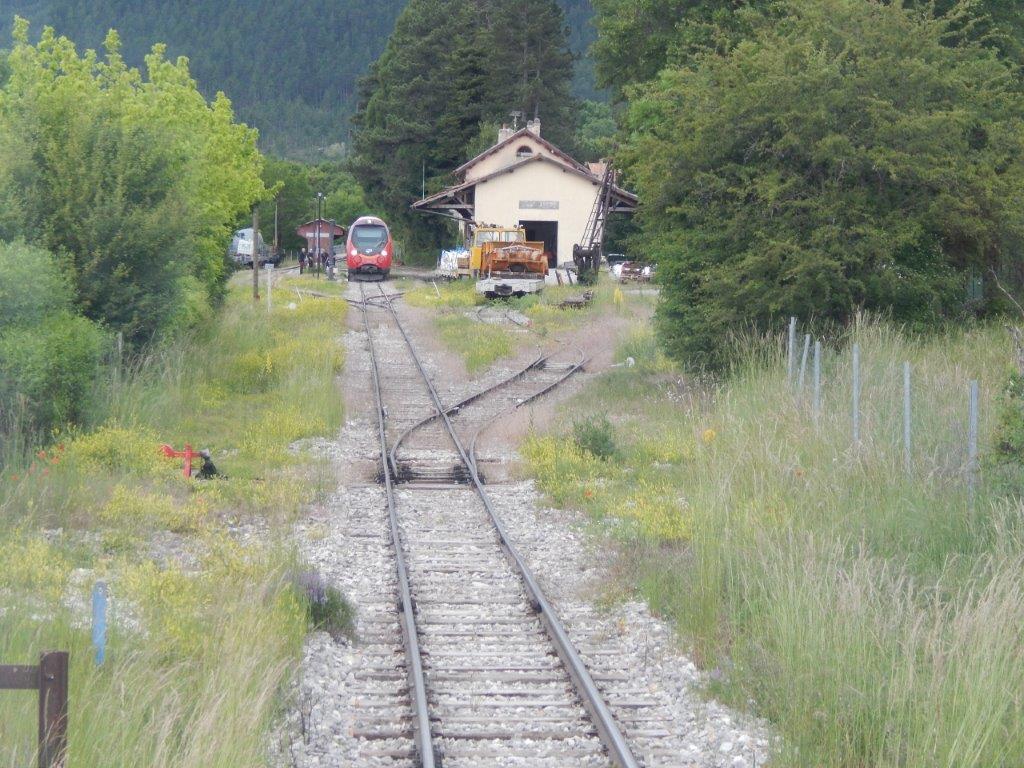
The station approach. [15]
Closing in on the station. [15]
An Autorail at Saint Andre les Alpes. [24]
Looking north. [25]
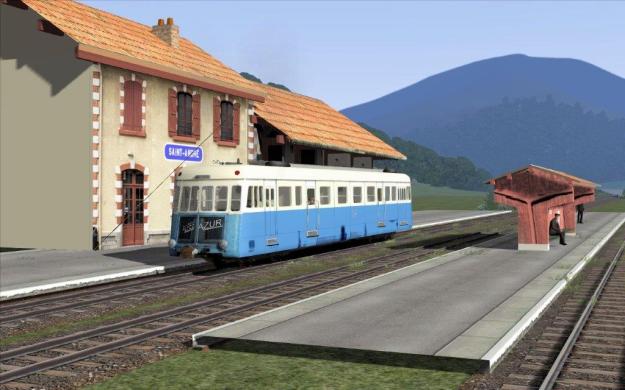
The three images above are all stills taken from a rail-sumulator. [14]
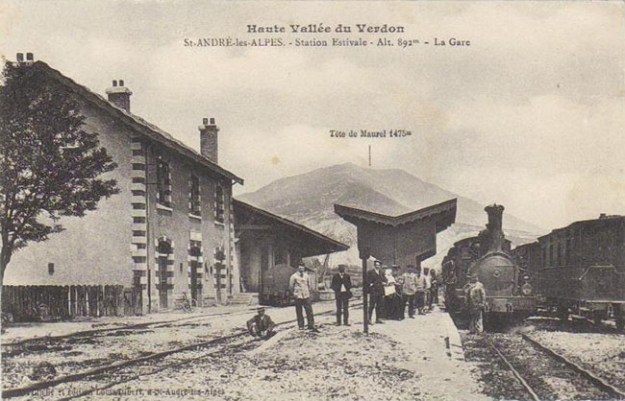
An old postcard. [2]
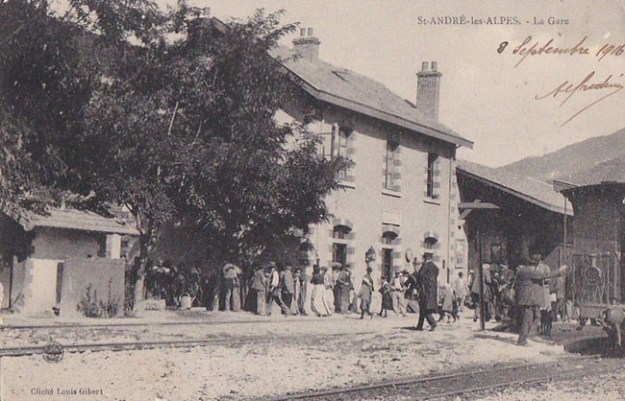
Another old postcard. [2]
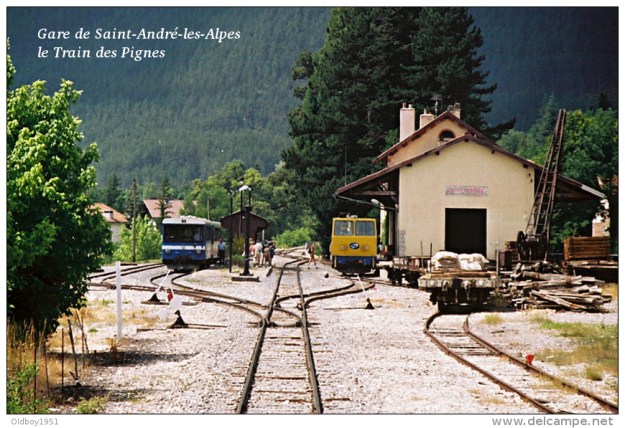
Looking South into the station site. [26]
Modern traction at Saint-Andre-les-Alpes. [27]
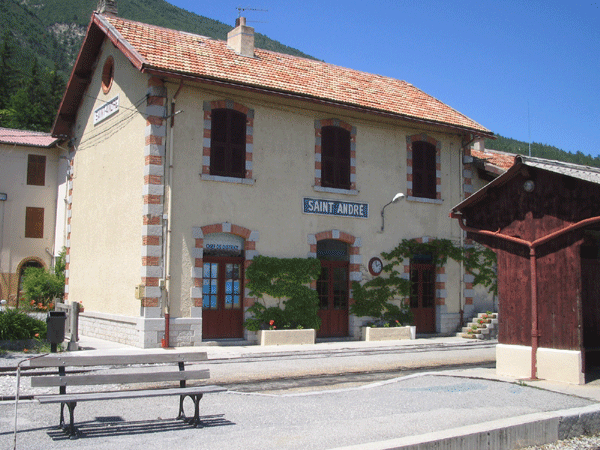
Saint-Andre-les-Alpes. [28]
Saint-Andre-les-Alpes. [29]
Saint-Andre-les-Alpes. [29]
Saint-Andre-les-Alpes. [30]
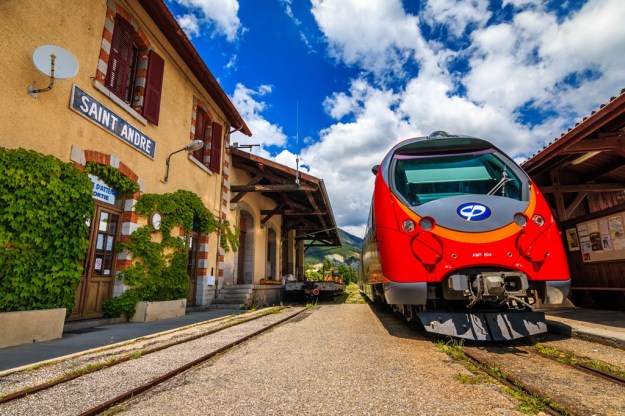
Modern transport at Saint-Andre. [31]
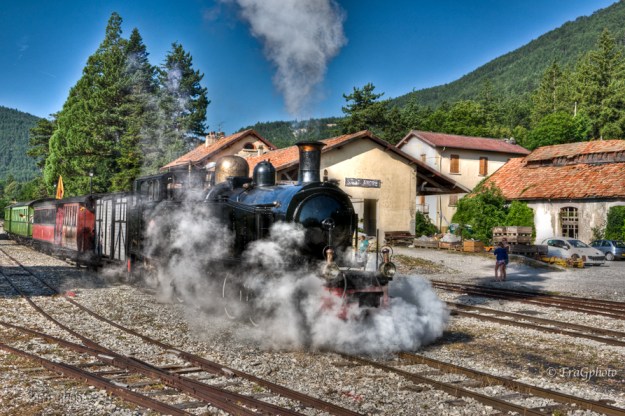
Steam at Saint-Andre. [31]
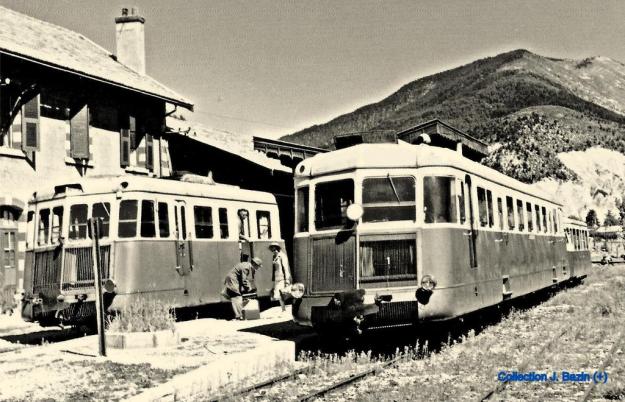
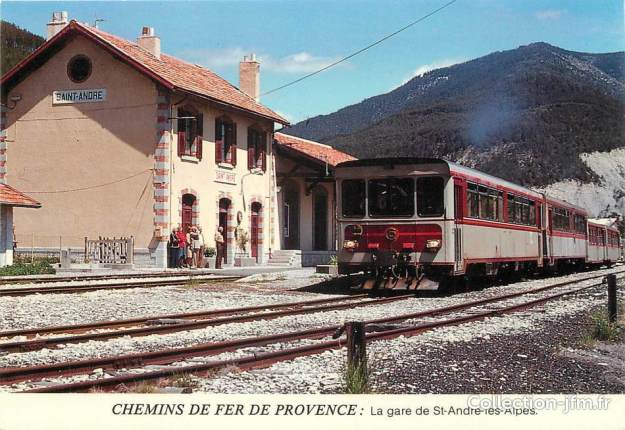
Renault Autorails at Saint-Andre. [32]
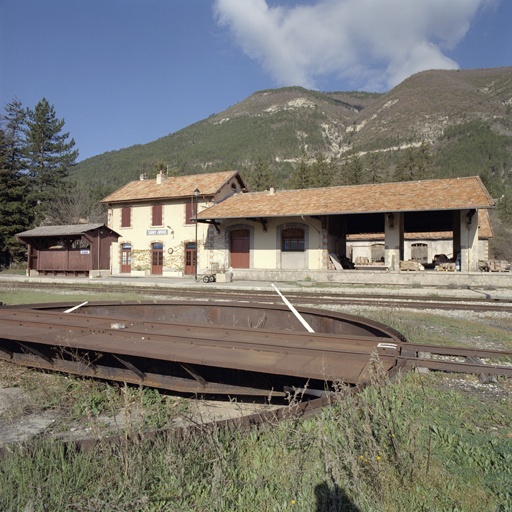
The station yard and old engine shed. [34]

We take another break here at Saint-Andre-les-Alpes and continue the journey on another day.

References

  1. https://www.cparama.com/forum/notre-dame-de-la-fleur-cne-thorame-haute-t28159.html, accessed on 11th August 2018.
  2. http://ubaye-en-cartes.e-monsite.com/pages/catalogues-des-editeurs/louis-gibert-photographe-editeur-a-saint-andre-les-alpes.html, accessed on 11th August 2018.
  3. https://lalumierededieu.blogspot.com/2016/04/thorame-haute-notre-dame-de-la-fleur.html, accessed on 11th August 2018.
  4. http://www.verdon-info.net/article-33961258.html, accessed on 11th August 2018.
  5. http://www.verdon-info.net/article-le-pelerinage-religieux-de-notre-dame-de-la-fleur-thorame-gare-51092687.html, accessed on 11th August 2018.
  6. https://collection-jfm.fr/p/cpsm-france-04-thorame-haute-sanctuaire-notre-dame-de-la-fleur-19144, accessed on 11th August 2018.
  7. http://www.verdon-info.net/2016/05/thorame-gare-le-pelerinage-de-la-pentecote-toujours-actif.html, accessed on 11th August 2018.
  8. http://photos-provence.fr/dpt04/thorame-haute.html, accessed on 11th August 2018.
  9. https://twitter.com/EricFranceschi/status/998605228814557185, accessed on 11th August 2018.
  10. http://www.verdon-info.net/article-33961258.html, accessed on 11th August 2018.
  11. https://thorame-haute.fr/photorama2.php?lng=fr&pg=1166&mnuid=1122&tconfig=1, accessed on 11th August 2018.
  12. https://www.sociview.com/tag/ruralité, accessed on 11th August 2018.
  13. http://www.wikiwand.com/fr/Gare_de_Thorame-Haute, acessed on 10th August 2018.
  14. http://www.railsim-fr.com/forum/index.php?/topic/10163-le-train-des-pignes/&, accessed on 10th August 2018.
  15. http://www.rd-rail.fr/1-PHOTOS/PH43/index-ph43.html, accessed on 1st August 2018.
  16. http://trip-suggest.com/france/provence-alpes-cote-d-azur/allons, accessed on 11th August 2018.
  17. http://allons-alpes-haute-provence.fr/gare-allons-argens, accessed on 11th August 2018.
  18. http://www.photos-provence.fr/dpt04/allons.html, accessed on 11th August 2018.
  19. http://cccp.traindespignes.free.fr/gare-allons.html, accessed on 11th August 2018.
  20. http://cccp.traindespignes.free.fr/gare-mure.html, accessed on 11th August 2018.
  21. http://www.map-france.com/La%20Mure-Argens-04170, accessed on 12th August 2018.
  22. https://dossiersinventaire.maregionsud.fr/gertrude-diffusion/dossier/pont-ferroviaire-dit-pont-de-quarante-metres/68bd7352-799d-467a-bcec-27700681b4e8, accessed on 12th August 2018.
  23. https://dossiersinventaire.maregionsud.fr/gertrude-diffusion/illustration/ivr9320170400773nuc1a/f07ecd9a-9aff-4a7a-8546-f24732dd804b, accessed on 12th August 2018.
  24. https://mapio.net/s/43943227, accessed on 12th August 2018.
  25. http://www.map-france.com/Saint-Andre-les-Alpes-04170/photos-Saint-Andre-les-Alpes.html, accessed on 12th August 2018.
  26. https://www.delcampe.net/fr/collections, accessed on 12th August 2018.
  27. http://www.ferro-lyon.net/actualites/2014/570-Non-a-la-fermeture-de-la-ligne-de-Nice-a-Digne, accessed on 12th August 2018.
  28. https://dossiersinventaire.maregionsud.fr/gertrude-diffusion/dossier/gare-de-saint-andre-les-alpes/84aee6d8-fcb5-47e6-8d33-e777faaa44d7, accessed on 12th August 2018.
  29. http://cccp.traindespignes.free.fr/gare-standre.html, accessed on 12th August 2018.
  30. https://collection-jfm.fr/p/cpsm-france-04-la-gare-de-saint-andre-les-alpes-train-19531, accessed on 12th August 2018.
  31. http://www.saintandrelesalpes-verdontourisme.com/uk/discovering-a-region/our-‘best-of’/the-train-des-pignes, accessed on 12th August 2018.
  32. https://picclick.fr/Collections/Cartes-postales/Thèmes/Train, accessed on 12th August 2018.
  33. I have been corresponding with Christopher James about the various posts on my blog. He has very kindly sent me a number of pictures. These of the festival at Thorame-Haute were supplied as large size files (10MB+) which I have downsized for the blog.
  34. https://dossiersinventaire.maregionsud.fr/gertrude-diffusion/dossier/gare-de-saint-andre-les-alpes/84aee6d8-fcb5-47e6-8d33-e777faaa44d7, accessed on 13th August 2018.

Nice to Digne-les-Bains Part 10 – Thorame-Haute Viaduct (Chemins de Fer de Provence 74)

Its been highlighted to me that in my last post in this series I did not provide details of Thorame-Haute Viaduct. In that post, I provided rail-level images and then rushed on to the site of Thorame-Haute Station. This short blog is an attempt to rectify that mistake!  I guess you could also see it as a bonus for patiently bearing with me as I meander along the line between Nice and Digne-les-Bains!GECP locomotive, ‘The Portuguese’, breaks out into the Verdon valley as it leaves the western portal of the Tunnel de la Colle Saint Michel (c) Christopher James.The same locomotive crossing the Viaduct at Thorame-Haute, (c) Christopher James.An Autorail on the Viaduct. [1]Another Autorail on the Viaduct seen through the tree canopy. [2] This close up image shows the masonry of the Viaduct to good effect. [3]

These two images are taken from the Structurae website. [4] They have been selected to show the structure and it location rather than for any aesthetic consideration. Even so the structure appears graceful and dramatic. Not something that is noticeable at rail level or from a train. The arched voids in the spandrels relieve a significant amount of load from the arches of the viaduct.The viaduct and station at Thorame-Haute soon after construction of the viaduct was completed. [5]As a taster for my next post, the chapel immediately adjacent to the station at Thorame-Haute is the focus each year of a significant local festival. More of this in the next post, (c) Christopher James. [6]A final view back from Thorame-Haute Station towards the road-crossing and the Viaduct beyond, (c) La bête de Calvi. [7]

References

  1. http://www.passion-metrique.net/forums/viewtopic.php?f=2&t=4143&hilit=BB401&start=1830, accessed on 31st July 2018.
  2. https://www.pinterest.fr/pin/505951339359530943/?lp=true, accessed on 11th August 2018.
  3. https://dossiersinventaire.maregionsud.fr//gertrude-diffusion/dossier/ponts-des-chemins-de-fer-de-provence/6db00f0d-4794-4fb9-8d66-a7675e5c748b/illustration/31, accessed on 11th August 2018.
  4. https://structurae.net/structures/thorame-viaduct, accessed on 11th August 2018.
  5. https://www.cparama.com/forum/notre-dame-de-la-fleur-cne-thorame-haute-t28159.html, accessed on 11th August 2018.
  6. I have been corresponding with Christopher James over a number of my posts about the Nice to Digne line. Christopher James lives locally and travels on the line frequently. This picture was sent to me by email.
  7. http://www.passion-metrique.net/forums/viewtopic.php?f=2&t=4143&hilit=BB401&start=1830, accessed on 31st July 2018.

Nice to Digne-les-Bains Part 8 – Meailles to Thorame-Haute (Chemins de Fer de Provence 73)

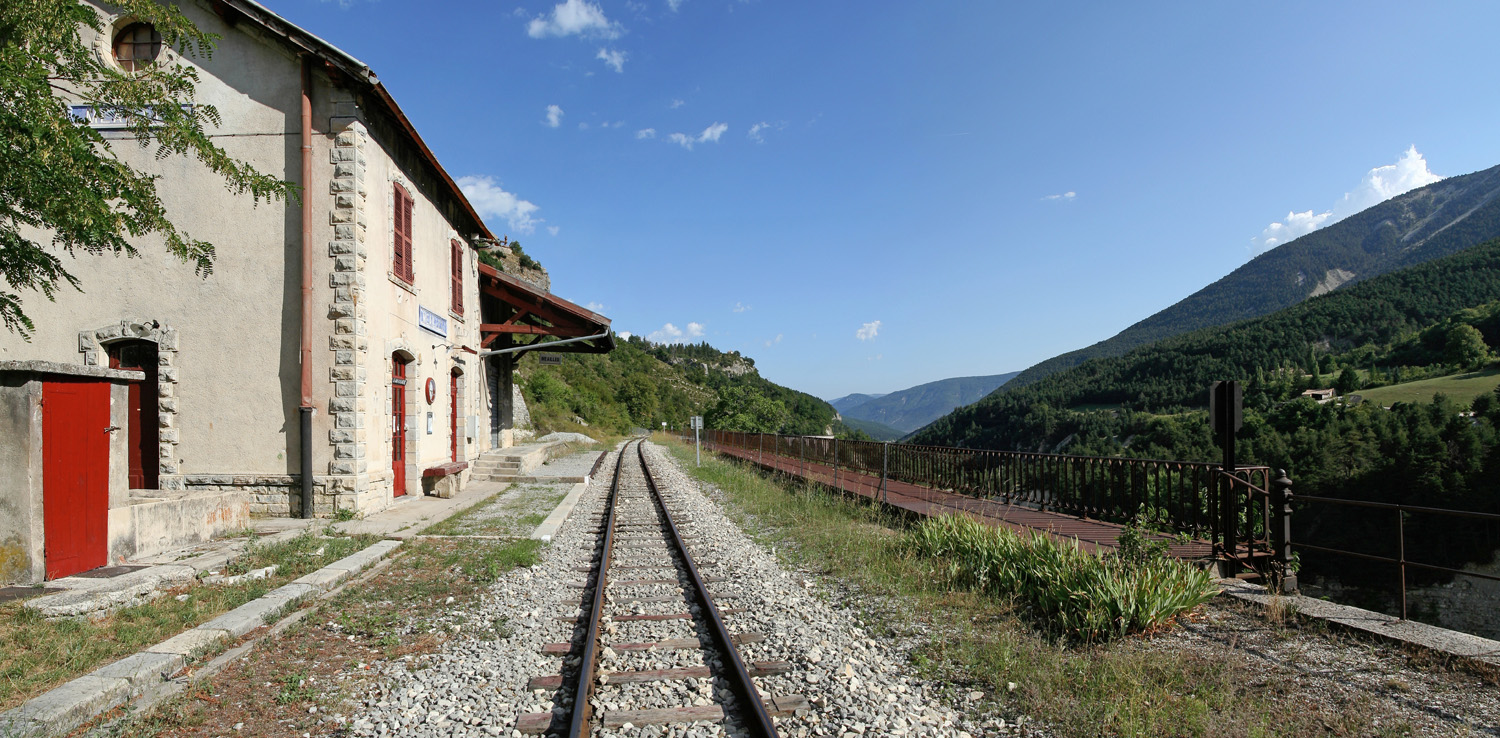
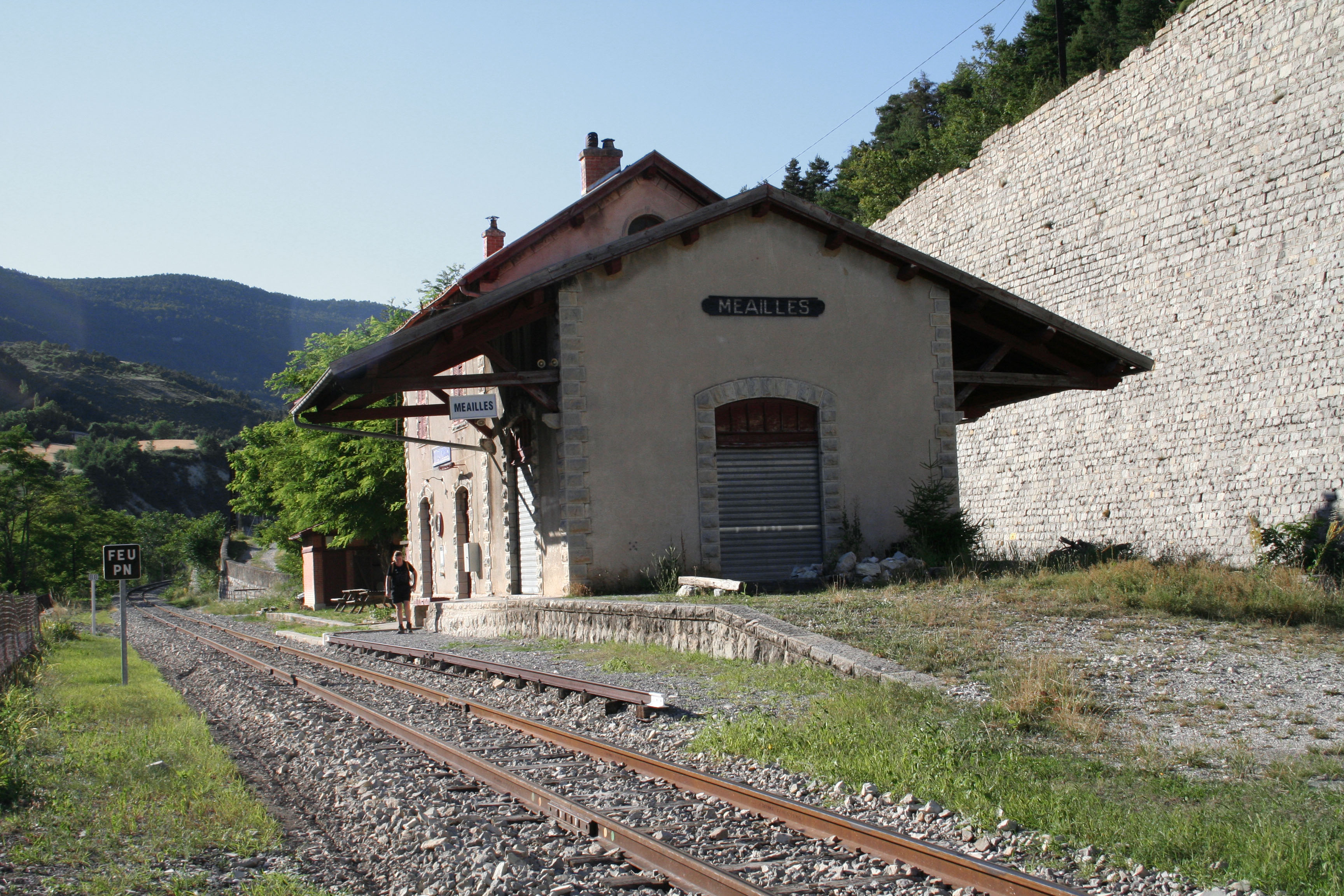
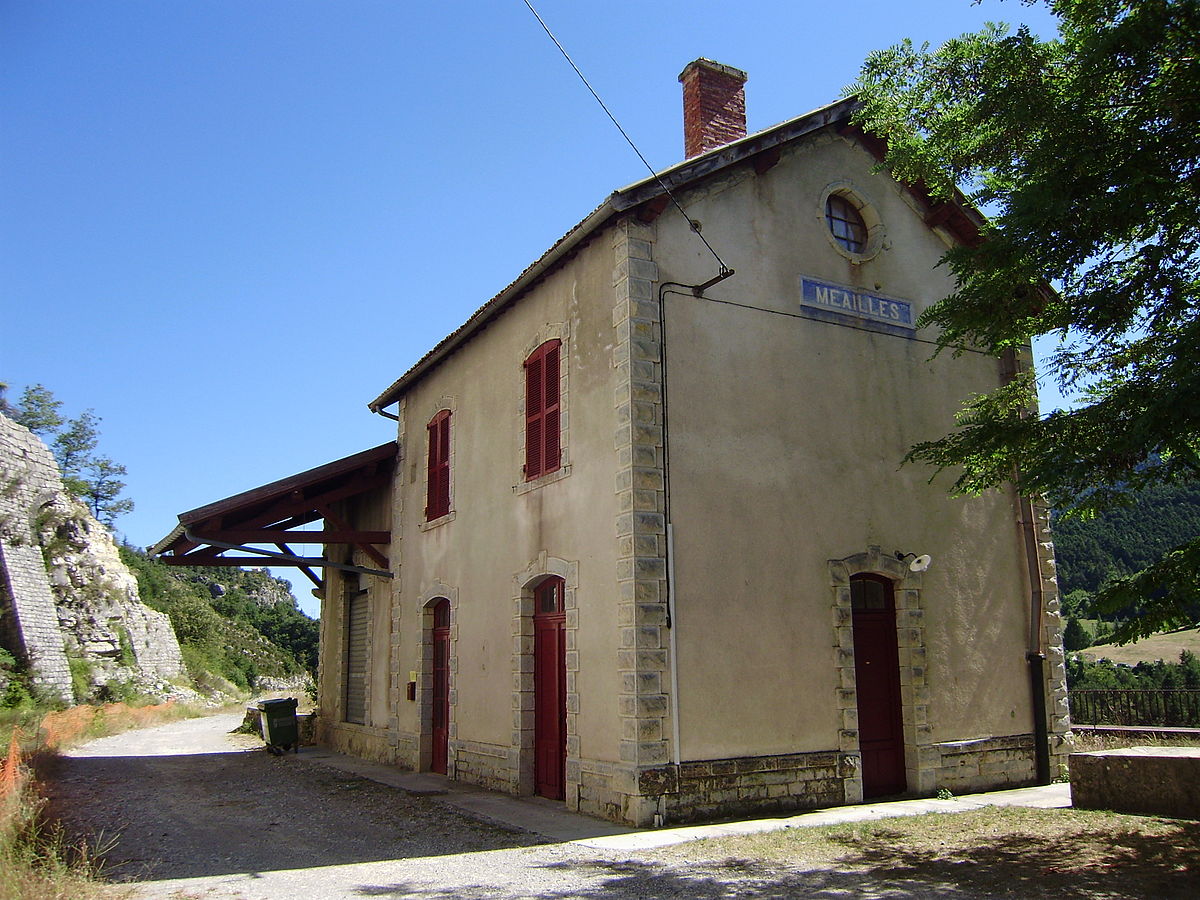
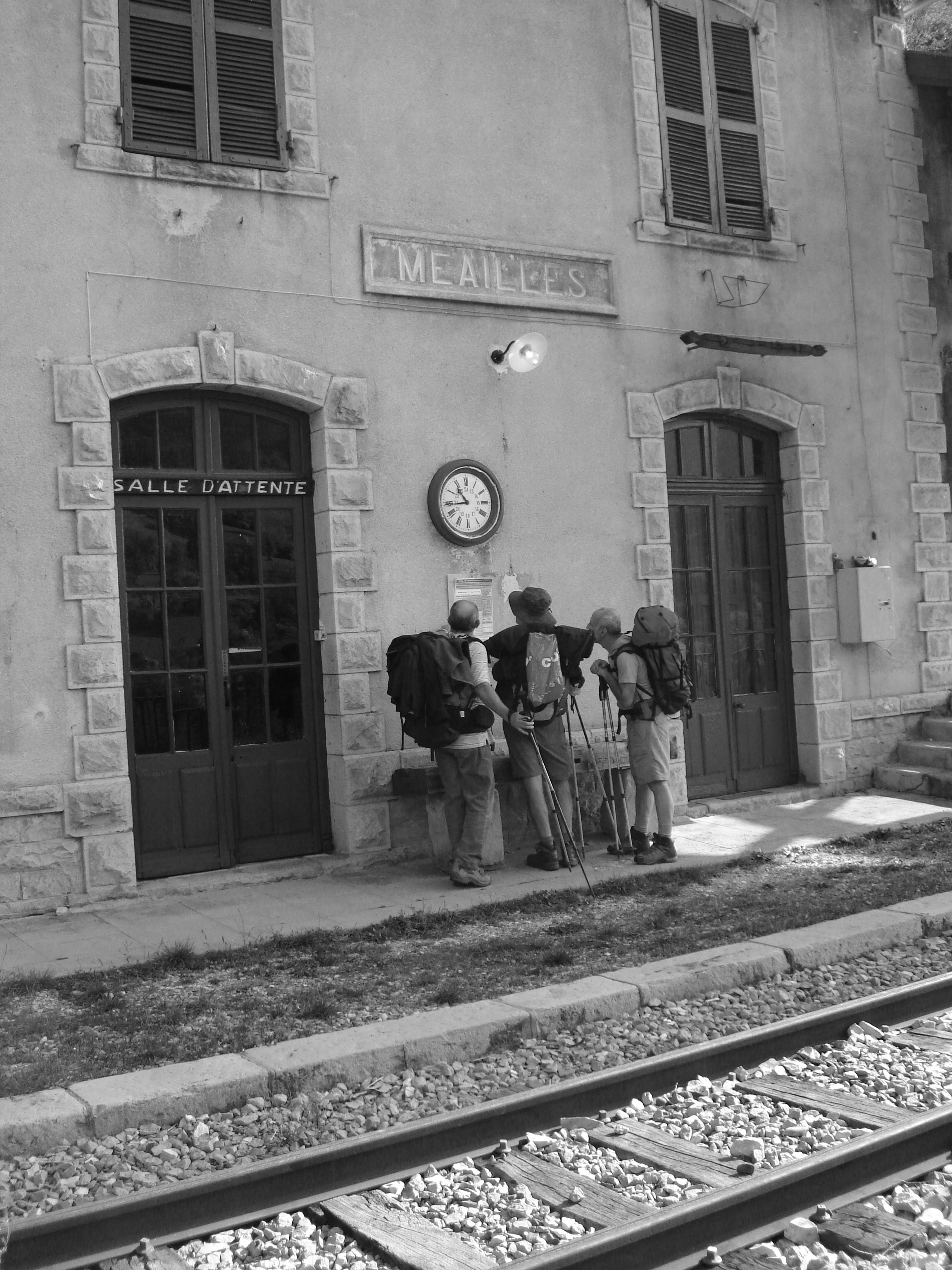
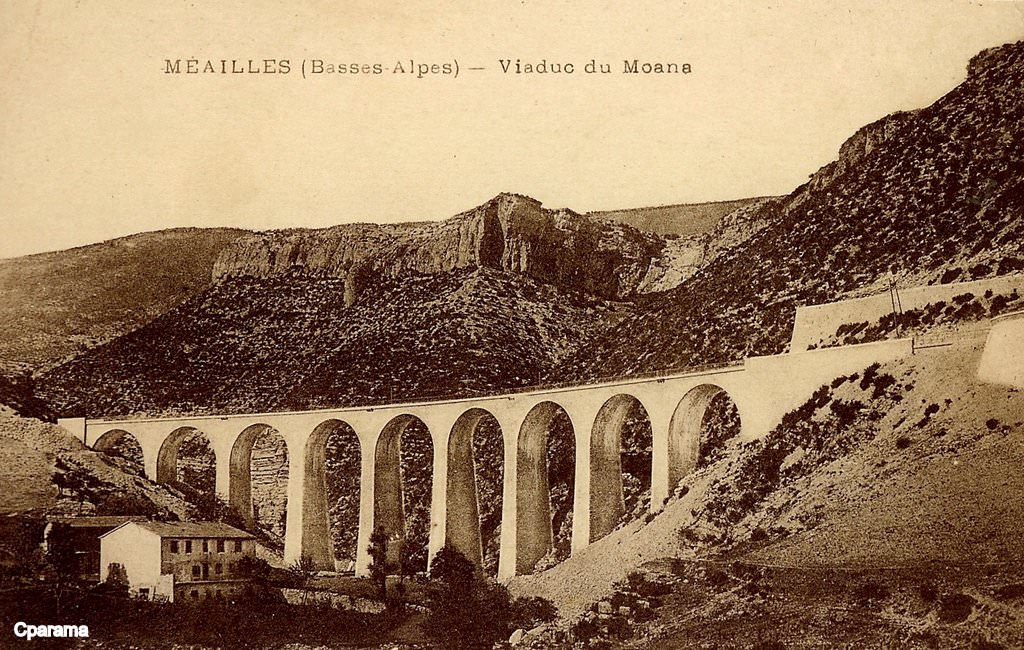
Meailles is the starting point for the next stage in our journey. The featured image is an excellent black and white panorama of the village, station, viaducts and railway line. This next image shows the station and the Viaduc de Moana sitting below the village. [1]We return to the station at Meailles ready to catch the next train. A final look round the station is followed by checking the timetable and then joining the next train as it leaves the station! The pictures below are all to be found on the relevant page of https://mapio.net, [4] except for one which is an image from Wikipedia. [5]Driver’s eye view leaving Meailles Station. [9]Looking back towards the station from the level-crossing on the road up the valley side to Meailles village.

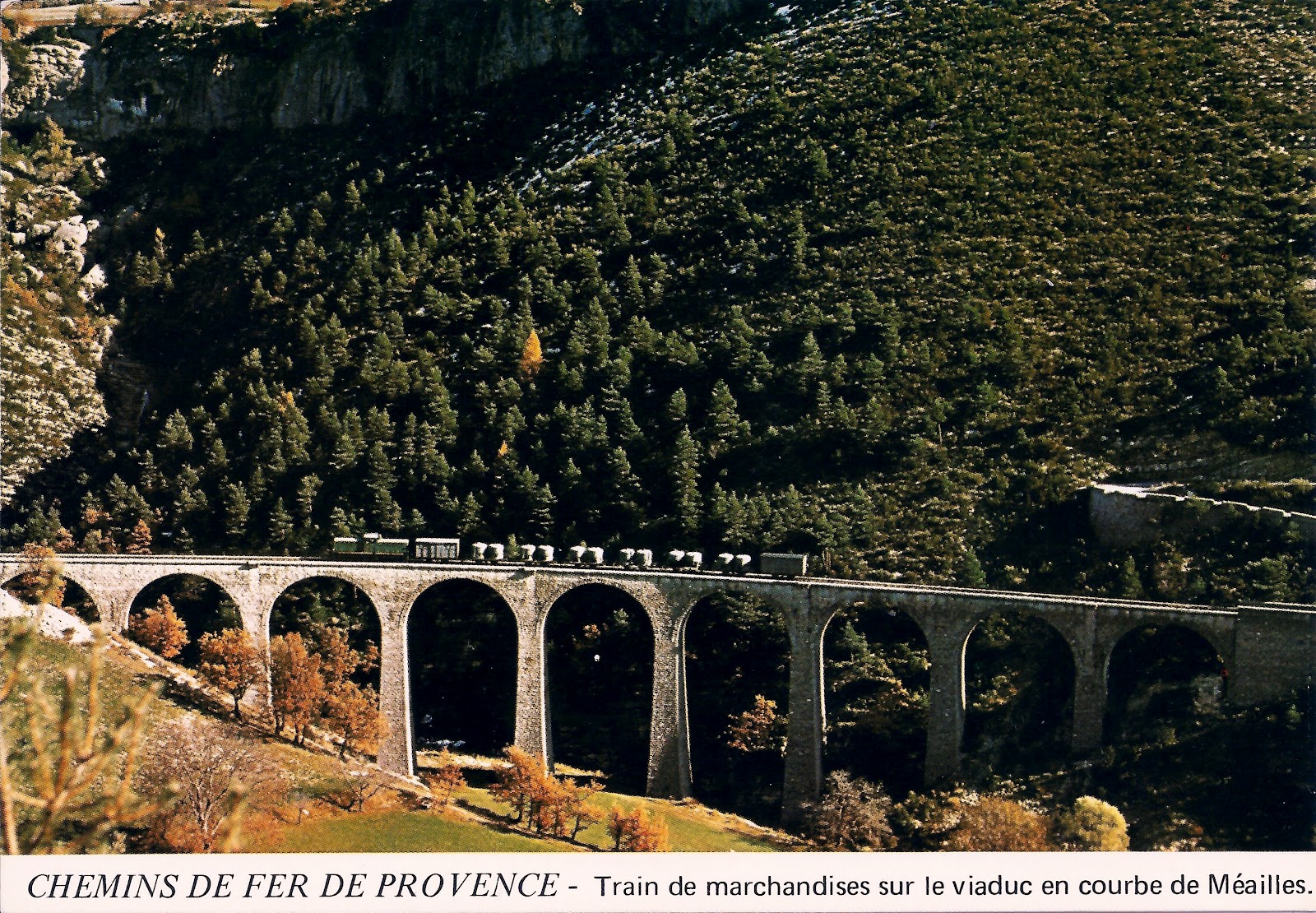
The next few images show the Viaduc de Moana which our train crosses almost immediately after leaving the station at Meailles.First from the level-crossing in the image above.Then a driver’s eye view of the viaduct.A railcar heading onto the Viaduc du Moana, (c) Mouliric. [2]Freight train on the viaduct. [6]The two images immediately above are sourced from the CPArama website. [3]

This image is taken from above the viaduct on the hillside close to the village of Meailles.


The image below is taken from the far side of the valley of La Vaire.The Viaduc du Moana crosses the Ravin du Maouna which can be seen heading away to the northeast behind the viaduct.Modern train on the Viaduc du Moana, (c) La bête de Calvi [8]The view ahead up the valley of La Vaire (above) taken from the road up the valley side to Meailles.The railway heads north-northwest up the valley of La  Vaire. The next major structure is a tunnel – the Tunnel de Méailles. The tunnel is 104 metres in length and is shown by the red, blue and green dots on the map below. At this point the railway line ius now 995 metres above sea-level. [7]The south portal of the Tunnel de Méailles. [7]The two images above show the north portal of the tunnel which includes a short ‘gallery’ beyond what would have been the tunnel entrance and then a significant retaining wall and bridge. [7]For a couple of kilometres the railway continues along the east bank of La Vaire. [9]Peyresq Halt is preceded by the bridge over La Vaire and followed by the tunnel portal. A Renault Autorail heads away from the Halt towards Nice. [24]It crosses La Vaire on a short girder bridge, passes through Peyresq Halt and then enters the Tunnel de la Colle Saint Michel [9]Modern transport at Peyresq Halt. [10]Looking back down the line, we see slightly older transport approaching Peyresq from Meailles. [11]The Tunnel de la Colle Saint Michel is at an altitude of more than 1000 metres above sea-level. It is 3.46km in length – the longest tunnel on the line. The tunnel is completely straight except close to its eastern portal where it has a slight curve which matches the line to the east of the tunnel. There are two interesting and original features in the tunnel which are both in the north wall. [12]

Inside a tunnel, a few metres from the eastern portal it can be seen that the eastern portal needed to be widened. The old alignment of the tunnel wall is still visible as a pedestal. The widening facilitated alignment sights for drivers. About 1100 m from the western portal, a side chamber 8 m deep and 4 m wide exists, which was a stable for horses during the construction of the work and was also used for turning the carts used to transport rubble from the tunnel construction.

In addition, this tunnel was subject to strong draughts which, in winter, froze water infiltrating into the tunnel. This caused the formation of ice stalactites which risked significant damage to trains. To prevent this the west portal was given an overhead door in 1969. The eastern portal is visible in images above the western portal is shown below. [12]As trains leave the western portal of the Tunnel de la Colle Saint Michel they cross a short viaduct over the River Verdon and crosses a track on the west side of the river. There is an old crossing keeper’s cottage adjacent to the line. [12]A view towards Digne taken from above the western portal of the Tunnel de la Colle Saint Michel.The crossing keeper’s cottage. [9]

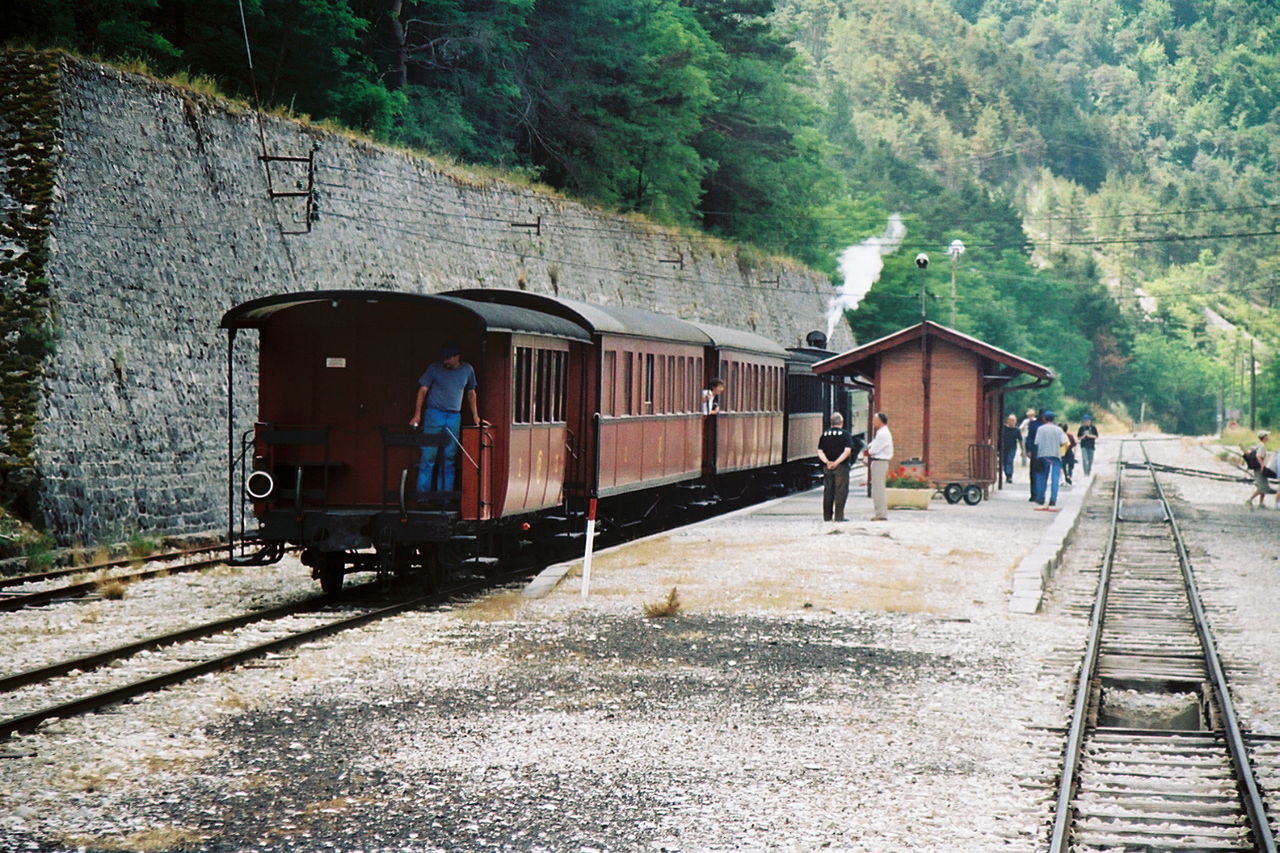
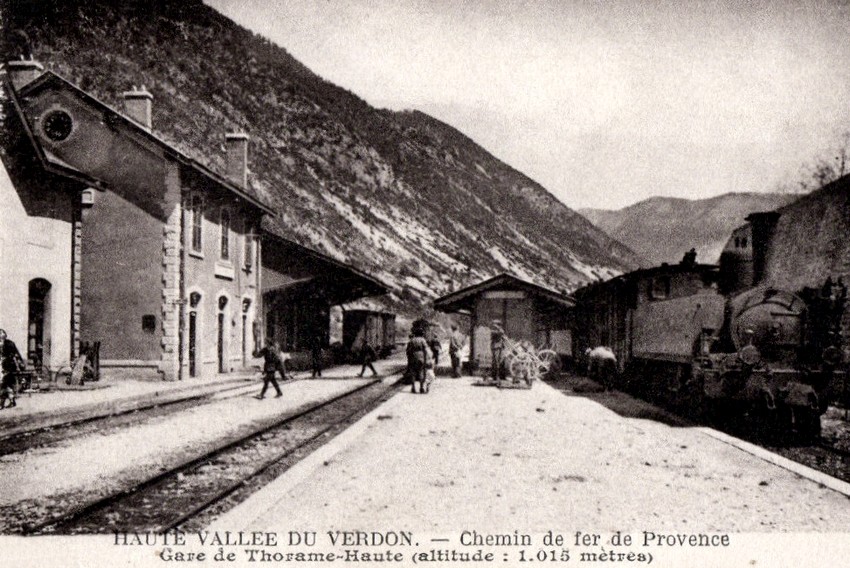
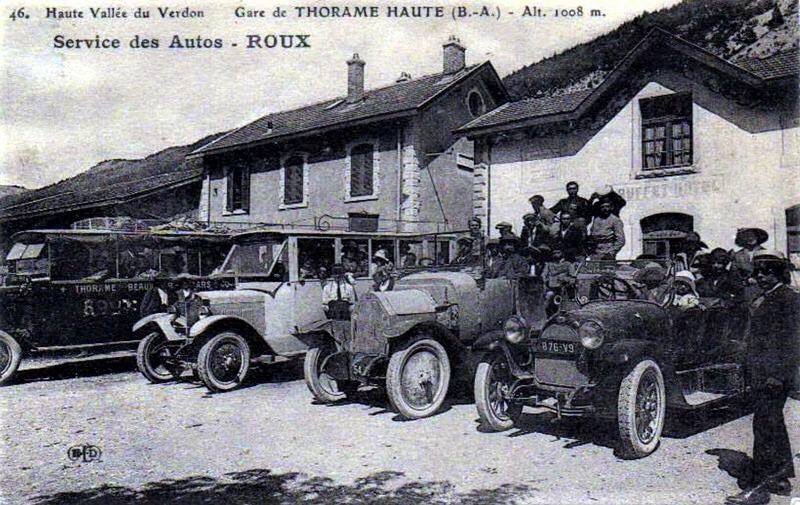
Leaving the Tunnel de la Colle Saint Michel, the line turns sharply to the southwest and follows the western bank of the River Verdon to a point not far north of the Station at Thorame-Haute where it spans the river once again and enters the railway station on the eastern bank of the river. [9] [9][9][13][14]Steam at Thorame Haute Station. [15] A festival at Thorame-Haute.Another view of the station on an old postcard, the following photos all come from the same source, one of CPArama’s webpages. [16] La Place de la Gare, Thorame-Haute. [17]La Place de la Gare. [18]The station in bright sunlight. [20]A recent photograph of the main station building. [21]

It is interesting that the village which gives its name to this station is almost 8km away. The line enters the valley of the Verdon well south of the village and heads away south.

The station is about 95 kilometres from Nice at an altitude of over 1000 metres above sea-level. The station was opened in 1911 and a separate buffet building was included on the site next to the main building. [19] The railway line between Meailles and Thorame-Haute was on the last stretch of the line from Nice to Digne to be built. The length involved was that between Saint-André-de-Méouilles and Puget-Théniers.

Work began in January 1900 on the final 27km of the line. The tunnel boring took a number of years to complete. Steady progress was made on the tunnel. The project had a significant setback when, in April 1909 part of the land mass above the proposed location of the station at Thorame-Haute collapsed onto the site of the station engulfing the part built buildings and platforms. Stabilisation of the mountain required the construction of a 114 metre long, 3.3 metre high retaining wall. The wall was 1.5 metres thick and reinforced by 7 buttresses. [22]

The station was opened to travellers on 3rd July 1911 [23] with the inauguration of the full line taking place on 6th August 1911. The station at Thorame-Haute quickly became a significant tourist destination providing access to some high quality hotels in the upper reaches of the Verdon valley. A wealthy clientele travelled from the Côte d’Azur to access such hotels as the Alp’hôtel de Beauvezer, and the Fontgaillarde in Thorame-Haute.

It is at Thorame-Haute that this leg of our journey is completed.

References

  1. http://www.gecp.asso.fr/meailles.html, accessed on 5th August 2018.
  2. https://commons.wikimedia.org/wiki/File:Train_Nice-Digne_sur_le_viaduc_de_la_Maouna.jpg, accessed on 5th August 2018.
  3. https://www.cparama.com/forum/meailles-t25403.html, accessed on 9th August 2018.
  4. https://mapio.net, accessed on 9th August 2018.
  5. https://fr.wikipedia.org/wiki/Gare_de_M%C3%A9ailles, accessed on 9th August 2018.
  6. https://writerquake.blogspot.com/2012/09/old-postcard-wednesday-freight-train-on.html, accessed on 9th August 2018.
  7. http://www.tunnels-ferroviaires.org/tu04/04115.1.pdf, accessed on 9th August 2018.
  8. http://www.passion-metrique.net/forums/viewtopic.php?f=2&t=4143&hilit=provence&start=2775, accessed on 10th August 2018.
  9. http://www.rd-rail.fr/1-PHOTOS/PH43/index-ph43.html, accessed on 1st August 2018.
  10. https://www.google.co.uk/maps/place/Peyresq/@44.042084,6.612933,3a,75y,90t/data=!3m8!1e2!3m6!1sAF1QipNFeGoAhEI7HVF0vLop7jT4jL6tfsbg5Zy7yg1S!2e10!3e12!6shttps:%2F%2Flh5.googleusercontent.com%2Fp%2FAF1QipNFeGoAhEI7HVF0vLop7jT4jL6tfsbg5Zy7yg1S%3Dw203-h130-k-no!7i4296!8i2760!4m5!3m4!1s0x12cc6f997b176e59:0xb48d78a0c1ca0c6c!8m2!3d44.0420841!4d6.6129327, accessed on 10th August 2018.
  11. https://www.google.co.uk/maps/place/Peyresq/@44.042084,6.612933,3a,75y,90t/data=!3m8!1e2!3m6!1sAF1QipM3SJhROxBfPav9XWKGwn1vNf2CGkvFGnLlyoBG!2e10!3e12!6shttps:%2F%2Flh5.googleusercontent.com%2Fp%2FAF1QipM3SJhROxBfPav9XWKGwn1vNf2CGkvFGnLlyoBG%3Dw392-h605-k-no!7i3194!8i4937!4m5!3m4!1s0x12cc6f997b176e59:0xb48d78a0c1ca0c6c!8m2!3d44.0420841!4d6.6129327, accessed on 10th August 2018.
  12. http://www.tunnels-ferroviaires.org/tu04/04219.1.pdf, accessed on 9th August 2018.
  13. https://commons.wikimedia.org/wiki/File:Gare-de-Thorame-Haute-DSC_0331.jpg, accessed on 10th August 2018.
  14. https://collection-jfm.fr/p/cpsm-france-04-croisement-en-gare-de-thorame-haute-train-19518, accesed on 10th August 2018.
  15. http://www.wikiwand.com/fr/Gare_de_Thorame-Haute, acessed on 10th August 2018.
  16. http://www.cparama.com/forum/thorame-haute-t28161.html, accessed on 10th August 2018.
  17. http://cartepostale-ancienne.fr/index.php?route=product/product&product_id=2301141, accessed on 10th August 2018.
  18. https://twitter.com/lecartographe/status/948099693837471744, accessed on 10th August 2018.
  19. https://thorame-haute.fr/articles.php?lng=fr&pg=65, accessed on 10th August 2018.
  20. https://mapio.net/a/60593332/?lang=eu, accessed on 10th August 2018.
  21. https://tourisme.trainprovence.com/thorame-haute-train-station, accessed on 10th August 2018.
  22. https://fr.m.wikipedia.org/wiki/Gare_de_Thorame-Haute, accessed on 10 the August 2018.
  23. https://books.google.fr/books?ei=7Q8gVazPIsbxUvTagKgN&hl=fr&id=HJxMAAAAYAAJ&dq=”Allons-Argens”%2C”chemin+de+fer”%2C1911&focus=searchwithinvolume&q=”Allons-Argens”, accessed on 10th August 2018.
  24. https://www.cparama.com/forum/saint-michel-peyresq-cne-thorame-haute-t24275.html, accessed on 1st August 2018.
Nice to Digne-les-Bains Part 9 – Floods and Landslides (Chemins de Fer de Provence 72)

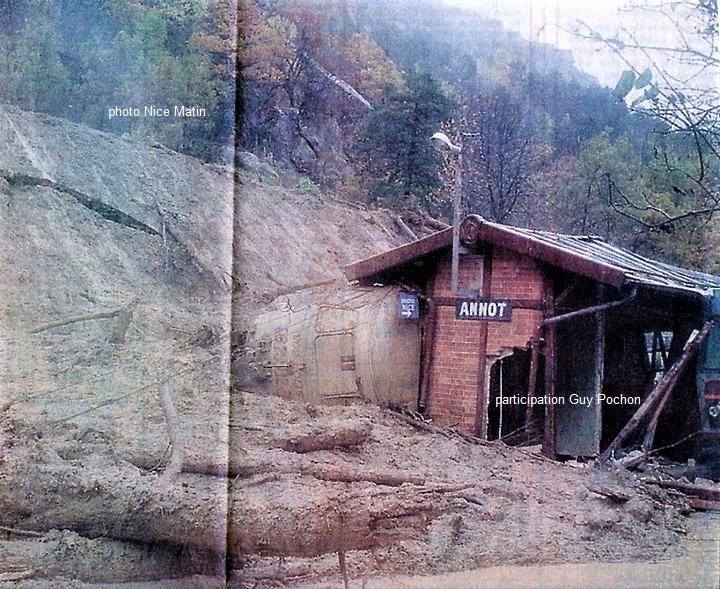
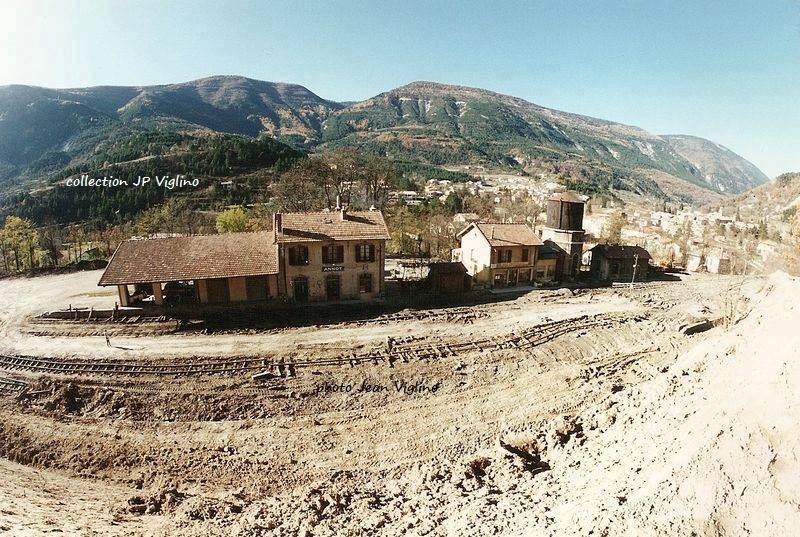
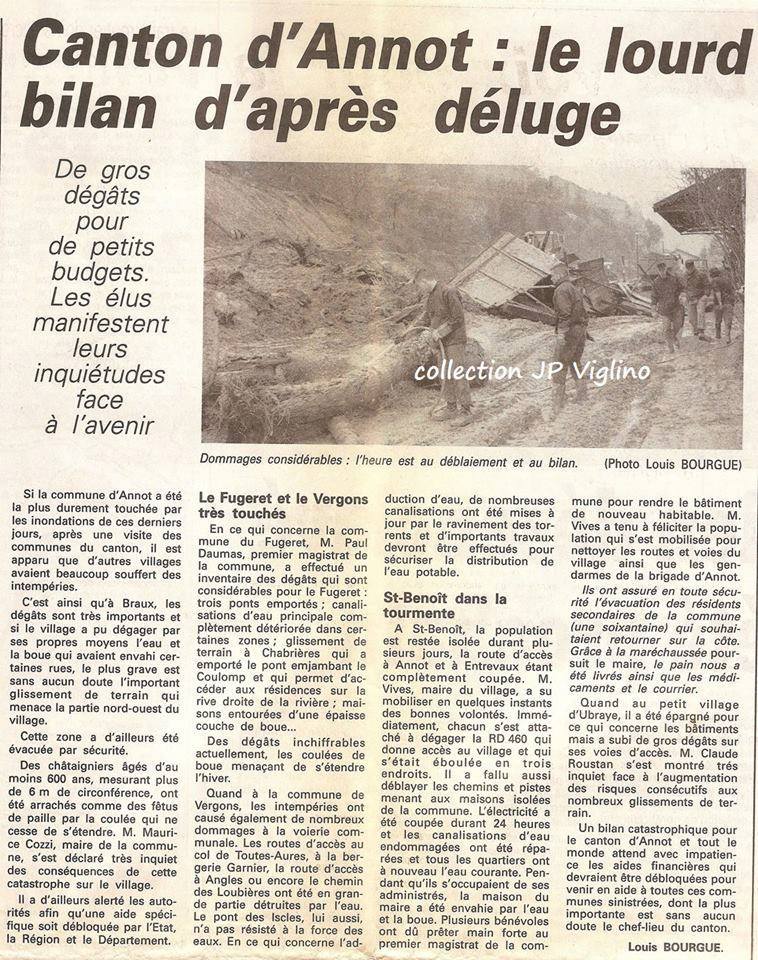
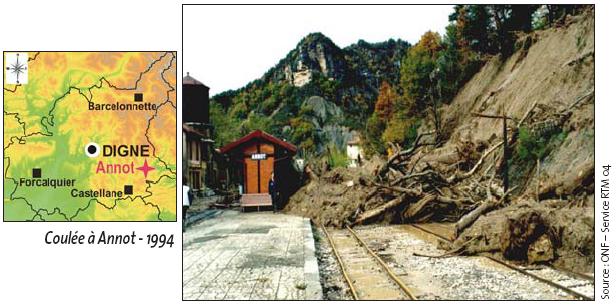
Christopher James contacted me having read a number of my posts because he remembered images of a major landslide at Annot Station. He undertook some research and found a newspaper article and some photographs of the landslide at Annot. The images he sent me and the newspaper article are immediately below. We corresponded a little about the date of the landslip and I think we now believe that it happened as part of a major incident which occurred in November 1994.
On 5th November 1994 an extreme flood event caused the lowest and the second-lowest dams on the Var to collapse. The flood wave inundated parts of Nice, including Nice’s international airport which is situated near the river mouth. It was out of service for several days. The airport lost the business of 50,000 passengers, with damages running up to an estimated 4.5 to 6 million euro. Elsewhere roads like the RN202 were cut, power and telephone lines were interrupted, and three people died and four disappeared. [1] This estimate of lives lost is low compared with some, for instance HydroEurope say that 70 people were estimated to be killed, with large scale infrastructure damage and economical losses from the closure of the airport. The economic damage is estimated at 550 – 800 million Euros. Of the three most recent flood events the flows of 1994 were an order of magnitude higher than the others – 1994 (3680 m3/s), 2011 (1330 m3/s), 2016 (1280 m3/s). [2]

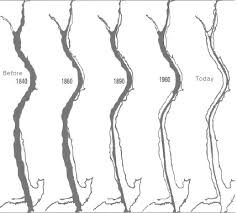
My blog: https://rogerfarnworth.wordpress.com/2018/04/06/nice-to-digne-les-bains-part-1-nice-chemins-de-fer-de-provence-57, provides a number of pictures of the damage done to the watercourse, it revetments and its structures. Part of the problem has been the gradual encroachment into the valley of the Var by various land reclamation schemes over the years. [3]

But these events are not a recent penomenon. The Observatoire Regional des Risques Majeurs (ORRM) En Provence-Alpes-Cote d’Azur has reported on a series of similar events over the past 150 years. [4] These events have occurred across the whole of the southern alps – Sisteron in 1886; Valette (Ubaye Valley) in 1982; Annot in 1994 and 1996; Rochaille in 2001; Villard-des-Dourbes in 2002; Barles in 2008, are all events mentioned by the ORRM. Their website includes the following photograph taken at Annot in 1994. [4]

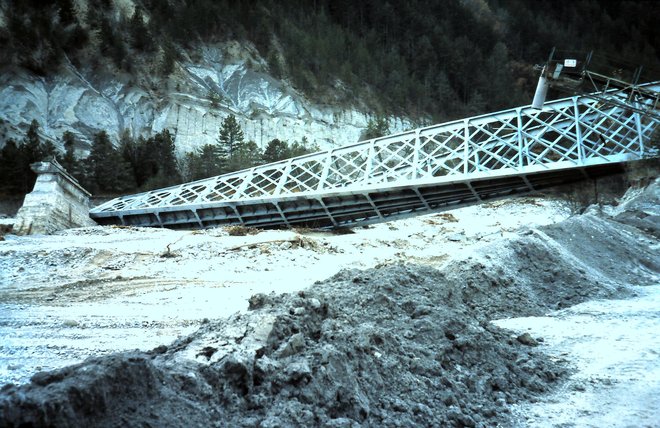
As we have already noted, the events of November 1994 were of an order of magnitude greater than had been experienced in the catchment of the River Var in the century or so before 1994 and in the years after. Significant structures were destroyed, such as the Pont de Gueydan, immediately below.

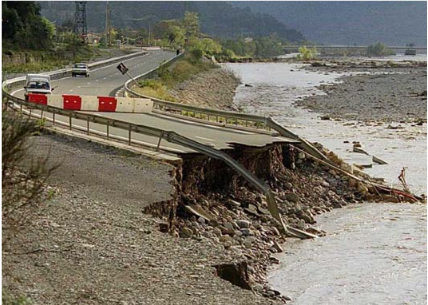
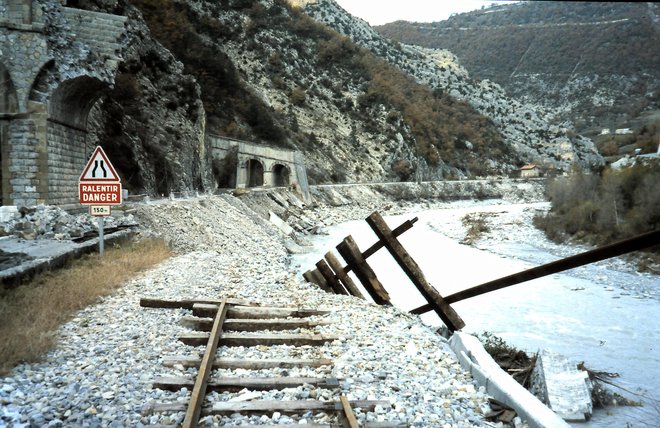
The main A8 was cut by the river. The railway was cut at various points and it was 18 months before it re-opened. At the time there was a significant risk of complete closure of the line. The image below shows one of the ‘elephants’ along the line which was destroyed and had, along with the road and river embankment, to be rebuilt.

More damage to the A8 and the railway line.

The bridge at the mouth of the River Vesubie was destroyed.

The floods of 1994 were devastating for the railway and for the communities it served. They left a number of communities inaccessible except by mountain tracks. Rebuilding of railway and roads was no easy task and the subject of some wrangling about what was best for the communities alongside the river.

In 1994 a new highway was planned, situated in part on the right bank of the Var. This would result in a further reduction of the river bed in the order of 10%. The plans met with strong opposition from the riparians, who fought the proposed highway in the Administrative Court.

A decision was taken in 2001 to further investigate the road alignment. The highway was eventually built along a modified itinerary and under a different name. [1]

If anyone knows more about flooding and landslides that have affected the Nice to Digne line it would be good to hear from you.

References

  1. http://potamology.com/exhibits/show/var_river_project_france/var_river_situation, accessed on 6th August 2018.
  2. http://archives.aquacloud.net/17he/a/aquacloud.net/17he05/home/2-the-var-river/2-4-le-var-floods.html, accessed on 6th August 2018.
  3. http://www.vliz.be/imisdocs/publications/36/253236.pdf, accessed on 6th August 2018.
  4. http://observatoire-regional-risques-paca.fr/article/quelques-evenements-mouvements-terrain-marquants-alpes-haute-provence

Nice to Digne-les-Bains Part 7 – Annot to Meailles (Chemins de Fer de Provence 71)

Our journey along the Nice to Digne line recommences at Annot. We are halfway between Nice and Digne. My memory of travelling on the line is that Annot was touted as being an excellent destination when travelling from Nice, to allow access to mountain walking. A little research shows that to be the case. The map below is a copy of the hiking route map which includes an extensive range of walks. The “.pdf” from which it is taken can be accessed by following the link in the references at the bottom of this post. [1] The train we travelled on through Annot to Digne in 2001 was full of hikers who left the train at Annot.It will also be evident from the above map that the line has left behind the department of Les Alpes Martimes and is now in the Alpes de Haute-Provence. The Tramway from Pont de Gueydan northwards (https://rogerfarnworth.wordpress.com/2018/07/25/tam-tramway-from…r-de-provence-69) followed the approximate boundary between the two departments.

Annot is in the valley of La Vaire. Its station is on the valley side to the southeast of the town centre. [2]

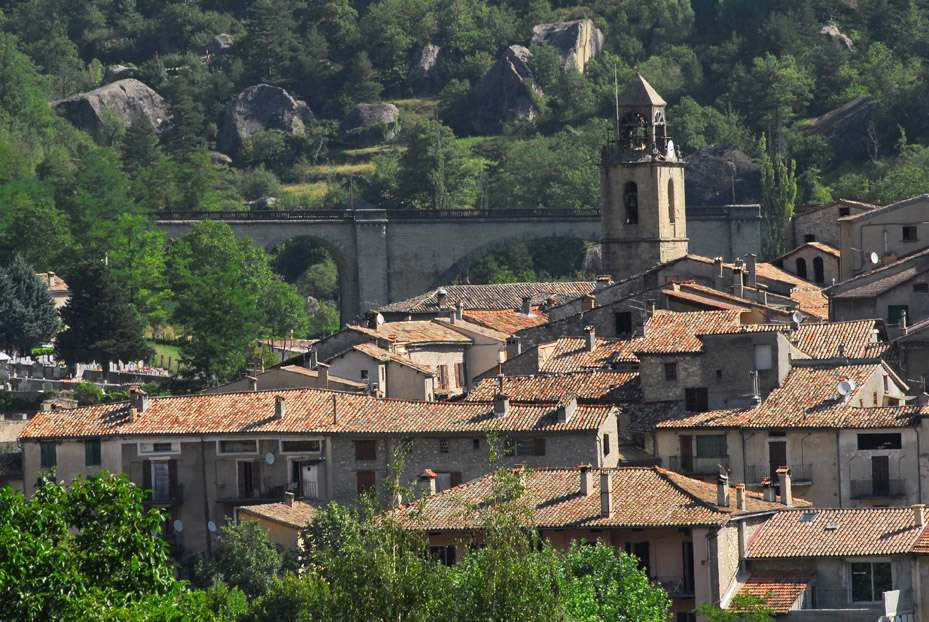
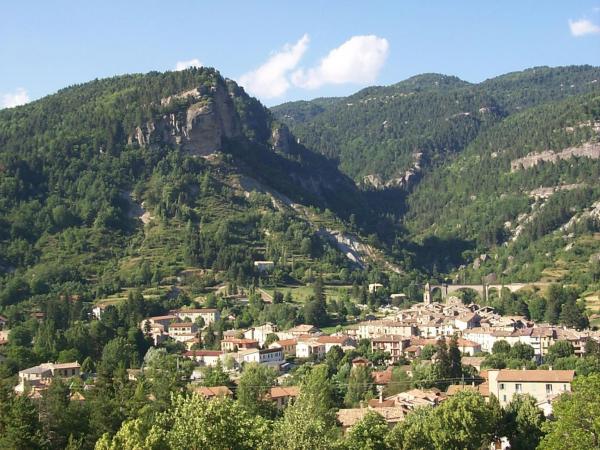
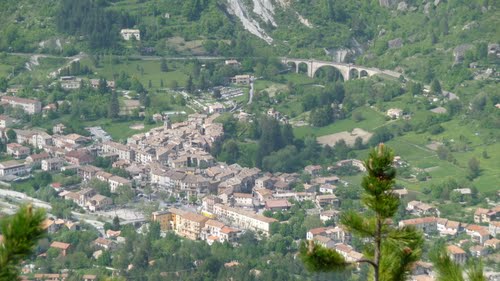
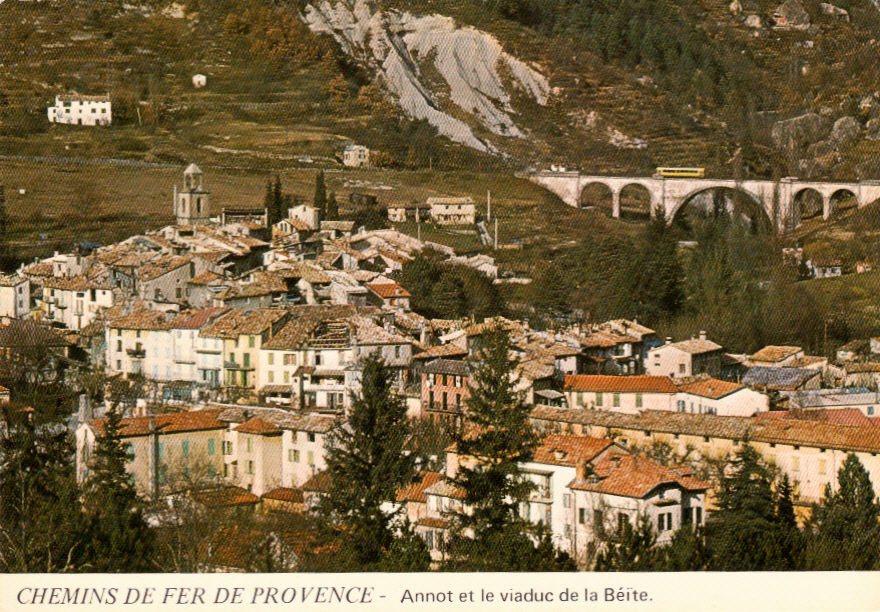
Annot is located on the edge of Mercantour National Park, it was founded on a small hill and surrounded by wooded mountains, the village which dates from the 11th century, has little by little spread along the banks of La Vaïre. The old village is built in sandstone. Immense boulders of this rock (sometimes more than 100 metres high) can be seen at close quarters by following the “Chambre du Roi” waymarked circuit. Some of these rocks can be seen in the background of the image below.The viaduct seen from beyond the village. [3]A view of Annot from further to the southwest. [4]Annot from above. the railway can be seen crossing the viaduct behind the town. Annot railway station is just off picture to the right. [5]

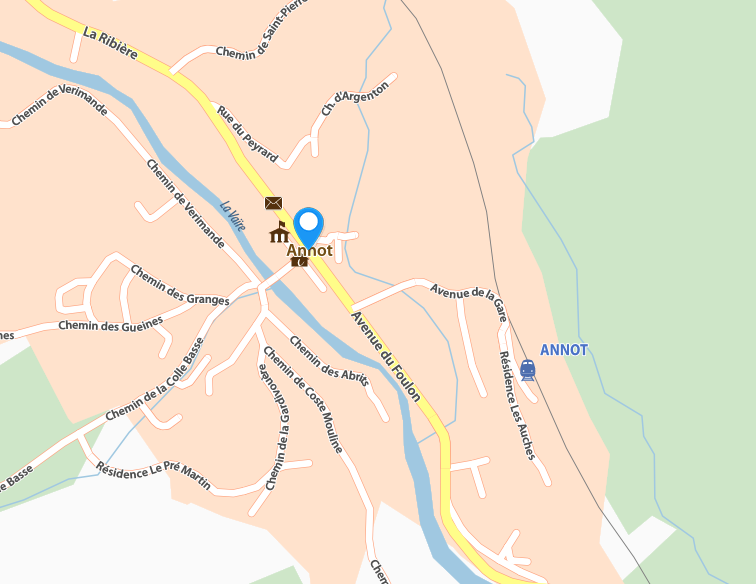
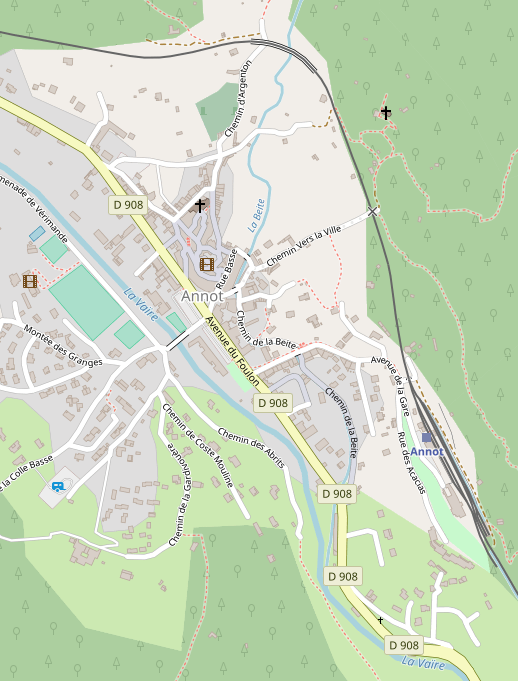
OpenStreetMap provides an excellent cartographic image of the town, station and viaduct. The railway can be picked out easily as a black line to the east and north of the town. [6]

So, we return to the railway station and prepare to leave travelling North, initially, towards Digne-les-Bains.

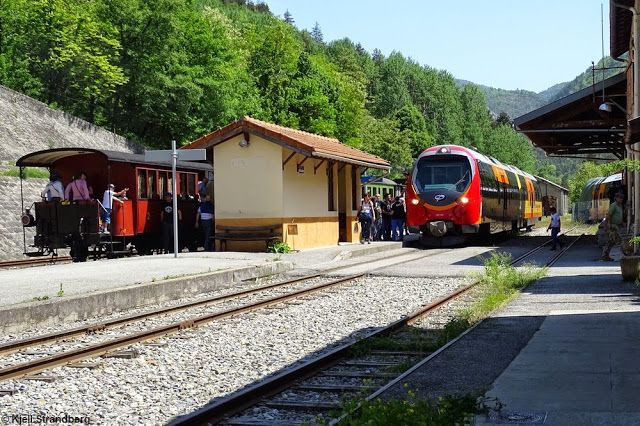
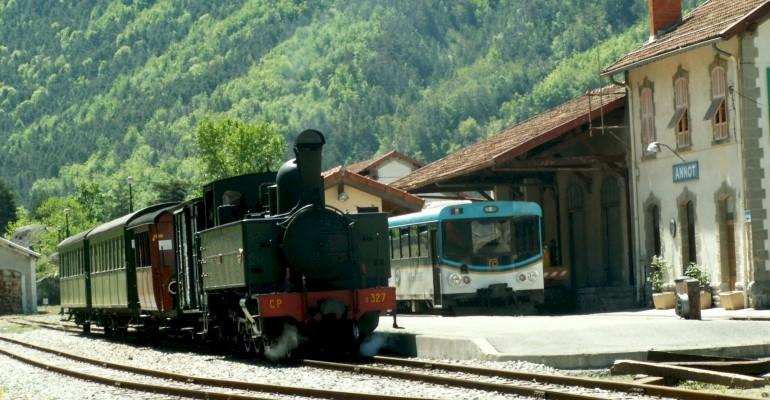
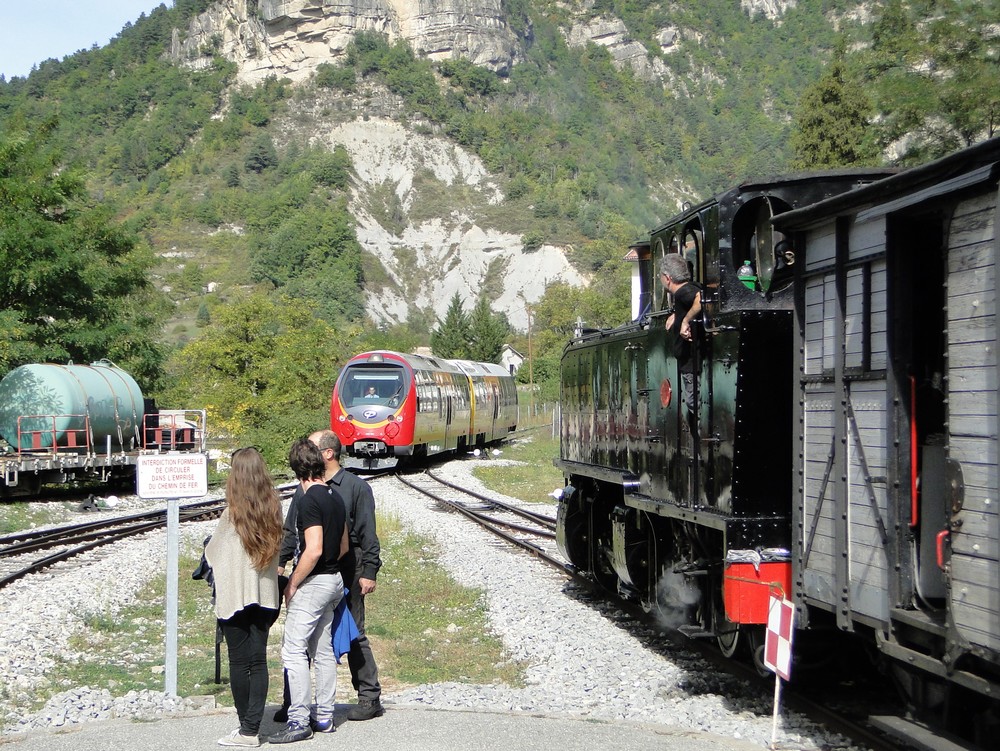
The pictures immediately below are taken at the station. The first shows the most modern trains on the line and the carriages of the Steam service. [7]An older railcar (autorail) and the steam service waiting at Annot Station. [8]A modern train approaches the throat of Annot station from Digne while the “Portuguese” Steam Locomotive waits in the station. [9]The three images above show Annot station in its very early days. [16]

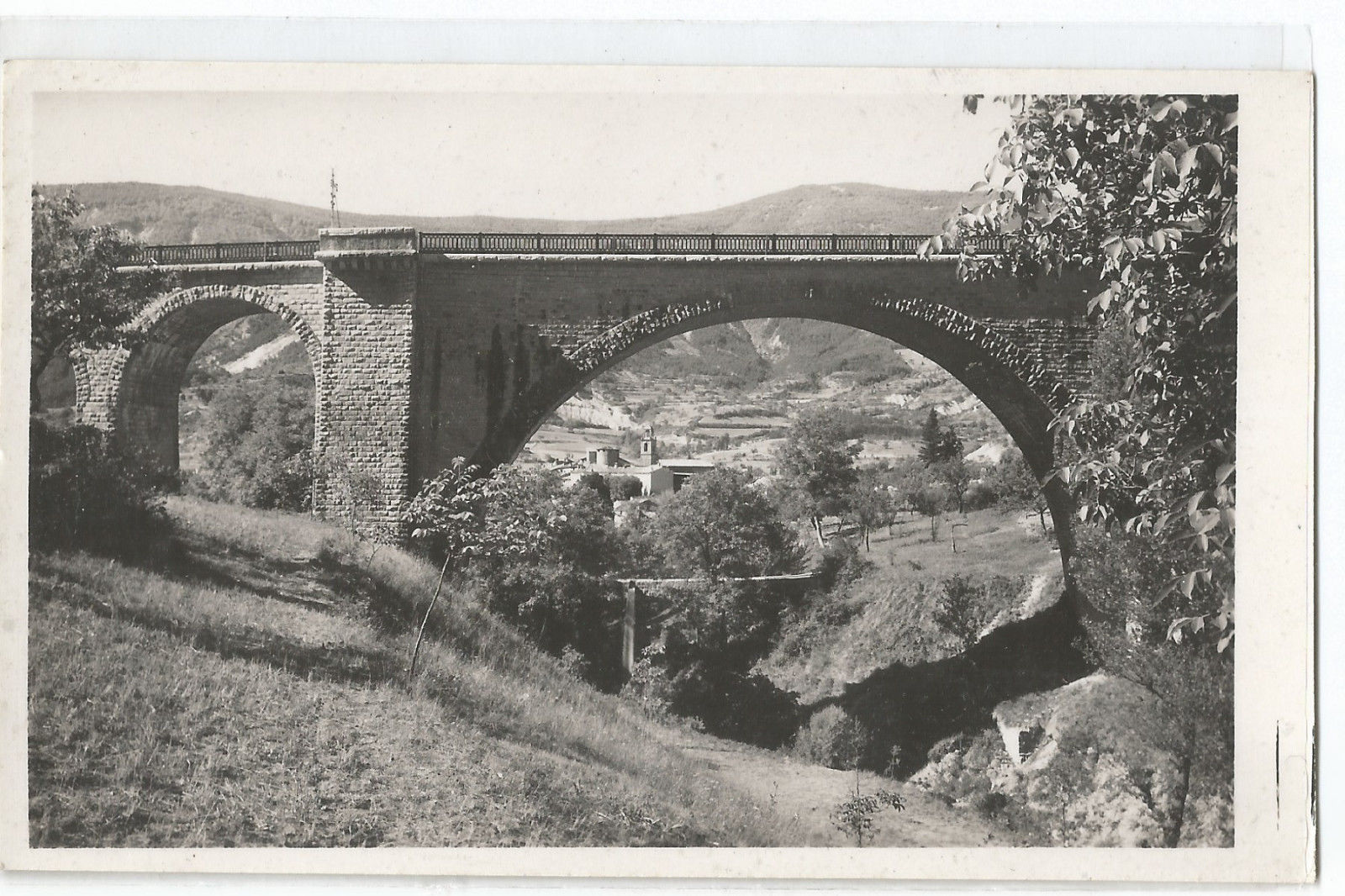
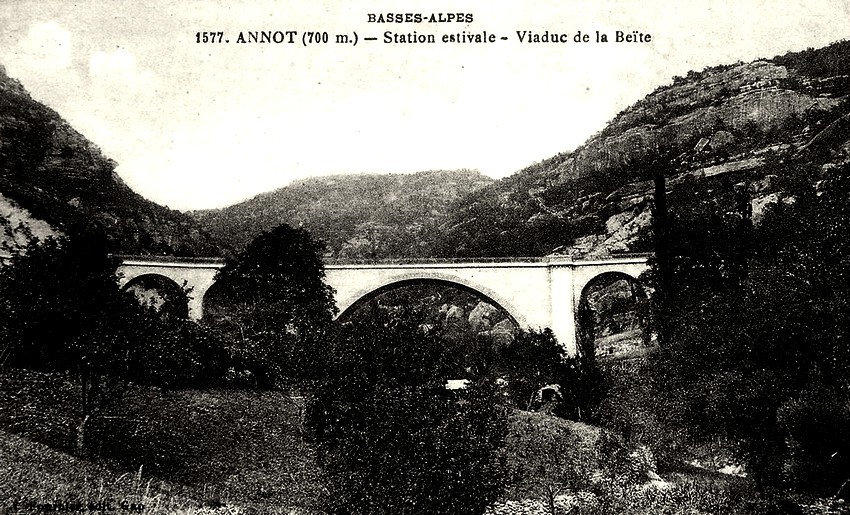
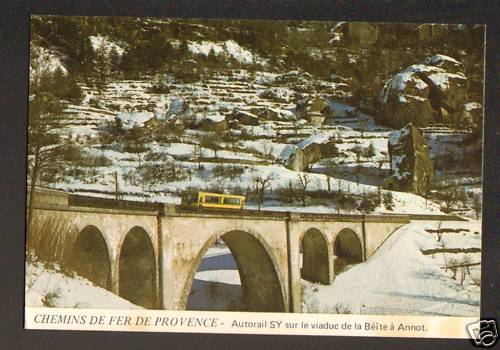
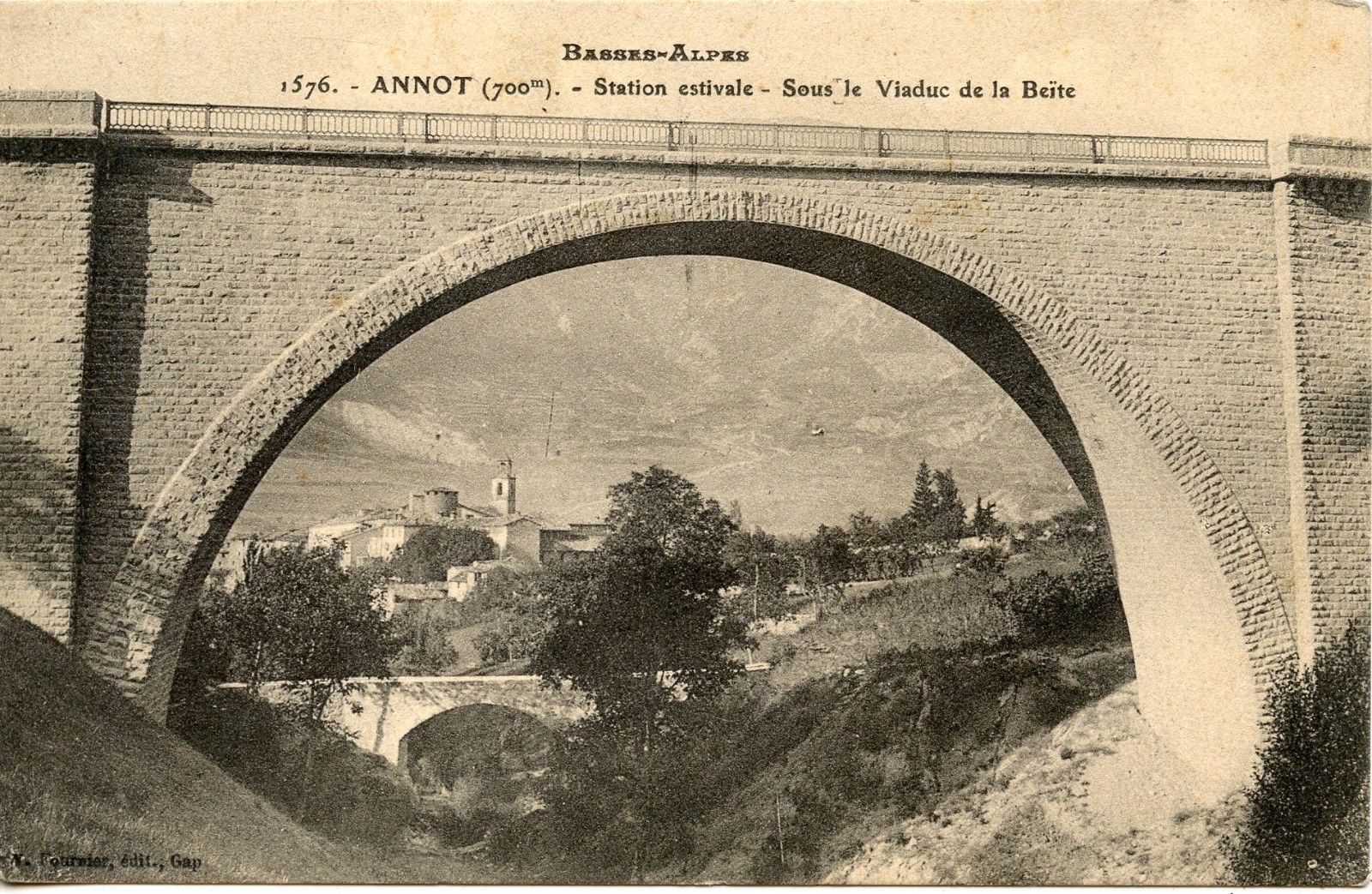
Our train sets off from Annot. The next few images give a driver’s eye views along the line as we leave the station. [10] About 700 metres beyond the Station the line crossed the Viaduc de la Beite, across the valley of La Beite. We have already seen the viaduct in the photographs of the town of Annot above. But it is an elegant structure, so more photographs seem appropriate.This is Le Train des Châtaignes. It is the last day of the 2013 season (Saturday 2nd November) for the “Train des Pignes” It circulated between Puget-Théniers and Le Fugeret for the Fête de la Châtaigne at Le Fugeret, (c) Jose Banuado. [11]

Post card images follow: A freight train has just crossed the viaduct heading for Annot, circa 1956. [16]

As trains travel over the Viaduc de la Beite, they turn back to towards the D908 and for a short distance travel east-west before turning to the northwest once again. As the road and railway continue in a northwesterly direction their paths drift closer together so that around 4 kilometres northwest of Annot they are running side by side.as they approach l’Arret des Lunieres. [10]l’Arret des Lunieres.

North of the Halt the road drifts down toward the valley floor while the railway follows the contours. As the disparity in levels increased the old road swung underneath the railway at Ravin de Fouent Bouisse and back again under the viaduct having crossed the stream. The clearances between road and rail were not adequate fro modern vehicles and the road had to be diverted to stay on the southwest side of the railway.The viaduct before any consideration of diversion of the road. [14]

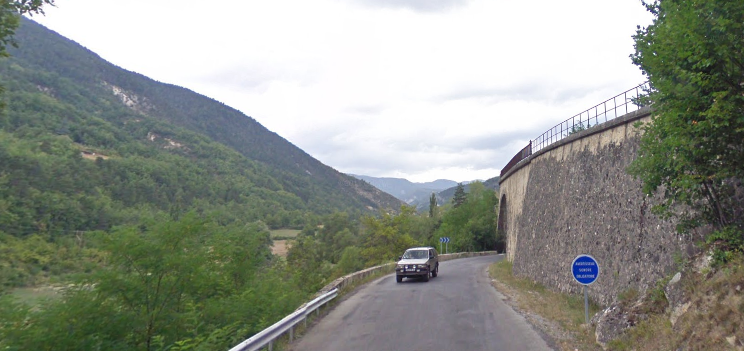
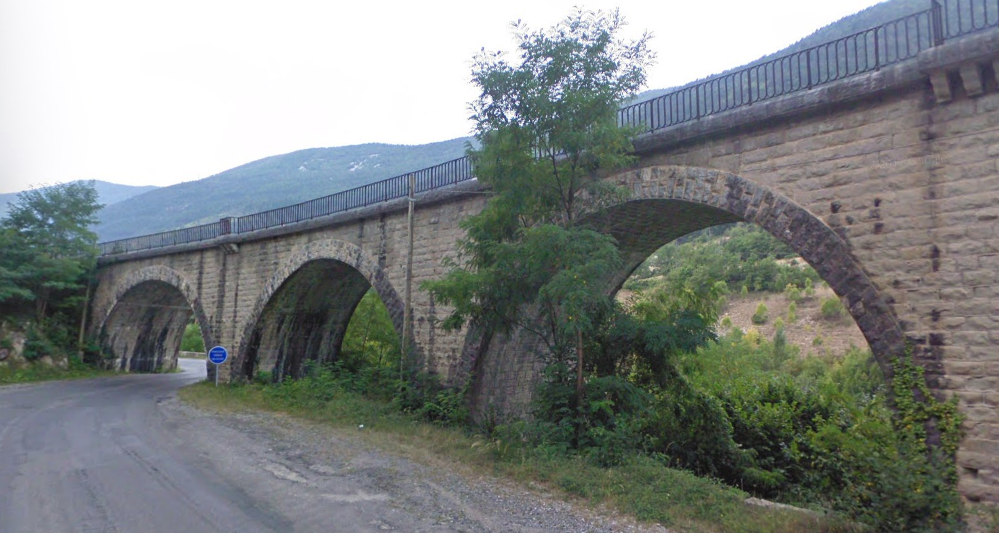
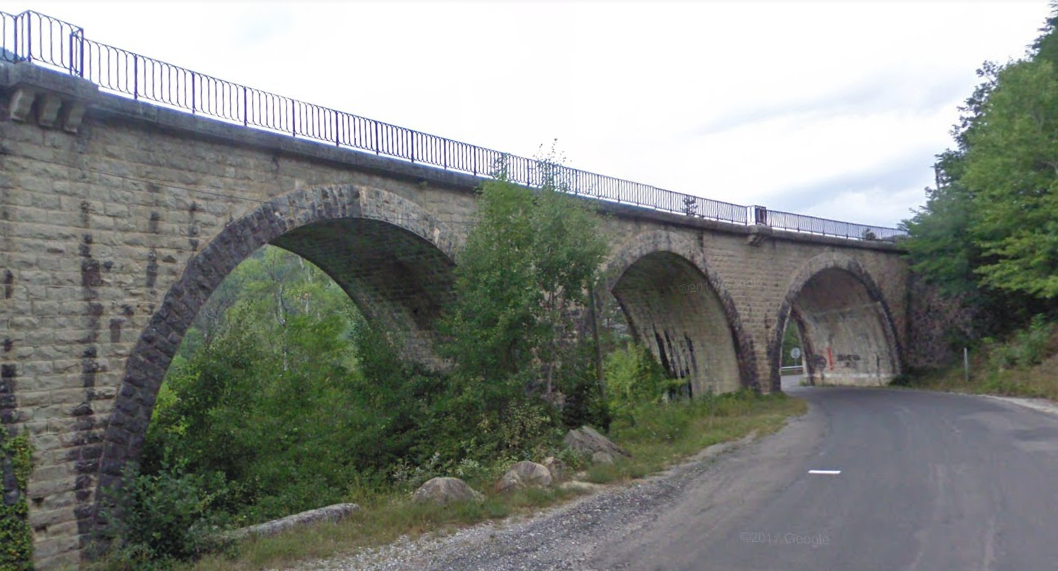
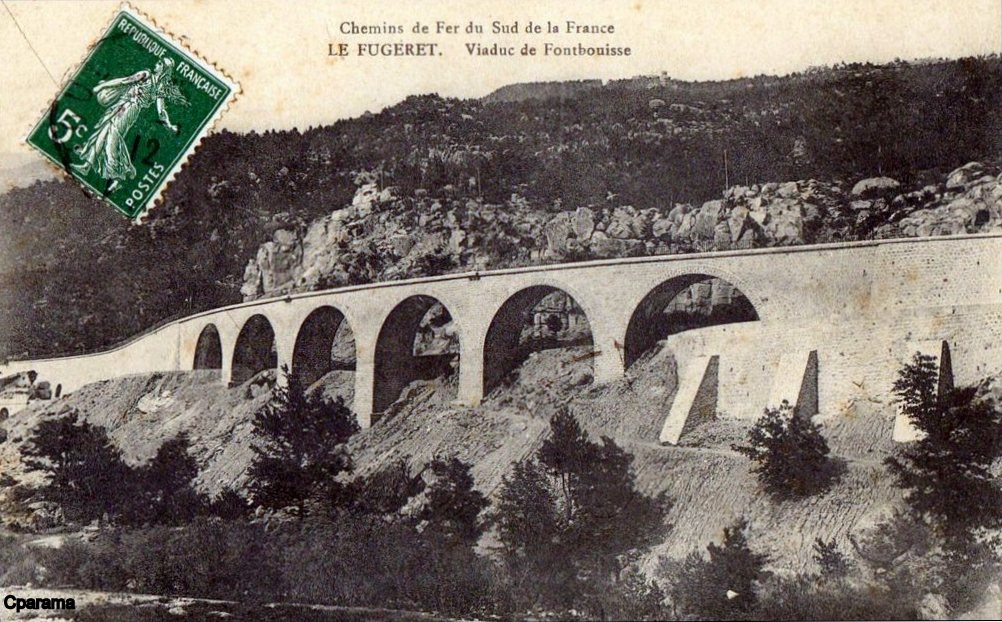
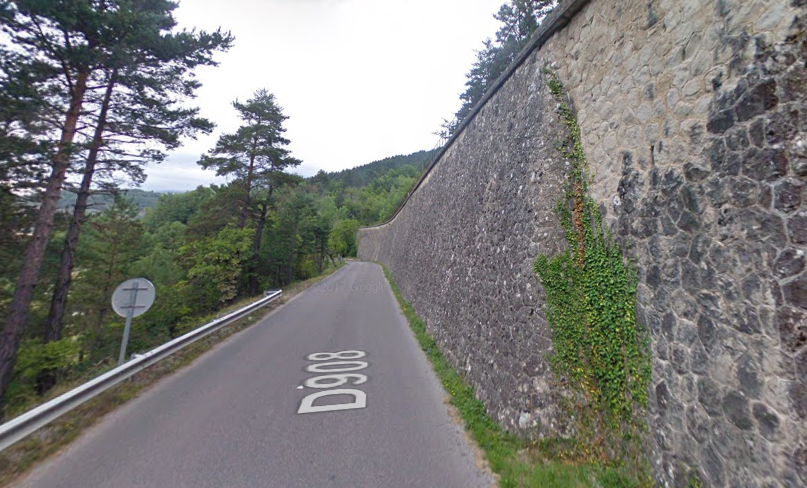
In no more than a couple of hundred metres, the road had dropped sufficiently to pass under the railway at a second viaduct and then follow it on its northeast side. before switching back to the southwest side again. The viaduct was named, “Viaduc de Fontbouisse.”Looking back towards Annot.From the same position, looking forward towards Le Fugeret.An early picture of the Viaduct. [14]With the road back on the southwest side of the railway, the lines are supported a significant height above the road by a substantial retaining wall.

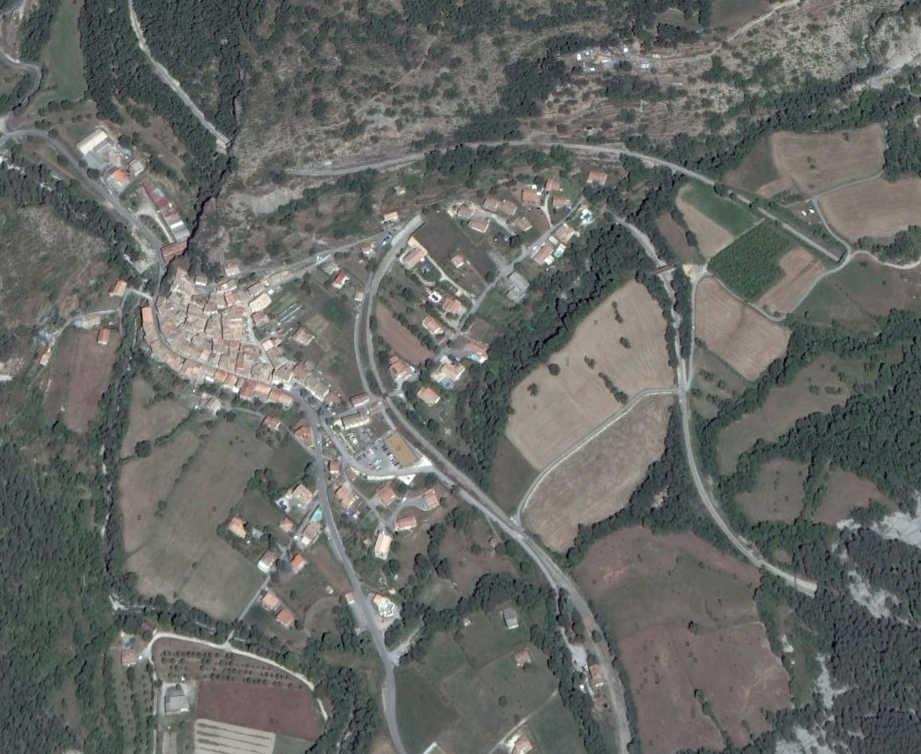
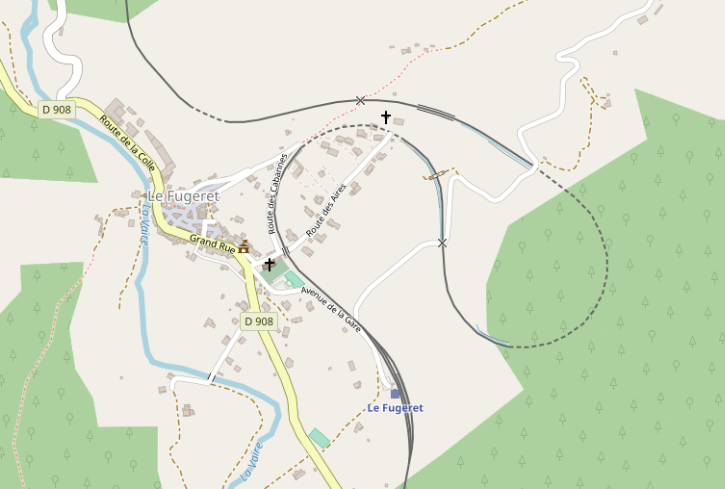
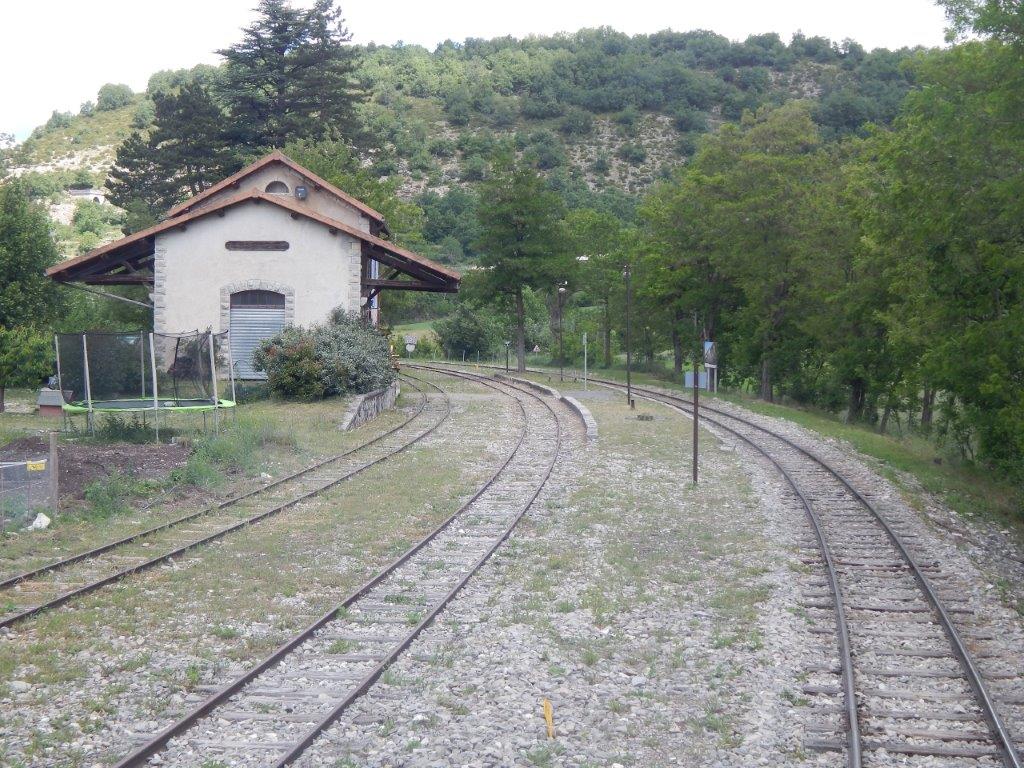
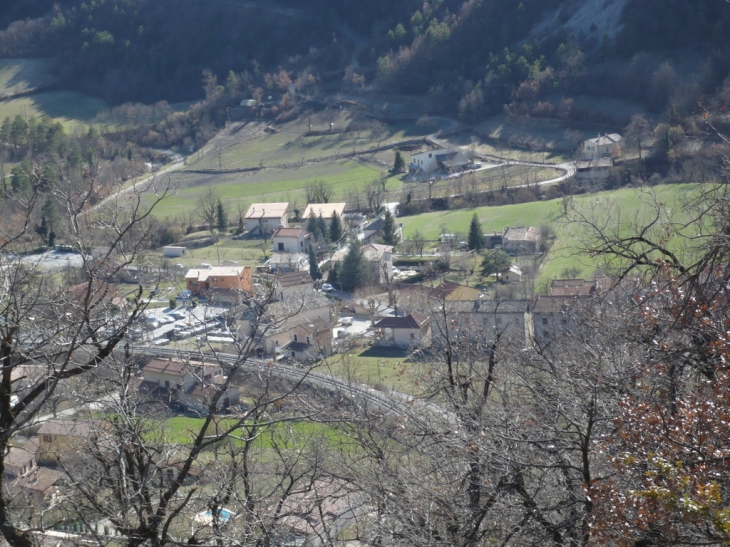
As the road and railway approach the village of Le Fugeret, they separate and Google Streetview becomes less effective in showing the route of the railway! Before entering the station at Le Fugeret it is worth looking at the satellite image below to get a feel for the railway in the immediate vicinity of the village. As can be seen in the image, the railway station is some distance from the old village. The station is just visible at the bottom of the picture, with the old village to the middle left. The railway line uses this location to loop back on itself to gain height before continuing once again in a northwesterly direction. It’s track can be picked out on the satellite image, and can more easily be seen on the openstreetmap extract below it.Le Fugeret Station was set on an approximately north-south alignment to the southeast of the village to permit the line to gain sufficient height to continue on its journey up the valley of La Vaïre. The station buildings from the south. [10]The station buildings looking south towards Annot. [12]The northern end of the platforms at Le Fugeret Railway Station. [10]The northern station throat with the old village of Le Fugeret visible to the left of the track ahead. [10]A rural idyll near Le Fugeret. [13]A train leaves Le Fugeret station for Digne and passes the old village. The small bridge under the train in the image is shown below in a telephoto view from the main road in the village. [15]The line leaves the station and heads towards the loop. The station is off the picture to the right, the village is in the foreground, the accommodation bridge is visible to the left of the churchThe railway can be seen again right at the top of the photograph having turned through 180° close to the village, as seen below. [17]The railway turns round to the northeast with the old village behind. [18]The village is off the photo to the left. The railway continues to turn through 180° in the foreground, and can be picked out again, after turning through another loop, at the top of the picture. To the bottom right of this picture and hidden behind the trees, the line passes through a short tunnel. [17]

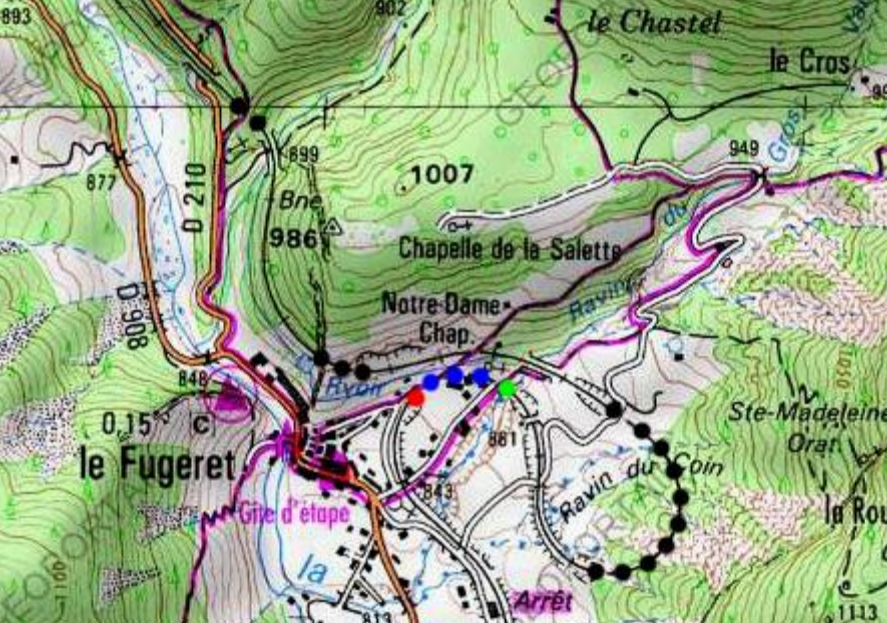
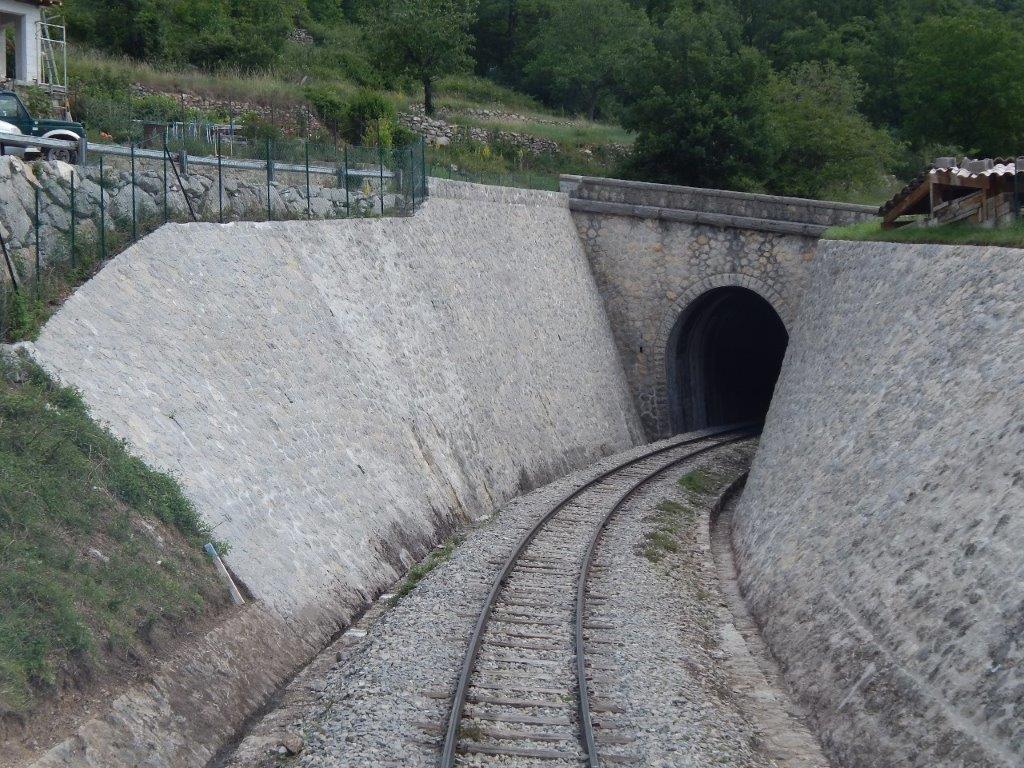
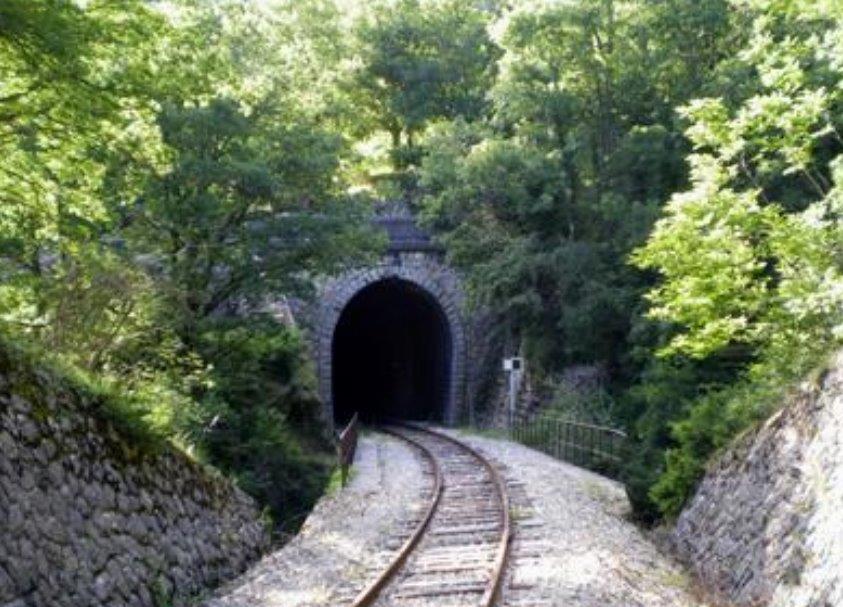
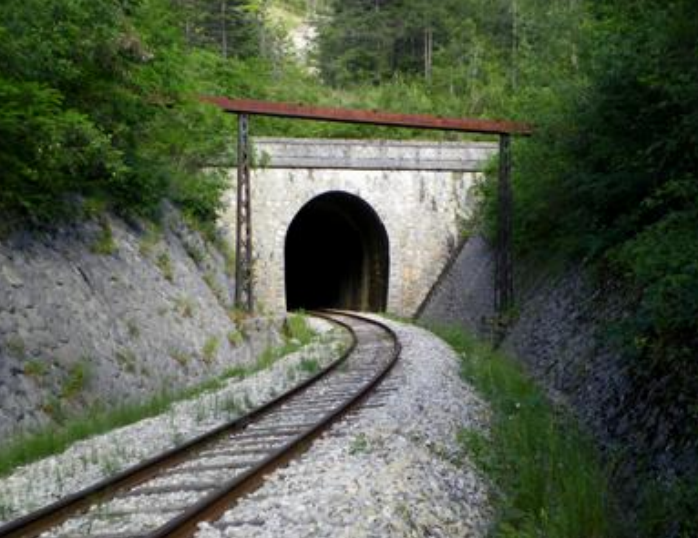
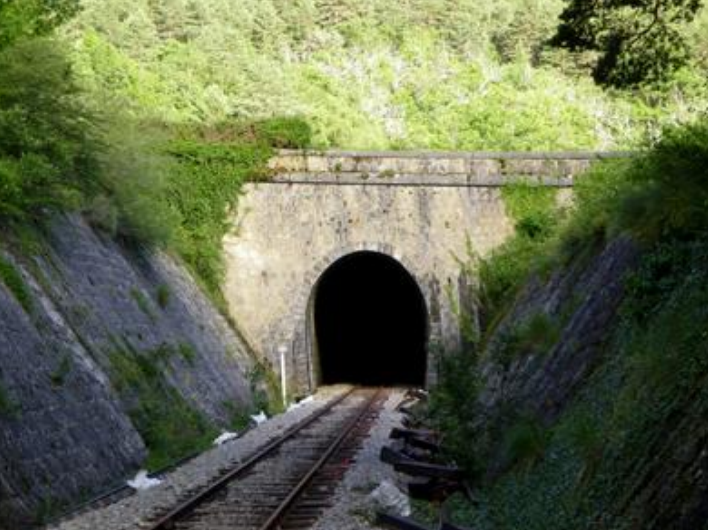
A 194 metre tunnel allows the 180° turn to negotiate the topography of the village. This tunnel is called “Tunnel Notre Dame.” It is shown below marked with red, blue and green dots. [19]The southwest portal of the Tunnel Notre Dame. [10]The southeast portal of the Tunnel Notre Dame and the small bridge over the grandly named Ravin du Gros Vallon. [19]An accommodation bridge provides access between fields either side of the line. There are a number of driver’s eye views in this post which have been taken from the website of Reinhard Douté (www.rd-rail.fr) [10]

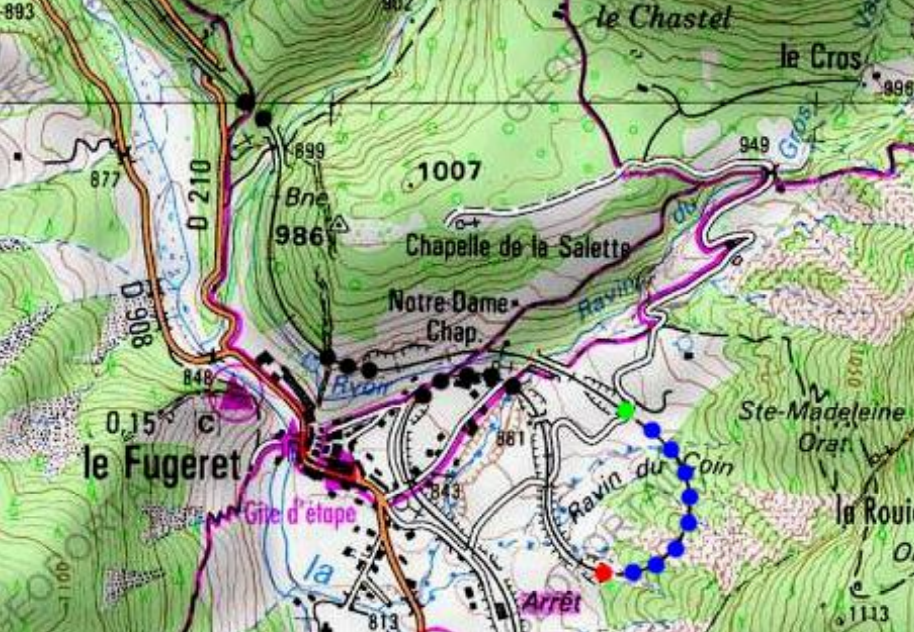
The line completes its first 180° turn after passing under the accommodation bridge above. It then crosses the Ravin du Coin, on an embankment, before entering a lengthy curved tunnel which accommodates the next 180° turn – The Tunnel du Fugeret. The tunnel is marked by red, blue and green dots below and is over 500 metres long. [20]The southern portal of the Tunnel du Fugeret. [20]The northern portal of the Tunnel du Fugeret. [20]

The line then curves gently across the north of the village to the Tunnel de la Barre which can be picked out on the left of the satellite image immediately below. On the way, it crosses the Ravin du Gros Vallon again. The second image below shows the viaduct which spans the ravine.The third image below shows Le Fugeret with the line running high on the hillside behind it and the viaduct over the Ravin du Gros Vallon can bee seen on the right of the picture.Le Fugeret from the southwest. [21]

The Tunnel de la Barre is marked on the map below by red, blue and green dots and is just 75 metres long its portals are shown below. [22]The east portal of the Tunnel de la Barre. [22]The west portal of the Tunnel de la Barre. [22]

After leaving the tunnel the line continues to curve round to the north and then crosses a viaduct and passes through another short tunnel.The Viaduc de l’Hubac. [10]The viaduct and tunnel of l’Hubac. The Ravine is known as the “Ravin de l’Ubac.” [14]

The viaduct is a substantial structure, the tunnel is short, only 35 metres in length. The south east portal is shown in the first image below and the northwest portal can be seen in the second image below. [23] A short distance beyond the Tunnel de l’Hubac, the line crosses the D210 on what is now (2018) a very new, short-span structure. The road then climbs steeply, first to run, for a very short distance, at the same elevation as the track, and then to rise high above it.In the two images immediately above, the line continues alongside La Vaire, but high above it to the East, towards the next station at Méailles. Along the way it crosses a series of viaducts and requires a number of retaining walls. [10]High retaining walls can be seen from the D908 on the West side of the valley of La Vaire. Some, as above, hold the hillside above the railway. Some, like immediately below, support the railway. And in places the railway leaves the hillside to run on its own retained embankments and crosses ravines by means of bridges, as in the second image below.Looking forward up the line towards the station at Meailles from the D908 across the valley.A similar view from a few hundred metes further north along the D908. [24]Two images (above) of the Meailles Viaduc Sud, both taken from Google Streetview.

The Village of Meailles sits high above the valley floor to the East of La Vaire. The railway station sits midway between the village and the river, as shown on the map below (OpenStreetMap). [25]The station is overlooked by a massive retaining wall. [28] In the image below from 2016 we can see the wall under repair. [10] It is obvious in this image that now-a-days the station is little more than a Halt. But this is where we are going to stop and take time out. Meailles is that end of this stage of our journey and we finish this post with some pictures of the station.The station sits on a platform built into the valley side. [26]There was once a single siding which branched off the mainline to the south of the station and clung to the retaining wall behind the station buildings. [27]The civil engineering works associated with this small station are very significant. [29]The station is just visible to the bottom left in this postcard view of the village of Meailles. [30]

References

  1. http://www.annot-tourisme.com/GB_carte_des_randonnees_en_pays_d_annot.html, access on 2nd August 2018.
  2. https://www.viamichelin.co.uk/web/Maps/Map-Annot-04240-Alpes_de_Haute_Provence-France, accessed on 2nd August 2018.
  3. http://www.tourism-alps-provence.com/annot, accessed on 2nd August 2018.
  4. https://www.france-voyage.com/tourism/annot-1473.htm, accessed on 2nd August 2018.
  5. http://www.map-france.com/Annot-04240, accessed on 2nd August 2018.
  6. https://www.openstreetmap.org/search?query=Annot#map=16/43.9654/6.6669, accessed on 2nd August 2018.
  7. https://www.pinterest.co.uk/pin/356206651756315603/?lp=true, accessed on 2nd August 2018.
  8. http://www.annot-tourisme.com/GB_train-des-pignes.html, accessed on 2nd August 2018.
  9. https://trainmec.blogspot.com/2012/10/train-des-pignes-puget-theniers-to-annot.html, accessed on 2nd August 2018.
  10. http://www.rd-rail.fr/1-PHOTOS/PH43/index-ph43.html, accessed on 30th July 2018.
  11. https://www.facs-patrimoine-ferroviaire.fr/phototheque/albums/train-des-chataignes, accessed on 2nd August 2018.
  12. https://fr.m.wikipedia.org/wiki/Gare_du_Fugeret, accessed on 2nd August 2018.
  13. http://www.archives04.fr/arkotheque/visionneuse/visionneuse.php?arko=YTo3OntzOjQ6ImRhdGUiO3M6MTA6IjIwMTgtMDgtMDIiO3M6MTA6InR5cGVfZm9uZHMiO3M6MTE6ImFya29fc2VyaWVsIjtzOjQ6InJlZjEiO2k6MTk7czo0OiJyZWYyIjtpOjI0NDA7czoyMDoicmVmX2Fya19mYWNldHRlX2NvbmYiO3M6MTQ6ImNhcnRlc3Bvc3RhbGVzIjtzOjE2OiJ2aXNpb25uZXVzZV9odG1sIjtiOjE7czoyMToidmlzaW9ubmV1c2VfaHRtbF9tb2RlIjtzOjQ6InByb2QiO30=#uielem_move=5%2C65&uielem_islocked=0&uielem_zoom=99, accessed on 2nd August 2018.
  14. https://www.cparama.com/forum/le-fugeret-t28157.html, accessed on 2nd August 2018.
  15. https://collection-jfm.fr/p/cpsm-france-04-le-fugeret-train-19533
  16. https://www.cparama.com/forum/annot-t1810-20.html, accessed on 2nd August 2018.
  17. https://www.communes.com/photo-le-fugeret,12099, accessed on 3rd August 2018.
  18. https://www.france-voyage.com/cities-towns/le-fugeret-14492.htm, accessed on 3rd August 2018.
  19. http://www.tunnels-ferroviaires.org/tu04/04090.4.pdf, accessed on 3rd August 2018.
  20. http://www.tunnels-ferroviaires.org/tu04/04090.3.pdf, accessed on 3rd August 2018.
  21. http://www.lefugeret.com, accessed on 3rd August 2018.
  22. http://www.tunnels-ferroviaires.org/tu04/04090.2.pdf, accessed on 3rd August 2018.
  23. http://www.tunnels-ferroviaires.org/tu04/04090.1.pdf, accessed on 3rd August 2018.
  24. https://commons.wikimedia.org/wiki/File:Meailles_gare_et_viaduc_sud.jpg, accessed on 3rd August 2018.
  25. https://www.openstreetmap.org/search?query=Annot#map=17/44.02336/6.62999, accessed on 3rd August 2018.
  26. http://www.linternaute.com/sortir/chemins-de-fer/chemin-fer-provence/diaporama/11.shtml, accessed on 3rd August 2018.
  27. http://www.map-france.com/Meailles-04240, accessed on 3rd August 2018.
  28. http://www.forum-train.fr/forum/viewtopic.php?f=18&t=4208&start=20, accessed on 3rd August 2018.
  29. http://www.beyond.fr/villphotos/meailles-photo-gallery.html, accessed on 3rd August 2018.
  30. https://collection-jfm.fr/p/cpsm-france-04-meailles-vue-generale-aerienne-213831, accessed on 3rd August 2018.

Nice to Digne-les-Bains Part 6 – Saint-Benoît Pont de Gueydan to Annot (Chemins de Fer de Provence 70)

After a detour up another branch tramway (Saint-Benoît Pont de Gueydan to Guillaumes) operated by the TAM: https://rogerfarnworth.wordpress.com/2018/07/25/tam-tramway-from-le-pont-de-gueydan-to-guillaumes-chemins-de-fer-de-provence-69, we continue our journey along the Nice to Digne line from Saint-Benoît Pont de Gueydan.Two images of the station building at St. Benoit Pont de Gueydan. It has been abandoned but once acted as the junction station for the TAM line to Guillaumes. The first looks back towards Entrevaux, the second looks forward towards Digne. [1]A Nice to Digne service at St. Benoit Pont de Gueydan Station. [2]Ballast train at St. Benoit Pont de Gueydan Station. [3]The station is shown close to the centre of the map above, which also shows the start of the line to Guillaumes, the Pont de Gueydan and the railway bridge across the River Coulomp. We are travelling West along the line. [4]  Two pictures (above) of the line west of Saint Benoit Pont de Gueydan. [5]

The first two significant structures on this section of the line are a bridge which carries the N202 over the railway and then the Tunnel de Saint Benoit which is also known as the Tunnel du Pont de la Reine Jeanne and is curved in plan and 110 metres long. This tunnel’s north-east portal is a matter of metres from the road bridge. The bridge is located under the red dot on the map below and the tunnel is marked by the blue and green dots. [8] The steel or wrought iron road bridge shown above [8] has now been supplemented by a more modern structure (below). [5]The western portal of the tunnel is shown is the various images below.  [5] The monochrome image is an old postcard which shows the railway and road tunnels alongside the bridge which provides the alternative name for the tunnel – Tunnel du Pont de la Reine Jeanne. [9] The following two images are of the same bridge. The first comes from the era before the construction of the railway and is taken from upstream of the bridge. [10] The second comes from the modern era and shows much the same view as the older image above this text. It is also taken from upstream of the bridge.  [11]Beyond the tunnel, the railway runs parallel to the N202 on its North side until reaching the halt at St. Benoit. [5] The two pictures above are the remainder of a sequence of photographs from this source which have taken us along the first length of the line to the west of Saint Benoit Pont de Gueydan to the next stop on the line – Saint Benoit Halte [5]Saint Benoit Halte before refurbishment. [6]Saint Benoit Halte after refurbishment. [7] The two pictures above are taken about 1 kilometre beyond Saint Benoit Halt. The track to the right of the crossing on the first image is the access road to Saint Benoit Halt. The line continues west alongside the small retaining wall shown on the second image. It then follows the N202 until reaching the next ravine – Ravin de Gross Vallon. On the road it is hard to even notice the ravine. On the railway the bridge is easy to identify. [5]From the N202, the viaduct can only be glimpsed through the vegetation.Google Earth provides the best view of the viaduct that I have been able to find.

The railway continues about 100 metres north of the N202 for a further kilometre before encountering another tunnel – Tunnel du Plan de Coulomp. [12] The Tunnel du Plan de Coulomp is shown on the map below by the red, blue and green dots. It is 75 metres long and is followed immediately by another viaduct and another two tunnels which are shown by a series of back dots on the map. These tunnels are known as Scaffarels Nos. 1 and 2.The eastern portal of the tunnel du Plan de Coulomp. [5]The western portal of the Tunnel du Plan de Coulomp. The picture also shows the retaining wall which supports the formation of the railway on the approach to the next viaduct.  [12]The view of the viaduct over Le Coulomp. The picture is taken from the N202 which itself is relatively high above the river.The Portuguese steam locomotive owned by GECP pulls a train over the viaduct heading for Annot. [13]The same viaduct but this time showing its full height. [14] And below, another view of a steam train, this time travelling away from Annot. [15]A short distance to the west of the viaduct, trains plunged into another tunnel – Galerie des Scaffarels. This was a protective structure avoiding the worst effects of rock and snowfalls. [16] It was 151 metres long. The first two images below are taken from the East looking at the tunnel portal. The third image is taken inside the gallery and shows the small arched openings in the south wall of the gallery. [16] The fourth image below shows the western portal of the gallery. The gallery is immediately followed by a 207 metre long tunnel – Tunnel des Scaffarels. [17] The first two images below are taken from inside the gallery and show just how close the two structures are to each other. They depict the eastern portal of the tunnel. The third photo below shows the western portal in cutting. The 100 metre cutting gives way yo open land and the line immediately encounters another halt – Les Scafferals. [5]400m metres after the halt at Les Scafferals, the line begins to swing round to the northwest and in a further kilometre or so the Station of Annot is encountered. [5] Annot functions as the usual terminus of the GECP steam services from Puget-Therniers. The station is shown in plan on the adjacent satellite image.

Annot is located some 80 km north-west of Nice, 15 km east of Saint-Andre-les-Alpes, and 13 km west of Puget-Theniers. Access to the commune is by National Road N202 from Saint-Andre-les-Alpes to Puget-Theniers which passes through the south of the commune. Access to the village is by road D908 running north off the N202 and continuing north to Le Fugeret. There are two railway stations in the commune: Scaffarels station, an optional stop built on a masonry embankment; and Annot Railway Station near the village. [18]

We finish this section of our journey from Nice to Digne at Annot station and with a few different vies of the station taken at different times in its history. [19] [20][21][22][23][18][23][24]The next photograph below shows a Renault ABH railcar and Billard trailer in the snow at Annot station in 1987 (Pierre Boyer Collection).

References

  1. https://www.google.co.uk/maps/place/Saint-Beno%C3%AEt+Pont+de+Gueydan/@43.967581,6.75664,17z/data=!4m13!1m7!3m6!1s0x12cc41f9dc0aa187:0xf10a773ab9badd02!2sPont+de+Gueydan,+04240+Saint-Beno%C3%AEt,+France!3b1!8m2!3d43.969065!4d6.7597711!3m4!1s0x12cc41fbe0e4fe7d:0x425b3824df9b5b03!8m2!3d43.9678859!4d6.7570404, accessed on 26th July 2018.
  2. https://www.cparama.com/forum/pont-de-gueydan-cne-de-saint-benoit-t28160.html, accessed on 20th July 2018.
  3. https://mapio.net/a/60593367, accessed on 26th July 2018.
  4. http://sierm.eaurmc.fr/surveillance/eaux-superficielles/etat-qualitatif.php?station=06710029, accessed on 26th July 2018.
  5. http://www.rd-rail.fr/1-PHOTOS/PH43/index-ph43.html, accessed on 26th July 2018.
  6. http://trip-suggest.com/france/provence-alpes-cote-d-azur/ourges, accessed on 26th July 2018.
  7. https://www.google.co.uk/maps/place/Saint-Benoit/@43.960033,6.727445,3a,75y,90t/data=!3m8!1e2!3m6!1sAF1QipMXVem6e6mYYcyxeYWboq42DYz51wFSABmPfpoI!2e10!3e12!6shttps:%2F%2Flh5.googleusercontent.com%2Fp%2FAF1QipMXVem6e6mYYcyxeYWboq42DYz51wFSABmPfpoI%3Dw129-h86-k-no!7i1500!8i1000!4m13!1m7!3m6!1s0x12cc41f9dc0aa187:0xf10a773ab9badd02!2sPont+de+Gueydan,+04240+Saint-Beno%C3%AEt,+France!3b1!8m2!3d43.969137!4d6.759779!3m4!1s0x12cc6a3dfd6d4f0b:0xfc663905836cc5!8m2!3d43.9600332!4d6.7274449, accessed on 26th July 2018.
  8. http://www.tunnels-ferroviaires.org/tu04/04174.2.pdf, accessed on 26th July 2018.
  9. http://www.cparama.com/forum/saint-benoit-t28171.html, accessed on 18th July 2018.
  10. https://entrepierres.net/wiki/Pont_Reine_Jeanne, accessed on 27th July 2018.
  11. This image has been saved on my computer for a while and I cannot find details to attribute it. I’d be very happy to do so should someone contact me with details.
  12. http://www.tunnels-ferroviaires.org/tu04/04174.1.pdf, accessed on 27th July 2018.
  13. https://trainmec.blogspot.com/2016/01/la-portuguese-moving-in-steam.html, accessed on 27th July 2018.
  14. http://www.proxiti.info/photoscommune.php?o=04174&n=Saint-Beno%C3%AEt, accessed on 27th July 2018.
  15. http://www.cartophilie-viroflay.org/article.php?id_article=163, accessd on 27th July 2018.
  16. http://www.tunnels-ferroviaires.org/tu04/04008.2.pdf, accessed on 27th July 2018.
  17. http://www.tunnels-ferroviaires.org/tu04/04008.1.pdf, accessed on 27th July 2018.
  18. https://en.wikipedia.org/wiki/Annot, accessed on 27th July 2018.
  19. http://www.en-noir-et-blanc.com/rch-k1-171879.html, accessed on 27th July 2018.
  20. http://www.map-france.com/Annot-04240/photos-Annot.html, accessed on 27th July 2018.
  21. http://jan-san-climbing.blogspot.com/2017/05/annot-trad-climbing.html, accessed on 27th July 2018.
  22. http://www.ravnsbak.dk/Railways/France/Railcars/Narrow%20gauge%20railway%20Nice%20Digne/index.html, accessed on 27th July 2018.
  23. https://mapio.net/pic/p-7389278, accessed on 27th July 2018.
  24. https://mapio.net/pic/p-80055650, accessed on 27th July 2018.

TAM Tramway from Le Pont de Gueydan to Guillaumes (Chemins de Fer de Provence 69)

The line from Le Pont de Gueydan north to Guillaumes followed the valley of the River Var and ran through the Gorges de Daluis.

Marc Andre Dubout, writing in French, says that the line was probably the moist daring of secondary line construction work with very steep gradients, numerous tunnels, two remarkable bridges. He comments that it is the most impressive tramway from a tourist perspective with ‘unique viewpoints and singular landscapes’.

The proposed line was declared as being of public utility on the 10th February 1906. It did not open until 29th July 1923 and closed only 6 years later on 16th May 1929. The line was just under 19km long and had 17 tunnels, numerous culverts and retaining walls. This was all provided for just two daily services in each direction. [1]

As with a number of these lines, the expenditure was profligate and the value limited. by the time the line was completed road transport was already becoming reliable and more comfortable. The line stood no chance of being profitable.

The Gorges de Daluis is a 6km long canyon reaching south from Guillaumes to Daluis. The canyon was formed by the River Var. The gorge [2] is cut in the red rock (sandstone colored by iron oxide, 260 million years old). [3]  Notable views along the gorge (a touristic high point[3] and one of a number of “long, lonely canyons” in the area)[4] include the final waterfall of the Clue d’Amen. [5][6]The Gorges de Daluis are to the West of the dominant Dome de Barrot. [1]The Gorges de Daluis are narrow and dramatic! [1]

The station at St. Benoit Pont de Gueydan was the junction station for the line north through the Gorges de Daluis. The tramway followed the road round the bluff which faced  west across the River Var and entered its first tunnel as it rounded the curve. The main road (N202) continues West and the D902 travels north up the valley of the Var using the old tramway tunnel.The south portal.The postcard view (above) of the north portal shows the old bridge on the main road – Le Pont de Gueydan. The image below shows the old bridges more clearly.The same bridges from the south side.This image clearly shows the tramway in place.

After the old bridges were removed there was a temporary structure in place for a time. This is shown in the adjacent monochrome image. A new structure was planned for the main road and was built in 1949. That new structure is shown in the picture immediately below. The image shows the south side of the bridge. [7] The image below that shows the 1949 structure from the north side. The old bridge abutments are still visible to the north of the 1949 bridge. The road tunnel is now disused. The third image below provides a final image of the tunnel and its north portal.The tramway and road travelled north through the relatively wide valley of the Var heading for Castellet-lès-Saussesm and crossing streams on the way. The original bridge over Ravin du Riou was also the location of a stop serving Enriez.The road/tramway followed the river bank and at times that closeness meant that the track-bed or in later days the road were disturbed by flood flows in the river.

The road ran below the villages of Castellet-lès-Sausses and Sausses with the next station being at the bottom of the road from Sausses, adjacent to another Ravin du Riou.

The tramway continued up the valley, tightly following the river. The departmental boundary sees the road number change from D902 to D2202 and we soon encounter a bridge over the Var, not for the tramway but for the D316. It is an elegant concrete arch with a capacity of only 3 tonnes.

At Daluis, the tramway crossed the Vallons de la Salette on a viaduct which has now been replaced by a modern structure. The viaduct is visible on the right of the picture on the left below and is circled in blue on the map. The red circle highlights the position of the station building. [8]Daluis Station Building. [1]Pont de Berthéou (Berthet). [9]

After Daluis, the tramway climbed steadily above the river and at the Vallon de Berthéon turned away from the Var to negotiate the tributary, seeking to avoid  a much longer viaduct that was required higher up the valley. The Pont de Berthéou was the compromise position. The detour is shown on the satellite image below. The Pont de Berthéou is in the top left of the image, the River Var, at the bottom right. The picture immediately below the satellite image shows the road/tramway formation just before entering the Gorges de Daluis, clearly a significant height above the valley floor.The rock formations alongside the tramway/road have changed significantly in appearance. The Gorge de Daluis is , as we have already noted, in an area of red sandstone. The satellite image below sows that this is a very discrete area. Both Daluis and Guillaumes are shwn on the image and it is just possible to pick out the Vallon de Berthéon on the western edge of the red sanstone to the Northeast of Daluis.The commune of Guillaumes has produced information about this distinctive area. Tourist brochures [10], are supplemented by detailed geological information. [11].

At the end of the Paleozoic Era, about 250 million years ago, following the erosion of a Hercynian crystalline massif, now extinct, clay sediments, quartz, mica flakes, minerals rich in iron and volcanic ash settled on the site of the dome of Barrot which was then a floodplain. As they accumulated, these sediments were sunk into a collapsing basin (a graben in distension, named the Argentera-Barrot basin) where pressure and heat turned them into rocks called pelites.

The hot and humid climate of the time caused the oxidation of the iron, which coloured the sediments red.

In the Mesozoic Era, the sea settled on this pelitic base rock and new sediments were deposited from a massif located in the current Mediterranean. Over tme, these new sediments produced limestones, gray marl and sandstone.

In the Cenozoic Era, the formation of the Alps resulted in this area being forced up to create Dome de Barrot whose pelites cut by the erosive action of Var and Cians are today visible for several hundreds of metres in the Gorges de Cians and de Daluis. [11]We have reached the entrance to the Gorges and continue the journey from the point marked with a blue flag on the satellite image above. The road/tramway cut a deep cleft in the rock, and as can be seen there is a warning of tunnels ahead!The tramway is visible in this postcard image which is taken facing towards Daluis. [1]

The scenery is dramatic! At certain points along its length the tramway/ road clung to the rockface.

The first tunnel built for the road and used by the tramway is shown in the two images  below which are taken from Googles Streetview. The south portal of the first tunnel.The north portal of the first tunnel.The first and second tunnels are marked on the map above. The first, has a combiination of green, blue and red dots. It is 117 metres long. The second tunnel is marked north of the first by two black dots. It was built for the tramway as the road bend on the valley side was too tight for trams to negotiate. It was only 31 metres long. [12][13]

The very narrow and deep gorges of the Var, north of Daluis, were always a serious blockhampering communications between the high and low valleys. A road was built in the late 19th Century to replace mule tracks and required the drilling of 10 tunnels. [8]

Subsequently, when secondary railways were being built, the town of Guillaumes lobbied for a railway. But the nature of the terrain would only permit the construction of a tramway between Pont de Gueydan and Guillaumes. 

The ten tunnels already built became combined road/tramway tunnels, but it was also necessary to by-pass some very tight curves in the road using a dozen new
tunnels specific to the tramway. These also became road tunnels after the tramway was abandonned,

It was only north of the Gorges de Daluis, before arriving at Guillaumes, where the valley became wider, that the tramline was free to choose its own route. That section contains the last four tunnels on the line.

Because of their number, proximity and lack of specific place names, these
Tunnels do not have specific names and are often referred to as numbers in registers of structures. The numbering starts close to Daluis and heads towards Guillaumes.Tunnel 2, South Portal.The two images immediately above show the north portal of tunnel No. 2.Tunnel No. 3, south portal.Tunnel No. 3 is marked on the above map by the green, blue and ed dots. It is 233 metres long and was originally constructed for the road in the late 1800s before becoming a shared tunnel when the tramway was built. [14]

The north portal of Tunnel No. 3 is immediately followed by an arch bridge carrying the road [14] and a couple of significant retaining walls before Tunnel No. 4 is reached.Tunnel No. 4 was built for the tramway, and again avoided a sharp bend on the road. It was a straight tunnel of 241 metres in length. The picture above shows the south portal and the road curving away to the right. As can be seen on the map below the road entered a tunnel just off shot on the picture above.Tunnel No. 4 is marked with green, blue and red dots on the plan above. Immediately to the north of the tunnel, the road/tramway crossed another arch bridge. [15]Looking back at the north portal of Tunnel No. 4 from the arch bridge above.In a very short distance we encounter Tunnel No. 5 (above), this was built for the tramway as was 69 metres long. It is marked on the plan below  with a green, blue and red dot. The yellow dots represent Tunnel No. 6. [16]Tunnel No. 5, north portal.

Tunnel No. 6 is encountered immediately, it was originally built for the road, although at the time of its construction the road was much narrower than at present. The shot immediately below shows the old arch bridge over the stream which was directly before the tunnel entrance and clearly shows the modern widening of the bridge.The south portal of Tunnel No. 6The north portal of Tunnel No. 6 demonstrates the asymmetrical shape of the tunnels after conversion for the trams. The higher side allowed for the catenary and poles which supplied electrical power to the trams.The south portal of Tunnel No. 7, which only about 15m in length. The road curves sharply to the left beyond the tunnel and the picture below looks back at the rock wall from round the corner.Tunnel No. 8 is another very short tunnel, encountered within 10s of metres of Tunnel No. 7. It also is very short, no more than 10 metres in length. The first image below shows the south elevation in the 21st Century, and the second shows the same elevation while the tram tracks and catenary were still in place. [17]The north elevation of Tunnel No. 8 in the 21st Century.

Tunnel No. 9 is a longer tunnel (43m). It was built for the tramway, as the road heads out round another rocky promontory. Tunnel No. 9 South elevation. Tunnel No. 9 North elevation.The bridge over the Ravine immediately after Tunnel No. 9.

This next map shows the locations of Tunnels Nos. 9, 10 and 11. Tunnel No. 9 is marked with yellow dots at the bottom of the map; Tunnel No. 10 is marked with a read and a green dot; Tunnel No. 11 runs is a more southwest to north east direction close to the top of the map. Tunnel No. 10 was just 22m in length but was, like Nos. 9 and 11, built for the tramway. The tunnel roof has been removed and the road diverted along the line of the tunnel.Tunnels and bridges alternate along this route with frightening regularity! This structure is between Tunnels Nos 10 and 11.This ‘interesting’ three-way junction heralds Tunnel No. 11. It appears very narrow but was built wide enough to accommodate the 1.9 metre loading gauge of the trams on this route.The north-east portal of Tunnel No. 11. Immediately after leaving the 57 metre-long tunnel the road/tramway needed the support of a substantial retaining wall.

Tunnel No. 12 is just 16 metres long.South portal of Tunnel No. 12.North portal of Tunnel No. 12.Turning 180 degrees from the location of the last photo … the south portal of Tunnel No. 13 and the bridge over a gully immediately before the tunnel.A panoramic view from above Tunnel No. 12 of the road approaching the dramatic bridge, Le Pont de la Mariée. The 2CV is on the road adjacent to Tunnel No. 13. [18]The north portal of Tunnel No. 13.The south portals of Tunnels Nos. 14 and 15.The south portal of Tunnel No. 15.The north portal of Tunnel No. 14.The north portal of Tunnel No. 15.The southwest portal of Tunnel No. 16, which reveals further tunnels beyond!The northeast portal of Tunnel No. 16.

The southwest portal of Tunnel No. 17, with another bridge over a ravine.The northeast portal of Tunnel No. 17.The road and the tramway diverge. Le Pont de la Mariée was built for and carried the tramway.Looking back at the tramway/road from the east bank! [26]A drammatic photo (above) that shows the upstream part of Les Gorges de Daluis. In the foreground we can see Tunnel No. 16, then the entrance to Tunnel No. 17 and then Le Pont de la Mariée which is one of the fist reinforced concrete arched bridges in France. The route of the road is shown by a blue arrow and the route of the tramway is marked with red arrows. [19]

Le Pont de la Mariée was built in the early part of the 20th Century. It has a 62 metre span and sits 80 metres above the valley floor. It is salutary to think that this bridge only saw active use for a period of  6 years in the 1920s. So much work for so little gain! The image below was taken during its construction. [20]The next tunnel, Tunnel No. 18, is the first of these tunnels on the east side of the River Var. [21] Tunnel No. 18 is marked on the plan above by the green and red dots. It is 42 metres long and was built specifically for the tramway. Access in the 21st Century is restricted to pedestrians.  Its west postal is shown immediately below and its east portal on the second image below. Tunnel No. 19 is shown by the two black dots on the above map. It is just 28 metres long and also only accessible on foot.The West portal of Tunnel No. 18.The East portal of Tunnel No. 18. [22]Tunnel No. 19: south portal (left above) and north portal (right above).The satellite image above shows the bridge and the tramway route passing through the rock in Tunnels Now 18 and 19 before heading north until quite close to the River Var. The image immediately below picks up the line of the tramway travelling further north through a heavily wooded area, and the one below that shows the tramway formation leaving the wodds and passing a campsite. The old tramway has now become an access road for the campsite.The tramway formation crosses the Vallon de Tireboeuf and continues north as shown on the map below. Two tunnels were encountered on this part of the journey – Tunnels Nos. 20 and 21. Tunnel No. 20 is marked by the green and red dots on the plan. Tunnel No. 21 is marked by the black dots.Tunnel No. 20 is also known as Tunnel de Ruine. It is no more than 20 metres long. The picture below shows it north portal. [23]Tunnel No. 21 is in fact a 4i metre-long protective gallery over the line which the images below show clearly. [24]The tramway ran north from the gallery towards Guillaumes on the east side of the River Var. In the adjacent satllite image the gallery can be seen close to the bottom of the picture. The point at which the road crosses the river to rejoin the tramway alignment can be seen close to the top of the picture. The modern road bridge seems to dominate the location , but the old road bridge can be picked out immediately to the north of the modern bridge.

The location is shown in the images below.

The first picture shows the modern road bridge and alongside it the original road bridge built in the mid-1800s. The picture is taken looking towards Daluis, downstream of the location.

The second image below shows the the modern bridge and, on the east bank of the river the tramway formation under high cliffs. This picture is taken looking upstream towards Guillaumes.

The third picture is taken from the south looking up the valley of the Var towards the same bridge – Pont des Roberts. [25]

The road/tramway followed a straight course northward to just south of Guillaumes. After a minor deviation to the left and then the right the tramway crossed the Pont de Tuébi. [1]

The station buildings can be easily picked out on the images above. The ones below are annotated in French. [1]

The station buildings were sited on the south side of the town and the tram tracks ran beyond them (as can be seen in the sketch plan above). A loop was provided which extended into the village. [1] The postcard below shows the loop extending into the village and the second image below shows the same location in the 21st Century.The only remaining building is the passenger station building which is now occupied by a pharmacist. [1]

References

  1. http://marc-andre-dubout.org/cf/baguenaude/daluis/daluis.htm, accessed on 22nd July 2018.
  2. Rainer Eisenschmid; Provence, Côte d’Azur. Baedeker, 2011. p. 266.
  3. Reinhard Scholl; Französische Seealpen: Alpes-Maritimes: Mercantour – Merveilles; 50 ausgewählte Berg- und Talwanderungen (in German). Bergverlag Rother, 2002. pp. 48–55.
  4. Dana Facaros, Michael Pauls; Provence. New Holland, 2004. p. 254.
  5. M. Victor de Cessole; “En Hiver: Ascensions dans les Alpes Maritimes”. Annuaire (in French). 24. Club Alpin Français, 1898. pp. 157–72.
  6. https://en.wikipedia.org/wiki/Gorges_de_Daluis, accessed on 22nd July 2018.
  7. https://structurae.net/structures/pont-de-gueydan, accessed on 22nd July 2018.
  8. http://www.inventaires-ferroviaires.fr/hd04/04174.a.pdf, accessed on 22nd July 2018.
  9. https://www.camptocamp.org/waypoints/439483/fr/pont-de-bertheou, accessed on 22nd July 2018.
  10. https://www.guillaumes.fr/la-mineralogie and http://paca.lpo.fr/images/mediatheque/fichiers/section_protection/espaces/reserve_naturelle_regionale_des_gorges_de_daluis/documentation/depliant_presentation_rnr_daluis.pdf, accessed on 23rd July 2018.
  11. https://www.guillaumes.fr/le-circuit-cyansdaluisle-circuit-cyansdaluis, accessed on 23rd July 2018.
  12. http://www.tunnels-ferroviaires.org/tu06/06071.1.pdf, accessed on 23rd July 2018.
  13. http://www.tunnels-ferroviaires.org/tu06/06071.2.pdf, accessed on 23rd July 2018.
  14. http://www.tunnels-ferroviaires.org/tu06/06071.3.pdf, accessed on 23rd July 2018.
  15. http://www.tunnels-ferroviaires.org/tu06/06071.4.pdf, accessed on 23rd July 2018.
  16. http://www.tunnels-ferroviaires.org/tu06/06071.5.pdf, accessed on 23rd July 2018.
  17. http://www.tunnels-ferroviaires.org/tu06/06071.8.pdf, accessed on 23rd July 2018.
  18. http://club.caradisiac.com/interceptor-s4/cartes-postales-81352/photo/gorges-daluis-2cv-5554845.html#photo_5554845, accessed on 24th July 2018.
  19. http://www.tunnels-ferroviaires.org/tu06/06071.16.pdf, accessed on 24th July 2018.
  20. http://www.tunnels-ferroviaires.org/tu06/06000.1.pdf, accessed on 24th July 2018.
  21. http://www.par-monts-et-par-vaux.eu/ponts_alpes-maritimes_1.html#Pont_Mari%C3%A9e_Guillaumes, accessed on 24th July 2018.
  22. http://www.tunnels-ferroviaires.org/tu06/06071.18.pdf, accessed on 24th July 2018.
  23. http://www.tunnels-ferroviaires.org/tu06/06071.20.pdf, accessed on 25th July 2018.
  24. http://www.tunnels-ferroviaires.org/tu06/06071.21.pdf, accessed on 25th July 2018.
  25. http://dan-randos-photos.monsite-orange.fr/page-592d18d4a3c5a.html, accessed on 25th July 2018.
  26. http://draillescantoun.canalblog.com/archives/2009/05/11/13841773.html, accessed on 25th July 2018.