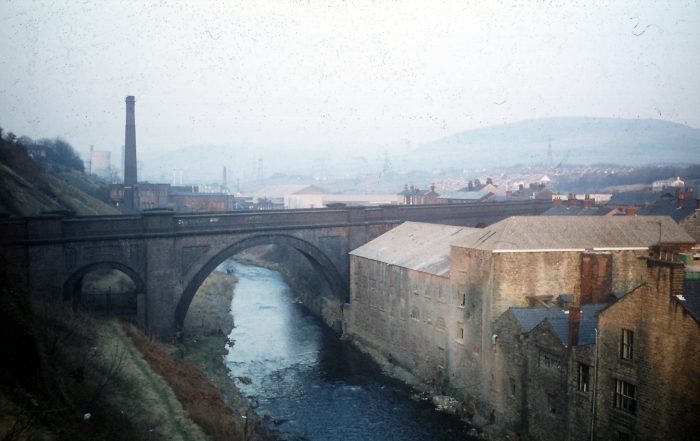
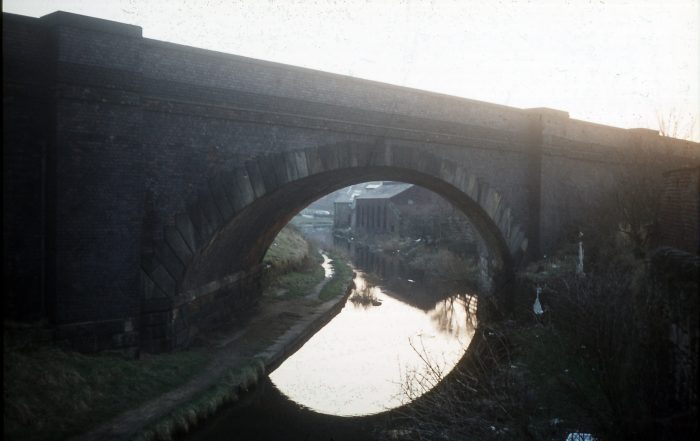
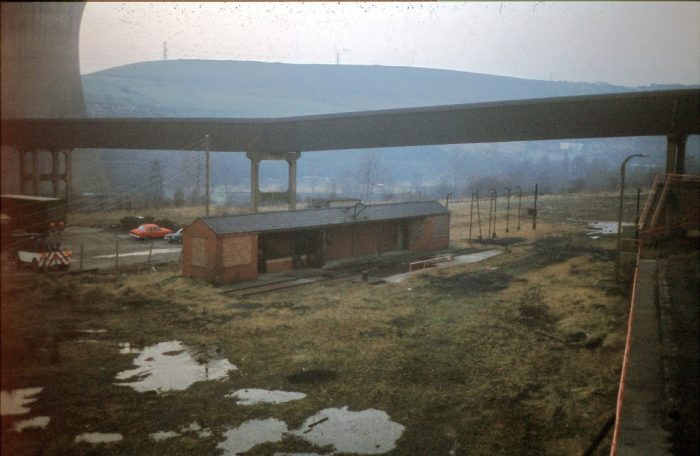
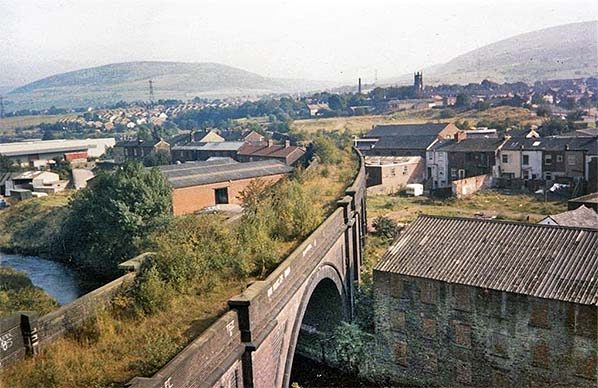
While I was writing the second article about the Micklehurst Loop I was contacted by Keith Norgrove. He sent me two pictures which came from a cycle ride along the Huddersfield Narrow Canal Towpath in 1963, one of which was relevant to the length of the Loop covered by my first article. The second image showed the Canal with a view of the Micklehurst Loop including a train climbing towards Diggle with the Saddleworth Moors behind. [1] As far as I can tell, this location is adjacent to the Woodend Mills North of the centre of Mossley.
This picture was taken in 1963 by Keith Norgrove while he was on a cycle ride along the Huddersfield Narrow Canal towpath. The photograph predates by some years the renovation work which took place on the canal. At that time the lock alongside the Woodend Mills in Mossley has been allowed to become nothing much more than a weir on the canal. This view of the old Micklehurst Loop is no longer available because of tree growth, but the Canal has been fully renovated. It has outlasted the Micklehurst Loop and now carries pleasure craft up to the tunnel at Diggle, (c) Keith Norgrove. [1]
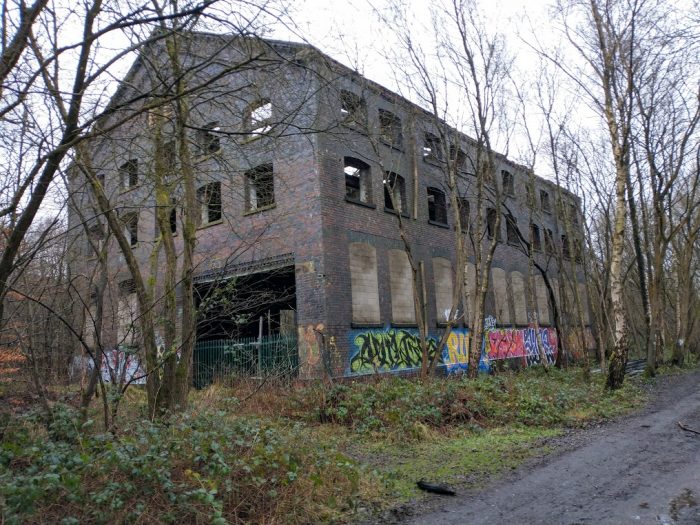
Woodend Mills – were built by 1848 by Robert Hyde Buckley, close to his father’s mills. These buildings made up an integrated cotton mill, built in several phases. Historic England say that they are “a near complete example of a first generation integrated cotton mill site, where both weaving and spinning processes were planned from the outset. Before this the two processes had been done on separate sites.” [3]
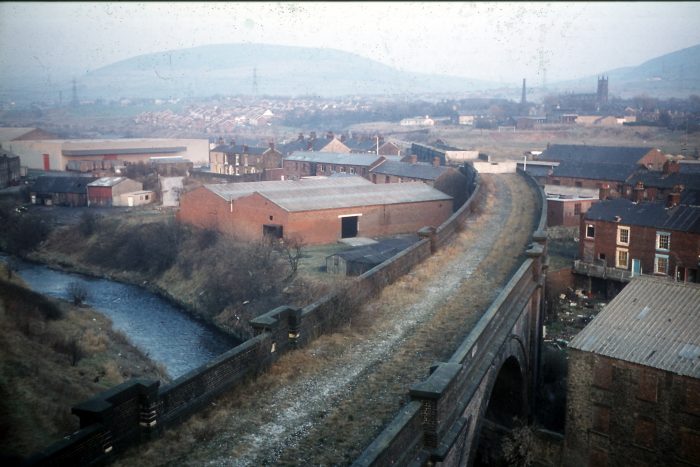
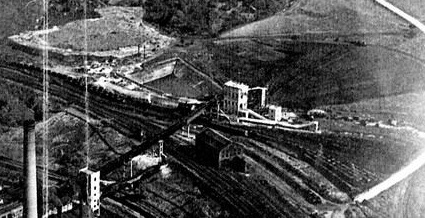
The close association of mills in the immediate area can be seen on the aerial image below. The lock in the 1963 image above can be seen in front of Woodend Mills.
The layout of the mills as seen in 1947 from the air to the South. Winterford Road Bridge is on the right of the image. The lock in the 1963 photograph is immediately in front of Woodend Mills. [2]
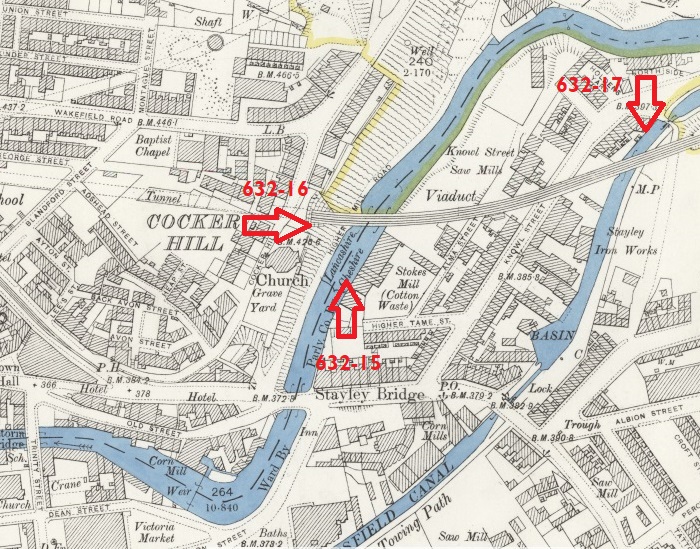
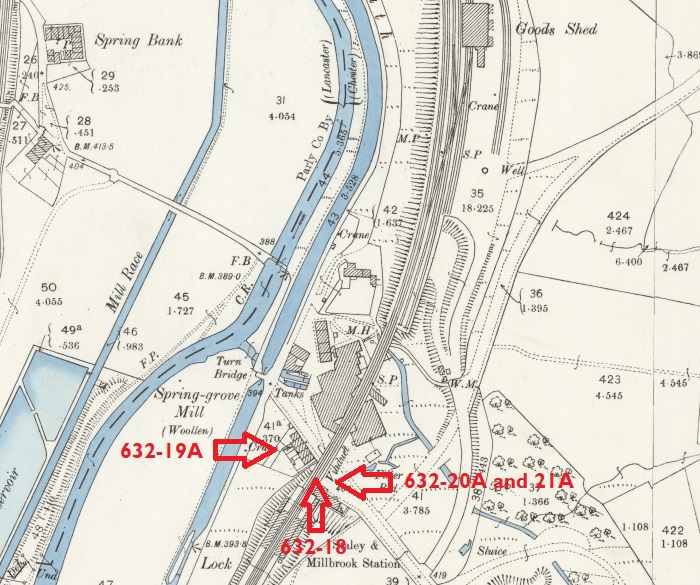
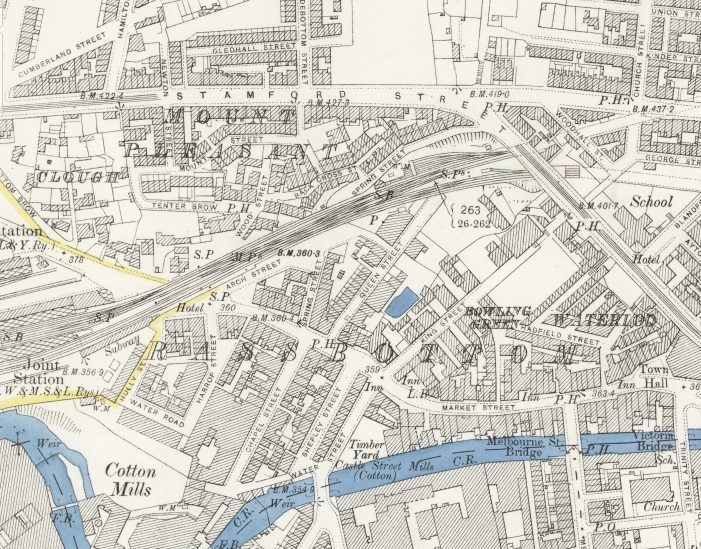
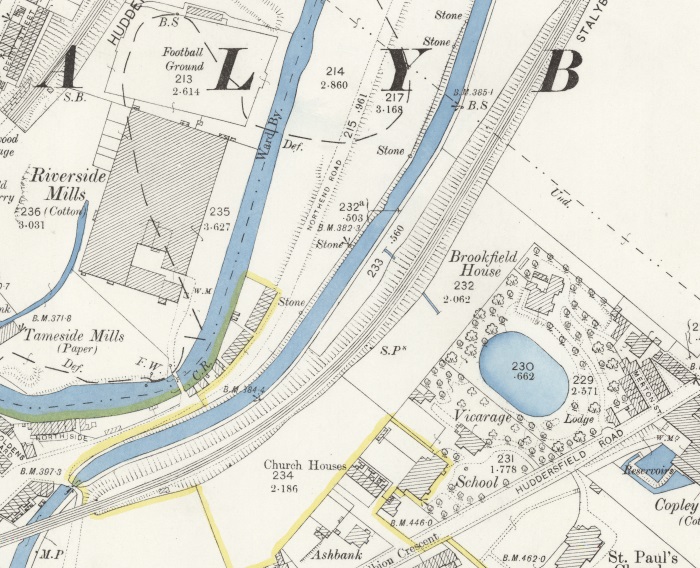
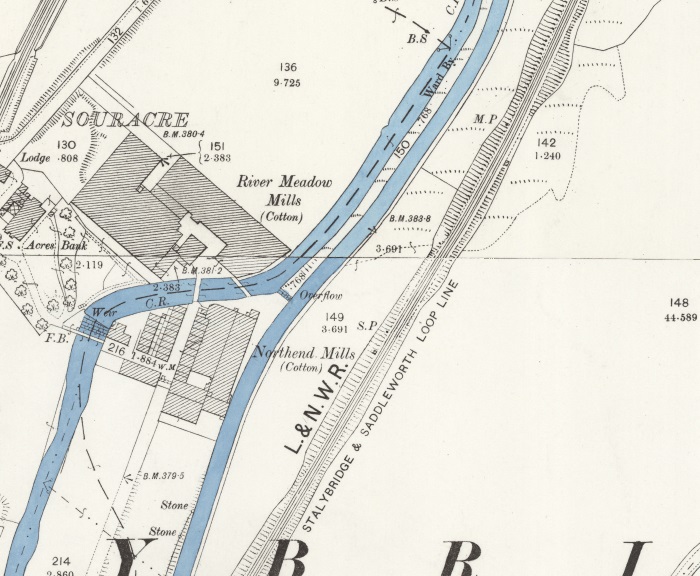
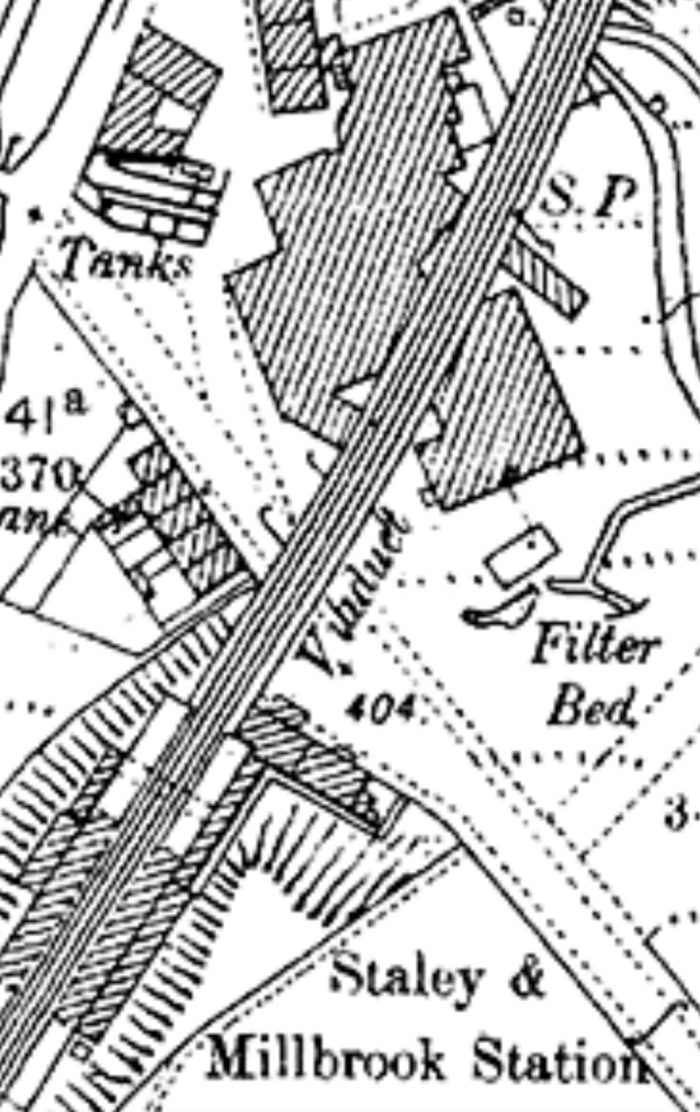
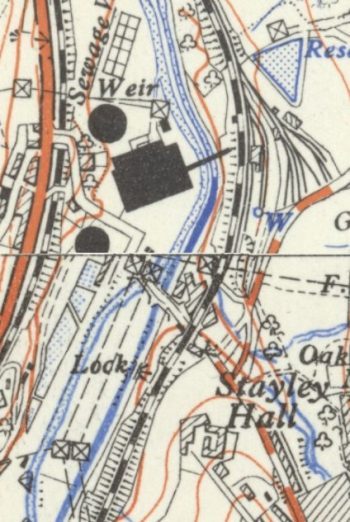
An extract from the 25″ OS Maps showing Woodend Mills and the probable location from which Keith Norgrove took the 1963 picture. [4]
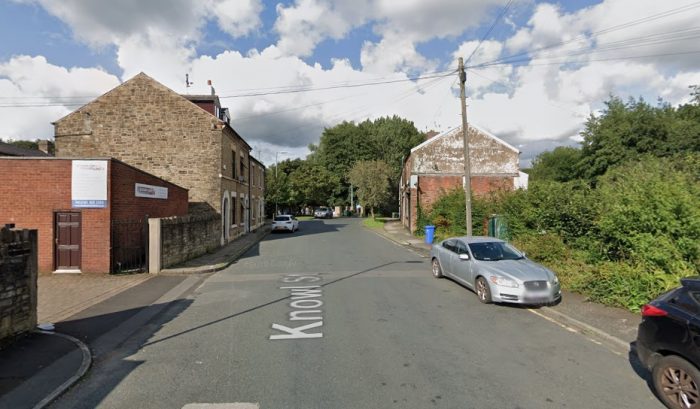
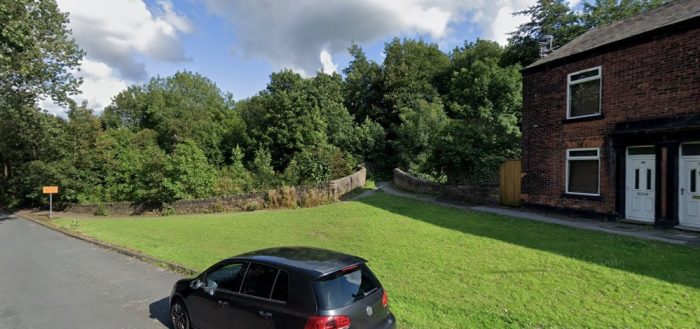
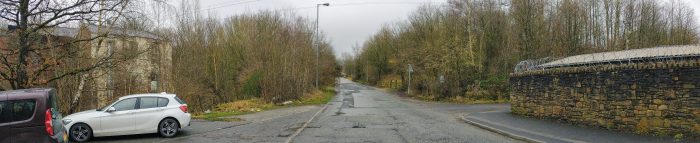
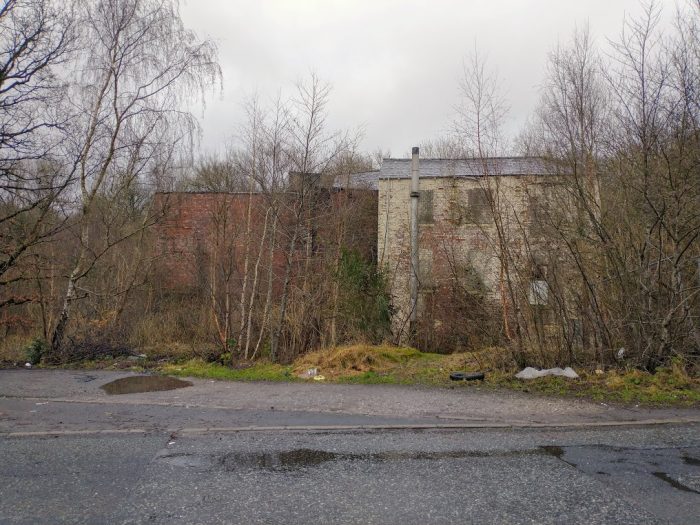
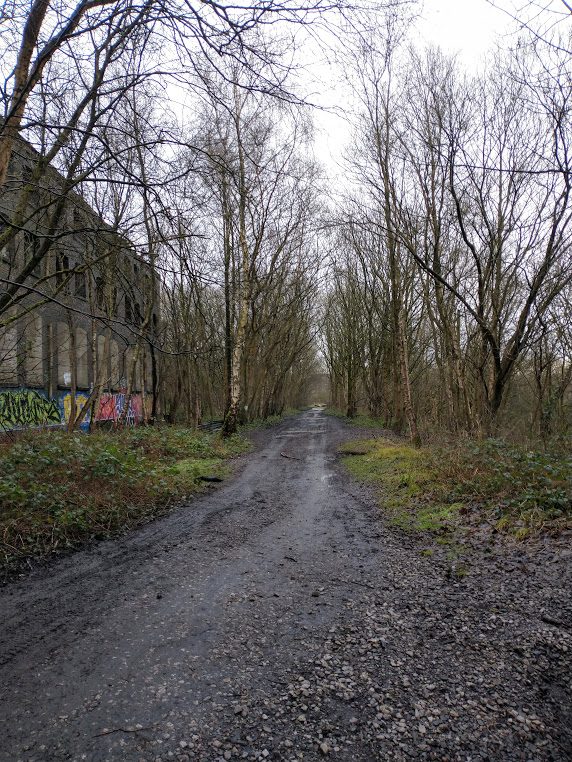
The lock adjacent to Woodend Mills. This picture is taken from a similar location to the one from 1963. The route of the Micklehurst Loop is hidden in the trees ahead. The Moor still looms large. [5]
Mossley Gas Works
Two additional pieces of information on the Gas Works:
First, from an email discussion forum
David Beilby on the IndustrailRailwaySociety@groups.io email discussion group quotes the following from a booklet on the inauguration of the new works by the Rt. Hon. The Earl of Derby K. G. on 22nd June 1931 about the Gas Works which feature in Part 3 of these articles about The Micklehurst Loop.
“The original gasworks was built by the Stalybridge Gas Company in 1862 and located alongside the canal. … In 1884 an agreement was made for the Corporation of Stalybridge and the Mossley Local Board to jointly purchase the company. The Mossley Local Board became Mossley Corporation when Mossley became a Borough in 1885 (and lost its status of being in three counties – Lancashire, Cheshire and Yorkshire). In addition to Mossley the works also supplied much of Saddleworth with gas as well. In 1925 the Borough’ Gas Engineer reported that the best way to improve the plant and increase output was to move to a new site, with rail access also removing the need to transport raw materials and by-products by road to Mossley station.” [6]
He also mentions that the booklet contains “details of a 2′-0” gauge line which was used to move excavated material from site to a central loading point whence it was conveyed by an “Breco” aerial ropeway to the tipping site, the ropeway being 720 yards long. The booklet notes that the railway was worked by petrol locomotives. No contractor is mentioned , despite many suppliers of equipment being acknowledged. It would seem the work was project managed in-house, certainly much of the design work is credited to the gas department.” [6]
“For information, the retorts were horizontal. … It was believed the cubic capacity of these retorts was the greatest in the world at the time. The works were, later, extended. This was anticipated at the design stage as the end wall of the retort house was built using corrugated asbestos.” [6]
“Wagons were unloaded using a rotary wagon tippler supplied by Messrs. Strachan and Henshaw of Bristol which had the patented “Whitehall” clamping mechanism.” [6]
Second from the Saddleworth Historical Society Bulletin
There is an article about the Gas Works in the Summer 1996 edition of the Saddleworth Historical Society Bulletin (Vol. 26, No. 2, p1-5). Sadly, the scanned .pdf of that edition of the bulletin on their website omits two of the 5 pages of the article. [7] The article is by Jeffrey Wells and includes a sketch plan of the Gas Works site. [7: p4]
Mossley Gas Works Sketch Plan, (c) Jeffrey Wells. [7: p4]
References
Keith Norgrove is a contributor to the RMWeb Forum under the pseudonym ‘Grovenor’. Keith’s two pictures (one of which is included here) were a response to my articles about the Micklehurst Loop on that Forum: https://www.rmweb.co.uk/community/index.php?/topic/161854-the-micklehurst-loop, accessed on 15th February 2021.
The Staley and Millbrook Goods Yard in the 21st century, (Google Maps).
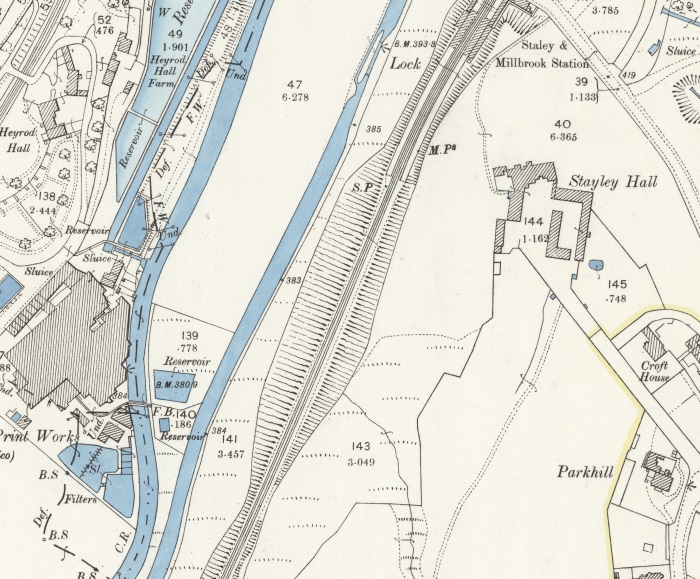
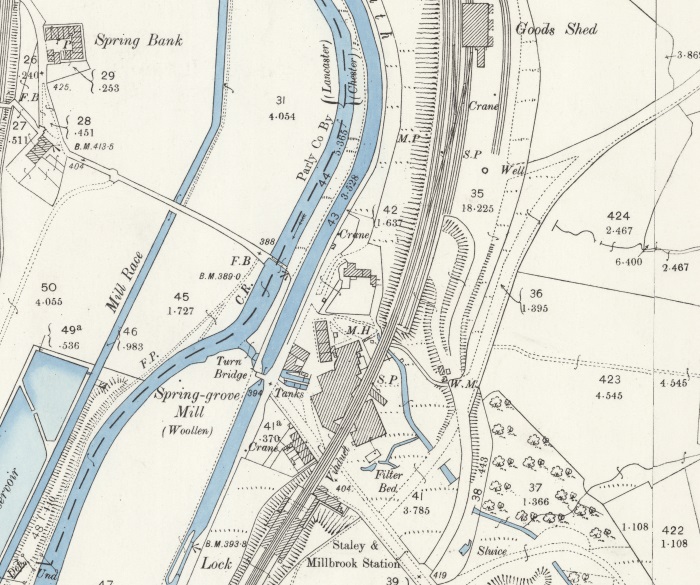
Since publishing the first three articles about the Micklehurst Loop. I have had a trickle feed of comments, particularly about the Staley and Millbrook Goods Yard. This short addendum to the first article seeks to bring those items together in one place. It is the fourth addendum to that first post. [1][2]
The adjacent satellite image extracted from Google Maps satellite images shows the Goods Yard and notes some of the key features still on the site in the 21st century. For more comments, please see the notes which follow.
I visited the site again on 5th March 2021 and wandered around among the trees for over an hour.
There is an excellent survey of the Staley and Millbrook Goods Yard and the Hartshead Power Station on the website http://www.28dayslater.co.uk. A number of superb photographs have been collated there. [7]
Further Images of BEA No. 2 0-4-0ST ‘BEANO’
Gerv Wright has kindly sent me two further images of BEA No. 2 0-4-0ST at the end of its working life in 1977 being prepared for and being transported off site. ‘Beano’ was its nickname!
BEA No 2, Jan 1977 (c) Gerv Wright. [3]
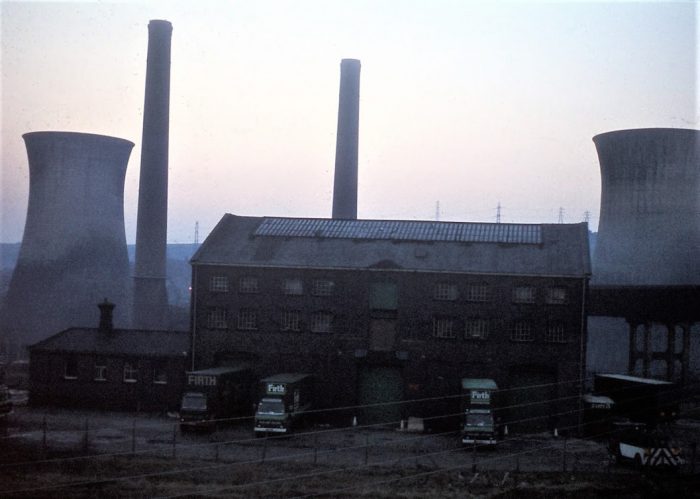
BEA No 2, Hartshead, Jan 1977 (c) Gerv Wright. Of additional interest in this picture is the backdrop. The view is taken from the Micklehurst end of the site In front of the good shed is the coal conveyor still apparently at its full extent. Also visible, to the left of the picture, is one of the lighting towers which feature later in this post. [3]
Yard Lights – Concrete Lighting Columns
An on-line acquaintance, Ben Hampson, sent me an image of the Goods Yard via a Facebook group, ‘The History of Mossley (Tameside)’. [4] That image is an excellent view across the site of the Goods Yard when it was still in use and shows three concrete lighting towers as well as the fireless loco in operation. At the back of the scene, the coal handling facilities, the conveyor and the goods shed can be seen peeking out of the gloom. Ben sourced that image via Gary Taylor on ‘The Real Mossley’ Facebook group. [10]
The Staley and Millbrook Goods Yard min operational days. Of interest are the lighting columns and the fireless locomotive, the goods shed, the coal handling facilities and the coal-conveyor, copyright unknown, sourced via Ben Hampson and Gary Taylor from ‘The Real Mossley’ Facebook Group. [11]
A visit to site on 6th March allowed me to see the three towers shown on the above image. These next three photographs were taken on 6th March. They show the towers and give an excellent idea of the appearance of the Yard in 2021!
This is tower No. 1 as identified on the satellite image at the start of this post. The small body of water can be made out immediately beyond the tower. (My photograph – 6th March 2021).
Tower No. 2 on the satellite image above. This photograph is taken from the top of the bank to the South east of the old yard and looks down on the Yard. (My photograph – 6th March 2021).
This photograph shows Tower No. 3 which is close to the remains of the engine shed. The photograph is again taken from the bank above the Yard, (My photograph – 6th March 2021).
The Engine Shed
Ben also asked why I had not included anything in previous posts about the Engine Shed which accommodated the two shunters which worked the site. My only excuse is that I walked past it without working out what it was. So, on 6th March a took a bit of time to pick it out and take photographs.
Reddit.com carries a monochrome photograph of the fireless loco exiting the engine shed, which appears to have been sourced from the Transport Library. I am not certain of the copyright position on this image, so was not planning to include it here, however, when I copy and paste the link it automatically embeds in this post. Clicking on the image takes you directly to the source. [6][8]
Hartshead Power Station owned two locomotives for shunting the yard accessed via the Micklehurst Loop, both are mentioned in the text above. I believe that the 0-4-0ST stands on one of the lanes giving access to the engine shed which is off this image to the left, (c) J. Sutherland. [9]
The next few images are pictures taken on 6th March 2021 which show the engine shed as it is is the 21st century.
This first panorama shows the site of the engine shed from the bank above the old Goods Yard close to the lighting tower (no. 3 above), (My photograph – 6th March 2021.
This second panorama shows the site of the engine shed from track-bed level, (My photograph – 6th March 2021).
A closer shot of the Engine Shed from track-bed level. The churned ground in the foreground is typical of much of the Goods Yard site, which appears to have been used recently as an off-road vehicle playground, (My photograph – 6th March 2021).
Demolition of the Chimneys and Cooling Towers at the Power Station.
A short section of the video below (from 15 minutes to 17 minutes into the video) shows the demolition of the Cooling Towers and Chimneys of Hartshead Power Station. [12]
A check on the copyright of these images on the J.W. Sutherland Collection Site (http://sutherland.davenportstation.org.uk) has been undertaken – they are free to use provided the photographer is credited.
I am indebted to Alan Young for a number of the images in these articles about the Micklehurst Loop. This is his drawing of the Loop which appears at the head of his article about the Loop on the ‘Disused Stations‘ website. It is used with his kind permission, (c) Alan Young. [7]
During January 2021, my wife and I walked the majority of the length of the Micklehurst Loop from Stalybridge to Diggle. This was the goods relieving line for the main Stalybridge to Huddersfield railway line. It had been hoped to alleviate congestion by making the mainline into a 4-track railway but the geography mitigated against this and a route on the other side of the Tame Valley was chosen instead.
The maps used in this sequence of articles are predominantly 25″ OS Maps from 1896 through to 1922 and have been sourced from the National Library of Scotland. [1] There are a number of websites which focus on the Loop which are excellent. The sites concerned are noted immediately below and the relevant link can be found in the references section of this page or by clicking on the highlighted text here:
The most detailed treatment of the line and its stations can be found on the Disused Stations – Site Records website. The particular pages on that site which cover the Loop were provided by Alan Young. One page covers the route and pages covering each of the stations can be accessed from that page. [7]
Particularly good for old photographs of the Loop is the Table 38 webpage about the railway. [9]
The first articles about the Micklehurst Loop can be found at:
There is a series of three addenda to the first of those two articles which include a series of photographs relating to the first part of the line from the 1950s, 1960s, 1970s, 1980s and 1990s. These can be found on the following links:
In my perambulations around the internet, I have also encountered a series of videos (on YouTube) which start from the Northern end of the line. 5 videos cover the length of the line in 2020 and a separate video covers some of the structures on the line. These videos are easily available on YouTube. This is the first [3] in the series:
Part 3 – Micklehurst Station to Chew Valley Road, Greenfield
We continue our journey travelling North along the Micklehurst Loop. We start from the site of Micklehurst Station. Our first picture shows the view back along the line that we have already travelled from close to the southern wall of the Micklehurst Station House. It looks back through the line of Micklehurst Viaduct.
A 21st century view South the location of Micklehurst Passenger Station, taking in the location of the Micklehurst Viaduct. The old line is shown approximately by the red line. We are standing next to the pavement on Station Road and Cheshire Street can be seen in the far distance. (My photograph, 22nd January 2021.)
An extract from Britain from Above’s image EAW010809. [2]
Our second image shows an aerial view of the line ahead in 1947,stretching away in the distance to the Royal George Tunnel. Micklehurst Passenger Station building can be seen to the right of the viaduct in the bottom-right of the image.
The next image shows that building in January 2021. The canopy that graced the lower portion of the building (the ticket office) was gone even as early as the late 1940s.
Protected by a five-bar gate immediately adjacent to the Station building, the linear walkway following the line recommences. We had to leave it further South as the Micklehurst Goods Yard is in private hands.
The passenger station building is also in private hands. The platforms were not adjacent to the station building as the railway was still on viaduct as it passed the back of the station house. A covered ramp led up towards wooden platforms a little distance to the North of the Station building. They were located in the position pointed to by the top of the chimney in the adjacent aerial image. Over a few tens of yards, the modern path rises from the road level to track-bed level and then levels out to follow the track-bed.Micklehurst Station Building in January 2021. (My photograph 22nd January 2021.)
The railway walk continues. (My photograph, 22nd January 2021.)
The information board at the five-bar gate. (My photograph, 22nd January 2020.)
Looking back to the South along the back of the Station building towards Stalybridge. Note the blue brick construction of the back wall which would have been hidden by the Viaduct Wall. (My photograph, 22nd January 2021.)
The 25″ OS Map from the turn of the 20th century again. The station building just creeps into this extract on its bottom edge, the station platforms and shelters are shown. The line is curving to the Northeast through the platforms. Visible on the top-right of the extract is the accommodation bridge which carried a lane from Bottom Mossley to Micklehurst. [1]
A satellite image of the same area as in the 25″ Ordnance Survey Map in the 21st century. (Google Maps)
The next few images focus on the bridge shown in the top-right of the map extract above. The first comes from the aerial image above. [2]
The lane carried by the bridge has the name Winterford Road on the adjacent satellite image.
As can be seen in the pictures below, the bridge was constructed in blue engineering brick, like many of the structures and buildings on the Mickelhurst Loop.
The first picture shows the bridge at the time the Micklehurst Estate was being built after the Second World War.
The Micklehurst estate was under construction when this 1947 picture was taken. [2]
The same structure approached from the South in January 2021, (My photograph, 22nd January 2021).
Continuing to approach the bridge, (My photograph, 22nd January 2021).
South Elevation of Bridge, (My photograph, 22nd January 2021).
Northern Elevation of the bridge, (My photograph, 22nd January 2021).
If you plan to walk the route, it is worth knowing that there is an Allotment Café beyond the Mills which are encountered if you walk down Winterford Road towards the River Tame and the Huddersfield Narrow Canal. The Mills are shown on the next OS Map extract below. By the turn of the 20th century, Cheshire Side Mill was disused but Carrhill and Woodend Mills were active.
25″ OS Map Extract from the turn of the 20th century. [1]
Cheshire Side Mill had by 1916 been replaces by Milton Mill (25″ OS Map drafted in 1916, published in 1922. [12]
Cheshire Side Mill – was disused at the time the 1898 25″ OS Map was being drafted. However, by 1916 it had been replaced by Milton Mill
Carrhill Mills – were owned in 1891 by Nathaniel Buckley and Sons, and had 84,600 spindles. [4][5: p117]
Woodend Mills – were built by 1848 by Robert Hyde Buckley, close to his father’s mills. [8] These buildings made up an integrated cotton mill, built in several phases. Historic England say that they are “a near complete example of a first generation integrated cotton mill site, where both weaving and spinning processes were planned from the outset. Before this the two processes had been done on separate sites.” [6]
Milton Mill – was actually built in 1892 but did not feature on the 1898 OS 25″ Map but was included on the following series as the small extract above shows. The Architects were A H Stott & Sons and the mill was built for the Milton Spinning Co. Ltd. [11][5: p118]
The layout of the mills as seen in 1947 from the air to the South. Winterford Road Bridge is on the right of the image. [2]
The area of Woodend in the 21st century, (Google Maps).
A lane used to run from the point where Winterford Road meets the Canal running in just North of an easterly direction. It was given the name Winterford Lane. It can just about be picked out among the trees in the satellite image above. It crossed the Micklehurst Loop on a bridge which has all but been erased from the map in the 21st century. It can be seen on the next aerial image extract in the top-right corner. Unlike its near neighbour the Winterford Lane Bridge has not survived, probably because it was a girder bridge rather than an arch.
Accommodation bridges over the line at Winterford on the north side of Micklehurst. [2]
Man marking Ordnance Survey minor control revision point on the parapet corner of the first bridge North of Micklehurst Station – Winterford Road Bridge. Winterford Lane Bridge can be seen beyond, (c) Manchester Libraries. [24]
This photograph shows the location where the modern footpath which follows the line of Winterford Lane meets the track-bed of the Loop line. (My photograph, 22nd January 2021.)
Beyond Winterford Lane, the Loop line curved gradually back to the North before encountering another accommodation bridge.
The images immediately below show that length of the track-bed in January 2021.
The line then began another gentle curve towards the Northeast. and passed under a series of three structures. First an arch bridge of similar construction to the first bridge out of Micklehurst Station. Then a footbridge spanning the two track mainline and then a longer footbridge which spanned the running lines and the Gas Works sidings.
Looking North from the point that Winterford Lane crossed the Loop Line. (My photograph, 22nd January 2021.)
A little further North. (My photograph, 22nd January 2021)
An extract from the 25″ OS Map series from the 1920s. which shows Roughtown which sat on the valley side above the river to the West and Woodend in the Valley floor. Both the original mainline and the Micklehurst Loop can be seen. Stamford Mill sits at the centre of the extract. [1]
The same area as in the 25″ OS Map extract above. Stamford Mill has been replaced by Roughtown Court. The track-be of the Loop is marked with the read line. (Google Maps.)
Stamford Mill and Roughtown Mill as they appear on image EAW010809 from the Britain From Above website. [2]
Both Stamford Mill and Roughtown Mill were built and owned by Robert Hyde Buckley (c1813-1867) who was the youngest son of Nathaniel Buckley. [14]
The next map extract shows the two railway lines with Roaches Bridge in the bottom left quadrant and two further mills:
Bank Mill – which was owned by Nathan Meanock, Grace’s Guide tells us that it had 13,500 spindles, 128/328 twist and that pay day was the second Wednesday; [16] and
Union Mill – which was owned by Hilton and Hopkins and had 12,000 spindles, 3011/40′ twist and the same pay day. [16]
All three of the bridges mentioned in the text above no longer exist. The Mills here have gone and Mossley Gas Works are also long-gone, swept way after the change from Town Gas to North Sea Gas with the development of those offshore Gas fields.
A 25″ OS Map extract from 1894 which shows the location of the Roaches, Bank Mill and Union MIll. [15]
The same area in the 21st century, (Google Maps).The two bridges over the Loop which can be seen on the OS Map extract are no longer visible in the 21st century. One was substantial enough to provide farm access across the Loop, the other was a footbridge.
Not too far Northeast of Roaches Bridge (where the Roaches pub sits in the 21st century), was the site of Mossley Gas Works. The area was still known as the Roaches but the pub beside the Canal Bridge was (and is) the Tollmache Arms. The first map extract below comes from the late 1800s. At that time the Gas Works occupied a single site to the West of Manchester Road between it and the River Tame.
25″ OS Map extract from the end of the 1800s. The Gas Works occupies only one site at this time and no sidings are provided on the Micklehurst Loop. [15]
An extract from the OS 1:10,560 series maps of the 1950s. The Gas Works have by this time reached their full extent and the sidings are shown on the Micklehurst Loop as well. [17]
The same area in the 21st Century, (Google Maps).
Spring Mill was owned by Buckley and Lees, Grace’s Guide says that it had 46,000 spindles, 30’/50′ twist. [16] It was positioned on the North side of the original Gas Works site as can be seen in the two map extracts above.
Mossley Gas Works – were first established in 1829 at Micklehurst, they belonged to the Stalybridge Gas Co. Ltd. In 1884, an agreement was made between Stalybridge Corporation and The Local Board of Mossley for the purchase of the Stalybridge Gas Co. and in 1885 the undertaking was divided between the two authorities and run jointly. [18]
By 1925 however, the works were too small and inefficient to satisfy demand and proposals were made for a new gasworks to supply Mossley Corporation. Objections were raised by Saddleworth UDC but were rejected in the House of Lords. The new site was at Roaches and required a great deal of leveling and alteration before the works could be built. The works at Roaches opened in 1931. In 1934 Mossley Corporation sold the undertaking to the newly formed Mossley and Saddleworth Gas Co Ltd. which was then absorbed by the holding company Gas Consolidation Ltd (Severn Valley Gas Corporation Ltd and Palatine Gas Corporation Ltd). In 1949, the undertaking vested in the North Cheshire Group of the NWGB. [18]
The opening ceremony in 1931 took place on 22nd June. The Works were inaugurated by the Rt. Hon. The Earl of Derby, K. G. [19]
A further enlarged extract from EAW010809 from the Britain From Above website. This shows the three bridges on the Micklehurst Loop alongside Mossley Gas Works and before the Line entered the Royal George Tunnel. [2]
Man marking Ordnance Survey minor control revision point with an arrow on the bridge parapet of the bluebrick bridge across the line which appears in the aerial image above. The Gas Works can be seen in the distance beyond the fragile looking footbridge in the nearer distance, (c) Manchster Libraries.[23]
An extract from photograph EAW035919 from Britain From Above website. This view looks from the Northwest across the top of Mossley Gas Works and the Gas Works sidings towards the Micklehurst Loop Line. The three bridges referred to above are evident over the line as it enters the picture in the top-right coming from Micklehurst. Note the small engine shed towards the top-right of the image, (c) Britain From Above. [13]
We have already established that all three of the bridges mentioned in the text above and shown in the images above no longer exist. These aerial images of the Gas Works are intriguing. A lot of detail can be picked out. The image focusses specifically on the Gas Works.
An extract from another photograph (EAW035924) from the Britain From Above website. This image focusses on Mossley Gas Works. [10]
This first extract shows the Gas Works Locomotive maneuvering wagons under the coal lift at the plant. [10]
The Gas Works were located North of Mossley along the Tame Valley and situated on either side of both the Huddersfield Narrow Canal and Manchester Road. The site was bounded on the West by the River Tame. Closer inspection of this image is feasible with membership of the Britain From Above Website. Although a little blurred it is possible to focus-in enough (as can be seen in the adjacent image) to be able to observe the Works Saddle Tank Locomotive at work placing wagons beneath the coal lift. In the extract immediately below two different types of tank wagon are visible, there are plenty of private owner wagons. Of interest too, is the complexity of the internal point-work – a double-slip takes centre stage in this image. The boundary fence between the Micklehurst Loop and the private coal sidings of the Gas Works can also be seen.
Another extract shows some interesting detail. The site boundary can be picked out, a double slip is visible on the internal Works railway and, in 1951, plenty of private owner wagons and two different types of tank wagon. [10]
I believe that the Gas Works Loco was an 0-4-0 ST locomotive but I was unable to find any details or pictures beyond the glimpse visible in the aerial photograph above. David Beilby on the IndustrailRailwaySociety@groups.io site says: “My father worked there and I remember the loco well – being a small green saddle tank it inevitably got nicknamed “Percy” by a youngster such as myself. In fact it was a Peckett 0-4-0ST named “Roaches”, works no 1822 of 1930.” [42]
Photograph EAW058239 from the Britain From Above Website, shows the Gas Works site from the West with the River Tame in the foreground. [20]
The next feature on the Micklehurst Loop after Mossley Gas Works was the Royal George Tunnel. Both the next images are taken from the same photograph on the Britain from Above Website. [21]
The Southern Portal of the Royal George Tunnel on the Micklehurst Loop was very close to the Gas Works. [21]
The Royal George Tunnel Southern Portal – the portal and Wingwalls were made of blue engineering brick, like other structures on the Line. [21]
Looking towards the location of the Royal George Tunnel Portal from a point alongside the location of the old Gas Works. The path climbs from the cutting floor at track-bed level up to meet Huddersfield Road ahead. (Photograph by Joanna Farnworth on 15th January 2021.)
This picture gives a better impression of the level difference. It is taken from close to Huddersfield Road and looks back towards Micklehurst. (My photograph, 15th January 2021.)
The Royal George Tunnel was named for the pub which stood over it at the junction between Manchester Road (A635) and Huddersfield Road/Well-i-Hole Road (B6175). The tunnel was 140 yards (128 metres) long. Immediately at its Northeastern end, the A635 was carried over the Line on a simply supported span.
A further extract from the OS 1:10,560 series maps of the 1950s. The Royal George Pub and Tunnel are in the bottom left of the extract. The Goods Shed which features towards the top right was Friezland Goods Shed. [17]
The same location on the 25″ OS Map series from the middle of the 20th century. [22]
The same location in the 21st century. This time it is a satellite image. With the closure of the line it was possible to realign the A635 to remove the tight bends which kept it close to the tunnel mouth. (Google Maps.)
Just to the North of the Loop, on the West side of Well-i-Hole Road close to the farm was Royal George Mill. It belonged to R R Whitehead and Brothers Limited. They traced their origins back to the seventeenth century, when their farming ancestors began to act as woollen merchants. In 1822, William Whitehead joined his brothers, John Dicken and Edward at Oak View Mill, also in Greenfield. In 1837, William’s four sons, Ralph Radcliffe, James Heywood, Francis Frederick and John Dicken, established a partnership under the name of R R Whitehead and Brothers to carry on business as woollen manufacturers and general traders and moved into the Royal George Mills, Greenfield. [32]
They specialised in the production of felts produced from wool, and also in the manufacture of flags. In 1932, they became part of Porritts and Spencer of Bury, who were, in turn, taken over by the Scapa Group in 1969. In 1980, further amalgamation took place with Bury Masco Industries and Cooper and Company, both of Brynmawr, South Wales. These concerns later closed. During the twentieth century, the Royal George Mills specialised in producing two types of felt; Taper Hammer Felt and Technical Felt. Taper Hammer Felt was used on the hammers in pianos, and the Royal George Mills were renowned for it throughout the world, exporting to Japan, Korea, China and Germany. Technical Felt was used throughout industry in a wide range of machinery. Work at the Royal George Mills gradually decreased throughout the 1990s and they finally closed in 1999. The site has been developed into housing by Wiggett Homes. [32]
A view from the East on the A635. Man marking Ordnance Survey minor control revision point with an arrow on the corner of the parapet of the bridge which took the A635 over the Micklehurst Loop. In this image the road bridge can be seen crossing the railway just in front of the higher tunnel portal parapet. The Royal George Inn is in the background, (c) Manchester Libraries. [24]
An enlarged extract from the 25″ OS Map above which shows the arrangement of the tunnel portal and the road bridge at the Royal George Inn junction. [22]
Looking South from the bridge over the path to Manchester Road. both this and the next picture are taken at the subway to the East of the Royal George Inn junction, (c) Manchester Libraries. [25]
Looking North from the bridge over the path to Manchester Road, (c) Manchester Libraries. [26]
25″ OS Map extract from 1950s. [22]
The two photographs above are taken at the East end of the parapets of the subway bridge shown in the top-right of the adjacent 25″ OS Map extract. [22]
On the South side of the Loop Line and also of Manchester Road was Dacres Hall.The hall is a former working farm, the vicarage of Bartholomew Dacre, who was vicar of St George’s Church in Mossley. He had to make a living from the farm since his stipend wasn’t nearly enough to keep his family. Years later, a local industrialist and self-taught amateur architect, Tom Shaw, acquired the property and the hall came into being. [33]
Just a short distance further along the Micklehhurst Loop and Manhester Road from the entrance to Dacres Hall was the Friezland Goods yard and Goods Shed/Warehouse. The next few pictures focus on that site.
Man marking Ordnance Survey minor control revision point with an arrow on Manchester Road (A635) in Friezland. In the background, Friezland Goods Shed appears out of the mist, (c) Manchester Libraries. [27]
A 21st century view of the location of Micklehurst Goods warehouse from a similar position to the image immediately above (15th August 2015, Google Streetview). The site is now occupied by the Oldham & District Riding Club’s Friezland Arena.
Man marking Ordnance Survey minor control revision point a little further to the East on the A635, (c) Manchester Libraries. [28]
Friezland, railway goods warehouse. The photograph is taken looking from the West at the NorthWest corner of the Goods Shed, (c) Manchester Libraries. [29]
Man marking Ordnance Survey minor control revision point close to Friezland Goods Shed. The picture is taken looking to the West from a point directly opposite the Goods Shed along the North side of the MIcklehurst Loop. The signal box is visible in the middle-distance, (c) Manchester Libraries. [30]
Passing the location of Friezland Goods Yard on 22nd January 2021. (My photograph.)
Following the track-bed of the mainline of the old Micklehurst Loop as it ran alongside the Friezland Goods Yard. (My photograph, 22nd January 2021).
These next two pictures were taken on 22nd January 2021 as we walked away from the Royal Goerge Inn along the old line. They must be at approximately the location of the old Goods Yard.
We passed the Oldham & District Riding Club’s Friezland Arena on our right.
it was not far beyond this point that we had to leave the old track-bed as it would have sat on the now demolished Friezland Viaduct.
Off to the left of these pictures, the River Tame swings closer to the route of the line and sits almost immediately next to the Viaduct ahead, before swinging away once more to its confluence with Greenfield (or Chew) Brook.
The Hudderfield Narrow Canal which once followed the route of the old Loop Line very closely has been carried over the line of the River Tame on an Aqueduct to the West of The Royal George Inn and now follows the Northern flank of the Tame Valley running close to Friezland Church and then on into Uppermill beneath, first the B6175 and then the A6051 (Chapel Road).
Not much further East of Greenfield Station on the mainline, the Canal passes to the North side of Frenches Wharf Marina.
25″ OS Map extract which shows the Good Shed, Viaduct and Station at Friezland in the 1950s. [31]
This satellite image shows the same area in the 21st century. The redline is an approximation to the route of the Loop, (Google Maps)
Dacres (or Friezland) viaduct on the Micklehurst Loop line, demolished at the end of 1970. The footbridge in the distance is at Friezland station. Although the station closed in 1917 the building (obscured by the telegraph pole) still stands in 2020, (c) Manchester Libraries.[35]
This picture shows the Southwest parapet pilaster of the Friezland Viaduct. The image immediately above shows the Northwest pilaster of the Viaduct. The building in the distance is the passenger station building at Friezland Station, (c) Manchester Libraries. [36]
The public footpath dropped off the embankment of the old railway and followed the valley floor, meeting Waters Edge and Croft Edge before crossing Greenbridge Lane (Google Streetview.)
The footpath following the old line crossed Greenbridge Lane at road level and then continued along the path visible ahead which probably is below what was the platforms of Friezland Station. (Google Streetview.)
Man marking Ordnance Survey minor control revision point with an arrow on Friezland Viaduct. This picture is taken close to the Northeast pilaster at the end of the viaduct parapet and shows the location of Friezland Station in the 1950s. The station house still stands, as does the footbridge but it appears that the platforms have been removed, (c) Manchester Libraries. [37]
Man marking Ordnance Survey minor control revision point with an arrow on the Southeast pilaster of Friezland Viaduct. The photograph is taken looking along the Loop Line to the West, (c) Manchester Libraries. [38]
A 25″ OS Map extract from the 1950s shows the length of the old line from Friezland Station to Chew Valley Road. [44]
The same area in a satellite image in the 21st century. Friezland Passenger Station still stands, much altered, as a private home. It can be seen just below the red line at the bottom left of the image. (Google Maps.)
Friezland Railway Station building. (Google Maps.)
The adjacent image shows Friezland Station Building from above. It is in private hands and has been altered significantly. The facia’s have been painted. Alan Young has photographs of the building on the Disused Stations Website which were taken in 2015. [34]
There was a viaduct at each end of Friezland Station as the image below shows. Friezland Viaduct, of twelve brick arches and 187 yards long, was to the West of the Station. Greenfield Viaduct was longer, it was a 16 brick-arch viaduct of 242 yards length with a large span over Chew Brook. Very soon after leaving the Greenfield Viaduct trains would have crossed another arch bridge of brick constriction which spanned Chew Valley Road. [43]
Friezland Station sat between two viaducts. In this view from across the Tame Valley the erstwhile Friezland Viaduct can be seen on the right. The Greenfield Viaduct creeps onto the left of the picture. The wooden platforms and shelters of the Station are at the centre of the image. This image is included here courtesy of Alan Young. He comments: “Looking south-east towards Friezland station from a point close to Greenfield station c1910. Friezland station is seen between Friezland Viaduct (right) and Greenfield Viaduct (left), with the rear of the down platform shown clearly. The waiting room block and down platform are both constructed of timber. The footbridge connecting the platforms is visible in front of the station building, which adjoins the up platform. It is assumed that this platform was also of timber construction, like all others on the Micklehurst Loop. Left of the station, the large building with the chimneystack is Haybottom’s bleaching mill. The desolate heights of Saddleworth Moor provide a dramatic backdrop.” The photograph comes from the Peter Fox ‘Old Saddleworth’ collection. [34]
There were three mills close to the Micklehurst Loop, situated either side of Chew Brook. Haybottom’s Mill, Bentfield Mill and Andrew Mill.
Haybottom’s Mill – was a bleaching mill. It was immediately adjacent to Friezland Station. I have not been able to find any further details about the mill.
Bentfield Mill – was at different times a cotton mill and a woolen mill. Notes: Built originally at as a woolen mill in around 1790, it was rebuilt as a Cotton Mill by Robinson Brothers in 1868. It reverted to wool in 1892. Chew Brook Drive and its housing is built on the site.
Andrew Mill – appears on the 6″ OS Map extract below. I have not been able to find any further details about the mill.
An extract from the 6″ OS Map published in 1909. [45]
Man marking Ordnance Survey minor control revision point with an arrow on what I believe is Greenbridge Lane on the North side of Greenfield Viaduct (confusingly identified as ‘Friezland Viaduct’ on OS plans) looking to the West, (c) Manchester Libraries. [39]In this image, also used here courtesy of Alan Young, we are looking north-east circa 1906 towards Greenfield Viaduct (confusingly identified as ‘Friezland Viaduct’ on OS plans) on the Micklehurst Loop (between Uppermill and Friezland stations). The Mill which can be seen behind the Viaduct is Bentfield Mill, a cotton and woolen mill. The photograph again comes from the Peter Fox ‘Old Saddleworth’ collection. [34]
Man marking Ordnance Survey minor control revision point with an arrow on Chew Valley Road in Greenfield. The photograph looks Southeast along the Northern pavement of the road with the arch-bridge which carried the Micklehurst Loop visible in the background, (c) Manchester Libraries. [40]
Corner of Greenfield Conservative Club, converted to housing in 2019. The bridge visible carries the Micklehurst Loop line over Chew Valley Road. This view is also looking to the South east but on the opposite side of Chew Valley Road, (c) Manchester Libraries. [41]
Greenfield Viaduct. [46]
We finish this length of the Micklehurst Loop at Chew Valley Road in Greenfield.
In concluding, we see a couple of older postcard images of Greenfield Viaduct, the second of which looks along Chew Valley Road towards the Southeast, and a 21st century Google Streetview image of the point at which the Loop crossed Chew Valley Road.
Old Postcard Image looking along Chew Valley Road to the Southeast. Greenfield Viaduct appears on the right side of the image, there is then a short section of embankment before the arched bridge over Chew Valley Road. Bentfield Mill sits behind the Viaduct. [47]
Chew Valley Road at the point where the Micklehurst Loop crossed the road by means of an arched bridge. The trees sit where the bridge abutments once sat! (Google Streetview.)
I am indebted to Alan Young for a number of the images in these articles about the Micklehurst Loop. This is his drawing of the Loop which appears at the head of his article about the Loop on the ‘Disused Stations‘ website. It is used with his kind permission, (c) Alan Young. [7]
During January 2021, my wife and I walked the majority of the length of the Micklehurst Loop from Stalybridge to Diggle. This was the goods relieving line for the main Stalybridge to Huddersfield railway line. It had been hoped to alleviate congestion by making the mainline into a 4-track railway but the geography mitigated against this and a route on the other side of the Tame Valley was chosen instead.
The maps used in this sequence of articles are predominantly 25″ OS Maps from 1896 through to 1922 and have been sourced from the National Library of Scotland. [1] There are a number of websites which focus on the Loop which are excellent. The sites concerned are noted immediately below and the relevant link can be found in the references section of this page or by clicking on the highlighted text here:
The most detailed treatment of the line and its stations can be found on the Disused Stations – Site Records website. The particular pages on that site which cover the Loop were provided by Alan Young. One page covers the route and pages covering each of the stations can be accessed from that page. [7]
Particularly good for old photographs of the Loop is the Table 38 webpage about the railway. [12]
The first article about the Micklehurst Loop can be found at:
There is a series of three addenda to that first article which include a series of photographs relating to the first part of the line from the 1950s, 1960s, 1970s, 1980s and 1990s. These can be found on the following links:
Part 2 – Staley & Millbrook Goods Yard to Micklehurst Station
We continue our journey North along the Micklehurst Loop. We start from the Staley and Millbrook Goods Shed which is still standing and which is covered in the articles above. The old loop is still closely following the River Tame and the Huddersfield Narrow Canal. On the map extract below the original Staybridge to Huddersfield line can be seen on the left of the map extract.
An early 25″ OS Map Extract showing the length of the Loop immediately North of the Staley and Millbrook Goods Shed. [1]
The next map extract is from the 1:25,000 OS Map series and was published in 1951. It shows the Power Station and the much extended railway sidings.
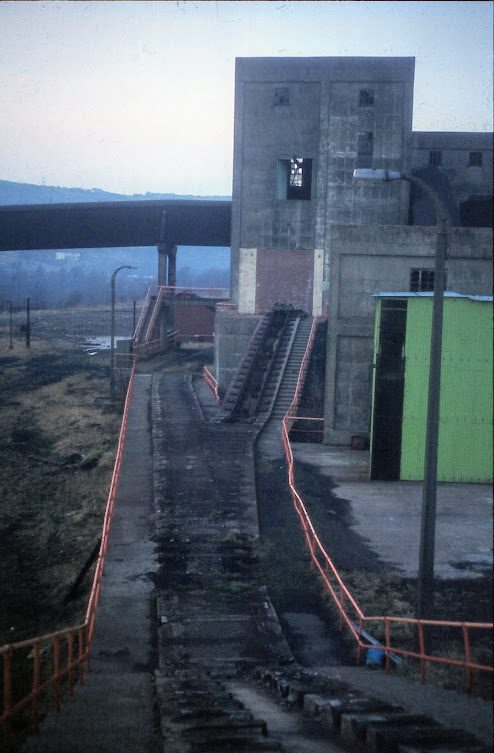
Map extract from the 1:25,000 OS Map series which was published in 1951. The earliest arrangement for coal transfer which bridged the canal and river and stopped to the West pf the Loop is shown. Built later and at a higher level a conveyor bridge spanned across the sidings and the river and canal, extending to coal transfer faculties which were constructed on the Northeast side of the sidings. The map extract below shows the new arrangements. There are photographs of the location taken soon after closure on this link:: https://rogerfarnworth.com/2021/02/05/the-micklehurst-loop-part-1a. [2]
An extract from the 1964-65 1: 1,250 OS map. This shows the coal transfer facilities at their fullest extent. This is an extract from an image on the Disused Stations Website and is used here with the kind permission of Alan Young. [3]
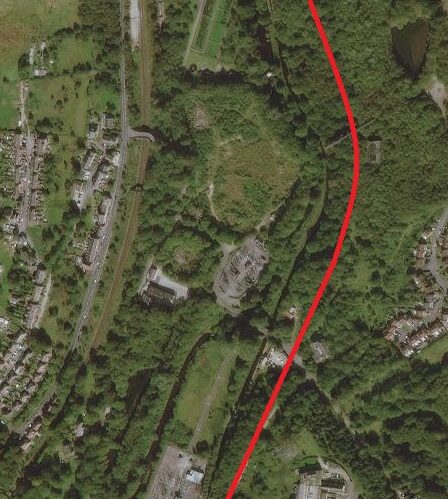
The satellite image below shows the same area in the 21st century – woodland has encroached into the area around the goods shed to the South of extract. One remaining length of the coal transfer conveyer bridge has also remained in place, and can be seen immediately to the Northwest of the shell of the goods shed. The remainder of the coal transfer facilities have been removed.
Google Maps satellite image (21st century).
A long-distance view of the goods shed and coal conveyor taken from the footway on Wakefield Road, (My photograph 21st February 2021).
Two telephoto views of the coal conveyor and goods shed, taken from Wakefield Road on the West side of the Tame Valley, (My photographs, 21st February 2021).
The view South from alongside the Good Shed in 2021shows how much the woodland has encroached around the Goods Shed in the years since closure. (My Photograph, 18th January 2021).
The view North from the same point, looking along what was the old track-bed (My photograph, 18th January 2021).
The satellite image, a few images above, shows the alignment of the old railway in red with the relative locations of the remaining span of the coal conveyor and the shell of the goods shed.
Underfoot the ground along the track alignment was in parts waterlogged but we managed to follow it Northwards in January 2021. A couple of images of the site from January 2021 show just how much the woodland has encroached across the site. These pictures were taken on my mobile phone camera.
Heading North from Staley & Millbrook Goods Shed, the old Loop line curved gradually round following the contours of the East side of the Tame Valley. It first curved a little to the West before swinging back to the Northeast.
Opposite Black Rock on the West side of the Tame Valley, there was an accommodation bridge carrying a lane above the Loop. It can be seen towards the bottom of the first OS Map extract below. It appears to have given access to the land between the Loop and the Canal. It appears close to the lettering “Crows i’th’ Wood.”
The accommodation bridge appears on both map extracts below but seems no longer to be in place in the 21st century.
We walked along this section of the line and found no evidence of the bridge or its abutments.
25″ OS Map extract showing the accommodation bridge just to the Northwest of the ‘Crows i’th’ Wood’ lettering. [1]
An extract from the 1:25,000 OS Series maps published in 1951. The accommodation bridge shows up more obviously on this extract. [2]
Google Maps Satellite Images extract (21st century).
Slightly further up the Tame Valley there were two Cotton Mills – Weir Mill and Scout Mill – both sat on the West bank of the river. Adjacent to Scout Mill was the hamlet of Scout just a short series of terraced houses also sitting on the West bank of the River Tame. Two tunnels were named after the hamlet, one on the main Stalybridge to Huddersfield Line, the other took the Huddersfield Narrow Canal under an outcrop which was used as a quarry. The Micklehurst Loop sat away to the East and after passing under an accommodation bridge curved round through a cutting. That bridge can be seen at the bottom of the map extract below.
25″ OS Map extract. [1]The South facing elevation of the accommodation bridge across the valley from Weir Mill, (My photograph).The same bridge looking from the North (My photograph).The Loop remained in cutting for some distance North of the accommodation bridge (Photograph – Jo Farnworth)
After the length of cutting the line passed onto an embankment for a short distance before crossing a lane which shows up most clearly on the 1:25,000 Map extract below. The line continued Northeast on embankment.
An extract from the 1:25,000 OS Series maps published in 1951. The extract is centred on the Canal Tunnel – Scout Tunnel. [2]
The next image is the only one that I have been able to find of an ‘action shot’ featuring the railway bridge which crosses the lane in the top right of the map extracts when it was in use. It appears on the Google Maps satellite image below as a single abutment on the South side of the lane.
Alan Young notes this bridge as being over a track near Kershaw Hey. He believes that the photograph was taken in the 1950s. Alan Young says: “The Micklehurst Loop continued to carry passenger traffic long after the local stopping trains were withdrawn and closure of the intermediate stations before the end of the First World War. Here, an excursion train to North Wales is seen between Micklehurst and Staley & Millbrook stations, with the warehouse of Micklehurst goods station in the distance, top right. No.45201, a Fowler-designed ‘Black Five’ 4-6-0 locomotive,” is in charge of the train. … “In the distance No.49668, a Fowler-designed 7F 0-8-0, is held with its load of empties at the signals at the southern end of Micklehurst goods yard.” The photograph is included with the kind permission of Alan Young, (c) K. Field. [23]An extract from Google Maps satellite imagery showing the locations of the two Mills and the Bridge referred to in the text.
The next two photographs are taken from the farm track close to the bridge abutment.
The remaining bridge abutment. The view is taken looking to the South towards Stalybridge, (My photograph).
Looking forward along the line towards Micklehurt Station from the same location as the photograph above, (My photograph). The Canal is down to the left of the picture.
The final two pictures at this ;location are monochrome images from the OS Survey in 1952.
Man marking Ordnance Survey minor control revision point on the Micklehurst Loop at the bridge South of Micklehurst Good Shed. The shed can be seen in the picture, (c) Manchester Libraries. [26]Man marking Ordnance Survey minor control revision pointon bridge wingwall South of Micklehurst Goods Yard in 1952, (c) Manchester Libraries. [26]
Weir Mill: was a Cotton Mill. Its owners were listed as ‘cotton spinners and manufacturers’ in the 1891 Mossley Directory. [8]
A view of Weir Mill in the 21st century from Manchester Road south of the Mill. (Google Streetview)
A view of Weir Mill in the 21st century from Manchester Road to the North. (Google Streetview)
Satellite Image of Weir Mill, (Google Maps).
I have not been able to find any older pictures of Weir Mill, so the final image of the mill is a modern satellite image. In 21st century the mill is tenanted out to a number of different organisations, including: The Vault [11]; Pampered to Pawfection Dog Spa Ltd [13]; Weir Mill Ranges [14]; Masquerade Tattoo Studio [15]; North of Winter; Twenty Five Yards Ltd.
Scout Mill: was also a Cotton Mill. It was owned by John Mayall of Mossley along with Britannia, Southend and Bottom Mills. Together, these mills had 420,000 spindles, they are listed in the 1891 Mossley Directory, and noted by Grace’s Guide as follows: 32’/60′ twist. Pay day second Wed. Telegrams, “Mayall, Mossley.”[9][10] It is shown in its prime in the monochrome image below.
Scout Mill sits in the foreground of this image with the mainline from Stalybridge to Huddersfield entering Scout Tunnel adjacent to the Mill. Close to the Mill, is the small hamlet of Scout and immediately above that, the large Micklehurst Goods Shed on the Micklehurst Loop can be picked out on the far side of the valley. Also visible in this image is a tram running down the centre of Manchester Road and a horse and trap heading for Mossley, (c) Tameside Archive Library. [4]
The image above is significant for the view it gives us of the Goods facilities in the middle distance. The large Goods Shed is typical of those built along the Micklhurst Loop . The builders clearly anticipated a significant volume of goods traffic from the mills in Mossley.
The adjacent image is an early photograph showing Scout Mill from the river bank a little to the right of the edge of the image immediately above. Scout tunnel on the mainline can be picked out centre-top in this image. The foot bridge which appears in the foreground of this image can be seen on the 25″ OS Map extract above. [9][10]
The next three images show the site of Scout Mill in the 21st century. All are from Google Maps/Google Streetview. Modern structures seem to pale into insignificance alongside those built in the past!
A view of ‘New Scout Mill from just to the South along Manchester Road. The tunnel portal is just visible above the modern buildings and to the left, (Google Streetview).
The same buildings but this time from just to the Northeast on Manhcester Road, (Google Streetview).
Satellite image of New Scout Mill, (Google Maps).
Having explored the buildings in the Tame Valley South of Mossley we return to our walk along the Micklehurst Loop.
To the north of the erstwhile bridge over the lane the route of the line entered thick undergrowth and then encountered the boundary fence of R. Plevin & Sons (wood processing and recycling company). which now occupies the site of the Micklehurst Goods Yard. [17] Our walking route was, as a result, along the towpath of the Huddersfield Narrow Canal. In fact, along the length shown in the next monochrome image.
Man marking Ordnance Survey minor control revision close to Micklehurst Goods Yard on the Huddersfield Narrow Canal. The Goods warehouse/shed and the signal cabin are visible, (c) Manchester Libraries. [26]
We walked along the towpath of the Huddersfield Narrow Canal. The embankment and retaining structures on the right are those which supported the Loop Line and the Micklehurst Goods Yard above the canal. The location is just to the North of the monochrome image above, (My photograph, 18th January 2021).
Man marking Ordnance Survey minor control revision point on Huddersfield Narrow Canal towpath, (c) Manchester Libraries. [26]
The next extract from the 25″ OS Maps from close to the turn of the 20th century shows Scout Mill and its hamlet of terraced houses in the bottom left. It shows Scout Railway Tunnel on the mainline (to the left of the image) and the sidings to the south of Mossley Station on that line. Across the River Tame and the Canal the widening of railway land has allowed the construction of Micklehurst Goods Shed with a Signal Box to the West immediately adjacent to the Canal. The railway was significantly above the Canal at this point
An extract from the 25″ Series of OS Maps from around the turn of the 20th century. [1]
The next length of the line North of Micklehurst Good Shed. [1]
Micklehurst Goods Shed in 2021. This photograph was taken from the closed gates of Plevin’s yard on Sunday 21st February 2021, (My photograph). This shows the gable end of the Shed that is visible in the aerial image below.
Micklehurst Goods Shed again, this time from inside Plevin’s Yard, (c) Alan Young. Alan comments: “The former Micklehurst goods warehouse, looking south-west in October 2015. It is constructed of the sombre blue engineering brick used by the LNWR for most of the major structures of the Micklehurst Loop, although red brick was preferred for the passenger station buildings. Part of the gable end of this warehouse is of red brick, perhaps evidence of repair. The warehouse is … is flanked by modern buildings. On the western elevation a wooden structure projects from the upper storeys which probably contained a hoist. [23]
The next two images show OS Survey points being marked at Micklehurst Goods Shed in the 1950s. The second includes the signal cabin which sat above the Canal.
Man marking Ordnance Survey minor control revision point at Micklehurst Goods Shed in July 1952, (c) Manchester Libraries. [26]
Man marking Ordnance Survey minor control revision point at Micklehurst Goods Shed in July 1952, (c) Manchester Libraries. [26]
The next three images show the location, in February 2021, of the bridge where Holland Street/Crown Hill passed under the railway. These are then followed by the aerial images referred to above.
The remaining abutment of the Holland Street bridge taken from the Northeast, (My photograph, Sunday 21st February 2021).
The same bridge abutment from the North West, (My photograph, 21st February 2021).
The railway embankment continued North alongside Cheshire Street, (My photograph, 21st February 2021).
An extract from an aerial image showing Micklehurst Goods Yard. The bridge which is shown being crossed by the Loco No.45201 is in the very top right of this 1947 image. Most of this area is now a part of Plevin’s yard. The image is shared courtesy of BritainFromAbove.org and is from their image reference EAW010807. [16]
A second extract from Britain From Above’s aerial image No. EAW010807. The mill is Brunswick Mill. The line continued North from Micklehurst Goods Yard and onto a viaduct. [16]
Micklehurst Passenger Station Building appears at the bottom of this extract. By 1947, the platforms which were further to the North of the Station Building (off the bottom of this image) had been removed, as had the canopy which was on the road side of the ticket office (the lower section of the building). [16]
The The site of Micklehurst Goods Yard in the 21st century, now occupied by R. Plevin & Sons (wood processing and recycling company) [17] (Google Maps).
The line continued North. Thismodern staellite image shows the length to Micklehurat Passenger Station, (Google Maps).
These three images, all taken from on aerial photograph show the line in 1947, surprisingly devoid of moving traffic. The last of the sequence shows the passenger building of Micklehurst Station devoid of the canopy which cover the entrance to the ticket office. The station platforms which had been removed by 1947 were sited North of the building – off the bottom of the image.
Alan Young on his pages about the line on the ‘Disused Stations’ Website [23] carries two pictures taken by Jim Davenport which show:
a northbound goods train passing the Goods Yard in the 1950s with a Stanier-designed Class 8F 2-8-0 locomotive No. 48552 in charge; and,
A southbound freight, also in the 1950s, pulled by a Fowler F7 0-8-0 locomotive No.49662. The mill in the background of this image is Brunswick Mill.
The line North from Micklehurst Good Yard continued across the westerly extension of what is now Crown Hill which at the time was called Holland Street. The unmade road beneath the bridge provided access to a parcel of land between the canal and the railway which was at one time used as an iron foundry. The road parallel to the line on its East side was (and is) Cheshire Street.
Access to Plevin’s modern site is gained from the junction of Crown Hill and Cheshire Street.
Cheshire Street was flanked on its West side by the railway embankment and on its East side by terraced housing, which is still present in the 2020s. The Micklehurst Loop was carried over Egmont Street adjacent to its junction with Cheshire Street by the first span of a viaduct.
Brunwick Mill stood behind the terraced housing on Cheshire Street. It is long-gone and its site has been redeveloped as a housing estate.
Brunswick Mill was a cotton-spinning mill constructed in 1886/1887. It was finally demolished in 1990. [19] Its location can be picked out on the extracts from the 25″ OS Maps both above and below. The housing estate which sits on its site is known as ‘The Spindles’.
Mossley had a significant number of mills which we cannot cover in any detail in this article. However, Southend Mill, River Mill and Albert Mill also stood close to this length of the Loop Line and can be seen on the OS Map extracts on the opposite side of the Huddersfield Narrow Canal.
Southend Mill and River Mill sat adjacent to each other between the River Tame and the Canal. They were owned by John Mayall (along with Bottom Mills just further to the North).
Albert Mill was slightly further to the Southwest along Egmont Street, on the West side of the River Tame.
The River Tame and the Canal threaded their way through what was a heavily industrialised town. Many of the mill buildings have gone. The first monochrome image after the extract from the OS Maps below, gives an impression of what the Micklehurst and Mossley area was like in the early to mid-20th century. The Loop line can be seen at the centre of that image.
A further extract from the 25″ OS Maps published at around the turn of the 20th century. Micklehurst Station is visible in the top right with its platforms extending off the top of the extract. [1]
AN 1890s view of Micklehurst looking from Mossley along the line of Micklehurst Road. Brunswick Mill can be seen to the right beyond the railway. [22]
Two images on the Table 38 Steam Railways Webpage show the arched viaduct span over Micklehurst Road. I cannot be sure of the provenance of those images and so note them here:
Part of the viaduct over Micklehurst Road, looking West with Station Road on the right just before the span. This picture appears to have been taken as a record of one of the Whit Walks processions; [20] and,
The same span looking East. [20]
The images below show the Southern half of the Viaduct carrying the Loop Line.
This excellent view of Brunswick Mill is an extract form an aerial image from 1947 available on the ‘Britain From Above’ website. It shows the railway viaduct with its first span across Egmont Street. [18]
An enlarged view of the railway viaduct taken from the same image. Egmont Street enters from the bottom right, Cheshire Street runs on the far side of the Loop Line, between it and Brusnwick Mill. Micklehurst Road enters from the bottom left. [18]
The Northern half of Micklehurst Viaduct taken from the East. Another etract from a Britain From Above aerial Image (EAW010805). [21]
The next couple of images show the junction between Cheshire Street, Egmont Street and Micklehurst Road in the 20th century.
Egmont Street looking from the West at the remains of the abutment to the first span of the Micklehurst Viaduct. The blue brick wall is what is left of the bridge abutment. The road to the right, immediately beyond the abutment wall is Cheshire Street, (My photograph, 18th January 2021).
Looking from the West again, this time along Micklehurst Road towards the location of the Viaduct. An arch span carried the Loop over this road just beyond the New Bridge Inn where the trees are visible on the left side of the road. Station Road goes off to the left just after those trees, (My photograph, 18th January 2021).
We finish this leg of the journey at Micklehurst Passenger Station. First with two images courtesy of Alan Young [23] which he sourced from Tameside Libraries Archives. These are then followed by two modern pictures of the station building which show it as it is today.
Micklehurst Station in 1911, courtesy of Alan Young, (c) Tameside Libraries. [23] Alan comments: “The station closed in 1907. The view is north-west across Station Road. The substantial brick villa is in the style used at all four of the Loop’s stations. In contrast the platforms and their associated buildings are of timber. The use of timber, rather than masonry, for the platforms and their buildings reduced the load that the embankment carried. A generous awning extends over the passenger entrance to the booking hall, with a more modest one over the door of the station house. The stairway up to the platform is covered, and awnings are provided in front of both of the platform buildings. The up platform building (right) was reconstructed after being severely damaged by a fire in 1893 thought to have been caused by a spark from a passing locomotive.” [23]
Micklehurst Station Platform Buildings seen from the West across the Tame Valley in around 1911, courtesy of Alan Young, (c) Tameside Libraries. [23] All Saints’ Church which is now a private dwelling (2021) can be seen behind the platform structres.
I recently picked up a copy of each of the two volumes of ‘Permanent Way‘ written by M.F. Hill and published in 1949. The first volume [1] is a history of ‘The Uganda Railway’ written in the 1940s when the railway company was known as ‘The Kenya and Uganda Railways and Harbours’ and published at the end of that decade under the jurisdiction of the new ‘East African Railways and Harbours’ which was formed to formally include the infrastructure in the modern country of Tanzania.
Hill’s first volume provides a detailed history of the Uganda Railway until just after the end of World War II.
Previous articles in this series based on Hill’s 1949 book are:
This article covers the final period between WW1 and WW2. Despite the title of this chapter in Hill’s book which refers to years of argument, these notes focus on the railway rather than on the political machinations of the time.
“Towards the end of 1928, the representatives of the Kenya and Uganda Railways and Harbours and of the Tanganyika Railways met in Nairobi to consider ways and means of securing an assimilation of the traffic of the two systems.” [1: p 476]
The two railway systems abandoned preferential rates for local produce [1: p476] and arranged for the through booking of passengers and goods [1: p477]
Throughout 1928 and 1928, the development and improvement of the railway made good steady progress. Twelve Mikado engines, pictured below, arrived, along with 3 modified corridor coaches. [1: p477]
The East African Railways and Harbours Magazine carried a single page article on the Class 28 locos in 1955. [4]
Mombasa to Nairobi replacement of rails was completed in February 1929. Between M’bulamuti and Namasagali two additional sleepers per length of rail were added to permit the use of larger locomotives. At Kilindini further improvements were made and a new tug was purchased. [1: p477]
Railway construction was progressing well:
Gilgil to Thomson’s Falls: started January 1928. – 48 miles completed by 31st August 1929.
Tororo to Soroti was completed in September 1929.
Jinja, Uganda – The Bridge Over the Nile. The completeion of the bridge and its opening in January 1931 saw the completion of the route from Mombasa to Kampala. [2]
Kisumu to Yala was delayed by heavy rains and only completed in November 1930.
Naro Moro to Nanyuki was completed by October 1930.
Jinja to Kampala started in 1929 and other than the bridge over the Nile was completed in January 1930. The bridge was opened to traffic in January 1931. [1: p478]
Further extensions West from Kampala were under consideration. Survey parties looked at possible routes to the border with the Belgian Congo – South of Ruwenzori and South of Lake Albert. [1: p478] Revenue estimates were not possible without a clear commitment from the Belgian authorities. [1: p479]
“By the end of 1930 the days of inflation, the years of heavy loan expenditure and of soaring revenues were finished, and the railway was struggling to balance its budget by drastic economies which, in effect, added to the havoc of a vicious deflation. At that time, the total route mileage of open lines had increased to 1.557 miles and the route mileage on the Lakes to 3,246 miles. The railway’s expenditure on capital account amounted to £21,463,704 of which £13,097,160 was interest-bearing capital. … The annual loan charges borne by the railway amounted to £690,181 and they were still rising.” [1: p481]
From Autumn 1928 to the end of 1931 two plagues of locust devastated the East African economy. [1: p481/482] In tandem, the stock market collapse at the end of 1929 in New York led to international problems with deflation. There was a startling drop in the value of primary products on world markets. [1: p482]
East Africa was particularly susceptible to the combined problems of drought, locusts and economic disruption:
Maize dropped in value to around 1/3rd of its 1928 price;
Sisal dropped to around a quarter of its 1928 value;
Butter to around 1/3rd;
Wattlebark to around 1/5th (Wattle is the same as ‘Acacia’)
Hides in Narok fell to 1/5th of their former price;
Ghee fell by 66%; and
Beans and Wimbi (finger millet) fell by 50%. [1: p483]
The value of Uganda’s exports at the ports fell from £4.3 million to £2.1 million in 1930. It was estimated that the fall in value of Uganda’s exports reduced railway revenue by around £400,000. [1: p483]
The situation in Kenya initially appeared different, heavy rains contributed to a sharp increase in the colony’s domestic exports by around £677,000, but by the following year they had fallen by over £1 million and they continued to drop. They’d sunk to £1,910,000 by 1931. Uganda’s exports had fallen in value to below £2 million. [1: p483]
Early in 1930, the important reduction of the 2% grade on the main line between Makupa and Mazeras to 1.5% was started. It was complete by November 1930 and included the provision of a spiral which lengthened the line by 3/4 mile. [1: p501]
Nairobi-bound trains pass under the higher level of the spiral before then crossing over the lower line. Malcolm McCrow provides a few images from 1970s. [3]
In 1931, the combined earnings of the railways and harbours declined to £2,246,837, and in 1932, to £2,172,946. [1: p502] By 1934, the combined earnings of the railways and harbours were £265,270 less than in 1929 but ordinary working expenditure had been reduced by £543,120 as a result of reductions and efficiencies made by the railways. The nett surplus was £344,654. The countrywide reduction in the transport of lower value crops meant that traffic reduced but was focussed on higher value traffic. [1: p517-518]
In 1935, the surplus increased to £362,391. A succession of good cotton crops in Uganda contributed to the restoration of the railways finances. [1: p518]
In 1936, the surplus improved again, to £415,048 even though the railway authorities had applied some rate reductions for the transport of goods at the end of 1935. [1: p518-519]
In 1937, gross earnings of the railways and harbours reached a peak of £3.35 million and the surplus was £584,326, of which only £105,196 was carried forward, the remainder was committed to Betterment, the General Reserve, the Pensions Reserve, and depreciation. Hill provides a table which shows that 1937 compared well with 1929: [1: p524]
The Great Depression was described by the General manager as a “blessing in disguise, in so far as it had imposed new standards of efficiency and economy. During 1937, rate reductions estimated to cost £155,000 were introduced and further reductions estimated to cost £146,200 came into force on 1st January 1938.” [1: p524]
In 1938, the railway surplus was £285,796. In order to assist coffee producers through a period of low international prices, rates for them were reduced in both 1938 and 1939.
Planned railway improvements included regrading the main line between Uplands and Nakuru at an estimated cost of £446,000. Work started between Uplands and Gilgil but the remaining length to Nakuru was delayed by negotiations with farmers over transport rates. The advent of WW2 put the argument and the improvements into abeyance. [1: p525]
Throughout 1938 and 1939 railway policy was influenced by a growing recognition that another world war was inevitable. In September 1939, the General Manager wrote that “the railways and harbours had never been in a better position than they were in the September of 1939 to meet all the demands that might be made on them. In 1938 and 1939, the railway received a substantial reinforcement of new rolling stock, including 193 covered goods wagons,b115 open trucks and 35 third-class corridor coaches which were to prove invaluable for troop movements. Six new Garratt [EC3 Class] engines, built to specifications worked out by Mr. K.C. Strahan, the Chief Mechanical Engineer, and his staff, arrived in 1939 and proved a great advance on earlier types. The railway workshops were well equipped and the general stores position was satisfactory. In consequence, the railway was able to play an indispensable part towards the victory of the East African campaign and the maintenance of Kenya and Uganda’s economy,” during World War 2. [1: p526]
The KUR EC3 class, later known as the EAR 57 class, was a class of 4-8-4+4-8-4 Garratt-type articulated steam locomotives. The twelve members of the class were built by Beyer, Peacock & Co. in Manchester, England, for the Kenya-Uganda Railway (KUR). They entered service between 1939 and 1941, and were later operated by the KUR’s successor, the East African Railways (EAR) [5]
References
M.F. Hill; Permanent Way – The Story of the Kenya and Uganda Railway – Volume 1; Hazel, Watson & Viney Ltd, Aylesbury & London, 1949.
Staff writer (April 1955). “”28″ Class Locomotive” (PDF). East African Railways and Harbours Magazine. East African Railways and Harbours. Volume 2(2): p57. Accessed on 17th June 2018.
Just a few days after I completed addendum 1B about the first length of The Micklehurst Loop and particularly about Staley and Millbrook Station and Goods Yard, I came across some photographs of the locomotives used at the Staley & Millbrook sidings on behalf of Hartshead power station. I found them on a Facebook post but can also be found free to share on the site set up by the Friends of Davenport Station on behalf of J.W. Sutherland’s widow (http://sutherland.davenportstation.org.uk). [3]
I was also sent two pictures by Keith Norgrove which came from a cycle ride along the Huddersfield Narrow Canal Towpath in 1963, one of which is relevant to this length of the Loop. [2]
And finally, James Ward has sent me three monochrome pictures which can be found at the end of this addendum. I have included one of these pictures as the featured image for this article.
My first article on the Micklehurst Loop can be found using this link:
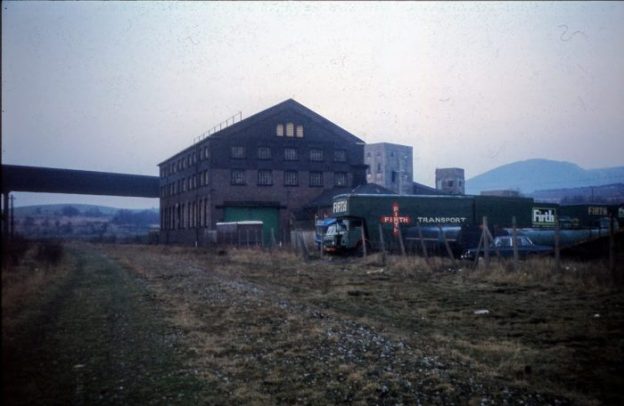
Huddersfield Narrow Canal Photograph of Hartshead Power Station
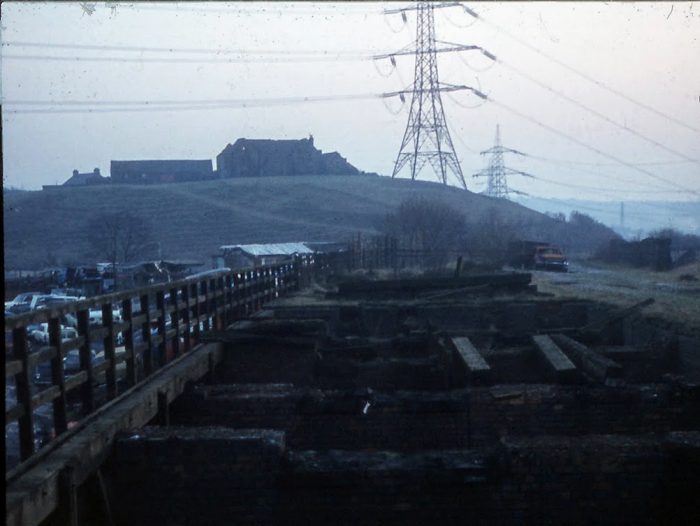
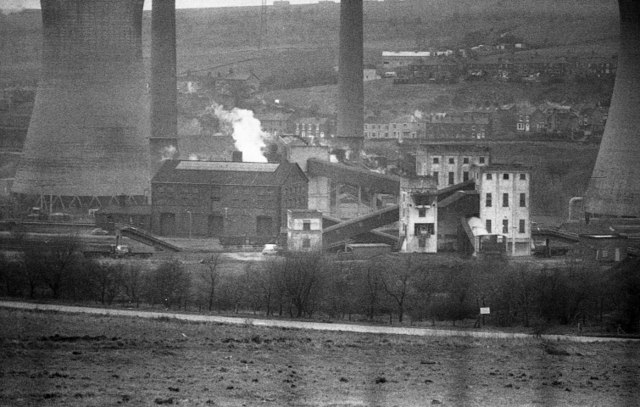
Keith Norgrove cycled the towpath of the Huddersfield Narrow Canal in 1963 and took this photograph:
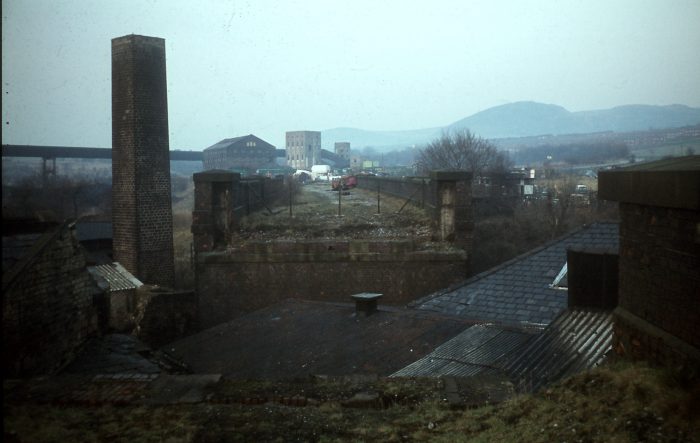
This photograph is taken from the Canal towpath at a point some distance closer to Stalybridge. The coal conveyor can be seen crossing the valley from the location of the Staley & Millbrook Goods Yard. The roof of the GoodsShed is visible close to the coal conveyor. The north-light roof of Spring Grove Mill can also be picked out on the right side of the image, (c) Keith Norgrove 1963 [2]
Hartshead Power Station Locomotives
The series of three pictures below appeared on the Facebook Group ‘The History of Stalybridge’ in May 2020. I only found them on 16th February 2021. [3]
The post on the Facebook Group included the following words credited to Geoff Ward:
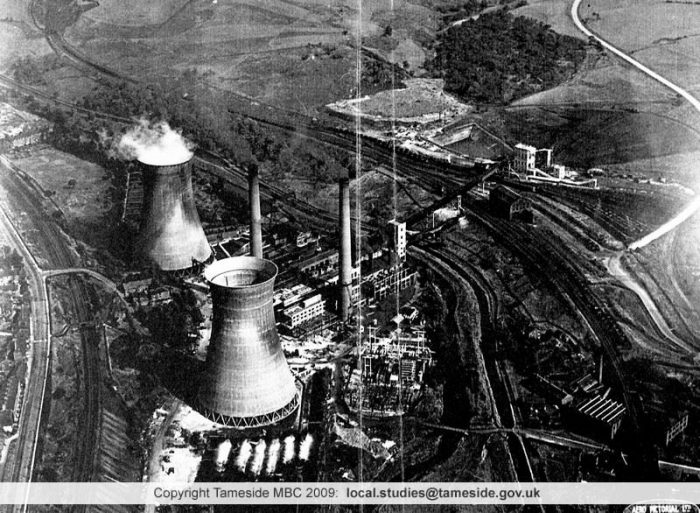
“Preparations for a power station at Heyrod began in 1916 when 26 acres (110,000 m2) of land were purchased. The station was opened in 1926 by the Stalybridge, Hyde, Mossley and Dukinfield Transport and Electricity Board. The station began operation with three Metropolitan-Vickers 12,500 kW turbo-alternators generating at the local SHMD supply frequency of 40 Hz. Later that year the station’s output was changed to the nationally agreed standard of 50 Hz. In 1935, a major expansion of Hartshead began with the first of three new Metropolitan-Vickers 30,000 kW generating sets being commissioned, followed by the second set in 1943 and the third set in 1950. The station’s concrete cooling towers were constructed in the 1940s.
Coal was delivered to the plant at Millbrook railway sidings on the Micklehurst Line, situated on the opposite side of the Huddersfield Narrow Canal. The sidings were built in 1932 and had space to hold up to 130 12-ton wagons. Coal was fed into a hopper underneath the sidings before being transported on an enclosed conveyor belt which emerged high above the valley to cross the River Tame and canal before entering the station at a high level. The station was closed on 29 October 1979 with a generating capacity of 64 megawatts. It was demolished during the late 1980s, although part of the site is still used as an electrical substation.” [3]
Hartshead appears to have owned two locomotives for shunting the yard accessed via the Micklehurst Loop, both are visible in this photograph of the Staley and Millbrook Goods Yard, (c) J.W. Sutherland. [3]
Lookin North from the Staley and Millbrook Yard. Coal trains entered the Yard full from the South along what was once the Micklehurst Loop and empties were returned to the South. (c) J.W. Sutherland. [3]
The Hawthorn Leslie fireless 0-6-0 (HL3805/1932) was fed with steam from the power station and was much cheaper to run that the saddle tank, (c) J.W. Sutherland. [3]
The Transport Library has 2 monochrome pictures of each of the locomotives in the images above for sale in a digital format. The pictures were taken by Horace Gamble. [5]
0-4-0ST Locomotive: BEA 2
The Saddle Tank shown in two of the photographs above was built by Robert Stephenson & Hawthorn. Its Works No. was 7661 and was numbered BEA (British Electricity Authority) No 2 in service in the yard opposite Hartshead Power Station. It was an 0-4-0ST Locomotive. It shared its duties with a large fireless locomotive which can also be seen in the photographs above.
“Because the fireless was cheap to run (there was a good supply of steam from the power station boiler), it was preferred as the working engine, and so No. 2 was used as the standby, and also whenever the power station boiler was shut down, as there would be no supply of steam for the fireless.” [4]
“The sidings were built in 1932 and had space to hold up to 130 12-ton wagons. Coal was fed into a hopper underneath the sidings before being transported on an enclosed conveyor belt which emerged high above the valley to cross the River Tame and canal before entering the station at a high level.” [4]
When the Micklehurst line was closed to traffic in October 1966 the short section of line between the Millbrook sidings and Stalybridge remained in use until the power station closed in 1979. At this time the locomotive was transported to the Embsay & Bolton Abbey Steam Railway where it sits awaiting restoration.
The same locomotive awaiting restoration in 2010, included by kind permission of the photographer, (c) Mick Cottam. [4]
Hartshead’s Fireless Locomotive
This locomotive can be seen in the photographs of J.W. Sutherland above. It was a Hawthorn Leslie fireless 0-6-0 (HL3805/1932). The photo of this loco for sale on the Transport Library site was taken in 1967. [5] A picture is also included in ‘Industrial Locomotives & Railways of the North West of England’ by Gordon Edgar. [6]
“A fireless locomotive ……. uses a reciprocating engine powered from a reservoir of compressed air or steam, which is filled at intervals from an external source. They offer advantages over conventional steam locomotives of lower cost per unit, cleanliness, and decreased risk from fire or boiler explosion; these are counterbalanced by the need for a source to refill the locomotive, and by the limited range afforded by the reservoir.” [6]
They were most often used, for industrial rail yards where either:
a conventional locomotive was too noxious or risky, such as in a mine or a food or chemical factory; or
where the source of air or steam was readily available, as here at Hartshead Power Station,
“A fireless steam locomotive is similar to a conventional steam locomotive, but has a reservoir, known as a steam accumulator, instead of a boiler. This reservoir is charged with superheated water under pressure from a stationary boiler. The engine works like a conventional steam engine using the high pressure steam above the water in the accumulator. As the steam is used and pressure drops, the superheated water boils, replacing the used steam. The locomotive can work like this until the pressure has dropped to a minimum useful level or the water runs out, after which it must be recharged.” [6]
A Further 3 Photographs from James Ward
James Ward has shared three photographs with me of which he says: ” I don’t know how you would feel about including them on your website uncredited, as unfortunately, obtaining proper permission could prove impossible. My Dad thought they came from the colleague of a family friend, but when I contacted our family friend, he was struggling to recall this. If there are any further developments, I’ll let you know.” [7]
James Ward also comments that here is still a very small remnant of the unusual solid sleeper fence (shown in MLL2 and MLL3) in situ.
These photographs are shared here on the basis that James mentions. Neither he nor I can credit the photographer. Should anyone know better, please contact me and they will be properly credited or removed if the copyright holder wishes.
They appear to show a sequence of pictures of the same train leaving Stalybridge along the Micklehurst Loop most probably heading for the Staley and Millbrook Sidings for Hartshead Power Station, and then returning with the engine operating tender first, This probably means that the correct chronological sequence of the pictures would be MLL1, MLL3, MLL2
In one of the pictures the octagonal form of Old St. George’s can be made out on the horizon. I do not have a date for these images. But the smog appears thick over Stalybridge!
Photograph MLL1: provided courtesy of James Ward. James comments: This picture is taken “looking WSW towards the centre of Stalybridge. The Loco is an 8F according to my Dad. The platelayers hut to the south of the line is marked on the 25″ OS Maps. Just beyond this, the parapet of the Knowl St viaduct is visible. St George’s Church is just about discernible above what I assume are full coal wagons, on their way to the power station.”
Photograph MLL2 provided courtesy of James Ward. James comments: “Looking SW towards the centre of Stalybridge. Coal wagons having been emptied at the power station(?). There is a clearer view of the Stalybridge skyline, including St George’s Church. The railway boundary is marked by an unusual solid fence made from railway sleepers, a few sleepers-worth of which is still in situ.”
Photograph MLL3 provided courtesy of James Ward. James comments: this picture is taken “looking NE towards Millbrook. This might well be the same train as in MLL2, and taken just before. The signal post to the SE of the line is marked on the 25″ OS Maps as ‘S.Ps’. The picture gives a close up view of the top of the sleeper fence. The Huddersfield Narrow Canal to the left of the railway with Hartshead Power Station cooling towers just visible as shadows on the far left of the picture.”
Keith Norgrove is a contributor to the RMWeb Forum under the pseudonym ‘Grovenor’. Keith’s two pictures (one of which is included here) were a response to my articles about the Micklehurst Loop on that Forum: https://www.rmweb.co.uk/community/index.php?/topic/161854-the-micklehurst-loop, accessed on 15th February 2021.
Just a few days after I completed addendum 1A about the first length of The Micklehurst Loop and particularly about Staley and Millbrook Station and Goods Yard, I heard from James Ward who recollected some photographs taken by his father of the demolition of the Spring Grove Viaduct. On 11th February 2021, he sent me copies of those photographs along with permission to share them here.
My first article on the Micklehurst Loop can be found using this link:
In his emails, James Ward also provided links to some photographs on the ‘Timepix’ website. These, at present, are predominantly photographs of the Greater Manchester Revision Point Collection undertaken by/on-behalf-of the Ordnance Survey in the early 1950s and are held by Manchester Libraries. The introduction to the ‘Timepix’ website makes it clear that all of their watermarked images are free to download and share. [3]
Some of these pictures show locations close to the Staley and Millbrook Station and Goods yard. These are shared on this page below those taken by Stephen Ward, James’ father.
The Demolition of Spring Grove Viaduct.
The pictures below are taken from Grove Road/Spring Bank Lane in 1991 by Stephen Ward. I have maintained the numbering of the photographs as they were given in the email attachments from James Ward. It was only possible to take pictures of the work from public land and the highway. No trespass over the demolition site was possible. There are signs in these pictures of the growth of vegetation around the line of the Micklehurst Loop, growth, which in the 2020s has swamped the remains of the railway.
Key to photographs taken by Stephen Ward in 1991, imposed on the 25″ OS Map from the turn of the 20th century. [1]
Photograph GRV1; Spring Grove Viaduct Demolition in 1991, this photograph is taken from the East along Grove Road (c) Stephen Ward [2]
Photograph GRV2; Spring Grove Viaduct Demolition in 1991, this photograph is taken from the West from close to the Huddersfield Narrow Canal. The larger road span is visible and the first two arched spans of the viaduct to the North, (c) Stephen Ward . [2]
Photograph GRV3; Spring Grove Viaduct Demolition in 1991, this photograph is taken from the Northwest from the Old Spring Mill access road between the railway and the Canal, (c) Stephen Ward . [2]
Photograph GRV4; Spring Grove Viaduct Demolition in 1991, this photograph is taken from the East on Grove Road. Had the old station building still been standing it would have just been visible on the left of the image, right next to the abutment wall, (c) Stephen Ward . [2]
Photograph GRV5; Spring Grove Viaduct Demolition in 1991, this photograph is taken from above the location of the old Station House on the East side of the viaduct abutment in the foreground. Part of the Spring Grove Mill is visible on the right of the picture. The Goods Shed and the remains of the coal conveyor can be seen on the horizon, The top of the arch which provided pedestrian access to the platform closer to the Canal can be seen in the left foreground, (c) Stephen Ward . [2]
Photograph GRV7; Spring Grove Viaduct Demolition in 1991, this photograph is taken in the early evening from the East on Grove Road. One street light has just come on. The over-road skew-arch bridge is now gone and the view West down Grove Road to the hills behind is no longer interrupted by the railway structure, (c) Stephen Ward . [2]
Photograph GRV8; Spring Grove Viaduct Demolition in 1991, this photograph is taken from the West, close to the Canal. Both the road-span and the adjacent arch have been demolished and much of the brickwork has been cleared, (c) Stephen Ward . [2]
Photograph GRV9; Spring Grove Viaduct Demolition in 1991, this photograph is taken from Grove Road. Had the old station building still been standing, it would have filled the image. We are looking Southwest across the location of the building at the remaining length of surviving viaduct abutment in the gloom of early evening. The pedestrian access to the West side of the line can be seen above the chestnut-paling fencing, (c) Stephen Ward . [2]
Photograph GRV10; Spring Grove Viaduct Demolition in 1991, this photograph is taken from the East on Grove Road, also late in the evening. The white painted wall is the end of the surviving buildings of the old Spring Grove Mill, (c) Stephen Ward. [2]
The Ordnance Survey Greater Manchester Revision Point Collection from the early 1950s.
The following pictures were taken to record Ordnance Survey work and have the incidental benefit of being within the landscape we are interested in.
Key to the Manchester Libraries Ordnance Survey Photographs below.
The first picture can be precisely located as being at the North end of Spring Grove Viaduct above the buildings of Spring Grove Mill which can be seen in the photograph.
The Huddersfield Narrow Canal was a hundred metres or so to the East of the viaduct and the next two pictures show locations either side of the point were Grove Road/Spring Bank Lane crossed the Canal.
Photograph ML5: Man marking Ordnance Survey minor control revision point on the corner of the Good Shed at Staley and Millbrook Yard. Staley Hall can be seen on the horizon, (c) Manchester Libraries. [3]
Photograph ML6: Man marking Ordnance Survey minor control revision point on the coal handling facilities in Staley and Millbrook Goods Yard. The conveyor which transported coal across the Micklehurst Loop, The Huddersfield Narrow Canal and the River Tame can be seen in the background, (c) Manchester Libraries. [3]
Great advances in the development of East Africa occurred during these years. A serious attempt was made to unify the East African Territories. “Kenya became a playground for wealthy sportsmen who came to shoot, or to photograph, big game, and they spent much money on their sport.” [1: p443]
The following Earnings/Working Profits are recorded in or estimated from Hill’s narrative:
Year Earnings Working Profits
1924 £1,635,189 £756,722 [1: p447]
1925 £1,993,509 £903,438 [1: p456]
1926 £2058,710 £841,937 [1: p459]
1927 £2,257,403 £1,030,000 estimated [1: p463/4]
1928 £2,511,227 – [1: p475] working profit not recorded by Hill
1929 £2,825,310 – [1: p475] working profit not recorded by Hill
The 1924 the working profit was reduced by £149,004 of loan charges.£165,579 was credited to the Renewals Fund and £438,139 to the Betterment Fund. Together with other sums, the result was that in 1925, £750,000 was put to a programme of renewals/betterment. There was also heavy expenditure on port development, new lines, rolling-stock and equipment. East Africa’s transport needs were expanding rapidly. [1: p447]
A search on Facebook produced this composite image on the Baringo New Channel [2]
Twitter carries this image of a railway bridge on the metre-gauge line in hilly Timboroa [3]
By the end of 1924, the Uasin-Gishu line had reached Timboroa; the Thika line had been extended to the Tana River. The Solai branch and the Kitole branch were under construction.
During 1925, the Thika line was expected to reach Nyeri, and the Uasin-Gishu line beyond Timboroa, through Turbo into Eastern Uganda was being funded by a £3.5 million loan. It was required – there had been a very rapid increase in traffic which was causing significant connection at the ports on Lake Victoria and at Mombasa. [1: p448/9]
At the end of 1924, 30 miles of the Mombasa to Nairobi mainline had been relayed with 80-lb rails. Work continued slowly through 1925. [1: p450]
On 3rd February 1926, the Kenya & Uganda (Transport) Order in Council was promulgated. The name of the railway was changed from the ‘Uganda Railway’ to the ‘Kenya & Uganda Railway’. [1: p453] At this time the Inter-Colonial Railway Council held its last meeting. The railways were placed under the command of the High Commissioner who was also Governor of Kenya and a new ‘Kenya & Uganda Railway Advisory Council’ held its first meeting in February 1926 at Entebbe. [1: p453/4] It decided that the most pressing need was for there to be negotiations with the Tanganyika authorities to ensure that the two railway systems collaborated, rather than competed, with each other for custom. [1: p454]
There was continued criticism of congestion at ports and in Uganda, [1: p457] with goods delayed and damaged in transit. Criticism failed to take account of a significant increase in demand for railway services, nor of problems at ports which were outside of the control of the railway authorities.
By 1926, the mainline rail replacement programme had reached Makindu, 207 miles from Mombasa. New Central railway offices were under construction in Nairobi. The Uganda extension has reached the Eastern edges of the M’pologoma Swamp but the length heading East was over 10 months behind schedule due to supply problems across Lake Victoria. [1: p462]
In 1927, a commission to review the possibility of uniting the three East African Territories was set up. When it reported in 1929, it suggested that the two railway systems of East Africa must eventually be amalgamated under one management. “Meanwhile … there was much that could be done in the direction of assimilation of rates, the standardisation of engines, rolling stock, equipment and rules and regulations, all of which would greatly facilitate amalgamation in due course.” [1: p467]
In September 1927, Felling, a strong supporter of ‘Closer Union’ spoke his mind in the Legislative Council. As part of his comments he stressed that one management of the Kenya and Uganda Railway and the Tanganyika Railway must “come in due course, but there [was] no urgent need for amalgamation of management’s; and anyway, such an amalgamation would be very difficult to arrange until there [was] a definite railway link connecting the two territories.” [1: p468]
Further, he said, on the same occasion, that “it [was] clear that it [was] necessary for the general development of this part of the Empire that there should be rail communication between Kenya and the Central Tanganyika line, also a steady programme of railway construction to connect the Tanganyika Railway with Northern Rhodesia and Nyasaland … [and] perhaps two lines, to the Congo.” [1: p468]
He argued that “railway development in East Africa should not be looked upon so much as an East African investment as a sound Imperial investment, as in the interests of the people of Great Britain even more than in the interests of the native inhabitants of the territories concerned.” [1: p469] He also argued for the rapid completion of a rail link from Jinja to Kampala.
In 1927, developments in the railways brought the advent of corridor coaches and dining cars. These were essential to a satisfactory timetable. 6 No. Mikado (2-8-2) locos were put to work on the 89-lb rails between Mombasa and Makindu. [1: p470/1]
Kenya & Uganda Railways Mail Train 1930’s Vintage Card. [4]
Kenya & Uganda Railways Mail Train 1930’s Vintage Card. [5]
The KUR EA class, later known as the EAR 28 class, was a class of 1,000 mm (3 ft 3 3⁄8 in) gauge 2-8-2 steam locomotives. The six members of the class were built in 1928 for the Kenya-Uganda Railway (KUR) by Robert Stephenson and Company. Builder’s numbers were 3921-3926. They were numbered 2801-2806 on the Kenya & Uganda Railway. [6]
A road and railway causeway/bridge between Mombasa Island and the mainland was commenced in June 1927.
In addition to the Uganda extension, building of branch lines continued:
On 1st November the Nyeri branch reached lnaro Moru.
In Uganda, work commenced on the Tororo, Mbale, Soroti branch in February 1927.
A branch from Fulfil to Thomson Falls was approved.
A line from Kisumu towards Mumias was proposed.
A preliminary survey for a branch from Turi to Sotik was completed. [1: p471]
The Kenya & Uganda Railways & Harbours Logo, (c) Martin Greave, 2003 [7][8][9]
The railway’s name was changed by Order in Council on 20th December 1927, to the ‘Kenya and Uganda Railway and Harbours’. [1: p472]
On 15th January 1928, the final section of the Uganda Extension from Broderick Falls to M’Bulamuti opened to traffic. Within 9 months Christian Felling had died as a result of a severe attack of malaria.
The figures listed above show impressive growth in the years to 1929. The figures fr the following period fell just as rapidly as we will see. Hills says that “although it was not yet apparent, the railway, in common with Kenya and Uganda and the greater part of the civilised world, had come near to the end of the gilded years of prosperity.” [1: p475]
References
M.F. Hill; Permanent Way – The Story of the Kenya and Uganda Railway – Volume 1; Hazel, Watson & Viney Ltd, Aylesbury & London, 1949.
Just after I posted my first article about the Micklehurst Loop, I was sent a series of photographs by an online acquaintance, Tony Jervis. In February 1981, he visited the same length of the Micklehurst Loop as covered in that article. Tony’s pictures show the line before removal of the two viaducts but after the lifting of the length of line retained to serve the Staley and Millbrook Sidings opposite Hartshead Power Station.
Tony also pointed out a further YouTube video from Martin Zero which is embedded towards the end of this addendum. …..
My first article on the Micklehurst Loop can be found using this link:
At the time of Tony Jervis’ visit on 14th February 1981, only one section of the Spring-Grove Viaduct had been removed – a simply supported span which took the line over the Spring-Grove Mill. Toney was very happy for me to share these pictures as an addendum to my original article and he very kindly provided some notes to go with a number of the photographs. I have provided some annotated OS Maps to go with the pictures.
I have retained the reference numbers of the photographs used by Tony Jervis. I find the images fascinating. The first three photographs speak for themselves and are centred on Knowl Street Viaduct at the bottom end of the loop immediately adjacent to Stalybridge New Tunnel.
The 25″ OS Map showing the area to the East of Cocker Hill where the Micklehurst Loop broke out of Stalybridge New Tunnel and immediately spanned the River Tame. The locations of three of Tony’s photographs marked. [1]
Photograph 15, 1981, (c) Tony Jervis. [2]
Photograph 632-16, shows the length of the viaduct and is taken from above the Eastern Portal of Stalybridge New Tunnel, 1981, (c) Tony Jervis. [2]
Photograph 632-17,shows the skew span over the Huddersfield Narrow Canal looking towards the Centre of Stalybridge, 1981, (c) Tony Jervis. [2]
The next few pictures were taken in and around the Staley and Millbrook Station. The software I use allows me to add arrows which are vertical or horizontal but not at an angle, so the locations of the pictures shown on the OS Map immediately below are approximate.
25″ OS Map of Staley & Millbrook Station site at the turn of the 20th century. [1]
Photograph 632-18 shows Spring-Grove Mill was spanned by a simply-supported girder bridge which had already been removed when Tony Jervis visited in 1981, (c) Tony Jervis. [2]
Tony comments about the above image: this picture shows “the gap in the viaduct over the roof of Spring Grove Mill. I assume the gap was spanned by a horzontal girder bridge, which would have been easier to lift away for scrap than demolish a viaduct arch. In the background, the power station’s coal conveyor and bunkers are still intact, though the station had been closed about 18 months earlier. The goods shed … was still in the hands of Firth Hauliers.” [2]
The Goods shed and part of the conveyor are still in place. The viaduct, the mill chimney,the section of the mill visible to the extreme left of the image, the coal handling facilites are long-gone in the 21st century.
Photograph 632-19A, 1981, the portion of the mill on this (West) side of the viaduct and the mill chimney, still present in 1981, were demolished along with the viaduct in the later part of the 20th century (c) Tony Jervis. [2]
Tony Jervis, writing in 1981, comments: “the station platforms were up to the right at the top of the grassy bank but would not have been accessible for passengers from this side. Beyond the third arch was a span across the top of Spring-Grove Mill, which was presumably modified to allow the railway to be built. I assume the span was some sort of flat girder bridge which has since been craned away.” [2]
Photograph 632-20A, 1981, (c) Tony Jervis. [2]
He continues: “Passengers for the northbound platform would have climbed a covered passage from the booking office and come through this subway (picture 632-20A) whence another short covered ramp or steps would have led up to the platform waiting room. Note the glazed white tiles designed to slightly lighten the subway’s gloom. Since I appear not to have photographed them, I assume that the station platforms had long been swept away.
Photograph 632-21A, 1981, (c) Tony Jervis. [2]
Tony Jervis says: “Picture 632-21A (below) is taken from the middle of Grove Road east of the viaduct. The red brick wall would have been the end of the booking office; the station master’s house would have been out of shot to the left. In the distance is the entrance to the subway. There are marks of the platform retaining wall, which is partly of red brick at the bottom and blue engineering brick further up, that suggest a flight of stairs with an intermediate landing led up the southbound platform and that a lower ramp alongside followed the grass bank up to the subway. One might wonder, thinking of travel a century ago, whether there might have been a need for sack trucks or even a four-wheeled luggage trolley to reach the platforms. The white notice forbidding tipping and trespassing is not in the middle of the road but at the edge of the triangular station forecourt; it won’t show up on the posted picture but above the words is the BR “kinky arrow” symbol. Looking at the 25-inch OS plan, it is interesting to note that the formal entrance to nearby Staley Hall was from Millbrook village to the south but from the back of the building a footpath dropped down to Grove Road alongside the the stationmaster’s house, a tradesmen and servants’ entrance maybe?”
Tony has also provided photographs which were taken late in the evening on 14th 1981 of the Goods Yard across the river and canal from Hartshead Power Station. Their locations are again marked on the 25″ OS Map immediately below ……
25″ OS Map of the Staley & Millbrook Coal Sidings site. The extract does not show the full extent of the sidings which were in place in the mid-20th century..[1]
Photograph No. 632-21B 9-644 14 Feb 1981 SD 976000 S Former coal drops at Staley & Millbrook Goods Depot alongside Spring Grove Viaduct. The ruined structure on the horizon is Staley Hall. These drops were just to the North of Spring-Grove Viaduct, (c) Tony Jervis, 1981 – [Tony comments: The “B” suffix is because I managed to give two slides the same number when I numbered them back in 1981.] [2]
Tony Jervis comments: “These coal drops are near the end of the two sidings on the 25-inch OS map closest to the running lines. They are not marked on the map but the road approach for coal merchants’ lorries is clearly shown. I did wonder if the apparent tramway in Grove Road in one of [the photographs in the previous article] was a way of transferring coal from here round to the mill’s boiler house (below the chimney, one presumes) but I have seen no indication of it on any map. The viaduct over Spring Grove Mill starts by the rusty car. The building on the hill is Staley Hall and the “tradesmen’s” footpath I mentioned in a previous description can be seen descending the bank.” [2]
Photograph No. 632-22 9-646 14 Feb 1981 SD 976001 N Staley & Millbrook Goods Warehouse and the former Hartshead Power Station coal conveyor, (c) Tony Jervis, 1981. [2]
Tony comments: This picture shows “the goods shed when in use by Firth Transport. The cleaner ballast in the foreground was the southbound running line and the smoother patch to left of that is presumably where the walkway is today. In the background is the part of the coal conveyor that remains in situ today.” [2]
Photograph No. 632-23 9-645 14 Feb 1981 SD 977002 NW Hartshead Power Station Sidings and start of coal conveyor, Staley & Millbrook Goods Depot, (c) Tony Jervis, 1981. [2]
Tony comments: “One of the two towers on the edge of the power station coal sidings. I presume the “stepped” areas fenced in orange surrounded conveyor belts lifting the coal from siding level up to the high-level conveyor.” [2]
Photograph No. 632-24 9-647 14 Feb 1981 SD 977002 WNW Site of Hartshead Power Station Sidings and coal conveyor, Staley & Millbrook Goods Depot, (c) Tony Jervis, 1981. [2]
Tony comments: “Swinging left about 45 degrees from the previous photo, I’m not sure what purpose this building served. There is a capstan in front of it, suggesting that locomotives were not allowed to traverse the length of surviving track and wagons thereon were moved by cable. Could it have been an oil depot of some sort? The tall pipes at the far end could have been used to empty rail tank cars. Some power stations could burn oil as well as coal; was Hartshead one of them?” [2]
Photograph No. 632-25A 9-648 14 Feb 1981 SD 978002 WSW Staley & Millbrook Goods Warehouse; Hartshead Power Station beyond, (c) Tony Jervis, 1981 [2]
Tony comments: that it was really too dark by the time this picture was taken, none-the-less by screwing the contrast control to its maximum a grainy image of the shed and power station appears reasonably clear but very grainy. [2]
Flicking back and forth between this short article and the latter part of my first article about the Micklehurst Loop (https://rogerfarnworth.com/2021/01/31/the-micklehurst-loop-part-1), will allow a comparison with images of the Staley and Millbrook Station and Goods Depot Sites early in their life and in the 21st century.
To complete this short addendum to my first post here is another video from Martin Zero.
Tony Jervis comments: [4] “After watching the half-hour video, I read some of the comments by other viewers, some of whom had worked on the site. The tunnel turned out to be the power station’s engine shed and the steps led down to a conical underground coal hopper from which conveyor belts took the coal onwards or, perhaps, removed fly-ash.”
“Martin also found on the surface a length of surviving rail track with a lump of iron between the rails that might have been a “mule” or “beetle” for moving wagons slowly past an unloading point. It was mentioned by some people that there had also been an “oil conveyor” — surely a pipeline? — leading from the sidings owards the power station. That makes me wonder if my postulation that the low building in my “S & M Goods 4” posting (slide 632-24) may have been a tank wagon unloading station was in fact correct.”
“Martin did also show a circular object buried in the ground nearby which could perhaps have been the base of the capstan that appears in my photo. But the area is nowadays so afforested that it was impossible to work out accurately how the various items and buildings he found related to one another.”
I am indebted to Alan Young for a number of the images in this and the following articles about the Micklehurst Loop. This is his drawing of the Loop which appears at the head of his article about the Loop on the ‘Disused Stations‘ website. It is used with his kind permission, (c) Alan Young. [7]
During January 2021, my wife and I walked the majority of the length of the Micklehurst Loop from Stalybridge to Diggle. This was the goods relieving line for the main Stalybridge to Huddersfield railway line. It had been hoped to alleviate congestion by making the mainline into a 4-track railway but the geography mitigated against this and a route on the other side of the Tame Valley was chosen instead.
The maps used in this sequence of articles are predominantly 25″ OS Maps from 1896 through to 1922 and have been sourced from the National Library of Scotland. [1] There are a number of websites which focus on the Loop which are excellent. The sites concerned are noted immediately below and the relevant link can be found in the references section of this page or by clicking on the highlighted text here:
The most detailed treatment of the line and its stations can be found on the Disused Stations – Site Records website. The particular pages on that site which cover the Loop were provided by Alan Young. One page covers the route and pages covering each of the stations can be accessed from that page. [7]
Particularly good for old photographs of the Loop is the Table 38 webpage about the railway. [12]
Part 1 – Stalybridge to Staley & Millbrook Station and Goods Yard
This first map extract shows the Western end of the Micklehurst Loop. It left the mainline at Stalybridge Station which can be seen on the left side of the extract. Both the mainline and the loop entered tunnels under Stamford Street, Stalybridge. [1]This modern satellite image covers approximately the same area of Stalybridge as the map extract above. The route of the former Micklehurst Loop is highlighted by the red line.Looking west towards Stalybridge Station circa 1960 from Stamford Street BR standard Class 5 No.73162 takes the Micklehurst Loop as it pulls away from Stalybridge Station with a Huddersfield-bound freight and approaches Stalybridge New Tunnel. Photo by Peter Sunderland courtesy of Alan Young. [7]
The Western portal of Stalybridge New Tunnel sits just to the East of the Bridge that carries Stamford Street over the route of the Loop. It is difficult to photograph and access is not easy. While search for images of the line I came across a video on YouTube:
This video shows the Western end of the tunnel and then covers a walk through the full length of the tunnel and a glance out of the Eastern Portal. [8]
This next map extract shows the Micklehurt Loop emerging from the tunnel under Cocker Hill. The main line is in tunnel further North. Just South of the tunnel mouth Old St. George’s Church can be picked out, an octagonal church building which has now been replaced by St. George’s Church which is off the map extract to the North. Immediately to the East of the tunnel entrance, the Loop crossed the course of the River Tame and the Huddersfield Narrow Canal on a Viaduct.Much has changed in the satellite image above which covers approximately the same area. The canal basin can just be picked out, as can Knowl Street. The course of the River Tame is unchanged. Old St. George’s is long-gone. There is no evidence left of the Viaduct which carried the line.
Old St. George’s Church was located almost directly over the tunnel. It was an unusual church building and over its life was rebuilt twice on essentially the same plan. “The first was built in 1776. It was the first recorded church in Stalybridge and it did fall down shortly after it was built. The next church was demolished around a hundred years later because of structural problems and the last church was demolished in the 1960’s as it was no longer used.” [3]The last incarnation of Old St. George’s Church on Cocker Hill. This coloured monochrome image is held in the archives of Tameside MBC. The Micklehurst Loop can be seen exiting the tunnel below the church to the right and immediately crossing the River Tame on Knowl Street Viaduct. [4]This monochrome image is provided with permission, courtesy of Alan Young, once again. [7] He comments: “looking north up the River Tame the western end of Knowl Street Viaduct in Stalybridge is seen in this undated view. Having crossed this 16-arch viaduct the Micklehurst Loop promptly plunged into Stalybridge New Tunnel through Cocker Hill (left). This section of line ceased to handle traffic in 1972, when coal movements to Hartshead Power Station (near Staley & Millbrook) ceased, and the line was taken out of use in July 1976, but it was not until 1991 that the viaduct was demolished.” [7]
Knowl Street Viaduct carried the Loop over the River Tame, Knowl Street and the Huddersfield Narrow Canal and a series of arches in between. There were 16 arches in all.This photograph taken from the East alongside Knowl Street Viaduct is included with permission, courtesy of Alan Young. [7] Alan comments: “The Micklehurst Loop diverged from the original Huddersfield-Manchester line a short distance east of Stalybridge station, entered Stalybridge New Tunnel (about 300yd in length) then promptly crossed the broad valley of the River Tame on Bridge No.3 (also known as Knowl Street Viaduct). This impressive curving viaduct, in the blue engineering brick used by the LNWR on the Loop’s major structures, was 330yd in length with 16 arches. In addition to crossing the River Tame, the viaduct also strode across Huddersfield Narrow Canal and three roads. In this undated westward view, the viaduct and Stalybridge New Tunnel through Cocker Hill are shown. Coal trains that served Hartshead Power Station ceased to run over the viaduct in 1972, but it was not until July 1976 that the line was officially taken out of use. Fifteen years elapsed before the viaduct was demolished in 1991.” [7]A further image used with permission, courtesy of Alan Young. [7] Alan comments: “Looking north-east from a point close to the eastern portal of Stalybridge New Tunnel. The Knowl Street Viaduct, 330yd in length and with 16 arches, is seen crossing the River Tame then curving away towards the next station of Staley & Millbrook. The local passenger service on the Micklehurst Loop, on which this viaduct was located, ceased in 1917, but occasional passenger trains and many freight workings continued into the 1960s; coal traffic continued to pass over the viaduct until 1972 en route to Hartshead Power station near Staley & Millbrook station and the line was officially taken out of use in 1976. Nature is taking over the former trackbed as seen on this undated photograph. The viaduct was demolished in 1991.” [7]A modern view of Knowl Street taken from Google Streetview. Knowl Street Viaduct crossed Knowl Street at this location. The spandrel walls on the North side of the Viadct passed very close to the gable end of the terraced building to the East of Knowl Street, the righthand side in this view.
After crossing the Huddersfield Narrow Canal the Loop line regained the embankment shown on the next OS Map extract below. Just to the North of the point where the viaduct crossed the canal is a stone bridge carrying what is now (in the 21st century) the canal-side walk. That bridge is shown at the centre of the Google Streetview image below and at the bottom left of the OS Map extract. It is named Knowl Street Bridge and carries the number 97. [8]
After crossing the Canal the line was carried on embankment, passing to the West of Brookfield House and running North by Northeast parallel to the Canal with Huddersfield Road a distance away to the South. Across the valley of the River Tame to the West were Riverside Mills.The approximate line of the railway, shown in red, runs parallel to the canal. We parked in a small car park just off the south of this satellite image, as illustrated below. The image shows that the site of the Riverside Mills is now occupied by the premises of Smurfit Kappa, Stalybridge. [9]Stalybridge and the Southwest end of the Micklehurst Loop.
Brookfield House was “a large detached house built in the early 19th century for James Wilkinson, and shown on the 1850 Stayley Tithe Map. All that remains is the former mid-19th century lodge house at 93, Huddersfield Road, with the entrance to the former drive with stone gate piers on its south side. The grounds of Brookfield House are clearly shown on the 1898 OS Map, and included an oval lake and glasshouses, …. Brookfield House was demolished and the lake filled in between 1910-1933. The grounds are now overgrown with self-set woodland.” [2]This next OS Map extract illustrates, at the the top right, how tightly the river, railway and canal follow each other at times up the Tame Valley. The railway sits above the canal which in turn sits a little above the river. Also evident is the name used on this series of OS Maps for the Loop Line – the “Stalybridge and Saddleworth Loop Line.”
Alan Young explains: “Although described as both the ‘Stalybridge & Saddleworth Loop‘ and ‘Stalybridge & Diggle Loop‘ on Ordnance Survey maps, the line is more commonly known as the ‘Micklehurst Loop’.” [7]
River Meadow Cotton Mills were owned by Henry Bannerman who was a successful farmer in Perthshire, Scotland At the age of 55 in 1808 he “moved with his family to Manchester, determined to get involved in the burgeoning Lancashire cotton industry.” [10]
At one time the company had “four cotton mills in the Manchester area: Brunswick Mill in Ancoats, Old Hall Mill in Dukinfield and the North End Mill and River Meadow Mill, both in Stalybridge.” [10]
In 1929, the Lancashire Cotton Industry was struggling. It had not regained its markets after the First World War. In an attempt to save the industry, the Bank of England set up the ‘Lancashire Cotton Coroporation’. Bannermans’ mills were taken over a few years later. The mills were acquired by Courtaulds in 1964 and all production ceased in 1967.” [10] After closure the four-storey mill which was Grade II Listed “was used by Futura before they moved to Quarry Street and then S. A. Driver warp knitters, dyers , printers and finishers.” [11] As can be seen in the satellite image below, the Mill is now demolished.Souracre and River Meadow Cotton Mill and Souracre in the 21st century .
North of Souracre and visible at the bottom left of this next OS Map extract were Hartshead Calico Print Works East of Printworks Road and close by Heyrod Hall. Also visible on this map extract are Stayley Hall and the first Station on the Micklehurst Loop – Stayley and Millbrook Station.
Hartshead Print Works – is visible just below centre-left on the OS Map extract above. The works was listed in the Stalybridge Directory of 1891 as owned by John L. Kennedy &Co. Ltd, Calico Printers. lt was purchased in 1899 by the Calico Printers Association. [18]
Heyrod Hall – is shown on the top left of the OS Map extract above.
Stayley Hall – is a Grade II* Listed Building which dates back to at least the early 15th century.[14] The first records of the de Stavelegh family as Lords of the Manor of Staley date from the early 13th century. Stayley Hall was their residence. [15]
It came into the possession of the Assheton family through marriage and united the manors of Stayley and Ashton and thence into the family of Sir William Booth of Dunham Massey. In the middle of the 16th century. [15]
Stayley Hall 1795. [21]
In the middle of the 18th Century the Earldom of Warrington became extinct and the Hall, alonng with all the Booth’s estates passed to Harry Grey, 4th Earl of Stamford. Stayley Hall was owned by the Booth family until the death of Roger Grey, 10th Earl of Stamford in 1976. [15]
Wikipedia concludes its history of the Hall as follows: “In 2004 the Metropolitan Borough Council announced that they had granted permission to a developer to build 16 homes next to Stayley Hall. A condition of the planning consent was that the hall be restored.[3] The developer has converted the hall and outbuildings into houses and apartments, most of which are now occupied.” [15]
Early 25″ OS Map covering the length of the passenger facilities and most of the goods facilities at Staley & Millbrook Station. [1]
Staley and Millbrook Station – Alan Young’s on his webpage about the Station comments as follows: “Staley & Millbrook station stood on a steep slope immediately south of Spring Grove Viaduct. The two facing platforms were equipped with waiting rooms, most likely of timber construction, with glazed awnings, as is thought to have been the building style at all four of the Loop’s stations. The platforms, too, were most likely of timber construction as that material was used for the platforms at Micklehurst, where they were also on an embankment, and timber would be a much lighter load than masonry for an embankment to support. The stationmaster’s house and adjoining single-storey office range to its west faced Grove Road across a small, triangular forecourt. The station house was constructed of dark red brick with string courses of blue engineering brick and pale stone lintels.” [18]Staley & Millbrook Station building and the Sprong-grove Viaduct take from the East on Grove Road in the early 20th century. The picture shows a clean and relatively well maintained site, very different to what remains in the 21st century, please see the pictures below. [18]Staley and Millbrook Railway Station and Spring-grove Mill. [16]
Staley and Millbrook Station buildings have long-gone as has the Viaduct, the first arch of which spanned Grove Road and looked to be a graceful structure. Also of interest in the monochrome picture of the Station and Viaduct above is what appears at first sight to be evidence of a tramway or industrial railway in the cobbles of Grove Road. I have not as yet been able to find out anything about what this feature actually is. The feature is not marked on the map extract immediately above. Closer examination of the picture above suggests that rather than being part of a short industrial line the cobbles may have been laid to facilitate a particular movement around the Spring-grove Mill.
In the 21st century, this length of Grove Road has been tarmacked – a thin layer of tarmac covers the original sets. The next two pictures were taken on 30th January 2021 on a second visit to the site after walking the route of the Loop.
Taken from East of the route of the Micklehurst Loop, this photograph shows the location of the old station building. It sat facing the road on the left-hand side of the panorama. The Southern abutment of the viaduct sat adjacent to the station building, in the area of trees between the 5-bar field gate and the stone wall towards the right of the picture. The masonry wall is in the location of what were terraced houses between the canal and the railway viaduct. (My photograph, 30th January 2021)Another panorama, this time taken from the canal bridge to the West of the Loop. What is left of Spring-grove Mill can be seen on the left side of the image. Grove Road, heading towards Millbrook is central to the image. The masonry wall is the location of the terraced houses mentioned above. The first trees beyond it mark the line of the viaduct. The station building was sited beyond to the West. (My photograph, 30th January 2021)
Spring-grove Mill – As we have already noted, Spring-grove Mill is shown straddled by the viaduct on the OS Map extract above. When Staley & Millbrook station opened, “there was already some population and industry in the immediate neighbourhood. Spring Grove Cotton Mill faced the station across Grove Road, and map evidence suggests that the railway’s viaduct sliced through the existing mill building. A terrace of three cottages, also pre-dating the railway, stood immediately north of the platforms, and Stayley Hall was about 100yd south of the station. Millbrook village, with three cotton mills, was about ten minutes’ walk uphill east of the station.” [16] [18]The remaining buildings of Spring-grove Mill. The lighter (cream painted) brickwork is the part of the mill shown on the map extracts as being on the East side of the viaduct. The portion of the Mill to the West of the viaduct has been demolished. The red-brick portion of the remaining building would have been under the arches of the viaduct. The Western spandrels of the viaduct arches would have followed a line running from the intersecting kerb-stones in the right-foreground over the redbrick part of the present building. (My own photograph – 30th January 2021)
Spring Grove Mill was a cotton mill from 1818 to 1868 and then was a woollen mill for 100 years, it was the last steam-powered mill in the area. [17] The image of Hartshead Power station below, includes Spring-grove Mill in the bottom right-hand corner. By the time the aerial photograph was taken Grove Road appeared to extend across the Canal and the River Tame towards Heyrod.
Hartshead Power Station was also located North of Souracre to the West of the River Tame. It was a coal-fired station and was served by trains on the Micklehurst Loop up until the 1970s. The picture immediately below was posted by Tameside Council on their Facebook page in 2015.An aerial picture of Hartshead Power Station taken before the Second World War. It was opened by the Stalybridge, Hyde, Mossley and Dukinfield (SHMD) Joint Board in 1926 and the cooling towers were erected in the 1940s. The station closed in 1970 and was demolished in the 1980s. Although the Good Shed visible to the top right of the image still stands. The Micklehurst Loop curves from the bottom right to the top left of the picture. [13]This enlarged extract from the image above show the coal transfer facilities and railway sidings associated with the power station . [13] The resolution of the image is not wonderful but it does highlight the traffic which was brought to the site throughout the middle 50 years of the 20th Century.
OS 1:25,000 Map form the early- to mid-20th century, sourced from the National Library of Scotland – Hartshead Power Station. One of the two cooling towers is not shown in full as it crosses the map join. [14]
The full extent of the Hartshead Power Station site at Souracre can be seen on the adjacent OS Map extract from the middle of the 20th century, which also shows the location of Stayley Hall and the Stayley and Millbrook Station build just North-northwest of Stayley Hall.
Approximately the same area is shown below on a relatively recent extract from the ESRI World Image website which is the satellite mapping used by the National Library of Scotland. [13]
The Good Shed which is considered further below is visible on both the map extract and the satellite image and the extent of the railway sidings on the East side of the Loop line is evident.
The substantial Goods Shed was built at the same time as the Loop initially with two sidings to its East. These sidings were expanded with the advent of the power station in the early 20th century. The site is now overgrown and is returning to nature. The only exception being the Goods Shed itself. There is an excellent video showing its current condition on ‘Martin Zero’s’ YouTube Channel which is embedded below. My own pictures of the site also follow below.
The Goods shed at Stayley and Millbrook Station presided over a large expanse of sidings which served Hartshead Power Station on the opposite side of the Huddersfield Narrow Canal and the River Tame. [22]Looking South towards the location of the passenger facilities at Staley and Millbrook Station. The Goods shed is on the left (the East side of the Loop line). (My photograph, 18th January 2021).The Goods Shed taken from the same location as the last photograph – a substantial three-storey structure. (My photograph, 18th January 2021).
The next part of this walk following the line of the Micklehurst Loop sets off from this goods shed traveling North.


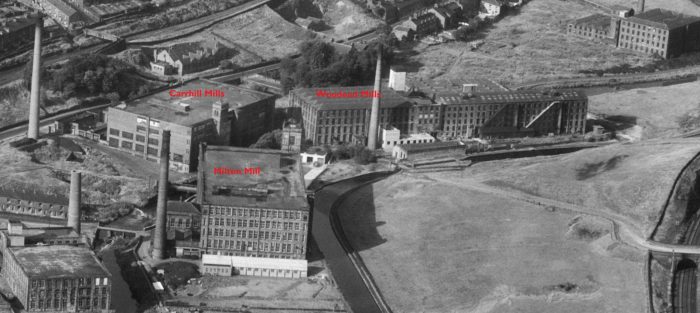
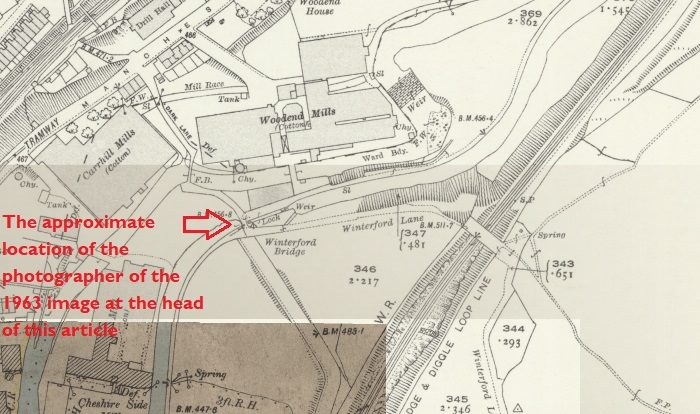
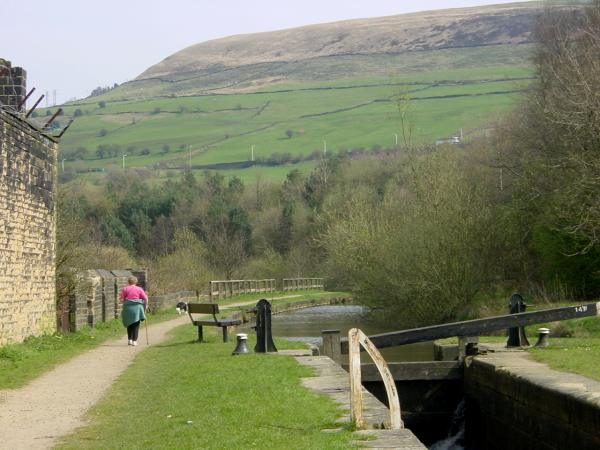
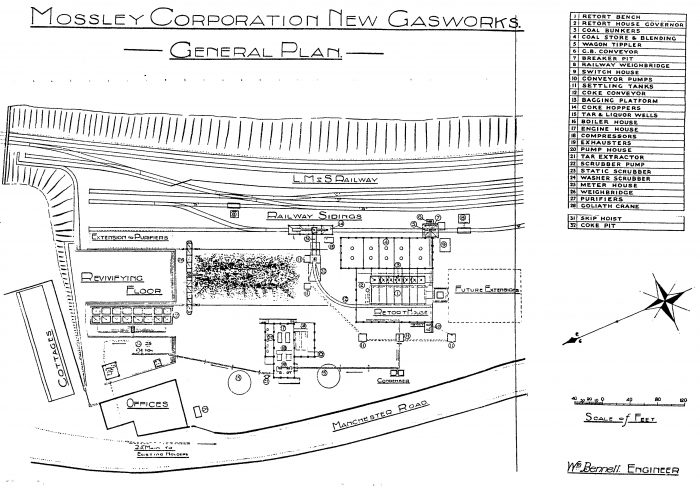

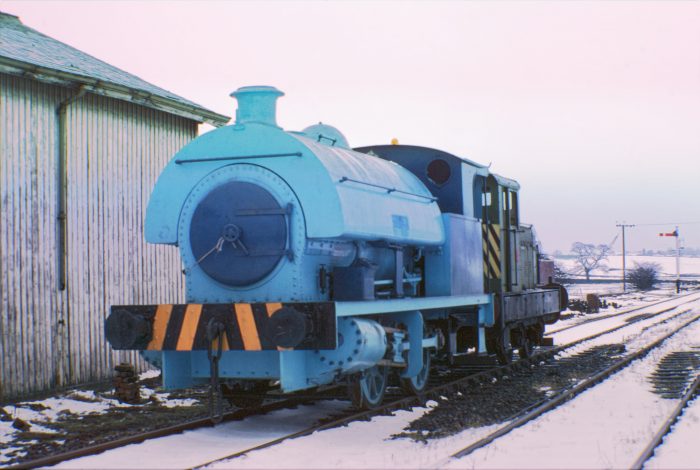
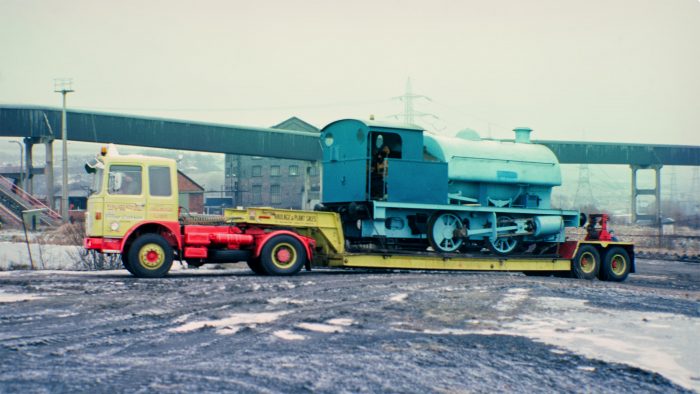
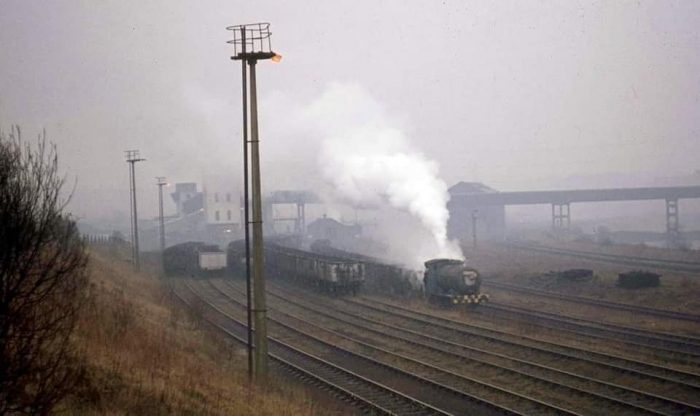
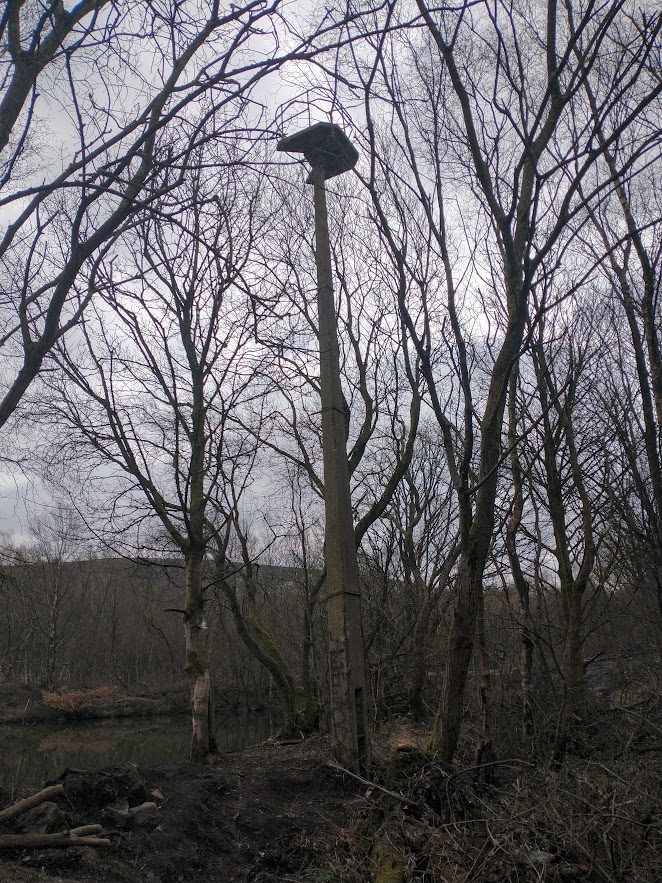
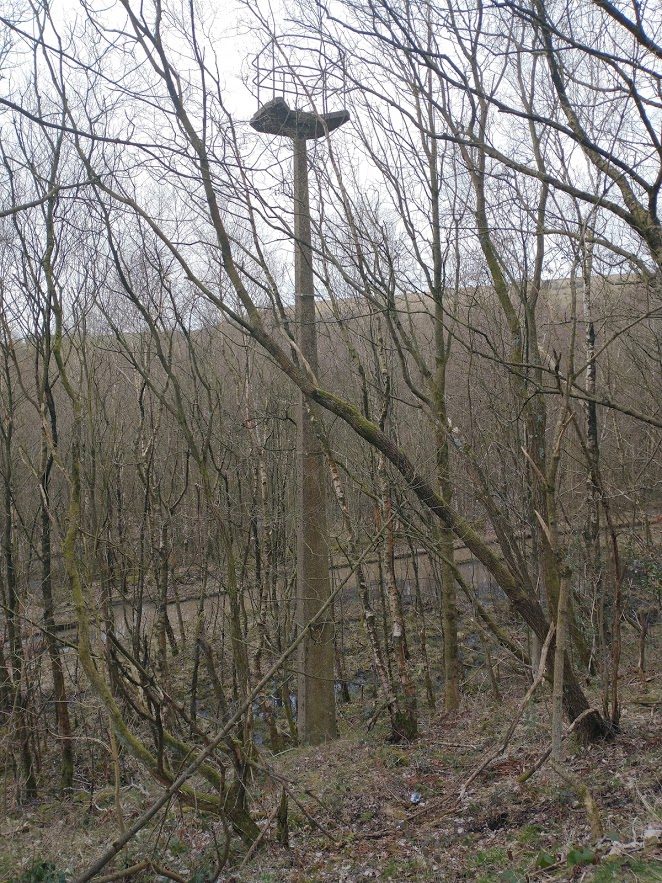
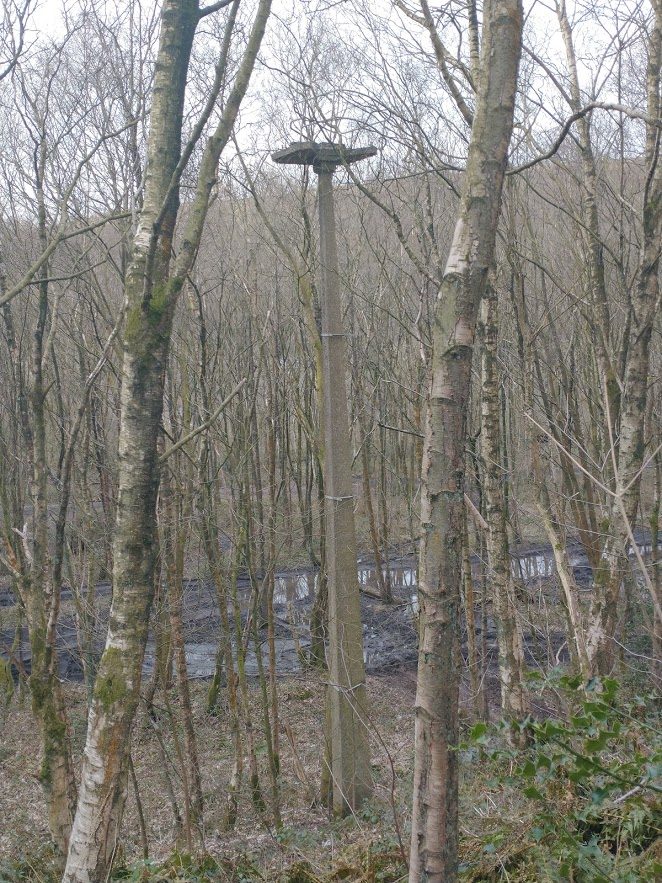
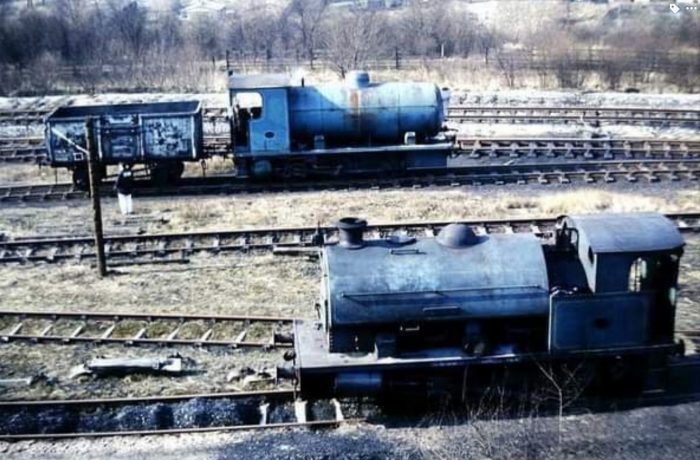
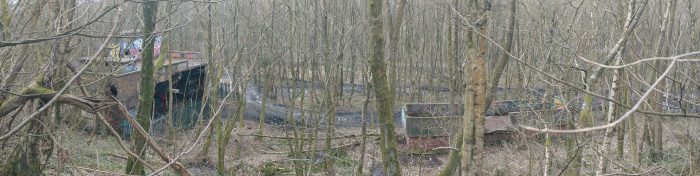
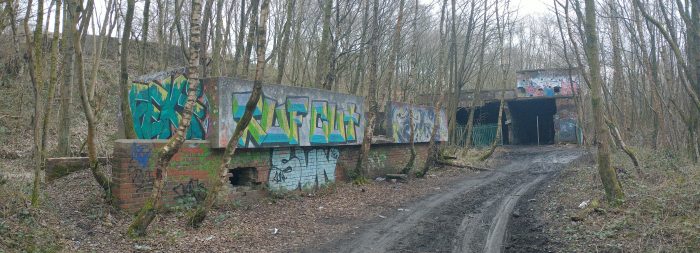
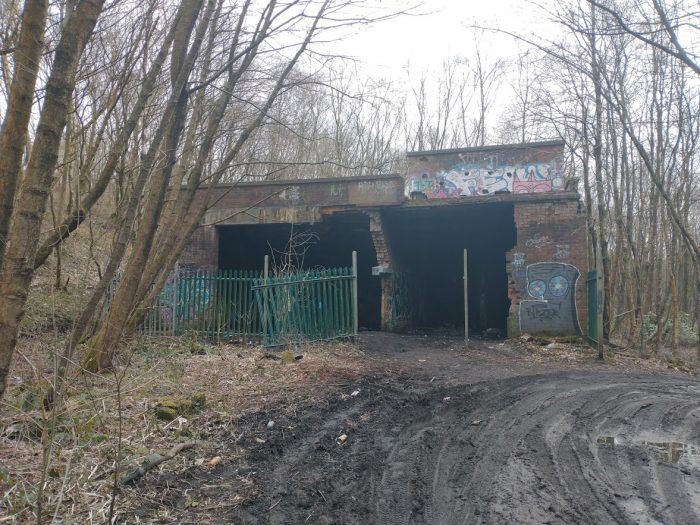
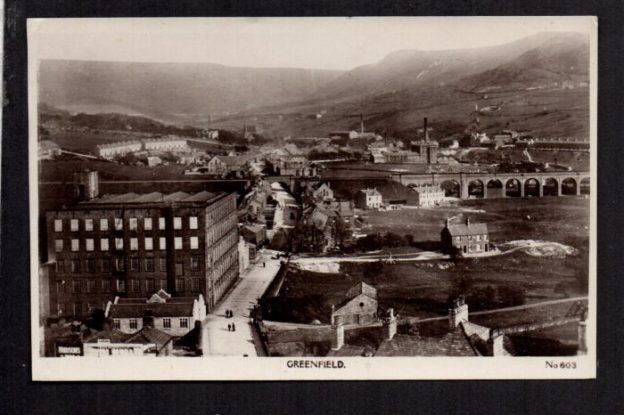
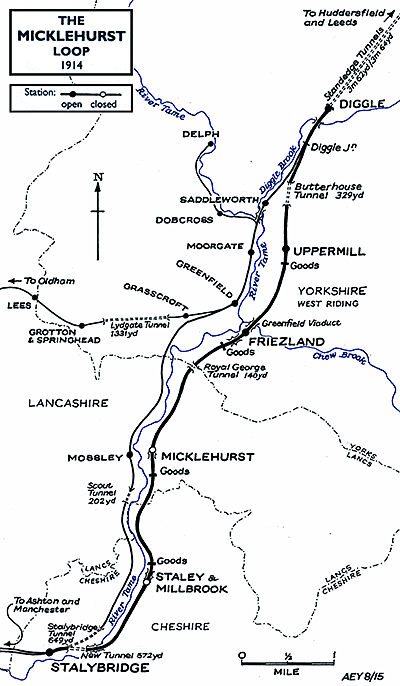
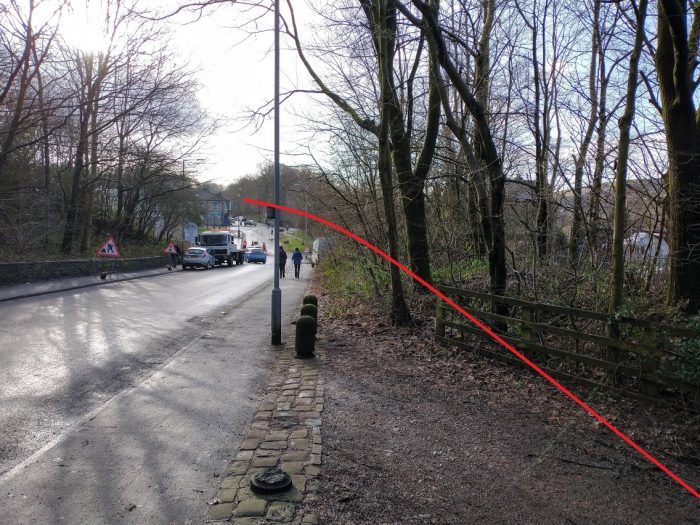
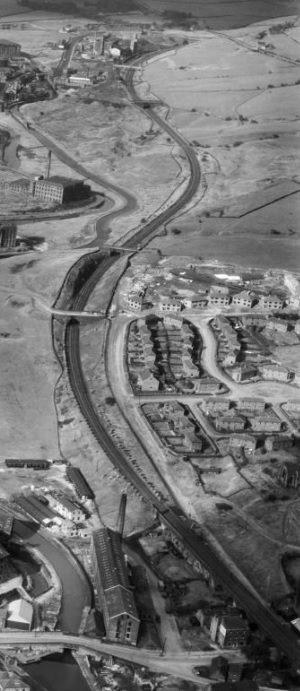
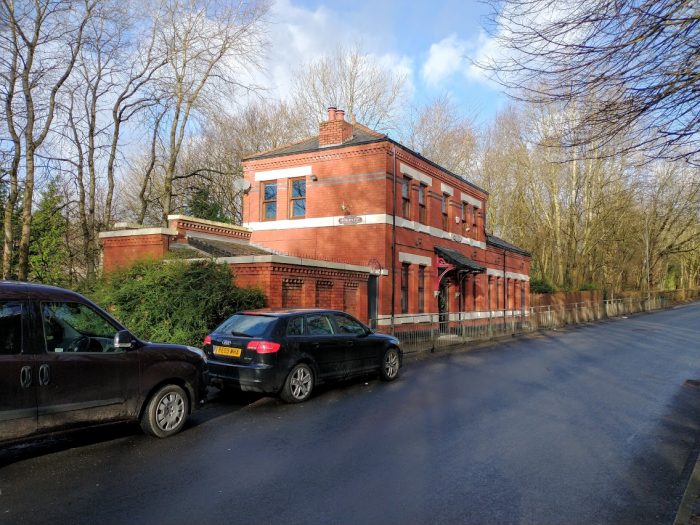
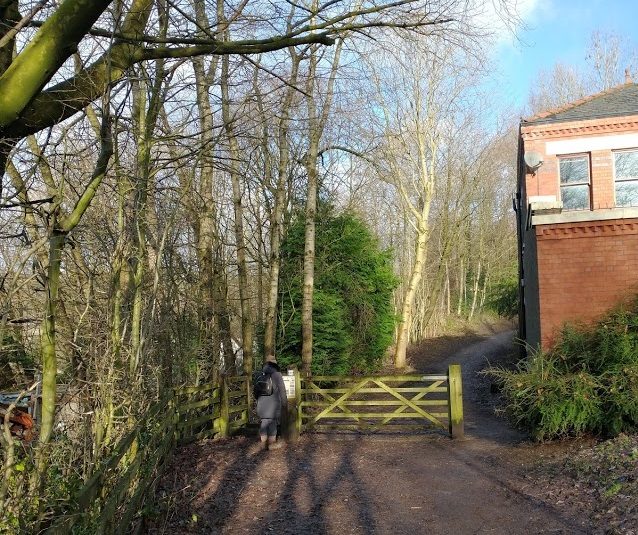
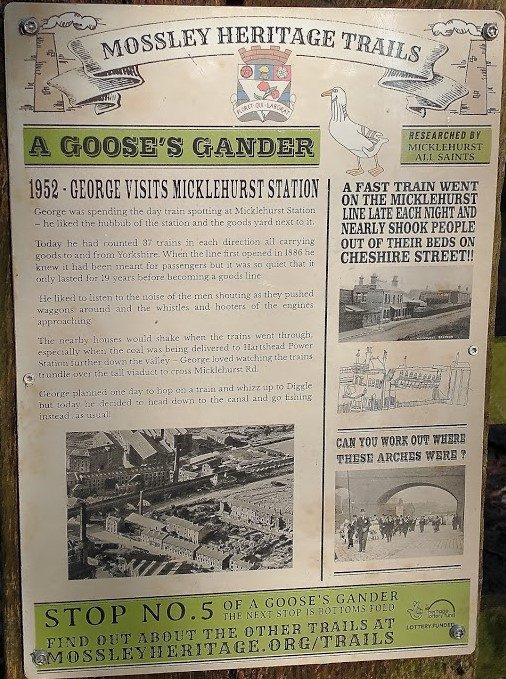
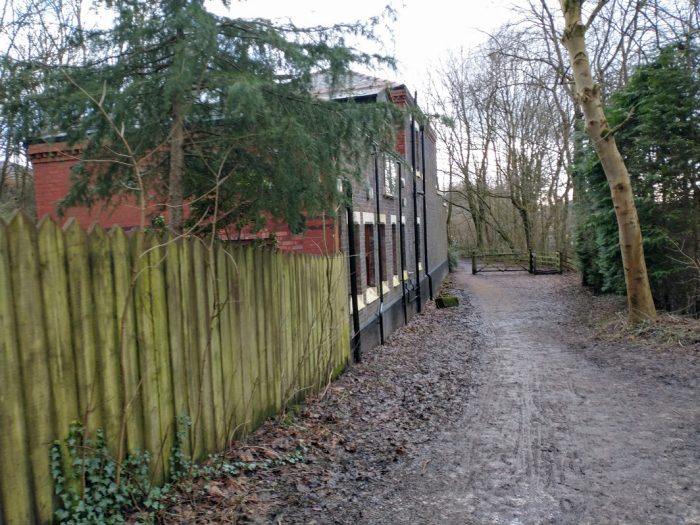
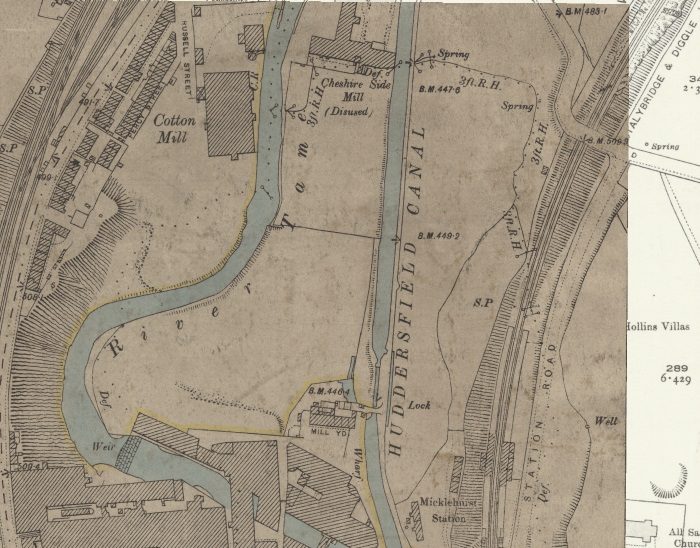
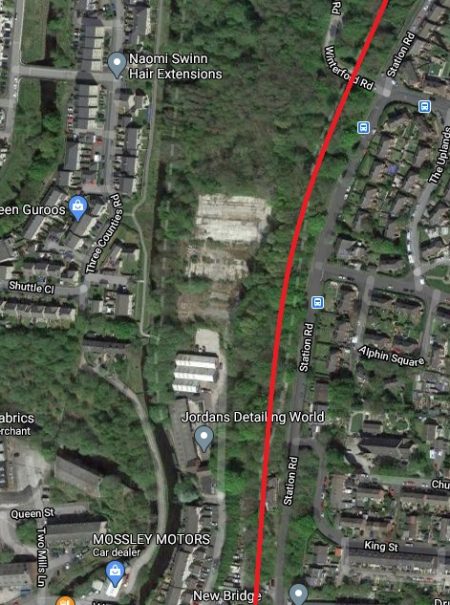
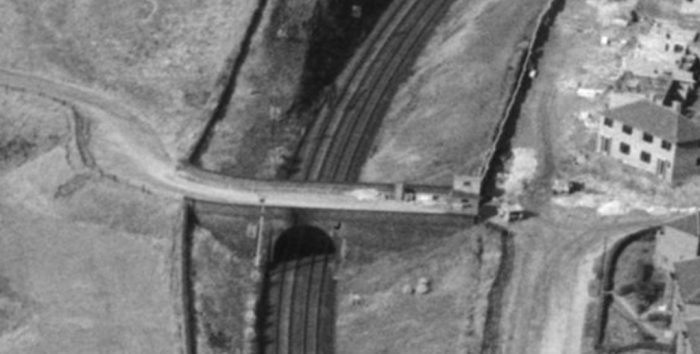
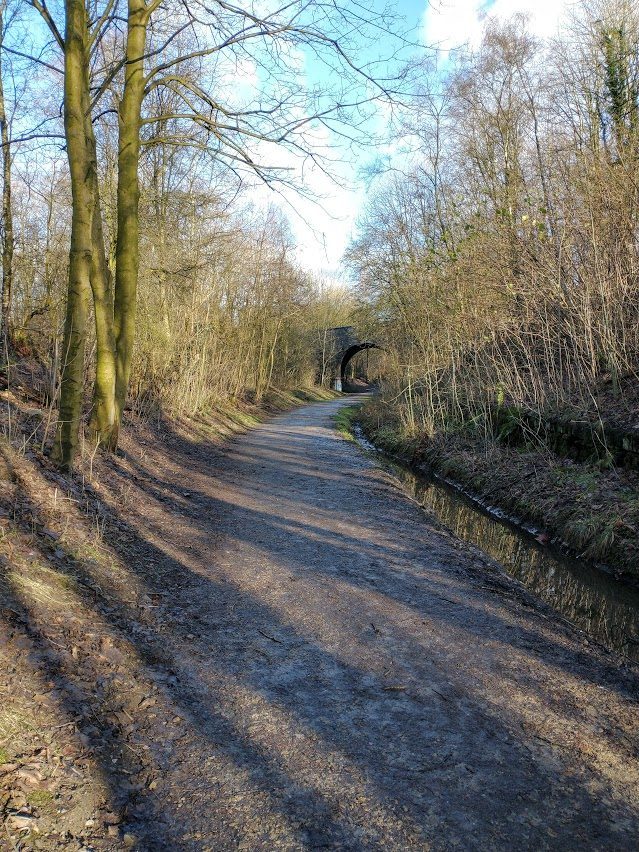
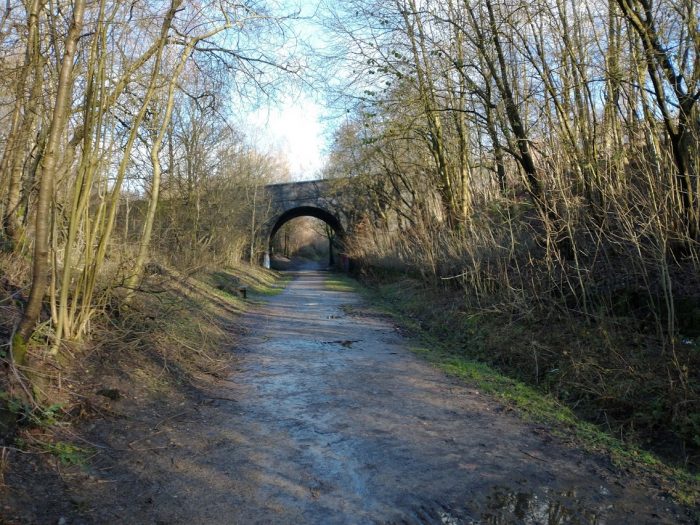
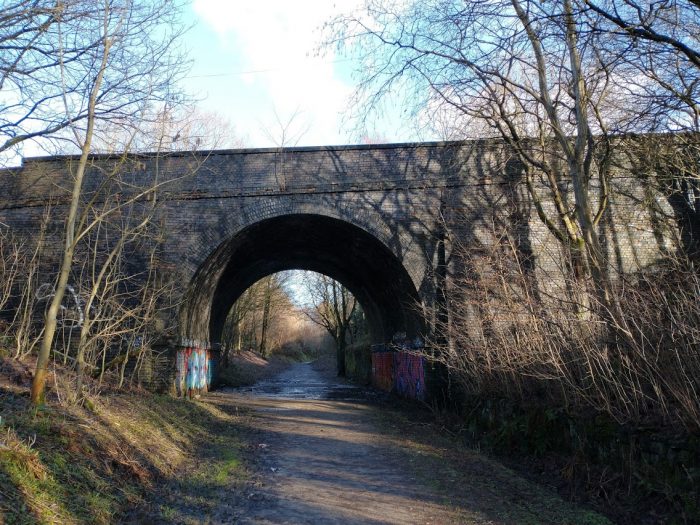
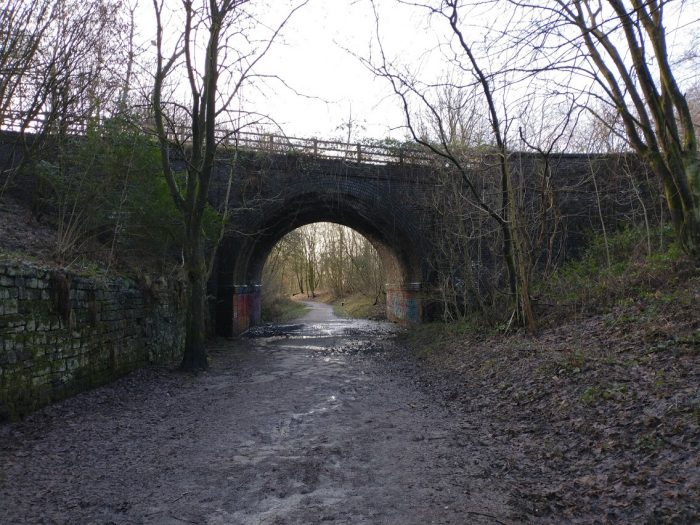
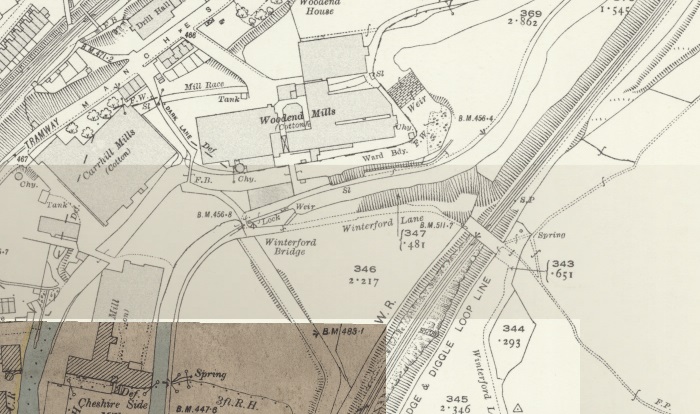
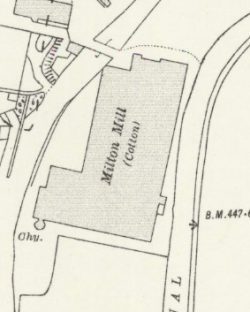
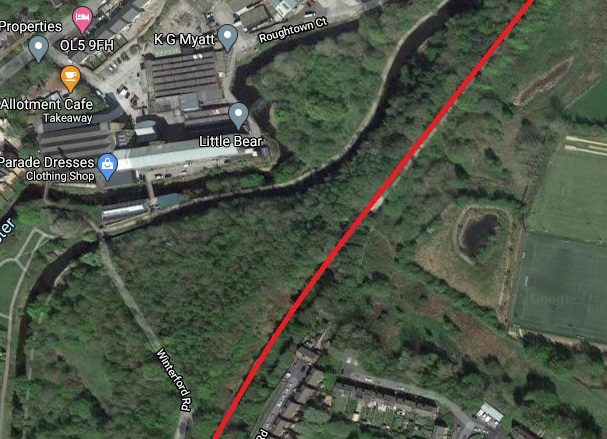
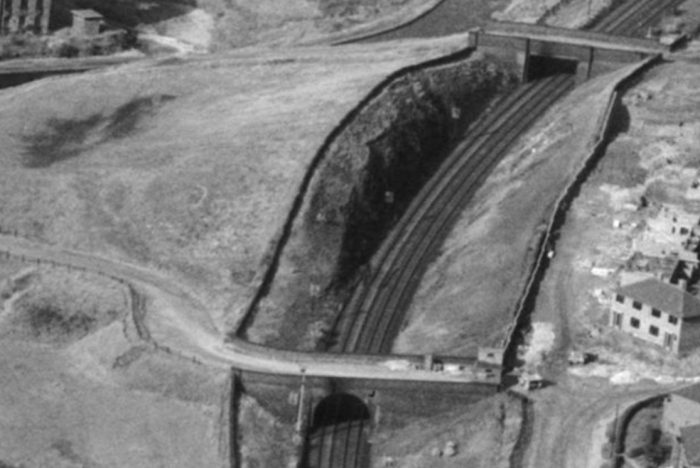
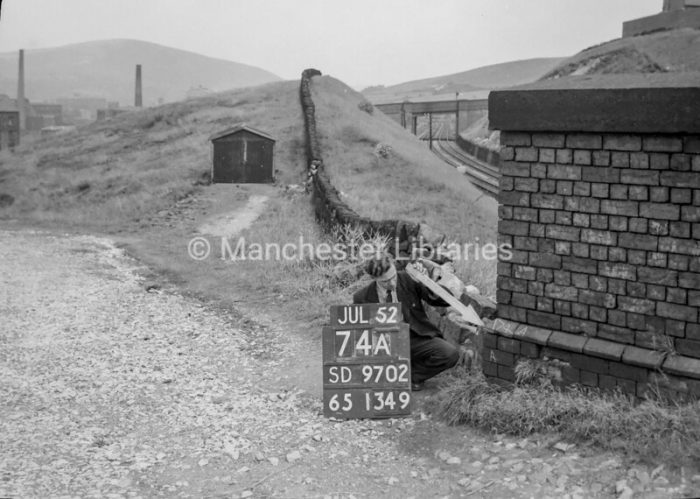
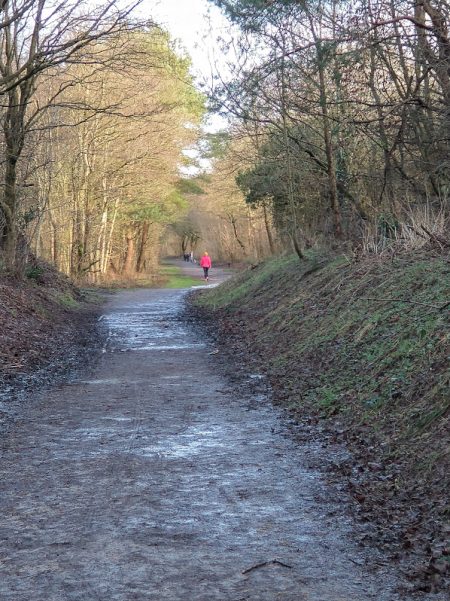
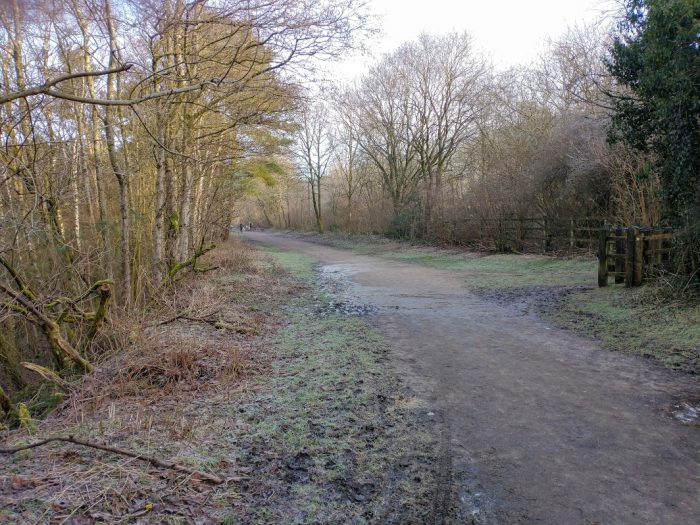
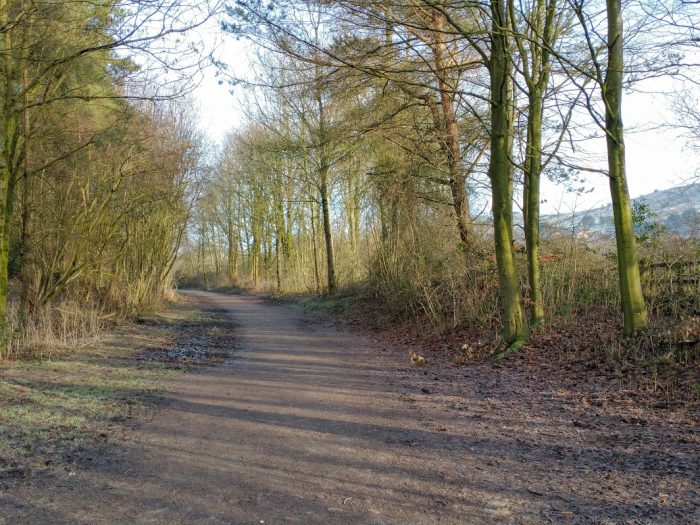

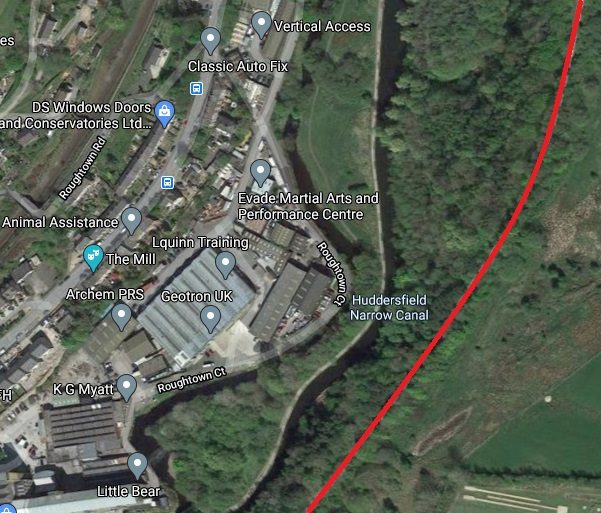
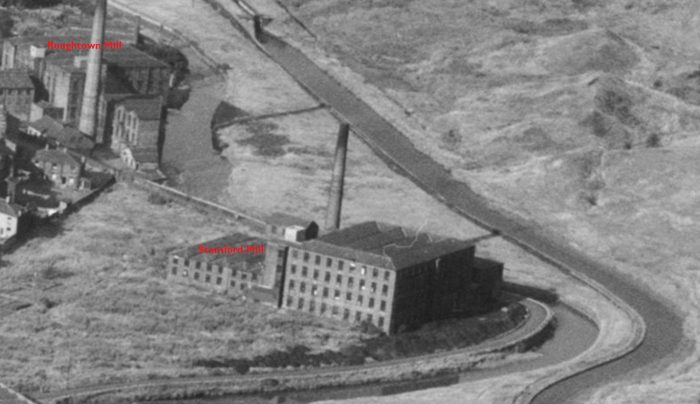
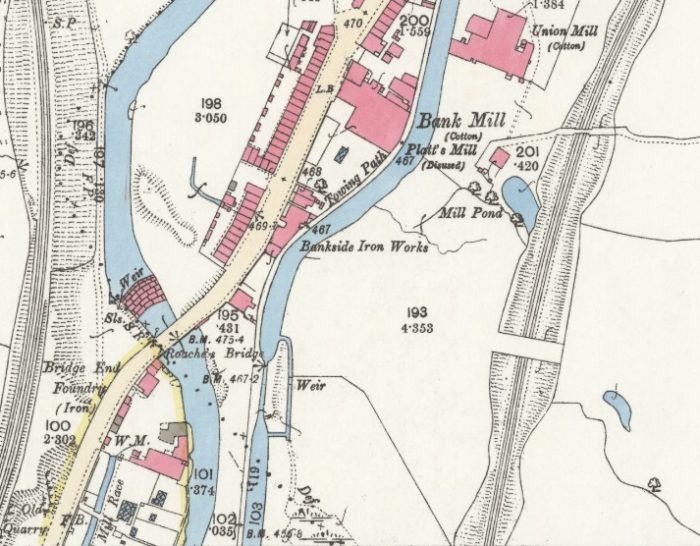
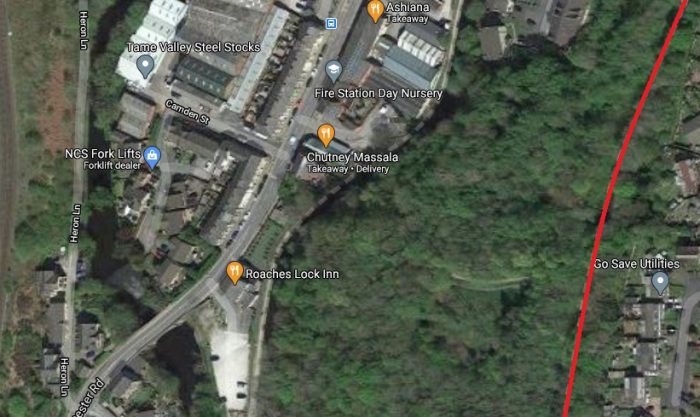
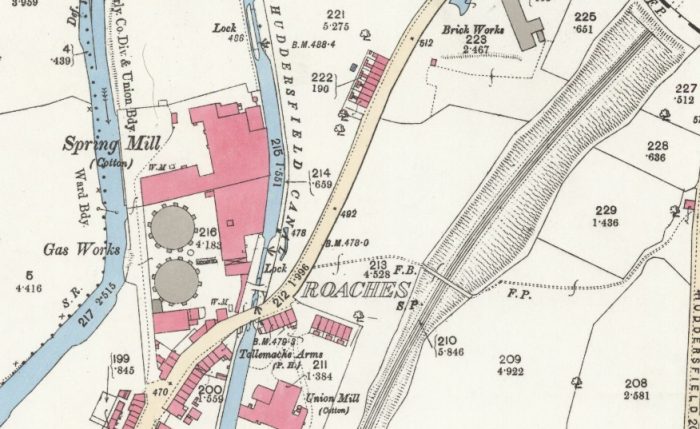
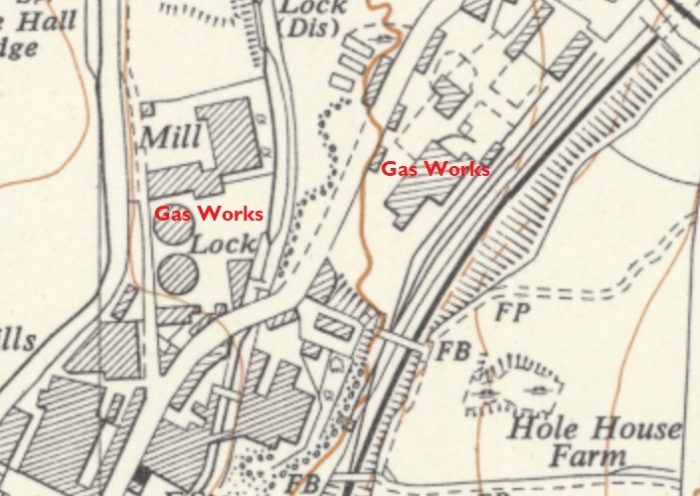
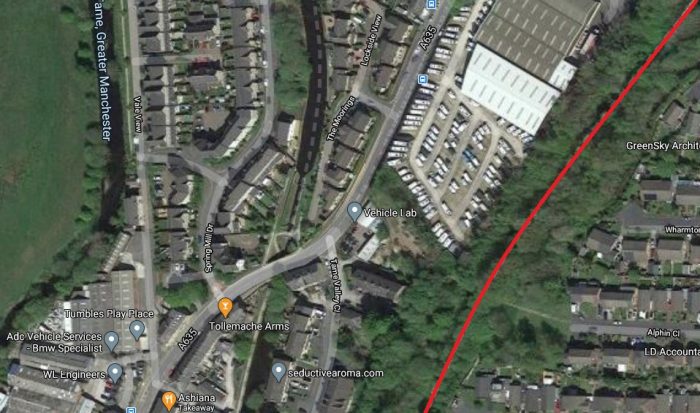
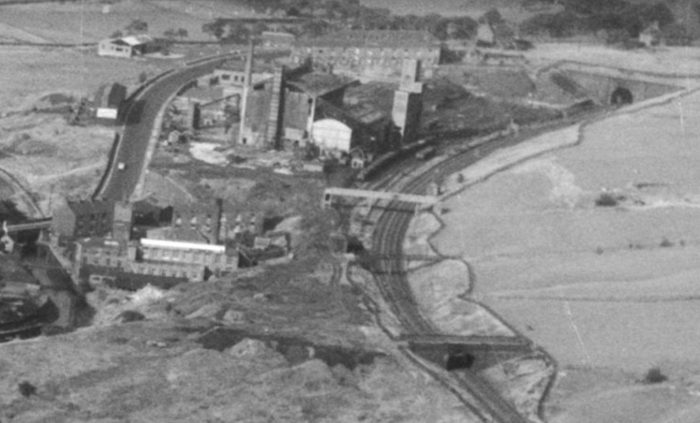
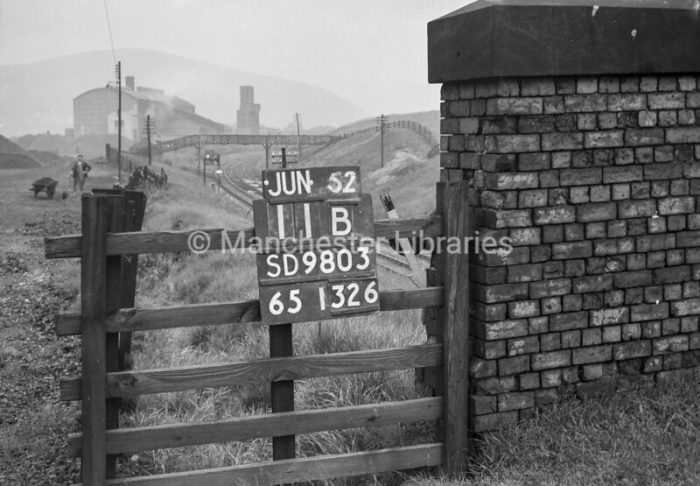
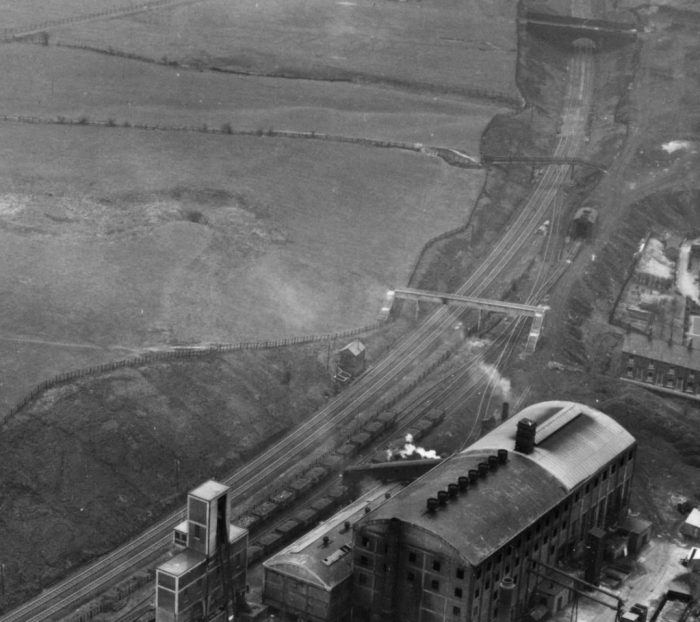
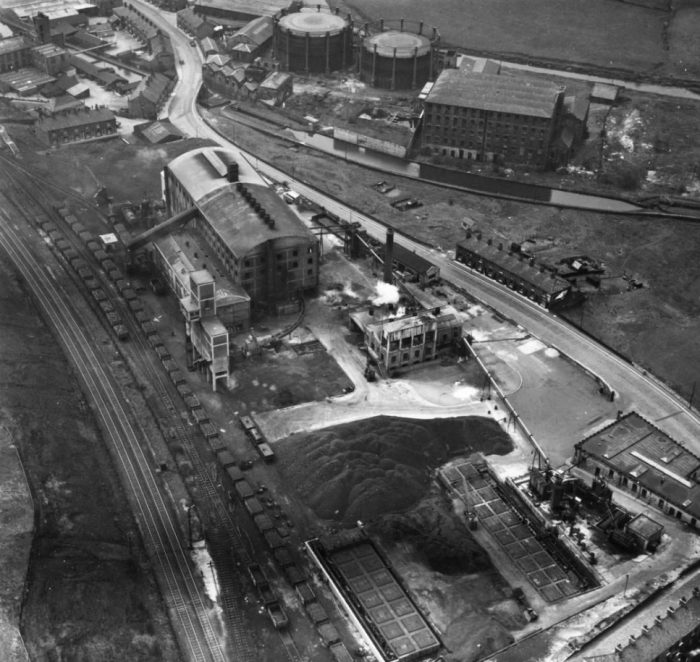
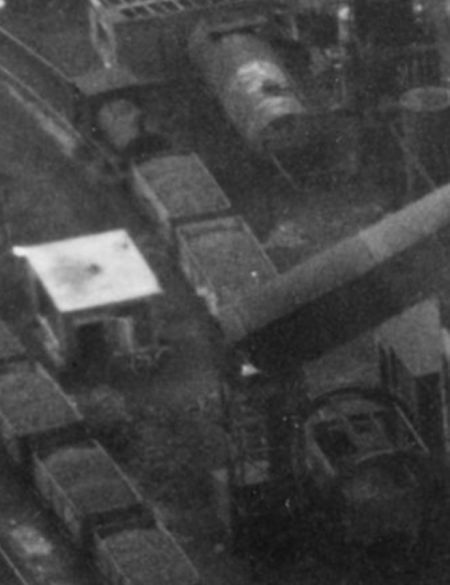
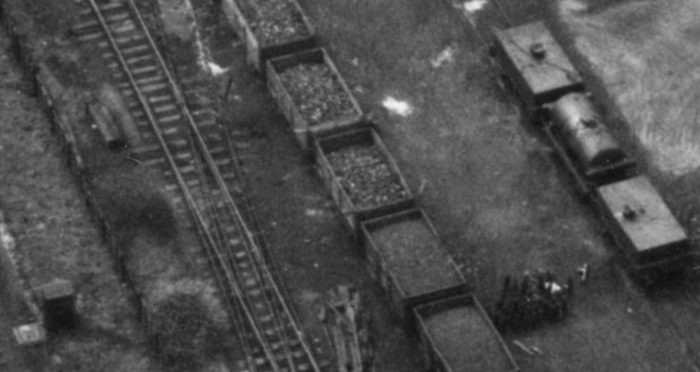
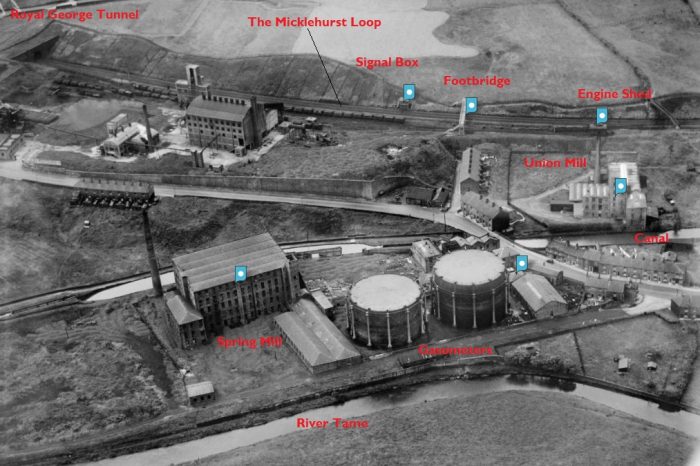
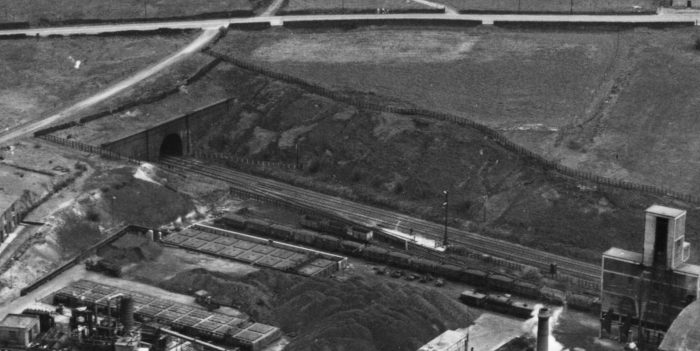
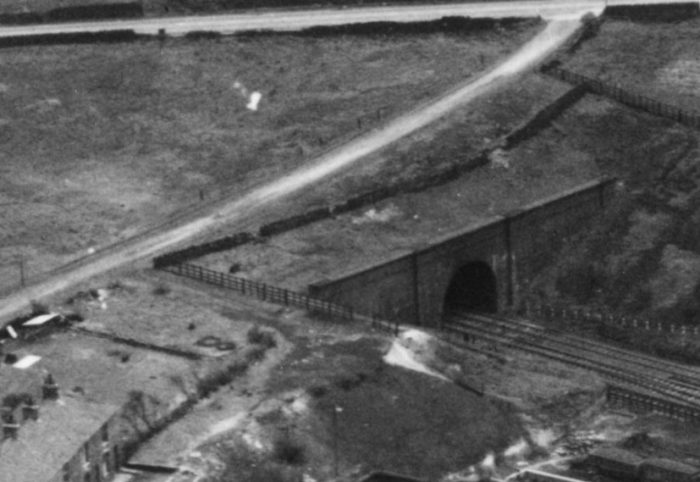
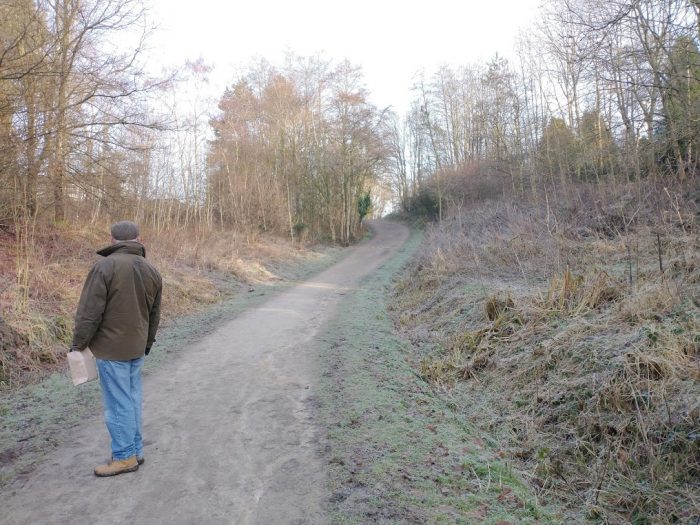
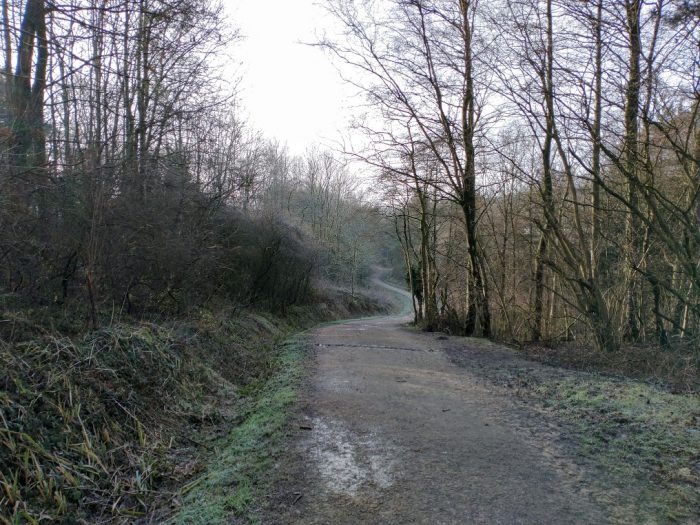
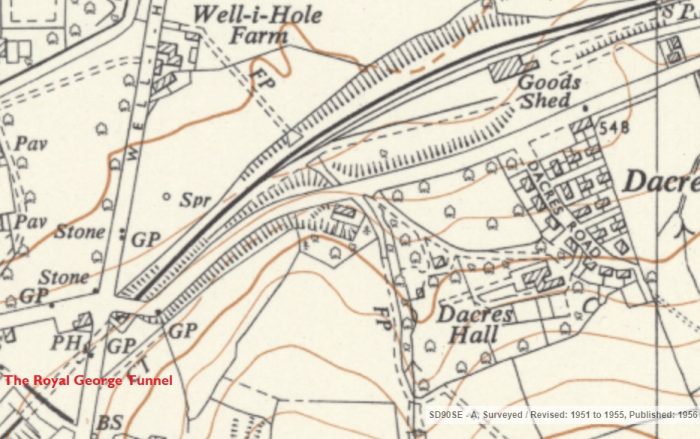
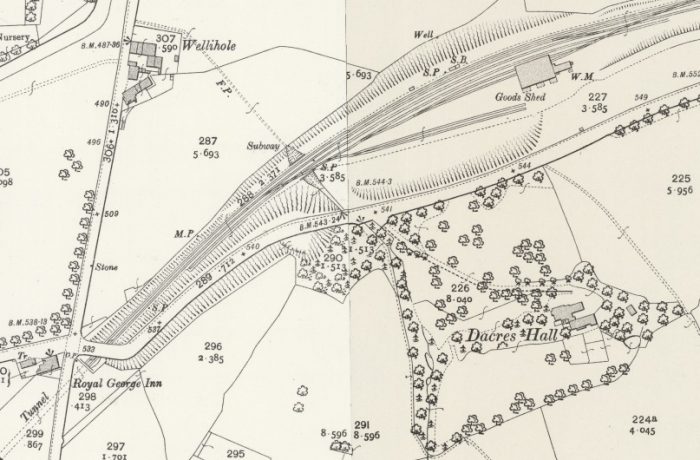
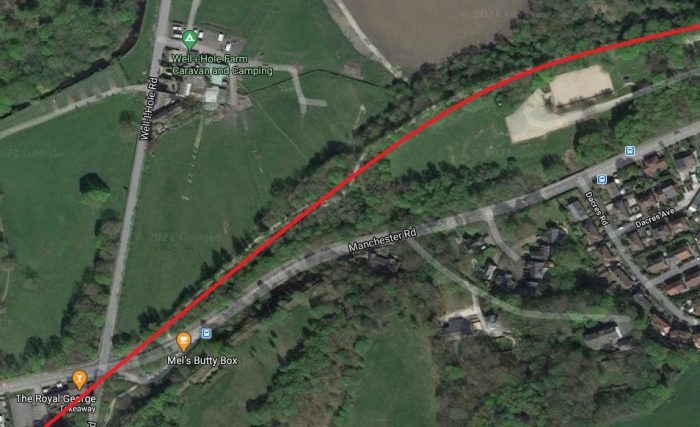
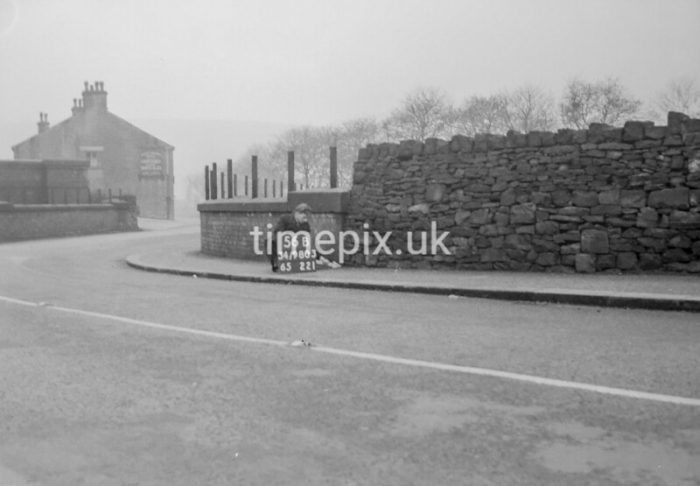
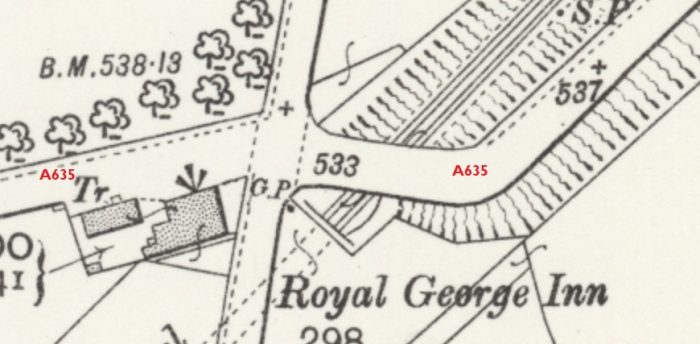
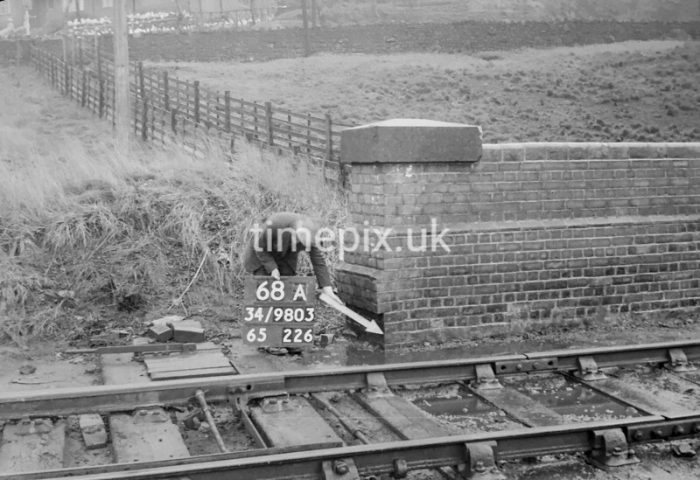
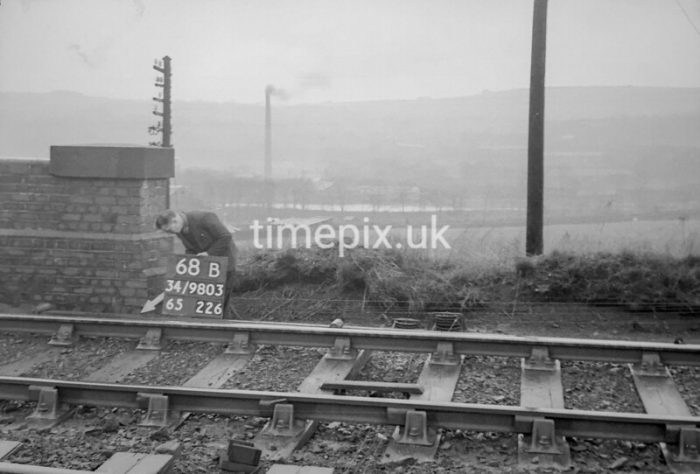
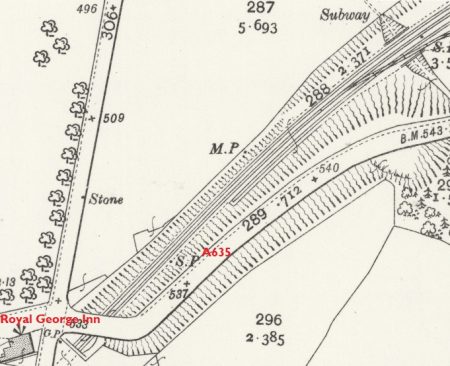
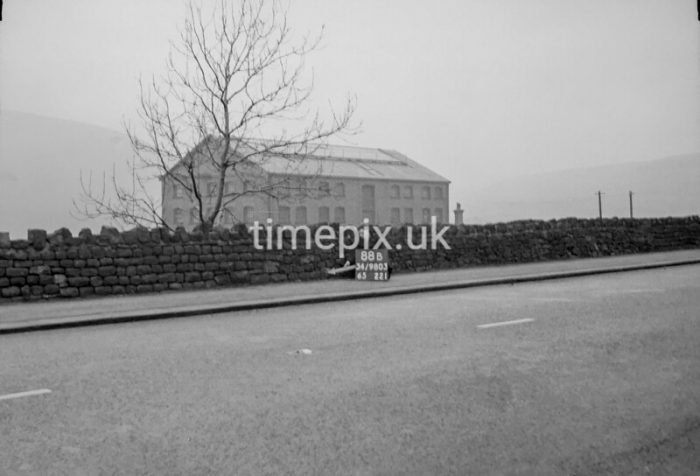
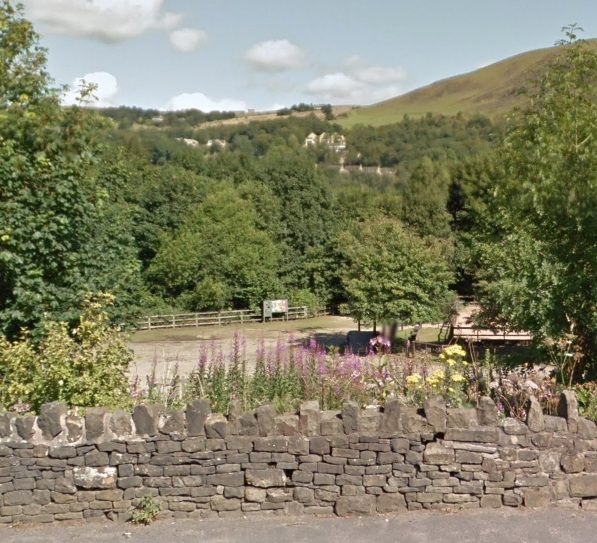
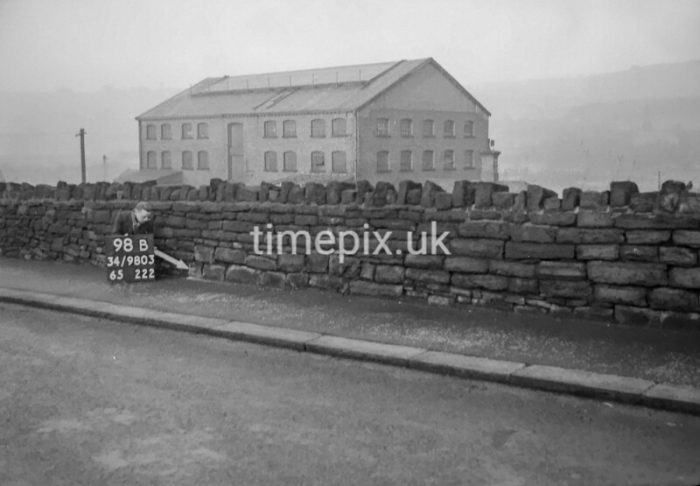

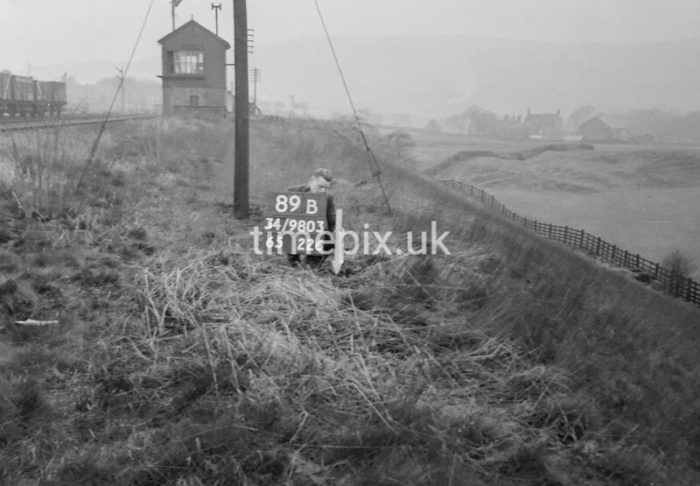
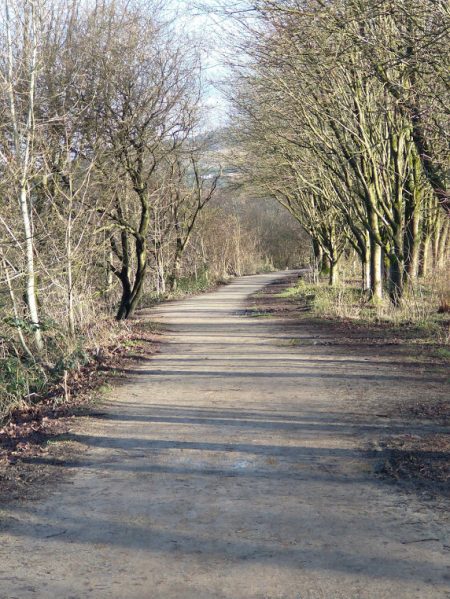
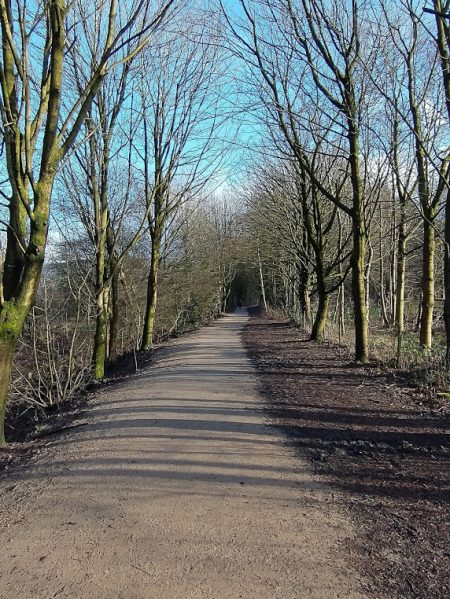
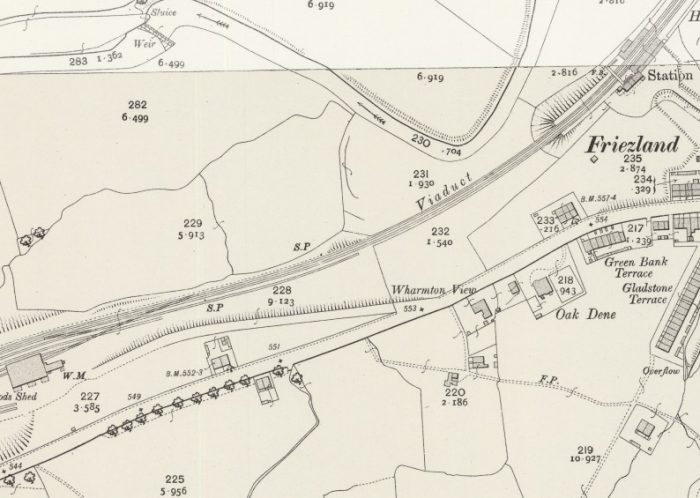
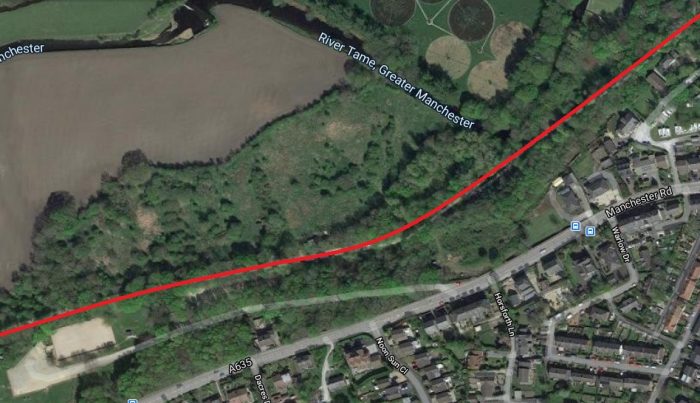

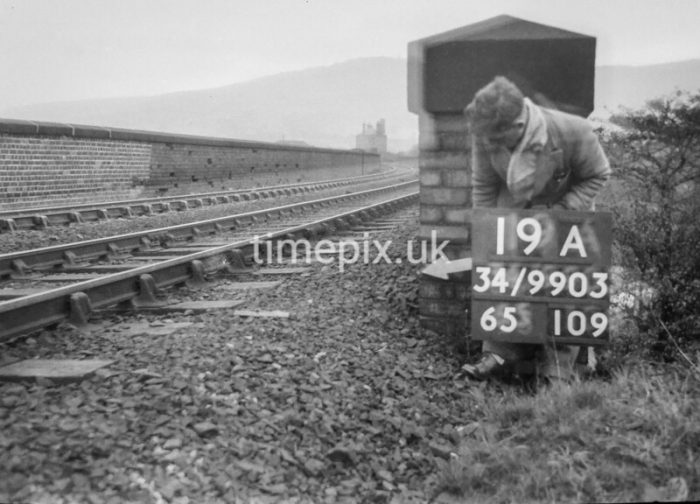
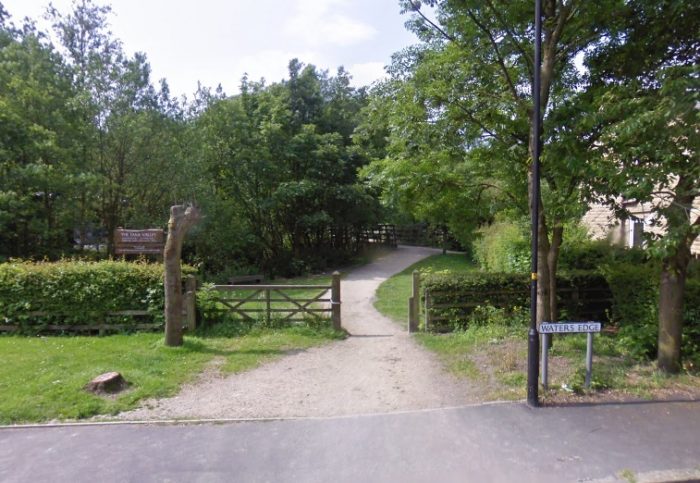
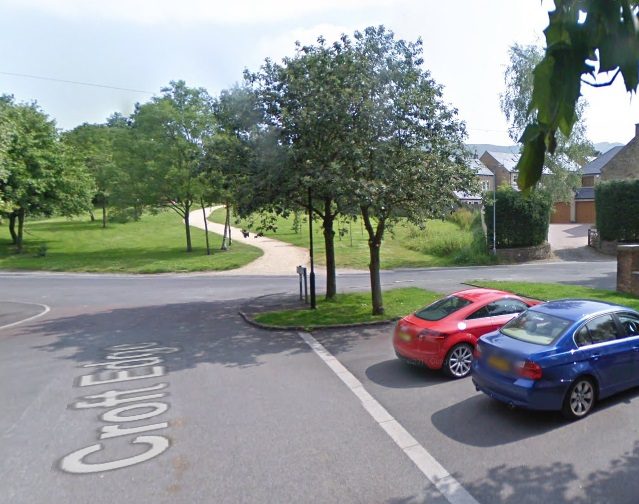
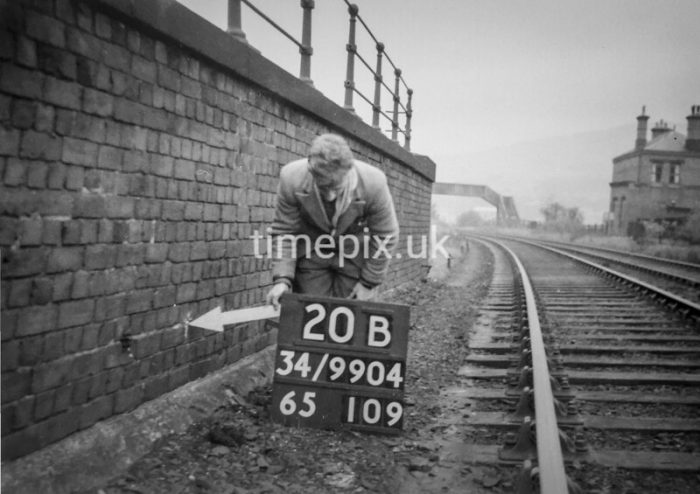
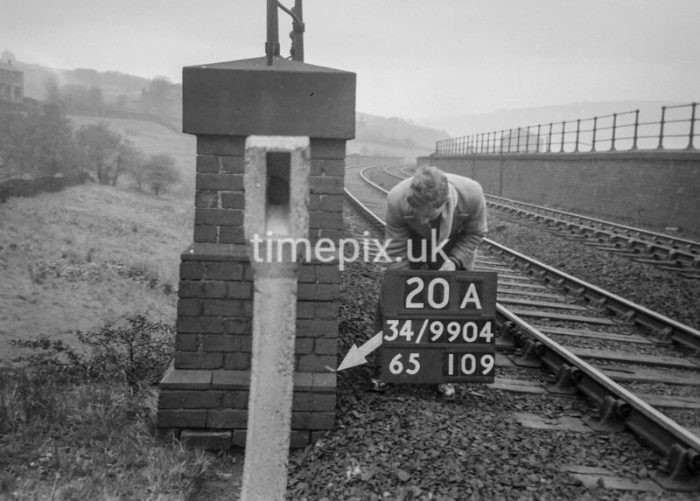
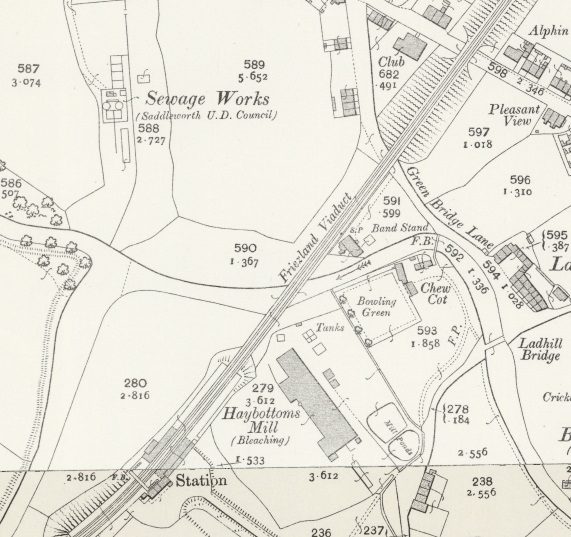
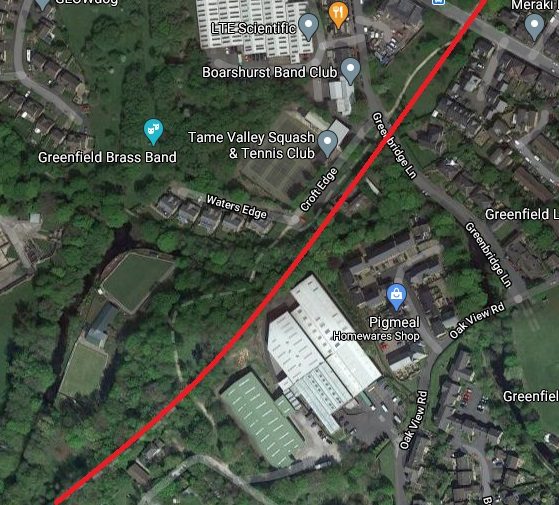
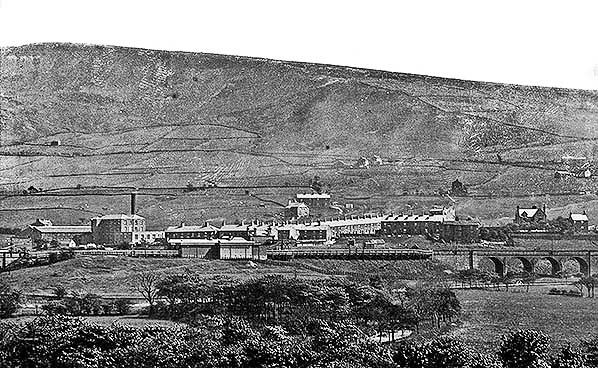
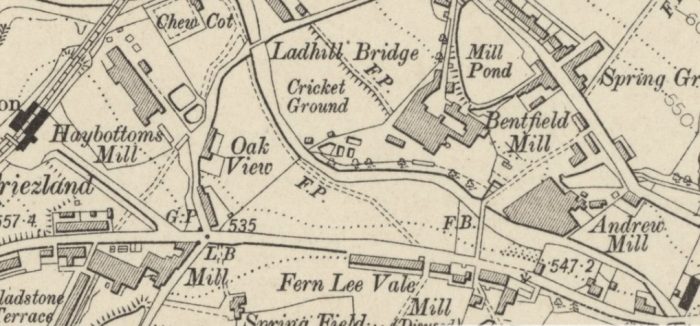
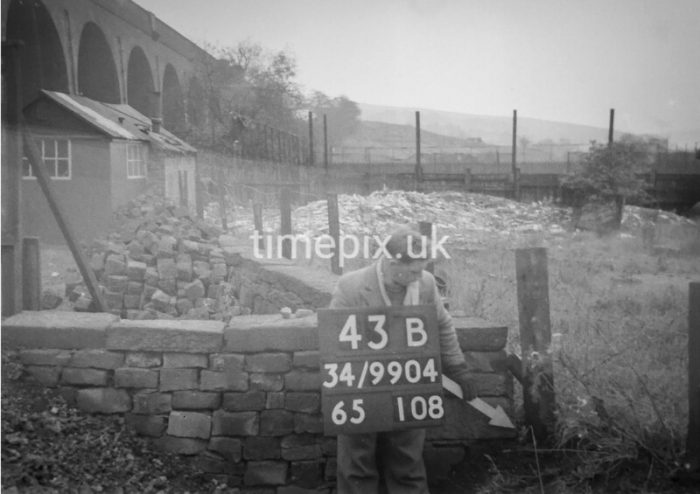
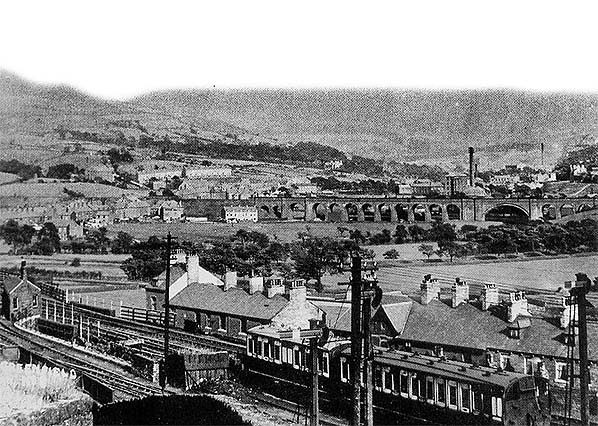
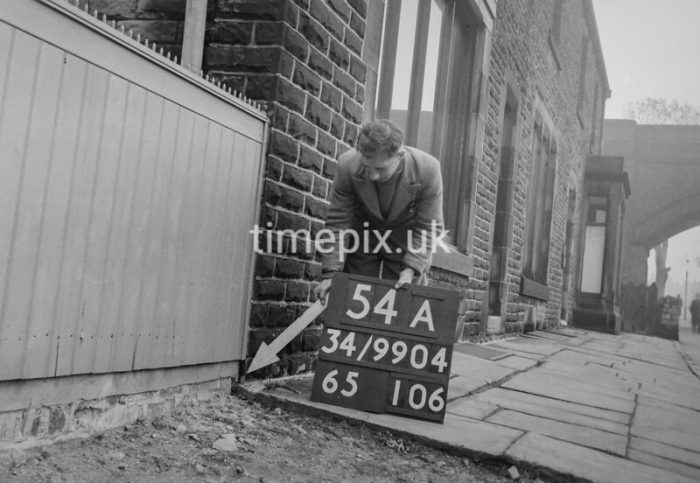
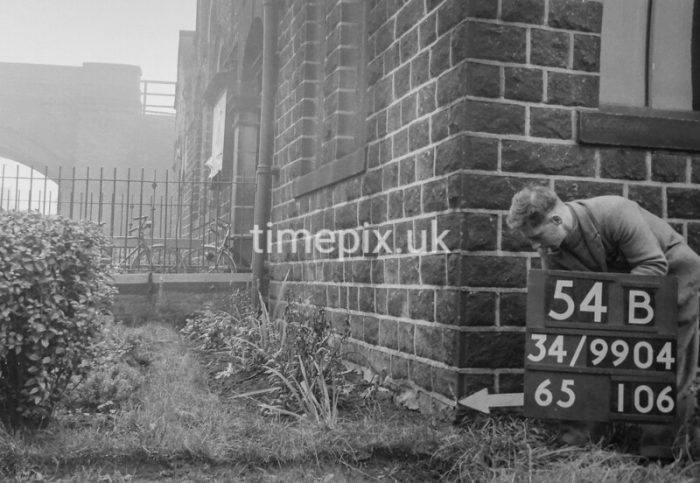
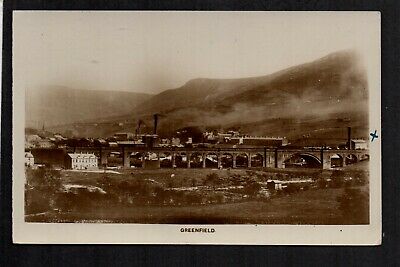
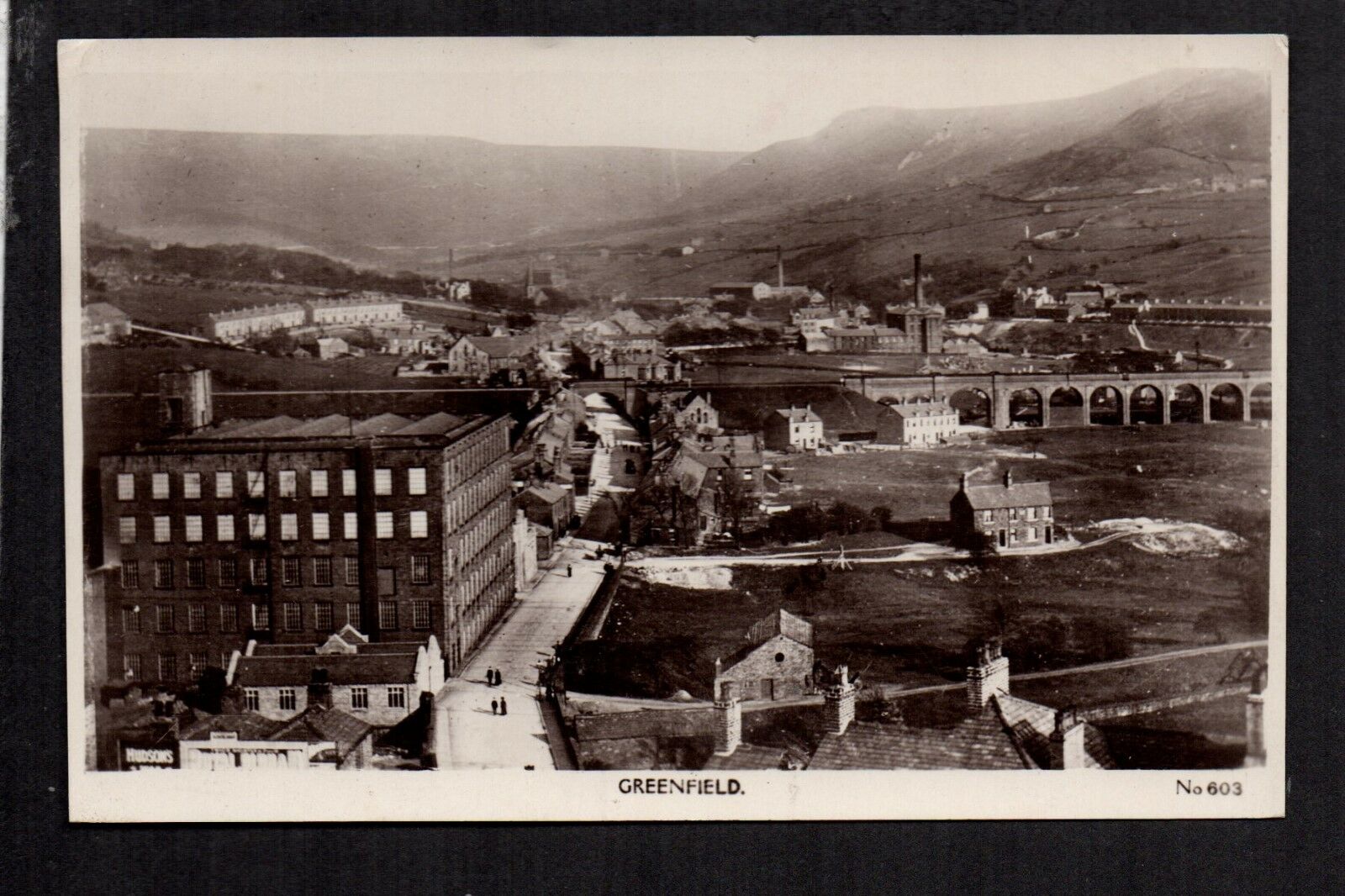
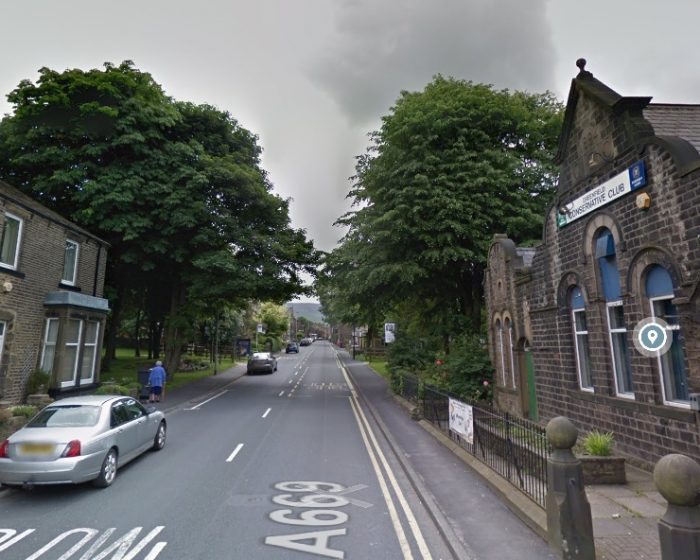
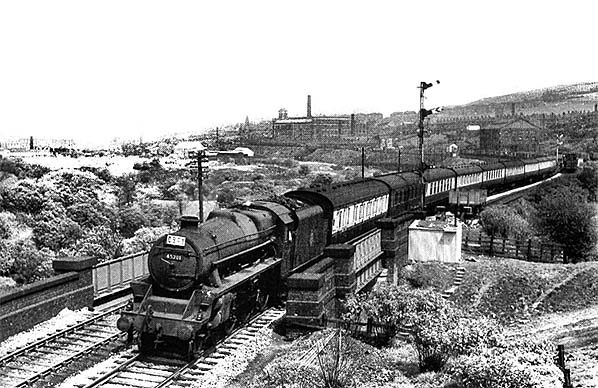
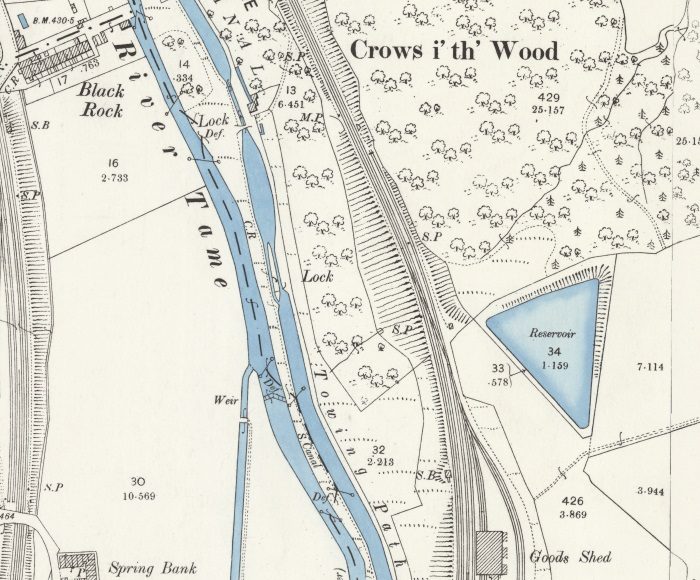

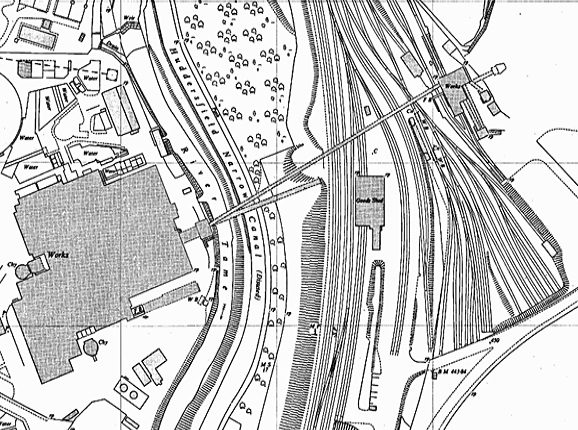
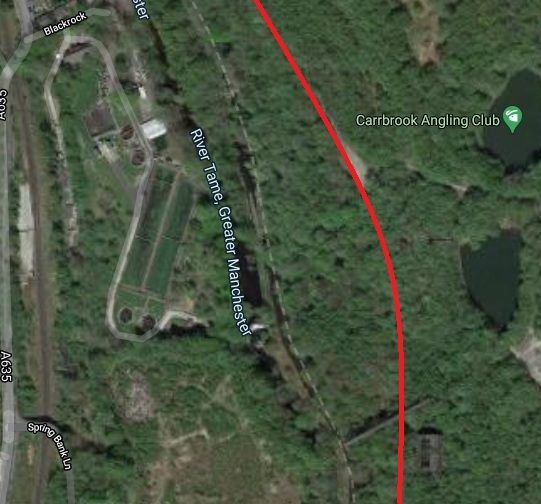
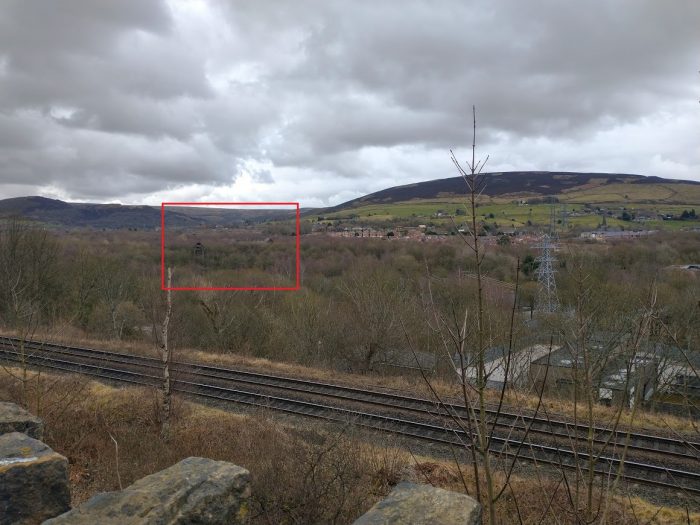
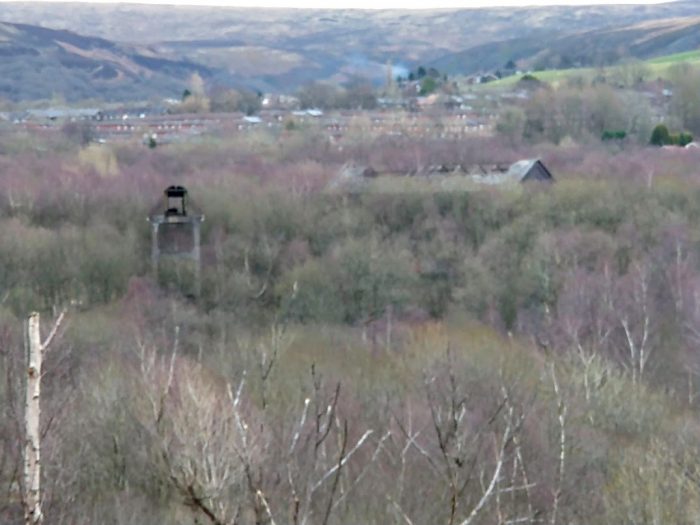
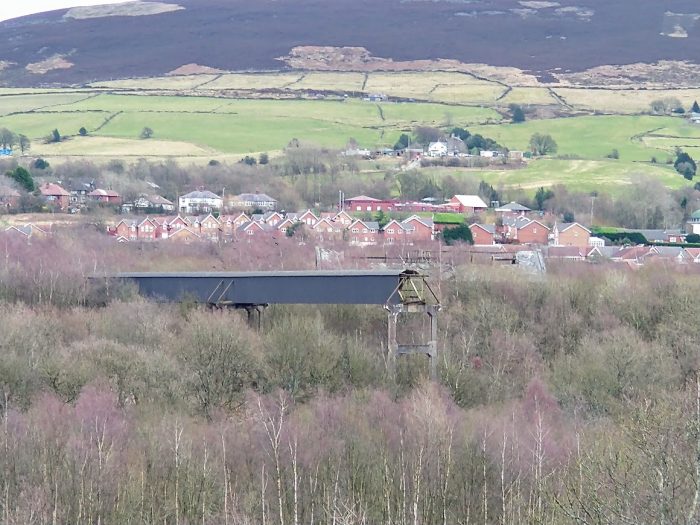
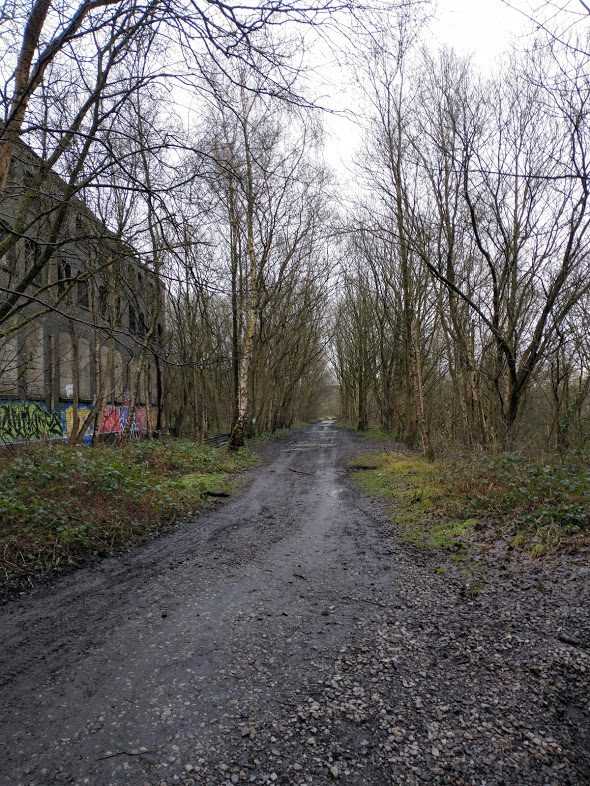
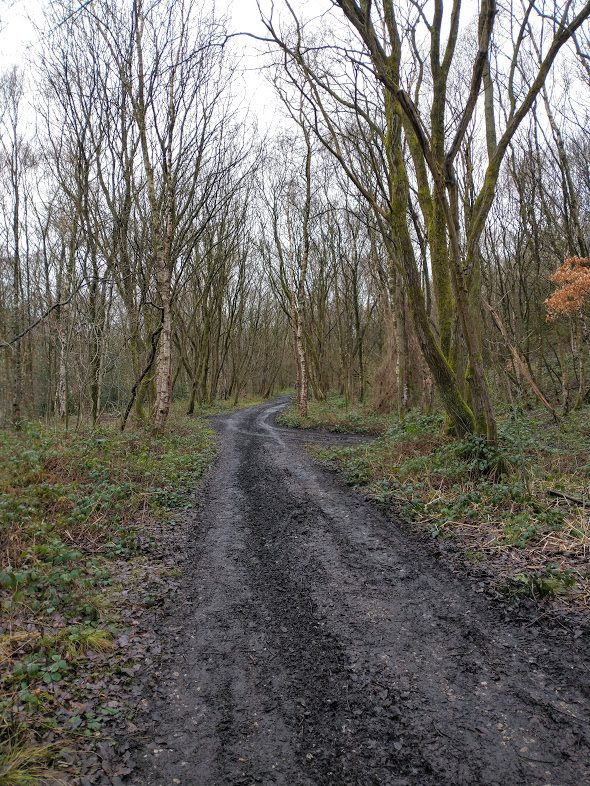
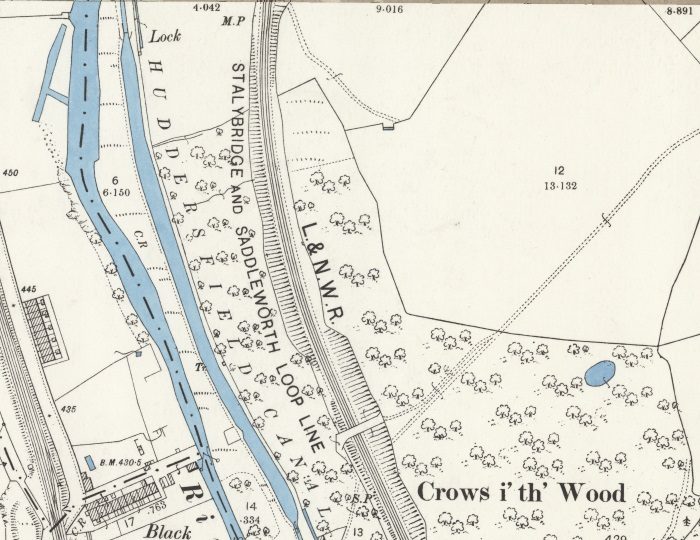
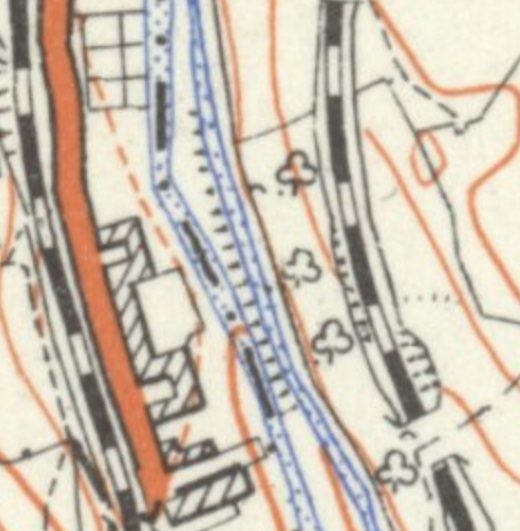
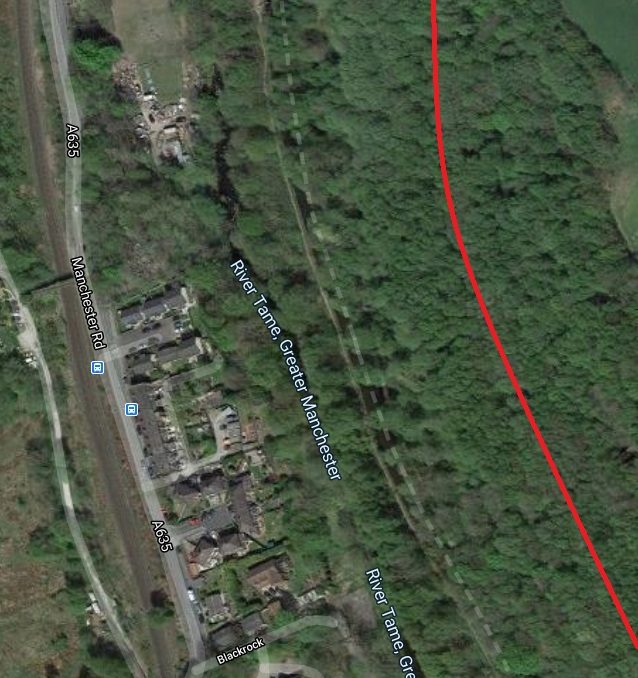
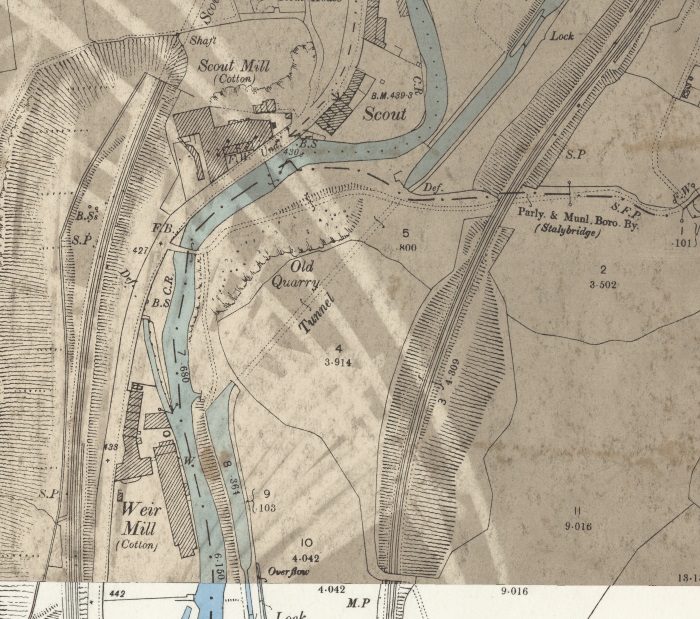
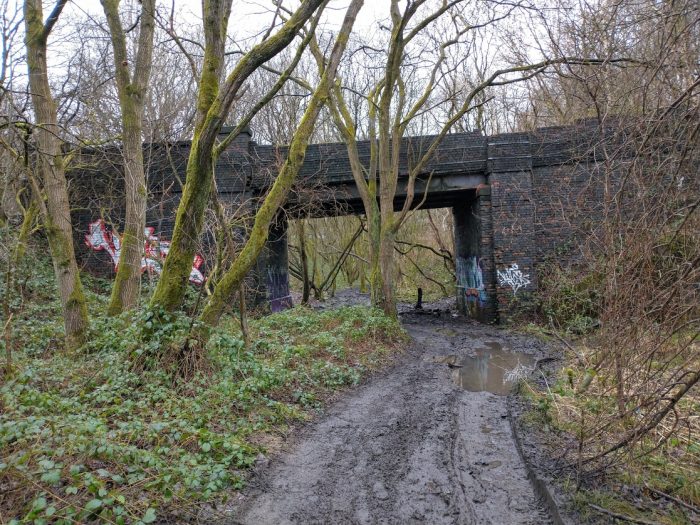
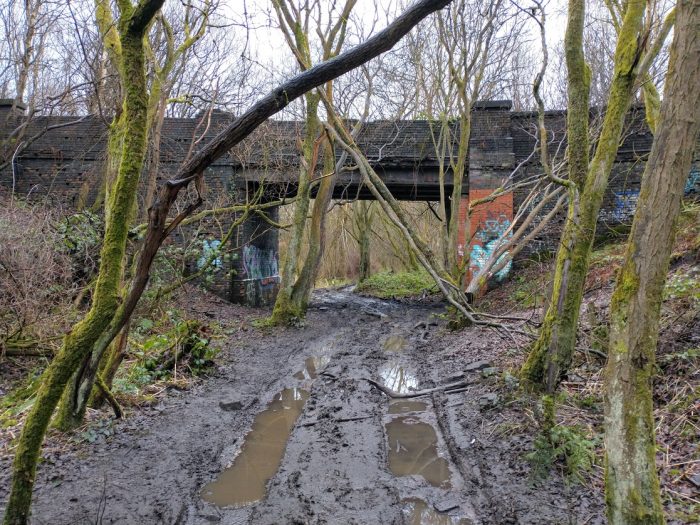
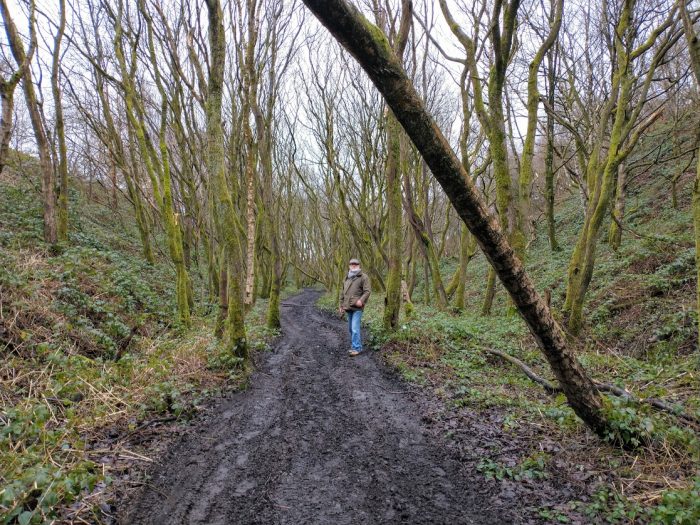
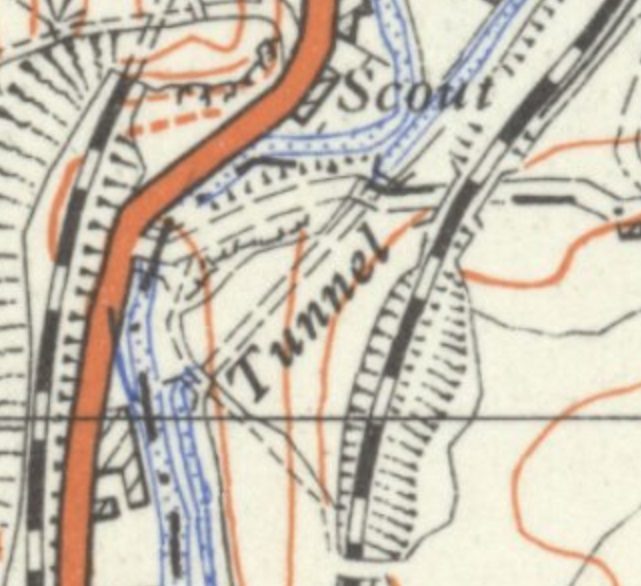

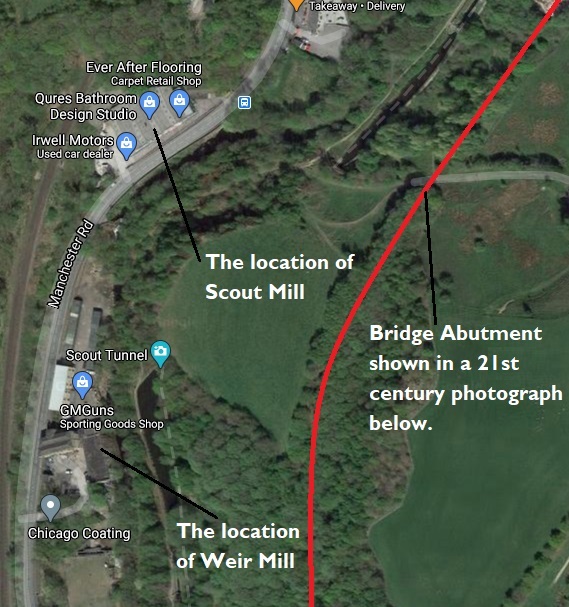
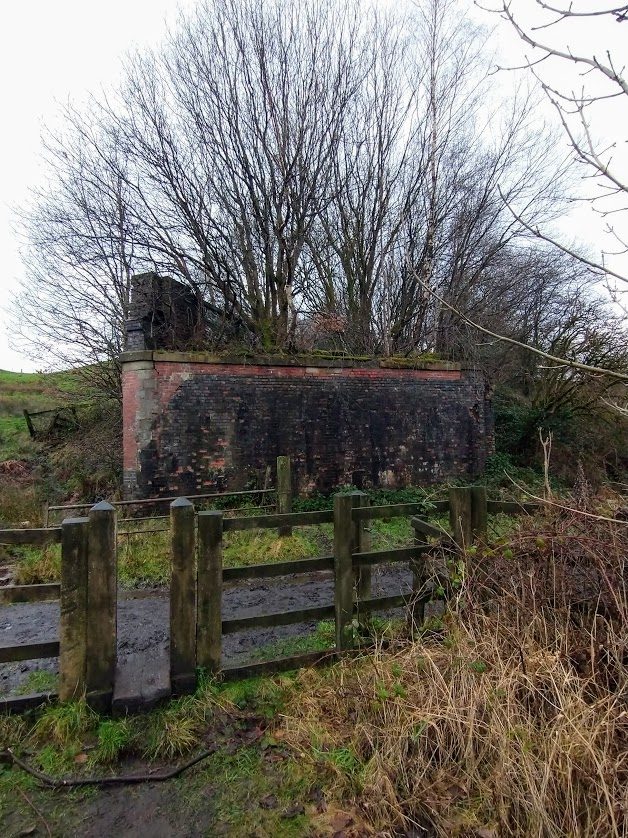
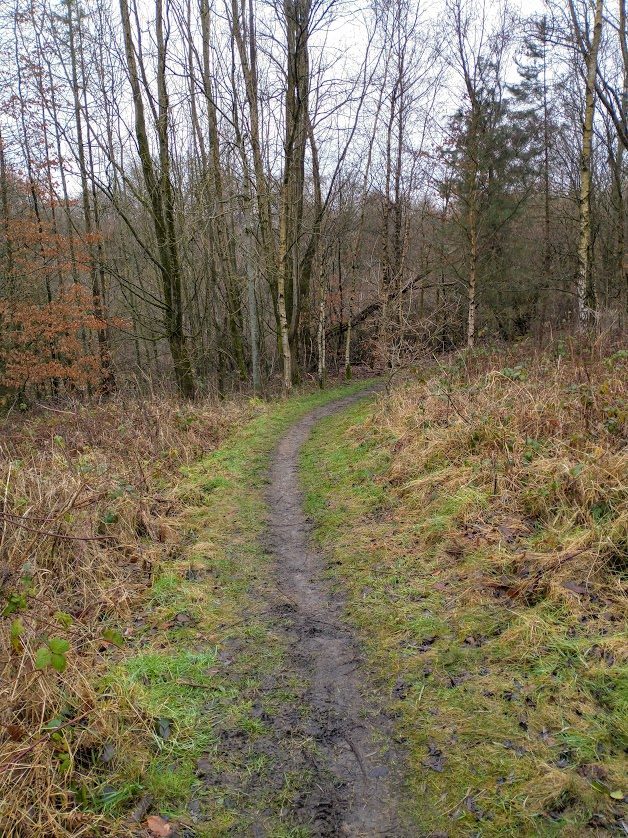
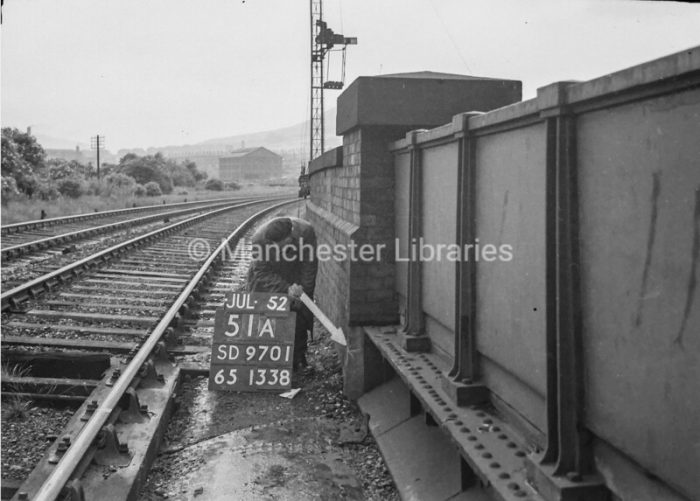
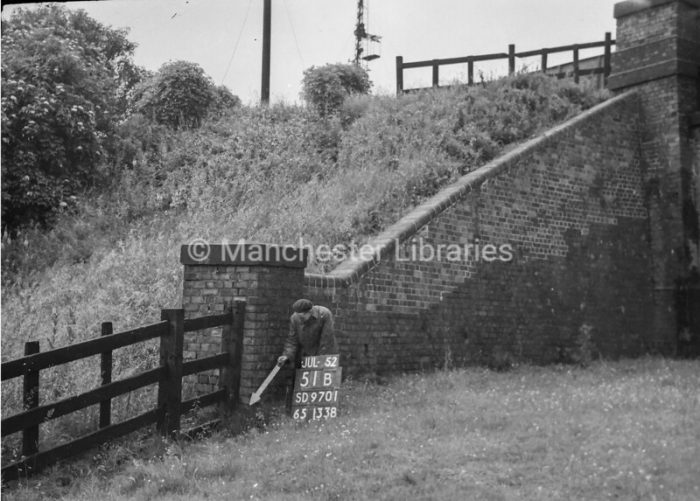
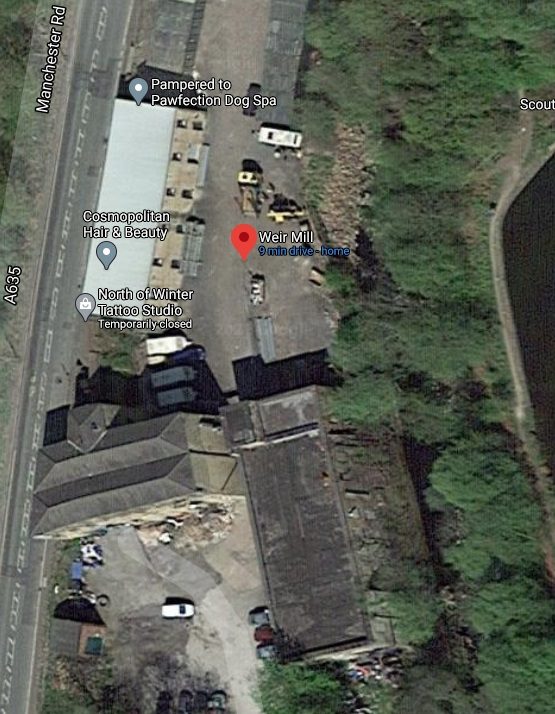
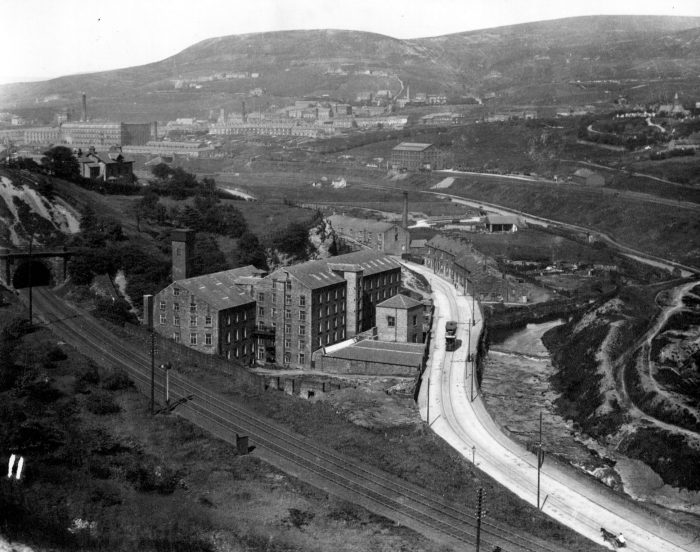
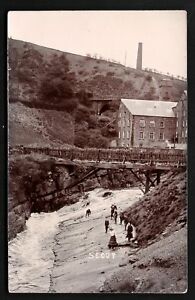
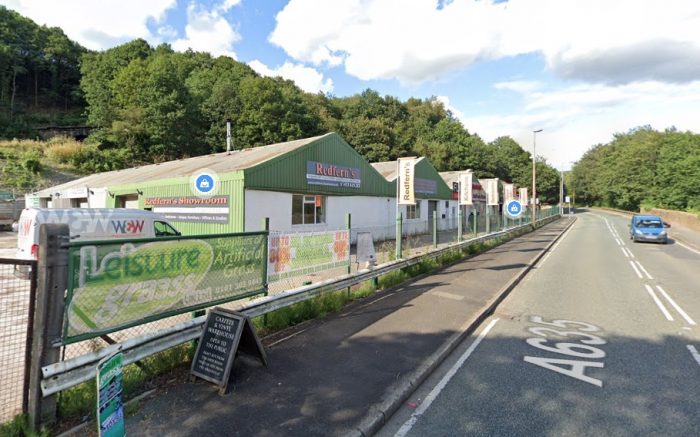
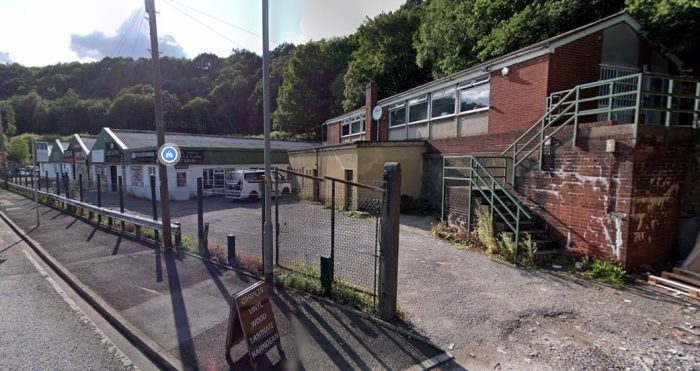
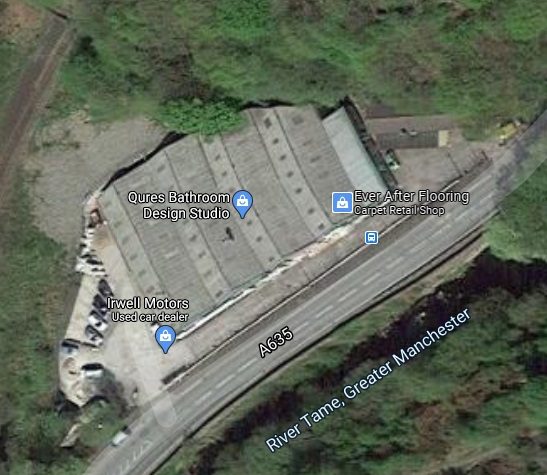
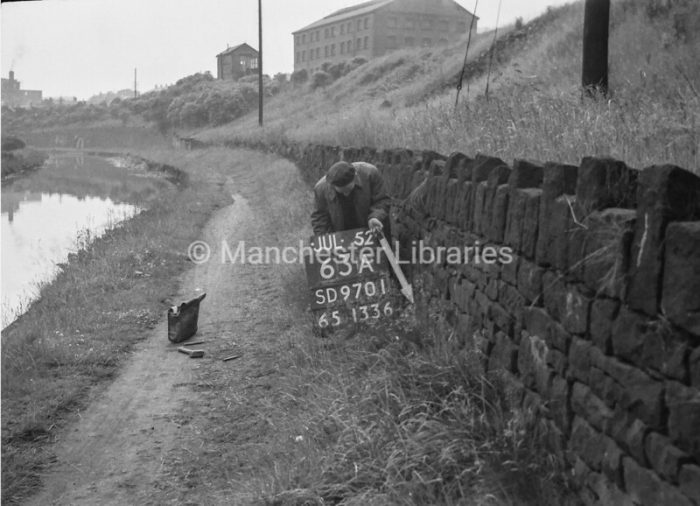
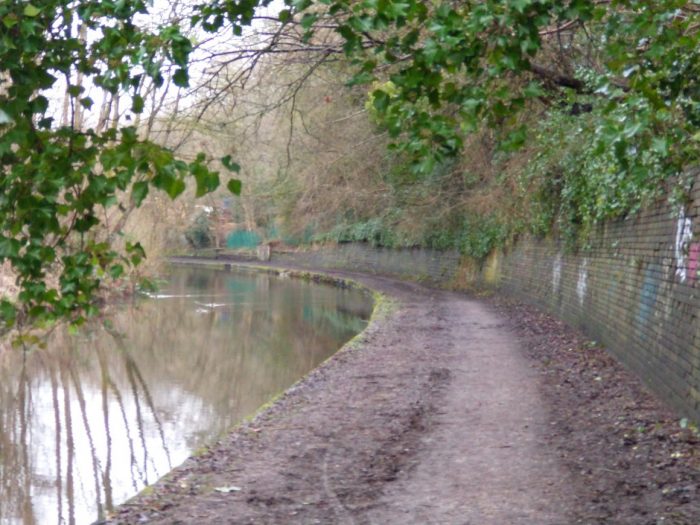
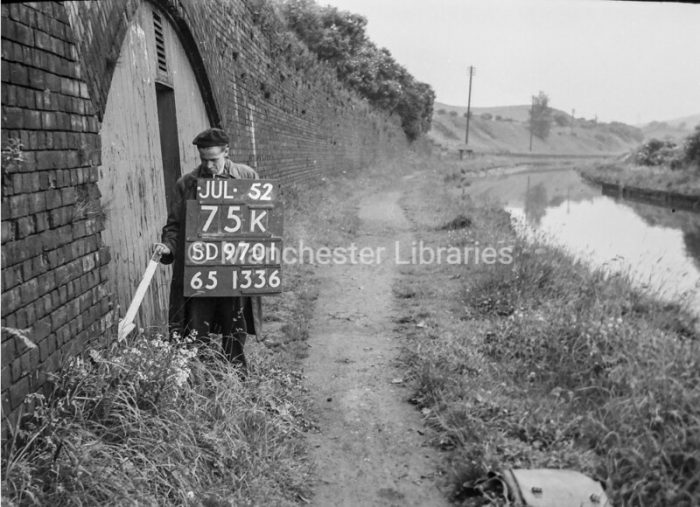

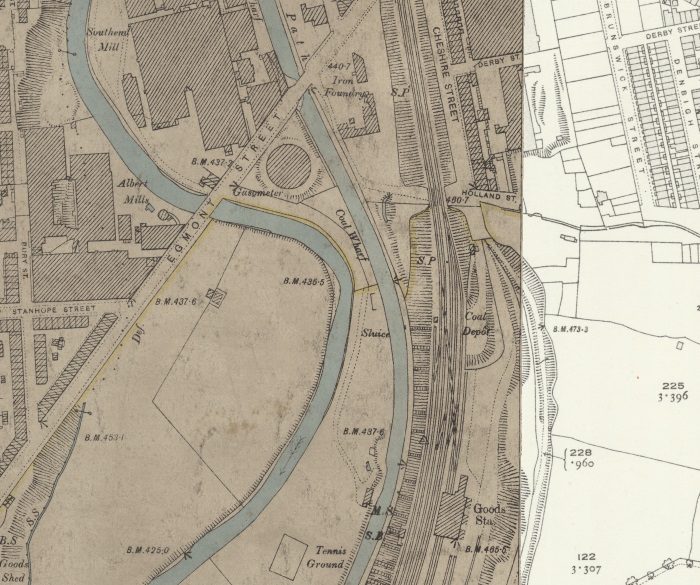
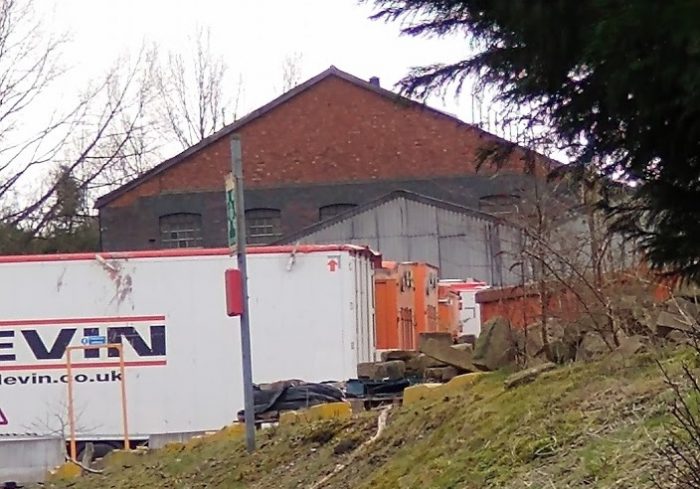
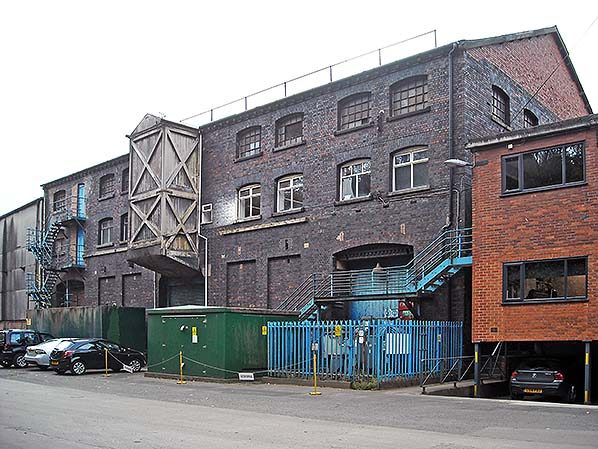
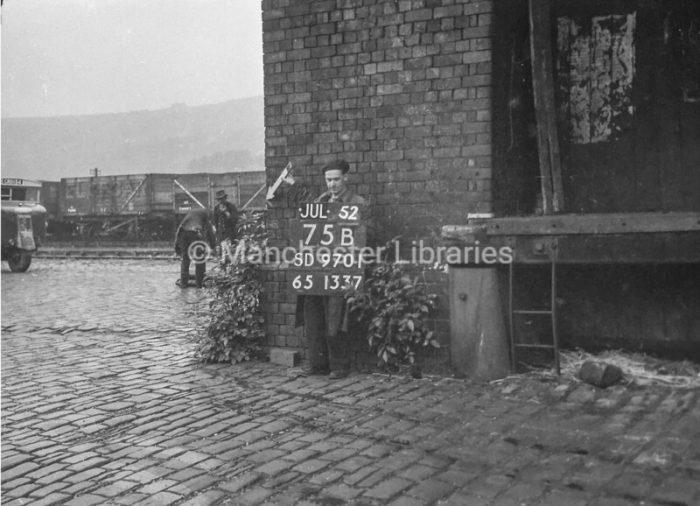
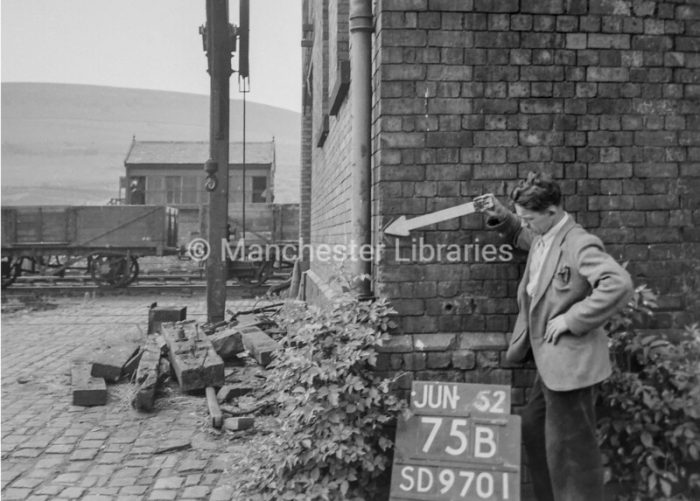
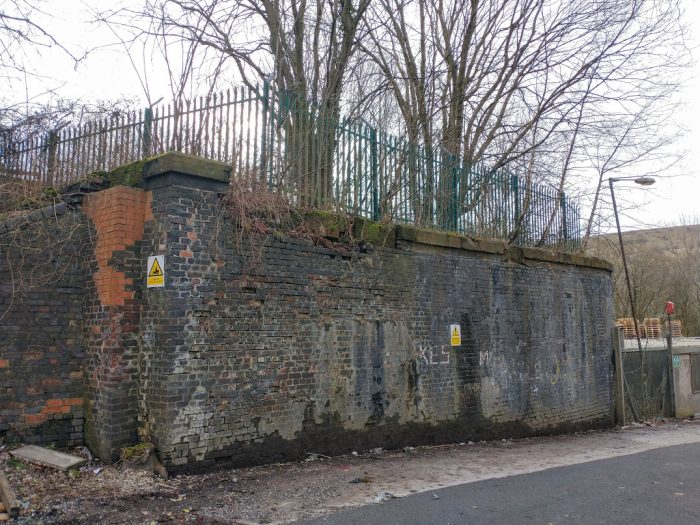
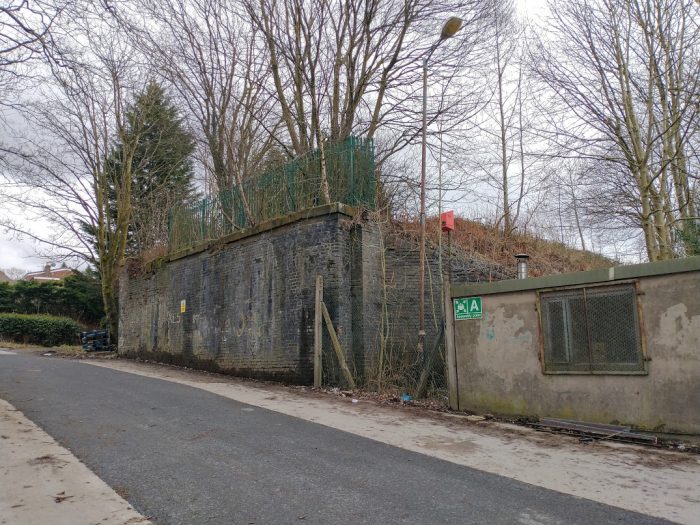
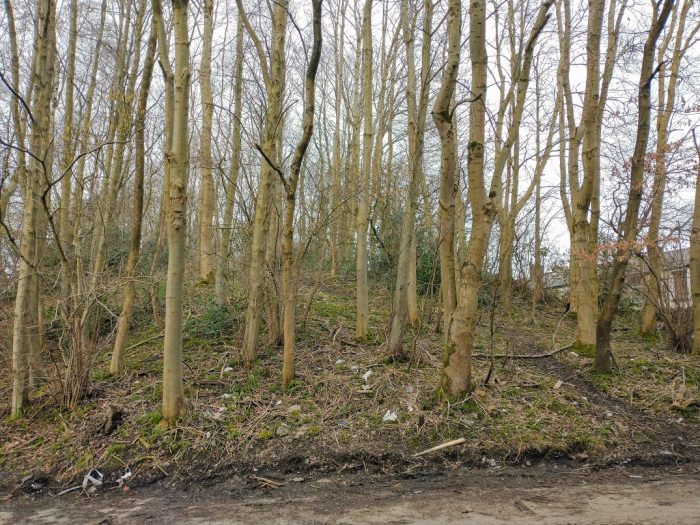
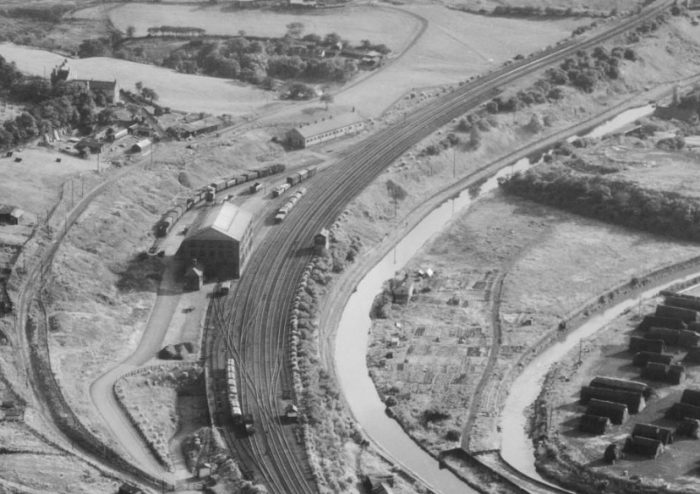
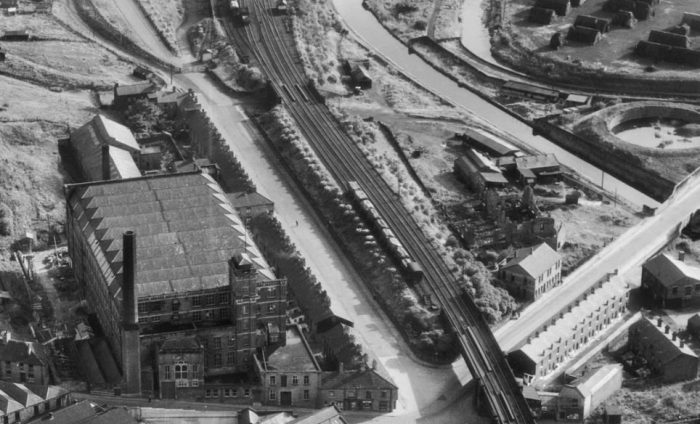
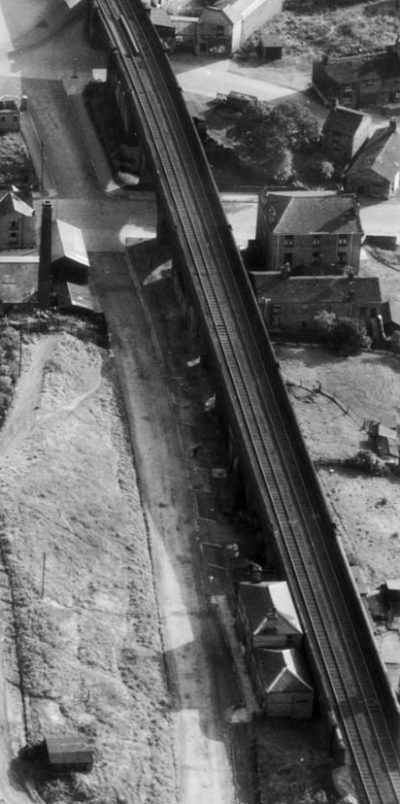
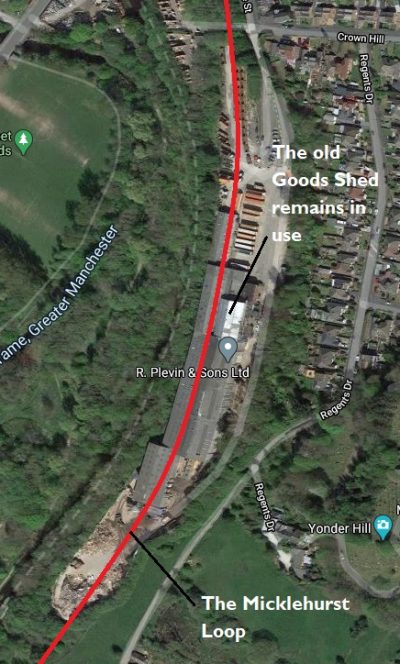
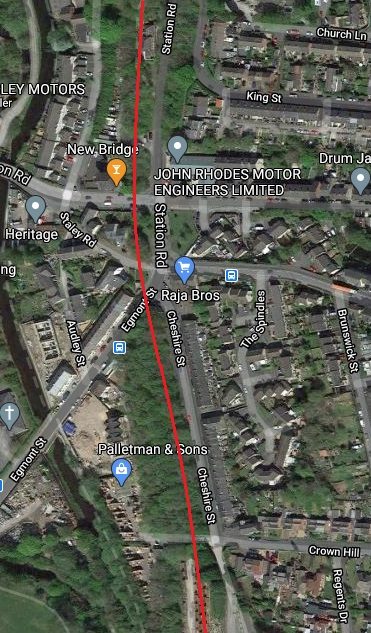
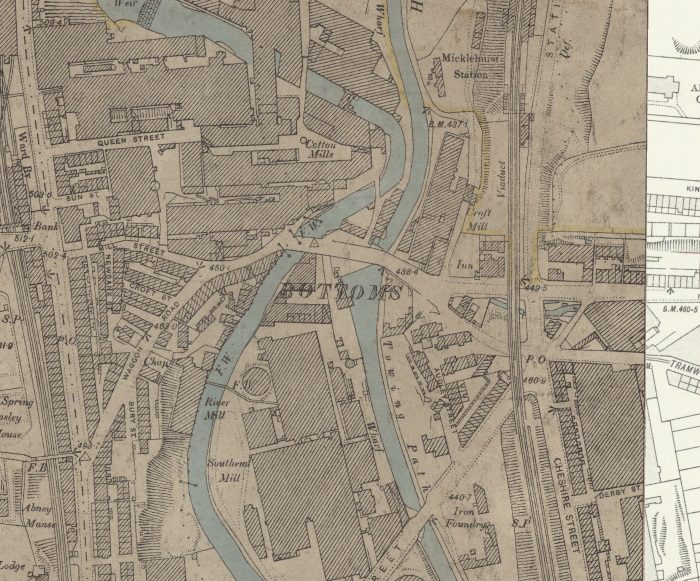
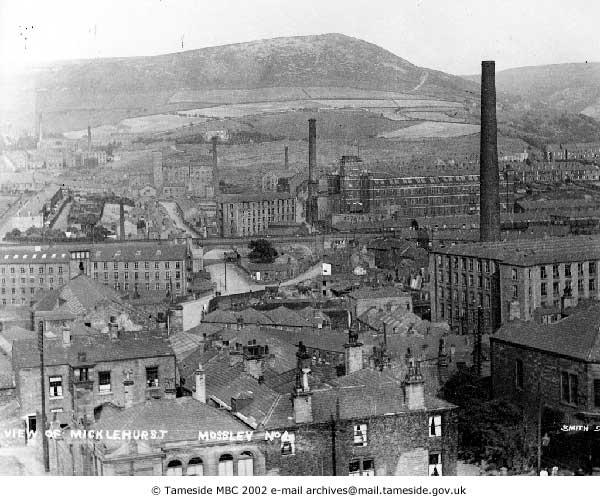
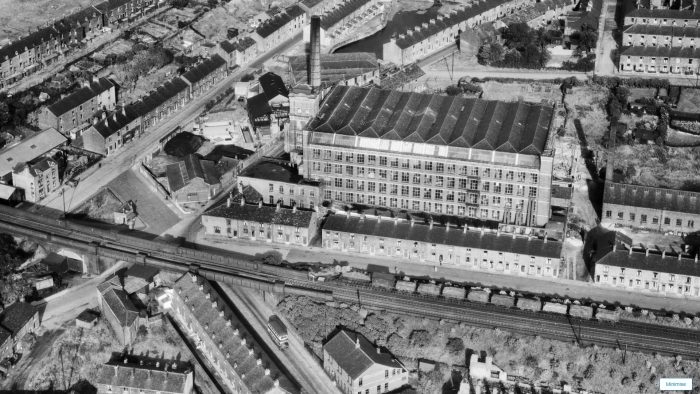
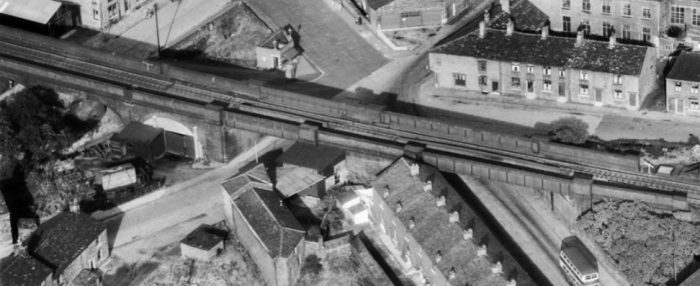
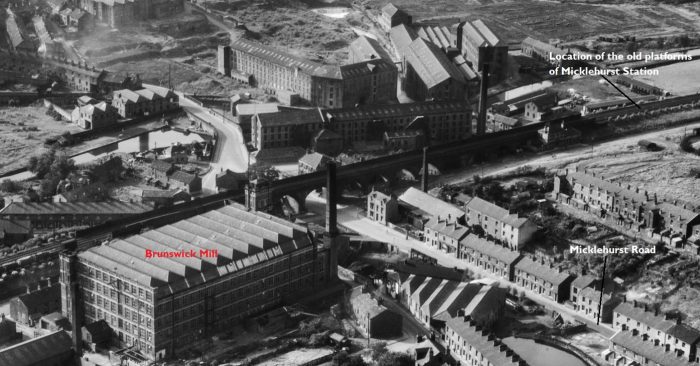
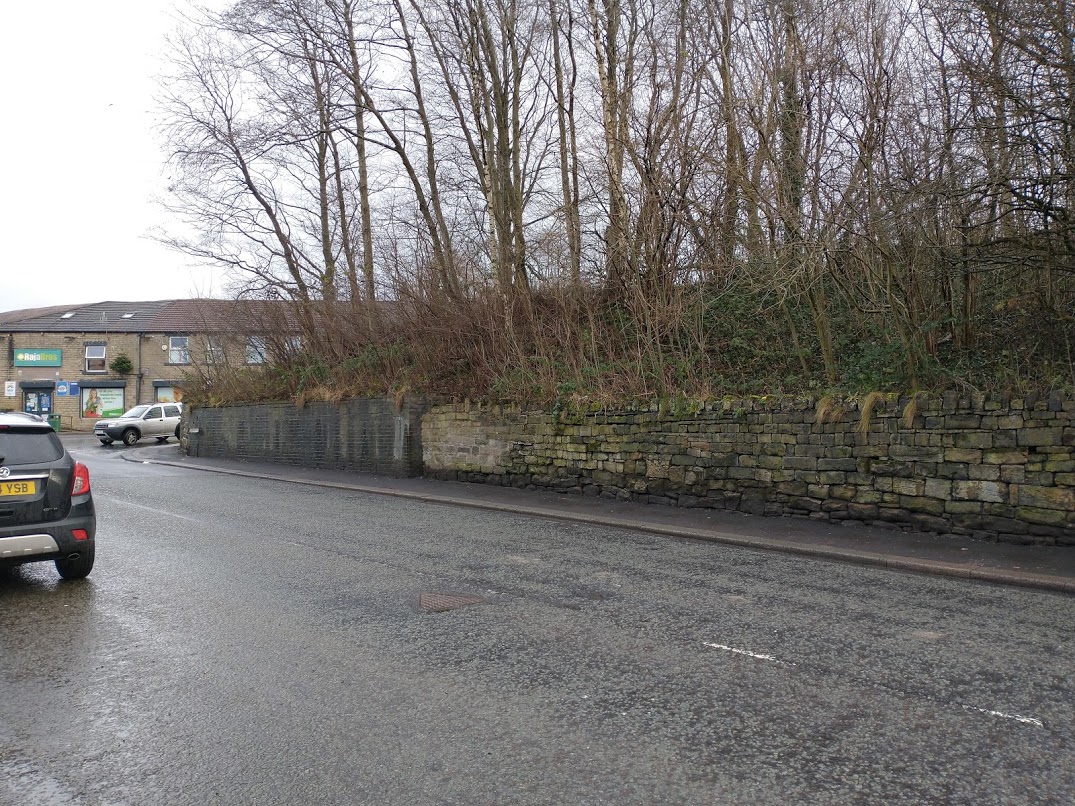
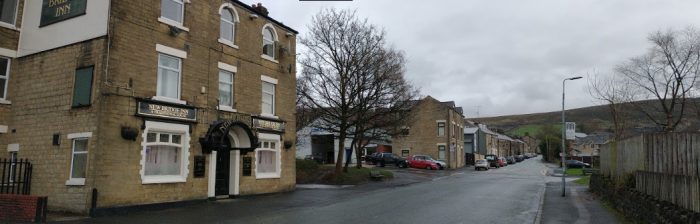

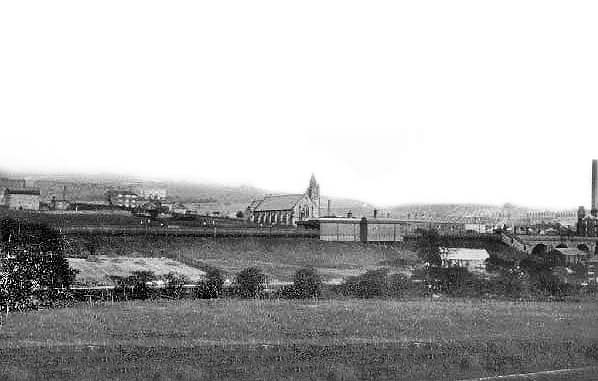
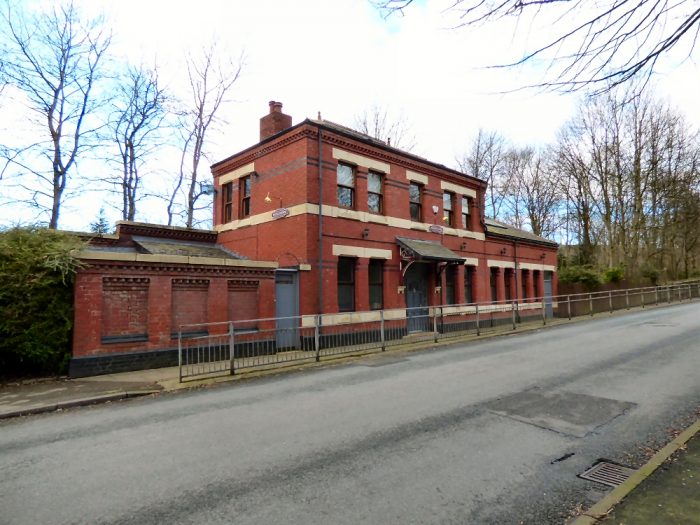
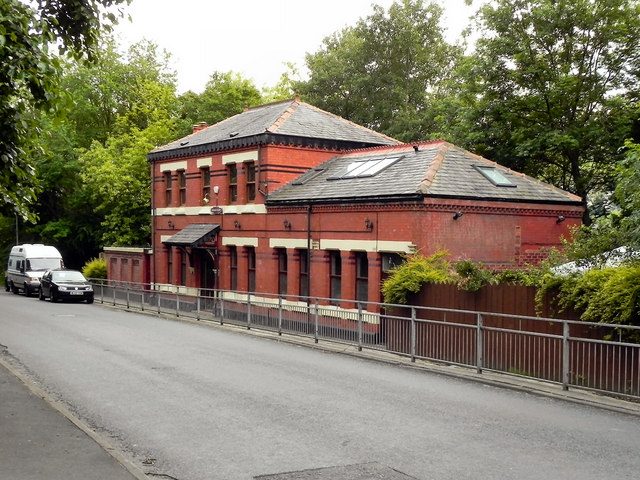

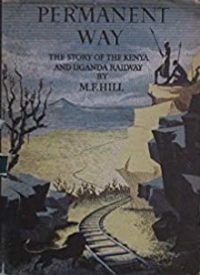


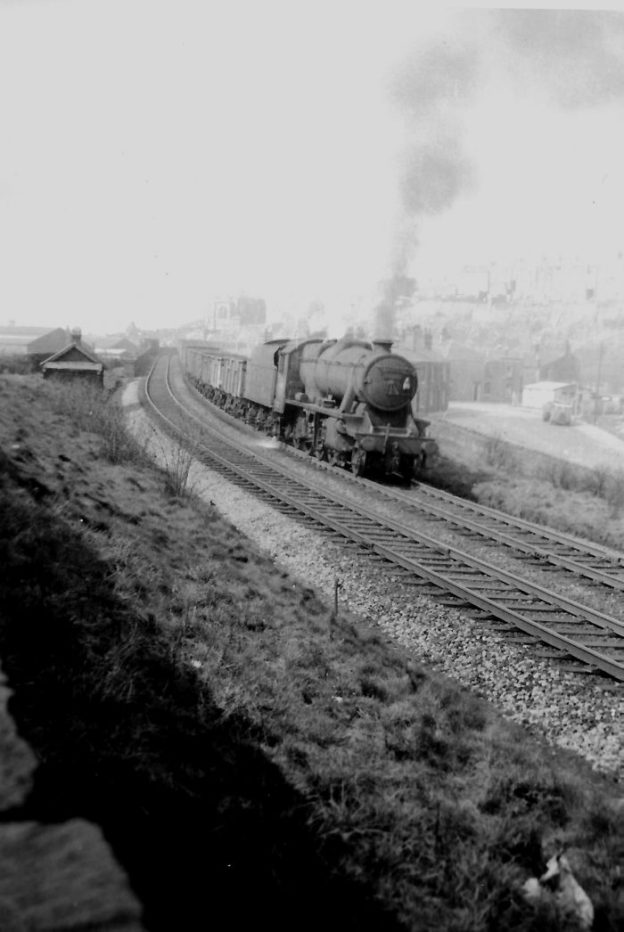
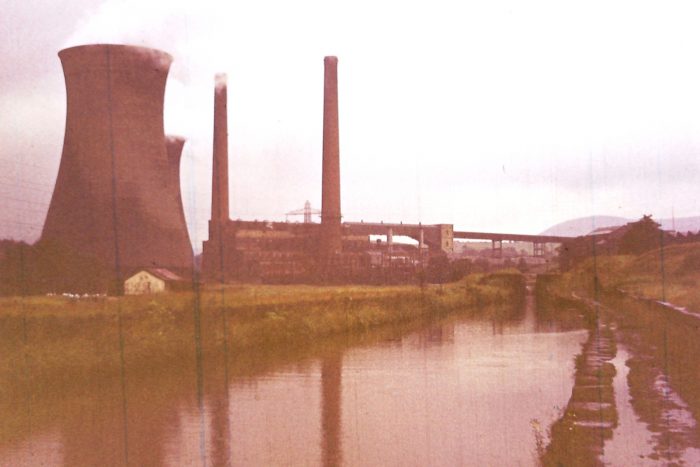
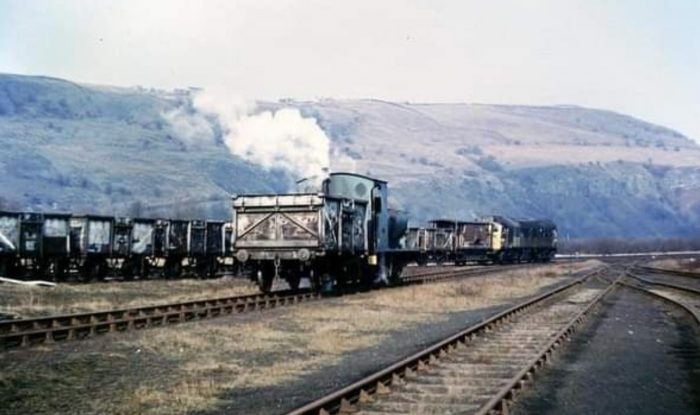

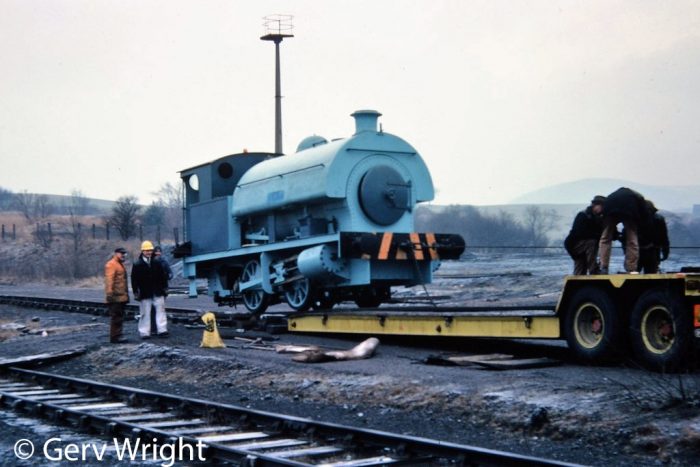
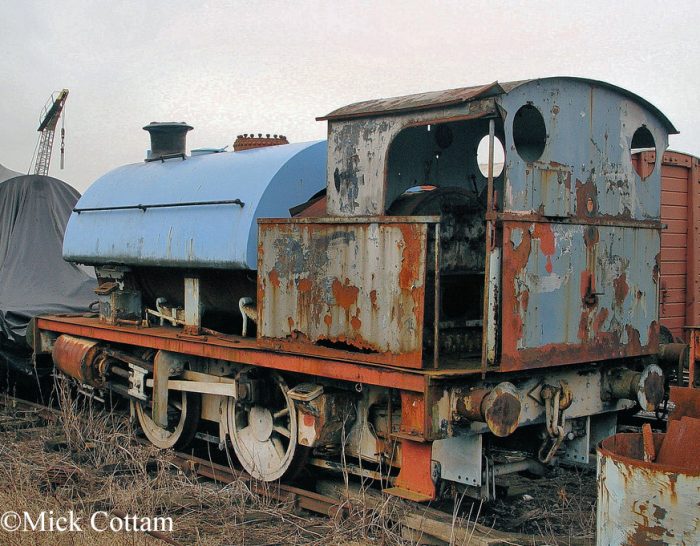

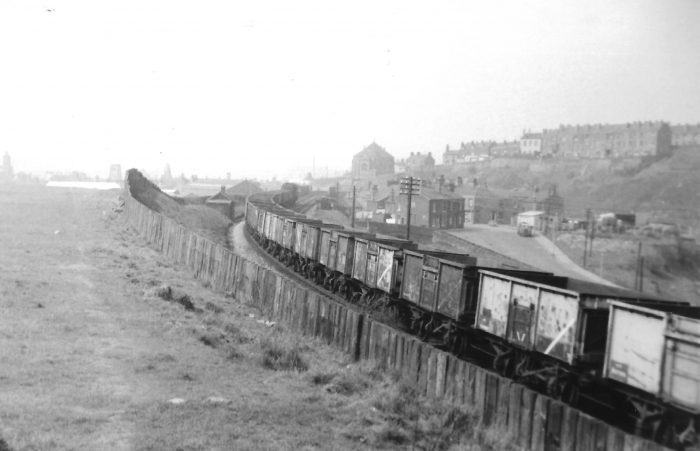
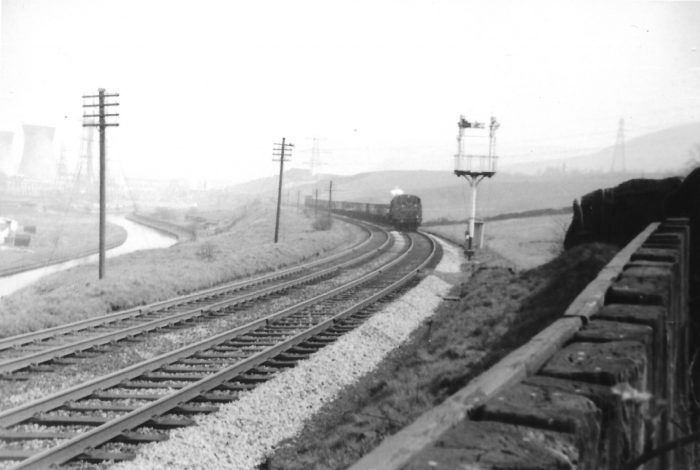

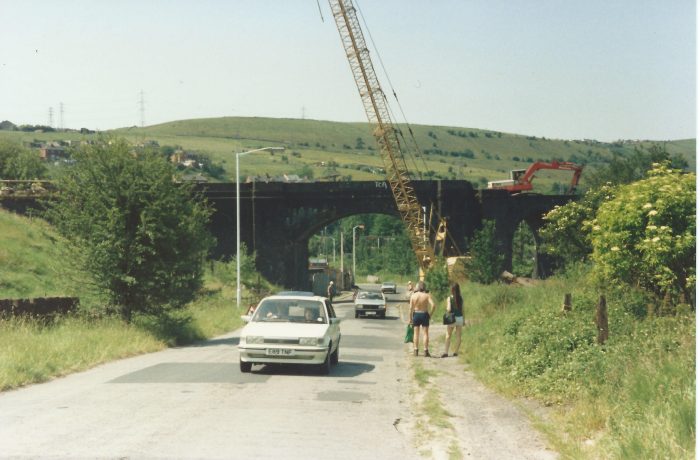
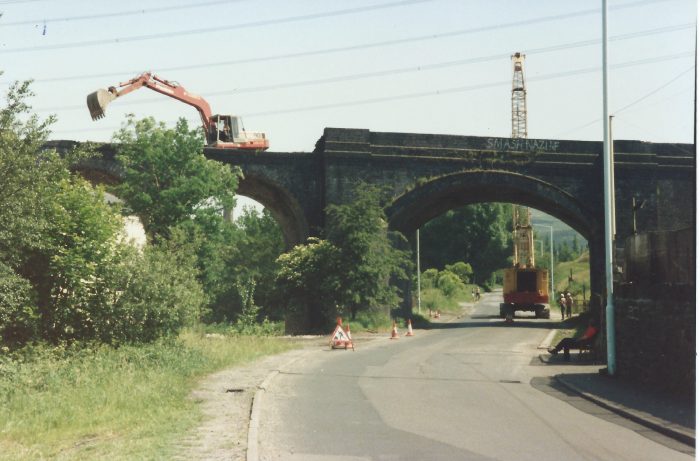
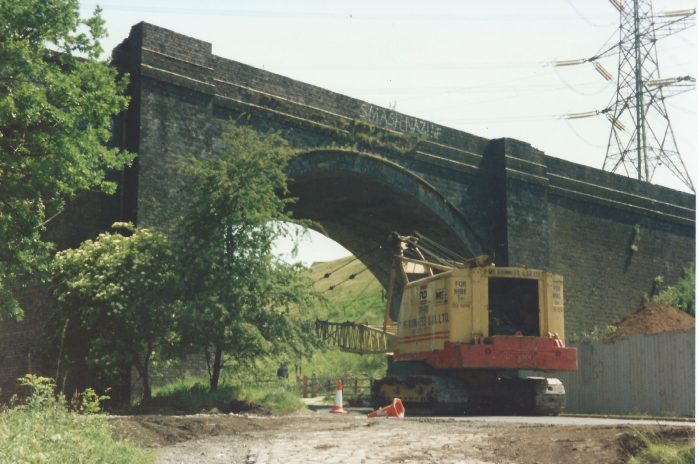
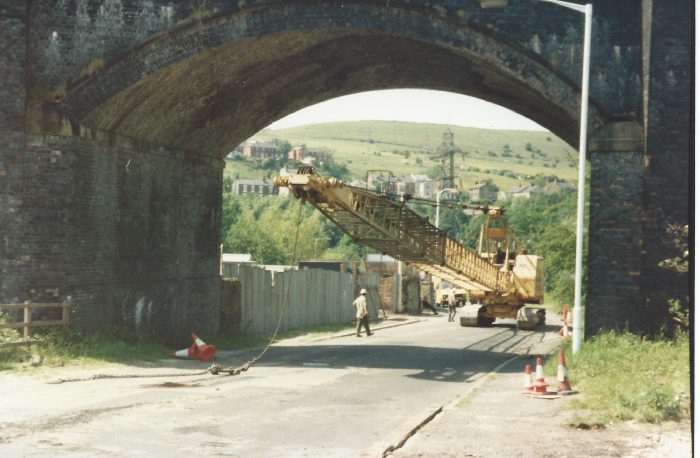
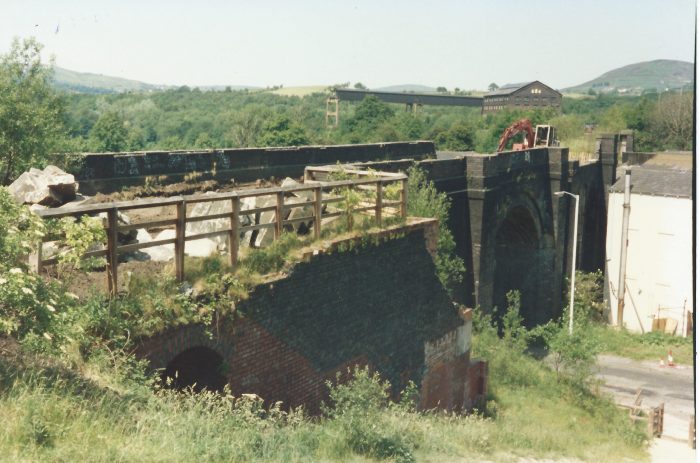
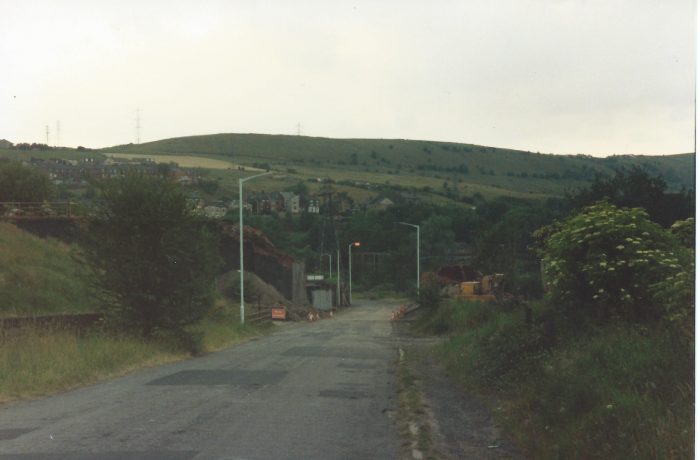
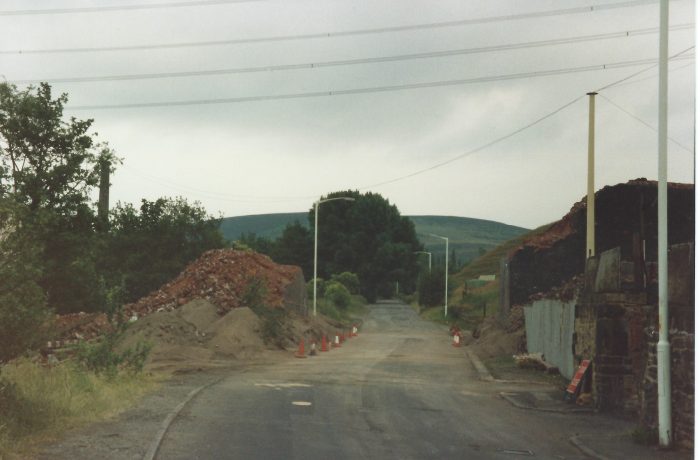
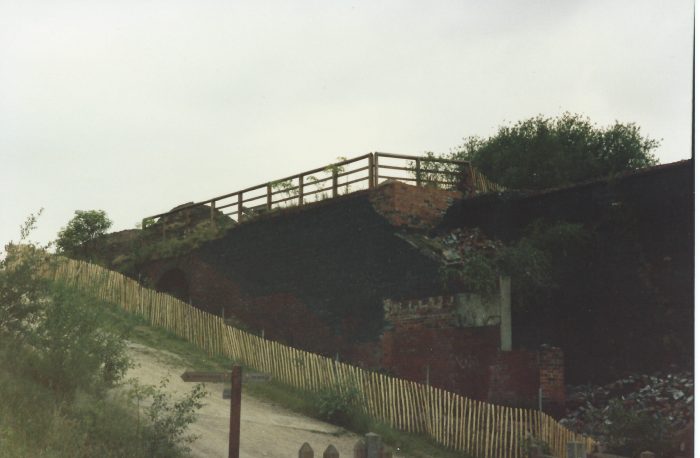
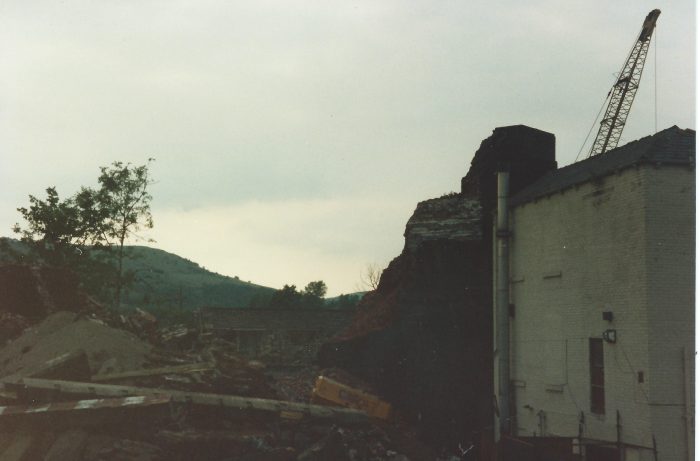
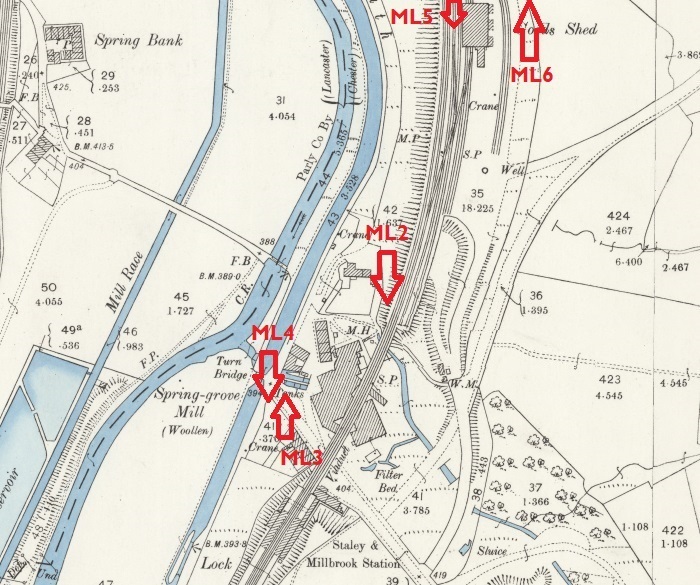
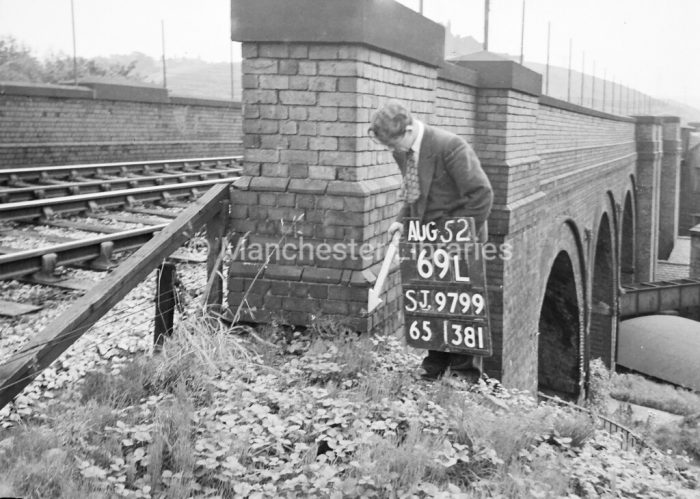
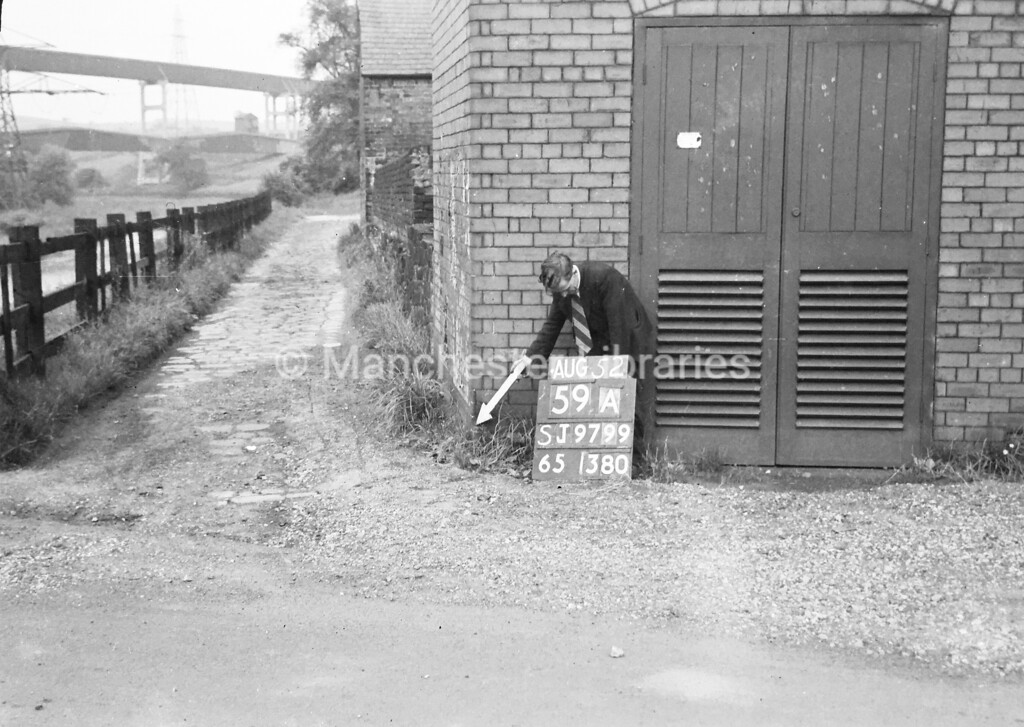
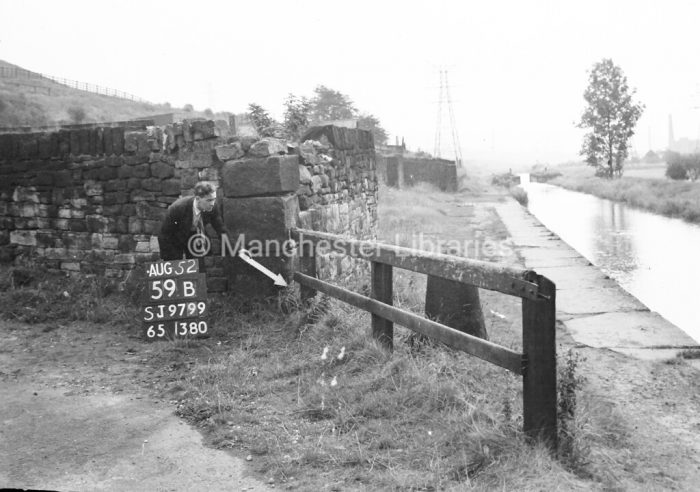
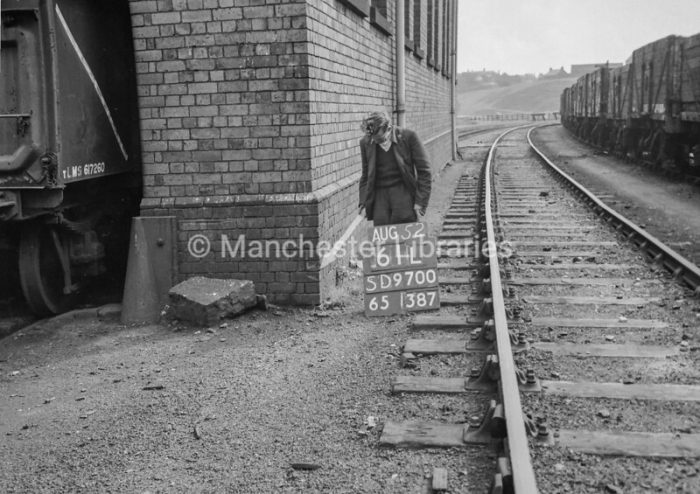
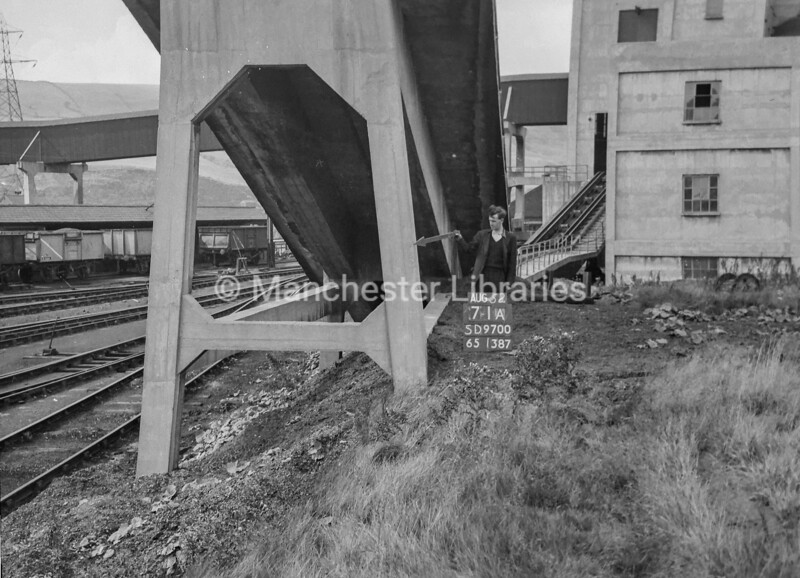
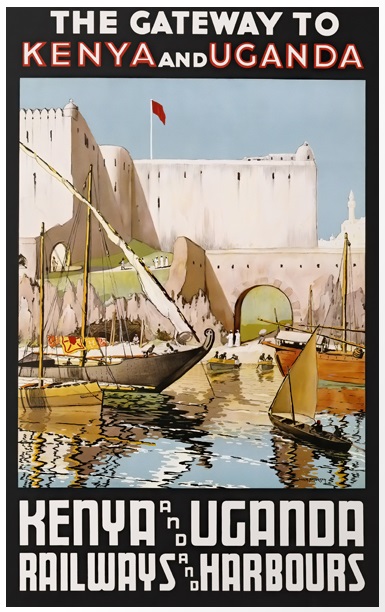
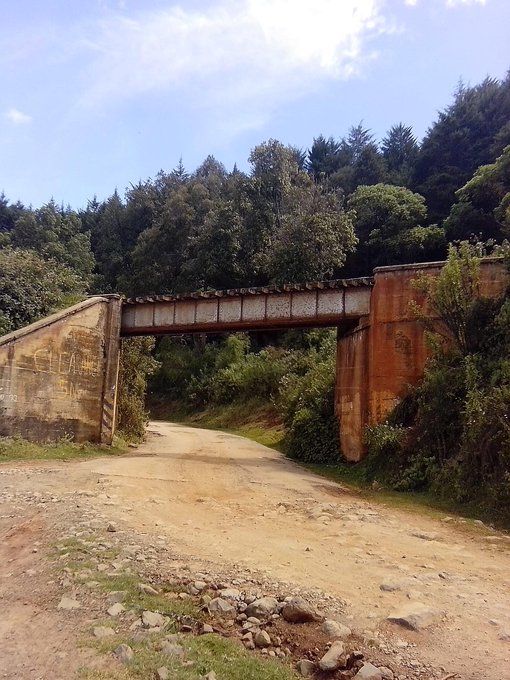
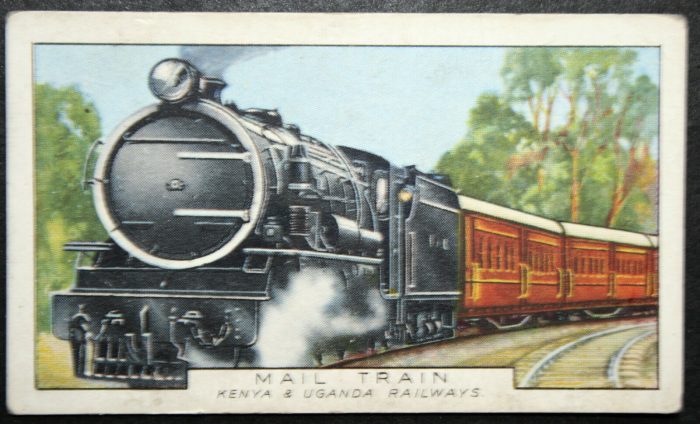


kur.gif)