Author Archives: Roger Farnworth

Unknown's avatar

About Roger Farnworth

A retired Civil Engineer and Priest

Railways of Herault – Route B – Beziers to Pezenas Line

This post covers the first part of the line leaving Beziers Nord Station and heading for Montpellier. The line to Beziers from Saint Chinian was covered elsewhere:

Railways of Herault – Route A – Saint Chinian to Beziers Line – Part 1 – Saint-Chinian to Cazouls-les-Beziers

Railways of Herault – Route A – Saint Chinian to Beziers Line – Part 2 – Cazouls-les-Beziers to Beziers (including the line to Colombiers)

The route of the line out through the suburbs of Beziers is shown on the map below. [3]The aerial image from the early 1960s below shows the path of the line as it separates from the line from Saint-Chinian. It is worth comparing this image with one close to the end of the last post on the Railways of l’Herault. The connection between the two lines which allowed trains to travel East-west and vice-versa which was visible in the aerial image from the 1940s has now gone. It has been replaced by a Co-operative building left-of-centre on this image. [1]The Cooperative building has itself been replaced. It is shown in the adjacent image being demolished in the early years of the 21st Century. [2]

Its replacement is a uniquely designed block of flats which roughly looks like half a donut.The approximate railway alignments overlaid on a Google Earth satellite image from 2018. The Co-op  building has been demolished and the semi-circular flats have replaced it.The block of flats in July 2018 on Google Streetview. In the 1950s, the line immediately left the urban area and travelled across open fields. In this image it runs across the middle of the picture. [1] The road layout shows that the central area of this satellite image approximates to the image above. This time the date is in the 2010s rather than the 1950s.The two images above show approximately the same area. The reference point is the housing in the bottom right of both pictures. The railway route is now a road – Avenue du Dr. Jean-Marie Fabre. [1]

The line soon turned away to the North as shown on the adjacent aerial images from the early 1950s.

The route follows what is now the Boulevard du Languedoc. Two modern pictures of the road from July 2018 are shown below.Boulevard du Languedoc.Further along Boulevard du Languedoc.

The secondary line crossed the single-track line running North from Beziers Midi Station through Bedarieux and on beyond Millau. The bridge is now gone but it was a very short distance north of the old road bridge. The original road bridge as seen in Google Streetview from the modern road bridge below. The old railway route crossed the line between the modern and older road bridges as shown on the map above. [1]The modern road bridge is seen from road-level above.

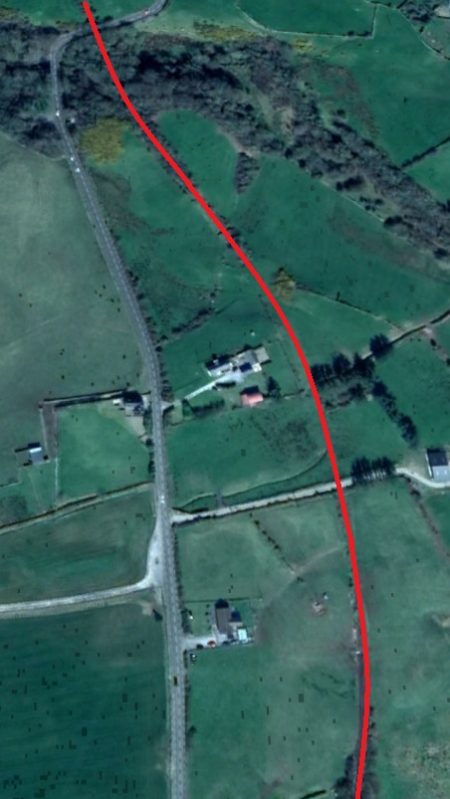
The route of the old railway continues as shown in the adjacent 1963 aerial image towards Boujan. [1]

The Station at Boujan-sur-Libron was situated close to the Co-operative building in the village. The aerial image of the site from the early 1960s is not of the highest quality but it does show the relative positions of the Co-op building and the station building. The two buildings feature quite prominently in the aerial photograph, just on the north side of the village.

The 4 images below the aerial images are from postcards used in the early 20th century showing the railway station site and building which is typical of many of these structures along the length of the line. [3][4]

The Co-op building, “Les Vignerons”, is still standing in the early 21st century. It features in the first colour picture below. It was created in 1936. In 1979, 65,614 hectoliters of table wines were vinified for 360 members cultivating 632 hectares of vines. [5]

Boujan-sur-Libron Co-op. [5]The site of the station in the early 21st Century. The buildings on the right are on the site of the old station building. The road is named, ‘Le Chemin de la Ancienne Gare’.The route of the old railway has recently been improved as a short access road and then a walkway/ cycleway.A hand drawn map of the village and station from the early 20th Century. [6]The cycleway is marked on the modern map by the lilac dashes. The old aerial image of the same area shows that this is the route of the railway. The bridge in the bottom of both images crosses the Libron River. [1]The bridge over the Libron River after the line has been converted to a greenway. [6]The new cycleway approaches a junction with the Route Guillaume-Thomas Raynal. [6]Looking back toward Boujan along what was the old railway from Route Guillaume-Thomas Raynal in 2013 just before work on the cycleway/greenway commenced.The picture above is taken looking forward along the route of the railway from the same location in 2013. The old track-bed now forms the single-track road, Route Guillaume-Thomas Raynal. Both these images are taken from Google Streetview.

The adjacent aerial image shows the line continuing on to the North from the location of the last two Google Streetview pictures. [1] With the opening of a greenway, the old road was closed at around the point where the cutting starts at about the top third point of this image.Immediately after a field access the route of the old railway is now closed to motor vehicles. [6]Now in cutting, the old railway passed under the Chemin Rural 8. [6]Access to motor vehicles to the old track-bed is once again permitted, as shown above, a little beyond the end of the cutting at les Oliviers. [6]

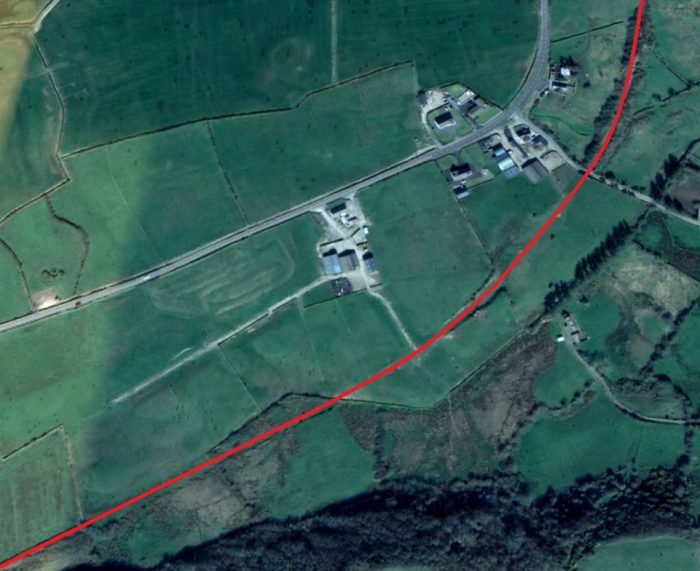
We are now heading for the village of Bassan further to the North. On the way, the line passed close to le Castellou and Grangette, as the IGN map illustrates. [1]

The line crosses a small metal accomodation bridge between le Oliviers and le Castellou, as shown in the map below.The accommodation bridge which allow surface run-off and access beyond the railway embankment. The Creek de Boute Sirvain is dry in this image. The picture is taken from another country road which runs parallel to the old railway. [6] A series of small bridges, as above, allowed the railway to cross small streams along its route. [6]

The adjacent aerial image shows the line as far as Bassan station site. [1]

The aerial photograph below focusses on the station site. It was taken in 1944. [6] The next two pictures were taken in the early 21st century and show the station building which has been converted to a private home.

The station building at Bassan has been converted to a private house. [6]The old station building at Bassan. [6]

From Bassan, the line travelled Northeast in a straight line for close to 3 kilometres before reaching the outskirts of Servian as shown below. The last kilometre or so was alongside the D39. [8]Trains left Bassan station and crossed the present Avenue de la Gare, (D39E3). The railway formation was used as a road for several decades before it was converted into a greenway in the 2010s.The new greenway. [8]

Along the length of track to Servian the present greenway crosses a series of access roads to farms and vineyards. The picture below shows the view from the old track-bed up the access road to the Domaine Montpenery. [8]

Towards the end of the long straight section of line trains ran alongside the D39. The road and railway had separate bridges over the small Merdanson stream.The D39 crosses the stream on a masonry arch bridge. [8]The railway crossed, and the present greenway crosses, the stream on a concrete bridge. [8]As the railway approached Servian its course changed from a Northeasterly trajectory to a Southeasterly direction. [1]The station at Servian viewed above from the Southwest. [9]

In the adjacent picture the station is seen looking from the Northwest. [10]

The next image is also a view from the Northwest but the scene depicted is wider and includes the water-tower. [9]

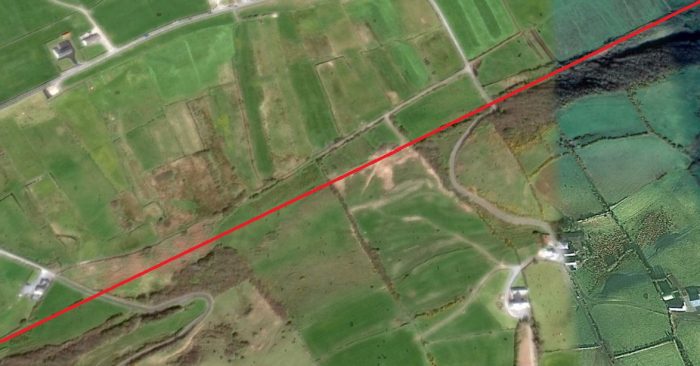
Beyond Servian, the next relatively significant location on the old line is Valros which is almost due East of Servian. The line dips southwards before head in a generally northeasterly direction to Valros.The route of the old railway between Servian and Valros. [11]Looking back Northwest along the line of the old railway towards the station at Servian from the Chemin du Verger.Looking ahead to the Southeast along Chemin de Grillet which overlies to railway formation.The bridge over the Lene River at the point marked 43 on the above map. [11]The railway crossed the modern D18E4 and followed what is now the Chemin de Briol.The red line on the image above follows the old railway which has become the Chemin de Briol. [1]

Just beyond the right side of the image above the line turns Northeast as shown in the adjacent image. [1]

The group of buildings visible on the aerial image immediately above is Teisserenc Delafon Longeon, the Domaine Mas Viel . [1]After crossing the modern D18, visible on the left of the aerial image, the railway also crossed the Thongue River and then turned back towards the Southeast. [1]The old railway bridge over La Thingie is still in use carrying a single track lane which follows the old railway formation.A series of aerial images from the 1950s take the line towards Valros. [1]Two photographs of the bridge over the Ruisseau de St. Michael is in the bottom left of the aerial photograph above and the map below. [11]The land plan above shows the Ruiseeau de St. Michel running down the left side of the map with the line of the old railway running up the right-side. [13]

The adjacent aerial image from the 1960s takes the line as fat as Valros Station [1]

The aerial photograph below was taken in the 1940s. It shows the station at Valros while still in use. [13]Approaching Valros on Avenue du Petit Train, the single track road which runs along the formation of the old railway. The picture is taken from Google Streetview.Valros Station buildings. [12]Valros Station buildings. [13] The view from Avenue du Petit Train into the station site in the 21st century.The station building is now a private dwelling. [13]

As shown on the adjacent map, from Valros, the railway head Northeast to Tourbes. [14]

The single track road which follows the old track-bed continues to carry the name Avenue du Petit Train through a mixture of pine and deciduous broad-leaf trees. [14]The route continues alongside the N9 which can be seen above and to the right of the tarmac covered formation of the railway.The N9 and the old railway follow each other towards Tourbes. [14]

Approaching Tourbes the line and the road separate. The railway heading to the North so as to better serve the village. The old station site was to the Southwest of the D39E5 on the adjacent map. The aerial image below shows it in the 1960s. [1]A closer view of the station building, again from the air. Please note that the north point on this aerial image i as about 30 degrees to the vertical. [14]This satellite image from Google Earth shows that the station building remains in the early 21st century. The road continues to bear the name, ‘Avenue du Petit Train’. While the station building retains its original footprint, its conversion into a private home has resulted in the addition of an additional storey as can be seen in the Google Streetview image below.From Tourbes station trains continued in a Northeaterly direction towards Pezenas. [15]

The railway route has been taken over by the D39 to the Northeast of the station in Tourbes. The two separate about a kilometre from the station. at the top of the images below. [1]It is almost a surprise to find the railway route leaving the tarmac behind!But it isn’t for long. Just a few hundred meters along the track-bed it is back in use as a modern highway providing access to the local cemetery which is to the right of this picture which looks back down the line towards Tourbes. The cemetery can be seen easily on the map below. [1]In the two images immediately above, the aerial photograph and the map, the old railway formation can be seen curving into Pezenas.

The first curve is described in the adjacent Google Maps Satellite image. From this point the old railway gradually rose above the surrounding land on an embankment which allowed in to cross an accommodation road by means of a simply supported steel bridge which was at the location shown on the map below.

Steel girder bridge carrying the old railway over an accommodation road on the approach to Pezenas. [15]The original railway track-bed from this point on has been lost under modern development. Both the D13 and new housing developments on both sides of the road have obliterated the original formation. The approximate line of the old railway is shown above and below. [1]The station at Pezenas. [1]La Gare du Nord, Penezas. [16]La Gare du Nord, Penezas. [17]La Gare du Nord, Penezas.

We finish this part of our journey here in Pezenas.

The nearest railway station is now at Agde. Two single track lines used to serve Pézenas. The track from Béziers has been removed, though the station (Gare du Nord) still exists as a cultural centre.

Although notionally still part of the national rail network, in reality the line from Vias, near Agde, is closed. It was used into the 21st century by occasional freight trains serving a quarry further north. Since at least 2011, a section at St Thibéry, some five miles (8.0 km) to the south of Pézenas, is in use as a ‘Pedalorail’ leisure facility. However, the track remains in place throughout and the Gare du Midi is extant and in use as a medical centre.

References

  1. https://remonterletemps.ign.fr, accessed on 22nd March 2019.
  2. http://www.centerblog.net/journal-intime/15183-6569317-deconstruction-de-la-cave-cooperative-de-beziers-, accessed on 22nd March 2019.
  3. http://passes-montagnes.fr/htlm1/vf_interet_local-10.html, accessed on 25th March 2019.
  4. https://www.geneanet.org/cartes-postales/search/?country=FRA&go=1&page=1&place=Boujan-sur-Libron&region=LRO&size=40&subregion=F34&zonegeo=H%C3%A9rault%2C+France, accessed on 24th March 2019.
  5. http://www.cavescooperatives.fr/article-boujan-sur-libron-herault-102598516.html, accessed on 25th March 2019.
  6. passes-montagnes.fr/htlm1/vf_interet_local-11.html, accessed on 25th March 2019.
  7. http://archives-pierresvives.herault.fr/ark:/37279/vta5599beff9fbd5/dao/0#id:1600875409?gallery=true&brightness=100.00, accessed on 25th March 2019.
  8. http://passes-montagnes.fr/htlm1/vf_interet_local-12.html, accessed on 25th March 2019.
  9. https://magalas-ensemble.fr/jadis-chemin-de-fer-de-1900, accessed on 25th March 2019.
  10. https://www.communes.com/ville-servian, accessed on 25th March 2019.
  11. http://passes-montagnes.fr/htlm1/vf_interet_local-13.html, accessed on 25th March 2019.
  12. https://www.geneanet.org/cartes-postales/view/7421958#0, accessed on 25th March.
  13. http://archives-pierresvives.herault.fr/ark:/37279/vta5599bfd8541be/dao/0#id:585155917?gallery=true, accessed on 26th March 2019.
  14. http://passes-montagnes.fr/htlm1/vf_interet_local-14.html, accessed on 26th March 2019.
  15. http://passes-montagnes.fr/htlm1/vf_interet_local-15.html, accessed on 26th March 2019.
  16. http://www.idherault.tv/35330/la-gare-du-nord-pezenas, accessed on 26th March 2019.
  17. https://fr.wikipedia.org/wiki/Fichier:Chemins_de_fer_de_l%27H%C3%A9rault_-_P%C3%A9zenas_gare_c%C3%B4t%C3%A9_cour.jpg, accessed on 26th March 2019.

The East Cornwall Mineral Railway – Part 1

Another Railway Magazine article from 1951!

This time we are in the West Country and considering what began life as a 3ft 6in gauge railway with an incline remote from the rest of the Cornish rail network, which later became a standard gauge line with wagon lift.
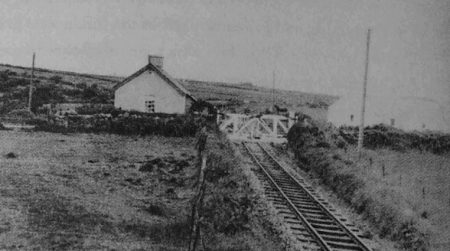
The East Cornwall Mineral Railway (ECMR) was covered in an article written by C.R. Clinker in the May 1951 edition of The Railway Magazine. [1]

The article is available from the Railway Magazine archives which can be accessed by subscribing to both the Magazine and the Archives.


Important dates [2][3][4]

1859 – the Tamar Coal, Manure & General Mercantile Company was formed. They had wharves, engine works and stores at Kelly Quay, Calstock (now called Kingfisher Quay). They built an incline plane from the quay up the Danescombe valley finishing 350 ft above Calstock at The Butts.

1862 – the Tamar, Kit Hill & Callington Railway Company was formed with the intention of connecting the incline to Callington.

1864 – A Bill was passed in parliament. Land and rails were purchased and work commenced. Most of the finance came from outside the region as local people thought the railway was being built too cheaply. They were proved correct as the engineering problems were greater than envisaged and the contractor found himself in money difficulties. Work was halted and nothing happened for five to six years.
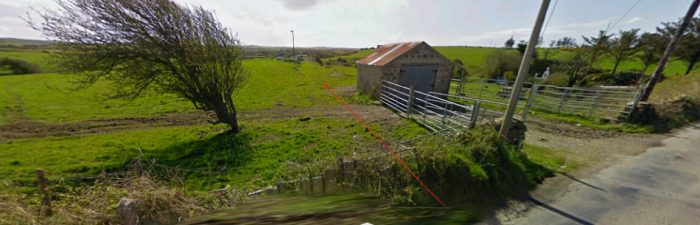
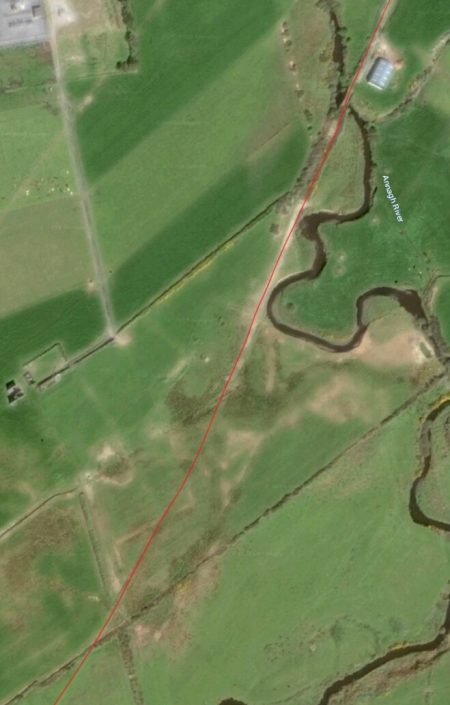
1869 – the scheme was revived as the Callington to Calstock Railway, though in fact the line terminated at Kelly Bray (SX360715) a mile north of Callington. [3] The intention was for the new company to adopt the abandoned works of the Kit Hill company, and to have a capital of £60,000, with borrowing powers of £20,000. It was to be nearly 8 miles (13 km) in extent, including short lengths on the Quay at Calstock and the incline. Passenger traffic was not authorised. Purchase of the quay at Calstock, and improvements to it, were included in the authorised powers. [2] The rope-worked incline was about 800′ long down and dropped down 350′ to reach the riverside quays. [7] A stationary steam engine lowered the wagons down the 1-in-6 gradient over the last half-mile towards quayside for eventual loading onto barges and schooners. Coal, grain and timber came up in the opposite direction. [8]

1871 – an Act of Parliament, of 25th  May 1871 authorised a change of name to the East Cornwall Mineral Railway (ECMR).

1872 – The line was completed as the  East Cornwall Mineral Railway and opened for traffic on 7th May 1872. It was a 3ft 6in narrow gauge industrial railway which connected the mines in the Kit Hill-Gunnislake area with the port of Calstock. The line was 7.5 miles long running from Kelly Bray to Calstock. There were several branches serving copper, tin and arsenic mines and quarries. [4] There were public goods depots at Kelly Bray, Monks Corner, Cox’s Park, Drakewalls and on Calstock Quay, as well as the private sidings at various intermediate locations serving various mines and quarries. [7]

1883 – on 25 August 1883 the Plymouth, Devonport and South Western Junction Railway (PD&SWJR) obtained Parliamentary authority to build a line from Lydford to Devonport via Tavistock and Beer Alston. [2]

1890 – the authorised PD&SWJR opened on 2 June 1890, and it was to be worked by the London and South Western Railway (LSWR).

1894 – in 1883, the promoters of the PD&SWJR had included in its authorising Act the powers to acquire the ECMR, and in its later Act of 7 August 1884 these powers were converted to an obligation. Accordingly, the ECMR was “taken over” as from 1 June 1891, although the formalities of the purchase were not completed until 4 January 1894. “Payment was made by the issue of £48,250 in ordinary shares, £12,500 in cash, and a rent charge of £250 per annum”. [10]

1900 – The Light Railways Act was passed in 1896, designed to facilitate the construction of new lines where there was no controversy over routing, and in 1898 the PD&SWJR investigated the possibility of connecting the ECMR line to its own line as a light railway. This proved feasible, and the Bere Alston and Calstock Light Railway Order was confirmed by the Board of Trade on 12th July 1900; as well as the new line, the Order authorised the acquisition of the ECMR line and its operation as a passenger light railway (excepting the incline). The gauge was to remain 1,067 mm (3 ft 6 in). In fact finance was impossible to obtain, and eventually the LSWR was persuaded to guarantee borrowings. [2]

1902 – A new company, the Bere Alston and Calstock Railway (BA&CR) as a subsidiary of the PD&SWJR, was set up and a new Act of 23rd June 1902 authorised it to build the connecting line and to acquire the East Cornwall line. [2]

1905 – A Light Railway Order was made on 12th October 1905 authorising a change of the track gauge to 1,435 mm (4 ft 8 1⁄2 in) standard gauge. The position now was to be that the Okehampton – Devonport line would be owned by the PD&SWJR and worked by the LSWR, and the Bere Alston to Callington line would be owned by the BA&CR, a subsidiary of the PD&WJR, and worked by the PD&SWJR. [10]

1907 – The Calstock viaduct was completed [4] and re-gauging and some realignment of the ECMR line was undertaken that year. Traffic was only interrupted for two days during the conversion. [2] The viaduct is a magnificent twelve-arched structure, it was constructed of concrete blocks and has twelve arches, each of 60ft span. The rail level is 120ft above river level. The featured image for this post is a tinted postcard from around 1907. It catches a moment in the history of the railway line between the completion of the viaduct and the closure of the incline. Having been taken “after the completion of Calstock Viaduct in the background, but before the dismantling of the East Cornwall Mineral Railway incline of 1872 in the foreground. This is one of the most informative images of the incline and sidings, which ran the full half-mile length of the river quays, above and below the viaduct. The guiding sheave wheels at intervals along the incline kept the cable in line and clear of the track-bed. A telegraph or telephone was used to link the inclineman’s office on the left at the foot of the incline, with the winding house at the top. Earlier systems used morse-telegraph, cords on pulleys with bells at either end, or even semaphore.” [13]

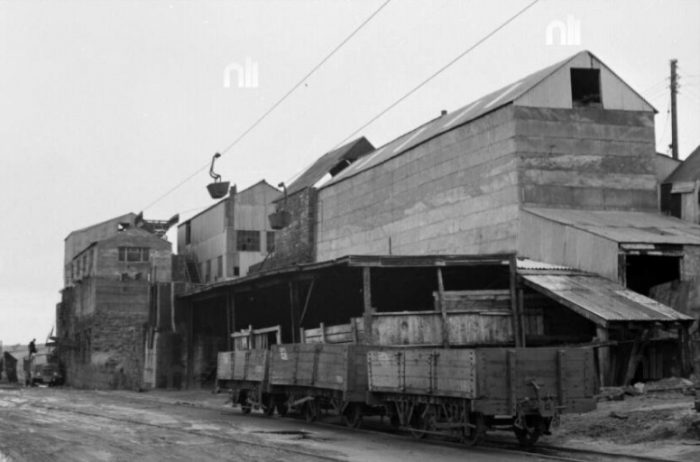
1908 – The new line from Bere Alston to Callington opened throughout to passengers and freight traffic on 2nd March 1908. Although the main line of the PD&SWJR was worked by the LSWR, becoming outwardly part of the main line network, the PD&SWJR worked the branch itself, under the management of Colonel Stephens.[10] The original ECMR line was operated as an intrinsic part of the branch, although the incline at Calstock was abandoned. As the PD&SWJR branch crossed the Tamar at a high level on viaduct, a wagon lift was provided there to continue access to the quay. [11] The steam-driven wagon lift was built on the Calstock end of the viaduct and had a maximum capacity of 15 tons. It was constructed against one of the viaduct piers and was one of the highest in England, the difference in levels being 113ft. [5] The lift operated until it was dismantled and sold for scrap in 1934. [3]This fantastic postcard view, shows Calstock Viaduct and the sidings below on the quay. The wagon lift is in place. What was the hut controlling the old incline can also be seen at the bottom of the picture. [14]
The PD&SWJR continued to operate the line itself, forming one of the Colonel Stephens group of minor railways, remaining independent until the “Grouping” of railways in Great Britain under the Railways Act 1921, effective on 1st January 1923, when it became part of the Southern Railway. [2] The Callington Branch as it was formally known was often also referred to as the Calstock Light Railway. [12] Chris Osment commented in 2012: “The Callington Branch followed a fairly tortuous route, with many steep gradients and sharp curves, and there was an overall maximum speed limit of 25mph.” [12]

1966 – rural lines in the area were closed in the 1960s, a short section of the original ECMR line was retained to keep open a connection from Plymouth to Gunnislake, and that section remains open into the 21st Century. [2] The remainder closed on 5 November 1966. [11]

A Summary of the Route of the Original Line

The line went from Kelly Bray round the northern side of Kit Hill where there was a siding connecting to the Kit Hill Quarry incline plane. There were stations at Monks Corner (Luckett), Cox’s Park (Latchley) and Gunnislake. At Gunnislake there were lines going to Clitters, Pearson’s Quarry and Greenhill Arsenic Works. [3]

Early Operation

Two saddle-tank engines pulled the goods from Kelly Bray to the top of an incline. The inc;line connected the railway to the quay in Calstock.and the River Tamar. It was a rope-worked single track incline with a passing loop at its mid-way point. Two loaded wagons would be pulled up the incline as three loaded wagons descended. The wagons were then hauled along the quay by horses to the copper quay which was on the site of the present Calstock village hall and car park. Tin, copper, arsenic, bricks, stone and coal were carried and for the first four years profits were good. Gradually the mines began closing and trade began to decline, what was needed was a passenger service. [4] This came about with the restructuring of the companies associated with the line and the development of other railways in the area.
The first wagons were built by a Calstock carpenter, A.W. Williams in the wagon shed at the top of the incline. [4]

The Reconstructed and Extended Standard Gauge Line

We have noted above that the extended line which included the graceful viaduct over the River Tamar ran from Beer Alston to Callington along a relatively tortuous route with steep gradients.

“From Bere Alston the line runs down towards the River Tamar and then across Calstock Viaduct into Calstock station, which is on a sharp curve. From here the the line rises over 400 feet in the next 2 miles until it reaches the the next station at Gunnislake, which was the main intermediate station and the only passing-loop on the line. From Gunnislake the line ran roughly westwards through intermediate stations at Chilsworthy, Latchley, Seven Stones Halt and Luckett, before finally reaching the terminus at Callington. Between Gunnislake and Callington there were also several intermediate sidings serving various mines and quarries. The total length of the branch was 9 miles 60 chains.” [12]

Following the Route of the Line

This post provides an introduction to the line which ran from Beer Alston to Callington. The next post will follow the length of the line.

References

  1. C.R. Clinker; The East Cornwall Mineral Railway; The Railway Magazine, Vol. No. 601, May 1951, p291-295.
  2. https://en.m.wikipedia.org/wiki/East_Cornwall_Mineral_Railway, accessed on 26th March 2019.
  3. https://www.aditnow.co.uk/Mines/East-Cornwall-Mineral-Railway_10417, accessed o n 26th March 2019.
  4. https://www.gracesguide.co.uk/East_Cornwall_Mineral_Railway, accessed on 26th March 2019.
  5. http://www.cornwall-calling.co.uk/mines/tramways/east-cornwall-railway.htm, accessed on 26th March 2019.
  6. http://www.cornwallrailwaysociety.org.uk/callington-branch.html, accessed on 26th March 2019.
  7. http://www.trainweb.org/railwest/railco/minor/ecmr.html, accessed on 26th March 2019.
  8. https://www.theguardian.com/environment/2014/dec/15/cornwall-railway-heritage, accessed on 26th March 2019.
  9. https://www.steamlocomotive.com/locobase.php?country=Great_Britain&wheel=0-4-0&railroad=ecmr, accessed on 26th March 2019.
  10. Roger Crombleholme, Douglas Stuckey and C F D Whetmath; Callington Railways; Branch Line Handbooks, Teddington, 1967.
  11. Vic Mitchell and Keith Smith, Tavistock to Plymouth, Middleton Press, Midhurst, 1996.
  12. http://www.trainweb.org/railwest/railco/sr/cal-intro.html, accessed on 26th March 2019.
  13. http://www.tvia.org.uk/cgi-bin/tviagal.pl?imgno=1498, accessed on 26th March 2019.
  14. http://www.cornwall24.net/2011/06/on-the-river-tamar, accessed on 26th March 2019.

Railways of Herault – Route A – Saint Chinian to Beziers Line – Part 2 – Cazouls-les-Beziers to Beziers (including the line to Colombiers)

Chemins de Fer de l’Hérault

The first line we are looking at is that starting in Saint-Chinian and running to Beziers

Saint-Chinian – Beziers Line – Part 2 – Cazouls-les-Beziers to Beziers (including the line to Colombiers)This map shows our area of interest. The secondary lines are highlighted in yellow. [9]

We start the next length of the journey at Cazouls-les Beziers. First some photographs and then some discussion of recent events in the Commune and about the railway line.The station at Cazouls-les-Beziers. [1]The station at Cazouls-les-Beziers. [1]Another similar view of the station at Cazouls-les-Beziers. [2]Another view of the station at Cazouls-les-Beziers, this picture was taken from the North. [2]Tank wagons awaiting repair at Cazouls Station in 2007. The picture was taken by Serge Panabière. [4]The road access to the station at Cazouls-les-Beziers in 2016. [1]The station building immediately after closure of the line in January 2017. [2]The station at Cazouls-les-Beziers in 2018 with tracks already removed in front of the building. [1]

Until 2016, the railway to Cazouls was a modern branch-line which had been well-maintained by Hérault Transport and was operated in partnership with RDT 13. [5]

In its session of 14th November 2016, the departmental council of the Herault decided to remove 3.5 km of railway between Maureilhan and Cazouls-les-Beziers. This was the only railway line for which it was responsible and the only remaining length of the old departmental railways, The decision came into effect on 1st January 2017. It seems that the only real reason for this was that had the line not been closed it would have had to be handed over to the new ‘Occitanie’ region. The legal framework included for the transfer to the new regions on 1st January 2017, of all departmental railway infrastructure and operations.

The department of Herault created a greenway between Cazouls-lès-Béziers and Maureilhan as an extension of that planned from Saint-Chinian to Cazouls-les-Beziers. The department set aside 3 million euros for the greenway and ultimately plans to continue that greenway beyond Maureilhan to the Mediterranean coast. The track was removed during the Summer of 2017 with the intention of commissioning the greenway by the end of 2017.

It seems unbelievable that this line had only been refurbished in the period 2007-2009. It was provided with two dedicated locomotives with a specific livery and the inscription “Hérault railways”: the BB 1201 ( 83,2 kW / 1,200 hp) and the No. 302 diesel engine (220.8 kW / 300 hp). The station of Cazouls-lès-Béziers, was provided with 5 loops and one siding at that time.

Since the end of 2015 the Owens-Illinois Manufacturing (formerly BSN Glasspack) glassworks in Béziers shipped bottles by full train twice a month from Maureilhan station, which has five loops and 4 sidings. Another trackhad been planned to serve the industrial area of ​​Béziers West, where the glassworks is located.

The remaining length of the branchline will survive as the region of l’Occitanie, which inherited the 6.7 km from Colombiers to Maureilhan, with effect from 1 February 2017 was due in 2017 to designate a new railway operator. That region also manages the railways of the ports of Sète and Port-la-Nouvelle. [6]


The station is shown from above in two adjacent aerial images. Both are taken from the IGN site ‘Remonter-les-Temps’. [7] They show the station are in the early 1960s and again in 2015.

Leaving Cazouls Station the railway returned to a single track layout as it passed under a road bridge which carries Avenue Jean Jaurès. The location is shown below in 2016 and then again in 2018. [5]The two adjacent images show the bridge carrying the Avenue Jean Jaures over the railway. They are taken from the air in 1961 and 2015. [7]

The next image, below, is taken from the Avenue Jean Jaures looking over the bridge parapet back into the station area in 2018. It has been sourced from Google Streetview. The railway ballast is still in evidence. The new greenway runs on the left side of the cutting.

This Google Streetview image looks South from Avenue Jean Jaures and shows the new greenway following what was the route of the railway. The 1950s land plan above has had the route of the railway added.[8]

The adjacent aerial images show the line in the 1960s. [7]

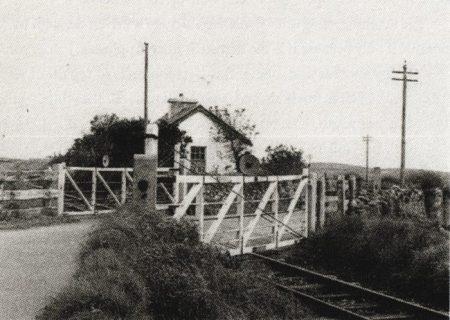
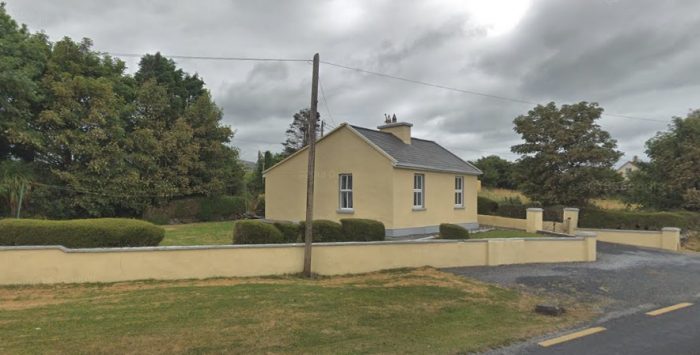
From the bottom of the first image/top of the second image, the line runs alongside the modern D162 which does not feature on the 1961 aerial photographs.The D162 is on the right of this photograph. [5].Google Streetview photo of the railway and the D162 in 2010.Approximately the same location on 2018. [5]The station at Maureilhan in 2016. [7]The station at Maureilhan in 1963. [7]Less than a kilometre or so before reaching the next station at Maureilhan the greenway diverts from the track-bed of the railway and buffer-stops herald the active part of the railway. [5]Approaching Maureilhan Station the line crossed the road to the hamlet of Clairac at a gated crossing. The crossing-keeper’s cottage is visible in this aerial photograph from 1948. [5]Looking Southeast along the line we can see the condition of the location of the station in 2009. This is a Googel Streetview image.The location of the old station was in use in 2009 for storage of a variety of tank wagons.The station site in 1948. The buildings have been demolished but the access road from the D162 remains with gates to allow access to the storage facility which was the station. [5]

The adjacent image shows the station from that access road. [9]

Maureilhan Station is shown above, early in the 20th Century. [5]

Maureilhan to Colombiers

The line South from Maureilhan to Colombiers remains open as a standard-gauge branch-line. The route is shown on the adjacent map. [10]

Immediately after leaving Maureilhan Station the line crosses the valley of Rau de la Guiraude on a curved viaduct which is shown from above in the next image, an aerial view from 2015.[10]

The Viaduct appears quite graceful with open spandrel walls.  The first image below is taken from the D39 and is a Google Streetview image. The second comes from Wikipedia Commons. [11]

Beyond the viaduct the line followed a series of different lanes and roads, as can be seen in the Google Streetview pictures which follow.

The Viaduct over Rau de la Guiraude near Maureilhan. [11]Looking South from the Chemin de Feynes.Looking back to the North from the D612.Looking South from the D612.Looking back to the North from alongside the D162.Looking South along the D162.Further South along the line.Looking back to the North from Rue des Primevères.View South from the Rue des Primevères junction with the D162.1963 aerial view of the remainder of the line to Colombiers Station. [7]Modern IGN map of the same length of the line. [7]Modern, annotated, aerial photograph of the remainder of the line and Colombiers Station. [7]

These next few photographs from Google Streetview illustrate the route of the line.Looking back along the branch from the road bridge over the Midi Mainline.Colombiers station from the road bridge.The station in 1963. [7]The station in 2015. [7]The two images immediately above show the Colombiers Station building. Both images are Google images.

Maureilhan to Beziers

We return to Maureilhan and begin the ongoing journey to Beziers via Maraussan.Leaving Maureilhan in January 2009 along what was the line of the old railway.Rue de l’Aramon in the early 21st Century approaching what was the location of Maraussan Station.Looking East along Avenue Jean Jaurès in Maraussan in 2016 towards the Wine Co-operative building and what was the railway station.The route of the railway can be picked out in the bottom half of this 1947 land-plan. The scan detail is a little on the poor side but the line is just visible in red, first passing the Co-operative building and entering the station which is marked by a red rectangle. [12]This closer image shows the large Co-op building on the left-of-centre with the railway just above it. There was a short siding which served the Co-op and that can be picked out on this image. The red rectangle is roughly at the centre of the station site. [12]Maraussan Wine Co-operative is shown above in the early 20th Century. Note the Wine wagons in the foreground. [13]

The adjacent sketch shows a very similar wagon to those in the photo above. [14]

The Co-operative Building in July 2016.The station in May 1964. [13]The Station Building looking West. [15]

A similar but wider view of the station building is shown on the adjacent postcard image. This time including a short train from the West. [16]

The Station Building looking East. [15]Looking back to the West through the station site in 2016.Looking along the route of the line to the East, from the same location.Looking back along the line of the old railway towards the last picture.Looking ahead along the line towards Beziers.

The line continued across open country from Maraussan along the line of what is now the D39.Among the trees above, it is just possible to pick out the end of the Truss Girder Bridge which spans the River Orb close to the next station for Lignan.

This is a significant simply supported truss structure which retains an early metal deck despite the fact that the bridge is used in the 21st century as a road bridge. It is known as ‘Pont de Tabarka’. It caries a 30kph speed limit but there is no vehicle wight limit sign on the approach to the structure.

The size of vehicles is limited by the top members of the truss and the bracing but surprisingly maximum weight is not specified. It is a graceful structure. [15]

The adjacent image is an earlier one from the opposite bank of the River Orb. [18]

The following images show the bridge from a variety of angles.This photograph was taken by Franck Davi with professional equipment, drone and camera, shows us the Tabarka Bridge from above. [19]The Tabarka Bridge from the banks of l’Orb River. The picture was taken by Serge Panabière in December 2007 [20]This picture was taken at a very similar location to the first monochrome postcard image of the bridge above. [21]

Immediately beyond the bridge after a slight curve trains entered the station area which served the village of Lignan. The land-plan below shows the bridge on the left and the curve round into the station. [17]This aerial image from 1945 shows the same location. Buildings can easily be made out and sidings are marked by the red arrow. [17]However, just a very short distance further along the line the trains encountered the building shown on this aerial view from 1945 and shown in the picture below. [17]Lignan Passenger Station Building. [17]

Beyond Lignan Station trains began a gradual loop around the north side of Beziers before entering the Railway Station.

The present D612 (which is the northern ring-road for Beziers) sits over the old track-bed in the first instance. The old railway route then follows the modern Avenue Prefet Claude Erignac and then the Avenue Henri Pech into Beziers and what was the old station site.

What was open fields in the early 1960s is now suburban development. The tree-lined road on the adjacent aerial image is the Ancienne Route de Bedarieux. The station in Beziers was on the North side of the city in between what is now the Avenue Georges Clemenceau and the Avenue Jean Moulin.

Two lines approached the station – the route we have been following from Saint-Chinian and a completely separate route from the East which ultimately provided a connection to Montpellier.

Once the secondary lines were closed the site of the station was redeveloped as a mixture of parkland, a school and blocks of apartments. There is no evidence of the existence of the station on the site. One picture below shows the site in 2018 on Google Streetview. The parallel maps below are sourced from the IGN website [10]

We finish this post with a variety of images/pictures of the station (Beziers Nord) and the city in times past. First, some aerial images showing the lines at Beziers in July 1945. This photo shws the avoiding line which allowed trains to pass from East to West or West to east without entering Beziers Nord. [17] The bridge over the station approach. [17] The goods shed. [17]The terminus buildings. The passenger facilities are on the bottom left of the picture. [17]This image shows a train leaving Beziers Nord for Saint-Chinian. The building on the left is the goods shed. [17] The modern post-office sits exactly in the same location as the old passenger facilities. This Google Earth satellite image shows the station site in 2016. [17] The image below shows the passenger building. The view is taken from the North along Avenue Pezenas, what is now Avenue George Clemenceau. Trams provided the final length of the journey into Beziers City Centre. [22]This picture was taken from a location beyond the tram in the fist picture of the station. [22]A later image of the railway station and a tram on Avenue Pezenas. [23]

The status of the railway station was clearly that associated with a secondary line. It becomes even more evident if the station buildings are compared with those of the Gare du Midi, the city’s primary mainline station.

The approach the the Gare du Midi Station concourse down the Avenue Gambetta was steep but the site of the station was extensive and the goods facilities were significant.Avenue Gambetta leading down to the Gare du Midi [22]The station facade. [22]A series of views of the interior of the Gare du Midi in Beziers. [22]Two views of the goods yard at the Gare du Midi. [22]

And finally, …. some views in old postcards of the City of Beziers. [22]

References

  1. http://passes-montagnes.fr/htlm1/vf_saint-chinian_beziers-06.html, accessed on 18th March 2019.
  2. http://www.trainsdumidi.com/t9376-pk-0948-gare-de-cazouls-les-beziers-34, accessed on 18th March 2019.
  3. http://www.cazoulslesbeziers.com/12-culture-et-tourisme, accessed on 18th March 2019.
  4. https://fr.wikipedia.org/wiki/Fichier:Chemins_de_fer_de_l%27H%C3%A9rault_-_Gare_de_Cazouls_c%C3%B4t%C3%A9_voies.jpg, accessed on 18th March 2019.
  5. http://passes-montagnes.fr/htlm1/vf_saint-chinian_beziers-06.html, accessed on 17th March 2019.
  6. https://www.railpassion.fr/infrastructure/fin-chemins-de-fer-de-lherault, accessed on 18th March 2019.
  7. https://remonterletemps.ign.fr, accessed on 18th March 2019.
  8. http://archives-pierresvives.herault.fr/ark:/37279/vta55925bc2c5469/dao/0#id:1958869877?gallery=true&brightness=100.00&contrast=100.00&center=6153.856,-4714.822&zoom=6&rotation=4.712, accessed on 18th March 2019.
  9. http://cahiers.de.minerve.pagesperso-orange.fr/HTML/cdf_bezierssaintchinian.html, accessed on 18th March 2019.
  10. https://remonterletemps.ign.fr, accessed on 19th March 2019.
  11. https://commons.m.wikimedia.org/wiki/File:Chemins_de_fer_de_l%27Hérault_-_Maureilhan_et_viaduc.jpg, accessed on 19th March 2019.
  12. http://archives-pierresvives.herault.fr/ark:/37279/vta558b79102845f/dao/0#id:665356471?gallery=true&brightness=100.00&contrast=100.00&center=6460.000,-4488.000&zoom=6&rotation=0.000, accessed on 20th March 2019.
  13. http://passes-montagnes.fr/htlm1/vf_saint-chinian_beziers-07.html, accessed on 20th March 2019.
  14. http://adicab.over-blog.com/article-45469237.html, accessed on 20th March 2019.
  15. https://www.cparama.com/forum/maraussan-t29903.html, accessed on 20th March 2019.
  16. http://cahiers.de.minerve.pagesperso-orange.fr/HTML/cdf_bezierssaintchinian.html, accessed on 20th March 2019.
  17. http://passes-montagnes.fr/htlm1/vf_saint-chinian_beziers-08.html, accessed on 20th March 2019.
  18. http://www.todocoleccion.net, accessed on 20th March 2019.
  19. http://www.centerblog.net/journal-intime/15183-6572077-le-pont-de-tabarka-, accessed on 20th March 2019.
  20. https://commons.wikimedia.org/wiki/File:Chemins_de_fer_de_l%27H%C3%A9rault_-_Maraussan_pont_de_Tabarka.jpg, accessed on 20th March 2019.
  21. http://fracademic.com/dic.nsf/frwiki/1355689, accessed on 20th March 2019.
  22. https://www.cparama.com/forum/beziers-t304.html, accessed on 20th March 2019.
  23. https://www.delcampe.net/fr/collections/cartes-postales/france/beziers/34-beziers-gare-du-nord-et-avenue-de-pezenas-charrettes-tram-704159491.html, accessed on 20th March 2019.

Book Review: Early Japanese Railways by Dan Free

The copy of this book that I bought was a coffee-table size paperback published by Tuttle Publishing. My anticipation was that it might be quite light on detail and full of generic pictures. It is actually a meticulously researched work. Dan Free seems to have spent 25 years on that research.

The book begins by dividing the story into historical periods. The general history of Japan in the years before 1853 is surveyed in the Prologue, [7], (p11-19).

Chapters cover short periods in what was a rapidly developing political landscape. Japan was a place of intrigue and political machinations as the power of the shogun rulers dissipated and became refocused around the emperor.

Foreign powers fought for a prime place of influence over events within Japan. Increasing confidence in indigenous engineering ability among Japanese leaders led to local control beginning to be exercised over construction projects and expensive foreign engineers contracts gradually not being renewed.

The story focusses first on the introduction of railway technology to Japan and the attempts by the Tokugawa Shogunate to offer a concession to the United States. This phase was not long-lived and the balance of power swung round to the influence of the British at the end of the 1860s. “The political double-dealings and diplomatic blunders committed by both the Japanese and Western powers are laid out in impressive detail. For instance, the Shogunate’s rail concession to the United States (although legally binding to the Meiji government) was seen as something to be negated by the former enemies of the Tokugawa who now found themselves in power. Using the time honored Japanese techniques of stalling, failing to reply to diplomatic requests, and not addressing any of the real issues when a reply was given, the Japanese diplomat Sawa Nobuyoshi ran rings around American diplomat Charles DeLong, taking full advantage of his inexperience in the world of international relations. Instead, seasoned politico Harry Parkes of Great Britain managed to maneuver his country into overseeing and supplying (at great benefit to the coffers of English businessmen) the embryonic Japanese rail industry.” [1]

The first railway built was that between Yokohama and Shimbashi in Tokyo between 1870 and 1872.

In 1868 Thomas Blake Glover, a Scottish merchant, had brought the first steam locomotive, “Iron Duke”, to Japan, which he demonstrated on an 8-mile track in the Ōura district of Nagasaki. [1][2] However, after around 250 years of a culture of ‘distrust of foreigners’, construction of the ‘premier’ railway connecting Japan’s former and new capitals by non-Japanese was considered politically unacceptable to the new Japanese regime, and so the government of Japan decided to build a railway from the major port of Yokohama to Tokyo using British financing and 300 British and European technical advisors: civil engineers, general managers, locomotive builders and drivers.[1]

“In order to undertake its construction, foreign experts were contracted, with the specific intent that such experts would educate Japanese co-workers so that Japan could become self-sufficient in railway construction expertise, at which time the foreign contractors were expected to leave the country.” [3]

On 12th September 1872, the first railway, between Shimbashi (later Shiodome) and Yokohama (present Sakuragichō) opened.  A one-way trip took 53 minutes in comparison to 40 minutes for a modern electric train. Service started with nine round trips daily. [4]

The line between Kobe and Kyoto was the first railway in central Japan. Further railway building took place from 1877 to 1884 – the short (11.25 mile) line to Otsu was designed and built by indigenous staff; the line from Tsuruga to Shiotsu; Nagahama to Shunjo;  and East to the Nobi Plain.This is Shinagawa Station in the late nineteenth century did actually look this rural, with the waves of Tokyo Bay reaching to the very edge of the station. In those days, certainly nobody foresaw that the tiny country station would grow into today’s massive complex. It now services over three quarters of a million passengers daily, making it one of the busiest stations in Japan. In spite of its humble location and looks, Shinagawa Station played a title role in the development of Japan’s railway system. The country’s very first daily train services, which started on 12th June 1872, ran between this station and Yokohama. Yokohama’s foreign settlement had turned into a crucial trading port and was located some twenty kilometers southwest of Shinagawa.

The 6th chapter of the book concentrates on the period from 1880 to 1895 which was a time for extending and better integrating the network across the country. The 6th chapter forms a significant portion of the book [7], (p109-180). The text is well illustrated by postcard views of stations, buildings and track-work. The focus is primarily on the ‘Cape Gauge’ mainlines with only short digressions mentioning the smaller gauge lines which later would become important as industrial lines in the valleys in the mountains.

The 7th chapter covers a period of 10 years from 1895 to 1905. The early part of this chapter highlights the lead in innovation taken by the San’yo as it gradually became a major trunk line. Innovation was essential as the San’yo was something with well established shipping routes connecting the same cities [7], (p183-185).

This period was a time of ‘railway mania’. For example, in 1896 alone, 555 applications for provisional charters were made. Private railways built around 400 miles of railways per year in 1897 and 1898, [7], (p181).

That this was both a time of expansion and innovation is evidenced by the activities of others as well. The Imperial Japanese Government Railways (IJGR) faced intercity competition from the Kansai Railway between Osaka and Nagoya, [7], (p185).

By the end of the Sino-Japanese War, railways “were ever increasingly becoming an integral part of the lifeblood and social fabric of the nation and as the network expanded, the effects began to be felt throughout the realm,” [7], (p187).As the century turned the San’yo Railway Company became increasingly self-confident. They were not afraid to bid for foreign tourist trade: “When this as first appeared in 1904, during the Russo-Japanese War, the progressive line had put in place three steamer routes connecting with Shikoku and a ferry route to Kyushu. It could also state that all its express trains (four in number) were electric-lit, steam heated, and furnished with sleeping and dining cars,” [7], (p197).

During this period, with venture capital in short supply in Japan, smaller towns and industrial concerns took to developing their own light railways. They were known as ‘gyusha kido’ (ox car tramways) or ‘jinsha kido’. They were light railways where oxen were used for motive power and as a result enabled circumvention of the existing statutory framework surrounding railway construction. There was also one example of a logging railway powered by dogs on the island of Shikoku which became known as a kensha (dog car) tetsudo, [7], (p202-203).

The 8th chapter focusses on the short period surrounding the nationalisation of the railways (1906-1912) and is entitled ‘Nationalization and Self-sufficiency’.

“In the aftermath of the Russo-Japanese War, the military emerged as a driving force in Japan, and given its influence on the Railway Council, its views on railway development were increasingly heeded. Preeminent among the railway matters which interested the Ministry of War was nationalization, which was thought would make management and coordination of the railway system much easier in times of war. This added weight to a movement that had been afoot for some time,” [7], (p225)

“With the end of the war, the military, and its political supporters, were not satisfied with the potential for operational integration that a railway system consisting of various private railways seemed to be capable of sustaining. The military successes of the recent war, coupled with the public dissatisfaction with what was perceived to be a less than warranted treaty result and the political situation in China … all combined to tempt Japan to ready itself for even greater acts on the Asian continent. Militarism was becoming ingrained in Japanese foreign policy,” [7], (p225-226)

“If that were to be the course of Japanese foreign policy, a nationalized railway system was seen to be preferable to the one in place. New arguments for nationalization were again brought before the Diet, and the debate renewed.  … Nationalization was seen as a means of preventing railway ownership from falling into foreign hands via stock purchases or mortgaging of assets,”  [7], (p226)

“The military vociferously asserted its dissatisfaction with the coordinating abilities of the various private railways in the past war, but conveniently ignored the fact that many of the delays and inconveniences were not attributable to internecine squabbles between various private railways, but were more likely the natural consequence of a railway system that was still overwhelmingly single-tracked and strained to its limits,” [7], (p226-227).

“An ambitious program of double-tracking all primary routes might have been just as effective a solution. The various arguments pro and con were posited, but in the end, after more than a decade of debate, the vote for nationalization carried in the Diet on March 31, 1906,” [7], (p227).

“The legislation authorizing the nationalization also provided for the continuation of private railways (and creation of new companies) providing local (ie. non main line) rail transport.” [6]

“However, as most such lines would be less (or un)profitable branch lines, the 1910 Light Railways Act was required to authorize construction of lower cost lines, including 2’6″ gauge lines, in order to enable provision of railways to smaller and/or more remote communities. Some of the resulting lines initially constructed to 2’6″ gauge were later re-gauged to 3’6″ where there was economic justification to do so.” [6]

Throughout the book, Free examines the close ties between the development of the railways and the development of the country and the Japanese economy. He shows how the railways: “aided the rapid development of other industries. Initially relying on foreign suppliers and engineers (not to mention cash strapped by the extravagance of British construction methods), the development of Japanese engineering and the eventual replacement of foreign experts and suppliers by ‘home-grown’ ones shows that the long term goal of ‘sonno-joi’ activists years before actually did see the light of day. In fact, Japan turned the tables, being a major exporter of rail expertise and supplies to its Asian neighbours.” [1]

Free also shows: “how the former samurai class managed to stay among the ranks of the elite by using their government buyouts to become one of the biggest investors in railroads. The hand in hand relationship of Japanese industry with the government is shown in the switch from a national railway system to private industry and back again. The increasing dominance of the military in the political sphere can be seen by the growing influence of the army in rail planning decisions.” [1]

” ‘Early Japanese Railways’ is a rare example of a work that combines technical excellence and a plethora of information with a lively writing style that always gives the human element its due. Combined with an excellent graphical presentation of hundreds of rare photographs, advertising material, timetables, maps, woodblock prints, and postcards, the book provides a fascinating glimpse of Japan as it moved from self-imposed seclusion to being the ‘most Western of Eastern nations’.” [1]

References

  1. http://www.theshogunshouse.com/2009/02/early-japanese-railways-1853-1914.html?m=1, accessed on 16th March 2019.
  2. Peter Semmens; High Speed in Japan: Shinkansen – The World’s Busiest High-speed Railway; Platform 5 Publishing, Sheffield, 1997.
  3. https://en.wikipedia.org/wiki/History_of_rail_transport_in_Japan, accessed on 17th March 2019.
  4. Hirota Naotaka; Steam Locomotives of Japan; Kodansha International Ltd., 1972; p22-25,34-38,44-46&52-54 referenced in [3].
  5. https://www.oldphotosjapan.com/photos/834/shinagawa-station, accessed on 19th March 2019.
  6. https://en.m.wikipedia.org/wiki/History_of_rail_transport_in_Japan, 19th March 2019.
  7. Dan Free; Early Japanese Railways 1853-1914: Engineering Triumphs That Transformed Meiji-era Japan; Tuttle Publishing, Vermont, 2008.

Railways of Herault – Route A – Saint Chinian to Beziers Line – Part 1 – Saint-Chinian to Cazouls-les-Beziers

Chemins de Fer de l’HéraultThe Departement of the Herault. [7]

The network of the Company of Railways of Local Interest (IL) of Herault reached a maximum length of 212 km. Its lines were standard-gauge. It was planned in the first years of the second empire, it was given authorisation in July 1865.

Lines were commissioned as shown in the table below: [1]

One of the early Mallet locomotives used on the line is illustrated in the adjacent image. [3]

Construction and opening of railways was interrupted for a period of 10 years, from 1877 to 1887 as a result of the poor financial condition of the Company. Bankruptcy apparently occurred in 1884. Although declared bankrupt, the Compagnie de l’Hérault succeeded, inspite of everything, in avoiding forfeiture by signing a concordat with its creditors. It issued new securities listed on the stock exchange and entered into agreements with the departement authorizing it to continue building the network of which it would be both the owner and the operator. [4] By the last decade of the 19th century the company finances were sufficiently stable to allow significant extensions to the network. [1]

The line from Celleneuve to Montbazin, when complete allowed traffic on the two parts of the network without the need to pay tolls to the Compagnie du Midi. It was the same with Colomiers to Maureilhan line.

Except for the Palavas line, which was predominantly beach-side, the other lines were for wine, grapes and bauxite traffic. But the network was fragile financially, because of construction costs, maintenance and operating expenses.

The departement purchased the network in 1928 and entrusted it to the Société Générale des Chemines de Fer Economiques (SE), which undertook some considerable work to stengthen the formation and renovate structres. The new Company also used railcars.

In 1932, under pressure from road transport, it was decided to close the passenger service on all lines except for the line to Palavas. The service was restored in 1939. However after the war traffic could not be sustained and both passenger and goods traffic ceased section by section across the network.

On 1st June 1963, the SNCF resumed serving Mèze but only until 1968. The only remaining part of the network is the line from Cazouls to Colomiers – which is incorporated into the SNCF network. [1]

The first line we will look at is that starting in Saint-Chinian and running to Beziers

Saint-Chinian – Beziers Line – Part 1 – Saint-Chinian to Cazouls-les-Beziers

Much of the network is shown below. We start from Saint-Chinian station which is at the western extent of the network. [5] Before setting off, it is worth noting that in 1905, the journey by passenger train from Béziers to Saint-Chinian lasted 1 hour and 30 minutes (departure at 10 am, arrival at 11.30 am) . The mixed passenger/goods train was responsible for the collection of wagons in each station. The actual length of the trip could be over 2 hours in length. [6]The length of the network covered in this post is the line from Béziers to Saint-Chinian and its branch from Colombiers to Maureilhan. [6]The first few kilometres from St, Chinian to Pierrerue Halt. [2]An aerial image from 1953 shows the terminus station at Saint-Chinian. [2]St. Chinian Station. [2]

The wine trade between Saint Chinian and Béziers Gare du Nord was very important to the departement. It was around the 1850s that the departement of Herault, which was known for cereals, fields of wheat, oats, alfalfa and barley and was self-sufficient in sheep, goats and horses, began to see significant increases in the size of its vineyards. [3][33]

St. Chinian Station is shown above, [2] and in the adjacent image. [3][33]

The vineyard area increased from 96000ha in 1828 to 174000ha in 1850, doubling in 20 years. Little by little, the vineyards came down from the hillsides and invaded the plain. The small walls are there to testify. The main reasons were the urbanization and economic growth which caused the increase of the incomes and especially the arrival of the rail network which made the transport faster, much more reliable and cheaper than by the roads. Herault could deliver wines to Paris and the North, East and Centre of France. [3][33]

The mainline French rail network in the Hérault was shared by the PLM (Paris-Lyon-Marseille) and the Compagnie du MIDI, which started in Tarascon and headed for Bordeaux; with links to Beziers, Narbonne, Toulouse, Bordeaux and to Perpignan. [3][33]

The Béziers-Saint Chinian line included 10 sidings that connected to: three wine merchants, two cooperative cellars, two large factories, two tank wagon sheds and a repair shop.

The major handicap for the line at the beginning of its operation was the axle load at 11T. It was not until 1934 that the axle weight limit was increased to 16T. It was not until 1963 that the axle load limit was increased to 20T, which made it possible to use 40T tank wagons. An additional handicap for the line was the level of and disparity in tariffs charged by the Company. For example: A tonne of wine in barrels from St Chinian cost 195.78fr in 1934, while Puisserguier, shipped from Quarante-Cruzy to the MIDI line in Colombiers cost 186.90fr. The result was competition between stations and where competition between stations. [3][33]

In 1904, the first industrial scale wine-making cooperative appeared – “L’Egalitaire” of Cébazan. A brokers office was established on the platform of the station at St Chinian, where the sale of wine arriving by carts was negoptiated. The goods platform was a hive of activity . In the midst of the barrels of wine, wine-tasters held sway. [3][33]

The establishment of Cooperatives meant that villages lost their local distilleries. Disease badly affected the crop for a number of years. In 1907 trade began to significantly improve as vines became productive once again. By 1946, the secondary lines of the Hérault transported 74,495 tonnes of wine, of which 26% left the stations of Cazouls, Cessenon and Saint Chinian (Saint Chinian 8152 tonnes – Cessenon 7233 tonnes). [3][33]

The timetable for the line in the early 20th century is shown above. [5]

The adjacent image shows an autorail (railcar) at Saint Chinian Station. [6]

The small town of Saint-Chinian is very pretty and is in the middle of a cool valley. It is the former favorite residence of the bishops of Saint-Pons. The town hall occupies the buildings of the former Benedictine abbey which served as their episcopal palace. The caves of Our Lady of Nazareth, the Roman remains of St. Peter and the Roman cemetery of Cazo must attract our attention. On 12th September 1875, the Vernazobres River flooded two-thirds of the town causing extensive damage and the death of 97 people. [6]The 1961 aerial image above shows the route of the railway as a white line. It is shown overlain with a red line on the photograph. [8]This aerial image is an extract from a 1953 survey and shows location ‘1’ on the 1961 photograph. This is the station throat at Saint-Chinian. The station area and the first part of the line to Beziers are now covered by a housing development as shown below. [2] The housing development on the Saint-Chinian Station site.This IGN map covers the same area as the 1961 aerial image. The railway formation is now hidden under the line of the Route de la Voie Ferree through beyond the halt and cemetery at Pierrerue. [8]The route of the railway in the early 21st Century.Location ‘2’ on the 1961 aerial photograph. [2]The same location in the 21st Century. The railway track-bed has been used by the tarmac road. The dirt tracks visible on the aerial image immediately above are still present in this picture.1950s Map showing the railway and Pierrerue Halt. [2]Pierrerue Halt and Cemetery in 1962. [2]The location of Pierrerue Halt close to the Cemetery in 2016.

Beyond Pierrerue, the railway continued across flat open farmland to Commyras.

The first few hundred metres beyond Peirrerue Halt are shown on the old drawing below. Teh cemetery can easily be picked out at the bottom of the plan.A plan of Pierrerue from the 1950s which shows the old railway line travelling roughly North-South. North of the Cemetery the old railway crossed the Ruisseau de Mourgues on a short span arch bridge as shown below. [9]The stone arch bridge which took the railway over the Ruisseau de Mourgues. [11]

A little further to the North, the railway crossed a smaller stream, the Ruisseau de Recourel and crossed the D134 at an un-gated crossing before running parallel to the D20 alongside the Vernazobre River. The terrain had by this time changed. The railway was running through pine woodland. [11]This 1962 aerial image shows the length of the line North of the point where it crossed the D134. The red arrow points to the location of a later building, built on the line of the railway which is highlighted on the adjacent aerial image that was taken in 1996. [11]

old railway continues beyond this point and the original formation is visible as it circumnavigates the sharp edge of the river valley side.

The track-bed which ran alongside the D20. [11]The first length of the railway North and East of Pierrerue. [8]The first relatively significant structure along the route is the two-span arch bridge at location ‘3’ above. It is built over the Ruisseau de Gineste. It is clearly shown on the plan below. [11]The two-span arch bridge over the Ruisseau de Gineste. [11]The line continues on to Commeyras which is roughly in the centre of this aerial image from 1961. Just before the halt at Commeyras the line crossed the Ruisseau de la Combe at location ‘4’ in the image above. The bridge was a three-arch viaduct. [8]This view was taken by Serge Panabière. [10]Just after Commeyras, the line crossed the access road to the hamlet via an unprotected crossing (above). [11]


A train passes through Commeyras. [12]

The stop of Commeyras-sur-Vernazobres served the village of Prades-sur-Vernazobres located some 2 kilometres distant. [6]

The next viaduct was a little further to the East of Commeyras, at location ‘5’ on the aerial image above. The viaduct has been allowed to become more overgrown than the first 3-arch viaduct we encountered. [12] It crossed the Ruisseau de Mirot.The next length of the route. [12]The first kilometre or two beyond the boundary of the small commune of Commeyras is shown on this next aerial image from 1961. The railway, at first, followed the D20 closely and then continued to follow a relatively straight path surrounded by vineyards as the road swung away a little to the North. [8]Two bridges in short succession at location ‘6’ on the aerial photograph from 1961 above carried the line across seasonal streams. [8] The masonry arch bridge over Ruisseau de les Combes. [12]The masonry arch bridge over Ruisseau de Mascarinies. [12]A small metallic railway bridge close to the pint where the D20 converges once again on the line of the old railway – location ‘7’ above. [12]The D20/D14 and the old railway run alongside each other for a short distance before they crossed at an un-gated crossing. When the line was active the road accommodated the railway as shown below in a 1955 aerial image. [12]

The adjacent map shows the realigned D14 and the old railway alignment. [12]

The railway continues to diverge from the road and follows what is now a riverside path known as Boulevard de l-Orb. The Vernazobres River which we have been following relatively loosely is a tributary of the Orb.The old railway curved round the North side of the old town of Cessenon-sur-Orb. [14]It route through the modern town is described by the Boulevard de l’Orb. [14]Approaching the suspension bridge which crosses the Orb River along what was the route of the railway but which in the 21st Century is the Boulevard de l’Orb. The picture immediately below is of the older bridge which was at this location. Then picture is taken from the North and shows the old railway line still in place. [6]The railway ran just behind the dwarf river wall visible in this modern picture. [16]The railway continues round the North side of the old town. This is location ‘9’ on the 1961 aerial photograph.

Cessenon is built on the banks of the Orb. It has a 14th century church whose Romanesque portal still exists. A high square tower or dungeon, former bell tower, dominates the houses. The coat of arms of the city are azure with three fleurs-de-lis of gold, with the border Gules; in the center of the shield, a stick perished in the same band. [6]A 1961 aerial photograph of Cessenon Railway Station. [14]This picture is taken at the station throat at the West end of the station area in the early 21st century.The location of the chimney in the picture above is easily identified on the modern image further above. ‘La Tuilerie’ (the Tile Factory) is approximately on the line of the modern warehouses in the image above. The relative positions  are evident on the adjacent 1955 aerial photograph. [12]

The series of postcard views below show the station building and goods shed at Cessenon.

This card was posted in 1905. A mixed train is at the platform in front of the goods shed. The train has arrived from Beziers. The locomotive is probably an 0-8-0T Schneider D-81 engine. The card was sent to Mrs. Dô by her son, Jules. It says: “Do not worry about our fate we are in good health, we find ourselves well, we do not know when we will arrive.” [15]

The Station Building. [17]The Station Building swing the goods shed to best advantage. [17]

Beyond the station at Cessenon, the railway continued along what is today the Rue de la Capelette and then the Chemin de la Capelette which runs between the D14 and the Orb River as it heads for Reals. [18][19]Google Streetview shows the track-bed running Southeasterly in a relatively straight line across the open vineyards and fields towards distant hills. The next relatively significant structure is the bridge over the Ruiseau de Rhonel which is shown in the three images immediately below. [18][19] This plan from the 1950s shows the approach to the Bridge over the Ruisseau de Rhonel. [20]The next hamlet along the line is St.-BlaiseAt St.-Blaise, the old railway line crosses the Ruisseau de St. Blaise and is then met by the modern D36 as shown on the adjacent map. [6]

The plan below from the 1950s shows the area of St.-Blaise at that time. [21]This underpass is actually the route of the seasonal stream, Ruisseau de St.-Blaise and is just to the west of the village. [19]

For a short length at St. Blaise, the modern D36 lies on top of the old railway before the railway alignment drifts south of the road. The first image below comes from 1961 and shows the old road and the railway. [18] The second image comes from the early 21st century and the railway route is shown in a light brown line. [19]  Along this length two steams were crossed.First, the Ruisseau de Gournier [19][21]Then, the Ruisseau de la Bousquette. [19][21]

Journeying on from St.-Blaise the line approached Reals. As it passed the location of the modern sports ground which is shown as a black rectangular outline on the map above, a short length of rail is still visible. [19]The railway crossed another brook before reaching the tunnel at Reals. The tunnel location is marked below by the orange and green dots. [22]The western portal of the 42 metre-long tunnel. [22]The eastern portal of the tunnel. [19]

Just a short distance ahead as the railway alignment turns to the Southeast we encounter the old railway Station for Reals. The passing loop at Reals Station is marked above by the red arrow on this 1955 aerial image of the line, the station building is marked ‘Gare’. [19]

The adjacent view is taken from the North. [17]The station building is now a restaurant! [19]

Beyond Reals, the railway turned southwards and headed for Cazouls-les-Beziers as shown on the adjacent map. [23]

Initially it followed the southwestern bank of the Orb River but it then turned away South. For a long length of the route it followed what is now a minor road.

Just beyond Reals Station it is possible to look back to the North to see an impressive road bridge which spans the Orb River.An old postcard view of the Pont de Reals [24]An early 21st Century view from the old railway route. [25]

The aerial image shows the road bridge across the Orb River and the line of the railway turning away to the Southeast. [18]

The next photograph is at a smaller scale and shows the line continuing, first to the Southeast and then to the South [18]

This picture is typical of the old track-bed to the East of Reals. [23]This bridge spans the Ruisseau de Estagnol. [23]

The line turns away to the south and heads for Cazouls-les-Beziers. This is illustrated on the map from the 1950s above and on the adjacent 1961 aerial image. [18][26]

The next image below shows the masonry arch bridge which spanned the Ruisseau des Fourfouilles which is visible both above and in the adjacent aerial image. [23]

Further along the line the route is shown first on a hand-drawn map from the 1950s and then another 1961 aerial image.

Another 1950s land plan (above) shows the route of the railway. [27]

As noted above, the adjacent aerial images were shot in 1961.

The line continued over open fields on a straight path for some way. [18]

The third of the adjacent aerial images takes the line as far as the station at Cazouls-les-Beziers.

En-route the railway crossed numerous small streams and water-courses. Its track-bed along the way is now in use as a single-track road. The structures which carried the line were similar to those already highlighted in this post. Although occasionally this is not the case. One such location is just to the North of what was a gated level-crossing at the D16. The line crossed the Ruisseau de la Mouchère and by the early 21st Century this masonry bridge has been reconstructed.

In the first image below from Google Streetview, the D16 can be seen crossing the line of the railway. The bridge parapets seem to be of a piece with the age of the railway.

However, the arch beneath has clearly been reconstructed as shown on the adjacent picture. [23]

As we have noted, the line crossed the D16 at a gated crossing and as a result there was a crossing-keepers cottage next to the line. This is the first that I have been able to identify along the length of the line from Saint-Chinian.

The building may well have had a small extension at some time over the intervening years. [23]

Beyond the D16 there were a series of small accommodation bridges constructed of steel on brick abutments. Two of these locations are featured in the images below. The first can be seen in the photograph of the crossing-keepers cottage.The crossing-keepers cottage at the D16. [23]The first of these over-bridges carries the Chemin de Fournic across the route of the railway. [23]The next structure carried the railway over a local road – the Chemin Vicinal Ordinaire N° 29, called ‘la Gauphine’. [23]

The next location of note on the railway line was one of its more significant bridges. A metal lattice girder viaduct carried the railway over the Ruisseau de Rounel.The railway bridge north of Cazouls-les Beziers. [23]The same bridge looking across towards Cazouls. [28]And again (above) from a different angle. [29]

Later in the life f the structure them lattice girders were replace by solid girders as shown in the adjacent picture. [30]Another picture of the bridge with the village behind it. This was taken before closure of the line in the early 1960s. [32]The same bridge again. This picture was taken by Serge Panabière in 2007. [31]The same structure is shown above at track-bed level in around the year 2000. [23]

And again, in August 2016. The track-bed from the north side of the viaduct southwards is once again in use as a railway! [23]

The 1961 aerial image of Cazouls Station above indicates that in 1961 the line was probably still in use as far north as Cazouls. The site is clearly busy!

The IGN map below shows the modern station layout with a significant number of sidings. [18]

The first photograph below was taken in January 2009 looking North back along the line towards Reals from Rue du 19 Mars 1962. It is a Google Streetview Photograph.

The second photograph is taken from the same location, also in January 2009, but this time looking south into the station site.

These pictures of the station site from 2009 and the following pictures from 2016 seem to make it clear that this modern branch line was secure. It had been fully refurbished and was well-maintained. It clearly (you might think) had a strong future.

This was not (is not) the case. Despite the cash expended on the line, the mayor of Cazouls decided that the line had no future and it was closed in January 2017 in favour of creating a greenway along its route south from Cazouls.

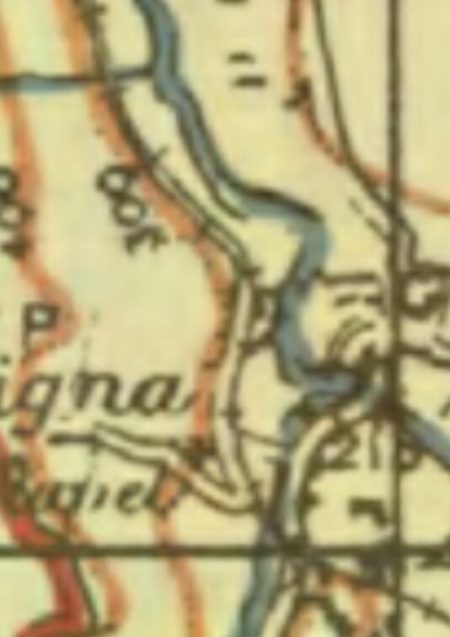
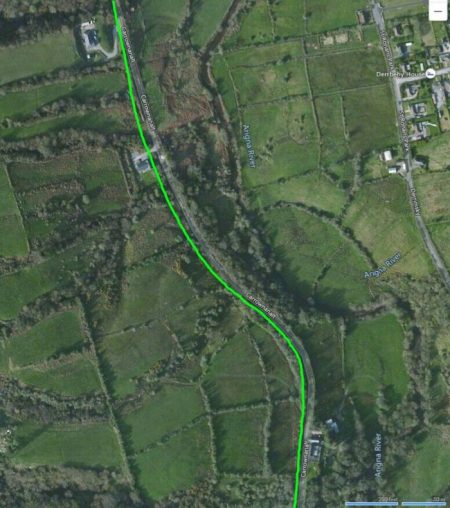
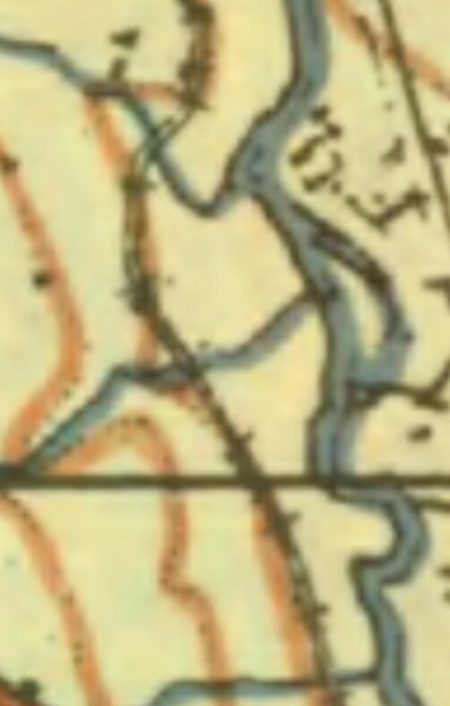
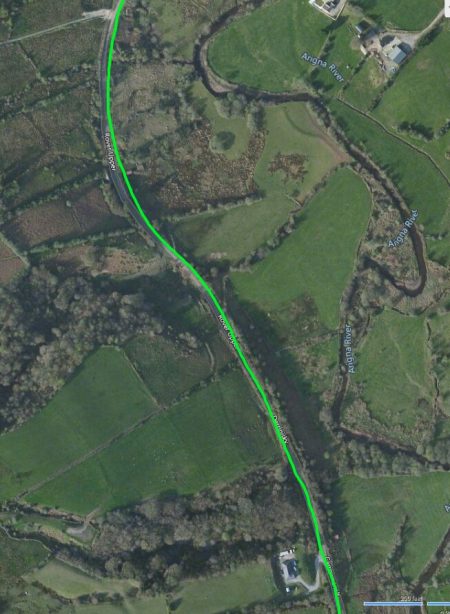
First then, two images from 2009.The next two pictures show the line north of the Station, first in 2016 and then in 2018. [23]The next two images look south from the Rue du 19 Mars 1962, also in 2016 and 2018. [23]It is at this point that we complete the first post about the railway lines of the departement of l’Herault. The next post will look at the lines south of Cazouls.


References

  1. http://rue_du_petit_train.pagesperso-orange.fr/lignes/sudest/CF-herault.htm, accessed on 14th March 2019.
  2. http://passes-montagnes.fr/htlm1/vf_saint-chinian_beziers-01.html, accessed on 14th March 2019.
  3. http://jc34.eklablog.com/le-trafic-viticole-sur-le-rail-entre-st-chinian-et-beziers-a127745832, accessed on 14th March 2019.
  4. https://fr.m.wikipedia.org/wiki/Chemins_de_fer_de_l%27Hérault, accessed on 14th March 2019.
  5. http://adicab.over-blog.com/article-45469237.html, accessed on 14th March 2019.
  6. http://cahiers.de.minerve.pagesperso-orange.fr/HTML/cdf_bezierssaintchinian.html, accessed on 15th March 2019.
  7. https://www.cparama.com/forum/news/forum/34-herault-f41/page90.html, accessed on 15th March 2019.
  8. https://remonterletemps.ign.fr, accessed on 15th March 2019.
  9. http://archives-pierresvives.herault.fr/ark:/37279/vta558b794304186/dao/0#id:366744235?gallery=true&brightness=100.00&contrast=100.00&center=6293.450,-4742.306&zoom=6&rotation=0.000, accessed on 15th March 2019.
  10. https://commons.wikimedia.org/wiki/File:Chemins_de_fer_de_l%27H%C3%A9rault_-_Commeyras_pont.jpg?uselang=fr, accessed on 15th March 2019.
  11. http://passes-montagnes.fr/htlm1/vf_saint-chinian_beziers-02.html, accessed on 15th March 2019.
  12. http://passes-montagnes.fr/htlm1/vf_saint-chinian_beziers-03.html, accessed on 16th March 2019.
  13. http://www.trains-de-jardin.net/forum/viewtopic.php?f=119&t=2865, accessed on 16th March 2019.
  14. https://remonterletemps.ign.fr, accessed on 16th March 2019.
  15. http://cessenon.centerblog.net/6570059-la-gare-de-cessenon-en-1905, accessed on 16th March 2019.
  16. https://www.france-voyage.com/cities-towns/cessenon-sur-orb-11868.htm, accessed on 17th March 2019.
  17. http://www.inventaires-ferroviaires.fr/hd34/34069.a.pdf, accessed on 17th March 2019.
  18. https://remonterletemps.ign.fr, accessed on 17th March 2019.
  19. http://passes-montagnes.fr/htlm1/vf_saint-chinian_beziers-04.html, accessed on 17th March 2019.
  20. http://archives-pierresvives.herault.fr/ark:/37279/vta5590858566372/dao/0#id:1943000407?gallery=true&brightness=100.00&contrast=100.00&center=6268.000,-4480.000&zoom=6&rotation=0.000, accessed on 17th March 2019.
  21. http://archives-pierresvives.herault.fr/ark:/37279/vta559085856f949/dao/0#id:1248117227?gallery=true&brightness=100.00&contrast=100.00&center=6248.000,-4476.000&zoom=6&rotation=0.000, accessed on 17th March 2019.
  22. http://www.tunnels-ferroviaires.org/tu34/34074.1.pdf, accessed on 17th March 2019.
  23. http://passes-montagnes.fr/htlm1/vf_saint-chinian_beziers-05.html, accessed on 17th March 2019.
  24. https://picclick.fr/CPA-Le-Pont-de-Reals-pr%C3%A9s-B%C3%A9ziers-687055-222976685932.html, accessed on 17th March 2019.
  25. https://fr.wikipedia.org/wiki/Fichier:Chemins_de_fer_de_l%27H%C3%A9rault_-_Pont_routier_de_R%C3%A9als.jpg, accessed on 17th March 2019.
  26. http://archives-pierresvives.herault.fr/ark:/37279/vta55925bc277a29/dao/0#id:1252215251?gallery=true&brightness=100.00&contrast=100.00&center=6268.000,-4468.000&zoom=6&rotation=0.000, accessed on 17th March 2019.
  27. http://archives-pierresvives.herault.fr/ark:/37279/vta55925bc2a04d1/dao/0#id:2095234715?gallery=true&brightness=100.00&contrast=100.00&center=6304.000,-4476.000&zoom=6&rotation=0.000, accessed on 17th march 2019.
  28. https://www.cparama.com/forum/cazouls-les-beziers-t3798.html, accessed on 18th March 2019.
  29. https://dunuby.com/cazouls-l%C3%A8s-b%C3%A9ziers-34-h%C3%A9rault-cartes-postales.html, accessed on 18th March 2019.
  30. https://www.communes.com/cartes-postales-anciennes-cazouls-les-beziers, accessed on 18th March 2019.
  31. https://fr.wikipedia.org/wiki/Fichier:Chemins_de_fer_de_l%27H%C3%A9rault_-_Cazouls_pont_du_Rhounel.jpg, accessed on 18th March 2019.
  32. http://www.mascoo.com/index.php?lg=en, accessed on 17th March 2019.
  33. Philippe Marassé; Rail et trafic viticole entre Saint-Chinian et Béziers : un commerce très actif; Historail, October 2013, p56-63. This article was quoted by  http://jc34.eklablog.com/le-trafic-viticole-sur-le-rail-entre-st-chinian-et-beziers-a127745832, [3] For the sake of completeness an English translation of the french text of Philippe Marassé’s article is reproduced below in Appendix 1. Philippe Marassé made contact with me and offered a copy of the french language .pdf of this article.

Appendix 1

Rail and wine traffic between Saint-Chinian and Béziers: a very active business.

by Philippe Marassé, translated from the original French article.

Rail played a major role in the development of mass viniculture in the four wine departments of Languedoc and Roussillon: Gard, Hérault, Aude and Pyrénées-Orientales. The turning point was in the mid-1850s. In fact, in the middle of the 19th century, the Hérault remained a cereal department even though the surface area of its vineyard had increased from 96,000 ha in 1828 to 174,000 ha in 1850. It was not until the Second Empire and the beginning of the Third Republic that the vineyard expanded while other crops declined: the vine then became a monoculture. There are two reasons for this phenomenon: on the one hand, the development of demand as a result of urbanization and the increase in average income caused by economic growth; on the other hand, the expansion of the rail network. The railways, by making transport faster, safer and more economical, allowed wines – formerly distilled – to be widely distributed in the consumer regions, mainly Paris, the North, the East and the Centre. Conversely, the southerners could receive goods manufactured elsewhere at a better price and the foodstuffs, wheat in particular, that they no longer produced. The trade in alcohol, the source of the prosperity of the Bas-Languedoc – and in particular the Biterrois – since the completion of the Canal du Midi in 1681, was replaced by the trade in wines. The latter found in the railway an indispensable tool to conquer a now national market.

A mixed network of railways of general interest and local interest.

At its peak, the railway network of the four wine departments of Languedoc-Roussillon, shared between the PLM and the Midi on either side of Sète, was structured around the Tarascon-Sète-Bordeaux axis completed in 1858 with its Narbonne-Perpignan-Cerbère junction. Two south-north radial railways, Nîmes-Clermont-Ferrand and Béziers-Neussargues, offered – on paper at least – a direct relationship with Paris through the Massif Central, while transporting the wines produced around the service stations in the Gard and Hérault. Finally, a series of “secondary” lines criss-crossed the vineyards: Nîmes-Le Grau-du-Roi, Nîmes-Sommières-Montpellier, Montpellier-Paulhan-Bédarieux, (Béziers)-Vias-Lodève, (Béziers)-Colombiers-Quarante-Cruzy, Narbonne-Bize, Moux-Caunes-Minervois, Carcas-sonne-Quillan-Rivesaltes, etc. In addition to these lines of general interest, there were standard-gauge local interest lines in the Hérault and the Pyrénées-Orientales, the latter operated by a subsidiary of the Compagnie du Midi, les Chemins de fer des Pyrénées-Orientales, which collected valuable tributary transport at a lower cost.

To refine our understanding of the wine traffic, we conducted a “micro-territorial” study. Our Ariadne’s line will be the Béziers-Saint-Chinian local interest line (33 km), opened by the Compagnie des Chemins de fer d’intérêt local de l’Hérault between 1876 and 1887 and connected in 1913 to the Midi, in Colombiers, by a 6 km branch. In 1929 this line, along with the remainder of the Hérault network, was included in the Société générale des chemins de fer économiques (SE), this line, formed the western end of the Montpellier-Chaptal-Saint-Chinian route, via Montbazin, Mèze and Béziers, provided important transport access to the region located to the northwest of the Biterroise sub-prefecture, in the heart of the Béziers-Saint-Pons district. Some figures show the importance of the latter: in the 1930s, this constituency accounted for 60% of the Hérault vineyards and 10% of the metropolitan vineyards for a harvest of about 7 million hectolitres, i.e. 65% of departmental production and 12% of metropolitan production.

Relative strengths and weaknesses

The Hérault network’s standard-gauge track (CFH) opted for coverage of the territory in a gauge which allowed for the best access without the need for transshipment. In addition, this gauge allowed the circulation of privately owned wagons, a significant advantage when tank wagons played a major role in wine traffic. Finally, this characteristic favoured the flowering of privately owned branches (EP). This built customer loyalty because of the investment made. In 1952, the CFH could count on 30 private branches, 10 of which were on the Béziers-Saint-Chinian line alone. Almost all of these were of interest to viniculture. Specifcally identified sidings gave access to the line to three wine merchants, two cooperative cellars, two tank car garages and a car repair workshop. …..

Viniculture contributed 85% of all goods traffic in 1913, a proportion that would exceed 98% after 1945. However, the CFHs had to fight two handicaps to prevent loss of traffic. The first was technical, while the second one was a matter of dryness. First the technical issue: the original track with rails of 24 kg per metre, and the lightness of the aprons resulted in a limiting axle-load of 11 tonnes. This ruled out the use of many wagons – in particular tank wagons. In 1932-1934, the installation of 30 kg rails and the reinforcement work areas allowed maximum axle-loads to rise to 16 tonnes. Then, between Saint-Chinian and Colombiers, that axle load was increased to 20 tonnes in 1963-1967, after a general overhaul of the track.

Secondly, tariffs were a major handicap. The split taxation of shipments from/to large networks – i.e. adding taxes levied by each jurisdiction – increased the total price from or for a station in Herault. The problem primarily related to wines which made up a third of all the tonnage of the CFHs. One example of the shipment of one tonne of wine in Saint-Chinian barrels to Paris-Bercy in 1934 easily demonstrates this. The tax amounted to 195.78 F, of which 21.03 F for CFH and 174.75 F for Midi and PLM networks while this same transport from the station of Puisserguier on the Midi line from Colombiers to Quarante-Cruzy cost only 186.90 F – reduction of 8.88 F per ton. This difference disadvantaged traders served by “l’Hérault” and favoured their colleagues based close to the Midi/PLM. This resulted in many shippers, often at the request of their customers, using the nearest Midi or PLM Station – a possibilty facilitated by the interweaving of the networks and, after 1918, by the development of of road transport. The solution was in the application of a common tariff for CFHs and the large networks – the 6-106 tariff for drinks. End-to-end taxing according to this common special tariff resulted in the above-mentioned transport cost reducing to 174.10 F, including 12.77 F to be paid to the Hérault and 148.43 F to the PLM/Midi networks (the balance of 12.90 F represented tax). However, this change was only brought about through difficult negotiations. The reform was certainly beneficial to the public and led to a decrease in receipts for the Midi (in our example: 10.42 F per tonne).

It was not until 1897 [sic] that the Minister of Public Works Turrel certified the first common tariff for the CFH/PLM on the journey to Paris-Bercy (about a third of the tonnage of wines on the CFH). It is true that, for the owner of a large wine estate in the Aude, this measure could impact on the result of an election. (About this political figure, divided between Parisian political activity and his lands in the Aude, see Jean-Louis Escudier, Viniculture and politics in Languedoc. Adolphe’s action Turrel, Minister of the Third Republic, Les Presses du Languedoc, 1995.) The secondary network was nevertheless excluded in 1919, during the general revision of the national network, and it had to wait until 13th October 1938 to be included following a lively campaign and under pressure from road competition.

There were negative impacts of the policy of a national network tariff: indexation of stations established in 1951 by SNCF, in accordance with the principles of its new price-based pricing of cost, led to a movement of wines away from the CFH, in particular on the Béziers-Saint-Chinian line. Bezeiers-SNCF station received an index number of ‘4’. CFH stations nearby were given the index number ‘6’ which was much more expensive. 

In 1953, in the face of protests from the CFH, the SNCF granted index ‘4’ status to only one station in the area around Beziers – Beziers-Nord. To get round the problem, the CFH invented a device which consisted in taxing all wine shipments from their Béziers Station. The route from the loading station to Beziers being covered by a trucking rate. This was a fcition! Wagons continued to go directly to Colombiers without going through Béziers. This combination which was advantageous for the customer, lasted until 1962 when a new pricing structure was set up.

Similarly, the CFH had to obtain an exclusion for their “territory” when the SNCF introduced road collections in 1950-1953. Thos collection rotues had a significant effect on the network by focussing railheads for wine at Sète, Béziers, Narbonne, etc. In 1952, the CFH evaluated, in respect only of the line to Saint-Chinian, that 15,000 tonnes was the loss of traffic caused by recent measures by the SNCF. Those measures were also detrimental to smaller stations in the national network.

The growth of wine trade on the line from Béziers to Saint-Chinian

The wine trade traditionally included three categories of professionals: traders/retailers,
commission agents (commissionaires) and brokers. This distinction became blurred over time. A number of traders became commissionaires to avoid large disbursements and the dreaded risk of devaluation of their stocks. The trader buys wine from the producer and, after processing, resells it to the customer. The wholesaler, who requests a fixed price including the price of the goods and transport, deals with trade wholesale or semi-wholesale of products, while the “barricailleur” focussed on particular locations.

The commissionaire buys the wine on behalf of a dealer of a place of consumption and, after processing the case if necessary, sends it to him. He gets a fixed commission, all costs, transport in particular, remaining at the expense of of the buyer. The broker limits himself to connecting a buyer, trader or commissionaire, and a producer. To complete the picture, it should be added that, at the beginning of the 20th century, the cooperative wine-cellars appeared and multiplied quickly after the first world war. They developed so effectively that they often resulted in the death of smaller properties/vineyards.

At the opening of the CFH, the region had already resolutely oriented itself towards viniculture. However, the railways facilitated “industrialization” and encouraged the development of an active wine trade in the communities served, including between Béziers and Saint-Chinian. So, the large cellars of Cessenon were built after 1877, the vat room of the estate of Viranel was built in 1881, as was the cellar of the Mas Sarrasi. Similarly, the distilleries, that had operated in this same village since the first third of the 19th century, disappeared, most of them around 1880, which shows that the wine was now predominantly “exported”.

Some traders, in particular in Maureilhan and Cazouls, continued to transport their product direct to the Midi station in Beziers, because of the difference in tariff that we noted above.
The Negoce of Béziers often had wine moved by cart to his stores in Biterrois.

The following traders were significant in marketing wine in early years:  Sahuc, Tindel and Balaman to Marausan, Barbezac in Maureilhan; Bonnet & Gibaudan, Sèbe, Pagès,
Andrieu, Borrel and Robert in Cazouls.

At Cessenon, which was the interim terminus of the line from 1877 to 1887, and where various commission agents were carrying out purchases for houses in the East and
of the North, Auguste Cazanove (1832-1885), wine merchant and banker, was head of a Important house that ranked first among his contemporaries in the region. In the early 1880s, he owned two wine stores and a coopers workshop near Cessenon station, in the middle of the built-up area. In 1880, he even created a distillery which, however, turned out to be ephemeral since it was demolished in 1883.

It should be noted here that, from 1879 to 1881, while phylloxera was gradually devastating
the Hérault vineyards, the municipalities between Béziers and Cessenon, which had been spared, provided most of the line’s traffic between Cessenon and Montbazin, hence the trains
continued towards Montpellier (taking the Midi line through Paulhan for a fee. Traffic which was much more profitable than wine, was sent to the Centre and the North of France and
even Switzerland, covered covered costs in such a way that completion became less significant.

A universe of branches

At the beginning of the 20th century, after the crisis of phylloxera and the reconstitution of
vineyards, very active centres of wine trade flourished along the line, especially in Cazouls,
Cessenon and Saint-Chinian.

In Cazouls, in 1908, seven brokers could be found: Aoust, Calas, Faucheron, Py, Robert, Sèbe and Sénégas to whom a further five dealers were later added: Chabbert, Omer Martel, Léon Maux, Maynaud and Poussines. After the first world war, in 1921, the telephone yearbook for
Hérault identified 17 traders or brokers in wines. In 1921, Pétrier Frères Co., commissioner in
wines in Béziers, built a modern cellar close to Beziers station, with concrete tanks, with two sidings connected to the railway which were about 180 metres in length. After the dissolution of this company, in 1925, François Pétrier (1890-1971), whose offices were located in in front of the Midi station in Béziers, kept the private sidings until 1960.

In Coursan (Aude), his native village, François Pétrier owned a “buying house”, as well as the domains of Fouléry, near Servian, and Creyssels, near Mèze. Pétrier was entrusted, in May 1939, with the presidency of the Groupement des usagers de l’intérêt local de l’Hérault, founded by the main clients of the network to defend the CFH which was threatened with closure. The designation of a trader at the head of this group, which was based in the premises of the Trade Union of Wines in Béziers, underlined the role of rail transport to his profession. Finally, F. Pétrier, who also owned tank wagons (31 in 1936), chaired the Chamber of Commerce of Béziers between 1960 and 1964.

At Cessenon, still in 1908, four brokers animated the place. In 1921, according to the PTT directory, the locality had six professionals in the wine trade, including two commissionaires-
shippers and four brokers. In the 1930s, two new wine trading companies, Maurel and Puech, branched out at Cessenon station. It was in 1897 that the blacksmith André Maurel
(1864-1937), “descended” from his native Tarn, bought a piece of land close to the station to create a metal workshop. In 1926, his son Paul (1896-1947), also a blacksmith, had a 30 metre siding laid, connected to the station via a turntable  for the reception and the shipment of wagons built or repaired in his workshop.

The sidings were expanded in 1932 (a siding of 95 metres was complemented by an 18m  perpendicular track connected to the siding by a wagon turntable. The private sidings now served Paul Maurel’s construction site and the loading wharf belonging to his brother Charles (1898-1963), commissionaire in wine since 1923 and operator of tank wagons. He gave his widow Blanche Herry- Adam, as of 1st January 1964, the business and the branch line
particular. The Herry house continued to use the siding and stayedin business until long after its removal in 1970.

Opened in 1931, the second siding at Cessenon served Augustus Puech’s cellar (an 85 m siding). Born in Cessenon, A. Puech (1893-1982) led a parallel career to that of F. Pétrier. In April 1947, he became Secretary General and local representative of the new Syndicat
des usagers des chemins de fer économiques de l’Hérault, formed in 1939. More recently,
from 1964 to 1973, he succeeded F. Petrier as the head of the Chamber of Commerce in Béziers. He was then, from 1968, President of the Chamber Regional Commerce in of  then received, in Languedoc-Roussillon.

In Saint-Chinian, from the beginning of the 20th century, about ten brokers or traders, some of whom were located near of the station, carried out important shipments (tank wagons and (barricaille?)): Cauquil, Chabbert, Fréchinet, Hugoné, Phalippou, Salvestre, List, etc. There was no specific siding but the trade used the old cattle dock (100 metres in length) located on the across the tracks, from the station building. Established traders along the line were supplemented by trade shipments from Biterrois.

Let’s finish our overview with the two connected cooperative cellars on the Saint-Chinian railway line. In Maraussan, “Les Vignerons Libres”, one of the first cellars founded
in the Hérault, was served from 1905 by a siding of 85 metres which was lengthened in 1913.

Before 1914, it transported wine to a depot in Charenton (Seine). Built in 1937, the Cessenon cellar obtained a 93m private siding in 1948. In addition, after the first world war, industrial-sized distilleries appeared for each Marc. Distilleries appeared in Lignan and also at Cazouls, Cessenon and Saint-Chinian.

A few figures illustrate the vitality of the wine trade on the Beziers-Saint-Chinian line
and the decisive role played by the railways in a region away from the main lines. In
1946, the CFH transported 74495 tonnes of wine and alcohol. Of this total, 19298 tonnes, or 26%, left from Cazouls, Cessenon and Saint-Chinian. Saint-Chinian
and Cessenon ranked respectively in second and third place (after Mèze) for the importance of their wine traffic with 8,152 tonnes for the first and 7,233 tonnes for the second. Very sought-after, the red wines of Saint-Chinianais were rated special at Bercy before 1914 before joining the family of delimited wines of superior quality (VDQS) and then, in 1982, as one of the AOC wines. But by then the railway had disappeared! While the wines of the Hérault had dramatically improvedmon quality. …

Philippe Marassé


Bouches-du-Rhone and its Railways – Part 2 – Orgon to Barbentane

Réseau des Bouches du Rhône (BDR)

The line between Orgon, Chateaurenard and Barbentane is shown on the sketch-map below. The North-point is at about 11 o’clock.

In 1900, about 60,000 passenger tickets were sold. It took 1hr 23min to go from Barbentane to Orgon-Gare and 1hr 30min in reverse. The passenger service was terminated on April 10, 1937, this was surprising as at the time alternative road services were not available. In 1941 the service was, it seems, provisionally restored but in 1946 the line was permanently closed to passengers. [1]

The freight traffic was significant. In 1900, 24,500 tonnes of fertilizers, cereals and other goods were transported on slow speed trains and 20,000 tonnes of vegetables which required rapid delivery.The line from Orgon to Barbentane. [1]Trains to Barbentane and Tarascon followed the same route out of Orgon until just beyond the station at Plan d’Orgon. The route of the line to Tarscon is sown in pick on this 1930s Michelin Map and is covered elsewhere. [2]

The present station at Orgon served the PLM line. The secondary branch line to Barbentane was served by a smaller structure close to the PLM station. The PLM line had travelled North alongside the N7 before turning to the East and crossing the Durance River. The station buildings were of a more substantial nature than those on the secondary lines. The image below comes from Google Streetview and shows the station building in the early 21st century.The view above shows the station at Orgon. The picture is taken from the North-east.

The adjacent satellite image is taken from Google Earth. The station building is clearly substantial. The waiting shelter on the opposite platform also of some substance. There were a series of sidings at the station of which a number were still in use in the early 21st Century.

The station at Orgon sat on a piece of land between the Vallat Meyrol and the Canal Septentrional des Alpines and the Durance River. Just to the North of the station the PLM line crossed the Vallat Meyrol. That bridge can be seen at the top of the adjacent image.

The station for the secondary line to Barbentane sat, as shown below, close to the PLM station. It sat alongside the shelter on the platform across from the station building.The BdR railway station is on the right side of the above image. [1]

The adjacent image shows the location of the BdR station building and shows the approximate route of the line in green. [3]

From the station the BdR swung round the North side of Orgon alongside the Canal Septentrional des Alpines. The next two aerial images show the that alignment. [3]

The postcard image which follows that shows the line from the North with the town and castle behind.The old railway runs across the centre of this image. [4]

Before heading away from Orgon it is worth a look at contemporary images of the PLM bridge across the Durance River. The next few images give a good impression of the structure.The four images immediately above show the bridge between Orgon and Cheval Blanc across the Durance River. [5]Leaving Orgon it appears the the line first followed the south bank of the Canal Septentrional des Alpines for just a short distance, but when that turned away to the Northwest the line continued in a westerly direction. The route to Plan d’Orgon is shown on the following excerpts from 1955 aerial images from the IGN site. [6]

The aerial images show the old railway line deviating away from the D7N as it approaches Plan d’Orgon.

The Station at Pland’Organ was on the north side of the town and was still in use as a railway goods yard until 2006. The station building was demolished in 1979.

Railway tracks still remain at the site of the station in the early 21st century. Details of the station are provided in another of my posts. [2]

Plan d’Orgon station site seen from the Southeast. [7]

Plan d’Orgon was a junction station. We have already covered the line which served Tarascon, leaving the Barbentane Line just to the Northwest of the station. It is shown as a red line on the staellite image below. We continue along the green line.After crossing Route de Cavaillon at level, the line continued in a Northwesterly direction. This Google Streetview image is taken from Route de Cavaillon looking Northwest. The aerial image below shows the route of the two lines in 1955. [3]Travelling Northwest, trains followed the D7N. The line ran around 30 metres to the Northeast of the road for some distance. Modern maps still show the line which closed relatively recently. [6]Looking back along the line from the D74C (Route de Saint Jean).The image above is taken looking Northwest along the line from the same location.

The adjacent map shows the route of the line through the village of St.-Andiol. [6]

St.-Andiol Station still has its tracks in place and part of the station building as well. The tracks are overgrown on the approach to the station from the Southeast but they are still in place as the picture from Avenue de 19 Mars shows below.Looking North from Avenue du 19 Mars in Saint-Andiol.Looking South from the D24C (Route des Agasses/Avenue des ANC Combattants) in Saint Andiol.Looking North through the Saint-Andiol Station site from approximately the same location in the early 21st Century. [8]Saint-Andiol Railway Station in the early 20th Century. [9]The view from Chemin des Muscadelles North of Saint-Andiol Station, looking back South along the line.The image above looks North from a side street close by in 2012.

The adjacent image shows the D24 and the railway, North of Saint-Andiol, travelling North in very close proximity. The route of the line then follows the Chemin Vieux de Saint-Andiol through Saint-Michel and the southwestern suburbs of Cabannes. As the road bears Northeast towards the town centre, the railway turns Northwest and runs into what was the Railway Station site. The IGN map below shows Station. [6]

Once again the tracks remained in place in 2012 when the pictures were taken from  Chemin de Barrie and from the end of Avenue de Verdun. These modern pictures are supplemented by 4 early postcard photographs of the Station.

Northwest of Cabannes, the railway followed a straight course alongside the meandering D26 (Route de Noves) before the road and railway ran parallel to each other for just under a kilometre, as can be seen below. The line then ran cross-country away from the route of roads until reaching Noves. On the way it crossed the D26 and the D7N.

Looking Northwest towards the site of Cabannes Station from Chemin de Barrie.The view of the station site from the end of the tarmac on Avenue de Verdun. Two very early images of Cabannes Railway Station. [11]Two early 20th century pictures of Cabannes railway station. [11]The D26, Route de Noves and the BdR Railway run parallel to each other for around a kilometre. The picture is from Google Streetview and was taken in 2012.Looking towards Noves from the D7N, another Google Streetview image.The railway approaches Noves from the Southeast along the line of trees visible in the bottom right of this image and which crosses the D7N road running up the right side of the satellite image.The railway line still passes North of the Noves Stadium and then curves towards the Northwest, entering the station site .The tracks can still be glimpsed through the bushes at the edge of the Stadium car park.Two photographs of the Station at Noves in the early 20th Century. [10]Noves Station. Noves Station from Avenue Agricol Viala. This Google Streetview image looks back towards Cabannes.The railway left (and still, in the early 21st century, leaves) Noves in  Northwesterly direction alongside the Cd28 (Route de Chateaurenard). This picture comes from Google Streetview and was taken in 2012. By the time the D28 has been reached the railway is travelling in a Westerly direction. The IGN map below shows the route as it approaches the outskirts of Chateaurenard. [12]This image is a second map from IGN of Chateaurenard and shows the railway running across the North side of the modern town. [12] This image covers the same area as the map immediately above. It is a 1955 aerial photograph of Chateaurenard. [12]

The Station at Chateaurenard was one of the significant stations on the route to Barbentane. The building was commensurate with that status. Unlike many of the other stations/halts on the line, the station building was a two-storey structure.

The four images above show Chateaurenard Station near the beginning of the 20th Century. [13].

These two images show engines and rolling stock on the Station site. [13]Google Earth satellite image of Chateaurenard Railway Station in the early 21st century.Map of the Station site provided on line by IGN. [12]Looking back from Chateaurenard Station towards Noves. The photographer is standing on Avenue Leo Lagrange.Looking forward through the station site from the East. The photographer has turned through 180 degrees from the last picture. The water-tank is on the right. The two-storey station building can just be seen beyond the canopy left of centre.The two-storey station building, taken from Rue de la Gare to the South.The Station building from the North. [1]Looking back across the station site from Chemin du Mas de Quentin.Looking West from Rue Paul Aubert at the Western end of the Station site.The present railway line follows the route shown here through Rognonas to join up with the main line which heads Southwest to Tarascon from Avignon, just to the North of Mas de Corne. This is alos the route of the old railway, as can be seen on the aerial photograph below. 

There was a small Halt at Rognonas on the BdR line of which there appears to be no evidence on aerial photographs from 1955 or more modern maps.

On the route of the PLM line from Tarascon to Avignon there was a station for the two villages of Barbentane and Rognonas. It is marked ‘Gare de fret’ on the map from IGN below.The same area is shown on this 1955 aerial image.

Barbentane-Rognonas Station Buildings.

The picture above shows Barbentane-Rognonas Station on the PLM line. The old BdR station building is behind the photographer over his left shoulder. [14]

The adjacent IGN map shows both station buildings and illustrates their relative positions. [12]

The pictures below show the BdR building today.The BdR Station Building in the 21st century. The picture is taken from the south at the end of the Impasse de la Gare.The same building taken from the West. [1]The picture above is taken from the bridge over the main-line which sits just to the North of the BdR Station building. The old PLM building can be seen in the right-background. This is a Google Streetview image.

The adjacent image is taken over private land from the East. This 1955 aerial image clearly shows the location of the station, its buildings and track work were still complete in 1955.

Finally a few notes about the whole line and the station at Barbentane.

On 24th July 24 1843 Messrs Talabot and Frères [15], of the Railway Company of Avignon in Marseilles , obtain the concession of the line Avignon to Marseilles. On 18th October 1847 the Barbentane- Saint-Chemas section of the PLM line opened and the Barbentane station was declared open. It was given the name “Barbentane-Rognonas,” although initially it had been thought to call it Rognonas Station. [14]

The secondary line from Barbentane to Orgon was developed as part of a series of secondary lines financed and built in the Departement of Bouche-du-Rhone by the Société de construction des Batignolles. [16]  In 1882, in Bouches-du-Rhone, the company changed its name to: , this company became the Société nouvelle des chemins de fer des Bouches-du-Rhône, then in 1886, Compagnie des chemins de fer régionaux des Bouches-du-Rhône. The company folded in 1913 and was taken over by the Departement. It became known as the Régie départementale des transports des Bouches-du-Rhône, better known under the acronym RdT13. [1]

This explains how the BdR station for the Barbentane-Orgon Line became known as the Batignolles station. The line was declared of public utility  by promulgation on 30th August 1884. Its purpose was to serve the rich agricultural plains located between the Rhône, Durance and Alpilles and promote the transport of the crops both to the Rhone valley via the station PLM Station at Barbentane, and to Marseilles and the Côte d’Azur via the Orgon PLM station. [1]

The work on the line began in November 1886> Temporary track was laid to access the River Durance where the gravel necessary for the embankments was extracted. Construction was complete in January 1888 and the line opened that spring, along with the line from Saint-Rémy to Plan-d’Orgon.

The line measured/measures 28 km.and was travelled in just over an hour. The track has/had very shallow gradients. The ruling grade was downhill from Plan-d’Orgon to Barbentane, which was the direction of travel of the most heavily loaded trains.

References

  1. http://bne.lagramillere.free.fr/barbentane-la-ligne-du-bdr-de-barbentane-a-orgon-gare.htm, accessed on 7th March 2019.
  2. https://rogerfarnworth.com/2019/03/09/bouches-du-rhone-and-its-railways-part-1-tarascon-to-plan-dorgon.
  3. https://remonterletemps.ign.fr, accessed on 11th March 2019.
  4. https://www.geneanet.org/cartes-postales/view/2941816#0, accessed on 12th March 2019.
  5. http://www.en-noir-et-blanc.com/orgon-p1-1471.html, accessed on 12th March 2019.
  6. https://remonterletemps.ign.fr, accessed on 12th March 2019.
  7. http://marc-andre-dubout.org/cf/baguenaude/plandorgon-tarascon/plan-tara.htm, accessed on 7th March 2019.
  8. https://commons.wikimedia.org/wiki/File:St-Andiol-gare-81.JPG, accessed on 12th March 2019.
  9. http://papybricolo.over-blog.com/2018/06/cp-gare-de-saint-andiol.html, accessed on 12th March 2019.
  10. https://www.cparama.com/forum/noves-t15640.html, accessed on 12th March 2019.
  11. https://www.cparama.com/forum/cabannes-t29102.html, accessed on 12th March 2019.
  12. https://remonterletemps.ign.fr, accessed on 13th March 2019.
  13. https://www.cparama.com/forum/chateaurenard-de-provence-t12184.html, accessed on 13th March 2019.
  14. http://bne.lagramillere.free.fr/barbentane-gare-de-barbentane-rognonas.htm, accessed on 13th March 2019.
  15. Paulin François Talabot (1799-1885) was a polytechnic engineer, banker and French politician. In 1836 he created the Compagnie des mines de la Grand-Combe et des chemins de fer du Gard. He was principal shareholder of the Compagnie du chemin de fer d’Avignon à Marseille which eventually became part of the Compagnie du Chemin de fer Paris-Lyon-Méditerranée (PLM),  of which he became the general director (1862 -1882). He participated in the creation in 1863 Credit Lyonnais and, in 1864 with the help of the Rothschild family, he created the bank Societe Generale (of which he was the first director), to compete with the Crédit Mobilier of the Péreire brothers. In addition to being a very wealthy industrialist, Paulin Talabot was elected several times as a deputy of the government (supporting Napoleon III) and general adviser of the Gard. [14]
  16. Société de Construction des Batignolles [19] was a civil engineering company in France created in 1871 as a public limited company from the 1846 limited partnership of Ernest Gouin et Cie. Initially founded to construct locomotives, the company produced the first iron bridge in France, and moved away from mechanical to civil engineering projects in France, North Africa, Europe, and in East Asia and South America. Conversion to a public company, the Société de Construction des Batignolles (SCB), in 1872 allowed the company to raise capital. By 1880 over 5 million francs of shares had been issued. [17] The new company was to continue the work of Ernest Gouin et Cie.; shipbuilding, bridges and other civil engineering works, and machine and locomotive building. Ernest Goüin died in 1885, to be succeeded by his son Jules as chairman of the company. [17] With most mainline railways in Europe complete by the 1870s, the group’s search for contracts became increasingly international. By the 1880s civil engineering was becoming the core business.[6] The company undertook some large railway construction projects such as the construction of the line from Bône to Guelma in Algeria for the Compagnie des chemins de fer Bône-Guelma, and the line from Dakar to Saint-Louis, Senegal. These were operated as concessions by subsidiaries of the SCB. By 1913 the company had fourteen subsidiary companies located throughout the world running railways.[17] The company also constructed canals for irrigation, ports and harbours, and water and sewerage systems.[5][6] Profits from concessions in north Africa, in particular Tunisia, were high (over 25% in the 1890s), and allowed expansion without share issues or loans.[17]
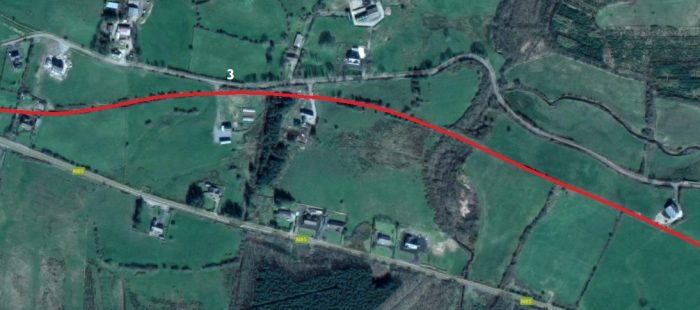
  17. Rang-ri Park-Barjot, “The French Societe de Construction des Batignolles : From manufacture to public utilities”http://www.econ.upf.edu, Department of Economics and Business, Pompeu Fabra University; European Business History Association (EBHA), 2004 Conference.
  18. https://en.wikipedia.org/wiki/Soci%C3%A9t%C3%A9_de_Construction_des_Batignolles, accessed on 13th March 2019.

Bouches-du-Rhone and its Railways – Part 1 – Tarascon to Plan d’Orgon

Réseau des Bouches du Rhône (BDR)

The Departement of Bouches-du-Rhone

The different routes which made up the Bouches-du-Rhone network. [1]

The first line that we will look at is that from Tarascon to Plan d’Orgon which passed through St. Remy de Provence. The route is shown on the 1930s Michelin map below. [2]This line branched off the line between Orgon and Chateau-renard which can also be seen on the map above. That line continued beyond Chateau-renard to Barbentane as the map below shows. [3] On this map, the route to Tarascon can be seen leaving the route shown at the Gare de Plan d’Orgon in the bottom right of the map. We will return to the Barbentane to Orgon line once we have looked at the Tarascon to Plan d’Orgon line.The line from Tarascon to Saint-Rémy section of the route to Plan d’Orgon was built by the Bouches-du-Rhône railway company, and opened in 1874. The section of Saint-Rémy at Orgon was opened only in 1887, at the same time as the Barbentane-Orgon line of which it constituted a branch. [5]

On 19th February 1870 the concession for the Pas-des-Lanciers to Martigues and Tarascon to Saint-Rémy-de-Provence lines was granted to the Société des railways of Bouches-du-Rhône. The line between Tarascon and Saint-Rémy-de-Provence opened on 25th May 1874. [4]

The company became, in 1913, the Departmental Board of Bouches-du-Rhone, which continued to operate the line until its closure in 1950. [5]

The map above shows the location of the west end of the line at Tarascon (close to Beaucaire) and North of Arles. The map below shows schematically the relation between Becauaire and the terminus at Tarascon.The plan above shows the relative arrangement of the various stations and railway lines either side of the Rhone in Beaucaire and Tarascon in 1904. [4]

The adjacent images show the mainline station at Tarascon. The station formed a junction in the mainline. Tarascon junction station sat at the meeting of lines from Marseilles, Nîmes and Avignon and the companies PLM and Midi. The station for the line to Orgon was behind the station buildings in these pictures. [2][5]A series of views of the standard-gauge station at Tarascon taken from a variety of vantage points. [2]

The green box below highlights the location of the standard-gauge station, the red circle highlights the secondary line station and the line which heads Southeast from it is shown in red.The site of the station is shown above in the mid 1990s. The water tower and the passenger facility were still standing at that time, as were a number of other buildings. [2]

The adjacent picture was taken for Google Streetview in 2016. The water tower remained at that date but the passenger building had disappeared.

There was a relatively large station yard at the lower level alongside the curving line from Tarascon to Arles and originally a connecting line on a gradient that allowed the transfer of goods vehicles between the main and secondary lines.

The mainline from Avignon direct to Arles had a number of goods sidings and the Tarascon to Orgon line passed under these in a tunnel which is still evident in the 21st Century, as the image below shows.

The line from Tarascon Station passed under the mainline in a short tunnel as it headed out into the countryside. This image is taken from Google Streetview.These two monochrome aerial images show the route of the line travelling East. [7]Trains left the secondary station at Tarascon just after 8am and again at 2:10pm, 5:45pm and 7:50pm. All of these trains travelled as far as St.-Remy-de-Provence. Two reached Plan d’Orgon and one of these travelled on to Orgon. [2]

The rout East from Tarascon was only very gently graded and the farmland through which the line travelled was essentially flat. The image below looks back along the track-bed towards Tarascon at the location marked on the momochrome aerial image above with the numeral 1.This second Google Streetview image is taken at the same location as the first and it shows the railway formation as it heads East. The picture illustrates how flat the countryside was. From this point onwards, for a number of kilometres the railway followed a relatively straight path to Saint-Étienne-du-Grès.The Station at St.-Étienne-du-Grès. [6]Three further pictures taken in the early 20th Century at St.-Étienne-du-Grès from the Cparama website. [6]

Occasionally it is relatively easy to fix accurately on the line of an old railway. As the line approached St.-Étienne-du-Grès, the picture below (taken in 2012) shows some remaining track from the railway where it crosses a minor road (Chemin du Mas d’Artaud).Looking back West along the line towards Tarascon. From the crossing at Chemin du Mas d’Artaud, the railway crossed the fields to arrive on the North  side of St.-Étienne-du-Grès. A length of that route is the modern single lane road – Chemin de la Malautière. The station at St.-Étienne-du-Grès was just off the bottom right corner of the above map. Pictures of the station in the early 20th Century are shown above.The station at St.-Étienne-du-Grès was at the location ringed in red. The St.-Étienne-du-Grès Co-operative is still in existence at the location ringed in green. [7]The route of the line between the station and the co-operative in St.-Étienne-du-Grès. In this aerial image the co-operative at Saint Etienne du Gres is visible in the bottom-left. The route of the old line is shown as a red line. The route runs along a line roughly equidistant between the D99 and the Roubine de Terrenque (a narrow slow flowing canal /river. [7]This view of the Co-operative buildings is taken from Place du Marché (the D99). The route of the old railway is behind these buildings.Looking East along the old line from Chemin du Pont Carlin (location 2 on the above aerial image). The station which served Mas-Blanc-des-Alpilles was somewhere along this length of the track-bed.A similar location on an modern IGN map, the mauve dotted line indicates what was the route of the old railway. [7]A cycleway follows the route of the old railway fro a short length – Eurovelo 8. This is the view along the line at the start of the cycleway. [8]This is the view along the line adjacent to the Zone d’Activites de la Massane. [8]The D99 now switches from it original route (nowthe D99a) to follow the line of the old railway. The cycleway joins the route close to the crossing of the Gaudre du Rougadou. [8]The four monochrome aerial images above from 1955 show the route of the railway between Saint-Etienne-du-Gres and Saint-Remy-de-Provence. [7]The old railway track-bed follows the mauve dotted line to reach the line of the modern D99 which then follows the old track-bed across the North of Saint-Remy-de-Provence. [7]A closer view,  extracted from the aerial image above, is focussed on the location of theSaint-Remy de Provence Railway Station in 1955. The railway formation is now hidden under the D99. [7]Looking from West to east along the D99 through what was the railway station site. This image is taken from Google Streetview looking along what is now Avenue du Marechal Juin.

The next few pictures show the railway station while it was still in use. The first two show railcars (automotrices) standing in the station at Saint-Remy-de-Provence. The following two  images show the station when in use at the time steam power was in use.The old station building was still standing in 2017. This picture is taken from the old station forecourt. The railway lines were on the far side of the building where the D99 now runs, as shown below.South of the present town, is the site of what was a roman city – Glanum. Some remains are still visible. The destruction of the site in 270 by the Barbarians, followed by the development of Saint-Rémy, resulted in the ruins being covered gradually by alluvial silt.Moving on from Saint Remy, the line continued across relatively flat terrain towards Plan d’Orgon. The route first follows the D99 along Avenue du 19 Mars 1962, Avenue Mal de Lattre de Tassigny and Avenue General Goislard Monsabert before leave the D99 behind for a while to run along Voie Communale de Jean Piquet as far as La Galine.The line then ran along the North shoulder of the D99. [7]Occasionally pulling away from the road to the North. [7]The station at Mollege appears at the top right of the last monochrome image above. The modern IGN plan shows the location and the station building is marked on the map. [7] The building has been extended a little, as shown below.The railway then ran along the North side of the D99 towards Plan d’Orgon. Before reaching the town, it first drifted away from the D99 and then deviated away to the North so as to be able to swing round the town and join the Barbentane to Orgon line.The line from Tarascon reached the Barbentane line after crossing the D7N.After the junction, the line crossed the D99 (Route de Cavaillon) and entered the station area.Plan d’Organ’s station remained in use as a goods facility until 2006 when the town’s fertilizer plant closed down. The station building had been removed in 1979.The Station at Plan d’Orgon. [2]The Station at Plan d’Orgon. [9]The Station at Plan d’Orgon. [10]Tracks remain at the station site. This view is taken from the South-East. [2]

References

  1. http://rue_du_petit_train.pagesperso-orange.fr/lignes/sudest/reseau-BDR.htm, accessed on 7th March 2019.
  2. http://marc-andre-dubout.org/cf/baguenaude/plandorgon-tarascon/plan-tara.htm, accessed on 7th March 2019.
  3. http://bne.lagramillere.free.fr/barbentane-la-ligne-du-bdr-de-barbentane-a-orgon-gare.htm, accessed on 7th March 2019.
  4. https://trains.fandom.com/wiki/Tarascon_-_Saint-Remy-de-Provence, accessed on 7th March 2019.
  5. http://voiesdesaffectees.free.fr/tarascon-orgon.html, accessed on 7th March 2019.
  6. https://www.cparama.com/forum/saint-etienne-du-gres-t29127.html, accessed on 8th March 2019
  7. https://remonterletemps.ign.fr, accessed on 7th, 8th, 9th March 2019.
  8. http://www.inventaires-ferroviaires.fr/hd13/13057.a.pdf, accessed on 9th March 2019.
  9. https://www.cparama.com/forum/plan-d-orgon-t29120.html, accessed on 9th March 2019.
  10. http://bne.lagramillere.free.fr/barbentane-la-ligne-du-bdr-de-barbentane-a-orgon-gare.htm, accessed on 10th March 2019.

Japanese Narrow Gauge -762mm Lines – Part 6 – The Kiso Railway – Part E – The Ogiso Line from Yabuhara

[NB: As far as I am aware permission has been granted for the use of all the photographs below. This is particularly the case of the site rintetsu.net which I have relied heavily on in producing this post. I have sought, where-ever possible to attribute all sources and have no intention of contravening copyright. Should there be an issue with any of the images below, if you are the copyright holder, please contact me. Please accept my apologies in advance if this has occurred.]

This sketch map shows the location of the JR Chuo Line station as a white rectangle. The Kiso Forest Ibarahara (Yabuhara) Forestry Office & yard extended south of the red dot labelled 木曽森林管理署.  [1] The darker black line shows the short branch from the JR Station to the transshipment area. The thick green lines show the 762mm gauge lines.Yabuhara JR Chuo Line Station. [2]The yellow arrow shows the route of the short branch to the logging yard. The picture was taken in 1999. [2]Looking back at the station along the approximate line of the short branch in 2014.The approximate line of the branch running into what was the logging yard.A view across the logging yard showing the rote of the branch from the station in the top-right.The sketch plan above shows the arrangement of tracks in the transshipment yard. The yellow lines are those connecting with the JR Chuo Line and are at the approximate position of the red arrow on the image immediately above. The green lines are the 762mm Lines. North is to the right of the sketch. [2]

The adjacent annotated satellite image from Google Maps shows how the area of the sidings has been developed over the years.

The JR transshipment sidngs are shown in 1964 in the image below. Timber is shipped from here all over Japan.The JR transshipment sidings. [3] The same transshipment sidings. [4]An overview of the location showing the JR sidings in the centre of the image and the 762mm lines at the bottom of the picture and above the JR lines. The village is behind. This picture also comes from 1964. [5]This modern image from Google Maps shows the line of the old 762mm gauge railway in 2014. Its location is about two-thirds up the monochrome image immediately above.Less than a kilometre further north the old railway route leave the modern prefectural highway No. 26 when it crosses the river. The old railway remains of the East bank of the river. It appears that the old line was on the West side of highway No. 26 and crossed the road to take the route shown above. The location is marked on the sketch map below by the first indicator arrow above the red dot which marks the southern terminus of the line. [6]A little further north the main line (Green) continues to follow the river while a branch-line (Light Green) heads off the the Northeast. The point is marked by the second indicator arrow above and is shown in 2014 below.The route continues North along the East side of the Kiso River before running through Ogiso (小木曽), the village in the picture below.In Ogiso another branch-line departed from the main logging route. It can be seen branching off the the West across the river close to the top of the sketch map above.The Sasagawa Line left the main line in Ogiso. Currently it is the site of a sawmill. [7]

From Ogiso the line continued on the East bank of the river eventually reaching the modern-day Miso Dam.The Miso Dam is shown at the top of this sketch map. For most of the journey to the dam the railway followed the East bank of the Miso River, only crossing the course of the river close to the location of the modern Dam. [8]Prior to the construction of the Miso Dam the railway crossed the river as shown here and then passed through a short tunnel before continuing up the West side of the river [9]The forest road which replaced the railway before the construction of the Dam. The bridge was built after the railway closed, the tunnel was built for the railway. [9]The same location during construction of the Dam. The bridge span has been removed but the tunnel portal remains (Construction record photos). [9]The railway followed the valley floor as shown above. There is little to see today other than the water of the lake. [10]

The adjacent image was taken as a record photograph before construction of the Dam. The railway route at this point was a long straight section. The longest in the Kiso Forest network. [11]

This next picture is taken at the site of the Takase stop. The caption indicated that there were 4 or 5 tracks at the station. This picture was taken before the flooding of the valley when the Miso Dam was finished. [11]

The line continues northward and branches again towards the top of the modern lake as shown on the sketch plan below. [12]The route of the two lines at the junction is highlighted on the satellite image above. The bridge at the bottom of the satellite image is shown in the picture below. [13]Okinoiso Bridge. [13]The confluence of the two rivers before the formation of the reservoir. This image was also taken as a record photograph before construction of the Dam. The river to the left is the Sasaozawa. [13]

The railway route up the valley of the Sasaozawa was constructed to a lower standard than the main line as it was designated as a working track. The satellite image above shows a spiral track arrangement to allow the logging line to gain the necessary height to continue up the valley. That spiral is shown below.This ramshackle spiral was eventually removed at the end of the Second World War when the Sasaozawa working track was abandonned. [13]


A full survey of the length of the Sasaozawa Line has not been attempted but rintetsu.net carries a few photographs of the line which were taken in 1929 and originally included in a Japanese language book entitled “Ogiso Forest Railway” which was issued by Yabohara Forestry.

The first two of these show Diesel Locomotive No 26 negotiating the spiral. The pictures were taken at different times or on different dates as the train formation is different in each of the pictures. [13]

The third of these images appears immediately below and shows the line further up the Sasaozawa River. The construction techniques are clearly shown. The railway has a temporary look to it and would almost inevitably have been at risk in the event of the river being in spate. [13]This final photograph in the sequence from 1929 shows as the caption says: Trolley riding down gold shoe curve (say horseshoe shape). both the last two photos illustrate the fact that the line use gravity as a tractive force. Pairs of trolleys travelled down the line in the hands of a single brake-man. [13]

Returning to the main line, the adjacent image is one of relatively few which shoe one of the Baldwin steam locomotives at work. The location is north of the confluence between the two rivers. The tunnel is now under water, although at times of low water it is said to be possible to negotiate the tunnel in a canoe. [13]

The next picture shows the forest track that replaced the railway. It is another picture taken for record purposes before the valley was flooded. [13]

Beyond the end of the modern reservoir the landscape has been altered as regrading has been undertaken. The old railway formation is occasionally visible as below. [13]The old railway track-bed is on the right in this image. [13]This image is taken looking back down the old railway line. [13]This is the location of what was once a two track station and passing loop – Senmizawa Station. [13]The old railway continues running northeast along the Miso River Valley following the path of what is now a gravel forest road. There is little evidence left of the old railway as forest road bridges have replaced the old railway structures. [14]

The line travelled on through Funagawa (a station on a curve with a passing loop). The location is shown below in May 2014. [15]Funagawa Station (舟ヶ沢). [15]Funagawa Station (舟ヶ沢) is the lower red dot on the plan the next significant point is where a branch-line heads off to the East at Sawa Bridge of the Pond (池の沢橋梁). [16]The branch-line (the pond line, 池の沢) was built to the same standard as the main line because it was heavily used. [17]

Some distance further along the line comes another branch-line. It appears at the top of the sketch map above at the location of Ogasawa bridge (尾頭沢橋梁).The line from the south enters this plan from the right. The branch-line follows the Ogasawa River. The station is named after the river. [18]The Ogasawa junction with a train coming off the branch line. The branch is clearly a ‘work line’ as the construction standard is lower and it runs on timber piers. The photograph comes from “Ogiso Forest Railway” issued by Yubarahara Forestry Bureau. Note that this train is also pulled by one of the Baldwin Steam Locomotives. [18]Ogasawa Station in 2008. [18]Ogasawa Station in use. It included a logging plant of which the offices are behind the locomotive. The photograph comes from “Ogiso Forest Railway” issued by Yubarahara Forestry Bureau. [18]The line continues up the valley. The Ogasawa Station is the lower red dot above. Hakubaki Station is the red dot at the top of the map.  [19]

At times the old line does not follow the forestry track. The 7th Misogawa Bridge (第7味噌川橋梁) is one such location. As the adjacent photograph shows, one of the abutments of the old railway is still visible. [20]

This applies for the 8th Misogawa bridge (第8味噌川橋梁), below. The track-bed between these bridges is indistinct and follows the opposite bank of the river to the forest road. [20]The 7th Misogawa Bridge (第7味噌川橋梁)  and the 8th Misogawa bridge (第8味噌川橋梁) are shown above. There are copious photos available on the Japanese language website (rintetsu.net) which can be found by following the link in the references below. [20]Hakubaki station (鉢伏停車場) [20]The rail route continues to completion on the sketch map above. [21]Upper Zokotsuzawa Bridge No. 1. The forest road sits alongside the abutment and piers of the old railway bridge. for many of the structures up the remainder of the valley the picture is the same, a newer forest road bridge alongside old abutments. (上ゾコツ沢橋梁第1号) [22]The sketch map above shows two hairpin bends on the line. This if the first, the photo was taken in 2014 looking north. [22]The hairpin bends. [23]The second hairpin bend. [23] Beyond this point the route of the old line become increasing indistinct but it can be followed on the Japanese language website rintetsu.net. [24]

Just occasionally highlights stand out along the route. These two pictures show a typical bridge on the working line. The construction is entirely from locally sourced timber. [25]


References

  1. http://rintetsu.net/nagano_05/yabuhara01/yabumap_1.html, accessed on 2nd March 2019.
  2. http://rintetsu.net/nagano_05/yabuhara01/yabuhara_001.html to http://rintetsu.net/nagano_05/yabuhara01/yabuhara_004.html, accessed on 2nd March 2019.
  3. Kisei Village History; cf. http://rintetsu.net/nagano_05/yabuhara01/yabuhara_003.html, accessed on 2nd March 2019.
  4. Kisei Village History; cf. http://rintetsu.net/nagano_05/yabuhara01/yabuhara_004.html, accessed on 2nd March 2019.
  5. History of Kisan Village 100 Years; cf. http://rintetsu.net/nagano_05/yabuhara01/yabuhara_004.html, accessed on 2nd March 2019.
  6. http://rintetsu.net/nagano_05/yabuhara02/yabumap_2.html, accessed on 3rd March 2019.
  7. http://rintetsu.net/nagano_05/yabuhara02/yabuhara_008.html, accessed on 3rd March 2019.
  8. http://rintetsu.net/nagano_05/yabuhara03/yabumap_3.html, accessed on 3rd March 2019.
  9. http://rintetsu.net/nagano_05/yabuhara03/yabuhara_009.html to http://rintetsu.net/nagano_05/yabuhara03/yabuhara_013.html, accessed on 3rd March 2019.
  10. http://rintetsu.net/nagano_05/yabuhara04/yabumap_4.html, accessed on 3rd March 2019.
  11. http://rintetsu.net/nagano_05/yabuhara04/yabuhara_014.html to http://rintetsu.net/nagano_05/yabuhara04/yabuhara_019.html, accessed on 3rd March 2019
  12. http://rintetsu.net/nagano_05/yabuhara05/yabumap_5.html, accessed on 3rd March 2019.
  13. http://rintetsu.net/nagano_05/yabuhara05/yabuhara_022.html to http://rintetsu.net/nagano_05/yabuhara05/yabuhara_032.html, accessed on 3rd March 2019.
  14. http://rintetsu.net/nagano_05/yabuhara06/yabumap_6.html, accessed on 3rd March 2019.
  15. http://rintetsu.net/nagano_05/yabuhara06/yabuhara_033.html to http://rintetsu.net/nagano_05/yabuhara06/yabuhara_038.html, accessed on 3rd March 2019.
  16. http://rintetsu.net/nagano_05/yabuhara07/yabumap_7.html, accessed on 3rd March 2019.
  17. http://rintetsu.net/nagano_05/yabuhara07/yabuhara_039.html to http://rintetsu.net/nagano_05/yabuhara07/yabuhara_041.html, accessed on 3rd March 2019.
  18. http://rintetsu.net/nagano_05/yabuhara07/yabuhara_046.html to http://rintetsu.net/nagano_05/yabuhara07/yabuhara_051.html, accessed on 4th March 2019.
  19. http://rintetsu.net/nagano_05/yabuhara08/yabumap_8.html, accessed on 4th March 2019.
  20. http://rintetsu.net/nagano_05/yabuhara08/yabuhara_052.html to http://rintetsu.net/nagano_05/yabuhara08/yabuhara_063.html, accessed on 4th March 2019.
  21. http://rintetsu.net/nagano_05/yabuhara09/yabumap_9.html, accessed on 4th March 2019.
  22. http://rintetsu.net/nagano_05/yabuhara09/yabuhara2_hz01.html to http://rintetsu.net/nagano_05/yabuhara09/yabuhara2_hz08.html, accessed on 4th March2019.
  23. http://rintetsu.net/nagano_05/yabuhara11/yabuhara2_hz17.html to http://rintetsu.net/nagano_05/yabuhara11/yabuhara2_hz18.html, accessed on 4th March 2019.
  24. http://rintetsu.net/nagano_05/yabuhara11/yabuhara2_hz19.html to http://rintetsu.net/nagano_05/yabuhara11/yabuhara2_hz20.html and http://rintetsu.net/nagano_05/yabuhara13/yabuhara2_25.html to http://rintetsu.net/nagano_05/yabuhara13/yabuhara2_39.html  , accessed on 4th March 2019.
  25. http://uguigawa.blog42.fc2.com/blog-entry-448.html, accessed on 4th March 2019.

A Monorail in Kampala?

Charles Ewing who was based in India designed a monorail system. It was a single rail tramway arrangement. [1] His invention was a success. By 1899 a number of his design of lines had been laid in India. These included a twenty-two mile line at the Scottish firm of Messrs. Finlay, Muir and Co.’s tea estates in the Travancore Hills. [2]

In 1902, the Madras (now Chennai) Government approved the construction of a Ewing type monorail tramway in the environs of Madras, in the Chingleput (now Chengalpattu) District which was about 56km south west of madras. [3]

Ewing type monorail tramways became popular. In Patiala State, one connected Sunam to Patiala via Bhawanigarh. [4] An earlier line connected Sirhind to Morinda via Bassi and Alampur. [5] In the Punjab a line was constructed between Morinoa and Karar. [6] In Kerala, a similar monorail was constructed between Munnar and Top Station [13] in the Kundala Valley. [14]

Patiala State Monorail Trainways (PSMT) was a unique rail-guided, partially road-borne railway system running in Patiala from 1907 to 1927. [9]. PSMT was the second monorail system in India, after the Kundala Valley Railway [10] and the only operational locomotive-hauled railway system built using the Ewing System in the world. [11]. The Kundala Valley Railway pre-dated this, also using the Ewing system between 1902 and 1908, although this only used bullocks for haulage. Following the conversion of the Kundala Valley Railway from a monorail to a narrow gauge railway in 1908. [12] PSMT was the only monorail system in India until its closure in 1927.

Uganda – Of great interest to me, given my personal interest in the Country of Uganda, is the fact that Ewing’s system spread outside the sub-continent of India. “In 1907, Winston Churchill visited Uganda and discussed with the authorities ways of improving transport between Port Kampala, known then as Luzira, and Kampala town. Amongst those consulted was a Mr Watts who had experience of the Ewing system in India. The environment and transport needs were considered to be similar and the Ewing system was subsequently adopted.” [7][8] The rolling stock was pulled by bullocks throughout the majority of its life.There was however at least a trial of a steam locomotive on the line as a picture taken on, probably, 22nd April 1908 indicates. [17]

The short article in the ‘Uganda Journal’ in 1969. [8]

The Encyclopedia Britannica of 1911 notes the presence of the monorail between Kampala and the port: “Some 7.5 m. S. by E. of Kampala, and connected with it by monorail, is Kampala Port, on Victoria Nyanza.” [15]

It was a short-lived experiment, because by 1913 when a metre-gauge railway was being constructed, the monorail was not in a sufficiently usable state to serve as a construction line. [8]

Cambridge University Library has a small collection of items which relate to this ‘monorail’ these include:

A 85 x 78 mm view looking along the monorail track towards the jetties on the shore of the lake; [16] and

A 99 x 73 mm view showing the steam engine and carriages leaving Port Bell for Kampala. This ‘monorail’ was ordered (at a cost of about £3000) by Sir Henry Hesketh Bell and was intended for use until proper road and rail facilities could be established. The monorail was first tested on 22nd April 1908 and this photograph may well have been taken on its trial run. [17]

References

  1. Adrian S. Garner; Monorails of the 19th Century; Lightmoor Press, Lydney 2011; p226
  2. Ibid.; p227.
  3. Ibid.; p227.
  4. Ibid.; p230.
  5. Ibid.; p229.
  6. Ibid.; p233.
  7. Ibid.; p233.
  8. W.J. Peal & J. Crompton; ‘The Luzira-Kampala Monorail’; Uganda Journal, Volume 33, Part 1, 1969, p88-89; accessed via https://www.wdl.org/en/item/13781/view/1/96, on 27th February 2019.
  9. The Imperial Gazetteer of India. Volume 20, p44; accessed via https://dsal.uchicago.edu, on 27th February 2019.
  10. Mumbai gawks as train chugs overhead; https://m.telegraphindia.com/india/mumbai-gawks-as-train-chugs-overhead-september-start-on-track-for-indias-first-monorail/cid/332693#.UT3OENZgfSg, 19th February 2013, accessed on 27th February 2019.
  11. https://en.m.wikipedia.org/wiki/Patiala_State_Monorail_Trainways, quoting Cassell’s Railways of the World By Frederick Arthur Ambrose Talbot, 1924 edition; accessed on 28th February 2019.
  12. https://en.m.wikipedia.org/wiki/Patiala_State_Monorail_Trainways, quoting “Sands of Time” (PDF). Newsletter of Tata Central Archives. Tata. V (1): 5–6th January 2006. Archived from the original (PDF) on 19th July 2008; accessed on 28th February 2019.
  13. https://en.wikipedia.org/wiki/Top_Station, accessed on 28th February 2019.
  14. https://pazhayathu.blogspot.com/2009/11/1924-single-railmonorail-railway-at.html, accessed on 28th February 2019.
  15. https://en.wikisource.org/wiki/1911_Encyclop%C3%A6dia_Britannica/Uganda, accessed on 28th February 2019.
  16. The Monorail from Port Bell to Kampala, 1906 – 1909, GBR/0115/RCS/Y3011G/5. Cambridge University Library. https://archivesearch.lib.cam.ac.uk/repositories/2/archival_objects/205595, accessed December 17, 2022.
  17. Tractor and monorail leaving Port Bell from Kampala, 1908-04-22, GBR/0115/RCS/Y3045C/18. Cambridge University Library. https://archivesearch.lib.cam.ac.uk/repositories/2/archival_objects/177108, accessed December 17, 2022.

Book Review: Monorails of the 19th Century

Monorails of the 19th Century by Adrian S. Garner, published by Lightmoor Press, Lydney in 2011.

This book records the development of the monorail railway from its inception in the 1820s, when conventional two rail railways were still in their infancy, through to the construction of the successful Wuppertal Schwebebahn built at the end of the nineteenth century. [2]

In addition to their history, a full technical description of each unique system is provided together with drawings and illustrations. The book is based on original documentation and full references are provided to enable further research. Many of the designs were eccentric and very few were commercially successful but this energetic period of industrial growth encouraged novelty. [2]

This book is the story of these unusual railways and their inventors.

The earliest patent for a vehicle designed to run on a single rail can be traced to UK patent No 4618 dated 22 November 1821. The inventor was Henry Robinson Palmer, [3] who described it as ‘a single line of rail, supported at such height from the ground as to allow the centre of gravity of the carriages to be below the upper surface of the rail’. The vehicles straddled the rail, rather like a pair of pannier baskets on a mule. Propulsion was by horse. [1][4]

This book follows the story of the development of Monorails from Henry Palmer’s first patent through the various experiments in the 19th Century. An intriguing monorail was that built on the flanks of Mount Vesuvius which relied on lava crust of as little a 300mm in thickness for its foundations. By the end of the 19th Century, the main protagonists for the monorail where Charles Lartigue and F. B. Behr. Lartigue constructed Palmer monorails in Algeria to transport esparto grass, to replace mules and camels, although the motive power is recorded as ‘animal’. He also demonstrated his ideas in Paris (1884), Westminster (1886), Tours (1889), St Petersburg (1894), Long Island (1894) and Brussels (1897). Behr proposed a high speed monorail between Liverpool and Manchester, but construction never started through lack of financial support. [4]

The most famous Lartigue monorail was the Listowel and Ballybunion Railway, (please see my post for further details: https://rogerfarnworth.com/2018/12/31/the-listowel-and-ballybunion-railway [5]) in Ireland, which stayed in service from 1888 until 1924. Part of this railway survives as a preserved railway and tourist attraction. [4][5]

A complete chapter is dedicated to the Listowel and Ballybunnion Railway; two chapters in all to the full range of Lartigue monorails.

The book is very well illustrated. With the exception of drawings of the Hunslet locomotives for the Listowel and Ballybunnion Railway which were drawn in pen and ink, all the drawings by the author were drawn using AutoCad LT.

I love the sometimes archane, sometimes odd different systems which were invented. It seems to me that the delightful Listowel and Ballybunnion Railway (and the Lartigue priniciple) was the one of these early systems which got closest to working as an effective branch-line. The pictures (both drawings and photographs) of that railway in this book are superb.

At the end of the chapter about the Listowel and Ballybunnion Railway there are two appendices. The first contains a list of all the patents taken out by Lartigue. The second provides details of surviving cine-film of the railway.

The second chapter about the Lartigue system of monorails focusses on other lines using his design/patents. Lartigue himself worked on a significant scheme in France which ultimately never opened to the public – the Feurs to Panissieres Railway in the Loire. In Garner’s book, there is a wealth of photographs of the construction work and the rolling stock made for the line.The Feurs to Panissieres Monorail. [8]

Monorails. colleague Behr worked on a number of schemes which he hoped would result in high-speed electrically powered connections between cities. He demonstrated a high-speed system on a short line in Belgium in 1897 where his test train achieved speeds of 70 mph.

He went on, among other schemes, to propose a double-track monorail between Liverpool and Manchester. This project got as far as receiving Parliamentary approval in 1901 and design work being undertaken, but it ultimately failed when Behr was unable to raise the necessary capital. The project was finally wound up in 1903. Behr also worked on a number of schemes in the rest of the world. The Listowel and Ballybunnion line was the only one to see public use. Although it was built within budget, no real assessment of its viability in service had been undertaken and its failure was primarily due to the lack of passengers and freight using the line. [2]

Garner’s book goes on to explore a number of other schemes: Captain Meigs’ elevated monorails; the Enos railways; the Boynton bicycle railroads; Zipernowski’s balancing tram. These are focussed on in some detail. Awhile variety of other schemes from the 1890s are outlined before the author acknowledges the Wuppertal Schwebebahn in Germany.This is a superb book. It contains a wealth of detail and has provided me with hours of enjoyment. The querkiness of the subject matter enhances the experience of reading the book.

References

  1. Henry Palmer. Description of a Railway on a New Principle; in J. Taylor; Monorail Railroads, 1823; accessed via https://books.google.co.uk/books?id=HezfU0-Af4QC&redir_esc=y on 23rd February 2019.
  2. Adrian S. Garner; Monorails of the 19th Century; Lightmoor Press, Lydney 2011.
  3. https://www.gracesguide.co.uk/Henry_Robinson_Palmer, accessed on 25th February 2019.
  4. https://en.wikipedia.org/wiki/History_of_monorail, accessed on 22nd February 2019.
  5. https://rogerfarnworth.com/2018/12/31/the-listowel-and-ballybunion-railway.
  6. https://www.gracesguide.co.uk/Lartigue_Railway_System, accessed on 25th February 2019.
  7. https://realsteampunk.wordpress.com/tag/monorail, accessed on 25th February 2019.
  8. http://www.ewiranda.org/Ruines-de-Donzy-et-Monorail-entre.html, accessed on 26th February 2019.
  9. https://rarehistoricalphotos.com/wuppertaler-schwebebahn-oldest-electric-elevated-railway-1913, accessed on 26th February 2019.