Monthly Archives: Apr 2026

Egyptian Railway History (A Short Version)

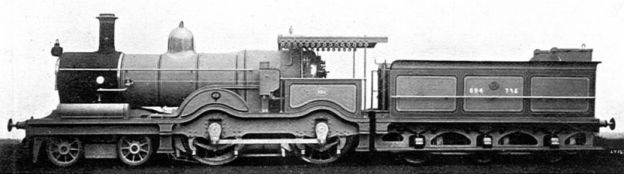
The featured image for this article is a 4-4-0 Locomotive No. 694 – one of a class of 15 built by the North British Locomotive Company in Scotland for Egyptian State Railways in 1905-06, © Public Domain. [1]

Egyptian National Railways (Al-Sikak al-Ḥadīdiyyah al-Miṣriyyah) is the national railway network of Egypt. Founded in 1854, it is the oldest railway system in Africa and the Middle East. [1] Much of what follows comes from the Wikipedia article about Egypt’s national railway network [1] and from Hugh Hughes book, ‘Middle East Railways’, published by the Continental Railway Circle. [3] Other sources include Grace’s Guide, [6] the Egyptian Government [7] and the Institute of Developing Economies. [8]
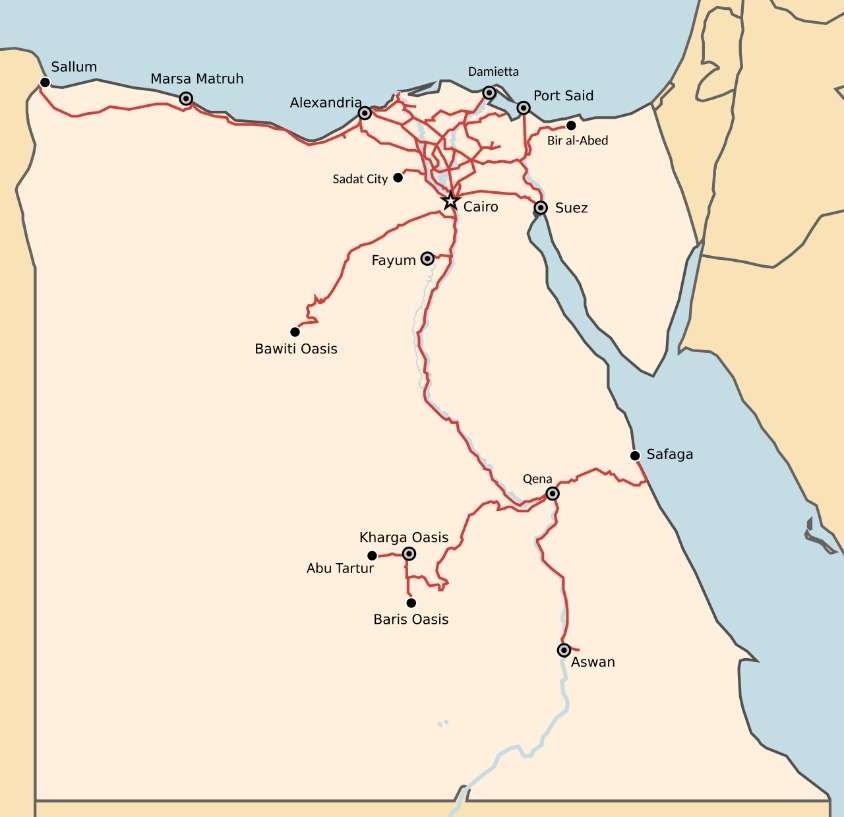
Egypt railway network (1435 mm gauge track), © Jkan997 and licenced for reuse under a Creative Commons licence (CC BY-SA 3.0). [1]

1833-1877

Wikipedia tells us that, “In 1833, Muhammad Ali Pasha considered building a railway between Suez and Cairo to improve transit between Europe and India. Muhammad Ali had proceeded to buy the rail when the project was abandoned due to pressure by the French who had an interest in building a canal instead.” [1] The route of the planned railway is shown in the first image below.
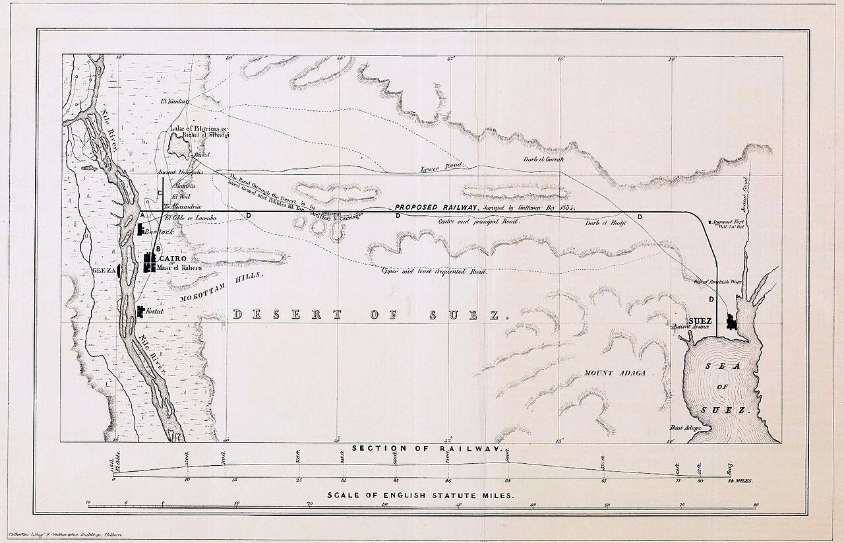
The proposed railway of 1833 which was not built. [1]

Muhammad Ali died in 1848, and in 1851 his successor Abbas I contracted Robert Stephenson to build Egypt’s first standard gauge railway. The first section, between Alexandria on the Mediterranean coast and Kafr el-Zayyat on the Rosetta branch of the Nile was opened in 1854. [3: p12] This was the first railway in the Ottoman Empire as well as Africa and the Middle East. [4] In the same year, Abbas died and was succeeded by Sa’id Pasha, in whose reign the section between Kafr el-Zayyat and Cairo was completed in 1856 followed by an extension from Cairo to Suez in 1858. [3: p12] This completed the first modern transport link between the Mediterranean and the Indian Ocean, as Ferdinand de Lesseps did not complete the Suez Canal until 1869. [1]
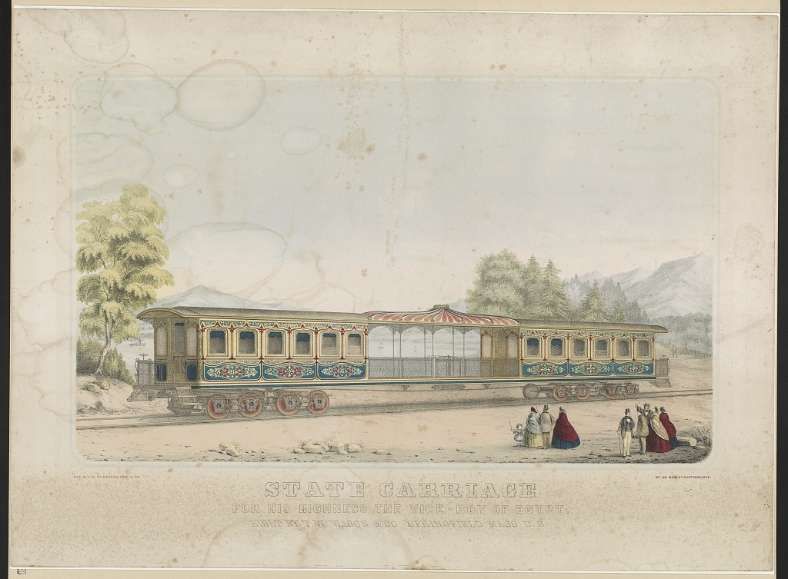
A state carriage by Wason Manufacturing built for Sa’id Pasha for state functions which was included with 161 less ornate railcars sent by the company in 1860. [1][2: p70]

At Kafr el-Zayyat the line between Cairo and Alexandria originally crossed the Nile with an 80 feet (24 m) car float. [3: p17] However, on 15th May 1858 a special train conveying Sa’id’s heir presumptive Ahmad Rifaat Pasha fell off the float into the river and the prince drowned. [3: p17] Stephenson therefore replaced the car float with a swing bridge nearly 500 metres (1,600 ft) long. [3: p17] By the end of Sa’id’s reign branches had been completed from Banha to Zagazig on the Damietta branch of the Nile in 1860, to Mit Bera in 1861 and from Tanta to Talkha further down the Damietta Nile in 1863.” [1][3: p12]

Sa’id’s successor Isma’il Pasha strove to modernise Egypt and added momentum to railway development. In 1865 a new branch reached Desouk on the Rosetta Nile and a second route between Cairo and Talkha was opened, giving a more direct link between Cairo and Zagazig. [3: p12] The following year a branch southwards from Tanta reached Shibin El Kom. [3: p12] The network started to push southwards along the west side of the Nile with the opening of the line between Imbaba near Cairo and Minya in 1867. [3: p15] A short branch to Faiyum was added in 1868. [3: p15] A line between Zagazig and Suez via Nifisha was completed in the same year. [3: p12] The following year the line to Talkha was extended to Damietta on the Mediterranean coast and a branch opened to Salhiya and Sama’ana.” [3: p12]

Imbaba had no rail bridge across the Nile to Cairo until 1891. [3: p17] However, a long line between there and a junction west of Kafr el-Zayyat opened in 1872, linking Imbaba with the national network. [3: p12] From Minya the line southwards made slower progress, reaching Mallawi in 1870 and Assiut in 1874.[3: p15] On the west bank [as far as] Najee Hammady, [then] on east bank of the Nile till Aswan. A shorter line southwards linked Cairo with Tura in 1872 and was extended to Helwan in 1875. [3: p12] In the Nile Delta the same year, a short branch reached Kafr el-Sheikh and in 1876 a line along the Mediterranean coast linking the termini at Alexandra and Rosetta was completed.” [3: p12]

1877-1888

By 1877, Egypt had a network of key main lines and the Nile Delta had quite a network, but with this and other development investments, Isma’il had gotten the country deeply into debt. For its first 25 years of operation Egypt’s national railway had never even produced an annual report. [3: p13] A Council of Administration with Egyptian, British and French members was appointed in 1877 to put the railway’s affairs in order. They published its first annual report in 1879, [3: p13] and in the same year, the British Government had Isma’il Pasha deposed, exiled and replaced with his son Tewfik Pasha. In 1882, the British essentially invaded and occupied Egypt.” [1]

With these developments, the Egyptian Railway Administration’s (ERA’s) rail network stagnated until 1888, but it also put its management in much better order. [3: p13] “In 1883 the ERA appointed Frederick Harvey Trevithick, nephew of Francis Trevithick, as Chief Mechanical Engineer. [3: p32][5] Trevithick found a heterogeneous fleet of up to 246 steam locomotives of many different designs from very different builders in England, Scotland, France and the USA. [3: p32] This lack of standardisation of locomotives or components complicated both locomotive maintenance and general railway operation.” [1][3: p32]

From 1877 to 1888, the ERA struggled to keep up with even basic maintenance, [3: p13] but by 1887 Trevithick managed to start a programme to renew 85 of the very mixed fleet of locomotives with new boilers, cylinders and motion. [3: 32] He started to replace the others with four standard locomotive types introduced from 1889 onwards: one class of 0-6-0 for freight, one class of 2-4-0 for mixed traffic, one 0-6-0T tank locomotive for shunting and one class of only ten 2-2-2 locomotives for express passenger trains. [3: p32] Trevithick ensured that these four classes shared as many common components as possible, which simplified maintenance and reduced costs still further.” [1][3: p32]

1888-1914

By 1888, the ERA was in better order and could resume expanding its network. In 1890, a second line between Cairo and Tura opened. [3: p12] On 15th May 1892, the Imbaba Bridge was built across the Nile, linking Cairo with the line south following the west bank of the river.” [3: p17] Grace’s Guide has the opening taking place in 1891. [6] “The civil engineer for the bridge was Gustave Eiffel. (It was reformed and renewed in 1924 which is still the only railway bridge across the Nile in Cairo.) Cairo’s main Misr Station was rebuilt in 1892. The line south was extended further upriver from Assiut reaching Girga in 1892, Nag Hammadi in 1896, Qena in 1897 and Luxor and Aswan in 1898. [3: p15] With the railroad’s completion, construction began the same year on the first Aswan Dam and the Assiut Barrage, main elements of a plan initiated in 1890 by the government [9] to modernize and more fully develop Egypt’s existing irrigated agriculture, export potential, and ability to repay debts to European creditors.” [10][1]

In the north in 1891, a link line was opened between Damanhur and Desouk. [3: p12] The line to Shibin El Kom was extended south to Menouf in the same year and reached Ashmoun in 1896. [3: p12] By then a line across the Nile Delta from a junction north of Talkha on the line to Damietta had reached Biyala. [3: p12] By 1898 this reached Kafr el-Sheikh, completing a more direct route between Damietta and Alexandria.” [3: p12][1]
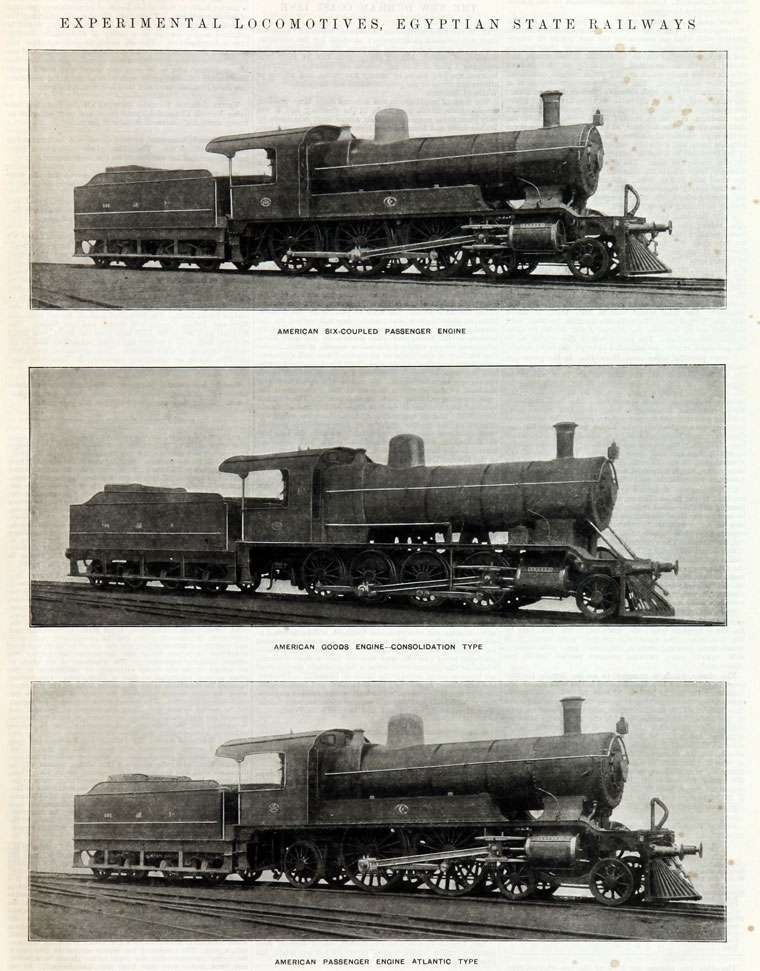
Experimental Locomotives of Egyptian State Railways – 1902 © Public Domain. [6]
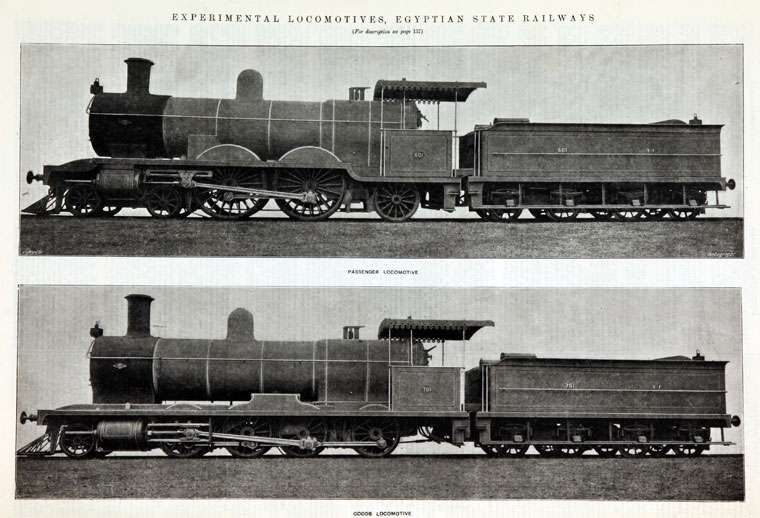
More Experimental Locomotives of Egyptian State Railways – 1902 © Public Domain. [6]

An important extension along the west bank of the Suez Canal linking Nifisha with Ismaïlia, Al Qantarah West and Port Said was completed in 1904.” [3: p12][1]
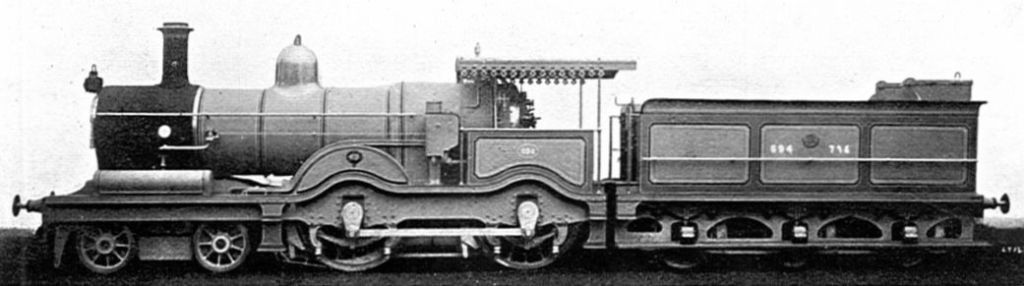
4-4-0 locomotive number 694 – one of a class of 15 built by the North British Locomotive Company in Scotland for Egyptian State Railways in 1905-06, © Public Domain. [1]

Thereafter network expansion was slower but two short link lines north of Cairo were completed in 1911 followed by a link between Zagazig and Zifta in 1914.” [1][3: p12]
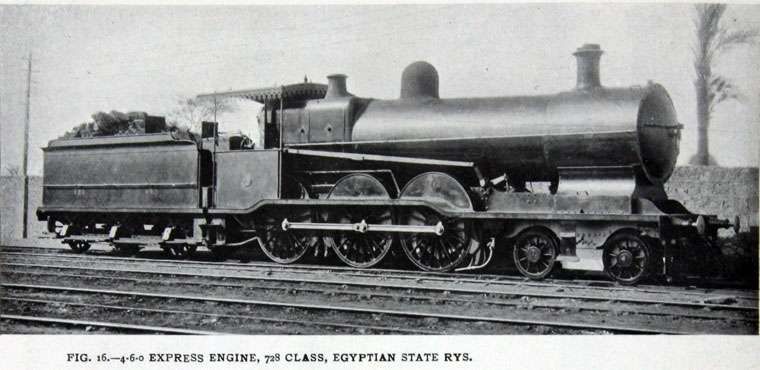
Express 4-6-0 Class 728 Locomotive of Egyptian State Railways – 1913 © Public Domain. [6]

The first El Ferdan Railway Bridge over the Suez Canal was completed in April 1918 for the Palestine Military Railway. [3: p17] It was considered a hindrance to shipping so after the First World War it was removed. [3: p17] During the Second World War a steel swing bridge was built in 1942 but this was damaged by a steamship and removed in 1947. [1][3: p17]

The First World War (1914-1918) saw an increase in the importance of the railway network to the British Colonial Powers. The outbreak of the Second World War (1939-1945), saw the British increasingly relying on the Egyptian rail network  for the transport of equipment, ammunition and soldiers After the war, the next significant moment was the revolution of 23rd July 1952. The new government saw the value of the network for the transport of its citizens and programmed the provision of passenger rolling stock as a priority. The building the High Dam led to a reliance  on the railways to transport the necessary construction tools, materials and workers for what was a huge project. [15]

A double swing bridge [over the Suez Canal][was completed in 1954 but the 1956 Israeli invasion of Sinai severed rail traffic across the canal for a third time. [3: p17] A replacement bridge was completed in 1963 [11] but destroyed in the Six-Day War in 1967. A new double swing bridge was completed in 2001 and is the largest swing bridge in the world. [11] However, the construction of the New Suez Canal has since disconnected the Sinai from the rest of Egypt’s rail network again. Instead of the bridge, two rail tunnels are planned under the canal, one near Ismailia and one in Port Said.” [1]

Historically, the Palestine Railways main line linked Al Qantarah East with Palestine and Lebanon. It was built in three phases during the First and Second World Wars. Commenced in 1916, it was extended to Rafah on the border with Palestine as part of the Egyptian Expeditionary Force’s Sinai and Palestine Campaign against the Ottoman Empire. The route was extended through to Haifa in Mandate Palestine after World War I, to Tripoli, Lebanon in 1942 and became a vital part of the wartime supply route for Egypt.” [1]

As a result of the 1947–1949 Palestine war, the Palestine Railways main line was severed at the 1949 Armistice Line. The 1956 Israeli invasion severed Sinai’s rail link with the rest of Egypt was reconnected its rail link with Israel. Israel captured a 4211 class 0-6-0 diesel shunting locomotive and five 545 class 2-6-0 steam locomotives. [12: p137] Israel also captured rolling stock including a six-wheel coach dating from 1893 and a 30-ton steam crane built in 1950, both of which Israel Railways then appropriated into its breakdown fleet. Before being forced to withdraw from Sinai in March 1957, Israel systematically destroyed infrastructure including the railway. [13: p194] By 1963 the railway in Sinai was reconnected to the rest of Egypt but remained disconnected from Israel.” [1]

In the 1967 Six-Day War, Israel captured more Egyptian railway equipment including one EMD G8, four EMD G12 and three EMD G16 diesel locomotives [12: p136] all of which were appropriated into Israel Railways stock. After 1967, Israel again destroyed the railway across occupied Sinai and this time used the materials in the construction of the Bar Lev Line of fortifications along the Suez Canal.” [1]

After long service on Israel Railways, the 30-ton crane, 1893 Belgian 6-wheel coach and one of the EMD G16 diesels are all [now] preserved in the Israel Railway Museum in Haifa.” [1]

Egypt’s Railway Museum

Egypt’s railway museum was built in 1932 next to Misr Station (now Ramses Station) in Cairo.[3: p15] The museum opened in January 1933 to mark the city’s hosting of the International Railway Congress. [3: p15] Its stock of over 700 items includes models, historic drawings and photographs. [3: p15] Among its most prominent exhibits are three preserved steam locomotives: [1]

  • 2-2-4 No. 30, built by Robert Stephenson and Company in 1862. Wikipedia says, “The Egyptian connections to Robert Stephenson were very considerable and a wealth of consequential artefacts are in Cairo Railway Museum. This includes what could well be the single most extravagant piece built by the Robert Stephenson Works. This is works number 1295 of 1862 whose artistic design was by Matthew Digby Wyatt. This 2-2-4T for the Egyptian Railways survives with all its fantastical marquetry in the Egyptian Railway Museum at Cairo. It is called the Khedive’s Train;” [14: p7]
  • 0-6-0 No. 986 (originally 189, then 142), built by Robert Stephenson and Company in 1861; [14: p7]
  • 4-4-2 No. 194 (originally 678) built by the North British Locomotive Company in 1905. [14: p7]

References

  1. https://en.wikipedia.org/wiki/Egyptian_National_Railways, accessed on 22nd March 2026.
  2. Derek Strahan; Lost Springfield, Massachusetts; Arcadia Publishing, 2017; via https://books.google.com/books/about/Lost_Springfield_Massachusetts.html?id=YpOPDQAAQBAJ#v=onepage&q&f=false, accessed on 22nd March 2026.
  3. Hugh Hughes; Middle East Railways; Continental Railway Circle, Harrow, 1981.
  4. Jordan Raafat; (5 March 1998). Desert Train Heralds Train Tourism In Egypt; Jordan Star, archived from the original on 7th December 2006; https://web.archive.org/web/20061207064829/http://www.egy.com/community/98-03-05.shtml, accessed on 22nd March 2026.
  5. Frederick Harvey Trevithick, was the nephew of Francis Trevithick (1812—1877) who was the son of Richard Trevithick. Francis Trevithick was, in 1840, appointed resident engineer on Grand Junction Railway (GJR) between Birmingham and Crewe. He was then appointed, in 1841, as Locomotive Superintendent. In 1843, he was transferred to the new works at Crewe as Locomotive Superintendent of the Northern Division of the LNWR. In 1857, having lost the confidence of certain directors, Trevithick was forced to resign (although given a handsome ‘Golden Handshake’).
  6. https://www.gracesguide.co.uk/Egyptian_State_Railways, accessed on 25th March 2026.
  7. https://www.enr.gov.eg, accessed on 25th March 2026.
  8. https://www.ide.go.jp/English/Data/Africa_file/Company/egypt03.html, accessed on 25th March 2026.
  9. Sidney Peel; The Binding of the Nile and the New Soudan; Oxford, 1904, via: https://www.gutenberg.org/ebooks/71808, accessed on 25th March 2026.
  10. Ewald Bloche; Constructing Modern Egypt: Modernization and Development Discourses in the Context of British and Egyptian Water Engineering; p.6-7 (Broken link to a German text – so cannot verify the source.)
  11. https://structurae.net/en/structures/el-ferdan-swing-bridge, accessed on 25th March 2026.
  12. Paul Cotterell; The Railways of Palestine and Israel; Tourret Publishing, 1984.
  13. Noam Chomsky; The Fateful Triangle; South End Press, New York, 1983.
  14. Peter Proud & C. Smith eds.; The Standard Gauge Locomotives of the Egyptian State Railways and The Palestine Railways 1942-1945; Railway Correspondence and Travel Society, London, 1946.
  15. https://forum.mrhmag.com/post/egypts-railways-a-long-history-and-successive-achievements-12217053, accessed on 25th March 2026.
Railways of Tanzania – Part 2 – The Route of the Usambara Railway – Tanga to Moshi

NB: Given the way in which some of the images in this article have been displayed, this article is best read/viewed on a laptop or desktop computer rather than a mobile phone. If you need to read it on a mobile, it may be sensible to read it in landscape rather than portrait view.

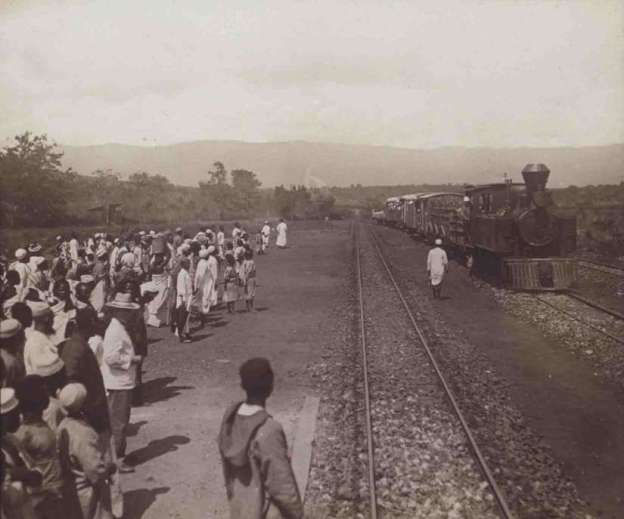
The featured image is an early German photograph of a train on the Usambarabahn at a typical station location.Thecsoecific location was not recorded.

There is a description of the route of the Usambara Railway or the Tanga Line on-line on the United Republic of Tanzania website: “As the train departs Tanga, it slowly climbs through the rolling hills and lush forests of the Usambara Mountains, offering breathtaking views of the surrounding countryside. Along the way, the train passes through several small towns and villages, each with its own distinct character and cultural traditions. … One of the highlights of the Tanga Line journey is the crossing of the Pangani River, which is spanned by a impressive steel bridge. This engineering marvel, constructed during the German colonial era, is a testament to the ingenuity and determination of the railway’s builders. … As the train continues its journey inland, it winds through the fertile agricultural regions of the Kilimanjaro and Meru districts, passing by vast coffee and sisal plantations. The final destination, the town of Moshi, is nestled at the base of the majestic Mount Kilimanjaro, the highest freestanding mountain in the world.” [5]

“One of the must-see attractions along the Tanga Line is the Lushoto town, a charming community community nestled in the heart of the Usambara Mountains. This picturesque town is known for its traditional architecture, vibrant markets, and stunning views of the surrounding peaks. … Another highlight of the Tanga Line journey is the Amani Nature Reserve, a protected area that is home to a diverse array of plant and animal life. Visitors can explore the reserve’s hiking trails, spot a variety of bird species, and learn about the region’s unique ecosystem. … As you continue your journey, you’ll also have the chance to visit the Vugiri Falls, a stunning waterfall that cascades over the rugged landscape, and the Nduruma River, a popular spot for birdwatching and outdoor recreation.” [5]

Notable cultural and natural attractions close to the line include: the Kilindi Palace, a former royal residence that now serves as a museum showcasing the history and traditions of the Kilindi people; the Magila Monastery, a historic religious site that dates back to the 19th century; various traditional villages; the Mkomazi National Park, a protected area that is home to a diverse array of plant and animal species; the Usambara Mountains, a stunning mountain range that is home to a rich array of endemic plant and animal species; the region’s diverse habitats, from wetlands to forests, provide a rich and varied birdlife for enthusiasts to discover.

In 2018, the Government of Tanzania invested 5.7 billion Tanzanian shillings to rehabilitate the line. As of July 2019, diesel powered cargo trains were leaving Tanga Railway Station again. Passenger transport between Tanga and Arusha was planned to start in September 2019, but has not been commenced as yet. [6]

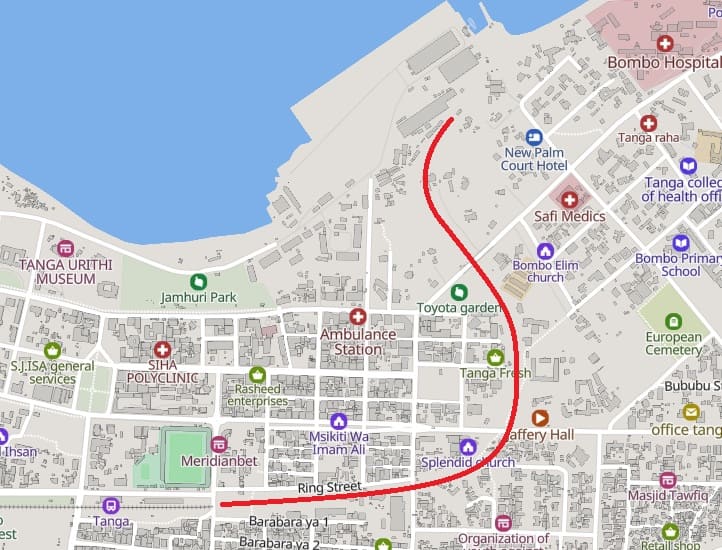
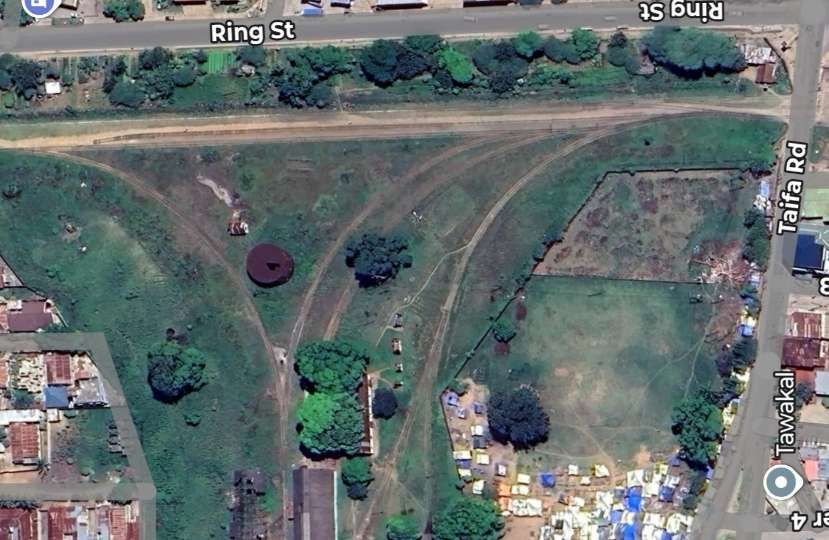
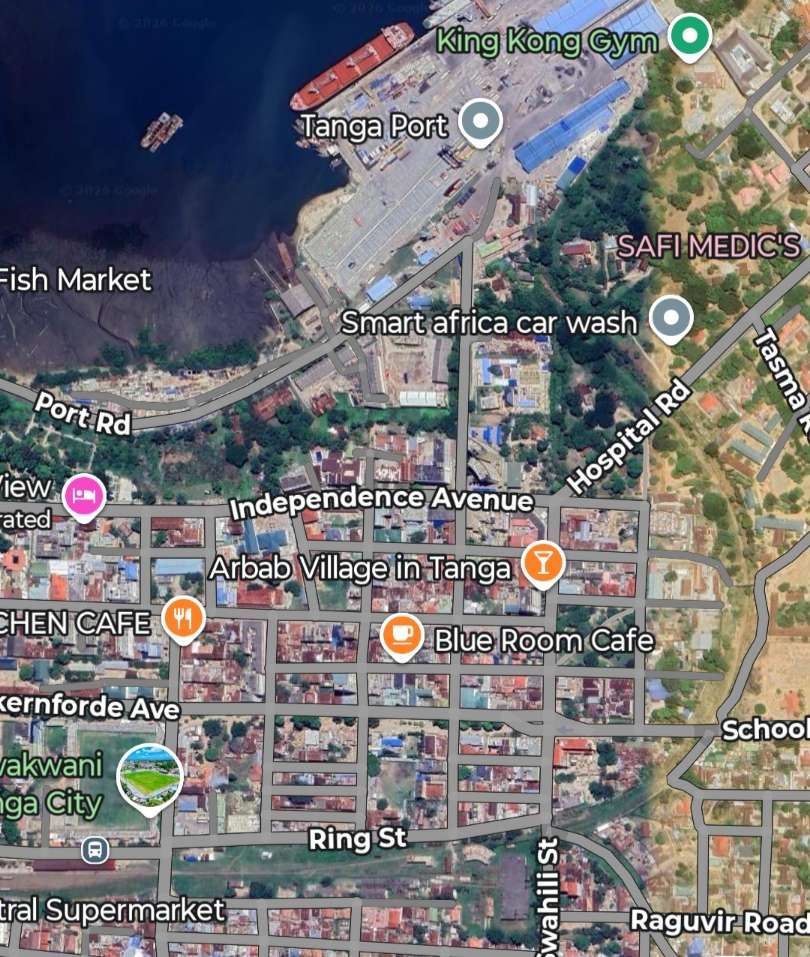
The line has its terminus in the Port of Tanga. It leaves the Port of Tanga (Hafen von Tanga) to run towards the station. On the satellite image below it can be picked out curving round from the port to the station on Ring Street.

The Port of Tanga is at the top of this extract from Google’s satellite imagery. The station is at the bottom-left of the image on Ring Street. The line can be seen curving between the two. [Google Maps, March 2026]
Tanga Railway Station appears in the bottom-left of this MapCarta image, superimposed in red on the map is the line that ran down to the port. It would appear that the line of the railway has been built over at, at least, one point – buildings of the Malindi Hotel sit over the line of the railway. [14]

An early photograph of the port can be found here. [9] The linked postcard image is annotated, “Vintage illustration after a photograph, Usambara Railway, Usambarabahn, German East Africa, at Tanga, Tanzania, 1890s, 19th Century.”

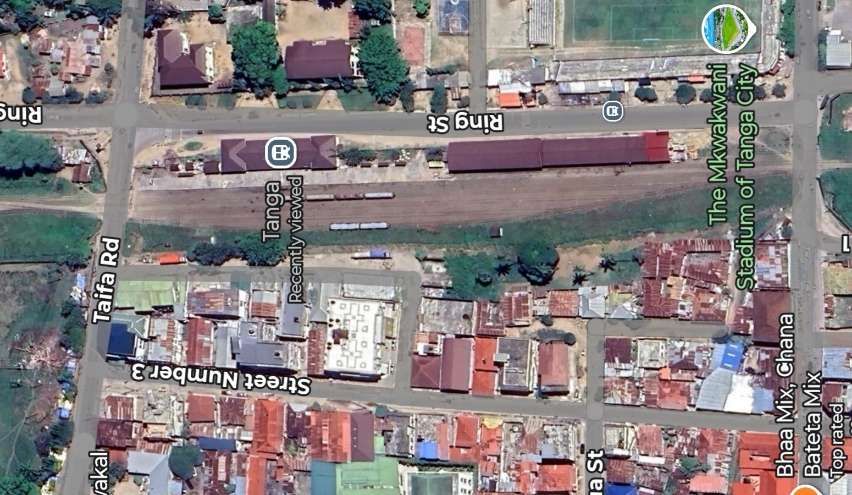
Tanga Railway Station is on Ring Street, Tanga.

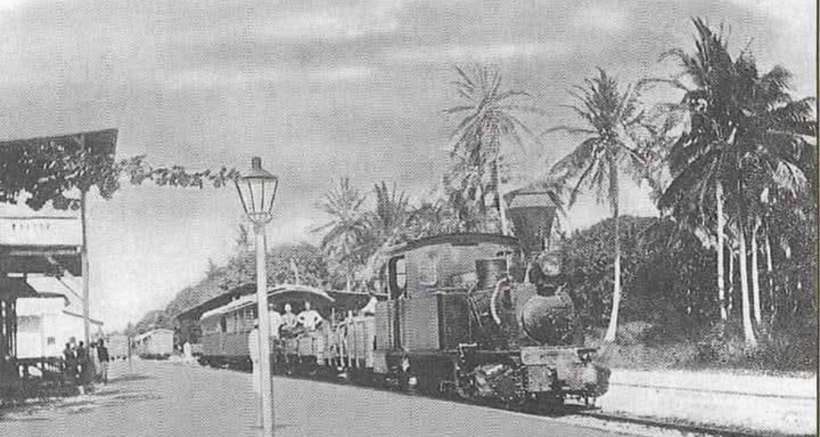
Tanga Railway Station, 1890. This image was shared on the City of Tanga in Tanzania (Tanga Facebook) Facebook Group by Ragini Pattni on 24th December 2025. [2]
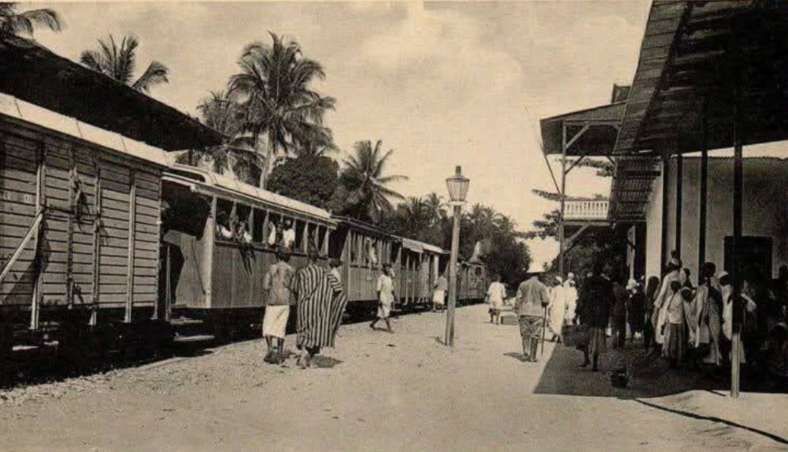
The Station at Tanga close to the turn of the 20th century. This image was shared on the City of Tanga in Tanzania (Tanga Facebook) Facebook Group by Ragini Pattni on 24th December 2025. [2]
The Railway Station on Ring Street, Tanga. [Google Maps, March 2026]
The turning triangle immediately to the West of the station at Tanga. [Google Maps, March 2026]
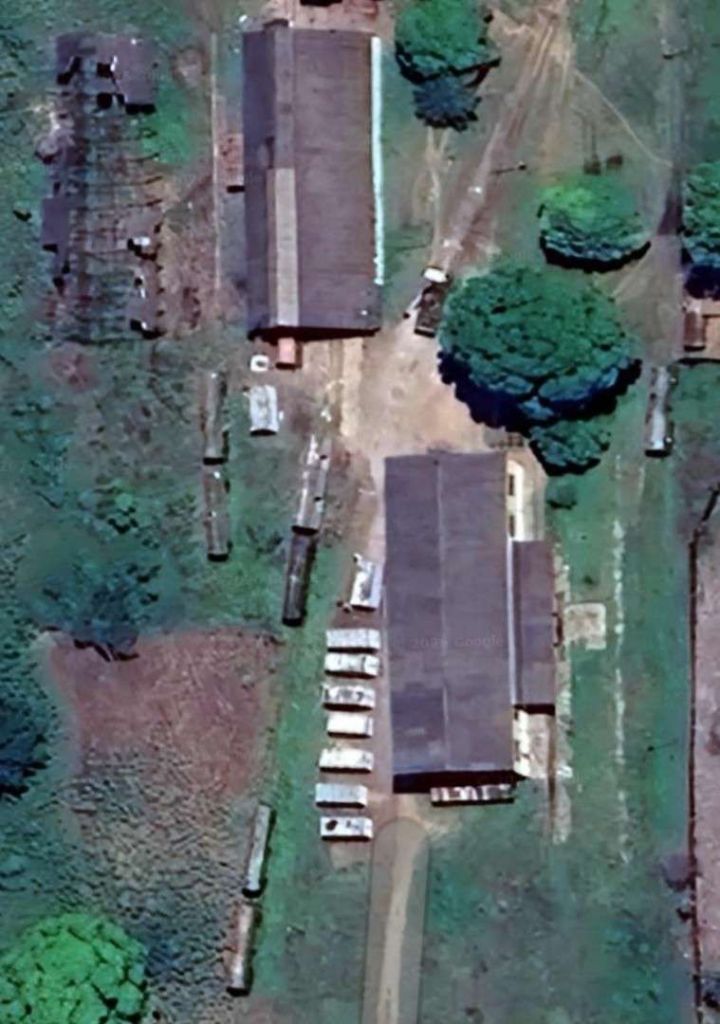
Buildings at the South point of the turning triangle in Tanga. [Google Maps, March 2026]
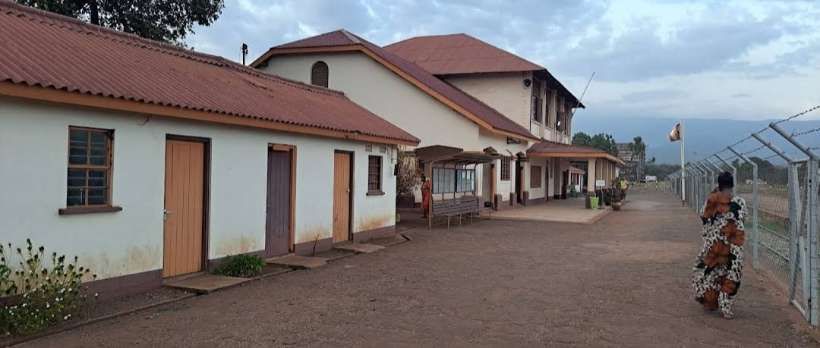
The roadside elevation of the Railway Station at Tanga. This image was shared on the City of Tanga in Tanzania (Tanga Facebook) Facebook Group by Ragini Pattni on 24th December 2025. [2]
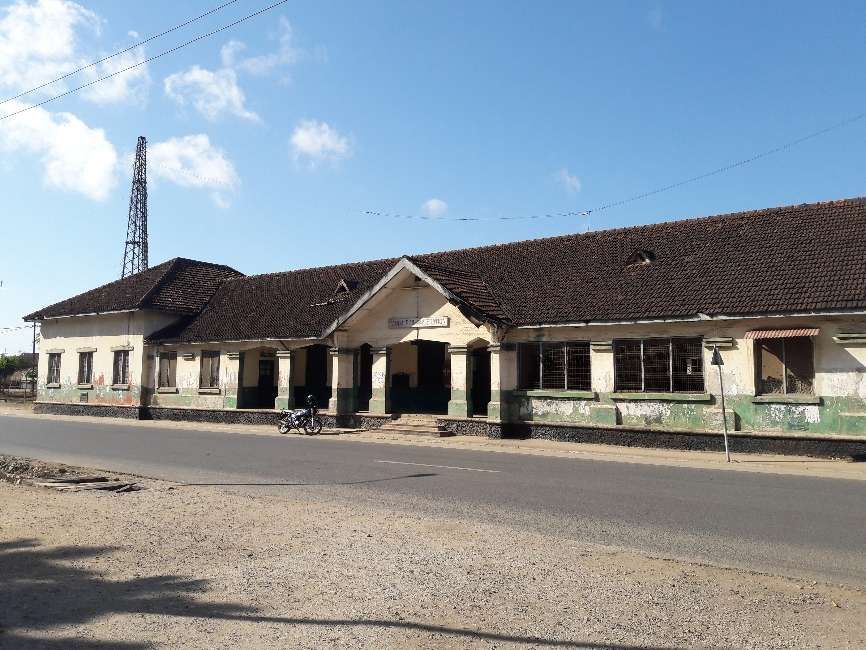
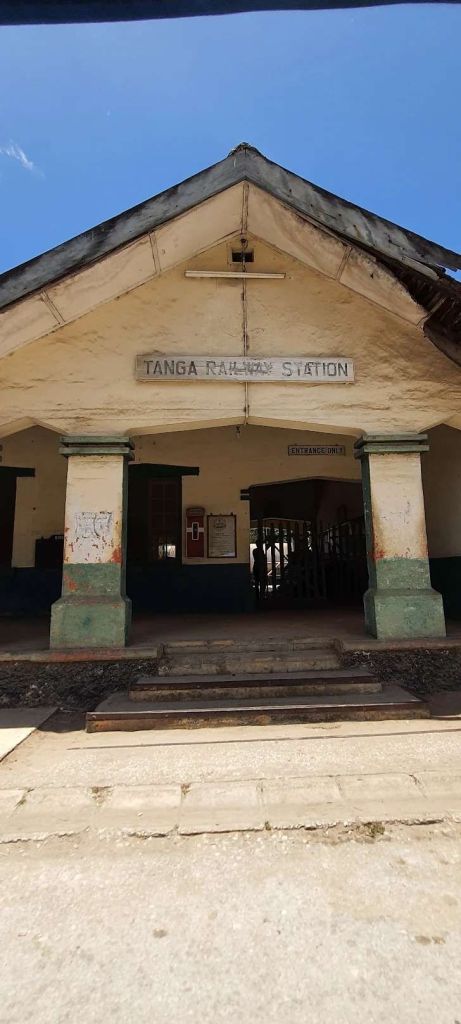
Tanga Railway Station entrance, © Shane, Google Images. [3]
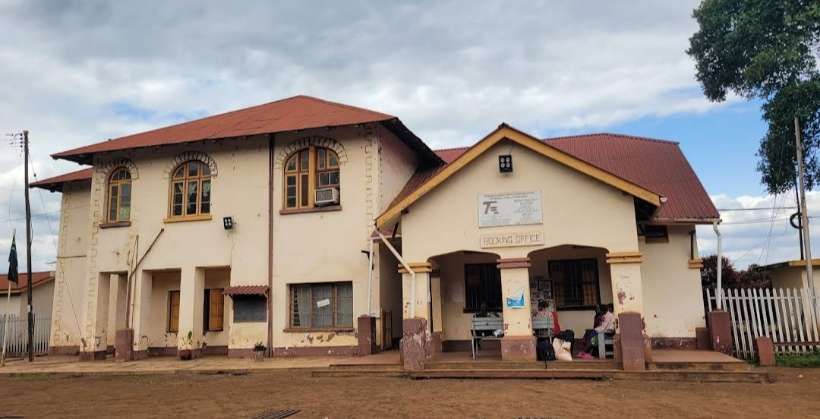
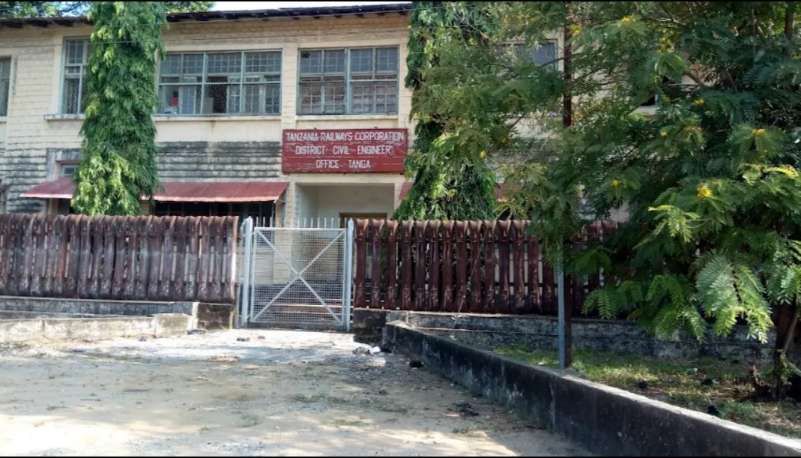
The District Civil Engineer’s Office, Tanzania Railways Corporation, Tanga © Paschal P. Rutayuga. [4]

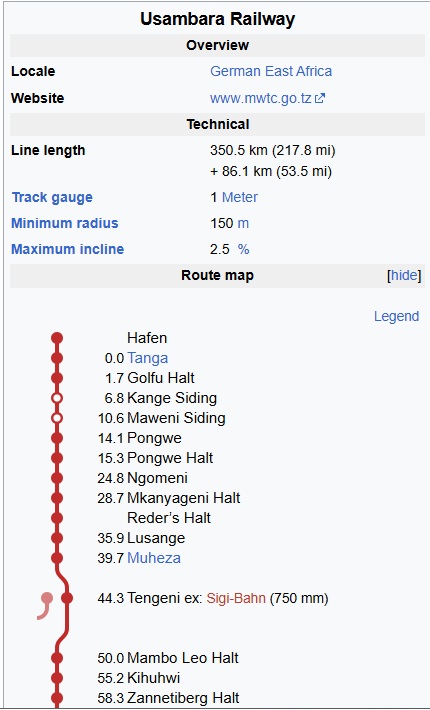
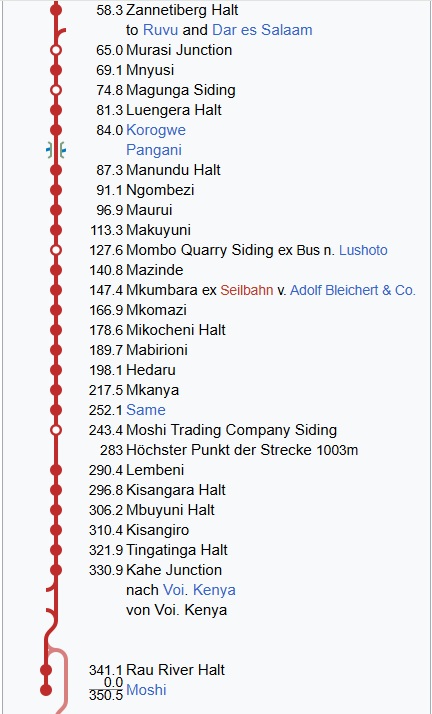
The significant locations along the first stretch of the Tanga Railway (or the Usambarabahn or Usambara Railway) are highlighted on the adjacent schematic map of the line. [6]

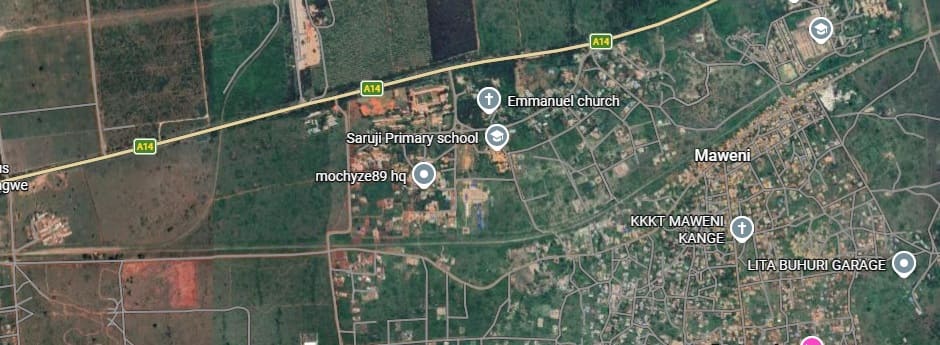
The first location that we can easily establish on the satellite images below is the village/town of Maweni, nearly 11 kilometres from Tanga Railway Station.

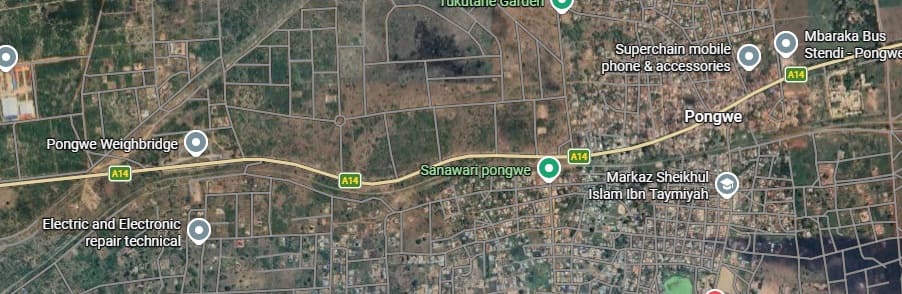
Pongwe is only a few kilometres along the line. Again no obvious location can be seen on satellite images for any halt/station. Mkanyageni Halt (Reder’s Halt) is also not obvious on the satellite imagery.

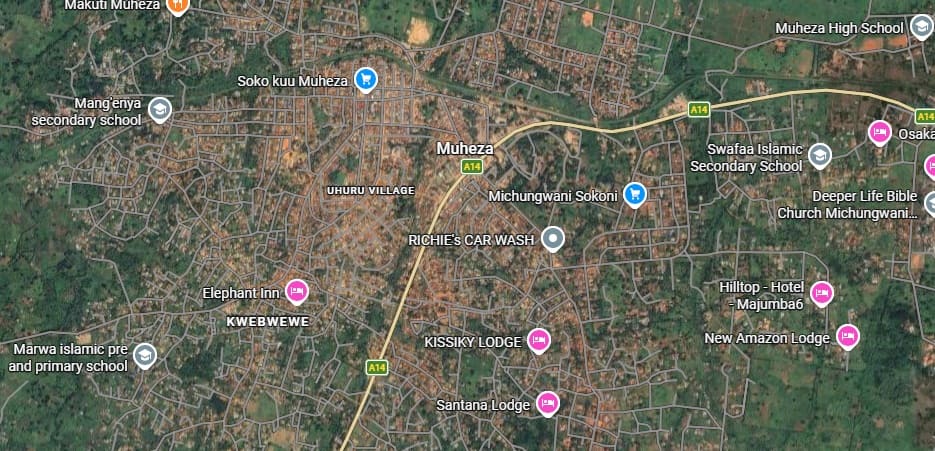
Muheza, a more significant township, has a railway station!

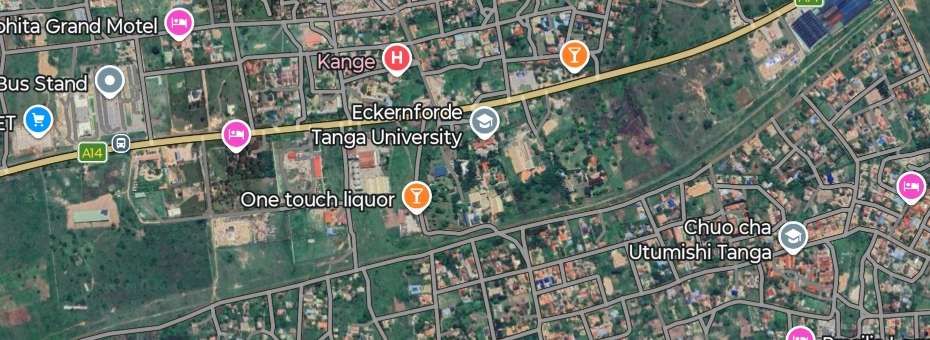
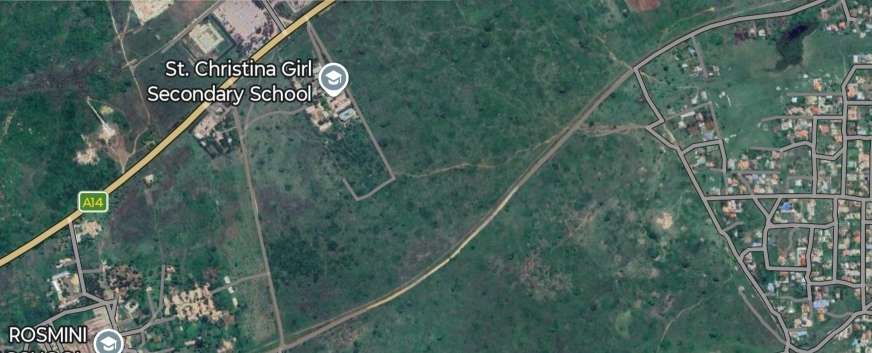
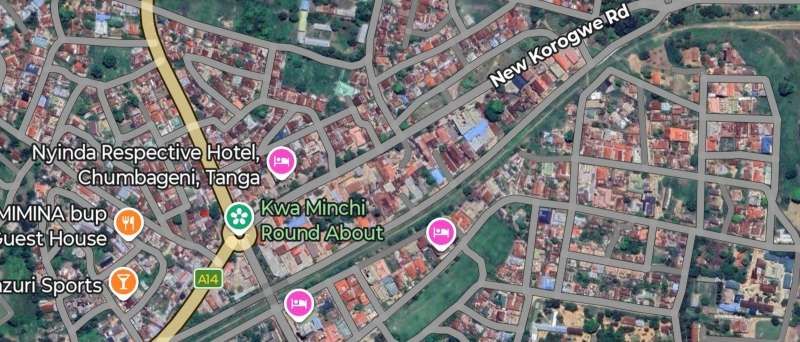
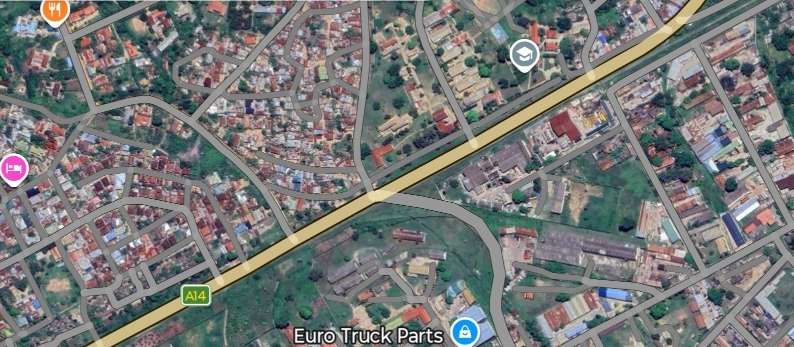
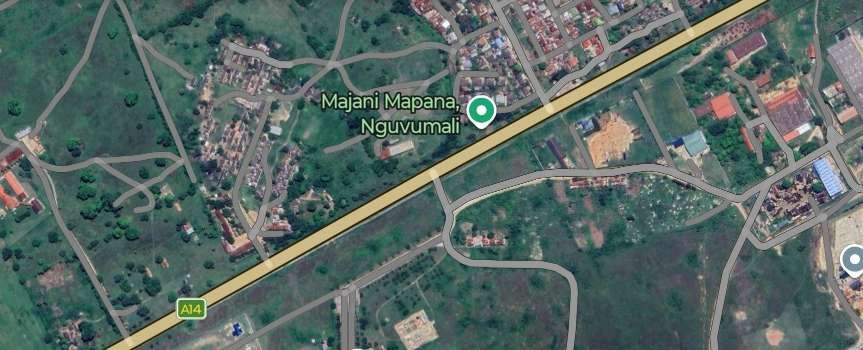
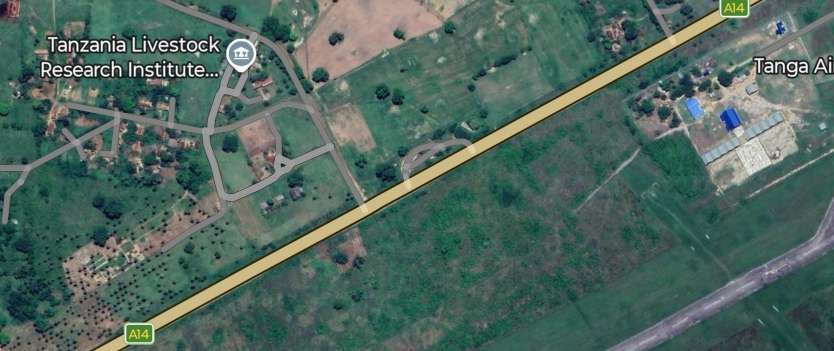
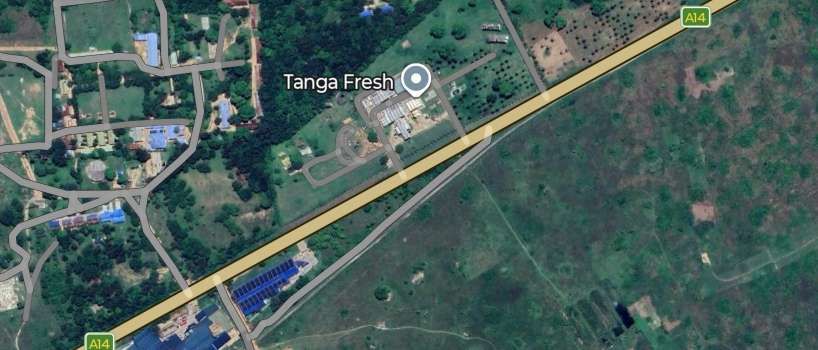
The next sequence of images shows the line heading out into the suburbs of Tanga, alongside the A14 and running to the North of the airport before drifting away to the South of the A14.

This series of satellite images show the railway line heading Southwest out of the city of Tanga. for a distance it ran alongside the A14 [Google Maps, March 2026]

Beyond the city limits, the line continues in a south-westerly direction. For the sake of space a smaller scale is used in the satellite images that follow below. …

Maweni is the first identifiable location which appears on the schematic map of the line, even so, it is not possible from Google Maps to identify the location of any halt/station. [Google Maps, March 2026]
Pongwe is the next identifiable location which appears on the schematic map of the line, it is not possible from Google Maps to identify the location of any halt/station. [Google Maps, March 2026]
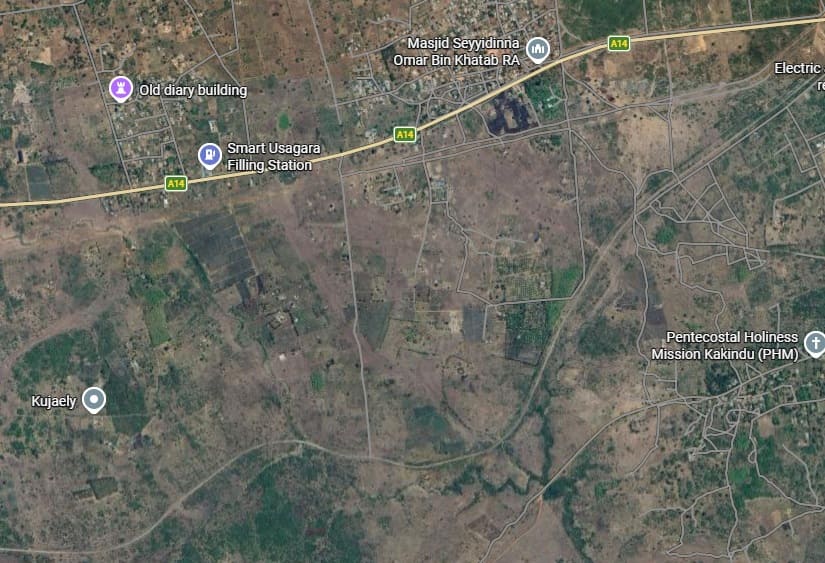
The line leaves Pongwe and heads Southwest away from the A14. [Google Maps, March 2026]
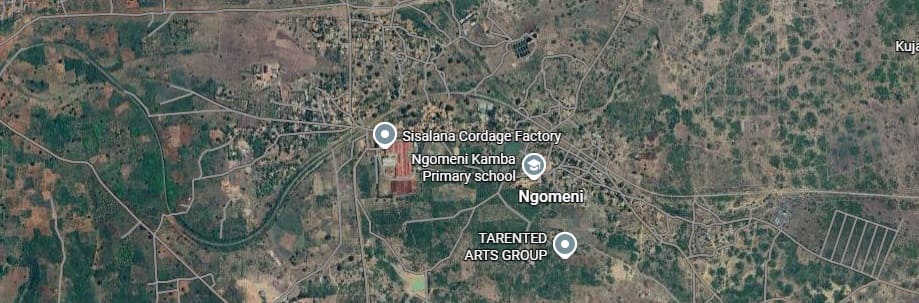
It turns West from Southwest as it runs into Ngomeni with its Sisalana Cordage Factory, again there is no identifiable location for a railway station. [Google Maps, March 2026]
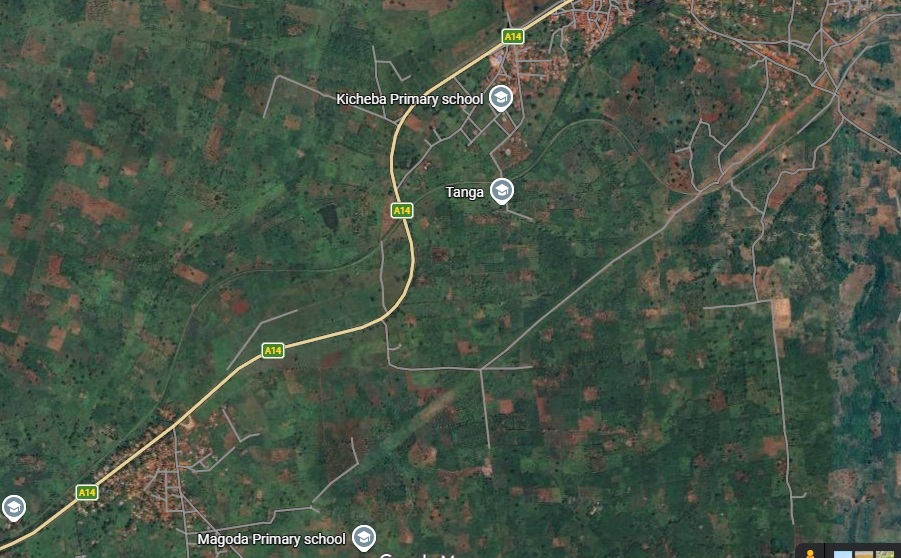
This next length of the line shows it meandering through the landscape, being bridged by the A14 before returning to run close to the A14 but on its North side. {Google Maps, March 2026]
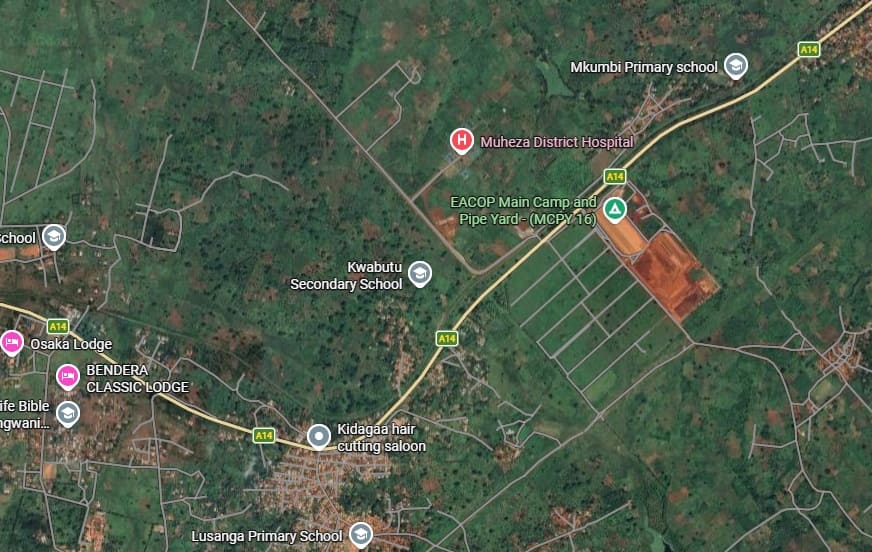
Still heading generally in a south-westerly direction, the line runs alongside the A14, passes through Lusanga and heads on towards Muheza. [Google Maps, March 2026]
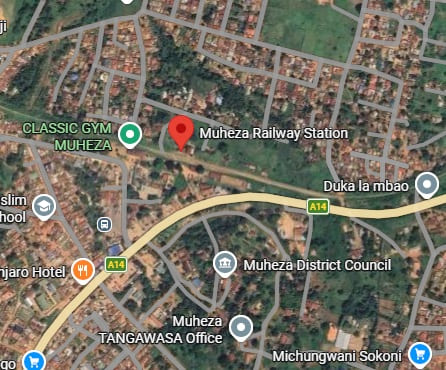
Muheza is a more significant township and it has a clearly identifiable railway station! The location of the station is shown on the larger scale extract from Google’s satellite imagery below. It is close to the point where the A14 turns South away from the line. [Google Maps, March 2026]

Muheza Railway Station sits close to the centre of the town. [Google Maps, March 2026]

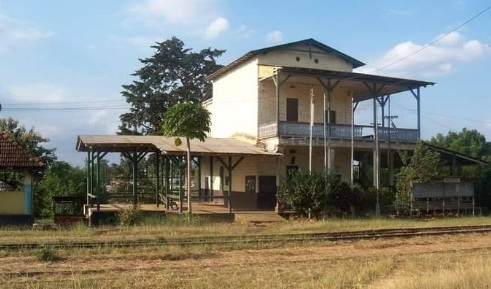
Muheza Railway Station, © Issa Mates, April 2021. [Google maps, March 2026]

The station location was caught on camera in the late 19th century. It can be found among a series of photographs held by the Getty Foundation, here. [8] The picture is annotated, “Muheza station on Usambara Railway, Usambarabahn, German East Africa, Tanzania, 1890s, 19th Century.”

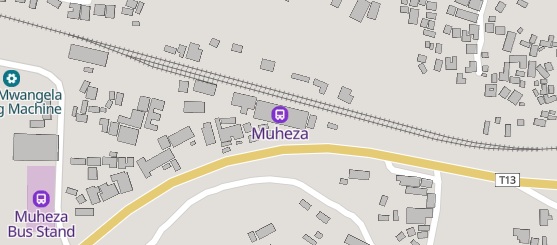
Muheza Railway Station as shown on MapCarta. [15]

The next satellite image extract picks up the railway at the western edge of Muheza close to its secondary school and sees it still running generally in a Southwesterly direction. …

The route of the railway can be picked out as a faint lighter line running top-right towards bottom-left of this extract before turning a little closer to Southsouthwest, leaving the extract at its southern edge. Tengeni is not marked on the satellite image at this scale but is the point where the line of the railway crosses a road at around the two-thirds point across the extract. There is no obvious railway halt at this location. Historically it was an important location on the Usambara Railway because it was the point where the 750 mm gauge Sigibahn met the Usambarabahn. [Google Maps, March 2026]
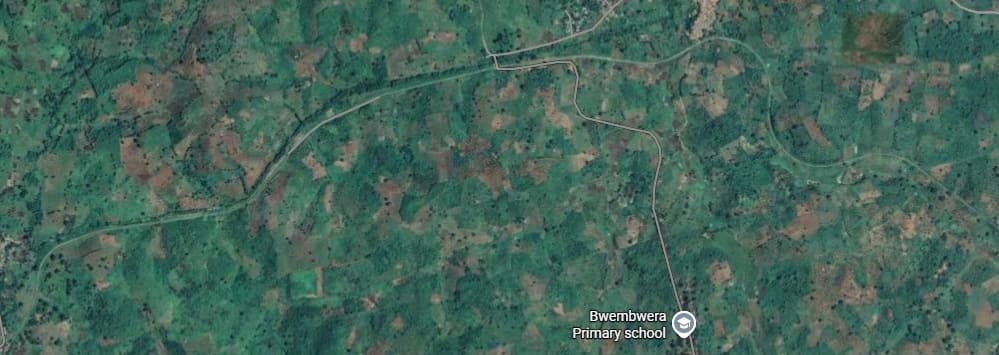
The line continues on this next extract from Google’s satellite imagery. It can be seen entering the extract at the top-right apex, turning first towards the south-southwest before meandering towards the A14 at the third point across the image. It then runs parallel to and on the North side of the A14. Leaving the extract, just to the West of the A14. [Google Maps, March 2026]
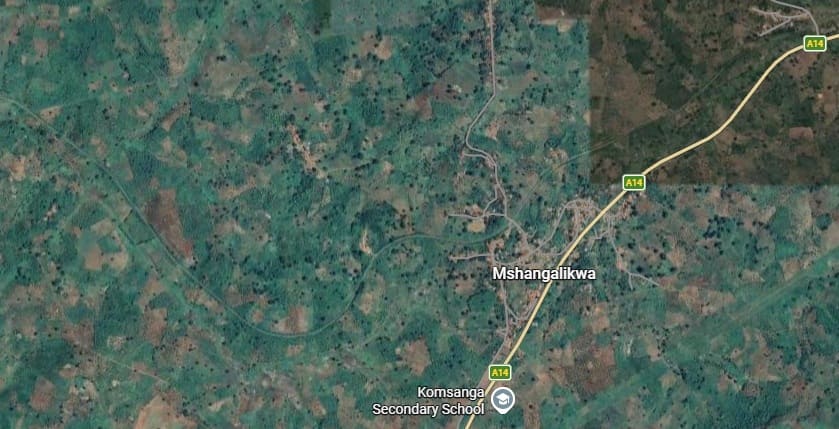
The line, again, enters this extract in the top-right corner a short distance away from the A14. I have not been able to identify the location of the Mambo Leo Halt. The line runs sinuously just to the Northwest of Mshangalikwa and heads away from the A14 to the West. [Google Maps, March 2026]

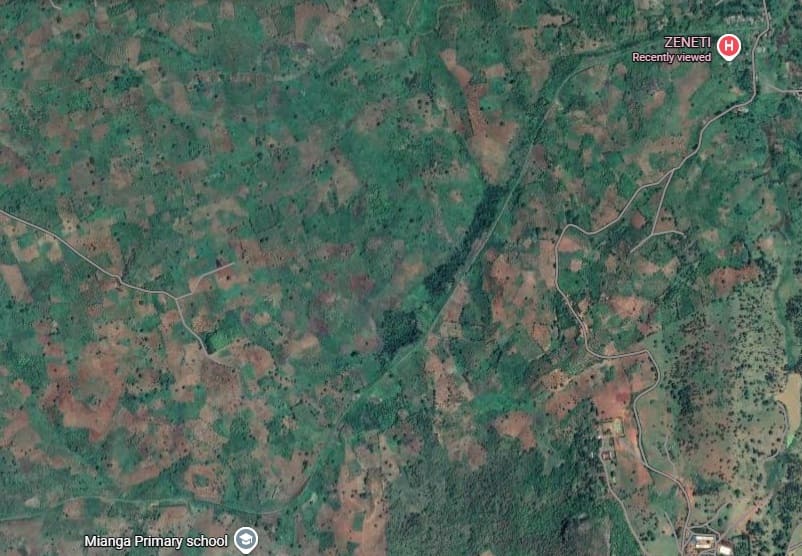
There is no obvious location along the line for Kihuhwi but there is a possibility that Zannetiberg Halt was close to what is now the Zeneti Medical Centre. which sits just beyond the western side of the extract immediately below.

The line crosses this extract in an East to West direction from the mid-point on the left of this extract to the bottom-left apex. [Google Maps, March 2026]
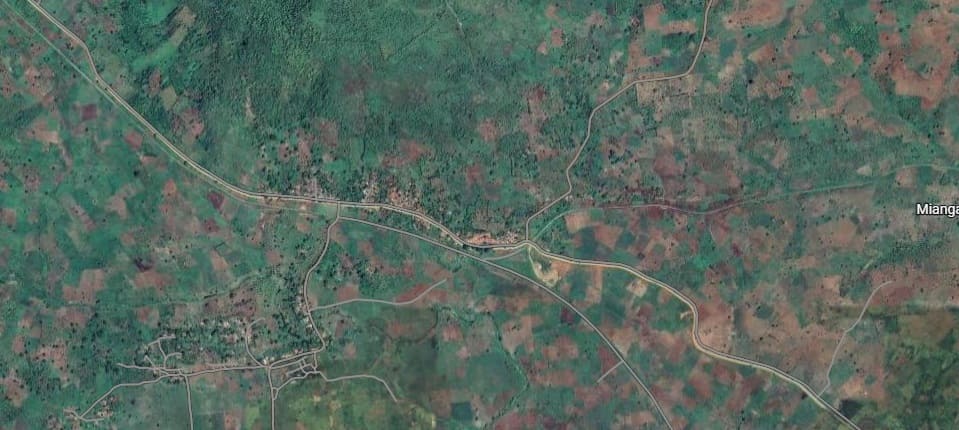
The line enters this extract just to the Northeast of Zeneti Medical centre, crossing the road to the East of the medical centre at a level-crossing. After a short distance heading West, the line turns to runSouth-southwest towards the location of Mianga Primary School. Close to the school, the line curves to the West and leaves the extract from Google’s satellite imagery just above the bottom-left of the image. [Google Maps, March 2026]
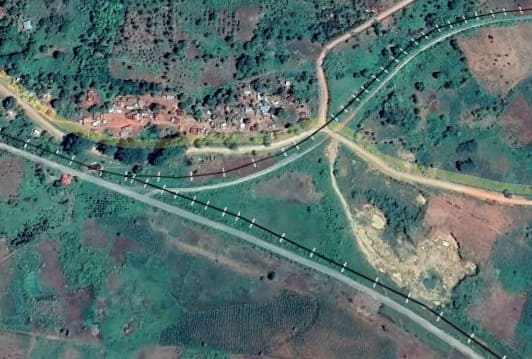
Heading West from Mianga the line sweeps left and then right and in doing so joins the line from Dar es Salaam. The line then heads East-northeast, leaving this image at the top-left. The junction is at the centre of this image. [Google Maps, March 2026]

This closer view of the junction is taken from Google Earth. The black lines approximate to the two railway routes but are several metres, at least, out of position. The junction is named on the Schematic map of the line below – Murasi Junction and is recorded as being 65 km from Tanga. [Google Earth, March 2026]

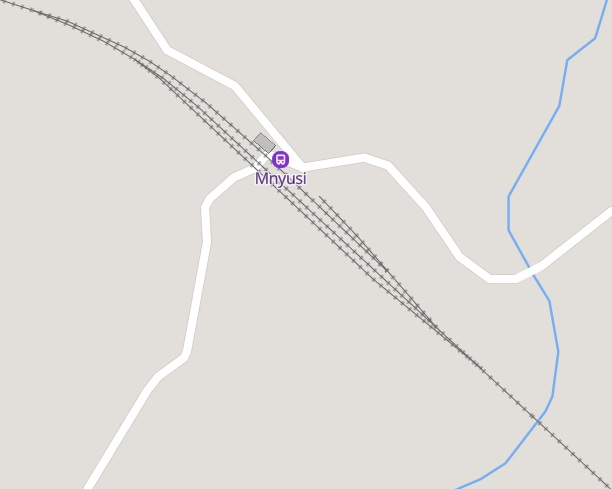
The most notable location at the top of this section of the schmatic map of the line is the railway junction between the line from Tanga and that from Dar es Salaam. – Murasi Junction. Travelling on from Murasi Junction the next location recorded is the town of Mnyusi. [6]

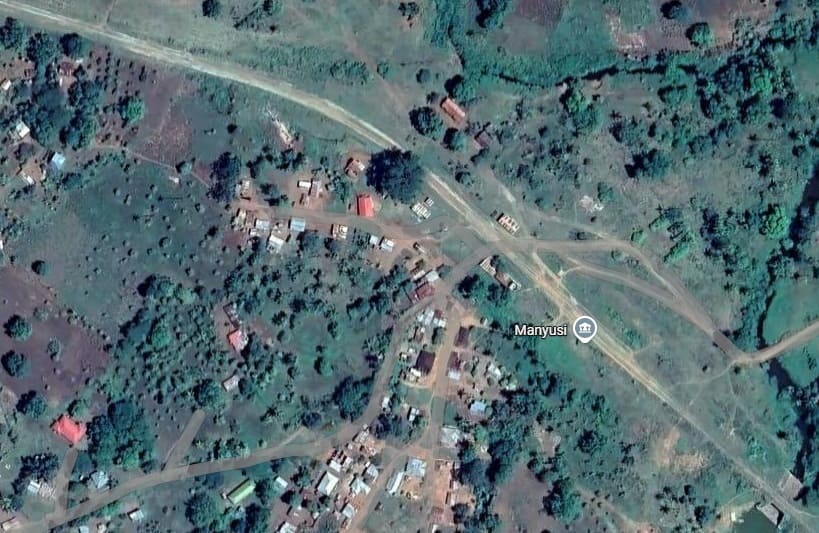
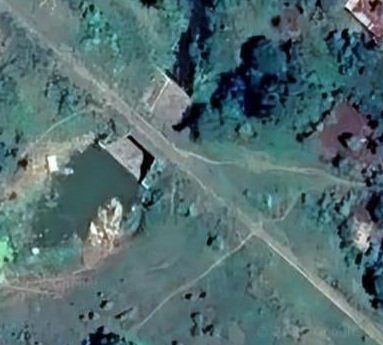
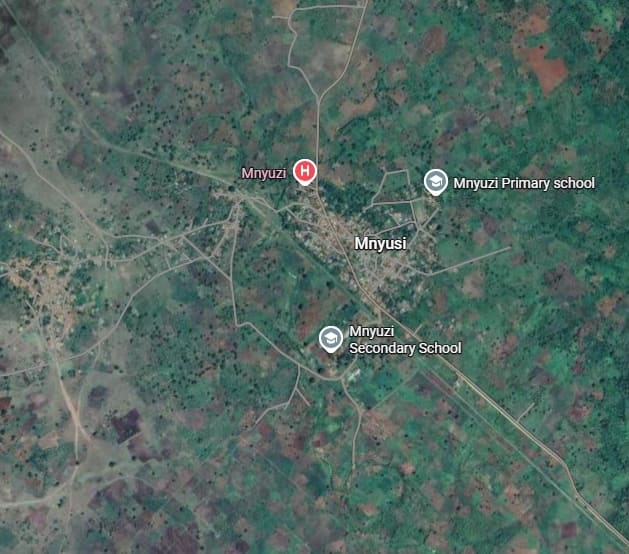
Mnyusi sits at the centre of the satellite image below. The line runs along the Southwest side of the town. There is a significant culvert/bridge carrying the line over the local river.

Mnyusi River Bridge {Google Maps, March 2026]
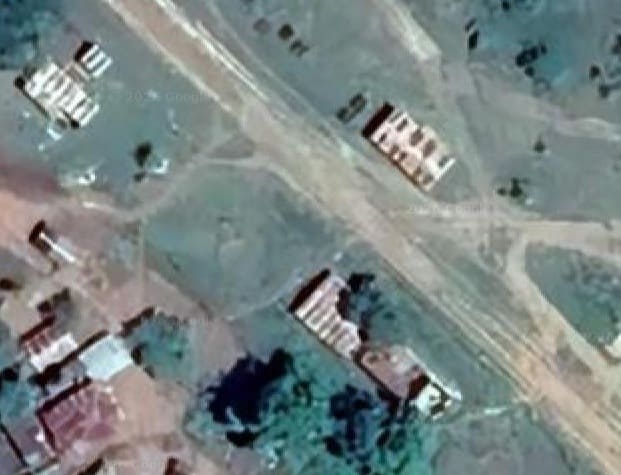
The town of Mnyusi sits on the Northeast side of the railway line. To the Northwest of the bridge/culvert shown above, there is a passing loop and possibly old station buildings. [Google Maps, March 2026]
A closer view of the passing loop at Mnyusi. There is a group of three structures which might be, or might have been, railway structures. These are shown in closer detail below. [Google Maps, March 2026]

Three buildings align with the railway at Mnyusi and appear to have been station buildings. [Google Maps, March 2026]

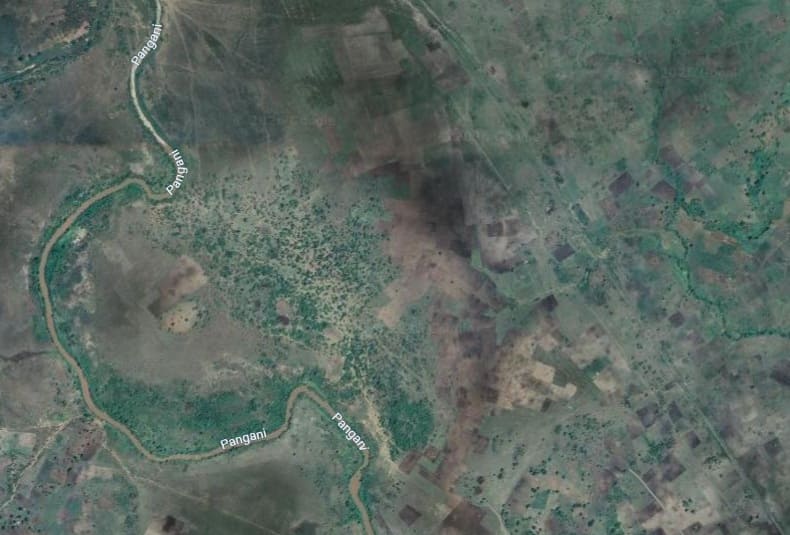
Beyond the passing loop the line continues to head Northwest along the Northeast flank of the Pangani River valley, as can be seen on the next satellite image below.

Mnyusi Railway Station, as shown on MapCarta. [16]
The line form Tanga and Dar es Salaam enters this extract from Google’s satellite imagery at the apex at the bottom-right of the image. It runs Northwest to leave the extract centre-top. [Google Maps, March 2026]
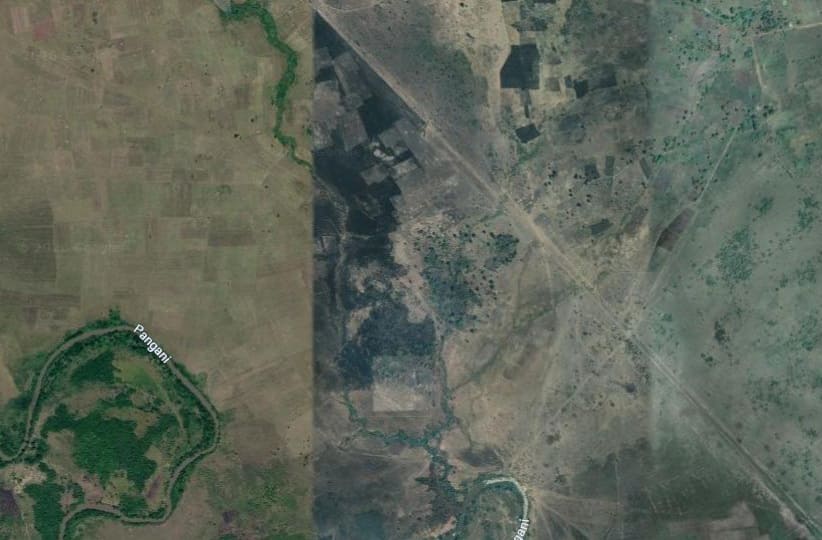
Again, the line enters this image at the bottom-right apex and runs Northwest, leaving the image at the top, just to the left of centre. [Google Maps, March 2026]
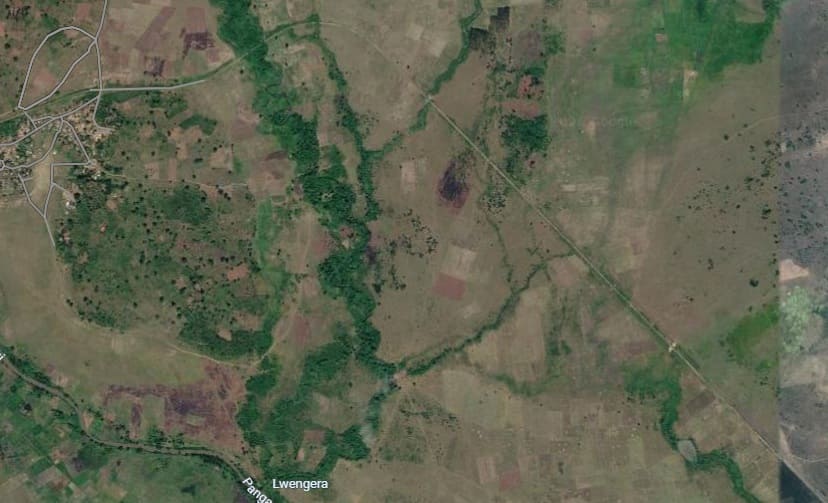
In this next extract from Google’s satellite imagery the line again enters bottom-right and runs Northwest to a point just below the top of the image. It then swings round to the West. It runs to the North of a small settlement which is known as Old Korogwe and continues West towards Korogwe itself. Two of the locations noted on the schematic route of the line, Magunga Siding and Luengera Halt have been passed without being noticed! [Google Maps, March 2026]

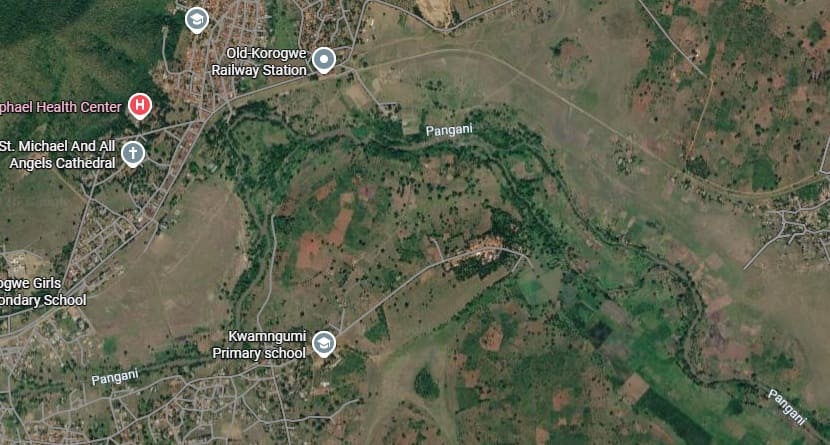
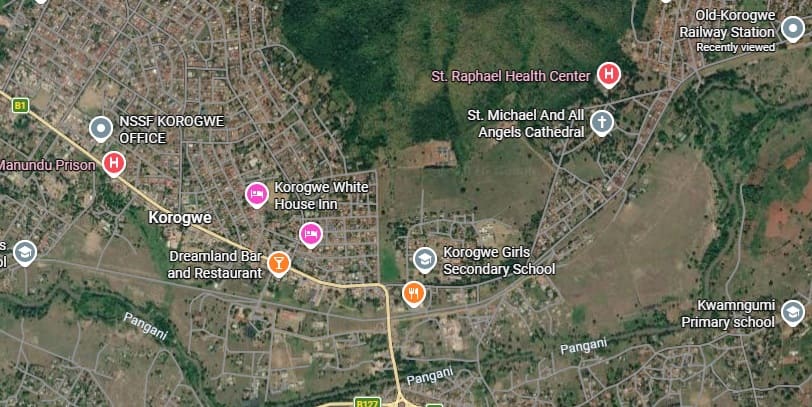
The next extract from the satellite imagery takes the line through Korogwe. The settlement was reached by the line from Tanga around the turn of the 20th century. The construction of the line to the West of Korogwe commenced in 1903. [10]

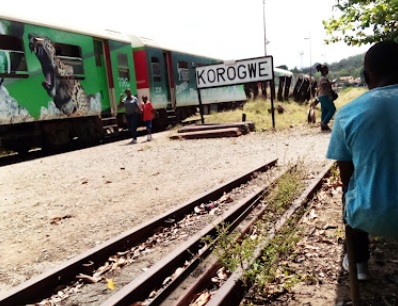
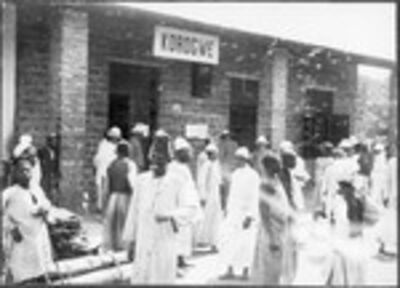
The line from Tanga approached Korogwe from the East. The railway station

Old-Korogwe Railway Station in May 2022, (c) Vincent Christian. [Google Maps, March 2026] The image below shows the station in the early 20th century. [11]

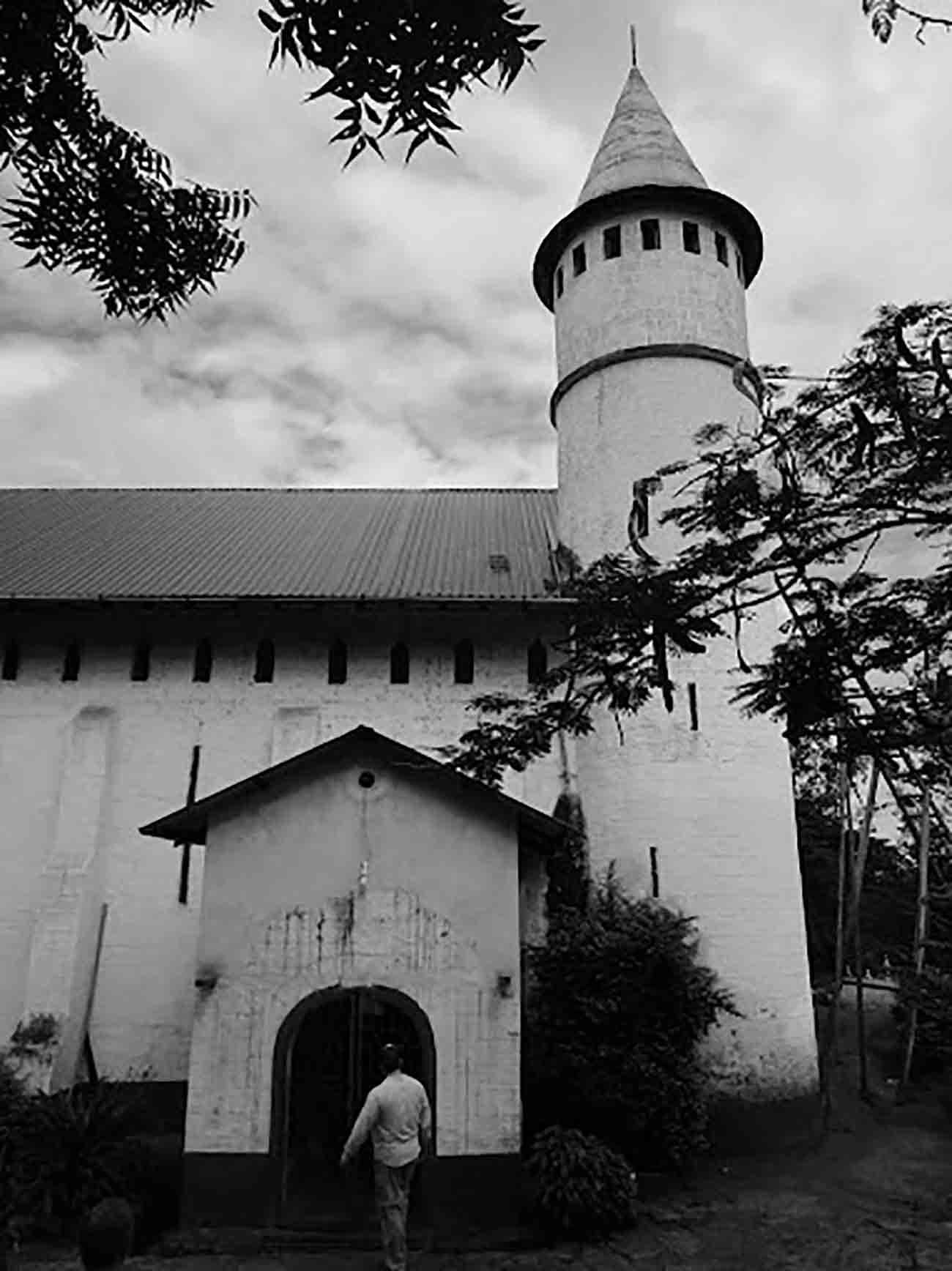
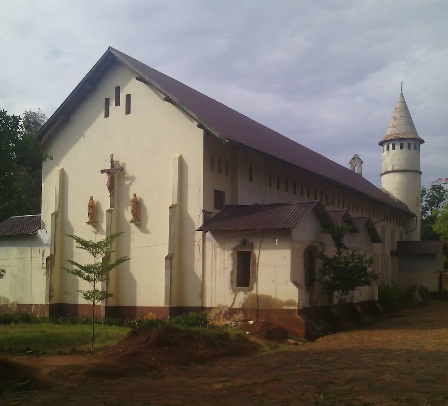
St. Michael and All Angels Cathedral, Korogwe in 2017. (c) Yohana Joseph Mzuri. [Google Maps, March 2026]

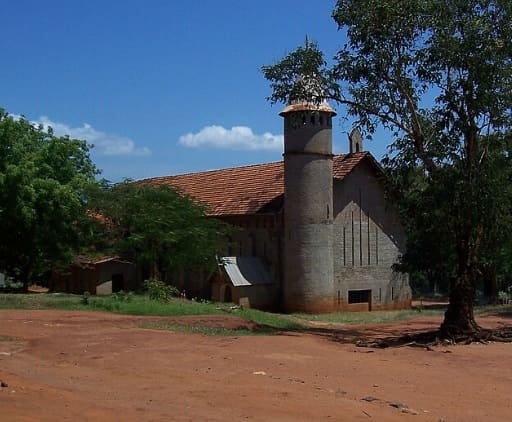
Korogwe is the seat of the Anglican Diocese of Tanga and has a cathedral church dedicated to St. Michael and All Angels. [17] Towards the end of 2025, the Anglican Church of Tanga marked 25 Years as a Diocese and 177 Years of Christianity in the Region.

Another view of St. Michael and All Angels’ Cathedral at Korogwe, (c) Public Domain. The photograph was taken by ‘Acognat’. [18]

Korogwe had a population of 62,032 in 2022. as well as its Cathedral, the town has a teacher training college and a number of secondary schools. [12]

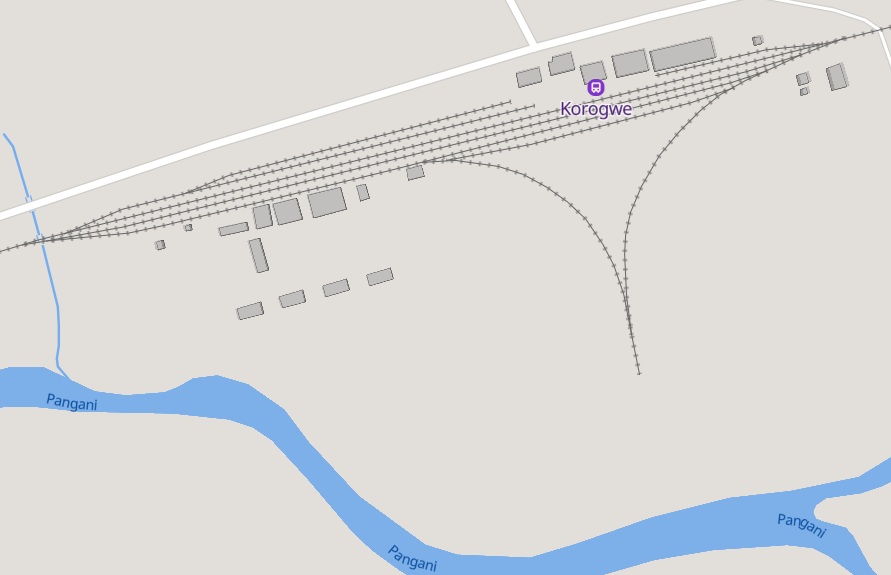
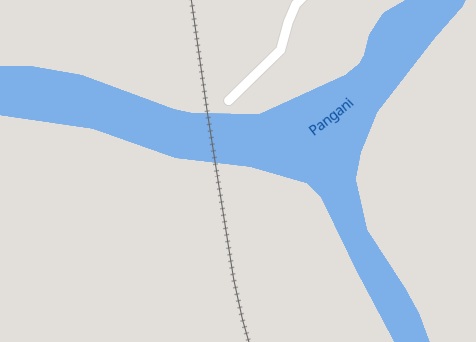
Korogwe Railway Station and the Pangani River as shown by MapCarta. [13]

The town of Korogwe has developed to the West of the railway station. The line curves round the South side of the town.

The railway line runs to the Southeast of the Cathedral and to the South of Korogwe town, crossing the B1 at a level crossing. [Google Maps, March 2026]
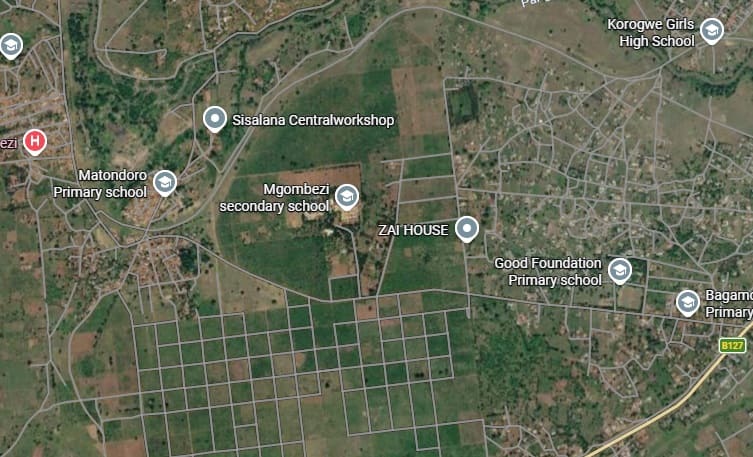
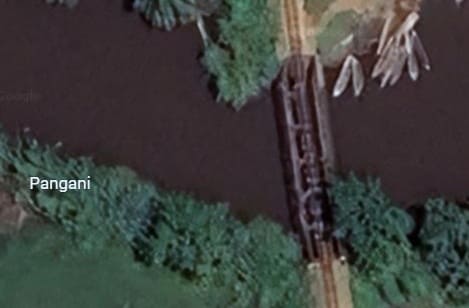
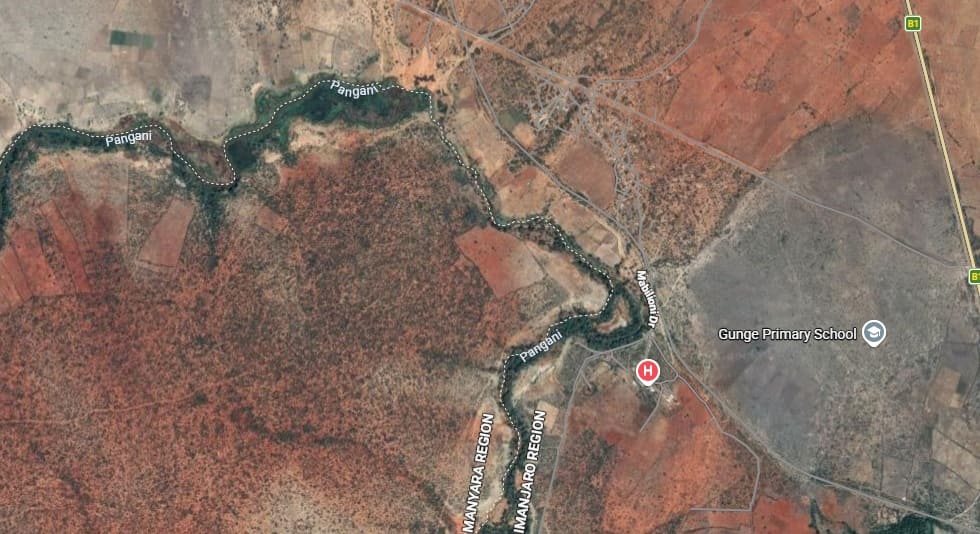
In this next extract from Google’s satellite imagery, the line enters on the right, just below the top corner close to Korogwe Girls High School and almost immediately bridges the Pangani River. After crossing the river the line runs West as far as Matondoro Primary Scholl before curving tightly round to the North. [Google Maps 26th March 2026]
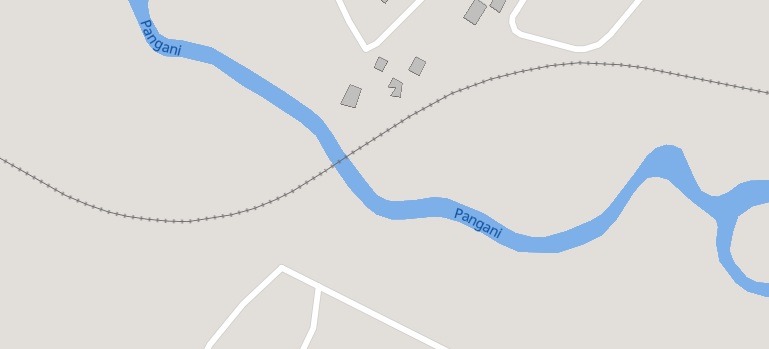
The Pangani River Bridge at Korogwe as it appears on MapCarta. [19]

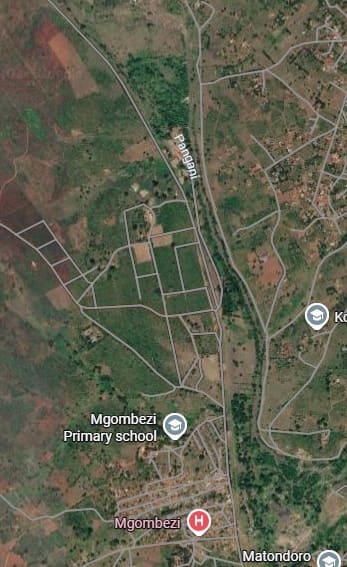
After turning to the North, the line ran along the West side of the Pangani River and began to turn away to the West. [Google Maps, March 2026]

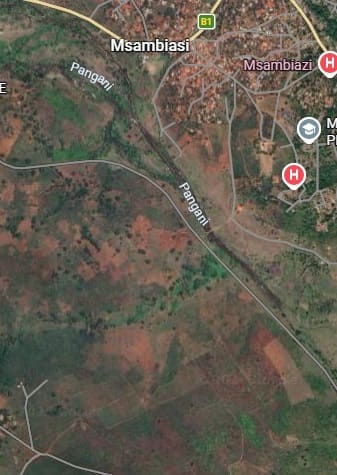
The next extract shows it heading West on the opposite side of the Pangani River to Msambiasi. [Google Maps, March 2026]
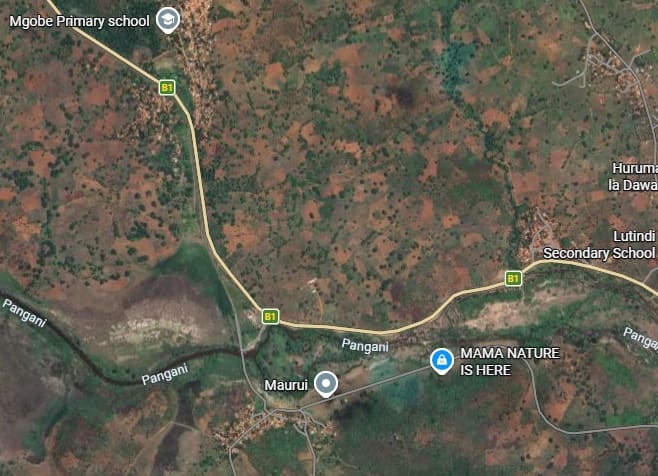
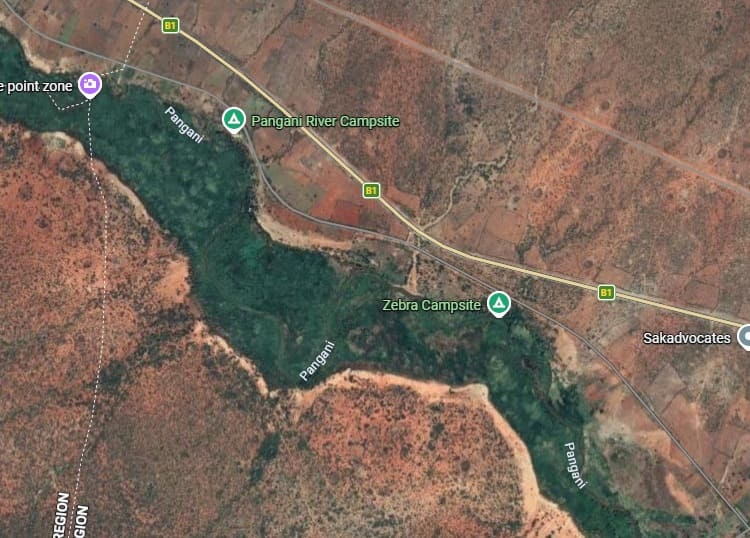
An S-curve interupts the westerly direction of the line, before the line passes through the station at Maurui and turns North to cross the Pangani River once again. Then the line takes a position alongside the B1 travelling Northwest. [Google Maps, March 2026]

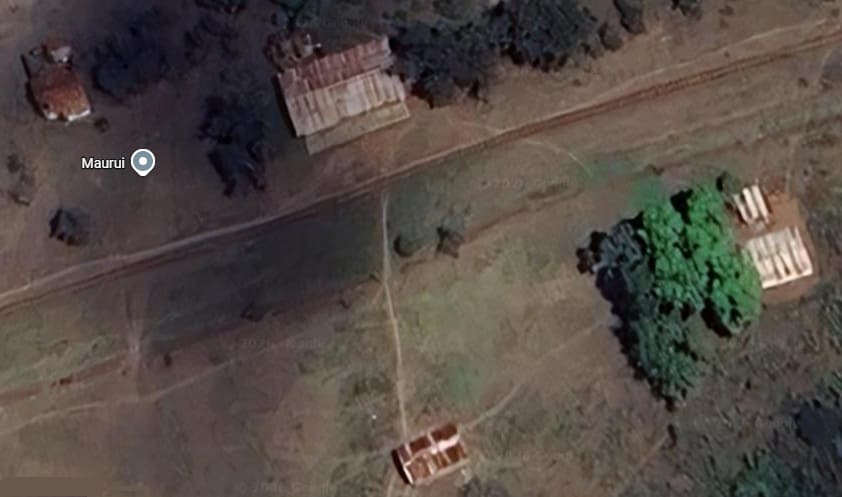
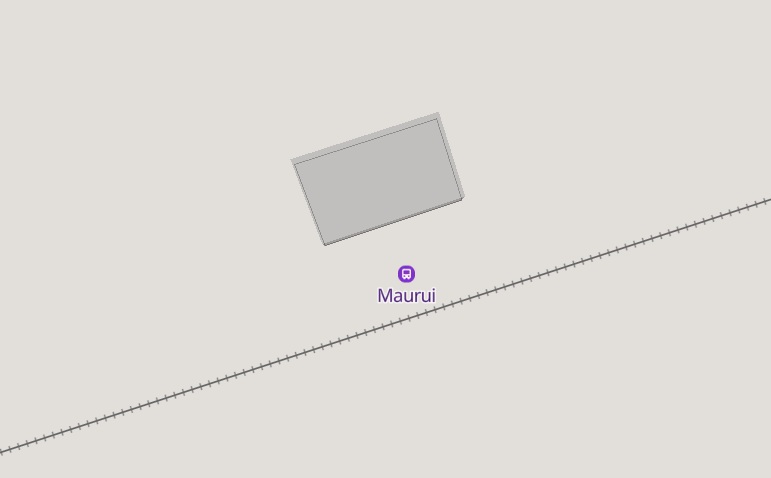
Maurui Railway Station [Google Maps, March 2026] and MapCarta. [19]

MapCarta shows both Maurui Station and the bridge over the Pangani River. [19]

The Pangani River Bridge. {google Maps, April 2026]
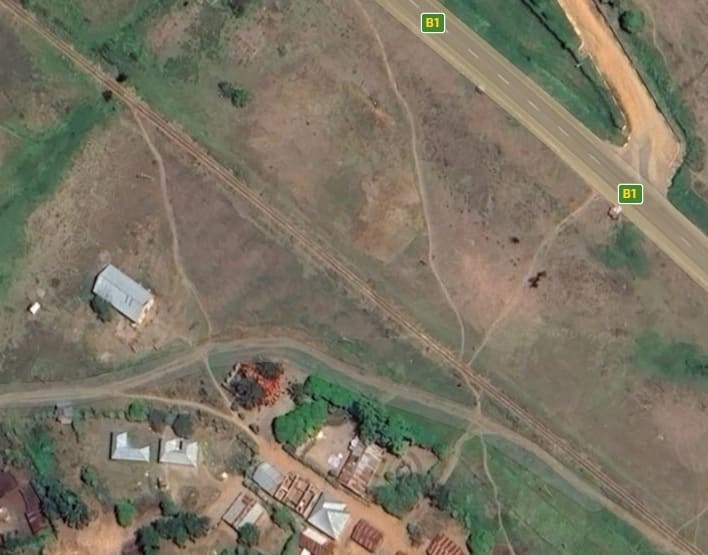
This next extract follows the line Northwest to Makuyuni. The railway sits adjacent to the B1/T2 throughout this length. [Google Maps, March 2026]

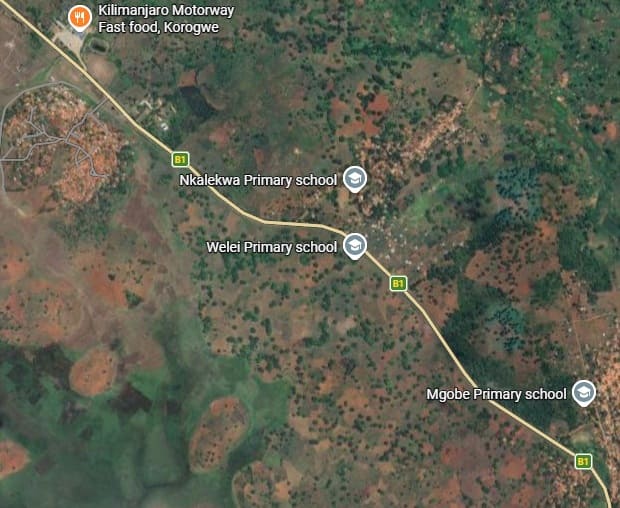
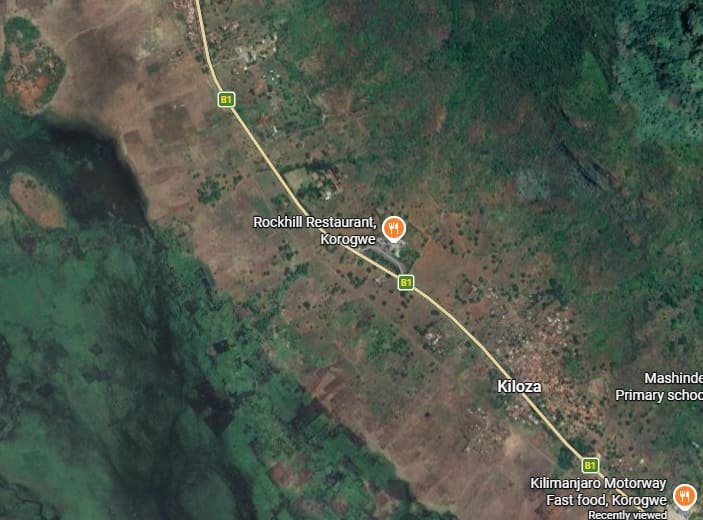
Lutindi Railway Station (?) as it appears on modern satellite imagery {Google Maps, March 2026] Nothing is shown at this location on MapCarta, other than the services (Kilimajaro Motorway Fast Food, Korogwe). Despite the presence of a significant small settlement on the Southwest side of the line, Lutindi is some way to the Northeast of the line.

The line continues Northwest alongside the B1/T2 towards Makuyuni. Note the divergence of road and rail at the top of the extract. [Google Maps, March 2026]

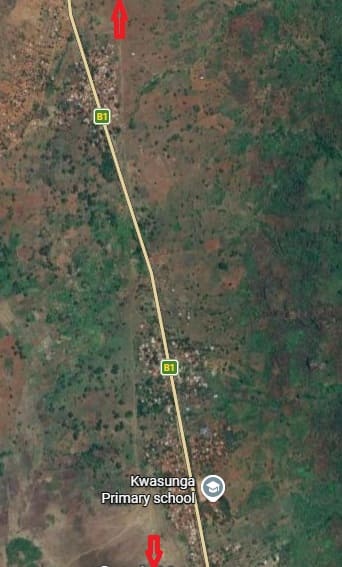
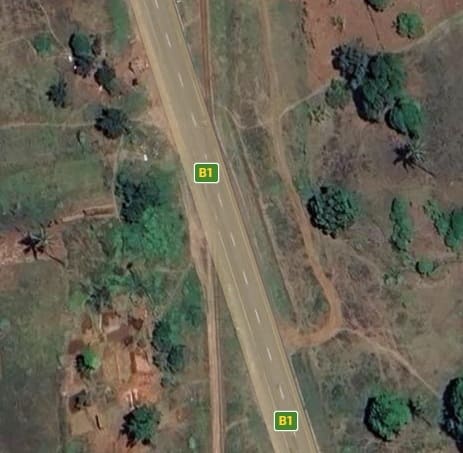
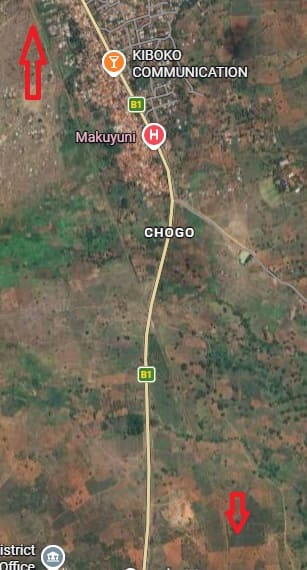
As this next extract from the satellite imagery shows, the separation of road and rail is only enough to allow the railway to pass to the West of Kwasunga. It enters this extract at the bottom arrow, and leaves at the top arrow. In between, the line crosses the B1/T2, as shown below. [Google Maps, March 2026]

On this next extract the line enters at the bottom of the image to the East of Kwasunga and heads North through a couple of shallow bends to exit at the centre-top of the image still on the East side of the B1/T2. [Google Maps, March 2026]

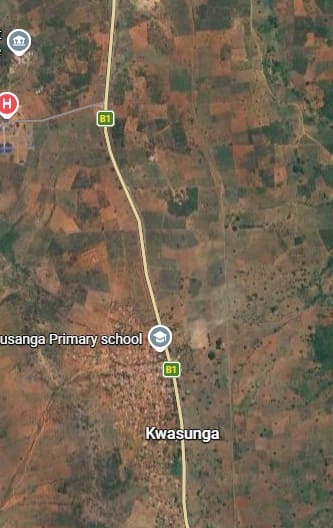
Two arrows again assist in locating the pints at which the line enters and exits this satellite image. The town of Makuyuni is at the top of the extract. the line at road cross below the centre of this image. [Google Maps, March 2026]

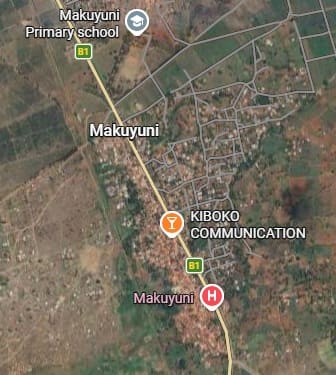
This extract from Google’s satellite imagery focusses on the town of Makuyuni. The railway line can be seen entering the image centre-bottom to the West of the B1/T2. It leaves the image top-left to the West of the road. {google Maps, March 2026]

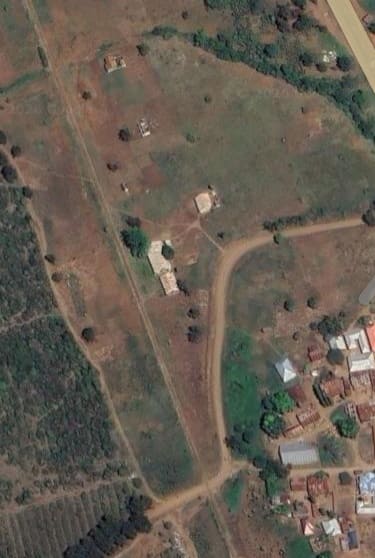
Makuyuni Railway Station is little more than a single-building halt to the Northwest of the town. [Google Maps, March 2026]

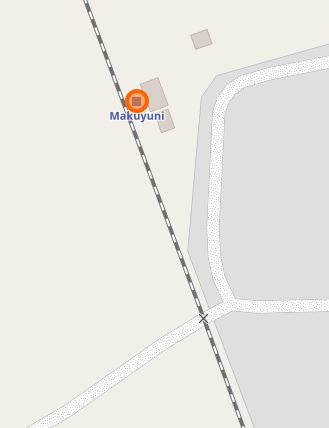
The same location on OpenStreetMap. [20]

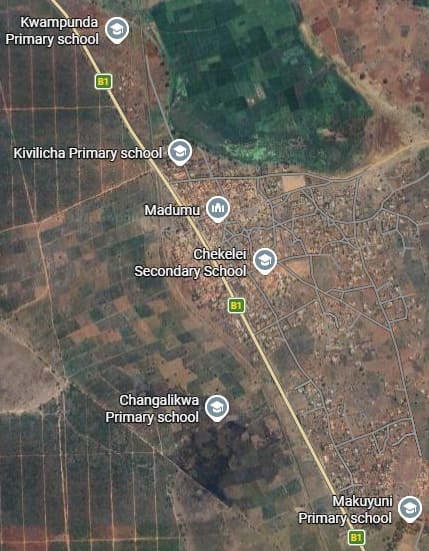
From Makuyuni the line continues to follow the same bearing – heading North-northwest towards Moshi. … Population density is higher here and the satellite image shows significant areas of farmland. The line enters the image a little to the West of the B1/T2, it diverges from the road to pass to the West of Maduma before then crossing the road once again close to the flag for Kivilicha Primary School. It runs North from that crossing to pass to the East of the flag for Kwampunda Primary School. [Google Maps, March 2026]

On the next extract from the satellite imagery below, the line can be seen more clearly.

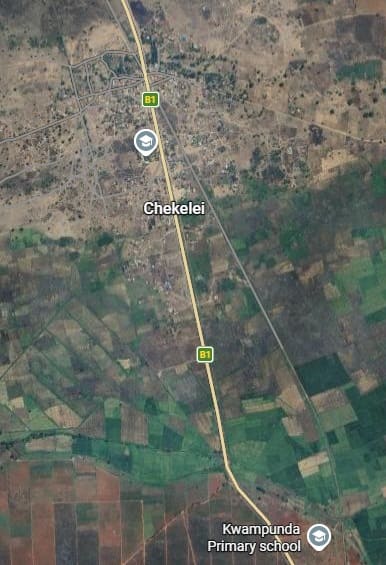
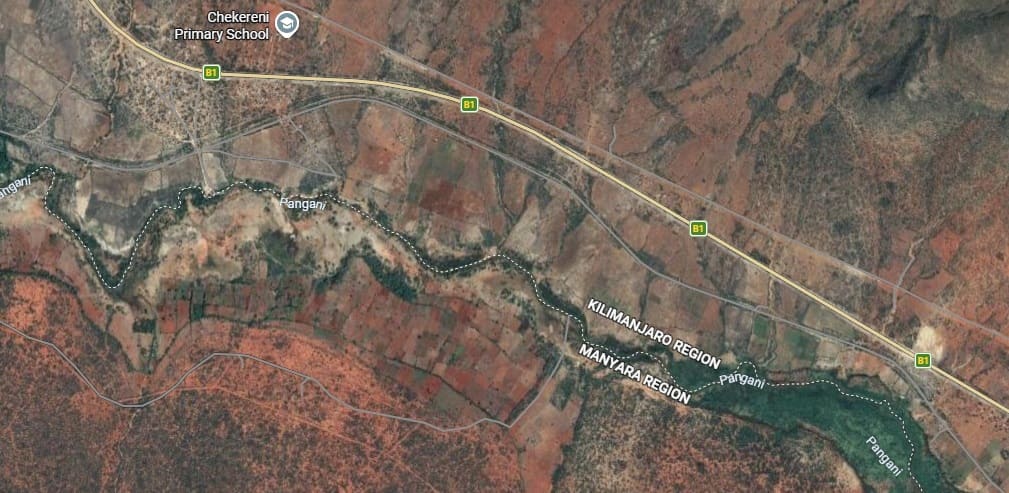
The line enters the image to the immediate East of Kwampunda Primary School and then traverses a well cultivated area before passing through Chekelei where, once agin, the railway crosses the B1/T2.

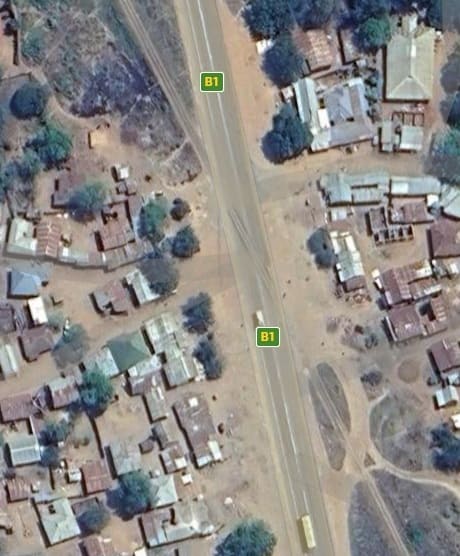
This next extract shows the line running roughly parallel to the B1/T2 in a North-northwest direction. [Google Maps, March 2026]

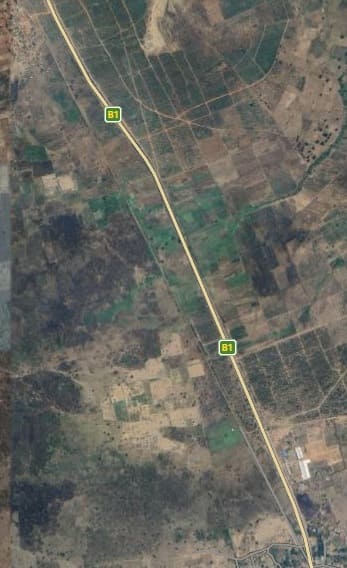
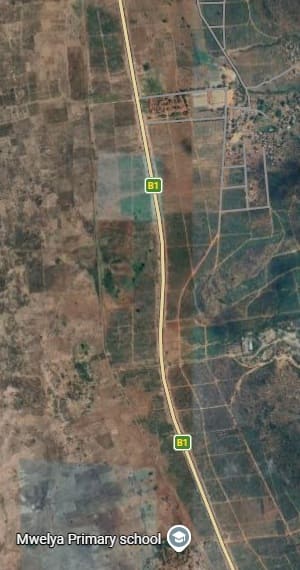
The line enters this next extract from Google’s satellite imagery immediately to the East of the flag for Mwelya Primary School. It contiues to keep company with the B1/T2, leaving the image to the West of the road. [Google Maps, March 2026]

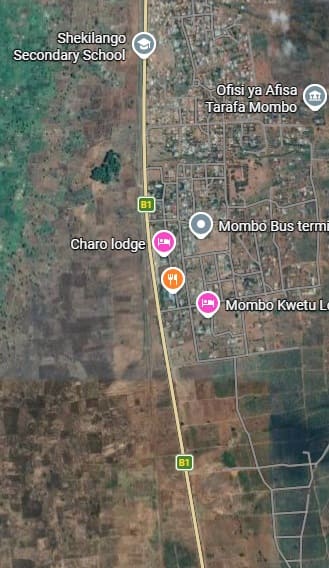
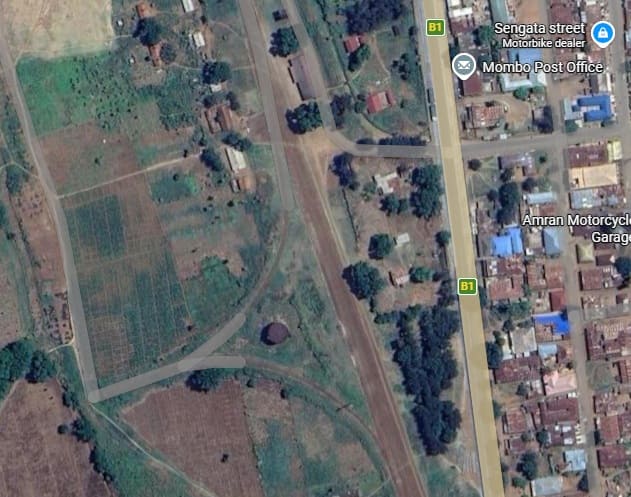
The town of Mombo appears on this next extract from the satellite imagery. The railway remains to the West of the road but takes much closer order as it runs past the town. It remains close to the road across the remainder of the image.

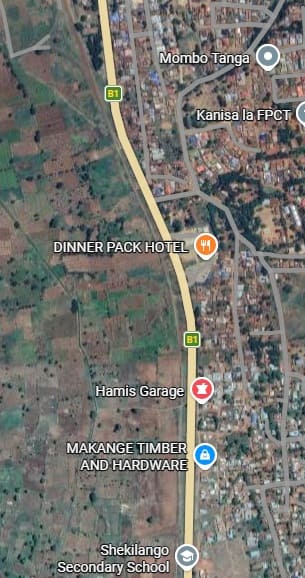
Across the next extract (below), the railway remains close to the B1/T2, still on its West side. Mombo is a town of relatively significant side. Its population in 2012 was 17,093. That figure increased to 24,080 by the time of the 2022 census. Close to the top of this image road and rail move apart to allow room for Mombo Railway Station. [Google Maps, March 2026]

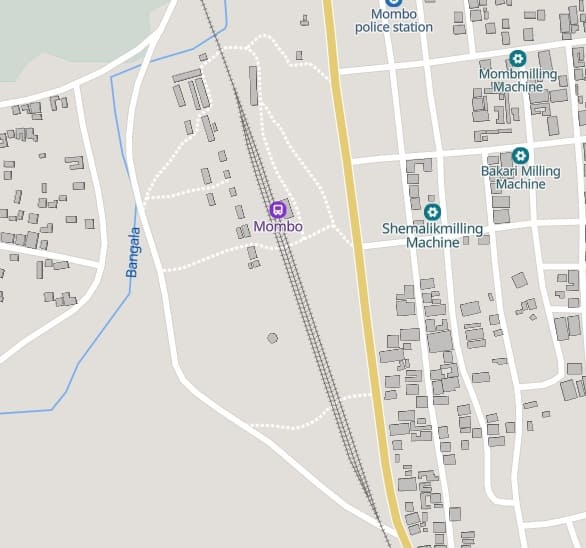
As this MapCarta image shows Mombo station was large enough to warrant a passing loop on the railway line. [21]
Google satellite imagery also shows a turning triangle at Mombo railway station. The station building is towards the top of this extract on the East side of the line. [Google Maps, March 2026]

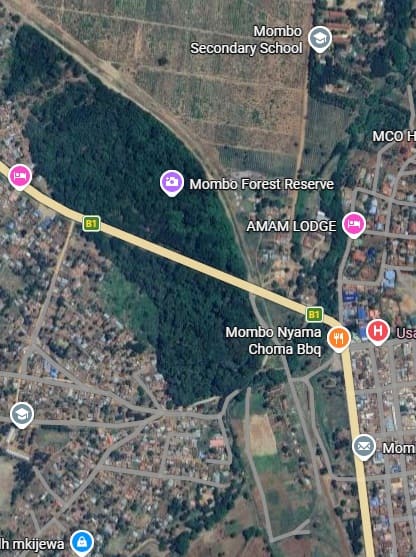
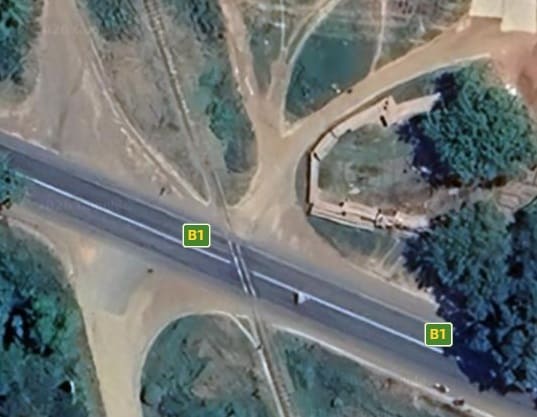
Continuing North from Mombo Railway Station the line crosses the B1/T2 once again and skirts the Northeast edge of the Mombo Forest Reserve. [Google Maps, March 2026]

The level-crossing to the West of Mombo. [Google Maps, March 2026]
Leaving the forest reserve behind the line closes in on the B1/T2 once again and runs on its Northeast shoulder. On this map extract the line enters at the bottom-right apex and leaves at the top-left apex. [Google Maps, March 2026]
The railway is still following the road on this next extract from the satellite imagery. [Google Maps, March 2026]
A couple of fields separate road and rail over this next length of the line. [Google Maps, March 2026]
Closer order is resumed across this satellite image extract. [Google Maps, March 2026]
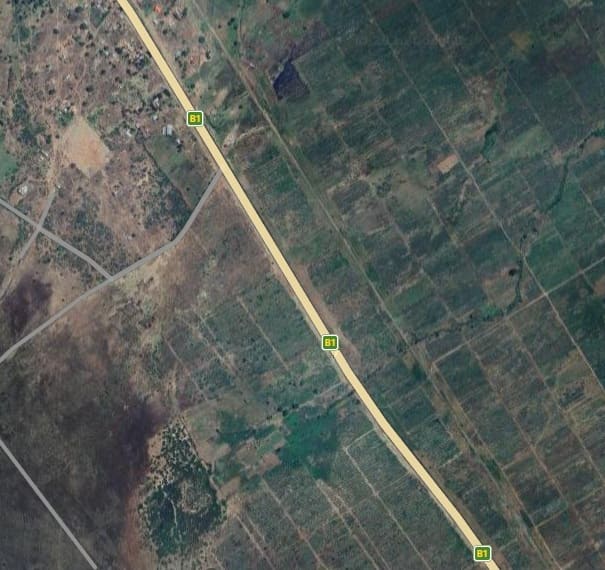
Road and rail run parallel on this next satellite image. [Google Maps, March 2026]
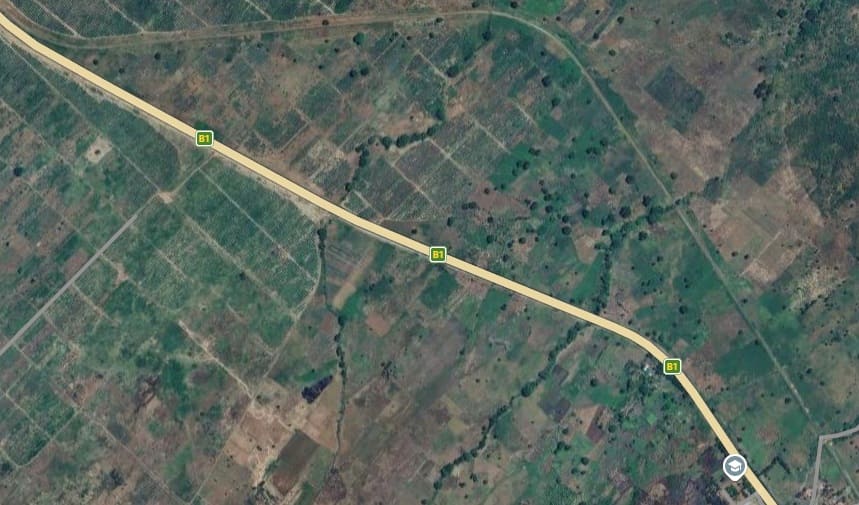
Slightly more interest in this extract from the satellite imagery. Road and rail separate for a short distance before once again resuming closer order! [Google Maps, March 2026]
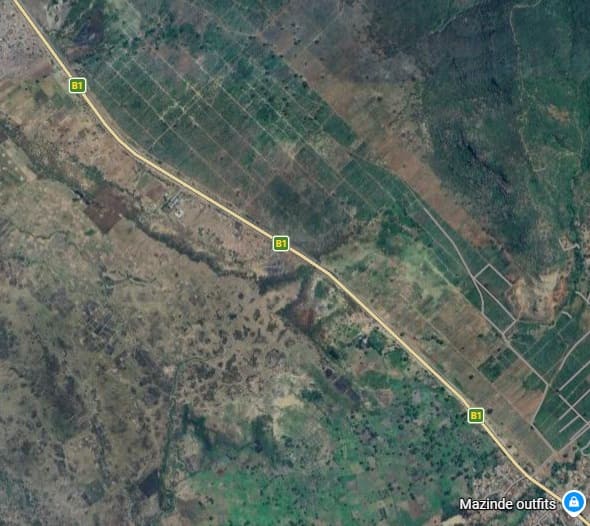
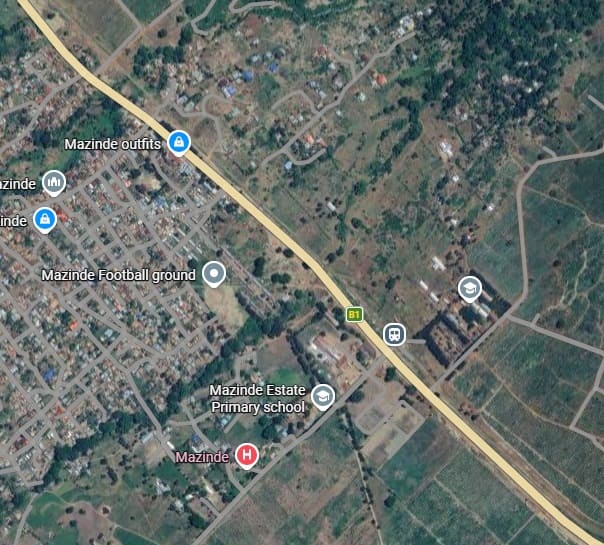
Road and rail remain close through Mazinde and its railway station. [Google maps, March 2026]

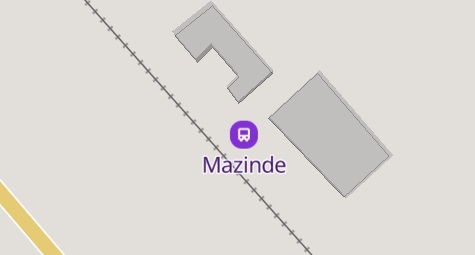
MapCarta shows that Mazinde Railway Station is more like a Halt, just s coupls of buildings and no passing loop or goods yard. [22]

Northwest of Mazinde, road and rail continue close together. [Google Maps, March 2026.

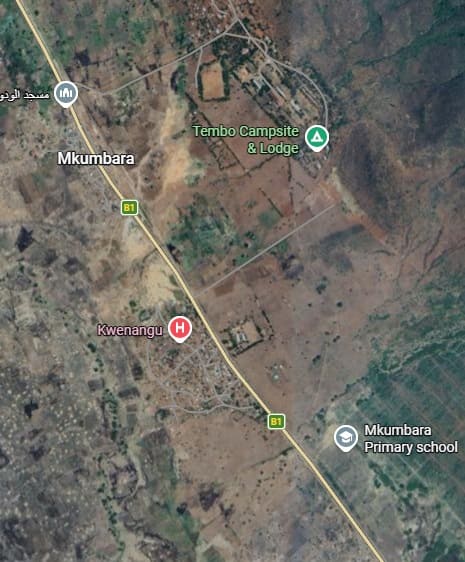
Road and rail remain close through Mkumbura. Mkumbura was the location where the Mkumbara to Neu Hornow Cableway/Ropeway, which operated during the German colonial period, met the Usambarabahn. The story of the Cableway can be found here. [23]

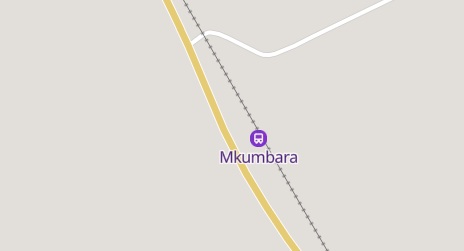
Mkumbura Rail Station as shown by MapCarta. [24]
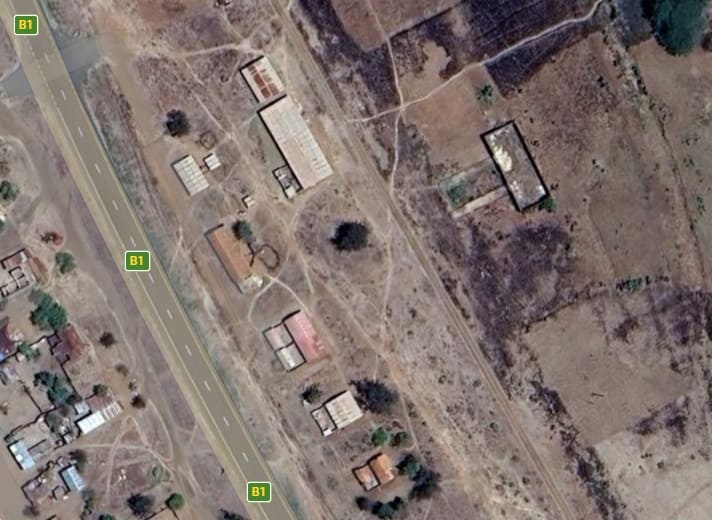
A much closer view of the location of Mkumbura Railway Station. [Google Maps, March 2026]
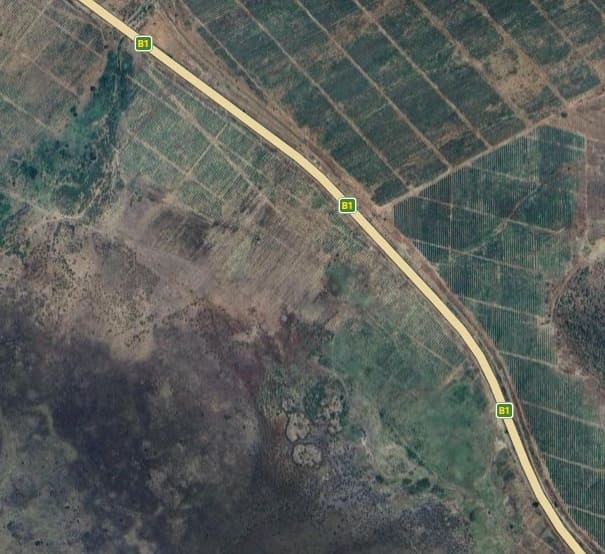
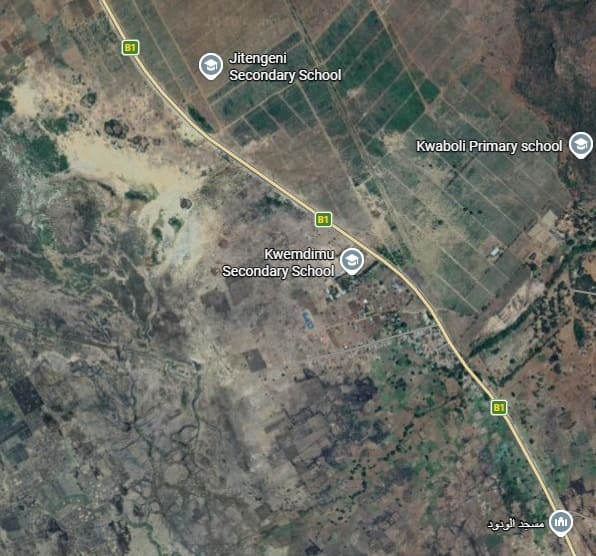
The line continues North-northwest alongside the B1/T2 as far as a point East of Kwemdimu Secondary School. There the BI/T2 begins to drift away from the railway to the Northwest. The railway leaves this extract from the satellite imagery at the centre-top of the image. [Google Maps, March 2026]

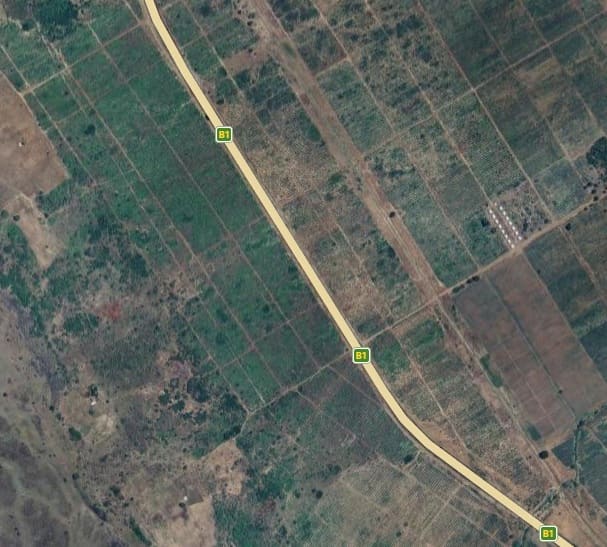
Over these two extracts from Google Maps, the line continues heading North-northwest. [Google Maps, March 2026]

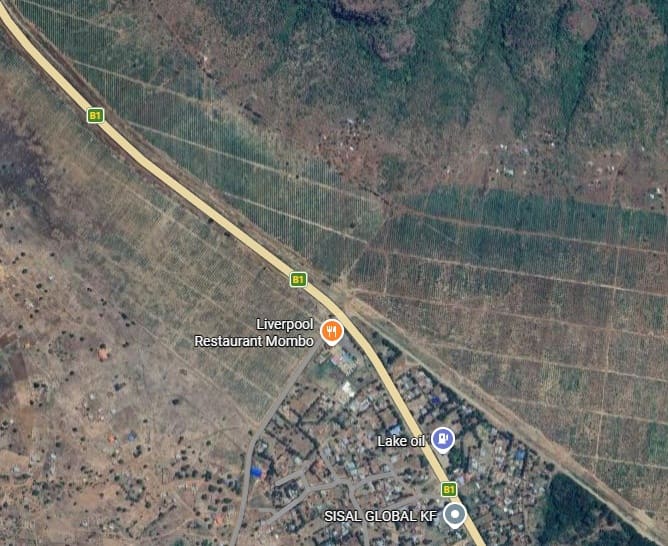
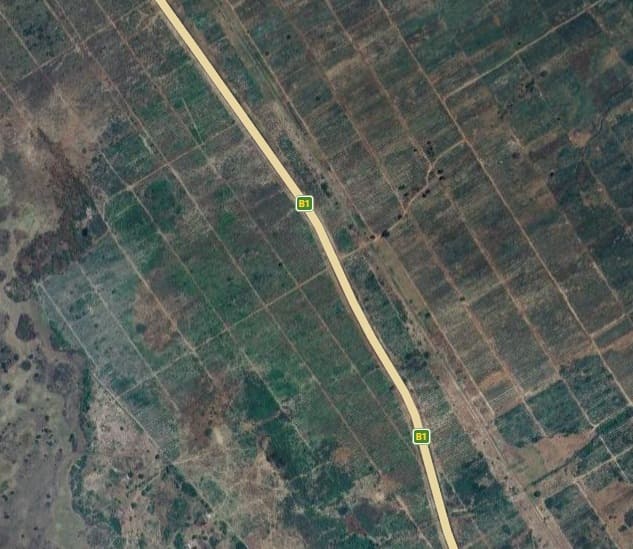
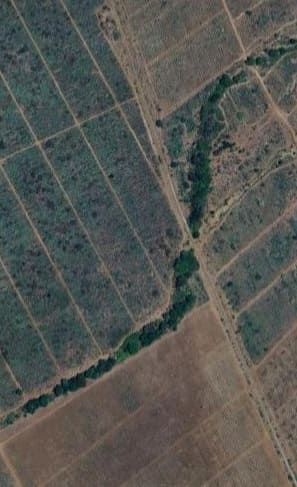
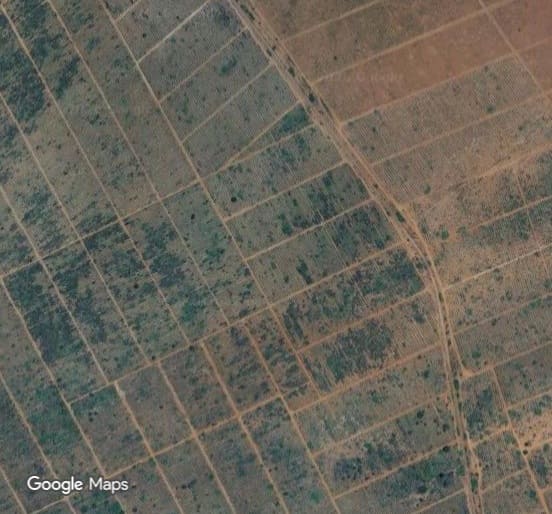
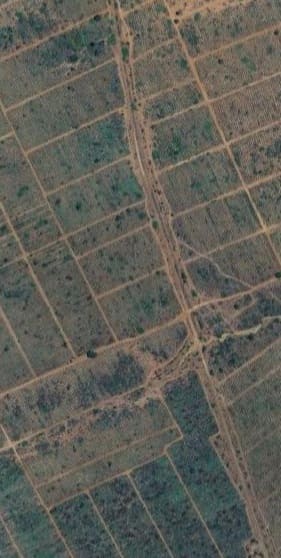
The line gradually turns to the North over these two extracts before turning back to the Northwest. The arid landscape appears to be used for Sisal farming. [Google Maps, March 2026]

The line then continues to the Northwest across this next extract. [Google Maps, March 2026]
Just a short distance further to the Northwest, the line curves round to head Southwest. [Google Maps, March 2026]
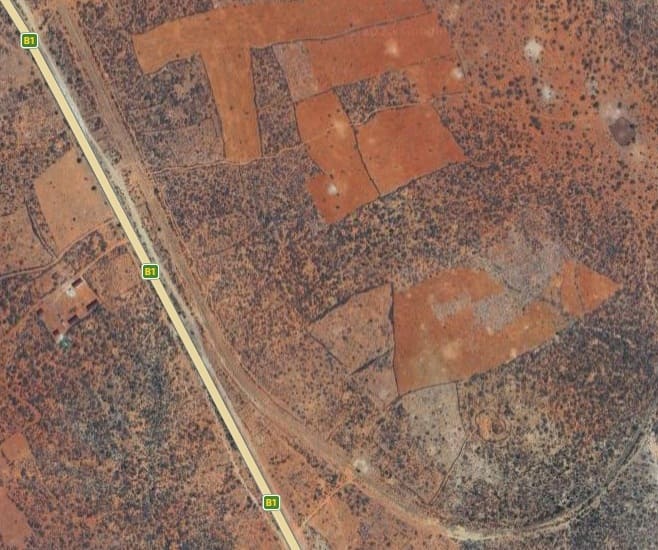
The curve then reverses and the line take close order to the B1/T2 once again. [Google Maps, March 2026]
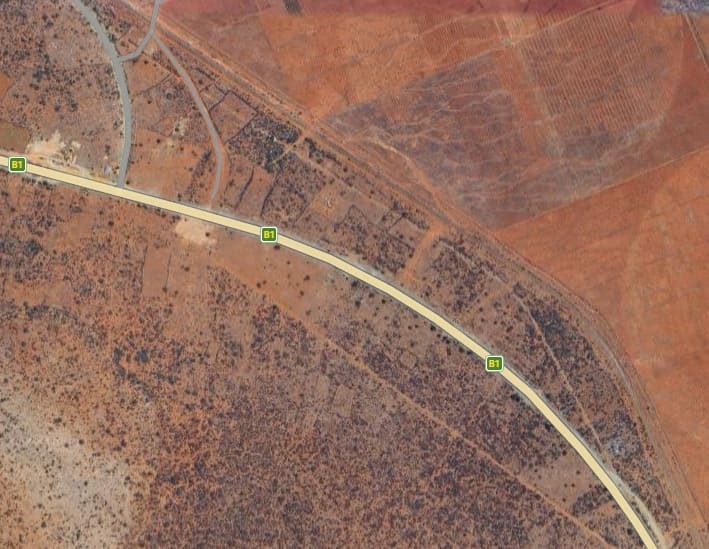
And the main road soon begins to drift away again. [Google Maps, March 2026]
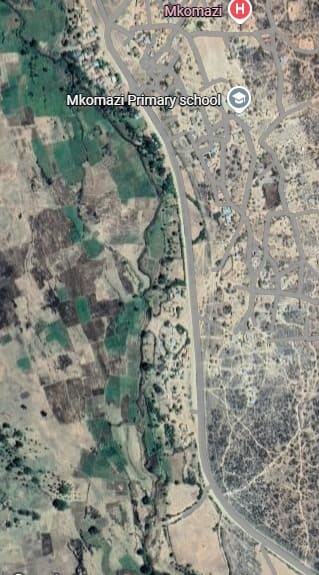
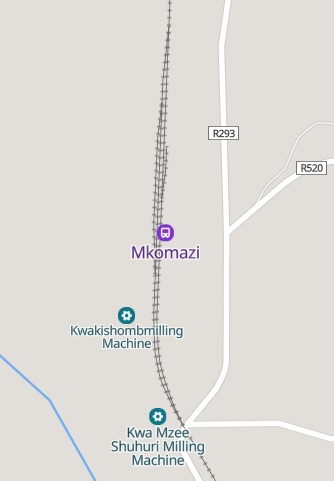
The line runs from the bottom-right corner of this extract to the top-left corner. The road running to its Southwest is the R293 Langoni-Mkomazi Road. [Google Maps, March 2026]

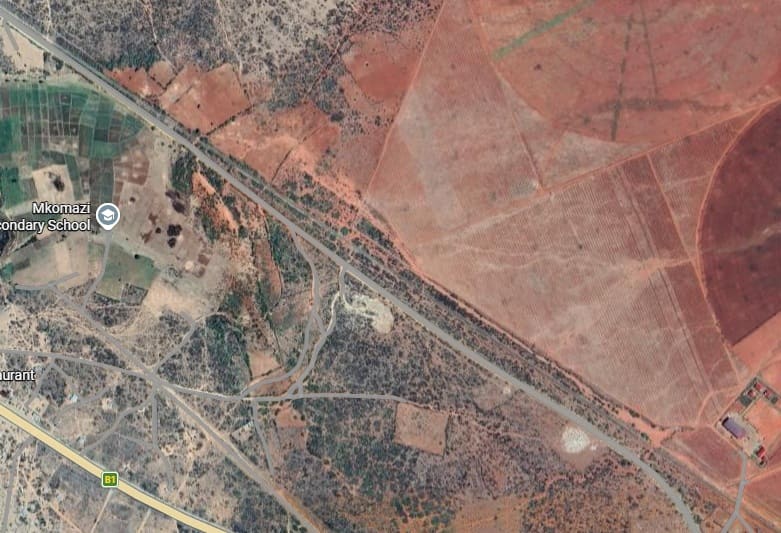
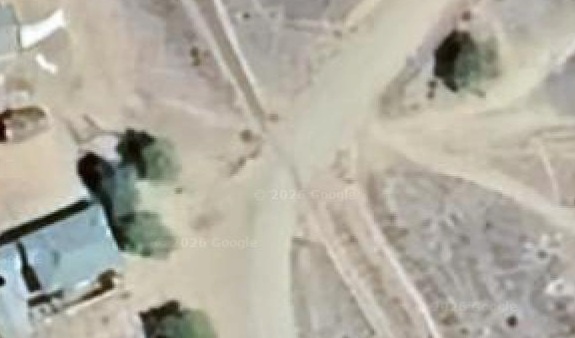
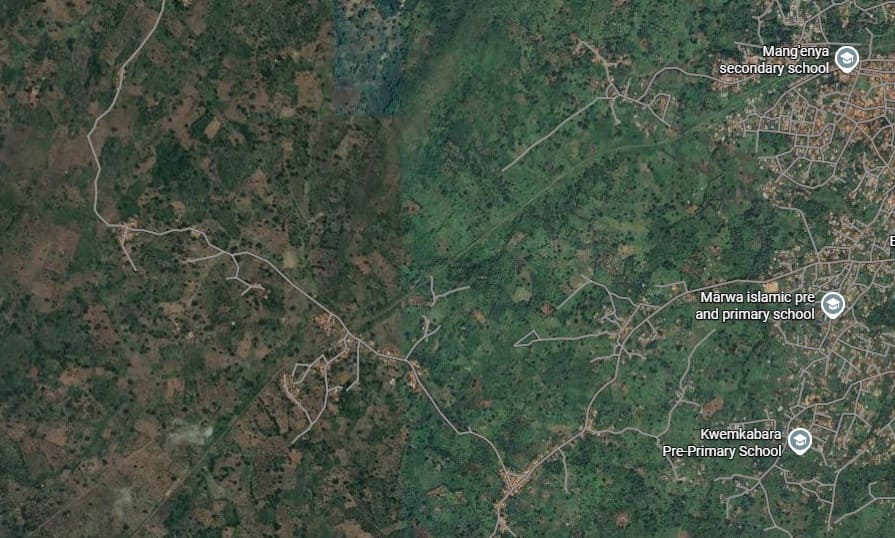
The line enters the next extract adjacent to the road in the bottom-right corner of the image and follows the road North. At the top of this extract, the road turns East and crosses the railway. The line leaves the image centre-top. [Google Maps, March 2026]

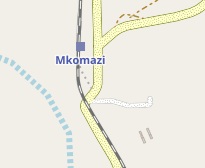
The level crossing at Mkomazi, [Google Maps, March 2026] and below on OpenStreetMap. [25]

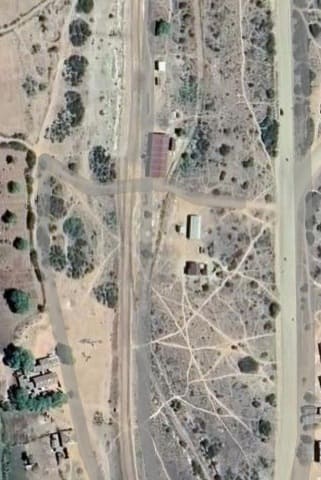
Mkomazi Railway Station sits just to the North of the level-crossing shown on the last 3 images. [Google Maps, March 2026][26]

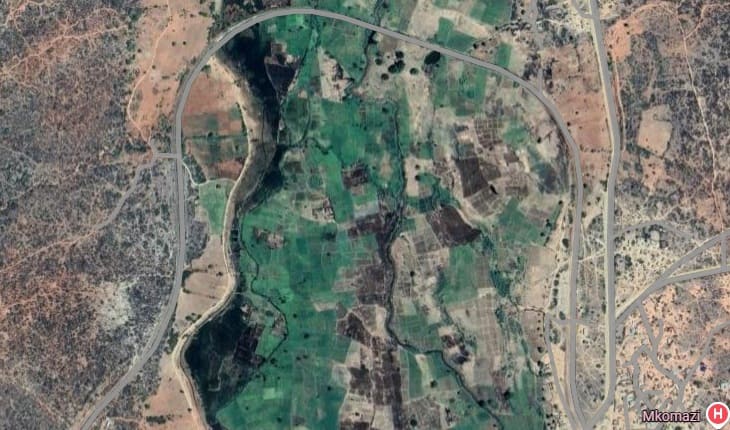
Beyond Mkomazi Railway Station, the railway loops round through West to South. [Google Maps, March 2026]

The line runs South before beginning to curve back through West to North as shown below. [Google Maps, March 2026]

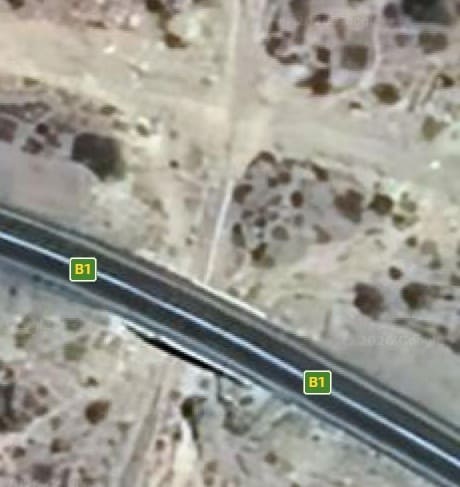
The modern B1/T2 crosses the line by means of a bridge. [Google Maps, March 2026]
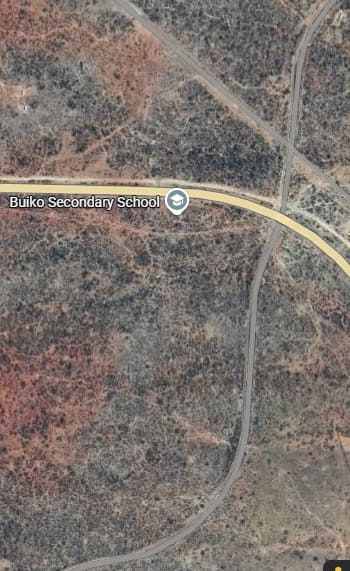
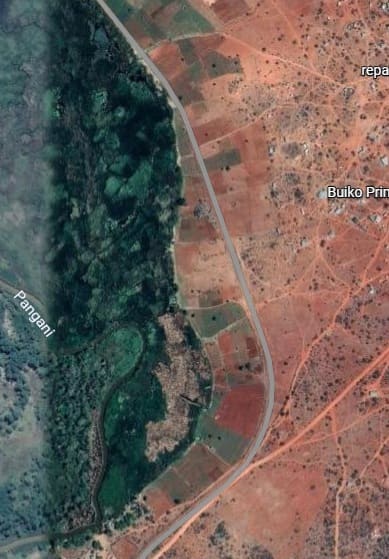
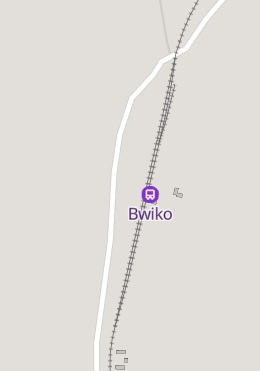
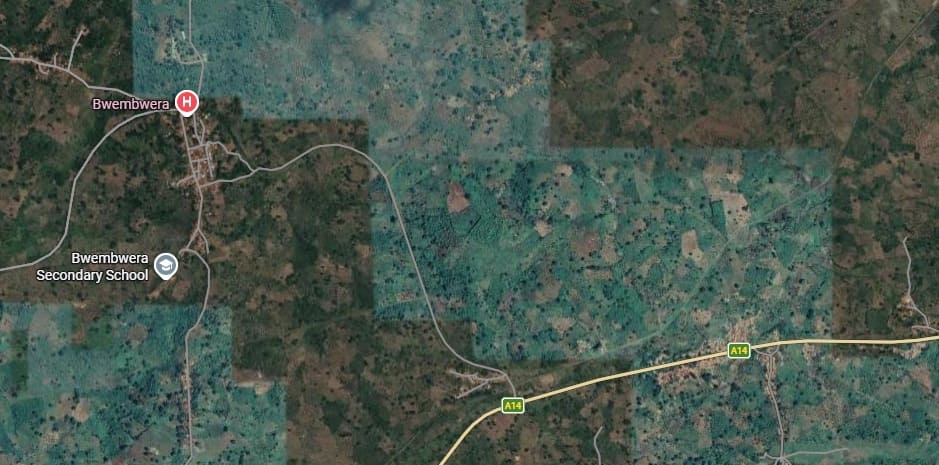
The line turns through Southwest to West and then North before running Northeast. As it does so it passes through Buiko Railway Station which is shown on the MapCarta extract below. [26][Google Maps, March 2026]

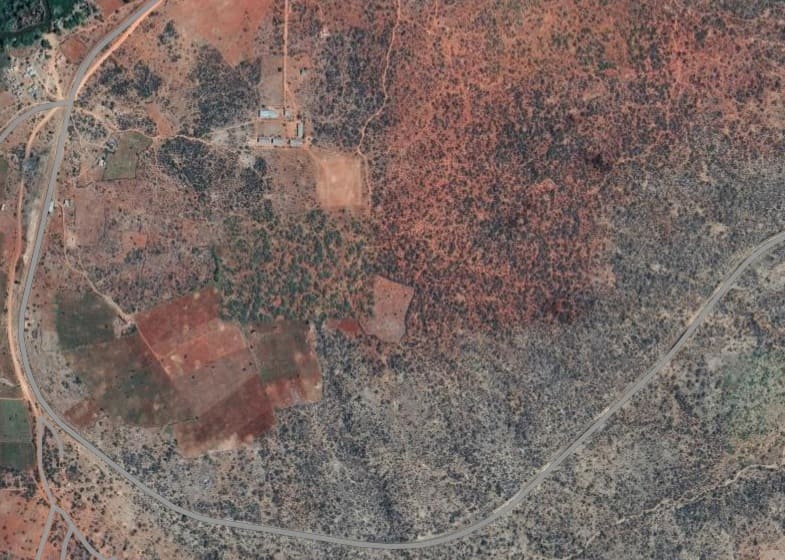
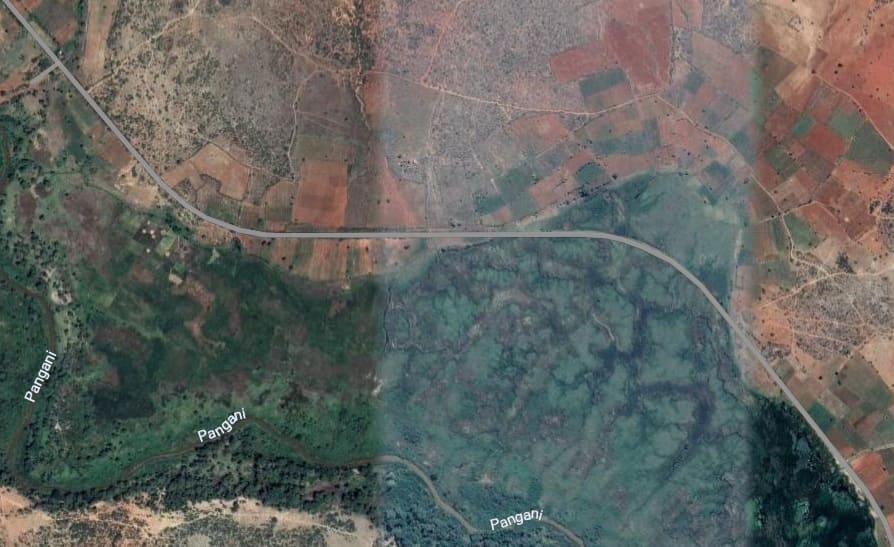
Beyond Buiko, the railway is back near the Pangani River but running at the top of the eastern/northern valley side. [Google Maps, May 2026]

The line can be seen on this extract from Google’s satellite imagery running Northwest, then West and then Northwest again. [Google Maps, March 2026]
The line can still be seen running along the northeastern flank of the Pangani River Valley, seeking as far as possible to keep gradients to a minimum, it follows the contours just above the valley. [Google Maps, March 2026]
Taking slightly closer order with the B1/T2, the line continues generally to the Northeast. [Google Maps, March 2026]
The line enters this extract from Google’s satellite imagery in the bottom-right corner of the image and leaves centre-top. [Google Maps, March 2026]

The line plots a lonely journey Northnorthwest across these two satellite image extracts. [Google maps, March 2026]

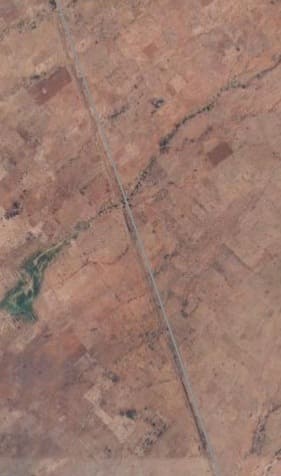
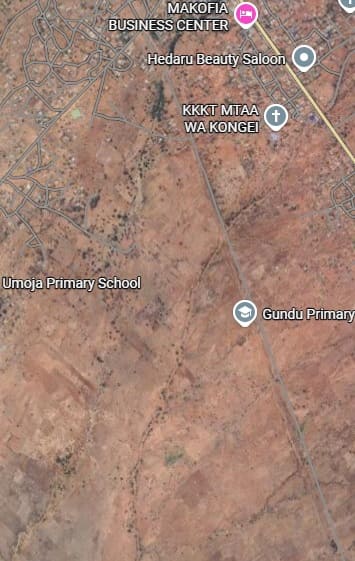
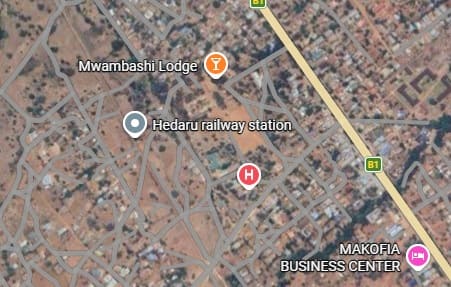
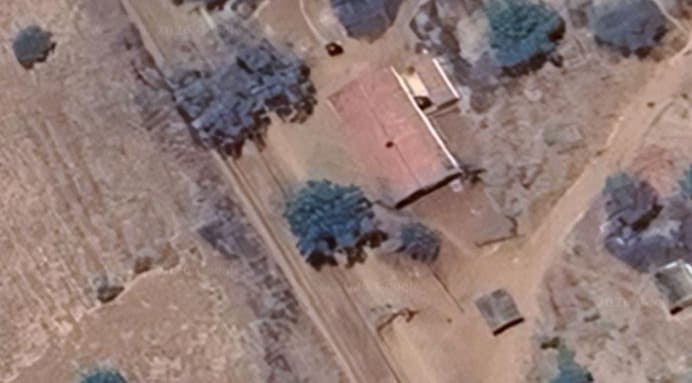
Civilisation of some sort beckons at the top of this next extract. The town is Heraru. Its station sits to the southwest of the town. It is marked by the grey flag on the small image immediately below.

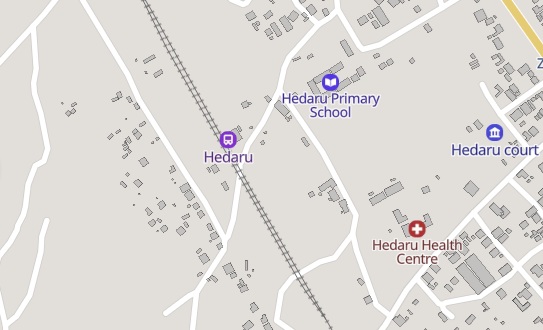
Hedaru Railway Station has a passing loop but otherwise few facilities. [27]

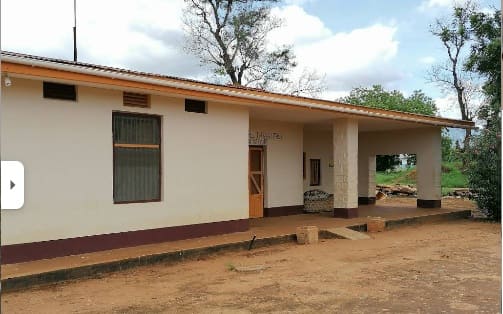
Hedaru Railway Station Building, (c) Beppe Mambretti and shared on Google Maps, May 2021.

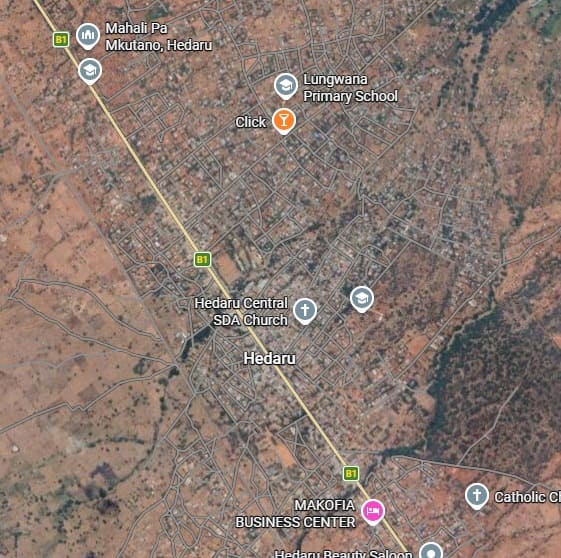
As can be seen on this larger extract from Google’s satellite imagery, Hedaru is a relatively significant sized town. The population of Hedaru was 22,972 according to the 2022 national census. [28][Google Maps, March 2026]

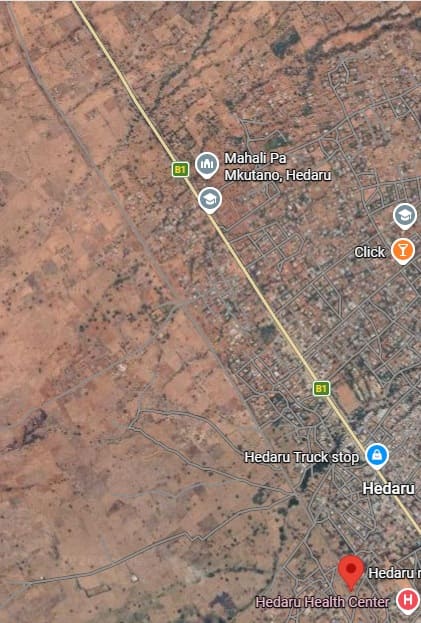
Hedaru Station is marked by the red flag on the first of these two images which begin the journey further North and West along the line. [Google Maps, March 2026]

The railway continues to the Northwest, entering this extract in the bottom-right corner and leaving close to the top-left. [Google Maps, March 2026]

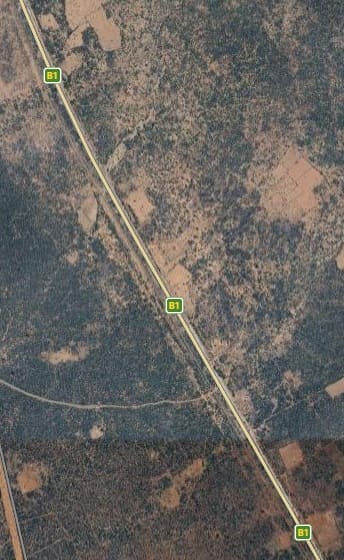
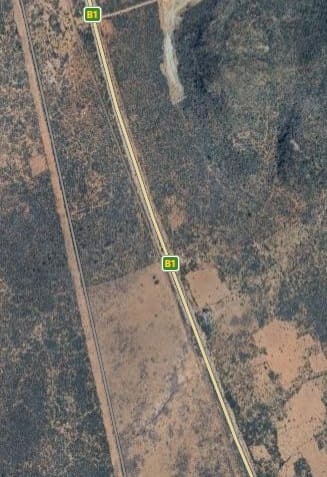
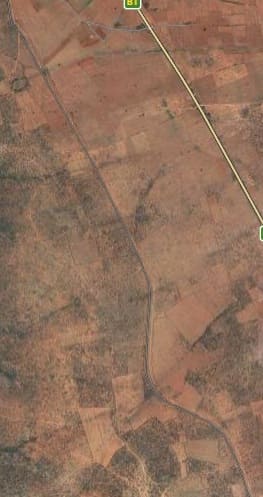
The line continues Northnorthwest towards Mkanya and Same. [Google Maps, March 2026]

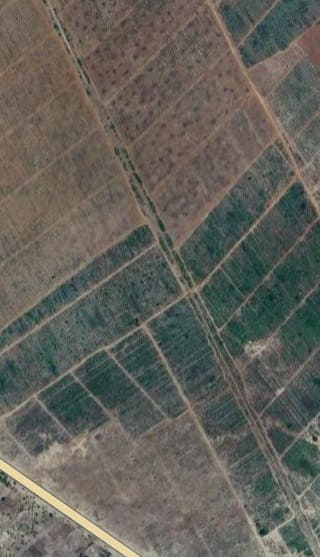
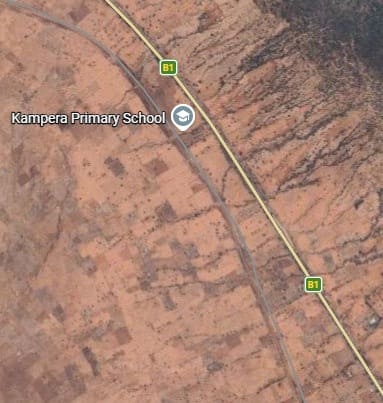
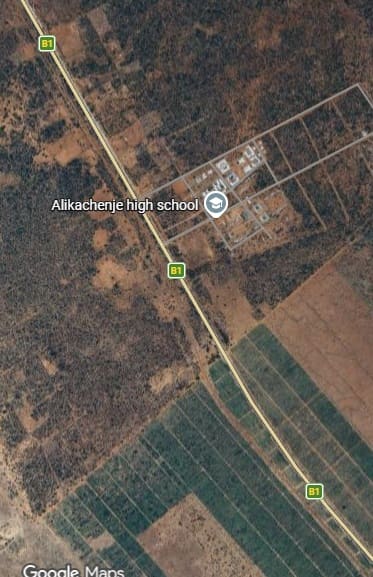
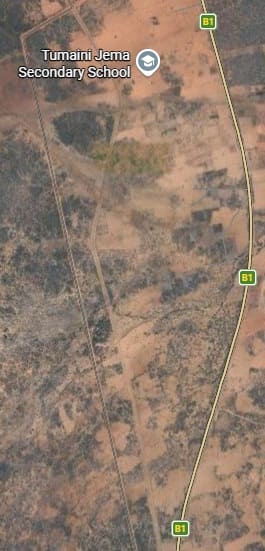
The landscape is quite barren – the occasional school appears on the maps but otherwise only limited evidence of habitation.

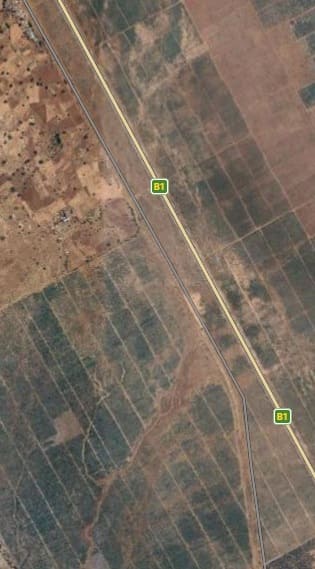
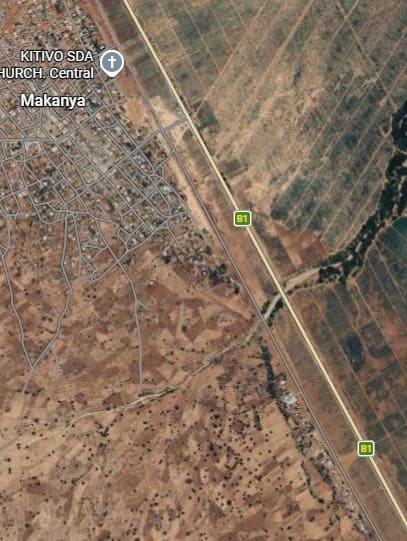
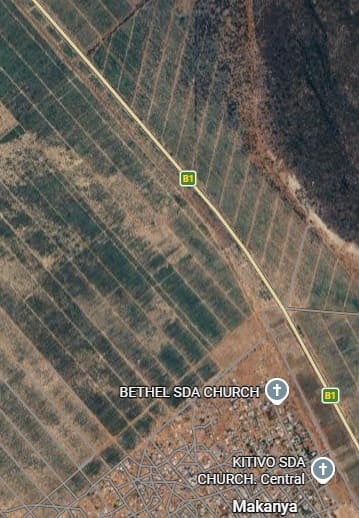
The line then passes through what appear to be Sisal plantations that surround Makanya. [Google Maps, March 2026]

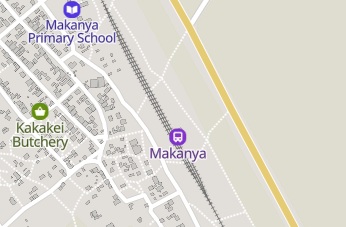
Makanya had a population of 12,980 in 2022. [29] Its railway station was at the South East end of the town.

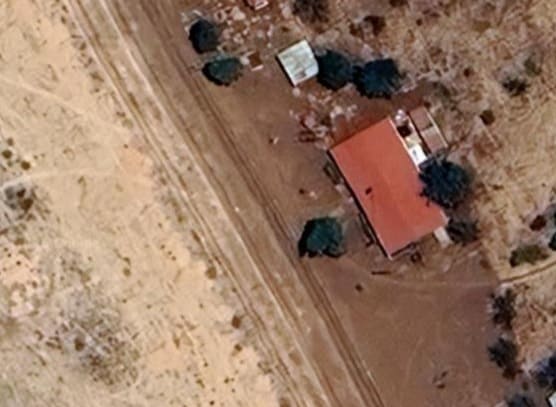
Makanya Railway Station – two loops off the mainline allowed for trains to pass each other. [30][Google Maps, March 2026]

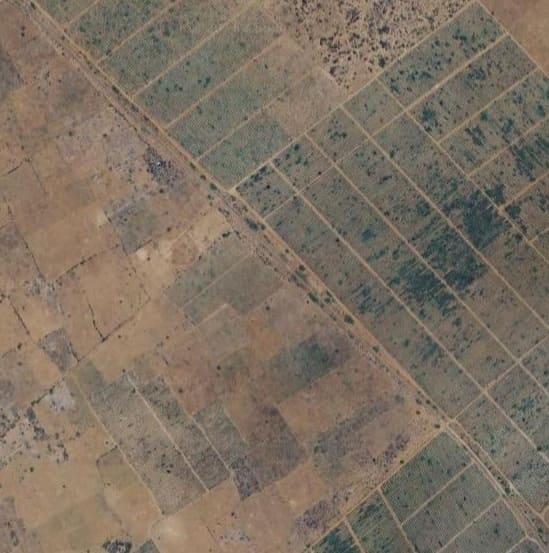
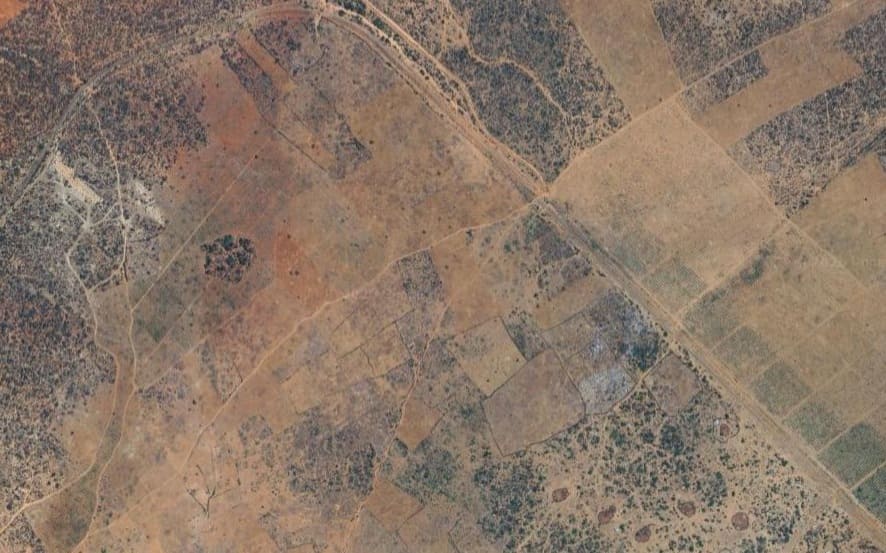
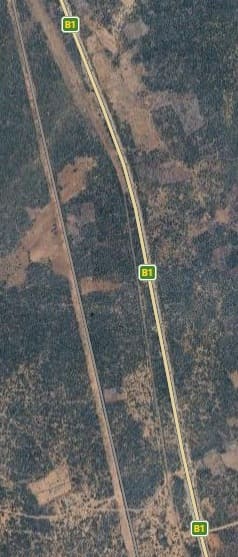
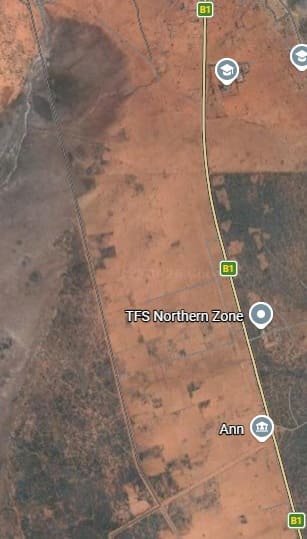
Beyond Makanya the road and railway run together through the Sisal plantations. Google Maps, March 2026]

The railway and road run close together as they continue North. [Google Maps, March 2026]

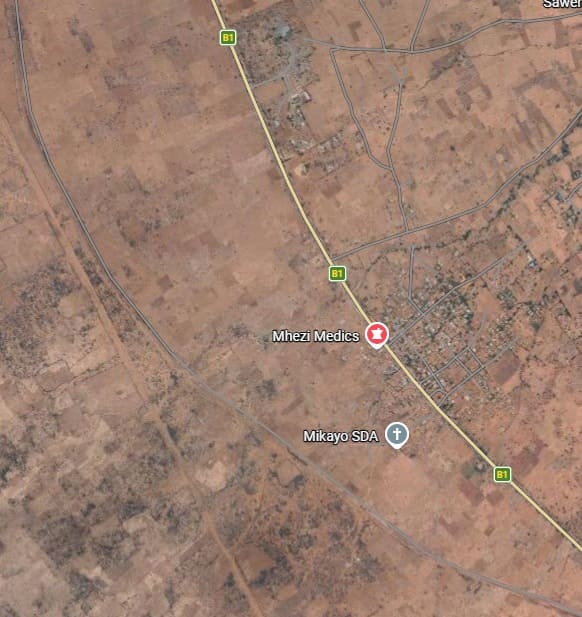
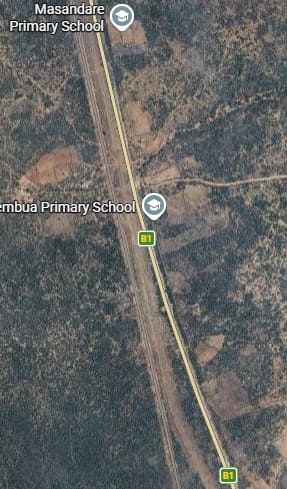
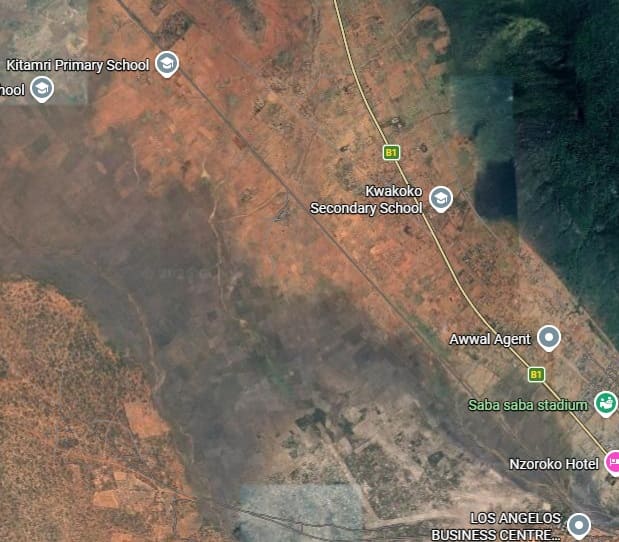
The line is now flanked by two roads which gradually converge until all three run close together past Hembua and Masandare Primary Schools. [Google Maps, March 2026]

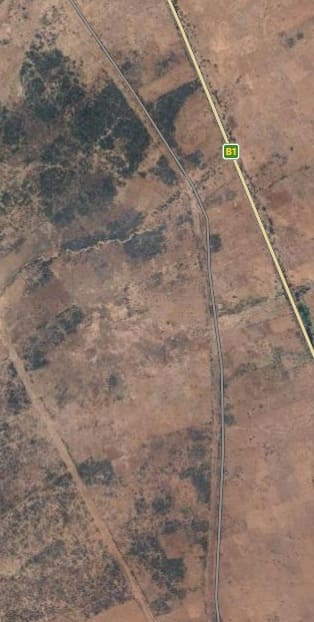
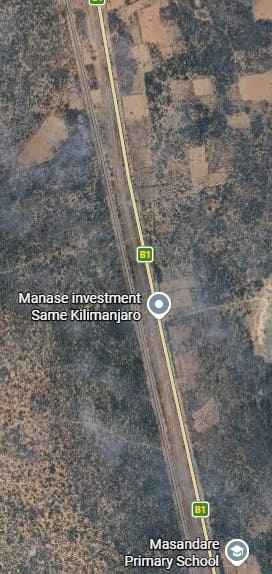
The line continues North close to the B1/T2 [Google Maps, March 2026]

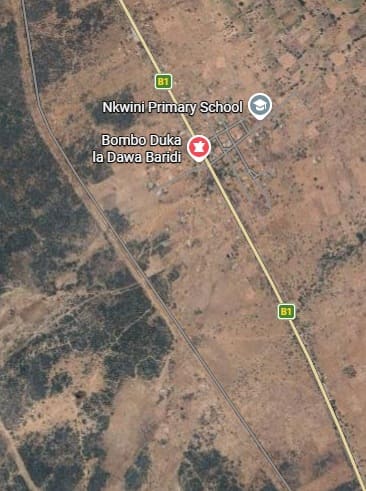
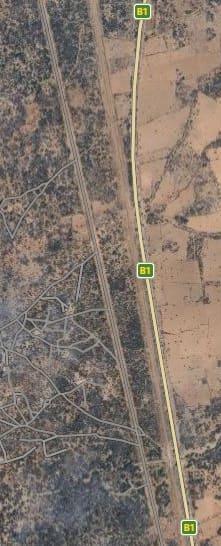
The journey continues North towards Same. [Google Maps, March 2026]

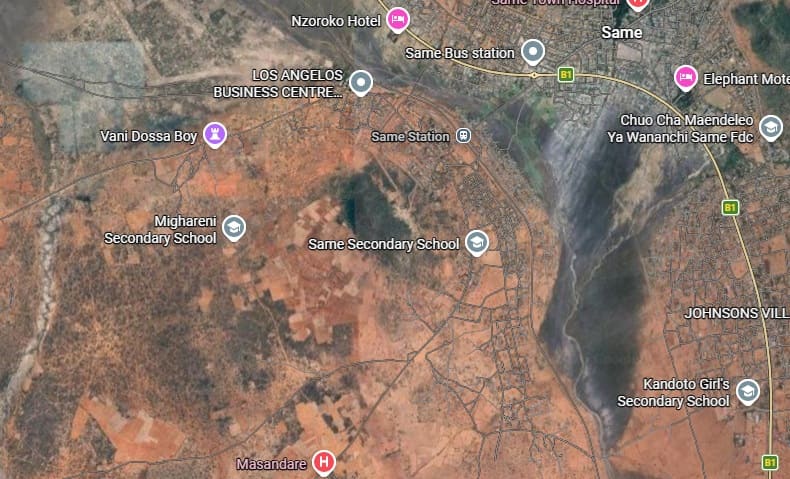
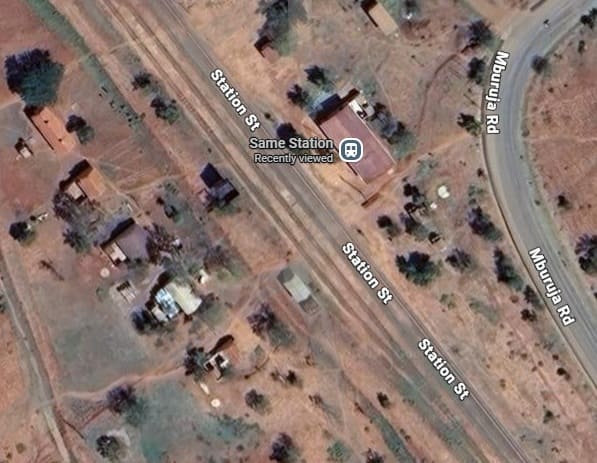
Same’s population in 2012, was 25,794 inhabitants, in 2022, the number had risen to 34,322. [31] The town is close to the Mkomazi National Park. The railway station is just right of centre towards the top of this satellite image. the majority of the town sits to the North and east of the railway station. [Google Maps, March 2026.

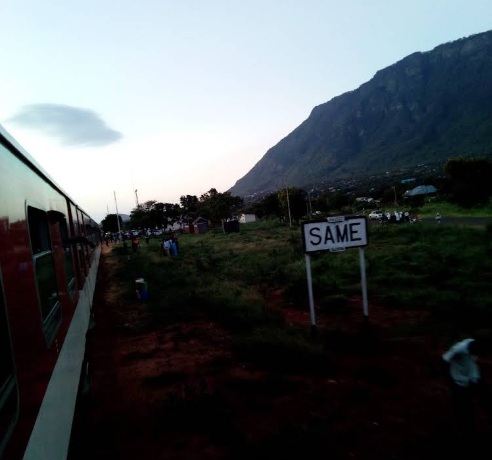
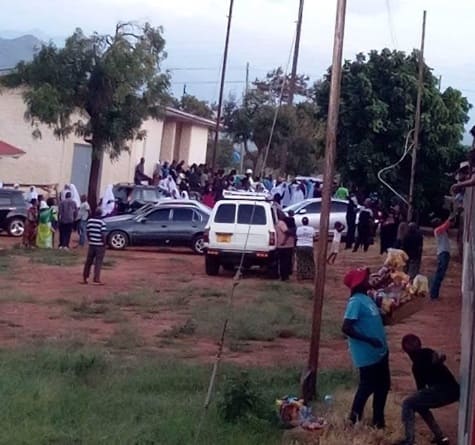
Same in February 2020 (c) Thomas Kimaro. [Google Maps, March 2026]

The two photographs immediately above show Same Railway Station in February 2020.

The station building sits back from the railway tracks with Station Street in between the building and the railway. [Google Maps, March 2026.

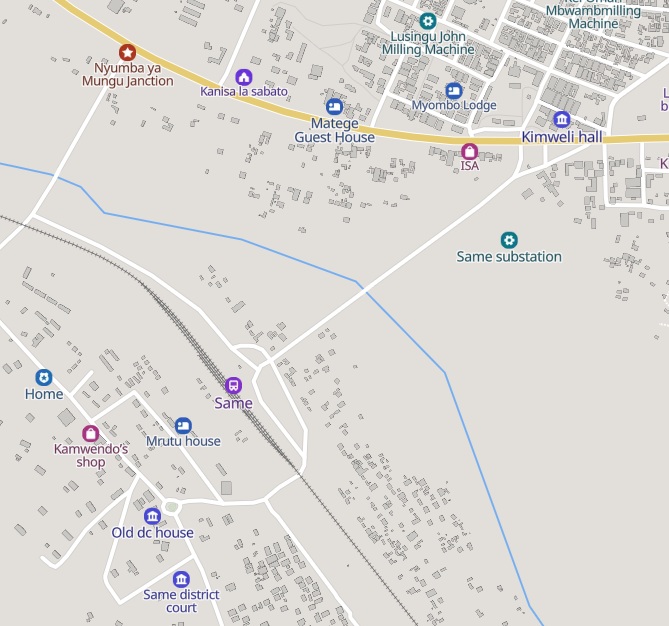
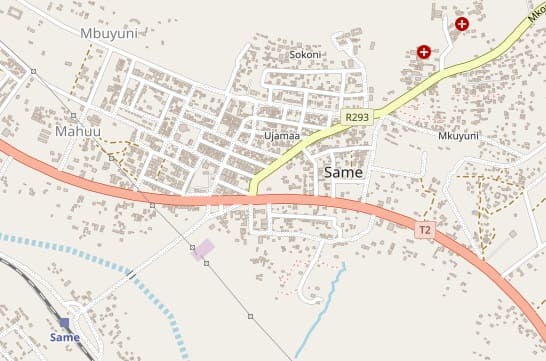
These two maps show Same Railway Station in relation to the town of Same. The MapCarta [32] extract on the left shows three lines running through the station. The OpenStreetMap image [33] shows a little more of the town.

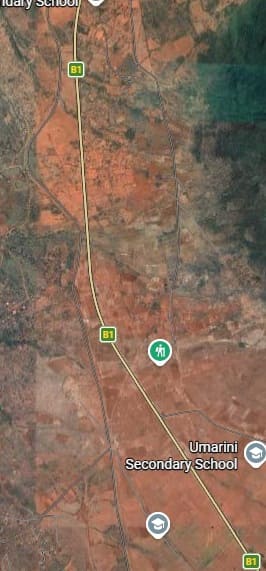
The line heads Northwest out of Same. There is about 100 kilometres to go to reach Moshi and [Google Maps, March 2026]

The line is now following the contours to avoid the heaviest gradients. [Google Maps, March 2026]

The B1/T2 is still following the line. [Google Maps, March 2026]

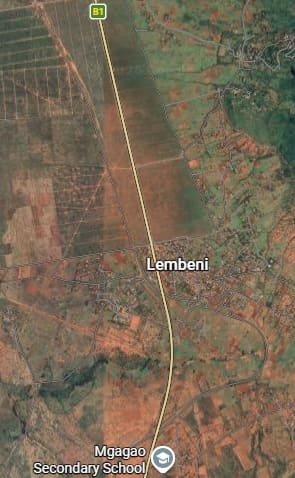
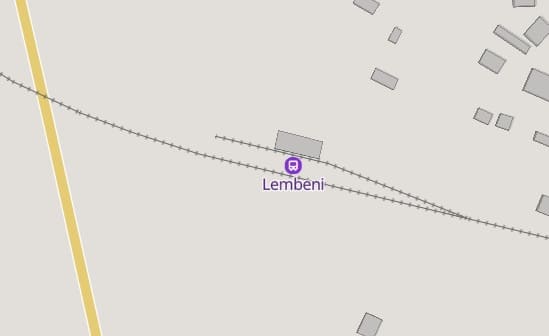
The next town is Lembeni [Google Maps, March 2026]

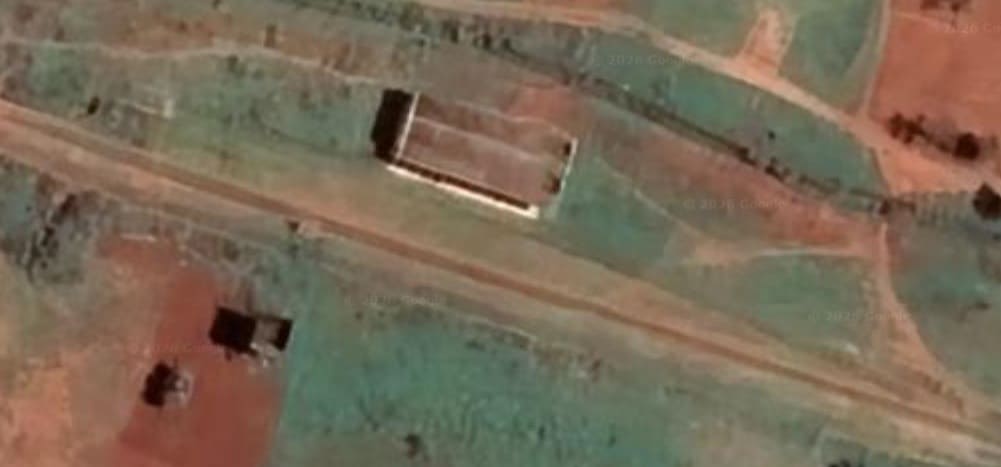
Careful inspection of the image above shows the line swinging East and then curving round to the West through the town.

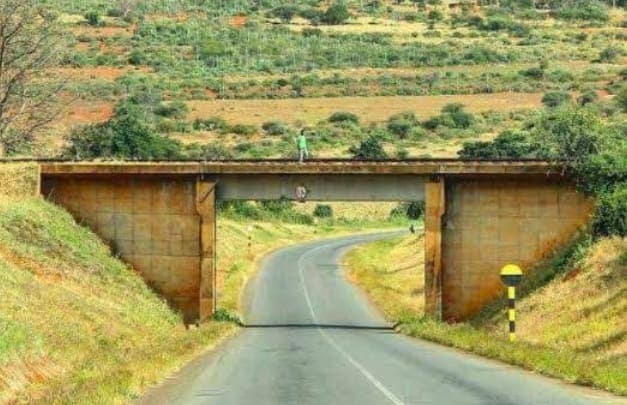
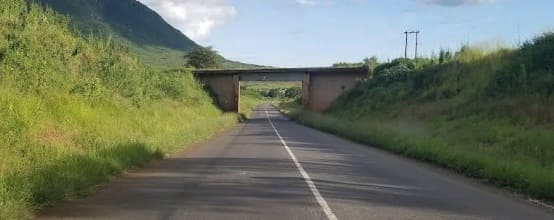
Lembeni Bridge and Railway Station [Google Maps, March 2026] [34]

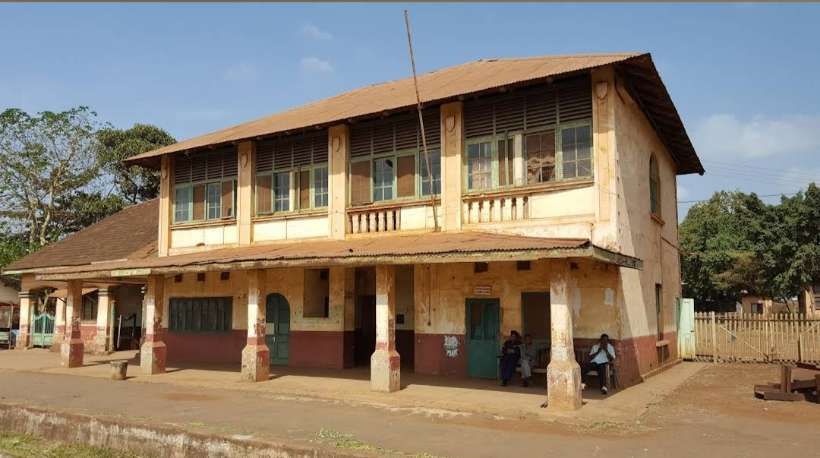
Lembeni Railway Station. [Google Maps, March 2026]
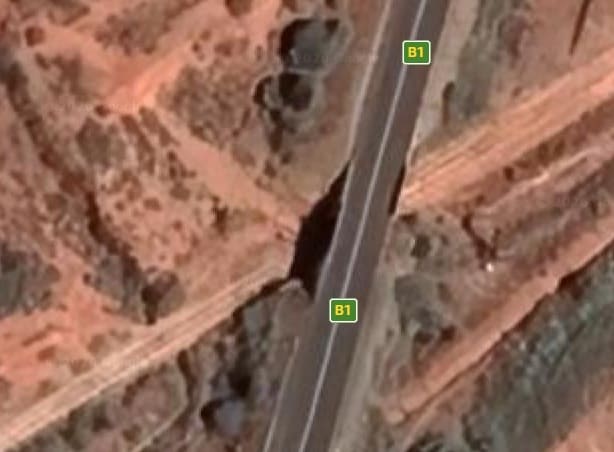
Two views of the rail bridge over the B1/T2 at Lembeni. That on the left was taken by Kassimu Miraji, that above was taken by Allan Kaitila [Google Maps, March 2026

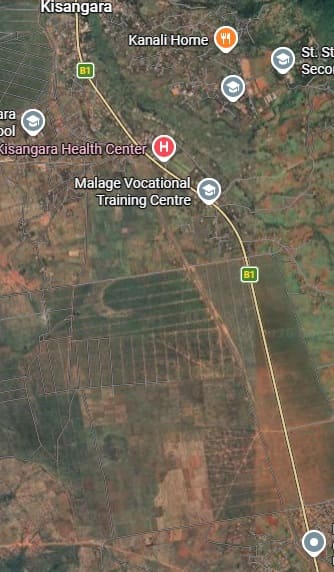
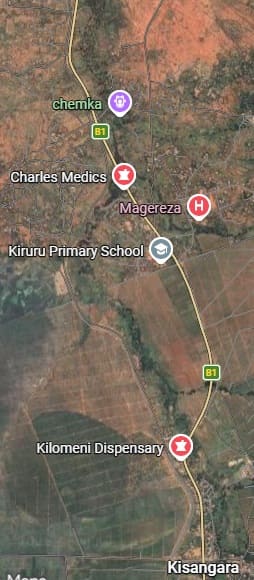
The next extract from the satellite imagery takes the line as far as Kisangara. [Google Maps, March 2026]

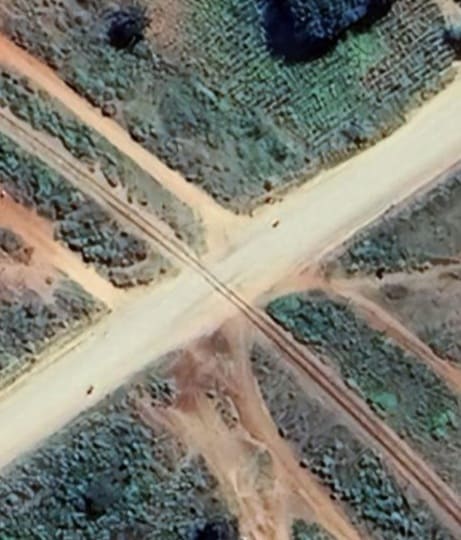
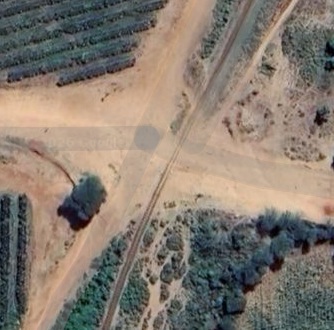
Not being able to identify the location of the Railway Halt at Kisangara. One of these two ungated-crossings is as good as any other possible location. [Google Maps, March 2026]

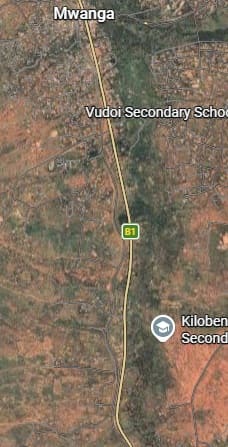
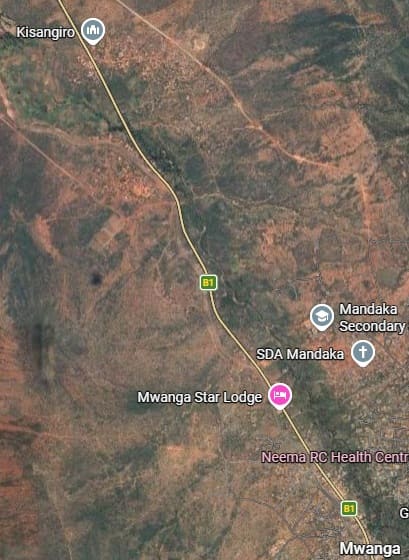
The next location along the line is Mwanga which has no railway station. It does have a bus station! Mbuyuni Halt must have been close to the village. [Google Maps, March 2026]

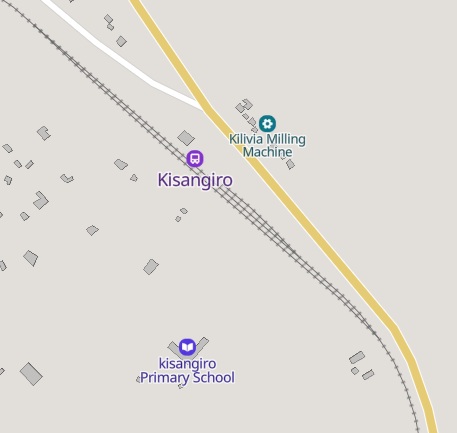
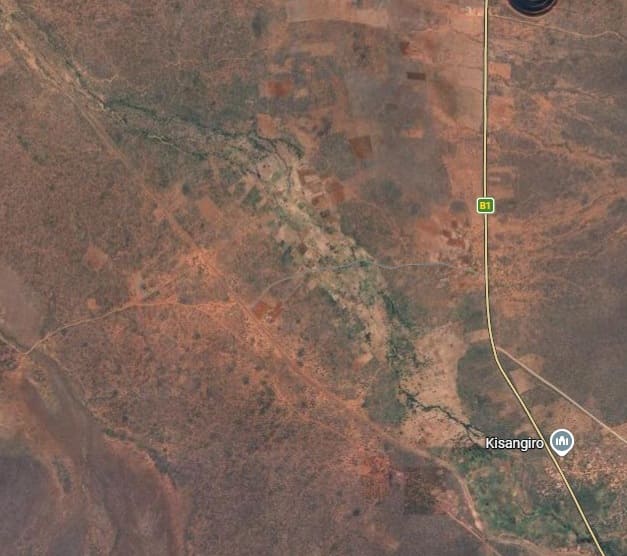
Kisangiro has its own halt on the railway with a passing loop. [35][Google Maps, March 2026]

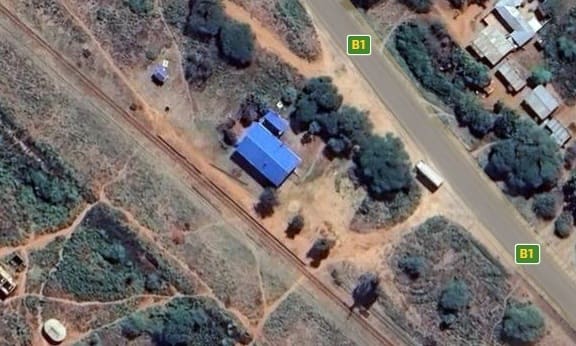
Kisangiro Halt was a distance South of the centre of the village at a location where the railway diverged from the road, running West-northwest on the South side of the greener area visible in the top-left of the larger extract above.

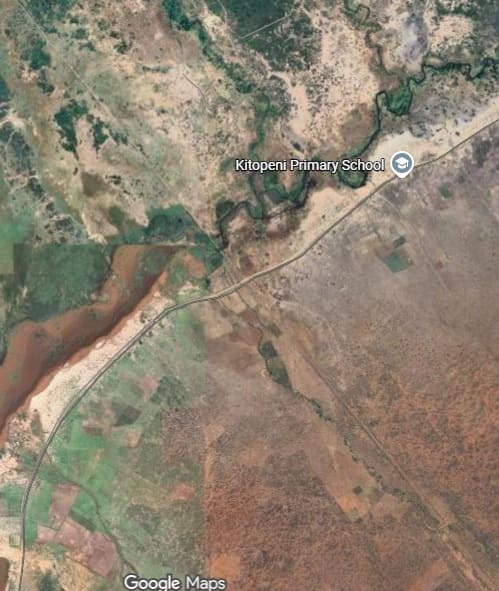
The line heads Northwest carful inspection of the image shows it running from South of the greener area and the bottom-right of the image diagonally across the image to the top-left corner. The road runs North. [Google Maps, March 2026]
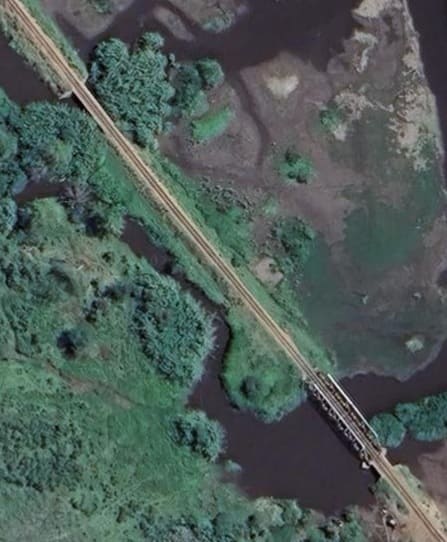
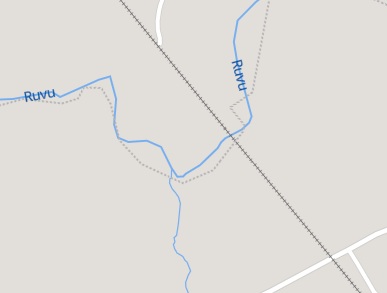
Again, careful inspection of this image shows the line running from the bottom-right corner to the top-left. In doing so it crosses the

The bridges over the Rivu River appear to be a Warren Truss Girder Bridge and a large concrete culvert which takes a lesser branch of the river. [Google Maps, March 2026]

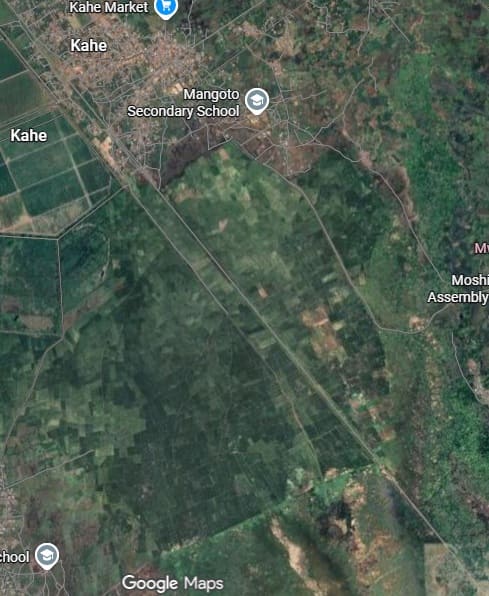
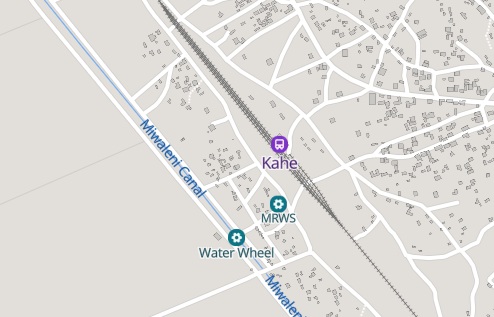
The next significant location along the railway is the town of Kahe which sits at the top of this extract from Google’s satellite imagery. Kahe Railway Station was a junction station. Northwest of Kahe the line to Voi in Kenya diverged from the Usambarabahn! [Google Maps, March 2026]
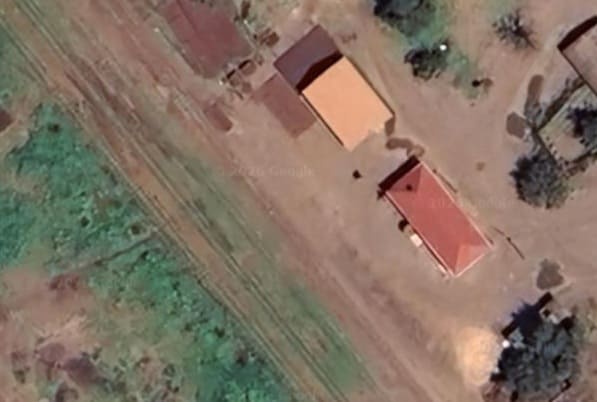
Kahe Railway Station. [36] [Google Maps, March 2026]
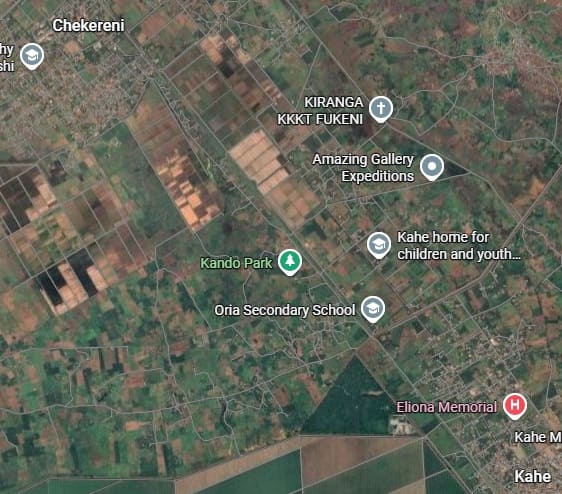
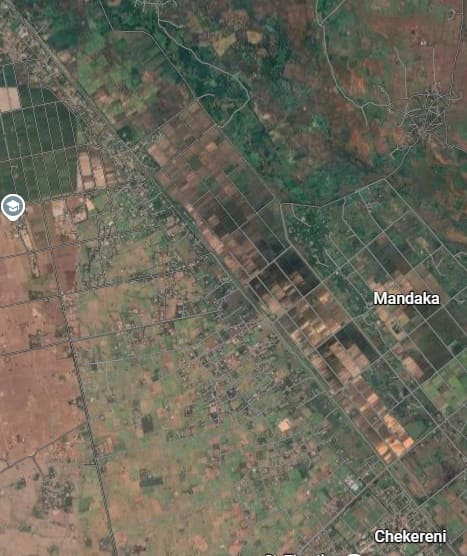
Chekereni lies to the Northwest of Kahe and is at the top-left of this next satellite image. This area of Tanzania is noticeably more fertile. [Google Maps, March 2026]
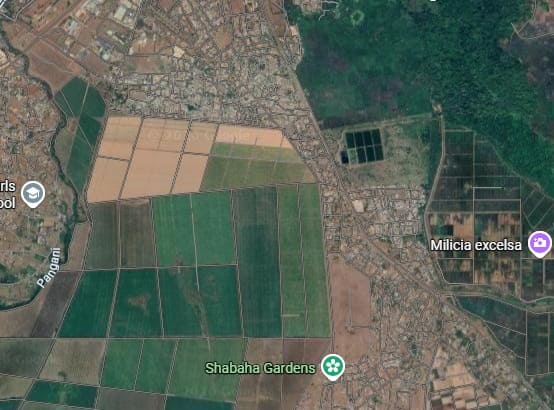
Again, the line runs bottom-right to top-left. [Google Maps, March 2026]
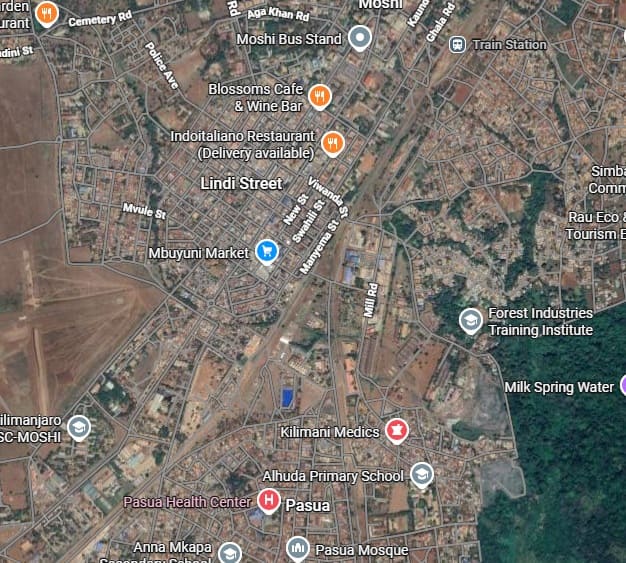
This next extract from Google’s satellite imagery takes us into the suburbs of Moshi. The line enters bottom-right once again. It leaves the top of the image close to he centre. [Google Maps, March 2026]
The railway station in Moshi is a terminus. The line to Arusha heads away to the Southwest. The line from Tanga and Dar-es-Salaam enters from the South. [Google Maps, March 2026]
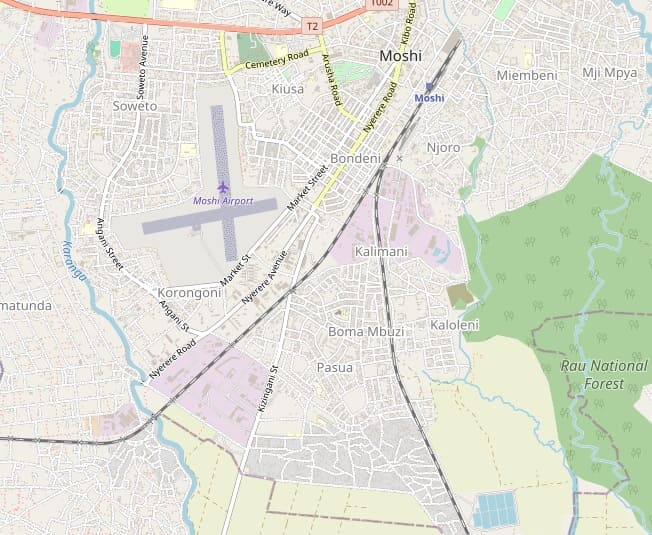
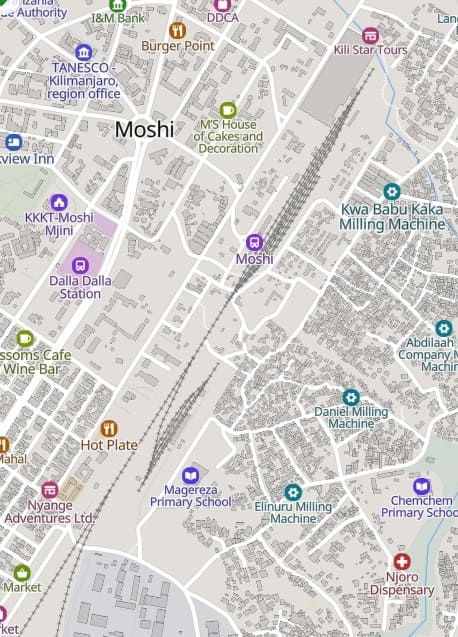
The lines are much clearer on this extract from the OpenStreetMap mapping. [37]

This extract from MapCarta shows the track layout in the vicinity of Moshi Railway Station. [38]

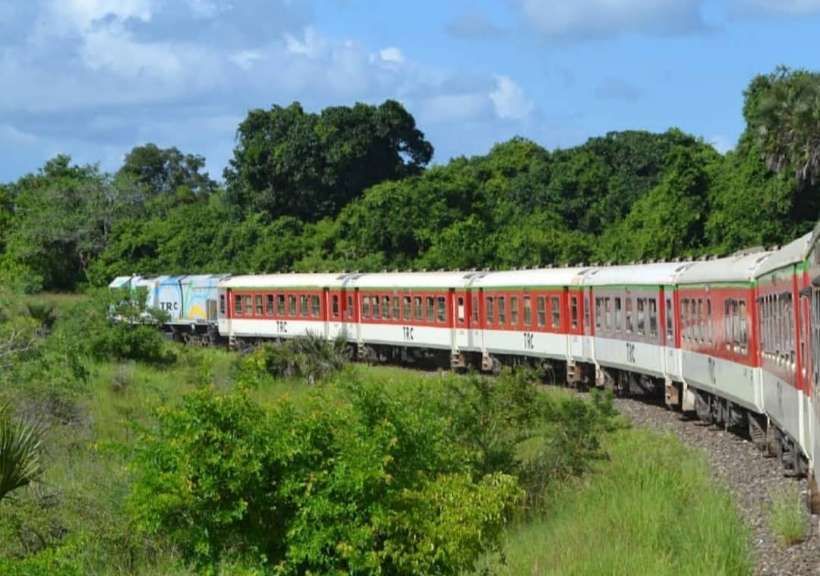
Tanzania Railways train on the curve South of Moshi Railway Station. This is a luxury train heading Southeast away from Moshi Railway Station, © Ally Kessy, 2020. [Google Maps April 2026]
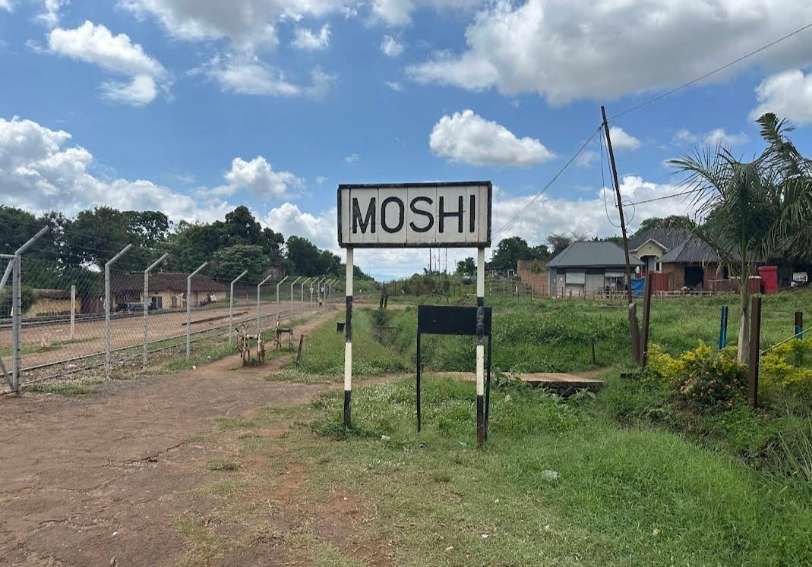
The Station Sign © カーンオリバー, 2025. [Google Maps, April 2026]
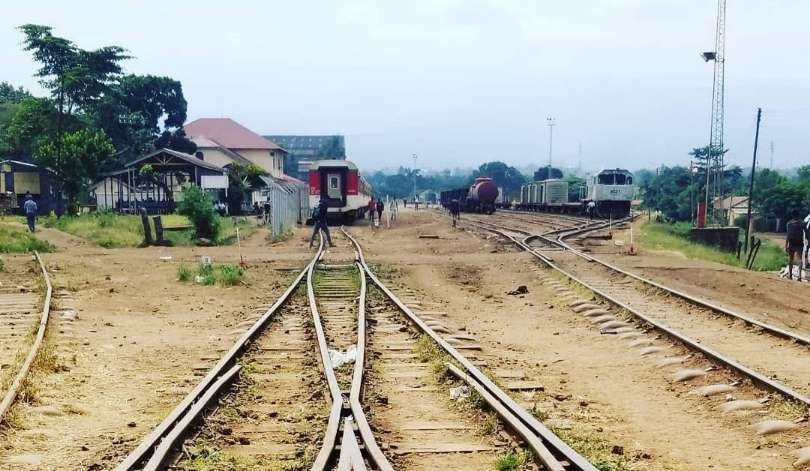
The approach to the passenger facilities at Moshi Railway Station in 2021, © Ally Kessy. [Google Maps, April 2026]
The station forecourt, Moshi Railway Station, © Kisali, 2025. [Google Maps, April 2026]
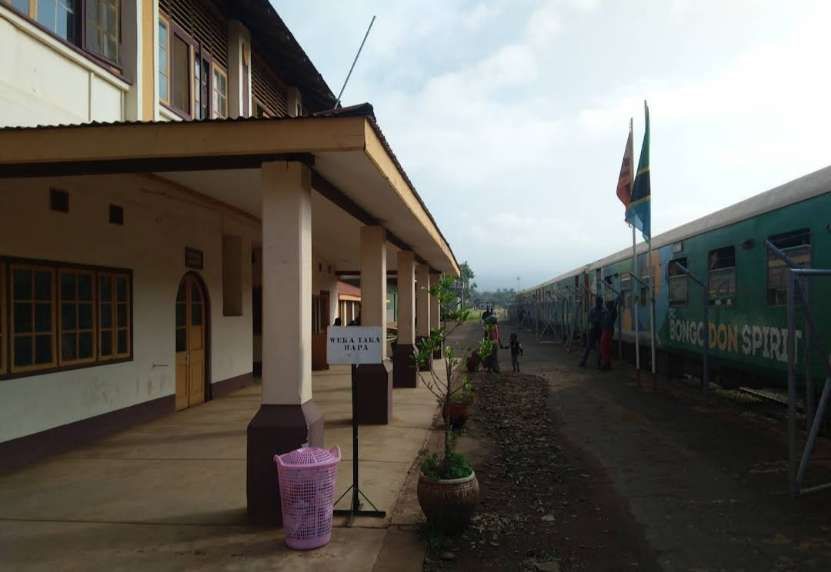
The rail side elevation of Moshi Railway Station. Note the security fencing between the station building and the rail tracks. © Tanzania Railways, 2022. [Google Maps, April 2026]
The platform elevation of Moshi Railway Station again, © Seva TV, 2018. [Google Maps, April 2026]
A passenger train sits in Moshi Station in 2022, © Michael Emmanuel. [Google Maps, April 2026]

We have reached the end of what was the Usambarabahn. The extension to Arusha came much later. We have also not been able, as part of this article, to identify the route of the line between Moshi/Kaha and Voi in Kenya. We will come back to both of those lines on another occasion.

References

  1. M.F. Hill; Permanent Way Volume II: The Story of the Tanganyika Railways; East African Railways and Habours, Nairobi, Kenya; Watson & Viney, Aylesbury & Slough, 1957.
  2. https://www.facebook.com/share/p/1ALffLxhDg, accessed on 18th March 2026.
  3. https://www.google.com/search?client=ms-android-motorola-rvo3&hs=AZD&sca_esv=b05c8d9632b51df6&sxsrf=ANbL-n5vLNTMT9J1cn4sS7VDi8IhkG_BNg%3A1773944351007&q=tanga%20railway%20station%20photos&si=AL3DRZGgcPNmWPDVEk81ds4iaXPEjuNcyuY9Q822zd2Q3wgtDLa9VVF_9x9TK7LuOrzAGGVlybqvwgpMRLdjvIPVO6109T3ngqw96Xr3Qzr3BAwZo0lgWOz-pkCpT8YplwOa9Nc8V9yUN8GP7Lus4LLAZVKs0HHFqg%3D%3D&ved=0CBEQy9gMahcKEwj4td_XyayTAxUAAAAAHQAAAAAQCg&ictx=1#ebo=1&lpg=cid:CgIgAQ%3D%3D,ik:CAoSF0NJSE0wb2dLRUlDQWdJREM2Y3IxMmdF, accessed on 19th March 2026.
  4. https://www.google.com/search?client=ms-android-motorola-rvo3&hs=AZD&sca_esv=b05c8d9632b51df6&sxsrf=ANbL-n5vLNTMT9J1cn4sS7VDi8IhkG_BNg%3A1773944351007&q=tanga%20railway%20station%20photos&si=AL3DRZGgcPNmWPDVEk81ds4iaXPEjuNcyuY9Q822zd2Q3wgtDLa9VVF_9x9TK7LuOrzAGGVlybqvwgpMRLdjvIPVO6109T3ngqw96Xr3Qzr3BAwZo0lgWOz-pkCpT8YplwOa9Nc8V9yUN8GP7Lus4LLAZVKs0HHFqg%3D%3D&ved=0CBEQy9gMahcKEwj4td_XyayTAxUAAAAAHQAAAAAQCg&ictx=1#ebo=1&lpg=cid:CgIgAQ%3D%3D,ik:CAoSF0NJSE0wb2dLRUlDQWdJQ2szYi1Pd2dF, accessed on 19th March 2026.
  5. https://unitedrepublicoftanzania.com/economy-of-tanzania/infrastructure-in-tanzania/railway-in-tanzania/tanga-line-a-historic-railway-route-through-northern-tanzania, accessed on 20th March 2026.
  6. https://en.wikipedia.org/wiki/Usambara_Railway, accessed on 13th March 2026.
  7. https://maps.app.goo.gl/C952JgVPwCuYSAv98, accessed on 20th March 2026.
  8. https://photos.com/images/rendered/share/68973860&domainId=12, accessed on 21st March 2026.
  9. https://imagerenderer.com/images/rendered/share/68974575&domainId=12, accessed on 21st March 2026.
  10. Hans Wettich; The development of Usambara under the influence of the East African Northern Railway and its private branch lines, with special consideration of the Mkumbara-Neu-Hornow cableway; Simion, Berlin 1911. Reprint from: Proceedings of the Association for the Promotion of Industry 90 (1911), Issue 6; via https://publikationen.ub.uni-frankfurt.de/frontdoor/index/index/docId/11924, accessed on 24th February 2026.
  11. https://africacommons.net/artifacts/3029389/korogwe-station-tanzania-africa-ca/3858567, accessed on 25th March 2026.
  12. https://en.wikipedia.org/wiki/Korogwe, accessed on 25th March 2026.
  13. https://mapcarta.com/N8806556763/Map, accessed on 25th March 2026.
  14. https://mapcarta.com/N274950072/Map, accessed on 25th March 2026.
  15. https://mapcarta.com/12650936/Map, accessed on 25th March 2026.
  16. https://mapcarta.com/N8807059101/Map, accessed on 25th March 2026.
  17. https://unitedrepublicoftanzania.com/economy-of-tanzania/infrastructure-in-tanzania/unlocking-the-beauty-and-significance-of-the-cathedral-church-of-st-michael-and-all-angels-in-korogwe-a-closer-look/, accessed on 25th March 2026.
  18. https://en.wikipedia.org/wiki/Korogwe#/media/File:St._Michael’s_Cathedral,_Korogwe.jpg, accessed on 25th March 2026.
  19. https://mapcarta.com/N8806543490/Map, accessed on 27th March 2026.
  20. https://www.openstreetmap.org/node/8806556432#map=18/-5.016856/38.327058, accessed on 28th March 2026.
  21. https://mapcarta.com/34359746/Map, accessed on 28th March 2026.
  22. https://mapcarta.com/N8804470889, accessed on 28th March 2026.
  23. https://rogerfarnworth.com/2026/03/08/the-mkumbara-to-neu-hornow-cableway-ropeway-usambara-hills-tanganyika
  24. https://mapcarta.com/12650936/Map, accessed on 29th March 2026.
  25. https://www.openstreetmap.org/#map=15/-4.64654/38.07093, accessed on 29th March 2026.
  26. https://mapcarta.com/34359722/Map, accessed on 29th March 2026.
  27. https://mapcarta.com/34355144, accessed on 30th March 2026.
  28. https://datacommons.org/place/wikidataId/Q20614510, accessed on 30th March 2026.
  29. https://www.wikidata.org/wiki/Q20619402, accessed on 30th March 2026.
  30. https://mapcarta.com/12656052, accessed on 30th March 2026.
  31. https://www.citypopulation.de/en/tanzania/cities, accessed on 31st March 2026.
  32. https://mapcarta.com/12646230/Map, accessed on 31st March 2026.
  33. https://www.openstreetmap.org/#map=15/-4.07147/37.73321, accessed on 31st March 2026.
  34. https://mapcarta.com/12657728, accessed on 31st March 2026.
  35. https://mapcarta.com/N8736426762, accessed on 31st March 2026.
  36. https://mapcarta.com/34355154, accessed on 31st March 2026.
  37. https://www.openstreetmap.org/node/255602805#map=15/-3.35899/37.34255, accessed on 31st March 2026]
  38. https://mapcarta.com/Moshi, accessed on 31st March 2026.