Have you ever made a commitment to doing something and then found it really hard? Perhaps a friend has asked you for a favour and you’ve agreed before finding out what they want, and what seemed like a simple job turns into a nightmare. Or perhaps you have started to decorate the lounge only to realise that the plaster is really damp and you need a new damp-proof membrane. If we are not going to just put our heads in our hands and give up, these circumstances call for perseverance.
What other kinds of things have you had to face? Where have you had to persevere against the odds? … Perhaps it is a visit to the hospital, and as you sit waiting for your appointment, or in the casualty department, you begin to realise just how dependent you are on others, how out of control life feels. Or the trip to the benefit office, where you are asked all sorts of intrusive questions and you feel like walking out, but you know that you have to stick it if you’re going to get the cash you so desperately need. Or perhaps you are struggling with the cost of feed and seed rising and the value of grants and the income from produce depleting.
Our Gospel reading this morning talks of a woman facing just this kind of circumstance. Can you imagine how she might have been feeling? Waiting for someone else to do something. Being rebuffed time and again. Sitting in the waiting room, wondering if this time, on this visit, something might be done to change her circumstances. How does she feel? …… Perhaps you can hear the desperation in her cry for justice, “For heavens sake, grant me justice against my adversary. Things just cannot go on like this. I can’t cope any longer.” …. Or perhaps you can hear her anger, “I’m not moving from this spot until you grant me what I ask. And I mean it! I’m not moving, not an inch.” ……
It is quite an image. … Jesus uses it to get us to think about prayer. To show us that we should always pray and never give up.
If that corrupt judge will grant that woman’s request because she would not give up, how much more will God grant the request of those who pray to him day and night? Those who come to him in faith.
So, what kind of circumstances do we face where Jesus’ advice applies? … Perhaps it is our own personal or family circumstances. We have a long-standing illness or complaint. We have somehow found ourselves in conflict with another member of our family, and we are no longer talking, and perhaps that circumstance has lasted for years. Perhaps we have been trying to get justice, or deal with noisy neighbours. Perhaps we have been unjustly accused.
Perhaps it is the world in which we live – perhaps we are weighed down by the conflicts which surround our world and which we wish were resolved – in Ukraine, in Palestine, in Sudan, in Myanmar, among the drug cartels in South America. Perhaps it is the injustice of the distribution of the world’s resources, or even the poverty some face in our own country, even in our rural communities.
Perhaps it is the life of our own churches. Numbers seem to be decreasing, hope for the future life of our congregations just seems to be ebbing away, where are the next generation of church goers?
In all of these areas, what would Jesus say to us? … We have his answer in our Gospel reading. … “Always pray and never give up!” And how do we respond? … “Oh, we’ve tried that and it didn’t work?” …. “Always pray,” says Jesus, “and never give up! … Demonstrate your faith and trust in me by praying and believing that I can change these circumstances.” … “Believe me, trust me,” says Jesus, “Don’t give up on me!”
Jesus challenge is to a renewed commitment to prayer. ……
How can we do this? …. Firstly by making space in our day, perhaps only a little time in the busyness of our lives when we say to God, and remind ourselves that all these things are in God’s hands. That we can trust God. … Secondly by making time to pray together as churches, time to listen out for God speaking to us. These are words in season for us. If we are serious about facing the reality of where we are as churches, with declining numbers and with an air of despondency over us. If we want things to be different, then we need to pray. Even if our prayer is something like this. “Lord, I believe but I also doubt. I fail to consistently trust you. I cannot see where the answers will come from. It all seems hopeless. I am not even sure that you hear my prayer. But, Lord, please act, if you are there and you hear me, please respond!”
With prayers like that, we are in good company – listen to the Psalmists speak out their prayers:
Psalm 10:1: Why, O Lord, do you stand far off? Why do you hide yourself in times of trouble?
Psalm 13: 1-2: How long, O lord? Will you forget me for ever? How long will you hide your face from me? How long must I wrestle with my thoughts and every day have sorrow in my heart?
Psalm 22: 1-2: My God, my God, why have you forsaken me? Why are you so far from saving me, so far from the words of my groaning? O my God, I cry out by day, but you do not answer, by night, and am not silent.
Like Jacob, in our first reading today, wrestling with God, fighting his fears and doubts, Refusing to let go until he receives God’s blessing, our prayer needs to be honest, embracing our hopes and fears. Like the widow in the Gospel reading, it needs to be persistent and faithful even in the midst of our doubts.
In the midst of the praise and rejoicing that is so much a part of the Psalms, we hear the honest cry of hurt and anger, of loss and anguish.
Let’s heed Jesus’ story of the widow in our Gospel reading, and chose to persevere in prayer, whether our faith is strong or weak, looking to God to act and change things.
The featured image above shows one of the present modern diesel units at the Chemins de Fer du Sud/Chemin de Fer de Provence station in Nice. [4]
I discovered this Video on YouTube recently (October 2025) – it looks at the line in 1973. The commentary is in French. The changes to the line in the 52 years since 1973 have been significant!
2025 News!
A. Stadler to Deliver Hybrid Trains in Southern France
Among other news providers, on 16th April 2025, Railway-News reported that Stadler had signed a contract with Région Sud to supply eight customised hybrid multiple units for Chemins de fer de Provence (CP). The full article can be found here. [2]
The new units will replace older diesel units currently in use on the 150-kilometre route.
“Designed for both urban and rural operation, the trains combine battery and biodiesel-powered drive systems. This hybrid configuration is expected to reduce carbon dioxide emissions by up to 77% compared with conventional diesel vehicles. … A battery charging facility is being constructed in Nice as part of the supporting infrastructure for the new fleet.” [2]
The trains are being manufactured at Stadler’s facility in Bussnang, Switzerland. The vehicles will be delivered and commissioned by 2028. [2]
B. Chemins De Fer de Provence (CP ZOU) and Ligne d’Azur
On 11th August 2025, the Chemins de Fer de Provence confirmed that its urban stops between Nice and Le Chaudan are available with a Lignes d’Azur ticket. In parallel the railway company announced that it was increasing the frequency of its services between Nice and Colomars, with 4 additional evening round trips on Fridays and Saturdays. Further details can be found here. [3]
C. Nice-Matin: More travelers and more challenges on the Chemins de Fer de Provence
Nice-Matin’s latest article about the Chemins de Fer de Provence published on 5th October 2025. Highlights a significant rise in passenger numbers since July 2023. Since July 2023 and the agreement with Lignes d’Azur making it possible to take the train with the same ticket as for the bus or tram, attendance has increased considerably.
Jean-Paul David, regional councilor and president of the Regional Transport Authority says: “We have counted 450,000 trips in 2022, 500,000 trips in 2024 and we will probably be at 630,000 by the end of the year. … “Train frequency has increased to 20 minutes during peak hours!” The full article can be seen here. [6]
D. Work to re-open the line to Digne-les-Bains.
Infrastructure work on the line between Nice and Digne-les-Bains is ongoing. It includes reconstruction of a section of the 2 km Moriez tunnel where a 25 m section about 400 m from the western portal collapsed in February 2019. The job is due to be completed at the end of 2025, paving the way for through rail services from Nice to Digne-les-Bains to be reinstated from early 2026. [7]
The 151 km route has 25 tunnels with a combined length of 11 km and two covered cuttings. The line also features 102 masonry or metal bridges and numerous other structures. Services carry around 500 000 passengers a year. [7]
The short paragraph immediately below appeared in the February 1952 edition of The Railway Magazine in reply to a question submitted by G. T. Kaye.
“The Nidd Valley branch of the former North Eastern Railway (which was closed to passengers on 31st March 1951) terminated at Pateley Bridge, 14 miles from Harrogate. In 1900, a Light Railway Order was obtained for a 2 ft. 6 in. gauge line from Pateley Bridge to Lofthouse-in-Nidderdale, six miles further up the valley, but the promoters had difficulty in finding the necessary capital. At that time, the Bradford Corporation was about to undertake the construction of reservoirs in the Nidd Valley, and a railway was required to carry materials to the sites. The Corporation took over the powers for the light railway, and extended it for a further 6 miles, from Lofthouse to Angram. The railway was laid to the standard-gauge, and was opened to passengers between Pateley Bridge and Lofthouse on 1st May 1907. The remainder of the line did not carry public traffic. The line was worked by two 4-4-0 tank engines and passenger coaches purchased from the Metropolitan Railway. The passenger services were withdrawn on 31st December 1929, and the line was closed completely some months later.” [1: p143]
It appeared close to the back of the magazine in the section called, “The Why and the Wherefore”. It seemed like a good idea to explore what further information there is available about the Nidd Valley Light Railway. …….
The Website ‘WalkingintheYorksireDales.co.uk’ has a page dedicated to the railway which can be found here. [2]
A number of images relating to the line can be found here. [13]
The Oakwood Press published a book by D. J. Croft about the line. [3: p3]
Croft wrote: “The valley of the River Nidd, in the West Riding of Yorkshire, is nearly 55 miles long, beginning at Great Whernside, and ending at Nun Monkton where the Nidd flows into the River Ouse. However, the area known as Nidderdale extends for only about a half of the length, and forms a compact geographical region of its own. Despite this length, and great scenic beauty, it remains to this day one of the forgotten valleys of the Yorkshire Dales.” [3: p3]
“The area of Nidderdale can be divided into roughly two equal sec tions, with the market town of Pateley Bridge between the two. The first substantial historical accounts of Nidderdale appeared in Domesday Book of 1086. However, some of the local lead mines were worked in the time of the Brigantes, whilst several surrounding localities suggest Roman occupation.” [3: p3]
“Nidderdale has several industries, notably quarrying and lead mining. and a small textile industry. There is also a small slate quarry, a marble quarry, and a long, thin ironstone vein stretching along the valley. Through-out the ages, however, Nidderdale has had prosperity alternating with decline. As the early mining industry began to decline, so textiles became important around the thirteenth century. This too tended to decline by the seventeenth century, and mining became important once more. Unfortunately, the prosperity of the lead mining era passed, and so too did the prosperity of Nidderdale.” [3: p3]
“This period of decline lasted until 1862, when the North Eastern Railway opened its line from Harrogate to Pateley Bridge, thus opening this remote valley to the outside world. Prior to this, the only roads out of the dale had been to Grassington, Riponand Kirkby Malzeard, and the only regular connection with the outside world had been the Nidderdale Omnibus, a double-deck horse bus, linking Pateley Bridge with trains of the Leeds & Thirsk Railway at Ripley. This operated from 1st August 1849, until the opening of the railway, and ran twice daily.” [3: p3]
The approach of the 20th century brought a new prosperity to the valley, which was to last for the next thirty years or perhaps a little longer. Thid was the period when the Nidd Valley Light Railway was active.
The story of the line is the story of the thirteen or so miles between Pateley Bridge and the head of the valley, for it was there “that the Nidd Valley Light Railway was conceived, constructed and closed. All this happened within a period of less than forty years.” [3: p3]
The Story of the Line
Wikipedia tells us that the origins of a railway in the upper Nidd Valley “can be traced back to 1887–88, when Bradford Corporation began to investigate the valley as a source for the public water supply. … Alexander Binnie, who was the Waterworks Engineer for Bradford at the time, and Professor Alexander Henry Green, a geologist from Oxford, visited the area, and Green advised Binnie that the valley was suitable for the construction of large dams. The Bradford Corporation Water Act 1890 was obtained on 14th August 1890, authorising the construction of four dams. … A second Act of Parliament was obtained on 27th June 1892, by which time the four reservoirs were Angram, Haden Carr, High Woodale and Gouthwaite. Gouthwaite Reservoir was designed as a compensation reservoir, to maintain flows in the Nidd further down the valley.” [4][5: p76-77]
The first reservoir, Haden Carr, was completed in 1899, together with a 32-mile (51 km) pipeline (the Nidd Aqueduct) to deliver water to Chellow Heights reservoir on the outskirts of Bradford. [4][5: p79] “Gouthwaite reservoir was built … between 1893 and 1901.” [5: p84-85] The activity in the valley attracted attention from outside the region and a company from London, Power & Traction Ltd applied for a Light Railway Order “to construct a line from the terminus of the Nidd Valley Railway at Pateley Bridge to Lofthouse. … Following a hearing at Harrogate on 9th October 1900, the Light Railway Commissioners awarded an order to Power & Traction for a 2 ft 6 in (762 mm) gauge railway.” [4] Negotiations with Bradford Corporation over a possible £2,000 investment in the scheme ultimately failed. [5: p86]
“In 1903, Bradford invited tenders for the construction of Angram Reservoir, and … reached provisional agreement with the Nidd Valley Light Railway Company to purchase the powers awarded to them to build the light railway. … Bradford wanted to ask the Light Railway Commissioners for permission to increase [the track gauge] to 3 ft (914 mm). … They also wanted to ensure that they bought enough land to allow a standard gauge railway to be constructed ‘at any future time’. The North Eastern Railway, owners of the Nidd Valley Railway, argued that it should be standard gauge from the outset, since they were running excursions to Pateley Bridge twice a week, and these could continue over the Nidd Valley Light Railway. It would also remove the necessity of transshipping goods.” [5: p86]
Then next three map extracts show the railway facilities in Pateley Bridge while the Nidd Valley Light Railway was active. …
A transfer order was eventually granted, “with powers to borrow up to £30,000 to fund the project. In May 1904, the Board of Trade agreed to a change to standard gauge, and borrowing powers were increased to £66,000 in 1908, because of the extra costs of building the wider formation. The document was signed by Winston Churchill, the President of the Board of Trade.” The contractor working on the Anagram reservoir, John Best, “was awarded a contract to build the light railway to Lofthouse for £23,000, and a tramway from Lofthouse to Angram for £5,385.” [5: p86-87]
Then the intrigue began! A contract had been awarded in April 1902 to Holme and King for the construction of a road from Lofthouse to Angram. Bradford Council “had purchased enough land to allow the light railway to be built beside the road, and although Best was awarded a contact for the railway in 1903, it appears that Holme and King built a 3 ft (914 mm) gauge contractor’s railway beside part or all of the road. They had two locomotives on site, both 0-4-0 saddle tanks, one bought second hand some years earlier and moved to the site in spring 1902, after working on several other projects, [5: p87] and the second bought new for delivery to Pateley Bridge. [5: p89] By mid-1904, there was a 6.5-mile (10.5 km) line from Angram, which crossed the River Nidd on a 20-foot (6.1 m) bridge just before it reached Lofthouse.” [4]
So, Best began extending the line towards Pateley Bridge from the River Nidd rather than starting the work again! Wikipedia tells us that “by 13th July 1904, it had reached a level crossing at Sykes Bank, 0.5 miles (0.8 km) below Lofthouse, and work had commenced at several other sites. On that date, a party of 150 members of Bradford City Council, with invited guests, arrived by train at Pateley Bridge, and were transported to Gouthwaite Dam in carriages. Here there was a ceremony in which the Lord Major cut the first sod for the Nidd Valley Light Railway.” [4] The party “proceeded to Sykes Bank, where a train was waiting, which consisted of 15 wagons fitted with makeshift seats, and two locomotives, one of which was Holme and King’s Xit and the other was Best’s Angram. It took about an hour to reach Angram, where there were presentations, and Alderman Holdsworth cut the first sod for the dam. Refreshments were then served and the party returned to Lofthouse by train and to Pateley Bridge by carriage.” [4][5: p90-91]
The narrow gauge had hardly reached Pateley Bridge and Angram begun its regular duties along the line when standard gauge rails began to be laid starting at Lofthouse and working both up and down the line from there. “When the first standard gauge locomotive arrived, it was towed along the road to Sykes Bank by a Foden steam lorry, its flanged wheels making a mess of the road surface. The main line and sidings became mixed gauge for a while, although the third rail was gradually removed from 1906.” [5: p91 & 93] There was a veritable network of rail lines at the Angram Dam site where, as well as a village built for the workers, “the railway terminated in several sidings, which included a locomotive shed. The sidings were at a similar level to the crest of the dam. A branch left the main line and descended to the valley floor, where there was a cement mixing plant and more sidings. This line included a winch-operated incline which descended on a gradient of 1 in 15 (6.7%). Another incline, of 3 ft (914 mm) gauge, ascended the far side of the valley, giving access to Nidd sluice and lodge. A third incline brought rock down to the main line from a quarry, some 2 miles (3.2 km) below the terminus.” [4][5: p93 & 97]
At the other end of the Light Railway, “at Pateley Bridge, the Nidd Valley Light Railway station was to the north west of the North Eastern Railway’s Pateley Bridge railway station, close to the River Nidd. The two were connected by a single track which crossed a level crossing. There were a series of sidings immediately after the level crossing, with the station and more sidings beyond that. A carriage shed and a locomotive shed were located a little further along the valley of the Nidd.” [4]
Ramsgill Village was served by a stationary Bouthwaite which sat on the opposite side of the River Nidd. This map extract comes from the 25″ Ordnance Survey of 1907, published in 1909. [7]
“Best built two-storey stone buildings for the stations at Pateley Bridge, Wath, Ramsgill and Lofthouse. He built a signal box at Pateley Bridge, with the other stations having ground frames and simple signalling. Operation of the line was controlled by the Tyer’s Electric Train Tablet system, and six machines were ordered at a cost of £360. [5: p101] Both intermediate stations had goods sidings on the eastern side of the main track, while Lofthouse had a passing loop and sidings to the west.” [4]
The Station at Wath sat between the village and the River Nidd. The 25″ Ordnance Survey of 1907/1908 and published in 1909. [8]
“Best had a number of locomotives, both 3 ft (914 mm) gauge and standard gauge, which operated over the entire line from Pateley Bridge to Angram during the construction phase. For the opening of the Nidd Valley Light Railway proper, the 6.5 miles (10.5 km) from Pateley Bridge to Lofthouse, Bradford Corporation ordered six open wagons and two brake vans from Hurst Nelson of Motherwell. Locomotives and carriages were obtained second-hand from the Metropolitan Railway in London. These consisted of ten 4-wheeled coaches and two 4-4-0 Beyer Peacock side tank locomotives. All had become surplus to requirements, as electrification of the line had been completed in 1905. The locomotives were fitted with condensing equipment, for working in the tunnels under London, but the price of £1,350 for the pair included removal of this, and the fitting of cabs. All twelve vehicles arrived at Pateley Bridge, with one engine in steam … The locomotives were named ‘Holdsworth’ and ‘Milner’ after two Aldermen who had served Bradford Waterworks since 1898.” [4][5: p101, 102]
“An official opening took place on 11th September 1907, when a train consisting of three carriages and the Corporation saloon were hauled by ‘Holdsworth’ from Pateley Bridge to Lofthouse, with stops at Wath and Gouthwaite reservoir. At Lofthouse the engine was replaced by one of Best’s engines, and continued to Angram where luncheon was served in the village reading room.” [4][5: p102, 105]
“The two locomotives were much too heavy to comply with the Light Railway Order, which specified a maximum axle loading of 6.5 tons. They weighed 46.6 tons in working order, with 36.7 tons carried by the two driving axles. The Corporation applied for an increase in the axle loading, specifying the weight as “over 42 tons”. Milner, the newest of the two locomotives, dating from 1879, [5: p102] did not perform well, and was replaced by a Hudswell Clarke 0-6-0 side tank, also named Milner in May 1909. The original Milner was sold to the North Wales Granite Company at Conwy in 1914. [5: p102, 111] Following discussions with the Board of Trade in 1906, the Corporation and the North Eastern Railway had obtained permission for three passenger trains per week to pass over the goods yard and sidings at Pateley Bridge, so that excursions could continue up to Lofthouse between June and September only. Despite the agreement, when the first excursion was due to make the journey on 14th September 1907, the NER decided not to allow their stock to pass onto the Nidd Valley Light Railway, nor to allow the Corporation engine and carriages to come to their station, and so the passengers had to walk between the two stations. [5: p110] In order to avoid confusion for parcels traffic, Lofthouse station became Lofthouse-in-Nidderdale on 12th December 1907, and Wath became Wath-in-Nidderdale in February 1908 for similar reasons.” [4][5: p107-108]
Work on Angram reservoir was finally completed in 1916. “Bradford Corporation had already obtained an Act in 1913, allowing them to abandon their plans for a reservoir at High Woodale, and instead to build a much larger one at Scar House. It would submerge the site of Haden Carr reservoir, and the Act allowed them to start construction “when appropriate”. The cost of the new works was estimated at £2,161,500, and although three tenders were received, they decided on 14th May 1920 to build it themselves, using direct labour. Scar village was built between 1920 and 1921, consisting of ten hostels for a total of 640 men, a school, canteen, recreation room, concert hall, mission church and some bungalows.” [4][5: p115]
Plans to electrify the railway using hydro-electric power, were considered in March 1920, but rejected as being too expensive. uneconomic. Holdsworth, was taken out of service in 1866 because it was too heavy for the line, but when no buyers could be found, it was used as a stationary steam supply for another 14 years. There were plans to overhaul Milner, to obtain another lighter engine, and to purchase two railmotor cars. Only one railmotor (‘Hill’) was eventually purchased in 1921. It can be seen in the two images immediately below.
“From August 1920, work was carried out to improve the line between Lofthouse and Angram. This included easing the alignment on many of the curves, the addition of loops near Lofthouse and at Woodale, just below the Scar House site, and the construction of a 180-yard (160 m) tunnel near Goyden Pot, which was used by up trains only.” [4][5: p119-122]. “The line at Angram was extended to a small quarry in 1921, along the trackbed of Best’s 3 ft (914 mm) gauge line beyond the dam. Stone was extracted for remedial work, caused by wind and wave erosion of the southern bank of the reservoir near the dam.” [4][5: p123]
Close to the Scar House dam site, “a network of sidings were constructed, zig-zagging down to the Nidd, and back up the other side of the valley. A double track self-acting incline provided access to the Carle Fell Quarry, to the north of the reservoir, and as the quarry was worked, two further inclines were constructed. One was single track, with a winding engine at the top, and around 1930, an incline worked by locomotives was added. Above the later quarry face, a Simplex petrol locomotive worked on a 2 ft (610 mm) track, removing overburden.” [4][5: p118]
Power for the works “was generated using water from Angram reservoir, which was discharged into Haden Carr reservoir. A 4,775-foot (1,455 m) pipeline supplied the turbines. This was later supplemented by a steam generating station. [5: p123-124] Two locomotive sheds were built, one near the village and another on the north side of the River Nidd, with a further two at Carle Fell Quarry. All had two tracks. Twelve four-wheeled carriages were bought from the Maryport and Carlisle Railway, to provide transport for the workers and their families from Scar House to Lofthouse, and a two-track carriage shed was built to the east of the main complex.” [4][5: p125]
“Six locomotives worked in the quarry. Allenby, Beatty, Haig and Trotter were based at the shed at the top of the main self-acting incline, while Ian Hamilton and Stringer were based in a shed at a higher level. Three steam navvies were used to load stone into the railway wagons, and there were nineteen or twenty steam cranes, all of which were self-propelled and ran on the tracks either in the quarry or on top of the dam.” [4][5: p129]
The main engineering work at Scar House reservoir closed to completion in September 1931 but it was not until July 1935 that filling of the reservoir commenced. “The official opening was on 7th September 1936. Scar House, which gave its name to the reservoir, was demolished. A new Scar House was built, at the foot of the incline from Carle Fell Quarry, which provided a home for the reservoir keeper, and a boardroom for official visits. [5: p130-131] A project to re-route the waters from Armathwaite Gill and Howstean Beck through a tunnel and into the reservoir began in May 1929. A 2 ft (610 mm) gauge line was laid, on which two battery-electric locomotives and twelve wagons ran.” [4][5: p131]
Two 0-6-0ST locomotives ‘Gadie’ and ‘Illingworth’, head a goods train on the line. [12]
Decline
“The start of work on Scar House Reservoir led to an overhaul of existing stock. Seven of the original Metropolitan Railway coaches were upholstered and repainted, while the remaining five were used for the workmen. [The] steam railmotor [Hill] … obtained in 1921, … had previously been owned by the Great Western Railway. It … was fitted with electric lights in 1923. It worked on the public section of the railway, and never travelled beyond Lofthouse. Numerous new and secondhand locomotives were purchased, most for use on construction work, but two, Blythe and Gadie, were fitted with vacuum brakes, and so worked goods trains from Pateley Bridge to Scar House, as well as passenger trains between Scar House and Lofthouse and sometimes Pateley Bridge.” [4][5: p133]
“Passenger trains for the residents of Scar village ran on Tuesdays, Thursdays and Saturdays, the mid-week ones connecting with ‘Hill’ at Lofthouse, and the Saturday ones running through to Pateley Bridge. The 1927 printed timetable showed five trains a day between Pateley Bridge and Lofthouse, but also showed the trains onwards to Scar Village, with a note that these were for exclusive use of residents. Saturday trains were hauled by Blythe or Gadie, but were banked at the rear by another engine above Lofthouse because of the steep gradients.” [4][5: p134]
“Traffic returns showed 106,216 journeys by workmen in 1921, and 41,051 by ordinary passengers. The figure for workmen was not declared after 1922, as the accommodation at Scar Village was available. The peak year for journeys was 1923, with 63,020, after which there was a gradual decline, with 24,906 journeys for the final nine months before closure. The line made a total operating loss of £36,435 between 1908 and 1924, and then made a modest profit until 1929. Fares were cut by one third in early 1929, in the face of competition from motor buses, and a decision was taken to close the line in April 1929.” [4][5: p
“An approach to the London and North Eastern Railway to take over the railway was unsuccessful, and on 31st December 1929, the railway closed to public passenger and goods services. The sections below and above Lofthouse continued to be run as a private railway. [5: p135] The Saturday train to Pateley Bridge for the residents of Scar Village continued until 1932.” [4][5: p133]
The line to Angram was severed by the works at Scar House in 1933. “By 1936, with construction completed, the railway was lifted, and a sale was held at Pateley Bridge on 1st March 1937, where everything was sold as a single lot. … At its peak, the Scar House reservoir project had employed about 780 men, and the population of Scar Village had been 1,135. By 1936, there were just eight houses occupied, and seven pupils at the school, which closed on 31st January 1938.” [4][5: p130 & 138]
A Journey along the Line
“The railway began in Pateley Bridge, close to the River Nidd, with the goods yard just to the north of the B6265 road. The passenger station was a little further north, and is now occupied by a road called ‘The Sidings’.” [4]
The Nidd Valley Light Railway Station, Transshipment Yard and Goods Yard at Pateley Bridge. 25″ Ordnance Survey of 1907/08, published in 1908. [9]The Nidd Valley Light Railway Station Platform at Pateley Bridge in 1907. This image was shared on the Railways Around Harrogate & Yorkshire Facebook Group on 18th January 2024 by Ian McGregor, (c) Public Domain. [17]The same area in the 21st century. ‘The Sidings’ is the cul-de-sac directly above the centre-bottom of the image. The new build further to the North is an extension to Millfield Street. [9]The Sidings. [Google Street view, May 2024]The extension to Millfield Street. [Google Streetview, May 2024]The line’s Carriage Shed and Engine Shed sat to the North of the Station. 25″ Ordnance Survey of 1907/08, published in 1908. [9]The same area in the 21st century. The area of the Carriage and Engine Sheds has now reverted to farmland. [9]
The line headed North “along the east bank of the river, and this section of it now forms part of the Nidderdale Way, a long-distance footpath. Wath station was just to the south of the minor road that crosses Wath Bridge, and had two sidings.” [4]
Wath Railway Station was on the South side of the road between the Corn Mill and Wath Bridge. 25″ Ordnance Survey of 1907/08, published in 1908. [14]The same area in the 21st century. ESRI satellite imagery provided by the National Library of Scotland. [14]Looking South from the minor road into the site of Wath Station. The station building is now a private home. [Google Streetview, May 2024]The line North of the minor road was on a low embankment. [Google Streetview, May 2024]
“The footpath leaves the course of the railway before the station, and follows the bank of the river, crossing over the railway trackbed by Gouthwaite Dam.” [4]
The line passed close to the Northeast end of Gouthwaite Dam. 25″ Ordnance Survey of 1907/08, published in 1908. [15]A very similar area in the 21st century. [Google Maps, October 2025]Beyond the North end of Gouthwaite Reservoir, the route of the old railway can be seen from the minor road which links Coville House Farm to Bouthwaite. This view looks South from the road. The route of the old line is beyond the drystone wall in a shallow cutting. [Google Streetview, May 2024]Turning through 90° to face West, the end of the cutting can be seen on the left of this image, the line ran on beyond the tree at the right side of the photograph. [Google Streetview, May 2024]Further North along the same minor road, the old railway ran to the left of the drystone wall, between it and the electricity pole. [Google Streetview, May 2024]
“The trackbed was close to the shore of the reservoir, and the footpath rejoins it after a deviation to the north west. Ramsgill Station was at Bouthwaite, rather than Ramsgill, just to the south of Bouthwaite Bridge, where the Ramsgill to Bouthwaite road crosses Lul Beck.” [4]
Ramsgill Railway Station at Bouthwaite. 25″ Ordnance Survey of 1907/08, published in 1908. [16]Approximately the same area as it appears on 21st century satellite imagery. The line can easily be picked out close to the bottom-right of this image, to the West of the minor road. The station area remains quite distinct! The route of the line continues Northwest on the North side of the minor road which enters centre-left. [Google Maps, October. 2025]The Station Building at Ramsgill Railway Station in Bouthwaite, the main running line was to the right of the building and crossed the road to the right of the camera. [Google Streetview, May 2924]Looking Northwest from approximately the same place these trees sit on the line of the old railway. Just North of the road, the line bridged the stream running through the village. [Google Streetview, May 2924]
“The footpath rejoins the trackbed briefly at Low Sikes, where there was a level crossing over the Ramsgill to Lofthouse road.” [4]
The level crossing adjacent to the River Nidd at Low Sikes. 25″ Ordnance Survey of 1907/08, published in 1908. [18]The same location in the 21st century. Note the gap in the drystone wall bottom-right which sits on the line of the old railway. [18]Looking Southeast along Nidderdale at Low Sikes. The redline approximates to the line of the old railway in the photograph. Foreshortening of the image significantly tightens the curve of the line. [Google Streetview, May 2024]Looking Northwest alongside the River Nidd from Low Sikes. The line ran approximately straight ahead from the sign post in the foreground. [Google Streetview, May 2024]
The next significant location along the line was Lofthouse Station which sat on the South side of the village of Lofthouse, between the road and the river.
Lofthouse Railway Station sat on the Northeast bank of the River Nidd. The railway crossed the River Nidd on a bridge shared with the highway. [6]A similar area in the 21st century. [6]Lofthouse Railway Station building in 21st century, seen from the Southeast. [Google Streetview, May 2024]Lofthouse Railway Station building in 21st century, seen from the Northwest. The railway and platform were on the right of the building. [Google Streetview, May 2024]This road bridge over the River Nidd was once shared with the light railway, the red line shows the route of the line. [Google Streetview, May 2024]Once across the river the line turned sharply to the North to follow the road to Scar House. It followed the West shoulder of the road with the River Nidd off to the East of the road. [Google Streetview, May 2024]
The metalled road is owned by Yorkshire Water but open to the public. The line continued North remaining on the West shoulder of the road.
“The bricked up tunnel can be seen about 2 miles (3.2 km) from Lofthouse, where the road and river turn sharply west. There is a picnic spot near the southern portal of the tunnel.” [4]
Beyond Goyden Tunnel the original line (still used by Southbound trains after the tunnel was built) bears sharply to the West. [Google Streetview, May 2024]Before the tunnel was constructed a short passing loop was provided on the sharp bend. It was not long enough to allow any significant trains to pass but it mitigated the risk of collision! [19]
Images from two different OS sheets surveyed in the late 1920s show the tunnel noted above. [20]
The line from this point on travelled in a westerly direction. Originally the railway ran through the site of Scar House Reservoir as far as Angram Reservoir. Travellers on the railway would have been able to look down and see a small reservoir formed to secure the intake of the pipeline which served Bradford. Its Dam was called the Nidd Intake Dam.
The Nidd Intake Dam and Reservoir. 25″ Ordnance Survey of 1907/08, published in 1908. This reservoir was swamped by the later Scar House Reservoir. [22]This map extract comes from the 6″ Ordnance Survey of 1907 which was published in 1910. The Light Railway has been built but there is no sign of construction work on the Angram Reservoir. [23]A much later OS Map (1956) showing Angram Reservoir with the route of the old railway marked by red dashes. Note that Scar House Reservoir intrudes at the top-right of this map extract. [24]
At Scar Village there is another picnic spot and a car park. The railway followed the most northerly of the two tracks at this point.
A relatively low grade image showing the area close to Scar House Reservoir on which Scar Village was built. The original line of the railway in the track on the northside of the site of the village. The village historical survey report from which this image has been taken provides details (In some depth) of the site of the village and can be found here. [25]
“At Scar Village there is [a] picnic spot and a car park. The railway followed the most northerly of the two tracks at this point. Another track down to the weirs follows the course of one of the zig-zag tracks across the valley. A footpath crosses the dam to the north side of the lake, where the incline to the quarry is still clearly visible. Another road, open to the public on foot, follows the trackbed along the southern edge of Scar House Reservoir, to reach Angram dam. The course of the railway is clearly visible on the modern 1:25,000 Ordnance Survey map for almost the entire length of the railway.”[4]
A short video about Scar Village and the work on Scar House Dam. [21]
References
The Why and the Wherefore; in The Railway Magazine, February 1952; Tothill Press, Westminster, London, p142-144.
The featured image above is a postcard view of la Trinite-Victor Railway Station in the very early years after the line opened. [20]
In the first seven articles about the line from Cuneo to the sea we covered the length of the line from Cuneo to Breil-sur-Roya and then to Ventimiglia, before beginning to look at the line between Breil-sur-Roya and Nice. These articles can be found here, [9] here [10] here, [11] here, [12] here, [13] here, [14] and here. [15]
Woven into the text below are a series of stills from a video of the train journey from Breil-sur-Roya to Nice. The video can be seen here. [4]
This article begins the journey from Drap-Cantaron Railway Station.
The length of the line from Darp-Cantaron Railway Station to Nice-Ville Railway Station. [5]Drap-Cantaron Railway Station, (c) Eugenio Merzagora and licenced for reuse under a Structurae (non commercial use) Licence. [6]
Drap-Canteron Railway Station. [Google Maps, September 2025]
The view South from the cab of a Nice-bound service waiting to depart from Drap-Cantaron Railway Station. [4]The view from the same train heading South from Drap-Canteron Station. [4]The bridge over the railway to the South of Drap-Cantaron Station. [4]
Looking North into the site of Drap-Cantaron Railway Station from the road bridge over the line. [Google Streetview, March 2025]The bridge over the line, seen from the Northwest. [Google Streetview, March 2025]Looking South from the same road bridge. [Google Streetview, March 2025]
Tunnel de Serradone (33 metres long), seen from the cab of the Nice-bound train. [4]
Tunnel de Serradone. [23]
The same short tunnel seen from Terre d’Eze. [Google Streetview, March 2025]
The view from the cab of the Nice-bound train leaving Tunnel de Serradone. [4]
Looking back along the line towards Drap-Cantaron Station, this is the South portal of Tunnel de Serradone. [23]
A level-crossing and railway house just beyond Tunnel de Serradone. The crossing takes Terre d’Eze across the line. [4]
Looking back Northeast towards Tunnel de Serradone from the level-crossing. [Google Streetview, March 2025]Looking Southwest at the level-crossing. [Google Streetview, March 2025]
Continuing South along the line, this is the North portal of Tunnel du Moulin (83 metres long), seen from the cab of the Nice-bound train. [4]
Tunnel du Moulin. [22]
Immediately beyond Tunnel du Moulin, and with the sun in our eyes, the Nice-bound train passes under Penetrante de Paillon (D2204B). [4]
Looking back towards Tunnel de Moulin from the Penetrante de Paillon. [Google Streetview, March 2025]
The line continuing towards Nice after passing under the Penetrante de Paillon. [Google Streetview, March 2025]
Looking back under the bridge carry the Pentrante de Paillon towards Tunnel du Moulin. [22]
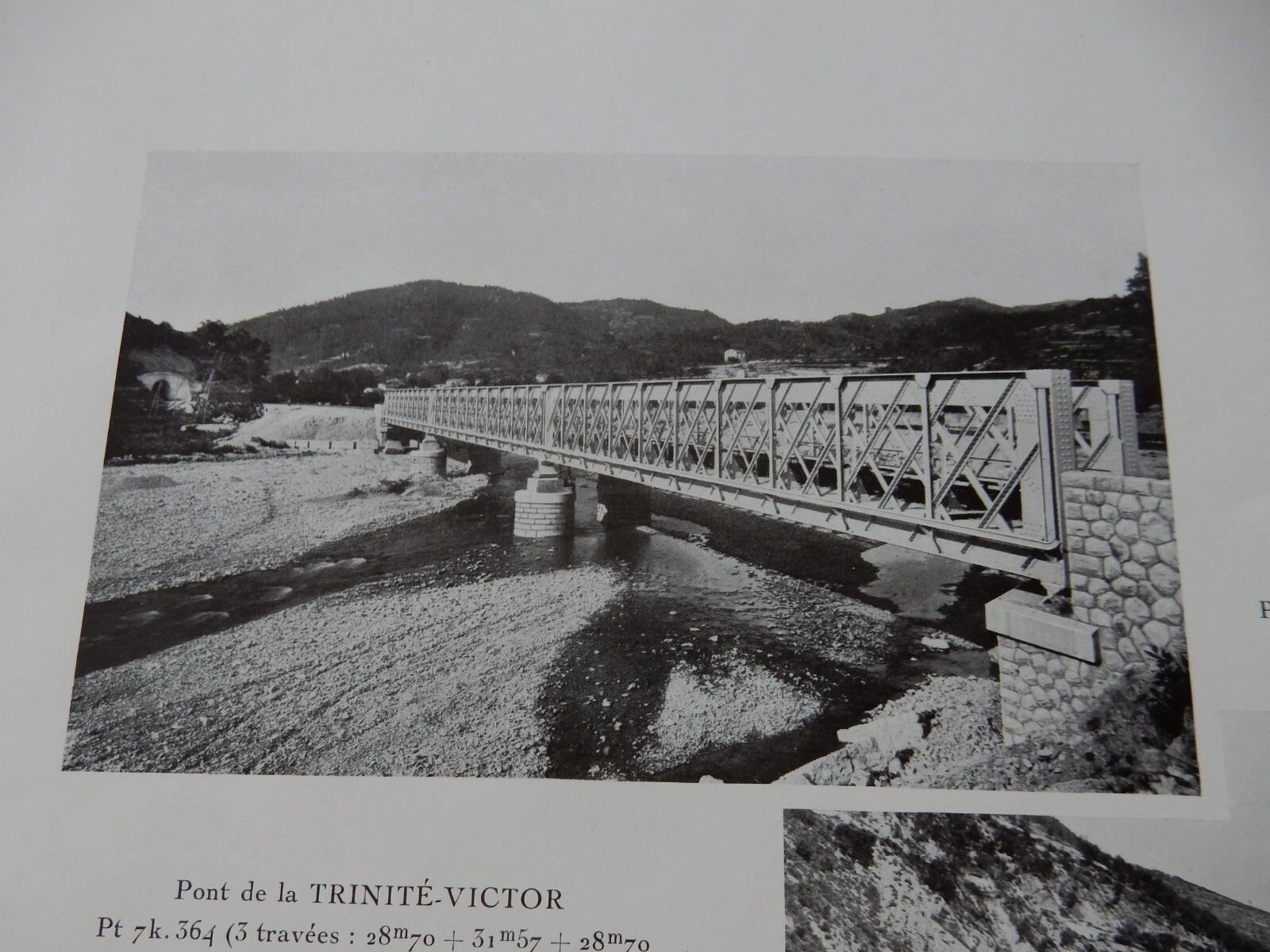
With the sun in our eyes again, the Nice-bound train crosses the Pont de Paillon, a 95 meter long bridge across the River Paillon. [4]
Pont de Paillon (or Pont de Trinite Victor) seen from the bridge carrying Boulevard Georges Bueno over the river. [Google Streetview, February 2025]An early photograph of the same bridge which was built in 1928. The bridge has three spans, one 28.7 metres, one 31.6 metres and one 28.7 metres (c) Unknown but probably Public Domain. [7]
Just a short distance further along the line and with the sun once more in our eyes, this cab view shows the bridge carrying Boulevard George Bueno over the railway. [4]
Looking back towards Pont de Paillon from the bridge carrying Boulevard Georges Bueno over the line. [Google Streetview, March 2025]A strategically place signpost blocks our view Southwest from Boulevard Georges Bueno towards La Trinite Victor railway Station. [Google Streetview, March 2025]
La Trinite-Victor Railway Station as seen from the cab of a Nice-bound service. [4]
The La Trinite-Victor Railway Station. [Google Maps, September 2025]
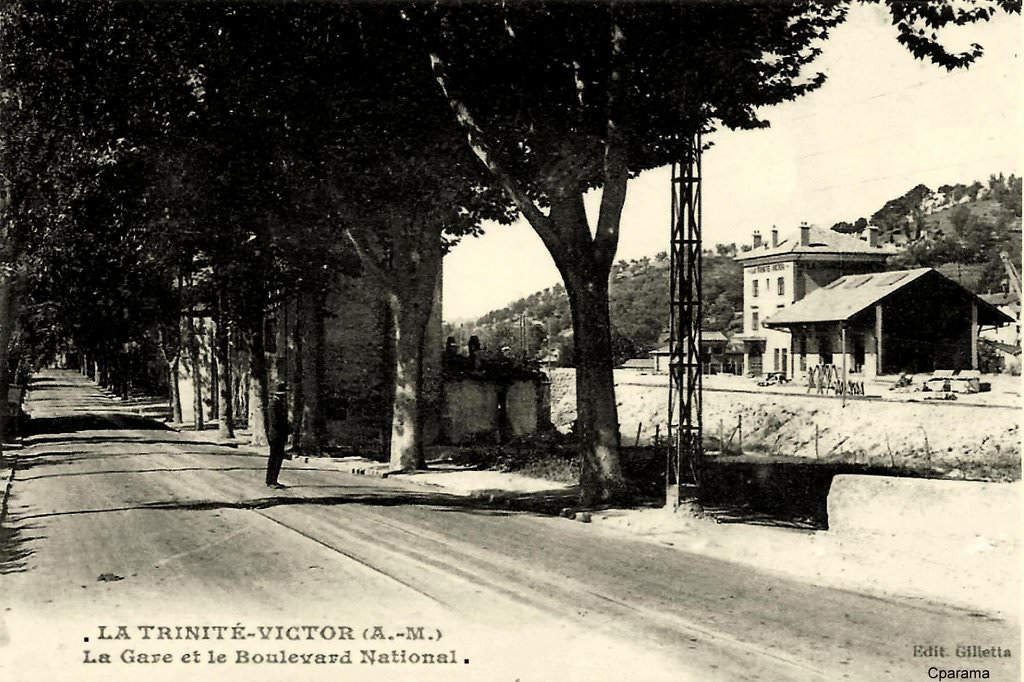
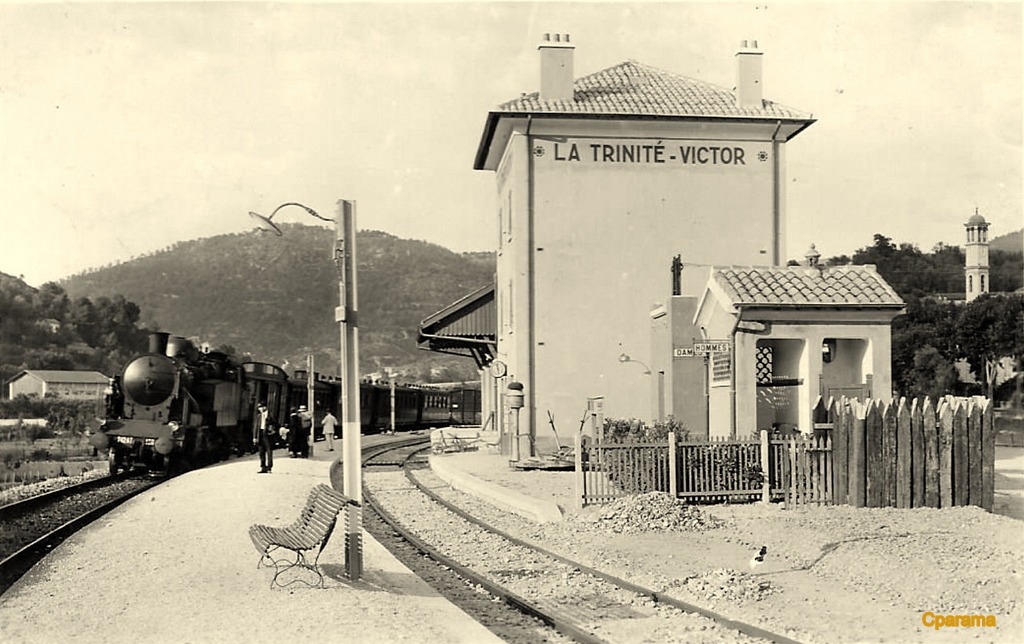
Old postcard image showing the original buildings at La Trinite-Victor Railway Station, (c) Public Domain. [8]La Trinite-Victor Railway Station seen from what was the Boulevard National, (c) Editions Gilletta, now Public Domain. [19]A train heading for Nice arrives at La Trinite-Victor Railway Station, (c) Unknown but probably Public Domain. [20]La Trinite-Victor Railway Station as seen looking East from Boulevard Anatole France. [Google Streetview, March 2025]
A level-crossing to the South of La Trinite-Victor Station. [4]
The view back towards Lat Tinite-Victor Station from the level-crossing (Road: M2204C). [Google Streetview, March 2025]The view South towards Nice from the level-crossing. [Google Streetview, March 2025]
Continuing Southwest alongside the Paillon the railway runs to the East of the modern road which sits below the flood defences on the East side of the River Paillon. The road is a later addition to the river bank and is protected from the river by a high retaining wall. To its East, the railway sits on a stone embankment. …
A typical example of the stone retaining wall that holds the railway above the immediately surrounding land and the modern road. The retaining wall is pierced by a stone-arched underpass. A number of such underpasses provided for access under the railway when it was first built. [Google Streetview, February 2025]
The next halt, alongside the River Paillon, is L’Ariane La Trinité. …
The Halt at L’Ariane La Trinité, seen from the cab of the Nice-bound train. [4]
The level-crossing just to the West of the halt at L’Ariane La Trinité. [4]
Another view of La Gare de l’Ariane La Trinité can be seen here. [21]
Looking Northeast from the junction of Pont de la Liberté with Boulevard Riba Roussa, the crossing barriers are closed as a train is just about to set off for Nice from the halt at l’Ariane La Trinité. [Google Streetview, March 2025]
Looking towards Nice from the level-crossing on Pont de la Liberté. [Google Streetview, March 2025]
The line soon passes under the A8 flyover. The sun is still in our eyes as we look out from the cab of the Nice-bound service. The road to the right of the line and at a lower level is the Boulevard Anatole France. [4]
A short distance further along the line towards Nice it bridges the Route de Turin. This view looks West under the railway bridge. [Google Streetview, March 2025]The same bridge seen from the West on the Route de Turin. [Google Streetview, March 2025]
The North portal of Tunnel du Bon Voyage (369 metres in length), seen from the cab of the Nice-bound train crossing the bridge over the Route de Turin with the sun low in the sky. [4]
The North portal of Tunnel du Bon Voyage and the adjacent bridge over the Route de Turin. [24]
Tunnel du Bon Voyage. [24]
The view from the cab of the same train as it leaves the South portal of Tunnel du Bon Voyage. [4]
The South portal of Tunnel du Bon Voyage. [Google Earth, September 2025]
A short distance further along the line the railway is crossed on the level by a minor road before it reached Tunnel de Roche. [4]
The Northwest portal of Tunnel de Roche, seen looking East from a minor road. [Google Streetview, December 2010]
A better view of the Northwest portal of Tunnel de Roche, from the level crossing mentioned above. [25]
Tunnel de Roche, 96 metres in length. [25]
The view Southeast from the Southeast portal of Tunnel de Roche. [4]
The Southeast portal of Tunnel de Roche. [Google Earth, September 2025]
Pont Michel seen from the cab of the Nice-bound service. [4]
A glimpse of the line to the North, from the carriageway over Pont Michel in Nice. [Google Streetview, March 2025]
Looking North along the line towards Pont Michel. [Google Earth, September 2025]
Looking South across Pont Michel. The running lines from Breil-sur-Roya are on the left of this image. The other lines are part of Nice Depot. Pont Michael Railway Station is at the bottom of the image. See the notes below about the history of this location. [Google Earth, September 2025]
Pont Michel Railway Station. [4]
The platform on the left was part of the Saint-Roch Railway Station, now closed. [4]
The Saint Roch Railway Station is highlighted in the top-right of this map extract. The line continues towards Nice-Ville bridging a number of roads before crossing the River Paillon again. [26]
The area to the West of Nice-Depot and Saint Roche Station. The line crosses three roads on its way to the riverbank. [Google maps, September 2025]The first of these structures, seen looking North from Avenue Denis Semeria provides access under the line to Nice-Depot. [Google Streetview, February 2025]The same bridge, seen from the North (from the access road to Nice-Depot. [Google Streetview, October 2022]
Looking towards Nice-Ville from the cab of the Nice-bound service as it crosses the access road to the Nice-Depot. [4]
A more modern structure now spans the M2204B, Route de Turin. [Google Streetview, March 2025]A similar aged steel bridge spans Boulevard Jean Baptiste Verany adjacent to the River Paillon. A series of graceful arches make up the railway viaduct across the Paillon. [Google Streetview, March 2025]The Stone-arch viaduct across the River Paillon seen from the Southeast – 3 spans, 127 metres in length. [Google Streetview, March 2025]The same structure seen from the Southwest on Avenue du Maréchal Lyautey. The three arches over the river are clearly visible and the two steel spans at either end of the structure are also visible. [Google Streetview, March 2025]
After crossing the Paillon the line curves to the South and crosses another modern bridge. …
The bridge which carries the railway over Rue de la Gendarmerie, Nice. This photograph is taken facing West on Rue de la Gendarmerie. [Google Streetview, March 2025]
A short distance further along the line it enters Tunnel de Carabacel.
The line of the Tunnel de Carabacel is shown by the red, blue and green dots. It is 663 metres in length. [27]
The Northeast portal of Tunnel de Carabacel. [27]
The Southwest portal of Tunnel de Carabacel, seen through mesh fencing. The two tracks marked with the green arrows are those from Breil-sur-Roya. The yellow arrow marks the track which runs through Tunnel de Cimiez Nord and the orange arrow marks the track which runs through Tunnel de Cimiez Sud. [27]
The view West from the cab of the Nice-bound train after it has left Tunnel de Carabacel. [4]
Looking North along Avenue Desambrois, Nice the old railway bridge is dwarfed by the concrete structures of the motorway! [Google Streetview, July 2025]
Also looking North, this time on Rue de Lépante, Nice, the motorway structures loom over the old railway bridge. [Google Streetview, July 2025]
Looking North along Rue Miron, the motorway bridge seems to be even higher! [Google Streetview, April 2025]
The final structure before the line runs into Nice-Ville Station. This bridge spans Avenue Jean Médecin. [Google Streetview, May 2018]
The sun is in our eyes as we approach Nice-Ville Railway Station. [4]
Nice-Ville Railway Station seen from the cab of the train from Breil-sur-Roya which terminates in Nice. [4]
Banaudo et al tell us that The first 5 kilometres of the line in the suburbs of Nice were constructed by the Nice-based company Orizet Frères, work began in August 1909. Their work included three tunnels with a total length of 1,127 metres, a bridge over the Paillon, nine metal-decked road underpasses, an overpass, and three level-crossings. Between Nice-Ville and Cimiez Hill, the track-bed of the existing line to Menton had to be be extensively reworked to accommodate the new tracks. [1: p101]
Work on the site of the Saint Roch station commenced in January 1910 and on the Tunnel de Carabacel in May 1910. Work on the tunnel was only undertaken from the Northeast end so as to avoid the need t remove spoil from close to the railway station in Nice. This also meant that the excavated material could be used in constructing the embankment from the tunnel towards the bridge over the Paillon. The river bad of the Paillon was found to be unstable. “Foundations up to 17 m deep had to be dug using compressed air to firmly establish the piers of the three shallow arches made of La Turbie stone. Despite these precautions, ground movements recurred, which an attempt was made to remedy in the fall of 1912 by overloading the Nice-side arch with a mass of gravel bags representing a pressure of 2,500 kg per square metre, while recording devices measured the gradual settlement of the ground.” [1: p103]
The extensive depot at Nice, Saint-Roch. The large engine shed can be seen at the top-left of this image. The Breil-sur-Roya to Nice line runs around the left-hand side of the site (the Southeast), passing very close to the engine shed. [28]On 12th May 1960, a 141R locomotive (2-8-2 using UK notation) heads towards the steam depot exit, passing the signal cabin. At that time, Nice-Saint-Roch had 47 No. 141Rs, a number that increased to 56 in 1963, then gradually reduced following the progress of electrification. On 1st March 1968, the depot closed its doors to steam traction; the roundhouse was partially demolished in 1967, and completely demolished in 1969. [29]
Nice Saint-Roch locomotive depot soon after opening. [30]
The Nice Depot was built on the site of orange groves. “The Société des Travaux en Ciment Thorrand et Compagnie, … originally from Grenoble and based in Nice, used reinforced concrete to build a 110 m diameter rotunda for forty-eight locomotives, a maintenance workshop for six locomotives, a water tower supplied by the Paillon water table, a fuel park with an 80 m quay served by 4.40 m turntables, several buildings housing apprentices, administrative offices, … refectory, oil mill, lamp room, etc.” [1: p103]
And Finally ……
Nice-Premium reported on 2nd September 2024 that major works were to be undertaken on the railway between Nice and Breil-sur-Roya. [32]
The ambitious regeneration program for the Nice to Breil-sur-Roya railway line began in September 2024 and is due to be completed by 14th December 2025.
The work will cost about 78.1 million euros. It will strengthen the infrastructure, improve the transport service, and guarantee better comfort for travellers.
The work aims to reinforce the many engineering structures and improve the stability of the tracks. This will not only secure the transportation of users but also protect this vital infrastructure against climate hazards. It promises concrete improvements for users. By the end of the work, it’s planned that one TER per hour, per direction, will run between Drap and Breil. As well as two TERs per hour between Nice and Drap. This increase of 46% in transport service will be accompanied by a notable improvement in traveler comfort thanks to the renewal of equipment and modernization of infrastructure. These changes aim to make the service more reliable and regular!
The closure of the line between September 2024 and December 2025 is necessary, particularly to permit a large number of tunnels to be renovated The closure will ensure the efficiency and speed of the work, as opposed to a partial closure which could prolong the timeline.
The total cost of the work amounts to 78.1 million euros, with an additional approximately 8 million euros for the transport substitution system. The Region is contributing 56.5 million euros, with participation from the State, SNCF Réseau, the Nice Côte d’Azur Metropolis, as well as the Communauté d’Agglomération de la Riviera Française and the Communauté de Communes du Pays des Paillons. [32]
Jose Banaudo, Michel Braun and Gerard de Santos; Les Trains du Col de Tende Volume 1: 1858-1928; FACS Patrimoine Ferroviaire, Les Editions du Cabri, 2018.
Jose Banaudo, Michel Braun and Gerard de Santos; Les Trains du Col de Tende Volume 2: 1929-1974; FACS Patrimoine Ferroviaire, Les Editions du Cabri, 2018.
Jose Banaudo, Michel Braun and Gerard de Santos; Les Trains du Col de Tende Volume 3: 1975-1986; FACS Patrimoine Ferroviaire, Les Editions du Cabri, 2018.
Franco Collida, Max Gallo & Aldo A. Mola; CUNEO-NIZZA History of a Railway; Cassa di Risparmio di Cuneo, Cuneo (CN), July 1982.
Franco Collidà; 1845-1979: the Cuneo-Nice line year by year; in Rassegna – Quarterly magazine of the Cassa di Risparmio di Cuneo; No. 7, September 1979, pp. 12-18.
Stefano Garzaro & Nico Molino; THE TENDA RAILWAY From Cuneo to Nice, the last great Alpine crossing; Editrice di Storia dei Trasporti, Colleferro (RM), EST, July 1982.
I was asked to do a talk for the Association of Shrewsbury Railway Modellers in November 2025. These are the notes and images pulled together for that talk. In many cases, the images included have been used in other articles and rather than creating new image files a link to the original image has been provided in these notes. ………
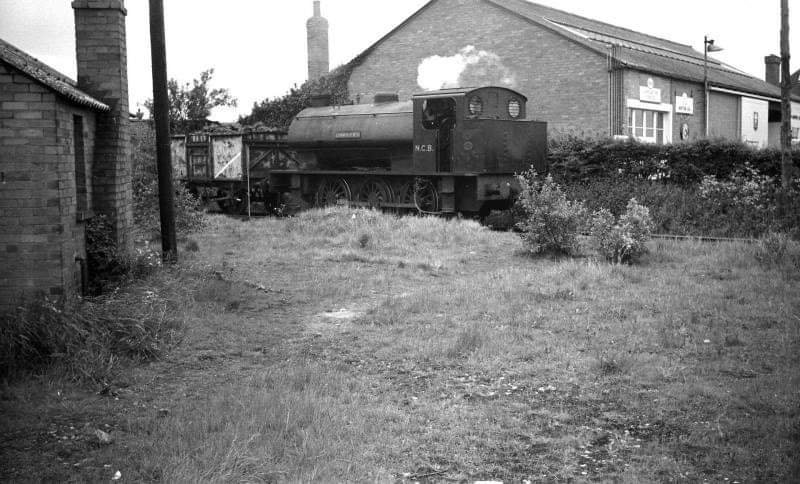
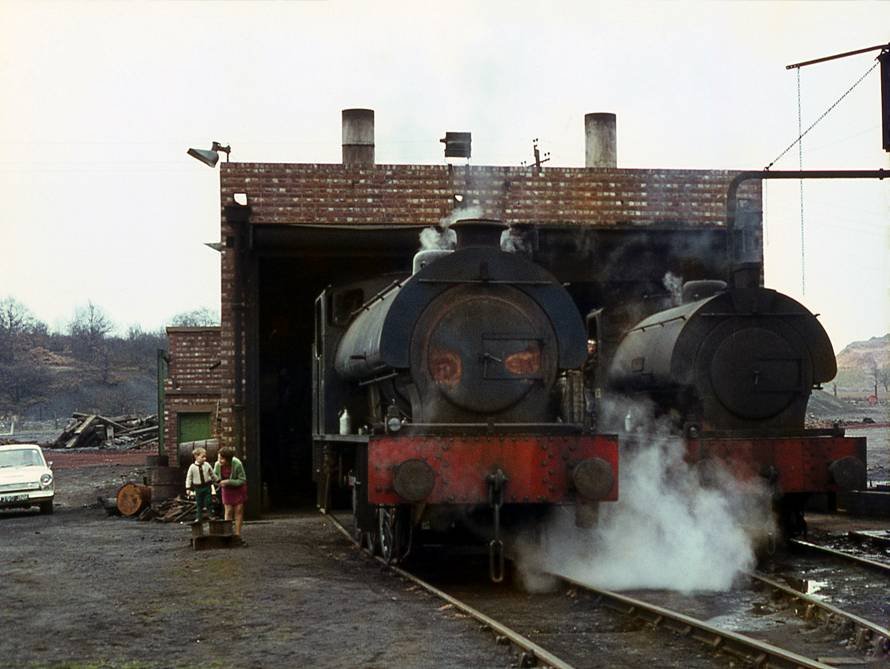
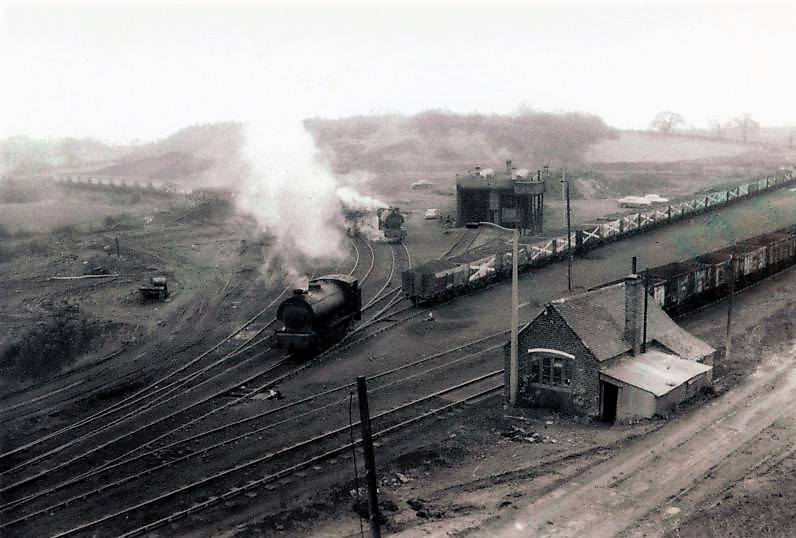
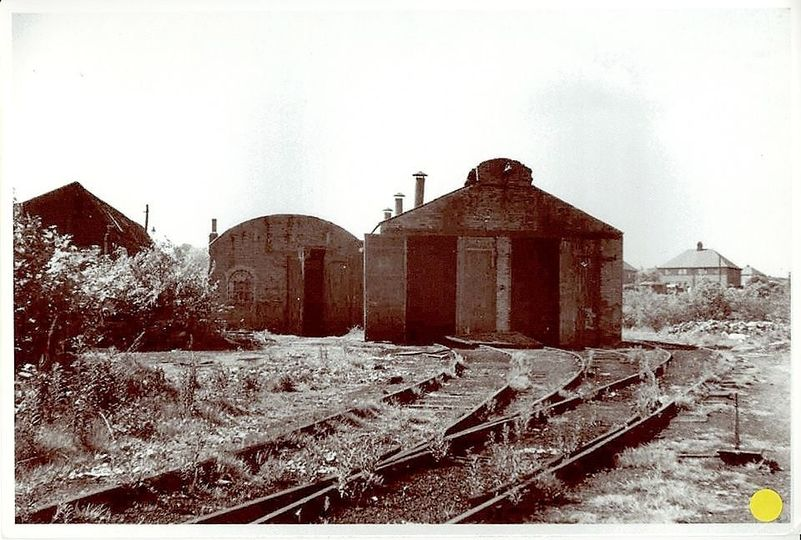
The featured image above is a view of the NCB-built engine shed near Granville Colliery. After the NCB took over the collieries owned by the Lilleshall Company, Granville Colliery supplied coal to Buildwas Power Station and the coal trains were worked by a range of locos down the 1.5 miles to Donnington. Granville Colliery had a decent sized shed and in later years used Austerity 0-6-0ST tanks but in Lilleshall Company days the bigger engines were the ex-TVR and Barry railway engines. This image and the accompanying text were shared by Marcus Keane on the Telford Memories Facebook Group on 15th September 2015. [38]
The Lilleshall Company
Sir John Leveson became Earl Gower in 1746. His son Granville Leveson Gower became the second Earl in 1754. They owned limestone quarries and coal mines in Shropshire and had significant land holdings across the country.
Granville Leveson Gower was elected to Parliament in 1744. With the death of his elder brother in 1746, he became known by the courtesy title of Viscount Trentham until he succeeded his father as Earl Gower in 1754. He built the earlier Lilleshall Hall, converting a 17th-century house located in the village of Lilleshall into a country residence around the late 1750s. [1]
He remained active in politics until his retirement later in 1794. In 1786, he was created Marquess of Stafford as a reward for his services. He dies in 1803. [1] He took an active interest in the efficient running of his local estates, including those at Sherrifhales, Lilleshall, Donnington Wood, St Georges, Priorslee, Wombridge and Snedshill. [2]
The second Earl’s brother-in-law was Francis, 3rd Duke of Bridgewater, who was the originator of the Bridgewater Canal which carried coal out of his mines in the Manchester area. Earl Gower was introduced to the brothers Thomas and John Gilbert John Gilbert was instrumental in the construction of the Bridgewater Canal. Along with the Gilbert brothers, the second Earl formed the Lilleshall Partnership in 1764. Initially, it focused on improving the extraction and supply of lime for use in agriculture and as a flux in iron-making. [2]
The Earl had a vested interest in producing and delivering limestone as cheaply as possible. The Lilleshall Partnership recognised that a better communication system was required between its widely dispersed sites and in 1765 began the construction of a 5.5 mile long canal. It ran from the Earl’s holdings in Donnington Wood to wharves at Pave Lane and was known as the Donnington Wood Tug Boat Canal.
Large scale iron making began in the parish of Lilleshall in 1785 when a blast furnace was operating at Donnington Wood. The works was started by William Reynolds and Joseph Rathbone. By 1802 there were two furnaces and a third was added in that year.
By 1802, the partnership and its associated companies were dissolved and replaced by The Lilleshall Company which over time developed interests in mechanical engineering, coal mining, iron and steel making and brickworks. The company was noted for its winding, pumping and blast engines and operated a private railway network. It also constructed railway locomotives from 1862 to 1888. [2]
In 1880, the Lilleshall Company became a Public company. After the Second World War its mines were nationalised as was the Lilleshall Iron and Steel Co under the Iron and Steel Act but then denationalised in 1954 and sold back to Lilleshall Company. The company’s railways were closed in 1969. [2]
The Mines
The Friends of Granville Country Park tell us that the Lilleshall Company “sank its first deep mine at Waxhill Barracks in 1818 and another the Freehold pit, at about the same time. The Muxton Bridge pit was opened by 1840. There were over 400 acres of coalpits and waste tips in the area in the 1840s. Their production was running at some 100,000 tons of coal a year with 50,000 tons of iron ore. ” [2]
Map of Muxton Bridge, Waxhill Barracks and Barnyard Collieries. This image was shared by Brian Edwards on the Granville Colliery Facebook Group on 29th September 2022. It shows the rail network prior to the installation of the cutoff line, Granville Colliery sits off the bottom of this image, (c) Unknown. [14]
Granville Colliery
“By 1860, the Granville pit had been sunk and sinking of the Grange (originally the Albert and Alexander) pit began in 1864. Grange Colliery, Granville Colliery, The Muxton Bridge, Woodhouse and Stafford Collieries were known as the Deepside Mines.” [2]
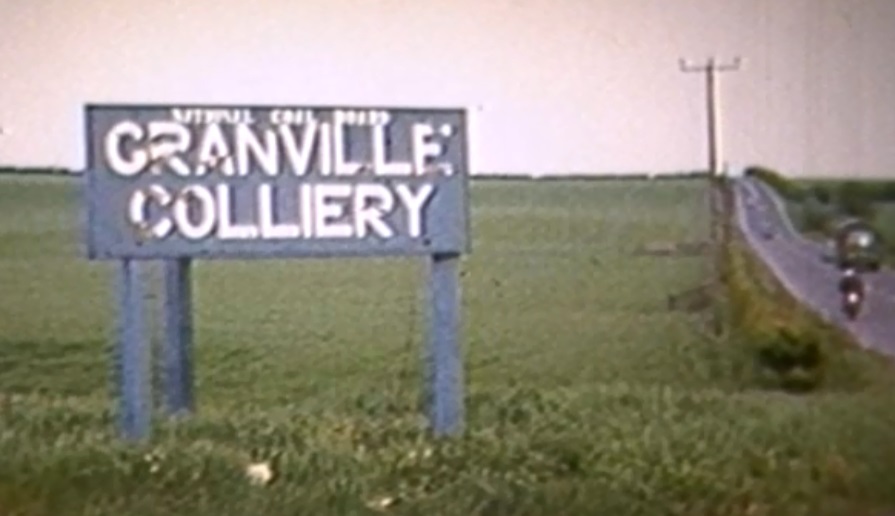
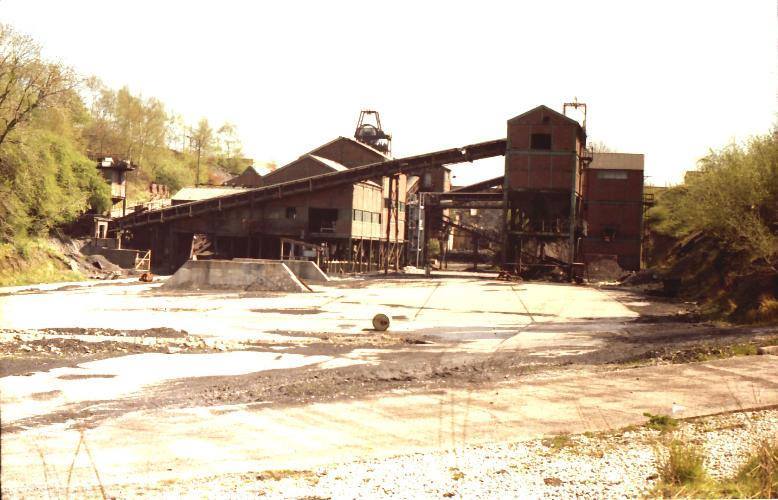
Granville Colliery was nationalised after the Second World War. It remained under National Coal Board control until closure in 1979. At the time of closure it was employing 560 people. This image was shared on the Granville Colliery Facebook Group by Sharon Bradburn on 10th July 2018, (c) Unknown. [4]
“From the late 19th century, coal mining gradually declined. The Waxhill barracks colliery ceased production in 1900 and Muxton Bridge soon after. The Freehold colliery closed in 1928 and only the Grange and Granville collieries survived until nationalisation in 1947. In 1951 the two were connected underground and from 1952 the Grange served mainly to ventilate the Granville. In 1979 the Granville colliery, which employed 560 men, was closed. It was the last coal mine in Shropshire.” [2]
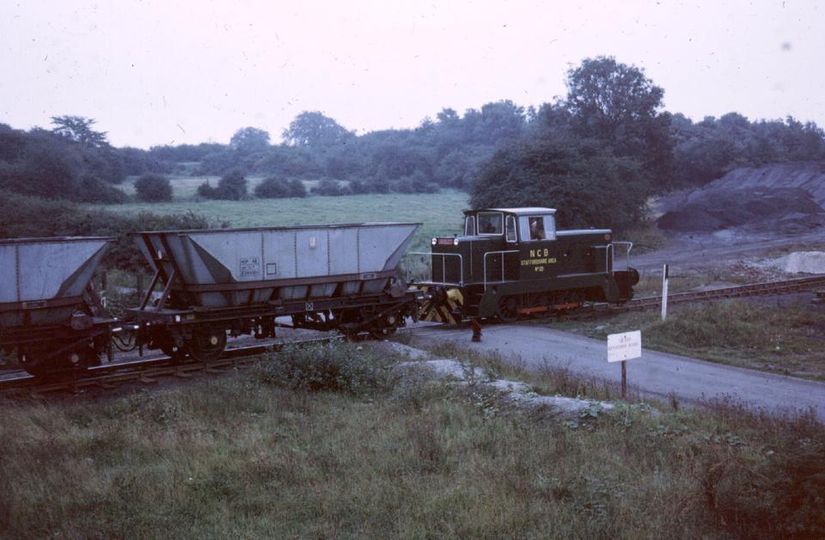
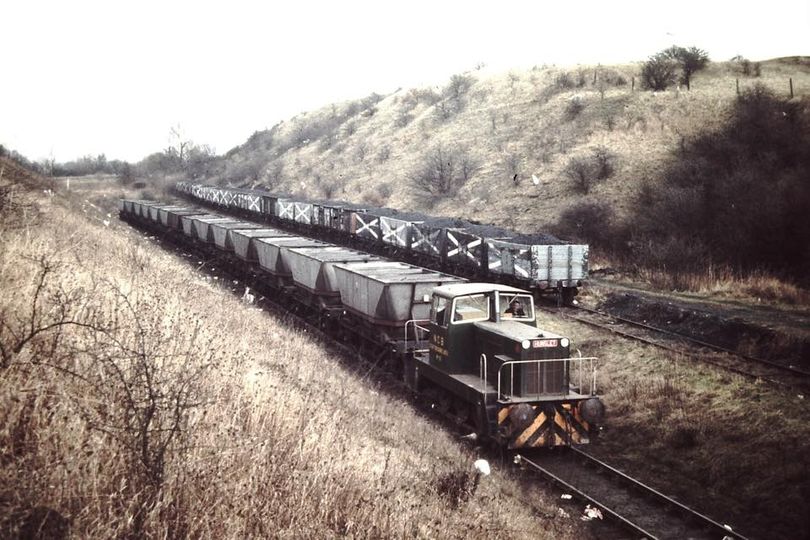
Bob Yate tells us that, “The most prolific of the collieries, [Granville Colliery] supplied the LNWR, GWR and Cambrian Railways with locomotive coal, and latterly also to Ironbridge ‘B’ Power Station. In 1896, there were 177 underground and 67 surface workers. Later the pit had a fairly consistent workforce of around 300 men, but after the closure of the nearby Kemberton colliery in 1967, this grew to 900 men, but shrank again to around 600 in the early 1970s. Meanwhile, the annual output had grown from around 300-350,000 tons to 600,000 tons in the late 1960s.” [25: p16]
An early photograph of Granville Pit, taken from the West in around 1900. This image was shared on the Granville Colliery Facebook Group by Ray Robinson on 20th May 2024, (c) Unknown. [6]
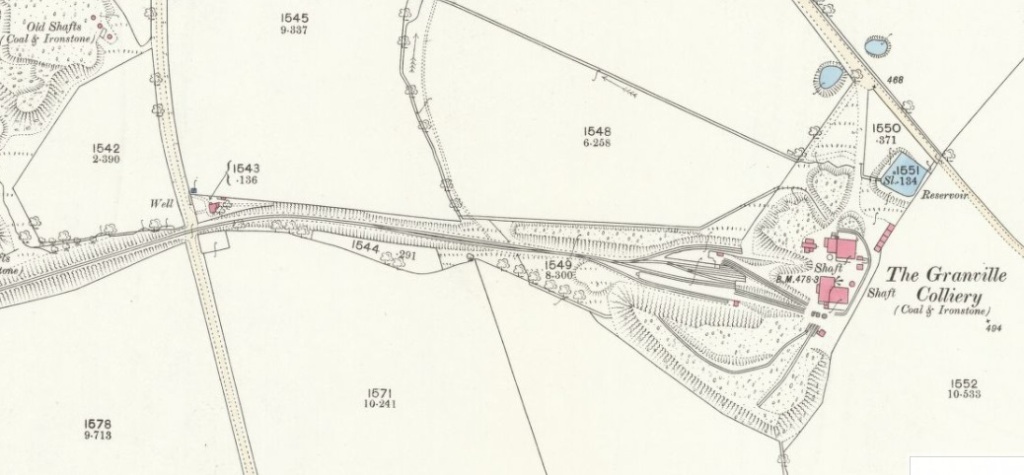
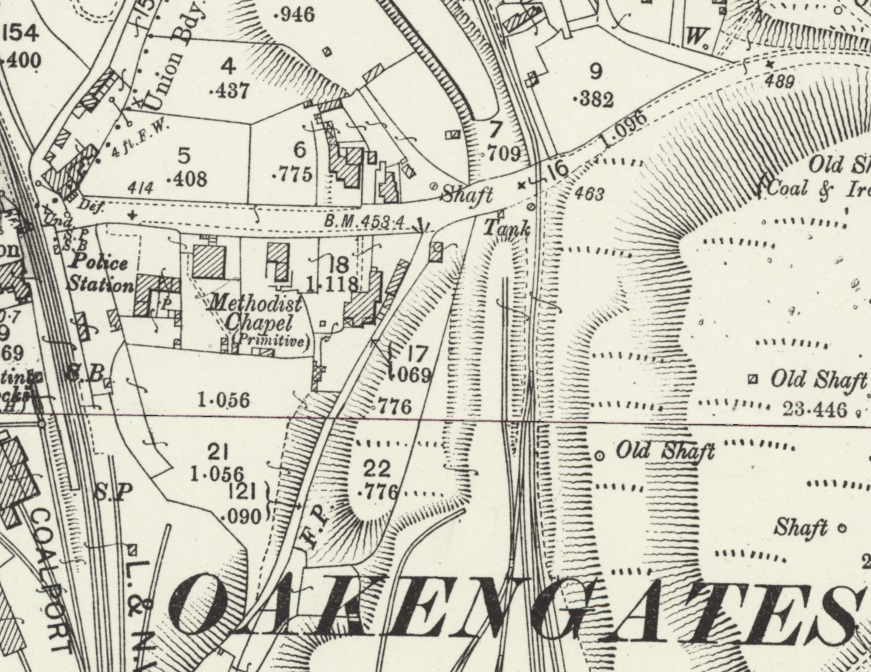
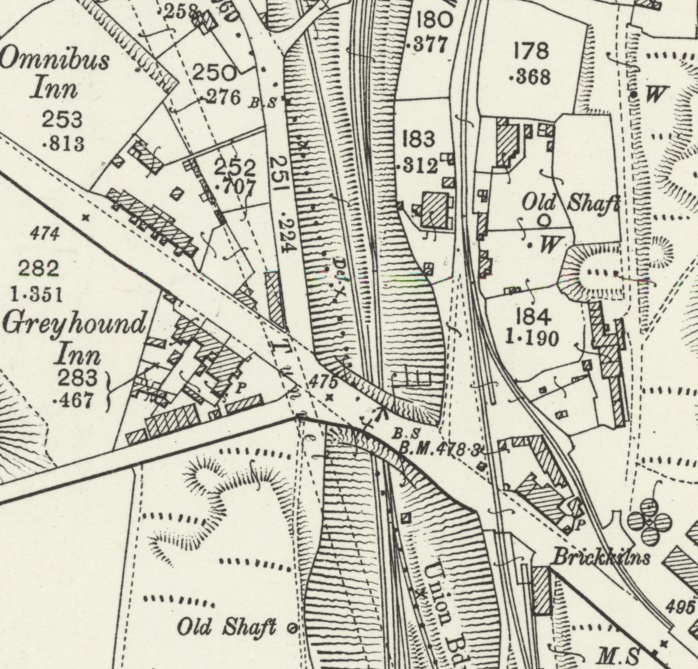
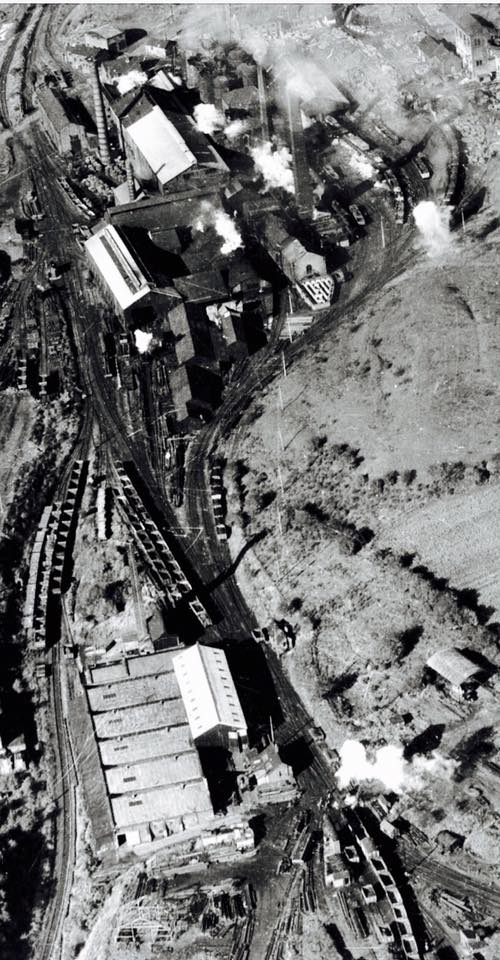
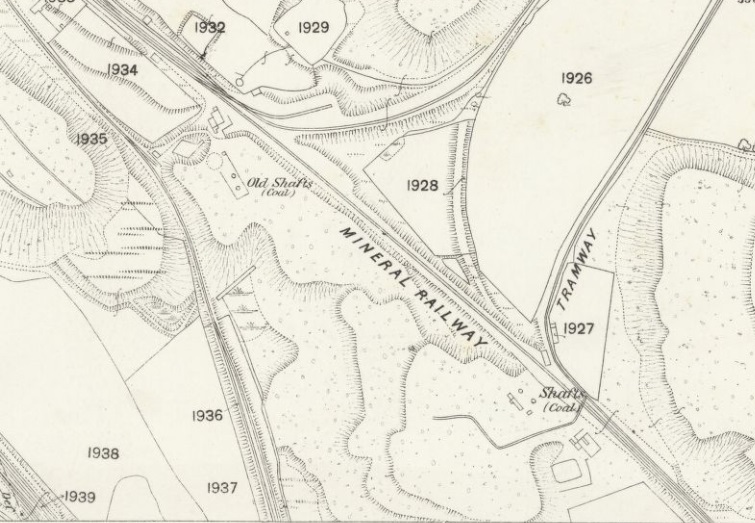
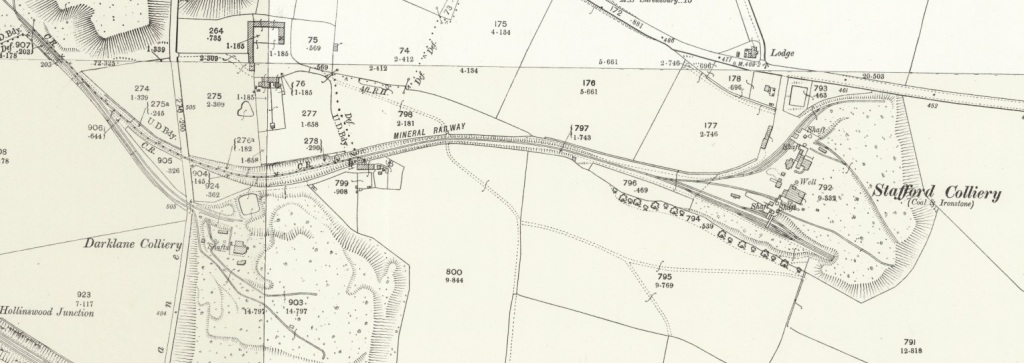
This extract from the 25″ Ordnance Survey of 1881/1882 shows the full length of the Mineral Railway branch from the East side of the map extracts above which show Old Lodge Furnaces. It is worth noting the loop which allowed locomotives to run round their trains just to the West of the Colliery site. [26]
An extract from the ERSI satellite imagery provided by the National Library of Scotland. The two lanes which appear on the map extract above can easily be seen on this satellite image. The line of the old Mineral Railway is also easy to make out. Nothing remains of the old colliery buildings. [27]
A similar extract from the 25″ Ordnance Survey of 1901/1902. In 20 years some changes have occurred. The more southerly of the two colliery buildings has been enlarged and the new tramway/tramroad has been provided onto the spoil heap North of the standard-gauge mineral railway terminus, [28]
This map extract comes from the 1925/1927 edition of the 25″ Ordnance Survey. The screens have been built and some modifications to the internal tramway layout have occurred. [19]
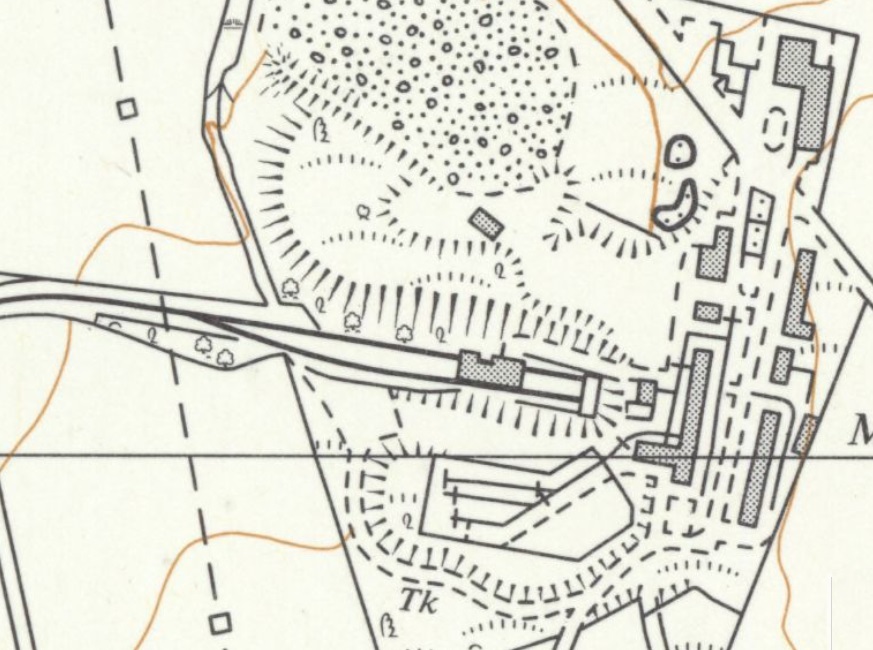
The Colliery site on the 1:10,000 Ordnance Survey published in 1954. The tramway to the spoil heap has been relocated and the buildings on site have been altered. [30]
The colliery site on the 1:10,000 Ordnance Survey published in 1967. A complete refurbishment of the buildings above ground has taken place. The screens building is different and the area to the East of the railway has seen significant reconstruction. An internal tramway can now be seen to the South and East of the standard gauge line. [31]
This extract from the same Ordnance Survey sheet of 1967 shows the wider area close to Granville Colliery and the rationalisation which had by then taken place. The line North off this extract heads for the site of Muxtonbridge Colliery where trains to the Donnington Sidings would once have reversed. The line leaving the extract to the West runs on to the rest of the Lilleshall Company’s network. [31]
By 1970, this was the layout of the lines between the mainline at Donnington and the Colliery. This hand-drawn image appears in Bob Yate’s book. [25: p119]
Having looked at maps showing the Granville Colliery site at different points in its history, some photographs will help us better to envisage the site.
The picture referred to by Cliff Hewitt in his notes above. The image was shared by Cliff Hewitt on the Telford Memories Facebook Group on 1st October 2017. [44]
What appears to be a train of empties at the screens at Granville Colliery. [11]
The same location but after the rail link was severed. This image was shared on the Granville Colliery Facebook Group by Linda Howard on 9th March 2014. [18]
A view of the screens from behind. This image was shared on the Granville Colliery Facebook Group by John Wood on 30th January 2015. [43]
Granville Colliery had its own 2ft 3in narrow gauge railway/tramway underground and close to the main shafts, battery powered locomotives were used below ground. …
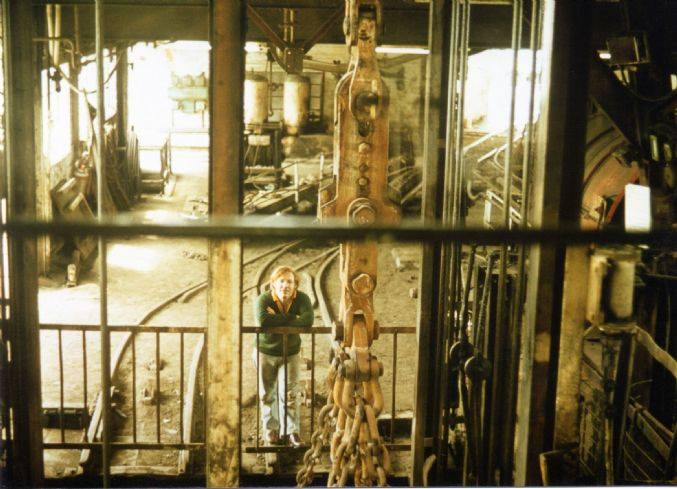
Under the head gear at Granville Colliery. Coal was lifted up the shaft and run off to left to what appears to be a tippler. From there the coal went down to the screens. This image was shared on the Granville Colliery Facebook Group on 1st March 2014 by Marcus Keane. [20]
The same lines seen from the opposite direction and from above. This image was shared on the Granville Colliery Facebook Group on 1st March 2014 by Marcus Keane. [21]
Two of the tubs/wagons used underground are seen in this image which was shared by John Wood on the Granville Colliery Facebook Group on 30th January 2015. [23]
Underground, there was an extensive network of 2ft 3in gauge lines which were initially served by horse power but which were later to see a number of dedicated battery-powered locomotives in use.
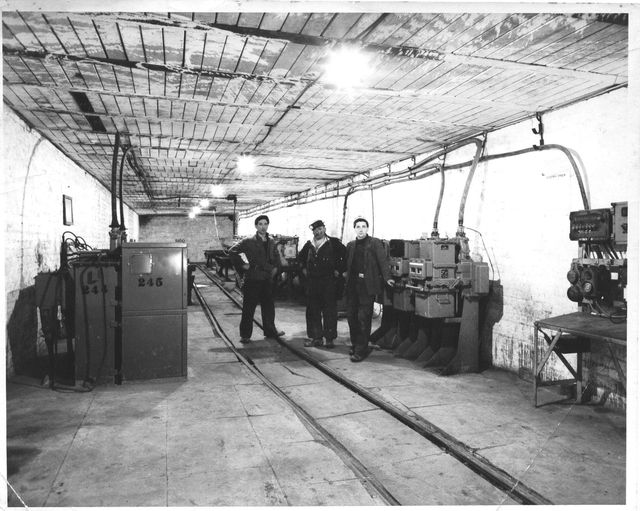
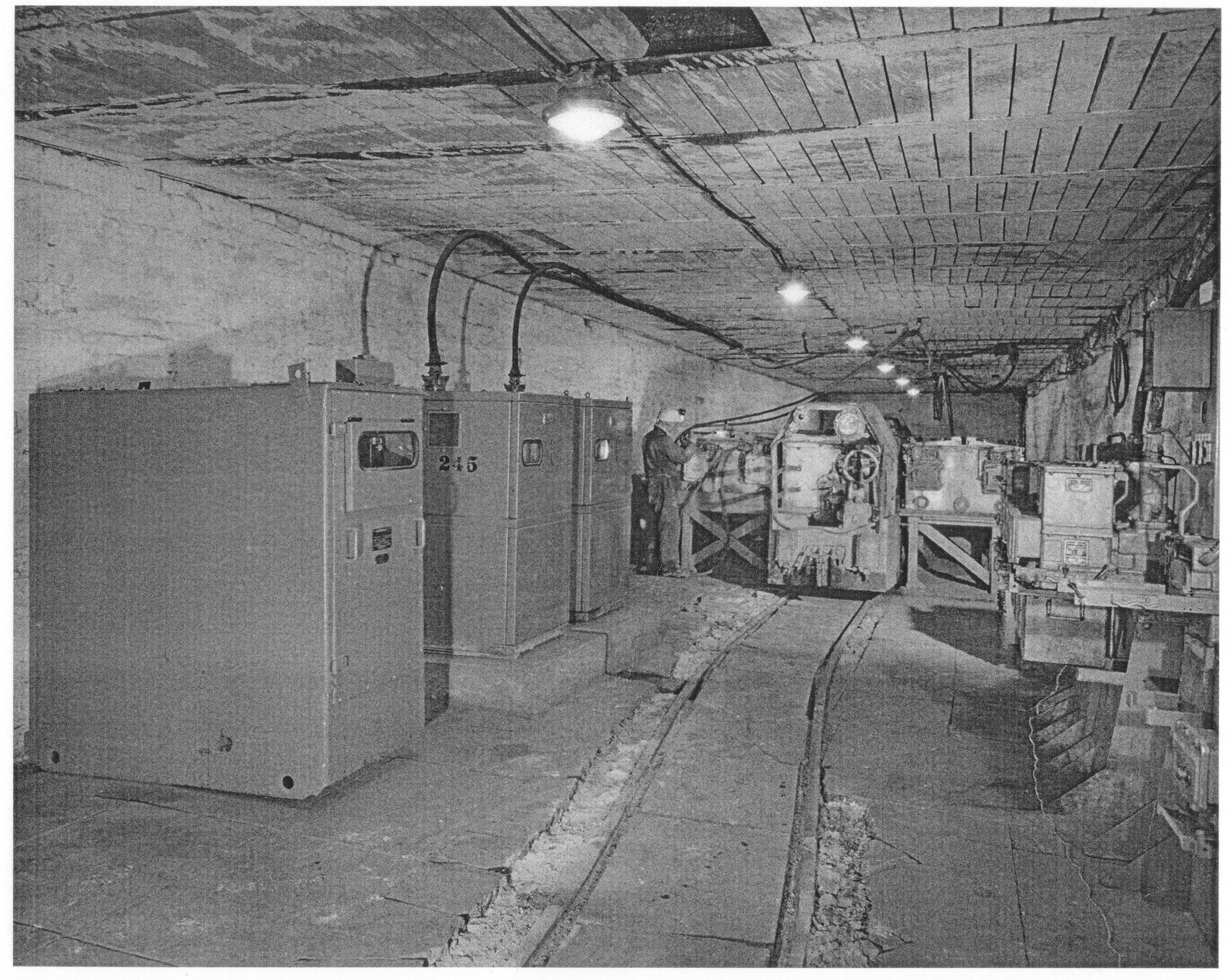
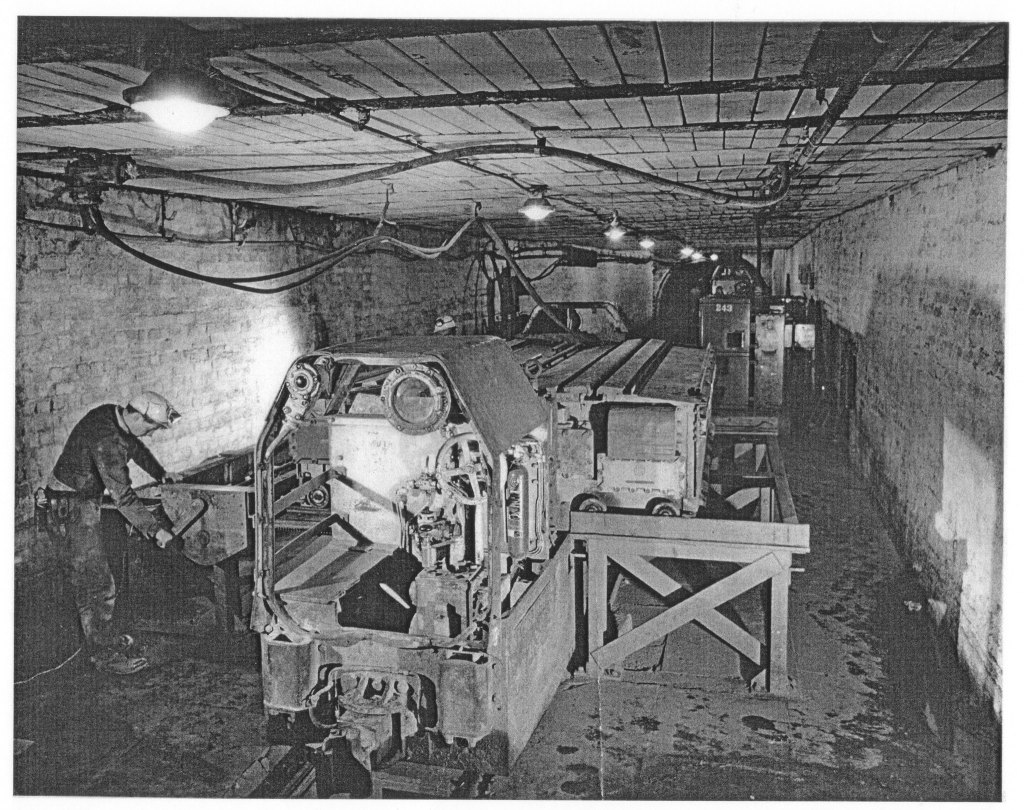
The underground workshop/garage at Granville Colliery in 1958. Granville had three English Electric battery locos and the garage had battery charging benches on either side of the rails. This image was shared by Cliff Hewitt on 22nd November 2015 on the Granville Colliery Facebook Group. [24]
Granville Colliery had English Electric battery locos, picture is of the loco garage with the 3.3kv battery chargers to the left of frame switchgear to the right & a loco in the background ready for a battery change. This image was shared by Cliff Hewitt as a comment under a post by Ray Pascal, dated 18th November 2015, on the Granville Colliery Facebook Group. [24]
A loco battery changeout. This image was shared on the Granville Colliery Facebook Group on 18th November 2015 by Cliff Hewitt. [24]
Old Lodge Furnaces
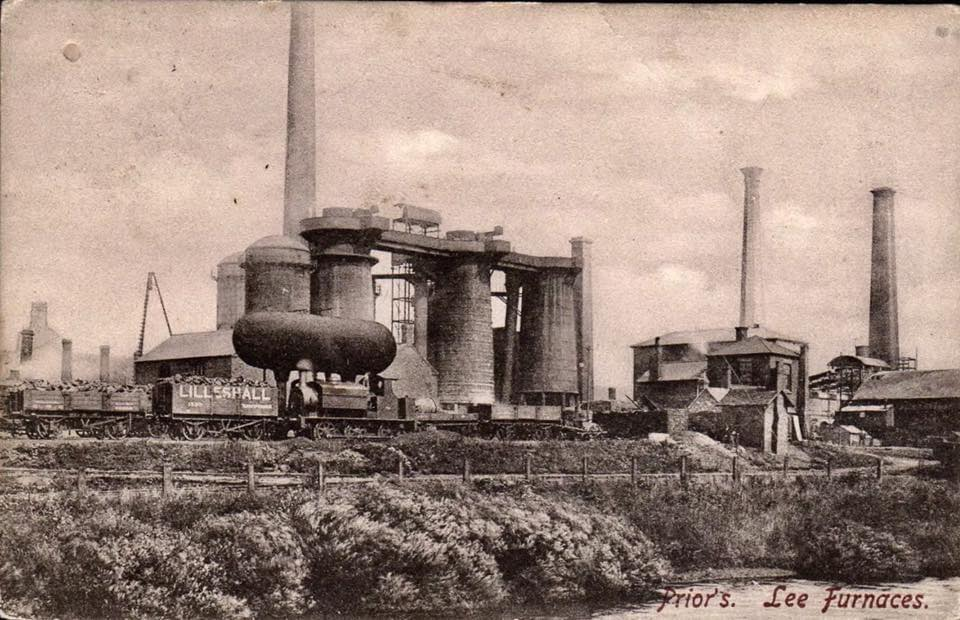
In 1824 the company commissioned two new blast furnaces. They were named the Old Lodge furnaces because of their proximity to the site of an old hunting lodge which was demolished in 1820. In March 1825 the Lilleshall Company paid the Coalbrookdale Company £2,392 for the works. George Roden, a stonemason from the Nabb, was paid £425 in 1825 and just over £777 in 1826 for erecting loading ramps and the retaining walls. In 1830 the Donnington Wood and the Old Lodge ironworks together produced 15,110 tons. A third furnace was added in 1846 and two more in 1859. New blast beam engines, manufactured by the Lilleshall Company, were installed in 1862 and the height of the furnaces was increased from 50 to 71 feet at about the same time.
Limestone came, via the canal, from the Lilleshall quarries and the coal (coke) and iron stone from the local pits via an extensive system of tramways, some of which, were later converted to standard gauge railways.
The Old Lodge Furnaces produced cold-blast pig iron of the finest quality, but eventually it could not compete with cheaper iron made elsewhere and in 1888 the last of the Old Lodge furnaces was blown out. The furnaces were demolished in 1905 by Thomas Molineaux Jnr, including a tall chimney 140 feet high by 13 feet diameter, known locally as “The Lodge Stack”. In 1956 the stone was reused for St Mathew’s Church. Thereafter the company concentrated all its iron and steel making at Priorslee.
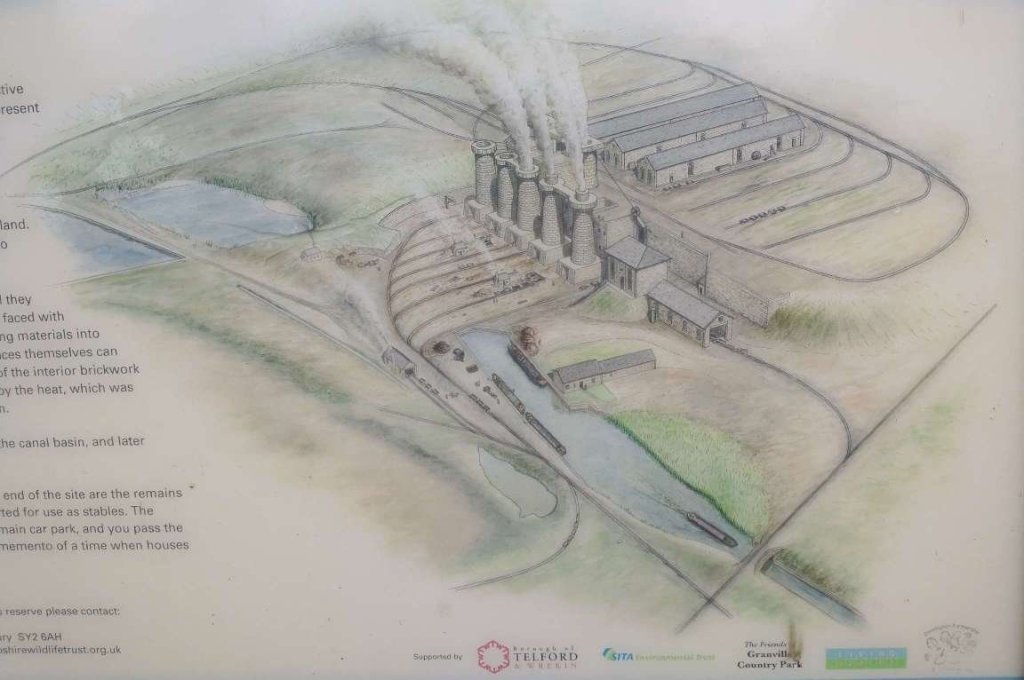
An artist’s impression of what the Old Lodge Furnaces site would have looked like in its heyday. The view is from the Northeast. The canal arm which served the furnaces can be seen entering the sketch from the bottom-right (the North). The image is a little misleading as it shows narrow-boats on the canal when in fact tub-boats would have been used. The tub-boats would have been drawn by horses. The rails shown as a schematic representation of the rails on the site throughout its history and show an engine shed on the North end of the fun of furnaces. [My photograph, 27th July 2023]
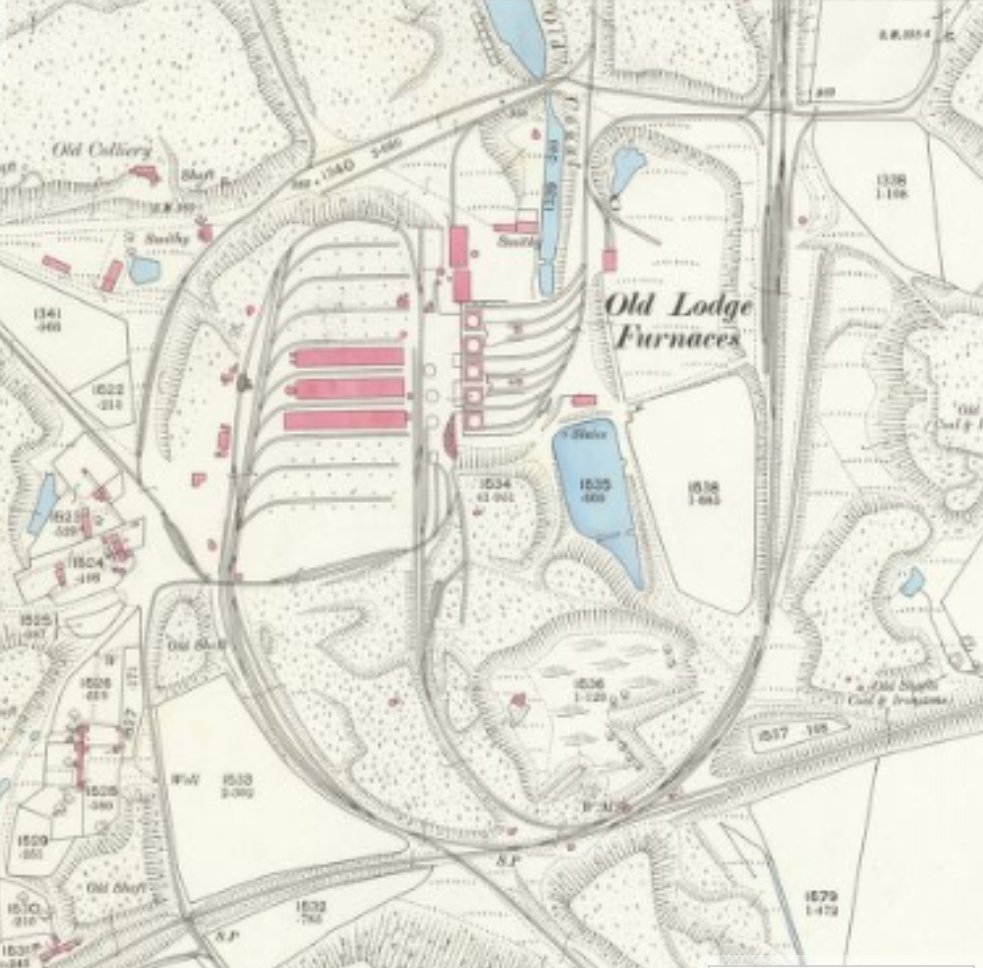
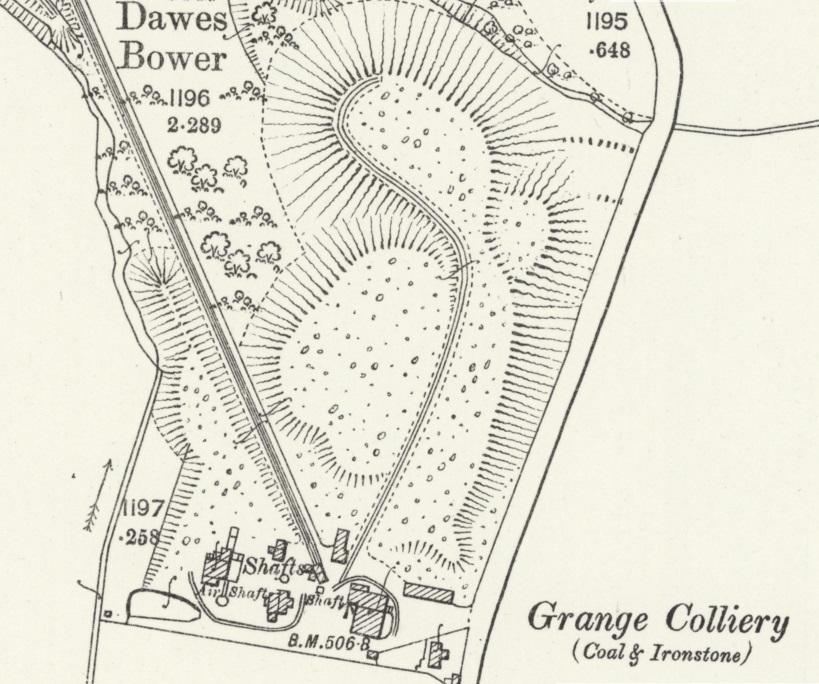
This map extract is taken from the 25″ Ordnance Survey of 1881/1882. The canal arm enters from the top of the extract and railways/tramways are shown in preponderance, with the furnaces themselves in a row running North-South just above the centre of the extract. The line running off the extract to the East heads towards Granville Colliery. The line running off the extract to the South runs to Dawes Bower and Grange Colliery. Of the lines exiting the extract to the West, one, running Northwest (at the top corner of the lower image) is the old tramway link to Lubstree Wharf. There are also two lines leaving the bottom-left corner of the lower image, the lower line runs towards collieries/shafts local to the furnaces and is probably a tramway at a higher level than the upper of the two lines which is in cutting and is the connection from Old Lodge Furnaces into the wider Mineral Railway network belonging to the Lilleshall Company. [46]
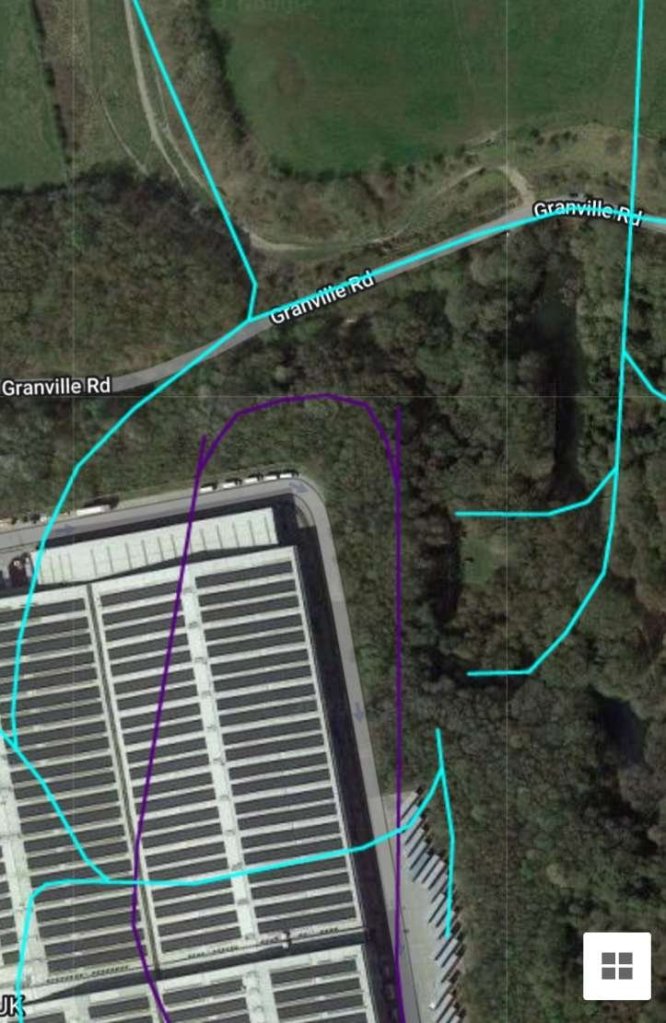
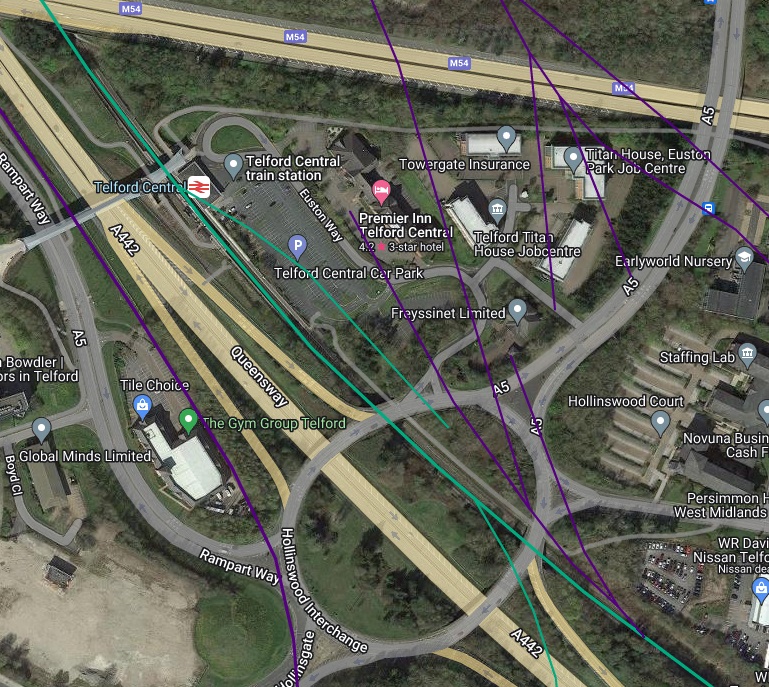
This extract from RailMapOnline.com’s satellite imagery shows the area of the furnaces in the 21st century, a little more of the area immediately to the North than appears on the OS map extract above and less on the East-West axis. The turquoise lines are symbolic representations of the tramway network which preceded the mineral railway which is represented by the purple lines. The two tramway routes leading North out of this and the map extract served, from the left: Meadow Colliery (which appears in the first map extract below); Barn Colliery; Waxhill Barracks and Barracks Colliery; and Muxton Bridge Colliery. (That line, from Muxton Bridge Colliery to the site of Old Lodge Furnaces is illustrated on the map extracts which follow the one covering Meadow Colliery). [47]
A view of Old Lodge Furnaces from the East. [4] (This image was first produced in the ‘London Trade Exchange’ of 2nd January 1875. Some of the tramways are visible, as are the coke ovens in the distance, and the engine house on the right, although the engraver has omitted the chimney beside the engine house.) [25: p11]
The site of the furnaces became the main marshalling are for coal wagons from a number of the collieries, but particularly Granville Colliery
The Lilleshall Company Tramway and Railway Networks
A significant network of tramways and later railways served the Lilleshall Company’s interests in East Shropshire.
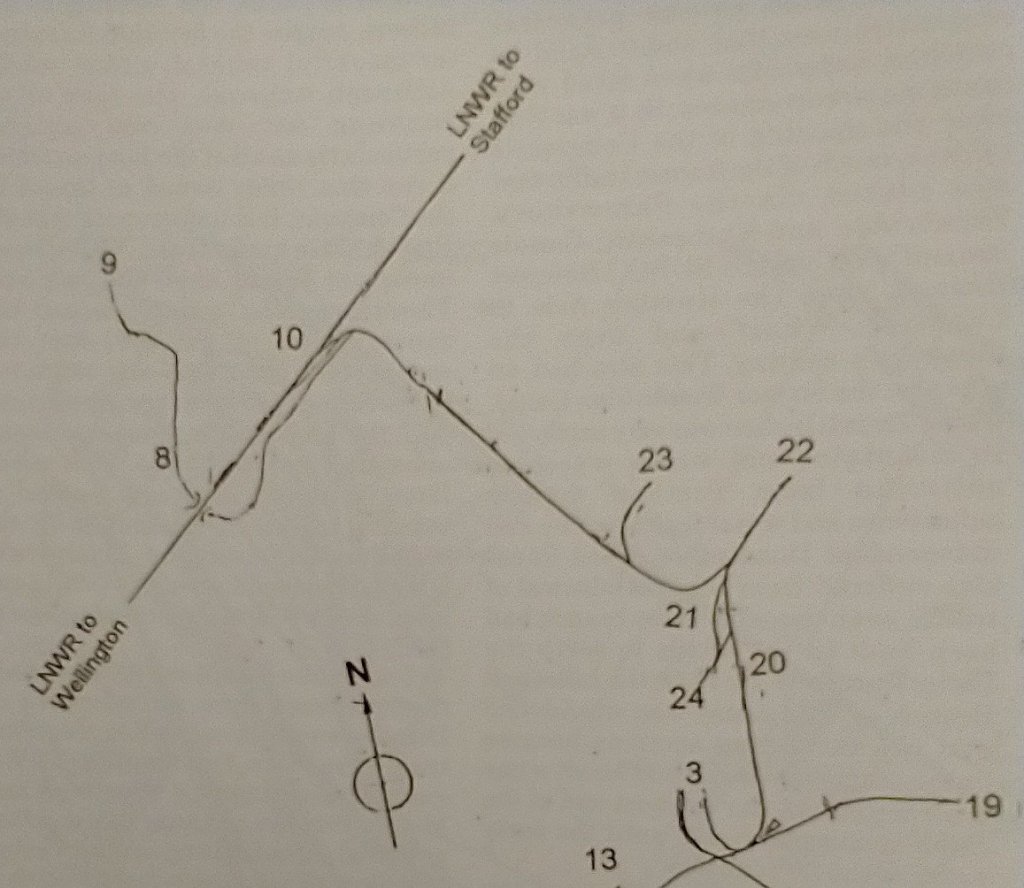
Bob Yate provides a sketch of the whole of the Lilleshall Company’s network of railways. This extract from the sketch map shows the length of their railways between the Humber Arm and Granville Colliery. The locations shown on this extract are: 3. Old Lodge Furnaces; 8. The Humber Arm Railway; 9. Lubstree Wharf; 10. The Donnington (LNWR) exchange sidings and the Midland Ironworks; 13. Lodge Trip; 19. Granville Colliery; 20. Barn Pits Colliery; 21. Waxhill Barracks Colliery; 22. Muxton Bridge Colliery; 23. Freehold Colliery; and 24. Shepherd Slag Crushing Plant. Yaye does not record Meadow Colliery which was close to the Donnington Wood Canal to the Southwest of Muxton Bridge Colliery and apparently tramway served until its closure. [2: p38]
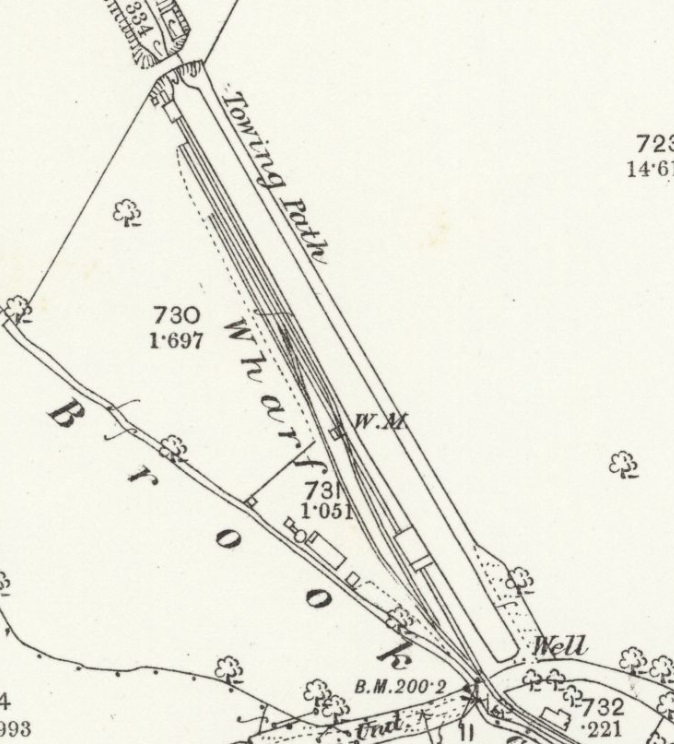
The northernmost point on the network of tramways/tramroads was a wharf on the Humber Arm of the Newport Branch of the Shropshire Union Canal. That short branch canal ran from Kynnersley to Lubstree close to The Humbers, a hamlet located to the North of the old LNWR mainline through Donnington and on the North side of Venning Barracks, the present base of the 11th Signal Brigade and Headquarters West Midlands, part of the British Army’s 3rd UK Division. The early tramroad North of the old LNWR line was later replaced by a standard-gauge line. The length of tramroad to the South of the LNWR line was eventually abandoned in favour of a standard gauge line to the East.
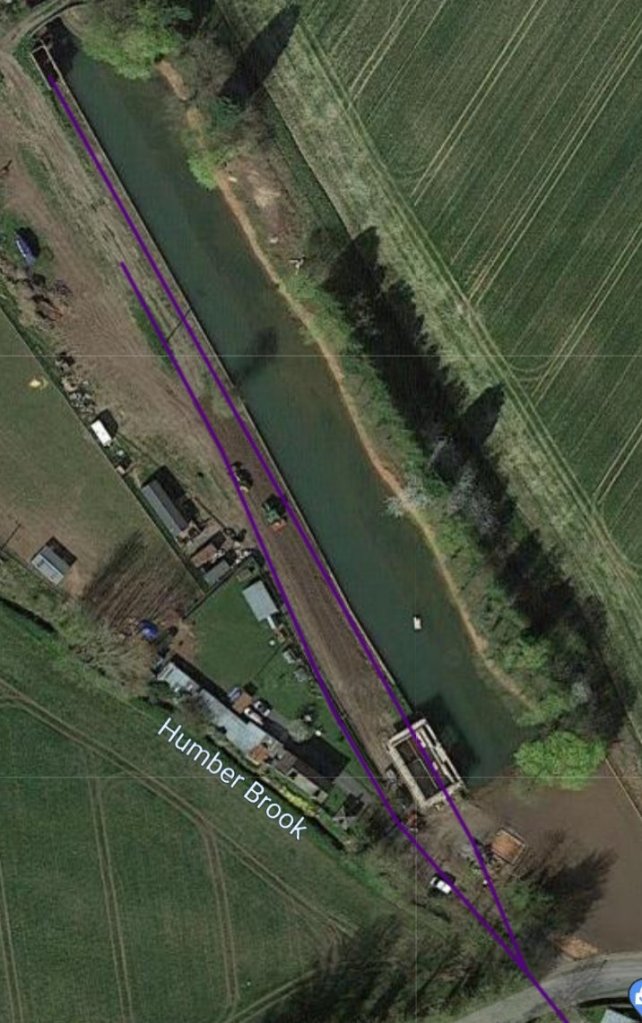
Approximately the same area as shown on the map extract above, as it appears on the RailMapOnline.com satellite imagery. The purple lines are the approximate line of the Mineral Railway that replaced the tramway we will following first. Satellite imagery shows nothing of the Canal Arm to the North of this image. Heading to the North from here, the line of the canal traverses open fields and then Aqueduct plantation. The trees in the plantation obscure any direct evidence of the old canal arm from above and, similarly, the location of its junction with the Shropshire Union Canal Newport Branch. Significant work has taken place at this location to convert derelict buildings to housing. [47]
The modern home created from the goods shed at Lubstree. [48]
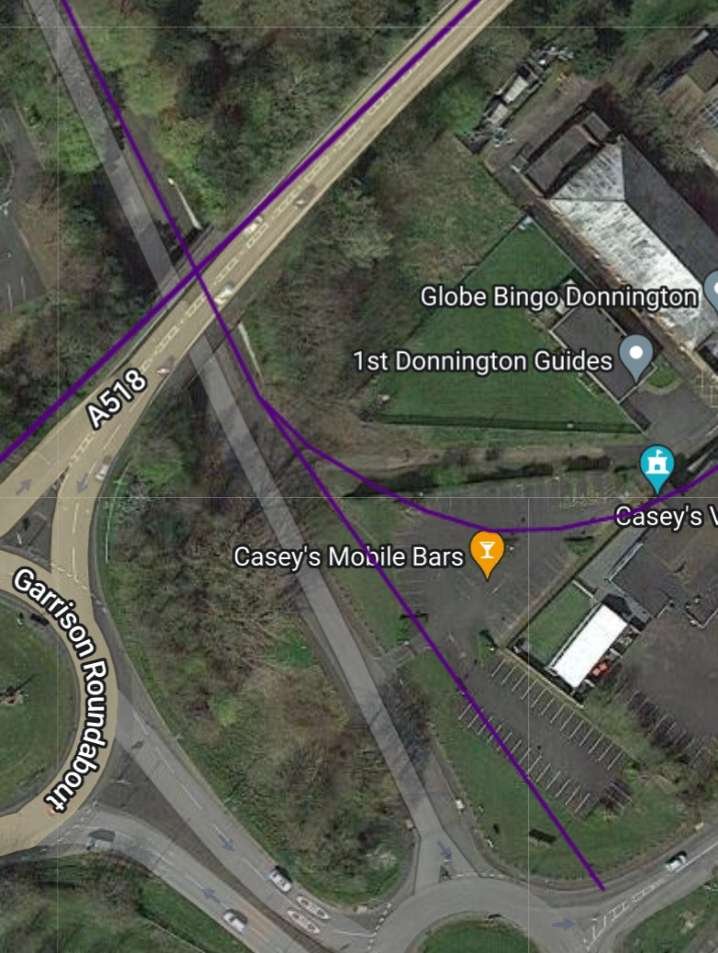
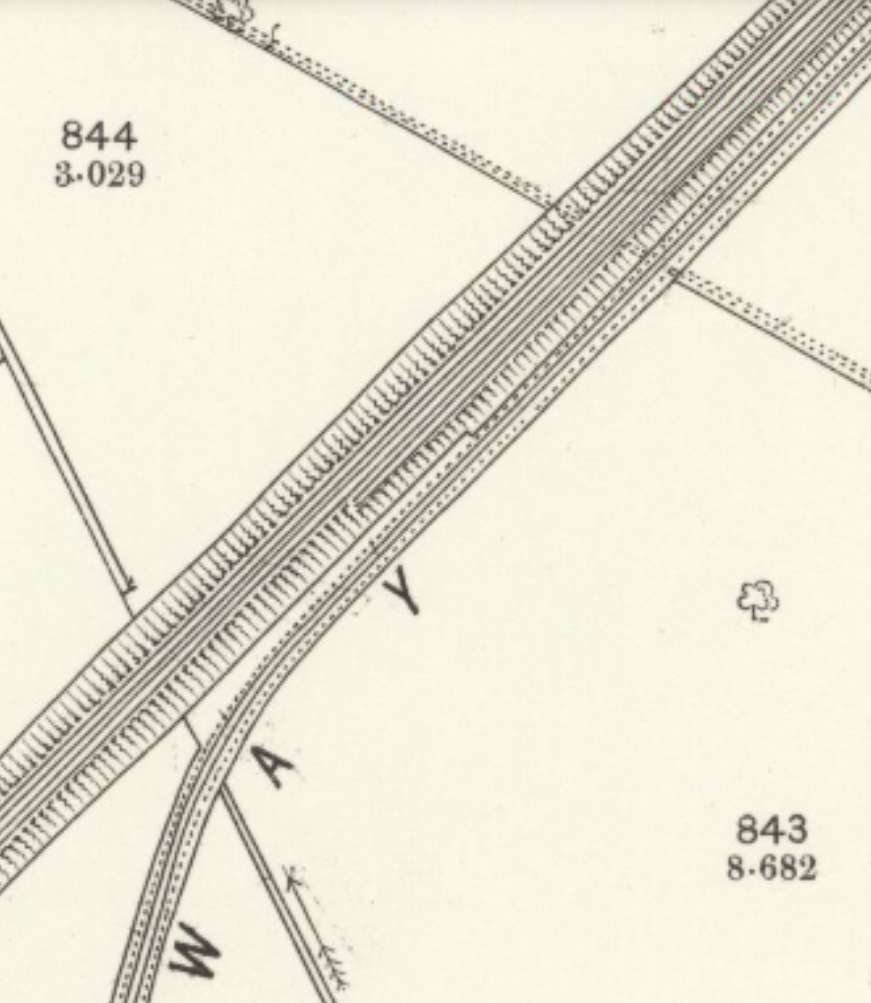
As shown on Yate’s sketch plan above, the line ran South towards the LNWR main line, passing under it by means of the bridge. The LNWR line has been replaced by the A518.
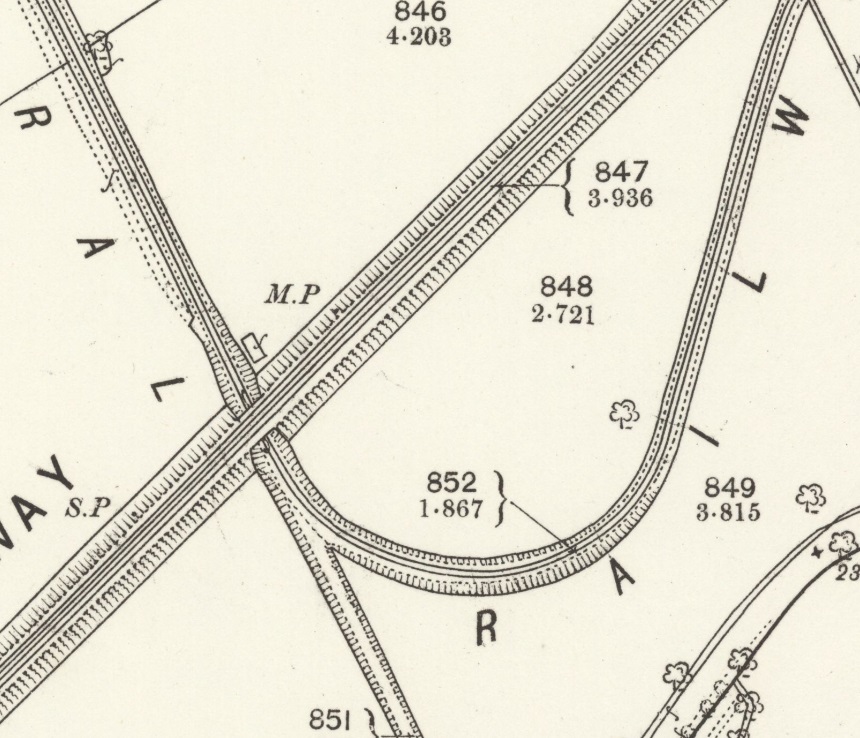
This extract from the 1882 25″ Ordnance Survey shows the point at which the LNWR bridged the Lilleshall Company’s tramway/railway. It also shows the old tramway route continuing to the South-southeast and the later standard-gauge mineral railway curving round to the Northeast to run parallel to the LNWR main line. [49]
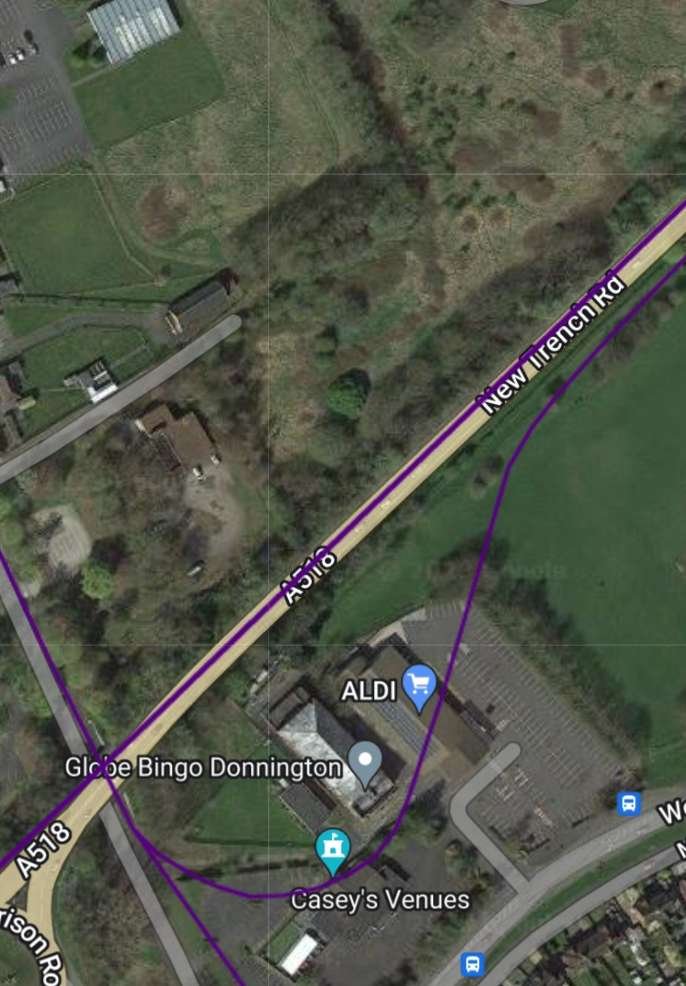
This RailMapOnline satellite image shows the features noted on map extract above and shows the dramatic changes which have occurred in the immediate vicinity of the old tramway. The tramway route is not followed by RailMapOnline South-southeast of Wellington Road. It runs Southeast towards Old Lodge Furnaces. [47]
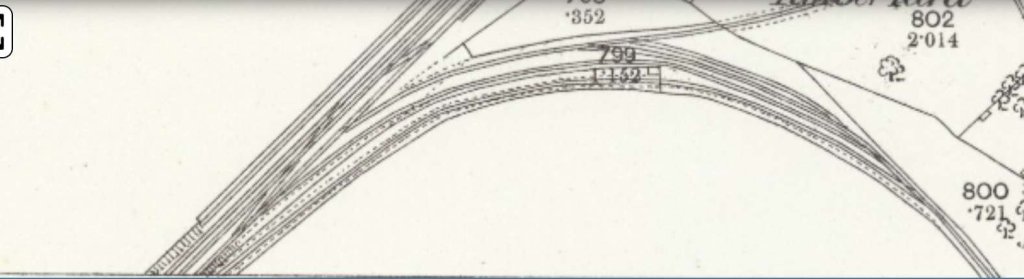
After passing under the LNWR main line, the Lilleshall Company’s Mineral Railway turned Northeast to run alongside the LNWR for a short distance.
This map extract shows the mineral railway curving away from the LNWR mainline. There were exchange sidings at this location and lines which accessed a Timber Yard and the Midland Ironworks, both on the East side of the LNWR mainline. [50]
On the curve on Donnington Sidings looking East. This is the same train as shown on the next picture. This image was shared by Carole Anne Huselbee on the Telford Memories Facebook Group on 14th September 2014. [51]
Donnington Sidings looking Northwest. A rake of empties setting off for Granville Colliery behind an 0-6-0ST locomotive. Wellington Road Crossing is a short distance ahead of the locomotive. This photograph was shared by Carole Anne Huselbee on the Telford Memories Facebook Group on 5th October 2014. [52]
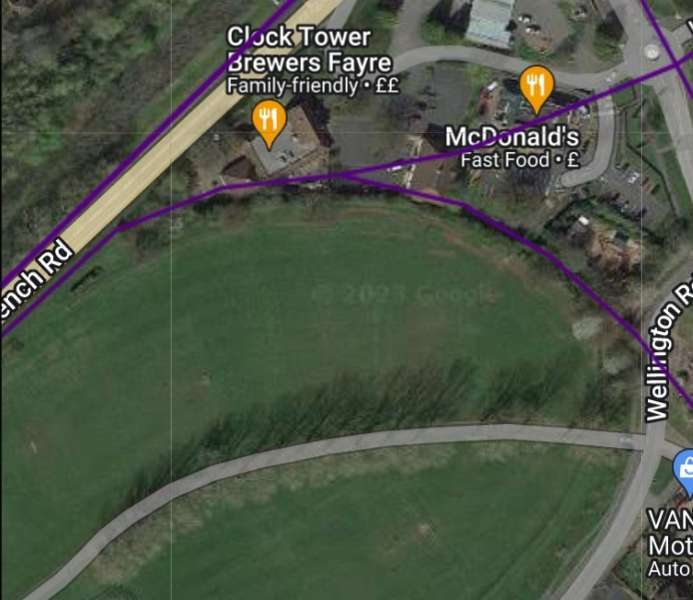
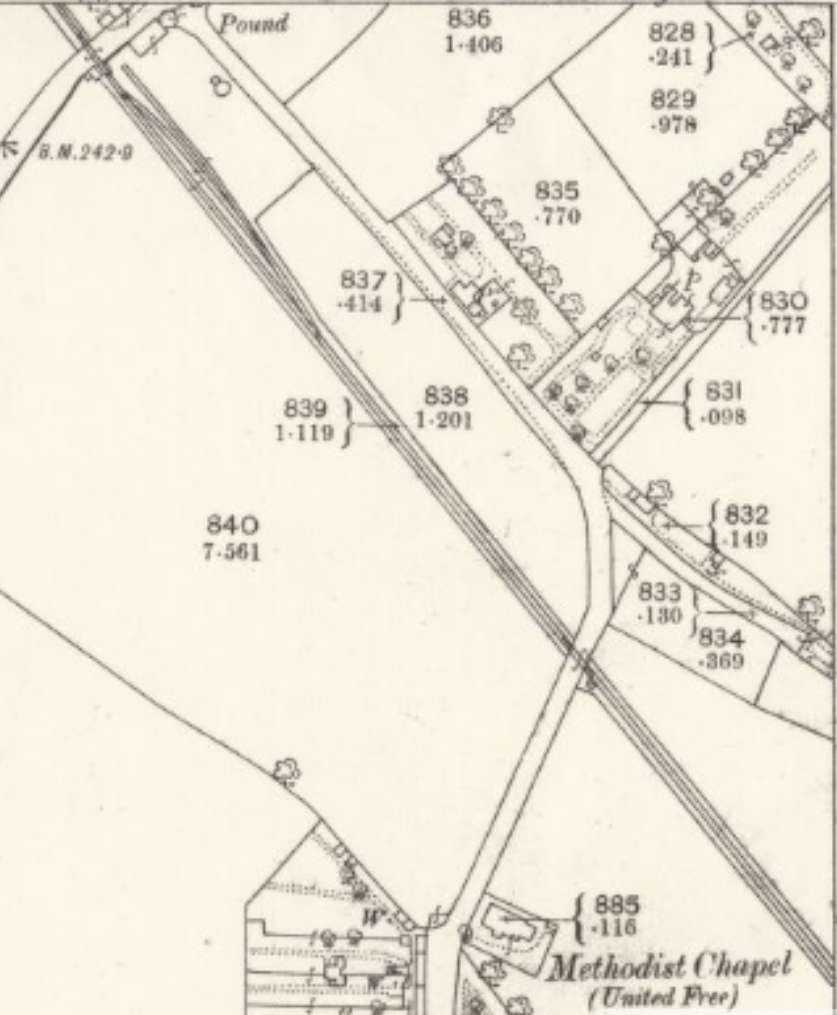
This next extract from the 25″Ordnance Survey of 1882 shows the mineral railway heading Southeast and crossing, first, what is now Wellington Road, and then running parallel to the modern Donnington Wood Way and crossing School Road. [49]
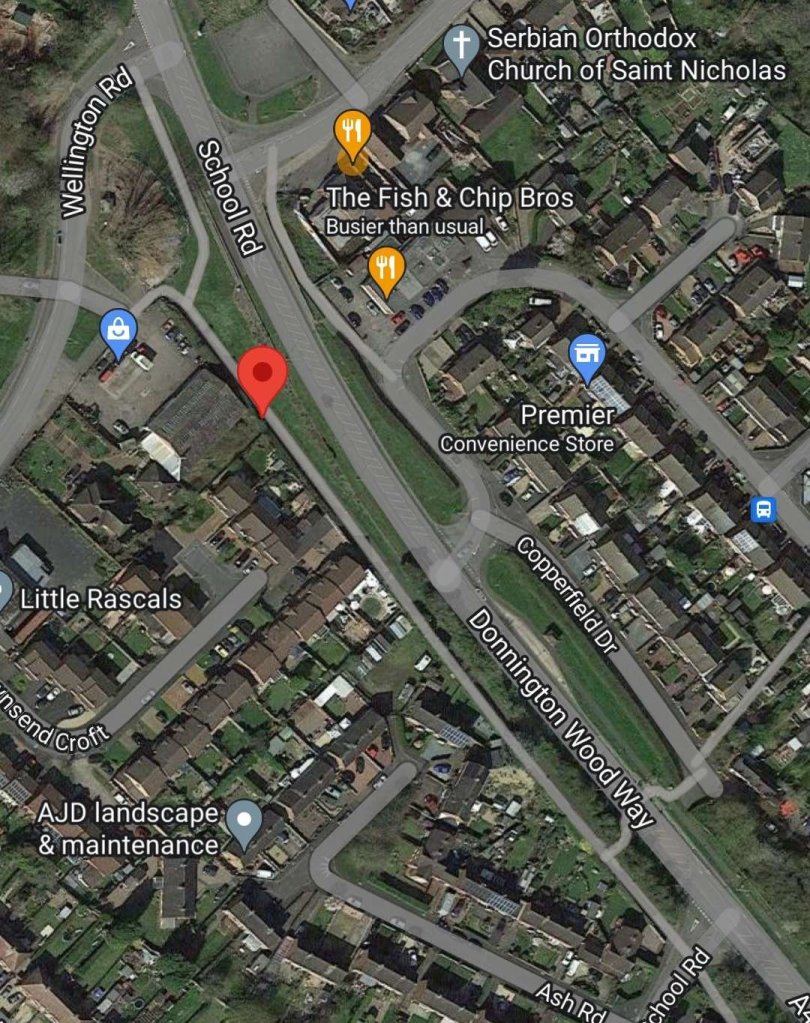
The route of the old mineral railway runs parallel to Donnington Wood Way, approximately on the line of the footpath shown on this Google Maps extract. The red flag marker highlights its route. [Google Maps, July 2023]
A closer view of the point where the mineral railway crossed the old Wellington Road. The photograph below shows a locomotive approaching the level-crossing from the Southeast. [47]
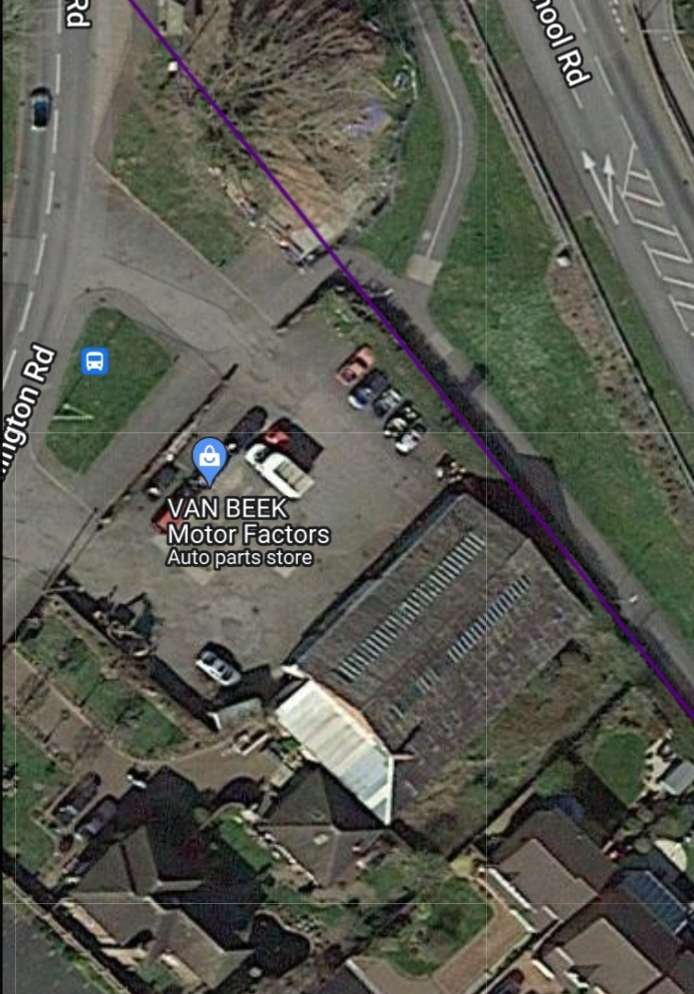
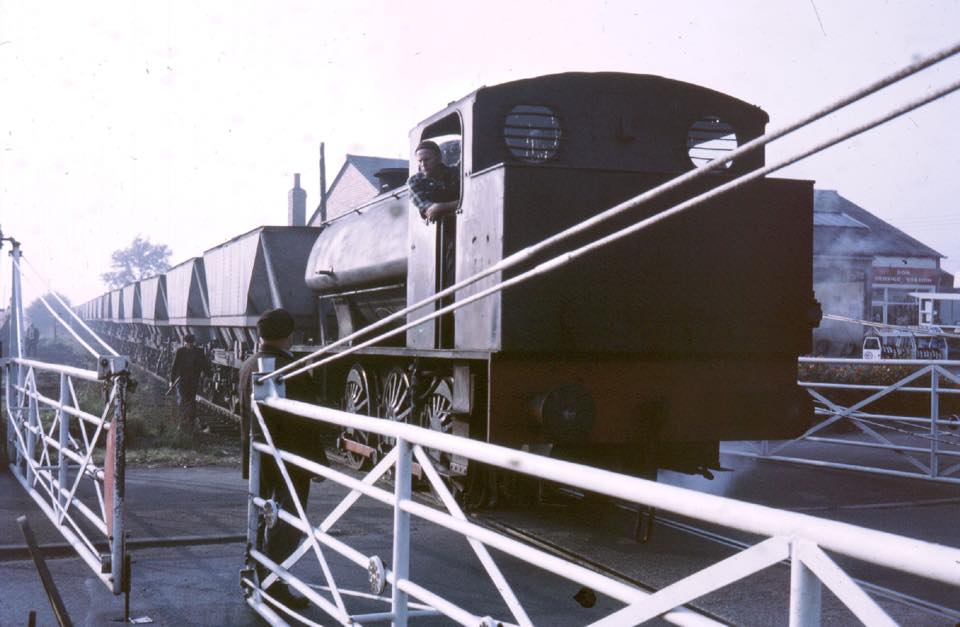
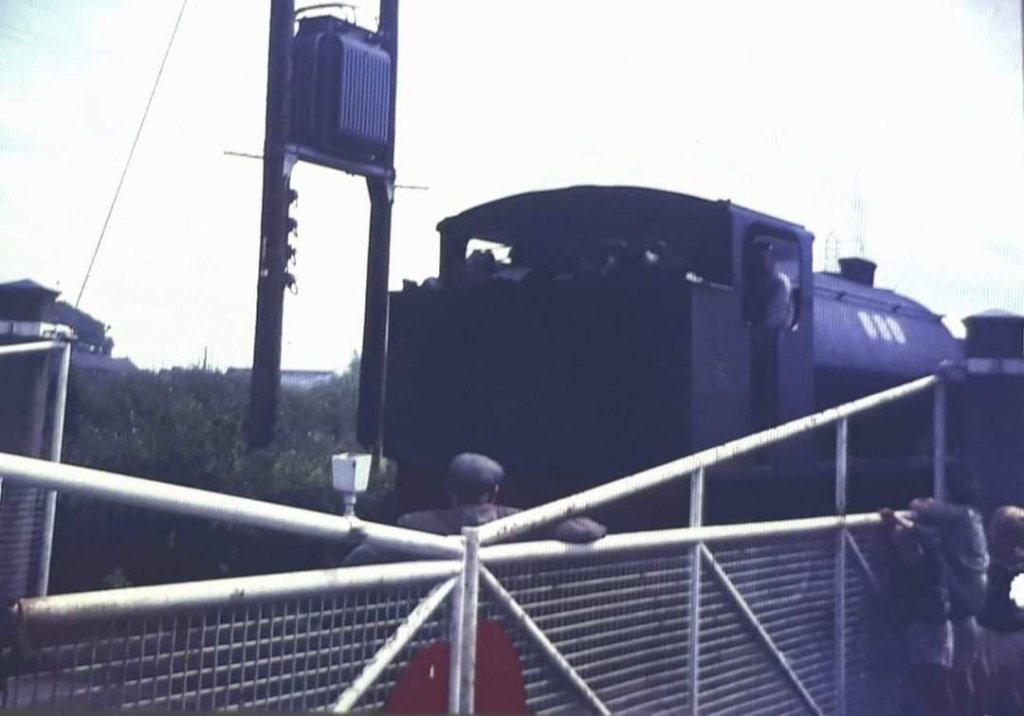
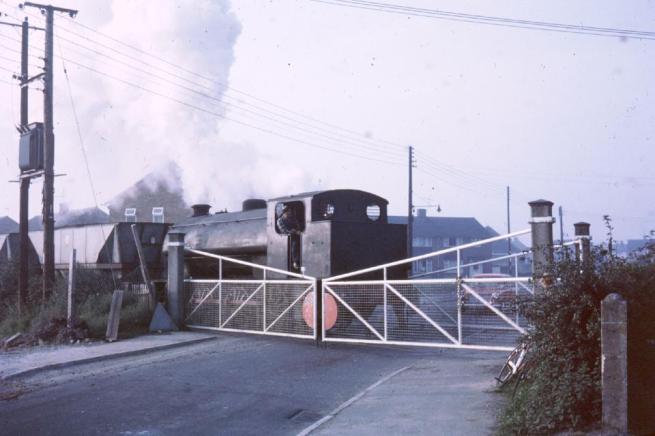
Wellington Road Crossing. The photograph below shows a locomotive entering the level-crossing from the Southeast. This picture was shared by Carole Anne Huselbee on the Telford Memories Facebook Group on 5th October 2014. [53]This crossing was located at what was called the Coal Wharf on the old Wellington Road just over & up from the now Ladbrokes Bookies. The line ran from the pit and approached it via what is now a footpath between “The Fields” (a lane to the houses at the bottom of bell rec.) and Donnington Wood Way then across the first gated crossing at the bottom of School Road and on past the end of what is now Van Beeks Motor Spares to the second crossing. The road was wide so gates with supporting heavy caster type wheels allowed them to open seperately. The photograph shows NCB loco No 10 crossing the main Telford to Newport road (A518) at Donnington in 1975 with a trip working from Granville Colliery to the exchange sidings which were just the other side of the road. The MGR hopper wagons would then be moved by a Class 47 to Ironbridge, with run rounds at both Wellington and Madeley Junction. This image was shared on the Granville Colliery Facebook Group by Peter Bushell on 21st August 2023, The gates in this image are now in use by Telford Steam Railway. (c) Unknown. [7]
Possibly the same locomotive, definitely at the same location as the image above. This image was shared by Phil Neal on the Granville Colliery Facebook Group on 8th August 2017, (c) Unknown. [12]
Locomotive No. 10 (a Hunslet 0-6-0 ) waiting with its train to cross Wellington Road. This photo was shared by Lin Keska on the Telford Memories Facebook Group on 2nd May 2017. [54]
Another view of the School Road Crossing. This photo was shared on the Telford Memories Facebook Group by Carole Anne Huselbee on 8th September 2014. [57]
An 0-6-0ST pulls a train of empties back from Donnington to Lodge and Granville Colliery. It is seen here crossing School Road. This image was shared on the Granville Colliery Facebook Group by Jim Walton on 16th August 2023, (c) Unknown. [13]
From the School Road Crossing the line ran Southeast. Its route is now a public footpath separated from the modern Donnington Wood Way by a hedgeline.
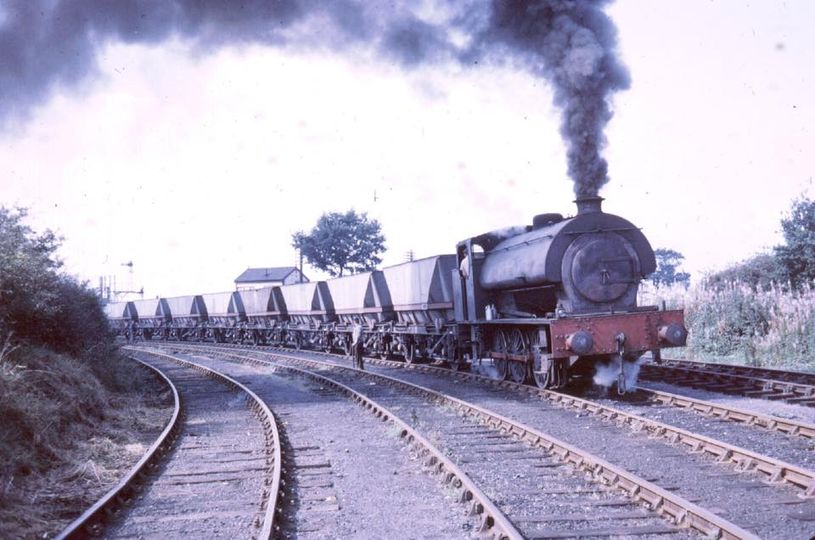
Somewhere Southeast of School Road on 8th September 1969, this view looks Northwest and shows NCB Loco No. 8 hauling empty hopper wagons towards Granville Colliery. This image was shared on Telford Memories Facebook Group by Carole Anne Huselbee on 14th September 2014. [58]
Heading up hill from Donnington towards the Lodge and Granville Colliery. [11]
An 0-6-0ST (possibly No.8) pulls is train of hopper wagons up the direct route from Coal Wharf (Donnington) to Granville Pit (not going via the location of Muxton Bridge Pit) .This image was shared on the Granville Colliery Facebook Group on 10th March 2020 by John Wood. [36]NCB 0-6-0ST No. 8 taking a train of empty hoppers up the line from Donnington. This appears to have been taken on the cutoff link avoiding the need for reversing at Muxonbridge Colliery. This image was shared on the Granville Colliery Facebook Group by John Wood on 20th March 2020. [8]This photograph shows ‘The Colonel’, an 0-6-0ST, running down to the Sidings at Donnington. The image was shared on the Telford Memories Facebook Group by Clive Sanbrook on 27th March 2020. [32]
A later locomotive crossing the same road. This image was shared on the Telford Memories Facebook Group by Carole Anne Huselbee on 15th September 2014. [35]
Having climbed up from the exchange sidings trains of empties entered the area of what was once Old Lodge Furnaces.
By 1970, this was the layout of the lines between the mainline at Donnington and the Colliery. This hand-drawn image appears in Bob Yate’s book. [25: p119]
Granville Colliery’s Diesel Loco (NCB No. 2D?) hauling a rake of empty coal hopper wagons on the lines to the West of Granville Colliery. This photo was shared on the Telford Memories Facebook Group by Carole Anne Huselbee on 5th October 2014. [33]
The original engine shed. This building was demolished and the NCB built a replacement some distance away. It looks in a poor condition. The loco on the left looks like the 0-6-0 Barclay tank No 11 or one of the large ex Taff Vale locos. The one on the right is an unidentified Saddle Tank. This image was sent to me by David Clarke the author of a book about Telford’s railways, (c) Unknown. [37]
A view of the NCB-built engine shed noted in the image above. After the NCB took over the collieries owned by the Company, Granville Colliery supplied coal to Buildwas Power Station and the coal trains were worked by a range of locos down the 1.5 miles to Donnington. Granville Colliery had a decent sized shed and in later years used Austerity 0-6-0ST tanks but in Lilleshall Company days the bigger engines were the ex-TVR and Barry railway engines. This image and the accompanying text were shared by Marcus Keane on the Telford Memories Facebook Group on 15th September 2015. [38]Possibly locomotive No. 8 on shed. This image was shared on the Granville Colliery Facebook Group by John Wood on 20th March 2020. [8]
This view from a location on the spoil heap to the South of the last image shows the later engine shed, built by the NCB, and two locomotives in steam marshalling wagons. The wagons closest to the camera appear to be empties which will probably be pushed towards the colliery screens which are a distance off to the right of this image. The photograph was shared on the Telford Memories Facebook Group by Paul Wheeler on 25th May 2018. [34]
The ‘Colonel’, with a train of full wagons having left Granville Colliery and about to marshall its train for onward movement to Donnington Sidings. [11]
‘The Colonel‘ again! ‘The Colonel‘ was named after Colonel Harrison, Chairman of Harrison’s Grove Colliery. He was also Chairman of Cannock & Rugeley Colliery. After a spell at Area Central Workshops – May 1960 to June 1961, ‘The Colonel‘ went back to Grove Colliery then to Coppice Colliery at Heath Hayes for a few months in 1963 before transfer to Granville Colliery in November 1963. This image was shared on the Telford memories Facebook Group by Metsa Vaim EdOrg on 24th October 2020. [41]
Towards the end of steam, this loco is bringing its train South from the Depot towards the location of the engine shed which is off the picture to the left beyond the stored coal. The locomotive is ‘Granville No. 5‘. This image was shared on the Telford Memories Facebook Group on 15th February 2017 by Lin Keska. [40]
This photograph was taken at a similar location to those above. At the centre of the image is the weighbridge. Granville Colliery itself can be made out on the horizon. The image was shared by John Wood on the Granville Colliery Facebook Group on 30th January 2015. [42]
The Lilleshall network continued to the West and Southwest of Granville Colliery and Lodge Sidings. These next photographs cover the length of the line through Oakengates to Hollingworth Sidings and Stafford and Dark Lane Collieries.
The dotted lines on this sketch map are private railways. The Lilleshall Company’s main line runs from Granville and Grange Collieries in the top-right of the sketch map via Old Lodge Ironworks and Priorslee Furnaces down to Hollinswood. This sketch map was included on the Miner’s Walk website which provides information about the local area. [10]
Grange Colliery, close to Granville Colliery operated independently at first and along with Granville Colliery survived to be nationalised in 1947. In 1951, the two were connected underground and from 1952 Grange Colliery served mainly to ventilate Granville Colliery. [2]
The monochrome photographs included here were taken by a number of different photographers. Where possible permission has been sought to include those photographs in this article. Particularly, there are a significant number of photographs taken by A.J.B. Dodd which appear here which were first found on various Facebook Groups. A number were supplied direct by Mike Dodd, A.J.B. Dodd’s son, who curates the photographs taken by his father. Particular thanks are expressed to Mike Dodd for entering into email correspondence about all of these photographs and for his generous permission to use them in this article. [59]
Grange Colliery as it appears on the 25″ Ordnance Survey of 1901, published in 1902. The railway lines shown in the immediate area of the shafts and slag heaps were internal lines unconnected to the wider Lilleshall Company network. A single line ran to Dawes Bower where transshipment to the standard gauge Lilleshall Company network took place. [60]
The same area as shown on the OS map extract above. This image comes from Google Maps. What appears to be a caravan park on the site of the old colliery is Telford Naturist Club. The buildings to the top-right of the image are the Cottage Boarding Kennels and Cattery. [Google Maps, September 2025]
This extract from the 25″ Ordnance Survey of 1901 shows the point where the branch-line to Grange Colliery met the main Lilleshall line. The line from Grange Colliery enters bottom-right. At the top-right of this extract two sets of lines are shown. The upper lines run towards Donnington sidings, the lower lines connect to Granville Colliery. The lines leaving the top of the extract are local lines serving the area immediately around what were Old Lodge Furnaces. The line leaving the west (left) edge of the extract is the Lilleshall Company mainline to Priorslee and Hollinswood. As can be seen at the centre of the extract, a loco bringing wagons from Grange Colliery would need to cross the mainline before reversing its wagons onto the mainline and, depending on its destination, then head for Donnington or Hollinswood. The sidings shown on this extract were also used for storing wagons before onward transit to their ultimate destination. [61]
A short distance to the West of the sidings at Lodge, a line running North from Donnington Wood Brick and Tile Works met the Lilleshall Company’s main line at a triangular junction. [62]
Donnington Wood Brick & Tile Works were conveniently sited next to reserves of Clay. The Works had their own internal railway with a Self-acting Inclined Plane. [63]
Donnington Wood Brick & Tile Works seen from the air, from the Northeast. This image was shared on the Telford Memories Facebook Group by Marcus Keane on 27th March 2019. [64]
A much closer view of the circular Hoffman Kiln taken in 1966. This image was shared by Marcus Keane on the Telford Memories Facebook Group on 23rd September 2017. [65]
The location of the Donnington Wood Brick and Tile Works plotted on modern satellite imagery from Google Maps. Properties on Cloisters Way sit directly over the site of the Hoffman Kiln. [Google Maps, December 2023]
West along the main line from the short branch to Donnington Wood Brickworks there were sidings adjacent to Rookery Road. I have not been able to find them on any maps.
This extract from the 25″ Ordnance Survey shows the Lilleshall Mainline running South West from the junction which served the Donnington Wood Brick & Tile Works and covers the approximate location of the Rookery Road Sidings. [66]
This view looks East towards the triangular junction serving Donnington Wood Brick Works, (c) A. J. B. Dodd. [59]An 0-6-0ST Saddle Tank participating in track removal at Rookery Road Sidings. This image was shared on the Granville Colliery Facebook Group by John Wood on 28th June 2020, (c) A. J. B. Dodd. [9]
I believe this photograph was taken from a point close to the bridge over Gower Street. It looks East and shows Rookery Road Sidings in the distance, (c) A. J. B. Dodd. [59]
Moss Road/Gower Street Railway Bridge before demolition. This is a photo of a photo which was behind glass, hence the glare. It was shared by Gwyn Thunderwing Hartley on the Oakengates History Group including surrounding areas Facebook Group on 17th July 2018. [68]
The junction for New Yard Engineering Works was adjacent to Wrockwardine Villa. The engine shed is visible bottom-centre of the extract. One of two bridges which crossed the Lilleshall Company’s Railway appears towards the bottom-left of the image. I believe that this was known as the ‘Tin Bridge’. [69]
A very similar area to that covered on the map extract above. The image comes, again, from RailMapOnline.com’s satellite imagery. Wrockwardine Villa is centre-top in this image. [47]
New Yard Engineering Works. … Gower Street runs North-South on the right of the map extract New Works buildings faced East onto the road. The locomotive shed can be seen to the top-left of the image. The workshops which stood alongside it were not built by the time of the Ordnance Survey (1901). [72]
Sketch Railway Plan/Map of New Yard Engineering Works, Gower Street, St Georges showing the layout in 1959. The workshops adjacent to the Engine Shed are shown, top-left. This image was shared on the Oakengates History Group Facebook Group on 1st April 2023 by Gwyn Thunderwing Hartley. [73]
A aerial postcard image of New Yard Engineering Works, the camera is to the Southeast of the Works and as a result shows, at the top-right, the Engine Shed and Workshop. This image was shared on the Oakengates History Group Facebook Group by Gwyn Thunderwing Hartley on 17th February 2019. [74]
The Lilleshall Company mainline curves to the South through the area known as ‘The Nabb’. Two bridges are shown. The one just visible top-right is the ‘Tin Bridge. Prior to the construction of the standard gauge mineral railway a horse-drawn tramway ran North-South through this location, running down the side of the terraced housing adjacent to the bridge. The second bridge appears bottom-left. It was a more substantial structure. [75]
The Tin Bridge again with Diamond Row above and to the right. This photograph was taken during the Lilleshall Company’s last run on their Mineral line, with the Engine ‘Alberta’ in 1959. The Photo was taken by the late Edgar Meeson, cousin of Frank Meeson. The image was shared in the Oakengates History Group and surrounding areas Facebook Group by Gwyn Thunderwing Hartley on 27th January 2021. [78]
This is the second of the two bridges which crossed the Lilleshall Main Line in ‘The Nabb’.The picture looks to the Southwest and comes from the Howard Williams Collection and was shared on the Oakengates History Group including surrounding areas Facebook Group on 27th February 2014 by Frank Meeson. [79]
From this location the Lilleshall Company’s line curved round to the South and crossed Station Hill, Oakengates.
Station Hill, Oakengates at the turn of the 20th century. This postcard view looks West across the Lilleshall Company’s line down the hill towards the centre of Oakengates. The crossing keeper’s beehive hut is visible to the left of the road. This image was shared on the Oakengates History Group Facebook Group on 24th October 2018 by Gwyn Thunderwing Hartley. [81]
Two further images of the Station Hill Crossing. …
Looking South across Station Hill. The beehive keeper’s hut stands across the road from the camera. This image was shared by Gwyn Thunderwing Hartley on the Oakengates History Group Facebook Group on 16th May 2021. [82]
The line crossed Station Hill in Oakengates on the level with the old canal running beneath the road. Looking West from the crossing, train crews would have had a glimpse of Oakengates (Market) Railway Station on the LNWR/LMS/BR Coalport Branch. The station appears on the left of this map extract. [83]
South of Station Hill the line ran at a high level above sidings which served Snedshill Ironworks. The next few images are relatively grainy as they are enlargements from aerial images from 1948. …
The Lilleshall main line runs across the top of the first of these images and behind the house at the top-right of the image. Wagons sit in the sidings associated with Snedshill Ironworks. [84]
On the South side of Canongate, Snedshill Ironworks dominates this map extract. The Shrewsbury to Birmingham main line can be seen entering a tunnel at the bottom-left of this image. Towards the left edge of the extract, the LNWR Coalport Branch runs in cutting crossed by a number of footbridges/access bridges. The Works sidings on the West of the Works terminate on the site, whereas those to the East of the building run off the bottom of the extract to make a junction with the Coalport Branch. The old canal was in use as a reservoir alongside the Works and the Lilleshall Company’s mainline runs alongside that reservoir to its East. [87]
Two further extracts from Image No. EAW013746 taken in 1948 looking East, which show the mineral railway running South passing the Snedshill Ironworks (at the bottom of the first image).
The darker area above the Ironworks is a remaining length of canal with a retaining wall immediately beyond which supports the Lilleshall Company’s main line. [85]
The Lilleshall Company’s main line is on the right side of this image. Canongate can be seen at the top of the image with the reservoir which was once a length of the Shropshire Canal to the South of Canongate alongside the Lilleshall main line. Snedshill Ironworks sidings pass under Canongate and run towards the bottom-left of the image. [86]
Another extract from an aerial image which was taken shortly after those above. The wagons on this image are in the same location as those on the image above. This extract from EAW013752 on the Britain From Above website looks over Snedshill Ironworks (bottom-left), with the short length of canal behind them, towards Priorslee. The Lilleshall Company’s mainline enters just below centre-left and runs at an angle towards the top-right of the image. The Greyhound bridge on the old A5 is alongside the level crossing which took the mineral railway across the A5. The Greyhound bridge took the A5 over the LNWR Coalport Branch (in deep cutting) and a feeder line from/to the sidings at the Snedshill Ironworks which met the Coalport Branch just beyond the bridge. [88]
Lines from Snedshill Ironworks join the Coalport Branch in passing under what became the A5 a little to the South of the Works themselves. The Lilleshall Company mainline crosses the road at level. A short branch runs off towards the Snedshill Brickworks. The GWR line from Shrewsbury to Wolverhampton runs in tunnel from top to bottom of the map extract. [90]
In the 21st century the area covered by the 25″ OS Map extract above has changed considerably. Only the GWR mainline from Shrewsbury to Wolverhampton remains of the lines on the OS Map extract. On this satellite image it is represented by the turquoise line and is running in tunnel. The Greyhound Roundabout has replaced what was the A5 (B5061 in 21st century) bridge over the Coalport Branch. The level crossing shown below, is long gone. The Lilleshall Company buildings have been replaced by Wickes and Aldi! The A442 dual carriageway dominates the area. [47]
This photograph looks across the roof of the Snedshill Brick and Tile Works towards Priorslee Furnaces. This image was shared on the Oakengates History Group Facebook Group on 24th November 2015 by Gwyn Thunderwing Hartley. [92]
Priorslee Furnaces and Steel Works in 1901. The Lilleshall Company’s main line runs diagonally across this map extract from the top-left corner to the bottom-right corner. [93]
Priorslee Furnaces viewed from the Southeast. This image was shared by Paul Wheeler on the Oakengates History Group Facebook Group on 28th November 2017. [94]
An aerial image of the extensive steelworks and slag reduction plant at Priorslee. The blast furnaces were decommissioned in 1958 and the internal system closed. This image was shared on the Oakengates History Group Facebook Group by Lin Keska on 22nd February 2017. [95]
This postcard view of Priorslee Furnaces was taken in 1899. The rail access to the plant is emphasised by the locomotive and wagons in the foreground. The image was shared on the Telford Memories Facebook Group by Lin Keska on 27th June 2020. [96]
Two Lilleshall Company locomotives (Peckett 0-4-0ST No.10 and 0-6-2T No. 3 which was once GWR No. 589) in attendance at the demolition of a 98ft high concrete coal bunker at Priorslee Furnaces circa 1936. This work was taking place as part of the demolition of the former steelworks site. The image was shared on the Oakengates History Group Facebook Group by Gwyn Thunderwing Hartley (courtesy of John Wood) on 1st December 2019. I understand that the original image is held in the Archives of the Ironbridge Gorge Museum Trust. [97]
This extract from the 1882 25″ Ordnance Survey shows the area immediately Southeast of Priorslee Furnaces The Lilleshall Company’s main line split in three directions – to the South it runs into Hollinswood Sidings and up to Hollinswood Junction, where it joins the GWR mainline, Southeast it continues towards Stafford Colliery, and Northeast towards Woodhouse and Lawn Collieries. [98]
The remaining length of the Lilleshall Company’s mainline served Stafford Colliery (passing Darklane Colliery on its way East. This extract is taken from the 1901 25″ Ordnance Survey. Hollinswood Junction on the GWR mainline between Shrewsbury and Wolverhampton just sneaks into the bottom-left corner of this map extract. [99]
Hollinswood Sidings and Hollinswood Junction, to the South of Priorslee Furnaces and Steelworks. The GWR line between Shrewsbury and Wolverhampton runs from the top-left to the bottom-right. The LNWR Coalport Branch enters top-left and leaves the map extract to the left of centre at the bottom of the image. The line turning off the GWR mainline to the South served a series industrial undertakings to the East of the old Shropshire Canal. The Lilleshall Company’s sidings enter the map extract centre-top and meet the GWR mainline at Hollinswood Junction. [100]
This is another area of Telford which has seen dramatic change. The GWR line ‘turquoise’ remains, the LNWR Coalport branch (thicker purple) has long gone. As have all the Lilleshall Company’s lines (thinner purple). The M54, the A442, Queensway and Hollinswood Interchange dominate the modern image. [47]
Locomotive 48516 heading what seems to be a train of empty coal wagons and facing towards Wolverhampton. Hollinswood Sidings can be seen beyond the locomotive. The image was shared on the Telford Memories Facebook Group by Lin Keska on 4th April 2018. [101]
Lilleshall Company Locomotives
The Lilleshall Company operated a number of steam engines which it picked up from various sources and some of which it built itself. The remainder of this article is no more than a glimpse of these locomotives on the Lilleshall Company’s network. The authoritative treatment of the motive power on the Lilleshall Company network is the book by Bob Yate, “The Railways and Locos of the Lilleshall Company.” [25]
Yate tells us that, because the Lilleshall Company’s network was extensive, it needed a considerable number of locomotives to operate it. He continues: “Much of the traffic was heavy, so it comes as no surprise to find that the company turned to acquiring former main line company locomotives for some of their more arduous duties. The total number of locomotives rose from four during the mid-1850s to eight by 1870, down to five by 1875, then six by 1886, increasing to nine in 1900 until 1920 when there were eleven. By the 1930s the number was back down to nine.” [25: p67] After WW2, numbers were reduced to five, and once closure was approaching all five were scrapped and two other locomotives were purchased.
Peckett 0-4-0ST, Lilleshall Locomotive No. 10 at Priorslee, (c) Industrial Railway Society, Ken Cooper collection. This photograph was shared by Andy Rose on the Telford Memories Facebook Group on 29th September 2019. [103]
Former Barry Railway ‘B1’ Class 0-6-2T No. 60 (also ex-GWR No. 251) which when purchased by the Lilleshall Company was given No. 5, photographer not known. This photograph was shared by Andy Rose on the Telford Memories Facebook Group on 29th September 2019. [103]
Lilleshall Company No. 9, an 0-6-0ST locomotive built by Robert Stephenson & Co. Ltd. It was bought by the Lilleshall Company in 1904 and lasted until 1929, (c) F. Jones Collection. This photograph was shared by Gwyn Thunderwing Hartley on the Oakengates History Group Facebook Group on 27th November 2017. [104]
Lilleshall built 0-4-0ST, Constance and Andrew Barclay 0-6-0T No. 11 at New Yard Locomotive Shed. The image was shared on the Oakengates History Group Facebook Group by Gwyn Thunderwing Hartley on 4th April 2021. [105]
Lilleshall Company Locomotive No. 12, (ex-GWR No. 2794) 0-6-0PT sits a New Yard. This photograph was shared by John Wood on the Oakengates History Group Facebook Group on 28th June 2020. [107]
Lilleshall Company Locomotive, Prince of Wales (ex-Lever Brothers, Port Sunlight Railway) 0-4-0ST also sits a New Yard This photograph was also shared by John Wood on the Oakengates History Group Facebook Group on 29th March 2018. [107]
National Coal Board Locomotives
With nationalisation, the NCB took over Granville and Grange pits and continued to use the northern length of the Lilleshall Network until closure of Granville Colliery in 1979. Granville Colliery supplied coal to Buildwas Power Station and the coal trains were worked by a range of locos down the 1.5 miles to Donnington. Austerity 0-6-0ST steam locomotives were the most common form of motive power until steam was replaced by diesel locomotives.
Between 1948 and 1964, 77 new “Austerity” 0-6-0ST locomotives were built for the NCB.
NCB Hunslet Austerity 0-6-0ST Granville No. 5 at School Road Crossing. [108]
When steam was replaced by diesel, the NCB deployed Hunslet 0-6-0DH locos at Granville Colliery. Between 1965 and 1989 well over 50 0-6-0DH shunters were built by Hunslet (Leeds) for the British market. More were also built to a variety of gauges for users abroad in South America, Africa, Europe and the Indian subcontinent. The Hunslet 0-6-0DHs were surprisingly powerful for their size, and their short wheelbase enabled them to operate in locations where other locomotives may struggle. [109]
Typical NCB Hunslet 0-6-0DH locomotives. [110]
Models of the Hunslet 0-6-0DH are produced in OO gauge by Revolution Trains and in N gauge by the N Gauge Society.
CAD 3/4 image of Hunslet 0-6-0DH in 00 Gauge. [110]
What can be seen today?
All of the Granville Colliery buildings have been removed.
All that remains of the Old Lodge furnaces after extensive dismantling and site restoration involving raising of the ground levels are parts of the brickwork of the first three furnaces.
The high walls behind the furnaces are the remains of the furnace loading ramps. On the right of the ramp walls hidden in the trees is a retaining wall in front which was the blowing house. Behind the loading ramps were calcining kilns which were added in 1870 to improve the quality of the iron ore. Remains of the Lodge Furnaces, Tug Boat Canal and other buildings can be seen around Granville Country Park.
The Lilleshall Company Railways have disappeared completely.
G. F. R. Barker; Leveson-Gower, Granville (1721-1803); in Sydney Lee, (ed.); Dictionary of National Biography. Vol. 33; Smith Elder & Co., London, 1893.
The Jim Clemens Collection No. 2 – Steaming Through Shropshire Part 1; B&R Videos; and can be seen on Facebook at https://www.facebook.com/groups/265906436919058/search/?q=locomotive&locale=en_GB. B & R Video Productions produce a series of DVDs which have primarily been created by converting cine-film. One part of their library is the Jim Clemens Collection. These stills from the video are shared here with permission from Michael Clemens who holds the copyright on his father’s work. Michael is an author in his own right and maintains a website: https://www.michaelclemensrailways.co.uk. On that website there are details of all of the books he as published together with quite a bit of downloadable material including working timetables. His most relevant publication to this current article is: Michael Clemens; The Last Years of Steam in Shropshire and the Severn Valley; Fonthill Media Ltd, Stroud, Gloucestershire, 2017. That book contains two photographs which are similar to two of the images shown above (p67).
Many of the photographs taken by A.J.B. Dodd which appear in this article were first found on various Facebook Groups. A number were supplied direct by Mike Dodd, A.J.B. Dodd’s son who curates the photographs taken by his father. Particular thanks are expressed to Mike Dodd for entering into email correspondence about all of these photographs and for his generous permission to use them in this article.
This is little more than a mildly interesting aside. Or perhaps an addendum to the short series about the Line between Wellington and Craven Arms. ….
The small companies that built the different lengths of the railway line between Wellington and Craven Arms struggled to manage their assets without support from the Great Western Railway. The GWR first began to operate the services on the line in the period after each section was opened, before gradually absorbing the companies that owned the different sections of the line.
“Small railway companies reliant on a dominant partner often found that continued independence was not worthwhile.” [1][6]
The Wenlock Railway experienced problems completing their railway through to Marsh Farm Junction/Carven Arms. It was an agreement with the GWR that made completion possible.
“In 1865 the GWR agreed to make an annual payment of £5,000 to the Wenlock Railway as a commuted payment for working the line between Wenlock and Presthope, and this cash inflow enabled the Wenlock Railway to resume construction. By the end of September 1867 the line on to Marsh Farm was thought to be ready, but Colonel Rich for the Board of Trade condemned the rail chairs of 21 lb. and 22 lb., saying they were too light and had to be replaced by 30 lb. chairs. This decision meant that the whole of the track between Presthope and Marsh Farm Junction had to be taken up and relaid at an extra cost of £2,244. On 9th December 1867 Colonel Rich approved of the line, and the entire line from Buildwas to Marsh Farm Junction was opened to passenger traffic on 16th December 1867.” [1][2: p57 & 252][3: p304][4: p112][5: p34]
“The relationship between the Wenlock companies and the GWR was not smooth; the small companies resented the large proportion of income – 42.5% – that the GWR was retaining for working the line, and there were many detailed issues that became contentious. In 1861 the London and North Western Railway had opened its Coalport branch line, and the possibility arose of connecting the Wenlock lines to it, by-passing the GWR. In 1872 plans were prepared for a line from Lightmoor to the LNWR line near Madeley Court; incidentally the line would also link in furnaces at Stirchley, Hinkshay and Blists Hill.” [1]
There were some sound reasons for the line being considered. Had construction taken place the LNWR would have succeeded in gaining access to the full line through Much Wenlock to Craven Arms. The Coalbrookdale Company was, at first, supportive of the scheme. Its support was critical to the viability of the proposal.
The title and introduction to the Act of 21st July 1873. [7][8]
The Act allowed for the construction of two lengths of railway:
The first was four furlongs three chains and fifty decimals of a chain in length, commencing in the parish of Madeley by a junction with the Great Western Railway (Lightmoor to Coalbrookdale Branch) near Lightmoor, and terminating in the said parish of Madeley in a pasture field called Near Moors, numbered 201 on the tithe map of the said parish; [8]
The second was seven furlongs three chains and fifty-four decimals of a chain in length, commencing in the said parish of Madeley by a junction with the said intended railway No. 1 in a pasture field called Near Moors, numbered 201 on the tithe map of the said parish, and terminating in the parish of Stirchley by a junction with the Coalport Branch of the London and North Western Railway. [8]
The “Much Wenlock and Severn Junction (Lightmoor Extensions) Act, got the Royal Assent on 21st July 1873. … The Wenlock companies had relied on the Coalbrookdale Company subscribing a substantial sum to the construction, but now that Company said that the downturn in the Shropshire iron trade meant that they could not do so. There was now no possibility of making the new line.” [1][2: p65-66]
“The Wellington and Severn Junction Railway had long been leased to the Great Western Railway, so that the smaller Company was simply a financial entity. In July 1892 it agreed terms with the GWR and was absorbed by it.” [1][6]
“This left the [other] Wenlock companies in an uneasy relationship with the GWR. In December 1887 the GWR made new proposals for the payments it would make for working the line, but the smaller companies stalled. In fact, the working agreement with the GWR expired at the end of June 1893, but by the end of December 1893 agreement had still not been reached, and the GWR stated that it was not prepared to continue to work the line on the present terms. The GWR offered terms for purchasing the companies, but these were refused. In frustration the GWR threatened to cease working the line. The Wenlock Companies [ultimately had to accept] the GWR terms; the takeover was effective from October 1896.” [1][2: p53]
Ken Jones; The Wenlock Branch. Oakwood Press, 1998.
Ernest F Carter; An Historical Geography of the Railways of the British Isles; Cassell, London, 1959.
Rex Christiansen; A Regional History of the Railways of Great Britain: volume 13: Thames and Severn; David and Charles (Publishers) Limited, Newton Abbot, 1981.
E T MacDermot, History of the Great Western Railway Volume 2: Great Western Railway, London, 1931.
John M. Tolson; In the Tracks of the Iron Masters; in The Railway Magazine, London, July and August 1964.
The first global history of the epic early days of the iron railway. Yale University Press says, “Railways, in simple wooden or stone form, have existed since prehistory. But from the 1750s onward the introduction of iron rails led to a dramatic technological evolution—one that would truly change the world. … In this rich new history, David Gwyn tells the neglected story of the early iron railway from a global perspective. Driven by a combination of ruthless enterprise, brilliant experimenters, and international cooperation, railway construction began to expand across the world with astonishing rapidity. From Britain to Australia, Russia to America, railways would bind together cities, nations, and entire continents. Rail was a tool of industry and empire as well as, eventually, passenger transport, and developments in technology occurred at breakneck speed—even if the first locomotive in America could muster only 6 mph. … The Coming of the Railway explores these fascinating developments, documenting the early railway’s outsize social, political, and economic impact—carving out the shape of the global economy as we know it today.” [1]
Praise
Positive comments made by various readers/critics, marshalled by Yale University Press. …
“One does not have to be a train-spotter to read it: it tells a crucial story of our social and economic history, and does so with recourse to exceptional scholarship.”—Simon Heffer, The Telegraph. [1]
“Written with great confidence and considerable aplomb, The Coming of the Railway is a must for the train enthusiast.”—Jeremy Black, New Criterion. [1]
“With impressive research and superb prose, Gwyn traces the complex evolution of railway technology, finance, and operating practices. . . . [He] succeeds brilliantly.”—Albert Churella, Technology and Culture. [1]
“The nineteenth century was defined by the railway. In this compelling new book David Gwyn weaves together the disparate strands that led to its emergence as the singular new technology of its age; a monumental study, erudite, authoritative, and full of wider historical insights.”—Sir Neil Cossons, former director of the Science Museum London. [1]
“This book is a real eye-opener for rail enthusiasts and scholars with a detailed and well researched account of the dawn of the railways. The rapid advancement in technology in the eighteenth and nineteenth centuries that the railways brought our society is truly astounding.”—Siddy Holloway, historian and presenter. [1]
“A fresh perspective on the early railway story across time and world space, with a wealth of intriguing details. Gwyn ably demonstrates the role played by overlapping technologies, harmonising under the influence of shaping forces.”—Susan Major, author of Early Victorian Railway Excursions. [1]
“The railways were the most important invention of the nineteenth century, but they only emerged thanks to a series of technological developments. This book documents these in a thorough and revealing way which makes it essential reading for anyone interested in the origins of this great invention.”—Christian Wolmar, author of The Great Railway Revolution. [1]
Review
I found this book to be easy to read and yet deeply scholarly. A superb, informative and enjoyable read! It is not too often that you find a railway history book as readable as a novel.
It seems to me that it is possible that the individual chapters are developed from the text of a series of lectures on early railway history. The readable text is backed up by very comprehensive notes and references. There is also a wide-ranging bibliography.
The chapter headings are:
Trade, transport and coal 1767-1815
‘Rails best adapted to the road’: cast-iron rails and their alternatives in Britain 1767-1832
Canal feeders, quarry railways and construction sites
‘Art has supplied the place of horses’: traction 1767-1815
‘The new avenues of iron road’ 1834-1850’You can’t hinder the railroad’
‘You can’t hinder the railroad’
These are intriguing titles for episodes in the development of railways and Gwyn ensures that there is no myopia, no unwarranted focus just on developments in the United Kingdom.
His chapter on Coal Carriers quickly looks beyond the Stockton and Darlington Railway, first to changes in the Northeast and then to Lancashire and Scotland, before looking across the Channel to France and particularly to the railways of Saint Etienne in the Massif Central. He then directs his readers to events in Prussia; to Pennsylvania; and then to Australia!
In fact it was long-lasting developments in the New South Wales coalfield “which ultimately enabled Newcastle in Australia to take over from Newcastle upon Tyne as the largest coal-exporting harbour in the world. [2] The New South Wales coalfield also remained a stronghold of steam traction into the 1980s, just as the wooden way could still be seen in operation on Tyneside many years after the iron road first appeared. Coal-carrying technologies die hard.” [1: p212]
In his chapter on Internal Communications (1815-1832) Gwyn invites his readers to consider two markedly different railways which set the scene for the development of long-distance railways. The Cromford and High Peak Railway in England and the Budweis-Linz horse railway in the Austrian Empire. These two lines had very little in common technically but both sought to connect places at the opposite ends of one jurisdiction. … Long distance railways were seen as feasible: no longer was the ambition solely to connect mines, quarries and factories with navigable water. Railways began to serve rural areas and market towns, and offered a variety of services, including passenger transport.
He highlights the place in that process of development of the tramroads in the Welsh Marches: linking Brecon to the Wye Valley and Kington; and linking Abergavenny to Hereford. Although not in themselves of national significance, they contributed to the growing belief that longer distances could be embraced as rail technology advanced.
“In 1810, Thomas Telford surveyed, and William Jessop approved, a proposal for a ‘cast-iron railway’ from Glasgow to Berwick-on-Tweed, over 125 miles in length, the first credible proposal for a railway connecting the east and west coasts of Britain.” [1: p214] “In 1814, the French engineer Pierre-Michel Moisson-Desroches (1785-1865) urged Napoleon to build seven national railways from Paris. In 1817 the radical English schoolteacher, author and publisher Sir Richard Phillips (1767-1840) anticipated double-track railways connecting London with Edinburgh, Glasgow, Holyhead, Milford, Falmouth, Yarmouth, Dover and Portsmouth, drawn either by horses at 10 mph or by Murray-Blenkinsop locomotives at 15. [3: p75-76] By the 1820s these were becoming a serious possibility.” [1: p214]
During 1824 and 1825, 30 schemes for railways were presented to Parliament. The financial crash of 1825 put paid to most of them. The most ambitious would have connected London, Liverpool, Manchester, Birmingham, South Wales and Edinburgh! [4]
There was no failure in imagination, a scheme was proposed, for example, to build a railway from the Chagres River to Panama City. Gwyn explains that this was one of several speculative schemes to link seaports to their hinterlands. It was eventually built as ‘The Panama Canal Railway’, which runs alongside the Panama Canal from near the city of Colón to Panama City, crossing the Chagres River and the Continental Divide, with the primary passenger route running between Panama City and Colón. Incidentally, while a daily passenger service was suspended during the 21st century pandemic, the railway is of historical significance and still operates, sometimes offering special tours for cruise ship passengers. It was conceived to provide a connection between the Atlantic and Pacific oceans. Like other early railways it was conceived as a grand project. These projects required imagination and demonstrated the potential for railways to unite distant parts of a country, even if they weren’t immediately profitable.
Other proposed schemes mentioned by Gwyn linked: Newcastle to Carlisle; Manchester to Hull; Limerick to Waterford. These speculative schemes created space for the Liverpool and Manchester Railway to be successfully promoted.
However, what was contributed by the Cromford and High Peak Railway in England and the Budweis-Linz horse railway in the Austrian Empire was not so much about imagination as about practicalities. They demonstrated that “a considered scheme did have the potential to attract capital, as well as state support (or to do without it), and to bring together an engineering team capable of creating an iron road to unite distant parts of the country, even though one was not profitable for years and the other struggled to be completed.” [1: p232]
So it was that by the 1820s and early 1830s railways were for the first time being built to meet a needy in regional economic life, rather than purely serving a locality by connecting a mineral region with navigable water.
Gwyn points to three completed schemes designed to connect seaports to their hinterland, carrying passengers as well as goods – the first main lines. Two were in the USA and one in the UK – the Baltimore and Ohio, the Charleston and Hamburg and the Liverpool and Manchester.
The backers of the Liverpool and Manchester had deep pockets and needed them. The £600,000 that the line cost (£19,355/mile) was twice the cost per mile of the Baltimore and Ohio and twelve times the cost per mile of the Charleston and Hamburg. [5] Interestingly, there was a real imbalance in the contributions made by investors from Manchester and Liverpool. While the Exchequer made £100,000 available as a government loan and Manchester investors contributed £12,000, this from Liverpool provided £488,000! [6][7][8]. The difference in funding allowed the Liverpool and Manchester Railway to be considerably more robust!
Although the Liverpool and Manchester was definitely the first intercity main line railway, the three schemes developed in parallel and were completed only a matter of a few short years apart. Nevertheless, the opening of the Liverpool and Manchester Railway on 15th September 1830 was to be remembered in British and world history. “Previous transport undertakings in the United Kingdom had been inaugurated by local bigwigs, but, on that day of watery sun, Liverpool saw a gathering of continental European nobility such as had not been assembled since the Congress of Vienna rubbing shoulders with the British political elite. Not only was the guest of honour the Prime Minister and war hero, Arthur Wellesley, First Duke of Wellington (1769-1852), but four future British prime ministers were also present, and Sir Henry Brougham, the very embodiment of the ‘philosophic Whig’, was to be Lord Chancellor before the end of the year. Guests of rank, and in some cases of intellect and distinction also, included six earls, two marquises, six viscounts and over twenty other members of the peerage, though only one bishop. Some other guests were people in the public eye, like the writer and actor Fanny Kemble and the polymath Charles Babbage (1791-1871).” [1: p258]
International representation was also strikingly significant with important guests from Russia, Hungary, the United States of America.
Gwyn tells us that it was the opening of the Liverpool and Manchester Railway, rather than the Stockton and Darlington Railway, that took centre-stage as an epoch-defining moment. It represented “a shift in scale and ambition that surpassed both the earlier generation of iron railways and all but the longest canals and turnpikes. Not only was it entirely steam-operated, but its locomotives themselves were the design precursors of nearly all that followed. Another step change was the way that passenger facilities were set out and managed; its stations showed the way forward for railway companies in the years to come. Above all, it broke with most predecessor railways in England in that it was built not to carry coal or some other mineral, but to serve the globalised economy of cotton. It connected two great industrial centres, one an ocean-serving port, the other a manufacturing town. Its architecture celebrated what the railway embodied, not only the empirical philosophy which identifies successful solutions to technical problems but also Britain’s role as the ‘mart of nations’.” [1: p260]
In addition to the price per mile of the three first main line railways, Gwyn quotes the cost of others:
The Dublin and Kingstown (Dun Laoghaire) cost £60,000 per mile, much more even than the Liverpool and Manchester;
The Leicester and Swannington Railway, a mere £7,740.24;
The New York and Harlem was the costliest per mile in the USA at $141,333, a consequence of having to build a very solid road using stone sleepers through the middle of a built-up area;
Otherwise the most expensive American railway for its route length had been the Pontchartrain in Louisiana, at $72,000 a mile; it was only 4.5 miles long but was double-track throughout and ran through a swamp.
The Boston and Lowell cost $70,000;
The Mohawk and Hudson, $63,568;
The soundly built Baltimore and Ohio cost $38,232;
The Tuscambia, Cortland and Decatur, making its way over more than 45 miles of Alabama, along a single line of strap rails, was built for no more than $8,840 per mile!
Gwyn continues to look at the forms of finance which applied in different jurisdictions. …
In the UK, a variety of private finance arrangements were made among these were some railways funded by local subscription, not necessarily by wealthy individuals, some through provincial joint-stock banks and London banking houses. Interestingly “Quaker finance played an important part: Dublin and Kingstown was a Quaker initiative, as the Stockton and Darlington had been. In the north-east of England, where coal ownership and political power had always been virtually synonymous, Joseph Pease’s election to the reformed House of Commons in 1832 meant that the influence of the Society of Friends now extended to parliament.” [1: p270]
In the USA, capital finance was difficult to obtain. Most railroads raised capital through the services of an intermediary selling bonds to the money markets of London. Gwyn points out the significant role of Quakers, particularly through the banking houses of Philadelphia. He suggests that this was a significant factor in that city becoming a railway hub so very early in the development of railways in the USA.
Rail development in the USA in the first half of the 1830s greatly surpassed that in the UK and Europe. Many lines in the USA were built using wrought-iron straps on timber rails and as a result kept construction costs to a minimum. Whereas most bridges in the UK were built with masonry, brick and steel, in the USA timber was used most often.
The use of horses increased, in absolute terms, in the 1830s. “Horses were used where traffic did not justify locomotives or where mechanical traction was forbidden, such as in built-up areas, either absolutely or during the hours of darkness or through covered bridges. Short-haul movement and shunting was often carried out by horses. … Many well-established railways had no need to convert to locomotive operation if traffic did not increase. The independent carriers who operated the trains on many systems often had neither the means nor the need to use them.” [1: p276][9: p152, 245, 569]
As the 1830s unfolded there were still railways being designed and built with horse-operation in mind examples include – the Ffestiniog in North Wales, the Bratislava-Trnava railway in Hungary. Gwyn notes that while many applications for horse power continued through the middle of the 19th century, the times were very definitely changing, “by mid-century, recognisable national [rail] networks were becoming evident in some countries, connected with seagoing ships carrying textiles and foodstuffs across oceans.” [1: p285] Nothing could be what it once was. Steam power was already, by 1850, dramatically reordering the world!
The European railway network in 1850. … There was a marked difference between England and the rest of Europe in 1850, but that would not last, national networks across Europe would continue developing throughout the century. [1: p293]
In the final chapter of the book- ‘You can’t hinder the railroad’, Gwyn muses on the impact of the coming of the railway. “The coming of the railway was not the least of the many changes that characterised the long and tumultuous period of modernisation we call the ‘Industrial Revolution’, which in turn paralleled convulsive alterations in political order across the world in the late eighteenth and early nineteenth centuries. The close, often complicated, relationship between mechanical capacity and governmental, military, economic and social developments has formed a theme of this study but what is also evident is that the railway also had a profound imaginative impact.” [1: p315-316]
Charles Dickens, ‘Dombey and Son‘ “famously recalls the building of the London and Birmingham through Camden. Here ‘the first shock of a great earthquake had, just at that period, rent the whole neighbourhood to its centre’, bringing ‘dire disorder’ in its short term but opening a ‘mighty course of civilisation and improvement’. Narrative events reflect Dickens’s ambiguity; the defeated Carker is killed by a train whereas Mr Toodle finds a steady job which he loves as a locomotive stoker, and then driver.” [1: p315]
Gwyn sees that same ambiguity in J.M.W. Turner’s ‘Rain, Steam, and Speed – The Great Western Railway‘.
Thomas Cole’s, painting, ‘Rain in the Catskills‘ seems to portray the railway as an unobtrusive part of the landscape, the wild and the utilitarian coexisting, yet Cole wrote that “the railway made the human body ‘merely a sort of Tender to a Locomotive Car, its appetites & functions wait on a Machine which is merciless & tyrannical’.” [10]
Gwyn affirms that “Speed, dispatch and distance fed the imagination as well as the bank balance.” [1: p318] Victor Hugo was “delighted by the way … speed turned flowers and cornfields into swathes of colour and made nature dance before his eyes.” [1: p318][11]
Ralph Waldo Emerson saw these changes as disturbing – the railroad had seemingly eroded and reordered nature. Yet he was drawn to this new technology. On his way home to the USA in 1833, he “filled an idle hour in Liverpool by visiting the railway, where he ‘saw Rocket and Goliath and Pluto and Firefly and the rest of that vulcanian generation’. He even listened patiently to Jacob Perkins … expounding on his locomotive proposals. [12: p190-191]] When he rode behind a ‘teakettle’ on the Boston and Worcester the following year, like Booth he sensed ‘hitherto uncomputed mechan-ical advantages’. [12: p305] If he deprecated the way the railroad had coarsened the fabric of American life and contributed to its materialism, he nevertheless came to hold bonds or stock in at least six American concerns, affording him the financial security to develop and expound his philosophy of a universe composed of nature and of soul.” [1: p319]
Gwyn goes on to quote Henry David Thoreau and John Ruskin who both loathed and were drawn to this developing technology. He notes that George Eliot (Mary Ann Evans) depicts the clash of old and new in the novel Middlemarch.
Gwyn concludes his book with this final paragraph: “For George Eliot … the railway came to Middlemarch at the same time as parliamentary reform and cholera, and she understood that the unknown was rarely welcome. Princes, ecclesiastics and philosophers variously welcomed or feared the coming of the railway, but she also sensed a profound if barely articulate concern that it meant no good to the waggoner or the labourer. All that Caleb Garth can do is persuade Hiram Ford and the smockfrocks that they shall do no more ‘meddling’, because ‘you can’t hinder the railroad’. On that, at least, all came to agree.” [1: p321]
Gwyn tells us that “The shipping of coal from rail-served harbours remains important in the USA, Australia, India and China to this day. Railways retain an advantage over roads carriers, particularly where long overland distances are involved.” [1: p352]
R. Phillips; A Morning’s Walk from London to Kew; J. Adlard, London, 1817.
See for example: P. R. Reynolds; The London & South Wales Railway Scheme of 1824/25; in South West Wales Industrial Archeology Society Bulletin No. 95, p3-7.
“In 1830 £1 was worth $4.56. The Liverpool and Manchester cost £600,0000, the Baltimore and Ohio $4,000,000, the Charleston and Hamburg a mere $951,140, though still considerably in excess of the original estimate of $600,000 (D.A. Grinde; Building the South Carolina Railroad; in South Carolina Historical Magazine Vol. 77 No. 2, 1976, p91). Only eight other engineering projects in the United Kingdom had cost more than the Liverpool and Manchester: the Royal Canal in Ireland, the Worcester and Birmingham, the Grand Junction, the Birmingham and Liverpool Junction and the Caledonian canals, Plymouth Breakwater, Sheerness Dockyard and Kingstown Harbour.” (A. W. Skempton {ed.); Biographical Dictionary of Civil Engineers Volume 1 – 1560-1830; Thomas Telford and Institution of Civil Engineers, London, 2002, p834-6).
R. H. G. Thomas; The Liverpool and Manchester Railway;, Batsford, London, 1980, p29
A. W. Skempton {ed.); Biographical Dictionary of Civil Engineers Volume 1 – 1560-1830; Thomas Telford and Institution of Civil Engineers, London, 2002, p690.
P. Reynolds; Railway Investment in Manchester in the 1820s; in Journal of the Railway & Canal Historical Society No. 211, 2011, p38-48.
F. C. Gamst; Early American Railroads: Franz Anton Ritter Von Gerstner’s ‘Die innern Communicationen’ (1842-1843); Stanford University Press, Stanford, California, 1997.
A. Wallach; Thomas Cole’s ‘River in the Catskills’ as Antipastoral‘; in The Art Bulletin, Vol. 84 No. 2, 2002, p334-350. “The Canajoharie and Catskill was an unsuccessful concern and had already closed following a bridge collapse by the time the painting was completed.” [1: p362]
Contre Vaudois: Journal de la SuisseRomande; 16th July 1892, p1-2.
R. W. Emerson; Journals of Ralph Waldo Emerson, Volume 3, 1833-1835; ed. E. W. Forbes & W. E. Forbes, Houghton Mifflin, London and New York, 1910.




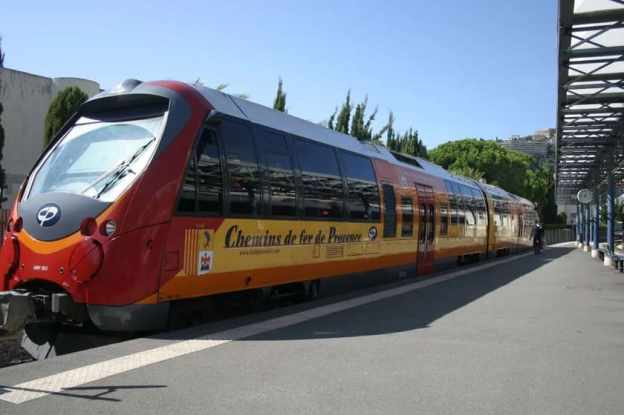
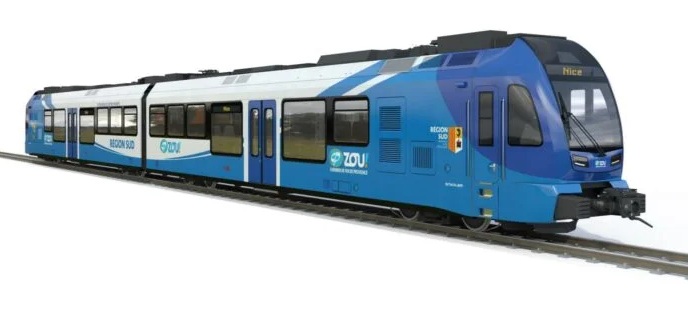
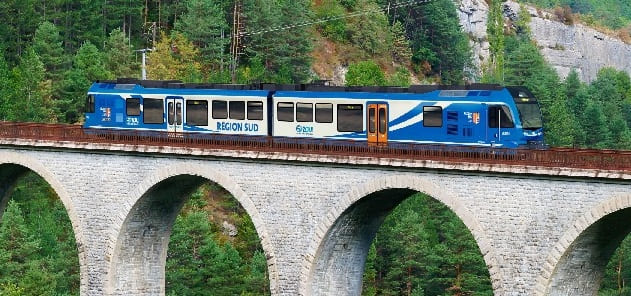
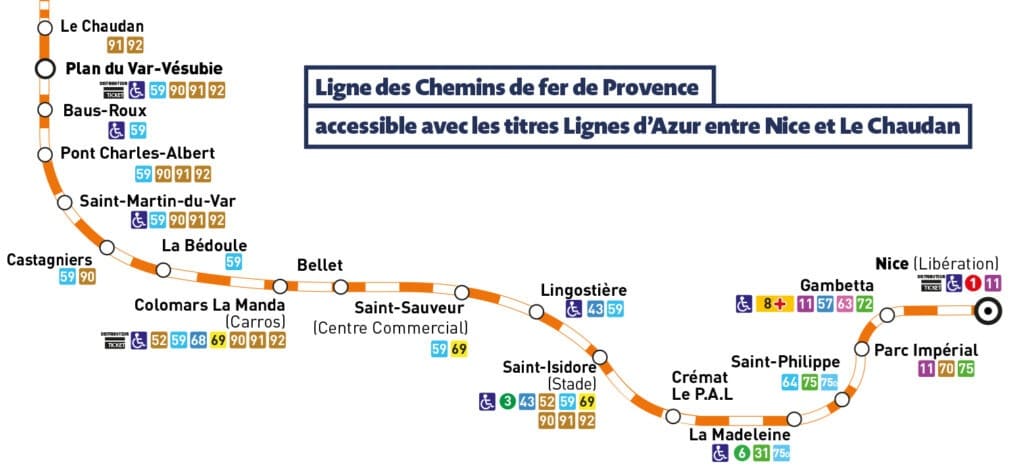
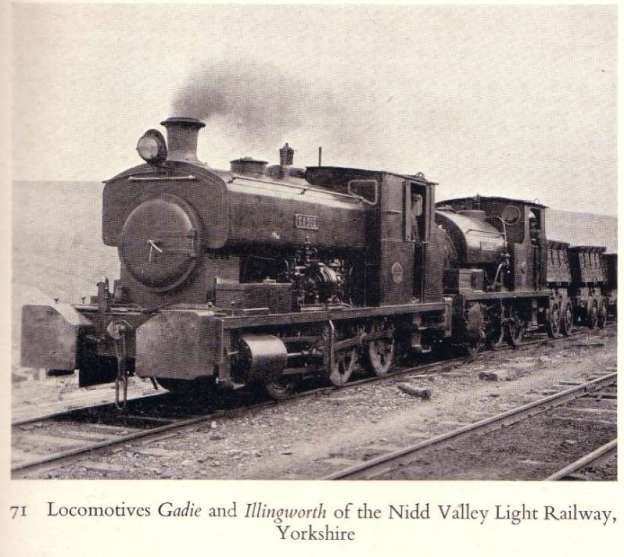
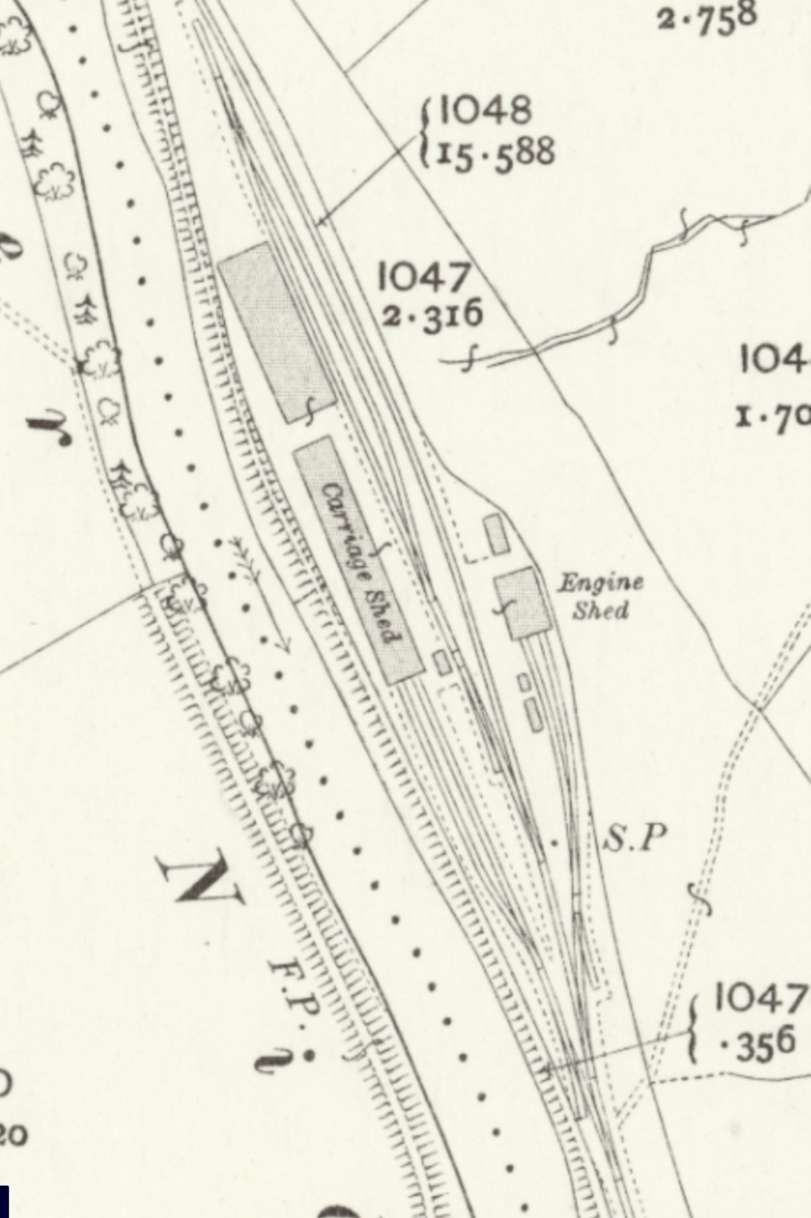
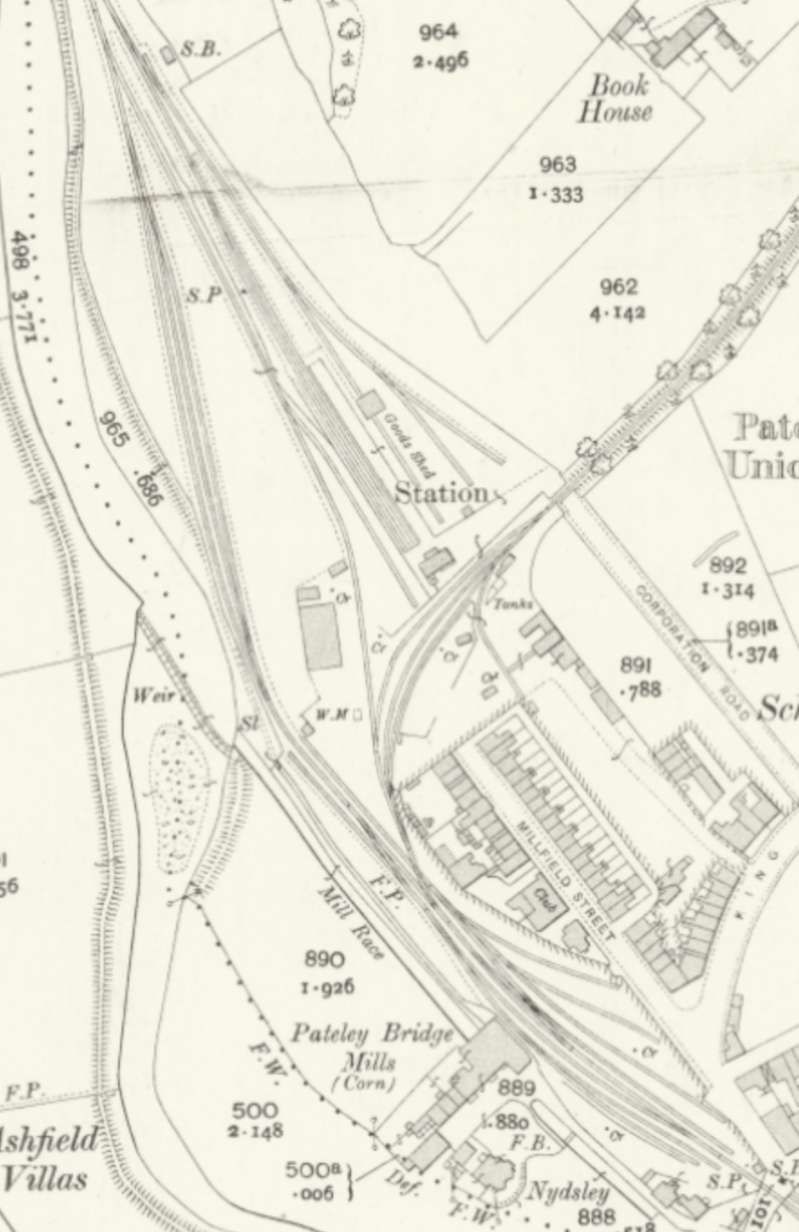
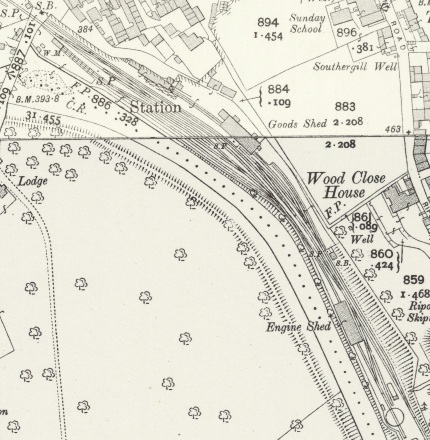
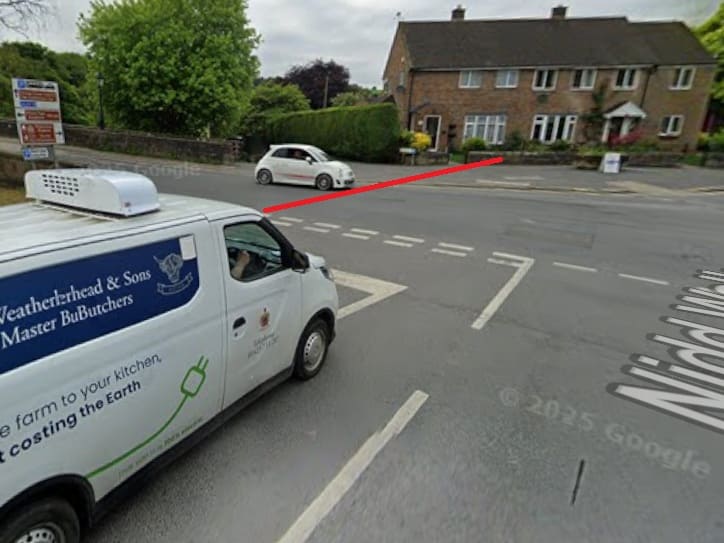
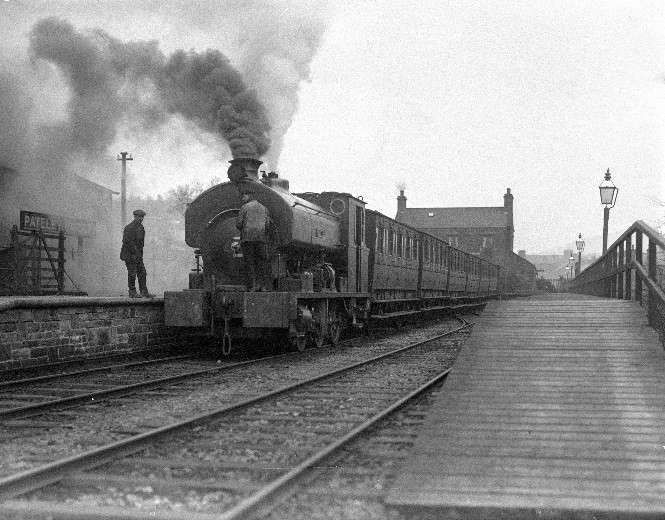
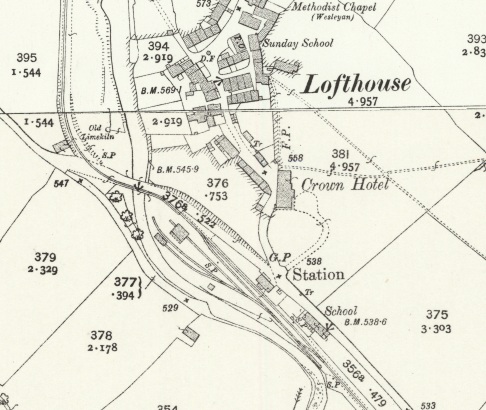
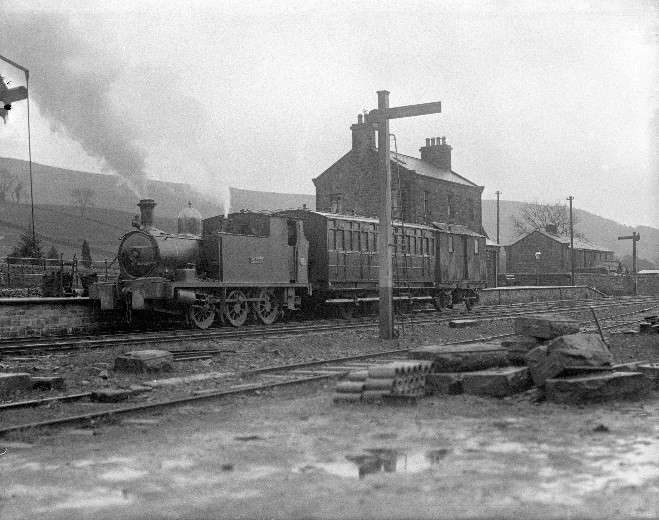
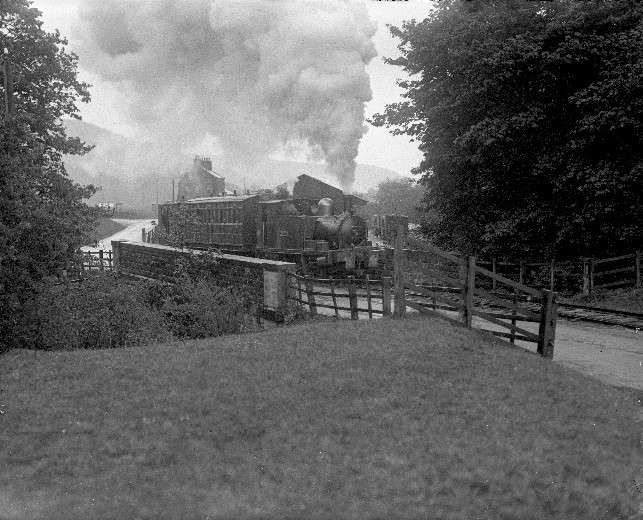
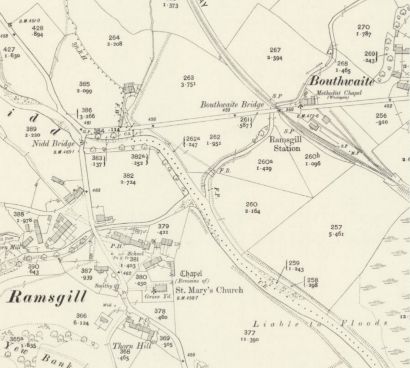
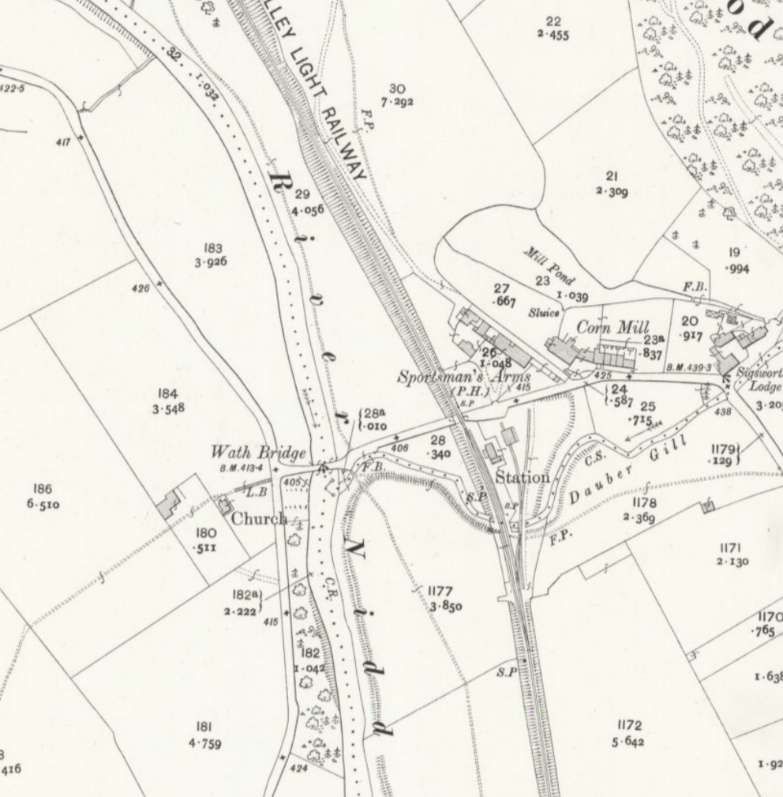
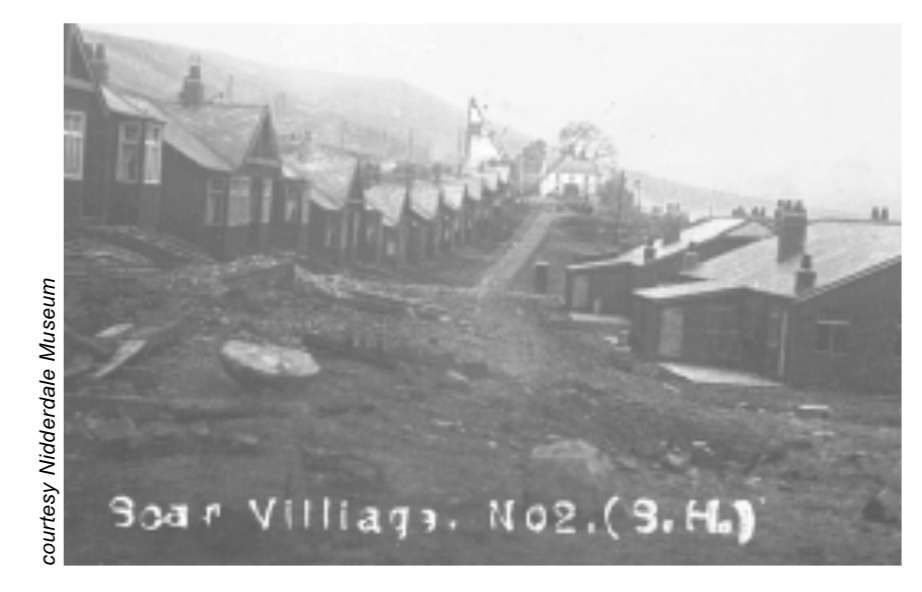
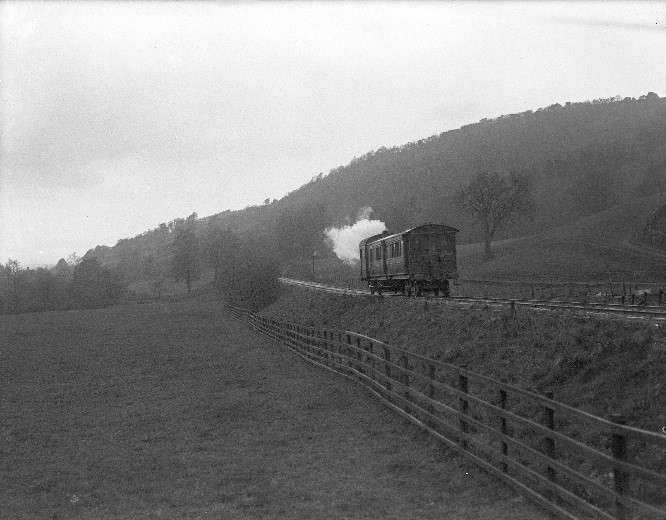
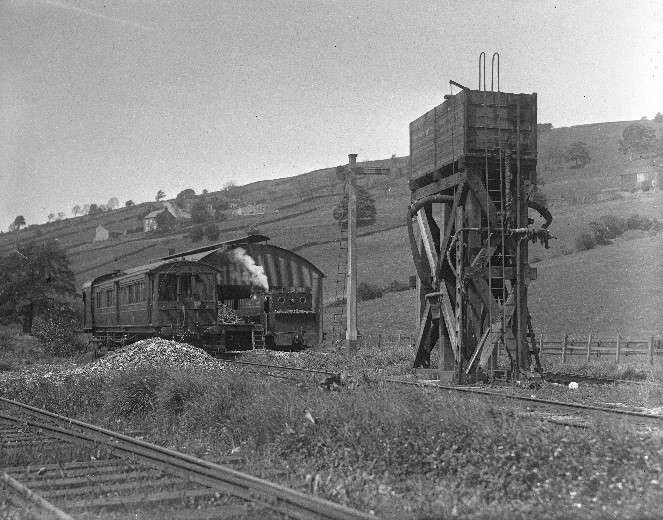
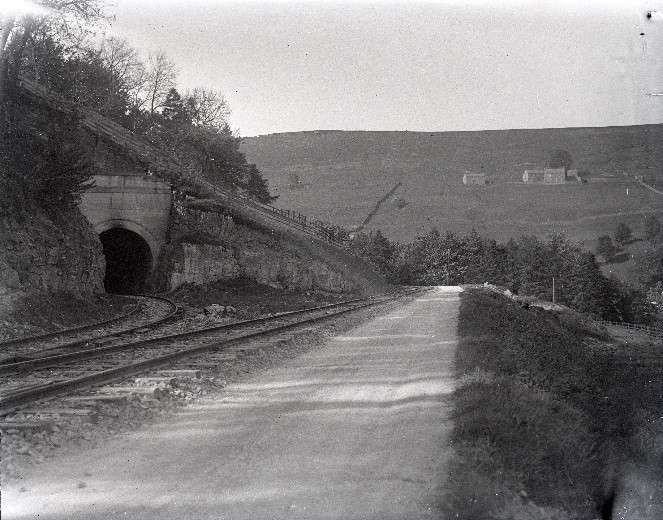
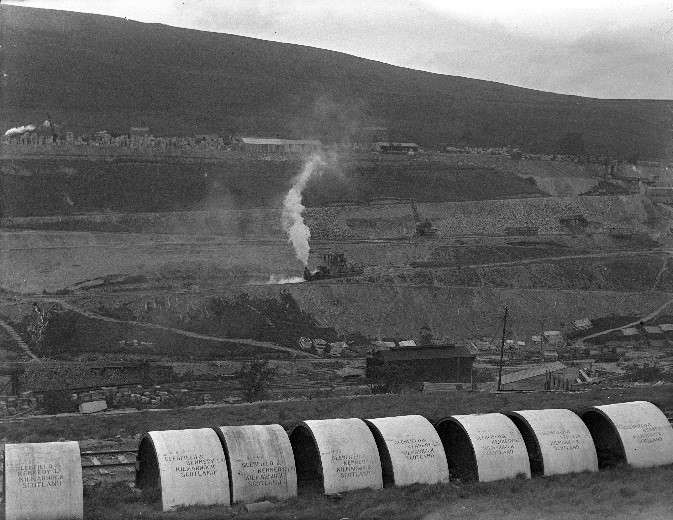
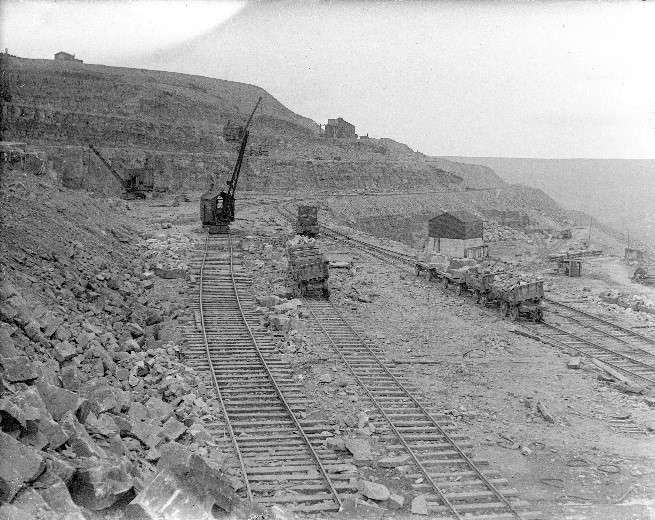
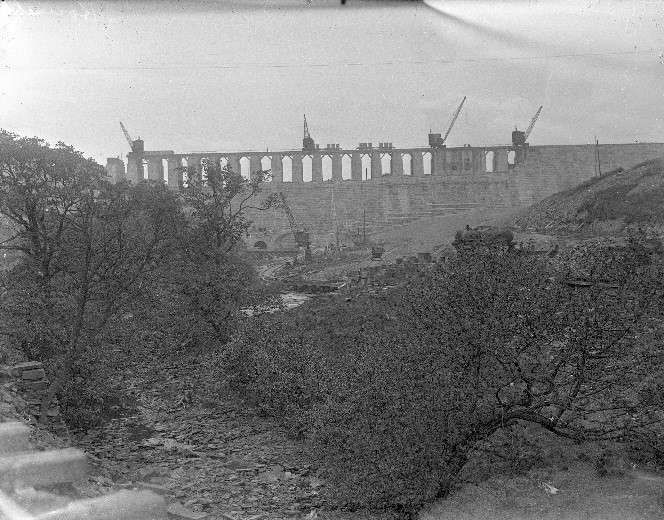
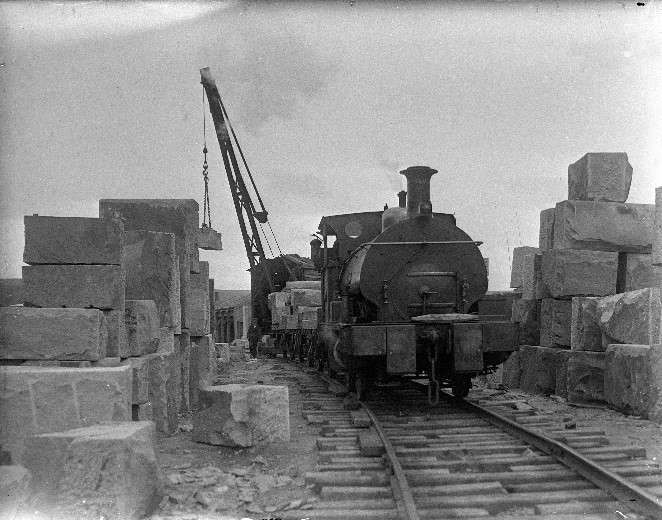
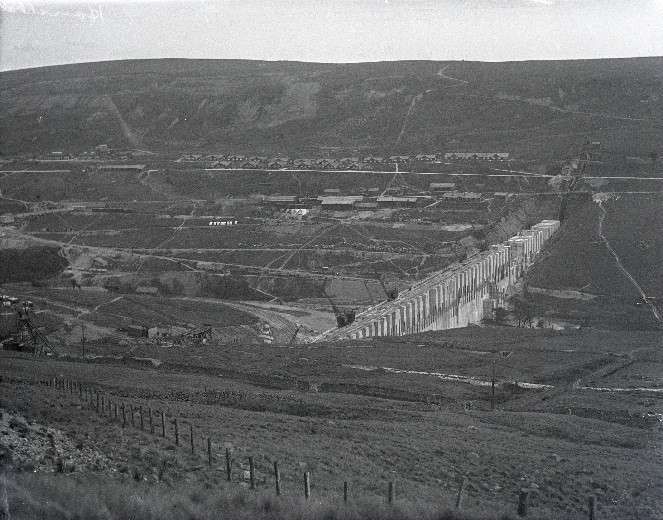
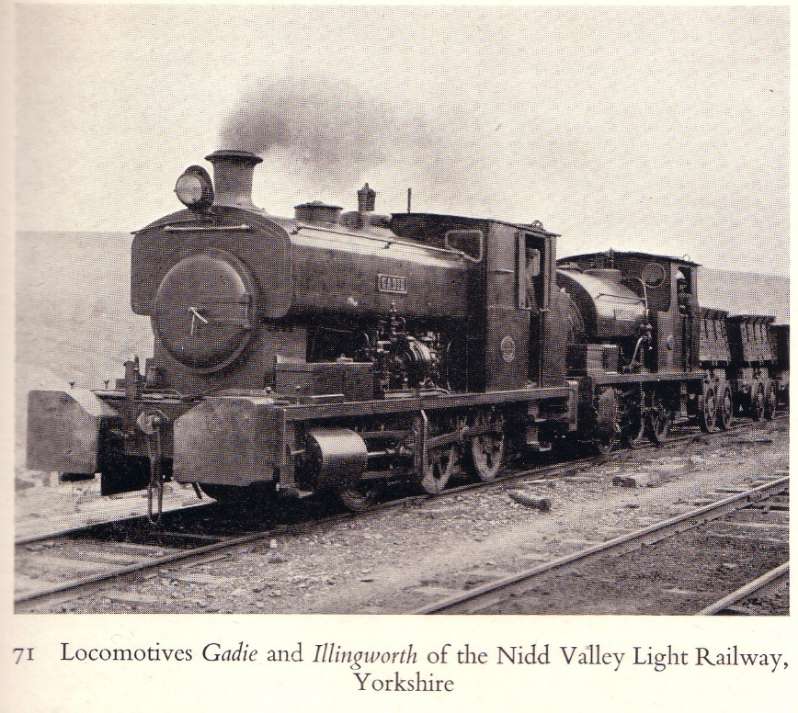
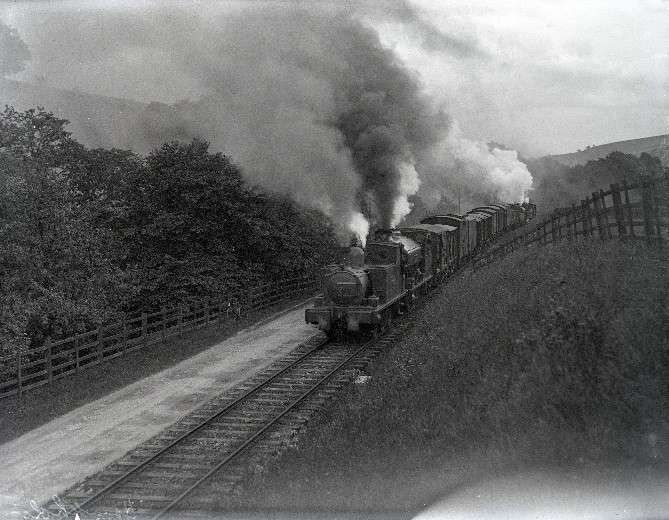
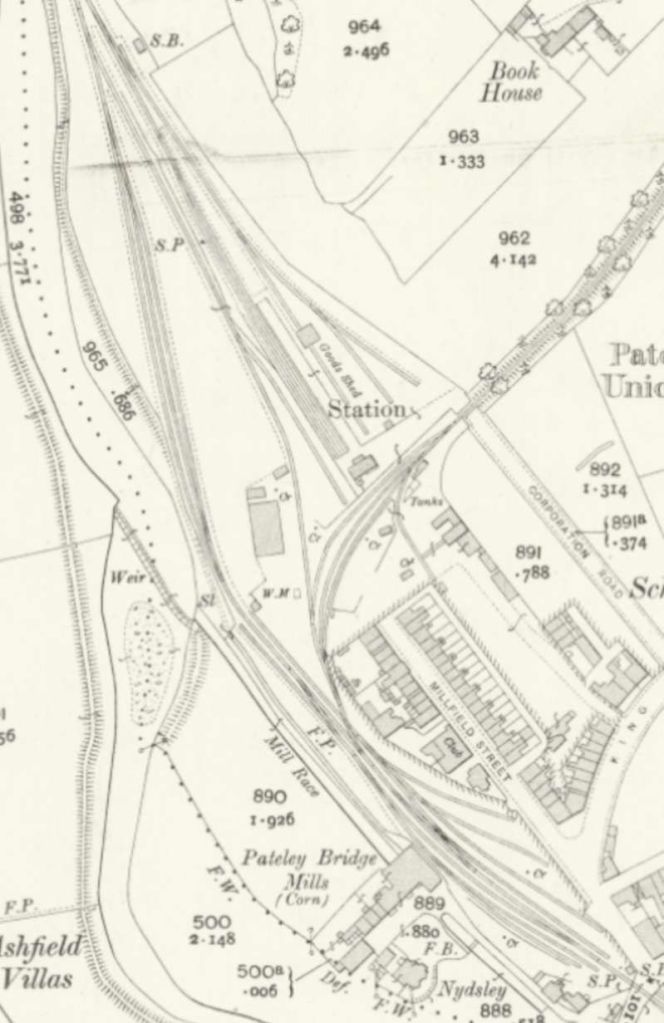
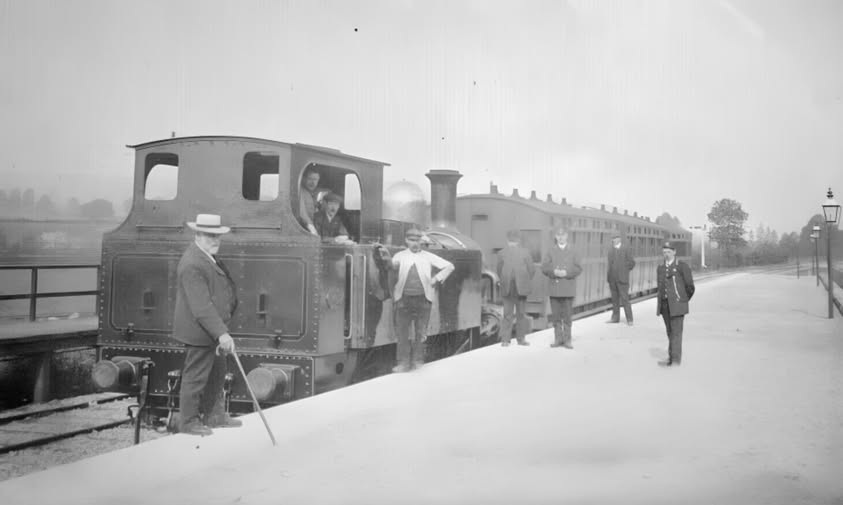
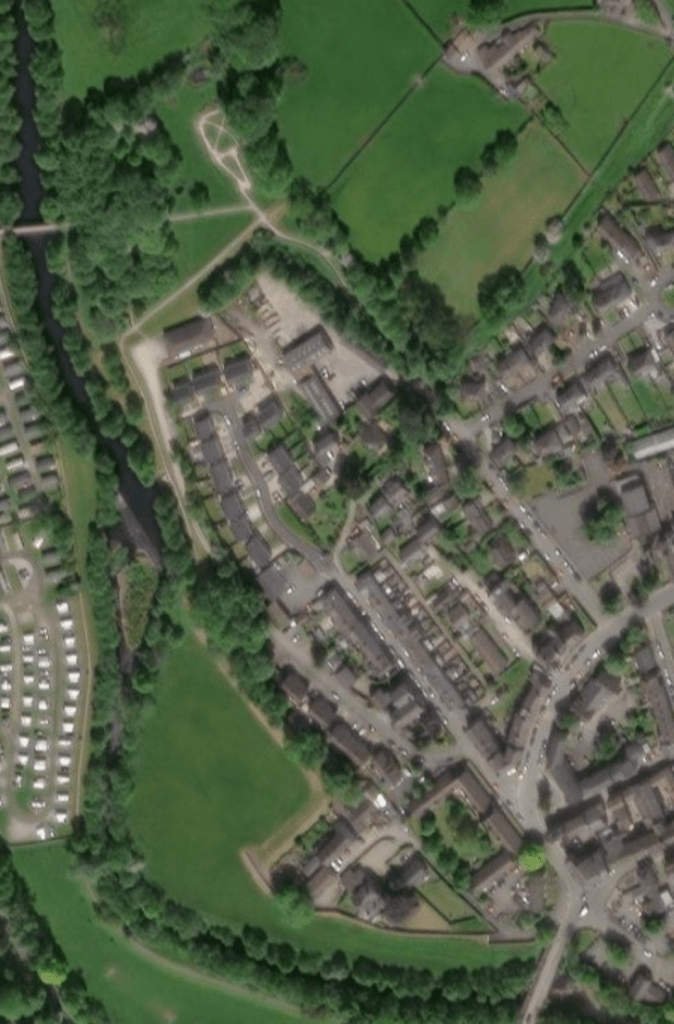
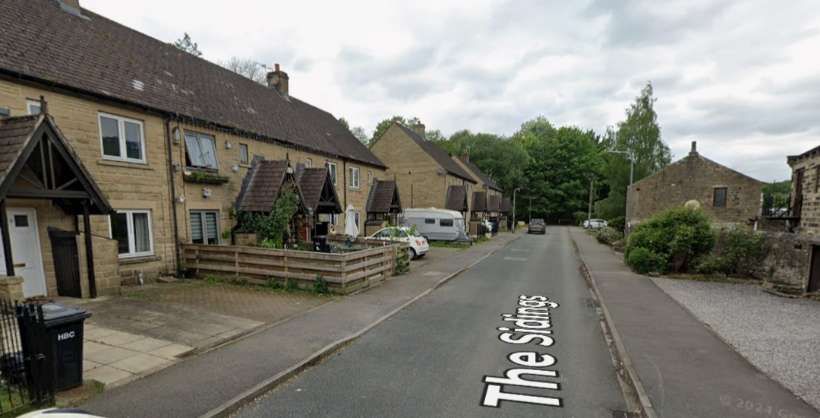
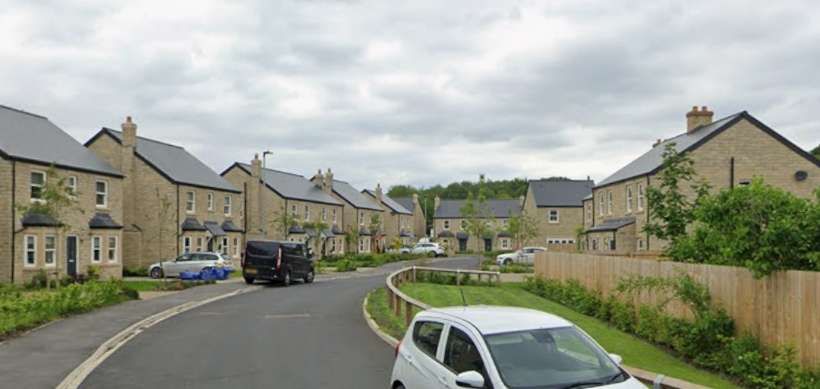
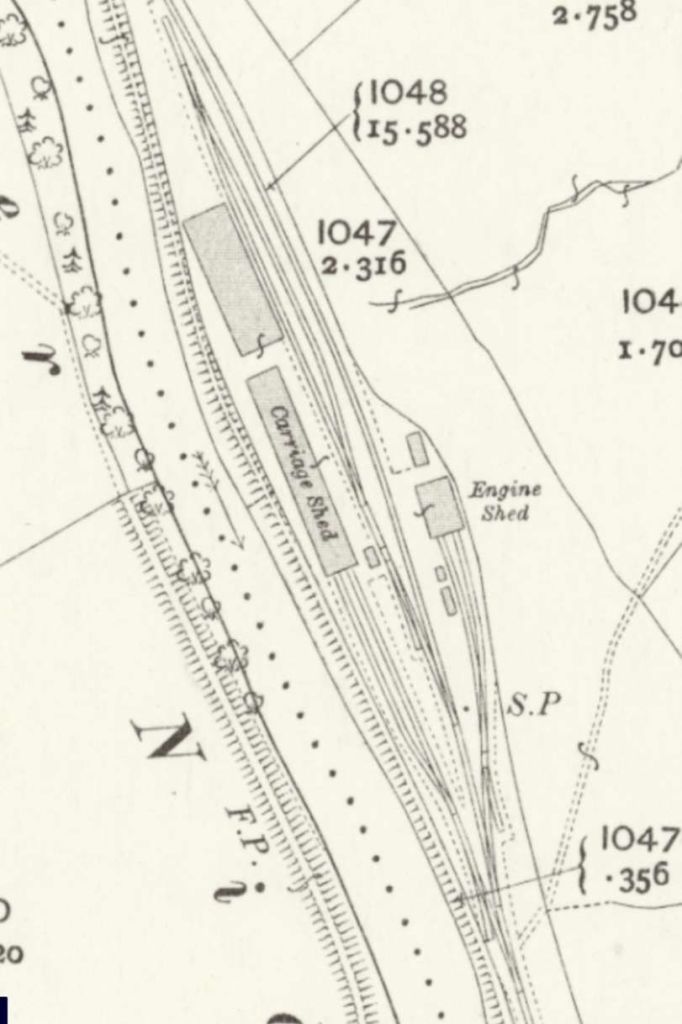
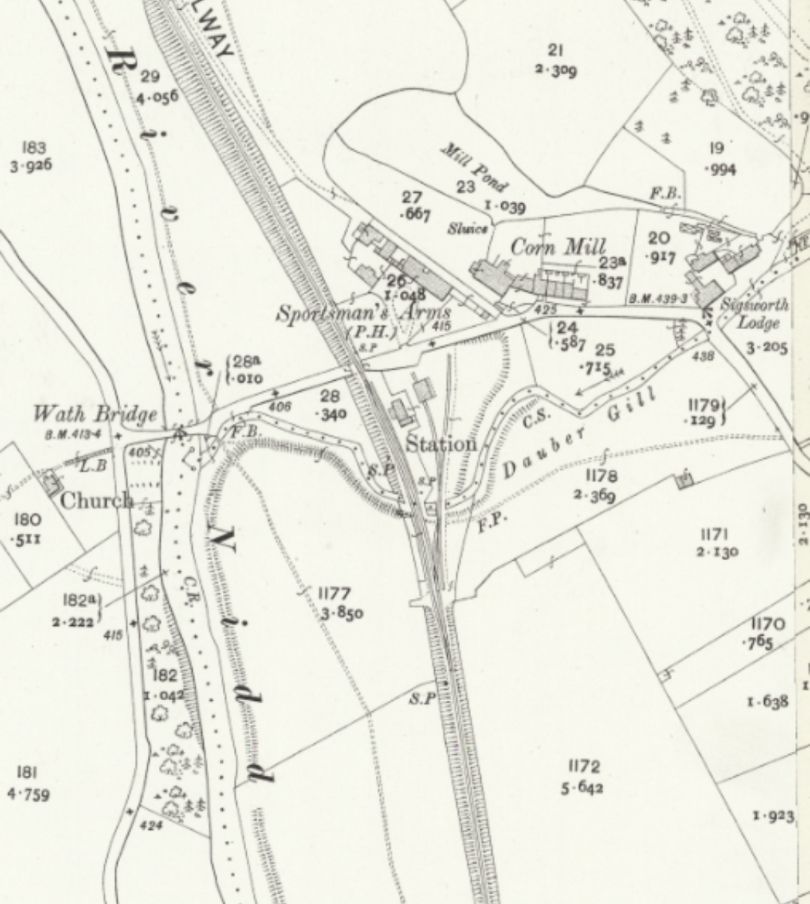
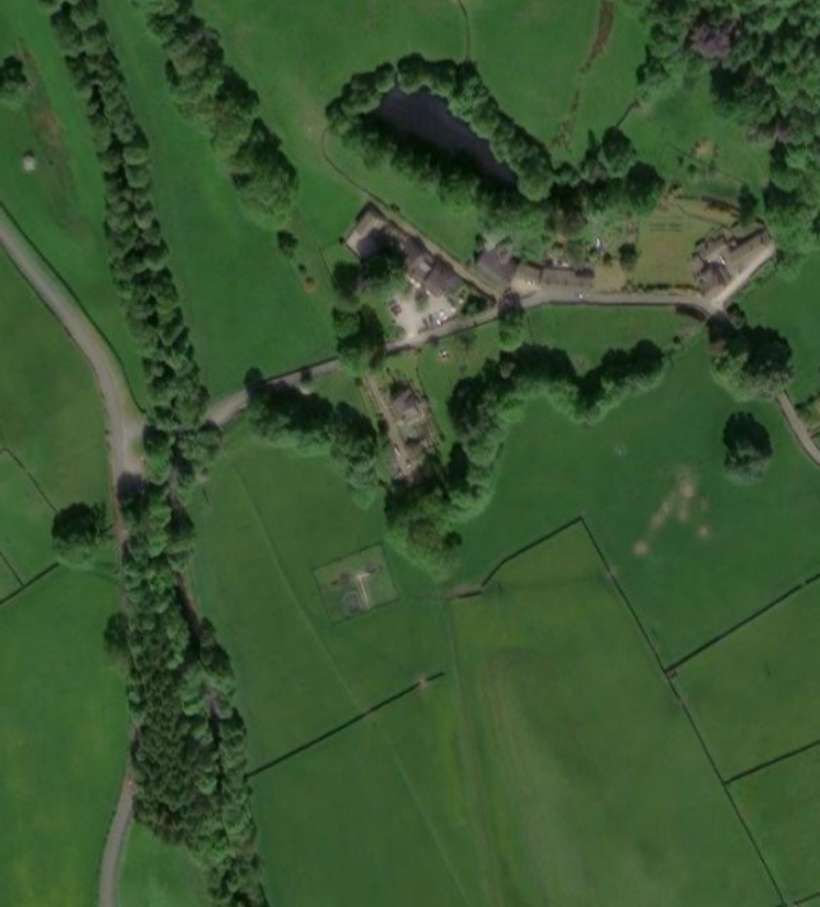
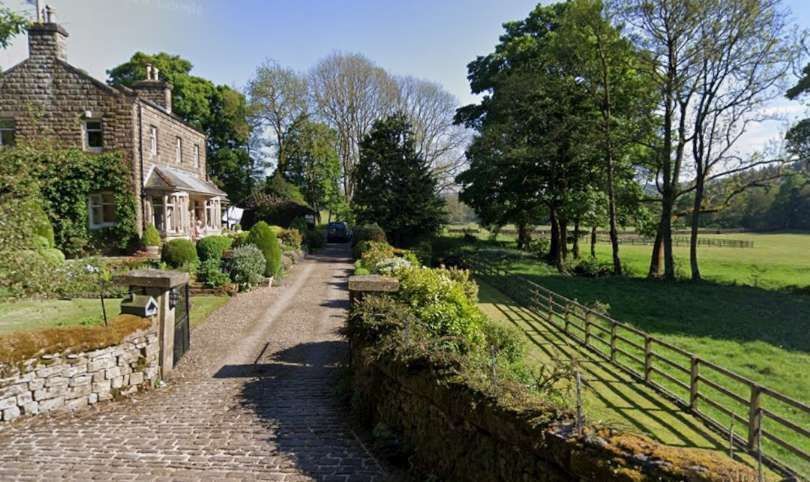
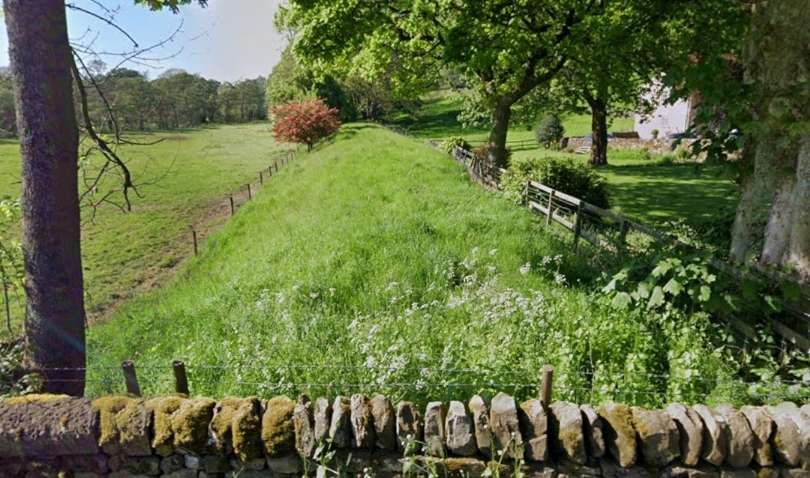
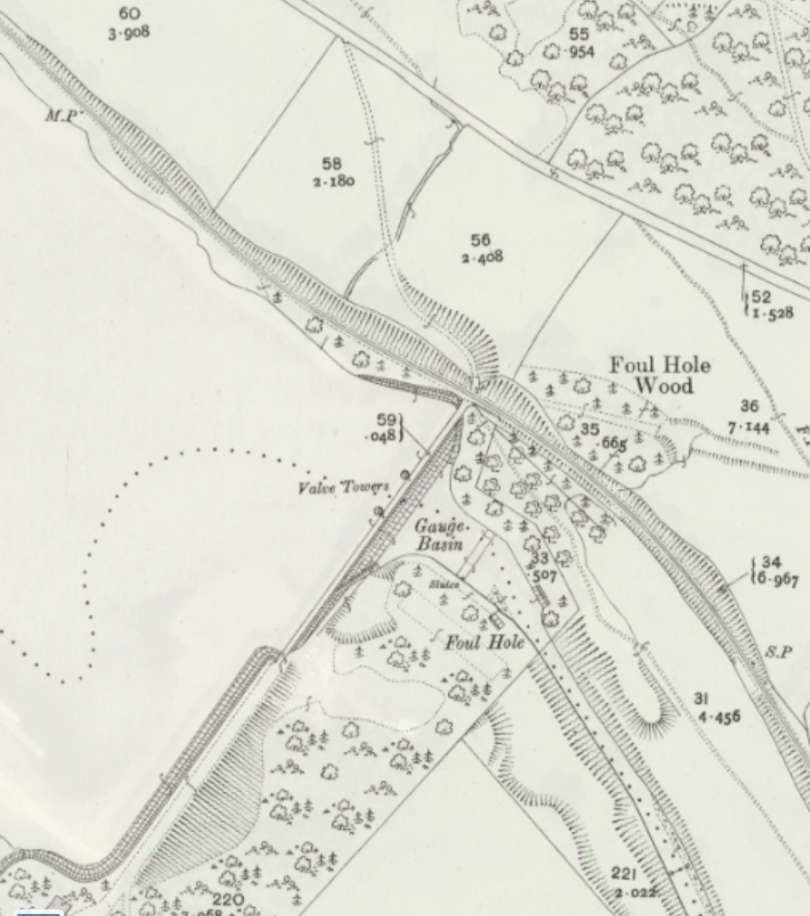
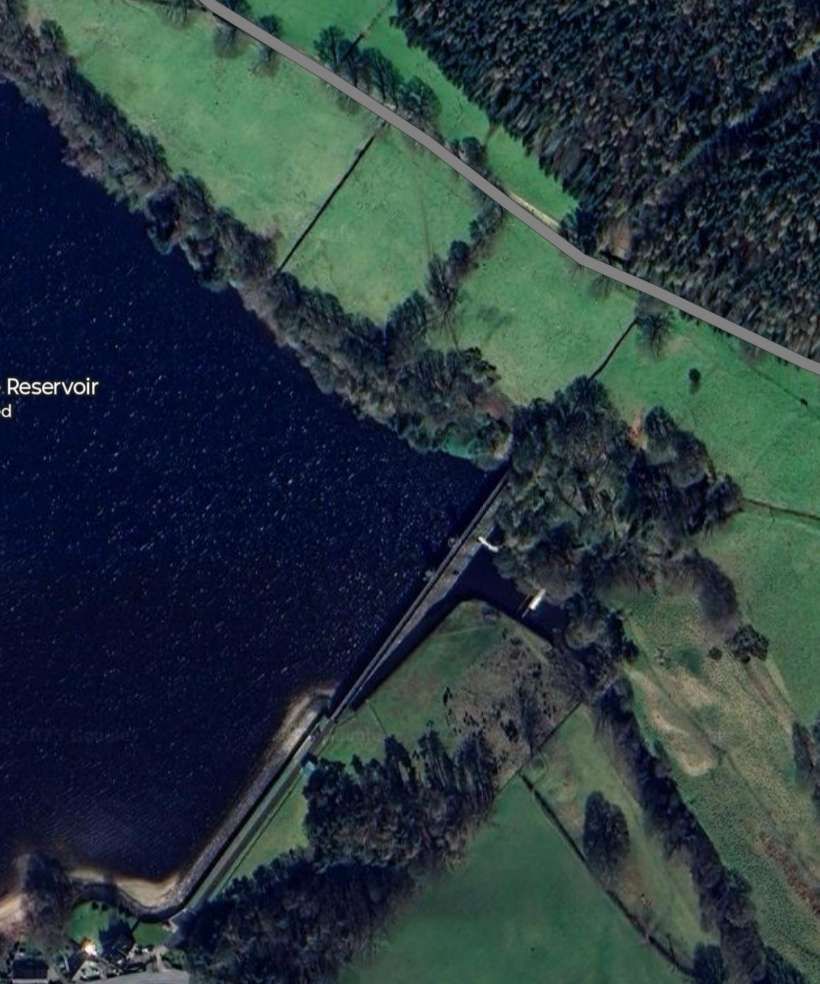
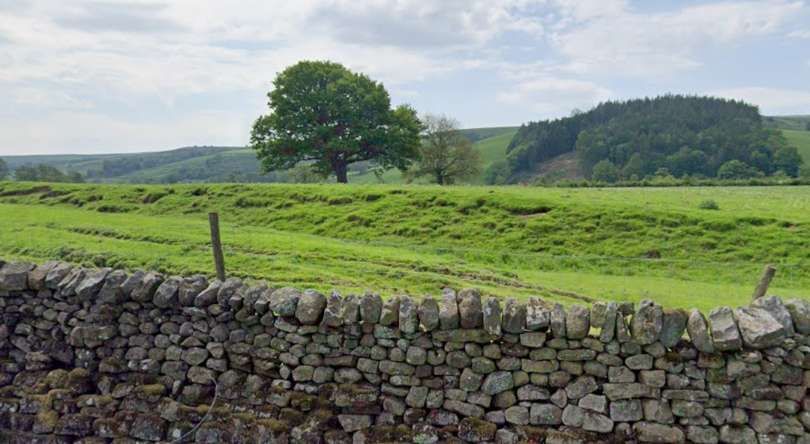
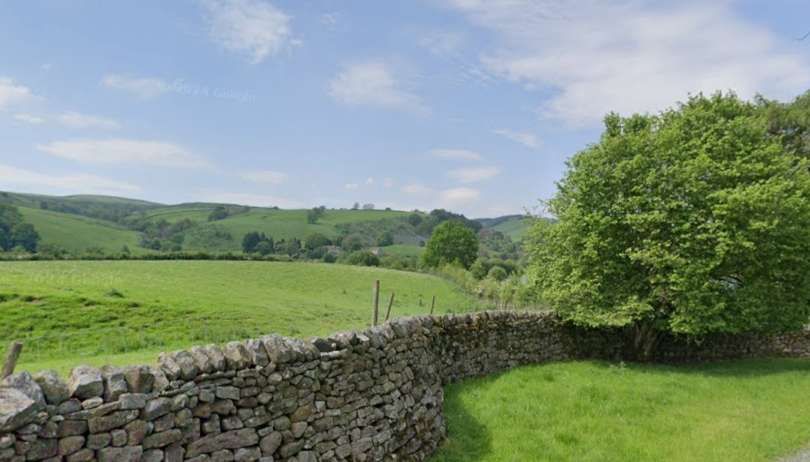
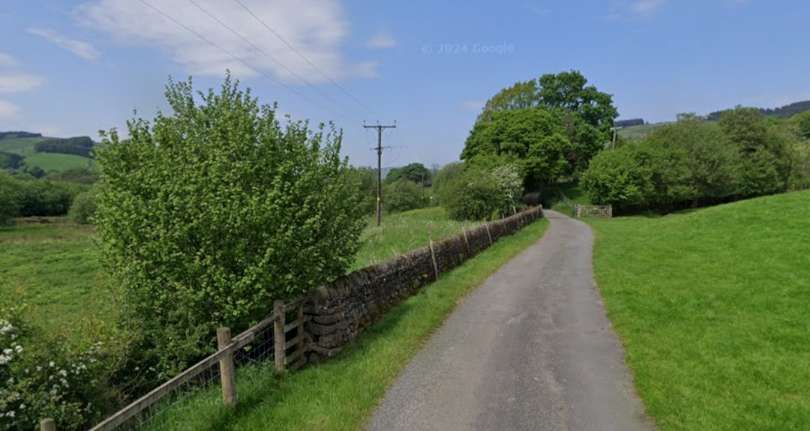
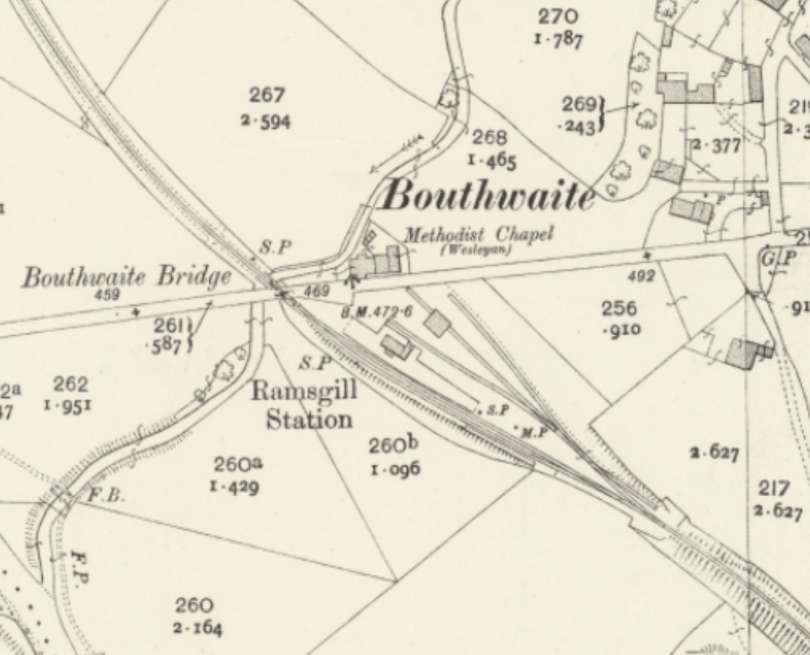
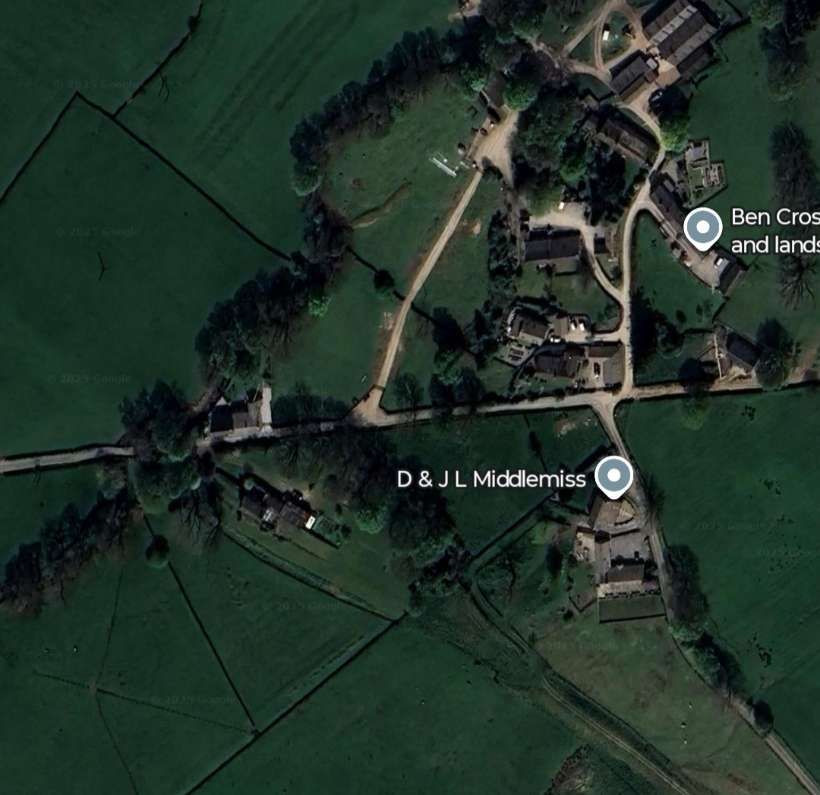
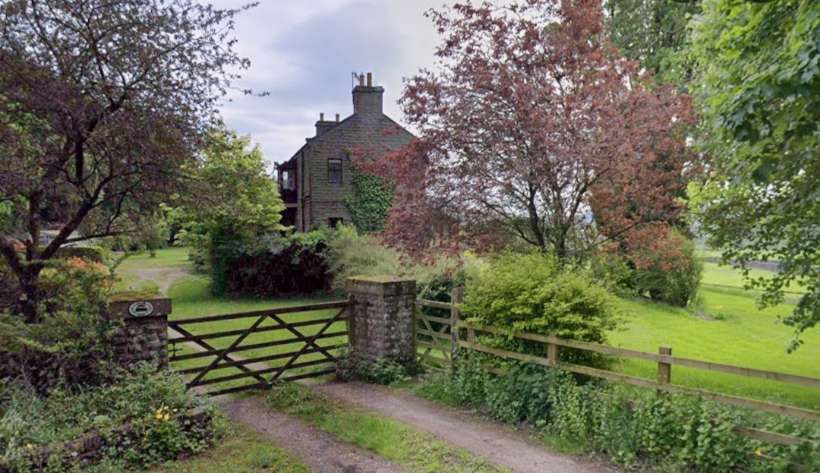
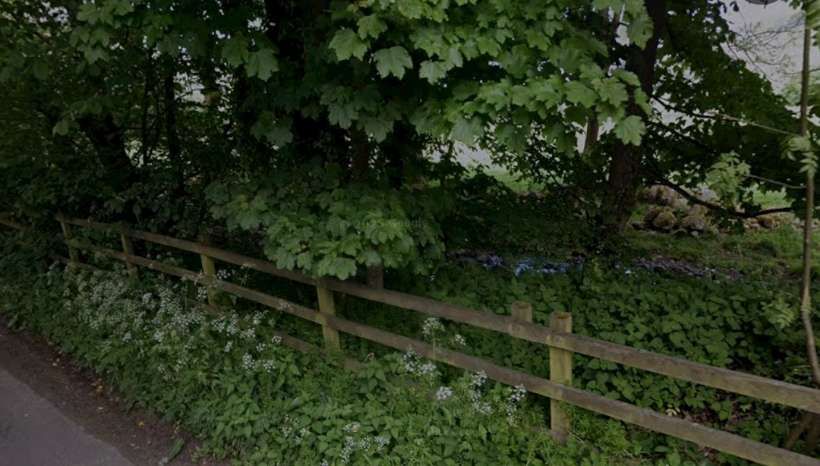
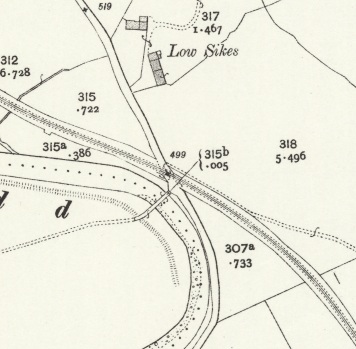
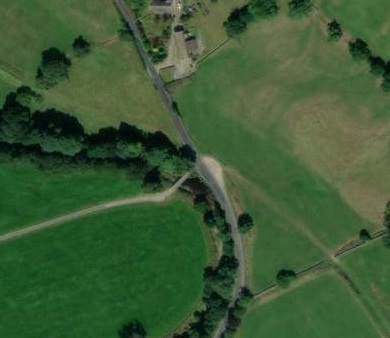
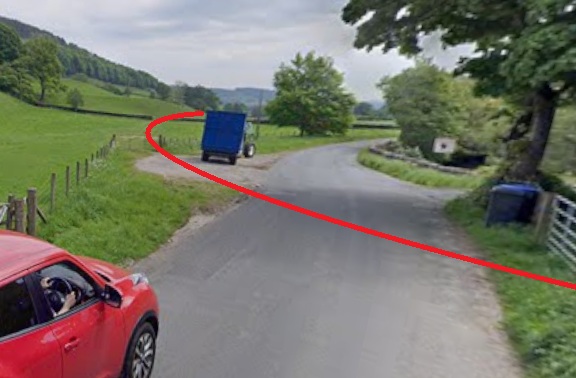
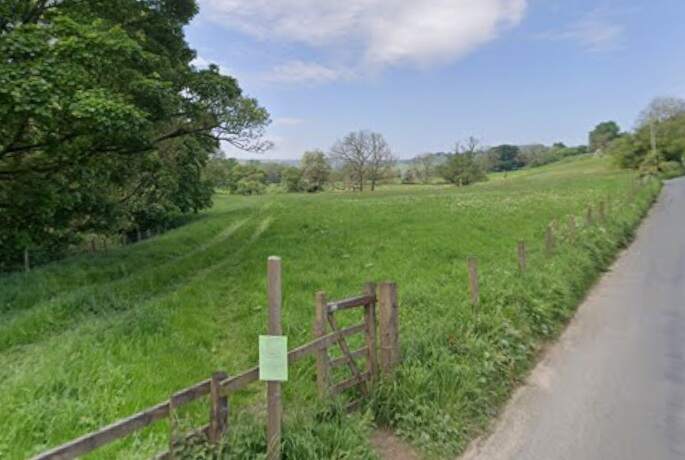
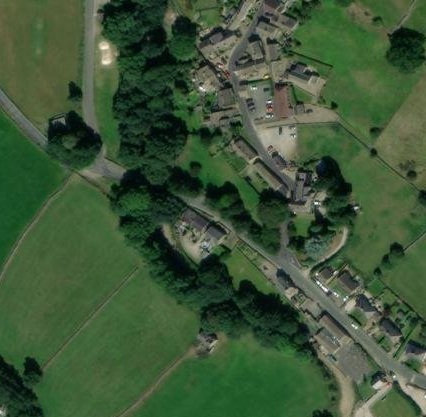
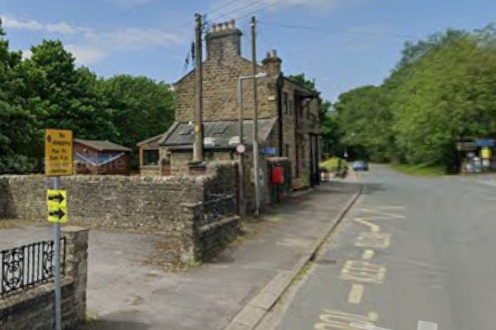
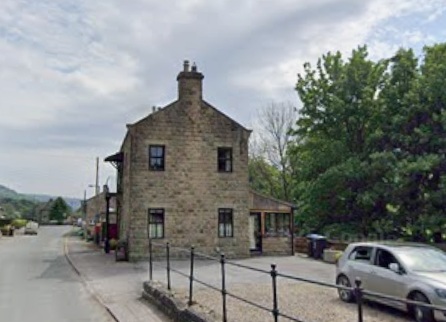
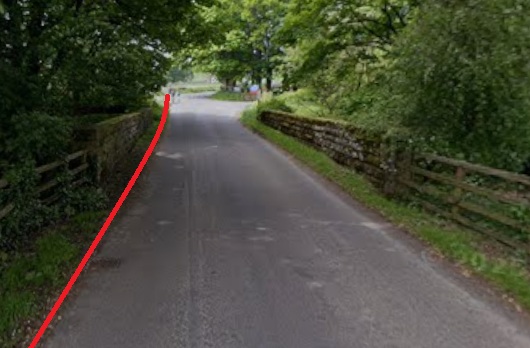
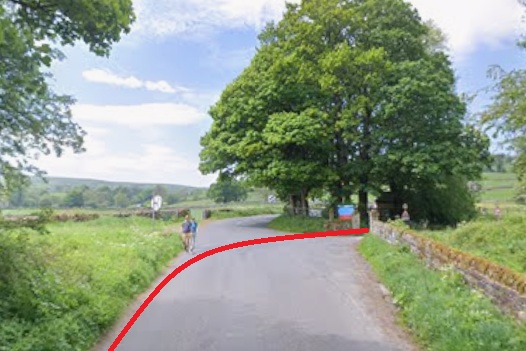
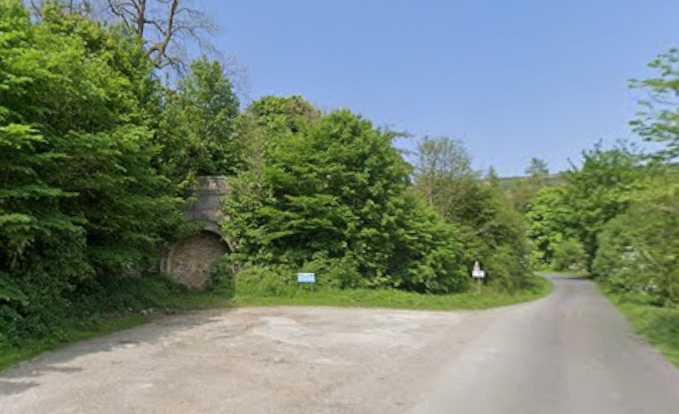
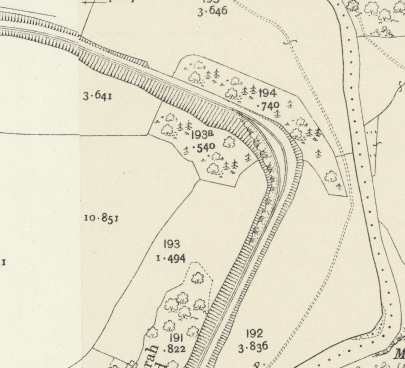
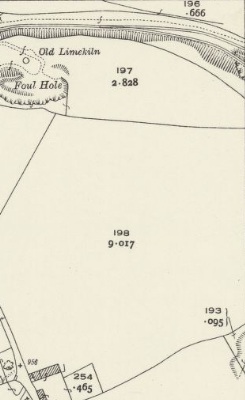
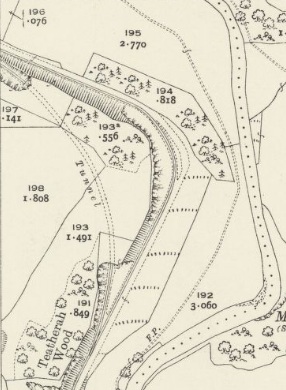

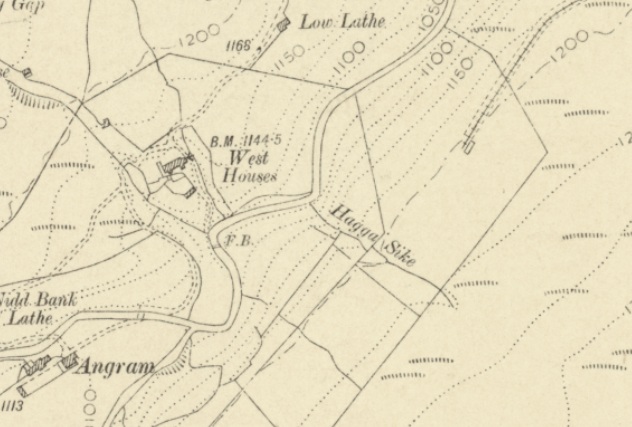
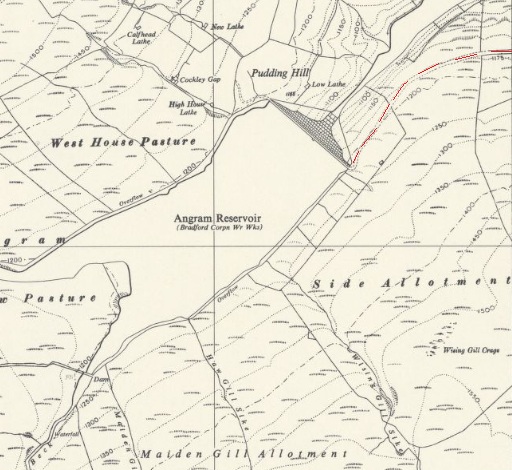
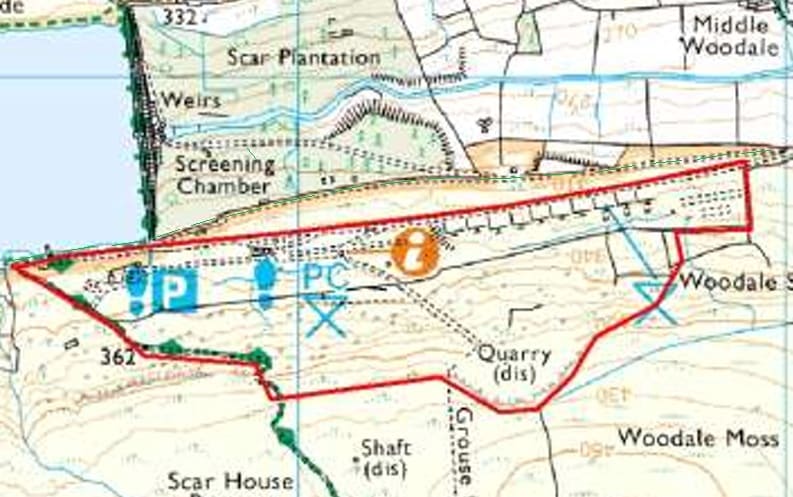
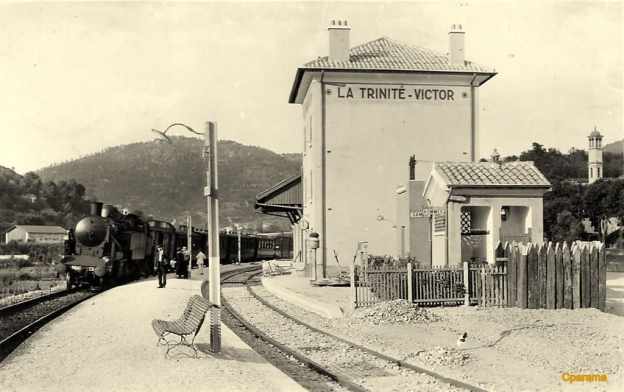
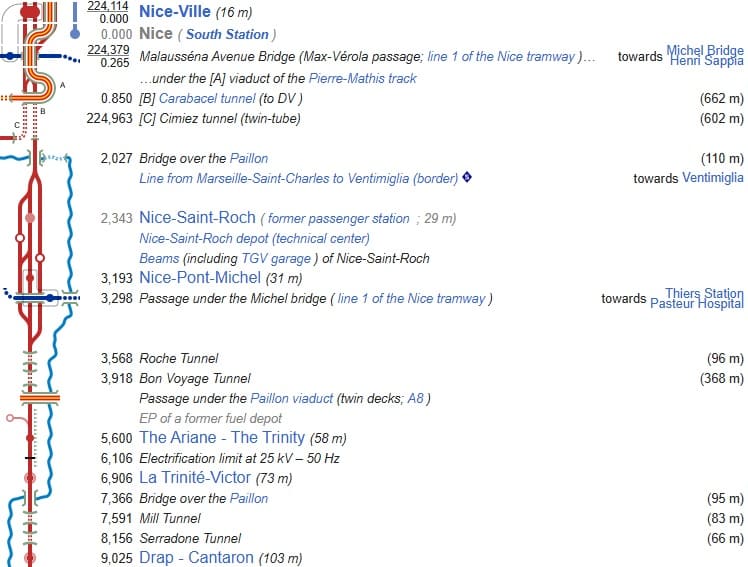
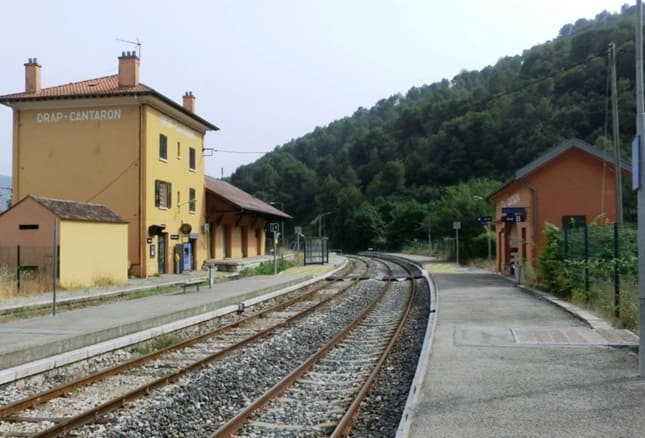
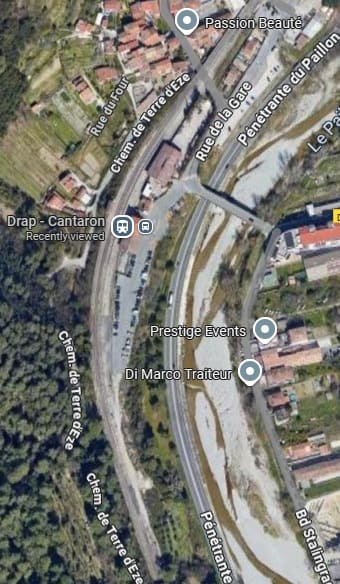
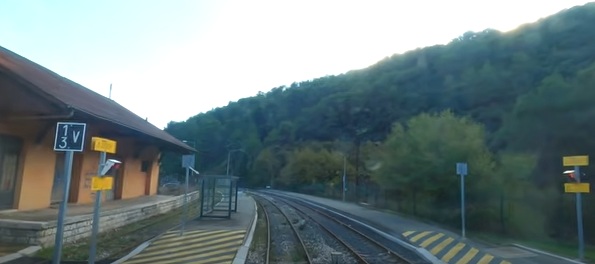
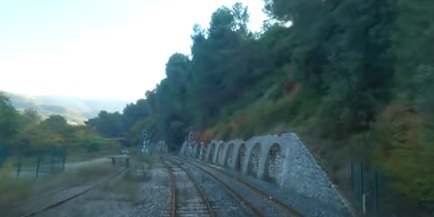
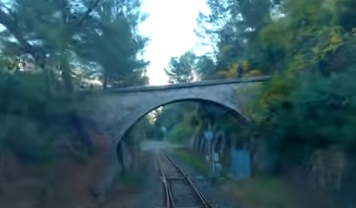
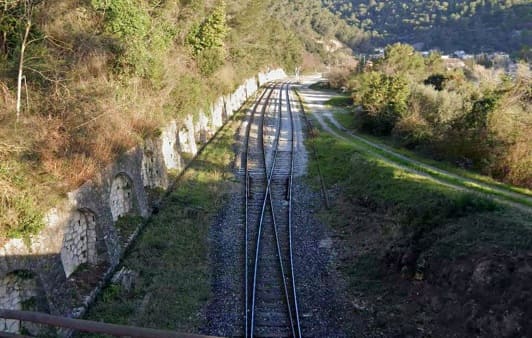
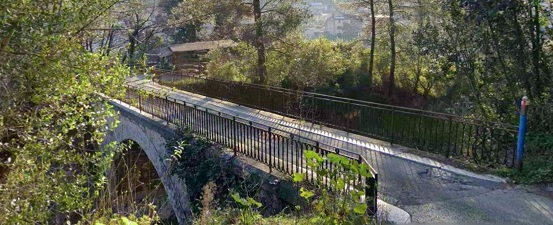
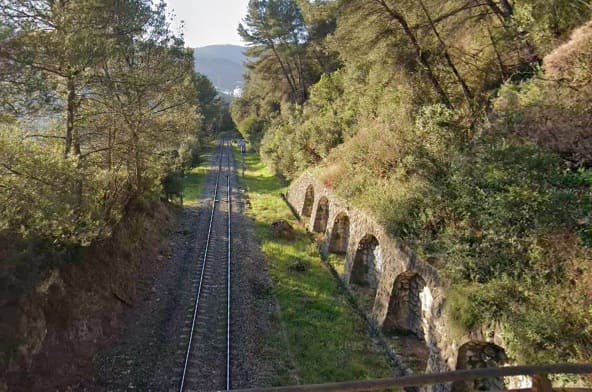
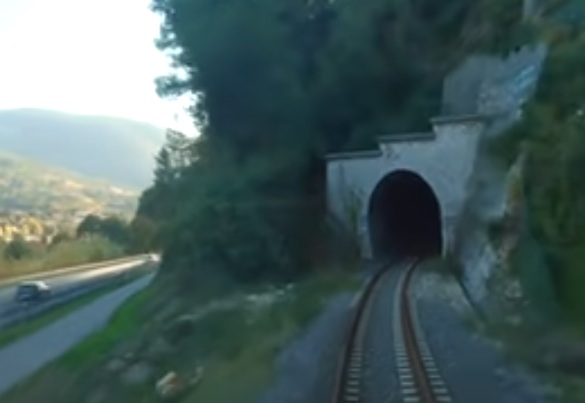
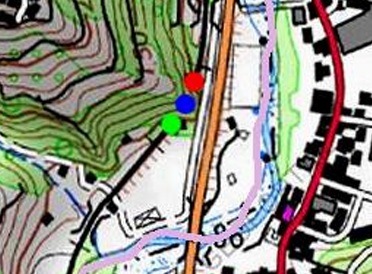
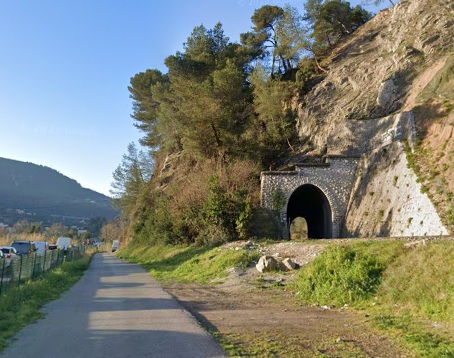
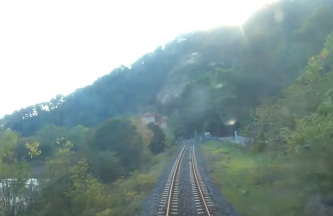
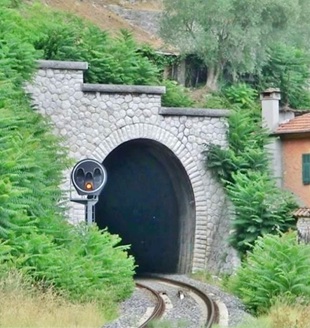
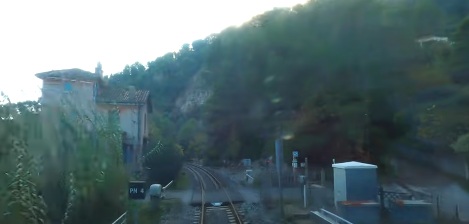
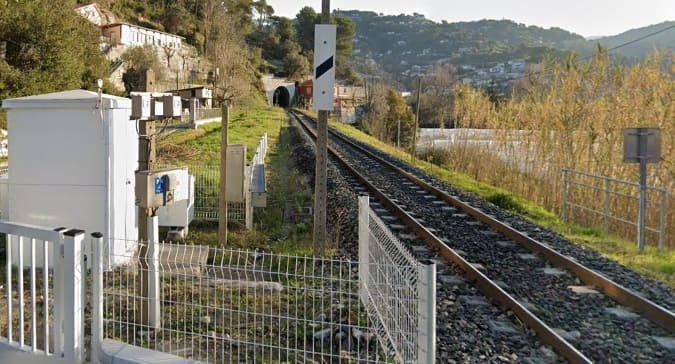
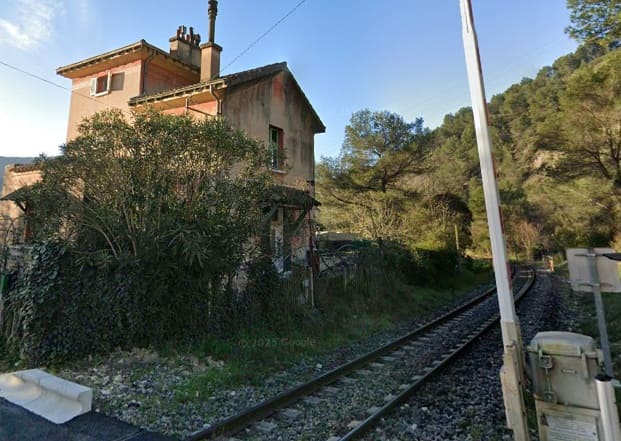
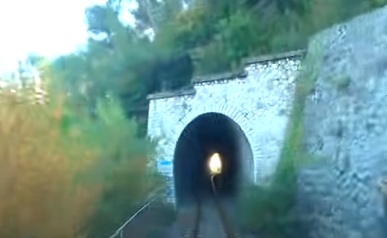
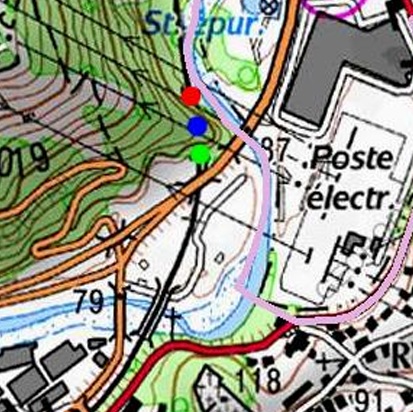
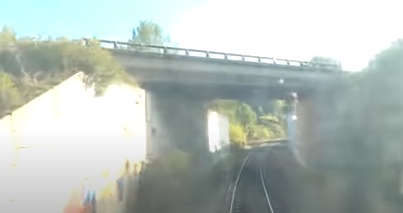
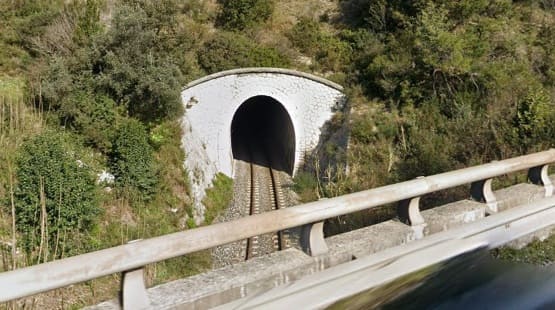
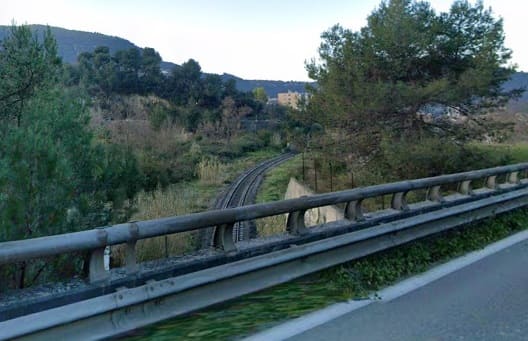
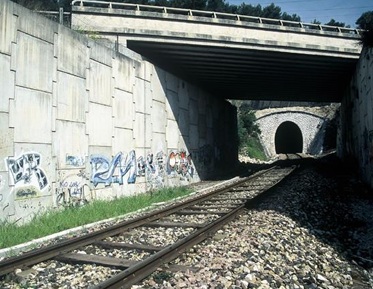
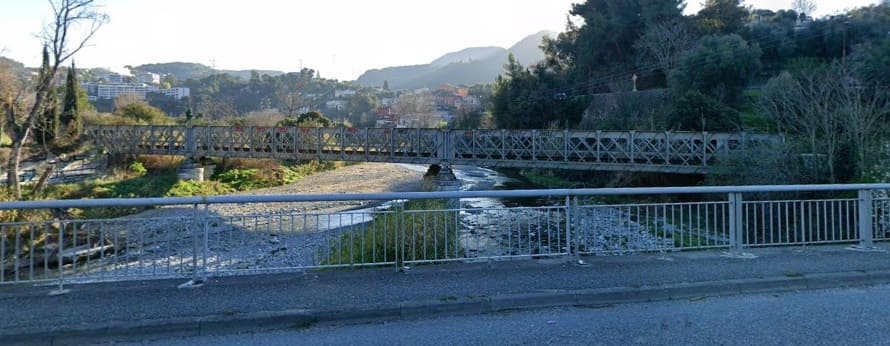
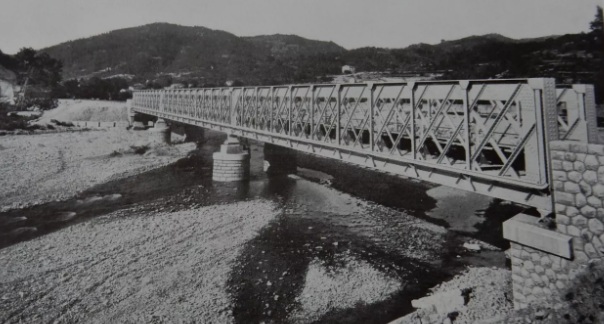
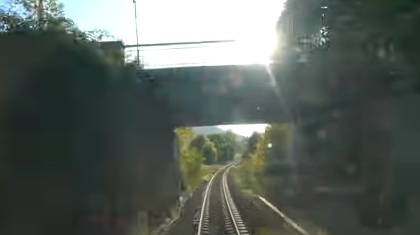
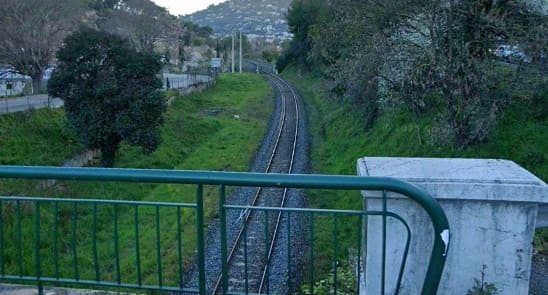
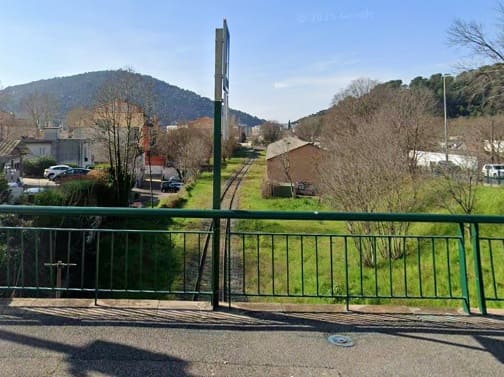
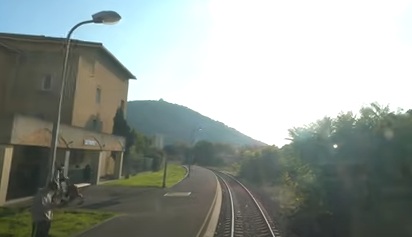
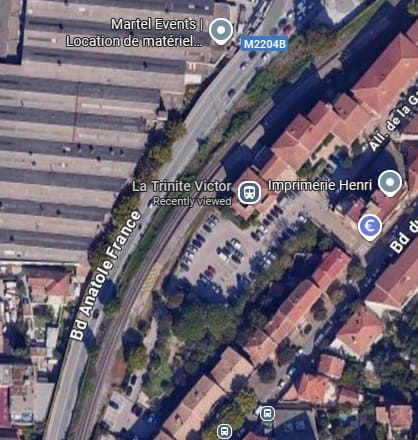
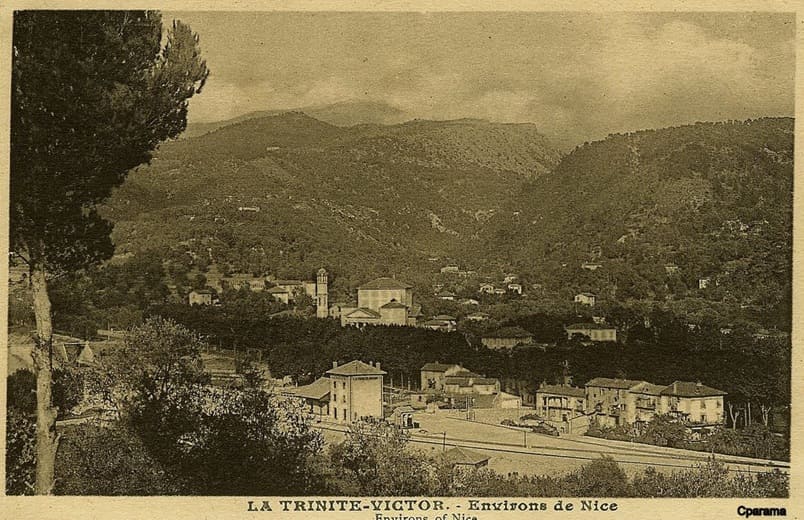
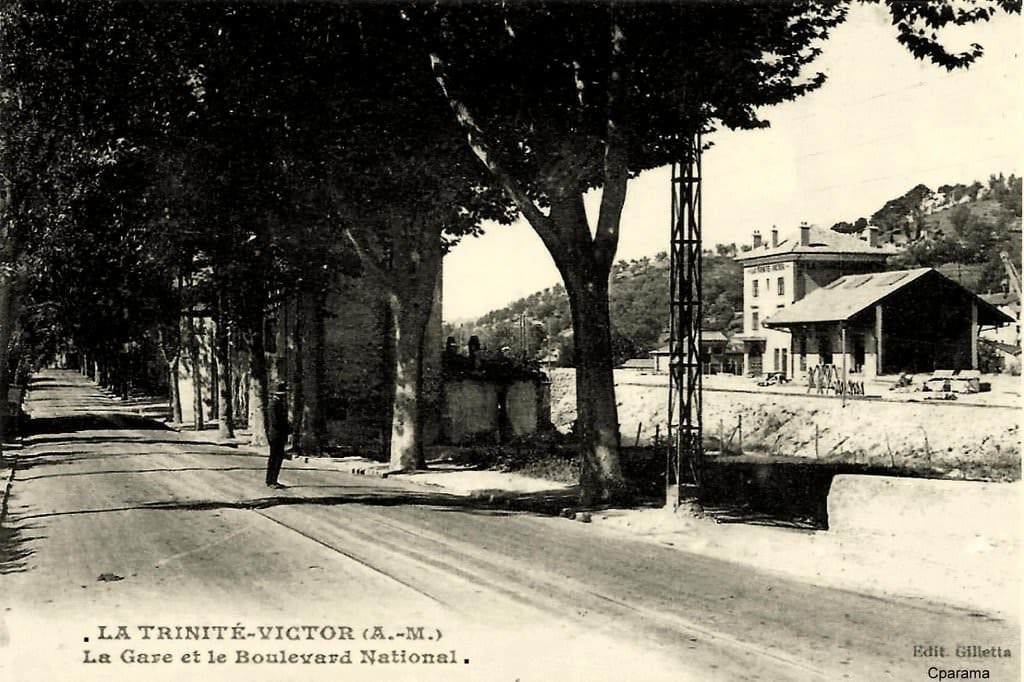
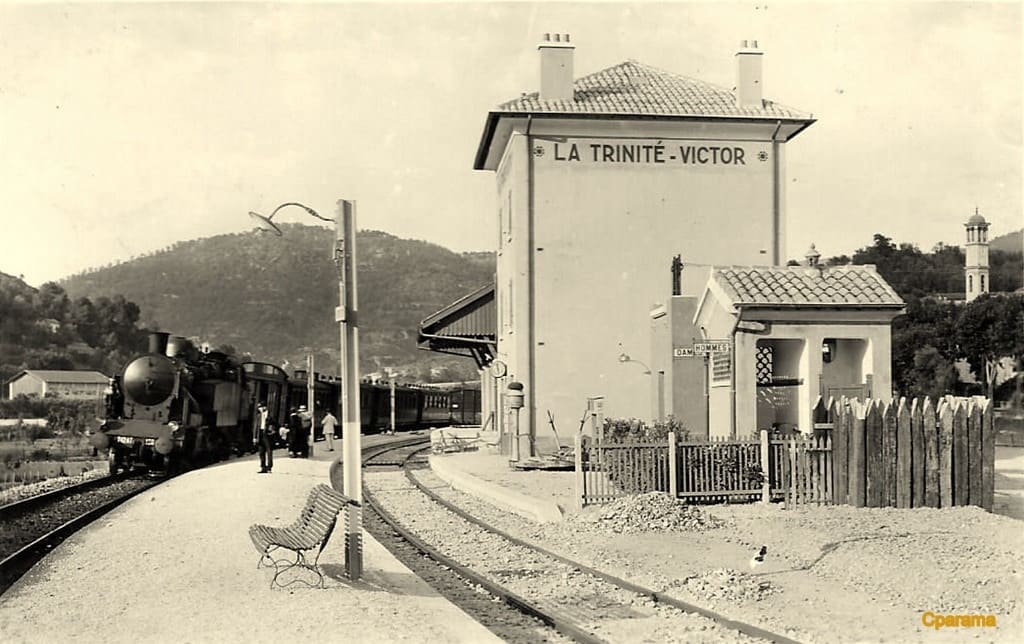
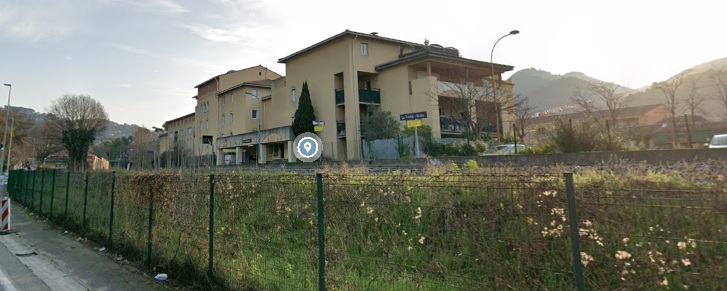
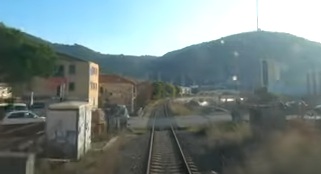
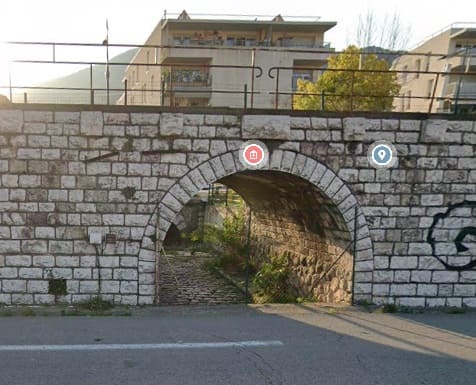
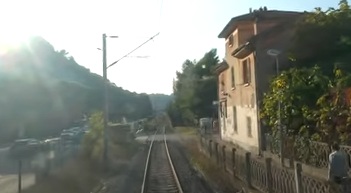
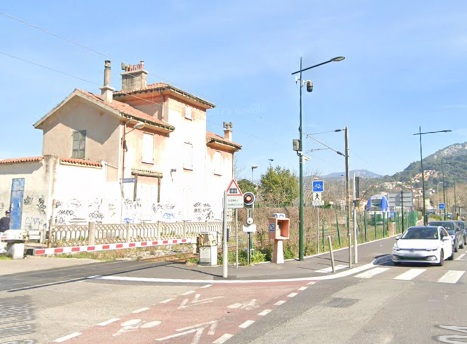
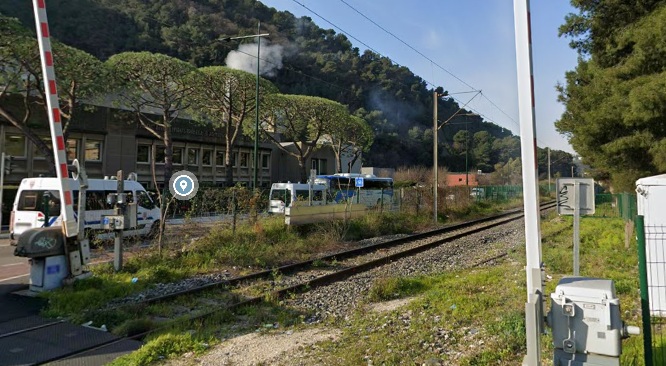
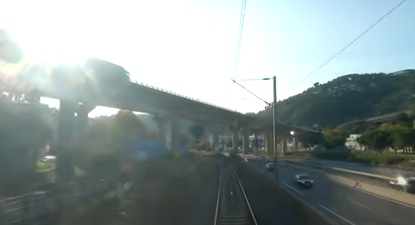
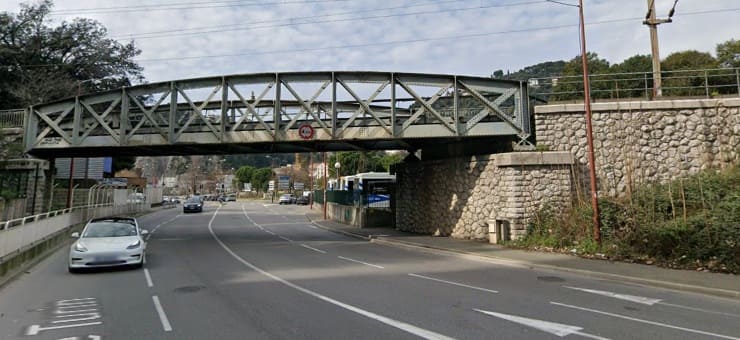
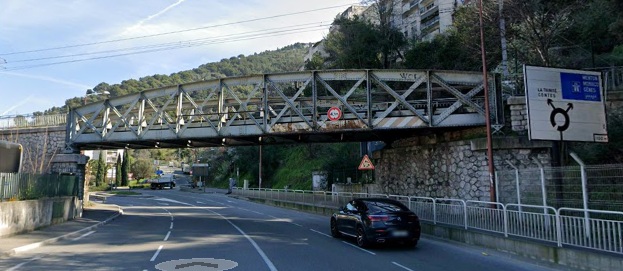
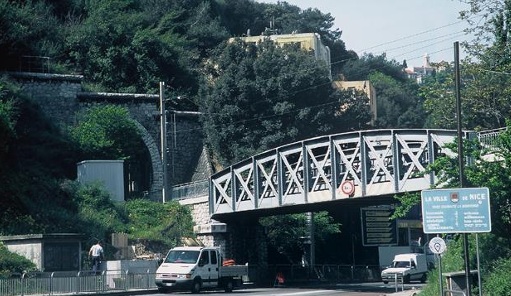
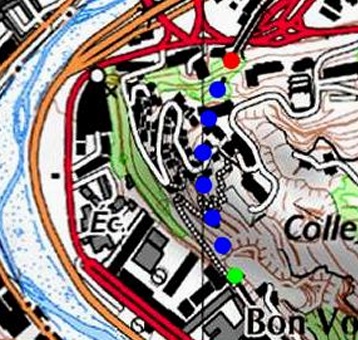
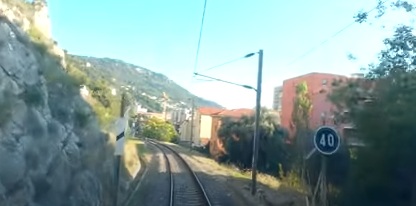
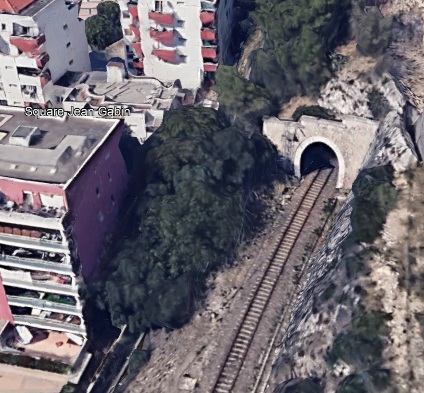
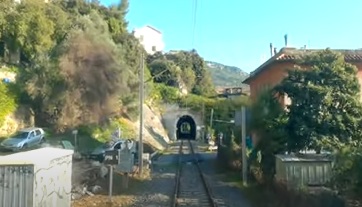
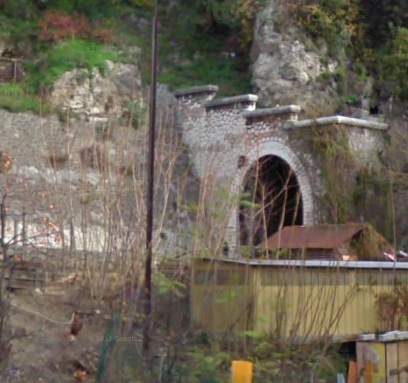
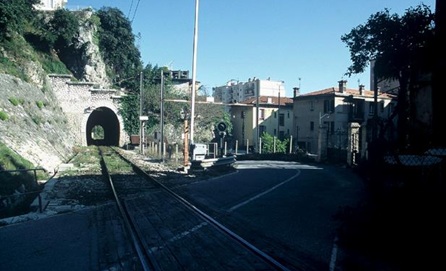
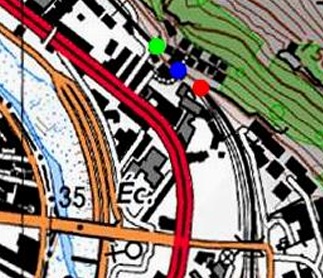
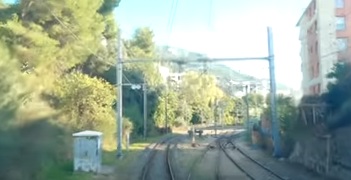
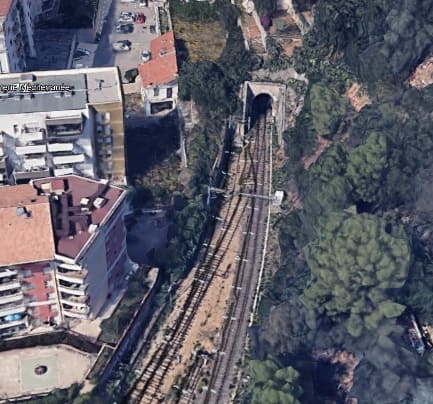
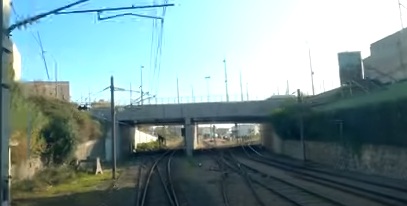
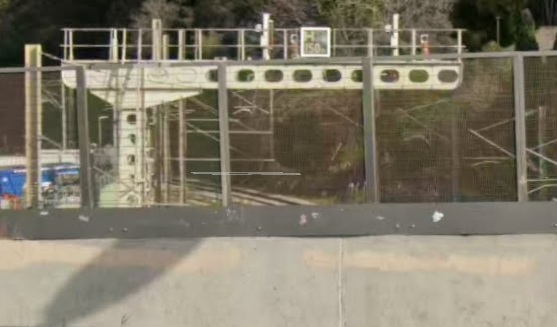
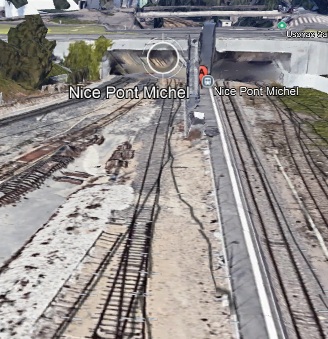
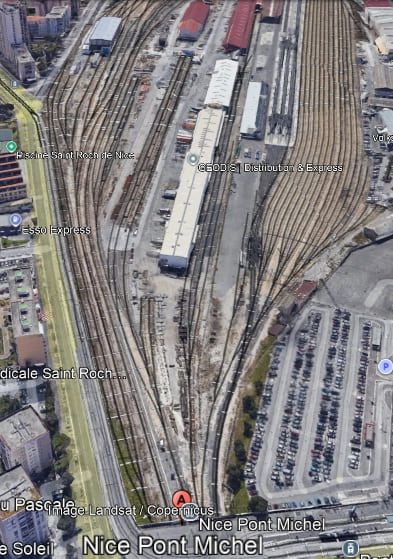
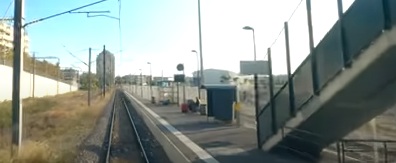
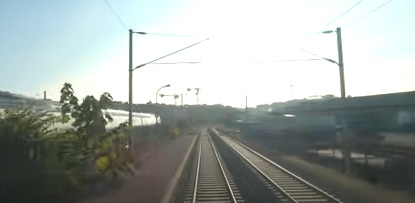
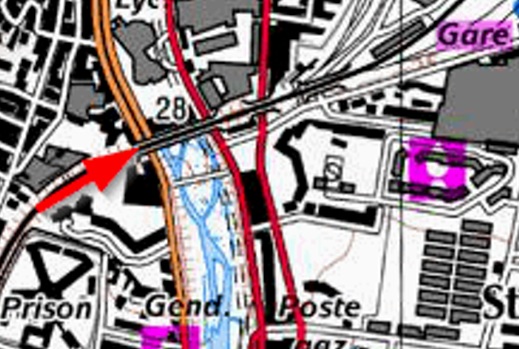
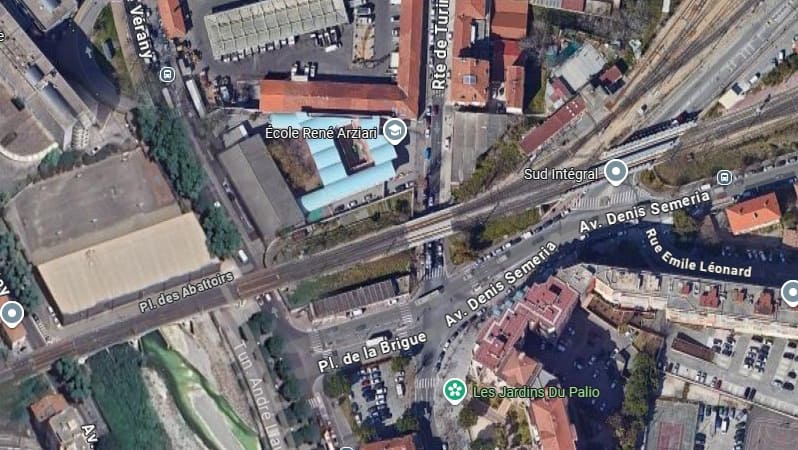
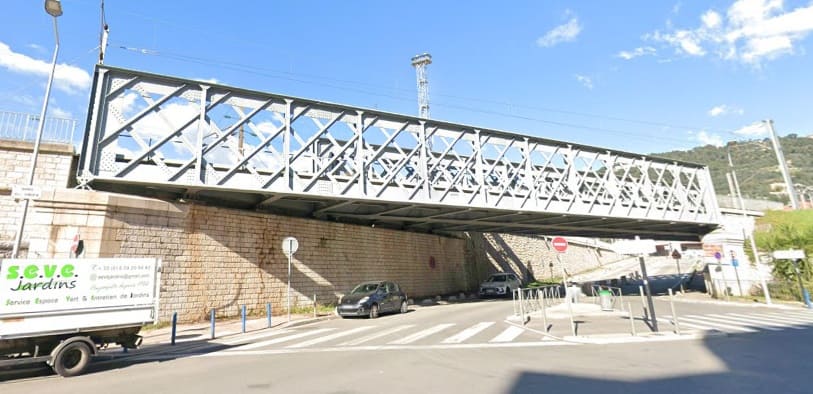
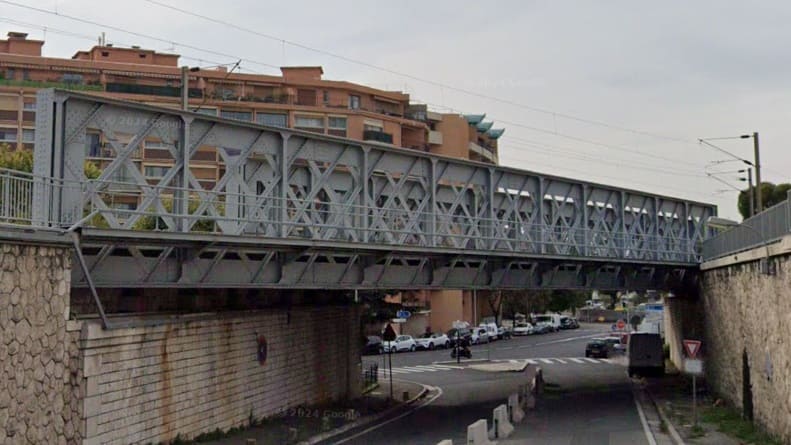
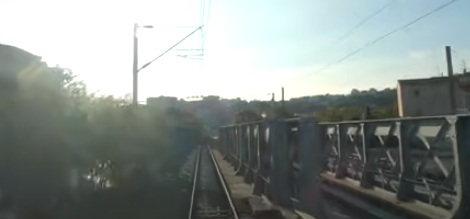
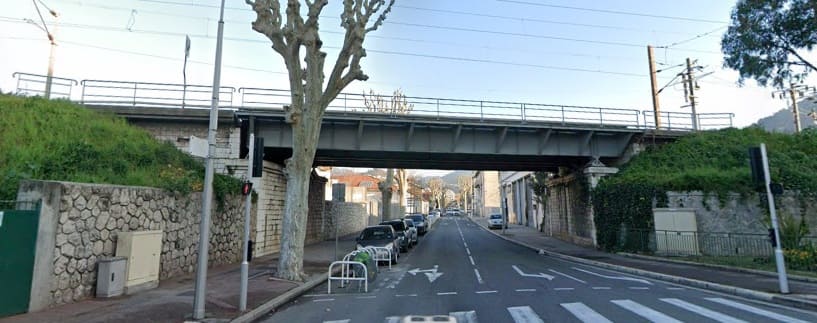
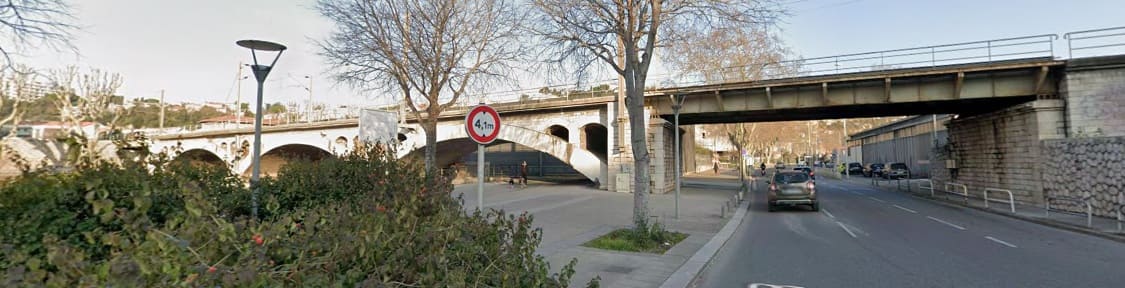
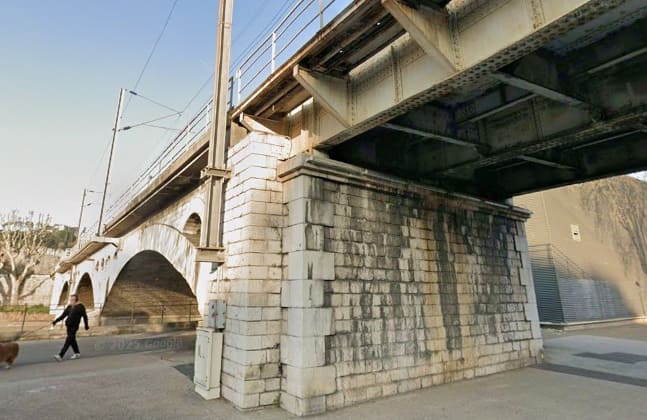
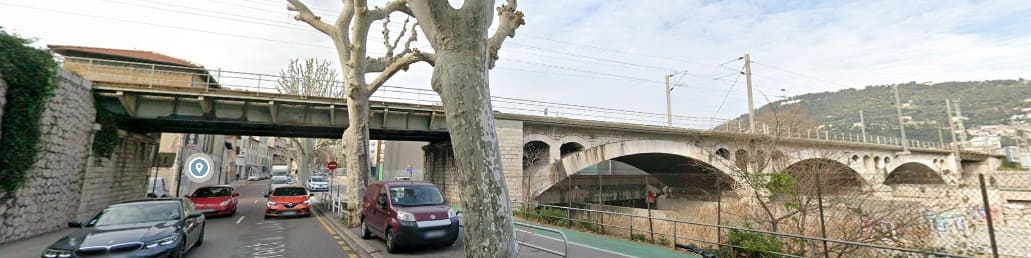

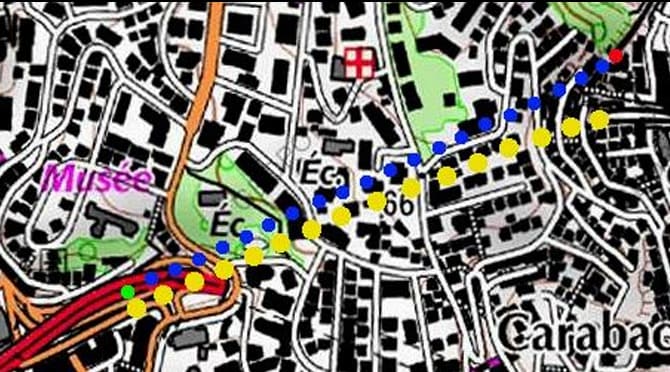
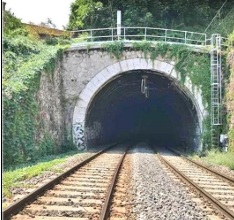
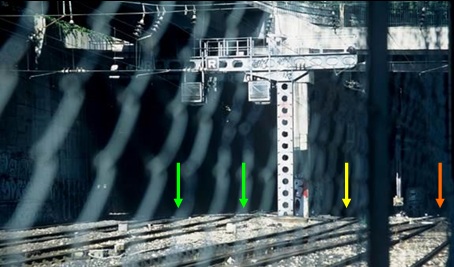
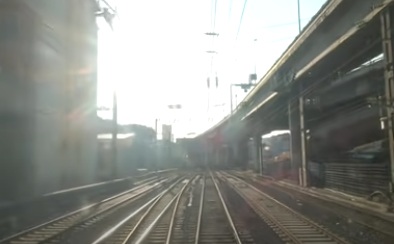
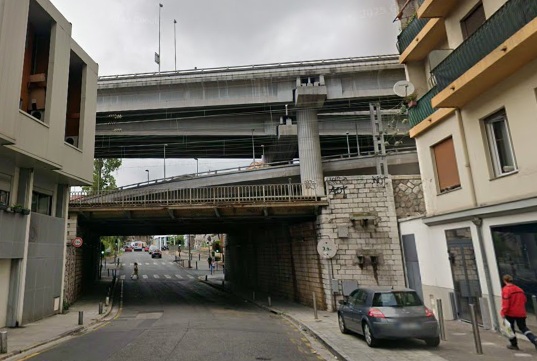
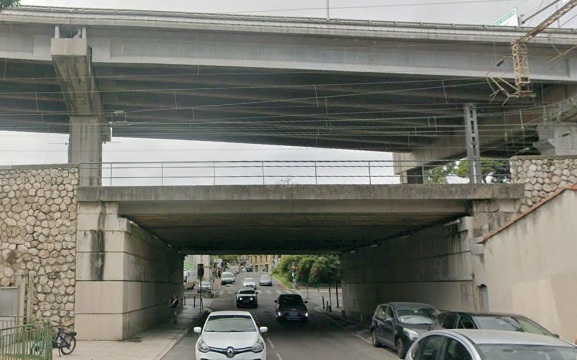
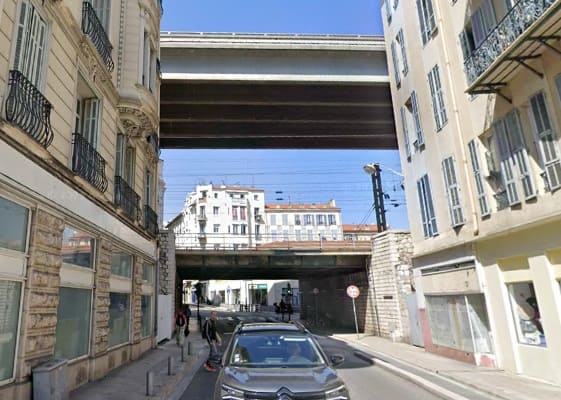
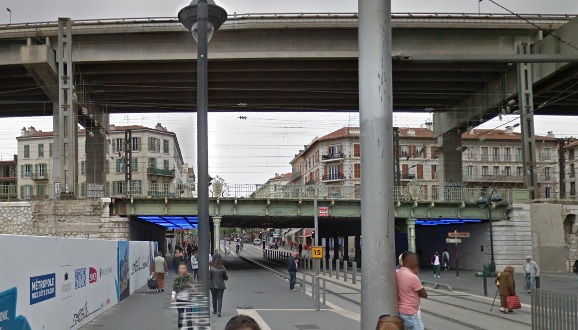
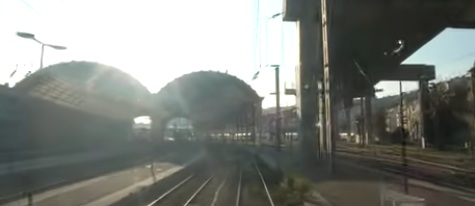
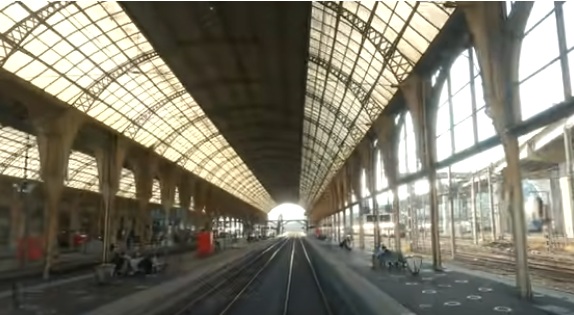
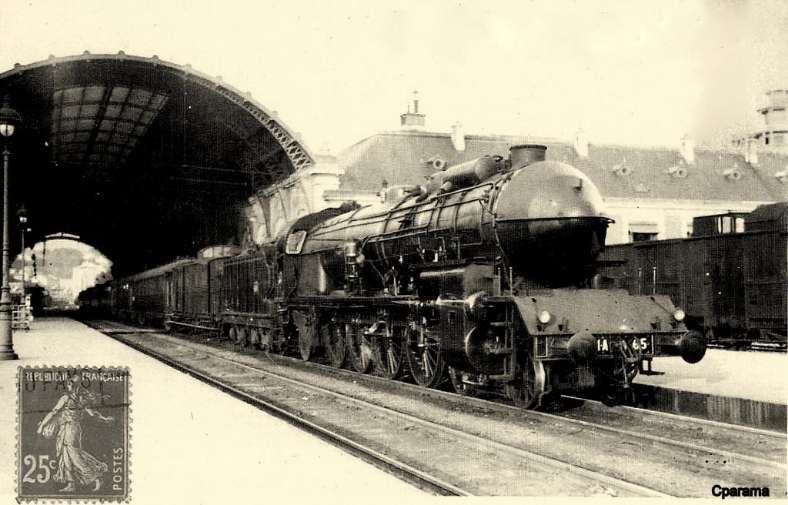
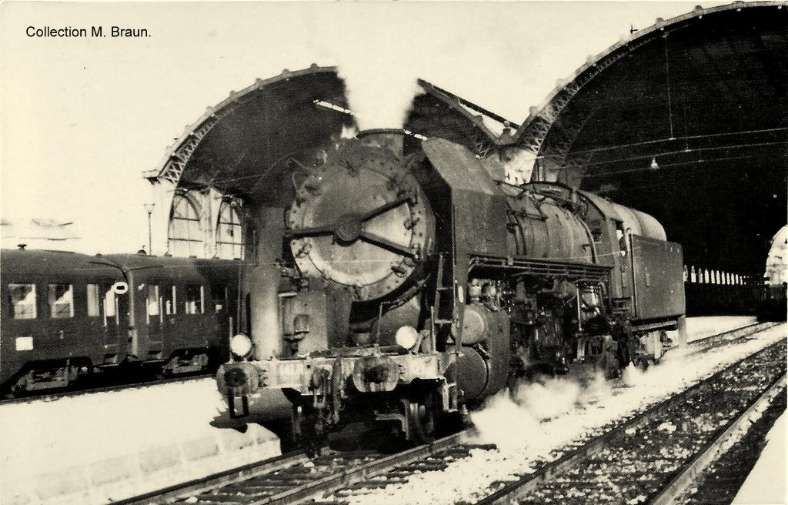
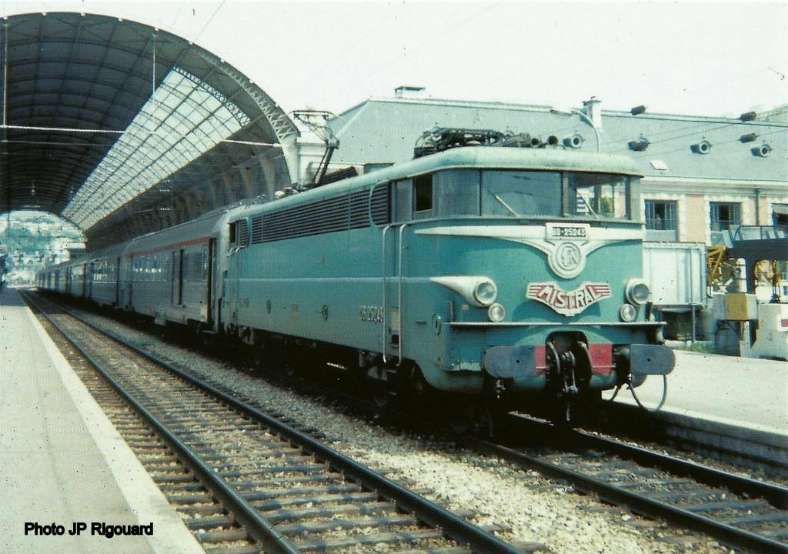

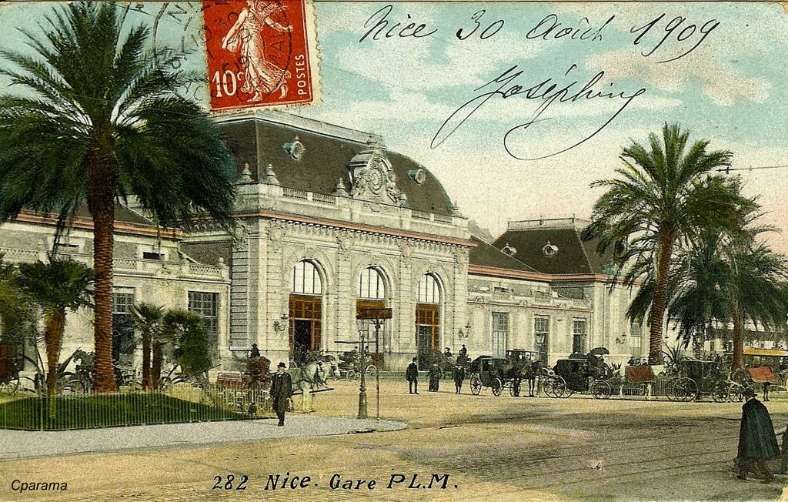
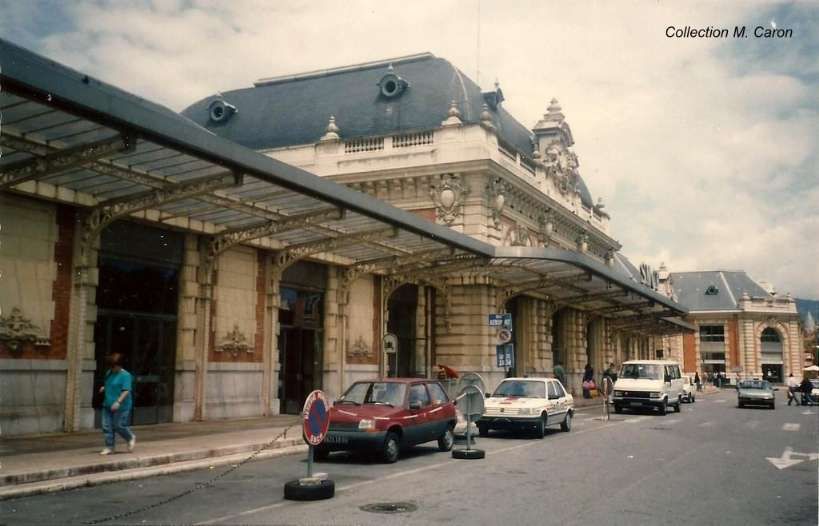
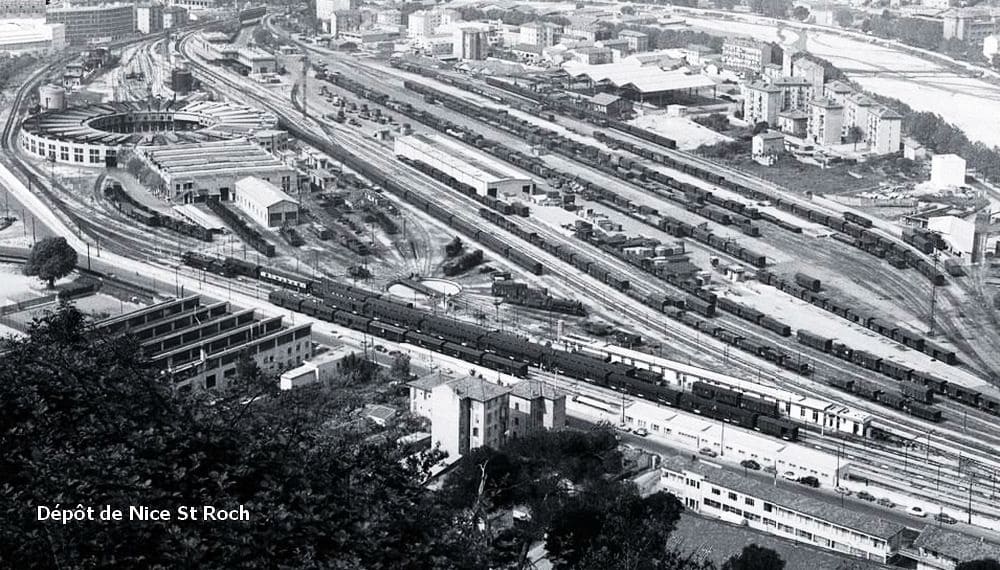
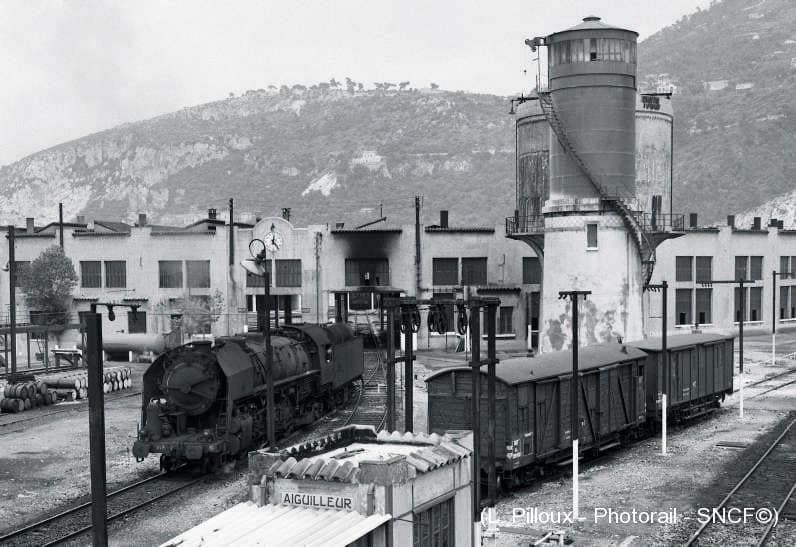
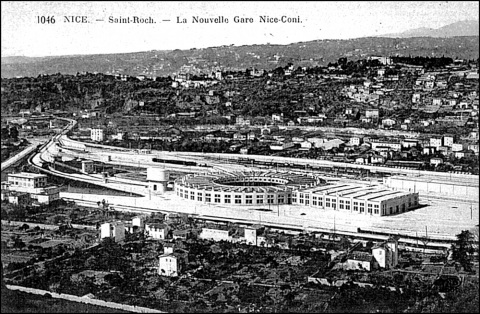
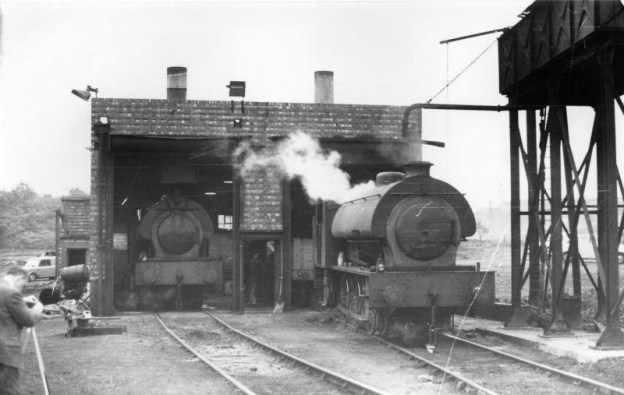
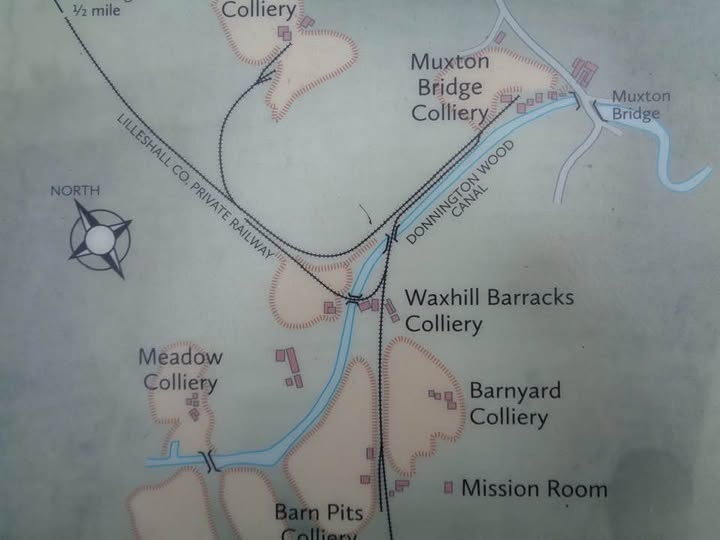
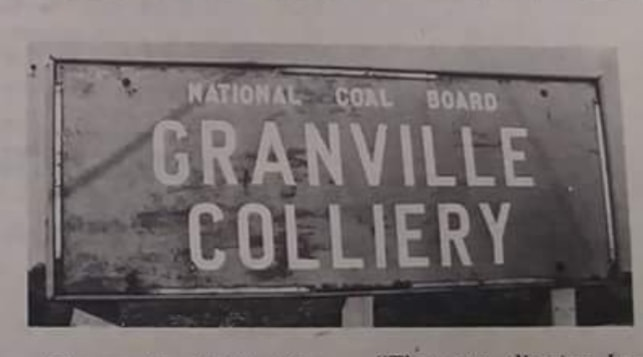
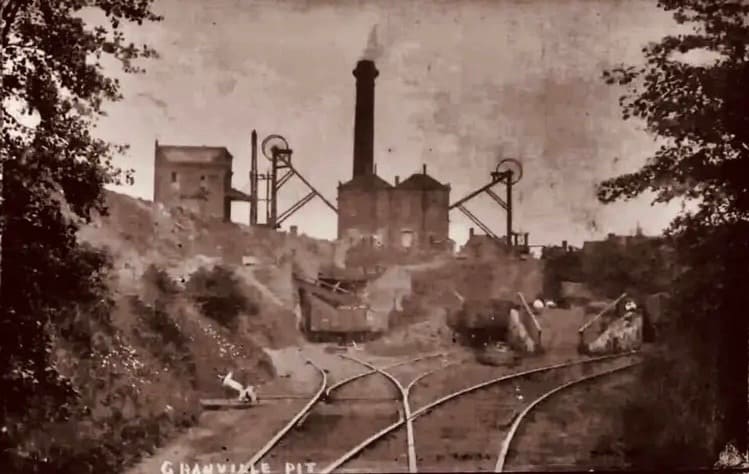
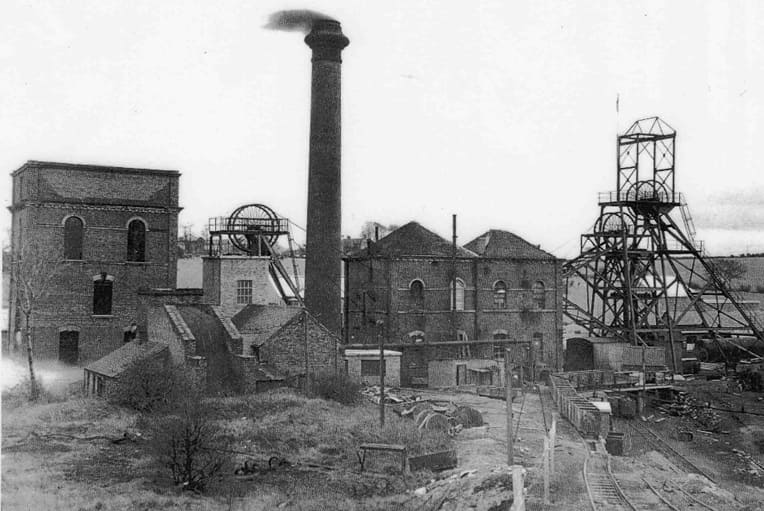
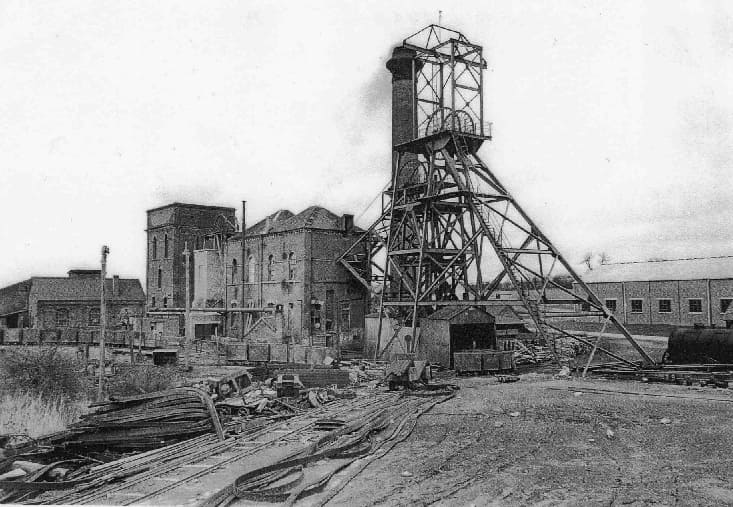
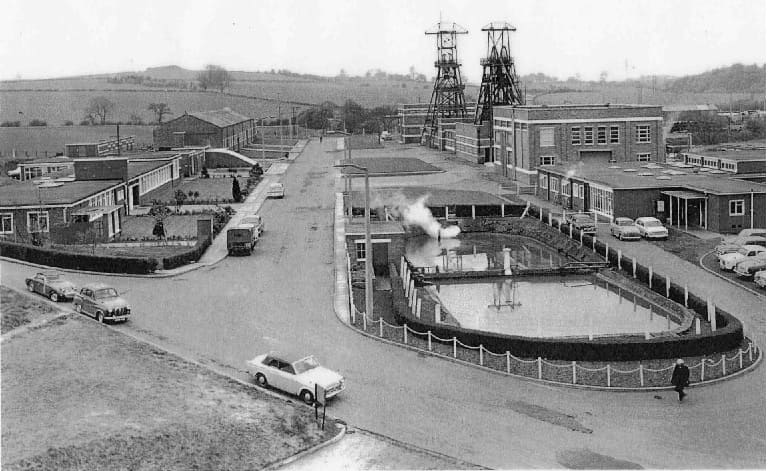
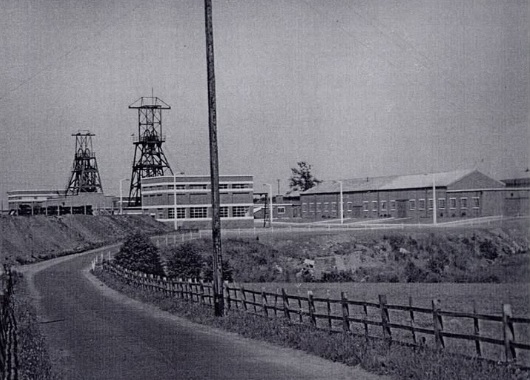
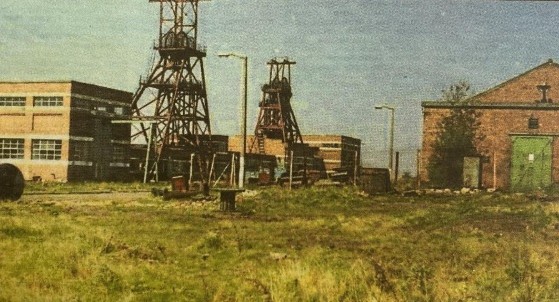
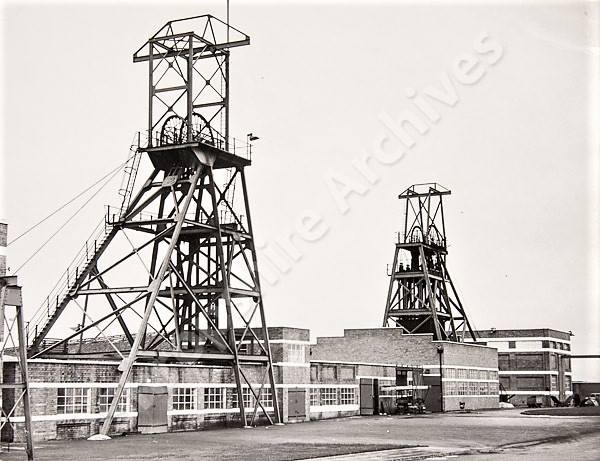
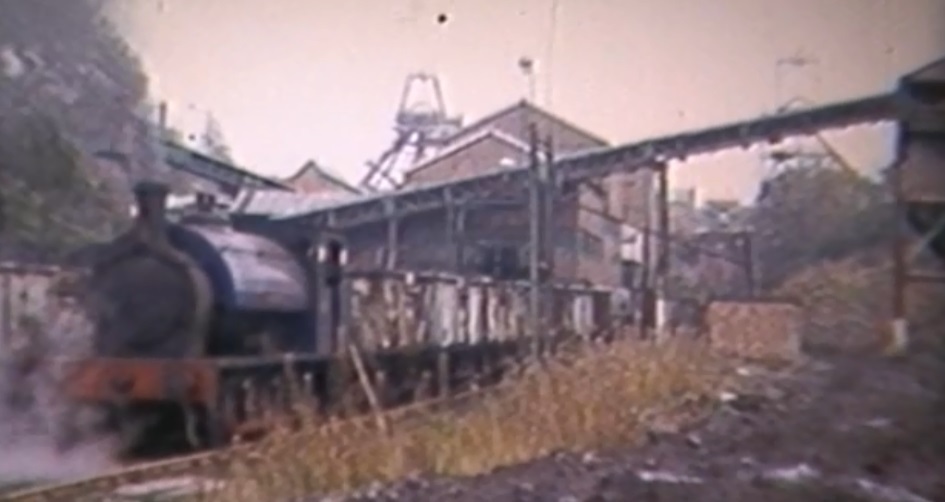
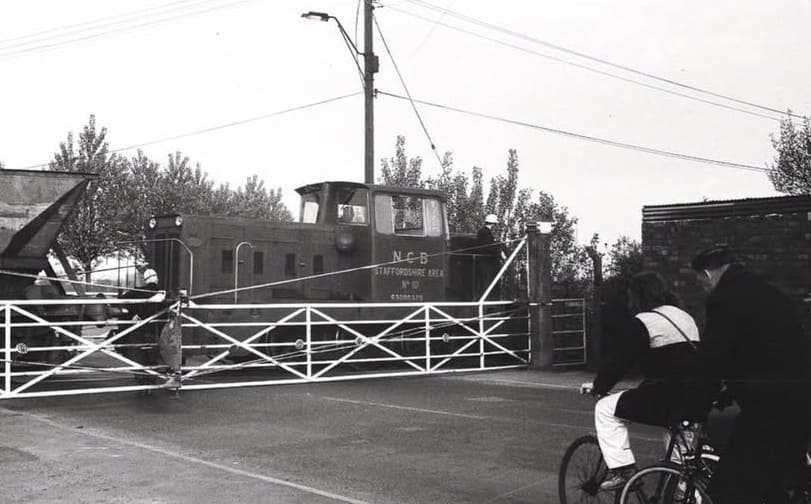
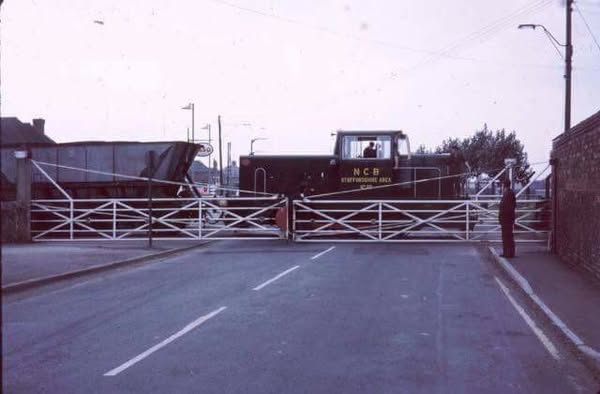
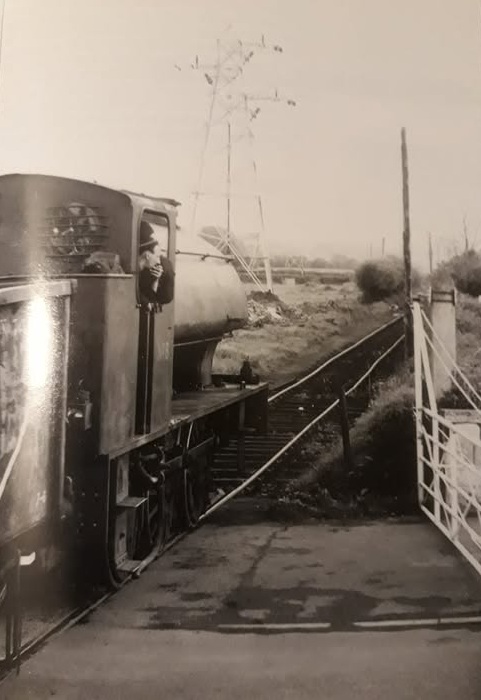
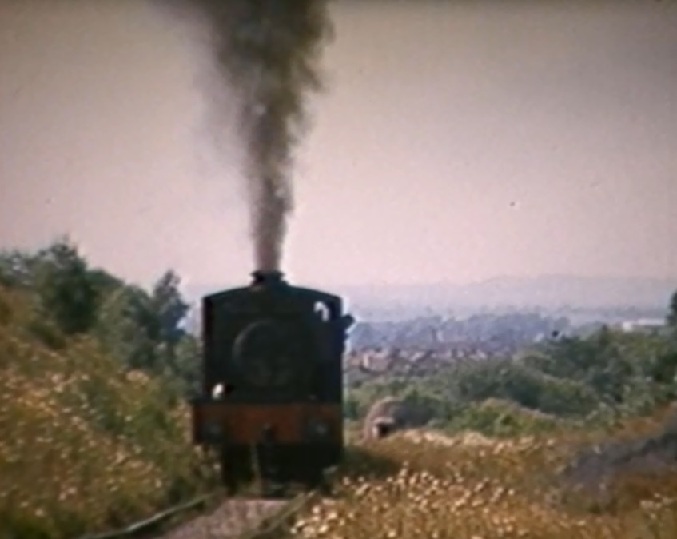
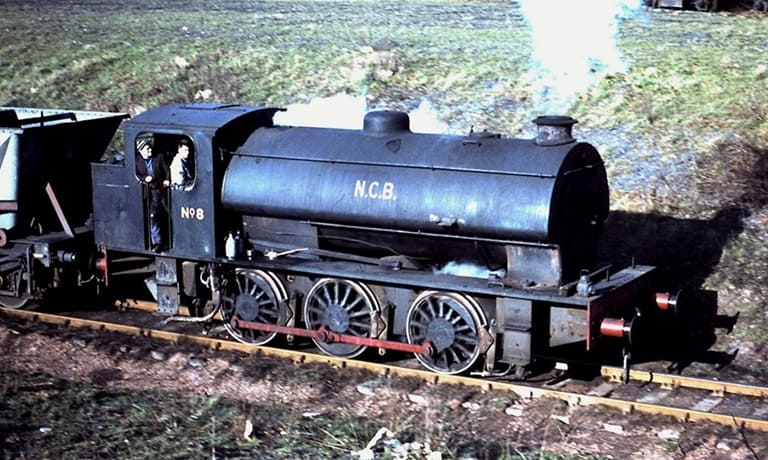
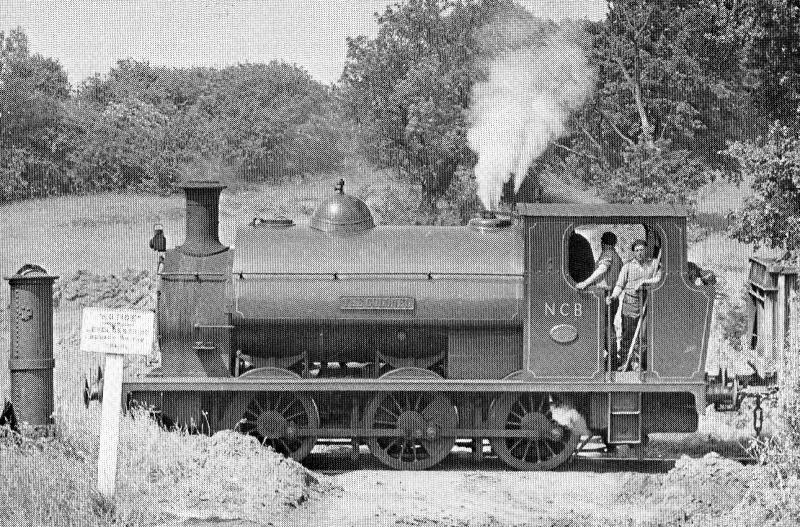
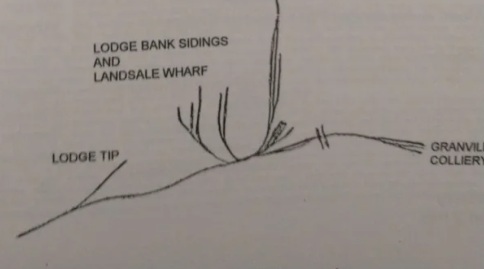
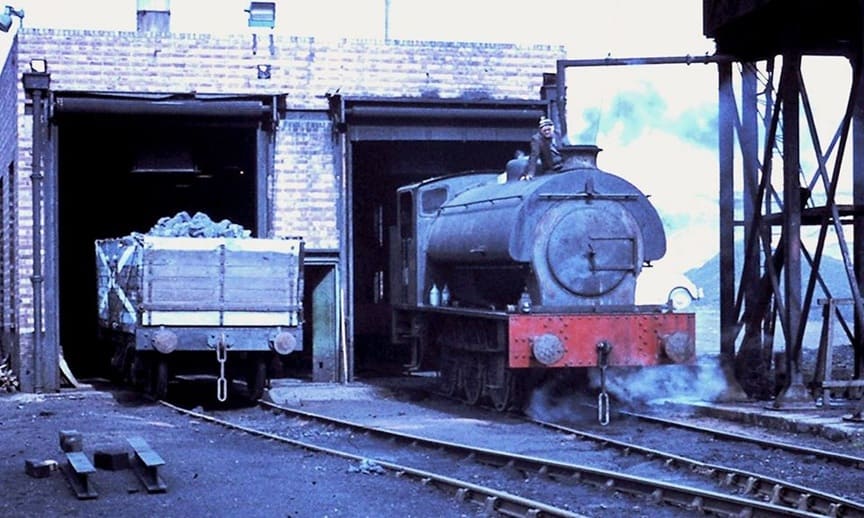
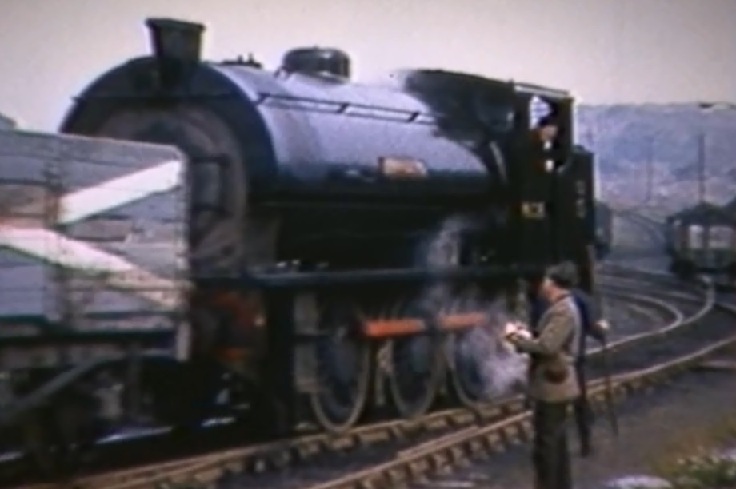
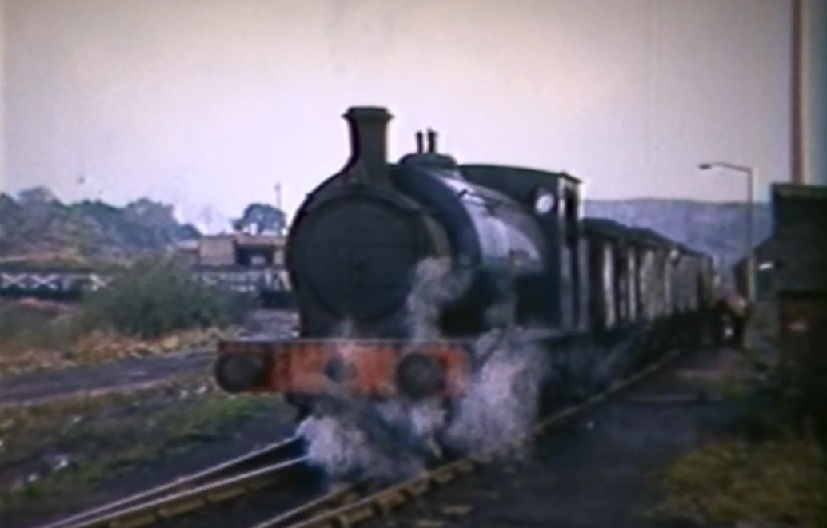
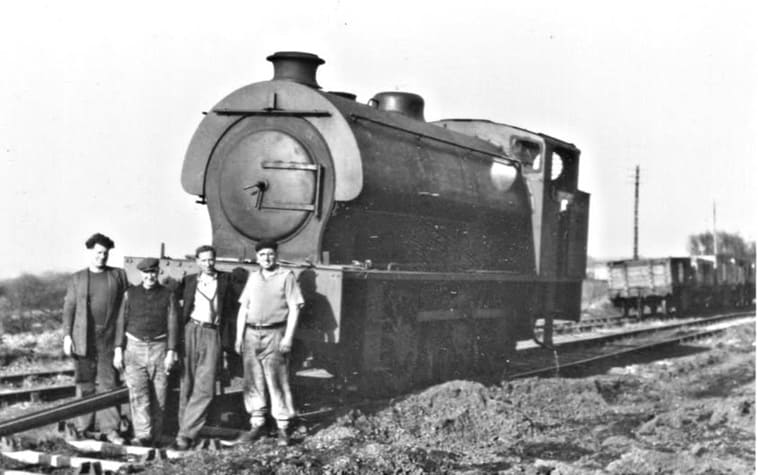
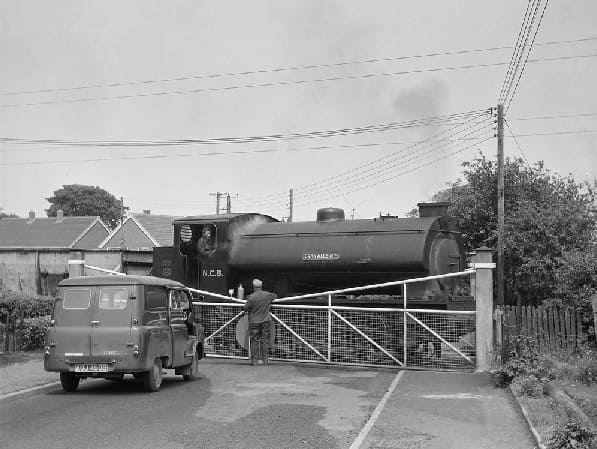
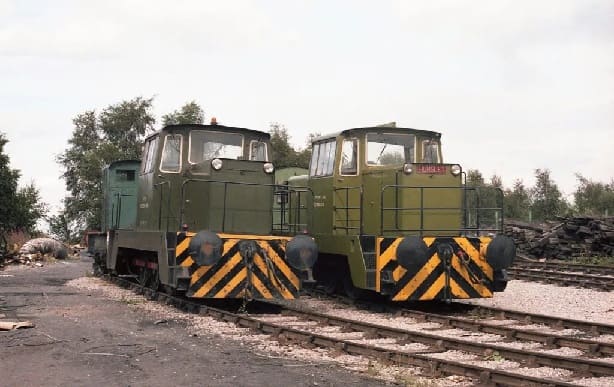
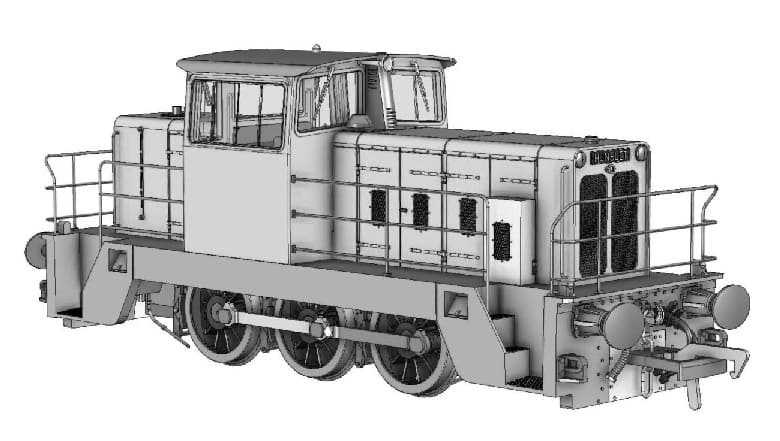
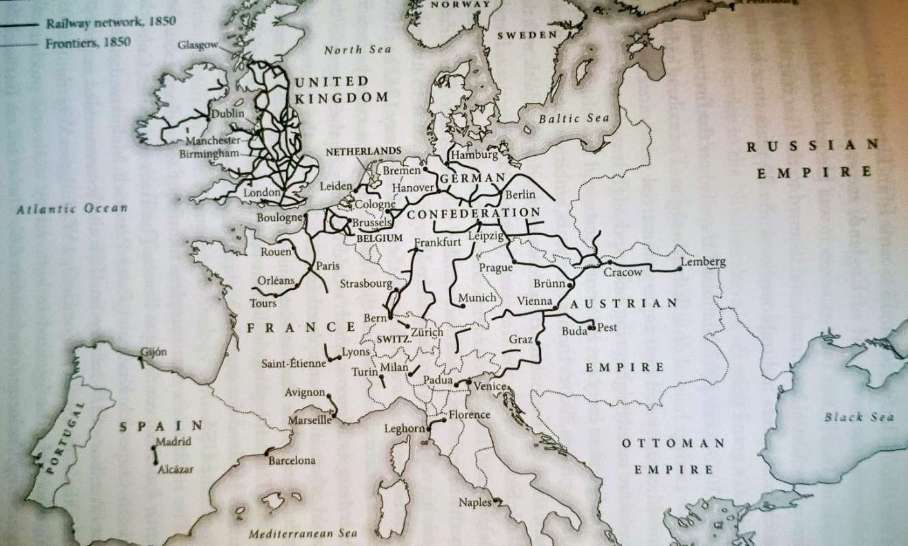
 Roger Farnworth