Originally known as ‘The Cranberry and Small Fry Line’, the Edaville Railroad is a 2ft-gauge narrow gauge line in Massachusetts. [1: p555]
It featured in a short article in the August 1952 issue of The Railway Magazine. This is the next article in a series looking at lines featured in early issues of The Railway Magazine.
Writing in 1952, Edwards comments: “Although never exceptionally numerous, lines of this type assisted materially in the development of many areas. As early as 1877, a 2-ft. gauge line, eight miles long, was inaugurated to link the Massachusetts towns of Bedford and Billerica, but the track and plant were removed to the State of Maine two years later, and used for the Sandy River Railroad. This line proved of great service to many previously isolated communities; its development was rapid, and extensions and branches soon brought its mileage up to 120. Other similar projects followed, mostly in Maine, and a sixty-year period of success resulted. In recent years, however, the usefulness of such small lines has declined. The present economic situation has proved an adverse factor … and nearly all of them have been closed.” [1: p555]
He continues: “Nevertheless, one small American line – the Edaville Railroad, of South Carver, Massachusetts seems to have a long and useful life ahead of it. Not only is it a commercially paying proposition, but it performs a special function each Christmas, bringing delight to thousands of children (and their parents).” [1: p555]
The truth is that the line’s history has proven to be much more chequered than Edwards seemed to envisage in the early 1950s. But that is getting ahead of ourselves. There is plenty of space in the rest of this article to look at the later history of the line.
Returning to Edwards article, he says that the line “owes its existence to a plan of … Ellis D. Atwood, who was developing an area of bog as a cranberry plantation. … [By 1952], the Atwood plantations form[ed] the largest privately-owned cranberry plant in the world. A railway enthusiast himself, Mr. Atwood saw in a small-gauge railroad, not only a fulfilment of a life-long ambition to possess his own system, but the very necessary provision of transport for his workpeople and the materials used in his organisation. For instance, 10,000 cu. yd. of sand are used to preserve the bogs during winter, and the narrow-gauge railway solved this problem in a way that probably no other transport could have met, in view of the soft nature of the terrain. Then, of course, the line is fully occupied at harvest time conveying both the fruit and the pickers at a very low cost to its owners. The coaches are also used by the pickers as shelters during the inclement weather often experienced at harvest time; for this they are sited at convenient spots along the line during working hours.” [1: p555]
Edwards says that “In 1939, the 2-ft. gauge Bridgton & Saco River Railroad in Maine almost the last of the [2-ft.] narrow-gauge systems in the United States decided to dispose of its track and rolling stock. This was Atwood’s great opportunity. He bought the plant and rolling stock, and with the purchase of other equipment acquired by collectors from similar small lines passing out of business, the Edaville Railroad (so named by taking its founders initials) was commenced. This search for equipment, and systematic planning and correct siting, took some six years, but in 1946, the railway, complete with facilities for overhauling and repair of rolling stock, stations, auxiliary tracks, and points systems, came into full operation. The stock was four locomotives, eight coaches, six observation cars of the typical American pattern, a parlour car, and numerous trucks for everyday haulage work.” [1: p555-556]
“Thus it was as a utility-hobby that the Edaville Railroad grew. Originally there was no thought of catering for the public, but quite without any prompting from the owners, public interest was aroused.” [1: p556]
Edaville is located South of Boston, Massachusetts. [Google Maps, January 2026]Magnifying the satellite imagery, Edaville can be seen to be South of the road between Taunton and Plymouth. [Google Maps, January 2026]The Edaville Railroad site is South of Atwood Reservoir, near South Carver. [Google Maps, January 2026]Openstreetmap she’s the location of Edaville. The lake to the North of the site is the Atwood Reservoir. [7]
Wikipedia provides additional detail: “Atwood purchased two locomotives and most of the passenger and freight cars when the Bridgton and Saco River Railroad was dismantled in 1941. After World War II, he acquired two former Monson Railroad locomotives and some surviving cars from the defunct Sandy River and Rangeley Lakes Railroad in Maine. This equipment ran on 2 ft (610 mm) narrow gauge tracks, as opposed to the more common 3 ft (914 mm) narrow gauge in the western United States. Atwood purchased the equipment for use on his 1,800-acre (730 ha) cranberry farm in South Carver. After the 1945 cranberry harvest, Atwood’s employees built 5.5 mi (8.9 km) of track atop the levees around the cranberry bogs. Sand and supplies were hauled in to the bogs, and cranberries were transported to a “screen house” where they were dried and then sent to market. Atwood’s neighbours were enchanted with the diminutive railroad. At first, Atwood offered rides for free. When the demand for rides soared, he charged a nickel a ride. Eventually the line became less of a working railroad and more of a tourist attraction.” [2]
Cranberry pickers at work during the harvest at Edaville with a tourist train beyond. [1: p556]
Edwards says that, “This interest became a clamour, and the Atwood Plantation Company built a station, and opened the line at weekends to passengers, from the spring of each year until harvest time. Throughout the summer, parties from schools, camps, church organisations, and youth groups arrive[d] at Edaville Station for a journey on the last 2-ft. gauge railway in America. While awaiting the trains they [could] visit a railway museum built by the company to house working models of American trains dating back to 1860, and many other interesting railroad relics.” [1: p556]
A schematic drawing of the route of the Edaville Railroad in the 21st century. [2]
At Christmas, the Edaville Railroad really came into its own. After harvest, the railway would close until the first week in December when it reopened for what were quite spectacular Christmas excursions. …
Apparently, “12,000 coloured fairy lights [were] used to illuminate the various buildings on the estate, the 300-acre reservoir, the pine forests, and the cranberry bogs on the 5.5-mile journey.” [1: p556] This is all akin to the Santa Specials and the Polar Express experiences offer by many preservation line in the UK in the run up to Christmas.
As of 1952, Edwards says that these sightseeing rides in winter and summer cost young passengers nothing, although as many as a thousand five-cent tickets were sold as souvenirs each day. [1: p556]
Atwood died in 1950 after an industrial accident. “His widow Elthea and nephew Dave Eldridge carried on operations at Edaville until the railroad was purchased in 1957 by F. Nelson Blount, a railroad enthusiast who had made a fortune in the seafood processing business. The Atwood Estate retained ownership of the land over which the railroad operated, a key point in later years. Blount operated Edaville for the next decade, hauling tourists behind his favorite engine, No 8, and displaying his ever-growing collection of locomotives. Among these was the Boston and Maine Railroad’s Flying Yankee. This helped form the basis for his Steamtown, USA collection, first operating at Keene, New Hampshire, before moving to Bellows Falls, Vermont. (It would later move and be reconstituted as the Steamtown National Historic Site in Scranton, Pennsylvania.)” [2]
Blount was a distant relative of the Atwood family. [6]
Wikipedia continues: “Nelson Blount died in the crash of his light airplane over Labor Day weekend in 1967. Blount’s friend and right-hand man Fred Richardson continued on as general manager until the railroad was sold to George E. Bartholomew, a former Edaville employee, in 1970. … Edaville continued operations for another two decades with Bartholomew at the helm. The railroad operated tourist trains from Memorial Day [through to] Labor Day plus a brief, but spectacular, Festival of Lights in December. …. In the 1980s, Bartholomew’s attention was divided between the narrow gauge Edaville, and the 4 ft 8 1⁄2 in (1,435 mm) standard gauge Bay Colony Railroad he was then forming, running over disused Conrail branch lines. To some observers and former employees, Edaville began to stagnate around this time, although the annual Christmas Festival of Lights continued to draw huge crowds.” [2]
“In the late 1980s, after Mrs. Atwood died and the Atwood Estate evicted Edaville, Bartholomew was forced to cease operations. He eventually put the railroad up for sale in 1991.” [2]
Wikipedia continues: “Edaville ceased operations in January 1992 and much of the equipment was sold to a group in Portland, Maine, led by businessman Phineas T. Sprague. The equipment was to be the basis of the newly formed Maine Narrow Gauge Railroad Museum along the shores of Casco Bay. The sale generated great rancor. Many of the railroad’s employees were not ready to give up on South Carver. Much of the contents of the museum, housed in the former screen house, had been auctioned off the previous fall. But the sale was closed (although the Portland museum took on a debt that would prove all but crushing in subsequent years) and locomotives 3,4 and 8 were trucked to Portland aboard antique trucks loaned for the occasion. Locomotive No. 7, which was owned by Louis Edmonds, left for Maine at a later date.” [2]
Two attempts to revive Edaville during the 1990s foundered. A third attempt in 1999 saw “the new Edaville Railroad opened for operation. Owned and operated by construction company owner Jack Flagg, developer John Delli Priscoli and cranberry grower Douglas Beaton, the railroad acquired a ‘new’ steam locomotive, No. 21 “Anne Elizabeth”, built by the English firm of Hudswell Clarke and a veteran of the Fiji sugar industry. Several of the original Edaville buildings, including the station and the engine house, were demolished with new buildings taking their place. Plans called for the construction of a roundhouse, served by the original turntable, with an enlarged collection of locomotives and rolling stock.” [2]
“By 2005, Edaville Railroad and the land upon which it ran was now owned by a single man, Jon Delli Priscoli. He bought up the Atwood property, bought out partner Jack Flagg, and became the sole owner. Although this removed the railroad/landlord conflict that had plagued Edaville for decades, it proved to be the end of the “old” Edaville. Delli Priscoli turned the land near the milepost known as “Mt. Urann” into a housing subdivision, and pulled up the tracks that ran through the new lots. Late 2005 saw the very last run over the “original line” (pulled by oil-burner No. 21, which had been cosmetically modified to more closely resemble a Maine prototype). When the rails were removed over Mt. Urann, the mainline became a 2-mile (3.2 km) loop, including about half of the line around the old reservoir.” [2]
Wikipedia continues: “In late 2010, the Edaville operators announced that they would not seek to renew their operating lease with Delli Priscoli. Delli Priscoli then put the railroad up for sale for $10 million, and eventually found a potential buyer. However, Priscolli found that the buyer did not intend to continue operating the park, and declined the offer, opting instead to rebuild the park. The restored railroad reopened in September 2011. The following year, the park began a three-year reconstruction project, which includes the installation of additional attractions, refurbishing and repainting existing rides, adding additional parking, and building a new main street entrance and guest services area.” [2]
In the years under Priscoli, Edaville Railroad reopened as Edaville Family Theme Park, an amusement park themed around cranberry harvesting and railroading.
Wikipedia continues: “As of 13th April 2022, Delli Priscoli put Edaville back on the market. The family amusement park [had] closed due to the coronavirus pandemic, and except for the return of the annual Christmas Festival of Lights … has remain closed.” [2]
As of 2025, various options were being explored for re-opening as a more traditional, historic railway attraction. [2] As of January 2026, details of the Christmas Festival of Lights in 2025 can be found here. [6] The then site owners said that “Classic traditions and trains will remain for Edaville’s Christmas Festival of Lights, while a reimagining of the space allows future generations to get to know the joy of Edaville. Long time fans, train enthusiasts, and newcomers can plan to see steam locomotives on trains as much as possible, giving a rare experience as the only operating steam locomotives in Massachusetts!” [7][8]
A significant number of photographs can be found on Tripadvisor. [8]
It remains to be seen whether this attraction survives the next few years and what form it will take. The site was taken over by King Richard ‘s Faire in 2025. [9]
References
Austin Edwards; The Cranberry and Small Fry Line; in The Railway Magazine Volume 98 No. 616; Tothill Press,h London, August 1952, p555-556.
This article gives a quick review of the January 1959 issue of the Railway Magazine. …
Editorial Notes
Looking back at past editorials in The Railway Magazine highlights the ongoing debate at the time over the best form of terrestrial travel – road -v- rail.
In the January 1959 issue of the magazine, which saw O.S. Nock assuming the authorship of the long running monthly article, ‘Locomotive Practice and Performance’, the editorial focussed on:
Road and Rail Fares and Services
“It was suggested recently in the editorial columns of a daily newspaper that the time was approaching when long journeys by motor-coach could be made at high speed, over the new trunk roads, ‘at a fraction of the cost of railway travel’. In a reply by letter, Sir Reginald Wilson, a member of the British Transport Commission, pointed out that, in terms of seat-miles of service offered, the train is cheaper than the coach. The reason why railway fares are higher than coach fares is the higher cost incurred by the railways in providing frequent services with enough rolling stock to cater, as far as possible, for peak traffics, and for fluctuations in the number of passengers travelling at all periods. The capital cost of providing rolling stock for morning and evening peak-hour residential traffic is very high. Moreover, much of this stock is not required, or is under-employed, during the greater part of the day.” [1: p1]
It seems as though those promoting road over rail were already perceiving actual costs in a way that would favour road, and in doing so not including at least the infrastructure costs. The argument for the freedom of the road and the travel cost to the consumer at the point of use, would become easier for the road lobby to make as the initial cost of owning a car reduced in relative terms.
Public Reliance on Railways
The editorial also argued that the railways are expected to provide a near universal passenger service when those who provided motor-coach services were free to pick and choose what services they offered. …
“The motor-coach operator can obtain maximum use of his vehicles restricting his services to what reasonably be expected to be booked up. On the other hand, British Railways maintain a long tradition of public service by providing passengers with the means of travelling when they please, without the necessity of reserving seats in advance. The difference between rail and motor-coach fares, which frequently is lessened by cheap travel facilities provided by the railways, does not appear to be a high price to pay for the ability to meet the needs of countless individuals and surges of traffic whose free movement is essential. The extent to which the community depends on the railways to provide reliable transport at short notice probably is not fully realised. The railways have been a part of our national life for so long that the services they render are apt to be taken for granted.” [1: p1]
First British AC Electric Locomotive
The Railway Magazine also reported on the first AC electric locomotive to carry passengers on the line between London and Manchester. The converted Metropolitan-Vickers gas-turbine engine, made its initial run with a passenger train on 26th November 1958 carrying representatives of the Press. This was close to ten years before the eventual demise of steam on the main line in August 1968. The editorial commented:
“On 26th November 1958, representatives of the Press visited the Styal line of the London Midland Region, which is included in the Crewe-Manchester electrification scheme. The special train was operated over the 9 miles between Wilmslow and Mauldeth Road and, although the load was only 100 tons, rapid acceleration to a speed of rather more than 70 m.p.h. was a marked feature of the journey. The locomotive is being used for the training of staff, and other locomotives for public services are being built. Multiple-unit trains will be used for local traffic. Regular electrified services between Crewe and Manchester will start in 1960. By 1963, they will be extended to Birmingham and Liverpool; and it is planned to run electric trains between Euston and Liverpool and Manchester by 1968.” [1: p1-2]
The Metropolitan-Vickers Gas-Turbine Locomotive, British Rail No. 18100, was a prototype main line gas turbine–electric locomotive built for British Railways in 1951 by Metropolitan-Vickers, Manchester. It had, however, been ordered by the Great Western Railway in the 1940s, but construction was delayed due to World War II. It spent its working life as a Gas-Turbine loco on the Western Region of British Railways, operating express passenger services from Paddington station, London. It was of Co-Co wheel arrangement and its gas turbine was rated at 3,000 horsepower (2,200 kW). It had a maximum speed of 90 mph (140 km/h) and weighed 129.5 long tons (131.6 t; 145.0 short tons). It was painted in BR black livery, with a silver stripe around the middle of the body and silver numbers. [2]
Early in 1958 it was withdrawn from service, after a short period of storage at Swindon, the locomotive was returned to Metropolitan Vickers for conversion as a prototype 25 kV AC electric locomotive. As an electric locomotive, it was numbered E1000 (E2001 from 1959) and was given the TOPS classification of Class 80. [2]
As was usual, the January issue of The Railway Magazine focussed on railways in Scotland. …
The Railway Magazine, January 1959. [1: piii]
The Strathspey Line is covered in a short series of articles which can be found here, [7] here, [8] and here. [9]
Notes and News
Perhaps the most significant item of news in this section of the magazine was the demise of Midland and Great Northern line which was confirmed as taking place on Saturday 28th February 1959.
Midland & Great Northern Closure
“The Eastern Region of British Railways has announced that, with the exception of the 15-mile section from Cromer Beach to Melton Constable, the whole of the Midland & Great Northern line will be closed to passengers at midnight on Saturday, 28th February. The sections affected are Saxby to Sutton Bridge (43) miles); Peterborough to Sutton Bridge (27) miles); Sutton Bridge to Melton Constable (40) miles); Melton Constable to Yarmouth Beach (41½ miles); and Melton Constable to Norwich City (214 miles). Bus services throughout the area are to be increased. To improve facilities for seasonal travellers, new signalling will be installed at Vauxhall Station, Yarmouth, and its approaches, to deal with a greater number of holiday trains. Longer platforms, new carriage sidings, and additional amenities also are to be provided. It is hoped to complete much of this work by Whitsun.” [1: p65]
Goods traffic was, as a result, significantly curtailed: “Freight traffic in the area served by the Midland & Great Northern line will be catered for by extended rail cartage facilities from established railhead depots. Spurs affording connection with former Great Eastern lines will be retained. As a result of this planning, freight trains will be withdrawn from the following sections:- South Witham to Bourne; Wisbech North to Sutton Bridge; Sutton Bridge to South Lynn; Gayton Road to Melton Constable; and Melton Constable to Yarmouth Beach. About 77 route miles will thus remain open for freight traffic only, and some 97 route miles will be closed completely.” [1: p65]
The Eastern Region of British Railways estimated that the direct saving from the reorganisation would be £640,000 a year; and taking other factors into account, the total annual saving was likely to be about £1 million.
It is impossible to measure just how significant the negative social impact of the closures was for rural communities in Lincolnshire and Norfolk.
Monmouth
Also included in the Notes was notification of the final closure of routes into Monmouth. …
“The county town of Monmouth is to lose its passenger services, as the two remaining branches are being closed to traffic as from 5th January – the section between Monmouth May Hill and Lydbrook Junction completely. A special last train has been arranged by the Midland Area of the Stephenson Loco-motive Society for Sunday, 4th January. It will leave Chepstow at 11.20 a.m. for Monmouth and Ross-on-Wye, from which it will return by the same route at 1.55 p.m. Thence the train will traverse the Sudbrook branch, for a visit to the Severn Tunnel pumping station, and will complete its tour at Severn Tunnel Junction Station at about 5.30 p.m. Stops will be made en route and an exhibition on the platform of one of the Monmouth stations is planned. The 9 a.m. train from Birmingham to Swansea, via Gloucester, and the 9 a.m. from Swansea to Birmingham, will call specially at Chepstow to connect with the S.L.S. train. The fare for the tour only [was] 10s. 6d., and inclusive of cheap return ticket from Birmingham 22s. 6d., and from Bristol 15s. 6d.” [1: p65-66]
The Why and the Wherefore
Potteries, Shrewsbury & North Wales Railway
In answer to a question from Mr J.M. Duckett, a paragraph about what was to become the Shropshire & Montgomeryshire Railway appeared in the Magazine:
“A railway to connect the Midlands of England with Ireland via a new port at Porthdynllyn, on the Caernarvonshire coast, was projected in 1846, but the scheme came to nothing. An unsuccessful attempt was made to revive it in 1861. In the next year, the West Shropshire Mineral Railway was authorised from Llanymynech to Westbury, on the then recently-authorised Shrewsbury & Welshpool Railway. Eventually this line was modified to extend from Shrewsbury to Llanyblodwell, and the company was amalgamated with the Shrewsbury & Potteries Company, which planned to connect Shrewsbury with Market Drayton and Stoke-on-Trent. The title of the combined undertaking became the Potteries, Shrewsbury & North Wales Railway. It was proposed to extend the line westwards on a mountainous cross-country route from Llanyblodwell to Portmadoc and Porthdynllyn. The company succeeded in building only the section between Shrewsbury and Llanyblodwell, of which the 17 miles from Shrewsbury to Llanymynech eventually became the Shropshire & Montgomeryshire Railway. The remaining 2 miles from Llanymynech to Llanyblodwell passed into the hands of the Cambrian Railways. It frequently has been suggested that, if the complete scheme, including the long and expensive extension to Porthdynllyn, had come to fruition, the Great Northern Railway would have sought running powers over the North Staffordshire Railway to Stoke-on-Trent, or over the London & North Western Railway from Stafford to Shrewsbury, to participate in the traffic passing between the Midlands and Porthdynllyn. Such a step would not have been beyond the bounds of possibility.” [1: p71]
More information can be found here, [5] and here. [6]
References
The Railway Magazine Volume 105 No. 693, Tothill Press, London, January 1959.
A significant proportion of the August 1925 edition of The Railway Magazine [1] was dedicated to coverage of the Centenary celebrations at Darlington. Given the short timescale between the event and the publication date of the August issue of the magazine (?late July?), and given that modern digital techniques were in no way available, the achievement of publication in such a short time is to be admired.
Writing at the end of 2024, in just a few months the 200th anniversary will occur, it will be interesting to see what celebrations will be taking place in the Summer of 2025. See, for example, the National Railway Museum‘s plans for 2025. [42]
G.A. Sekon offered The Railway Magazine’s congratulations to the organisers of the 1925 exhibition on their organisational achievements and on the “comprehensiveness and interest of the exhibits brought together.” [1: p101] He also notes that the opportunity was taken by the King to appoint many different leading railway officers to the Order of the British Empire these included: four CBEs (Mr. R. C. Irwin, Secretary, L.M.S.R., Mr. E. A. Bolter, Secretary, G.W.R., Mr. G. Davidson, Divisional General Manager, North Eastern Area, L.N.E.R., and Mr. G. S. Szlumper, Assistant General Manager, Southern Railway), eight OBEs and fourteen MBEs.
The ‘main event’ was the procession which was “witnessed at ease and in comfort by many hundreds of thousands in view of the accessibility of the route practically from end to end and the arrangements whereby landowners generously allowed access to fields adjoining the line.” [1: p103]
The event was opened by HRH. the Duke of York, accompanied by the Duchess of York. (The Duke of York being the future George VI who became King unexpectedly following the abdication of his brother, King Edward VIII, in December 1936.)
In his opening address Mr. W. Whitelaw made it clear that, “The Exhibition was the result of the co-operation of five great railway companies, assisted by many friends from all parts of the country, who possessed interesting relics of the first passenger railway in the kingdom. It seemed very fitting that the commencement of the celebration of what took place on 27th September 1825, should be in that great railway town of Darlington. If Darlington did not own all the credit for the science of railways, at any rate no one could deny or challenge the statement that Darlington was the home of the first great railway statesman, Edward Pease.”
The Procession
A short (20 minute) film of the procession/cavalcade can be viewed here. [35]
“The centenary celebrations were held in July to allow guests from foreign countries visiting the International Railway Congress to take part. An exhibition of rolling stock at the new Faverdale Wagon Works in Darlington was opened by the Duke and Duchess of York (later King George VI and the Queen Mother). The following day the royal couple watched as procession of locomotives passed between Stockton and Oak Tree Junction, starting with a Hetton Colliery locomotive that had been built in 1822 and finishing with a replica train of ten chaldron waggons and ‘the company’s coach’ hauled by Locomotive No.1 propelled by a petrol engine in a specially built tender.” [45] A copy of the original programme for the procession can be found here. [46]
The procession was due to have 54 items, one of which had to be withdrawn (the North British Locomotive Company’s geared turbine condensing locomotive). [1: p123] The final list was: [8]
1. Hetton Colliery locomotive – 1822.
2. S. & D.R. “Derwent” – 1845.
3. NBR 0-6-0 No. 381 (LNER J31 10114) – 1867.
4. NER 0-6-0 No. 1275 – 1874.
5. LNER J26 0-6-0 No. 517 (ex NER) – 1905.
6. LNER B16 4-6-0 No. 934 (ex NER) – 1921.
7. LNER K3 2-6-0 No. 203 – 1925.
8. LNWR 0-8-0 No. 1881 (LMS 8900) – 1901.
9. LMS 0-8-0 No. 9446 (ex LNWR) – 1922.
10. LNER 02 2-8-0 No. 3501 – 1924.
11. GWR 2-8-0 No. 4700 – 1919
12. LNER P1 2-8-2 No. 2393 – 1925.
13. LNER electric loco No. 9 (hauled by J71 0-6-0T 317) (ex NER) – 1914.
14. GWR 2-2-2 “North Star”(replica), (on wagon, hauled by J71 0-6-0T No. 181) – 1837.
Of these items, The Railway Magazine chose to highlight a number of these including:
1. The Hetton Colliery Locomotive
“The procession was headed by the old Hetton Colliery engine, built in 1822 by George Stephenson and Nicholas Wood, previous to the establishment of Stephenson’s works at Newcastle-on-Tyne. The engine, by the way, was rebuilt in 1857, and again in 1882, when the link motion, at present fitted, was added.” [1: p109]
“Next in order came the old ‘Derwent’, a mineral engine of Timothy Hackworth’s design, which was built in 1845 by William and Alf Kitching, of the Hopetown Foundry, Darlington, for the Stockton and Darlington Railway. The ‘Derwent’ also ran under its own steam.” [1: p109]
“Then followed a number of engines more or less familiar to the present generation [1925], although two of them were built over 50 years ago. A 1925 modern goods express 2-6-0, with special valve gear, and a mineral engine 2-8-0 with three cylinders, were a great contrast to the veterans that had passed earlier. Then followed a “Mikado” type of locomotive built at the Doncaster works of the L.N.E.R., for fast mineral work, but even greater interest was shown in a model of the old North Star, built in 1837 by Robert Stephenson and Co., which was mounted on a Great Western ‘crocodile’, drawn by a locomotive. Several specimens of the single-driver expresses popular in the latter half of the [19th century] were in the procession, including the Cornwall, which has a driving wheel of 8 ft. 6 in. in diameter the largest locomotive driving wheel still in service in the world.” [1: p109]
4.0-6-0 Stockton & Darlington Goods
Fourth in the procession was a typical 0-6-0 locomotive from the Stockton and Darlington (S&D) Railway. This was probably NER No. 1275 which was the only NER 1001 Class locomotive to survive into LNER ownership. It was built by Dübs & Co., Glasgow, and was delivered to the S&D in May 1874. 1275 entered into LNER ownership with an official mileage of 908,984 miles. Still in its NER livery, it was quickly withdrawn on 16th February 1923. [6]
This locomotive is preserved as part of the National Collection and is on static display at the National Railway Museum at York. [6]
NER No. 1275 is preserved in the National Railway Museum in York: Science Museum Group. NER 0-6-0 ‘1001’ class steam locomotive and tender, No 1275, 1874. 1975-7009 Science Museum Group Collection Online. [7]
The LNWR Class B was a class of 0-8-0 steam locomotives introduced in 1901. These locomotives were a development of the three-cylinder compound Class A (though this letter classification was not introduced until 1911), they had a 4-cylinder compound arrangement. 170 were built between 1901 and 1904. [9]
“The London and North Eastern Railway Class P1 Mineral 2-8-2 Mikado was a class of two steam locomotives designed by Nigel Gresley. They were two of the most powerful freight locomotives ever designed for a British railway. It was initially intended they be a more powerful 2-10-0 version of the earlier Class O2 2-8-0s. The design was submitted in August 1923, for use between Peterborough and London, and also between Immingham and Wath marshalling yard. The power was quoted as being 25% more than the O2.” [21]
“No. 2393 was completed in June 1925, just in time for the Stockton & Darlington Centenary celebrations in July. It was fitted with a Robinson superheater, whilst No. 2394 (completed in November) had the “E Double” superheater recommended by The Superheater Co.” [22]
14. GWR 2-2-2 ‘North Star’ (replica)
North Star was the first GWR locomotive, it on 31st May 1838 it worked the inaugural train for the company’s directors. More details can be found on the Preserved British Steam Locomotives website. [10]
Built in 1847, ‘Cornwall’ is a preserved steam locomotive. She was built as a 4-2-2 at Crewe Works in 1847, but was extensively rebuilt and converted into her current form in 1858. [12]
Wikipedia tells us that, “In 1858, Ramsbottom redesigned Cornwall almost completely. Little survived unchanged, other than the outside frames and the centres of the drivers. The boiler was … moved entirely above the driving axle, without any notches, channels or tubes. … New cylinders and valve gear were provided. … The wheel arrangement was [changed to] 2-2-2. … Ramsbottom also included his newly designed tamper-proof safety valves.” [12]
There was another minor rebuild in the 1870s providing a typical LNWR style of cab, with a short roof and semi-open sides. It was renumbered 3020 in June 1886. [12]
The Great Northern Railway (GNR) No. 1 Class Stirling Single was a class of steam locomotive designed for express passenger work. Designed by Patrick Stirling, they were characterised by a single pair of large (8 ft 1 in) driving wheels which led to the nickname ‘eight-footer’. Originally the locomotive was designed to haul up to 26 passenger carriages at an average speed of 47 miles per hour (76 km/h). It could reach speeds of up to 85 mph (137 km/h). [14]
“The first of the class, No. 1 is the only engine to be preserved. It is exhibited at the National Railway Museum, York. It was restored to running order during the 1930s for the fiftieth anniversary of the Race to the North and steamed again during the 1980s.” [14]
The three locomotives shown in the image above are:
19. 1875 built NER Class 901 2-4-0 No. 910;
20. 1885 built LNER E5 2-4-0 No. 1463 (ex NER);
21. 1892 built LNER D17/1 4-4-0 No. 1620 (ex NER)
The LNER Encyclopedia says that “Fletcher’s ‘901’ class was his final express passenger design for the … NER. The ‘901’ Class was created in 1872 to provide new more powerful express locomotives to replace the 16in cylinder locomotives still being used by the NER for express work. The first two locomotives, Nos. 901/2, were built at Gateshead in 1872. Whilst these were being built, two batches of ten each were ordered from Beyer, Peacock & Co and Neilson & Co. These twenty engines were built and delivered in 1873. A further 33 were built at Gateshead between 1873 and 1882 in four batches.” [17]
The LNER Encyclopedia says that the “new E5 locomotives were direct descendents of Fletcher’s ‘901’s. The cab design was changed, and a completely new tender design was used. A total of twenty E5s were built in 1885, with Darlington and Gateshead building ten each.” [18]
E5 No. 1463 is owned by the National Collection, but is on loan to the Darlington ‘Head of Steam’ Museum, now known as ‘Hopetown Darlington’s. [18]
The LNER Encyclopedia also notes that the NER Class M1 (later Class M) locomotives were Wilson Worsdell’s first express passenger locomotives for the North Eastern Railway (NER). … Twenty Class M1 locomotives were built at Gateshead between 1892 and 1894. More information can be found on the LNER Encyclopedia website. [19] These NER M1 locomotives became the LNER D17/1 Class at the grouping. [20]
The LNER operated a surprising variety of electric locomotives and multiple units. Although its electric operations were eclipsed by the Southern, the LNER had the largest electric locomotive stud of the Big Four companies. More about the various electric locks and multiple units can be found on the LNER Encyclopedia website. [27]
“Sir Vincent Raven was a great believer in the electrification of main lines. After the success of the Shildon-Newport electrification, he planned to electrify the North Eastern Railway’s (NER) stretch of the East Coast main line from York to Newcastle. As a part of this plan, authorisation was granted in March 1920 to build the prototype electric passenger locomotive No. 13. This had a 2-Co-2 (4-6-4) wheel arrangement, and was built at Darlington with electrical equipment provided by Metropolitan-Vickers.” [28] The loco was completed in 1922 just before the NER became part of the LNER in 1923.
The Lancashire and Yorkshire Railway (L&YR) Hughes 4-6-4T class of steam locomotives were a 4-6-4T version of the L&YR Class 8 (‘Dreadnought’ Class 4-6-0), hence they were known as ‘Dreadnought tanks’. All were actually built by the LMS in 1924 after the grouping, albeit at the L&YR’s Horwich Works. Withdrawals started in 1938, with three engines (11112, 11115, 11116), one each in 1939 and 1940 (11113 and 11111 respectively), four in 1941 (11114, 11117–11119) and the last (11110) in January 1942. No examples were preserved. [23]
Another example of the same class, No. 11114. [23]
41. GWR 2-8-0T Locomotive No. 5225
The 4200 class of 2-8-0T engines was designed to work the heavy short-haul coal and mineral trains in South Wales. They were designed using standard GWR parts as used in the 2800 class. A total of 205 locomotives were built (including the 5205 class) between 1910 and 1940. They were the only 2-8-0T to run in Britain. [24]
“The first engine to be built was 4201 in 1910 (4200 was a later engine built in 1923). Between 1910 and 1930 195 were built numbered 4200-4299 and 5200-5294. 5205 onwards had larger cylinders and other minor alterations and were known as the 5205 class.” [24]
“Five examples of the 4200 class and three members of the 5205 class have been preserved (4247, 4248, 4253, 4270, 4277, 5224, 5229 and 5239). There are also three locomotives preserved from the 7200 class which were rebuilds of the 5205 series 5264 rebuilt as 7229, 5275 rebuilt as 7202 and 5277 rebuilt as 7200).” [24]
42. LNER ‘Garratt’ Locomotive No. 2395
“The London and North Eastern Railway Class U1 was a solitary 2-8-0+0-8-2 Garratt locomotive designed for banking coal trains over the Worsborough Bank,[i] a steeply graded line in South Yorkshire and part of the Woodhead Route. It was both the longest and the most powerful steam locomotive ever to run in Britain. It was built in 1925 with the motion at each end being based on an existing 2-8-0 design. The original number was 2395, and it was renumbered 9999 in March 1946, and then 69999 after nationalisation in 1948, although it retained its cab-side plate bearing its original number throughout its life. The locomotive ran for some time as an oil burner, and was tried out on the Lickey Incline in 1949–1950 and again, after the electrification of its home line, in 1955. These trials were unsuccessful, and so the locomotive was withdrawn in 1955 and scrapped.” [26]
The locomotive was constructed in just 3 weeks in 1925, perhaps with the Stockton & Darlington centenary celebrations in mind. It was ready just in time and sent in the standard outshopped grey livery before being painted black. [26]
43. LNER Petrol Railcar/Railmotor No. 130Y, later 2105Y
The 1920s were quite an era for experimentation on the railways of the UK. This Railcar/Railmotor is included in a number looked at elsewhere on this blog. The relevant article can be found here. [30]
The North Eastern Railway (NER) “authorised the construction of the experimental Petrol Autocar No. 2105 on 21st September 1922. On 19th October, Raven reported the purchase of a 6-cylinder 105hp Daimler engine from the Slough Trading Estate Co. Ltd. The remainder of the vehicle was built at York Carriage Works and was completed in July 1923. By this time, Grouping had occurred, and the autocar was given the LNER number 2105Y. It was later renumbered as No. 22105 in August 1926.” [31]
Sentinel produced a significant number of steam railcars/railmotors. They are covered elsewhere on this blog. Please click here. [33]
The LNER arranged for trials of two Sentinel railmotors in 1924. After those trials, adaptations were made including providing larger boilers. The result was ideal for LNER uses and a series of 80 units were purchased. The first two large boiler railcars were ordered on 11th December 1924. These railcars used the bodies from the trial railcars and the cost was discounted accordingly. Numbered Nos. 12E & 13E, the railcars entered service with the LNER in May 1925 and were classified as Diagram 14600-614E. [34] They were ‘state of art’ units available just in time for the Stockton & Darlington celebrations.
46. LNER 0-8-0 Q7 (formerly NER T3) with mineral wagons.
The North Eastern Railway Class T3, classified as Class Q7 by the LNER, was a class of 0-8-0 steam locomotive designed for heavy freight. Five were built by the NER in 1919 and a further 10 by the LNER in 1924. No. 904 was put in charge of a rake of mineral wagons for the procession. [32]
This train consisted of a series of tableaux depicting the history of the wheel. It was described in the publication ‘Railway Wonders of the World’ like this: “The tableaux consisted of six wagons each carrying a separate ‘picture’. The first was allegorical and depicted a number of astrologers grouped at one side of a symbolic wheel, with a scene showing modern engineering practice on the other. The two scenes were joined through the spokes of the wheel by a huge chain, representing the links of time. The second tableau showed a tribe of prehistoric men, who, having felled a tree with their flint axes, were shown transporting the trunk on logs used as rollers – the earliest form of the wheel. Then came an Egyptian scene in which one of the royal Pharaohs was being drawn on a wheeled platform by slaves, showing how the Egyptians started the wheel in its manifold forms so that, through the ages that followed, progress successively moved on the wheels of chariot, wain, and coach. This was followed by the fourth tableaux showing how the wheel was discarded for a time when Sedan chairs were used, and the fifth depicting the story of the wheel in transport opening its most famous chapter when Stephenson mounted an engine on wheels and steam locomotion began. On one side of this wagon Stephenson was explaining the working of a model of “Locomotion No. 1” to a group of friends and workmen, whilst on the other side modem mechanics were working with present-day materials and tools. The final tableau showed how the railways of the world have grown from the few miles of permanent way uniting Stockton and Darlington.” [37]
48. GNSR 4-4-0 No. 45A and train of old 4-wheel coaches
The locomotive was one of a Class which transferred to the LNER. More details can be found here. [38]
No. 45A was repainted in GNSR green to take part in the Stockton & Darlington Centenary celebrations. It was withdrawn on 31st July 1925 shortly after its return. There was some talk of preservation, and it was temporarily employed as a shunter at the Inverurie Works. However, preservation was not to be, and No. 45A was scrapped soon afterwards. [38]
LMS 4-6-0 No. 10474 was a Class 8 4-6-0 steam locomotive to a Lancashire & Yorkshire Railway design that was built for the LMS by Horwich Works in 1925. 10474 and its siblings were used on express passenger trains for the LMS. [36]
Its train is made up of nine vestibule carriages built at Derby and used on the West Coast route to Scotland. [1: p124]
No. 4082 ‘Windsor Castle’, “was chosen as the Royal engine from the time that it was driven from Swindon works to Swindon station by King George V accompanied by Queen Mary on 28th April 1924. Plaques were mounted on the side of the cab to commemorate the occasion.” [39]
No 111 ‘Viscount Churchill’ (converted into a Castle class 4-6-0 from ‘The Great Bear’) took charge of a train of express passenger articulated coaches. Didcot Railway Centre says that the new GWR articulated coaches “came as a surprise to many as the railway press was unaware they had been developed. The train had one two-coach unit and two three-coach units. The formation was one brake first, one first, one first restaurant car, one kitchen car, one third restaurant car, two third-class coaches and a brake third. The first-class coach interiors were finished in walnut and the third-class in mahogany.” [40]
The LSWR N15 class was a British 2–cylinder 4-6-0 express passenger steam locomotive designed by Robert Urie. The class had “a complex build history spanning three sub-classes and ten years of construction from 1918 to 1927. The first batch of the class was constructed for the London and South Western Railway (LSWR), where they hauled heavy express passenger trains to the south coast ports and further west to Exeter. After the Lord Nelsons, they were the second biggest 4-6-0 passenger locomotives on the Southern Railway. They could reach speeds of up to 90 mph (145 km/h).” [41] The Southern Railway (SR) publicity department gave the N15 locomotives names associated with Arthurian legend; the class hence becoming known as King Arthurs.
53. LNER Train of Articulated Stock behind LNER A2 4-6-2 No. 2400 ‘City of Newcastle’
The LNER Class A2 4-6-2 steam locomotive was designed by Vincent Raven for the North Eastern Railway (as NER class 4.6.2). Two were built by the NER in 1922 before the grouping and another three by the LNER in 1924. Their LNER numbers were 2400–2404. All five locomotives were named by the LNER. ‘City of Newcastle’ was the first of the class. [43]
The replica train pulled by a modern incarnation of ‘Locomotion No.1’ was the last element of the procession/cavalcade. It was somewhat shorter than the original train of September 1825. ..
On 27th September 1825, Locomotion No. 1 hauled the first train on the Stockton and Darlington Railway, driven by George Stephenson. The train consisted of Locomotion No.1, eleven wagons of coal, the carriage ‘Experiment’, and a further 20 wagons of passengers, guests, and workmen. Around 300 tickets had been sold, but about twice as many people were believed to have been aboard. The train, which had an estimated weight of 80 metric tons and was 400 feet long, reached a maximum speed of 12 mph, and took two hours to complete the first 8.7 miles of the journey to Darlington, slowed by a derailed wagon and a blocked feed pump valve for an average speed of 8 mph. [44]
“Locomotion No. 1 (originally named Active) … was built in 1825 by … George and Robert Stephenson at their manufacturing firm, Robert Stephenson and Company. It became the first steam locomotive to haul a passenger-carrying train on a public railway … [It] was ordered by the Stockton and Darlington Railway Company in September 1824; its design benefitted from George Stephenson’s experience building his series of Killingworth locomotives. It is believed that Locomotion No. 1 was the first locomotive to make use of coupling rods to link together its driving wheels, reducing the chance of the wheels slipping on the iron rails. However, the centre-flue boiler proved to be a weakness, providing a poorer heating surface than later multi-flue boilers. … Locomotion hauled the first train on the Stockton and Darlington Railway, the first locomotive to run on a public railway. On 1st July 1828, it was heavily damaged when its boiler exploded at Aycliffe Lane station, killing its driver, John Cree. It was rebuilt, but as a consequence of the rapid advances in locomotive design, [it] became obsolete within a decade. It was used on the railway until 1850, after which it was converted into a stationary engine. In 1857, as a consequence of its historical importance, Locomotion was preserved and put on display. Between 1892 and 1975, it was on static display at one of the platforms at Darlington Bank Top railway station, and was then on display at the Head of Steam museum based at Darlington North Road railway station between 1975 and 2021. It was then moved to the Locomotion museum in Shildon. A working replica of Locomotion was built, and following years of operation at Beamish Museum was put on display at the Head of Steam museum.” [44]
The Exhibition
At the Railway Centenary Exhibition held in the LΝΕR’s Faverdale Wagon Works and Sidings at Darlington “was gathered together the biggest and most interesting collection of railway appliances, locomotives, rolling stock and other material ever exhibited in this country. The locomotives and rolling stock on rails at the exhibition sidings numbered 99, whilst in the building were three locomotives and about 650 other items. … The railways were naturally the chief exhibitors, but many extremely interesting items were loaned from private collections.” [1: p127]
The Railway Magazine went on to list all the major exhibits, some of which were in the cavalcade/procession covered above.
The details given in The Railway Magazine are reproduced in the Appendix below.
The exhibition was comprehensive, giving an outstanding insight into the world of railways in Great Britain.
Appendix – Exhibition Items
The Railway Magazine … [1: p127-130]
In the outdoor catalogue were: the model of North Star, constructed for the exhibition, utilising the original driving wheels. Nearby was the Invicta, Canterbury and Whitstable Railway, built by R. Stephenson & Co., in 1830, and a 2-2-2 engine constructed by Bury, Curtis & Kennedy in 1846 for the Great Southern Railway. Two locomotives came from Belgium, one a 2-2-2 saddle tank, with tender built for the 3-ft. 7-in. gauge Anvers-Gand Railway in 1844, the other a full-size model of a 2-2-2 engine built in 1835 for the Belgian State Railways. Other old locomotives included the Derwent, Cornwall and the Hetton Colliery locomotive, which led the van in the Centenary procession. There was also the historic Locomotion, and a full size model of the Rocket. The remaining locomotives are tabulated according to groups, subdivided on the basis of original ownership.
Of these, the sections of the LNER were responsible for 33 locomotives.
The NER‘s total was 14:
No. 949 0-4-4 5-ft. passenger tank built by Neilson & Co. in 1874, designed by E. Fletcher;
No. 1334, 0-4-4 5-ft. 11-in. passenger tank built at Darlington in 1901, designed by Wilson Worsdell;
No. 2151, 4-4-4 5-ft. 9-in. passenger tank, 3 cylinders, built at Darlington in 1913, designed by Sir Vincent Raven;
No. 1275, 0-6-0 5-ft. mineral engine, built in 1874 by Dubs & Co., designed by W. Bouch;
No. 517, 0-6-0 4-ft. 74-in. mineral engine built at Gateshead in 1905, designed by W. Worsdell;
No. 934, 4-6-0 5-ft. 8-in. express goods engine, 3 cylinders, built at Gateshead in 1921, designed by Sir Vincent Raven;
No. 902, 0-8-0, 4-ft. 71-in. 3-cylinder mineral engine, built at Darlington in 1919, designed by Sir Vincent Raven;
No. 910, 2-4-0, 7-ft. express passenger engine, built at Gateshead in 1875, designed by E. Fletcher;
No. 1463, 2-4-0 7-ft. express passenger engine, built at Darlington in 1885, “Tennant” type;
No. 1620 4-4-0 7-ft. 1.25-in. express passenger engine, built at Gateshead, 1892, by W. Worsdell;
No. 2207, 4-4-2, 6-ft. 10-in. express passenger engine, 3 cylinders, built at Darlington, 1911, designed by Sir Vincent Raven;
No. 2006, 4-6-0 6-ft. 11-in. express passenger engine, built at Gateshead, 1900, designed by W. Worsdell, Gold Medal, Paris, 1900;
No. 9, 0-4-4-0 4-ft. electric freight engine, built at Darlington, 1914, designed by Sir Vincent Raven;
No. 13, 4-6-4, 6-ft. 8-in. electric express engine, built at Darlington, 1922, designed by Sir Vincent Raven.
The Great Central section was represented by four engines:
No. 6499, 0-6-0, 3-ft. 9-in, saddle tank shunting engine, built by Manning Wardle & Co., 1876, for the Manchester, Sheffield and Lincolnshire Railway;
No. 5088, 4-6-2 5-ft. 7-in. passenger side tank engine, built at Gorton, 1923, designed by J. G. Robinson;
No. 5972, 4-2-2 7-ft. 9-in. inside cylinder express passenger engine, built at Gorton, 1900, designed by H. Pollitt;
No. 6169, Lord Faringdon, 4-6-0 6-ft. 9-in. 4-cylinder express passenger engine, built at Gorton, designed by J. G. Robinson.
Two locomotives represented the GE section
No. 7133 was a 0-4-0 3-ft. 1-in. enclosed tramway engine built at Stratford in 1897;
No. 8900 (1900), Claud Hamilton, 4-4-0 7-ft. express passenger engine, built at Stratford, 1900, designed by J. Holden. Gold Medal Paris Exhibi- tion, 1900.
The GN section showed three engines:
The celebrated No. 1, 4-2-2 8-ft. 2-in. express engine, with outside cylinders, built at Doncaster, 1872, designed by P. Stirling:
No. 3990 (No. 990), 4-4-2 6-ft. 8-in. express engine, built at Doncaster, 1898, designed by H. A. Ivatt, the first “Atlantic” engine constructed in Great Britain;
No. 3251 (No. 251), 4-4-2 6-ft. 8-in. express engine, built at Doncaster, 1902, designed by H. A. Ivatt, the first engine on a British railway with a wide firebox.
The NBR section was represented by two engines:
No. 10114, 0-6-0 5-ft. 13-in. goods engine, built by Neilson & Co. in 1868, designed by T. Wheatley;
No. 9902, Highland Chief, 4-4-2 6-ft. 9-in, express engine, built by R. Stephenson & Co., 1911, designed by W. P. Reid.
The GNSR section was represented by No. 45A, 4-4-0 5-ft. 61-in. mixed traffic engine, built in 1866 by Neilson & Co., designed by W. Cowan.
The remaining seven locomotives exhibited by the LNER. were built since the grouping of the railways:
“Garratt” type 2-8-0+0-8-2, built by Beyer Peacock & Co., 1825, fitted with H. N. Gresley’s valve gear, driving wheels, 4-ft. 8-in. diameter, 6 cylinders (three to each truck), the first 6-cylinder “Garratt” locomotive, weight in working order, 176tons;
No. 203, 2-6-0 3-cylinder 5-ft. 8-in. express goods engine, built an Darlington, 1925, designed by H. N. Gresley (No. 202, a similar engine, was shown in the Exhibition building);
No 3499, 2-8-0 3-cylinder 4-ft. 8-in. mineral engine, built at Doncaster, 1924, designed by H. N. Gresley;
No. 2393, “Mikado” type (2-8-2) 3-cylinder 5-ft. 2-in. mineral engine, fitted with “booster” to drive trailing wheels, built at Doncaster, 1925, designed by H. N. Gresley;
No. 2563, William Whitelaw, 4-6-2 3-cylinder 6-ft. 8-in. express engine, designed by H. N. Gresley;
No. 2400, City of Newcastle, 4-6-2 3-cylinder 6-ft. 8-in. express engine, built at Darlington, 1922, designed by Sir Vincent Raven.
The LMS exhibit of modern locomotives comprised six engines: …
Three LNWR engines: …
No. 1881, 4-cylinder compound 4-ft. 3-in. mineral engine, built at Crewe, 1901, designed by F. W. Webb;
No. 9446, 0-8-0 4-ft. 2-in. goods engine, built at Crewe, 1922, designed by C. J. B. Cooke;
No. 5900, Sir Gilbert Claughton, 4-cylinder, 6-ft. 3-in. express engine, built at Crewe, 1913, designed by C. J. B. Cooke.
The Midland section exhibit was No. 679, 4-2-2 7-ft. 91-in. express engine, built at Derby, 1899, designed by S. W. Johnson.
The L&YR section showed No. 10474, 4-6-0 4-cylinder 6-ft. 3-in. express, built at Horwich, designed by G. Hughes.
The LMS specimen was No. 11112, 4-cylinder 6-ft. 3-in. passenger tank, built at Horwich, 1924, designed by G. Hughes.
The Somerset & Dorset Joint Railway No. 86 2-8-0 4-ft. 71-in. mineral engine, built by R. Stephenson & Co., 1825, designed by Sir H. Fowler (LMS)
The GWR was represented by three modern locomotives:
No. 5225, 2-8-0 4-ft. 7-in. mineral tank engine, built at Swindon, designed by G. J. Churchward;
No. 4700, 2-8-0 5-ft. 8-in. express goods engine, built at Swindon in 1919, designed by G. J. Churchward;
No. 4082, Windsor Castle, 4-6-0 4-cylinder 6-ft. 8-in. express, built at Swindon, designed by C. B. Collett. This is the locomotive the King and Queen drove at Swindon.
The SR was represented by No 449, Sir Torre, at the head of the train of modern coaches.
In addition there were: the City and South London Railway‘s old electric engine supplied for the opening of the railway in 1890. The LNER showed a petrol bus for rail service, a petrol autocar, and a Sentinel-Cammell steam coach.
Modern rolling-stock-passenger and freight was represented in profusion: …
A complete train by each of the four groups: …
GWR – showed an articulated rake of coaches and a 10-compartment third-class corridor coach, 70ft long;
LNER – showed a similar articulated rake and an electric coach, a Post Office van, a sleeper with first-class berths and third-class compartments, a twin (articulated) sleeper, a ‘triplet’ dining set, corridor third etc.;
SR – sent Pullman Car ‘Lydia’, whilst the Pullman Car Company exhibited ‘Niobe’;
London Electric Railways by one of the latest tube coaches.
Also in view were:
The “Dandy” coach from the Port Carlisle Railway;
A Stockton & Darlington carriage built circa 1850;
A GNSR coach from circa 1865.
The wide range of modern freight vehicles was well shown by the 18 wagons, etc, of different types exhibited by the LNER, varying from a four-wheeled horse-box to a set of three 60-ton flat wagons tight coupled for conveying 160-ton guns. The GWR showed a 20-ton mineral wagon, a 35-ton well trolley, a 30-ton articulated gun wagon, and a 70-ft. rail or timber truck. There were a few items of old goods rolling-stock, including a ‘Chaldron’ coal wagon built in 1826.
Within the building the fine display of signalling appliances from the earliest days, through the crude interlocking of some sixty years ago to the present perfect locking apparatus, electrical and mechanical, attracted much attention. So did the many specimens representing all periods during the past 100 years of the rails, chairs, and sleepers that go to make up the permanent way. Chief interest was taken in the numerous models, many on a large scale, and as regards locomotives chiefly working models, actuated by compressed air. Of the 46 locomotive models there were two of the Locomotion, while several GWR. broad-gauge engines made a fine display. The Metropolitan Railway was a big exhibitor in this section, showing seven or eight models of locomotives of various railways. A quarter-size model of the GNR’s 8-ft. 1-in. single (Stirling’s famous 4-2-2 type) was prominent, as, too, was the Dandy Cart, with horse aboard, as attached to the rear of horse-hauled mineral trains. Here also were models in plenty of railway bridges and viaducts, railway coaches, steamers, &c. Early railway tickets, bills, time-tables, passes, medals, &c., were to be seen in profusion, with specimens of Edmondson’s ticket-dating presses and ticket-printing machines invented in 1840, and taken from actual work to be shown at Faverdale. Railway-station bells, besides early signal and hand lamps of various types, were represented, whilst the many loan collections of literature and maps relative to early railways provided information of rare value to those interested in the development of the railway system.
References
G.A. Sekon, ed.; 1825-1925: The Railway Centenary Celebrations at Darlington, 1st to 3rd July 1925; in The Railway Magazine, London, No. 338, August 1925, p101-142.
The featured image for this article shows a Class AP 4-4-2 Locomotive of the East Indian Railways. [19]
At the end of 1905, G. Huddleston, CLE., was Deputy Traffic Manager (Goods) East Indian Railway. This article is based round the one written by him in the December 1905 Railway Magazine.
In 1905, there were over 27,000 miles of railway in India: some owned and worked by the State, while other lengths of railway were owned by the State but worked by private railway companies, and others privately owned and worked. Of all of these, the East Indian Railway had the highest traffic figures and earnings. It was worked for the Government by a private company.
The East Indian Railway (EIR) had a network, including branches and lines worked by it, covering a distance of 2,242 miles. The first image below provides an illustration of what this meant on the ground.
The adjacent sketch map provides a simple comparison between a map of the UK and the network of the EIR – although Kolkata (Calcutta) is not clearly marked. [1: p483]
This schematic map gives a much clearer idea of the route of the line, oriented more traditionally, which shows the line running from Kolkata (Calcutta) to Delhi. [5]
“Roughly speaking, the East Indian Railway [was] as long as from Land’s End to John-o’Groats and back again, and, in addition, [had] several important branches. It traverses very much the same country as that great waterway, the mighty river Ganges, which, before the days of railways, afforded the chief means of transport for the commerce of Bengal and the North-West, The original main line was, as a matter of fact, constructed to tap the river at various points, and to draw from it the traffic then carried by boat. As indicated by the Chairman (General Sir Richard Strachey) at the last general meeting of the Company, the line [passed] through the richest and most populous districts of British India, following more or less closely the great trade route between the metropolis of Calcutta and the province of the Punjab, which [had] existed for centuries from the time, in fact, of Alexander the Great, if not before.” [1: p481]
The construction of the EIR was commenced before the Mutiny of 1857, “the general idea being to connect the seat of the Supreme Government in Calcutta with Delhi, the ancient capital of Hindustan. … Only 121 miles were open to traffic when the outbreak occurred.” [1: p481-482]
The country through which the EIR passed was for the most part on the level. “In the first 950 miles of its course from Calcutta the line rises less than 700 ft. The absence of heavy gradients [was] naturally a great help towards economical working, …, the [EIR] was probably the cheapest worked line of its size in the world, it’s working expenses being less than 33% of its gross receipts, or about half that on English lines.” [1: p482]
One of the carriages used by the Prince and Princess of Wales (later George V and Queen Mary) during their tour of India between November 1905 and March 1906. The saloon above, and the other coaches used, were generally referred to as the Royal train. These were, however, built just after the turn of the 20th century for the use of the Viceroy and suite, and were known as Viceregal saloons. They were numbered 3002 to 3007, inclusive, and were constructed in India from the designs of Mr. H. K. Bamber, the Carriage and Wagon Superintendent of the East Indian Railway. The saloons weighed 45 tons each. [1: p481][2]
“Leaving Calcutta, where its chief offices were situated the main line ran through more than 400 miles of the Province of Bengal; then traverse[d] the United Provinces of Agra and Oudh, and, crossing the Jumma River, reache[d] the Punjab at Delhi. Here the [EIR] proper end[ed], but the Delhi Umballa Kalka Railway, which [was] worked by the East Indian, continued for another 162 miles to the foot of the Himalayan Mountains, whence a hill railway [ran] to Simla, 7,084 ft. above sea level. … The [EIR] thus connect[ed] the winter and summer headquarters of Government, and [was] not only the route followed by the mails between these points, but [was] the route followed by the mails between Bombay and Calcutta, the Great Indian Peninsular Railway carrying them over the section between Bombay and Jubblepore, where it connect[ed] with the Jubblepore branch of the [EIR].” [1: p482]
On the EIR, 1st and 2nd class passengers taken together only provided 7% of the passenger income in 1905. 3rd class passengers provided over 70% of the EIR’s income and we’re therefore “all important to the railway, and it is to assist him and to make his journeys as comfortable and pleasant as possible that the efforts of the management [were] mainly directed.” [1: p482]
After the turn of the 20th century, the EIR was carrying more than 20 million 3rd class passengers each year. A significant proportion of these rail users are pilgrims travelling to holy shrines and particularly to/from the sacred River Ganges.
Huddleston comments on the fares paid by 3rd class travellers: The Anna is the equivalent of 1d and there are 12 Pies in one Anna. “The third class fare [was] 2.5 Pies per mile for the first 100 miles, with a still lower rate for distances beyond. … The third class fare [was] considerably below a farthing a mile. If [EIR] fares were charged in England a trip from London to Brighton would [have] cost about 10d., and a journey from London to Edinburgh could [have been] made for about 8s. 6d.” [1: p485]
In 1905, the standard fare for third class rail travel in the UK was 1d per mile, and first class fares were usually 1.5–2 times that. Fares were based on distance traveled, and the shortest route between two places was used to calculate the price. For example, if there were multiple routes between London and Edinburgh, the price for all routes would be based on the shortest route. [3]
Making the assumption that the distance between London and Edinburgh by rail is/was 332 miles then a 3rd class ticket from London to Edinburgh would have cost £1 7s 8d. Rail travel on the EIR was around 30% of that in the UK at the time.
We have noted the importance of 3rd class passengers to the finances of the EIR. Huddleston tells us that, “Still more important [were] the goods and minerals carried, for these contribute[d] nearly 70 per cent of the gross earnings. During the year 1904, the weight of coal and general merchandise transported over the East Indian Railway system amounted to considerably more than 12,000,000 tons, the average distance carried being more than 200 miles, the average freight charged being less than a halfpenny per ton mile in the case of ordinary merchandise, and a fraction over a farthing per ton mile in the case of coal.” [1: p485]
The EIR provides the main means of access to the coalfields of Bengal, from which it carried more than 6,000,000 tons of coal annually. “This traffic, of which a large proportion [was] exported from Calcutta, [had], by cheap rates and by the opening up of new and important coal- producing areas, been enormously developed during the [past] ten years, and [was] still continu[ing] to grow. At the time the construction of the East Indian Railway was started, coal was almost unknown in India, and India’s requirements, which were practically confined to its ports, were met by Cardiff. [After the turn of the 20th century] hardly any English coal [was] sent to India. … and Bengal claim[ed] that it [could] supply all requirements east of Suez.” [1: p485]
In addition to the coal traffic, the EIR also transported “large quantities of wheat, seeds, grain, cotton, salt, and other articles of general merchandise, and in order to enable it to make a profit out of the very low rates charged [paid] great attention to the question of train and wagon loads. The greatest importance [was] attached to traffic statistics. A system of accurately recording ton and passenger unit mileage, together with such other statistics as [were] necessary to judge of work done on a railway, was introduced in India [in the second half of the 19th century. These statistics were] placed each week before the officers concerned in the management of the traffic, so that they [were] continually kept acquainted with its essential features and [were] in a position to watch progress and to remedy defects without loss of time.” [1: p485]
“Since 1872, the average train load on the EIR … increased from a little over 100 tons to more than 275 tons in 1904. … The Indian figures [were] far beyond those on the best worked lines in England.” [1: p485-486]
The EIR uses only its own wagons for the carriage of domestic freight. “The standard of work for each wagon on the line [was] laid down at 75,000 ton miles per half year, and this figure [was] often exceeded. … The average cost of coal consumed on the [EIR was] less than 2s. 8d. per ton. … There [were] … other reasons besides a cheap fuel supply for the great economy in working which the statistics show; labour, for instance, [was] very cheap compared with European standards, and this tend[ed] to keep down the cost of maintenance and the cost of staff generally. But beyond all this the attention paid to detail [was] remarkable. Competition exist[ed], especially between the railway systems serving the rival ports of Bombay and Calcutta, and [that called] for a close watch on every ton of traffic, each fluctuation requiring explanation. The wagon supply, as already indicated, being on a low scale, necessitate[d] every vehicle being looked after; the movements of each wagon [were] known, in fact, from day to day. Train mileage, shunting mileage and detention mileage [were] kept as low as possible, the figures for each section of the line being closely scrutinised every week.” [1: p486-487]
Huddleston then goes on to describe travel for European expats on the EIR Punjab mail train from Calcutta (Kolkata] to Delhi, in 1st class naturally! …
“Suppose yourself, in the month of December, to be a first-class passenger by the Punjab mail train from Calcutta to Delhi; after having taken your ticket, and booked your luggage and a berth at a cost of considerably less than a £5 note, which, by the way, will also cover your return journey if you take a Christmas holiday concession ticket available for a month, you will enter the train at half-past nine in the evening, and your servant will at once make your bed. During the night you will pass through part of the coalfields of Bengal, and travelling along the Chord, or present main line, find yourself at about 6.15 a.m. at Dinapore, 344 miles from Calcutta. Dinapore is a military cantonment, and is the first place on the line from Calcutta at which troops are stationed. Here you will be served with what is called ‘chotahaziri’, or, literally translated, ‘little breakfast’; this usually consists of tea and toast, and is ordinarily taken in India the first thing in the morning.” [1: p487]
“Leaving Dinapore, after a halt of ten minutes, you will dress at your ease, assisted by your servant, who will afterwards roll up your bedding, and leave you to your newspaper and cigarette until half-past nine, when the trin arrives at the important junction of Moghalsarai, a few miles from Benares, the sacred city of the Hindoos. At Moghalsarsi, during a halt of twenty-five minutes, you will proceed to the refreshment room to breakfast, which consists of several courses and coats two shillings. Leaving Moghalsarai, the train passes the old fort of Chunar, now abandoned by the military, but once an important stonghold. Shortly afterwards the city of Mirzapur, famous for its hand made carpets and its brass and metal ware, is passed. The shrines and temples along the banks of the Ganges, on which Mirzapore is situated, are well worth seeing,because of their beautifully carved stone-work. … The train runs on to Allahabad, large civil and military cantonment, in time for luncheon, and the next station of importance is Cawnpore, notorious on account of the massacre of Europeans there during the Mutiny of 1857. Cawnpore is now the junction with several railway systems and a very important centre of trade, with numerous mills and factories; woollen mills, cotton mills, leather works, sugar factories and flour mills are to be found in greater number in Cawnpore than in any other up-country station in India. During the fifteen minutes the train stays there you have afternoon tea, and shortly afterwards, or at about 7 p.m., there is a halt of 30 minutes for dinner. Dinner in India is the big meal of the day, and costs at the railway refreshment room 2s. 8d. – not a very extravagant sum for a substantial meal of at least five courses.” [1: p488]
“The junction for Agra, which, by the way, is on a branch line and 14 miles distant from the main line, is passed shortly after 9 p.m., and Delhi is reached at 1.30 in the morning. Rather an awkward hour at which to alight, but through trains cannot be timed to reach everywhere at convenient hours, and your train has still a long way to go. Delhi is naturally one of the most interesting places in the East; it is a large fortified city on the west bank of the River Jumna, and was, at the time of the Moghal dynasty, the capital of India. … Your journey of 954 miles from Calcutta will have taken you little more than 28 and 1/2 hours and when it is remembered that, in addition to shorter halts, there have been three long stoppages for breakfast, lunch, and dinner, that about half the distance has been over single line, and that the load of the train equal to 18 heavy coaches, the running a is time is by no means bad. … Throughout your journey you will have seen many objects of interest, and will have gained some idea of the extent of our great Eastern dependency. You will have noticed the hundreds of miles of cultivated plain through which your train has passed; great seas of rice, wheat, seeds and other grains and cereals, broken only by villages and trees, without a hedgerow or a single field of grass. You will have crossed some great rivers, among them the Keul, the Soane and the Jumna – the latter at two points, the first at Allahabad, where it runs into the Ganges, the second at Delhi. You will have found throughout a perfect climate, getting colder as you proceed to the north, but always bright, with sunshine every hour of the day. You will have observed great crowds of natives of all creeds and caste, Hindoos and Mahommedans predominating. You will have seen camels, bullock-carts, and other means of transport used by the natives, and, above all, you will have experienced the glorious fascination of the East, which is beyond description.” [1: p488]
Huddleston completes his article in the December 1905 issue of The Railway Magazine at this point with a promise of more articles in future editions of the journal.
We return to Kolkata and attempt to follow the same journey to Delhi over a century later.
The Route of the East Indian Railway (EIR) from Kolkata to Delhi.
Making a journey from Kolkata West-northwest towards Delhi, we start at Howrah Railway Station on the banks of the River Hooghly. Distances are so vast that it would be impossible to follow every mile of the line. Hopefully what follows gives a good flavour of the line.
Howrah Railway Station in Kolkata. [Google Earth, October 2024]Howrah Railway Station, Kolkata, (c) samarkumarsarkar, Public Domain. [7]
Howrah railway station (also known as Howrah Junction) is a railway station located in the city of Howrah, West Bengal in Kolkata metropolitan region. “It is the largest and busiest railway complex in India as well as one of the busiest and largest train stations in the world. It is also the oldest surviving railway complex in India. Howrah is one of the five large intercity railway stations serving the Kolkata metropolitan area, the others being Sealdah, Santragachi, Shalimar and Kolkata railway station.” [8]
Howrah Railway Station, Kolkata, shared on the Beauty of India Facebook Page on 19th February 2019. [9]
The first significant conurbation outside Kolkata is Barddhaman.
Barddhaman Junction Railway Station. [Google Earth, October 2024]Looking Northwest through Barddhaman Junction Station, (c) pinakpani and licenced for reuse under a Creative Commons Licence (CC BY_SA 4.0). [7]Barddhaman Junction Passenger Station building seen from the station forecourt. [Google Streetview, October 2019]The modern cable-stayed bridge which spans the track at Barrdhaman. [Google Streetview, May 2023]Proposed new station building at Barddhaman (21st August 2023). [6]
Our next scheduled stop is at Durgapur but on the way we pass through a number of local stations. Just one example is Mankar Railway Station.
Mankar Railway Station. [Google Eartth, October 2024]Durgapur Railway Station. [Google Earth, October 2024]The Main station building at Durgapur, (c) Satyajit Dey. [Google Streetview, February 2019]Looking Southeast from Cinema Hall Road towards the Railway Station at Durgapur. [Google Streetview, April 2023]
Beyond Durgapur is a very significant steelworks and power station.
Durgapur Steelworks and Thermal Power Station. A couple of views appear in the two images below. [Google Earth, October 2024]Durgapur Steelworks (c) Debanku Sarkar [2018]Durgapur Thermal Power Station (c) Sourav Biswas [2024]
Just a couple of stations en-route to Asansol, our next stop, are shown below.
Adnal Railway Station (c) Rahul Kumar. [2018]Raniganj Railway Station [Google Streetview, December 2022]
We arrive at Asansol Railway Station. …
Asansol Railway Station and Electric Loco Shed. [Google Earth, October 2024]Asansol Railway Station. [Google Earth, October 2024]Asansol Electric Loco Shed. [Google Earth, October 2024]
Continuing on from Asansol we pass through Sitarampur and Kulti.
Sitarampur. [Google Earth, October 2024]Kulti (c) Moahammed Asif . [Google Earth, October 2024]
And on through Barakar before leaving West Bengal and entering Jharkhand and crossing the Barakar River.
The Bridges over the Barakar River, The original single-track railway bridge is beyond the more modern bridge which also carries a single track. (c) Sarsati Devi, 2023.
West of the Barakar River we travel on through Kumardubi, Mugma, Thapar Nagar, Kalubathan, and Chhota Ambana.
Kalubathan (c) Pankaj Kumar Mondal. [2021]Chhota Ambana Railway Station, seen from Ambona Road. [Google Strteetview, March 2024]
The journey continues through Pradhankhunta Junction and Dokra Halt before arriving at the next significant conurbation, Dhanbad.
Dhyanbad Junction Railway Station and Goods Yard. [Google Maps, October 2024]Dhanbad Railway Station forecourt seen from the South. [Google Streetview, July 2023]Dhanbad Railway Station seen from one of the three station footbridges, (c) Gaurav Kumar. [Google Maps, September 2022]Dhanbad Railway Station seen from the North, (c) Kaushik Dhar. [Google Maps, July 2021]
From Dhanbad Railway Station, the EIR ran on through Bhuli to Tetulmari.
Tetulmari Railway Station. [Google Earth, October 2024]
And on from Tetulmari through Nichitpur, Matari and Ramakunda Halt to Gomoh Junction.
Gomoh Junction Railway Station and Yard. [Google Earth, October 2024]Gomoh Junction (c) Bishwas Munshi (2022)Gomoh Junction (c) Abhijeet Kumar (2022)
From Gomoh Junction Railway Station the line continued Northwest through Bholidih and Nimiaghat to Parasnath Railway Station.
Parasnath Railway Station. [Google Earth, October 2024]
rom Parasnath the line continued Northwest through Chaudhribandh, Chichaki, Garea Bihar to Suriya Railway Station (Hazaribag Road Station).
Suriya Railway Station (Hazaribag Road Station). [Google Earth, Octo9ber 2024]
From Suriya we travel on across the Kheruwa River Railway Bridge and the Barsoti River Bridge, through Chaube and Dasara Railway Stations, over the Banka Railway Bridge and through Parsabad Railway Station before crossing the Acto River Bridge and entering Sarmatanr Railway Station.
The Banks River Bridge. [Google Earth, October 2024]Sarmatanr Railway Station [Google Earth, October 2024]
The line continues West from Sarmatanr through Hirodih Railway Station and into Koderma Junction Railway Station.
Koderma Junction Railway Station. [Google Earth, October 2024]Koderma Junction Railway Station seen from the Southeast, from the Ranchi-Patna Road. [Google Streetview, July 2023]
Leaving Koderma Junction travelling West-northwest the line runs on through Gujhandi, Delwa, Nath Ganj The scenery is more rugged, tunnels and sharp curves are needed to keep railway gradients to a minimum. Tunnel No. 3 is shown below.
The Western Portal of Tunnel No. 3. Nath Ganj Railway Station is a few hundred metres behind the camera, (c) Safal Ahmed. [Google Earth, October 2024]A little to the West of Nath Ganj Railway Station, (c) Md Asif Raza. (2022)Gurpa Railway Station [Google Earth, October 2024]
West of Nath Ganj the line passes through Baskatwa B. H. and Gurpa Railway Stations, crosses the River Dhadhar River, runs through Paharpur Railway Station, Bansinala Halt, Tankuppa and Bandhua Railway Stations, before entering Manpur Junction Station.
Manpur Junction Station. [Google Earth, October 2024]Looking back to the East towards Manpur Junction Railway Station from Manpur Overbridge. [Google Streetview, July 2023]
West of Manpur the line crosses the Falgu River Bridges.
The Falgu River Bridges. [Google Earth, October 2024]Falgu River Bridges, (c) Raghwendra Kumar (2022)Falgu River Bridges, (c) Raghwendra Kumar (2022)
The line continues to the West for only a very short distance before sweeping round to the South into Gaya Junction Railway Station.
Gaya in Bihar State is the second city in the state. It sits on the West bank of the Falgu (Phalgu) River. Gaya is 116 kilometres (72 mi) south of Patna and has a population of 470,839. The city is surrounded on three sides by small, rocky hills (Mangla-Gauri, Shringa-Sthan, Ram-Shila, and Brahmayoni).
Gaya is a city of historical significance and is one of the major tourist attractions in India. It is sanctified in the Jain, Hindu, and Buddhist religions. Gaya district is mentioned in the great epics, the Ramayana and the Mahabharata. It is the place where Rama, with Sita and Lakshmana, came to offer piṇḍadāna for their father, Dasharatha, and continues to be a major Hindu pilgrimage site for the piṇḍadāna ritual. Bodh Gaya, where Buddha is said to have attained enlightenment, is one of the four holy sites of Buddhism. [10]
Gaya Railway Station (c) Niranjan Yadav. (2023)Gaya Junction Station (c) Sanyam Prakash. (2022)
Turning sharply to the West at the Railway Station limits, the line runs through Kastha Railway Station and over the Morhar River Bridge.
The first Morhar River Bridge seen from the West bank of the river channel. [Google Streetview, June 2023]
Once across the first bridge (above) the line passes through Paraiya Railway Station and then crosses the western channel of the Morhar River.
The bridge over the western channel of the Morhar River seen from the West bank of the channel. [Google Streetview, June 2023]
On wards to the West, the line runs through Guraru, Ismailpur, Rafiganj, Jakhim, Phesar, Stations and into Anugraha Narayan Road Railway Station.
Continuing West, the line crosses the Punpun Railway Bridge passes through the relatively complex Son Nagar Junction and arrives at Son Nagar Junction Railway Station.
Son Nagar Junction Railway Station. [Google Earth, October 2024]Son Nagar Junction Railway Station (c) Raushan Kumar. (2019)Son Nagar Junction Railway Station, (c) Jaintra Kumar Pandey. (2017)
Northwest from Son Nagar Junction Railway Station the railway crosses the River Sone (Soane). Huddleston provided a photograph of the first railway bridge across the river.
On the West of the River Sone (Soane) the railway runs into Dehri on Sone Railway Station.
Looking into the Railway Station from a back road to the North of the rail lines. [Google Streetview, 2023]Buildings on the main island platform at Dehri Railway Station, seen from Station Road to the Southeast of the Station. [Google Streetview, 2023]Dehri Railway Station, (c) Amit Pandeyji. (2022)
To the West of Dehri the line runs through Pahaleja Railway Station. It is noticeable as we travel to the West that traffic levels must be high. There are significant additional tracks along this length of the line with a number of stations only on the new lines and others only on the older lines.
On the new lines we see New Karwandiya DFC Railway Station with Karwandiya Railway Station on the older lines.
Karwandiya Railway Stations. [Google Earth, October 2024]
West of Karwandiya, the line runs on through Sasaram Junction Railway Station, Kumahu, Shiu Sagar Road, Khurmabad, New Kudra Junction (and Kundra), Pusauli and Muthani Railway Stations before entering Bhabhua Road Railway Station. The two images below show the 5 main lines in use in the 21stcentury as seen from the overbridge to the Southeast of Bhabhua Road Railway Station.
Looking Southeast. [Google Streetview, July 2023]Looking Northwest towards Bhabhua Road Railway Station [Google Streetview, July 2023]Bhabua Road Railway Station. [Google Earth, October 2024]Bhabhua Road Railway Station. [Google Streetview, December 2023] Bhabhua Road Railway Station (c)nivedita narayan (2024)Bhabhua Road Railway Station (c) Krishna Gupta (2020)
On from Bhabhua heading Northwest the line runs on through New Durgauti Junction (Durgauti), Dhanaichha, Karamnasa, Saidraja, Chandauli Majhwar and Ganj Khawaja Railway Stations, by which now the line is running East-West. Immediately beyond Ganj Khawaja the line turns to the North, then sweeps round to the Southwest through a series of junctions and then through Mughal Sarai Marshalling Yard and DDU Railway Station.
Running on in a Southwesterly direction not far from the Southern bank of the River Ganges, the line runs through Jeonathpur, Narayananpur and Narayananpur Bazar (Ahraura) Railway Stations. On further through Kailahat Station to Chunar Junction Railway Station.
The railway continues West through Dagmagpur, Pahara and Jhingura Railway Stations to Mirzapur Railway Station.
Mirzapur Railway Station. [Google Earth, October 2024]Mirzapur Railway Station Ankit Tiwari(c) (2018)Mirzapur Railway Station(c) Satyapal Yadav (2022)
“Mirzapur … is known for its carpets and brassware industries, and the tradition of kajari and birha music. Straddled by the Maikal Hills, it served as the headquarters of the Mirzapur district[of Uttar Pradesh]. … Indian Standard Time is calculated from the clock tower in Mirzapur.” It had a population of 245,817 in 2011. [11]
Looking East from Sabri Level Crossing towards Mizapur Railway Station. [Google Streetview, March 2023]Looking West from Sabri Level Crossing. [Google Streetview, March 2023]
West of Mizapur the line ran on through Vindhyachal, Birohe, Gaipura, Jigna, Mandah Road, Unchdih and Chauraha Railway Stations before crossing the Tamas River Rail Bridges.
Tamas River Rail Bridges. [Google Earth, October 2024]Tamas River Rail Bridges, (c) S Kumar Gemar. [October 2022]
Continuing Northwest, the railway passes through Bheerpur and Karchana Railway Stations before entering Prayagraj Chheoki Junction Railway Station.
Prayagraj Chheoki Junction Railway Station. [Google Earth, October 2024]Prayagraj Chheoki Junction Railway Station (c) Rahu. (2022)Prayagraj Chheoki Junction Railway Station (c) Devendra Kumar. (2022)
To the Northwest of Prayagraj Chheoki Junction Railway Station the line runs through Naini Junction Station and then crosses the Old Naini Bridge over the Yamuna River.
Naini Junction Railway Station. [Google Earth, October 2024]The Old Naini Bridge. [Google Earth, October 2024]The original Old Naini Bridge! This picture shows it as it was in about 1870. [12]The Old Naini Bridge, (c) Sai Vamsi. (2021)The Old Naini Bridge. [Google Streetview, August 2022]
The Old Naini Bridge is situated over the Yamuna River, “just above the confluence with the Ganges at Allahabad. … It opened in 1865 and is a great feat of British engineering; it is over 1,006 metres (3,300 feet) long.” [12] The present structure carries vehicles on a deck below the rail lines.
Prayagraj is also known as Allahabad. “The city is the judicial capital of Uttar Pradesh with the Allahabad High Court being the highest judicial body in the state. As of 2011, Prayagraj is the seventh most populous city in the state, thirteenth in Northern India and thirty-sixth in India, with an estimated population of 1.53 million in the city.” [13]
North of the Yamuna River in Prayagraj/Allahabad, the line turns West and enters the main city station,
Prayagraj Junction Railway Station. [Google Earth, October 2024]Prayagraj Junction Railway Station (c) Akash Soni. (2020)Prayagraj Junction Railway Station (c) Anand Raj Singh Maurya. (2022)
West of Prayagraj Railway Station the line passed through Subedarganj, Bamhrauli, Manauri, Saiyid Sarawan, Bharwari, Bidanpur, Shujaatpur, Sirathu, Athsarai, Kanwar, Katoghan, Khaga, Sath Naraini, Rasulabad, Faizullapur and Ramva Railway Stations before arriving at Fatehpur Railway Station.
Fatehpur Railway Station. [Google Maps, October 2024]Fatehpur Railway Station (c) Deepak Singh. (2022)Fatehpur Railway Station. [Google Streetview, May 2023]
Northwest of Fatehpur, the railway continued on through Kurasti Kalan, Malwan, Kanspur Gugauli, Binki Road, Aung, Karbigwan, Prempur, Sirsaul, Rooma, Chakeri, and Chanari Railway Stations before looping sharply round into Kanpur Central Railway Station.
Kanpur Central Railway Station. [Google Maps, October 2024]Kanpur Central Station seen from the Ghantaghar Flyover West of the station. [Google Streetview, 2022]Looking West from the Ghantaghar Flyover which crosses the railway West of Kanpur Central Station. [Google Streetview, 2022]
After leaving Kanpur Central Railway station, the line ran through the GMC Marshalling Yard and on through Panki Sham, Bhaupur (and New Bhaupur), Maitha, Roshan Mau, Patra, Rura, Ambiapur, Jhinjhak, Parjani, Kanchausi, Phaphund, Pata, Achalda, Bharthana, Ekdil (and New Ekdil) and into Etawah Junction Railway Station.
Etawah Junction Railway Station. [Google Maps, October 2024]Etawah Junction Railway Station. [Google Streetveiw, December 2022]Etawah Junction Railway Station (c) Sukhveer Sukhveer. (2023)
On to the Northwest from Etawah the line passes through Sarai Bhopat, Jaswantnagar, Balrai and Bhadan Railway Stations before entering Shikohabad Junction Railway Station.
Shikohabad Junction Railway Station. [Google Maps, October 2024]Shikohabad Junction Railway Station (c) Mohit Yadav. (2022)Shikohabad Junction Railway Station (c) Anshu Yadavv. (2021)
Beyond Shikohabad, we go on Northwest towards Delhi. The line passes through Makkhanpur Railway Station before arriving at Firozabad Railway Station.
Firozabad Railway Station. [Google Earth, October 2024]Firozabad Railway Station Entrance (c) Mohammad Azam. (2021)Firozabad Railway Station seen from its footbridge, (c) Zaid Khan. (2022)
After Firozabad Railway Station, the railway continues Northwest through Hirangaon Railway Station and Tundla Goods Train Yard and into Tundla Junction Railway Station.
We continue on to the Northwest along the railway line running through Tundla Junction and on in a more northerly direction through Mitawali, Barhan Junction, Chamrola, Jalesar Road, Pora, Hathras Junction (and New Hathras DFCCIL) Railway Station. Just after crossing the station limits at Hathras Junction Station the line passed beneath a Warren Truss Steel Bridge carrying The Kasganj Mathura railway line. While the train is stopped at the station we explore the line carried by the rail overbridge.
The Kasganj Mathura Railway Line Bridge over the Kolkata to Delhi railway line at Hathras Junction. [Google Streetview, November 2022]
The adjacent extract from Google Earth’s satellite imagery shows Hathras Junction Station. At the bottom of the image a rail overbridge carries the Kasganj Mathura Railway lIne. A scheduled passenger service runs along this line between between Kasganj (KSJ) and Mathura Junction (MTJ). [14]
Mathura Junction Railway Station (MTJ) is an important station on the Agra–Delhi chord of the Delhi–Mumbai and Delhi–Chennai lines. It is located in Mathura district in the Indian state of Uttar Pradesh. It is one of the important North-Central Railway stations. It serves Mathura and Vrindavan.
Mathura is the birthplace of Lord Krishna. He spent his childhood in Vrindavan, 11 km away from Mathura. Therefore, both are major pilgrimage centres for Hindus. [15]
The Kasganj Mathura Passenger train covers a total distance of 105 kilometres. [14] Kasganj Junction Railway Station is situated on the Delhi-Kanpur line, it boasts 5 platforms and connects to various destinations across the country. The station is known for its historical significance, being located near the renowned Kasganj Fort and the historic mosque of Shah Jahan. [16]
Hathras Junction Railway Station serves the small city of Hathras. Hathras is a place in mythology where Lord Mahadev and Goddess Parvati stopped on their way to Brij to visit Lord Krishna at the time of his birth. There are also some significant historical and sites/remains in its vicinity. These include: Hathras Fort, a Monument to Major Robert Naim, a Monument to Samuel Anderson Nichterlein, a mound known as Gohana Khera; and a number of Hindu temples. [17] Hathras Junction Railway Station is about 164 km from Delhi.
Hathras Junction Railway Station (c) Munesh Kumar. (2022)Hathras Junction Railway Station (c) Akash Gupta. (2023)
We leave Hathras Junction Station travelling North and pass through Mandrak and Daud Khan Railway Stations before reaching Aligarh Junction Railway Station.
Aligarh Junction Station. [Google Earth, October 2024]Aligarh Junction Railway Station (c) MD Wasif (2022)Aligarh Junction Railway Station (c) Mayank Upadhyay. (2021)
We are now perhaps about 150 kilonmetres from Delhi and travellin North-northwest. The line continues through Mehraval, Kulwa, Somna, Danwar and Kamalpur Railway Stations and into Khurja Junction Railway Station.
Khurja Junction Railway Station. [Google Earth, October 2024]Khurja Junction Railway Station, seen from the road overbridge at the North end of the station site. [Google Streetview, April 2022]
we travel on through Sultanpur and Sikandarpur Stations, Gangraul Halt, Chola, Wair, Fatehpur Makrandpur, Dankaur, Ajaibpur, Boraki, Dadri, Maripat, Chipyana Buzurg Railway Stations and into Ghaziabad Junction Railway Station.
Ghaziabad Junction Railway Station. [Google Earth, October 2024]Ghaziabad Junction Railway Station (c) Aryan Meena. (2022)Ghaziabad Junction Railway Station (c) Saurabh Agrawal. (2021)
Heading on Northwest towards Delhi trans pass through Sahibabad Junction Railway Station.
Sahibabad Junction Railway Station. [Google Earth, October 2024]
Now running East-West the line continues on through Vivek Vihar Railway Station – the area around the line is now heavily built up. Ahead lies the Old Iron Railway Bridge over the Yamuna River.
Old Iron Railway Bridge (c) Zee News India. (2023) [18]Old Iron Railway Bridge (c) Suraj Kumar. (2022)Old Iron Railway Bridge (c) Satish Reddy. (2022)
“The old Indian Railways bridge, popularly referred to as ‘lohey ka pul’ (iron bridge) has witnessed many floods and is also a reference point for measuring danger level for Yamuna water levels.” [18] The bridge was first opened for traffic in 1866 and is numbered as Bridge No. 249. It “was constructed initially as a single line, at a cost of £16,355. … It had a total length of 2,640 ft and consisted of 12 spans of 202 ft each. The superstructure consisted of steel lattice girders. … In 1913, the bridge was converted into a double line and later in the 1930s some of the spans were re-girdered and the roadway below was widened. The bridge was taken over by the North Western Railway in 1925 and is currently under the Northern Railway.” [18]
To the West of the Yamuna River, the line entered Delhi Junction Station.
Dehli Junction Railway Station was West of the Yamuna River. This extract from Google Earth’s satellite imagery shows bridges over the Yamuna River and Delhi Junction Railway Station. The Old Iron Railway Bridge over the Yamuna River is in the bottom-right quadrant of the image, the Station is just left of centre in the bottom half of the image. [Google Earth, October 2024]
The line runs on to the West through Kishanganj, Delhi Sarai Rohilla, Dayabasti, and Shakur Basti Railway Stations, any of which will allow a traveller to access the city of Delhi.
Our journey along the old EIR lines is completed here in Delhi. There may well be more articles in this series looking at some of the other lines initially constructed by the East Indian Railway. What has been most noticeable on the modern journey is the number of tracks required by the line and the frequency of services.
References
G. Huddleston; The East Indian Railway; in The Railway Magazine, London, December 1905, p481-488.

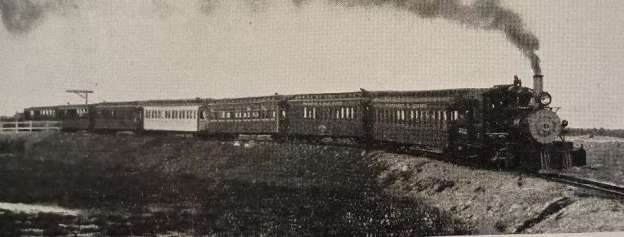
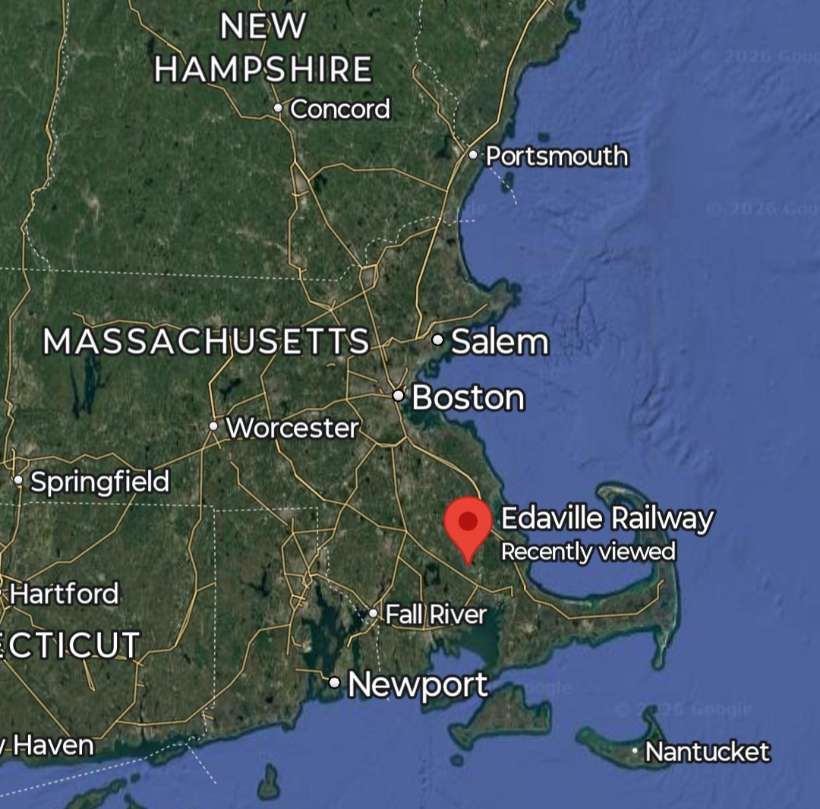
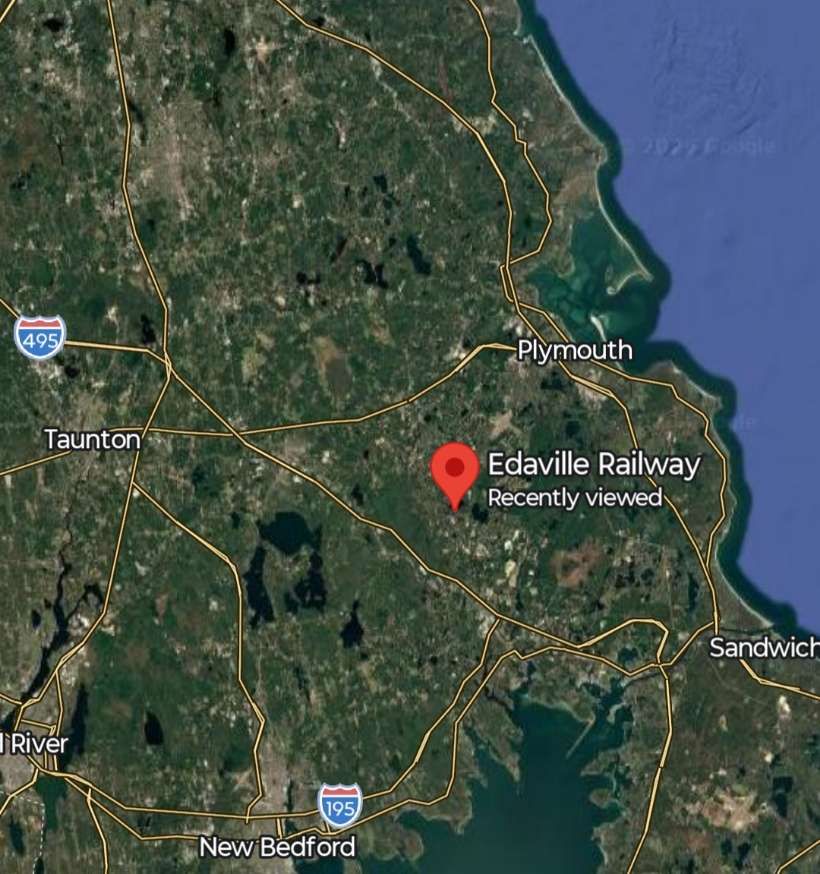
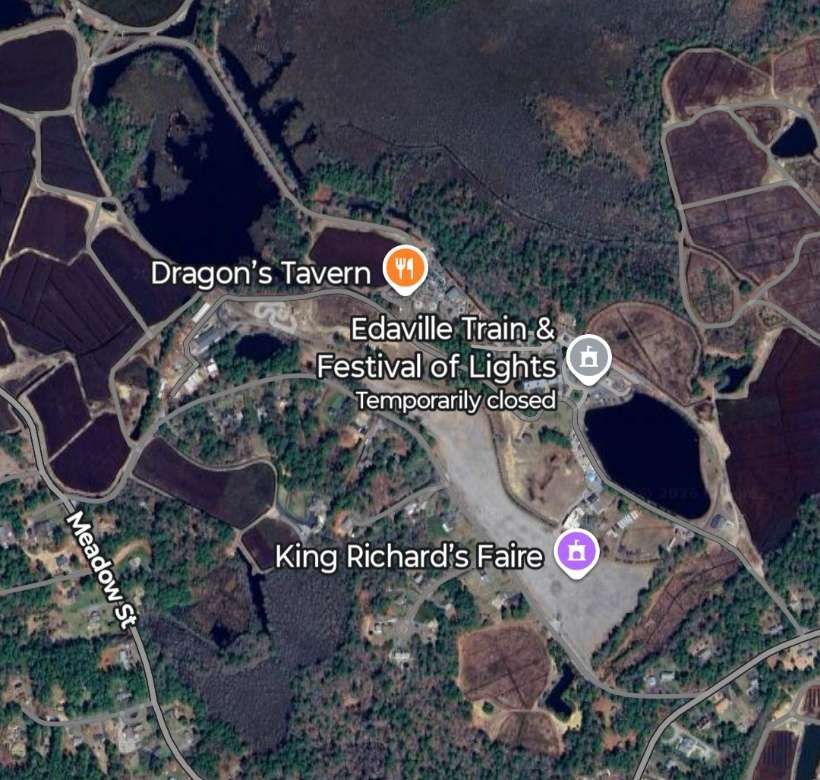
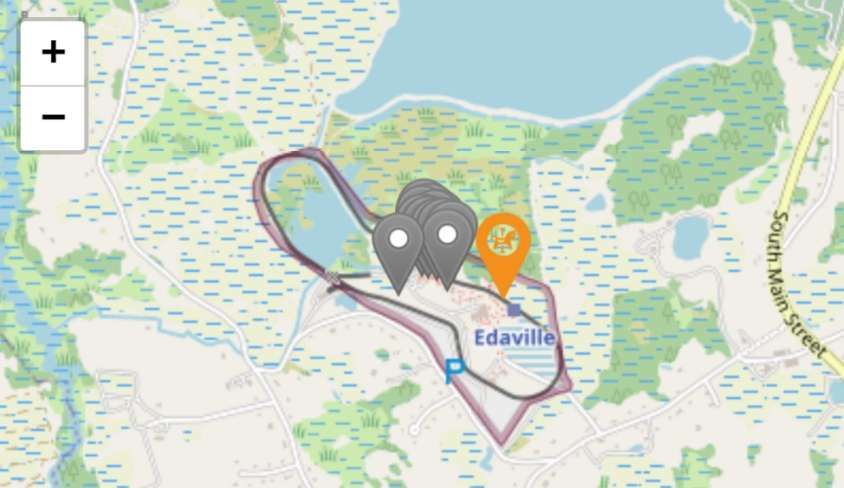
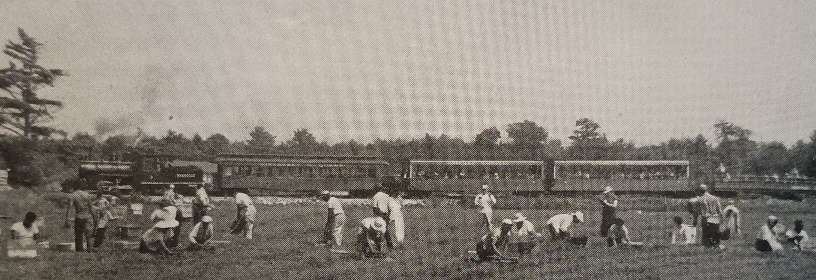
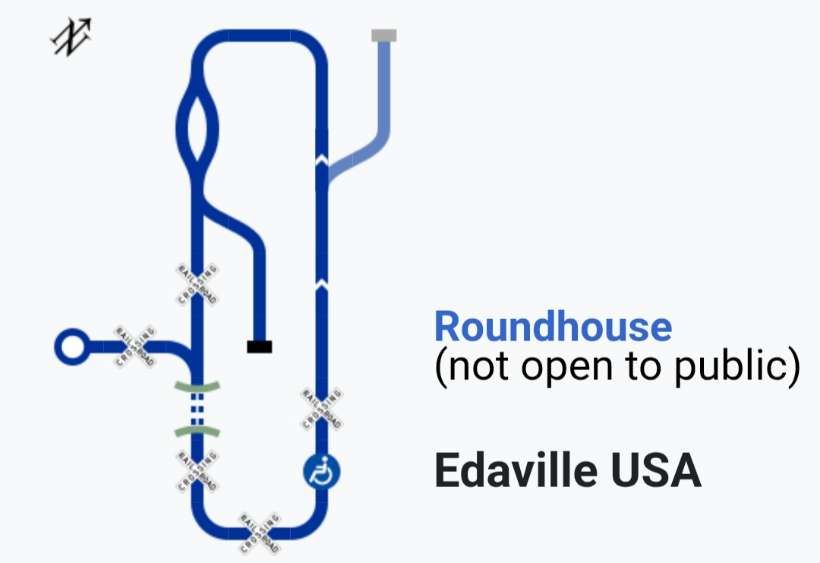
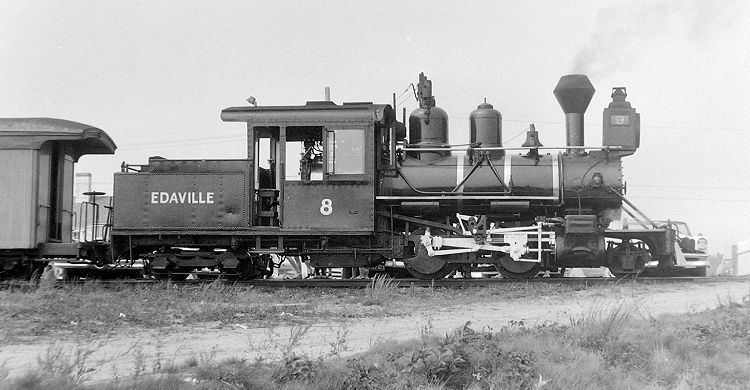
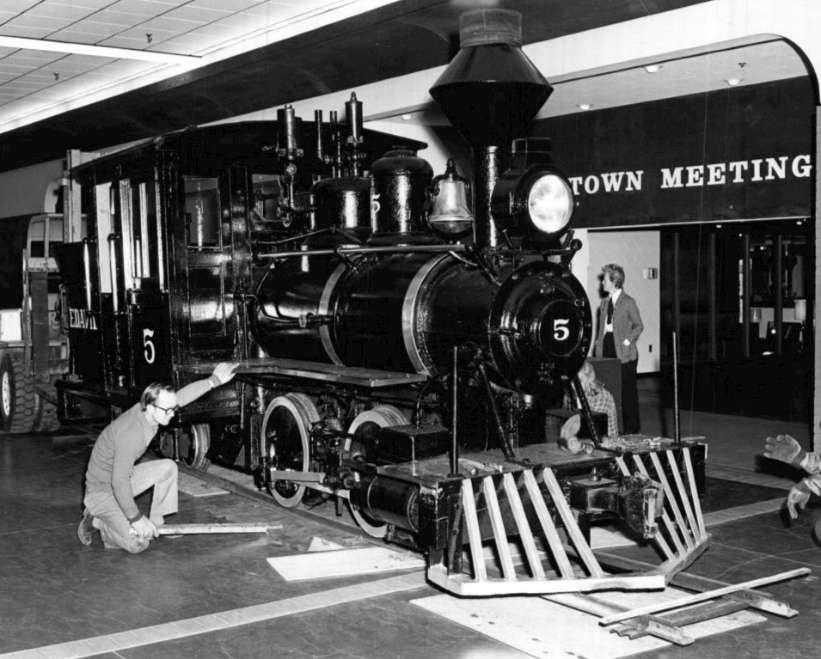
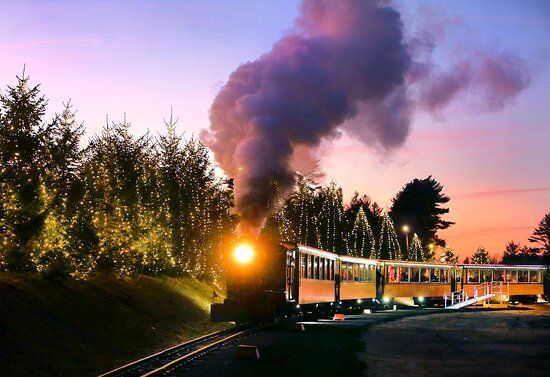
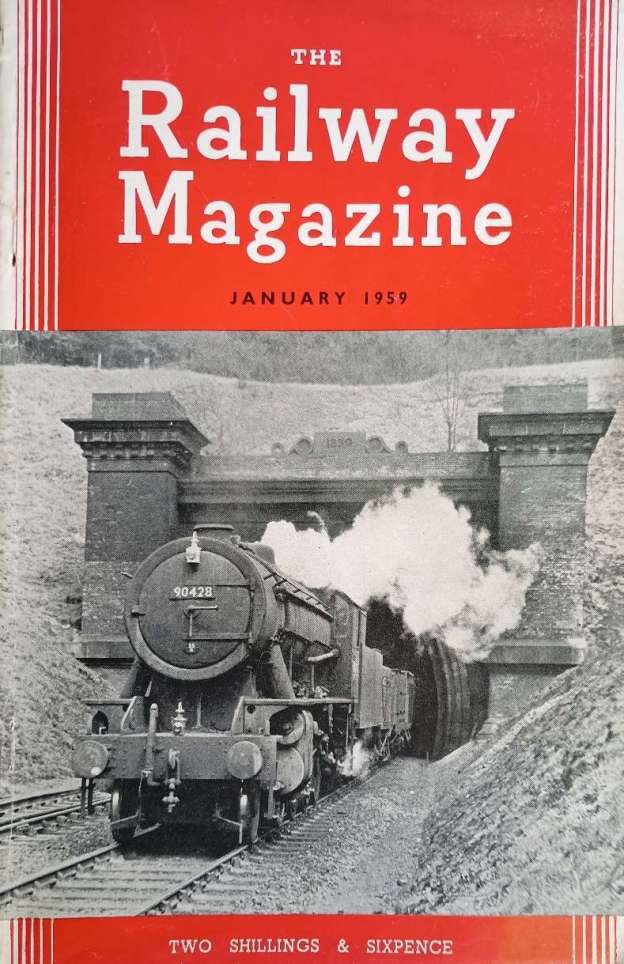
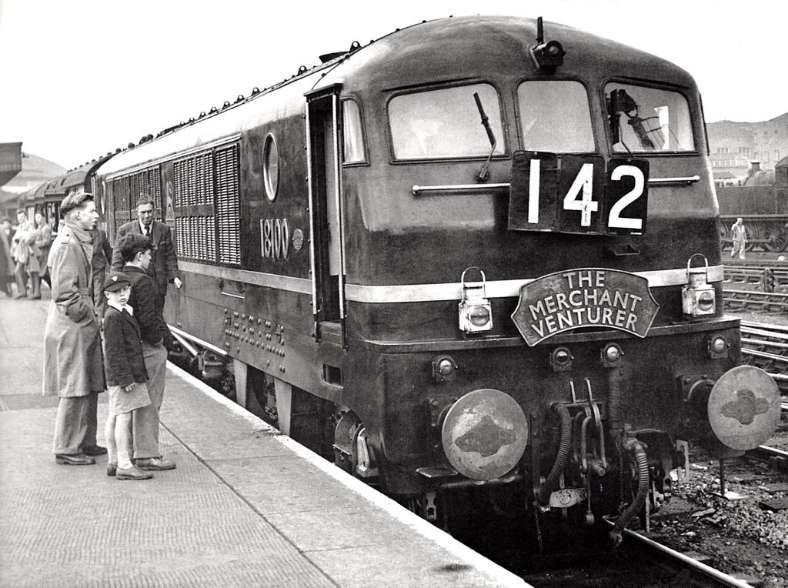
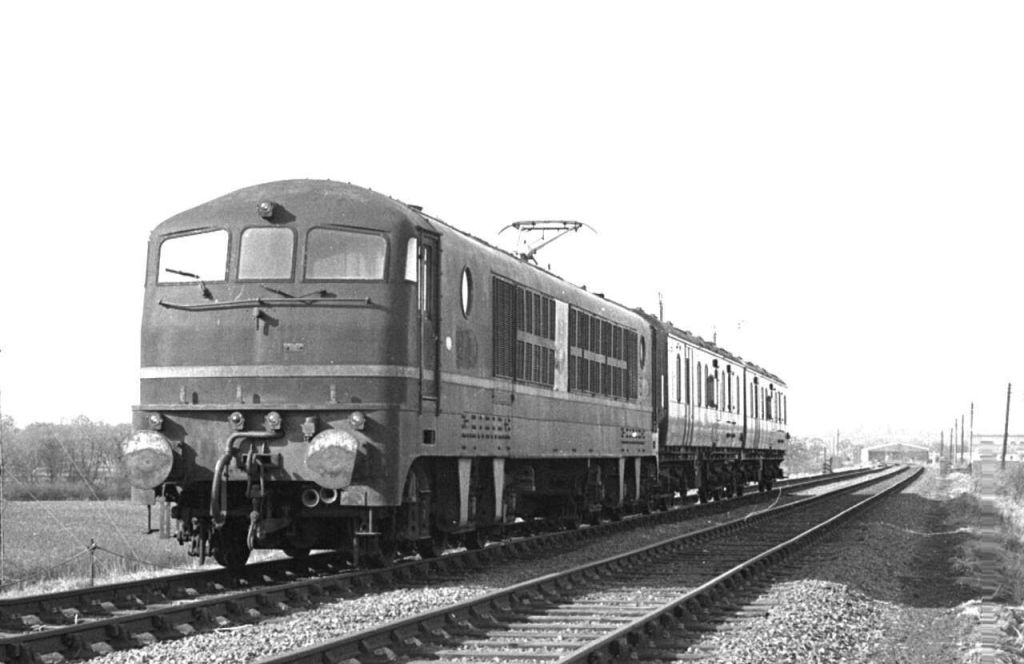
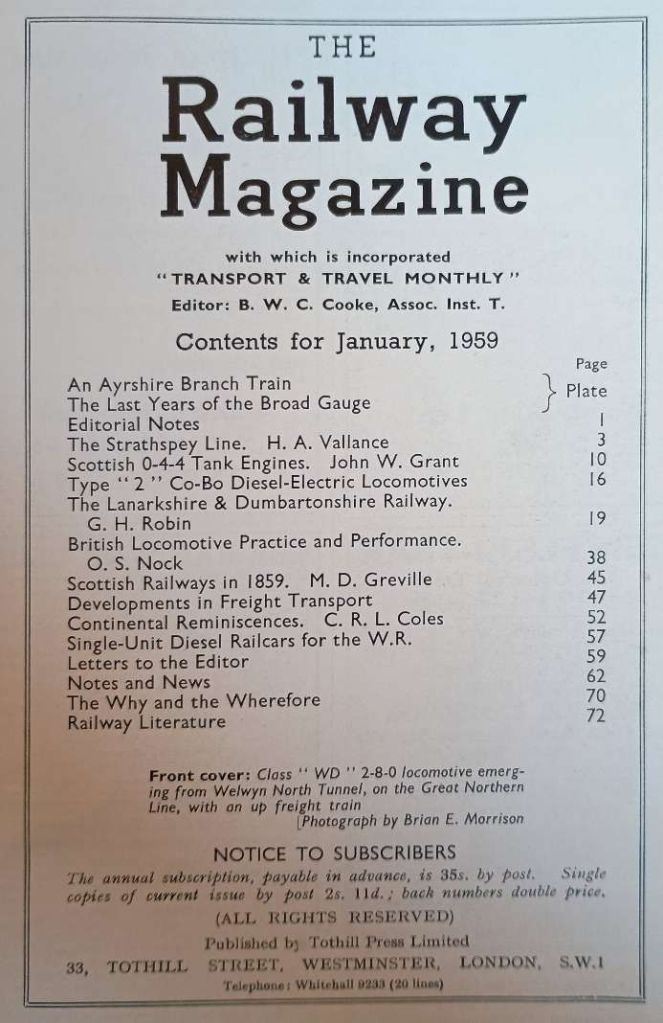
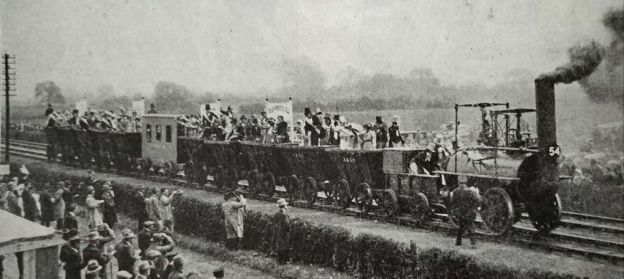
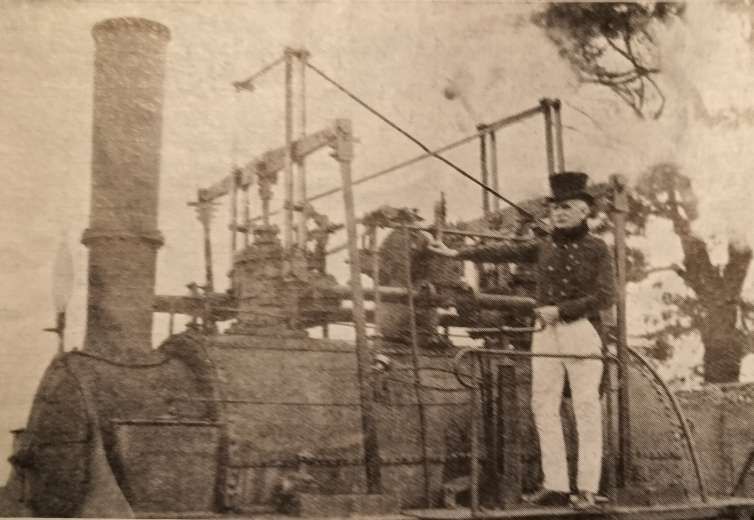
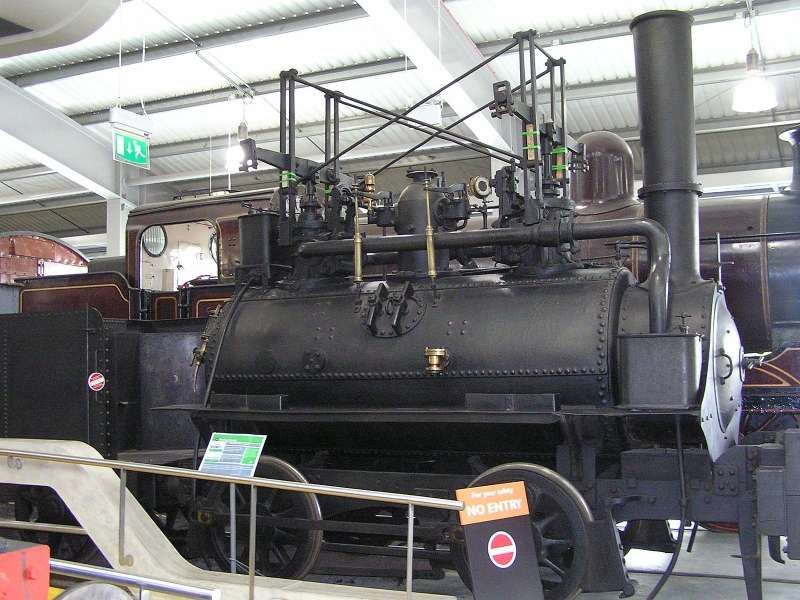
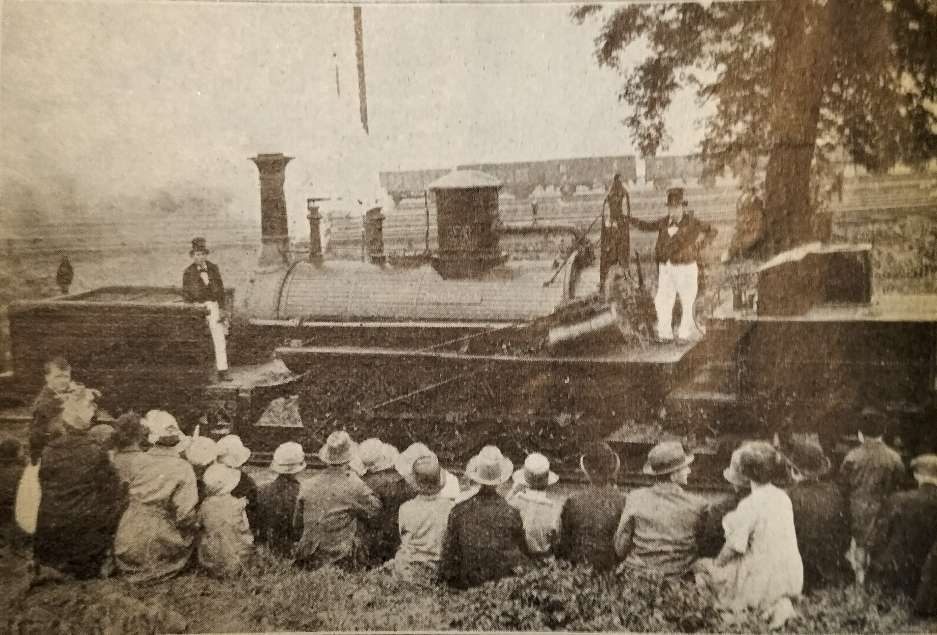
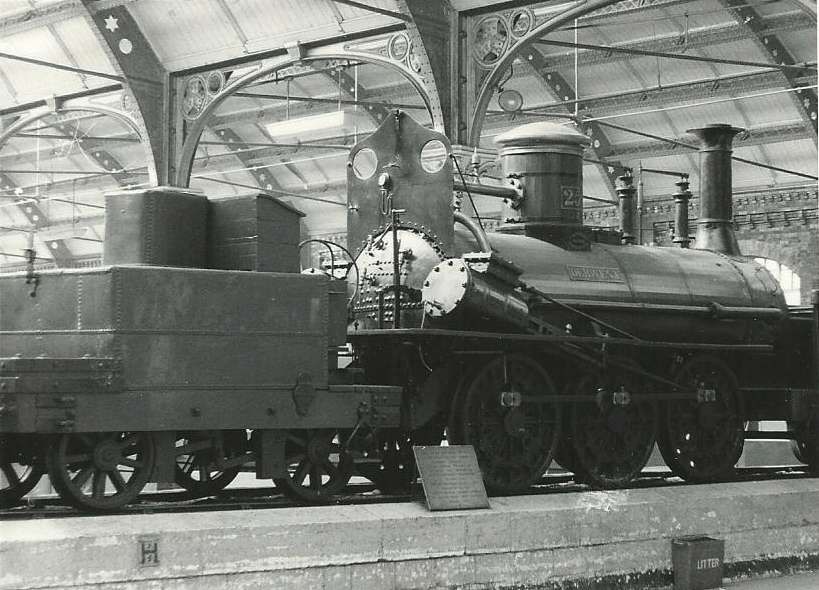
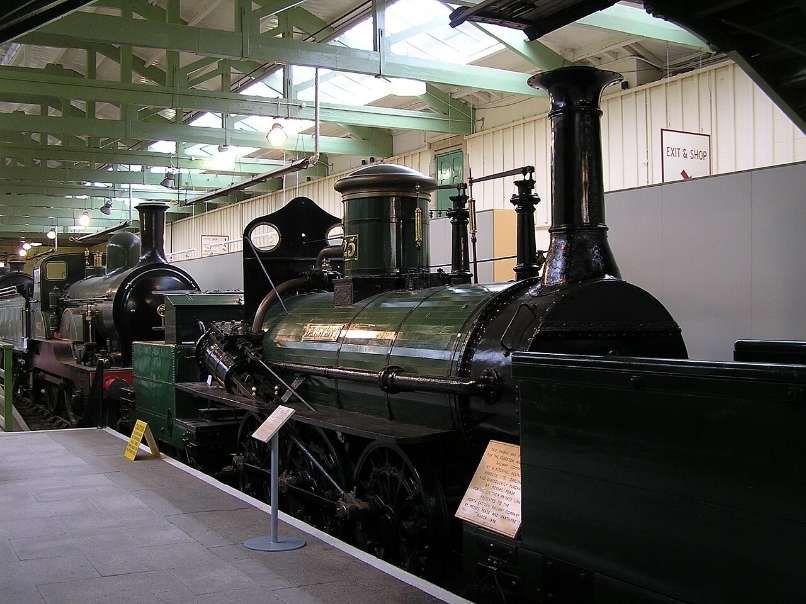
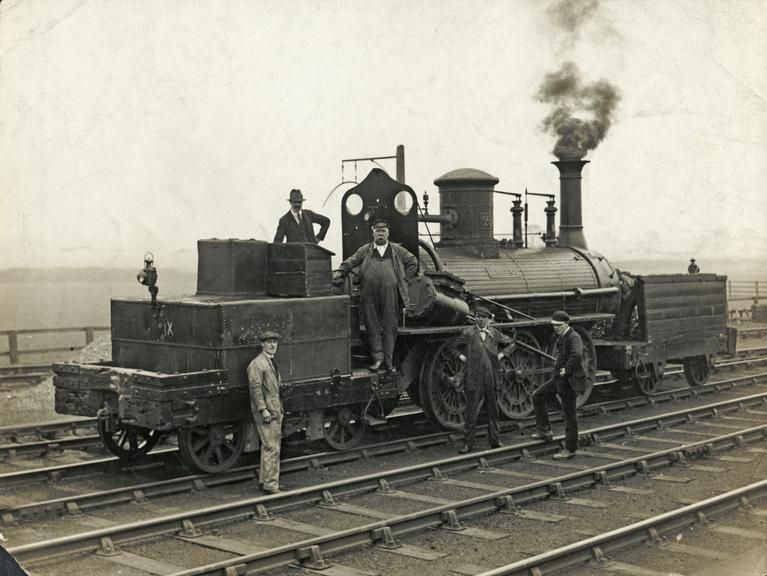
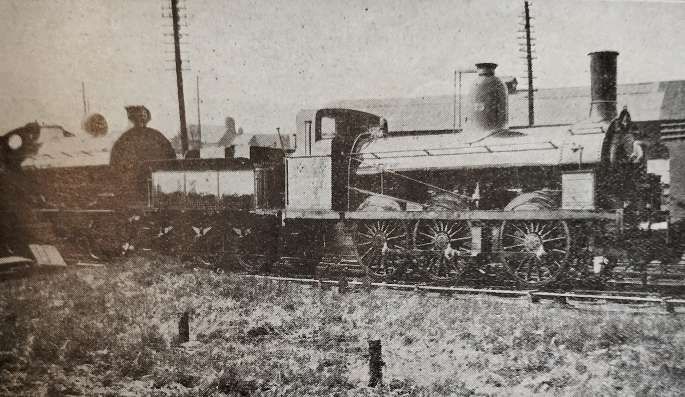

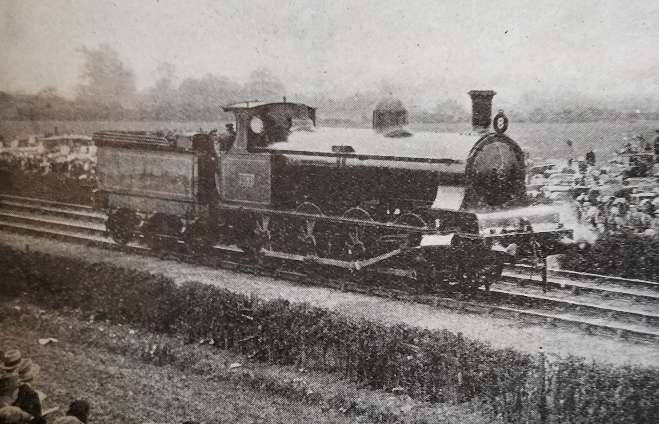
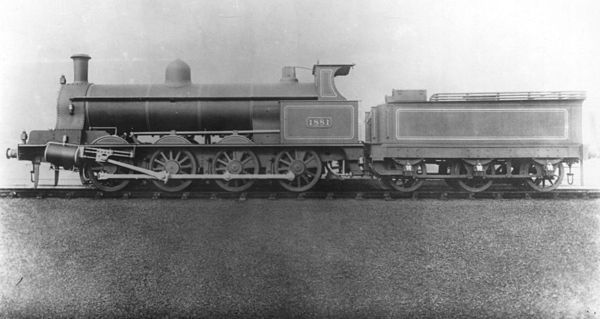
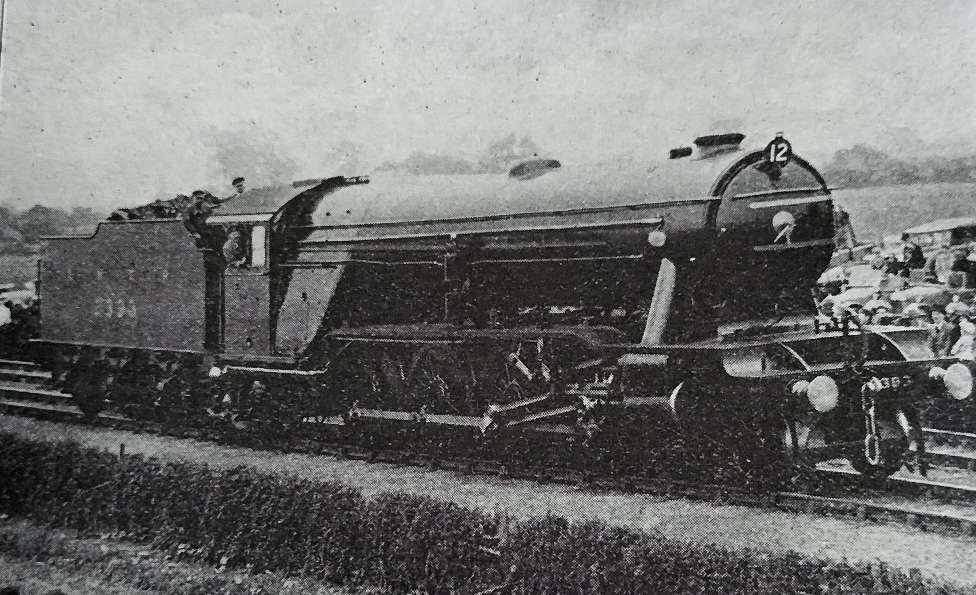
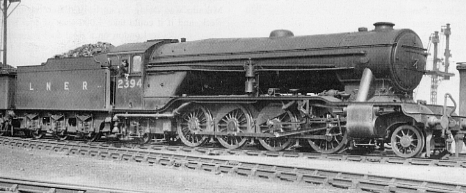
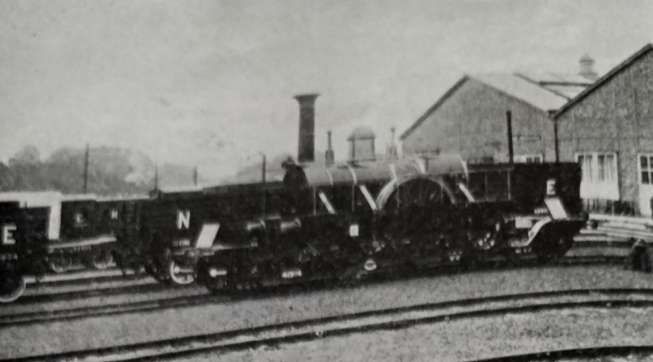
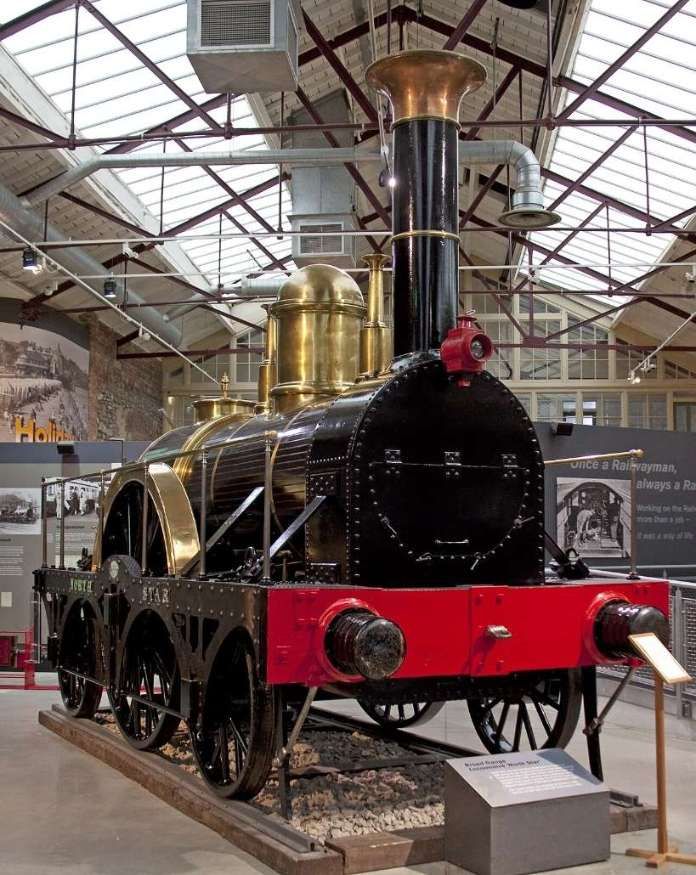
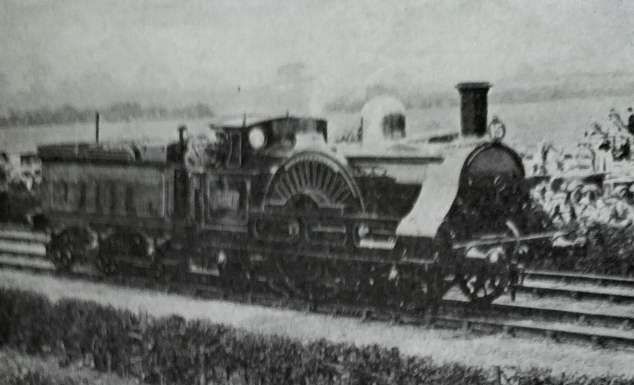
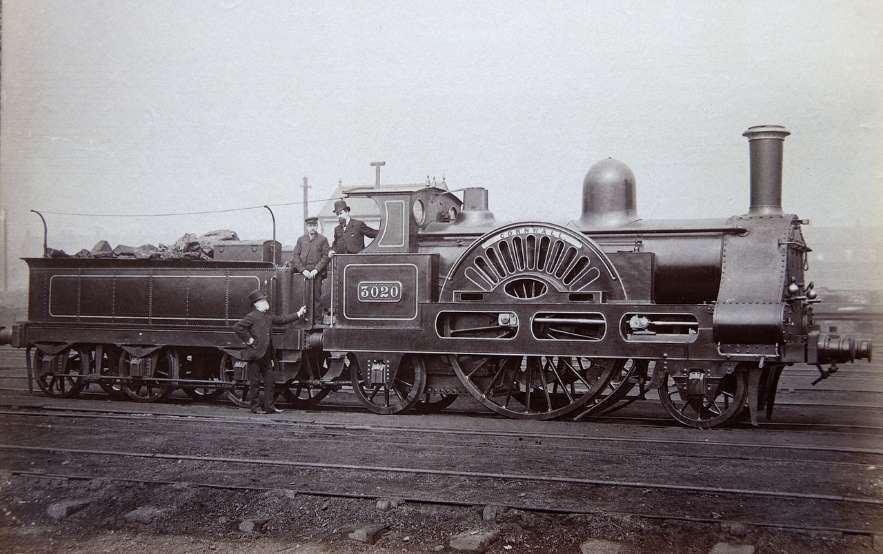
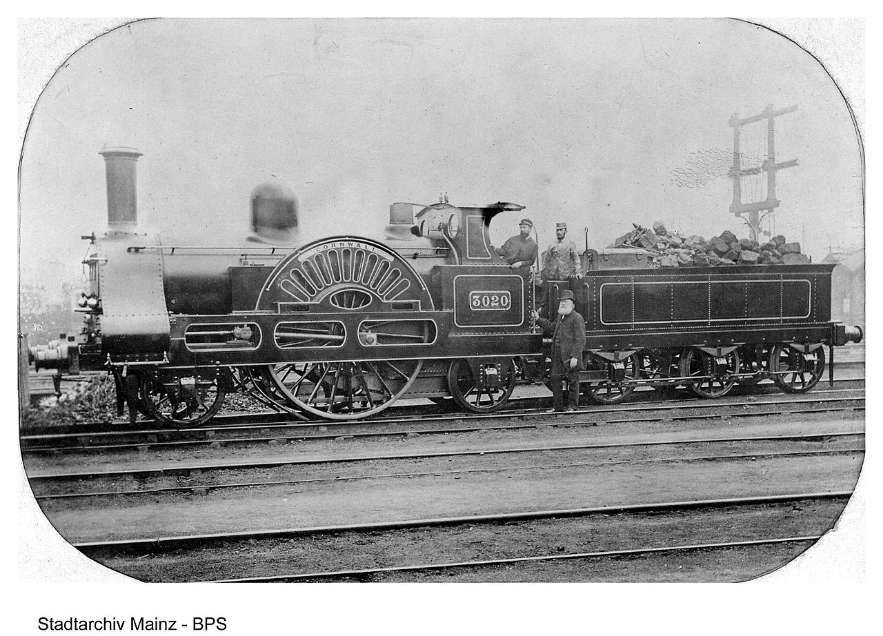
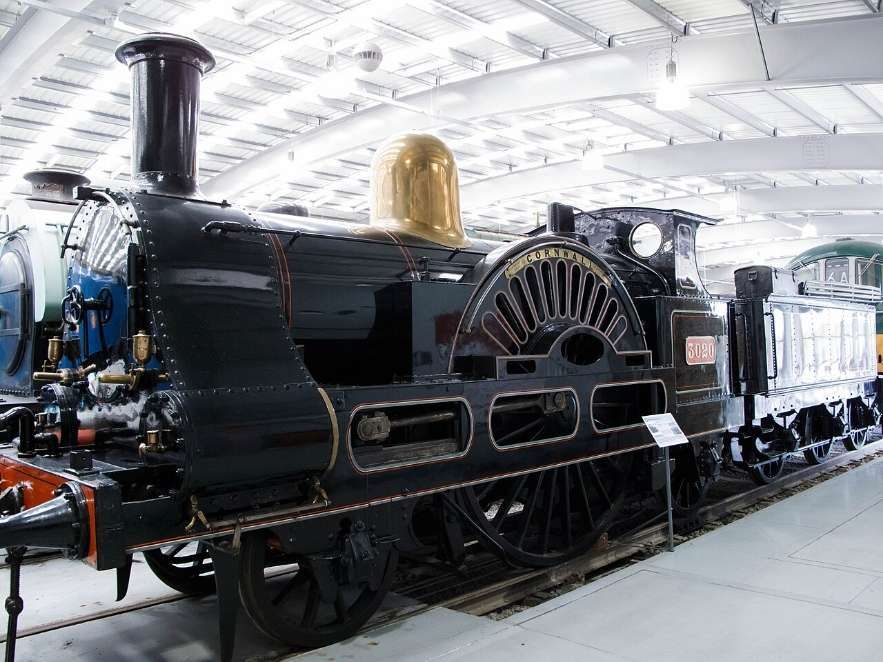
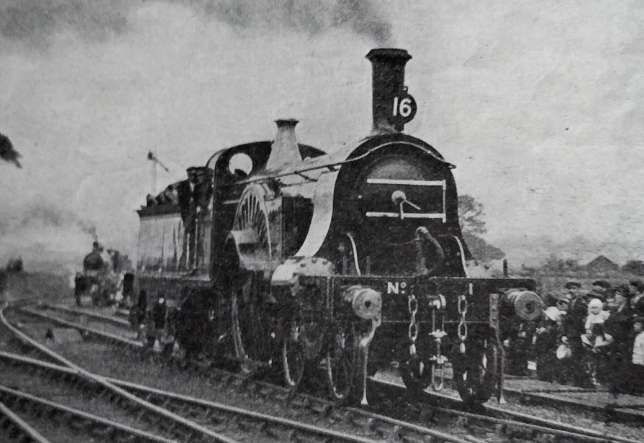
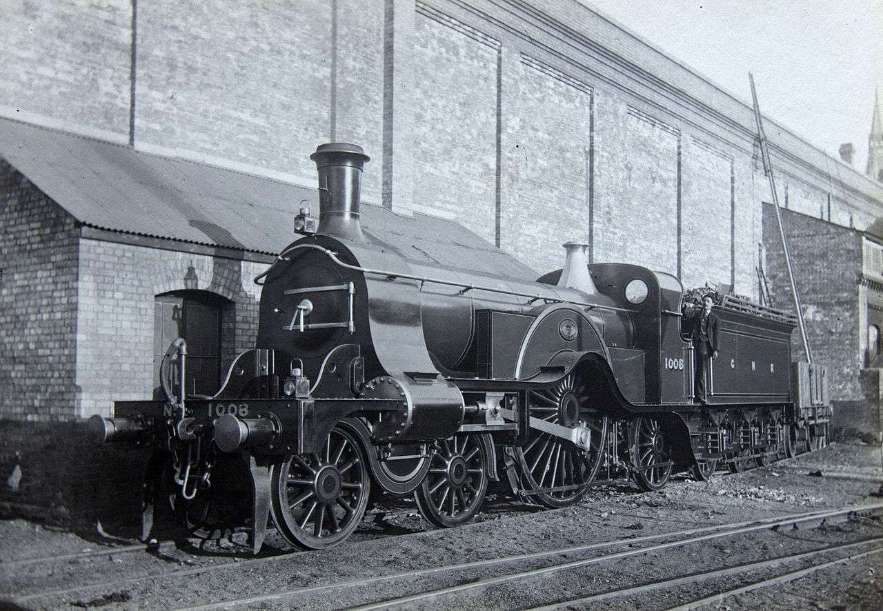
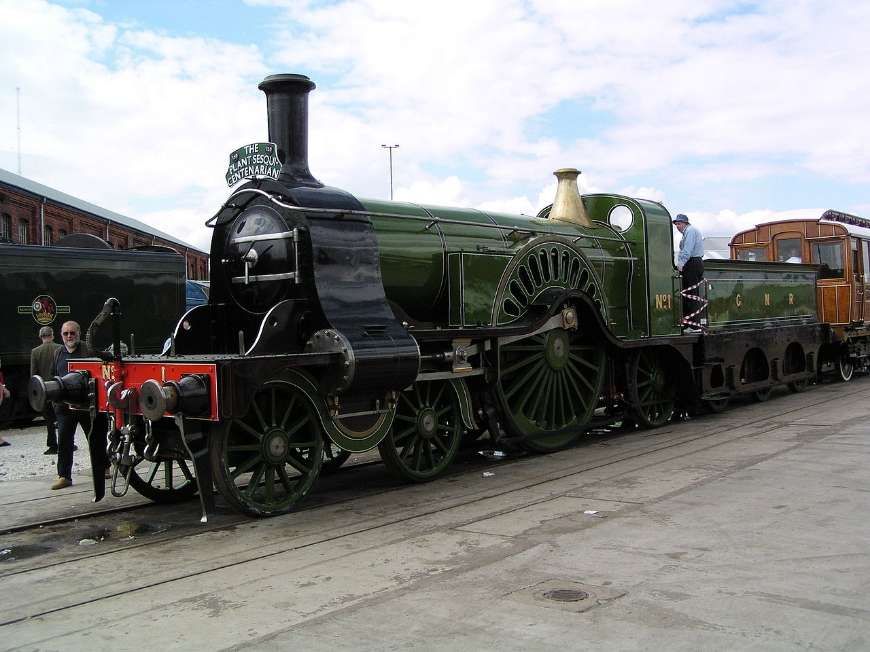
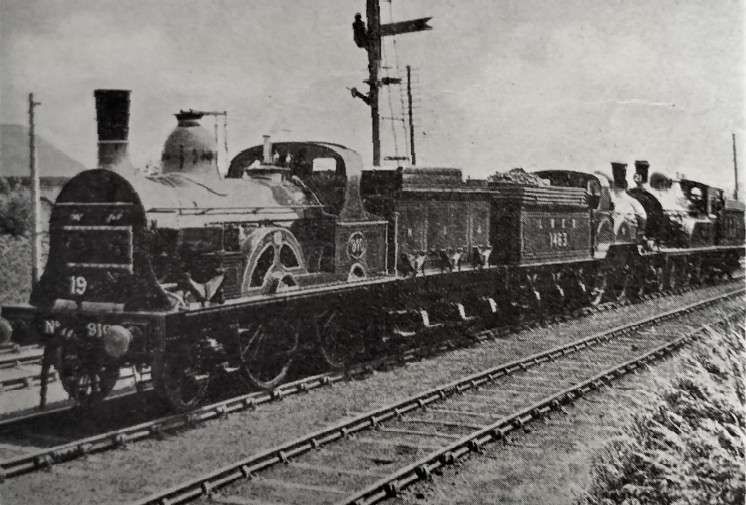
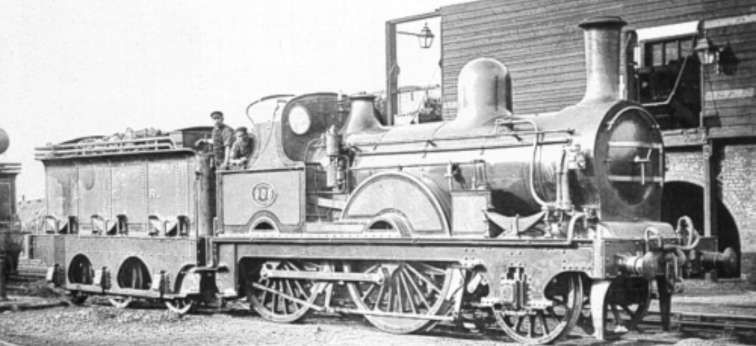
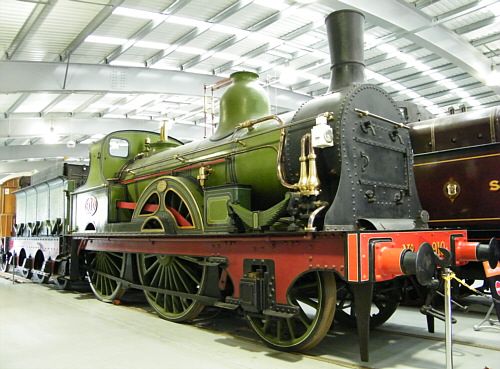
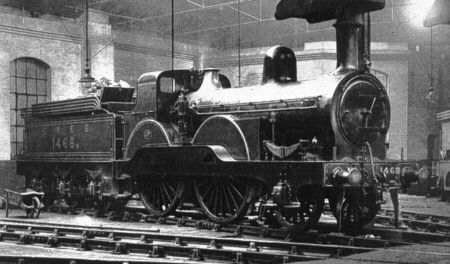
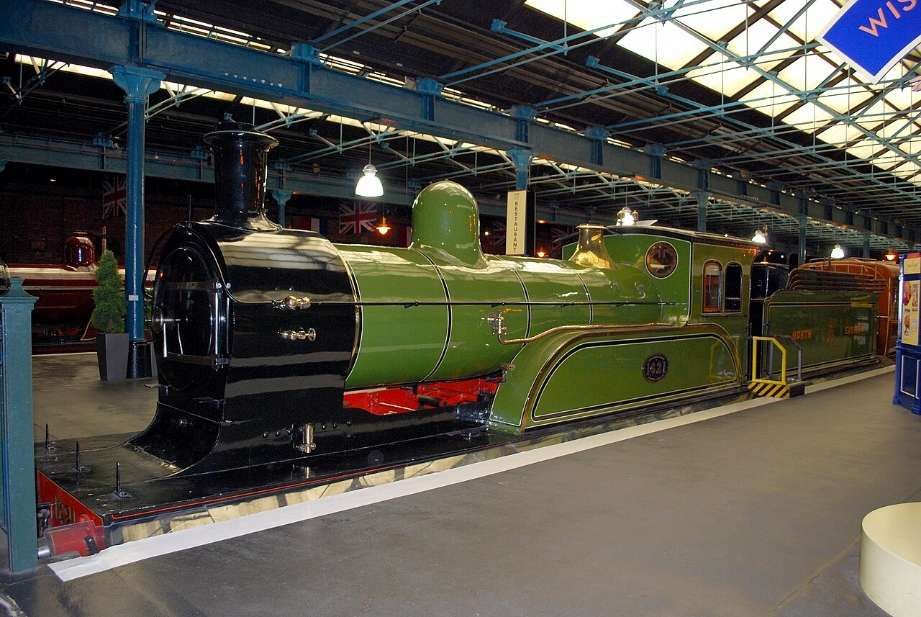

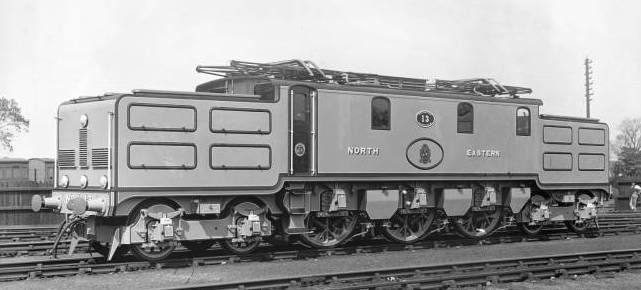
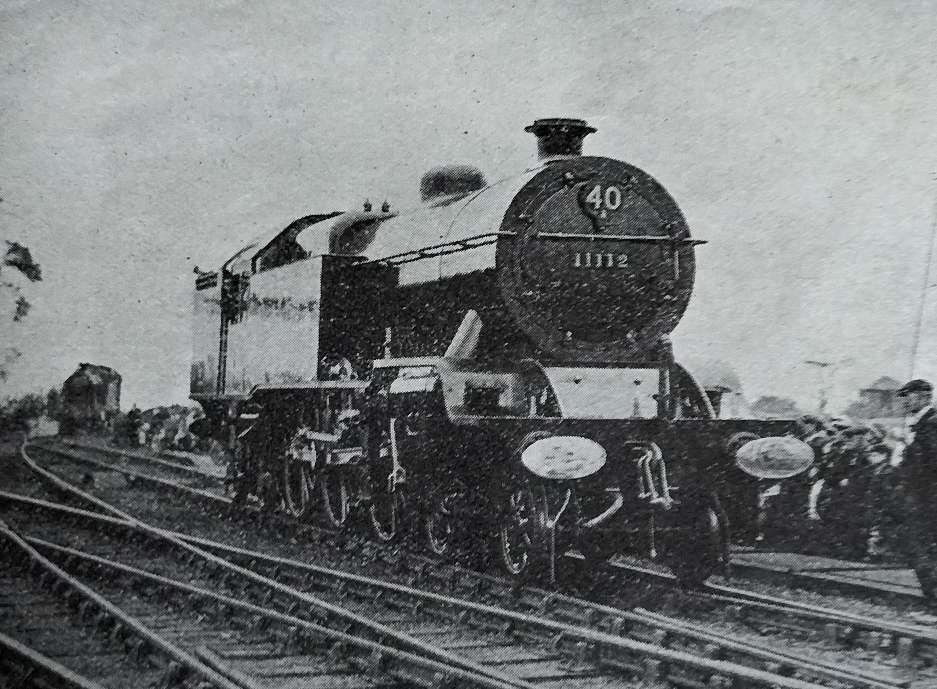
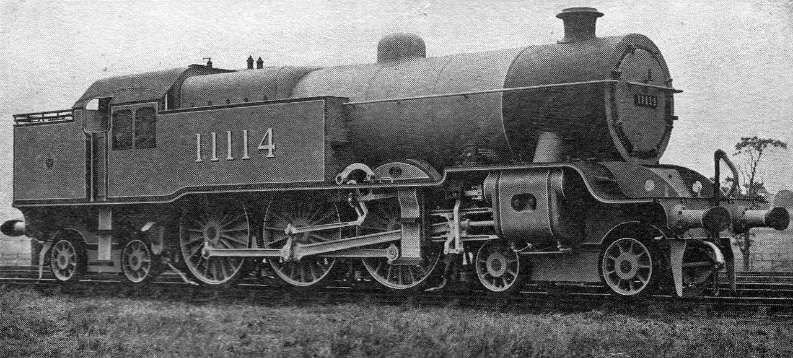
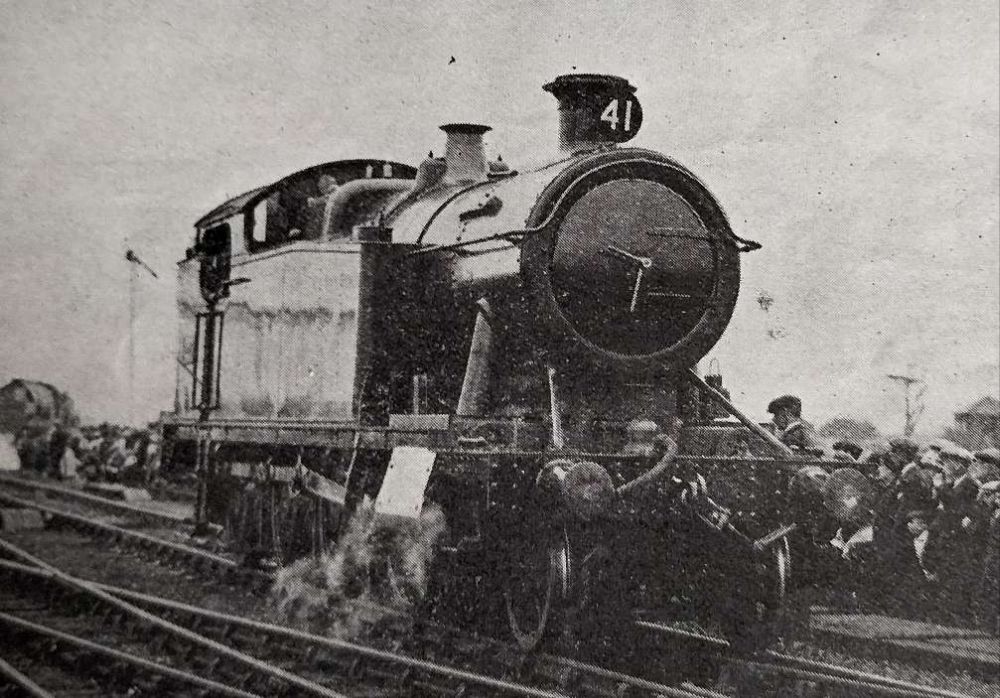
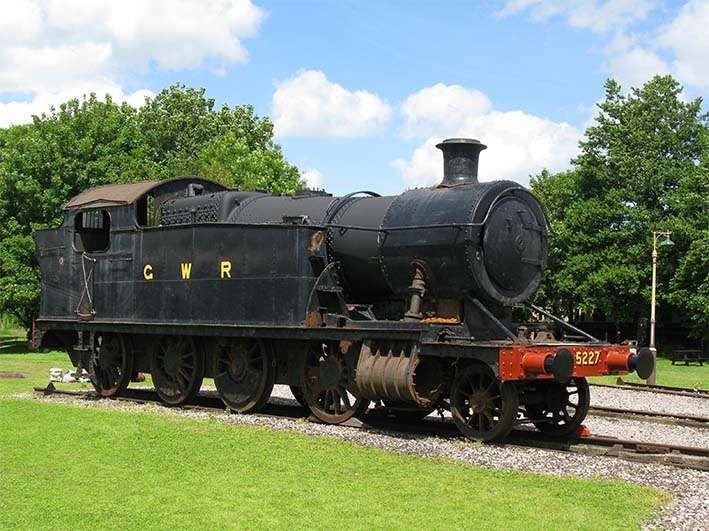
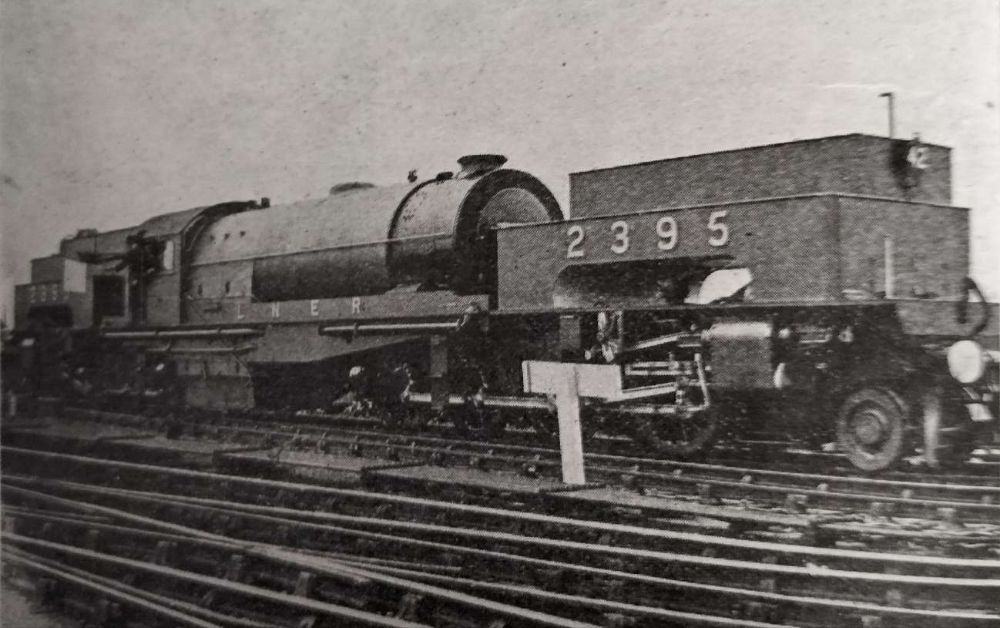
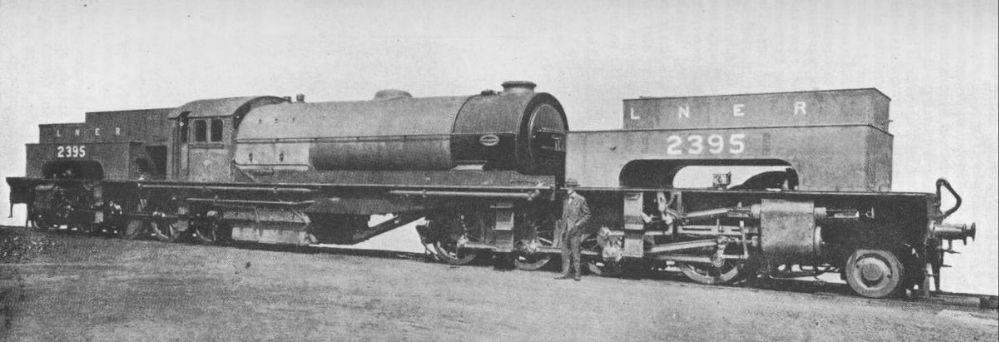
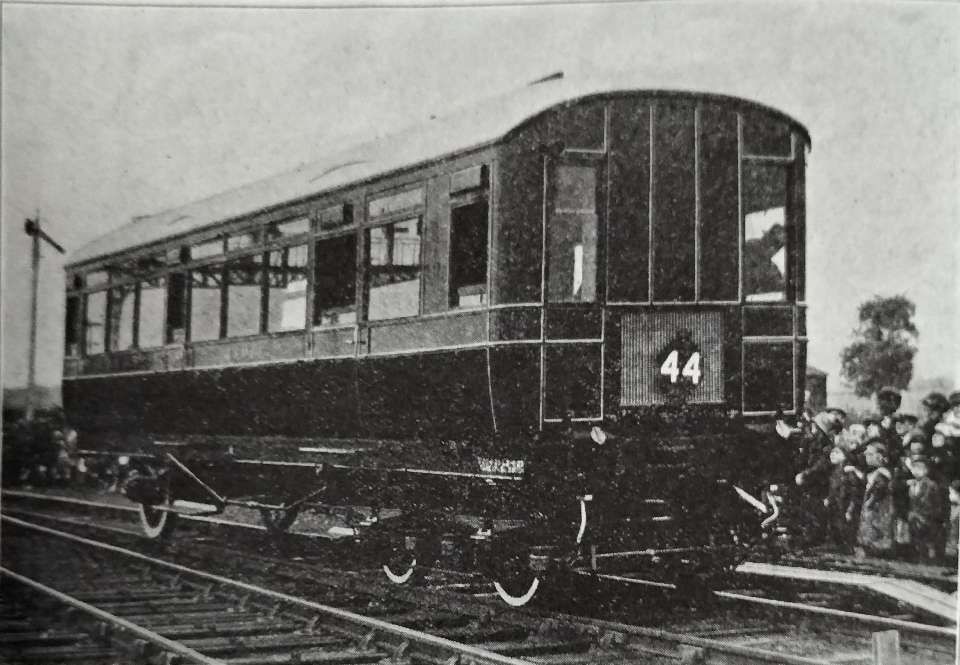
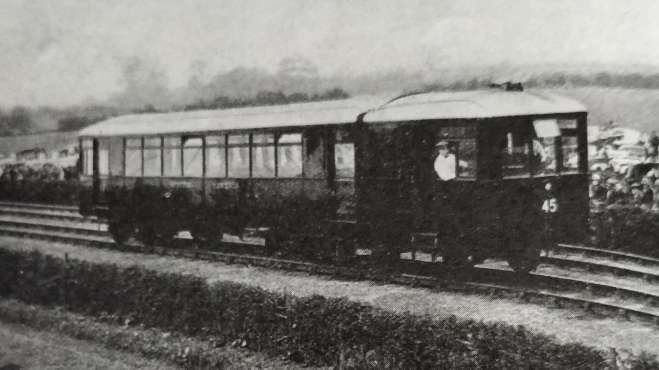
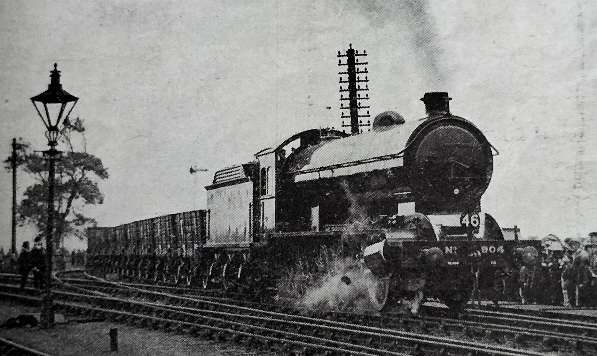

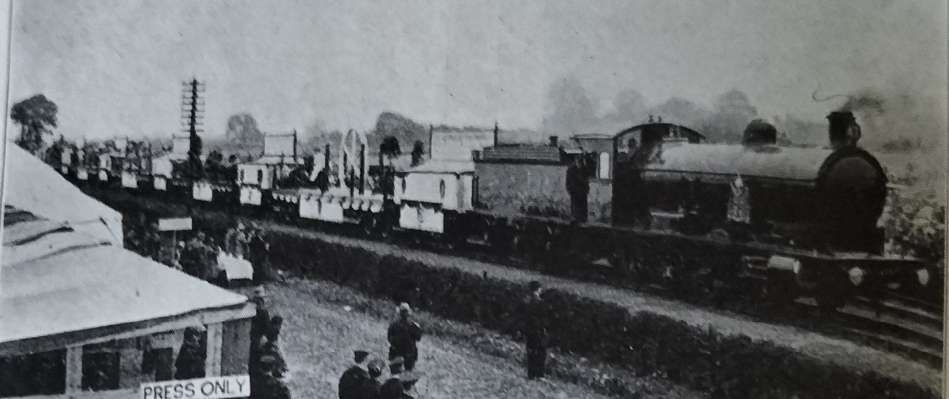
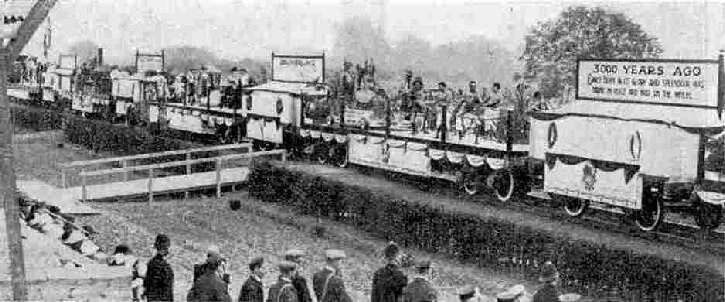
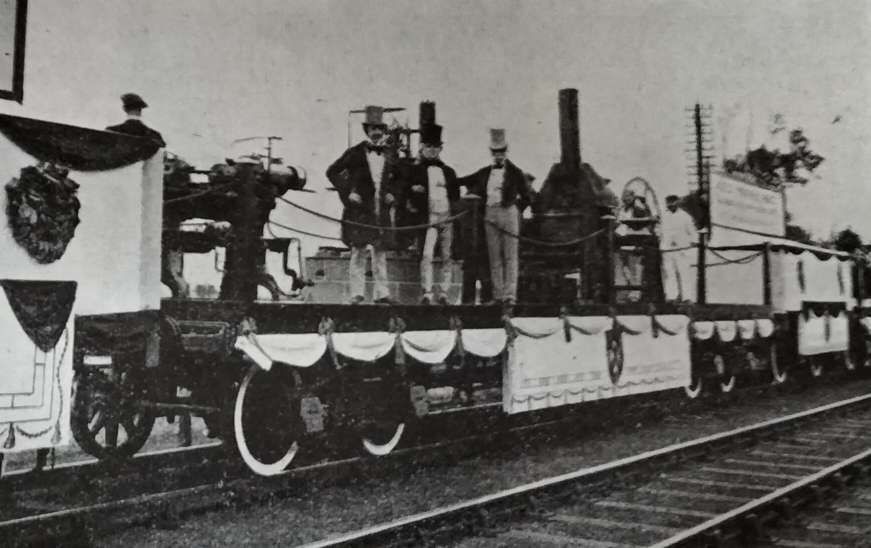
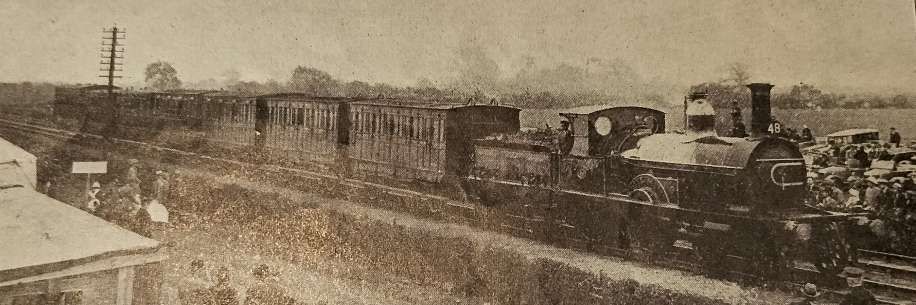
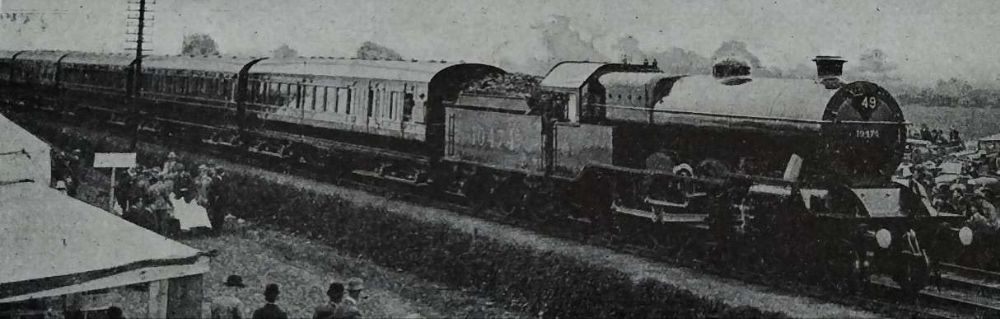
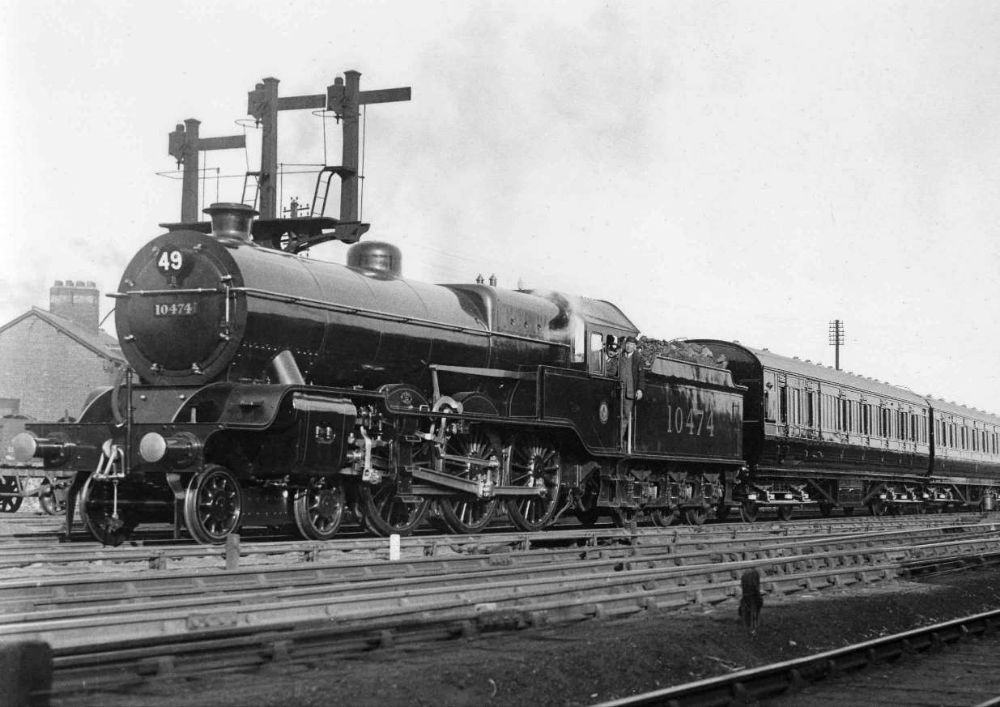
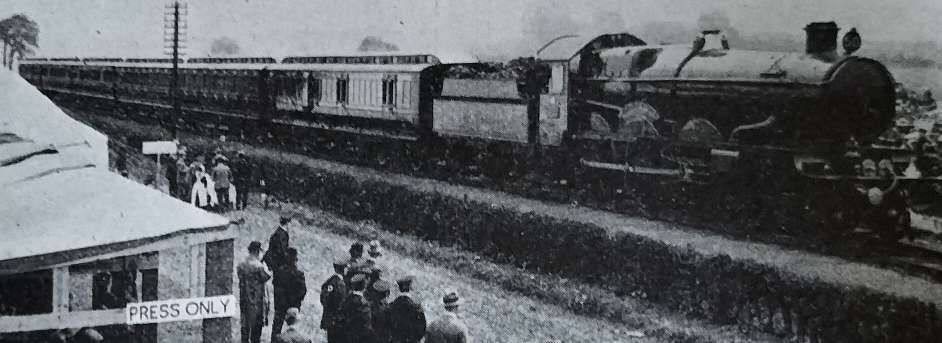
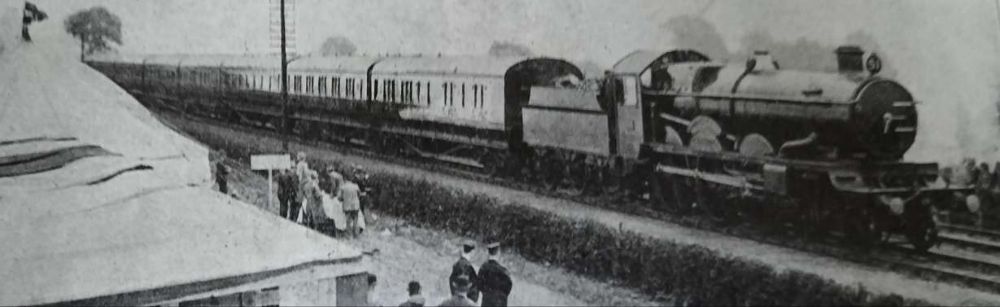
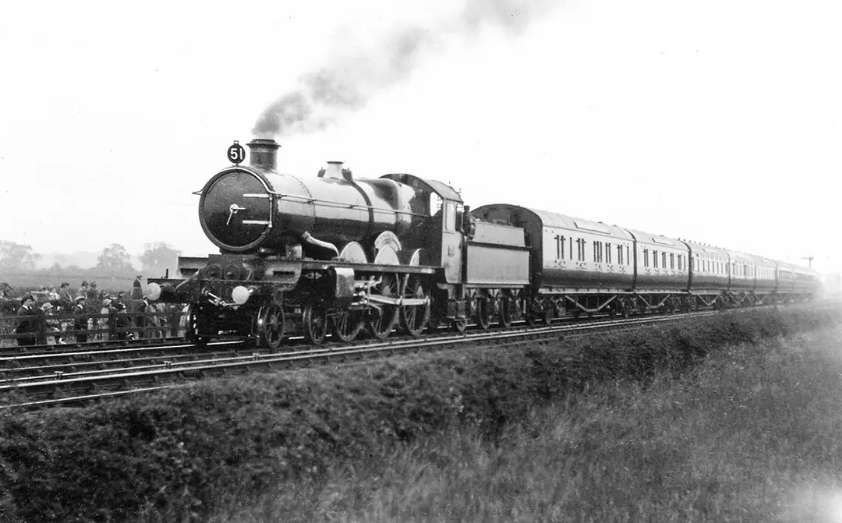
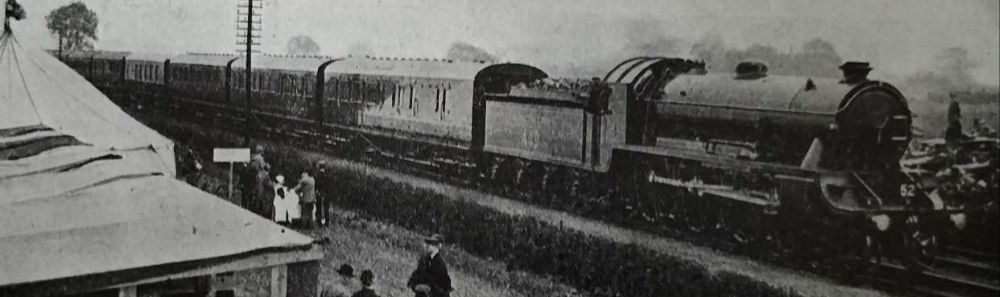
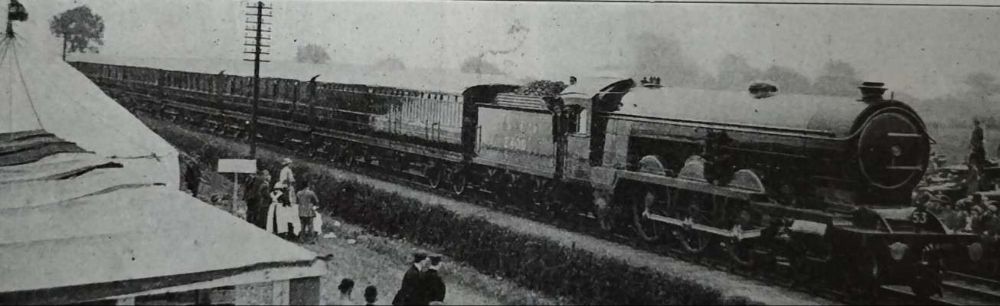
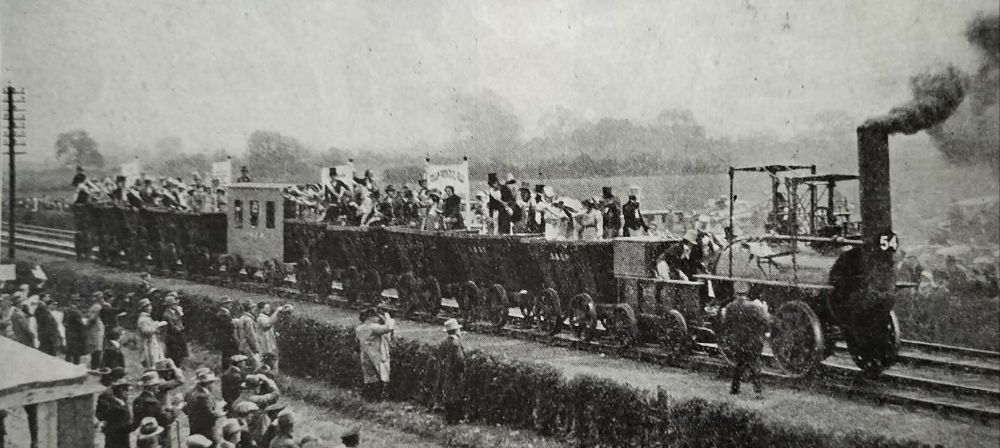
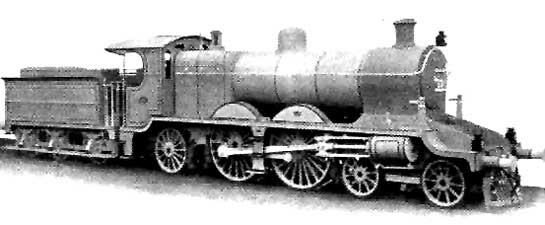
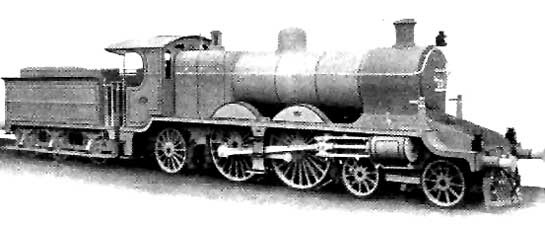
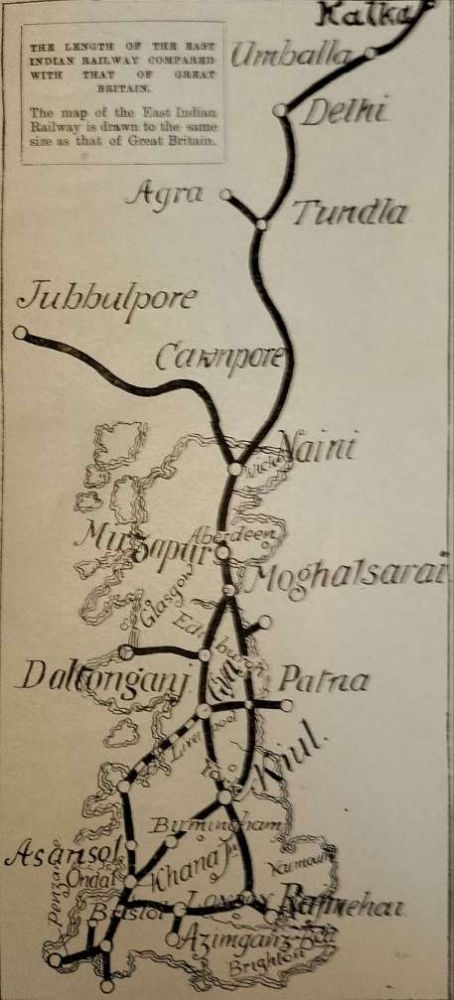
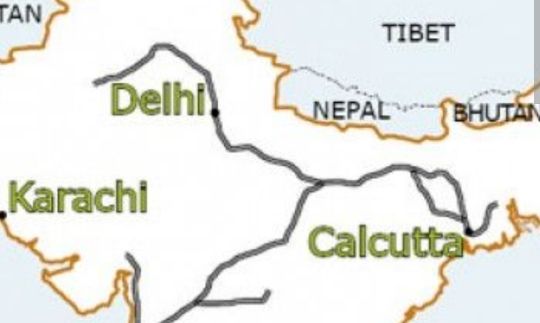
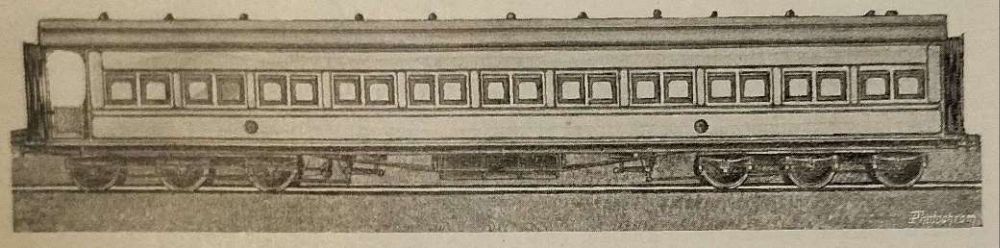
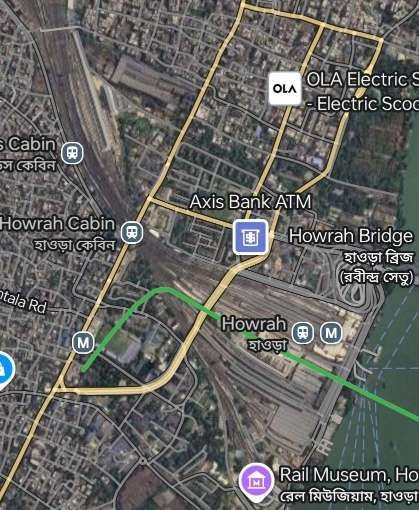
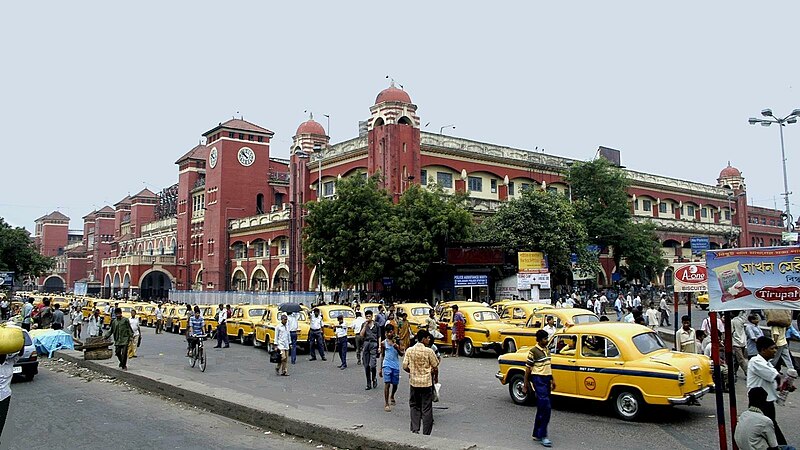
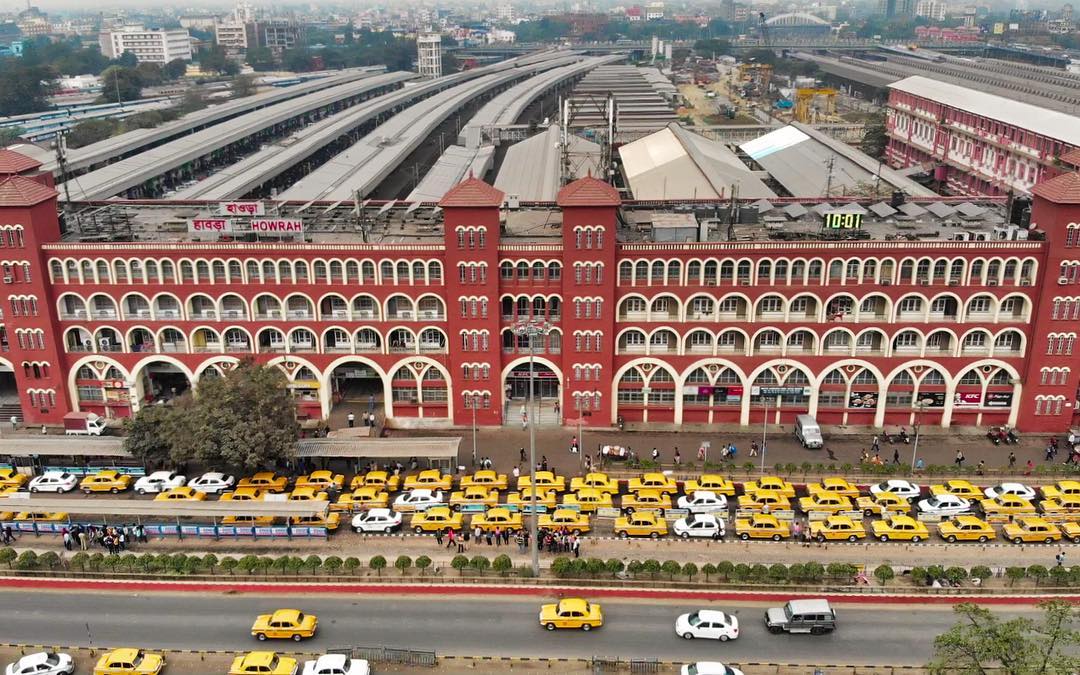

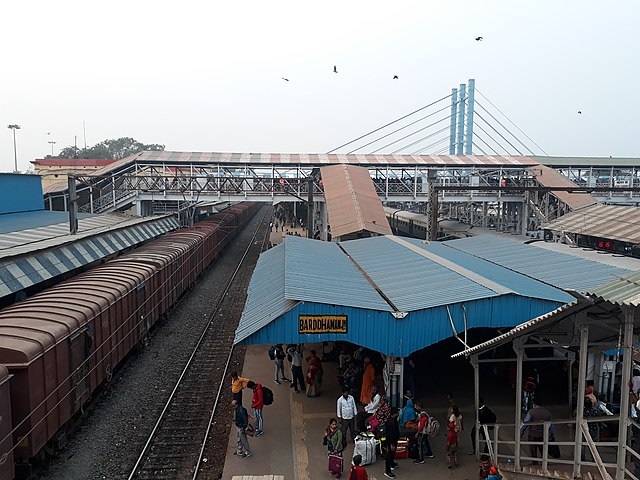
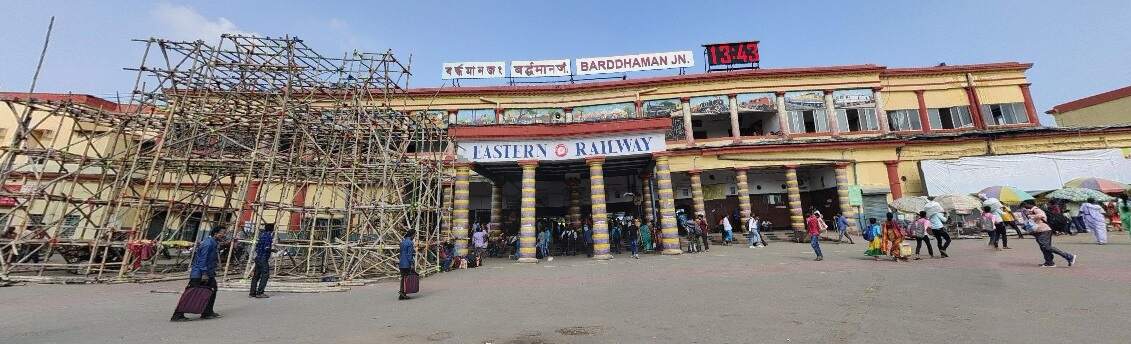
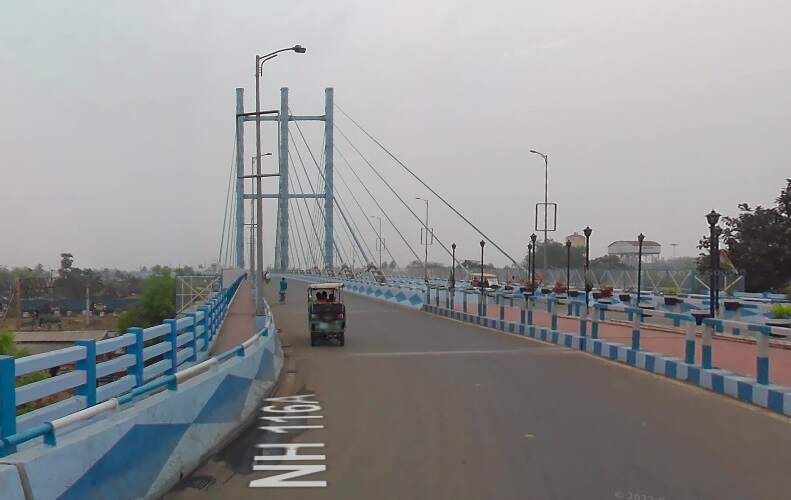
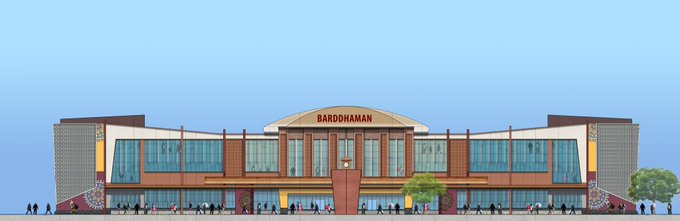
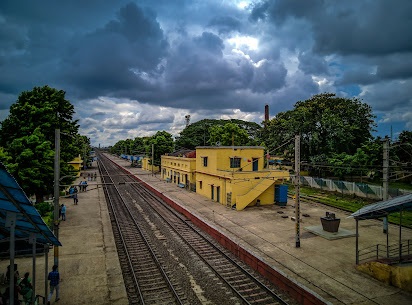
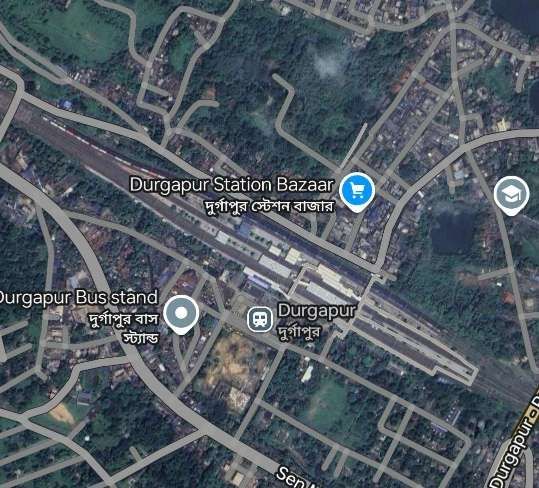
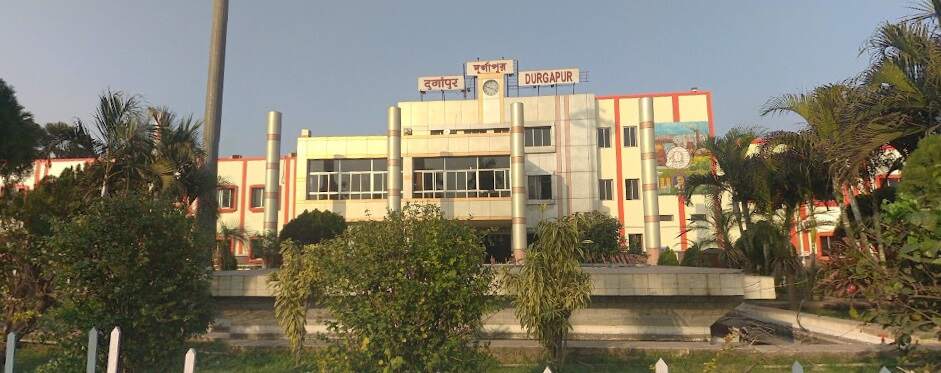
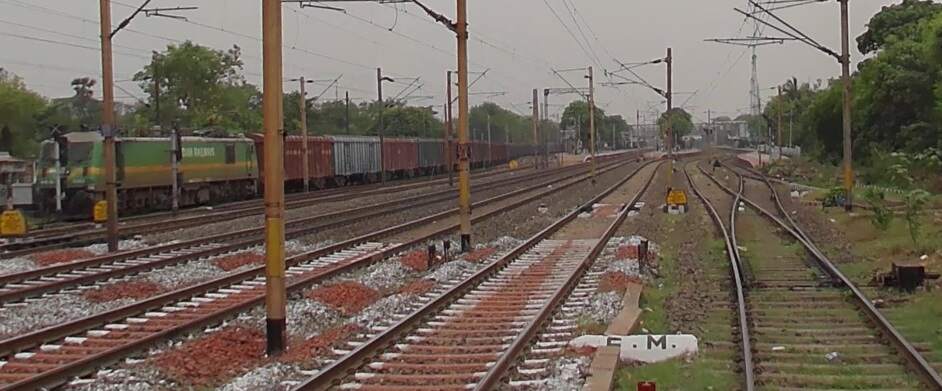
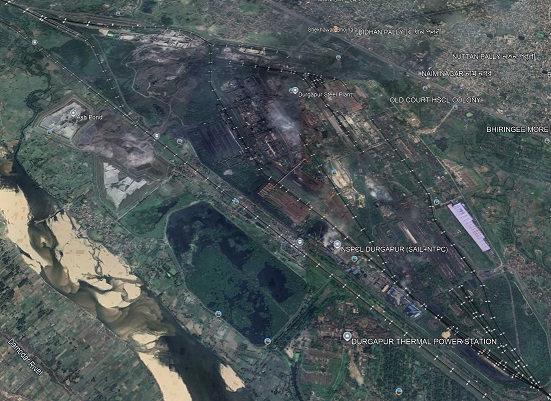
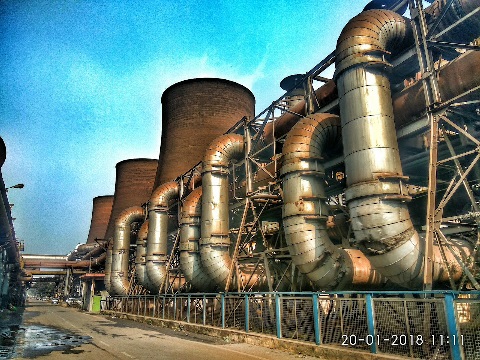
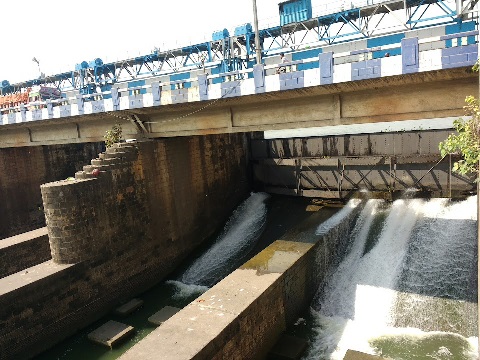
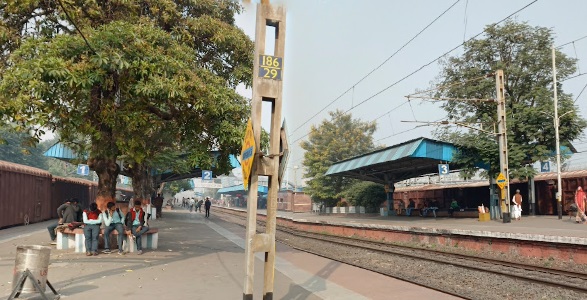
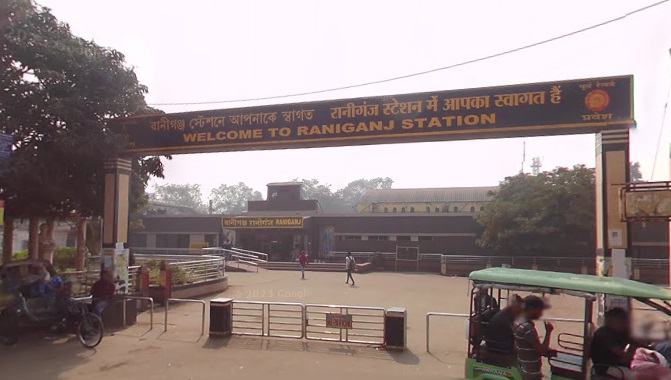
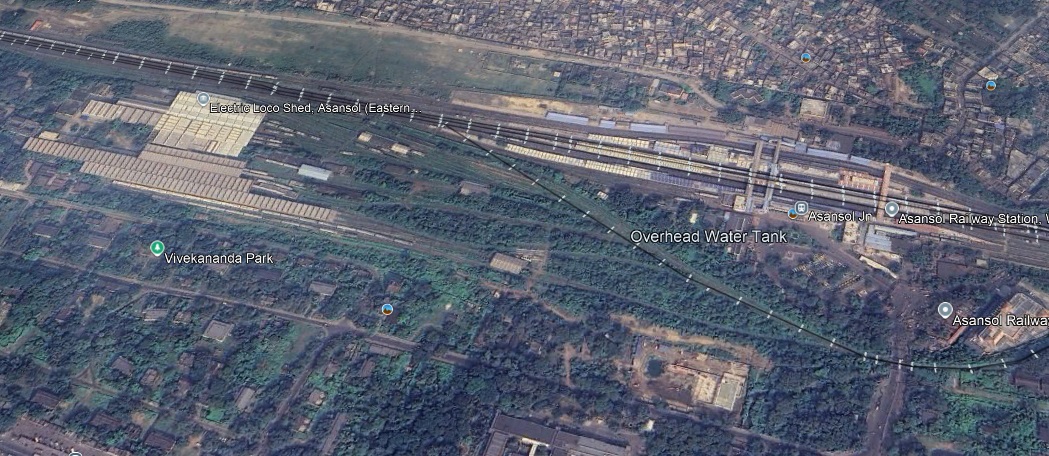
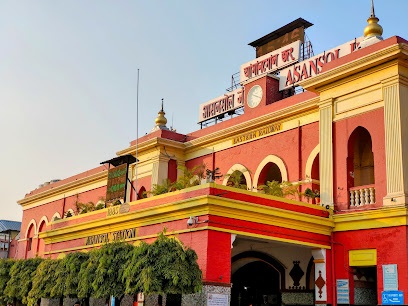
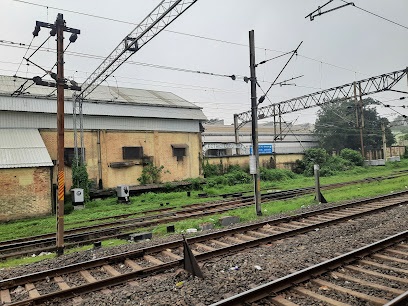
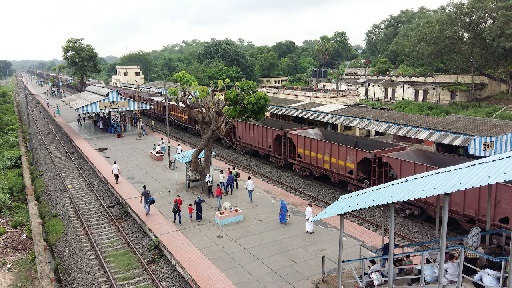
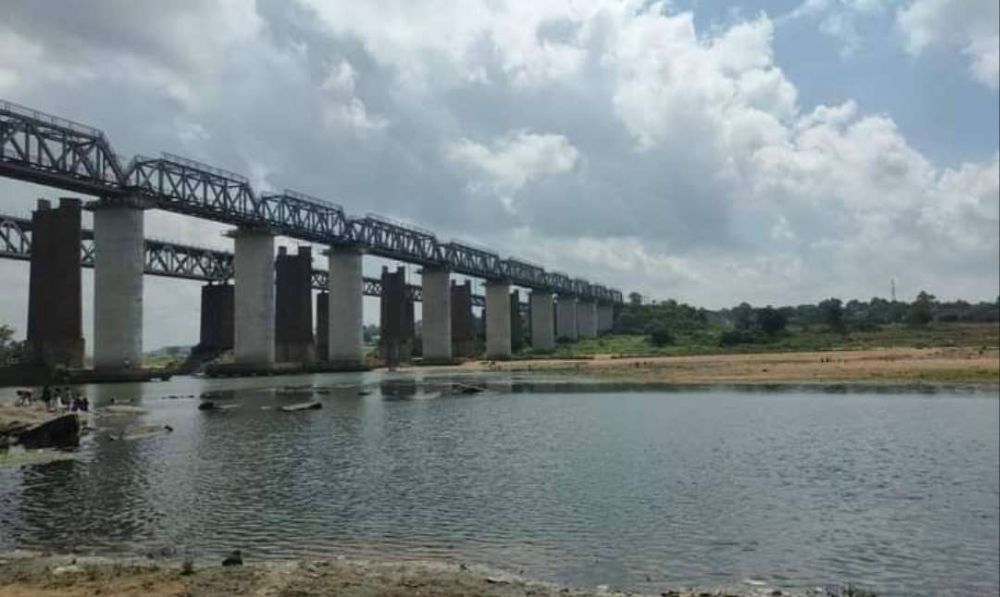
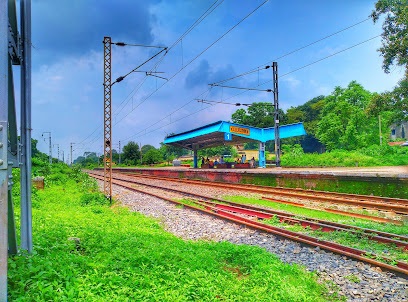
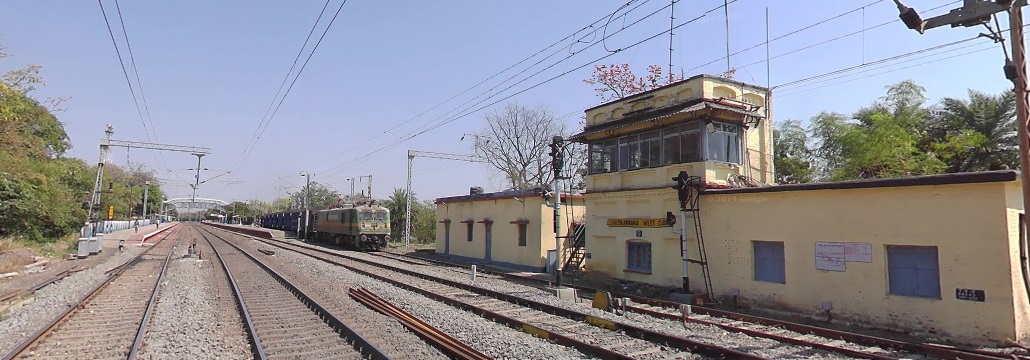
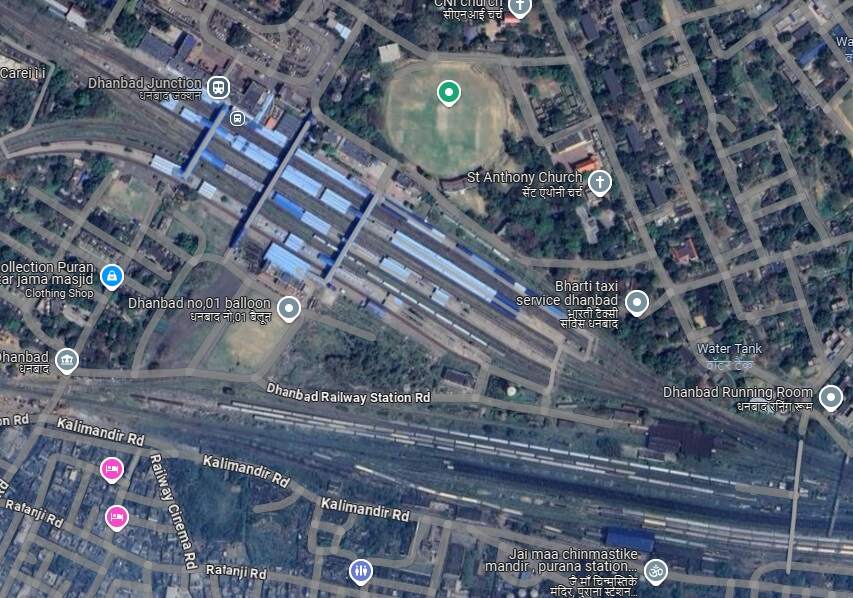
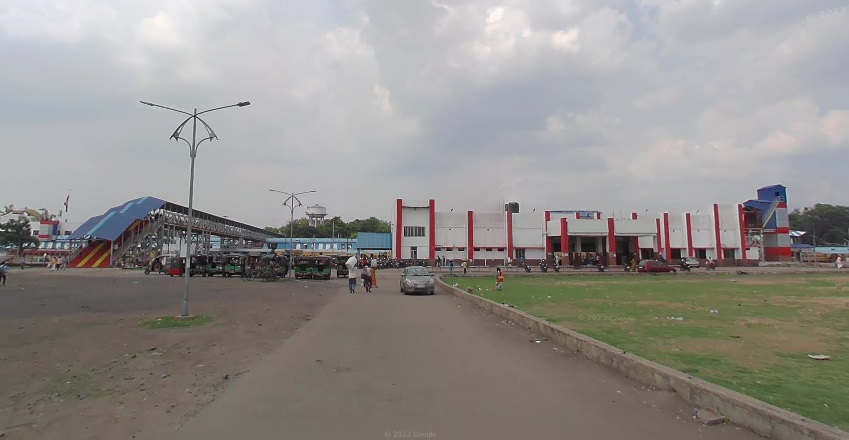
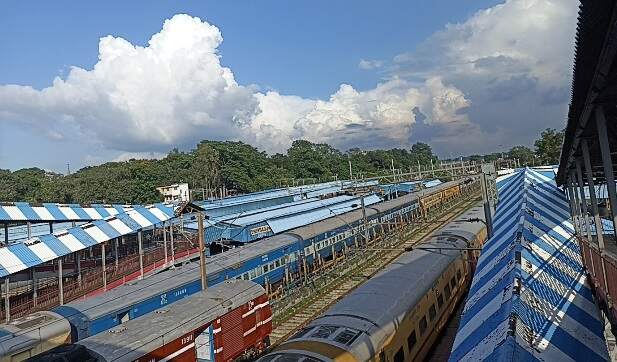
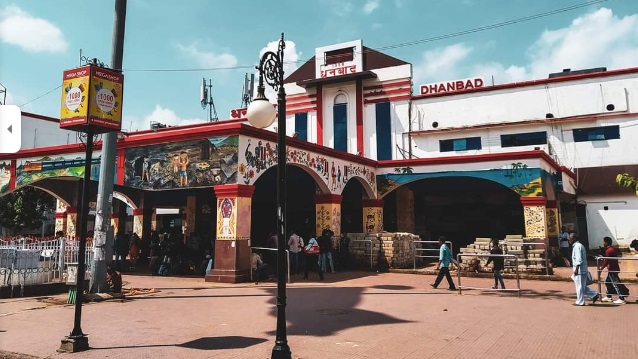
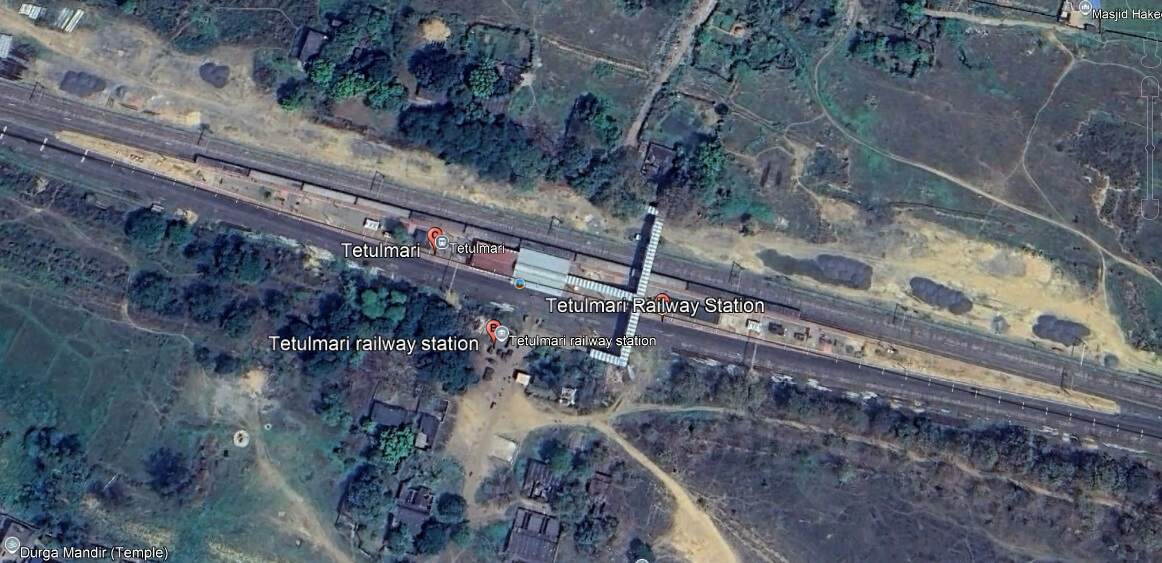
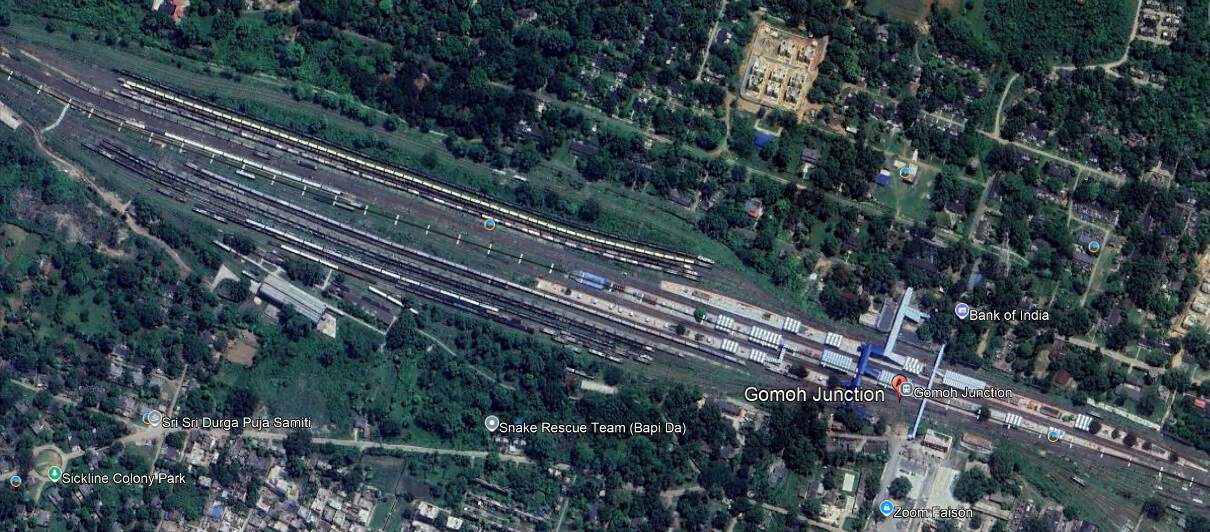
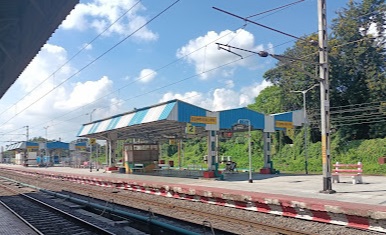
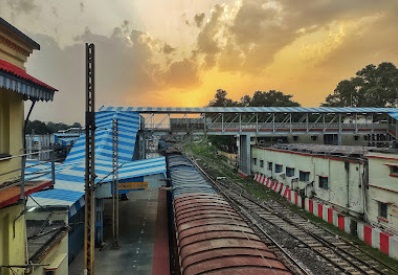
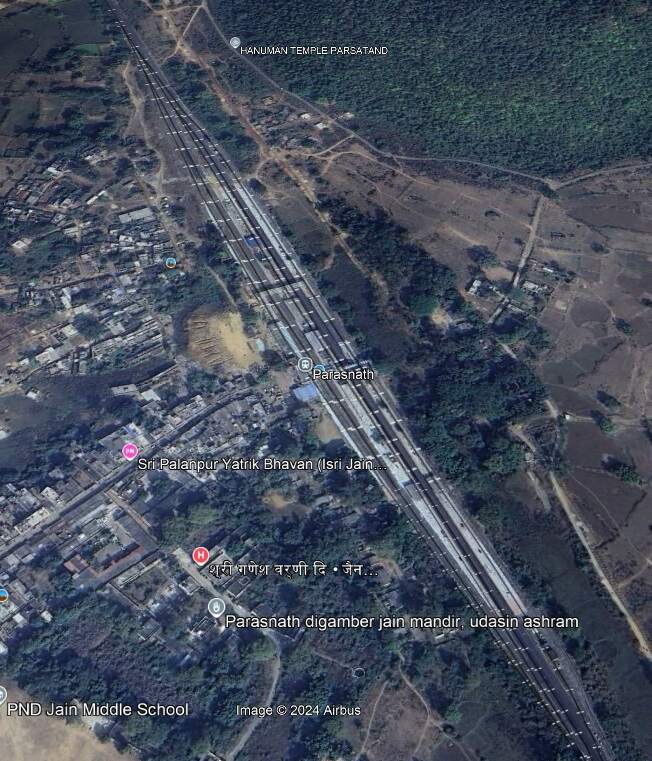
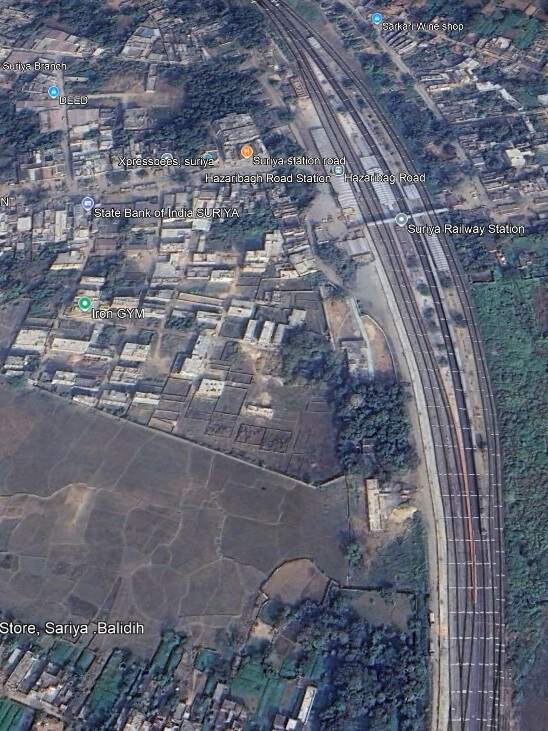
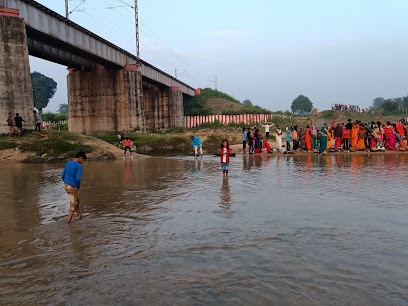
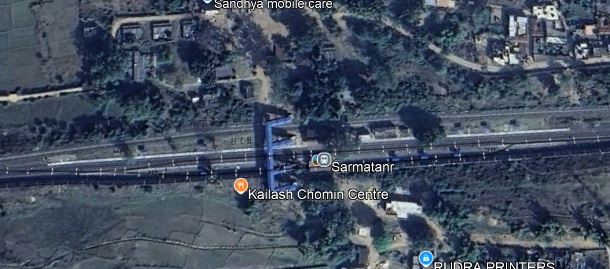
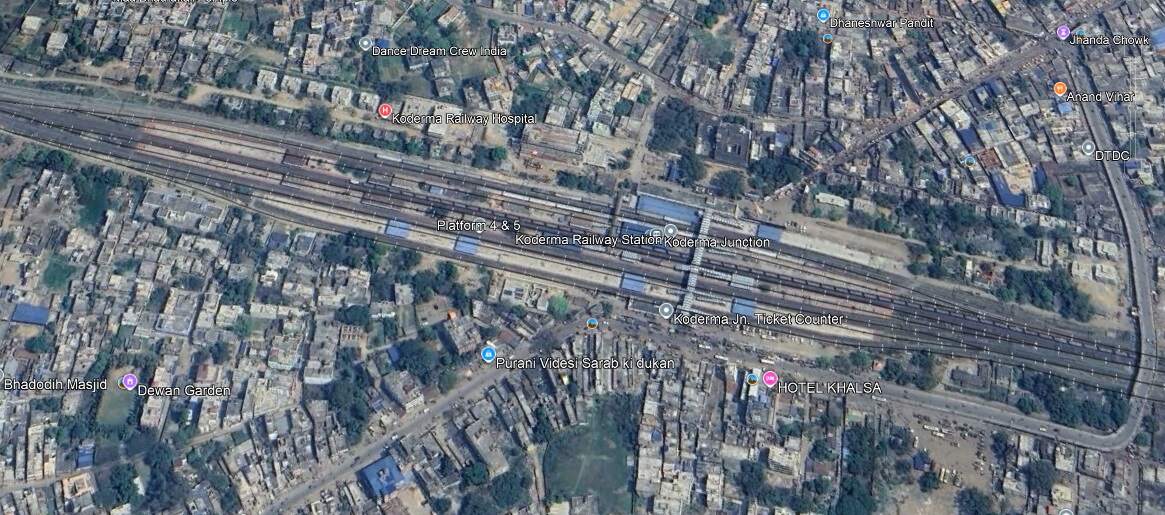
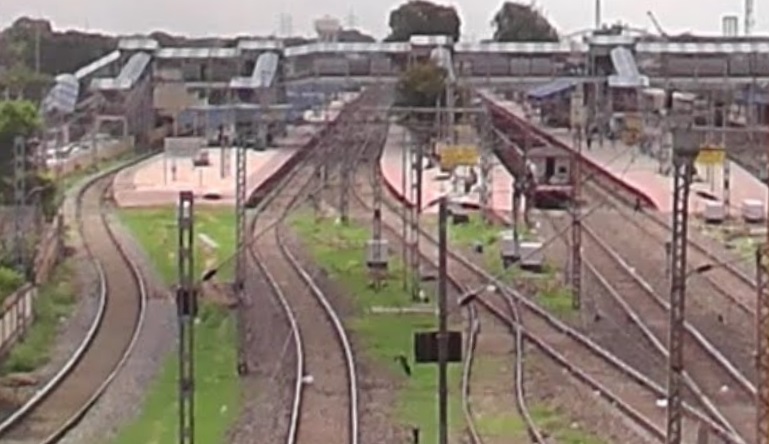
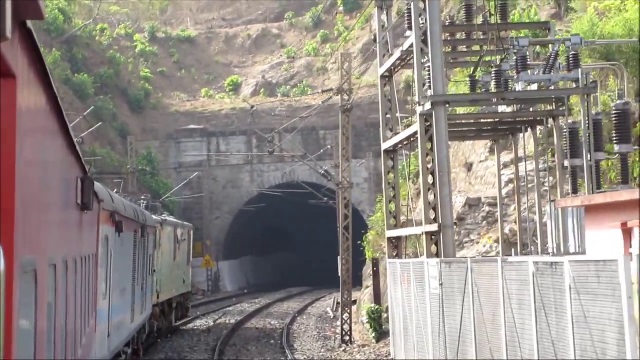
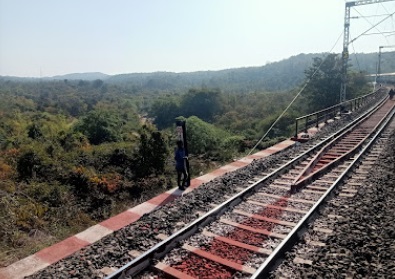
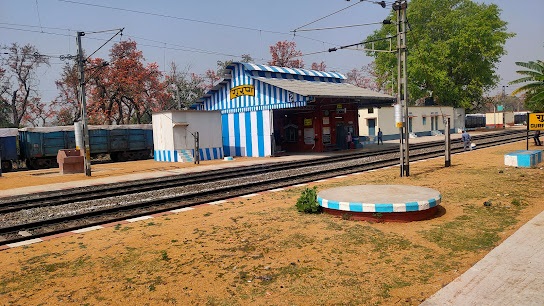
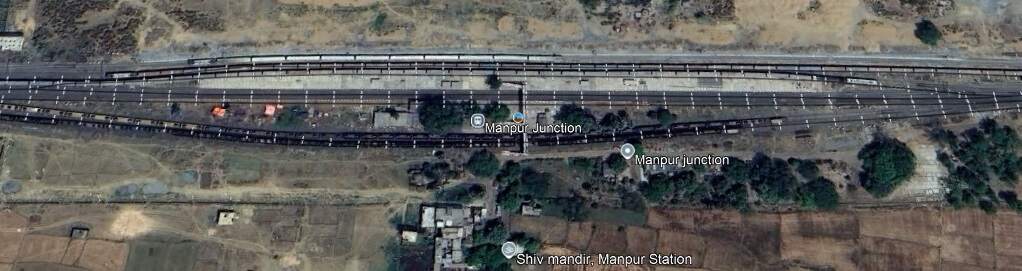
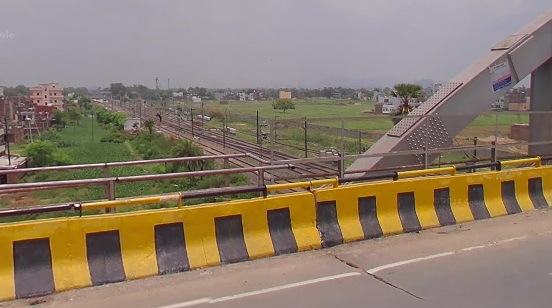
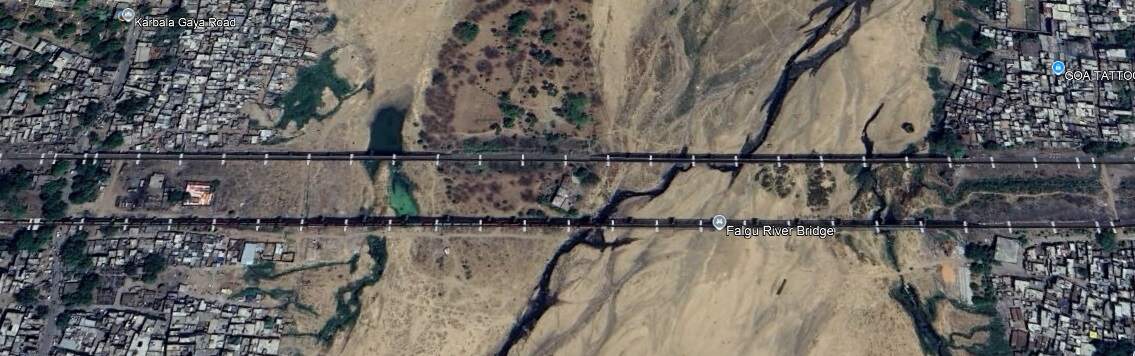
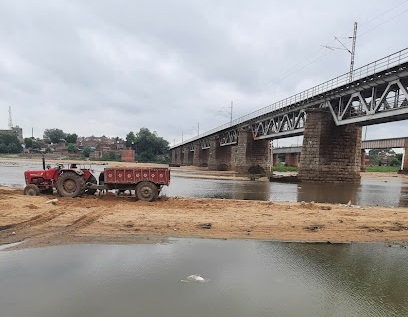
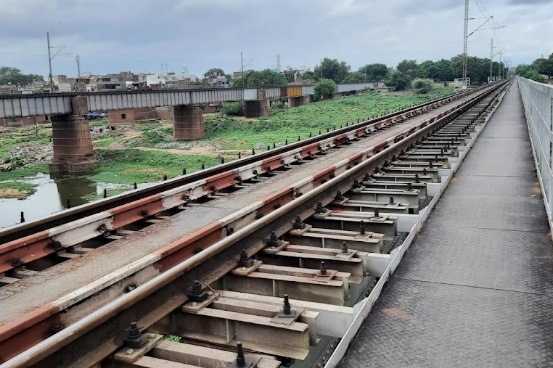
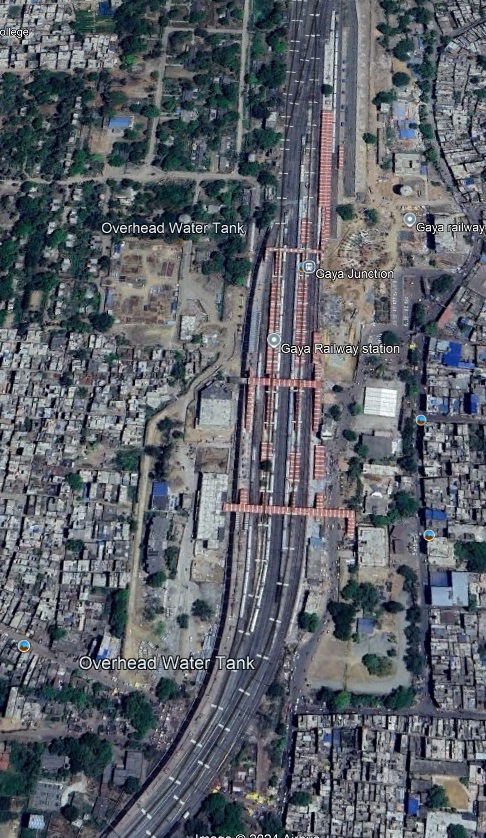
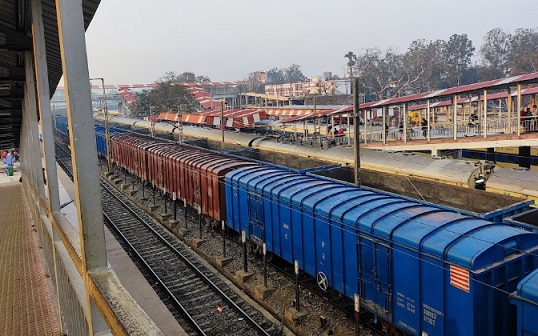
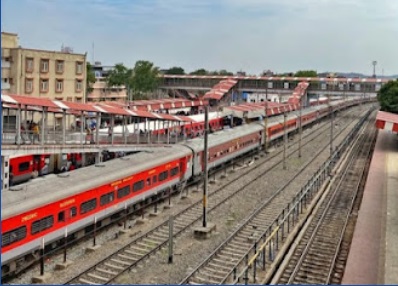
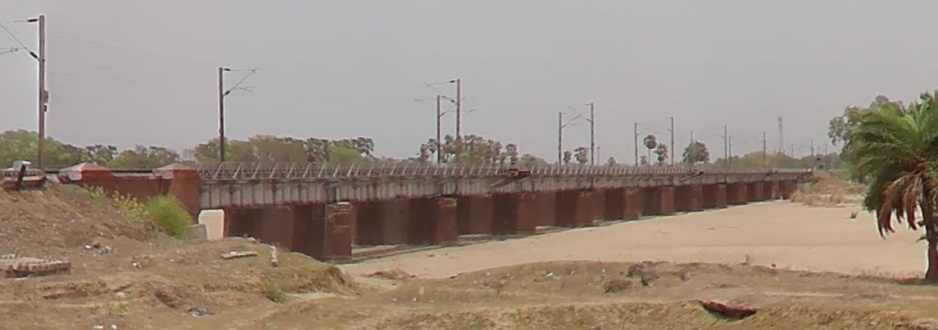
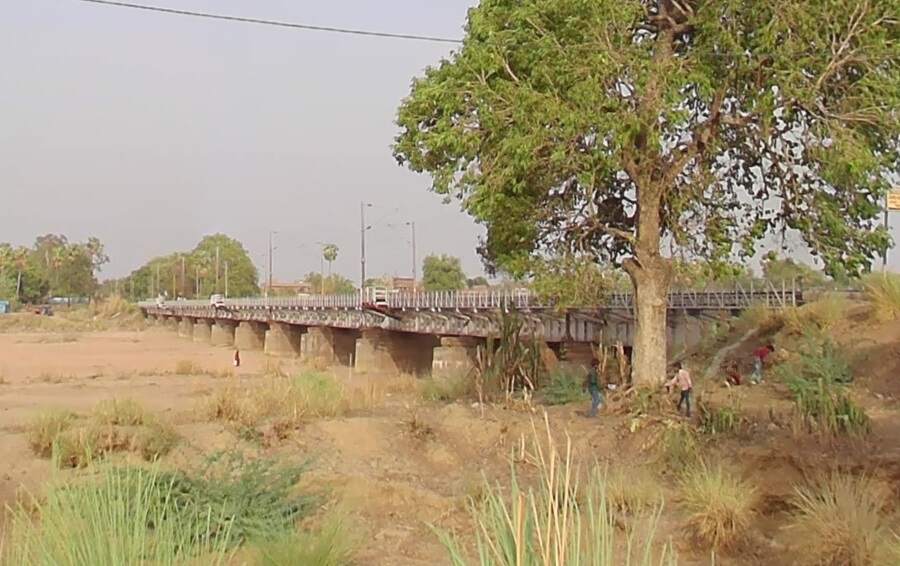
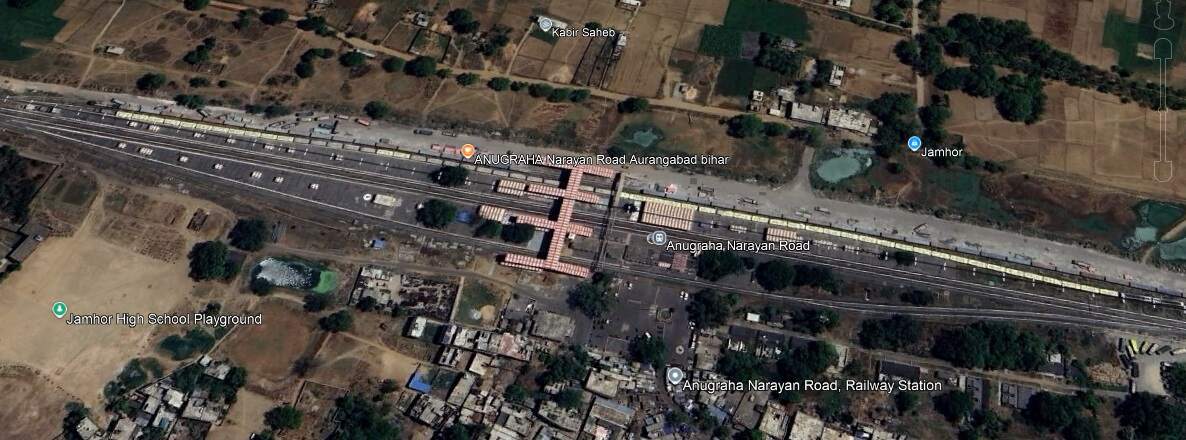
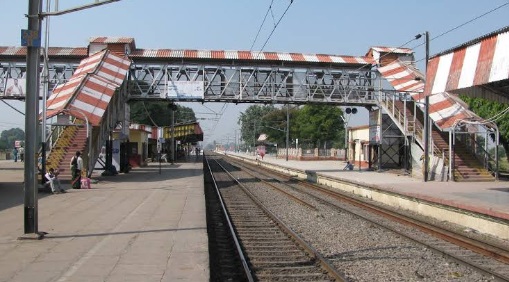
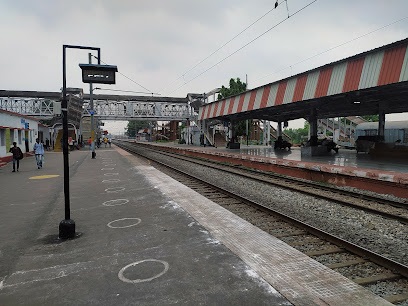
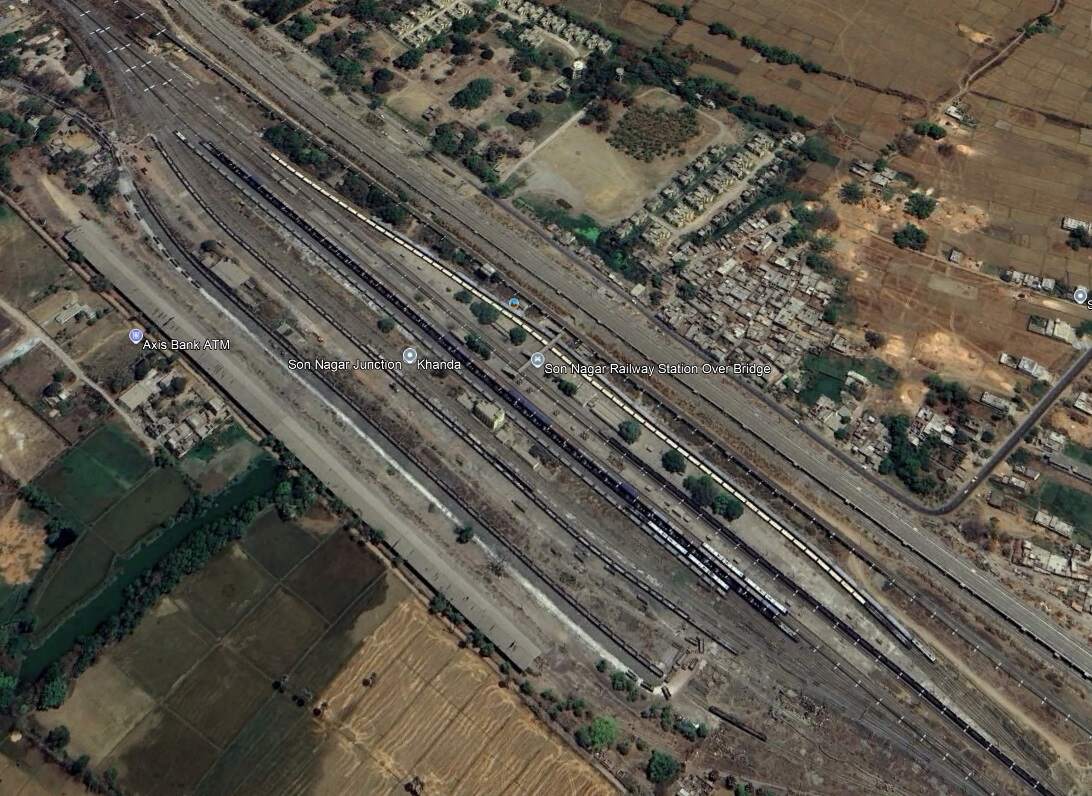
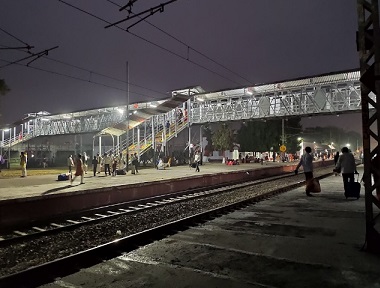
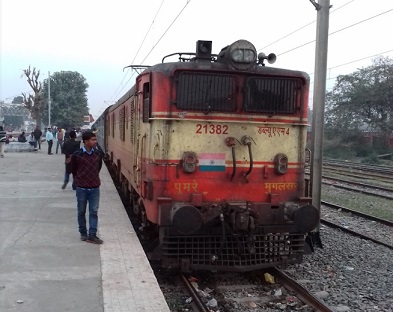
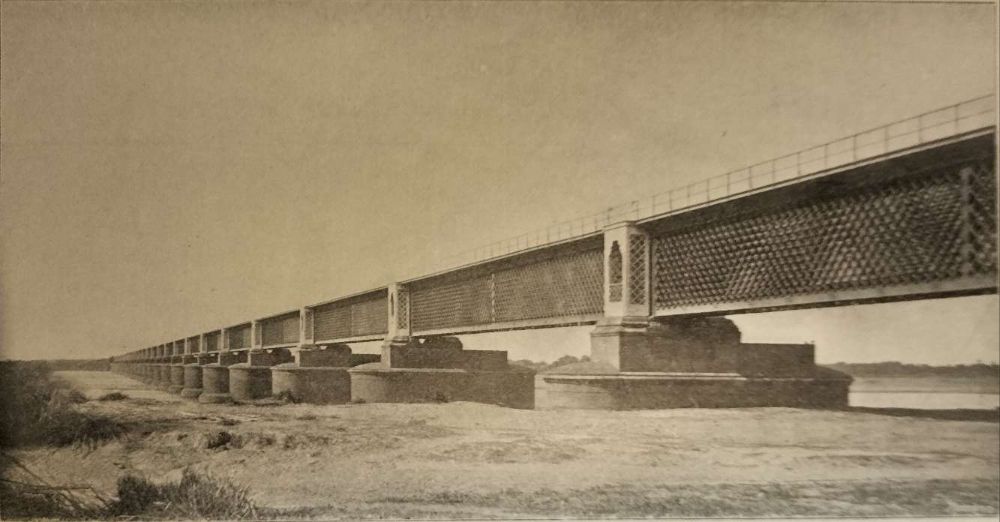
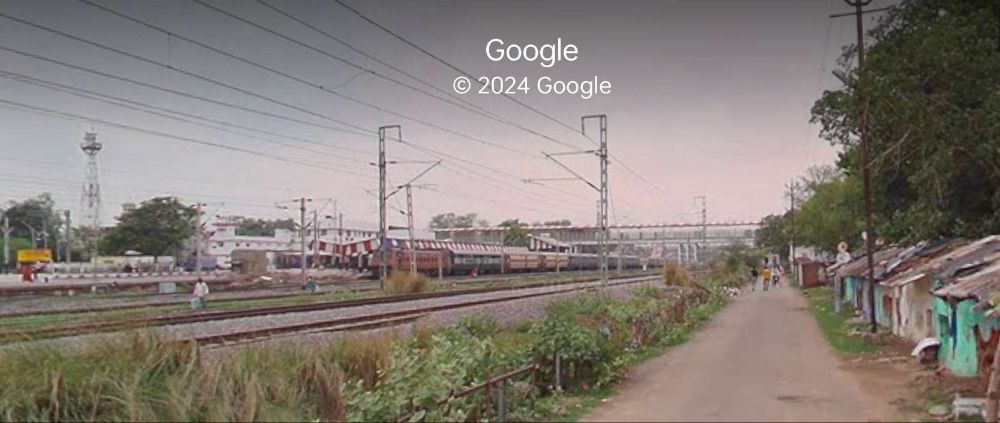
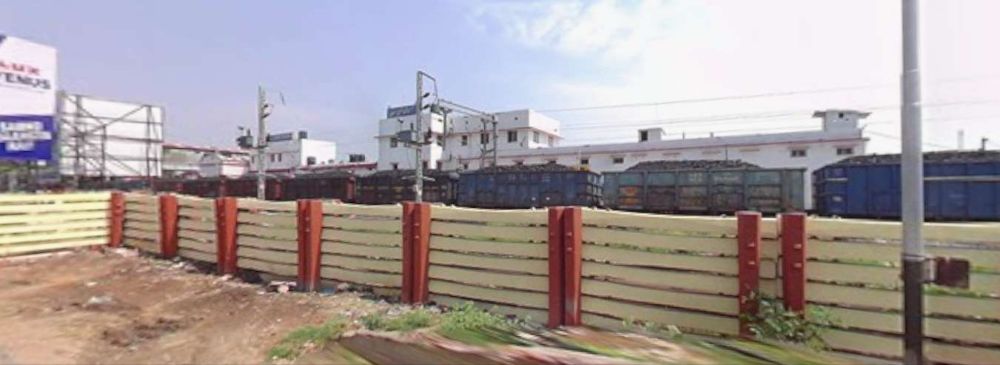
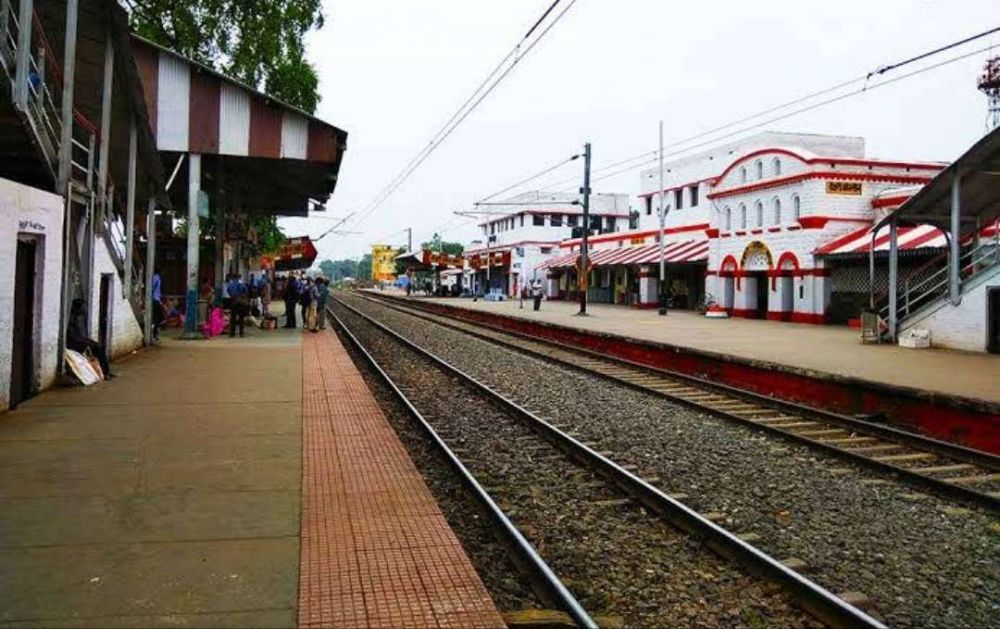
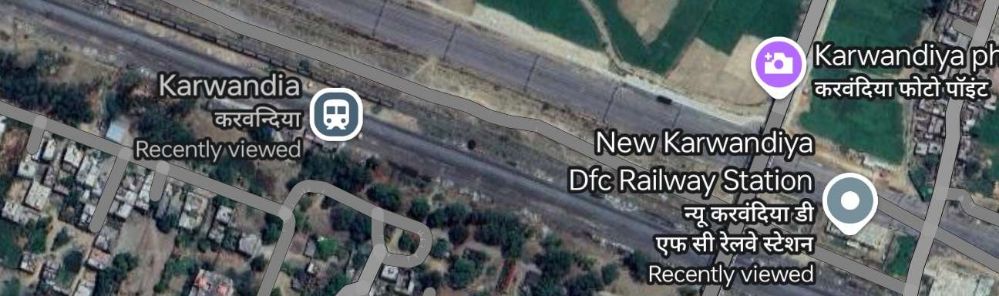
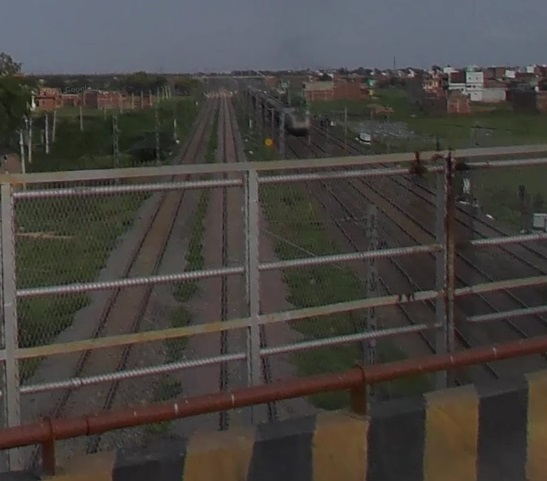
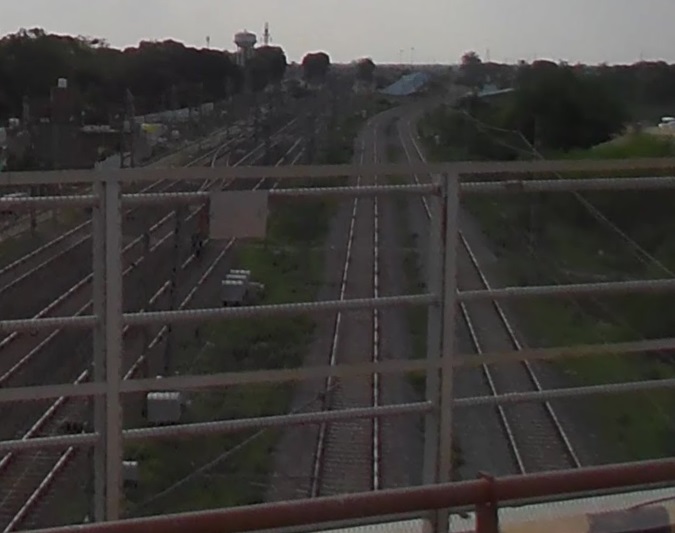
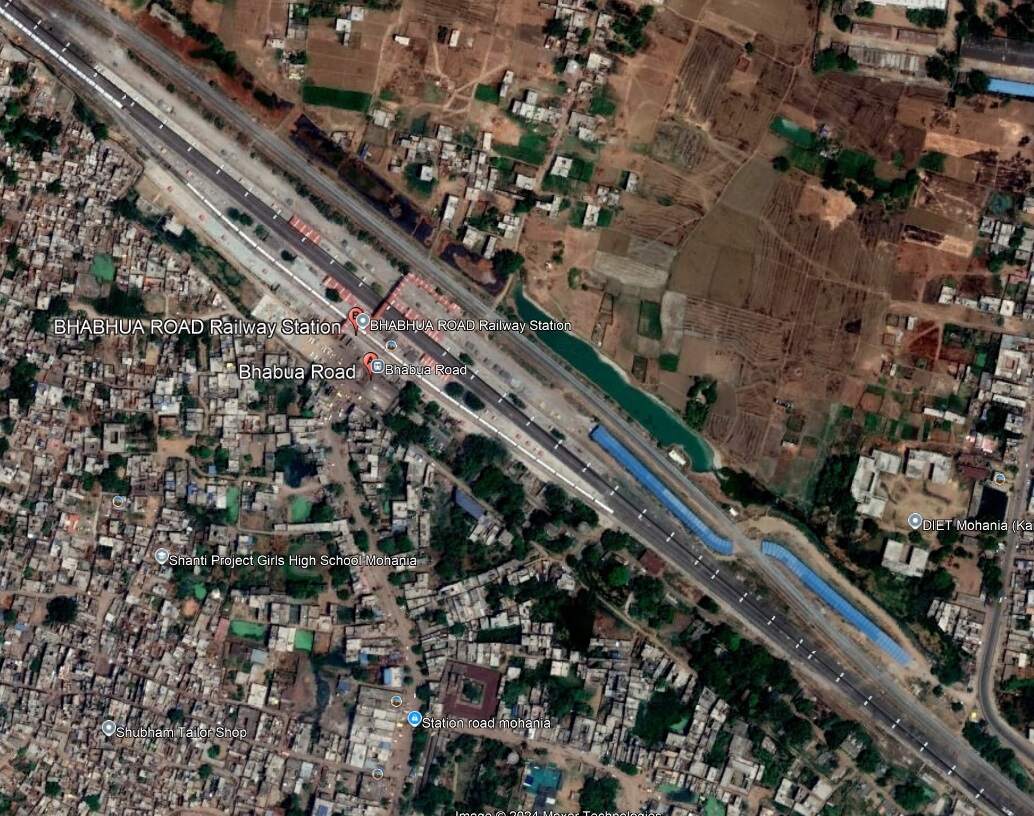
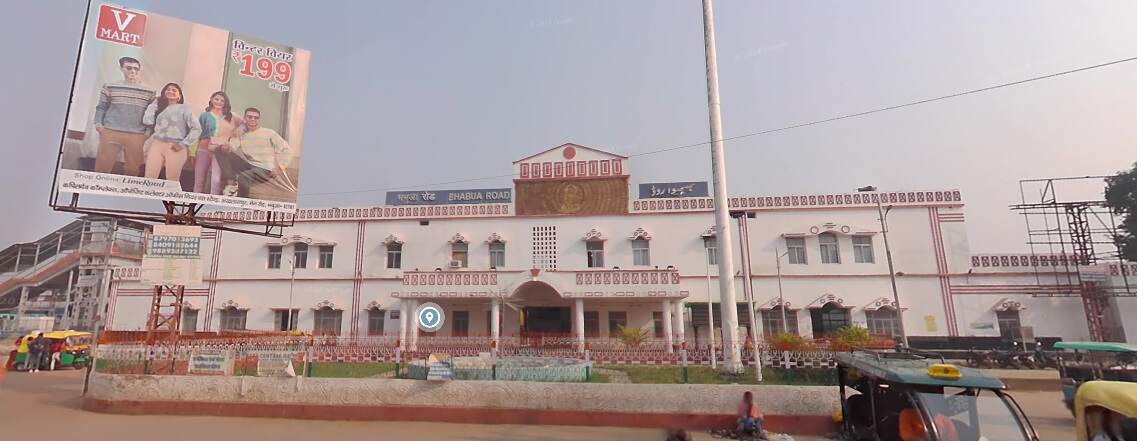
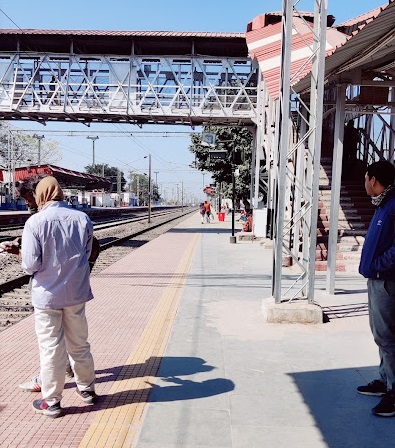
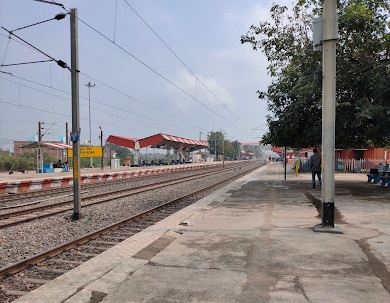
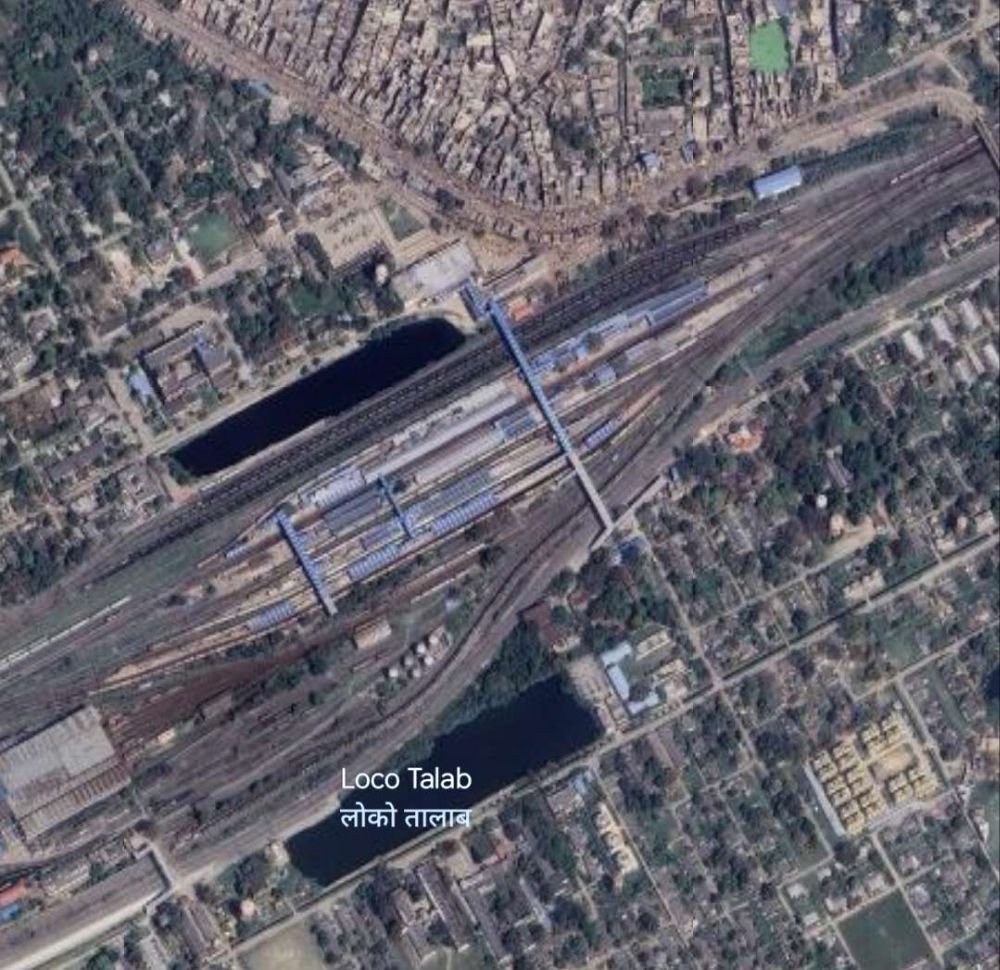
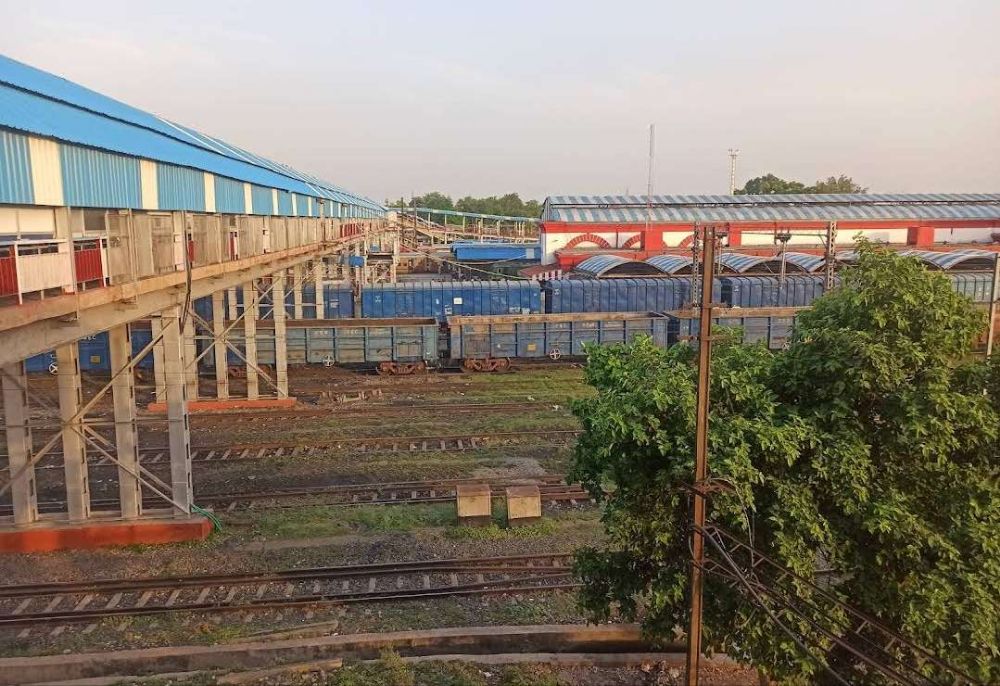
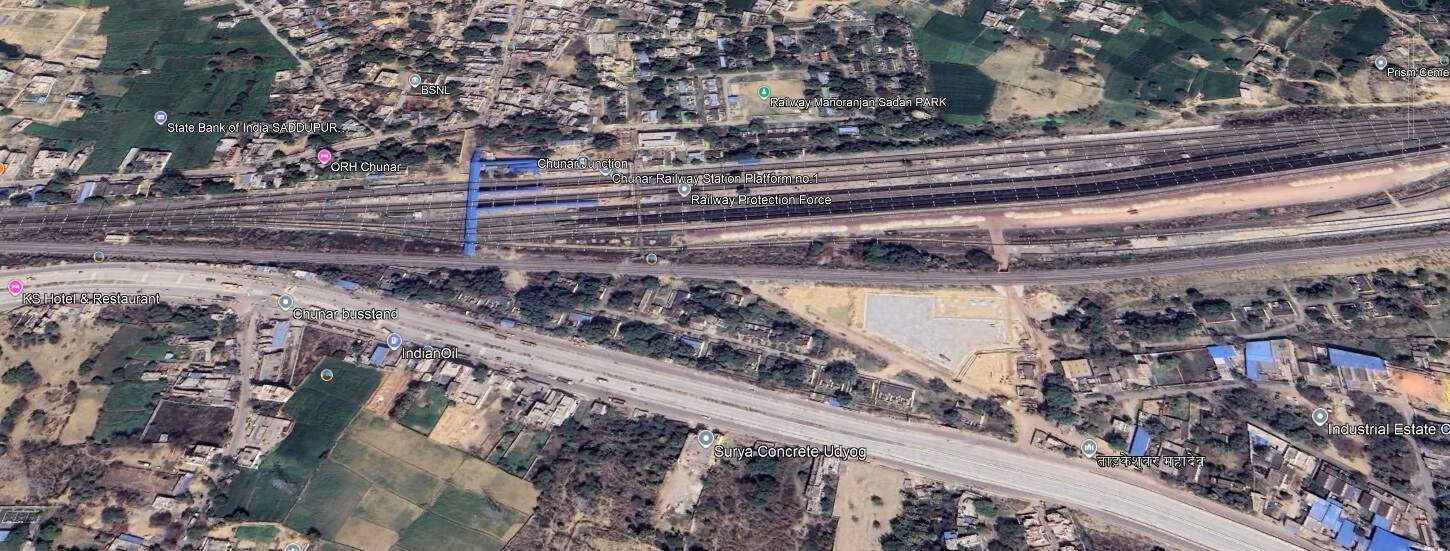
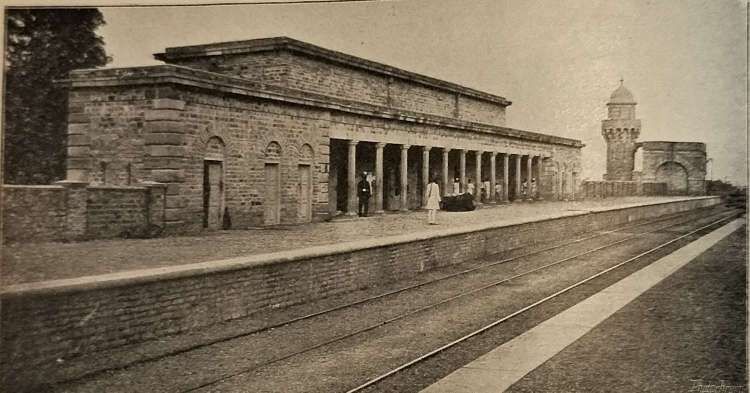
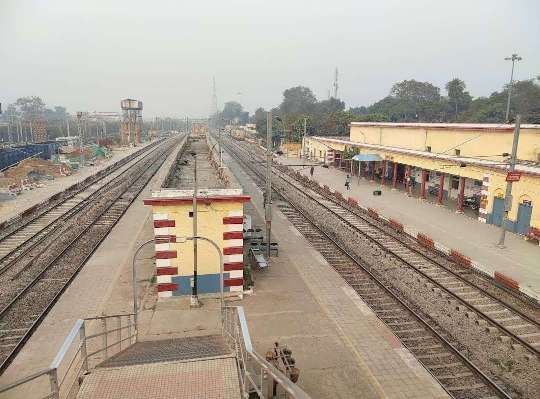
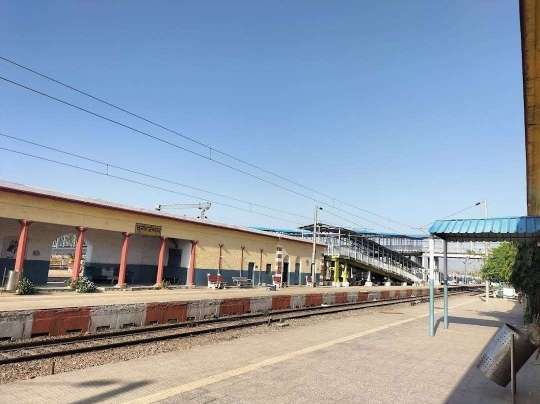
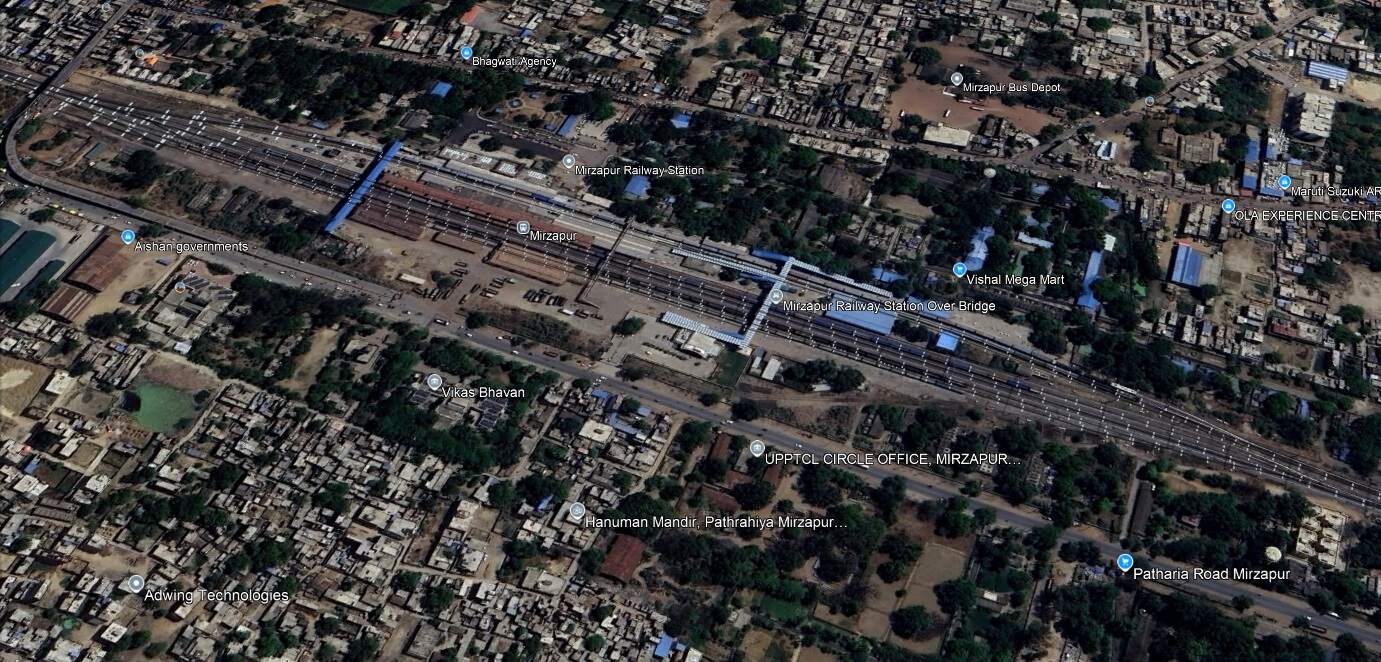
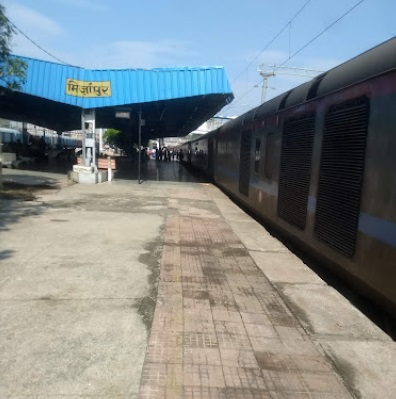
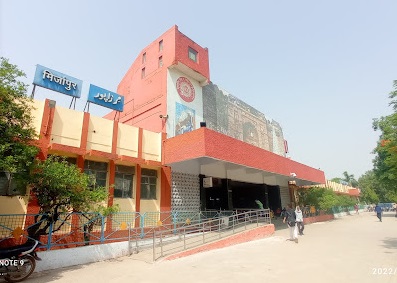
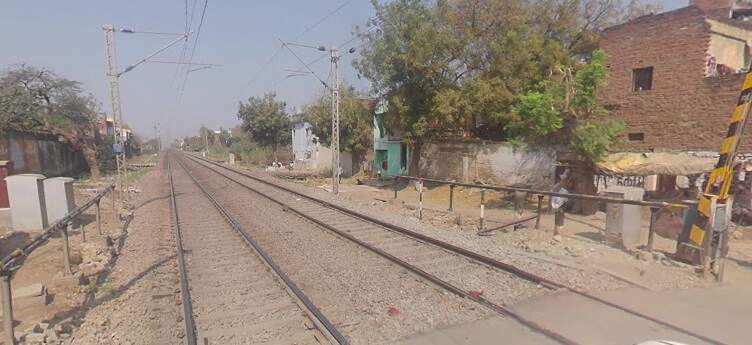
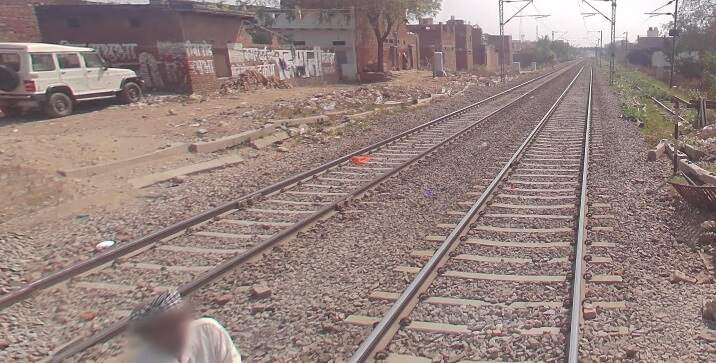
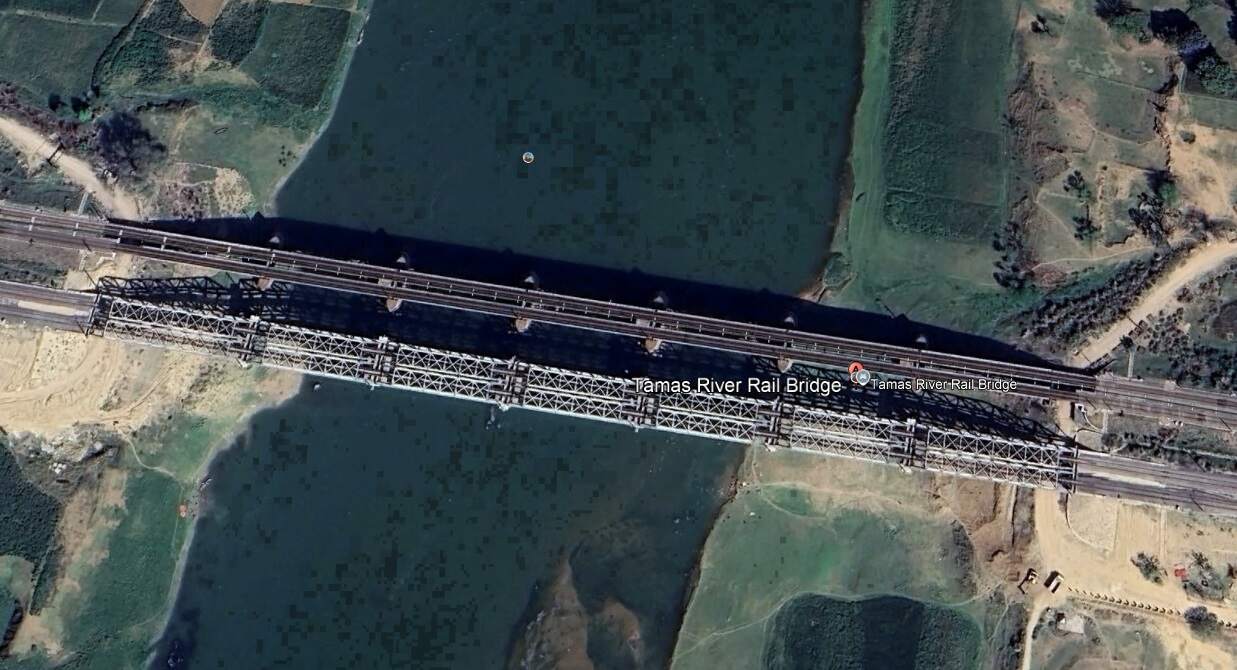
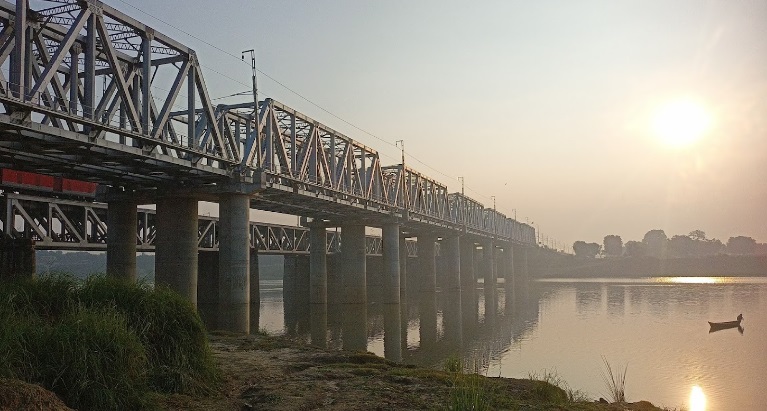
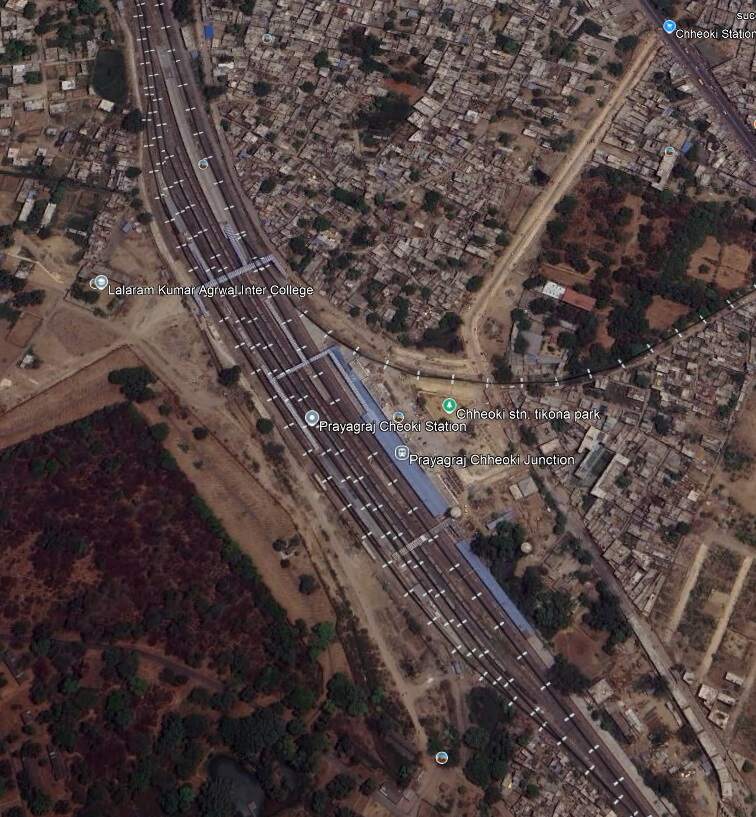
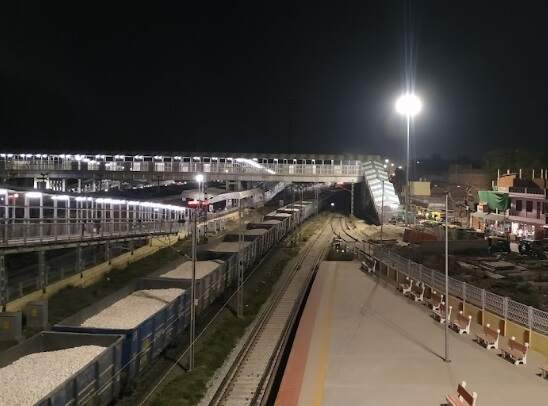
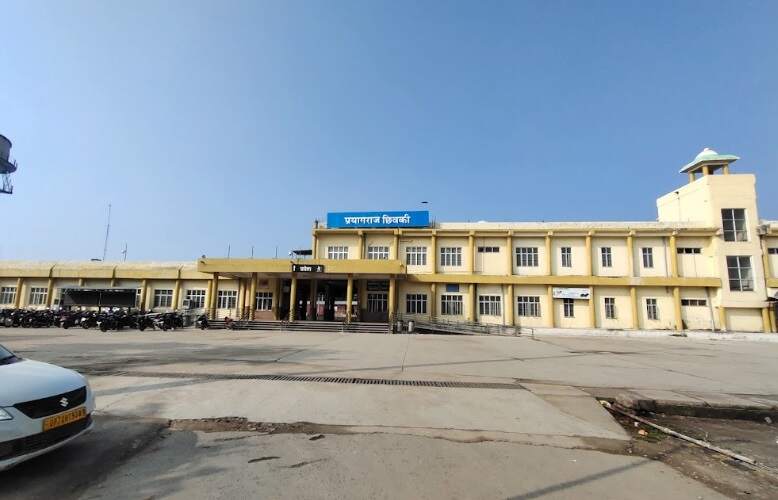
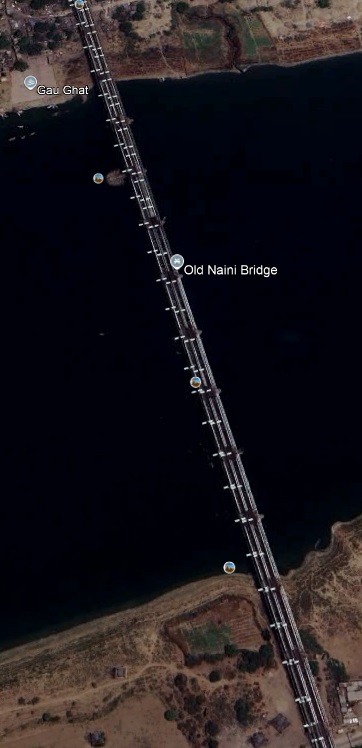
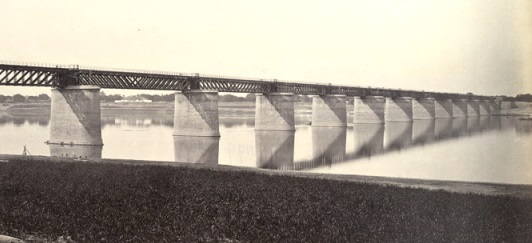

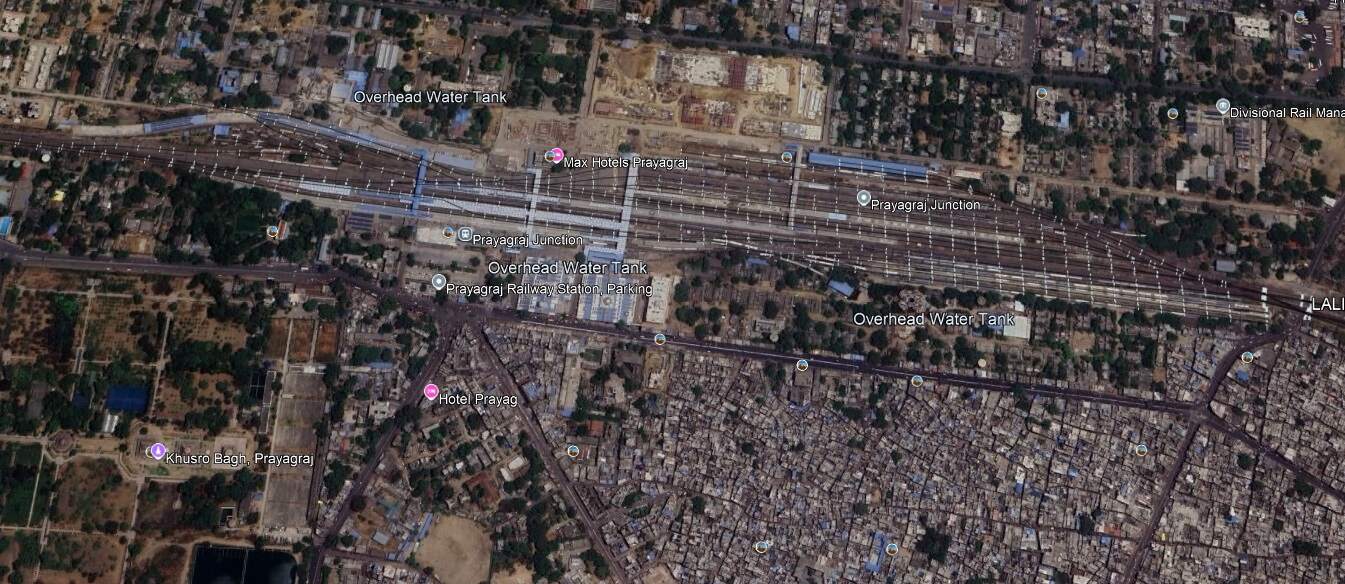
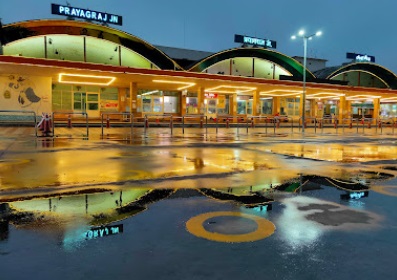
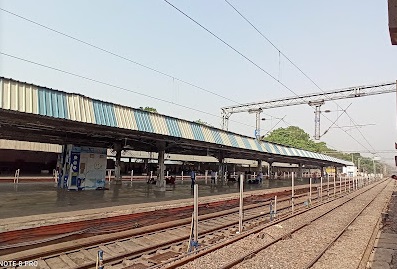
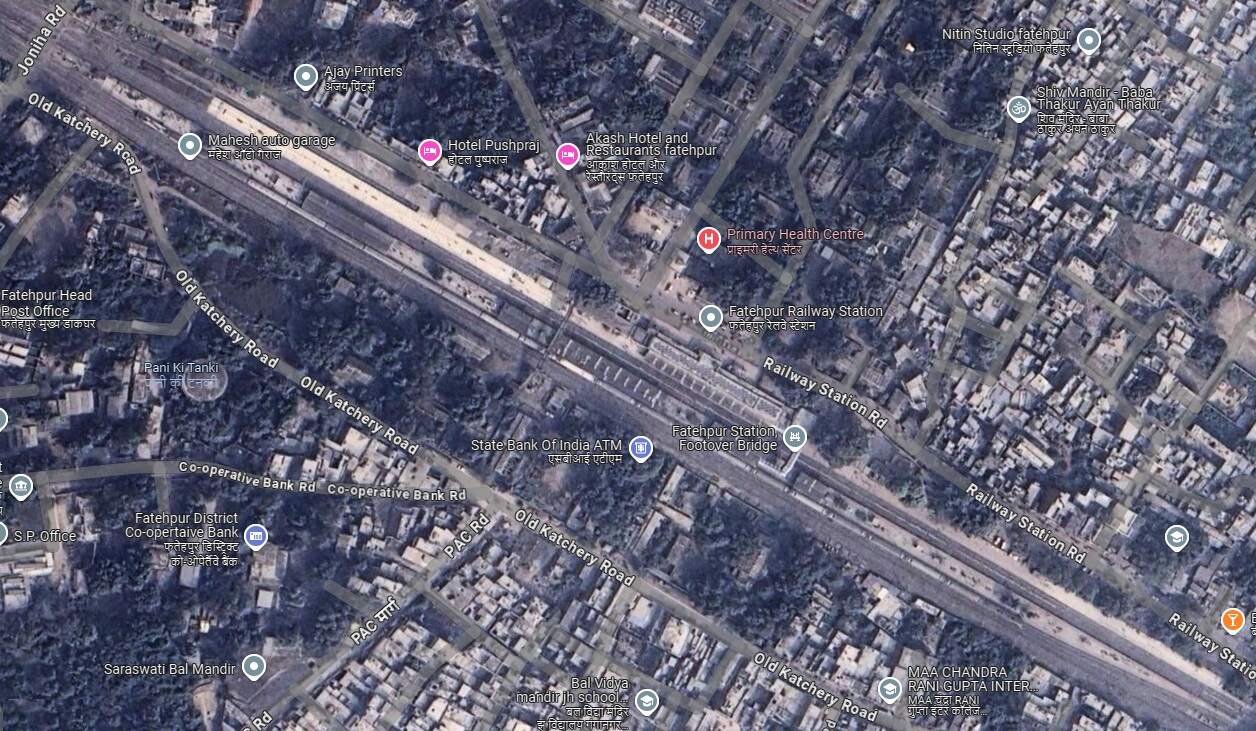
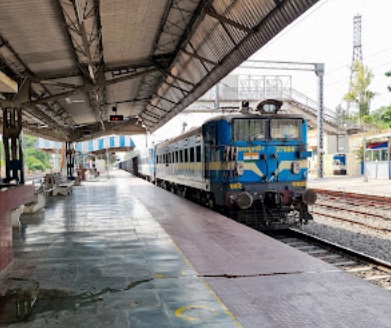
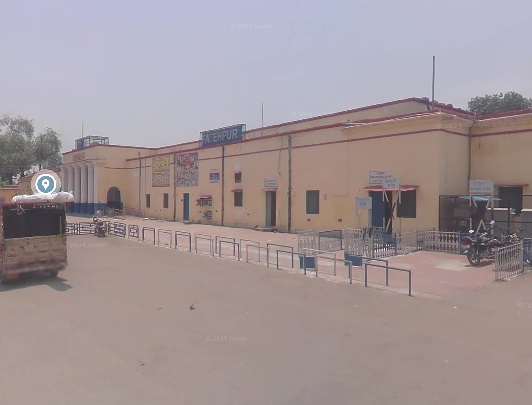
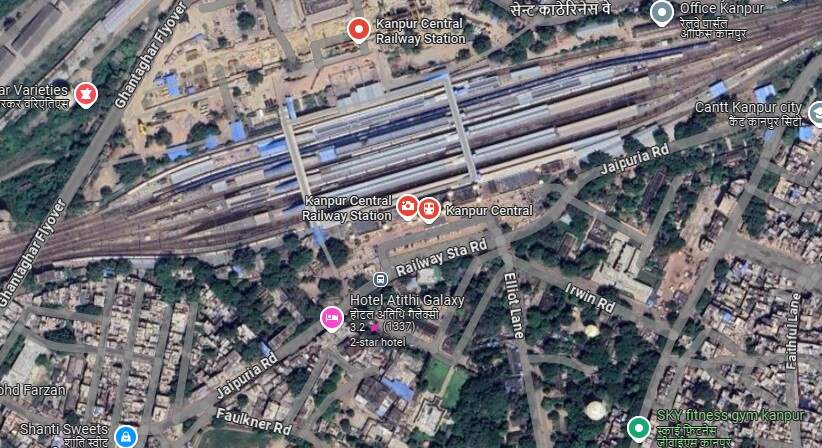
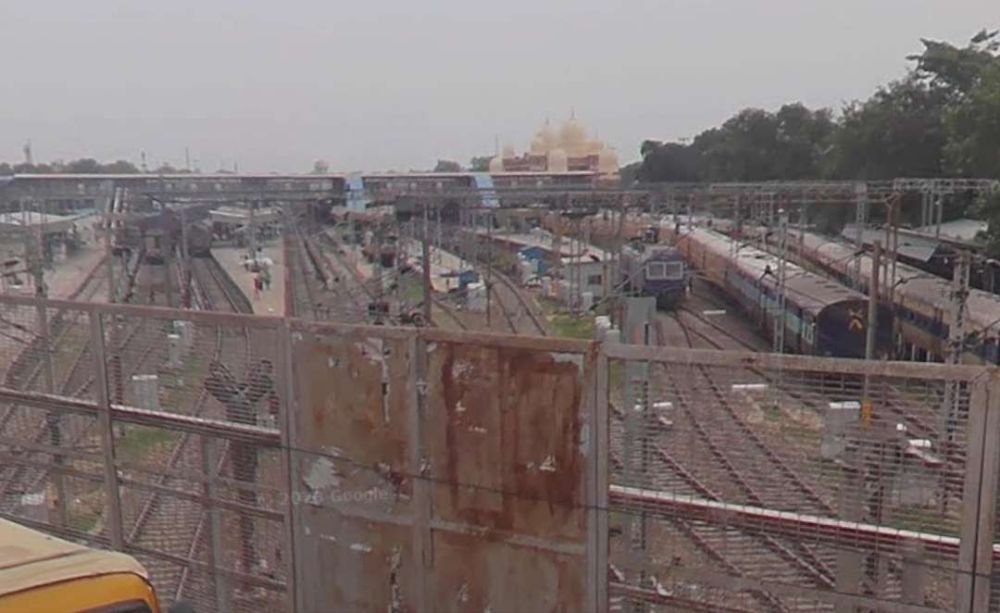
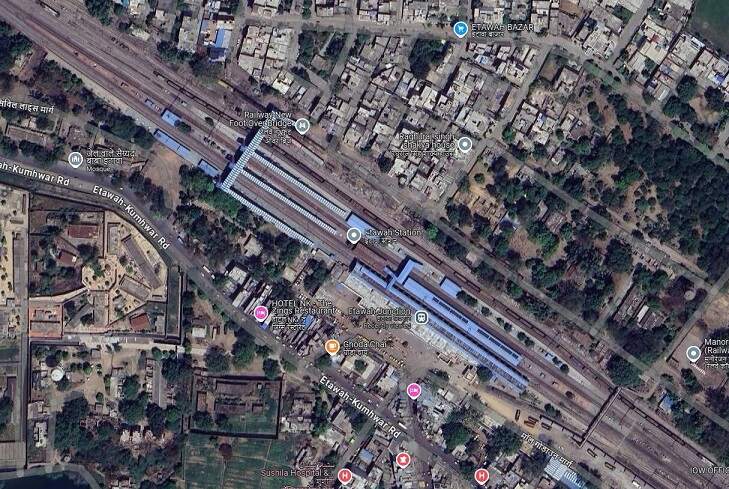
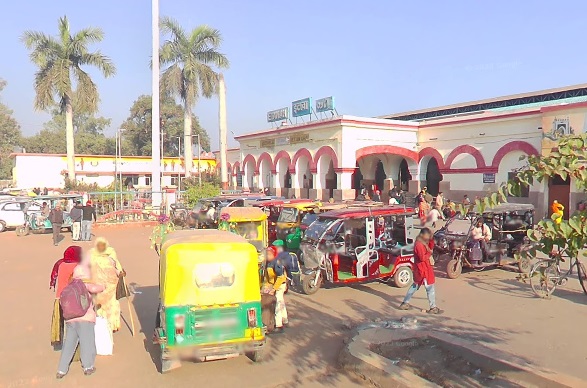
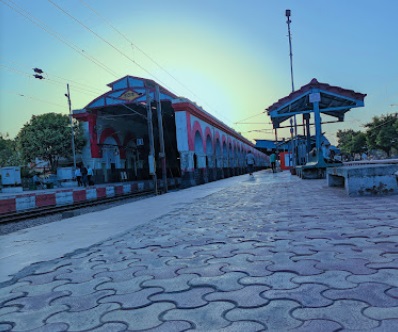
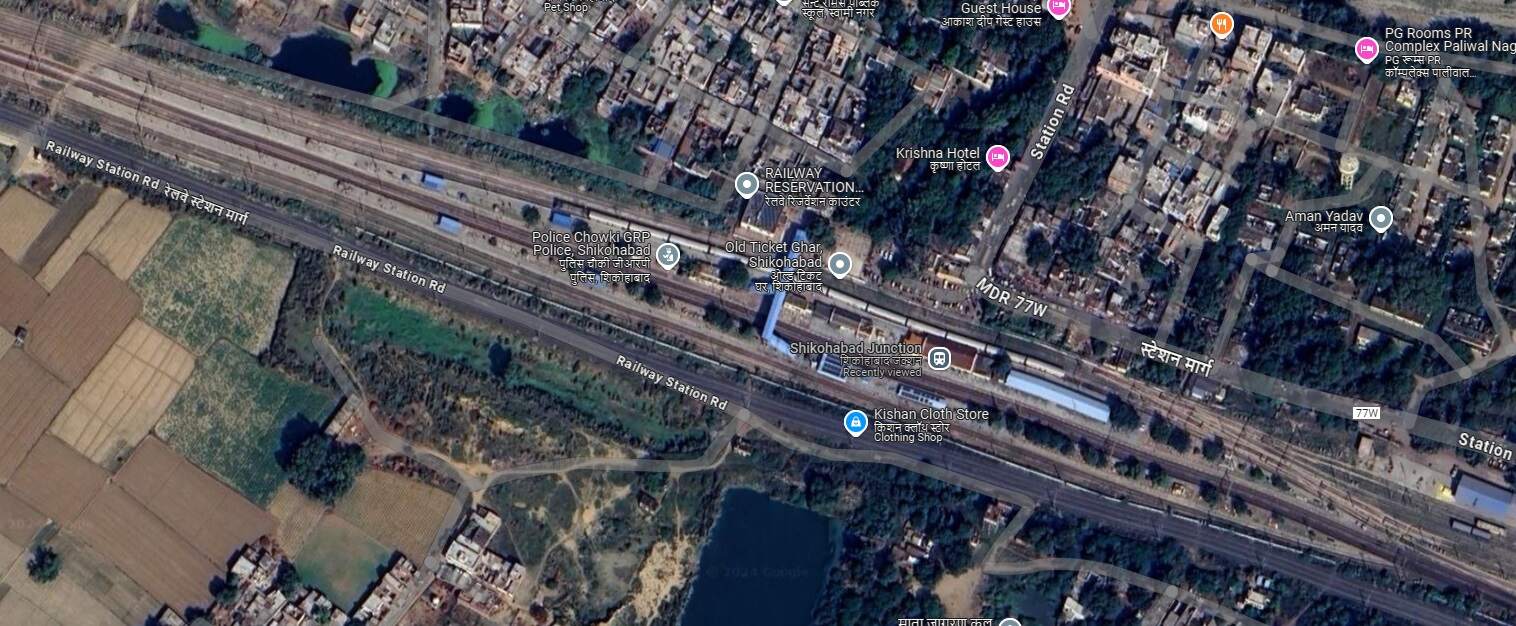
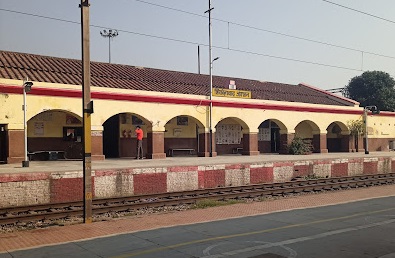
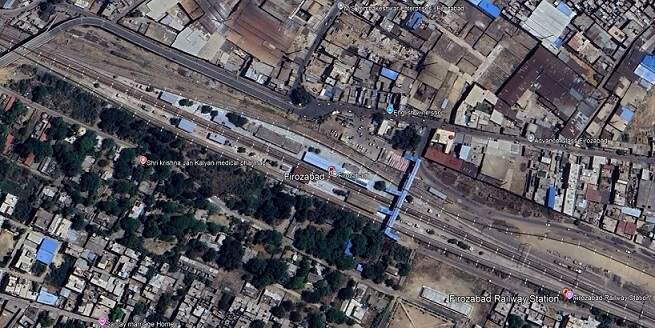
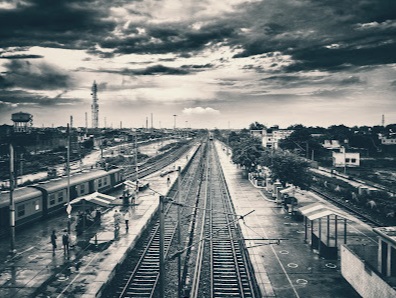
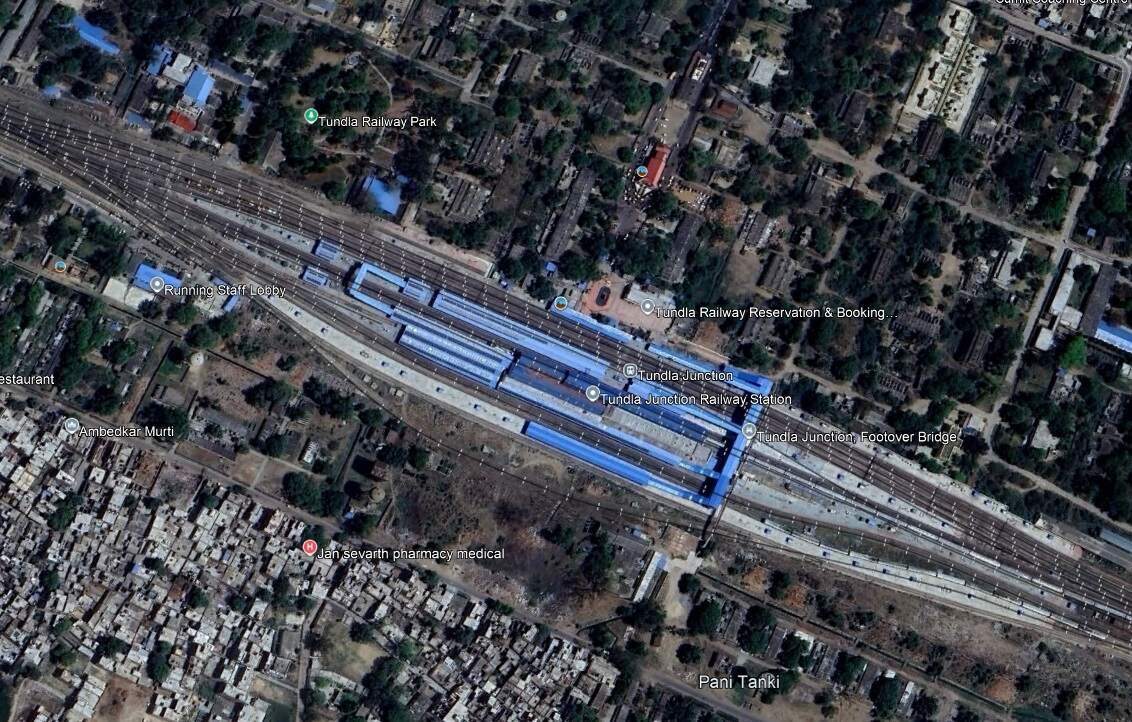
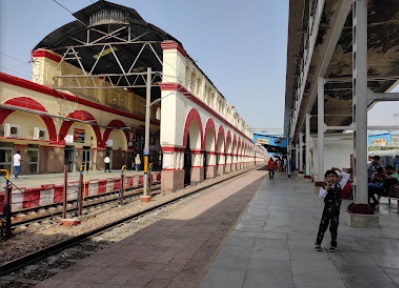
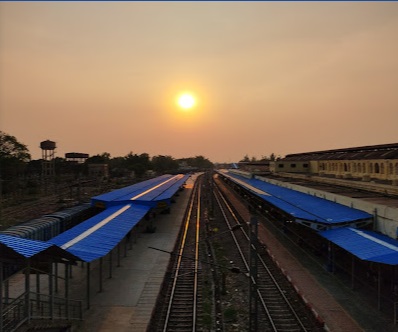

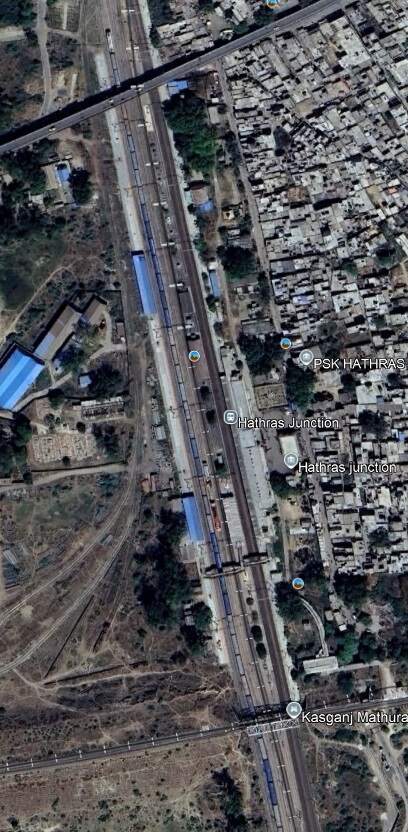
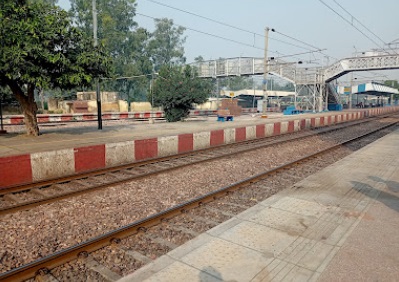
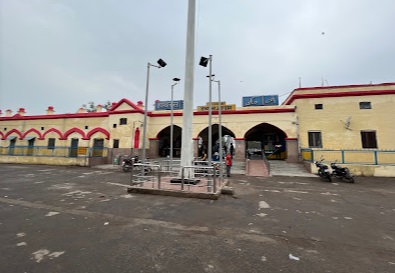
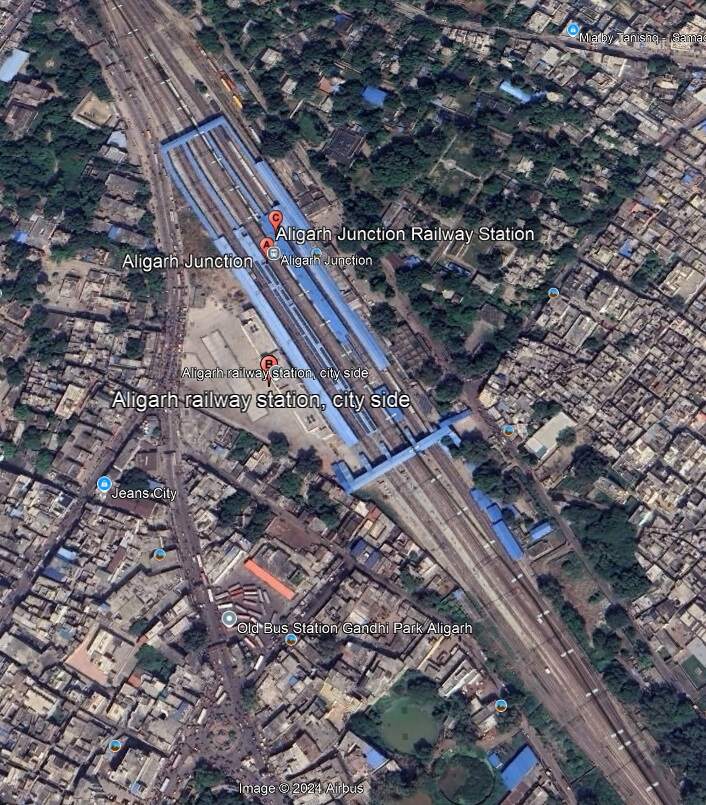
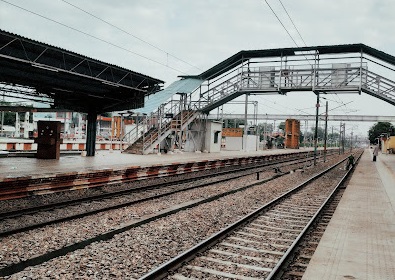
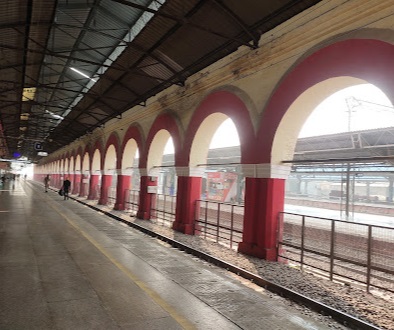
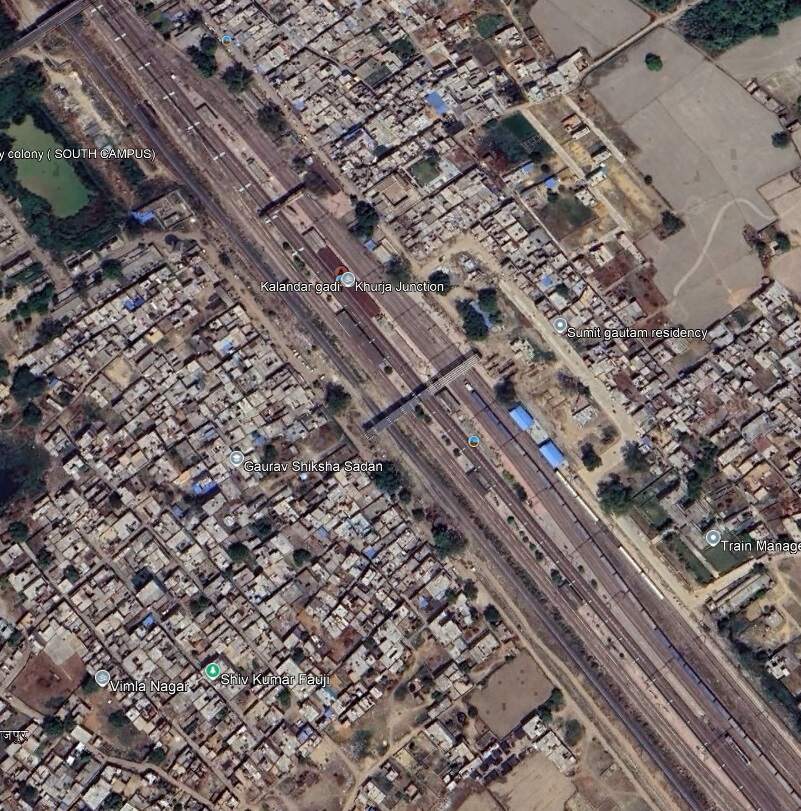
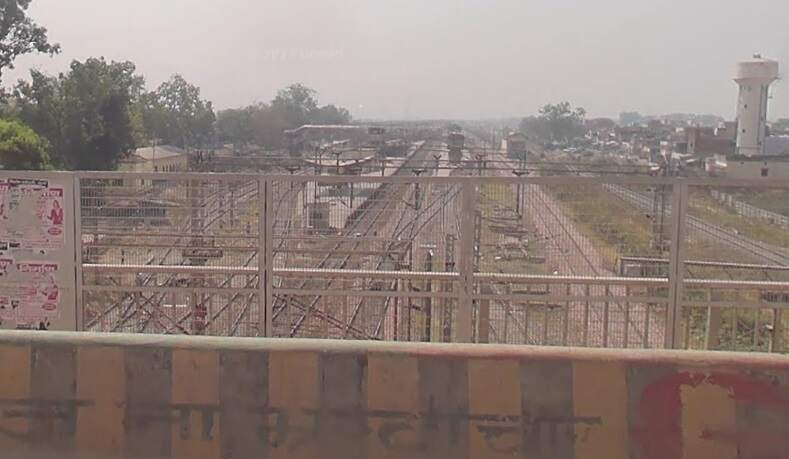
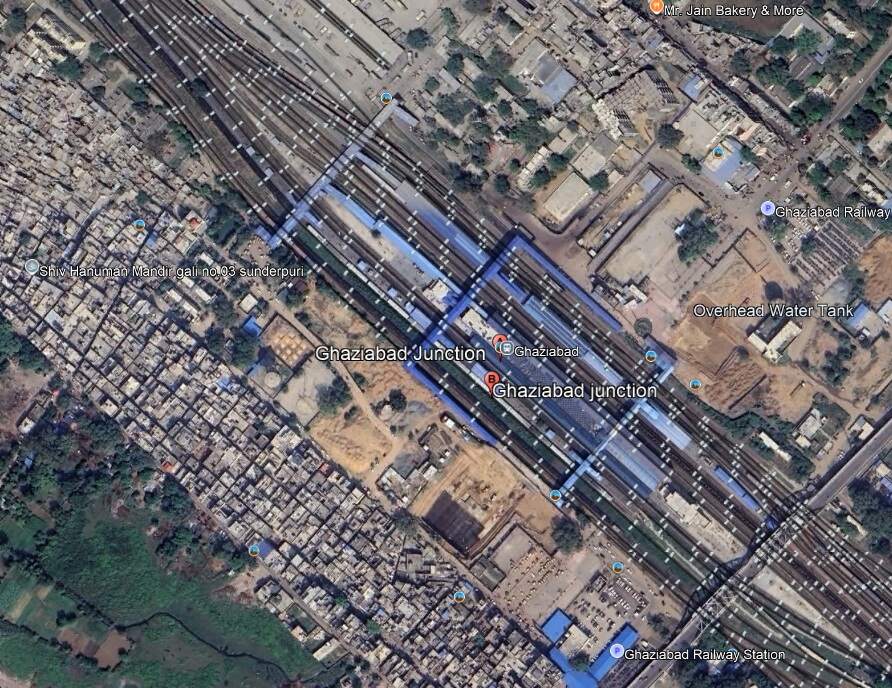
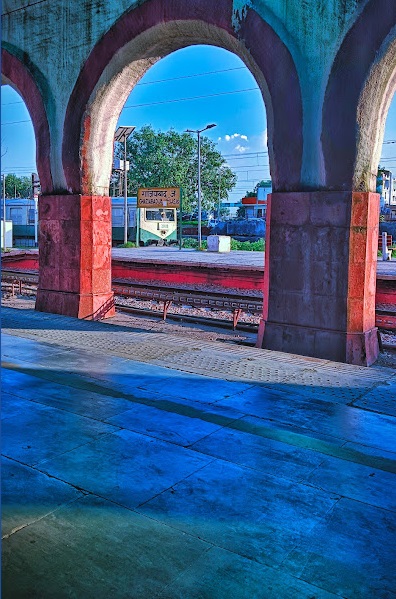

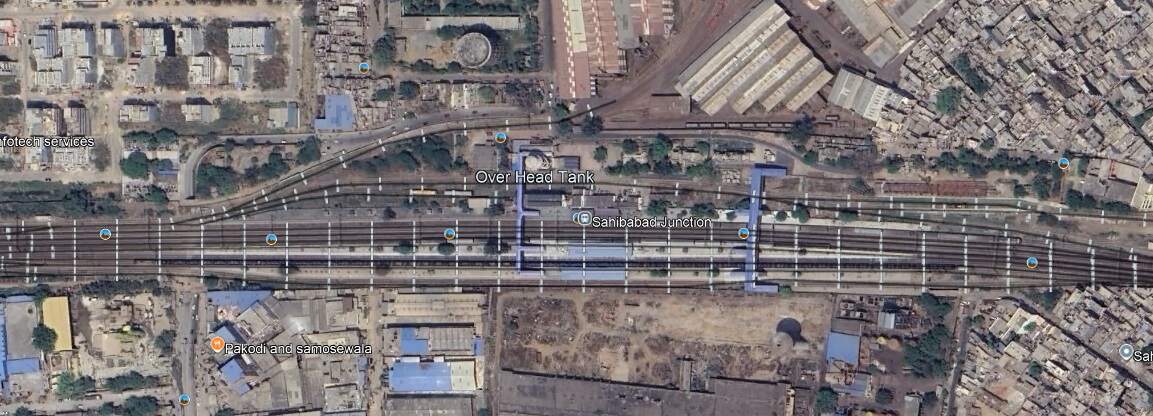
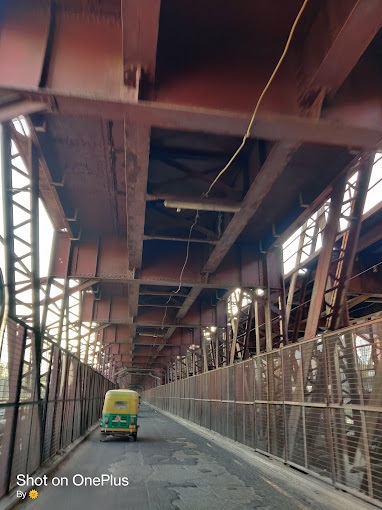
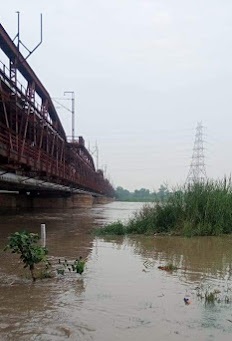
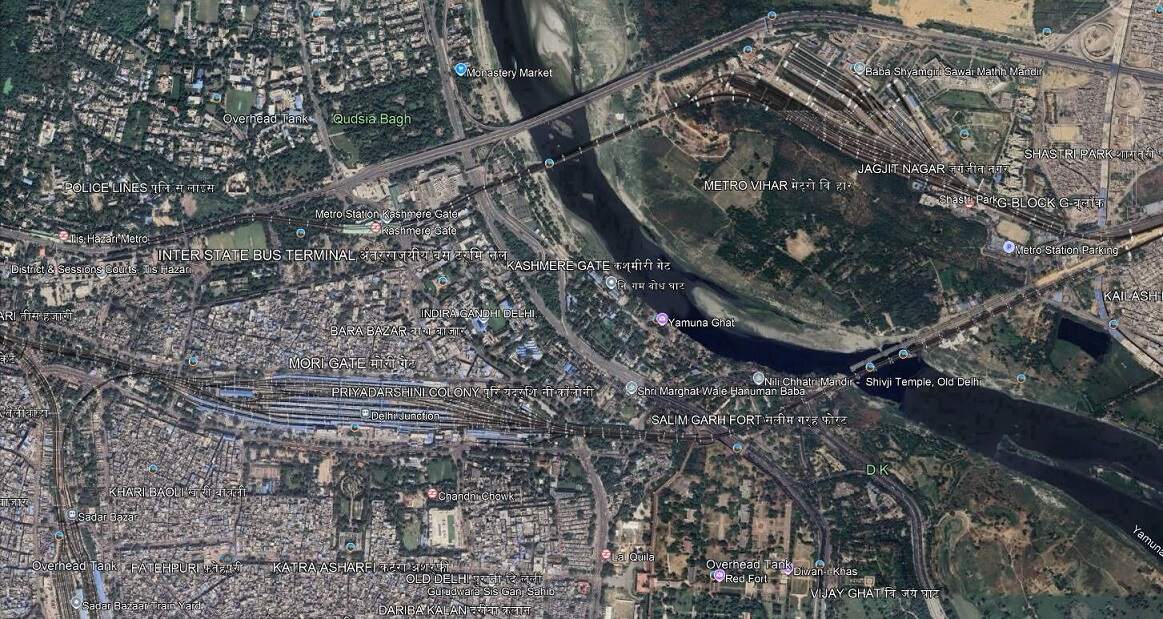
 Roger Farnworth


_Locomotion_Shildon_29.06.2009_P6290048_(9989613283).jpg)
.jpg)
.jpg)


