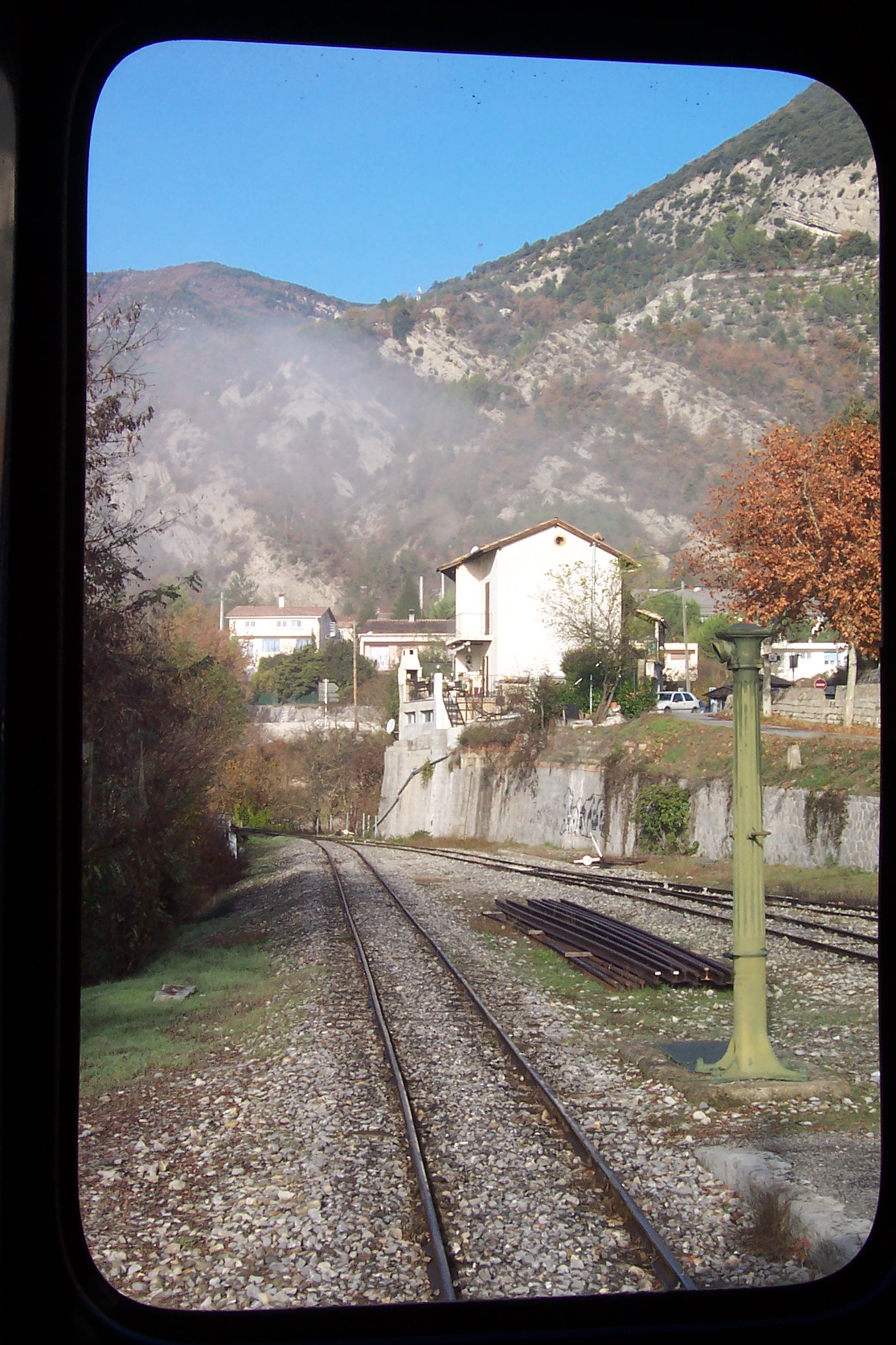
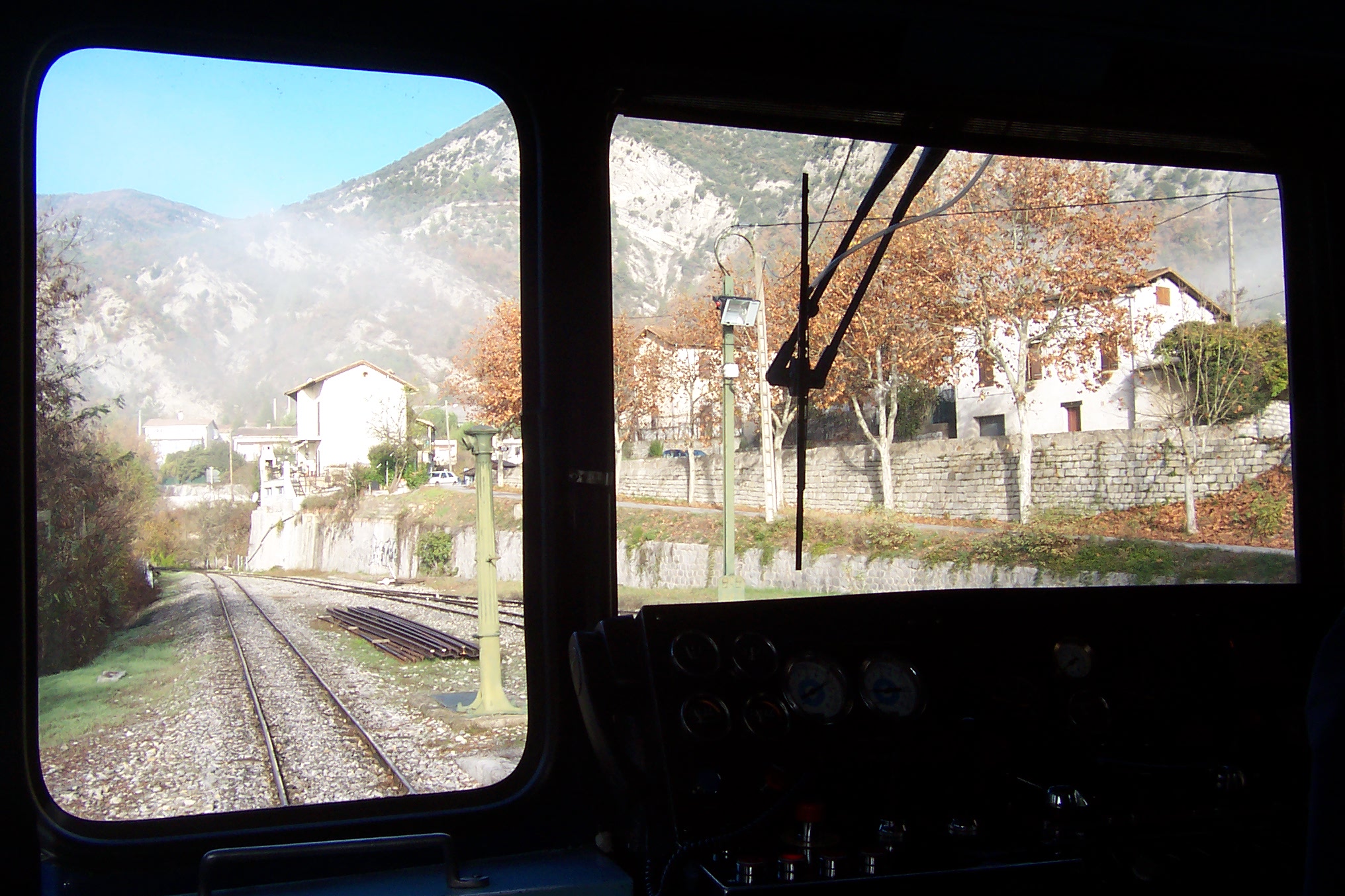
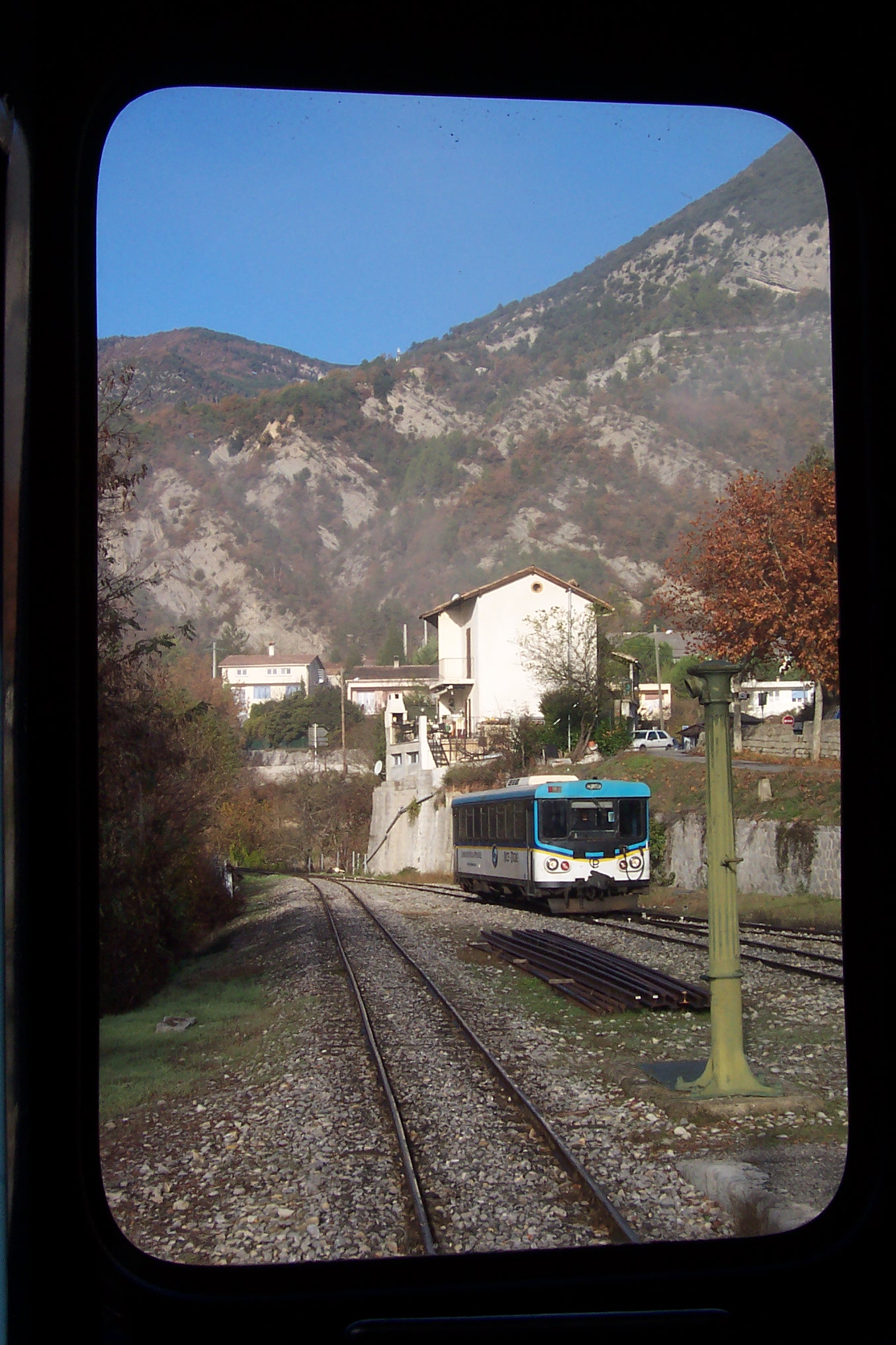
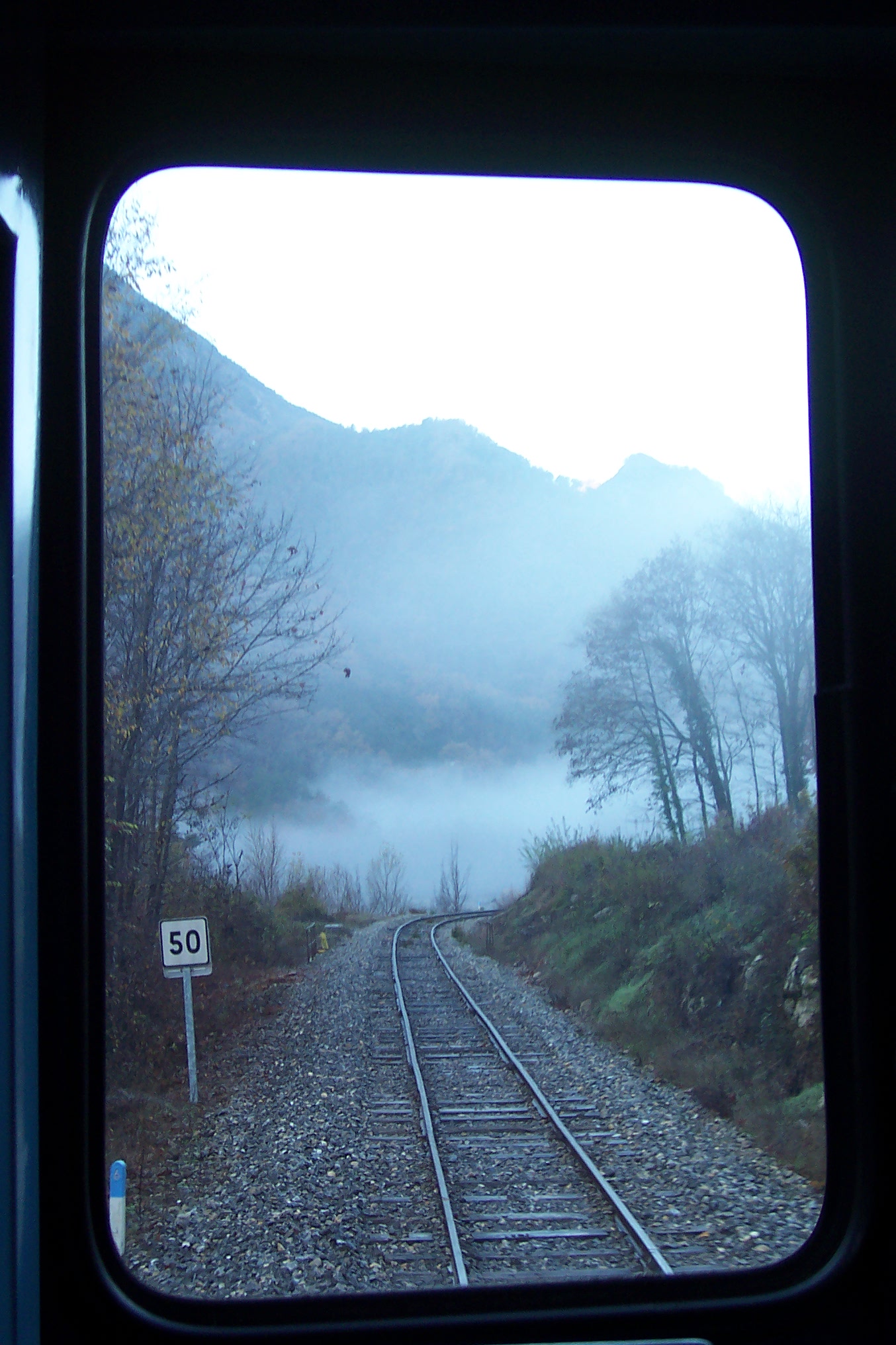
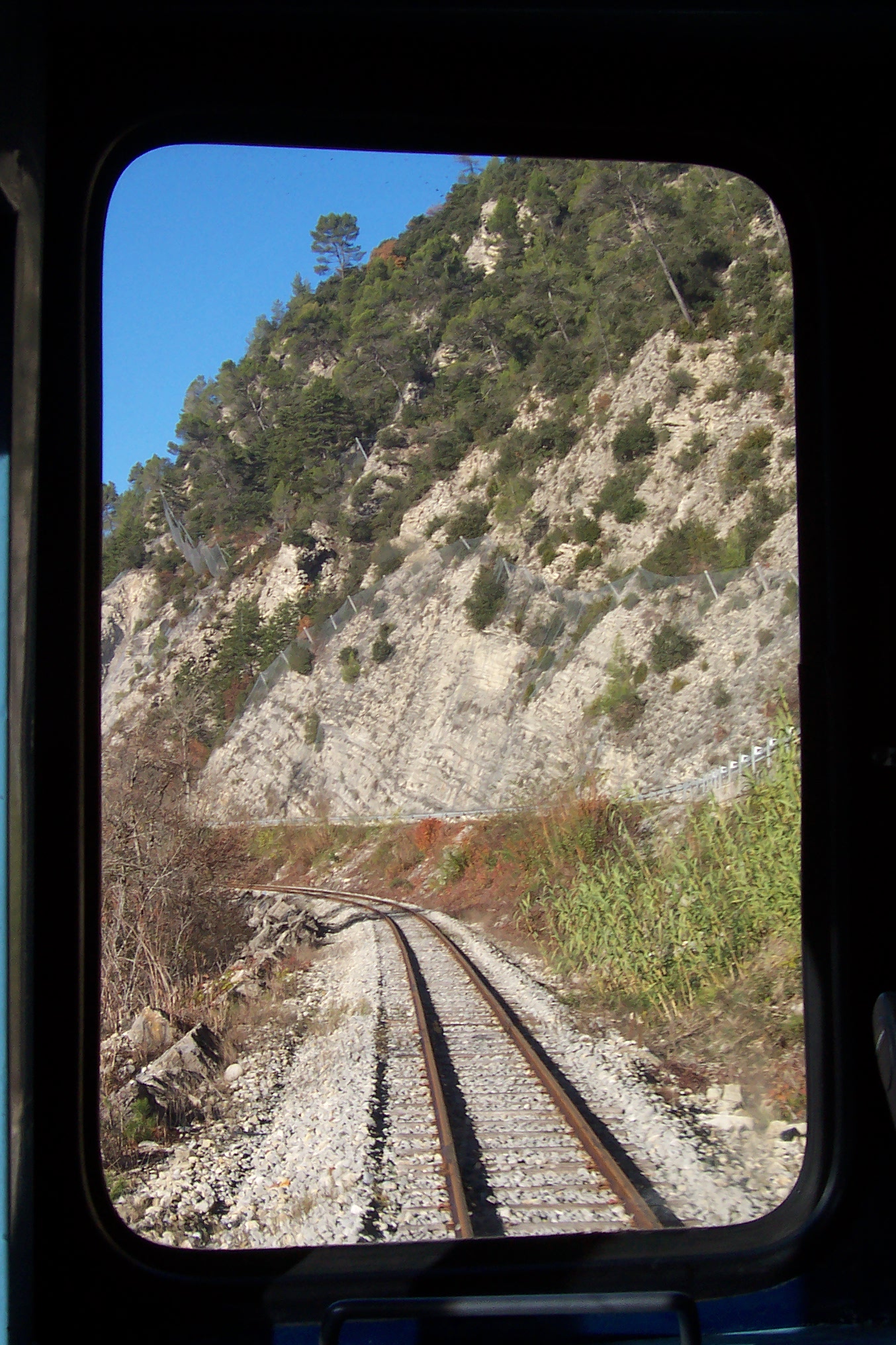

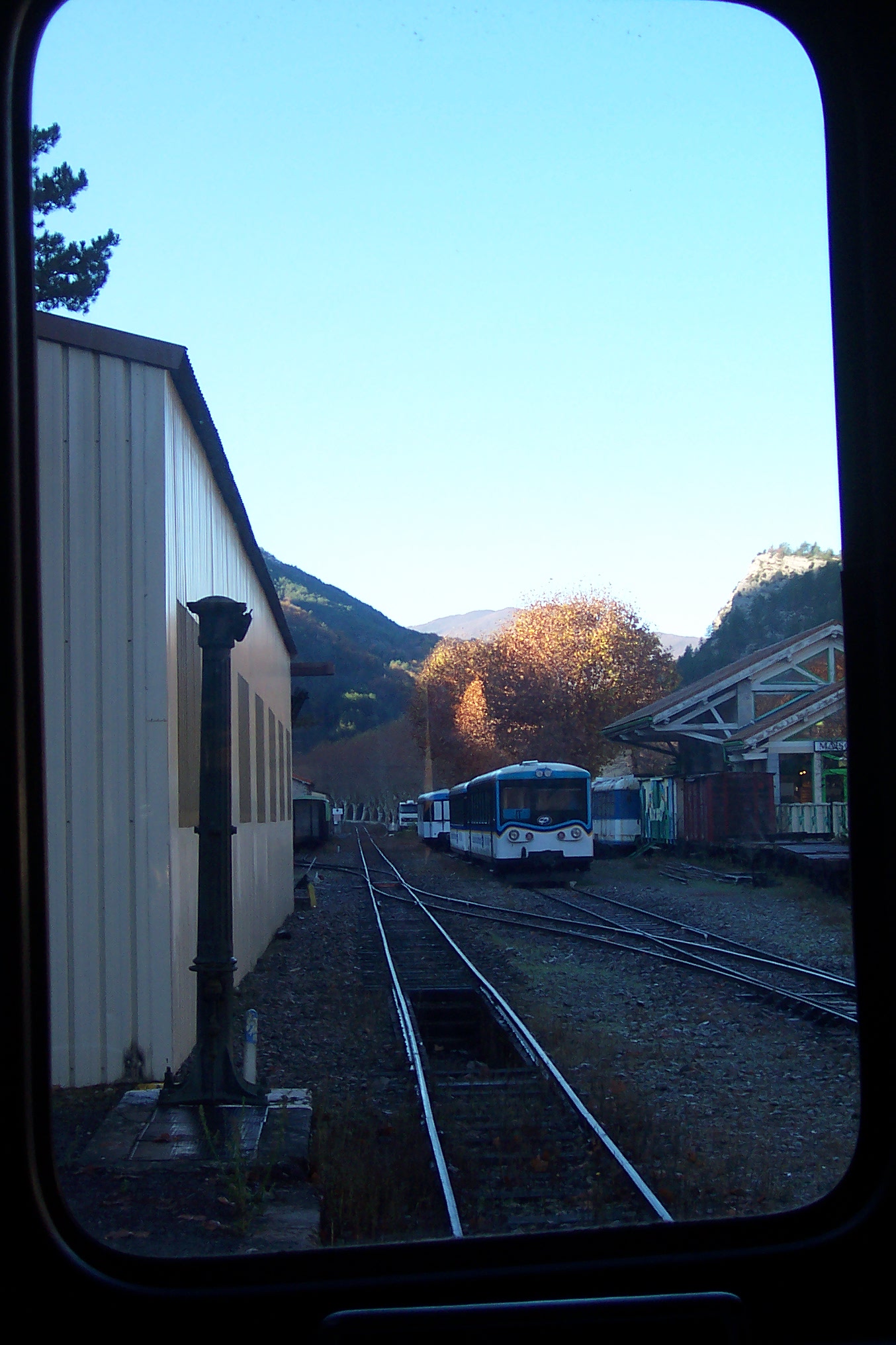
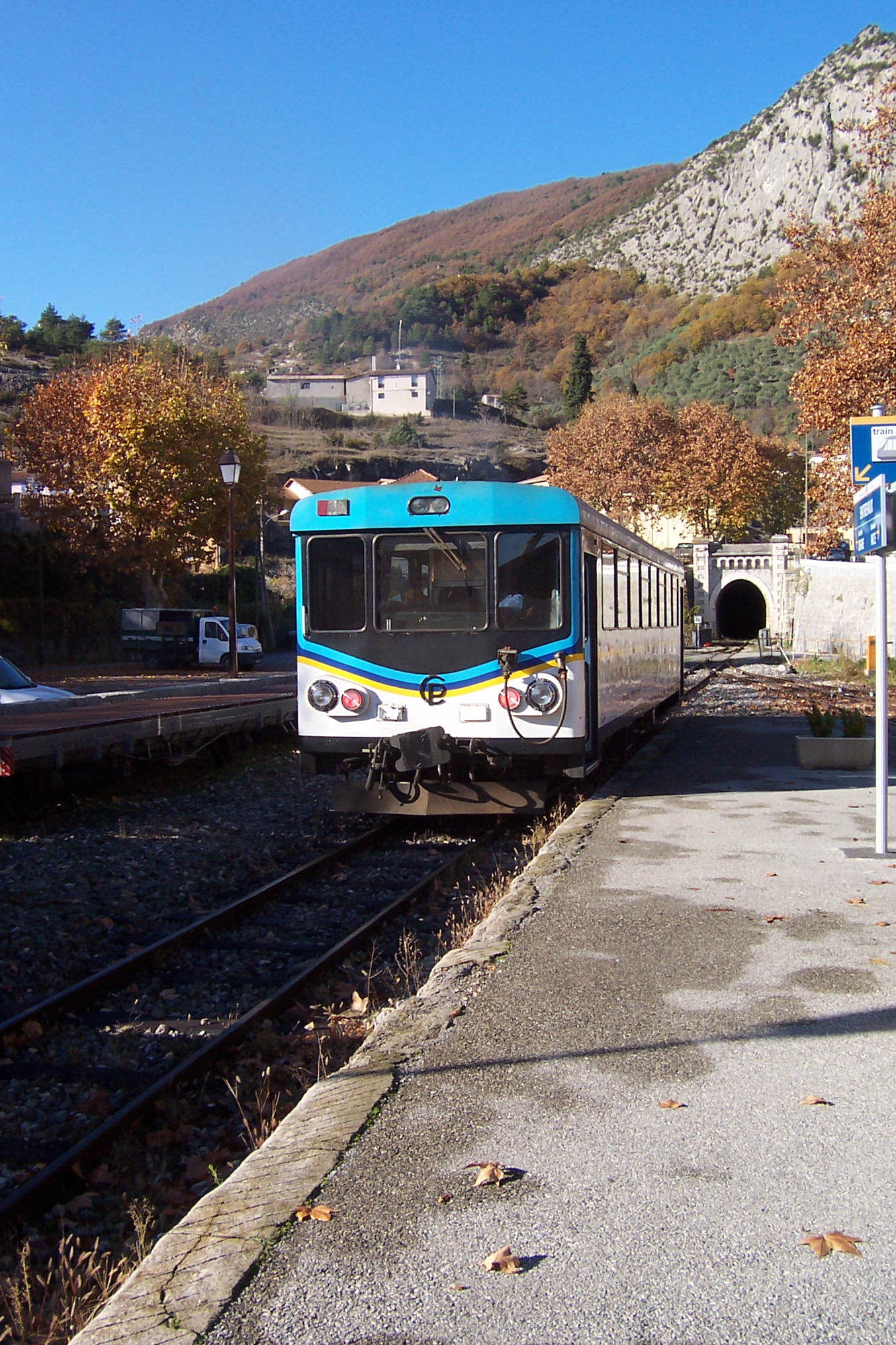
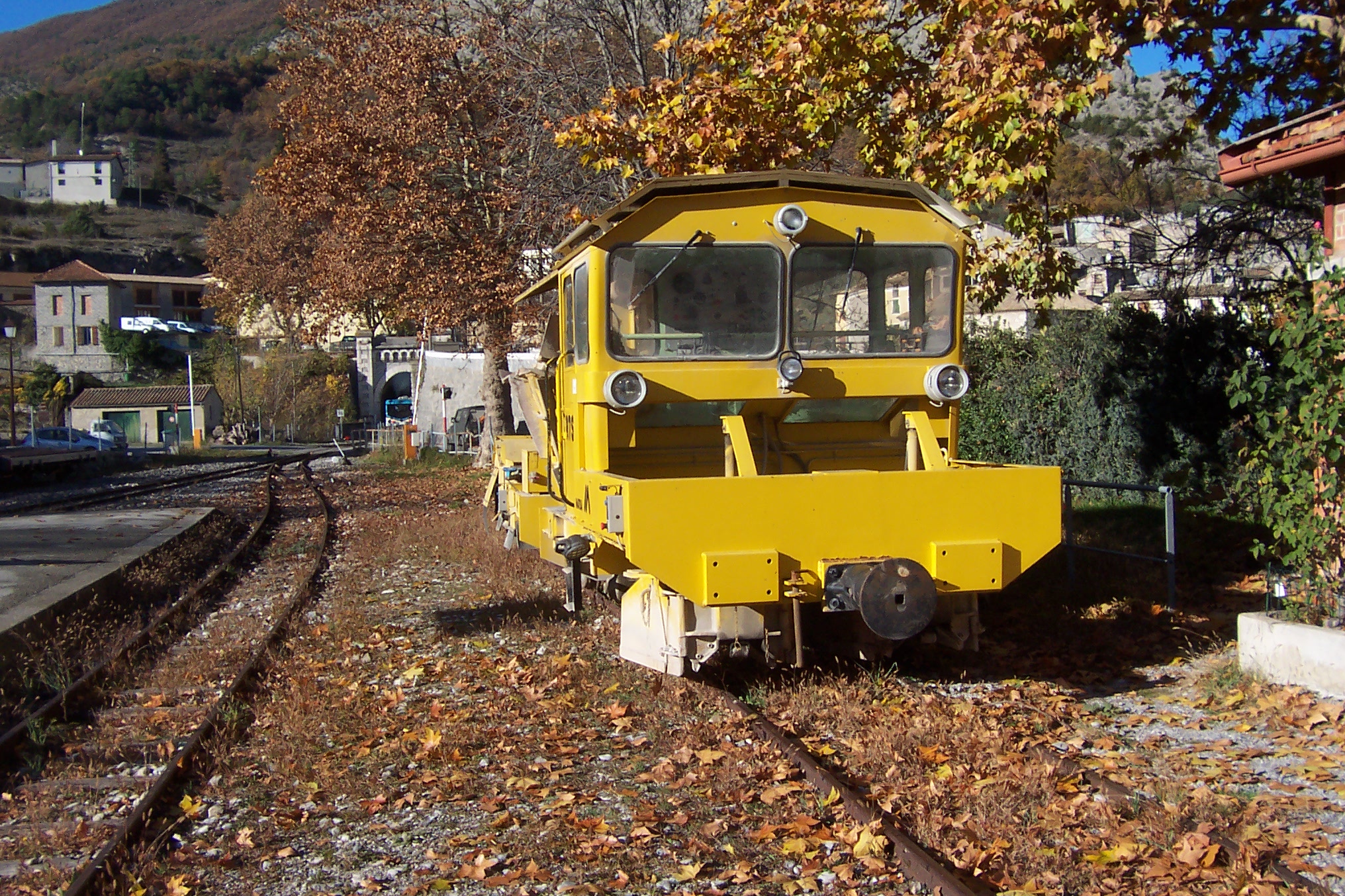

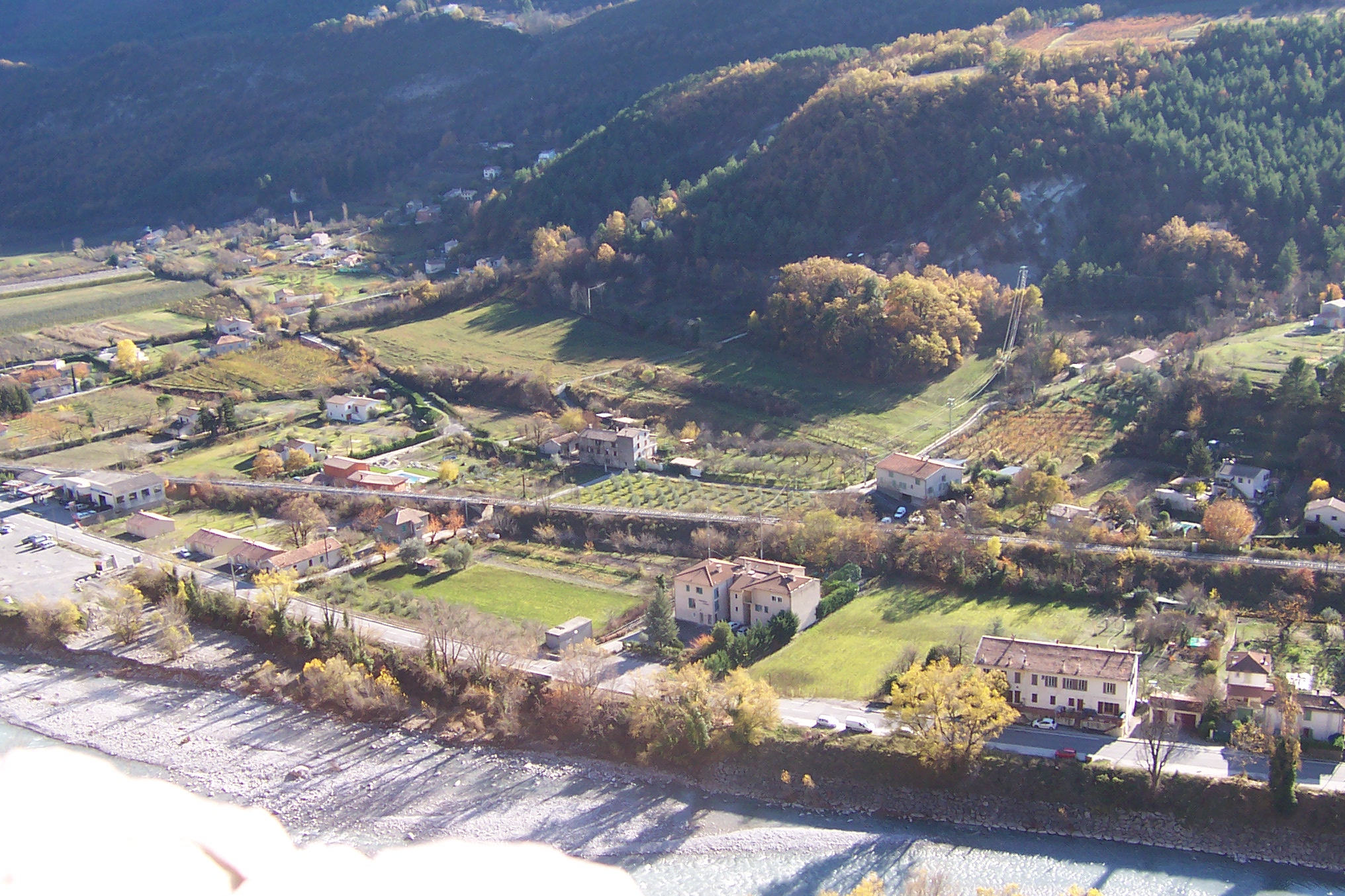
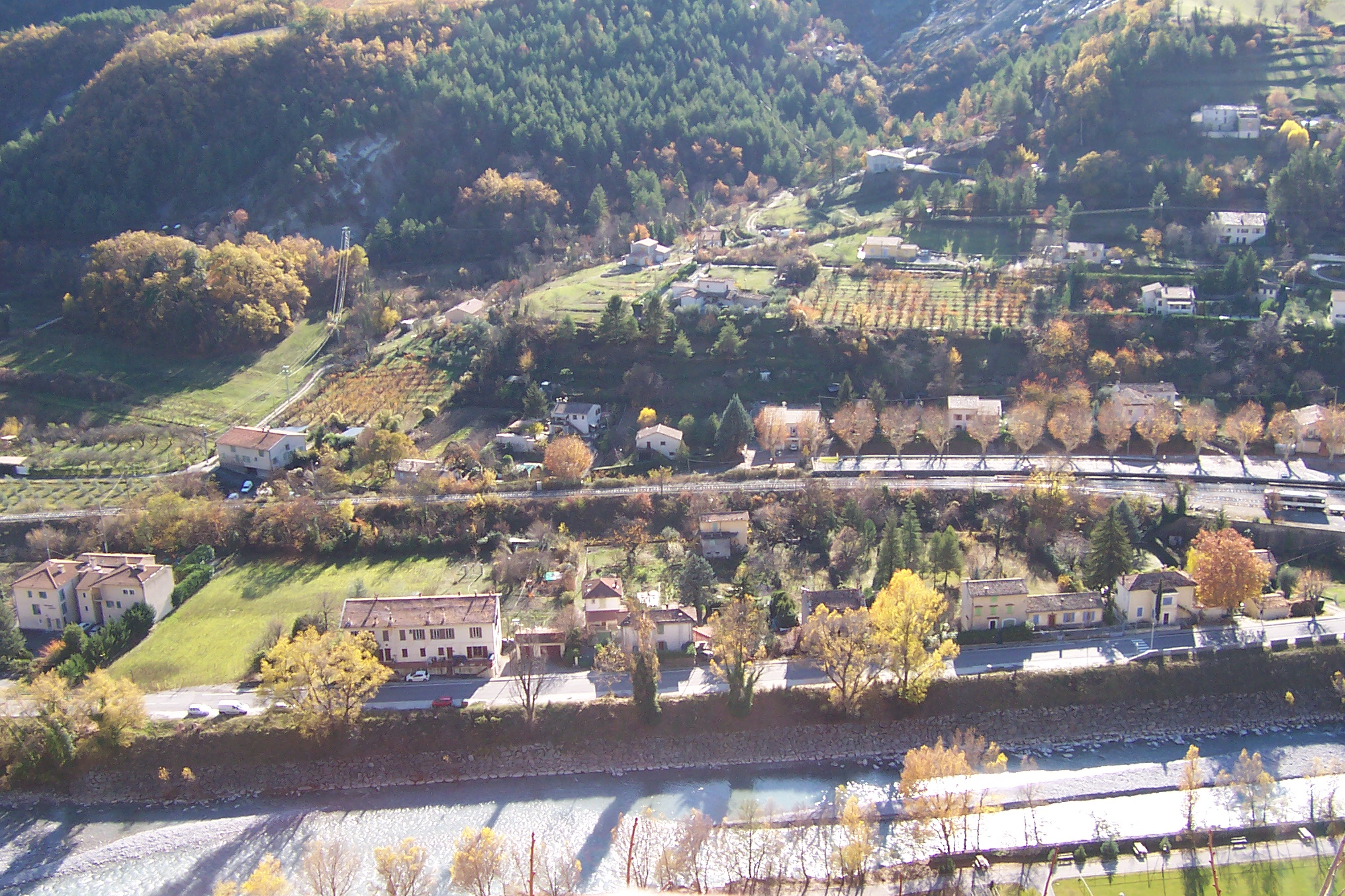
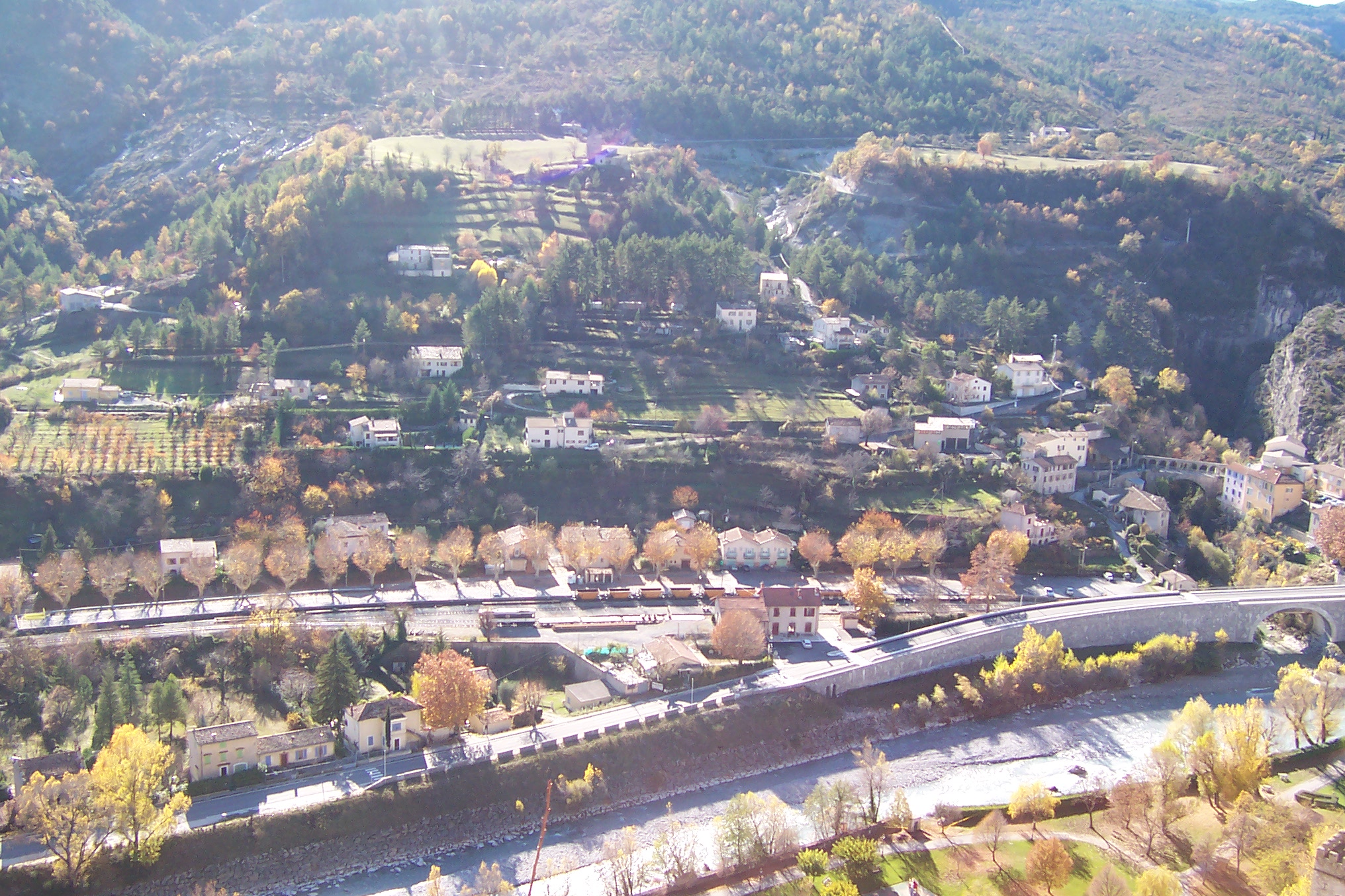
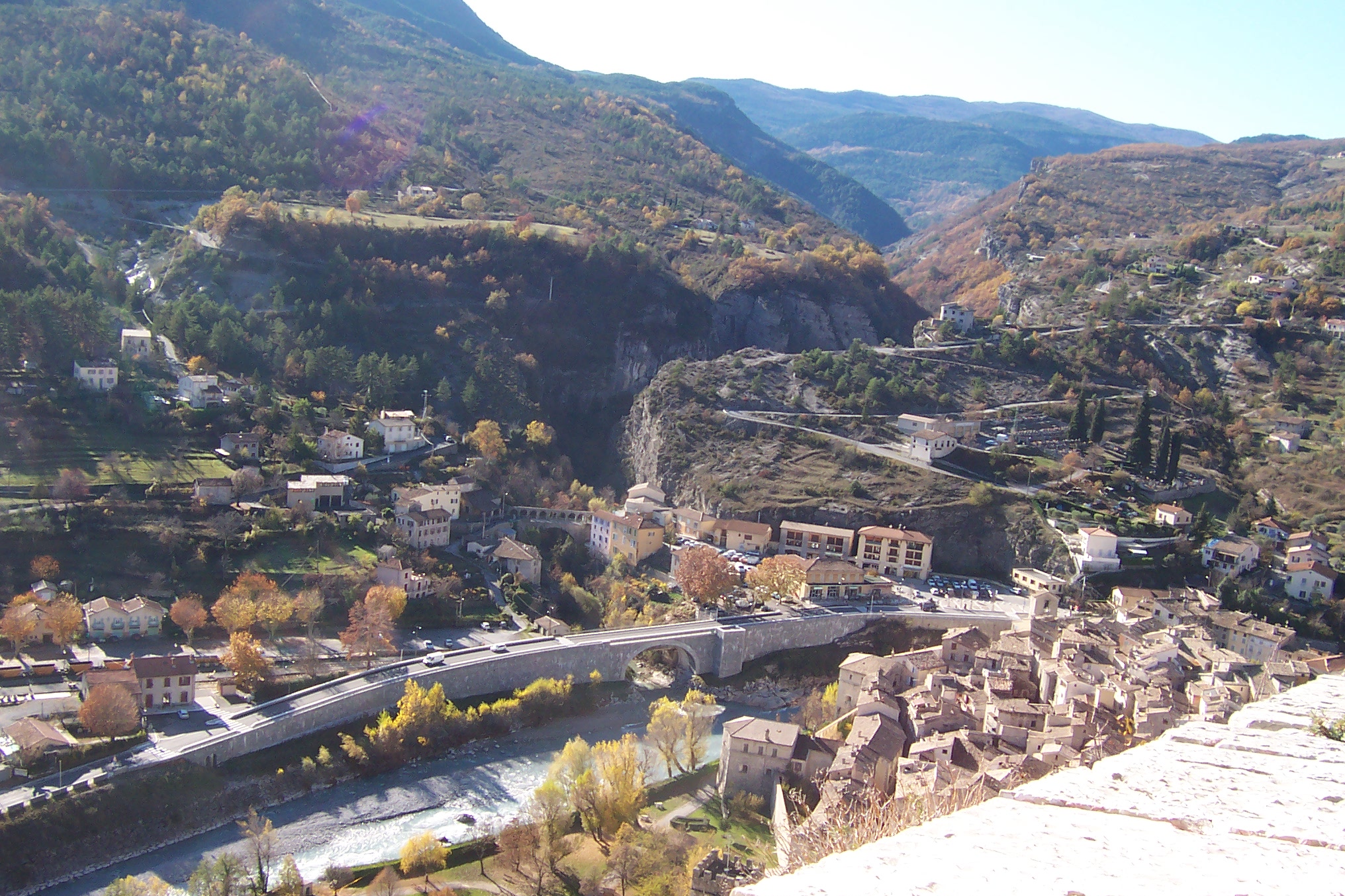

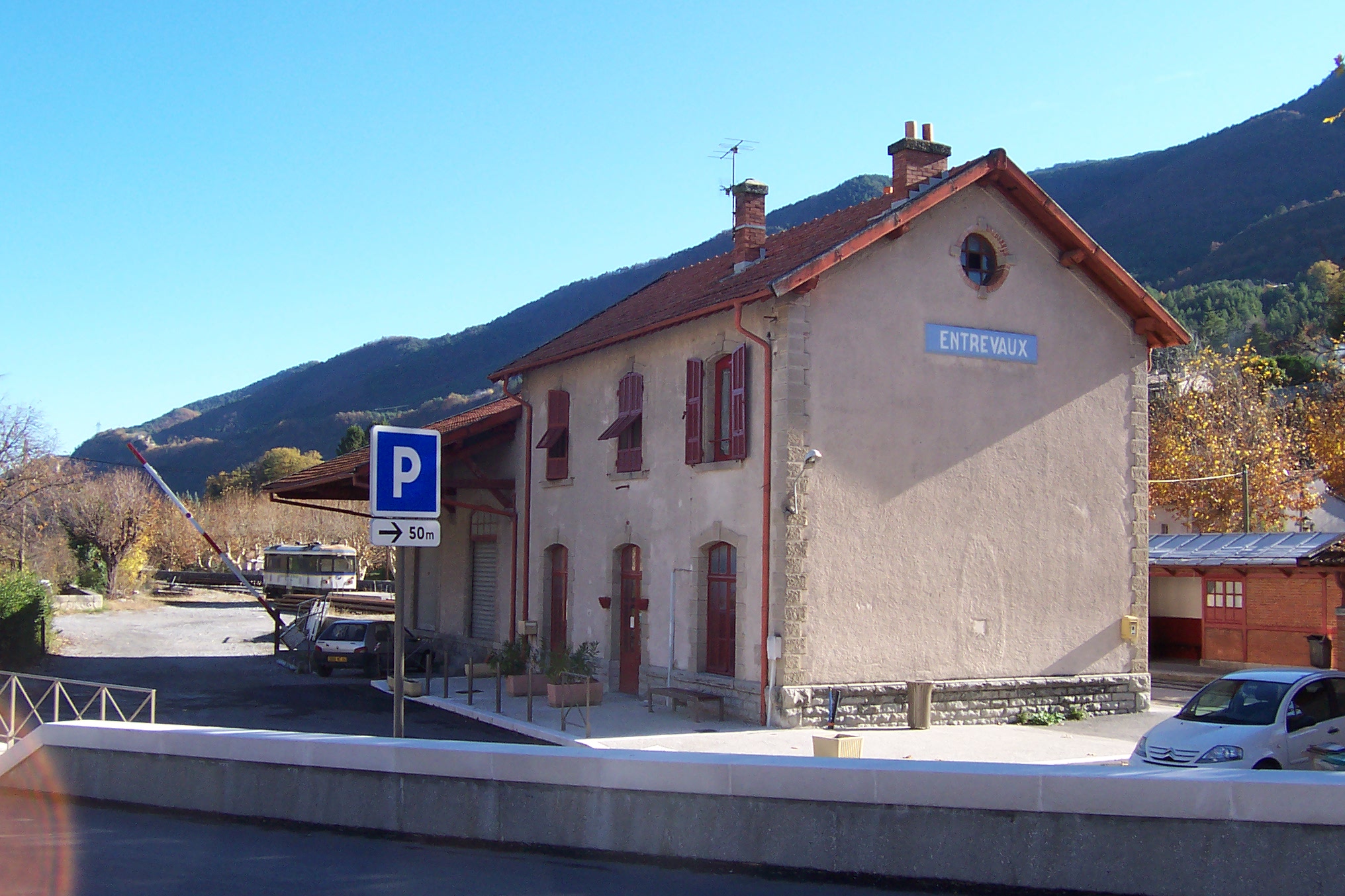
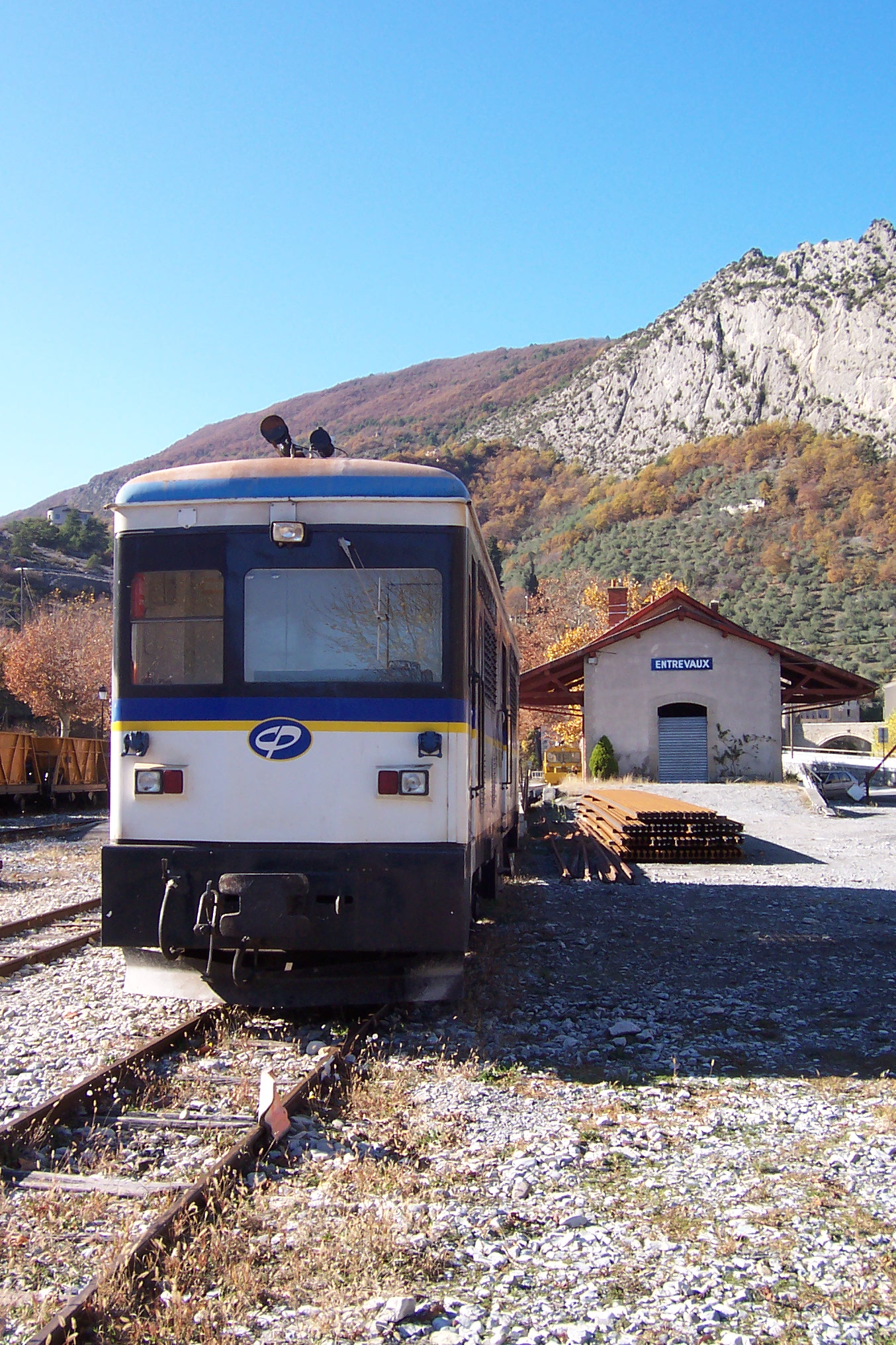
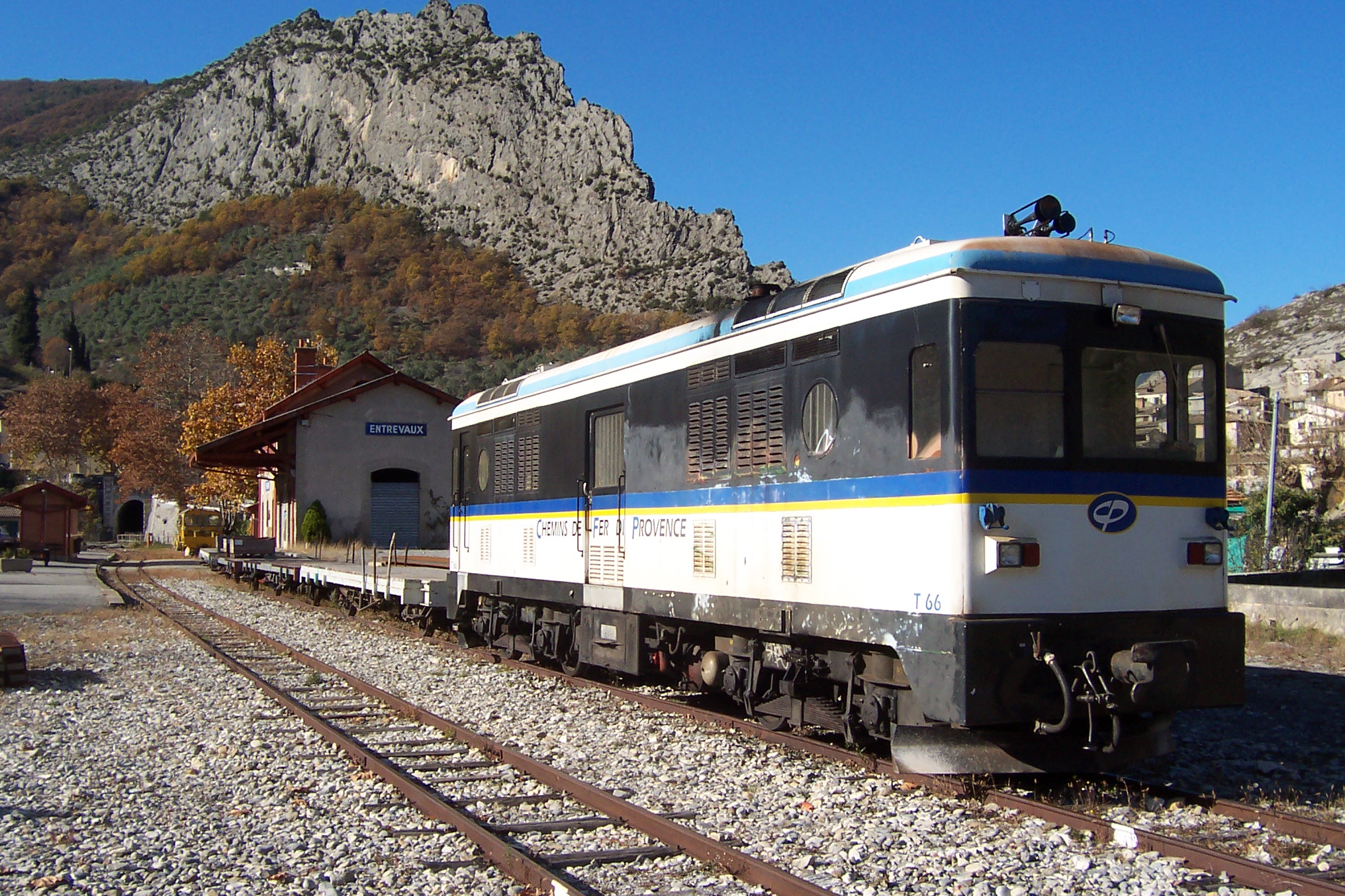

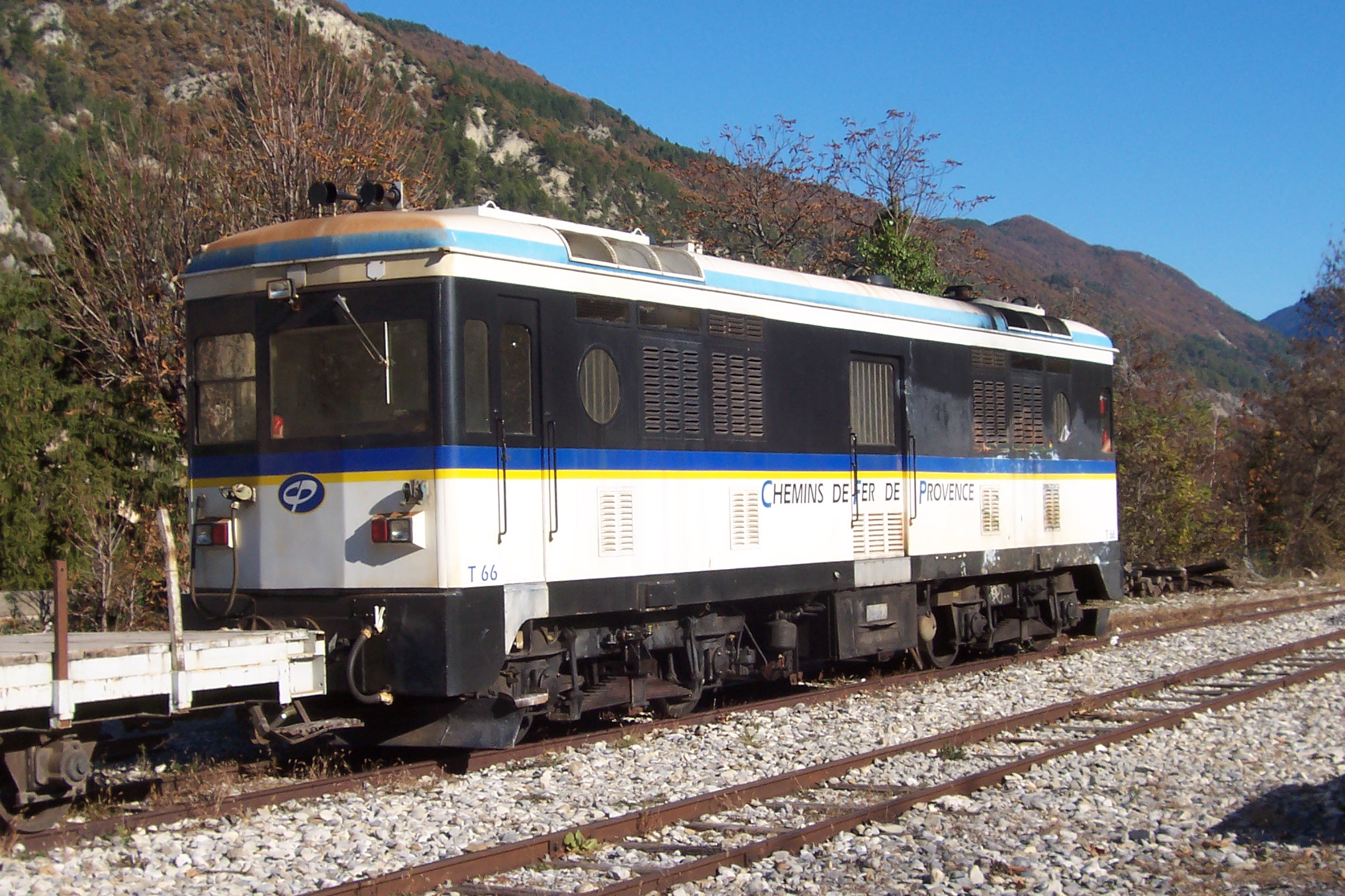
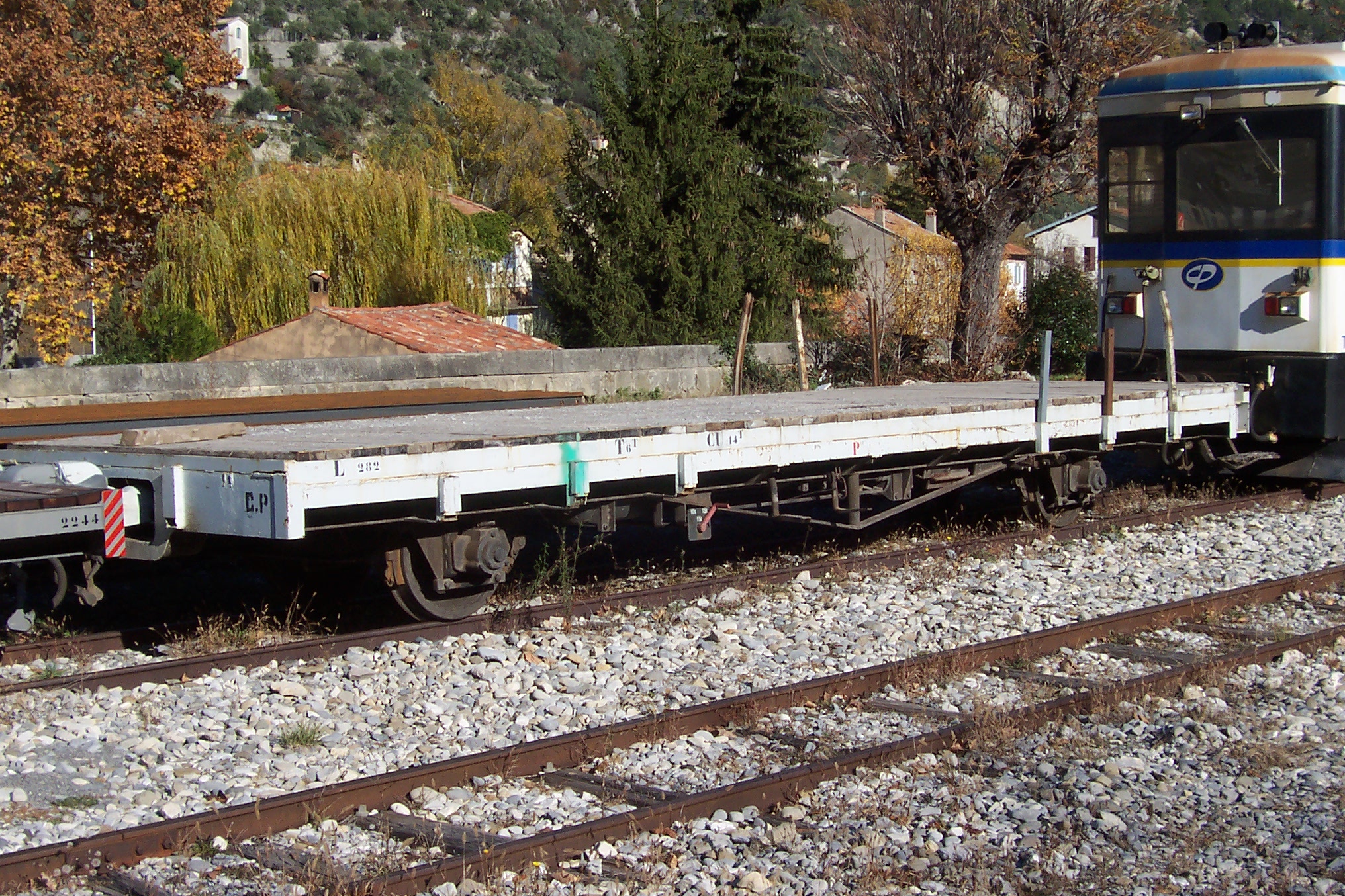
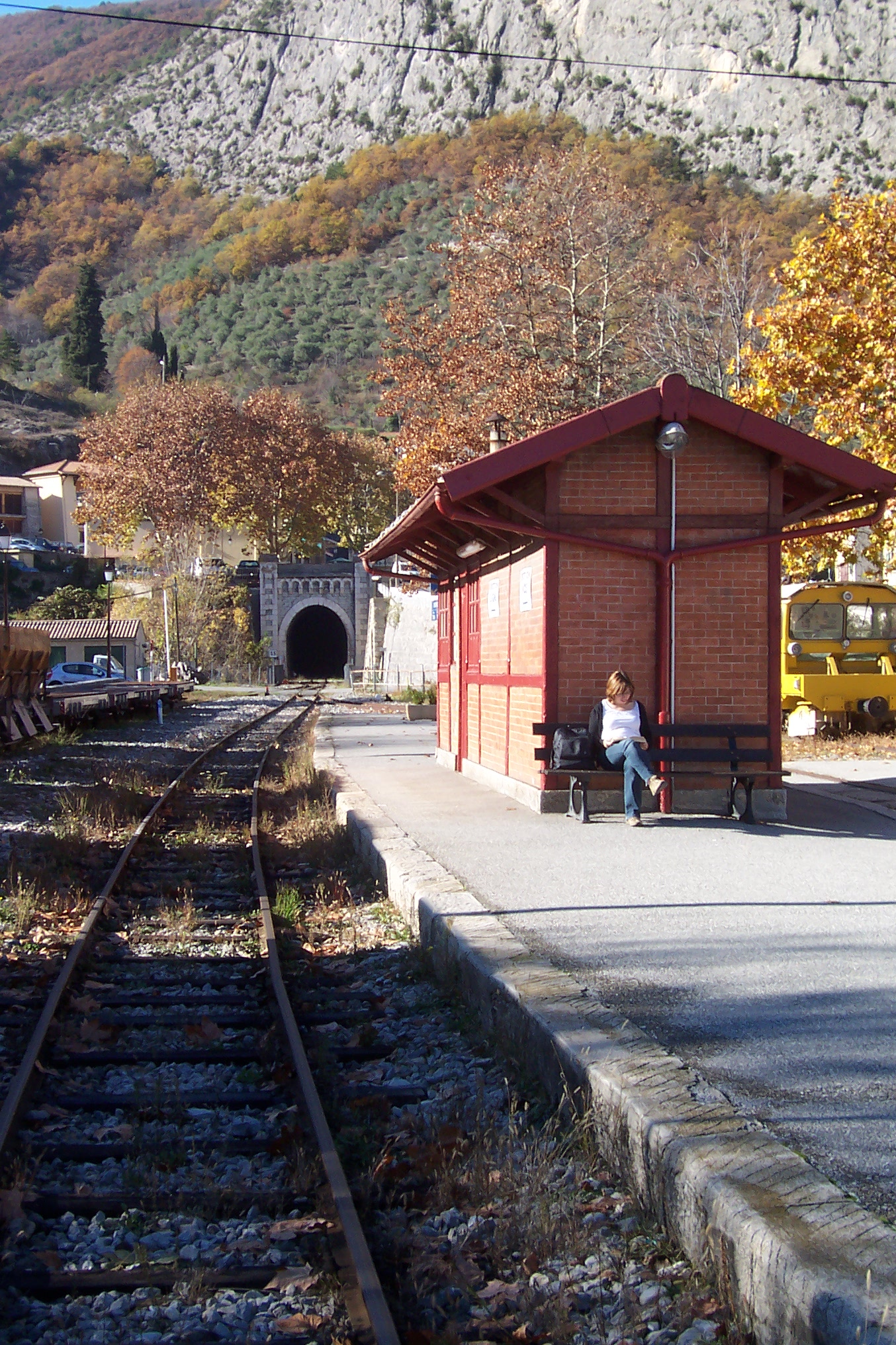
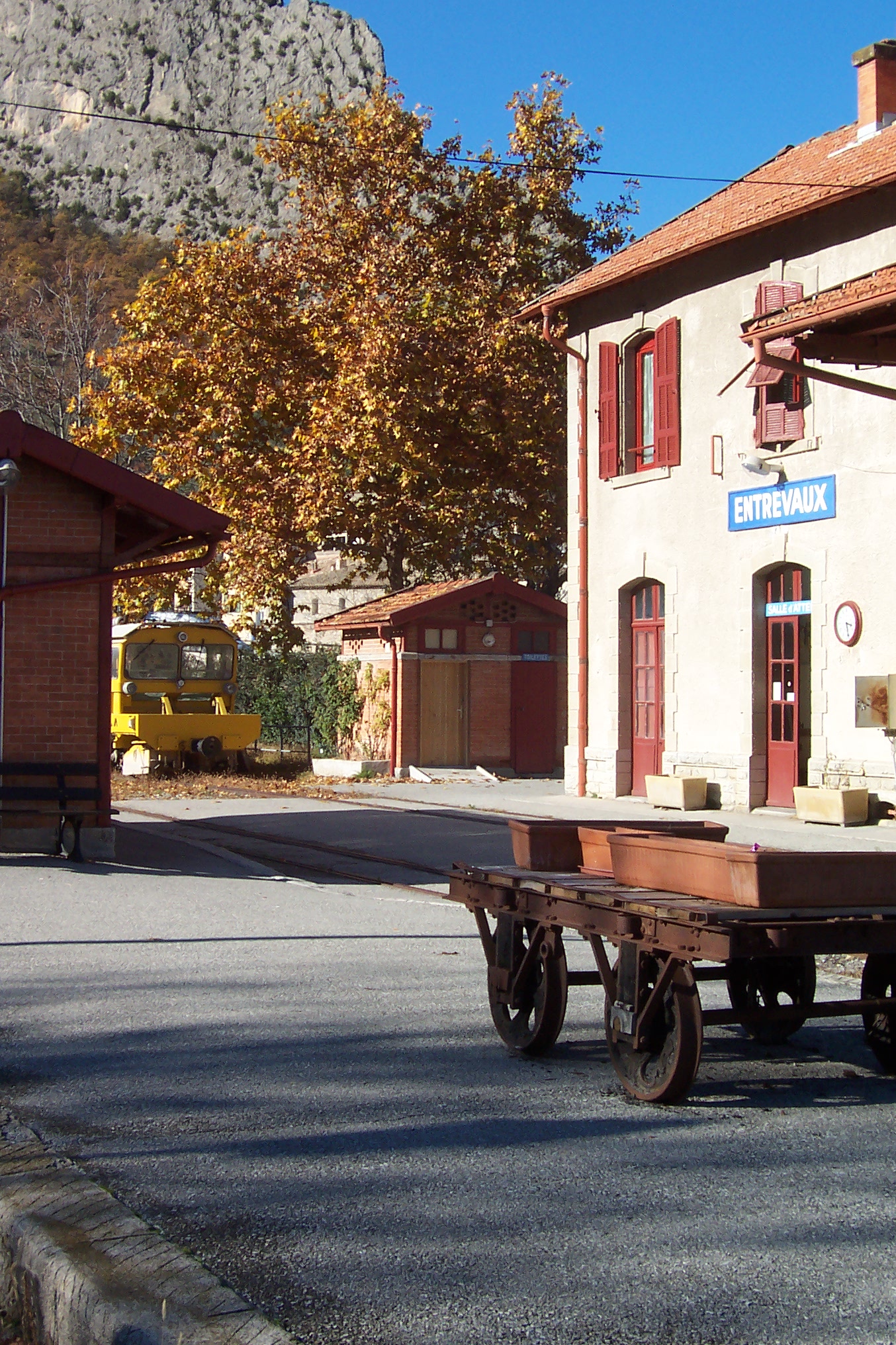
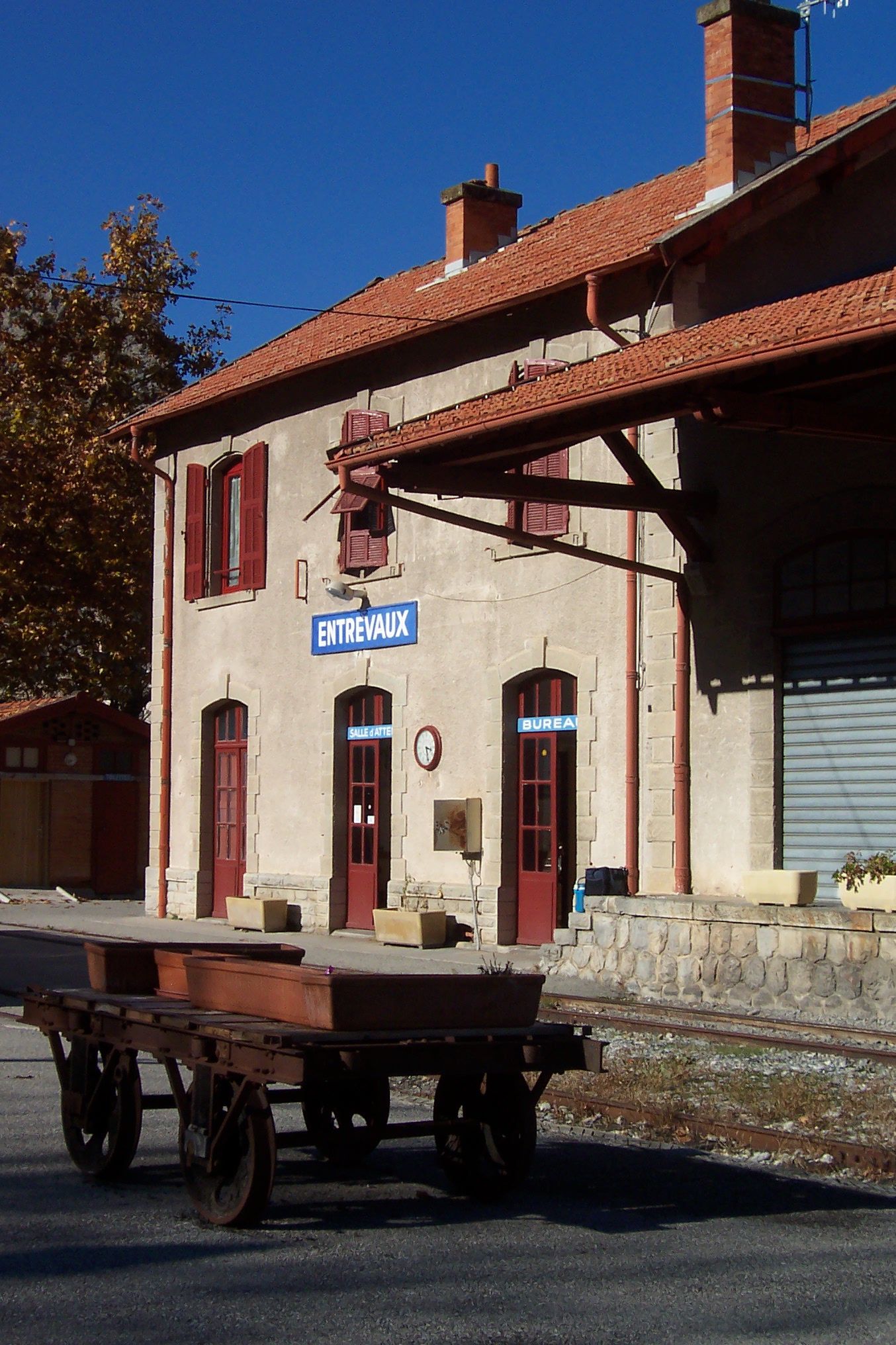
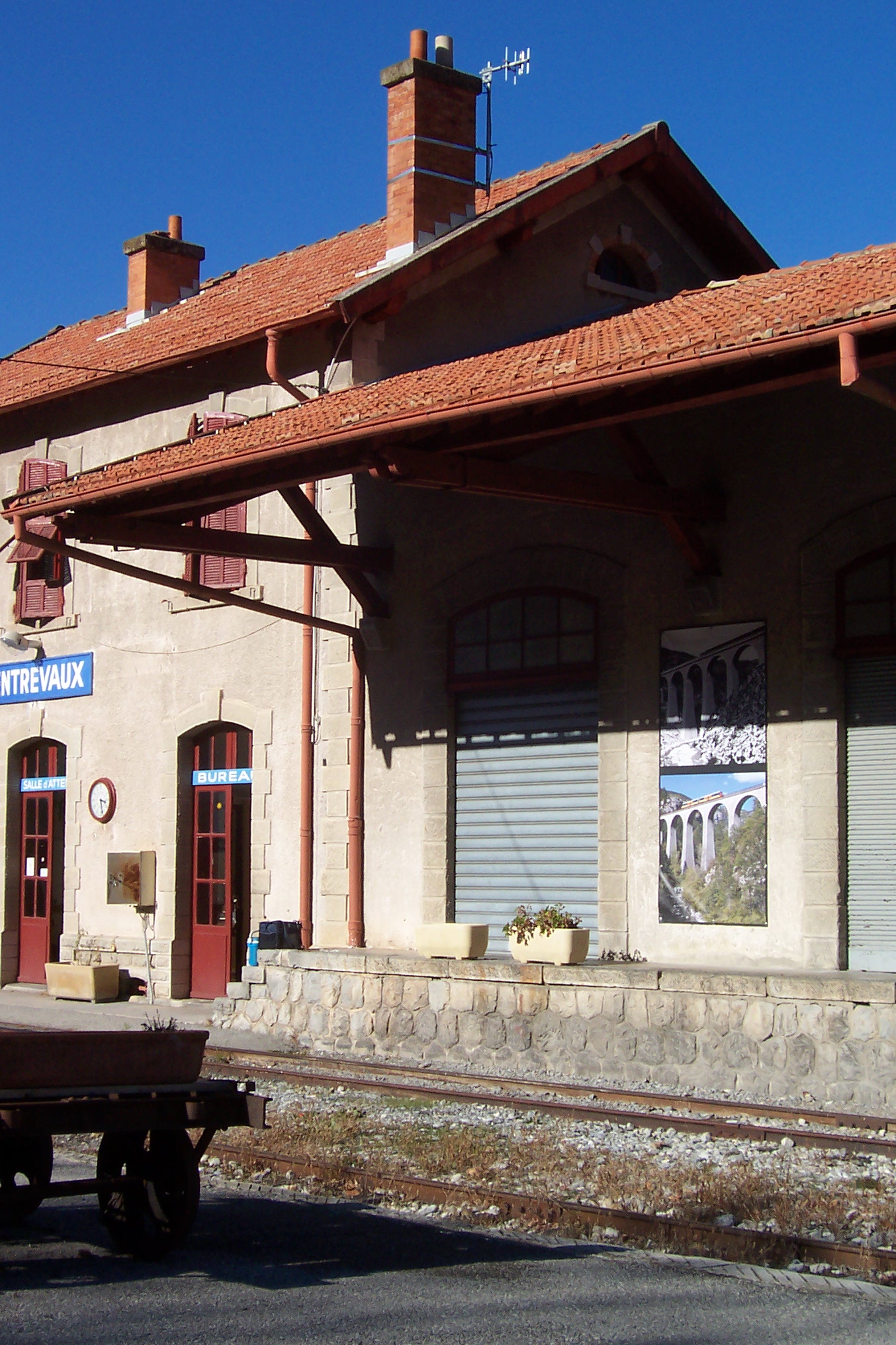
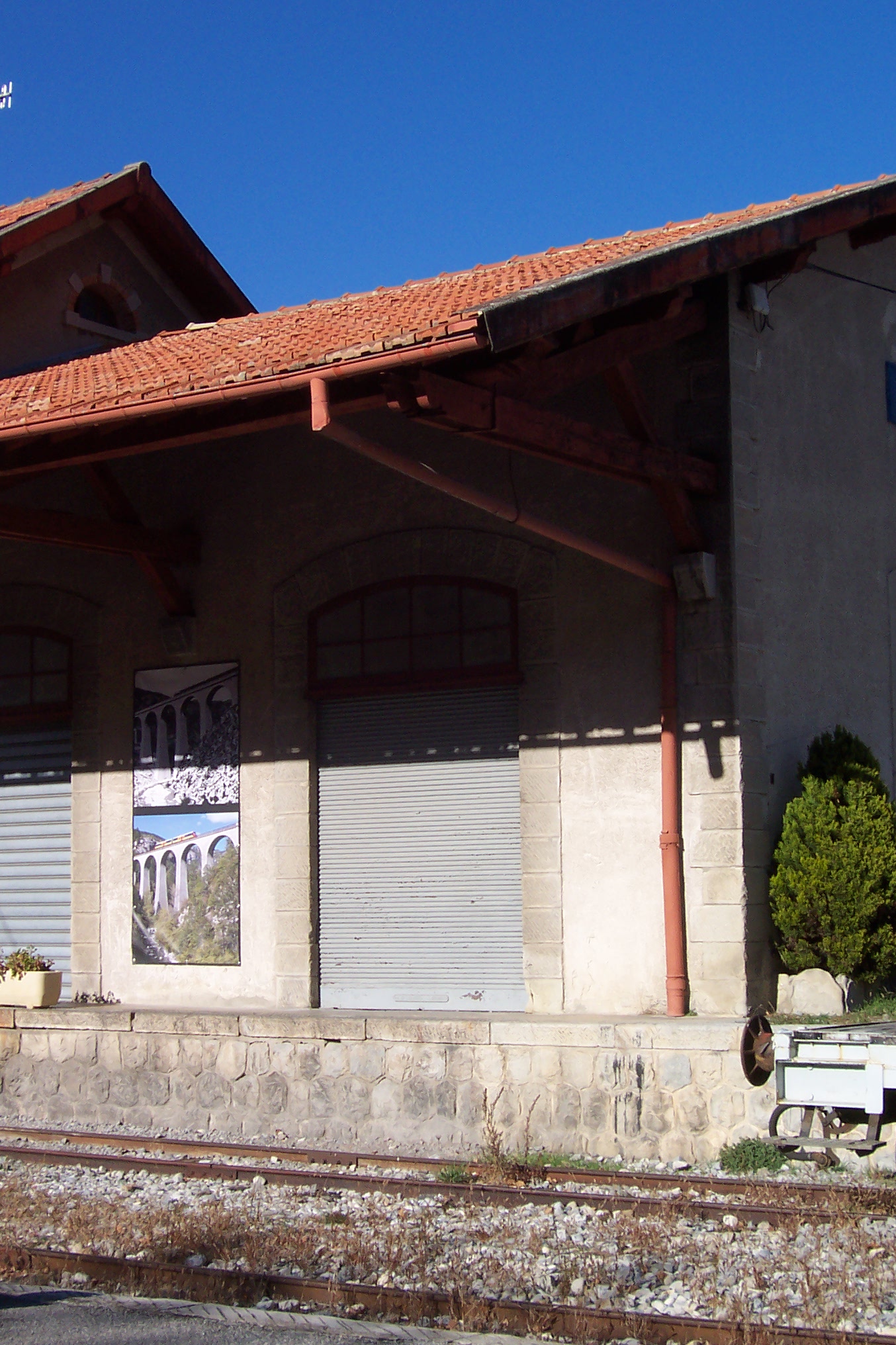
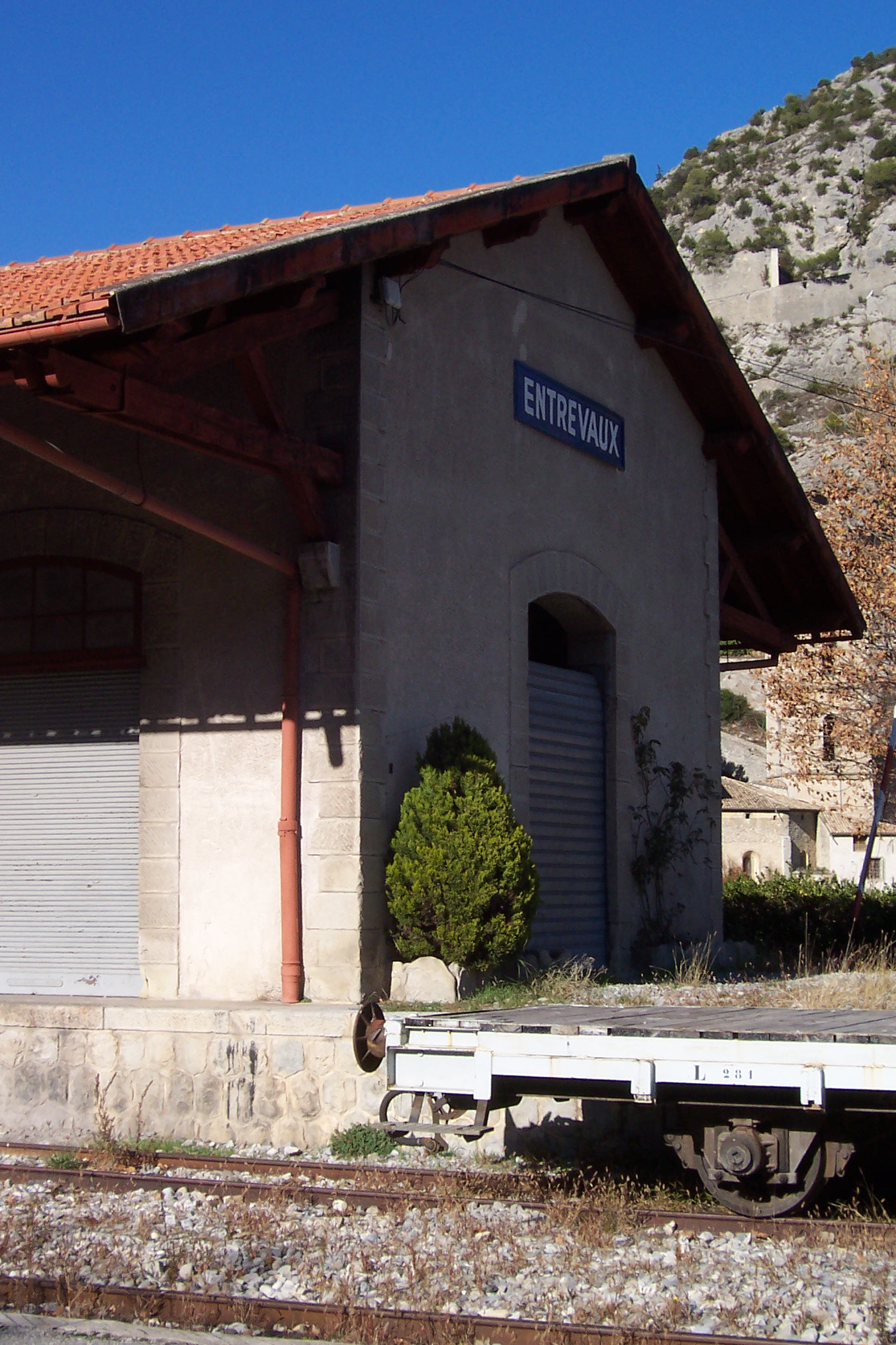
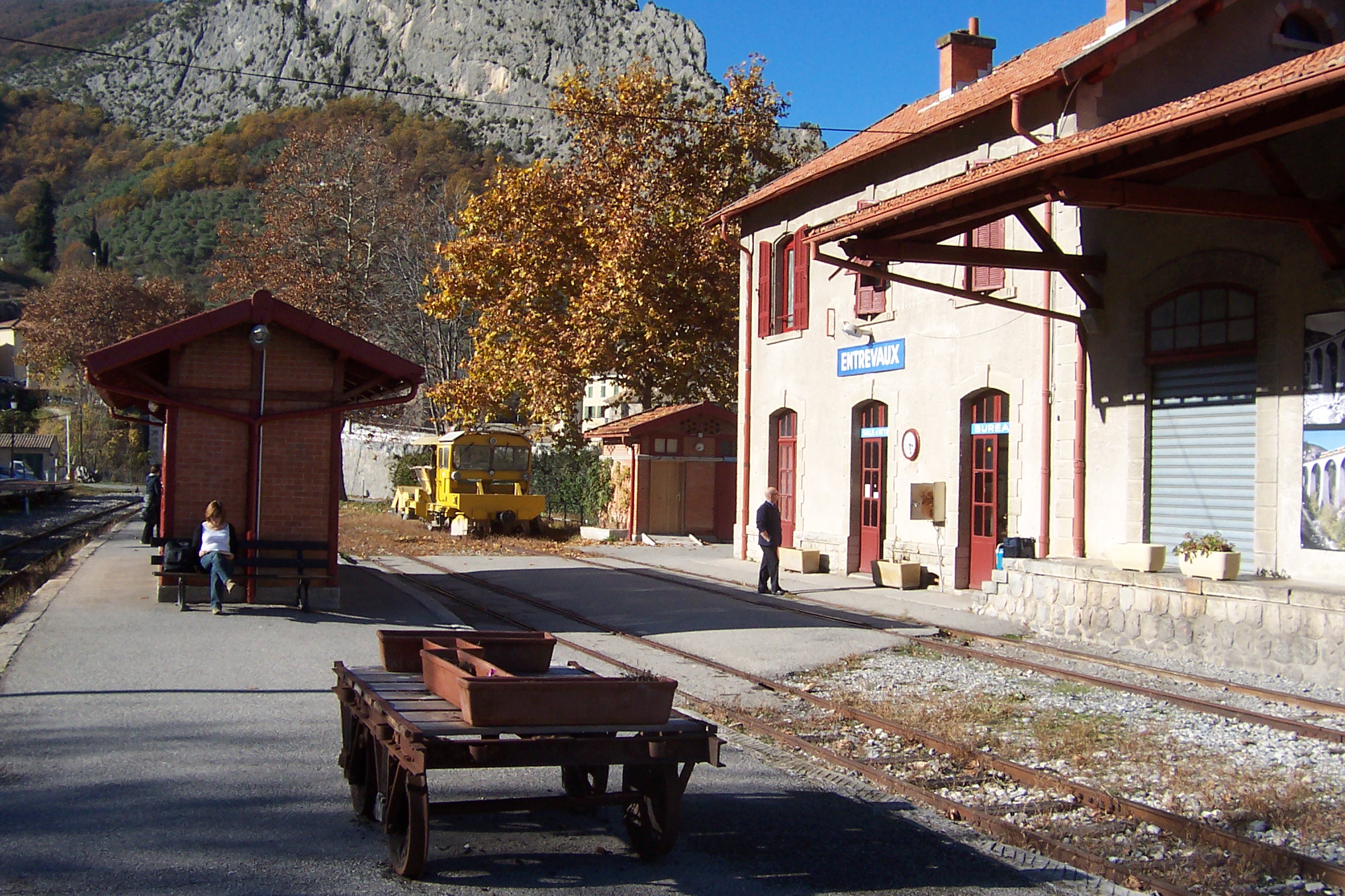
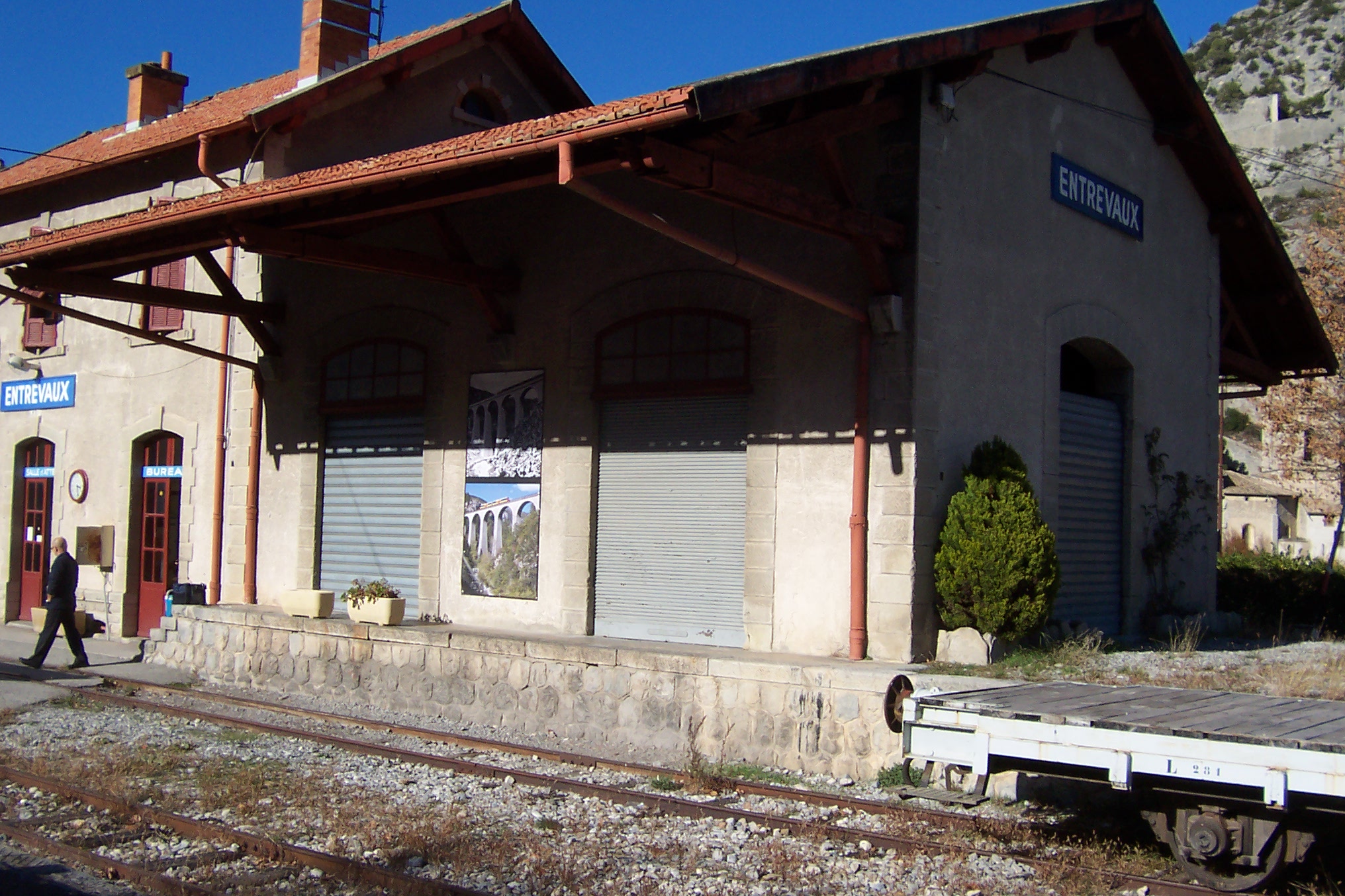
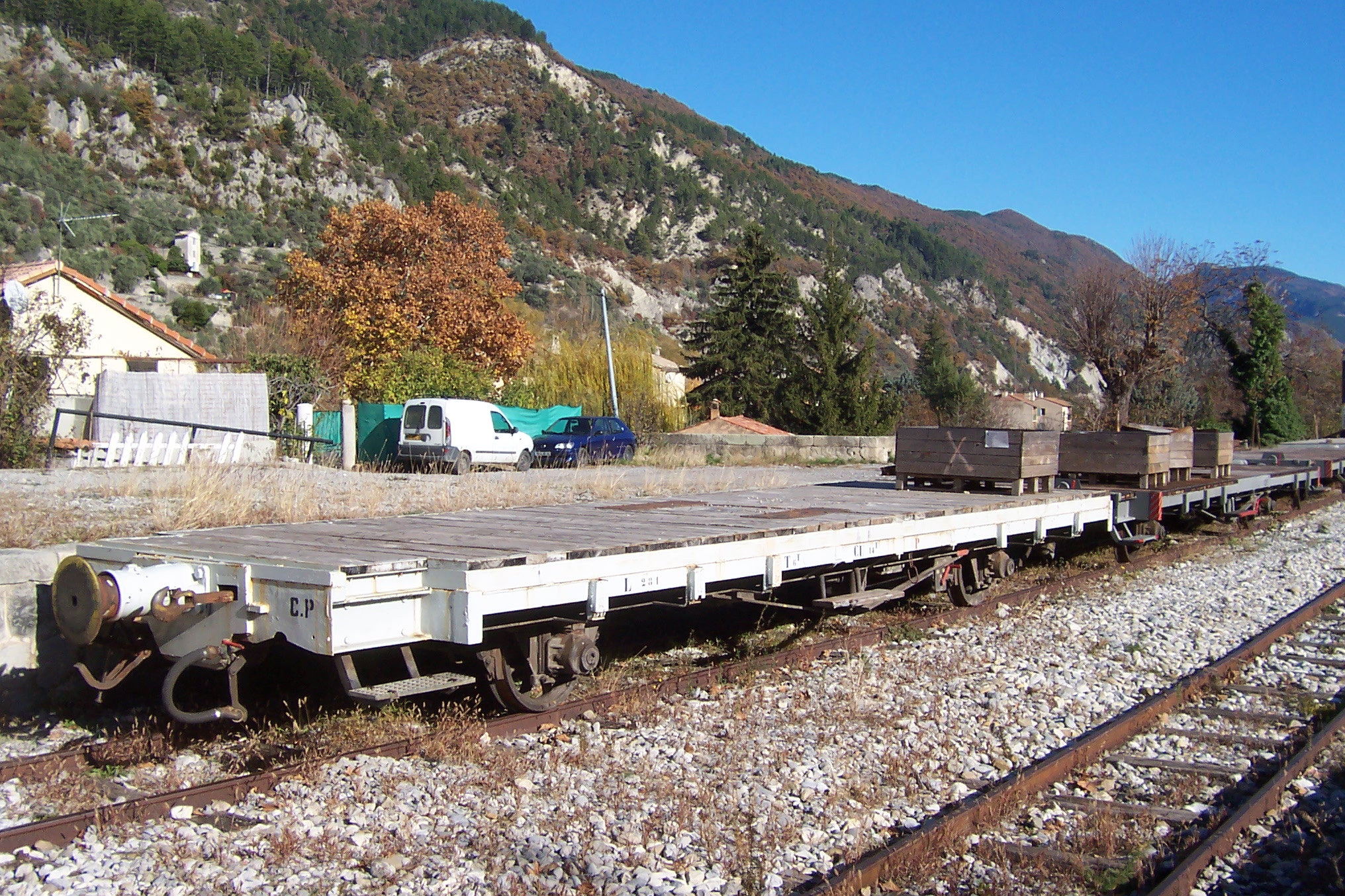
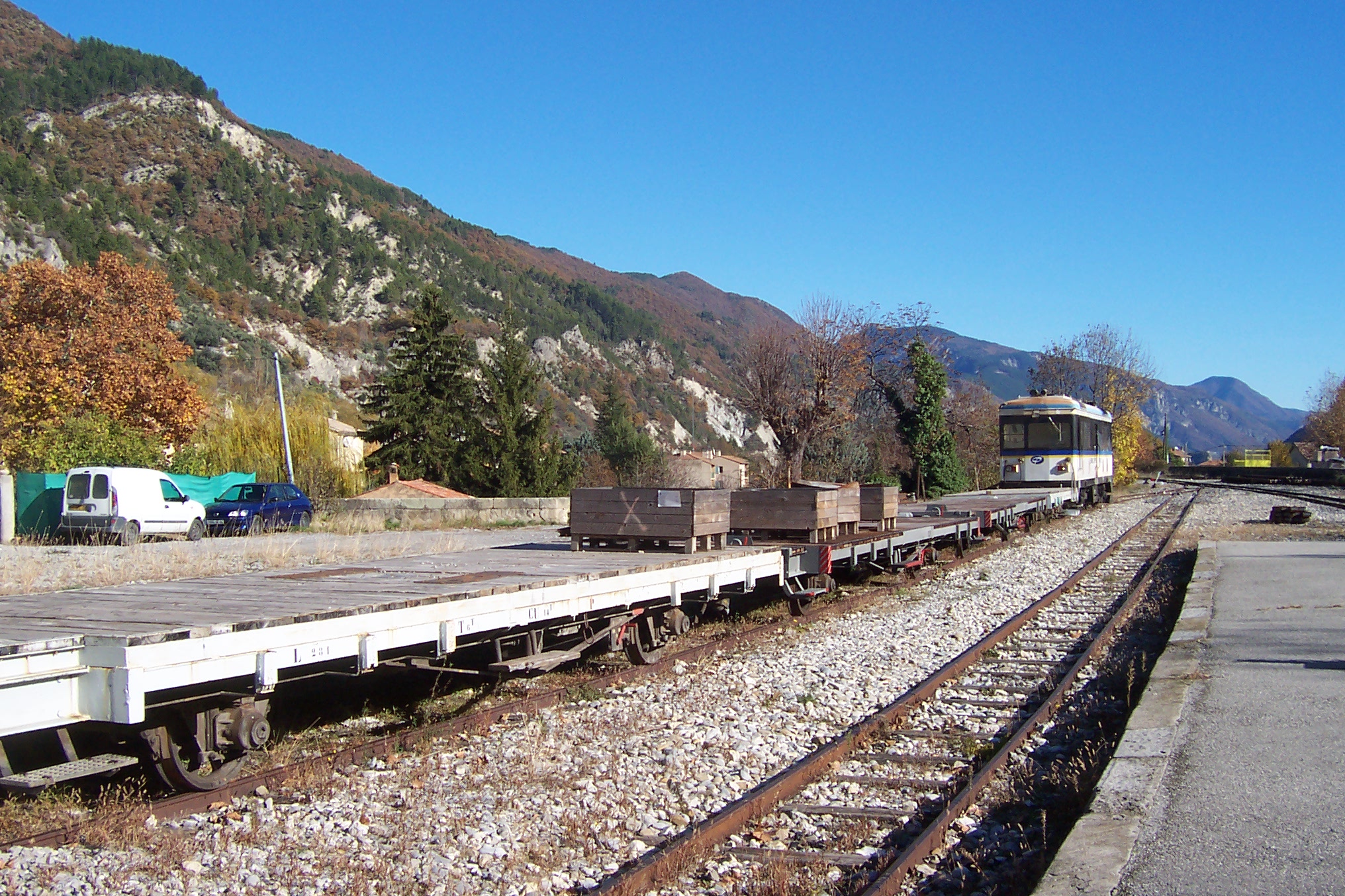
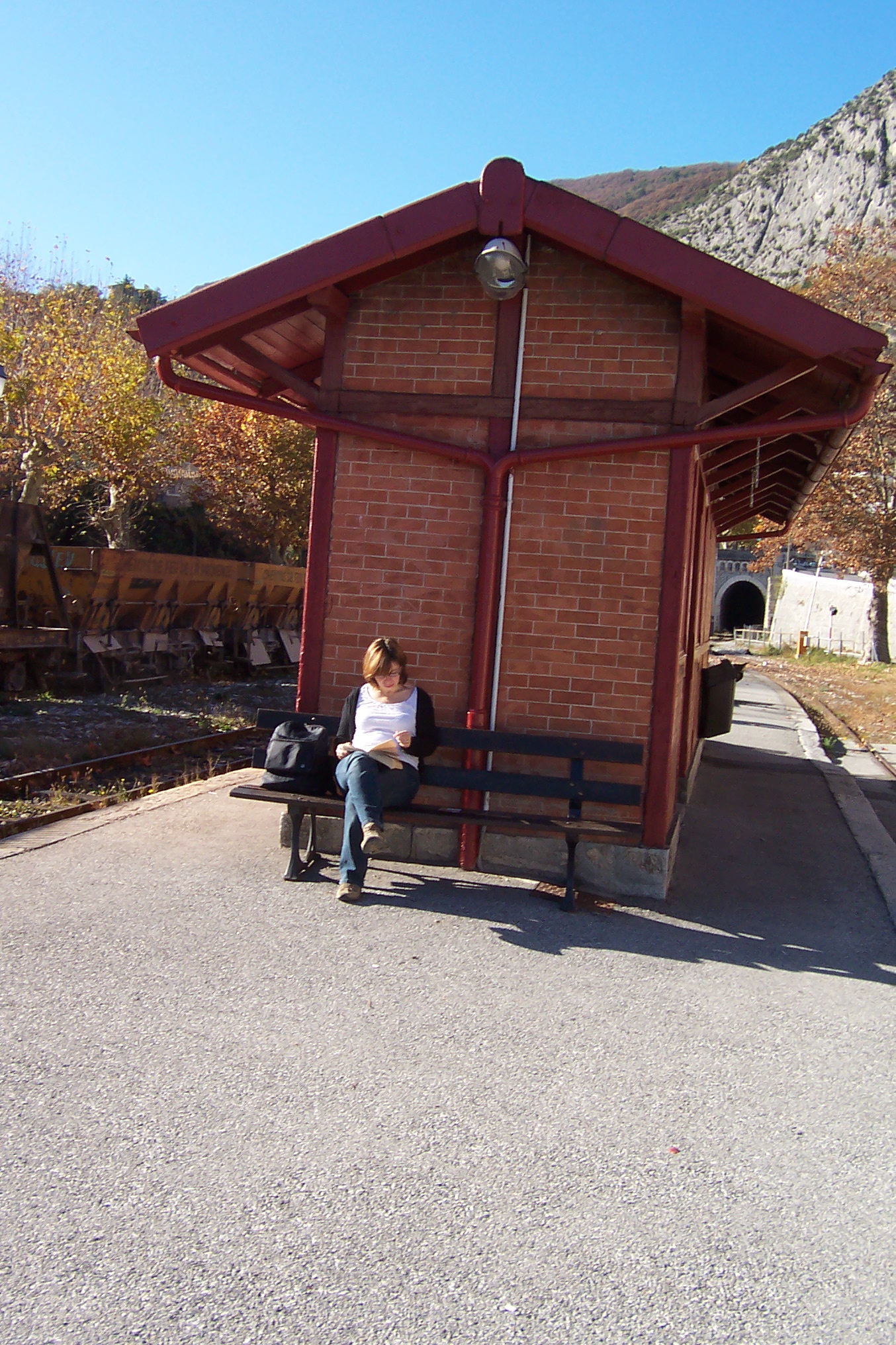
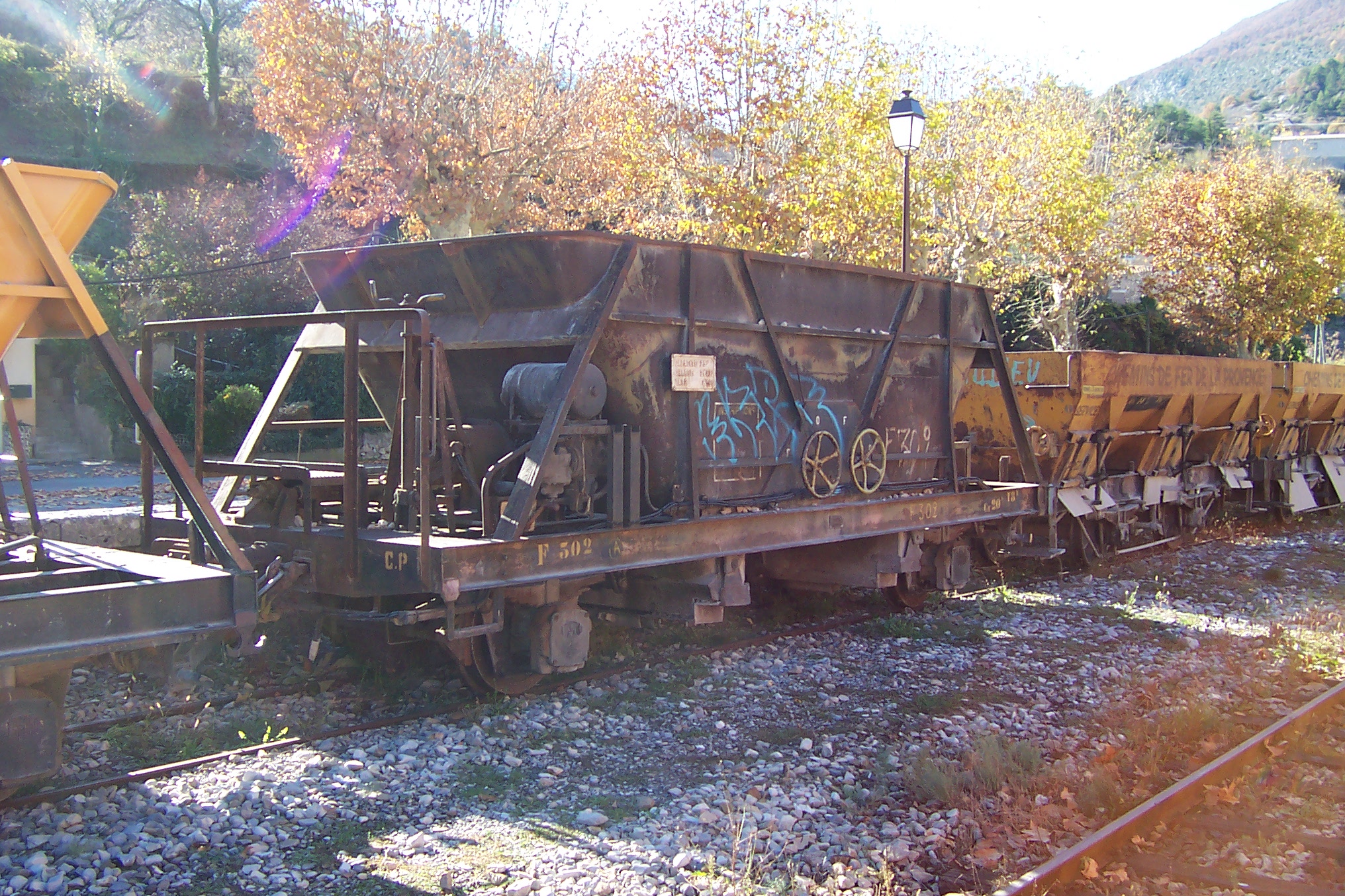
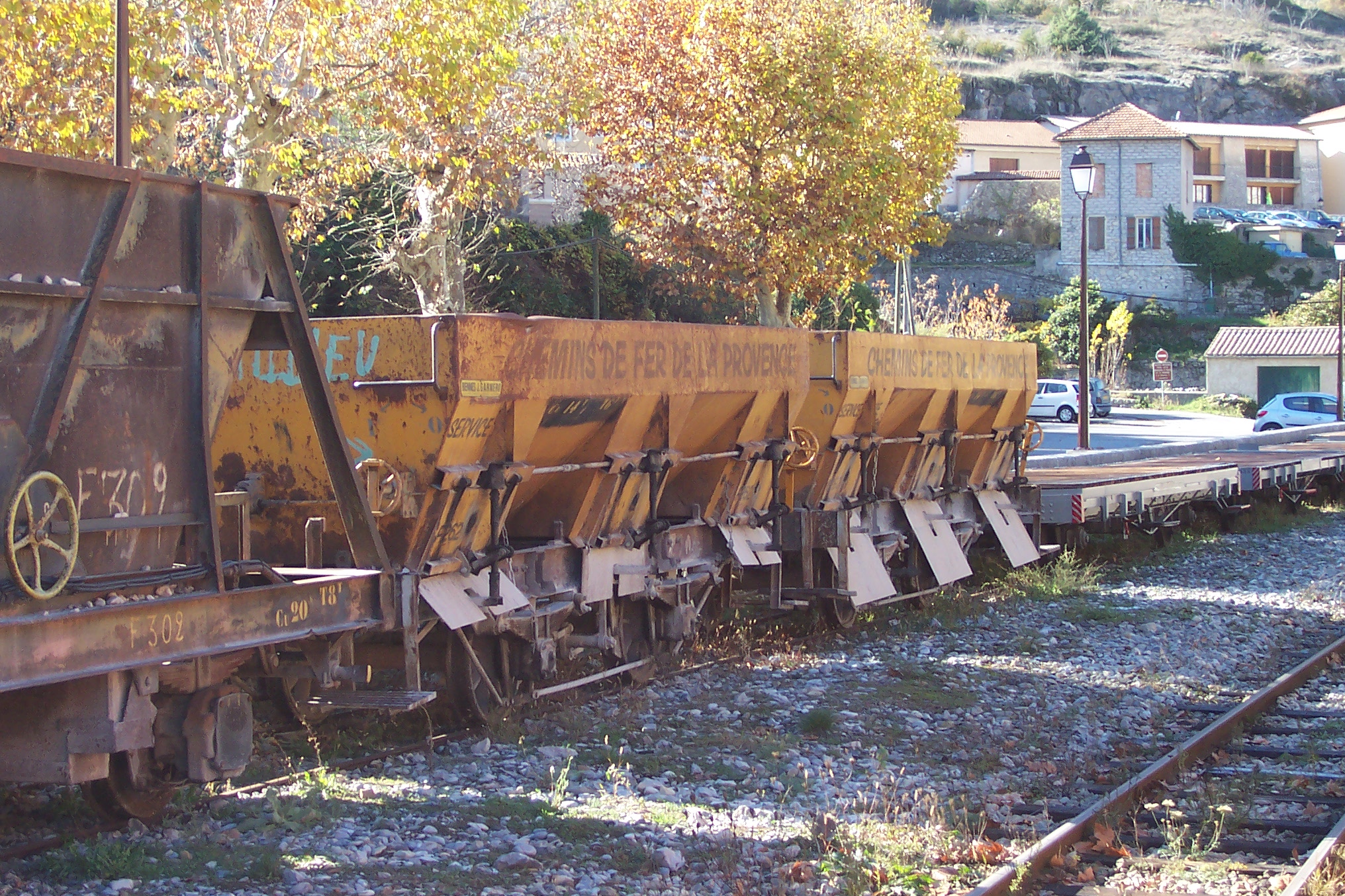
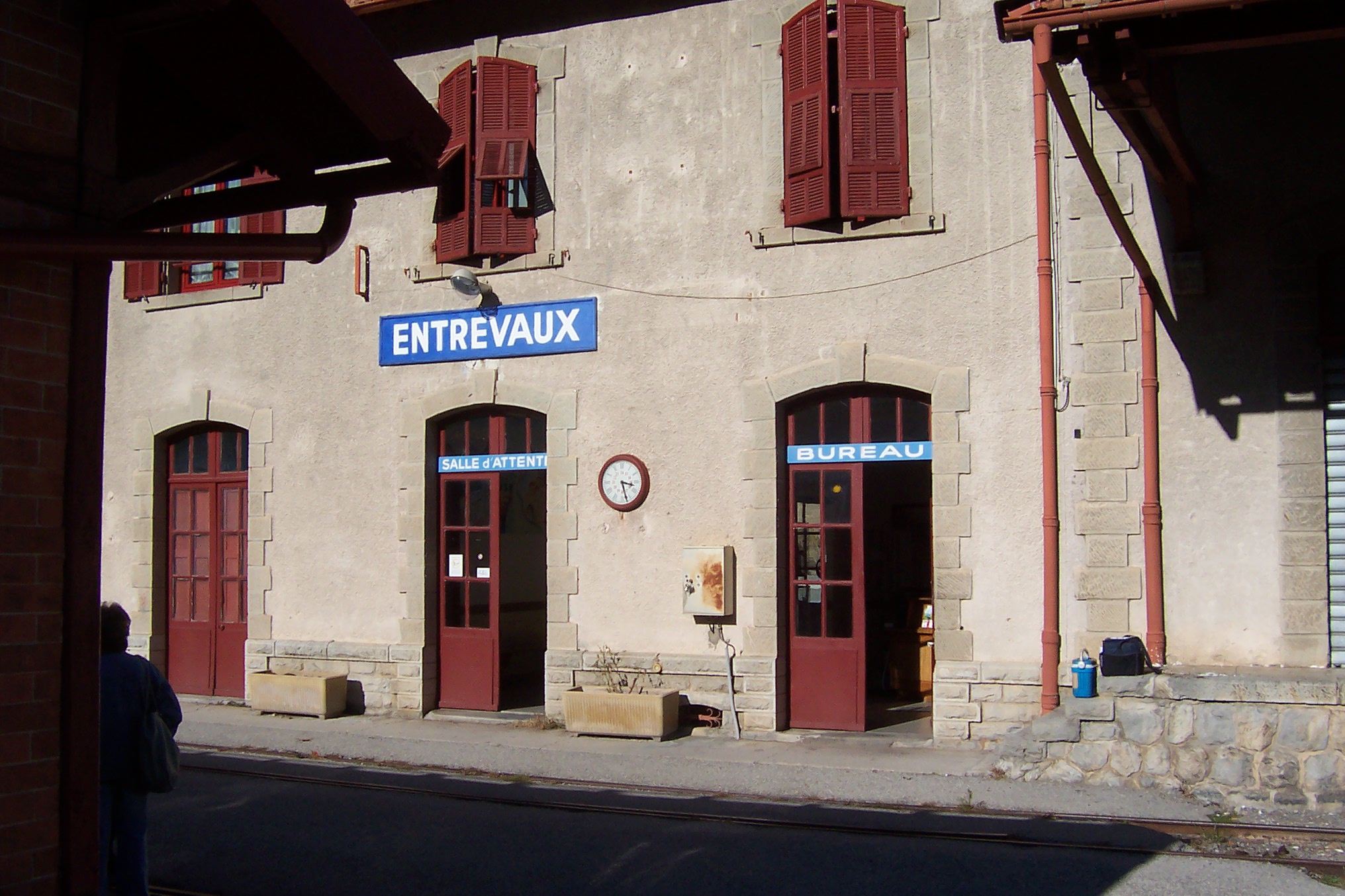

Nice to Digne Railway Line Photographs from a journey to Entrevaux and Puget Thernier in 2011
Leave a reply

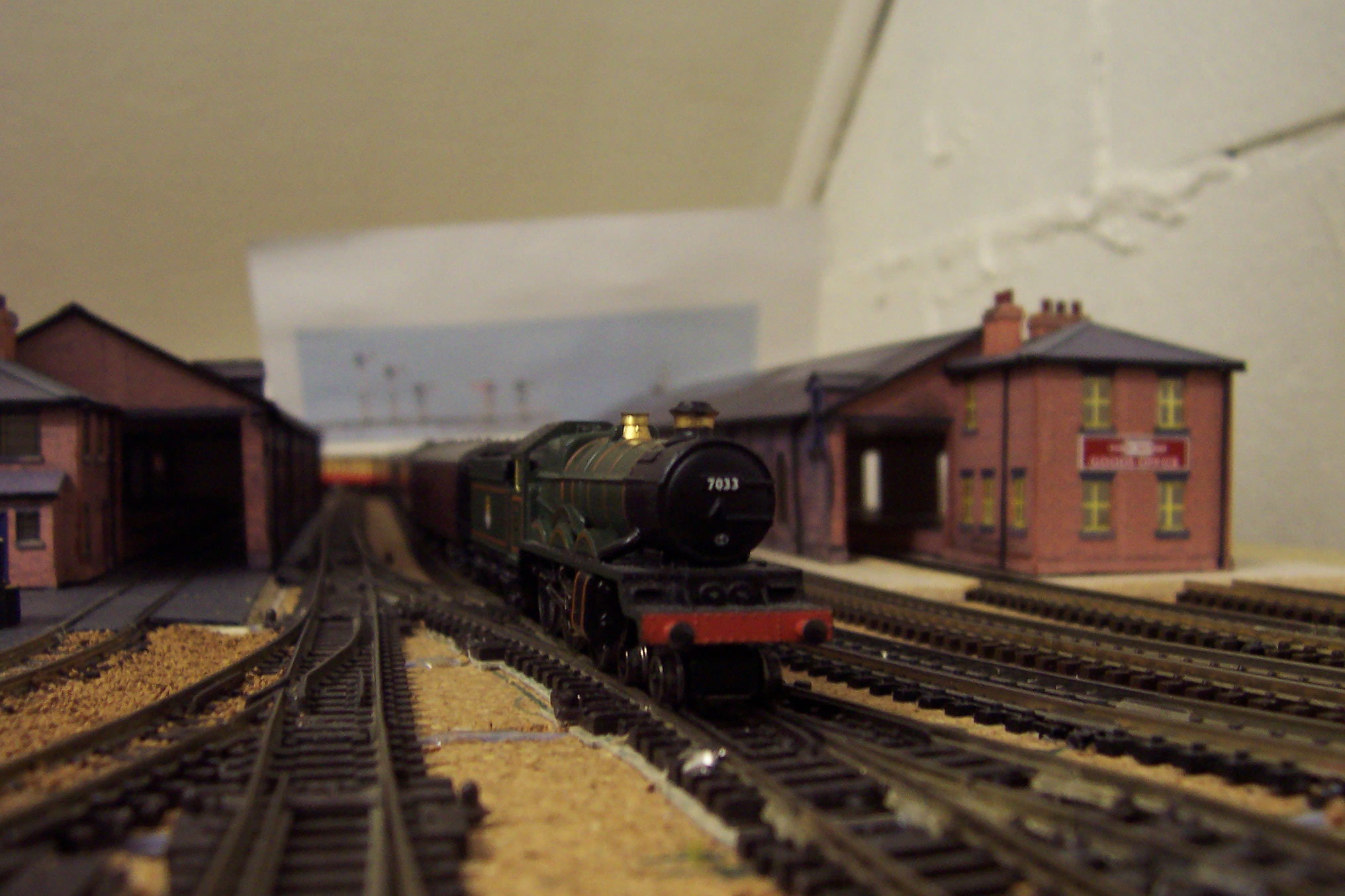
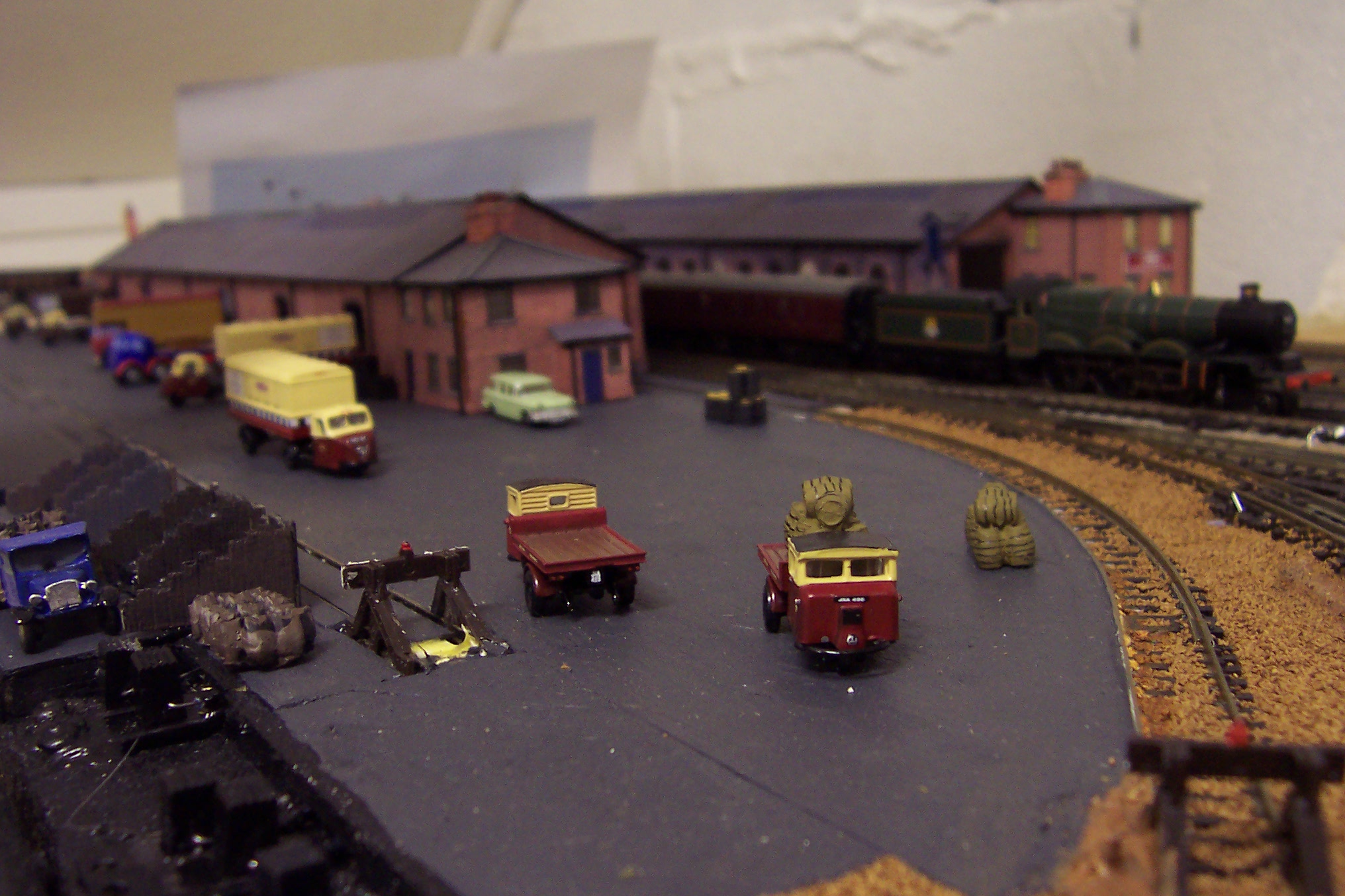
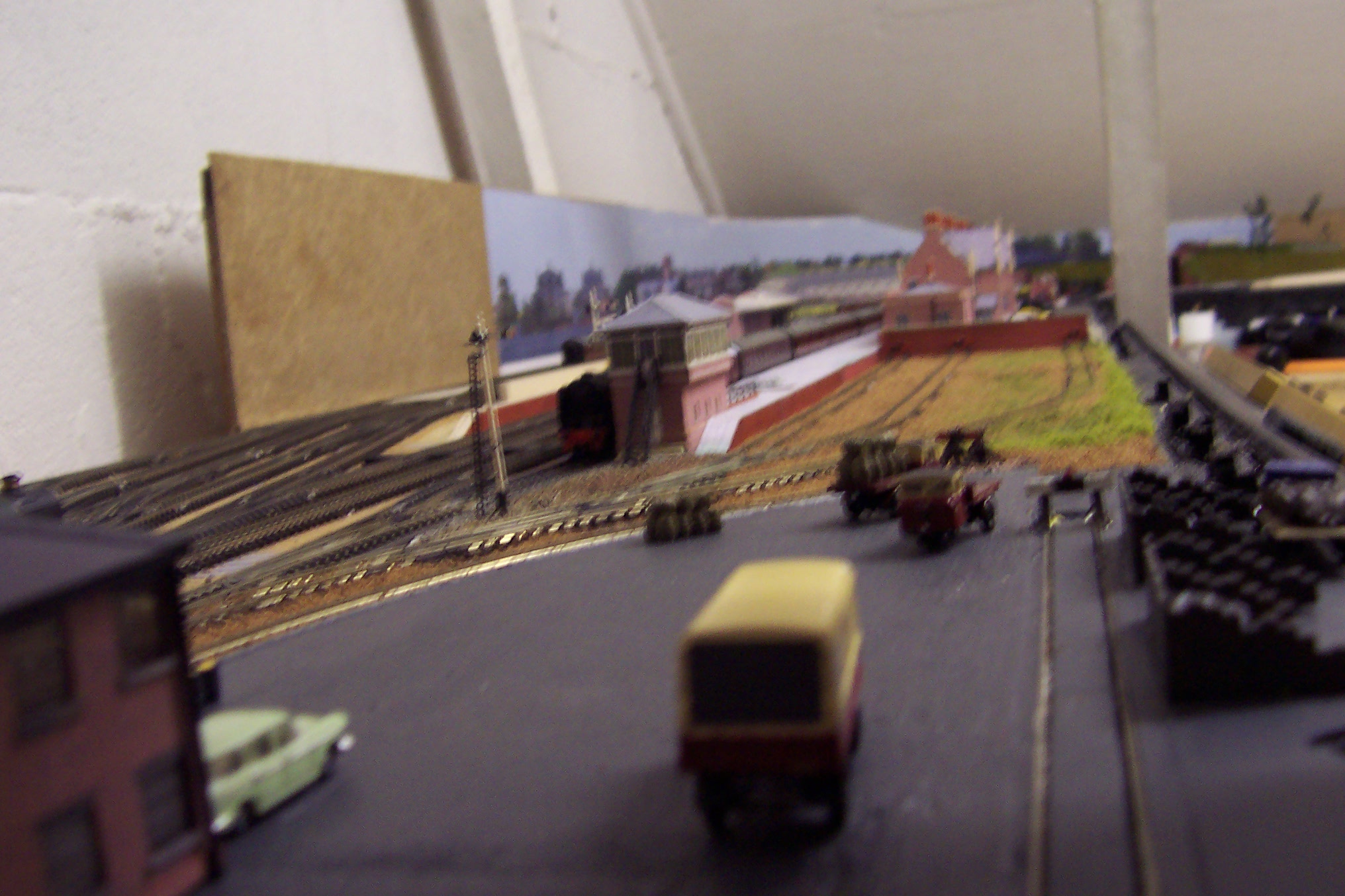
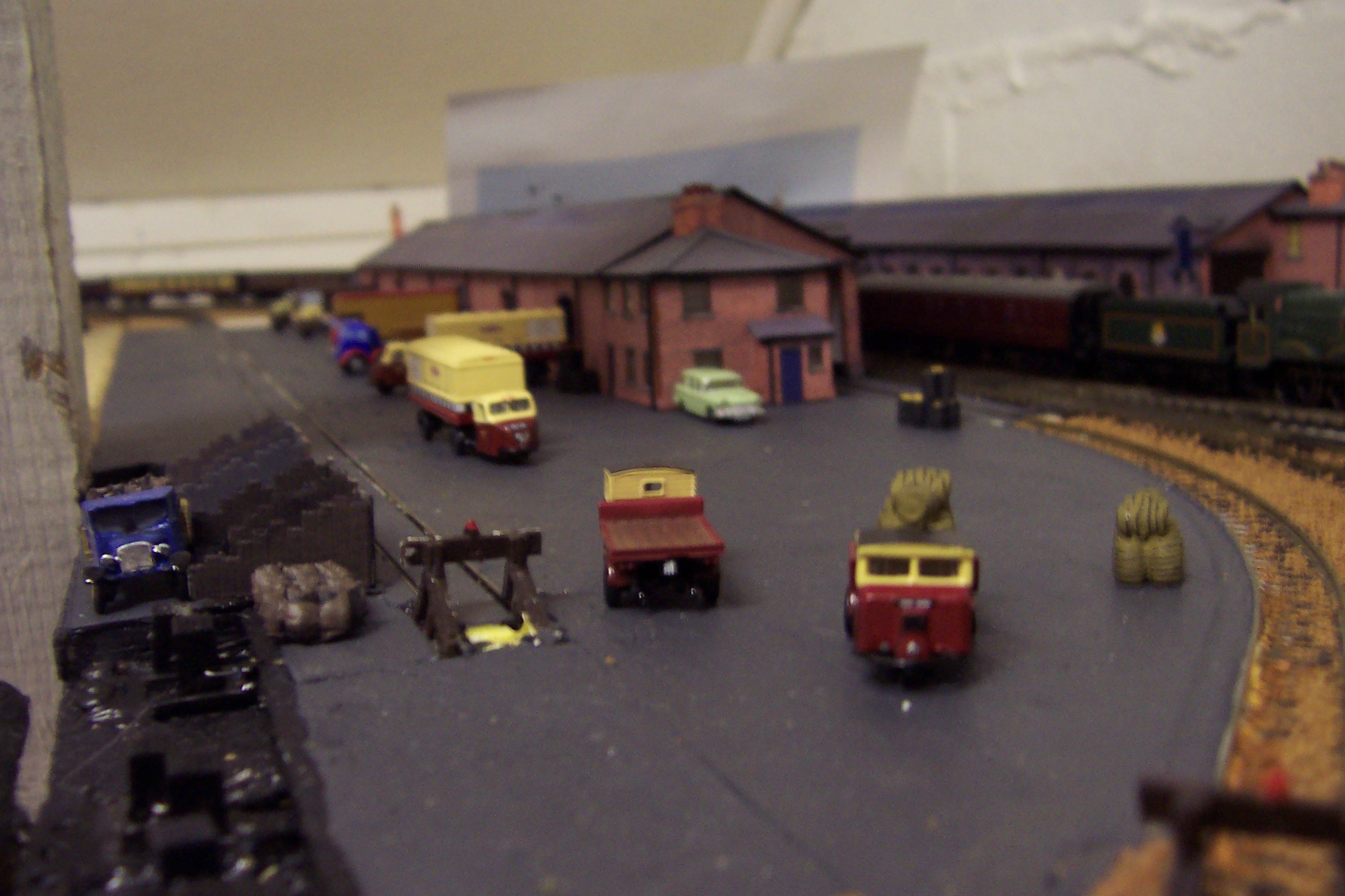
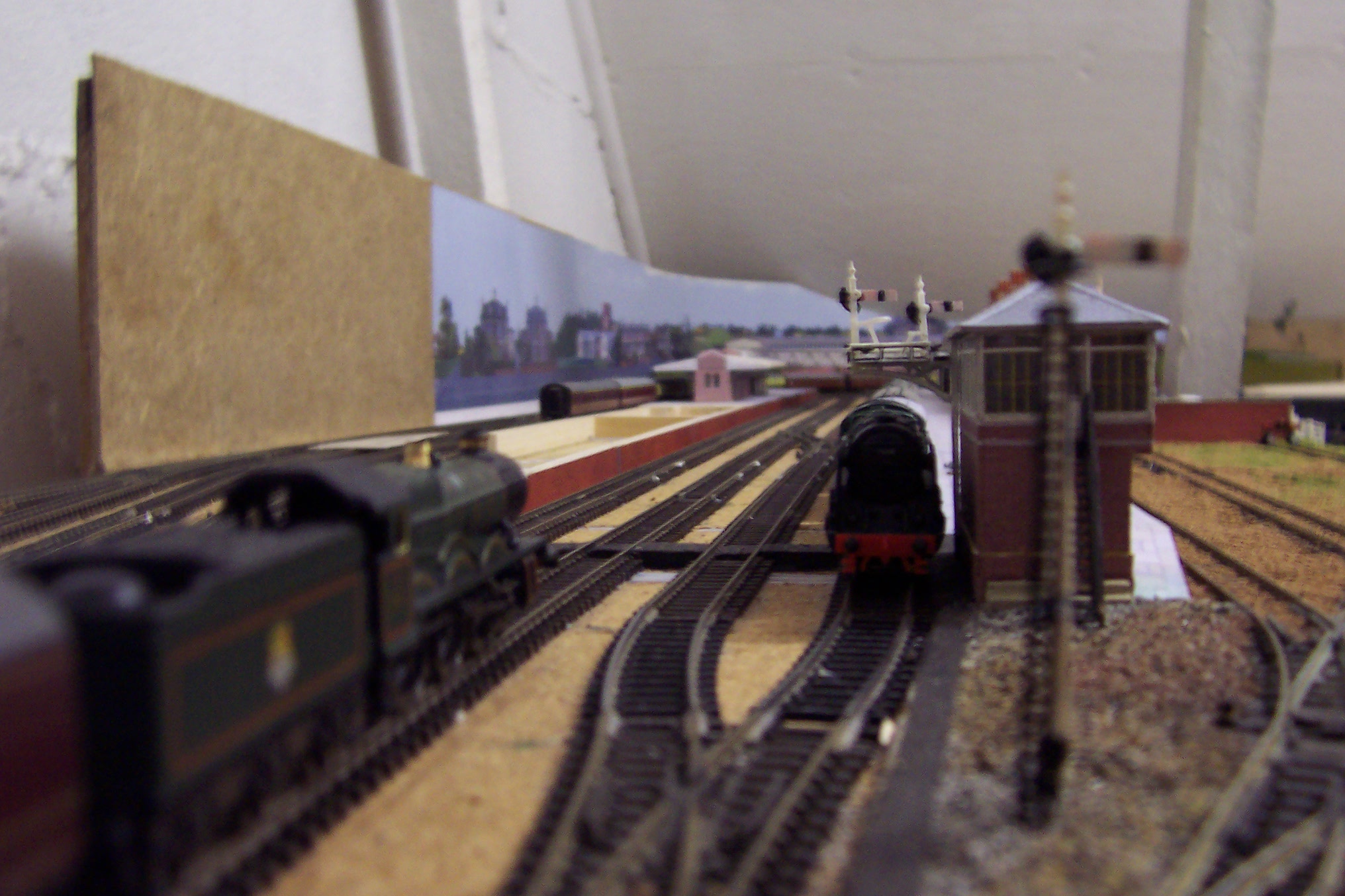
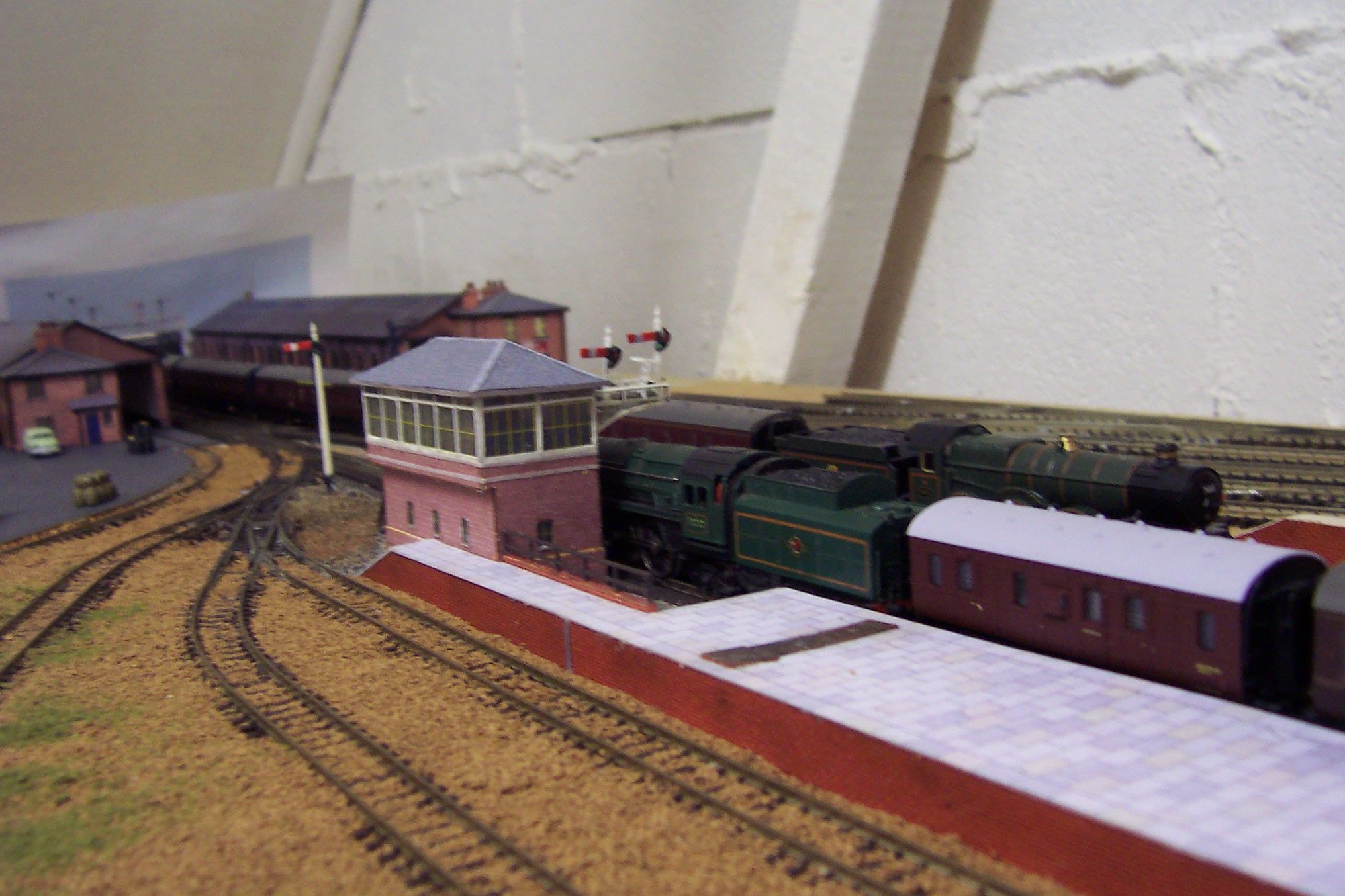
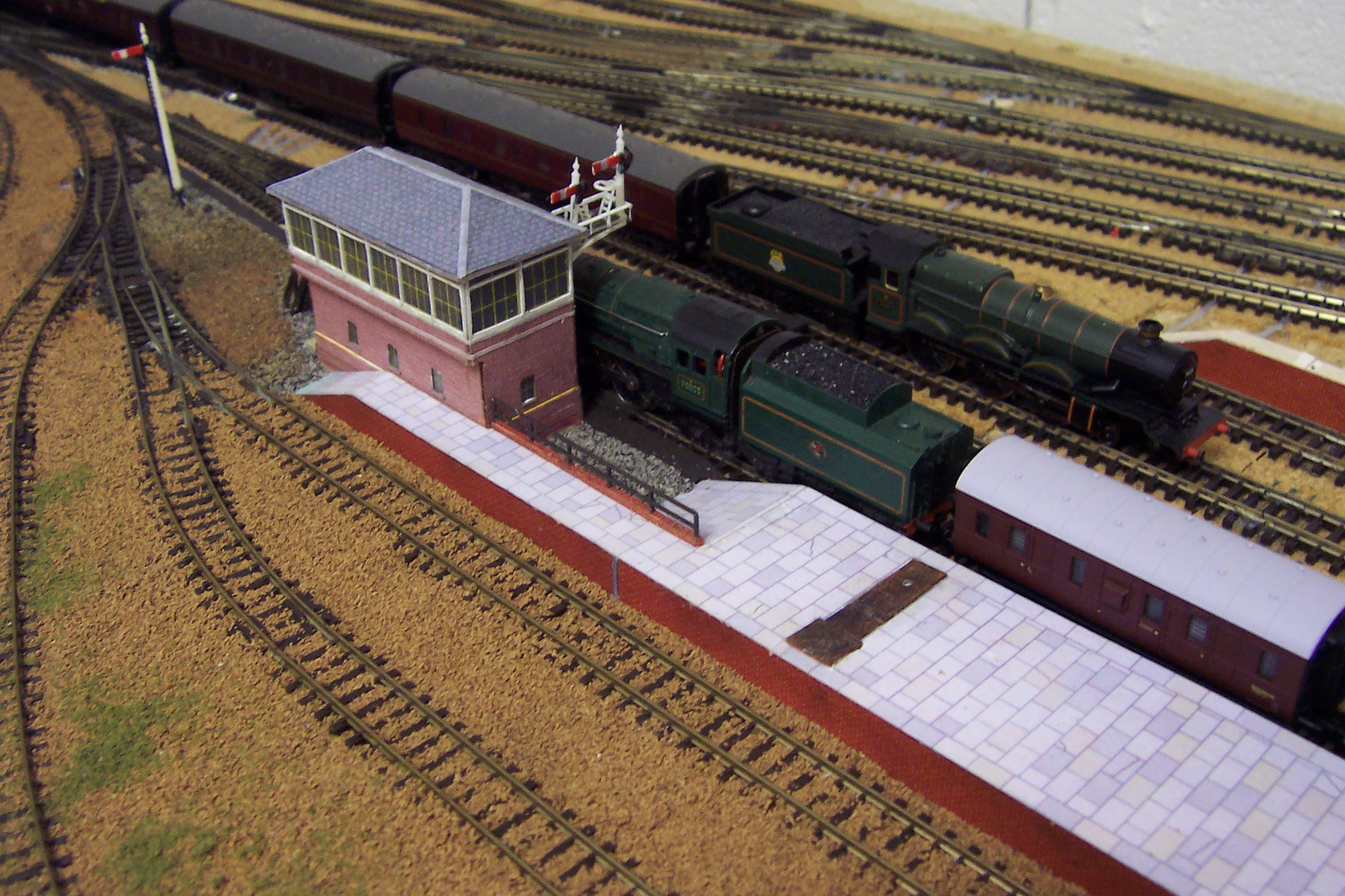
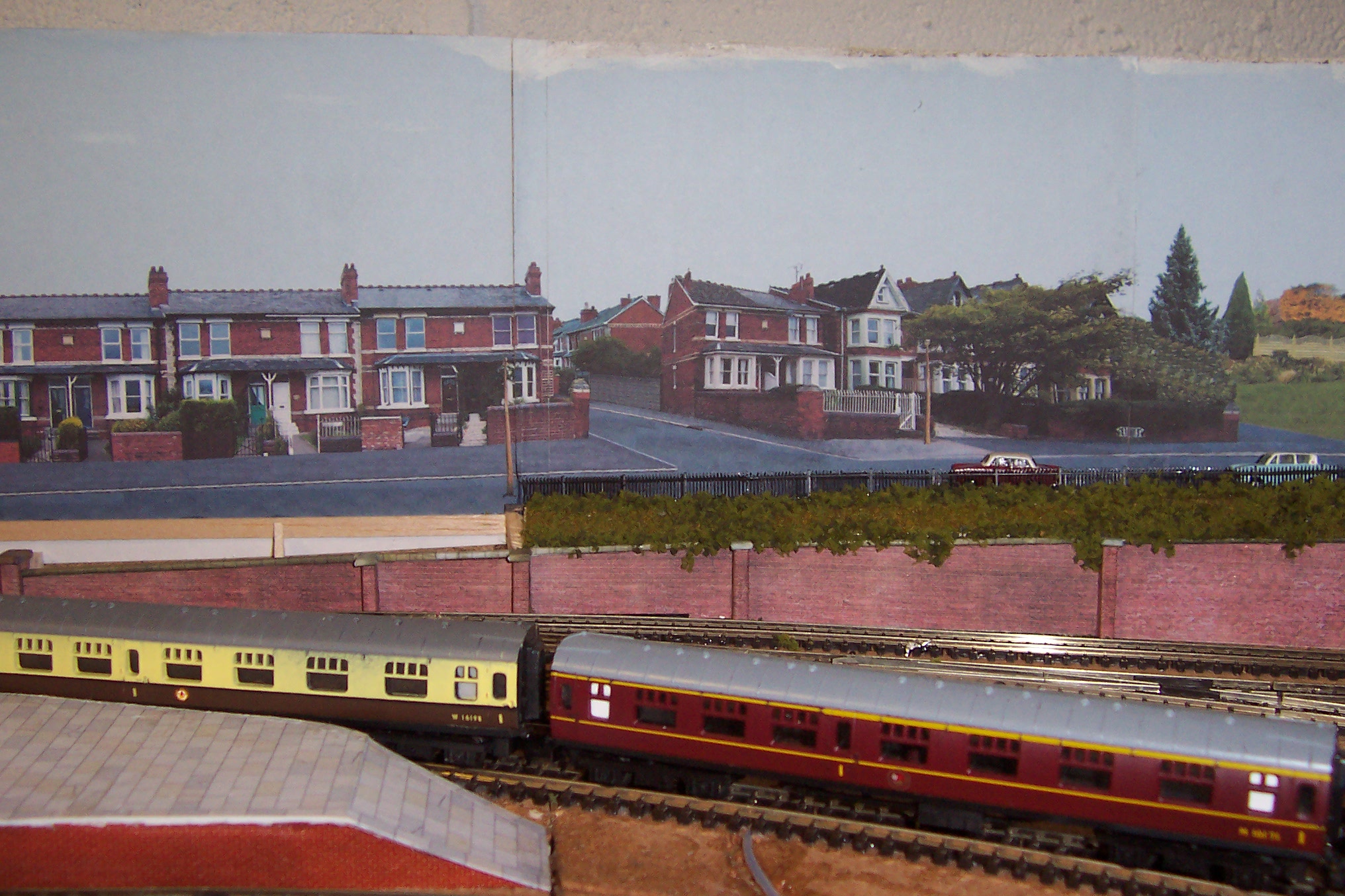
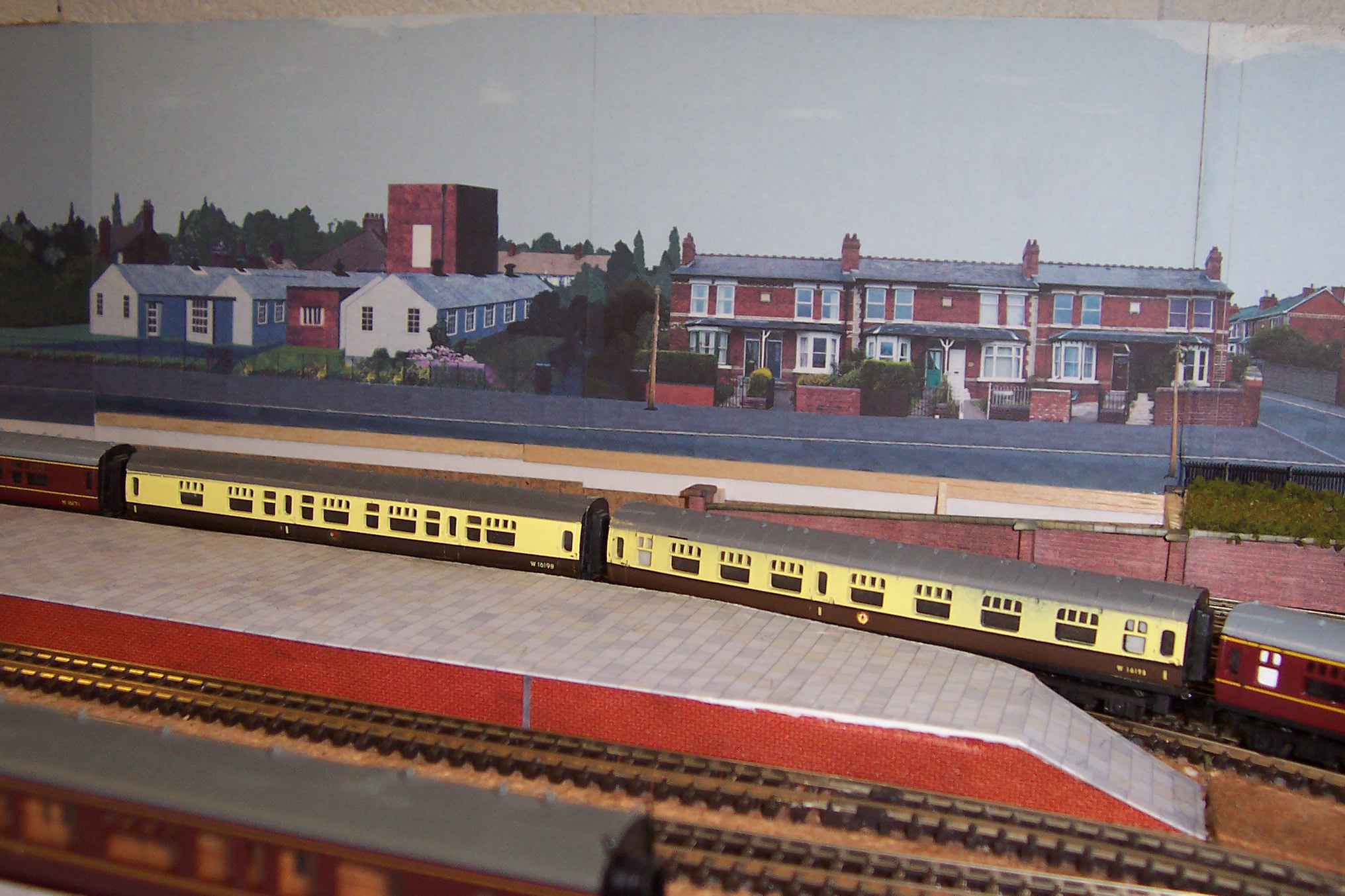
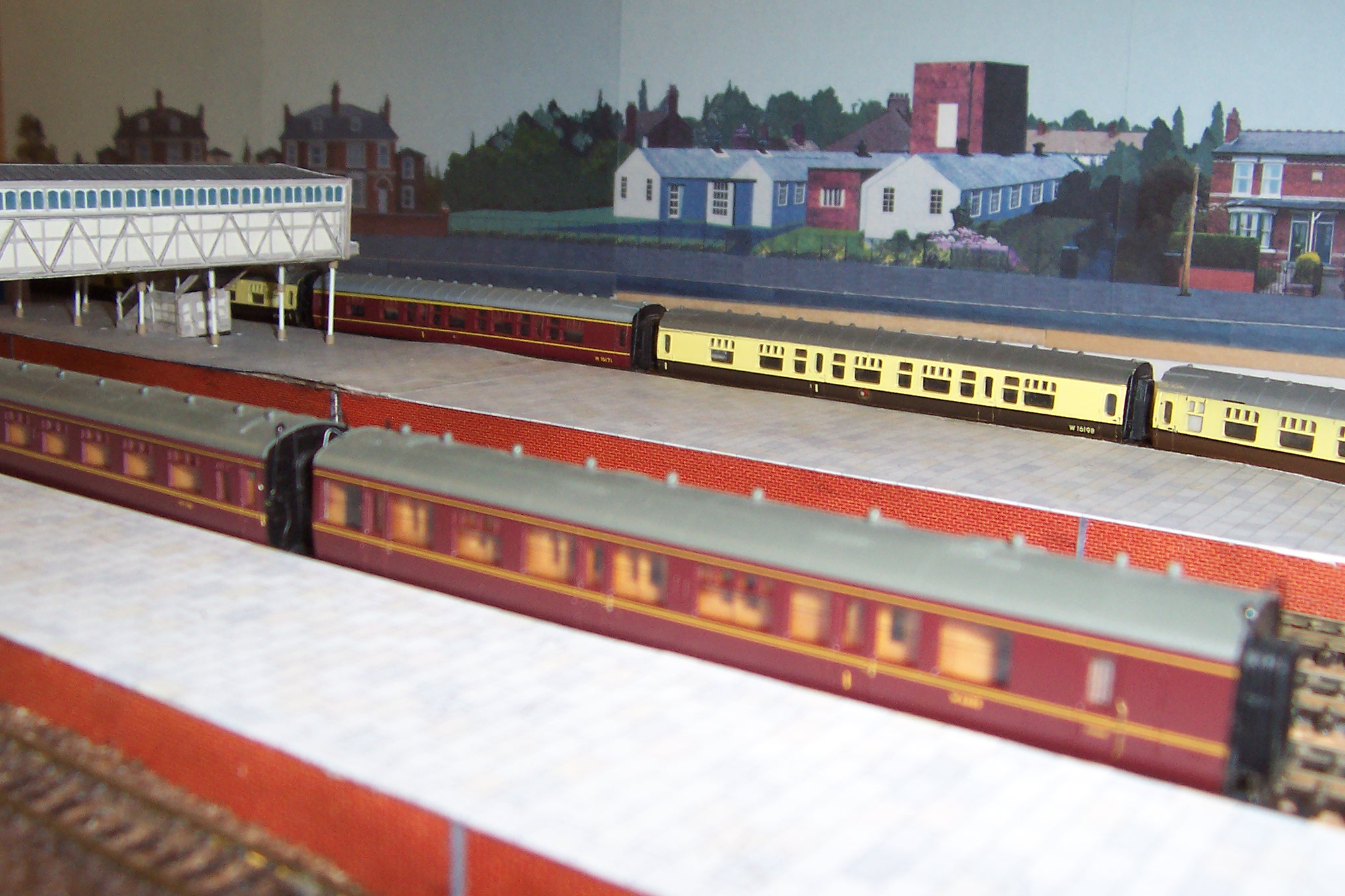
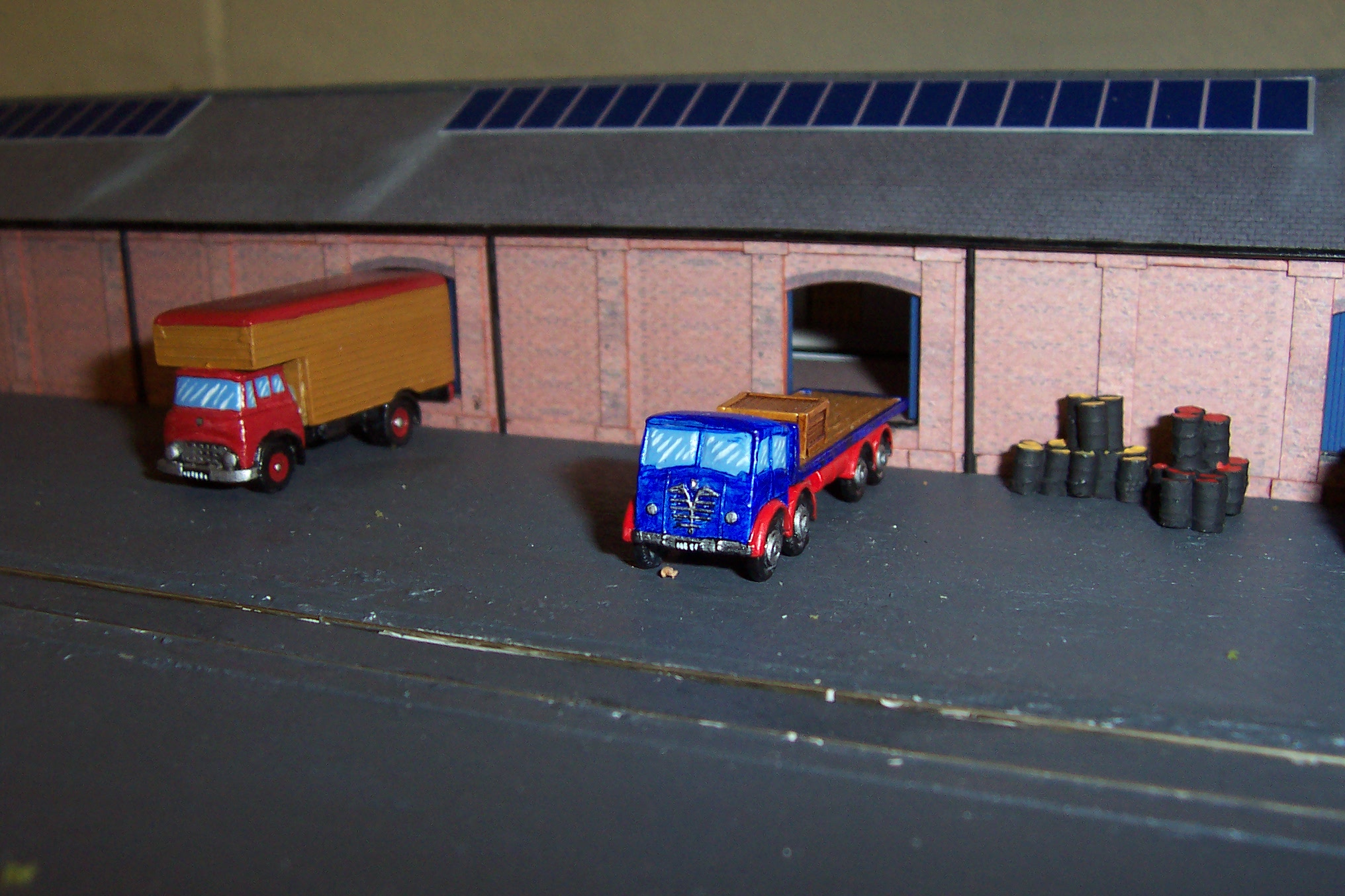
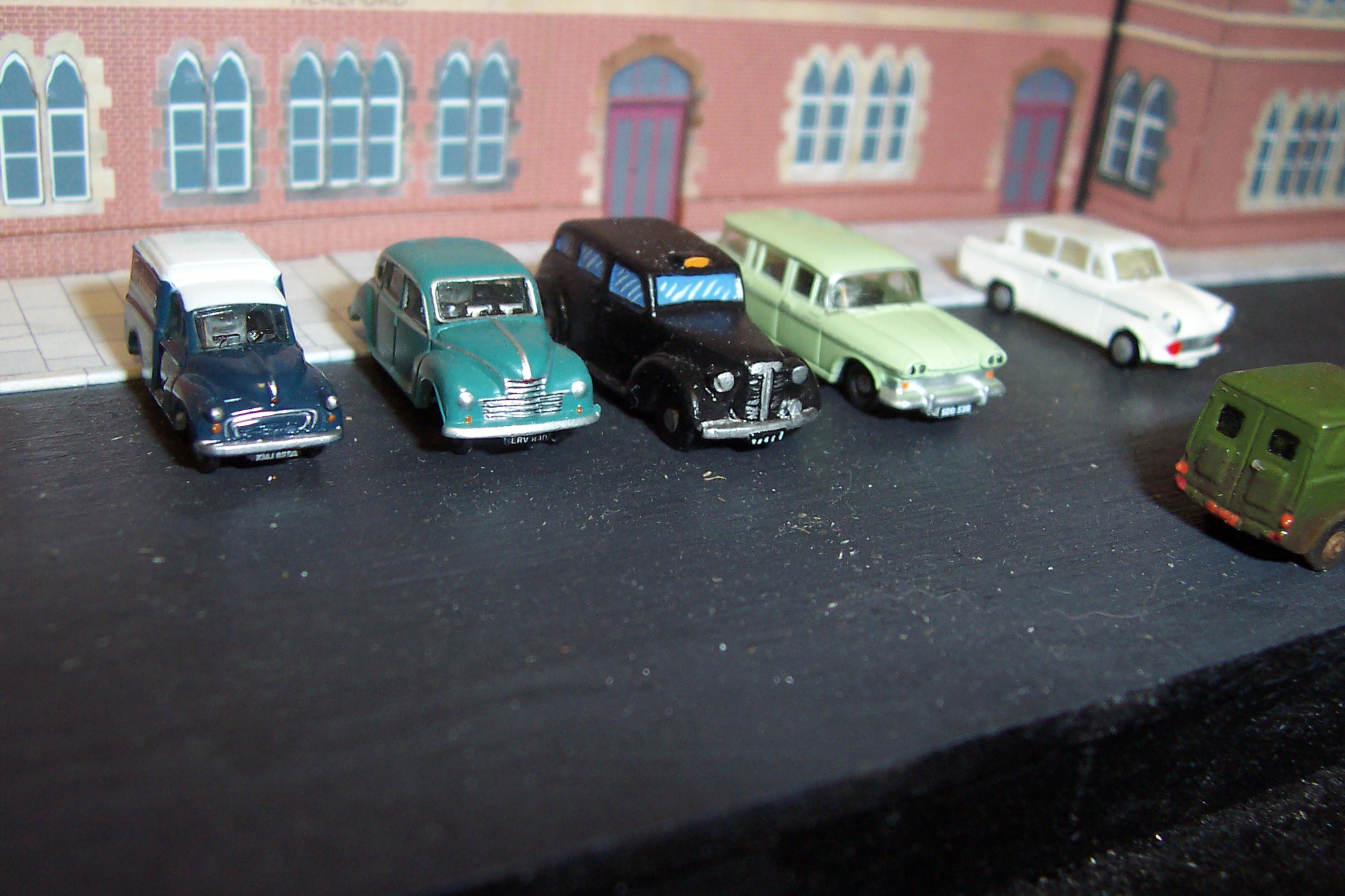
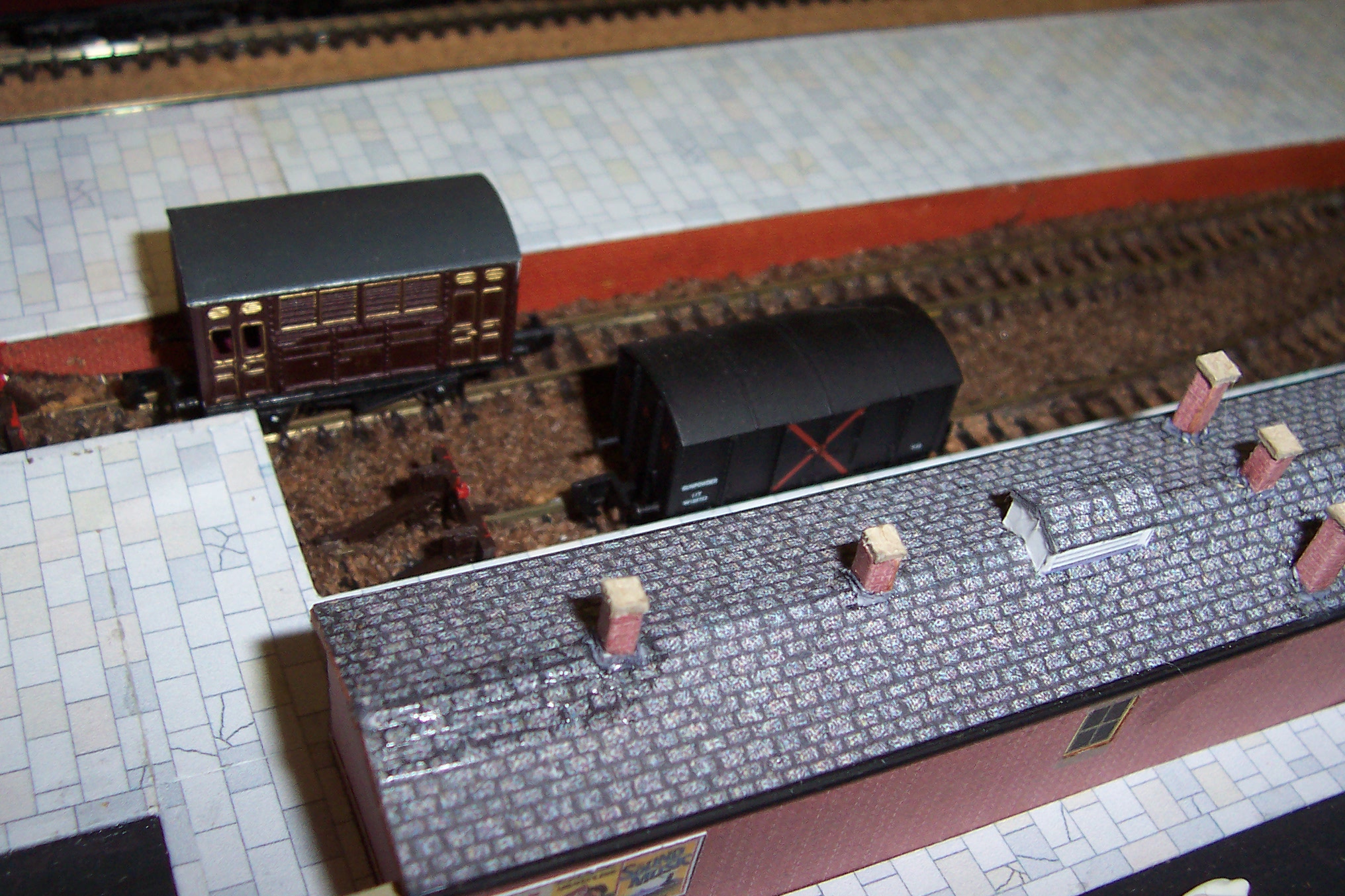
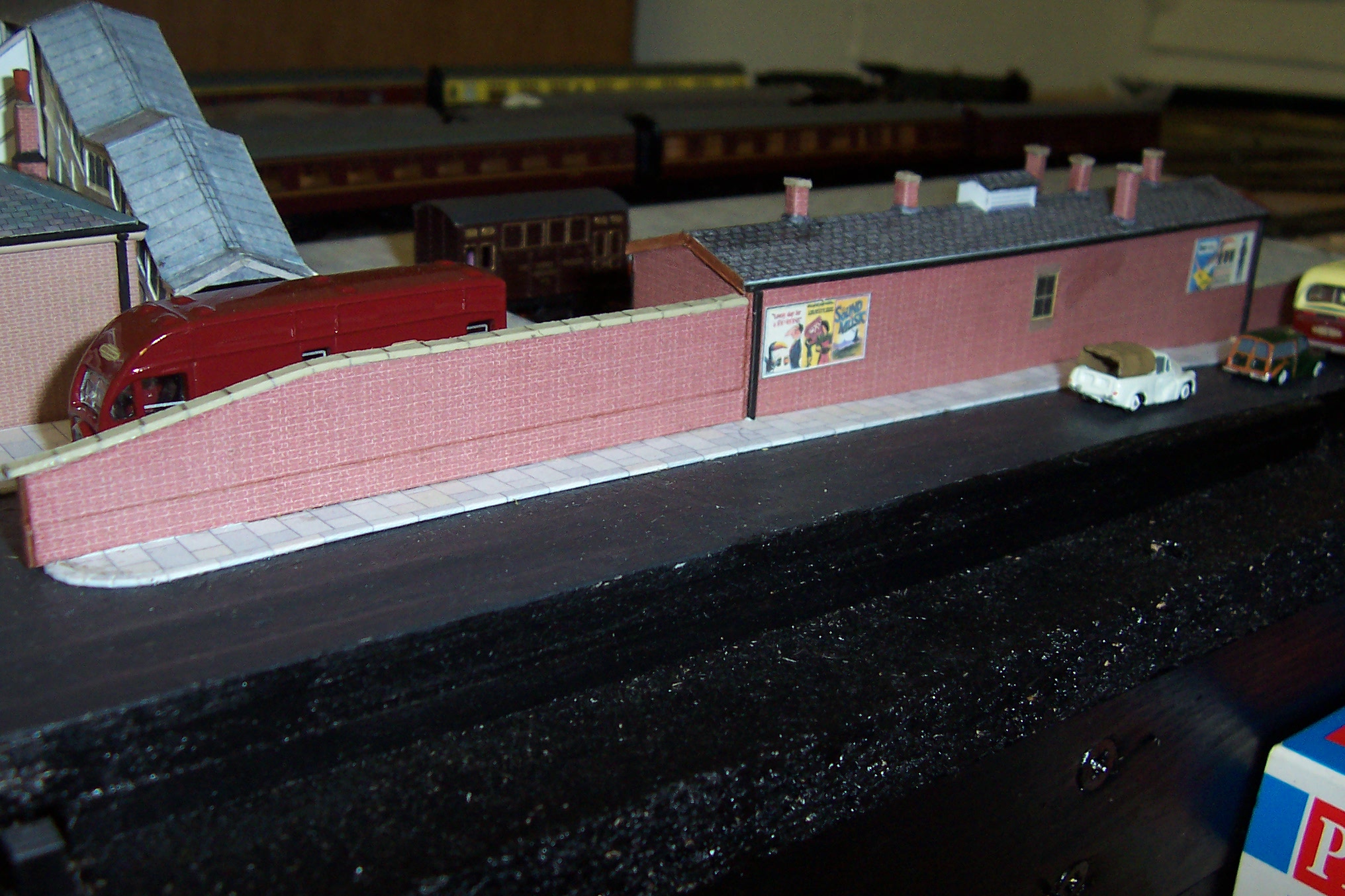
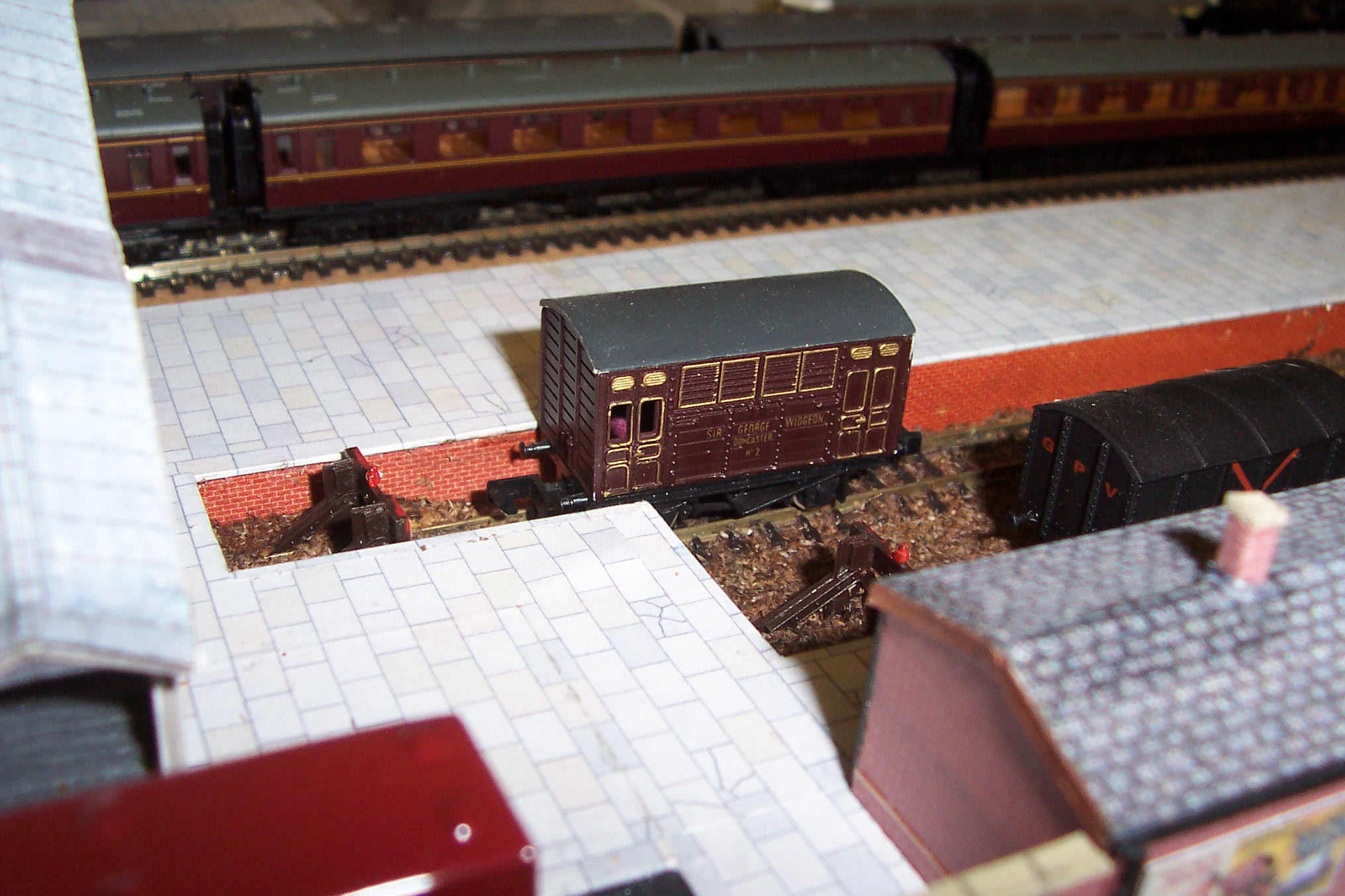
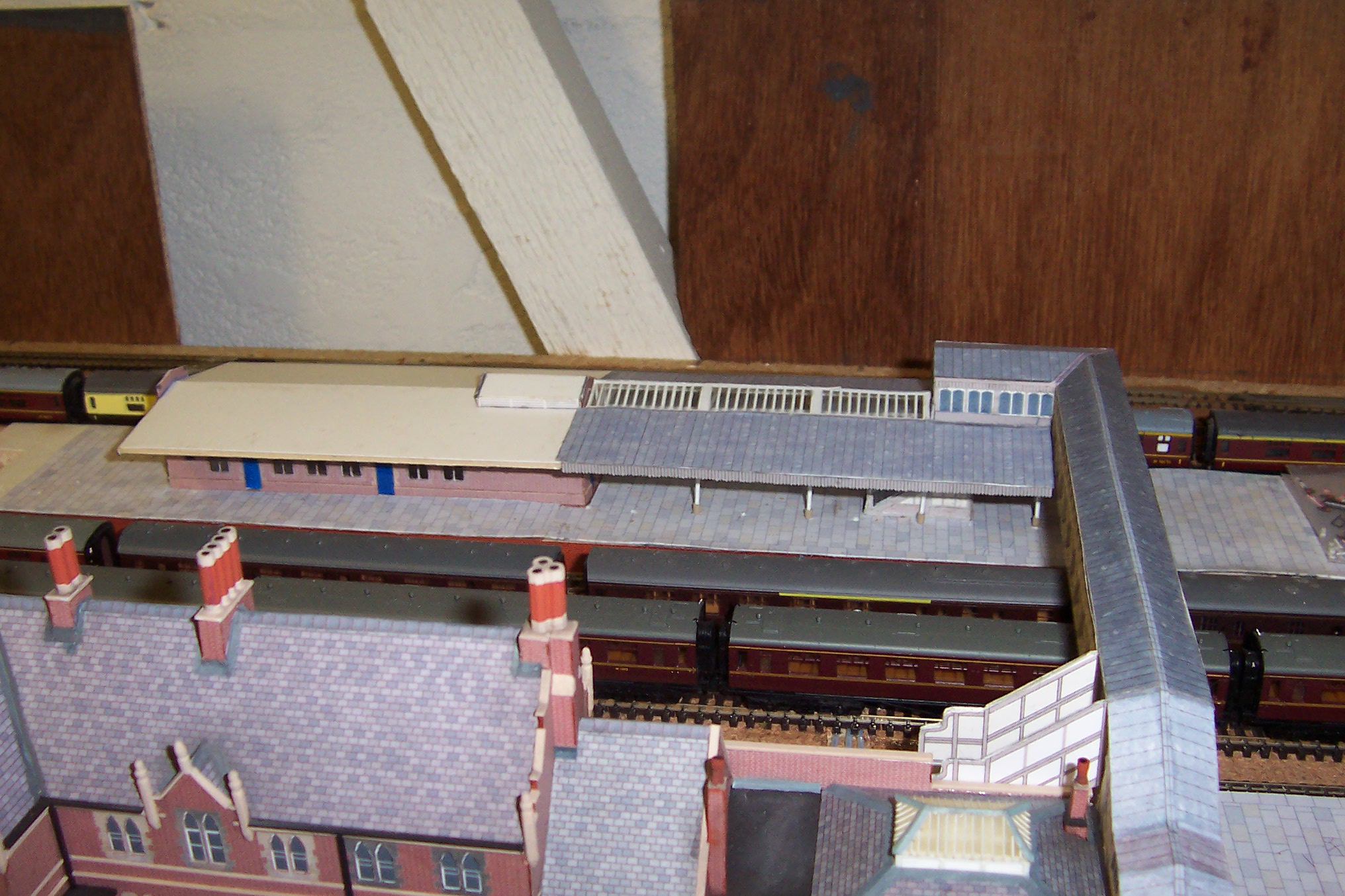
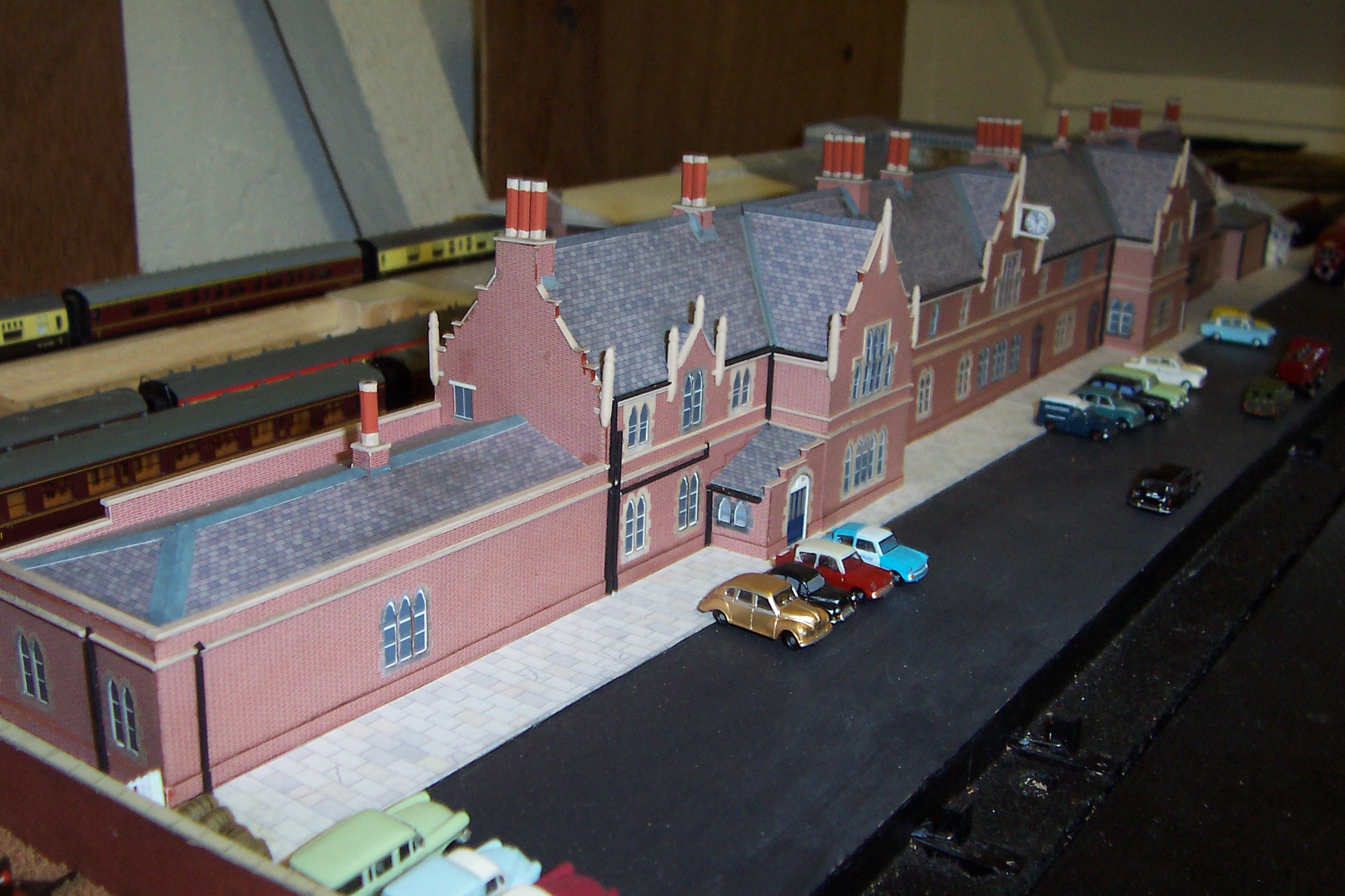
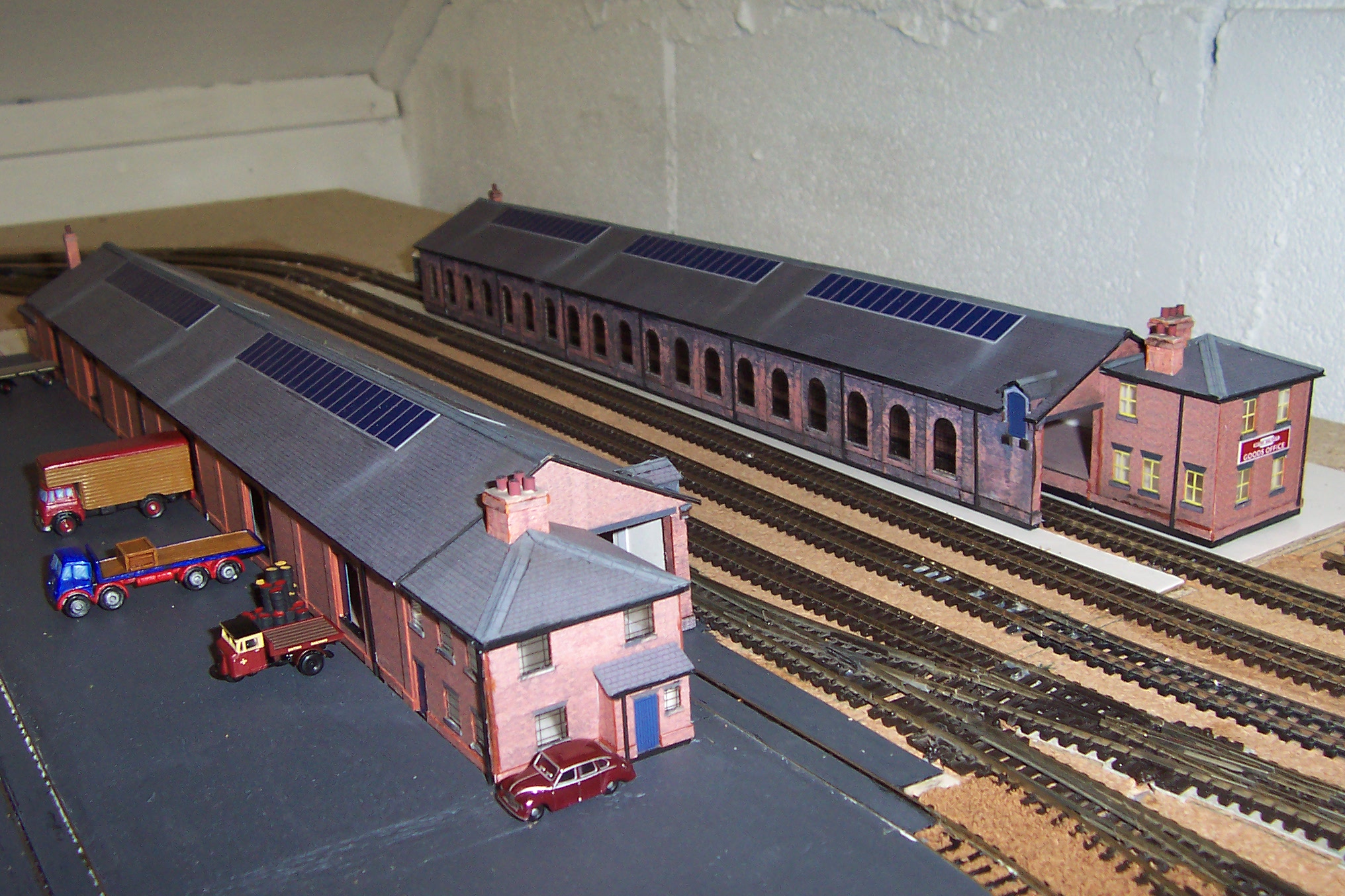
Various Photographs taken some years ago on the Hereford Model Railway in the Vicarage Loft. 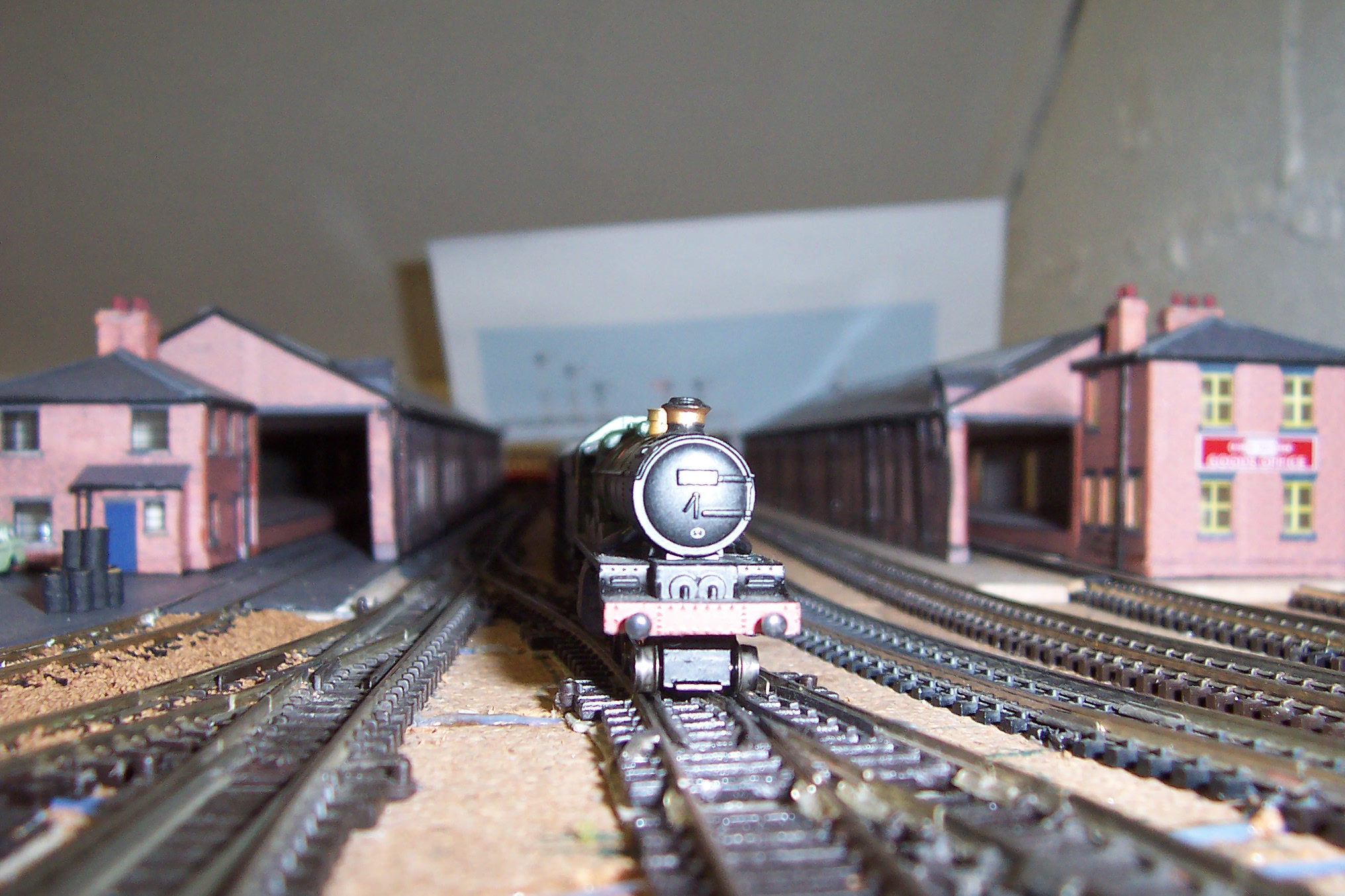
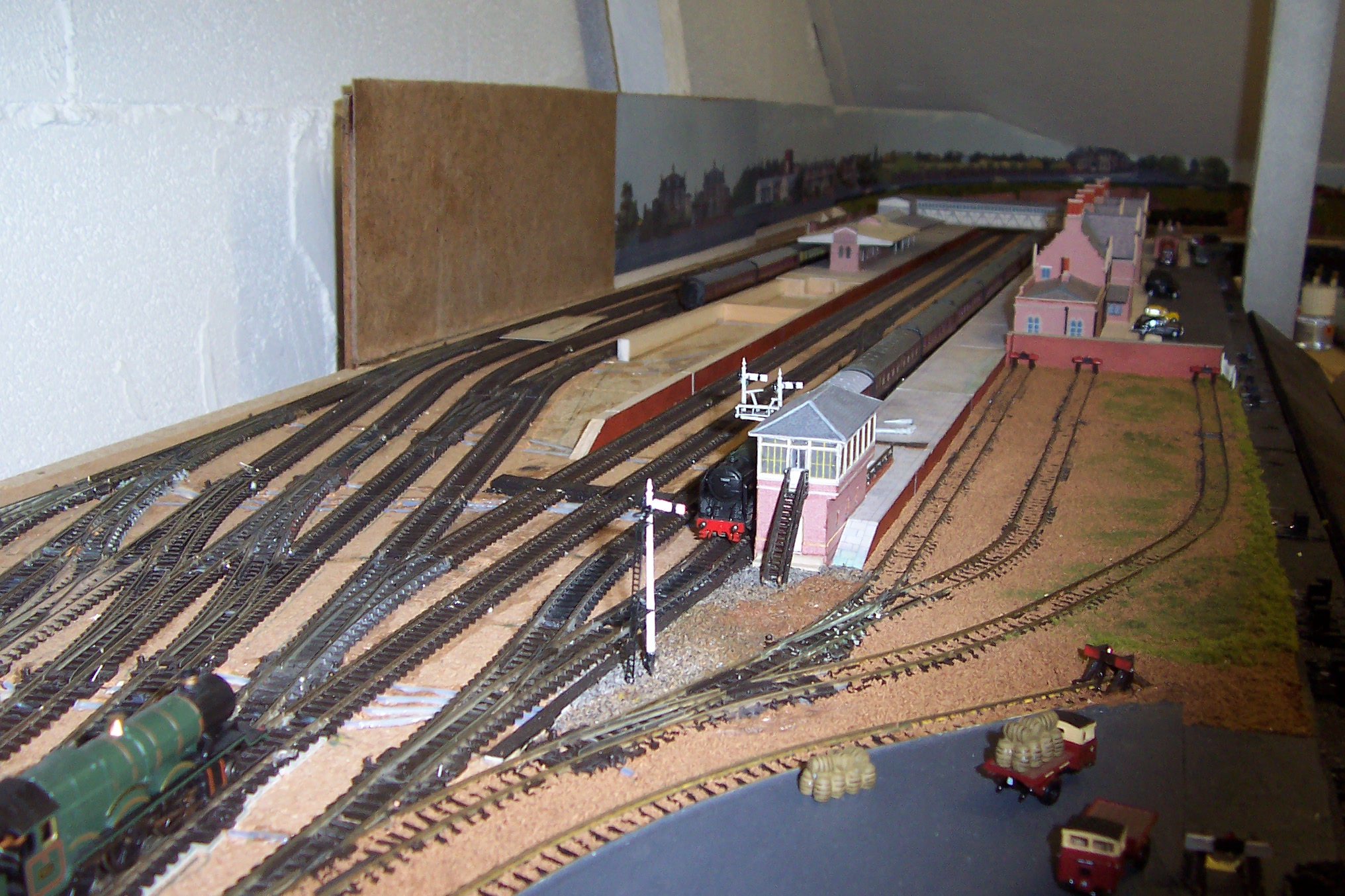
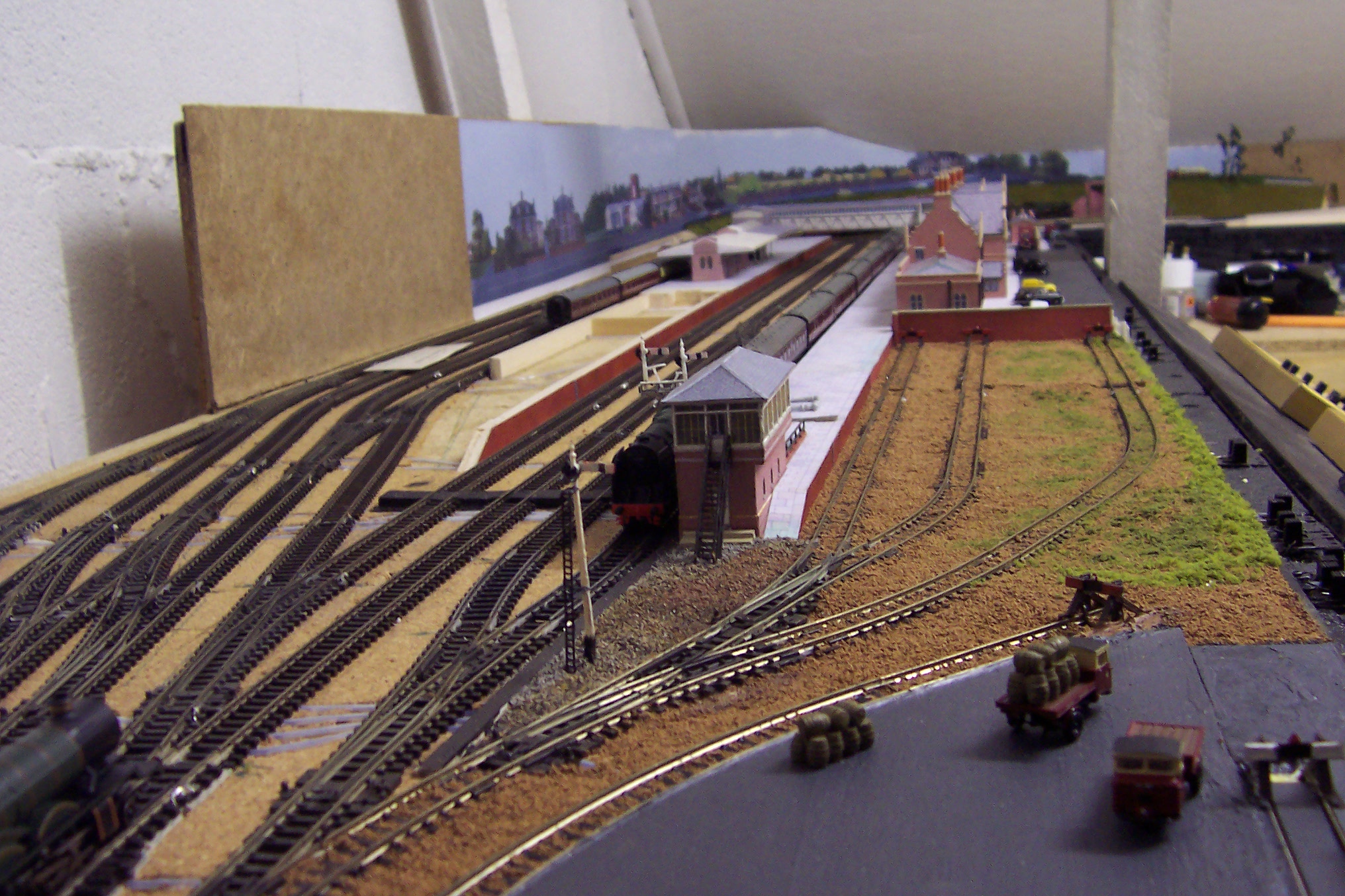
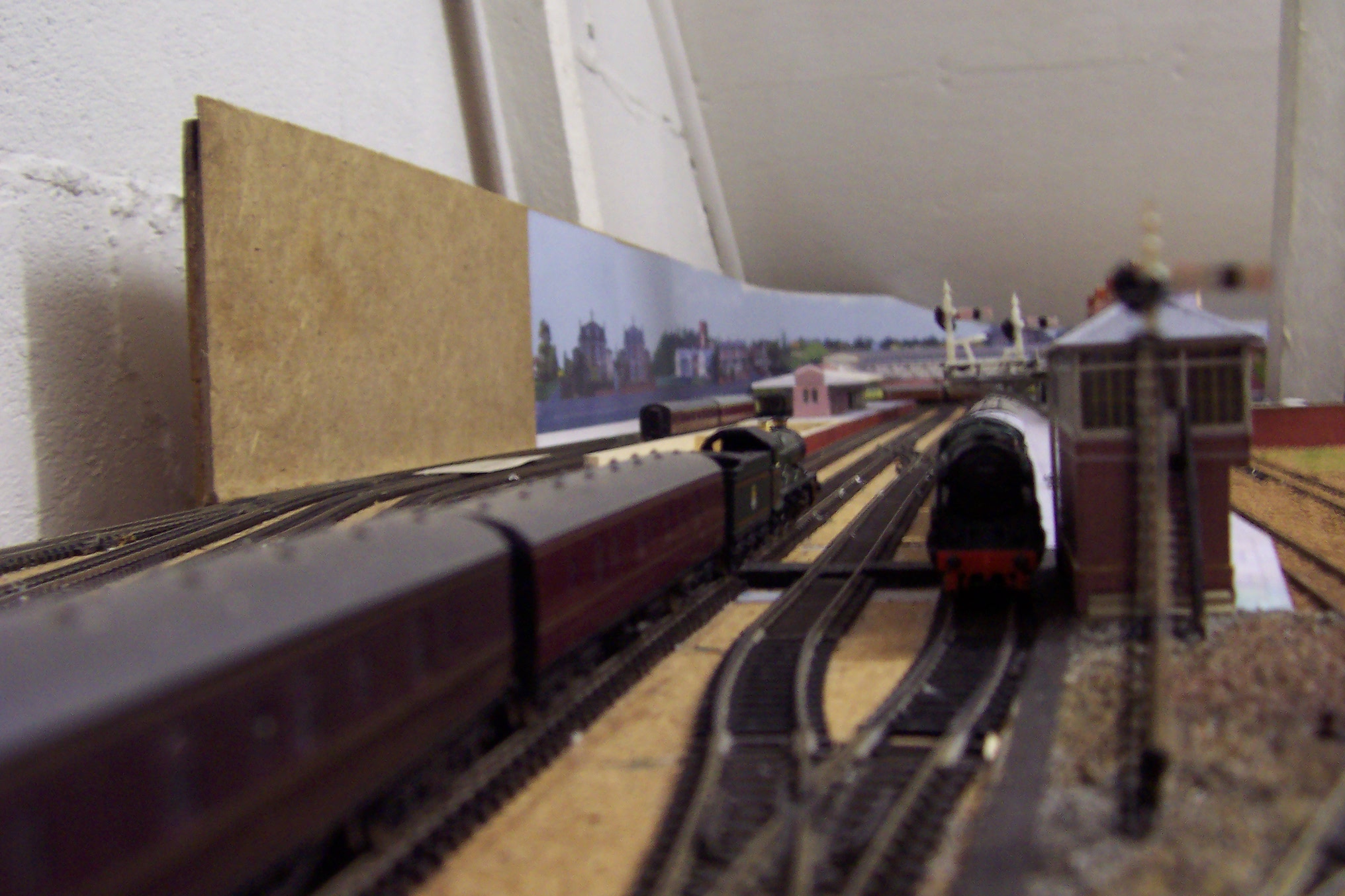
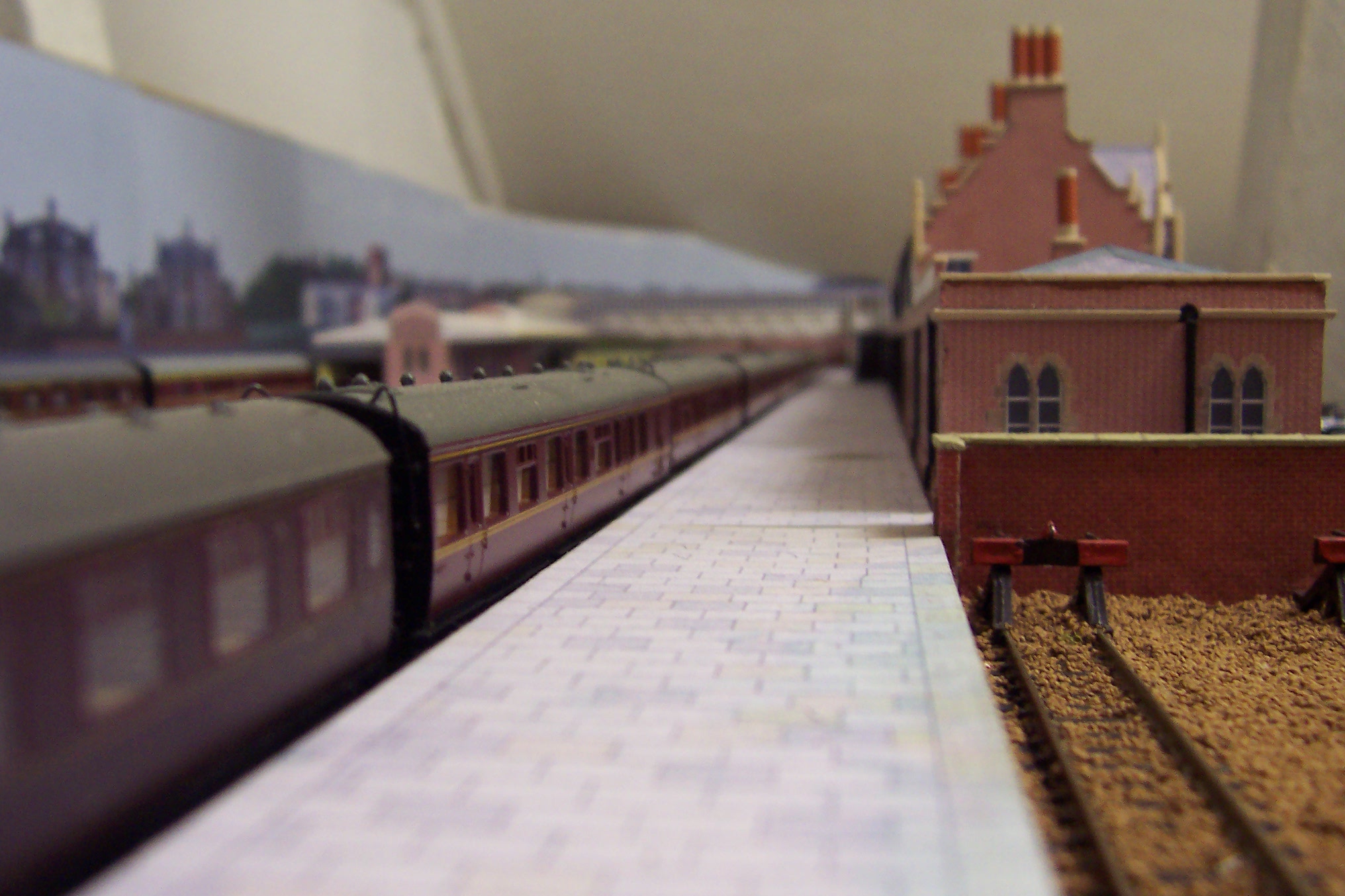
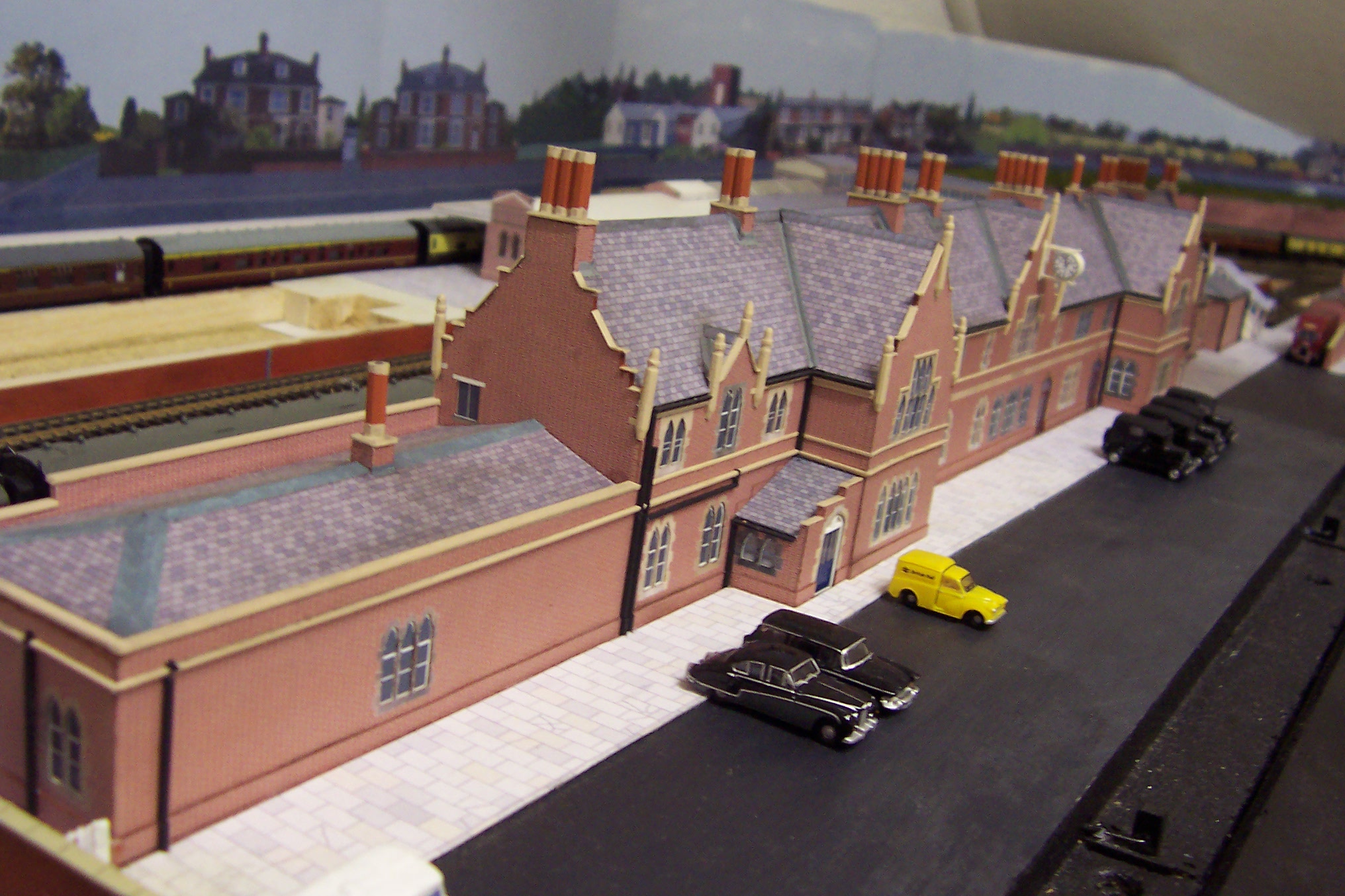
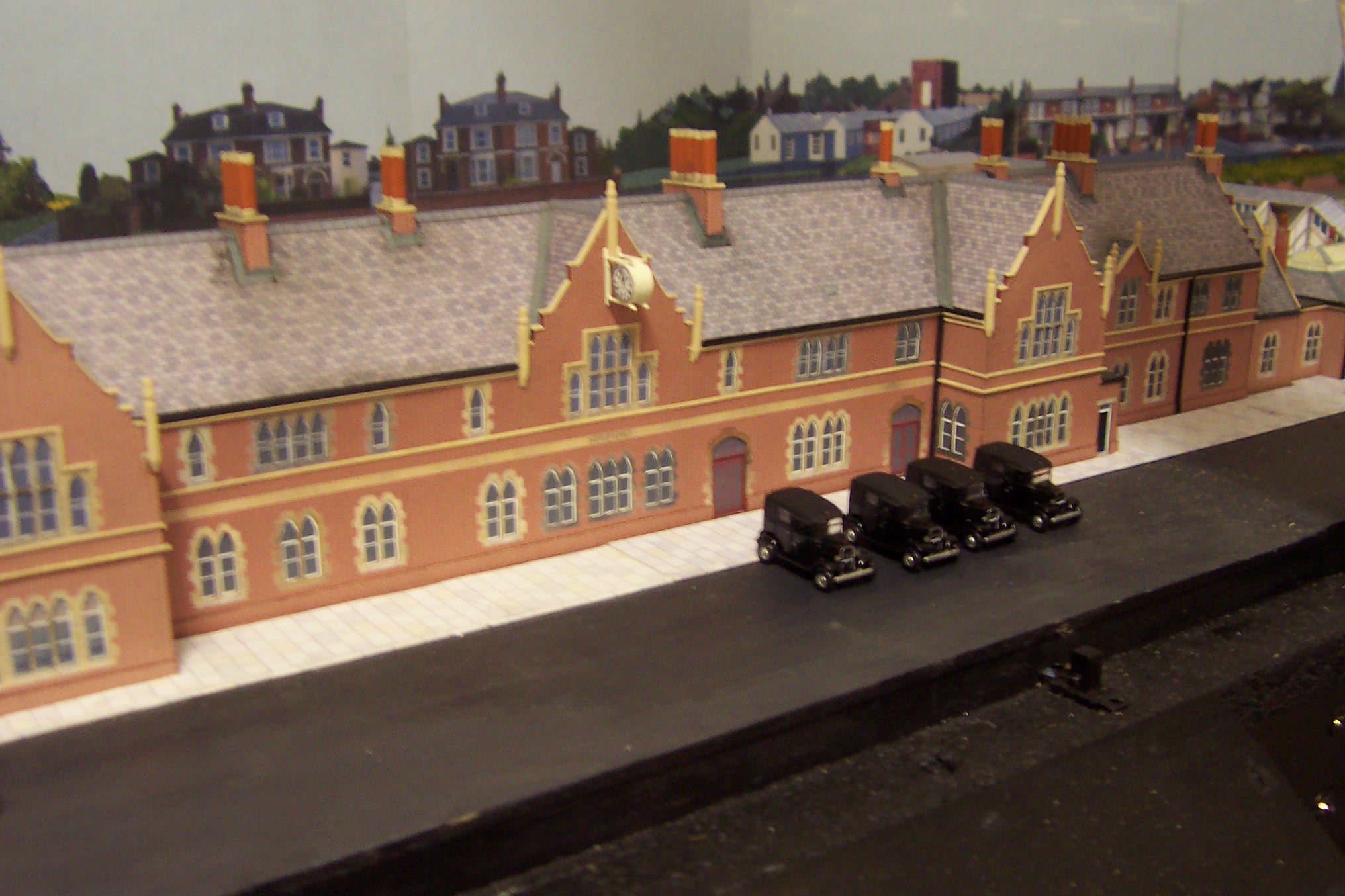
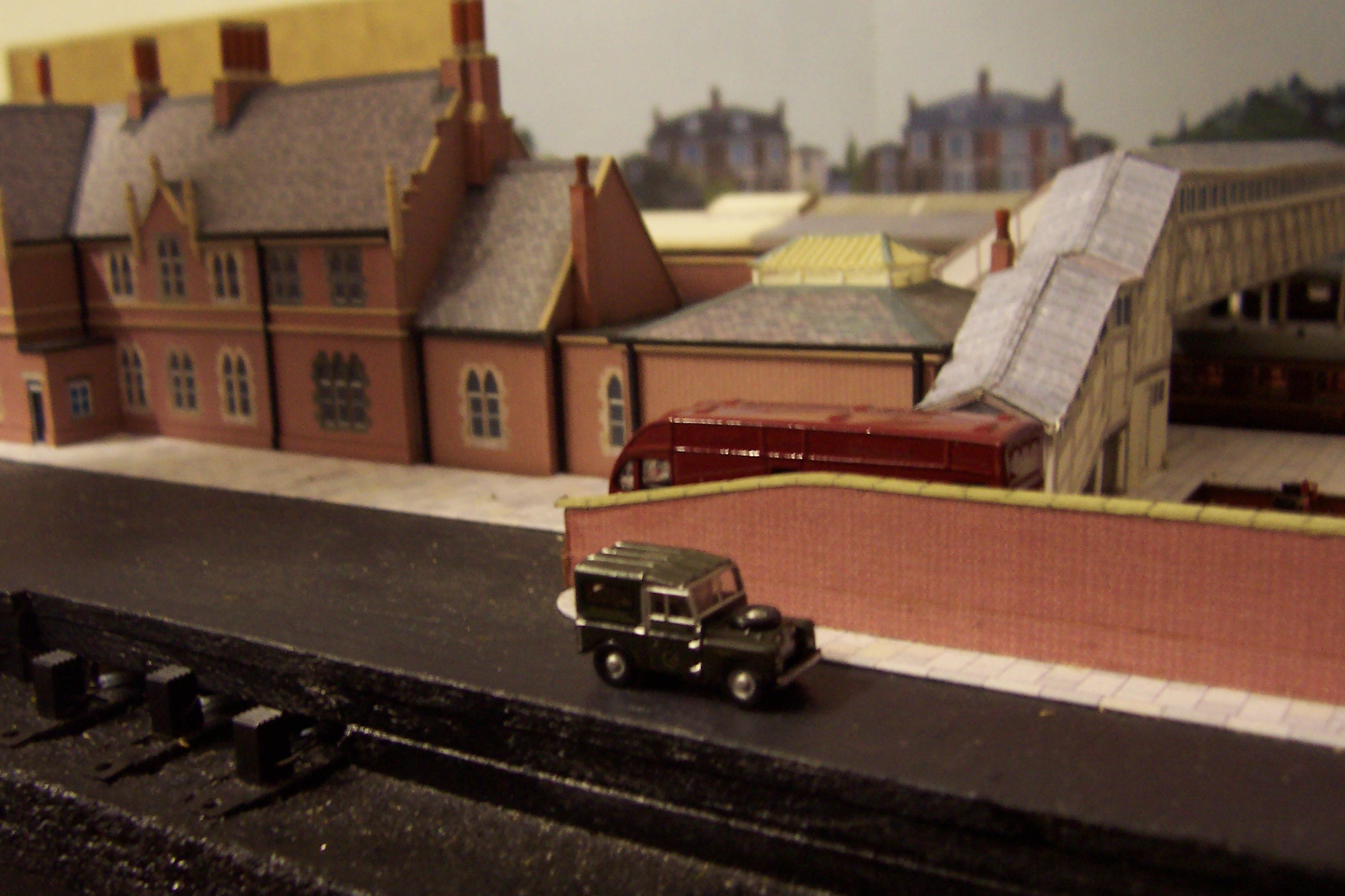
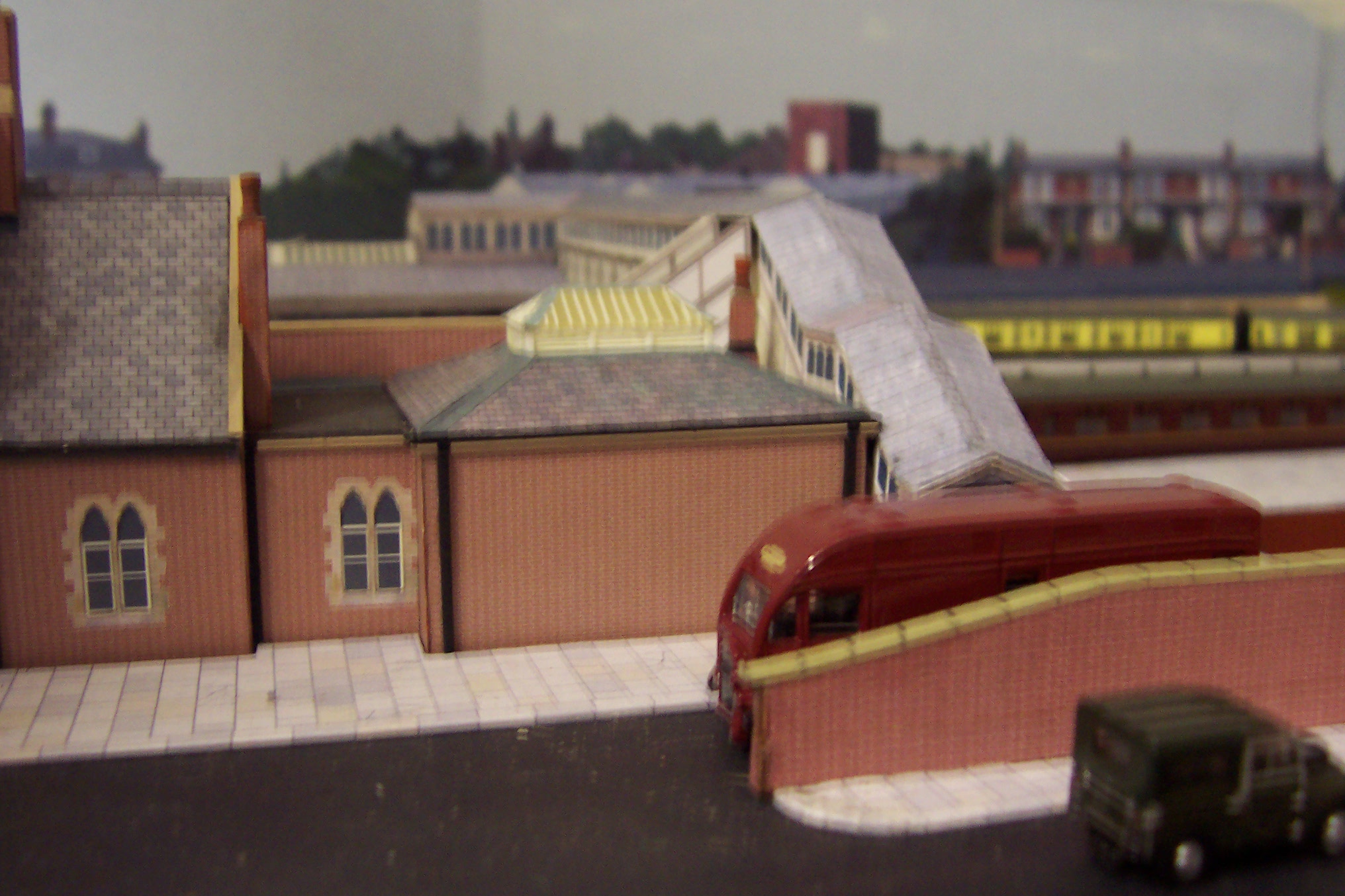
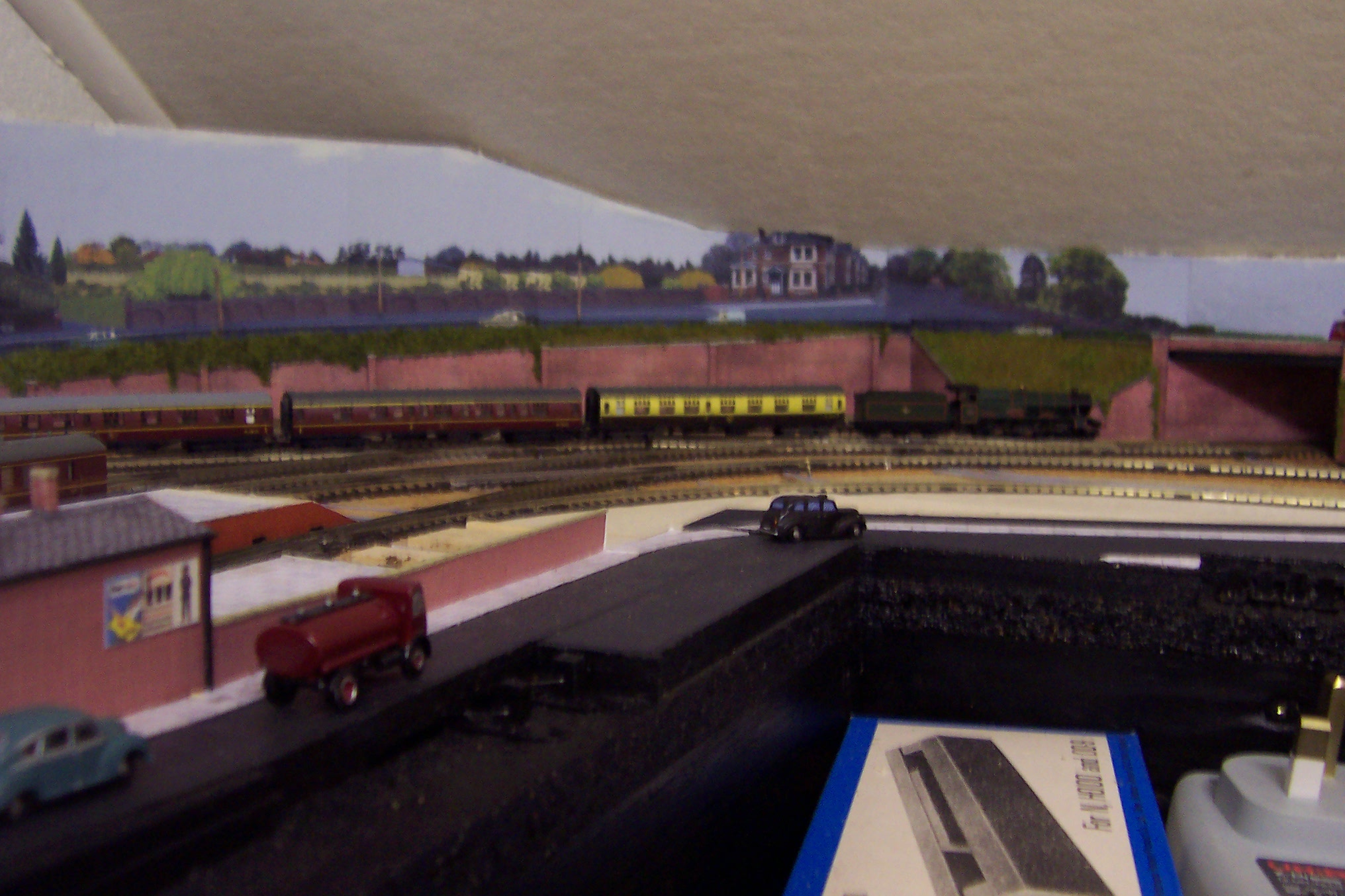
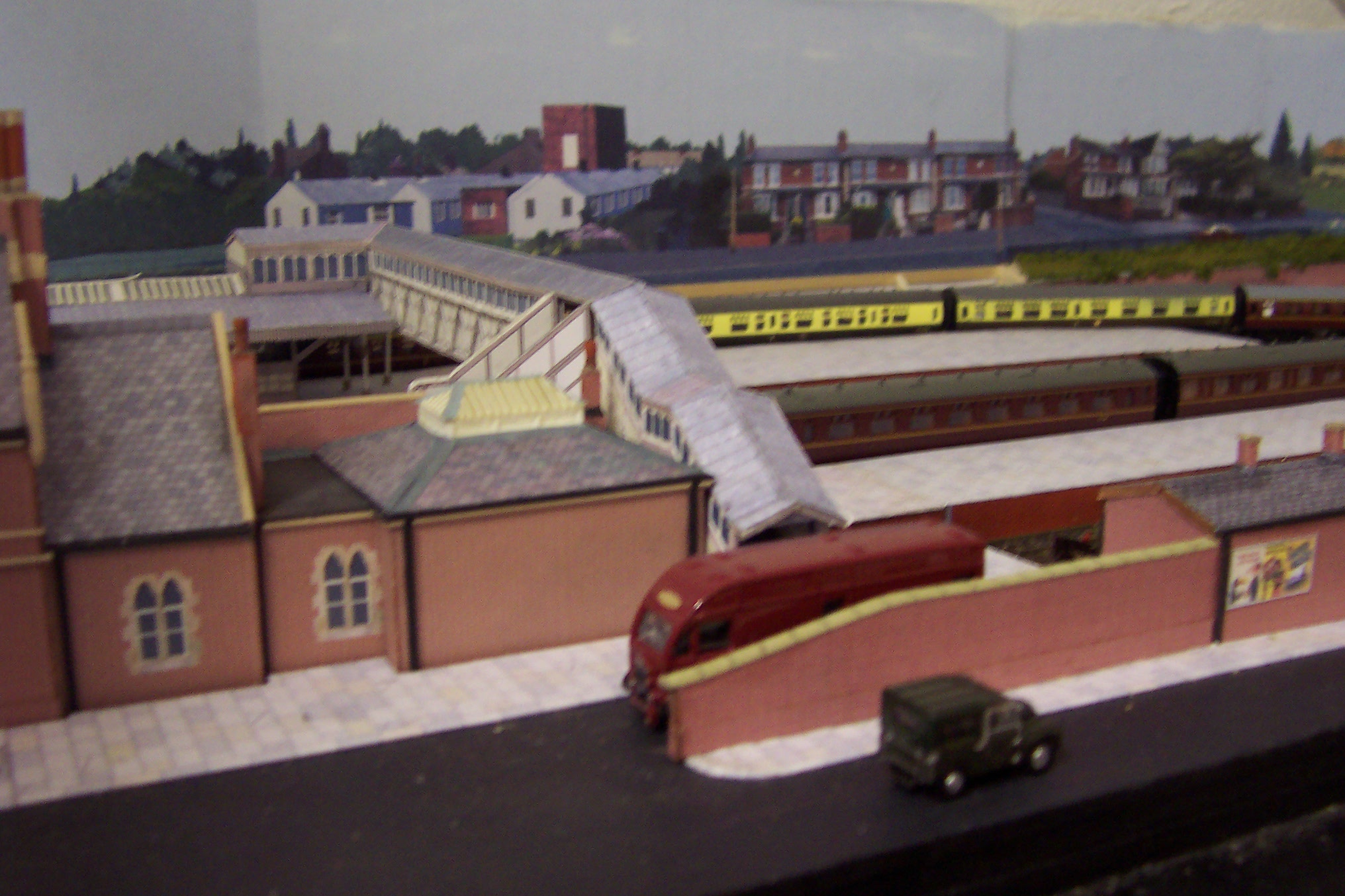
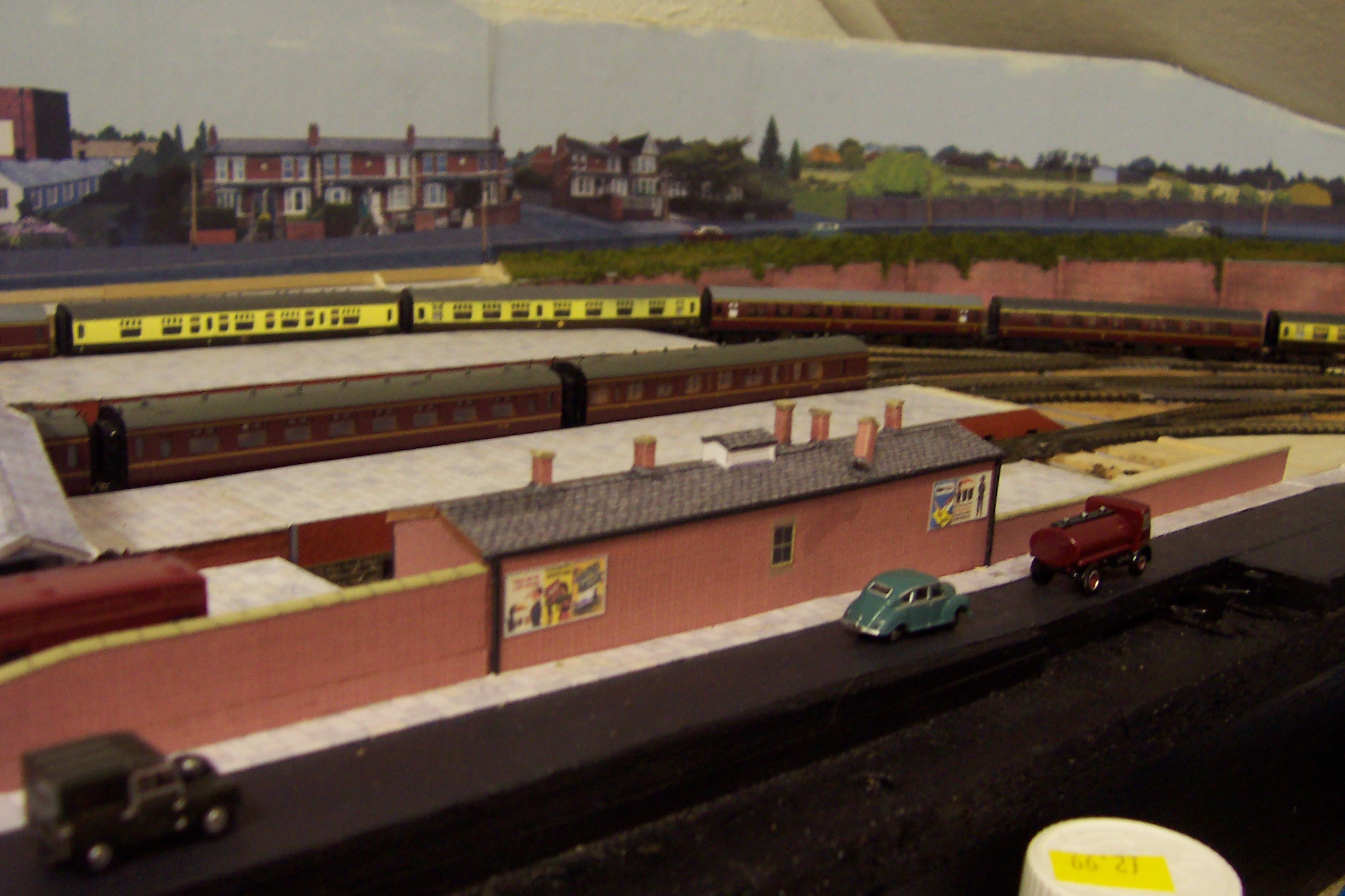
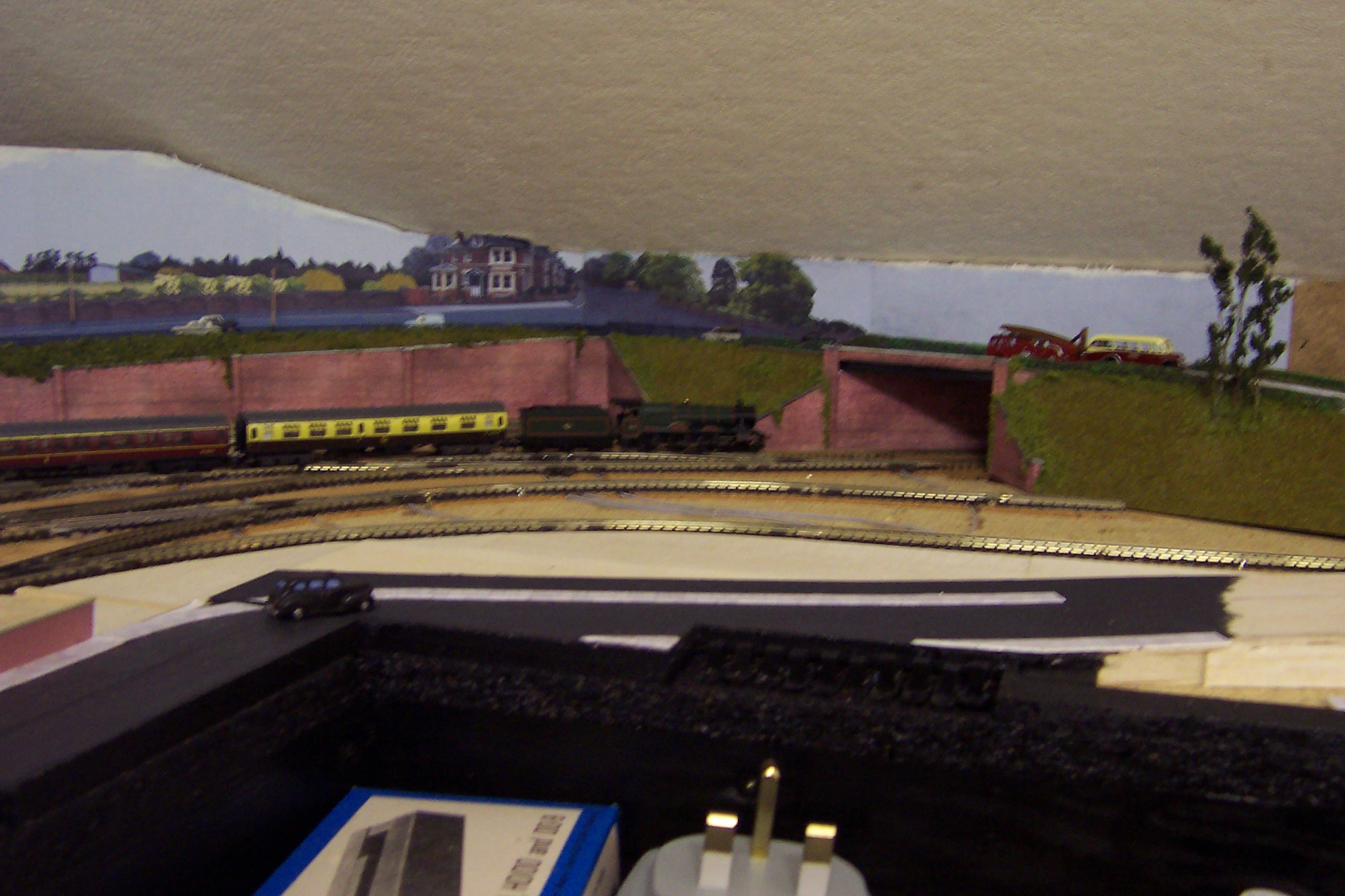
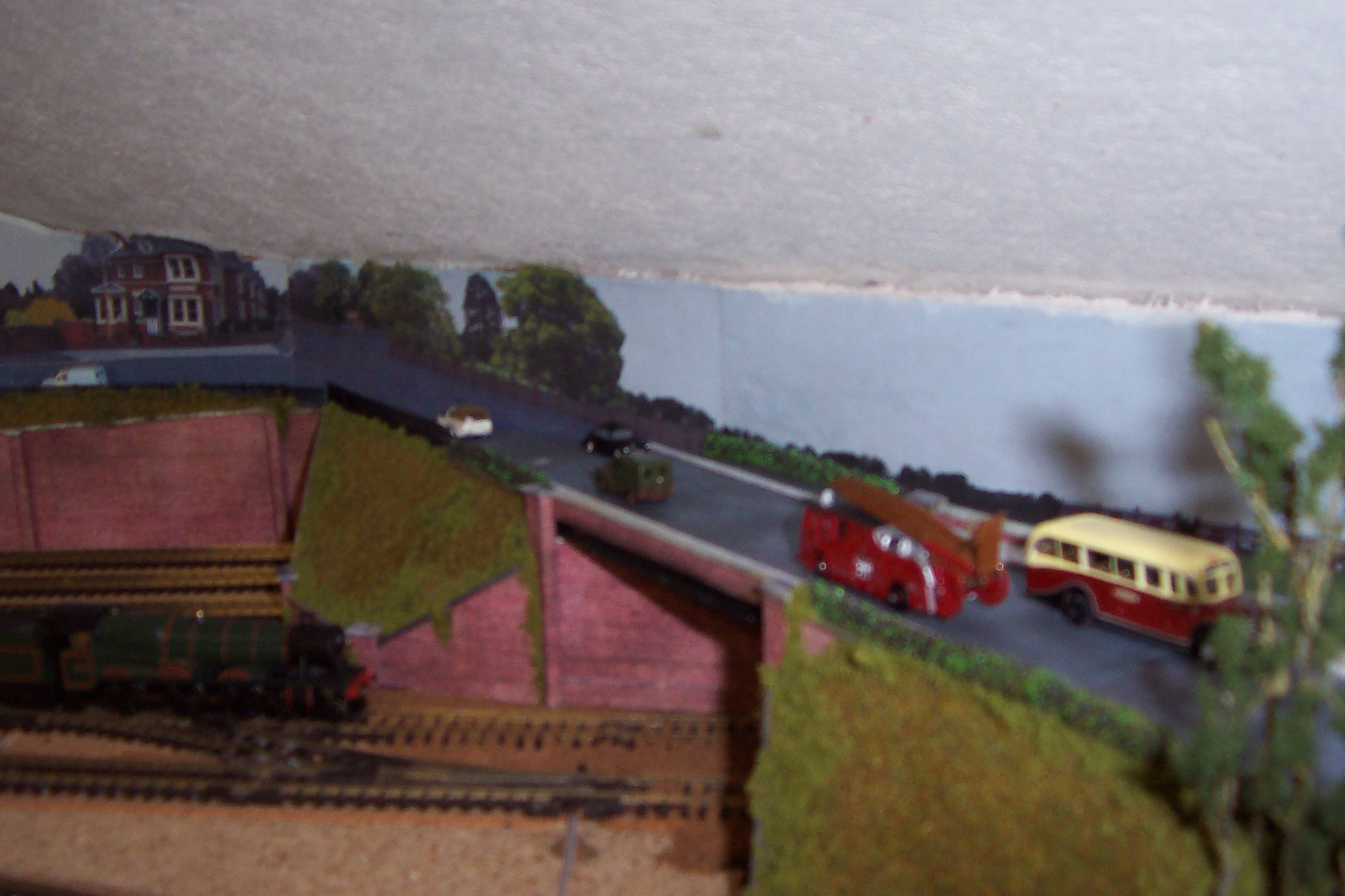
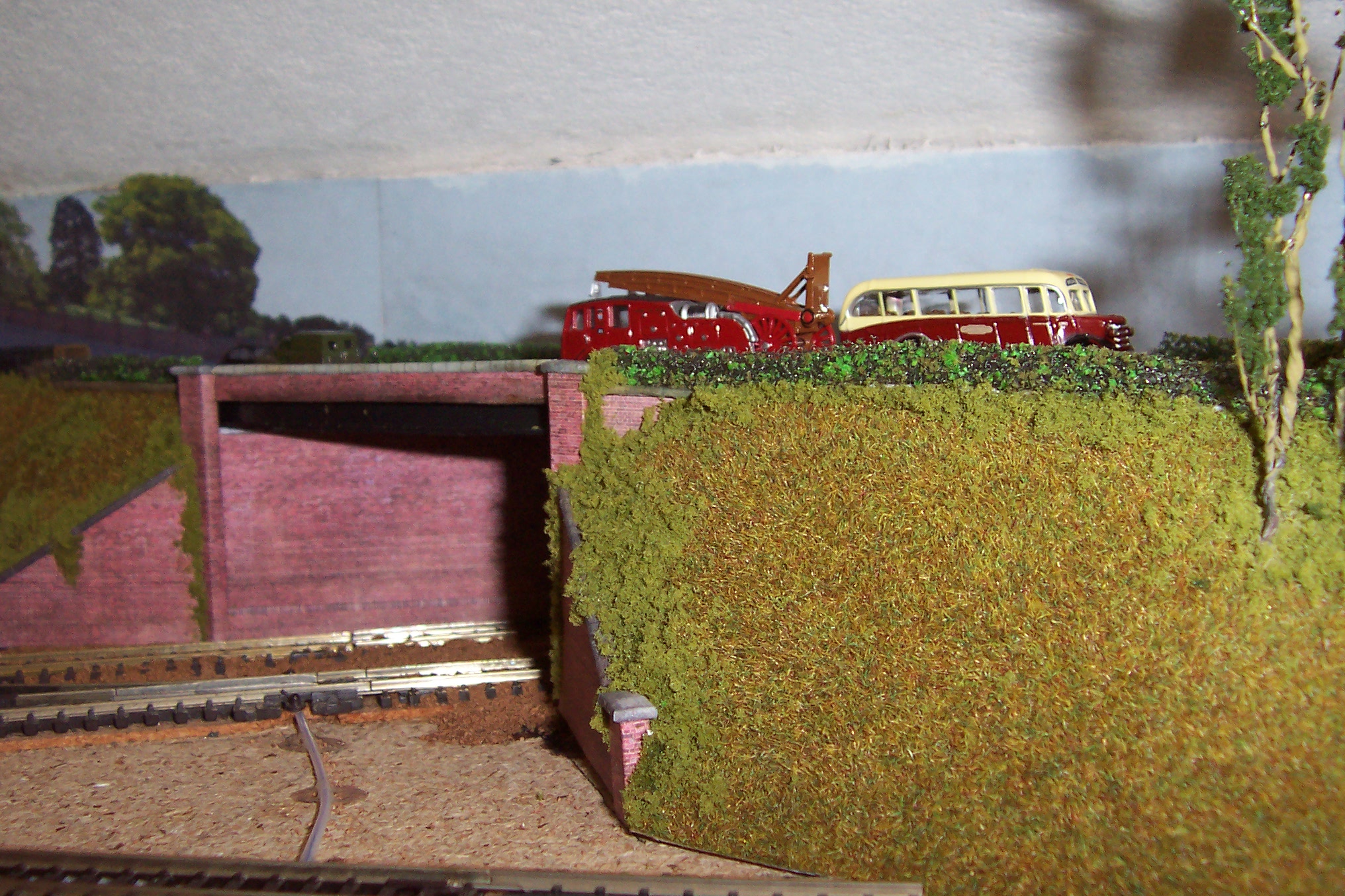
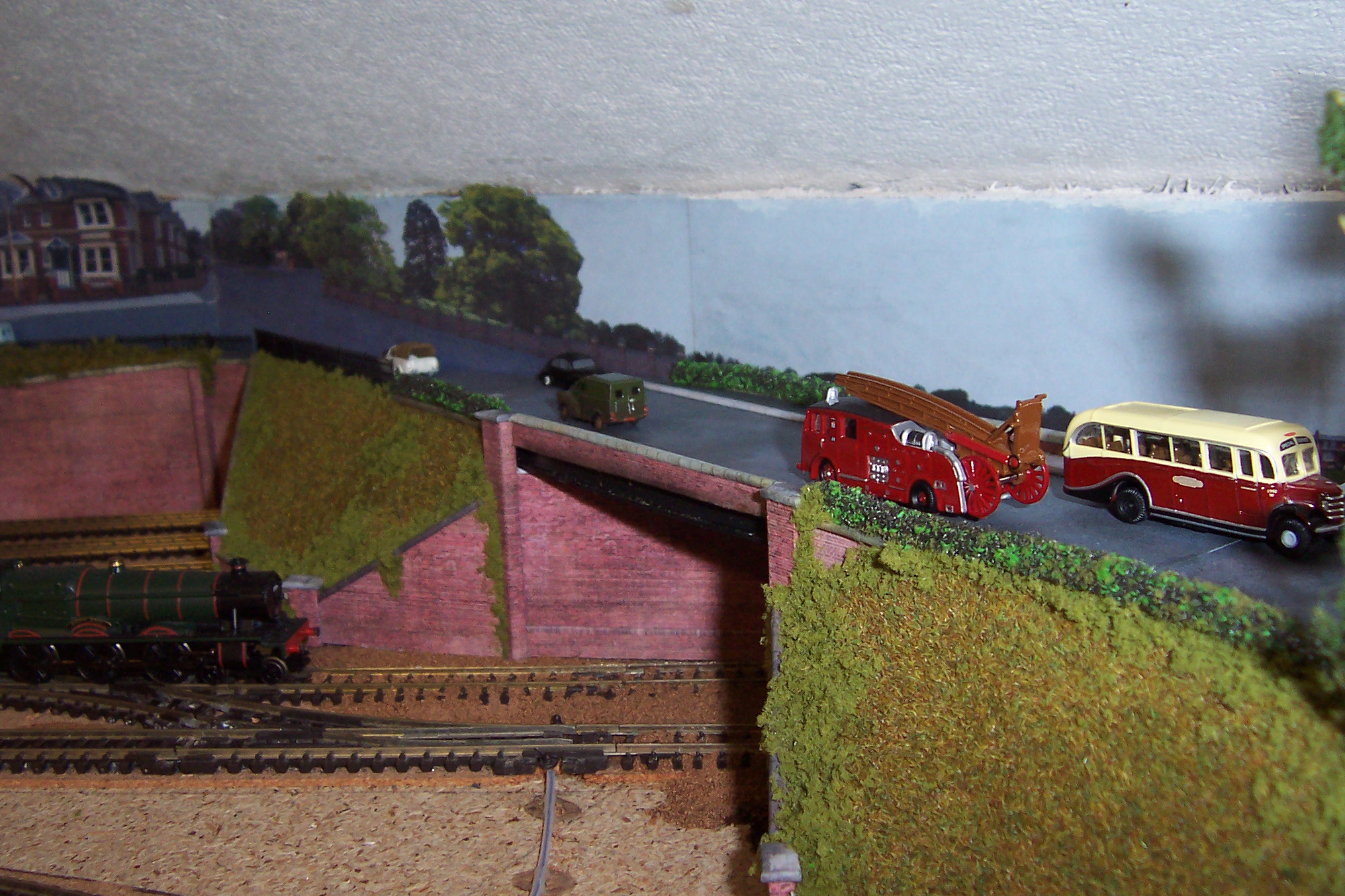
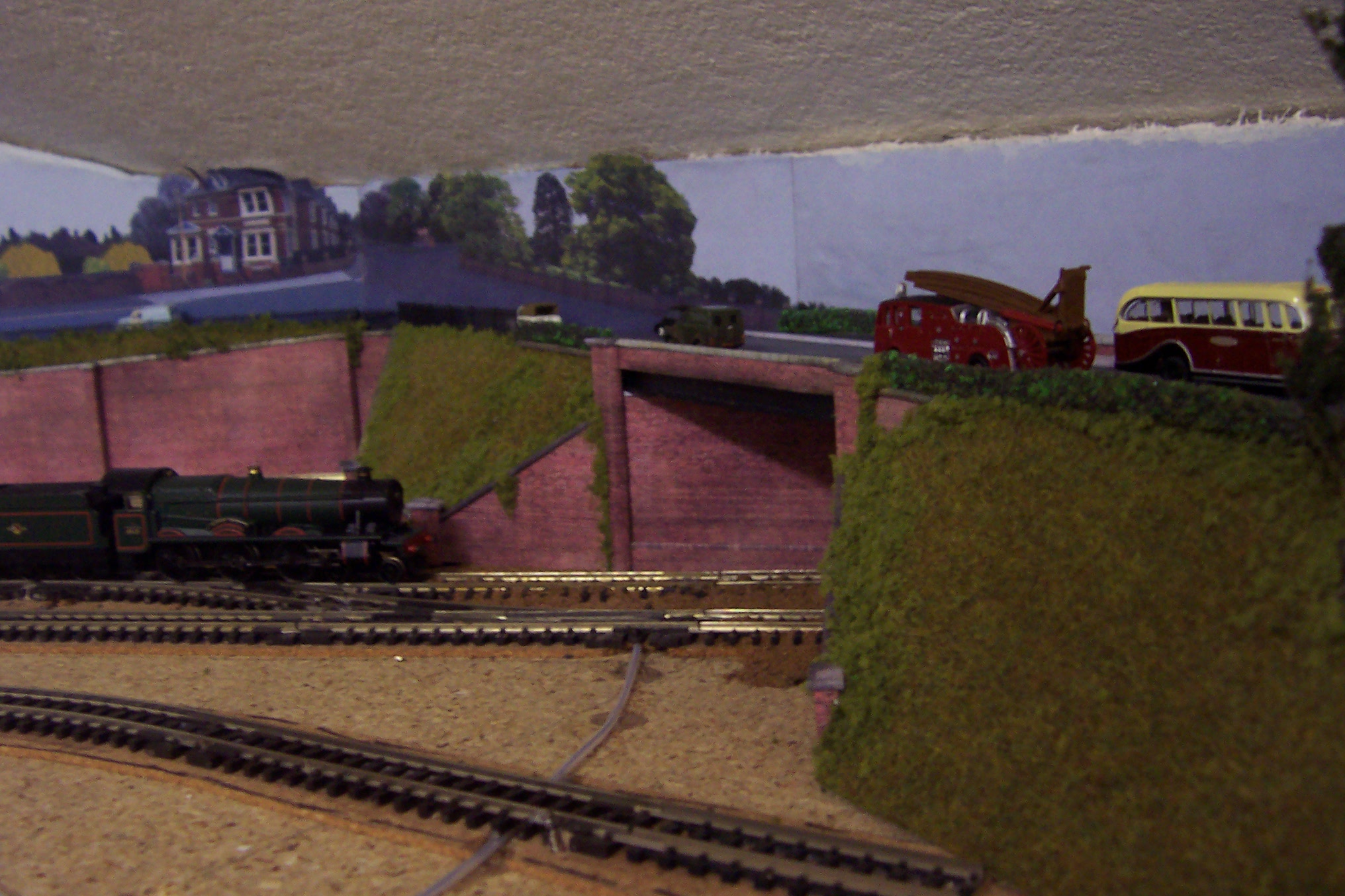
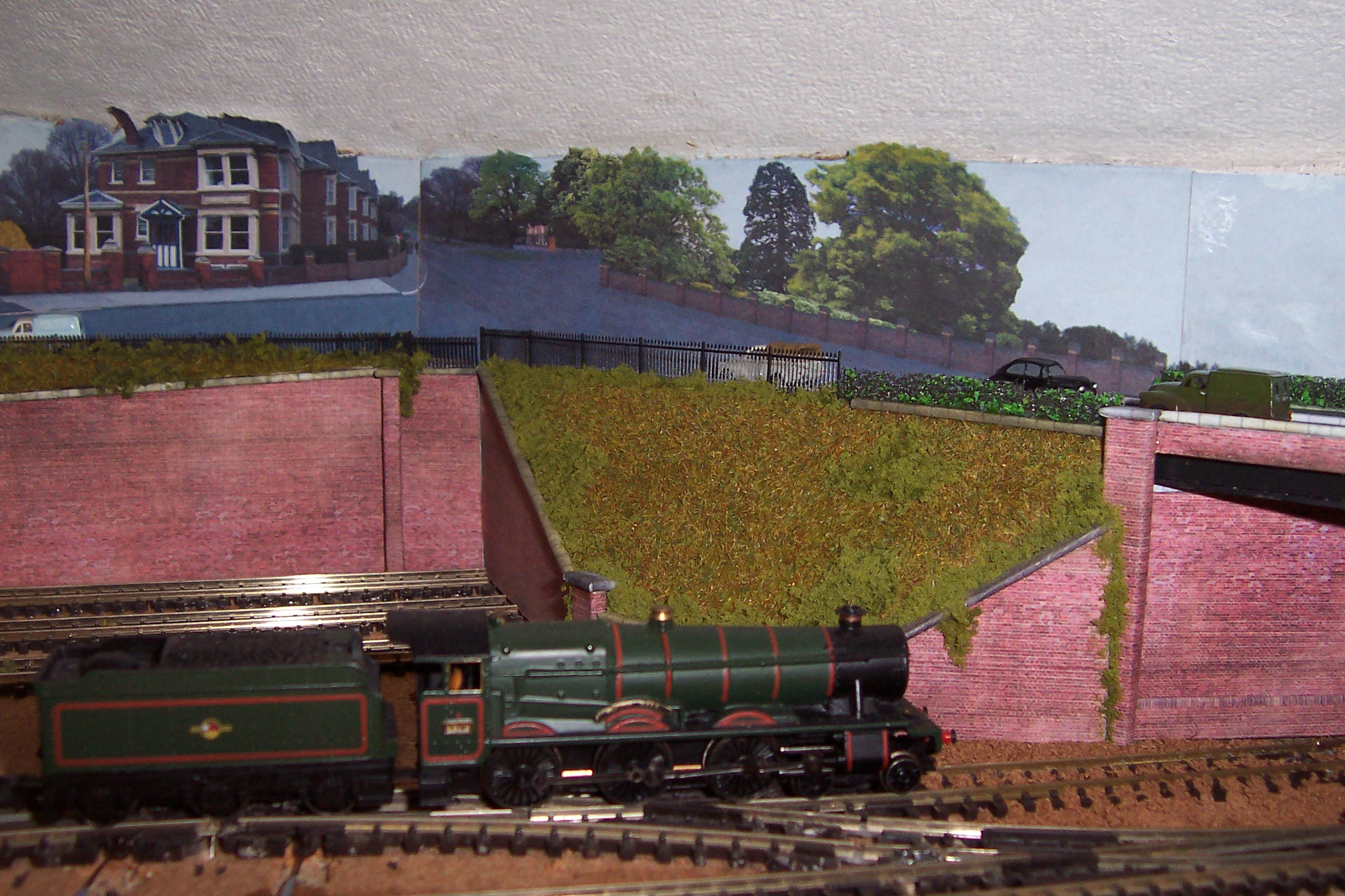
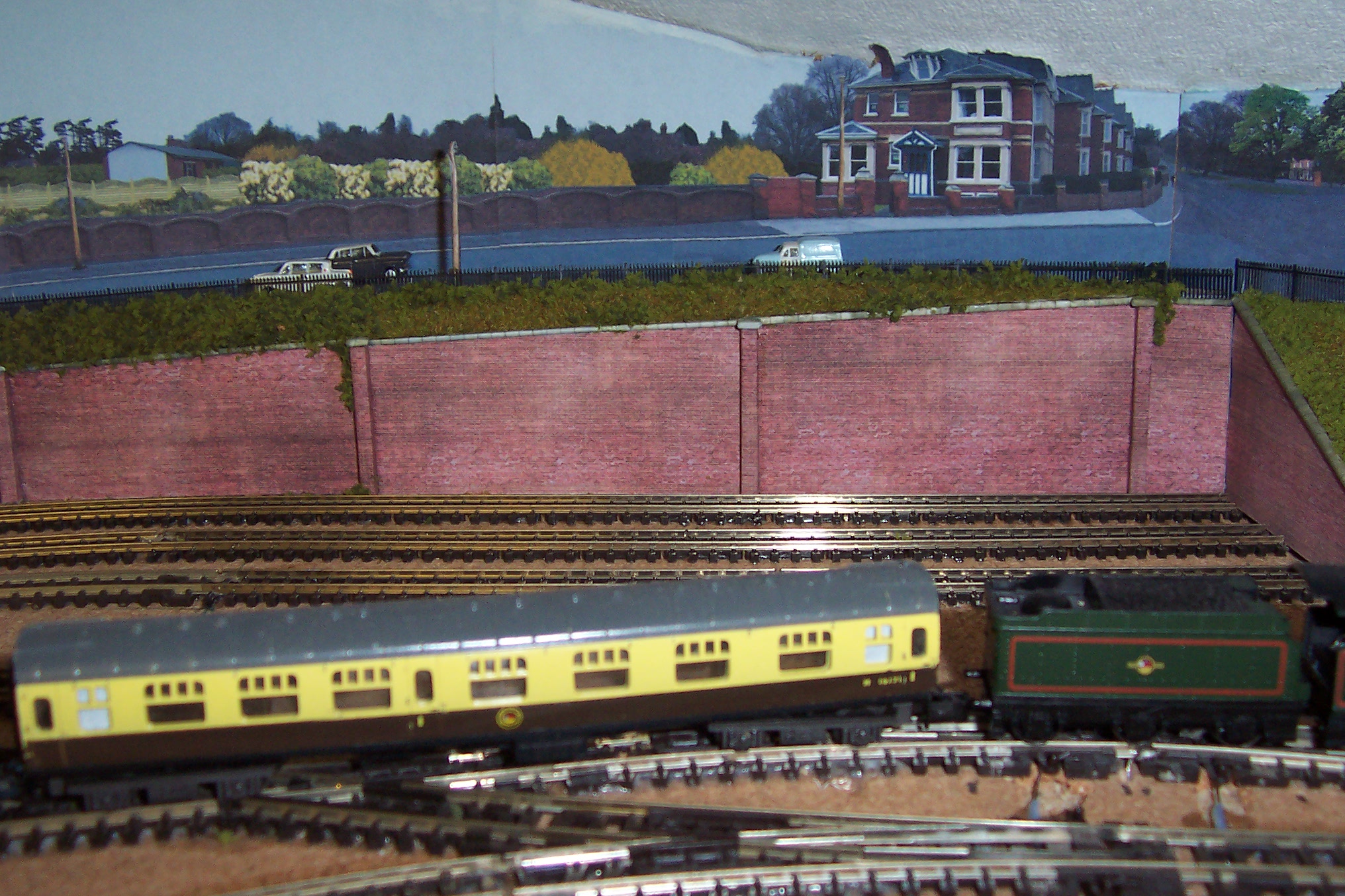
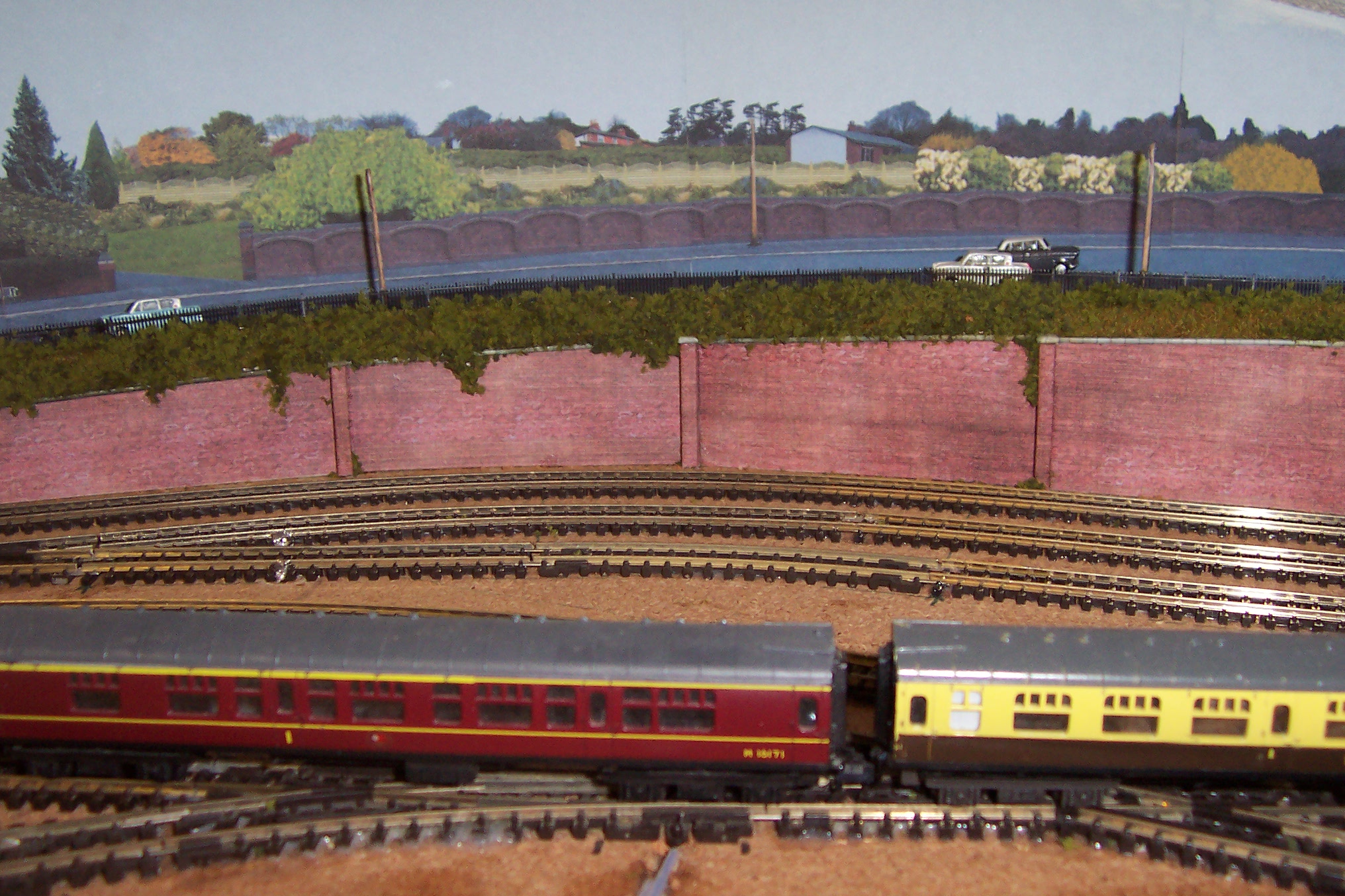


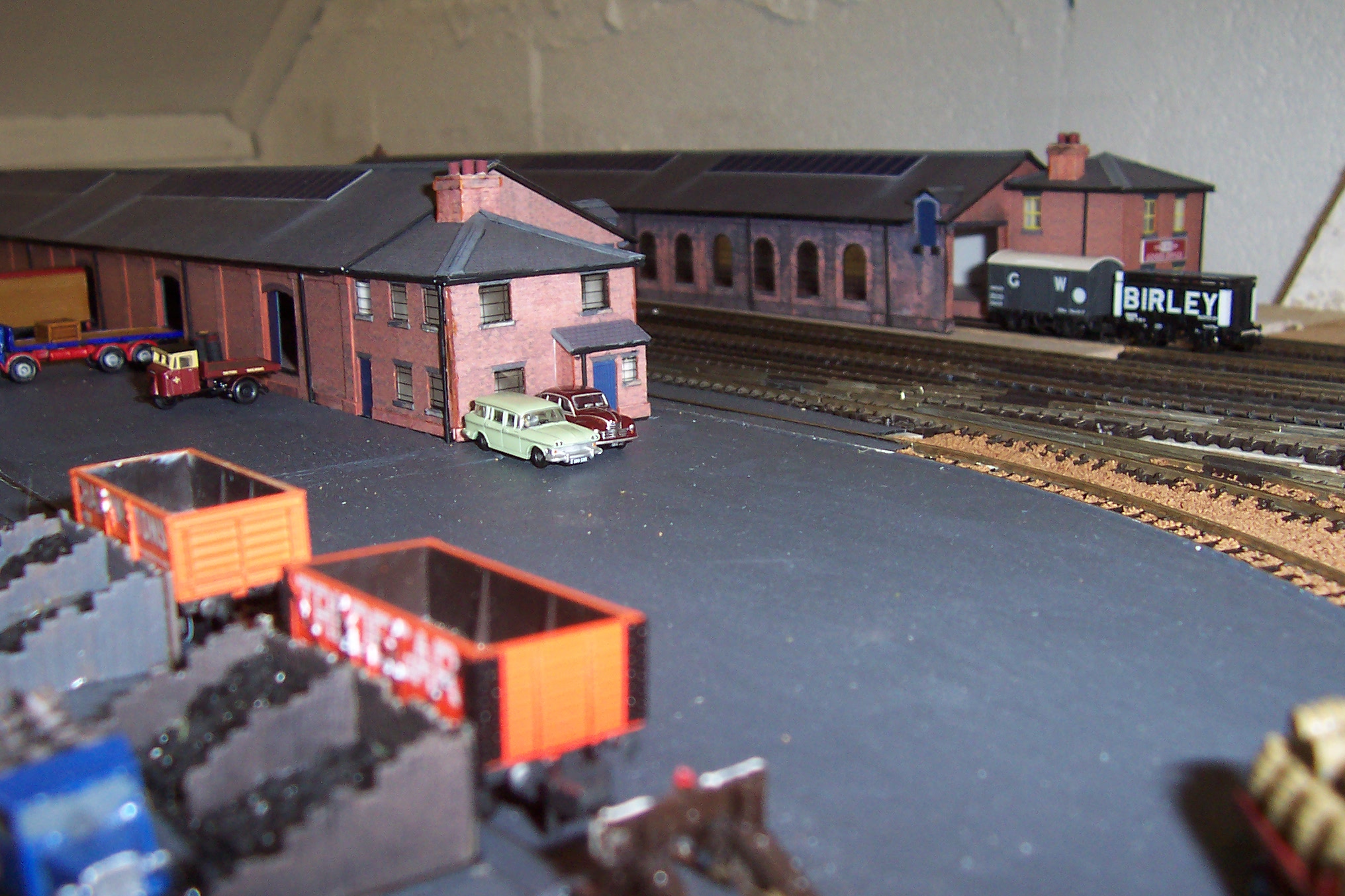
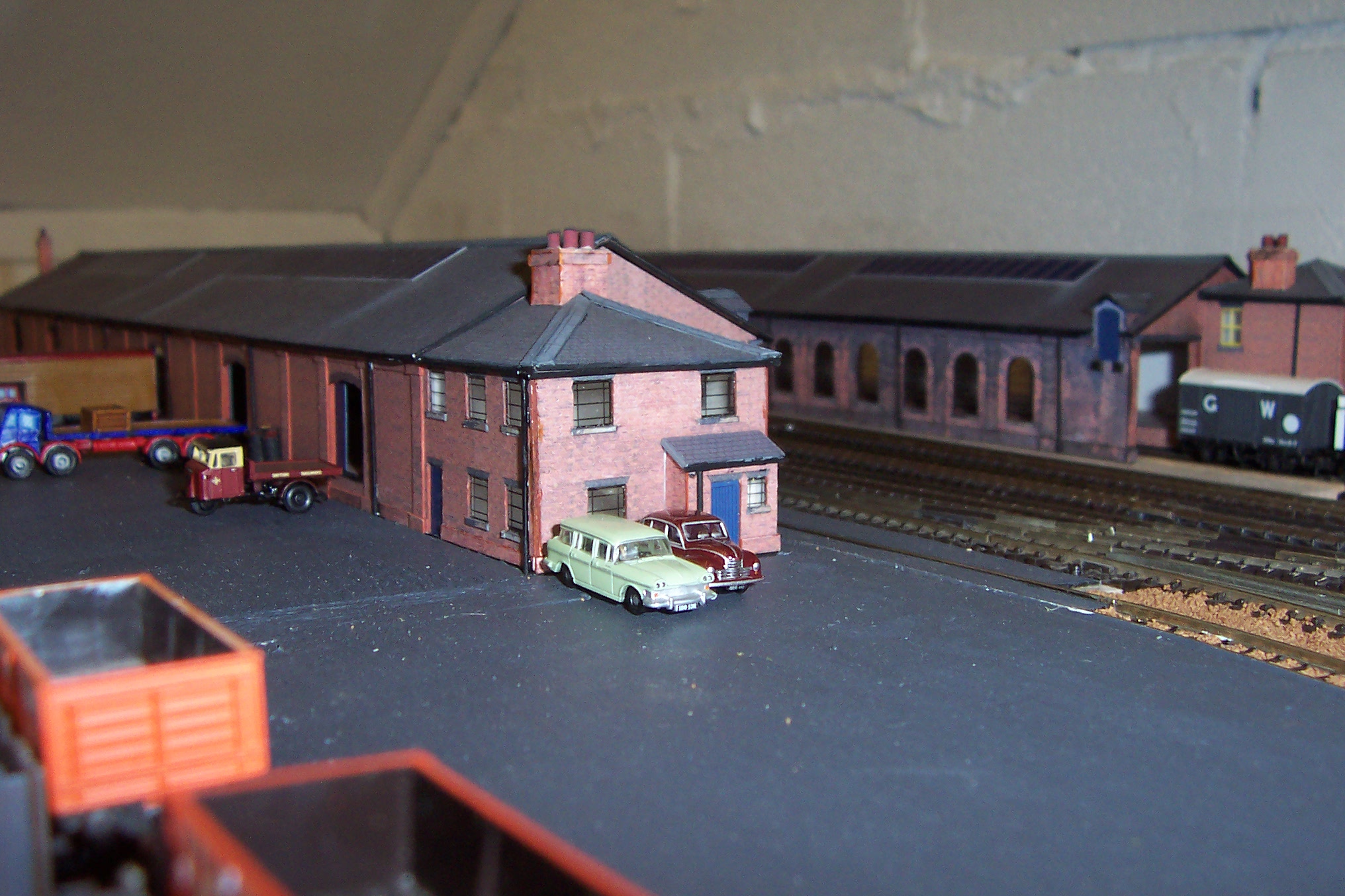
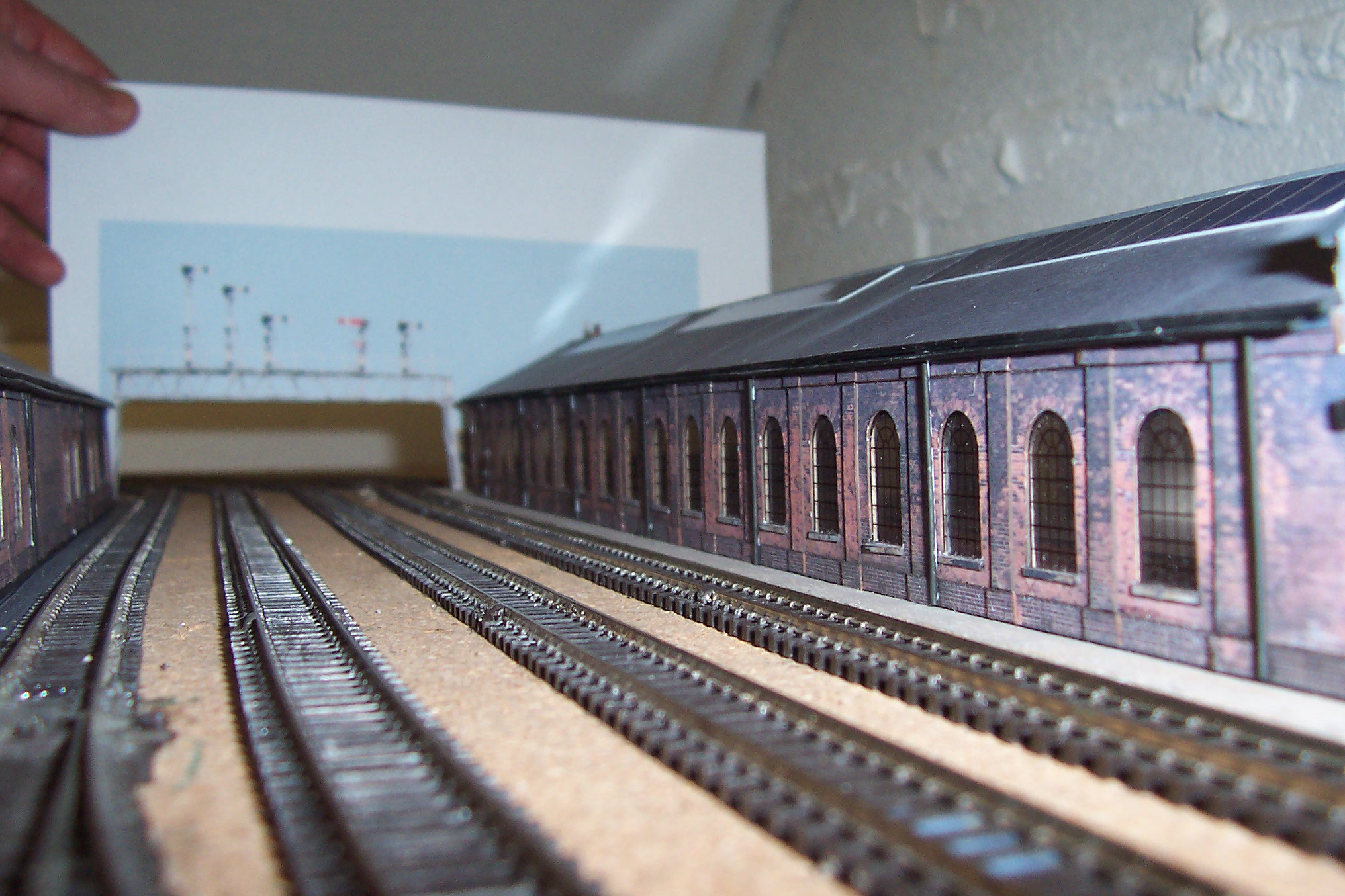
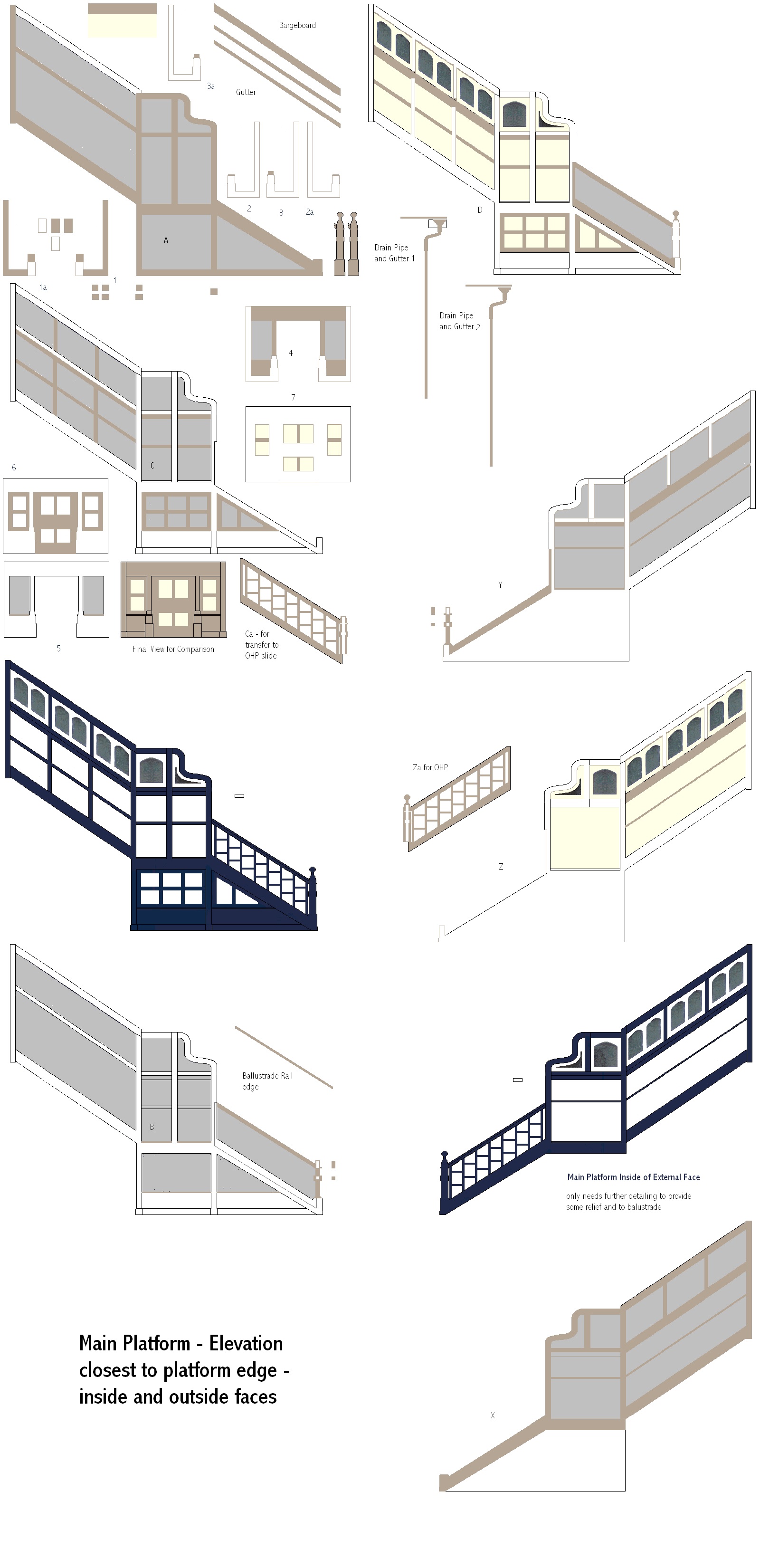
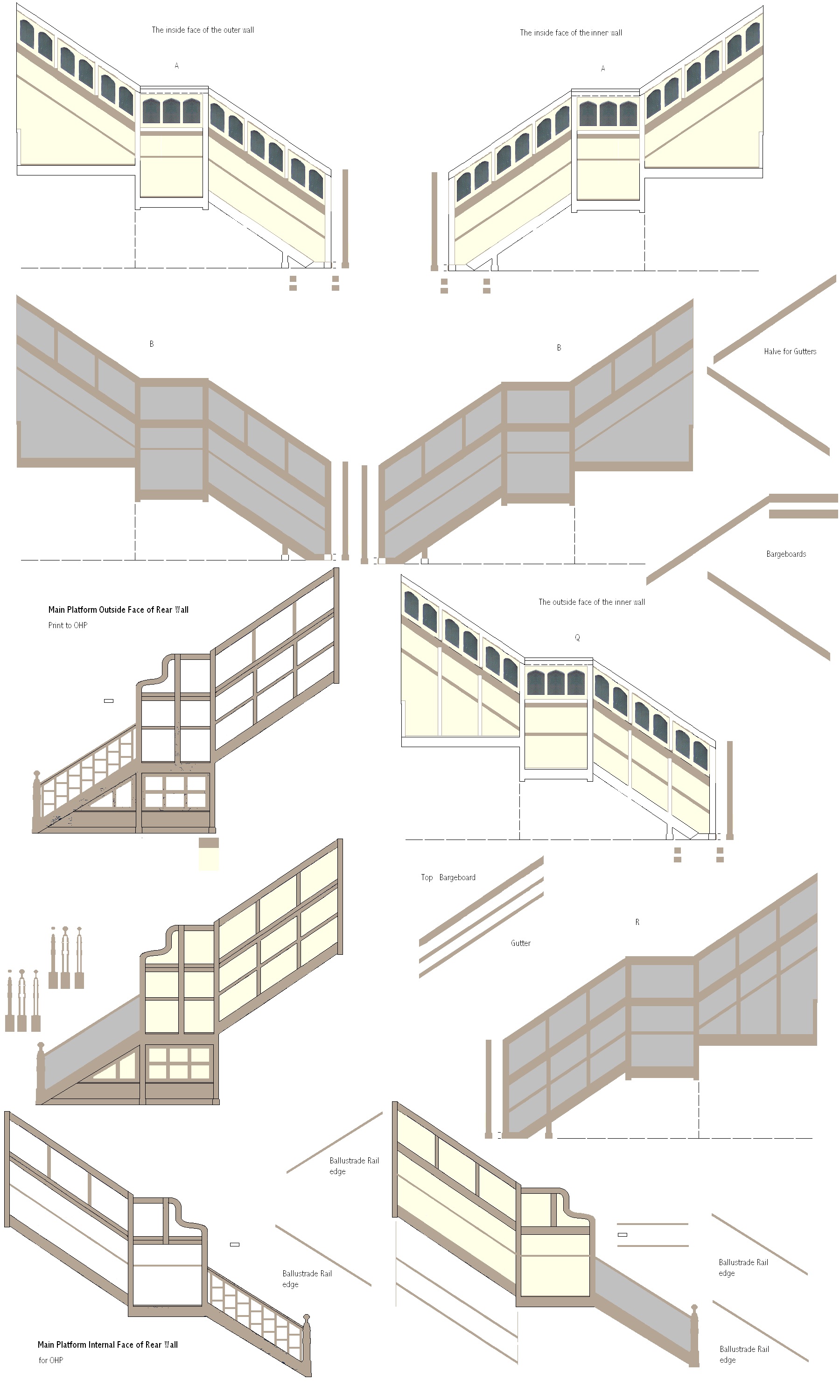
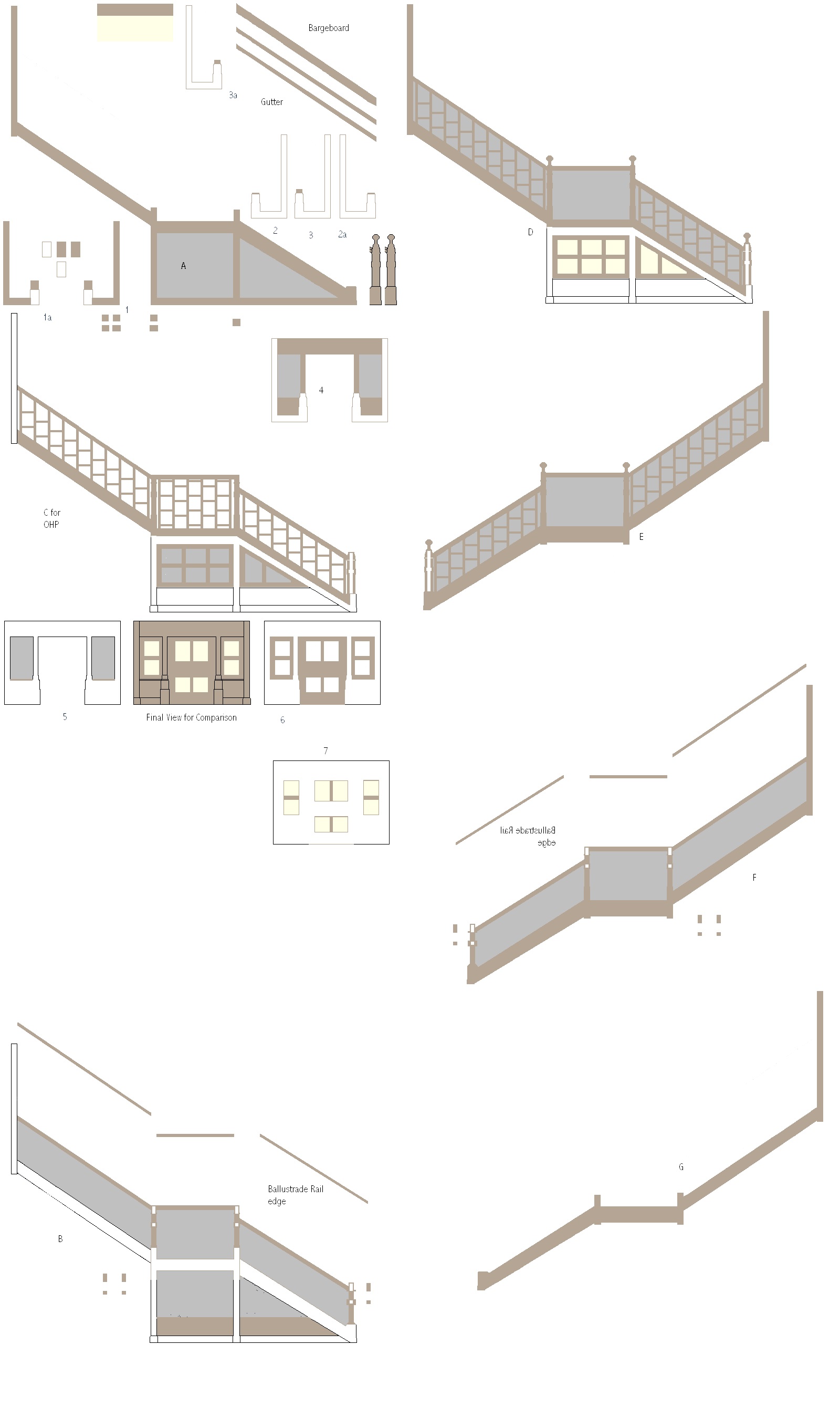
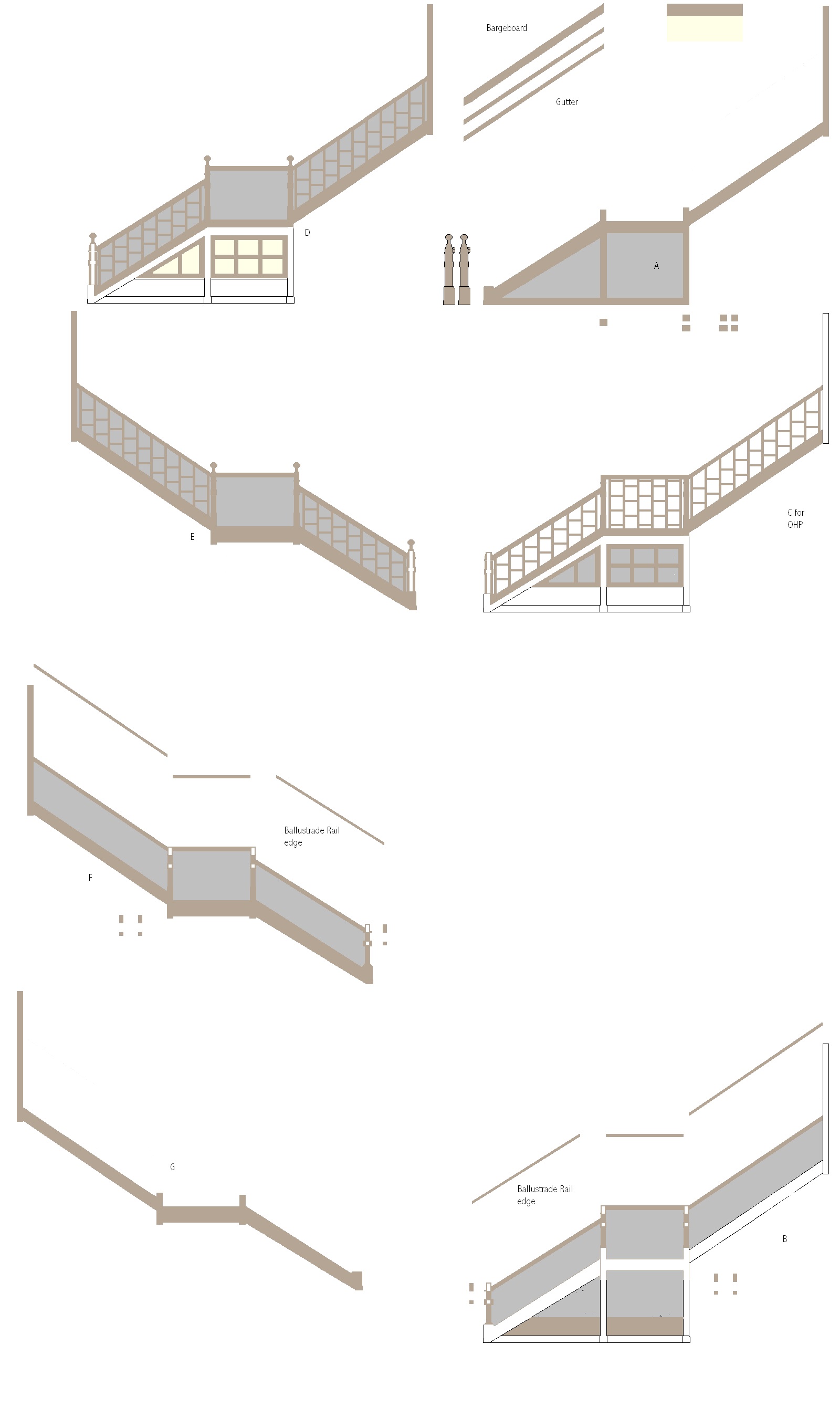
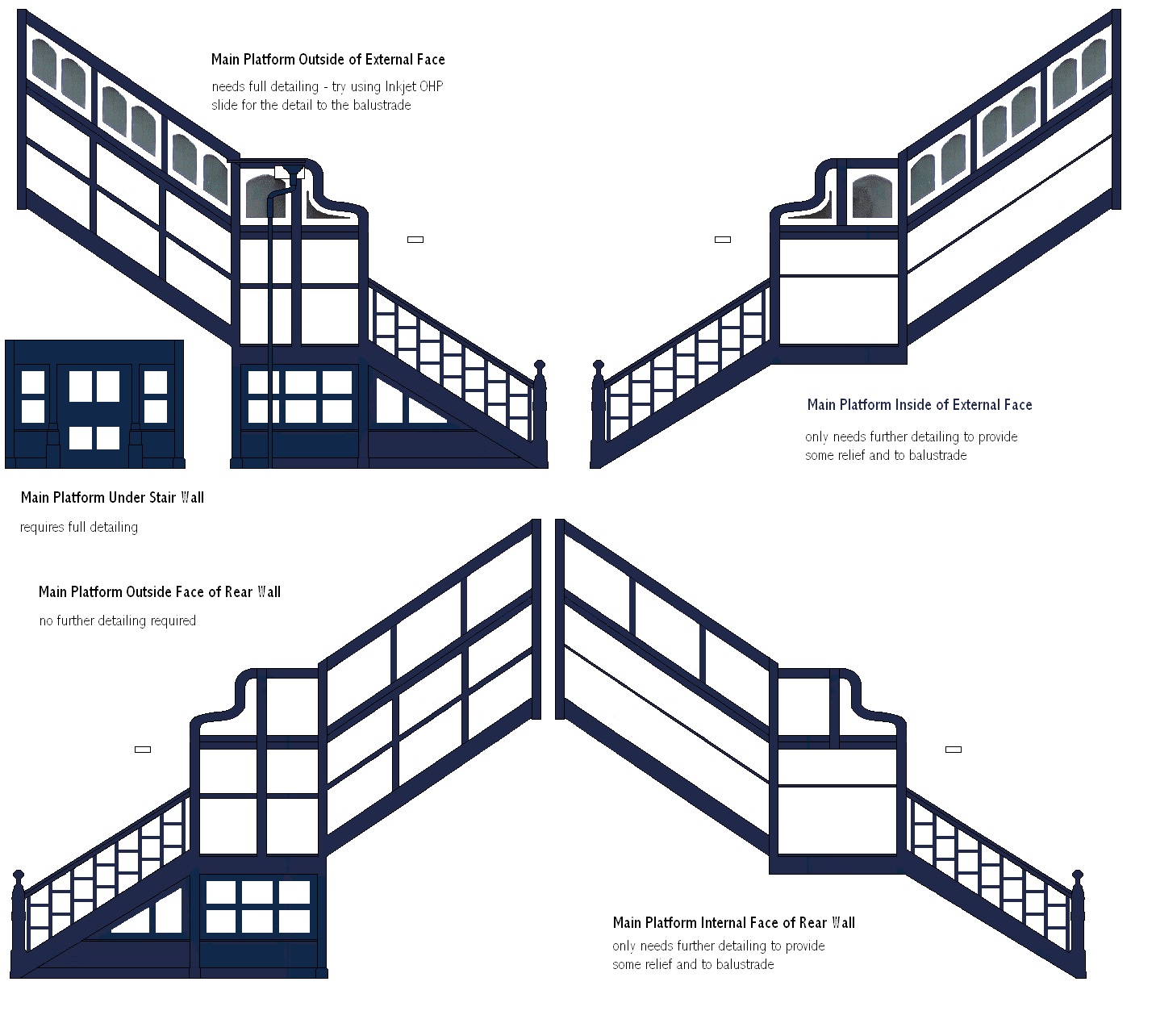
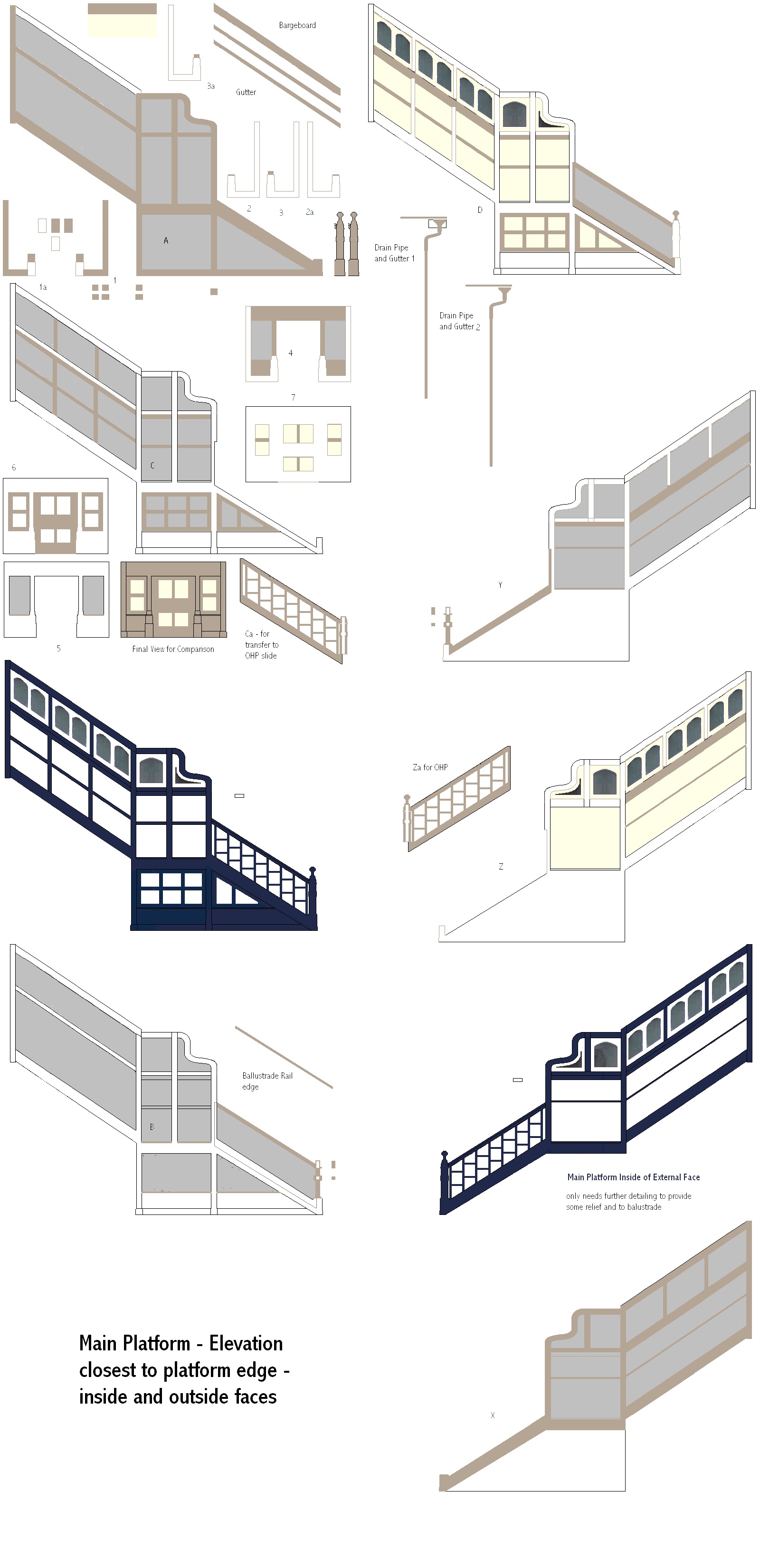
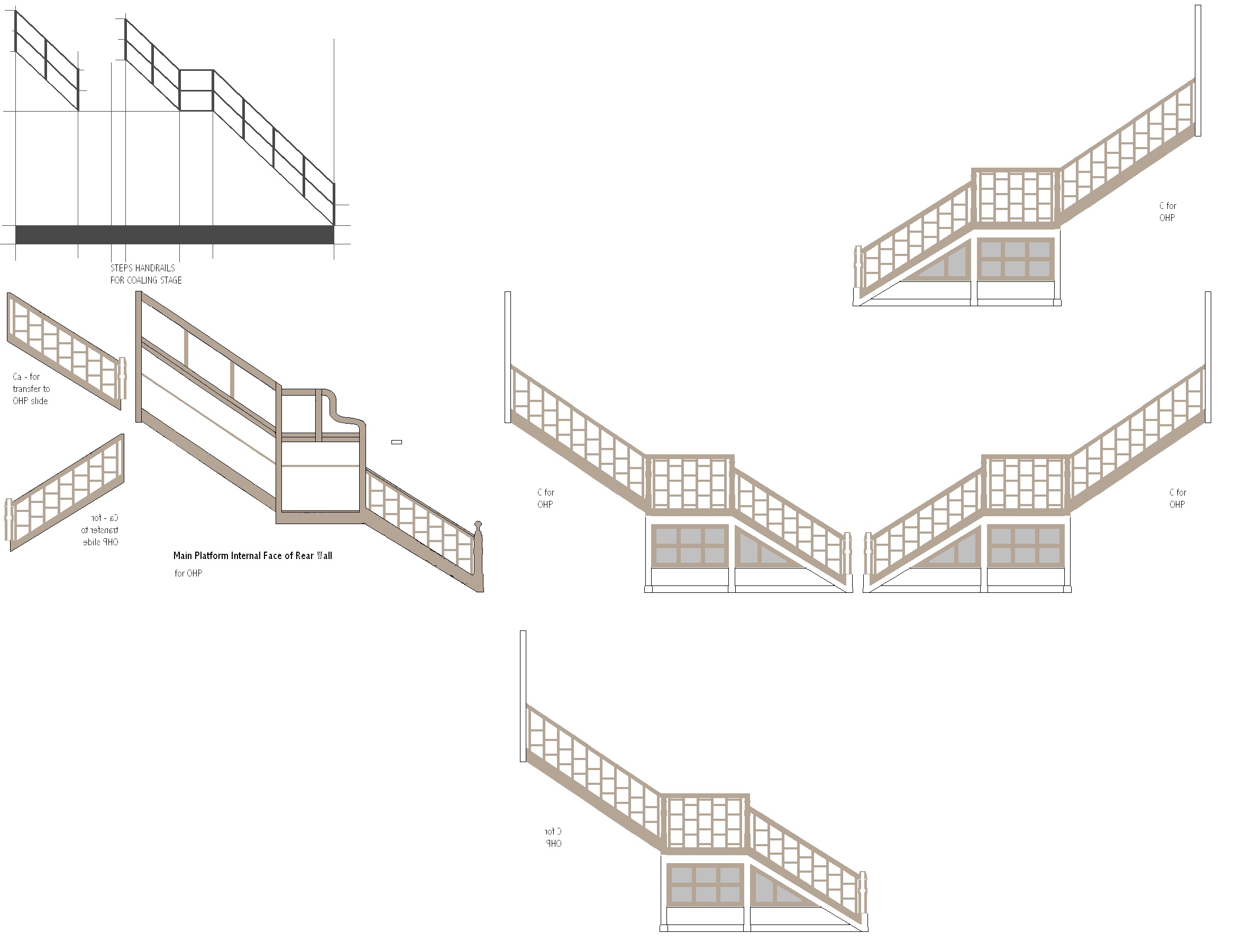
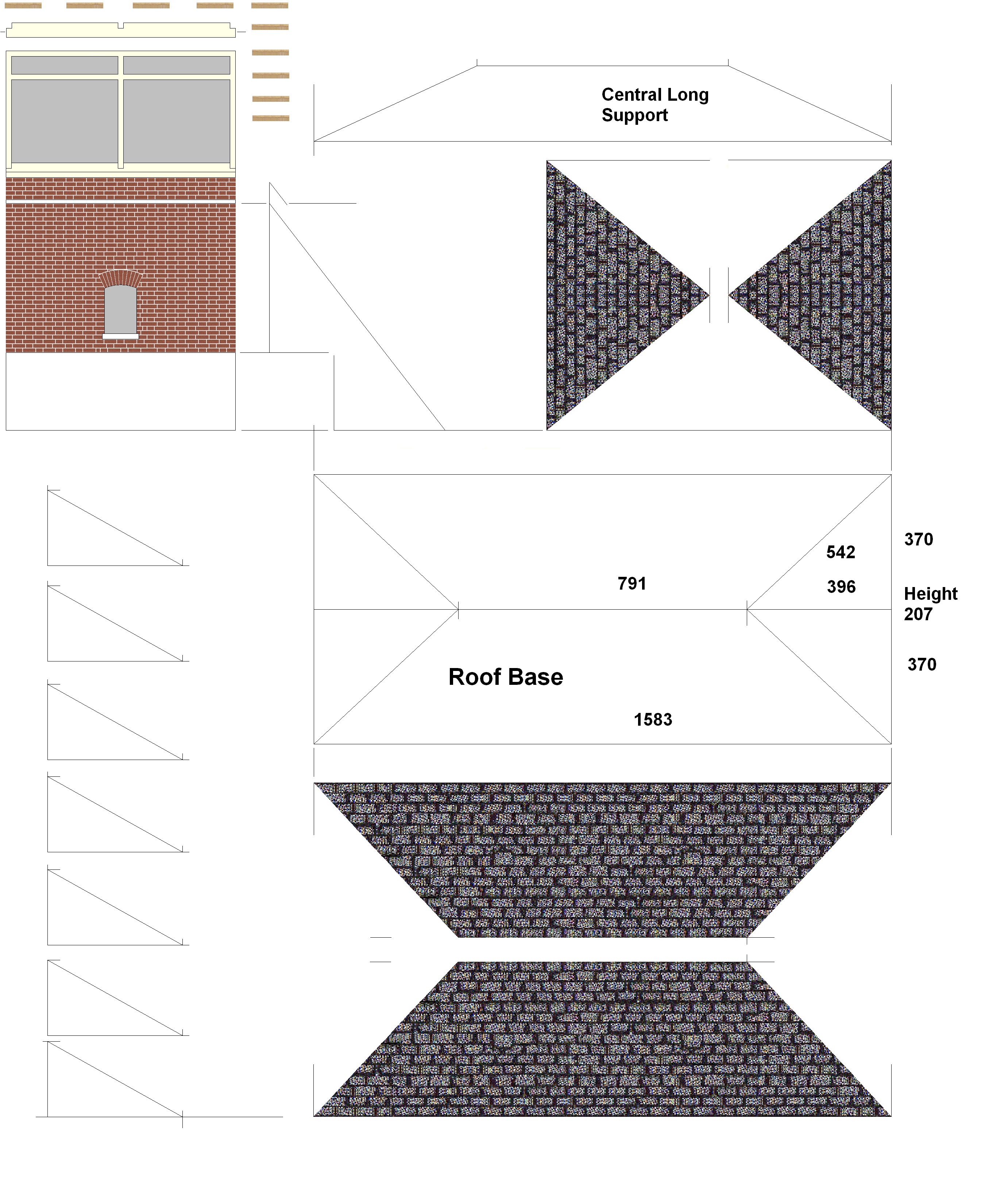
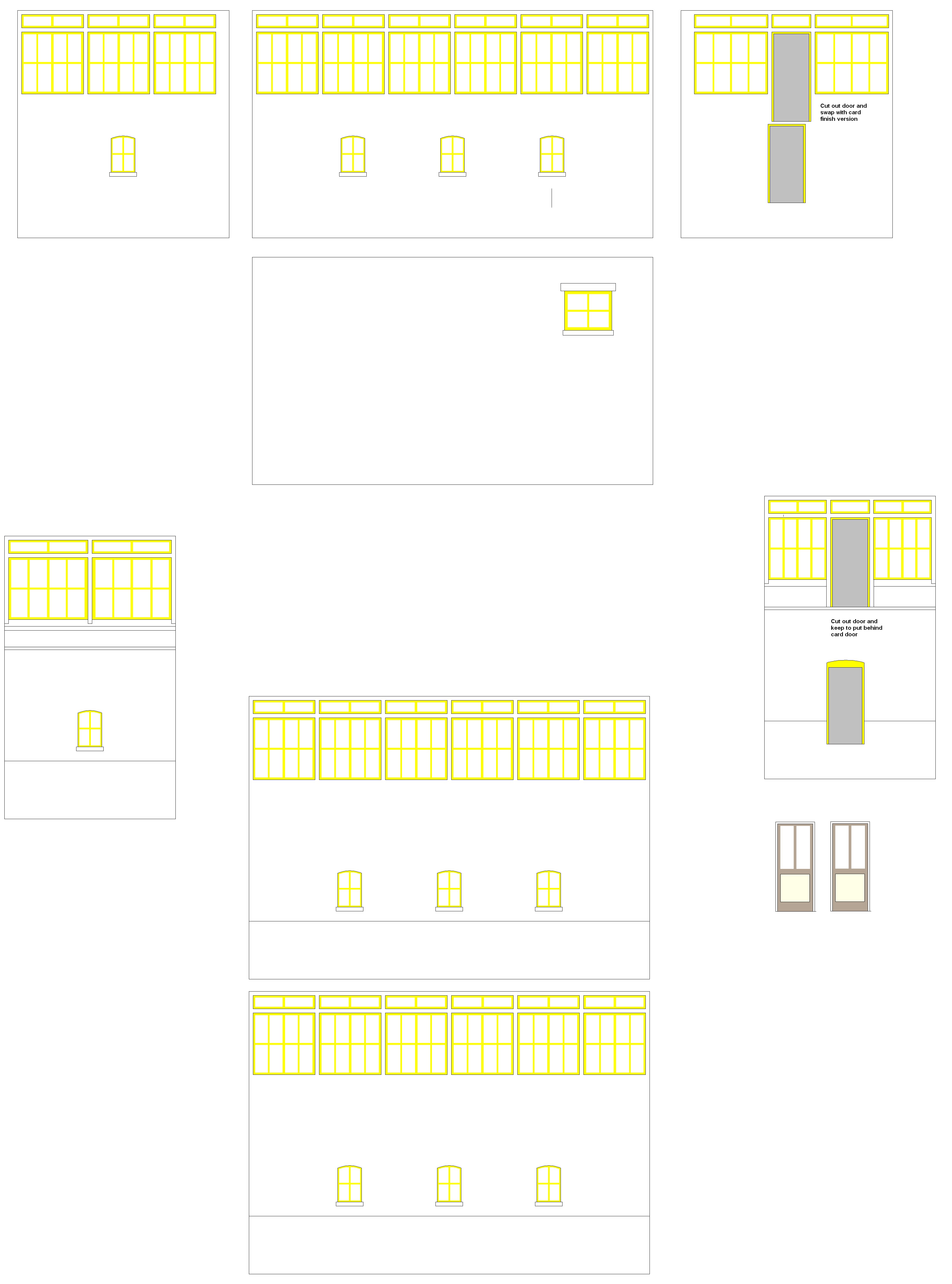
This post carries a series of images from ‘Paint’ which were drawn and then built up in layers to create the N Gauge model of Hereford Station Footbridge.

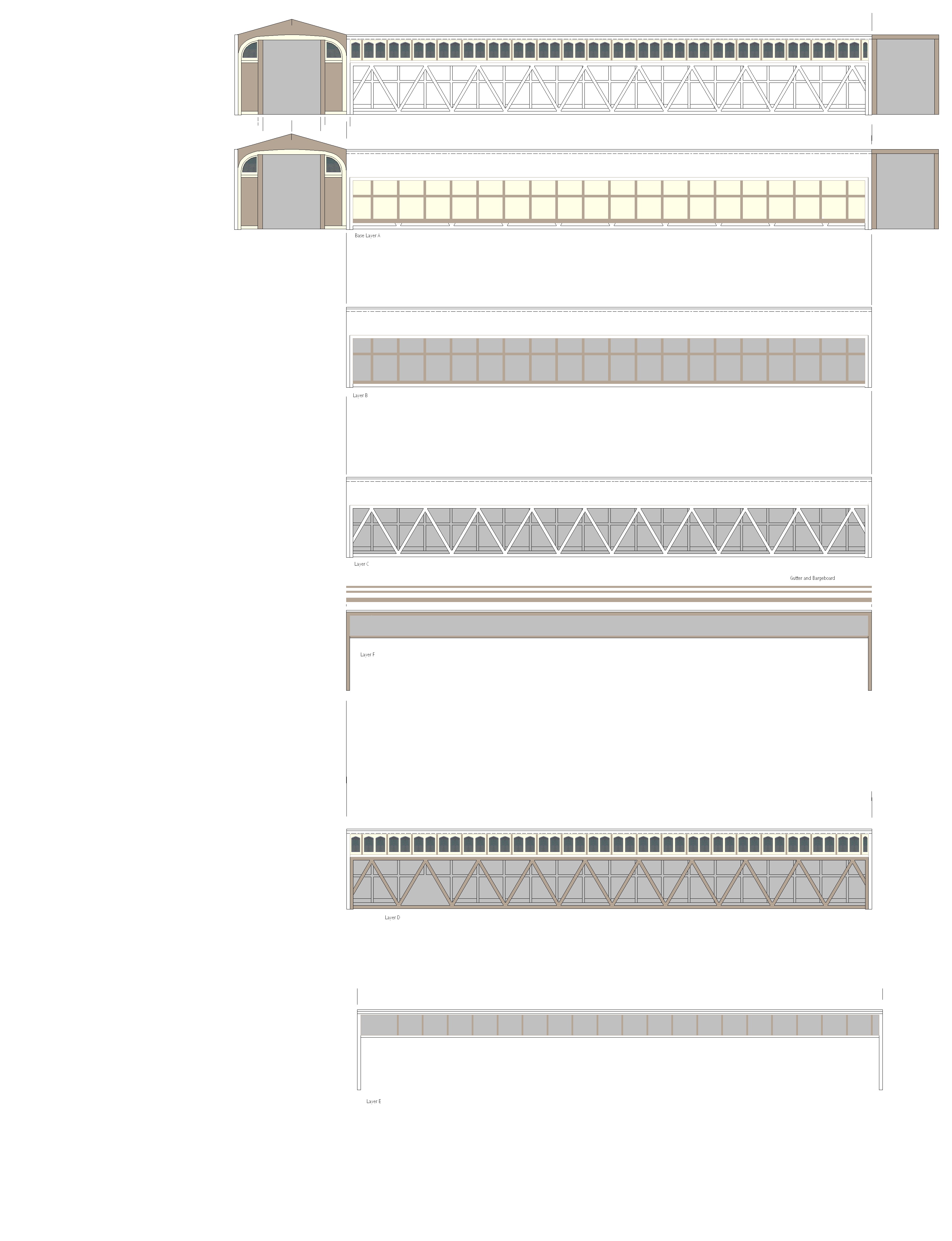
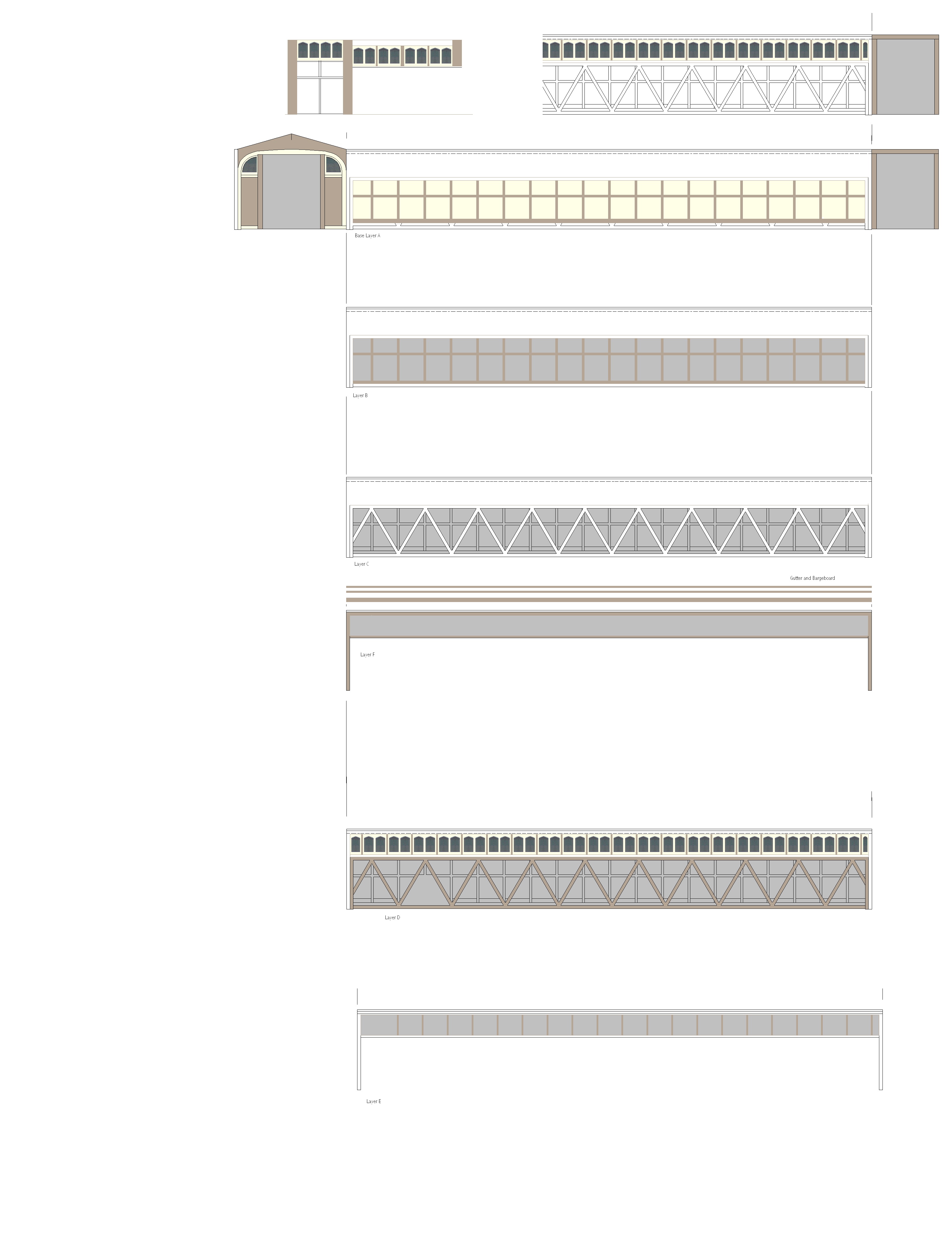
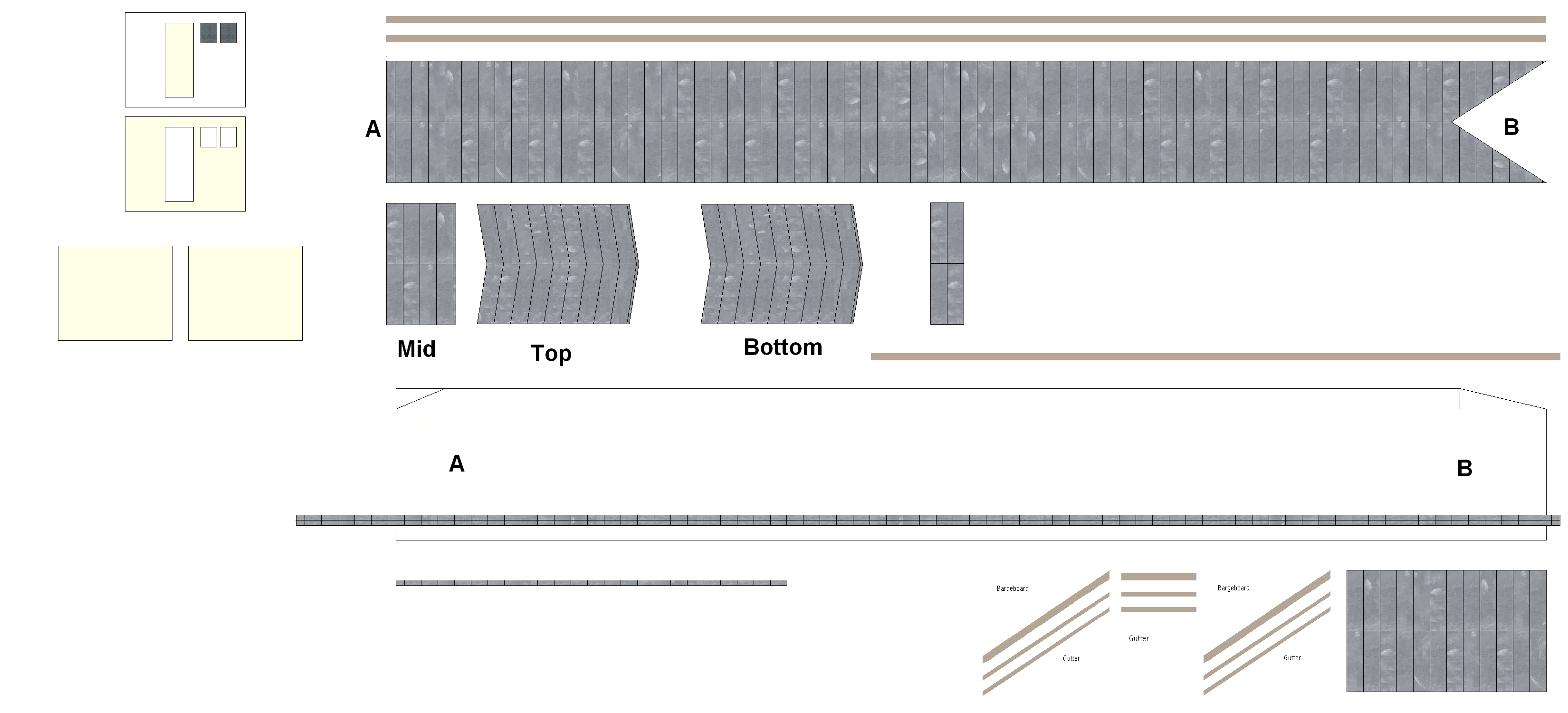
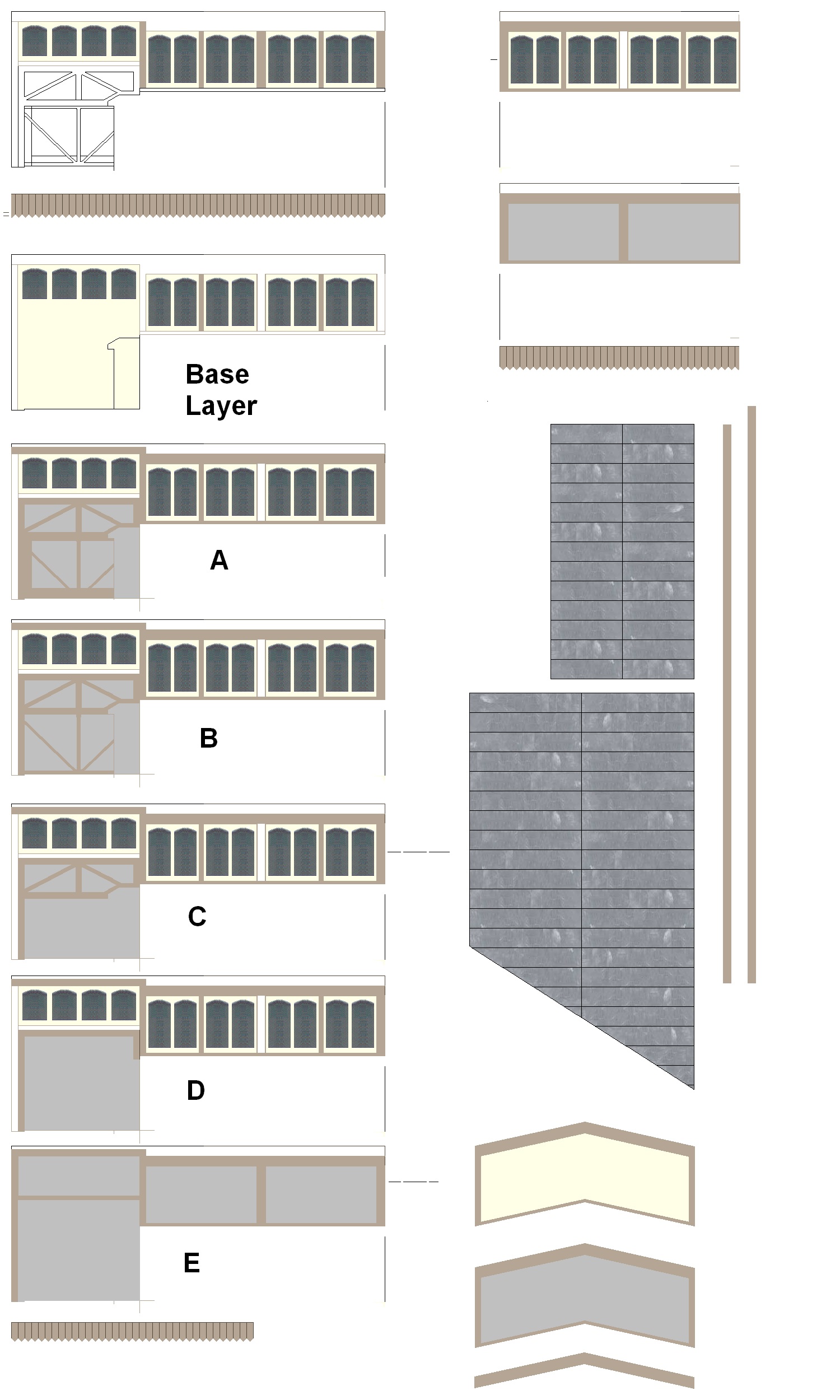
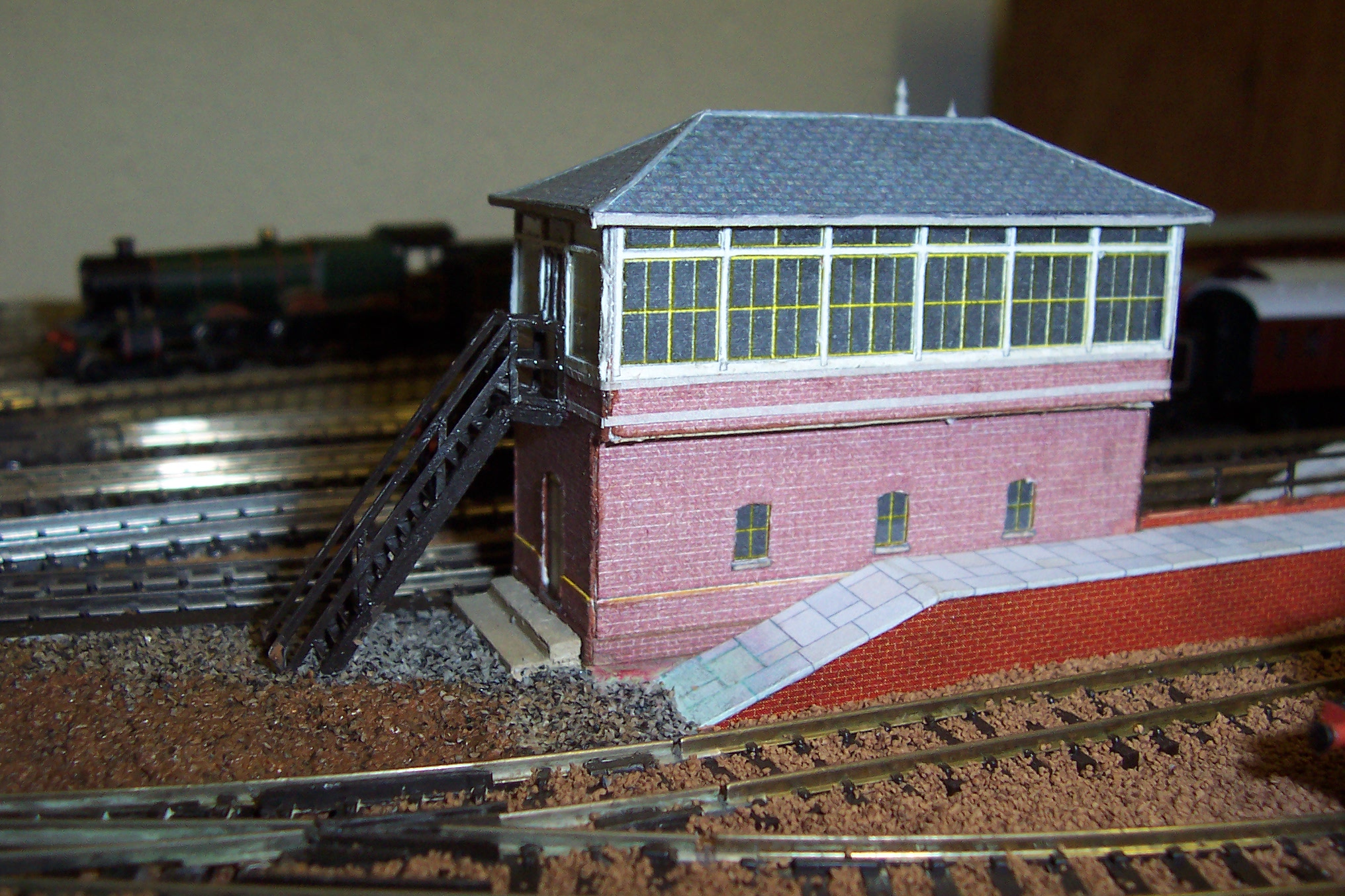
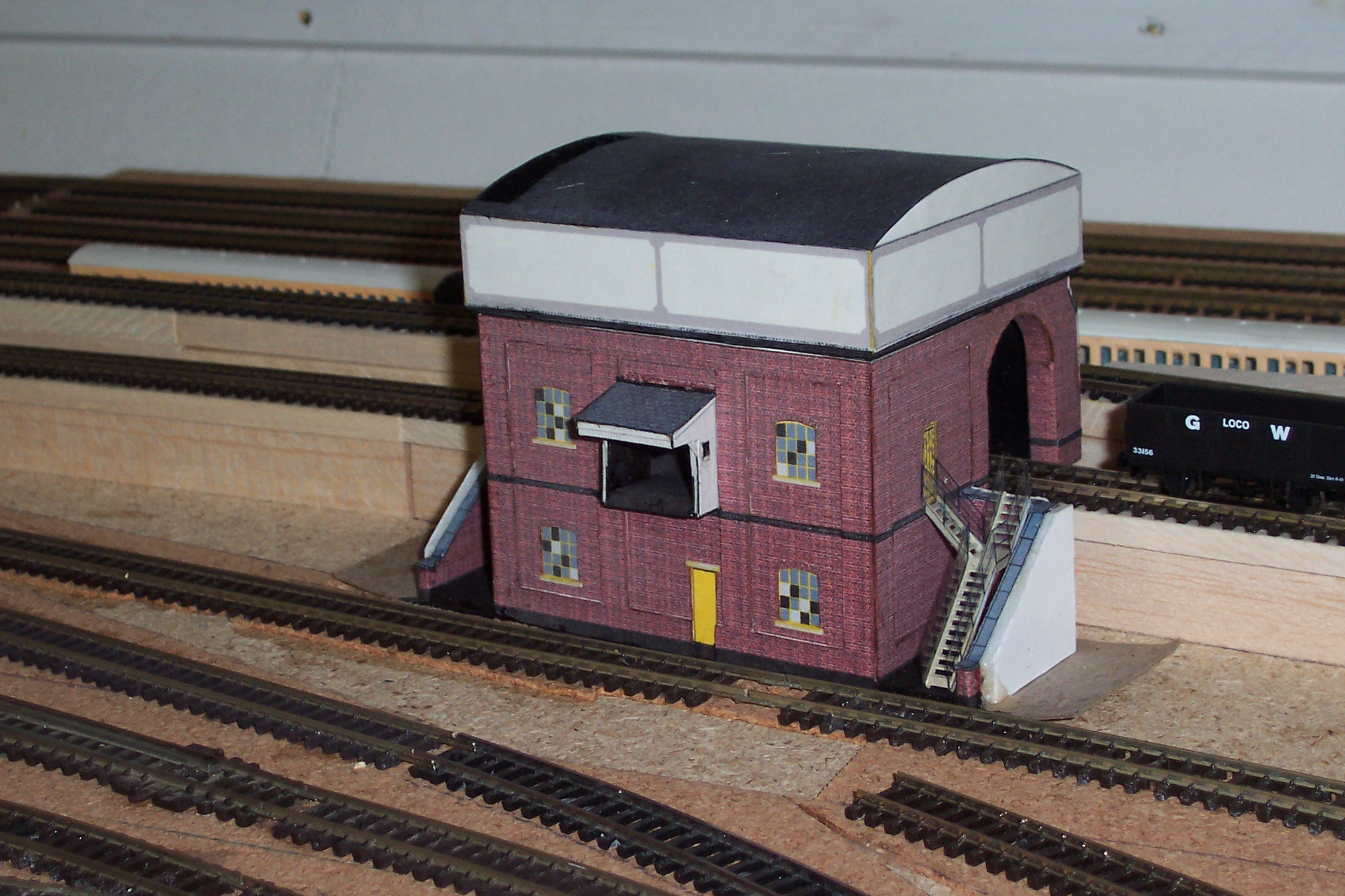
This is a short blog post to show three images of the construction of the N Gauge model of the North Box at Hereford station.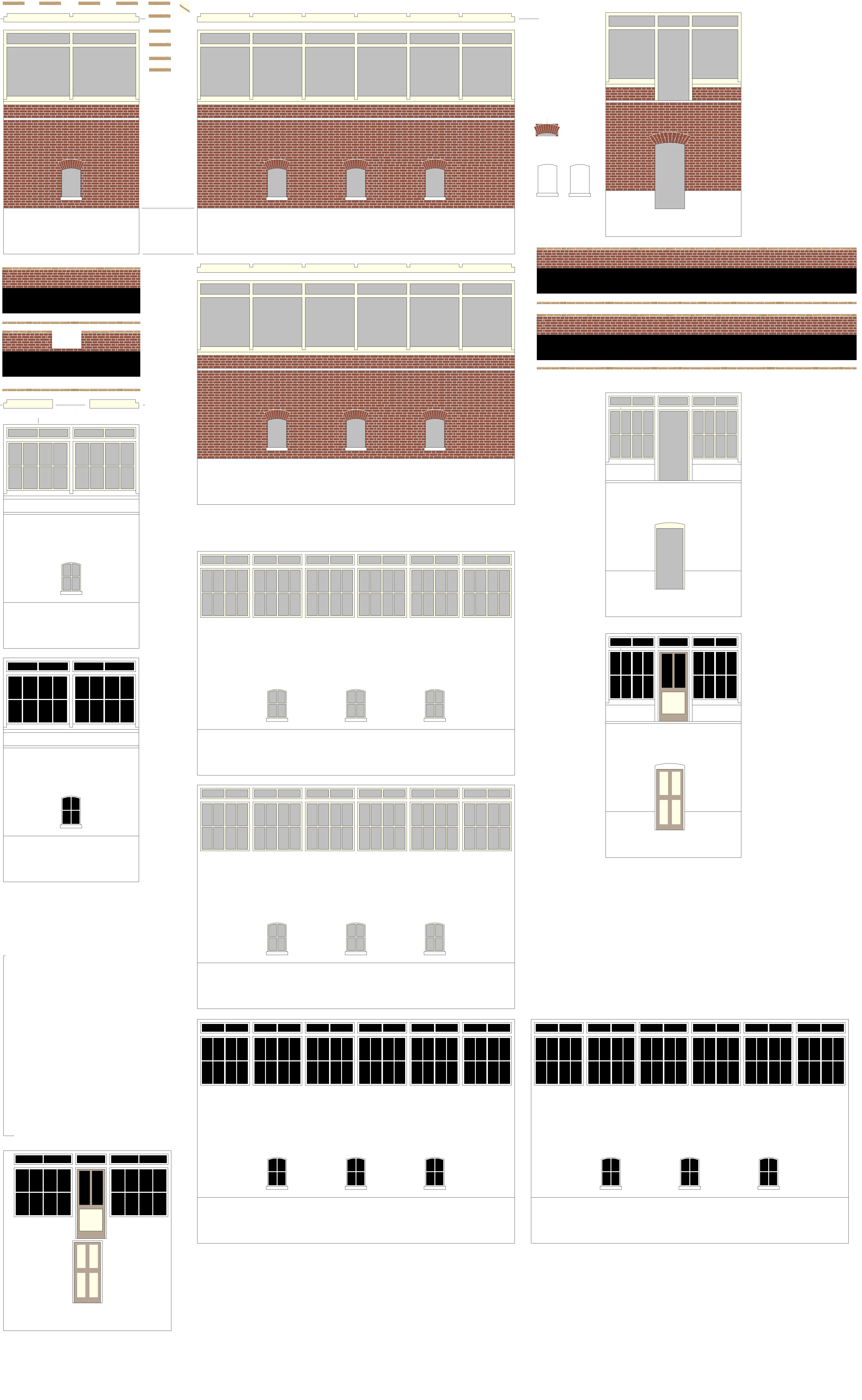

The Chemins de Fer de Provence is the name used for the one surviving metre-gauge line in Les Alpes Maritime. The route from Nice to Digne. This series of posts will follow the line from Nice to Digne and will have occasion to divert onto some branch-lines along the way.
The line from Nice to Digne is the only remaining line of the former network of the Compagnie des Chemins de Fer du Sud de La France. The company was created in 1885 by Baron Jacques de Reinach, a French banker of German and Jewish origin (1840-1892).[1] At its apogee in 1910 the company looked after 879km of railways, most of these are shown on the map below.
The Company was responsible for: the Central and Littoral Var lines; the Nice-Digne Line; the Cote-d’Or line; the Cogolin to Saint-Tropez branch-lines; the Isere tramway lines (Tramways de l’Ouest du Dauphiné);[2] the Tramways des Alpes Maritimes. However, by 1925, the company was experiencing significant difficulties. It was wound up and a new company with new financial backers was formed – Compagnie des Chemins de Fer de Provence. This new company lasted for 8 years until 1933.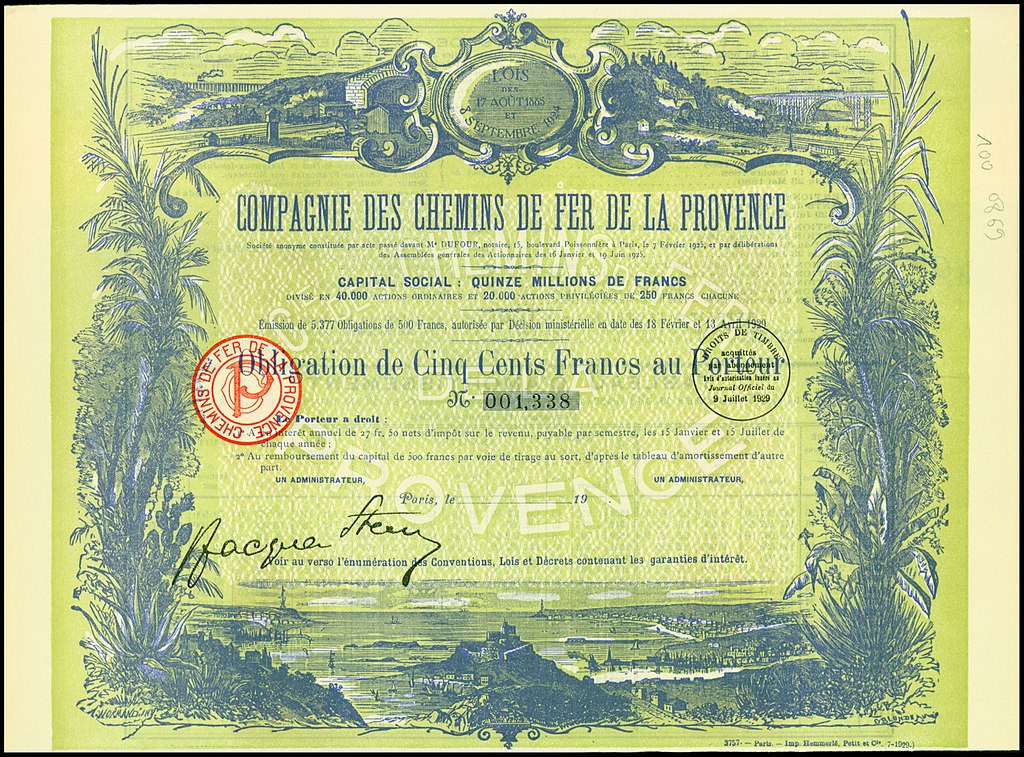 Early in the planning phase, relations between Italy and France were tense. The military demanded that the section of the line between Nice and Saint-Martin-du-Var was designed to permit access by standard gauge trains. Indeed, this was also a requirement for the first length of the Colomars to Meyrargues line. A dual track-gauge arrangement was included in the plans when the concession arrangements were updated on 21st May 1889. The loading gauge for the line was also enhanced to be the same as for the standard gauge lines. On 29th July 1889 the concession was approved by law, the line was declared as being of ‘public utility’ and the length of Line from Nice to Saint-André was also formally included in the concession.
Construction costs for the line were high and in order to ensure its completion the length between Puget-Théniers and Saint-André-les-Alpes was, in part, funded through an agreement signed between the company and the state. A formal agreement between the Minister of Public Works and the Compagnie des Railways du Sud de la France on 23rd March 1906 provided for the company’s construction of the Puget-Théniers to Saint-André-les-Alpes. The agreement was approved in law on 29th December 1906.[3]
Construction work began on the first length of the line on 14th August 1891. This was the length between Digne and Mezel – a length of 13km. In 1892, the sections from Nice to Colomars (also 13km), Colomars to Puget-Therniers (45km) and Saint-André-les-Alpes (previously Saint-Andre-de- Meouilles) to Mezel (31km), were under construction.[4]
Between 1892 and 1907, various scandals about the reliability of the company endangered its finances and slowed the progress of the work significantly. By 1907, only a 12km section between Puget-Théniers and Pont-de-Gueydan was open. The following year that was extended to Annot, a further 8km.[4]
The work progress relatively rapidly from this point on. The full length of the line was completed in July 1911, and a ceremony was attended by the Minister of Public Works on 6th August 1911, to inaugurate the last length of the line (the section between Saint-André and Annot).
As we have already noted, the Compagnie des Chemins de Fer du Sud de la France was unable to sustain operations beyond 1925. Their role was taken over by Compagnie des Chemins de Fer de Provence. In turn, this company was only able to manage the line until 1933 when it handed over both the Nice to Digne line and the Central Var line to the State. The Compagnie des Chemins de Fer de Provence then restricted its activities to the Littoral line. The State department for Bridges and Roads (Ponts et Chaucees) took over responsibility for the Nice to Digne Line.
In the immediate pre-war period, all three lines were developing well, services were increasingly popular thanks to the introduction of Autorails (Railcars). However, the War and particularly the fighting which accompanied the Liberation, dealt a serious blow to the railway infrastructure of the region.[6]
Recovery after 1944 was very slow. There was no hope of reconstruction for the Eastern part of the Central Var line and its trains terminated at Tanneron. Eventually, the Littoral line (Le Macaron) closed by 1949 and the Central Var line, by early 1950.[6]
In 1952, the State released the Nice to Digne line into private management once again, but this was not without its problems and by 1959, the State was threatening closure of the line unless draconian measures were taken. These threats were repeated in 1967 and again in 1968. This resulted in the two departments and the cities of Nice and Digne joining forces to create the “Syndicat mixte Méditerranée-Alpes” (SYMA) which took overall responsibility for the line and entrusted the operation of the line to the CFTA (Societe Generale de Chemins de Fer et des Transports Automobiles).[5,6]
A shuttle service between Nice and Colomars was inaugurated in the 1970s. In 1975, SYMA opened workshops at Lingostière workshops to replace those at Draguignan. The Draguignan workshops became unavailable after the War. It took quite a time to replace them![6]

 The 1980s seemed to see an up-turn in the fortunes of the line. The GECP (Groupement d’études pour le Chemin de Fer de Provence)[7] started to run steam excursion trains (an example of which can be seen below). In 1981, the link between Geneva and Nice in the form of ‘Alpazur’ was reinvigorated.[6] The service had been in place since the late 1950s.[8] A standard gauge link to Digne was used to connect with the metre-gauge line. The two different trains are shown above. That line ran from Château-Arnoux-Saint-Auban to Digne-les-Bains.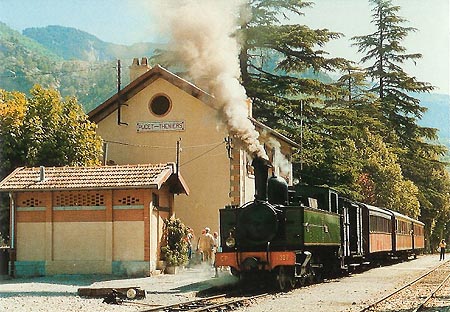
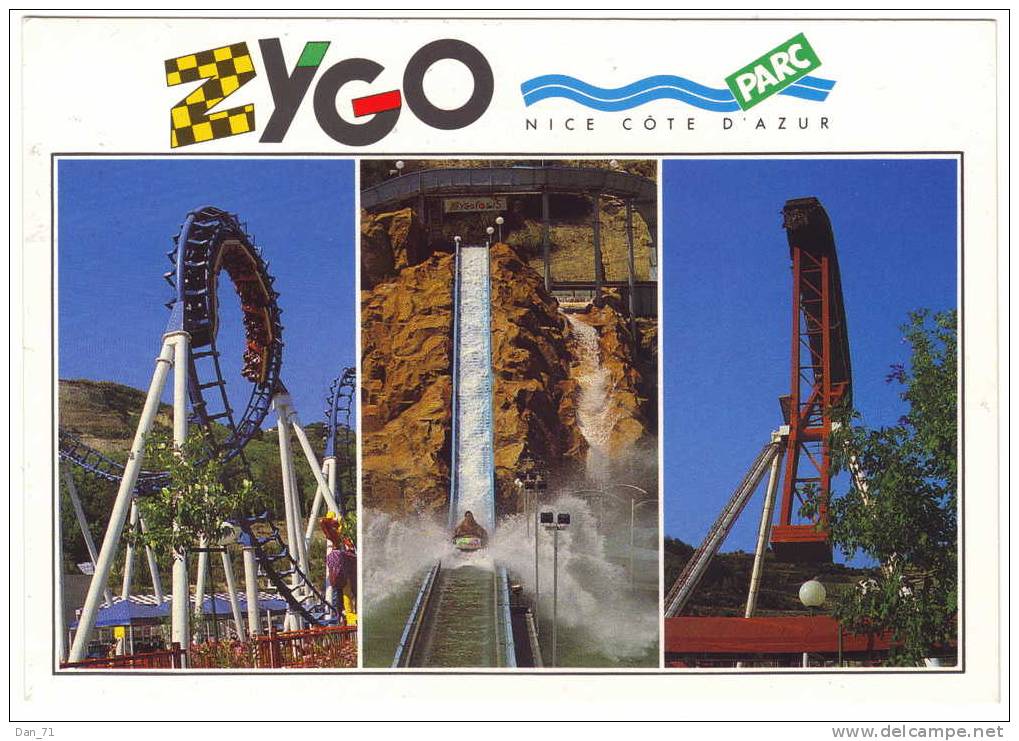
 The line was also enhanced by the introduction of a new stop on the line for Zygofolis, an amusement park joined to a water park.[9]
This renaissance was short-lived. The SNCF decided to close the standard-gauge link between Château-Arnoux-Saint-Auban and Digne in September 1989.[10] Nice town hall decided to call for the closure of the line from Colomars to Digne (90% of the full length).
The mayor of Nice finally agreed to accept a compromise. The deal agreed was that the Chemins de Fer de Provence (CP) would give up the magnificent Gare du Sud and the city would give up its fight to close the line.[6]
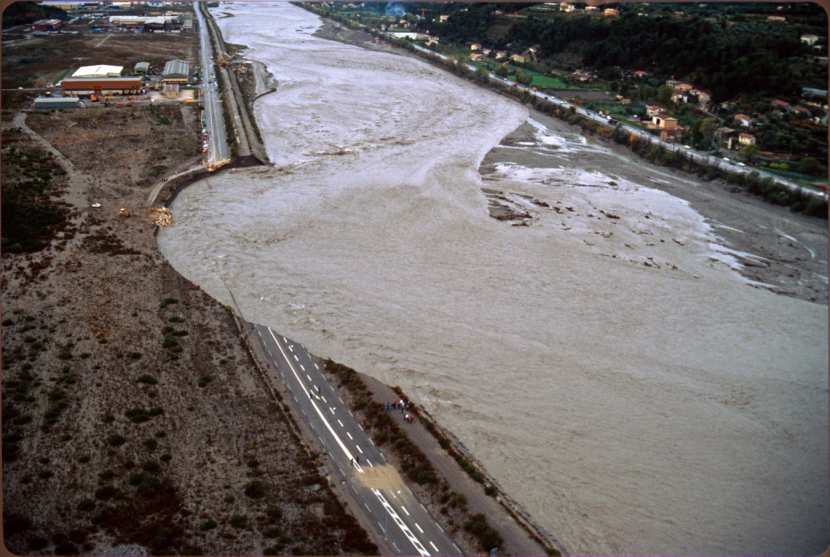
However, exceptionally bad weather and flooding in the Autumn of 1994 (5th November 1994) resulted in the River Var carrying away significant lengths of several hundred metres of the Nice to Digne line. The CP took over 18 months to repair the line and recover.[6,11,12] The images below show examples of the damage caused in the November 1994 floods.
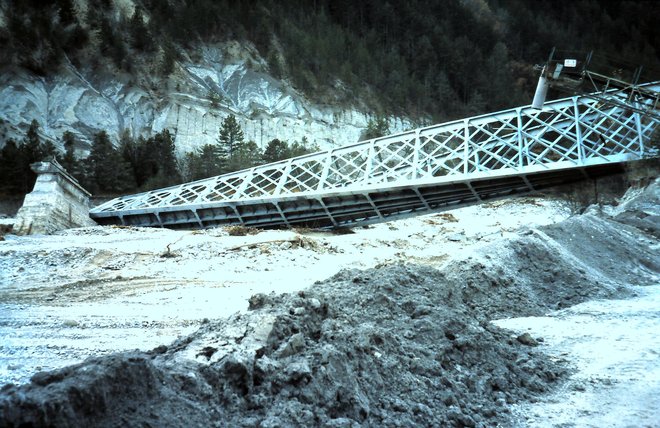
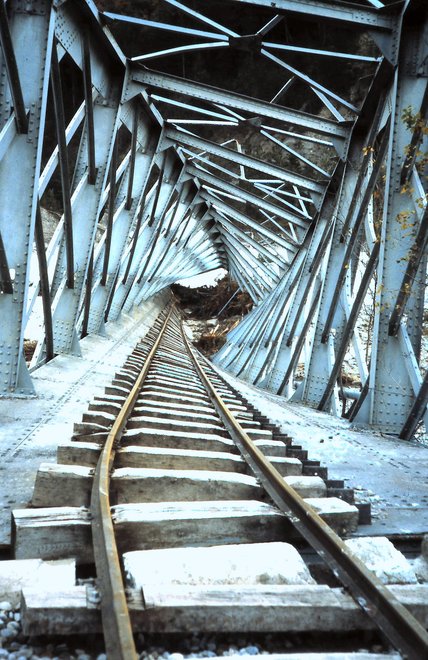
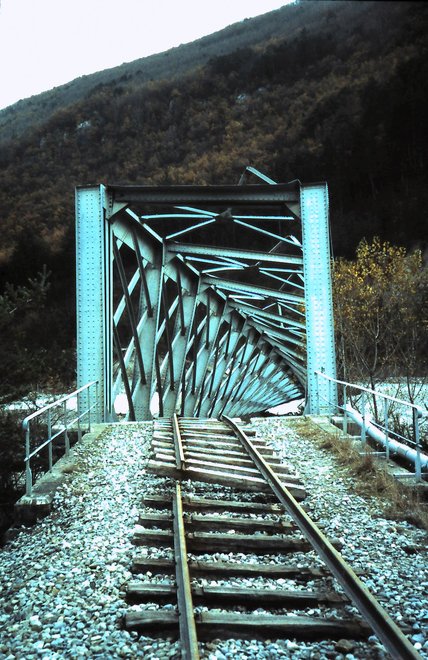


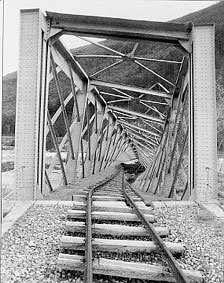
In the last two images we have, on the right: the bridge at Gueydan on the Var destroyed by the flood which would in time be scrapped and replaced by the French Army. On the left is one of the many breaches of the line.[13] Immediately below this text are two images of a similar breach which happened in 1982. Following them are three videos shot during flood flows in the Var River channel in November 2011. The first at the Airport and the other two at the bridge at La Manda near Colomars.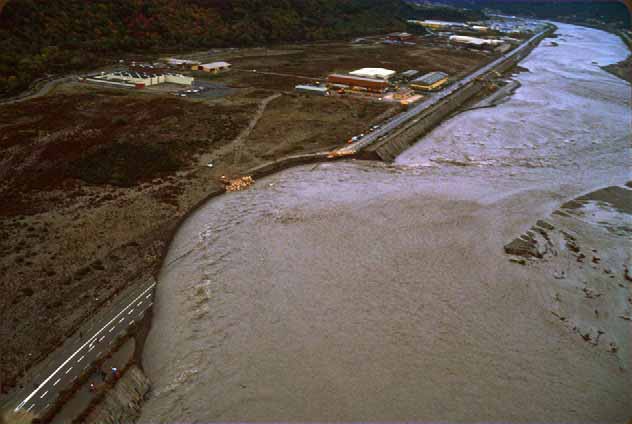
SYMA’s control over the Nice to Digne Line continued until 1st January 2007 when the Appeal Court in Marseilles closed it down because of discovered flaws in procedures within the company.
The line was operated by Transdev[14] and Veolia Transport[15] through a subsidiary called Compagnie Ferroviaire du Sud de la France (CFSF)[16] until on 1st January 2014 a new company was formed to run the line – Régie Régionale des Transports de Provence Alpes Cote d’Azur (RTT PACA).[17] Under RTT PACA’s control the line has been significantly upgraded and rolling stock improved. It is still possible to travel on the line behaind a steam locomotive, courtesy of the GECP but regular services are now in the hands of very modern DMUs.
Our journey starts in Nice at the magnificent facade of la Gare du Sud. First a few older postcards to introduce us to the station. ……..


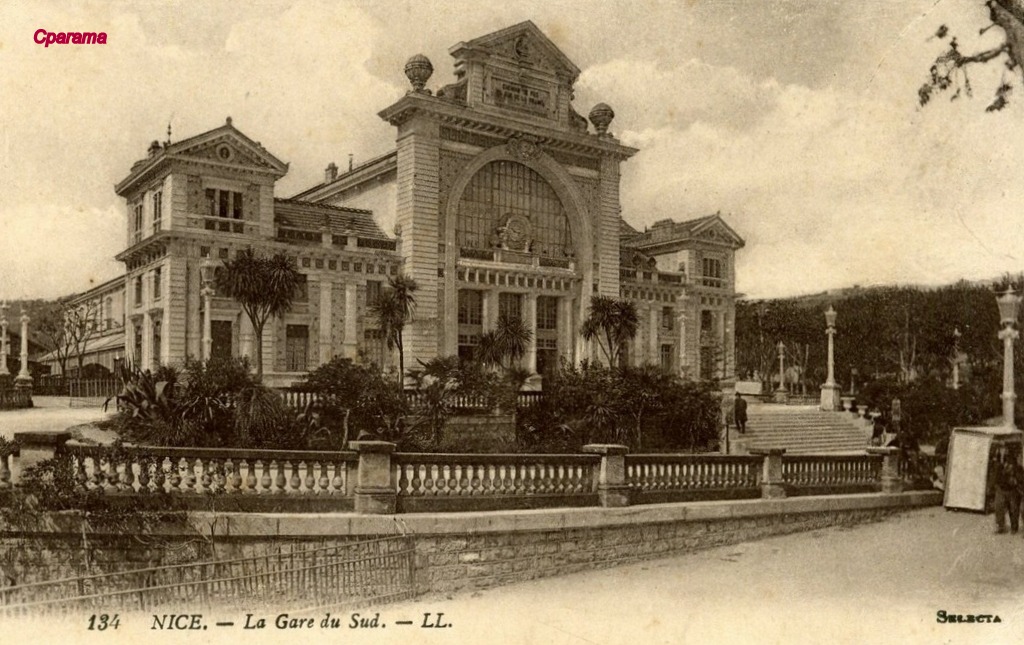
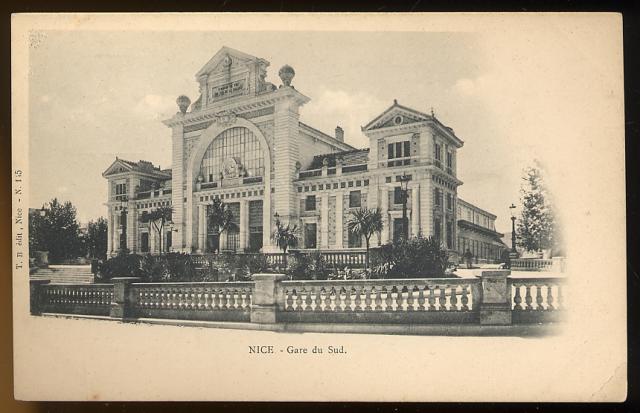
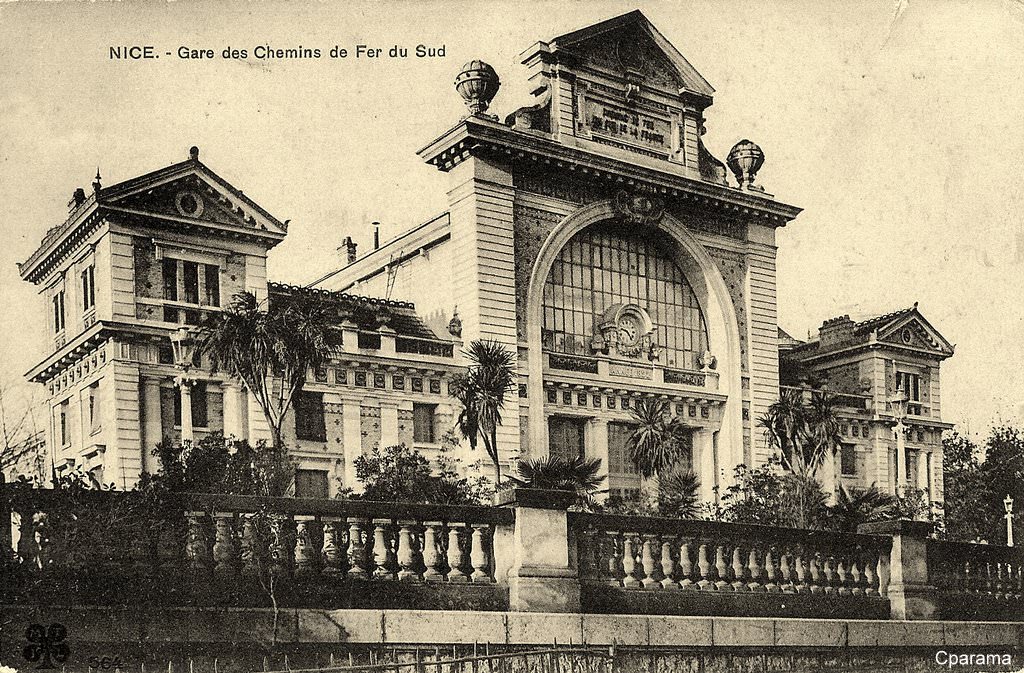
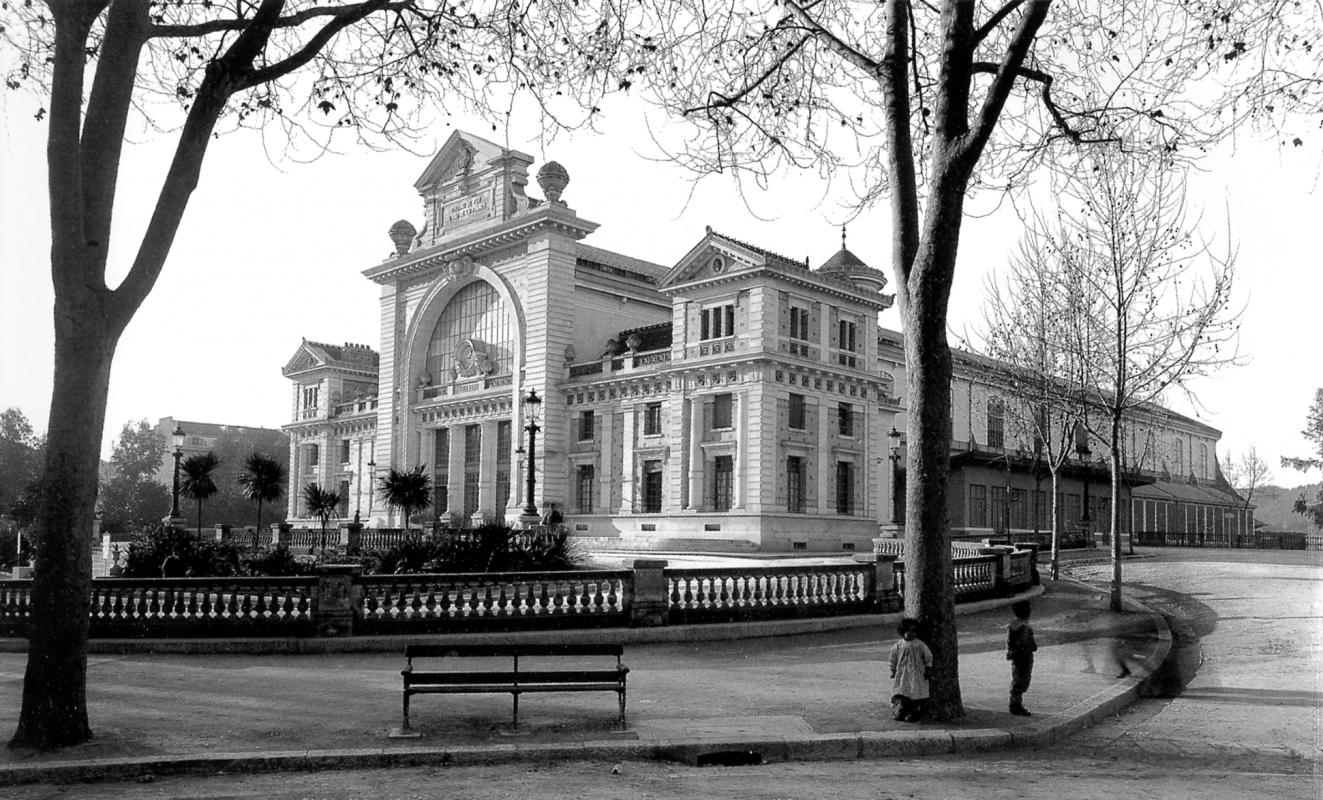

La Gare due Sud[18] was built in 1892 by the architect Prosper Bobin on behalf of the Compagnie des Chemin de Fer du Sud de la France. Prosper Etienne Bobin was born on 11th January 1844 in Montigny-en-Gohelle (Pays-de-Callais) and died on 10th December 1923 in the 6th Arrondissement in Paris.
The station has two main components, the passenger building and the train-shed. The first has a striking facade which faces onto the Boulevard Malaussena in the Liberation quarter of Nice. It was designed in the rationalist style which favoured the use of new industrial materials without compromising on elegance.[18] The name ‘rationalism’ is retroactively applied to a movement in architecture that came about during the Enlightenment (more specifically, neoclassicism), arguing that architecture’s intellectual base is primarily in science as opposed to reverence for and emulation of archaic traditions and beliefs. Rational architects, following the philosophy of René Descartes emphasized geometric forms and ideal proportions.[19] Structural rationalism most often refers to a 19th-century French movement, usually associated with Eugène Viollet-le-Duc and Auguste Choisy. Viollet-le-Duc rejected the concept of an ideal architecture and instead saw architecture as a rational construction approach defined by the materials and purpose of the structure. The architect Eugène Train was one of the most important practitioners of this school, particularly with his educational buildings such as the Collège Chaptal and Lycée Voltaire.[20]
The monumental facade of la Gare du Sud with a high central pavilion flanked by two side pavilions displays a decorative repertoire made of veneered ceramics and painted motifs overlying the stone structure. The building is roofed in terracotta.[18]
Trackside, there was (and is) a large train-shed, 23m wide, 18m tall and 87m long which covered the platforms. It is a metal structure inspired by the work of Gustave Eiffel which was originally used to house the Russian pavilion of the 1889 World Fair.
La Gare du Sud was completed in 1892, it operated as a railway station until December 1991, almost reaching its centenary as a station before circumstances in Nice dictated its closure.
Over the years the station site was developed to the extent visible in the hand-drawing below.[21]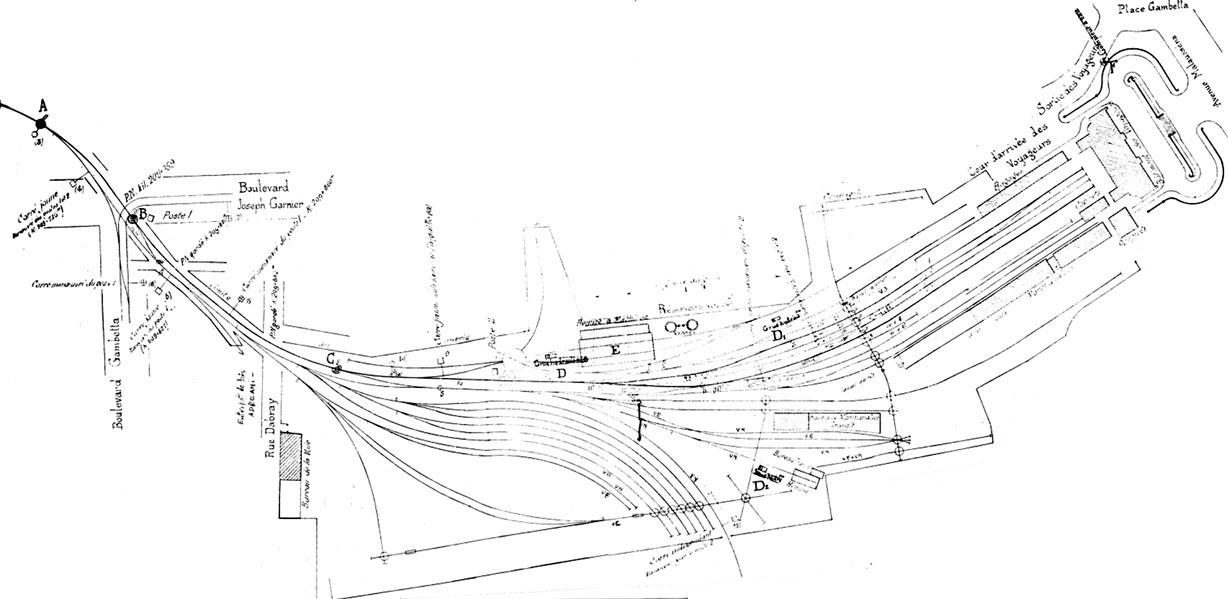
In the 1910s, with increased traffic, the locomotive shed was enlarged. The two water tanks were mounted on masonry pedestals. Several additional rooms were created (most of them next to the shed). These included an office for the deputy chief and a traction shop. A Cnetral Office was built to the West of the Station adjacent to Rue Dabray which brought all the key staff togetehr under one roof.
Later, in 1936, a new workshop for diesel railcars (autorails) was built at the west end of the passenger hall. By the eve of the Second World War, the station was at its zenith. In addition to the buildings there were several kilometres of track, 44 single points, four three-way points, a variety of turntables which included one locomotive turntable.
After the Second World War, a building, serving as a simple repair shop, was to be the last new building on the site.[18]
I have pulled together a few photographs from a variety of sources which show the station in operation. They are in no particular chronological order and copyright is acknowledged where it can be established. Most of the images are freely available on the internet. The first two have been taken from the ‘Nice Rendez-Vous’ website[23].

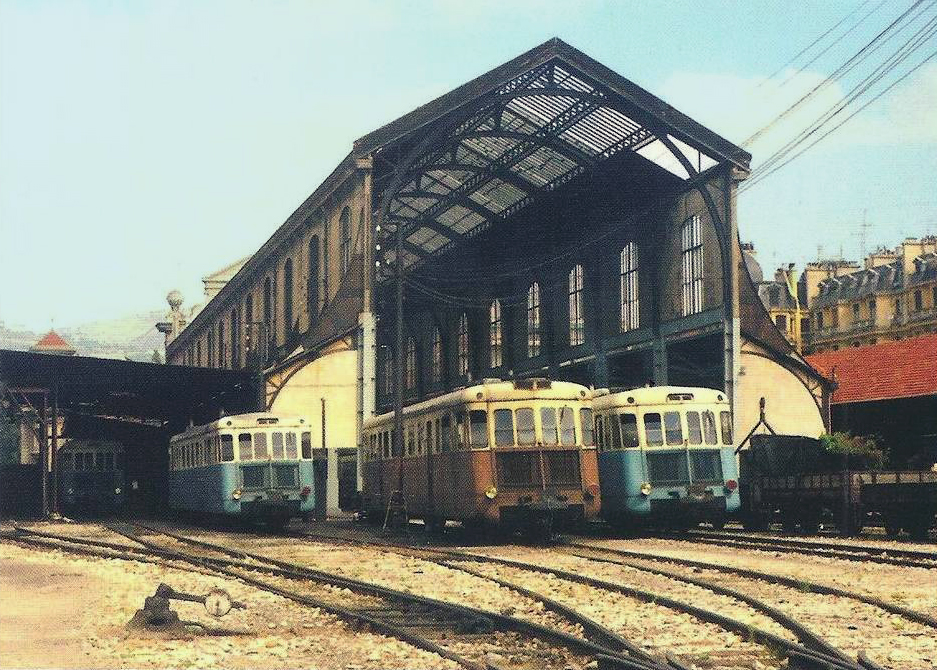
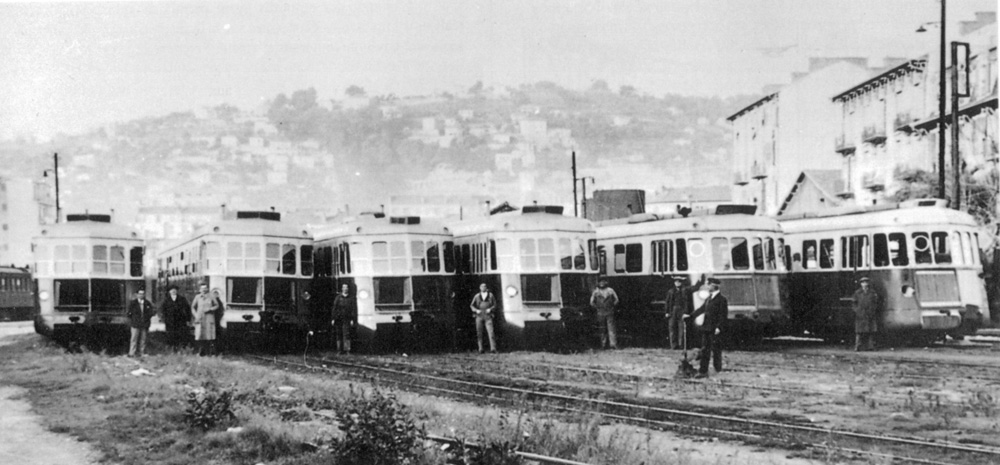

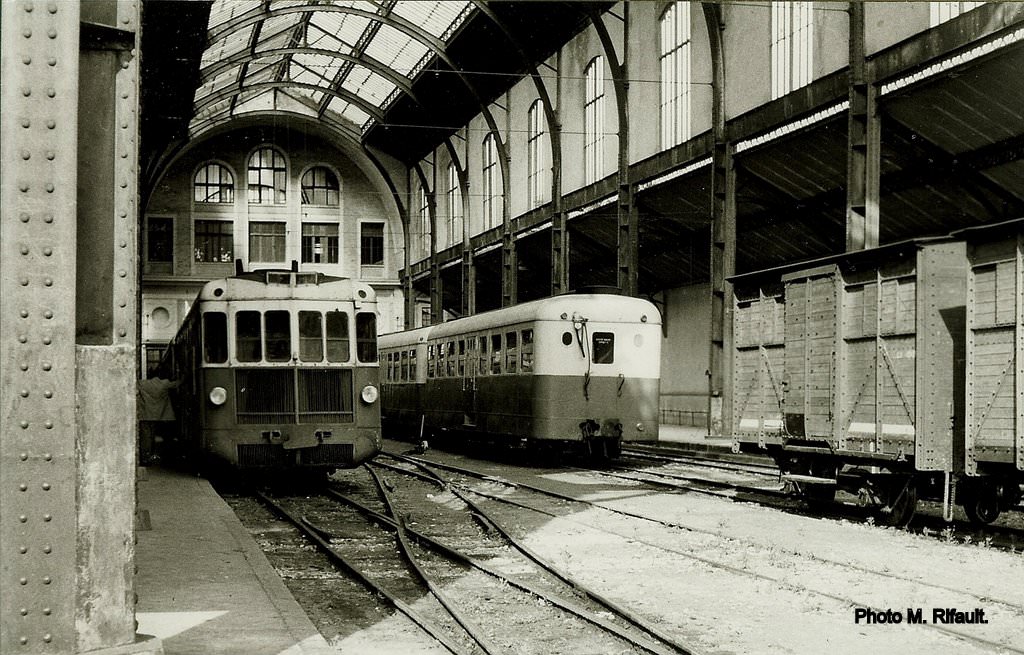 Interior of the South Station – ABH Railcar and modernized cars in 1954.
Photo: M. Rifault – JL Rochaix Collection – Publisher: BVA in Lausanne (Switzerland).
 Nice – 1969 – Remarkable view of the atmosphere of the Nice train station and its depot with a host of Billard railcars having just been recovered on various CFD lines coming to close. On the left, we can also see two ABH. © JH Manara.[22]
 Nice – 1983 – note the imposing height of the train-shed, the three railcars and the recution of the lines in favour of car parks that will soon take over the entire site! © JH Manara.[22]
 Bahnbilder.de, 1980.[24]
 Wikimedia Commons. [25]
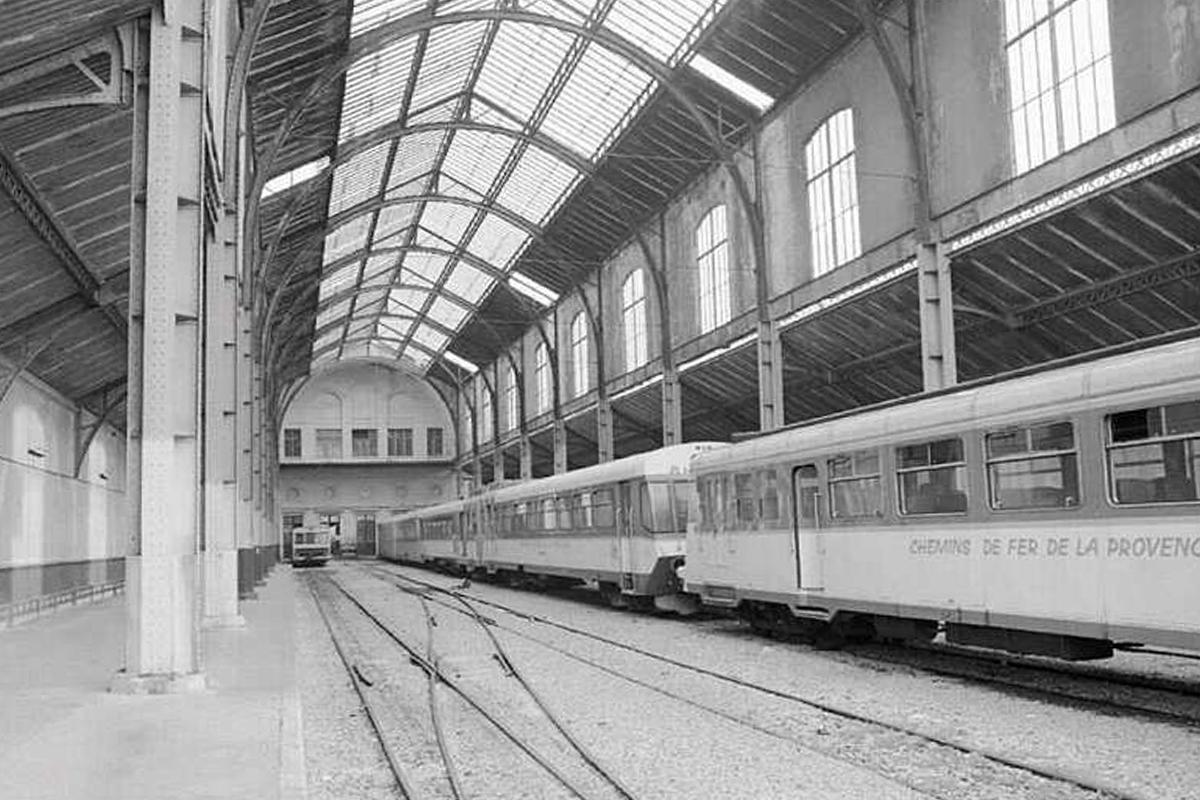

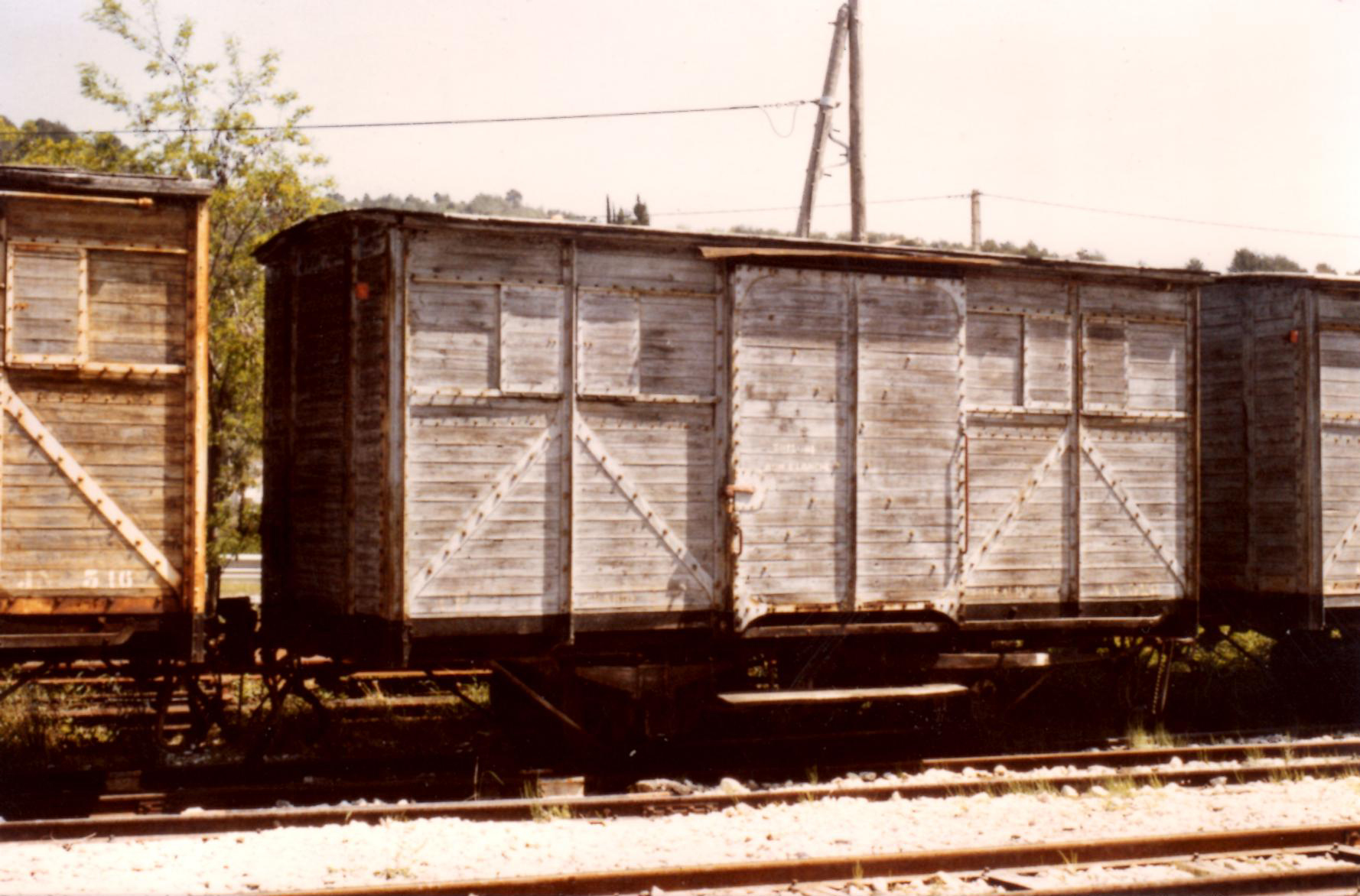 The last two images show wagons in storage at la Gare du Sud. They have been provided by a member of the GEMME forum in France.[36]
From the end of the War until the 1990s the uncertainties over the future of the Nice to Digne line meant that little was invested in the facilities at la Gare du Sud. In 1970, plans were drawn up to close the station. The city hoped to eliminate 4 level-crossings by moving the station to Rue Cross de Capéu a distance of 700 metres. The site of the proposed new station was purchased in 1972 and the Architect was chosen. The project remained on the drawing board.
In 1973, a number of unused sidings were lifted. In 1975, the President of SYMA, Jacques Médecin, Mayor of Nice, declared that he intended to stop the financial participation of the City in the organization (SYMA), and requested the sale of la Gare du Sud. Land on the south side of the station was sold, all of the buildings on that land were demolished, 150 wagons on the site were scrapped.
In 1976, access to the station was compromised when the City connected the streets of Alfred Binet and Falicon. Access to the goods hall and shunting manoeuvres became almost impossible. On 22nd March 1977, the automatic gates of Gambetta, Cros de Capeu and Gutemberg Streets were removed and replaced by traffic lights![21] This meant that trains were restricted to a speed of 4km/hr when crossing those streets.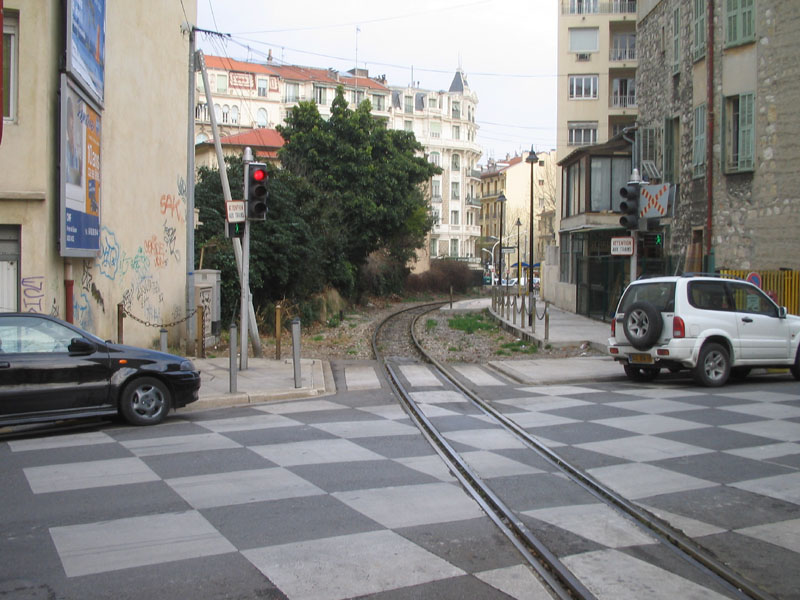 Recovery plans were negotiated in the late 1970s. Goods trains were banned from the centre of Nice. In 1978, the south side of the station site became a municipal car park. A period of ten years of relative calm then ensued, although the City maintained its intention to purchase the whole of the site of la Gare du Sud.
A memorandum of understanding was finally signed on 18th January 1991 for the sale of the site of la Gare du Sud to the City for 151 million francs. As part of that deal the terminus of the Nice to Digne line was designated as being at Rue Alfred Binet. The commissioning of a new station at Rue Alfred Binet was scheduled for November 1991 but was eventually postponed until 10th December. The last day of operation of la Gare du Sud as a railway station was 9th December 1991.[21]
The new station was designated as the Gare de Nice CP and was built in a modernist style, in contrast to every other station on the line. [26] The following pictures show that station and can be found on the ‘Le Train des Pignes’ website. [26]
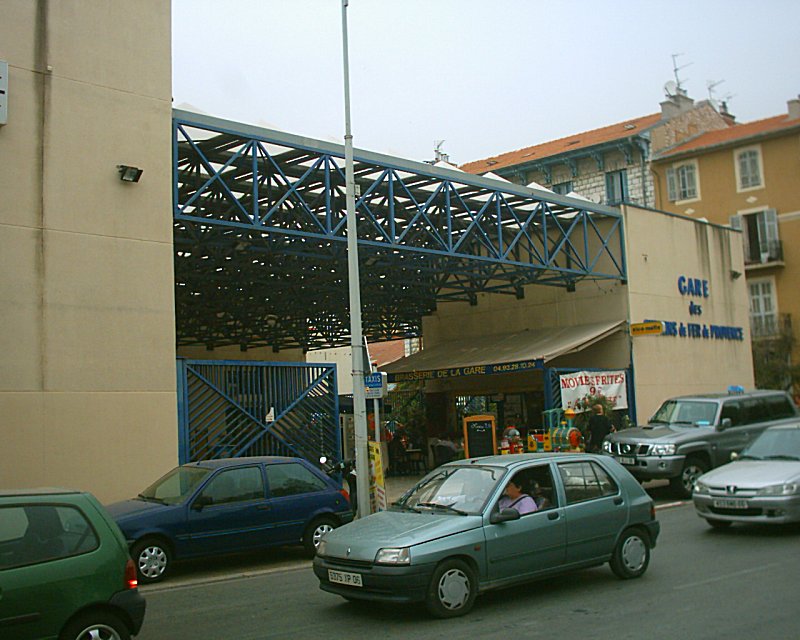


 From 9th December 1991 to the year 2000, la Gare du Sud remained derelict. Although there had been a land transfer to the City the building was not sold to the City until the year 2000. The City then produced plans to demolish the station.[18]
This demolition raised many protests and finally the Minister of Culture , Renaud Donnedieu de Vabres, opposed it in 2004. Meanwhile, the facade of the old station was registered as a historical monument on 23rd September, 2002.[27] The train-shed was registered as a historical monument in June 2005. The elegance of the building is demonstrated by the following images draw by the Architect, Mario Basso.[28]
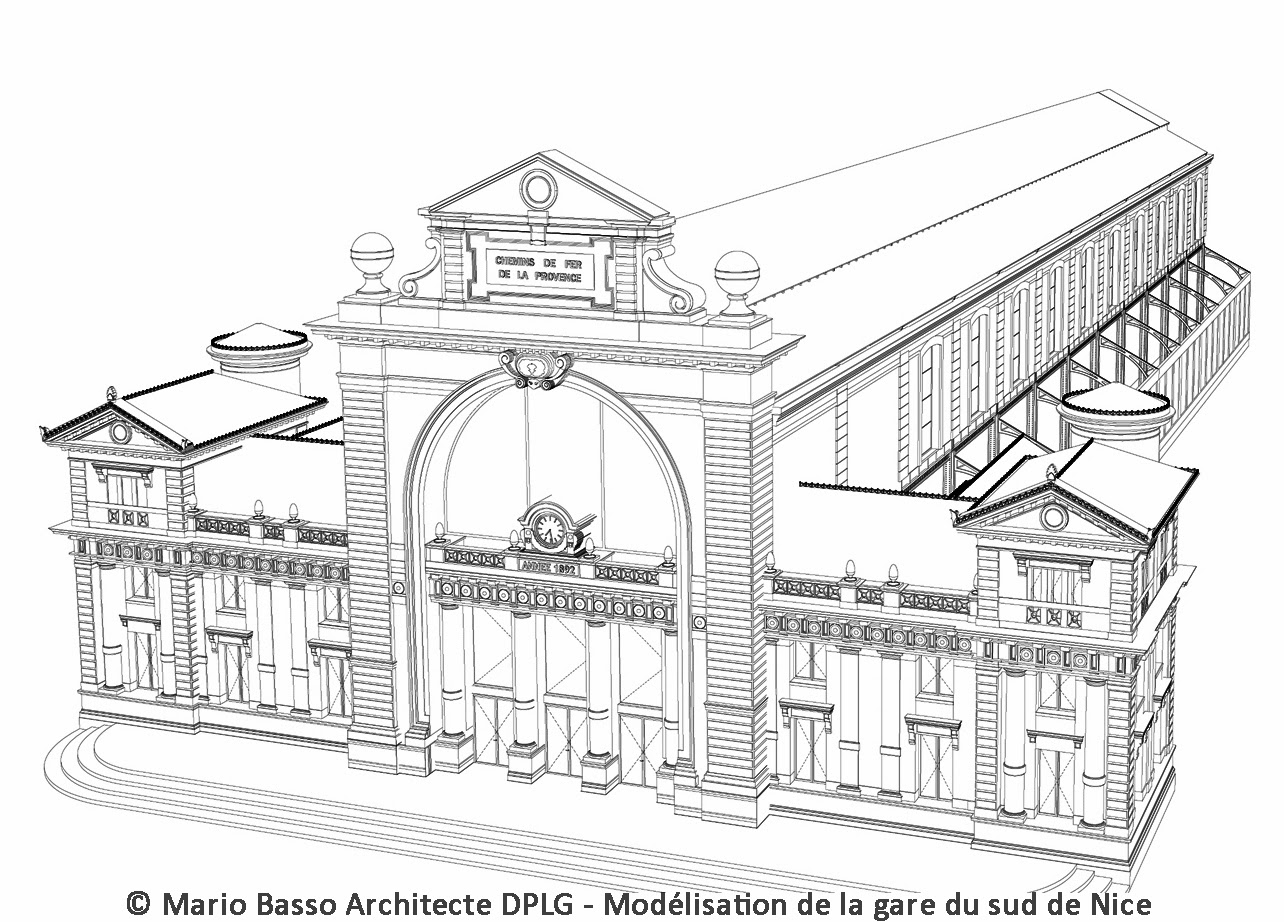


 Mario Basso is also responsible for a comprehensive archive of media posts relating to the station over the years.[28] That story can also be followed on Le Train des Pignes website.[29]
The building was saved from destruction but its future remained uncertain. Several projects were promulgated and then fell by the wayside (including the site becoming a new City Hall for Nice) before finally a project to convert it into a media library became a reality. The passenger building received a full restoration.
 Drawing by Jean Francois Laugeri
The work was completed in time for opening in December 2013. A video taken from a drone, shows the finished work to the old passenger facilities.[30] Meanwhile refurbishment of the train-shed was also being considered. The video project presentation is below. [31]
TESS was given this project and some pictures of their work are shown below.[32]
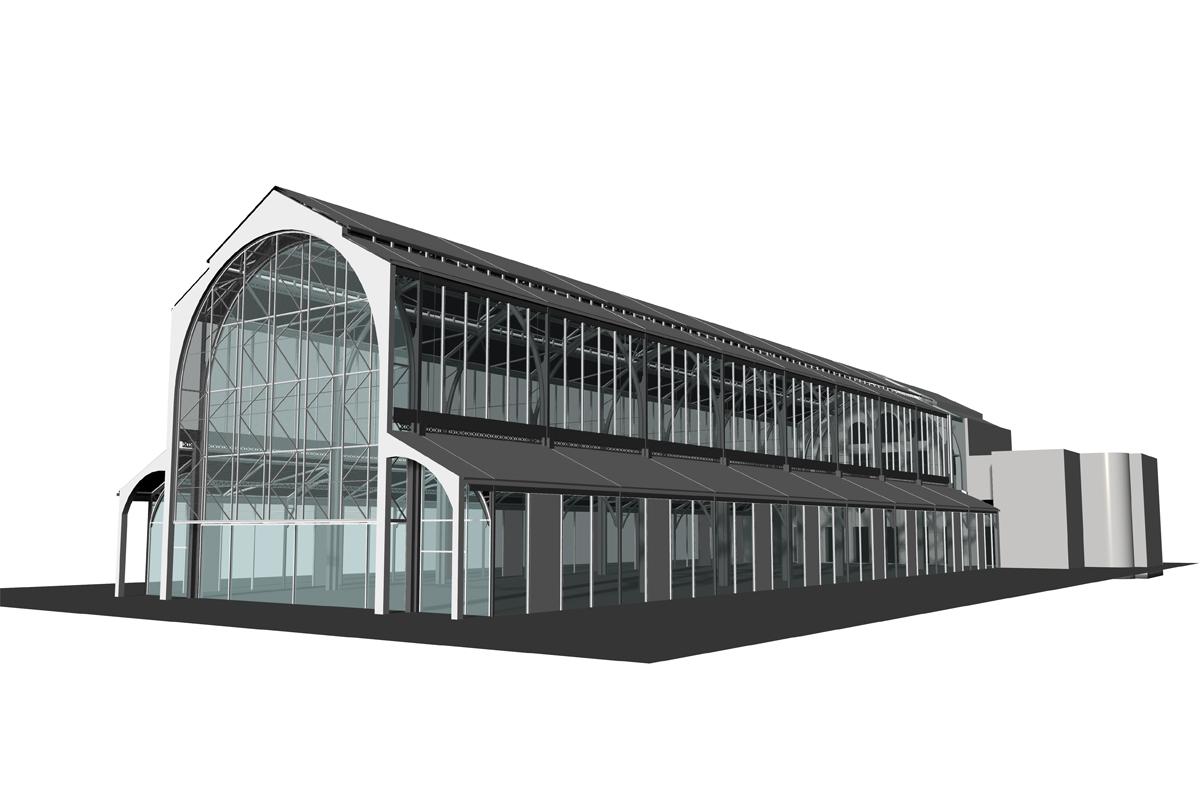

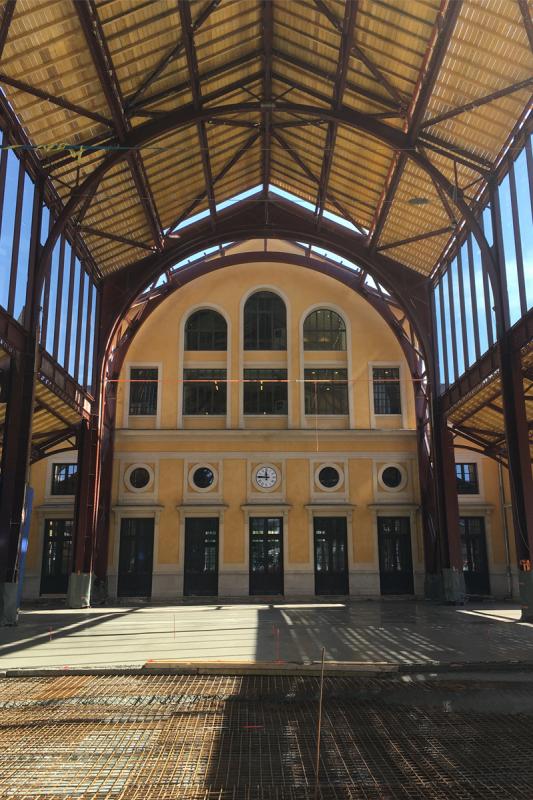
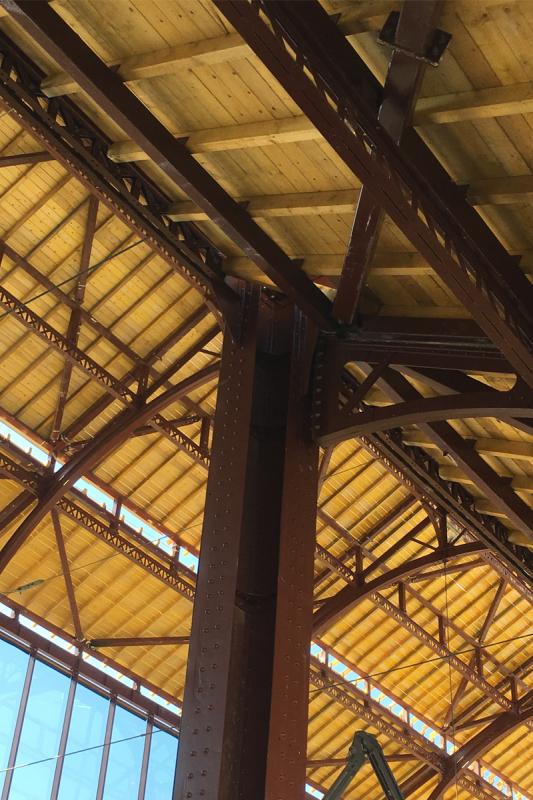
The renovated station is intended to be at the hear of a new area in the City. [33,35] The old train-shed will become a venue for restaurants and boutiques and will be surrounded by green spaces, the site will also benefit from parking, housing, gyms, a multiplex cinema and many shops.
Further development work was due to start in April 2018. The old train-shed will be known as le Salon du Vintage and will be run for the next 45 years by Banimmo France.[34]
It is intended that the train-shed will accommodate 22 restaurants by December 2018
References

This was an 850 metre-long funicular providing access to ‘Super-Cannes’ from the town of Cannes. It was opened in 1928 and closed in 1966. Much of the infrastructure is still in place in the early 21st Century.
Super-Cannes is within the district of La Californie. It is a residential area of Cannes.
The construction of a funicular was initiated by Société immobilière de Paris et du Littoral. It was designed by the Italian company ‘Societe Ceretti et Tanfani’ and the construction engineer was E. Jaulin. [1] The contractor for the work was Dyle and Bacalan. Construction work took place between 1925 and 1928. The funicular line rose 850m from its lower station on Avenue Val Vert, through the Valley of Les Gabres. It crossed a series of roads on sloping bridges before reaching the higher station adjacent to the Observation Tower in Super Cannes on Avenue de la Gare-du-Funiculaire. The funicular was completed in January 1928 and opened by André Capron , Mayor of Cannes and Yves Le Trocquer , Minister of Transport on 27th January 1928.
As a result of the construction of the funicular there was a rapid development of properties on the hill. The view across the Baie de Cannes was, and is, spectacular.
The lower station was designed to look like a chapel and was in the Neo-Provencal style. Wikipedia explains that this was, and remains, ‘a contemporary architectural and decorative style originating in Provence which extends along the French Mediterranean Coast and onto Corsica. … It replaces the traditional stone houses of the villages of the South of the country’.[2] It was decorated with a series of paintings by Louis Pastor.[3] A few images of the station and the paintings follow. Included among these pictures is a very early image of the funicular:
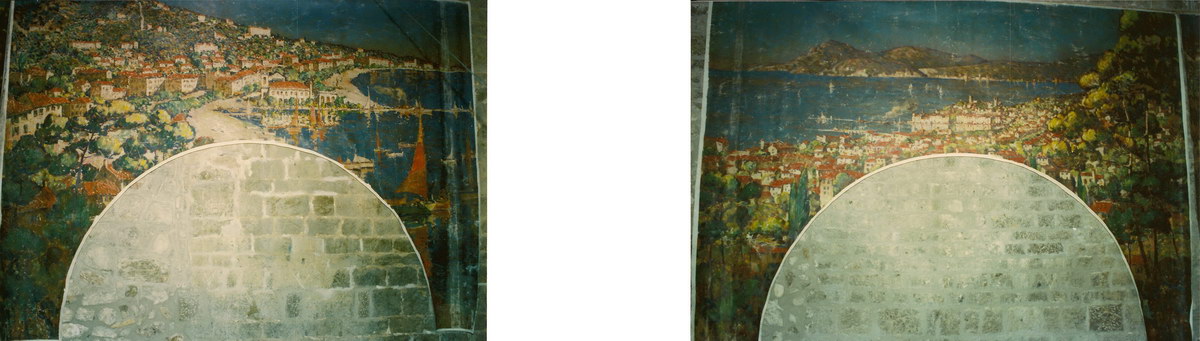

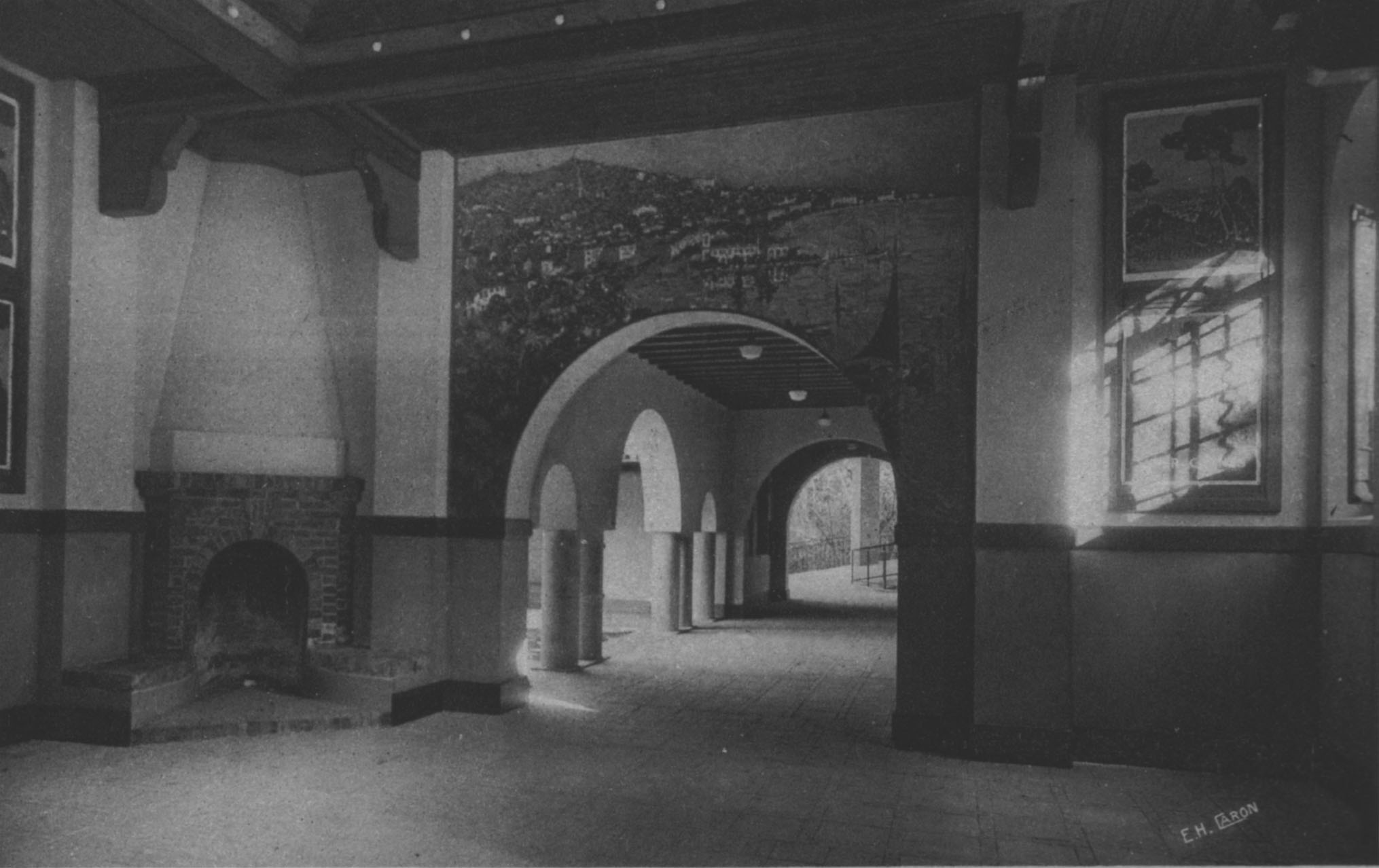
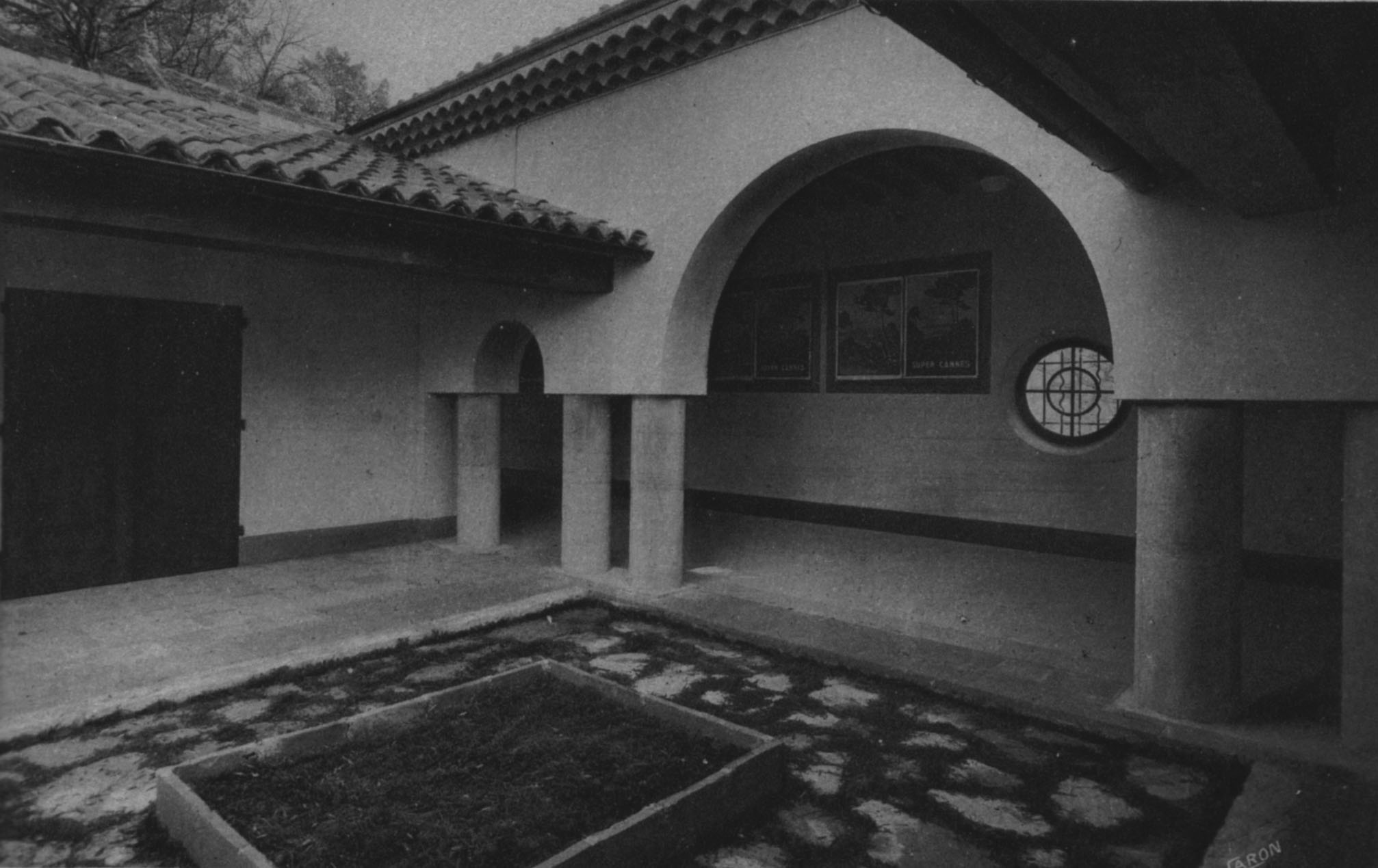
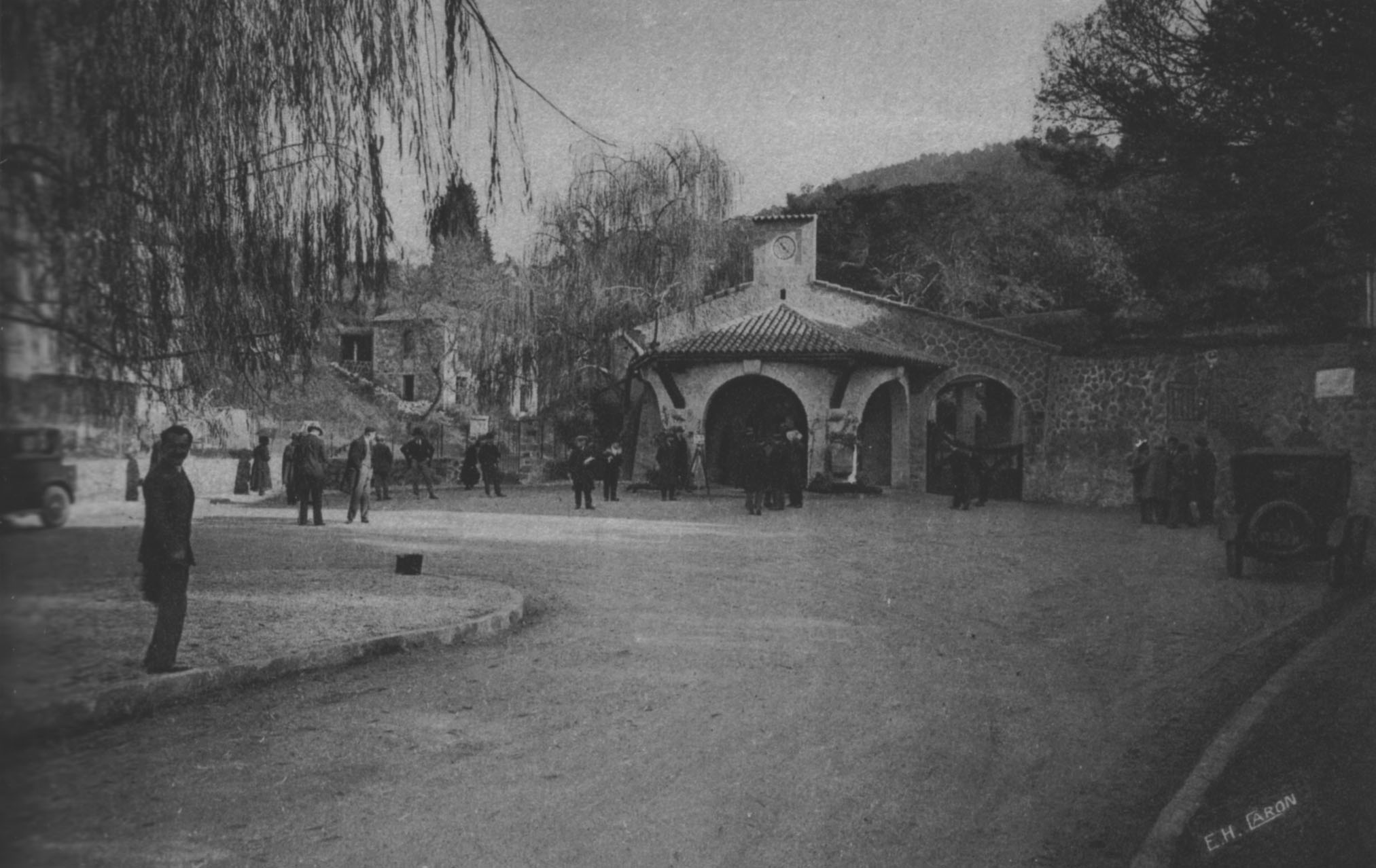
The funicular was on a steep grade, in a length of just 850m the funicular climbed to an altitude of 233m. There was one passing point at midpoint on the climb. The top station is shown below along with the wooden observatory refered to below.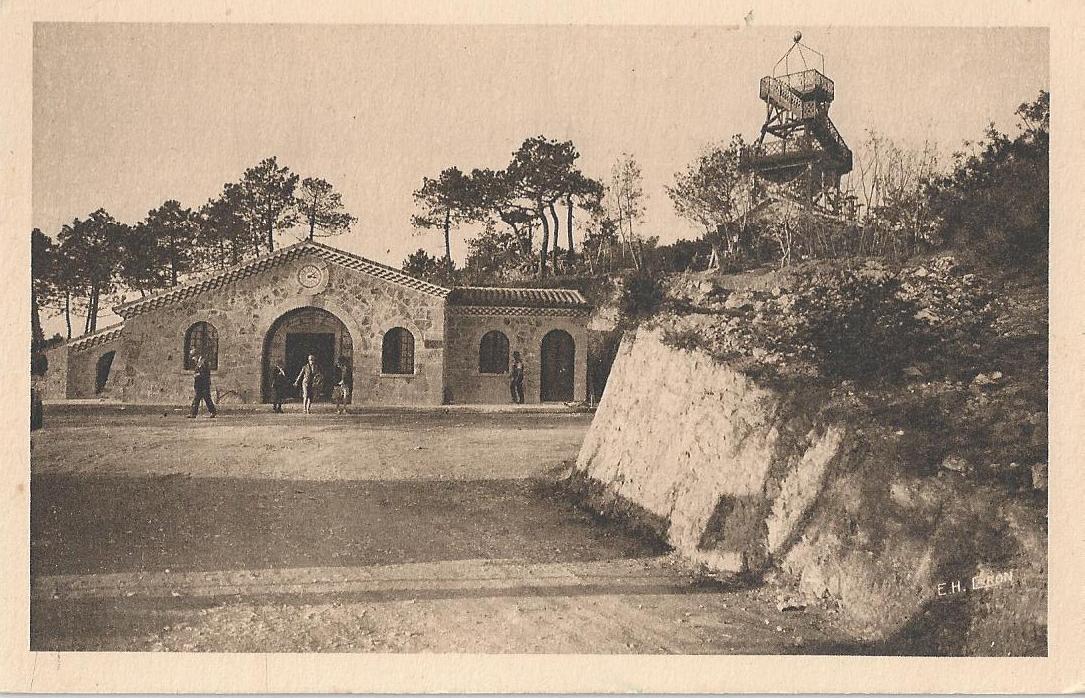
At the top of the funicular there was a planned housing estate which initially was predominantly reliant on the funicular for access. 156 hectares were set aside for the project and the developers provided roads and other infrastructure as well as constructing the funicular railway. The infrastructure to be provided included a 9 metre wide road of approximately 4km in length; 7km of secondary roads; a tea room, hotel and gazebo along with luxury shops. The picture below shows the view point at the top of the funicular before major development had taken place.

A first square wooden observatory as erected in 1925. The project, however, hit financial difficulties, the large hotel was never built. The planned road works were interrupted and the land was sold on in 1931. 1939 saw the construction of a panoramic restaurant on the site of the planned hotel and a cylindrical reinforced concrete tower replaced the wooden observatory in 1953.
With developing road transport, the funicular began to loose money. Passenger numbers decreased and essential safety work could not be afforded. The funicular eventually had to close in 1966. The restaurant and observatory finally closed in 1986.
In 1989, the family of the Emir of Abu Dhabi bought much of the land at the top of the funicular. In 1993, they gained a building permit which included access to the funicular railway station by a private road. However, in 1994, the administrative court rescinded the approval. Since then, the whole site has remained in a derelict and abandoned state. The site gained heritage protection in 2001 and in 2009, some repairs were undertaken to the facade of the lower station to improve the visual amenity in its immediate locality.[5]
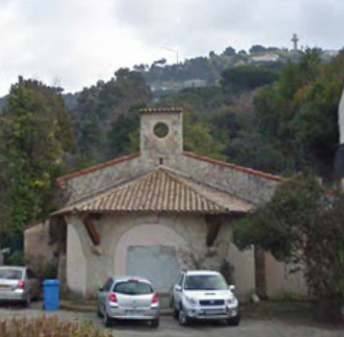 This picture shows the lower station as it is in the early 21st Century. The Observation Tower can be seen on the distant horizon at the top right of the image.
The images below show both pictures of the funicular in operation in the 1960s and its condition in the early part of the 21st Century. Included towards the end of the photographs are a series taken by RER C – Photographs on Passions Metrique et Etroite Forum in 2011. Below the photographs taken by RER C are a series of videos.
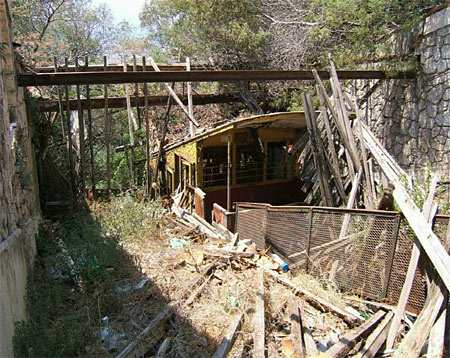

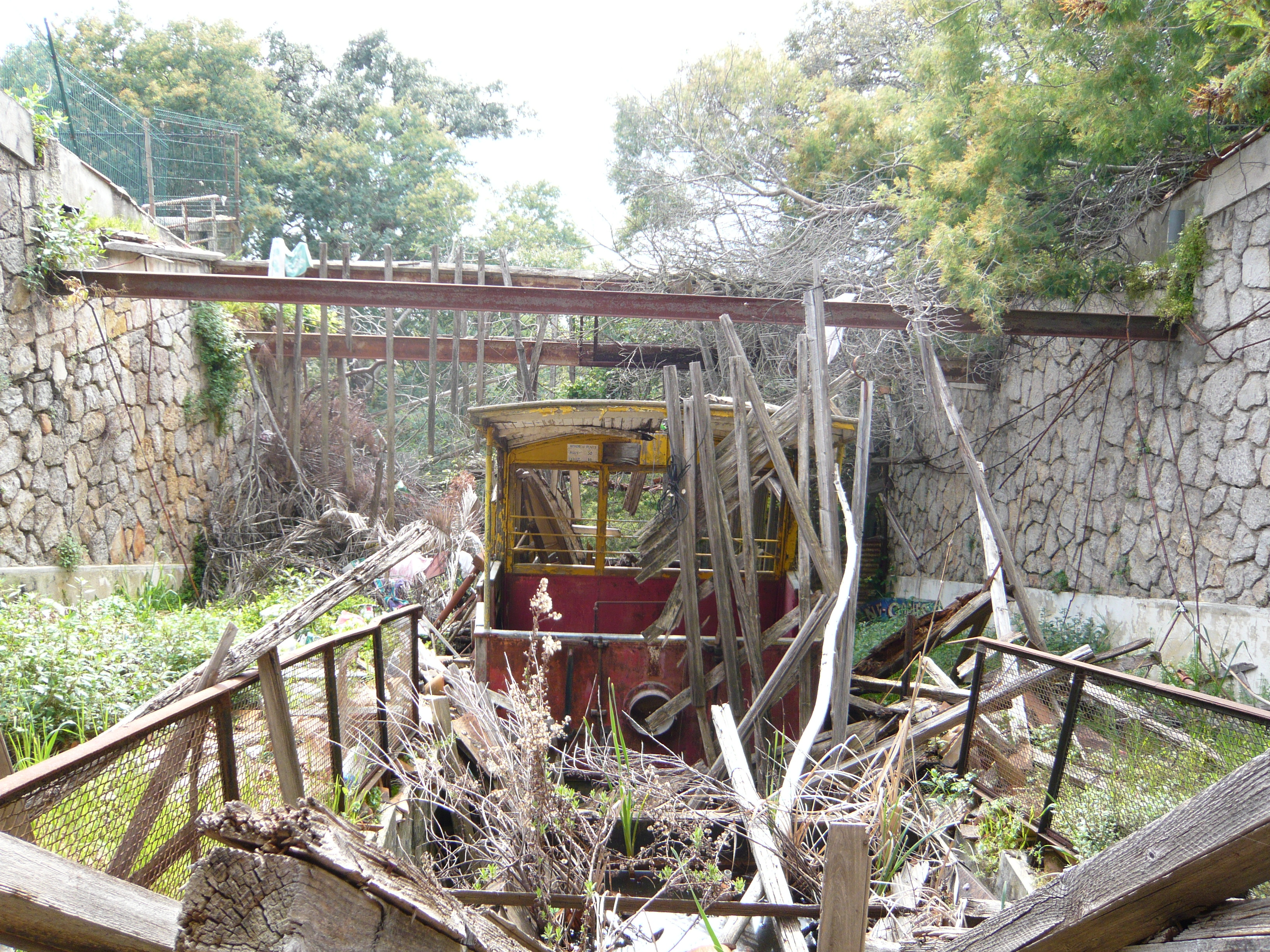
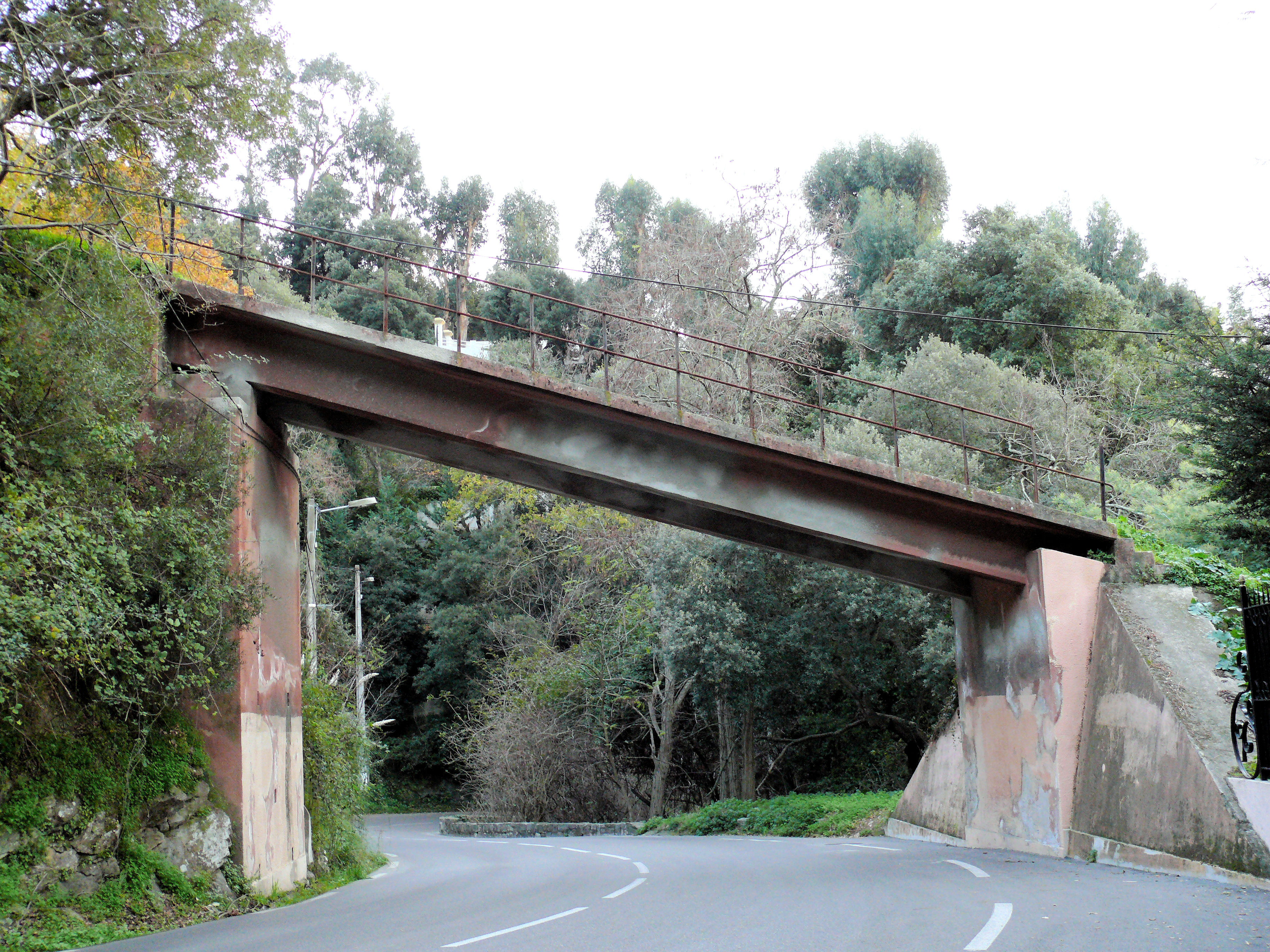
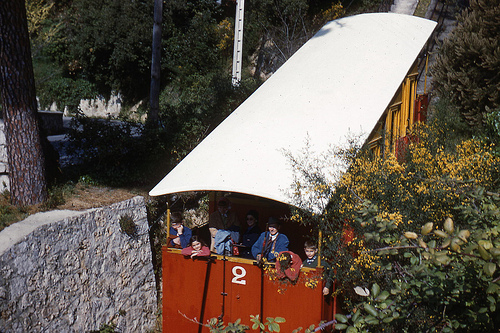
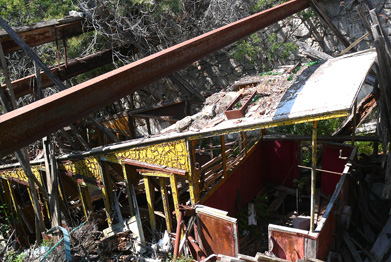
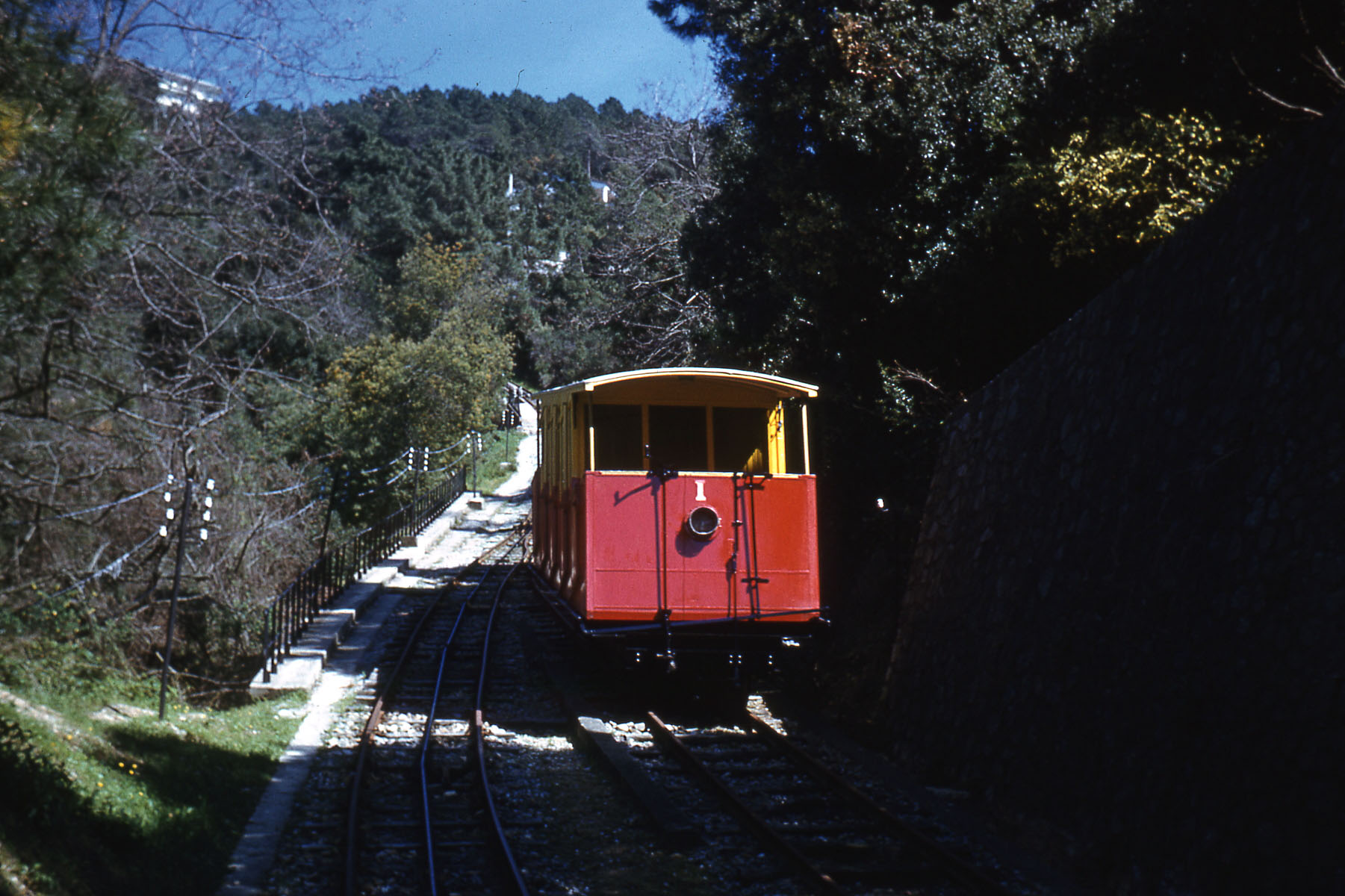
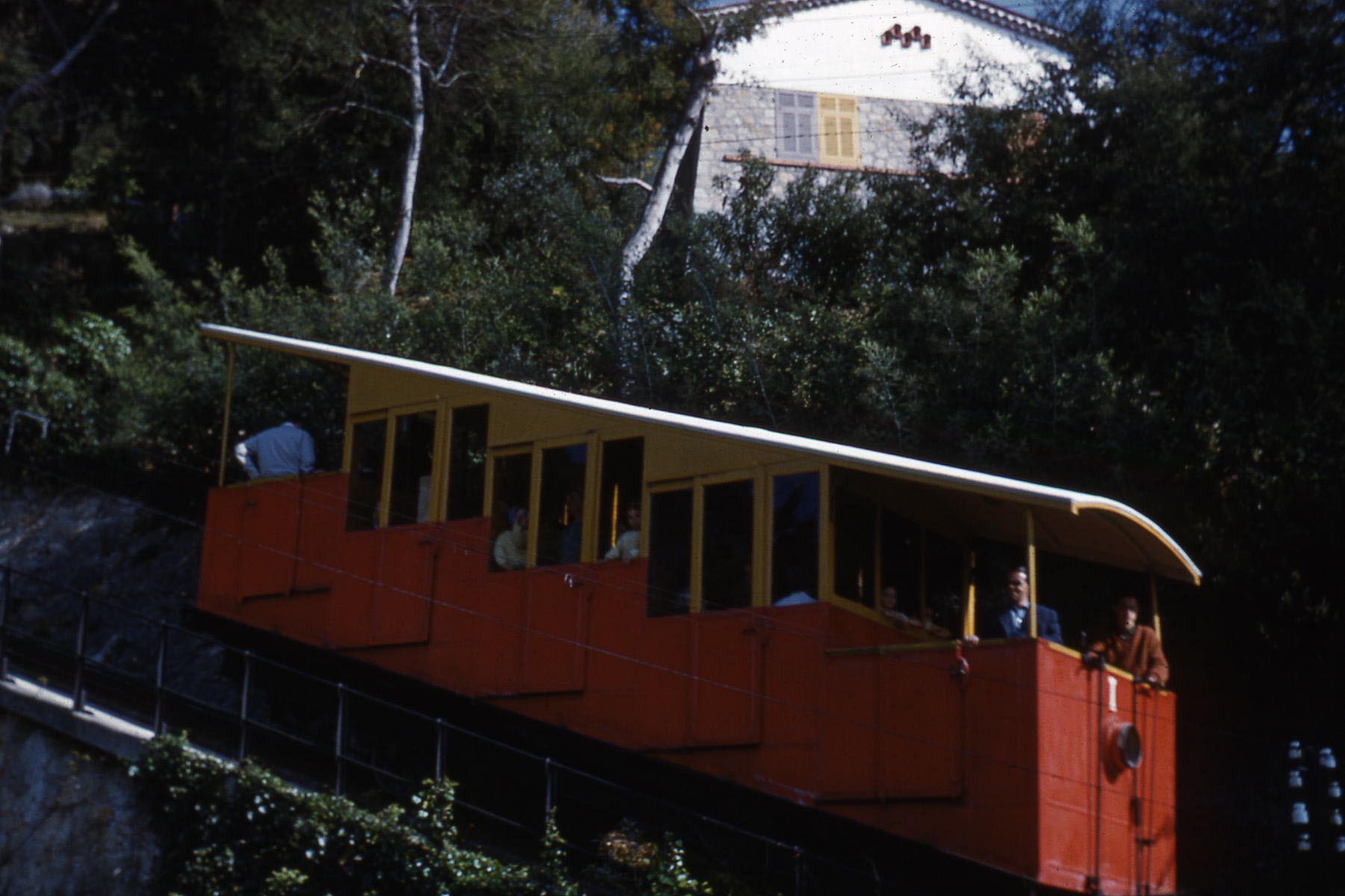
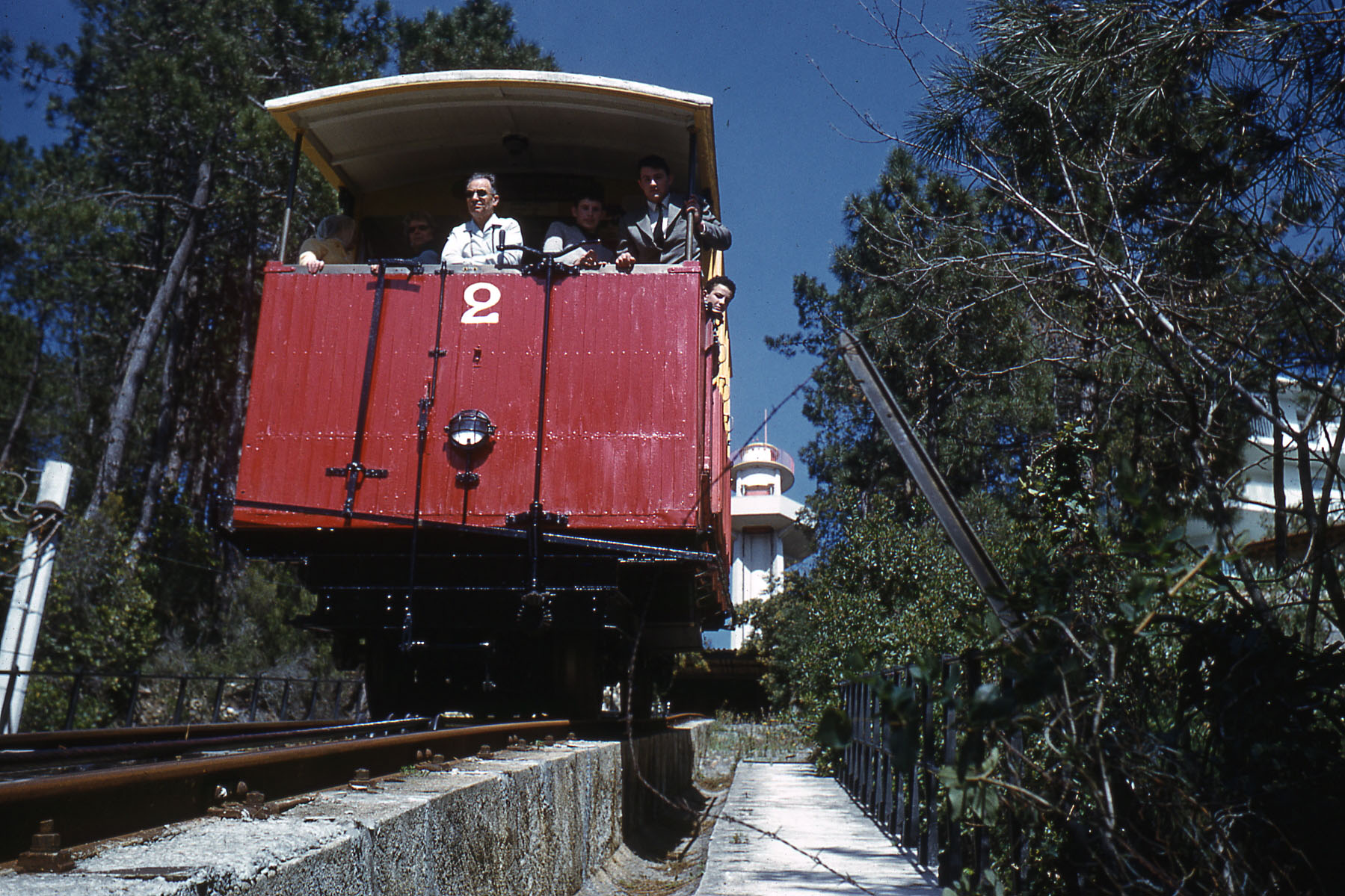
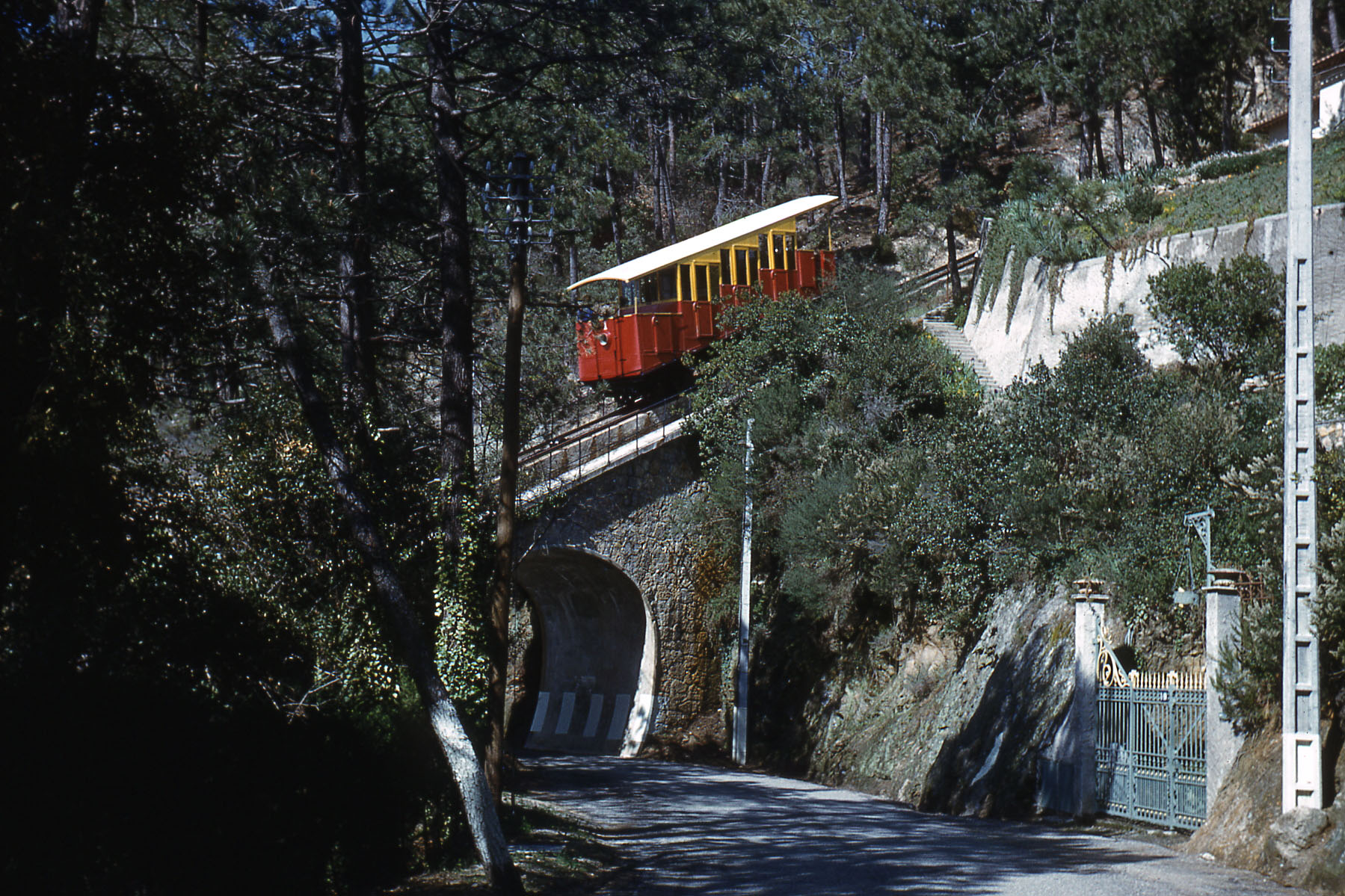
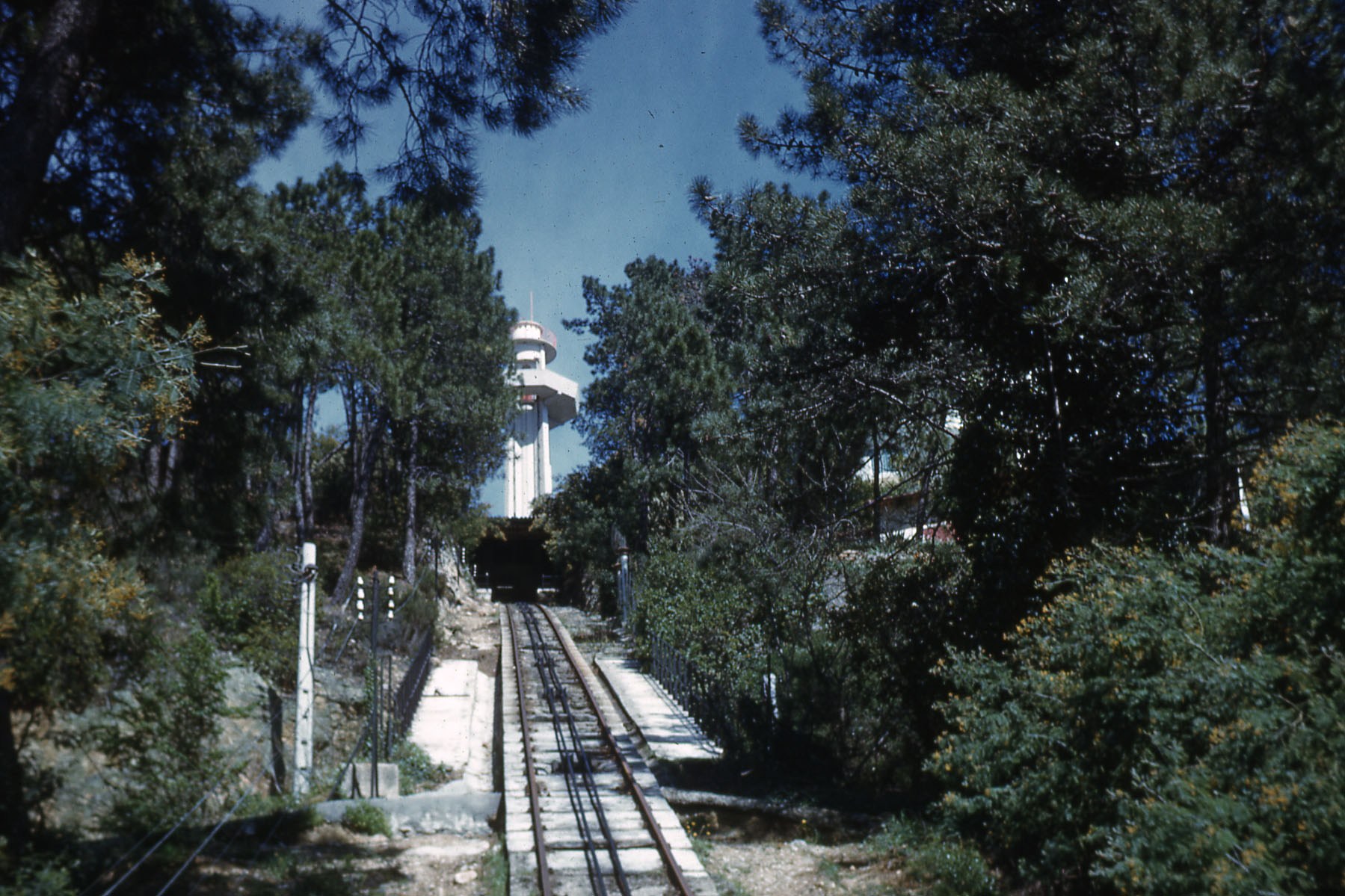
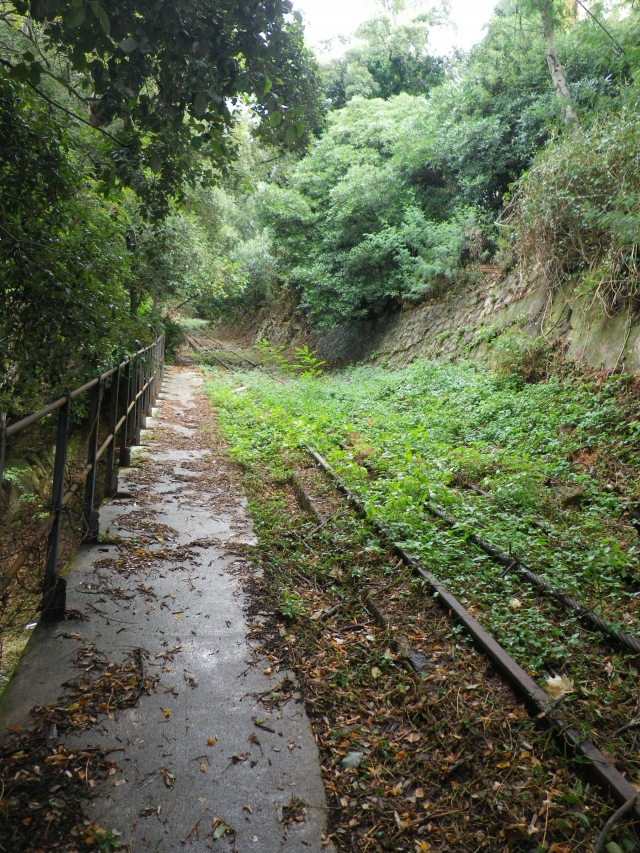
The following photos were taken in 2011.[8]
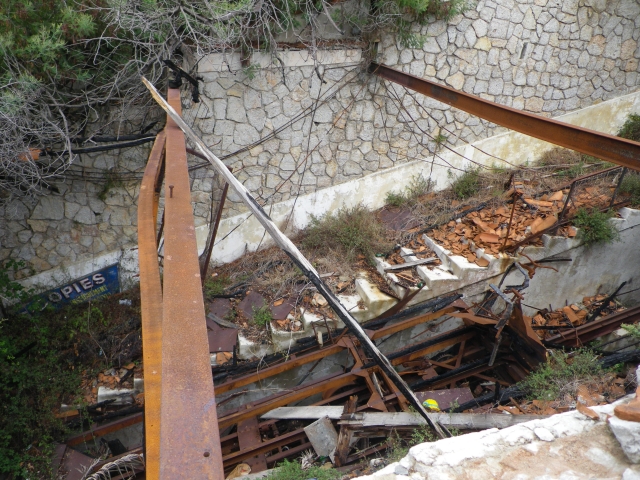
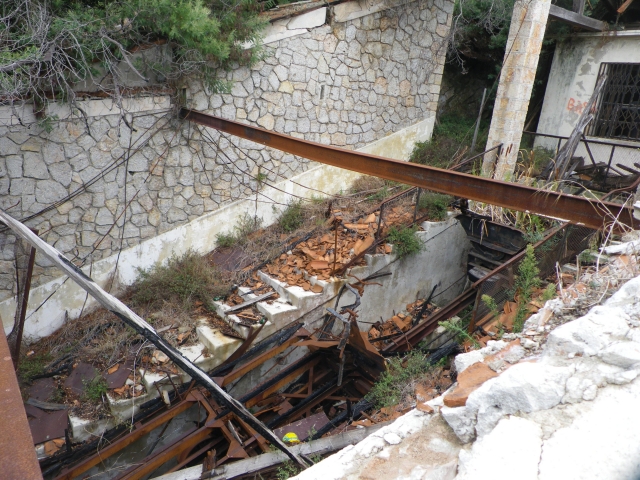
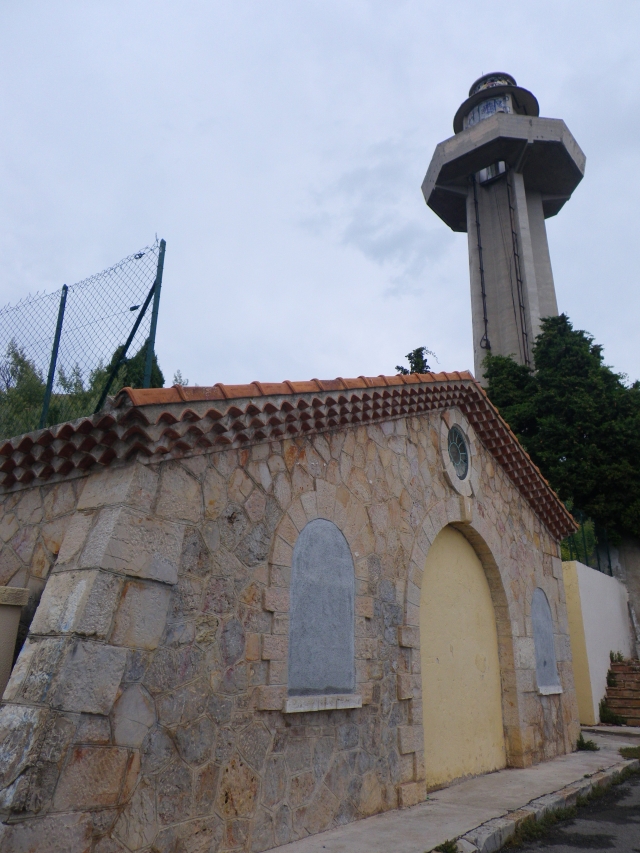
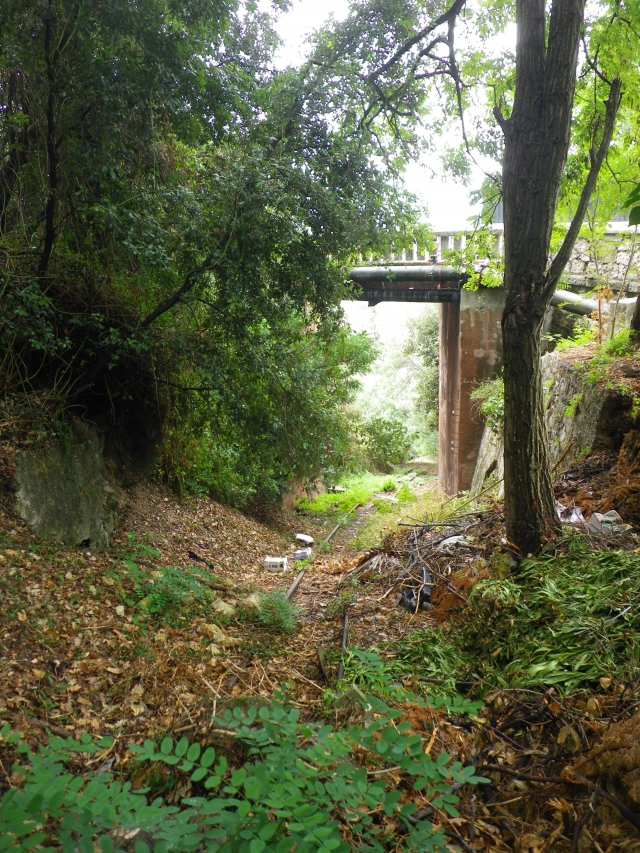
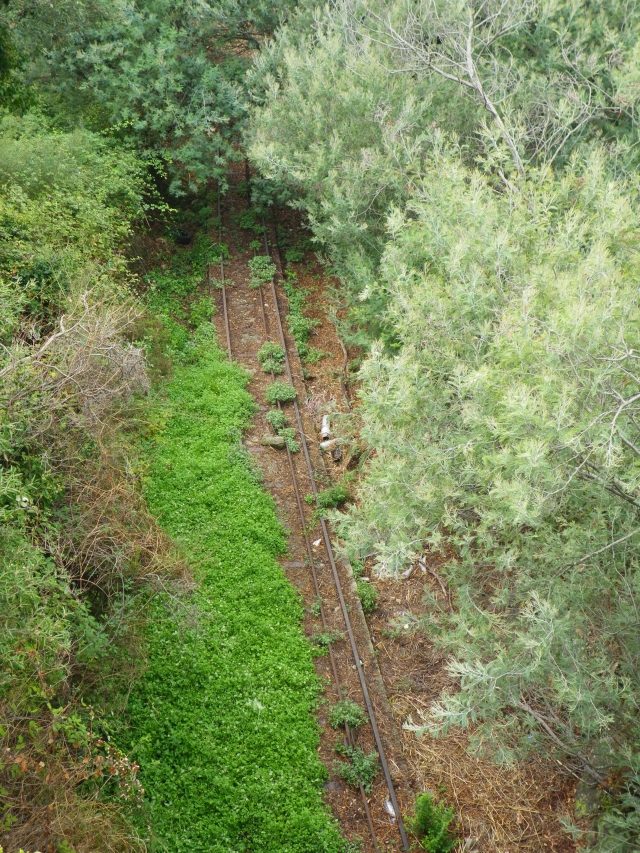
This post finishes with a series of links to YouTube.[9] They include 6 videos taken of the condition of the Super-Cannes funicular railway in the early 21st Century. The videos were uploaded onto YouTube in 2009 by Pierre l’ Antibois.
The first shows the lower station:
The second shows the rolling stock.
The third shows the drive mechanisms
The fourth shows the condition of the route of the funicular
The fifth shows the top station, the observatory and the resaurant
And finally, the 6th video shows the engine room.
References
The first part of the journey from Nice to Levens can be found on this link:
It brings us through the southern outskirts of Tourrette-Levens, past the perched village and castle on our right before joining Boulevard Léon Sauvan in the centre of the lower part of the village.
I drafted a blog a few years ago which focussed on the pinion expressed by others that the tramway found its way from Tourrette-Levens to Saint-Blaise before heading north to Levens, a route which requires quite a detour and a significant lengthening of the journey time compared with the more direct route along what is now the M19 to Levens. That blog can be found by following the link below:
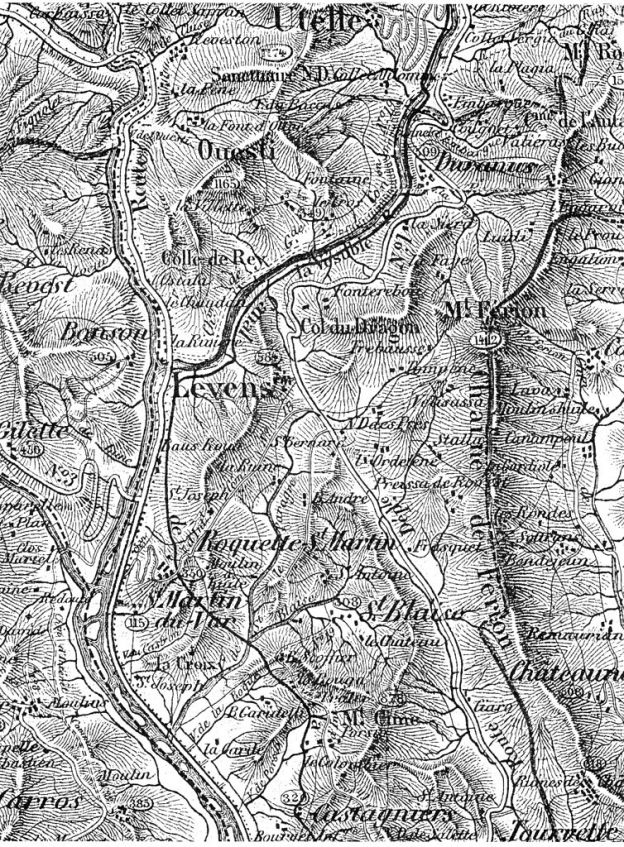
The featured image at the top of this blog is a copy of a map from the 1800s. Careful inspection of the image will show the purported route of the tramway between St. Blaise and Levens, marked as a road (or track) on the map. The quality of roads in the area at this time was poor. Images on postcards show that roads were little more than dirt tracks alongside the trams. When they were first installed the trams must have been a major step forward for transportation in Les Alpes Martimes. The possible route between St. Blaise and Levens is marked on Satellite images later in this blog.
Sadly, the planned route of the tramway between St. Blaise and Tourrette-Levens is much less clear. And analysis of satellite images does not provide a great deal of information about any possible route
I have come to the conclusion that the route via St. Blaise and Aspremeont was considered but never built. This is suggested by Jose Banuado[1] and By Jean Robert [2] as pointed out by 242T66 on the Passions Metrique et Etroite Forum[3].
So, in the sprint of all good railway modellers’ ‘might have been’ stories which support their layouts. Here is my might have been, for the route via Aspremont and St. Blaise. ……..
What might have been …………….. A relatively sharp left turn took the supposed tramway out of Tourrette-Levens towards Aspremont on what is now the M719. On the first satellite image below the junction can be seen middle-right and the rout heads up to the centre-top of the image before exiting top left. The two houses in the top-left corner of the image can be seen on the bottom-right of the following image, for a short distance the route travelled roughly in a Westerly direction before turning north to follow the contours around a small valley, then rounding a hillside before leaving the image close to the top-left corner. I ahve not been able to find any images which relate to the tram route between Tourrette-Levens and Saint Blaise and so am not able to be absolutely sure of the route, form this point on, however the lie of the land suggests that the tram will have followed what are now the roads linking Aspremont and Saint Blaise.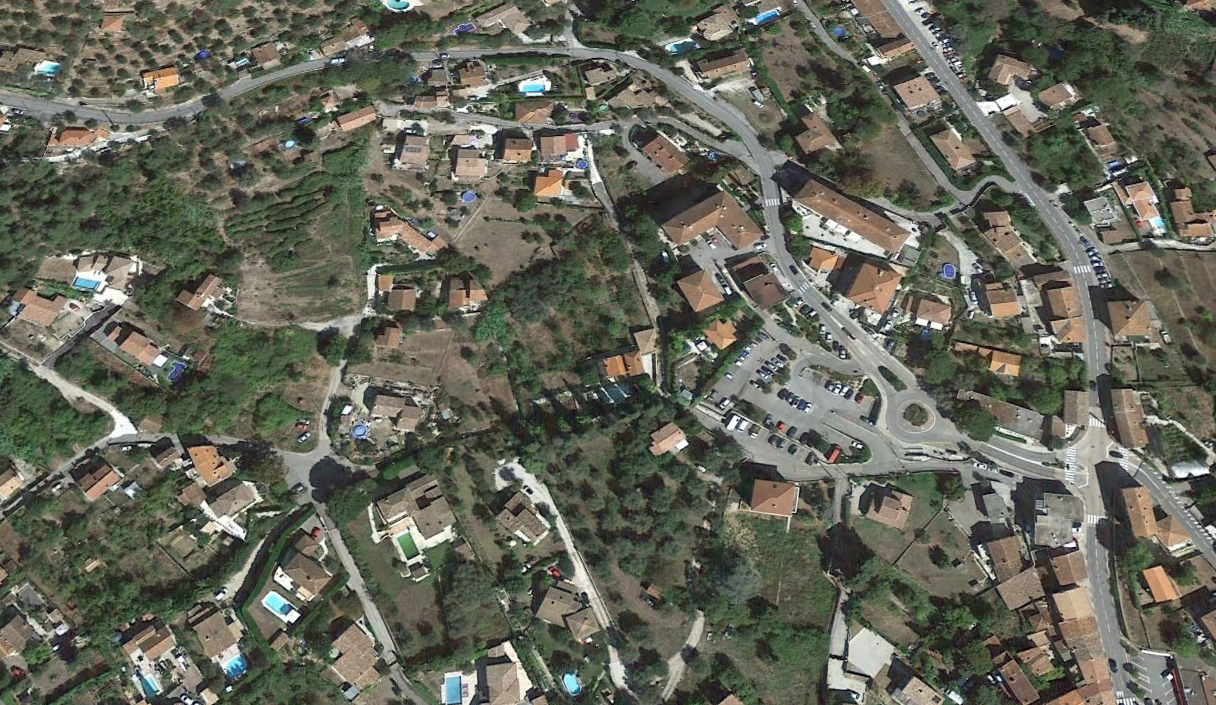
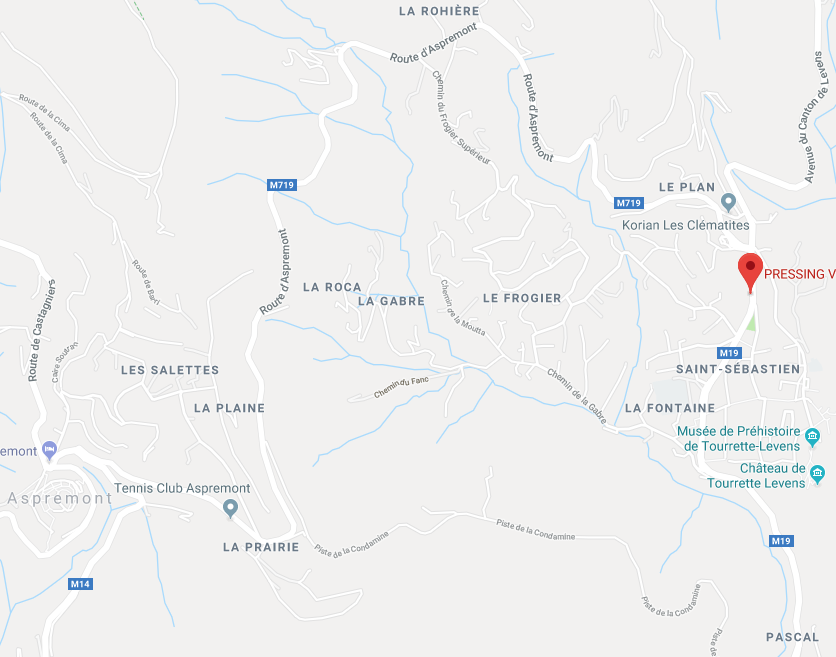
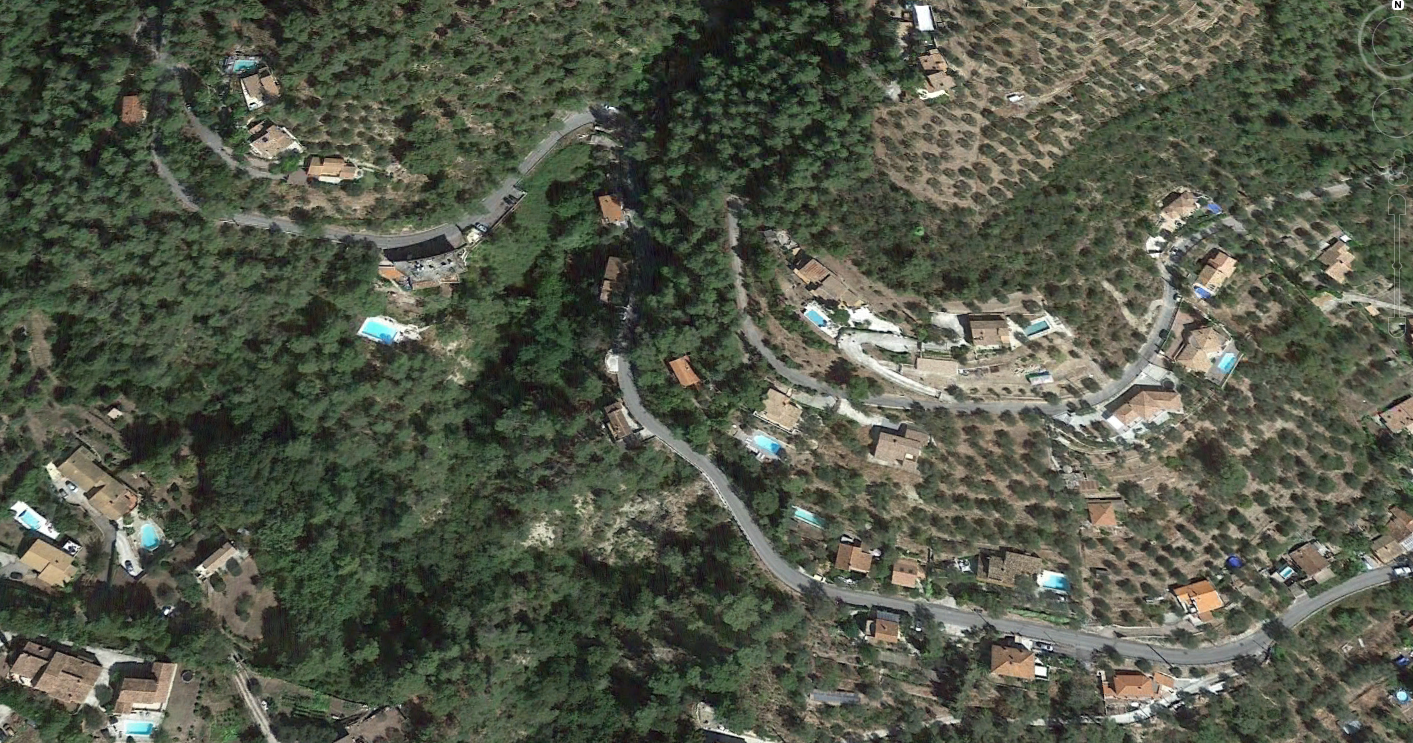 The road out of Tourrette-Levens is named Route d’Aspremont (M719). It follows the contours as much as possible, to keep gradient shallow for the trams. The route shows clearly on the map below.
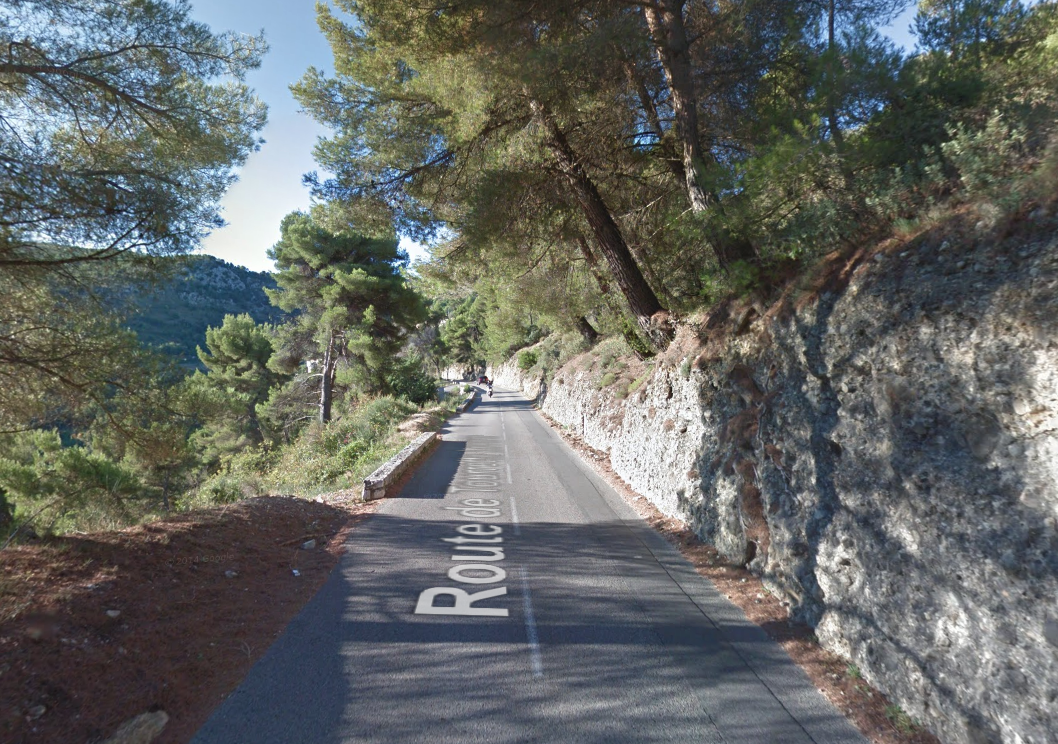
 Aspremont was approached from the East. The road running North to South narrows to not much wider than what would have been the formation of the tramway in the region of La Plaine and La Prarie above. The road, by now, is known as Route de Tourrette.
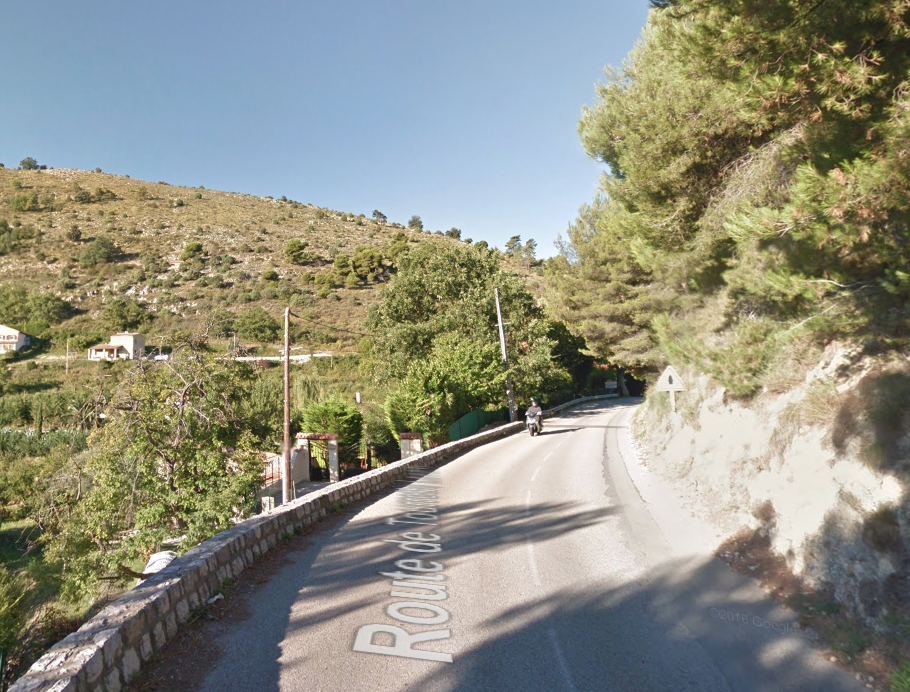
 The route then curves to the East to approach Aspremont.
 Aspremont is to the left of the satellite image below and the tramway route comes in on the right of the image just below centre. It approaches the perched village curving southwards before taking a hairpin turn in the market area of the village before heading northwards on the Route de Castagniers.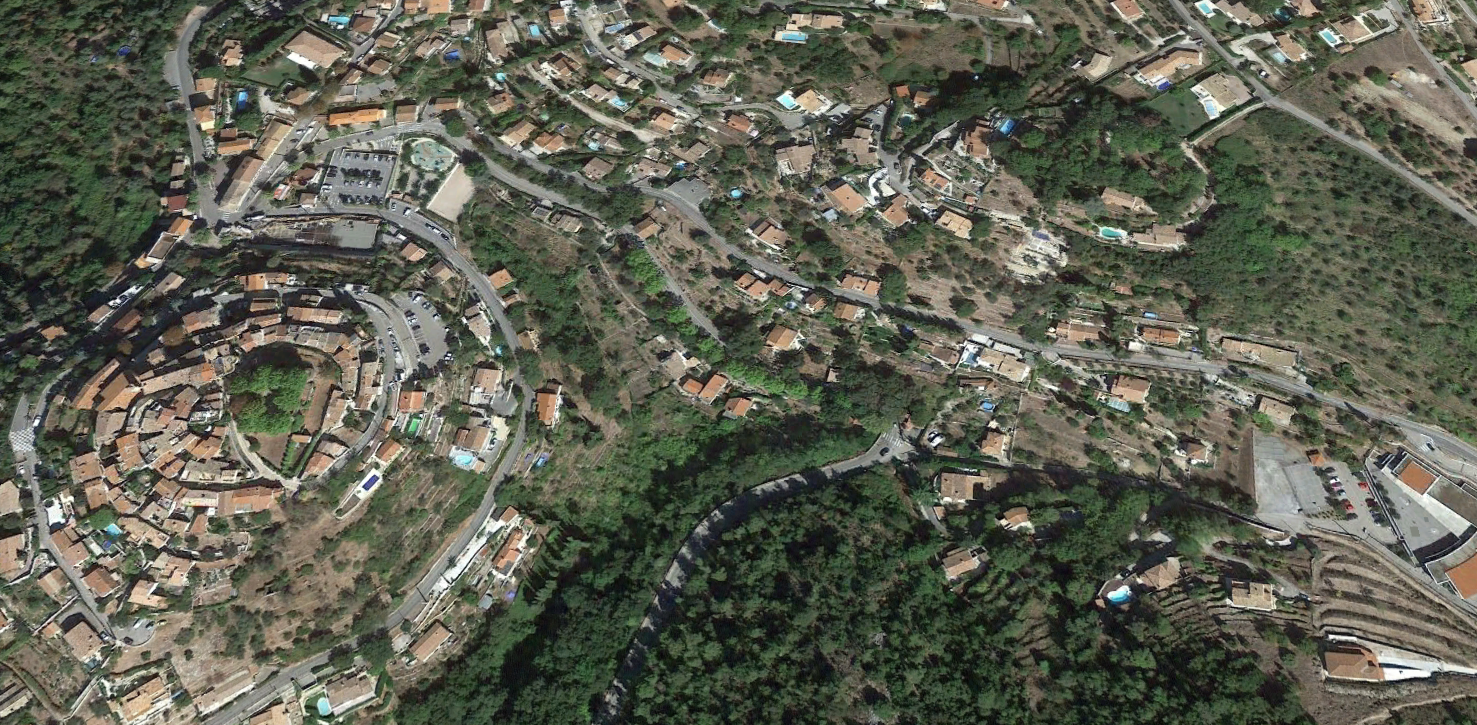
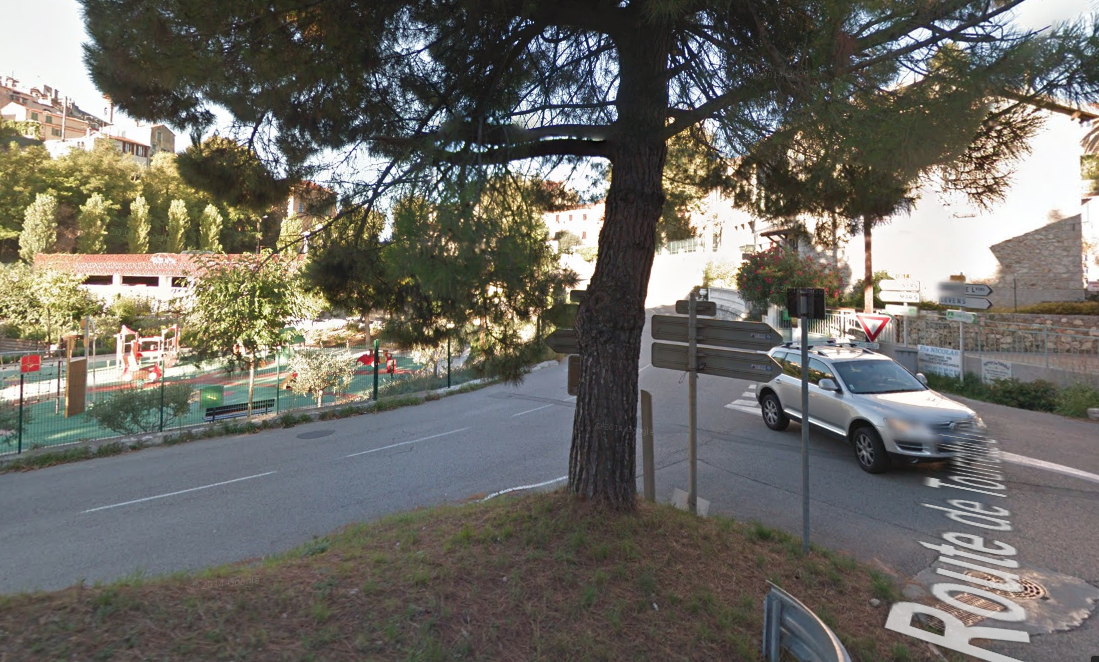
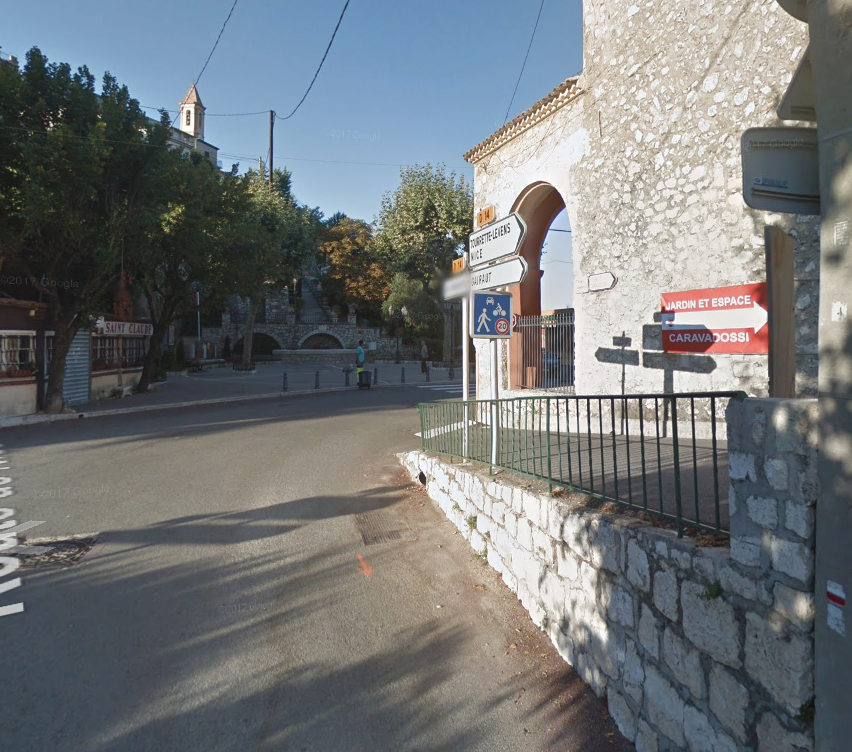
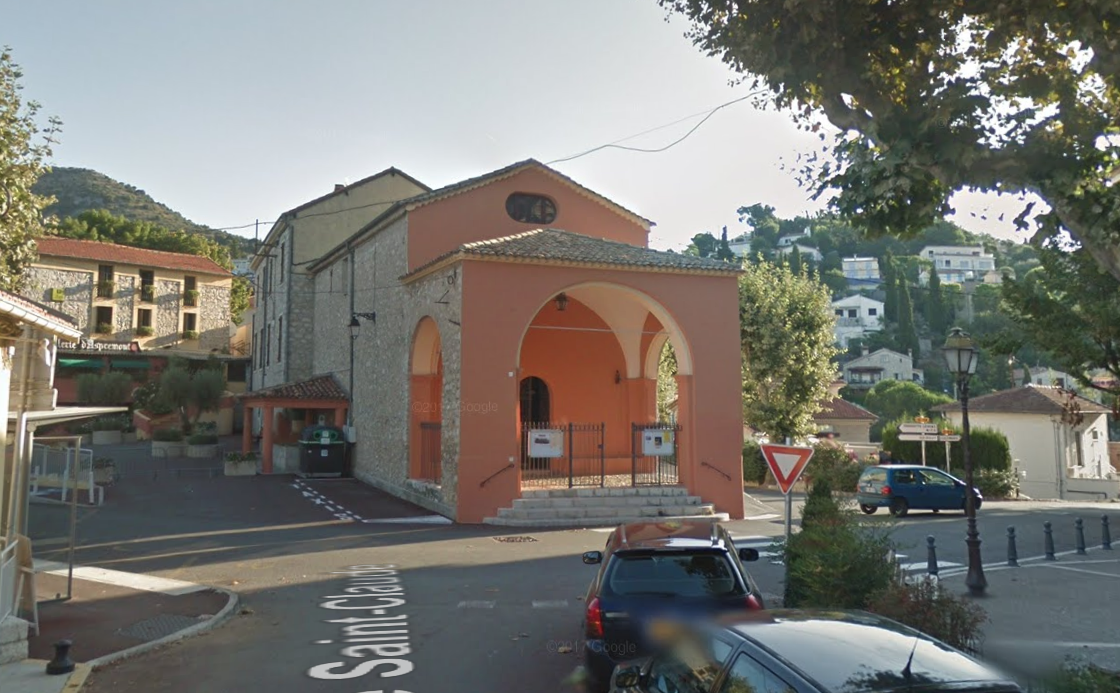 On the image above, the trams from Tourrette-Levens arrived from along the road on the immediate right of the chapel and trams from Saint-Blaise (and Levens) arrived from the left of the picture. The route out of Aspremont is shown on the image below.
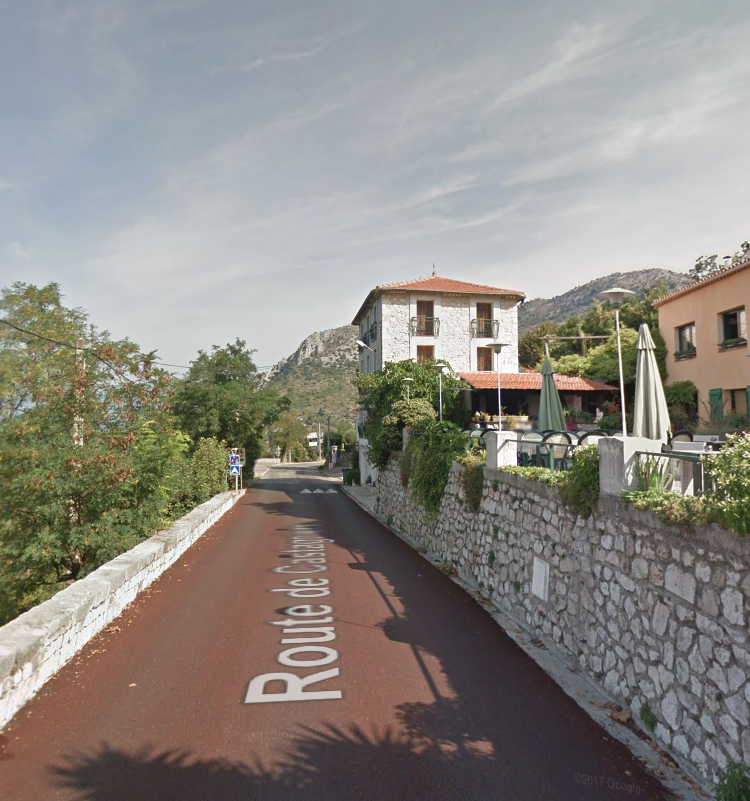 Travelling north from Aspremont the tramway followed the Route de Castagniers high above the valley of the River Var on a ruling grade downwards towards the junction of the road to Castagniers and Saint-Blaise.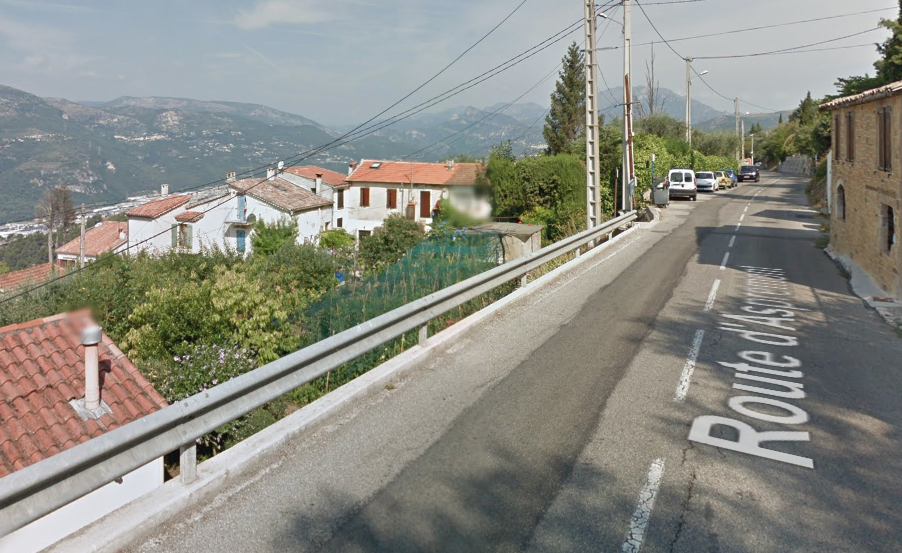
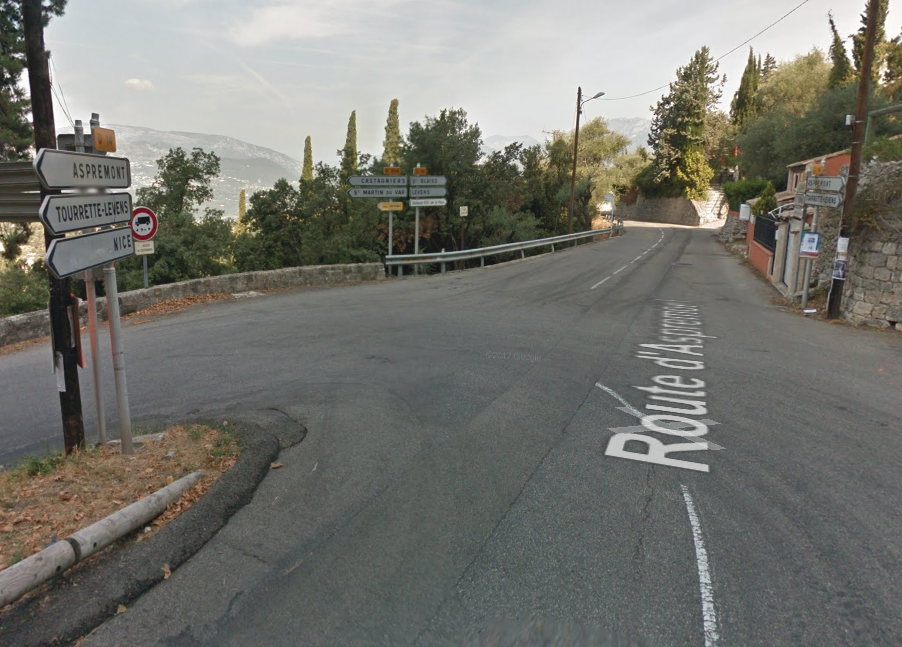
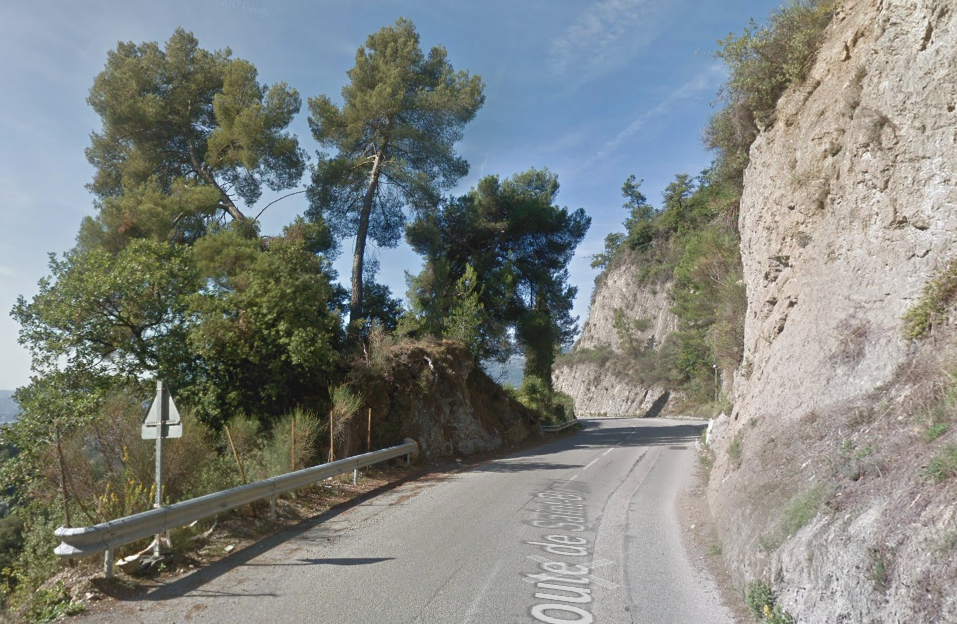
The route continued approximately northwards, high above, the Var through La Loubiere and La Croix de Fer, still on a gently downward grade. At La Croix de Fer (below) the tramway turned away from the Var to head westwards towards Saint-Blaise.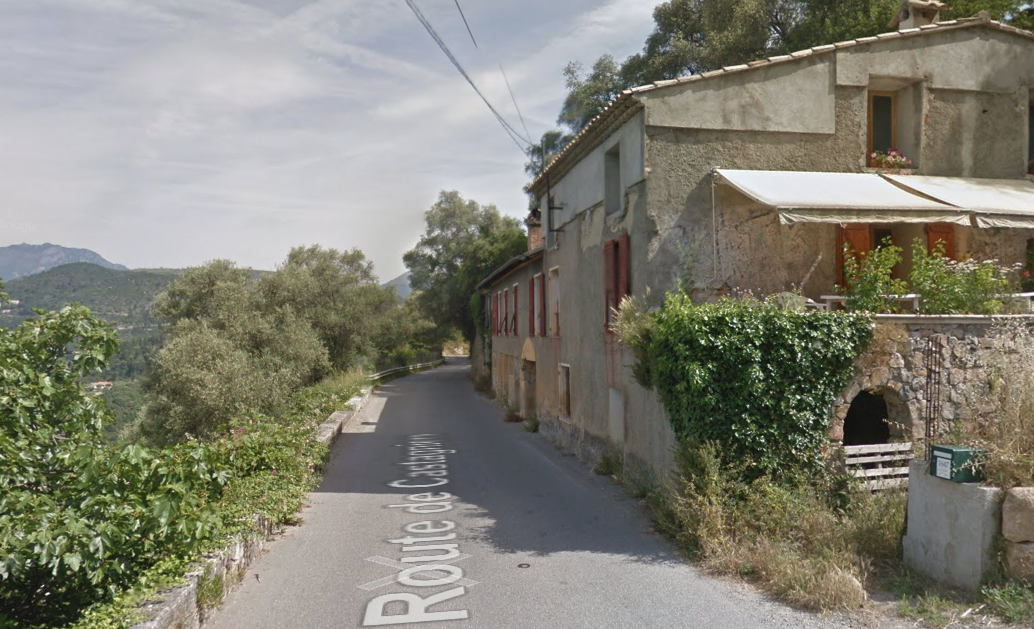 As the trams approached St. Blaise they were still running on a downward ruling grade and had to negotiate two hairpin bends as they approached the village. The tramway stayed above the village itself heading for what was in its day a suspension bridge carrying the route over the valley of a fast flowing tributary of the River Var. The replacement bridge can be seen in the google streetview image below.
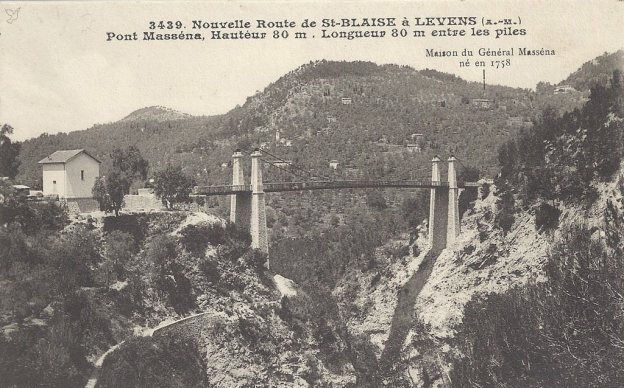
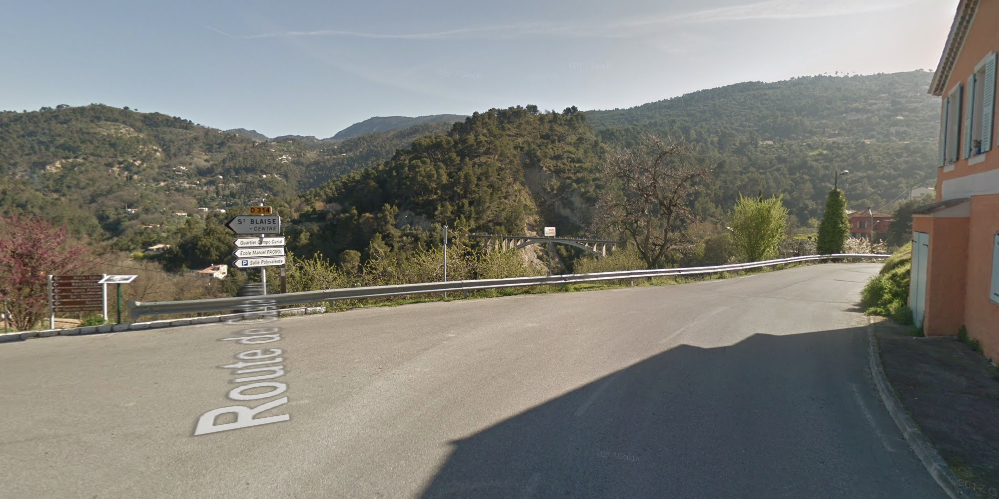 The original bridge was an 80 metre long suspension bridge just outside St. Blaise. Built for the tramway in 1908, it also carried the St. Blaise to Levens road. This graceful suspension bridge was destroyed during the Second World War.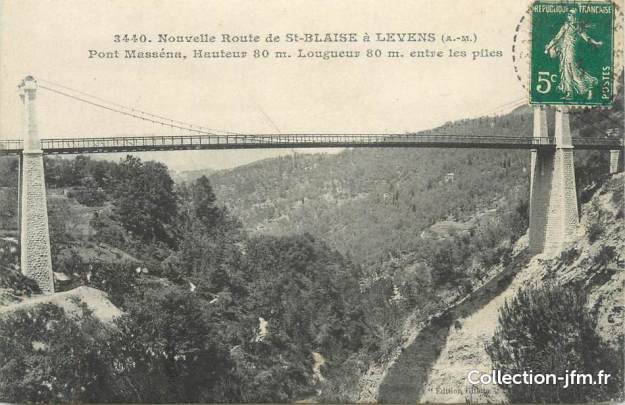
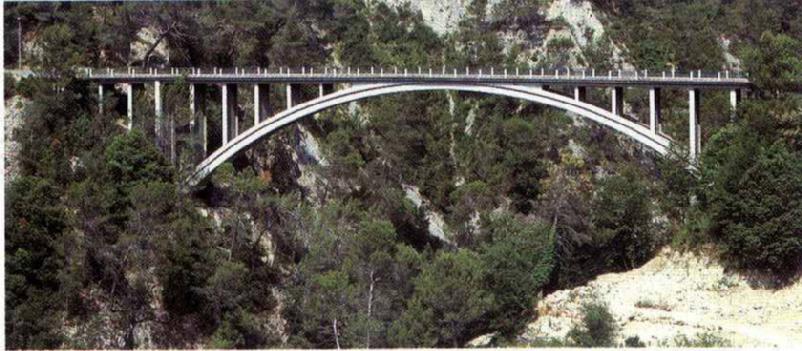
 The replacement bridge was not built until 1953, by which time, in this scenario, the trams were long gone!
 After crossing the Pont de Massena the trams headed along the M14 towards Levens. In our imaginary scenario, these next few satellite images show the route from Levens to St. Balise to meet up with the Pont de Massena.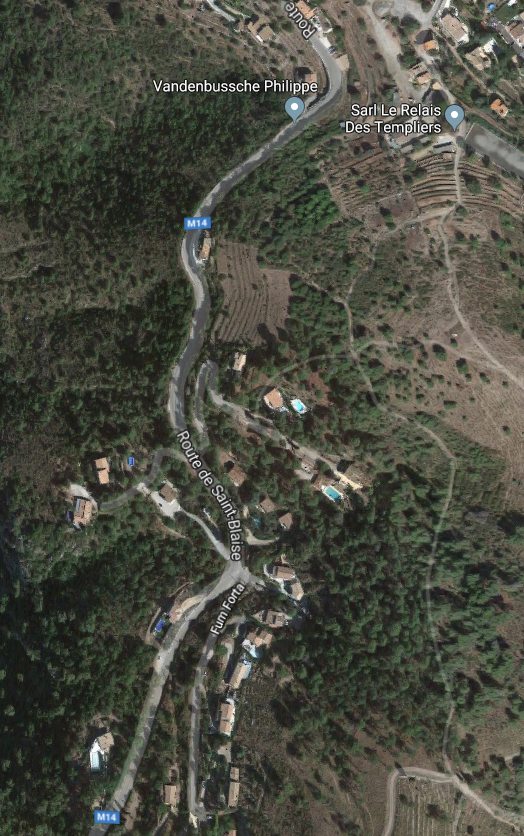
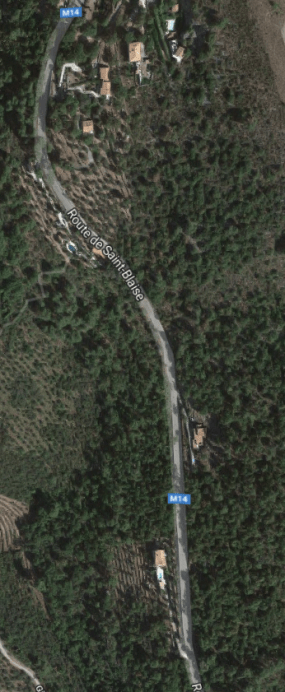
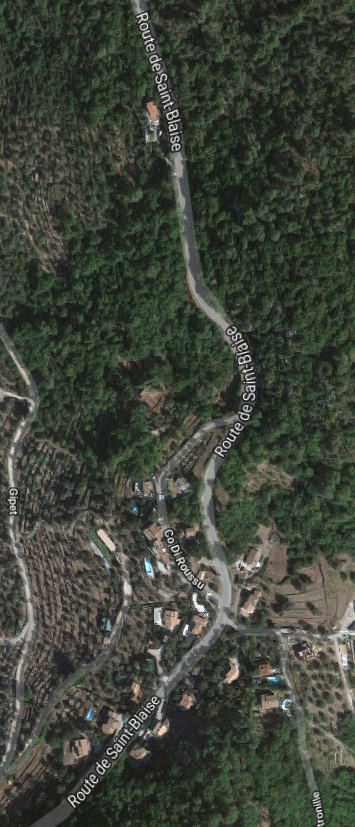
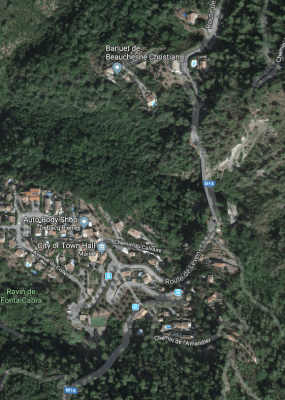
In this scenario, the tramway left Levens on the road now called the Avenue General de Gaule and then turned right onto the Route de Saint-Blaise (M14) and then followed that road all the way to Saint-Blaise.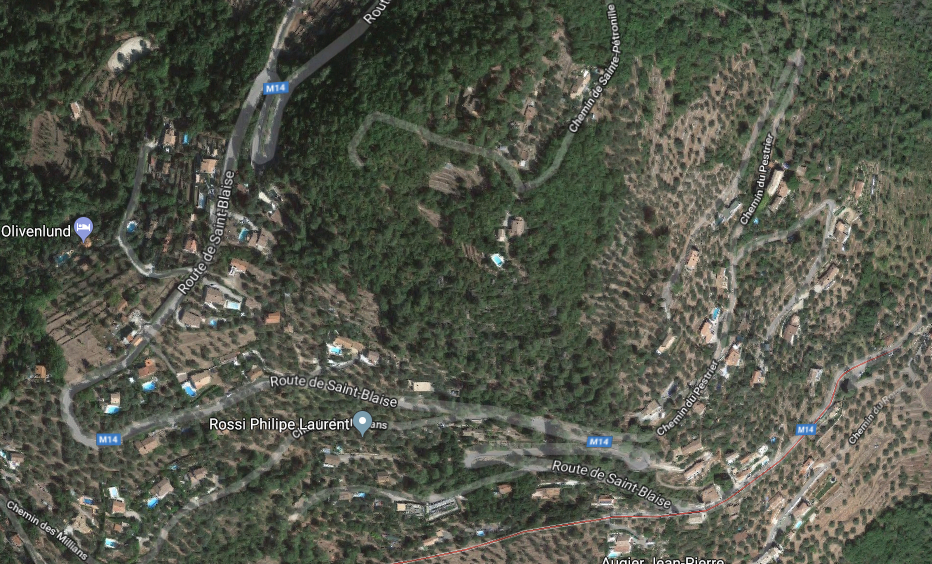
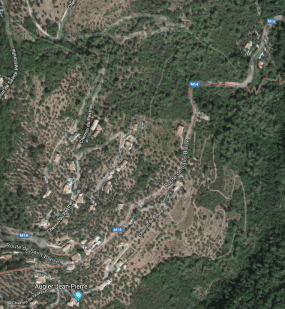
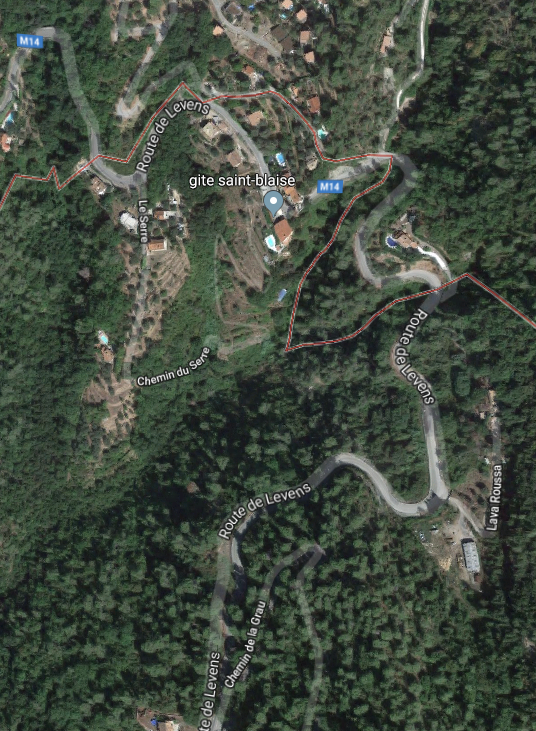
Please note,again, that the description in italics above and the images which go with it are of an imaginary, “might-have-been,” route of the Levens tramway. Ultimately, this “might-have-been” scenario, is supported, primarily, by just two things. The suspension bridge at Saint-Blaise, shown some distance above, and the profile of the possible route through the Village of Saint-Blaise.
I hope the text above has not confused you too much! It is a “flight-of-fancy” based on a few sources which I used when looking at the route back in late 2017 while on holiday in Nice. I think some lengths of the road, and probably the suspension bridge were built with an alternative tramway route in mind. But the tramway was never built.
The actual tramway route followed what is now the M19. According to the works of Jean Robert [2] and José Banaudo,[1] the tram to Levens did not pass through Saint Blaise but followed, mainly on the shoulder of the M19, sometimes on the road and also a few kilometres on an independent formation. The route travelled through Moulins-de-Tourette, Tourrette-Levens, Laval and Ste Claire, to end at the place called Les Traverses, below the village of Levens. The line was put into service in June 1908.
An extension of one km was under construction towards Levens-Village in 1914, but the works were delayed and then suspended by the war and, despite some sort of recovery after the war and the construction of a 95-m-long tunnel in a semicircle the permanent way was not laid and the extension was never opened.[3]
242T66 comments about the Masséna suspension bridge at Saint Blaise: “it dates from 1911 and was destroyed by bombing in 1944. Since 1953 it is replaced by a concrete bridge with a large arch. Given that an itinerary had been planned to pass the tram through Aspremont, Castagniers and St Blaise, which would have served a larger population but at the cost of a longer and more expensive line than that of the valley, it is possible to think that the road from St Blaise to Levens and the suspension bridge had been made with the idea of being able to pass the tram.”[3]
So, back to Tourette-Levens, and this time no flights of fancy!
The station at Tourrette-Levens was on Boulevard Léon Sauvan in the centre of the lower part of the village. As trams left the centre of Tourrette-Levens they followed the present M19.
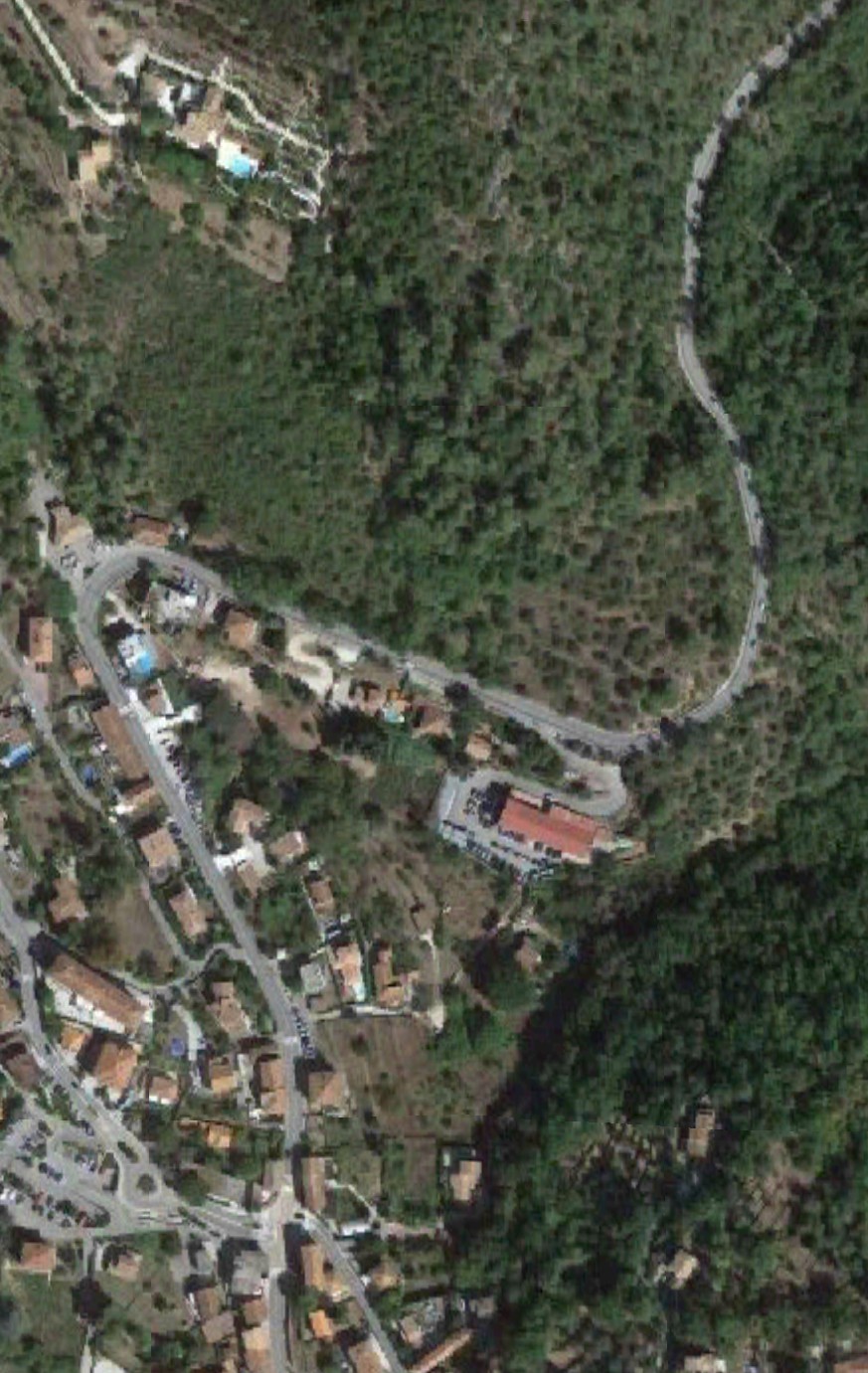
The road and the tramway swing sharply away to the East after leaving the northern edge of Toureete-Levens.
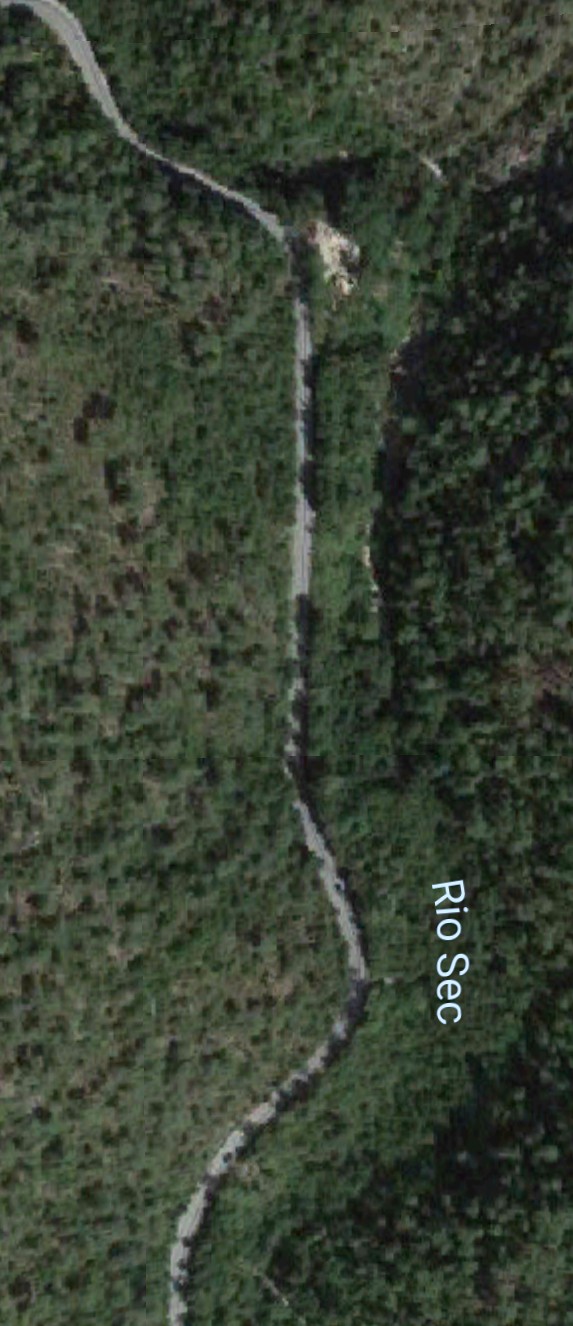
The M19 is known as the Avenue du Canton de Levens and swings north as it meets the valley of the Rio Sec. It runs high above the river in the valley below. It then crosses the river and travels on its North-East bank, towards La Columbier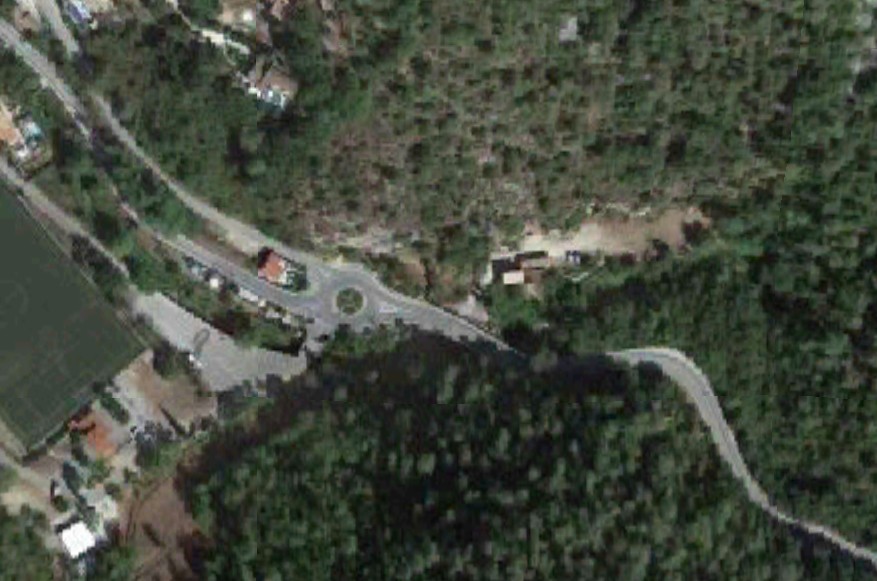
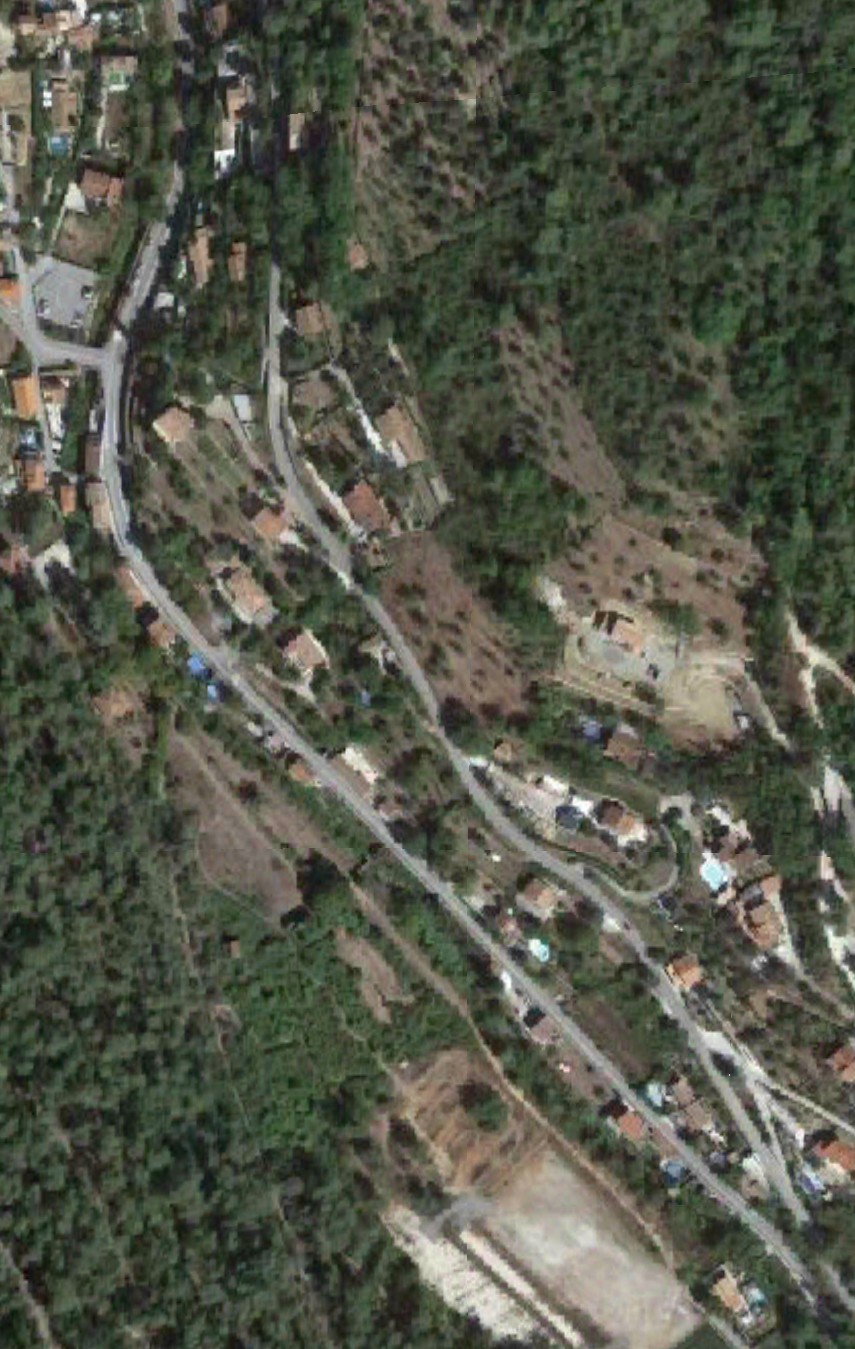 Le Plan d’Arriou, below, is followed by Le Columbier.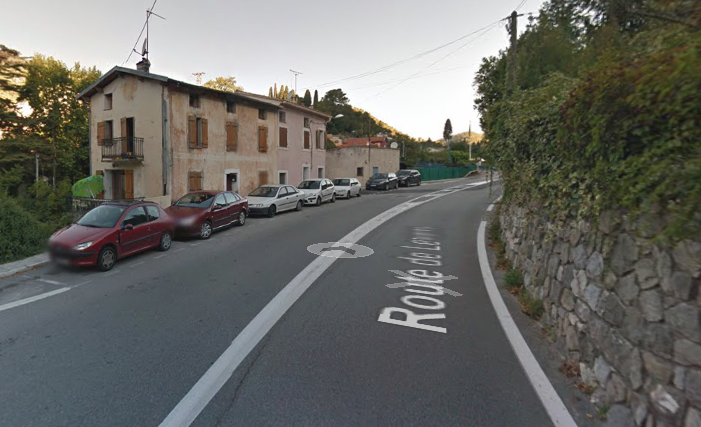
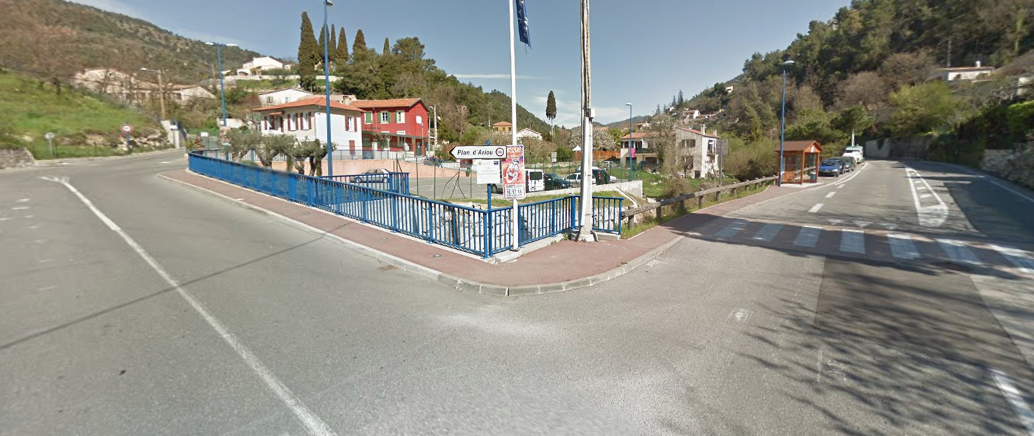 The route continues along the M19 towards Levens through Laval and closely following the North-East bank of the Rio Sec, along the Route de Levens and then Avenue Felix Faure before entering the area of Saint-Claire (the third image below).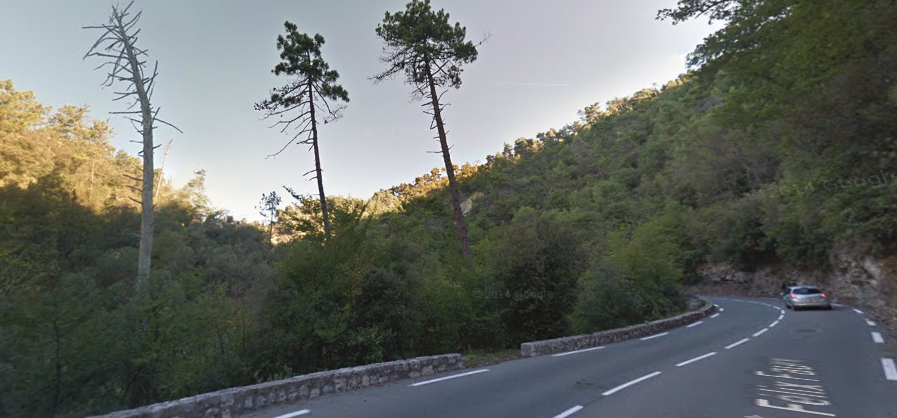
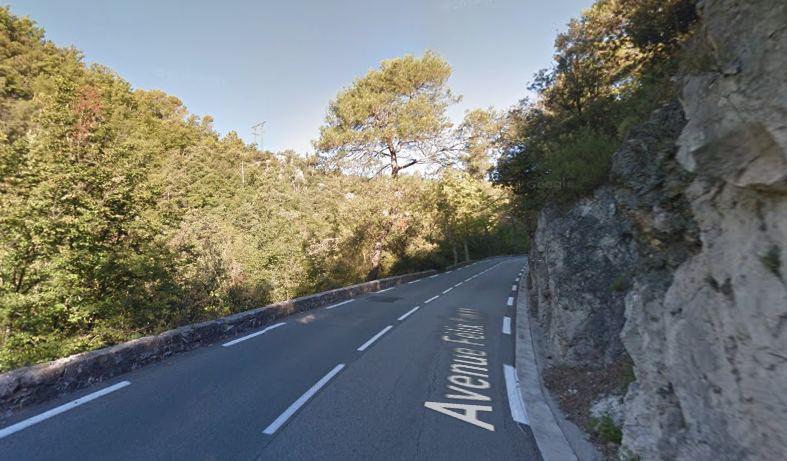
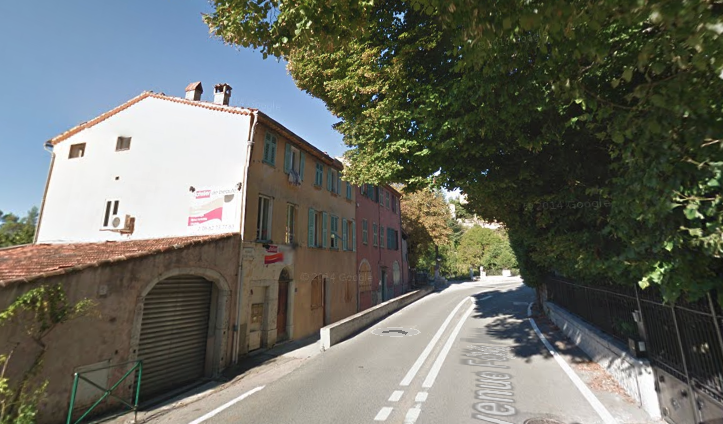
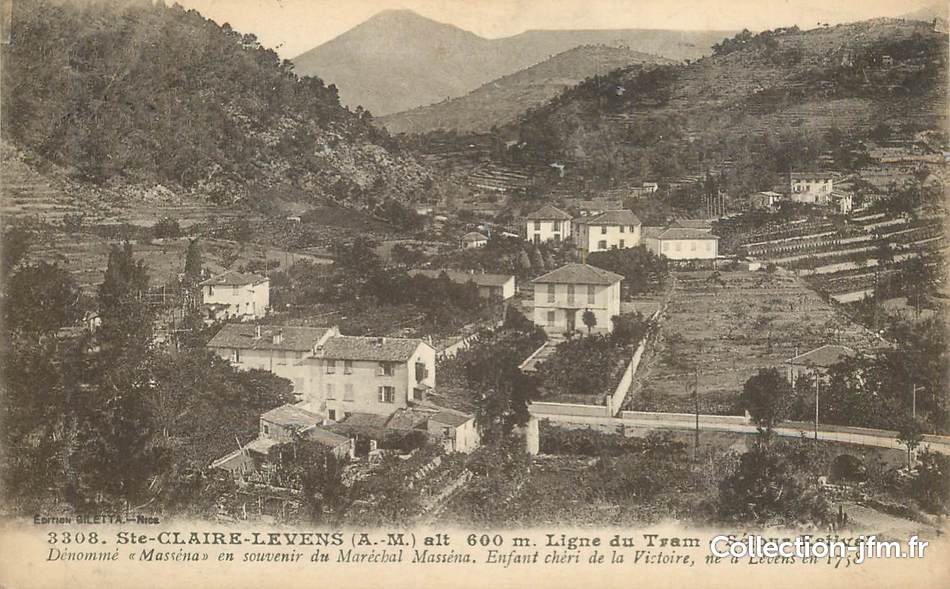 As Avenue General De Gaulle stretches ahead of us we atart to pass thorugh the locations of early 20th Century images. The first is of a tram in the snow.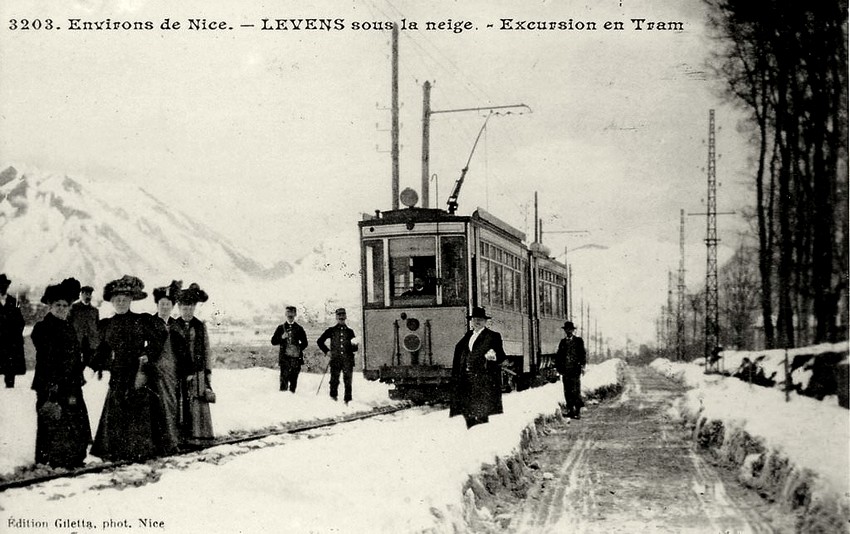
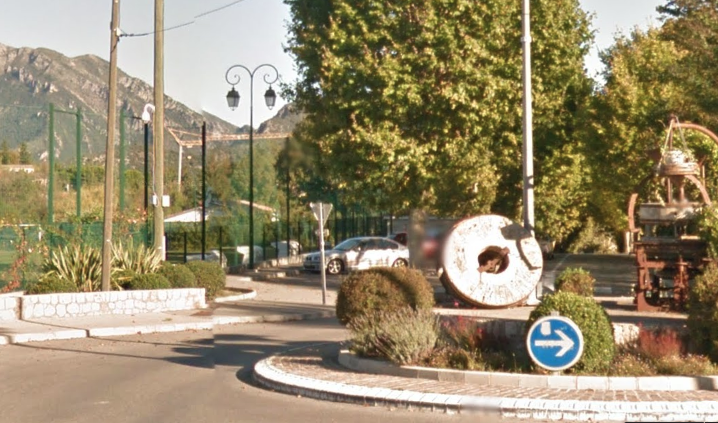 In the modern image, there is no snow, the trees are planted approximately in the line of the tramway and, of course, the roundabout is new!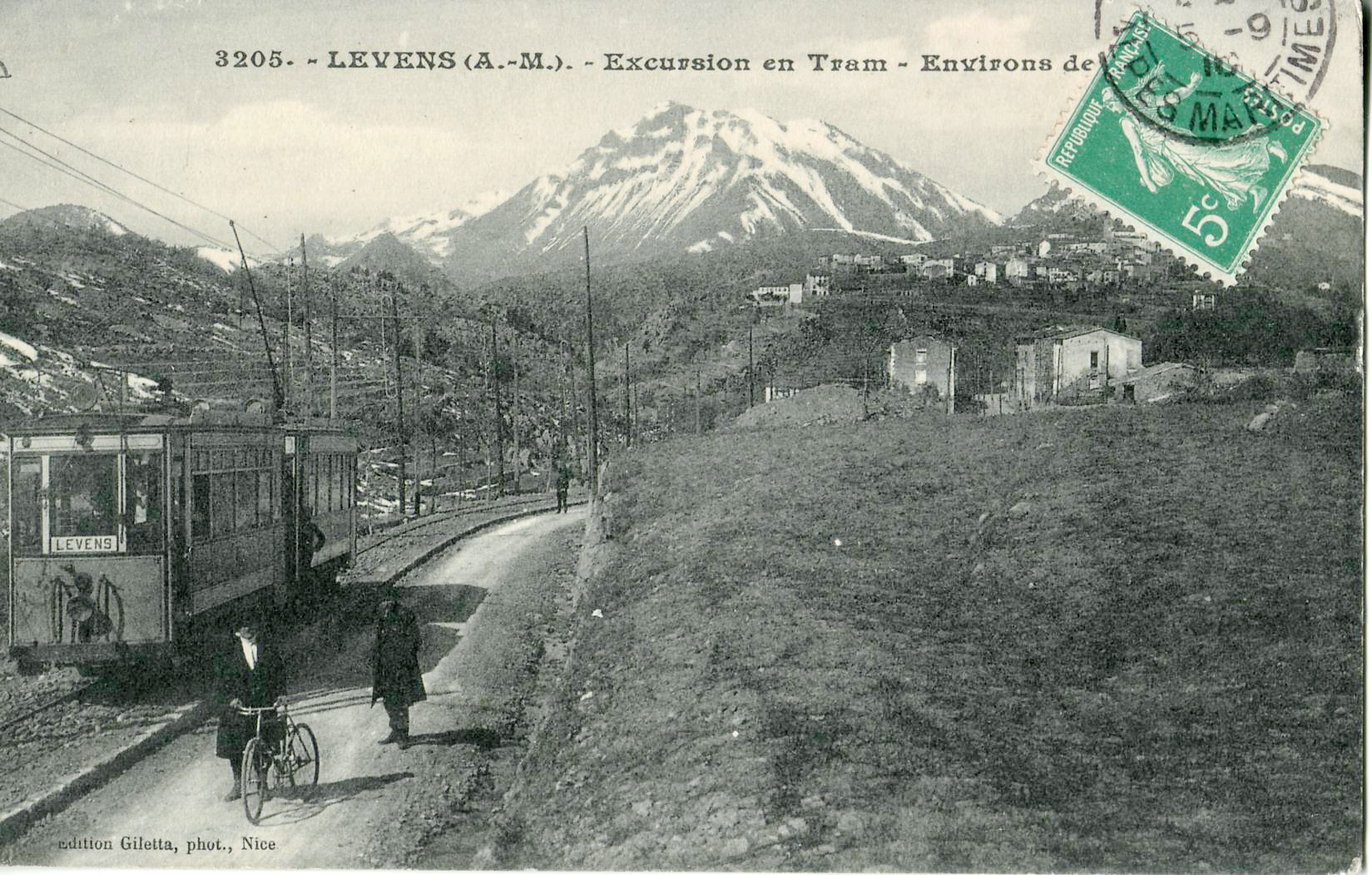
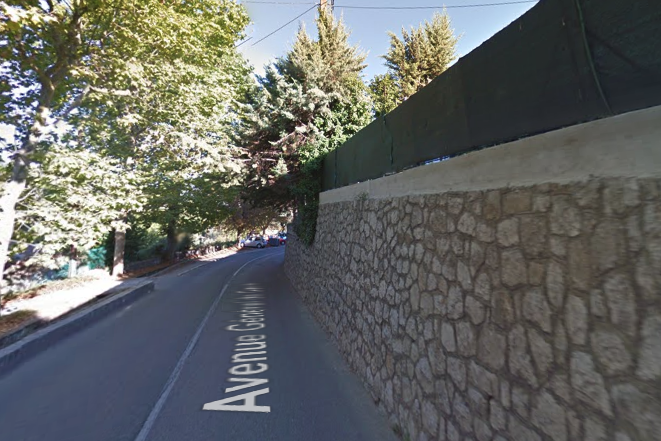 This next pair of images are difficult to tie together but the bend in the road in the modern image correlates to the bend in the centre of the older postcard. As can be seen in the old postcard the tramway was separated form the untarmacked (dirt) road by a small kerb, and the road was only wide enough for one vehicle.
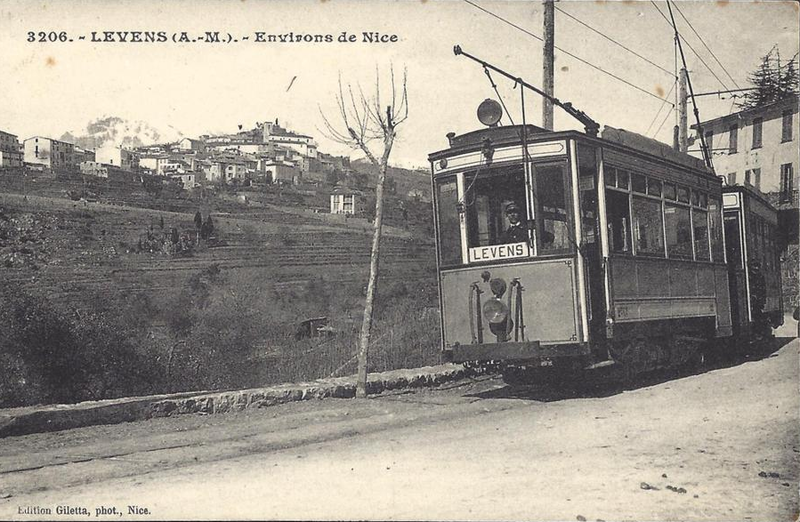
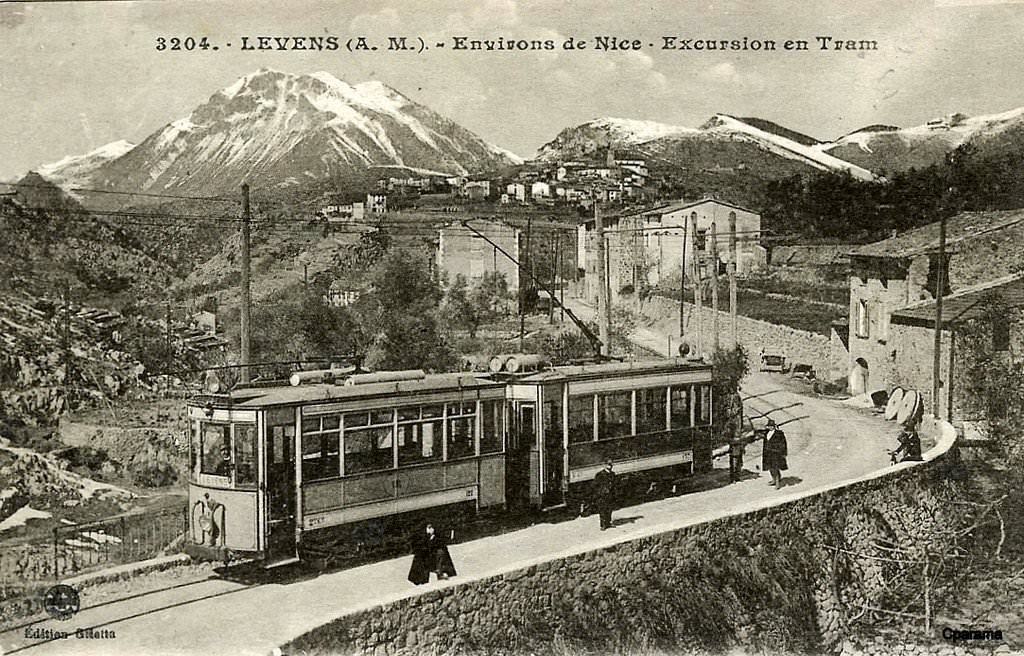 Just round the bend, in the modern image above, we reach the location of this next postcard which is well composed with the tram in the foreground in front of the small hamlet with Levens sitting nicely under the hills beyond. The modern image below shows the same location in the 21st Century. The railings and buildings tie down the location, the trams are long-gone and the road is now a much more substantial.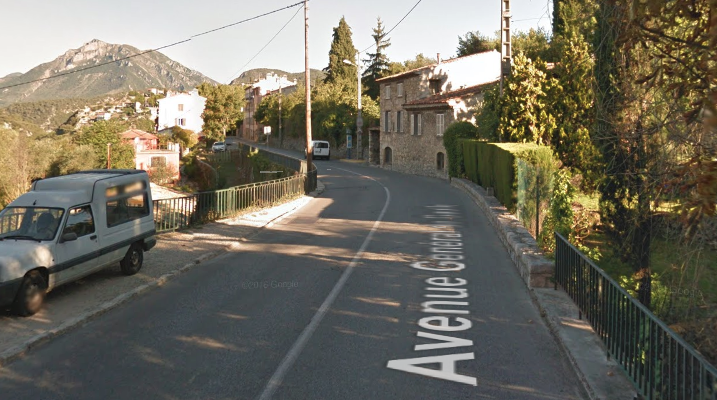
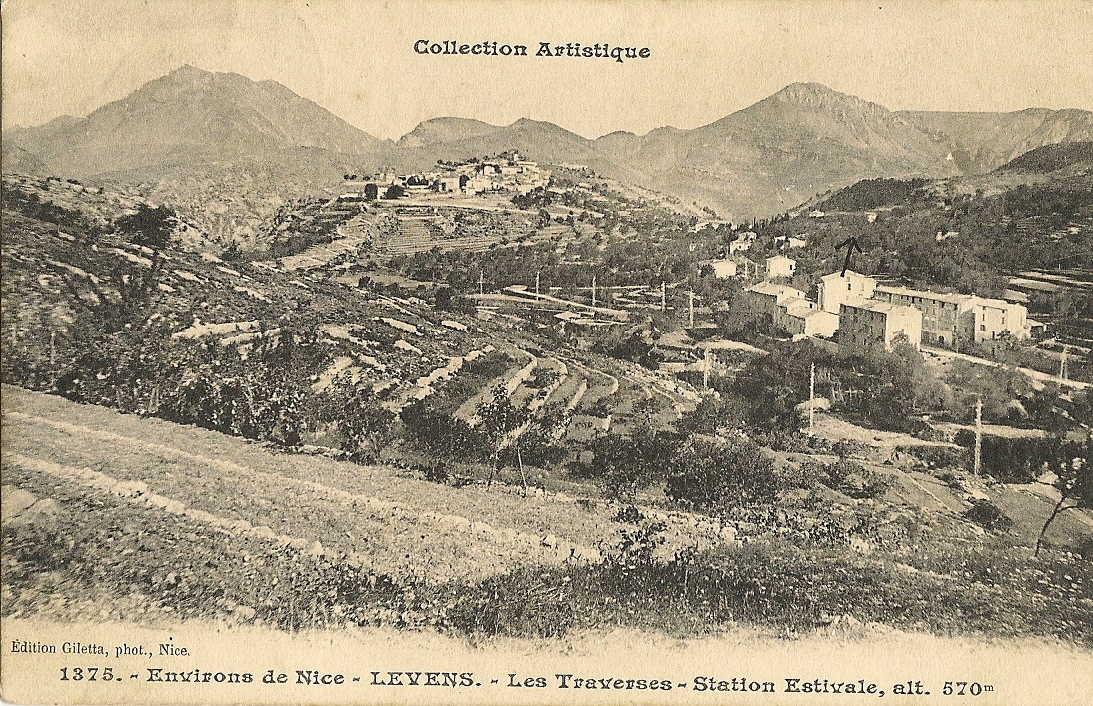 The postcard above shows the road/tramway coming in from the right towards Les Traverses and heading towards Levens in the background. Trams continued along the road towards Levens, through Les Traverses and on towards Saint-Roch where they terminated in the valley below the village of Levens.
 The Saint-Roch terminus is shown below.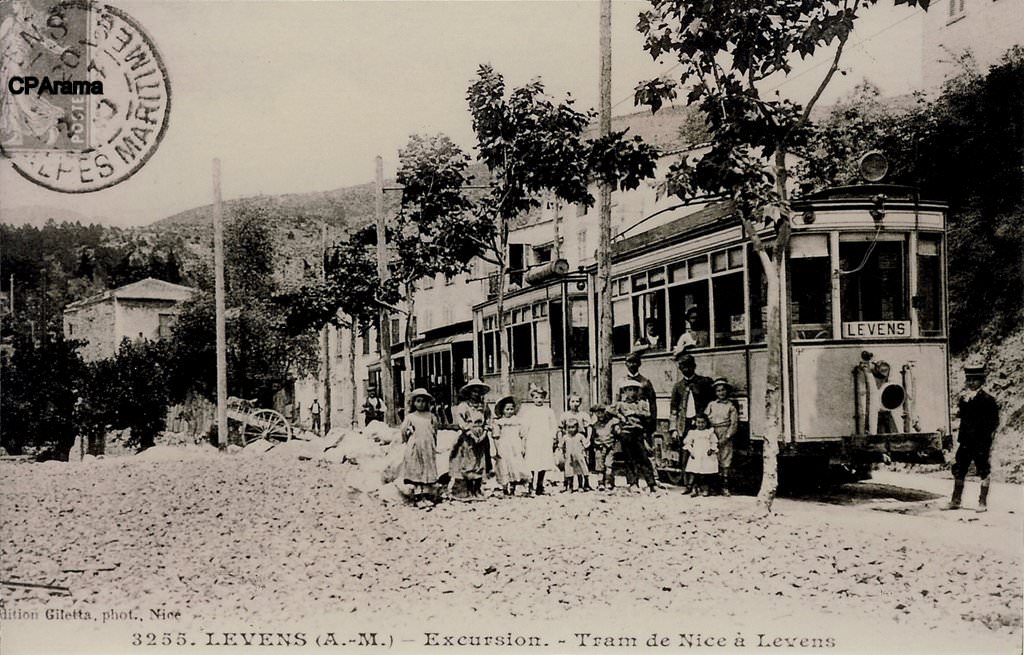
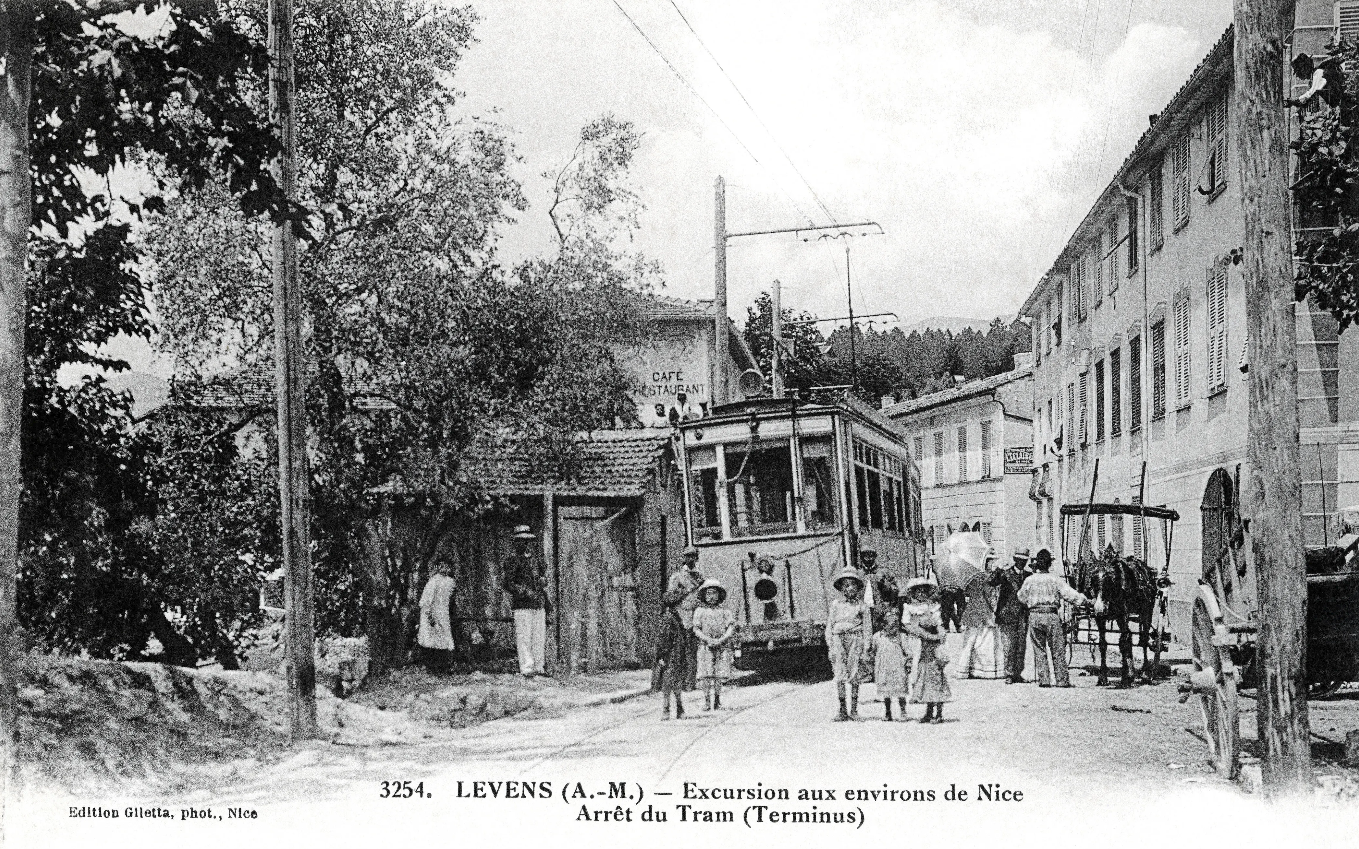
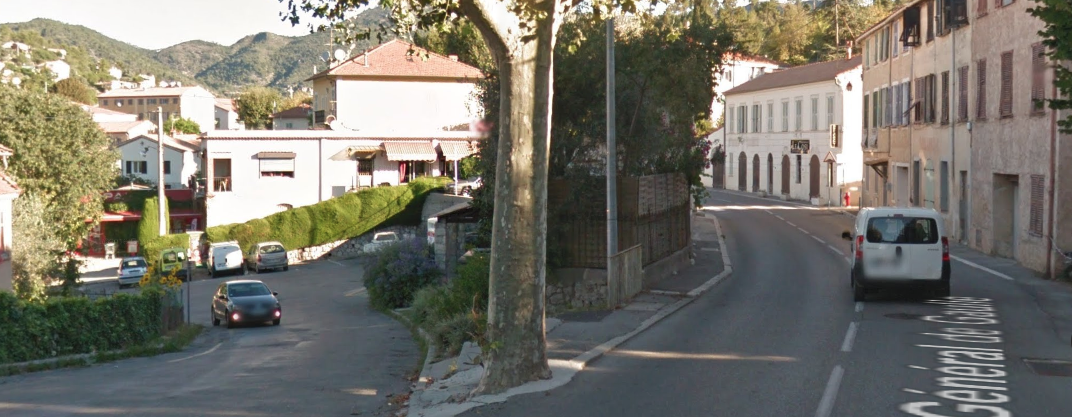 Again the modern image approximates the camera position from the postcard as best can be. It was always intended that this terminus of the tramway should be temporary. The promoters planned to access the centre of the village of Levens and work was well underway at the advent of the Great War. That conflict resulted in all works being placed on hold, despite most of the infrastructure being in place. The buses now follow the planned route for the trams from Saint-Roch to Levens Village.
Trams reached Levens (Saint-Roch) in 1908 – work had started on the line in 1906. It was abandonned by the mid-1930s. Throughout the life of the service, there was only limited take-up of the service by the public, three trams ran each day in each direction along the full length of the route, supplemented by some partial services.[4]
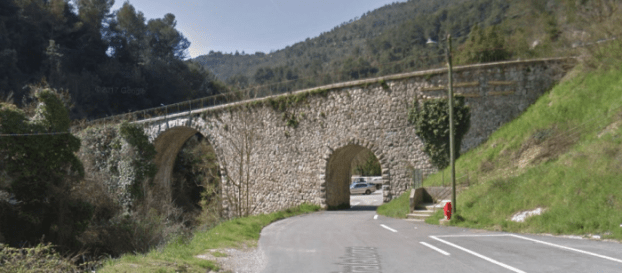
Two interesting views came to light while looking at images of Levens for possible evidence of the route of the trams. Both seem to show a viaduct or aqueduct.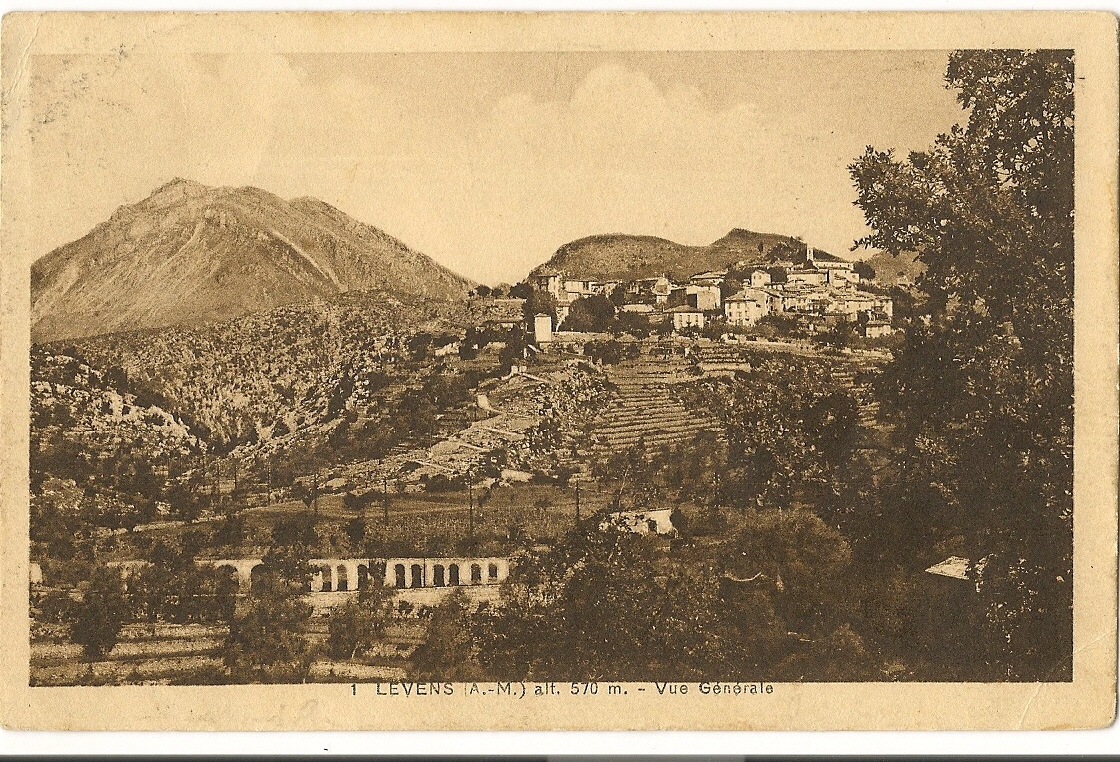
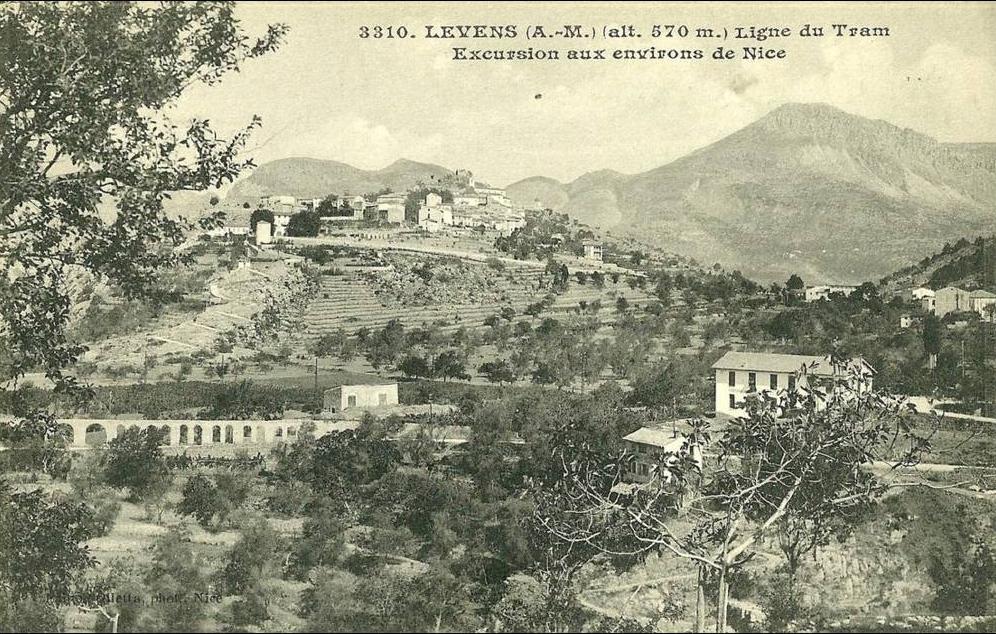 Some discussion about these images on Passions Metrique et Etroite resulted in what is now little more than a garden wall with arched openings being found on the Route de la Roquette.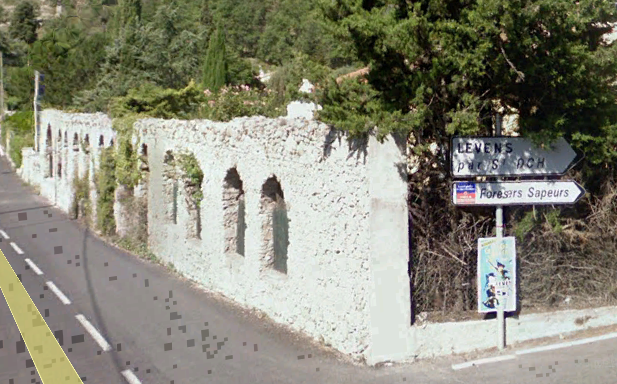
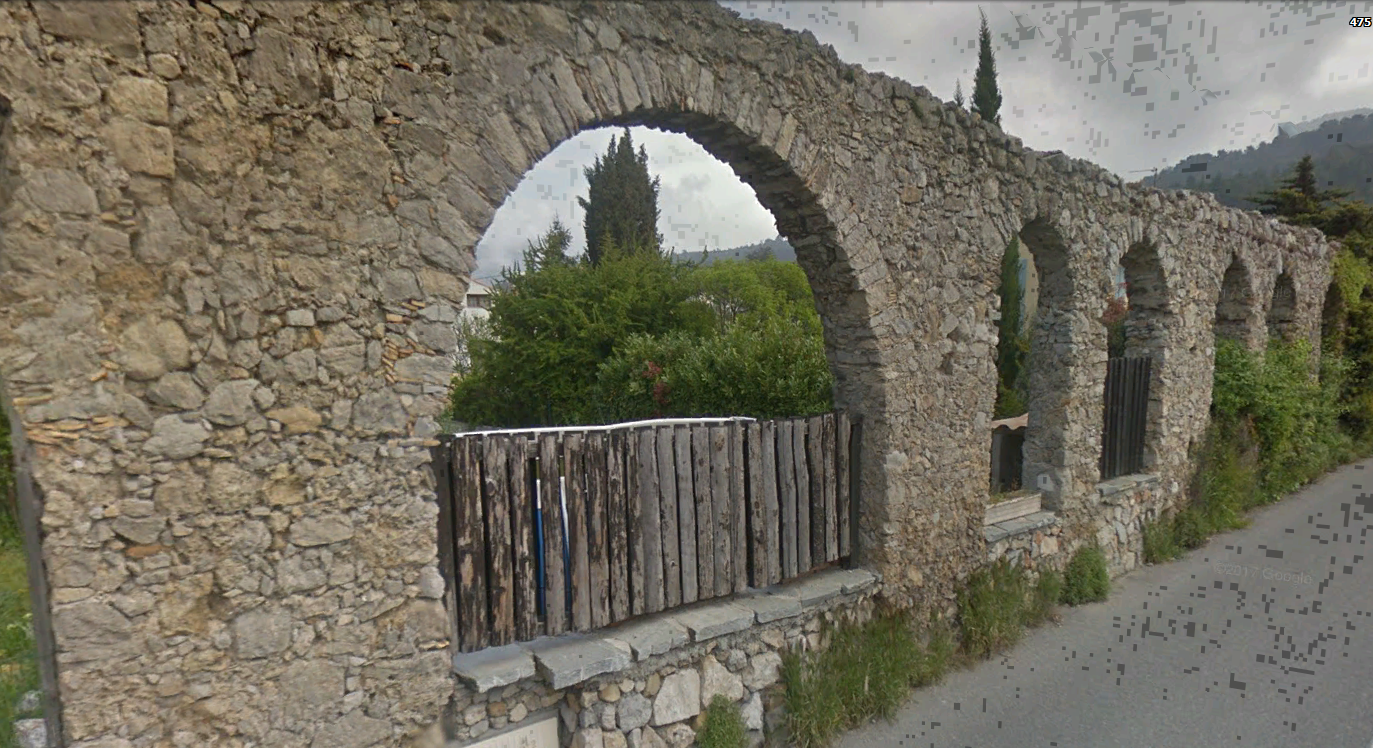
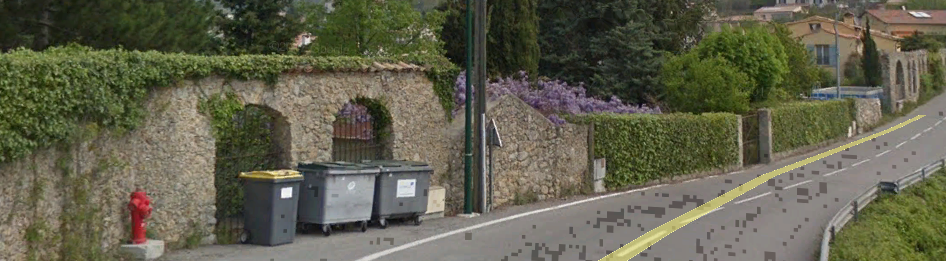 So, is it just that, or is it the remains of an ancient aqueduct. In the postcard images it seems more substantial than in the google earth images from 21st Century. What is it?
References
The Nice to Levens Tramway was part of the TNL (Les Tramways de Nice et du Littoral) and full details of the network can be found on my blog at the following link:
The line to Levens was an extension of the line from Place de Massena to Saint-André-de-la-Roche – Ligne 14 of the network in Nice. Trams for Levens were numbered 30.
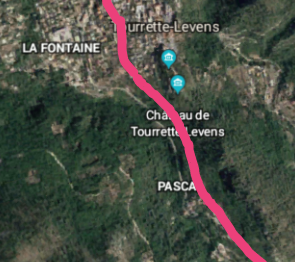
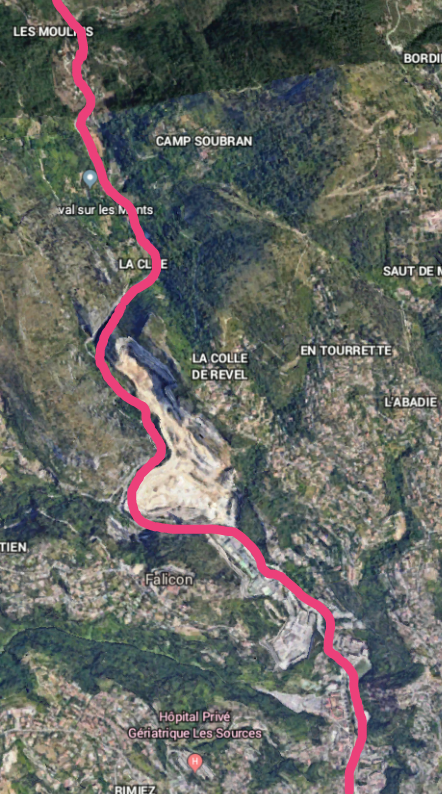 The lower part of the route is highlighted on the Google Satellite images here. This covers the length from Tourrette-Levens to Nice (or vice-versa) and is in three parts, the first image shows
 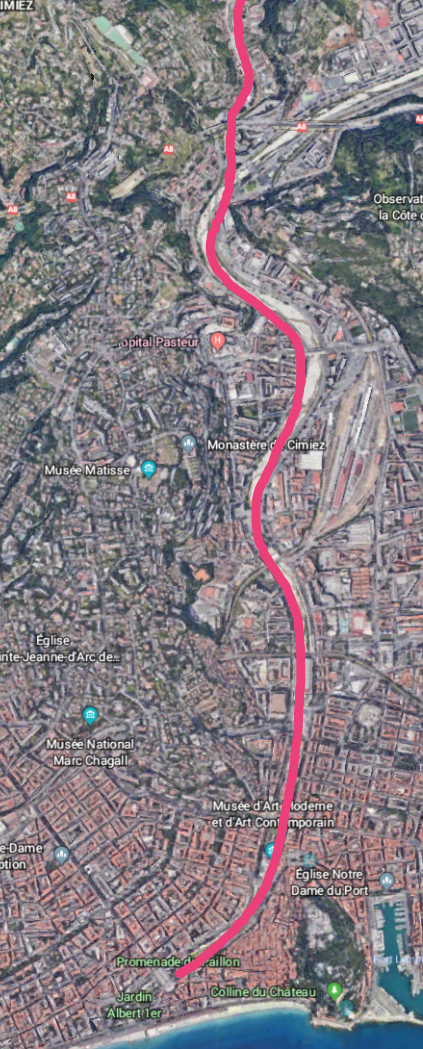 the length immediately north of Les Moulins. The second, the length south of Les Moulin’s through the present day quarries north of Saint-André-de-la-Roche. And the final length covers the route from Saint-André-de-la-Roche to Place Massena. Place Massena is just visible north of the coast at the bottom of the last image above.
Our journey on the tramway starts at Place Massena in Nice.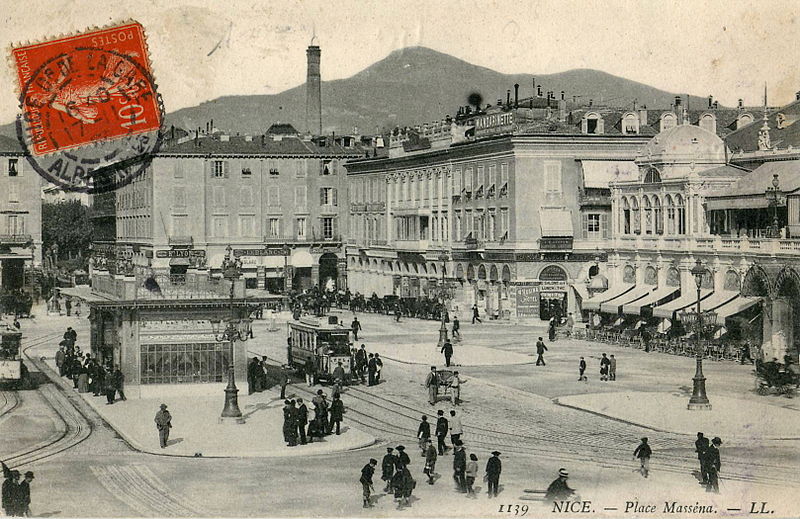
Trams for Levens left Place Massena along the road at the centre-rear of the postcard image above. Rue Gioffredo heads to the right in front of the shop buildings at the rear of the square. Trams then turned right onto Boulevard Carabacel and left onto Avenue Gallieni, before heading out of Nice alongside the River Paillon on Avenue de Marechal Lyautey and Avenue Joseph Raybaud.
The tram route left the River Paillon on the line of the M19, Quai de La Banquiere which then becomes first the Route de Levens and then the Avenue du Haut-Pays. The following images give an impression of the route, although it must be born in mind that the quarrying enterprise north of Saint-André-de-la-Roche has expanded considerably in recent years.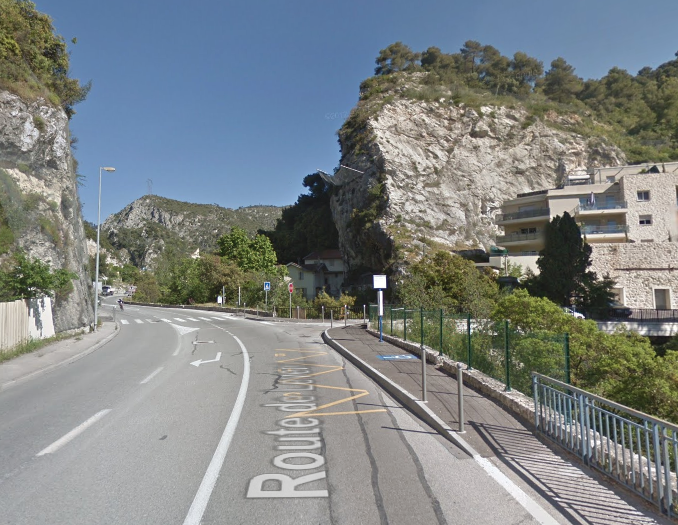
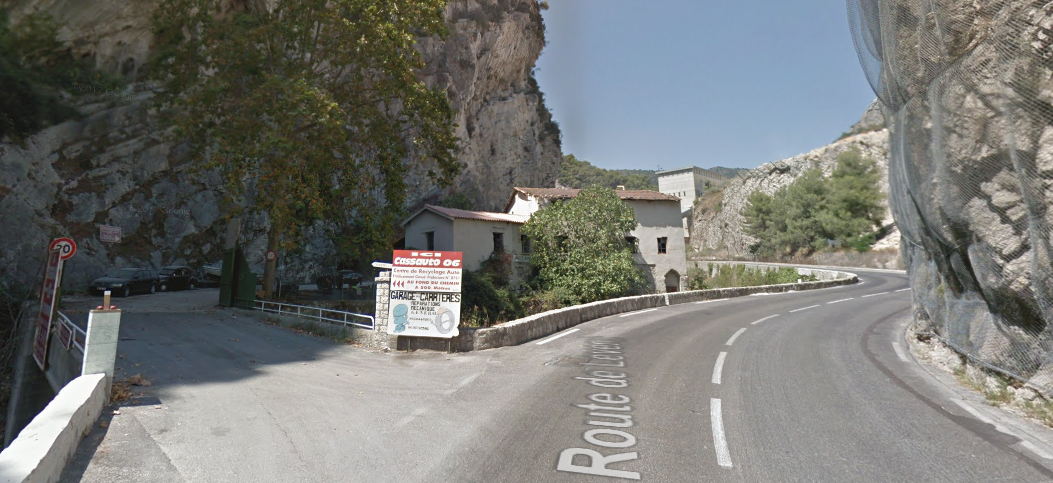
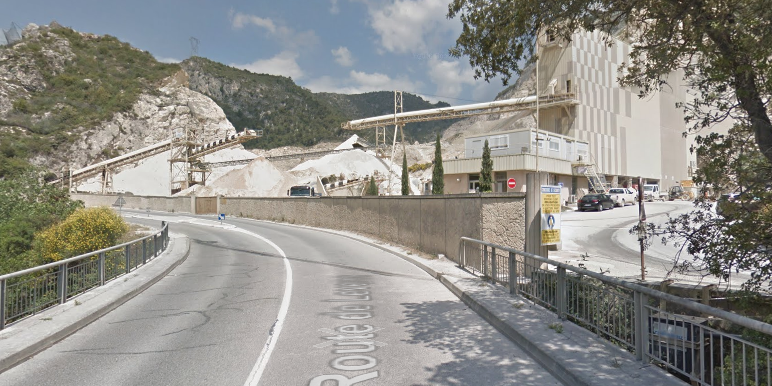
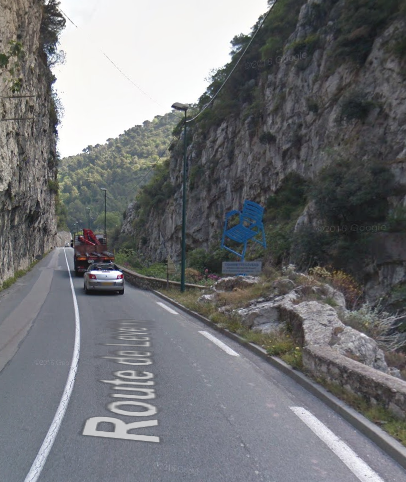
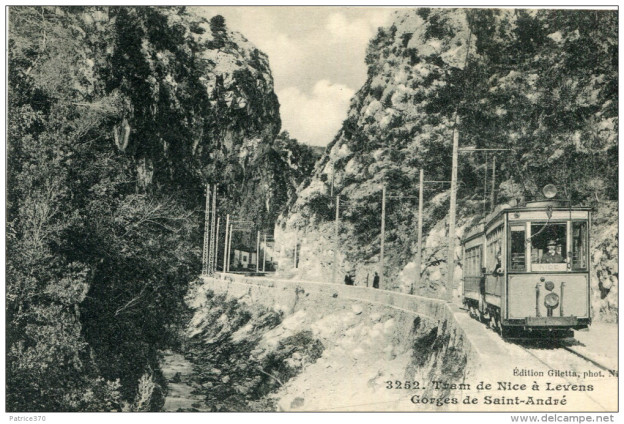
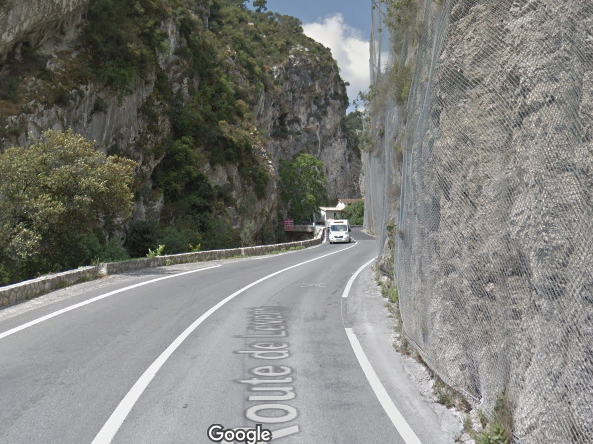
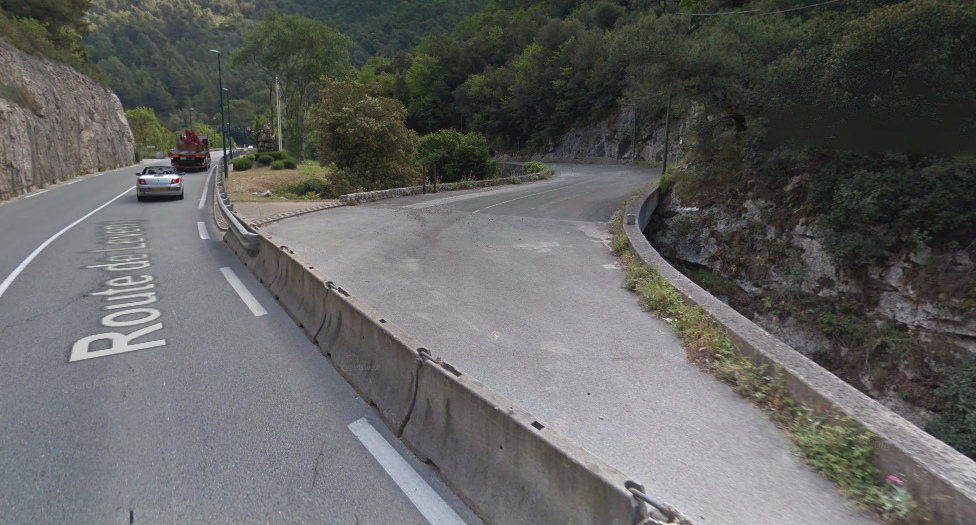
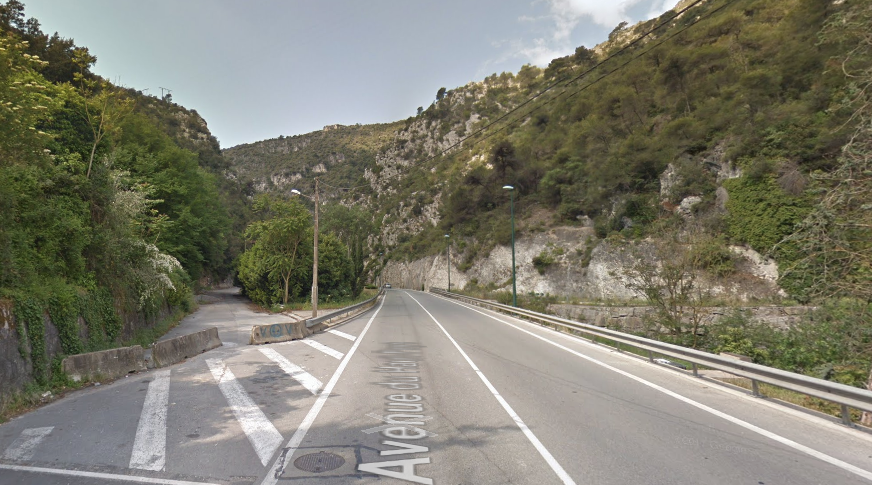
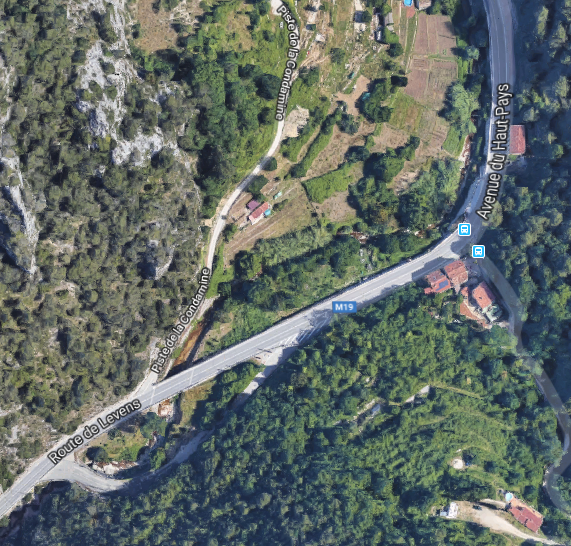
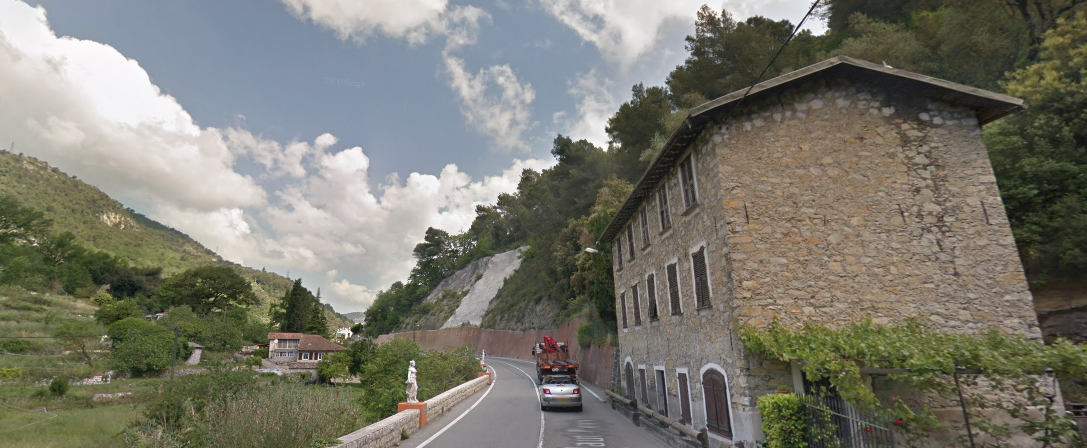
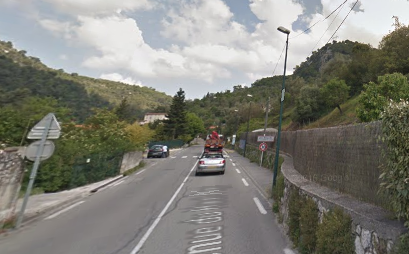
 There were small deviations in the route of the tramway from the modern M19, although most of these were very short, only a matter of a few metres, and were usually the result of engineers seeking a path for the wider, newer road. This is true at La Clue, shown above.
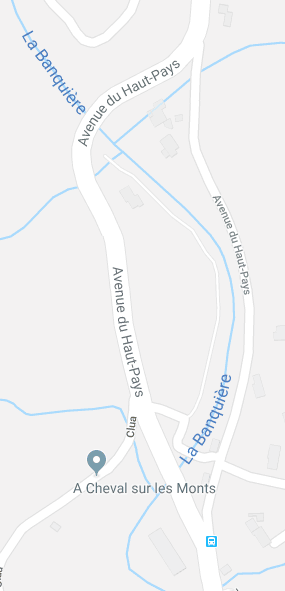
The first ‘significant’ deviation that I can identify, away from the line of the main modern M19 is shown on the adjacent map. The Avenue de Haut-Pays splits either side of the River Banqiere over a short distance. The newer, wider road is to the West, the older road which follows the route of the tram is to the East of the river. When the trams were in use the road surface would not have been of the highest quality and the roads were still relatively narrow. The picture below shows where the two roads named Avenue de Haut-Pays split. The bus stop shown on the map is on the right of the picture. There was inadequate room to widen the old road at this location, so a new road was built along with two new bridges over the River (La Banquiere).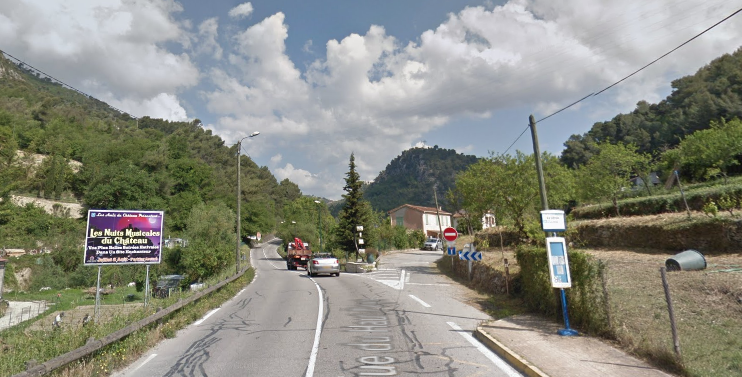
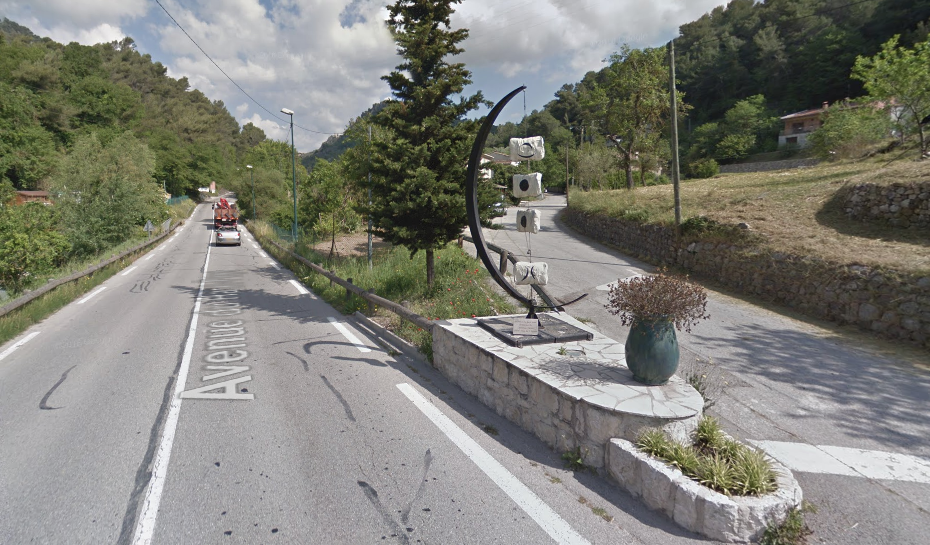 This next picture shows the point where the modern M19 rejoins the older and narrower road/tramway.
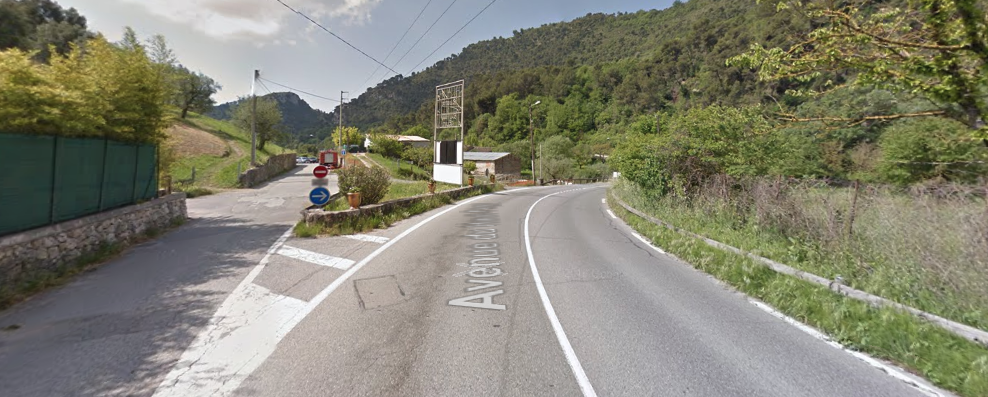 The tramway approached Les Moulins on a steady grade before branching off the lower road through the village and crossing a tributary of La Banquiere (Ruisseau de Rio-Sec) at a higher level. These next pictures show the tramway formation leaving the main M19 road along what is now called Chemin de l’Ecole des Moulins.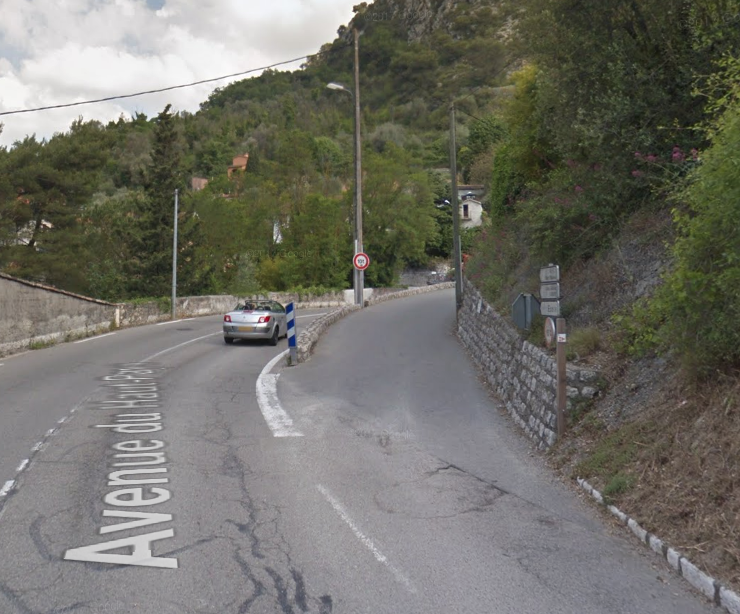
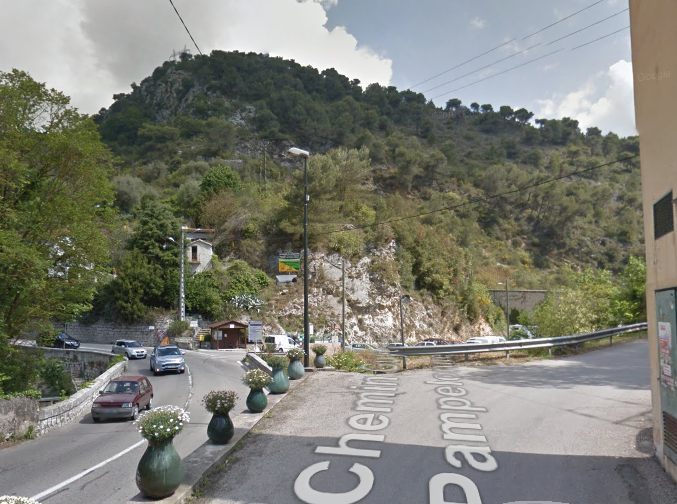
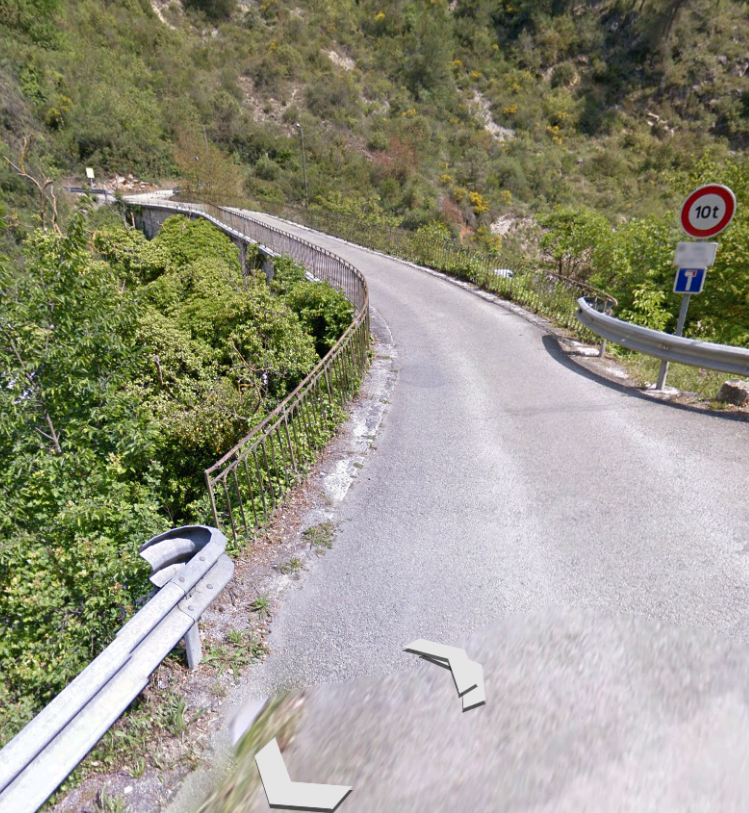
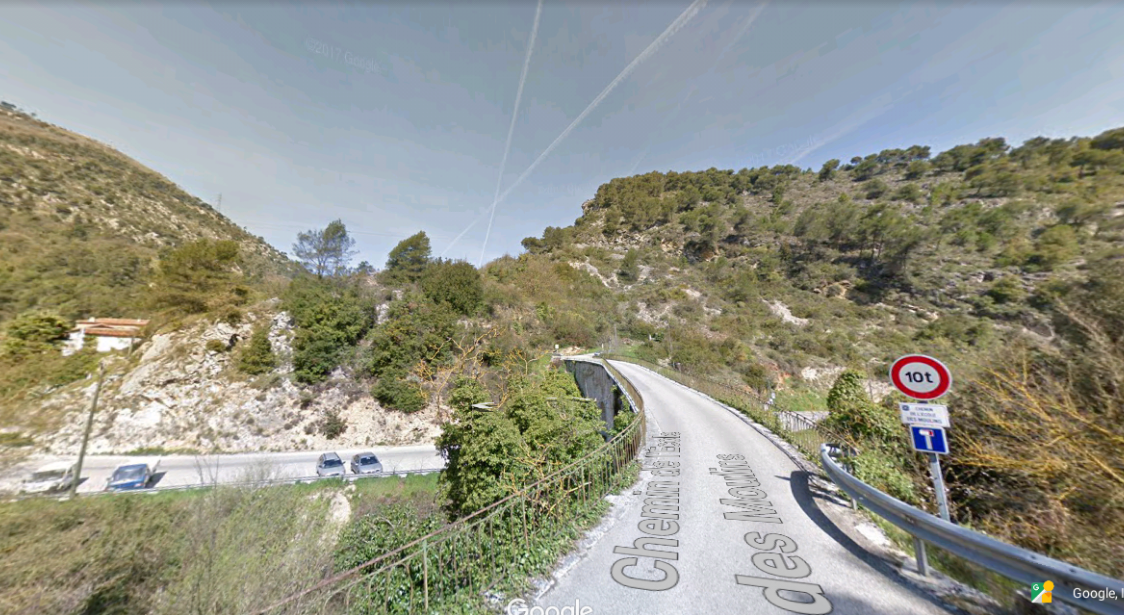
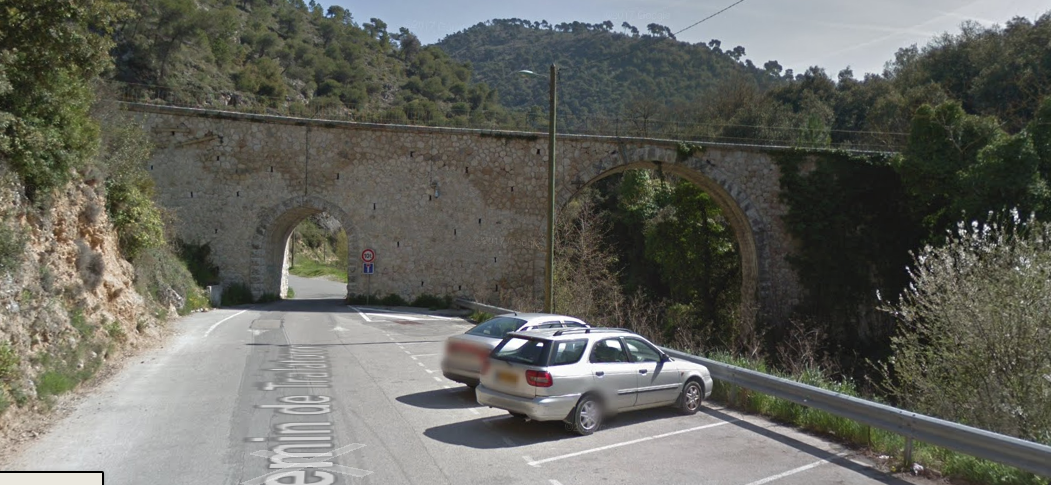
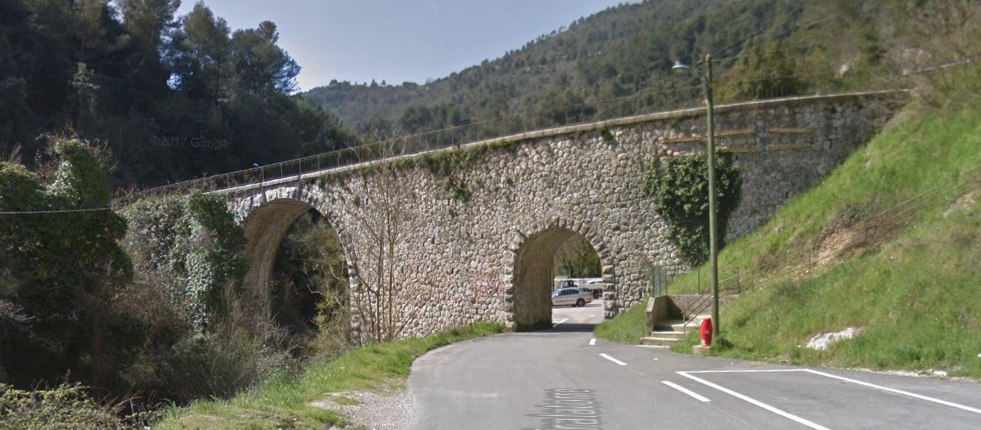 The bridge over the Ruisseau de Rio-Sec also crossed the road up the valley – Le Chemin de Tralatorre. Immediately after crossing the valley the tramway entered a tunnel which took it back into the main valley of La Banquiere above the village of Les Moulins.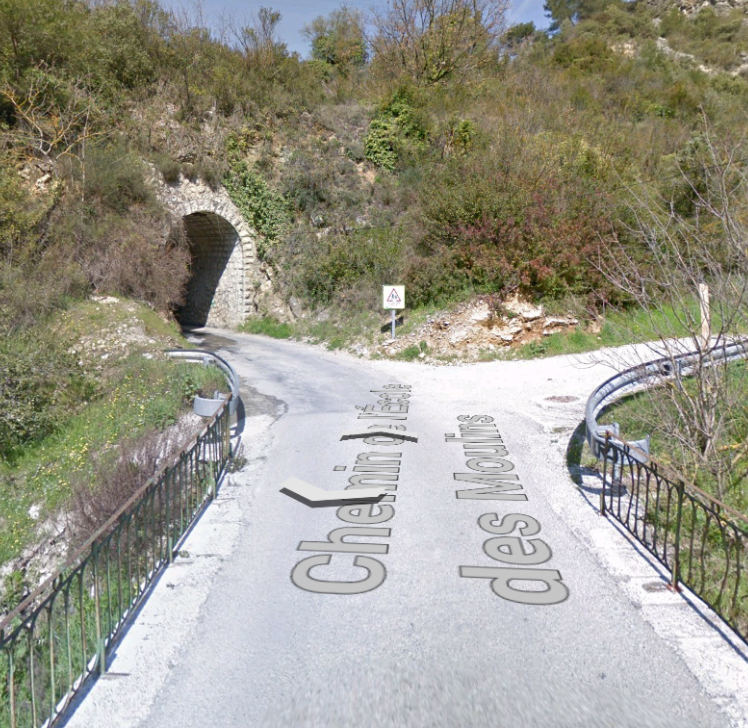
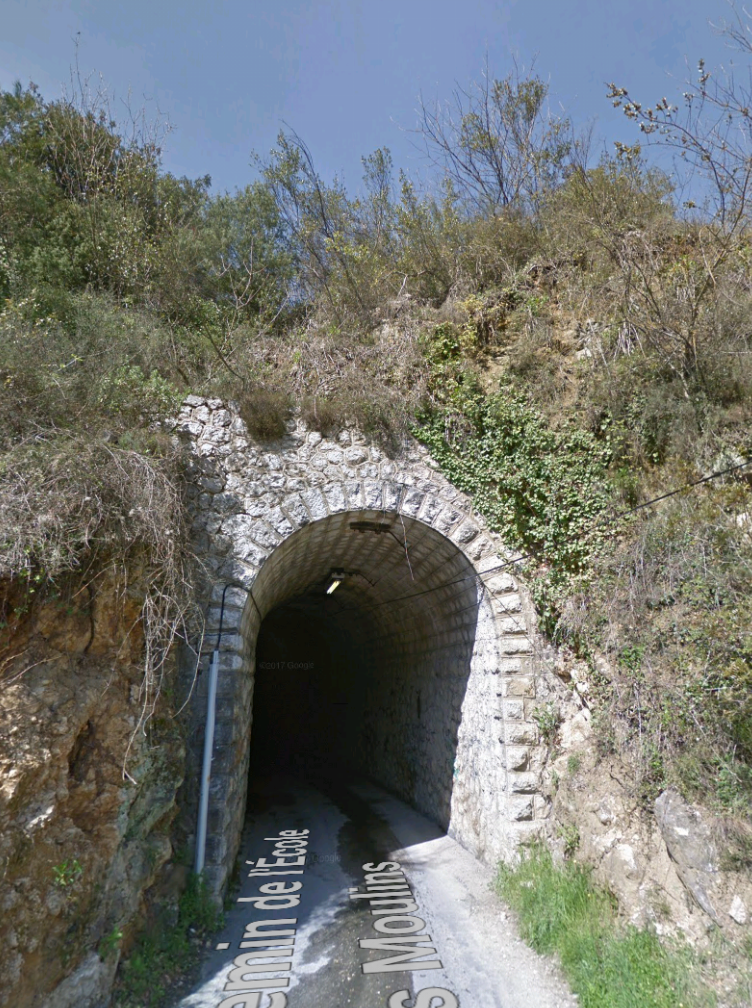 The route, including the viaduct and the tunnel, appears clearly as Chemin de l’Ecole des Moulins on the map below.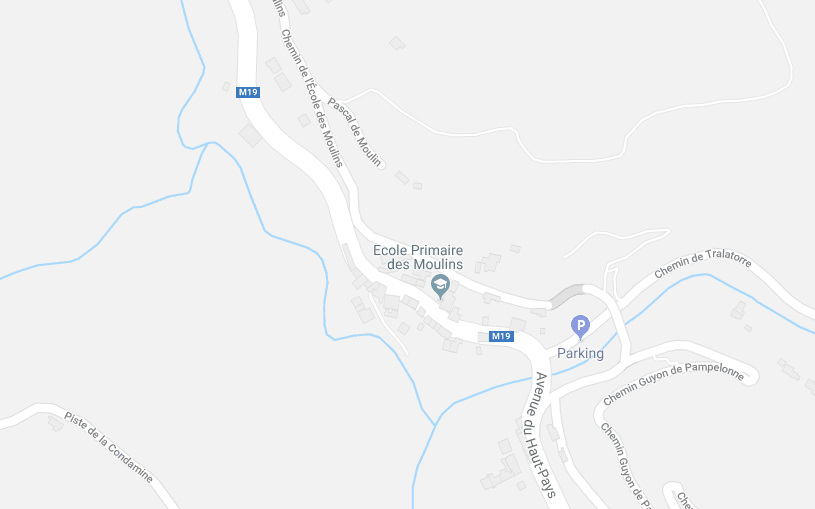
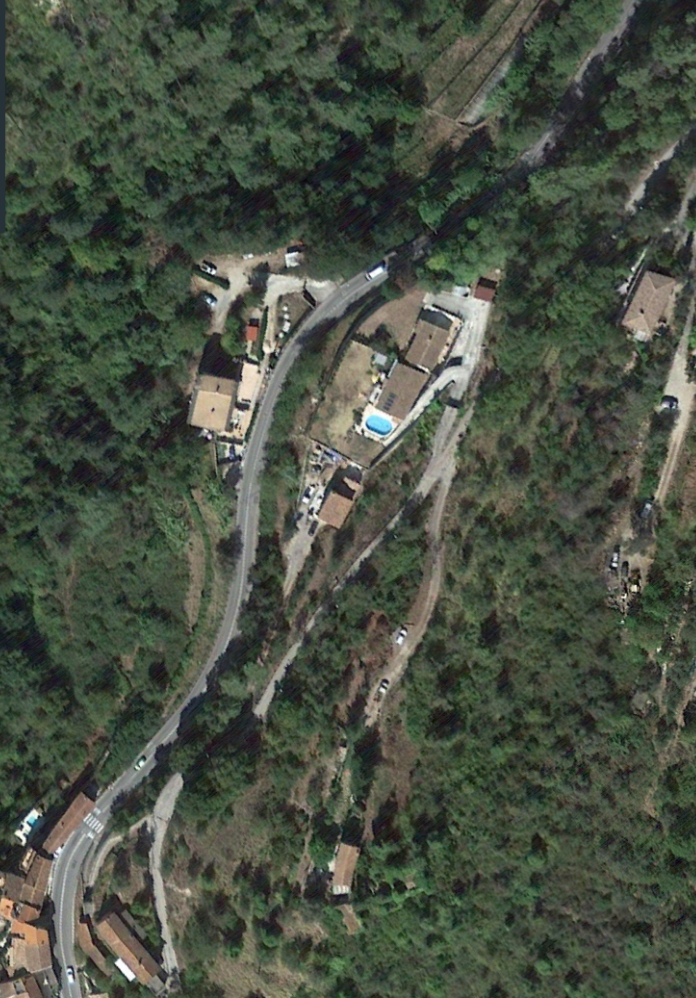
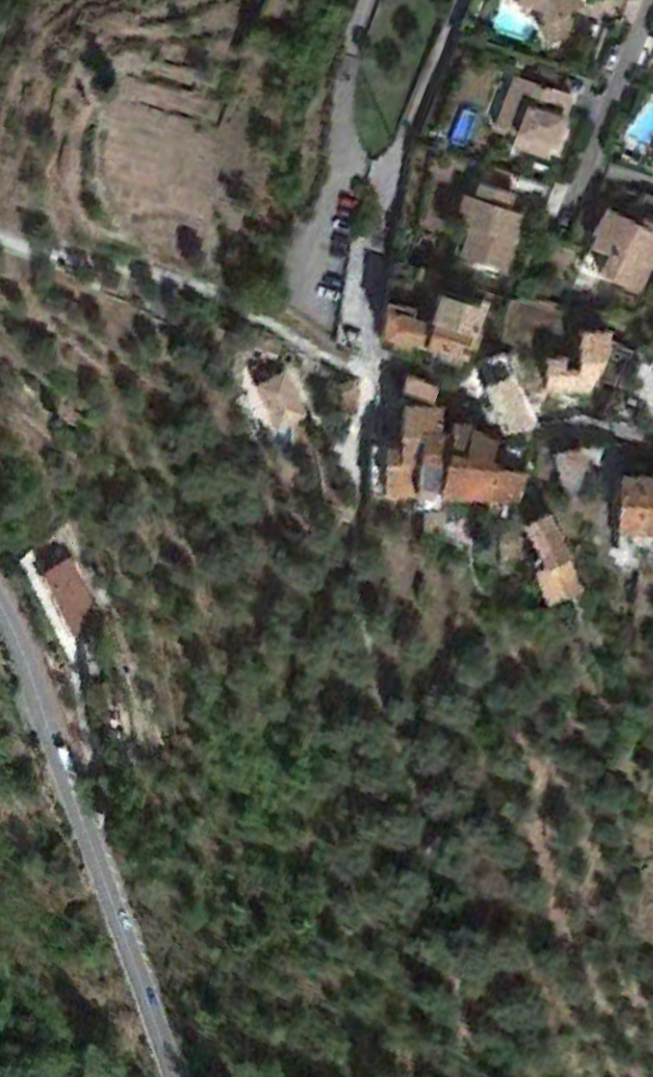
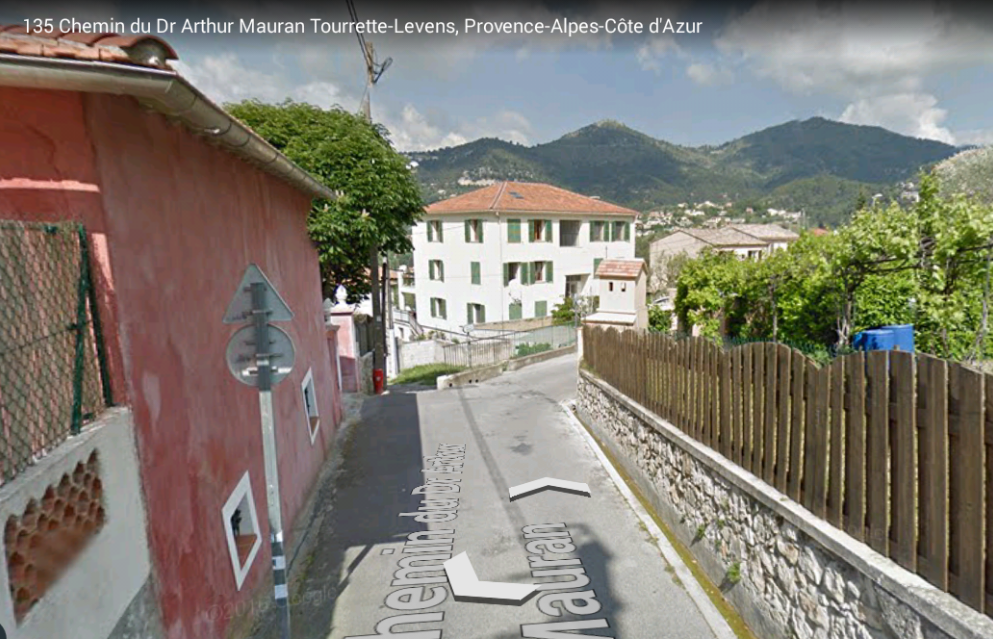
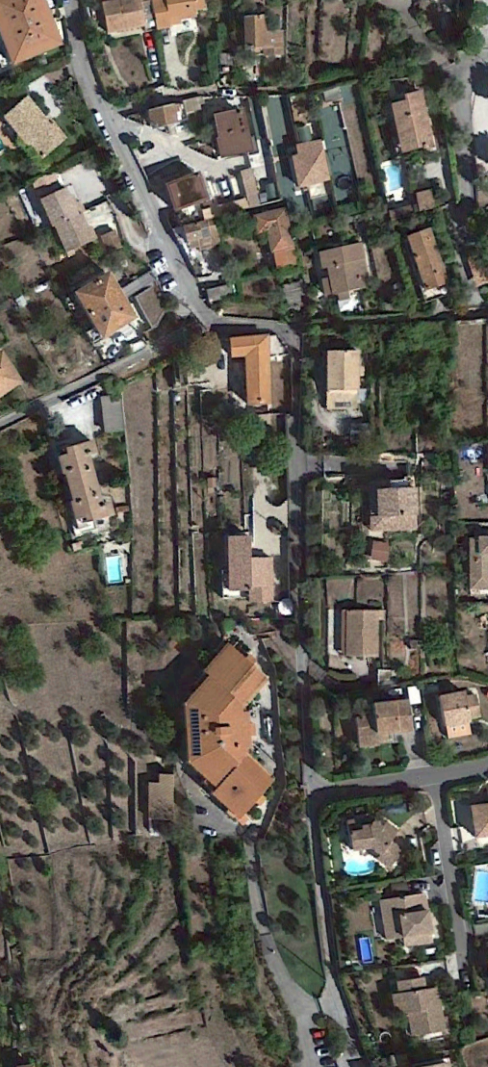
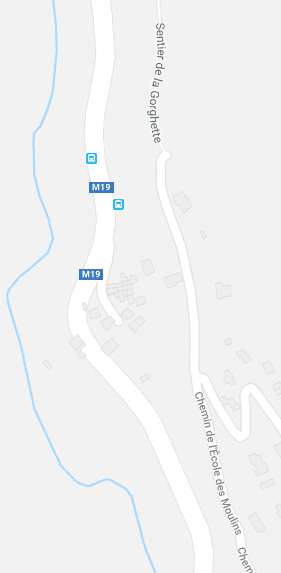 The tramway remained above the valley floor, first following the Chemin de l’Ecole des Moulins and they a footpath which is now named Sentier de la Gorghette until it reached what are now the outskirts of Tourrette-Levens. The map above and that alnogside these notes shows the route. The images below show the same length of road directly above and to the East of the main M19.
The satellite images travel in sequence from the south to the north, starting at Les Moulins and heading towards Tourrette-Levens. The swimming pools evident on these satellite images would not have been present when the tramway was in use and there would have been far fewer buildings hidden in the landscape.
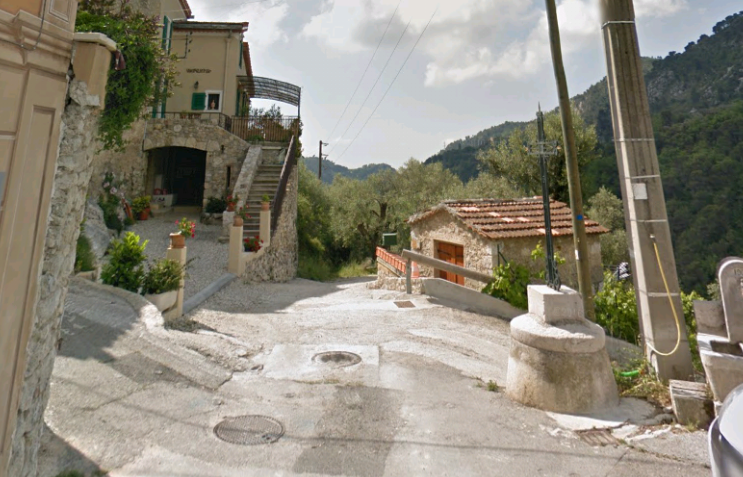
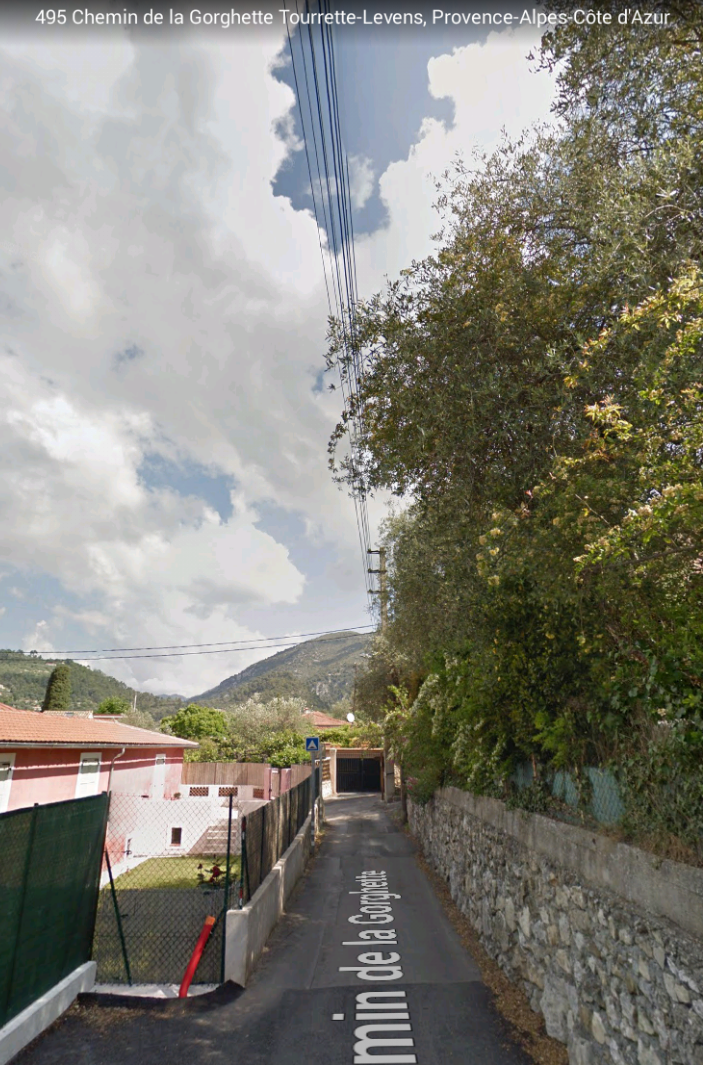
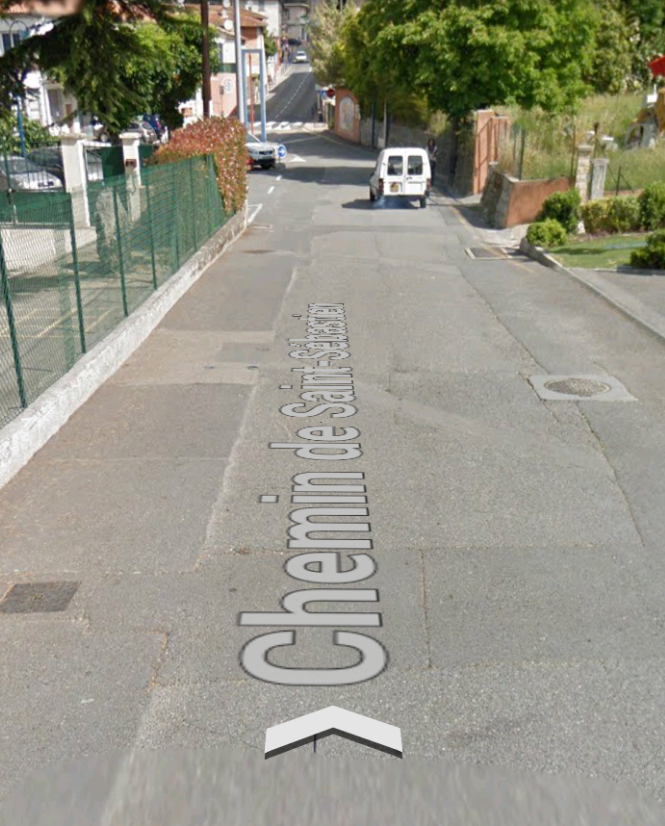
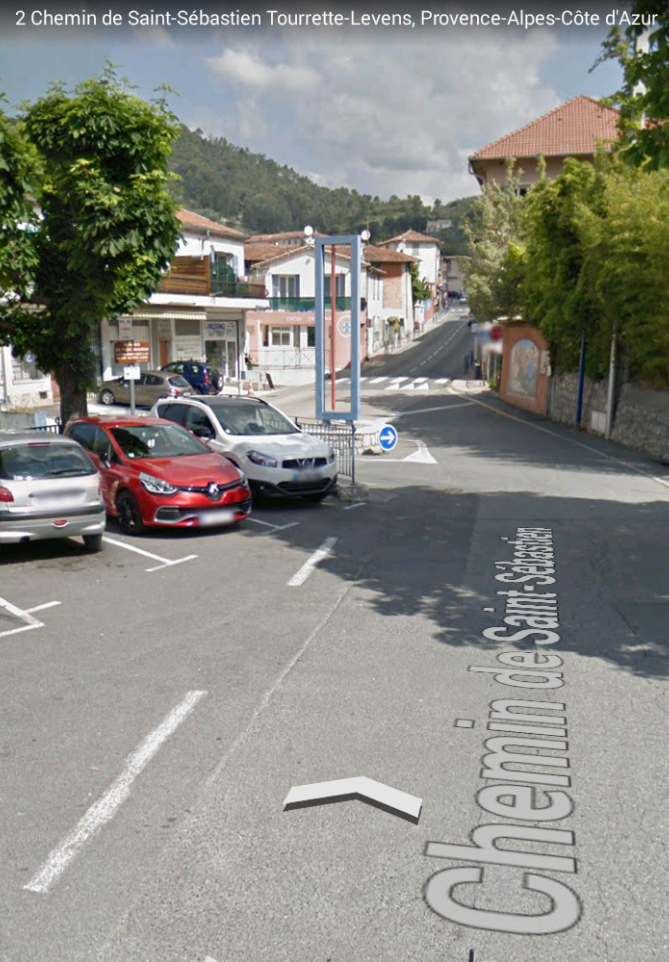
The last in the next sequence of images is not a satellite image, rather it shows the point at the edge of Tourrette-Levens today where the tramway entered the town. The camera is facing approximately southwards looking down the Sentier de la Gorghette.
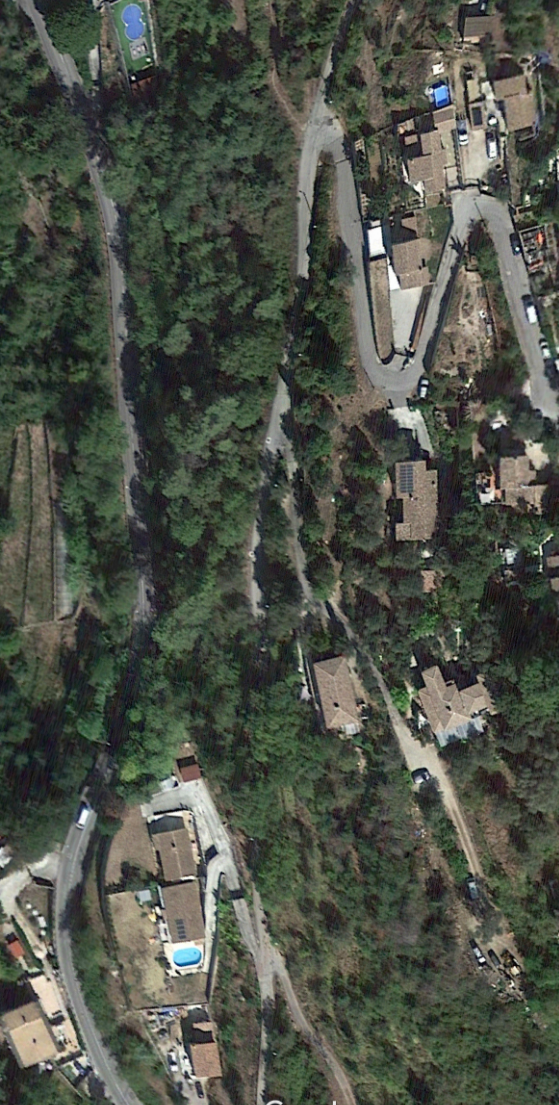
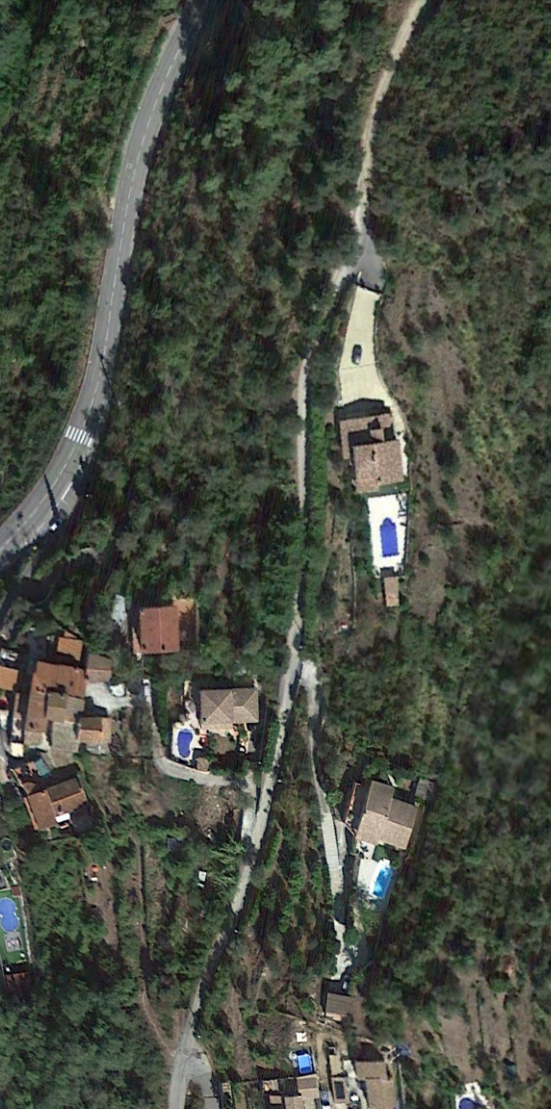
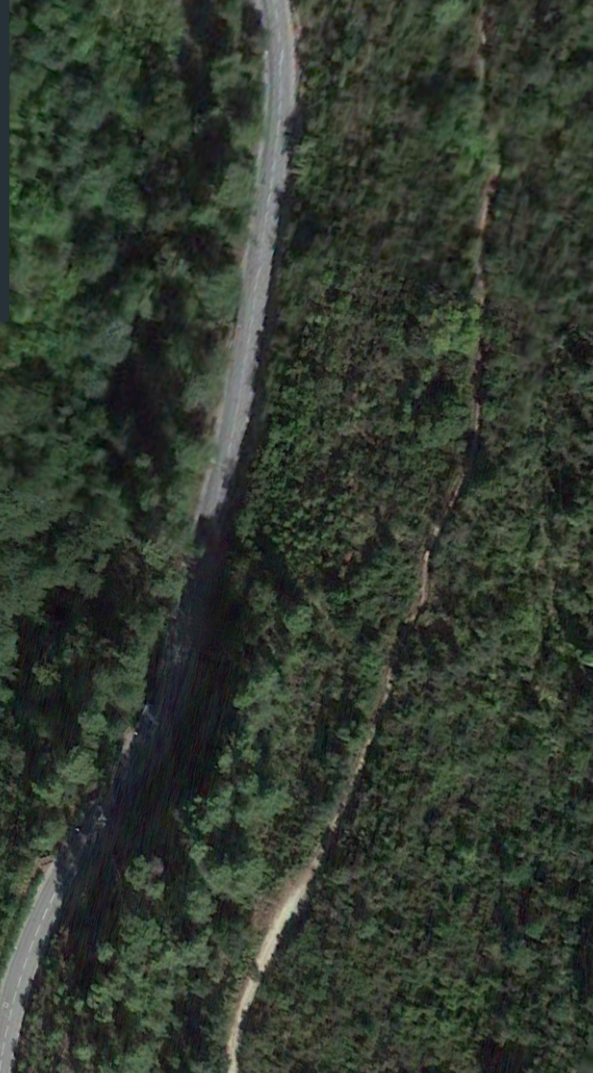
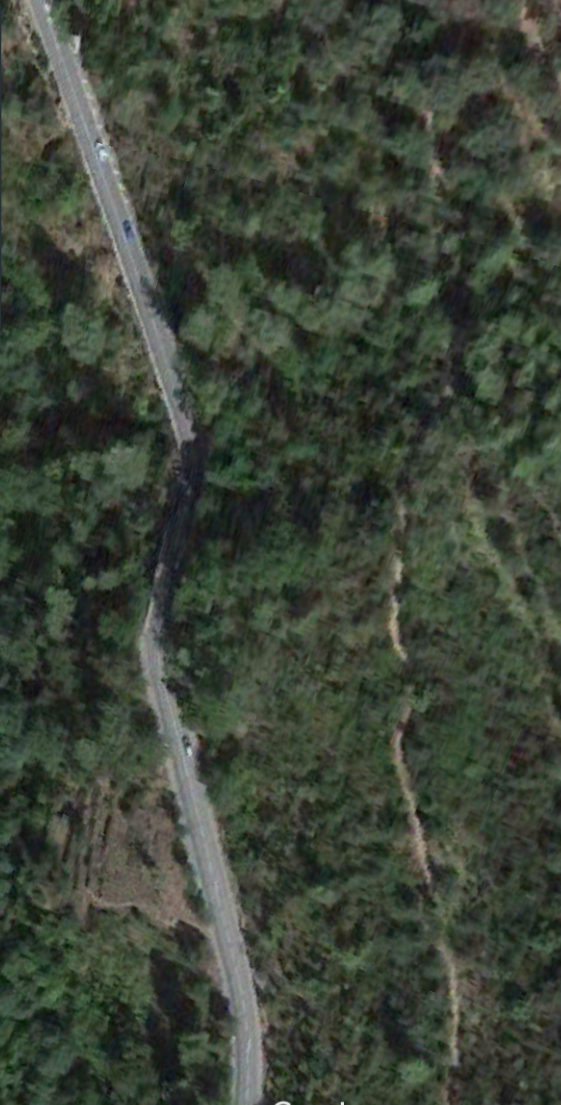
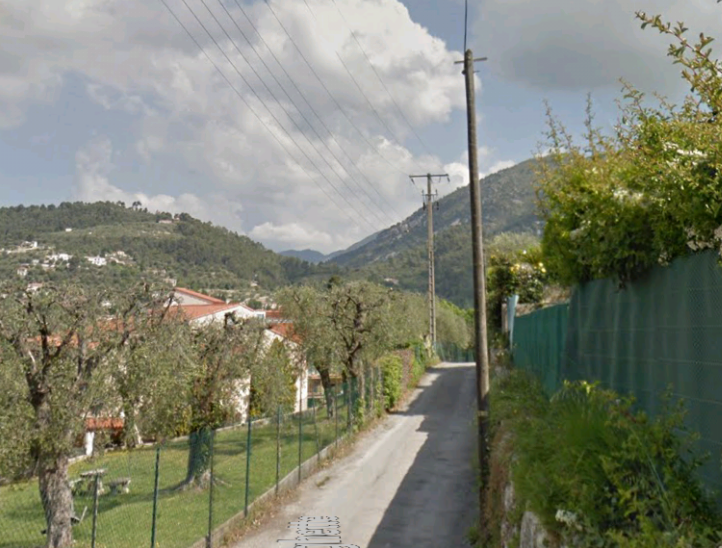
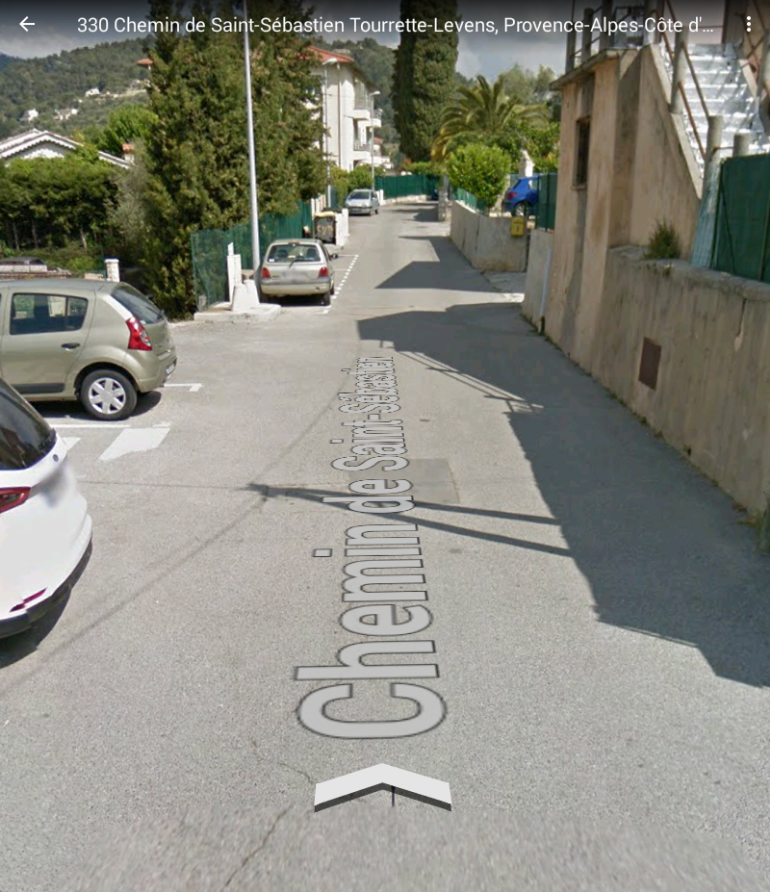
 Turning to face north once again, this next view looks down the line of the tramway towards Tourrette-Levens. Subsequent images take the tramway down into the village.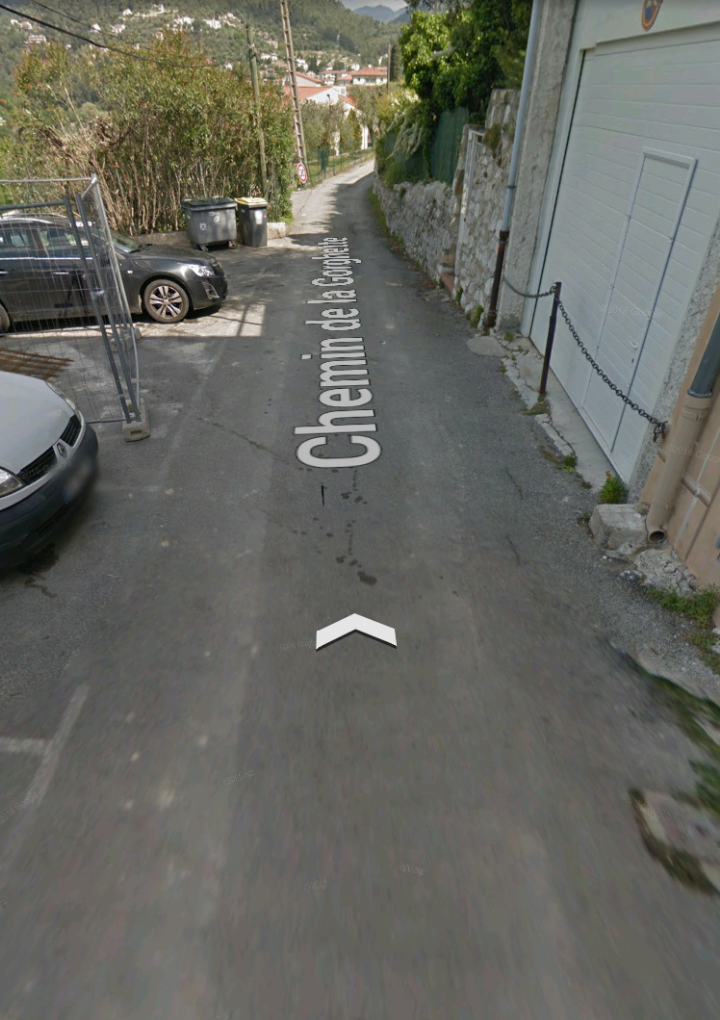
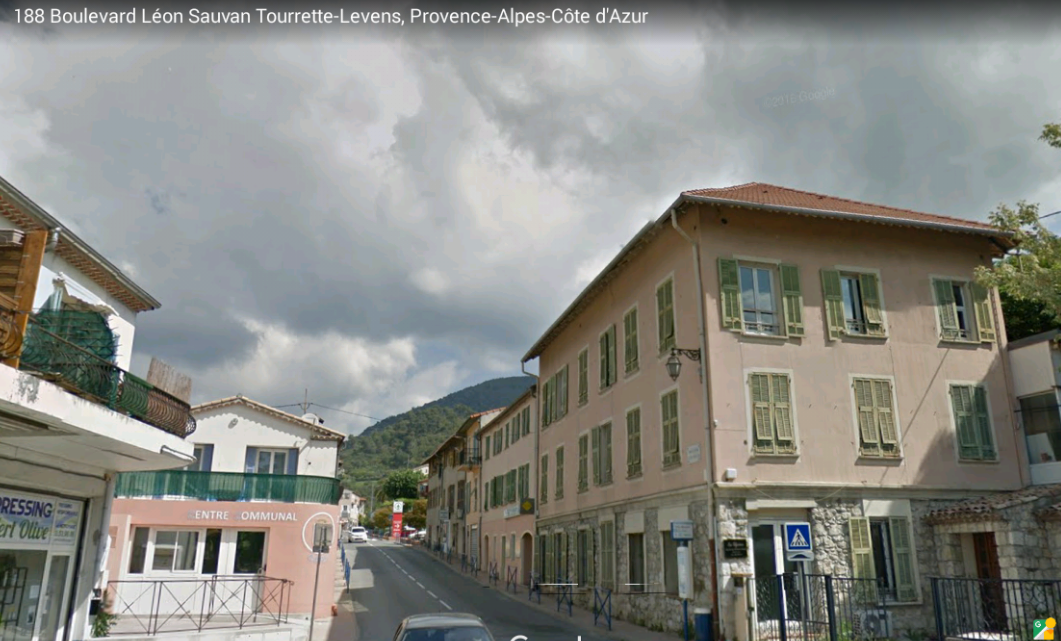
 In Tourrette-Levens, we have a few pictures of the tram/tramway while it was in operation. The first image is very small, but it shows a tram on the main street (now the M19) of the village, Boulevard Léon Sauvan. The image below shows a tram bound for Levens sitting at the stop in Tourette-Levens. The fact that trams were able to pass at Tourrette-Levens is evident in the presence of two sets of rials which created the passing place. The image bears a copyright stamp from the Retro Photo Catalogue.[1] The image which follows that also bears a copyright stamp but is from Cartes et Patrimone.[2] The full details of the sites which hold the copyright are shown in the references below. The two images are from the same series of copyright free postcard images from the turn of the 20th Century. They are numbered sequentially, 3250 and 3251 and probably come from the camera of the same photographer. (I’d appreciate any details that readers can provide).
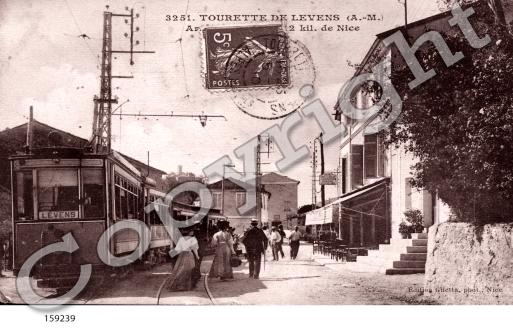
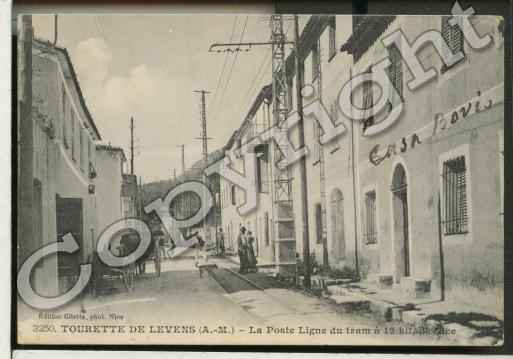
The route of the tramway continues from Tourrette-Levens towards Levens. This was one of the routes which drew my attention some years ago because it seemed to follow a far more difficult route to Levens than the present road. My first stab at a blog on the line from Tourrette-Levens to Levens can be found on this link:
I hope that link provides a taster for the next post (part 2 of this journey) which will hopefully provide more details about the route of the tramway between Tourrette-Levens and Levens.
References
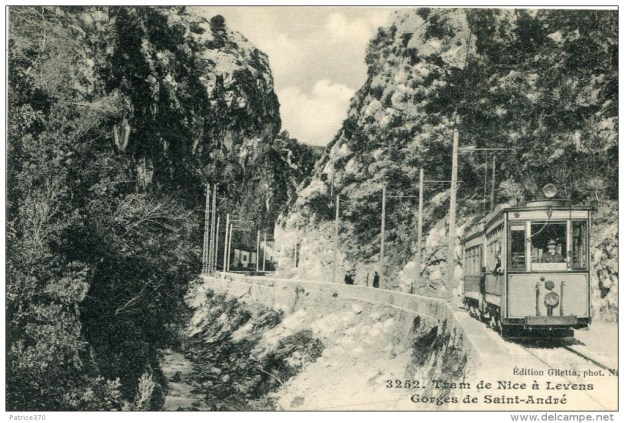
There were a series of tramways which extended different arms of Le Tramway de Nice et du Littoral (TNL). We have already followed the route of the Sospel to Menton tramway which extended the coastal/urban line between Nice and Menton into the mountains close to the coast. Menton to Villa Caserta, opened in October 1911 and Villa Caserta to Sospel opened in 1912.[3]
The TNL was a tramway network that served Nice and the municipalities of the Alpes-Maritimes department between 1878 and 1953.
Around 1833, a Monsieur Legrand, owner of the Hotel de France which is sited on what is now the Quai des Etats-Unis, bought a large omnibus in Paris and three large horses. He ran a twice daily service from Nice to Le Pont de Var which at the time marked the border between France and Italy.[10] The fare was 40 centimes.
One of his competitors, Monsieur Laupias, proposed in 1845 two services at an hour’s frequency between Cagnes sur mer and the Place Saint Dominique, as well as between the Paillon and the Faubourg du Ray. In 1854, another service commenced linking Pont Vieux (Place Garibaldi) with Le Ray.
After Nice was attached to France in 1860, the PLM railway arrived in 1864 and Nice became a preferred tourist destination for a wealthy class of traveller. At the same time, the town was growing north of Paillon. Urban planners adopted a network of perpendicular roads, but of a fairly modest width, sufficient, however, to encourage the circulation of horse-drawn omnibuses. By 1865, a network of horse drawn omnibus routes had been established.[9]
Monsieur Laupias was responsible for the expansion of the network of l’Entreprise Générale des Omnibus de la Ville and the railways. He set up two new lines: one between the PLM station and the port, and the other between the Place Charles-Albert and the Saint Barthélémy district of the city.
These horse-drawn services were ultimately short-lived as Nice began to talk about inaugurating tram services as a result of seeing tramways being developed in industrial cities further north in France. Several attempts were made to implement tramway working. One of these endeavours even sought to make use of compressed air to propel the trams.[11]
The Société Financière de Paris , associated with the Société de Travaux Publics et de Constructions, was responsible for the construction and operation of a horse-drawn tramway network in 1876 in the city of Nice. The first horse drawn tramway service was commissioned on 27th February 1878 and inaugurated on 3rd March. A series of 4 lines made up the early network … Place Massena to Magnan Bridge, a separate line from Magnan Bridge to Saint Helena, and two other lines from Place Massena, one to Saint-Maurice and the other to Abattoirs. The lines were single-track and of metre-gauge.
Soon after the first lines were completed the tramway system was placed in the care of the Compagnie Generale des Omnibus in Marseille. This arrangement lasted until 1887 when that company went into liquidation. After its collapse, La Société Nouvelle des Tramways de Nice (SNTN) resumed operation of the network.
In addition, in 1895, the Compagnie Anonyme des Tramways Electriques of Nice-Cimiez was awarded a concession for a new tram line, between the street of the Hotel des Postes and the zoological garden of Cimiez. This line was a 600mm track-gauge and used electric traction batteries because of its steep gradients, the design was seen by the promoters at a technical exhibition in Lyon in 1894.[10]
Cimiez: the appearance of the first electric tram
A casino, a zoological park and a theatre were established in Cimiez, near the Roman arena. After flirting with the idea of a steam powered service from Nice to Cimiez, the owners of the site set up the Compagnie Anonyme des Tramways Electriques of Nice-Cimiez
Unofficially the trams started running on 27th February 1895, the service was interrupted on 10th March because of fire at the generating plant. The servicecresumed on 20th June but was halted on 12th July as the required legal processes had not been followed. Eventually, on 22nd November the company was declared as being ‘d’utilité publique'[4] and an official inauguration took place on the 25th November
The 3.9 km long line had very steep gradients, 8 trams were in service on the line. Six daily services were provided in the winter and a half-hourly service was available in summer months. Stops were on request, except on the steepest sections of the line. The trams were powered by an 8bhp motor and had a maximum capacity of 32 people. Redesign of the trams took place very early in the life of the tramway, the wheelbase and overall length of the trams were shortened and the single 8bhp power unit was replaced by two 50bhp motors. The people of Nice nicknamed the trams the “slugs”.[10]
The Cimiez tramway was again taken out of operation in 1899, to allow a revision to the electrical power system and tompermit integration with the wider metre-gauge tram network in the City of Nice. The line was operating again by January 1900.
La Compagnie des Tramways de Nice et du Littoral (TNL)
Within two years of its foundation, La Société Nouvelle des Tramways de Nice had been replaced by La Compagnie des Tramways de Nice et du Littoral (TNL). The company set itself a series of goals relating to the improvement an expansion of the urban network:
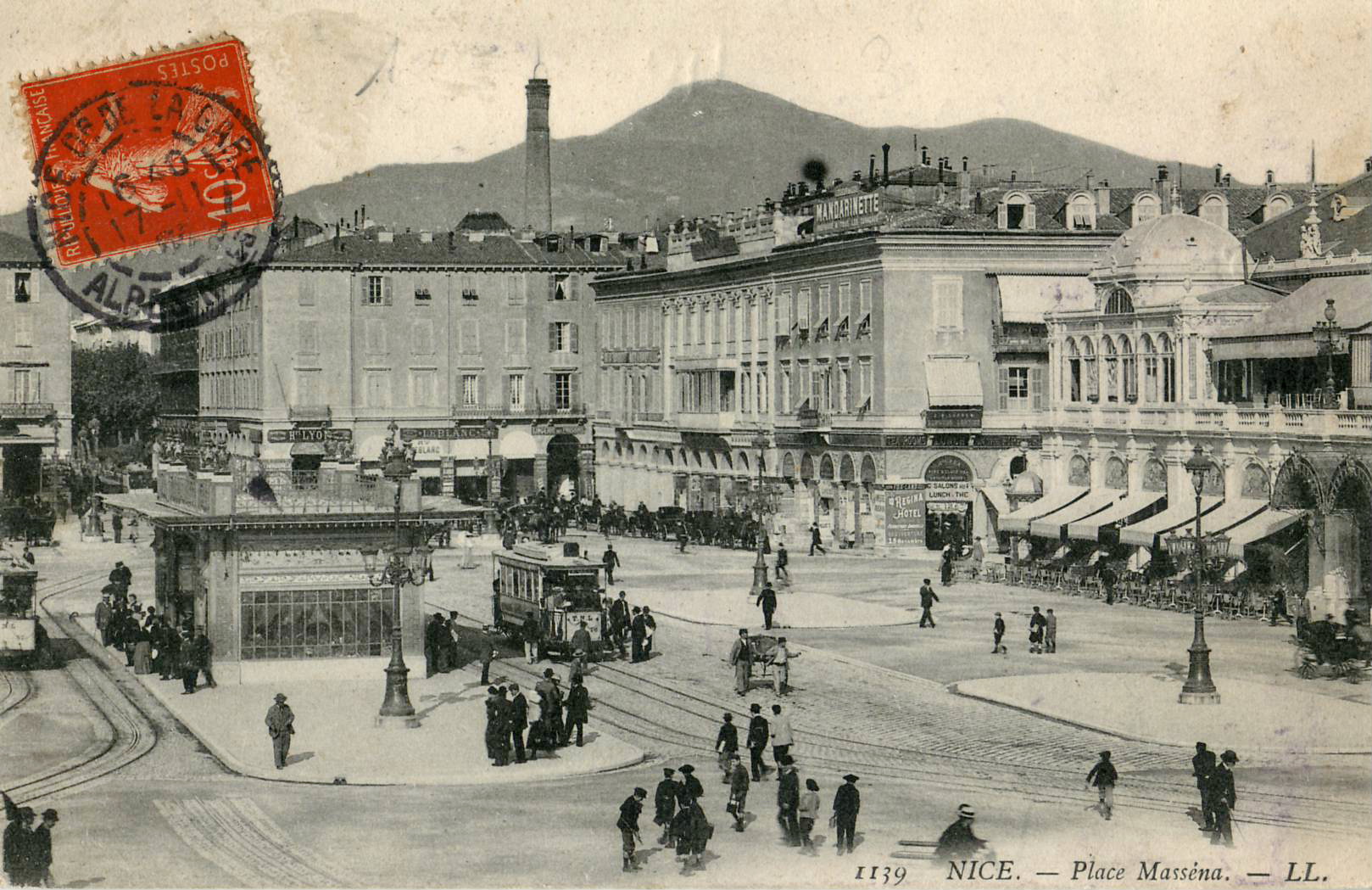
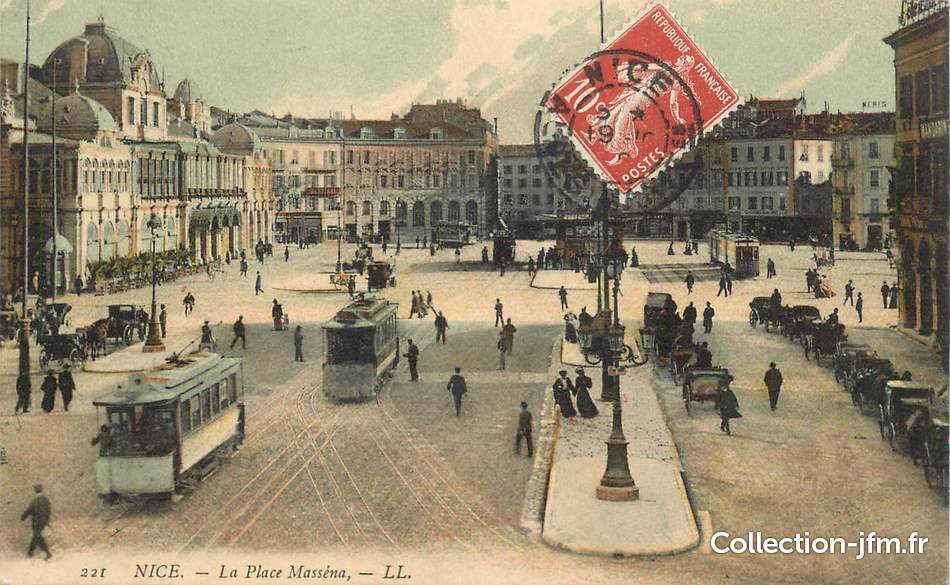
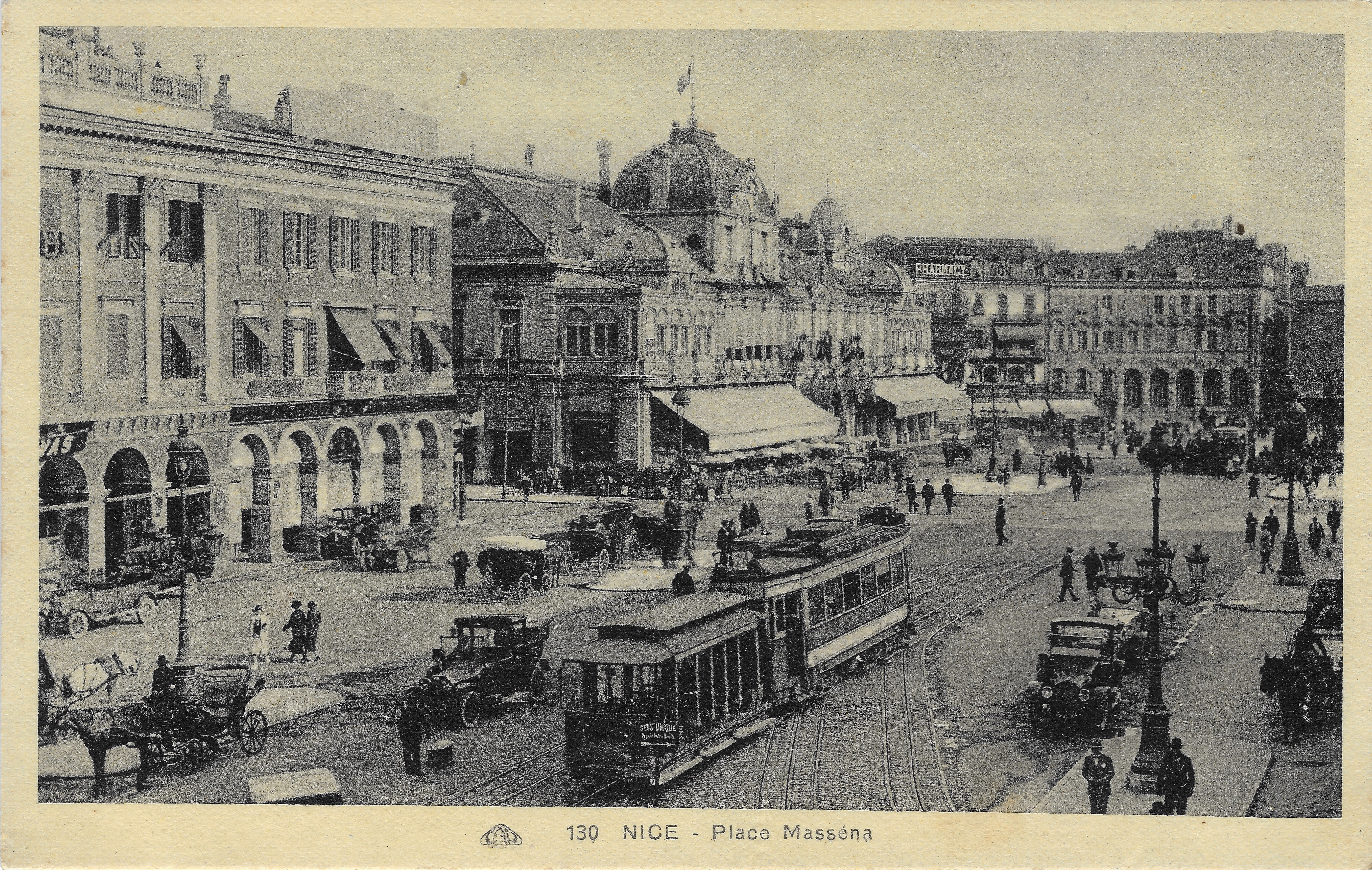
The company was effective in meeting its initial goals and it created an extensive network centred on the Place de Massena in Nice. A few images of the Place de Massena follow ………
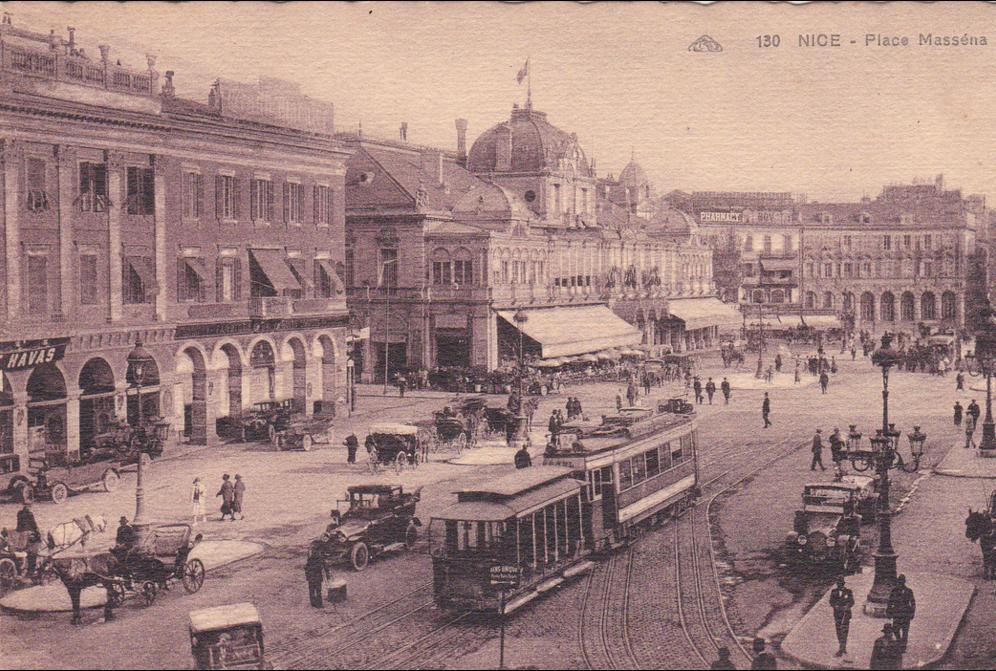
Lines opened or reopened as follows:[1]
All the lines were electrified by underground gutter as soon as they were put into service, and a fleet of 100 motor-trams was ordered.
In total, for the construction of the 12 urban lines and the first 3 sections of the suburban network, it took only 2 years to lay a total of no less than 94 km of network (150 km of single track)! From 31st December 1899, the tests of the first of the Thomson-Houston, Thomson-powered motor-trams, equipped with 2 engines of 35 bhp were carried out inside the depot at Sainte Agathe. There were 30 of these yellow and white trams in two classes. The initial plan had been to provide a limited number of 1st Class trams. This idea proved unsuccessful and the 1st Class trams were later converted to standard class. When first in operation these 6 1st Class trams were marked with a colour code.
Service frequency on the urban network was high. Generally, services started at 5.30am and ended at around midnight. However, the first departure from Cagnes-sur-Mer (for the florists) was scheduled at 3am! A TNL kiosk was built in 1901 to act as a ticket office and an information desk at the heart of the network.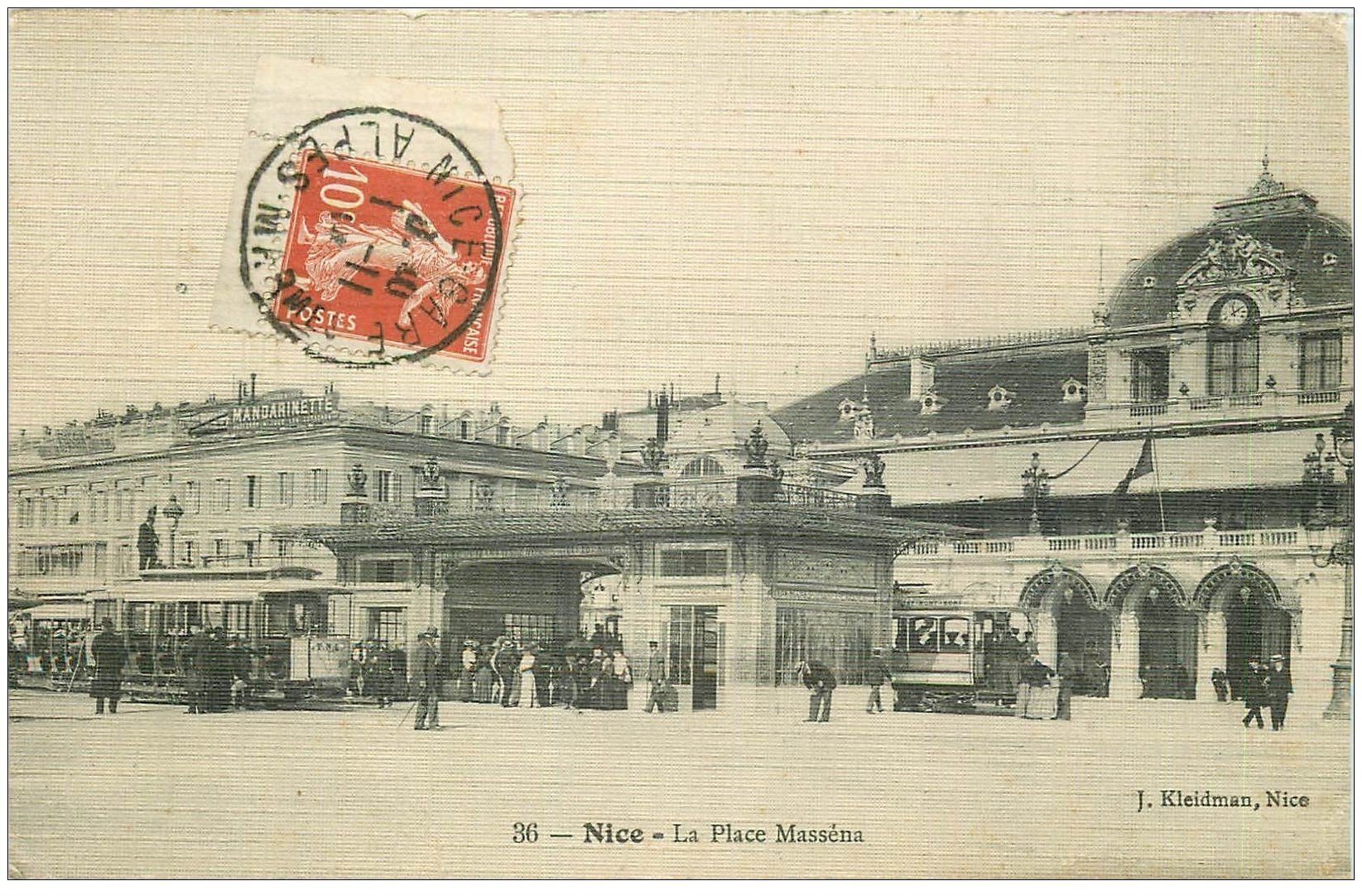
Menton and its Trams[14]
The coastal network took 3 years of work to reach Menton and to create a branch-line between Place Saint Roch and Place Caserta. The trams provided strong competition for the PLM along the coast and the PLM took every opportunity to obstruct the construction of the underpasses and bridges required for the line, and prohibited the installation of a terminus in front of the station at Menton. Finally, the TNL decided to drop their passengers 25m from the PLM station, at the foot of the climb to the station yard. The trams finally provided a service to Menton by 22nd December 1902, and the connection with the station was operational by July 1903.[12]
Completion of the line to Menton provided a continuous service from Cagnes-sur-Mer to Menton. By this time the TNL had over 94km of lines, 29km in Nice, 12km in Cagnes, nearly 16km of the line to Contes and nearly 38km of tracks on the line to Menton via Monte Carlo.
 The shoreline was itself a tourist object: the panorama of the Mediterranean and the villages did not lack charm. On the heights of Beaulieu, the tram takes the pose with a platform abundantly stocked for the occasion.
 Another view of the coast line with a motor-tram running on the Corniche at Villefranche sur Mer. The road was still made only of dirt and gravel, and in the shadow of the tramway there is a cart pulled either by a donkey or by a horse.
 An attempt to provide a reversible train with two motor-trams framing a trailer-car on the line of Monte-Carlo. The power of the leading motor-tram proved to be inadequate for the load.
The Tramway Company of Monaco
The Compagnie des Tramways de Monaco was founded in 1897 by Mr. Crovetto, a Monegasque entrepreneur. The company obtained concessions for a number of different lines, as listed below before, in 1908, becoming part of the TNL:
The Cote d’Azur is a stunning series of headlands, towns and villages alongside the azur-blue waters of the Mediterranean sea. Wikipedia has produced an excellent introduction to the coast-line – Road by the sea[2].
This line connected towns and cities along the Corniche: Nice, Villefranche, Beaulieu, Monaco and Monte Carlo by a route established on the Basse Corniche. The line opened towards the end of 1903 and was quickly followed by the completion of an extension from Monaco to Menton just in time for Christmas 1903. The line was separate from, but connected to the tramway network in Monaco.
The network continued to grow. The TNL began to extend inland into Les Alpes Maritimes department creating a network of single track metre-gauge lines which served key villages and towns in the hinterland. It also extended and consolidated it presence in the urban areas along the coast. The departmental network not provided extended access into Nice and the coastal towns for local people, it was perceived as creating significant opportunities for tourism.
The departmental network included 14 proposed lines shared between the TNL, the TAM and the Compagnie des chemins de fer du Sud de la France . The TAM was actually a subsidiary of La Compagnie des chemins de fer du Sud de la France and the larger company decided to confine tramway operations to the TAM despite having a shared track-gauge. Other blog posts provide details of some of these TAM lines, particularly:
The lines were shared out using geographical criteria which resulted in the TNL being offered the following concessions:
All these lines were declared ‘d’utilité publique'[4] on 10th February 1906.[1]
Once the network opened its line from Cagnes-sur-Mer to Antibes it was able to connect to the tram network in Cannes .[5]
One further line was introduced in 1908, that between Magnan/Le Madeleine and the centre of Nice.
Magnan is a valley located west of Nice. Today it is urbanised and used to designate one of the districts of Nice. The river which flows through the valley is called Le Magnan (or Torrent de Magnan).[6] This is a short coastal river of 12.6km in length. Le Madeleine[7] was the small village with a chapel in the valley.
The line from Menton to Sospel
This line connecting Menton to Sospel was opened on April 15, 1912, as part of the construction of the departmental network. Its length was 18km . It marked the last extension of the TNL.
In fifteen years, the growth of the population of Nice and the surrounding towns and villages necessitated a rapid development of the network. The advent of the Great War prevented any further development of the network.
At the end of the war, the network was in need of an in-depth modernization programme. However, it was not until 1924 that the authorities granted the TNL the authorization to increase tariffs.
A refurbishment program was initiated, significant improvements were intended for the trams themselves but these improvements were not introduced in full.[12] Changes were made in different ways to different batches of limited numbers of trams.
A major study in 1921, looked at the possibility of providing a tramway tunnel under Monaco, but the proposal did not see the light of day.
To speed up service and reduce operating costs, a system of fixed and optional stops was introduced. Buses began to be introduced by the TNL in October 1921 under the company name, Société Anonyme Niçoise de Transports Automobiles, to serve remote villages where the tram no longer operated. The TNL also bought its own buses.
 10 Schneider Type H buses similar to the one above were purchased. They were similar to those in use in Paris. They arrived in Nice in 1925. They were followed in a short period of time by 3 Somua MAT2 buses.
Despite reducing revenues, the TNL decided to build a new series of trams strongly inspired by the Parisian L-type, and adapted to the Nicois metre-gauge track. Eight reversible motor trams were were ordered along with trailers. The trams were 200bhp and had a 3.60m wheelbase. These performed well on straight track but found the windowing nature of much of the network difficult.
After the Great War, very quickly, other forms of transport began to develop in competition with the tramways. These began to be regarded as more modern than the tramways. A number of accidents occurred on the network which began to result in a lessening in confidence in trams as an appropriate form of transport beyond the immediate urban areas.[8] There was an increasingly vociferous anti-tram lobby.
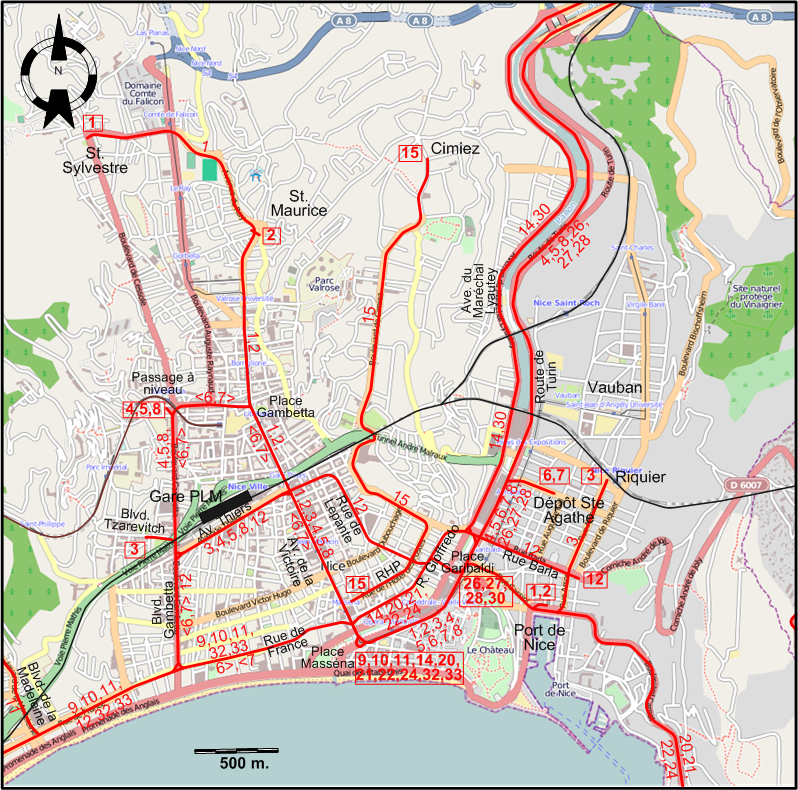
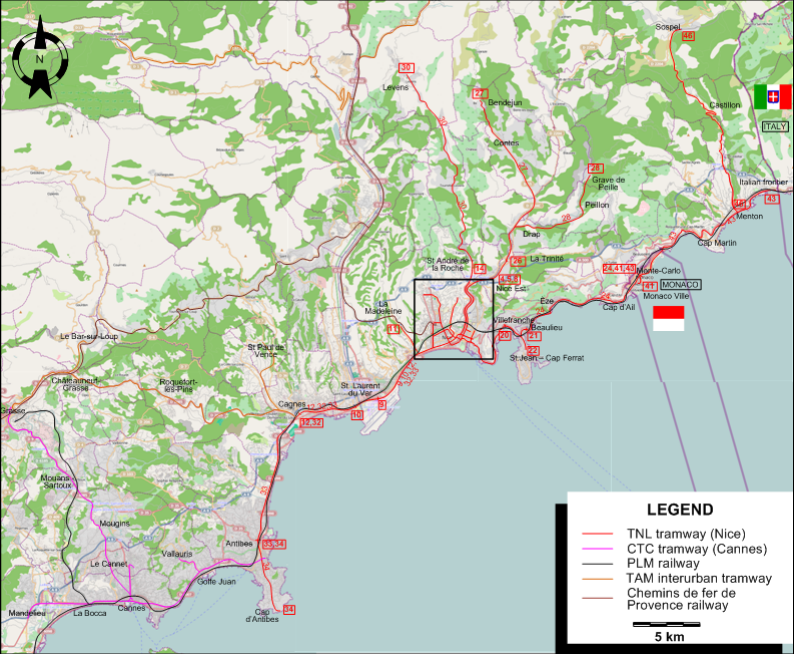 The above images show the extent of the tram network in 1925, both within Nice and along the coast.[13]
In 1925, the TNL network had 144 km of track, & a fleet of 183 motor trams and 96 trailers.[15] The tramways were also used to transport goods and a series of wagons were also purchased. Goods were transported within Nice to and from the station of Le Chemin de Fer de Provence. Coal was transported from the port to other parts of the city, and cement, lime and gas were transported from the cement factory in Contes to various areas of Nice. The Sospel to Menton line was used for construction materials for the building of the railway line from Nice to Breil-sur-Roya.
Initially, it was the coastal tram lines that suffered strongest competition from road vehicles. But, across the whole network, cars and lorries and their inherent flexibility came to dominate the public’s choices over transport use. The coastal lines between urban centres disappeared between 1929 and 1932. By 1934, the longer suburban lines had all disappeared. Nevertheless, the tramway was not yet banned from the city, even if criticism from part of the population was growing.
In 1927, André Mariage[16] took the presidency of TNL and STCRP, amplifying the hostility towards the tramway. The election of Jean Médecin at the head of the municipality, who was a virulent opponent of the tramway, seemed to legitimise those who saw the tramway as a symbol of the past.
Over following years the municipality decided to close different urban lines and by 1939 only four lines remained open:
During the Second World War, two urban lines were reopened as the buses which had been gradually being introduced were requisitioned for the war effort:
And two lines into the hinterland: the one to Contes and the one to La Grave de Peille.
The network had, by the end of 1942, 48 motor-trams and 22 trailers (some motor-trams were rebuilt in 1942).
After the Second World War, the tramway systems, having suffered from years of war/occupation and neglect, were replaced by trolleybuses . The trolleybuses were put into service from 1942 on the Cimiez line (line 35). The last tram ran on the whole network on 10th January 1953.
Lines disappeared slowly over a period of years: the line to La Grave de Peille closed in 1947, line 22 closed at the end of 1948. The line to Contes and Line 6 closed in 1950, and lines 3 and 9 closed in 1951. Line 7 was the last line in operation and closed, as we have already noted, on 10th January 1953.
Motor-trams[1]
Trailers[1]
References
1. Tramway de Nice et du Littoral; https://fr.m.wikipedia.org/wiki/Tramway_de_Nice_et_du_Littoral, accessed 5th March 2018.
2. Route du bord de mer (Alpes-Maritimes); https://fr.wikipedia.org/wiki/Route_du_bord_de_mer_(Alpes-Maritimes), accessed 5th March 2018.
3. The Sospel to Menton Tramway Revisited; https://rogerfarnworth.wordpress.com/2018/02/23/the-sospel-to-menton-tramway-revisited-chemins-de-fer-de-provence-51the-sospel-to-menton-tramway-revisited-chemins-de-fer-de-provence-51.
4. This term is a standard French term for a transfer of status for a company, a definition is provided on this link: http://projaide.valdemarne.fr/la-reconnaissance-dutilite-publique-definition-et-demarches, accessed 14th March 2018.
5. Tramway de Cannes; https://fr.wikipedia.org/wiki/Tramway_de_Cannes, accessed 14th March 2018, c.f. Trams in Cannes; https://en.m.wikipedia.org/wiki/Trams_in_Cannes, accessed 15th March 2018.
6. Magnan; https://fr.wikipedia.org/wiki/Magnan_(Nice), accessed 14th March 2018.
7. https://fr.wikipedia.org/wiki/Liste_des_quartiers_de_Nice#Magnan_ou_La_Madeleine, accessed 14th March 2018.
8. See for example: https://rogerfarnworth.wordpress.com/2017/11/28/the-tramway-between-grasse-and-cagnes-sur-mer-part-1-chemin-de-fer-de-provence-20 and https://rogerfarnworth.wordpress.com/2018/02/23/the-sospel-to-menton-tramway-revisited-chemins-de-fer-de-provence-51the-sospel-to-menton-tramway-revisited-chemins-de-fer-de-provence-51.
9. Transports en Commun de Nice TNL; http://www.nissalabella.net/tnl.htm accessed 13th March 2018.
10. Les tramways de Nice : avant l’électrification; http://transporturbain.canalblog.com/pages/les-tramways-de-nice—avant-l-electrification/31975770.html, accessed 13th March 2018.
11. Les tramways de Nice : avant l’électrification; http://transporturbain.canalblog.com/pages/les-tramways-de-nice—avant-l-electrification/31975770.html, accessed 13th March 2018; c.f. https://www.thevintagenews.com/2016/10/17/the-mekarski-system-compressed-air-propulsion-system-for-trams, accessed 15th March 2018; https://en.m.wikipedia.org/wiki/Mekarski_system, accessed 15th March 2018; and http://www.tramwayinfo.com/Defair.htm, accessed 15th March 2018.
12. Les tramways de Nice: de l’apogée au déclin; http://transporturbain.canalblog.com/pages/les-tramways-de-nice—de-l-apogee-au-declin/31975780.html.
13. The GS Tram Site: Nice/Cannes and Area, France and Monaco 1925; http://www.tundria.com/trams/FRA/Nice-1925.shtml, accessed 15th March 2018.
14. Photographs and Postcards showing the trams of Menton can be found at http://menton.tramways.monsite-orange.fr/index.html, accessed 14th March 2018.
15. Trams in Nice; https://en.m.wikipedia.org/wiki/Trams_in_Nice, accessed 15th March 2018.
16. André Mariage; https://fr.wikipedia.org/wiki/André_Mariage, accessed on 15th March 2018.
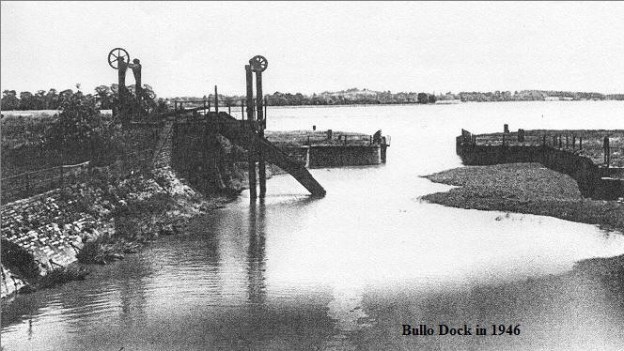
Bullo Pill, on the Severn near Newnham, originally a small tidal creek off the main river used for boat building, was developed by building a dock basin with lock gates, and wharfs for loading goods for shipment.[1] Coal and stone from the Forest could be loaded at the dock and exported on the Severn trows up or down the river. In addition, there was a flow of barges carrying coal across the river to Framilode and then along the Stroudwater Canal to Brimscombe, Stroud and Chalford. The name ‘Bullo Pill’ is unusual. ‘Pill’ is a local word meaning a tidal inlet. The Oxford English Dictionary[2] gives the etymology as Old English (Anglo Saxon) – but some internet sources state it to be Welsh or Irish.[3]
A private railway (a tramway/tramroad) was built from Bullo Pill via Soudley and Ruspidge to Churchway near Cinderford Bridge in 1807, a distance of nearly four and a half miles; when it was nearly complete, the Bullo Pill Railway Company applied for an Act of Parliament in order to extend the railway a further two miles to the summit of the hill above Churchway Engine, and to make branches. The Royal Assent to the Act was made on 10 June 1809.
The railway was of approximately 4 ft gauge, laid as a plateway, with rails of L-shaped section, spiked to stone blocks. Rails were supplied by the Ayleford Foundry, near Soudley; a branch line was constructed from the foundry. All traffic was horse-drawn, using privately owned four-wheeled wagons of an approved type, with an oak underframe supporting a hopper-shaped body, and with un-flanged cast-iron wheels. The line was single, with frequent passing loops.
By 5th May 1826, the Forest of Dean Railway Company had taken over the Bullo Pill Tramway. An Act of Parliament was passed to establish the Forest of Dean Railway Company. In some places the tramway was built over. In others, the railway took a different route. In 1852, the Forest of Dean Railway was acquired by the South Wales Railway.
Details of The Forest of Dean Railway Company and its railway can be found on a variety of internet sites.[4] There were a series of branch-lines as far north as St. Annals to the east and Crump Meadow to the west.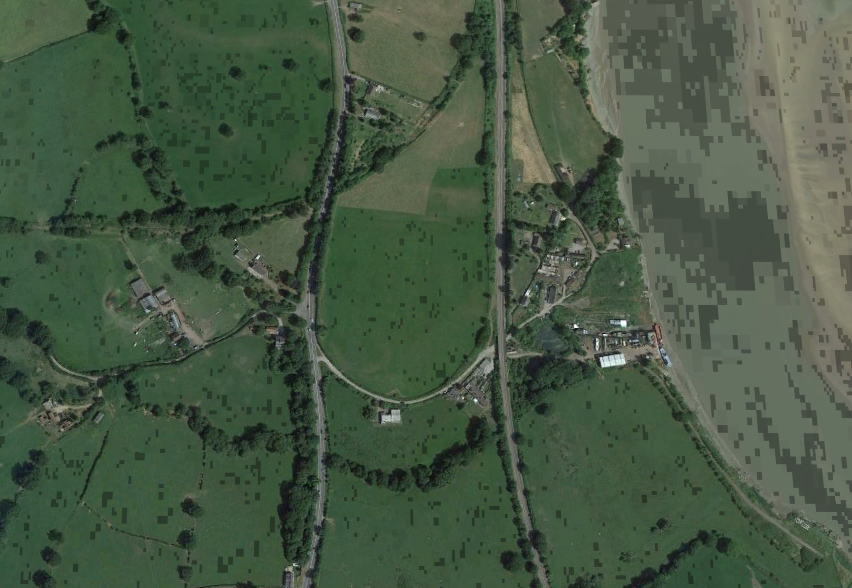
On the Bullo Pill dockside, at SO 6907 0981, there is a pile of stone blocks, some with a single drilled hole. These may well be original tramroad blocks.[5]
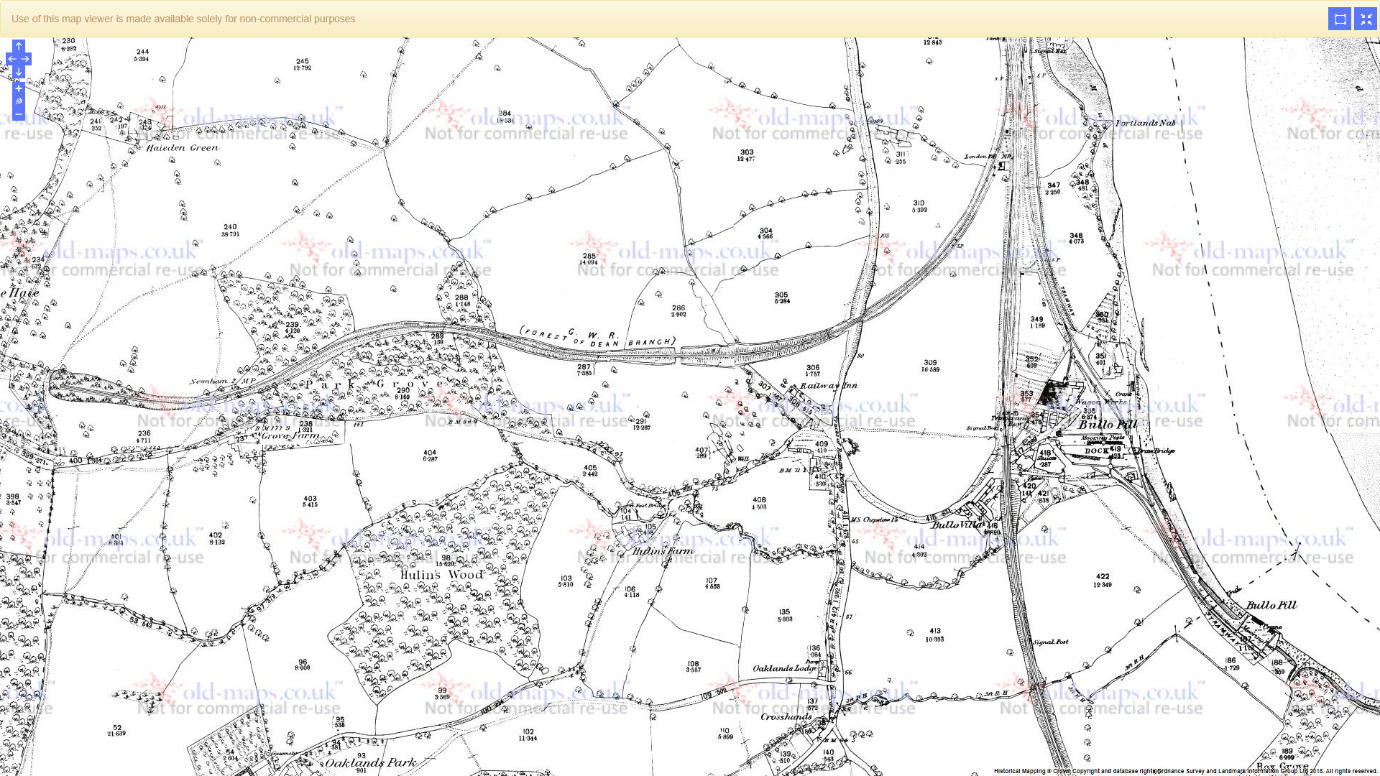
The dock at Bullo Pill became inadequate for the level of traffic by the 1830s, so a wharf was built at Box Meadow.[6] The tramway, which is now a track, ran south from the dock at Bullo Pill to the wharf and can be see alongside the Severn estuary to the right of the Google Earth satellite image above. The watermarked map above is an excerpt from the 1881 1:2500 OS County Series and clearly shows the location of the wharf in relation to the Pill. The map is sourced from the http://old-maps.co.uk website.[7] The old tramway is clearly visible at Bullo Pill and at the wharf and was still in use within the site. It is also seen travelling north towards Bullo Pill Station which is north of the railway junction.
From Bullo Pill the tramway ran west and crossed what is now the main A48 road at quite an angle and at grade. It passed a building now in private ownership which was formerly a public house and before that a tramway building. The route is visible as a curved track on the above map and satellite image to the West of the main railway line between Gloucester and Chepstow.
Beyond the A48, the tramway route is crossed by the later Forest of Dean Railway embankment.[8] The railway is also now abandoned, but its path and that of the tramway are approximately coterminous as they approach Haie Hill Tunnel, sometimes known as Bullo Pill Tunnel. Some images of the railway line and the enlarged tunnel required for it are shown below. Other images can be found on Flickr.[9]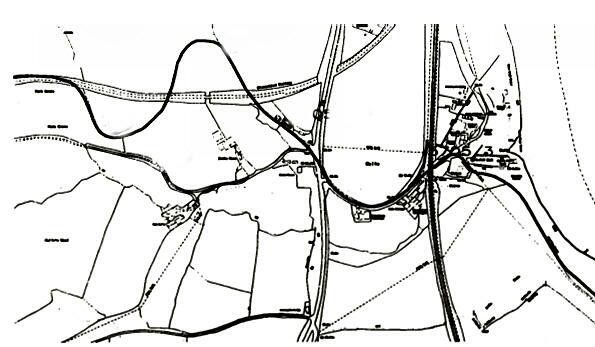
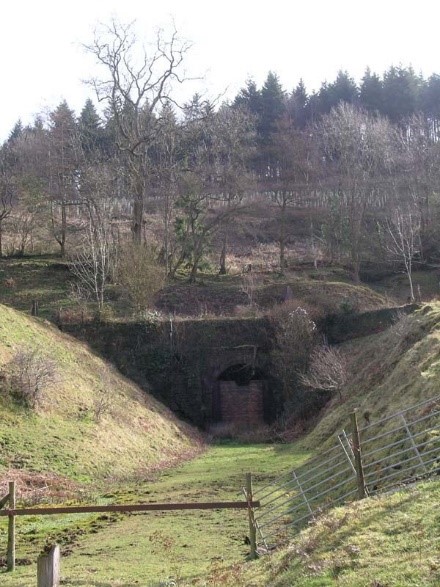
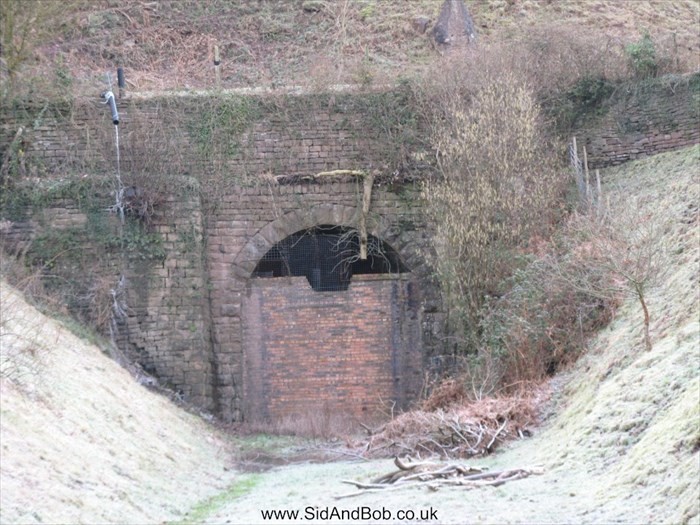
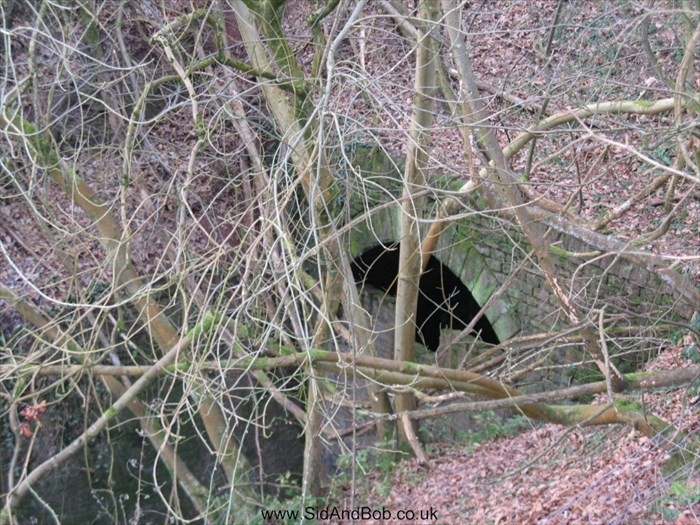 Interestingly the tunnel was, when built in 1810, the longest in the world! It was 1,083 yards long and remains the oldest tunnel ever to used by passenger carrying trains.[10]
From Bullo Pill, the distance to the entrance of Haie Hill Tunnel was approximately a mile.
The present (early 21st Century) state of the enlarged tunnel bore can be seen on the above photos which show, in order, the approach from Bullo Pill, a closer shot of the tunnel portal and then the northern portal.[10a] The children of Bullo Pill used the tunnel to reach their school at Soudley, having to time their walks so as not to meet any trains.
To reach the tunnel, the tramway needed shallower grades than the later railway and its route can be picked out on the plan above.[11] It took a more circuitous route than the later railway needing a loop to the north and then to the south side of the railway to allow it to gain enough height. The shallower grades permitted the horses to pull a reasonable number of wagons.
The following image is of the railway, rather than the tramway, and comes from a short post on www.forgottenrelics.co.uk by a former loco fireman, Bob Barnett.[12] It shows the approach to the tunnel while it was still in use.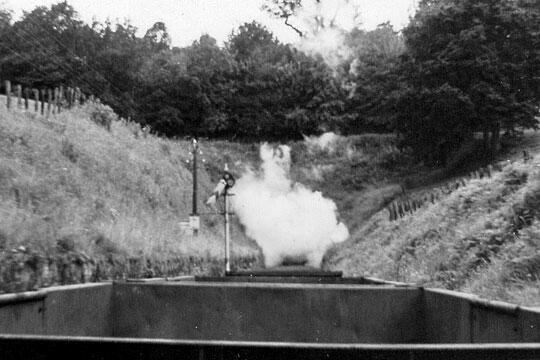
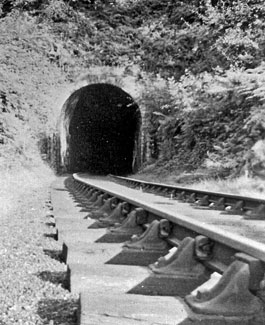
The engineer for the tunnel construction was John Hodgekinson and the Contractor was Robert Tipping.[13] The Eastern portal, closest to Bullo Pill, stood at the end of a stonewalled cutting which is overgrown and obscured by vegetation. The portal has been partly bricked up, an opening has been left at the top to allow bats to enter and roost[14] and a low-level access hatch has been provided to allow human access. Inside, the bore is tidy and mostly dry (see the image below). The tunnel was enlarged for broad gauge by Isambard Kingdom Brunel[15] in The tunnel climbs at a steep rising gradient of 1:56 in the westward direction. It could take a train of empty wagons five minutes to pass through. Although mostly straight, a slight curve to the north is encountered at the west end.[16]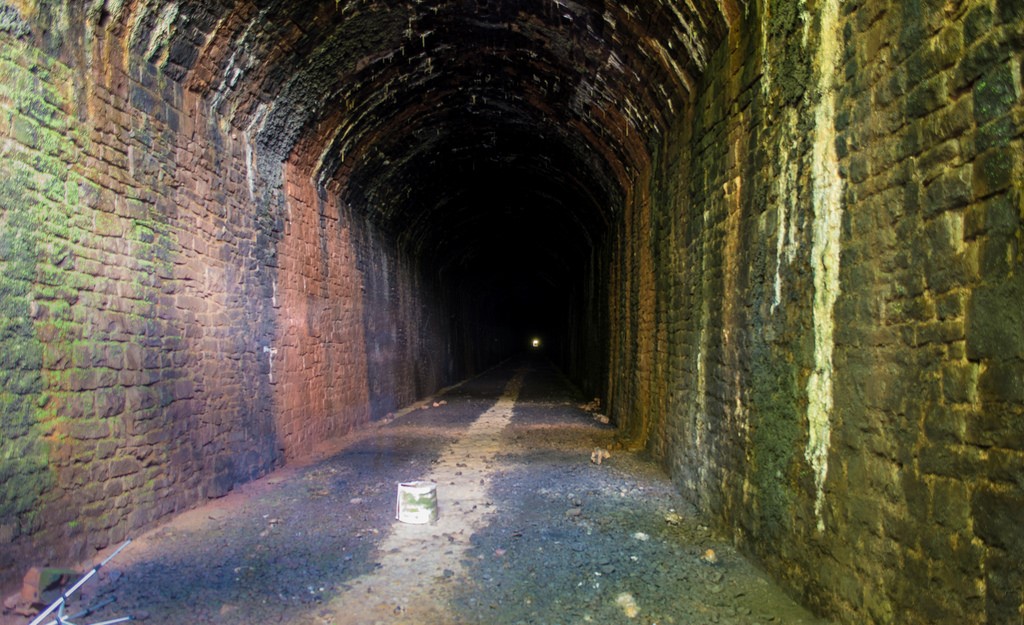
The masonry lining features an arched roof with vertical side walls into which generous refuges are provided at regular intervals, some with exposed rock at their rear. Signalling pulleys and cable hangers remain in situ on the south wall. Near its centre, a rare milepost remains.[17] A drain runs down the tunnel’s centre line – accessed via numerous small catchpits – and many weep holes have been cut into the lining, resulting in some significant accumulations of calcite on both walls. At the west portal, which is also bricked-up, a stream runs in a channel beneath the bore.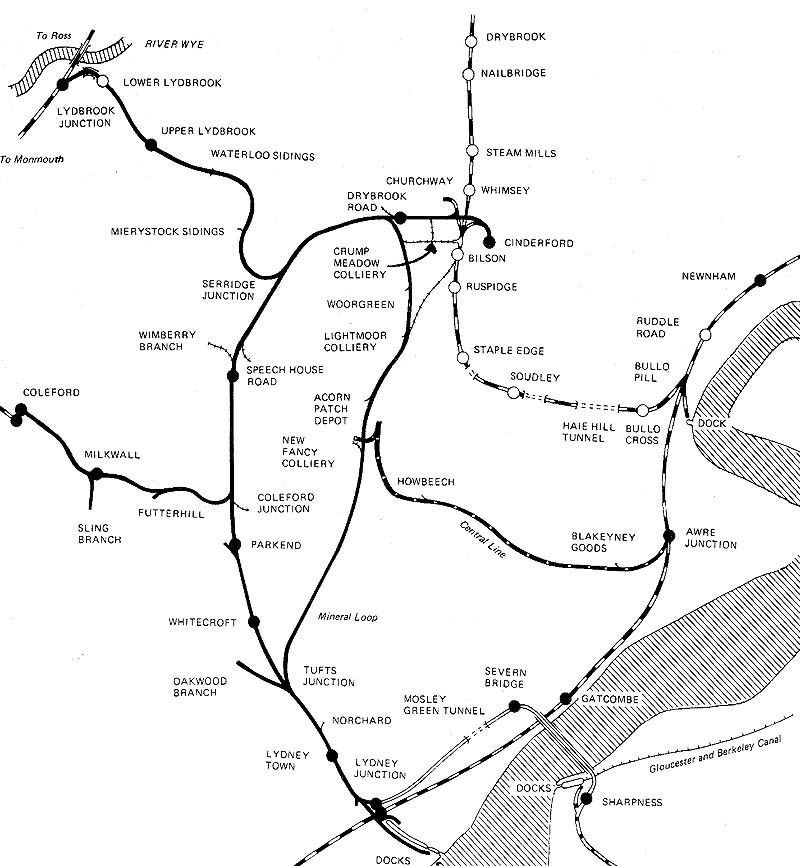
The Western portal[18] is near the village of Soudley but separated from it by another short tunnel – Bradley Hill Tunnel. Close to the Western portal of Haie Hill Tunnel a tramway branch ran south to the site of a forge/foundry at Bradley House.[19] The railway track is now a footpath.
From the tunnel portal the railway headed north-west across the Soudley Brook through Bradley Hill Tunnel to Soudley Crossing.[20] “The tramroad circuitously headed north along the modern tarmac lane past Furnace Crossing to join the B4227 by the bridge at SO 6649 1041, thence following the modern road north then west past Camp Mill, now the Dean Forest Heritage Centre, to re-join the railway at Soudley Crossing, SO 6610 1050.”[21]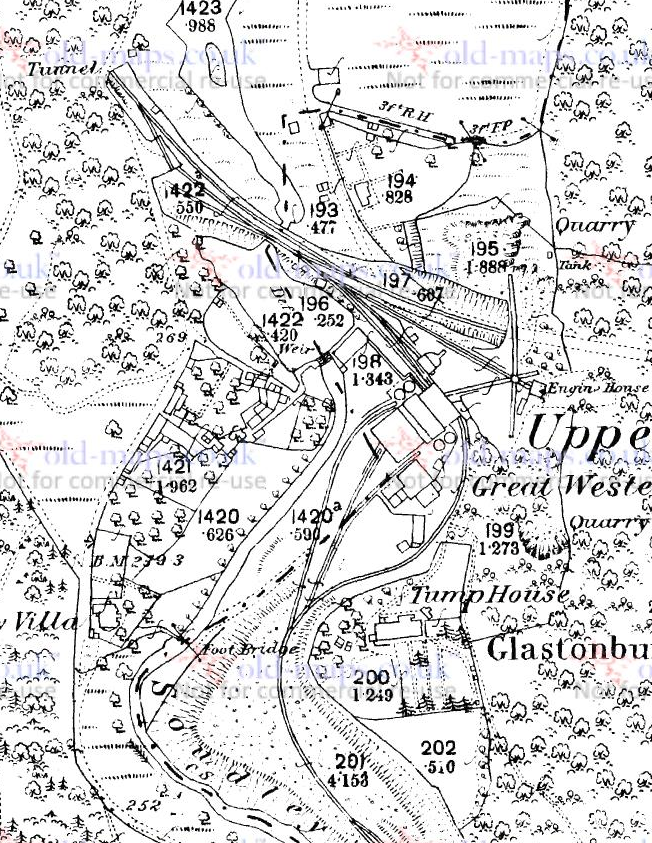
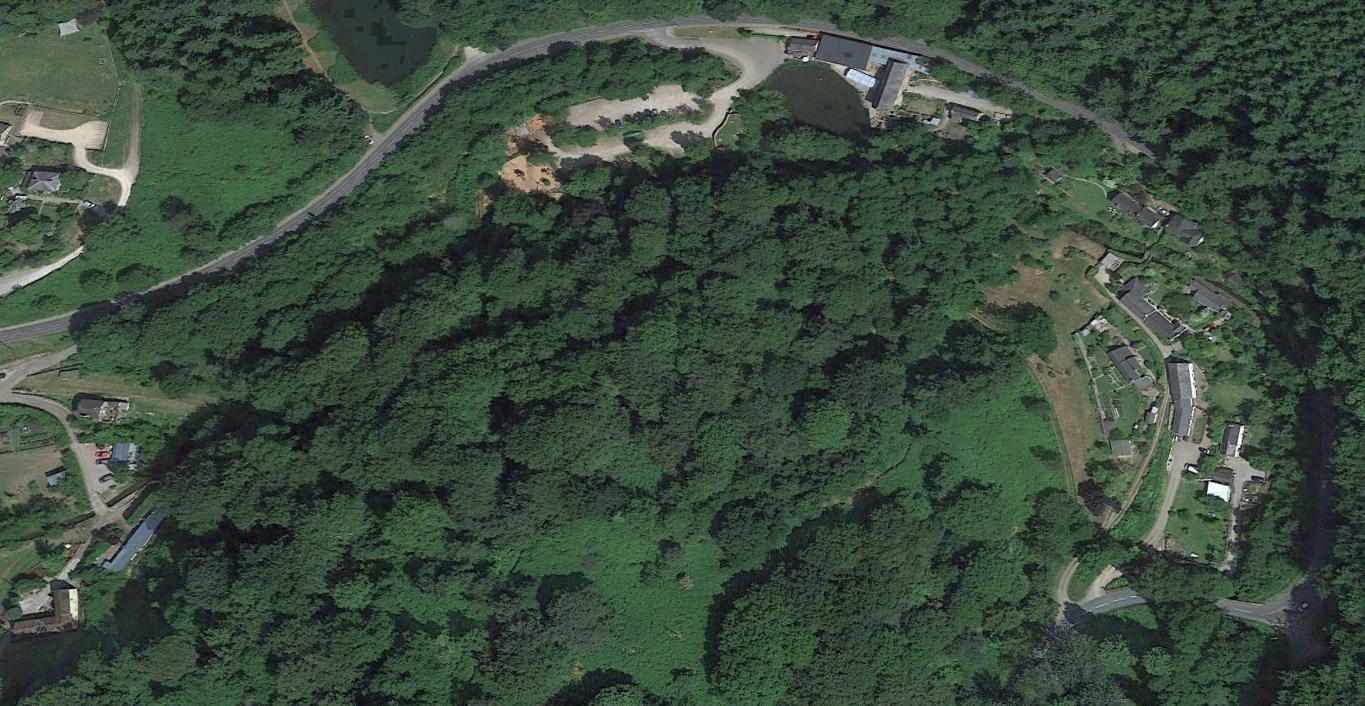 The satellite image above shows the area at the western portal of Haie Hill Tunnel, Bradley Hill Tunnel and at the western edge of the satellite image, the formation of the old railway emerging to the west of Bradley Hill Tunnel. The tramway followed what is now the road to the north of the hill running past the Dean Heritage Centre which is at the top of the image.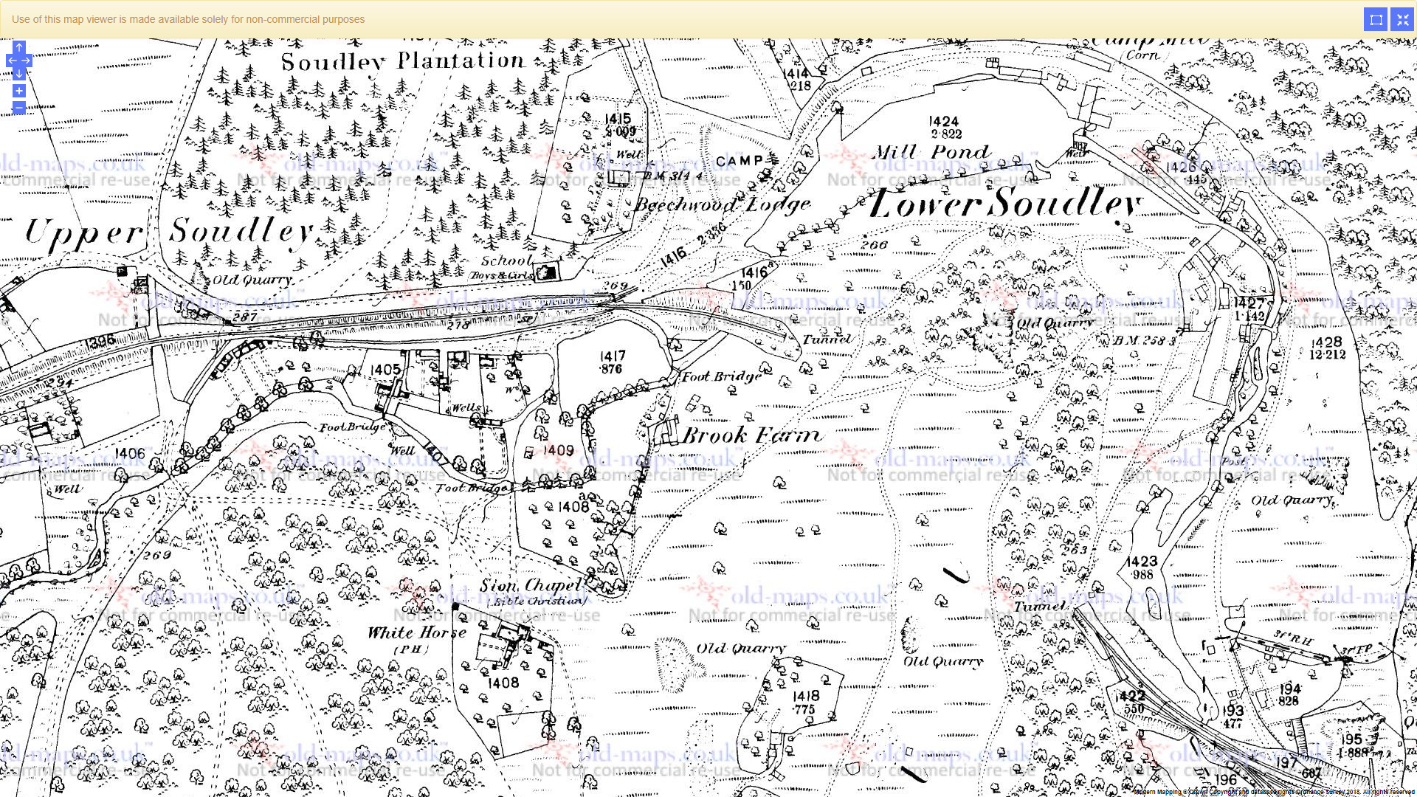
From this point, the railway track-bed and the road run in parallel, westwards towards the White Horse Inn. Just to the south of the railway is a track, known locally as ‘The Dram’. The pub is not shown on the 1881 Ordinance Survey map below but is at the site of the Old Quarry. The Dram still has tramway track shown on it in the OS Map below.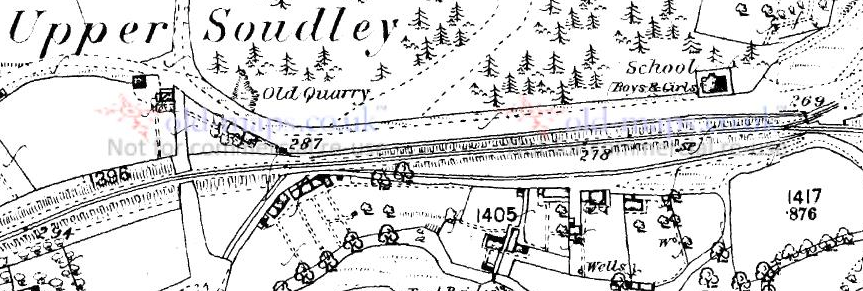
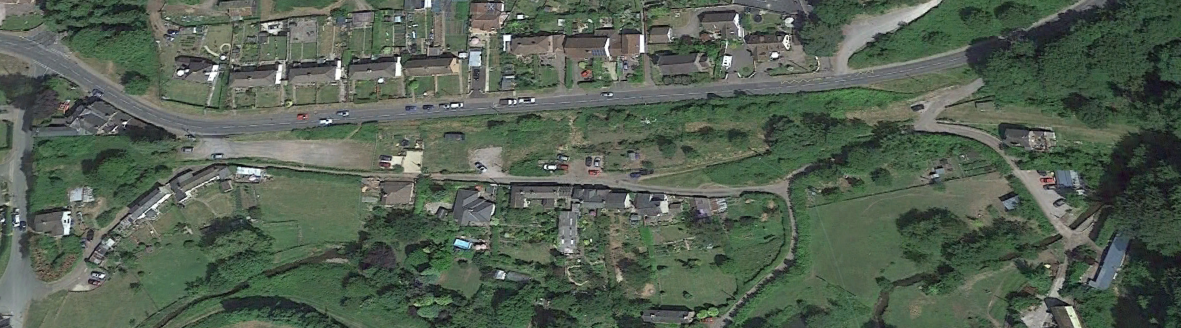 At the White Horse Inn/Old Quarry the track-bed of the tramway appears to divert south from the railway. Its presumed route is shown as a red line on the next OS Map excerpt below from 1881.
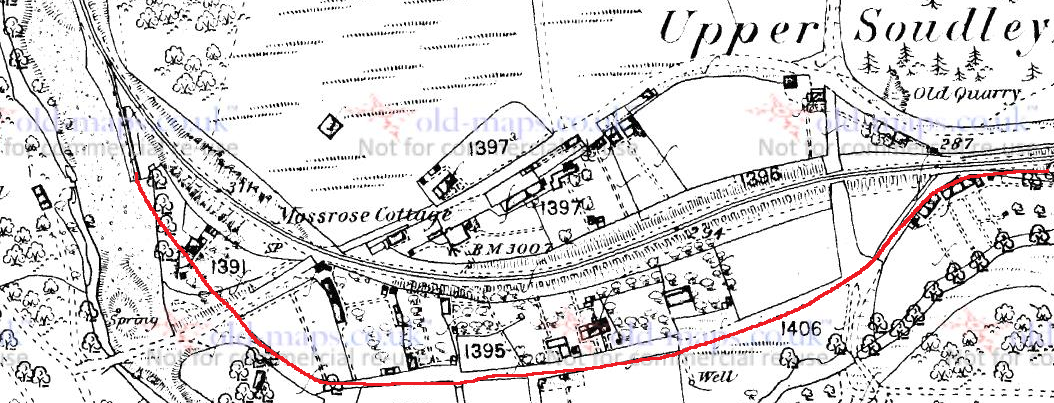 At the point where the tramroad heads sharply north, there was a short branch which crossed the river to serve Flindall Ironworks which were already disused at the time of the 1881 Ordnance Survey.
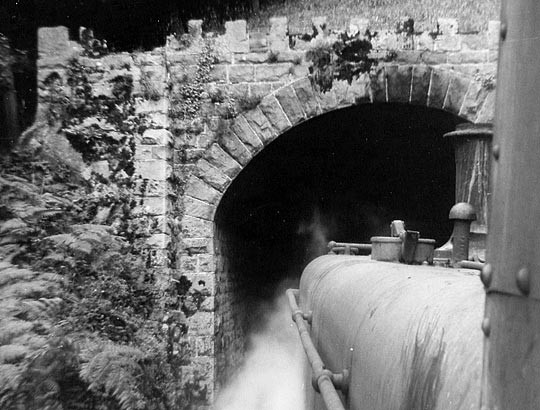
It is then assumed that the tramway formation is hidden under the railway formation travelling north from Upper Soudley towards Shakemantle and Perseverance Mines.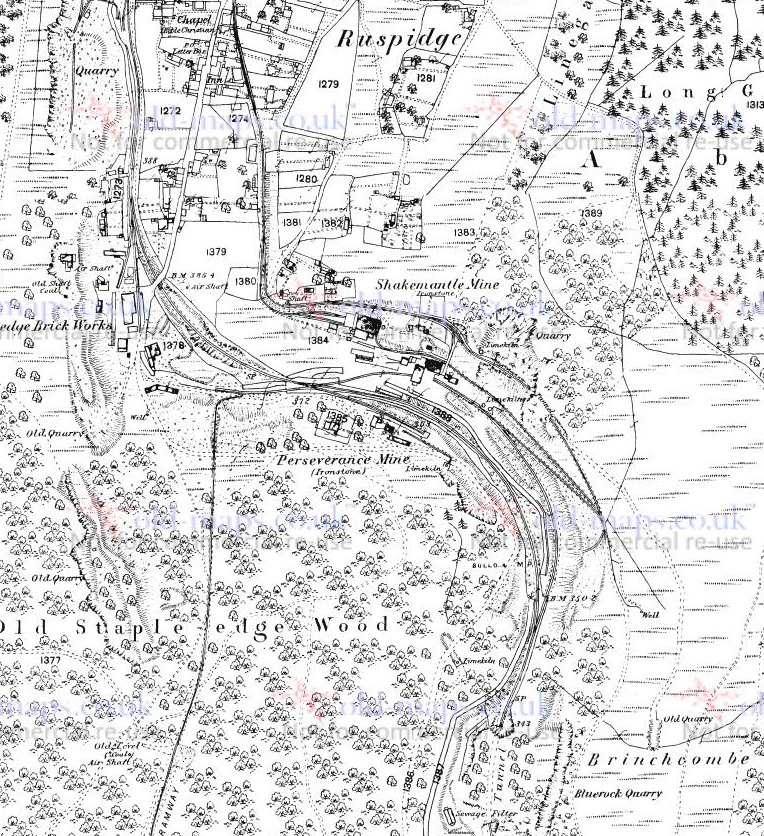 This next extract (above) from the OS Map of 1881 shows these two mines as well as the short Blue Rock Tunnel (at the very bottom of the excerpt). This tunnel is shown in the photograph below that map – a picture taken from the cab of a pannier tank locomotive.[22] Blue Rock Tunnel was built for the railway, the tramway skirted the rocky promontory, following the course of the river and re-joined the railway track-bed immediately north of the Tunnel.
A few metres further north the main railway line curved to the West and a branch-line provided access to Shakemantle Mine. That line was built over the route of the tramway which passed close to the limekilns shown at the centre of the map above.
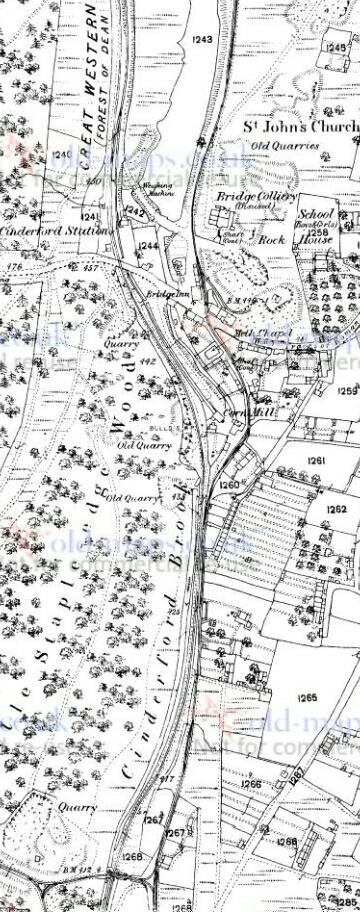
One source suggests that the tramway formation turned west and crossed the railway line close to the interchange with Quidchurch Colliery tramroad incline at SO 6551 1128.[23] However, as the next excerpt from the 1881 Ordnance Survery shows, there was clearly a tramway running north from Shakemantle Quarry and through the village of Ruspidge. It is possible that the route suggested by Youles[24] is actually a branch serving the Quidchurch Mine. Although the visible line on the 1881 map appears to be higher on the contours of the valley side than might have been feasible for the tramway mainline.
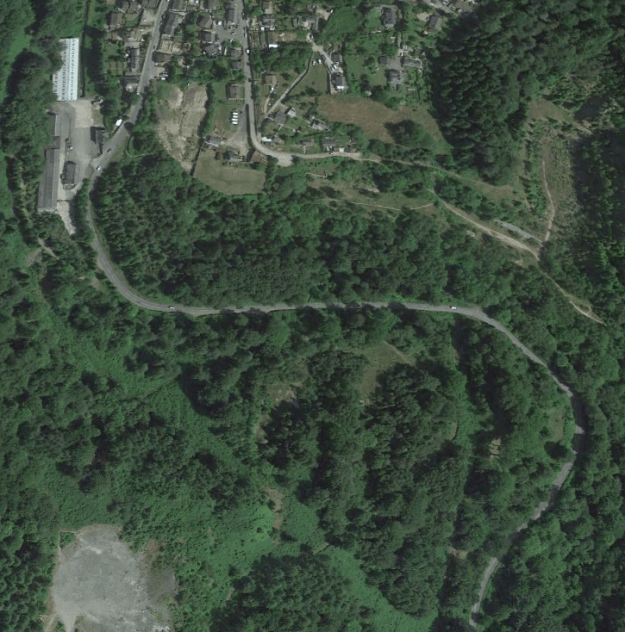 Youles seems to refer to this line as a private tramway.[25] If Youles is right, then we need to acknowledge an alternative route for the tramway which probably followed the railway formation. He says, “the Quidchurch interchange site is now thickly wooded, but the course of the railway siding which it shared with Perseverance Ironstone Mine, can still be seen, as can the earthwork remains of the interchange wharf. A GWR boundary marker situated between the siding and the railway, confirms that the siding was a private one. From here the tramroad incline ran south to cross the Soudley to Ruspidge road before climbing the steep slopes of Staple Edge Wood en-route for Quidchurch.”[26] The incline to Quidchurch headed towards the bald area shown on the bottom left of the satellite image above.
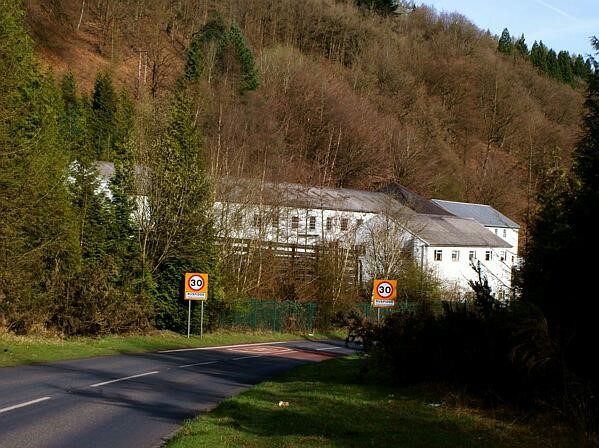
Youles goes on to say that the earthworks associated with the former Eastern United Colliery have obliterated all traces of the tramways in this area. The Eastern United Colliery was built over the site of the Staple-edge Brick Works and itself closed in 1959. All that is left in the early 21st Century are the colliery office and the power house. Eastern United was a drift colliery, dug into the side of the hill, but it did have a shaft. It was a ventilation shaft, Findall later known as Walmers shaft, hill on the hill above the colliery. The buildings are currently in use as a factory making dyes and colourants for paint.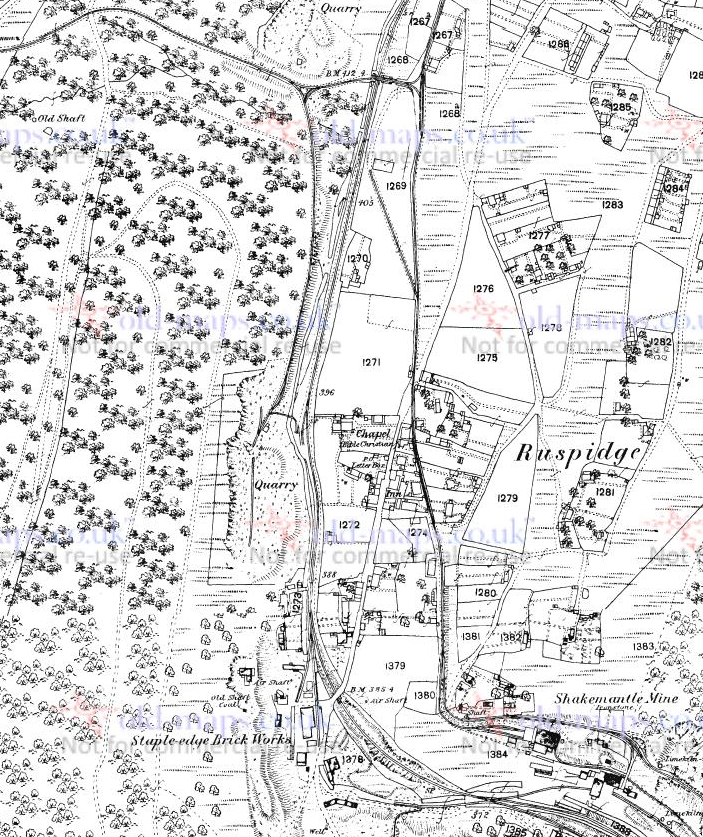
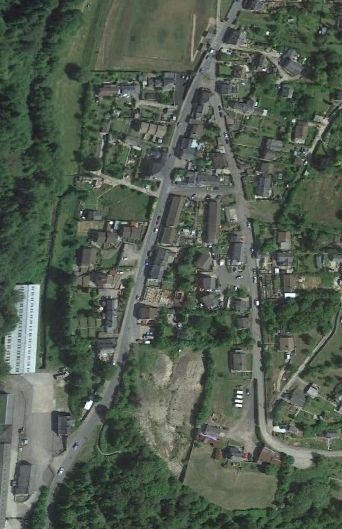
On the map above, a tramway can be seen running north through Ruspidge. It is shown on the satellite image to the right as a tarmacked road which meets the main road north of the site of the Eastern United Colliery.
That ‘private’ tramway continued north of the main road to a junction with a tramway which ran East-West (crossing the line of the railway and serving Lightmoor Colliery to the West. This is illustrated in the next smaller map which shows Lightmoor Colliery in the West.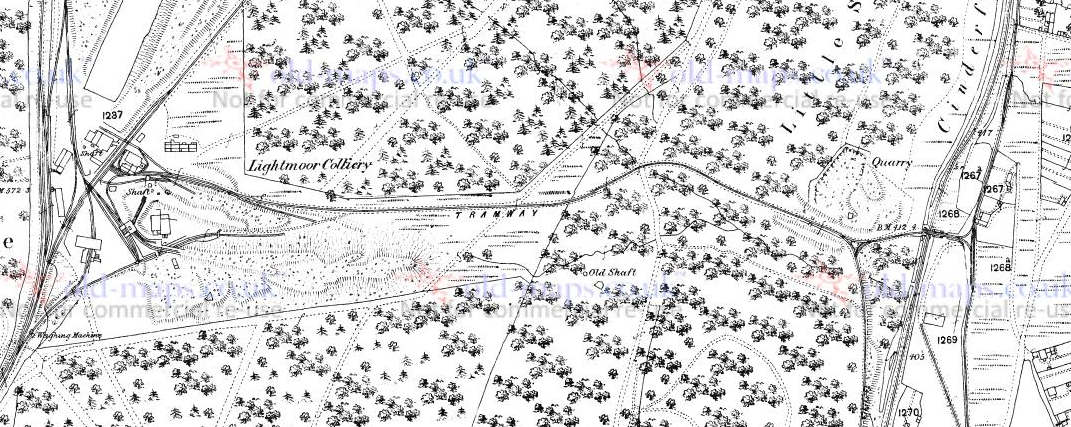
 Another tramway is shown serving a quarry adjacent to Cinderford Brook which connects to the East-West tramway. North of the branch to the Lightmoor Colliery, the tramroad formation and the railway formation converge alongside Cinderford Brook. The spoil heap from Eastern United Colliery buried the route of the Forest of Dean Tramroad. It appears (Figure 4)[27] that the route ran west from the interchange wharf, then turned north to rejoin the railway formation at the Eastern United site. In this case, the tramway ran parallel to both the ones already mentioned. The site of Eastern United Colliery is shown in the photo below.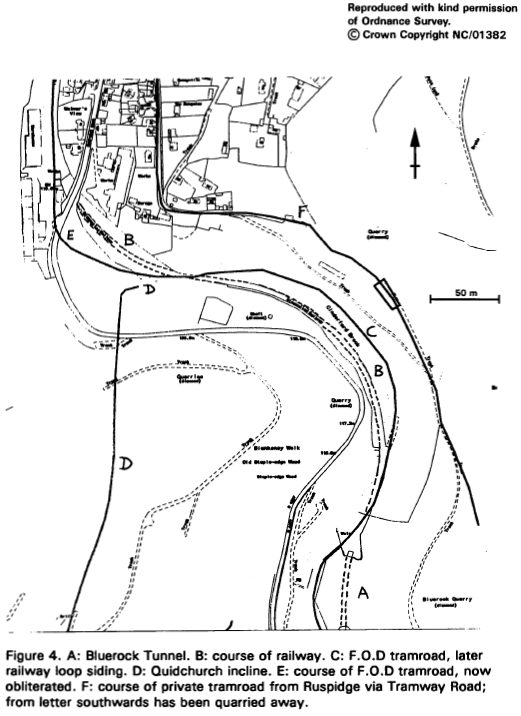
 The railway formation overlies the tramway formation from this point to Cullamore Bridge.
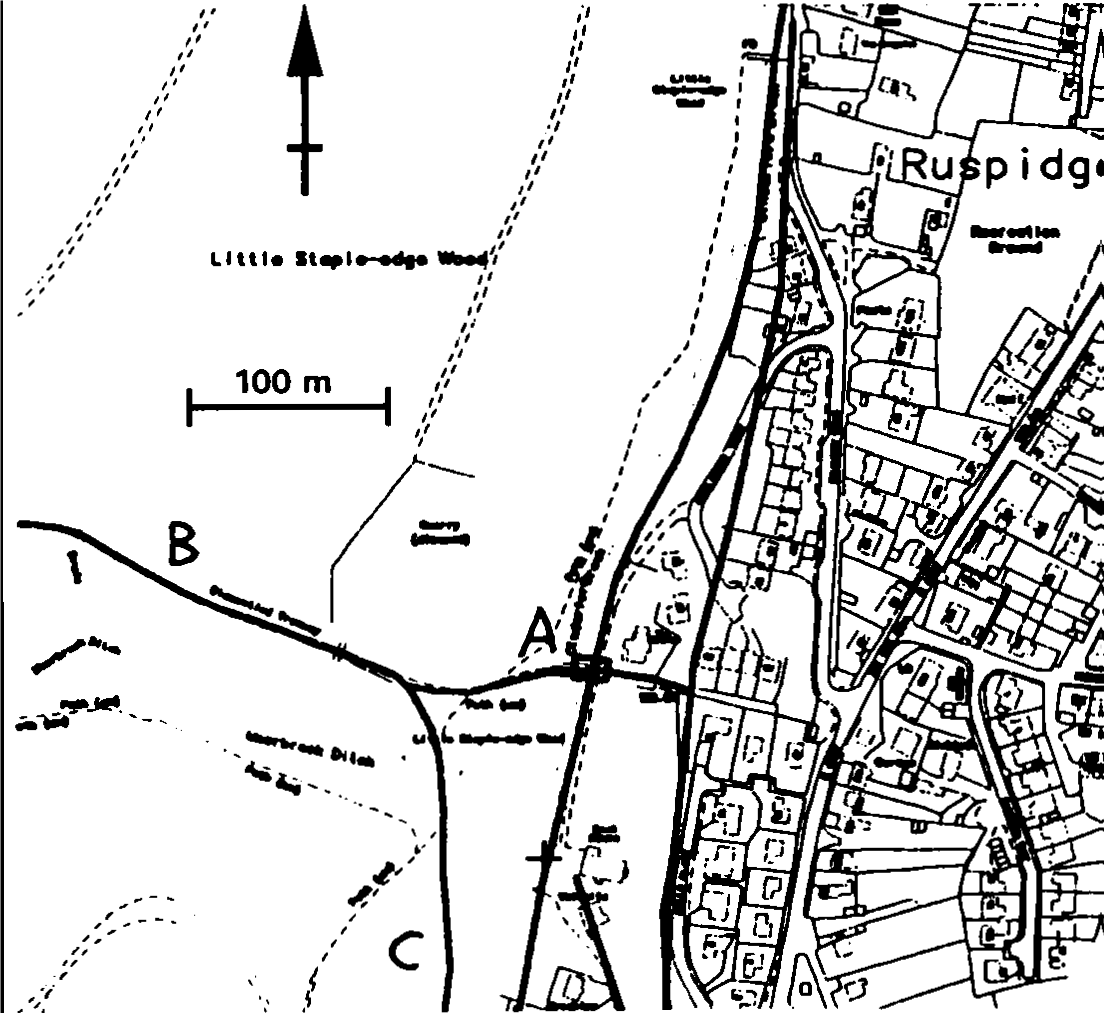 Cullamore Bridge (A) carried the tramroad from Lightmoor Colliery over the Cinderford Brook and the Forest of Dean Tramroad to a junction with the private Ruspidge to Shakemantle Tramroad. The Lightmoor Colliery Tramroad formation can still be accessed on foot. We have already noted the tramroad serving the quarry (C). The tramway link into Lightmoor (B) ascends the hillside through a cutting, on the sides of which are the remains of bridge abutments; the bridge led to the quarry’s spoil heap on the other side of the tramroad. After a few more metres, a path trails off to the south, following the line of another tramroad to Staple Edge Quarry. The Lightmoor track continues west to the colliery site, now an open-cast operation, where stands a large derelict and roofless building.[28]
 About 200 metres north of Cullamore, near the foot of the modern Railway Road, the private Ruspidge – Shakemantle tramroad trailed in. From the junction it ran almost due south, gradually diverging from the mainline, and climbing, to cross the Ruspidge Road at SO 6500 1169 where the Bible Christian Chapel (now a studio) stands. The first part of this section remains as a track and private drive, but from the chapel it continues, still climbing, as Tramway Road, to end at SO 6525 1133 high on the hillside overlooking the site of Shakemantle iron mine and adjacent to the extensive abandoned quarry workings.[29]
From the junction near Cullamore the mainline tramroad diverged from the railway, following the modern lower Railway Road, crossing the B4226 and reaching Valley Road via the passage between the Bridge Inn and the adjoining building. From here to its terminus at Churchway, few traces of the mainline tramroad remain, although much of the route can be followed using later roads and a few tracks, as far as the site of the Cinderford Ironworks.
The next map below shows the Ironworks. The 1881 Ordnance Survey shows much of the detail of the tramway which enters centre right at the bottom of the map and runs north past a series of cottages before serving the Ironworks.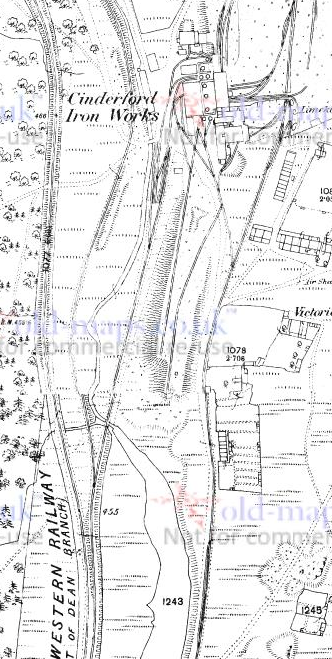
On the 1881 Map, the Forest of Dean Branch (standard gauge) Line can be seen entering the map on the bottom left. Two lines are present, the most Westerly is the main line and the branch (to the East of the main line) serves the Ironworks and splits to provide separate access to the Works and its spoil heap. The main line of the Forest of Dean Branch leaves the map on the top right.
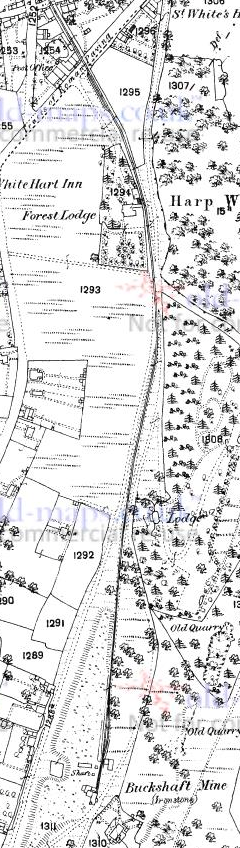
The Buckshaft Branch Tramway 1881 Ordnance Survey (Not to Scale).
Just north of Cinderford Iron Works, the Buckshaft and St. Annals branch tramroads diverged, and these also can be followed for much of the way, but as routes only, physical traces being virtually nonexistent. The 1881 Survey shows the Buckshaft line clearly on the maps immediately below.

The satellite image from the early 21st Century shows the line of the Buckshaft branch among all the modern housing and industry.

The Annals Branch Tramway 1881 Ordnance Survey (Not to Scale).
The St. Annals branch crossed Cinderford Lower High Street at SO 6549 1457 and followed Albion Road to enter Haywood Plantation. At the road’s end, three paths are seen. The centre one follows the branch route. It slopes up quite steeply to SO 6564 1500, where it curves sharply south west through 160 degrees to reach the edge of the plantation at Causeway Road, which it follows to the mine site, the last few hundred metres being an overgrown track to the south of, and parallel to, the road.[30]
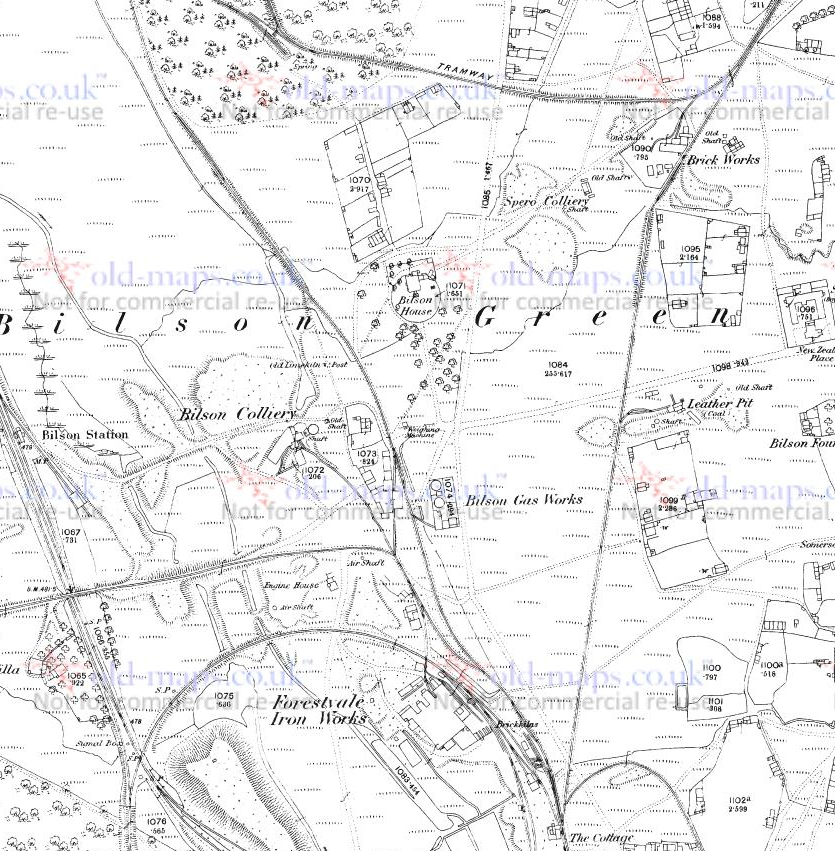
The St. Annals tramway appears as one of a myriad of different tramways north of Cinderford Ironworks on the 1881 Survey. It leaves the map of the Buckshaft Branch below at the top of the first panel of the maps below above ‘The Cottage’.
It travels just to the East of North in a straight line for some distance, past Bilson Gas Works and a Leather Works before deviating North-North-East close to Spero Colliery and being joined by another tramroad from the West. The St. Annals tramway continues North-North-East to run trough a small complex of sidings close to Seven Stars Inn which served Haywood Colliery. After this the tramway turned northwards for a short distance before swinging sharply round to a South-Easterly direction to head for St. Annals Ironstone Mine which was close to Latimore’s Lodge.
The Annals Branch Tramroad (A) sustained a short branch of its own which accessed Haywood Level (B) – see Figure 5 above.
Returning now to Cinderford and Forestvale Ironworks, three significant tramway routes still have to be explored.
We will leave these for a future blog.
References
[1] https://www.revolvy.com/main/index.php?s=Bullo%20Pill%20Railway, accessed 11th March 2018.
[2] Shorter Oxford English Dictionary: Pill [OE pyll, var of pull, pul pool, creek] A local name on both sides of the Bristol Channel, in Cornwall etc., for a tidal creek on the coast, or a pool in a creek etc.
[3] http://www.waymarking.com/waymarks/WM60XN_Haie_Hill_Bullo_Pill_Tunnel_Forest_of_Dean_UK, accessed 11th March 2018.
[4] For example: https://www.gracesguide.co.uk/Forest_of_Dean_Railway, accessed on 11th March 2018, https://en.wikipedia.org/wiki/Forest_of_Dean_Railway, accessed 10th March 2018.
[5] https://www.gsia.org.uk/reprints/2000/gi200019.pdf, accessed 23rd February 2018; R. J. Morris, The Forest of Dean Tramroad, Coleford, 1997.
[6] R. J. Morris, The Forest of Dean Tramroad, Coleford, 1997, p16.
[7] https://www.old-maps.co.uk/#/Map/365500/213500/12/100203, accessed 11th March 2018.
[8] https://www.gracesguide.co.uk/Forest_of_Dean_Railway, accessed 11th March 2018.
[9] https://www.flickr.com/photos/midlandexplorerboy/sets/72157624265737465, accessed 11th March 2018.
[10] http://www.waymarking.com/waymarks/WM60XN_Haie_Hill_Bullo_Pill_Tunnel_Forest_of_Dean_UK, accessed on 11th March 2018; Humphrey Household, Gloucestershire Railways in the Twenties. Alan Sutton Publishing Limited, Gloucester, 1984; Rex Christiansen, A Regional History of the Railways of Great Britain: Volume 13: Thames and Severn, David & Charles, Newton Abbot, 1981; Colin G. Maggs, The Branch Lines of Gloucestershire, Amberley Publishing, Stroud, 2009.
[10a] http://www.sidandbob.co.uk, accessed 9th March 2018.
[11] http://www.deanweb.info/history2.html, accessed 11th March 2018.
[12] http://www.forgottenrelics.co.uk/tunnels/bradleyhill.html, accessed 10th March 2018.
[13] https://www.gracesguide.co.uk/Haie_Hill_Tunnel, accessed 11th March 2018.
[14] http://www.waymarking.com/waymarks/WM60XN_Haie_Hill_Bullo_Pill_Tunnel_Forest_of_Dean_UK, accessed 11th March 2018.
[15] http://news.bbc.co.uk/local/gloucestershire/hi/people_and_places/history/newsid_8255000/8255346.stm, accessed 12th March 2018.
[16] http://www.forgottenrelics.co.uk/tunnels/gallery/haiehill.html, accessed 11th March 2018.
[17] http://www.forgottenrelics.co.uk/tunnels/gallery/haiehill.html, accessed 11th March 2018.
[18] SO 6649 1041
[19] Ayleford Forge (Morris op.cit., p.16); Bradley Foundry.
[20] Tony Youles, Tramroad Remains in the Forest of Dean, Gloucestershire Society for Industrial Archaeology Journal, 2000, p20.
[21] Ibid., p20.
[22] http://www.forgottenrelics.co.uk/tunnels/bradleyhill.html, accessed 10th March 2018.
[23] Tony Youles, Tramroad Remains in the Forest of Dean, Gloucestershire Society for Industrial Archaeology Journal, 2000, p20.
[24] Ibid., p20.
[25] Ibid., p21.
[26] Ibid., p20.
[27] Tony Youles, Tramroad Remains in the Forest of Dean, Gloucestershire Society for Industrial Archaeology Journal, 2000, p25.
[28] Tony Youles, Tramroad Remains in the Forest of Dean, Gloucestershire Society for Industrial Archaeology Journal, 2000, p21.
[29] Youles, op. cit., p21, comments: Morris implies that the tramroad line descending via Tramway Road was the mainline, rather than the private branch recorded by the Sites and Monuments Record (SMR) department of Gloucestershire County Council. See the captions to plates 6 and 7 in his book, and the Ruspidge paragraph on page 48. This route seems unlikely, since the mainline would have to climb from near the north portal of Bluerock tunnel, just above the level of the Cinderford Brook, to high on the hillside above (as shown in Morris’s plate 6 upper left) only to take the long descent to regain the level of the brook just north of Cullamore. The route shown on the SMR map, which follows the valley floor, is taken from an 1856 Board of Guardians map which shows the then recently completed railway and vestigial sections of the mainline tramroad not directly overbuilt by the railway, including that part later overlaid by the railway’s Shakemantle siding. Also shown is the private tramroad from near Cullamore Bridge, running south via Tramway Road to its terminus on the hillside high above Shakemantle, the railway and the mainline of the Forest of Dean tramroad.
[30] Tony Youles, Tramroad Remains in the Forest of Dean, Gloucestershire Society for Industrial Archaeology Journal, 2000, p22-29.


