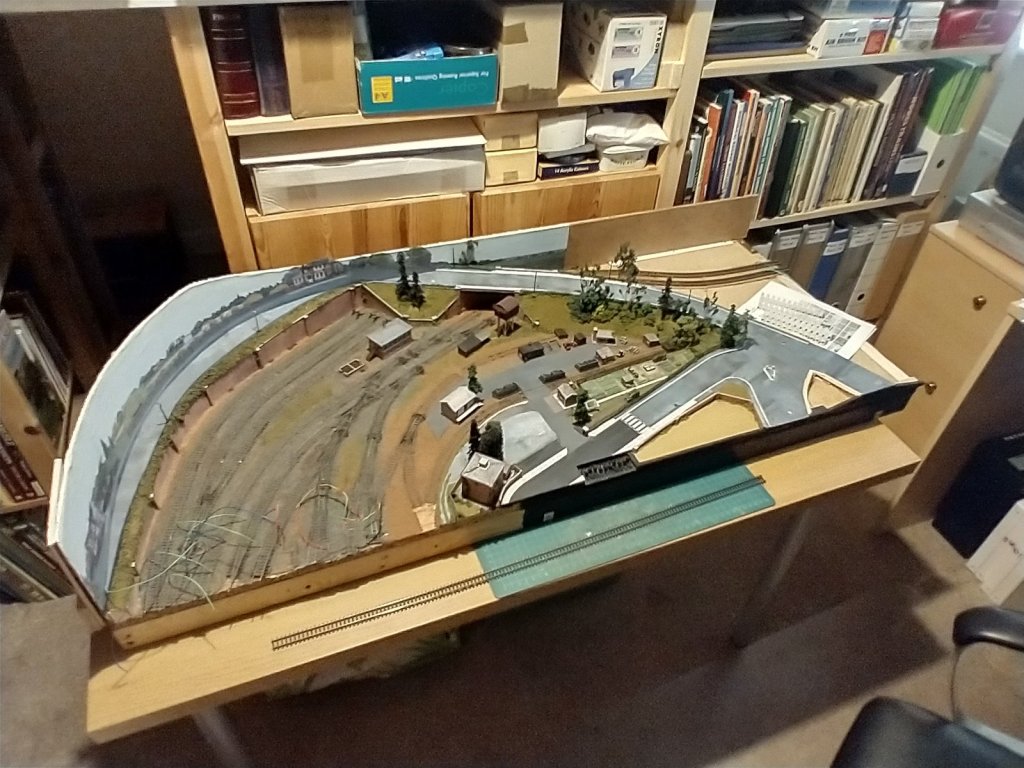
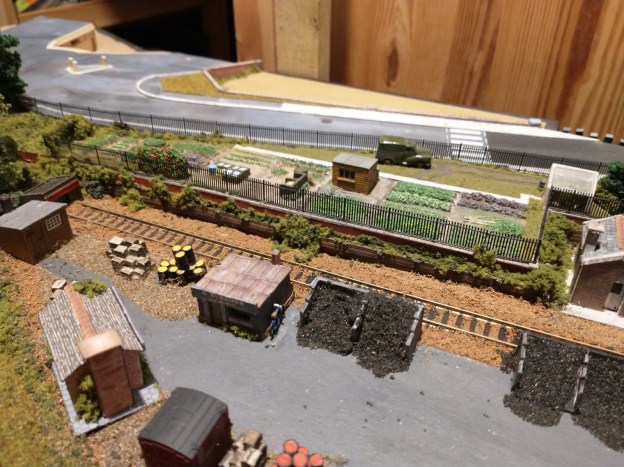
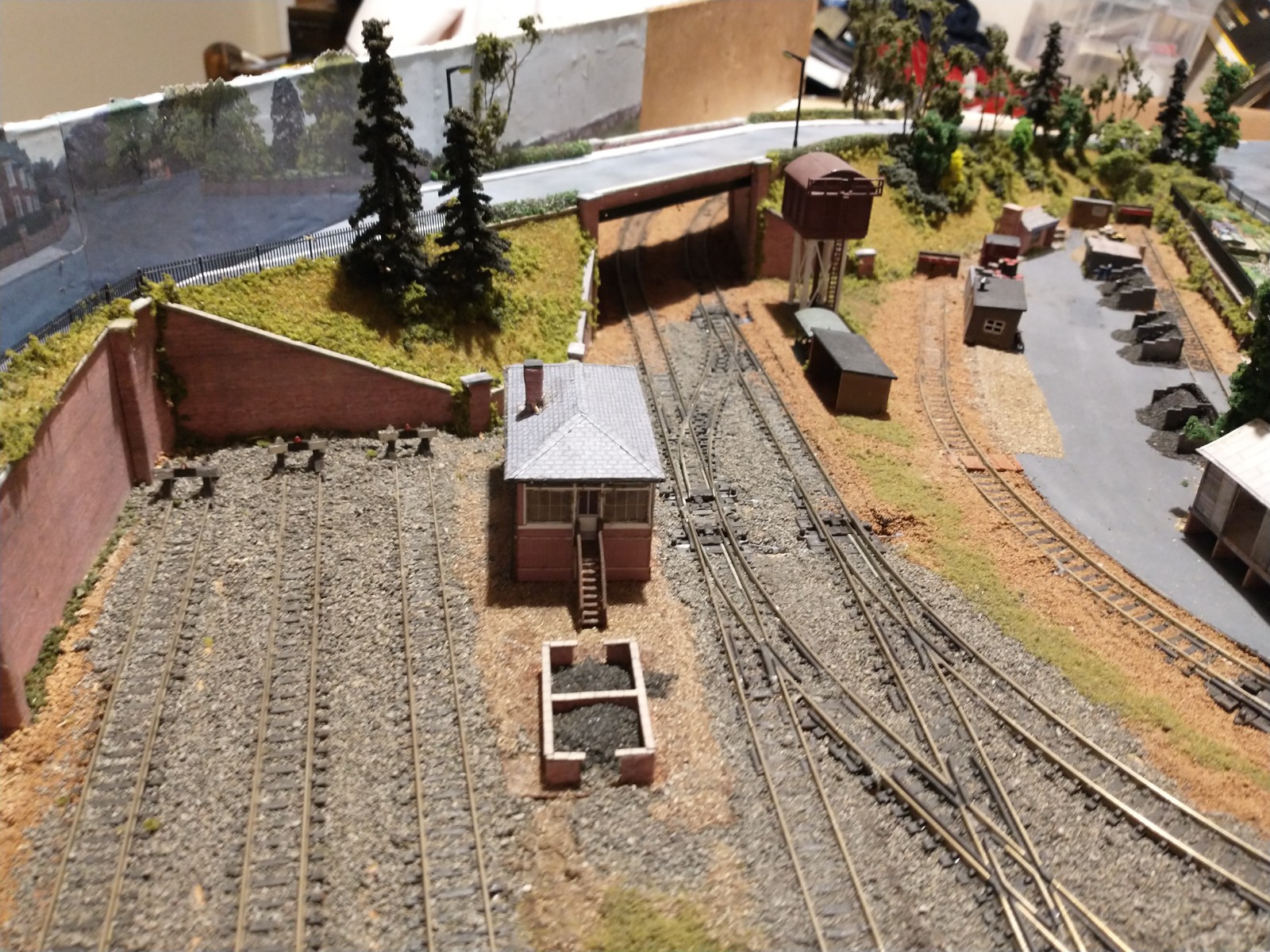
Moving the layout of Hereford from Ashton-under-Lyne to Telford required some careful planning. I was particularly concerned about the safe transport of locomotive and rolling-stock. I decided that I would move the layout and stock myself rather than ask the removal company to transport them. This proved to be a wise decision and I managed to get my employers to cover the cost of a few journeys between Ashton-under-Lyne and Telford as this was cheaper than using a removal company.
Some research resulted in the purchase of one stock box from Ten Commandments. [1]
Ten Commandments’ stock storage boxes for N Gauge are based on two boxes from the ‘Really Useful Box Company‘ [2] – a 4-litre box (£22.00) and a 9-litre box (£37.00).
I purchased the smaller of the two. It came with two foam inserts with pre-cut storage slots. The top layer had 9 crossways slots, each 195mm long. The lower layer had 5 length-wise slots each 310mm long. The slots were 25mm wide and 25mm deep. Each foam tray also had a cover layer/lid of foam.
I have a large amount of stock and would have needed to buy a significant number of the stock boxes. At £22.00 or £37.00 per box. I was going to be spending a lot of money.
The 9-litre Really Useful Boxes cost around £6.00 each (depending on where they were bought this varied from £4.50 to £10.00, with a manufacturer’s retail price of £7.55 plus postage. With a significant amount of stock it made sense to buy in bulk – 9 No. 9-litre boxes cost a total of £45 at Rymans (£5 each) and I found a few for a little less than this in sales at various retailers.
I researched available plastic packing-foam and realised that I could purchase reasonably large sheets on-line. I ordered two different thicknesses of foam in nominal 25mm and 10 mm sizes. The actual thickness of each sheet was marginally below the nominal sizes.
I tried using a variety of different glues before decided that strong double-sided tape would be the best for the job. This was purchased on-line at reasonable prices.
Each tray was made up of a bottom sheet of 10mm foam with cut pieces of 25mm foam stuck to it. The construction of the trays is illustrated by a series of pictures below. Please bear in mind that perfection was not required, just trays that would protect stock in the move to Telford.
The trays varied in thickness depending on what stock I intended to place in them. …
Base layer of nominal 10mm foam.The base layer of foam with two end-pieces 25mm deep.Double-sided tape in place at one end of the base sheet of foam.Two end-pieces of foam stuck in place and double-sided tape almost ready to accept the side-pieces of foam.The process continues.A finished tray – definitely not perfect but perfectly serviceable!A couple of examples of my finished trays followed by the two foam trays which came with the original purchase from Ten Commandments.Stock being placed in storage boxes in the loft layout-room
As this process seemed to have gone well. Rather than buying a lot more ‘Really Useful Boxes’ I decided to try an alternative system for a significant amount of my stock. This system made use of the 25mm thick foam as well as the 10 mm foam.
At the time, I purchased a set of storage drawers as shown below for, I think £12.00. The prices as I write in June 2022 is now £18.00. I imagined that these drawers wolw hold a significant amount of stock and that I would also be able to accommodate some larger items which I had on display in the Vicarage.
The process followed was the same with the exception of a need to provide some reinforcement for the trays as they were larger and the foam was not fully rigid. Trays were shaped to fit the drawers as can be seen below. …
The first layer of foam in one of the plastic drawers.The first tray in this drawer was used for road vehicles.
I had some very large items – O-Gauge models made by my father-in-law and some buidlings from the layout which needed larger boxes. The method used was the same but the thicker foam was more suitable for these boxes. …
Midland/LMS Steam Railmotor in O-Gauge together with a brake van and a mineral wagon.One of Hereford’s large goods sheds being packed away carefullyHereford Station Building also being stored away carefully. Both these models were made for me by my father-in-law from card. Superb!
I mentioned in my last post that the staging in my layout room had been built and my library was close to being sorted out.
Just a few more pictures. These show the layout room with the completed staging and one layout board being worked on…..
The staging uses IKEA “Ivar” to create bookcases on which the layout sits/will sit. The uprights are 1.2 metres high which means that there is good shelving space beneath, and room for a desk and computer.
It has been a while since I posted about my layout.
We have now moved to Telford and the powers that be have generously allocated a relatively large bedroom for the layout. Some compromises are inevitable as the space is smaller than the loft in the Vicarage in Ashton-under-Lyne.
Staging has been built and my library is close to being sorted out. I will need one new fiddle yard, the electrics will need connecting board to board for the layout and some damage will need to be rectified.
Completing the staging is a good step forward!
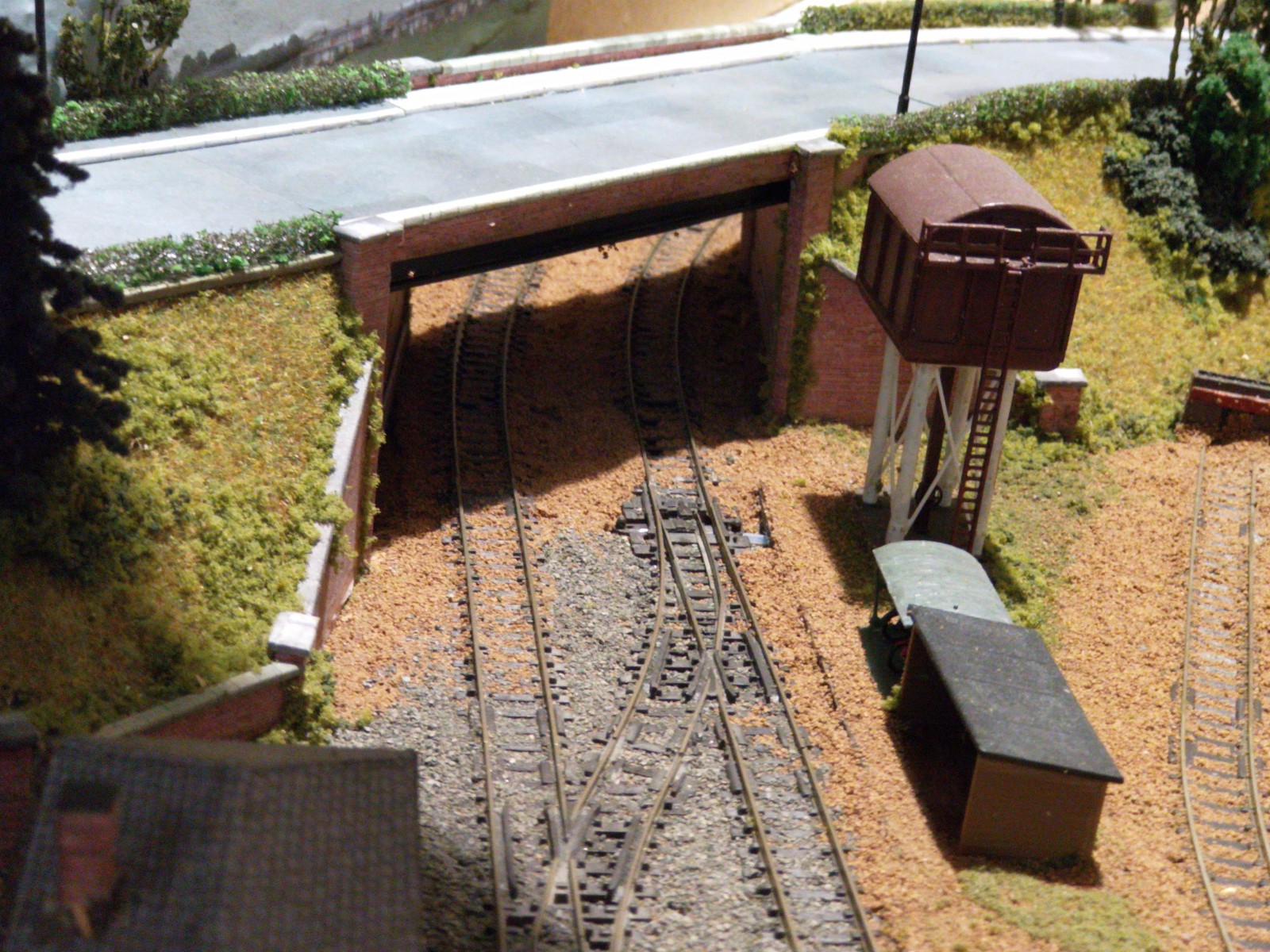
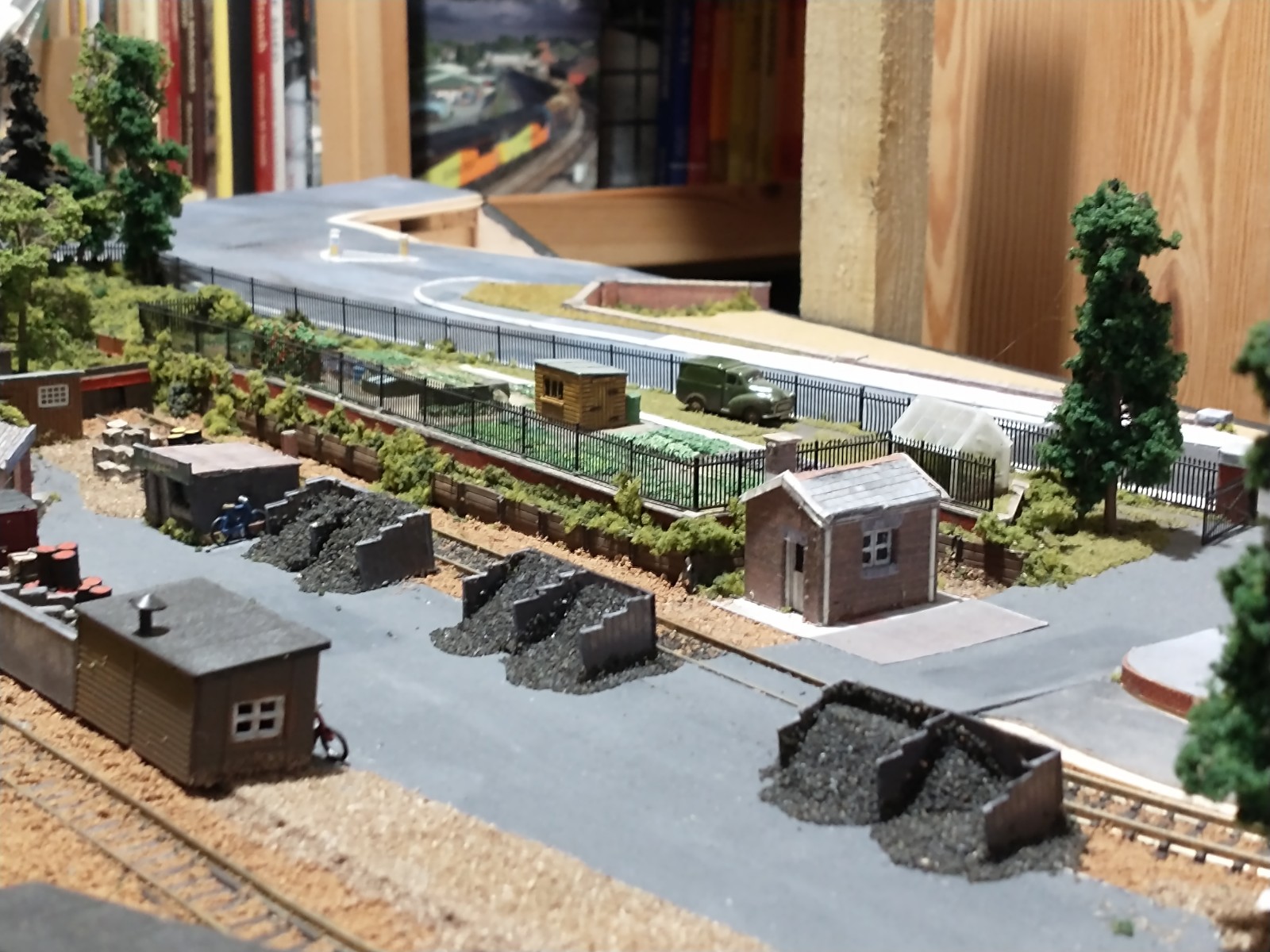
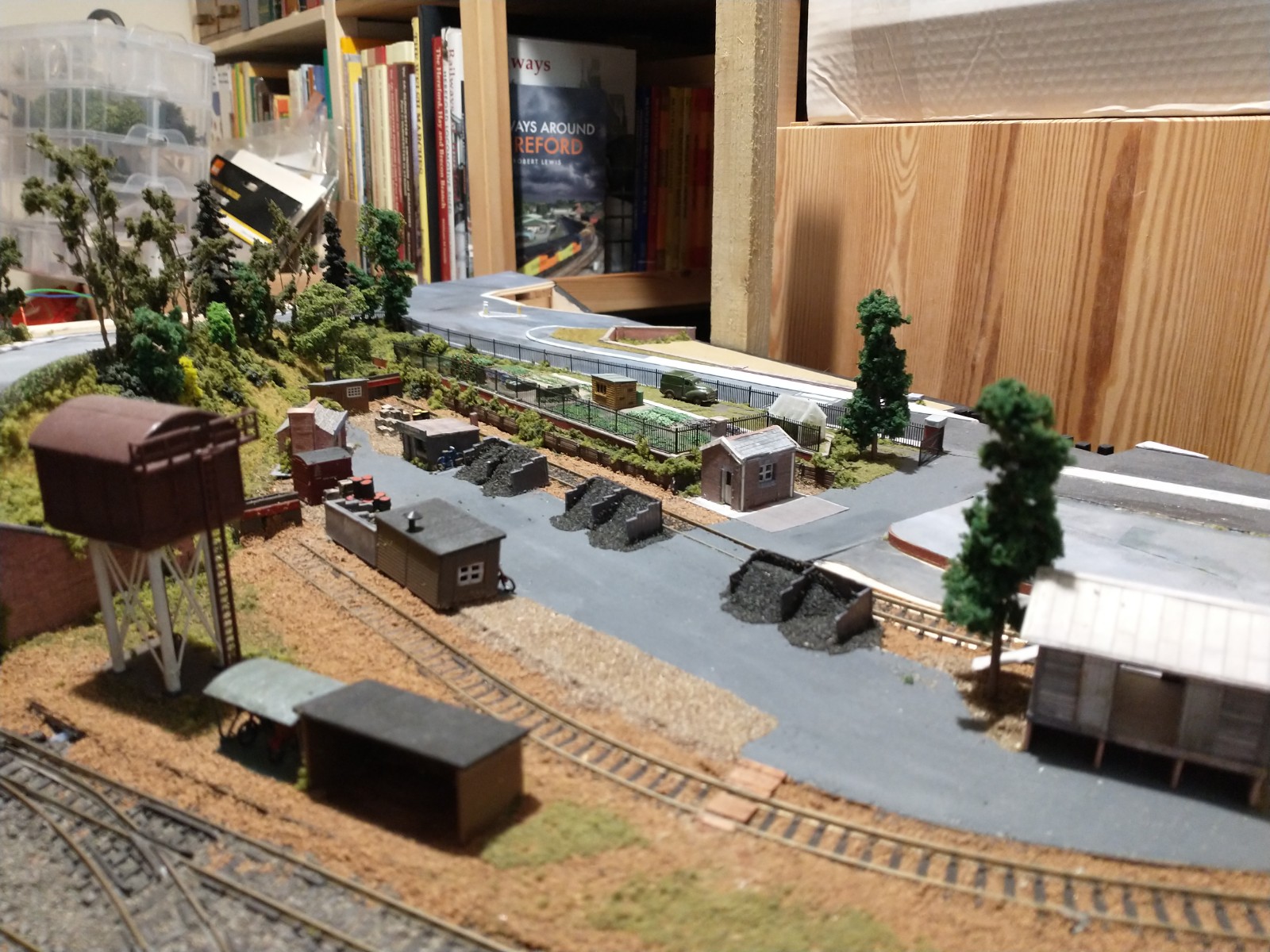
Just a few pictures …..
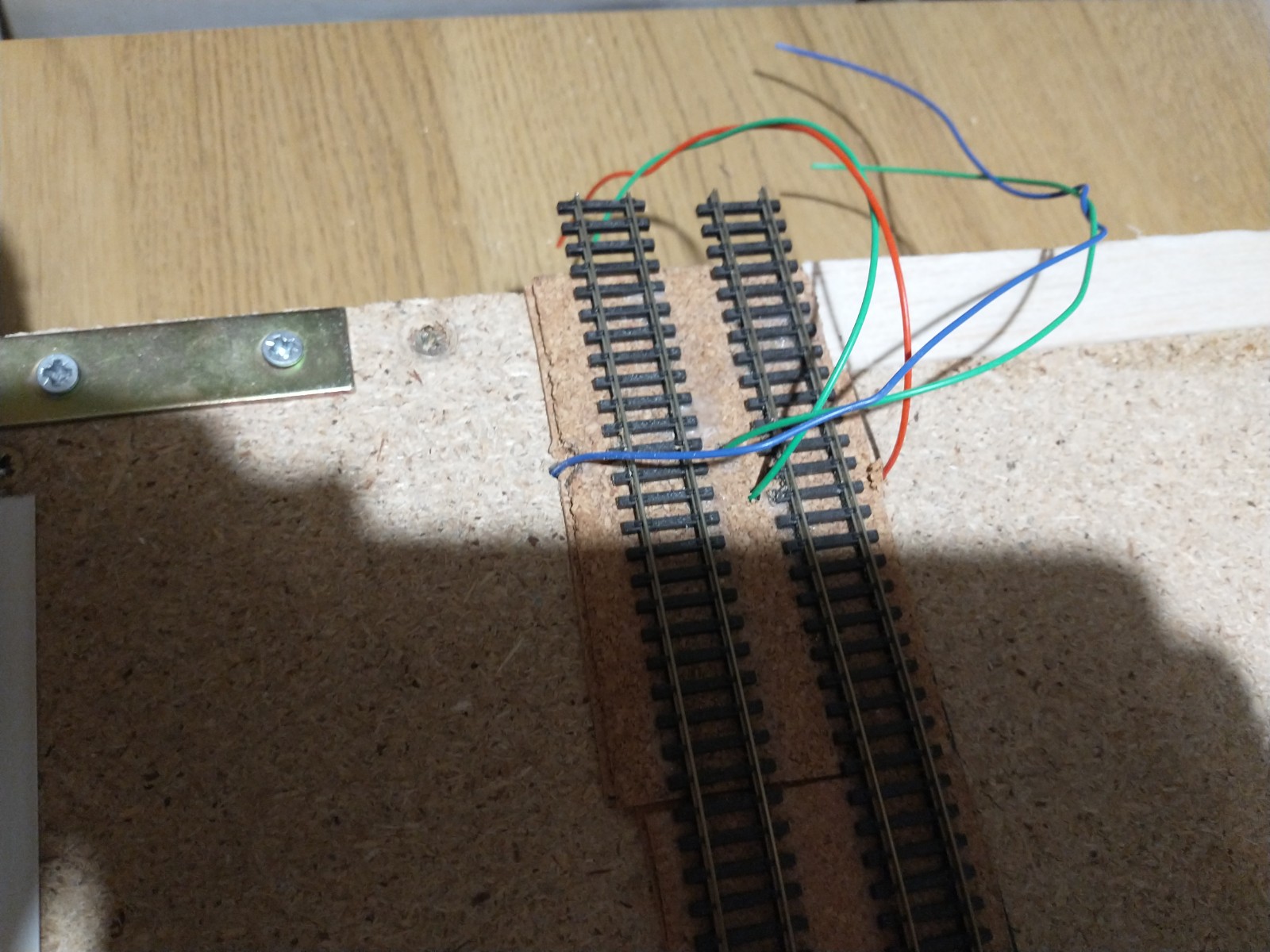
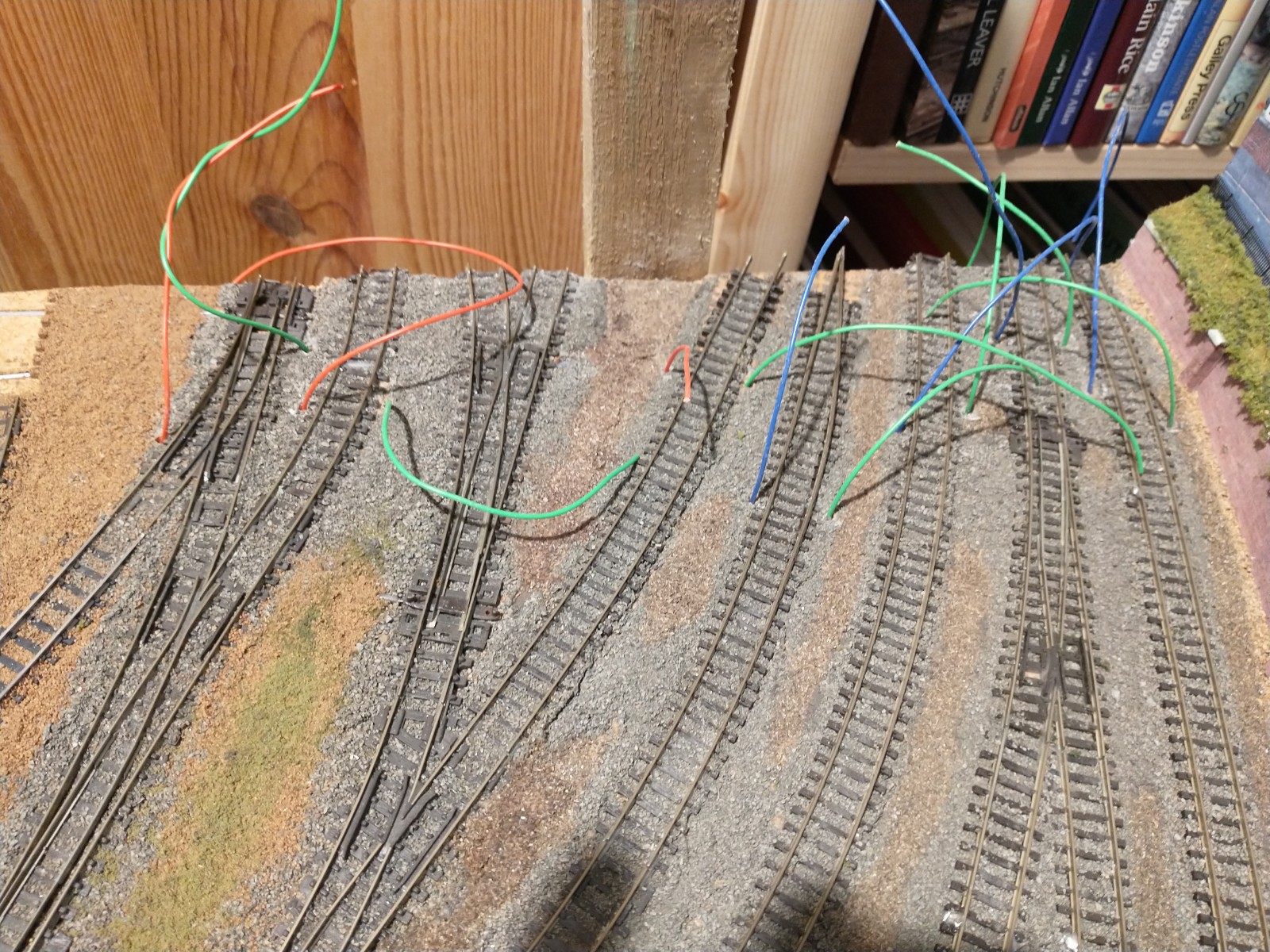
The wiring above is new connections from the board I am supposed to be working on which will connect sections which originally relied only on the track connection across the board joints!
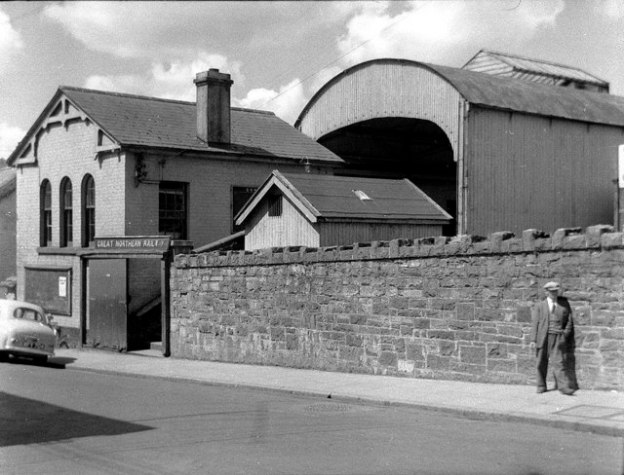
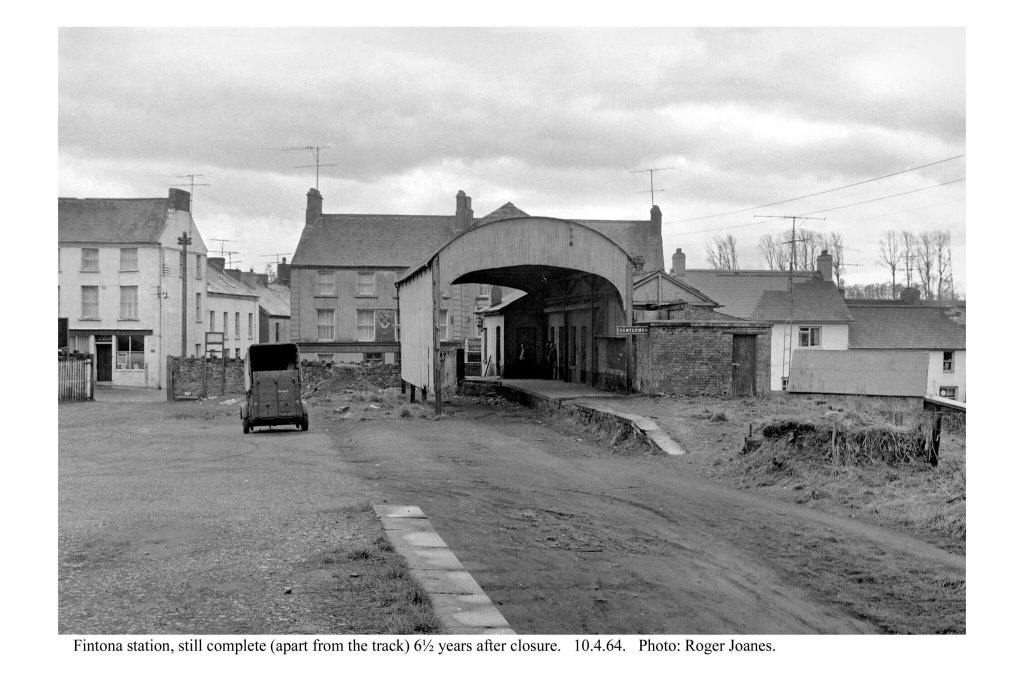
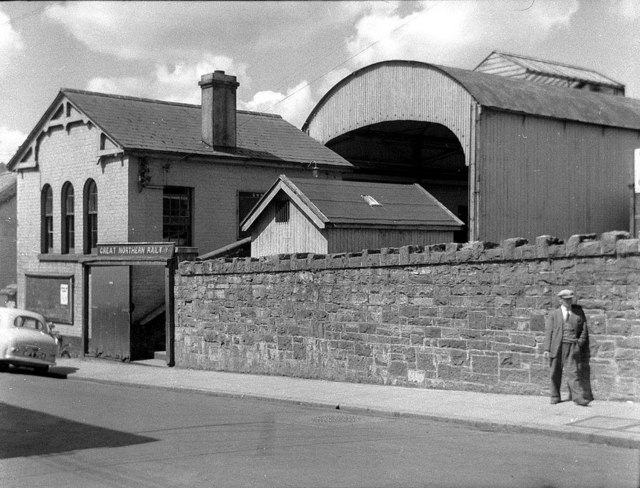
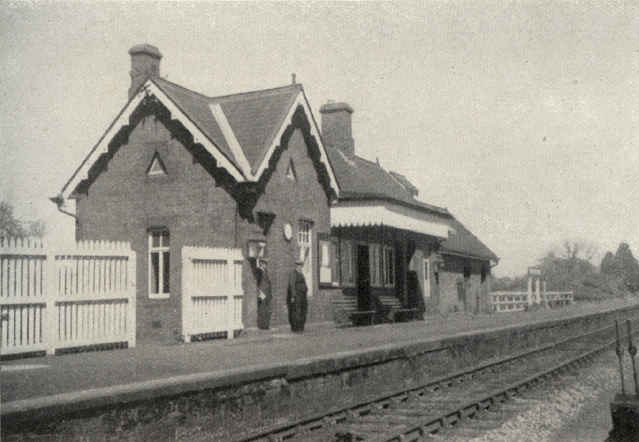
The featured image above shows Fintona Railway Station from Main Street, Fintona in June 1957, (c) Wilson Adams. The image is used here under the Creative Commons Attribution-Share Alike 2.0 Generic license (CC BY-SA 2.0). [7]
The Londonderry and Enniskillen Railway [2] opened the railway station in Fintona on 5th June 1853. A short time after the Londonderry to Enniskillen Railway completed its mainline to Enniskillen (in 1854 [2]). mainline services were withdrawn from Fintona (in 1856 [1]), and the link to Fintona became a branch from the mainline at Fintona Junction railway station. [3] Most passenger services on this branch line were then provided by a horse-drawn tram car. [1] Since the line’s closure, the tram has been preserved at the Ulster Folk and Transport Museum at Cultra, County Down. [2]
Wikipedia notes that the branch line to Fintona was taken over by the Great Northern Railway (Ireland) in 1883 when it took control of the Londonderry and Enniskillen Railway. [1]
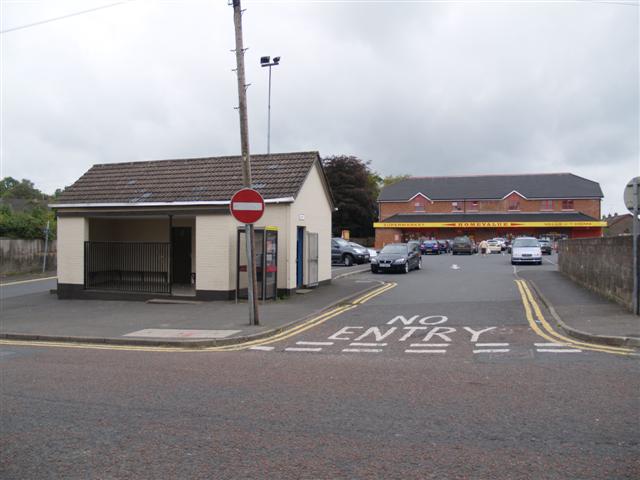
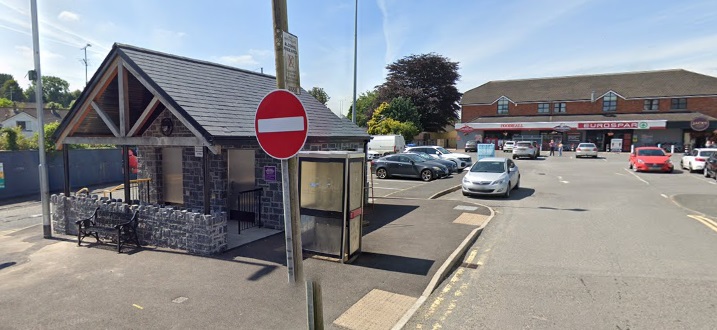
The branch-line and the station at Fintona were closed on 1 October 1957. [1] The whole area comprising the Fintona Train station is now a car park and public toilet. [4]
As we have noted, “Passenger services on the half mile Fintona branch were worked by horse traction throughout the 104 years of its existence up to closure in 1957.” [4]
Timetables were worked out on what a horse could reasonably be expected to achieve. This meant that rail authorities “allowed 10 minutes for the slightly downhill trip to Fintona, and 15 minutes for the return working. Seven trips per day were scheduled in summer 1951.” [5]
The tramcar which was used for the majority of the life of the service, “entered service in 1883, had longitudinal seating, back to back on the upper deck and with seats facing each other on the lower deck. Originally the latter was divided into 1st and 2nd class, and the top deck was 3rd class. The car is estimated to have covered 125,000 miles in its ambulation’s on the branch.” [5]
“Goods wagons for Fintona were worked by a steam engine which, in later years at least, made a return trip in the morning before passenger services started.” [5]
The Line between Fintona and Fintona Junction
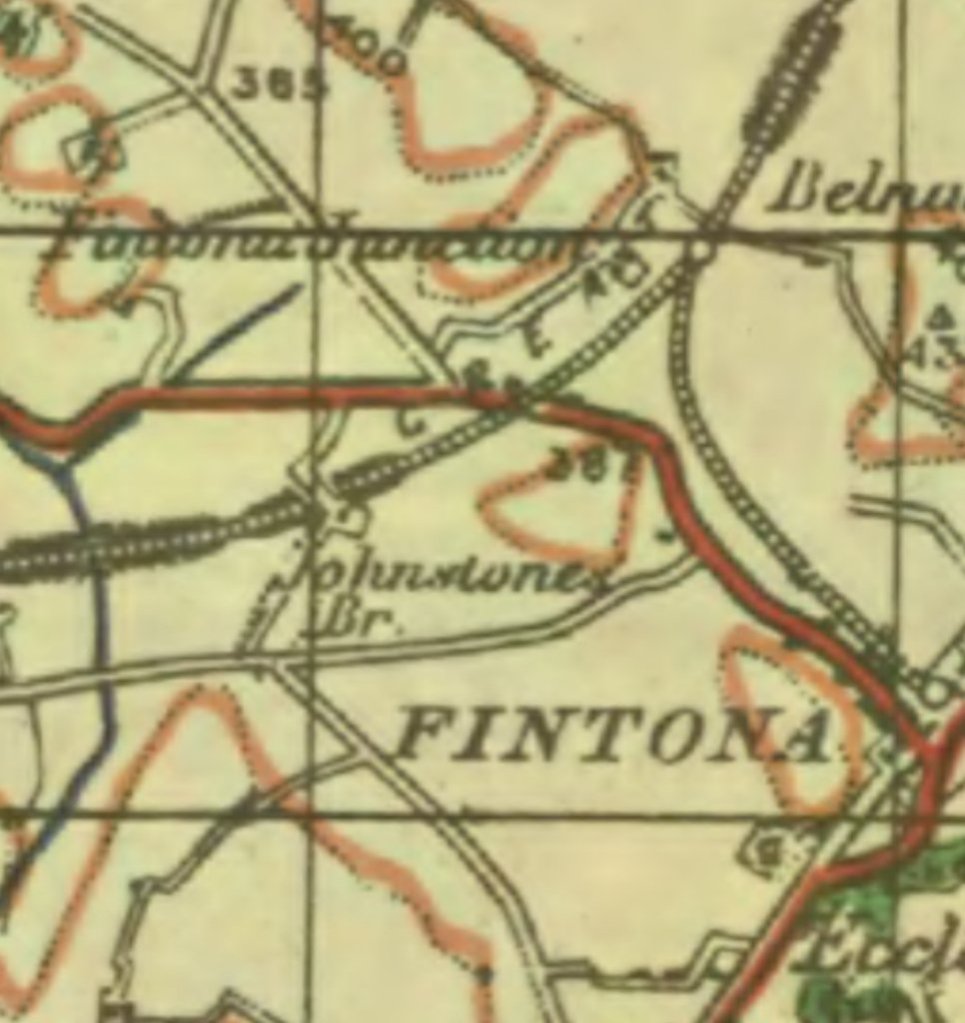
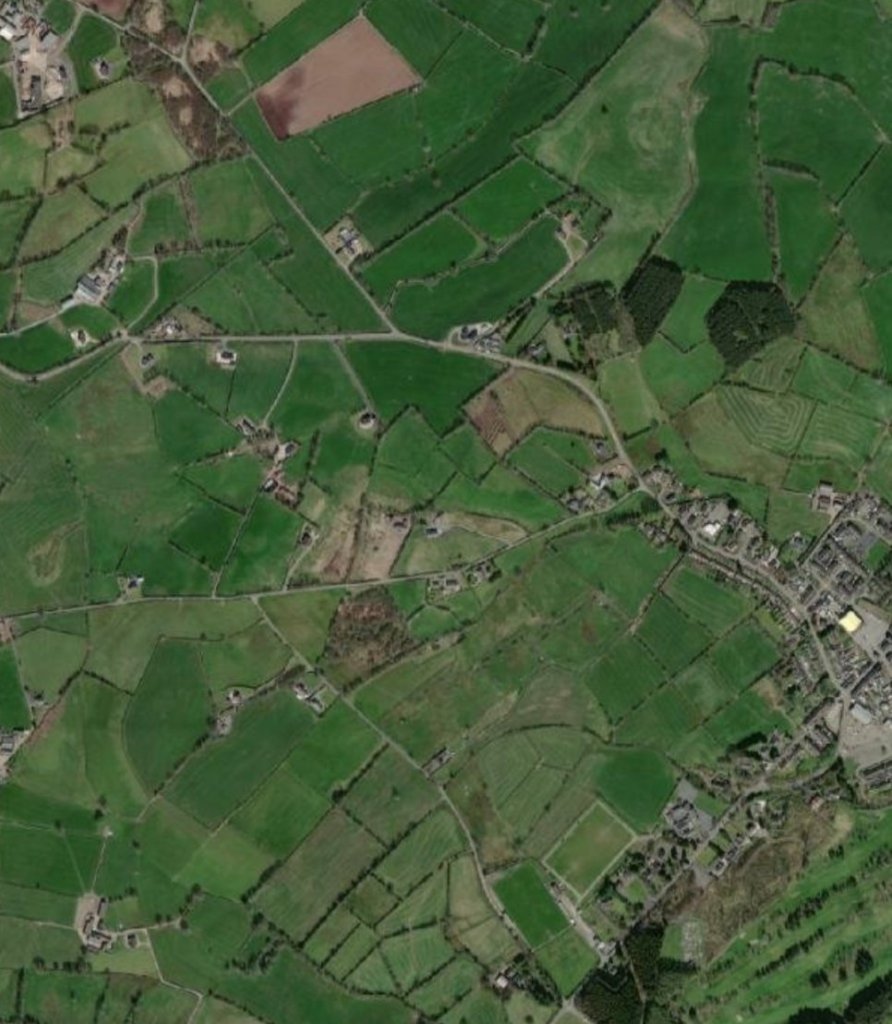
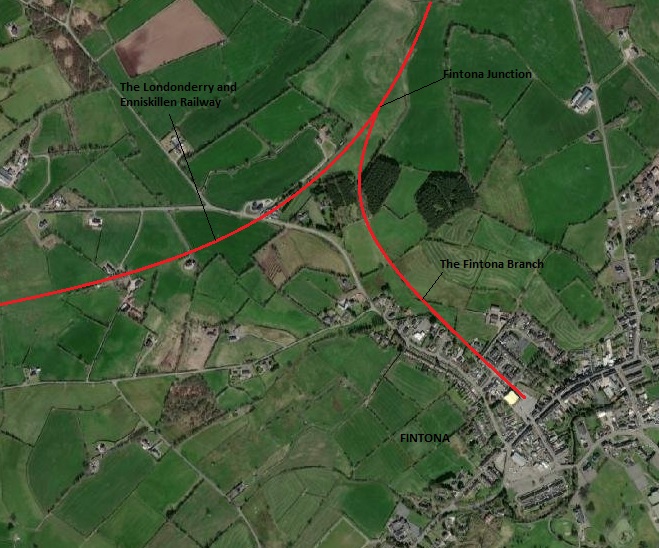
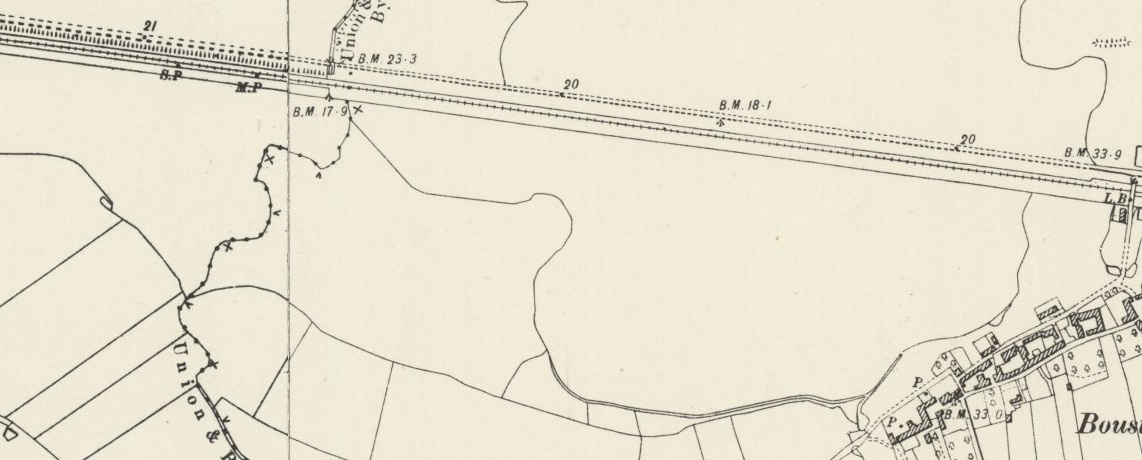
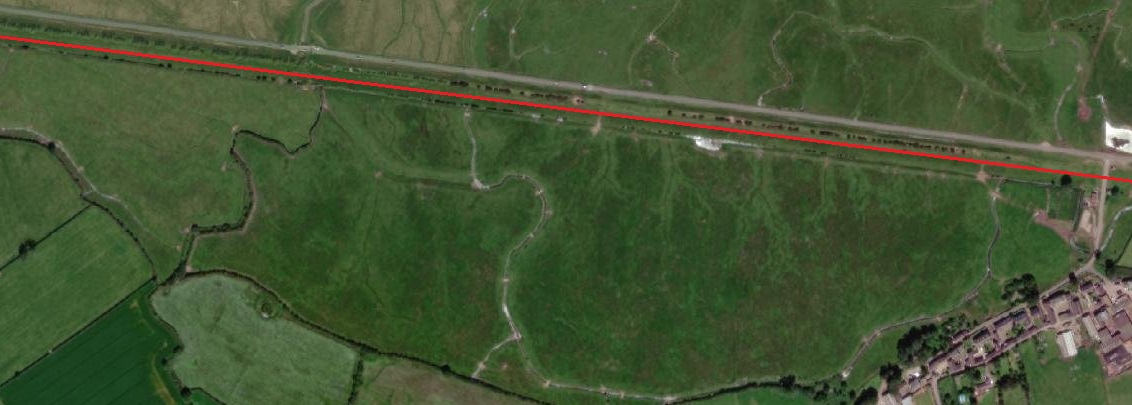
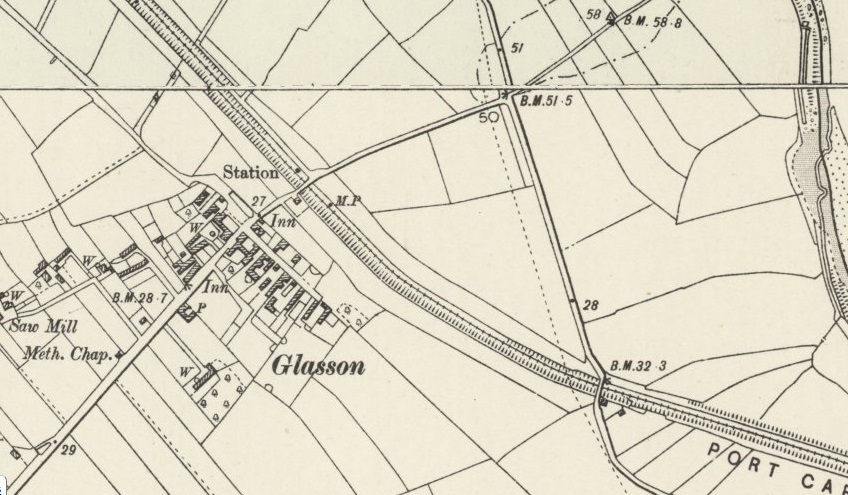
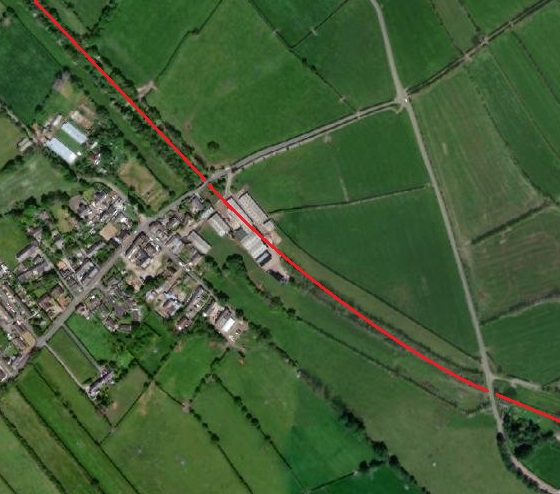
The first image below shows the route of the line on an extract from the GSGS maps of 1941-1943 produced by the British War Office at a scale of 1″ to 1 mile. [6] The second picture is a matching 21st century satellite image which shows how little of both the mainline and the branch remain in the 21st century.
The Fintona Branch: a map extract from the British War Office (G.S.G.S 4136) 1″ to the mile survey published 1941-1943. [6]The location of the Fintona Branch on modern satellite imagery. [6]A similar area on the Satellite imagery with the route of the mainline (The Londonderry and Enniskillen Railway) and the alignment of the Fintona Branch illustrated by redlines. [6])
Fintona Junction
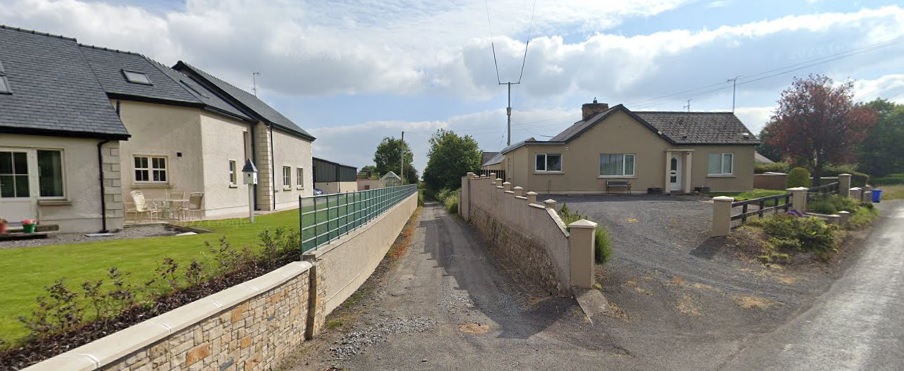
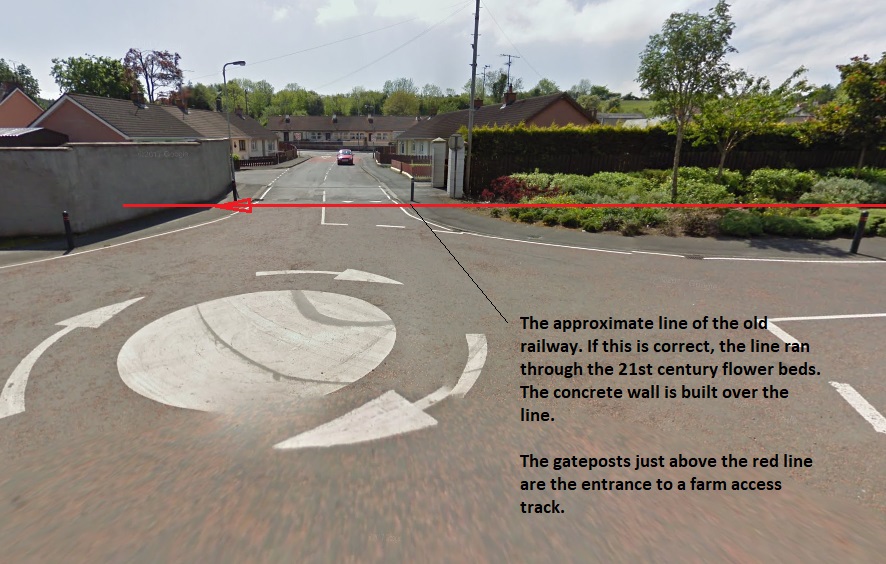
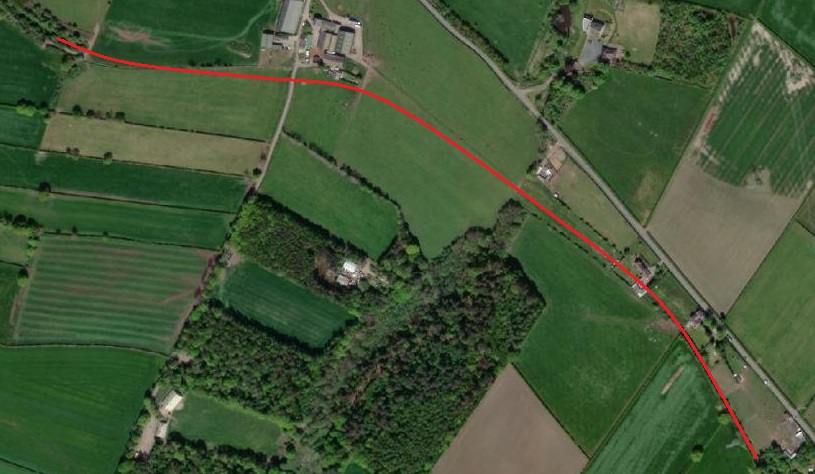
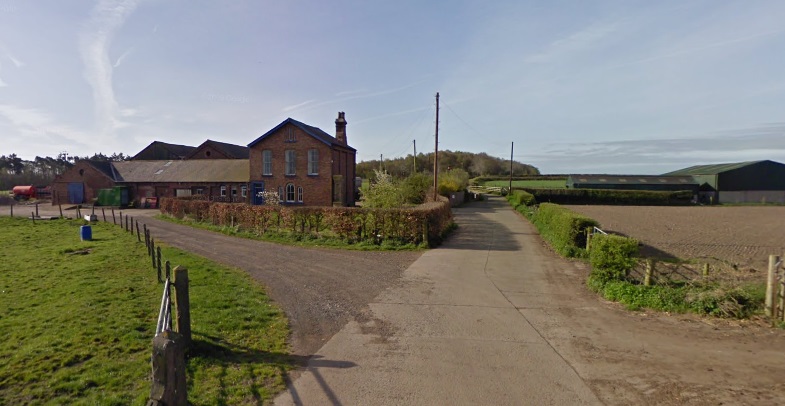
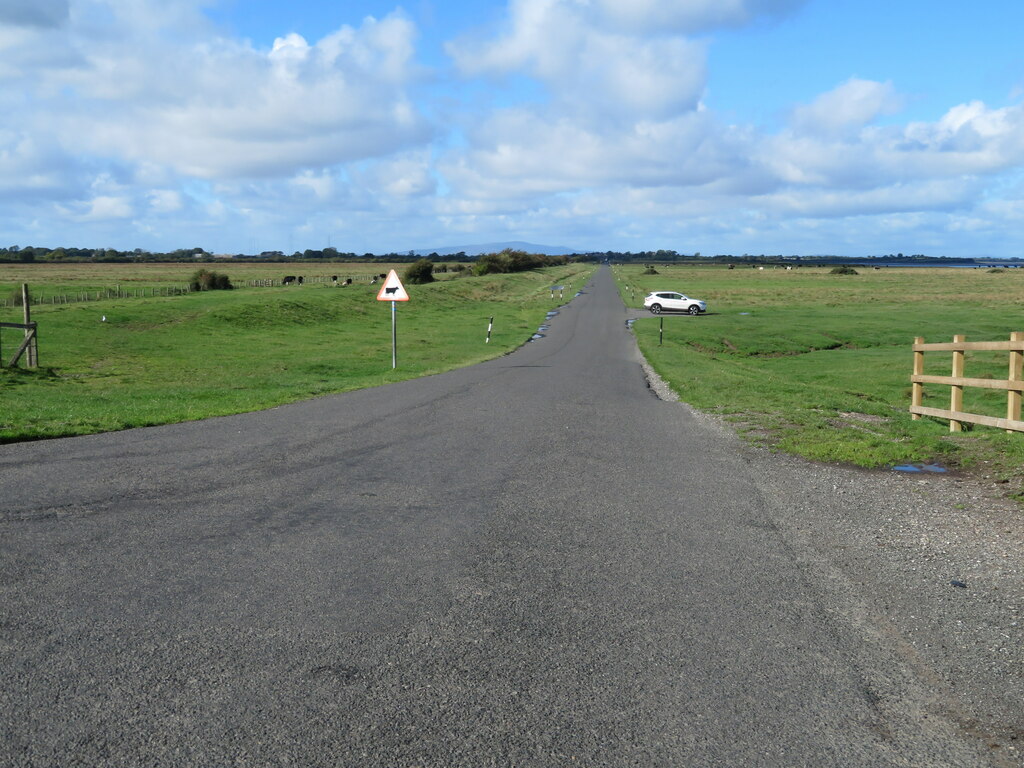
The next image below shows the approach road to what was Fintona Junction Railway Station from the B46. Immediately to the right of this road was a level-crossing which took the mainline across the B46. The Londonderry and Enniskillen Railway ran under the location of the bungalow on the right, parallel to the station approach road.
The access road shown above now only provides access to a farm. At one time it was the public access to the junction station.
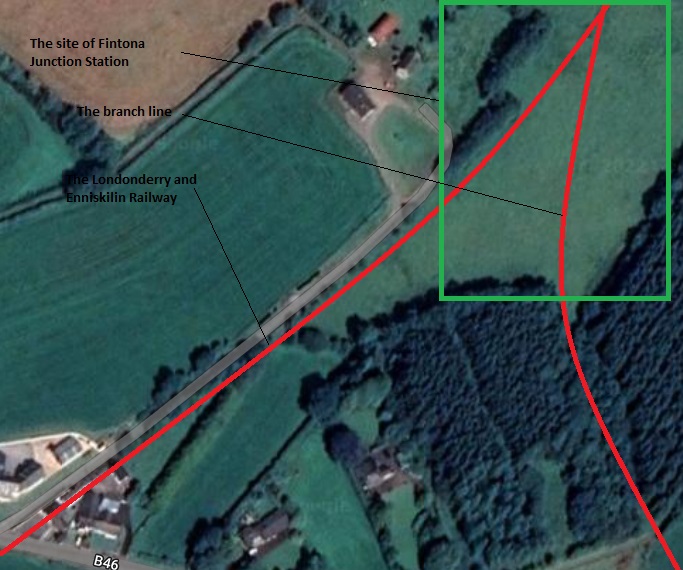
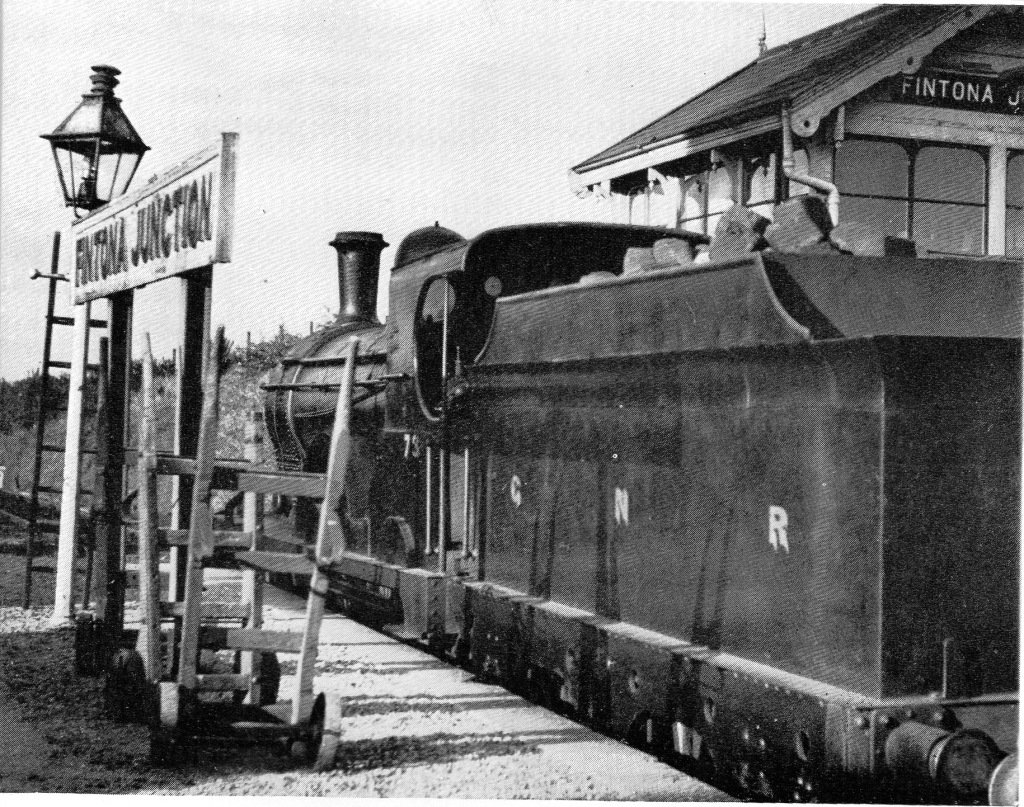
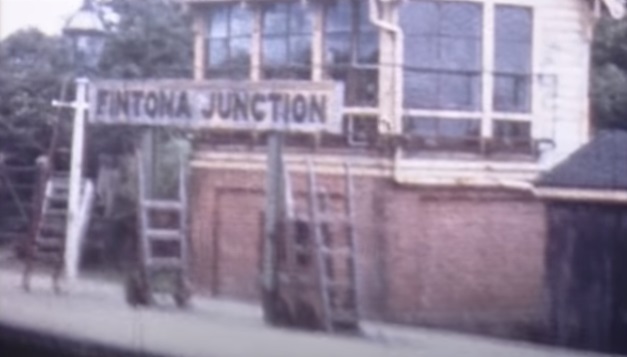
Fintona Junction Station site. The line of the railway to Enniskillin can be seen crossing the B46, Dromore Road in the bottom left of this satellite image. The line to Fintona is indicative rather then accurate. [Google Maps]Fintona Junction: GNR 4-4-0 goods engine No.73 of Class ‘P’ stands in the bay, having shunted its train to await the passing of the two passenger trains of the evening of August Bank Holiday Saturday, 1954. [12]A Still image from a 1950s cinefilm which shows the signal box, station sign and porters trolleys at Fintona Junction, (c) The Huntley Archives, Film No.96367. [13]
The line
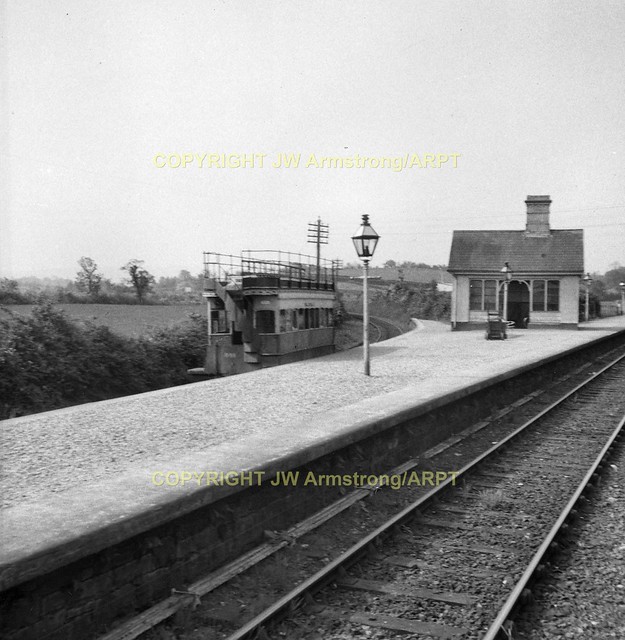
AS we have already noted, the journey from Fintona Junction to Fintona Railway Station was timetabled as just a 10 minute journey. The tram was usually waiting for connections at Fintona Junction as in the first picture below.
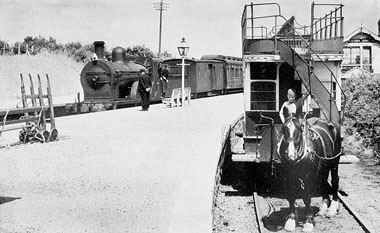
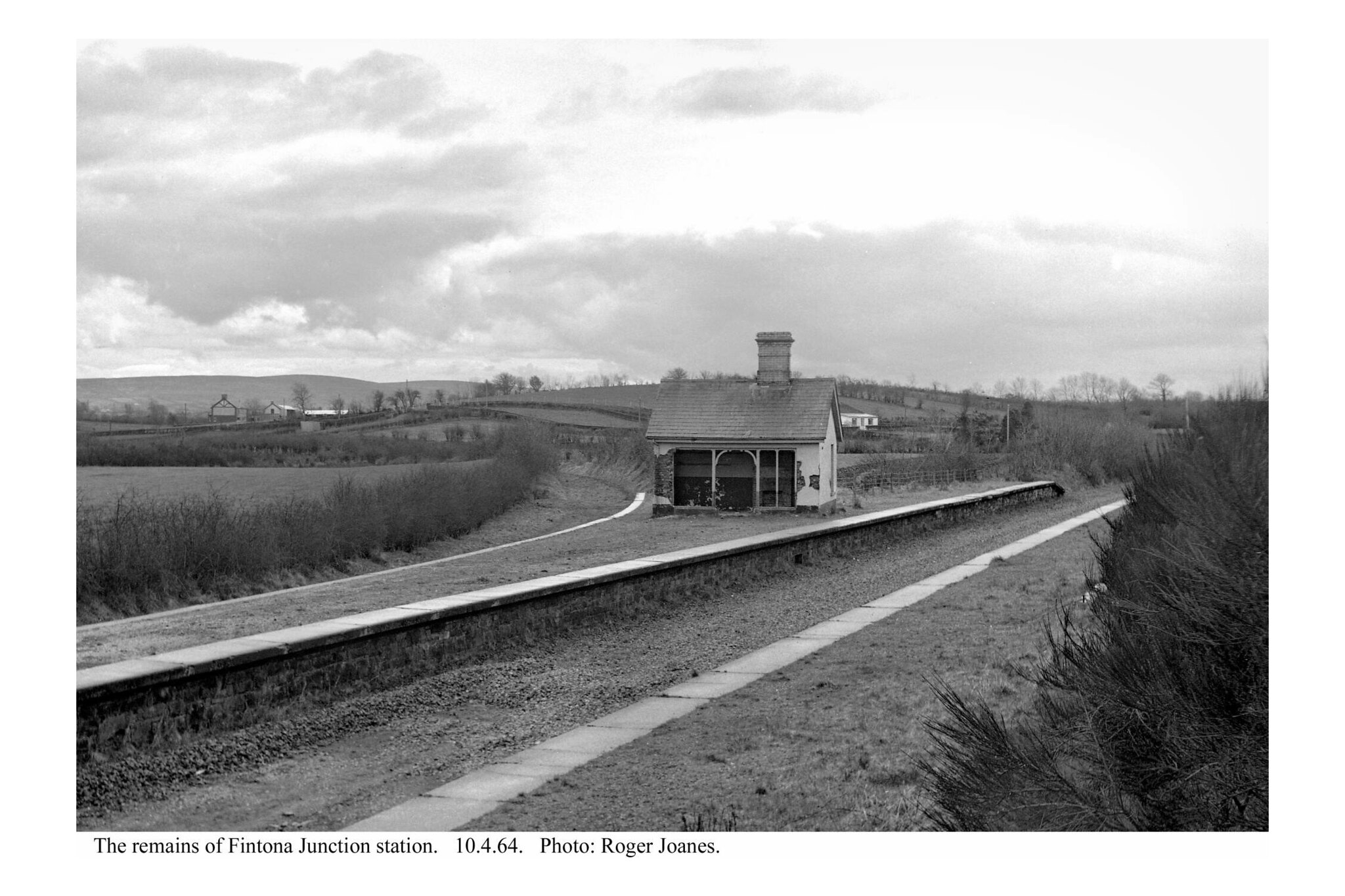
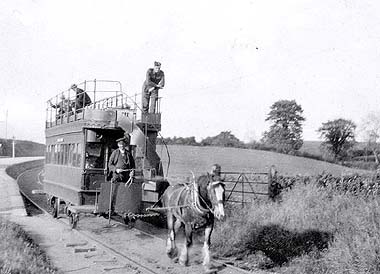
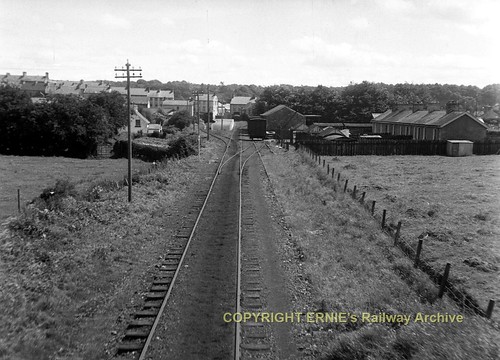
The view from the mainline of Fintona Junction Station. The tram is waiting to offer a connection for the train arriving from Londonderry, (c) J.W. Armstrong/ARPT – this link is to the image as held on Ernie’s Railway Archive on Flickr. [8]The tram for Fintona with horse”Dick” (apparently all the horses used on the service were called ‘Dick’) waiting with the branch connection at Fintona Junction, while PPs class 4-4-0 No.44 arrives with 1.45pm Omagh – Enniskillen local train (c) L.King,5th July 1955. [4]Fintona Junction Railway Station in April 1964 (c) Roger Joanes. The image is included here under a creative Commons Licence, Attribution-NonCommercial-NoDerivs 2.0 Generic (CC BY-NC-ND 2.0). [9]
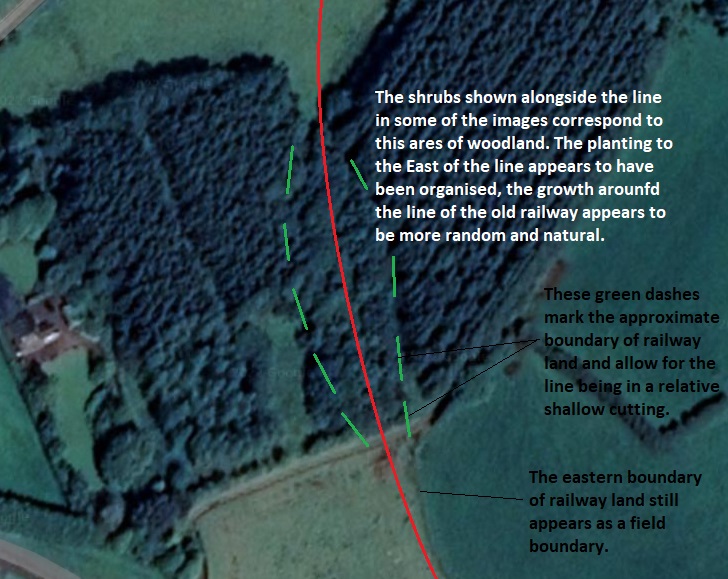
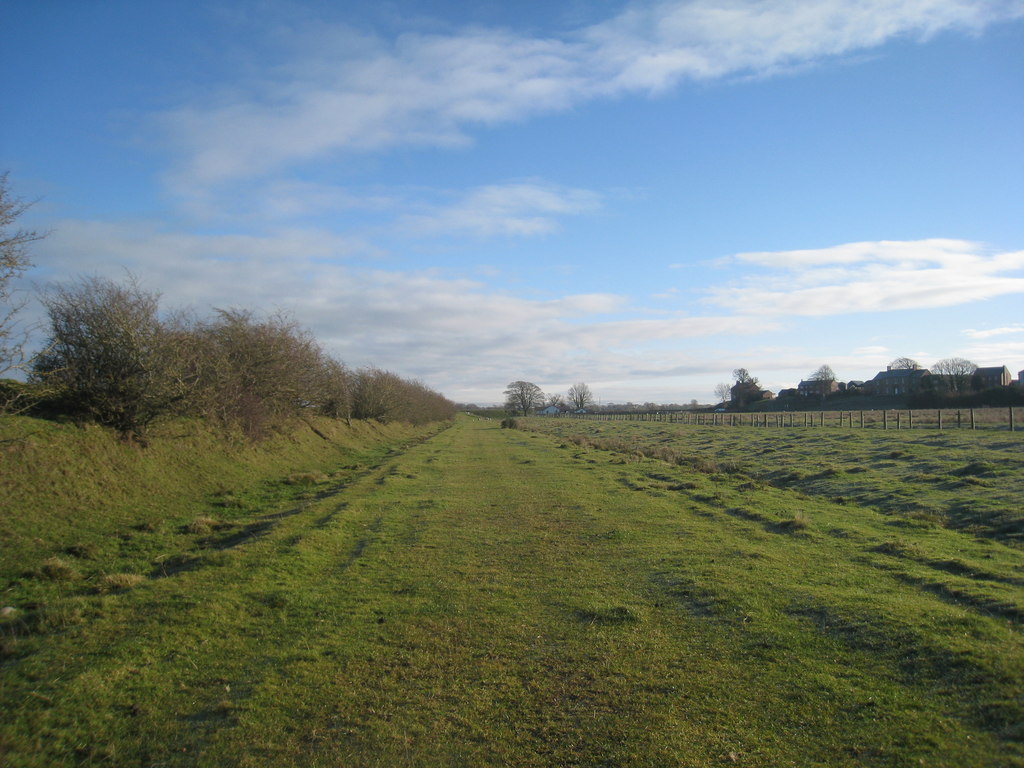
In the picture above the line can be seen to be in a shallow cutting soon after leaving the railway station. As can be seen below, this was a very shallow and short cutting.
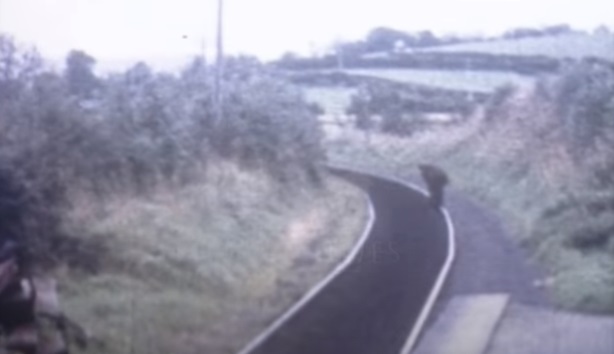
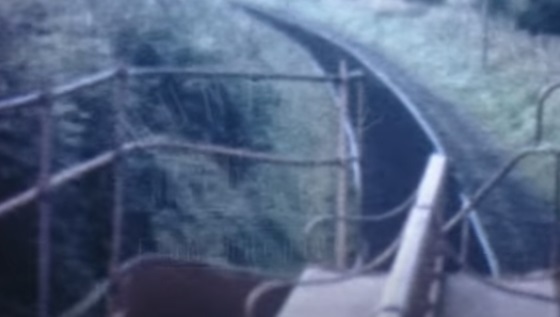
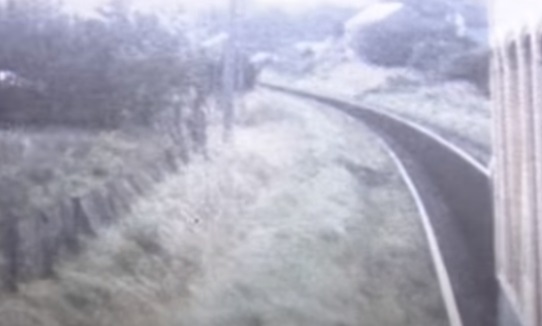
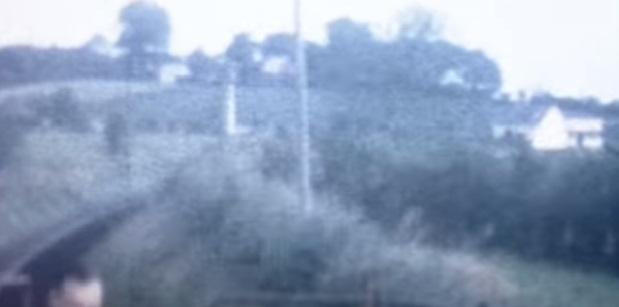
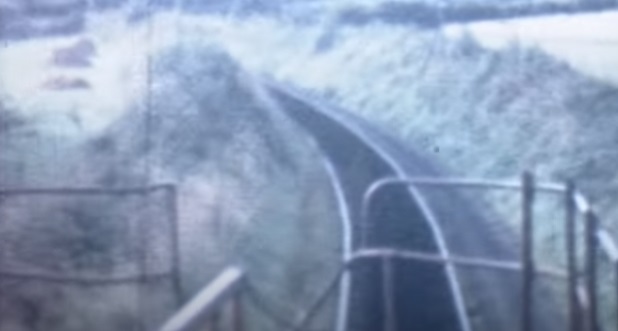
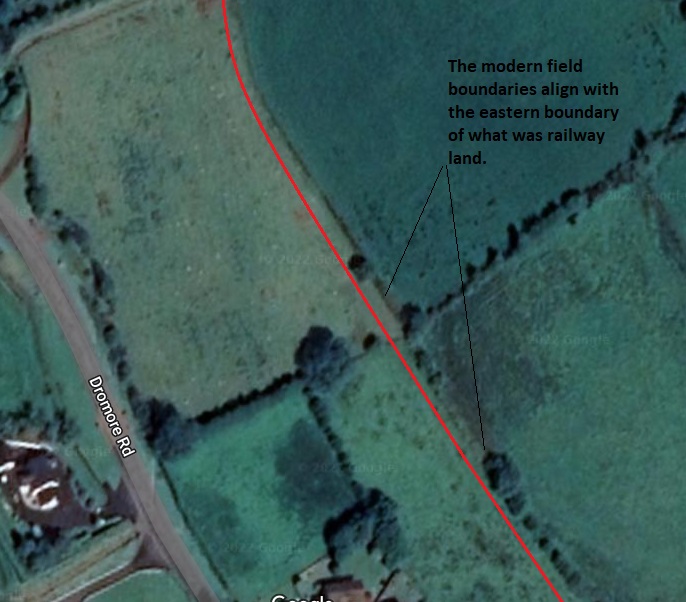
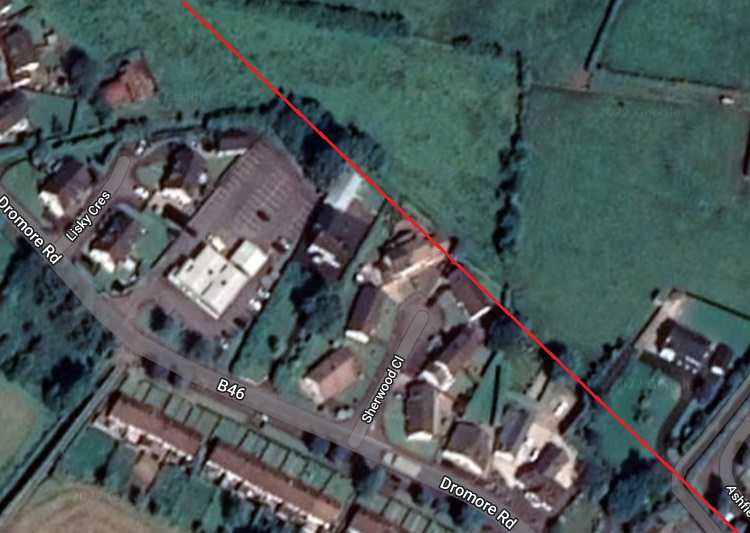
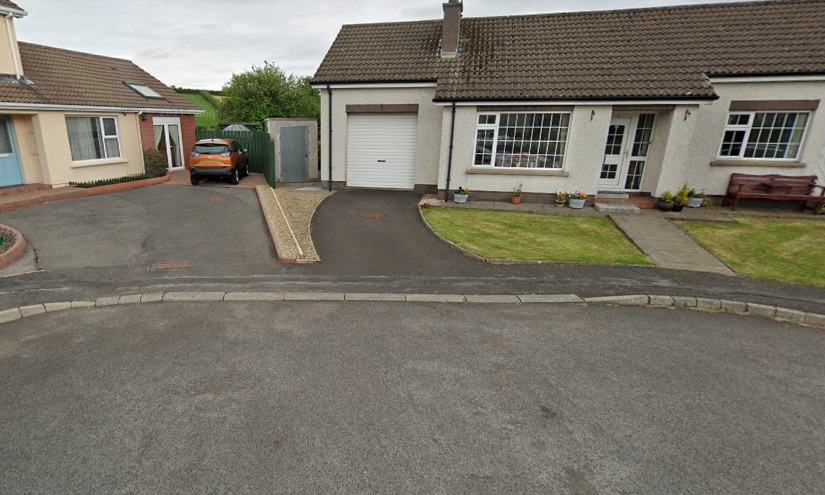
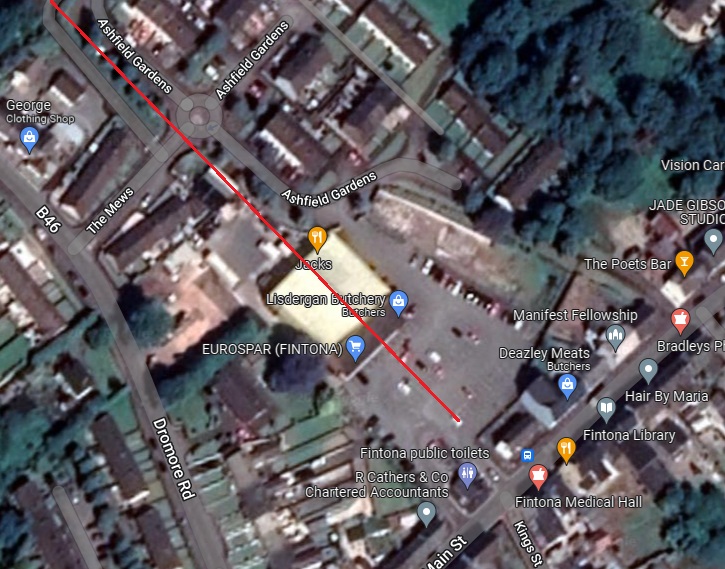
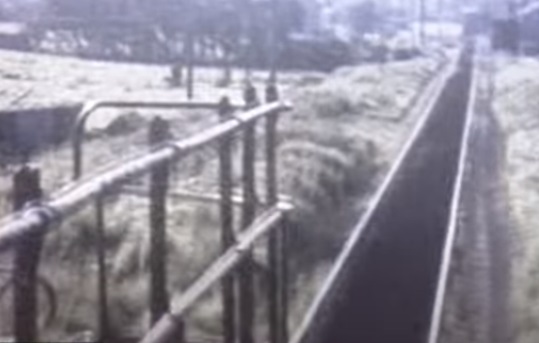
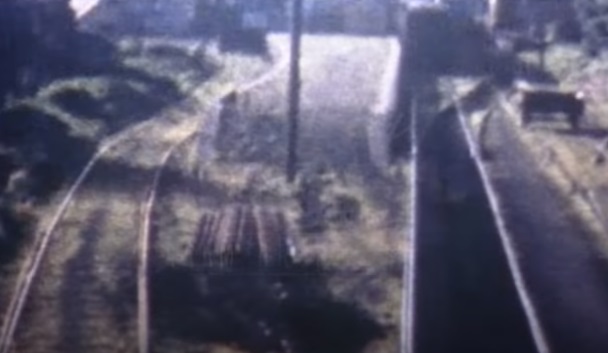
Lookin ahead down the line from Fintona Junction in the 1950s, (c) The Huntley Film Archive Film No. 96367. [13]The tram transporting military personnel leaves Fintona Junction and runs along the section of track being inspected in the image above, (c) Mr Gallagher c1941-45. [4]Now just beyond the cutting mentioned above. The line continues to curve towards Fintona, (c) The Huntley Film Archive Film No. 96367. [13]Leaning out of the tram window, we can see the line continuing to curve westwards, just ahead, shrubs are beginning to encroach on the line, (c) The Huntley Film Archive Film No. 96367. [13]This satellite image shows the current landscape around the next section of the old railway linejust south of the junction station. [Google Maps]A hazy view from the top deck of the tram looking back along the line towards Fintona junction, (c) The Huntley Film Archive Film No. 96367. [13]Postcard View circa 1930 which shows the tram rounding the curve after leaving Fintona Junction Station on the way to Fintona. It is in the midst of the shrubs mentioned above, (c) Public Domain. [1]A little further ahead along the line is again in a shallow cutting, (c) The Huntley Film Archive Film No. 96367. [13]The next length of the line sees the old railway leave the curve and straighten up heading for Fintona in a southeasterly direction. [Google Maps]Over this next length of the old railway it is much more difficult to determine the precise alignment of the line. The redline cannot be taken as accurate in anyway. The vast majority of the buildings shown to the southwest of the line all postdate the removal of the old railway. [Google Maps]The north end of Sherwood Close. The old railway probably ran approximately on the line of the green fence between the two properties shown here. [Google Streetview]A view from the north on Ashfield Gardens. The farm access track referred to on the image appears in the bottom right of the satellite image above. It can also be seen at the top left of the satellite image below. [Google Streetview]This final satellite image shows the approximate line of the railway as it enters the station throat and runs through to the terminus buffer stops. The station used to front onto Main Street. The area is now the premises of Lisdergan Butchery (https://lisderganbutchery.com), Eurospar and the town car park. The building which fronts onto Main Street being Fintona’s public toilets. [Google Maps]A short distance further along the line, the land has dropped away once again and the station at Fintona is in sight, (c) The Huntley Film Archive Film No. 96367. [13]
The view Southeast towards Fintona Station from along the line. The permanent way between the two rails is filled with earth up to sleeper level or just above to create a suitable surface for the horse. Notice how, at the point ahead, hoof marks show that the horse has avoided crossing the switch rail until the last possible moment, (c) Ernie’s Railway Archive – this link is to the image as held on Ernie’s Railway Archive on Flickr. [8]Arriving at Fintona. The tram is a few yards closer to the station than it was in the image above, (c) David Bradley, September 1957. [4]Closer again to the station platform now. Do not be deceived by the platform visible close to the camera, this was a goods loading point which is described on the plan below as ‘The Beach’, (c) The Huntley Film Archive Film No. 96367. [13]We are now close-in to the covered station platform at Fintona. This a picture of the Railway Station in April 1964 a good few years after the closure of the line, (c) Roger Joanes. The image is included here under a creative Commons Licence, Attribution-NonCommercial-NoDerivs 2.0 Generic (CC BY-NC-ND 2.0). [9]A similar image to the Roger Joanes’ photograph above, this time in colour. As the vegetation encroachment is greater on this image it is probably a summer-time image. [Public Domain] [11] A plan of Fintona Railway Station as shown on the Irish Railway Modellers Forum. It is taken from from Norman Johnston’s book on the Tram, “The Fintona Horse Tram.” [10]Fintona Railway Station as shown at the head of this article, (c) Wlison Adams. The image is included here under The image is included here under a creative Commons Licence (CC BY-SA 2.0). [14]This is approximately the same view but taken in 2007. (c) Kenneth Allen. The image is included here under The image is included here under a creative Commons Licence (CC BY-SA 2.0). [15]Approximately the same location but this time in June 2021. The toilet block has been replaced with something which looks a little more as though it belongs in the heart of Fintona. [Google Streetview]
The Return Journey to Fintona Junction
Just a few photographs now which show the return journey to Fintona Junction.
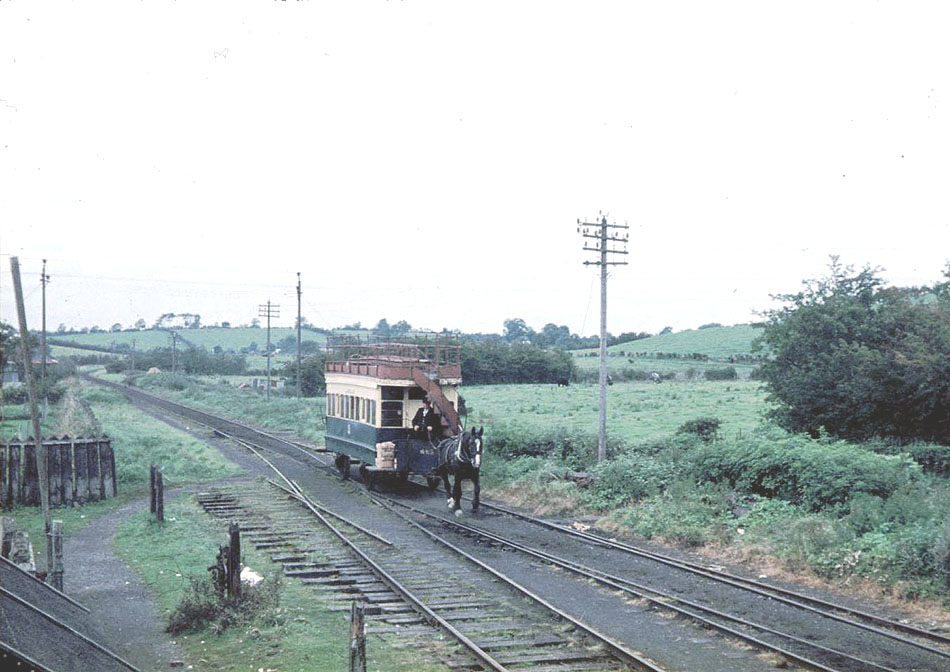
The line’s horse stands in Fintona station ready to depat with a baggage truck and the tramcar in 1926. This consist does not appear in any other images but it is how the tram is displayed in the Museum at Cultra, (c )the Tramway and Light Railway Society. The image was seen on the Tramway Badges and Buttons website. [16]“Dick” leaving Fintona with the 4.14pm to Fintona Junction, (c) N.W.Sprinks taken on 25th June 1952. [4]
The journey back from Fintona to Fintona Junction on 26th June 1952 (c) Ernie’s Railway Archive. This link is to the image as held on Ernie’s Railway Archive on Flickr. [8]
And finally. …
After closure of the line, Fintona’s tram was preserved and now sits in Ulster Transport Museum, Cultra.
Fintona’s tram on display in Ulster Transport Museum, Cultra. [11]
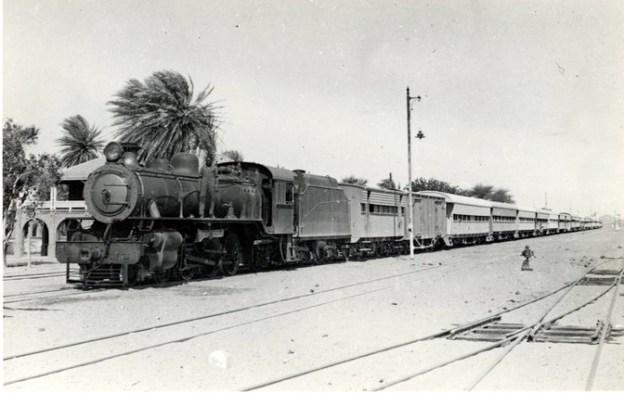
The featured image above is a 1946 photo of War Department steam locomotive No. 2807 (later Sudan Railways No. 243) at Abu Hamed Railway Station. [44]
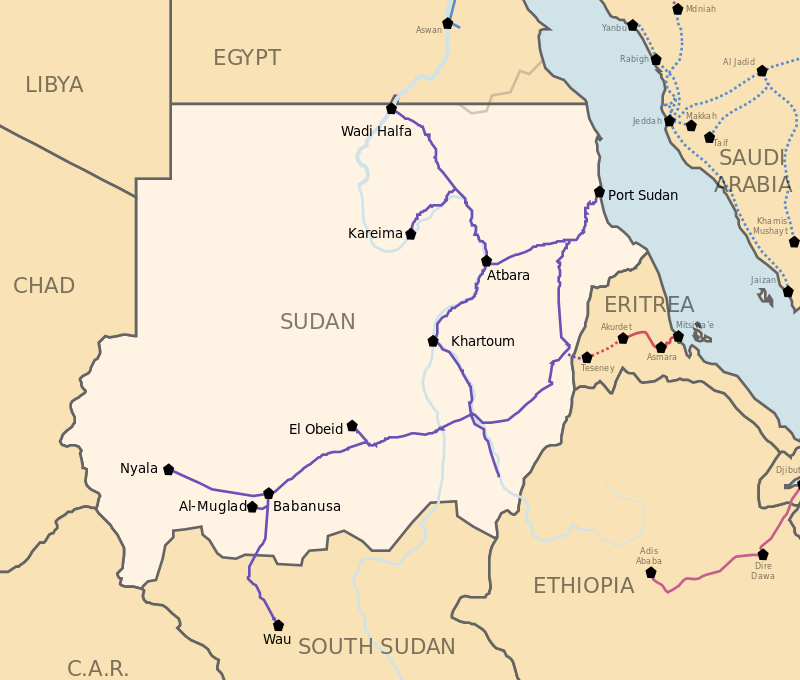
Wikipedia tells us that “Sudan has 4,725 kilometres of narrow-gauge, single-track railways. The main line runs from Wadi Halfa on the Egyptian border to Khartoum and southwest to El-Obeid via Sannar and Kosti, Sudan, with extensions to Nyala in Southern Darfur and Wau in Western Bahr al Ghazal, South Sudan. Other lines connect Atbarah and Sannar with Port Sudan, and Sannar with Ad Damazin. A 1,400-kilometre line serves the al Gezira cotton-growing region. There are plans to rehabilitate rail transport to reverse decades of neglect and declining efficiency. Service on some lines may be interrupted during the rainy season.” [7]
It seems as though much of the network still exists although it is in need of major maintenance work. In July 2021, Global Construction Review informed us that Sudan was planning a $640m scheme to bring its rail network back into use. [8]
The African Development Bank (ADB) offered a $75m grant towards the cost, and China State Construction Engineering and several Gulf firms were interested in becoming involved with the project. The first action will be to undertake around $17m of emergency repairs to lines that are in use. This would then be followed by renewing abandoned lines, most of which are in the south of the country. The intention would be to reconnect the cities of Madani, Kosti and Sennar, as well as Nyala in Darfur. It will also establish a cross-border connection to Wau in the Republic of South Sudan. [8]
Sudan’s railway network. [7]
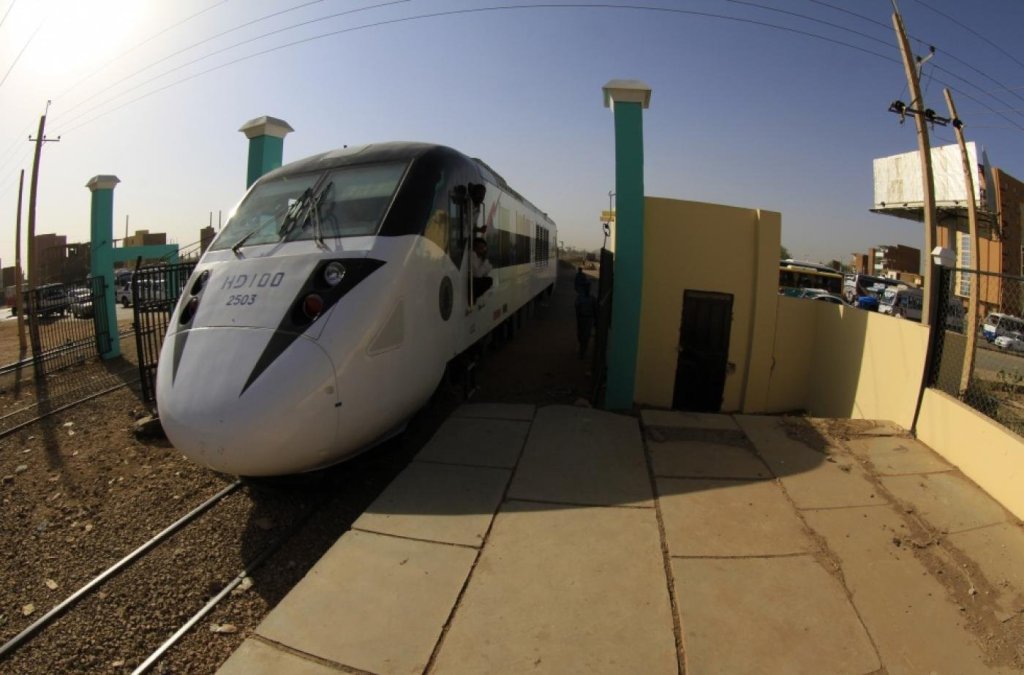
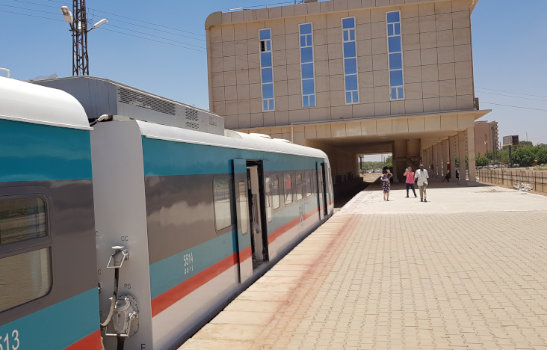
However, Sudan already had a fleet of modern train-sets. A service was started which linked Port Sudan to Khartoum in 2014 using sleek new modern units. The Nile Train runs between Port Sudan, Atbara and the capital, Khartoum. China lent Sudan nearly $1.1 billion toward the $1.5 billion project. [9] These new trains run on the old 3ft 6in (1067mm) gauge rails which have been improved where required.
In 2014 Sudan inaugurated a new train service from Port Sudan via Atbara to Khartoum. These trains also now run on a number of other lines throughout the country. The train to Nyala, in what was war-torn Darfur, goes every two weeks, while another makes a weekly trip north of Atbara to Wadi Halfa near the Egyptian border. [9][11]
A new standard gauge railway between Addis Ababa, Ethiopia and Khartoum is planned said the International Rail Journal (IRJ). In 2020, the African Development Bank (ADB) awarded a $US 1.2m grant to the government of Ethiopia, covering 34% of the study’s $US 3.4m cost. The NEPAD Infrastructure Project Preparation Facility (Nepad-IPPF) will provide $US 2m with the governments of Ethiopia and Sudan each set provide $US 100,000 to cover the remaining cost. [10]
The agreed route between the two capitals includes a branch to Port Sudan on the Red Sea. The study will assess the project’s technical, economic, environmental and social viability as well as possible alternative financing arrangements, including the use of public-private partnerships (PPP). [10]
The first railway in Sudan
There was a number of false dawns in the bringing of steam power (both river and rail) to Sudan. [12: p1-1] The appointment of Sir John Fowler as engineering consultant to Khedive Isma’il was probably highly significant. It was Fowler who, in a report about surmounting the First Cataract on the Nile in 1873, first recommended the 3ft 6in gauge (1067mm) for railways in Sudan. [12: p11] Fowler was appointed consulting engineer for the railway. His work began in Egypt, addressing the surmounting of the First Cataract by constructing an incline to carry ships past the obstruction. As part of the construction work he built a section of railway which he expected would become part of a much longer system. That section of railway was built “in 1874 from the foreshore at Aswan to el-Shellal, a distance of 14.5 kilometres. … Work on the building of a railway depot and track began at ‘Anqash, a site slightly north of the old village of Wadi Halfa, in 1870.” [12: p12] More about this section of line later. …
The Sudan Railway was inaugurated on 15th February 1875 in the midst of a dust storm at Wadi Halfa, just south of the present border between Egypt and Sudan. [12: p12] By 10th April 1875, 8 kilometres of embankment had been built and railway headquarters buildings were completed. Administrative and financial difficulties meant that the railhead reached Saras, only 54 kilometres from Wadi Halfa, with the preliminary works of embankments and cuttings a further 47 kilometres ahead before General Gordon was appointed Govenor General of Sudan. [12: p12-13]
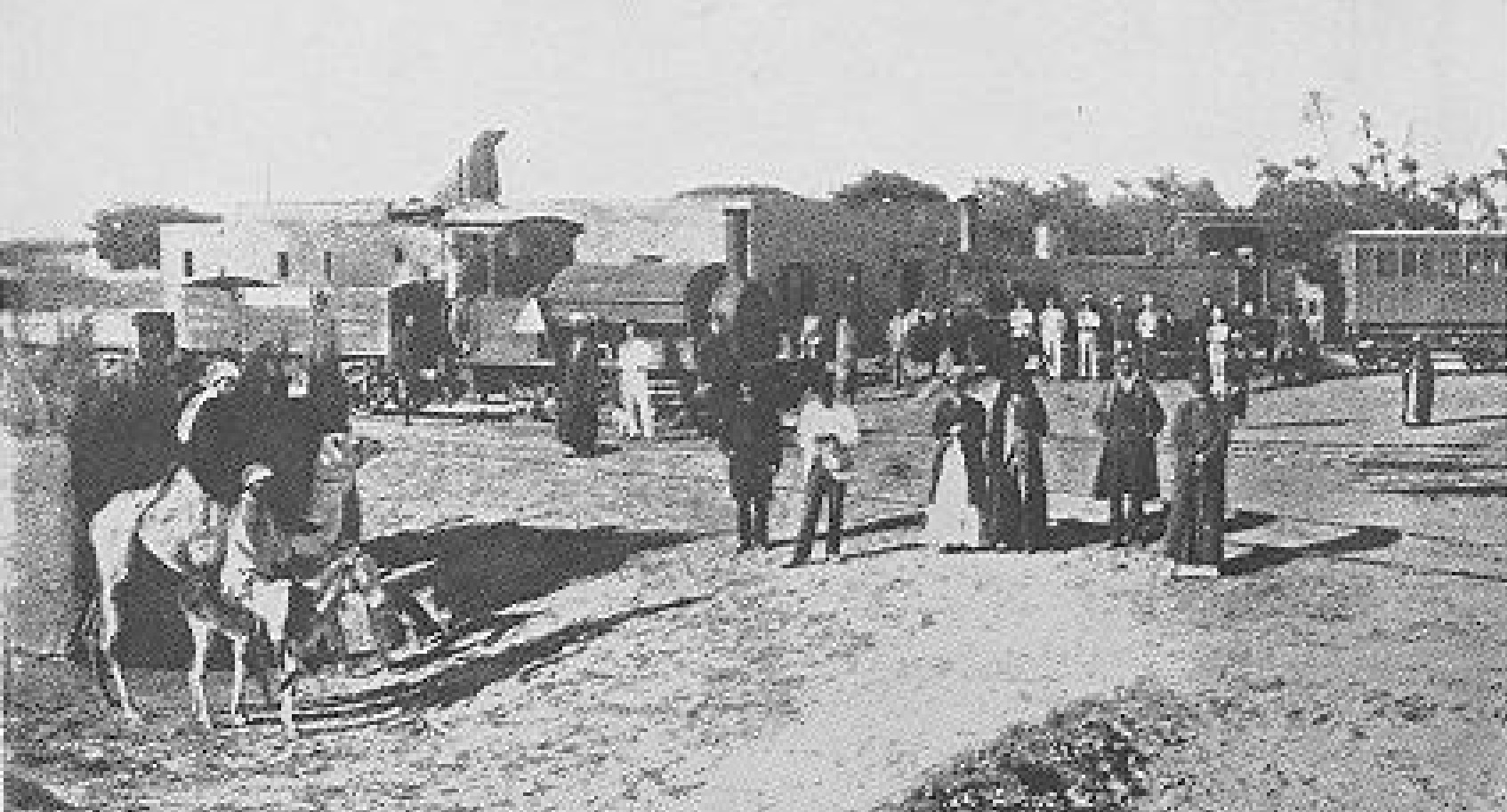
The first railway headquarters at Wadi Halfa [12: Plate 3]
Gordon disliked the railway because the cost burden primarily fell on Sudan. He suggested alternatives which were considerably cheaper. [12: p14]
Ultimately, this short section of railway was a commercial failure. “With its southern terminus at Saras hemmed in by the cataracts of Hannik and Kajbar it scarcely skimmed the Nile Valley traffic between Egypt and the Dongola and Kordofan Provinces. The ‘Ababda contractors continued to carry the bulk of the Sudan Nile Valley traffic over the Korosko-Berber desert road until the fall of Berber in 1884 to the Mahdist forces.” [12: p16] Heavy troop movements in connection with the Mahdist revolt produced only paper credits and, by 1883, Mahdist raids ultimately meant that any movement outside the defended perimeter of Halfa Camp ceased and revenue dropped to nothing. [12: p17]
The Railway Depot at Wadi Halfa in 1887. [12: Plate 4]
The next development was the construction of a military railway which consisted of “the original Wadi Halfa-Saras line of 1875 with two extensions: the first from Saras to ‘AKasha in 1884-85, and the second from ‘Akasha to Kerma in 1896-97.” [12: p18] This work extended the length of the line to 327 kilometres. Given that it was the only transport link available, the authorities ran a public service until 1905 when the line was abandoned. Writing in 1965, Hill said that the only traces remaining of the railway were “some of the sand embankments, some cuttings through the granite rock, a few stone bridge abutments and some lengths of twisted rail.” [12: p18]
During this time, much thought was given to possible future arrangements, and particularly to the gauge of the line. There was a debate about the various benefits of metre-gauge against the 3ft 6 in gauge. Kitchener favoured the 3ft 6in gauge. His biographers suggest that this was because he wanted to support the Cape-to-Cairo project. More prosaically, his position on gauge related to the availability of rolling stock at ‘Akasha. [12: p20-21]
The second of the two extensions above was well-planned and construction saw the railhead extending at a rate of over a kilometre a day! [12: p22]
Returning to that 14.5 kilometres of line which John Fowler built close to the First Cateract. Although Fowler advocated a 3ft 6 in line for the route along the Nile, Hill says that he built that short section to standard-gauge. [12: p23] In 1881, it was converted to dual gauge ” by the simple expedient of laying a third rail to enable engines borrowed from the 3ft 6ins gauge railway at Wadi Halfa to draw standard gauge wagons.” [12: p23]
The short section of dual gauge track was replaced by 3ft. 6in track when the Upper Egyptian Railway reached Aswan in 1895. But was relaid again in 1926 when the Upper Egyptian Railway was converted to standard-gauge as far as Aswan. [12: p23]
Kitchener eventually decided a route for his military railway which ran directly across the desert from Wadi Halfa to Abu Hamad – at this time the route along the Nile was abandoned. [12: p24] The ‘direct’ line was laid under miltary protection and “at the utmost possible speed and with the utmost economy of means.” [12: p24] The summit of the line was reached in July (166 kilometres from Wadi Halfa) and by November the line was back by the Nile at Abu Hamad. The next stretch to the mouth of the Atbara river was completed by July 1898. [12: p25]
In October 1898, after the battle of Omdurman, the railway crossed the river Atbara, initially by means of a temporary bridge which was replaced within a matter of months by a permanent structure. The railhead reached Shendi in June 1899 and arrived at the Blue Nile opposite Khartoum at the end of 1899. This was the location of the terminus and has become known as Khartoum North Station.
As an aside, Hill also relates the tale of the Suakin-Berber Railway (running East-West from the Red Sea) which had been considered for many years but only saw a serious attempt at its construction when the Mahdist revolution occurred. In June 1884 the British Government took some preliminary steps to facilitate the construction of the railway. Some minor work was undertaken and worked commenced and then ceased on an 18in. gauge line. In 1885, the British War Office decided to pursue the construction of the line. Initially a metre-gauge line was considered. This was adapted in favour of a standard-gauge line. [12: p34-38]
The contractors worked on supplying the planned works and a large amount of materials were on site at Suakin on the Red Sea coast by the end of the first quarter of 1885. By 20th March the line had crossed the causeway from the depot to the mainland and was nearing the outer fortifications. Despite regulars Mahdist raids, by mid-April the railhead was progressing at around a mile a day and 8 miles of mainline had been constructed. Logistics became a serious problem as the railhead move forward. Raids became more frequent and it became increasingly difficult to defend the line. In the end, it was pressures elsewhere in the world which meant that the British Government needed the troops for other campaigns and on 22nd April 1885 it decided to halt all work on the line. It was not until 2nd May 1885, when the railway had reached Otao, that work finally ceased. General Graham inspected the work and commented that it was roughly laid and the first shower would destroy large sections of it. The coming of the rains proved him right. [12: p41-44] The whole endeavour was ill-conceived and badly managed.
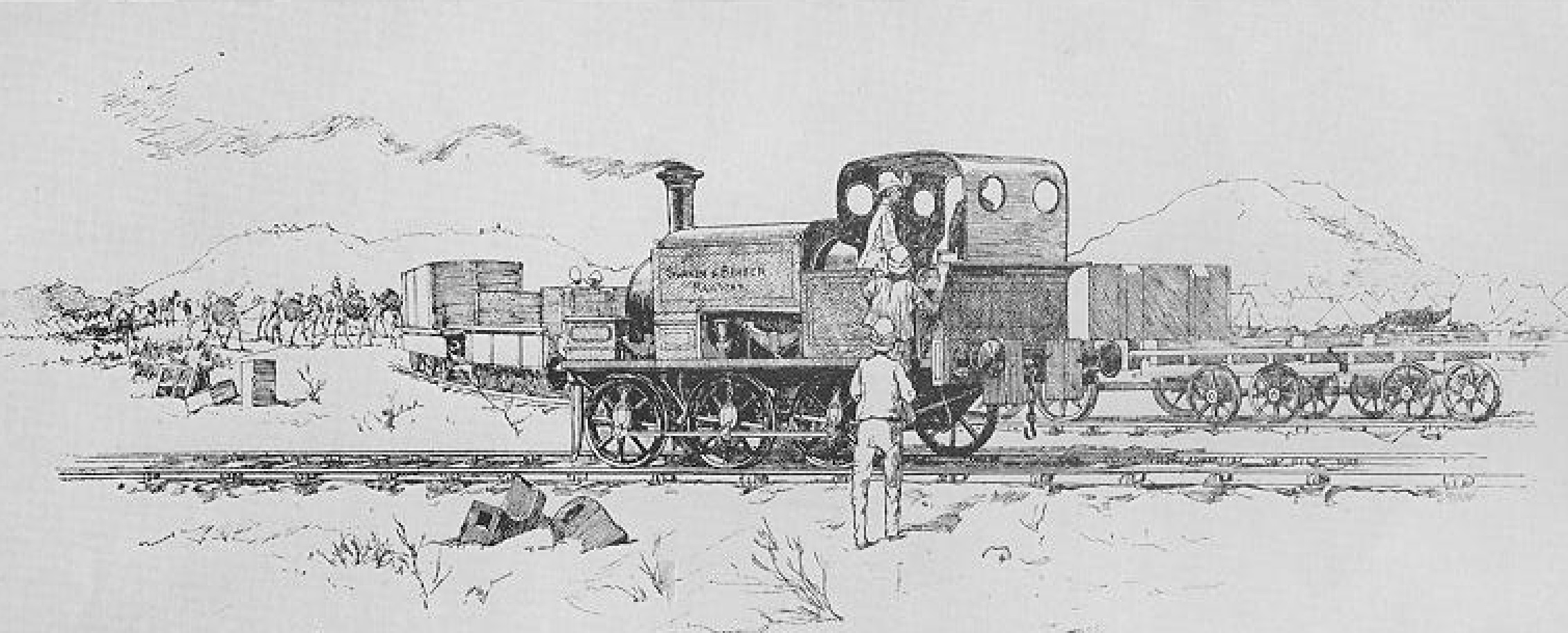
The Suakin-Berber Railway: The first train to reach Handoub Station on the ill-fated line to Otao. (Sketch by Walter Paget) [12: Plate 22]
Khartoum North
The line to Khartoum North took a number of years to turn a profit (1913 was the first year in which receipts exceeded expenditure). In 1906 railway headquarters and workshops were transferred from Wadi Halfa to Atbara. The growing Sudanese economy revealed that existing rolling stock and track was unequal to demand. As the railway network was expanding, opportunities were taken to lay heavier duty rails (75lb rail began to be used) and parts of the original line to Kahtoum had 50ib rail replaced with 75lb rail.
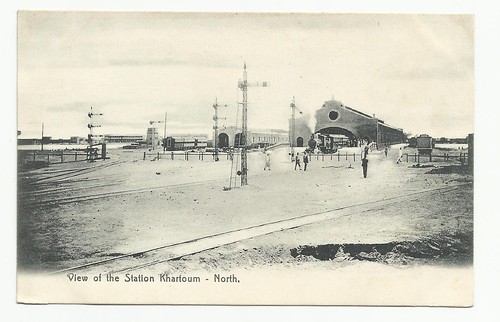
A postcard view of Khartoum North Railway Station from the North. [15]
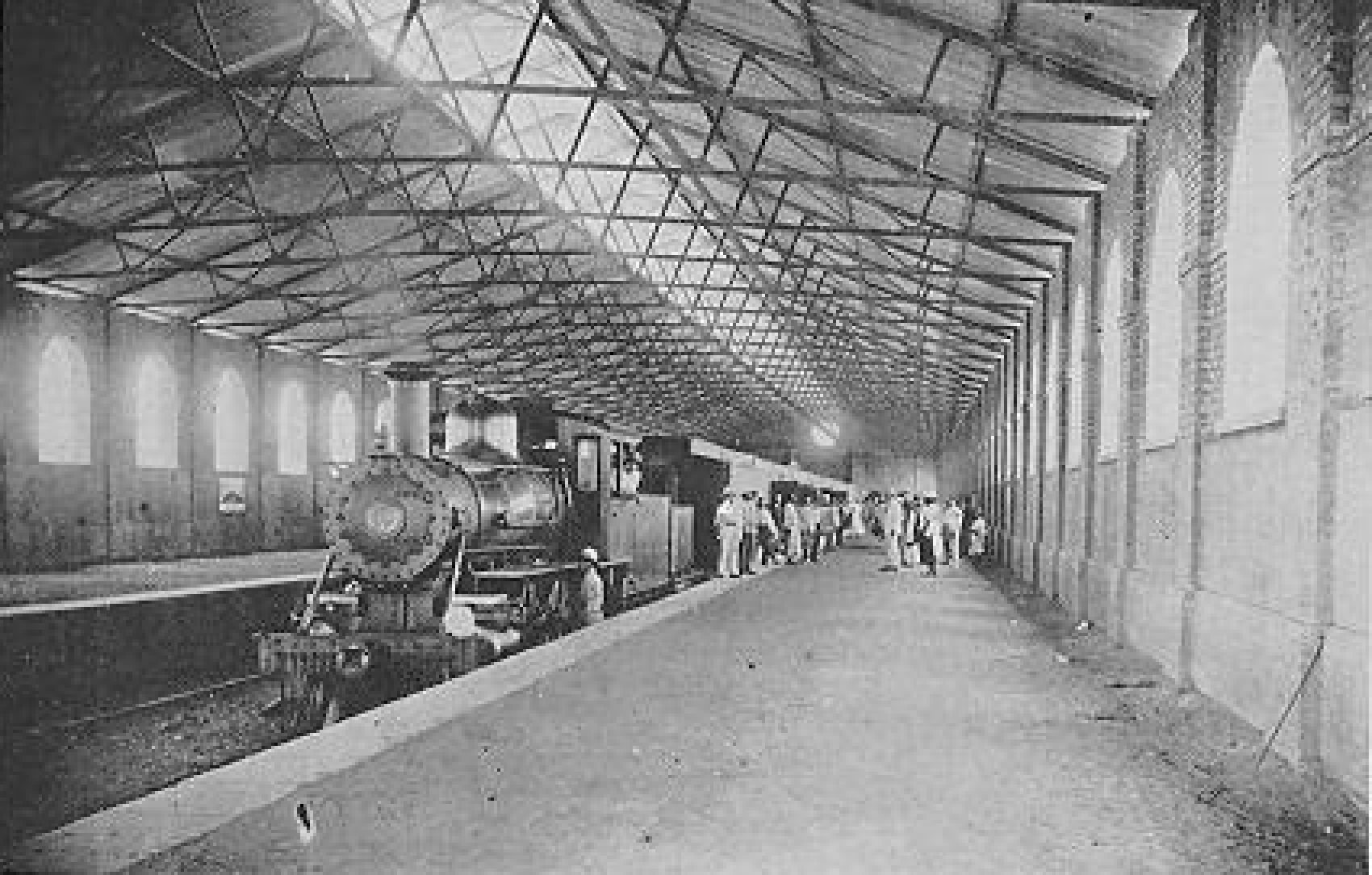
Another view from the North of Khartoum North Station. [18]A view of the inside of the train shed at Khartoum North Station, the terminus of the line, in 1904. [12: Plate 26] The modern railway station serving Khartoum North is no longer on the site of the first terminus.
Early in the life of the line, the journey from Wadi Halfa to Khartoum took 55 hours. This was improved to 34 hours. By 1912, two express luxury trains were running twice-weekly between the two terminals. [12: p50-53]
On the whole, the railway map between Wadi Hailfa and Khartoum has changed little over the years. A section of track which was troubled by drifting sand was re-laid closer to the Nile in 1902 (close to the Fifth Cateract). [12: p57] And, as we have noted above, Khartoum North Railway Station is long-gone. A replacement station has been provided on the line running South to the Blue Nile Bridge (Bahri Railway Station).
The Red Sea Railway and the founding of Port Sudan
The economic development of the Sudan was hindered at every turn by the tortuous routing of its imports and exports. Goods consigned by rail from an Egyptian port to Khartoum required no less than four transshipments on the way: at the port of entry, at Luxor and el-Shellal and again at Wadi Halfa. ” [12: p67]
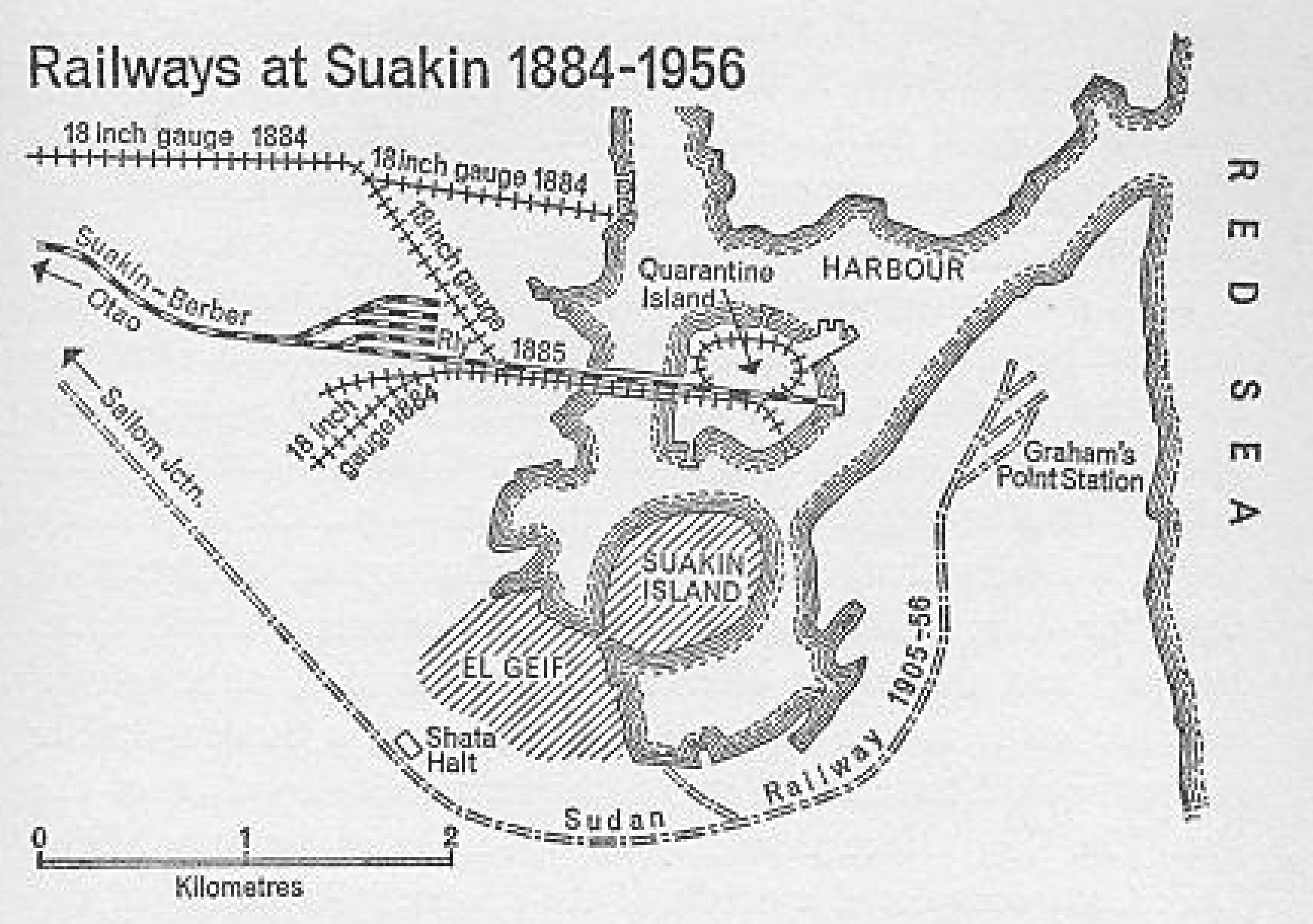
Initially the British Government thought that Suakin was the solution to these and other problems and started to work on the basis of a line which led from there into the interior. Just 50 km down the coast, there was a far superior location for a harbour. In time this was realised to be the better option. The preliminary construction work and depot at Suakin was to have a significant and valuable role in the construction of a new line, but that line was first planned to run along the coast to Mersa Shaykh which was to be come Port Sudan and from there inland through Sinkat to join the Sudan Military Railway at Atbara. That route was not used either. Surveyor eventually recommended a route which ran through the Kamob Sanha Gorge and Tehamiyam to Atbara. It had the easiest gradients of the options considered did not require tunneling and only had one particular section which was difficult for construction (a cutting through 1,000 metres of granite at Kamob Sanha). Added benefits were the ease of making a connection to Kassala and a juction on the Nile Valley line closer to Khartoum. [12: p70]
Railways at Suakin [12: p35]
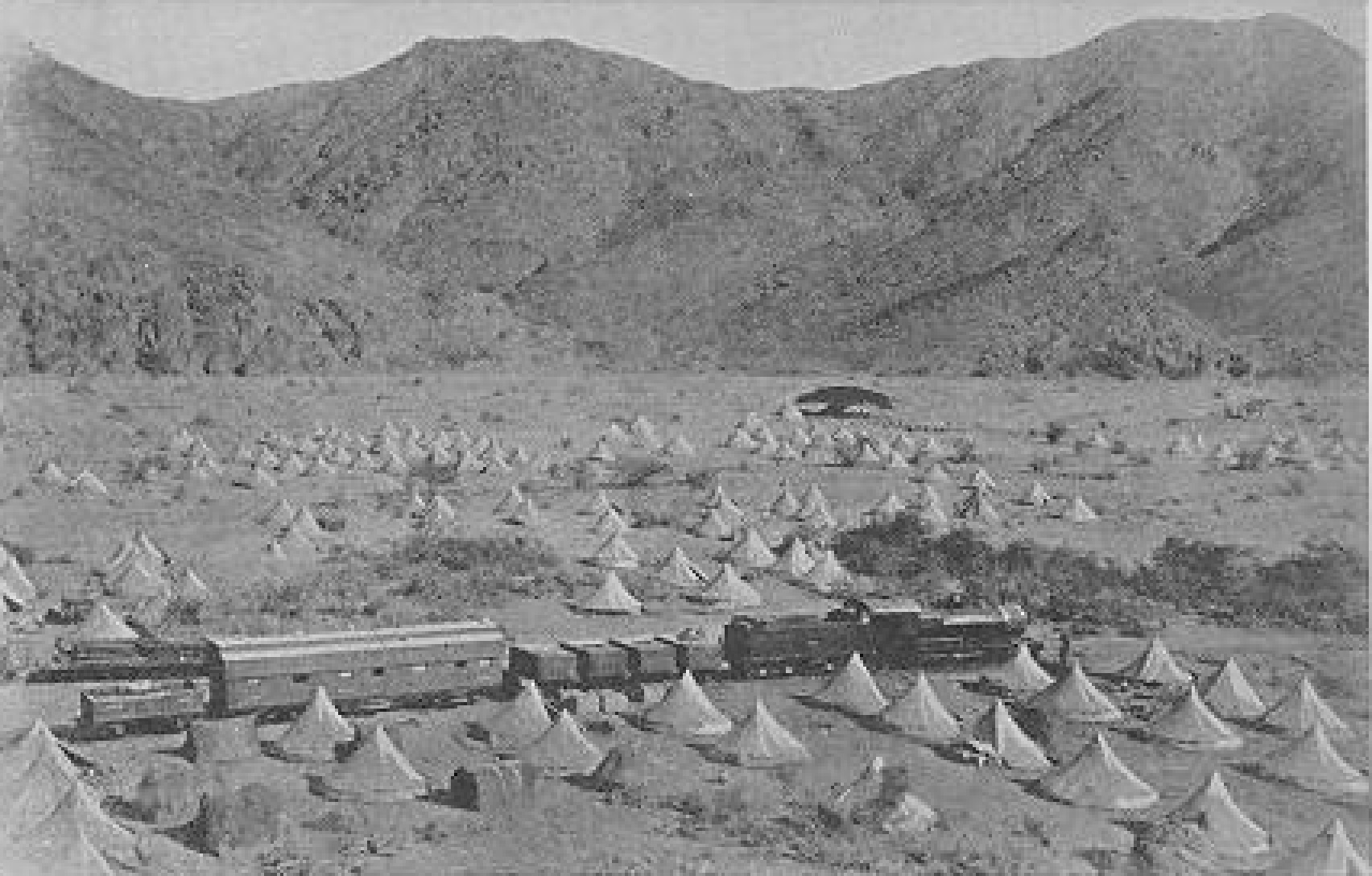
The first train from Khartoum steamed into Suakin on 16th October 1905 to a new terminus at Graham’s Point. By the end of the year a connection had been completed to the site of what was to be Port Sudan. [12: p71]
A view of the railhead camp on the Red Sea Railway in 1905. [12: Plate 39]
Back to Khartoum …
First an early plan from 1905, showing the 3ft 6in gauge line and its terminus on the North bank of the Blue Nile. …
Khartoum in 1905 [14]
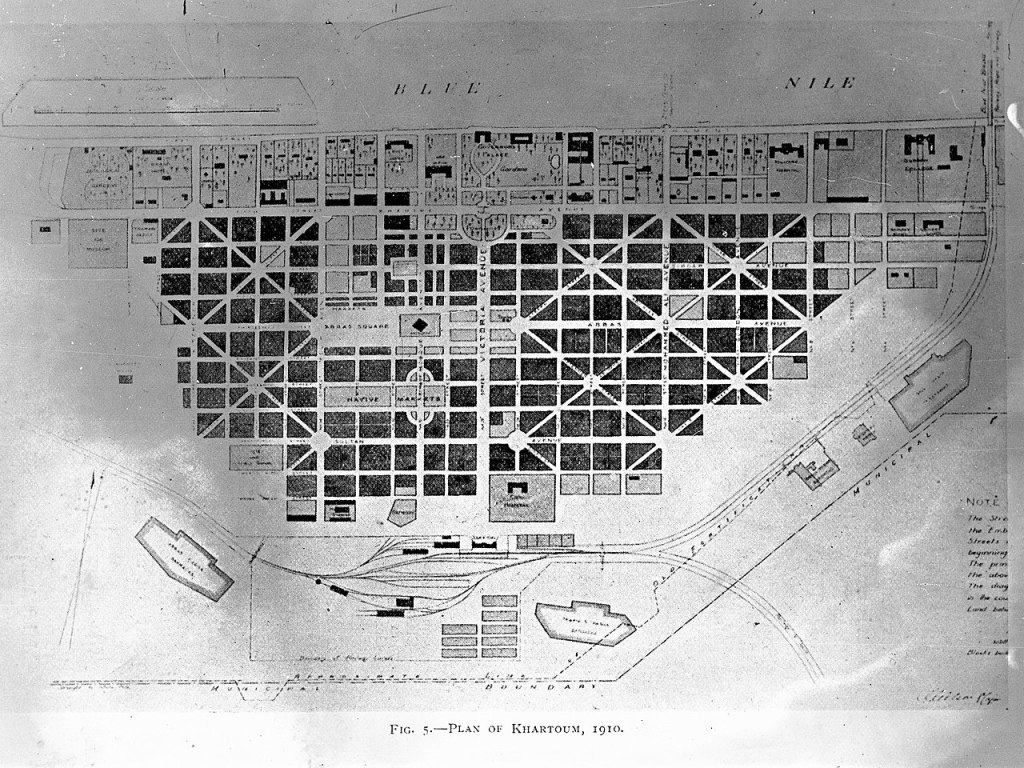
Next a plan showing Khartoum in 1910. …
In 1910, the railway line from the North is being extended round the South of the city to a new station. A line is being built to the Southeast of that new station and a line is projected beyond the new Station to the West, heading Northwest. [41]
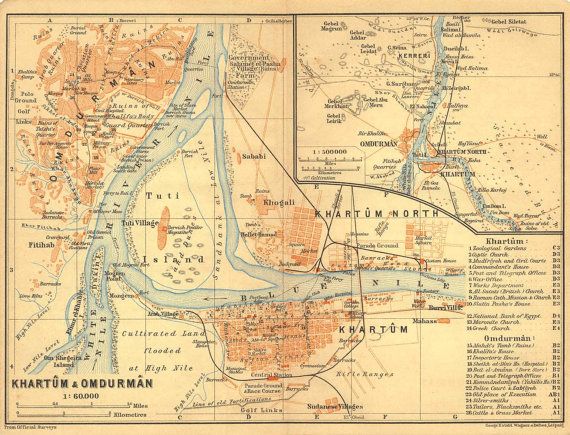
Next, a plan from 1914 showing the enlarged network of 3ft 6in gauge railways in the city. At this time Khartoum North Station is still in use. …
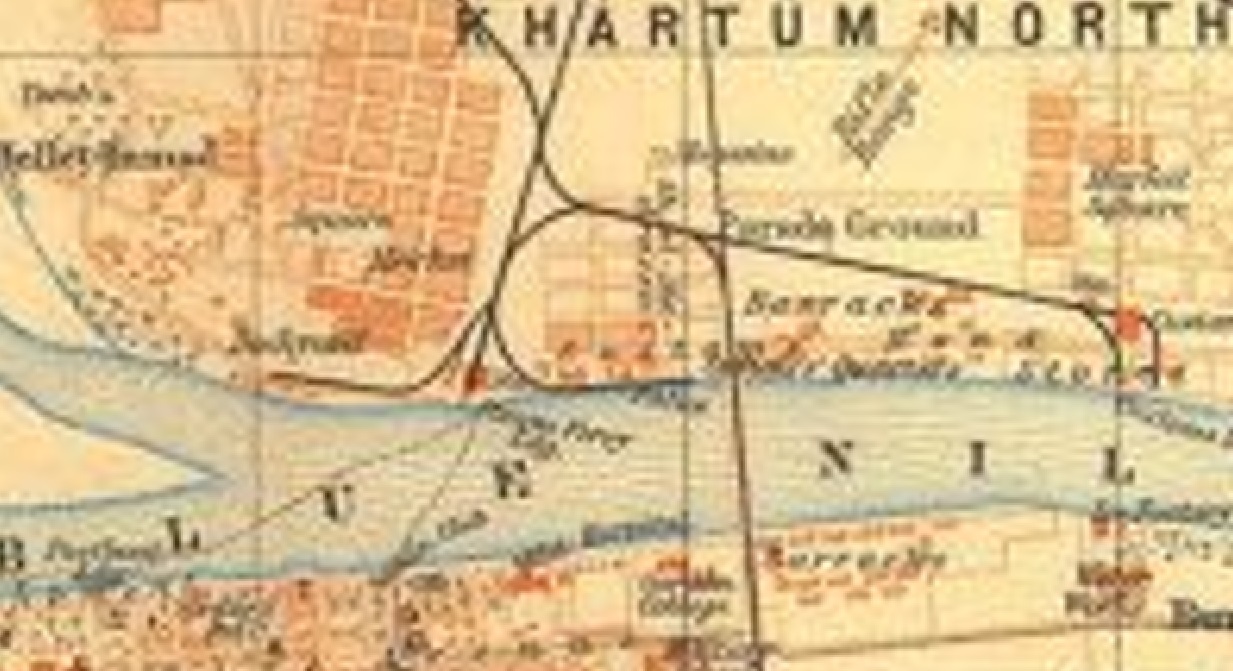
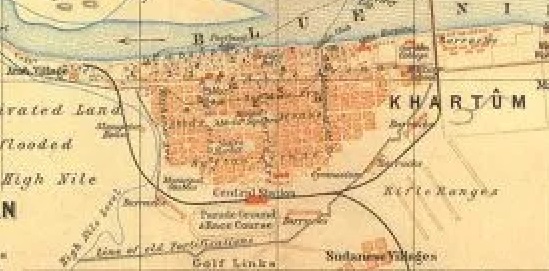
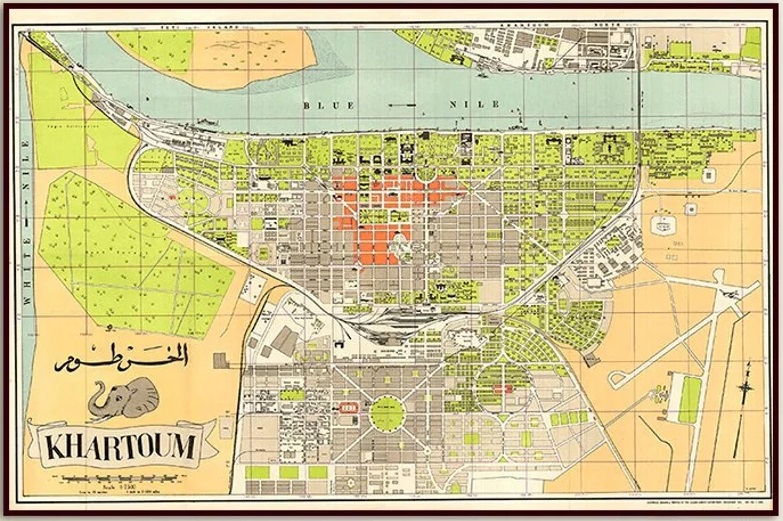
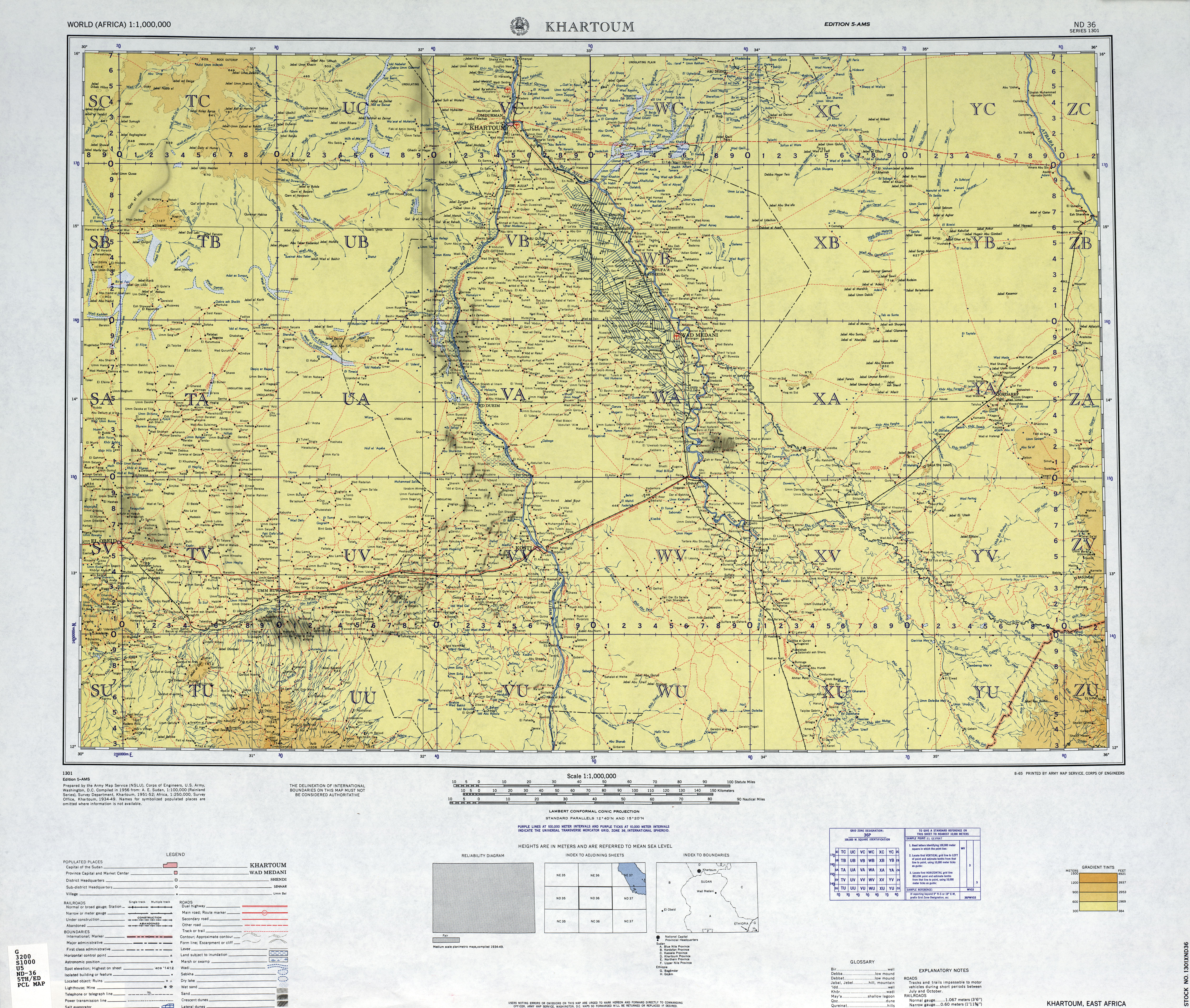
A map of Khartoum and Omdurman dated 1914, very kindly provided by Iain Logie. The line providing access to the Central Station left the old military line North of the city and crossed the Blue Nile on the Blue Nile Bridge which can be seen in pictures below. The line to the West of Central Station has been extended towards the Blue Nile and that to the Southeast has been extended beyond the confines of the city and tracks the Blue Nile to the Southeast. [42]An enlarged extract showing the 3’6″ railways of Khartoum North. The terminus station is immediately above the ‘E’ of ‘BLUE’. the line leaving the top of this extract through the ‘K’ of Khartum was a branchline to Omdurman Station which was on the East bank of the Nile, opposite that city. [From the plan provided by Iain Logie above]Khartoum in 1914, showing the location of the Central Station. [From the plan provide by Iain Logie above]A mid-20th century map of Khartoum on which the railways feature prominently. It would appear that, by the time this map was drafted, Khartoum North was no longer in used as a railway station. It is not visible on the map on the North side of the Blue Nile. It is also wroth noting that Central station has a railway junction at each end of the site. [16]
Khartoum Central Station
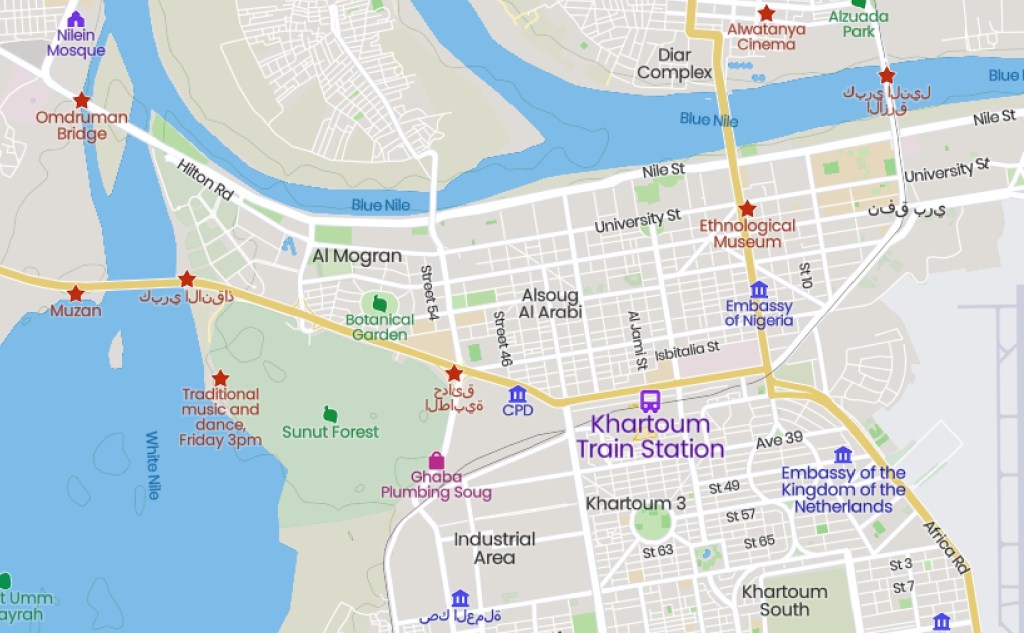
We will start our ‘then & now’ review of the railway lines in Khartoum with a look at Central Station. …
A map of the central area of Khartoum which shows Khartoum Central Station and the route of the railway line. [Mapcarta][6]
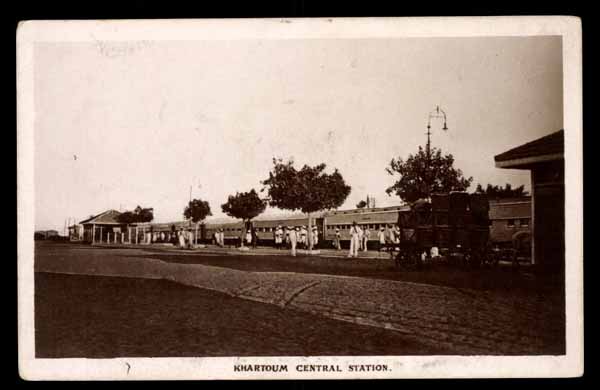
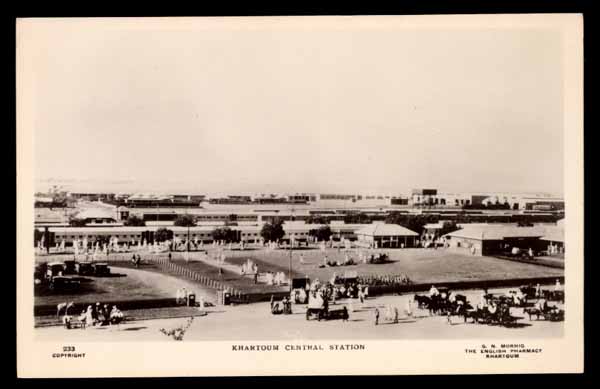
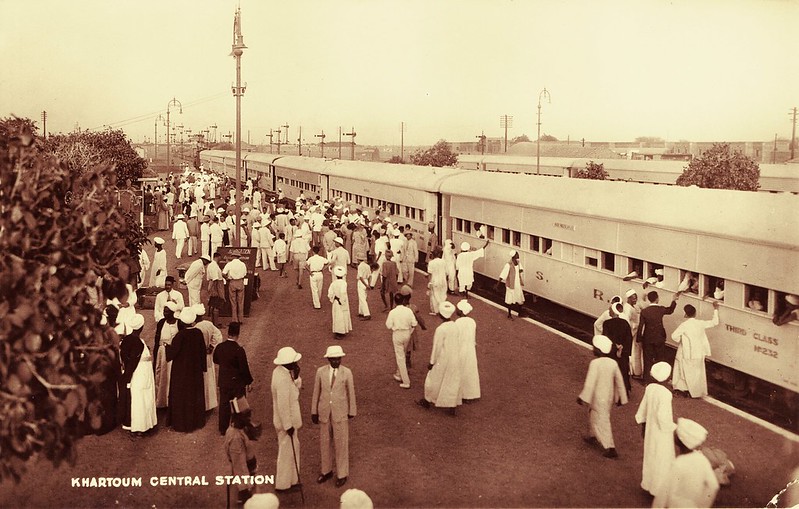
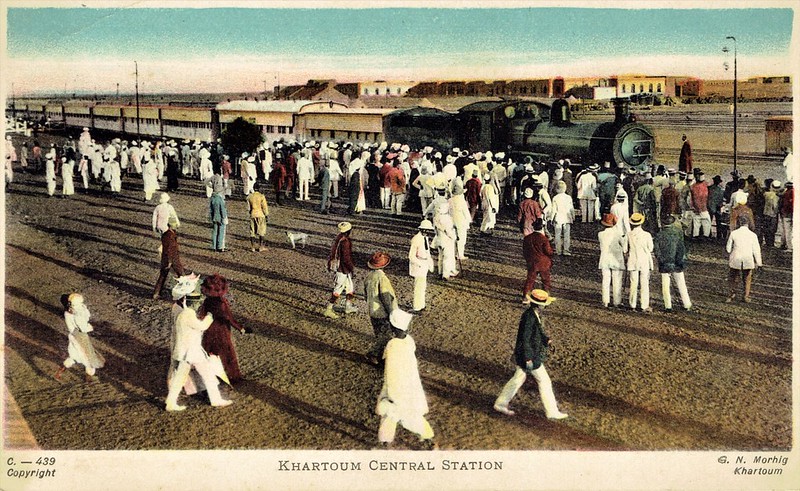
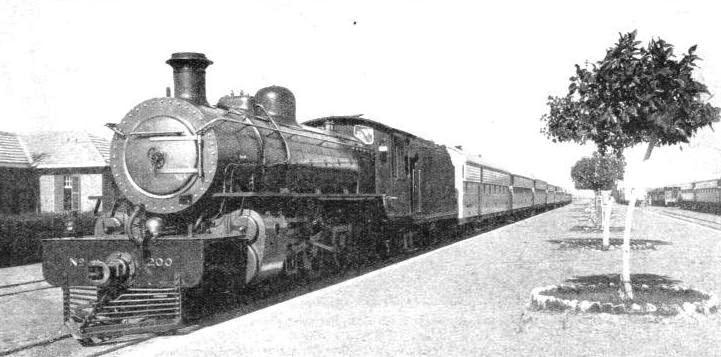
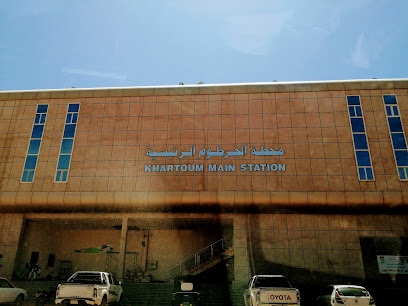
Some very early images of Khartoum Central Station. Each image is embedded and links directly to the site from which it was sourced. …
Khartoum Central Station. [1]Khartoum Central Station. [2]Khartoum Central Station. [3]Khartoum Central Station. [4]
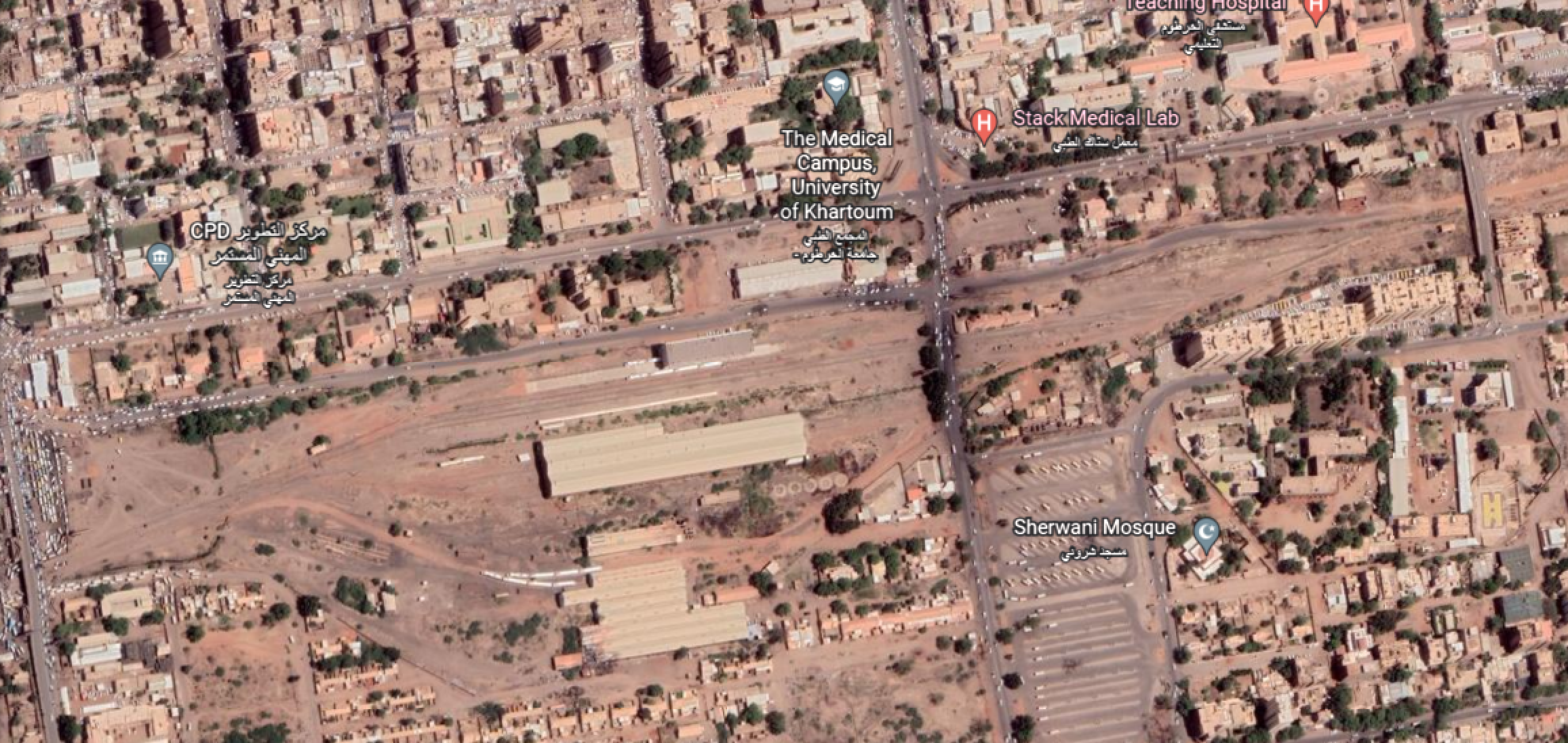
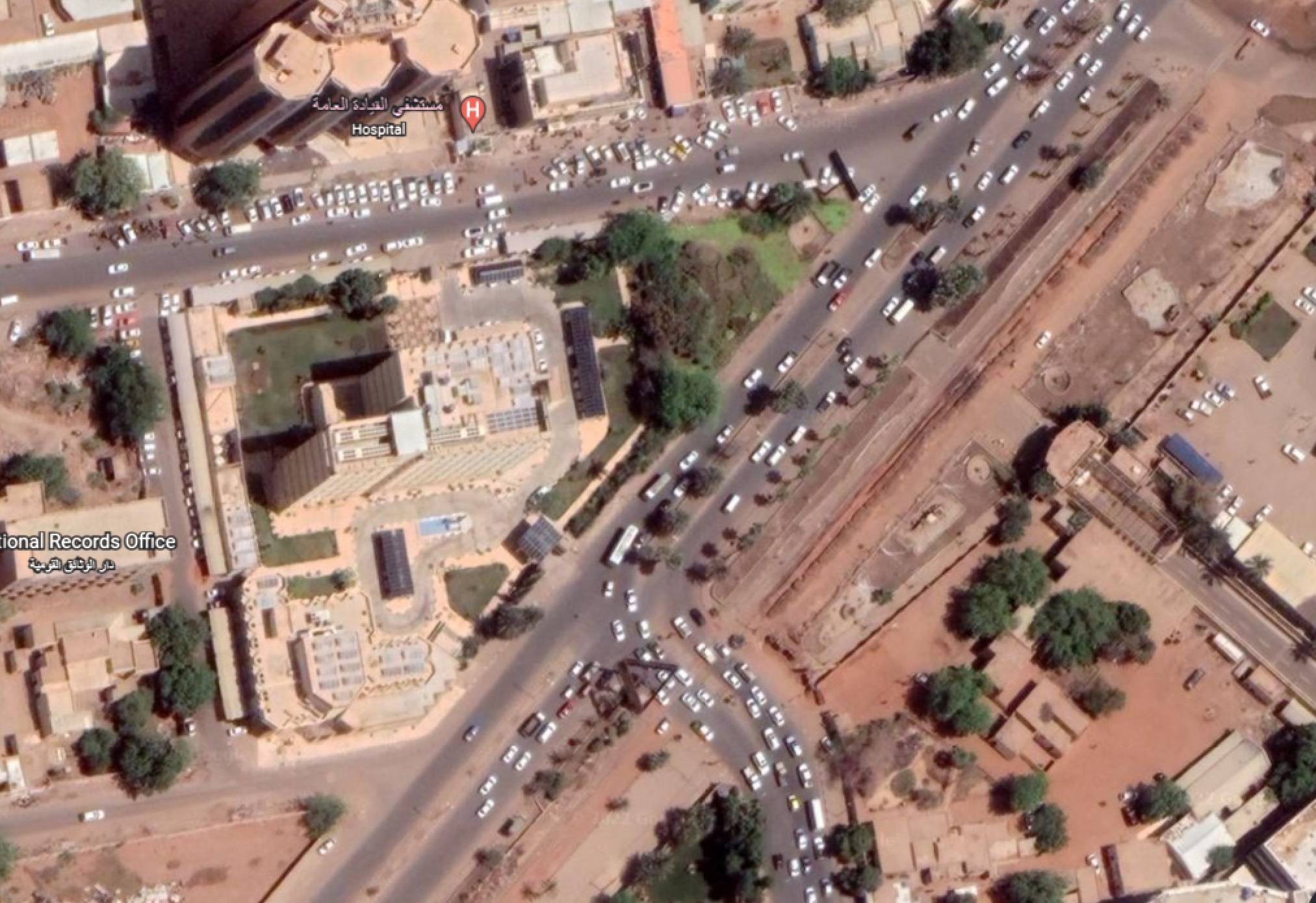
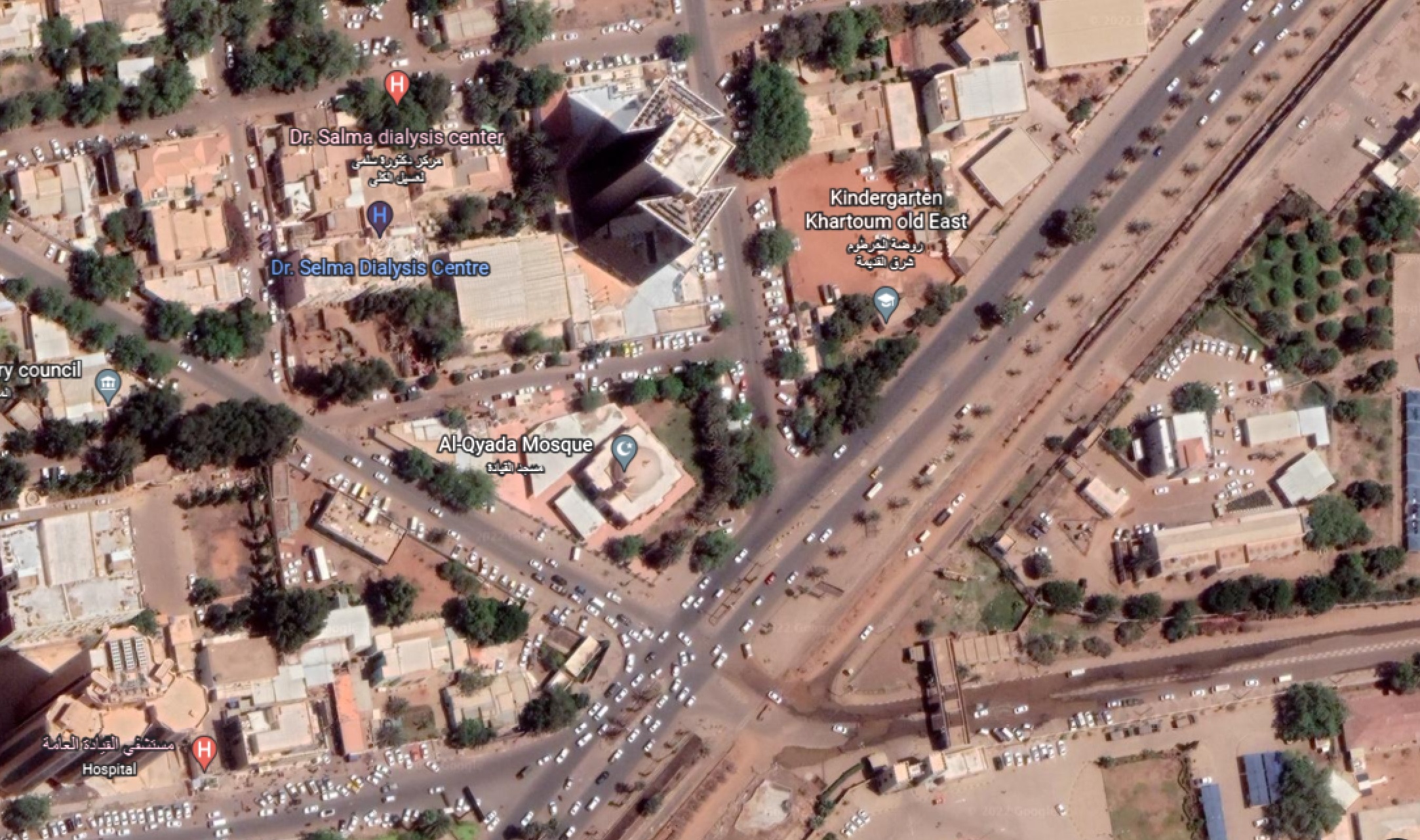
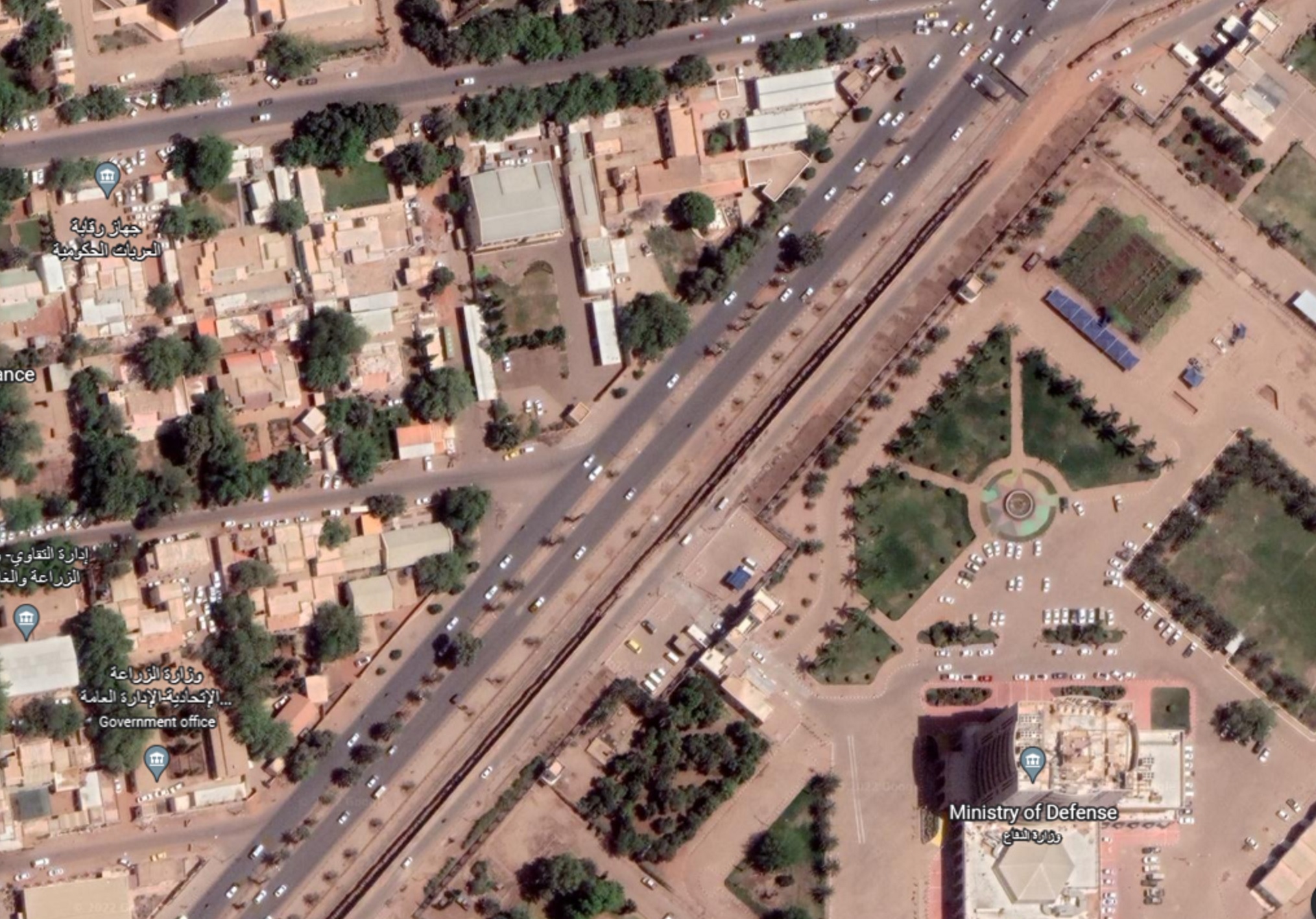
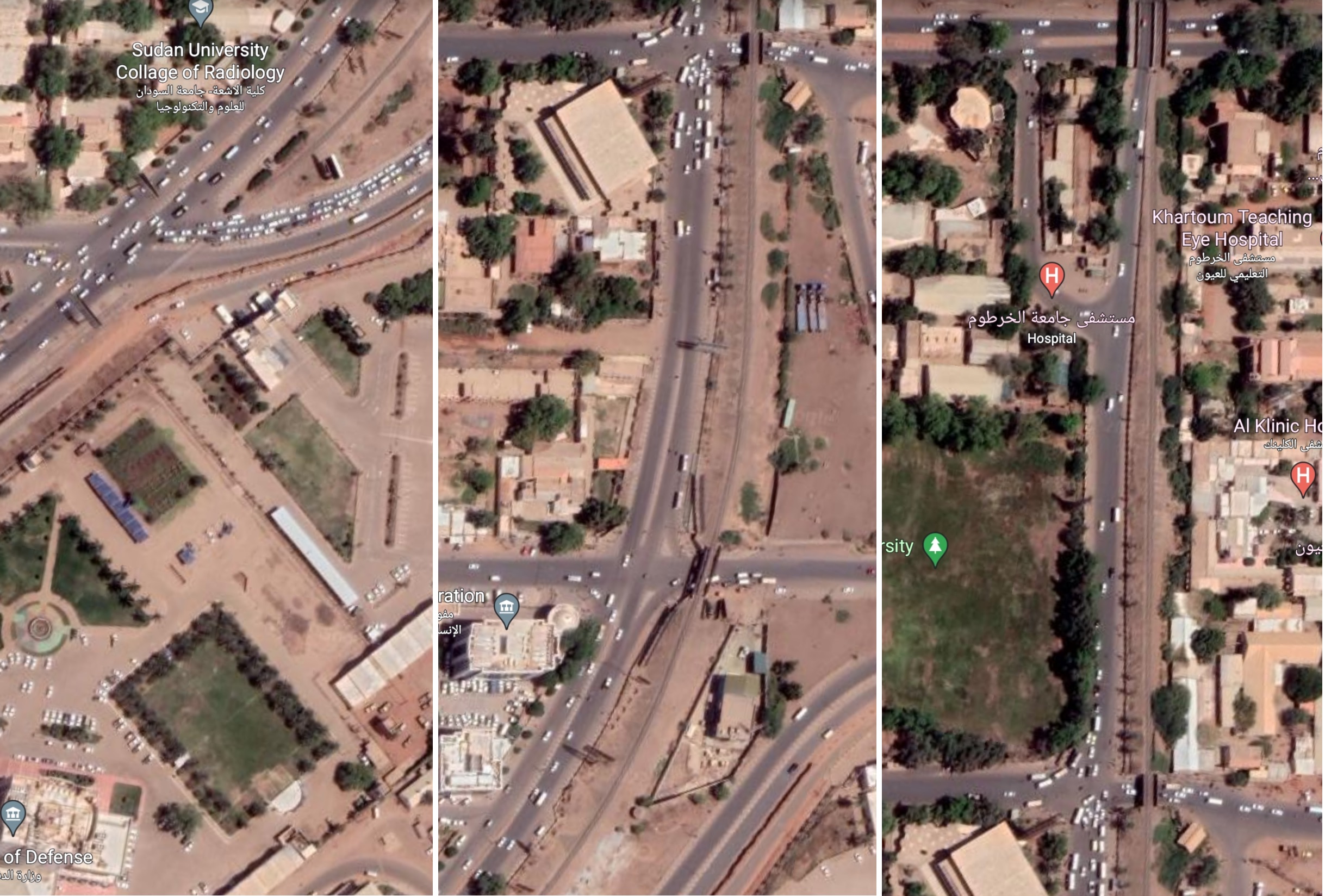
These next images show the route of the line between Central Station and the Blue Nile Bridge. All the satellite images are extracts from Google Earth. The line runs Northeast towards the Blue Nile.
This next sequence of three extracts from Google Earth takes us North to the Blue Nile Bridge. [Google Earth]The railway bridge over Gamma Avenue – University Subway. The bridge can be seen on the satellite images immediately above, at the top of the central image and the bottom of the righthand image. [24]
Blue Nile Bridge
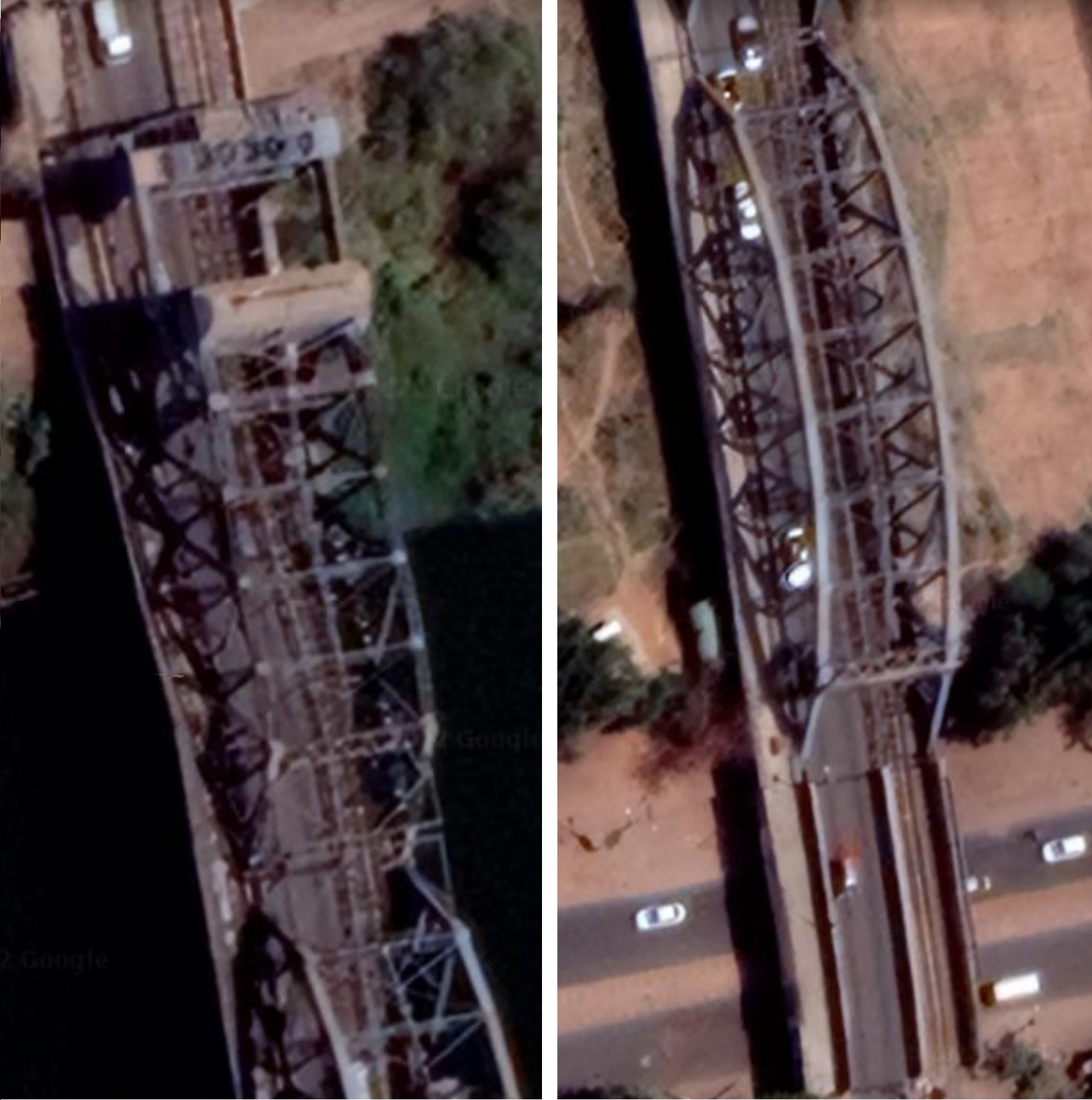
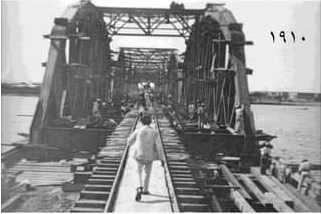
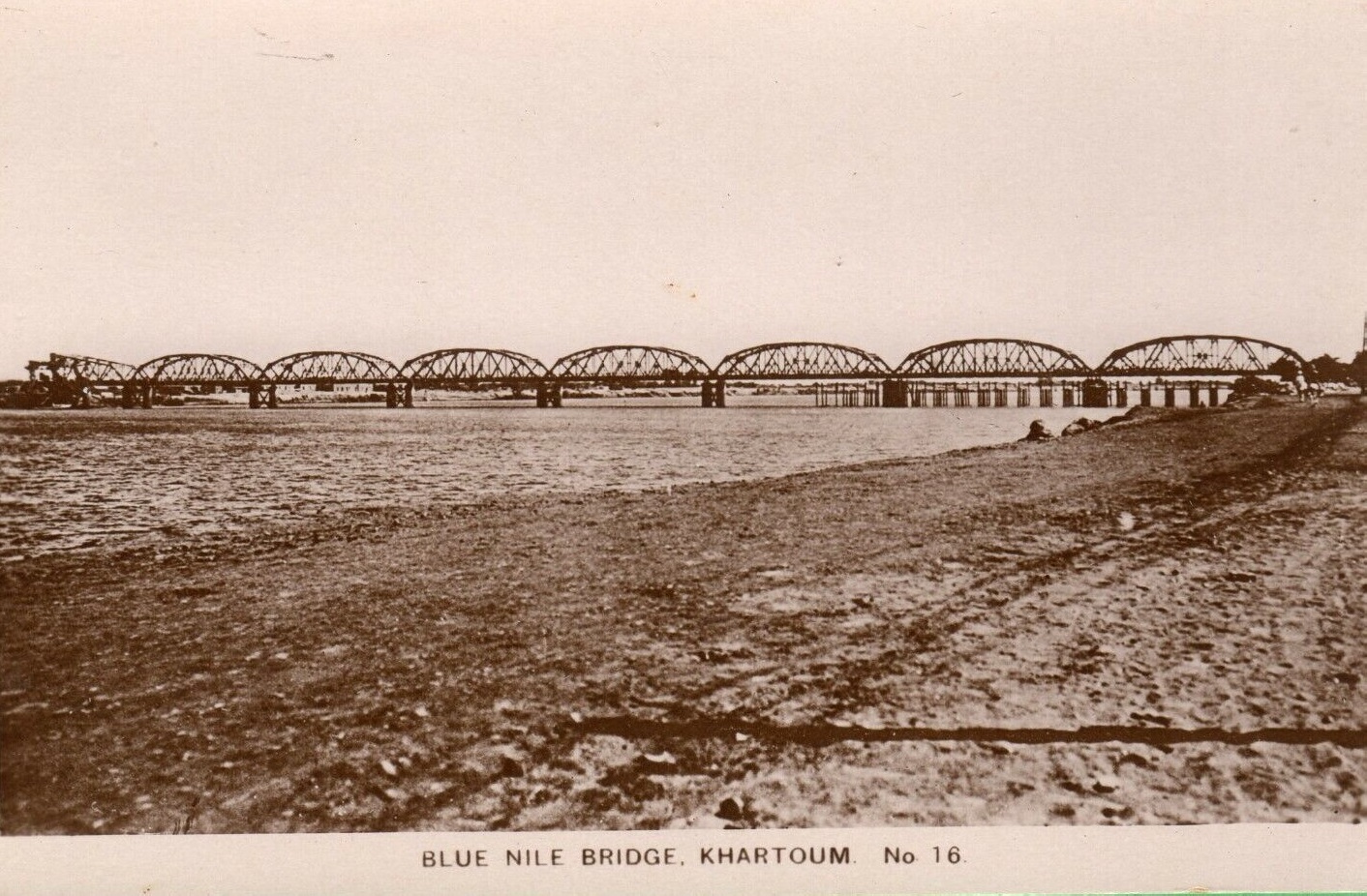
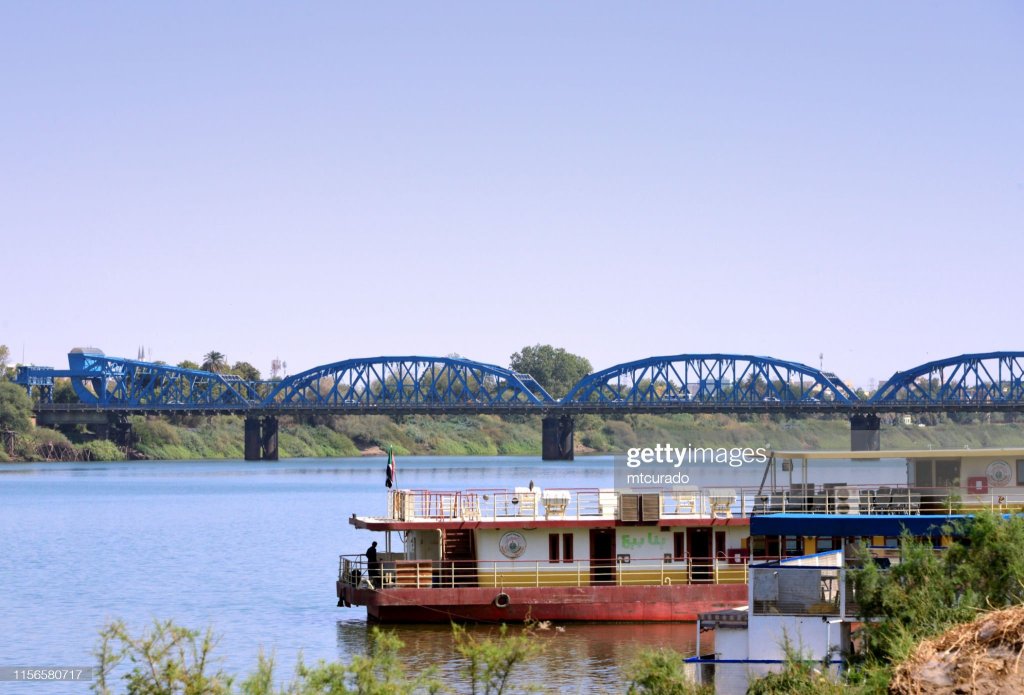
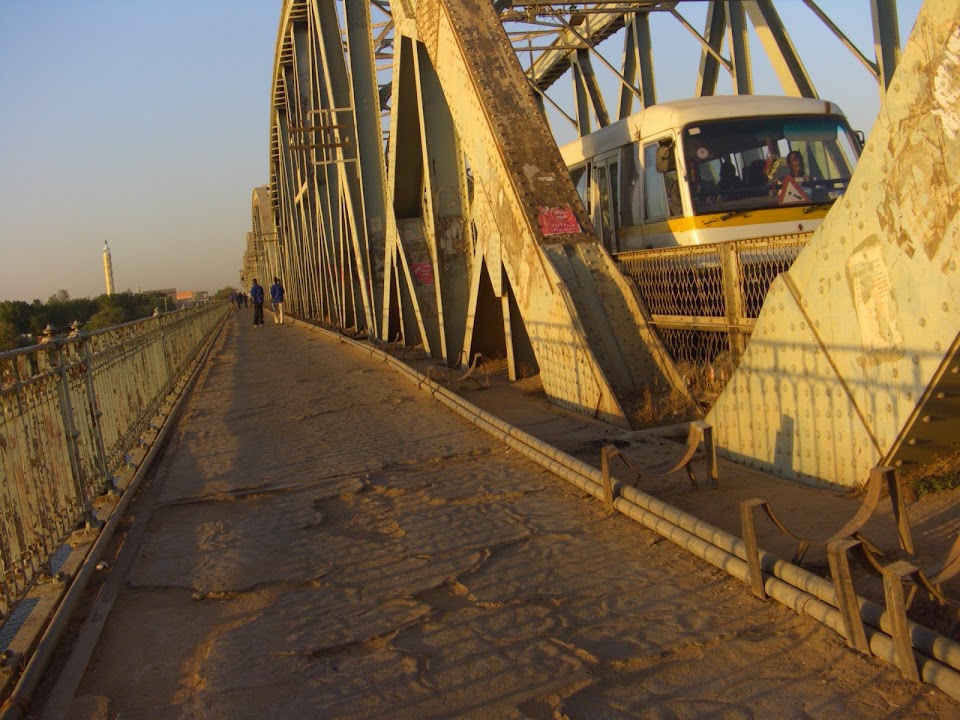
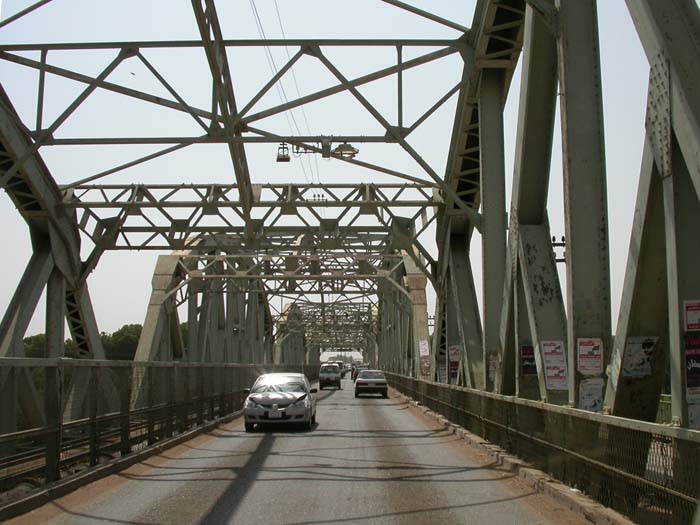
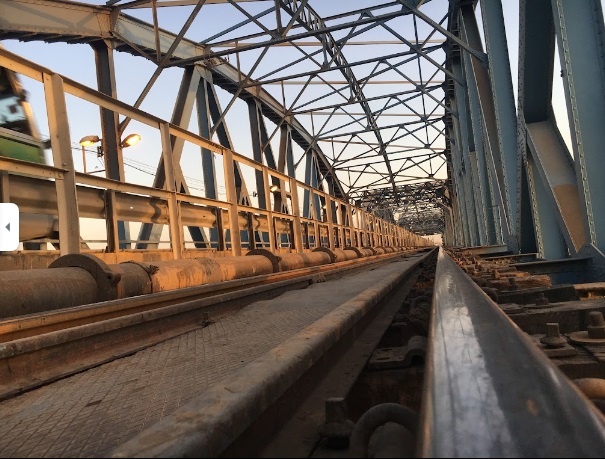
Satellite images from 28th January 2021 showing the two end spans of the Blue Nile Bridge. The North end is on the left and the image shows the lifting section of the bridge. The South end is on the right. This clearly shows the 3’6″ gauge railway which runs on the East side of the road carriageway. [Google Maps]The Blue Nile Bridge, apparently under construction in 1910. [17]A postcard view of the Blue Nile Bridge from the West. [5]Blue Nile Road and Railway Bridge – Ministry of Oil and Gas barge on the Blue Nile river – view from Nile Avenue towards North Khartoum. [13]Looking North along the footway which cantilevers out from the West side of Blue Nile Bridge. [25]Looking North along Blue Nile Bridge. [26]Looking North along the railway track on the East side of the Blue Nile Bridge, (c) Tariq Al-Khaleel, March 2020. [28]The route of the railway between the Blue Nile Bridge and Bahri Railway Station. [Google Earth]
Bahri Station (Khartoum North)
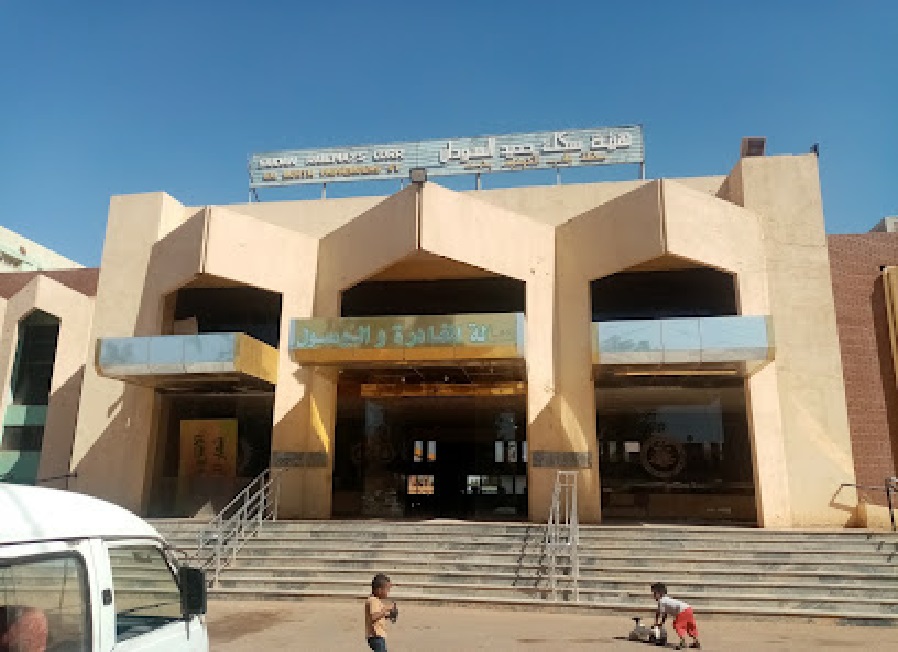
Bahri Station (Khartoum North) [27]Bahri Railway Station Platform in 2016, (c) Mohamed Gaafar. [29]Bahri Railway Station Platform in 2017, (c) Siedahmed Abdallah. [29]
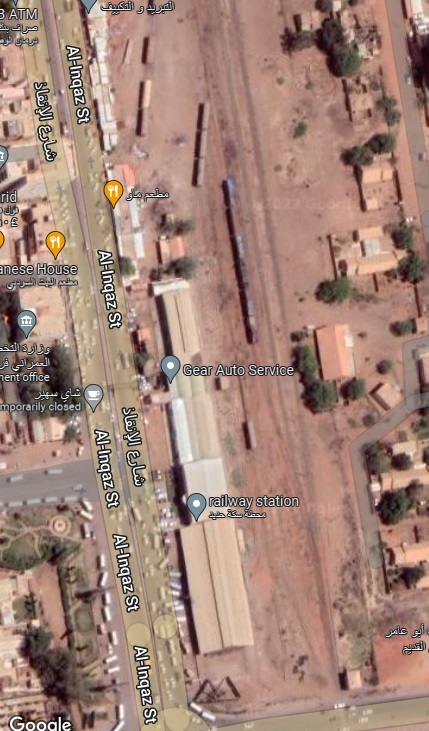
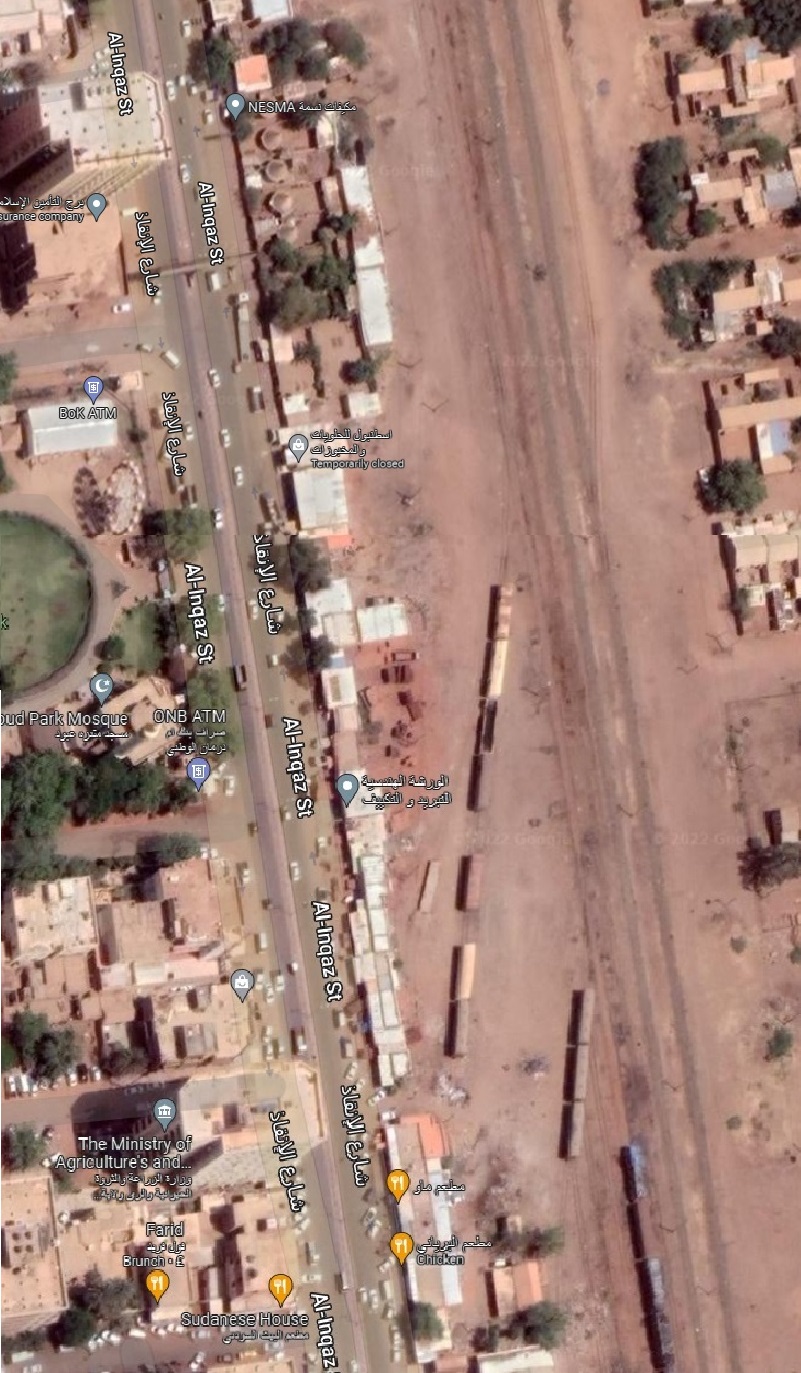
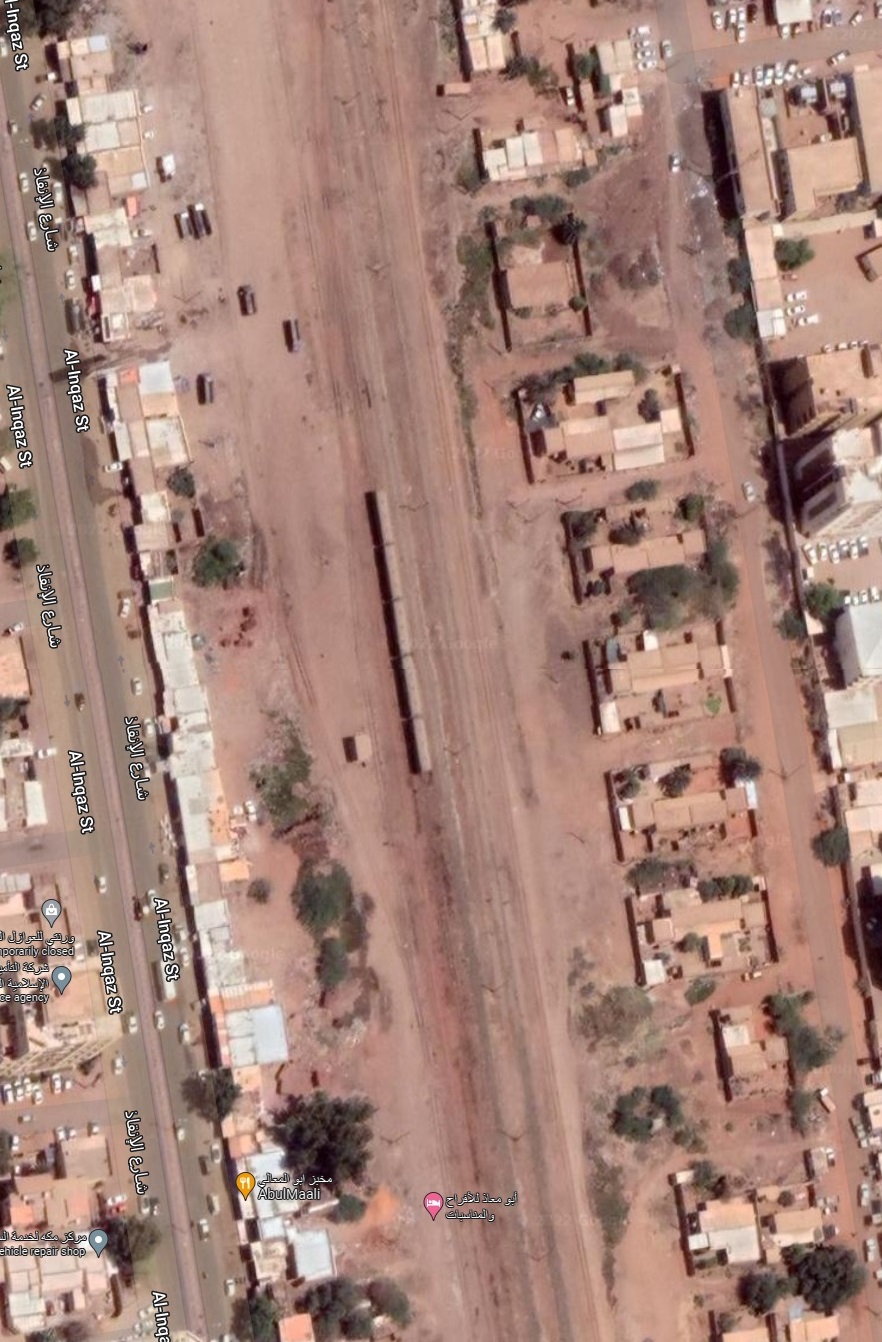
Bahri Railway Station Building seen from the station Yard. [30]The main station buildings at Bahri Station. The station yard runs North alongside Al-Inqaz Street. to the next road junction and beyond [Google Maps]The next length of the yard travelling North [Google Maps]And again, further to the North. [Google Maps]And, once more, further to the North. [Google Maps]
North towards Atbara
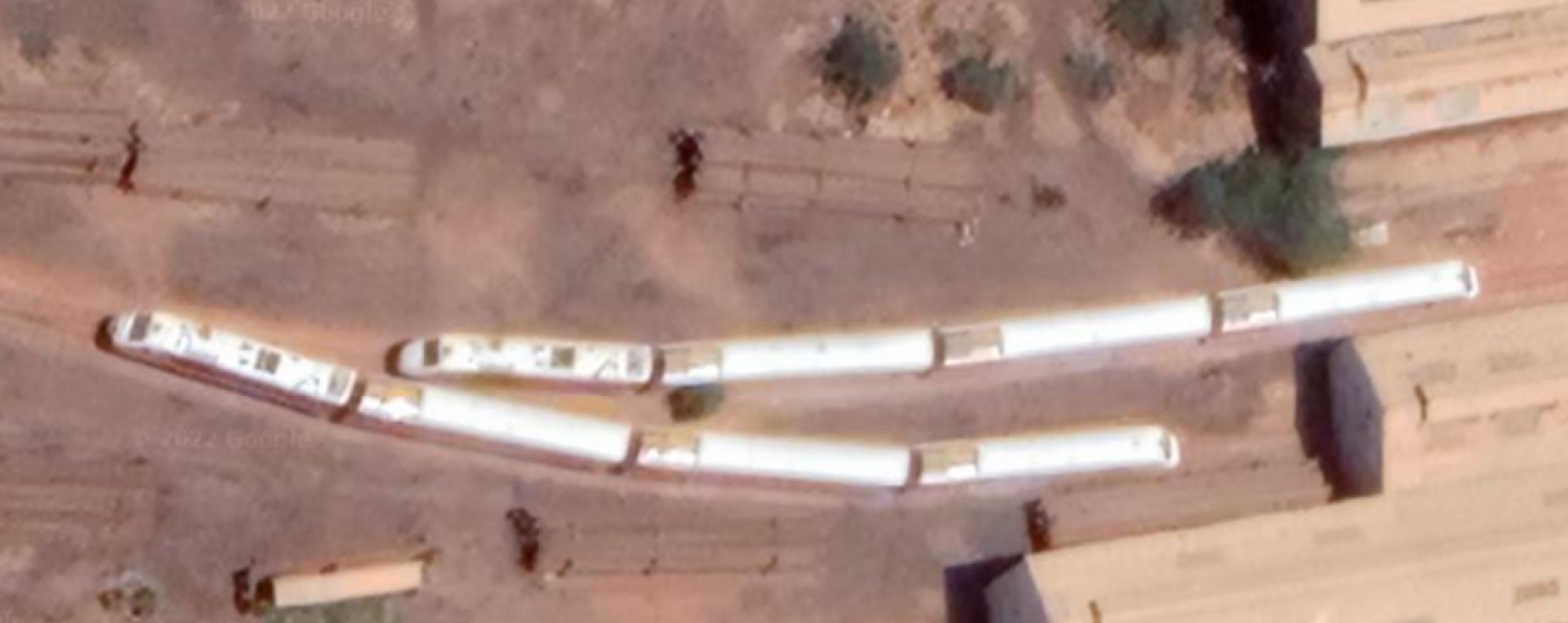
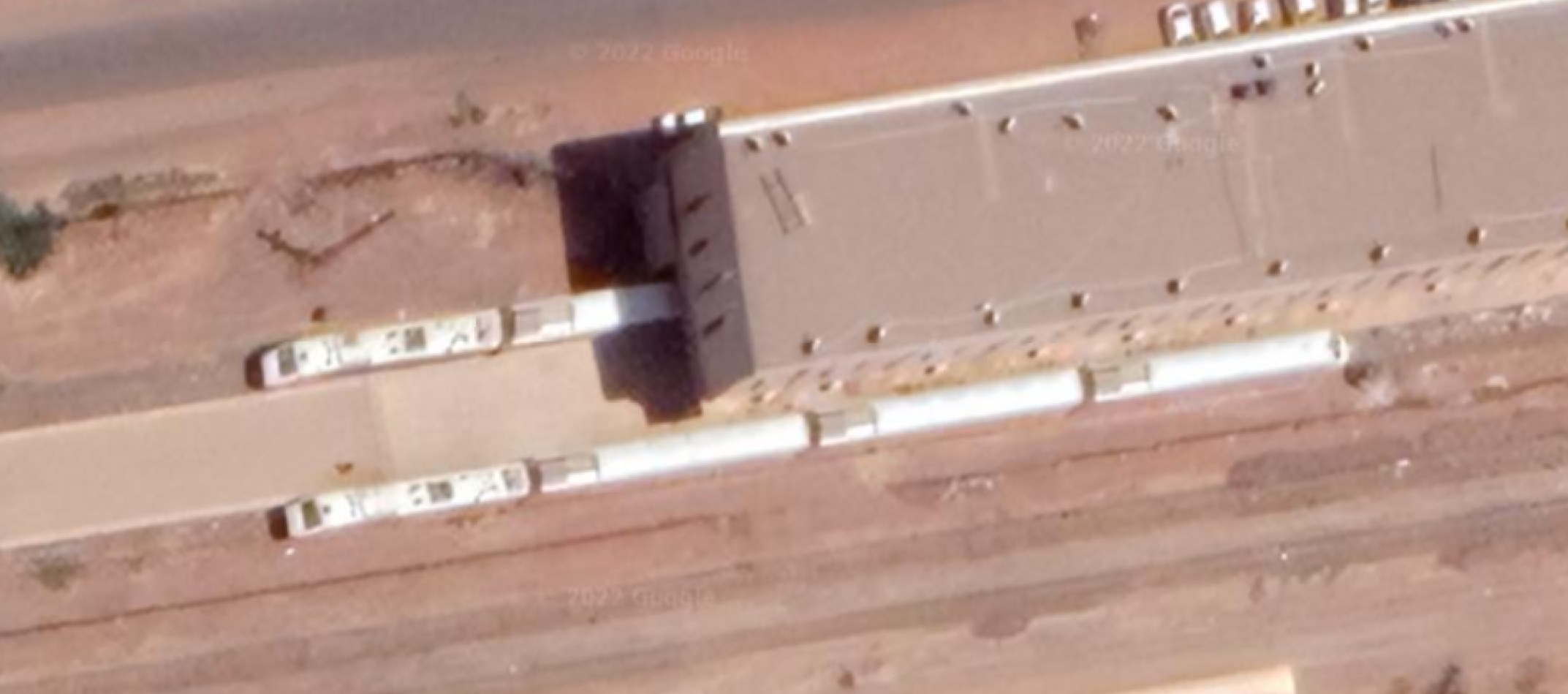
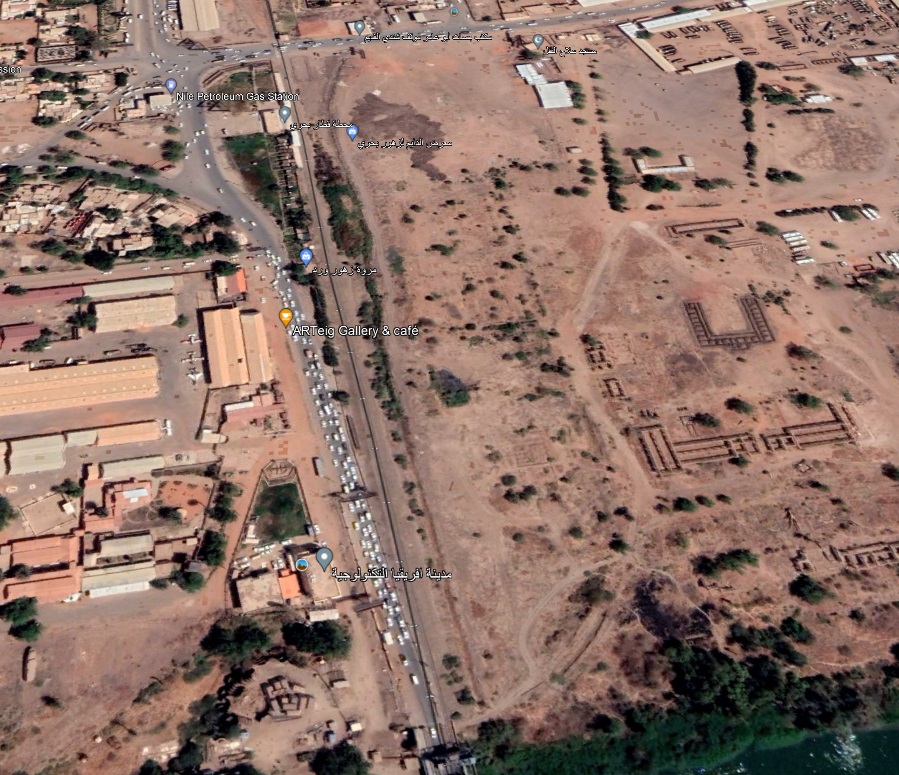
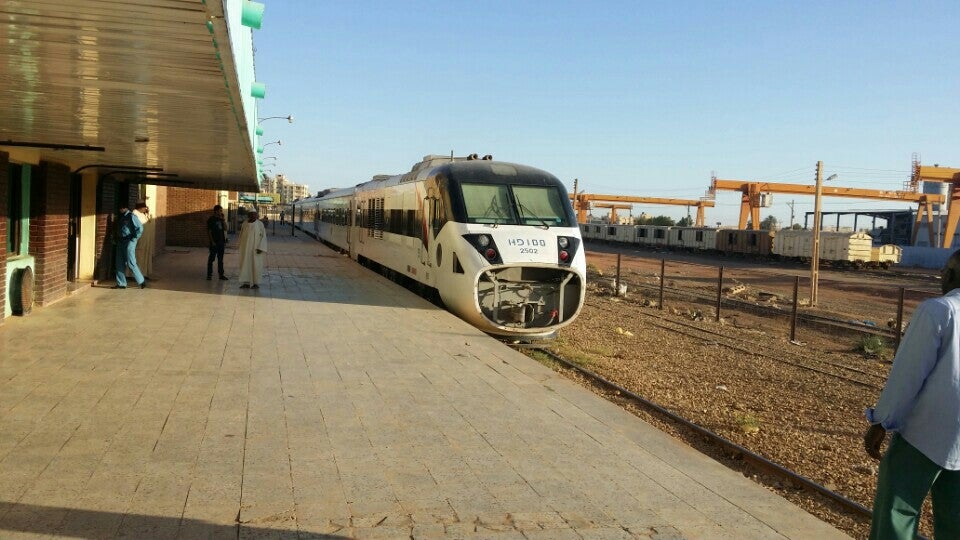
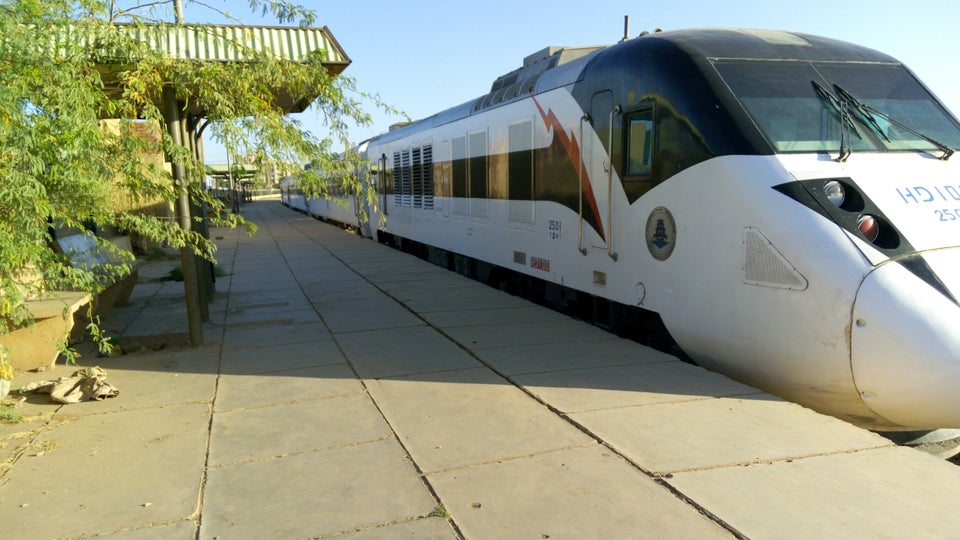
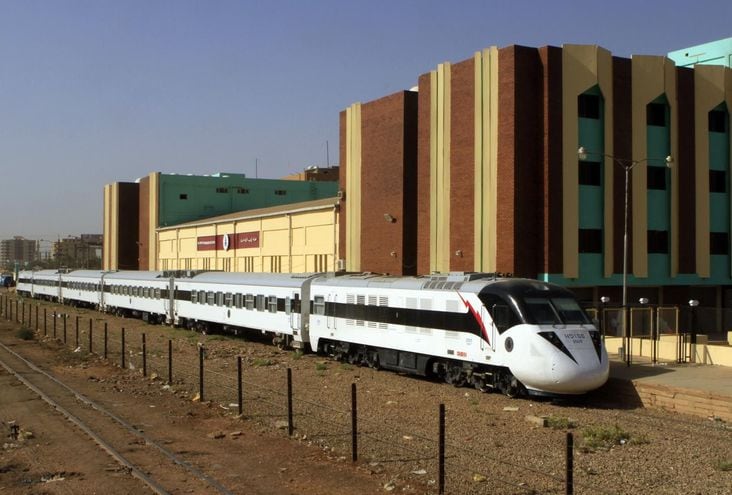
Bahri Railway Station (Khartoum North) was, in 2014, the terminus for the new Nile Train service. The service runs from Port Sudan to Khartoum by way of Atbara and is provided by four-car DMU trainsets. I have struggled to date to identify technical details for these units. They are supplied by Chinese manufacturers. The first sets arrived in 2014, further sets arrived in 2018. [31]
North of Bahri Railway Station the 3ft 6in gauge line travels North towards Atbara. Train speeds are low and the journey as far as Atbara takes about twice the time a bus needs to complete the journey, but trains are comfortable, safe, air-conditioned and cheaper than the buses. … “Every Nile Train service is almost full with an average passenger load of around 280. … Passenger Hannah Ali Mohammed, 35, said, ‘I think most people travelling between Khartoum and Atbara will stop using buses and change to this … train.’ … Student Ahmed Al-Haj Omer, 23, said … ‘It’s safer. There are a lot of bus accidents on the road between Khartoum and Atbara.’ … A bus ticket also costs about 50 per cent more than the £4 train trip. [32]
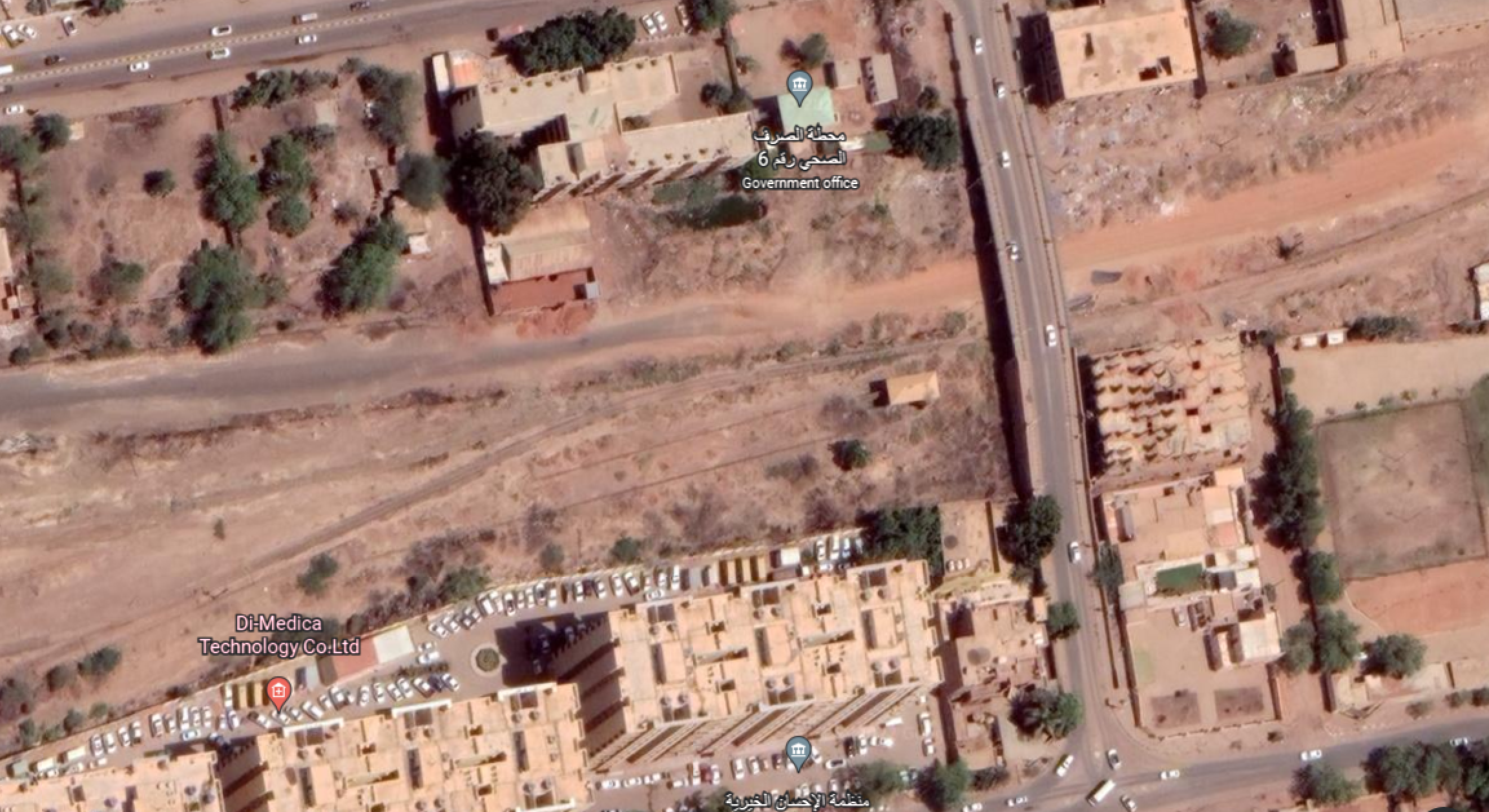
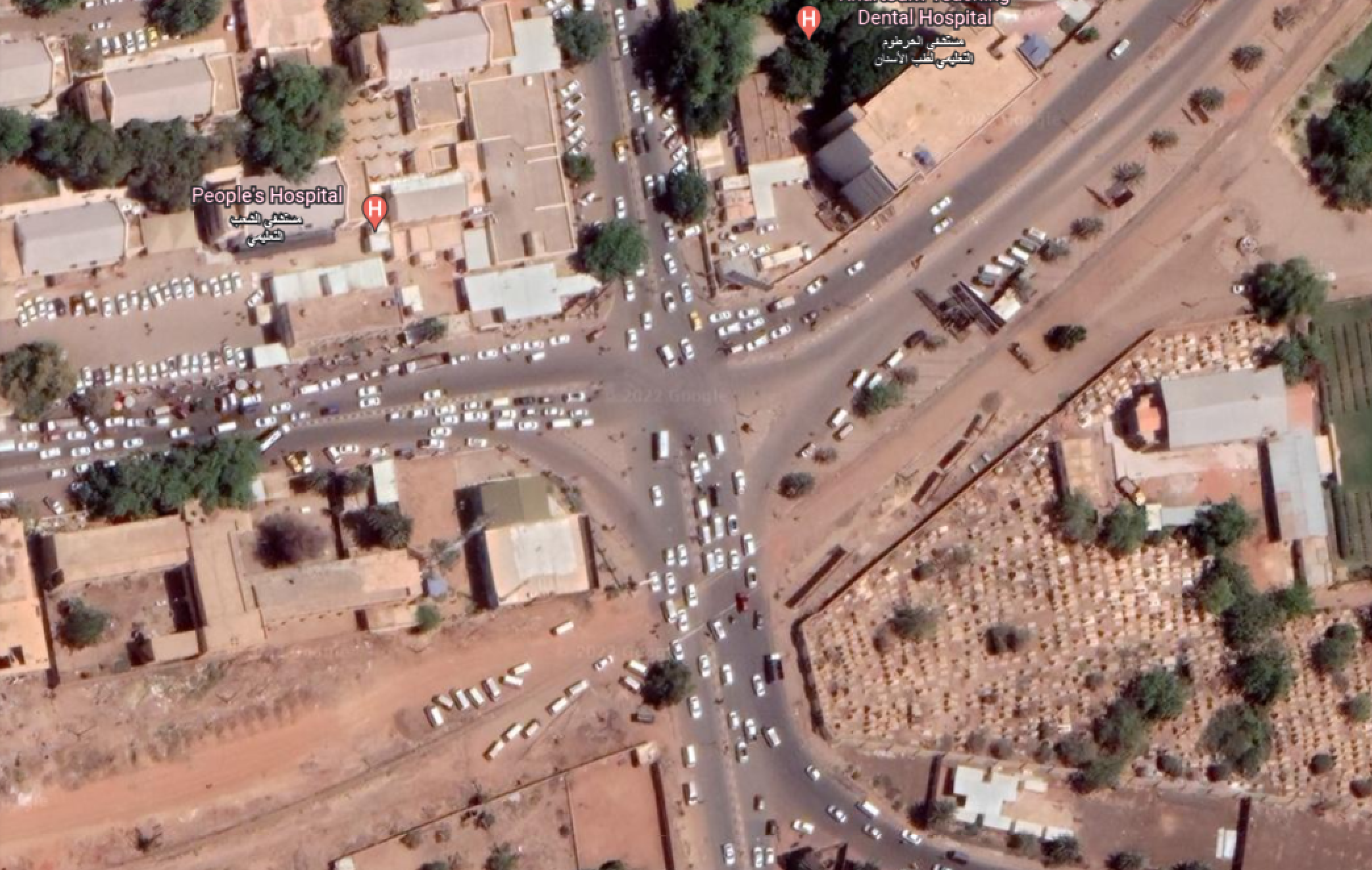
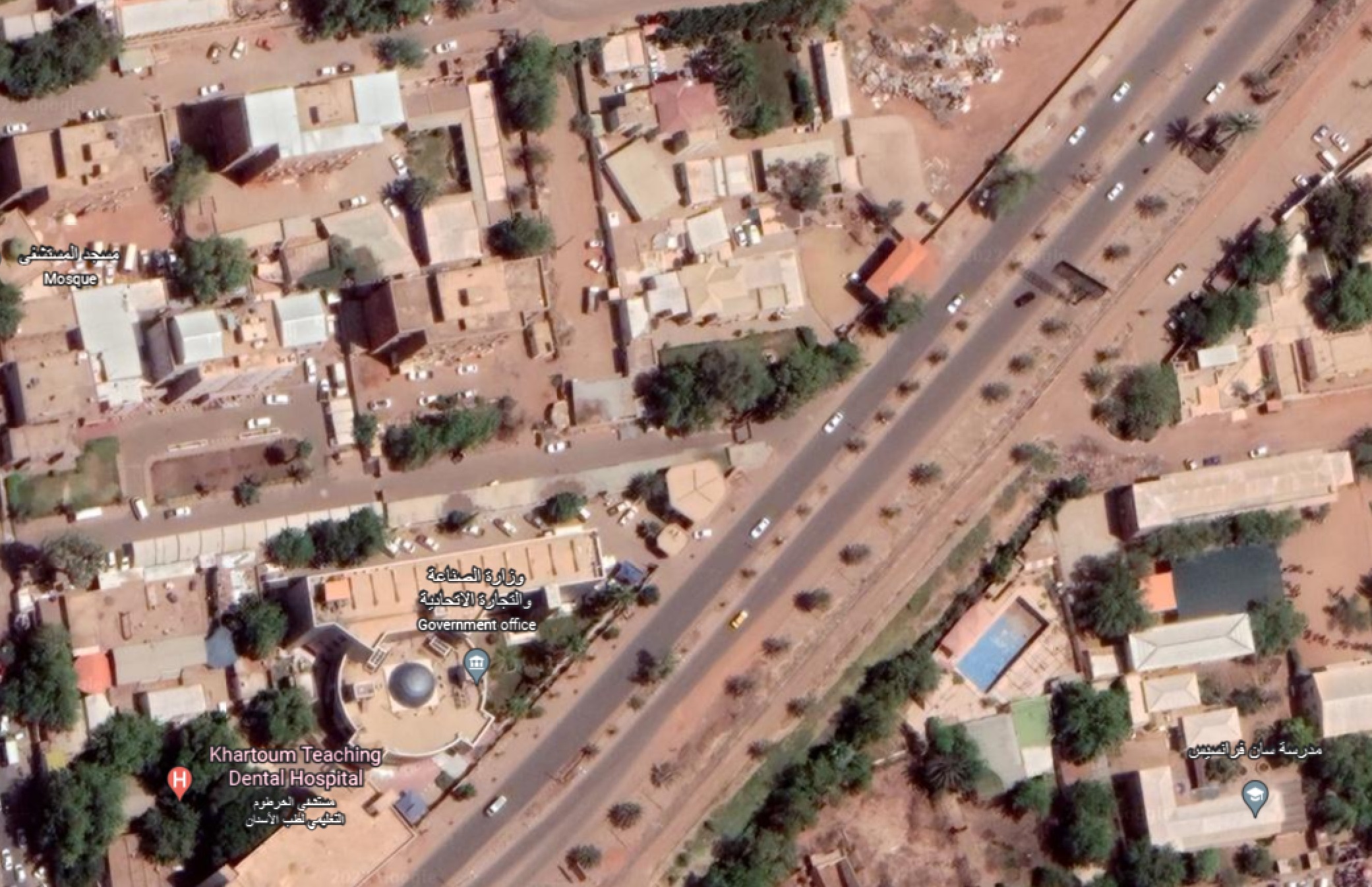
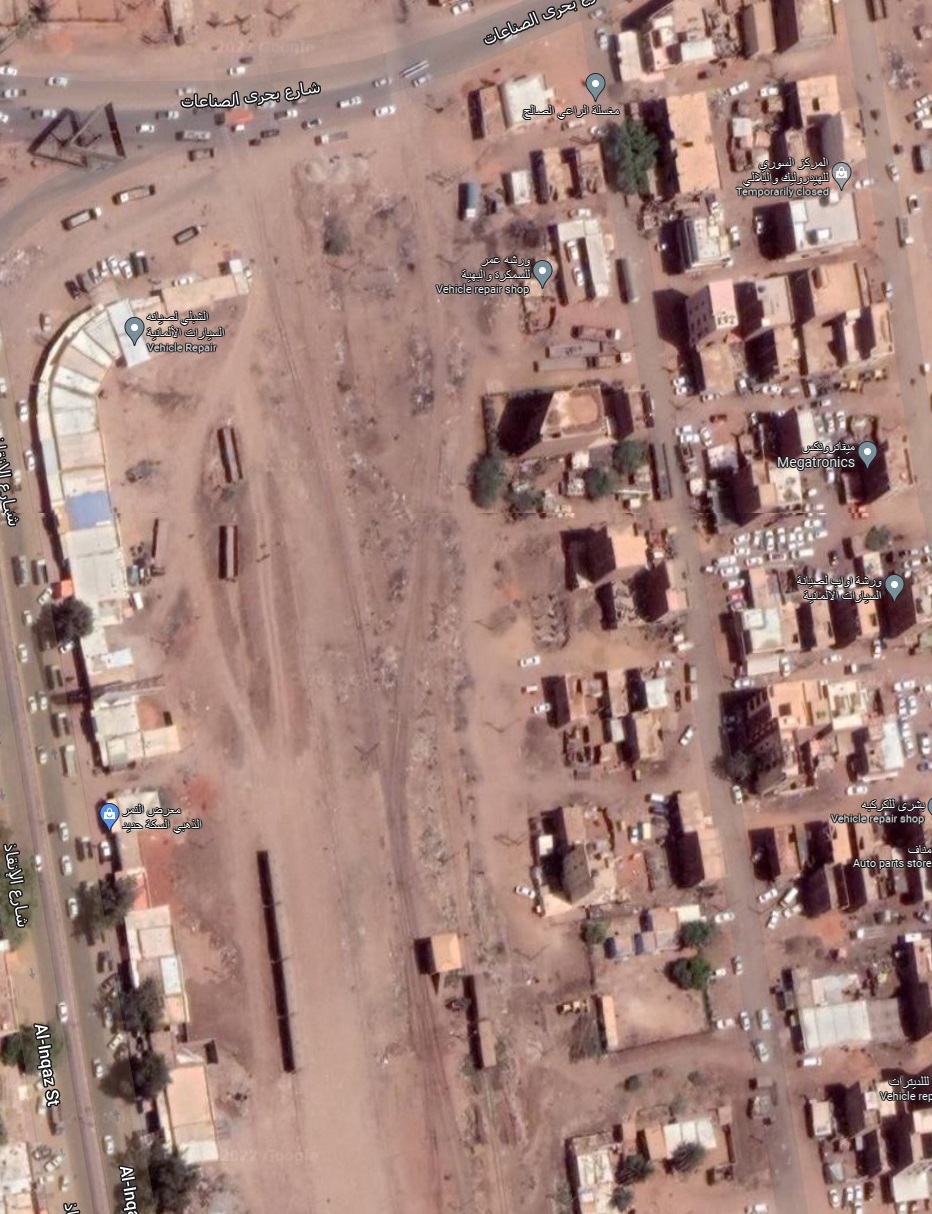
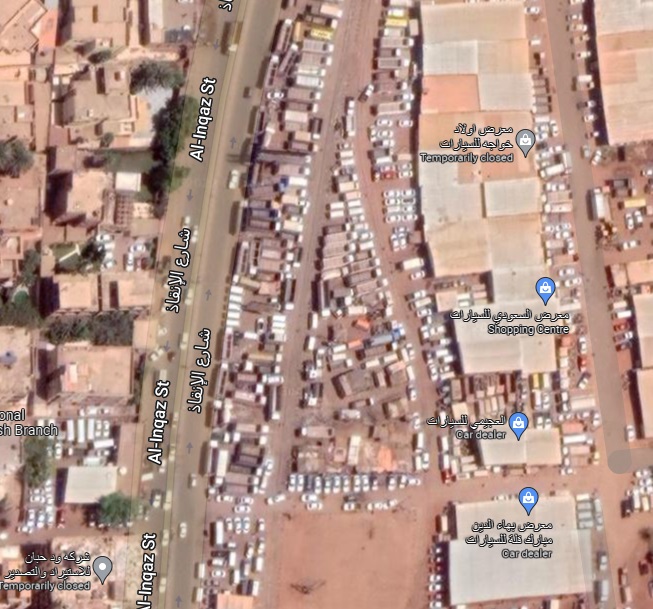
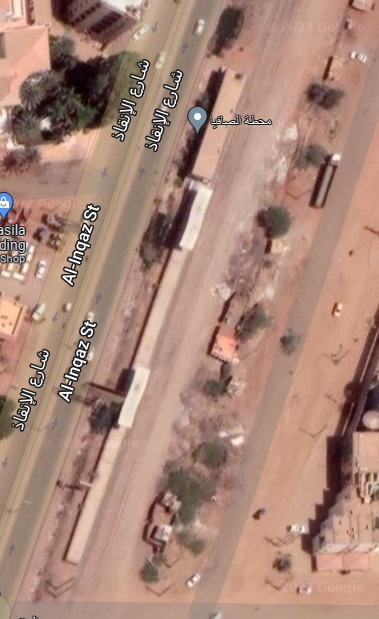
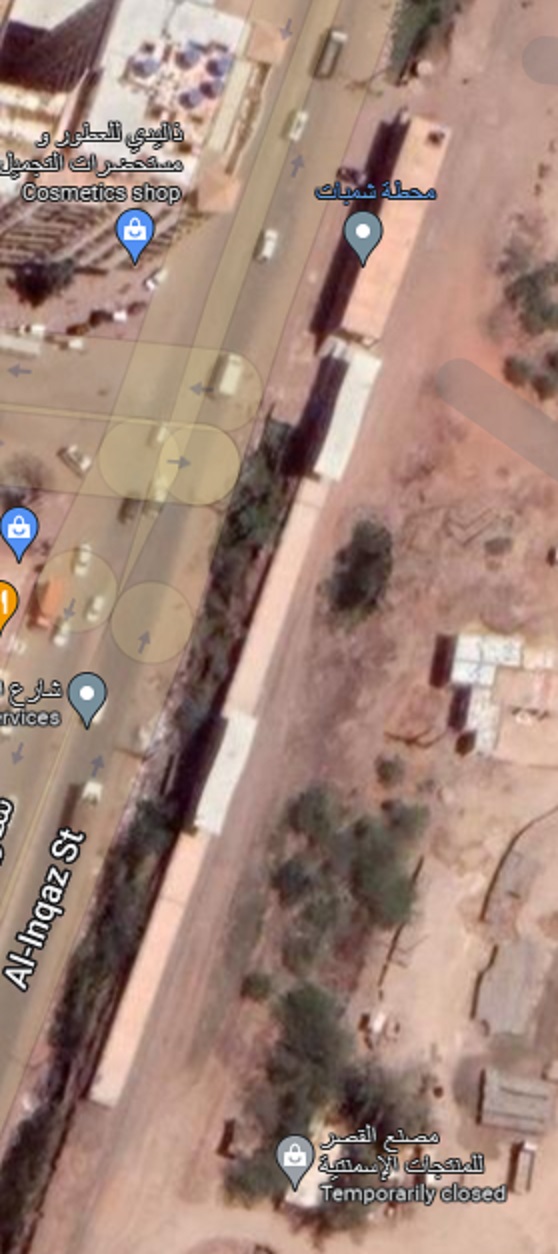
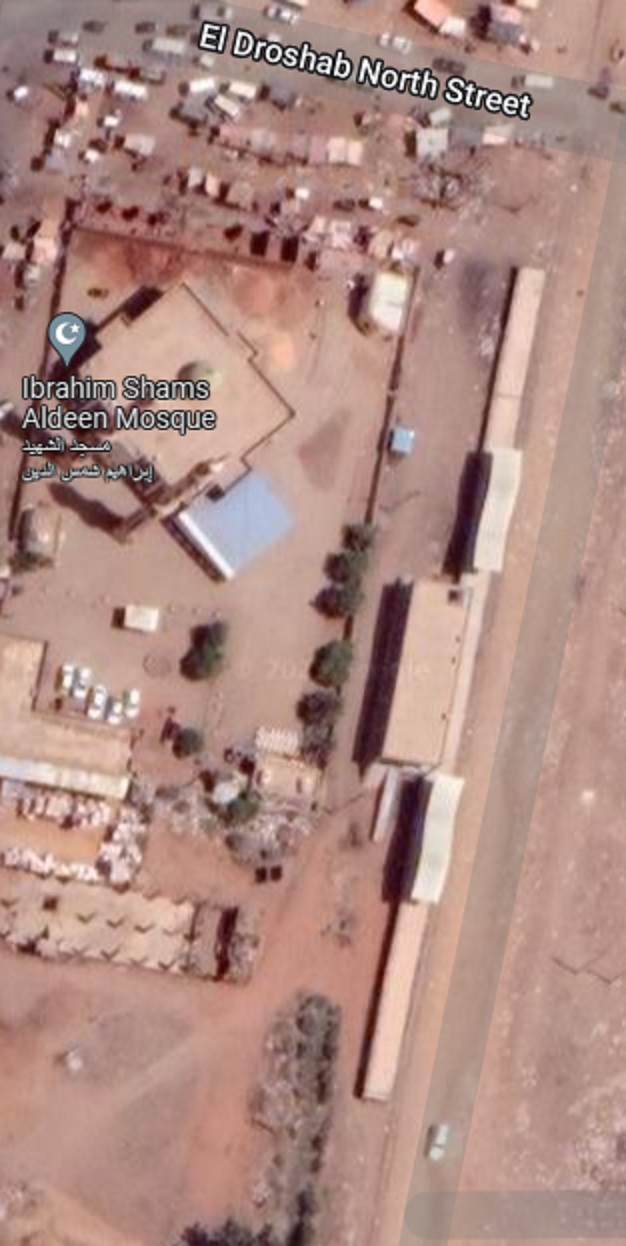
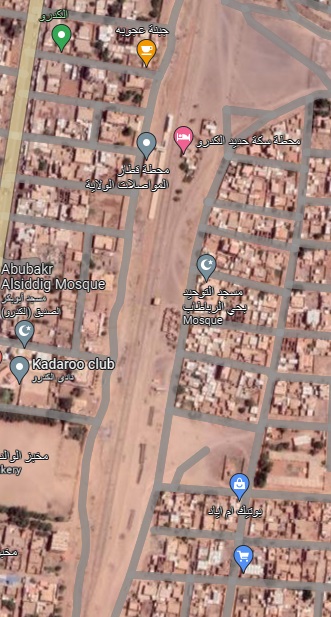
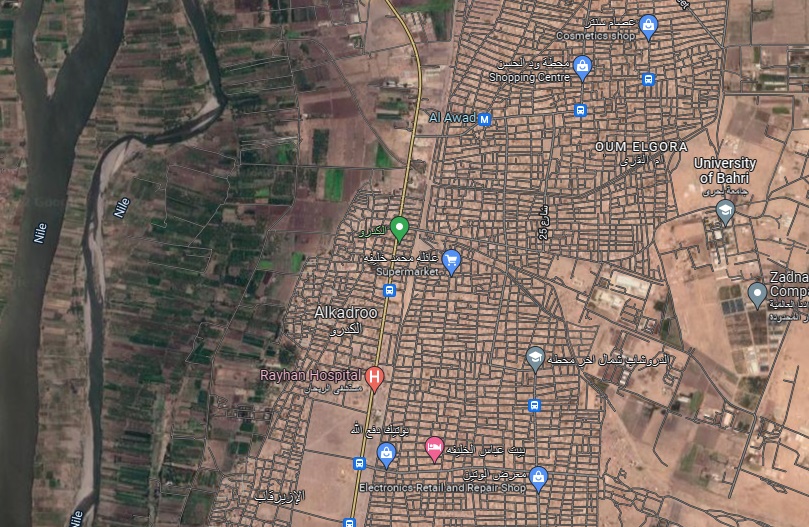
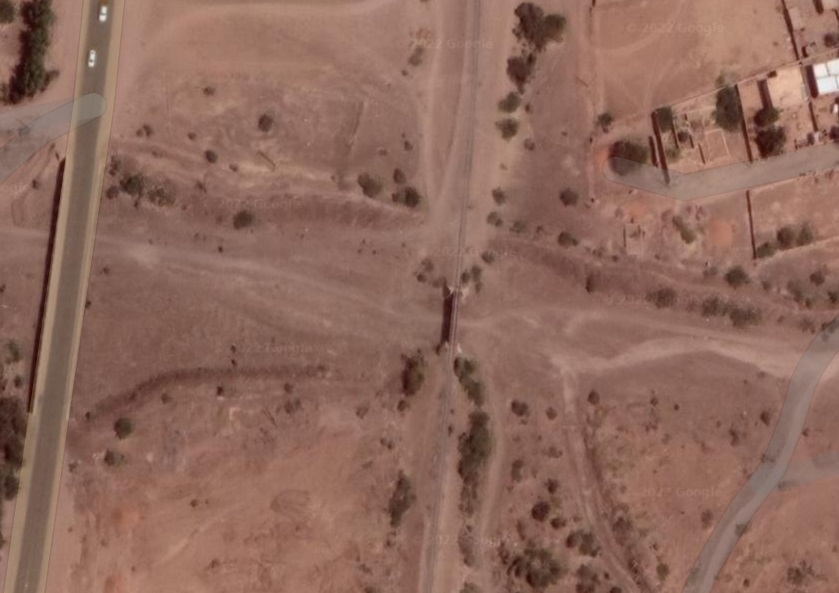
The condition of the rails is not necessarily as good as might be hoped, and there is little to no segregation between the trakcs and the wider world. This satellite image illustrates the kind of problems which have still, in 2022, to be addressed. The mainline can be made out running close to and parallel with Ai-Inqaz Street. The northern access to the goods yard at Bahri Station runs a little further to the east. Both are crowded by other uses at this location. [Google Maps]Suburban Railway Station in Khartoum North. [Google Maps]A further suburban station alongside Al-Inqaz Street, this time at its junction with Al Baraha Street. [Google Maps]The next suburban station is close to Ibrahim Shams Aldeen Mosque. [Google Maps]Slightly more significant facilities appear at Alkadroo [Google Maps]Centred on the smae location as the satellite image above. This image shows that we are running parallel to the Rive Nile, perhaps about 3 km from the main stream. The modern railway still runs on the formation of the British Military line which secured the territory after the Mahdist revolution. [Google Maps]Both road and rail need to bridge dry river beds which flow fast when it rains. [Google Maps]The next station is at El-Kabashi. We are now running about 1.5km to the East of the River Nile. [Google Earth]Another station, this time on the East side of the town of Al-Sagai. [Google Maps]
Further stations follow on the journey North. El-Gaili is the last before open desert. Further north the station buildings which remain are older, for example that at Ed Dowyab, as shown below.
The old station at Ed Dowyab, Shendi. [Google Maps]
Shendi is reached just a little further along the banks of the Nile.
Shendi Railway Station is more modern and sits at the heart of the conurbation. The Nile can be seen in the top left corner of this satellite image. The station site runs from middle-bottom to top-right of the image. [Google Maps]
Given that our focus is meant to be on the railways of Khartoum. it is at this point, just over 200km from Khartoum, that we leave the line heading North to Atbara.
Lines South from Khartoum Central Station
Historically there were junctions at either end of Khartoum Central Station. At the East End a line branched away to the Southeast following the West bank of the Blue Nile to Wadi Madani and beyond. The route of that line is shown below by a thin red line. In the 21st century, its route is beneath one of the main arterial roads into and out of Khartoum (Africa Street).
South and Central Khartoum in the 2st century. [Google Earth]
The ‘live’ line which leave Khartoum Central Station heading South West along side the White Nile, eventually crosses the southern suburbs of the city to rejoin the line heading Southeast close to the Blue Nile. This line can be seen marked on the satellite image above.
The Blue Nile Bridge was built when General Sir Francis Wingate [34] was Governor-General of Sudan. It was decided to “bring the railway over the Blue Nile … and to build it along the West Bank of the river to Sennar. Here the line would turn West, cross the White Nile at Qoz Abu Jum’a and head for el-Obeid. … The Sudan Government signed a contract with the Cleveland Bridge& Engineering Com[pany … for the building of a bridge to carry road and rail together … with a rollinglift span for the passage of river craft and seven spans of 218ft each. … Work on the bridge began in 1907. … Passenger and goods stations, a locomotive and carriage and wagon depot and marshalling yards were laid out at what were then the southern limits of the city, and opened in 1910.” [12: p79]
Hill stated in 1965, that it was “only recently that Khartoum Central [had] become a through station. In 1964, the section of the Gezira line between Khartoum Centra; and Soba via the airport was pulled up releasing valuable land for urban development.” [12: p80] Trains from the South now run along a line built from the West end of Khartoum Central through the marshalling yard South to Shagara Station and eastward to Soba.
Hill notes that the Cleveland Bridge Company also constructed the bridge over the White Nile at Qoz Abu Jum’a. The railhead rached that bridge in 1910 and the first train crossed the White Nile at that location on 24th December 1910. [12: p80] This line allowed the economic potential of the Gezira (cotton) and Kordofan (gum arabic) to be exploited.
Consideration of this line and others in the South will have to be left for a future article. … We return to looking at the railways on the South side of Khartoum City Centre. The plan immediately below schematically represents the key elements of the network as it was at the end of the Second World War. Two short lines ran from the West end of the Station, to Abu Se’id on the West side of the White Nile and beyond El Lamab on the East bank of the White Nile.
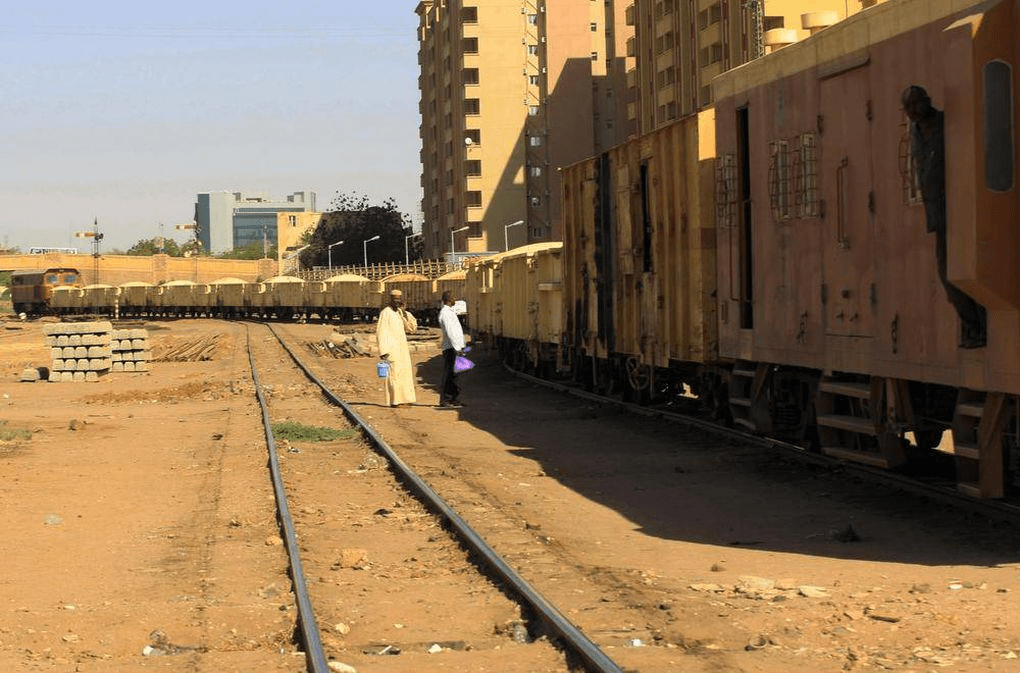
An extract from a British Survey of Sudan from 1945 which shows lines leaving the West end of Central Station, one leading down the White Nile to just beyond El Lamab, the other crossing the White Nile to Abu Se’id. [33]This satellite image shows Khartoum Central Station and the engine, carriage and wagon works/depot to the West. [Google Earth]The Sunday Railways maintenance depot and marshalling yard to the West of Khartoum Central Station. [Google Earth]A closer view of the maintenance facilities. [Google Earth]A modern goods train at the West end of the Central Station site. A signal box and semaphor signals can be seen in the distance. The picture is taken looking East, (c) Sameh Fathi. [37]
The line to Abu Se’id
The short line to Abu Se’id which is shown on the extract from the British Survey of Sudan from 1945 suggests that the line crossed the White Nile but was not extended any further. Looking back through available maps we can see that the line from Central station had been extended to the vicinity of the Blue Nile close to the confluence of the two rivers.
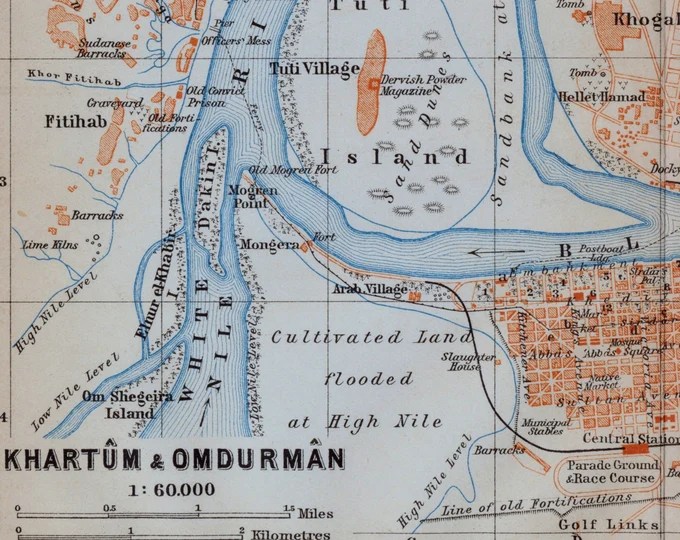
Khartoum and Omdurman in 1914. The 3’6″ gauge line has been extended round the West of Khartoum towards the Blue Nile. This map also shows the line of a steam tramway which will feature in a future article. That line is shown running from Morgan Point (where it connected with a ferry service to Omdurman), through Mongera and on into the centre of Khartoum closer to the Blue Nile than Central Station. [42]
The Old White Nile Bridge (also known as the Redemption Bridge or the Omdurman Bridge) is a steel truss bridge in Sudan on the road connecting Khartoum on the White Nile to Omdurman. The bridge was built between 1924 and 1926 by Dorman Long from Teesside, England: it is 613 metres long and is supported by seven pairs of round columns. [43] If the 1945 map extract is to be believed the 3’6″ line was extended from its position on the map immediately above this paragraph to cross the White Nile at the bridge.
However, we already know that provision was made for an electric tramway to replace an earlier steam railway and that this new electric system was in use in the 1930s. It seems as though the line shown on the 1945 map is probably a minor cartographical error. Please see later articles about Khartoum’s railways and trams.
We do know that later in the 20th century the route of the 3’6″ railway Northwest of Central Station was revised and even later abandoned. In the next image, the area is shown on a 1950s map of Khartoum. …
Khartoum in the 1950s. The line Northwest from Central Station is seen terminating just short of the Blue Nile but at a pint further West from that shown in the 1914 map above. Interestingly a connection is shown from this line to what is most probably the 3’6″ electric tramway running parallel to the river, through a series of sidings at the river side. At present, I can only speculate as to the purpose of these sidings. [16]The thin red line imposed on this satellite image shows the route of the railway Northwest of Central Station. That route is now occupied by one of Khartoum’s major roads – Army Road which leads to Nile Street by the Blue Nile. A further new road has been constructed which leads from Army Road to the new Victory Bridge over the White Nile [Google Earth]The White Nile Bridge at Khartoum/Omdurman in the 1930s looking along its full length and showing (if my reasoning is correct) the electric tramway tracks crossing the bridge. This is supported by evidence of a catenary system above the tramway tracks. [38]The Old White Nile Bridge (Omdurman Bridge) seen from the river bank. It is possible that the image shows the catenary for the electric tramway and so cannot be dated before the 1930s. [39]The Old White Nile Bridge in the 21st century (c) Khalid Hassan [40]
The line to the White Nile beyond El Lamab
Satellite imagery bears little resemblance to the 1945 British Survey of Sudan. The large island in the White Nile which features so prominently in the 1945 survey does not exist. The only place name similar to ‘El Lamab’ is Al Lamab which is an area to the East of the Airport close to ten Blue Nile.
Logic would suggest that the current railway follows the route shown in 1945. An estimation of the distances involved would place the point where the present railway turns to the East in the vicinity of the end of the railway drawn on the 1945 map. The satellite image below suggests that the line used to terminate on the South side of Wad Ageeb which appears on the East bank of the White Nile close to the bottom of the image.
A satellite image of the area South of the Centre of Khartoum which is now heavily urbanised. The railway which is still in use is shown by a grey line on the image. {Google Earth]This enlarged satellite view gives no further clue as to the location of the railhead shown on the 1945 survey. [Google Maps]
Final Comments
We have looked at all of the 3ft 6in gauge railway lines in Khartoum as best we can. There are a number of things which would benefit from further investigation.
The line north to Egypt and the line to Port Sudan (both 3’6″ gauge)
Lines to the South of Khartoum (3’6″ gauge)
the Steam Trams in Khartoum in the early 20th century (narrow gauge)
the Electric Tram network of the 1930s (3’6″ gauge)
Industrial lines in Sudan which probably include the lines noted on the South bank of the Blue Nile close to its confluence with the White Nile, but definitely do include a narrow gauge railway serving the cotton industry to the Southwest of Khartoum in Gezira (narrow gauge)
the motive power and rolling-stock on Sudan’s Railways.
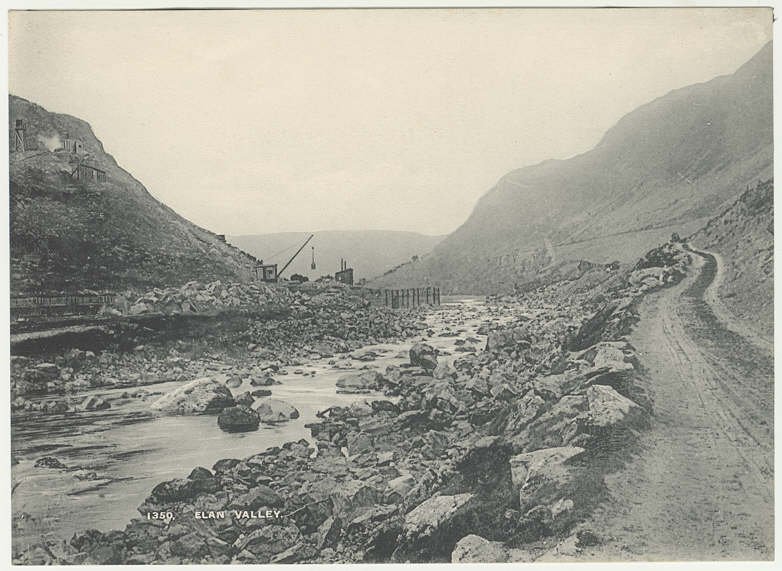
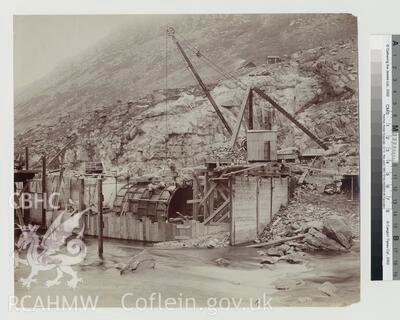
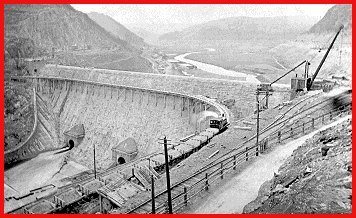
The Elan Valley Railway was built to make the construction of the Birmingham Water Corporation Dams in the Elan Valley possible. It transported equipment, materials and men to the different dam sites. It was also used by visitors from Birmingham and it carried King Edward VII and Queen Alexandra for the official opening of the dams on 21st July 1904.
Work on the construction of the line began in 1893 and was completed in 1896. It was built to standard gauge in four separate stages.
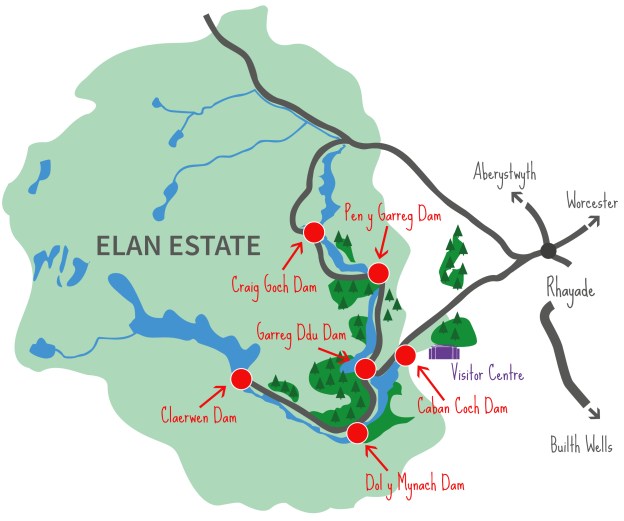
The four separate sections of the railway were numbered 1 to 4.
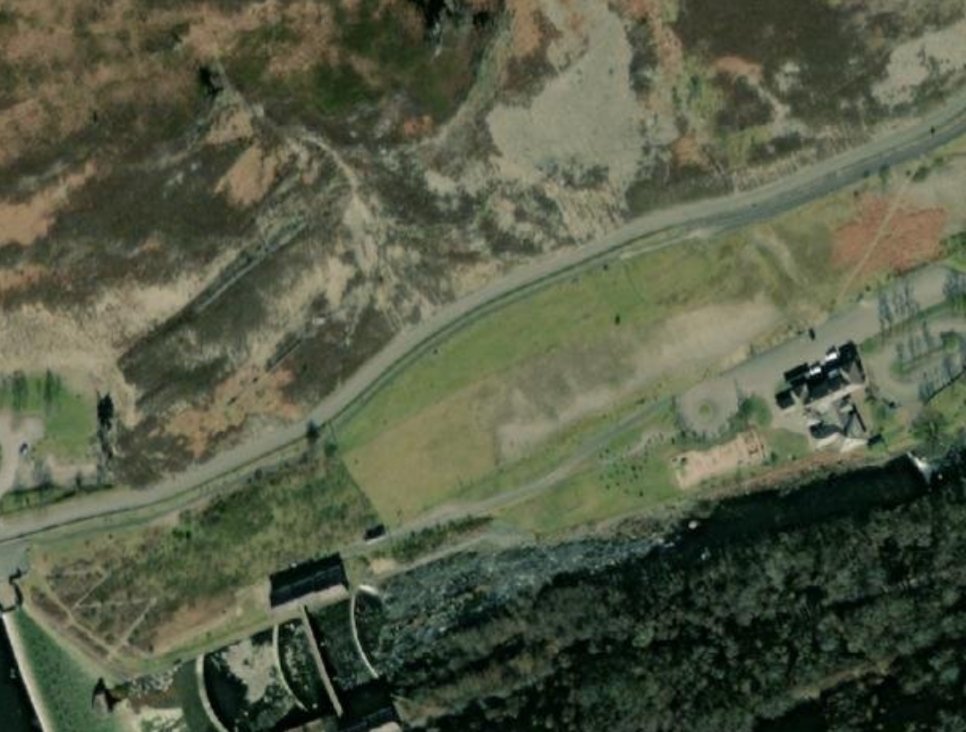
Railway No. 1 extended from Elan Valley Junction, the junction with the Cambrian Railway Southwest of Rhayader, just beyond Rhayader Tunnel, to what is now the Elan Valley Visitor Centre. These buildings were then the location of workshops and sheds of the contractor and sat below the site of the proposed Caban-Coch Dam.
Railway No. 2 left Railway No. 1 close to the Baptist Church in Elan Village and followed a higher alignment on the North side of the Elan Valley. It passed above the site of the Caban Dam and on westward to the site of the Careg-Ddu Dam
Railway No. 3 ran from Careg-Ddu Northeast to Pen-y-Gareg Dam.
Railway No. 4 travel North from a junction to the Southeast of Pen-y- Gareg Dam to Craig-Goch Dam
This post provides an introduction to the railway and covers the route of Railway No. 1.
The sharp ruling radius of the tracks required short wheelbase locomotives. “The locomotives were all named after rivers and streams on the Estate. The first two were acquired in April 1894 and were named Elan and Claerwen. These were joined by Nant Gwyllt and Methan in October 1894 and Rhiwnant and Calettwr in 1895. … By 1898 the steep 1:33 gradients of some sections of the railway had taken their toll on the original locomotives, so Coel and Marchnant were bought.” [1]
The Elan Valley Railway Branch Line was inspected and passed by a Board of Trade Inspector in July 1894 and the Elan Valley Railway branch was available for use from that date. Railway No. 4 took the route to the furthest away Craig-Goch Dam. Blasting the cutting mid-way along this route held up the construction by 3 months. This resulted in the cutting being given the name, ‘The Devil’s Gulch’!
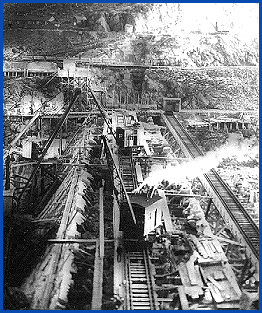
At its fullest extent, the railway had approximately 53 kilometres (33 miles) of track. In all, 17 coaches were used for transporting men to the work sites. In addition to the steam locomotives operating in the Elan Valley, steam-powered cranes, power drills and crushers were also in use. To facilitate the works arrangements had to be made to accommodate around 1000 tons of materials being moved every day!
The line was only provided for construction work and in 1906 the Birmingham Corporation Water Works locomotives were sold. In 1908, the junction with the Cambrian Railway was removed. However complete closure of the railway occurred as late as 1916. [1]
Before looking at the route of the railways in detail, it is interesting to note that In 2004, to mark the centenary of the opening of the dams, the only surviving locomotive (Rhiwnant) was brought back to the Elan Valley from a private owner in South East England. [1]
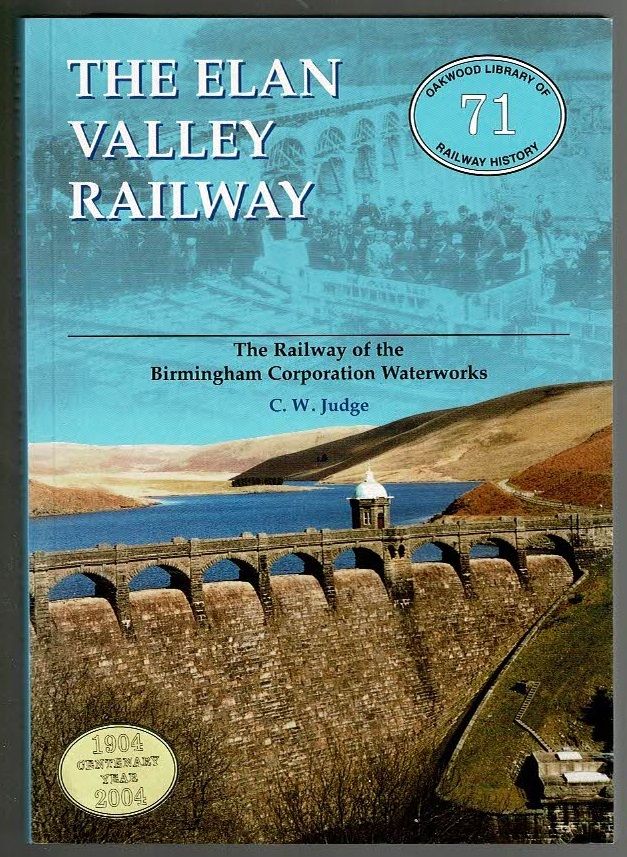
It is also worth noting that there is a detailed treatment of the railways in the Elan Valley in a book by C. W. Judge; ‘The Elan Valley Railway’, published by Oakwood Press. [2] The route is described in detail in the fourth chapter of Judge’s book. [2: p79-111]
Rhayader Railway Station
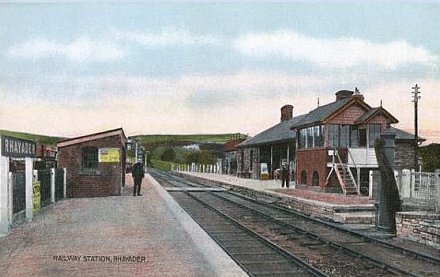
A panoramic colourised postcard view of Rhayader Railway Station in its prime. [36]
The Cambrian Railway through mid-Wales was a single-track line with passing loops. Rhayader Station sat between the stations of Moat Lane Junction and Brecon on the Cambrian mainline. Llanidloes was to the North of Rhayader and Builth Wells to the South.
Rhayader Railway Station was opened in 1864 in Cwmdauddwr, a village on the opposite bank of the River Wye. The line, which took over 5 years to build, was closed in 1962 and dismantled within months. [3]
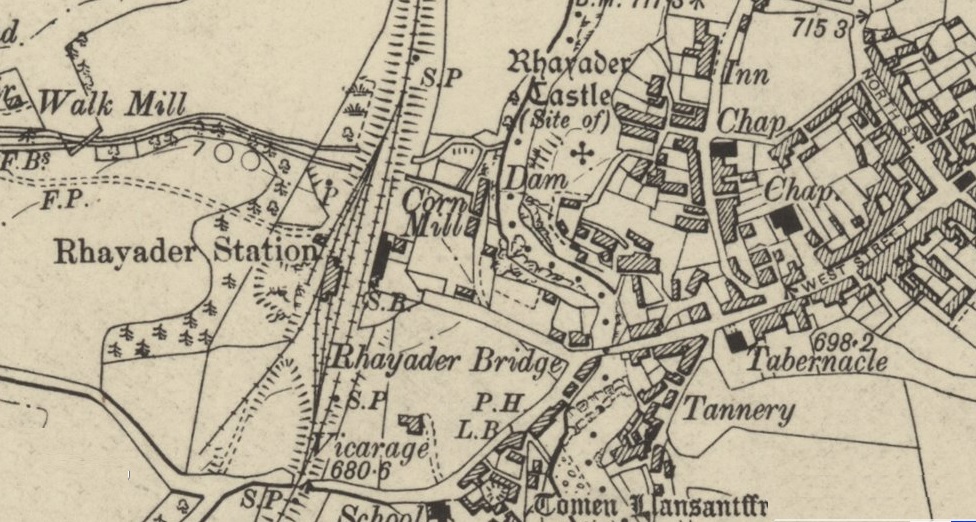
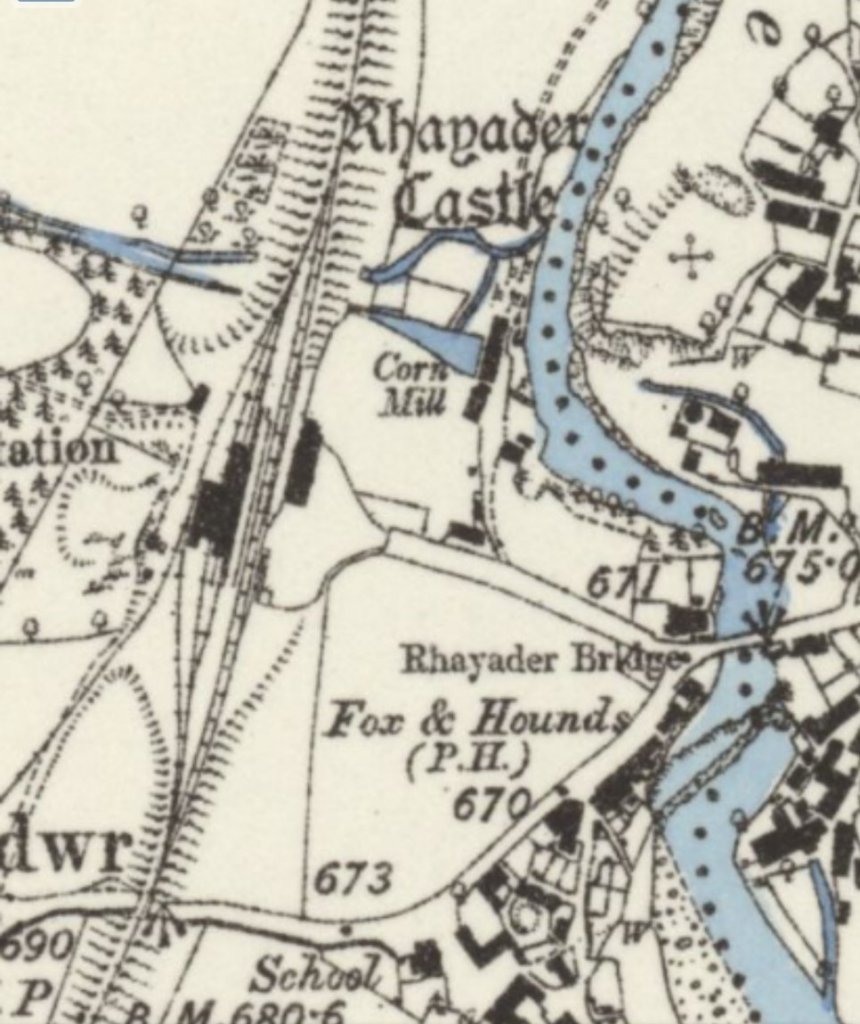
Rhayader and Its Railway Station – The Railway Station was on the West side of the River Wye with the town on the East side of the river. This extract comes from the 6″ OS Maps published just after the turn of the 20th century. [4]This extract comes from the earlier 6″ OS Mapping released in 1888. [37]
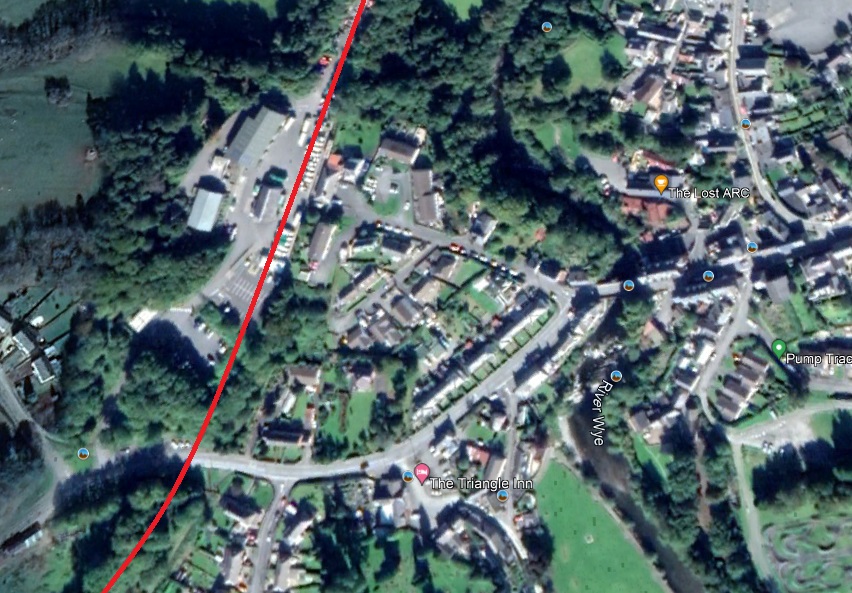
The station site in the 21st Century is a Highways Depot for Powys Council. It is access along the station approach road which is in the same location in the 21st century as that shown above. The station building on the above map is fully shaded and sits close to the words ‘Corn Mill’, the goods shed which is on the West side of the mainline, is shown hatched.
The same location is shown immediately below on Google Earth’s satellite imagery in the 21st century. The station approach is also shown below in an image from Google Streetview…
Immediately to the South of the station, the Mid-Wales line crossed the road which led up the Elan Valley. Google Streetview shows the embankment beyond the bridge location to the South. Pivoting round through 180 degrees to look towards the Railway Station, does not provide a productive image. ….
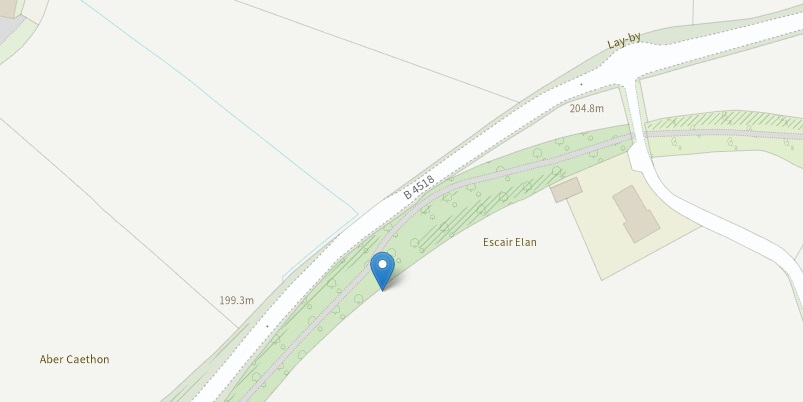
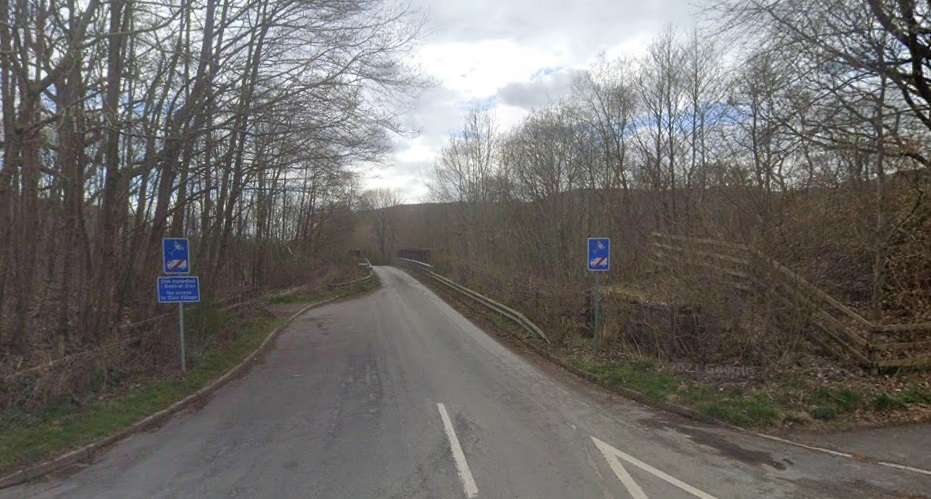
Looking South from the Elan Valley Road (B4518). The over-bridge and its abutments are long gone, the railway embankment is still visible. Alongside it, to the left of this image is the start of the Elan Valley Trail, which for a couple of hundred yards runs parallel to the old railway, climbing gradually to a summit above the Rhayader Tunnel further to the South. [Google Streetview]
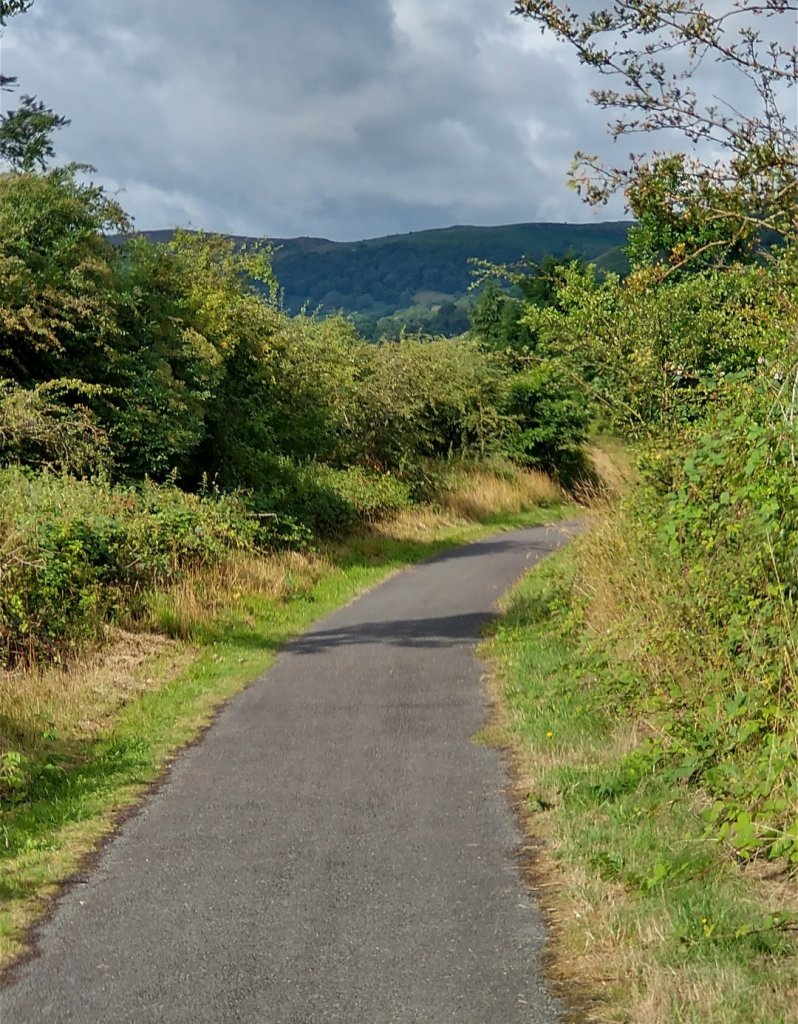
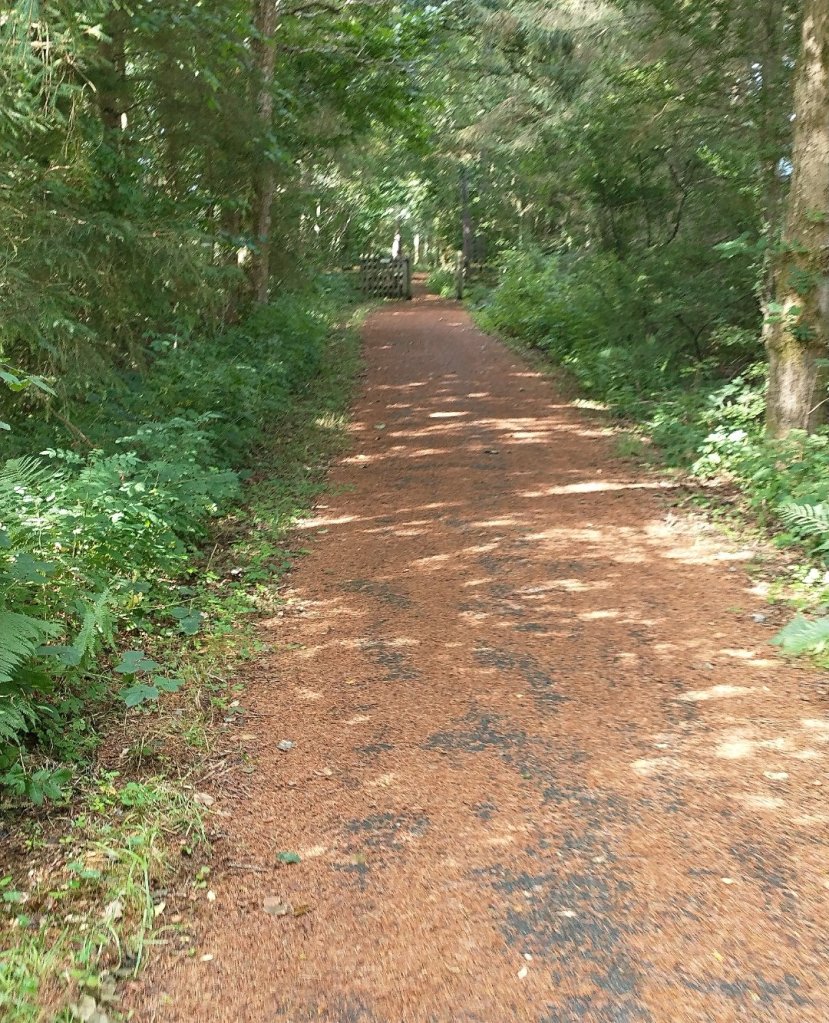
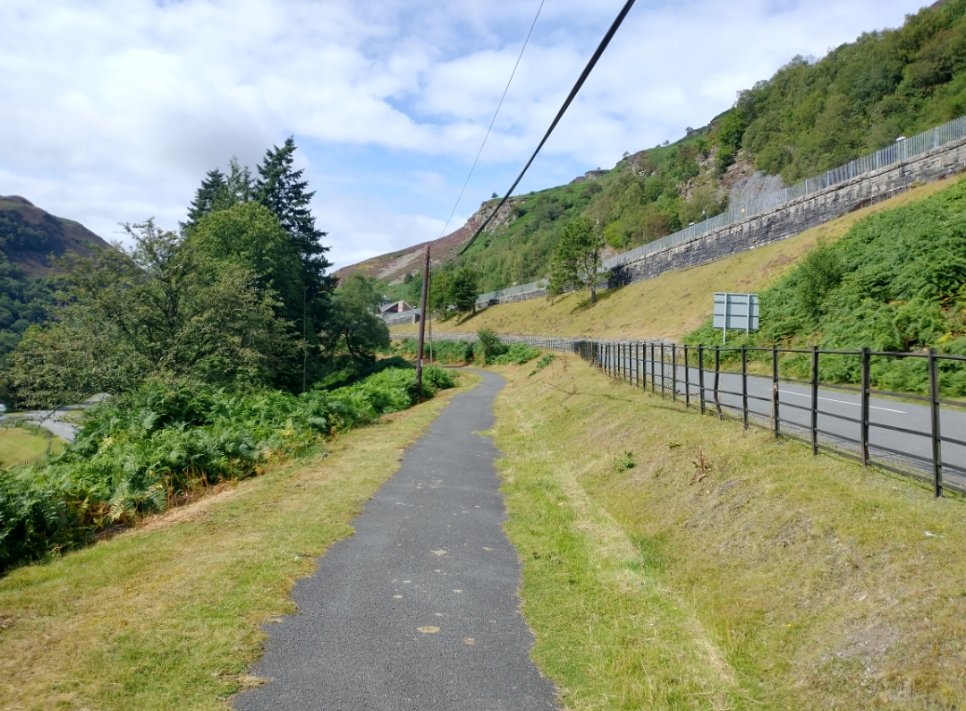
My wife and I walked the Elan Valley Trail in August 2021. Some of the photos which follow were taken on that walk. The first photograph below shows the start of the Trail. …. From that point the footpath climbs slowly alongside the old railway embankment before rising above the old line which was in cutting as it approached the northern portal of Rhayader Tunnel. The second picture below shows the Northern Portal.
The entrance to the Elam Valley Trail [My Photograph – 9th August 2021]Rhayader Tunnel: North Portal (c) Chris Parker. [5]
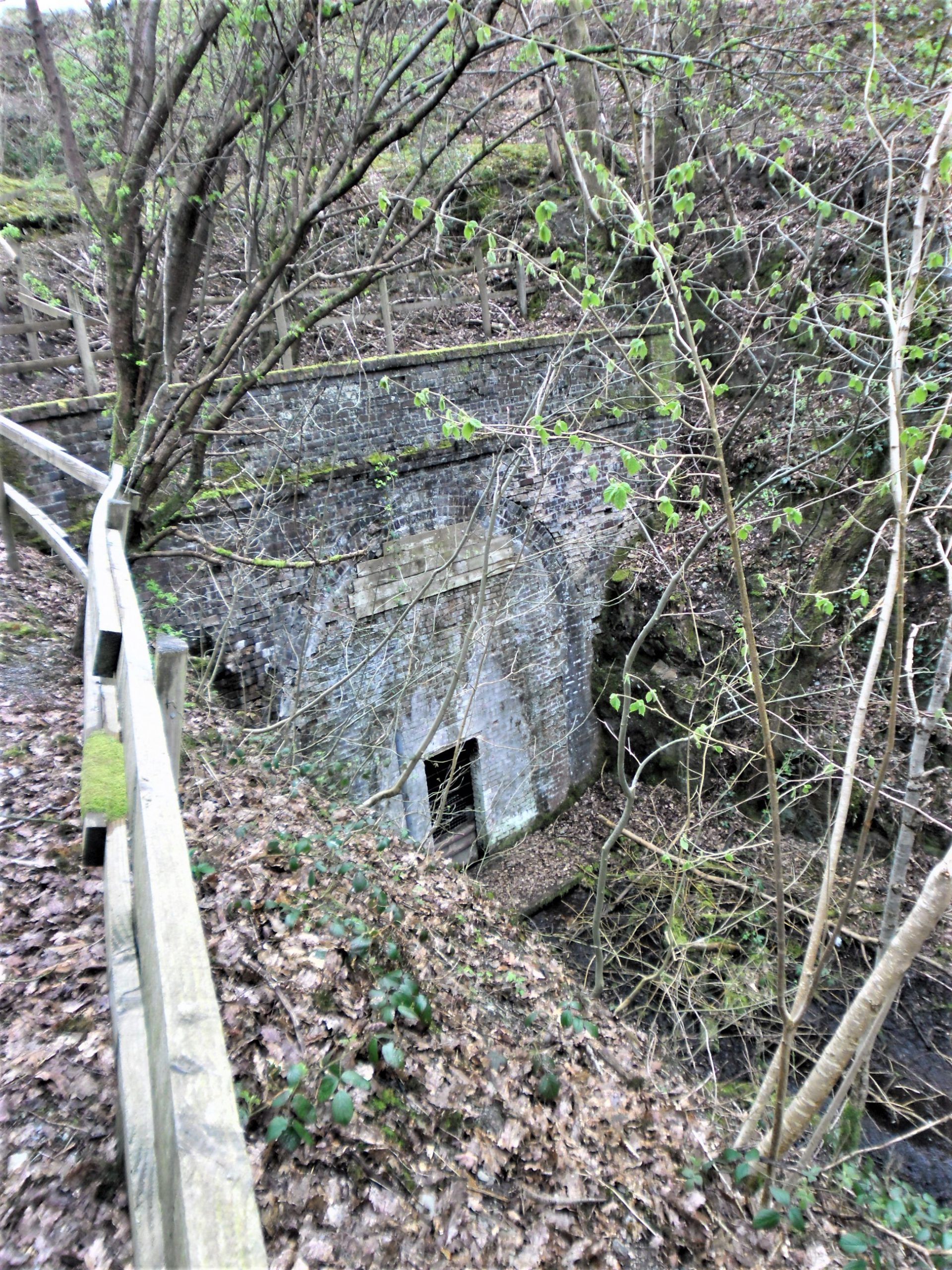
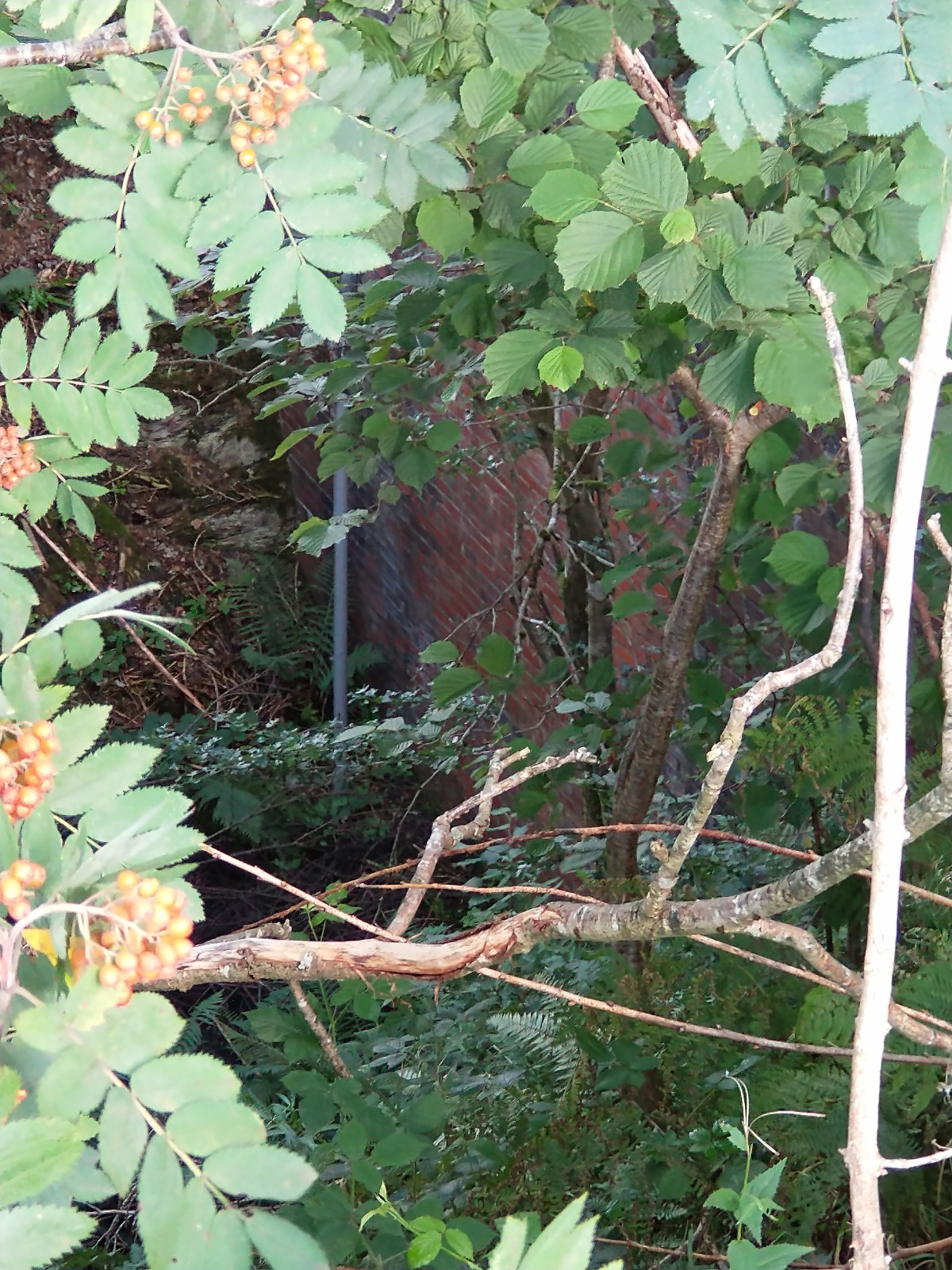
A small nature reserve sits on the land immediately above Rhayader Tunnel which the footpath crosses and the South Portal of the tunnel can be glimpsed to the right of the path through the undergrowth. (The nature reserve is intended to protect the different species of bats which have made the tunnel their home.)
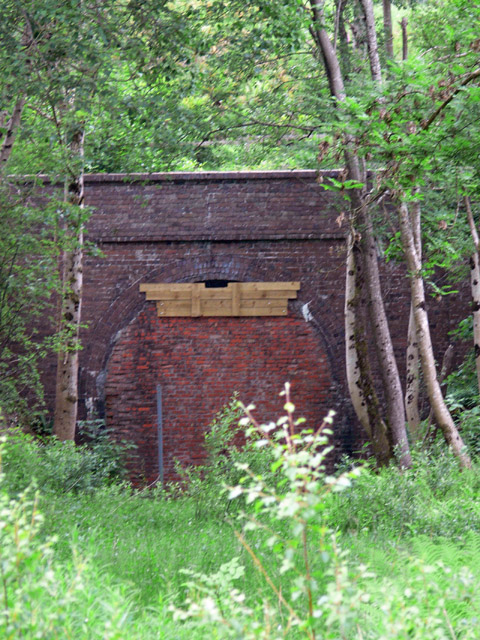
A better view of the closed South Portal can be seen at track level. The picture below is taken from the track-bed approximately at the location of the first point of the Elan Valley Junction.
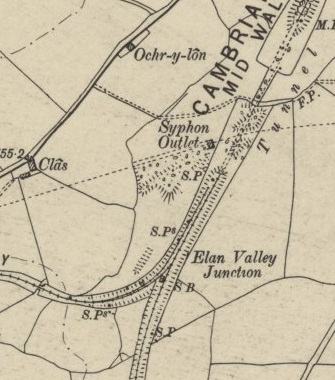
The Rhayader Tunnel and the Elan Valley Junction as shown on the OS 6″ series of maps dated 1905. On this map, the junction is shown as a single junction. The map is dated after the completion of the main work on the dams. During the period of construction traffic was such that a double junction was provided at this location. [7][8]
C. W. Judge provides a copy of Birmingham Corporation Waterworks’ drawing of the double junction with a note indication that the double junction was provided at the insistence of the Board of Trade. [2: p81] He also provides an extract from c. 1900 Ordnance Survey which shows the double junction in place. [2: p84]
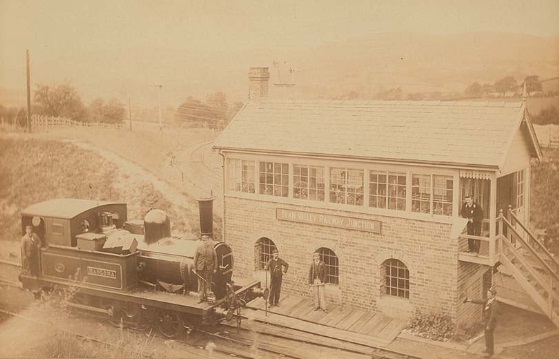
The signal box at the Elan Valley Railway junction in around 1900. The private Elan Valley Railway, can just be made out behind the signal box steps on the righthand side of the image. The railwayman on the right is holding the token for entering the single line track system. This image is a copy of the image held by the People’s Collection, Wales and is reproduced here under their Creative Archive Licence (see Reference 11, below) which permits its use on a Non-Commercial basis. [12] Judge also provides a copy of this image which has a slightly better contrast which means that the Elan Valley line can also be made out much more clearly heading away from the mainline behind and to the left of the signal box. [2: p85] Judge has another, much better, view of the junction and signal box [2: p83] but I have not been able to find that image available to share on the internet.
Within a very short distance from the Elan Valley Junction the branch line was provided with storage/exchange sidings. Some of these sidings are clearly shown on the map extract below. Judge refers to these sidings as the Down Noyadd Sidings. the Up Sidings which are evident on the OS Map c. 1900 [2: p84] are no longer shown on the 1905 extract.
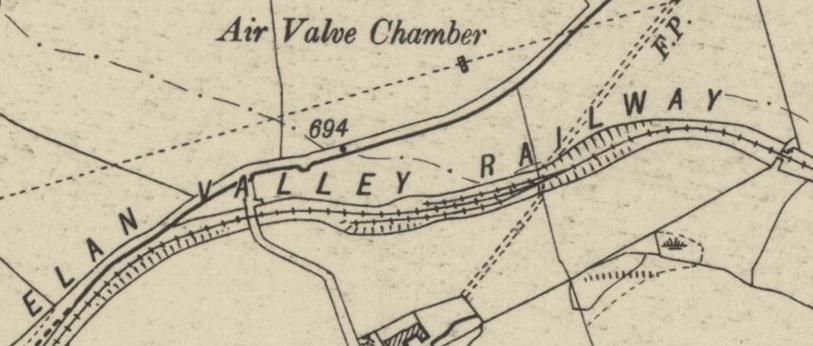
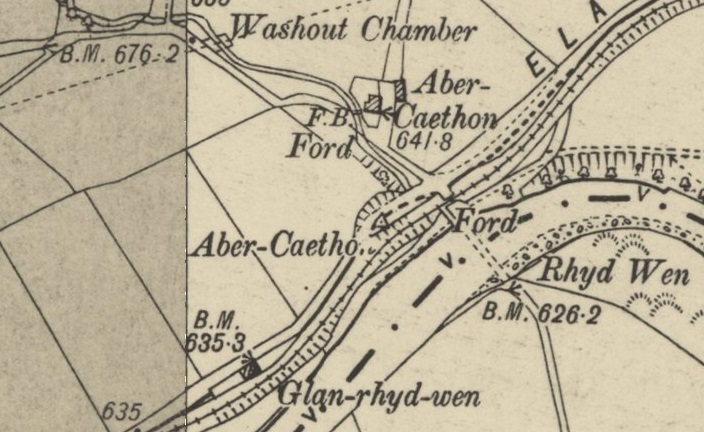
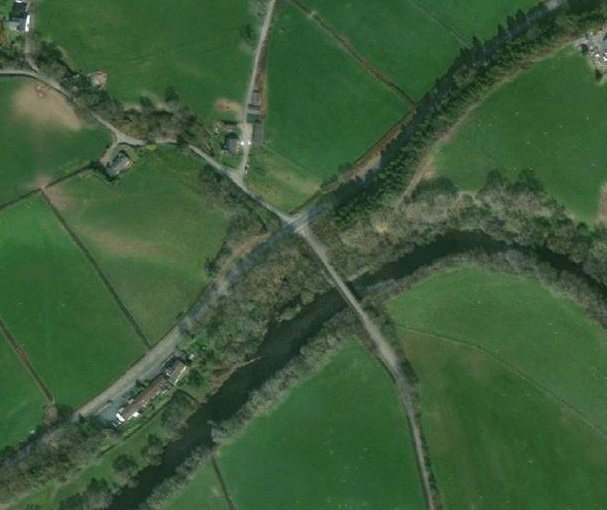
Travelling on along the line, the next point of interest is that shown on the map extract below. At the turn of the century the line passed over a narrow lane leading to a ford in the Afon Elan at Rhyd Wen.
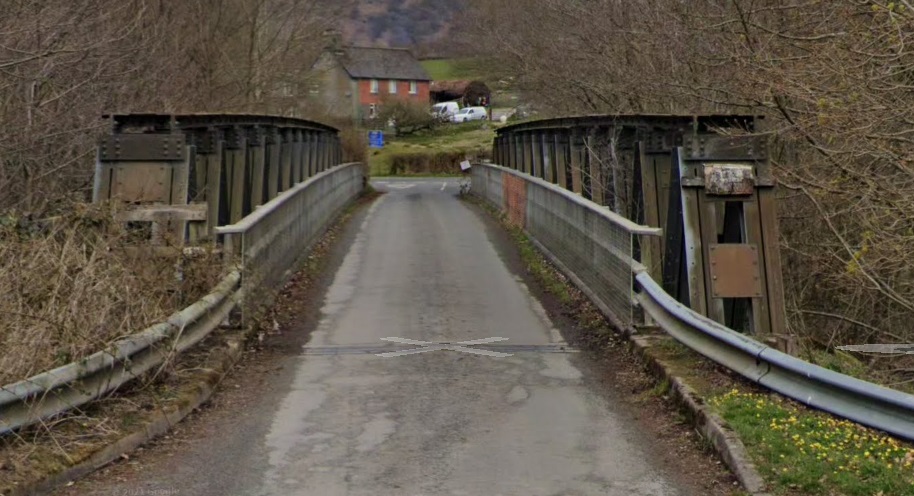
The first of these two images is an extract from the 6″ OS Maps from the turn of the 20th century. [13] The second is a satellite image of the same location in the 21st century. The most obvious significant difference is that a bridge has been constructed over the river. However, when the railway was active the road down to the ford was spanned by a masonry arch bridge. [2: p85-86, Plates No. 32 & 33] As the view below shows that bridge is long-gone. [Google Maps]The view across the river from the Southeast showing the modern Bailey Bridge which has replaced the ford across the River Elan. As can be seen here, there is no longer a railway bridge spanning the road. [Google Streetview]The view from the Northwest shows that one of the bridge abutments remains in position. [Google Streetview]
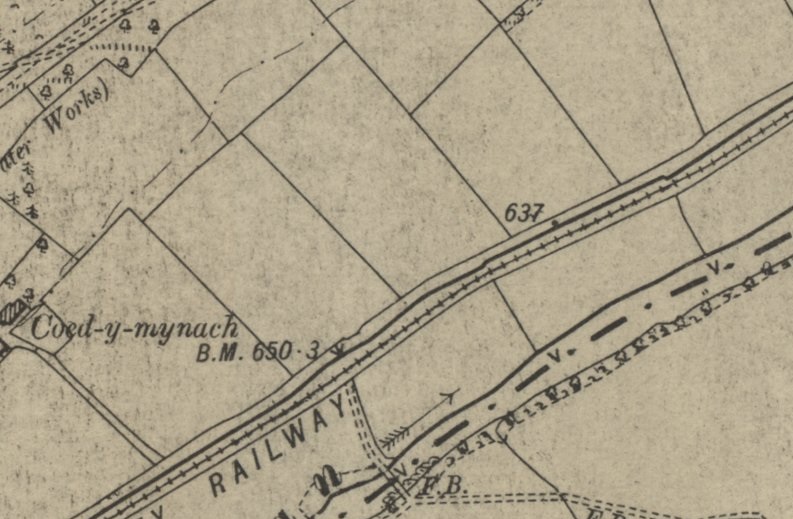
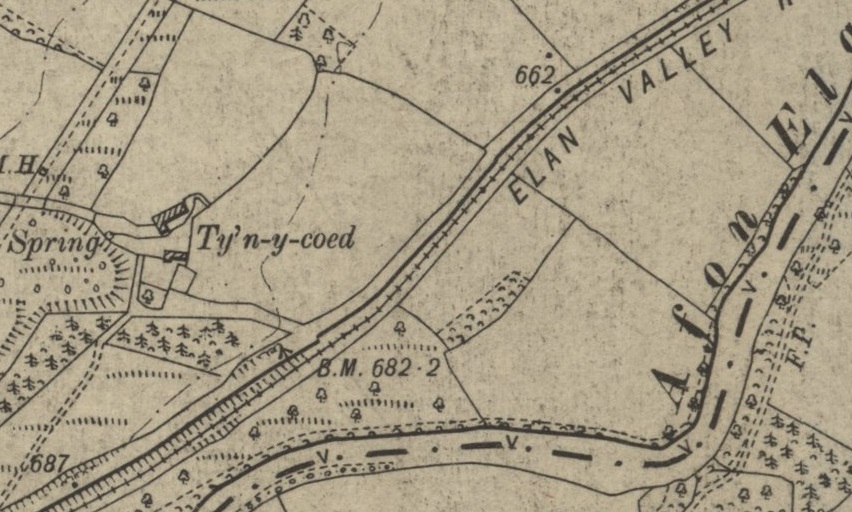
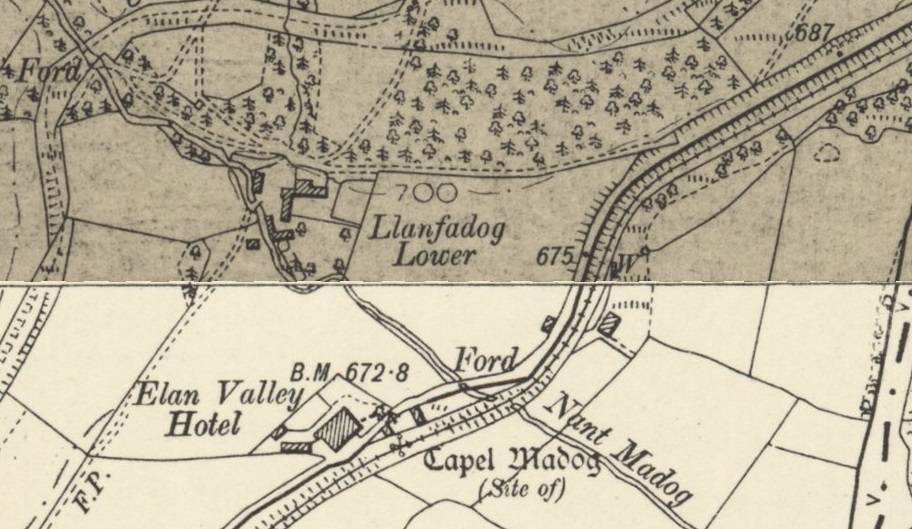
Continuing in a Southwest direction the railway and the road ran immediately next to each other with the Afan Elan slightly to the South. There is little of note on the next few extracts from the 6″ OS Map.
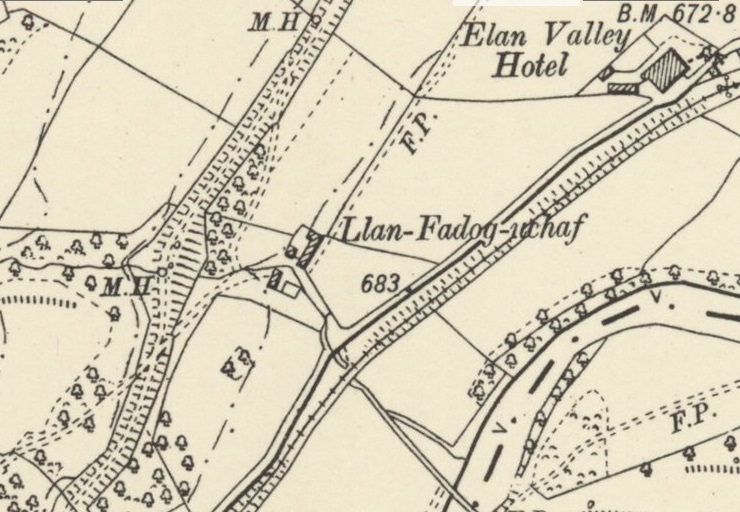
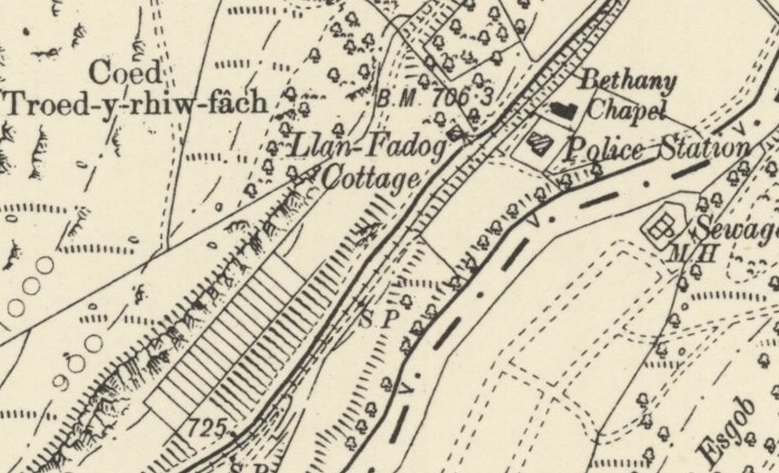
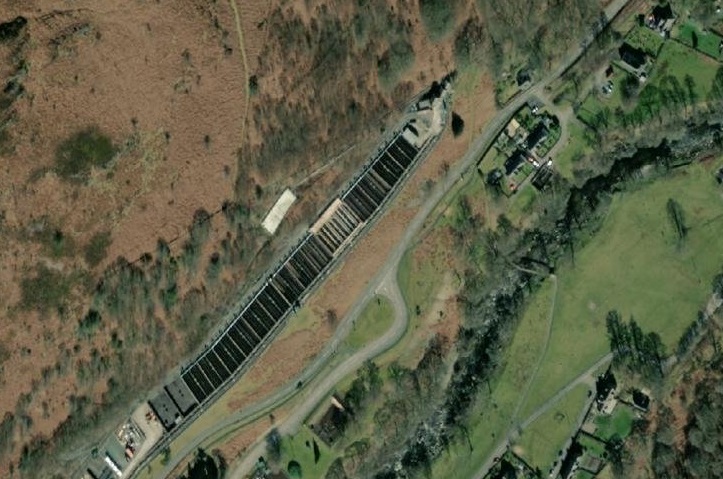
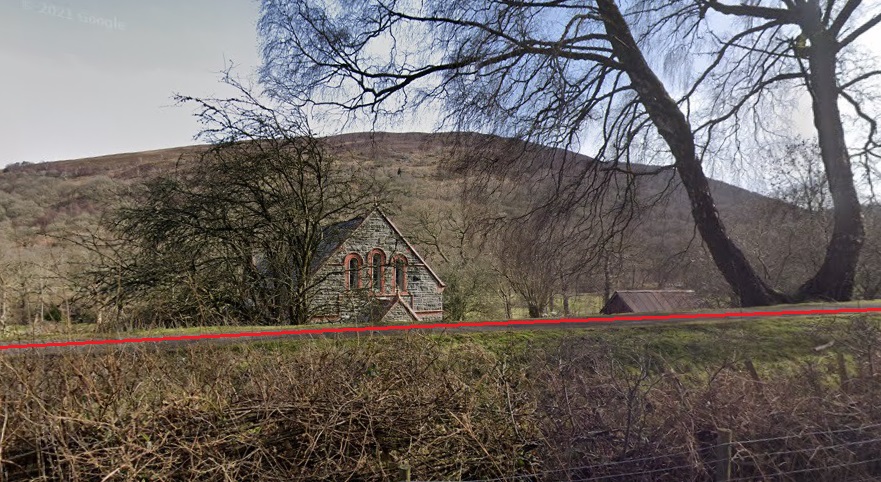
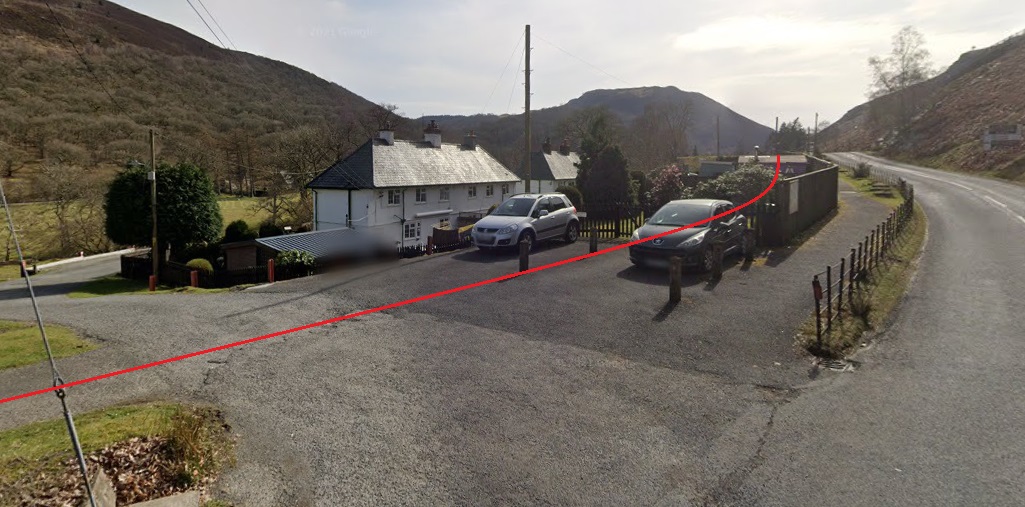
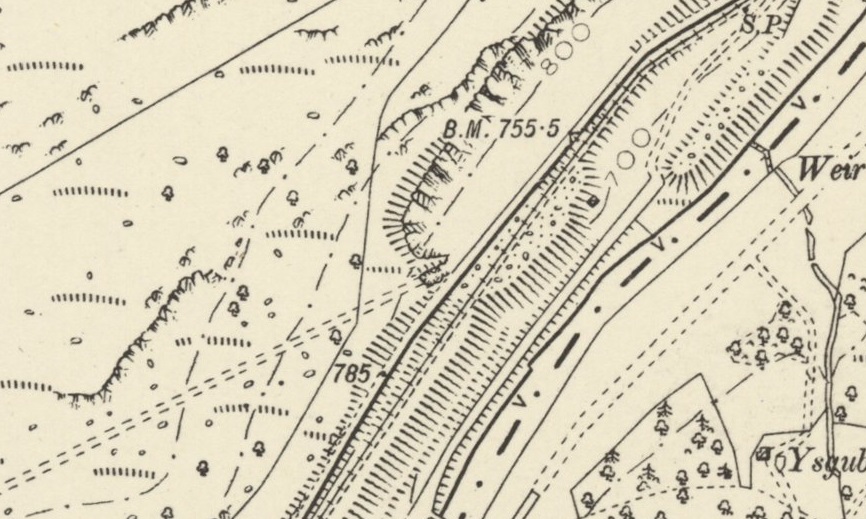
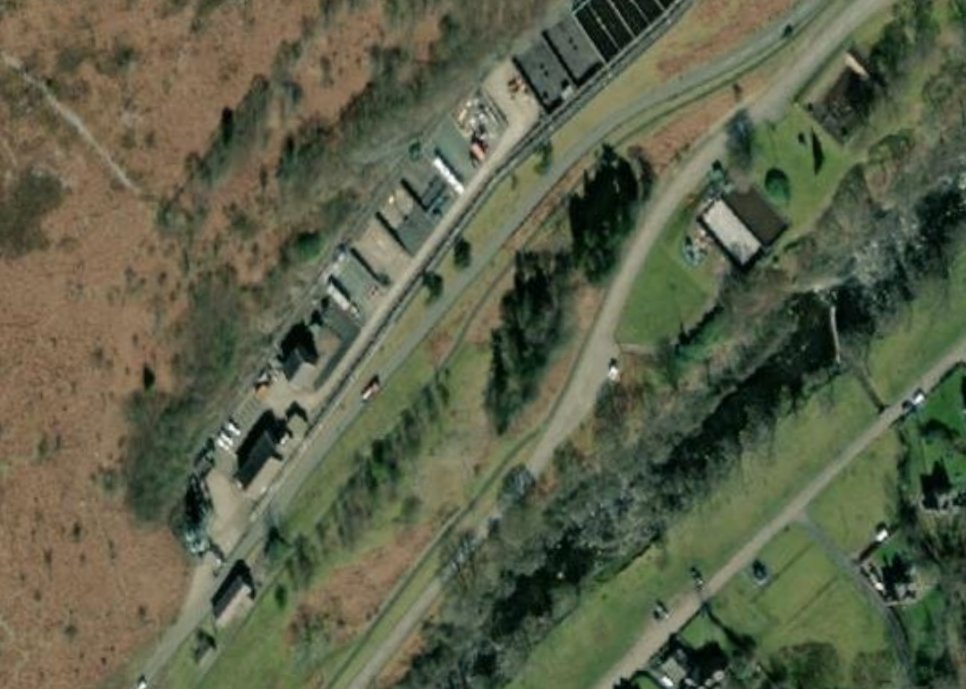
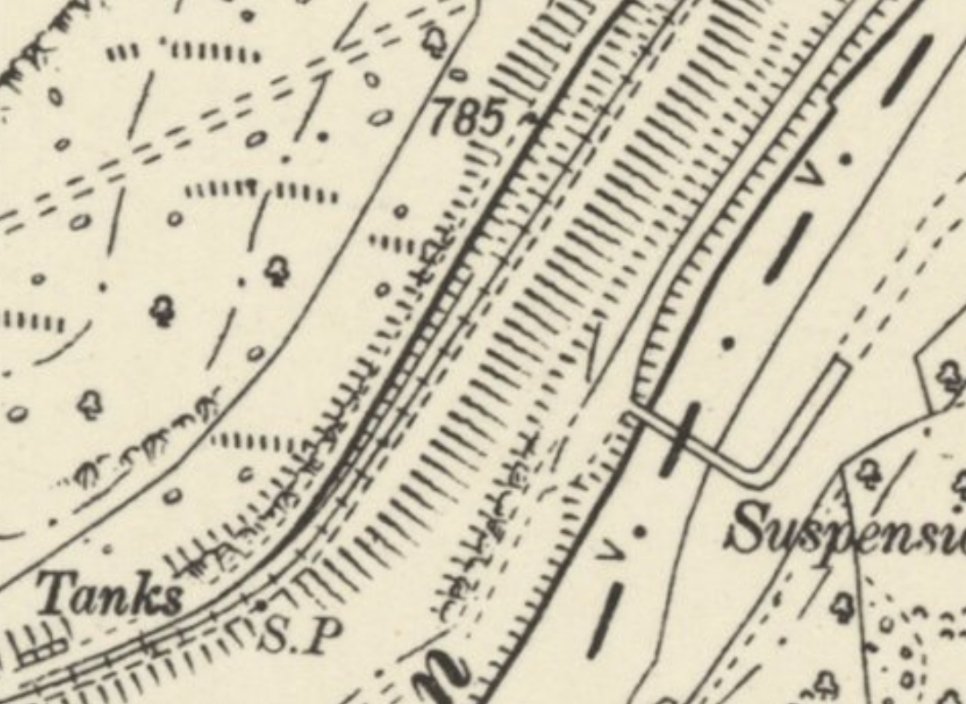
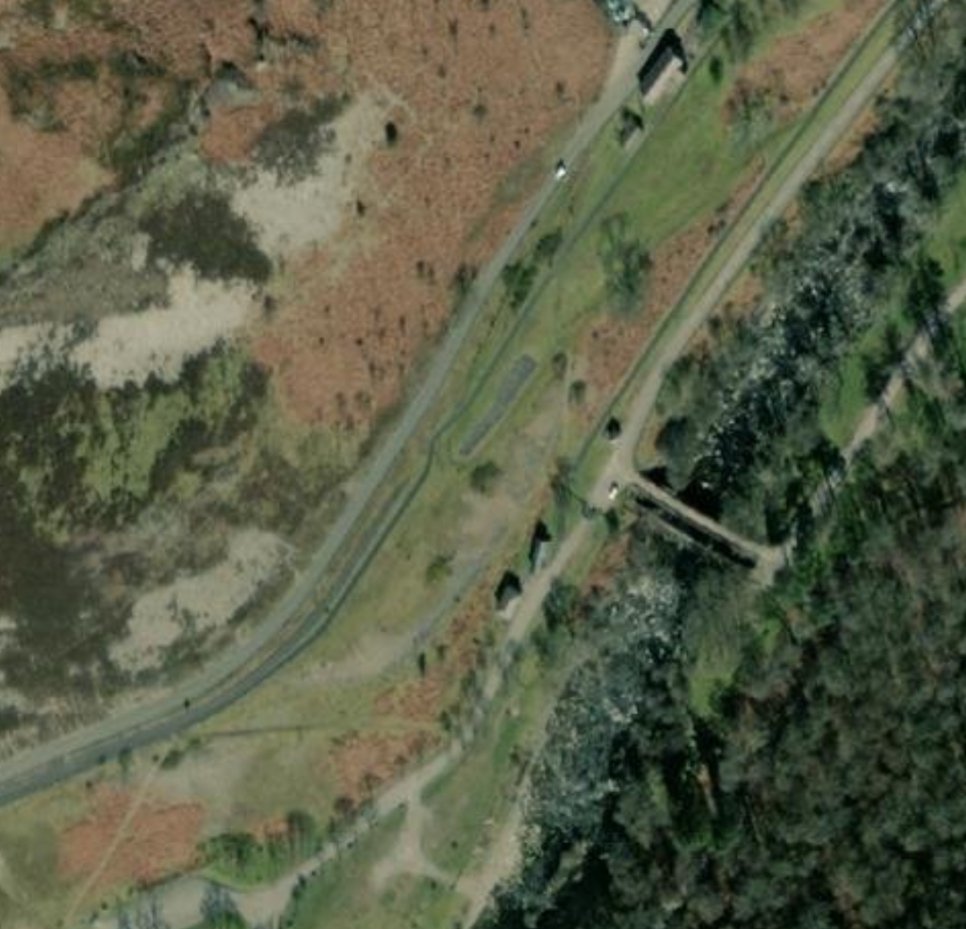
The old railway and the adjacent road ran passed Coed-y-mynach, Ty’n-y-coed, Llanfadog Lower and the Elan Valley Hotel. [14][15][16]The only point worth noting is that there has been significant development at the site of the Elan Valley Hotel. [16]The route of the old line continues beyond the Elan Valley Hotel with little worth noting until it approaches Elan Village. [17]The police station and the Bethany Chapel suggest that we are now very close to Elan Village. [18]The satellite images show significant developments from the time of the 6″ OS Map above. The first significant building which appears relatively close to the top right of this image is the Baptist Chapel. Once there was only one road here which led to a suspension bridge over the river. That road has been widened to provide access to the Elan Valley Visitor Centre another road follows the formation of the higher branch of the railway – the two roads while running parallel to each other diverge significantly in height. [18]The Baptist Chapel (Bethania Baptist Chapel), viewed from the access road looking across the embankment which carried the railway. The red line clarifies its route. [Google Streetview] This length of the old railway is shown in Plate 35 of Judge’s book about the line. [2: p87Looking Southwest toward Caban Coch Dam. The line of the railway is marked by the red line. The properties in this picture were built after the railway had been dismantled and their gardens extend across the line of the old railway to the highway boundary. [Google Streetview]This photograph was taken from a point a little further to the Southwest. On the extreme left of the image, the boundary fence or the properties visible in the last picture can be seen. The old railway alignment is marked, once again, by the red line. The wall at the top of the embankment to the left supports a series of rectangular pools, some of which were visible on the 6″ OS Map. These are on the line of the aqueduct which supplies Eden Valley water to the Birmingham conurbation. They are part of the Water Treatment Works which ensure the quality of the water passing through the Aqueduct. [Google Streetview]View from the footpath on the line of the old railway. The structures associated with the Water Works can be seen more easily. [My photograph – 9th August 2021]
Sadly, the 6″ OS Maps from the turn of the 20th century that we have been using do not give us a good impression of the railway network in the Elan Valley during the construction of the dams. They do show the main line of the railway as it was in around 1902 when the survey for the maps published in 1905 took place.
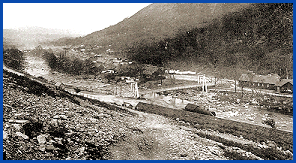
During the construction period, access to the construction village was over the suspension bridge shown above. “The navvies village can be seen on the far side of the river to the left, and the accident hospital is to the right of the bridge. The road on this side of the river leads to Rhayader to the left” and further up the Elan Valley to the right. [34]
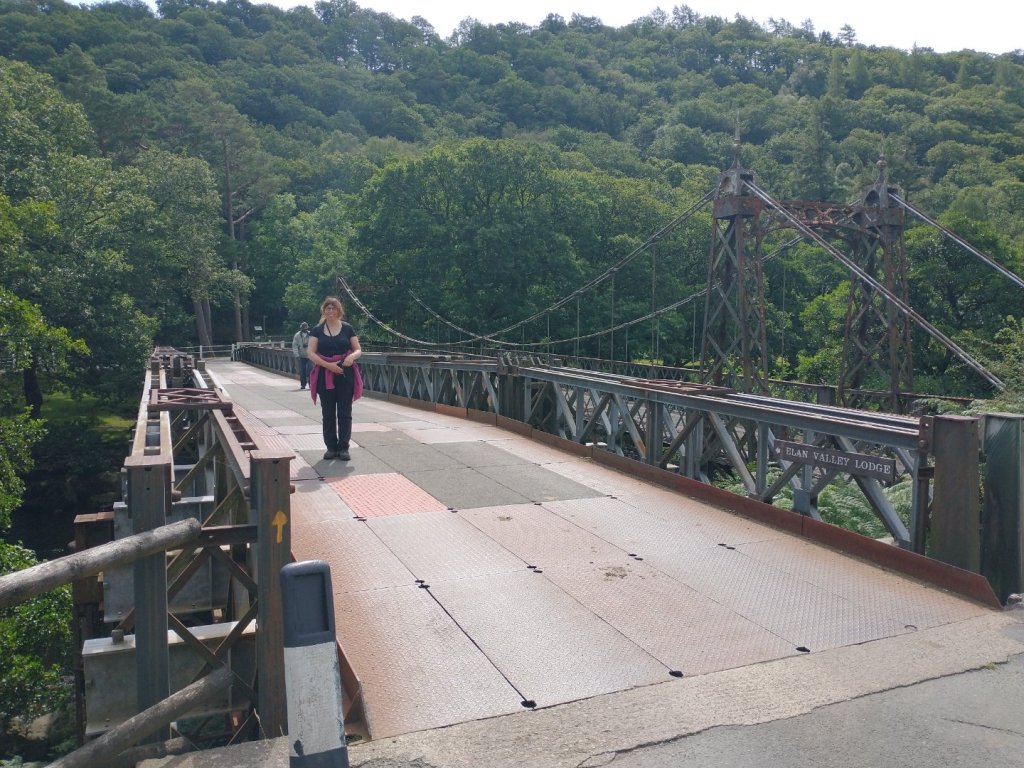
The current suspension bridge (the third on the site) “is no longer safe, and modern traffic entering Elan Village now crosses the river by a rather more functional bridge alongside.” [34]
The now unsafe suspension bridge which provided access to Elan Village before the adjacent Baily Bridge was built. [My photograph – 9th August 2021]The modern Bailey Bridge which sits just downstream of the suspension bridge. [My photograph – 9th August 2021]The contractor’s main-line (which was to be designated ‘Railway 2’) continued at a high level. The lower level line is not in evidence. [20]The modern satellite imagery shows the visitor centre on the right of this image and the dam and river protection and training works in the bottom left. The road at high level continues to mark the line of the old railway. [20]
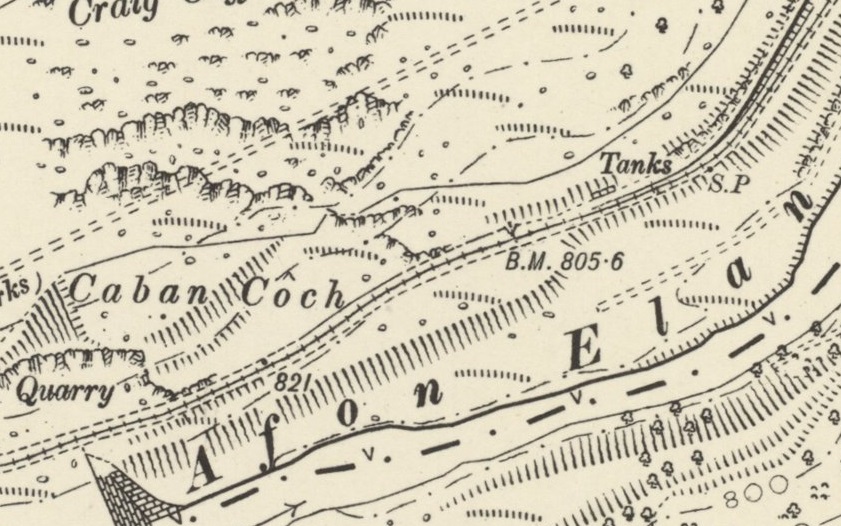
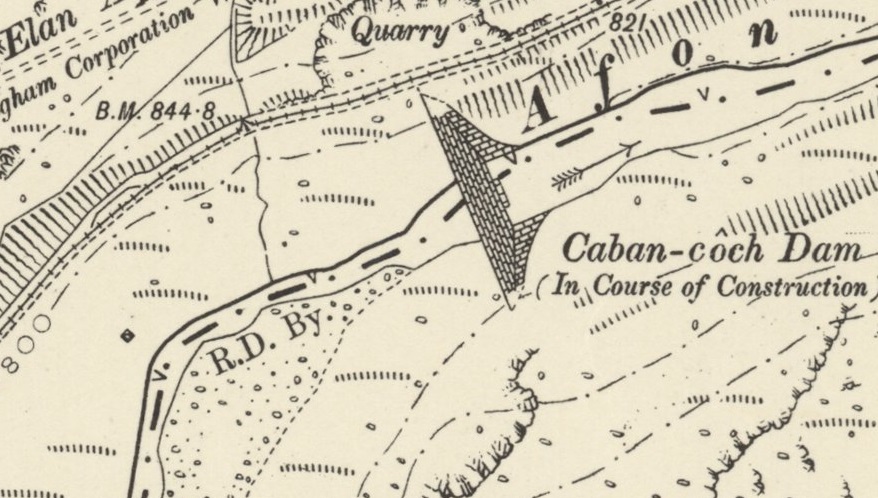
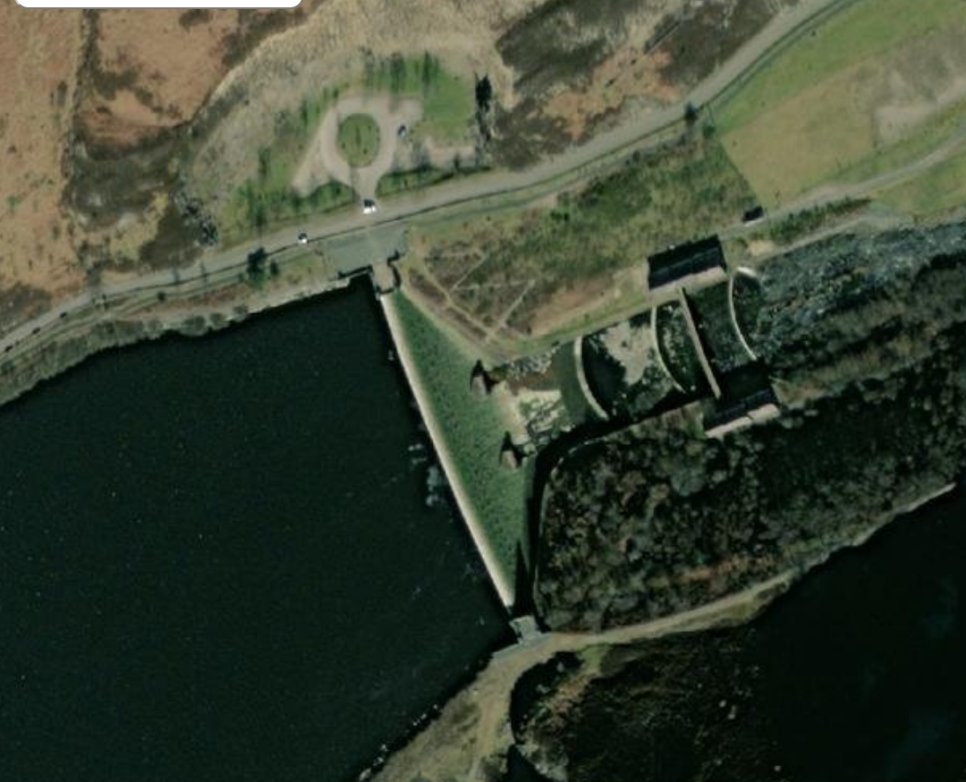
Caban-Coch Dam, the first dam encountered in a journey up the Elan Valley, was the first at which construction work commenced. The digging and blasting of the foundations for the dam started in August 1894, and work on the masonry structure of the dam itself began in 1896. [29]
The 6″ OS Map from the turn of the 20th century shows the construction of the masonry structure well underway.
The Elan Valley website tells us that building work began in 1893. “100 occupants of the Elan Valley had to move, only landowners received compensation payments. Many buildings were demolished, 3 manor houses, 18 farms, a school and a church (which was replaced by the corporation as the Nantgwyllt Church). … A village of wooden huts was purpose-built to house most of the workers on the site of the present Elan Village.” [30]
“New workers spent a night in the dosshouse to be deloused and examined for infectious diseases, only then were they allowed across the river to the village. Single men lived in groups of eight in a terrace house shared with a man and his wife. A school was provided for those under 11, after this they were expected to work. The village employed a guard to look out for illegal importation of liquor and unauthorised visitors. There was a hospital for injuries and an isolation hospital. A bath house which the men could use up to 3 times a week but the women only once! The pub was for men only. Other facilities included a library, public hall, shop and canteen. There was even street lighting (powered by hydroelectric generators).” [30]
The dams were built in two phases, firstly construction in the Elan Valley and later the Claerwen. The foundations of Dol y Mynach Dam were laid in phase one as the site would have flooded once Caban-Coch had filled up.” [30]
It is clear that local rock was not of a suitable quality for dressing the external faces of the dams. It was used as structural fill inside of the dams. The hand-chiselled facing stones were transported from Glamorgan. [30]
“The Caban Coch dam contributes to the supply of water to Birmingham when water levels are normal, but it also provides compensation water to ensure that adequate flow is maintained in the Elan and the Wye downstream from the dams.” [29]
I have asked for permission from the Oakwood Press to reproduce sections of the fold out map at the rear of Colin Judge-s book (see below) as these illustrate the density of the rail facilities at the construction site of the Caban Coch Dam. I await their response with interest.
We have cover Railway No. 1. The next article in this series will begin at the junction between Railway No. 1 and Railway No. 2 a little to the East of Caban Coch Dam.
Further Reading
As we noted much earlier in this post, the accepted authority on all things associated with the Elan Valley Railway is Colin Judge. Anyone with any interest in this railway should regard the purchase of Judge’s book as a good investment. Second-hand copies are relatively easy to come by. It is important, when buying a copy, to check whether the fold-out map (referred to above) which was attached to the back cover of the book is still present. My copy is the latest reprint of the book, as shown below, which was published in 2001 and has a sticker on the front marking the centenary of the formal opening of the reservoirs which was celebrated in 2004. [2]
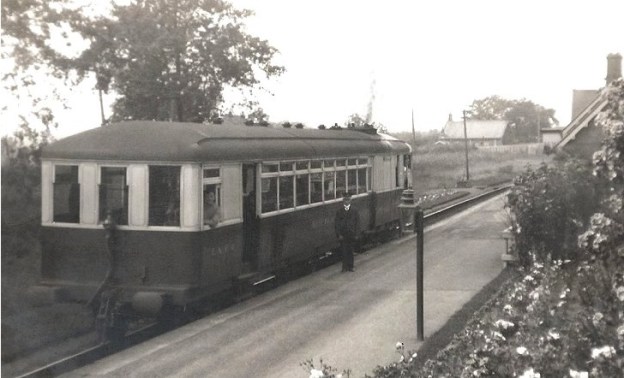
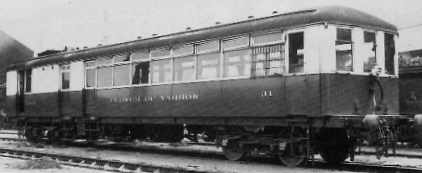
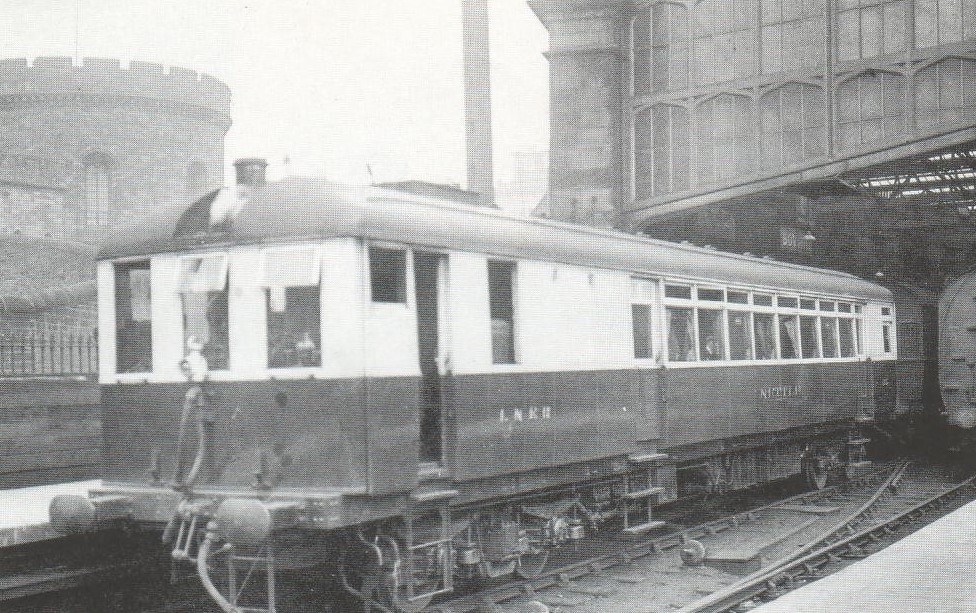
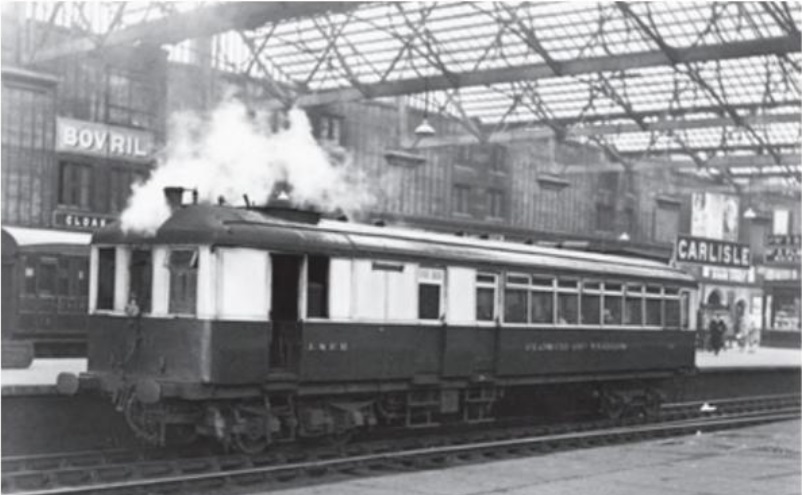
Towards the end of its life the Port Carlisle Branch was served by two Sentinel Steam Railmotors, ‘Nettle’ and ‘Flower of Yarrow’. The featured image above is part of the Bruce McCartney Collection. It shows a Sentiel Steam Railcar calling at Burgh-by-Sands on a service to Port Carlisle in around 1930. Station Master Walter Tait is posing alongside the railcar on the platform. Bruce McCartney comments: “The Sentinel is thought to be No. 31 ‘Flower of Yarrow’ which was built in 1928 and operated on the Port Carlisle Branch up to the time the branch was closed from Drum burgh in 1932, although, being on the ‘main-line’ Burgh-by-Sands kept going until 1964.” (c) the Bruce McCartney Collection, used by kind permission. [1]
‘Nettle’ and ‘Flower of Yarrow’
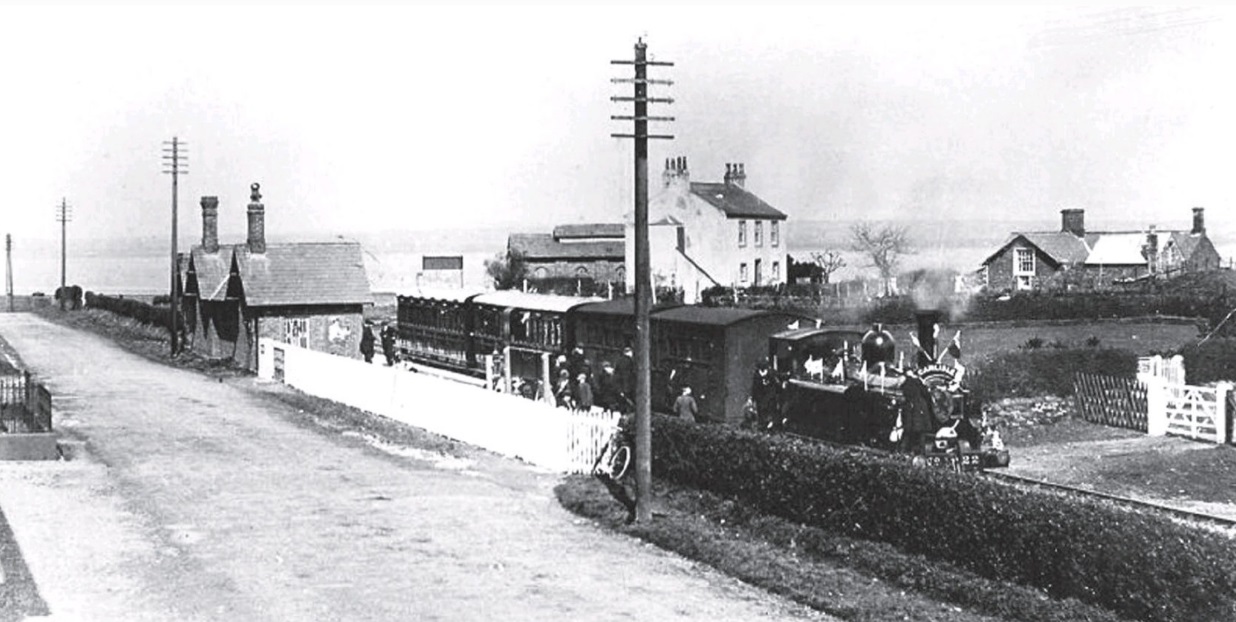
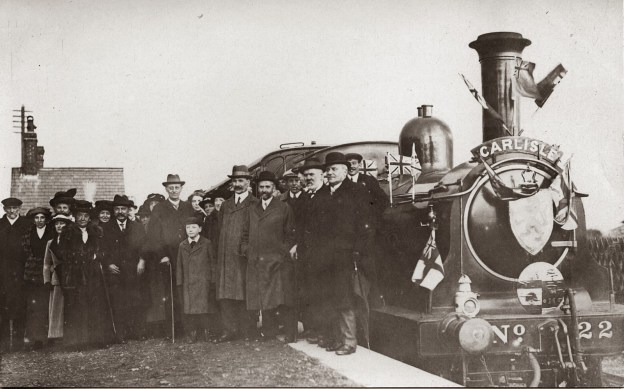
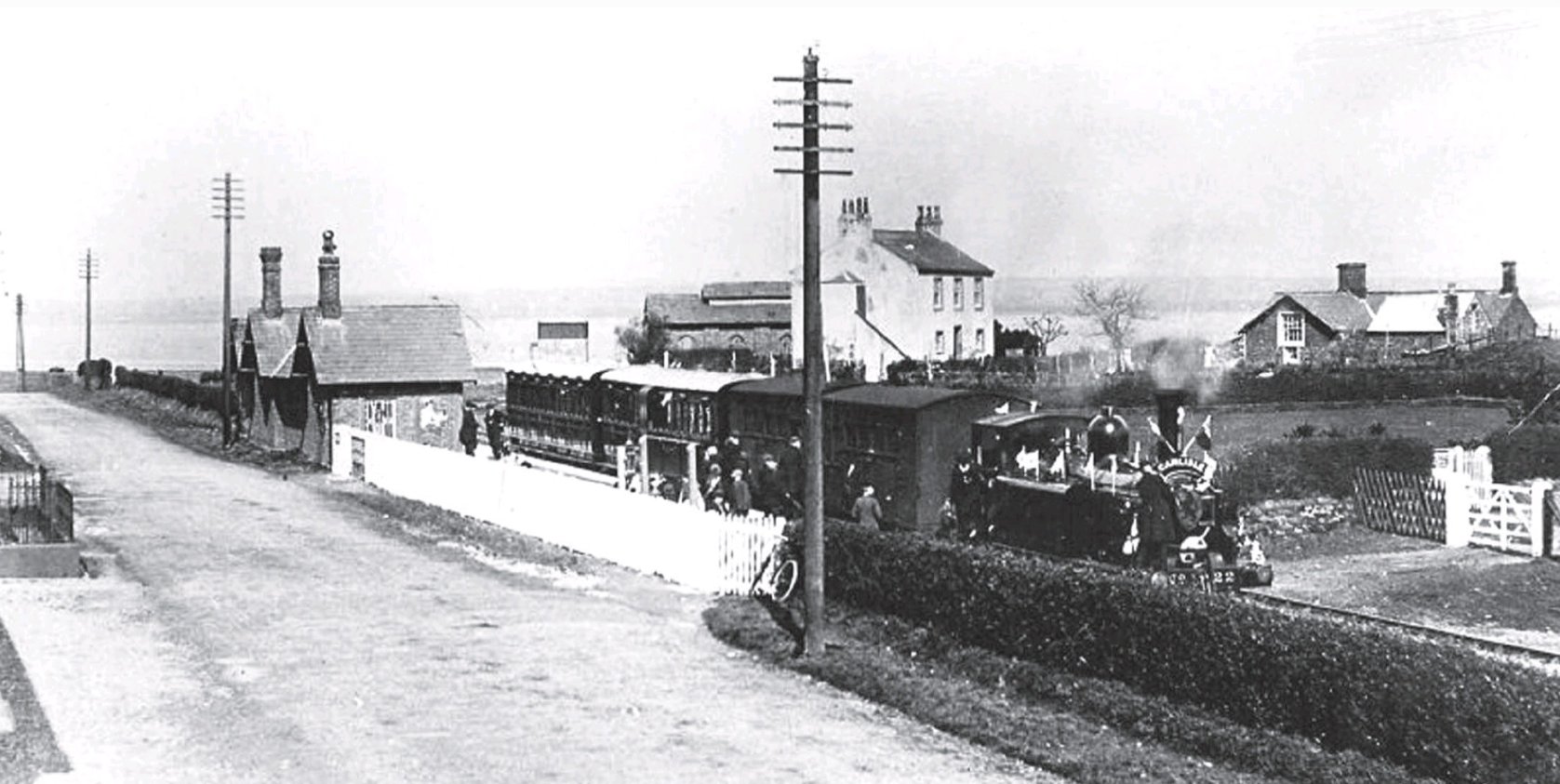
After 50 or so years being served by a horse-drawn Dandy. Port Carlisle was given a replacement steam service in 1914. It was envisaged that providing a good reliable service from Carlisle, the village of Port Carlisle would develop as a seaside resort.
In 1914, Port Carlisle was once again given its own steam service to Carlisle. [2]
Sadly the hoped for development did not occur and Port Carlisle remained a backwater, but one with a significant history as a port where ocean-going vessels could dock. For a time it was a ‘ferry’ terminal and a place where goods could be transshipped onto smaller craft heading up the canal to Carlisle. Later the canal was replaced by a railway and for a time a reasonable flow of goods passed through the port. However, by 1863, goods services on the Port Carlisle branch were terminated and for a time passengers were served by a horse-drawn Dandy.
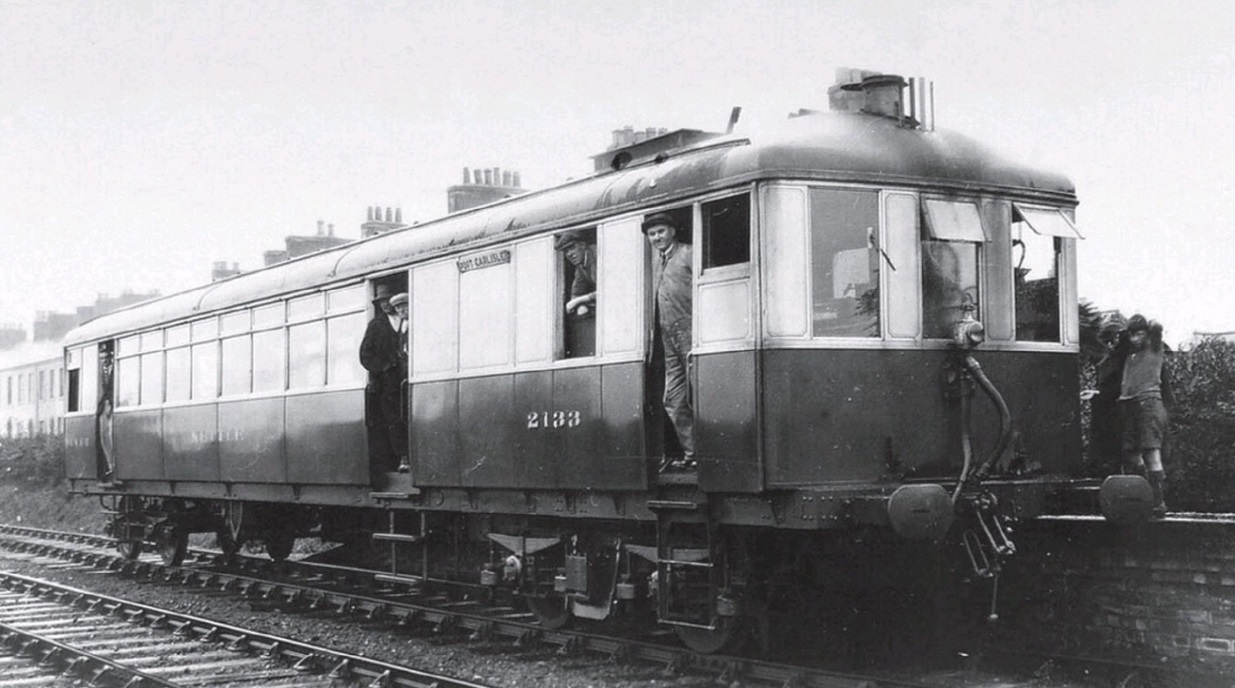
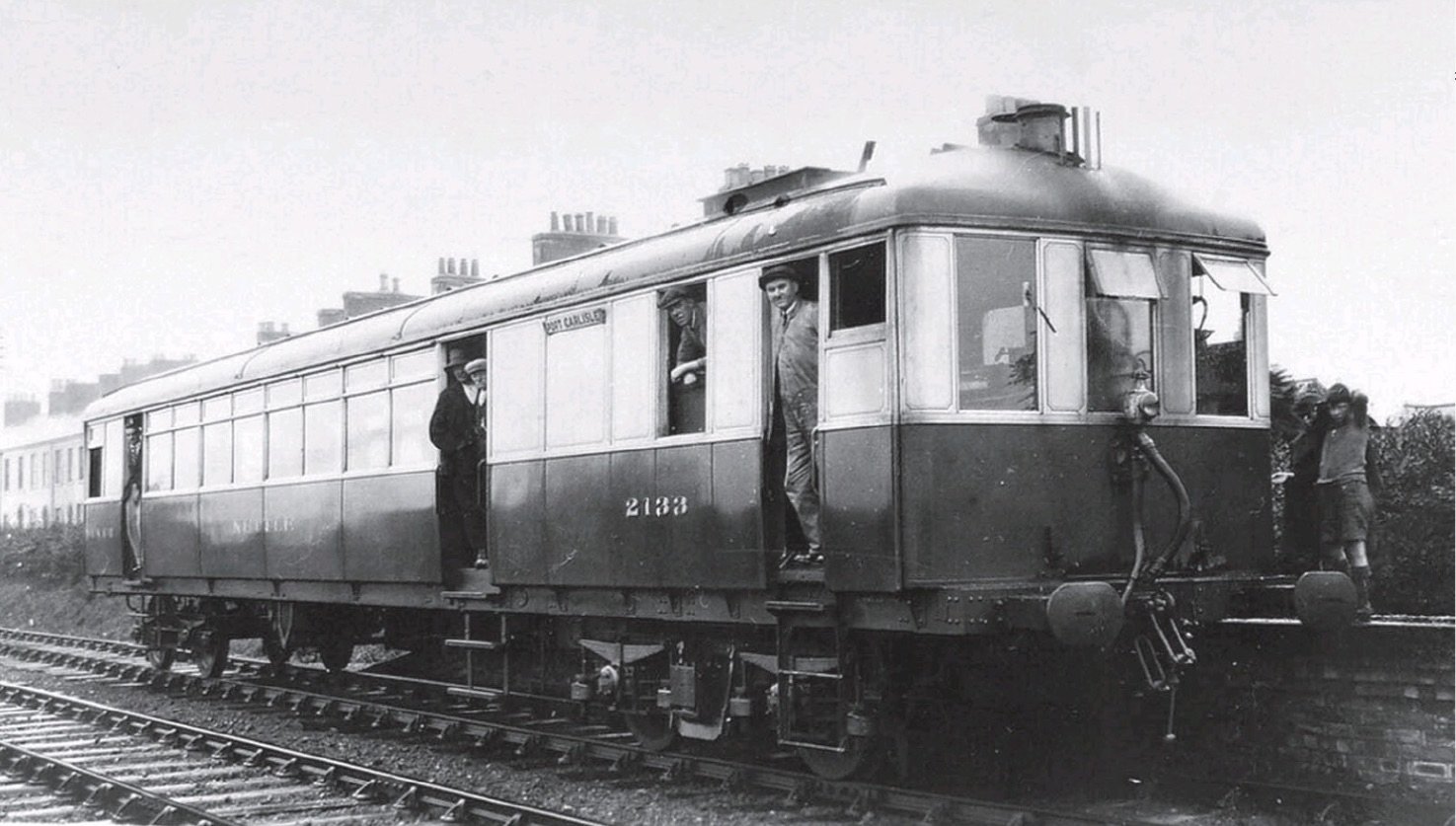
As the early 20th century unfolded the steam service was unable to pay its way and eventually, hoping against hope, that some service could be retained to Port Carlisle steam engines and carriages were replace by a pair of Sentinel Steam Rail Cars, No. 31 ‘Flower of Yarrow’ (Sentinel Diagram No. 96) and No. 35 ‘Nettle’ (originally, LNER No. 2133 – Sentinel Diagram no. 93). [3]
‘Nettle’ was built in 1928 and originally carried the LNER number 2133 which was later changed to 35. ‘Flower of Yarrow’ was a slightly later build by Sentinel and only ever carried the LNER number 31.
‘Nettle’ at Port Carlisle [3][4]Flower of Yarrow at St. Margaret’s Shed, Edinburgh. [3]Sentinel Railcar ‘Nettle’ at Carlisle, probably on the service to Port Carlisle. It appears to be running with at least another carriage attached. Photographer not known. [5]‘Flower of Yarrow’ also at Carlisle. Photographer not known. [6]
These railmotors/railcars saw out the remaining years of the passenger service on the line to Port Carlisle and were moved elsewhere when it closed between Drumburgh and Port Carlisle in 1932.
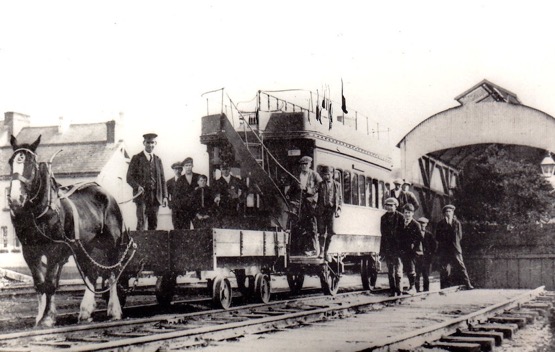
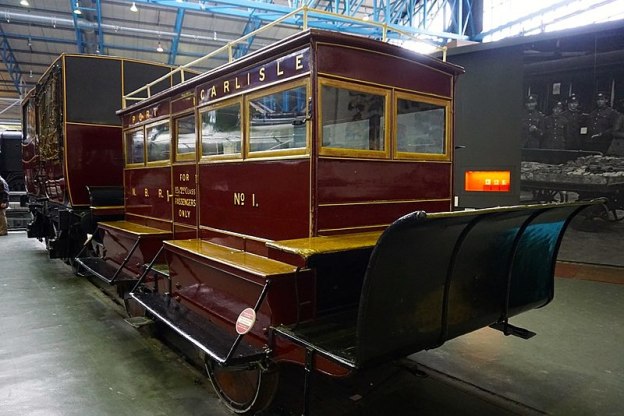
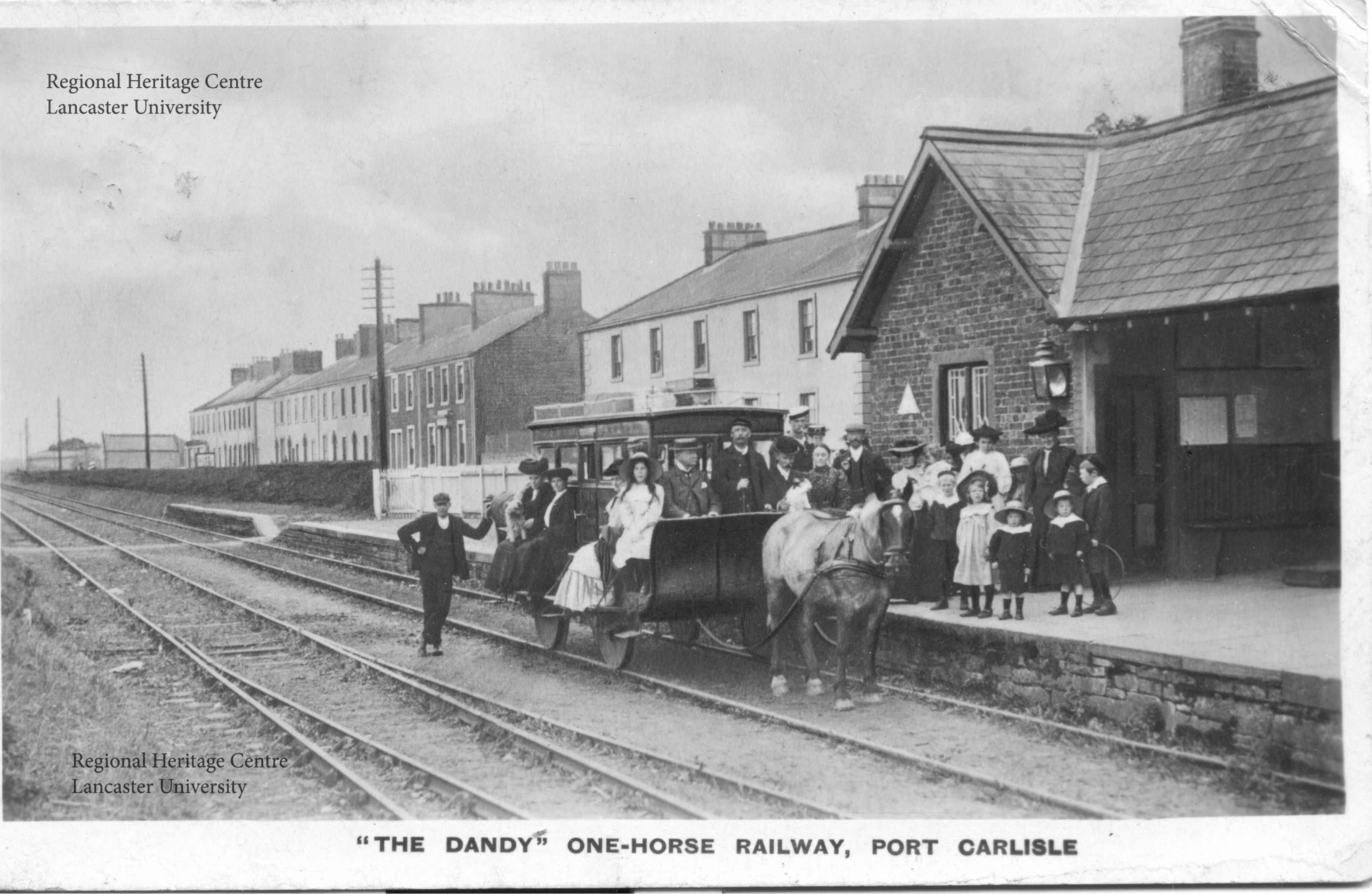
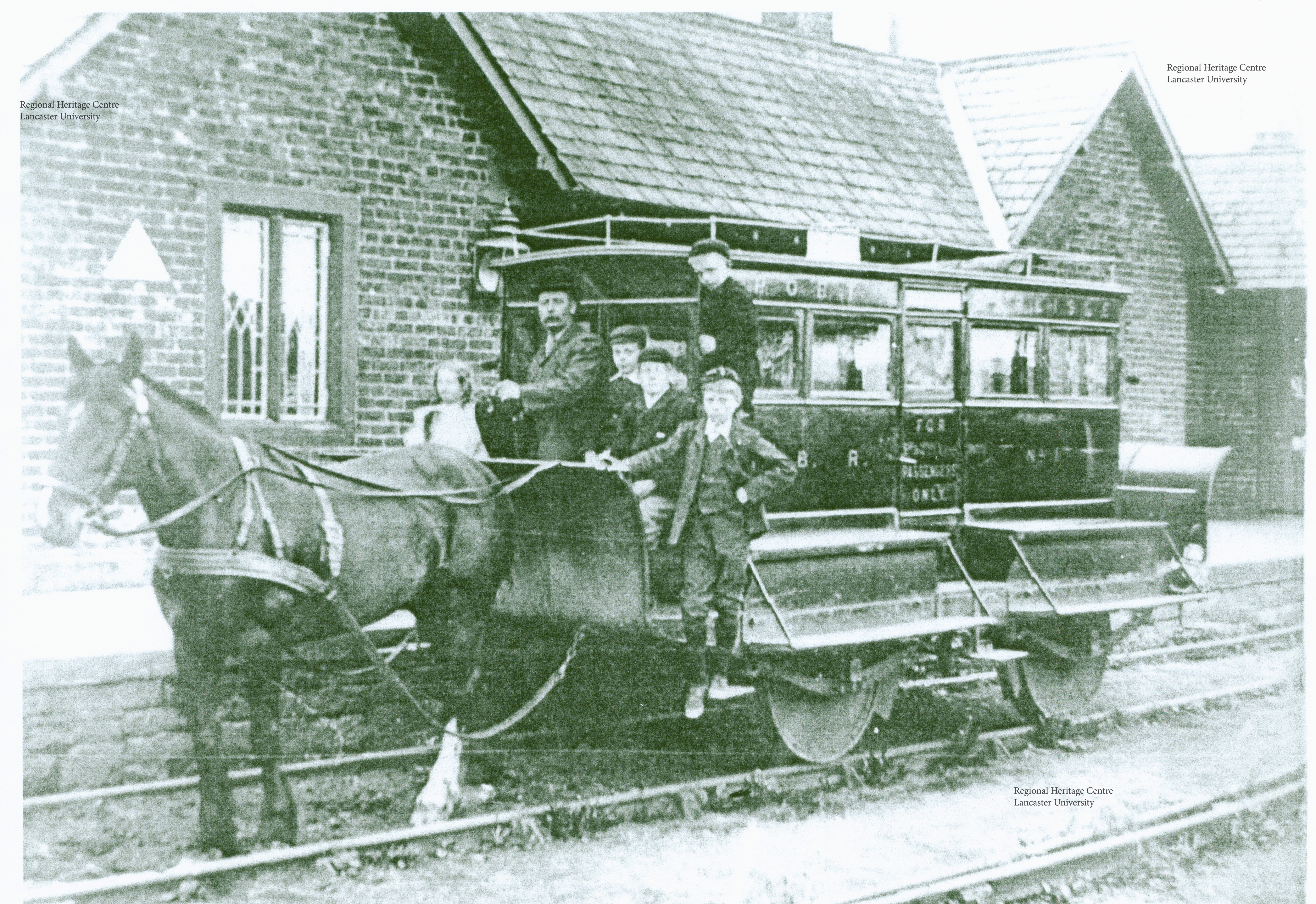
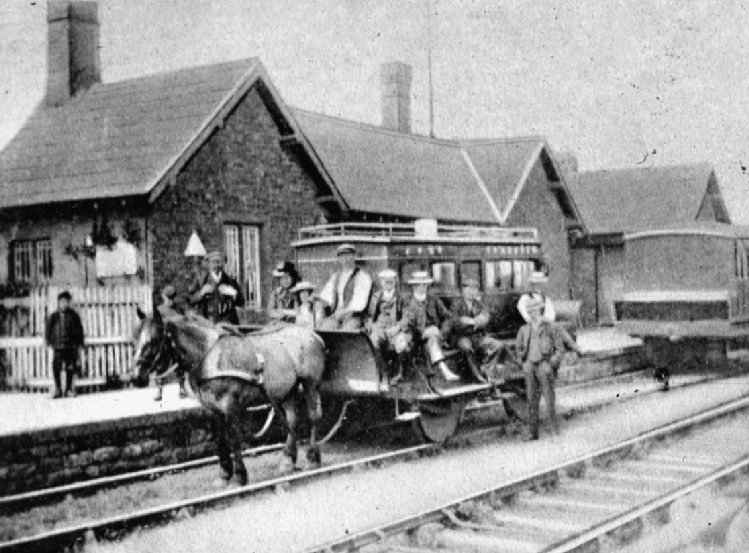
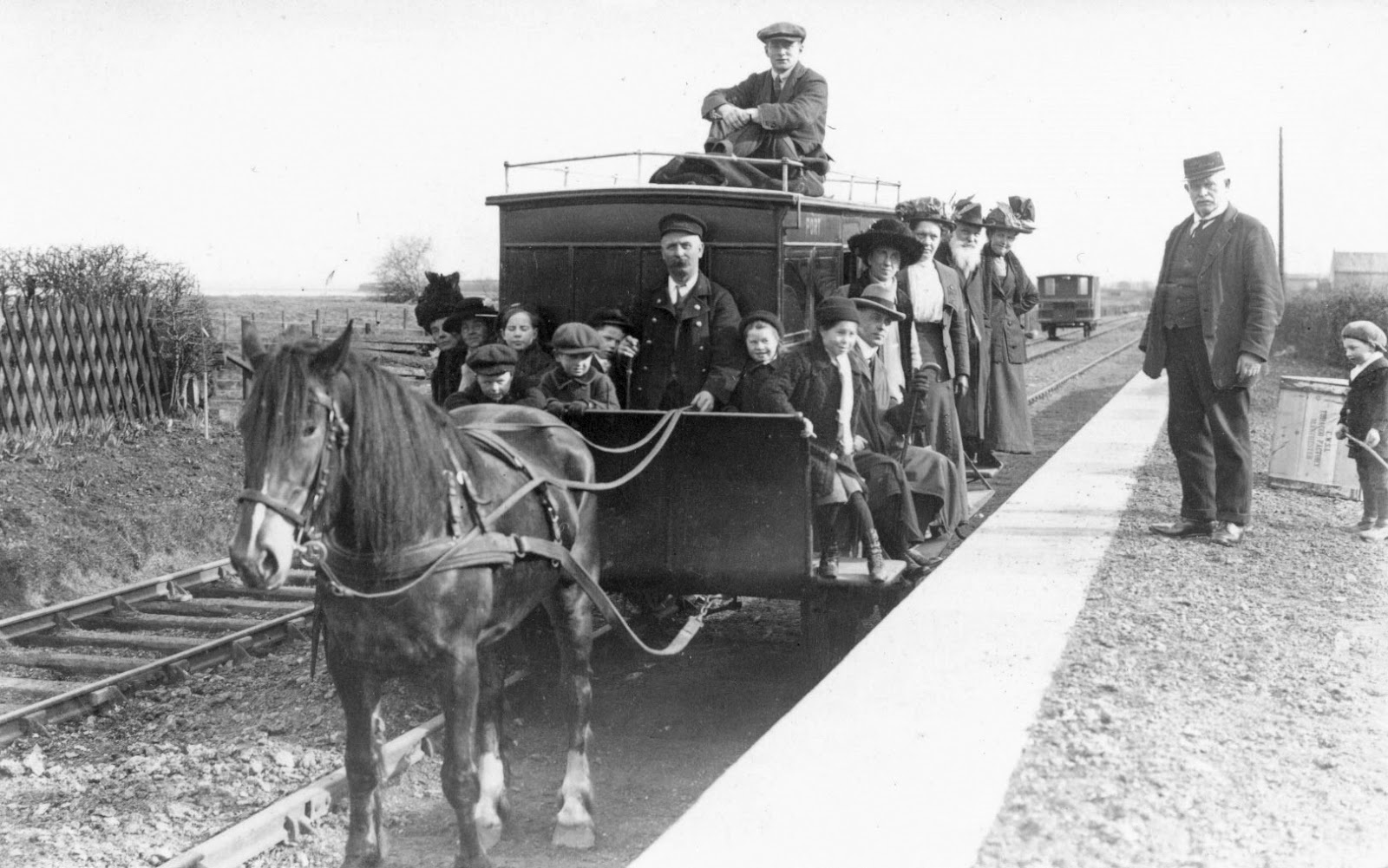
The featured image at the head of this post was taken on 24th February 2017 at the National Railway Museum in York. The ‘Dandy’ Car was horse-drawn and provided the branch service between Port Carlisle and Drumburgh until 1914 when the service was enhanced and steam-power was used, (c) Glen Bowman (Attribution 2.0 Generic – CC BY 2.0) [1]
The Science Museum, of which the Railway Museum is a constituent part describes the exhibit: “This is one of four horse-drawn Dandy cars built by the North British Railway at its St Margaret’s Works, Edinburgh. The North British Railway, one of Scotland’s major railways, operated the branch extending from Carlisle to Silloth and its sub-branch to Port Carlisle. Freight services on the latter branch were discontinued as early as 1899, but a horse-drawn passenger service instituted in 1863 remained until early 1914, when it was finally superseded by steam.” [2]
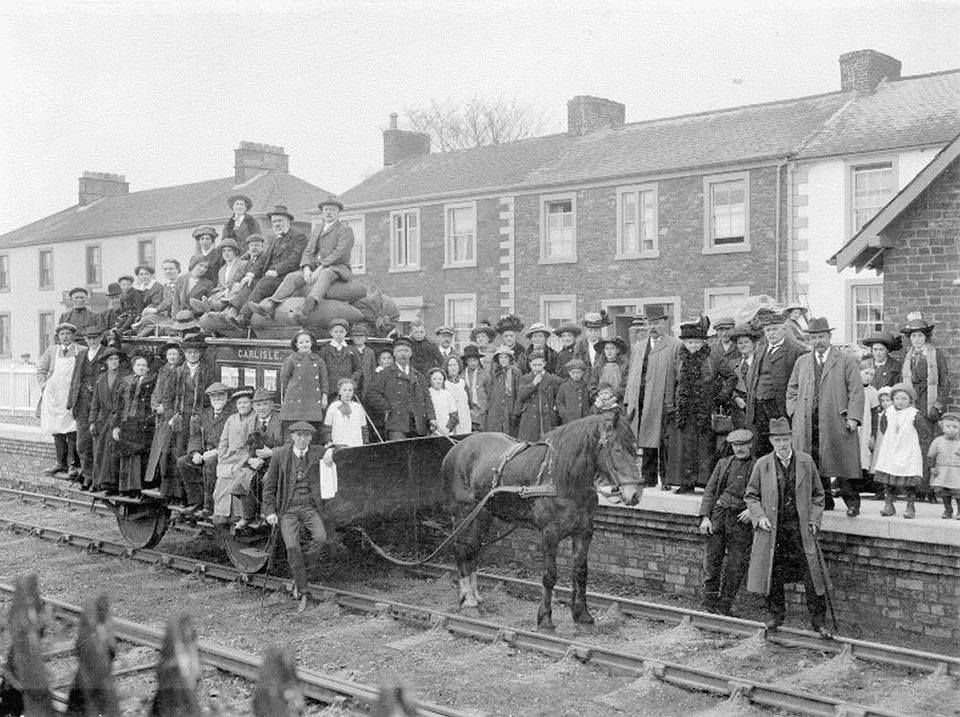
After the reintroduction of steam power on the branch line, the “railway company gave the old Dandy coaches to the village. For many years, they served as pavilions for the local bowling green and tennis club. In 1925, there was an exhibition at Darlington to mark the centenary of the world’s first railway there.” [3] The organisers thought that one of the old Dandy cars “would prove a popular exhibit and entered negotiations with the bowling club for its return. Repainted in its original colours, the Dandy took pride of place in the Darlington show. When the exhibition closed, it was taken to Waverley Station in Edinburgh where it remained until it was moved to its present location, the National Railway Museum in York.” [3]
So, where does the name ‘Dandy’ come from?
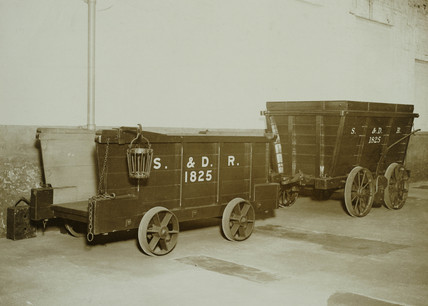
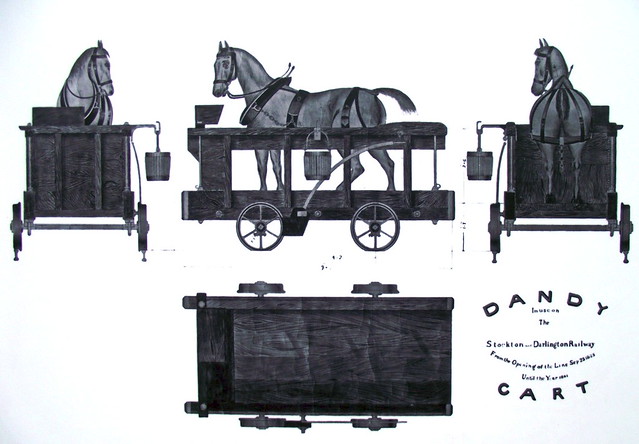
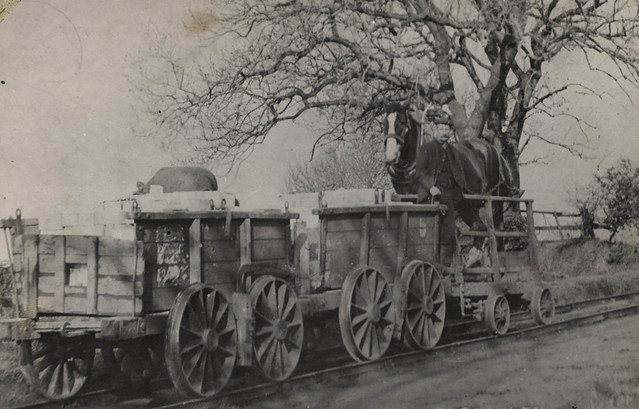
One possibility is that the ‘Dandy’ on the Port Carlisle branch derived its name from the Dandy Waggons (‘Wagons’ or ‘Carts’) which were used on old waggonways for the carriage of horses. They were “usually used on the down-hill sections of horse-drawn railways and waggonways. George Stephenson is credited for having proposed the idea for dandy wagons, building these carriages for the horses, for use on the Stockton & Darlington Railway, which opened in 1825. [4] However, they were particularly associated with the Ffestiniog Railway where they were in use until 1863. [5]
The term Dandy Wagon was also used during the 19th century in the USA to refer to a horse-drawn private buggy. [7]
It might be that the combination of these two ideas resulted in the name ‘Dandy’ being applied to a horse-drawn vehicle particularly on the Port Carlisle Branch. Small two- or four-wheel carts could often be called a ‘Dandy’ as an image search on the internet will illustrate. ….
Various ‘dandy’ carts appear when searched for on the internet. [Google.com]
None-the-less the term ‘Dandy’ was used for the passenger carrying rolling stock on the Port Carlisle branch. The horse-drawn service was long-lived, lasting from 1863 to 1914, over 50 years in all!
We finish this short article with some photographs and postcards showing the Dandy in operation!
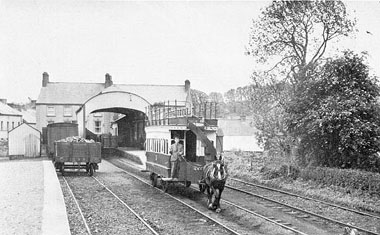
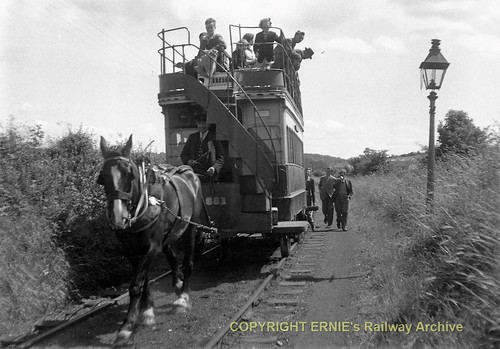
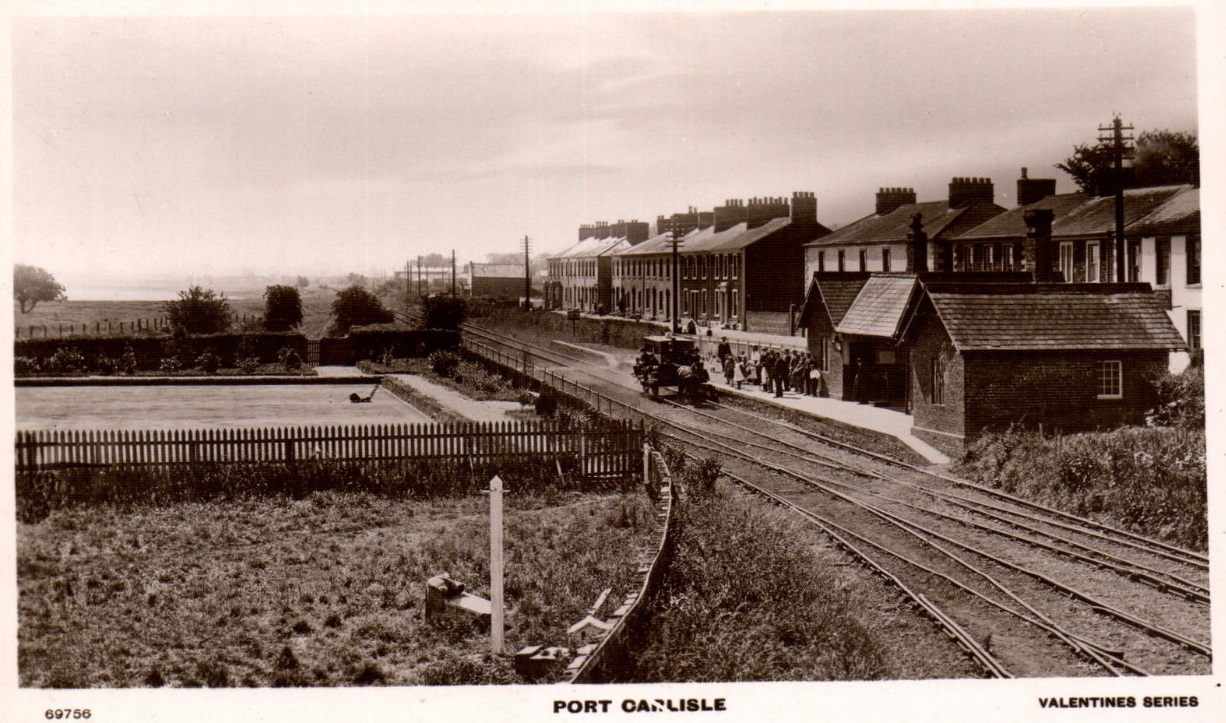
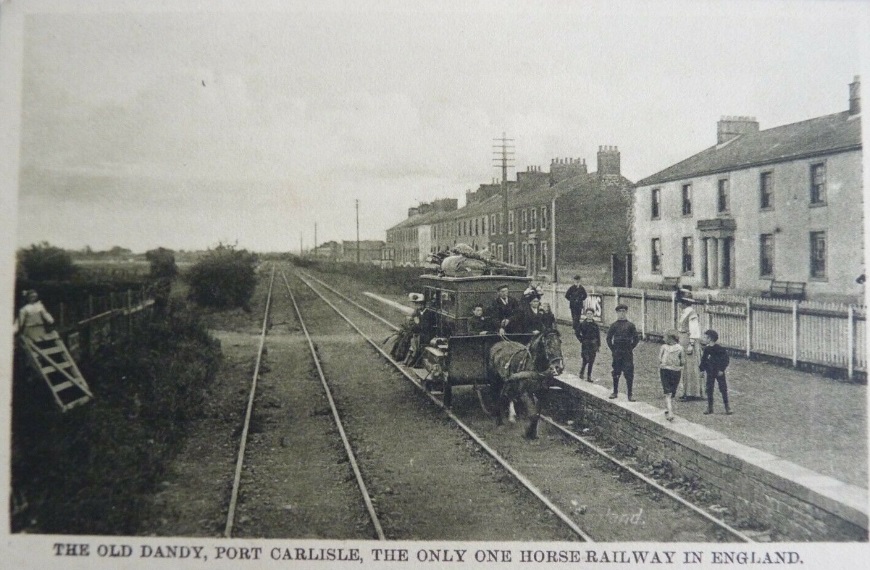
A panorama showing the whole of the Port Carlisle Railway Station, the bowling green and many of the properties that made up the village – and at the centre the horse-drawn Dandy! [11]The Dandy at Port Carlisle. Photographer unknown – Lancaster University Local History Resources for Schools. [8]The Dandy at Port Carlisle again. Photographer unknown – Lancaster University Local History Resources for Schools. [8]The Bygone Cumberland Facebook page carries this picture of the Dandy at Port Carlisle Railway Station in a prominent position. [9]A postcard image for sale on eBay in May 2022. [10]This image is valuable in that it shows that there were at least two Dandy carriages in use on the line. [12]Solway Past and Present says: “On April 4th 1914, the horse-drawn ‘Dandy’ coach made its last trip along the railway line to Port Carlisle. Two days later, steam locomotives were chuffing along the quiet country line for the first time in over fifty years.” [3]
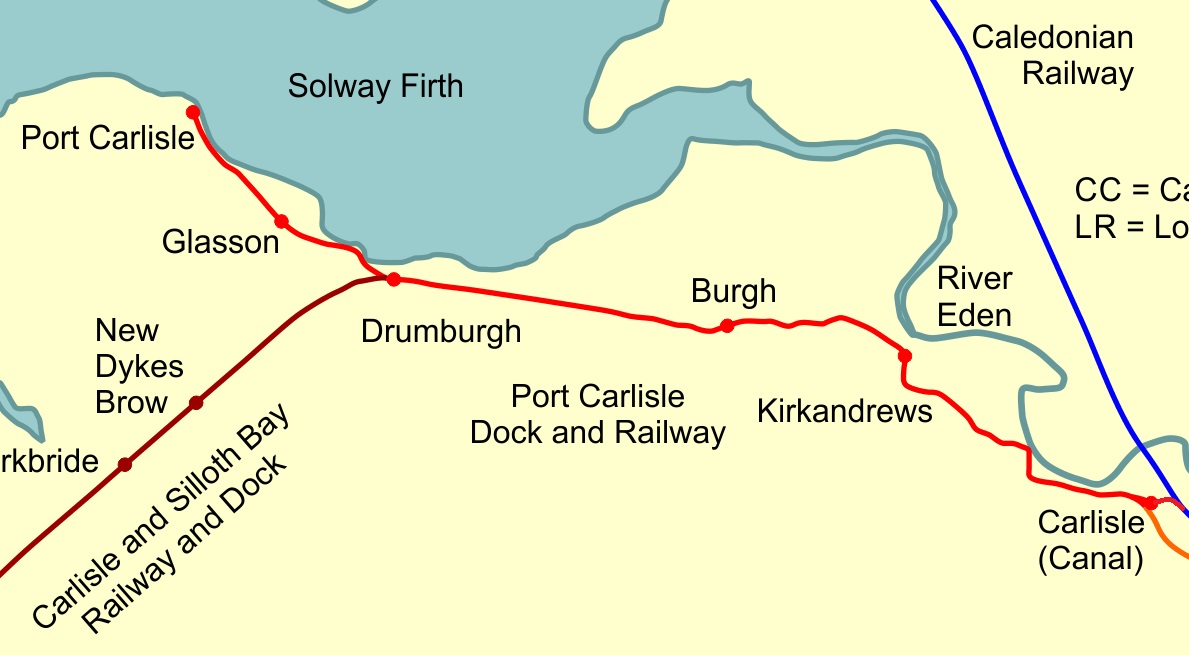
The Carlisle to Port Carlisle Canal opened in 1823. It was approximately 11 miles long. It linked the city of Carlisle to the Solway Firth. [1]
Prior to the 16th century, coal from mines at Ellen Foot (now Maryport) was brought up river to Carlisle and other locations by boat. However, in 1720, duties began to be levied on all goods carried around the coast by sea.As a result, the local coal trade switched to land-based transport.
It took the actions of a small group of local traders to secure an Act of Parliament in 1721, which allowed coastal duties to be waived. While the Act enabled them to build wharves and warehouses and erect cranes, even allowing the dredging of the river and the charging of tolls (for 31 years), it did not permit them to improve the river in any way. [2]
The Canal was a long time in coming … a public meeting which sought its construction did not take place until 21st May 1807. “The principal aim was to provide the city with a better and cheaper supply of coal, and a committee was appointed to push the plan forwards. They asked the engineer William Chapman to advise them, and he proposed a route from Carlisle to Maryport, which he had also promoted in 1795 as part of a coast to coast route. He estimated that it would cost between £90,000 and £100,000 to build, but conceded that a terminus near Bowness on the Solway Firth would be cheaper. £40,000 would pay for a canal suitable for 45-ton boats, but a larger canal, suitable for 90-ton boats that could cross the Irish Sea or reach the Forth and Clyde Canal, would cost between £55,000 and £60,000. The larger canal could still be part of a coast to coast route. The options as to the size and destination of the canal were put to subscribers by the committee. In August 1807 Chapman suggested that a ship canal for the Irish, Scottish and Liverpool trade, and a 50-ton canal to Maryport for the coal trade could both be built, with both finding support in the newspapers.”[2][3: p337–339, 456]
With a range of options on the table, the Committee sought a second opinion from Thomas Telford. He produced a report on 6th February 1808.
Telford “described a Cumberland Canal, which would allow sea-going vessels to reach Carlisle, but would also be part of a grander plan to link Carlisle to other parts of the country, and could be incorporated into the coast to coast waterway. He suggested that locks should be at least as big as those on the Forth and Clyde Canal, with a width of 20 feet (6.1 m) and a depth of water of 8 feet (2.4 m) over the lock cills. His canal would leave the Solway Firth about 1 mile (1.6 km) upstream of Bowness-on-Solway to reach Carlisle, and would cost £109,393. In order to provide a water supply, a navigable feeder would continue onwards to Wigton, which would be suitable for 7-foot (2.1 m) wide narrow boats, and would cost an additional £38,139. He also quoted two other prices for narrower canals, but noted that these would require goods to be transferred to smaller boats, with the inherent costs and inconvenience.” [3: p339]
Sadly, no further progress was made at that time.
After a further eight and a half years, another meeting was held at Carlisle. The result of that meeting on 7th October 1817 was that Chapman was asked “to produce a survey for a canal suitable for vessels of at least 70 tons. He was to ensure that it could become part of the coast to coast link. His canal started at Fisher’s Cross, subsequently named Port Carlisle, … It would feature locks 74 by 17 feet (22.6 by 5.2 m), while the channel would be 50 feet (15 m) wide by 8 feet (2.4 m) deep, and would cost £75,392. A link to Newcastle-upon-Tyne could be built on a smaller scale, and another link could be built along the valley of the Eden to serve slate quarries near Ullswater. His plan was accepted, money was raised locally, and an Act of Parliament was obtained in 1819, which authorised the Carlisle Canal to raise £80,000 in capital, and an extra £40,000 if required. The chairman of the committee, Dr John Heysham, suggested they look at other canals before starting work, and visits were made to the Lancaster Canal and the Forth and Clyde Canal. [2][3: p339-340]
Contracts to build the entire canal were awarded by early 1820. The Canal opened in March 1823. It was “11.25 miles (18.11 km) long, had a surface width of 54 feet (16 m) and was 8 feet (2.4 m) deep. At Fisher’s Cross, a basin 250 by 80 feet (76 by 24 m) had been built, which was connected to the Solway Firth by a sea lock with a long timber jetty. Seven more locks raised the level of the canal by 46 feet (14 m), and at Carlisle there was a second basin, 450 by 100 feet (137 by 30 m), complete with wharves and a warehouse. The locks were 78 feet (24 m) long and 18.5 feet (5.6 m) wide, and water supply was provided by a reservoir on Mill Beck near Grindale.” [2][4: p128]
The cost of construction was just over the estimated £80,000. [2][3: p341]
In 1825 the Carlisle & Liverpool Steam Navigation Company paid for the construction of an exclusive berth at Port Carlisle. The Canal Cpany purchased their own packet boat to transport passenger from Port Carlisle to Carlisle. Both passenger services commenced in 1826. Goods carried from Liverpool to Port Carlisle were carried along the canal by lighters. The Solway Hotel opened in Port Carlisle soon afterwards. [2][3: p341-342]
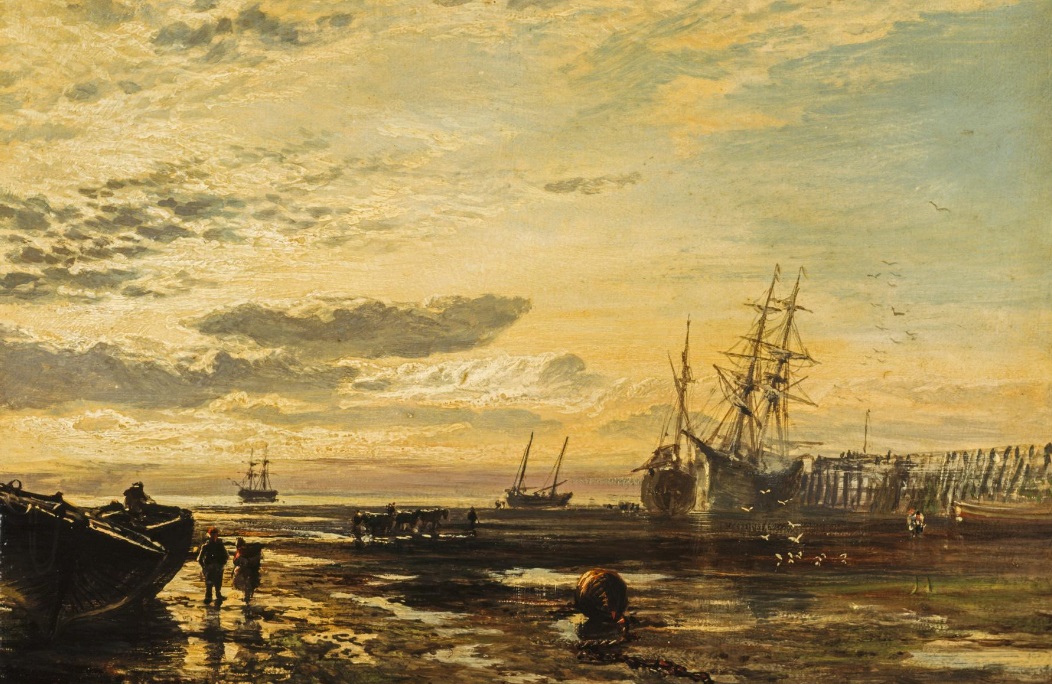
“The Solway at Port Carlisle” (1859) by Samuel Bough (1822 – 1878), National Galleries Scotland. Use permitted under a Creative Commons Licence. [34]
Times were beginning to change. … In “August 1824, there were public meetings in Newcastle, to consider again the idea of a canal to Carlisle, or possibly a railway. William Chapman, who had surveyed a route for a canal in 1796, suggested that the route was also suitable for a railway, and was asked to cost both options. He quoted £888,000 for a canal and £252,488 for a railway. A company was created to build a railway, although they did not obtain an Act of Parliament until 1829. There was support in Carlisle, and an agreement was reached that the railway would terminate at the canal basin.” [2][3: p342-343]
The opening of the railway to Newcastle in the 1830s brought a significant upturn in profits on the canal. Its imminent arrival resulted in another shipowner starting a service between Carlisle, Annan and Liverpool.
“However, the boom did not last long, and the company found that it was in competition with the railways. The Lancaster and Carlisle Railway was authorised in 1844, and was a direct threat to the steamer service and canal. The Maryport and Carlisle Railway had been authorised in 1837, but opening was delayed until 1845 by financial difficulties. It was extended to Whitehaven in early 1847 by the opening of the Whitehaven Junction Railway, and at the end of the year the Lancaster and Carlisle Railway opened. The Caledonian Railway opened in February 1848, running northwards from Carlisle to Scotland.” [2][3: p345-346]
“In March 1852, the company decided that the best option was to convert the canal into a railway, raised some money from shareholders and loan holders, and sought an Act of Parliament. Work began in June 1853, although the Act was not obtained until 3 August. An omnibus service was used to ferry passengers between Carlisle and the steamers at Port Carlisle, and the canal closed on 1 August 1853.” [2][3: p347-348].
The Act both wound up the canal company and created the Port Carlisle Dock and Railway Company. Further details about the history of the Canal can be found here [35]
Construction was completed within a year and opened to goods traffic on 12 May 1854 and passengers on 22 June. [2]
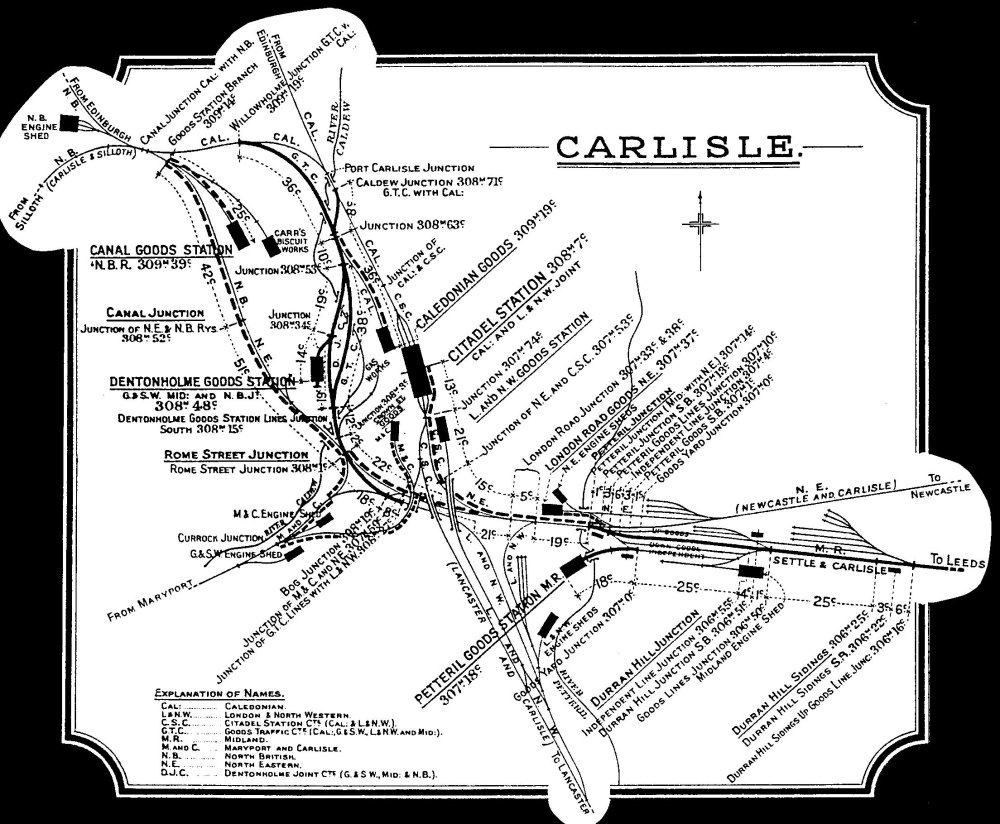
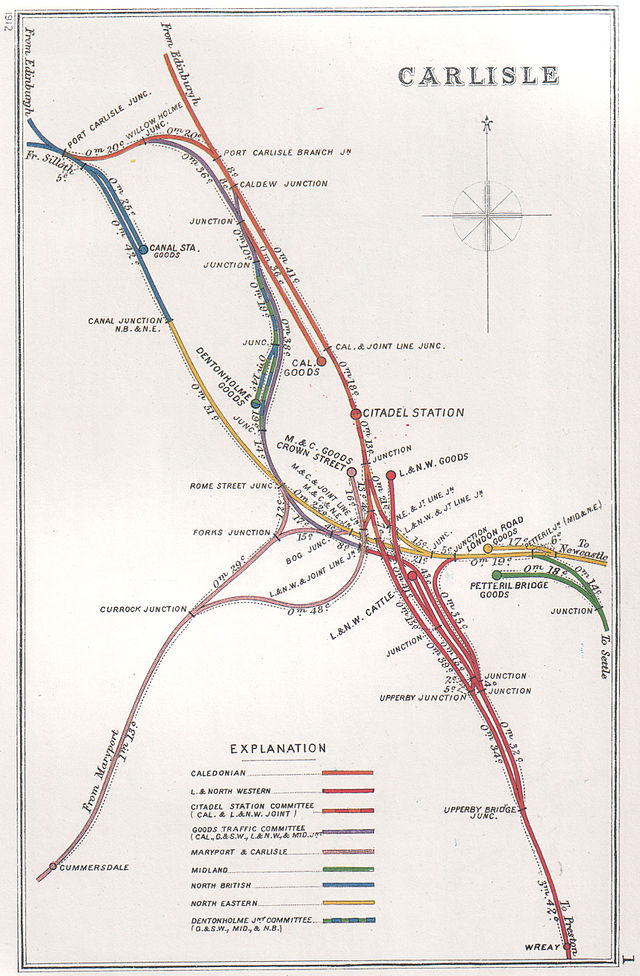
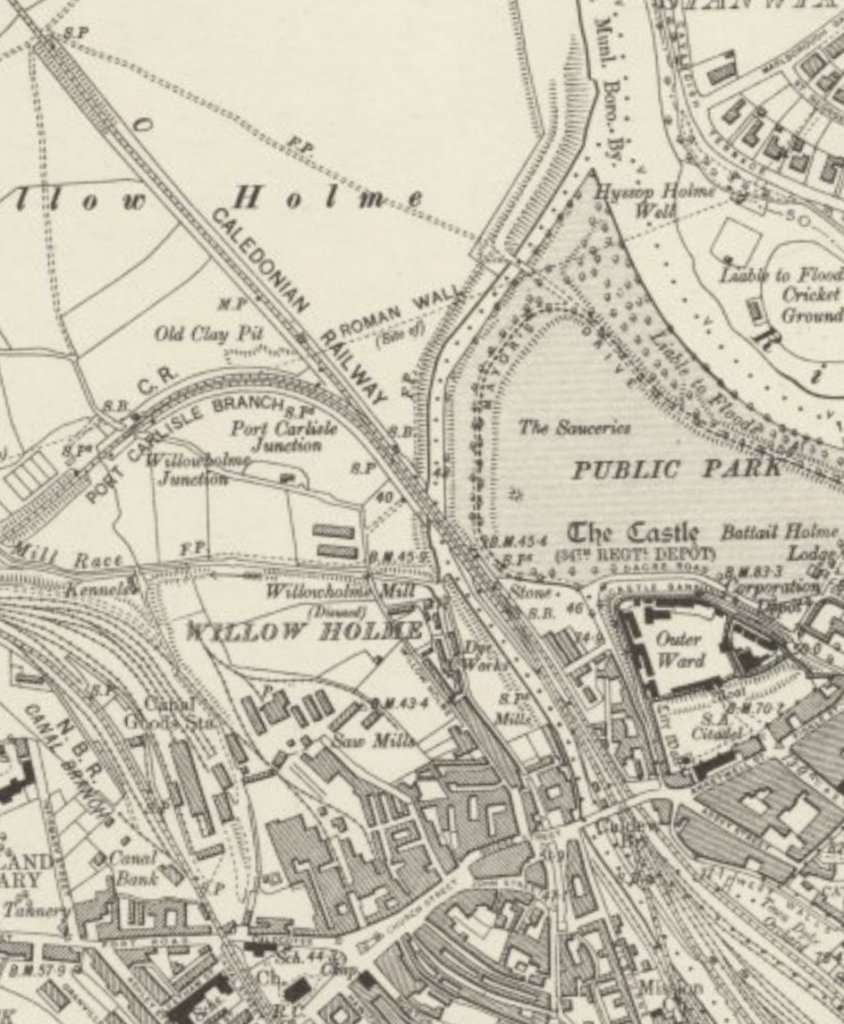
The Port Carlisle Railway Company had filled in the canal basin at Carlisle and built sidings and a passenger terminal there. Passenger services between Port Carlisle and Carlisle were short-lived. Two years later the line from Carlisle to Silloth opened. The through passenger service to Port Carlisle was replaced by a horse-worked service between Drumburgh and Port Carlisle. This horse-drawn service lasted until 1914 when it was replaced by steam-power. In due course a steam railmotor service was introduced which lasted until the branch closed in 1932. [2][5]
The Route of the Line
The rail network in Carlisle in 1914 as drawn by the Midland Railway. The Port Carlisle line left the Caledonian main line at Port Carlisle Junction (top left of this drawing), passed through Canal Junction and then set off West just South of the North British Railway Engine Shed shown in the far top left of the drawing. [36]Wikiwand comments: “Port Carlisle Junction was a railway junction between the lines of the former Caledonian Railway and North British Railway companies lines to the north of Carlisle Citadel station in, what is now, Cumbria, England. It opened in July 1863. Port Carlisle Junction railway station was a very short lived station that first came into use in July 1863 and there was some untimetabled use until 29 October 1863, but the station closed as early as 1 July 1864. After closure, the up (northbound) platform was retained for use by those crews requiring change and also for passing messages on to crews.” [37][38: p78][39: p80][40: p16]The route of the Port Carlisle Railway. [44]
The Port Carlisle Branch left the main Caledonian Railway line at Port Carlisle Junction, which was just to the North of the River Caldew, and curved way to the Southwest.
Wikipedia tells us that Kirkandrews-upon-Eden railway station “sat close to the village in the cut of the old canal; it had a single platform, and a shelter. … A substantial station building was present. A large seed warehouse was located at the station. In common with other stations on the line, it had its name picked out in sea shells on a raised area opposite the station building.” [14][15]
Continuing on from Kirkandrews the old line curved round to the Northwest. As can be seen on the next extract from the 6″ OS Maps of 1901, there are a couple of things which show that the old railway line followed the Carlisle Canal along most of its length.
Northwest of Kirkandrews Station the railway and the older canal diverge for a short distance. This is one of a few locations along the line to Port Carlisle where the historic route of the canal was in evidence on the ground after the construction of the railway. North of Monkhill was further evidence of the old canal – a lock keeper’s cottage remained alongside the railway where it passed under the lane between Monkhill and Beaumont. [16]On the modern satellite imagery, the routes of the old railway and the earlier canal are still very much in evidence. [16]The site of the old lock-keeper’s cottage seen from the Monkhill to Beaumont road. The alignment of both the railway and the canal are represented by the red line. The lock house remains in private hands, extended and refurbished. [Google Streetview – August 2021]The generally East-West direction of the line continues towards Burgh Head, both canal and railway following the same alignment. At Wormanby the road to Port Carlisle crossed the line again by means of an overbridge – Hallstones Bridge. [17]On modern satellite imagery the majority of the old line’s route is clear from the alignment of field boundaries and the presence of trees. At Hallstone’s Bridge the road alignment remains as it was when the railway was active, the bridge has gone and the land either side of the road has been regraded. [17]The location of Hallstone’s Bridge at Wormanby. Remais of the retaining walls supporting the road embankment approaching the bridge can still be seen on the right of this picture. [Google Streetview, October 2016]The view West from just to the North of Hallstone’s Bridge with the line of the old railway indicated by the red line. The trees on the line sit on a low embankment which has not yet been regraded as of May 2022. [Google Streetview, October 2016]The railway ran along the South side of Burgh Head and Burgh by Sands, passing under Ludgate Bridge and then through Burgh by Sands Railway Station and then under another two bridges at the West end of Burgh by Sands. [18] The route of the line is again picked out in red on this modern satellite image. [18]The location of Ludgate Bridge with the approximate line of the old railway shown in red. [Google Streetview]Burgh by Sands Station Building in 2022. The picture is taken looking East from Station Road which is an un-adopted highway. The station platform and tracks were to the right of the building. [My photograph, 14th May 2022]Burgh by Sands Railway Station in 1903. The postcard view looks from the Southeast. [18]
Burgh-by-Sands Railway Station looking West along the platform. [48]This monochrome image looks from the Southwest and shows the Station Buildings to good effect. [18]
Wikipedia tells us that Burgh-by-Sands station “sat close the village, reached by Station Road that branched off the mainstreet; it had a single platform, a shelter and a signal box. … A substantial station building was present, together with a station master’s house.” [19]
Burgh-by-Sands Station. Viewed from beyond the station looking eastward, towards Carlisle. The line and station closed completely on 7/9/64, Note that in this image a short siding is shown at the near end of the station platform, on the North side of the line, serving a loading bay. (c) Ben Brooksbank. Creative Commons Attribution Share-alike license 2.0 (CC BY-SA 2.0) [19]These houses on Southfield stand on the line of the old railway to the West of the station building which is behind the camera. [My photograph, 14th May 2022]The line of the railway where it passed under Lawrence Lane. Just to the north of the line Lawrence Lane now becomes a private driveway. [Google Maps]Lawrence Lane looking towards the old line which would have been just round the corner ahead. [My photograph]The final bridge in Burgh-by-Sands can be seen looking South along the Thurstonfield, Great Orton Road from the Main road through the village. [Google Streetview]This view is taken from the Southern end of the bridge. The bridge is typical of a number on the route with decorative metal parapets and stone abutments. [My photograph, 14th May 2022]This picture was taken through vegetation from an unmetalled lane on the Southwest side of the old railway line. The bridge has been strengthened by steel column supports at the third-points of the span and longitudinal steel joists. [My photograph, 14th May 2022]A similar view from the Southeast. [My photograph, 14th May 2022]Looking east over the decorative bridge parapet towards Burgh-by-Sands Station. [My photograph, 14th May 2022]Looking West along the old line from the same location. [My photograph, 14th May 2022]The train from Carlisle to Silloth leaves Burgh-by-Sands behind J39 64895 in June 1960. (c) Brian Irwin. [13]This next length of the line takes us from Burgh-by-Sands to Dykesfield and just out onto the Marsh. [20]The approximate line of the old railway is again marked on the modern satellite image with a red line. Over this length the canal and railway followed the same alignment. The bridge at Dykesfield still remains. [20]The bridge at Dykesfield (West Green Bridge) from the South. [My photograph, 14th May 2022]The bridge at Dykesfield (West Green Bridge) from the North. [My photograph, 14th May 2022]The bridge remains acting as a bridge by strengthened in the same way as the bridge at the West end of Burgh. [My photograph, 14th May 2022]
After passing through Dykesfield the railway broke out onto the marshes on the South side of the Solway Firth. A long straight stretch of line carried trains on to Drumburgh. The picture immediately below gives an impression of the lay of the land and shows that the railway was indeed built within the old canal.
Wikipedia informs us that Drumburgh Railway Station “was the junction station for the Port Carlisle Railway branch and the Silloth branch, serving both as a junction and transfer station and also serving the small village of Drumburgh. The station closed on 4 July 1955; nothing now remains of the station. The line to Silloth closed on 7 September 1964 as part of the Beeching cuts. Port Carlisle was two and a half miles away by train and Glasson was one and a quarter miles away. The journey time was nine minutes, although Glasson was a request stop.” [27][28] The service to Port Carlisle was horse-powered.
Griffiths and Hooper tell us that Port Carlisle had two locomotive sheds: “Firstly, a 32ft x 14ft one-road dead-end building, in brick with a tiled, pitched roof and having a central smoke vent, was erected to the east of Port Carlisle station. It stood at right angles to the station and could only be entered via 24ft turntable accessed by an approach spur; a water tank stood near the depot but it is not known what facilities were available for coal.” [45]
Once the steam-hauled service was replaced by the horde-drawn Dandy it seems as though “the engine shed remained in situ – assumedly it was utilised for stabling the horses and possibly also to shelter the small tramcars, but that needs confirmation.” [45]
A steam hauled service was reinstated on “6th April 1914 when an inaugural passenger train was run from Port Carlisle to the city of Carlisle … behind a North British Railway Drummond ‘165’ class 0-6-0T, No. 22, that engine having been taken off its previous regular duty on the Langholm branch to run the passenger service from Port Carlisle. However, less than three years after the upgrade of Port Carlisle passenger services World War I brought an economy measure whereby the branch closed to all traffic from 1 January 1917 and until reopened from 1 February 1919.” [45]
Griffiths and Hooper believe that the second engine shed we built not long after 1914, when a locomotive-hauled service was reinstated “or it may have appeared with the post-war reopening. It was a single road through building in wood on dwarf brick walls and with a pitched tiled roof, scaling 34ft x 16ft. It was positioned over the approach spur south of the turntable, which then, or earlier, had been reduced in size to 16ft diameter. Being of such modest dimensions it was realistically of little use anyway so it probably did not matter that engines had to pass through the shed to access the ‘table.” [45]
The 25″ OS Map series from the turn of the 20th century shows the first engine shed on a spur off to the side of the mainlines and accessed only via a small turntable. [46]The 1925 edition of the 25″ OS Maps show the replacement engine shed. [47]Port Carlisle’s second engine shed. This view looks back down the branch towards Carlisle and was taken after the closure of the line. The platform face of the station is visible on the right of this image. [45]
Charles Hadfield, Gordon Biddle; The Canals of North West England, Vol 2 (pp.241-496); David and Charles, Devon, 1970.
Sir Alec Skempton, et al.; A Biographical Dictionary of Civil Engineers in Great Britain and Ireland: Vol 1: 1500 to 1830; Thomas Telford, London, 2002.
Bailey’s Tramroad and the Monmouthshire & Brecon Canal by Michael Blackmore. This sketch is included on the information sign at Govilon Railway Station which is now disused and lives on in an extended and altered form as a private dwelling. The drawing shows the Tramroad bridge over the canal which led to the Wharf. Notice the plateway itself which is formed of L-shaped cast iron plates resting on stone blocks. (Extracted from my photograph of the information board taken on 25th April 2022)
It was actually quite a short walk, I only had just over an hour spare in a trip to Abergavenny. I took the opportunity to have a look at the Wharf at Govilon and the first few hundred yards of Bailey’s Tramroad.
The location plan on the information board at Govilon Railway Station. Note the red dotted line which shows the route of Bailey’s Tramroad; the location of Bailey’s Wharf and Govilon Wharf at the right side of the image; the route of the canal shown in blue; and the route of the railway in cream on the right half of the map and in green as part of one of the village trails.A closer view of the map. The bridge which carried Bailey’s Tramroadover the Canal is marked ‘A’; the Railway Station site is marked ‘B’, ‘C’ and ‘D’. The route followed left this location in an Northeastward direction (cream), crossed the railway bridge over thecanal and followed the line of the railway on the North side of the sailing club wharf. I then crossed the tramway bridge and wandered a short distancealong the canal towpath to view the wharf building to the southeast of the road. To complete the walk I followed School Lane back to the Railway Station.
Bailey’s Tramroad from the Nantyglo Ironworks to the Canal at Govilon opened in 1821. Michael Blackmore’s illustration depicts the tramroad as it crosses the canal to enter Govilon Wharf. Here iron, coal and limestone were taken from the horse-drawn trams onto narrowboats bound for Newport and the wider world.
My first port-of-call was Govilon Railway Station and the information board which includes the sketch above. Govilon railway station was a station on the London and North Western Railway’s (LNWR’s) Heads of the Valleys line. After the grouping in 1923 it became part of the LMS.
After a quick look at the station site I walked down the railway line to the point where it crossed the canal, then along the back of the site of Bailey’s Wharf. Walking over the canal bridge which is sketched by Blackmore I was the able to spend a short time at Llanvihangel (Govilon) Wharf before walking along the first few hundred yards of what was Bailey’s Tramroad.
Tramroads at Govilon
The Govilon History website tells us that “A network of tramroads were developed in the Govilon area. One of the earliest was the Blorenge Quarries Tramroad built as a plateway around 1795. Due to geological problems the Blorenge Limestone Quarry soon closed and the tramroad fell out of use by 1804.” [1]
The Blorenge Quarries Tramroad was the precursor to three other tramways which were established in the first quarter of the 19th century. Bailey’s Tramroad was one of these.
“In October 1820, Crawshay Bailey applied to the Brecon and Abergavenny Canal Company for the construction of “…a railway from the canal at Llanwenarth to our iron furnaces at Nantyglo”. It took just 7 months to build the twin track tramway. Much of the route into Govilon is still plainly visible with School Lane following the original route. Despite the mountainous route from Nantyglo the tramway managed to keep to a shallow gradient throughout its length. Siop Newydd, just outside the village, was a smithy serving the tramroad. At its peak up to 14 blacksmiths were employed for repairs and maintenance. This included shoeing horses used to pull the trams. The path of the tramway is clearly recognisable here, along with the many sidings to accommodate trams.” [1]
Other highly significant tramways in the area included:
The Llanvihangel Tramroad which initially ran from Llanfoist to Llanvihangel Crucorney. In 1818 it was extended to Govilon wharf and to Grosmont. Ultimately, this tramroad extended all the way to Hereford.
The Blaenavon Ironworks Tramroad ran from Pwlldu to the Ironworks. It was completed in around 1815. Worthy of note is a 1.5 mile tunnel as part of the length of the Tramroad connecting Blaenavon with Pwlldu.
Bailey’s Tramroad
Bailey’s Tramroad was of 4′ 4″ gauge, or thereabouts. [2] Later in this article is a description of my walk back along the route of the old Tramroad.
The Heads of the Valley Line and Govilon Railway Station.
The Wikipedia article about Govilon Railway Station [3] tells us that “the first section of the Merthyr, Tredegar and Abergavenny Railway (MTAR) from Abergavenny to Brynmawr was opened on 29 September 1862. [4: p18] The line was leased and operated by the London and North Western Railway (LNWR) which acquired the smaller railway company on 30 June 1866. [5: p93][6: p63] The LNWR was itself amalgamated into the London, Midland and Scottish (LMS) Railway in the 1923 Grouping.” [5: p88-89]
Govilon Railway Station opened on 1 October 1862, [7: p191][8: p107] a couple of days after the ceremonial opening of the first section of the railway. It was the first station beyond Abergavenny Brecon Road. [9] The 1st October was also the first day of the LNWR’s lease of the line. [10: p112] There is a possibility that Govilon was the first station opened on the line because of its proximity to Llanfoist House, the residence of Crawshay Bailey who by this time was a director of the MTAR. [2: p20]
Wikipedia notes that “Decline in local industry and the costs of working the line between Abergavenny and Merthyr led to the cessation of passenger services on 4th January 1958. [4: p139][6: p68] The last public service over the line was a Stephenson Locomotive Society railtour on 5th January 1958 hauled by LNWR 0-8-0 No. 49121 and LNWR Coal Tank No. 58926. [4: p139][11: fig. 65] Official closure came on 6 January.” [3][7: p184][12: p55][8: p107][13: p191]
Govilon Railway Station was “situated on a steep 9-mile (14 km) climb from Abergavenny at gradients as severe as 1 in 34. [6: p68][13: p164] A gradient post showing 1 in 80 /1 in 34 was installed on one of the station platforms.” [3][4: p116]
This gradient marker is present on the wall of the old station building. It does not quite match the gradient marker which was originally present. The original gradient marker highlighted a change in gradient from 1 in 80 to 1 in 34. (My photograph, 25th April 2022)
The low stone-built station building was on the Up platform There was a station house behind it. [4: p116][11: fig. 41]. A single siding separated the station building from the station house. It “served a small goods yard until after the First World War” [3][11: fig. 41] Wildon Ironworks was on the opposite side of the main platforms and was served by a siding from 1885 to 1941.[11: fig. VIII]
The Wikipedia article continues: “to the west was a small goods shed and road bridge. [11: fig. 42] A third siding was situated 400 yards (370 m) to the east which led to a wharf on the Monmouth and Brecon Canal until 1953. [11: fig. VII] No. 1 signal box was opened in 1911 near the canal wharf and lasted until c. 1930. [12: fig. 36] No. 2 box was erected at the east end of the Down platform in 1877; it controlled the road crossing to the east of the station.” [11: fig. 38][3]
The Walk from Govilon Railway Station to Bailey’s Wharf
The next few pictures were taken on the short walk from the railway station to the wharf.
The view facing Abergavenny from Derwen Deg, the road which crossed the old line at the station throat. (My photograph, 25th April 2022)Looking west towards Govilon Railway Station and the footpath gate at Derwen Deg. (My picture, 25th April 2022]Looking towards the Canal Bridge and Abergavenny (My photograph, 25th April 2022)Looking West along the Canal from the old railway bridge. (My picture, 25th April 2022)Looking East from the old railway bridge towards Bailey’s Wharf and Abergavenny. (My photograph, 25th April 2022)Looking back across the location of the railway bridge over the Canal to the West and the path leading back to Govilon Railway Station. (My picture, 25th April 2022)Looking towards Bailey’s Wharf from close to the bridge over the Canal. (My photograph, 25th April 2022)Looking towards Abergavenny along Bailey’s Wharf from the old railway. (My photograph, 25th April 2022)A photograph from the same location as that immediately above, looking back towards Govilon Railway Station. The stone building on the left of the image is Bailey’s Warehouse. (My picture, 25th April 2022)The railway continued beyond the Wharf heading for Abergavenny. (My picture, 25th April 2022)Govilon Boat Club now occupies the site of Bailey’s Wharf. The gate sits on the approximate line of Bailey’s Tramroad as it entered the site. Its route from the canal bridge is behind the camera. (My photograph, 25th April 2022)
Llanvihangel Wharf
We have already noted that the Llanvihangel Railway was an early horse-drawn railway line. It operated over a 6.25 mile route between the Canal at Govilon and Llanvihangel Crucorney from 1814 until 1846.
Along with two other tramways it created a line that reached all the way to Hereford. In 1846 all three Tramroads were sold in 1846 to the Newport, Abergavenny and Hereford Railway Company. The Llanvihangel Railway fetched a price of £21,750 (equivalent to close to £2.2 million in 2022). [15][16] The company replaced them with a standard-gauge steam railway.[15][17]
The Llanvihangel Tramroad Wharf was to the East of the road bridge at the East end of Bailey’s Wharf. A short walk from the Heads of the Valley Line, along an access road allows one to each the back of Wharf House immediately to the East of the road bridge.
Looking Southwest along Blaenavon Road towards the bridge over the Canal showing the rear of Wharf House. (My photograph, 25th April 2022)Looking Northeast along Blaenavon Road from the bridge over the Canal also showing the rear of Wharf House. (My photograph, 25th April 2022)The Southeast face of Wharf House in April 2022. The picture was taken from the far side of the Canal. (My photograph)A view from behind the information board on the Canal towpath which shows a sketch of Wharf House as it is understood it looked in the 19th century, (Michael Blackmore) and the present condition of the building. (My photograph, 25th April 2022)A second sketch of the wharf yard (Michael Blackmore). It is also included on the information board on the Canal towpath. (My photograph, 25th April 2022)Looking East along the Canal. (My photograph)Looking West along the Canal from beneath the road bridge. (My photograph)A view of Bailey’s Wharf from the towpath on the opposite side of the Canal. (My picture, 25th April 2022)
Bailey’s Tramroad, the first few hundred metres. …
Leaving the site of Bailey’s Wharf, which we have already seen is now occupied by Govilon Boat Club, the double track Tramroad travelled a very short distance to the East before crossing the Canal at a shared road/tramroad bridge. The modern road name is Blaenavon Road.
The view West from the Canal Bridge along Blaenavon Road. (My picture, 25th April 2022)An OpenStreetMap extract which shows the Blaenavon Road (B4246) and the length of School Lane which lies on the route of Bailey’s Tramroad. [20]
The route of the Tramroad leaves Blaenavon Road as turns sharply to the East. It runs along School Lane back towards Govilon Railway Station.
School Lane, looking West from Blaenavon Road. (My photograph, 25th April 2022)
A sequence of photographs follows, taken on 25th April and showing the Tramroad route along School Lane, Govilon. ….
This last shot in the sequence taken along School Lane shows the route of the Tramroad further to the West. The Tramroad continued along the line of the narrow lane to the left of this photograph. (My pictures, 25th April 2022)
I hope to be able to follow further lengths of the Tramroad in future visits to Abergavenny.
The Monmouthshire and Brecon Canal
To complete this perambulation in Govilon, I visited the Canal bridge on Station Road in Govilon – Bridge 96 on the OpenStreetMap extract below. …
Two pictures at Bridge 96 on the Monmouth and Brecon Canal. (My photograph, 25th April 2022)
“The Monmouthshire and Brecon Canal is a small network of canals … For most of its currently (2018) navigable 35-mile (56 km) length it runs through the Brecon Beacon National Park, and its present rural character and tranquillity belies its original purpose as an industrial corridor for coal and iron, which were brought to the canal by a network of tramways and/or railroads, many of which were built and owned by the canal company.” [21]
To conclude …
Govilon provides a relatively unique interchange between canal, tramroad and railway with the routes of each running parallel to each other to the West of the village. Each route would provide a pleasant walk. The village of Govilon brings all three together in what is a very easy and accessible amble.
W.W. Tasker; The Merthyr, Tredegar & Abergavenny Railway and branches; Oxford Publishing Co., Poole, 1986.
Christopher Awdry; Encyclopaedia of British Railway Companies; Patrick Stephens Ltd., Sparkford, 1990.
Mike Hall; Lost Railways of South Wales; Countryside Books, Newbury, 2009.
Michael Quick; Railway passenger stations in Great Britain: a chronology (4th ed.); Railway & Canal Historical Society, Oxford, 2009.
R.V.J. Butt; The Directory of Railway Stations: details every public and private passenger station, halt, platform and stopping place, past and present (1st ed.); Patrick Stephens Ltd., Sparkford, 1995.
M.C. Reed; The London & North Western Railway; Atlantic Transport, Penryn, 1996.
David Edge, David (September 2002). Abergavenny to Merthyr including the Ebbw Vale Branch. Country Railway Routes; Middleton Press., Midhurst, 2002.
C.R. Clinker; Clinker’s Register of Closed Passenger Stations and Goods Depots in England, Scotland and Wales 1830–1980 (2nd ed.); Avon-Anglia Publications & Services, Bristol, 1988.
James Page; Rails in the Valleys. London: Guild Publishing, London, 1989.
UK Retail Price Index inflation figures are based on data from Clark, Gregory (2017). “The Annual RPI and Average Earnings for Britain, 1209 to Present (New Series)”. Measuring Worth, accessed on 2nd December 2021.
Helen J Simpson; The Day the Trains Came: the Herefordshire Railways; Gracewing Publishing, Leominster, 1997.
John Bartlett’s father, Cyril, was Station Master in the period before the closure of Govilon Railway Station. This picture was shared by John Bartlett on the Facebook group ‘Govilon and Gilwern Past’, accessed on 26th April 2022.