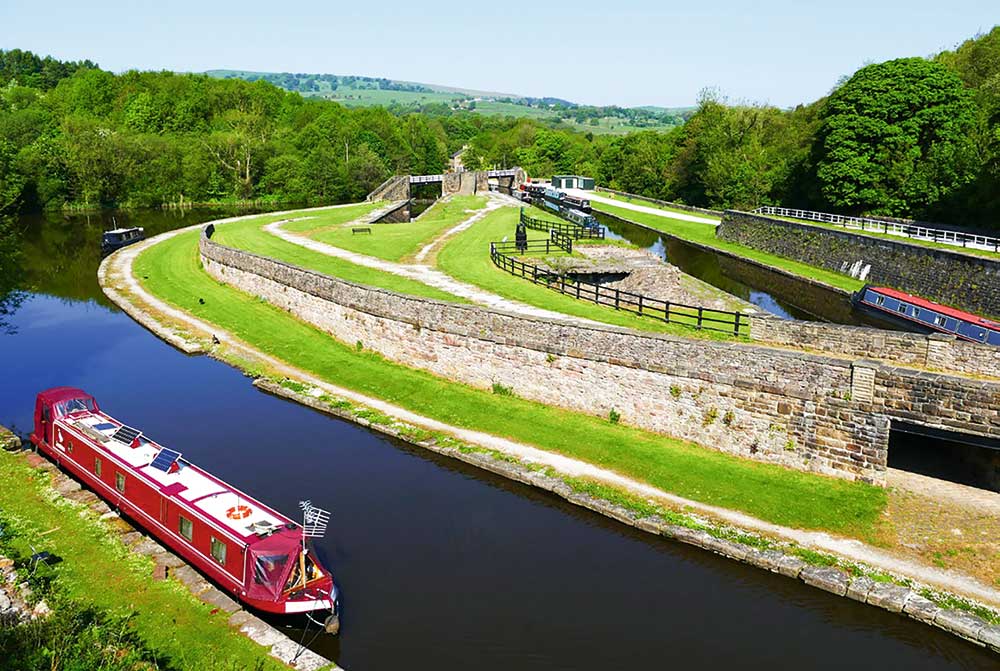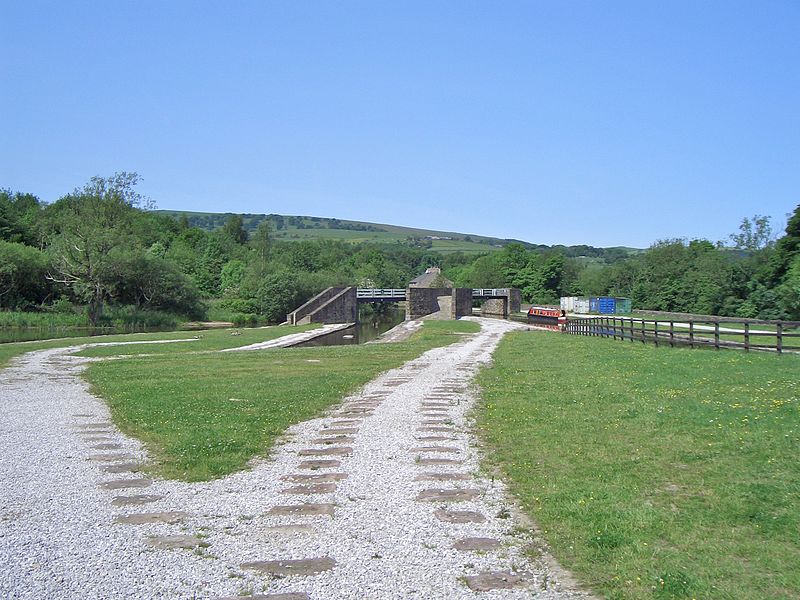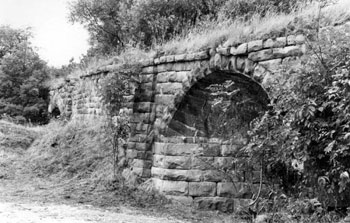
Category Archives: The Railway Magazine

Petrol Railmotors – The Railway Magazine, September 1922

The Railway Magazine of September 1922 carried two short articles about new petrol Railmotors. …

North Eastern Railway (NER) – Petrol Rail Motor Bus

The first short article was about an experimental vehicle used by the NER.

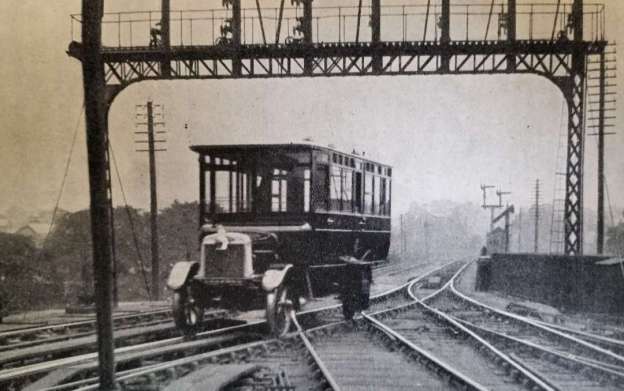
On certain portions of the NER network, the company realised that “there was room for a service conducted on lines as nearly as possible identical with those of motor buses on the roads. With the view of ascertaining, without much initial expenditure, whether the scheme is likely to prove financially successful, they have converted one of their ‘Leyland’ road motor ‘buses, formerly running on the road services in the vicinity of Durham, so as to make it suitable for running on the railway.” [1: p234]

The war resulted in a significant increase in railway working expenses which made it impossible to provide a train unit on some of the country branches, where the number of people travelling was small, “sufficiently cheap to cover its working expenses out of the small revenue available,” [1: p234]

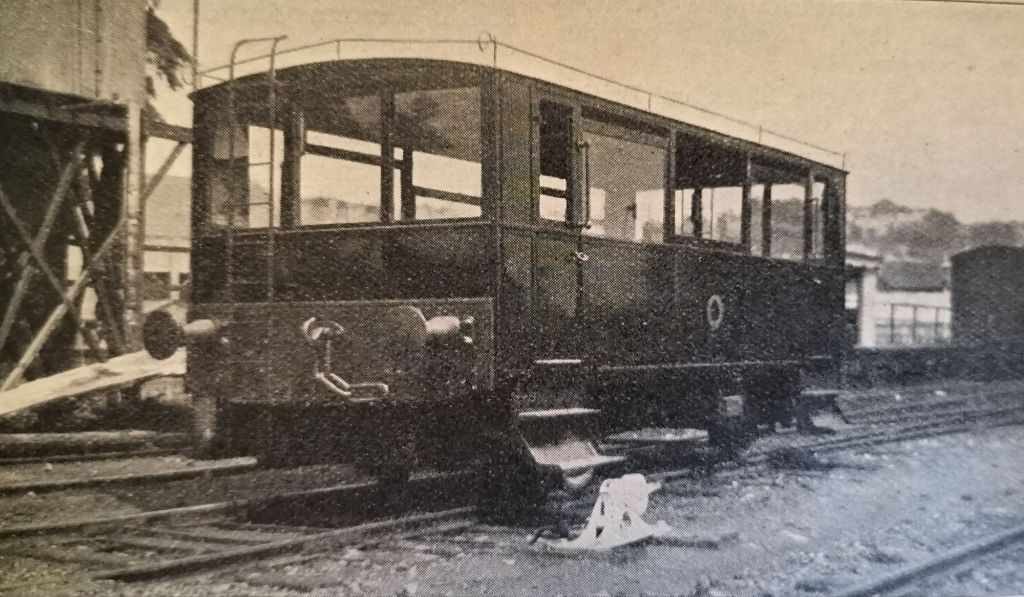
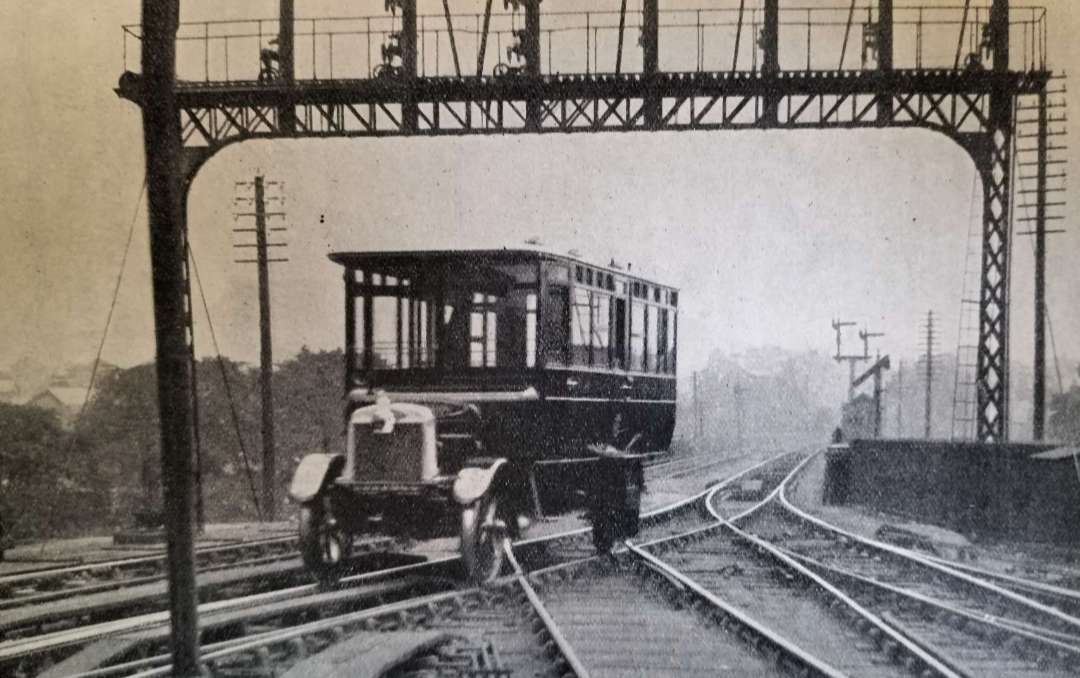
NER Rail Motor [1: p235]

The NER needed to devise a cheaper form of rail transport. As a first step, it decided to convert one of its own fleet of petrol-powered road buses. The company’s intention was to undertake a trial at low cost before developing a design specifically tailored to rail use.

The experimental unit entered service on 19th July 1922. If “the results  of the working of this vehicle are encouraging, the company intend[ed] to build vehicles [capable of] carrying up to 40 passengers, and maintaining an average speed of approximately 30 m.p.h.” [1: p236]

The railmotor operated between Copmanthorpe, York, Strensall and Earswick, and was “manned by a motorman and a conductor exactly in the same way as if it were running on the highway. Single journey tickets [were] issued on board, so that passengers [did not have] the trouble of going to the booking office. It [had] accommodation for 26 passengers. It [ could]  be driven from both ends, and run in either direction, and the motive power consist[ed] of a 35-h.p. Leyland engine of the standard type, supplied by the builders for their ordinary commercial road vehicles.” [1: p236]

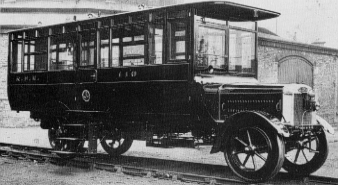
The donor vehicle was one of three Leyland Motor Co. buses that the NER purchased on 21st July 1921. “With a long bonnet and a overhanging roof at the front, it was a typical design for that time. The conversion was completed at York Carriage Works. Initially No. 110 in the Road Vehicle fleet, it was renumbered as No. 130Y shortly after conversion because No. 110 was already occupied in the Coaching Stock list.” [2]

An “additional radiator and an additional driving position were located at the rear of the vehicle. Central passenger doors were fitted to both sides of the saloon. …. Folding steps were also added to allow access from rail level. These were later replaced with fixed steps, and eventually removed altogether. An electric headlamp was also fitted.” [2]

The LNER website continues: “the initial York duty involved a service to Haxby, Strensall, Earswick, and Copmanthorpe. NER Petrol Autocar No. 2105 took over this duty on 9th July 1923, and No. 130 was transferred to Selby. At Selby, No. 130 operated daily return trips to Straddlethorpe, York, Goole, Catleford, Goole, Market Weighton, Cawood, and Hemingborough. This resulted in a full timetable that started at 6:52am and finished at 7:44pm. No. 130 took part in the Stockton & Darlington Centenary celebrations, but continued these Selby duties until November 1926.” [2]

Railmotor No. 110, later No. 130. The fold-down steps can be seen clearly in this image. [2]

On 11th November 1926 the railmotor/railbus “caught fire whilst being filled up with petrol at Selby shed. The entire bus was reportedly gutted within 15 minutes. Reports also suggest that someone used a naked paraffin lamp to check the level of the petrol tank. Only the chassis remained, and it was eventually decided not to rebuild or replace the bus. No. 130 was officially withdrawn from stock on 9th April 1927.” [2]

It seems as though the initial experiment was successful enough to allow the NER to authorise the building of a further experimental petrol railmotor (No. 2105) in September 1922. A Daimler engine was purchased in October and “the remainder of the vehicle was built at York Carriage Works and was completed in July 1923. By this time, Grouping had occurred, and the autocar was given the LNER number 2105Y. It was later renumbered as No. 22105 in August 1926.” [3]

Railmotor No. 2105 (later renumbered 22105) [3]

It seated 40 in third class accommodation, seats were in pairs either side of a central gangway. “The distinctive wheel arrangement had a two axle bogie at the engine end, and a single fixed axle at the other end. The single fixed axle was powered from the motor via a clutch, three-speed gearbox, and propeller shaft with two universal joints. 40mph was reportedly possible. Radiators were fitted to both ends.” [3]

This Railmotor took over the service provided by No. 130 and continued to operate local services in and around York until 1930. By 1930, it had been renumbered 22105.Closure of a series of local stations that year led to it being reassigned to the Hull area. It is “known to have been given an extensive timetable in the Hull area from 1st May to 17th July 1932 when it worked a 14 hour timetable including Beverley, Thorne North, Brough, Willerby & Kirk Ella, and Hull. Reports suggest it was unreliable during this period and was often replaced by a Sentinel steam railcar.” [3]

Over the next two years, No. 22105 did not work any revenue-earning services. It was withdrawn from service on 19th May 1934.

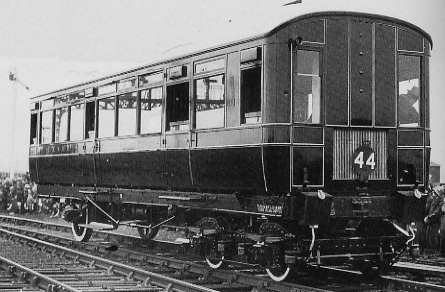
What is perhaps surprising is that these two experimental vehicles were not the first ones used on the NER network. The NER had experimented with petrol railmotors just after the turn of the 20th century. Two examples are worthy of note.

A. Petrol-electric Railmotors/Autocars

The NER were reviewing their operation of suburban passenger services on Tyneside. Alongside the introduction of electric trains on an urban network of lines which would later develop into the Tyne and Wear Metro, the NER ordered two experimental railcars/railmotors to work other, non-electrified, parts of the network.

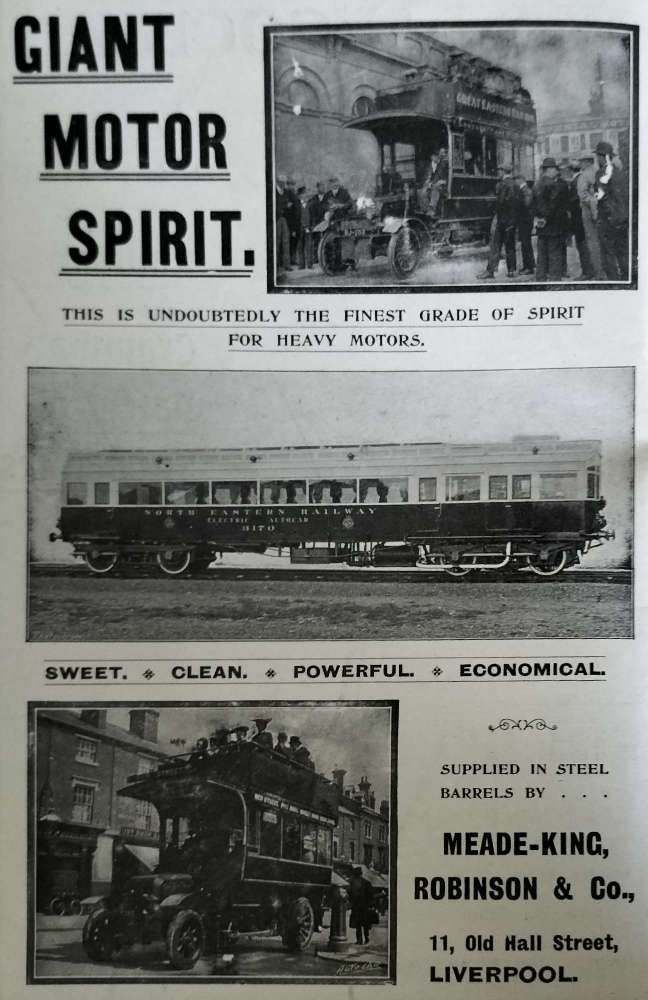
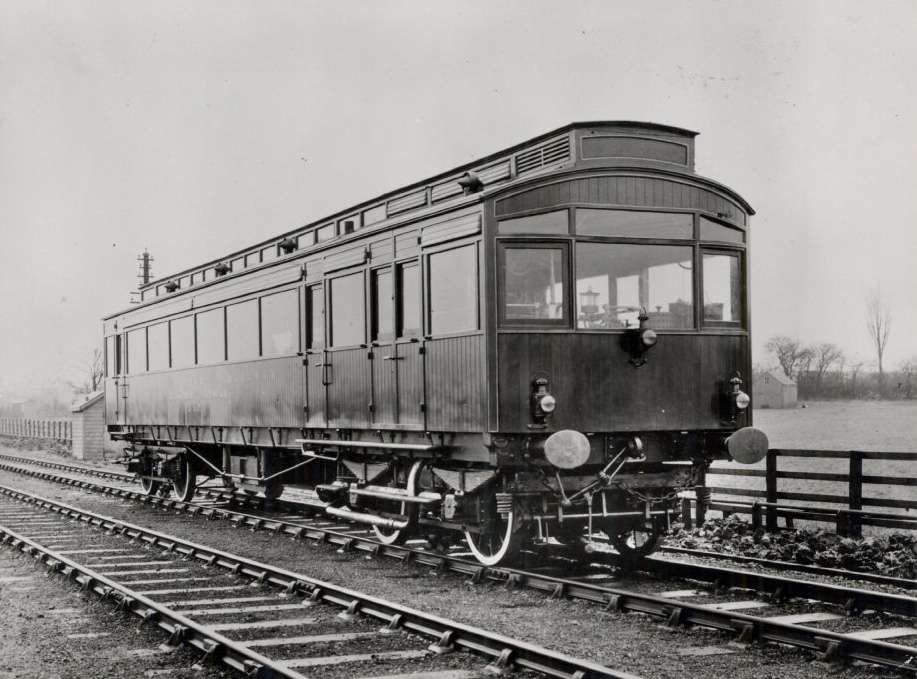
Both railcars were built at the York Carriage Works, together with the original Tyneside electric stock, in 1902-3 and numbered 3170 and 3171. They were 53.5 feet long and weighed around 35 tons. They had clerestory roofs, bow ends, large windows and matchboard sides. There were four compartments inside, the engine room with the principal driving position, a vestibule, the passenger saloon and a driving compartment. There was no guard’s compartment. The passenger saloon had 52 seats. These were reversible and upholstered in standard NER pattern. With curtains at the windows, radiators between the seats and electric lighting, the passenger accommodation was described as ‘cosy’ and seems to have been very popular with the travelling public.” [4]

These two railmotors were referred to as ‘autocars’ after the steam push/pull autotrain services already operated by the NER.

The Embassy & Bolton Abbey Railway comments: “These NER railcars were the first in the world to use petrol-electric technology. At that time, diesel engines were less advanced and not as reliable as their petrol counterparts. The concept of using internal combustion engines to power electric traction motors would later be developed into the diesel electric technology used to power many of BR’s ‘diesel’ locos.” [4]

One of the two NER petrol-electric railmotors. [5]

Initially the railmotors/autocars saw service “between West Hartlepool and Hartlepool stations (in direct competition with electric tramcars) and Scarborough to Filey (as a replacement of a steam service). Later, the autocars were transferred to the Selby – Cawood branchline to work the passenger services there. In 1923, no.3170 was fitted with a larger engine and new generator giving it sufficient power to pull a conventional carriage, thus increasing passenger capacity. It worked in the Harrogate area for a while before rejoining its twin on the Cawood branch. No. 3171 was withdrawn in 1930 and No. 3170 in 1931.” [5]

These vehicles had a petrol engine and a generator in their engine rooms, producing electricity for two Westinghouse 55HP traction motors which were mounted on the bogie underneath. A series of different petrol engines were used during the life of these vehicles. “In 1923, no. 3170 was given a third engine, a 225HP 6 cylinder ex-WD engine rumoured to come from a First World War tank. This new engine gave 3170 more torque and enough power to haul an autocoach as a trailer, though it seems not to have affected the maximum speed.” [5]

The LNER showed an interest in these vehicles and went on to test Armstrong diesel-electric railcars in the 1930s, but by then Sentinel steam railcars had been introduced. “These were not as reliable or popular, they had more seats and fitted better into the contemporary infrastructure.” [4]

No. 3171 was dismantled when withdrawn. When No. 3170 was withdrawn on the 4th April 1931 it was transported to Kirkbymoorside near Pickering, where the body became a holiday home. “Fitted with a tin roof and veranda it was well protected from the weather and survived there until September 2003 when it was sold to carriage restorer Stephen Middleton who moved it to the Embsay and Bolton Abbey Steam Railway.” [5]

B. A Petrol Directors’ Vehicle

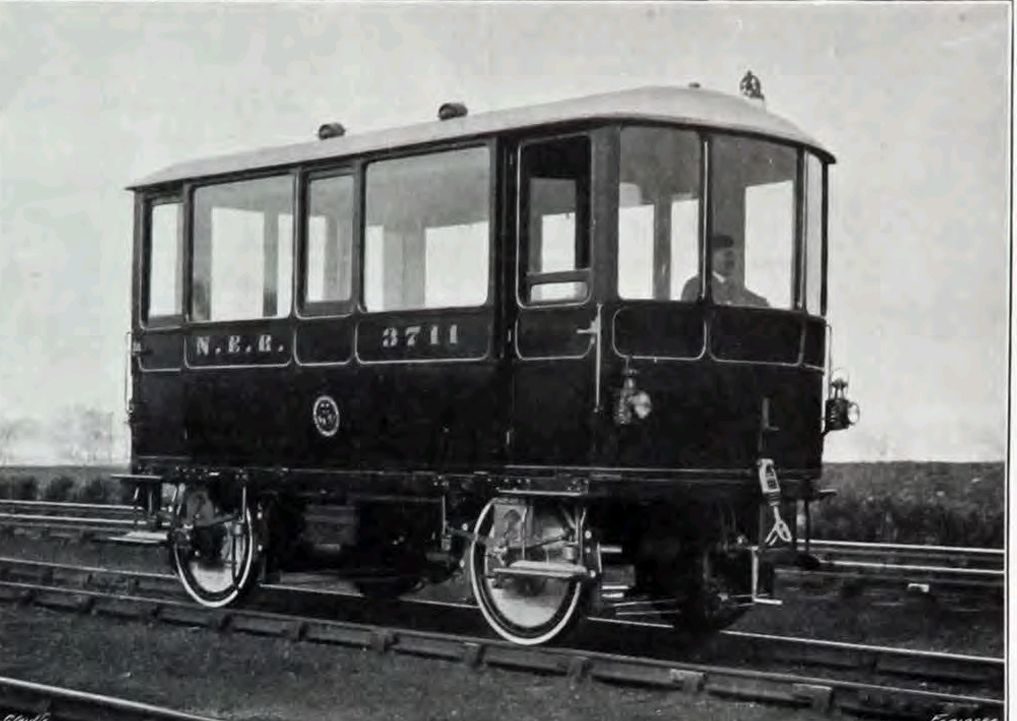
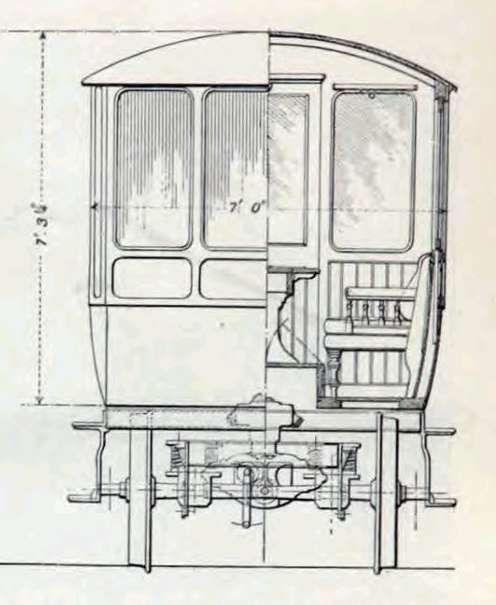
NER Directors’ Inspection Car [8: p358]
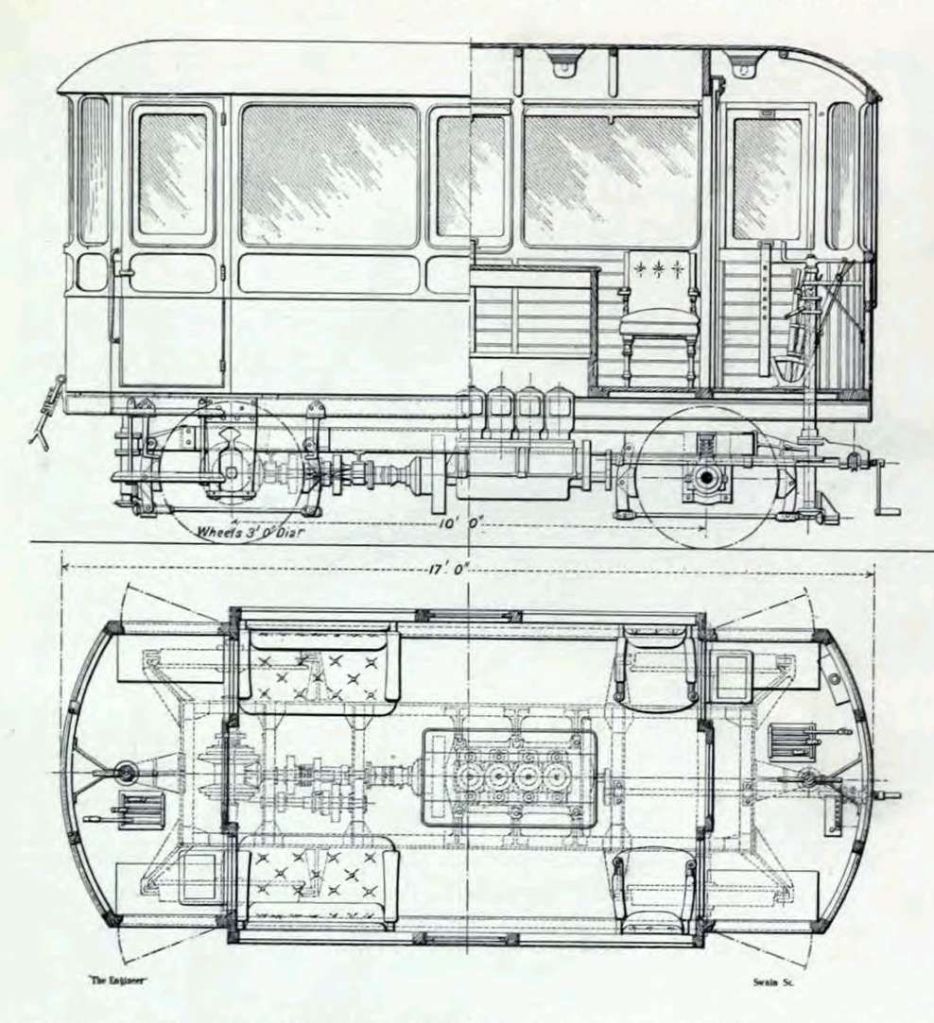
Side elevation and Plan of NER Inspection Car [8: p460]
End elevation of NER Inspection Car. [8: p460]

The Engineer reported in early 1908 that “The North-Eastern Railway Company [had] recently built at its York carriage works and introduced into service a petrol rail motor inspection car designed for the use of its executive officers. The car [was] 17 ft in length by 7 ft in width, with a wheel base of 10 ft. It [was] arranged with a driver’s compartment at each end, and with an open saloon 10 ft. long in the middle. The saloon [was] entered through either of the driver’s compartments, and there [was] a permanent seating accommodation for six passengers, whilst two extra seats [were] provided on camp stools.” [8: p358]

It seems reasonable to ask why, with the  experience gleaned in the very early years of the 20th century, the NER felt the need in 1922 to commission further experimental vehicles. Was it because the technology had developed significantly? Had the early experiments been less than satisfactory?

Weston, Cleveland & Portishead Light Railway

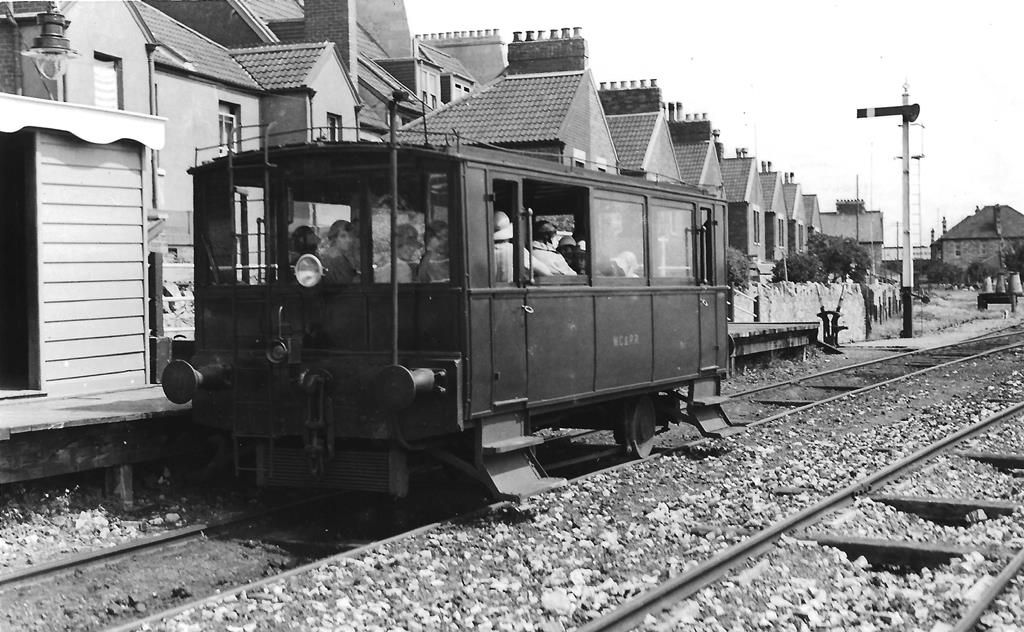
The second short piece in The Railway Magazine of September 1922 related to a Railmotor constructed by the Drewry Car Company Limited (Works No. 1252), to the instructions of Colonel H.F. Stephens, who, along with other roles, was Engineer and General Manager of the Weston, Clevedon and Portishead Light Railway.

The railmotor was powered by a 4-cylinder Baguley 35 hp petrol engine with a 3-speed gearbox and its oil consumption, on easy gradients, [was] 16 miles to the gallon. It had a maximum speed of 25 mph. It was 19ft long and driven by a chain drive from either end. It had 2ft diameter wheels. [1: p239][6]

A Drewry Railmotor at the Weston, Cleveland & Portishead Light Railway. [1: p239]

The vehicle had full visibility all round. Glazed throughout above waist height. Side widows were openable. The panels below the windows were of steel. Acetylene lighting was provided for travel after-dark. The unit carried a maximum of “42 passengers – 30 sitting and 12 standing. The car [was] provided with rails round the roof to enable light luggage and market produce to be carried outside, thus giving the passengers more accommodation.” [1: p239]

Colonel Stephens “was a pioneer of petrol traction. The WC&PR was the first of his railways to introduce railcars. … Due to low running costs [the Drewry Railmotor] was relatively profitable. … Originally the petrol tank was fitted inside the railcar together with spare cans of petrol. As smoking was then common, it was later realised that this was a hazard and a cylindrical horizontal petrol tank was fitted at one end above the buffer beam.” [6]

A light four-wheel wagon built by Cranes was bought in 1925 for the railcar to carry extra luggage or milk churns.” [6]

The Weston, Clevedon and Portishead Light Railway’s first Drewry railcar at the Ashcombe Road terminus in Weston-super-Mare. It was built for the WC&P in 1921 and operated until the line closed in 1940, © Public Domain. [7]

References

  1. The Railway Magazine, Westminster, London, September 1922.
  2. https://www.lner.info/locos/IC/ner_petrol_bus.php, accessed on 8th August 2024.
  3. https://www.lner.info/locos/IC/ner_petrol_autocar.php, accessed on 8th August 2024.
  4. https://www.embsayboltonabbeyrailway.org.uk/oldsite/nerautocar.html, accessed on 8th August 2024.
  5. https://electricautocar.co.uk, accessed on 8th August 2024.
  6. https://www.wcpr.org.uk/Railcars.html, accessed on 8th August 2024.
  7. https://commons.m.wikimedia.org/wiki/File:Ashcombe_Road_-_WCPLR_small_railcar.jpg, accessed on 8th August 2024.
  8. The Engineer; 3rd April 1908, p358 and 1st May 1908, p460.

Advertising in the November 1929 Railway Magazine

This article features advertising from the November 1929 edition of The Railway Magazine. It will probably be of interest to compare the various adverts here with those in The Railway Magazine of November 1938. An article about the 1938 magazine can be found here. [2]

The Southern Railway

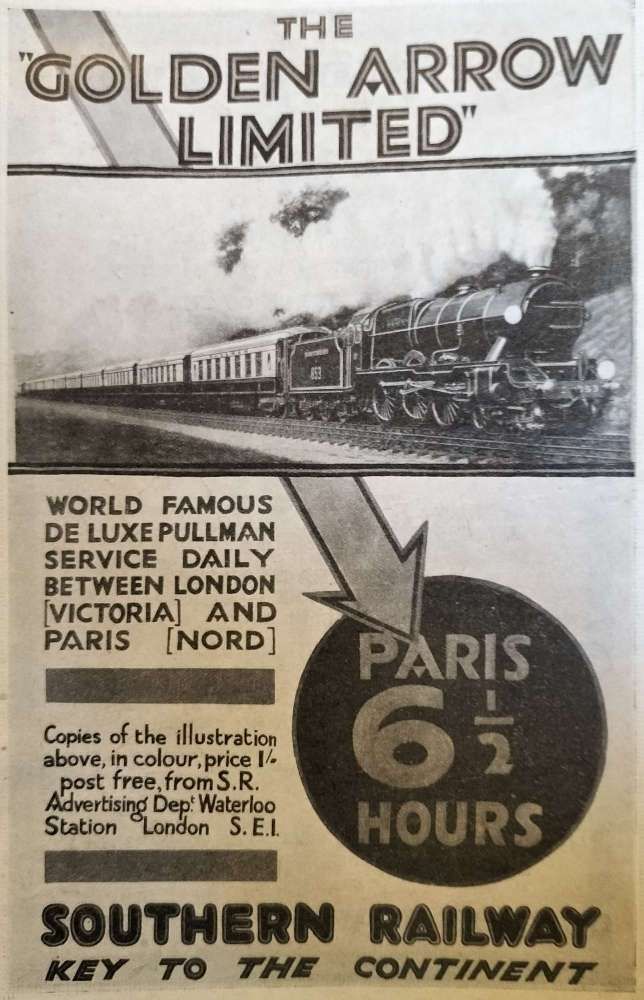
The Southern Railway had a single page advertisement in the magazine which featured the Golden Arrow Pullman Service between London and Paris.

London to Paris in 6 hrs 30 mins! [1: pIII]

Wikipedia tells us that, “The Flèche d’Or was introduced in 1926 as an all-first-class Pullman service between Paris and Calais. On 15th May 1929, the Southern Railway introduced the equivalent between London Victoria and Dover while simultaneously launching a new first class only ship, the ‘Canterbury’, for the ferry crossing. The train usually consisted of 10 British Pullman cars, hauled by one of the Southern Railway’s Lord Nelson class locomotives, and took 98 minutes to travel between London and Dover. Because of the impact of air travel and ‘market forces’ on the underlying economy of the service, ordinary first- and third-class carriages were added in 1931. Similarly the first-class-only ferry, ‘Canterbury’, was modified to allow other classes of passenger.” [3]

It is not surprising that the train service ceased at the outbreak of the Second World War in September 1939. “It resumed after the war on 15th April 1946, initially running with the pre-war Pullmans and the Trianon Bar car, a converted twelve-wheeled Pullman. The Southern Railway flagship, the ‘Invicta’ replaced the ‘Canterbury’ from 10th October 1946. As of 1949, the all-Pullman train was scheduled to depart from London Victoria at 10:30, with the connecting train from Calais reaching Paris (Gare du Nord) at 17:30, and from Paris at 12:15, with the connecting train from Dover arriving in London at 19:30. This worked out to a scheduled journey time of 6 hours eastbound and 6 hours, 15 minutes, westbound.” [3]

Four Full-page Adverts from the LMS

The LMS had four full-page adverts in the November 1929 magazine:

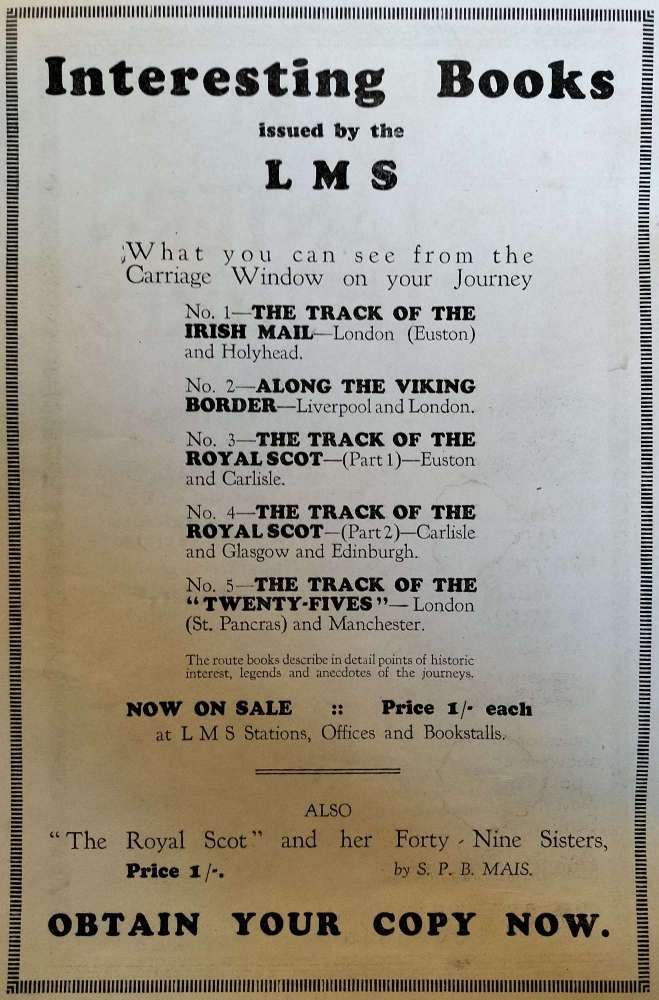
The first advert was for a series of ‘Carriage Window’ books. …

The first page pointed to a series of ‘carriage window’ books which helped travellers to comprehend what they were seeing beyond the windows on their journeys. [1: p IV]

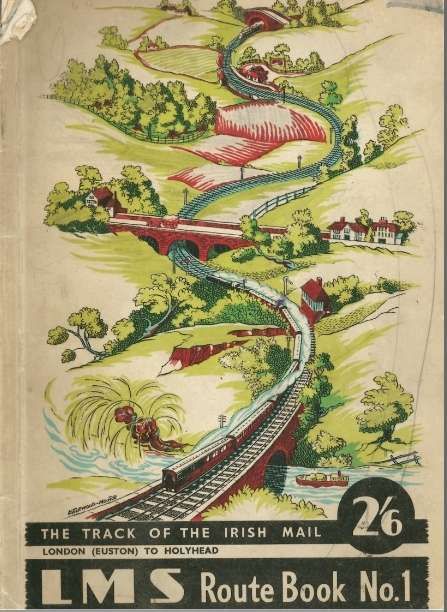
These ‘Carriage Window’ books were usually entitled ‘The Track of the …’. They covered a number of different main line routes.

The frontispiece from the edition of ‘Track of the Irish Mail’ issued in 1947. [4]

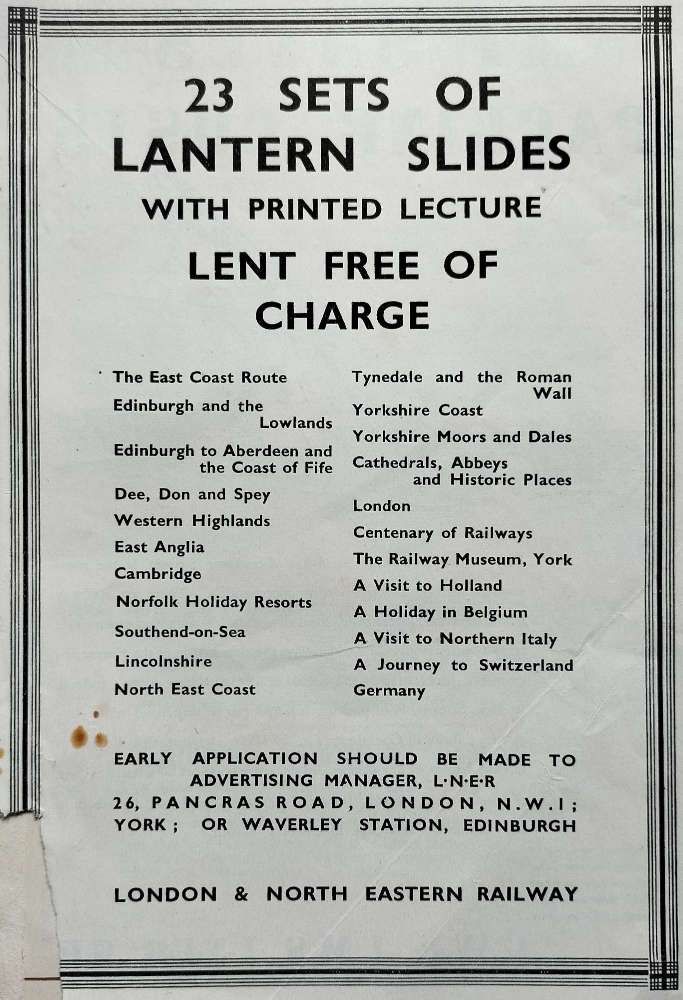
In the article about The Railway Magazine of November 1938 we noted that the LNER was supplying scripts and slides for talks about their network. In 1929, the LMS was offering a similar range of lectures. …

Lecture notes and slides, illustrating holiday places and places of general interest on the LMS, supplied free! There is also a suggestion that a lecturer may be available too! [1: p V]

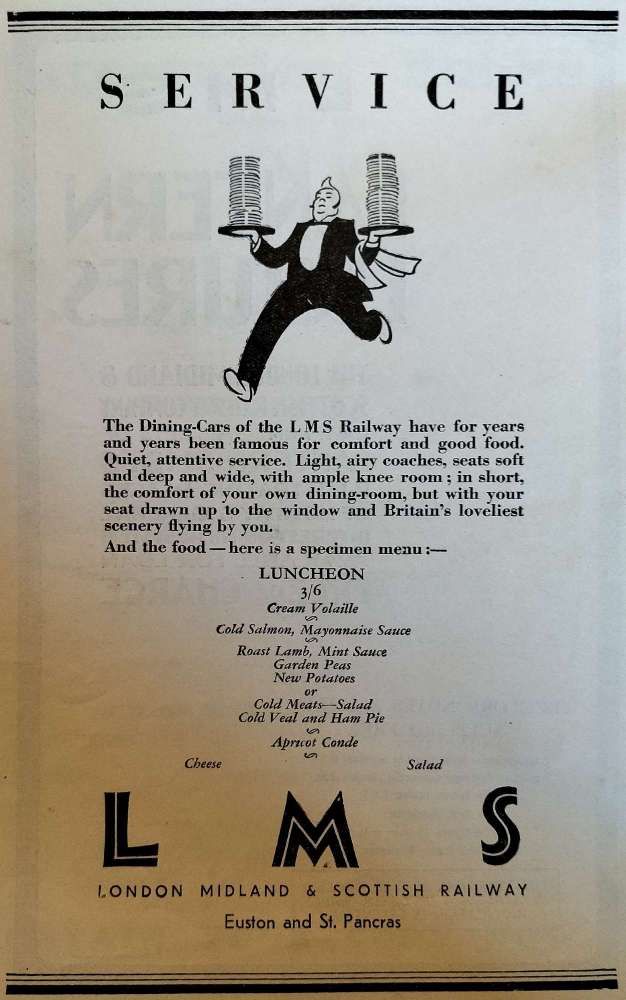
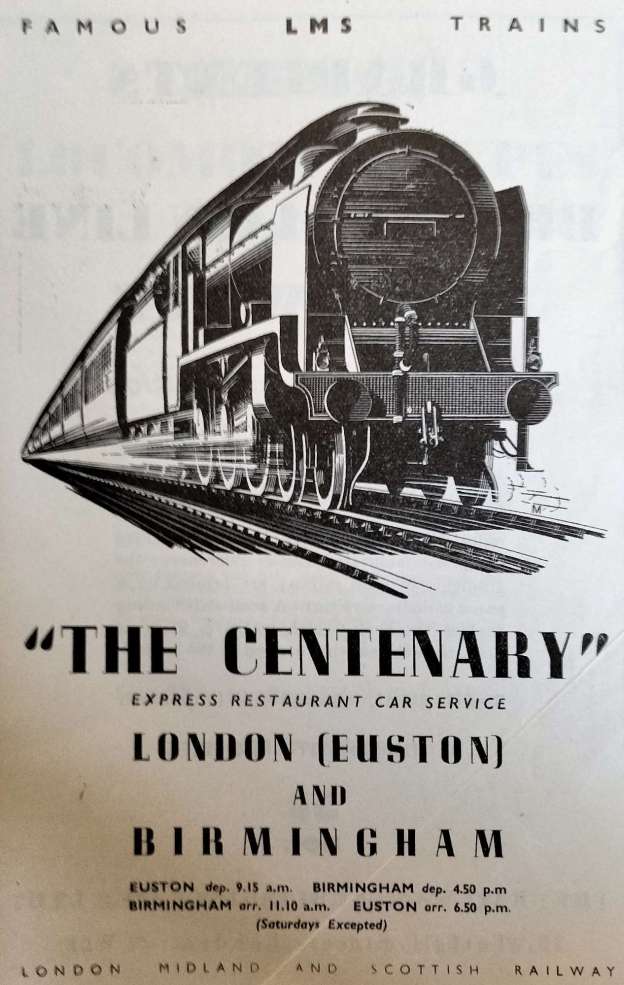
The LMS also advertised the dining experience on their express services. …

The dining experience on LMS is celebrated in this advert. I wonder whether their customers saw the advertised service or had similar disappointments as people in later generations? The food on offer probably simplified preparation work. [1: p VI]
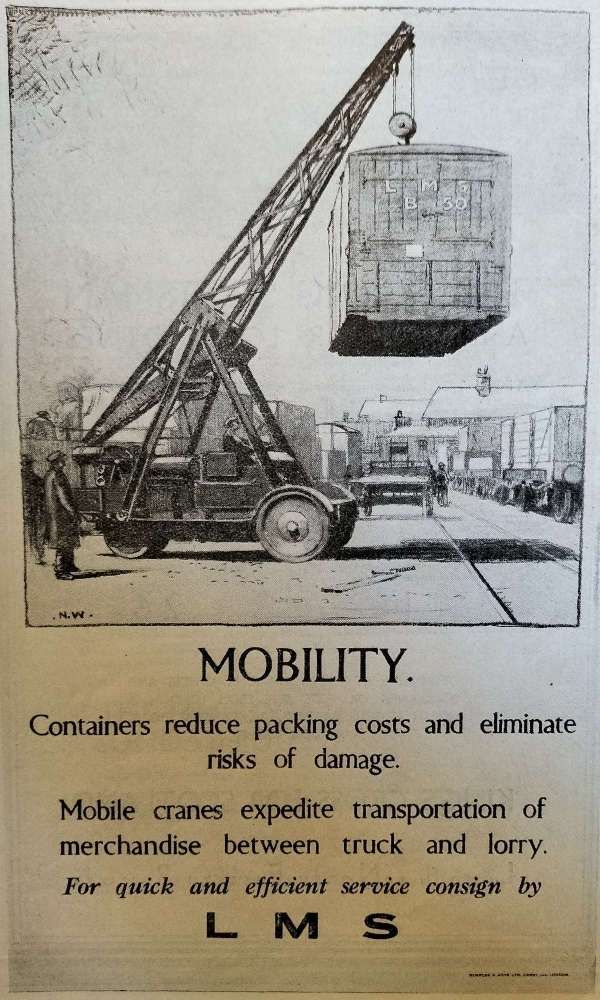
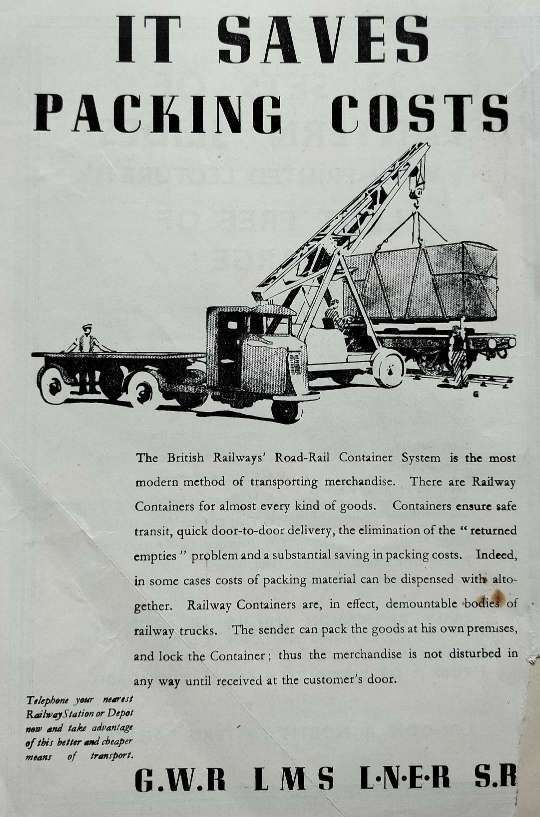
The use of containers on the LMS was clearly established by 1929. Mobile cranes in goods depots at railheads facilitated transfer from railway wagons to trucks and lorries.  [1: p VII]

Four LNER Full-page Adverts

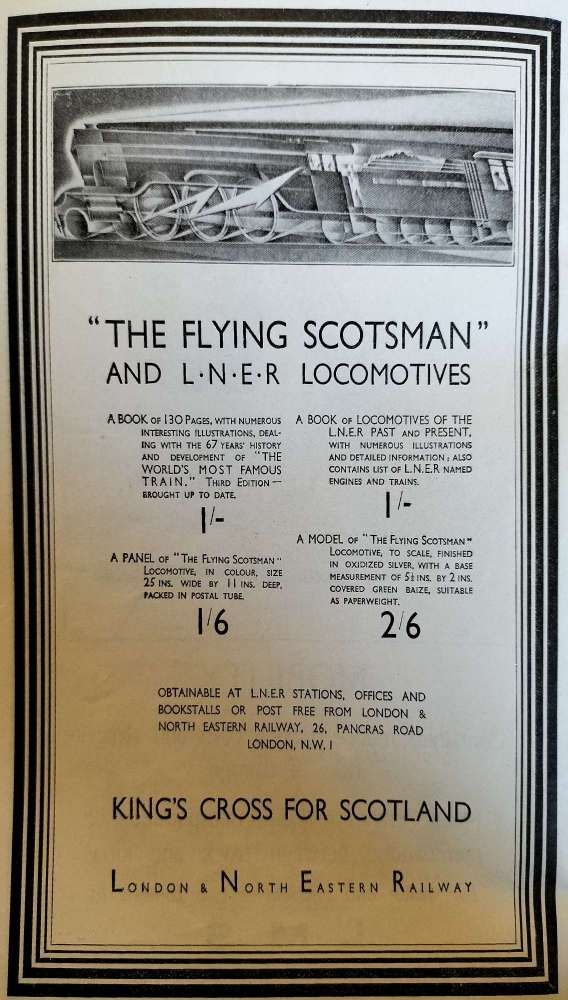
The first advert is for two books, a picture and a model celebrating ‘The Flying Scotsman’ and other LNER locomotives.

Two books, a ‘panel’ and a paperweight, all available direct from the LNER! [1: pVIII]
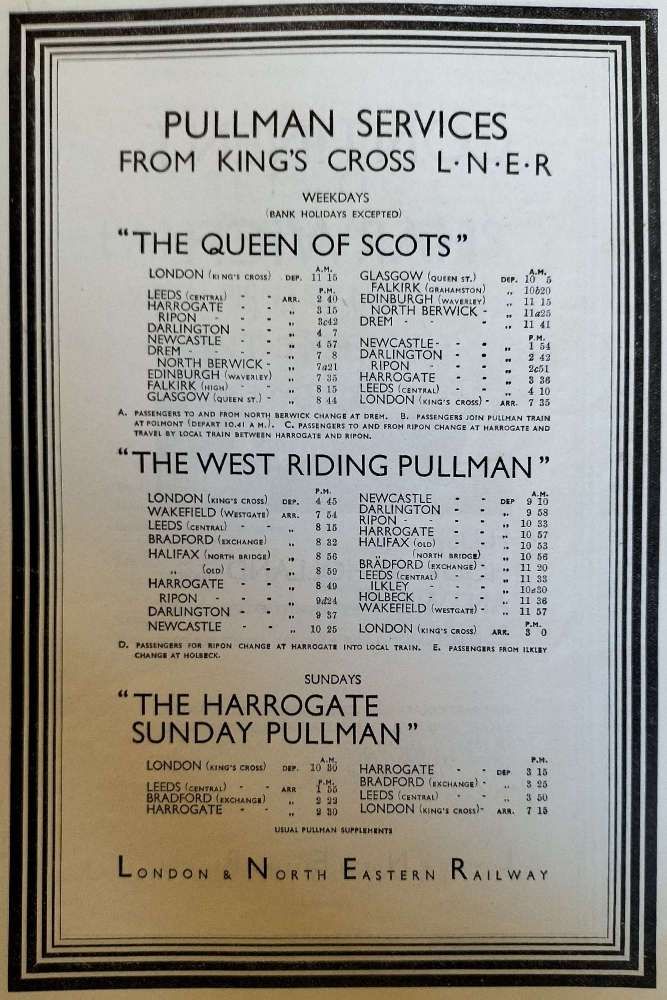
Pullman services provided by the LNER. The ‘Queen of Scots’, the ‘West Riding Pullman’, the ‘ Harrogate Sunday Pullman’. [1: pIX]
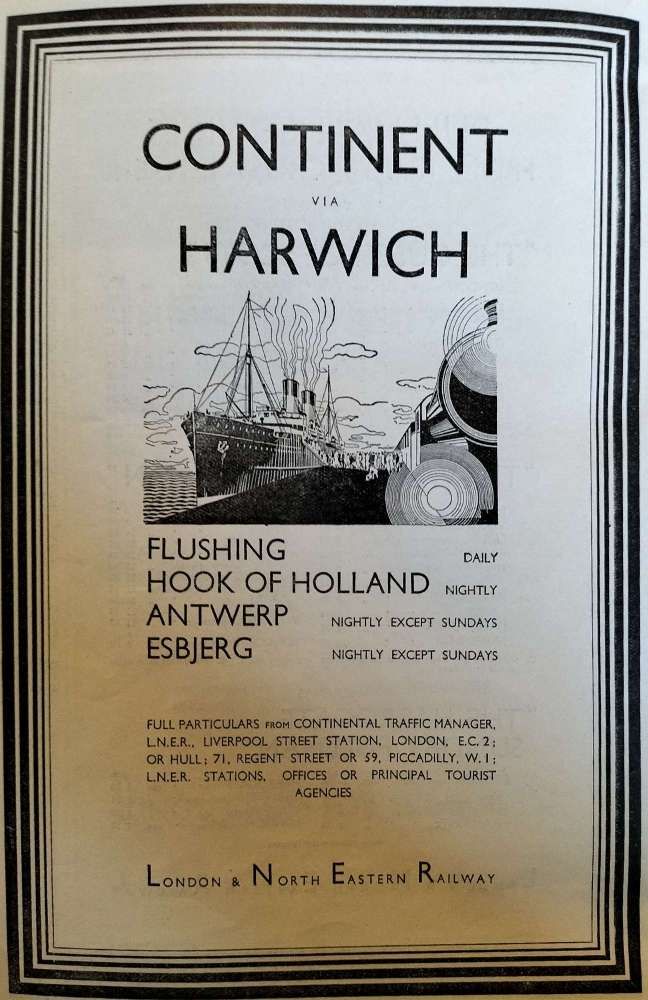
Ferry routes to Flushing (every day), to Hook of Holland (every night) to Antwerp and to Esbjerg (both nightly except Sundays). [1: pX]
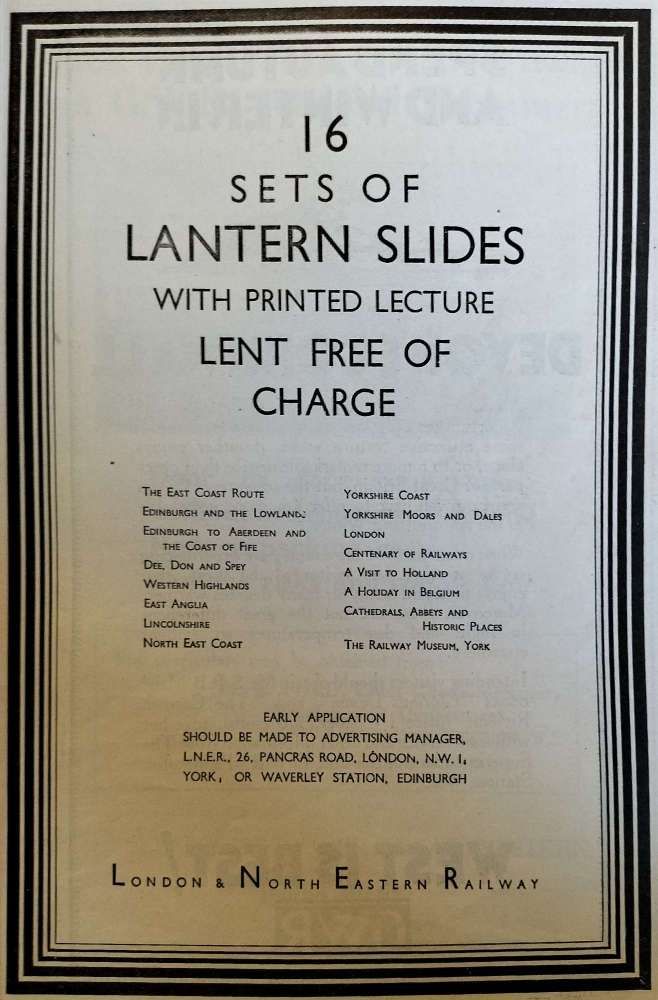
LNER slides and lectures, available free of charge! It seems from this advert, and that from 1938, that this practice was normal during the interwar period. Some interesting subjects! [1: pXI]

Two GWR Adverts

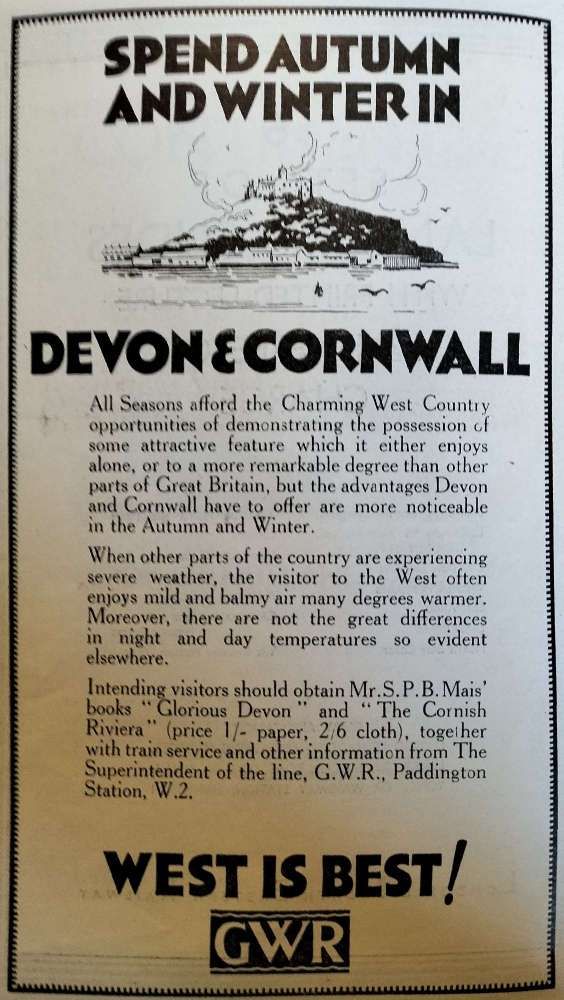
The first GWR adverts seems to be endeavouring to extend the summer season in the West Country. …

The GWR encourages out-of-season travel to the West Country, and the purchase of travel books direct from the GWR. [1: pXII]

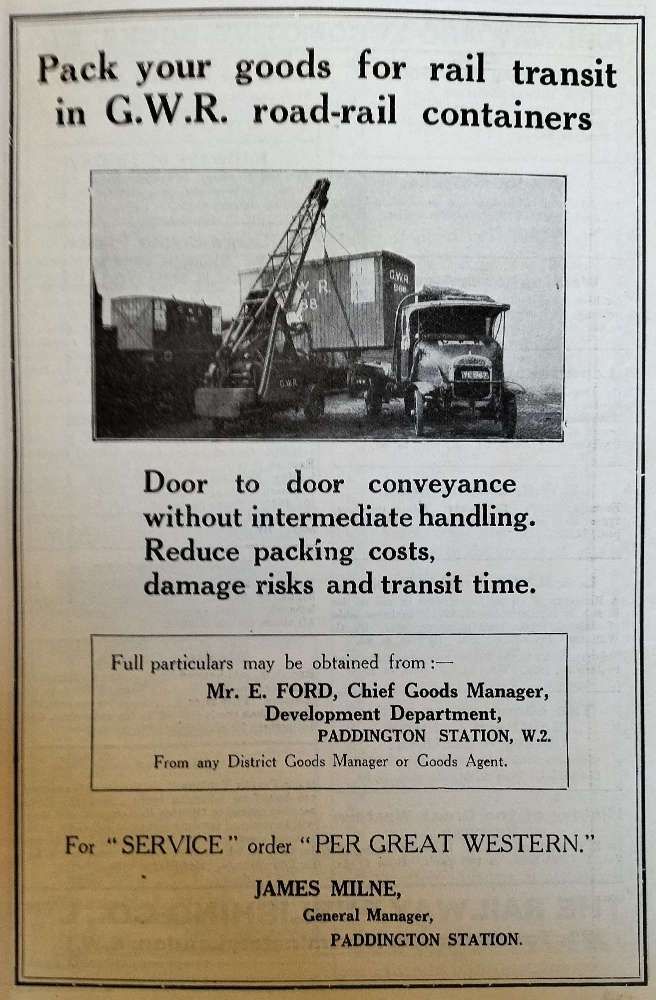
Their second advert focussed on their container service. …

Advertising the GWR container services, the photograph used shows a contemporary mobile crane and a GWR road-lorry. [1: pXIII]

Other Adverts

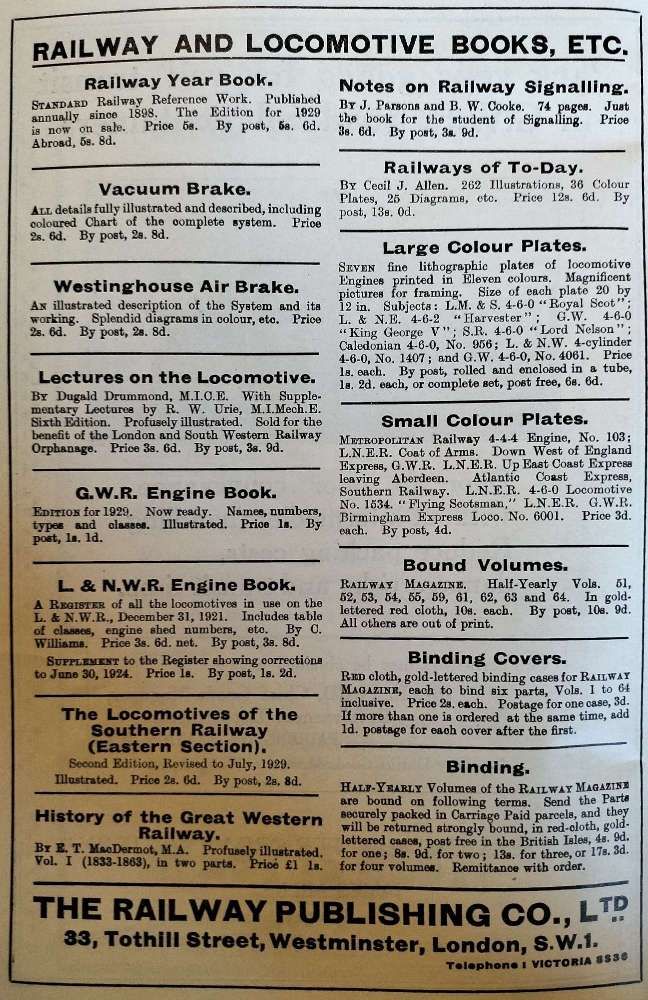
A regular feature is a full-page advert from the Railway Publishing Co. Ltd. [1: pXIV]
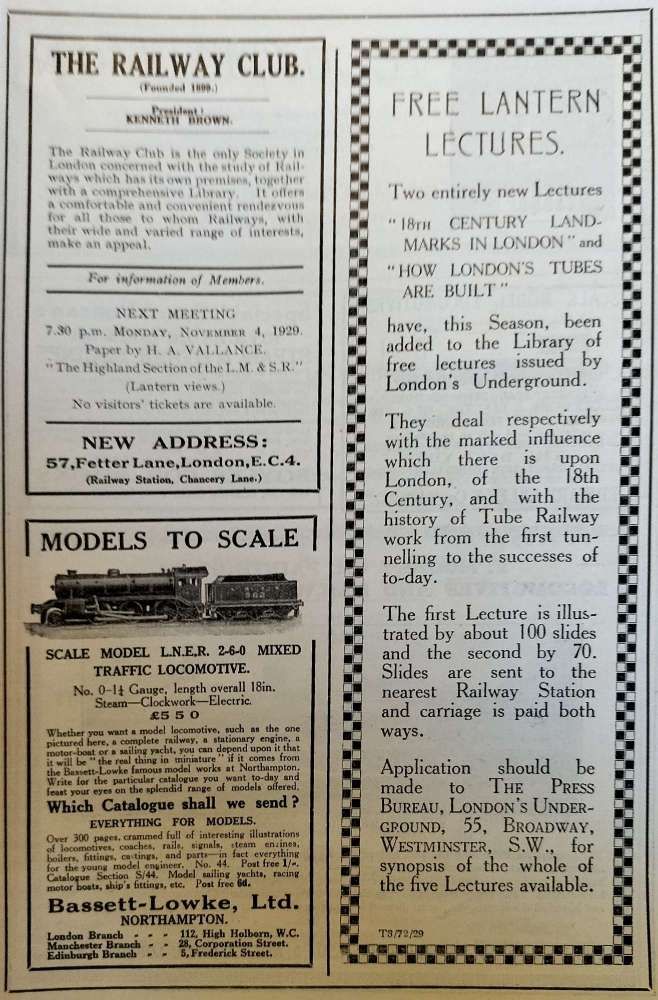
Adverts from ‘The Railway Club’ and Bassett-Lowke sit alongside an offering from the Press Bureau of London’s Underground of two new lectures, the first about London’s landmarks, the second about the building of the underground railways. [1: pXV]
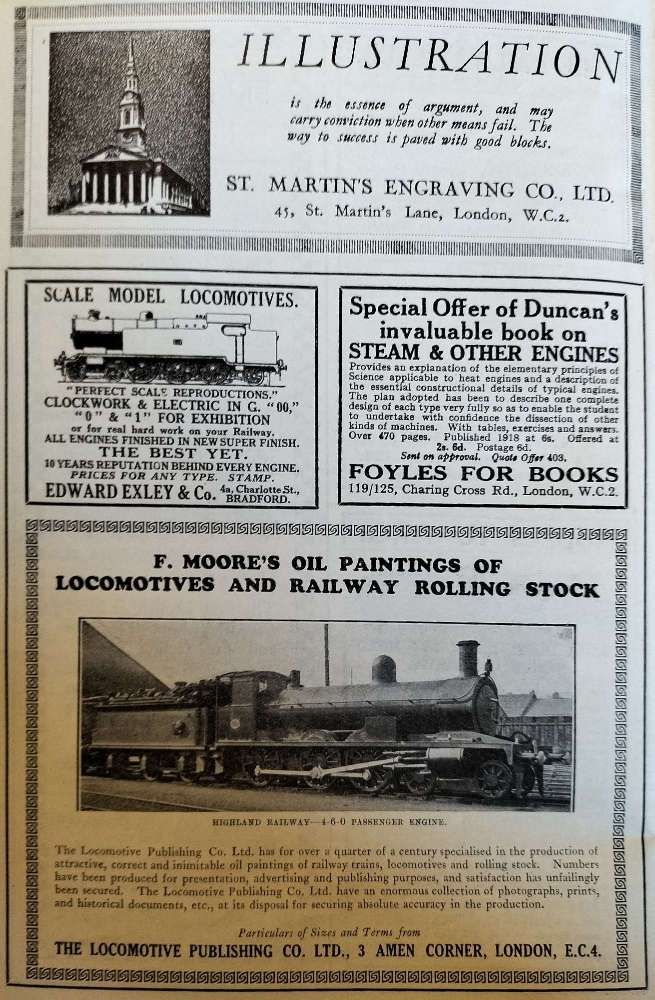
The advert from St. Martin’s Engraving Co. Ltd. appears also in the November 1938 magazine. Fouled for Books is still a going concern in 2024. Edward Exley & Co. was founded in Bradford in about 1920 and the company is still in existence in 1924, undertaking repairs of Exley products from the past. [5] F. Moore was not the name of a real artist, but rather the name adopted by the Locomotive Publishing Company, which employed the services of the rather reclusive Edwin Thomas Rudd to do the actual painting. [6][1: pXVI]
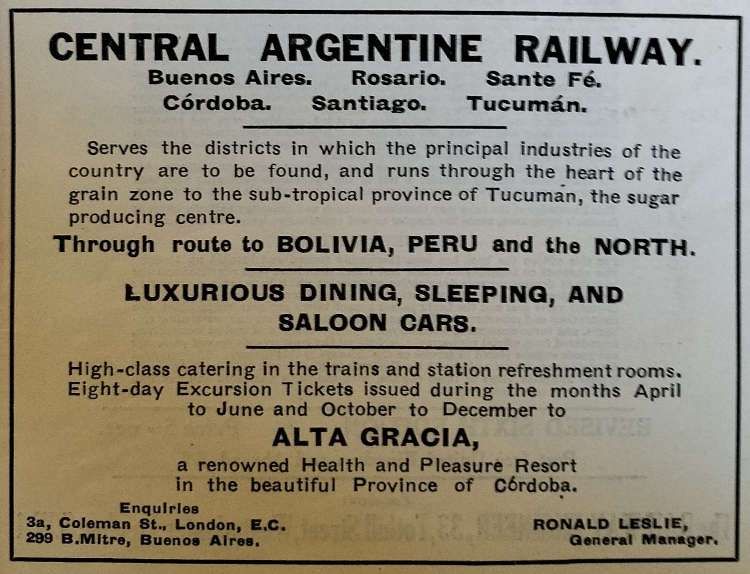
The Central Argentine Railway [1: pXVII]

The Central Argentine Railway was one of four broad gauge (5ft 6in/1676mm) British companies that built  and operated railway networks in Argentina. Established in the 19th century, to serve the provinces of Santa Fe and Córdoba, in the east-central region of the country, it eventually also served Buenos Aires, Tucumán, and Santiago del Estero. It effectively ceased to exist after nationalisation.

British railway companies operating in Argentina, including the CA, were nationalized in 1948 by the Juan Perón administration. The CA took over the northern section of the Ferrocarril Rosario y Puerto Belgrano and then became part of the state-owned Ferrocarril General Bartolomé Mitre.” [7]

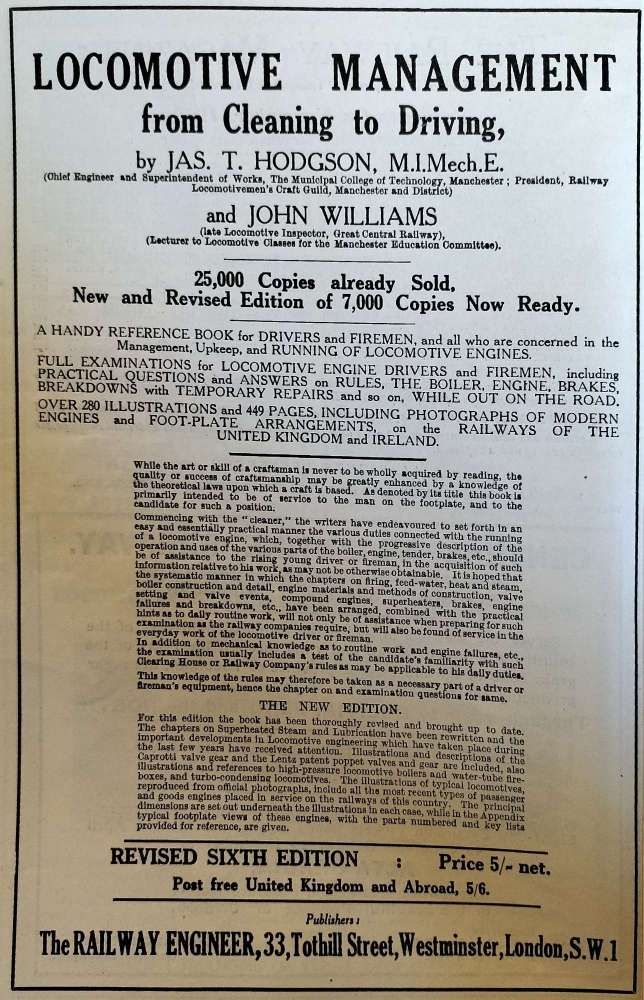
This final advert from the front pages of the November 1929 magazine promoted a publication by The Railway Engineer, the revised 6th edition of “Locomotive Management – from Cleaning to Driving” by Jas T. Hodgson and John Williams. [1: pXVIII]

‘Locomotive Management – from Cleaning to Driving’ was a standard text which went through regular revisions to keep it up-to-date.

Some LMS “Business” Posters

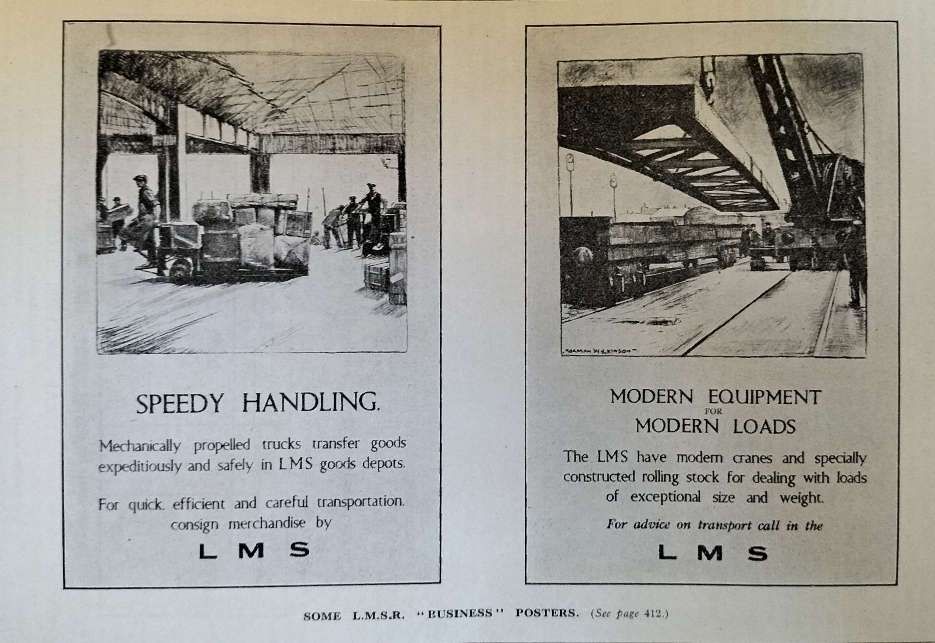
The LMS. sent specimen copies of an “admirable set of new posters recently issued by them depicting the various goods traffic facilities offered on their system. There [were] four posters altogether, all drawn by Mr. Norman Wilkinson, and these differ from the usual run of such things inasmuch as they are in black and white, with good bold red and black lettering beneath each picture.” [1: p412] Two were reproduced in the magazine.

Two of the LMS posters were reproduced in monochrome in The Railway Magazine. [1: p410]

One poster dealt with “‘Modern Equipment for Modern Loads’, and illustrate[d] the fact that the LMS. have modern cranes and specially constructed rolling-stock for dealing with loads of exceptional size and weight; another is mainly concerned with ‘Mobility’, and stresses the fact that containers reduce[d] packing costs and eliminate[d] risks of damage – besides expediting transportation of merchandise between truck and lorry. A third poster – a specially fine bit of work, this illustrate[d] the LMS. method of ‘rapid transport of goods from ship to dock’ – that is, by means of electric trucks – the contention being that modern LMS. steamers and handling appliances ensure[d] safe and expeditious transportation of goods between Great Britain and the Irish Free State and Northern Ireland. The last of the series also deals with ‘Speedy Handling’ by means of mechanically-propelled trucks, which ‘transfer goods expeditiously and safely in LMS. goods depots’.” [1: p412]

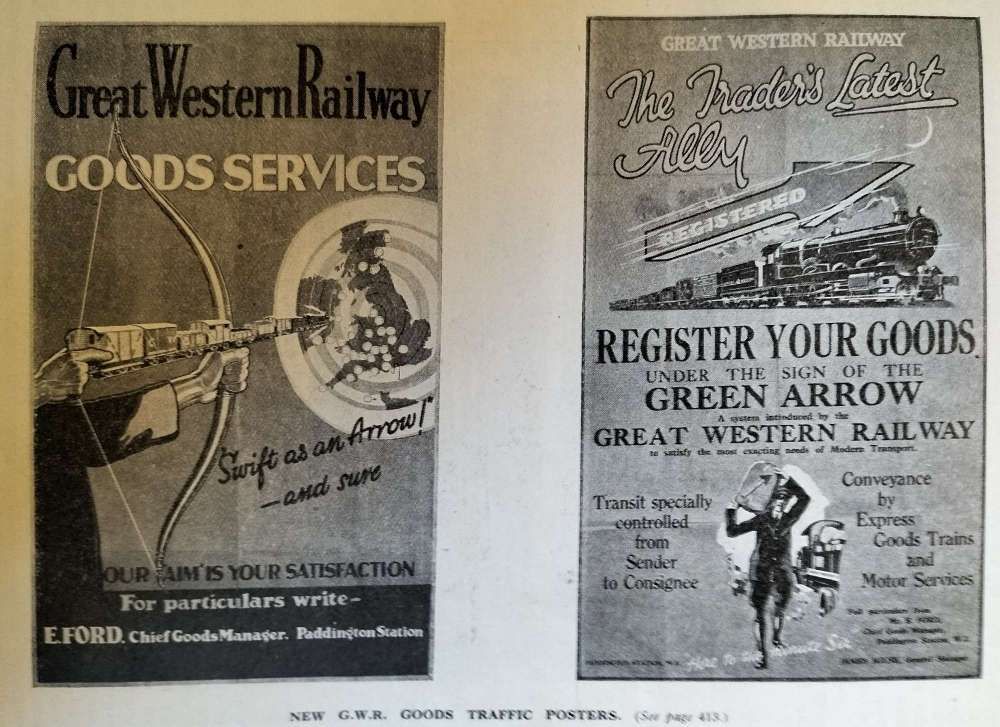
New GWR posters

Two posters which have been issued by Mr. E. Ford, Chief Goods Manager, GWR. … They may be regarded as good examples of the modern tendency to recognise that there is almost as much scope for advertising goods traffic facilities as for those provided by the passenger department. The first emphasise[d] the fact that express freight trains provide[d] for rapid transit, usually on the basis of collection one evening and delivery early next morning, while it is quite appropriate that a first-class express engine should be shown at the head of the train, in that the latest express engines [were] quite frequently employed for running these trains, especially those on ‘registered’ service, with which the poster [was] particularly concerned. The poster itself [was] in colour, with lettering in black, white and amber on a blue ground. Pictorial portions [were] in full colour, while the arrow [was] in green, with amber shading, to emphasise ‘The Sign of the Green Arrow’.” [1: p 413]

The two GWR posters were reproduced in monochrome in the Railway Magazine. [1: p411]

The second poster also use[d] the symbol of an arrow to indicate, in this case, speed and sureness. The train itself [was] utilised as the arrow, while the target [was] an outline map of the British Isles in green, the name of the principal centres served by the GWR. was indicated as arrow destinations. The poster in other respects [was] on a green ground, utilising also blue, red and amber to an effective degree.” [1: p413]

These two posters go some way towards addressing the veracity of different views about the commencement of the ‘Green Arrow’ service referred to in my article about the November 1938 edition of the magazine. These posters demonstrate that the GWR, at least, was offering a Green Arrow service by November 1929 and suggest that the service reached into Scotland and so into the territories of the LMS and LNER.

References

  1. The Railway Magazine, Westminster, November 1929.
  2. https://rogerfarnworth.com/2024/07/20/advertising-in-the-railway-magazine-of-november-1938.
  3. https://en.m.wikipedia.org/wiki/Golden_Arrow_(train), accessed on 29th July 2024.
  4. http://www.britishtransporttreasures.com/product/the-track-of-the-irish-mail-euston-to-holyhead-l-m-s-route-book-no-1-anon-1947-ebook, accessed on 29th July 2024.
  5. https://en.m.wikipedia.org/wiki/Edward_Exley_Limited, accessed on 30th July 2024.
  6. https://culhamticketoffice.co.uk/bits/hidden-pages/fmoore.html, accessed on 30th July 2024.
  7. https://en.m.wikipedia.org/wiki/Central_Argentine_Railway, accessed on 30th July 2024.

Railway Staff – A 1929 Census

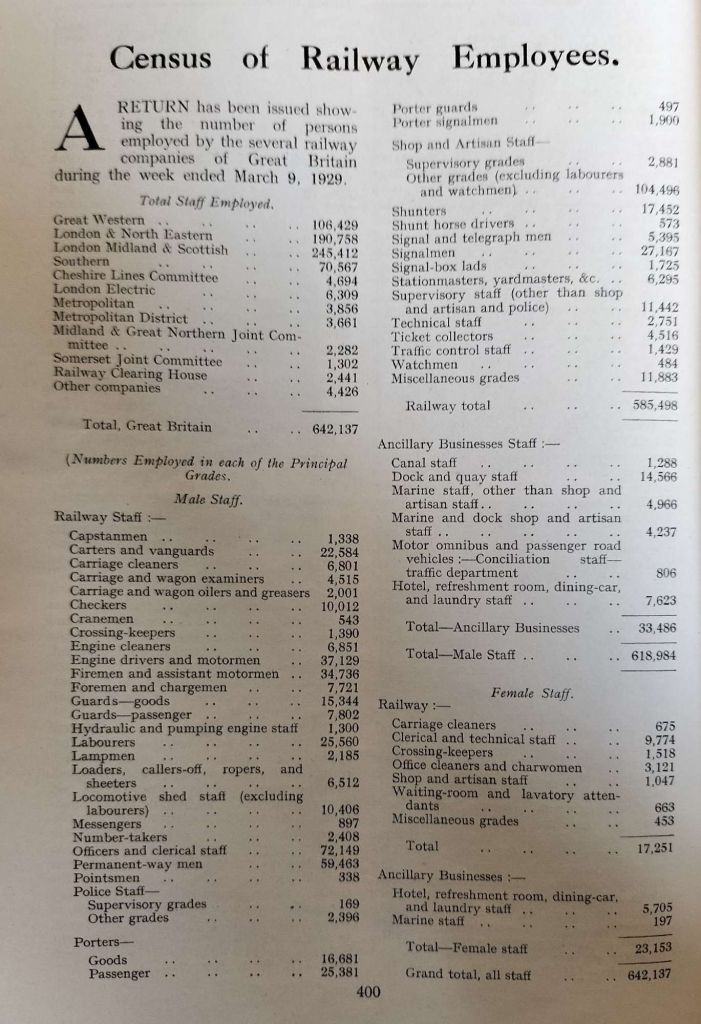
The Railway Magazine in November 1929 reported the breakdown of staffing across Britain’s railways in the week ending 9th March 1929. [1: p400]

The census of railway employees in 1929. [1: p400]

It is interesting, first, to note the relative sizes of the staff numbers of the Big Four railway companies. Significantly the largest employer was the LMS. The LNER had around 55,000 less staff than the LMS. Strikingly, the GWR had  significantly less staff again, with the SR the smallest, with less than one third of the staff numbers of the LMS. I wonder whether these figures might have resulted in some careful thinking, particularly by the LMS about the efficiency of their organisation? It would have been helpful to see the relative levels of income to compare against these figures. …

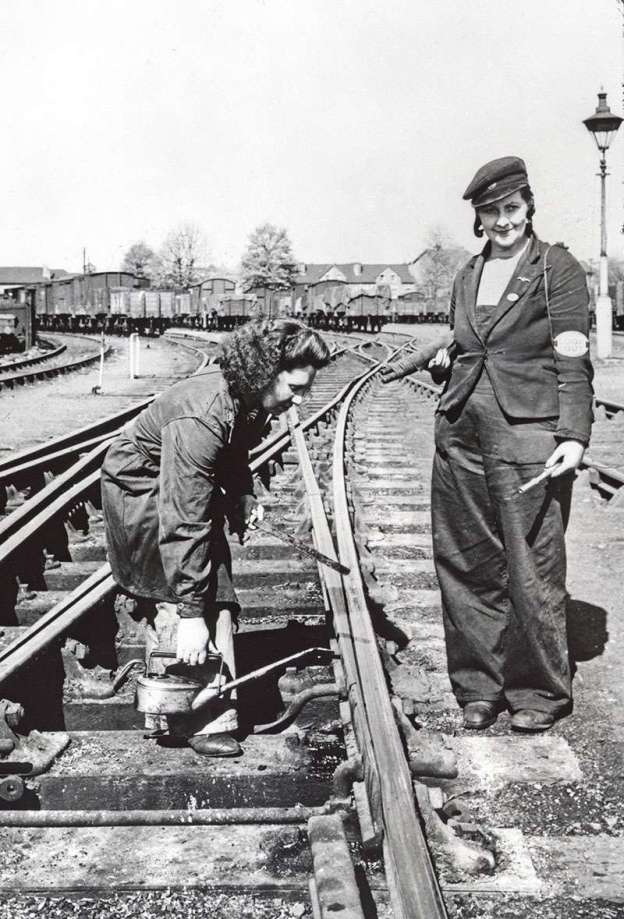
Secondly, I was struck by the relative numbers of male and female staff: 619,000 men to 17,000 women. 10 years after the first world war, very few of the women employed on the railways at that time would still have been employed by the railway companies. … What might have been the figures in a census during WW1?

Hidden within those figures are other striking comparisons. …

  • There were 6,800 male carriage cleaners and only 675 female carriage cleaners.
  • It seems that male officers and clerical staff totaled just over 72,000, supplemented by over 2,700 technical staff. Women employed in these areas amounted to around 9,800. It is unlikely that many supervisory positions in these areas would have been open to women, perhaps head offices of the railway companies may have had female managers in typing pools?
  • The role of crossing-keeper seems to have been far more equitably staffed between men (1,400) and women (1,500). Often a station master’s wife (or the wife of  another male employee) would be a crossing-keeper at a nearby crossing. One wonders whether there was a pay differential between men and women in this occupation?
  • Cleaning roles for carriages and engines were given to men (13,600). Office cleaners were set alongside charwomen (3,100) and it appears that all lavatory attendants  and waiting room staff were women (660).
  • Shop and artisan staff are recorded separately. Men seem to have filled all supervisory roles (2,900) with 104,500 men in other grades (excluding watchmen and labourers). There were just over 1,000 women in similar roles.
  • There were 7,600 male hotel, refreshment room, dining car and laundry staff and 5,700 women.

I am sure that as you look at the figures other matters will come to light.

I wonder what heading wheeltappers would be recorded under? Probably ‘carriage and wagon examiners’.

It also seems that in 1929 there was a ‘profession’ that trainspotters could aspire to. Across the railways of Britain there were 2,408 ‘number-takers’!

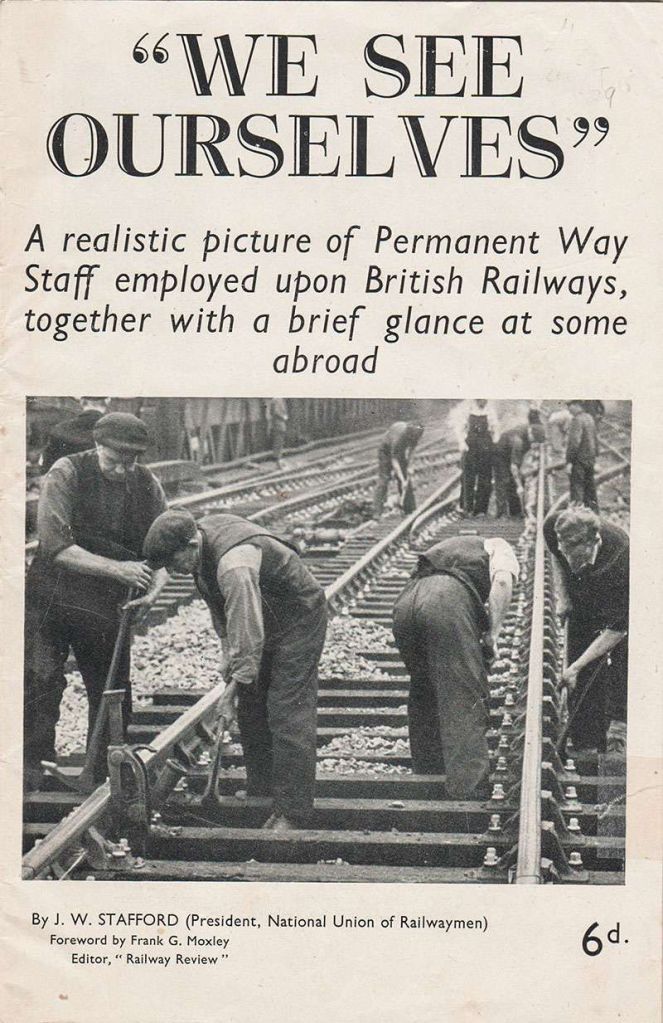
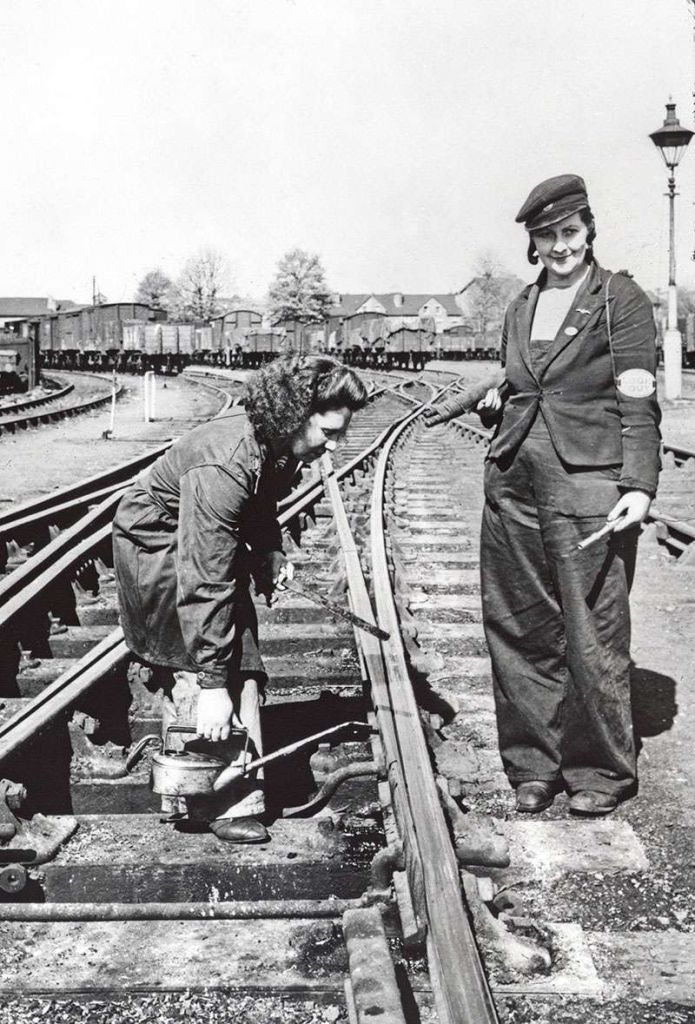
And finally … There are two pictures below showing railway employees at work on the railways. I came across the second while searching for a wartime image of women at work on the railways. The first is the cover page from the booklet which included the second picture. The “booklet, [was] published for six old pence in the BR era, by J W Stafford, the President of the NUR with the evocative title ‘We See Ourselves’. J W Stafford was a lengthman on the Great Western Railway, and later British Railways, for 33 years before he was elected president of the NUR in 1954. He asserted that it was management’s view in the 1930s that the heavier the tool, the greater would be the output of work, and that this belief had not entirely died out in the 1950s.” [2]

Men at work on the railways. [2]

The foreword by Frank Mosley notes that “Credit for building a cathedral is seldom given to the men who carefully and skilfully laid the stones. It is the same with a railway – in building it and keeping it in good order.”

Didcot Railway Centre comments: “This booklet itself is a comprehensive and very honest reflection of all aspects of Permanent Way staff employment, its challenges and its future prospects. Extending to no less than 21 sections on 23 pages, it includes ‘As Others see us’; ‘We were the Pioneers’; ‘Our Girls’; ‘A Dangerous Occupation’; ‘The Whitewash Train’ to ‘Airing our Grievances’.” [2]

The section entitled ‘Our Girls’ is a frank reflection that wartime shortages of men caused females to be employed on this work. Stafford, writing in the BR era, considered that given the arduous and dangerous nature of normal activities, it simply wasn’t a suitable environment for women!

I suspect that today that thinking would be seen as sexist, even if it wasn’t in the mid-20th century. Women clearly proved themselves effective railway employees in both world wars.

Women at work on the railways during WW2. [2]

References

  1. The Railway Magazine, November 1929.
  2. https://didcotrailwaycentre.org.uk/article.php/596/tuesday-treasures-march-2024, accessed on 30th July 2024.

Advertising in The Railway Magazine of November 1938

Following on from the short article about The Railway and Travel Monthly of July 1918 which can be found here, [1] this is a short reflection on the advertising which appeared in the November 1938 edition of The Railway Magazine, [2] twenty years after the magazine looked at from 1918 and only a few months before the outbreak of the Second World War.

Advertising included a series of adverts for:

  • New publications such as: A History of the Southern Railway (17s/6d); Gradients if the British Main Line Railways (5s); British Locomotive Types – 3rd Edition (5s); History of the Great Western Railway, Volume 1 (1833-1863)(£1/1s) and Volume 2 (1863-1921)(10s/6d);The Railway Handbook 1938-1939, 5th Annual Edition (2s/6d); a reprint of The Locomotive Stock Book (2s/6d), and its Appendix (1s/6d), bought together – 3s/9d.
  • Damaged books at low prices from The Locomotive Publishing Co. Ltd.
  • St. Martin’s Engraving Co. Ltd.
  • The Railway Correspondence & Travel Society membership and visits.
  • The Railway Club membership.
  • The LNER’s practice of loaning out slides free of charge accompanied by a set of lecture notes, enabling individuals, clubs and societies to put on talks about railway related subjects themselves.
Lantern Slide talks at minimal cost. A goodwill gesture from the LNER or perhaps a good publicity exercise! [2: pIV]

Sending Containered Loads & Liquids in Bulk by Rail

There were three full page adverts placed jointly by the Big Four railway companies. The first two pages related to the movement of prepacked loads – containers and tankers.

A joint advert in The Railway Magazine of November 1938 by the Big Four railway companies. [2: pV]

Containerisation on Britain’s railways can be traced back to very early days. “In the 1830s the Liverpool & Manchester Railway used simple rectangular boxes, four to a waggon, to convey coal from the Lancashire collieries to Liverpool, where they were transferred to horse-drawn carts by crane.” [3] This had some advantages, particularly the reduced handling of the cargo.

After the turn of the 20th century, “the London & North Western, Lancashire & Yorkshire, and Midland Railway companies were carrying ‘box coal’ on flat wagons, the coal being destined for use by steamboats.” [3]

The Great Central Railway “also played a part in the story of containerisation, being one of only three companies which provided special wagons for the conveyance of ‘fish tanks’.” [3] The wagons were classified as passenger stock.

The Midland and the Great Northern also followed this practice; in the case of the Great Northern Railway the containers were referred to as ‘cod boxes’ some of which lasted into the 1930s.

As early as the late 19th Century railways were using closed containers which resembled the bodies of wooden box vans, “these were initially known as ‘lift vans’ and were privately owned by several furniture removal firms. They were carried both on railway wagons and on flat road trailers drawn by horses or steam tractors.” [3]

The Advent of more effective road transport after WWI brought a challenge to railway companies. The biggest concern was that lorries could offer a door-to-door service which significantly reduced handling costs.

The LMS launched its first container in 1926, and over the next few years all four of the pre-Nationalisation railway companies developed significant container traffic. Containers were soon to be found carrying all manner of goods, including bicycles, confectionery, castings, cookers, baths, machinery, boots, cloth, carpet, pianos, gramophones, sugar, shrubs, and of course furniture. Special insulated containers were soon developed for the conveyance of meat, dry ice bunkers being provided to maintain the temperature.” [3]

Containerisation worked best for high value items many of which required careful packing to avoid breakages. “This meant that a premium could be charged for a fast ‘door to door’ service, which justified the use of containers.” [3]

In the first instance a variety of different wagons were used to carry thesevstandardised containers. But “by the 1930s specialised container flat wagons or ‘conflats’ were built. In many cases these were converted from other wagons, for example the LNER converted a number of cattle trucks following a downturn in livestock traffic.” [3]

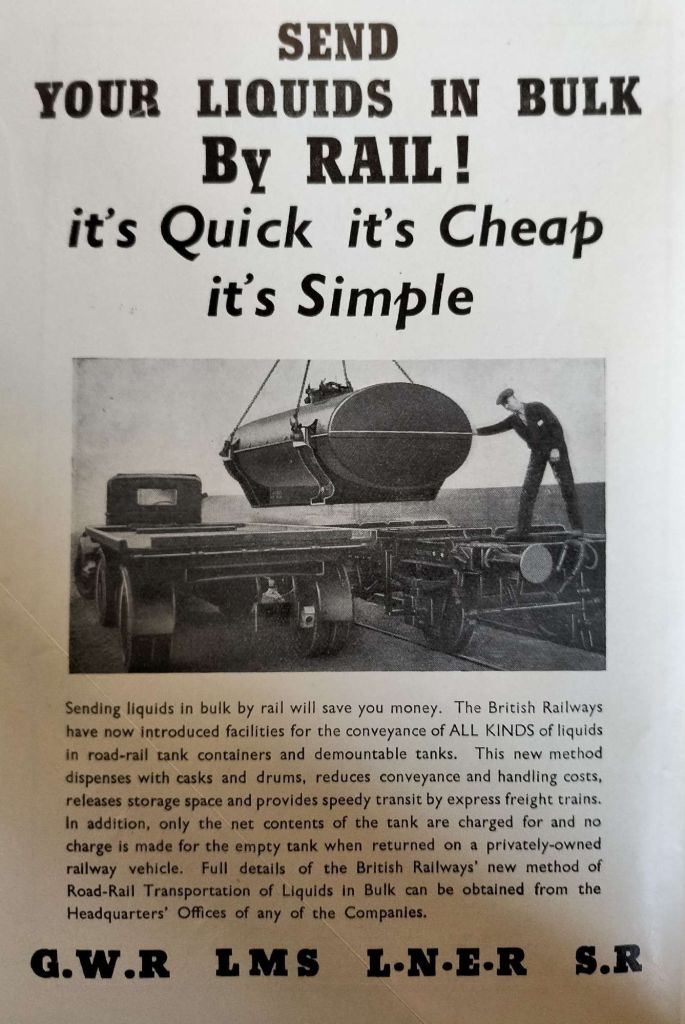
Early Road-Rail Tank Containers and Demountable Tanks. This full page advert in The Railway Magazine is on the following page to the ‘Containerisation’ advert above. [2: pVI]

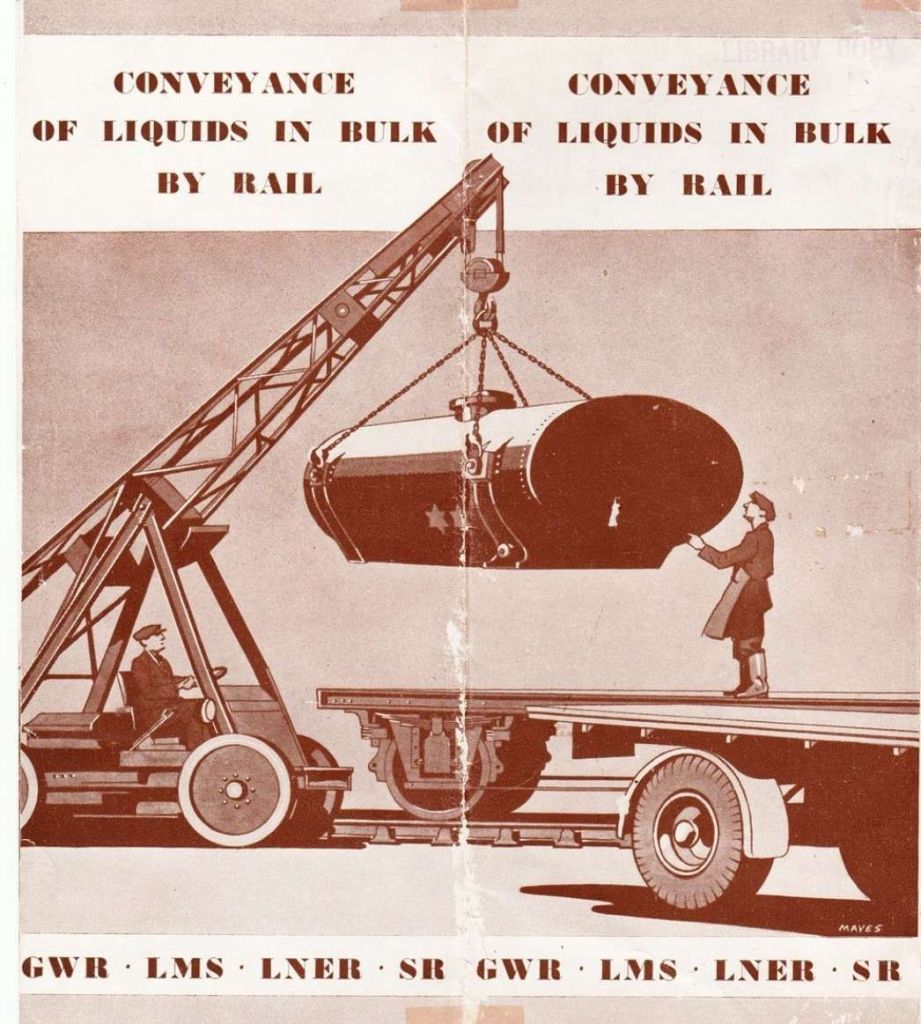
This advert highlights a further, more recent, development in the movement of goods – sending liquids in bulk by rail. Road-Rail tank containers dispensed with the use of casks and drums, so reducing conveyance and handling costs. The rail companies sweetened the deal by only charging for transport of the contents of these tanks provided they were carried on privately owned railway vehicles – so no return charge for the empty tank/wagon!

A similar image from a leaflet produced at the time, entitled “Conveyance of Liquids in Bulk by Rail” jointly produced by the GWR, LNER, LMS and the SR in the 1930s. [4]

The Green Arrow Freight Service

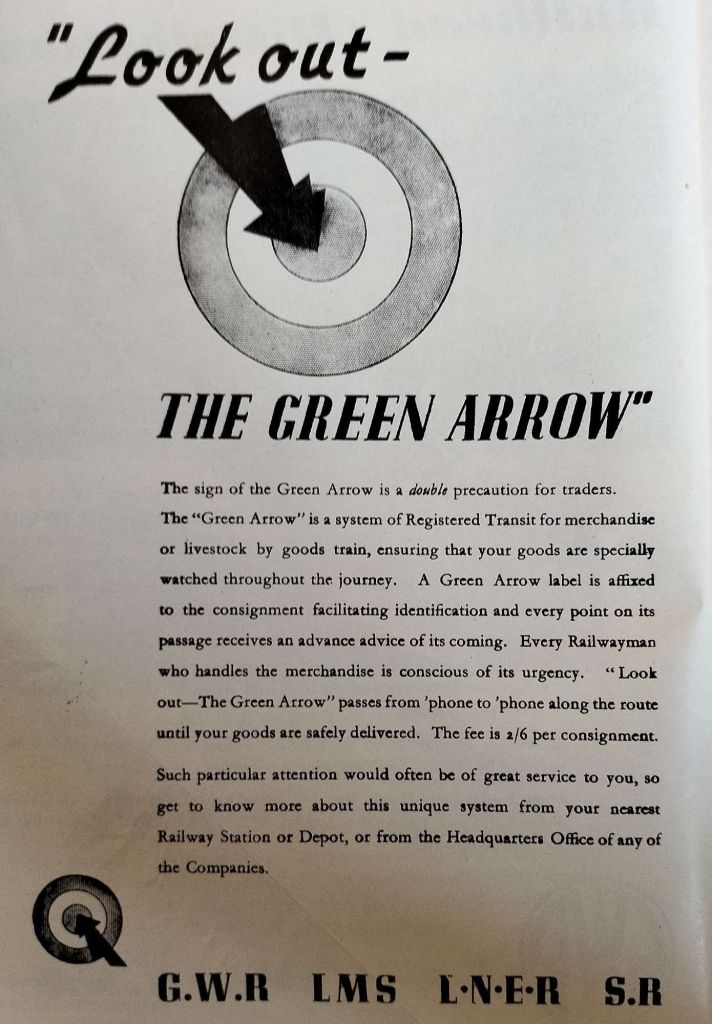
The third full page advert placed jointly by the railway companies was for ‘The Green Arrow’.

“The sign of the Green Arrow was a double precaution for traders – a system of Registered Transit for merchandise or livestock by goods train, ensuring that goods were monitored effectively throughout their journey. A Green Arrow label was fixed to the consignment facilitating identification and advance notification of its arrival. A fee of 2s/6d per consignment secured this service.” [2: pVIII]
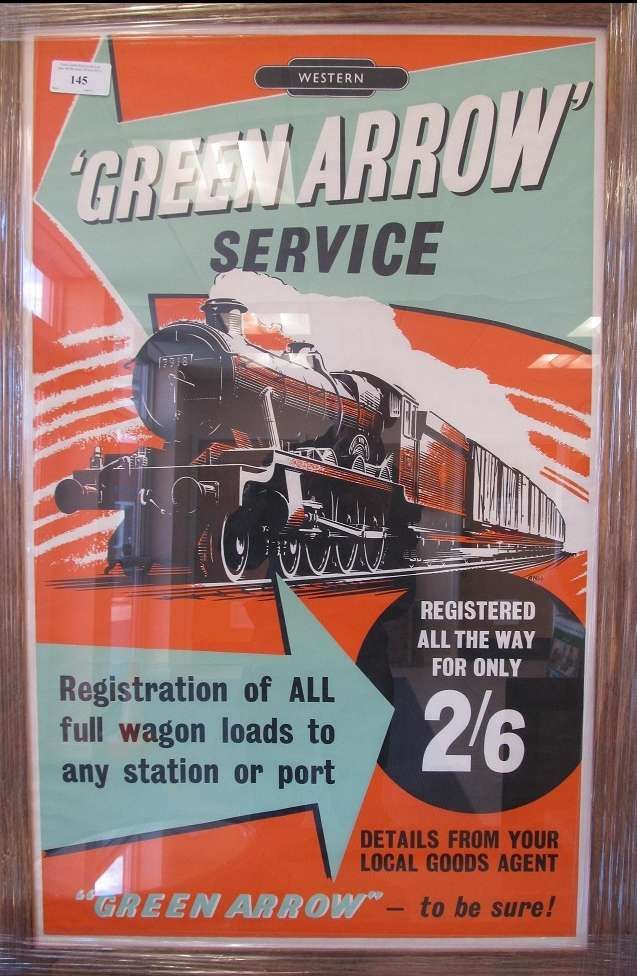
A BR western region poster advertising the Green Arrow service, framed and protected by glass. This image was shared on the LNER Forum by ‘1H was 2E’ on 3rd March 2015. It is made available for use by the Science Museum under a Creative Commons Licence (CC BY-NC-SA 4.0). [6][7]

In 1928 the LNER set up their officially named full wagon load ‘Green Arrow’ service, offering registered overnight transits.” [8] There is a confusion between sources – Atkins, Beard, Hyde and Tourret say that “the GWR ran an experiment with registered transit loads between 1927 and March 1929. This was a great success and became the ‘Green Arrow’ service. The other railway companies would not accept the principle until March 1933 when they at last followed suit.” [9]

However, by 1938, all four companies were clearly participating in the Green Arrow scheme.

Railhead Distribution – the GWR

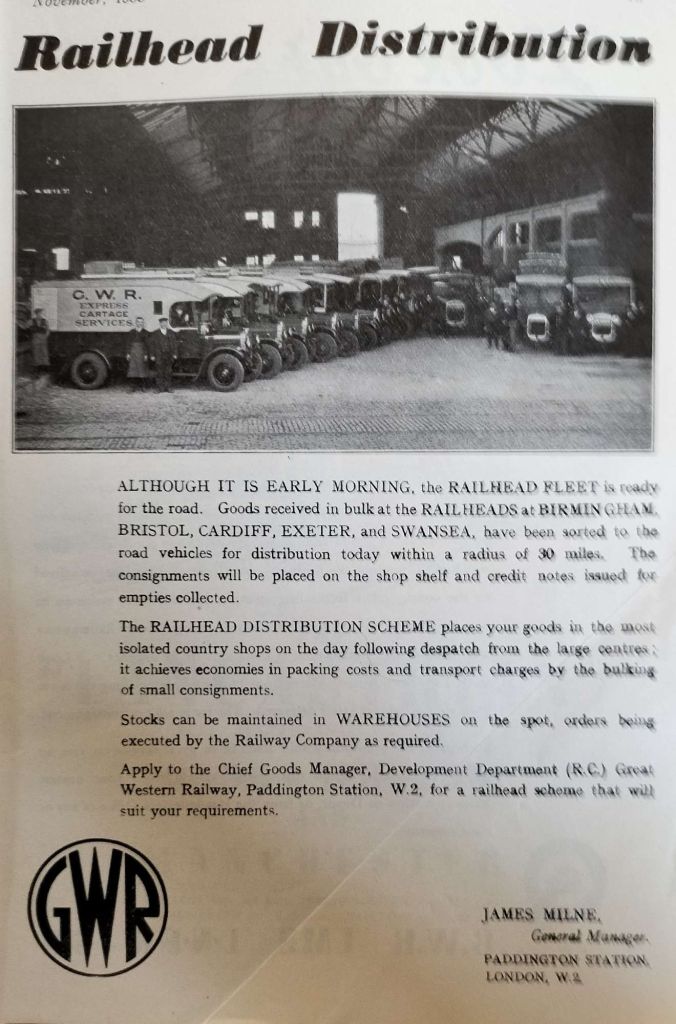
The GWR advertised its road services in a full page advert in the November 1938 Railway Magazine as shown in the image below.

Although it is early morning the railhead fleet is ready for the road! [2: pVII]

Goods received in bulk at railheads in Birmingham, Bristol, Cardiff, Exeter and Swansea were, by early morning, sorted ready for distribution and had been placed in road vehicles ready for distribution. The GWR distributed goods  to destinations within a radius of 30 miles from their railheads.

The scheme ensured that goods reached even the most isolated destinations by the day following their original despatch. This meant that customer’s orders could be fulfilled in a timely manner direct from the warehouse rather than needing to be pre-stocked in a company’s outlying branches.

A contemporary postcard image showing a Thornycroft van supplied to the GWR. This vehicle is dated as being in service in 1939. [10]

Famous Trains of the LMS

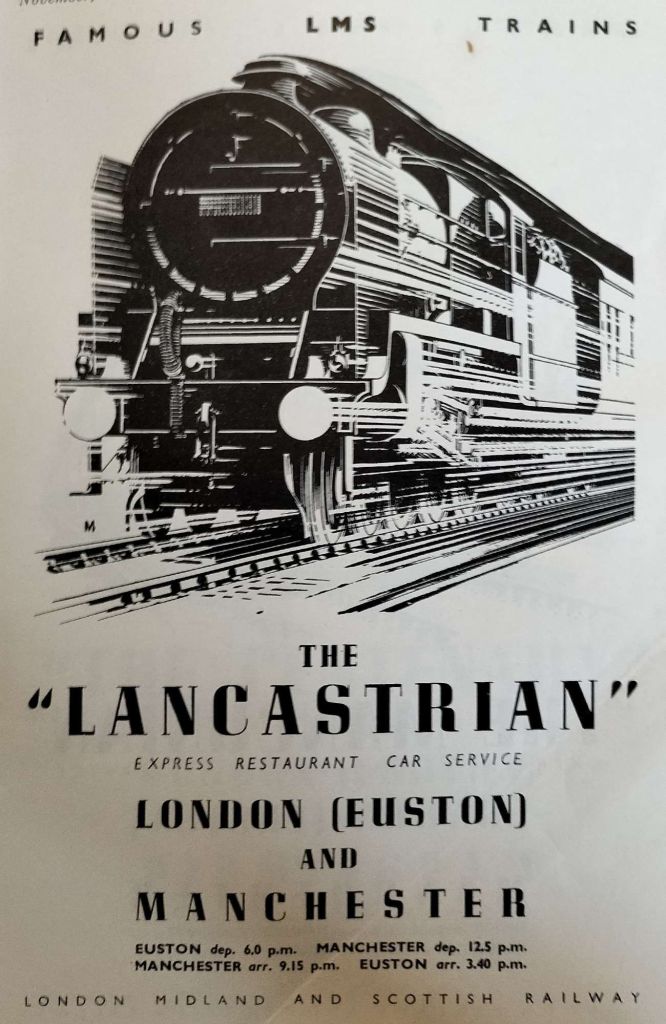
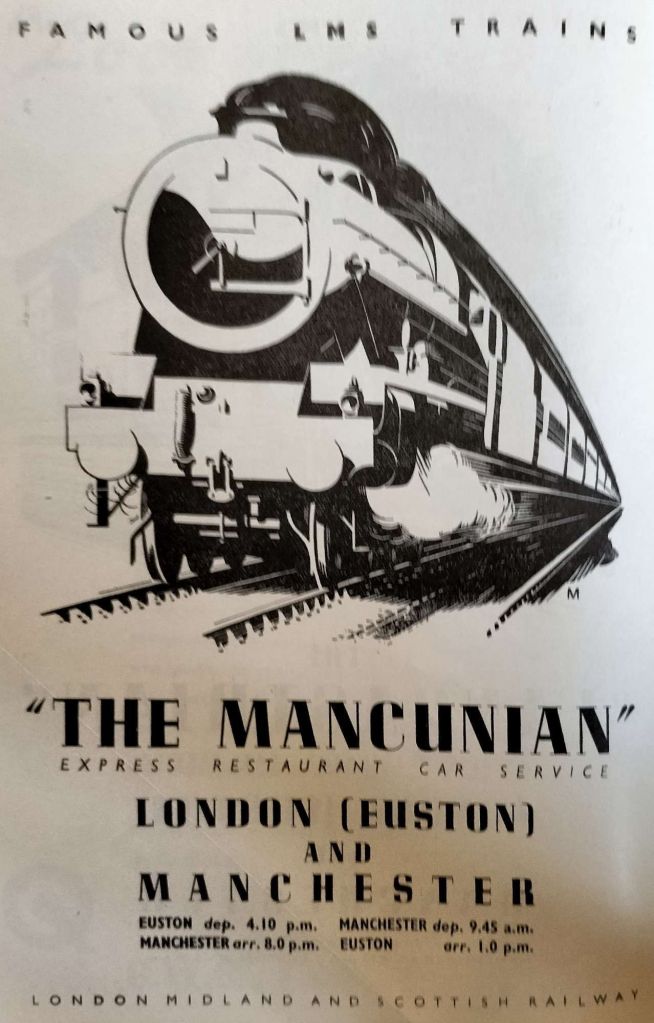
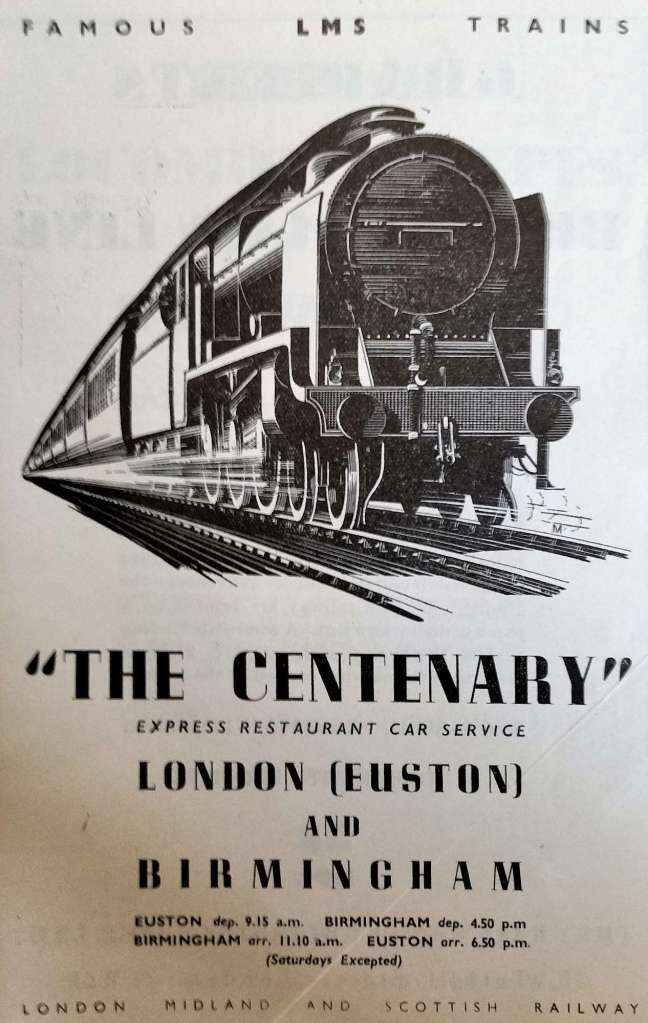
The LMS placed adverts across 3 full pages for three express restaurant car services: The ‘Lancastrian’; the ‘Mancunion’; and the ‘Centenary’. …………

The ‘Lancastrian’. [2: pVIII]
The ‘Mancunion’. [2: pIX]
The ‘Centenary’. [2: pX]

References

  1. https://rogerfarnworth.com/2024/07/18/the-railway-and-travel-monthly-july-1918-a-snapshot-including-advertising, accessed on 19th July 2024.
  2. The Railway Magazine, November 1938; Westminster, London, November 1938.
  3. http://www.conflat.co.uk/con_hist.html, accessed on 19th July 2024.
  4. https://x.com/DidcotRailwayC/status/1508715315500396547?t=7rPufDVycZdMSMwsKtl2Zg&s=19, accessed on 19th July 2024.
  5. https://archive.commercialmotor.com/article/21st-january-1930/68/gwr-goods-road-service-developments, accessed on  20th July 2024.
  6. https://www.lner.info/forums/viewtopic.php?t=10450, accessed on 20th July 2024.
  7. https://collection.sciencemuseumgroup.org.uk/objects/co229508/green-arrow-service-poster, accessed on 20th July 2024.
  8. https://igg.org.uk/rail/7-fops/fo-traintype.htm, accessed on 20th July 2024.
  9. Atkins, Beard, Hyde & Tourett; A History of GWR Goods Wagons Volumes 1 & 2 ; David & Charles, Newton Abbot, Devon, 1972.
  10. https://files.ekmcdn.com/c8ed37/images/express-gwr-cartage-couriers-ww2-van-old-lorry-thornycroft-postcard-155198-p.jpg?v=357516B0-F987-4892-9C8F-1FDA4765FD9A, accessed on 29th July 2024.

The Caledonian Railway Rail-motor Car

In June 2024, I picked up a few copies of the Railway Magazine from the early 20th century.

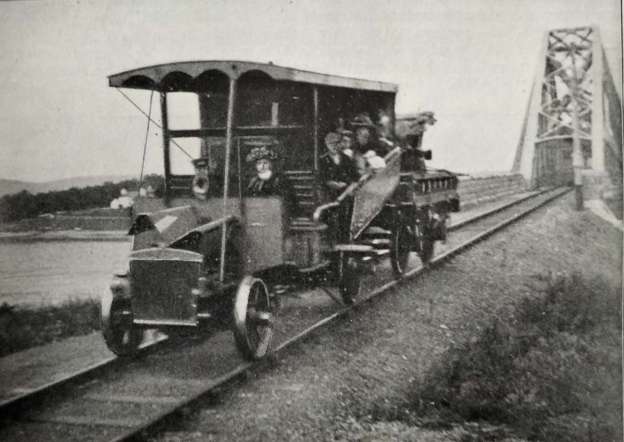
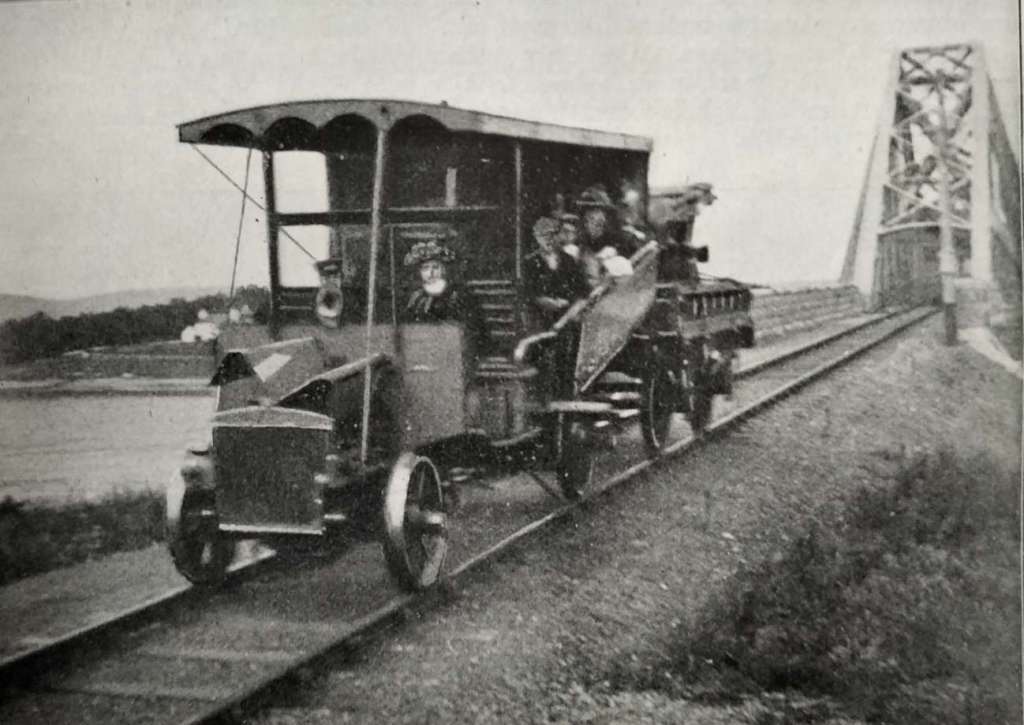
In July 1909, the Railway Magazine noted that the Caledonian Railway had inaugurated a motor car service on its rails. Just a short journey was involved crossing the Connel Ferry Bridge and running from Connel Ferry to either North Connel or Benderloch.

In September 1909 the Railway Magazine carried a photograph of the rail-motor car.

The Caledonian Railway rail-motor car, with wagon attached. The wagon is carrying a road-motor car.  It has just left the Connel Ferry Bridge. [1]

The Caledonian Railway purchased an ordinary road-motor car, and under the superintendence of Mr. J. F. McIntosh, this was converted, at St Rollox Works, into the rail-motor car. … The car performs, daily, several journeys from Connel Ferry across the bridge to North Connel, and four of these trips in each direction are extended an additional 2.25 miles beyond North Connel to Benderloch, and it is on these longer journeys that road motor cars are conveyed on the carriage truck provided for the purpose, which is attached as a trailer to the rail-motor car.” [1]

The vehicle was a Durham-Churchill Charabanc. It originally operated as a road vehicle between Clarkston railway station and Eaglesham. It was converted to rail use in 1909 at the cost of £126!

The journey from Connel Ferry to North Connel took 5 minutes and the trip to Benderloch, 15 minutes in total.

Sunday trains were few and far between in Scotland but an exception was made for this service with 5 crossings of the bridge in each direction. Surprisingly more often than on weekdays!

The Railway Magazine notes that, “in the past, this portion of Argyllshire [was] somewhat of a closed district to motorists, owing to the long arms of the sea which intersect the land and the numerous ferries that have in consequence to be crossed. Access to the very charming district that lies between Loch Etive and Lochleven, has been particularly difficult, as the ferries have become unserviceable since the opening of the Ballachulish Railway, whilst the comparative infrequency of the trains upon the Ballachulish line, and the restrictions on the conveyance of motor cars by the ordinary trains made crossing at Connel Ferry both inconvenient and unreliable.” [1] 

Motorists either avoided the area altogether or had to make a long journey via Tyndrum and Glencoe.

The charge for conveying motors across Loch Etive was 15 shillings.

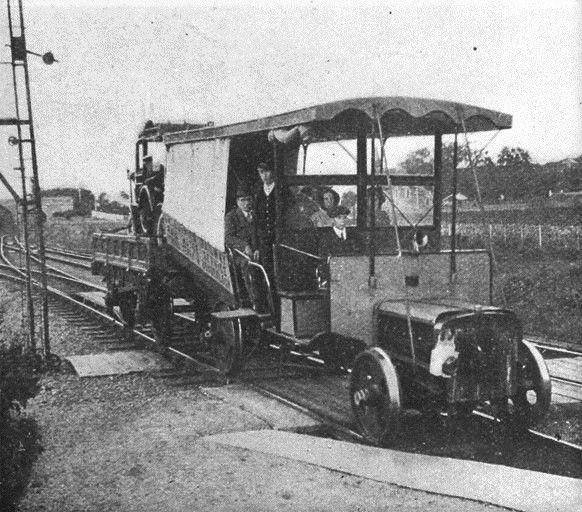
Another view of the same vehicle and wagon. The rail-motor car was more of a charabanc having a number of rows of seats. [2]
This view shows the rail-motor car only offered passengers very rudimentary protection from the weather. The vehicle is entering one of the stations it served. Is this Connel Ferry, North Connel or Benderloch Railway Station? [3]

The Ballachulish Branch of the Caledonian Railway which crossed the Bridge at Connel Ferry is covered in other WordPress articles:

The Ballachulish Railway Line – Part 1

The Ballachulish Railway Line – Part 2

The Ballachulish Railway Line – Part 3

Revisiting the ballachulish railway………

References

  1. Novel Traffic on the Caledonian Railway; in The Railway Magazine, September 1909, p195.
  2. https://x.com/MrTimDunn/status/1042859151192477702?t=5hla6WJtvo1DnfZLPHflAw&s=19, accessed on 16th July 2024.
  3. https://x.com/TurnipRail/status/1400768455012388865?t=W3rRakfcxeS6GIsPsfNayQ&s=19, accessed on 16th July 2024.

The Peak Forest Tramway – Part 1

Peter Clowes, in his article in the September 1963 edition of the Railway Magazine wrote: “Rolling down from the Derbyshire hills came the “gang” a train of perhaps 20 wagons, their rough iron bodies piled high with skilfully stacked lumps of grey limestone. They lurched and swayed on the flanged steel track and forced the brakeman in charge of the train to cling firmly to the leading wagon on which he perched. This is how the villagers of the High Peak remember the clattering, dusty Peak Forest Tramway, built by Benjamin Outram, that was part of the life of the district for 125 years.” [1]

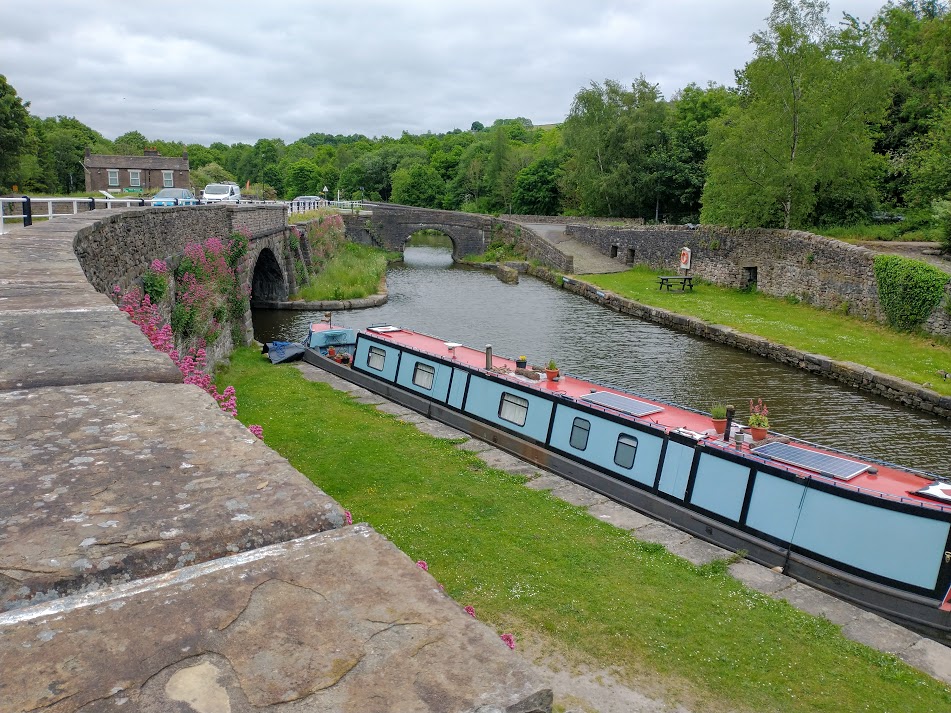
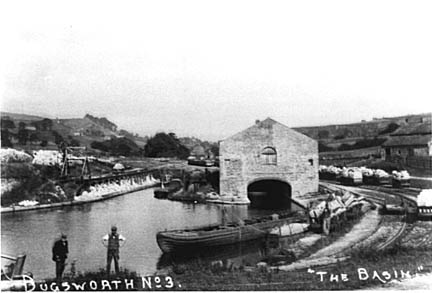
He goes on to explain that the tramway was only ever used for goods, no passengers were carried except when company officials undertook tours of inspection. The line carried lime and limestone from Buxton’s quarries and kilns down to the Peak Forest Canal at Bugsworth for ongoing transport on barges to Lancashire and beyond.

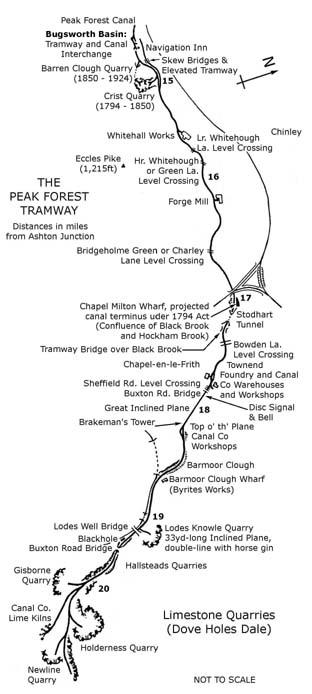
Wikipedia provides a sketch map of the route of the tramway which is reproduced below.

Sketch Map of The Peak Forest Tramway. [2]
The Peak Forest Tramway. [18]

The next (adjacent) sketch map is more informative. It was included in a post about the line on the Peak and Northern Footpaths Society website. It shows the locations of a number of key features on the route of the tramway. [18]

Benjamin Outram’s original intentions  were to build a canal from Ashton-under-Lyne through to Chapel Milton, now a ‘suburb’ of Chapel-en-le-Frith. [4] He sought and received and Act of Parliament to this effect, dated  28th March 1794. That Act authorised the construction of the canal, which would have been 22 miles long, and the construction of a feeder tramway/plateway from the canal to Load’s Knowle (Dove Holes), near Buxton. Gradients between Chapel Milton and Buxton were severe and unsuited to canal construction.

However, Outram decided to reduce construction costs by terminating the Peak Forest Canal at Bugsworth and building his tramway for the whole of the remaining six miles to Dove Holes. Clowes tells us that, “The line was opened on August 31, 1796, and was an immediate success. Hundreds of tons of stone were brought down to Bugsworth every day. Sometimes there were as many as 20 barges – each with a capacity of 20 tons leaving the village for Lancashire.” [1]

Wikipedia tells us that “the tramway was initially single-track, on a 4 ft 2 in (1,270 mm) gauge, constructed of stone sleeper blocks and L-section cast-iron rails that were fastened directly onto the blocks, in the same manner as [Outram’s] Little Eaton Gangway built for the Derby Canal. The rails, known as gang rails or plates, were provided by Benjamin Outram and Company who also supplied the mineral wagons.” However, in 1803, the significant traffic volumes on the line required the single line to be “made double-track, with the exception of Stodart Tunnel and below Buxton Road Bridge, using the same method of fixing the rails.” [2]

When Outram’s Peak Forest Canal Company was building the Peak Forest Tramway, between 1794 and 1796, it cut into a bed of gritstone by the hamlet of Lower Crist, about 380 yards to the east of the terminus of the Peak Forest Canal at Bugsworth. The stone apparently “had good non-slip properties and was easy to cut because it had no grain. … This bed extended south of the main line of the tramway at Lower Crist and a branch line was made into it. The Company also discovered another deposit of the same stone adjoining the nearby hamlet of Barren Clough, which is situated between Lower Crist and the canal terminus. Consequently, they purchased land there as well but it was another 56 years before Barren Clough Quarry was opened.” [3]

Clowes comments that a considerable trade in this gritstone developed as it was located so close to the Tramway and Canal. “Thousands of 6 in. square setts for the cobbled streets of the country’s growing cities were carried … to the wharfs.” [1]

Bugsworth a sleepy little village, renamed Buxworth, … became a hive of industry.” [1] [5]

It was originally intended to extend the tramway to Buxton as and when demand for minerals grew. A further extension to Ashopton in the Hope Valley over the Rushup Moors by way of Sparrowpit , Mam Tor and Lose Hill was also planned. “These extensions never materialised and the plans were finally abandoned when the Cromford & High Peak Railway was built in 1830.” [1]

Clowes provided a vivid description of what travelling with the “gang” must have been like. A quite exhilarating experince! “Teams of horses pulled the loaded wagons from the Dove Holes quarries to the highest point of the line about a quarter of a mile away. Here the horses were unhitched. The brakeman gave the “gang” a push and then leaped onto the leading axle pin as the train of anything from 16 to 40 wagons gathered speed. At first the track curved gently through a long limestone cutting, then under the main Buxton to Chapel-en-le-Frith road by means of a stone arch bridge and down into the woods of Barmoor Clough between dry stone walls about 20ft. apart. This section of the line was closely followed by the London & North Western Railway when its spur was constructed from Stockport to Buxton, more than 50 years after the tramway was built. Until the tramway ceased operations in 1920, trains and “gangs” ran alongside each other separated only by a moss-covered wall.” [1]

As we will see in a future article about the line, “where the railway swings left into a tunnel, the tramway continued around the shoulder of a hill that shadows the birch and sycamore clad gorge which plunges down to Blackbrook. … The “gang” ran on down a steady 1-in-60 gradient to marshalling yards at the end of a 900-ft. ridge overlooking Chapel-en-le Frith. Here were workshops, stables, a permanent way store, and other buildings of the tramway company.” [1]

An inclined plane, 500 yd. long and worked by a wire rope that ran around an 18 ft.-wide wooden drum, controlled the descent of loaded wagons to the foot of the slope. The rope was 2 in. in diameter and weighed six tons. No more than eight wagons were allowed in a run on the incline. The loaded vehicles would be balanced with an appropriate number of empties whenever possible. The weight of the descending wagons pulled the empties up the slope. Sometimes horses were harnessed to the driving drum to provide additional power. If the weight of the wagons became too great and the train started to run away, a lever-operated brake would be applied in the wooden control cabin that stood on stilts just beyond the top of the 1-in-7 incline. Sometimes, however, this proved ineffective. With an ever-increasing roar the wagons would race downhill, then jump the rails and scatter their loads far and wide.” [1]

Clowes narrative continues from the small town of Chapel-en-le-Frith: “After negotiating the plane the “gangs” were reassembled in the Townend sidings and were started again on the journey to Bugsworth under their own momentum. Soon they were clattering across Bowden Lane and through a copse of oak and elm.” [1]

A mile west of Chapel was Stodhart Tunnel which the wagons entered through a steep sided cutting, the slopes of which were covered with ivy and rhododendron bushes. For 100 yards the “gangs” thundered in darkness. Then they were out into daylight and speeding along the fastest part of the track through Chapel Milton. There were sidings here across the road from the old Spread Eagle Inn-and two or three wagons of lime might be shunted off the main line to await the arrival of local farmers with horse and cart. The tramway continued through the pleasant fields of Bridgeholm, across the Whitehough road and along the banks of Black Brook to Bugsworth. The whole journey might take three hours, allowing for delays on the plane.” [1]

At Bugsworth, the tramway divided into extensive sidings and there were many loading berths. where limestone was tipped into large canal-side storage bays below the level of the track. Clowes tells us that “one of the most interesting features of this inland port was a simple yet ingenious tipping wheel which consisted of two vertical, spoked wheels about 16 ft. high attached to a frame which ran on a special rail track. The frame was pushed over a line of wagons which had been run on to a pier over the canal basin, and a hook was fastened to the end of each wagon in turn. A rope led from the hook over a drum which linked the two main wheels. A man would climb up the spokes of one of the vertical wheels, so making it turn like a human gin. This lifted one end of the wagon off the rails, its hinged end-plate swung open and the contents of the vehicle spilled into the hold of a barge below.” [1]

Bugsworth Basin was surrounded by merchants’ offices and warehouses. The offices housed a series of different merchants supplying limestone, lime, coal and general merchandise. Further buildings housed workshops for track and rolling-stock repair; and stables for a horses which were used to transport goods and wagons back up the line to Dove Holes.

Outram’s plateways used L-shaped flanged track on which the wagons ran. The rails were 4 ft. 2 in. apart and initially made of cast-iron. Each rail was 3 ft. long and weighed 56 lb. Clowes tells us that, “the inner flange was raised 2 in. above the 3 in. wide running surface on which the flat wheels of the wagons ground their way. The rails were secured at the joints by cast-iron chairs which sat on stone block sleepers, each one about 18 in. square. An iron spike with a tapering head was driven through the end of each rail into an oak plug seated inside the sleeper. The clatter of “gangs” passing over these primitive joints must have been fearful and, understandably enough, rail breakages were frequent.” [1]

It wasn’t until the five year period between 1865 and 1870 that the line was relaid with 9 ft. long steel rails. These were rolled at Gorton and fishplates, 1ft 6ins long were used to connect the rails.Between the stone sleeper blocks was laid a cobbled path which enabled the horses to get a firm grip. The cobbles were raised well above the level of the sleepers, in fact about an inch higher than the rail flange. This arrangement might have helped to guide wagon wheels back on to the track following derailments.” [1]

Clowes explains that wagons used on the tramway were very crudely constructed: “Each weighed between 16 and 20 cwt. when empty, and carried about 2 tons. Three sides of the body were sheets of cast iron held together by iron bands and two large wooden chocks. The fourth side was a hinged iron gate which swung open when the vehicle was tipped to unload its cargo. The body was bolted in farm-cart style to wooden axle beams. The wheels – some were cast iron, others were of wood with wrought-iron tyres – ran loose on iron pins projecting from the axle beams. They were secured by large washers and cotter pins. The “gangs” were coupled together by two short iron chains fastened at each end of the wagon beds. There was no proper braking system. Until the last days of working, the running wagons could be halted only by a perilous practice on the part of the brakeman. He would leap from his perch on the leading axle pin and thrust iron sprags into the spokes of the spinning wheels. This would lock the wheels and skid the “gang” to a stop.” [1]

The Route from Bugsworth to Dove Holes

Peter Clowes has given us a description of the journey from Dove Holes to Bugsworth. [1] As we have already noted, it would have been an exciting ride for the brakesman/ brakesmen in charge of the trams. The journey back up the gradient from Bugsworth to Dove Holes would have been much more of a toil and would have relied on horsepower. The route will be covered in greater detail, illustrated, where possible by contemporary plans and maps. In addition, as many modern photographs as is practical will be included and the journey will probably need to be divided into at least two articles.

Bugsworth Basin is shown below on an extract from the 1898 25″ OS Map which was surveyed in 1896. The concentration of tramway sidings is remarkable and suggests that, in the years before the turn of the 20th century, this was a very dynamic, busy and noisy place!

Bugsworth Basin, the terminus of the Peak Forest Canal, was surrounded by a myriad of tramway sidings. This extract from the 1898 25″ OS Map shows the main basin just to the South of the Navigation Inn. The tramway is shown exiting the extract at the third point down on the right side of the image. The tramway running South-east and leaving the extract in tunnel was the line providing access to the Barren Clough Quarry. That service the Lower Crist Quarry left the Tramway mainline a short distance to the East of the edge of this extract. [7]
Approximately the same area in the 21st century. The renovated canal basin is clearly visible. The dual-carriageway visible at the bottom of the satellite image is the A6 Whalley Bridge and Chapel-en-le-Frith by-pass. [8]

Starting in 1968, volunteers of the Inland Waterways Protection Society restored the canal and basins culminating in the re-opening to navigation in 2005. Now that restoration of navigation has been achieved, improvements and development continues” [9] under the auspices of the Bugsworth Basin Heritage Trust (BBHT). Their plan of the site is shown below.

The BBHT plan of the Bugsworth Basin site. Key: Ground Panel Locations are shown by green dots; Welcome Panels are shown by orange dots; Observation Panels are shown by mauve dots. [10]
A schematic model of the Bugsworth Basin at the East end of the Lower Basin. (My photograph, 11th June 2021.)
Bugsworth Basin from the East. [12]
Bugsworth Basin has been lovingly restored over a number of years. This image shows one of the information boards at the site and was taken in June 2021. The Lower Basin is a long thin canal arm on the North side of the Bugsworth site, to the West of the Navigation Inn. (My photograph, 11th June 2021.)
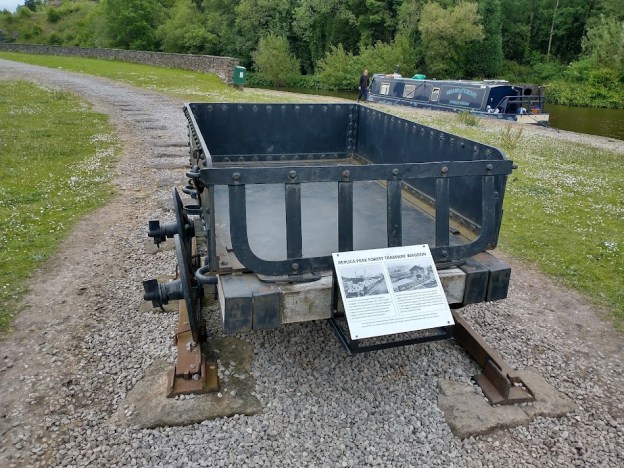
This ‘waggon’ was fabricated by the Bugsworth Basin Heritage Trust and sits on the island between the Lower Basin and The Wide. (My photograph, 11th June 2021)
The East end of the Wide in 2021. The bridge in the centre top of the image carries a public road over the access to the Upper Basin. The Navigation Inn can be seen in the top left of the image. (My photograph, 11th June 2021.)
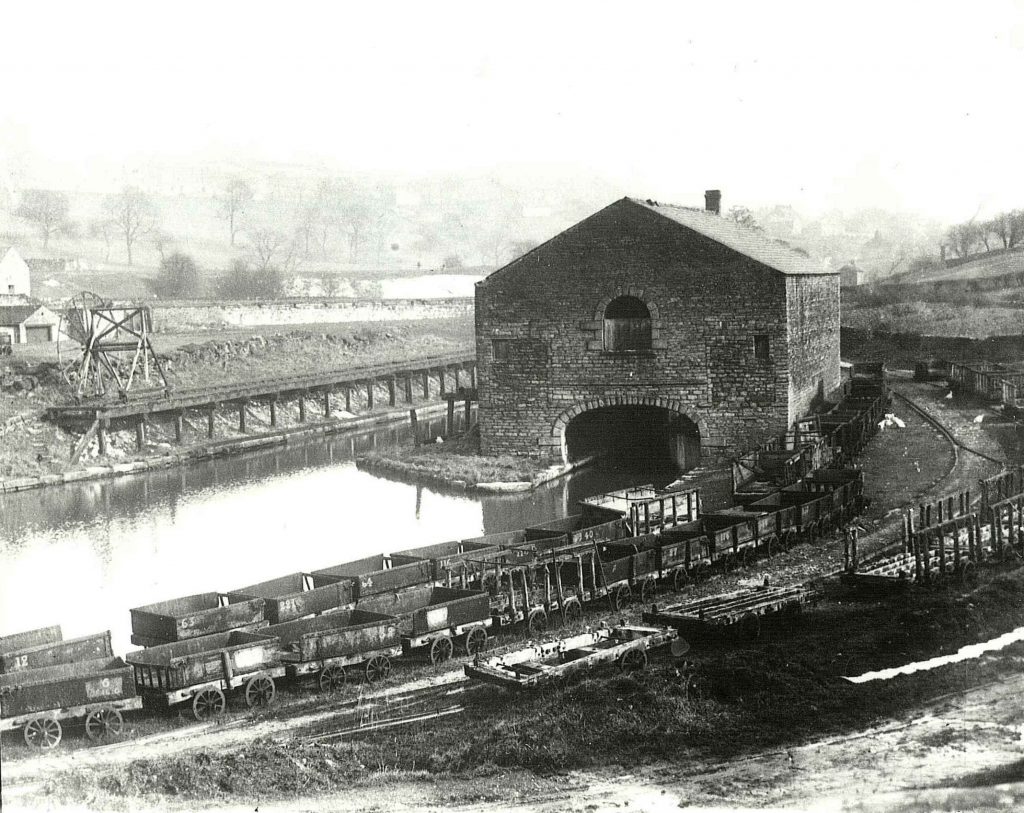
Bugsworth Upper Basin from the West. Some of the trams are visible in the foreground of this image from around 1900. Also to the left of the goods warehouse on the left side of the canal arm a frame of one of the original tipplers can be made out. To the rear of the image there seem to be a very significant number of loaded trams sitting in the tramway sidings. [13]
Bugsworth Upper Basin again, some loaded trams on the right side of the picture and the mobile tippler is again visible on the left, standing on top of the loading wharf. [10]
The Upper Basin again, this time in 1920, a lot of empty trams appear in the foreground and the mobile tippler stands out well on the left of the picture. The view of the loading wharf structure that supported the tippler and carried it’s rails is much better in thus image than in the previous two, © J.R. Board. [16]
Bugsworth Basin at a later date. The mobile Tippler has now disappeared and there is no sign of the sidings beyond the end of the canal arm. [17]
Bugsworth Basin looking West. [14]
Bugsworth Basin also looking to the West and showing the Peninsula on the last picture. The stone blocks which secured the tramway plates are featured. [15]

Before heading east from Bugsworth Basin two particular things are worthy of note:

  • First, just beyond the Navigation Inn on the North side of the Upper Basin, there is a well-preserved example of a tramway wharf where goods were loaded and unloaded.
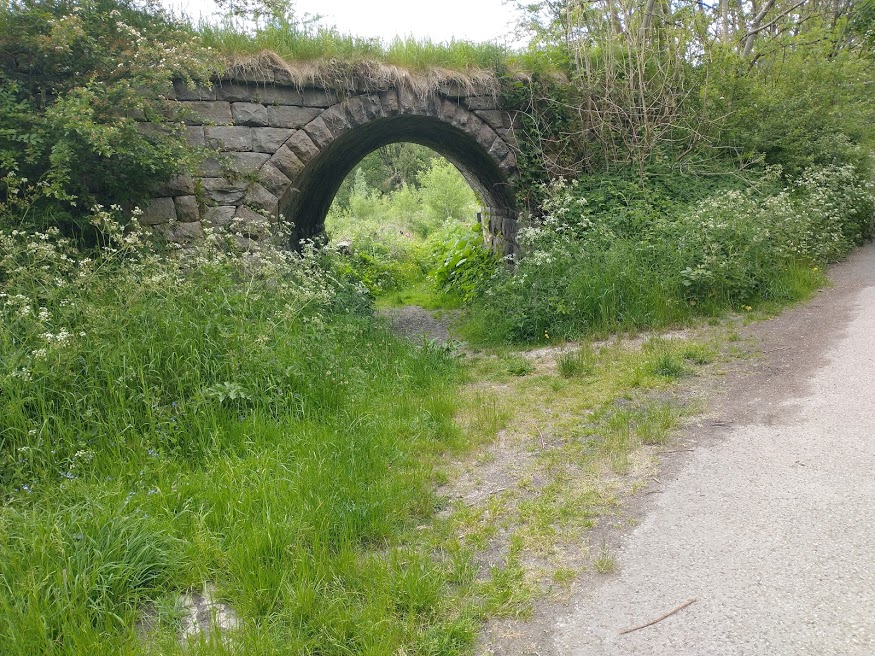
  • Second, the skew arch bridges which carry a branch tramway which served lime kilns.
The two skew-arch bridges which carrried the tramway branch to the lime kilns in 1976.  These bridges carried the tramway branch over the Black Brook and a medieval packhorse road. The road bridge is in the foreground the river bridge is beyond. [20]
The skew-arch bridge carrying the tramway branch to the limekilns over the old packhorse road. The skew-arch bridge over the Black brook is off to the left of the picture. The tramway mainline ran across the right foreground of the image. (My photograph, 11th June 2021.)
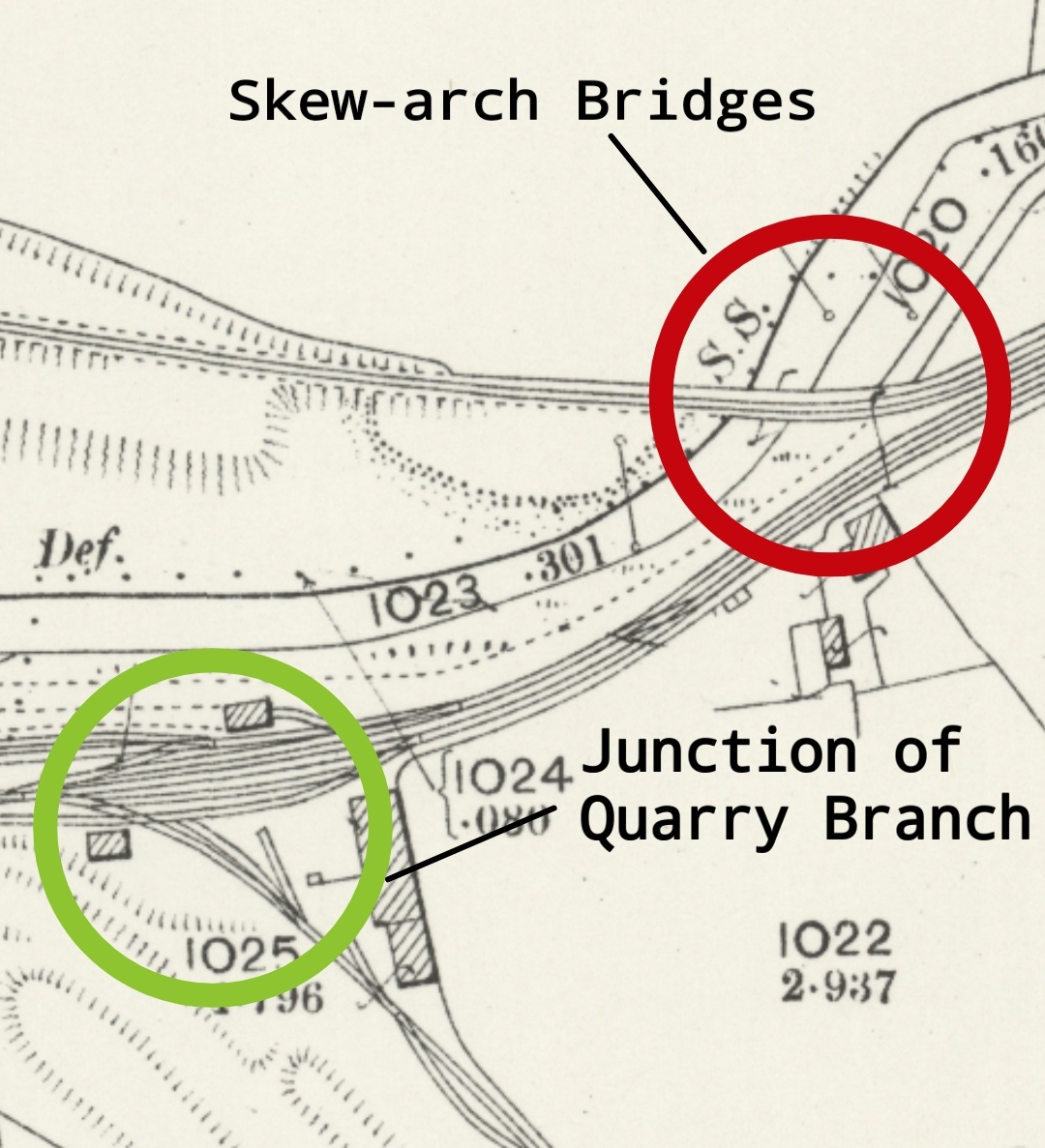
The relative locations of Barren Clough Quarry junction and the Skew-arch bridges. [21]

Leaving Bugworth Basin, the Tramway passed to the North of Lower Crist Quarry. Its branch tramway left the mainline to the East of the junction with the limekiln tramway branch as shown below.

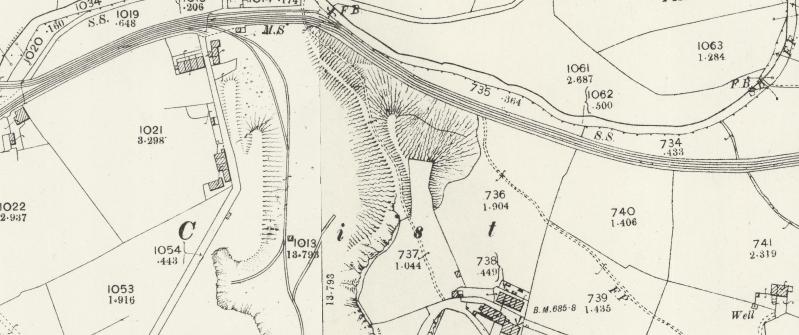
25″ 1898 OS Map extract showning The Peak Forest Tramway to the East of Bugsworth Basin. Lower Crist Quarry and its tramways are shown on the South side of the Peak Forest Tramway.  Barron Clough Quarry was further to the South and was served by its own tramway which passed through a tunnel as it left Bugsworth Basin. Lower Crist Quarry is, in the 21st century bisected by the A6 dual-carriageway. Little of consequence now remains. [11]

Both the Barren Clough Quarry and the Crist Quarry (and the tunnel which gave access to the Barren Clough Quarry are covered in detail in an article by Peter J. Whitehead, “Crist and Barren Clough Quarries, High Peak, Derbyshire.” [19] It seems as though Barren Clough Quarry was not opened until the Company believed that Christ Quarry was close to exhaustion. Barren Clough was opened 56 years after Crust Quarry. It was served by a single-track tramway branch. The branch “commenced at a point 80 yards to the east of the terminus of the Peak Forest Canal. At a distance of 145 yards from the main line, it entered the tunnel before arriving on the quarry floor. Although the tunnel was relatively short, a vertical shaft was first sunk at a distance of 76 yards from the north portal (just under half way) to enable it to be excavated from four faces at once rather than at each end. When the tunnel was completed this shaft became an airshaft, although this feature was probably unnecessary for such a short tunnel.” [19]

The two quarry branch tramways are shown on the map extract below.

Barren Clough and Crist Quarries and their tramway branches. [11]
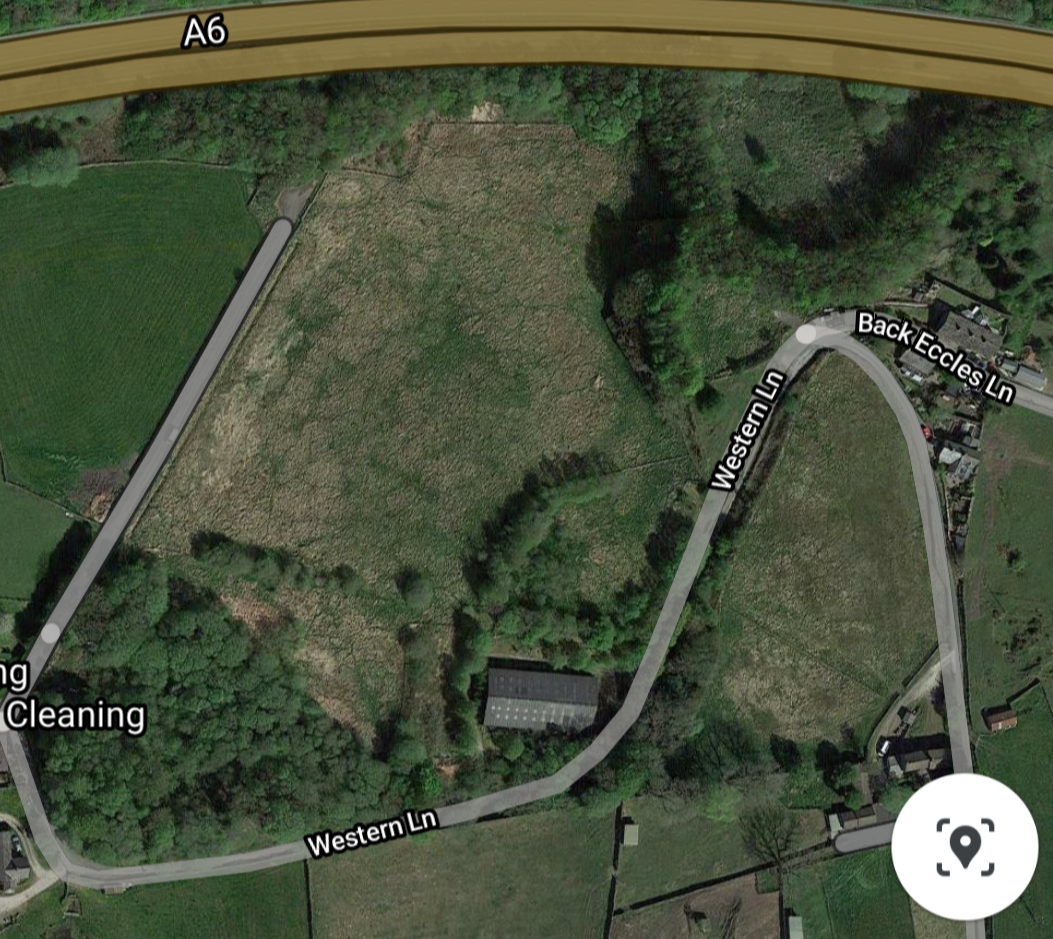
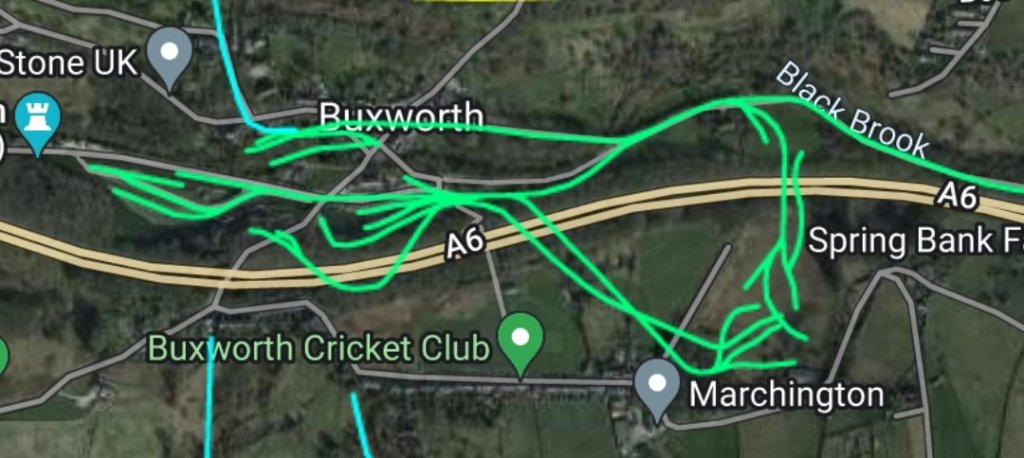
Tramway routes to the East of Bugsworth Basin, imposed on a recent satellite image. (Google Maps)
The location of Barren Clough and Crist Quarries in the 21st century, showing the A6 dual carriageway built in the later years of the 20th century. [Google Maps Satellite Image.]
This is how RailMapOnline shows the Tramroad and its various connections over the length we have been looking at. [20]

As the OS Map extract above shows, there was a group of cottages just to the West of the tramway access to Crist Quarry. Those cottages are still in use in 21st Century. The access route to them (shown on the OS Map) has been cut by the A6 Dual Carriageway. They can only now be accessed from Bugsworth Basin.

Further East, the Tramroad follows the South side of Black Brook….

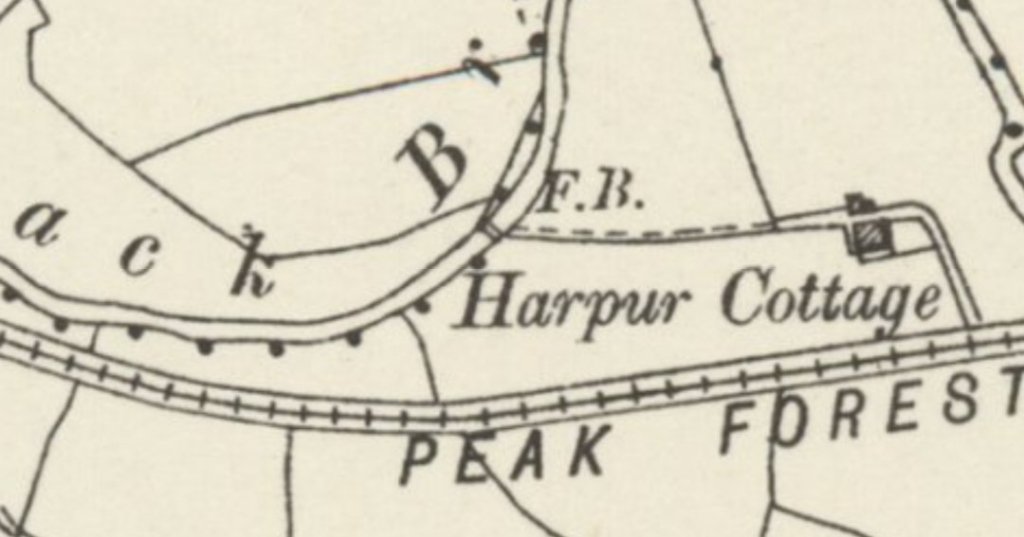
The route is shown on the 6″ Ordnance Survey from the turn of the 20th century. [21]
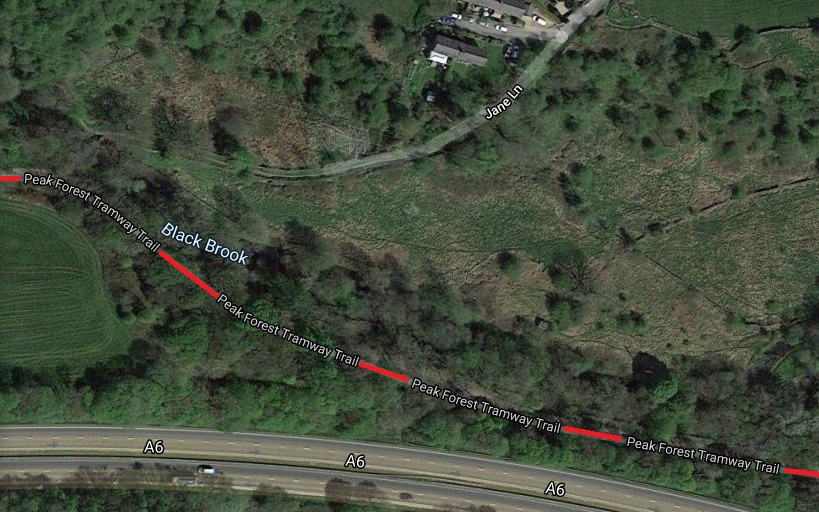
The route of the old tramway is a well-paved/stoned footpath/bridleway for a distance to the East of Bugsworth Basin. [Google Maps]
The route continues on the 6″ Ordnance Survey. [22]
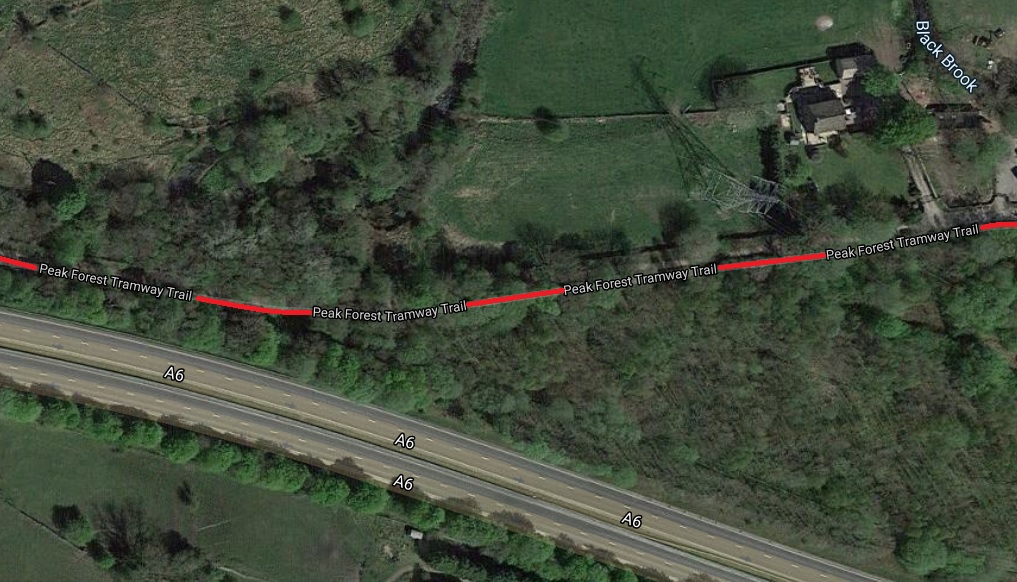
The route continued alongside Black Brook, although not following the meander around Harbour Cottage. [Google Maps]

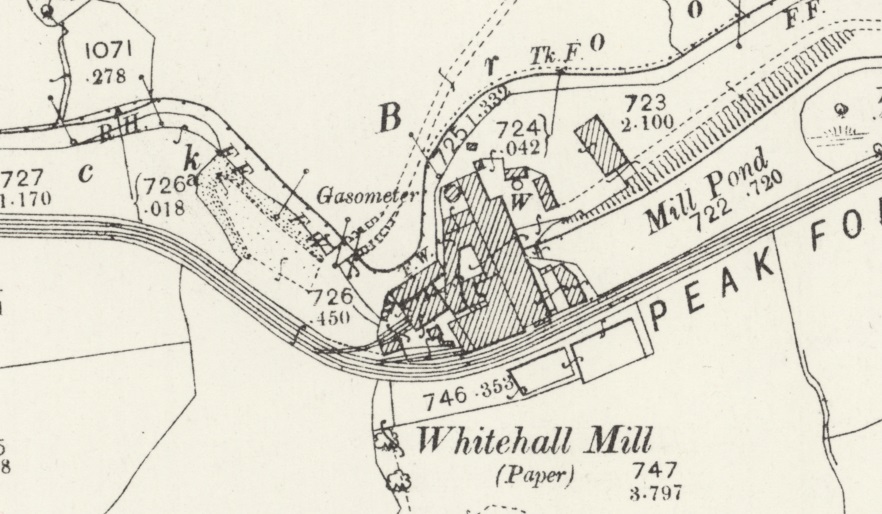
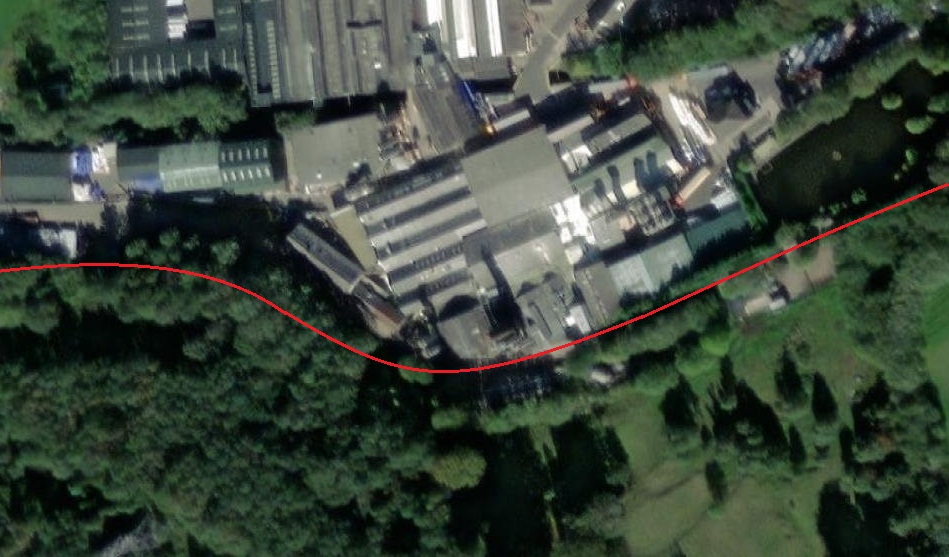
Further along the line, it deviated South away from Black Brook so as to pass to the South side of Whitehall Mill.

Whitehall Mill is shown on this extract from the 25″ OS Map of 1898. It had its own tramway connection, with two separate accesses to the tramway. [22]
The same area, shown on modern ESRI satellite imagery as provided by the National Library of Scotland (NLS), the Mill has expanded significantly in size and is still in use. It’s site crosses the brook. [22]
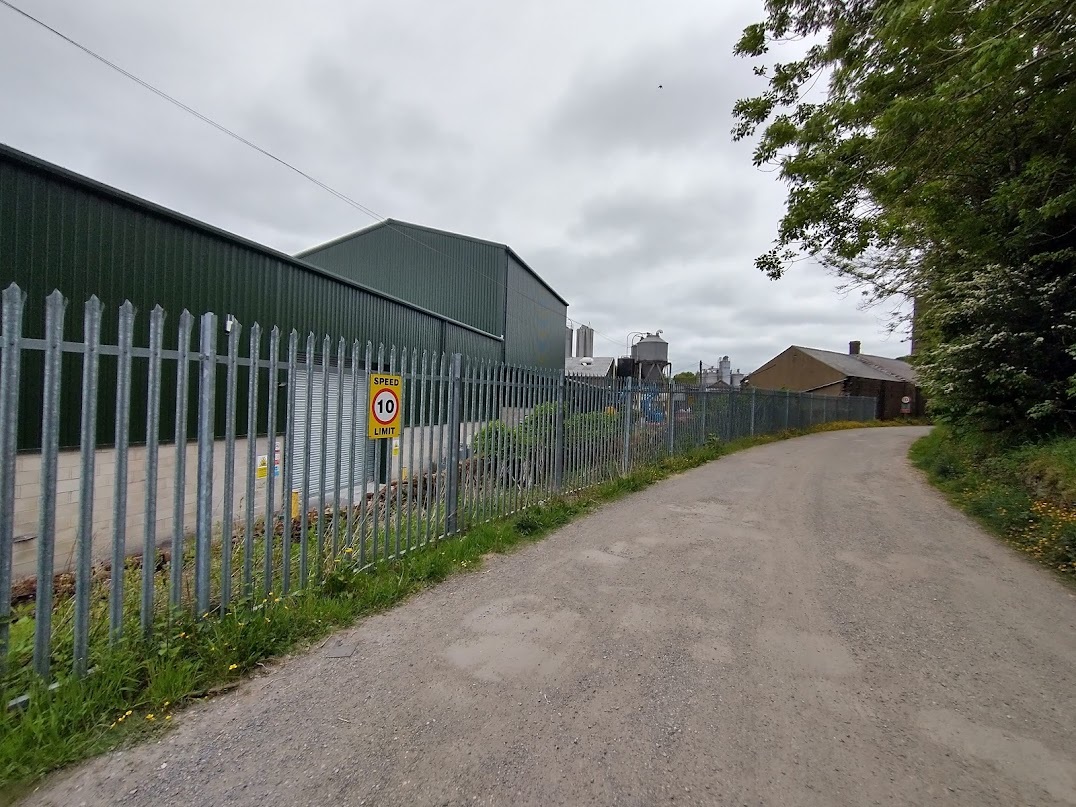
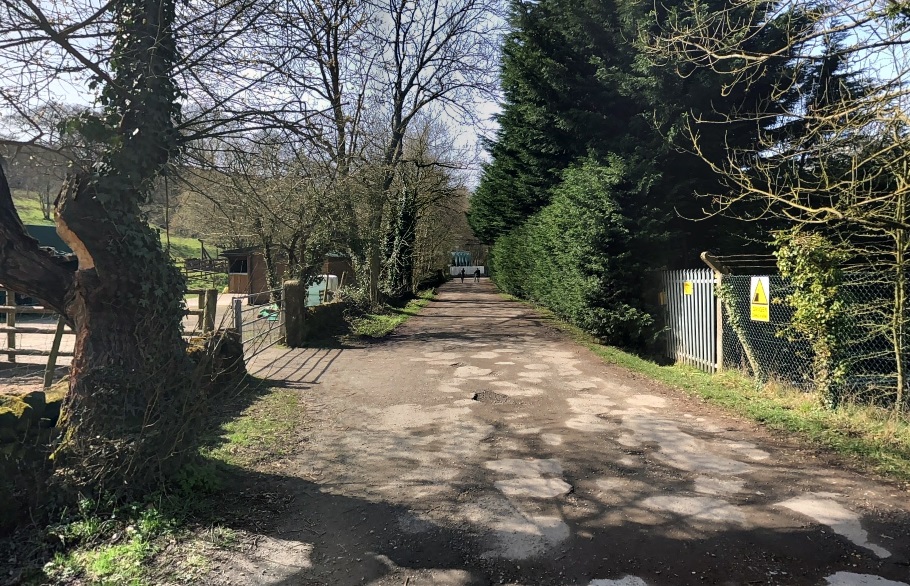
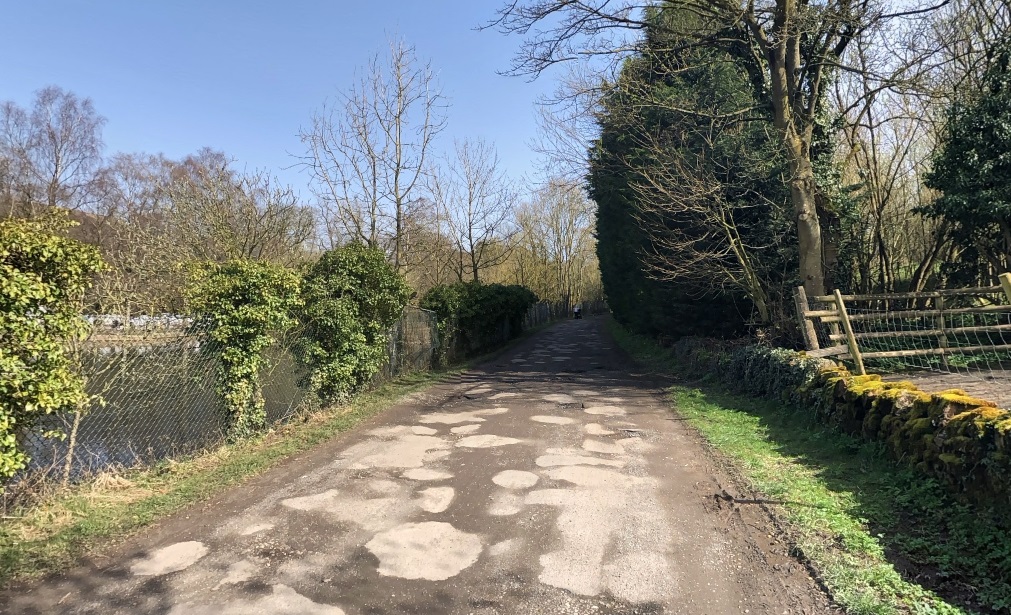
Approaching Whitehall Mill from the West and looking along the old tramway route. [My photograph, 11th June 2021]
Continuing to approach Whitehall Mill from the West along the old tramway route. [My photograph, 11th June 2021]
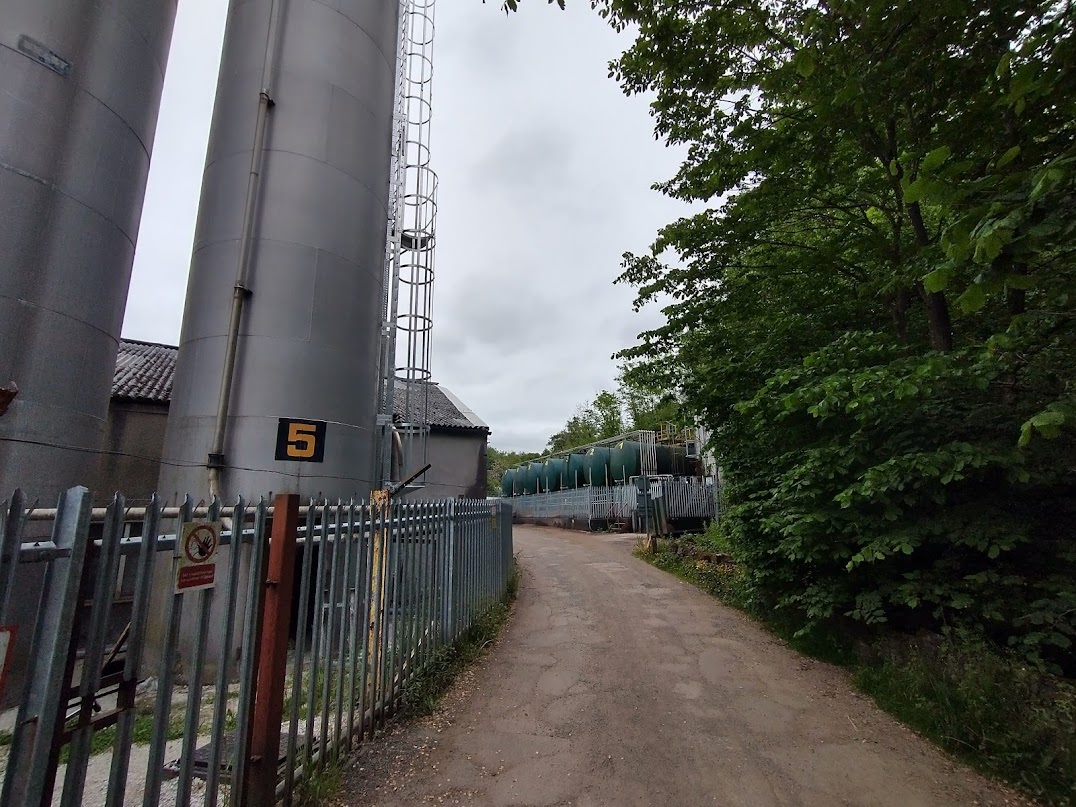
Walking alongside Whitehall Mill from the West along the old tramway route. [My photograph, 11th June 2021]
Continuing alongside Whitehall Mill from the West along the old tramway route with part of the site screened from the path by a very tall Leylandii hedge! [My photograph, 11th June 2021]
Looking West-southwest back along the old tramway route towards Buxworth with the Whitehall Mill buildings screened by the Leylandii on the right. The Millpond is just off the image to the right. [Google Streetview, March 2021]
Looking East-northeast along the line of the old tramway with the Millpond which served Whitehall Mill on the left. [Google Streetview, March 2021]
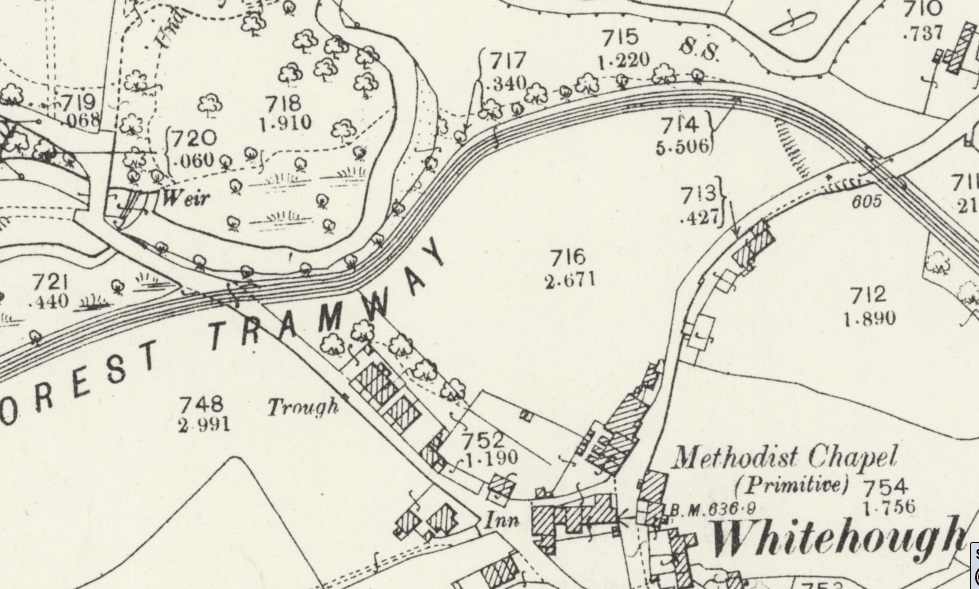
The 25″ Ordnance Survey of 1898 shows the double track tramway continuing on the South side of Black Brook and curing round the village of Whitehough. [23]
The same area as shown on the OS map above, as it appears on the ESRI satellite imagery provided by the NLS. [23]
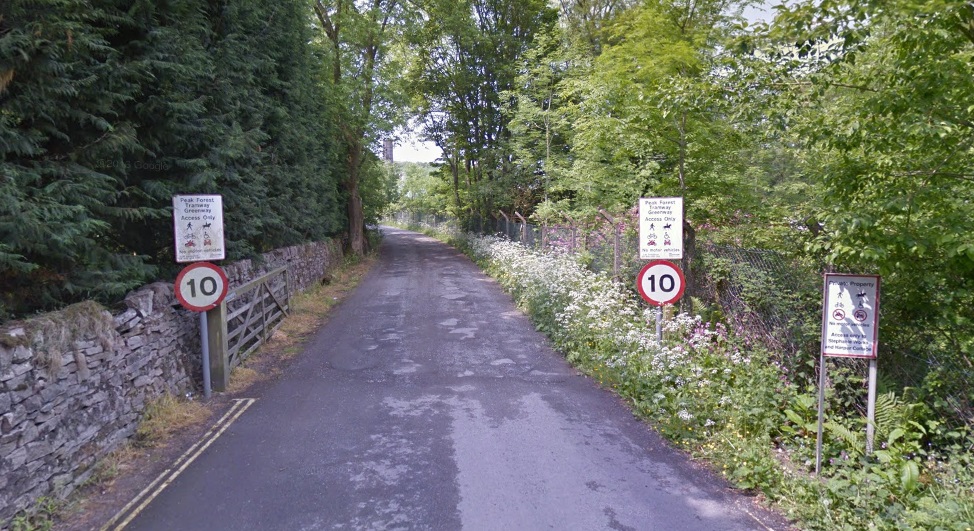
Looking West towards Whitehall Mill along the line of the old tramway. [Google Streetview, June 2016]
Looking East along the line of the old tramway from the same point as shown in the image above. [Google Streetview, June 2016]
The old tramway curved towards the Northeast for a short distance after crossing the minor road leading to Whitehough. [My photograph, 11th June 2021]
The old tramway then curved round towards the Southeast before crossing another minor road leading to Whitehough (Whitehough Head Lane). [My photograph, 11th June 2021]
Looking Southwest along Whitehough Head Lane towards Whitehough and showing the point at which the old tramway crossed the road at level. [Google Streetview, June 2011]
Looking Northeast along Whitehough Head Lane at the point where the old tramway crossed the road. [Google Streetview, June 2016]
This next extract from the 25″ OS mapping of 1898, shows the old tramway curving away from its crossing of Whitehough Head Lane. [24]
The same area on the ESRI satellite imagery in the 21st century. [24]

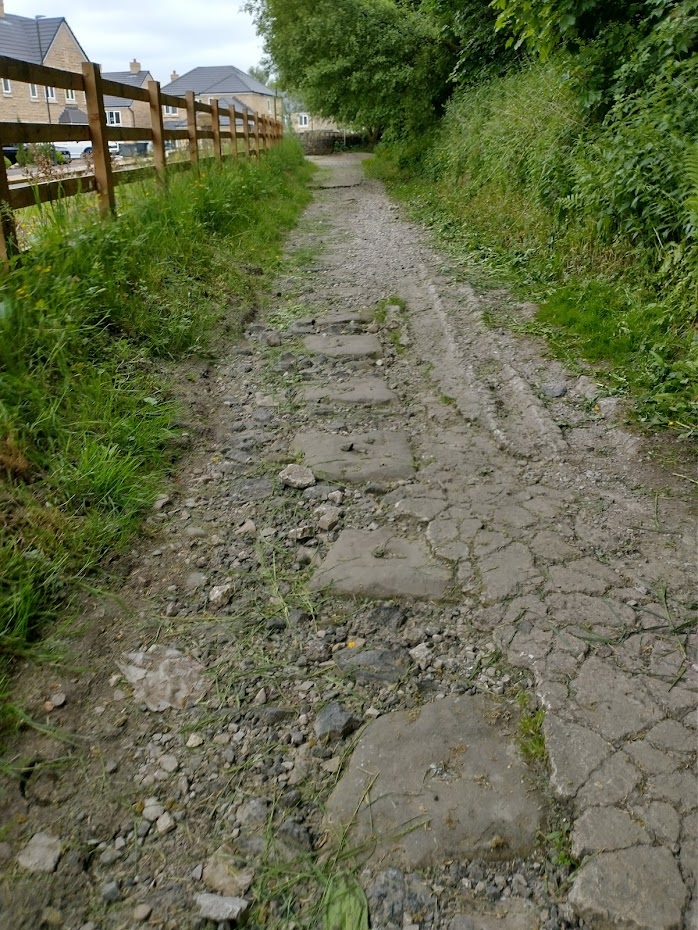
Along this length of the tramway the formation of the old tramway is exposed with some of the old stone blocks which secured the tramways rails in position visible. The next sequence of photographs show these blocks.

This sequence of photographs show exposed stone blocks which acted as sleepers for the tramway rails. The images are all taken facing along the tramroad towards Chapel-en-le-Frith. [My photographs, 11th June 2021]

The estate of new housing visible in these pictures is built on the site of Forge Mill. An information board provides details, although the protective Perspex cover to the board has begun to fog over the years.

The information board tells us that the stone blocks were quarried at Crist Quarry, near Bugsworth Basin. Originally, the basic L-shaped rails were laid directly onto the blocks as specified by Benjamin Outram, the engineer of the tramway, but rail breakages were a problem and so, by 1837 the tramway rails were relaid on iron saddles. This is shown in the picture at the bottom-left of the information board. [My photograph, 11th June 2021]

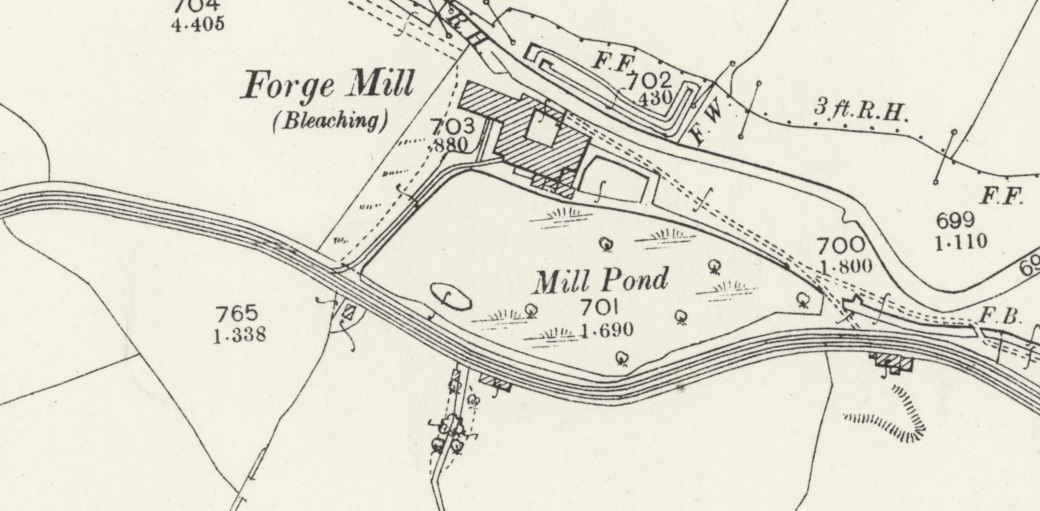
The site of Forge Mill appears on this next extract from the 25″ OS mapping. [27]
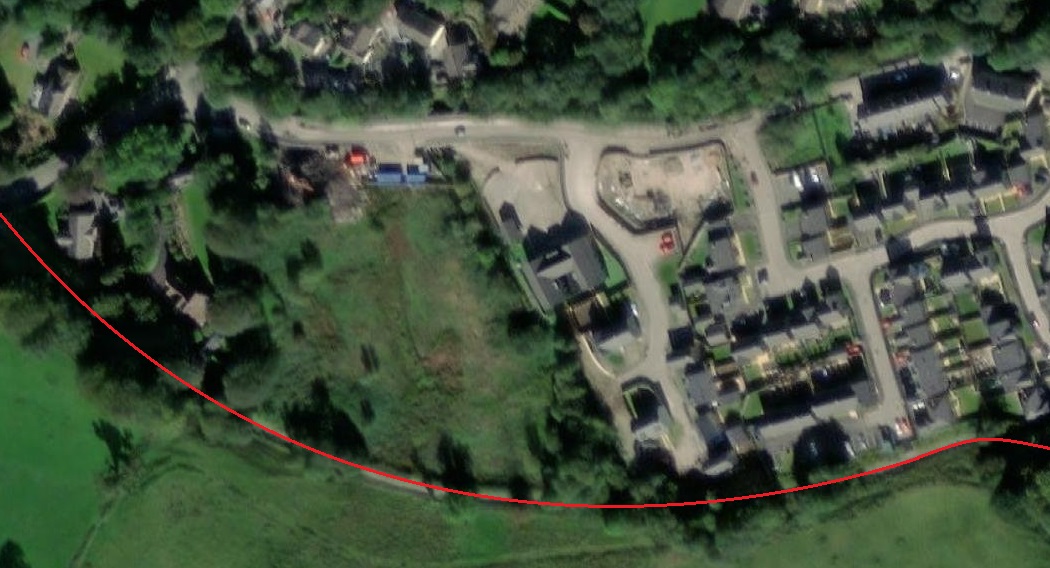
The same area as shown on the ESRI satellite imagery. [27]

Forge Mill has seen a variety of different uses over the years. The Derbyshire Historic Environment Record list these as:

BLEACH WORKS (Post Medieval – 1540 AD to 1900 AD)
MILL POND (Post Medieval – 1540 AD to 1900 AD)
WEIR (Post Medieval – 1540 AD to 1900 AD)
PAPER MILL (Post Medieval – 1540 AD to 1900 AD)
RAILWAY SIDING (Georgian to Victorian – 1800 AD? to 1900 AD) [25]

Information about the site was provided as part of the planning application for the new housing estate on the site of the Works . The document is available on High Peak Council’s website. [26] It confirms that the Forge Mill site was, before redevelopment, known as the Dorma Works. “The site was first developed in the early 1800’s as
a paper mill. By the 1900’s the site changed to the production of textiles, a dye and bleach works. The site was sold in the early 20th century to Dorma who produced bed linen and cotton prints
.” [26] After the site was purchased in 2005 it remained unoccupied and was largely demolished in 2010.

A siding was provided to link the mill to the tramway. This can be seen on the OS map above.

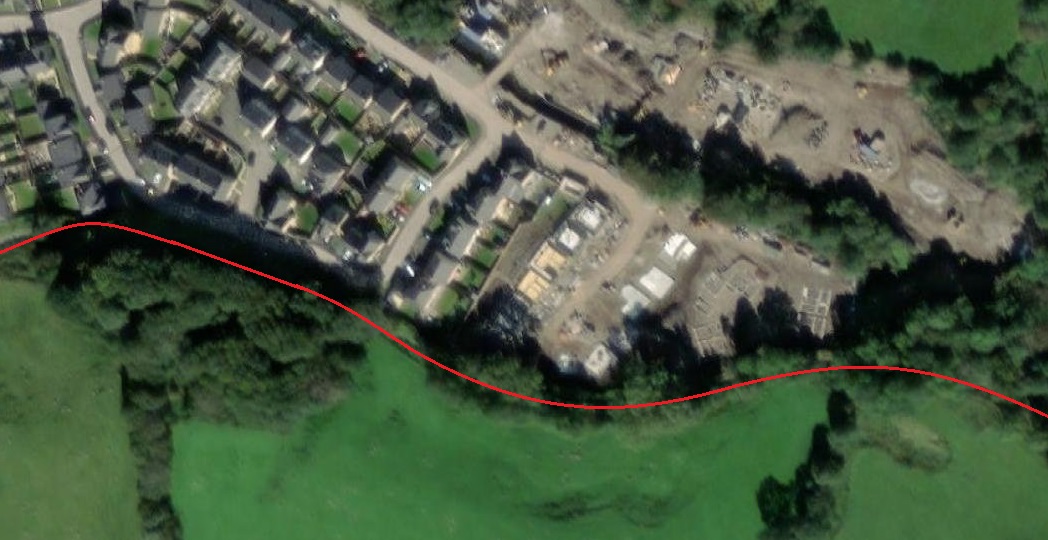
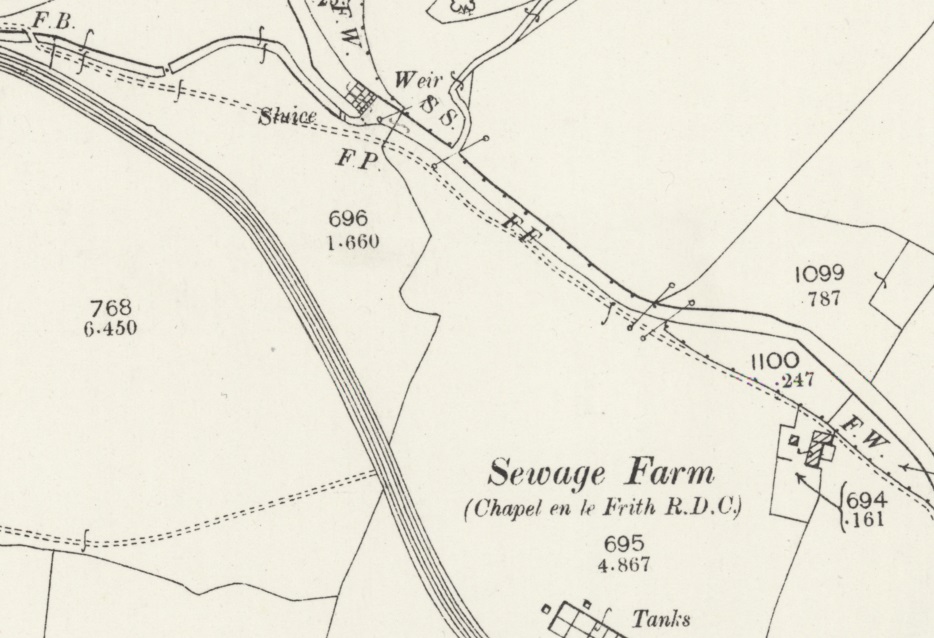
The 25″ Ordnance Survey of 1898 again. Beyond Forge Mill the route of the old tramway deviates Southward still following Black Brook. By the turn of the 20th century a Sewerage Farm had been constructed between the tramway and the brook. [28]
The same area as shown on the 25″OS map extract above. The Sewage Farm is of a more significant size in the 21st century. [28]
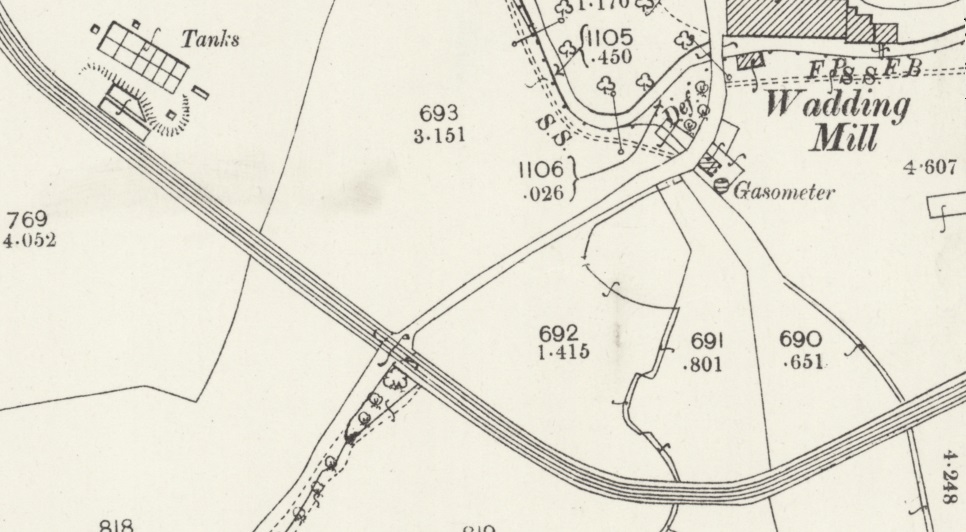
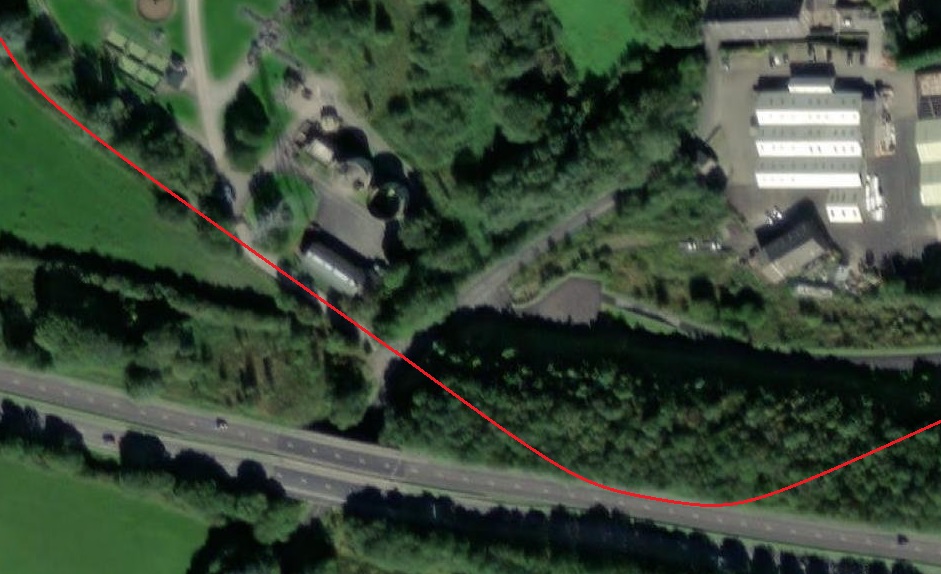
The next extract from the 25″ Ordnance Survey shows the tramway crossing Charley Lane on the level before beginning to curve back to the Northeast. [29]
The modern ESRI satellite imagery shows the A6 dual carriageway embankments crossing the line of the old tramway. [29]
The view back along the old tramway route towards Forge Mill. [Google Streetview, March 2021]
Another view back along the old tramway route. The camera is sitting in Charley Lane. [Google Streetview, October 2022]
The route of the old tramway to the East of Charley Lane now lies under the embankment of the A6 dual carriageway. [Google Streetview, March 2021]

This is a convenient point to finish the first part of our journey along the Peak Forest Tramway. There is, of course, much more to come, but this will need to wait for a future article.

Just to round off details of the old tramway’s history, we return first to Peter Clowes’ article in the Railway Magazine and then to other sources ….

The Gradual Demise of the Tramway

Fifty years after the line was opened, the owners leased the Peak Forest and Macclesfield Canals – and, of course, the tramway – in perpetuity to the Sheffield, Ashton-under Lyne & Manchester Railway. A Parliamentary Act of 1846 provided for an annuity of £9,325 to be paid to the Peak Forest Canal Company. The railway later became part of the Manchester, Sheffield & Lincolnshire Railway, and in 1883 the canals and tramway were transferred completely to the new owners. The old canal company was dissolved. The Manchester, Sheffield & Lincolnshire Railway became the Great Central Railway in 1897 and was absorbed into the London & North Eastern Railway in 1923.” [1]

A 1925 Act of Parliament led to the closure of both the Peak Forest Tramway and the canal basin at Bugsworth. Clause 54 of Act 15 & 16 George V cap 52, 31st July 1925 was entitled ‘Abandonment of Peak Forest Tramway’. The Act was to empower the London and North Eastern Railway to construct new railways, widening others and to acquire land. It extended the time for the completion of certain works and it permitted the compulsory purchase of certain lands. Clause 54 stated: “The Company may abandon and discontinue their Peak Forest Tramway extending from Chinley to Dove Holes and may hold, sell or dispose of, or apply to the purposes of their undertaking the site and soil of any part of the said tramway so abandoned and discontinued.” [6]

After closure in the mid-1920s, records “made at the Marple Toll Office show that between 17th April 1928 and 12th February 1931 there were 30 deliveries of scrap iron from Bugsworth Basin to Prince’s Dock on the Ashton Canal at Guide Bridge. The total quantity of scrap was 523¼ tons, which averaged 17½ tons per boatload. …. At Prince’s Dock the scrap was transhipped onto the railway and from there it was taken to Sheffield for subsequent melting down. The scrap merchant who dismantled the tramway was T W Ward Ltd of Sheffield and it was melted down by Edgar Allen & Co Ltd, steel manufacturers of Sheffield.” [6]

As we have seen above, it was not until 1968 that work really began on recovering the industrial archaeology of the site and bringing the basin and canal back into navigable use. [9] The BBHT are proud of the replica wagon that they have relatively recently completed.  The chassis of which “has been produced by members using traditional techniques, utilising timber cut from redundant oak lock gate balance beams, courtesy of the Canal & River Trust. The body steelwork has been produced by modern laser cutting, again from drawings by one of our volunteers. We have assembled this “kit” and mounted it onto the chassis.” [9] The replica wagon is now on display on the peninsula on the South side of the lower basin arm.

Further Reading

There is some excellent coverage of the Tramway and Bugsworth Basin available both online and in print form. This material includes:

  • Grahame Boyes and Brian Lamb; ‘The Peak Forest Canal and Railway; an Engineering and Business History’; The Railway & Canal Historical Society, 2012, (ISBN 948 0 901461 59 9). £30.00
  • The Industrial Archaeology of the Peak Forest Tramway; http://archive.bugsworthbasin.org/pages/tram.htm

References

  1. Peter Clowes; The Peak Forest Limestone Tramway; in The Railway Magazine, Volume 109, September 1963, p611-617. This article can be accessed via a subscription to The Railway Magazine archives which is available as an add-on to a regular subscription to the magazine.
  2. https://en.wikipedia.org/wiki/Peak_Forest_Tramway, accessed on 3rd June 2021.
  3. http://www.pittdixon.go-plus.net/quarries-gritstone/quarries-gritstone.htm, accessed on 3rd June 2021.
  4. https://en.wikipedia.org/wiki/Chapel_Milton, accessed on 3rd June 2021.
  5. https://en.wikipedia.org/wiki/Bugsworth_Basin, accessed on 3rd June 2021.
  6. http://www.pittdixon.go-plus.net/pft/$pft.htm, accessed on 3rd June 2021.
  7. https://maps.nls.uk/geo/explore/#zoom=17&lat=53.33580&lon=-1.96833&layers=168&b=1, accessed on 3rd June 2021.
  8. https://maps.nls.uk/geo/explore/#zoom=17&lat=53.33580&lon=-1.96833&layers=170&b=1, accessed on 3rd June 2021. This is an extract from the ESRI satellite imagery which forms the base layer over which various NLS OS Maps are overlaid.
  9. https://bugsworthbasin.org, accessed on 3rd June 2021.
  10. https://bugsworthbasin.org/the-basin, accessed on 3rd June 2021.
  11. https://maps.nls.uk/geo/explore/#zoom=17&lat=53.33559&lon=-1.95887&layers=168&b=1, accessed on 3rd June 2021.
  12. https://youtu.be/g91uwioVV4o, accessed on 3rd June 2021.
  13. https://narrowboatworld.com/7254-memories-of-bugsworth-basin, accessed on 3rd June 2021.
  14. https://www.countryimagesmagazine.co.uk/featured/bugsworth-canal-basin, accessed on 3rd June 2021.
  15. https://commons.wikimedia.org/wiki/File:Bugsworth_Basin_4.jpg, 3rd June 2021.
  16. https://www.wondersofthepeak.org.uk/facts/wanders-through-the-industrial-peak-bugsworth-basin, accessed on 3rd June 2021.
  17. https://collections.canalrivertrust.org.uk/themes/the-history-of-bugsworth-basin, accessed on 3rd June 2021.
  18. Ian Salvage (Publicity Officer) & Ian Edgar MBE (Chair of Bugworth Basin Heritage Trust); http://www.peakandnorthern.org.uk/newsletter/1702/07-peak-forest-tramway.htm, accessed on 3rd June 2021. (NB: the same sketch map can be found in: Peter J Whitehead; The Peak Forest Tramway, High Peak, Derbyshire (including a Walking Guide to the Tramway Trail); http://archive.bugsworthbasin.org/pages/pft.htm)
  19. http://archive.bugsworthbasin.org/pages/quarries/quarries.htm
  20. https://www.railmaponline.com/UKIEMap.php, accessed on 16th January 2023.
  21. https://maps.nls.uk/geo/explore/#zoom=16.8&lat=53.33623&lon=-1.95773&layers=6&b=1, accessed on 16th January 2023.
  22. https://maps.nls.uk/geo/explore/#zoom=16.8&lat=53.33602&lon=-1.95500&layers=6&b=1, accessed on 16th January 2023.
  23. https://maps.nls.uk/geo/explore/#zoom=18.0&lat=53.33658&lon=-1.94378&layers=168&b=1, accessed on 28th February 2023.
  24. https://maps.nls.uk/geo/explore/#zoom=18.0&lat=53.33604&lon=-1.93857&layers=168&b=1, accessed on 18th February 2023.
  25. https://her.derbyshire.gov.uk/Monument/MDR485, accessed on 28th February 2023.
  26. http://planning.highpeak.gov.uk/portal/servlets/AttachmentShowServlet?ImageName=145422, accessed on 28th February 2023.
  27. https://maps.nls.uk/geo/explore/#zoom=18.0&lat=53.33561&lon=-1.93349&layers=168&b=1, accessed on 28th February 2023.
  28. https://maps.nls.uk/geo/explore/#zoom=18.0&lat=53.33449&lon=-1.92832&layers=168&b=1, accessed on 28th February 2023.
  29. https://maps.nls.uk/geo/explore/#zoom=18.0&lat=53.33267&lon=-1.92589&layers=168&b=1, accessed on 28th February 2023.

The Railway Magazine, March and April 1948 – The Bodmin and Wadebridge Railway

During 1948, the Railway Magazine was published 6 times. Volume 94, No. 574 was dated March & April 1948. At a price of 2/- it seems, in 2022, to be a very good value read. [1]

The index page highlights the major articles in the journal. … These included, the second part of articles from earlier editions of the magazine – “Last Decades of the Midland” by R.E. Charlewood and Scottish Night Mails of the L.M.S.R by O.S. Nick. Cecil J. Allen long saga “British Locomotive Practice and Performance” was well underway and continues in The Railway Magazine into 2022. A biographical sketch takes up 7 pages – “First Steps in a Railway Career” by Aeila. There is also a significant article about the ‘Coronation Scot’ and a short two-page spread about “Top Link Drivers.”

Just two months after its formation, the editorial notes question what would be a suitable livery for British Railways but without reaching a conclusion. The new edition of Locomotive Management: Cleaning-Driving-Maintenance was heralded. It was a 22 chapter work with some significant appendices including one dealing with locomotive cabs and fittings with illustrations of the controls, and another giving representative locomotive diagrams.

A short note about British railway tunnels concludes the Editorial Notes pointing out three illustrations which follow in this issue of the Railway Magazine.

None of these things caught my attention and, given that I had been asked to look at this edition to pull out something significant for a reader of my posts as their date of birth fell during the period of this edition, it seemed as though I was going to be disappointed. … Until, that is, I turned to two monochrome images on p114 of the publication. These were two images taken on the Bodmin and Wadebridge Railway in the 1880s.

These two images evoke a completely different era. The first shows a train in 1886 at Bodmin Station headed by “Bodmin” an 0-4-0ST. The passenger stock consists of open and closed coaches and a brake van. The second image was taken in 1888 at Boscarne Junction and also shows a short train of open and closed coaches.


This prompted some research into the branch-line.

The Bodmin and Wadebridge Railway
By the time the photographs were taken the railway had been open for more than 50 years. Opened in 1834, the line was intended to link the quays at Wadebridge at the head of the Camel Estuary with the town of Bodmin in Cornwall.

Grace’s Guide tells us that, “Sanctioned in 1832, the railway was part of a scheme advocated by William James … for a railway between the English Channel at Fowey and the North Cornish coast at Padstow.” [3]

The first steam-powered railway in Cornwall, the line opened on 1st July in 1834 and so was also one of the earliest standard gauge railway lines in the world. ‘Cornwall Calling’ says that the line cost the grand total of “£35,000. The line ran from Wadebridge to Wenfordbridge, with a branch to Bodmin. It was designed to carry sand from the Camel estuary to inland farms for use as fertiliser on moorland soil.” [4]

In fact, the line was laid out as shown in the sketch map below which was included in an article in The Railway Magazine in the September 1984 issue associated with the 150th anniversary of the line. [5]

References
1. The Railway Magazine; Volume 94, No. 574, March/April 1948.

2. https://en.m.wikipedia.org/wiki/Bodmin_and_Wadebridge_Railway, accessed on 31st December 2019.

3. https://www.gracesguide.co.uk/Bodmin_and_Wadebridge_Railway, accessed on 31st December 2019.

4. http://www.cornwall-calling.co.uk/mines/tramways/bodmin-wadebridge.htm, accessed on 31st December 2019.

5. https://www.railwaymagazine.co.uk/1760/september-1984-bodmin-and-wadebridge-150, accessed on 31st December 2019.

A Steam Tram at Heywood, Middleton, Manchester (UK)

The February 1963 edition of the Railway Magazine included a photograph of a Steam Tram which used to serve Heywood. [1] Until coming across the image above, I had no idea that steam trams served boroughs in the Manchester conurbation.

This postcard by an unknown publisher shows the final days of the Heywood Corporation steam tramway in 1905. Just behind is Rochdale Corporation electric car 29 at the borough boundary south-west of Rochdale at the Sudden terminus where Rochdale Road and Bolton Road meet.The postcard bears the title “For Auld Lang Syne”, thereby clearly indicating the imminent demise of the steam tram service. [2]

Heywood, sits about 8 miles north of Manchester, 3 miles east of Bury and 4 miles south-west of Rochdale, and only a couple of miles from where I served my curacy in Middleton.

John R. Prentice says that “the Manchester, Bury, Rochdale and Oldham Steam Tramways Co. Ltd. (MBRO, founded c.1883) became the second largest steam tramway operator in Britain with over 90 tram engines, 80 double-deck passenger trailers and 30 miles of routes. Of all these, two-thirds of stock and track were narrow gauge (3ft 6ins), including the section between Bury and Rochdale, through Heywood.

The MBRO system was split into three areas: “standard gauge southwards from Bury (to Whitefield, Prestwich and Kersal) and from Royton (to Oldham and Hathershaw), but everything else between these points (i.e, nearly all the lines in Bury, Rochdale and their environs) built to a gauge of 3ft 6ins.” [3]

By 1896, “it was clear that several of the local authorities intended to build municipal electric tramways, and that the company’s days were numbered.” [3]

Ashley Birch says that, “Oldham took control of its lines (which it had always owned) in June 1902, and a year later, in June 1903, initial agreement was reached between the remaining various local authorities and the company on a sale. … The parties eventually signed a binding agreement on the 24th February 1904, so that work on electrification could progress, with a price being set by an independent referee.” [3]

The last steam tram ran “in Royton … on the 30th May 1904, the last tram in Bury on the 10th July 1904, and the last tram in Rochdale, probably on the day before the company’s assets were sold … 12th October 1904.” [3]

After nearly 20 years of operation, the MBRO network was no more. The withdrawal of steam tram services generally coincided with the electrification of the lines and the inauguration of an electric tram service. This was true for the Bury Corporation service to Heap Bridge (west of Heywood) But when Rochdale Corporation replaced its steam trams with standard gauge electric cars, it only did so “as far as the district of Sudden, a three-quarters of a mile walk to and from the Heywood borough boundary and the steam tram terminus. In December 1904, Heywood Corporation decided to run its own steam tram service by buying 13 tram engines and 10 trailers (by then, 20 years old) from the former MBRO company when it closed down.” [2]

Peter Gould says that, “On the 20th December 1904 the main line across Heywood was re-opened to the steam trams. On the 22nd December the service on the Hopwood branch was re-instated. … The locos and trailers retained their former brown and cream livery and fleet numbers, although from 24th March 1905, the legend ‘Heywood Corporation Tramways’ began to appear on the sides of locos.” [4]

Gould continues: “The initiative was not a great success and began to flounder when Rochdale initially refused permission for the trams to use the stretch of line between the Heywood boundary and Sudden, where their electric trams currently terminated, leaving a gap of around 1 mile for weary passengers to trudge. … Although Rochdale later relented, the conditions they sought to impose were unacceptable to Heywood and the steam trams continued to terminate at the Heywood boundary.” [4]

However, by April 1905, “Rochdale extended its electric service at Sudden to the Heywood boundary in Bolton Road to establish a direct transfer to the Heywood steam trams. Later the same year, on September 20th 1905, the last steam tram ran and the through service was converted to standard gauge electric operation using Rochdale and Bury cars. Thus, as a tram operating municipality, Heywood Corporation Tramways was very short-lived and lasted less than a year; something of a record in British tramway history.” [2]

References

  1. Alan P. Voce; A Relic of the Steam Tram Era; Letter in The Railway Magazine, February 1963, p137
  2. John R. Prentice; Heywood Corporation Steam Tram Engine 63; https://www.tramwayinfo.com/Tramframe.htm?https://www.tramwayinfo.com/trampostcards/Postc188.htm, accessed on 29th May 2021.
  3. Ashley Birch; Manchester, Bury, Rochdale and Oldham Steam Tramways (from 1888, Bury, Rochdale and Oldham Steam Tramways); http://www.tramwaybadgesandbuttons.com/page148/styled-79/page312/page312.html, accessed on 29th May 2021.
  4. Peter Gould; Heywood Corporation Tramways 1904-1905; https://petergould.co.uk/fleetlists/tramways/heywood1, accessed on 29th May 2021.

The Railways of Jamaica again. …..

I have been reading historic copies of the Railway Magazine again. This time it was a bound copy of the magazines from 1963. …….. I came across an article about the Railways of Jamaica in the September 1963 edition which was written by H. G. Forsythe. [1]

My previous article about the Jamaican network can be found at:

The Railways of Jamaica

Forsythe visited the island’s railways in the early 1960s and quotes figures from the late 1950s as part of his article.

In 1959, the Government “transferred ownership of the railway to a statutory corporation – the Jamaica Railway Corporation – which now [1963] operates the system.” [1: p644]

Forsythe talked in 1963, of the network having “some 205 route miles open to traffic, 112 miles being in the mountain sections. Mainline standard rail [was] 80 lb. per yd. and was laid on native hardwood sleepers. The highest point reached [was] at Green Vale, on the Montego Bay line, 1,705ft above sea level. This altitude [was] reached rapidly from the foothills and there [were] long stretches at a ruling gradient of 1 in 30 and right curves of a minimum radius of 320ft.” [1: p644]

Forsythe noted that the mountain sections of the network had a total of 41 tunnels which were cut straight through solid rock were generally unlined and had no portals.

Later in his article, Forsythe points out that the Jamaican railways “cover some of the most difficult standard-gauge mountain sections in the world. The schedule on the Montego Bay line [was] a generous 6 hrs and 45 mins allowed for the 112-mile run.” [1: p649]

He also commented that there were a total of 234 bridges/viaducts on the network. Some of these were combined road/rail bridges. He mentions 46 fully-staffed stations and 41 unmanned halts. The station buildings were to a standard design.

Wikipedia provides a full list of all the stations on the network on this link:

https://en.wikipedia.org/wiki/List_of_railway_stations_in_Jamaica

That link also includes a map of the rail network, [2] which appears below. …

784px-Map_of_the_Jamaica_railway_system_at_its_pre-bauxite_peak_(1945)_-_small_borders

When Forsythe was writing his article, the latest available statistical reports for the railway network were dated 1959. By that date the Bauxite industry on the island had become well-established. In 1959, the railways on the island carried passengers on 1,084,588 journeys [1: p645] and 900,000 tons of freight, [1: p644-645] including:

380,000 tons of Alumina; [3]

210,000 tons of Alumina processing materials; [3]

94,000 tons of bananas;

125,000 tons of sugar cane;

5,000 tons of citrus fruit;

15,000 tons of sugar; and

71,000 tons of general goods.

Rolling stock was largely of an American style. Forsythe notes that goods wagons were bogie-wagons with buck-eye couplings and Westinghouse air-brakes. He comments: “Box cars have the familiar American high handbrake wheels and ‘catwalks’ for the brakeman on top, the sides carrying gaily painted advertisements.” [1: p645] He also remarks on the Jamaican practise of converting goods wagons into ‘market cars’ which had seating provided inside a box car with added windows. On market days passengers were able to travel with their goods.

Train control used the block telegraph system, ” three telegraph lines emanate[d] from the Train Controller’s office at Kingston. … A dispatcher [was] in charge of each line and [was] linked by telegraph and telephone with each station … each station was similarly linked with every other station on its line.” [1: p645]

Signalling was “carried out by hand-held flags or lamps. Trains [could not] enter station areas until a yellow and green flag [was] displayed.” [1: p646] An additional precaution was employed at busier centres. … Trains were not permitted to move unless the pilotman was on-board. There was only one pilotman on duty in such centres. His duties included, “setting and locking points for incoming trains before walking to station limits to meet them.” [1: p646]

At the time of Forsythe’s visit, dieselisation of the motive power on the network was taking place. However, the steam locomotives were all oil-powered, so rather than seeing coaling stages, oil tanks and hoses were in place across the network.

Forsythe provided an update on the locomotives available on the network at the time of his visit. He wrote: ” Motive power comprises, first and foremost, a rapidly vanishing group of superb-looking Canadian-built 4-8-0 steam locomotives. Designated classes ‘M1’, ‘M2’ and ‘M3’, they are all of the same general design and were built by the Canadian Locomotive Company between the years 1920 and 1944. Originally coal-burners, they were converted to oil after the last war when good quality coal became far too expensive. The maximum locomotive axle loading which the line can accommodate is 15.4 tons and the sharp curves restrict the rigid wheel-base to little more than 15ft.” [1: p647]

sljmjgrM2Built in Canada, these 4-8-0 locomotives were, according to Forsythe, the main stay of the Jamaican steam loco fleet. [5]

Forsythe continues: “These ‘Mastodons’ are typically American in appearance and are fitted with bells (now inoperative), ‘cowcatchers’, and electric headlamps. Cowcatchers are a very necessary piece of equipment, much livestock straying into the largely unfenced main lines.” [1: p647]

In addition to these 4-8-0s, there were a couple of US-built 0-6-0 tank shunting locos which Forsythe observed in Kingston Goods Yard working alongside a General Electric Bo-Bo 360 horsepower diesel-electric shunter.

US-built 0-6-0T locomotive. [5]

He also came across an elderly 0-8-0T built by Liston & Co. of Leeds standing used in the roundhouse of Kingston MPD.

These steam locos are tabulated by J.D.H. Smith on this link: [4]

https://jdhsmith.math.iastate.edu/term/sljmjgr.htm

Forsythe also pointed out the innovative attitude of the management of the Jamaican railways. As early as 1938, “the internal combustion engine was in use in the form of s small fleet of 110-hp railcars supplied by D. Wickham & Co. Ltd., Of Ware. Some of these railcars are still in use and performing well. At least one has been thoroughly refurbished and painted in silver. It operates a popular and interesting rail tour from Montego Bay, known as ‘The Governor’s Coach’.” [1: p649]

More information about the developing use of Modern Traction in Jamaica can be found via Wikipedia: [6]

https://www.wikiwand.com/en/Rail_transport_in_Jamaica

Forsythe refers to delivery of some Kalamazoo railcars from the US during the war. The name ‘Kalamazoo’ is now used in Jamaica to refer to any diesel railcar. He also mentions Metropolitan-Cammell units which were being delivered at the time of his visit, and a series of ten English Electric general-purpose Bo-Bo 750-hp diesel-electric locos. These EE locos were apparently mist successful under Jamaica’s arduous operating conditions.

References

1. H. G. Forsythe; The Railways of Jamaica; in The Railway Magazine, September 1963; p642-649. The full article can be accessed in the Railway Magazine Archive which is available for a subscription over and above the regular magazine subscription price.

2. https://en.wikipedia.org/wiki/List_of_railway_stations_in_Jamaica.

3. Alumina is produced from bauxite, an ore that is mined in various tropical and subtropical regions. Jamaica’s bauxite occurs in a series of deposits across the middle of the island, east to west. The largest deposits are in the parishes of St. Ann, Manchester, St. Elizabeth, and Trelawny. … The Bayer process, discovered in 1887, is the primary process by which alumina is extracted from bauxite. To produce pure aluminum, alumina is smelted using the Hall–Héroult electrolytic process.

4. https://jdhsmith.math.iastate.edu/term/sljmjgr.htm. Smith has tabulated a whole series of different locomotive rosters. This is just one table of many!

5. https://jdhsmith.math.iastate.edu

6. https://www.wikiwand.com/en/Rail_transport_in_Jamaica

Railways in Iran – Part 2 – 1910 to 1945

I have been reading old copies of the Railway Magazine from the 1950s and 1960s. The old small format magazines somehow seem more attractive than the glossy larger format modern magazines, perhaps that is a sign of ageing on my part!

In the January 1963 edition of the magazine there is a long article about the railways of Iran which is based on a visit in 1961 to Iran by M.H. Baker MA. [1] I have already posted an article, based on Baker’s visit, about the first railway in Iran – a short 5.5 mile long line from Tehran to Rey (https://rogerfarnworth.com/2020/03/23/railways-in-iran-part-1-tehran-to-rey-1888) [2]

Until the 1930s, Iran was relatively isolated, various attempts had been made to develop concessions for railways in the country but to little avail. The short railway from Tehran to Rey finished in the 1880s was only expanded early in 1890s to include two branch-lines reaching quarries to the Southeast of Tehran. [3: p625][4: p14]

No further railway construction took place until the eve of the First World War. The Tabriz – Jolfa line (146 km) was built in 1914, the Sufiyan – Sharaf Khaneh (53 km) in 1916, and the Mirjaveh – Zahedan (93 km) in 1920. [5]

Tabriz to Jolfa – Tabriz is the most populated city in northwestern Iran, one of the historical capitals of Iran and the present capital of East Azerbaijan province. It is the sixth most populous city in Iran with a population in excess of 2 million. It is in the Quru River valley, in Iran’s historic Azerbaijan region,[3] between long ridges of volcanic cones in the Sahand and Eynali mountains. [6] Tabriz is over 4,430ft above sea level. The valley opens up into a plain that gently slopes down to the eastern shores of Lake Urmia, 60 kilometres (37 miles) to the west. With cold winters and temperate summers, Tabriz is considered a summer resort.

Jolfa is on the border with present day Azerbaijan, which in the early 20th century was part of Russia. is located to the north of Tabriz, separated by the Aras River from its northern neighbor and namesake, the town of Julfa in the Republic of Azerbaijan. Jolfa is much smaller than Tabriz, with a population of the order of 10,000. Its importance was its location on the border of what was the Russian Federation. [7] The railway was built by Russians during the height of World War I. The first trains ran in the spring of 1916. [8]

Baker explains that this line was essentially “an extension to Russia’s railways. … The line was constructed to the Russian 5ft gauge.” [1: p21] As well as the 146 km (90 mile) mainline from Jolfa to Tabriz, there was a branch line which served Sharif Khaneh, a port on Lake Rezayeh. ….

Sufiyan – Sharif Khaneh – as we note immediately above. this was a branch line from the Tabziz – Jolfa line. It was 53km (33 miles) in length. Like the Tabriz – Jolfa line, this line also became part of the much longer route in later years, but more of that anon. Sufiyan is a city with a population less than 10,000 but valued for the junction station which permitted rail access to Lake Rezayeh. [9]

Sharif Khaneh was even smaller (about 5,000 population) on the shores of Lake Rezayah (or Lake Urmia). [10]

The building of these two lines in the North consolidated Russian influence and gave logistical support to its army resisting Ottoman attempts to wrest control of the country.

The Great War – “Despite a declaration of neutrality, during the war Iran became a field of operation for British and Russian forces on one side and German and Turkish on the other, and the ensuing years found her in a state of political disintegration and economic chaos which the Qajar dynasty seemed unable to arrest.” [1: p21]

“On the eve of the war, the global shift of industry, armies and naval units from using coal to oil fuels resulted in an exponential growth in demand for petroleum products. This had enormous implications for the strategic significance of west Asia, a region that contains the world’s largest oil deposits. Persian [(Iranian)] oil became not only an economic resource of fundamental importance to British interests worldwide, but also a strategic military asset. Its vast oil deposits and its geographic location at the gates of the Indian subcontinent turned Iran into one of the major theatres of war in west Asia.” [11]

The occupation of north and south Iran by Russian and British troops prompted the Ottomans to invade western and north-western Iran early in the war. The resulting  pressure on Iran  caused the long-lasting rifts in Iranian politics to widen as noted by Baker above.

Mirjaveh – Zahedan – Mirjaveh is the main road crossing point between Iran and Pakistan. Mirjaveh is also the point where the railway line from Pakistan crossed the border on the way from Quetta to Zahedan. [12] Zahedan is the capital of Sistan and Baluchestan Province, Iran. At the 2016 census, its population was 587,730. [13] The line between these two cities was an extension of the Pakistan Railways line from Quetta to the border. The total length of this  line in Pakistan is 523 kilometres (325 miles). There are 23 railway stations from Queta to Koh-e-Taftan on the border. The line is one of the 4 main routes within Pakistan. [14] The extension into Iran was built by the early 1920s and was 93km (58 miles) in length. [5] It was built to 5ft 6in gauge to match the line in Pakistan. [15]

The next 12 to 24 months we’re to be a significant period in the history of Iran and also of the development of its railways. 1921 saw a coup d’etat led by Satip Reza Khan. Within a year or two, he had sufficiently consolidated his power to assume the throne as Reza Shah. He subdued dissident tribes and provinces and set about modernising the country. He saw the construction of railways as the means of maintaining political unity and promoting economic development. [1: p22]

The Trans-Iranian Railway – When completed, the Trans-Iranian Railway was an immense achievement. It ran for 850 miles and linked the South and North of the country. For the first time the northern agricultural lands and the Caspian Sea ports would be linked to ports and oilfields in the south. [16] It linked the capital Tehran with the Persian Gulf and Caspian Sea. The railway connected Bandar Shah (now: Bandar Torkaman) in the north and Bandar Shahpur (now: Bandar-e Emam Khomeyni) in the south via Ahvaz, Ghom and Tehran. [18: p371] The featured image at the head of this article shows an American Locomotive in service on the line. [17]

Construction work started in 1927 and was completed in 1938. Impressively, external loans were not countenanced. Reza Shah was determined to fund the project with indigenous capital – taxes on sugar and tea helped subsidize the project. [16][17] The Trans-Iranian Railway was completed just before the advent of the Second World War. One source suggests that the total length of railways in Iran at the start of the Second World war was little more than 700km. [19] Given the length of the Trans-Iranian Railway, this is a significant underestimate, but nonetheless Iran did not have an extensive railway system.

Construction of the railway was an overwhelming task. “It required the building of 4,100 bridges and 224 bored tunnels (64 miles in total).” [16]  C.L. Champion, in the Journal of the Institution of Civil Engineers, stated in 1947 that, “no other standard-gauge railway has been driven through such great lengths of very difficult country. The remote and inaccessible nature of important sections of the route added considerably to the difficulty of construction.” [21: p160]

Initially, an international syndicate called “Syndicat du Chemin du Fer en Perse” which included the American Ulen and Company and a German “Konsortium für Bauausführungen in Persien” formed by three German companies undertook the construction of the initial test lines. [17][20]

The Americans started from Bandar Shahpur and built the line through Ahvaz as far as Dezful. The German group started with a new harbour at Bandar Shah on the Caspian sea and reached the foothills of the Alborz mountains at Shahi. Ascending the Alborz terrain to build the Trans-Iranian railway was an amazing engineering feat. [31]

In April 1933, Iran drew up a new contract with the Danish firm Kampsax which was already active in railway construction in Turkey. “The contract required Kampsax to complete the line by May 1939. Kampsax completed the project under-budget and ahead of schedule, with it being formally opened throughout on 26 August 1938.” [17][25]A contractor’s temporary suspension bridge used during the construction of the Trans-Iranian Railway. [32]

Examples of the different work undertaken follow below. …

The first comes from the period when the USA was working in the South of the country. The second is an example of a company working on five of the different lots in the 1930s. The third is an early example of work by a modern day European construction giant. …

First, American  engineer, Edward Miles Crawford was responsible for some 20 million dollars worth of infrastructure and work on the railway. He supervised the design and purchasing of some 250 kilometres of the railway and the development of the port at Bandar Shahpur located on the Persian Gulf. He served as Acting Assistant Chief Engineer and Office Engineer for the Imperial Railways of Persia, a position he held from Feb. 1930 to June 1932. [22] As part of his work, he took a number of pictures, just a few are reproduced below.The Roundhouse at Salehabad [22]Small Baldwin Locomotive on contractors operations crosses a newly constructed concrete bridge in Ahwaz. [22]Balarud Steel Bridge. Steelwork from Germany. [22]Bandershapour Engine Shed under construction. [22]Kalla Kassum Cutting. [22]The first tunnel north of Salehabad, looking North. [22]The turntable at Ahwaz close to completion. [22]Ahwaz again. [22]

Second, as we have already noted, a number of different contractors were used on different sections (‘lots’) of the line. One example is the Italian contractor “Impresit.” It acquired five of the more challenging lots. Four of the lots were in the north where Impresit had to build a steep incline to a tunnel under Gaduk Pass in the Alborz mountain range. The railway formation climbed 1,200 metres in less than 50 kilometres a signiicant grade at the best of times! Winters during construction were merciless, sometimes dumping two metres of snow. [23]Viaduct Construction on the Trans-Iranian Railway. [23]

Impresit’s fifth lot was in the south, where the train was to wind its way through the mountainous province of Khuzestan. The remoteness of the location made it difficult to maintain supply lines. In summer, temperatures meant that work was conducted at night. In the end, in its 5 lots, Impresit built about 50 kilometres of railway, including 73 tunnels and 2,000 metres of bridges and viaducts. [23]Viaduct Construction on the Trans-Iranian Railway. [23]

The result of the construction of the railway and improved general transportation was dramatic reductions in transport costs and times. The British Central Office of Information noted that: “…the Persian people had every reason to be proud of [the Iranian railway], for they themselves had supplied most of the labour for its construction and they, with a small population living in every circumstance in hardship, had found every Rial of the thirty million Pounds which it had cost.” [16][24]

Thirdly, Danish engineers Olaf Kier and Jorgen Lotz formed J Lotz and Kier in 1928 and became early pioneers of reinforced concrete design and construction. They participated in the construction of the Trans-Iranian Railway, building the concrete structure pictured below.A graceful structure on the Trans-Iranian Railway built by Lots and Kier, the forerunners of the Kier Group of construction companies. [30]

The Trans-Iranian Railway passed through only a few towns and cities along its route. From Bandar Shahpur (now Bandar Imam Khomeini) in the South, the next major location was Ahwaz (Ahvaz) (where a branch line from Khorramshahr joined what was the original main line in the middle of the Second World War). Andimek (Adnimeshk) was reached before the line crossed the Zagros Mountains, then Fawzieh (Arak) and Qum before reaching Tehran. There are very few pictures of the line in use in the years before the Second World War and there are no Google Street view images available in Iran. Satellite images give us an idea of what is on the ground in the 21st century.Bandar Shahpur (now Bandar Imam Khomeini) Railway Station (Google Earth).A Wartime image of Khorramshahr Railway Station. The Persian Gulf port of Khorramshahr was one of the railheads of the ” Persian Corridor” for supplies to Russia. [43]Khorramshahr Railway Station (Google Earth).Ahwaz (Ahvaz) Railway Station (Google Earth).Andimeshk Railway Station. [33]Andimeshk Railway Station. [34]Andimeshk Railway Station (Google Earth).Arak (Fawzieh) Railway Station (Google Earth).Image result for Qum railway station iranQum (Qom) Railway Station (Google Earth).Tehran Railway Station in the mid-20th century. [35]

Kaveh Farrokh comments: “By 1933, the Iranian railway and road network system had reduced the cost of transportation to a third of what it had been in 1920. The time needed for transport in 1933 was now reduced to just one-tenth of what it had been in comparison to 1920. The efficiency of the Iranian railway and road networks was one of the primary factors that encouraged the Anglo-invasion of Iran in August 1941. The primary objective of that invasion was to use the Iranian network to supply the Red Army of the Soviet Union. This is because Nazi Germany had been engaged in a massive invasion of the Soviet Union since 22nd June 1941.” [16]

World War II – Iran became a very significant theatre in the Second World War. Not only was it a prized asset because of its massive reserves of oil, it also provided a possible and significant supply route to resource the resistance of the Soviet Union which was under attack from the German Armies in Operation Barbarossa.

Edwin M. Wright, writing in 1942 [18] said: “The alleged reason for the Russian and British invasion of Iran last August was the refusal of the Iranian Government to expel an unknown number of Germans who, it was feared, were paving the way for a German coup d’etat. A second purpose, stressed in the press and alluded to by Winston Churchill in his speech of 9th September 1941, was to open a road for the transport of war supplies to Soviet Russia.” [18: p367] In addition, the British may have wanted to strengthen the defenses of India against possible German invasion.

Wright continues: “A strong hope was expressed at the time of the invasion that Iran might provide another “Burma Road” by which supplies could be shipped to Russia to compensate for the heavy Soviet losses incurred in the retreat from the Ukraine. Actually, there are three routes which might possibly be used for this purpose. One is the road leading north from Zahidan, through eastern Iran, near the Afghanistan border, to Meshed, and thence into Russian Turkestan. Zahidan … is the terminus of the Baluchistan railway running north and west via Quetta from Karachi, a first-class port on the Indian Ocean. The second route is the Trans-Iranian Railway, from Bandar Shahpur, on the Persian Gulf, to Bandar Shah, on the Caspian Sea. The third route is the narrow-gauge railway from Basra, on the Persian Gulf, to Baghdad, [now in Iraq] and the standard-gauge line thence to Khanikin, Kirkuk and Erbil. From near the latter place a road leads over the Rowanduz Pass into western Iran, and thence northward to strike the Russian wide-gauge railway at Tabriz. Each of these three routes has great limitations and presents enormous difficulties for through transport.” [18: p367] The map provided by Wright as part of his article in 1942. [18]

Writing for an American audience, Wright goes on to explore the practicality of each of the three routes that he mentions above. He dismisses the route via Zahidan as it would be exposed to heavy enemy bombing. “All in all,” he says, “it would take six months of hard work to arrange for even a meager 500 tons per day to be delivered to Russia by this route, and it could never become a major artery.” [18: p369]

He next considers the Trans-Iranian Railway, completed in 1939. He says that it, “is a marvel of engineering skill. On its 870-mile course it passes through terrain as rough as our Rocky Mountains — or even rougher. …. At both ends the grades are very steep. After leaving Bandar Shahpur, the southern terminus, the line crosses a coastal plain and then reaches the Kotals — a series of rising ranges, rank upon rank. It tunnels through the solid rock of these and is suspended by precarious-looking bridges across the deep intervening chasms. Two engines have to be used to a point near Khurramabad, when the plateau level is reached. Only 27 percent of the line is on a plain; 6 percent is in tunnels. The same thing happens at the other end of the line, north of Teheran. After crossing the backbone of the Elburz range at a height of almost 9,500 feet, trains begin a long and rapid descent, plunging through more than 90 tunnels and traversing many bridges before they finally reach the Caspian at Bandar Shah. Here everything has to be put on shipboard for transport to Baku or Astrakahn. Harbor facilities are meager and the ships which would be used here are the same which would have to handle goods arriving by the road from Zahidan. A real bottle-neck therefore exists on the Caspian.” [18: p369] 

What is really interesting, is his assessment of the locomotive capacity of the Trans-Iranian Railway, which in 1942 only a few years after its opening seems to have a locomotive complement of 80 available for regular work. Given the need for double-heading a certain part of the route, he assesses that 40 trains could operate with the then current provision. In addition, the freight capacity f the line amounted to around 3,000 wagons. This was all still, in Wright’s view, marginally less that needed to supply Iran’s needs, let alone provide for an increased logistical effort.

Wright continues: “For some time the [Iranian] Railway Commission was trying to buy equipment from the United States. Now an attempt is being made under British supervision to double the track in many places, and an appeal has been made to the United States to allocate 200 locomotives and additional rolling stock, as well as rails, in the hope that by April 1942 the railway’s capacity may be doubled or trebled. A motor trail roughly parallels the railway; but it has bad stretches and is hard on transport vehicles, which so far are practically non-existent. Whether we speak of traffic by rail or road, the United States and some part of the British Empire (such as Australia) will first have to ship all the transport equipment to Iran before any appreciable flow of materials can be attained by the various Iranian routes to Russia. The port facilities on the Persian Gulf will also have to be improved. Basra, a good port, is only 70 miles distant from Bandar Shahpur; but the intervening terrain is swampy and passable only with difficulty. Bandar Mashur, on the Persian Gulf, is only 20 miles from the railway terminus; but it is inaccessible to ocean-going vessels. Much dredging, dock-building and road-making will have to be done before heavy overseas traffic can reach the Trans-Iranian Railway.” [18: p369]

Wright notes that a spur of the Trans-Iranian Railway was started in the direction of Tabriz In 1939, incidentally, a spur of the Trans-Iranian Railway was started to-ward Tabriz, some 400 miles distant, but it reaches only half way, to Zenjan. He says: “Tabriz is linked by rail via Julfa with Baku. If this spur were completed, then, the Trans-Iranian Railway would have a direct connection with the Russian railway system, and the strain upon the Caspian Sea fleet would be greatly relieved. [But the extension to Tabriz] includes a steep mountain pass at Shibley, where extensive tunneling must be done; so this part of the break must be serviced by motor trucks in any event.” [18: p369-370]

Wright dismisses the third route from Basra because supplies “would need three transshipments and would have to cover a total distance of over 1,600 miles.” [18: p370]

Wright’s assessment is that in 1942 it was unlikely that all three routes combined would provided a supply route capable of providing more than 1,000 tons a day of supplies to Russia. If all of his recommended improvements were to be completed, including doubling of much of the Trans-Iranian Railway, Wright suggests that the supply route might be enough to support a defence of the Caucasus by Russia against an anticipated German advance in the Spring of 1943, but not to enable them to defend a long line on the open plains of Russia. [18: p371]

The Trans-Iranian Railway was used to supply Russia. Wikipedia tells us that, “In December 1942 the US Army Transportation Corps (USATC) replaced the British and Empire force operating the Southern Division.” [26: p5][28] The use of steam on the southern sections of the Railway meant harsh working conditions for their crews. [27]  “The USATC therefore considered diesel-electric locomotives more suitable and requisitioned the 13 ALCO RS-1s built and had them converted to ALCO RSD-1 1,000 horsepower Co-Co locomotives. [26: p5] An additional 44 RSD-1s were built for use in Iran. These totalled only 57 locomotives so initially they were used to operate only the southern part of the Southern Division between Bandar Shahpur and Andimeshk.” [17][27: p86]

On the shallower grades further North between Andimeshk and Tehran, steam was still considered viable and the “USATC brought 91 S200 Class steam locomotives, designated class 42.400 in the Iranian State Railways numbering system. The USATC also introduced another 3,000 freight cars.” [27: p86]

Later a further 18 ALCO RSD-1’s entered service, [29: p107] “enabling the USATC to return some LMS 2-8-0s to the British Middle East Command [26: p4] and extend diesel operation northwards, reaching Qom by September 1943 and regularly serving Tehran by May 1944. [27: p87] The USATC further increased freight traffic so that in 1944 it averaged 6,489 tons per day.”[17][29: p105]

Russia’s ability to supply and equip an army estimated at 3,000,000 men for the mightiest Soviet offensive of the war on the broad front from East Prussia to Slovakia continues to amaze commentators. From 1942 “an ever-increasing flood of Lend-Lease fighting equipment from the United States went to Russia via the Allied supply corridor in Iran.” [28]

It is not clear to what degree this assistance contributed to the Russian success. However, had not the tremendous quantities of American supplies rolling across Iran been forthcoming, the Russian offensive would not have been possible. [28]

Wikipedia tells us that “‘Aid to Russia’ traffic ceased by May 1945 and in June the USATC withdrew its RSD-1’s [27: p87] and returned control to the British authorities. Shortly afterwards the British restored the line to Iranian State Railways, [26: p31] the predecessor to the Islamic Republic of Iran Railways.” [17]

Two videos give an impression of what life was like on the railways and docks of Iran during the War years:

Supplies For Russia (1941). [36]

This video shows the ALCO RSD-1 Locomotives being unloaded at the docks in Iran prior to be prepared for service by the 762nd battalion. [37]

During the War, The American forces running the Trans-Iranian Railway supplied 13 ALCO diesel locomotives. [38] There was a battalion of American soldiers who primary function was the assembling of “modified 1,000-horsepower ALCO RSD-1 diesel-electric locomotives and thousands of freight cars. The locomotives, made in Schenectady, New York, by the American Locomotive Company, had arrived before the [battalion] and without the requisite tools, so the diesel shop boys forged their own implements and set to work. Within days of landing in Iran the 762nd [battalion] was sending an RSD-1 out the shop door.” [39]

These ALCO (RSD-1) locomotives was intended originally as what the Americans call a road switcher, designed to both haul freight in mainline service and shunt them in railroad yards, they were rated at 1,000 horsepower (750kW) and rode on two three-axle bogies. [40]

Following the war, these locomotives were shipped back to the US where they continued to work either hauling freight on military installations, used for training, or were sold to railroad companies. [41]

8008 was an ALCO (RSD-1) locomotive that was requisitioned by the War Department for the Trans-Iranian Railroad. The series of 13 locomotives were numbered 8000 to 8012. This engine returned from Iran in 1945. (c) ALCO Historic Photos. [42]

Given that we started this article with a reference to The Railway Magazine and particularly to an article by M.H. Baker [1] it seems appropriate to me to complete the article with what Baker has to say about the war effort and the part played by the Trans-Iranian Railway.

Baker [1] had the following to say:

“An Anglo-Soviet-Iranian Treaty of Alliance was … signed in Tehran, in January, 1942, under Article 3 of which the Allies received “the right to maintain, guard and, in certain circumstances, control all means of communication.” With regard to the railway, an agreement was reached whereby additional employees whom the State Railway might have to engage would be paid by the Allies, who would also pay for the movement of goods and supplies so that the railway could earn sufficient revenue to enable it to replace, subsequently, any equipment worn out during wartime operation. The Allies were also to replace any motive power, rolling stock or shop equipment that might be seriously damaged.

The tempo of activity on the railway increased beyond recognition. The Times on 12th July 1942, described how villages like Andimek, which before the war had been a few mud huts, had become mushroom towns within a few months: ‘Greek traders have established ‘Churchill’ cafes and ‘Victory’ bars, and of an evening British railwaymen from Crewe and Swindon, American titters from Detroit, bearded Sikhs and hefty Russians, Armenian and Persian truck drivers, rub shoulders in a ‘boom town’ atmosphere worthy of a Hollywood film in a temperature which seldom drops below 100 degrees.” British and American engineers effected improvements which the capacity of the line, new signalboxes being constructed and locomotives and rolling stock imported. The facilities of Bandar Shahpur could not cope with the volume of shipping, and as early as November 1941, the construction was begun of a branch from to the port of Khorramshahr Abadan. The flat country presented and the 75-mile branch was by June 1942. Subsequently, it superseded the Bandar Shahpur route as the main line.

A Transportation Directorate, under a former manager of the East African Railway was set up in Tehran to organise the despatch of the. supplies needed by the Russians. … Lorries were also used extensively to carry the war materials, but over half the more than 5 million tons delivered to Russia across Iran during the war was carried by the Trans-Iranian, which by mid-1944 was handling over 10,000 tons per day.”

While researching these articles about the Railways of Iran, I came across a number of photographs taken by an non-commissioned officer in the British Army during World War II. I was, at first intending to include them with this article, but after correspondence with the King’s Own Museum in Lancaster, I decided that those images should have their own short article. The source of these photographs is the King’s Own Royal Regiment Museum. [44] The twelfth article in this series of posts is about these photographs. [45]

References

  1. M.H. Baker; The Iranian State Railways; in The Railway Magazine, January 1963.
  2. https://rogerfarnworth.com/2020/03/23/railways-in-iran-part-1-tehran-to-rey-1888, published 23rd March 2020.
  3. Albert Houtum-Schindler, “Persia,” Encyclopaedia Britannica, XXXI, 1902 (10th ed.), pp. 617-627.
  4. Baron E. Beyens, Commerce et industrie de la Perse, Brussels, 1898.
  5. https://en.wikipedia.org/wiki/Islamic_Republic_of_Iran_Railways, accessed on 23rd March 2020.
  6. https://en.wikipedia.org/wiki/Tabriz, accessed on 23rd March 2020.
  7. https://en.wikipedia.org/wiki/Jolfa,_Iran_(city), accessed on 23rd March 2020.
  8. https://en.wikipedia.org/wiki/Tabriz_railway_station, accessed on 23rd March 2020.
  9. https://en.wikipedia.org/wiki/Sufian, accessed on 23rd March 2020.
  10. https://en.wikipedia.org/wiki/Sharafkhaneh, accessed on 23rd March 2020.
  11. https://encyclopedia.1914-1918-online.net/article/persiairan, accessed on 23rd March 2020.
  12. https://en.wikipedia.org/wiki/Mirjaveh, accessed on 23rd March 2020.
  13. https://en.wikipedia.org/wiki/Zahedan, accessed on 23rd March 2020.
  14. https://en.wikipedia.org/wiki/Quetta–Taftan_Line, accessed on 23rd March 2020.
  15. https://dlca.logcluster.org/plugins/servlet/mobile?contentId=3801847#content/view/3801847, accessed on 23rd March 2020.
  16. https://kavehfarrokh.com/uncategorized/a-short-history-of-the-iranian-railway-system, accessed on 22nd March 2020.
  17. https://en.wikipedia.org/wiki/Trans-Iranian_Railway, accessed on 23rd March 2020.
  18. Edwin M. Wright; Iran as a Gateway to Russia; Foreign Affairs Journal, Council of Foreign Relations, New York; Volume 20 No.2, 1942, p367-371.
  19. https://www.sinfin.net/railways/world/iran.html, accessed on 23rd March 2020.
  20. Manfred Pohl; Philipp Holzmann, Geschichte eines Bauunternehmens 1849–1999. Verlag C.H. Beck, Munich, 1999, p 189 ff.
  21. Cuthbert Llewellyn Champion; The Construction of the Trans-Iranian Railway; The Journal of the Institution of Civil Engineers, Volume 29, Issue No. 2, London 1947, p160-167.
  22. https://www.jamesarsenault.com/pages/books/5094/edward-miles-crawford-photographer-and-compiler/construction-of-the-trans-iranian-railway/?soldItem=true, accessed on 23rd March 2020.
  23. https://www.webuildvalue.com/en/stories-behind-projects/the-railway-that-united-iran.html, accessed on 23rd March 2020.
  24. PAIFORCE; The Official Story of the Persia and Iraq Command 1941-1946; British Central Office of Information, HMSO, London, 1948, p92.
  25. Jonas Kauffeldt; Danes, Orientalism and the Modern Middle East: Perspectives from the Nordic Periphery (Ph.D.). Florida State University. Docket Electronic Theses, Treatises and Dissertations. Paper 3293, May 2006; Archived from the original (PDF) on 15 December 2014.  Accessed via https://web.archive.org/web/20141215063326/http://diginole.lib.fsu.edu/etd/3293 on 24th March 2020.
  26. R. Tourret; War Department Locomotives; Tourret Publishing  Abingdon, USA, 1976.
  27. R. Tourret; United States Army Transportation Corps Locomotives; Tourret Publishing  Abingdon, USA, 1977.
  28. Paul Rugile; They helped Russia to Victory ; The Port Macquarie News and Hastings River Advocate (NSW : 1882 – 1950). NSW: National Library of Australia. 28 April 1945. p. 4, and The Christian Science Monitor,  via  https://trove.nla.gov.au/newspaper/article/106044674 on 24th March 2020.
  29. Hugh Hughes; Middle East Railways; Continental Railway Circle, Harrow, 1981, p101–113.
  30. https://www.kier.co.uk/who/our-story, accessed on 24th March 2020.
  31. https://erenow.net/modern/iran-a-modern-history/9.php, accessed on 24th March 2020pp.
  32. https://rayanworld.com/20170809141027005/The-Trans-Persian-Railway-Opening?subarticle=13, accessed on 24th March 2020.
  33. https://www.google.co.uk/maps/uv?hl=en&pb=!1s0x3fe9bc31cd8ed029:0xe5fb6a321f5b8e11!3m1!7e115!4shttps://lh5.googleusercontent.com/p/AF1QipMapPnDYj48YkIcB8Xdrz8Vfpn5PlkiBrOPcEfE%3Dw221-h160-k-no!5sAndimeshk+railway+station+-+Google+Search&imagekey=!1e10!2sAF1QipMapPnDYj48YkIcB8Xdrz8Vfpn5PlkiBrOPcEfE&sa=X&ved=2ahUKEwj42oH8zLPoAhUzQUEAHWWeD3YQoiowE3oECBYQBg, accessed on 24th March 2020.
  34. https://www.google.co.uk/maps/uv?hl=en&pb=!1s0x3fe9bc31cd8ed029%3A0xe5fb6a321f5b8e11!3m1!7e115!4shttps%3A%2F%2Flh5.googleusercontent.com%2Fp%2FAF1QipMapPnDYj48YkIcB8Xdrz8Vfpn5PlkiBrOPcEfE%3Dw221-h160-k-no!5sAndimeshk%20railway%20station%20-%20Google%20Search&imagekey=!1e10!2sAF1QipNJxc1n99dk0LRFwVM6A_OMLraTkfgX2hWpK_q6&sa=X&ved=2ahUKEwj42oH8zLPoAhUzQUEAHWWeD3YQoiowE3oECBYQBg, accessed on 24th March 2020.
  35. https://bia2safa.net/24440/نادیده-های-ایستگاه-راه-آهن-تهران, accessed on 24th March 2020.
  36. https://youtu.be/dAWGse0bc1g, accessed on 26th March 2020.
  37. https://youtu.be/7xMhN3kPjp4, accessed on 26th March 2020.
  38. https://en.wikipedia.org/wiki/Persian_Corridor, accessed on 26th March 2020.
  39. https://www.historynet.com/the-battle-before-the-battle.htm, accessed on 26th March 2020.
  40. https://en.wikipedia.org/wiki/ALCO_RSD-1, accessed on 26th March 2020.
  41. https://transportation.army.mil/museum/AOTM/aotm-august-2018.html, accessed on 26th March 2020.
  42. https://salutetofreedom.org/ny.html, accessed on 26th March 2020.
  43. British Work on Persian Railways, 1942 – Parts 1 and 2; The Railway Gazette, 2nd and 16th February 1945, p111-114 and p159-162.
  44. http://www.kingsownmuseum.com, accessed on 8th April 2020.
  45. https://rogerfarnworth.com/2020/04/13/railways-in-iran-part-12-photographs-from-the-second-world-war, completed and published on 13th April 2020.