Category Archives: Indian Railways

Some East Indian Railway branches and the Kalka to Simla Narrow Gauge Line.

A further article about the East Indian Railway appeared in the July 1906 edition of The Railway Magazine – written again by G. Huddleston, C.I.E. [1]

The first article can be found here. [2]

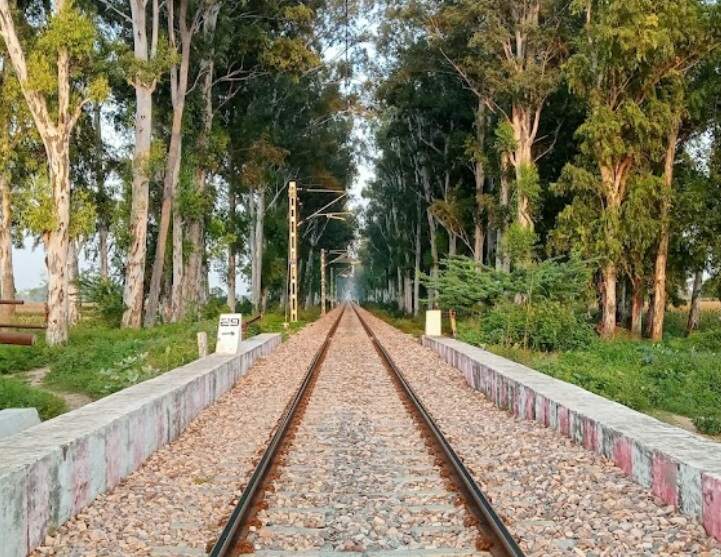
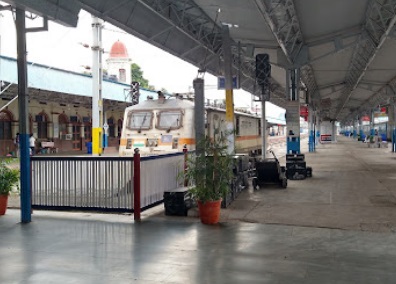
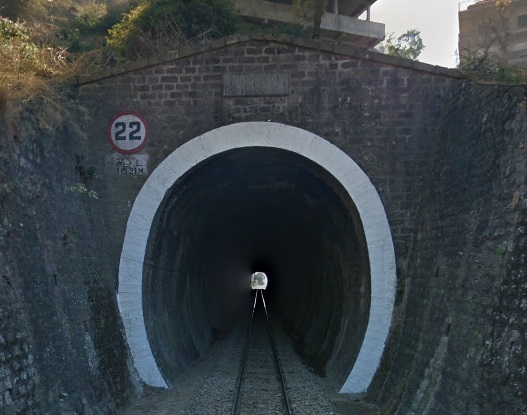
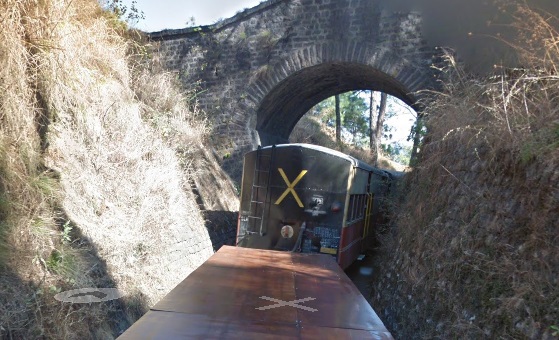
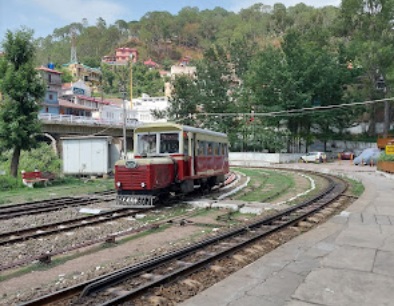
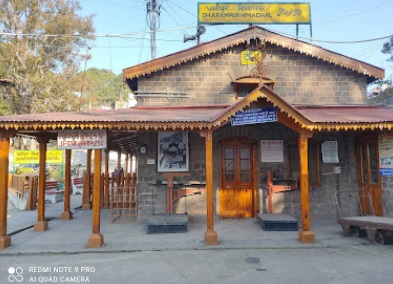
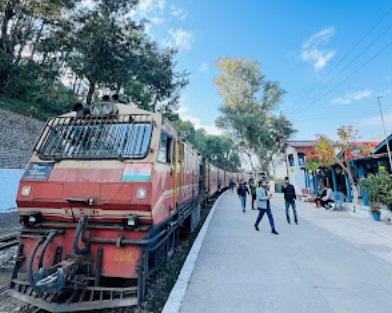
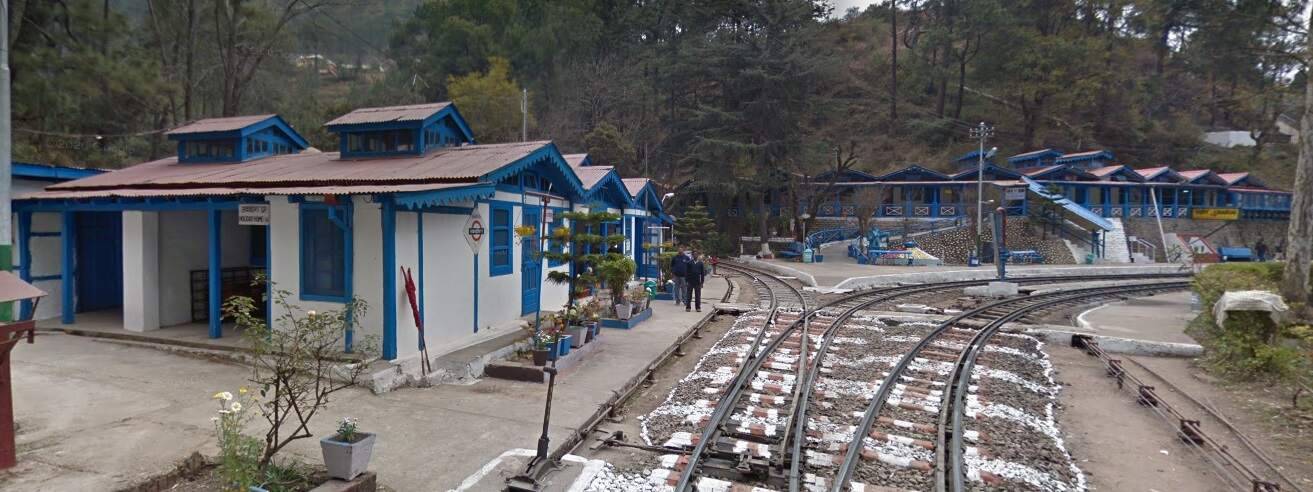
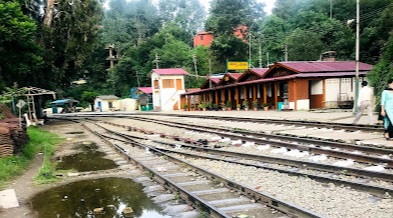
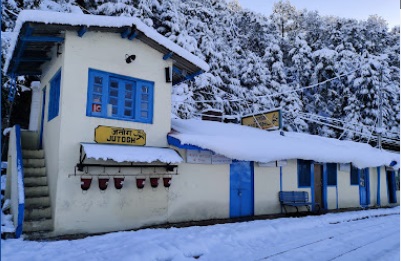
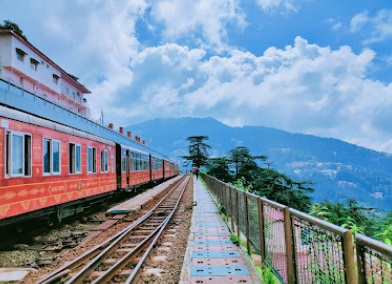
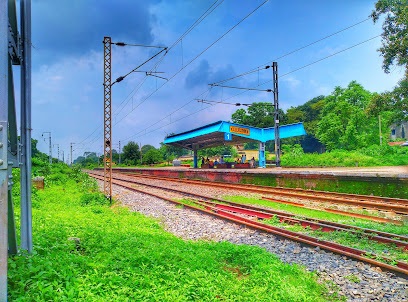
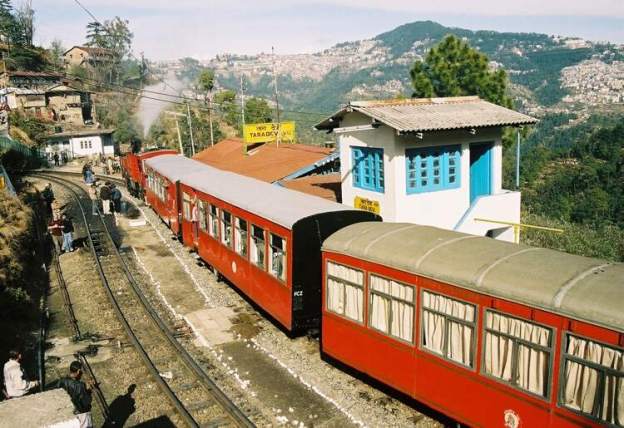
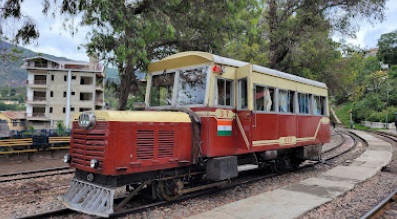
Huddleston looks at a number of different sections of the network and after looking at what he has to say about each we will endeavour to follow those railway routes as they appear in the 21st century. We will go into quite a bit of detail on the journey along the Kalka to Shimla narrow-gauge line. The featured image at the head of this post was taken at Taradevi Railway Station on the Kalka to Shimla line, (c) GNU Free Documentation Licence Version 1.2. [29]

Shikohabad to Farrukhabad

This branch line had, in 1906, recently been opened. Huddleston describes it as being 65 miles in length, running through the district of Manipuri from Shekoabad [sic] to Farukhabad on the River Ganges. Until 1906, Farukhabad [sic] had “only been served by the metre gauge line which skirts the river to Cawnpore. There was lots of traffic in the district and both the broad and metre  gauge lines completed for it, whilst the river and canals and camels compete with the railways.” [1: p40]
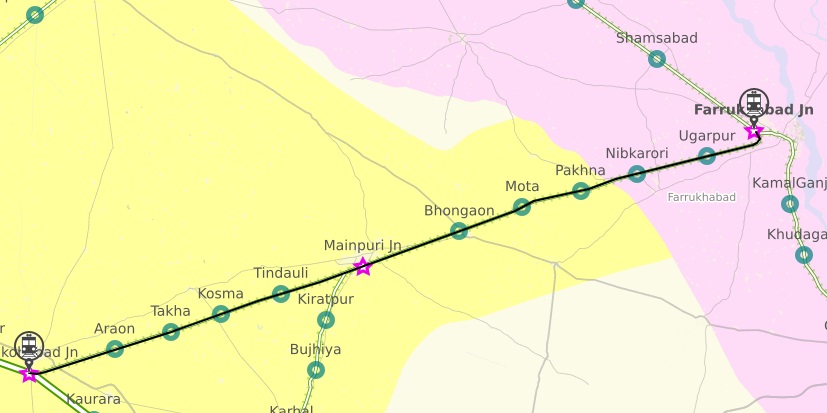
The journey from Shikohabad to Farrukhabad. Indian Railways spellings of the two locations differ from those used by Huddleston in 1906. [4]

We start this relatively short journey (of 63 miles) at Shikohabad Junction Railway Station. “The old name of Shikohabad was Mohammad Mah (the name still exists as Mohmmad mah near Tahsil and Kotwali). Shikohabad is named after Dara Shikoh, the eldest brother of Emperor Aurangzeb. In its present form, the town has hardly any recognisable evidence of that era. Shikohabad was ruled under the estate of Labhowa from 1794 to 1880.” [5] “Shikohabad Junction railway station is on the Kanpur-Delhi section of Howrah–Delhi main line and Howrah–Gaya–Delhi line. It is located in Firozabad district in the Indian state of Uttar Pradesh.” [6] The station opened in1866. “A branch line was opened from Shikohabad to Mainpuri in 1905 and extended to Farrukhabad in 1906.” [7]
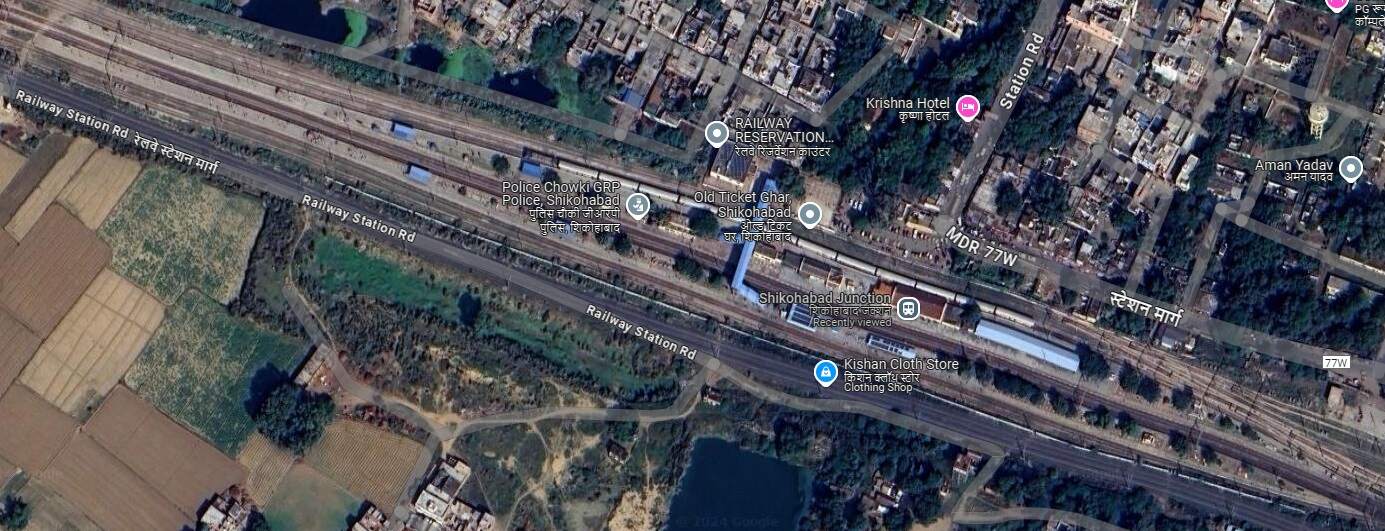
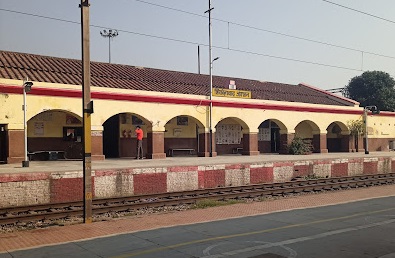
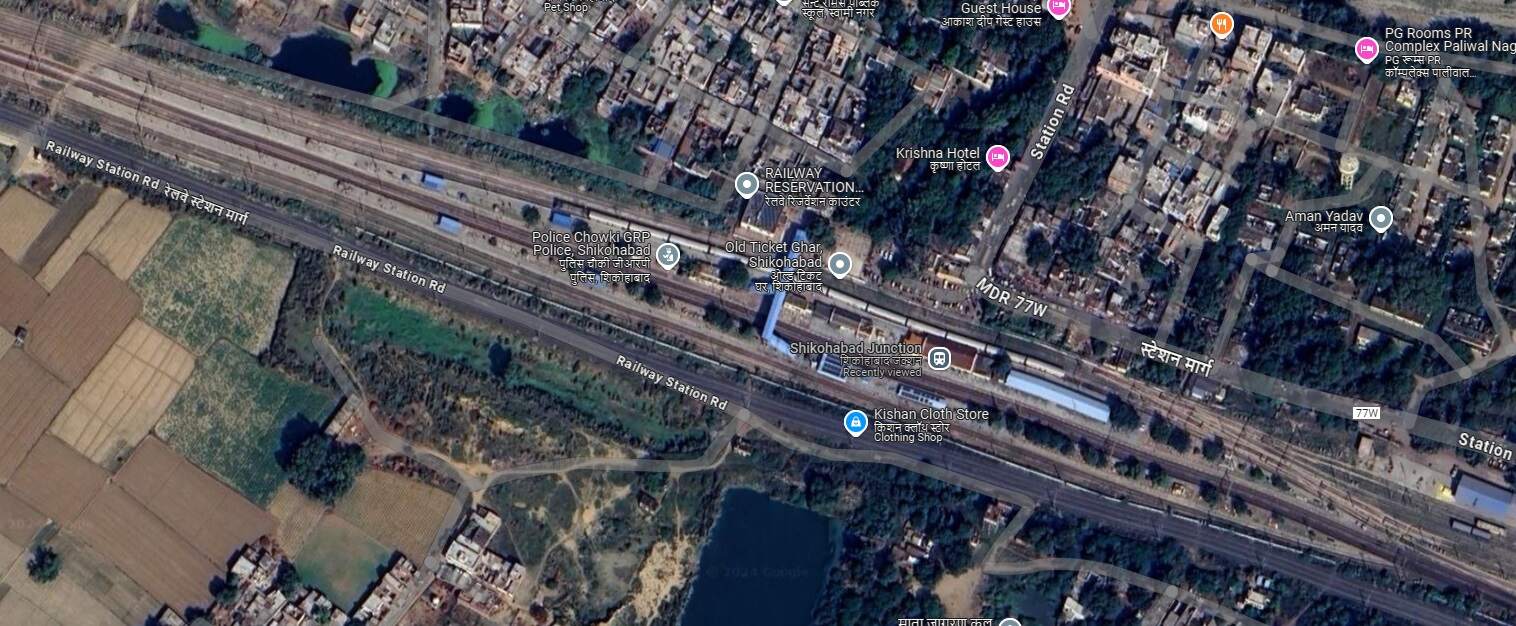
Shikohabad Junction Railway Station, Uttar Pradesh. [Google Maps, October 2024]

Trains from Shikohabad set off for Farrukhabad in a southeasterly direction alongside the Delhi to Kolkata main line. In a very short distance as the railway passed under a road flyover (Shikohabad Junction Flyover) the line to Farrukhabad moved away from the main line on its Northside.
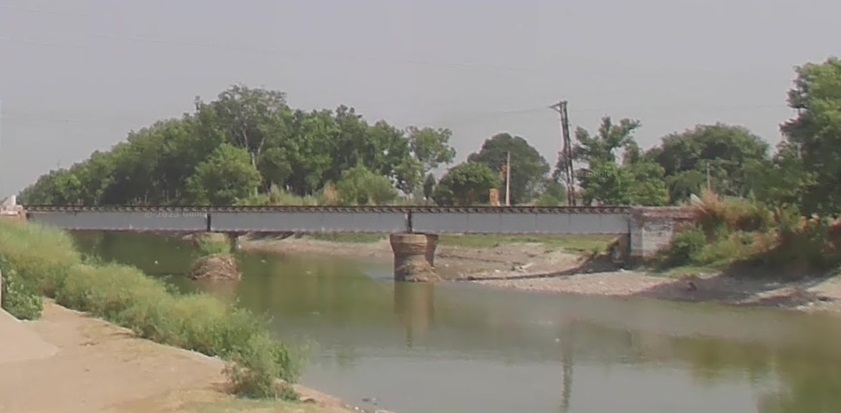
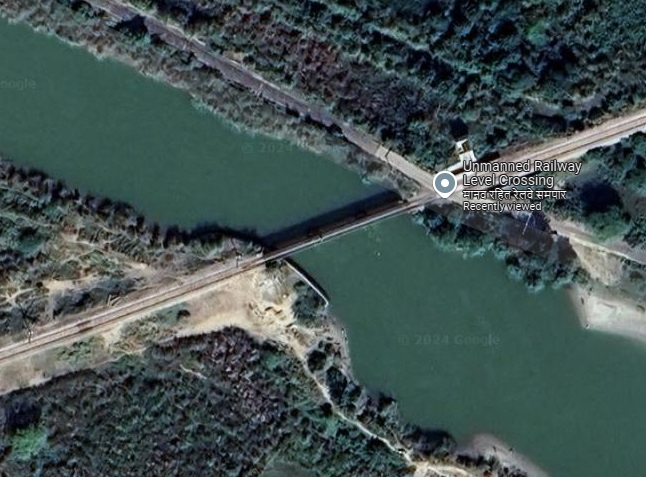
The rail bridge carrying the Farrukhabad line over the Lower Ganga Canal seen from a point to the North alongside the canal. [Google Streetview, May 2023]
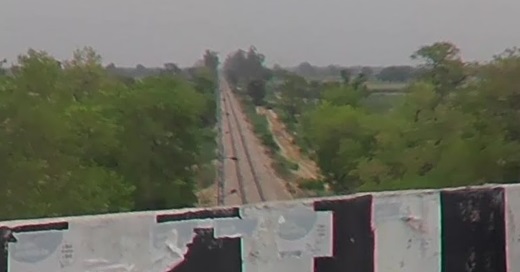
Looking East-Northeast along the railway towards Farrukhabad from the AH1 Flyover. [Google Streetview, May 2023]
Basdeomai, Uttar Pradesh. The covered way either side of the underpass is typical of many locations where local roads cross railways. This view looks Northwest across the railway. [Google Streetview, May 2023]

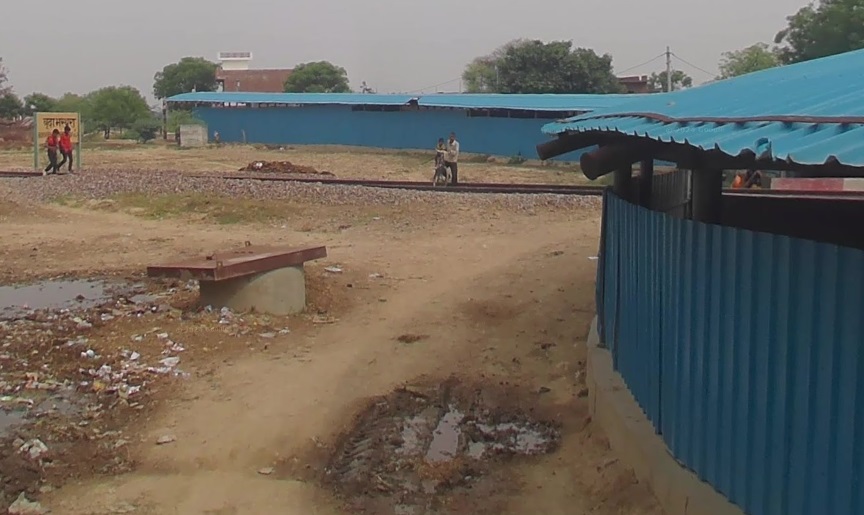
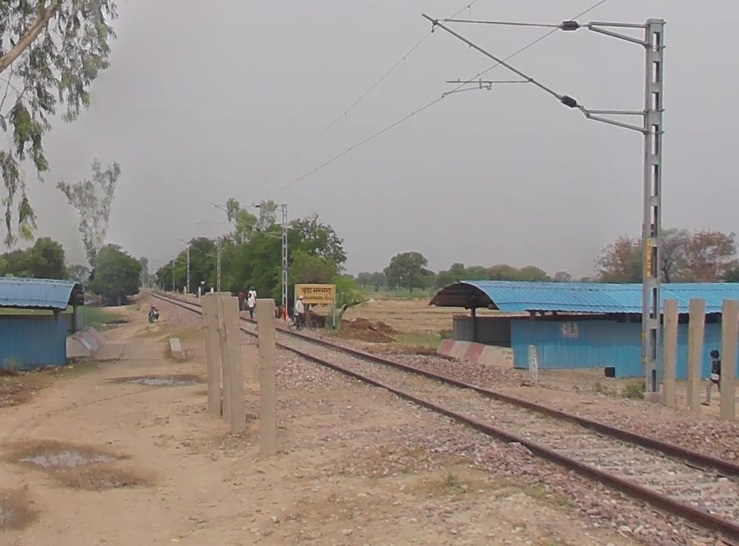
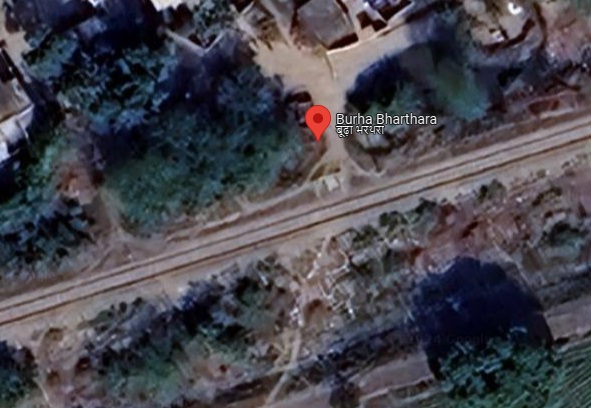
The first stopping point on the line is at Burha Bharthara. As can be seen immediately below, it is little more than a ‘bus-stop’ sign!
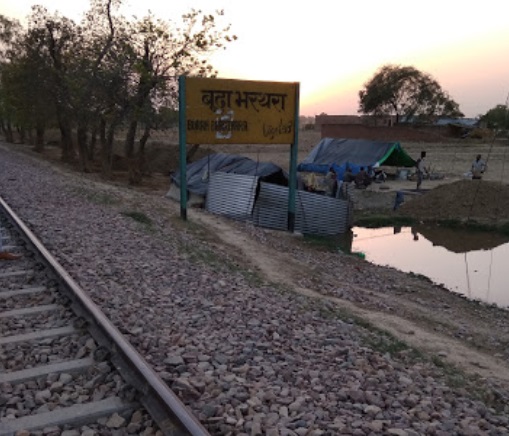
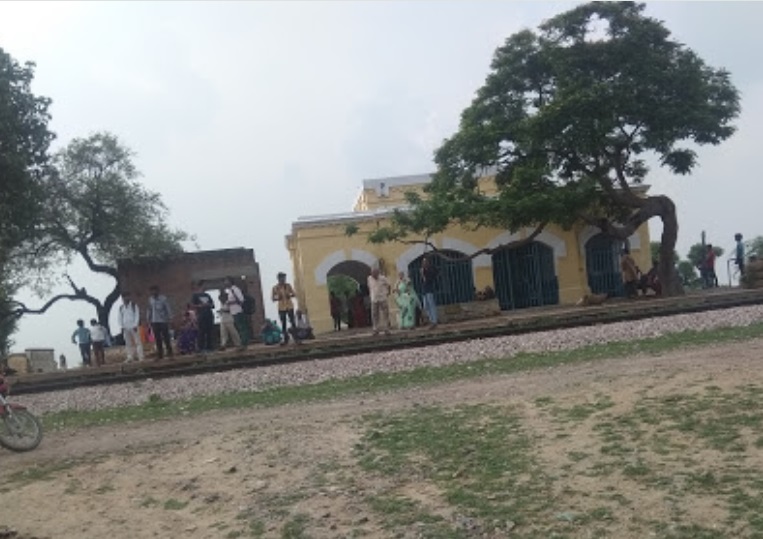
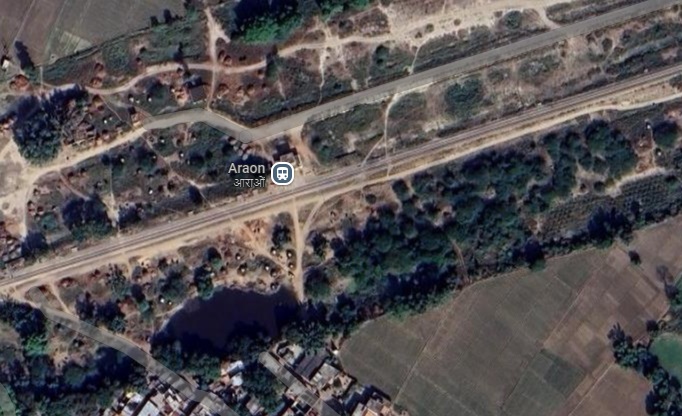
Very soon after Burha Bharthara, trains pull into Aroan Railway Station which is a little more substantial that Burha Bharthara having a single building with a ticket office.
Takha Railway Station is next along the line.
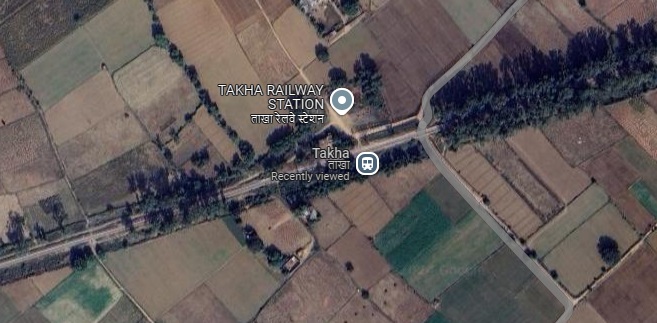
Takha Railway Station. [Google Maps, October 2024]
The view East-northeast from Takha Railway Station, (c) Ketan Gupta. [October 2021 – Google Maps]

A couple of hundred meters short of Kosma Railway Station, the line crosses the Karhal to Ghiror Road at a level-crossing.
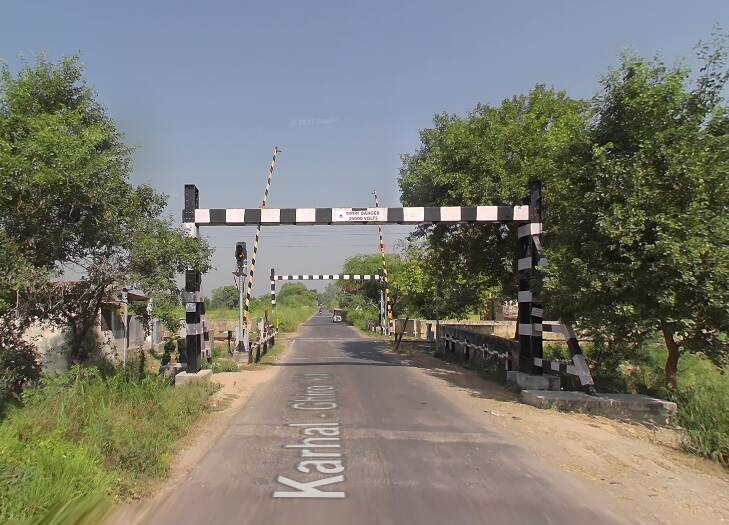
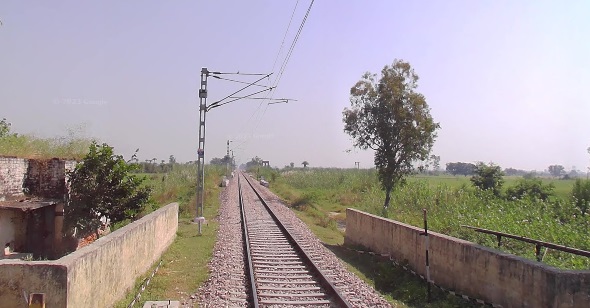
The level-crossing which takes the line across the Karhal to Ghiror Road, seen from the South. [Google Streeview, October 2023]
Looking East from the level-crossing towards Kosma Railway Station. [Google Streetview, October 2023]

Kosma Railway Station provides a passing loop to allow trains travelling in opposite directions to cross.
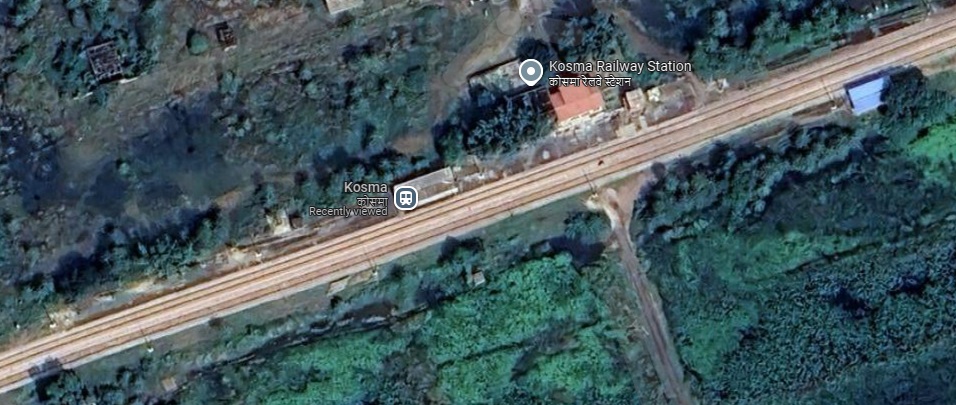
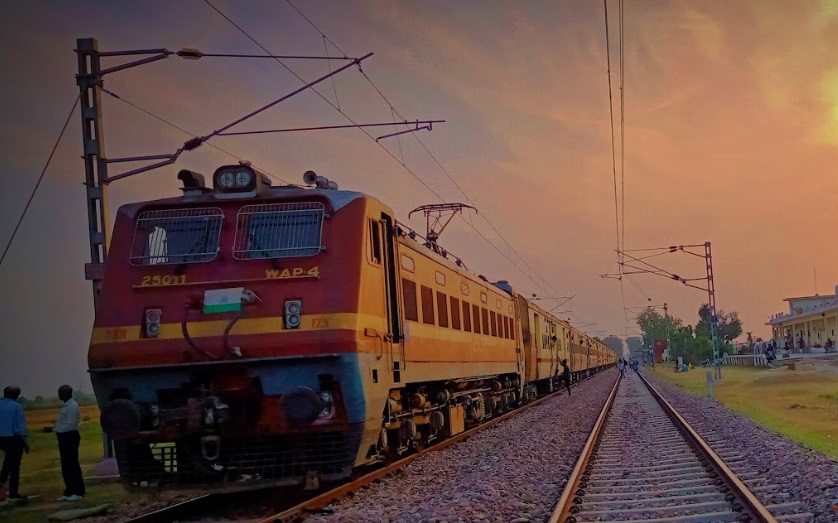
Kosma Railway Station. [Google Maps, October 2024]
Kosma Railway Station, (c) Rajat Singh, April 2023. [Google Maps, October 2024]
The railway bridges an irrigation canal, (another arm of the Lower Ganga Canal (?)), a little to the East of Kosma Railway Station. [Google Maps, October 2024]

A short distance further to the East is Tindauli Railway Station, after which the line crosses another arm the Lower Ganga Canal.
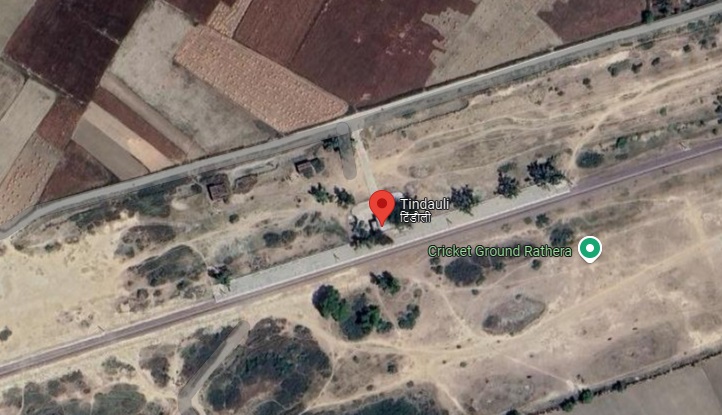
Tindauli Railway Station. [Google Maps, October 2024]
Another arm of the Lower Ganga Canal. [Google Maps, October 2024]

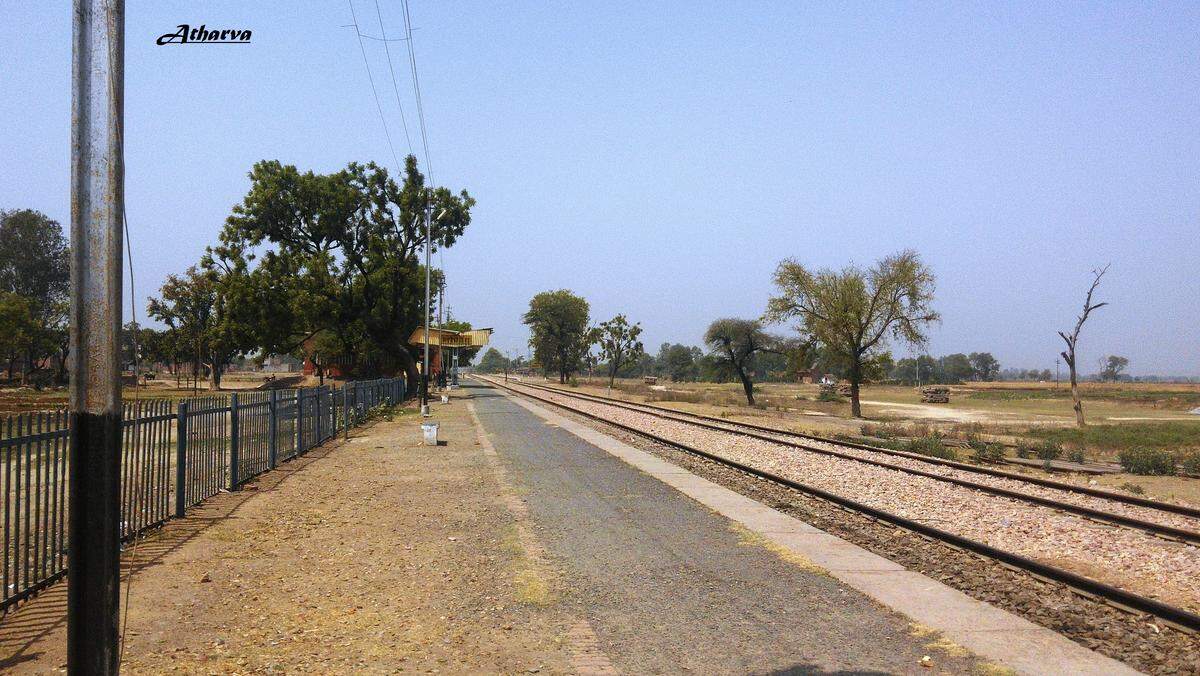
Further East the line crosses a number of roads, most now culverted under the line.
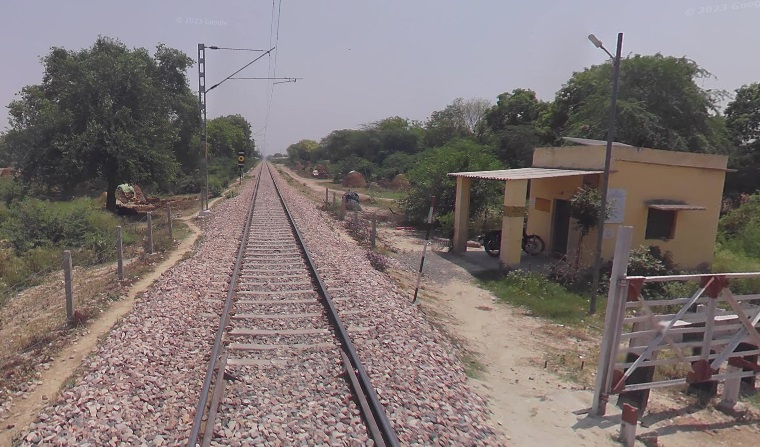
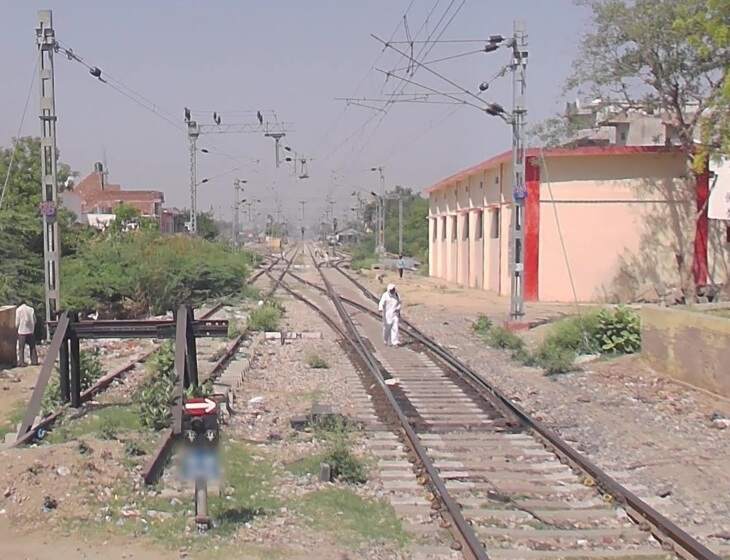
This is a view East from one of the more minor crossing points near Auden Padariya (not far West of the junction on the approach to Mainpuri) which has yet to have an underbridge constructed and still had its crossing gates in 2023. [Google Streetview, May 2023]
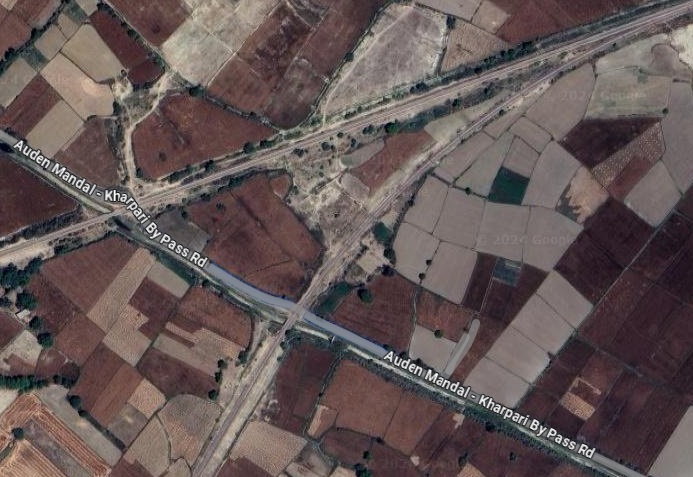
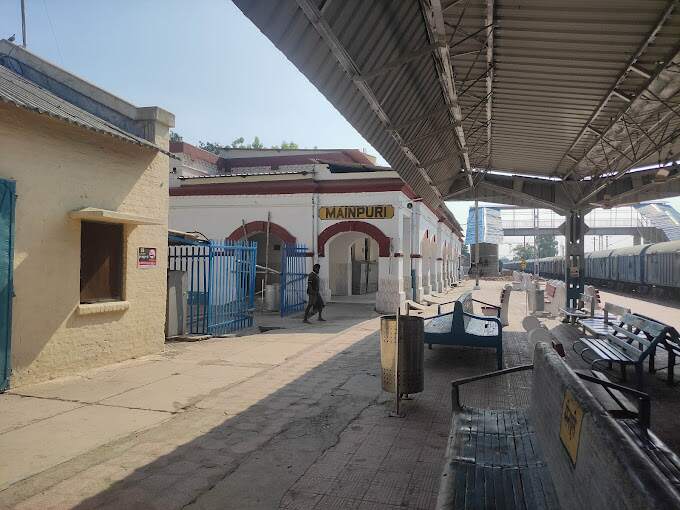
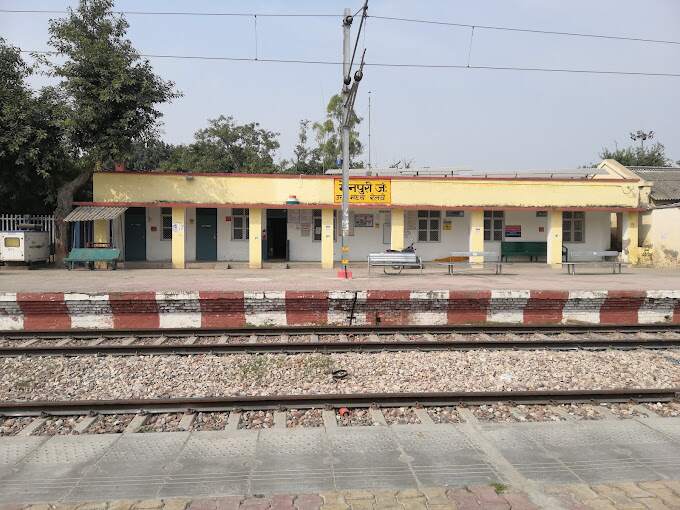
Passing under the Auden Mandal- Kharpari Bypass, the line meets the line from Etawah before running into Mainpuri Junction Railway Station. [Google Maps, October 2024]
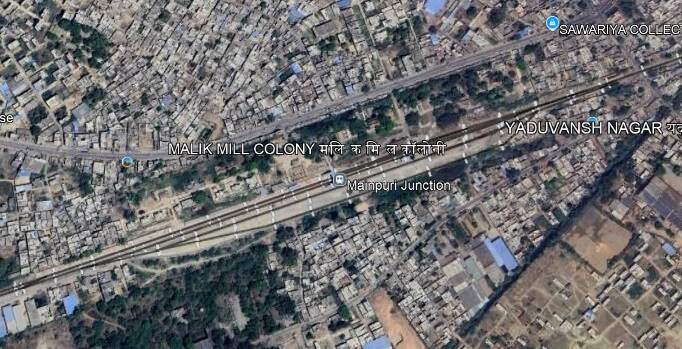
Mainpuri Junction Railway Station. [Google Earth, October 2024]
Mainpuri Railway Station seen from the level-crossing on the Mainpuri-Kishni Road at the station limits. [Google Streetview, May 2023]

To the East of Mainpuri Railway Station, the next station is Mainpuri Kachehri Railway Station, just to the East of the Sugaon to Husenpur Road.
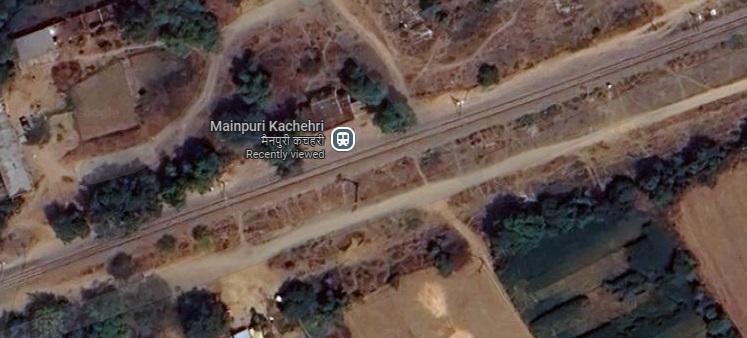
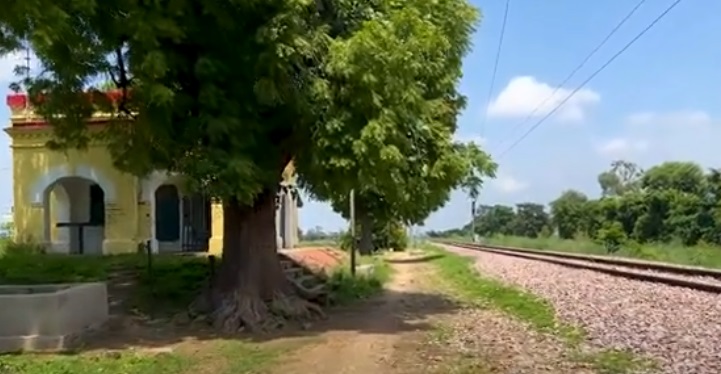
Mainpuri Kachehri Railway Station. [Google Maps, October 2024]

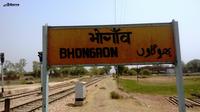
The next station was Bhongaon Railway Station which had a passing loop to allow trains to cross.
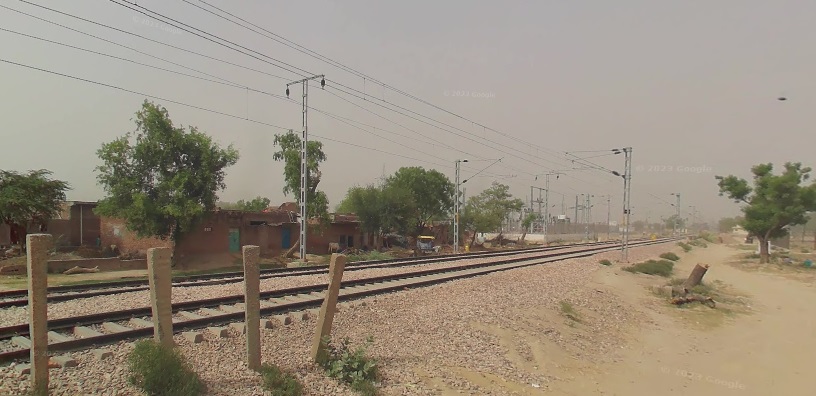
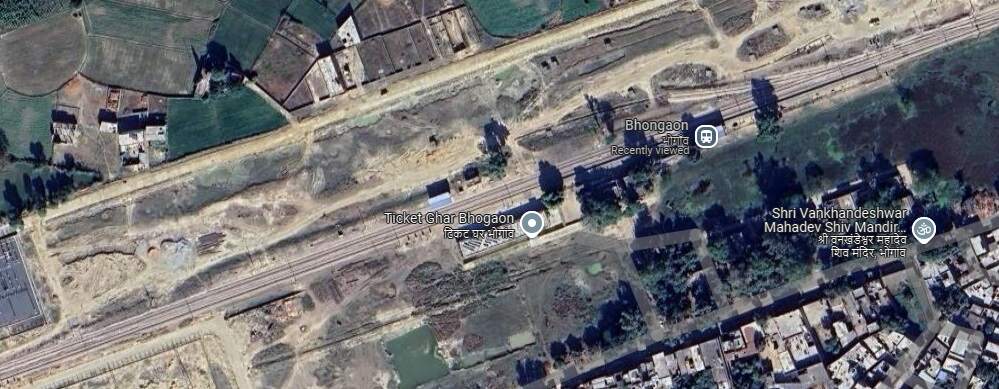
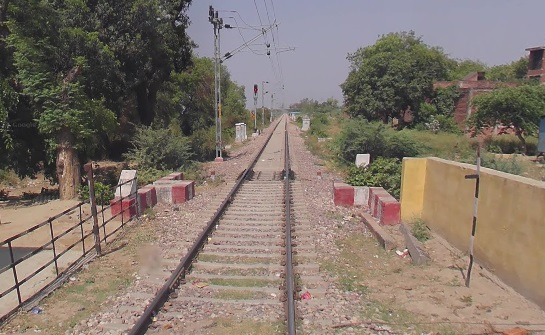
Looking East towards Bhongaon Railway Station from a couple of hundred metres to the West of the Station. [Google Streetview, May 2023]
Bhongaon Railway Station. [Google Maps, October 2024]
Just at the East end of the station site the Aligarh-Kanpur Road (Grand Trunk Road) crosses the line at level. This is the view from the level-crossing, East towards Farrukhabad. [Google Streetview, May 2023]
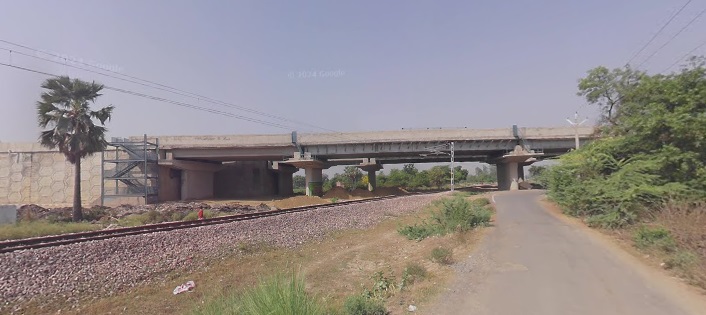
A short distance further East the line passes under the newly constructed Bypass. This view looks back under the modern viaduct towards Bhongoan Railway Station. [Google Streetview, May 2023]

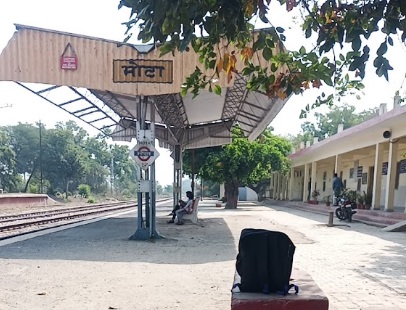
Continuing on towards Farrukhabad, it is only a matter of a few minutes before trains pass through Takhrau Railway Station, where facilities are basic, and Mota Railway Station where facilites are a little more substantive.
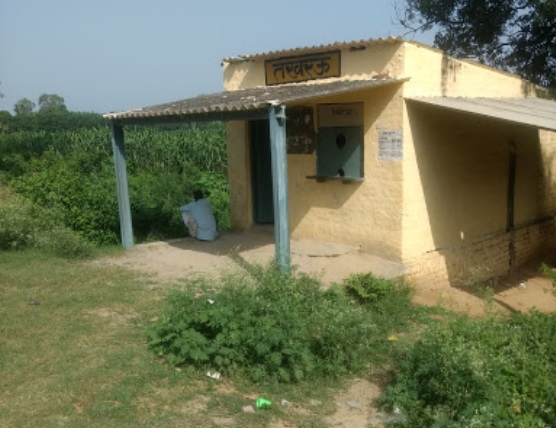
Takhrau Railway Station building. (c) Pankaj Kumar, August 2017. [Google Maps, October 2024]
Mota Railway Station, (c) Vinod Kumar, May 2023. [Google Maps, October 2024]

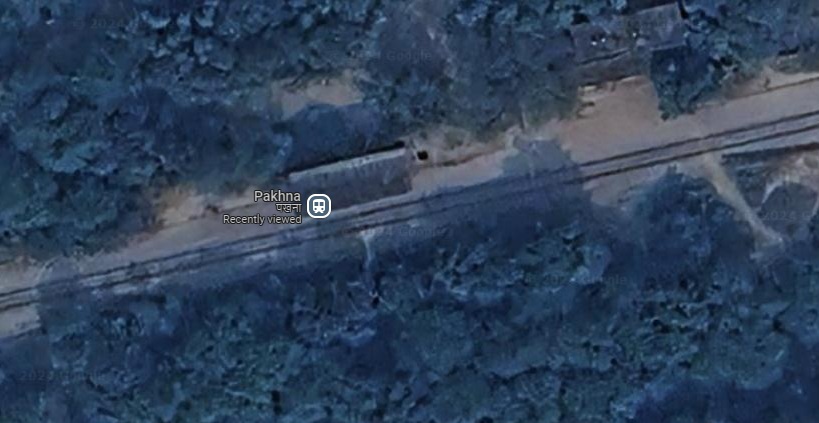
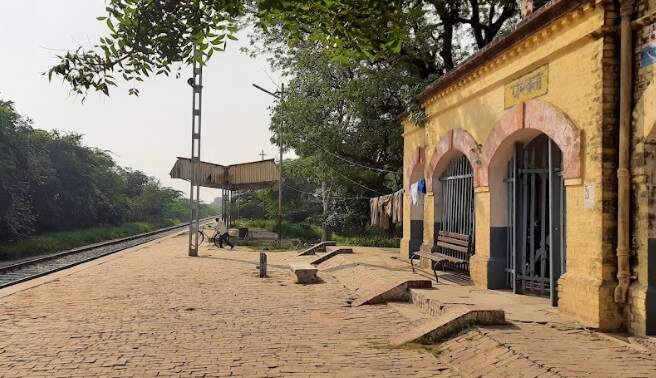
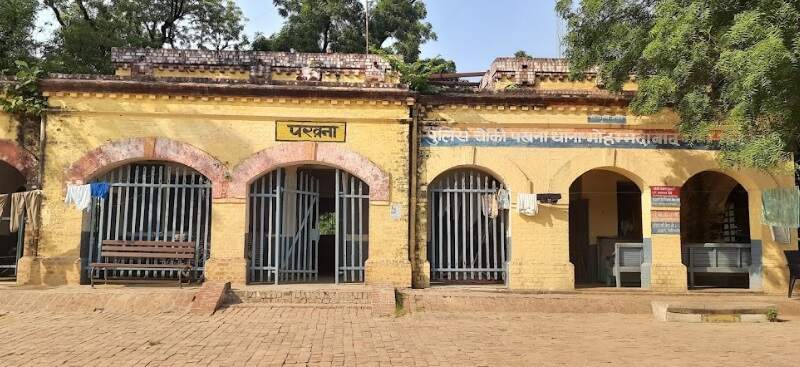
The Railway then bridges the Kaali Nadi River and passes through Pakhna Railway Station.
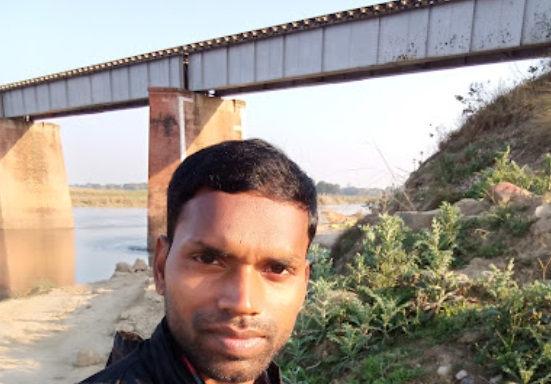
The railway bridge over the (c) Shiv Shankar, January 2020. [Google Maps, October 2024]
Pakhna Railway Station. [Google Maps, October 2024]

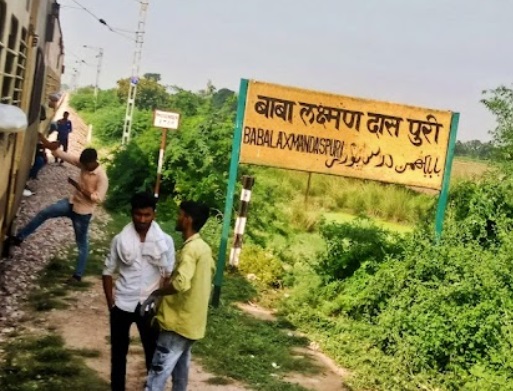
The next stop is at B L Daspuri (Babal Axmandaspuri) Station.
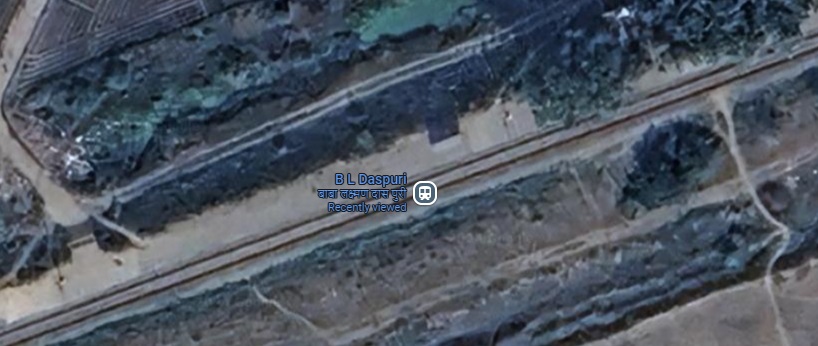
Babal Axmandaspuri Railway Station. [Google Maps, October 2024]
Babal Axmandaspuri Railway Station, (c) Rajat Singh (September 2023). [Google Maps, October 2024]

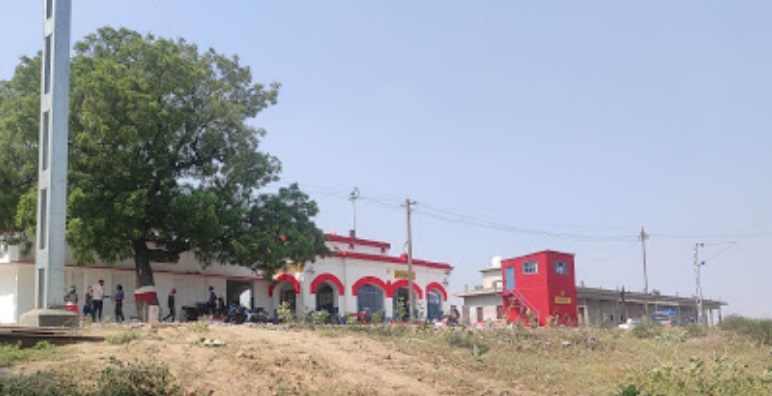
Another short journey gets us to Nibkarori Railway Station.
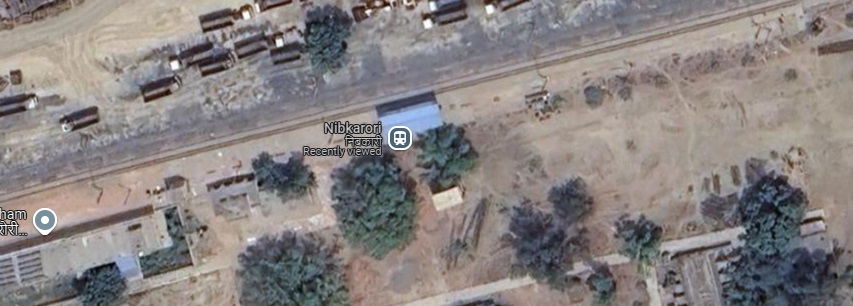
Nibkarori Railway Station. [Google Maps, October 2024]
Nibkarori Railway Station seen from the Northeast, (c) Rakesh Verma (July 2021). [Google maps, October 2024]

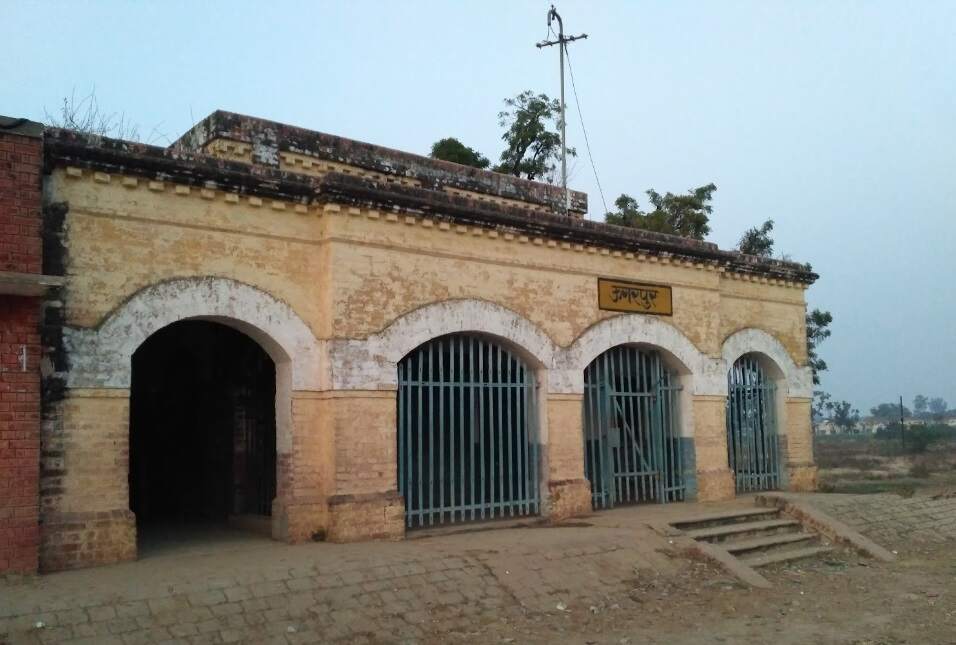
The next stop is at Ugarpur Railway Station.
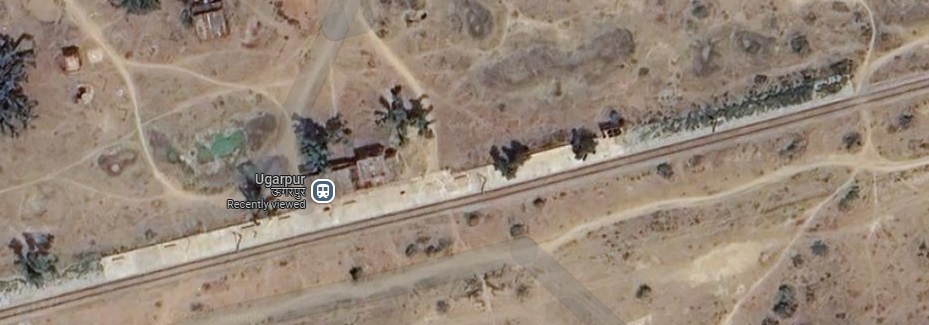
Ugarpur Railway Station. [Google Maps. October 2024]
Ugarpur Railway Station, (c) Desh Deepak Dixit (December 2017). [Google Maps. October 2024]

Not much further along the line we enter Shrimad Dwarakapuri Railway Station.
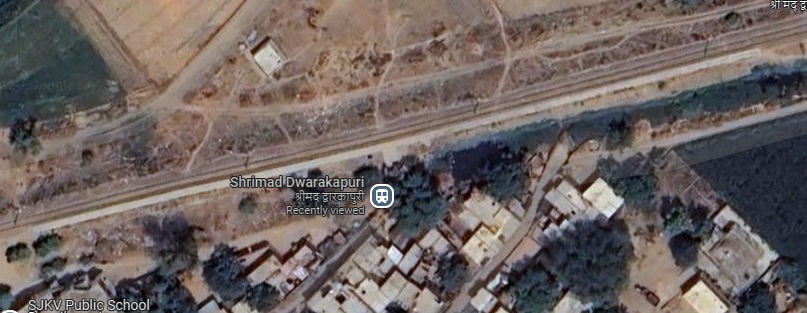
Shrimad Dwarakapuri Railway Station. [Google Maps, October 2024]

As the line reaches the town of Farrukhabad it turns sharply to the North.
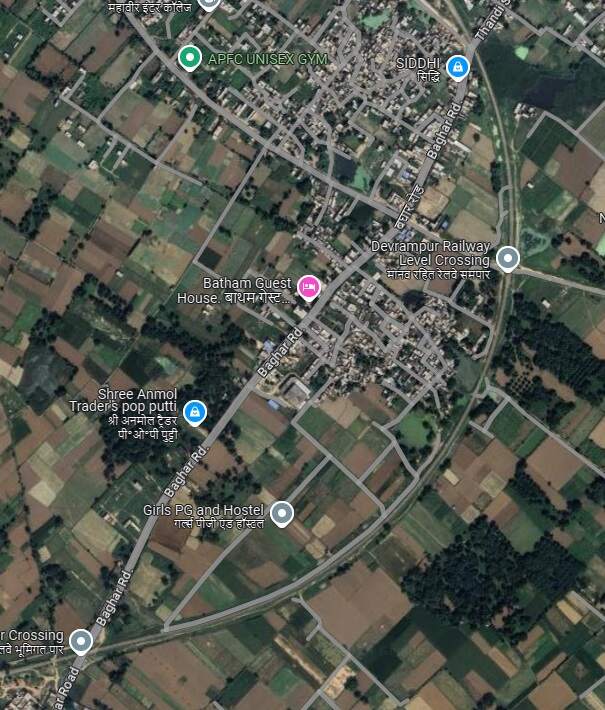
On the South side of Farrukhabad the line turns to the Northwest. [Google Maps, October 2024]

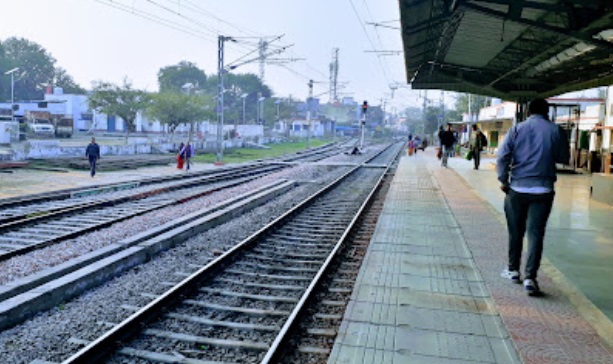
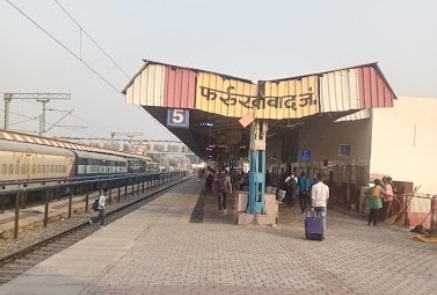
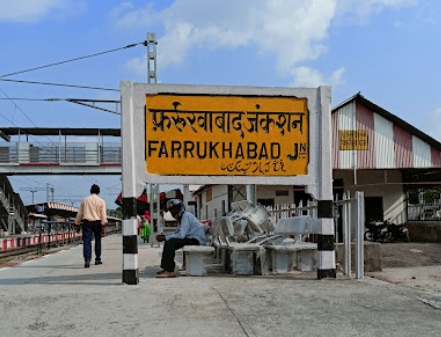
It then enters Farrukhabad Junction Railway Station from the Southeast.
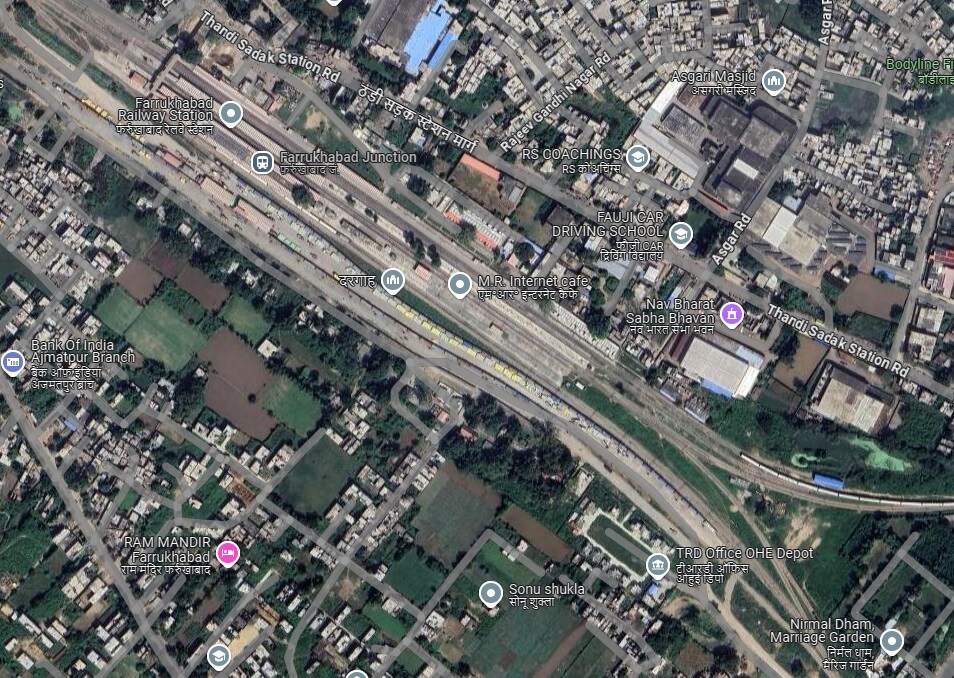
Farrukhabad Junction Railway Station. [Google Maps, October 2024]

Farrukhabad sits on the River Ganges. It is a historic city with a rich culture defined by the traditions of Ganga-Jamuni Tehzeeb (Ganges-Yamuna Culture), [10] which amalgamates aspects of Hindu and Muslim cultural practices, rituals, folk and linguistic traditions. [11] The city was begun in 1714, and Mohammad Khan Bangash (a commander in the successful army of Farrukhsiyar, one of the princely contenders for the Mughal throne, who led a coup which displaced the reigning emperor Jahandar Shah) named it after Farrukhsiyar. It soon became a flourishing centre of commerce and industry. [12]

Initially, under the colonial state of British India, Farrukhabad was a nodal centre of the riverine trade through the Ganges river system from North and North-West India towards the East. [12] Farrukhabad’s economic and political decline under British rule began with the closure of the Farrukhabad mint in 1824. [11]
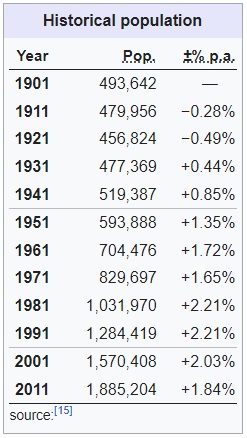
Farrukhabad, according to the 2011 census had a population of 1,885,204. This was just under four times its size in 1901. Its population is predominantly Hindu. [13]
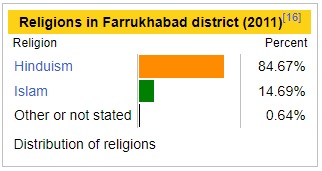
At the time of the 2011 Census of India, 94.96% of the population in the district spoke Hindi (or a related language) and 4.68% Urdu as their first language. [14]

Tundla to Agra

From Shekoabad, it is only a matter of 22 miles to Tundla but very few people would ever hear about Tundla, if it was not for the fact that it is the junction for Agra. …Agra would have been on the main line if the East Indian Railway had the original intention been followed of taking the line across the Jumna river at Agra and then following its right bank into Delhi; but, instead of doing this, it was decided … to build only a branch to Agra, and to run the main line on the left side of the Jumna. … If we want to visit Agra, we must change at Tundla and go along the 14 mile of the branch line.” [1: p41]

Huddleston tells us that:

Approaching Agra … from Tundla you see [the Taj Mahal] first on your left-hand side, wrapped in that peculiar atmospheric haze that adds charm to every distant object in the East, a charm even to that which needs no added charm, the marvellous and wonderful Taj Mehal [sic]. As you rapidly draw nearer it seems to rise before you in solitary dazzling grandeur, its every aspect changing as the remorseless train, which you cannot stop, dashes on. Once catch your first glimpse of the Taj and you have eyes for. nothing else, you feel that your very breath has gone, that you are in a dream. All the world seems unreal, and the beautiful construction before you more unreal than all. You only know it is like something you have heard of, something, perhaps, in a fairy tale, or something you have read of, possibly in allegory, and you have hardly time to materialise before the train rattles over the Jumna Bridge, and enters Agra Fort station.

There on one side are the great red walls of the fortress within a few feet of you, and there on the other side is the teeming native city, with its mosques and domes and minarets, its arches and columns and pillars. its thousand and one Oriental sights, just the reality of the East, but all quite different to everywhere else. … There are things to be seen in Agra that almost outrival the Taj itself, such, for instance, as the tomb of Ihtimad-ud-Daula, on the East bank of the river, with its perfection of marble carving, unequalled in delicacy by anything of the kind in the world. There are delightful places nearby of absorbing interest, as, for example, Fatehpur Sikri, and its abandoned city of palaces; there is enough in Agra and its vicinity to glut a glutton at sight seeing, but we must go back to the railway and its work. The Jumna Bridge, of which we have talked, belongs to the Rajputana Railway; the rails are so laid that both broad and metre gauge trains run over it, and above the track for trains there is a roadway.

But this is not sufficient for the needs of Agra, though supplemented by a pontoon bridge which crosses the river half a mile further up the stream. The trade of Agra first attracted the East Indian Railway, then came the Rajputana Malwa, and then the Great Indian Peninsular. Each of the latter two lines wanted a share, and the East Indian had to fight for its rights; to do its utmost to keep to the Port of Calcutta what the rival lines wanted to take to Bombay. Another railway bridge became a necessity, a bridge that would take the East Indian Railway line into the heart of the native city instead of leaving it on its outskirts, and the East Indian Railway began to construct it.” [1: p42-43]


In 1906 the new bridge over the River Jumna was under construction, due to be completed in early 1907. Huddleston describes the bridge under construction thus:

“The bridge will consist of nine soane of 150 ft., and there will be a roadway under the rails; the bridge is being built for a single line, and all the wells have been sunk to a depth of 60 ft , or more. The work … commenced in September [1905], and it is expected that the bridge will be completed in March 1907. It need only be added that the site selected for this new connection is between the existing railway bridge and the floating pontoon road bridge, and the chief point of the scheme is that, when carried out, the East Indian Railway will have a line through the city of Agra, and a terminus for its goods traffic in a most central position, instead of being handicapped, as it now is, by having its goods depôt on the wrong side of the river. Mr. A. H. Johnstone is the East Indian Railway engineer-in-charge of the work.” [1: p43]

We start the journey along this short branch in the 21st century at Tundla Junction Railway Station.
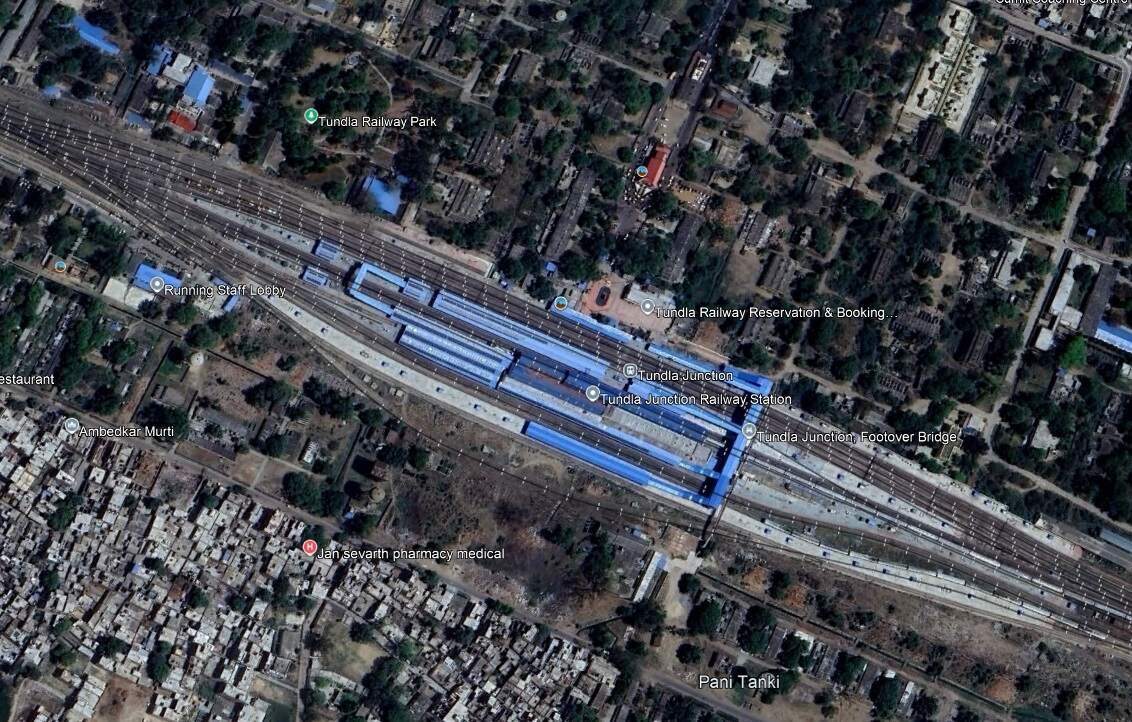
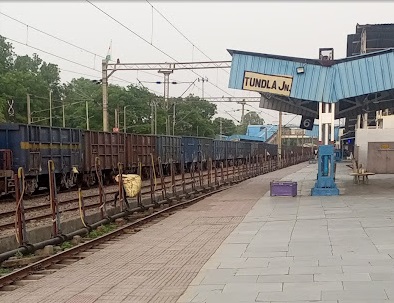
Tundla Railway Station. [Google Earth, October 2024]

We head Northwest out of the station alongside the main line to Delhi.
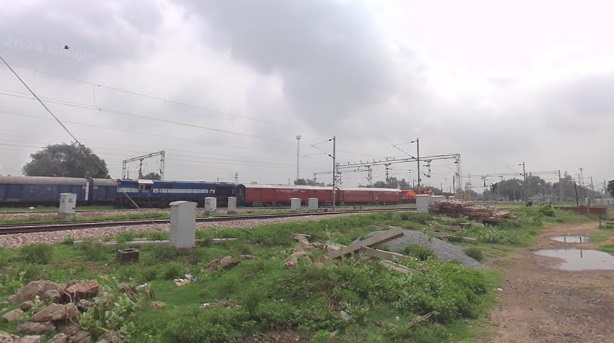
Looking West towards Tundla Junction Railway Station from the South side of the lines. The closest rail line is the branch to Agra. [Google Streetview, July 2023]

The first station along the branch was Etmadpur Railway Station.
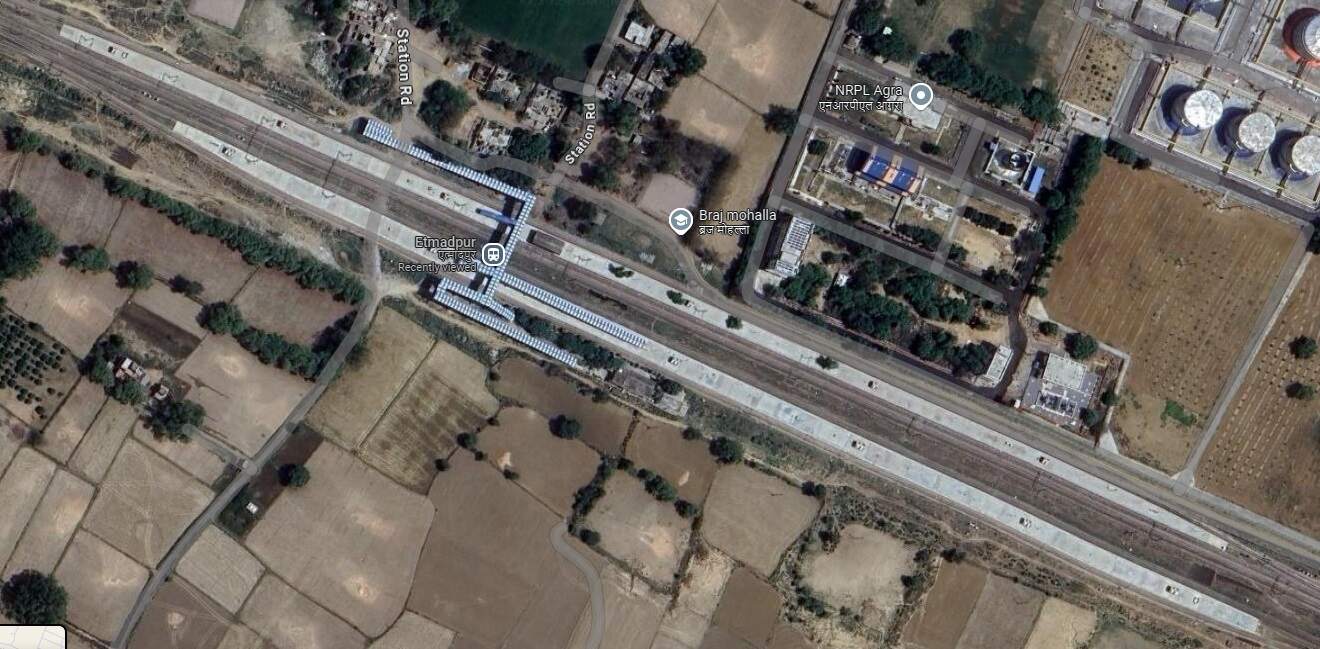
Etmadpur Railway Station. [Google Maps, October 2024]
Etmadpur Railway Station, (c) Harkesh Yadav, March 2021. [Google Maps, October 2024]

The line to Agra next passes under the very modern loop line which allows trains to avoid Tundla Station.
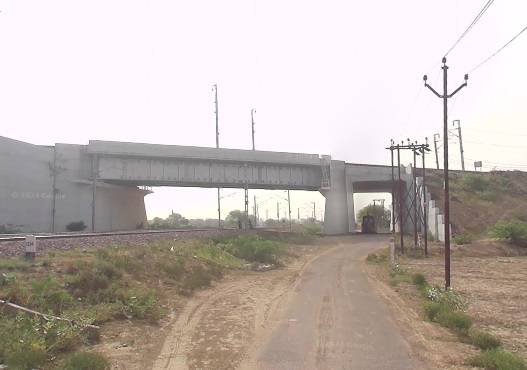
Looking West, back towards Etmadpur Station under the modern relieving line bridge. [Google Streetview, June 2023]

The next photograph shows the older single track metal girder bridge a little further to the West of Etmadpur with the more modern second line carried by a reinforced concrete viaduct.
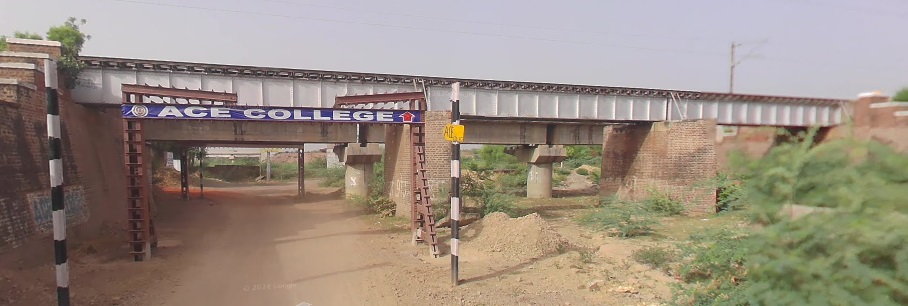
Seen from the North side of the line looking South, the older single track metal girder bridge with the more modern second line carried by a reinforced concrete viaduct. [Google Streetview, June 2023]

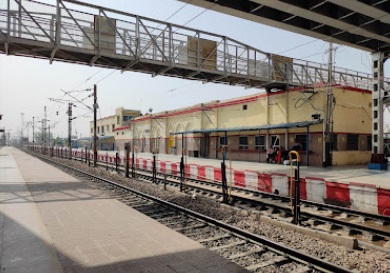
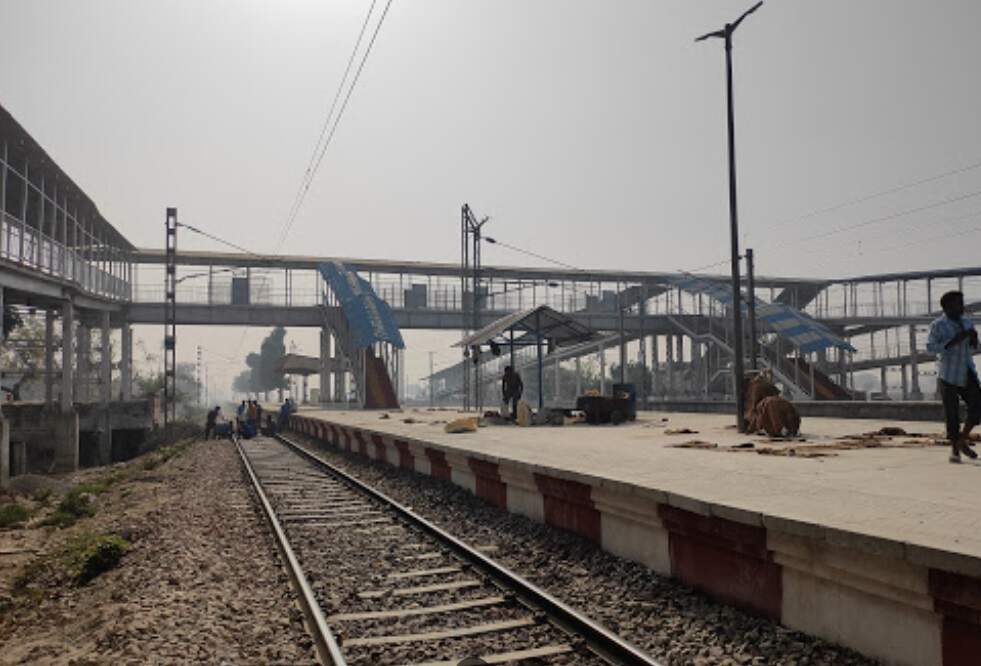
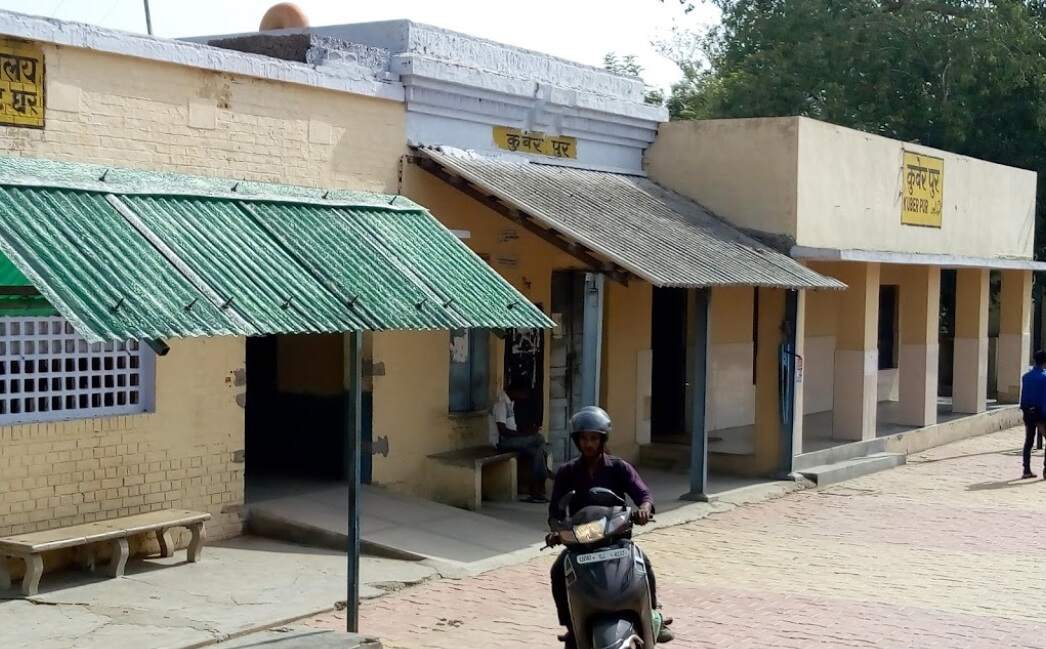
The line curves round from travelling in an West-northwest direction to a West-southwest alignment and then enters the next station on the line, Kuberpur Railway Station.
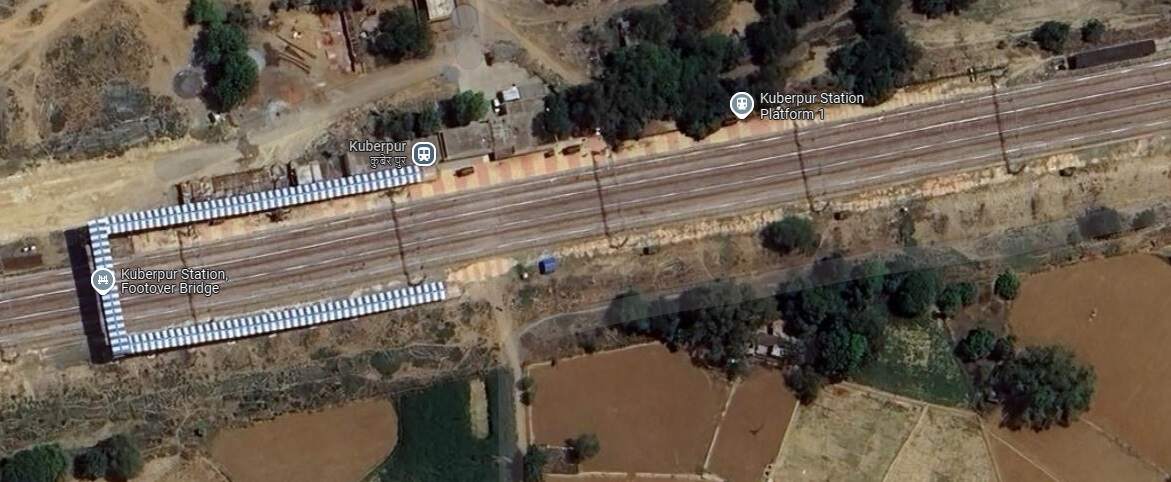
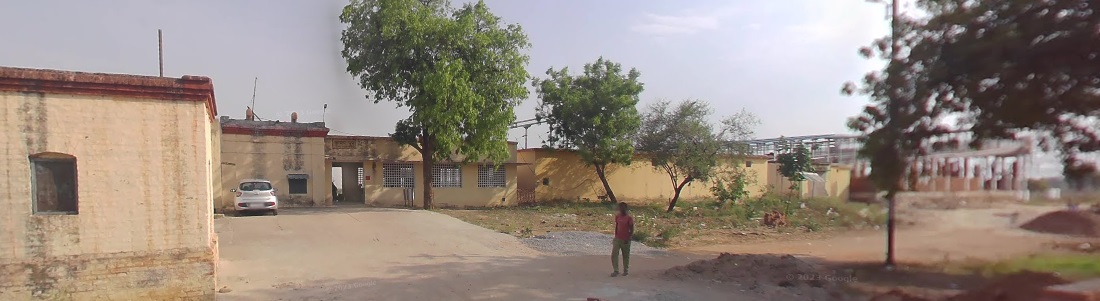
Kuberpur Railway Station. [Google Maps, October 2024]
Kuberpur Railway Station seen from the approach road to the North. [Google Streetview, June 2023]
Kuberpur Railway Station building seen from the platform, (c) sanjeev kumar, May 2018. [Google Maps, October 2024]
A low definition view of the line heading West towards Agra as seen from the modern concrete viaduct carrying what I believe to be Agra’s Ring Road (a toll road). [Google Streetview, June 2023]

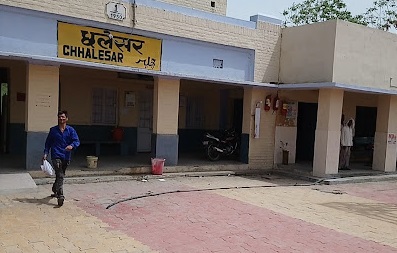
As we head into Agra, the next station is Chhalesar Railway Station.
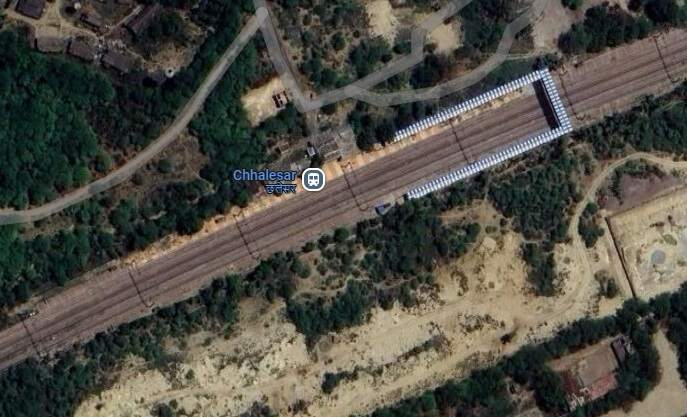
Chhalesar Railway Station. [Google Maps, October 2024]

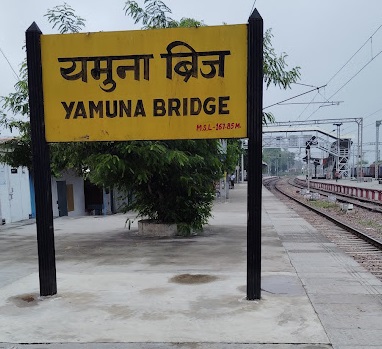
From Chhalesar Railway Station the line continues in a West-southwest direction towards the centre of Agra. The next station is Yamuna Bridge Railway Station.
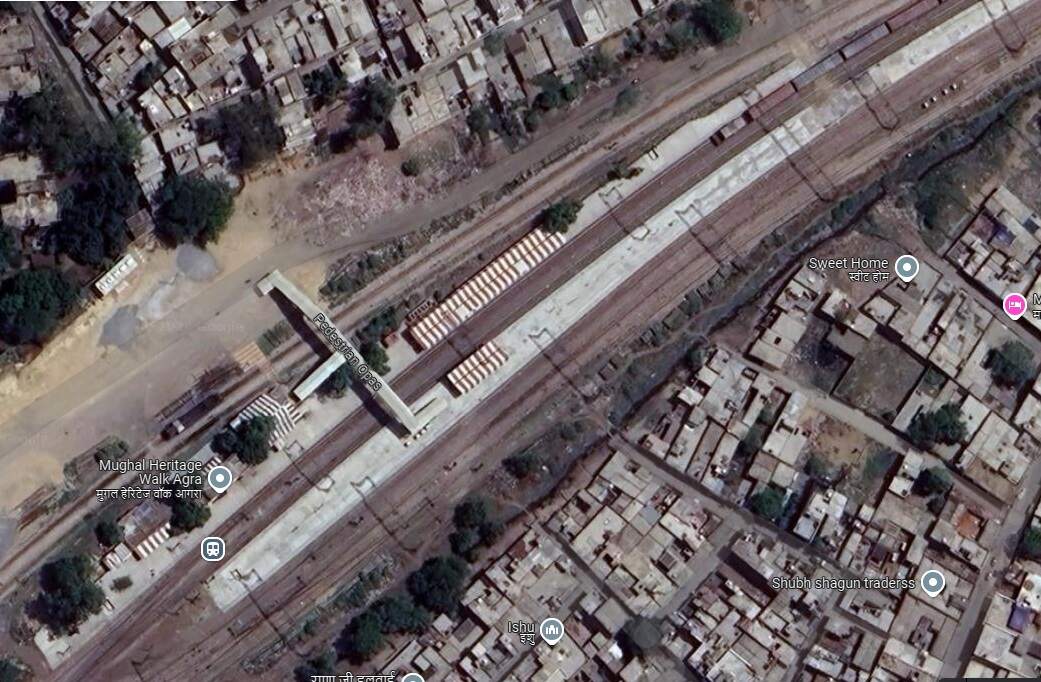
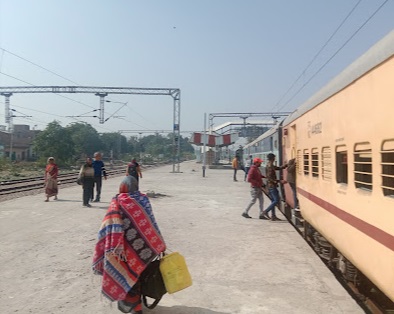
Yamuna Bridge Railway Station Agra. [Google Maps, October 2024]

South West of Yamuna Bridge Railway Station a series of bridges cross the River Yamuna.
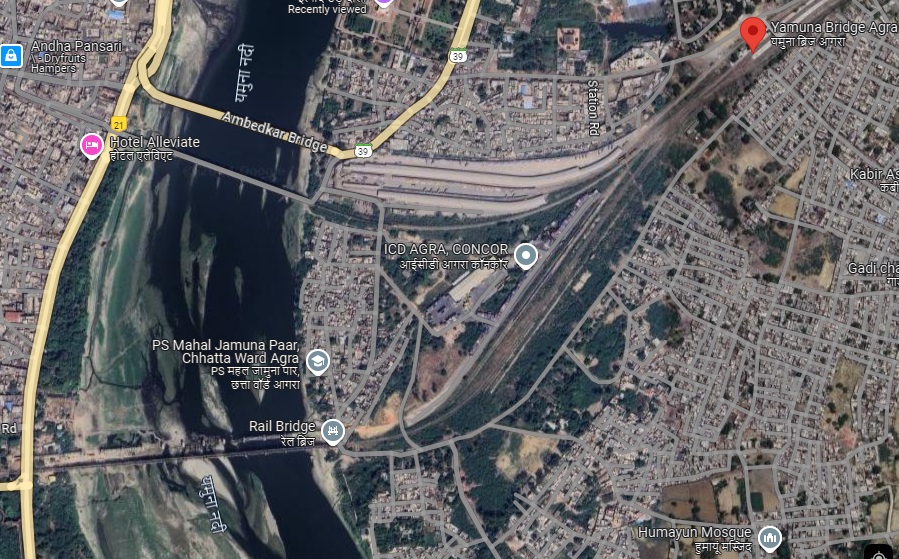
Bridges across the River Yamuna. [Google Maps, October 2024]

The ‘Yamuna Railway Bridge’ crossing the River Jumna/Yamuna at Agra was opened in 1875, and connected ‘Agra East Bank Station’ to ‘Agra Fort Station’. The bridge carried the Bombay, Baroda and Central India Railway (BB&CIR) Metre Gauge ‘Agra-Bandikui Branch Line’, the East Indian Railway (EIR) and ‘Great Indian Peninsula Railway (GIPR) Broad Gauge lines. [18]
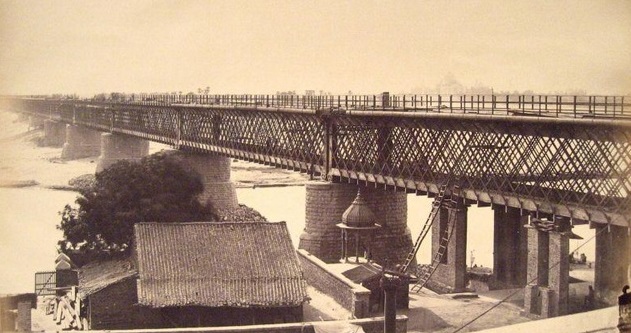
The first bridge over the Yamuna River at Agra. It is the more southerly of the two bridges shown on the 1972 map of Agra below. [17]
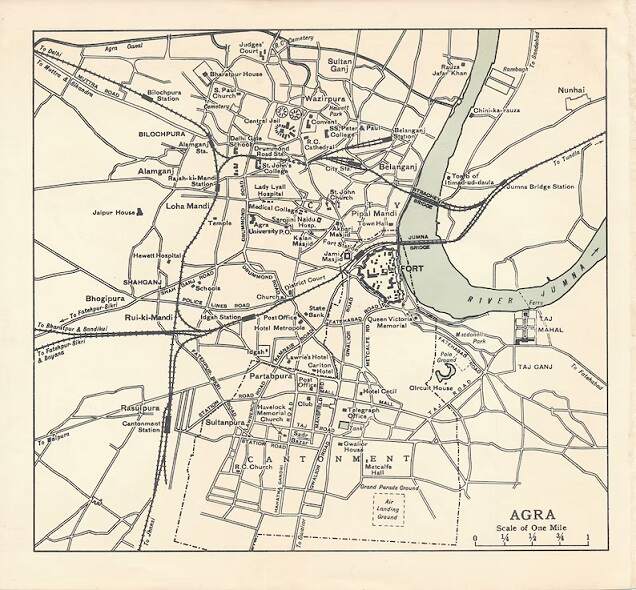
A map of Agra in 1962 which shows the two Yamuna River Bridges in place by then. Some of the significant features of the city can be identified clearly on this map: Agra Fort and its adjacent railway station appear close to the first Yamuna Bridge; the Taj Mahal is to the South East of the bridge on the South bank of the river; the Tomb of Itmad-ud-Daulah can be seen to the East of the river just North of the Strachey Bridge; a number of railway stations can also be picked out around Agra City. [20]

The ‘Strachey Bridge’, to the North the older bridge at Agra, was opened in 1908. It was a combined Road and Railway bridge and constructed by the ‘East Indian Railway Company’ (EIR). The bridge was named after John Strachey who planned & designed the bridge. The 1,024 metres (3,360 ft) long bridge was completed in 1908, taking 10 years to complete since its construction commenced in 1898. The ‘Agra City Railway Station’ was thus connected by the bridge to the ‘Jumna Bridge Station’ on the East bank. This Broad Gauge line became the ‘EIR Agra Branch Line’. [18]
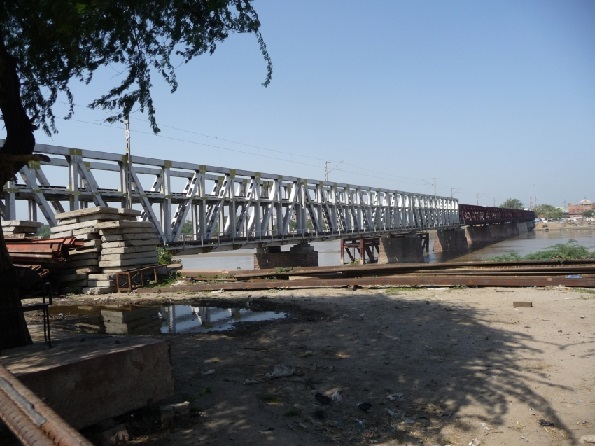
The Strachey Railway bridge over the Yamuna River, The two-tiered bridge facilitated simultaneous movement of road traffic at the bottom level and rail transport at the upper level. Though the bridge is still in use today, it’s closed for road traffic and is used only by railways. This bridge appears on the satellite image above, on the South side of the Ambedkar Road Bridge. [19]

Once the Strachey Bridge (this is the one about which Huddleston speaks at length above) was opened in 1908. The EIR had access to the heart of the city and particularly to Agra City Station. We will look at City Station a few paragraphs below. But it is worth completing a look at the bridges over the Yamuna River with the bridge which replaced the first Yamuna River railway bridge.
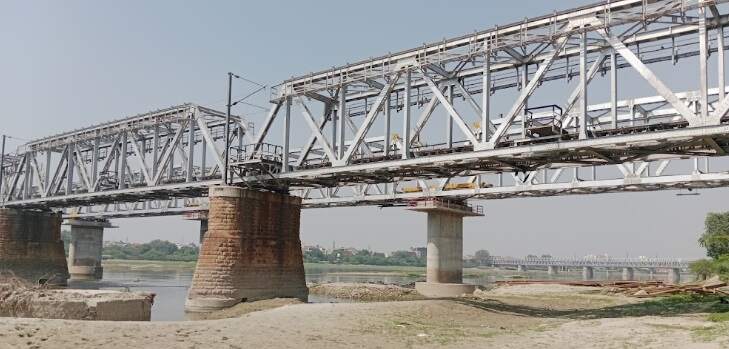
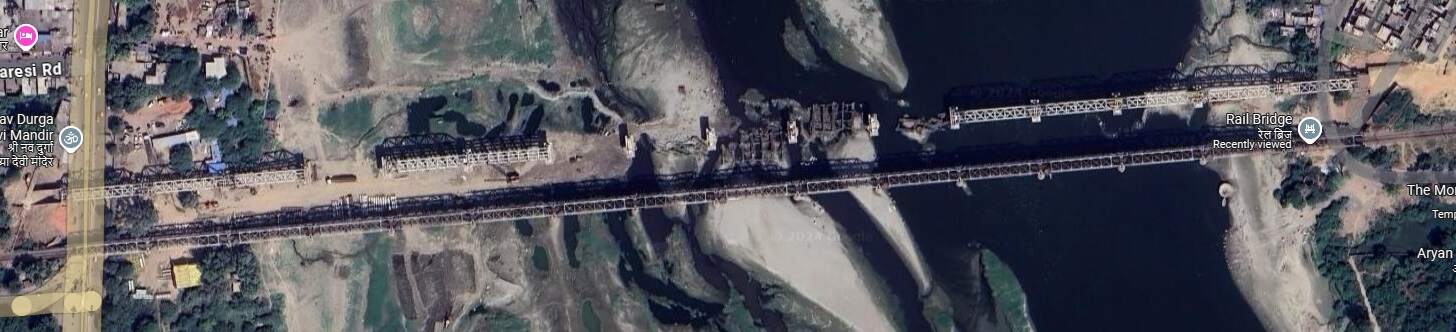
The replacement Yamuna River Bridge, (c) Ãj Āshish jáykār, October 2023. In October 2023 a second bridge was under construction immediately on the North side of this bridge. [Google Maps, October 2024]
Both the existing bridge and that under construction appear on this satellite image. [Google Maps, October 2024]
Agra city centre immediately to the West of the Strachey Bridge which can be seen bottom-right. [Google Earth, October 2024]
The western end of the Strachey Bridge, seen from the North. [Google Streetview, November 2023]
The bridge over Chhata Road, seen from the North. [Google Streetview, November 2023]
The bridge over City Station Road, seen from the East. [Google Streetview, November 2023]
A little further to the West, this bridge spans a street which Google Streetview does not name. [Google Streetview, November 2023]
The bridge over Freeganj Road. The vegetation over the bridge extends round the site of Agra City Station. [Google Streetview, November 2023]
Agra City Station was the terminus of the Tundla to Agra branch of the EIR. [Google Earth, October 2024]

Delhi

Huddleston comments: “Delhi is one of the most important junctions on the East Indian Railway. The Rajputana Malwa, the North Western, Southern Punjab, Oudh and Rohilkhand and Great Indian Peninsular Railways all run into Delhi. There is a regular network of lines in and around, and the main passenger station is that belonging to the East Indian Railway. All the railways run their passenger trains into the East Indian Railway station, and most of the goods traffic passes through it also. For some years past Delhi has been in a state of remodelling; the work is still going on, and it will be some time before it is completed.” [1: p43]

He continues: “When you alight on one of the numerous platforms at Delhi station, there is a feeling of elbow room; the whole station seems to have been laid out in a sensible way. You are able to move without fear of being jostled over the platform edge, everything looks capacious, and especially the two great waiting halls, which flank either side of the main station building. These are, perhaps, the two finest waiting halls in India; passengers congregate there, and find every convenience at hand, the booking office, where they take their tickets, vendors’ stalls, where they get various kinds of refreshments, a good supply of water, and, just outside, places in which to bathe; a bath to a native passenger is one of the greatest luxuries, and he never fails to take one when opportunity offers.” [1: p44]

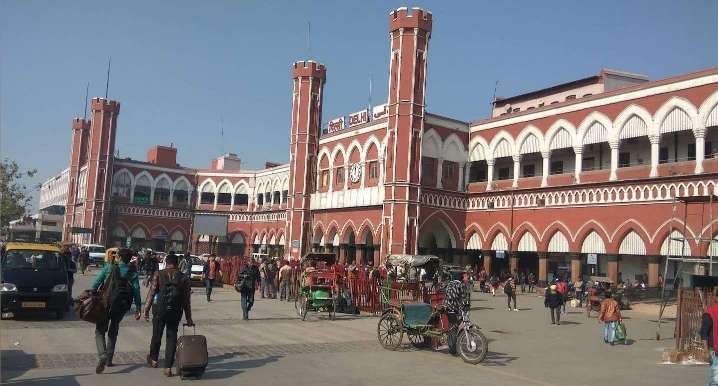
Wikipedia tells us that “Delhi Junction railway station is the oldest railway station in Old Delhi. … It is one of the busiest railway stations in India in terms of frequency. Around 250 trains start, end, or pass through the station daily. It was established near Chandni Chowk in 1864 when trains from Howrah, Calcutta started operating up to Delhi. Its present building was constructed by the British Indian government in the style of the nearby Red Fort and opened in 1903. It has been an important railway station of the country and preceded the New Delhi by about 60 years. Chandni Chowk station of the Delhi Metro is located near it.” [21]

Delhi junction Railway Station was the main railway station in Delhi at the time that Huddleston was writing his articles.

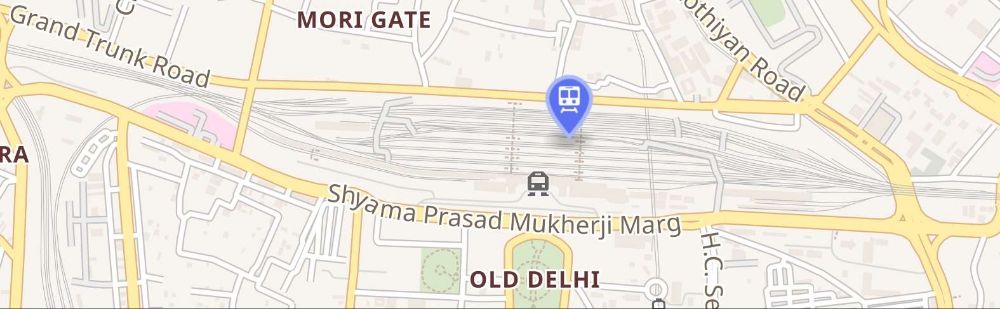
Delhi Junction Railway Station. [Google Maps, October 2024]
Delhi Junction Railway Station as it appears on OpenStreetMap. [21]
Delhi Junction Railway Station. [22]
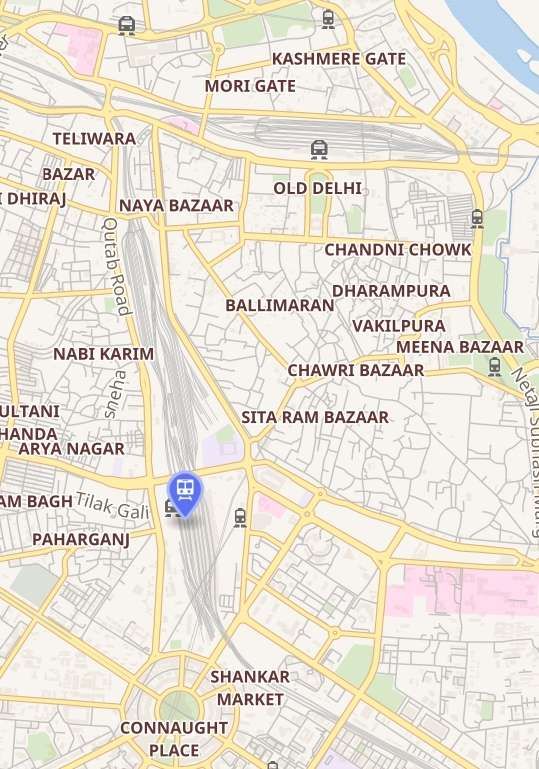
New Delhi Railway Station is marked on this OpenStreetMap extract with a blue flag, it is just a short distance Southwest of Delhi Junction Railway Station which is marked by a grey train symbol to the top-right of the map extract and named ‘Old Delhi’. [23]

Delhi, Ambala (Umbala) and Kalka

The East Indian Railway proper terminated at Delhi Junction Railway Station but the railway company also operated the independently owned Delhi-Umabala-Kalka Railway.

A railway line from Delhi to Kalka via Ambala was constructed by the Delhi Umbala Kalka Railway Company (DUK) during 1889 and 1890 and operations were commenced on March 1, 1891. The management of the line was entrusted to the East Indian Railway Company (EIR) who were able to register a net profit in the very first year of operation. The Government of India purchased the line in 1926 and transferred the management to the state controlled North Western Railway. After partition, this section became part of the newly formed East Punjab Railway and was amalgamated with the Northern Railway on 14th April 1952.” [3]

The terminus of this line is at Kalka, 162 miles from Delhi. Huddleston tells us that, “In the beginning of the hot weather, when the plains are becoming unbearable, Kalka station is thronged with those fortunates who are going to spend summer in the cool of the Himalayas, and, when the hot weather is over, Kalka is crowded with the same people returning to the delights of the cold season, very satisfied with themselves at having escaped a grilling in the plains. Therefore, nearly everyone who passes Kalka looks cheerful, but, of course, there is the usual exception to the rule; and in this case the exception is a marked one. All the year round there is to be seen at Kalka station a face or two looking quite the reverse of happy, and, if we search the cause, we find it soon enough. The sad faces belong to those who have reached Kalka on their way to the Pasteur Institute, at Kasauli; Kasauli is in the hills some ten miles from Kalka. It is at Kasauli that Lord Curzon, when Viceroy, established that incalculable boon to all the people of India, a Pasteur Institute. Formerly, when anyone was bitten by a mad dog, or by a mad jackal, and such animals are fairly common in the East, he had to fly to Paris, and spend anxious weeks before he could be treated-some, indeed, developed hydrophobia before they could get there, or got there too late to be treated with any hope of success. Now, instead of going to Paris, they go to Kasauli.” [1: p44-45]
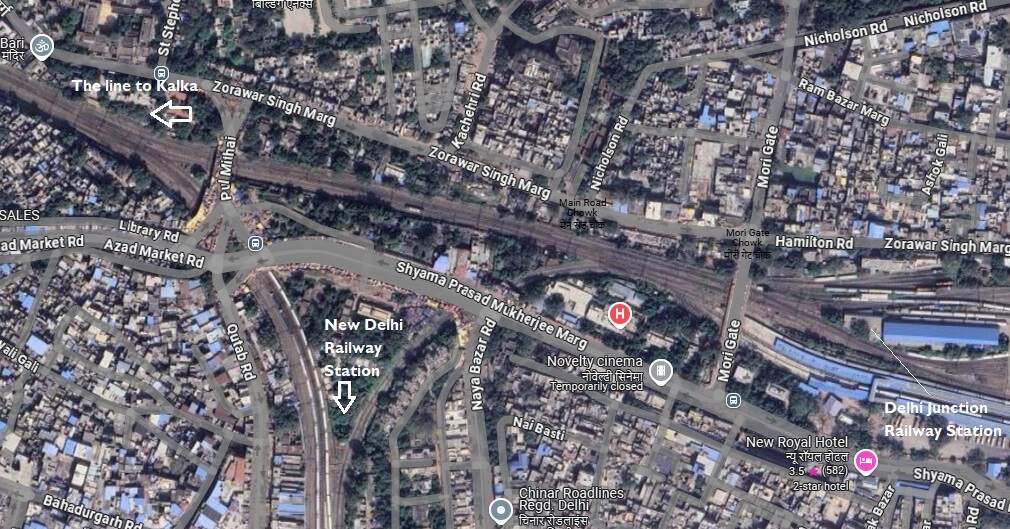
The western approach to Deli Junction Railway Station. The station is on the right of this satellite image. The lines to the New Delhi Railway Station leave the image to the South, to the left of centre. The line to Kalka leaves the image towards the top-left. [Google Maps, October 2024]
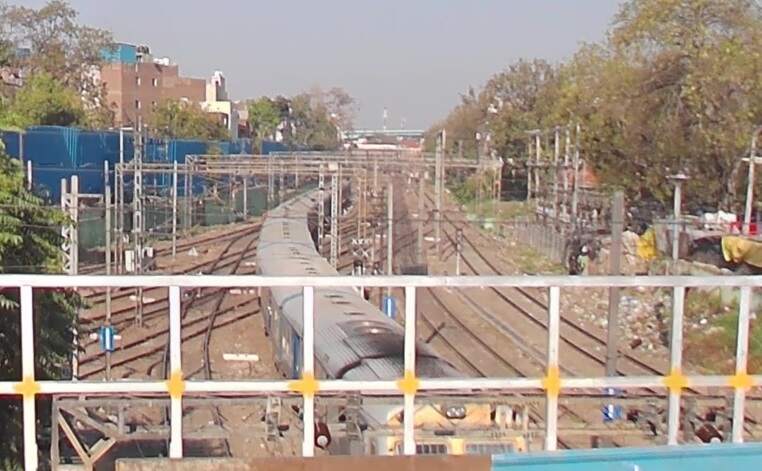
The view West from the bridge carrying Pul Mithai over the railway. The lines entering the photograph from the left are those from New Delhi Railway Station. Those ahead begin the journey to Kalka. [Google Streetview, February 2022]
Looking West from Rani Jhansi Road/Flyover. It may be difficult to make out, but the line to Kalka curves away to the right. [Google Streetview, February 2022]

The first station beyond the junction shown in the photograph above is Sabzi Mandi Railway Station.
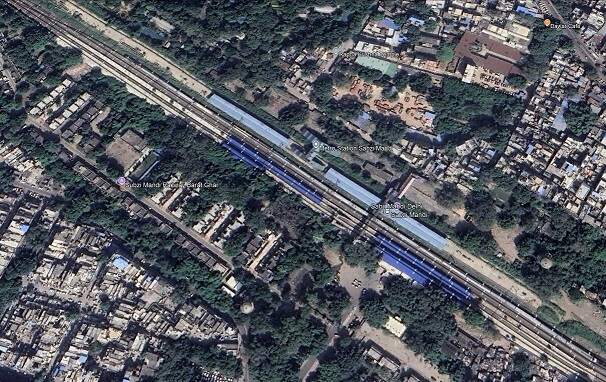
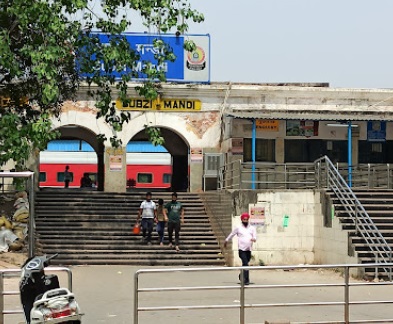
Sabzi Mandi Railway Station. [Google Earth, October 2024]

Heading North-northwest out of Delhi, trains pass through Delhi Azadpur Railway Station, under Mahatma Gandhi Road (the Ring Road), on through Adarsh Nagar Delhi Railway Station and under the Outer Ring Road.
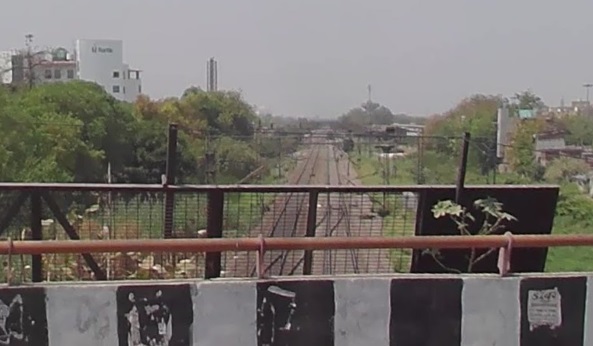
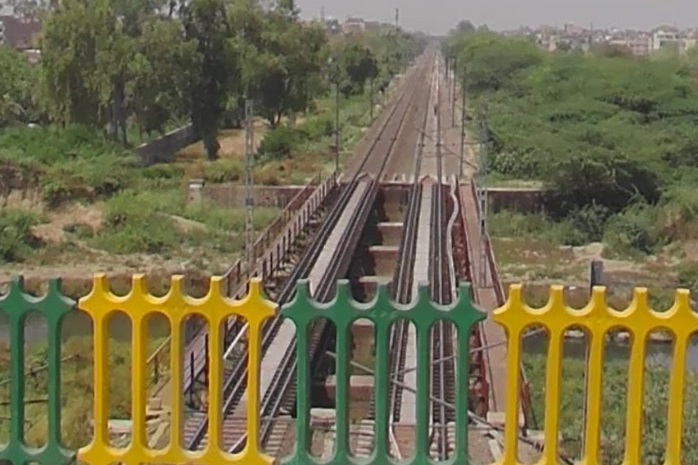
Outside of the Outer Ring Road the line passes through Samaypur Badli Railway Station which is an interchange station for the Metro; across a level-crossing on Sirsapur Metro Station Road; through Khera Kalan Railway Station and out of the Delhi conurbation.
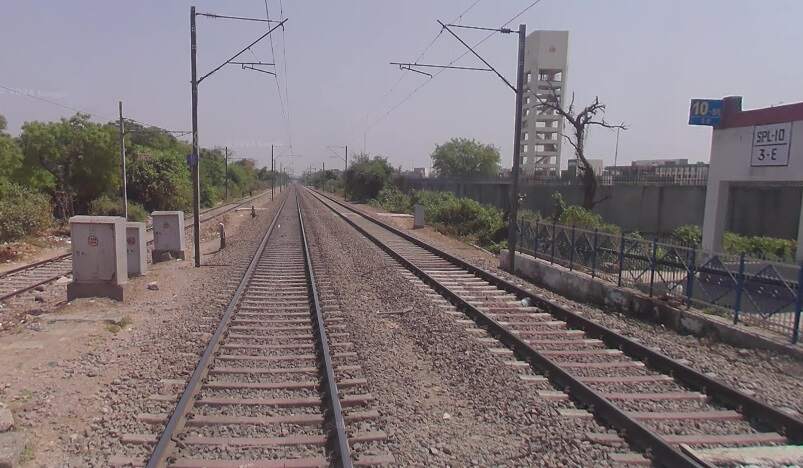
Looking North-northwest from Sirsapur Metro Station Road Level-Crossing. [Google Streetview, April 2022]

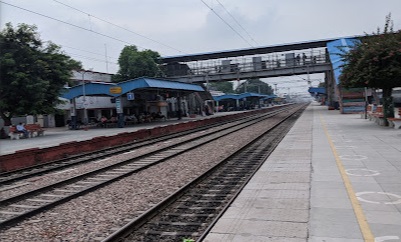
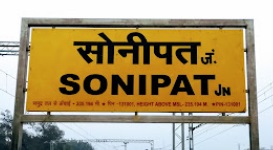
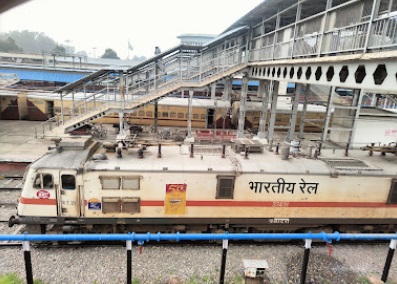
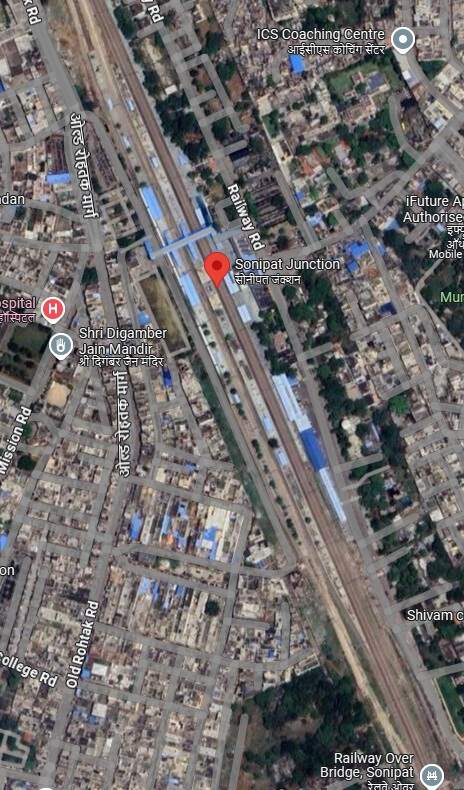
The line runs on through a series of level-crossings and various stations (Holambi Kolan, Narela, Rathdhana, Harsana Kalan) and under and over modern highways before arriving at Sonipat Junction Railway Station.
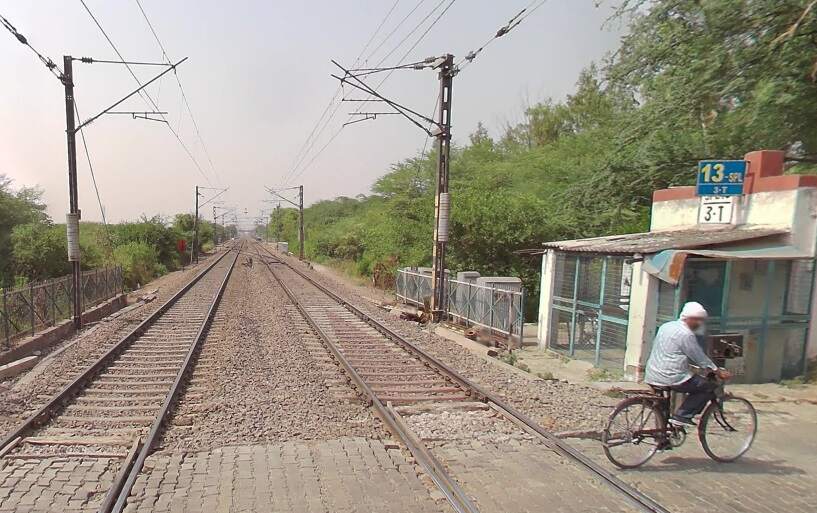
A typical view from another level-crossing looking North-northwest along the line.[Google Streetview, April 2022]

Sonipat Junction Railway Station provides connections to Gohana, Jind and Palwal. [24]
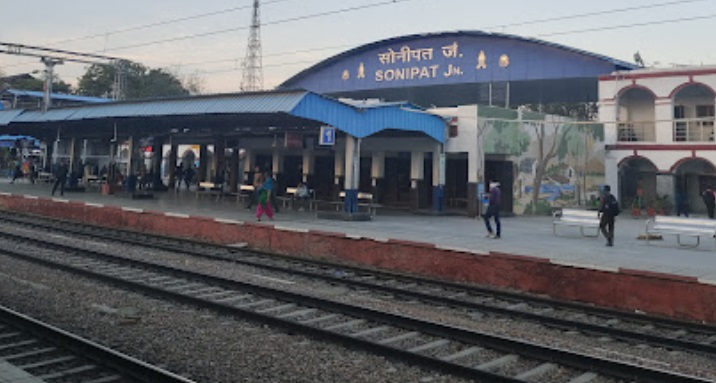
(c) Mohit, March 2022.
(c) Arvind, August 2021.
(c) Rahul Singh, February 2019.

Northwest of Sonipat Railway Station a single-track line diverges to the West as we continue northwards through Sandal Kalan, Rajlu Garhi (North of which a line diverges to the East), Ganaur, Bhodwal Majri, Samalkha, Diwana Railway Stations before arriving at Panipat Junction Railway Station.
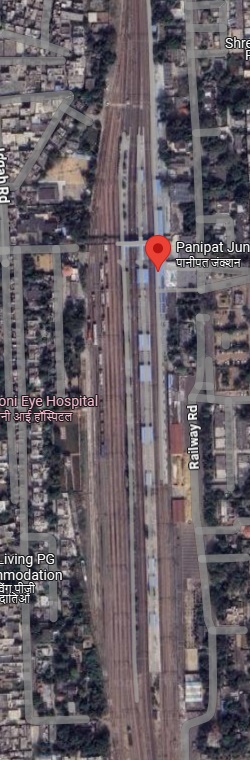
Panipat Junction Railway Station was opened in 1891. It has links to the Delhi–Kalka line, Delhi–Amritsar line, Delhi–Jammu line, Panipat–Jind line, Panipat–Rohtak line connected and upcoming purposed Panipat–Meerut line via Muzaffarnagar, Panipat–Haridwar line, Panipat-Rewari double line, via Asthal Bohar, Jhajjar or Bypass by the Rohtak Junction Panipat-Assoti Double line via Farukh Nagar, Patli, Manesar, Palwal. 118 trains halt here each day with a footfall of 40,000 persons per day. [25]
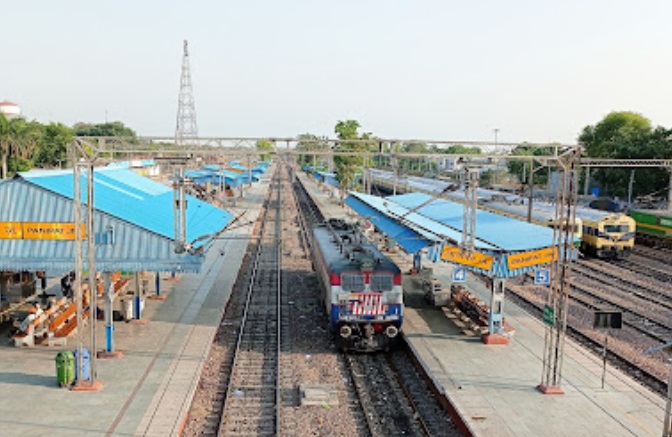
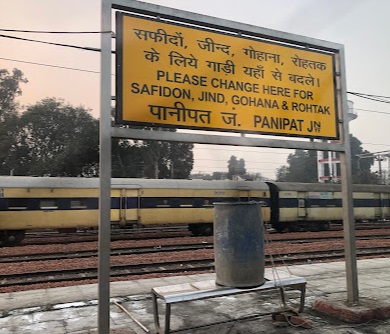
(c) Pintoo Yadav, May 2021.
(c) Sunil j, January 2023.

Just to the North of Panipat Junction Railway Station a double-track line curves away to the West. Our journey continues due North parallel to the Jammu-Delhi Toll Road.
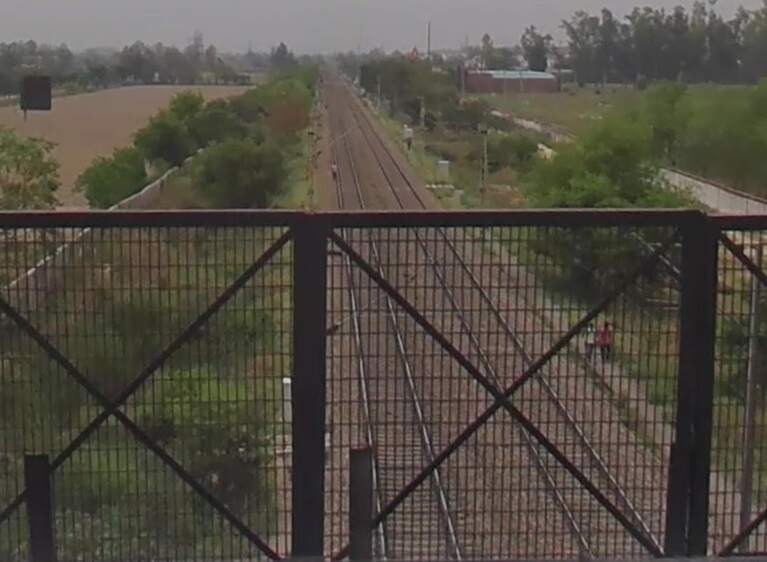
A view North along the line from one of the access roads to the Jammu-Delhi Toll Road. [Google Streetview, June 2023]

North of Panipat the line passed through Babarpur, Kohand, Gharaunda, Bazida Jatan Railway Stations while drifting gradually away from the Jammu-Delhi Toll Road.
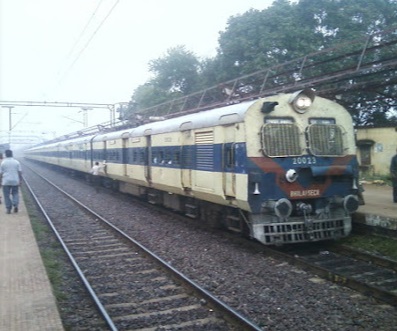
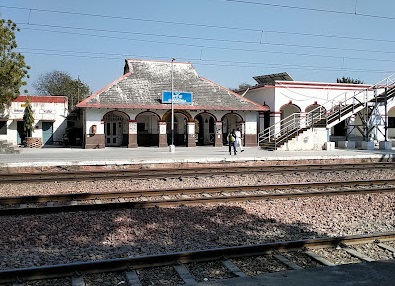
Beyond Bazida Jatan Station, the line turns from a northerly course to a more northwesterly direction before swinging back Northeast to a more northerly route. It then passes through Karnal Railway Station before once again swinging away to the Northwest and crossing a significant irrigation canal, passing through Bhaini Khurd, Nilokheri, Amin Railway Stations and then arrives at Kurukshetra Junction Railway Station.
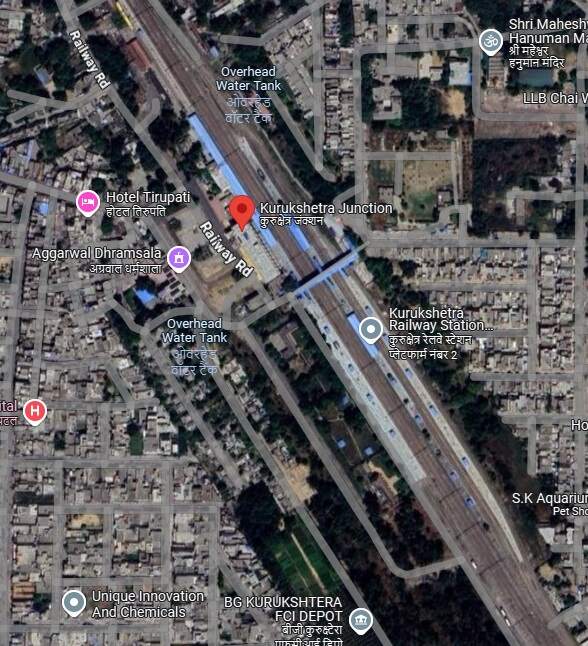
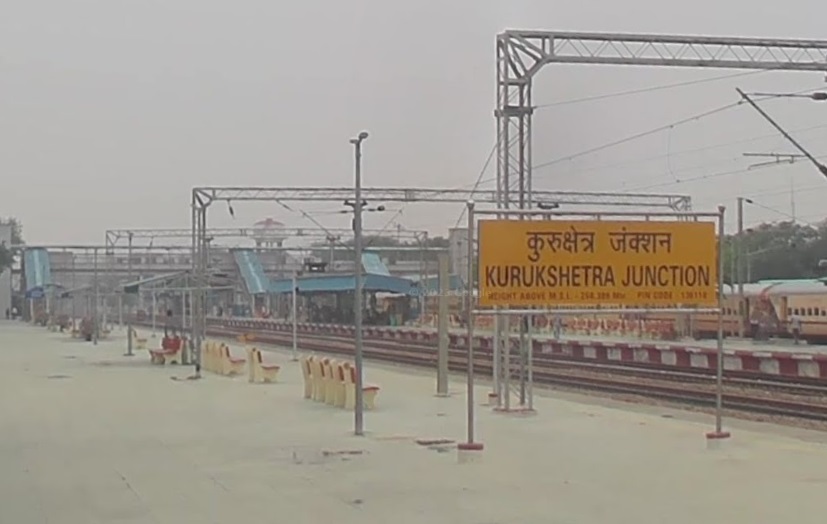
Kurukshetra Junction Railway Station. [Google Maps, October 2024]
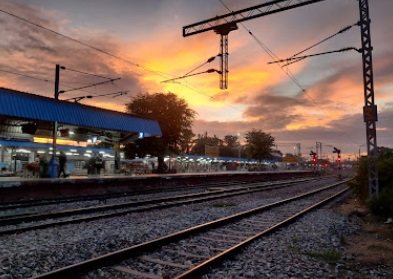
North of Kurukshetra Junction the line passes through Dhoda Kheri, Dhirpur, Dhola Mazra, Shahbad Markanda (by this time running very close to the Jammu-Delhi Toll Road again), and Mohri Railway Stations before it bridges the Tangri River.
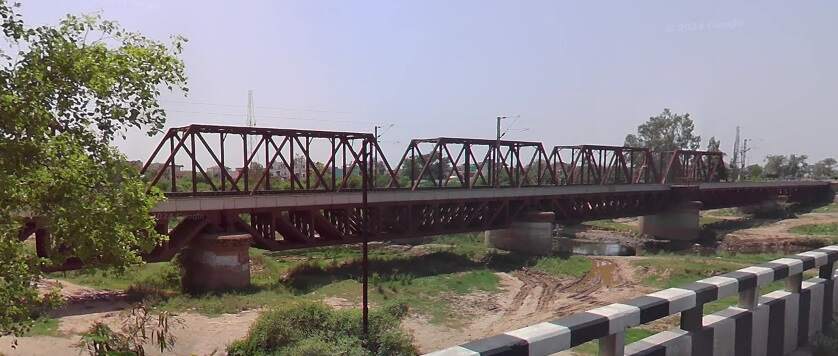
The Tangri River Railway Bridge seen from NH44, the Jammu-Delhi Road. The photograph is taking facing Northwest. [Google Streetview, June 2023]

Not too far North of the Tangri River the line enters Ambala City and arrives at Ambala Cantt Junction Railway Station.
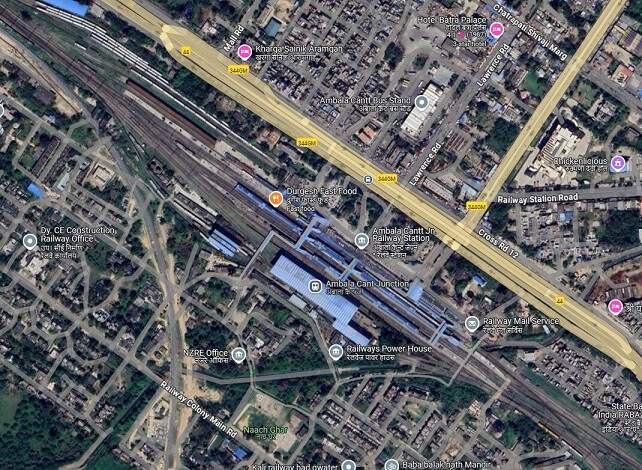
Ambala Cantt Junction Railway Station. [Google Maps, October 2024]

Ambala (known as Umbala in the past – this spelling was used by Rudyard Kipling in his 1901 novel Kim) is “located 200 km (124 mi) to the north of New Delhi, India’s capital, and has been identified as a counter-magnet city for the National Capital Region to develop as an alternative center of growth to Delhi.” [26] As of the 2011 India census, Ambala had a population of 207,934.

Travelling further North towards Kalka, trains start heading Northwest out of Ambala Cantt Railway Station. and pass through Dhulkot, Lalru, Dappar, Ghagghar Rauilway Stations before crossing the Ghaggar River and running on into Chandigarh.
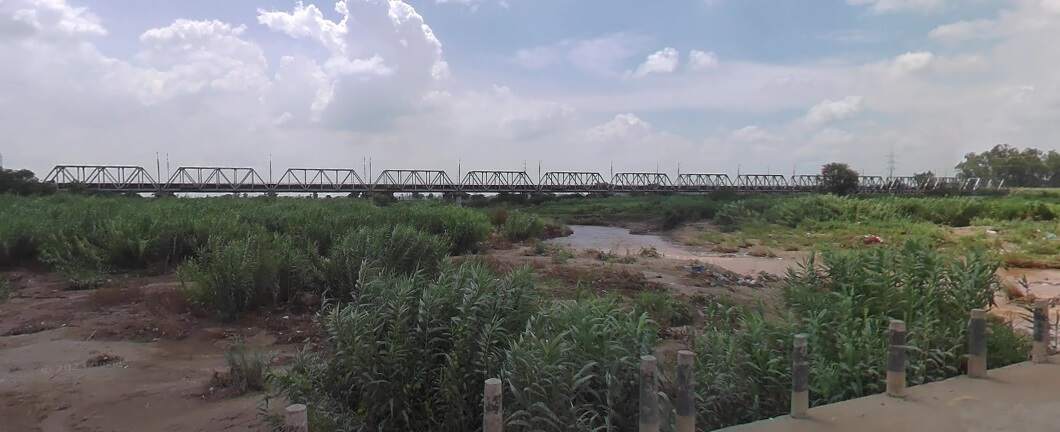
The Ghaggar River Railway Bridge seen from the Ghaggar Causeway to the Northeast of the railway Bridge. [Google Streetview, June 2022]

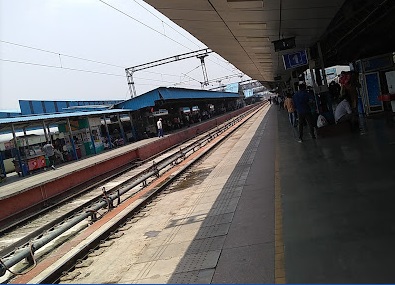
Chandigarh Junction Railway Station sits between Chandigarh and Panchkula. it is illustrated below.
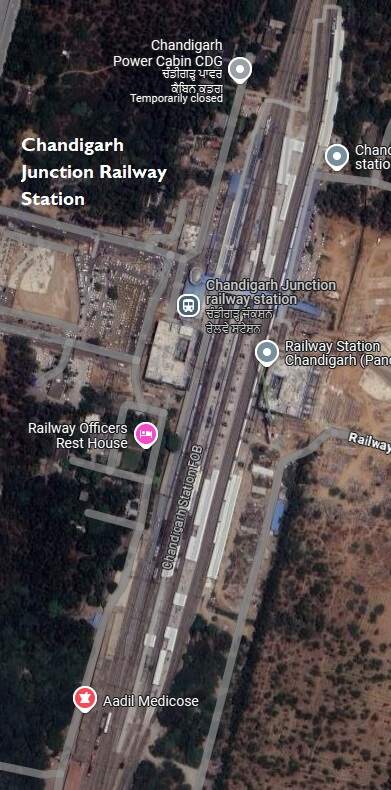
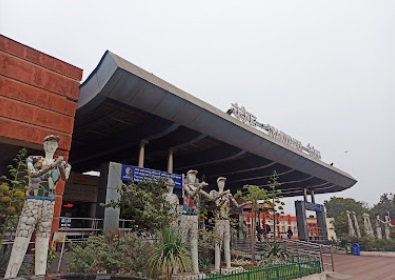
(c) Laxman YB (January 2022)
(c) Soniya Thapa (January 2023)
(c) Amit Gamer (July 2022)

North of Chadigarh the flat plains of India give way to the first foothills of the Himalayas. What has up to this point been a line with very few curves, changes to follow a route which best copes with the contours of the land. Within the city limits of Chandigarh, the line curves sharply to the East, then to the Southeast as illustrated below.
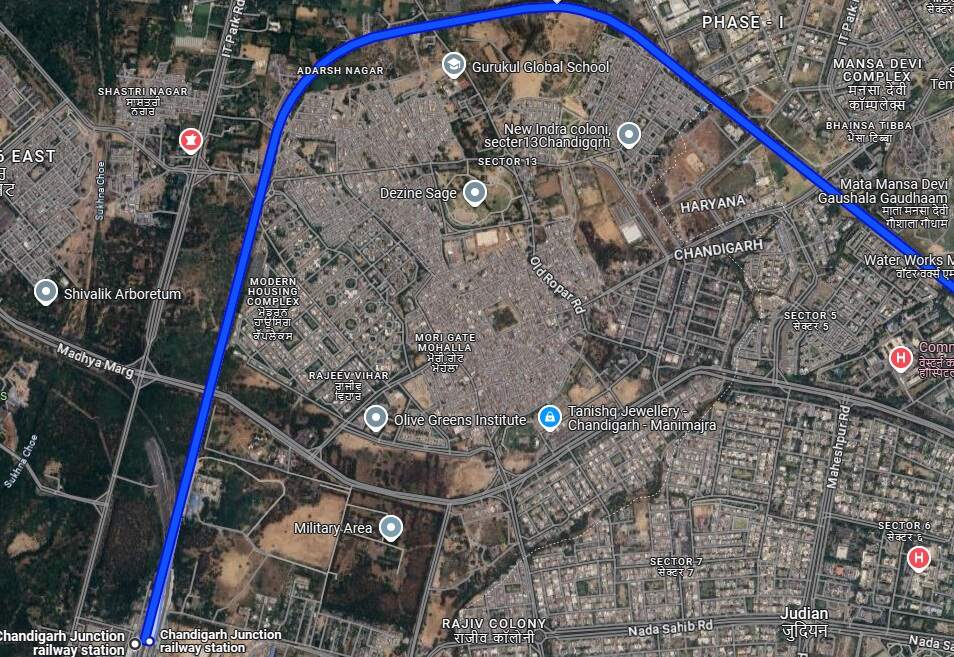
The route of the railway between Chandigarh and Kalka to the immediate North of Chandigarh Railway Station. [Google Maps, October 2024]

The line then sweeps round to the Northeast.
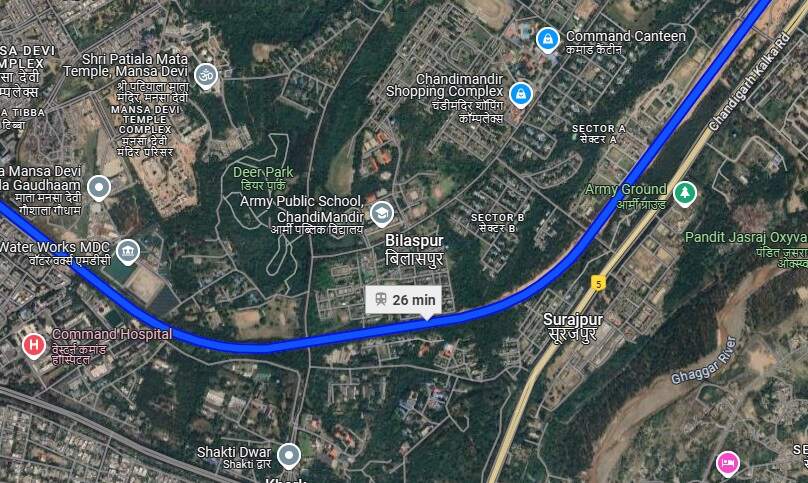
The route of the line is again marked by the thick blue line on this next extract from Google’s satellite imagery. [Google Maps, October 2024]
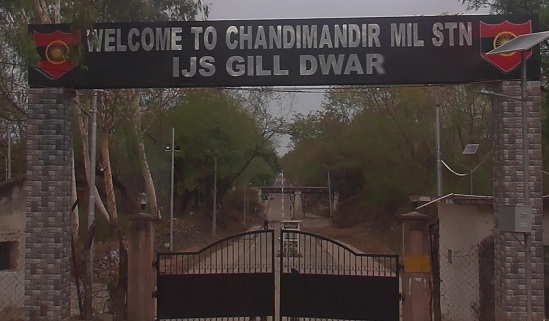
It is possible to glimpse the line from the Chandigarh-Kalka Road (NH5) at various points. This image looks from the road into Chandimandir Military Station. The bridge over the access road which can be seen above the gates carries the line to Kalka. [Google Streetview, June 2022]

The next railway station is that serving the military base, Chandi Mandir Railway Station. The line continues to the Northeast, then the North and then the Northwest before running into Surajpur Railway Station.
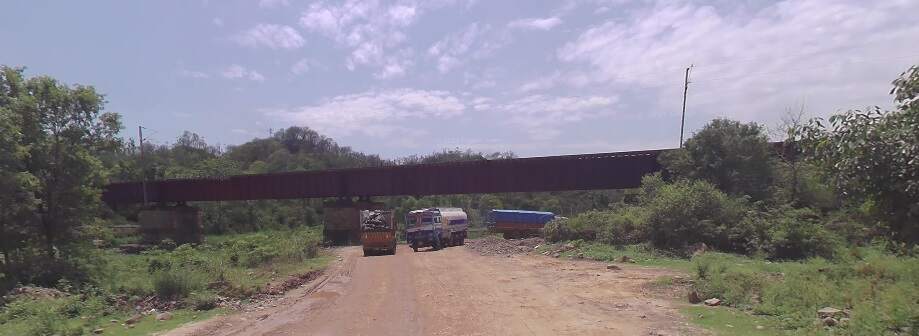
A glimpse of the railway North of Surajpur. The camera is facing West across the railway which is on a low metal viaduct. Kalka is some significant distance away off the right of this photograph. [Google Streetview, June 2023]

The line continues to sweep round to the Northeast before crossing the Jhajra Nadi River.
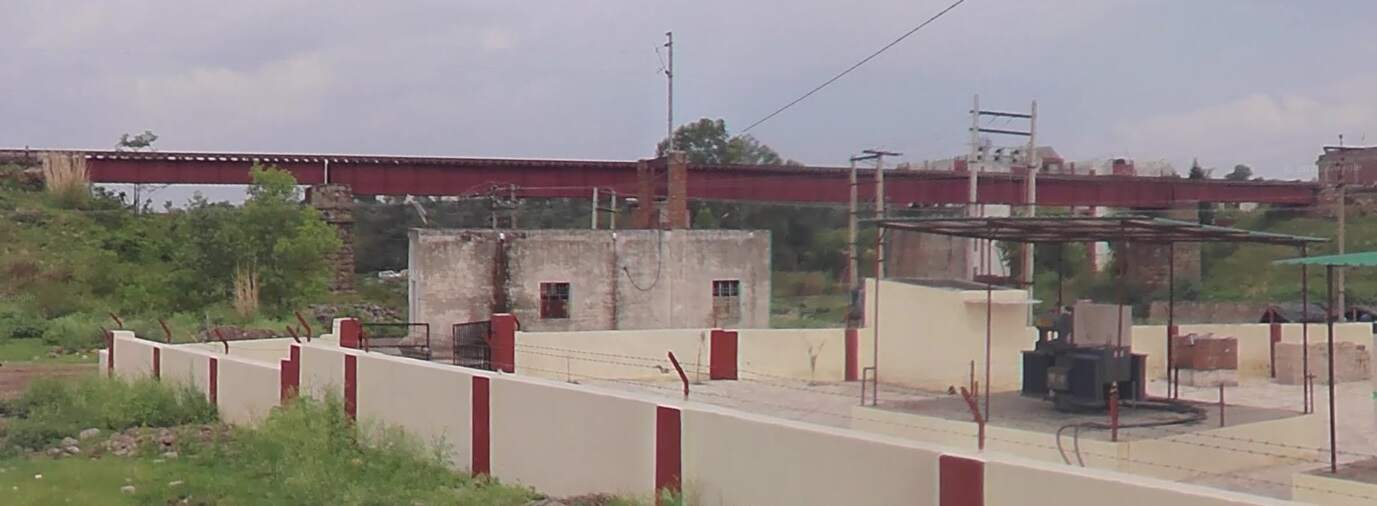
The Jhajra Nadi River Bridge seen from the Southeast on Jhajra Nadi Road. [Google Streetview, June 2023]

The line then runs parallel to the Jhajra Nadi River in a Northeasterly direction on its North bank before swinging round to the Northwest and entering Kalka Railway Station.
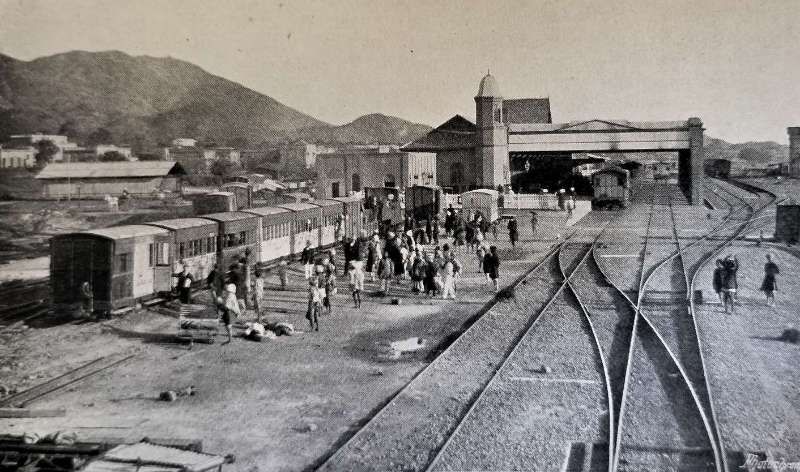
Kalka Station. [1: p40]
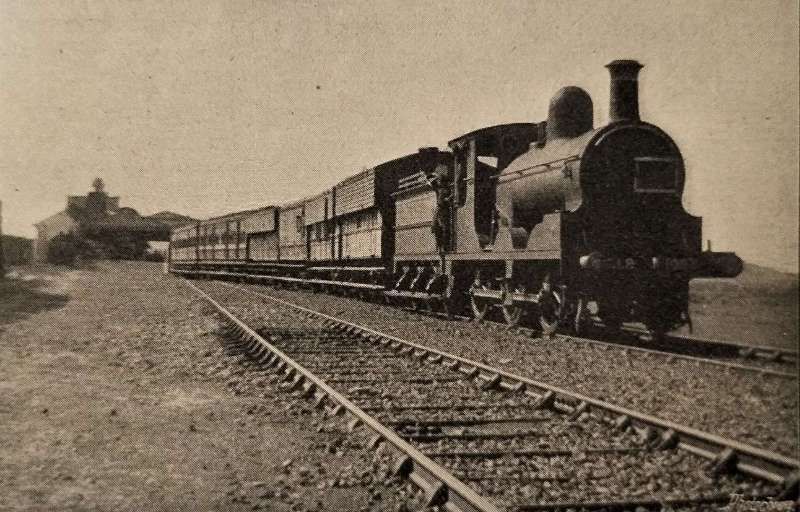
An East Indian Railway Mail Train leaving Kalka. [1: p43]
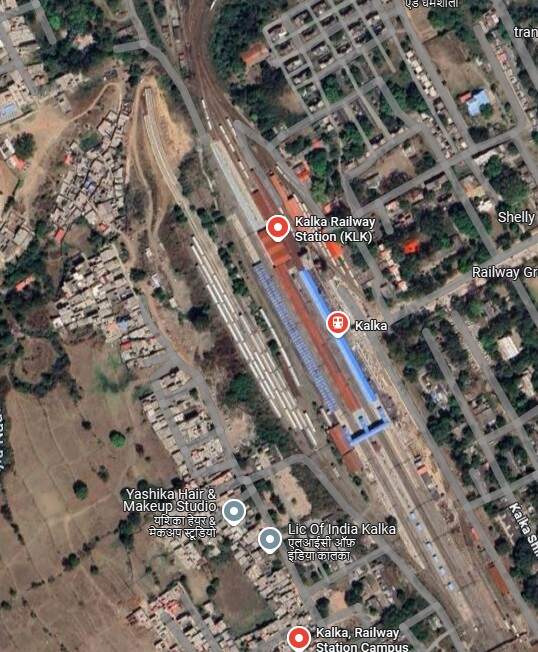
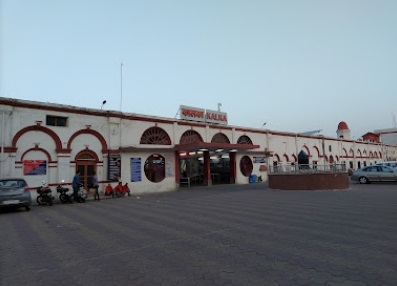
Kalka Railway Station. [Google Maps, October 2024]
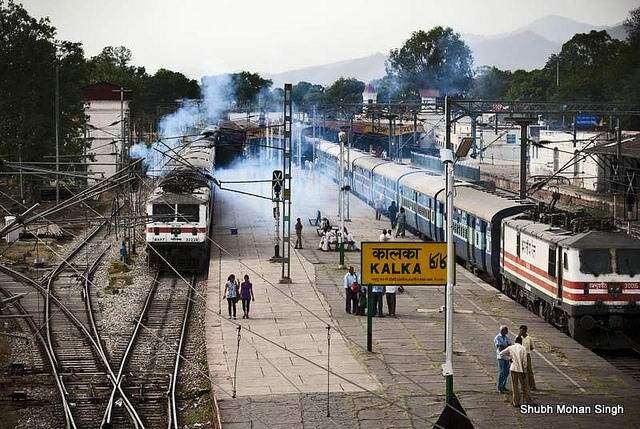
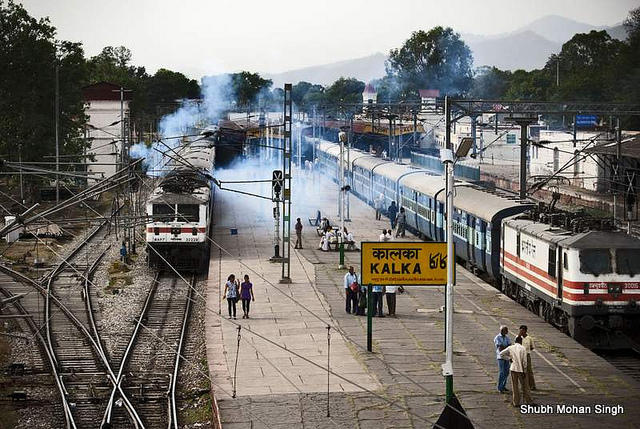
Kalka Railway Station as illustrated on the IndiaRailInfo.com website, (c) Shubh Mohan Singh. The train on the right is, I believe, the ‘Himalayan Queen’.

The broad gauge terminates at Kalka and the journey on into the Himalayas is by narrow-gauge train.

Kalka to Shimla

Huddleston comments: “Simla [sic] is full of hill schools, and Kalka often sees parties of happy children returning to their homes; a common enough sight in London, perhaps, but in India quite the reverse. In India, European school children only come home for one vacation in the year, and that, of course, is in the cold season when they get all their holidays at a stretch. Many of them have to journey over a thousand miles between home and school. Needless to say, the railway is liberal in the concessions it grants, and does all it can to assist parents in sending their children away from the deadly climate of the plains. … At Kalka you change into a 2 ft. 6 in. hill railway, which takes you to Simla, the summer headquarters of Government, in seven hours. If you are going up in the summer, don’t forget to take thick clothes and wraps with you, for every mile carries you from the scorching heat of the plains into the delightful cool of the Himalayas, and you will surely need a change before you get to the end of your journey. … Kalka is 2,000 ft. above sea level, Simla more than 7,000 ft., therefore, the rise in the 59 miles of hill railway is over 5,000 ft., and the fall in the temperature probably 30 degrees Fahrenheit.” [1: p45]
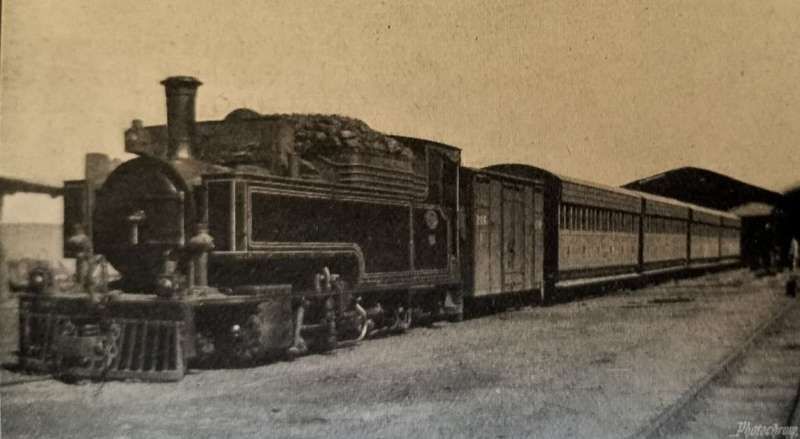
Train of Bogie Coaches about to leave Kalka for Shimla. [1: p44]
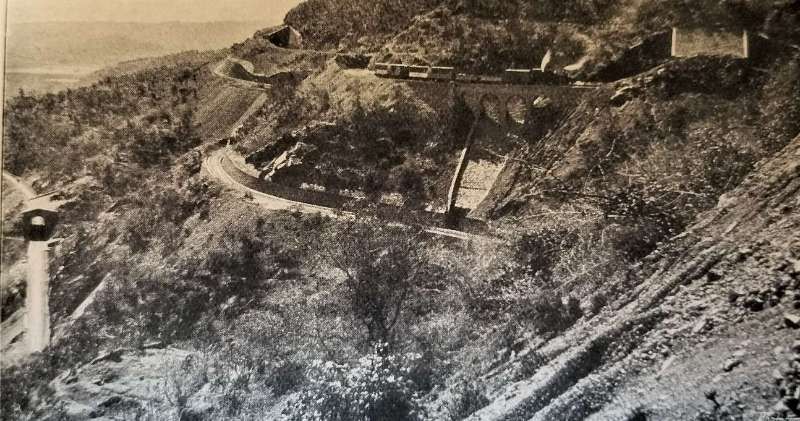
A portion of the sinuous course of the Kalka-Shimla line’s climb into the Himalayas. [1: p45]

The plan is to try to follow the line of the railway as it climbs away from Kalka Railway Station. First a quick look at the narrow gauge end of Kalka Railway Station.
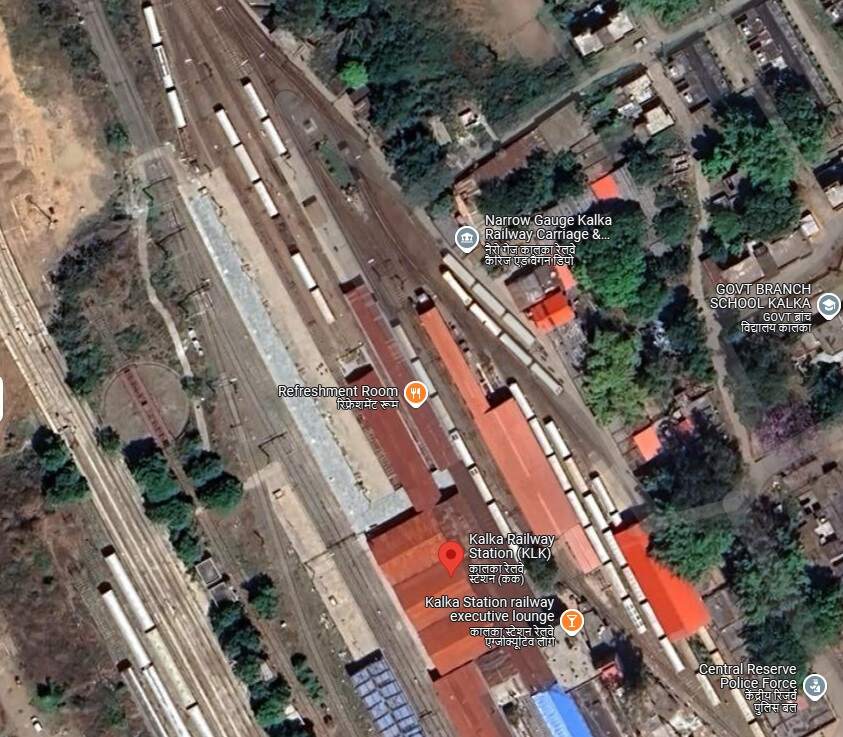
The North end of Kalka Railway Station is devoted to the narrow-gauge line to Shimla. [Google Maps, October 2024]
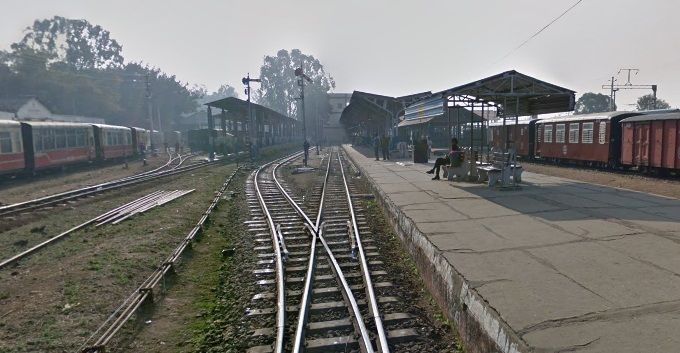
The narrow-gauge platforms at Kalka Railway Station seen from the Northwest. [Google Streetview, January 2018]
The Kalka-Shimla Line. Kalka station throat looking Southeast into the station complex. [Google Streetview, January 2018]

The two views above were taken from the rear of a Shimla-bound train. This will be true of many subsequent photographs of the line.
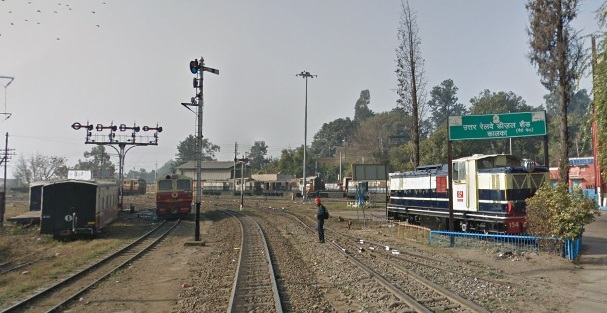
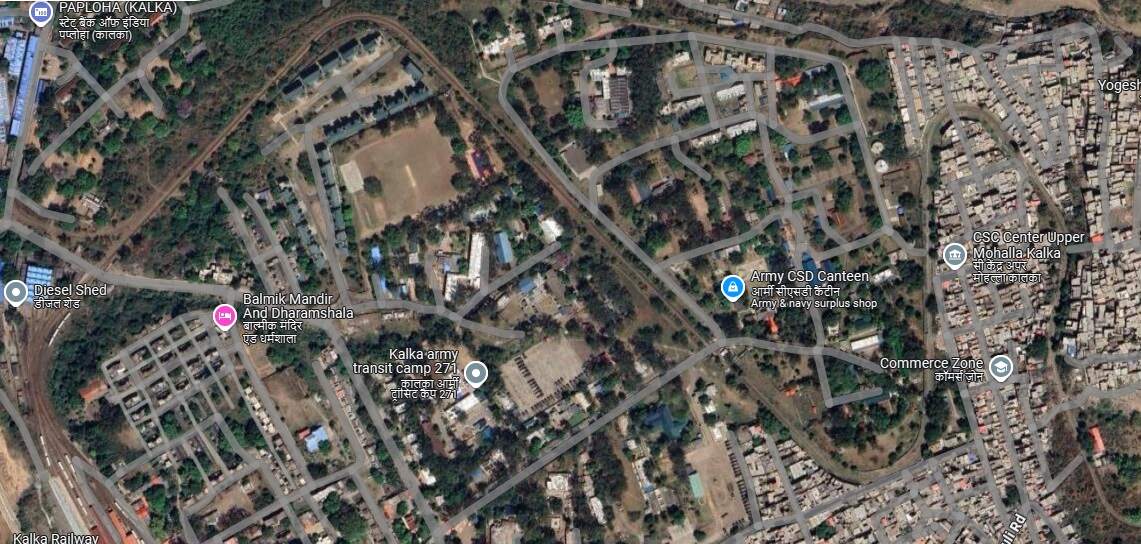
Looking back towards Kalka Station from alongside the Diesel Shed. [Google Streetview, January 2018]
The Kalka-Shimla line winds its way through Kalka. [Google Maps, October 2024]
The line continues to switch back and forth on its way to the first station at Taksal. [Google Maps, October 2024]
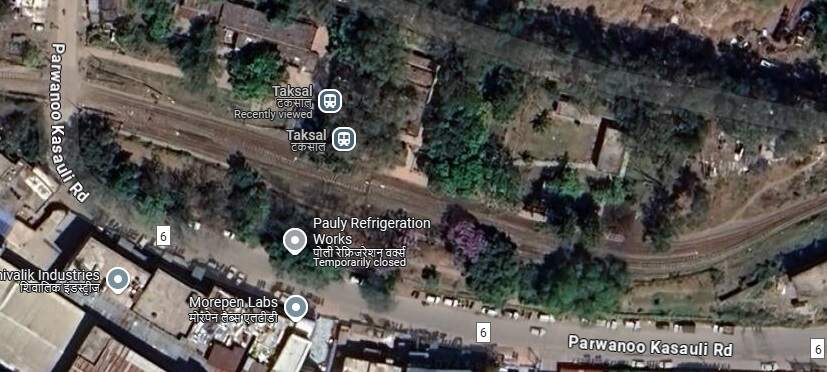
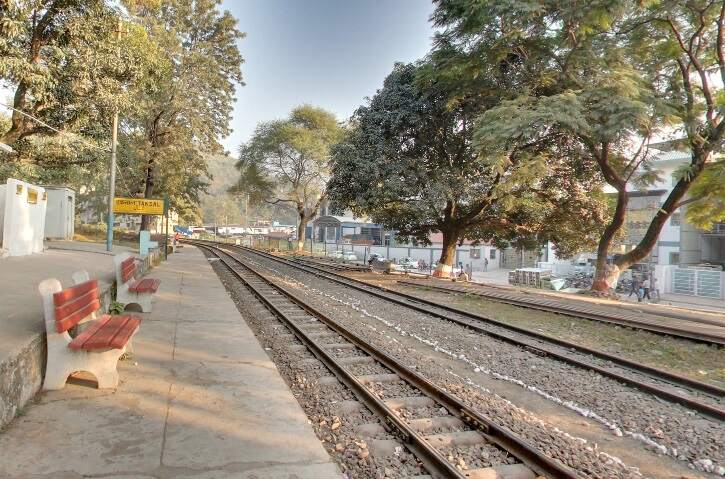
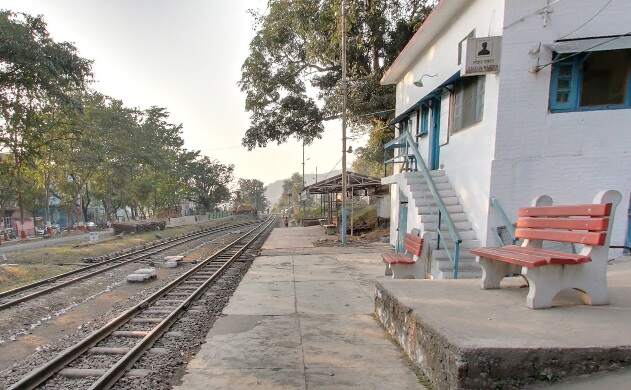
Taksal Railway Station. [Google Maps, October 2024]
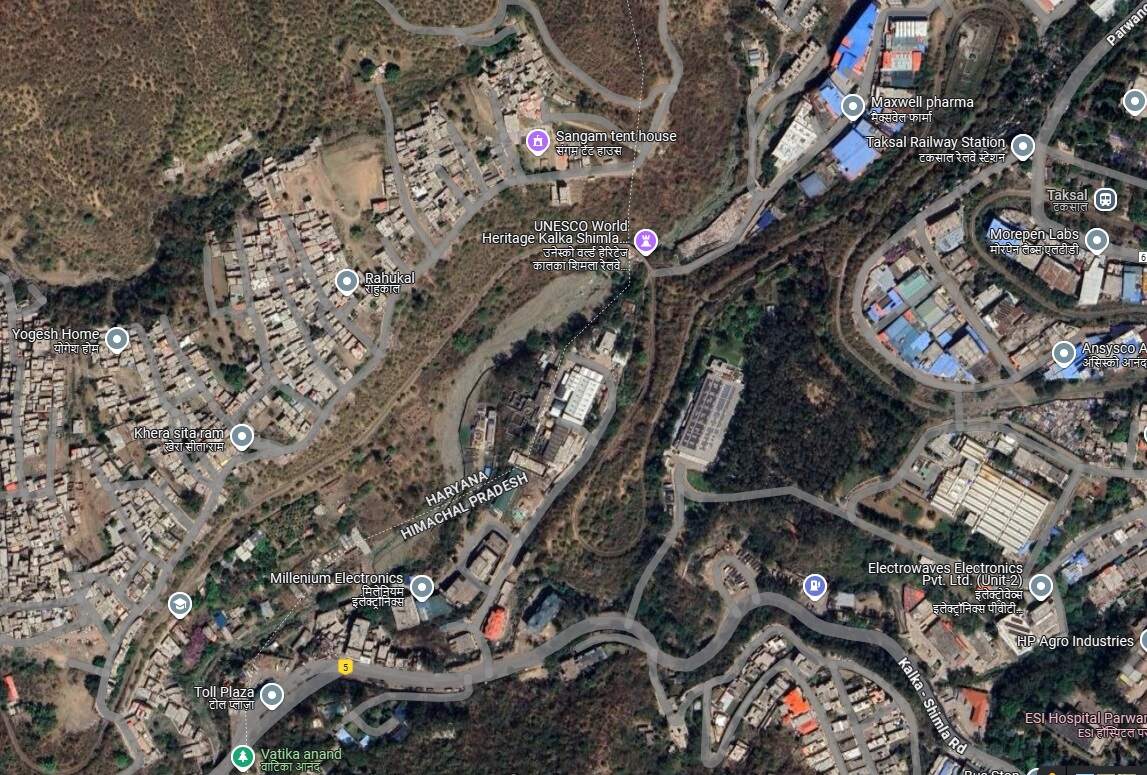
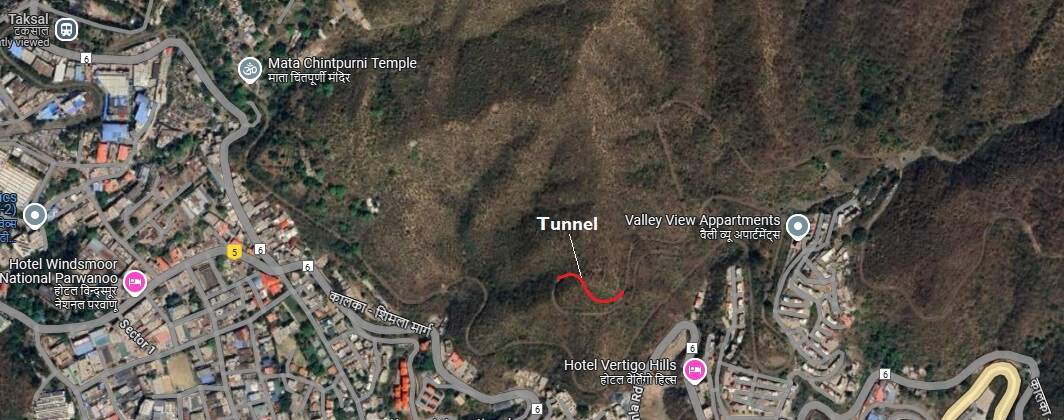
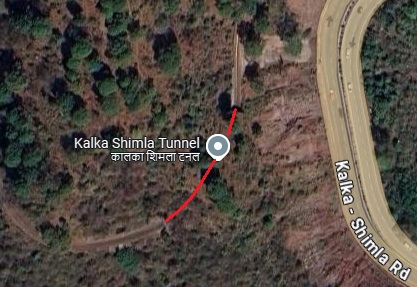
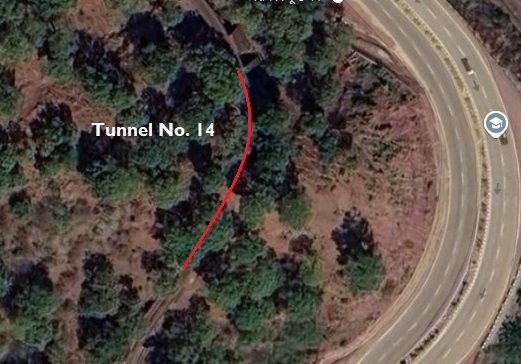
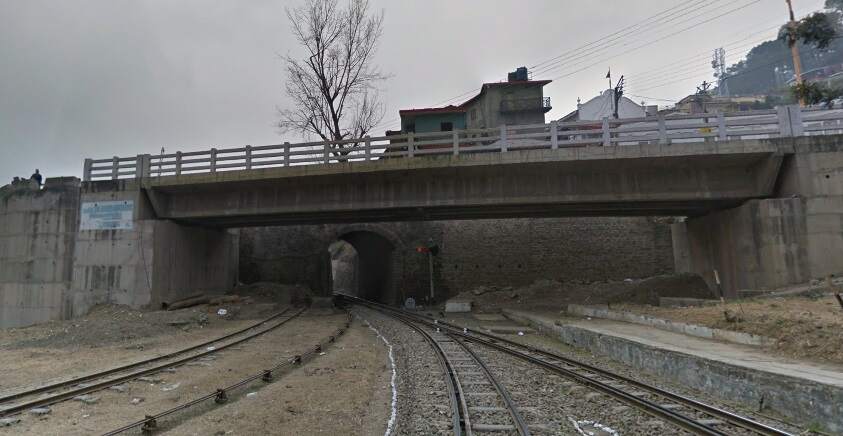
From Taksal Railway Station the line continues to wander around following the contours, gaining height as it does so. The route can relatively easily be picked out on this satellite image. One length of tunnel has been highlighted in red. [Google Maps, October 2024]
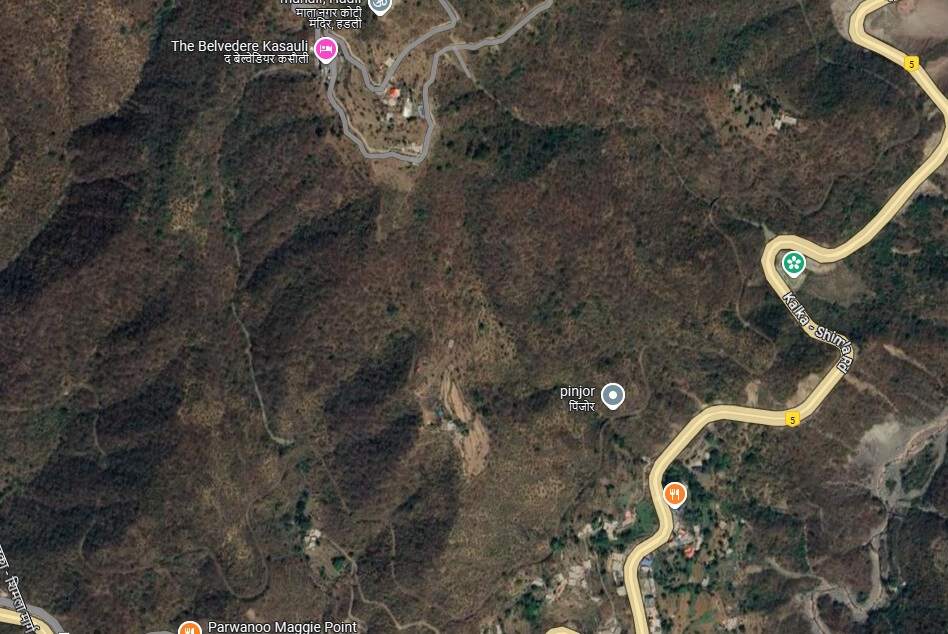
The line continues towards Shimla following the contours and continuing to rise into the hills. Its course runs relatively close to National Highway No. 5 (NH5)

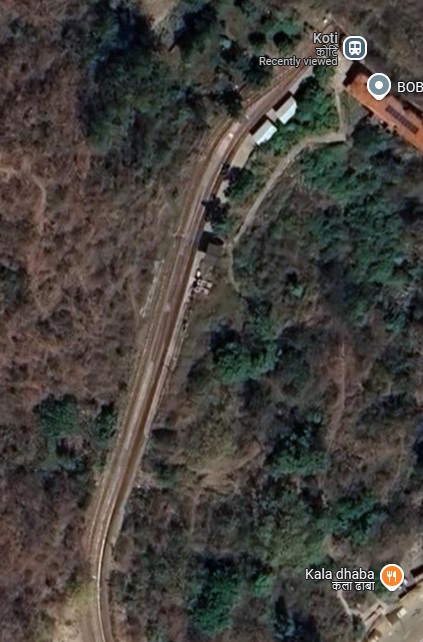
Koti Railway Station and tunnel portal just at the northern limits of the station. [Google Maps, October 2024]
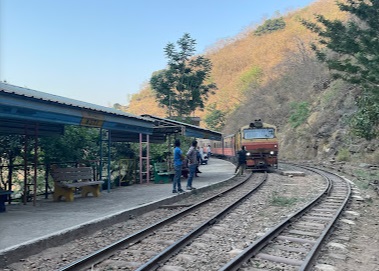
Train arriving at Koti from Kalka (c) Meghamalhar Saha. (May 2024)
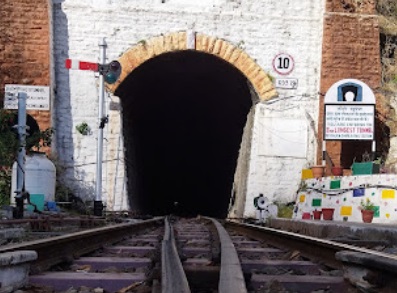
The tunnel portal at Koti (c) Divyansh Sharma. (April 2021)

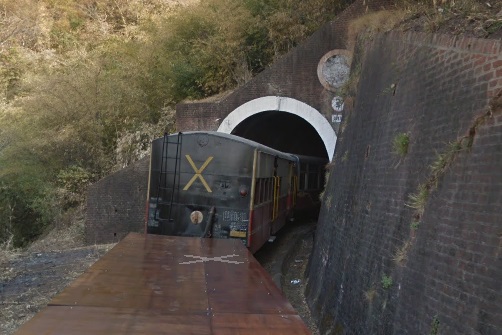
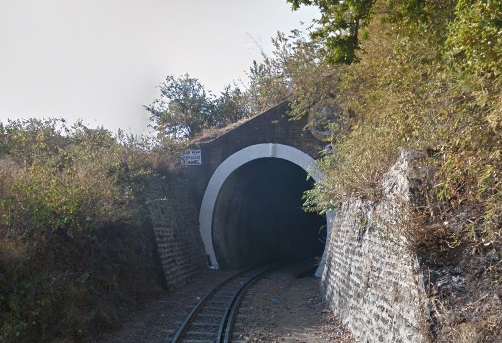
Koti Tunnel (Tunnel No. 10) is 750 metres in length. Trains for Shimla disappear into it at the station limits at Koti and emerge adjacent to the NH5 road as shown below.
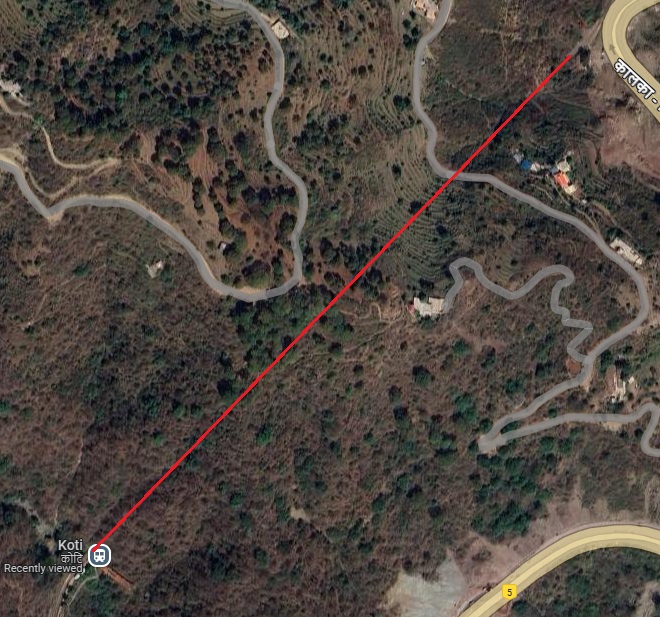
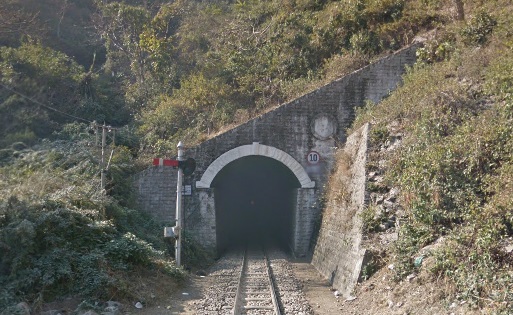
Koti Tunnel (Tunnel No. 10). [Google Maps, October 2024]
The Northeast portal of Tunnel No. 10(Koti Tunnel). [Google Streetview, January 2018]
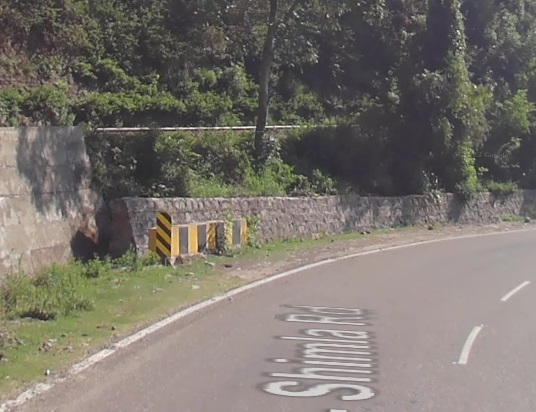
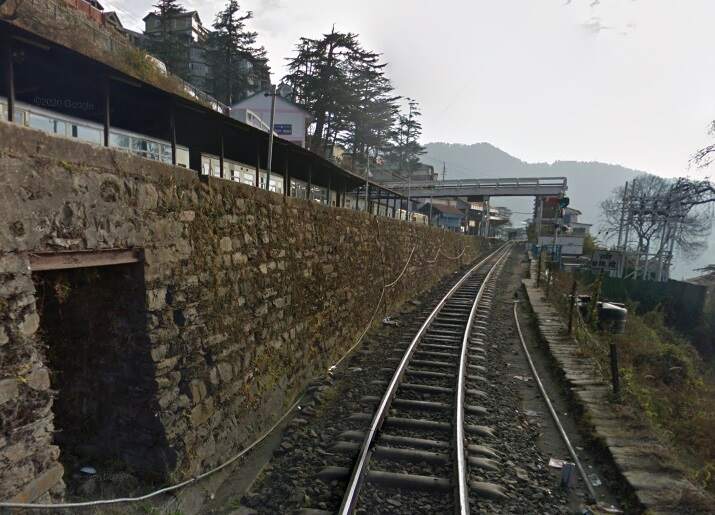
Leaving the tunnel the line runs on the West side of the Kalka-Shimla Road (NH5). It can be seen here a couploe of metres higher than the road. [Google Streetview, June 2023]

For some distance the line then runs relatively close to the NH5. on its Northwest side and increasingly higher than the road. The central image below shows road and rail relatively close to each other. The left image shows the structure highlighted in the central image as it appears from the South. The right-hand image shows the same structure from the North. The structure highlighted here is typical of a number along the route of the railway.
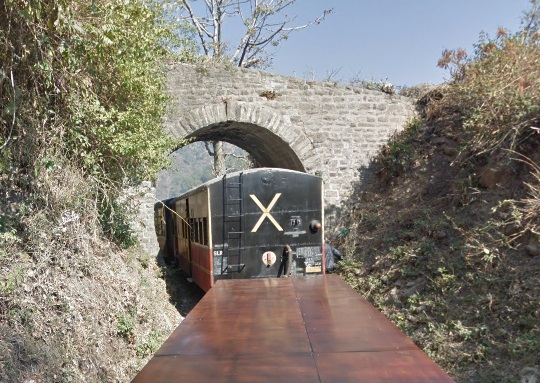
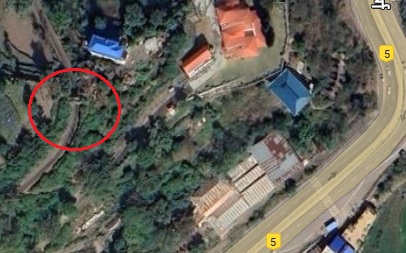
For a short distance the line has to deviate away from the road to maintain a steady grade as it crosses a side-valley.
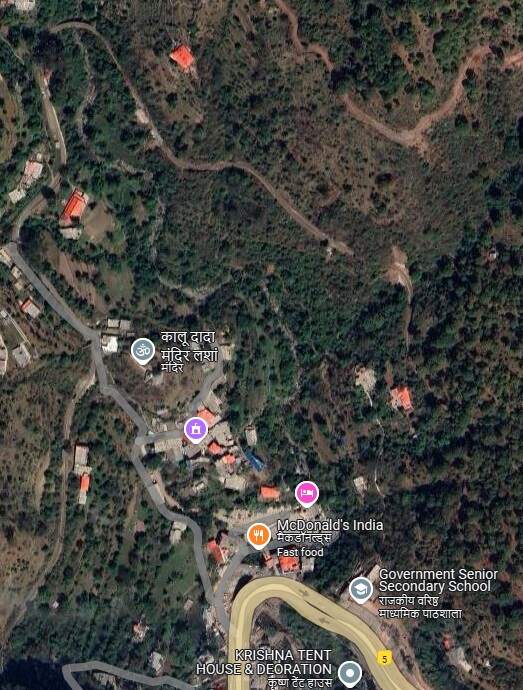
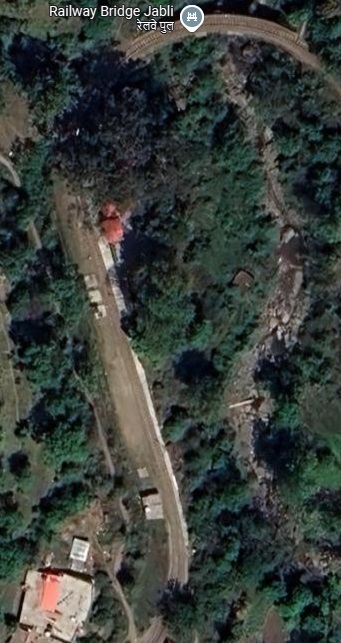
The line runs away North of the NH5 to allow gradients to remain steady. Top0-left of this image is a wayside halt serving the communities in this vicinity and as the line turns to cross the valley and return towards the NH5, there is a bridge carrying the line over the valley floor. [Google Streetview, October 2024]

The Halt and bridge shown in the image above on an enlarged extract from the satellite imagery. [Google Maps, October 2024]
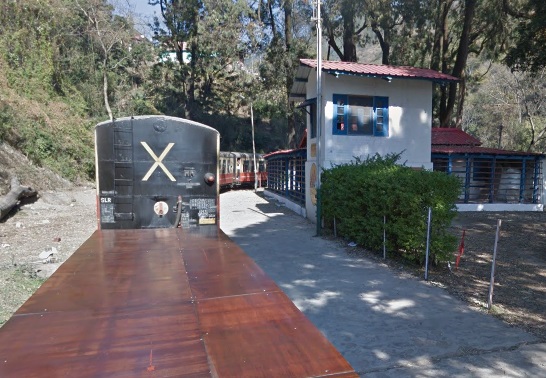
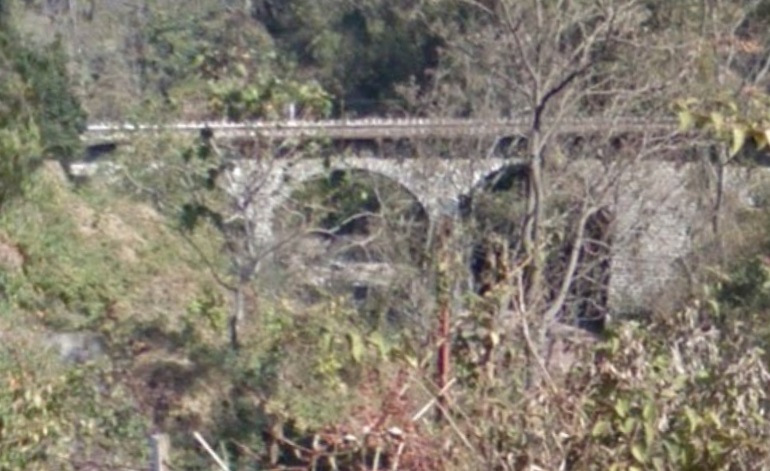
The Halt. [Google Streetview, January 2018]
The stone-arched viaduct to the Northeast of the Halt, seen from the platform. [Google Streetview, January 2018]

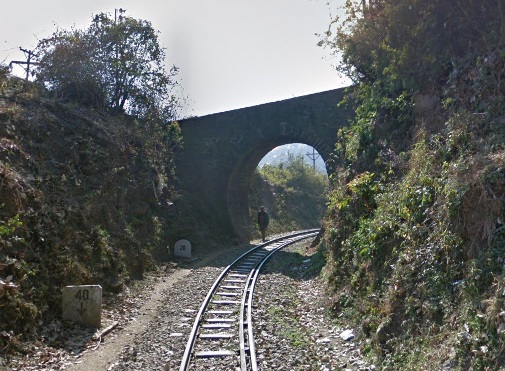
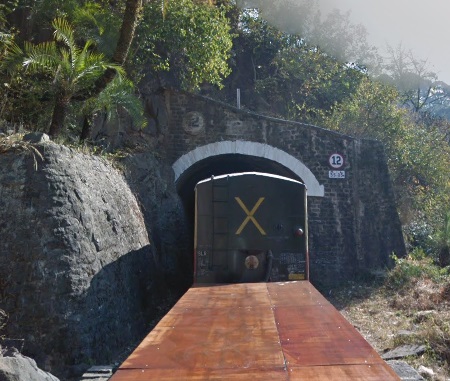
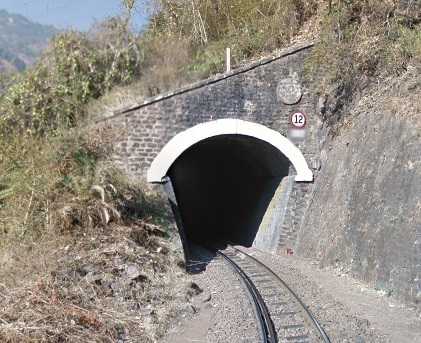
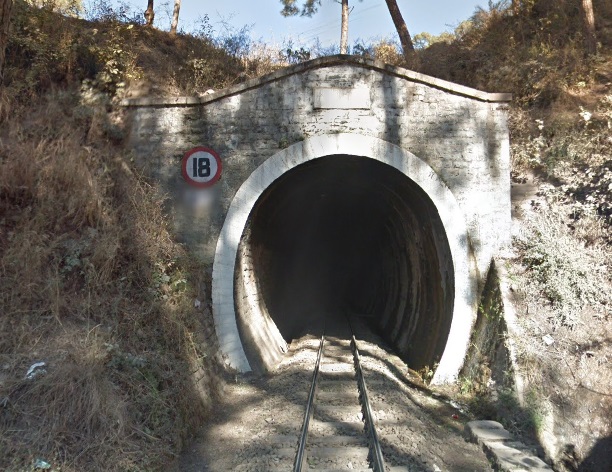
The sort tunnels above are typical of a number along the line. Tunnel No. 16 takes the railway under the NH5.

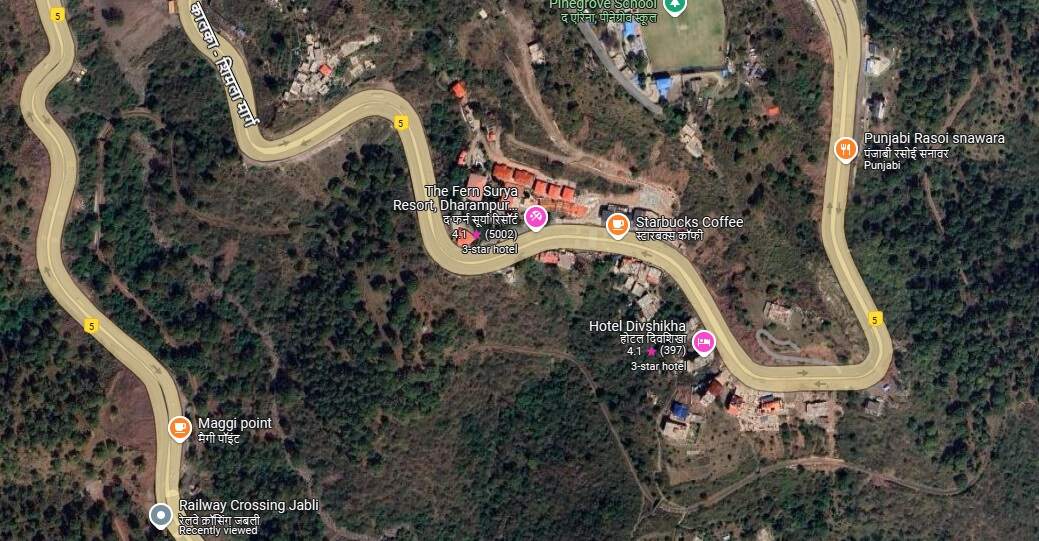
The NH5 climbs alongside the railway line which can be seen on the left of this image. around 100 metres further along the line Tunnel No. 16 takes the railway under the road. [Google Streetview, August 2024]
The line crosses under the NH5 at the bottom left of this satellite image and can be seen following the contours on the Southside of the road across the full width of the image, leaving the photo in the top-right corner. [Google Maps, October 2024]
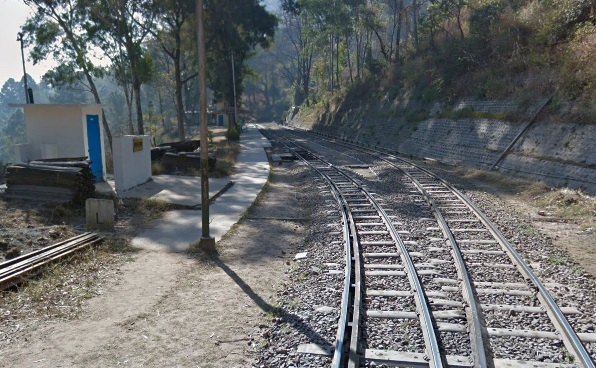
Looking back down the line towards Kalka through Sonwara Railway Station. [Google Streetview, January 2018]
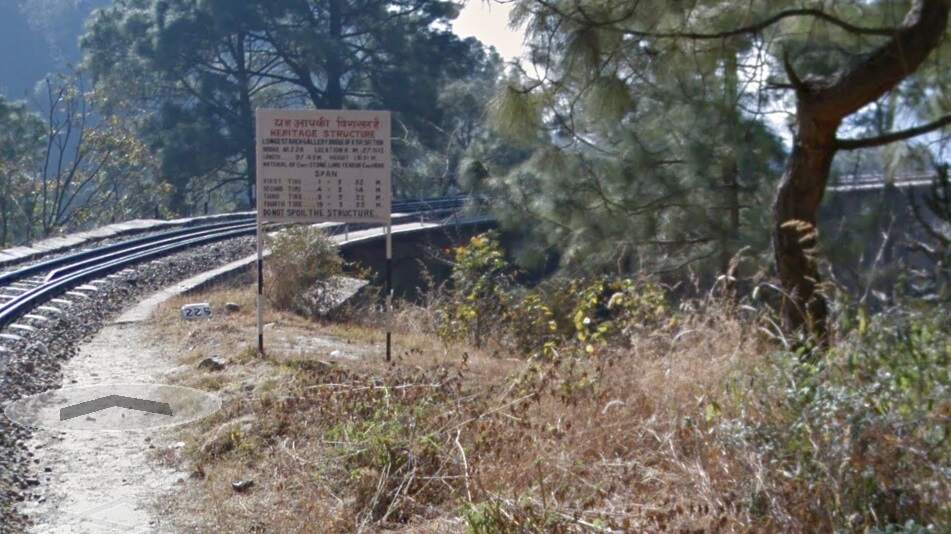
Again looking back towards Kalka the structure that the train has just crossed is given its own sign board. It appears to be a 4 span stone-arched viaduct. [Google Streetview, January 2018]

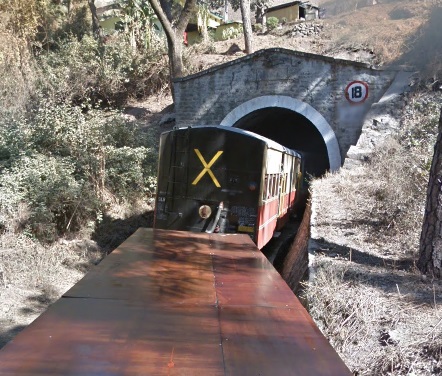
The next tunnel on the line (No. 18) is a semi-circular tunnel.
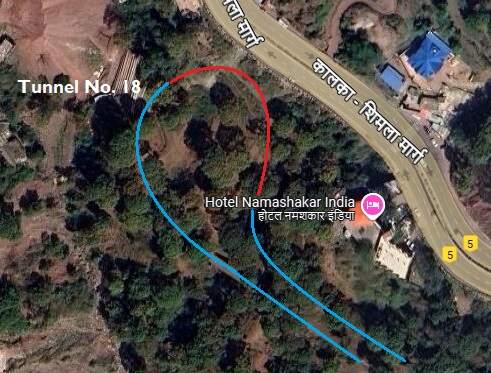
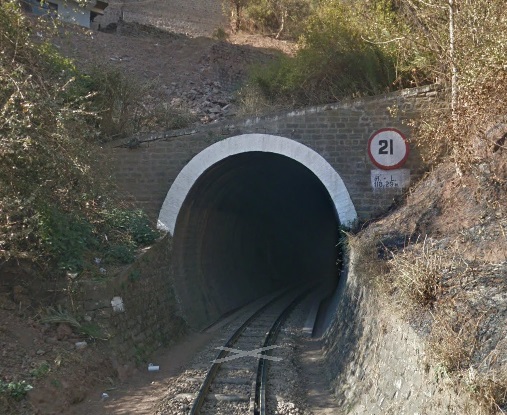
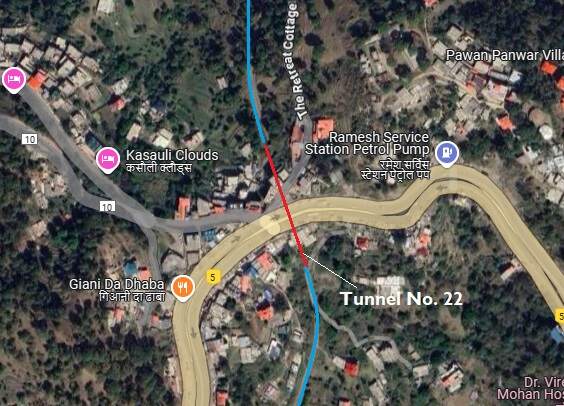
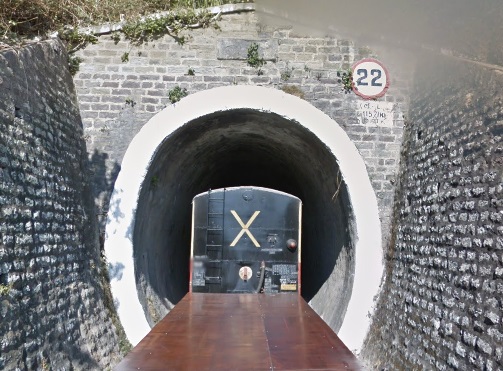
Tunnels No. 21 and No. 22 are shown below. The first image in each of these cases is the line superimposed on Google Maps satellite imagery (October 2024). The other two images, in each case, are from Google Streetview, January 2018.
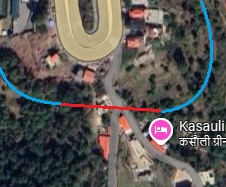
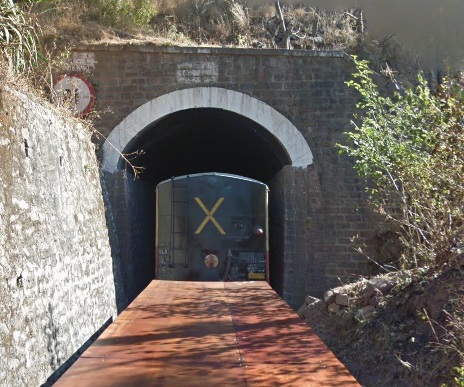
A short distance North from Tunnel No. 22 is an over bridge which is shown below.
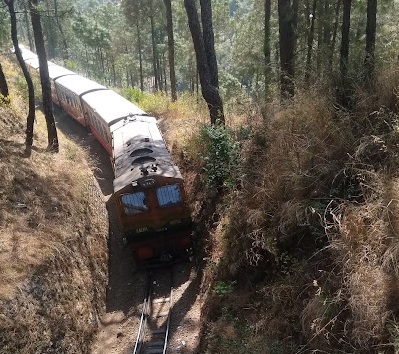
The next station is Dharampur Himachal Railway Station.
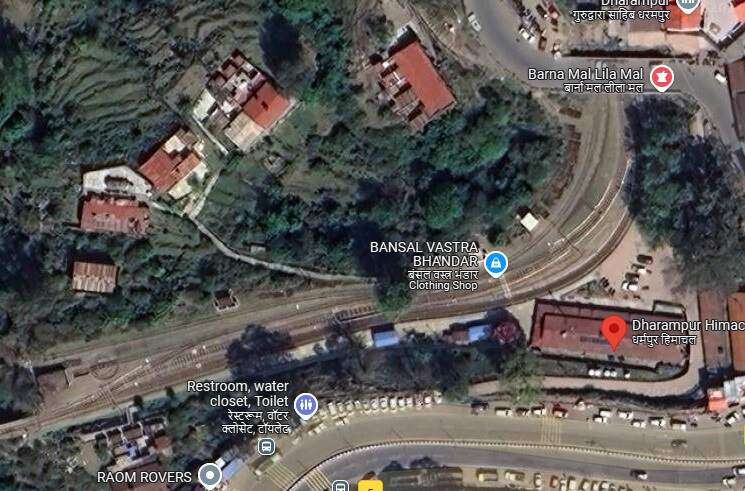
Dharampur Himachal Railway Station. [Google Maps, October 2024]

Immediately beyond the station the line is bridged by the NH5 and then enters another tunnel.
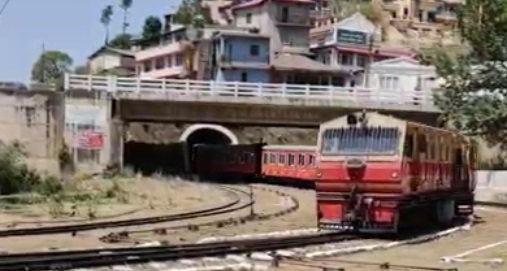
The short tunnel to the North of Dharampur Himachal Railway Station which perhaps carried the original road, (c) Balasubramaniam Janardhanan. (Video still, April 2022) {Google Maps, October 2024]
The same bridge and short tunnel. [Google Streetview, January 2018]
The line running North beyond the tunnel. [Google Streetview, January 2018]

After a deviation away to the North, the railway returns to the side of the NH5. Tunnels No. 27 and 28 take the line under small villages. Another tunnel (No. 29) sits just before Kumarhatti Dagshai Railway Station.
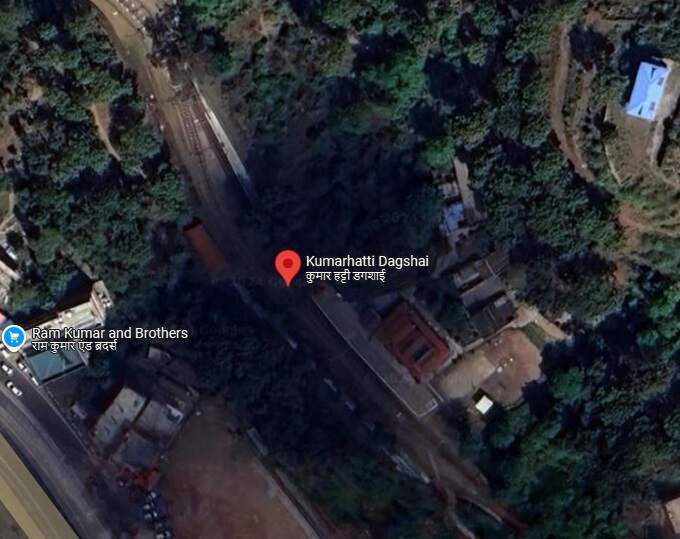
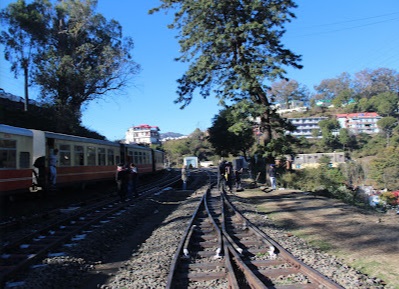
Kumarhatti Dagshai Railway Station. [Google Maps, November 2024]
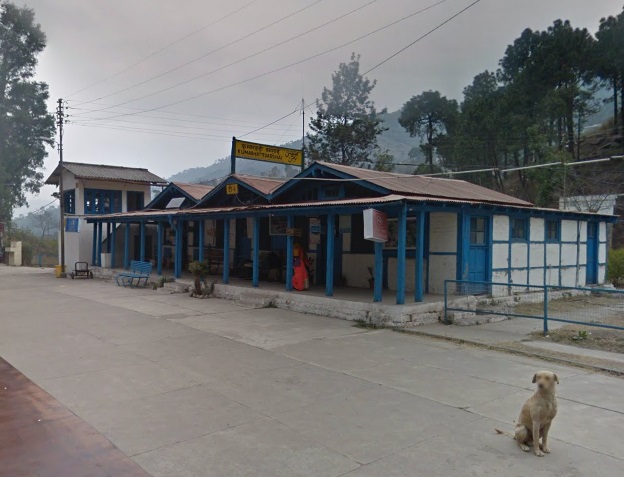
Kumarhatti Dagshai Railway Station building. [Google Streetview, January 2018]

As trains leave Kumarhatti Dagshai Railway Station, heading for Shimla, they immediately enter Tunnel No. 30.
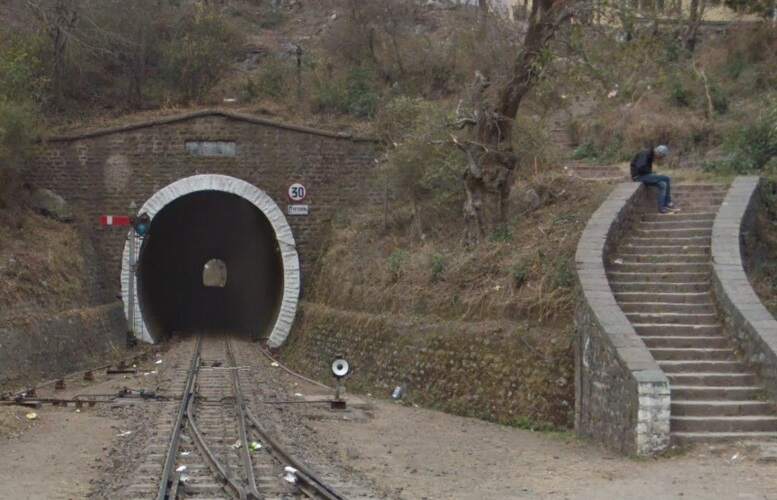
Tunnel No. 30 is a short straight tunnel which takes the railway under the village and NH5. [Google Streetview, January 2018]

Two short tunnels follow in quick succession, various tall retaining walls are passed as well before the line crosses a relatively shallow side-valley by means of a masonry arched viaduct.
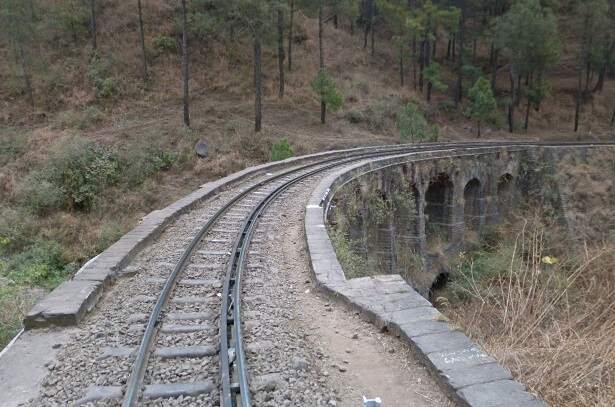
A short viaduct to the East of Kumarhatti Dagshai Railway Station. [Google Streetview, January 2018]

Tunnel No. 33 (Barog Tunnel) is a longer tunnel which runs Southwest to Northeast and brings trains to Barog Railway Station.

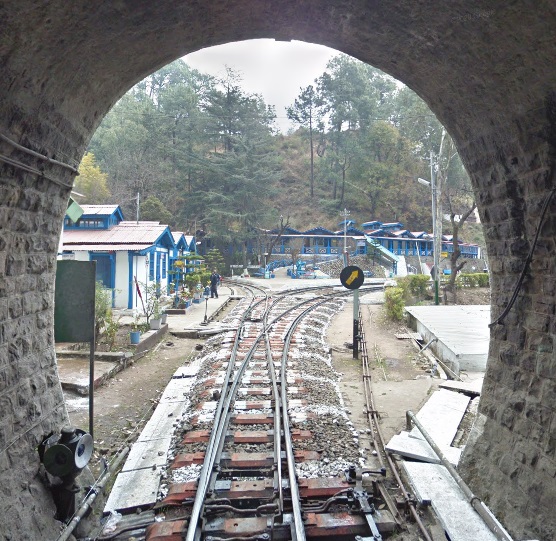
Barog Railway Station. [Google Streetview, January 2018]

Now back on the North side of the NH5, the line continues to rise gently as it follows the contours of the hillside. Five further short tunnels are encountered beyond Barog (Nos. 34, 35, 36, 37 and 38) before the line runs into Solan Railway Station.
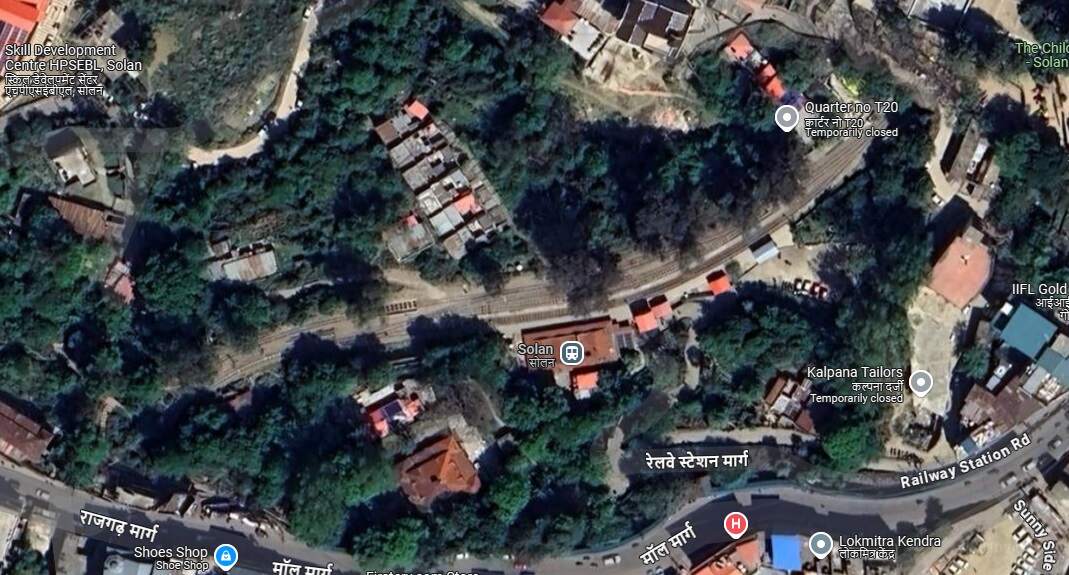
Solan Railway Station. [Google Maps, November 2024]

Immediately to the Eat of Solan Railway Station trains enter Tunnel No. 39 and soon thereafter Tunnels Nos. 40, 41 and 42 before crossing the NH5 at a level-crossing.
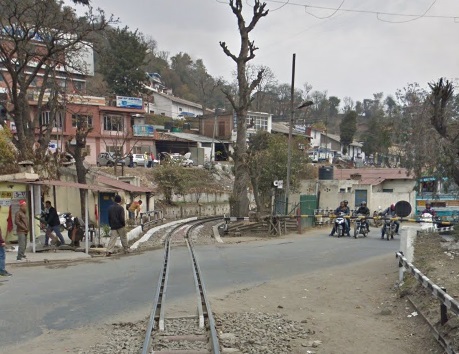
Level-crossing on the main Kalka-Shimla Road. [Google Streetview, January 2018]

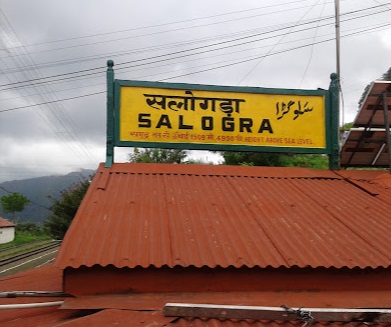
Further tunnels follow on the way to Salogra Railway Station.
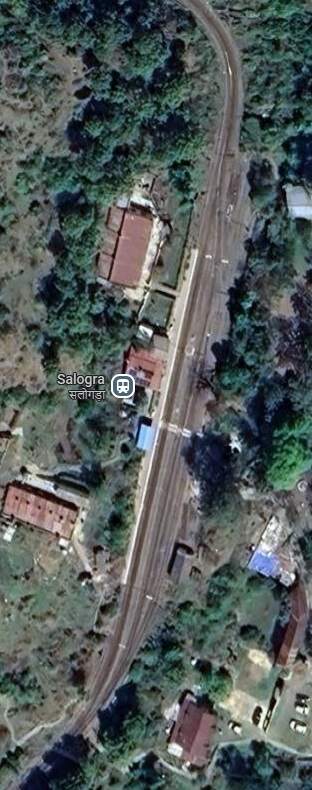
Salogra Railway Station was oriented North-South approximately.
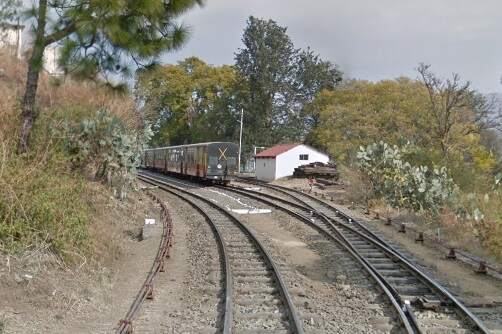
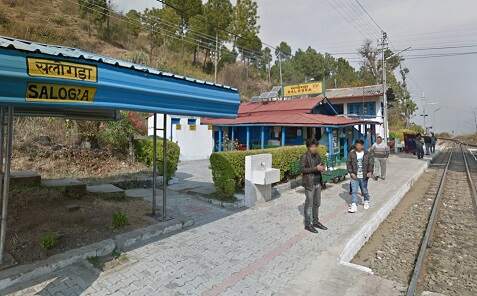
Looking North through Salogra Railway Station. [Google Streetview, January 2018]
Salogra Railway Station buildings seen from the South. [Google Streetview, January 2018]
Salogra Railway Station sign, (c) Travel More. (2015)

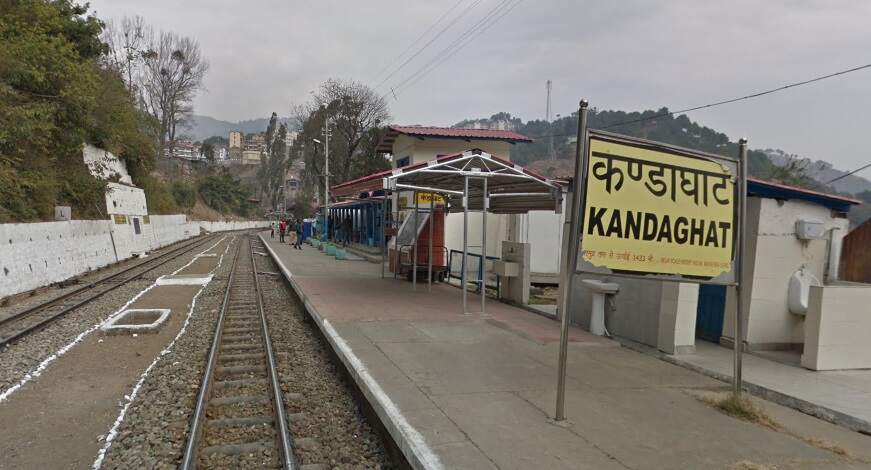
A further series of relative short tunnels protects the line as it runs on the Kandaghat Railway Station.
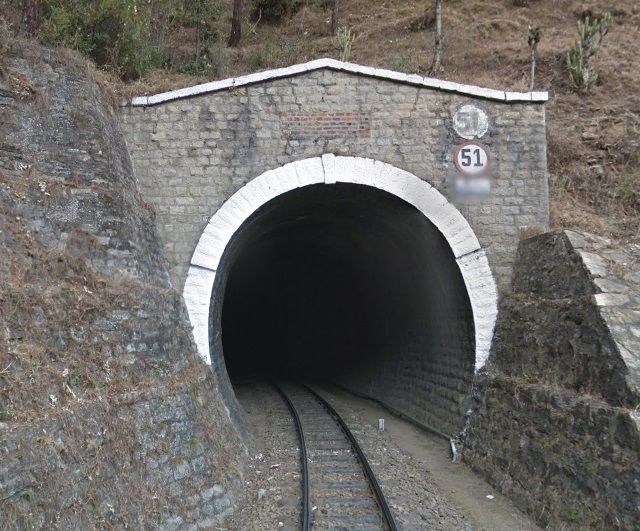
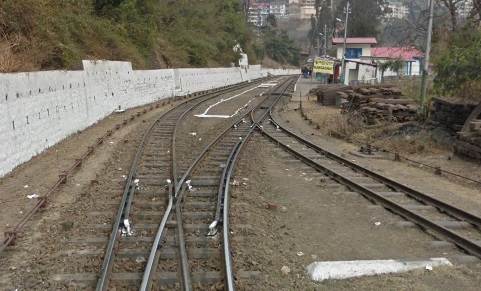
Kandaghat Railway Station. [Google Streetview, January 2018]
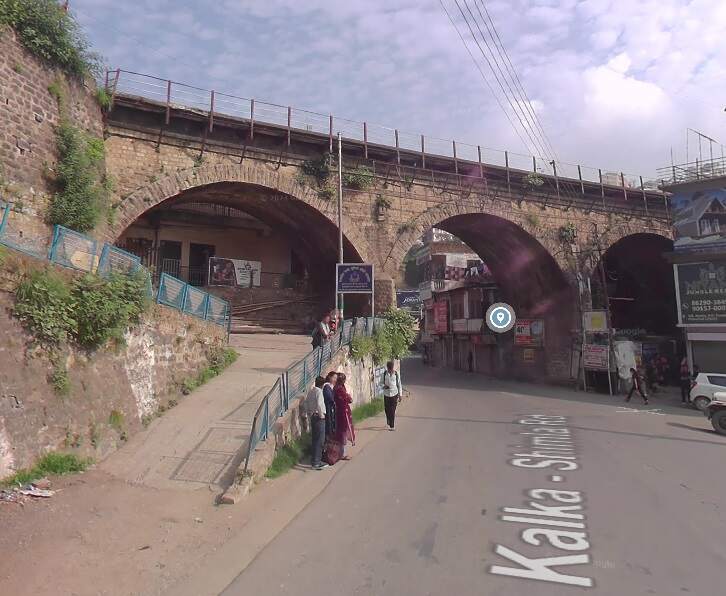
The stone-arched viaduct carrying the line over the NH5 (Kalka-Shimla Road) at the North end of Kandaghat Railway Station. [Google Streetview, July 2024]

Tunnels Nos. 56 and 57 sit a short distance to the East of the viaduct above. the line now accompanies a different highway which turns off the NH5 close to the viaduct.

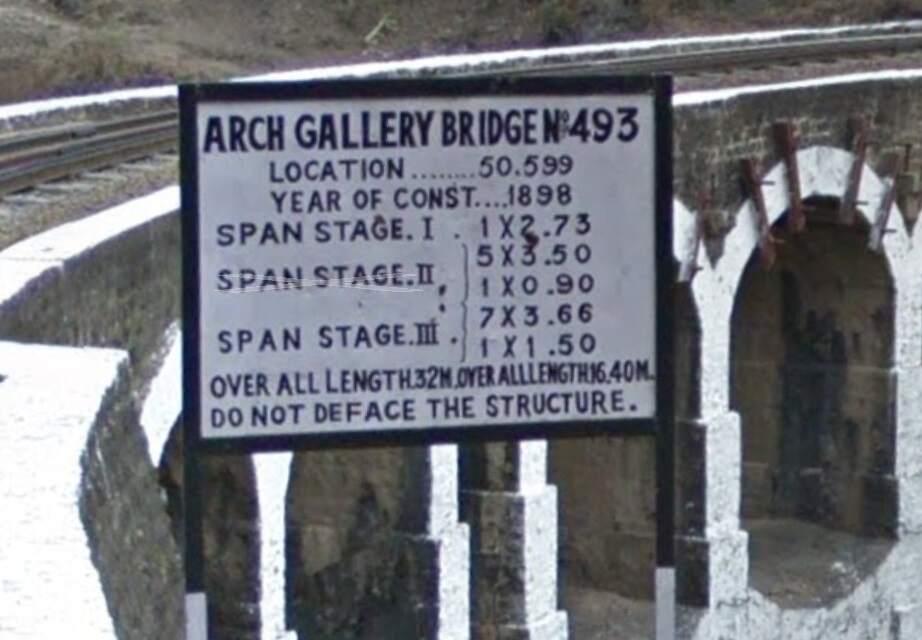
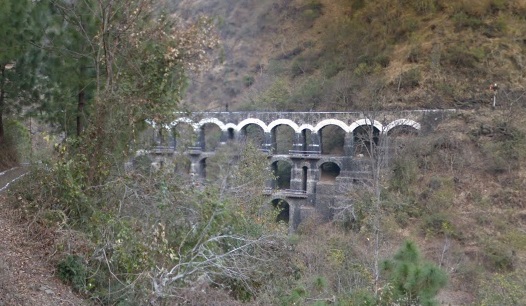
The next significant structure is the galleried arch bridge below.
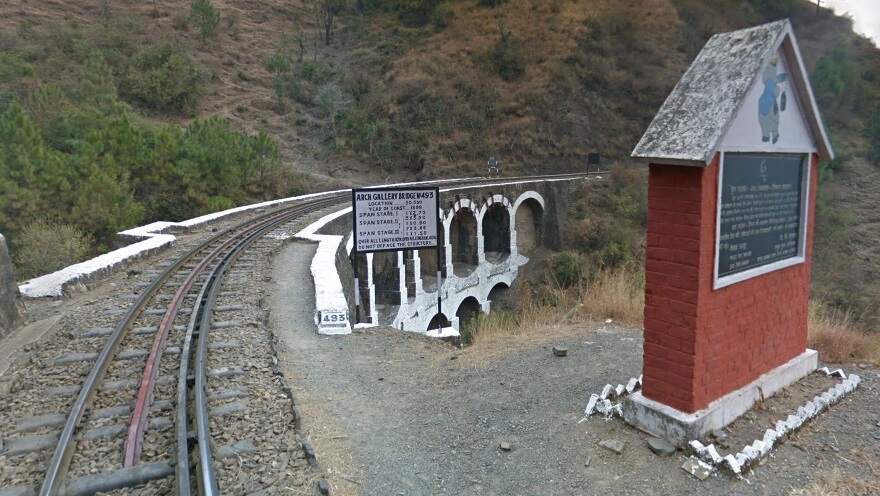
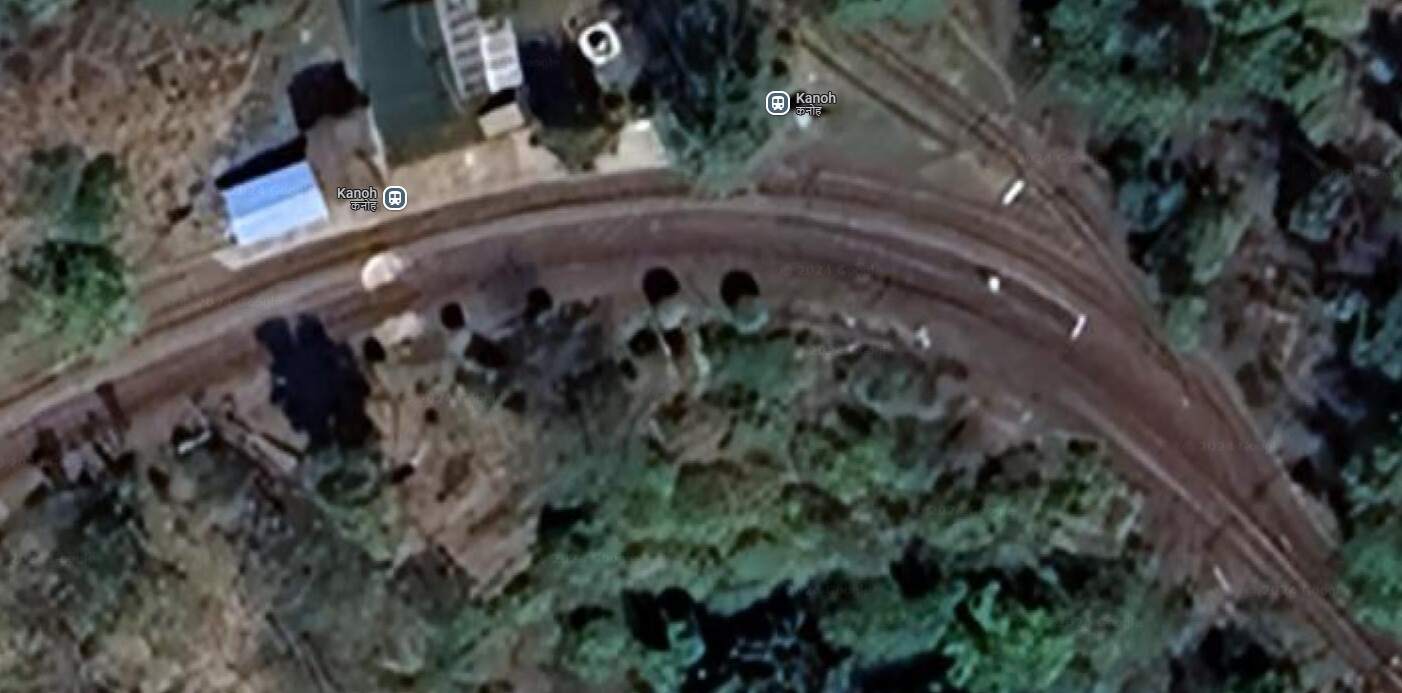
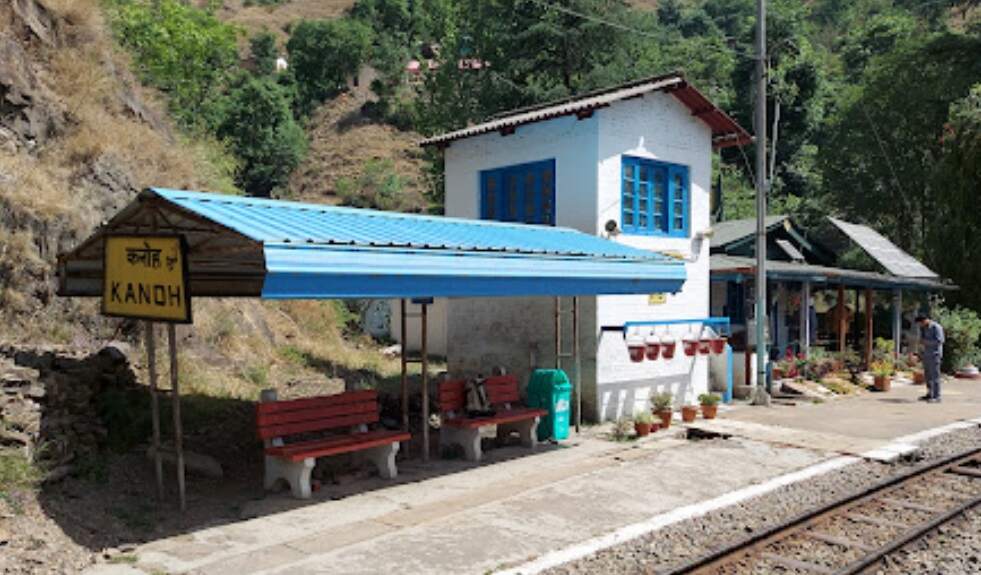
More tunnels, Nos. 58 to 66 are passed before the line crosses another significant structure – Bridge No. 541 – and then runs through Kanoh Railway Station.
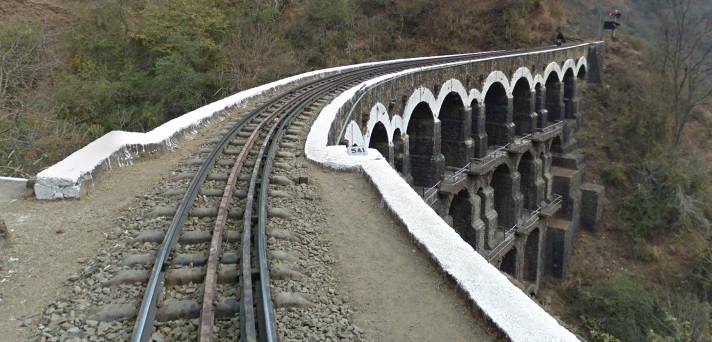
Kanoh Railway Station. [Google Maps, November 2024]
Kanoh Railway Station, (c) Saumen Pal. (April 2022). [Google Maps, November 2024]

After Kanoh Station the line passes through a further series of short tunnels (Nos. 67-75) before meeting its old friend the NH5 (the Kalka to Shimla Road) again.
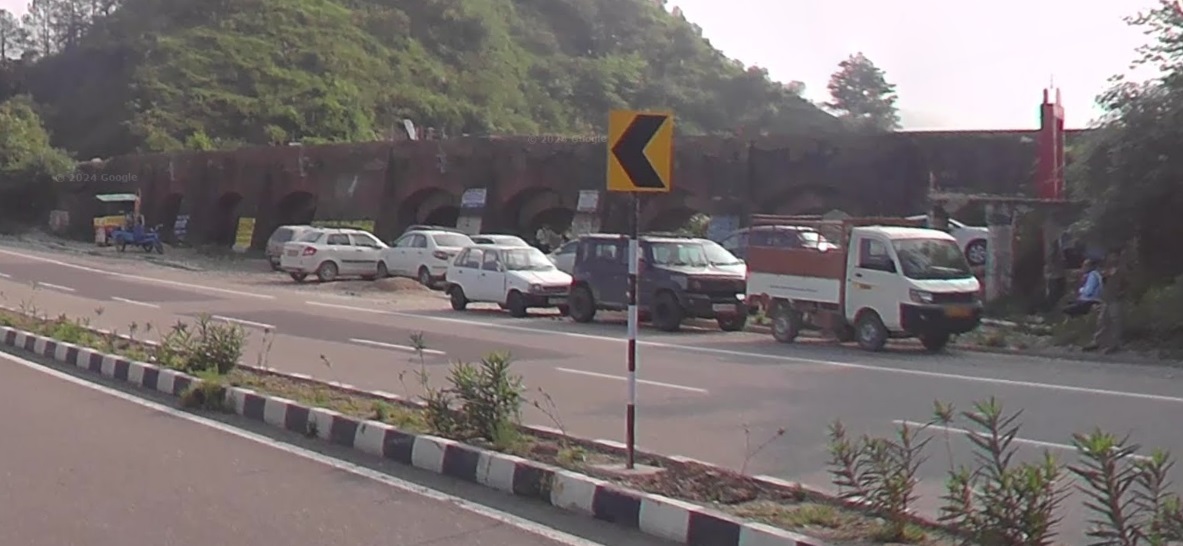
The Kalka to Shimla Railway line viaduct seen from the Southwest on the adjacent NH5 (Kalka-Shimla Road). [Google Streetview, July 2024]

Beyond this point the line passed through Tunnels Nos. 76 and 77 before arriving at Kathleeghat Railway Station.
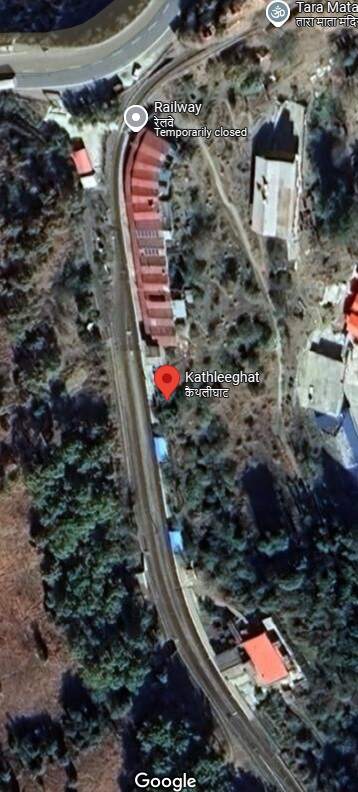
Kathleeghat Railway Station.
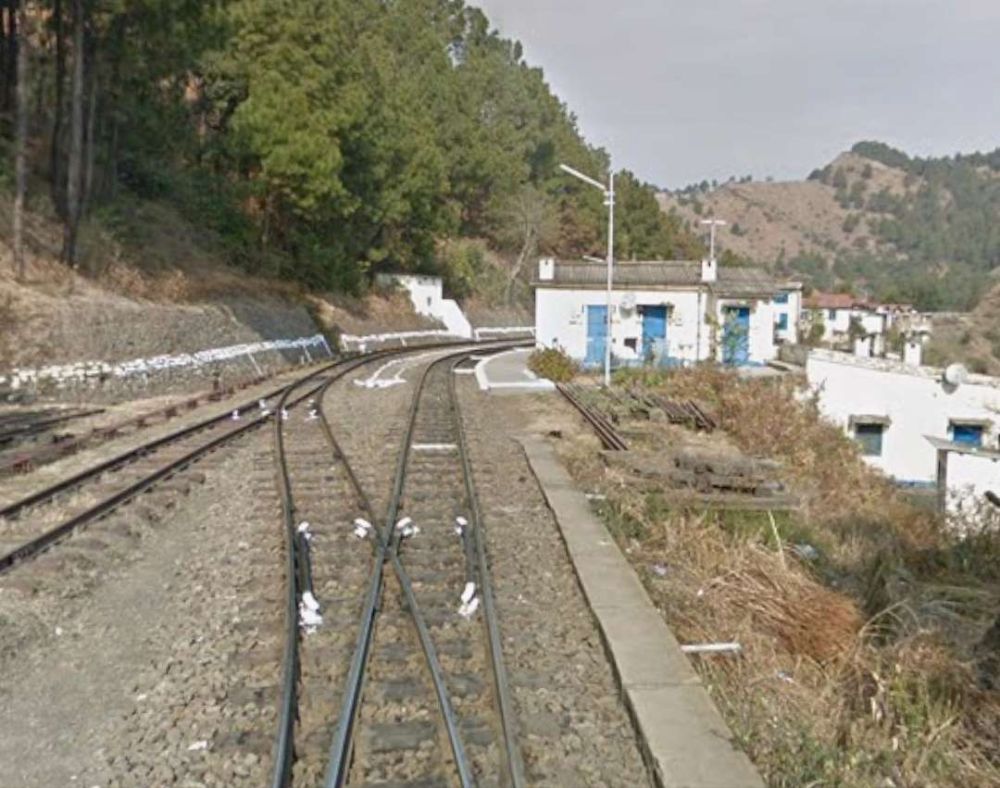
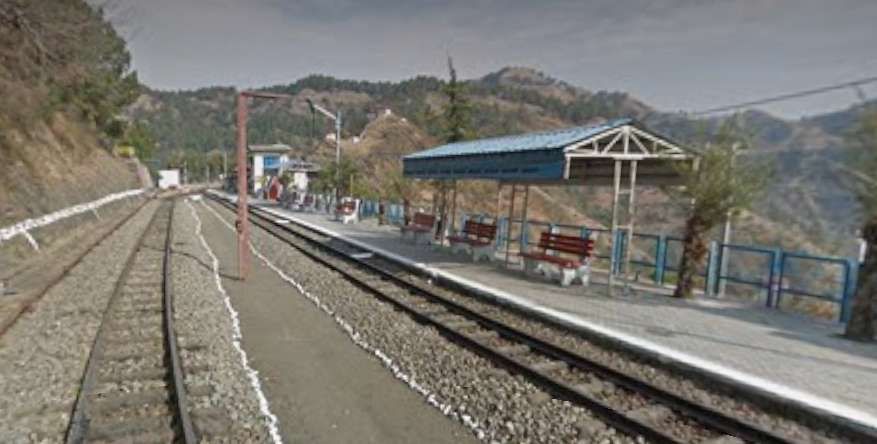
Kathleeghat Railway Station. [Google Streetview, January 2018]
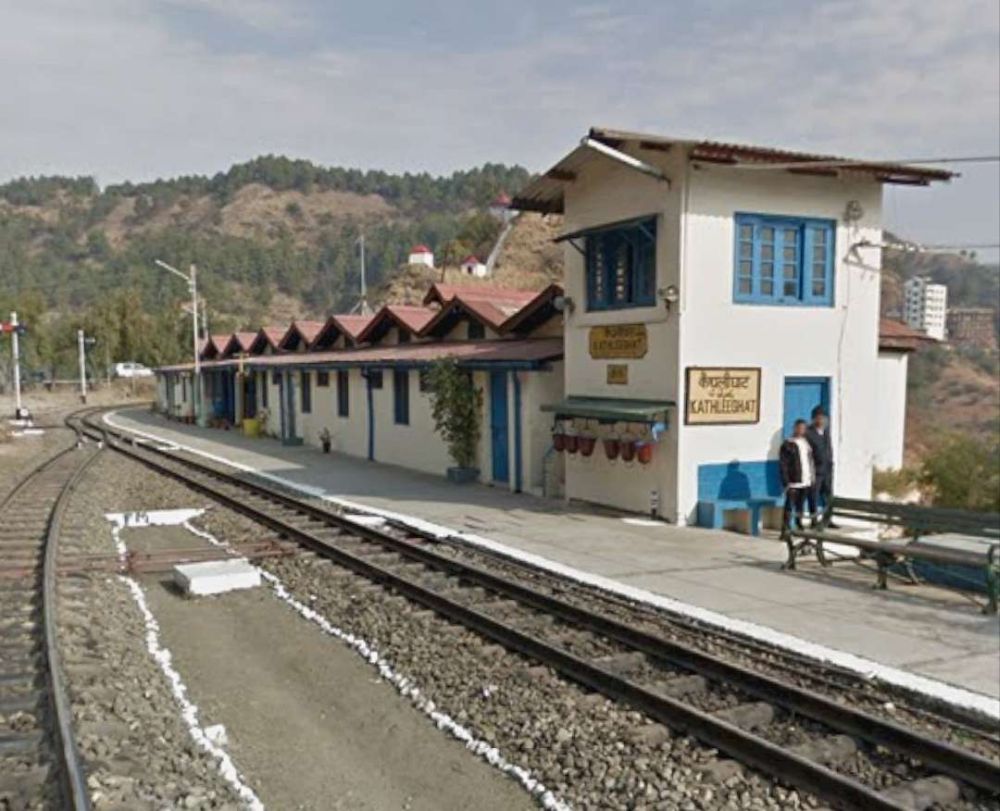

Immediately the Northeast of Kathleeghat Station the line enters Tunnel No. 78 under the Kalka-Shima Road (NH5) and soon heads away from the road plotting its own course forward toward Shimla through Tunnels Nos. 79 and 80, before again passing under the NH5 (Tunnel No. 81). Tunnels Nos 82 to84 follow and the occasional overbridge before the next stop at Shoghi Railway Station.
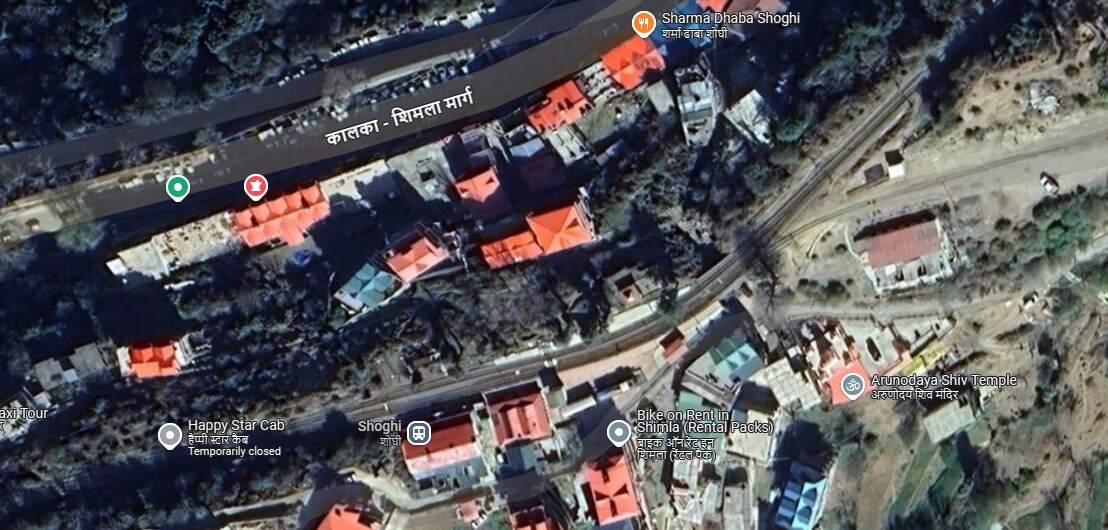
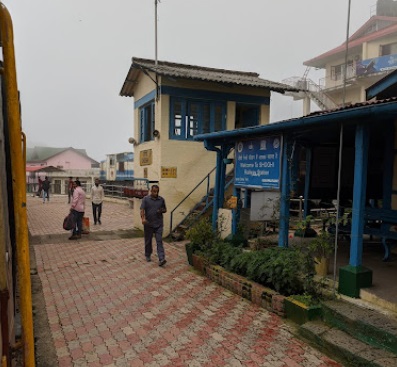
Shoghi Railway Station. [Google Maps, November 2024]

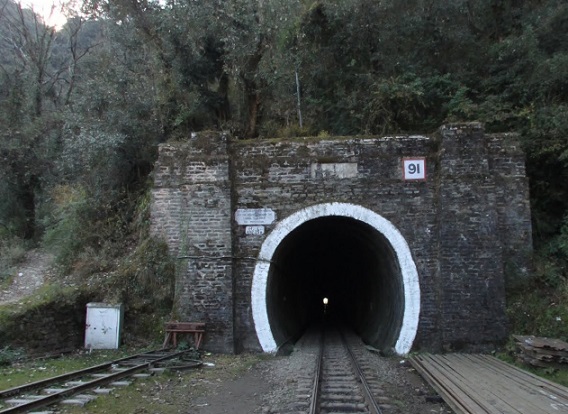
North East of Shoghi Station the line turns away from the NH5 and passing though a series of short Tunnels (Nos. 85-90) finds it own way higher into the hills before passing through Scout Halt and into a longer Tunnel (No. 91).
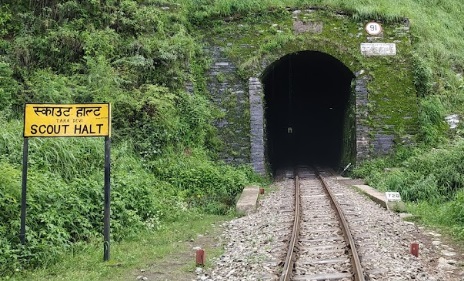
The North Portal of Tunnel No.91. [Google Streetview, December 2017]

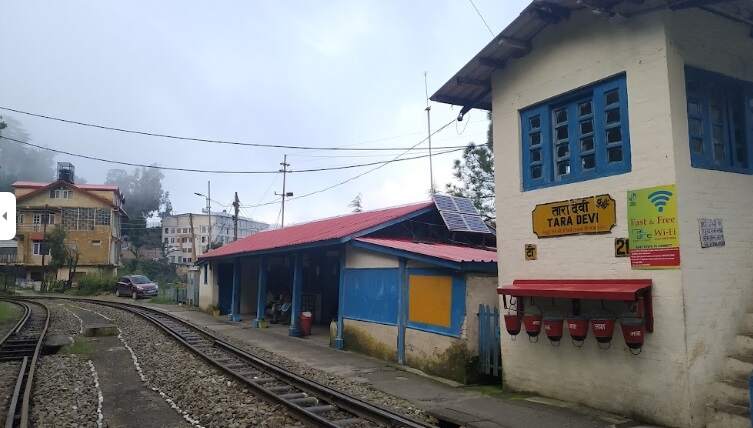
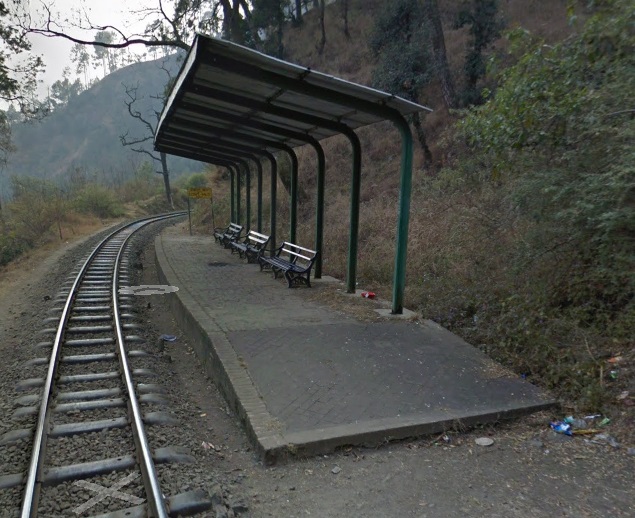
North of Tunnel No. 91, the line enters Taradevi Railway Station which sits alongside the NH5.
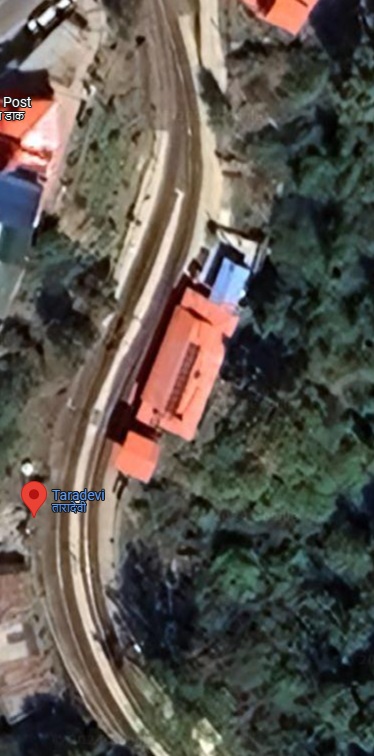
Taradevi Railway Station.
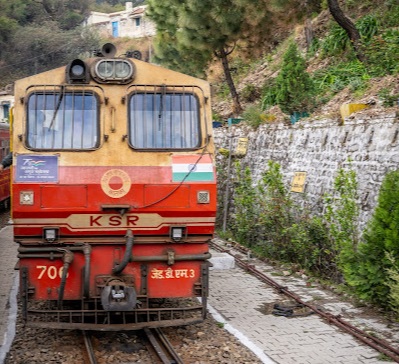
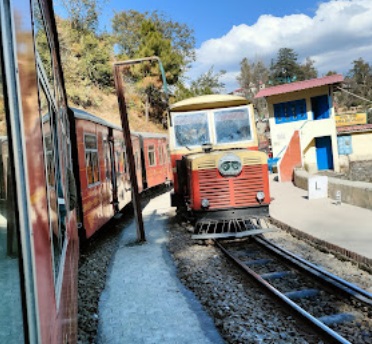
Taradevi Railway Station, (c) William Matthews. (2023)
Taradevi Railway Station, (c) Gokul Gopakumar. (2021)
Taradevi Railway Station, (c) Iqbal Singh. (August 2019) [Google Maps, November 2024]

Immediately North of the station the line passes under the NH5 in Tunnel No. 92 and then runs on the hillside to the West of the road. It turns West away from the road and passes through Tunnels 93 to 98 before entering Jutogh Railway Station.
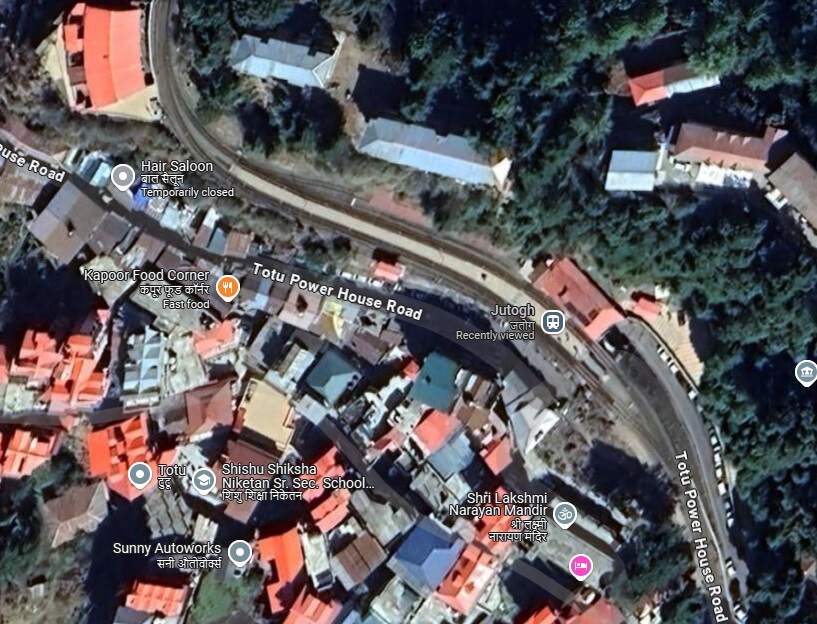
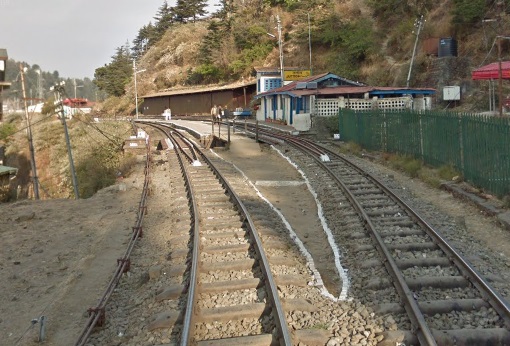
Jutogh Railway Station. [Google Maps, November 2024]

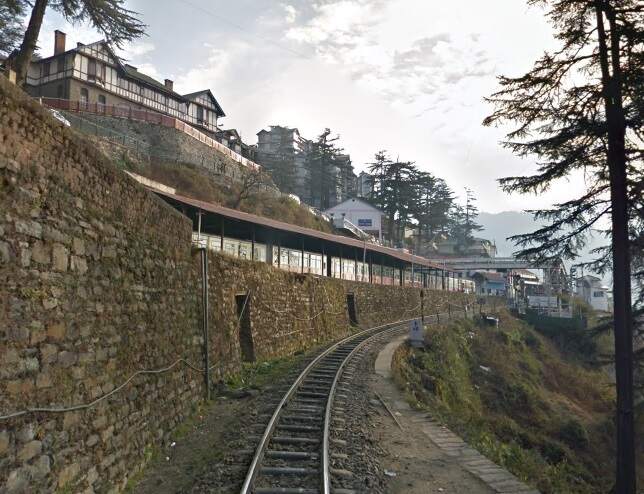
Leaving Jutogh Railway Station, the line turns immediately through 180 degrees and runs along the North side of the ridge on which the town sits. Tunnel No. 98 is followed by a short viaduct.
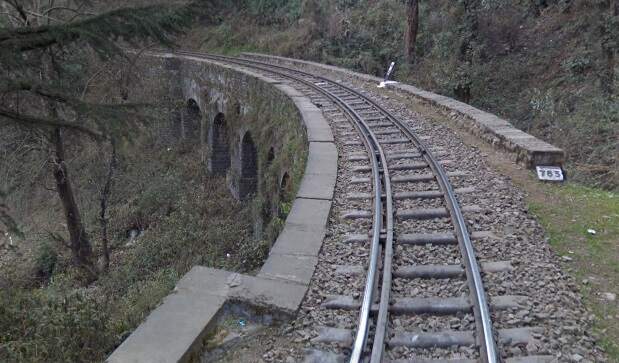
This viaduct sits just east of Tunnel No. 98, above the Shima-Ghumarwin Road. Just a short distance towards Shima, the same road climbs steeply over the railway which passes under it in Tunnel No. 99. [Google Streetview, January 2018]

east of the road, Tunnel No. 100 is followed by a long run before an overbridge leads into Summer Hill Station.
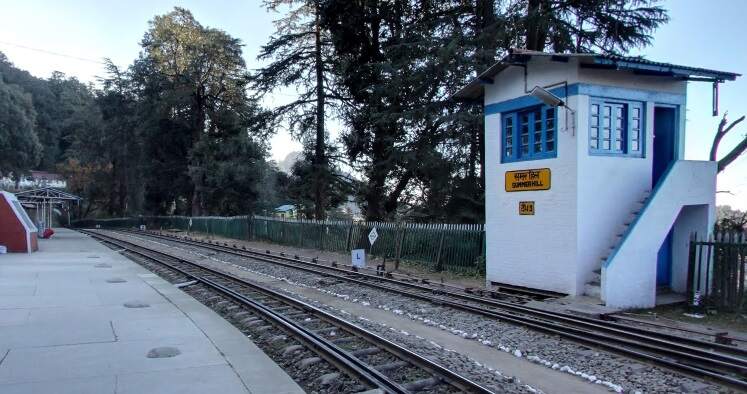
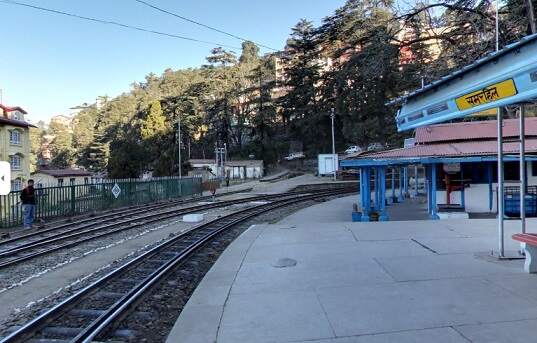
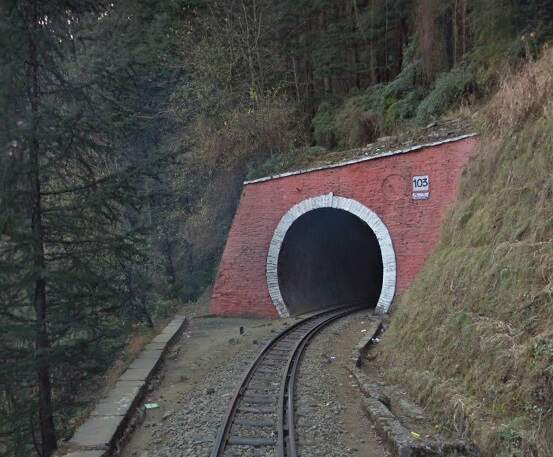
Beyond Summer Hill Station, the line immediately ducks into Tunnel No. 101 which takes it under the ridge on which Summer Hill sits and then returns almost parallel to the line whch approached Summer Hill Station but to the East of the ridge. It runs on through Tunnel No. 102 to Inverarm Tunnel (No. 103) which brings the line into Shimla.
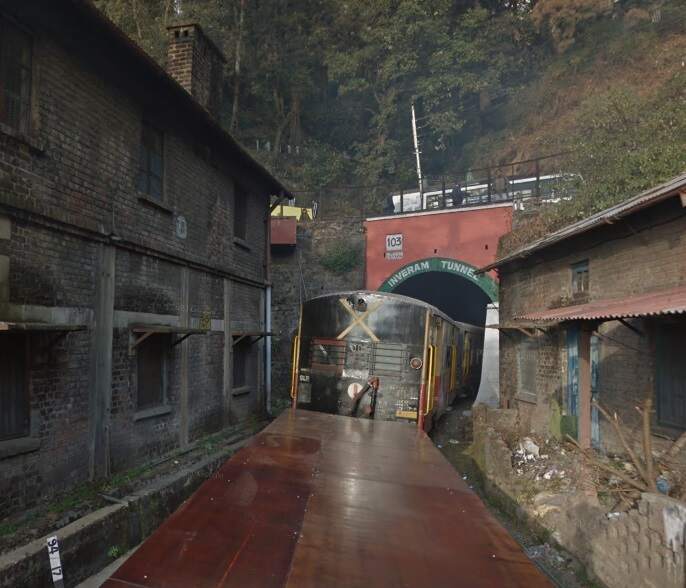
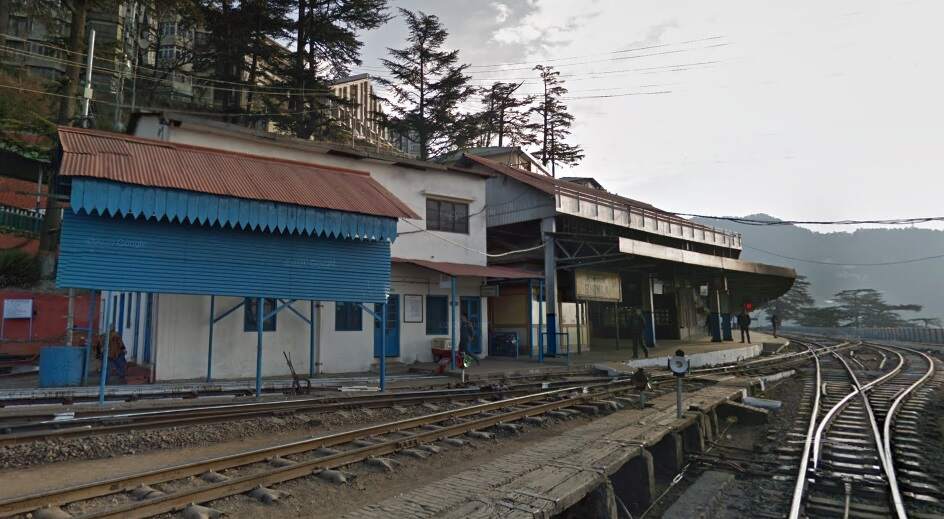
Shimla Railway Station. [Gpgle Streetview, January 2018]
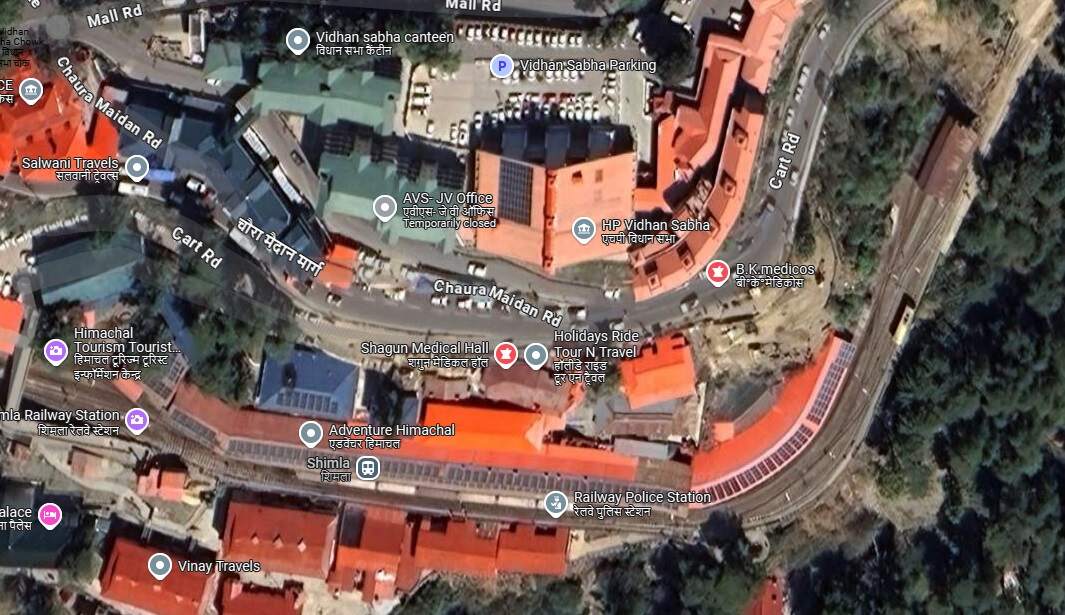
Shimla Railway Station. [Google Maps, November 2024]

Shimla is the end of this journey on first the East Indian Railway and its branches and then the line to Kalka before we travelled the narrow gauge Kalka to Shimla Line.

Wikipedia tells us that “the Kalka–Shimla Railway is a 2 ft 6 in (762 mm) narrow-gauge railway. … It is known for dramatic views of the hills and surrounding villages. The railway was built under the direction of Herbert Septimus Harington between 1898 and 1903 to connect Shimla, the summer capital of India during the British Raj, with the rest of the Indian rail system. … Its early locomotives were manufactured by Sharp, Stewart and Company. Larger locomotives were introduced, which were manufactured by the Hunslet Engine Company. Diesel and diesel-hydraulic locomotives began operation in 1955 and 1970, respectively. On 8 July 2008, UNESCO added the Kalka–Shimla Railway to the mountain railways of India World Heritage Site.” [28]

References

  1. G. Huddleston; The East Indian Railway; in The Railway Magazine, July 1906, p40-45.
  2. https://rogerfarnworth.com/2024/10/16/the-east-indian-railway-the-railway-magazine-december-1905-and-a-journey-along-the-line/
  3. https://hillpost.in/2005/01/kalka-shimla-railway/30, accessed on 24th October 2024.
  4. https://indiarailinfo.com/train/map/train-running-status-shikohabad-farrukhabad-passenger-485nr/6070/903/2192, accessed on 24th October 2024.
  5. https://en.wikipedia.org/wiki/Shikohabad, accessed on 25th October 2024.
  6. https://en.wikipedia.org/wiki/Shikohabad_Junction_railway_station, accessed on 25th October 2024.
  7. https://web.archive.org/web/20130728090858/http://mainpuri.nic.in/gaz/chapter7.htm, accessed on 25th October 2024.
  8. https://www.youtube.com/watch?app=desktop&v=1ehvDEs2pt4, accessed on 25th October 2024.
  9. http://64.38.144.116/station/blog/2193/0, accessed on 25th October 2024.
  10. https://en.wikipedia.org/wiki/Ganga-Jamuni_tehzeeb, accessed on 26th October 2024.
  11. https://en.wikipedia.org/wiki/Farrukhabad_district, accessed on the 26th October 2024.
  12. C.A. Bayly; Rulers, Townsmen and Bazaars: North Indian Society in the Age of British Expansion, 1770–1870; Oxford University Press, New Delhi, 2012.
  13. “District Census Handbook: Farrukhabad” (PDF). (censusindia.gov.in). Registrar General and Census Commissioner of India. 2011.
  14. “Table C-16 Population by Mother Tongue: Uttar Pradesh”. (www.censusindia.gov.in). Registrar General and Census Commissioner of India.
  15. Decadal Variation In Population Since 1901. (www.censusindia.gov.in)
  16. “Table C-01 Population by Religion: Uttar Pradesh”. (www.censusindia.gov.in). Registrar General and Census Commissioner of India. 2011.
  17. https://www.irfca.org/gallery/Heritage/JUMNA+BRIDGE+AGRA+-+1.JPG.html, accessed on 27th October 2024.
  18. https://wiki.fibis.org/w/Yamuna_Railway_Bridge(Agra), accessed on 27th October 2024.
  19. https://cityseeker.com/agra/723275-stretchy-bridge, accessed on 27th October 2024.
  20. https://www.etsy.com/no-en/listing/235077088/1962-agra-india-vintage-map, accessed on 27th October 2024.
  21. https://en.m.wikipedia.org/wiki/Delhi_Junction_railway_station, accessed on 27th October 2024.
  22. https://m.economictimes.com/news/politics-and-nation/now-swachh-drive-at-delhi-railway-station/articleshow/47754817.cms, accessed on 27th October 2024
  23. https://en.m.wikipedia.org/wiki/New_Delhi_railway_station, accessed on 27th October 2024.
  24. https://en.wikipedia.org/wiki/Sonipat_Junction_railway_station, accessed on 28th October 2024.
  25. https://en.wikipedia.org/wiki/Panipat_Junction_railway_station, accessed on 28th October 2024.
  26. https://en.wikipedia.org/wiki/Ambala, accessed on 29th October 2024.
  27. https://st2.indiarailinfo.com/kjfdsuiemjvcya0/0/1/8/2/933182/0/7226151664bda48a8152z.jpg, accessed via https://indiarailinfo.com/station/map/kalka-klk/1982 on 29th October 2024.
  28. https://en.wikipedia.org/wiki/Kalka%E2%80%93Shimla_Railway, accessed on 2nd November 2024.
  29. https://en.wikipedia.org/wiki/File:KSR_Steam_special_at_Taradevi_05-02-13_56.jpeg, accessed on 2nd November 2024.
The East Indian Railway – The Railway Magazine, December 1905 and a journey along the line.

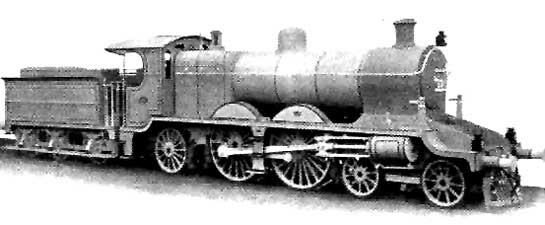
The featured image for this article shows a Class AP 4-4-2 Locomotive of the East Indian Railways. [19]

At the end of 1905, G. Huddleston, CLE., was Deputy Traffic Manager (Goods) East Indian Railway. This article is based round the one written by him in the December 1905 Railway Magazine.

In 1905, there were over 27,000 miles of railway in India: some owned and worked by the State, while other lengths of railway were owned by the State but worked by private railway companies, and others privately owned and worked. Of all of these, the East Indian Railway had the highest traffic figures and earnings. It was worked for the Government by a private company.

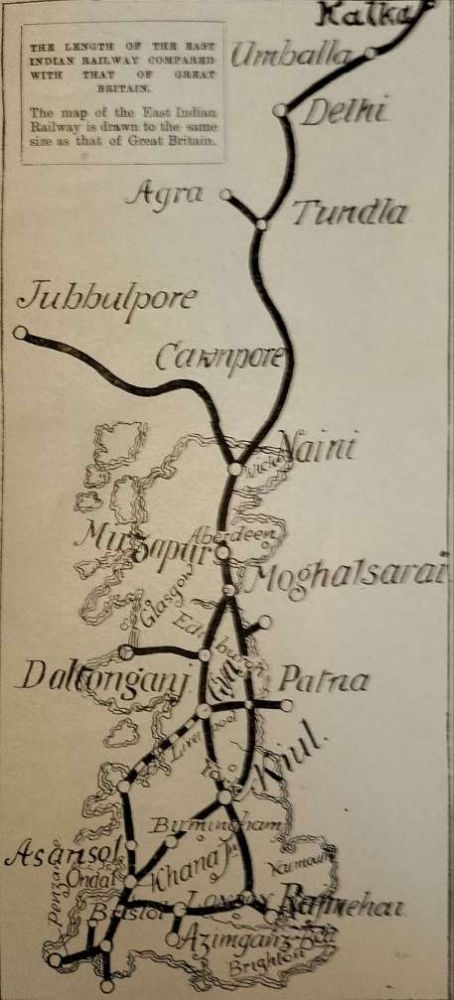
The East Indian Railway (EIR) had a network, including branches and lines worked by it, covering a distance of 2,242 miles. The first image below provides an illustration of what this meant on the ground.

The adjacent sketch map provides a simple comparison between a map of the UK and the network of the EIR – although Kolkata (Calcutta) is not clearly marked. [1: p483]

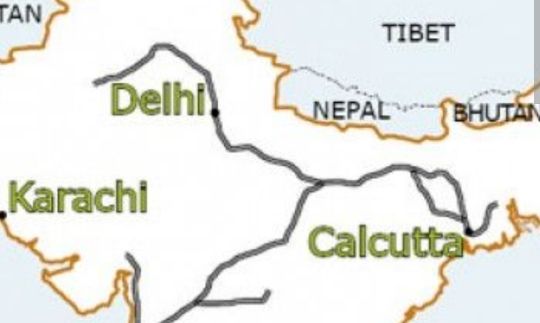
This schematic map gives a much clearer idea of the route of the line, oriented more traditionally, which shows the line running from Kolkata (Calcutta) to Delhi. [5]

Roughly speaking, the East Indian Railway [was] as long as from Land’s End to John-o’Groats and back again, and, in addition, [had] several important branches. It traverses very much the same country as that great waterway, the mighty river Ganges, which, before the days of railways, afforded the chief means of transport for the commerce of Bengal and the North-West, The original main line was, as a matter of fact, constructed to tap the river at various points, and to draw from it the traffic then carried by boat. As indicated by the Chairman (General Sir Richard Strachey) at the last general meeting of the Company, the line [passed] through the richest and most populous districts of British India, following more or less closely the great trade route between the metropolis of Calcutta and the province of the Punjab, which [had] existed for centuries from the time, in fact, of Alexander the Great, if not before.” [1: p481]

The construction of the EIR was commenced before the Mutiny of 1857, “the general idea being to connect the seat of the Supreme Government in Calcutta with Delhi, the ancient capital of Hindustan. … Only 121 miles were open to traffic when the outbreak occurred.” [1: p481-482]

The country through which the EIR passed was for the most part on the level. “In the first 950 miles of its course from Calcutta the line rises less than 700 ft. The absence of heavy gradients [was] naturally a great help towards economical working, …, the [EIR] was probably the cheapest worked line of its size in the world, it’s working expenses being less than 33% of its gross receipts, or about half that on English lines.” [1: p482]

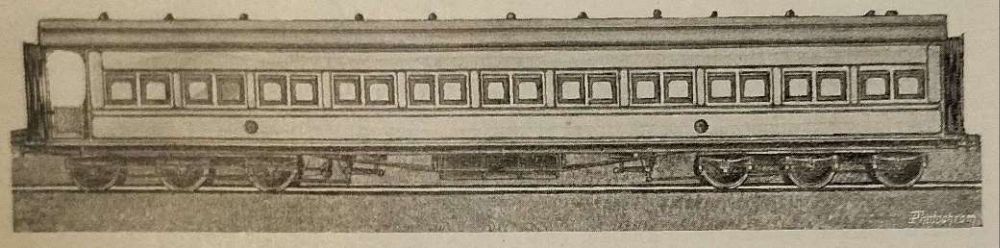
One of the carriages used by the Prince and Princess of Wales (later George V and Queen Mary) during their tour of India between November 1905 and March 1906. The saloon above, and the other coaches used, were generally referred to as the Royal train. These were, however, built just after the turn of the 20th century for the use of the Viceroy and suite, and were known as Viceregal saloons. They were numbered 3002 to 3007, inclusive, and were constructed in India from the designs of Mr. H. K. Bamber, the Carriage and Wagon Superintendent of the East Indian Railway. The saloons weighed 45 tons each. [1: p481][2]

Leaving Calcutta, where its chief offices were situated the main line ran through more than 400 miles of the Province of Bengal; then traverse[d] the United Provinces of Agra and Oudh, and, crossing the Jumma River, reache[d] the Punjab at Delhi. Here the [EIR] proper end[ed], but the Delhi Umballa Kalka Railway, which [was] worked by the East Indian, continued for another 162 miles to the foot of the Himalayan Mountains, whence a hill railway [ran] to Simla, 7,084 ft. above sea level. … The [EIR] thus connect[ed] the winter and summer headquarters of Government, and [was] not only the route followed by the mails between these points, but [was] the route followed by the mails between Bombay and Calcutta, the Great Indian Peninsular Railway carrying them over the section between Bombay and Jubblepore, where it connect[ed] with the Jubblepore branch of the [EIR].” [1: p482]

On the EIR, 1st and 2nd class passengers taken together only provided 7% of the passenger income in 1905. 3rd class passengers provided over 70% of the EIR’s income and we’re therefore “all important to the railway, and it is to assist him and to make his journeys as comfortable and pleasant as possible that the efforts of the management [were] mainly directed.” [1: p482]

After the turn of the 20th century, the EIR was carrying more than 20 million 3rd class passengers each year. A significant proportion of these rail users are pilgrims travelling to holy shrines and particularly to/from the sacred River Ganges.

Huddleston comments on the fares paid by 3rd class travellers: The Anna is the equivalent of 1d and there are 12 Pies in one Anna. “The third class fare [was] 2.5 Pies per mile for the first 100 miles, with a still lower rate for distances beyond. … The third class fare [was] considerably below a farthing a mile. If [EIR] fares were charged in England a trip from London to Brighton would [have] cost about 10d., and a journey from London to Edinburgh could [have been] made for about 8s. 6d.” [1: p485]

In 1905, the standard fare for third class rail travel in the UK was 1d per mile, and first class fares were usually 1.5–2 times that. Fares were based on distance traveled, and the shortest route between two places was used to calculate the price. For example, if there were multiple routes between London and Edinburgh, the price for all routes would be based on the shortest route. [3]

Making the assumption that the distance between London and Edinburgh by rail is/was 332 miles then a 3rd class ticket from London to Edinburgh would have cost £1 7s 8d. Rail travel on the EIR was around 30% of that in the UK at the time.

We have noted the importance of 3rd class passengers to the finances of the EIR. Huddleston tells us that, “Still more important [were] the goods and minerals carried, for these contribute[d] nearly 70 per cent of the gross earnings. During the year 1904, the weight of coal and general merchandise transported over the East Indian Railway system amounted to considerably more than 12,000,000 tons, the average distance carried being more than 200 miles, the average freight charged being less than a halfpenny per ton mile in the case of ordinary merchandise, and a fraction over a farthing per ton mile in the case of coal.” [1: p485]

The EIR provides the main means of access to the coalfields of Bengal, from which it carried more than 6,000,000 tons of coal annually. “This traffic, of which a large proportion [was] exported from Calcutta, [had], by cheap rates and by the opening up of new and important coal- producing areas, been enormously developed during the [past] ten years, and [was] still continu[ing] to grow. At the time the construction of the East Indian Railway was started, coal was almost unknown in India, and India’s requirements, which were practically confined to its ports, were met by Cardiff. [After the turn of the 20th century] hardly any English coal [was] sent to India. … and Bengal claim[ed] that it [could] supply all requirements east of Suez.” [1: p485]

In addition to the coal traffic, the EIR also transported “large quantities of wheat, seeds, grain, cotton, salt, and other articles of general merchandise, and in order to enable it to make a profit out of the very low rates charged [paid] great attention to the question of train and wagon loads. The greatest importance [was] attached to traffic statistics. A system of accurately recording ton and passenger unit mileage, together with such other statistics as [were] necessary to judge of work done on a railway, was introduced in India [in the second half of the 19th century. These statistics were] placed each week before the officers concerned in the management of the traffic, so that they [were] continually kept acquainted with its essential features and [were] in a position to watch progress and to remedy defects without loss of time.” [1: p485]

Since 1872, the average train load on the EIR … increased from a little over 100 tons to more than 275 tons in 1904. … The Indian figures [were] far beyond those on the best worked lines in England.” [1: p485-486]

The EIR uses only its own wagons for the carriage of domestic freight. “The standard of work for each wagon on the line [was] laid down at 75,000 ton miles per half year, and this figure [was] often exceeded. … The average cost of coal consumed on the [EIR was] less than 2s. 8d. per ton. … There [were] … other reasons besides a cheap fuel supply for the great economy in working which the statistics show; labour, for instance, [was] very cheap compared with European standards, and this tend[ed] to keep down the cost of maintenance and the cost of staff generally. But beyond all this the attention paid to detail [was] remarkable. Competition exist[ed], especially between the railway systems serving the rival ports of Bombay and Calcutta, and [that called] for a close watch on every ton of traffic, each fluctuation requiring explanation. The wagon supply, as already indicated, being on a low scale, necessitate[d] every vehicle being looked after; the movements of each wagon [were] known, in fact, from day to day. Train mileage, shunting mileage and detention mileage [were] kept as low as possible, the figures for each section of the line being closely scrutinised every week.” [1: p486-487]

Huddleston then goes on to describe travel for European expats on the EIR Punjab mail train from Calcutta (Kolkata] to Delhi, in 1st class naturally! …

Suppose yourself, in the month of December, to be a first-class passenger by the Punjab mail train from Calcutta to Delhi; after having taken your ticket, and booked your luggage and a berth at a cost of considerably less than a £5 note, which, by the way, will also cover your return journey if you take a Christmas holiday concession ticket available for a month, you will enter the train at half-past nine in the evening, and your servant will at once make your bed. During the night you will pass through part of the coalfields of Bengal, and travelling along the Chord, or present main line, find yourself at about 6.15 a.m. at Dinapore, 344 miles from Calcutta. Dinapore is a military cantonment, and is the first place on the line from Calcutta at which troops are stationed. Here you will be served with what is called ‘chotahaziri’, or, literally translated, ‘little breakfast’; this usually consists of tea and toast, and is ordinarily taken in India the first thing in the morning.” [1: p487]

Leaving Dinapore, after a halt of ten minutes, you will dress at your ease, assisted by your servant, who will afterwards roll up your bedding, and leave you to your newspaper and cigarette until half-past nine, when the trin arrives at the important junction of Moghalsarai, a few miles from Benares, the sacred city of the Hindoos. At Moghalsarsi, during a halt of twenty-five minutes, you will proceed to the refreshment room to breakfast, which consists of several courses and coats two shillings. Leaving Moghalsarai, the train passes the old fort of Chunar, now abandoned by the military, but once an important stonghold. Shortly afterwards the city of Mirzapur, famous for its hand made carpets and its brass and metal ware, is passed. The shrines and temples along the banks of the Ganges, on which Mirzapore is situated, are well worth seeing,because of their beautifully carved stone-work. … The train runs on to Allahabad, large civil and military cantonment, in time for luncheon, and the next station of importance is Cawnpore, notorious on account of the massacre of Europeans there during the Mutiny of 1857. Cawnpore is now the junction with several railway systems and a very important centre of trade, with numerous mills and factories; woollen mills, cotton mills, leather works, sugar factories and flour mills are to be found in greater number in Cawnpore than in any other up-country station in India. During the fifteen minutes the train stays there you have afternoon tea, and shortly afterwards, or at about 7 p.m., there is a halt of 30 minutes for dinner. Dinner in India is the big meal of the day, and costs at the railway refreshment room 2s. 8d. – not a very extravagant sum for a substantial meal of at least five courses.” [1: p488]

The junction for Agra, which, by the way, is on a branch line and 14 miles distant from the main line, is passed shortly after 9 p.m., and Delhi is reached at 1.30 in the morning. Rather an awkward hour at which to alight, but through trains cannot be timed to reach everywhere at convenient hours, and your train has still a long way to go. Delhi is naturally one of the most interesting places in the East; it is a large fortified city on the west bank of the River Jumna, and was, at the time of the Moghal dynasty, the capital of India. … Your journey of 954 miles from Calcutta will have taken you little more than 28 and 1/2 hours and when it is remembered that, in addition to shorter halts, there have been three long stoppages for breakfast, lunch, and dinner, that about half the distance has been over single line, and that the load of the train equal to 18 heavy coaches, the running a is time is by no means bad. … Throughout your journey you will have seen many objects of interest, and will have gained some idea of the extent of our great Eastern dependency. You will have noticed the hundreds of miles of cultivated plain through which your train has passed; great seas of rice, wheat, seeds and other grains and cereals, broken only by villages and trees, without a hedgerow or a single field of grass. You will have crossed some great rivers, among them the Keul, the Soane and the Jumna – the latter at two points, the first at Allahabad, where it runs into the Ganges, the second at Delhi. You will have found throughout a perfect climate, getting colder as you proceed to the north, but always bright, with sunshine every hour of the day. You will have observed great crowds of natives of all creeds and caste, Hindoos and Mahommedans predominating. You will have seen camels, bullock-carts, and other means of transport used by the natives, and, above all, you will have experienced the glorious fascination of the East, which is beyond description.” [1: p488]

Huddleston completes his article in the December 1905 issue of The Railway Magazine at this point with a promise of more articles in future editions of the journal.

We return to Kolkata and attempt to follow the same journey to Delhi over a century later.

The Route of the East Indian Railway (EIR) from Kolkata to Delhi.

Making a journey from Kolkata West-northwest towards Delhi, we start at Howrah Railway Station on the banks of the River Hooghly. Distances are so vast that it would be impossible to follow every mile of the line. Hopefully what follows gives a good flavour of the line.

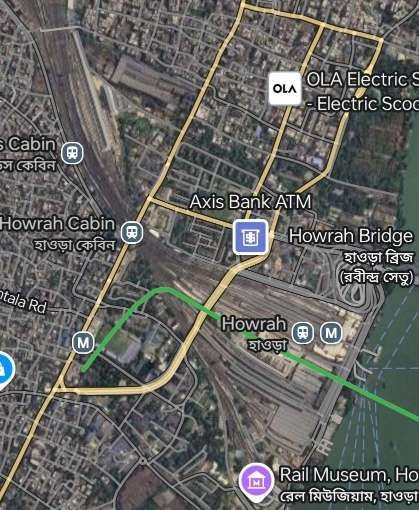
Howrah Railway Station in Kolkata. [Google Earth, October 2024]
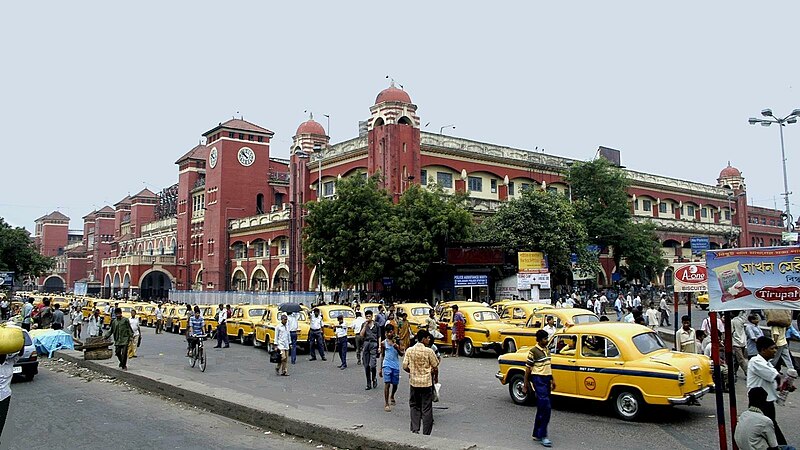
Howrah Railway Station, Kolkata, (c) samarkumarsarkar, Public Domain. [7]

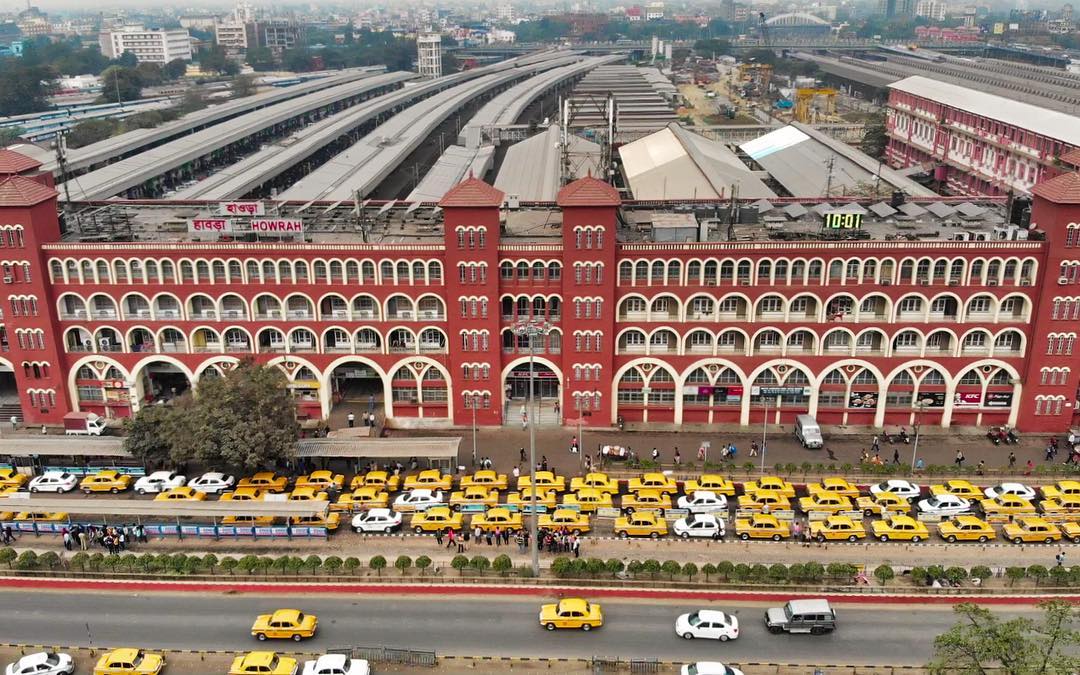
Howrah railway station (also known as Howrah Junction) is a railway station located in the city of Howrah, West Bengal in Kolkata metropolitan region. “It is the largest and busiest railway complex in India as well as one of the busiest and largest train stations in the world. It is also the oldest surviving railway complex in India. Howrah is one of the five large intercity railway stations serving the Kolkata metropolitan area, the others being Sealdah, Santragachi, Shalimar and Kolkata railway station.” [8]

Howrah Railway Station, Kolkata, shared on the Beauty of India Facebook Page on 19th February 2019. [9]

The first significant conurbation outside Kolkata is Barddhaman.

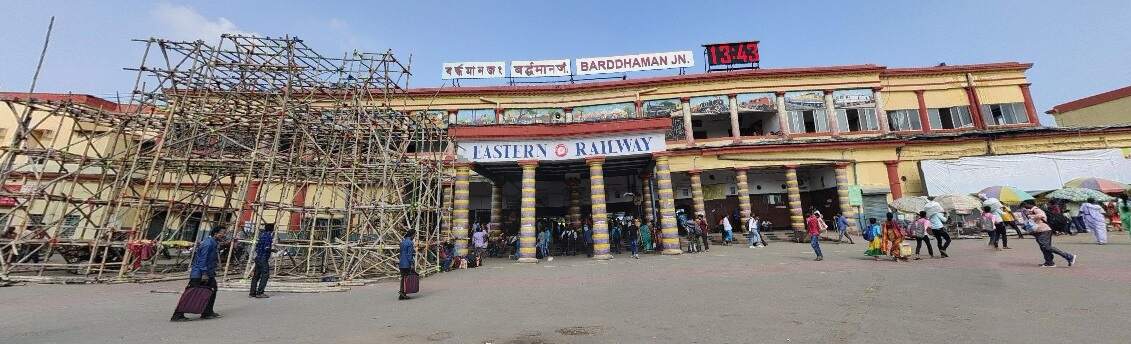
Barddhaman Junction Railway Station. [Google Earth, October 2024]
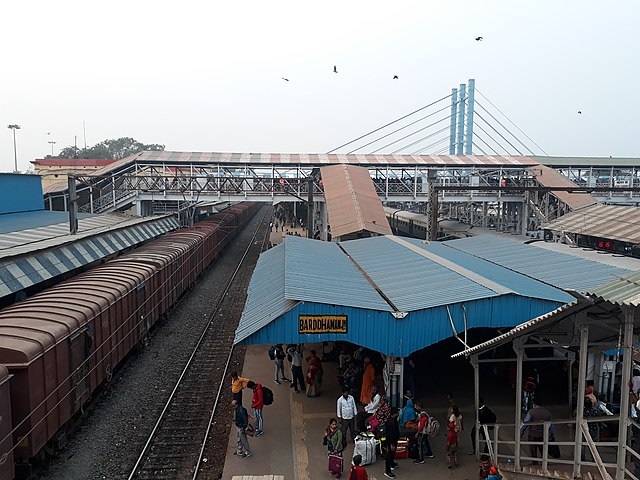
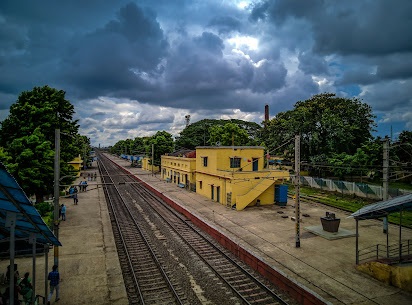
Looking Northwest through Barddhaman Junction Station, (c) pinakpani and licenced for reuse under a Creative Commons Licence (CC BY_SA 4.0). [7]
Barddhaman Junction Passenger Station building seen from the station forecourt. [Google Streetview, October 2019]
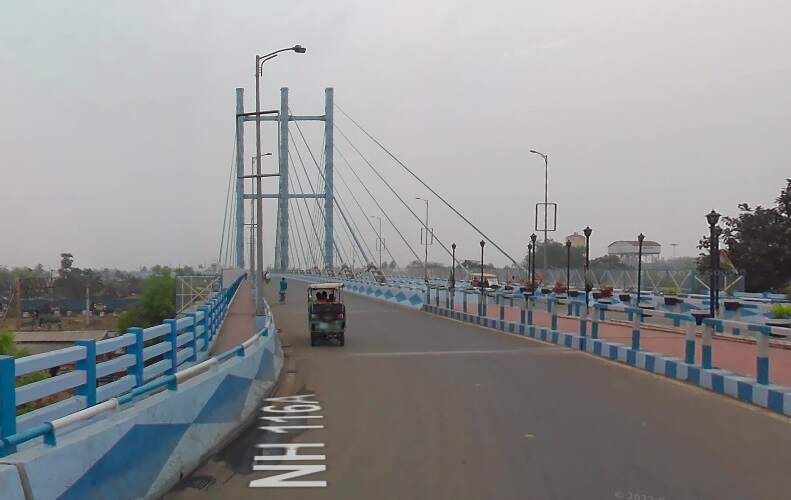
The modern cable-stayed bridge which spans the track at Barrdhaman. [Google Streetview, May 2023]
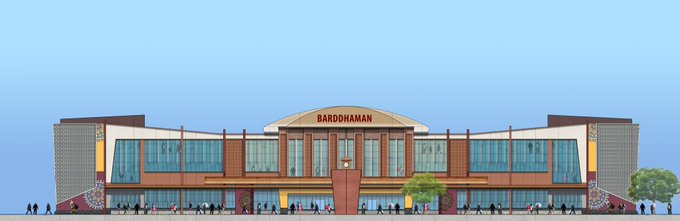
Proposed new station building at Barddhaman (21st August 2023). [6]

Our next scheduled stop is at Durgapur but on the way we pass through a number of local stations. Just one example is Mankar Railway Station.

Mankar Railway Station. [Google Eartth, October 2024]
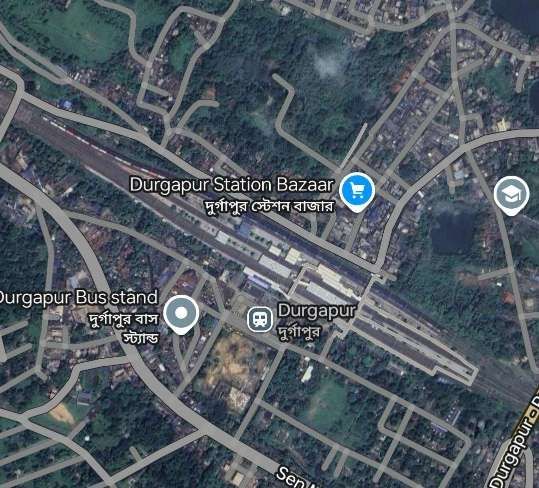
Durgapur Railway Station. [Google Earth, October 2024]
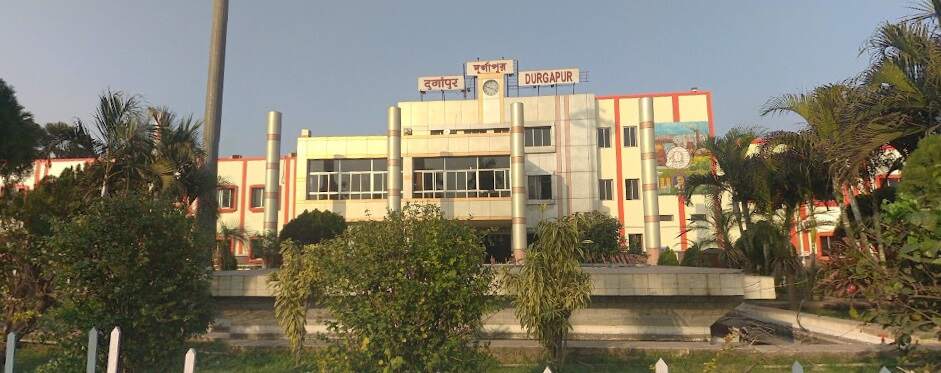
The Main station building at Durgapur, (c) Satyajit Dey. [Google Streetview, February 2019]
Looking Southeast from Cinema Hall Road towards the Railway Station at Durgapur. [Google Streetview, April 2023]

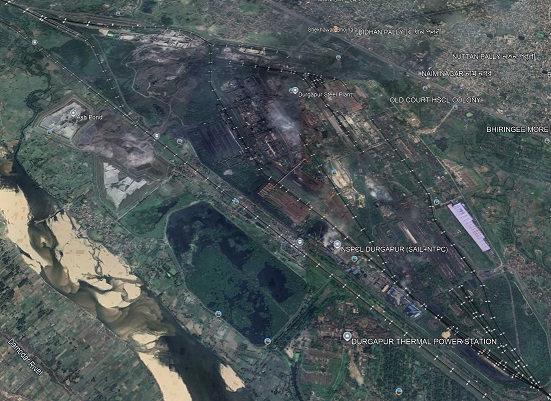
Beyond Durgapur is a very significant steelworks and power station.

Durgapur Steelworks and Thermal Power Station. A couple of views appear in the two images below. [Google Earth, October 2024]

Just a couple of stations en-route to Asansol, our next stop, are shown below.

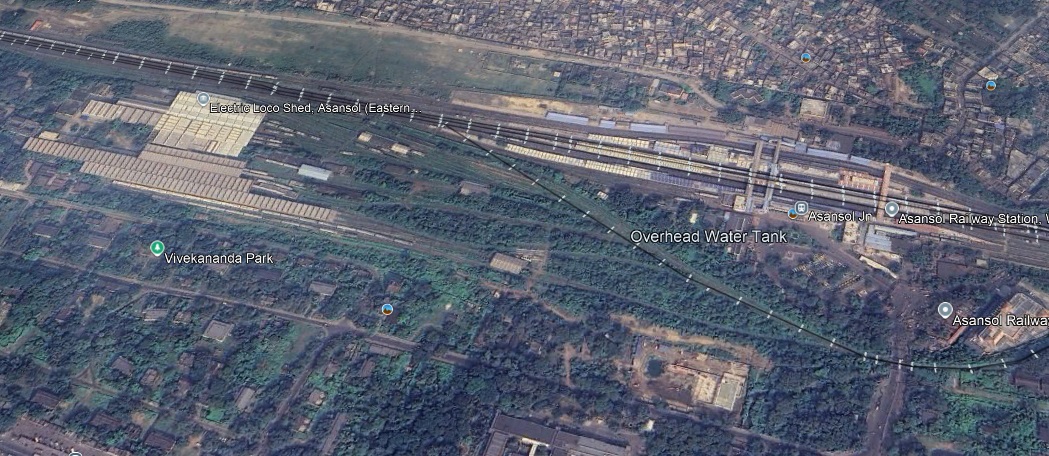
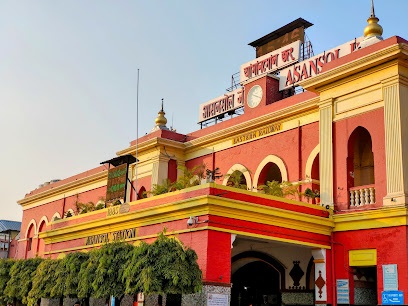
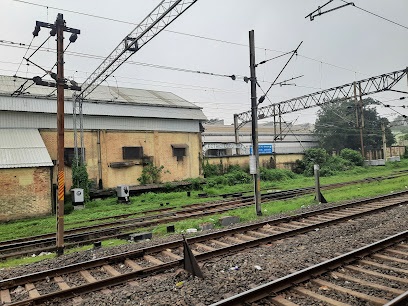
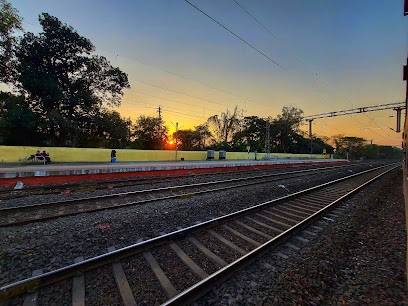
We arrive at Asansol Railway Station. …

Asansol Railway Station and Electric Loco Shed. [Google Earth, October 2024]

Continuing on from Asansol we pass through Sitarampur and Kulti.

And on through Barakar before leaving West Bengal and entering Jharkhand and crossing the Barakar River.

The Bridges over the Barakar River, The original single-track railway bridge is beyond the more modern bridge which also carries a single track. (c) Sarsati Devi, 2023.

West of the Barakar River we travel on through Kumardubi, Mugma, Thapar Nagar, Kalubathan, and Chhota Ambana.

The journey continues through Pradhankhunta Junction and Dokra Halt before arriving at the next significant conurbation, Dhanbad.

Dhyanbad Junction Railway Station and Goods Yard. [Google Maps, October 2024]
Dhanbad Railway Station forecourt seen from the South. [Google Streetview, July 2023]
Dhanbad Railway Station seen from one of the three station footbridges, (c) Gaurav Kumar. [Google Maps, September 2022]
Dhanbad Railway Station seen from the North, (c) Kaushik Dhar. [Google Maps, July 2021]

From Dhanbad Railway Station, the EIR ran on through Bhuli to Tetulmari.

Tetulmari Railway Station. [Google Earth, October 2024]

And on from Tetulmari through Nichitpur, Matari and Ramakunda Halt to Gomoh Junction.

Gomoh Junction Railway Station and Yard. [Google Earth, October 2024]

From Gomoh Junction Railway Station the line continued Northwest through Bholidih and Nimiaghat to Parasnath Railway Station.

Parasnath Railway Station. [Google Earth, October 2024]

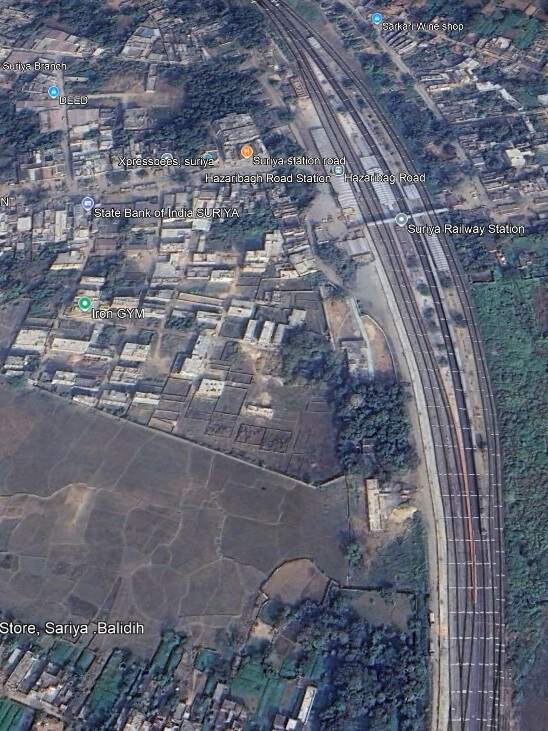
rom Parasnath the line continued Northwest through Chaudhribandh, Chichaki, Garea Bihar to Suriya Railway Station (Hazaribag Road Station).

Suriya Railway Station (Hazaribag Road Station). [Google Earth, Octo9ber 2024]

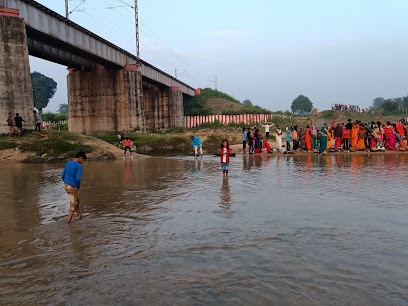
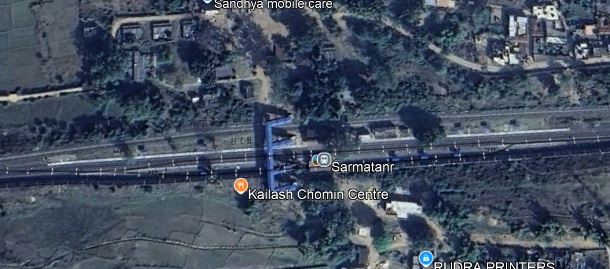
From Suriya we travel on across the Kheruwa River Railway Bridge and the Barsoti River Bridge, through Chaube and Dasara Railway Stations, over the Banka Railway Bridge and through Parsabad Railway Station before crossing the Acto River Bridge and entering Sarmatanr Railway Station.

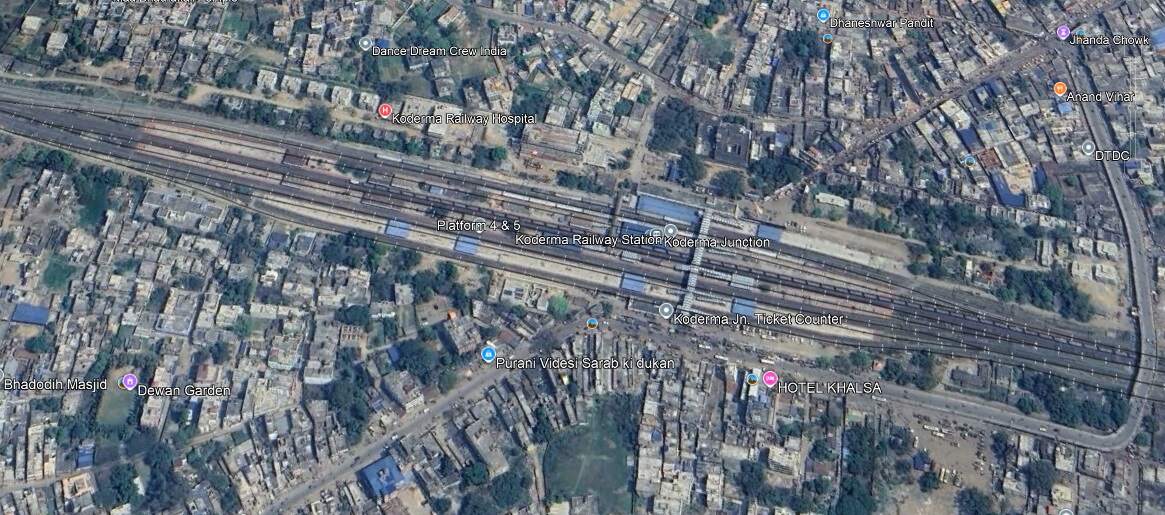
The line continues West from Sarmatanr through Hirodih Railway Station and into Koderma Junction Railway Station.

Koderma Junction Railway Station. [Google Earth, October 2024]
Koderma Junction Railway Station seen from the Southeast, from the Ranchi-Patna Road. [Google Streetview, July 2023]

Leaving Koderma Junction travelling West-northwest the line runs on through Gujhandi, Delwa, Nath Ganj The scenery is more rugged, tunnels and sharp curves are needed to keep railway gradients to a minimum. Tunnel No. 3 is shown below.

The Western Portal of Tunnel No. 3. Nath Ganj Railway Station is a few hundred metres behind the camera, (c) Safal Ahmed. [Google Earth, October 2024]

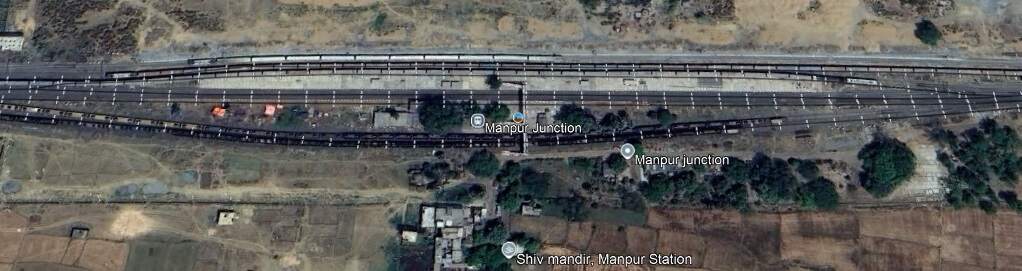
West of Nath Ganj the line passes through Baskatwa B. H. and Gurpa Railway Stations, crosses the River Dhadhar River, runs through Paharpur Railway Station, Bansinala Halt, Tankuppa and Bandhua Railway Stations, before entering Manpur Junction Station.

Manpur Junction Station. [Google Earth, October 2024]
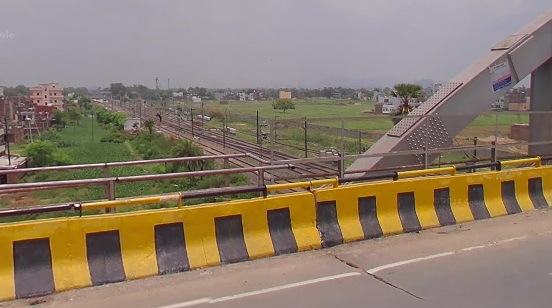
Looking back to the East towards Manpur Junction Railway Station from Manpur Overbridge. [Google Streetview, July 2023]

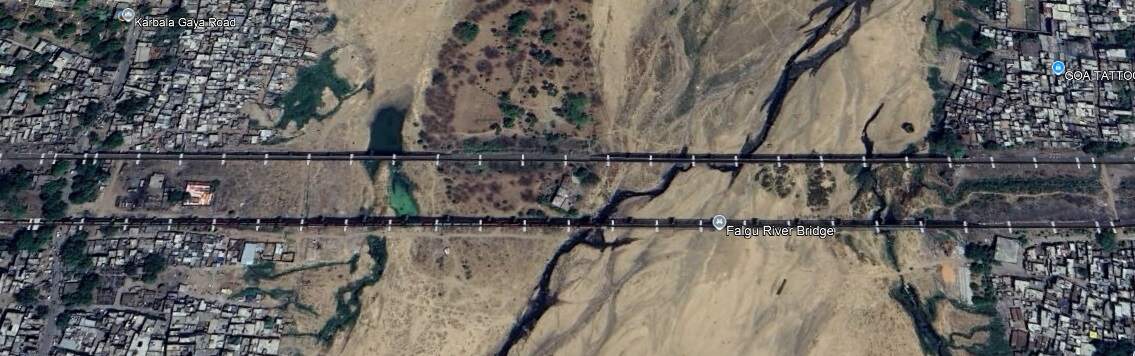
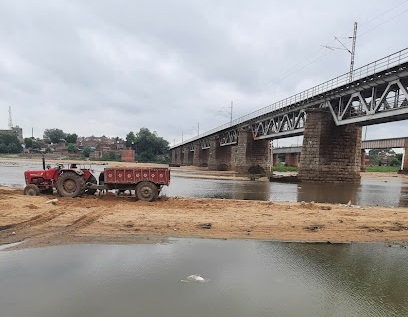
West of Manpur the line crosses the Falgu River Bridges.

The Falgu River Bridges. [Google Earth, October 2024]

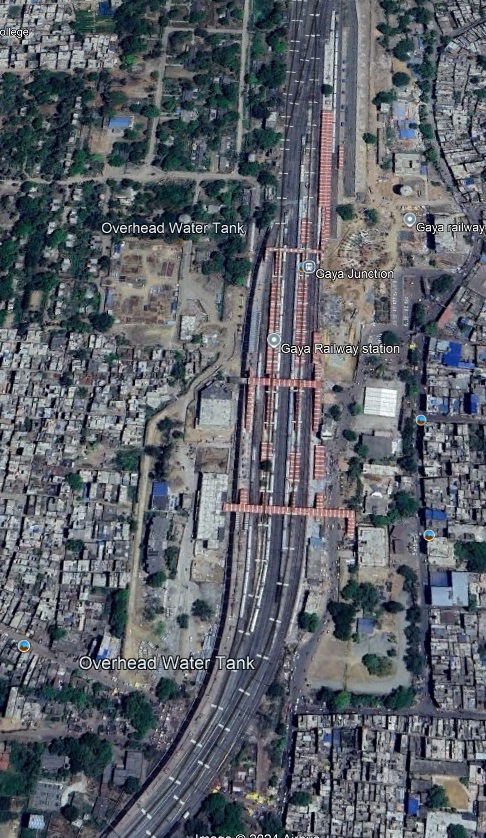
The line continues to the West for only a very short distance before sweeping round to the South into Gaya Junction Railway Station.

Gaya in Bihar State is the second city in the state. It sits on the West bank of the Falgu (Phalgu) River. Gaya is 116 kilometres (72 mi) south of Patna and has a population of 470,839. The city is surrounded on three sides by small, rocky hills (Mangla-Gauri, Shringa-Sthan, Ram-Shila, and Brahmayoni).

Gaya is a city of historical significance and is one of the major tourist attractions in India. It is sanctified in the Jain, Hindu, and Buddhist religions. Gaya district is mentioned in the great epics, the Ramayana and the Mahabharata. It is the place where Rama, with Sita and Lakshmana, came to offer piṇḍadāna for their father, Dasharatha, and continues to be a major Hindu pilgrimage site for the piṇḍadāna ritual. Bodh Gaya, where Buddha is said to have attained enlightenment, is one of the four holy sites of Buddhism. [10]

Turning sharply to the West at the Railway Station limits, the line runs through Kastha Railway Station and over the Morhar River Bridge.

The first Morhar River Bridge seen from the West bank of the river channel. [Google Streetview, June 2023]

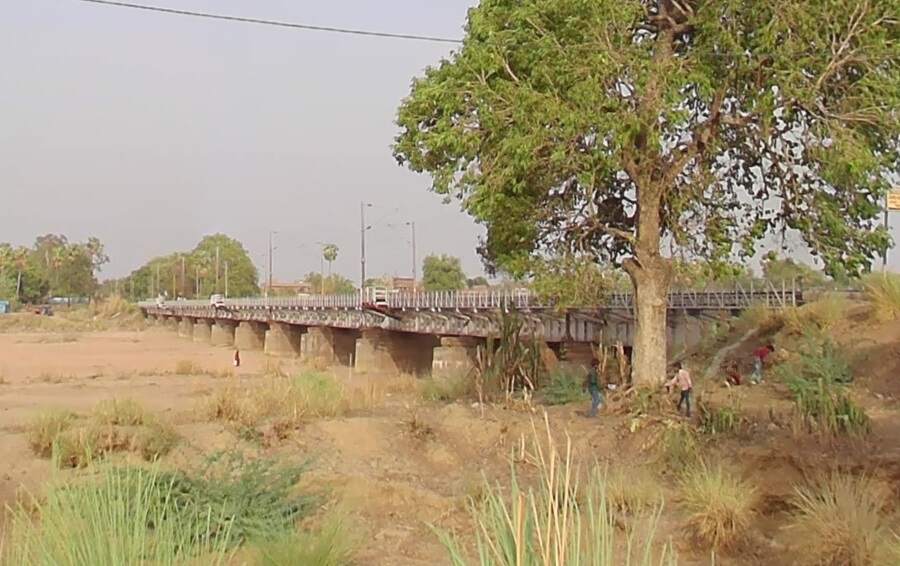
Once across the first bridge (above) the line passes through Paraiya Railway Station and then crosses the western channel of the Morhar River.

The bridge over the western channel of the Morhar River seen from the West bank of the channel. [Google Streetview, June 2023]

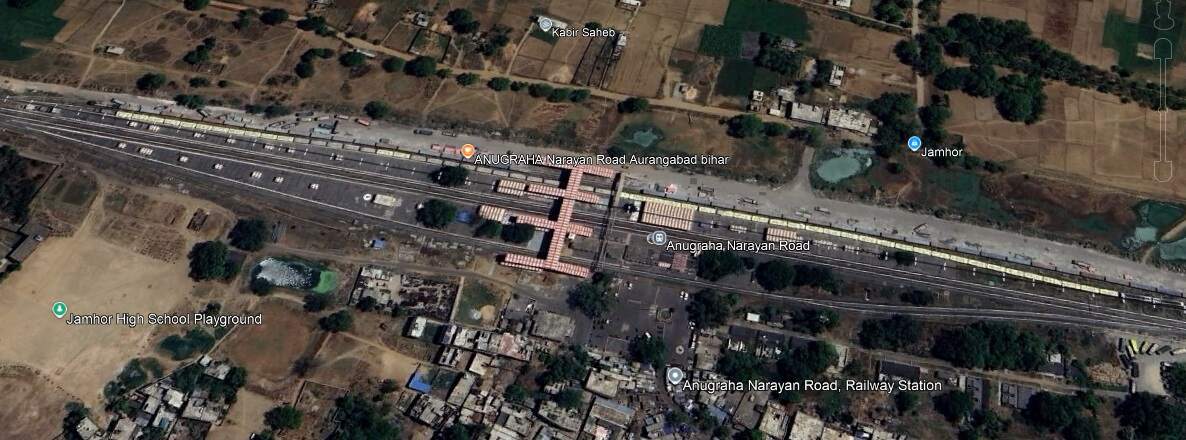
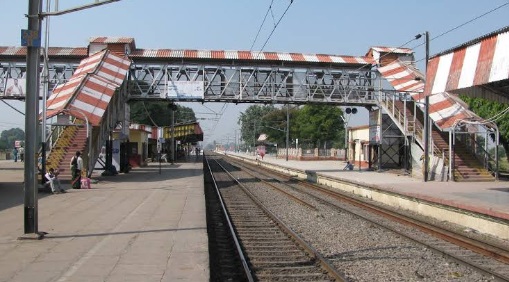
On wards to the West, the line runs through Guraru, Ismailpur, Rafiganj, Jakhim, Phesar, Stations and into Anugraha Narayan Road Railway Station.

Anugraha Narayan Road Railway Station. [Google Earth, October 2024]

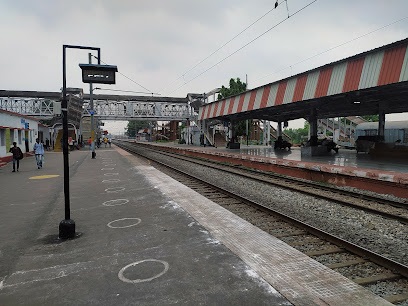
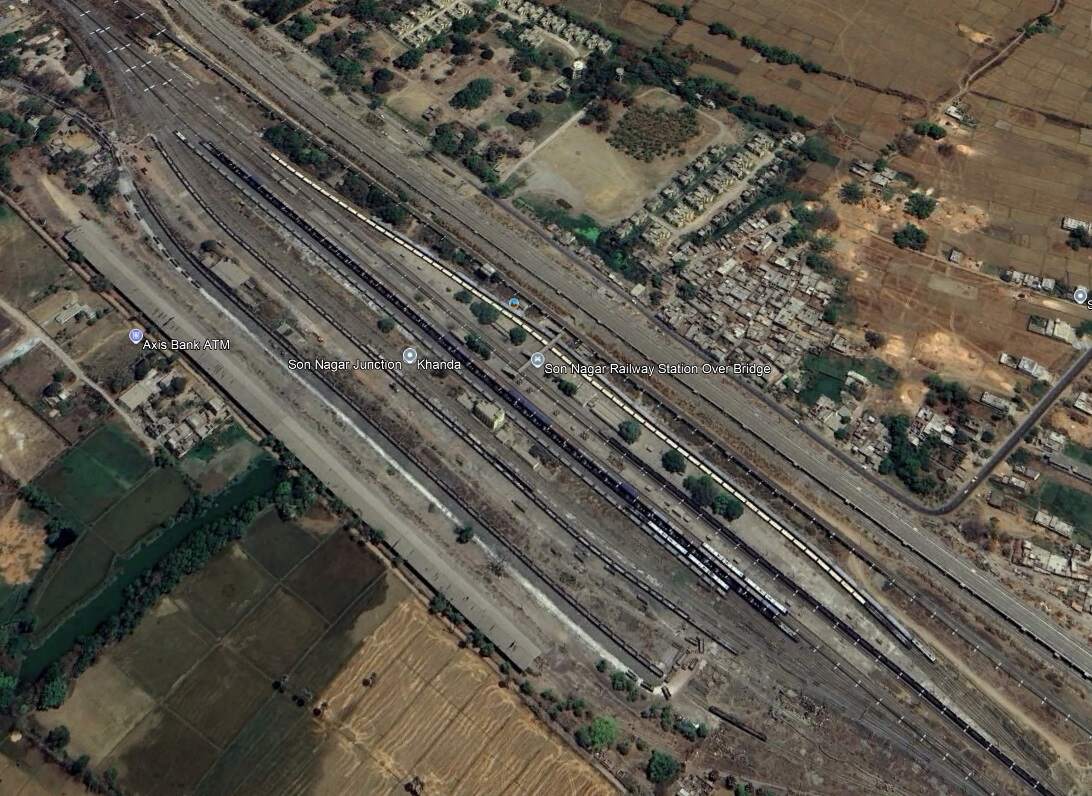
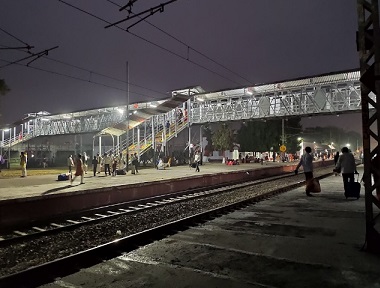
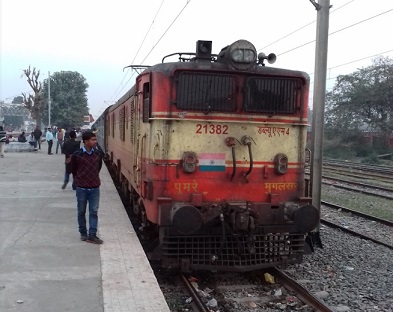
Continuing West, the line crosses the Punpun Railway Bridge passes through the relatively complex Son Nagar Junction and arrives at Son Nagar Junction Railway Station.

Son Nagar Junction Railway Station. [Google Earth, October 2024]

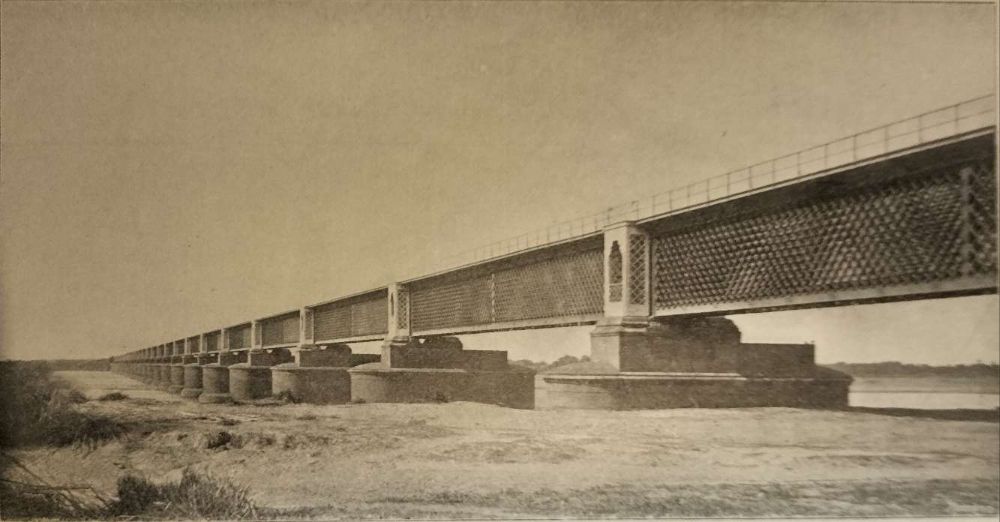
Northwest from Son Nagar Junction Railway Station the railway crosses the River Sone (Soane). Huddleston provided a photograph of the first railway bridge across the river.

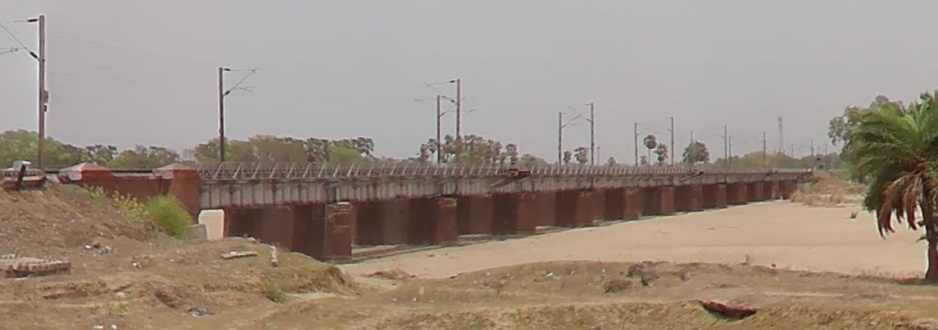
The Soane Bridge, East Indian Railway – 28 spans of 150 ft. The stone piers were constructed sufficiently wide to allow for bridge widening. [1: p484]
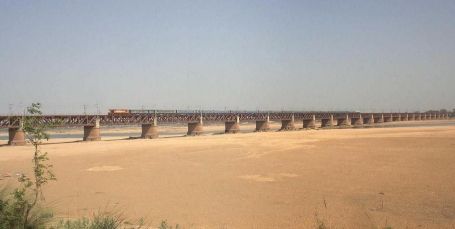
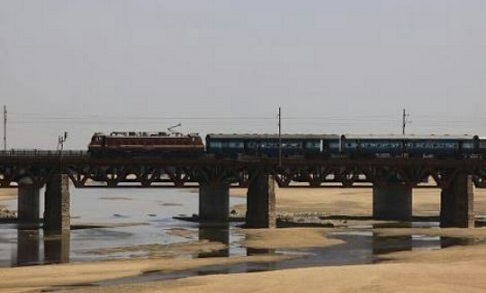
The Koilwar Bridge crosses the River Sone (Soane). The original Koilwar Bridge (Soane Bridge) “has twenty-eight wrought-iron lattice girders, each of 150 feet clear span, resting on brickwork piers 12 feet wide, these piers being built upon wooden curbs shod with iron and sunk into the clay bed of the river to an average depth of about 30 feet. The total length of the bridge between the abutments is 4,530 feet, added to which there are smaller spans on each side forming the land approaches. …  The bridge (weighing approximately 3,500 tons) was constructed in the UK, and its erection in India was entrusted to the late Samuel Power, an experienced member of Mr. Brunel’s staff, with Bernhard Schmidt who soon took charge of the works with the rank of District Engineer. Work commenced in 1856 and the bridge was open by February 1863.” © Abdulbarisif, and licensed for reuse under a Creative Commons Licence (CC BY-SA 4.0). [4]
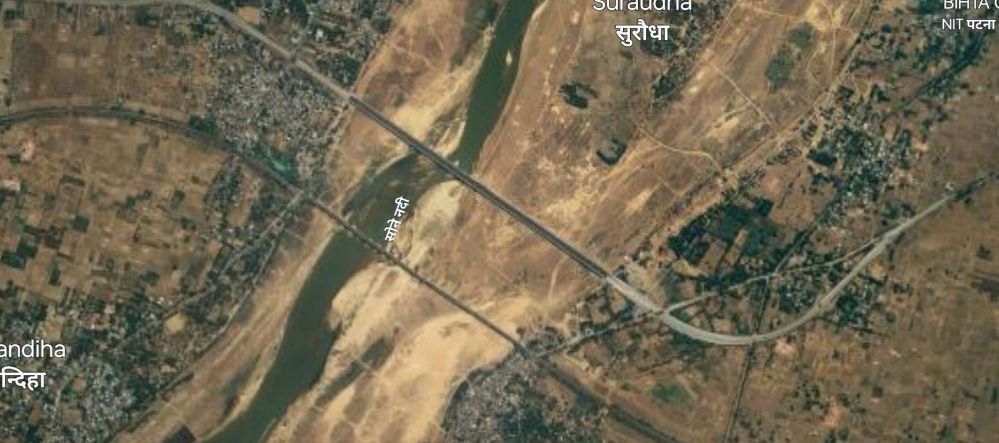
The two Koilwar Railway Bridges run immediately adjacent to each other. Together they form the more northerly crossing. The more southerly crossing is the modern road bridge. [Google Earth, October 2024]

On the West of the River Sone (Soane) the railway runs into Dehri on Sone Railway Station.

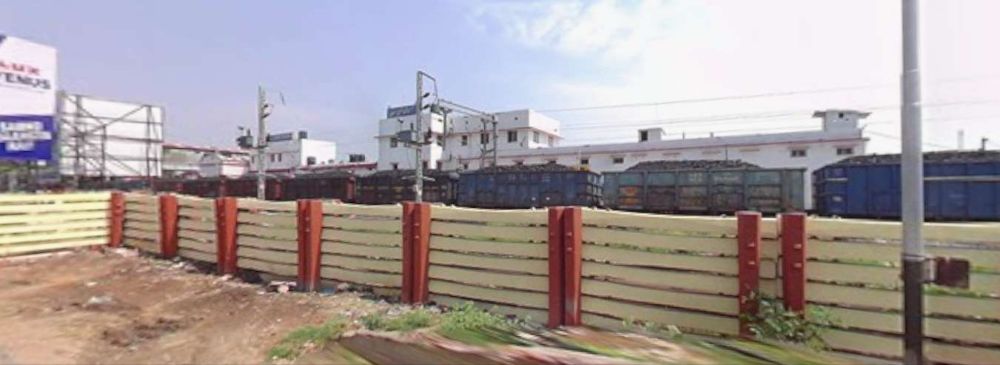
To the West of Dehri the line runs through Pahaleja Railway Station. It is noticeable as we travel to the West that traffic levels must be high. There are significant additional tracks along this length of the line with a number of stations only on the new lines and others only on the older lines.

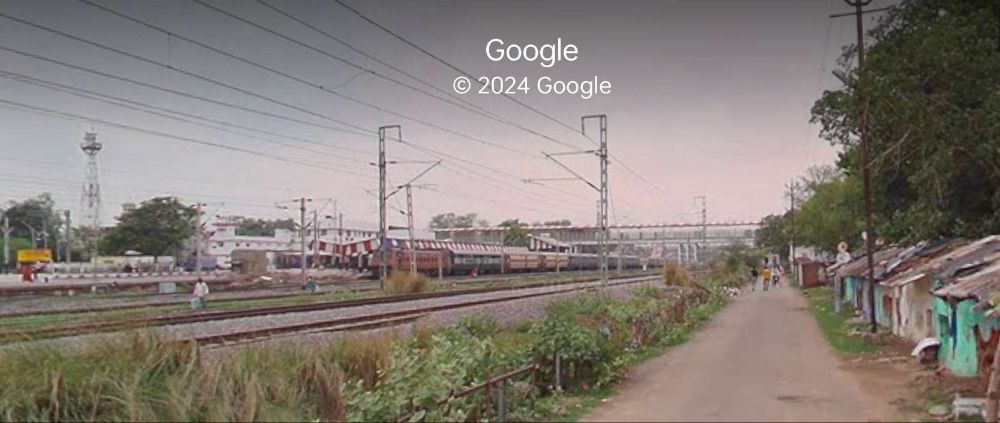
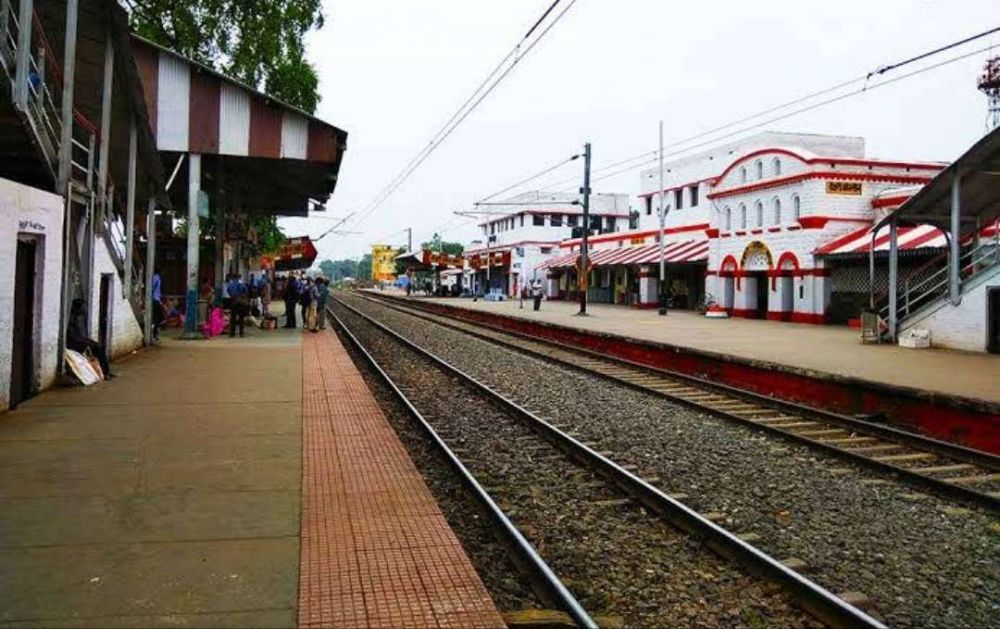
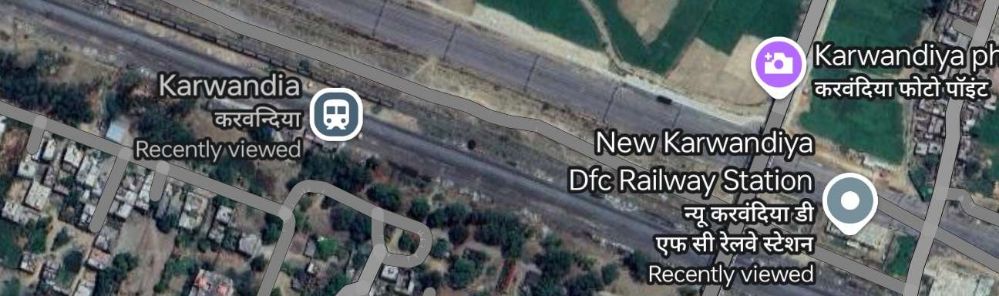
On the new lines we see New Karwandiya DFC Railway Station with Karwandiya Railway Station on the older lines.

Karwandiya Railway Stations. [Google Earth, October 2024]

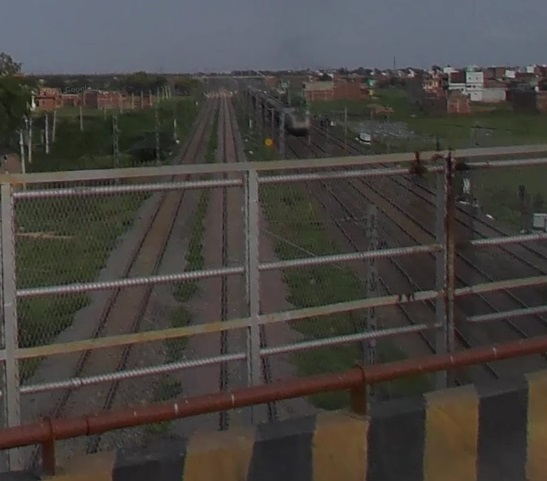
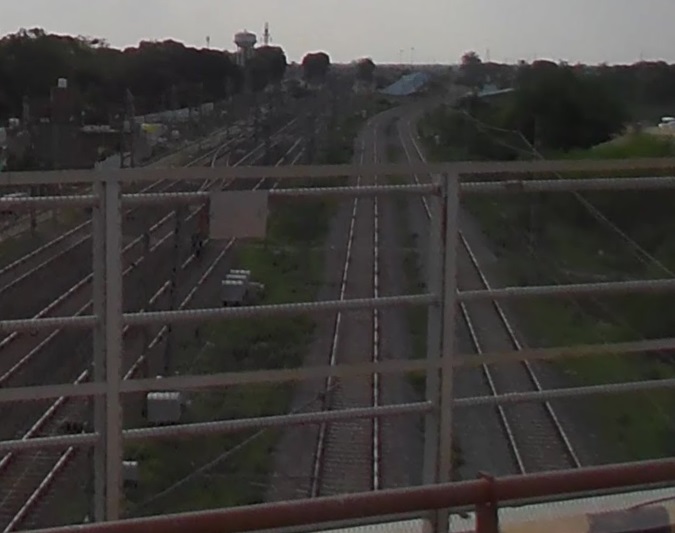
West of Karwandiya, the line runs on through Sasaram Junction Railway Station, Kumahu, Shiu Sagar Road, Khurmabad, New Kudra Junction (and Kundra), Pusauli and Muthani Railway Stations before entering Bhabhua Road Railway Station. The two images below show the 5 main lines in use in the 21stcentury as seen from the overbridge to the Southeast of Bhabhua Road Railway Station.

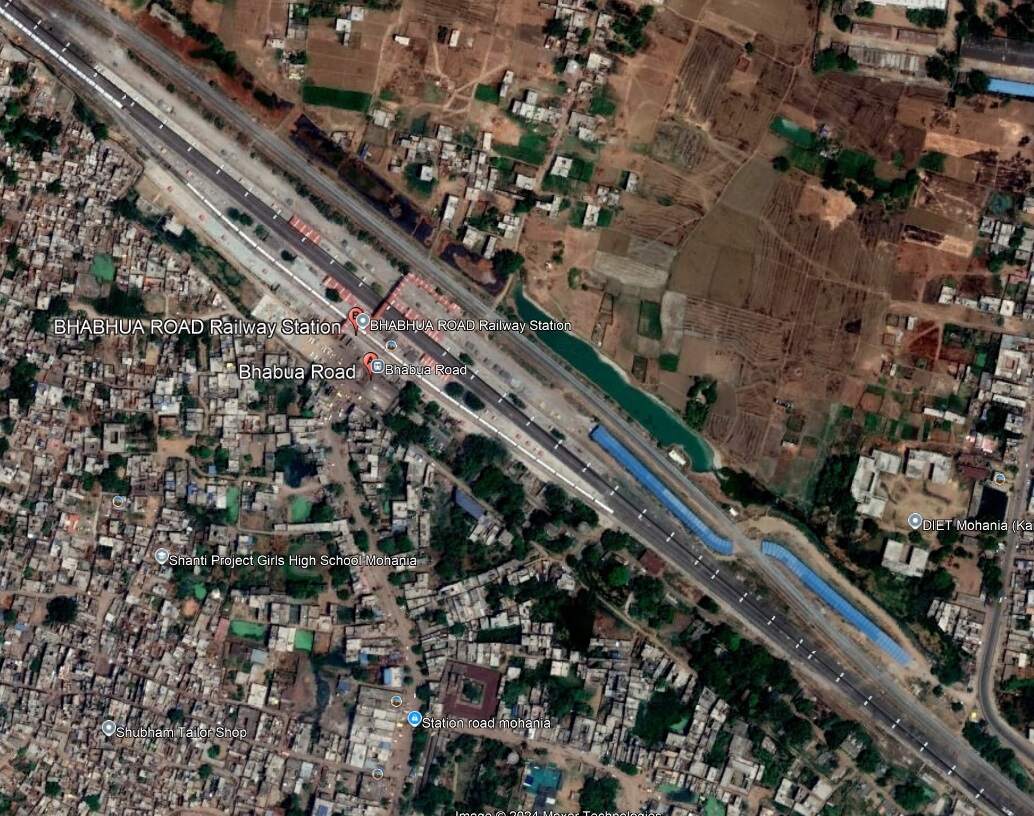
Bhabua Road Railway Station. [Google Earth, October 2024]
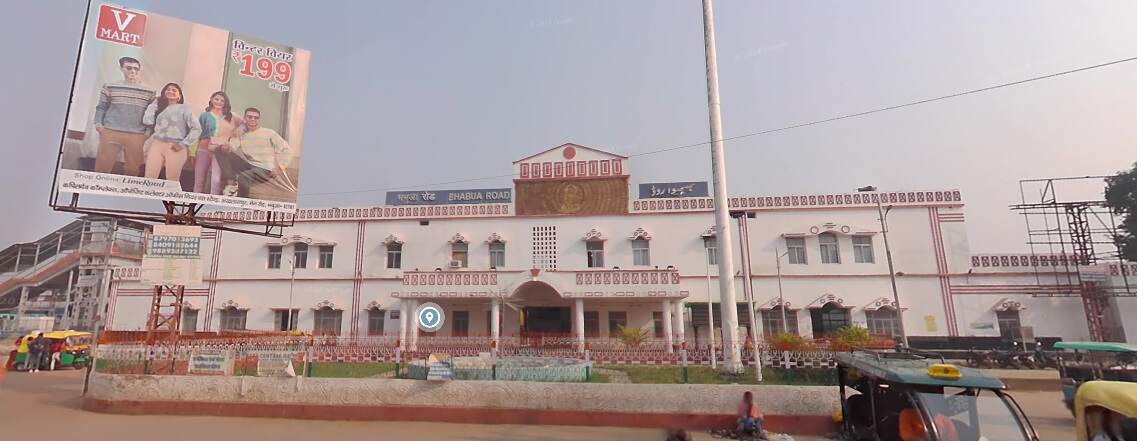
Bhabhua Road Railway Station. [Google Streetview, December 2023]

On from Bhabhua heading Northwest the line runs on through New Durgauti Junction (Durgauti), Dhanaichha, Karamnasa, Saidraja, Chandauli Majhwar and Ganj Khawaja Railway Stations, by which now the line is running East-West. Immediately beyond Ganj Khawaja the line turns to the North, then sweeps round to the Southwest through a series of junctions and then through Mughal Sarai Marshalling Yard and DDU Railway Station.

Dean Dayal Upadhyaya Railway Station sited just to the Southwest of the Mughal Sarai Marshalling Yard. [Google Earth, October 2024]

Running on in a Southwesterly direction not far from the Southern bank of the River Ganges, the line runs through Jeonathpur, Narayananpur and Narayananpur Bazar (Ahraura) Railway Stations. On further through Kailahat Station to Chunar Junction Railway Station.

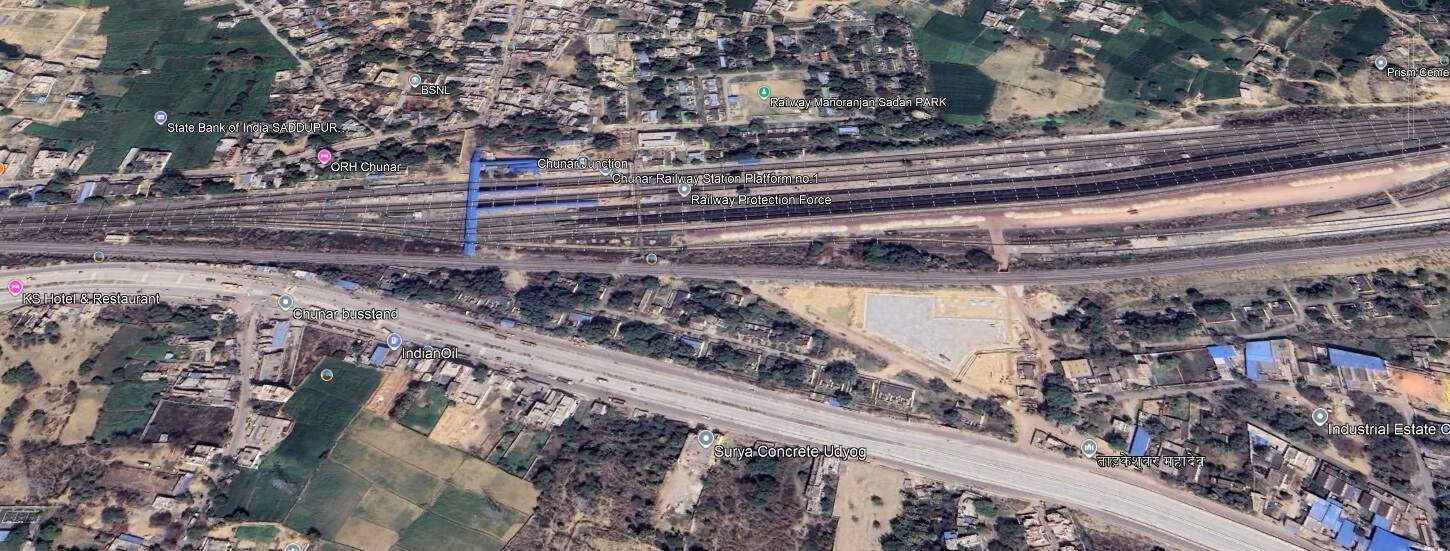
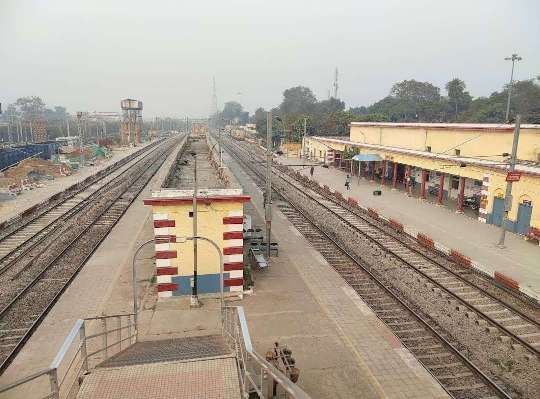
Chunar Junction Railway Station. [Google Earth, October 2024]
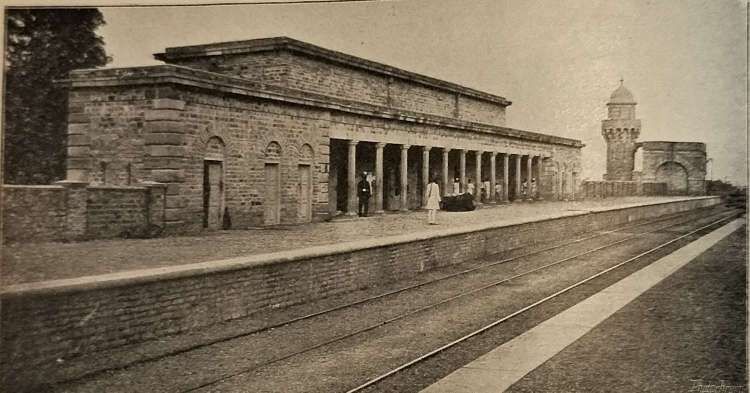
Huddleston says that this is Chunar Railway Station. Note the solid construction and the architectural detail of the water tower at the far end of the platform. I can only assume that as the line was widened these buildings were removed. [1: p486]

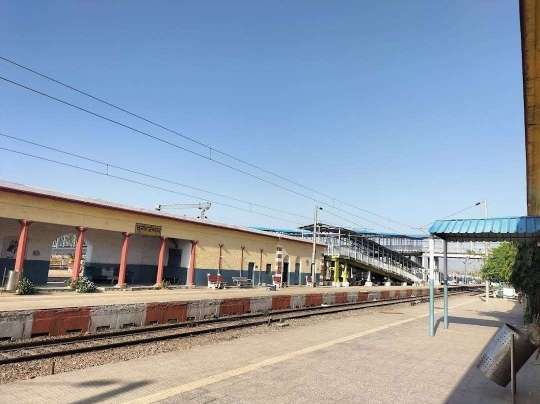
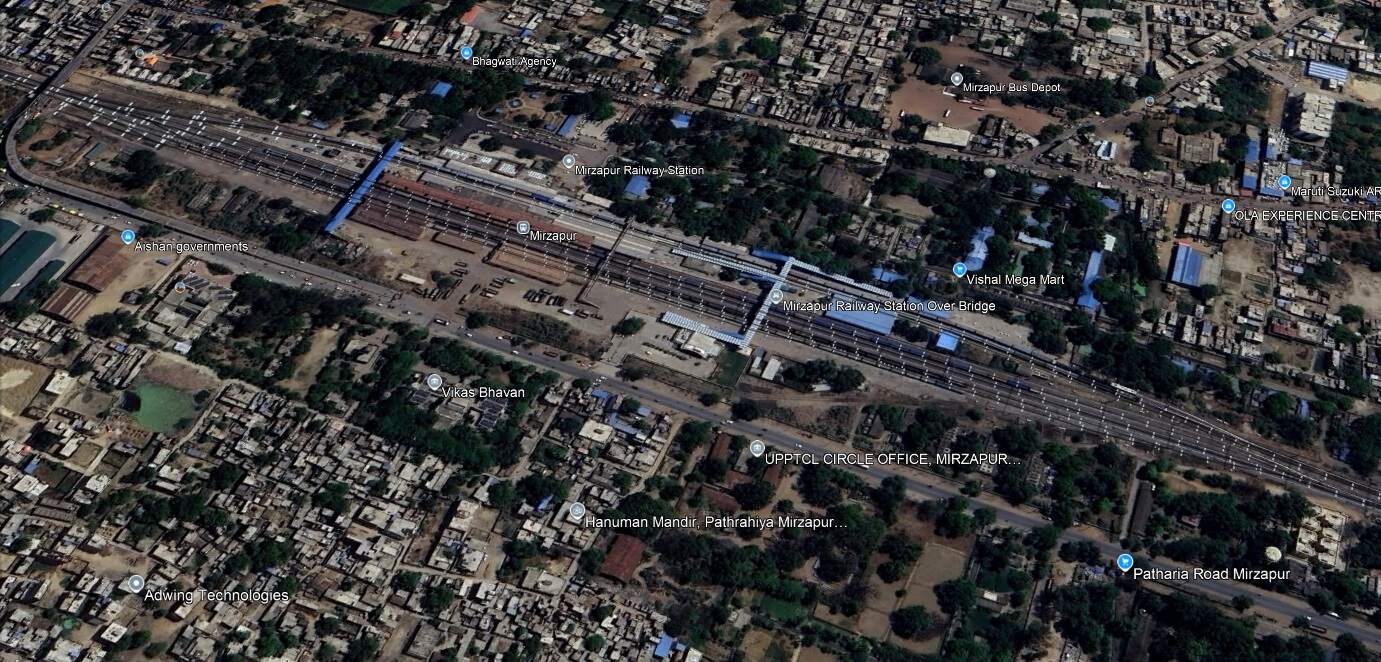
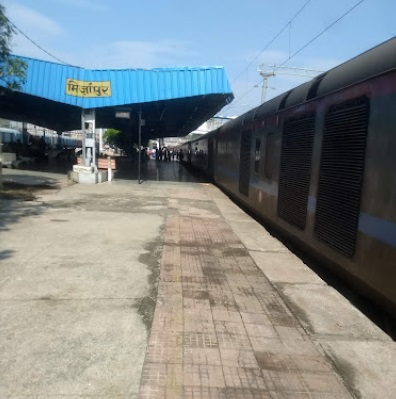
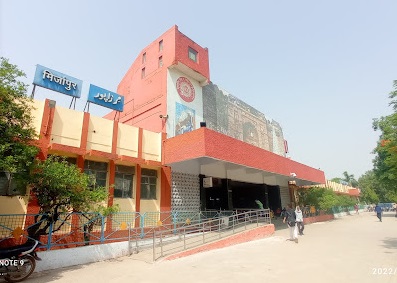
The railway continues West through Dagmagpur, Pahara and Jhingura Railway Stations to Mirzapur Railway Station.

Mirzapur Railway Station. [Google Earth, October 2024]

Mirzapur … is known for its carpets and brassware industries, and the tradition of kajari and birha music. Straddled by the Maikal Hills, it served as the headquarters of the Mirzapur district [of Uttar Pradesh]. … Indian Standard Time is calculated from the clock tower in Mirzapur.” It had a population of 245,817 in 2011. [11]

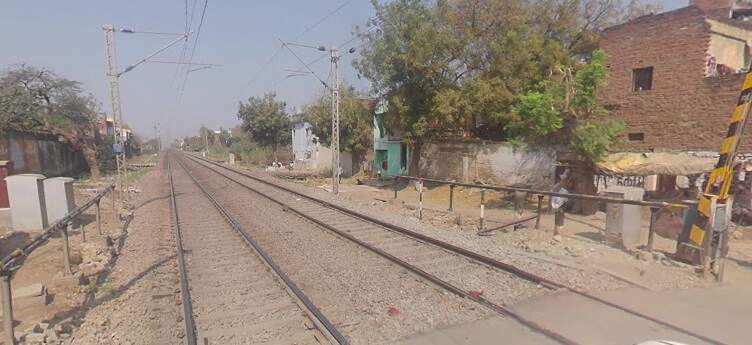
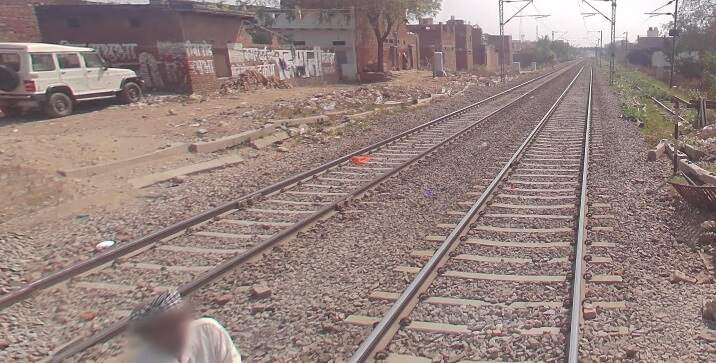
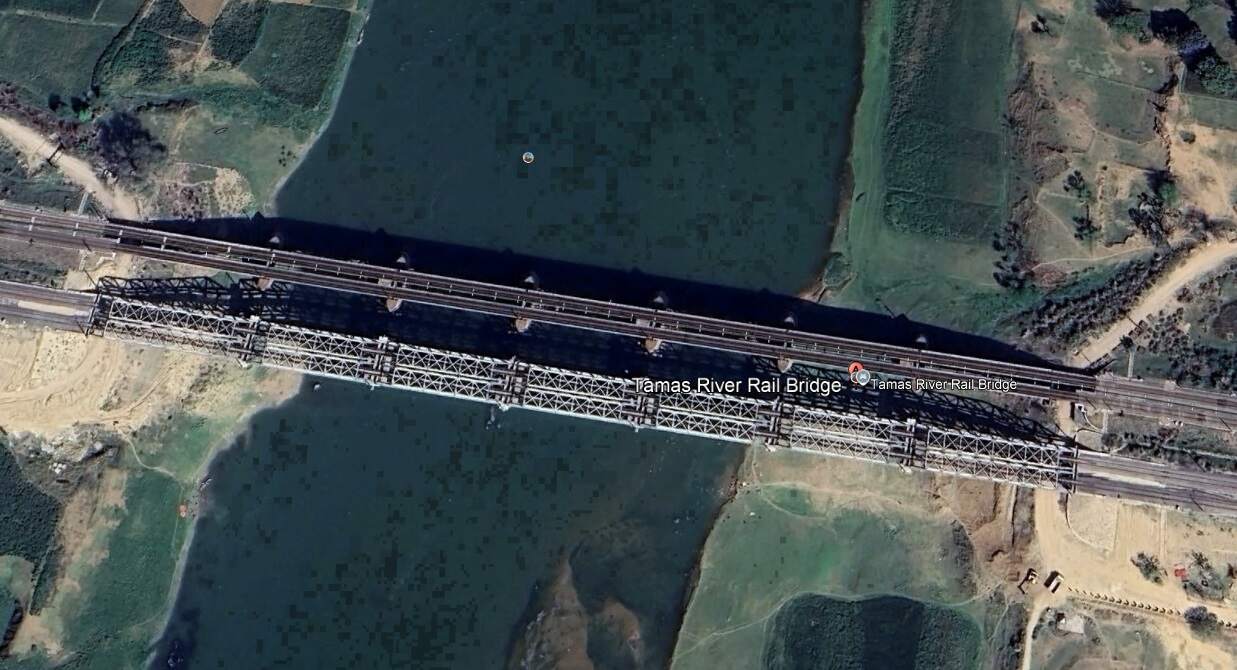
West of Mizapur the line ran on through Vindhyachal, Birohe, Gaipura, Jigna, Mandah Road, Unchdih and Chauraha Railway Stations before crossing the Tamas River Rail Bridges.

Tamas River Rail Bridges. [Google Earth, October 2024]
Tamas River Rail Bridges, (c) S Kumar Gemar. [October 2022]

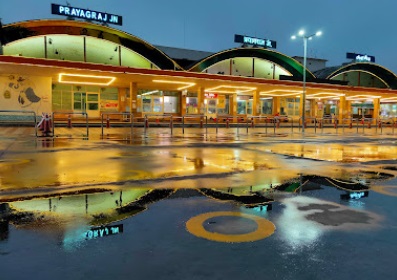
Continuing Northwest, the railway passes through Bheerpur and Karchana Railway Stations before entering Prayagraj Chheoki Junction Railway Station.

Prayagraj Chheoki Junction Railway Station. [Google Earth, October 2024]

To the Northwest of Prayagraj Chheoki Junction Railway Station the line runs through Naini Junction Station and then crosses the Old Naini Bridge over the Yamuna River.

The original Old Naini Bridge! This picture shows it as it was in about 1870. [12]

The Old Naini Bridge is situated over the Yamuna River, “just above the confluence with the Ganges at Allahabad. … It opened in 1865 and is a great feat of British engineering; it is over 1,006 metres (3,300 feet) long.” [12] The present structure carries vehicles on a deck below the rail lines.

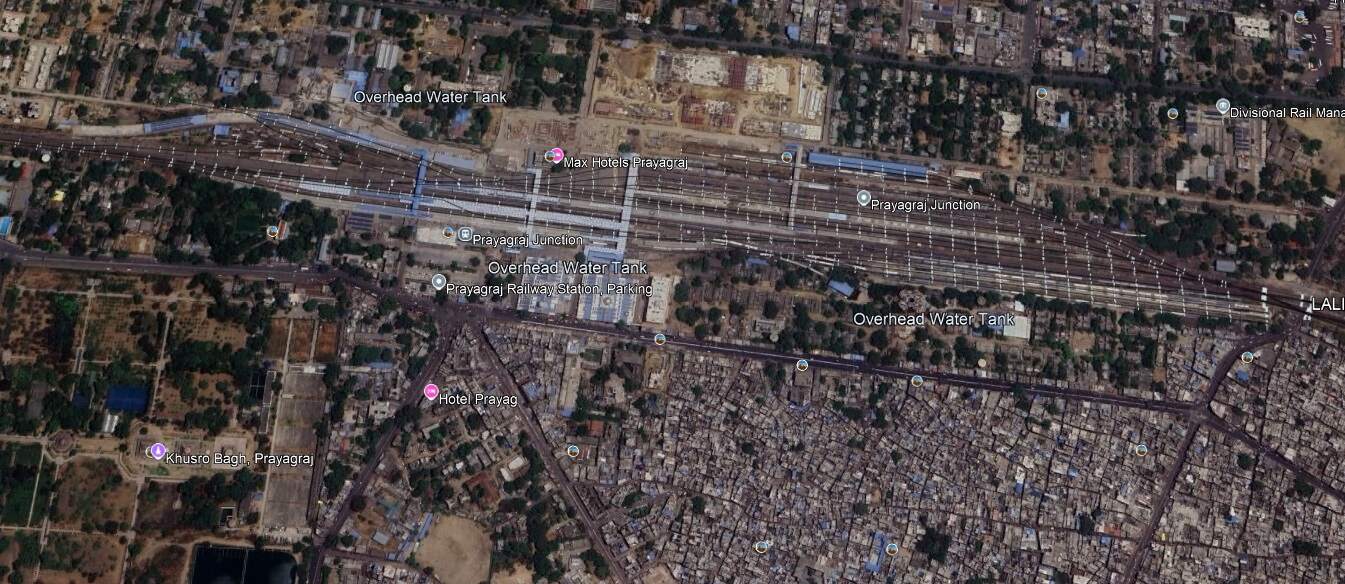
Prayagraj is also known as Allahabad. “The city is the judicial capital of Uttar Pradesh with the Allahabad High Court being the highest judicial body in the state. As of 2011, Prayagraj is the seventh most populous city in the state, thirteenth in Northern India and thirty-sixth in India, with an estimated population of 1.53 million in the city.” [13]

North of the Yamuna River in Prayagraj/Allahabad, the line turns West and enters the main city station,

Prayagraj Junction Railway Station. [Google Earth, October 2024]

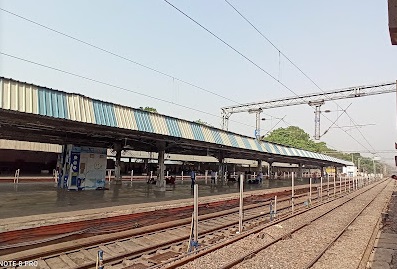
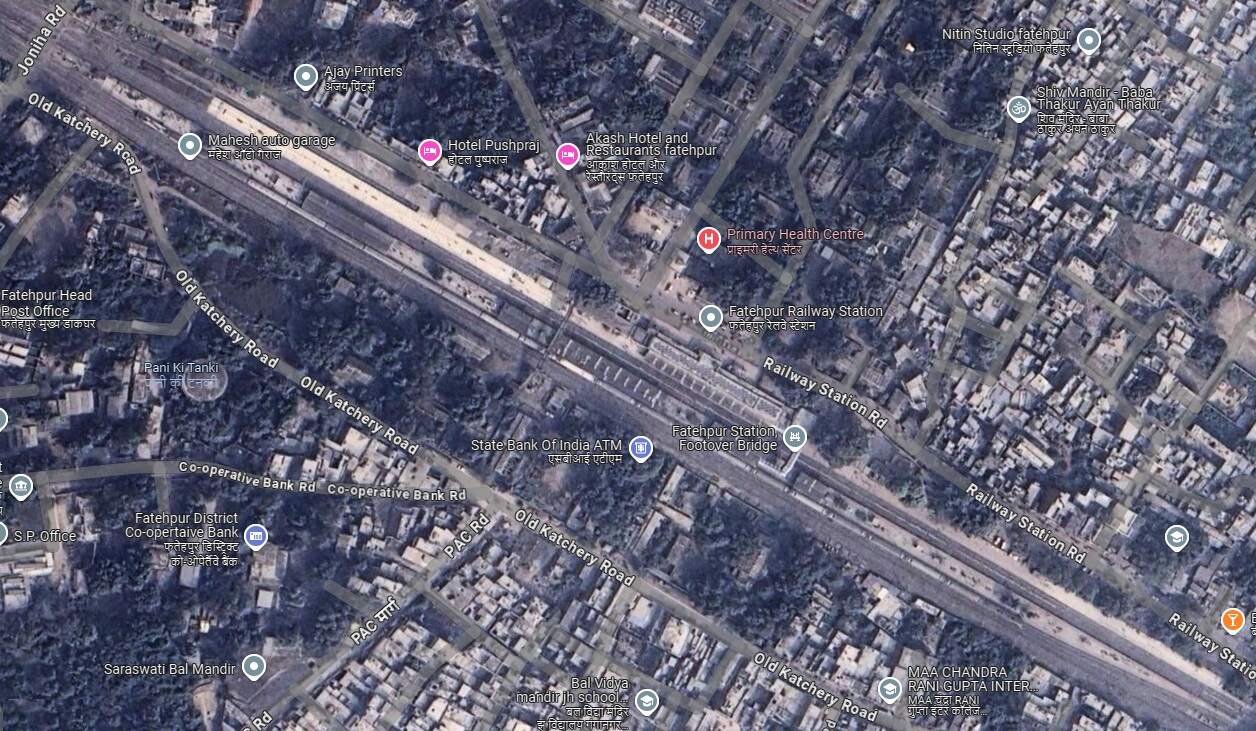
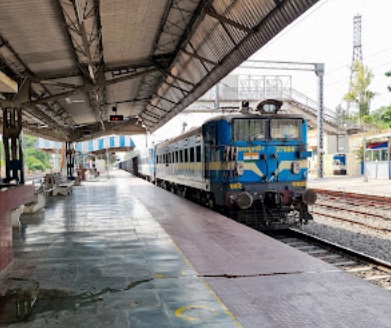
West of Prayagraj Railway Station the line passed through Subedarganj, Bamhrauli, Manauri, Saiyid Sarawan, Bharwari, Bidanpur, Shujaatpur, Sirathu, Athsarai, Kanwar, Katoghan, Khaga, Sath Naraini, Rasulabad, Faizullapur and Ramva Railway Stations before arriving at Fatehpur Railway Station.

Fatehpur Railway Station. [Google Maps, October 2024]

Northwest of Fatehpur, the railway continued on through Kurasti Kalan, Malwan, Kanspur Gugauli, Binki Road, Aung, Karbigwan, Prempur, Sirsaul, Rooma, Chakeri, and Chanari Railway Stations before looping sharply round into Kanpur Central Railway Station.

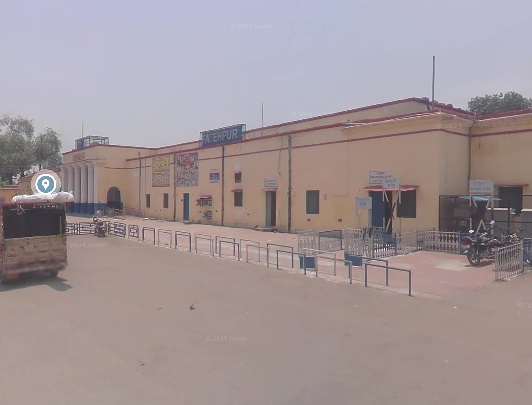
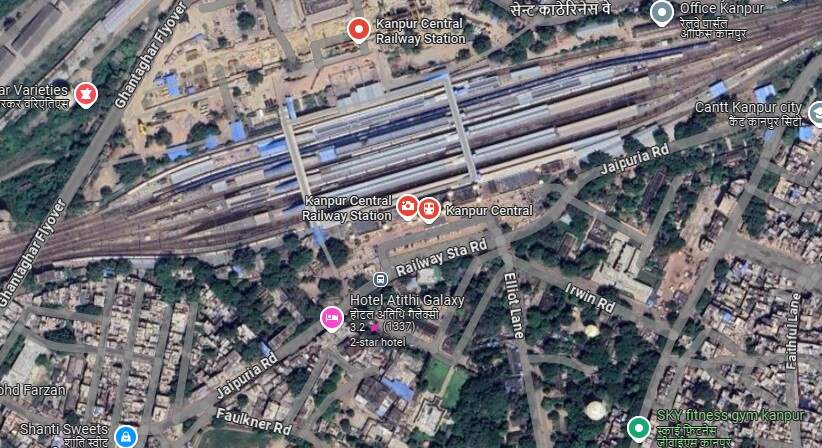
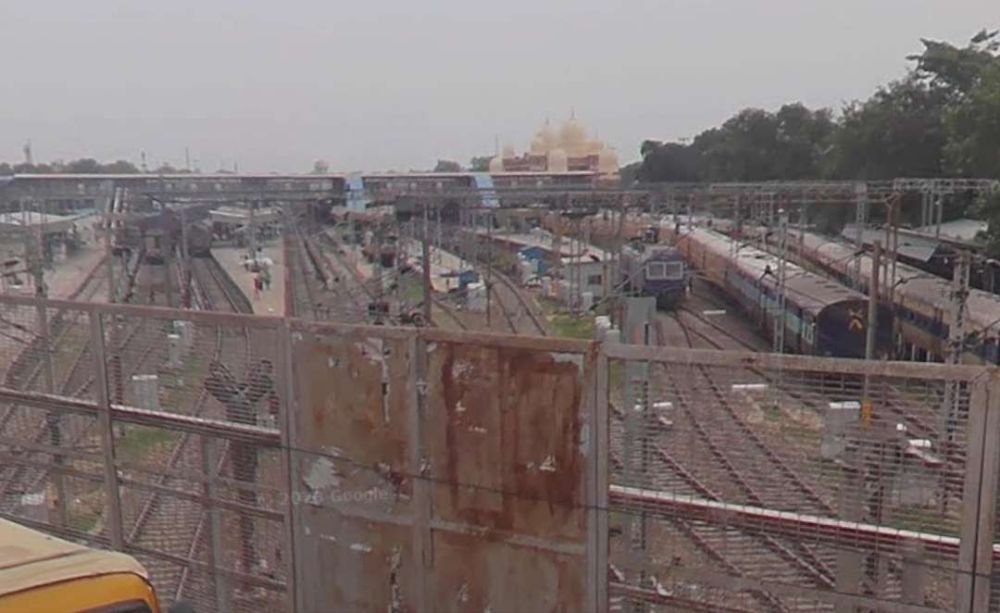
Kanpur Central Railway Station. [Google Maps, October 2024]

After leaving Kanpur Central Railway station, the line ran through the GMC Marshalling Yard and on through Panki Sham, Bhaupur (and New Bhaupur), Maitha, Roshan Mau, Patra, Rura, Ambiapur, Jhinjhak, Parjani, Kanchausi, Phaphund, Pata, Achalda, Bharthana, Ekdil (and New Ekdil) and into Etawah Junction Railway Station.

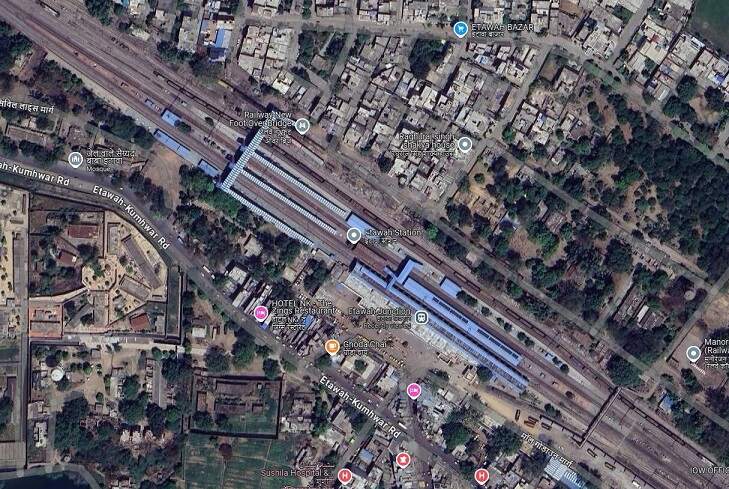
Etawah Junction Railway Station. [Google Maps, October 2024]

On to the Northwest from Etawah the line passes through Sarai Bhopat, Jaswantnagar, Balrai and Bhadan Railway Stations before entering Shikohabad Junction Railway Station.

Shikohabad Junction Railway Station. [Google Maps, October 2024]

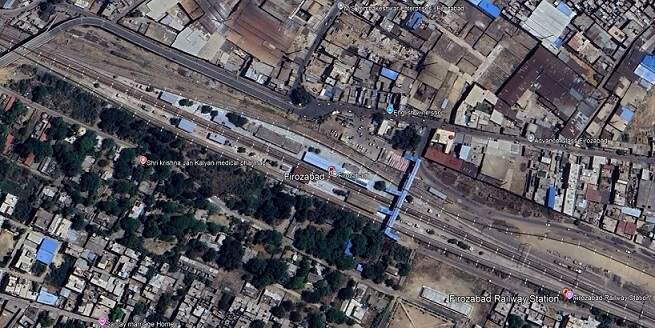
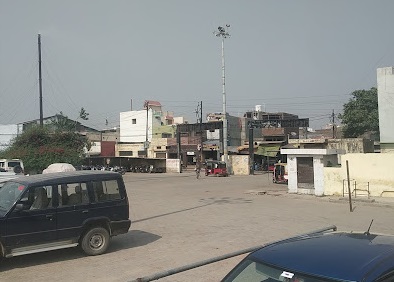
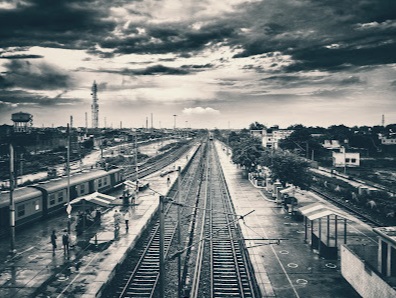
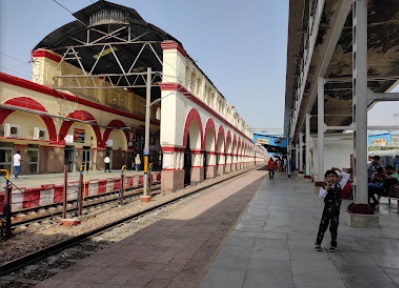
Beyond Shikohabad, we go on Northwest towards Delhi. The line passes through Makkhanpur Railway Station before arriving at Firozabad Railway Station.

Firozabad Railway Station. [Google Earth, October 2024]

After Firozabad Railway Station, the railway continues Northwest through Hirangaon Railway Station and Tundla Goods Train Yard and into Tundla Junction Railway Station.

Tundla Junction Railway Station. [Google Earth, October 2024]

We continue on to the Northwest along the railway line running through Tundla Junction and on in a more northerly direction through Mitawali, Barhan Junction, Chamrola, Jalesar Road, Pora, Hathras Junction (and New Hathras DFCCIL) Railway Station. Just after crossing the station limits at Hathras Junction Station the line passed beneath a Warren Truss Steel Bridge carrying The Kasganj Mathura railway line. While the train is stopped at the station we explore the line carried by the rail overbridge.

The Kasganj Mathura Railway Line Bridge over the Kolkata to Delhi railway line at Hathras Junction. [Google Streetview, November 2022]

The adjacent extract from Google Earth’s satellite imagery shows Hathras Junction Station. At the bottom of the image a rail overbridge carries the Kasganj Mathura Railway lIne. A scheduled passenger service runs along this line between between Kasganj (KSJ) and Mathura Junction (MTJ). [14]

Mathura Junction Railway Station (MTJ) is an important station on the Agra–Delhi chord of the Delhi–Mumbai and Delhi–Chennai lines. It is located in Mathura district in the Indian state of Uttar Pradesh. It is one of the important North-Central Railway stations. It serves Mathura and Vrindavan.

Mathura is the birthplace of Lord Krishna. He spent his childhood in Vrindavan, 11 km away from Mathura. Therefore, both are major pilgrimage centres for Hindus. [15]

The Kasganj Mathura Passenger train covers a total distance of 105 kilometres. [14] Kasganj Junction Railway Station is situated on the Delhi-Kanpur line, it boasts 5 platforms and connects to various destinations across the country. The station is known for its historical significance, being located near the renowned Kasganj Fort and the historic mosque of Shah Jahan. [16]

Hathras Junction Railway Station serves the small city of Hathras. Hathras is a place in mythology where Lord Mahadev and Goddess Parvati stopped on their way to Brij to visit Lord Krishna at the time of his birth. There are also some significant historical and sites/remains in its vicinity. These include: Hathras Fort, a Monument to Major Robert Naim, a Monument to Samuel Anderson Nichterlein, a mound known as Gohana Khera; and a number of Hindu temples. [17] Hathras Junction Railway Station is about 164 km from Delhi.

We leave Hathras Junction Station travelling North and pass through Mandrak and Daud Khan Railway Stations before reaching Aligarh Junction Railway Station.

Aligarh Junction Station. [Google Earth, October 2024]

We are now perhaps about 150 kilonmetres from Delhi and travellin North-northwest. The line continues through Mehraval, Kulwa, Somna, Danwar and Kamalpur Railway Stations and into Khurja Junction Railway Station.

Khurja Junction Railway Station. [Google Earth, October 2024]
Khurja Junction Railway Station, seen from the road overbridge at the North end of the station site. [Google Streetview, April 2022]

we travel on through Sultanpur and Sikandarpur Stations, Gangraul Halt, Chola, Wair, Fatehpur Makrandpur, Dankaur, Ajaibpur, Boraki, Dadri, Maripat, Chipyana Buzurg Railway Stations and into Ghaziabad Junction Railway Station.

Ghaziabad Junction Railway Station. [Google Earth, October 2024]

Heading on Northwest towards Delhi trans pass through Sahibabad Junction Railway Station.

Sahibabad Junction Railway Station. [Google Earth, October 2024]

Now running East-West the line continues on through Vivek Vihar Railway Station – the area around the line is now heavily built up. Ahead lies the Old Iron Railway Bridge over the Yamuna River.

The old Indian Railways bridge, popularly referred to as ‘lohey ka pul’ (iron bridge) has witnessed many floods and is also a reference point for measuring danger level for Yamuna water levels.” [18] The bridge was first opened for traffic in 1866 and is numbered as Bridge No. 249. It “was constructed initially as a single line, at a cost of £16,355. … It had a total length of 2,640 ft and consisted of 12 spans of 202 ft each. The superstructure consisted of steel lattice girders. … In 1913, the bridge was converted into a double line and later in the 1930s some of the spans were re-girdered and the roadway below was widened. The bridge was taken over by the North Western Railway in 1925 and is currently under the Northern Railway.” [18]

To the West of the Yamuna River, the line entered Delhi Junction Station.

Dehli Junction Railway Station was West of the Yamuna River. This extract from Google Earth’s satellite imagery shows bridges over the Yamuna River and Delhi Junction Railway Station. The Old Iron Railway Bridge over the Yamuna River is in the bottom-right quadrant of the image, the Station is just left of centre in the bottom half of the image. [Google Earth, October 2024]

The line runs on to the West through Kishanganj, Delhi Sarai Rohilla, Dayabasti, and Shakur Basti Railway Stations, any of which will allow a traveller to access the city of Delhi.

Our journey along the old EIR lines is completed here in Delhi. There may well be more articles in this series looking at some of the other lines initially constructed by the East Indian Railway. What has been most noticeable on the modern journey is the number of tracks required by the line and the frequency of services.

References

  1. G. Huddleston; The East Indian Railway; in The Railway Magazine, London, December 1905, p481-488.
  2. http://www.colonialfilm.org.uk/node/4544#:~:text=Between%20November%201905%20and%20March,members%20of%20the%20Royal%20Family, accessed on 9th October 2024.
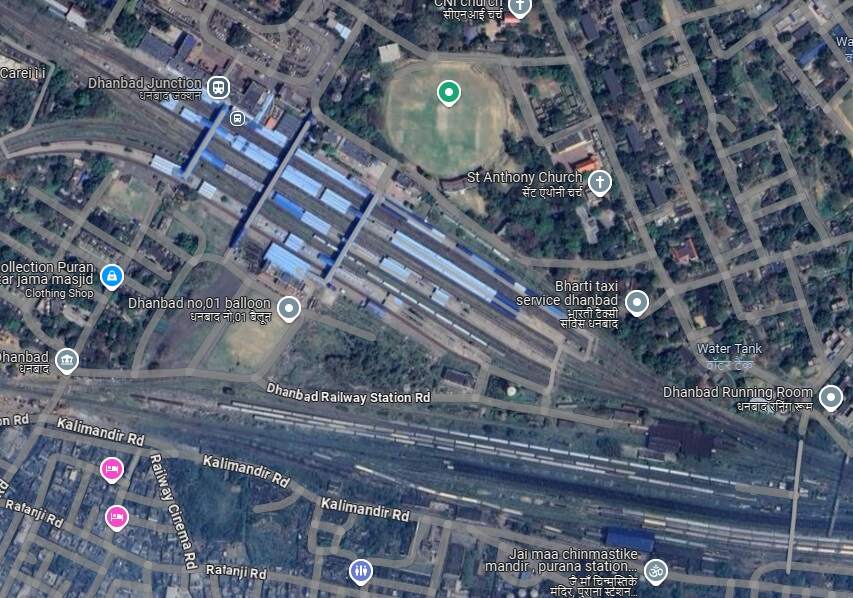
  3. https://www.google.com/url?sa=t&source=web&rct=j&opi=89978449&url=https://www.railwaymuseum.org.uk/sites/default/files/2024-08/Rail%2520fares%2520resource%2520pack.pdf&ved=2ahUKEwiJ8Zr0yIGJAxU32QIHHReBFiUQzsoNegQIAhAM&usg=AOvVaw3PS6VobUUgVWMQcx3s9jzo, accessed on 9th October 2024.
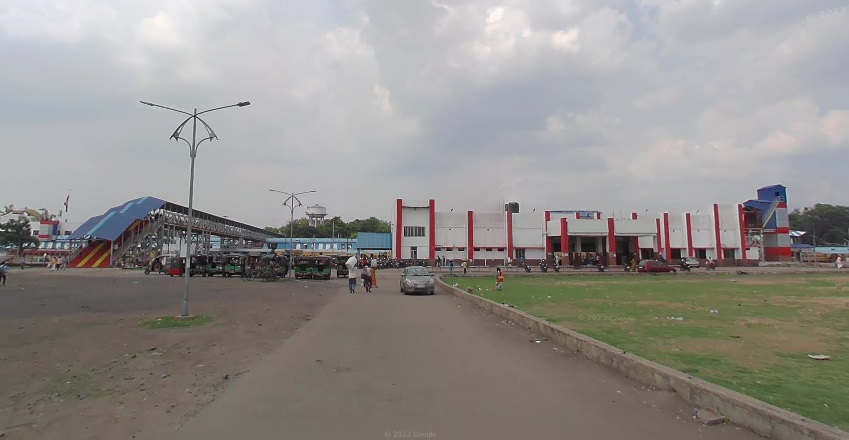
  4. https://en.m.wikipedia.org/wiki/Koilwar_Bridge, accessed on 9th October 2024.
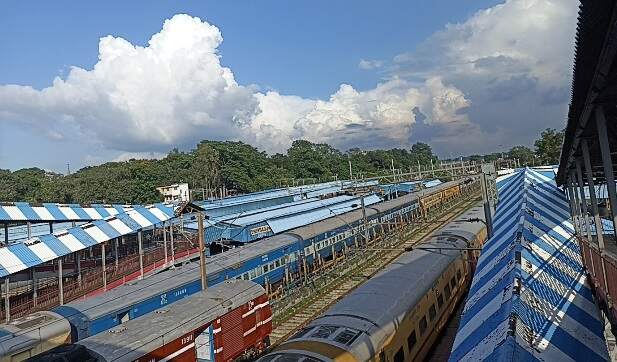
  5. https://es.pinterest.com/pin/indian-railwaysa-utility-for-the-british-turned-out-to-be-a-boon-for-independent-india-in-2024–603130575127693830, accessed on 9th October 2024.
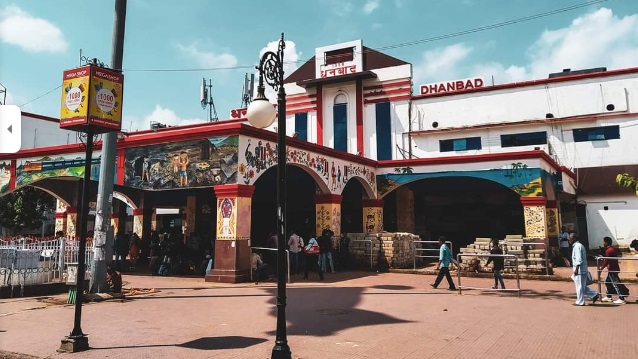
  6. https://x.com/EasternRailway/status/1693572897451958538, accessed on 10th October 2024.
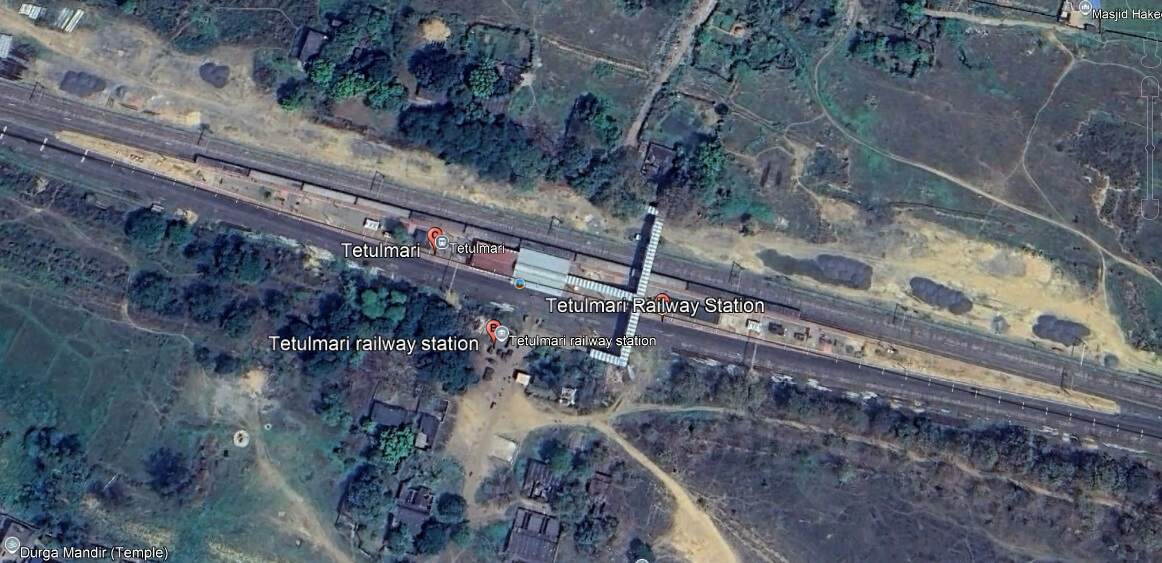
  7. https://commons.wikimedia.org/wiki/File:065.STARTED_FROM_HOTEL_MANISH_ON_14.08.2017_AT_02-30_P.M._FOR_HOWRAH_RAILWAY_STATION_BY_HIRED_TAXI.jpg, accessed on 10th October 2024.
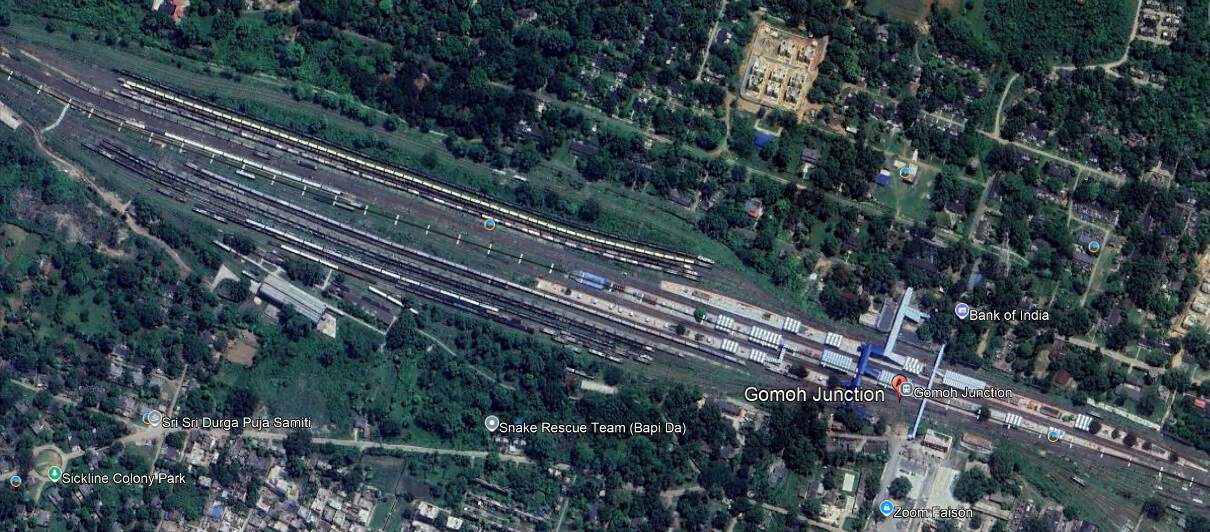
  8. https://en.wikipedia.org/wiki/Howrah_railway_station, accessed on 10th October 2024.
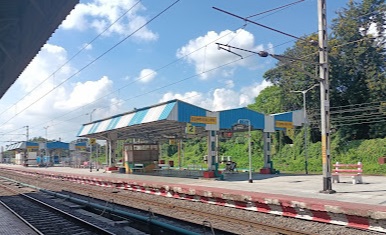
  9. https://www.facebook.com/photo/?fbid=1224418747723184&set=a.207457379419331, 10th October 2024.
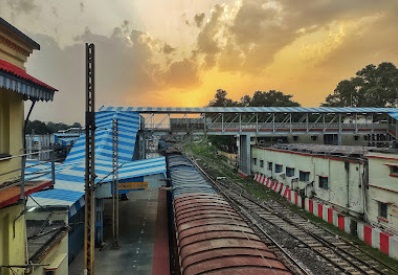
  10. https://en.wikipedia.org/wiki/Gaya_(India), accessed on 11th October 2024.
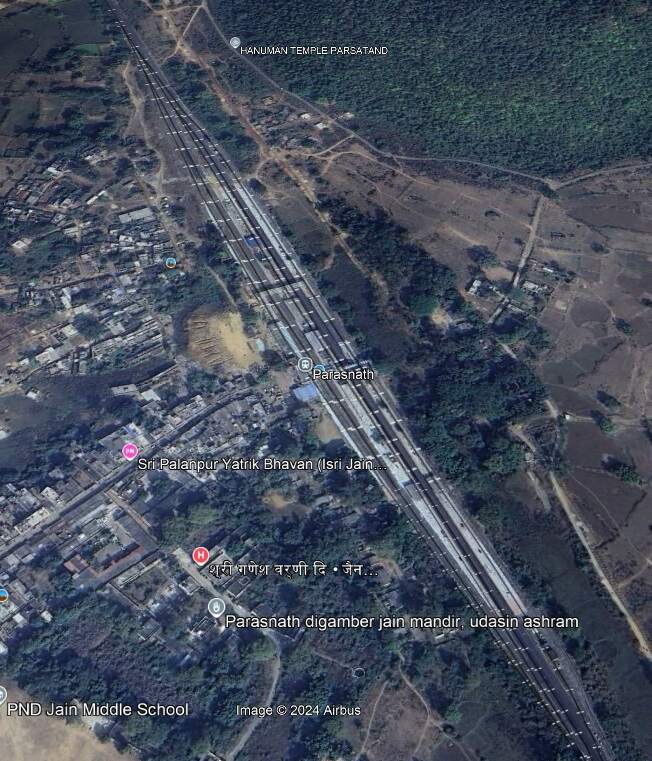
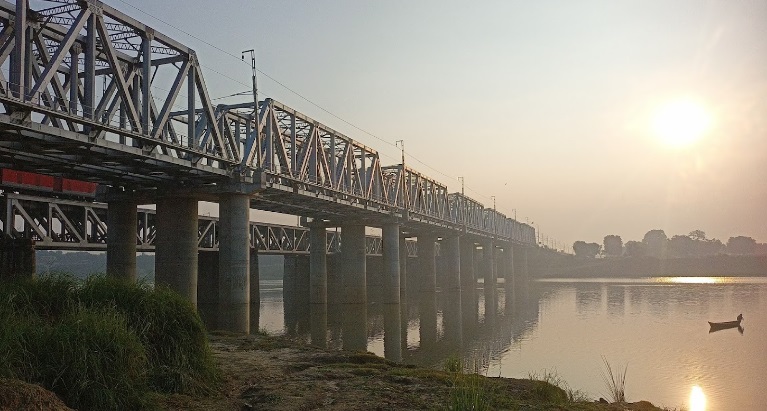
  11. https://en.wikipedia.org/wiki/Mirzapur, accessed on 13th October 2024.
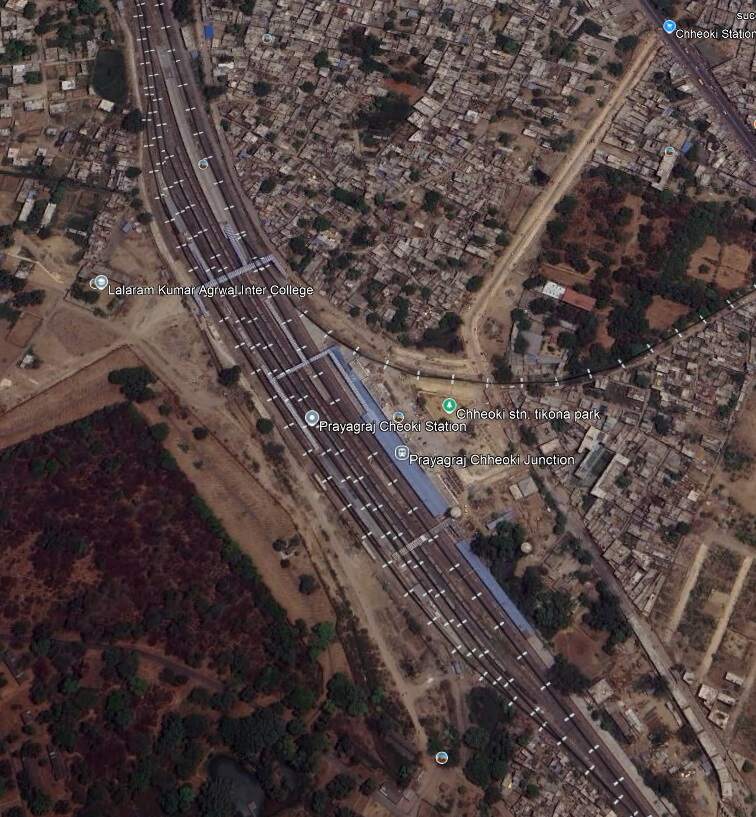
  12. https://en.wikipedia.org/wiki/File:Allahabad_railwaybridge1870.jpg, accessed on 13th October 2024.
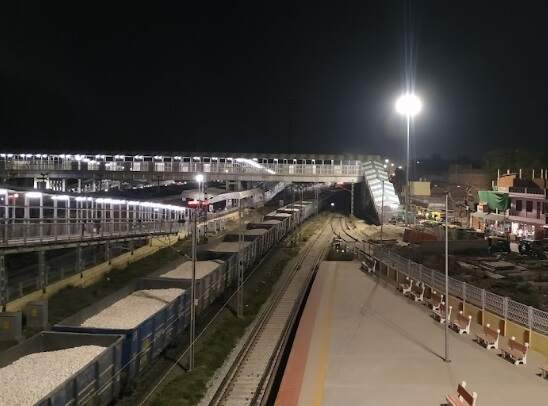
  13. https://en.wikipedia.org/wiki/Prayagraj, accessed on 13th October 2024.
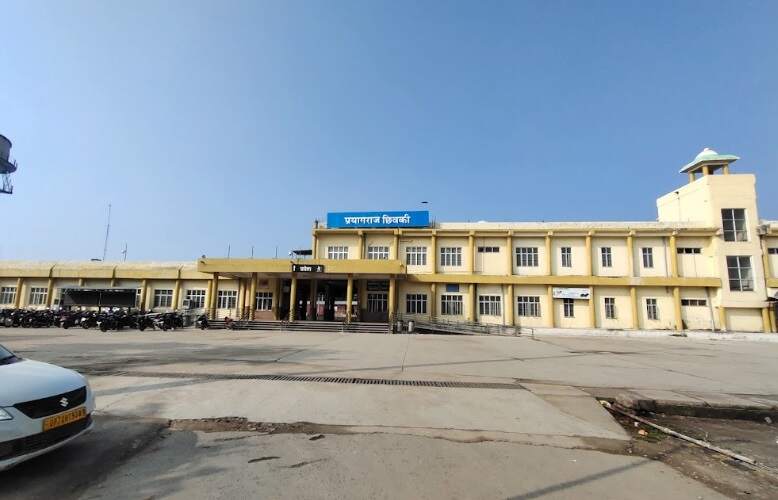
  14. https://www.railyatri.in/trains/route-55339-kasganj-mathura-passenger, accessed on 16th October 2024.
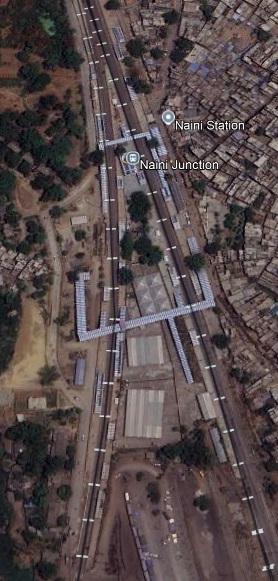
  15. https://en.wikipedia.org/wiki/Mathura_Junction_railway_station, accessed on 16th October 2024.
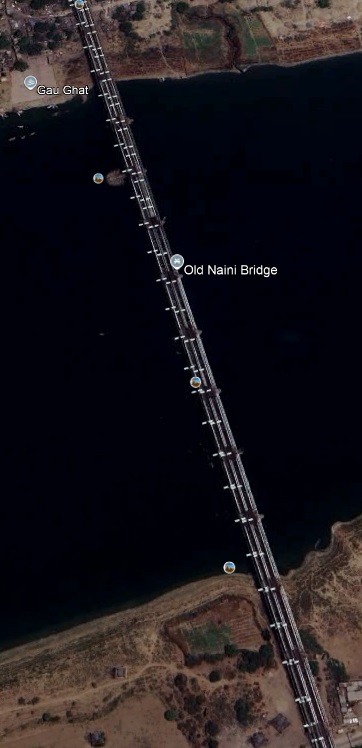
  16. https://indiarailinfo.com/departures/kasganj-junction-ksj/254, accessed on 16th October 2024.
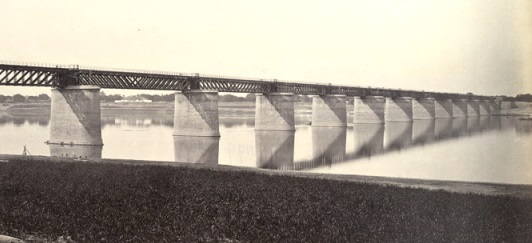
  17. https://www.hathrasonline.in/guide/about-hathras, accessed on 16th October 2024.
  18. https://zeenews.india.com/railways/priceless-heritage-know-all-about-indian-railways-157-year-old-yamuna-bridge-in-delhi-2636419.html, accessed on 16th October 2024.
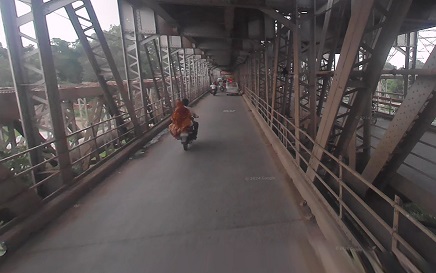
  19. https://jdhsmith.math.iastate.edu/term/slineir.htm, accessed on 16th October 2024.