Category Archives: French Railways and Tramways

TAM Tramway from Plan du Var to St. Martin Vesubie – Revisited (Chemins de Fer de Provence 64)

Back in 2013, I wrote a short blog about the line from Plan du Var to St. Martin-Vesubie:

https://rogerfarnworth.wordpress.com/2013/12/16/chemins-de-fer-de-provence-7-the-line-to-st-martin-vesubie

Many of the images in that post were culled from a blog by Marc Andre Debout. [1] It feels appropriate that I should revisit my blog and update it. I have discovered significantly more about the route and I’d like to complete a detailed survey of the route.

An interesting survey of the line was undertaken for the French website “http://www.inventaires-ferroviaires.fr” (written in French) [2] which I have drawn on, along with the things, in producing this post.

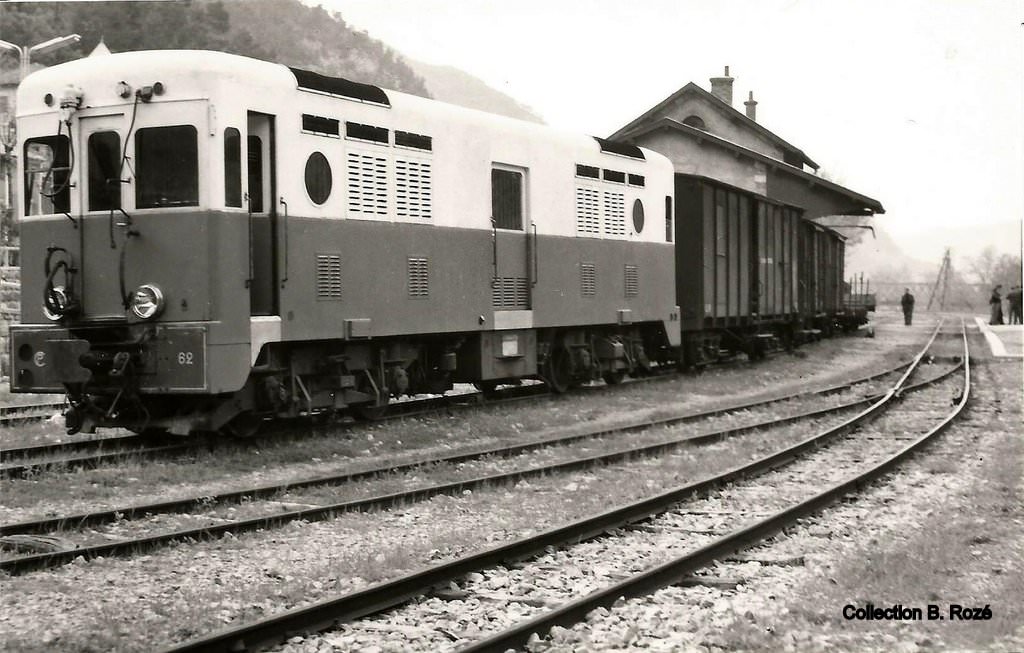
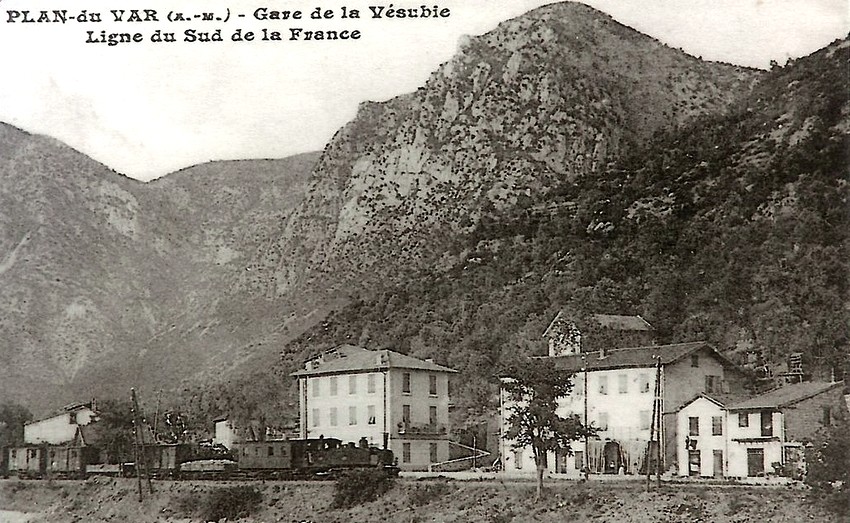
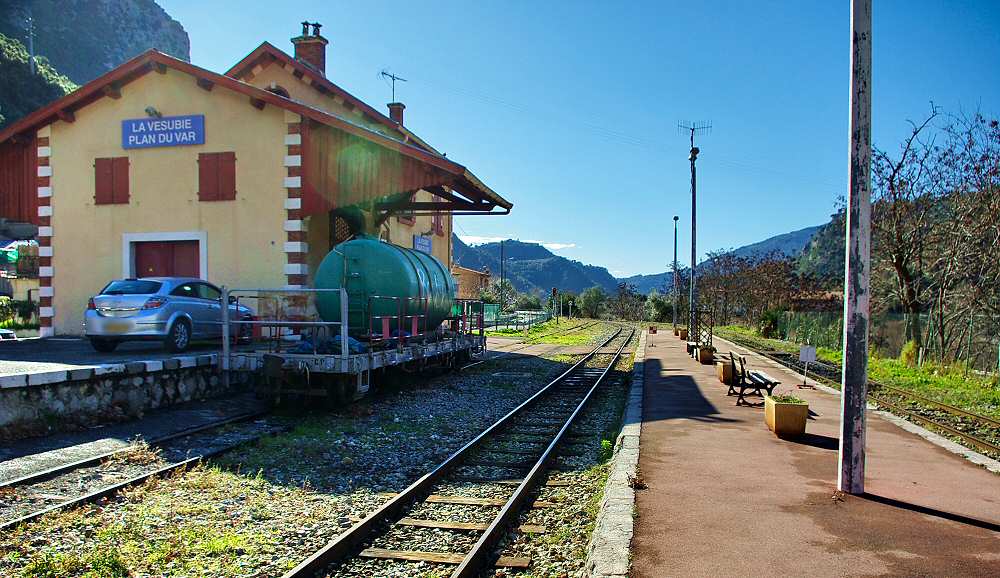
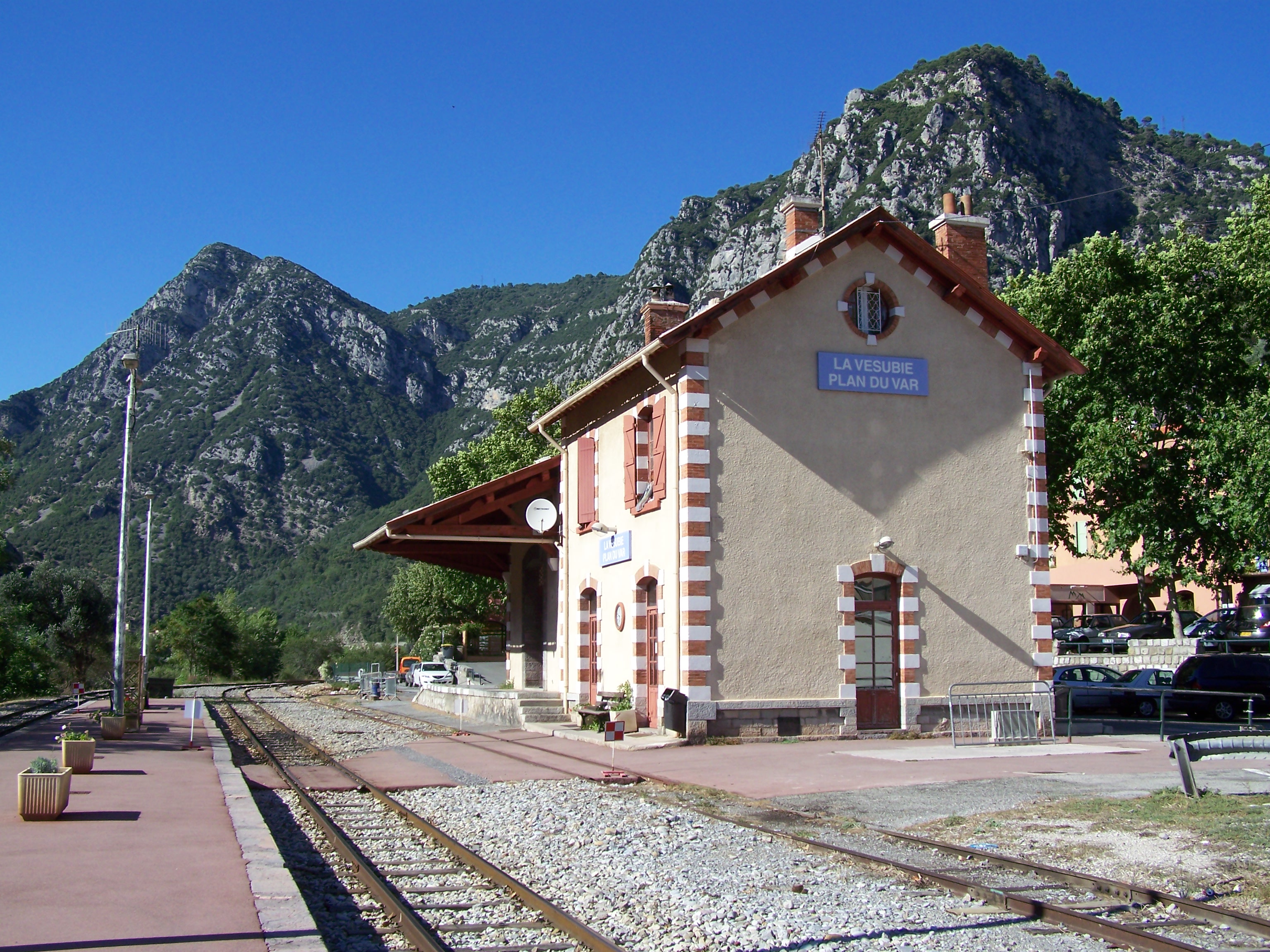
The “Brissonneau” heads, a freight train in La Vésubie station. Bernard Rozé Collection – published by BVA, April 1956. [4] This will have been taken after the closure of the tramway (1929).Also taken at Plan du Var, this could only be a train off the tramway during the first year of its life 1909 to 1910. It is more likely to be a Digne to Nice train. [4]

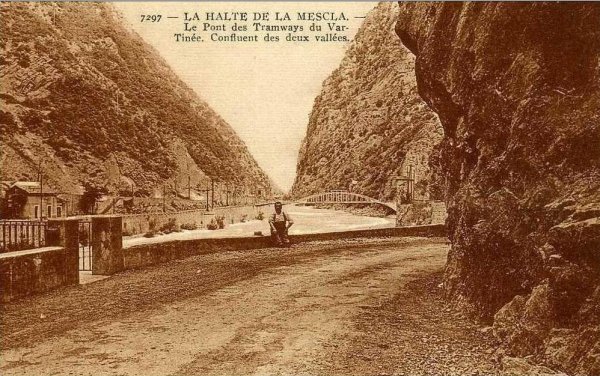
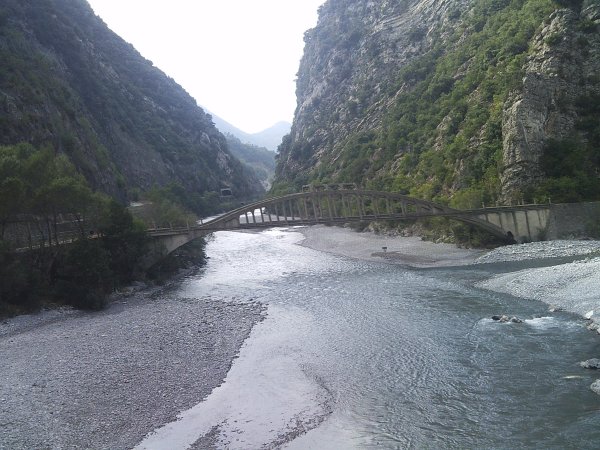
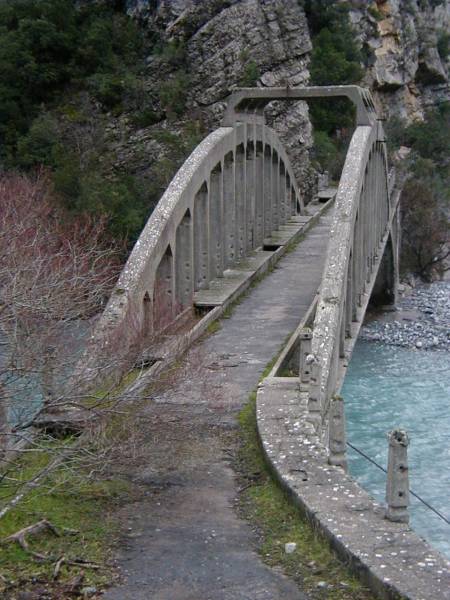
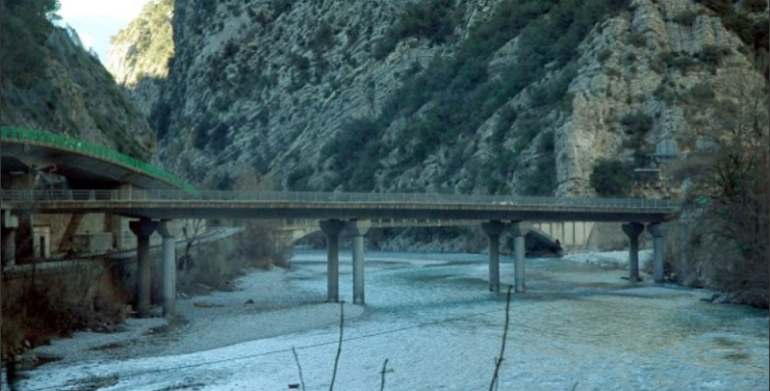
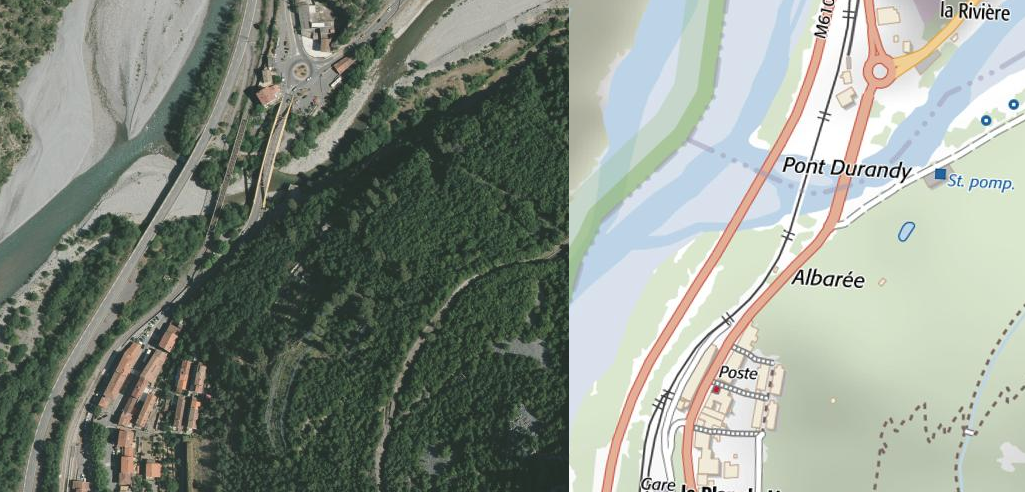
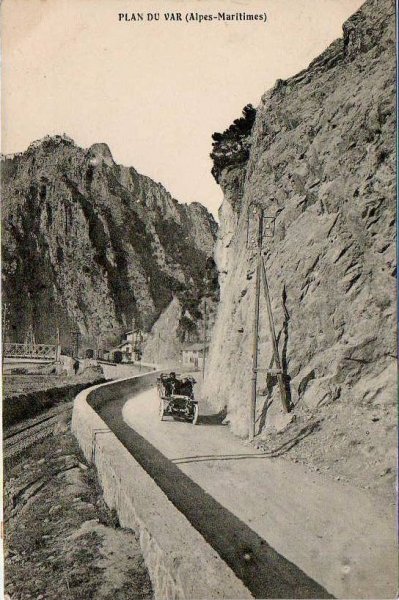
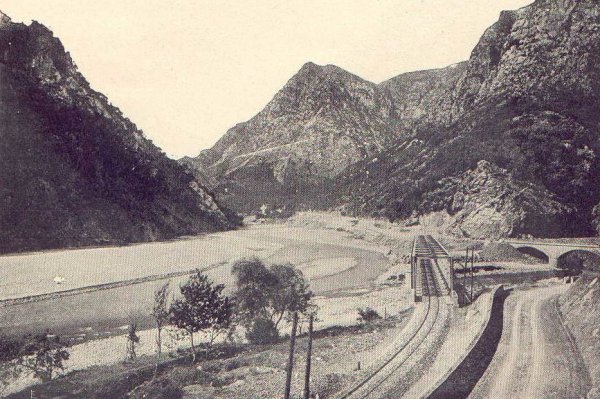
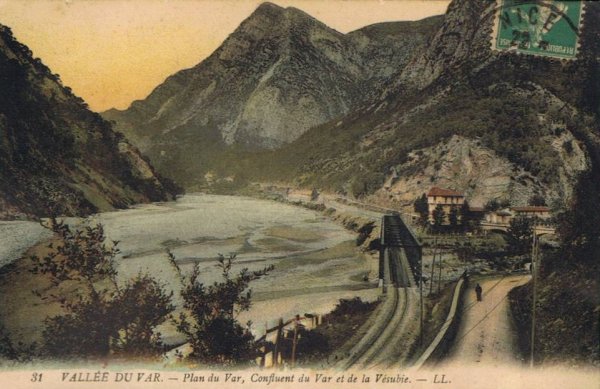
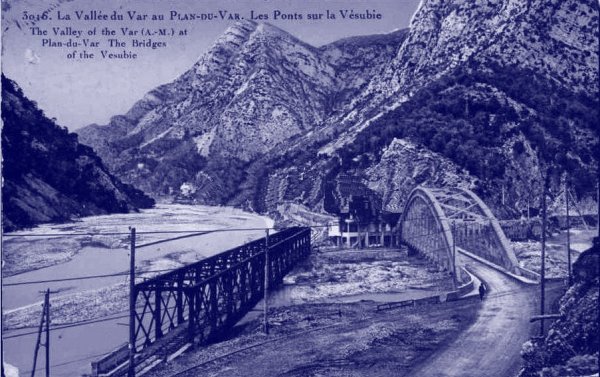
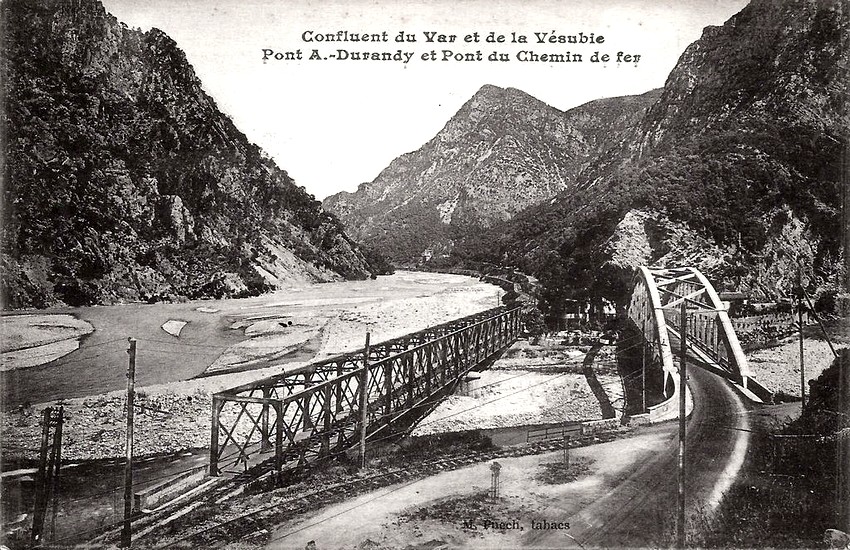
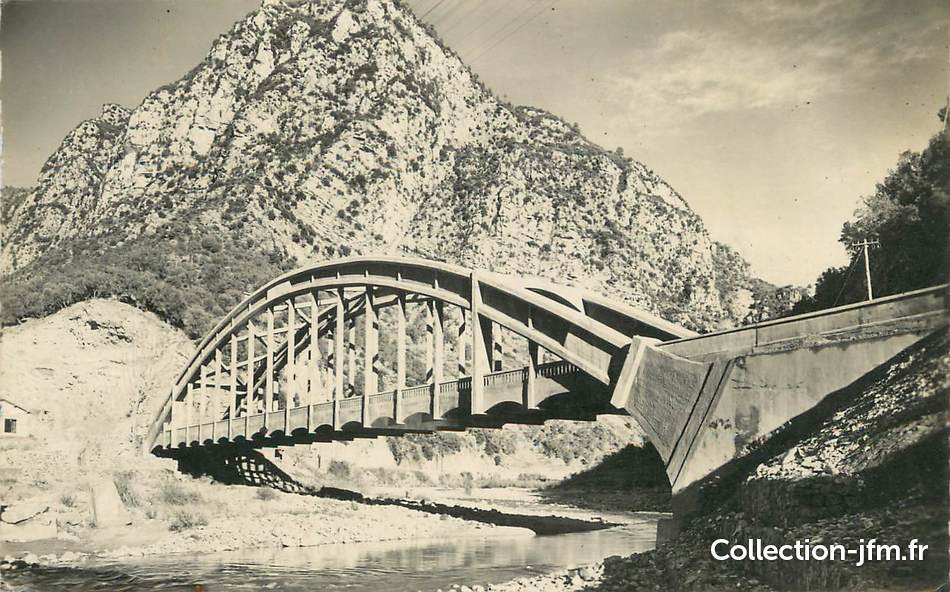
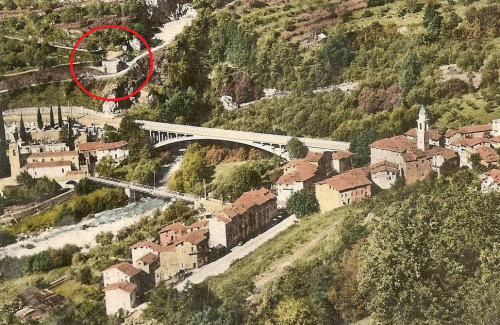
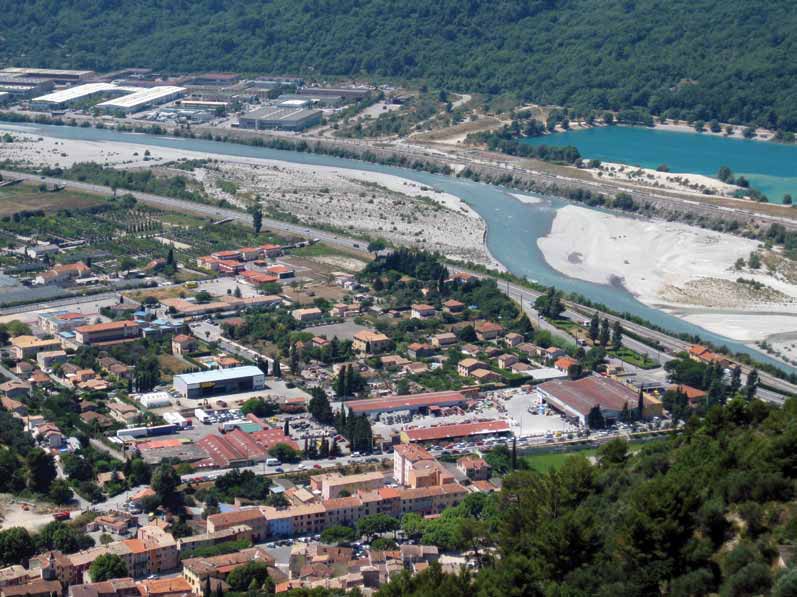
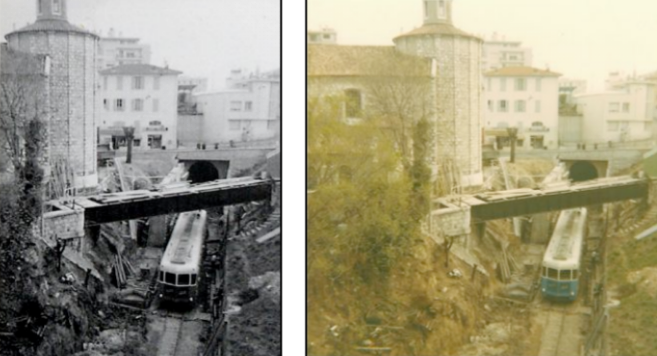
Tramway services left Plan du Var Station travelling North and diverged from the Nice to Digne line before reaching the Vesubie River. The images below are old postcards of the location of the junction and show the development of the site over a number of years. Initially an stone arch bridge took the road over the Vesubie, but when this failed is was replaced by the concrete arch bridge visible in some of the pictures.

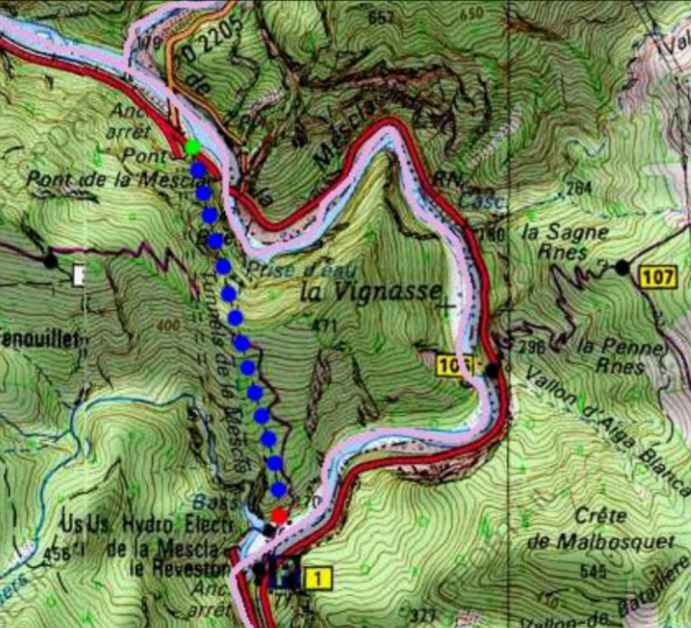
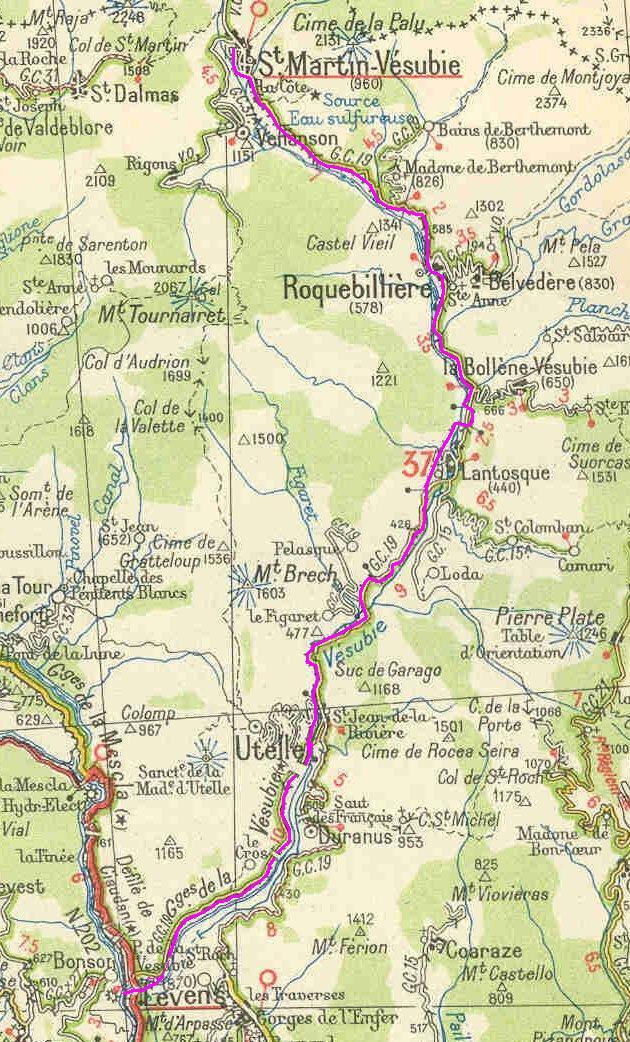
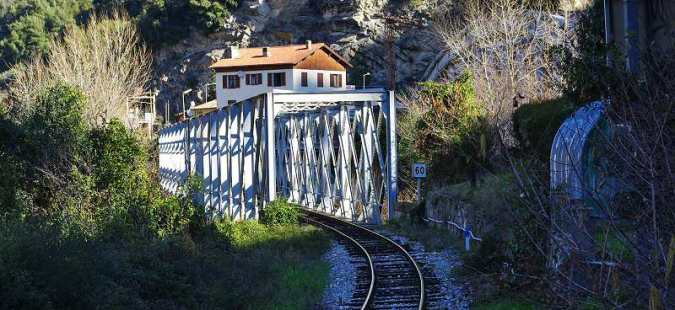
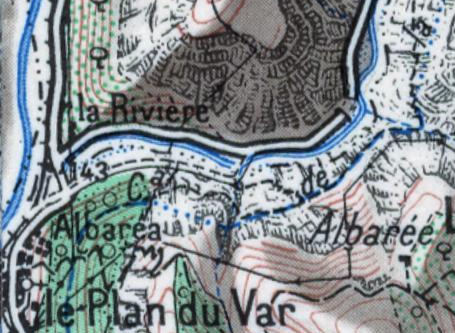
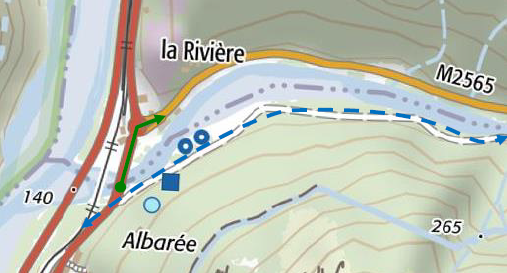
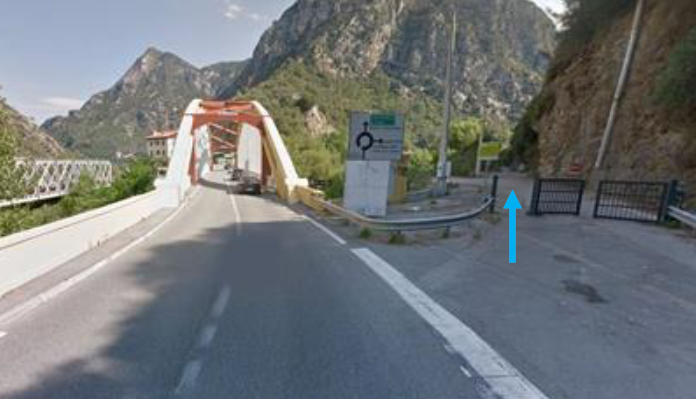
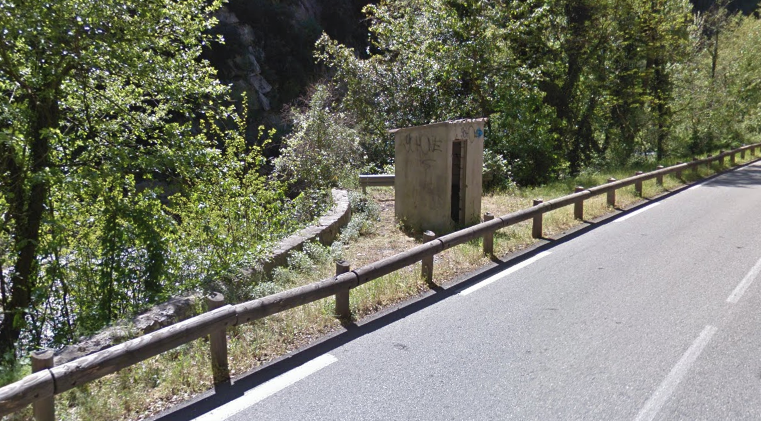
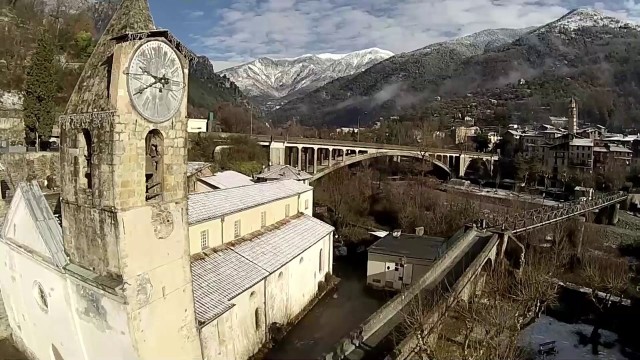
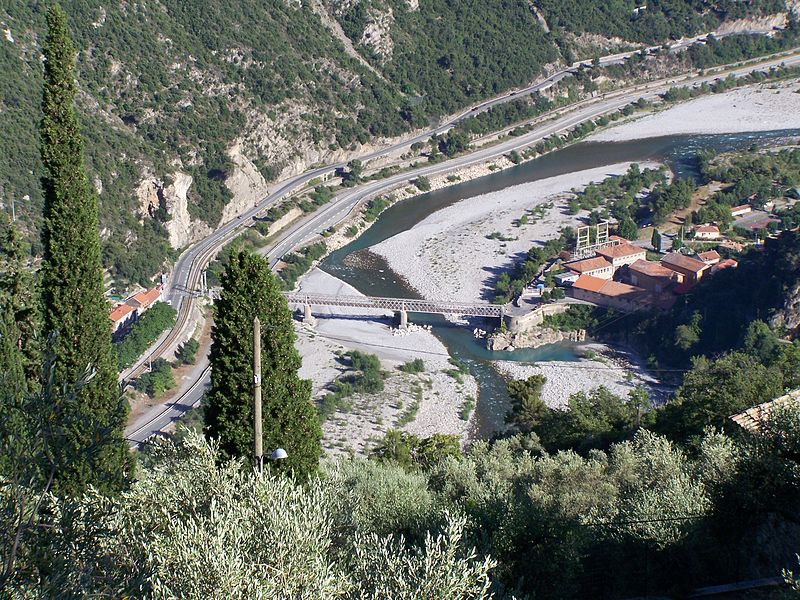
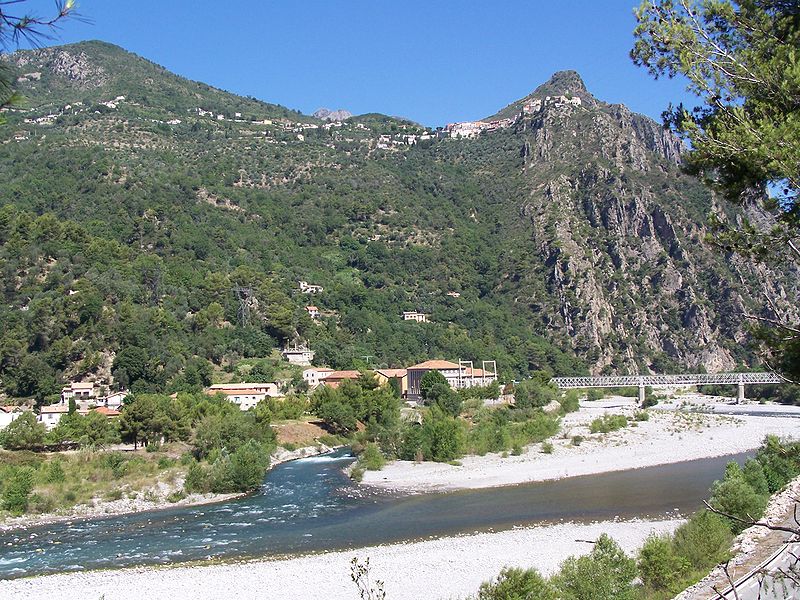
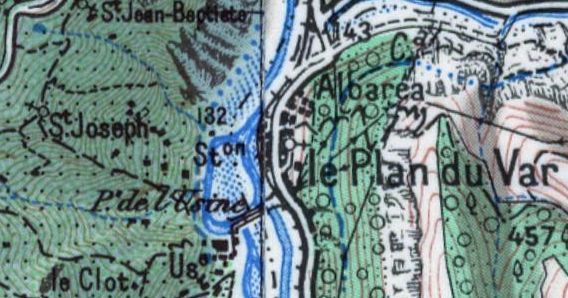
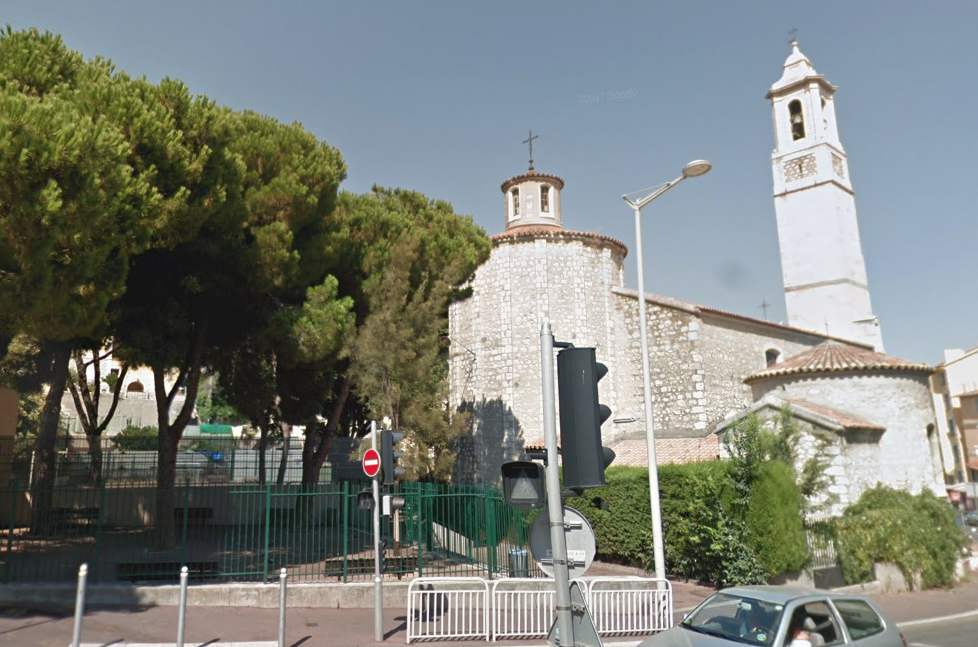
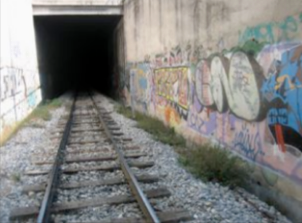
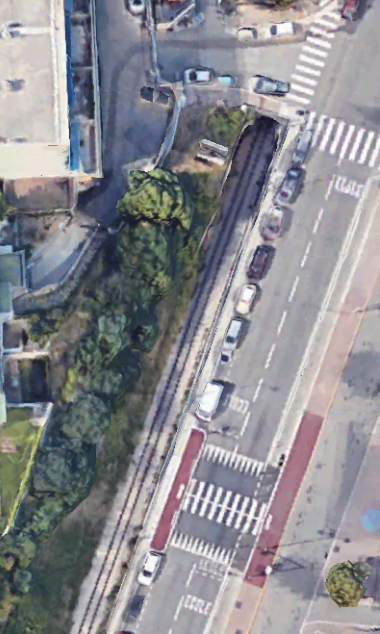
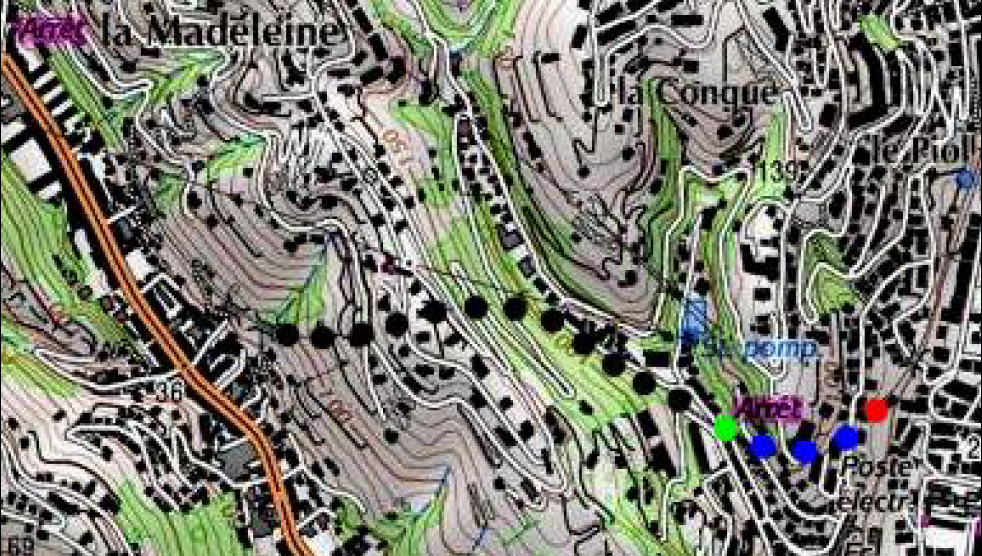
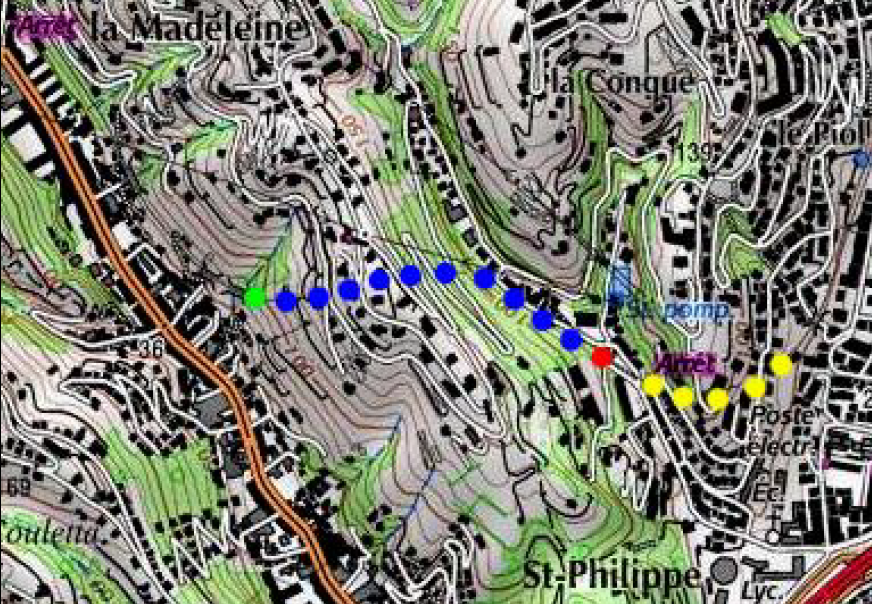
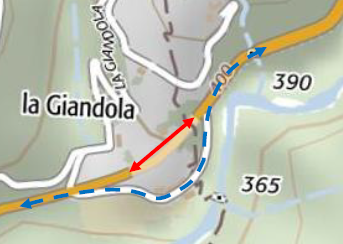
The first picture shows the location prior to the construction of a number of buildings to the North of the confluence. The second still has the old arch bridge and includes those buildings. The third shows both the tramway and the new bridge. The fourth encompasses both bridge and junction but it is [possible that the tramway peters out when it reaches the tarmac of the road over the Pont Durandy. If that is the case, then the fourth photograph was probably taken after the closure of the tramway in 1929.Taken from the railway in the 21st Century. This picture shows the truss girder bridge over the Vesubie on the Nice Digne Line and the road bridge (Concrete Arch) behind the vegetation.The two postcard pictures immediately above were found for sale on the collection-jfm.fr website in 2018. [5]The 1955 1:50,000 IGN map shows a track which was once the tramway along the Vesubie River Valley commencing at the road bridge, Pont Durandy, and running under the ’43’ (on the map) before turning North to cross the river and join the roadway up the valley. [3]The plan above shows the road route into the Vesubie Valley marked with the green arrow the blue dotted line is that of the old tramway. The tram line crossed the road just before the Vésubie bridge. She went up this last about 400m before crossing it in turn on a bridge that has now disappeared. [2] The image below shows the location of the tramway formation as it can be seen in the early 21st Century. [2]After traveling for around 400m on the South side of the Vesubie River the tramway crossed to the North side and joined the road at the point shown on the image above.

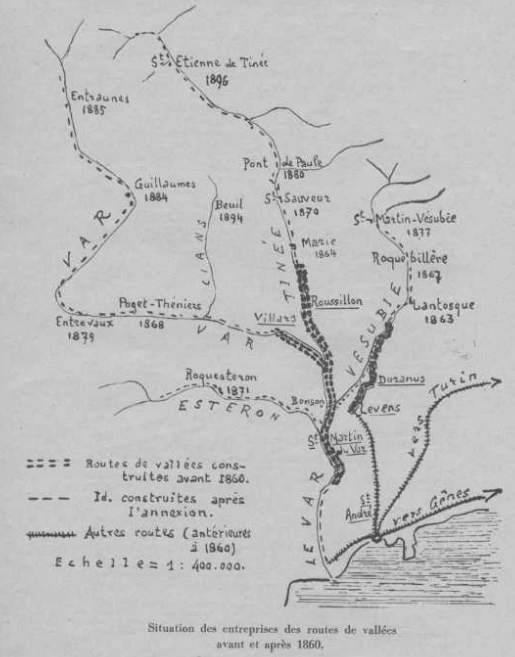
The General Council of the department decided to construct of three lines in the area on 10th February 1906. They were The Plan-du-Var – Saint-Martin-Vésubie line for the Vésubie valley and, for the Tinée valley, the “La-Tinée” line – Saint-Sauveur-sur-Tinée. These two lines were given to the TAM (Tramways of the Alpes-Maritimes) to manage [6] . The third line was the Nice – Levens line, allocated to the TNL (Trams of Nice and Littoral). [7]

Within just a few weeks of the establishment of a Municipal Council for St. Martin-Vesubie (1908) a campaign was inaugurated to see modifications to the proposed tram service to the town/village which included revisions to the planned station location and layout. The budget for the station site was originally 6,000 francs. The revised and agreed scheme amounted to 10,000 francs.

Considered a priority, the Vésubie line was commissioned in 1909. Construction took place, during that year and the line opened on 1st September 1909. However, electric powered tramcars were not delivered in time for the opening and for approximately one year steam engines were in use on the line. Electric trams finally entered service in 1910.

The trams allowed both good s and passengers to be transported quickly: the cans of milk from the pastures were delivered directly to the centre of Nice and other perishable items also reached buyers much more quickly.

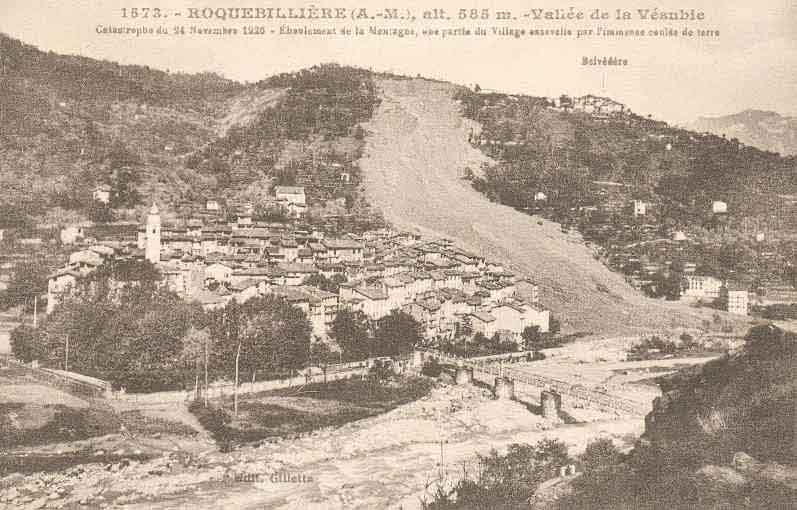
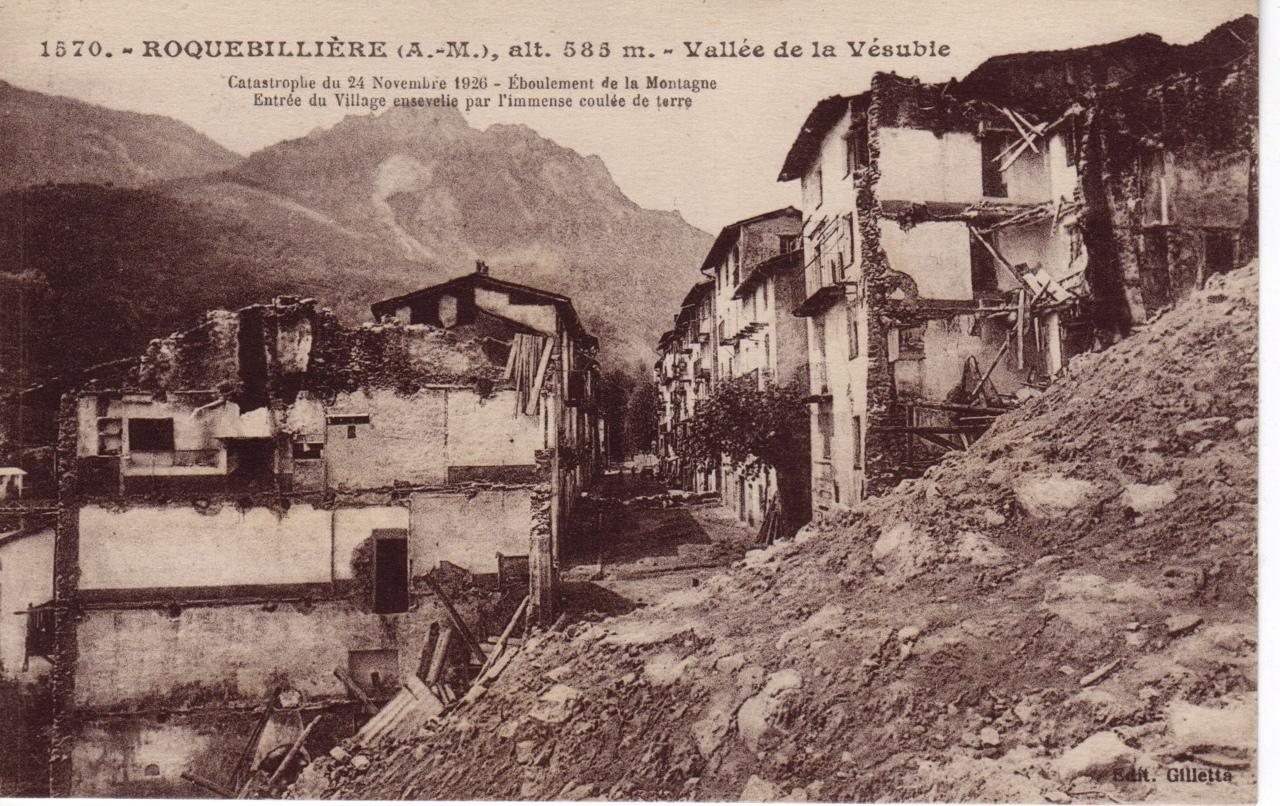
In translating French to English in my last post on this line, I managed to misconstrue the history of the line. In that post I said that the line did not reach St. Martin Vesubie until 1928 and Roquebillière in 1926. What I should have understood at the time was that there was an interruption in the service betwen 1926 and 1928. A huge landslide that buried the village of Roquebillière also covered roads and railways. 24th November 1926, date of the tragedy, was engraved in local memories. As a result, the saints-martinois had to take a bus to complete their journey until the trams were again allowed to cross the landslide in September 1928. This transhipment promoted the use of coaches instead of trams and as a result it was decided to close the line in 1929. Tram transport was, by then considered archaic in the face of competition from the automobile.

Positive decisions in favour of the tramway were regularly made within the local communes and the tramway was seen positively until the advent of the Great War. However, the last action by the Municipal Council relating to the line was the refusal of an increase in tariffs on the line because of the increased competition from buses and lorries It seems that the demise of the tramway was already anticipated, long before the Roquebillière disaster provided what was ultimately the fatal blow to the line.

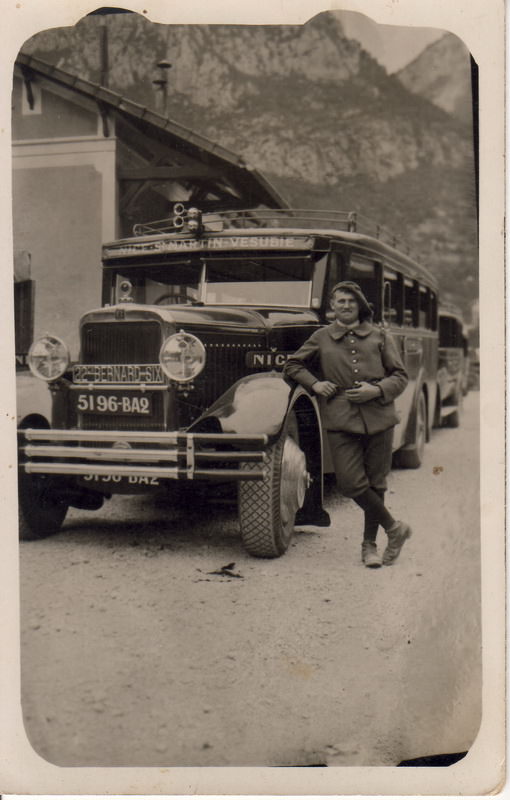
I came across the adjacent image of a Nice-St. Martin bus, while researching the route on the internet. I cannot remember where I found it. It is perhaps easy to see that the newer and more reliable buses provided very strong competition for the trams.

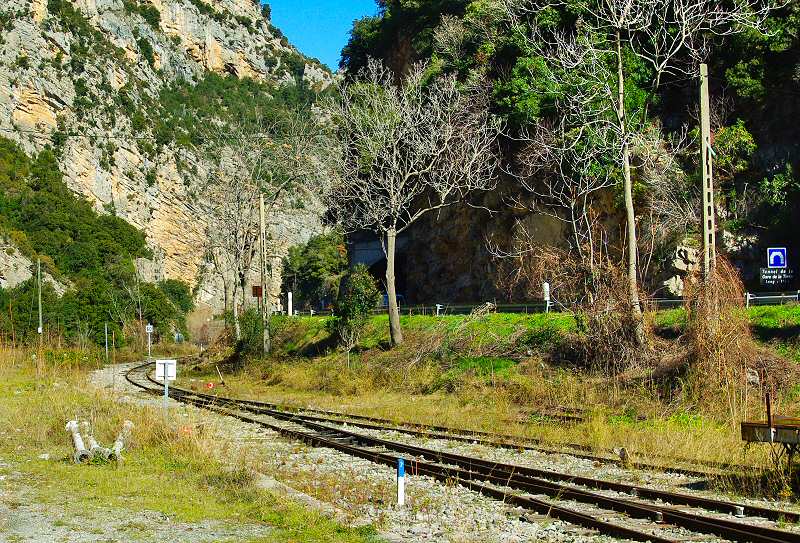
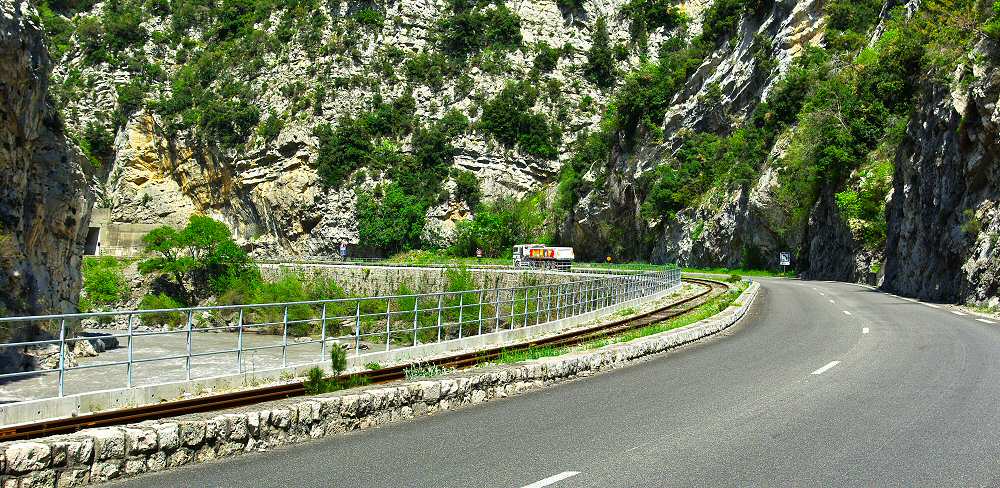
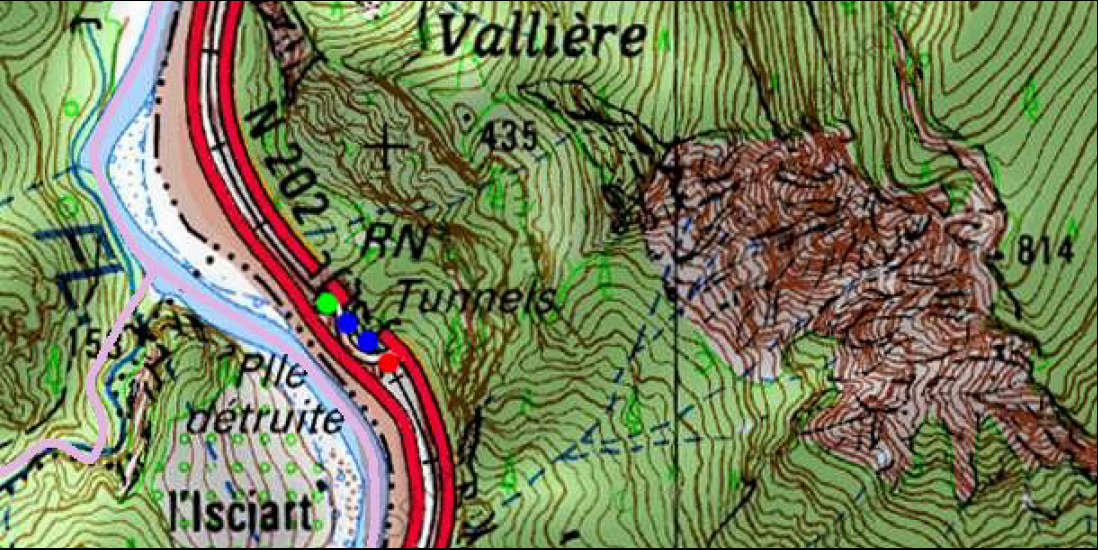
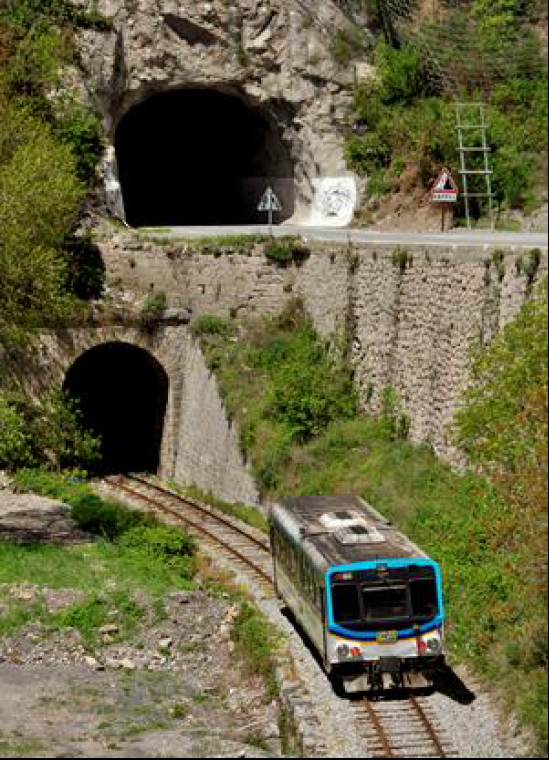
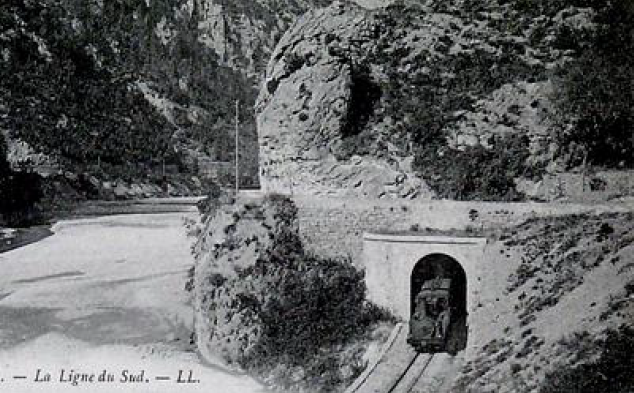
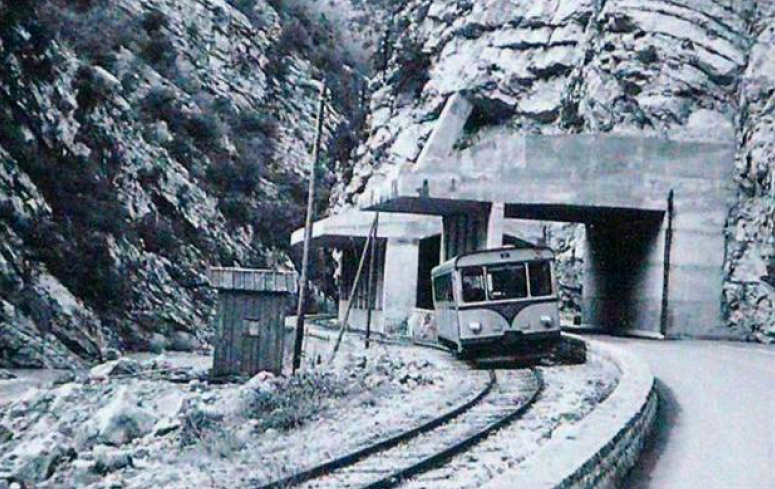
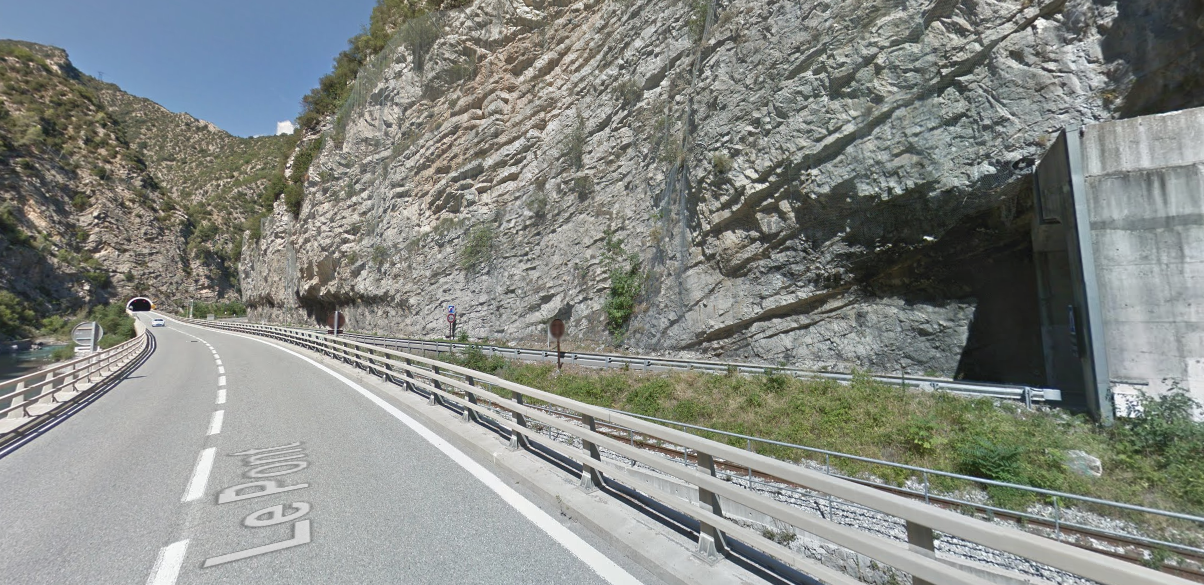
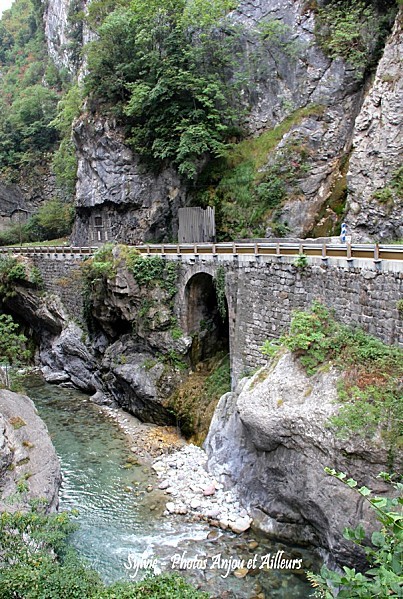
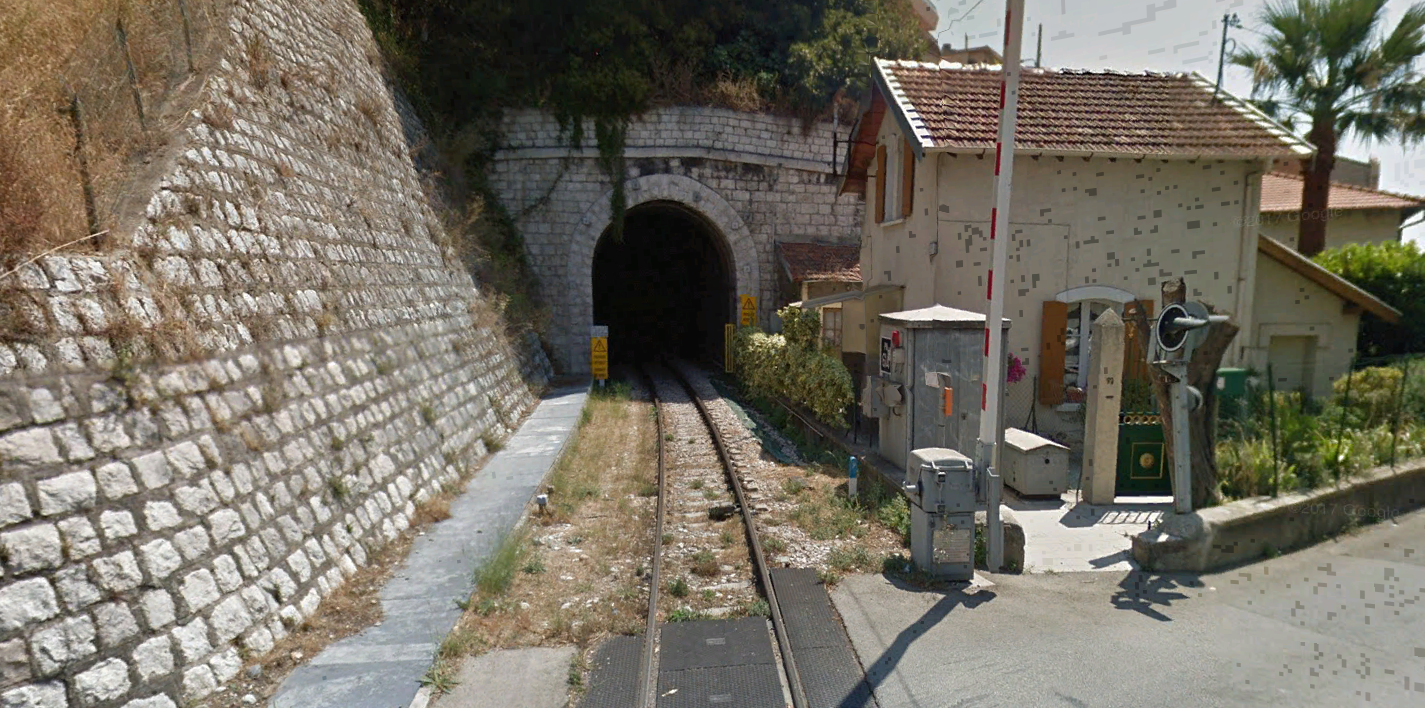
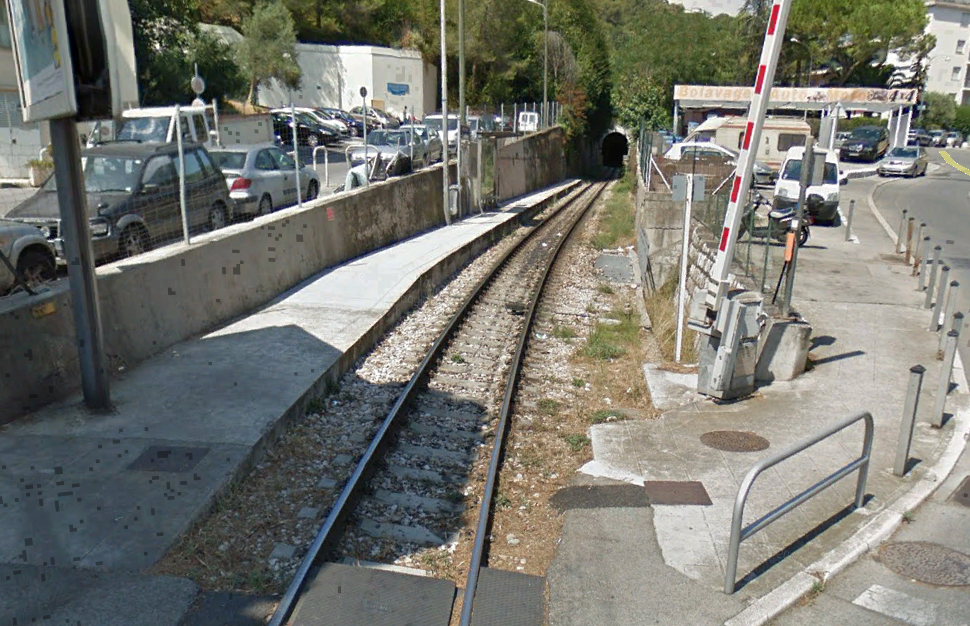
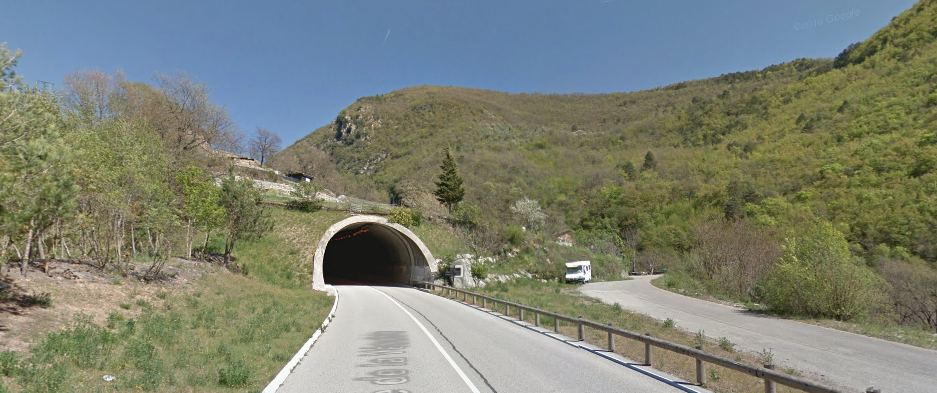
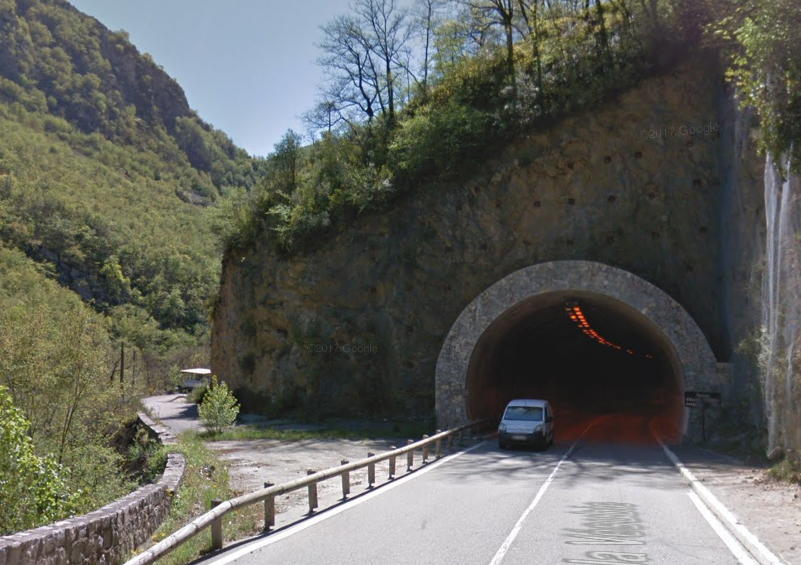
Once the tramway crossed to the north side of the Vesubie close to Plan du Var, it followed the road perched above the river [10] for some distance. There was a short tunnel through which the old road passed in the 1950s which was probably in existence at the time of the tramway.

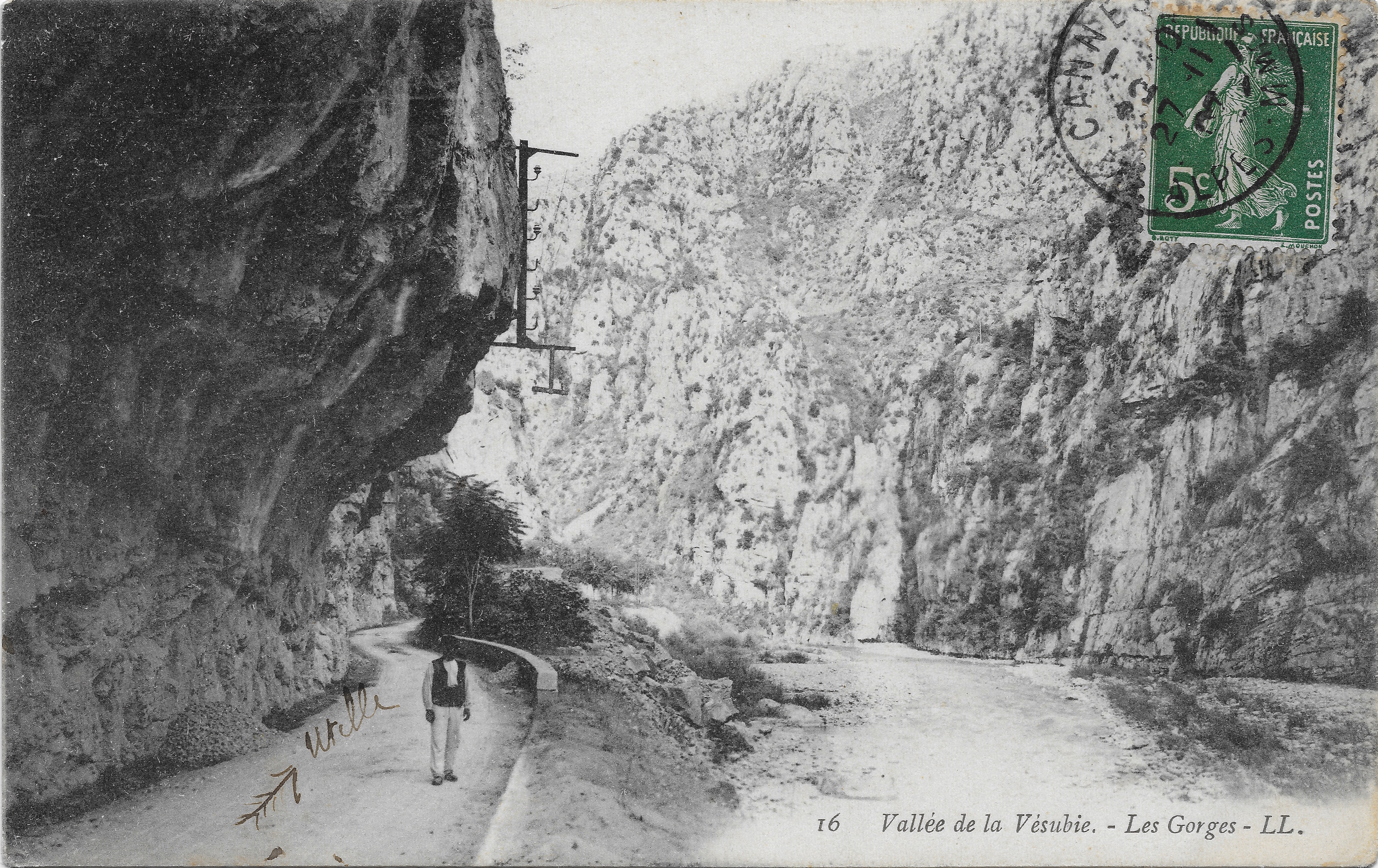
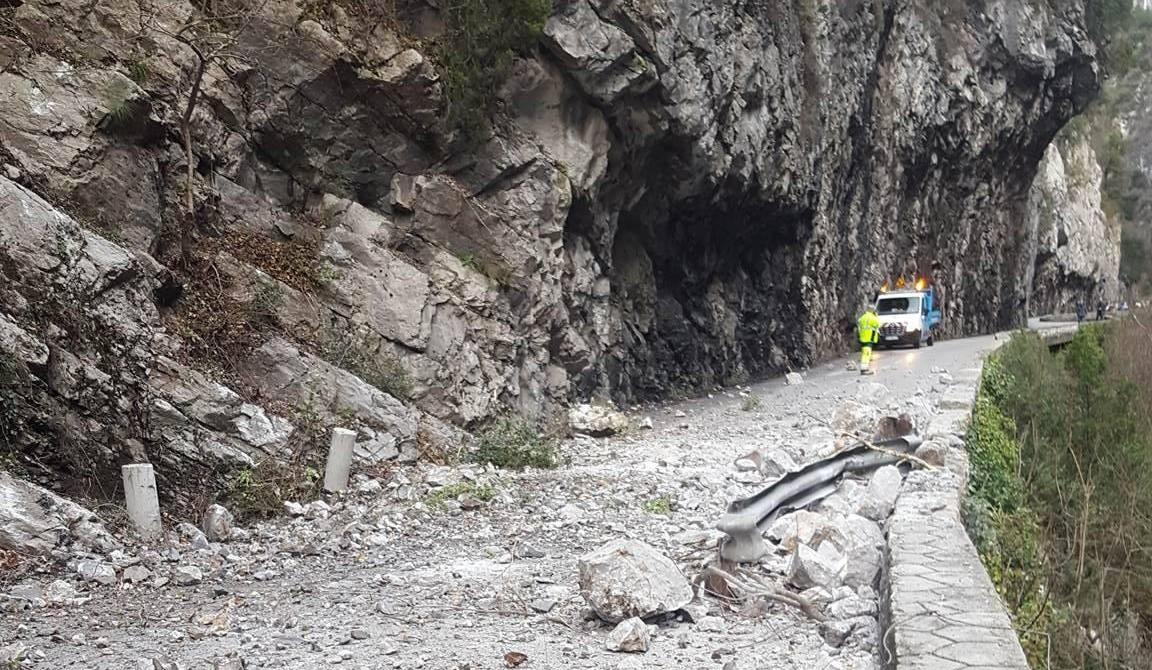
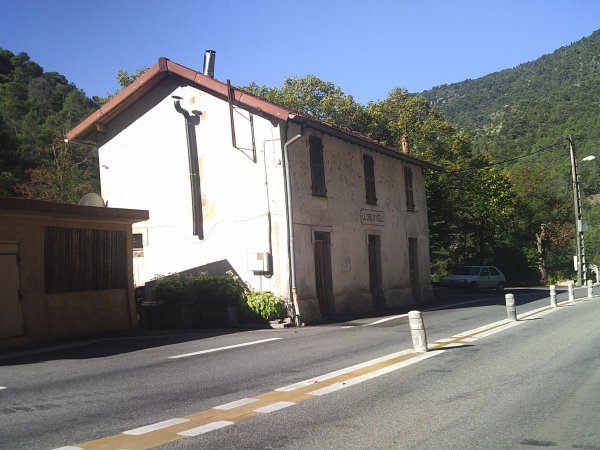
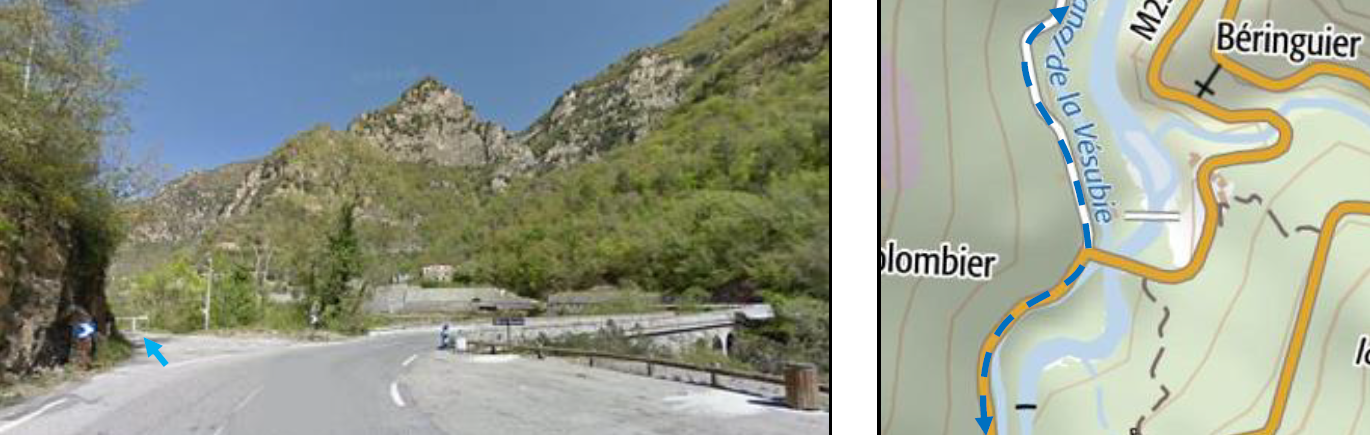
The road leading to that tunnel (and the route of the old tramway) can be seen below diverging from the newer road and tunnel. [11] The image is taken from Google Streetview. A similar image shows the old road/tramway formation, close to the River Vesubie, returning to join the newer road/tunnel on the north side of the rock outcrop. After the tunnel the formation/road passes through La Madone (La Cros d’Utelle) still following what is the northwest bank of the river.A typical early postcard view of the road alongside the River Vesubie before the tramway was constructed. [8]A typical scene on the road up the Vesubie Gorge. This picture was taken in February 2017. The road was closed to allow the landslide to be removed and the site secured. [9]The station building next to the river at La Cros d’Utelle (La Madone). [1]

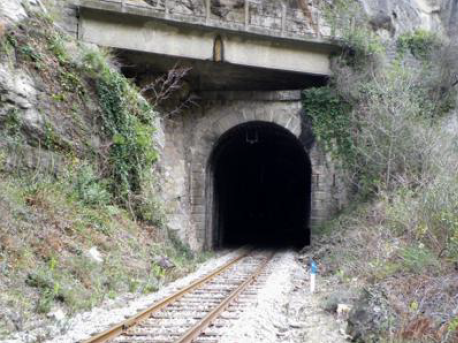
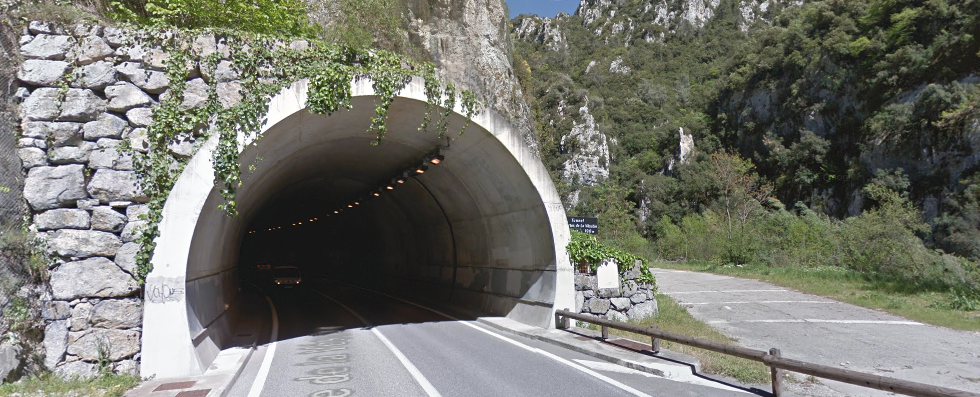
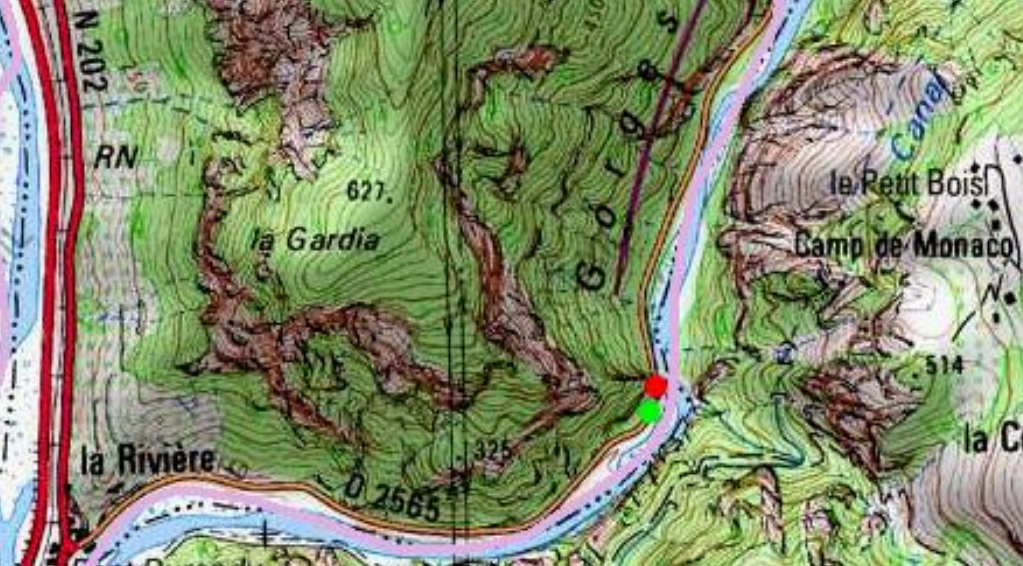
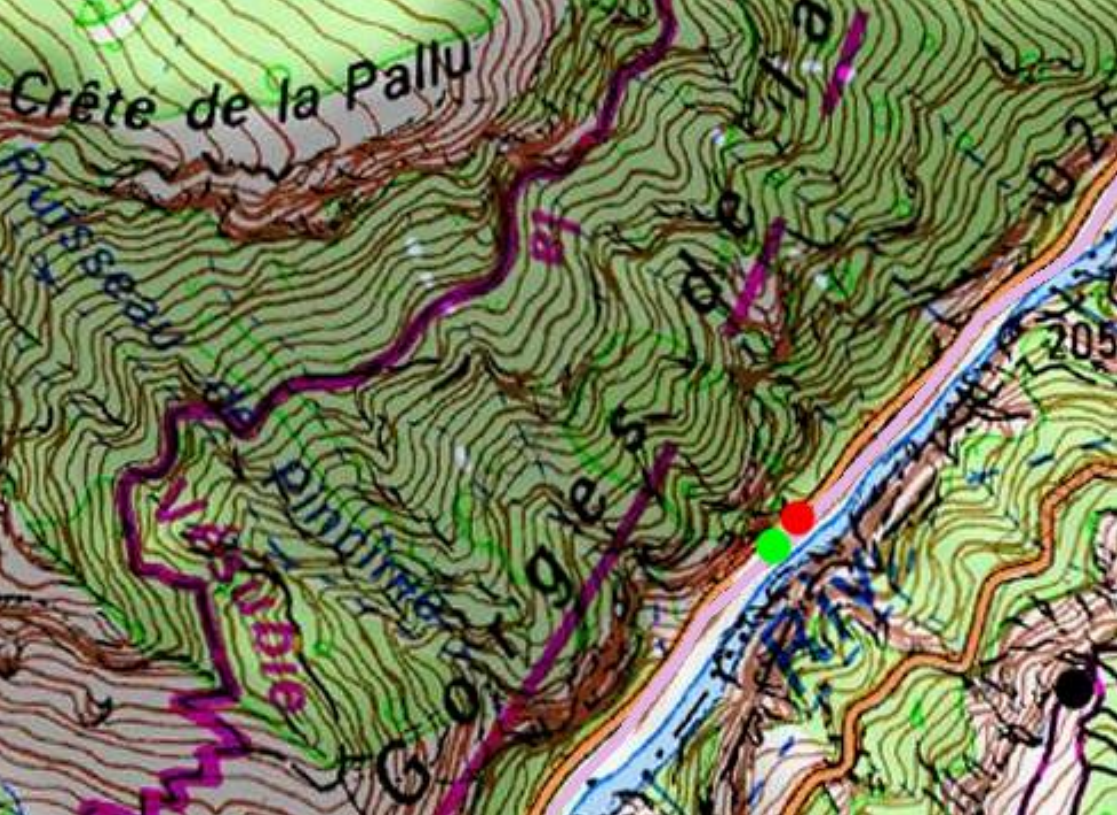
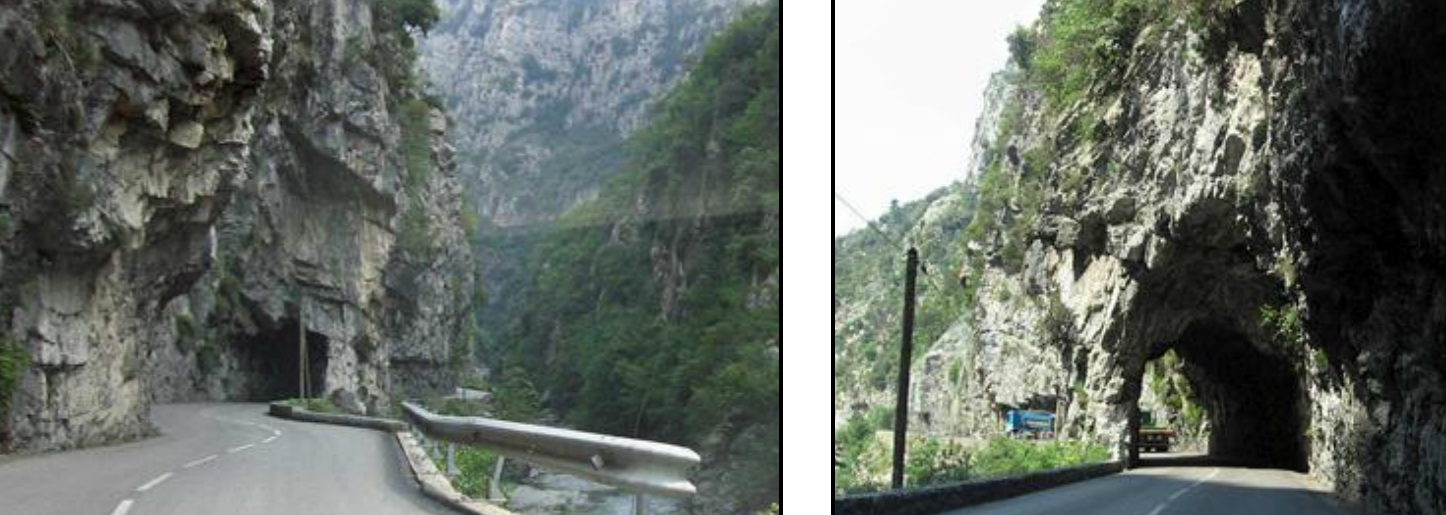
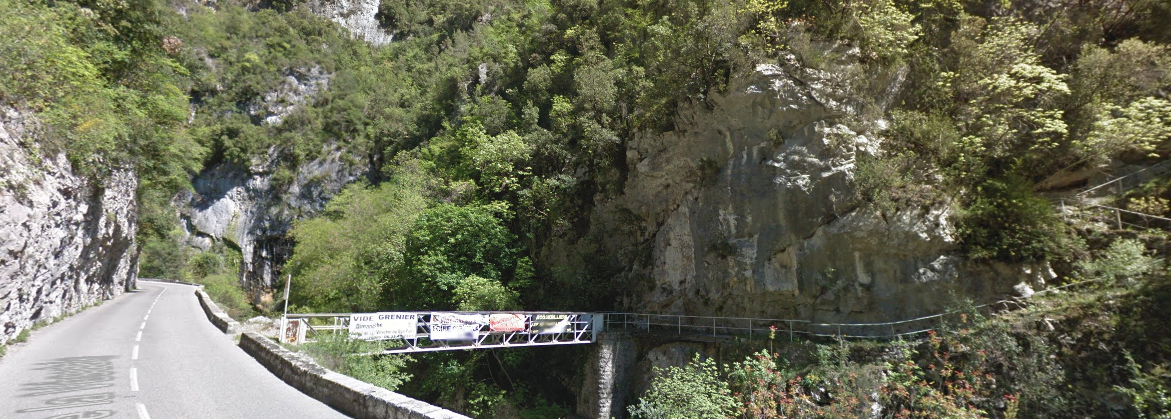
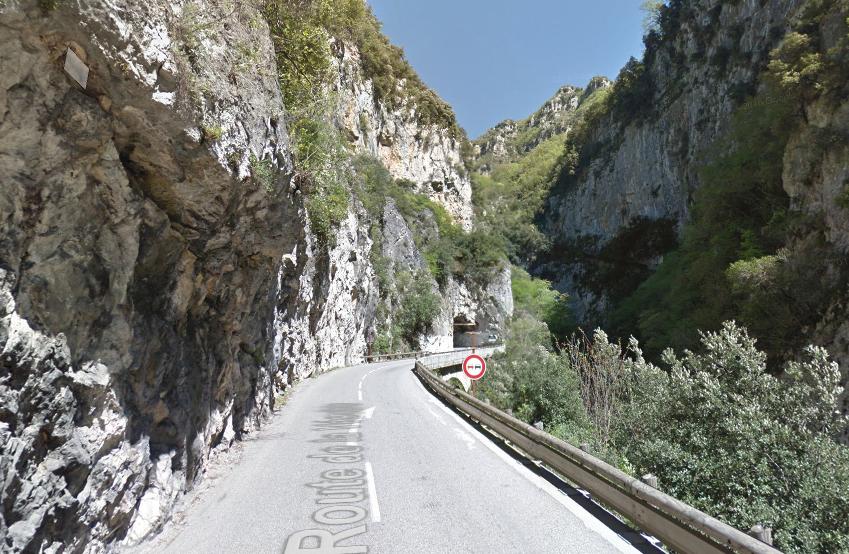
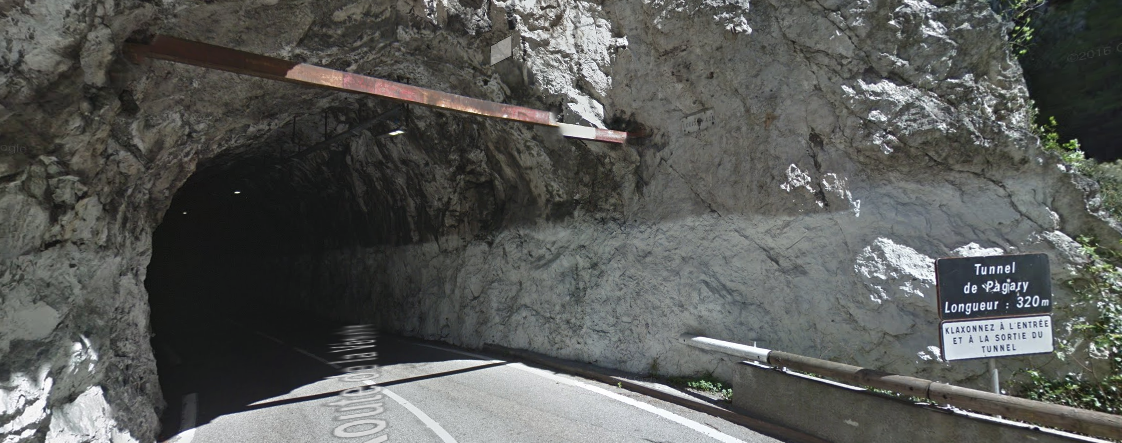
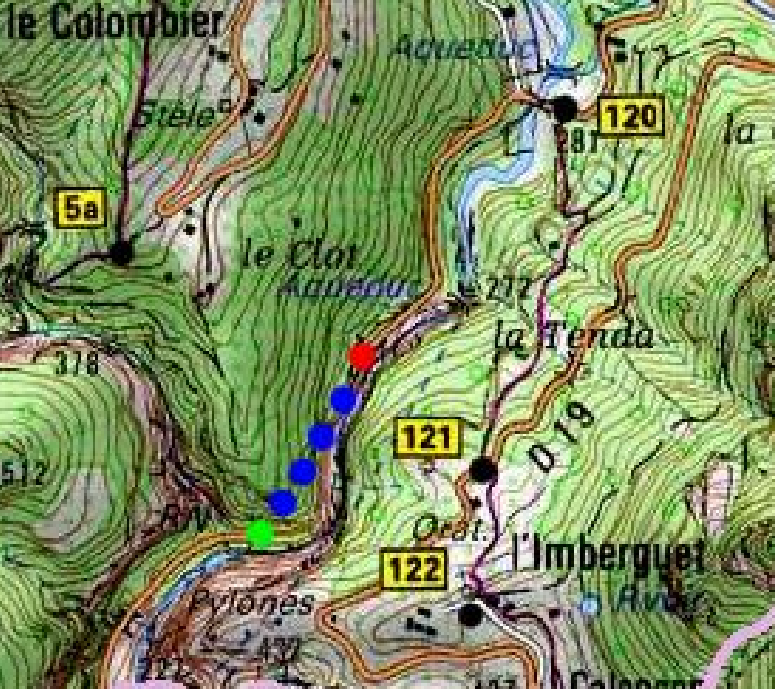
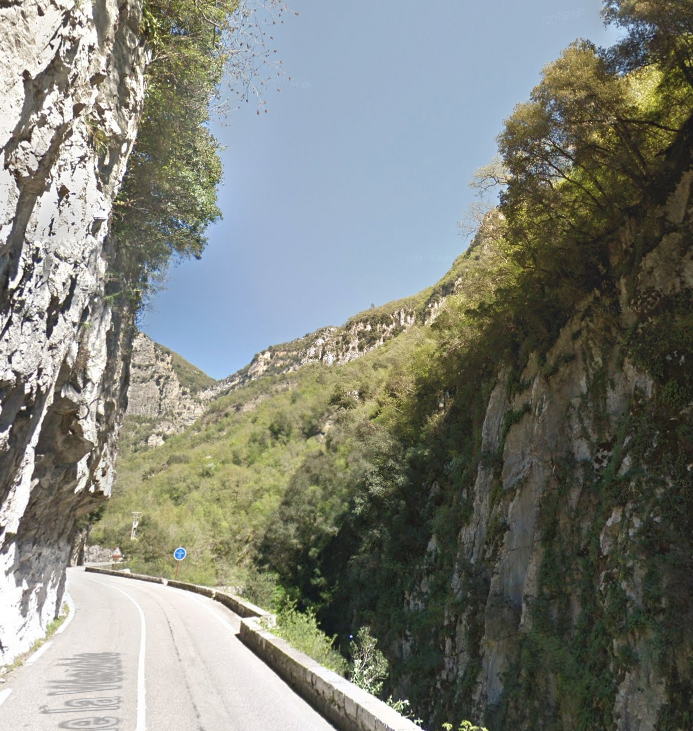
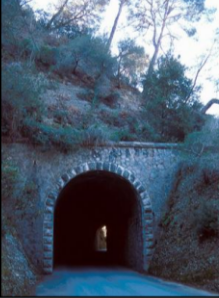
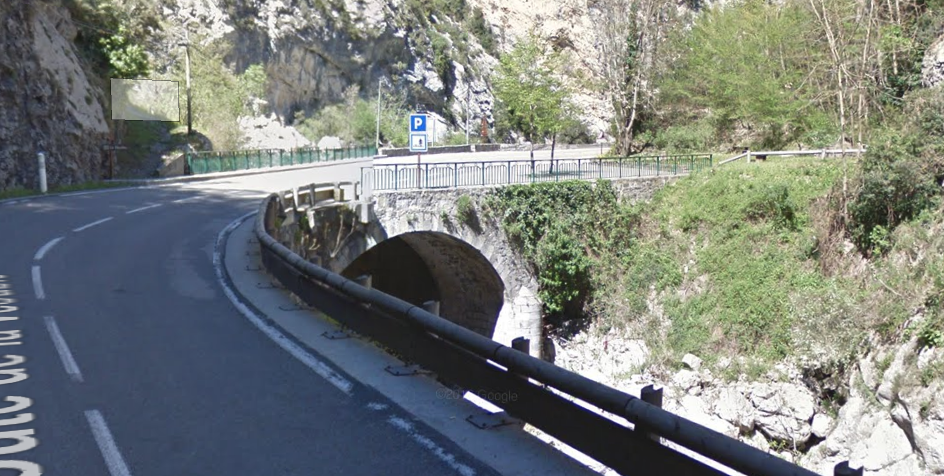
From La Madone (La Cros D’Utelle), the tramway continued along the West bank of the Vesubie and through a short (20 metre) rough-hewn tunnel which is shown in the map below and in the two images which immediately follow the map. [11]The pictures immediately above show typical scenes along the route of the tramway formation which is now hidden under the M2565 road through the Vesubie Gorge. The first picture is from Google Streetview and shows a narrow private footbridge providing access to a steep footpath on the East bank of the river. The second shows a tunnel and almost hidden a bridge supporting the road over the river. The third photograph shows the entrance to the tunnel (Tunnel de Pagary Longeur) which is located on the map below. [11]

Interestingly, the TAM lines were equipped with a single-phase electrical supply of 6600 Volts, 25 Hertz. The catenary was suspended from wooden posts or cliff walls by metal brackets. Th electric traction units worked throughout the life of the tramway (approximately 20 years) although some improved units were provided in 1920 on the line of Vésubie. In 1911, four to five round trips of trams were scheduled each day. But by 1914, because of the war, there were only two daily movements until the line was closed in 1929. [7]

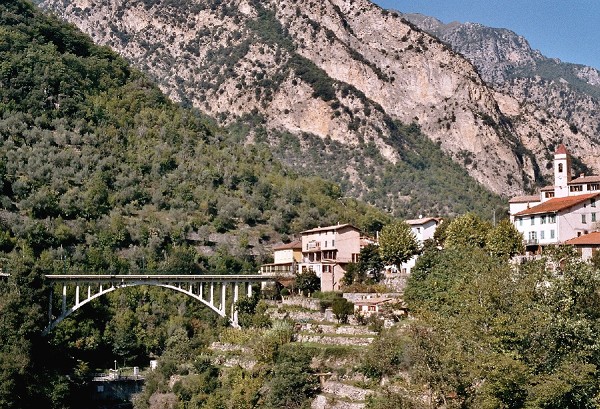
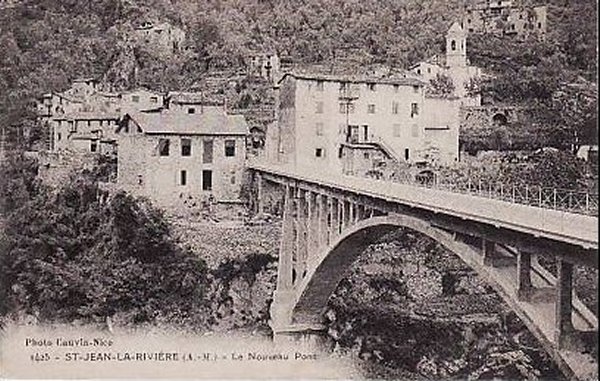
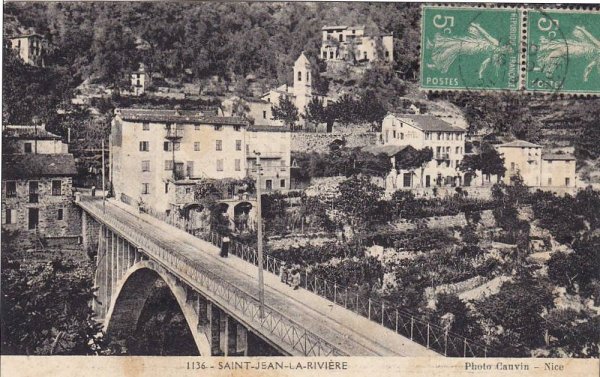
North of the tunnel the gorge narrowed significantly and hemned in the tramway. The adjacent photograph gives an idea of just how narrow the gorge cut by the Vesubie is/was at this point. As the gorge widens out again the tramway took the opportunity to cross the Vesubie onto its eastern bank by means of a very graceful arch bridge.

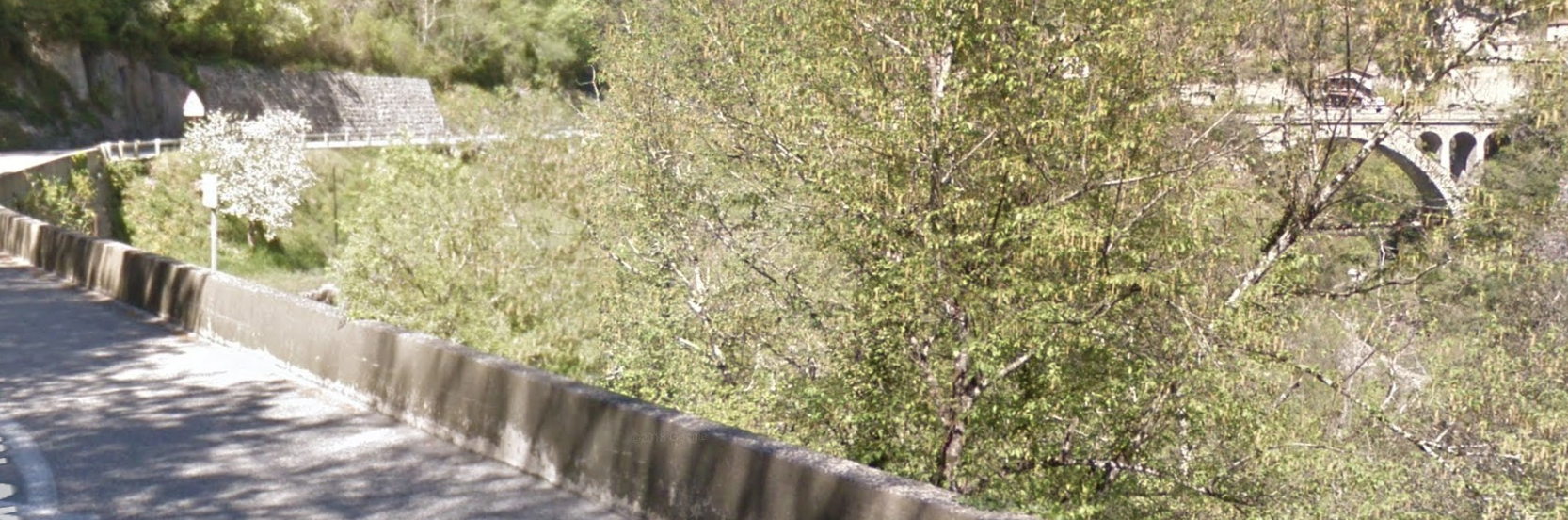
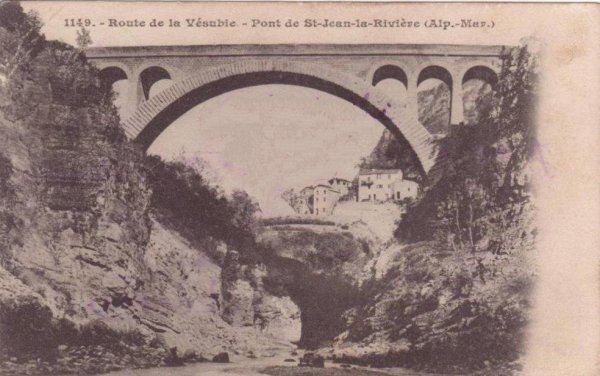
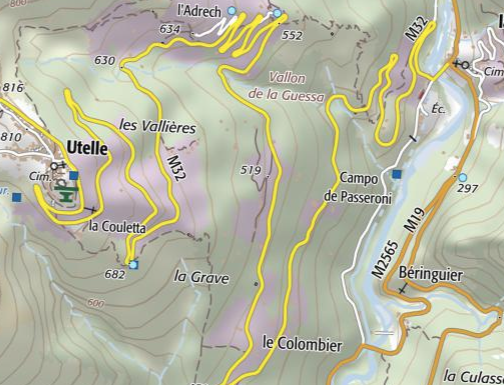
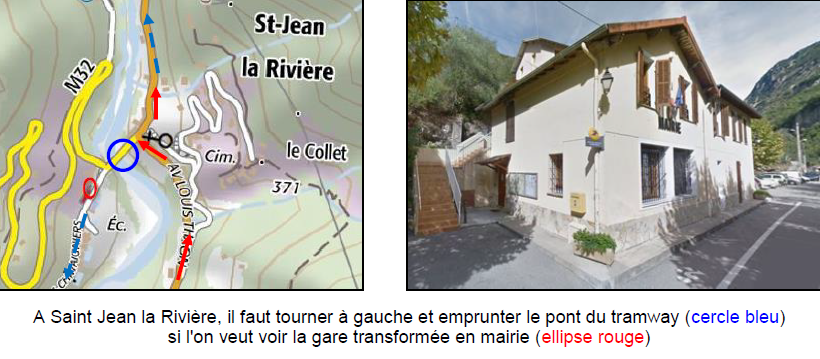
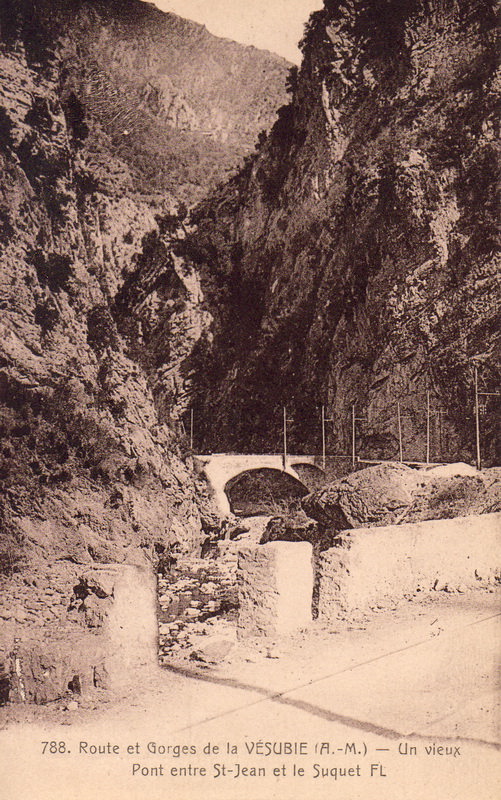
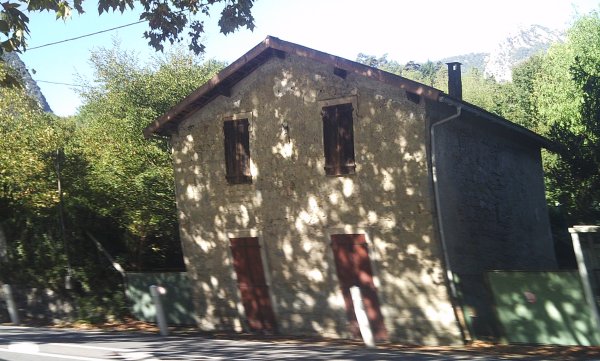
In the image below, Google Streetview has allowed me to pick out the bridge through the local vegetation. That photo is then followed by an older postcard picture of the bridge [1] – the first Pont de St-Jean-la-Riviere. There is a later bridge built immediately adjacent to the village which took a road over to the Westbank and up to Utelle.The bridge in the two images above is shown at the bottom left of the IGN map above, close t toe Colombier. The second, newer bridge is immediately adjacent to the village of St-Jean-la-Riviere where the M32 leaves the M2565/M19. The newer bridge is shown below. [12] Between these two bridges the tramway followed the West bank of the Vesubie while the main road took to the East bank. [2]The station at St. Jean la Riviere on the south-west side of the river, circled in red on the map below. It is now the town hall! [1][2]From the new bridge, the line travelled up the East bank of the Vesubie northwards out of the village of St. Jean la Riviere. In a couple of kilometres, the tramway crossed back to the west bank of the river by means of the bridge below. Within 300 metres, the Tarmway returned to the East bank by means of the structure show below.The tramway and road then travelled in an easterly direction towards Le Suquet.
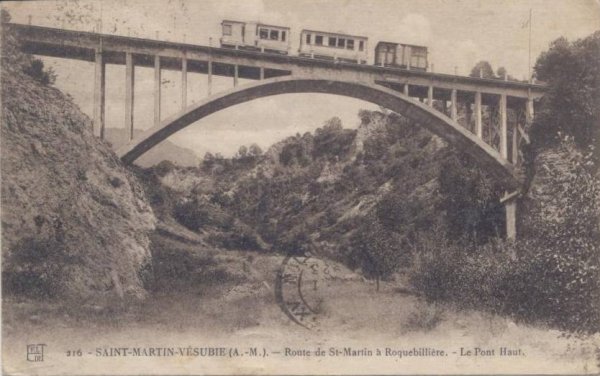
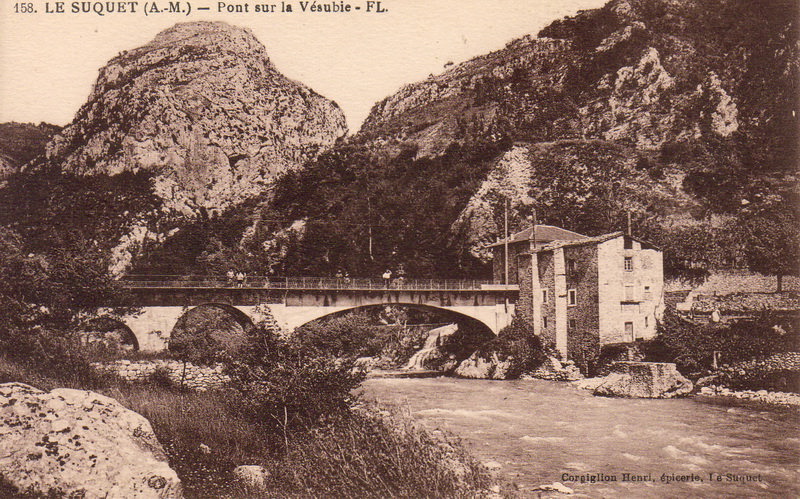
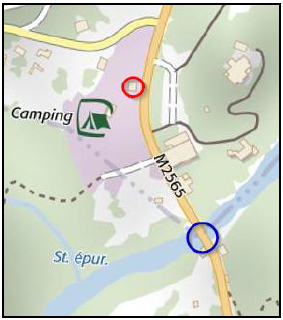
Close to Le Suquet, the Gorge opens out and the tramway formation/road drift away from the River Vesubie before turning northwards to cross the river once again. Then for a time the tramway and road kept their distance from the river.The station building at Le Suquet [1] is shown on the adjacent plan circled in red. The bridge in the postcard above is circled in blue. [2]

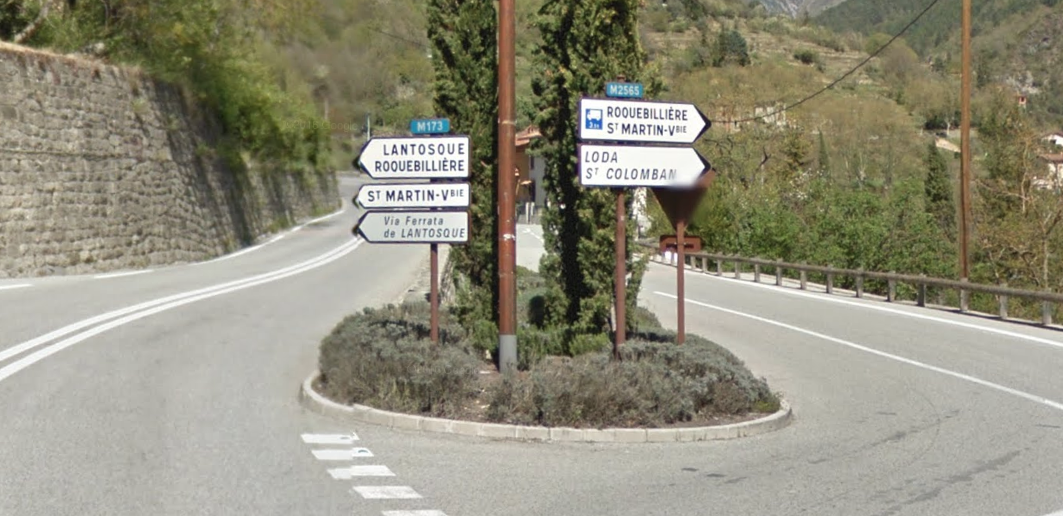
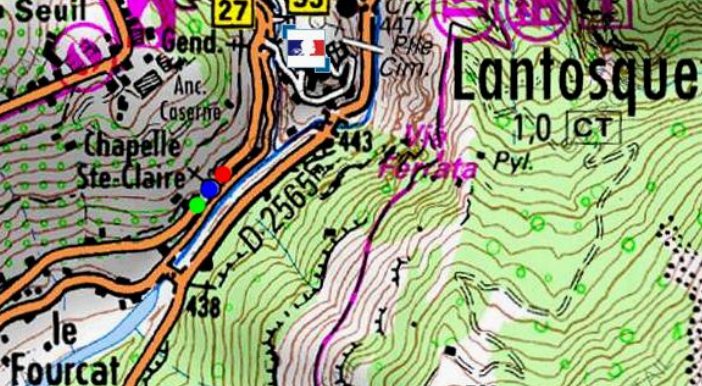
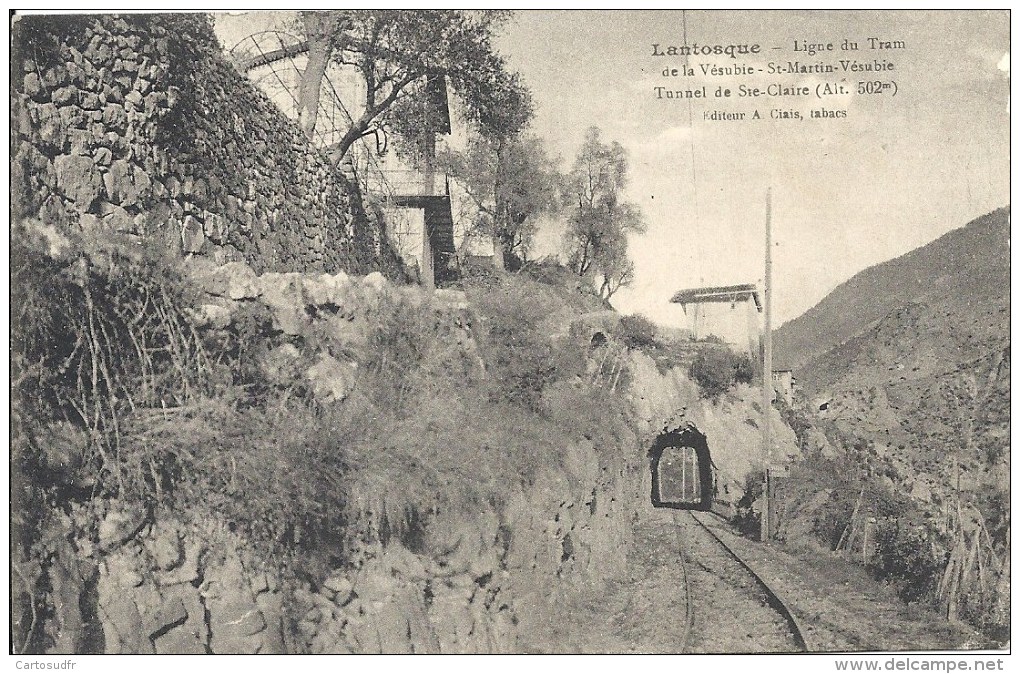
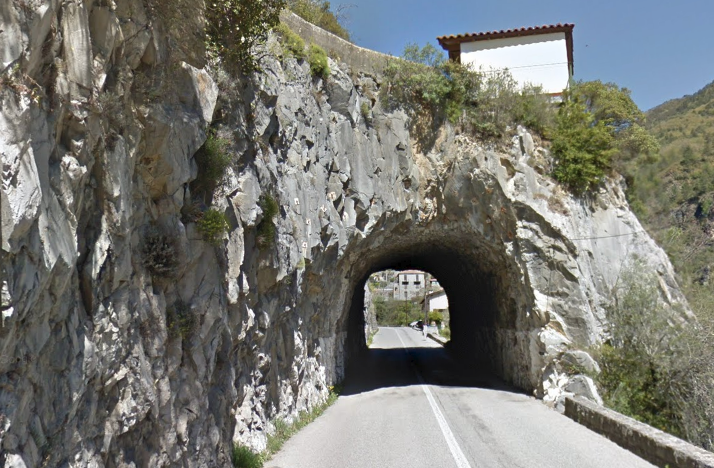
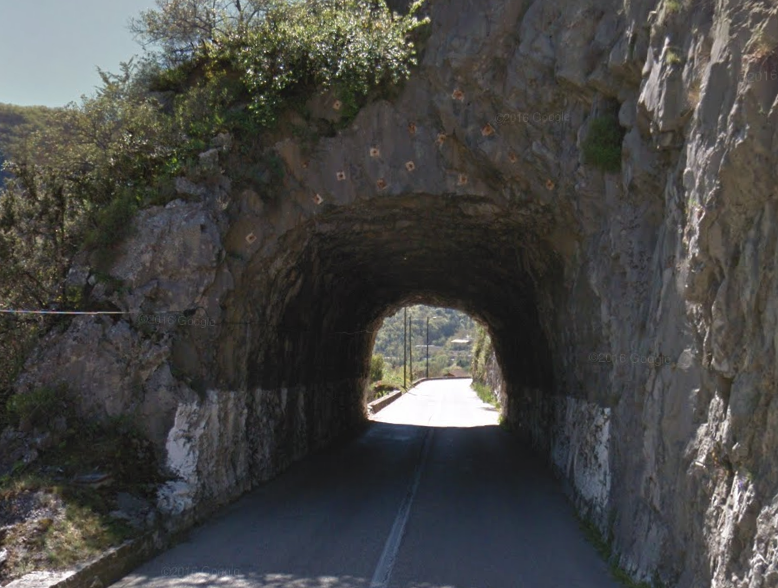
North of Le Suquet, a new tunnel takes the M2565 on a straighter course than the old road/tramway took. The older route can be seen on the right-hand side of the picture below.. The northern portal of the new tunnel can be seen in the second picture below with the old road (and so the tramway formation) joining the newer road from the left.The tramway route remains on the West side of the valley through Le Fourcat and on towards Lantosque. Tram-travellers faced none of the confusion of modern drivers about which route to take. The trams just followed their tracks which took the higher route alongside the retaining wall in the picture below and then passed through a tunnel at St. Claire.The tunnel was just 28 metres in length. [11] The first image below shows the South-West Portal  and the tramway, the second shows the same view but from the 21st Century and the third picture shows the North-East portal. The second and third images come from Google Streetview. The tunnel is rough-hewn from the rock. The first is an old postcard view. [13]The two postcards immediately above show the tramway following what is now the M173 but was in those days a separate route from the road. [1]

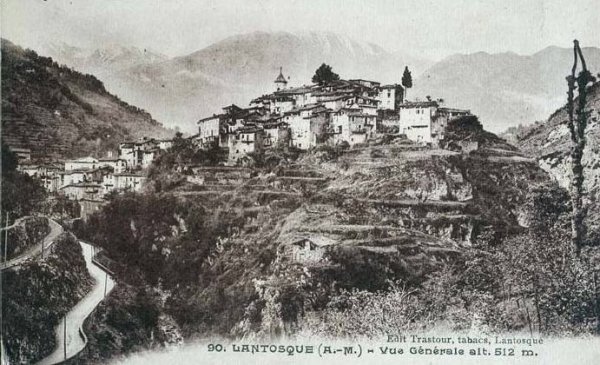
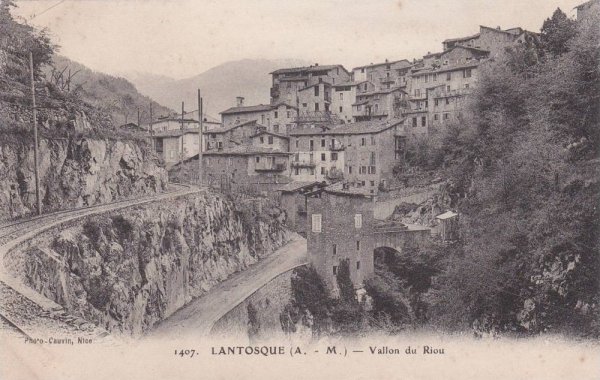
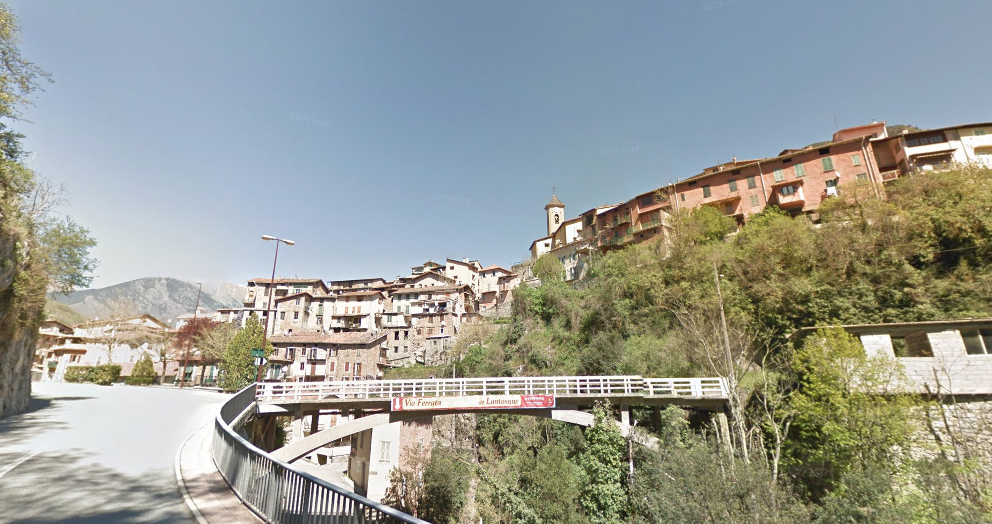
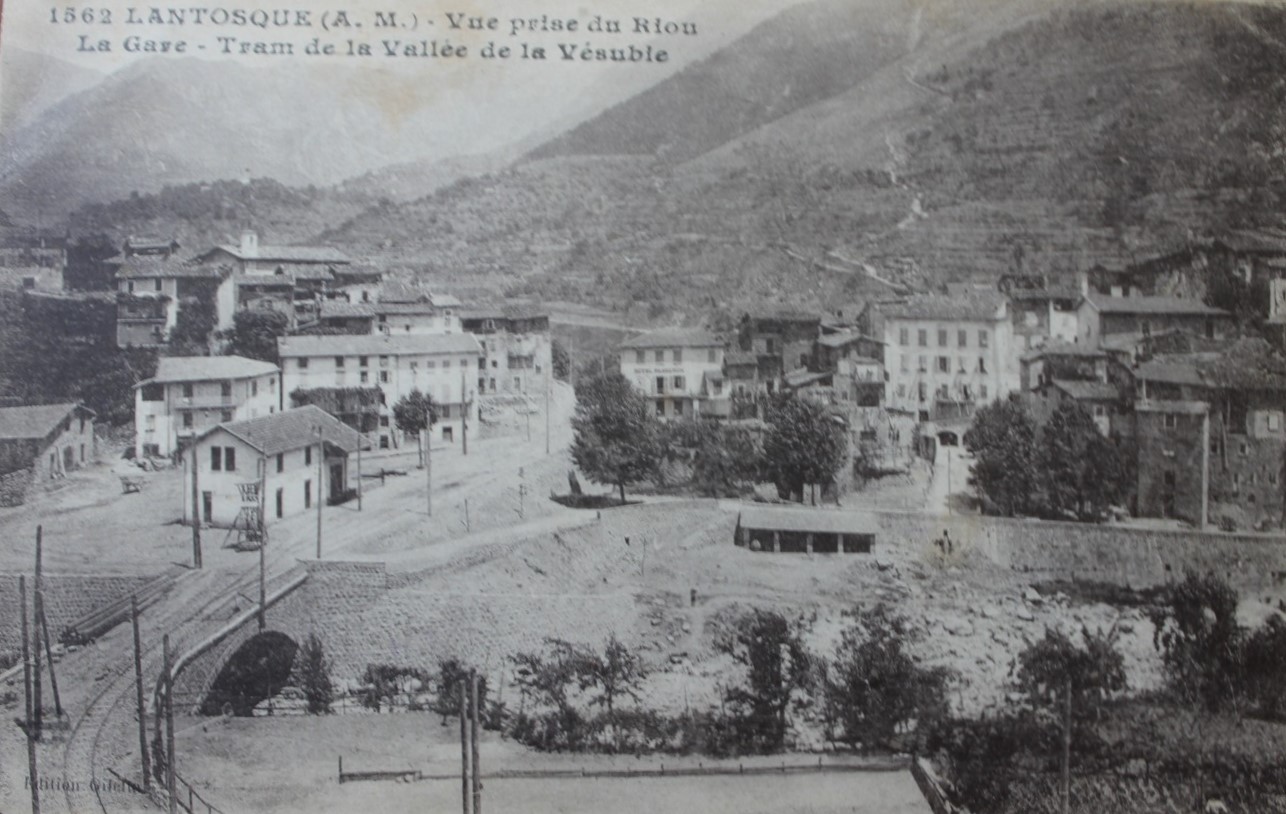
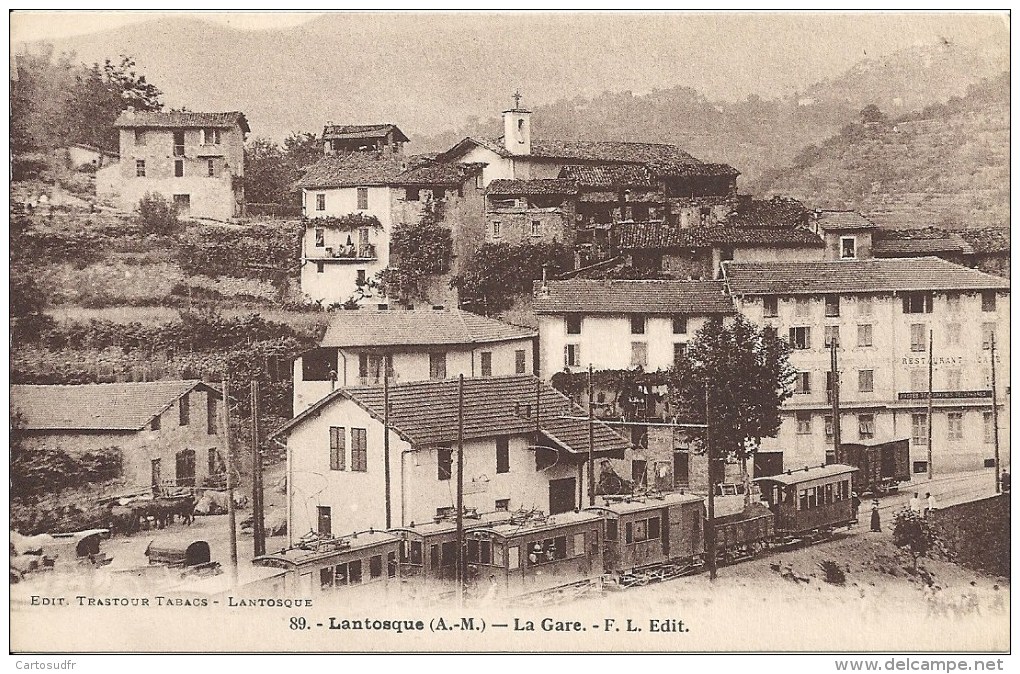
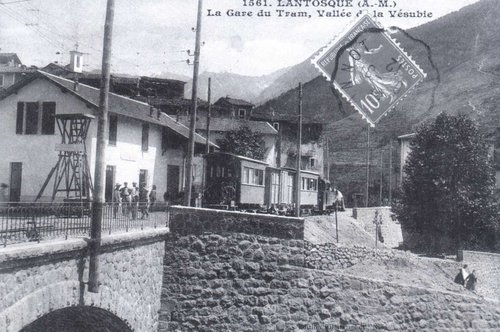
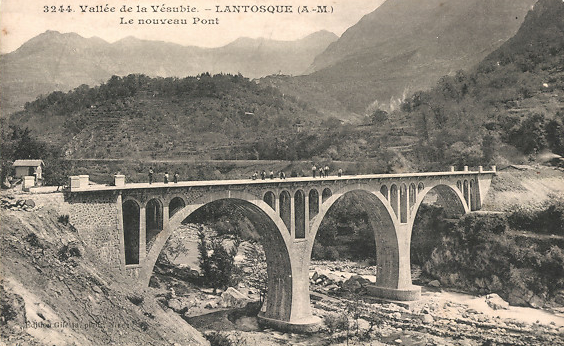
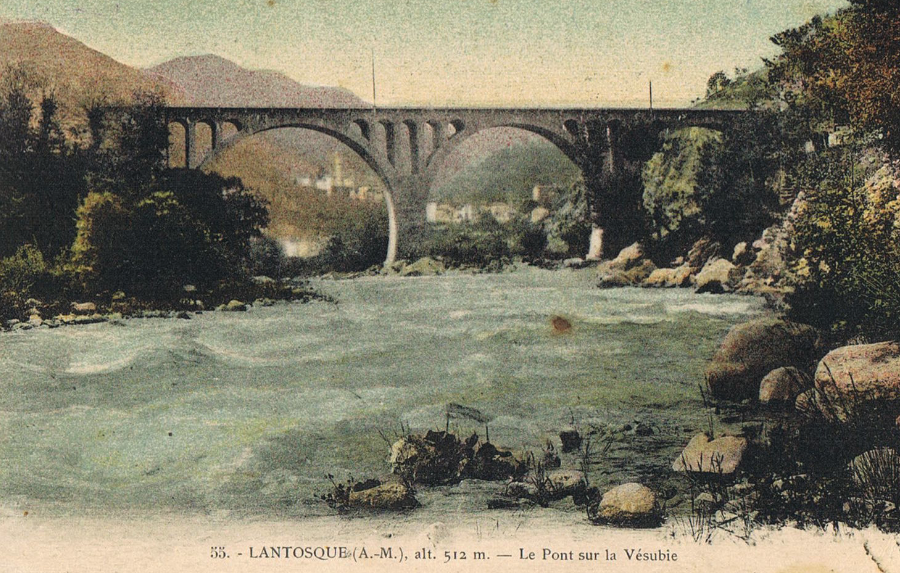
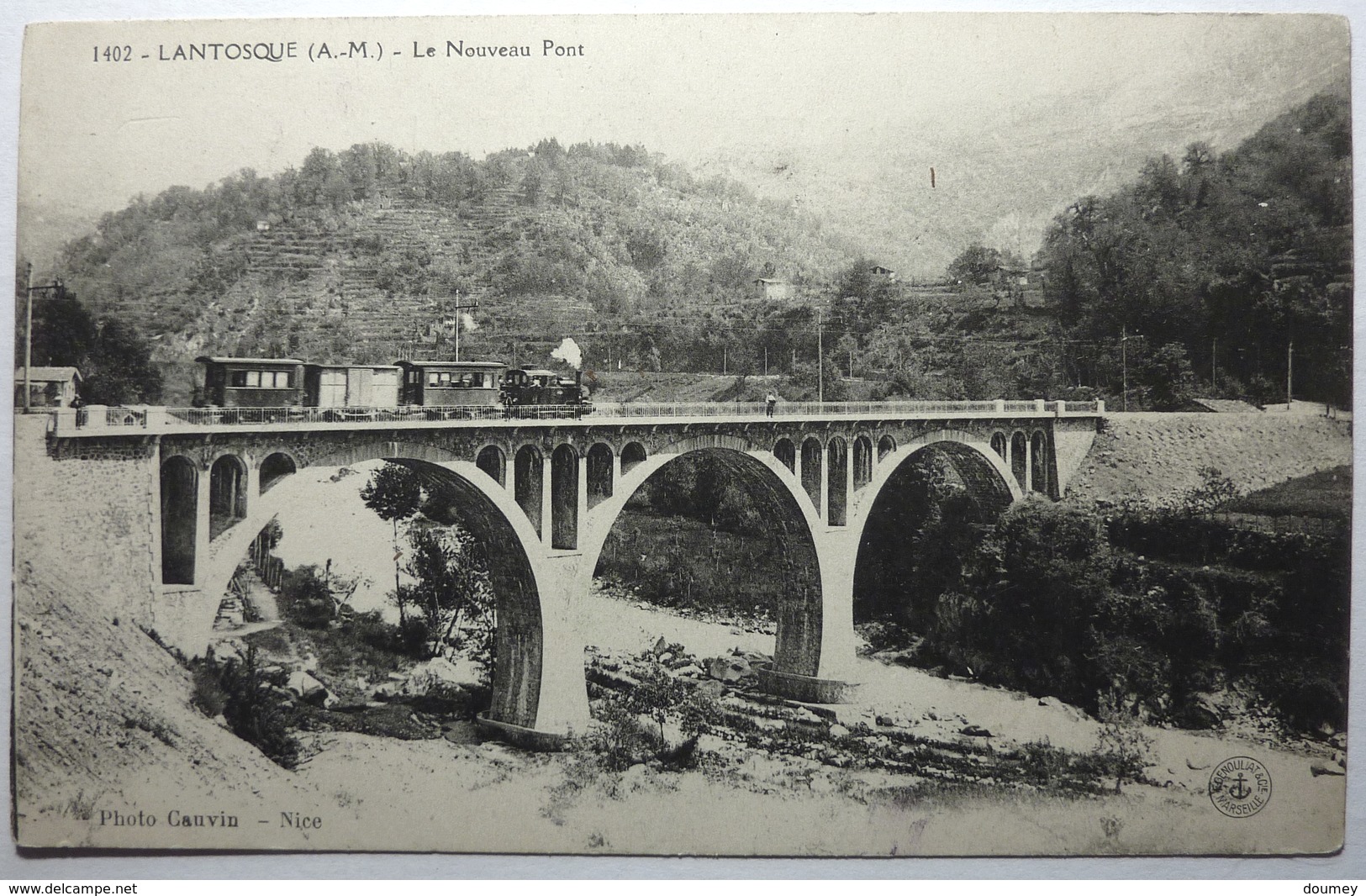
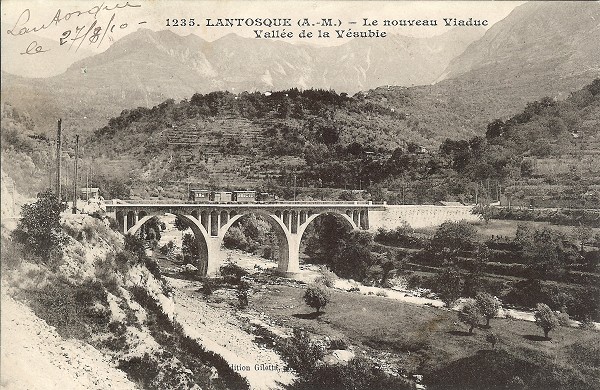
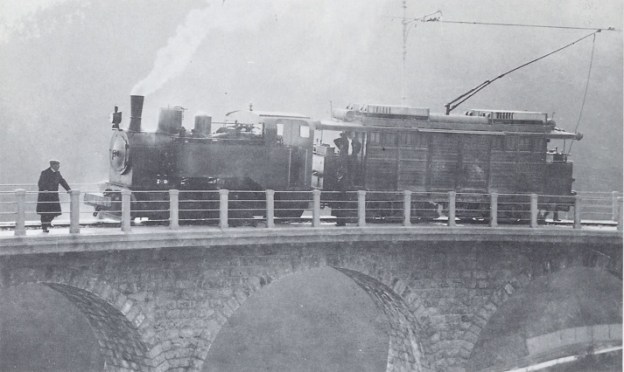
Trams approached Lantosque along the line of what is now the M173. The bridge shown in the image below was not crossed by the trams. It carries a road over the Riou de Lantosque.The trams followed what is now the M173 round to the left in the above image and then round a relatively tight bend into the centre of Lantosque. [14][15]In the light of the fact that the train on the viaduct is steam hauled we can date this image to the period from September 1909 to November 2010 when all trains were steam-hauled as the electric traction had still to arrive from the manufacturer. [16]The 5 images immediately above all show the same viaduct North of Lantosque and close to La Bollene-Vesubie. The bridge was built for the tramway and also provided road access across the Vesubie River. All the images are old postcards. The bridge is not easy to photograph in the 21st Century because of the growth of vegetation in the river valley.

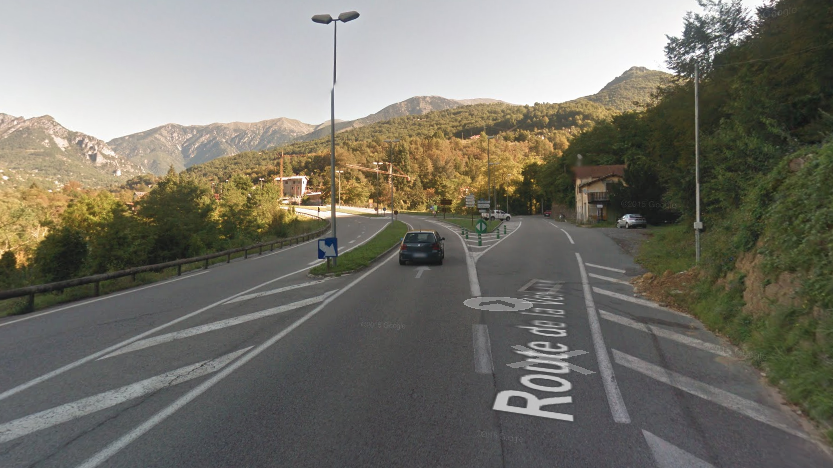
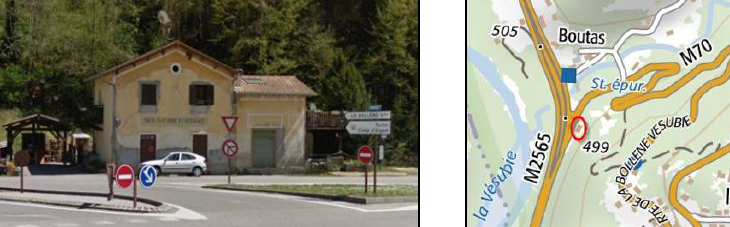
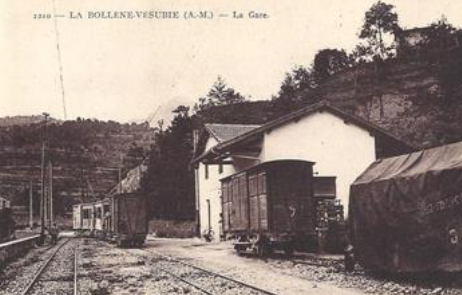
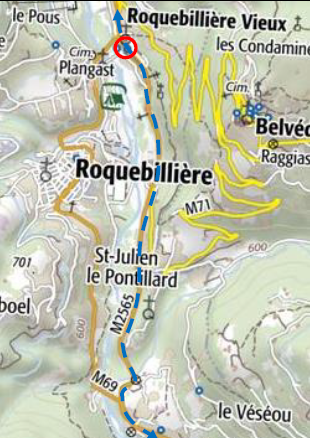
North of the Viaduct the Vesubie Valley opens out further. The tramway took the east side of the valley heading for the old village of Roquebilliere. The next station was provided for the village of La Bollene Vesubie, although it was in the valley 5 kilometres from the village which couldm only be accessed via a mountain road. The station location can eb seen below on a Google Streetview image and then below that in a picture and map from http://www.inventaires-ferroviaires.fr. [2]North of the Viaduct the Vesubie Valley opens out further. The tramway took the east side of the valley heading for the old village of Roquebilliere. On the approach to what is now the old village there was a very significant landslide in 1926 which took away a significant number of houses.

There are pictures and a video below (after the pictures of the village as it was before 1926) which show the extent of the damage caused. 19 people were lost in the rubble of the landslide and attempts to rescue them or recover their bodies seemed likely to result in further movement of the hillside. Collapse of the village of Belvedere above the slip remained a very real possibility.

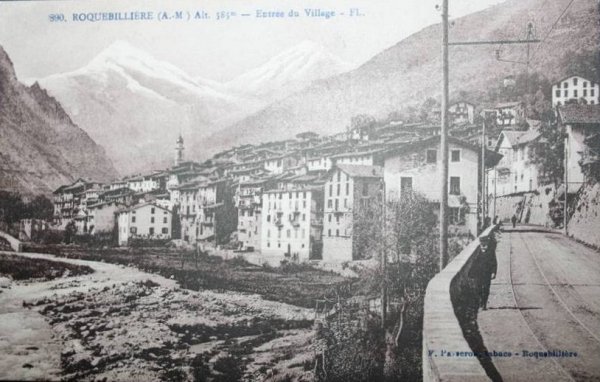
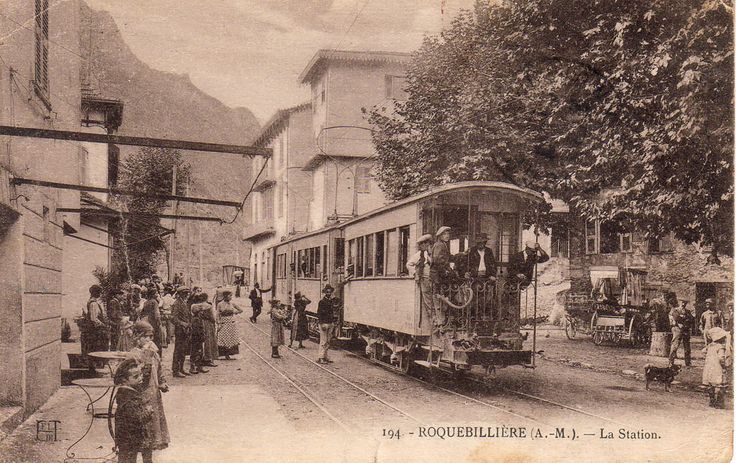
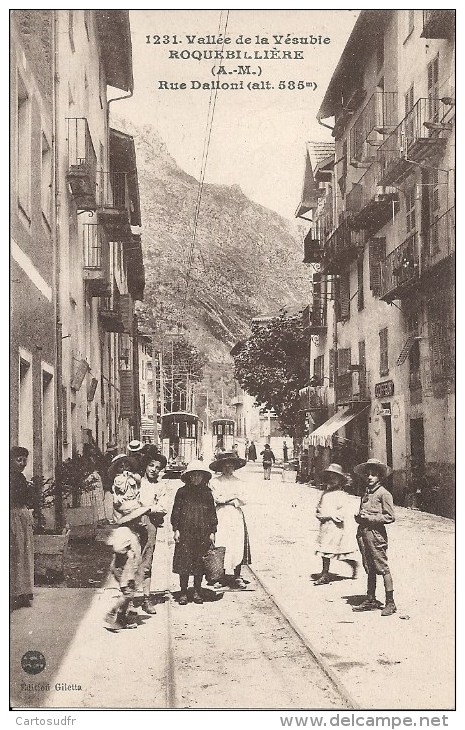
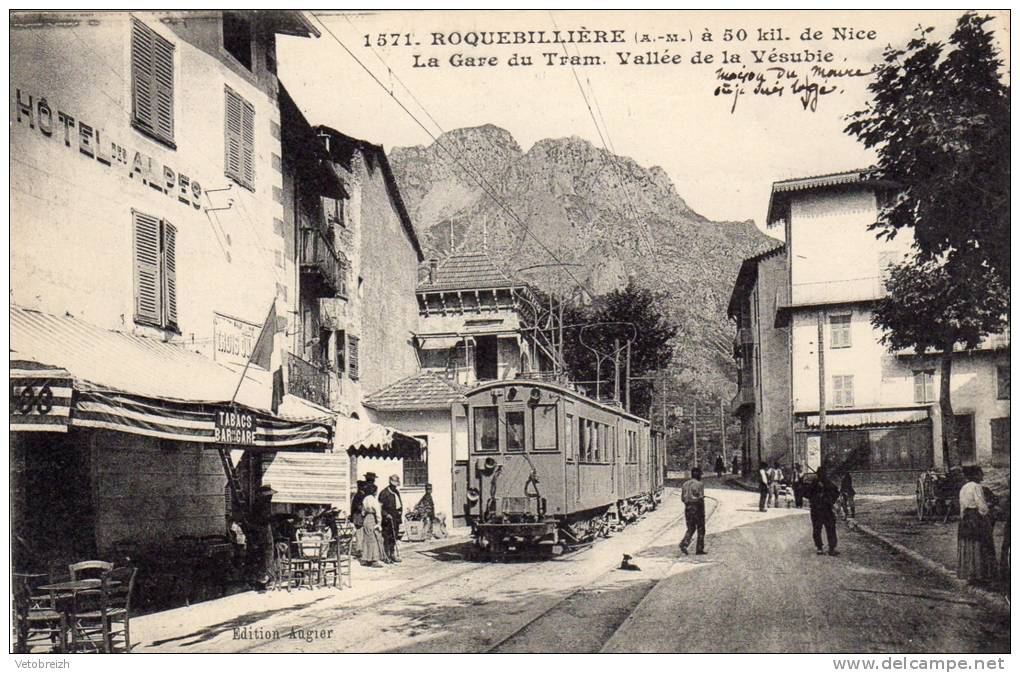
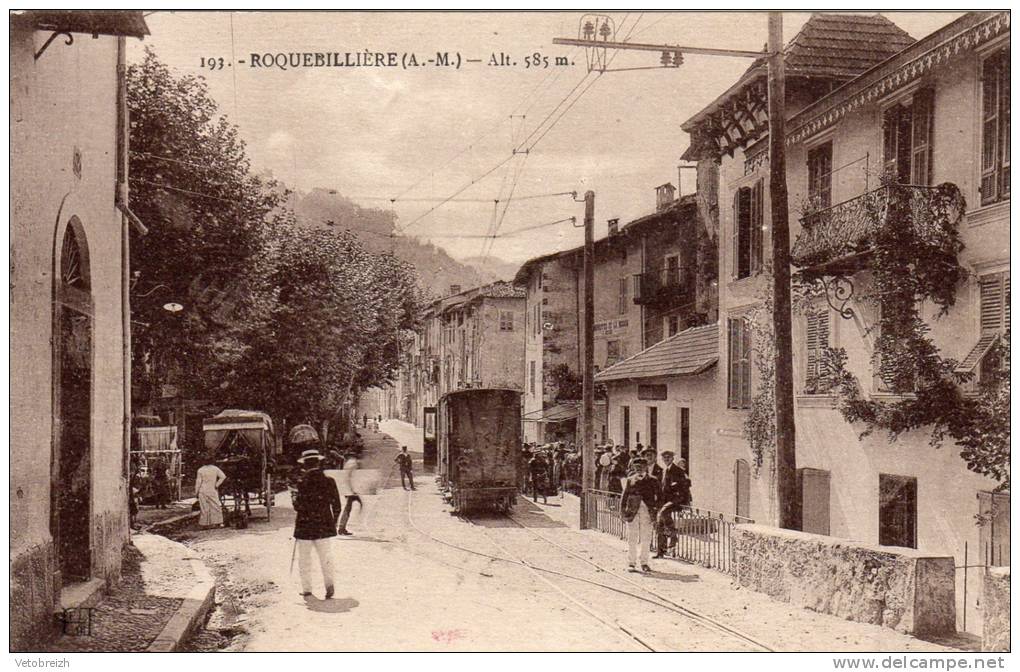
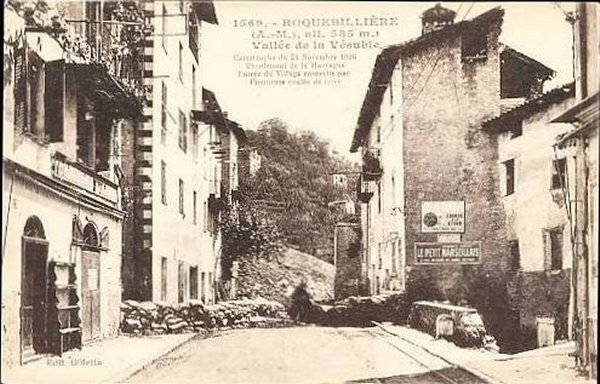
The original slip occurred on 24th November, continuing rains meant that one 30th November the hillside started to move again. Movement  over two days amounted to about 10 metres over a width of between 60 and 200 metres. The buildings in its path could not resist this and by 1st December 1926, a further 10 buildings had collapsed. Fortunately, by the end of December, with frost, the earth was harder, and stabilized. [22]The 7 images immediately above show the tramway in the village of Roquebilliere in advance of the tragedy which struck the village in 1926. The old village was of quite a significant size and much of it disappeared in the landslide of that year. Three images in old postcards are shown below.The village has suffered landslides and floods six times since the 6th  century. It was rebuilt each time in the same place, except for this last time, after the landslide of the 24th November 1926.  Most of the inhabitants left the severe tall houses of their old village to go to a new location on the West bank where there was already a church dating from the 15th Century. The old village remains inhabited but much smaller than before the 1926 disaster. 

The two videos below show, respectively,  the village immediately after the landslip, [18] and the village in the 21st Century. [19]

A late 20th Century shot of the old village taken from the road to Belvédère, high on the hill where the landslip occurred in 1926. [17] The red ring circles a WW2 gun emplacement.Another shot of the road bridge, this time from the new village. [20]The route of the tramway in 2017, taken from Google Streetview.Belvédère, high above Vieux Roquebilliere on the East side of the Vesubie Valley. [21]

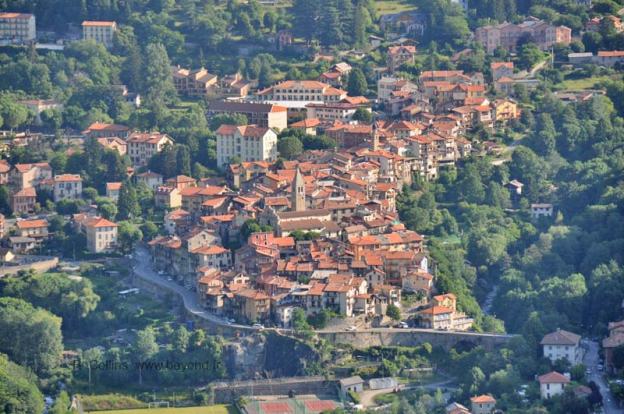
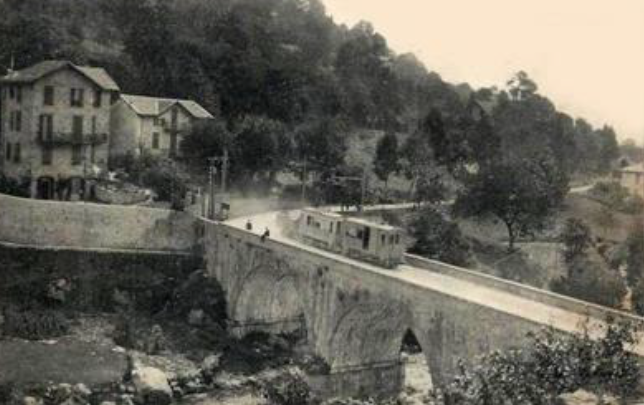
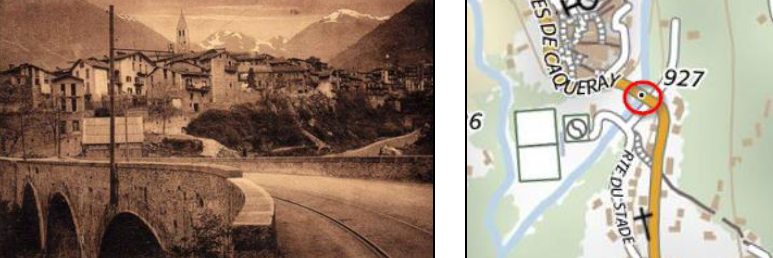
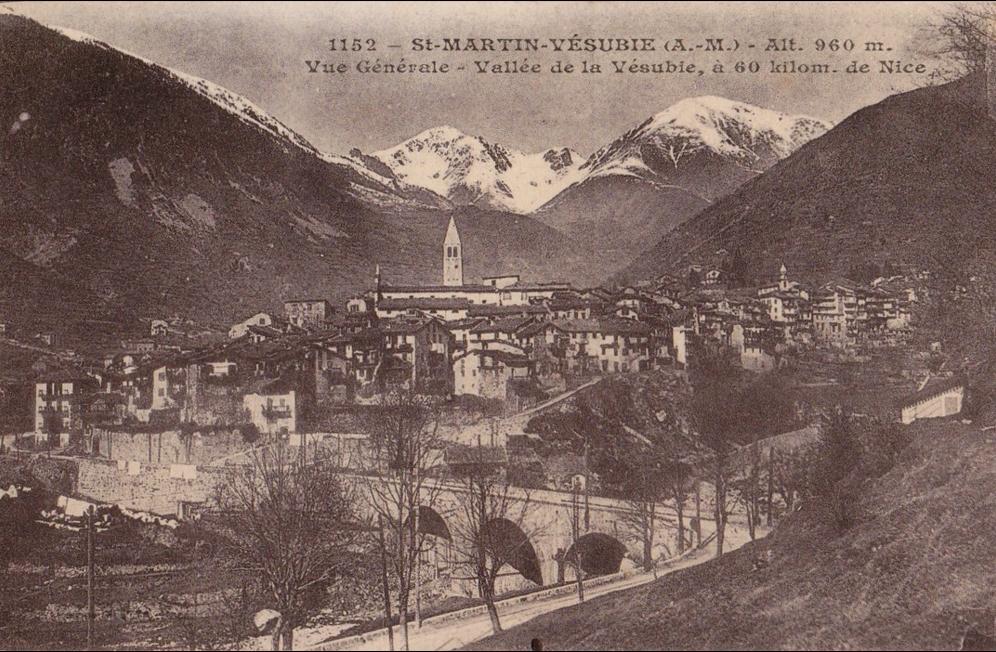
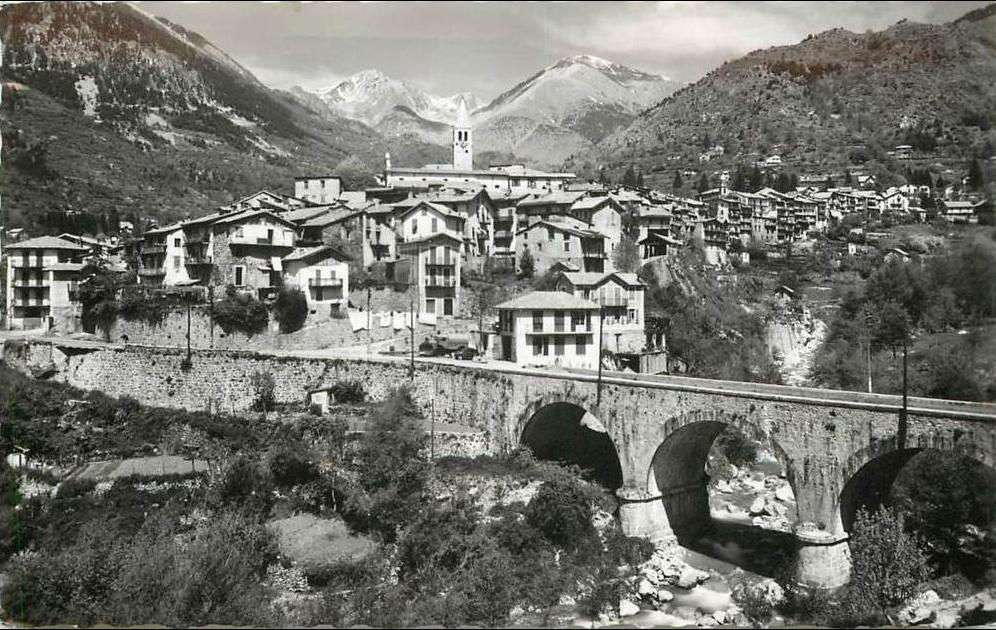
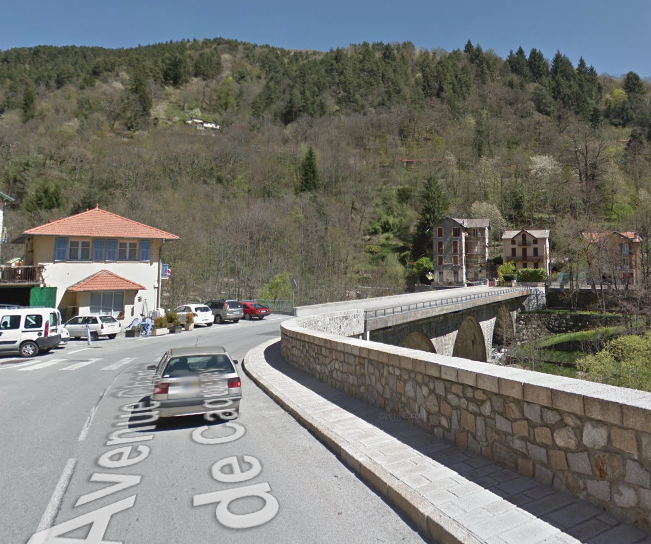
After Roquebilliere, the tramway followed the East bank of the Vesubie until immediately below the village of St. Martin Vesubie. On the approach to the village it crossed a substantial viaduct. The first image below is an old postcard view looking back across the viaduct from St. Martin.The tramway can be seen crossing the bridge in both of the old postcard images above. The location of the bridge is shown circled in red on the plan above. [2]The viaduct in the 21st Century is shown (above) on an image from Google Streetview.

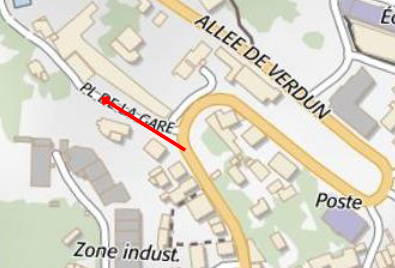
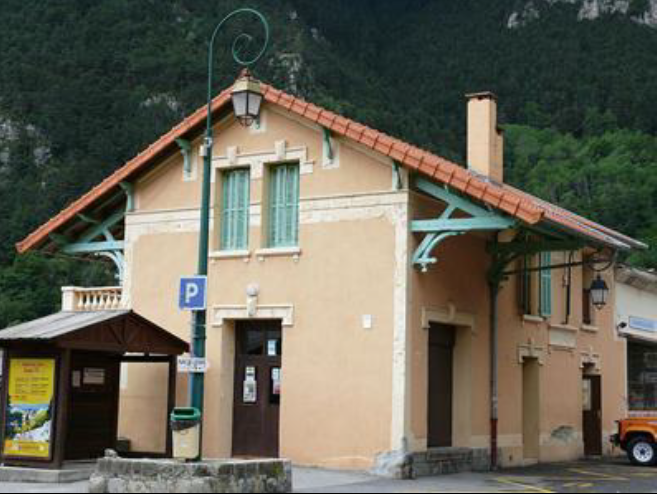
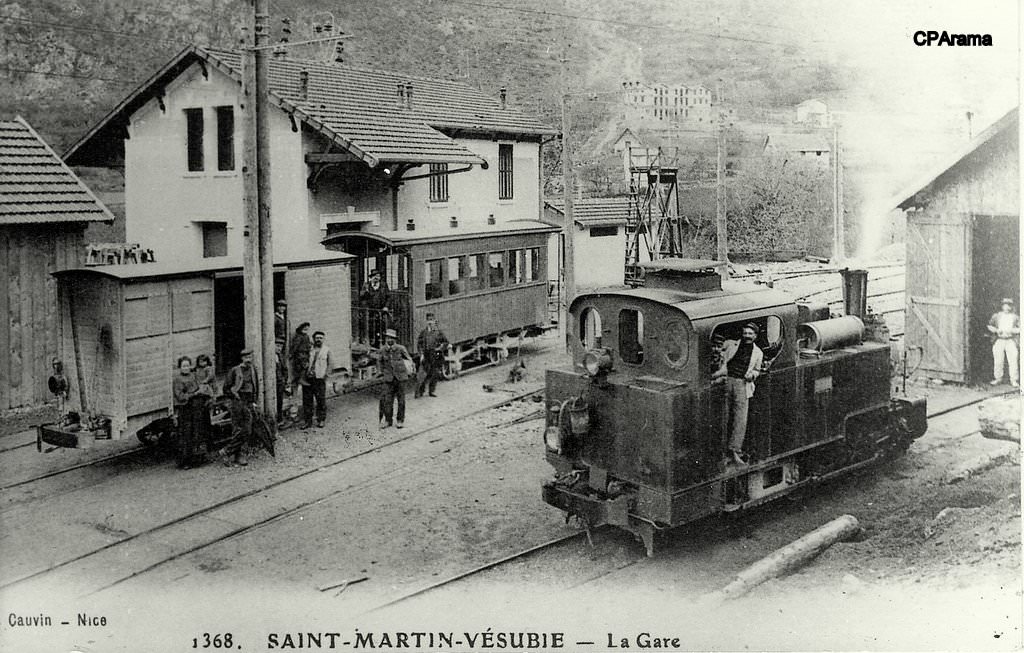
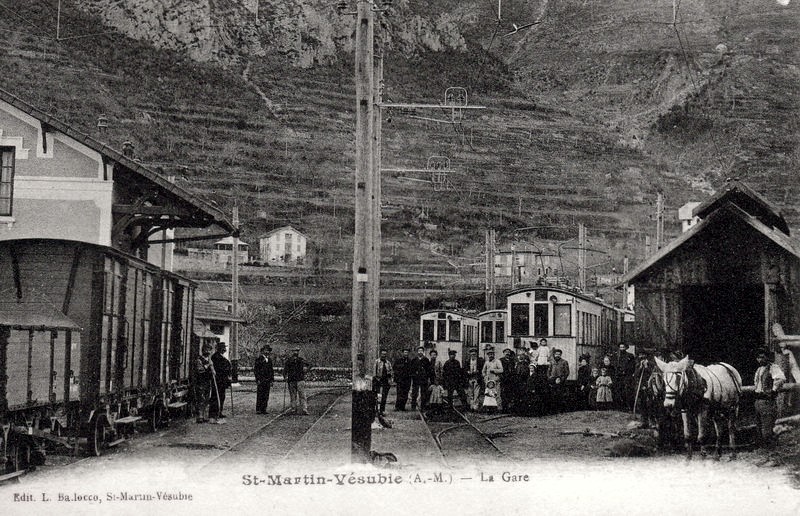
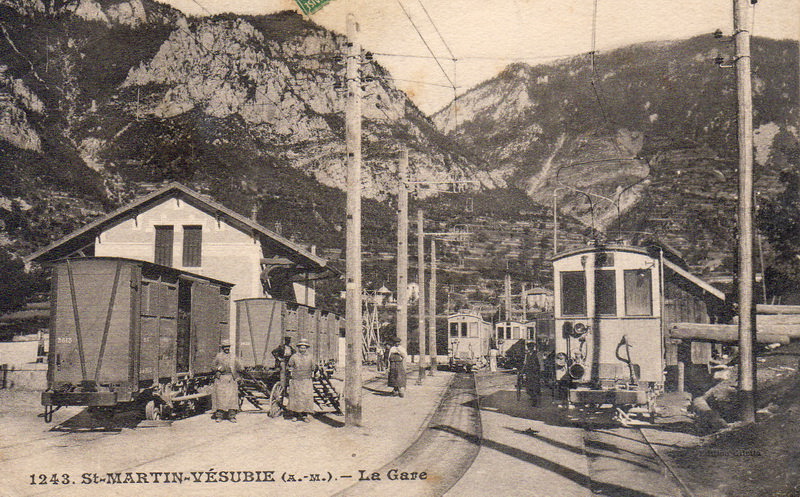
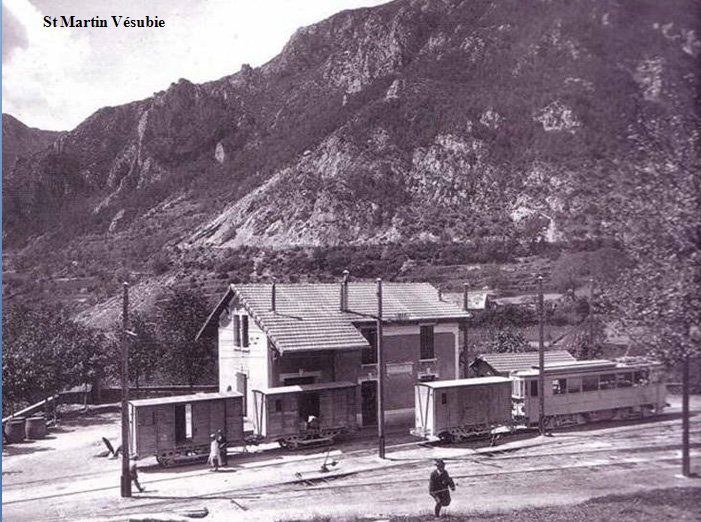
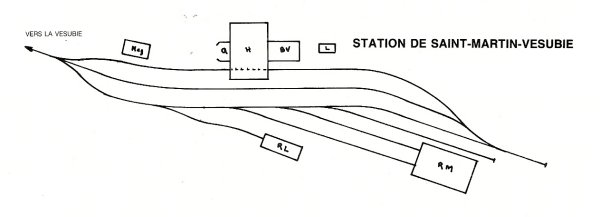
The trams climbed into the village along Route de la Vesubie and then, as shown on the adjacent plan, turned left onto Place de la Gare as the main road swung round to the right in a hairpin bend. [2]The station building is shown above as it appears in the early 21st Century! [2]We finish this journey with a series of postcard views of the station at St. Martin Vesubie. The one immediately above was taken while steam power was still active on the line, probably in 1910. The images below show a busy station area in the early years before the first world war.And finally a plan of the Station at Saint-Martin-Vesubie and a video made by Pathe News in 1912 ….A plan of the station track layout – the route to Plan du Var heads off on the left of the plan. [2]

The Pathe New Video. [23]

References

  1. http://marc-andre-dubout.org/cf/baguenaude/vesubie/vesubie.htm, accessed on 16th December 2013.
  2. http://www.inventaires-ferroviaires.fr/hd06/06075.a.pdf, accessed on 8th July 2018.
  3. https://remonterletemps.ign.fr/comparer/basic?x=7.204426&y=43.858319&z=15&layer1=GEOGRAPHICALGRIDSYSTEMS.MAPS.SCAN50.1950&layer2=GEOGRAPHICALGRIDSYSTEMS.MAPS.SCAN-EXPRESS.STANDARD&mode=doubleMap, accessed on 8th July 2018.
  4. http://www.en-noir-et-blanc.com/levens-p1-838.html, accessed on 8th July 2018.
  5. https://collection-jfm.fr/p/cpa-france-06-plan-du-var-le-pont-sur-la-vesubie-88555, and https://collection-jfm.fr/p/cpsm-france-06-plan-du-var-le-pont-sur-la-vesubie-33701, both offered for sale, accessed on 9th July 2018.
  6. As noted in other posts the TAM was a subsidiary of the Chemin de fer du Sud de la France (SF) then the Chemin de fer de Provence (CP) continues to provided a service between Nice and Digne.
  7. http://amontcev.free.fr/tramways.htm, accessed on 9th July 2018.
  8. https://www.geneanet.org/cartes-postales/view/6221073#0, accessed on 9th July 2018.
  9. http://www.nicematin.com/vie-locale/les-gorges-de-la-vesubie-fermees-jusqua-mercredi-apres-un-eboulement-115405, accessed on 9th July 2018.
  10. http://anjouetailleurs.eklablog.com/la-cote-d-azur-c23345521/3?noajax&mobile=1, accessed on 9th July 2018.
  11. http://www.tunnels-ferroviaires.org/inventaire.htm, accessed on 9th July 2018.
  12. https://structurae.info/ouvrages/pont-de-saint-jean-la-riviere, accessed on 9th July 2018.
  13. https://www.delcampe.net/fr/collections/cartes-postales/france/lantosque/06-lantosque-ligne-du-tram-tunnel-ste-clairetbe-300006705.html, accessed on 9th July 2018.
  14. https://www.delcampe.net/fr/collections/cartes-postales/france/lantosque/lantosque-06-vue-prise-du-riou-la-gare-tram-de-la-vallee-de-la-vesubie-593785660.htm, accessed on 9th July 2018.
  15. https://www.delcampe.net/fr/collections/cartes-postales/france/lantosque/06-lantosque-fl-89-tram-la-gare-beau-plan-superbe-300551522.html, accessed on 9th July 2018.
  16. https://en.wikipedia.org/wiki/Belv%C3%A9d%C3%A8re, accessed on 9th July 2018.
  17. http://club.quomodo.com/fortif06/fortifications/ouvrages_maginot/secteur_vesubie/casemate_de_roquebilliere, accessed on 7th July 2018.
  18. https://www.youtube.com/watch?v=0kySBA8b_io, accessed on 9th July 2018.
  19. https://www.youtube.com/watch?v=jF90I0kZuFo, accessed on 9th July 2018.
  20. http://www.dronestagr.am/snow-roquebilliere, accessed on 9th July 2018.
  21. https://fr.wikipedia.org/wiki/Belv%C3%A9d%C3%A8re_(Alpes-Maritimes), accessed on 8th July 2018.
  22. https://www.departement06.fr/documents/Import/decouvrir-les-am/rr135-roquebiliere.pdf, accessed on 10th July 2018.
  23. https://www.youtube.com/watch?v=Q39tIIVlCh8, accessed on 11th July 2021

Nice to Digne-les-Bains Part 3 – La Manda to Plan du Var (Chemins de Fer de Provence 63)

Colomars/La Manda to Plan du Var

At La Manda, a branch line to Meyrargues separated from the main line to Digne les Bains immediately north of La Manda/Colomars Station. That branch-line is the subject of a run of blogs in this series. The route is covered in one series, the first of which is:
https://rogerfarnworth.wordpress.com/2017/11/20/ligne-de-central-var-part-1

The post above contains a significant number of images of Colomars/La Manda Station.
The last of the series on the route of the branch-line is:

https://rogerfarnworth.wordpress.com/2017/12/11/ligne-de-central-var-part-15-chemin-de-fer-de-provence-35

A short series of posts covers locomotives and rolling stock on the branch which inevitably overlap with that on the main line. The first of these is:

https://rogerfarnworth.wordpress.com/2018/02/23/locomotives-and-rolling-stock-on-the-central-var-line-chemins-de-fer-de-provence-50

The last of these is:

https://rogerfarnworth.wordpress.com/2018/03/07/rolling-stock-on-the-central-var-line-chemins-de-fer-de-provence-54

Colomars/La Manda

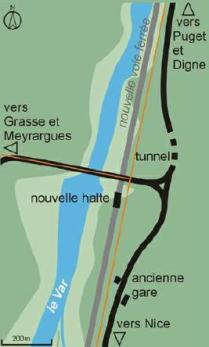
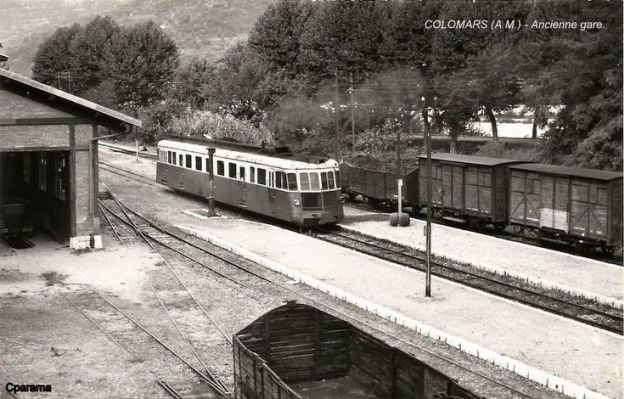
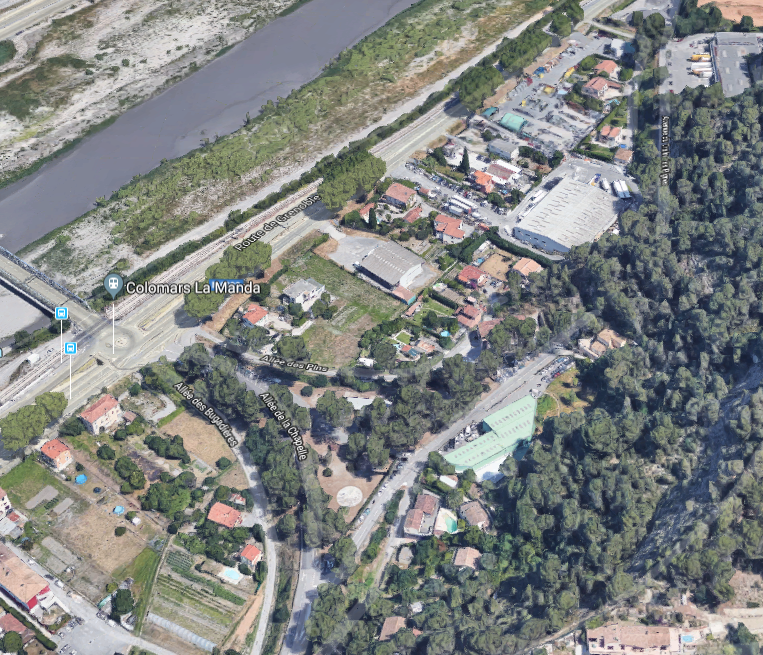
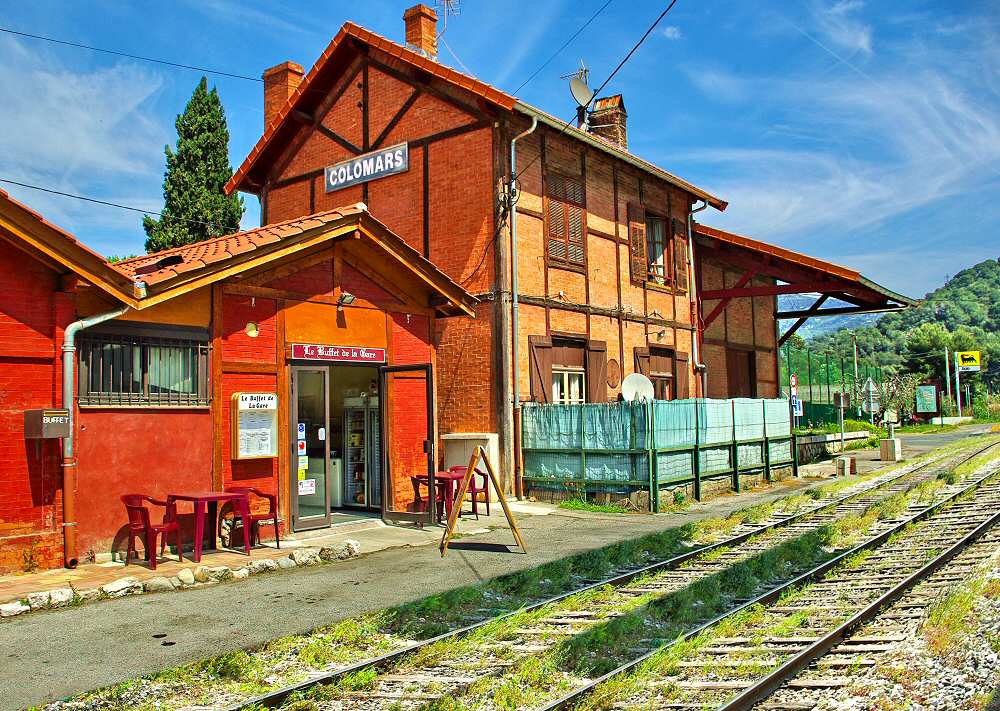
We begin the next stage of our journey along the Nice to Digne les Bains line at Colomars Station. The modern halt is on a section of railway line which was not part of the original alignment. The as-built alignment had to accommodate access for the branch-line to the bridge over the River Var and had to allow for a height gain to permit trains to travel over the top girders of the truss-bridge over the Var.
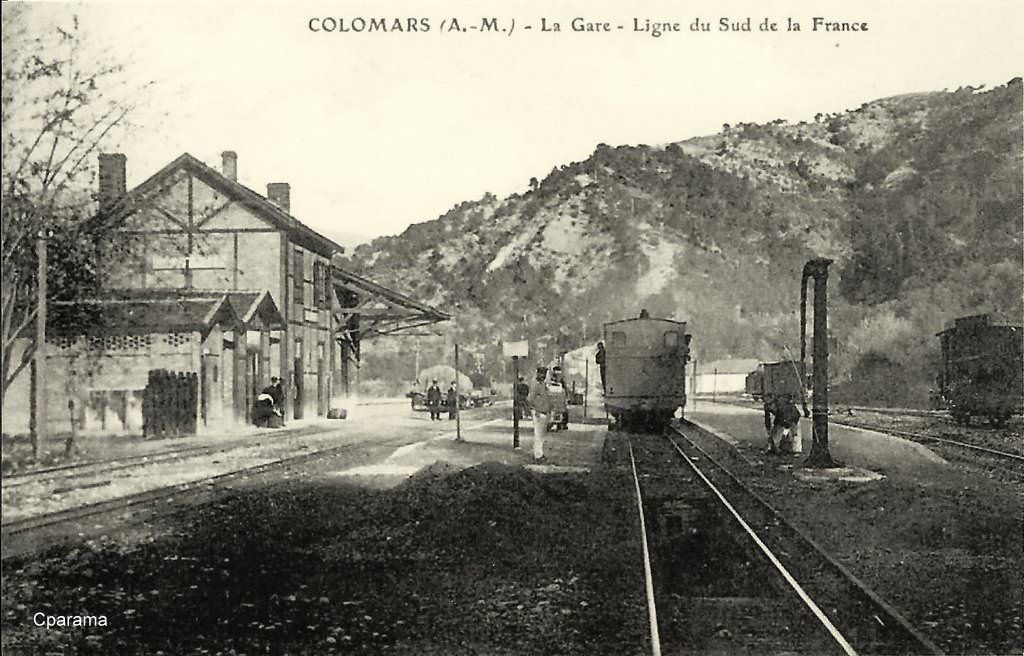
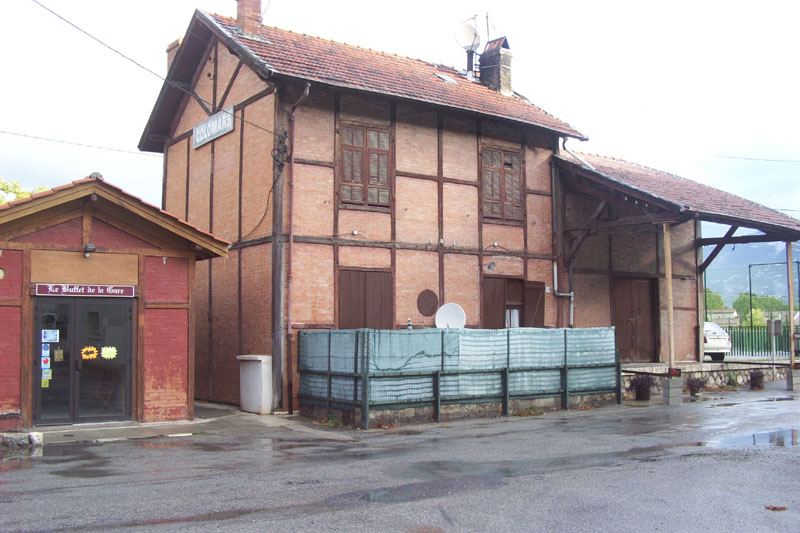
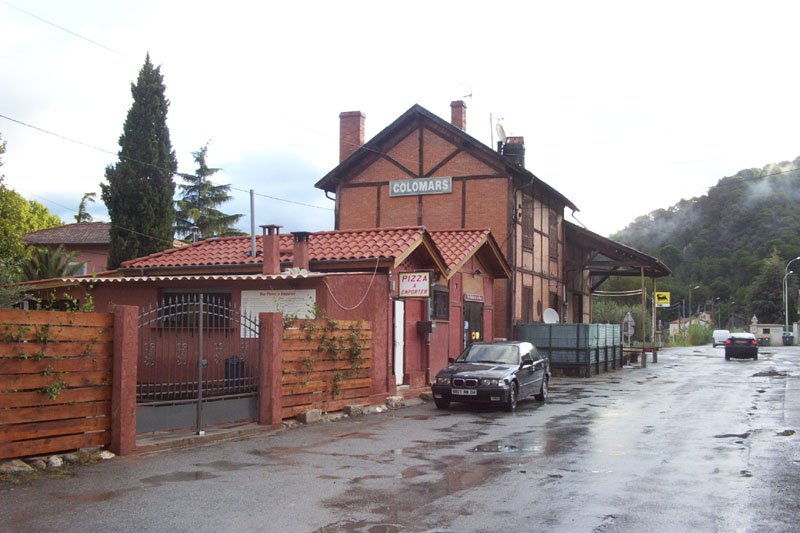
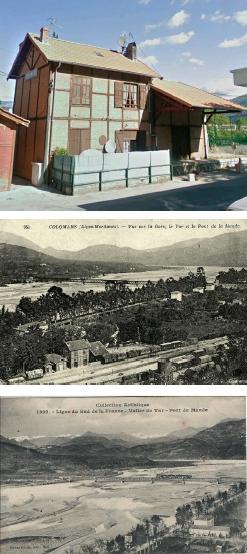
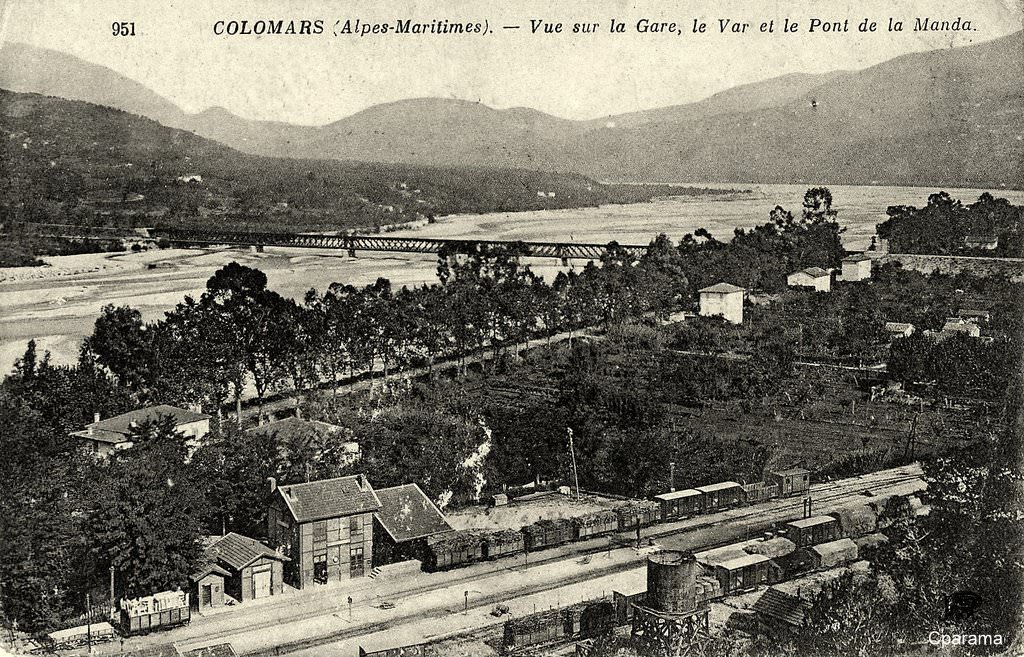
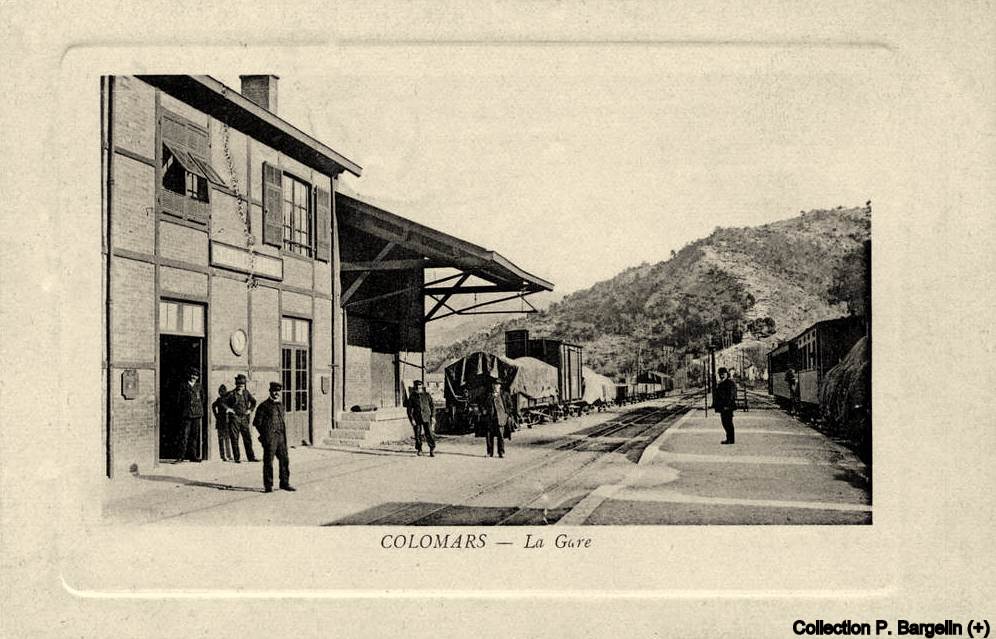
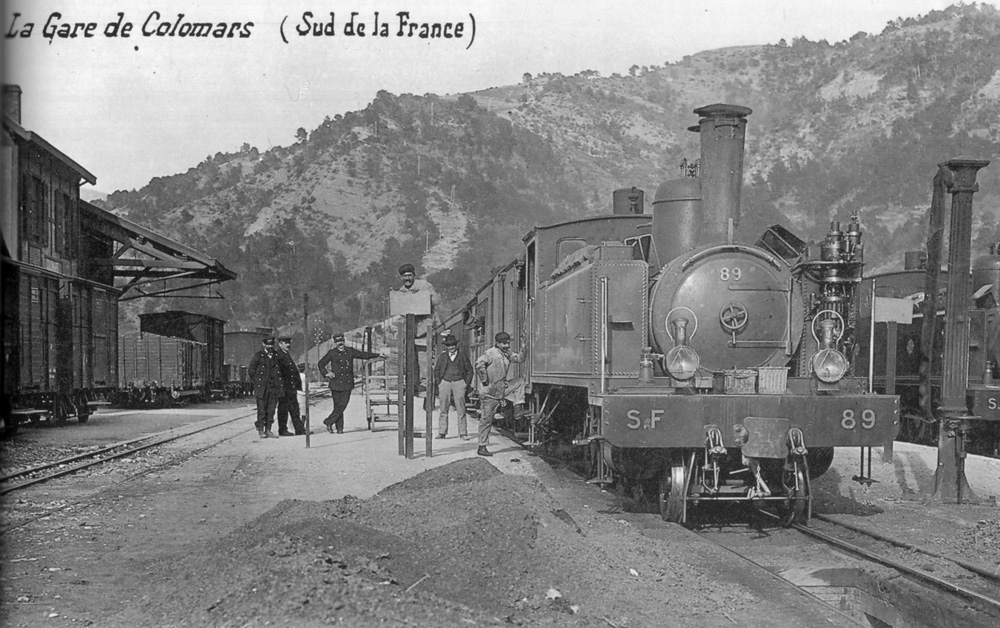
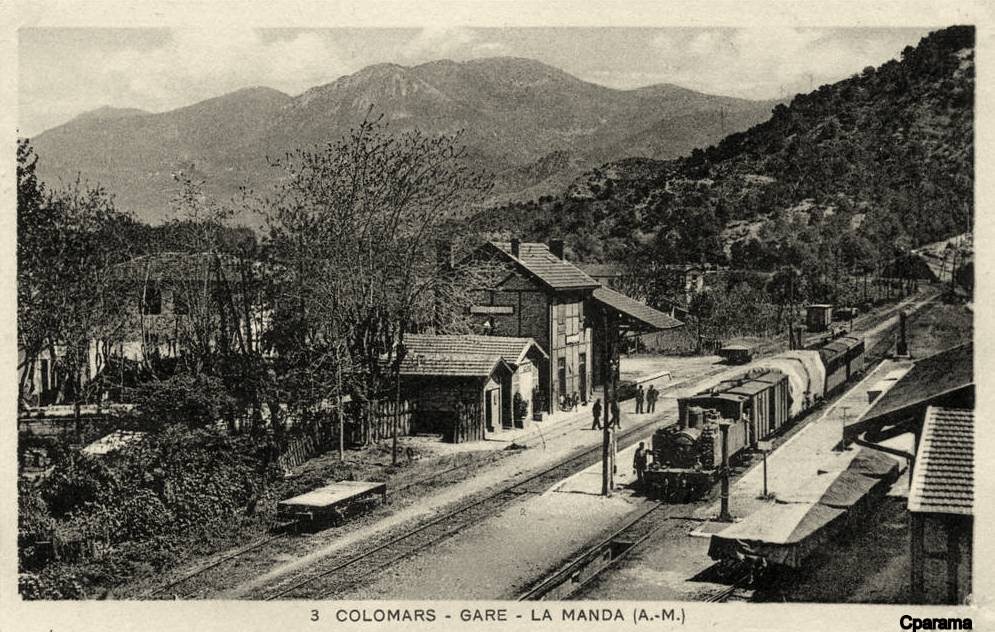
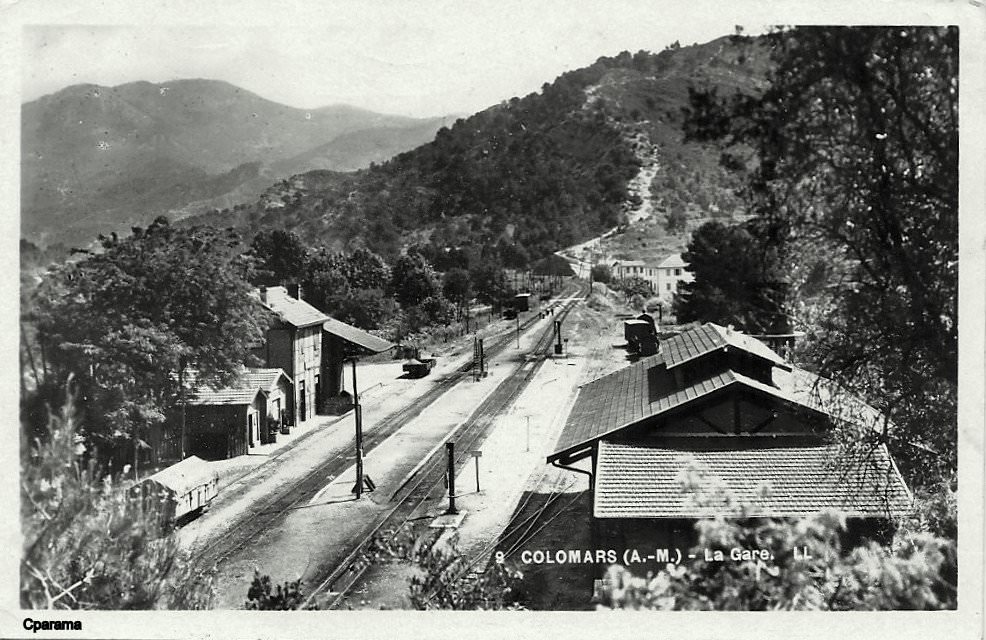
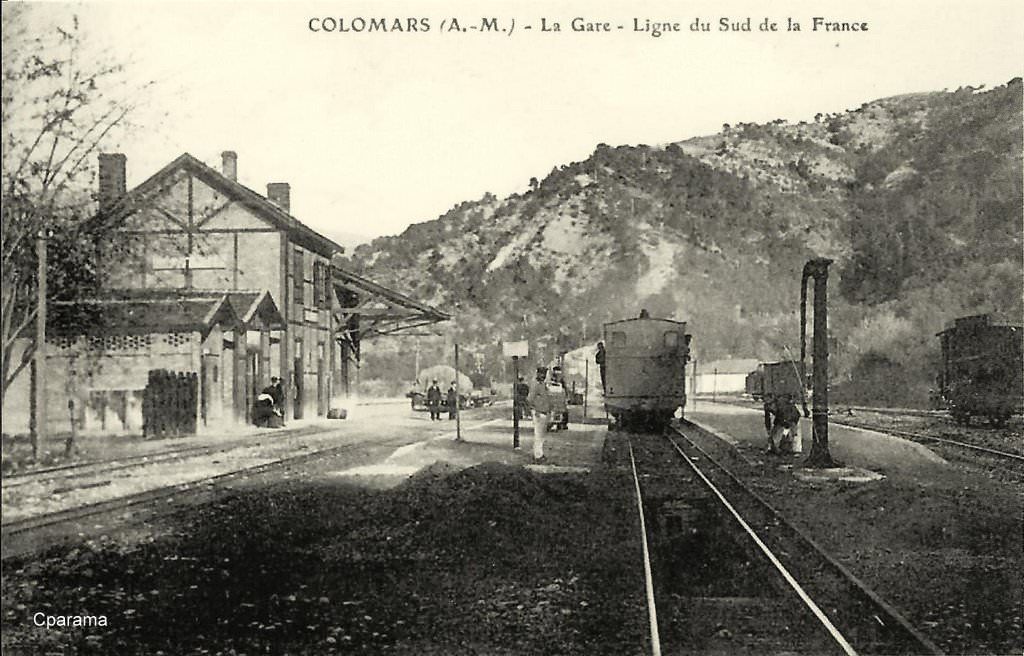
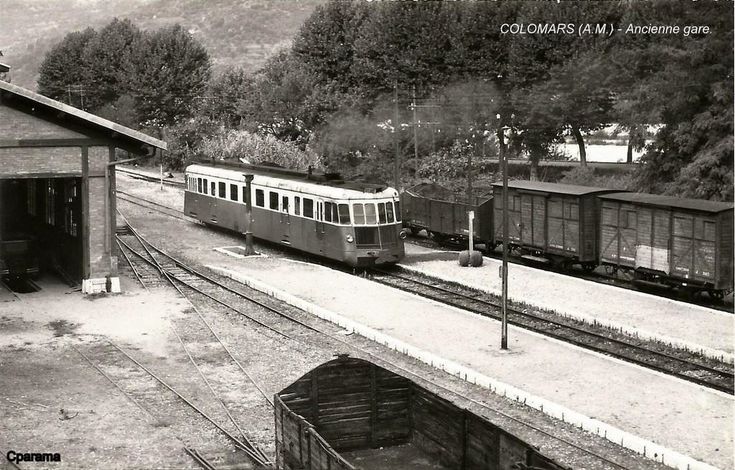
The relative positions of the old station and the modern halt can be seen on the adjacent sketch map. A few photos of both the station and the halt follow. First, the ancient station is shown in the early 1900s and then in more up-to-date photographs shows what of it remains. [1]

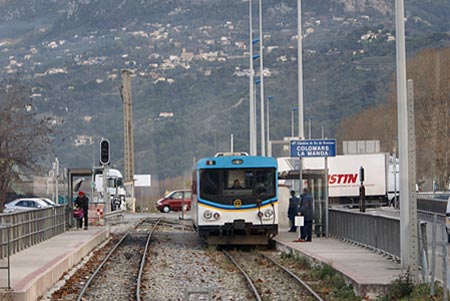
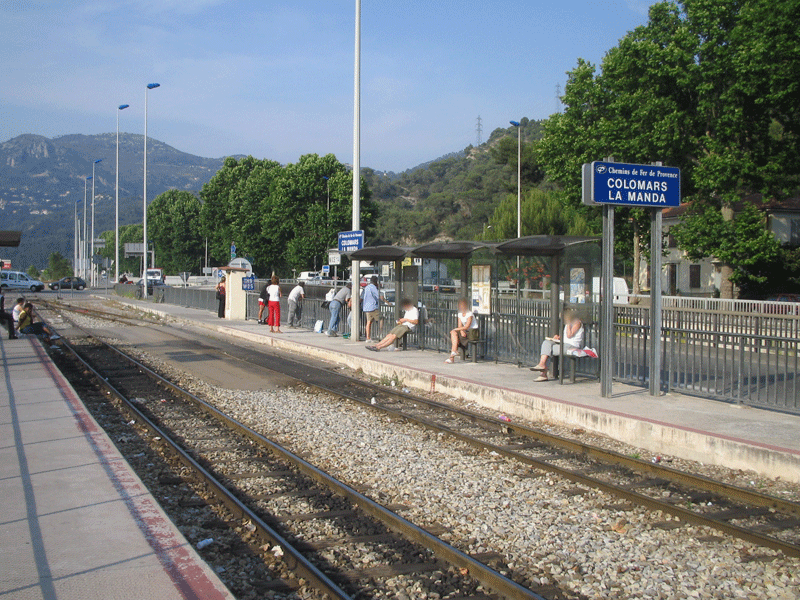
The modern halt, is literally just that, a couple of unmanned platforms adjacent to the river revetments. [1]

Two final pictures before we leave La Manda. The first is a reconstruction of the station site, the second is an archive photograph of the old line to the south of the station which shows the construction work for the new diversion along the river bank in the 1960s. Note, in that picture, the La Manda has still to be reconstructed. Both of these pictures come from the ‘formule4’ website. [12]

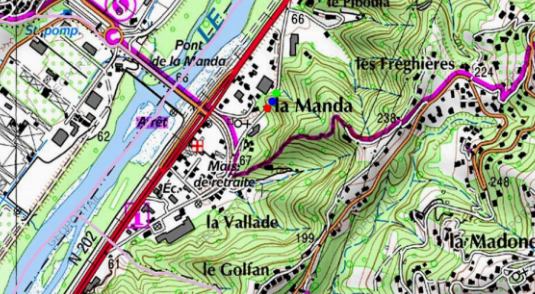
While the modern line follows the east bank of the Var, the original line north of the old Colomars/La Manda Station and the original junction with the Central Var line the Nice to Digne line entered a short tunnel which is now used as a one-way access from the main road to La Manda for vehicles travelling in a southerly direction. The plan below shows the current road layout at La Manda and the location of the tunnel. The roads to the south-east of the main road follow the alignment of the railway that they have replaced. [2]

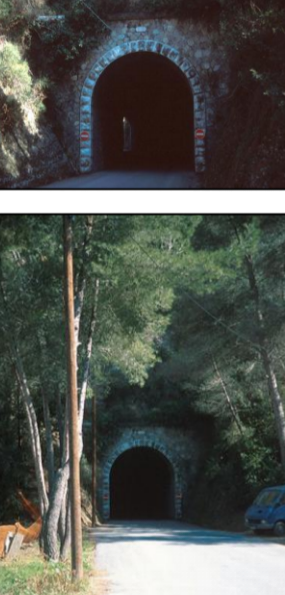
The northern portal. [2]

Two Images (above) of the southern portal in 21st Century. [2]

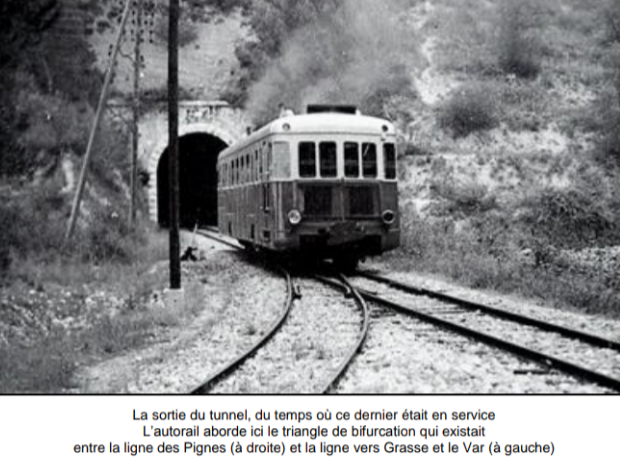
The southern portal immediately before it ceased to serve as a railway tunnel. The picture also shows a Renault railcar and the northern arm of the triangular junction with the Central Var line. [2]

The tunnel is known as Le Tunnel de Vallade. It is approximately 50m long and is just over 65m above sea-level. Its use as a pad tunnel means that it has been kept in good condition since the railway like he was diverted.

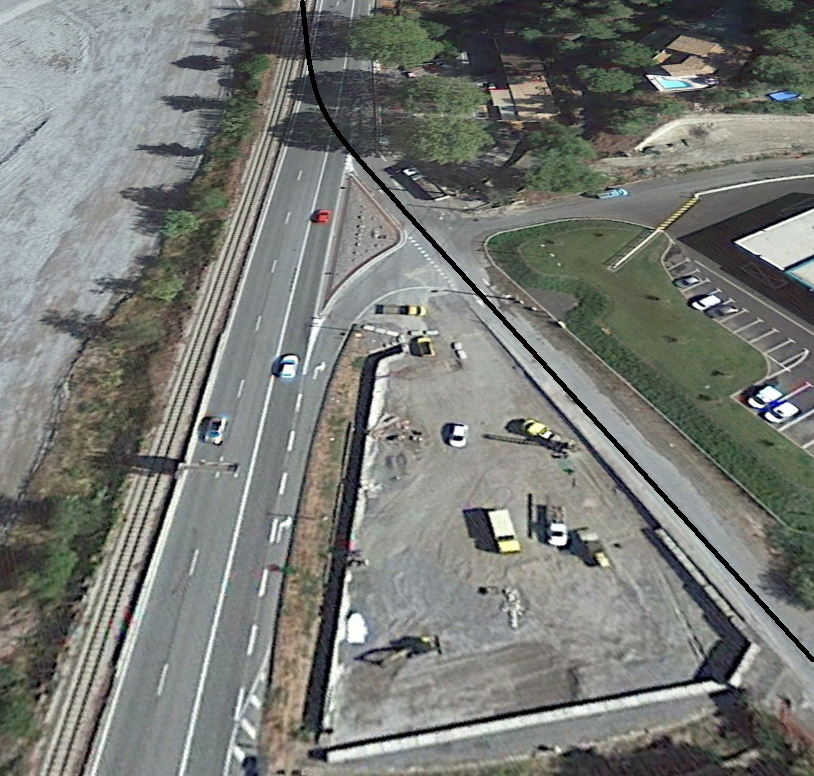
North of the tunnel, the line drifted back towards the bank of the River Var to join the present alignment of the railway. The old line is shown by the black line on the Google earth satellite image below.

The line then followed the East bank of the Var to St. Martin du Var which was the next station on the route. The next three images are taken from Google Maps Streetview and show the approach to the station at St. Martin du Var.


The three images immediately above are taken from the website, ‘Le Train de Pignes’. [3]

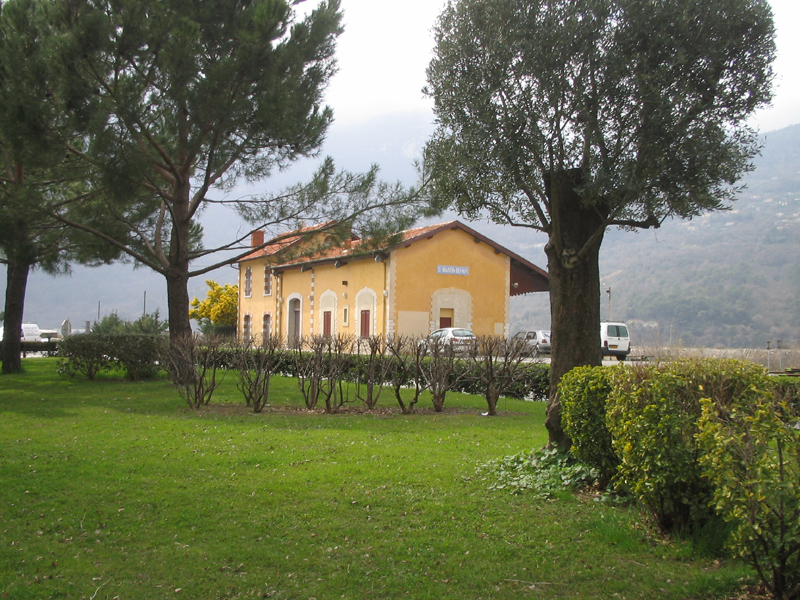
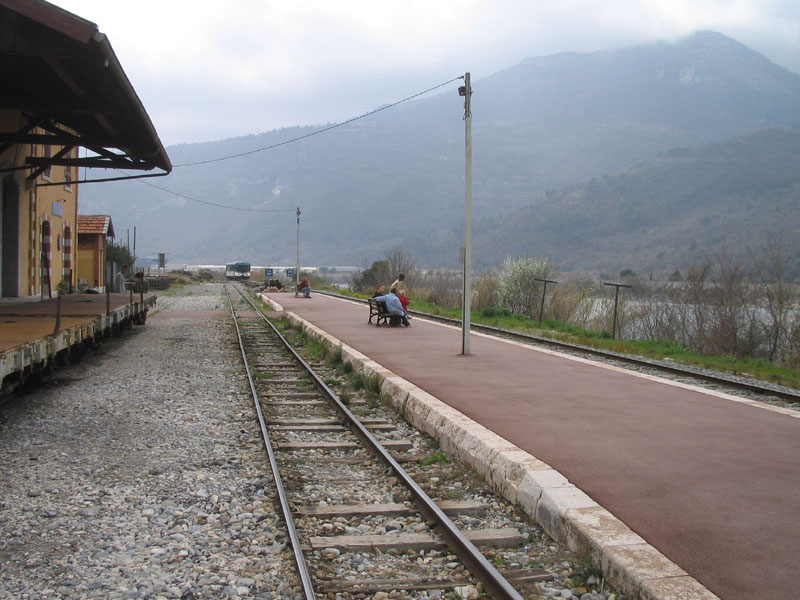
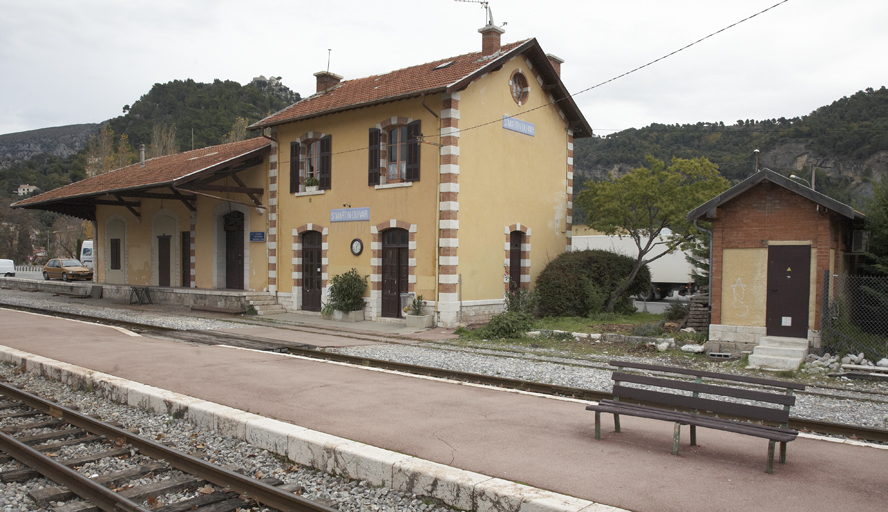
A trackside view of the station building at St. Martin due Var. [4]

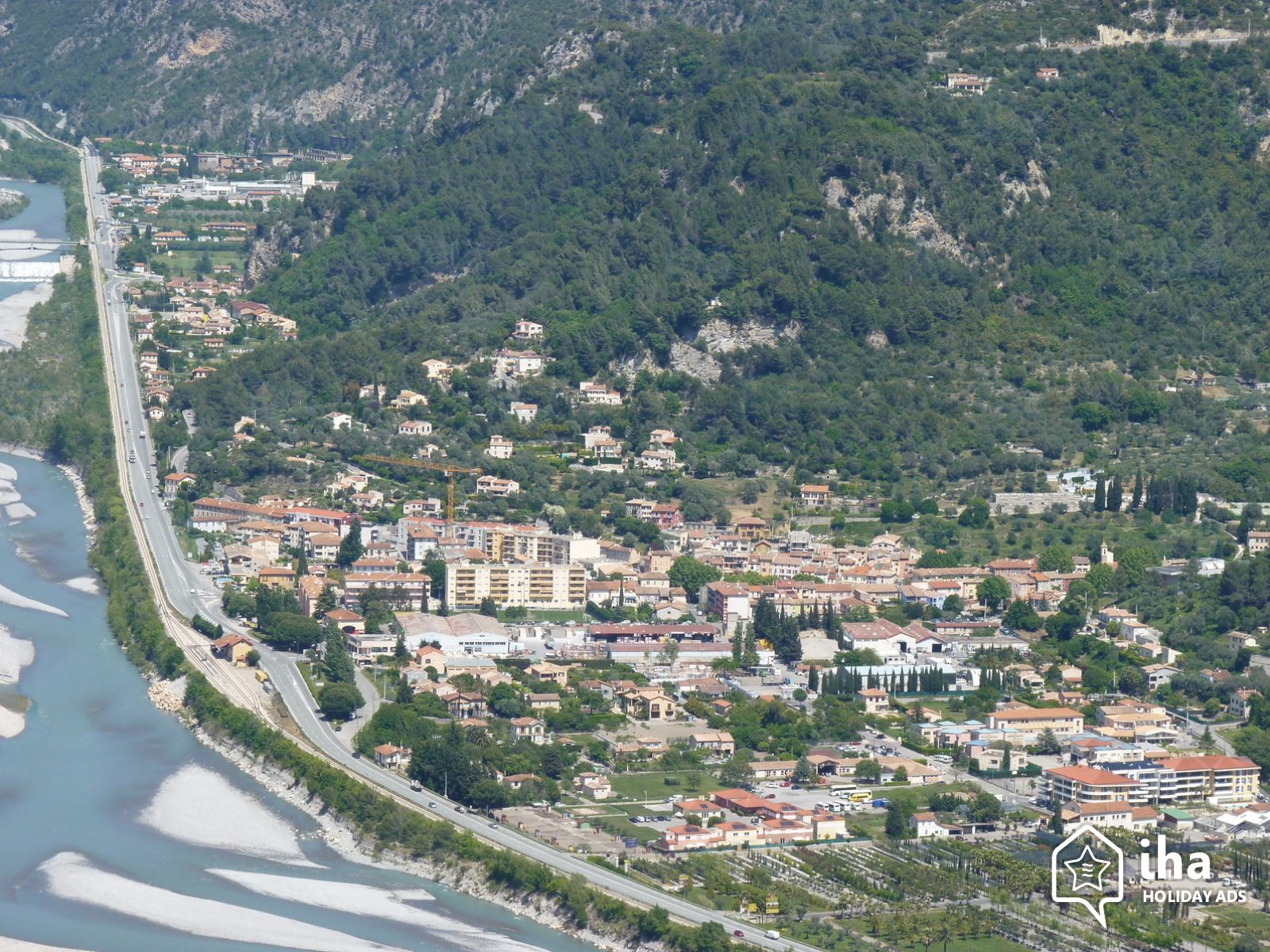
Two aerial shots of St. Martin du Var. The first from the south. [5] The second from the Northeast, shows the station buildings on the right of the photograph. [6] These two pictures show the station in its modern context.

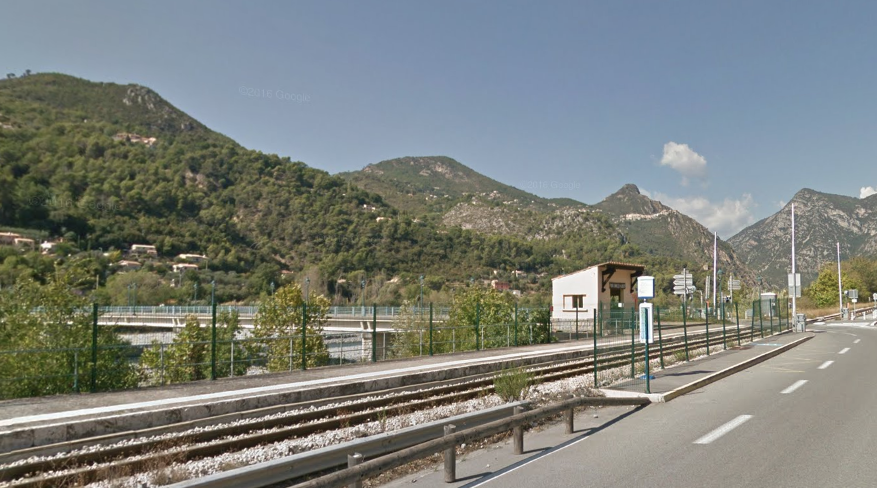
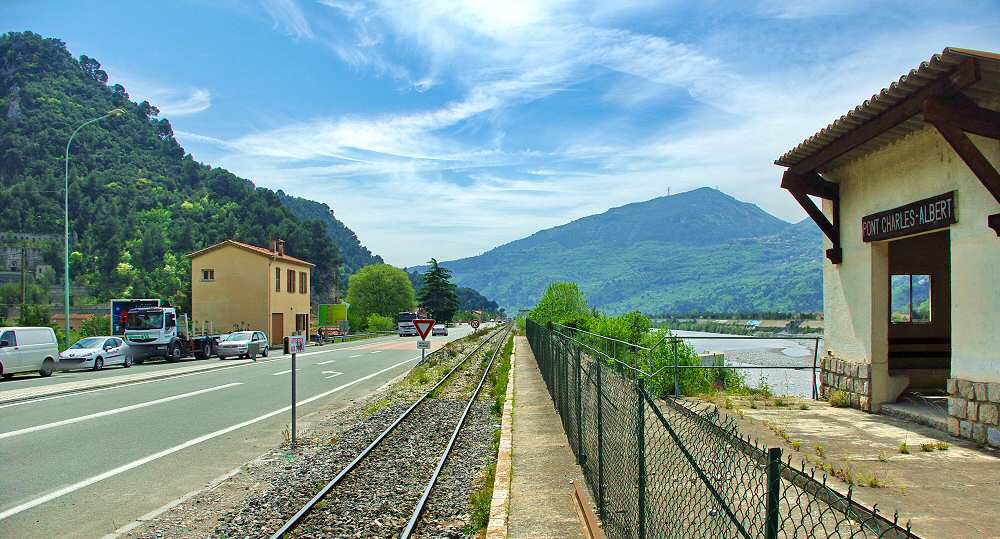
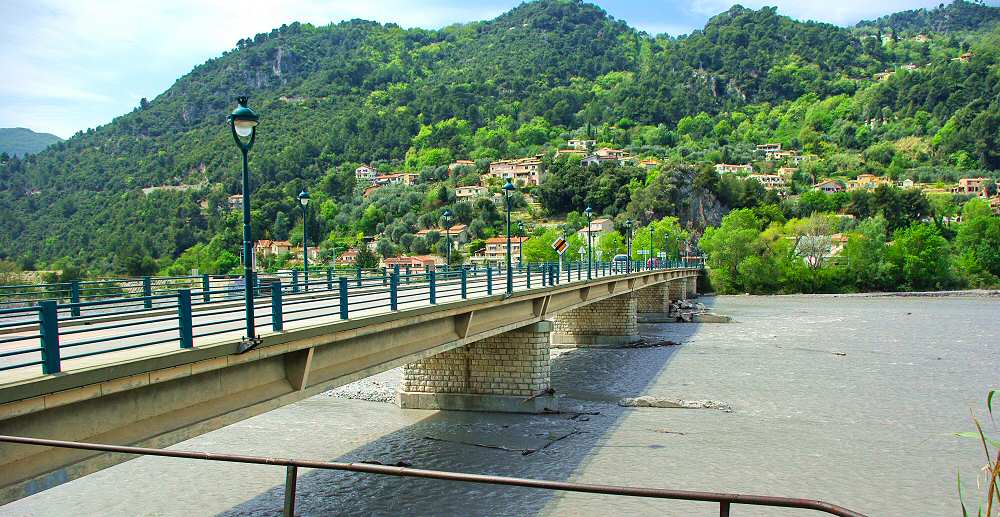
The line continues to follow the east bank of the Var passing through the halt at La Roquette-sur-Var (immediately below). The bridge behind the halt is Pont Charles Albert and gives its name to the halt.

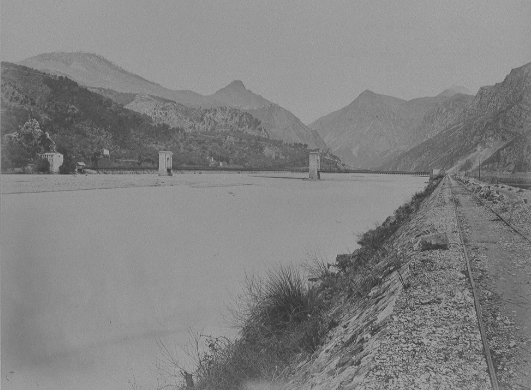
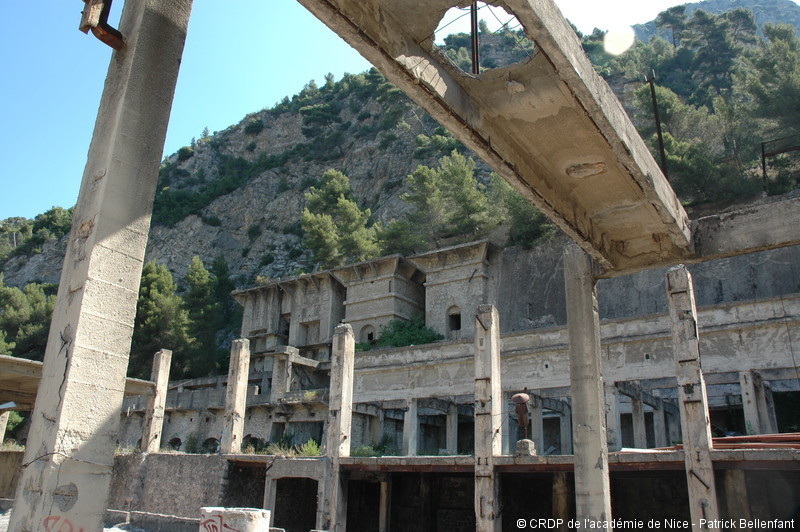
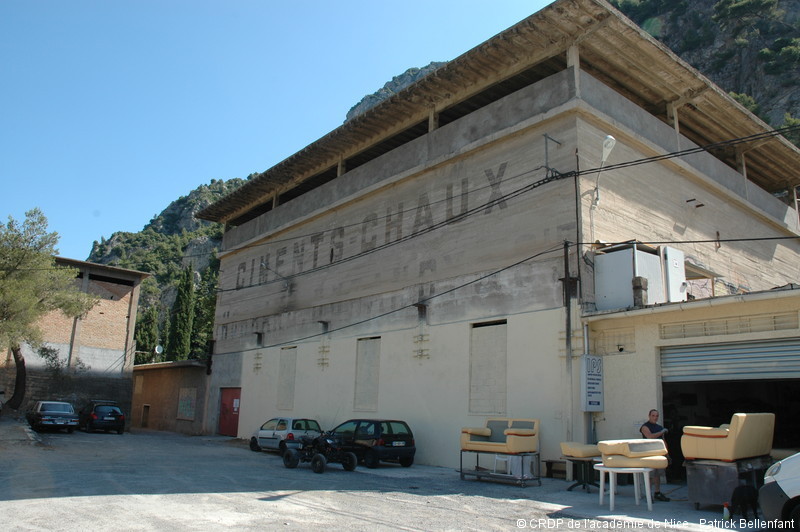
The three images immediately above are taken from the formule4 site and show the location in the 21st century. [7] The image below was also found on the formule4 site but was sourced from BNF Gallicia. [8] It shows the original bridge, a suspension bridge across the Var and interestingly a standard-gauge railway which connected the Baus Roux to the mouth of the Var by means of a cariole pulled by horses heading up the valley away from the coast and descending under gravitational power towards the coast. A cariole was a type of carriage used in the 19th century. It was a light, small, two- or four-wheeled vehicle, open or covered, drawn by a single horse. The Baus Roux was an industrial area just to the north of the Pont Charles Albert on the East side of the Var.

Two pictures of the old cement works at Baus Roux. [9]

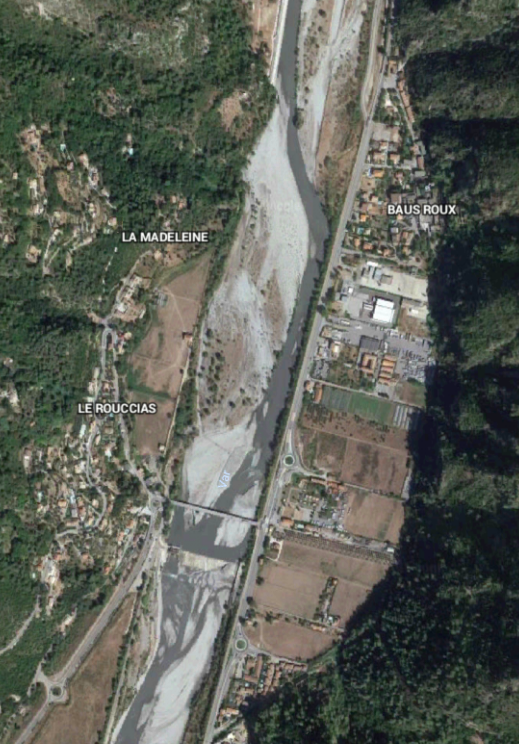
The bridge in the bottom half of the above satellite image is Pont Charles Albert. one of the abandoned cement works is immediately below the words ‘Baus Roux’.
The line passed through a halt on its way North to Plan du Var – Arret de Baus Roux is shown immediately below (abandonned). [7] That halt was replaced by one with the name ‘La Roquette sur Var/Baus Roux’ which s shown on a Google Streetview image below.


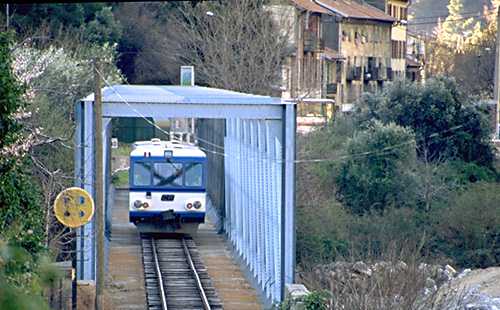
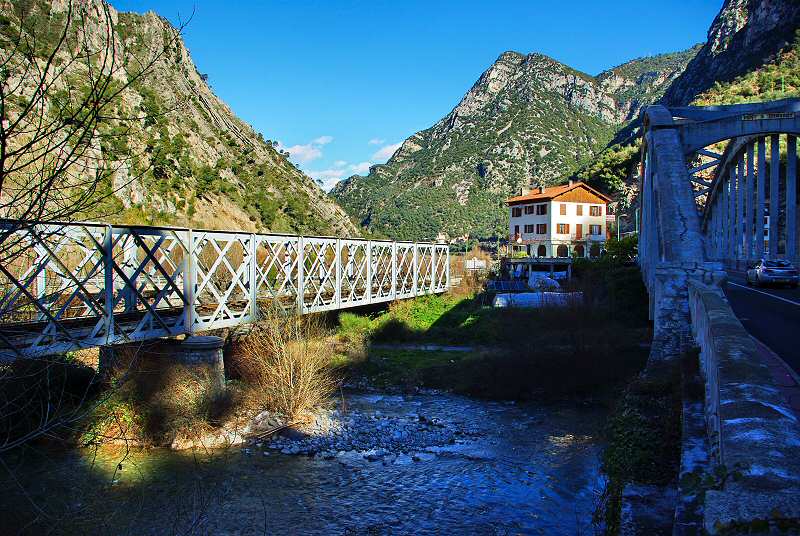
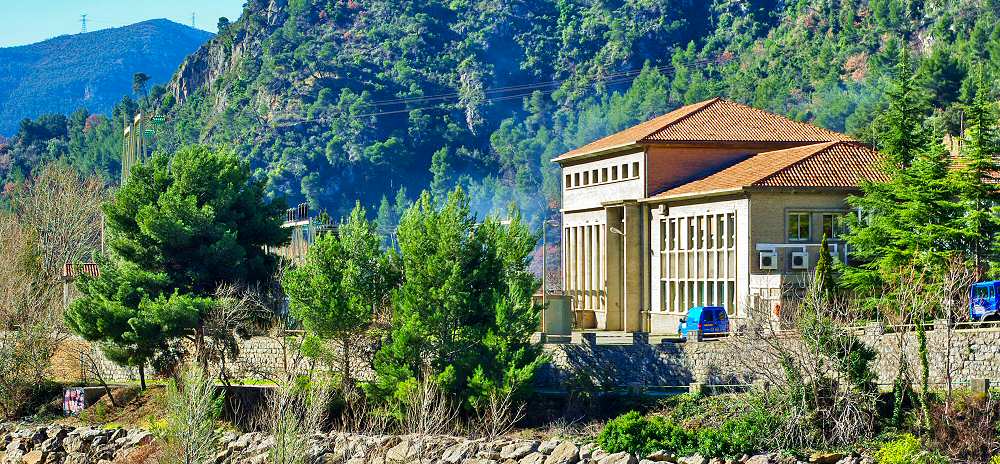
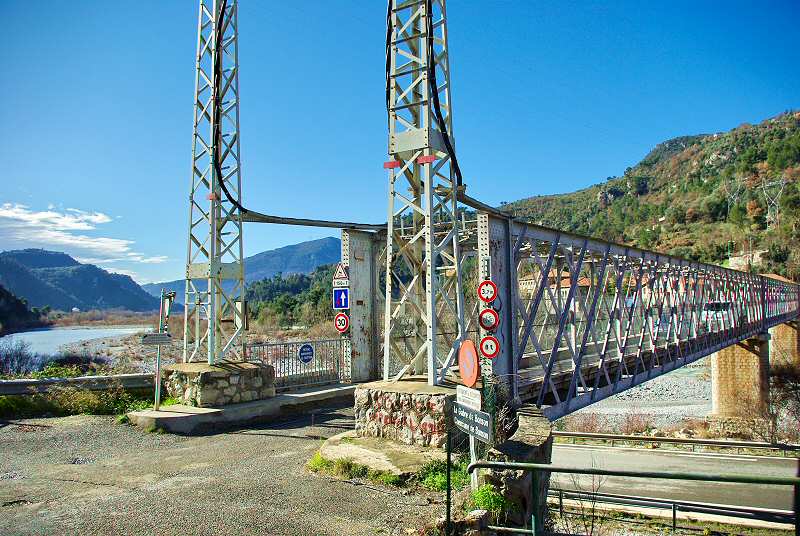
Within a short distance we catch sight of a large industrial complex on the west bank of the River Var. This is Gabre Power Station which sits on a promontory which sticks out into the course of the river. The power station was served by its own rail link which crossed the metal truss girder bridge shown in both of the two images below.


Gabre district in the commune of Le Barbant/Bonson (Alpes-Maritimes, France), opposite Plan du Var, with the Gabre bridge and the Gabre power plant built in 1890 to supply electricity to the trams of Nice. On the other side of the Var, you can see the road to Digne (ex-N202, currently D6202) and the railway line of the Railways of Provence (“Train Pignes”). This picture was taken from the village of Le Barbant/Bonson in 2007 © Eric Coffinet [10]

The perched village above the power station is Le Barbant/Bonson © Eric Coffinet [11]

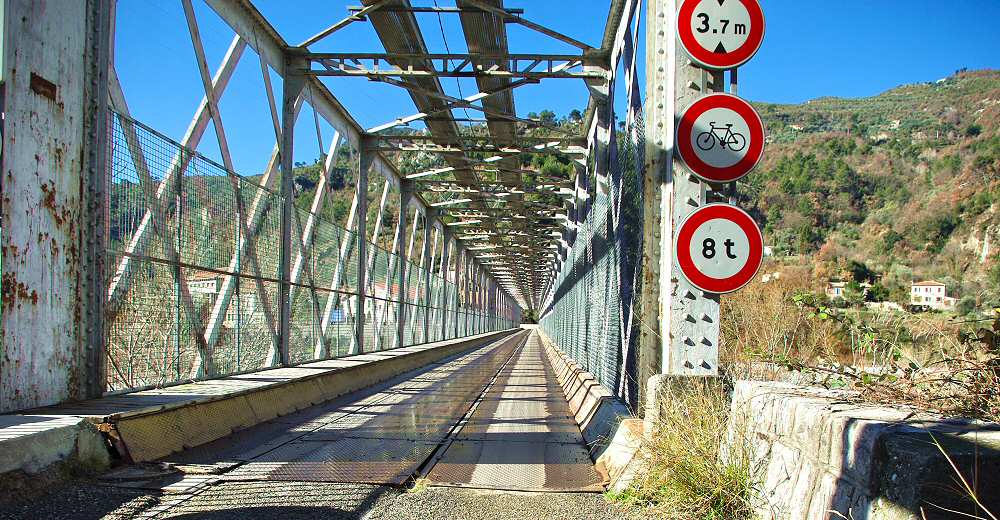
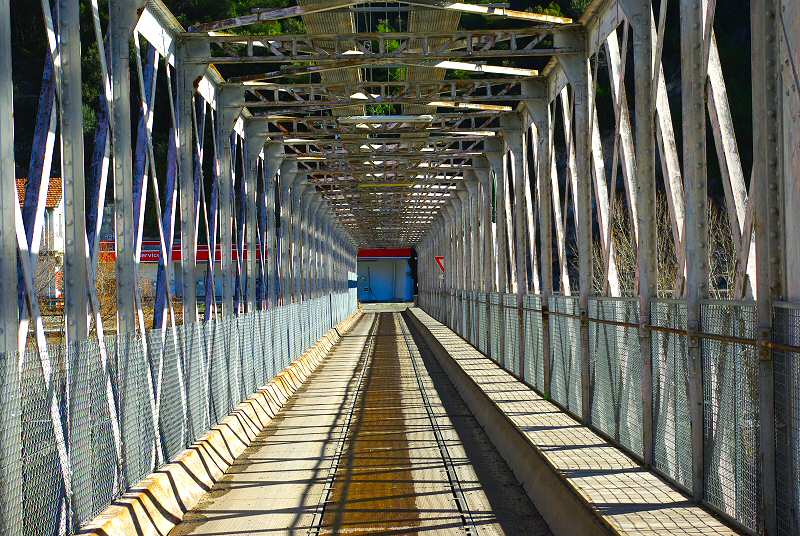
The rail link to Gabre Power station diverged from the Nice to Digne line on the west side of Plan due Var. Its rails could still be seen in the road surface of the truss girder bridge in the early 21st Century. [7]

This series of 5 photographs of the Gabre Bridge are culled from formule4’s website. [7]

There is evidence of this short branch-line on the 1955 IGN 1:50,000 map of the area. [13] It can been seen close to the Hyrdoelectric plant on the left side of the ‘fold’ in the map. I cannot find details of how itconnected to the mainline and can only assume an at grade crossing at the east end of Le Pont de Gabre and a junction at the railway station in Plan du Var.

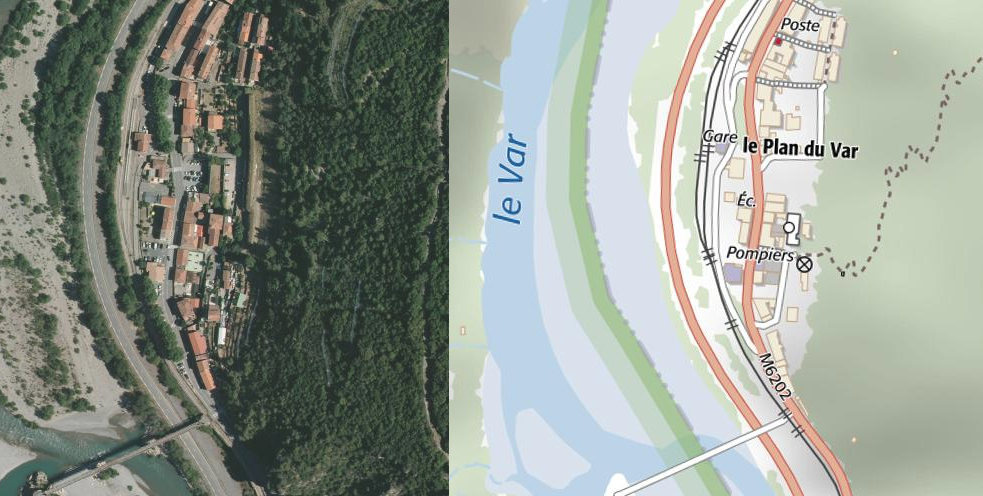
Plan du Var with Le Pont du Gabre at the bottom of the combine map/satellite image and the station buildings between the River Var and the village. [14]

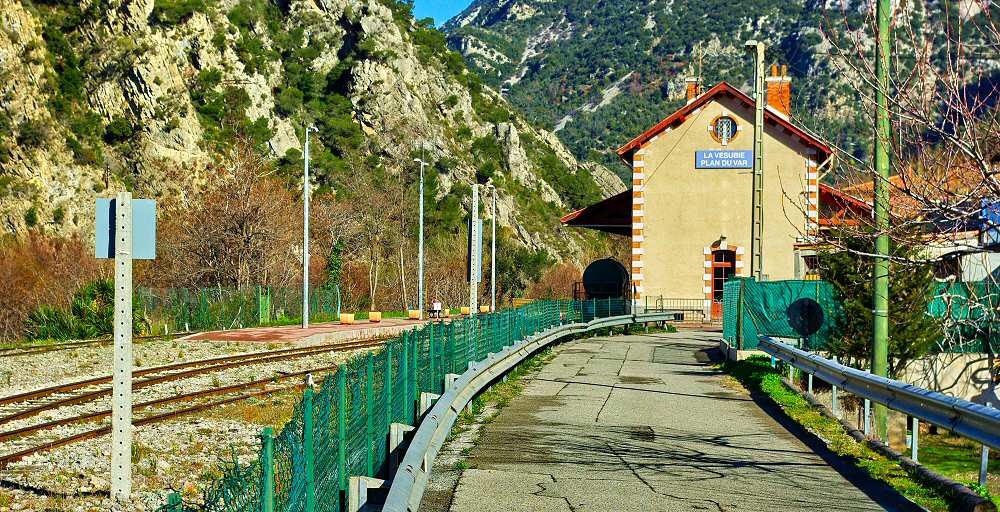
The next few images of the station at Plan du Var come from the ‘formule4’ website. [7]

Looking north through the station.
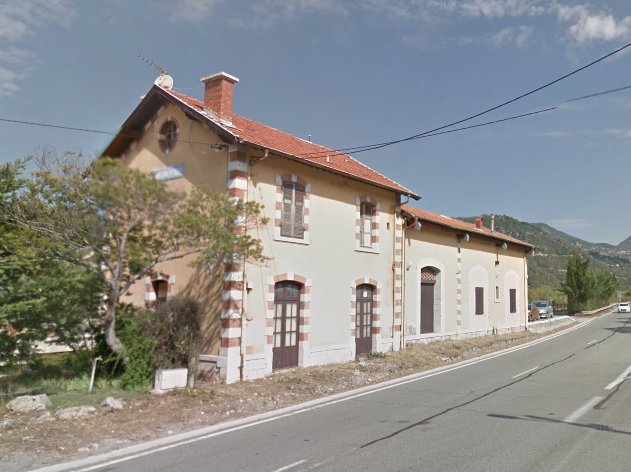
The station buildings with the village off to the left.


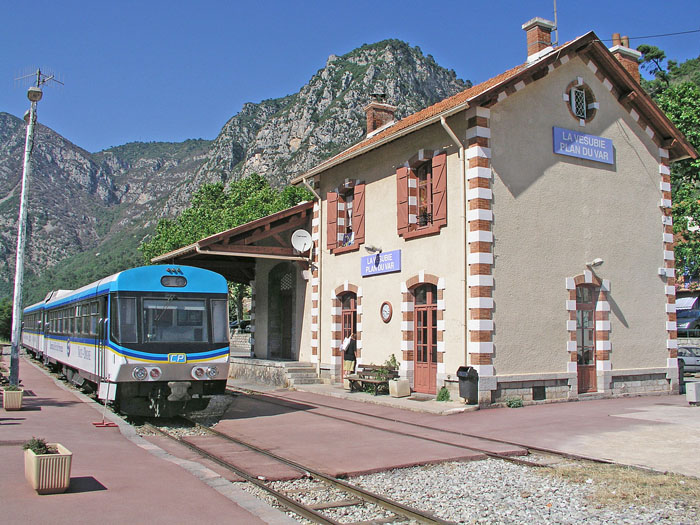
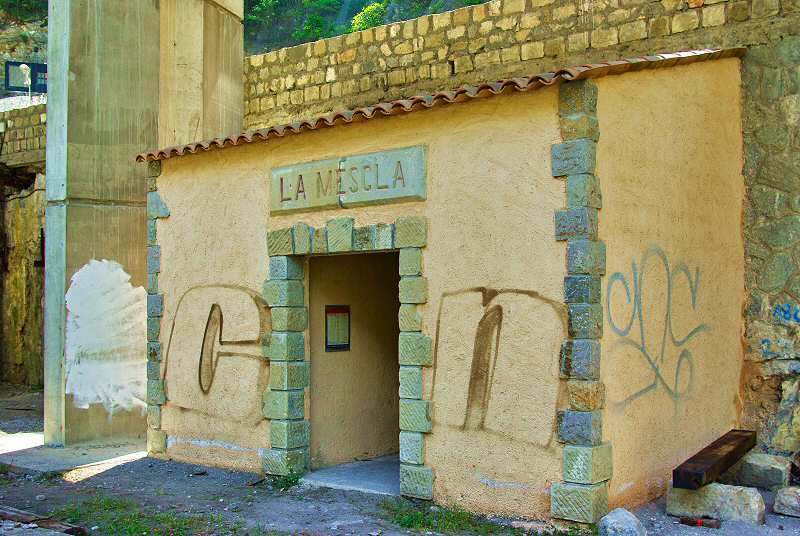
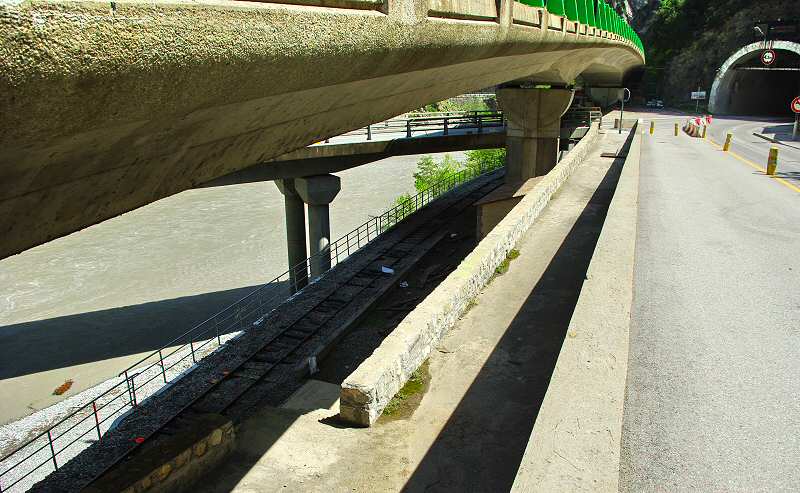
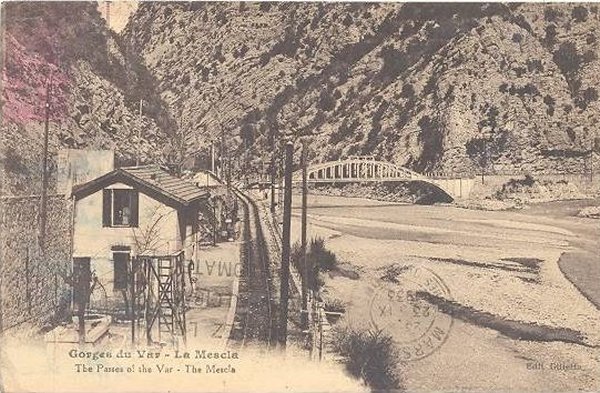
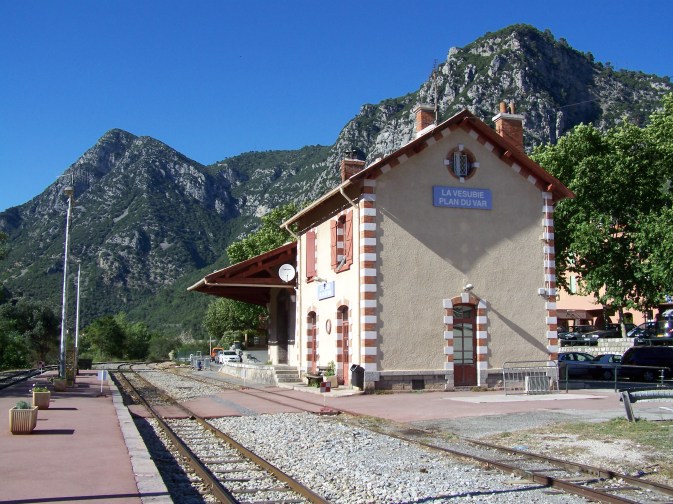
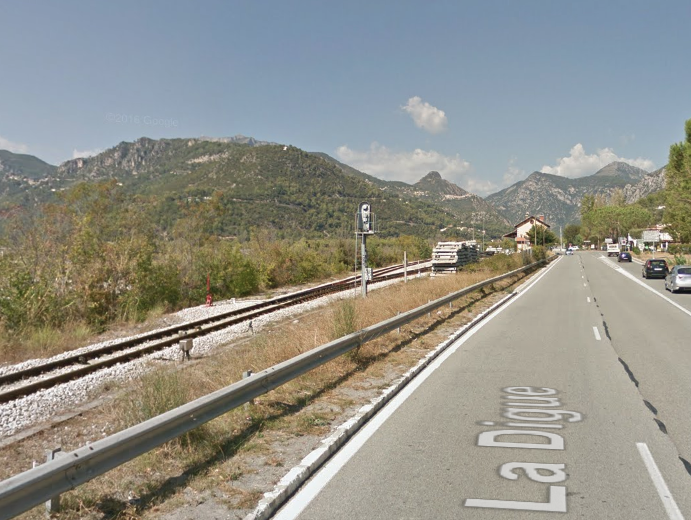
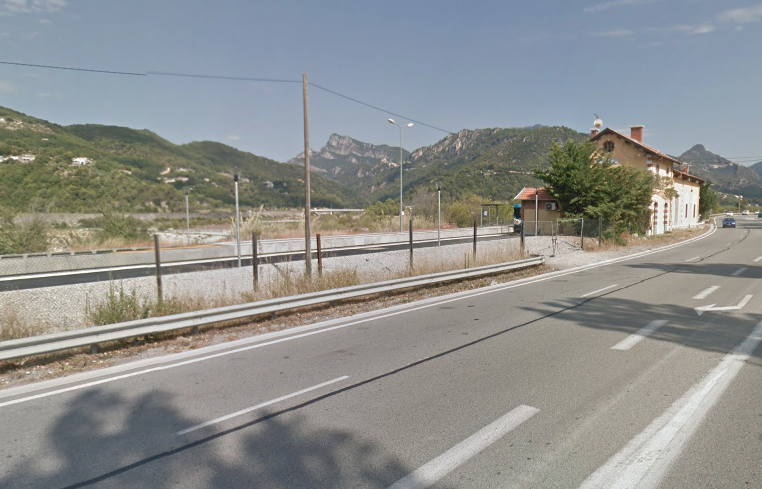
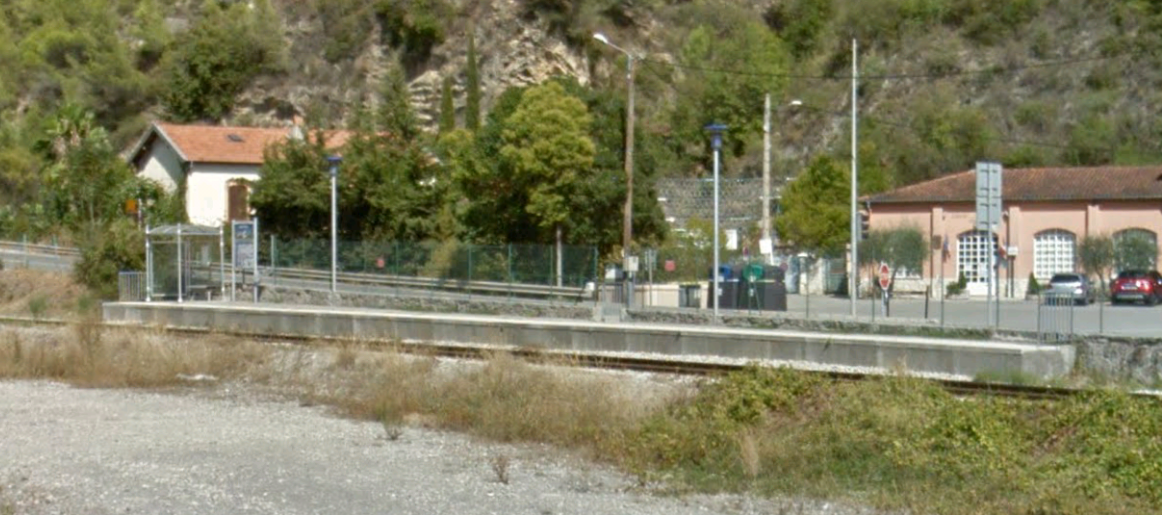
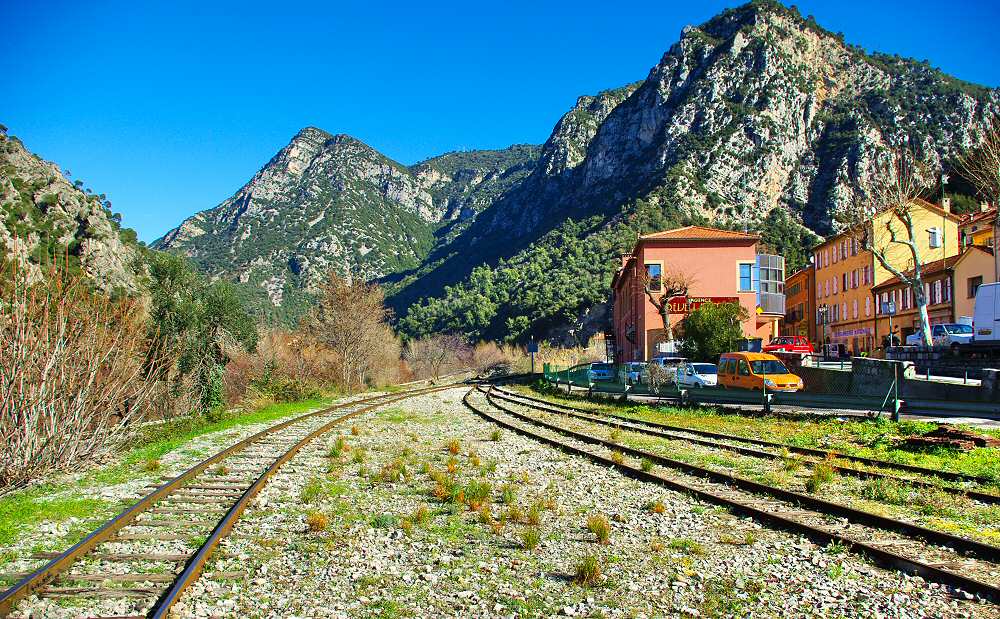
Looking North from the station into Les Gorges de la Mescla. Just beyond the building on the right the tracks coverage to a single line once again. The buildings on the left were originally associated with the tramway which ran up the Vesubie Valley.
At Plan du Var a tramway diverged from the mainline and headed up the Vesubie Valley. Some limited details of this branch-line can be found at:

https://rogerfarnworth.wordpress.com/2013/12/16/chemins-de-fer-de-provence-7-the-line-to-st-martin-vesubie

We finish this part of our journey along the Nice to Digne line at Plan du Var.

Plan du Var Station (c) Eric Coffinet. [15]

References

  1. http://cccp.traindespignes.free.fr/phototheque-nostalgie.html, accessed on 20th November 2017.
  2. http://www.tunnels-ferroviaires.org/inventaire.htm, tunnel No. 06046.1, accessed on 7th July 2018.
  3. http://cccp.traindespignes.free.fr/gare-stmartin.html, accessed on 7th July 2018.
  4. https://dossiersinventaire.regionpaca.fr/gertrude-diffusion/dossier/gares-des-chemins-de-fer-de-provence/5db69410-c3ec-4217-b30c-92f975a65c27/illustration/57, accessed on 7th July 2018.
  5. https://www.iha.co.nl/vakantiehuis-saint-martin-du-var/Am=, accessed on 7th July 2018.
  6. http://www.ecovallee-cotedazur.com/projects/the-eco-district-saint-martin-du-var, accessed on 7th July 2018.
  7. http://www.formule4.com/route_code.php?rcode=35#wpt12, accessed on 7th July 2018.
  8. https://gallica.bnf.fr/ark:/12148/btv1b12000805.item.r=pont+charles+albert.f18.langFR, accessed on 7th July 2018.
  9. http://www.valleeduvar.fr/index.php?page=gypse, accessed on 7th July 2018.
  10. https://commons.m.wikimedia.org/wiki/File:Bonson_(Gabre).jpg, accessed on 8th July 2018.
  11. https://commons.m.wikimedia.org/wiki/File:Bonson_(Gabre-2).jpg, accessed on 8th July 2018.
  12. http://www.formule4.com/route_code.php?rcode=35, and http://www.basesdocumentaires-cg06.fr/os-cgi/cgixpd.exe?exec=DOCUMENT&mode=0&start=20&num=28&fnmq=&fnmr=foto/page-r.html&fnmd=foto/page-f.html&q_ft_any_text_column=manda, accessed on 8th July 2018.
  13. https://remonterletemps.ign.fr/comparer/basic?x=7.197585&y=43.855283&z=15&layer1=GEOGRAPHICALGRIDSYSTEMS.MAPS.SCAN50.1950&layer2=GEOGRAPHICALGRIDSYSTEMS.MAPS.SCAN-EXPRESS.STANDARD&mode=doubleMap, accessed on 8th July 2018.
  14. https://remonterletemps.ign.fr/comparer/basic?x=7.196726&y=43.856888&z=17&layer1=ORTHOIMAGERY.ORTHOPHOTOS&layer2=GEOGRAPHICALGRIDSYSTEMS.MAPS.SCAN-EXPRESS.STANDARD&mode=doubleMap, accessed on 8th July 2018.
  15. https://commons.wikimedia.org/wiki/File:Gare_de_Plan_du_Var.jpg, accessed on 7th July 2018.

The Network of the Tramways of Nice and the Littoral (TNL) at its Height (Chemins de Fer de Provence 62)

As I have mentioned in the last month or two, I have been very fortunate indeed. … For my birthday this year, my wife has bought me two books about the tramways of Nice. Both of these books are written in French by Jose Banaudo and published by Les Editions du Cabri. [1]

I am enjoying reading the first of the two volumes at the moment which covers the history of the tramways in Nice. I have had some conversations of a number of forums about the TNL which ran the tramways along the coast and in the city of Nice as well as a number of lines which travelled up into the hilly countryside behind the coast.

Sadly the full story of the TNL network is currently only available in Jose Banaudo’s books which are written in French.

I have used Google Translate to translate some of the pages of Jose Banaudo’s book. These notes are based on that translation. This post focusses on the years immediately before the First World War. It was at this time that the network reached its fullest extent and it was the time when it was both in its best condition and carrying the greatest number of passengers. After the First World War things began to change and competition from other forms of transport increased.

The pictures included below are not those included in Jose Banaudo’s book. He entitles this section of his book, The TNL Network at its Height (Jose Banaudo Volume 1 : p62-68)

Like many French rail transport networks on the eve of the first world war, the TNL experienced, significant growth in all areas: mileage exploited, number of passengers and tonnage of goods, staff numbers, etc. There were a number of improvement and development projects underway, both for urban and interurban traffic, but the economic and human upheavals brought by the war were soon to bring a halt to the overall prosperity of the tramways of Nice.

The Completion of the Departmental Network

On the eve of the war, one line of the departmental network in the hinterland behind Nice remained to be built and an extension to another had just been agreed.

The 1904 convention provided for the extension of the La Grave-de Peille line along Les Gorges de Paillon to reach the village of L’Escarène. L’Escarène was the capital of the canton and had a commercial importance but also a military significance, because from L’Escarène one could extend the tramway towards Lucéram and Peïra-Cava, at the edge of the highly strategic Authion massif. However, the new PLM international route Nice-Breil-Cuneo had just been confirmed across the same route. This resulted in a rapid diminution of interest in the establishment of a tramway in what were very sparcely populated gorges

As a result, the general council decided to replace the planned line with a totally different route: La Pointe-de-Contes – L’Escarène. The proposed line was just over 7.5 km in length.

In addition, since the location of the terminus of the Nice-Levens line required tram passengers to walk nearly a kilometre to reach the village, an extension to Levens village was promulgated in October 1908. It was just over one kilometre long and included a tunnel. Work has just begun when war commenced and no further progress was made.

The Completion of the Urban Network

The network in the city of Nice had last seen alterations not long after the turn of the 20th Century. They were supplemented by a new line when on 8th February 1908, the city of Nice granted the TNL a line connecting Magnan bridge to the suburb of La Madeleine.The line was give the route number 12 and began operations on 27th April 1908. A single track followed the shoulder of the road up the valley for a distance of over 2.2km. It facilitated the rapid urbanization of this popular district where small factories, laundries, restaurants and cafes opened up. La Madeleine became a popular Sunday walk destination.

Closer to the centre of Nice, three lines had been granted in the period from 1902 onwards and should have entered the area bounded by the Boulevard Gambetta, the Rue de France, the Avenue de la Gare and the Avenue Thiers, which is nowadays called “Quartier des Musicians” because most of the streets are named after famous composers of the 19th century.Place Gambetta However, as a result of opposition from residents in the Musicians Quarter the company and the municipality decided not to construct the lines in the Quarter.

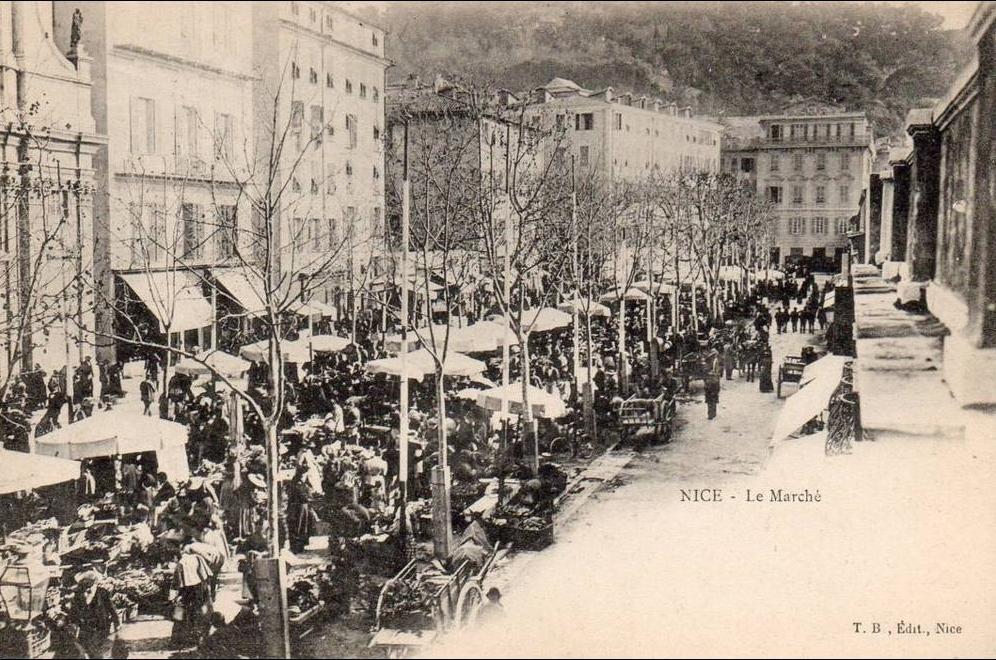
Another line close to the Old Town was proposed. .. The route which was initially planned to follow Rue de St. François-de-Paule and Cours Saleya sparked protests from the market traders. The image below indicates the extent of the market and highlights the likely disruption that would have been caused by the tram route.Another route through the historic heart of the city, via Rues du Palais et de la Terrasse, Les Quais du Midi and Des Ponchettes (today, Etats-Unis and Rauba-Capèu), the Quai Lunel and La Place Cassini (today, Ile-de-Beauté), was also defeated by opposition.In the first half of the 1910s, the completion of the urban network was the subject of arduous negotiations between the municipality and the TNL. On 5th and 6th February 1912, two amendments and a new convention were signed to alter the lines to be built. The four routes not yet realized were abandoned in favor of extensions and new links towards the suburbs of the city. Banaudo cites these as:

• an extension of line 4 Port-Lazaret, via the Boulevard Empress-de-Russie;

line 6 (Massena) Boulevard Joseph Garnier-St. Sylvestre via Avenues St. Barthelemy (today, Auguste Ravnaud), Cyrille-Besset and Boulevard de Cessole;

line 7 Place Saluzzo-Rue de Lépante;

line 7 bis (Masséna) Carras-Caucade;

Line 11 (Masséna) Place de Tende-Eglise St. Roch;

• an extension of line 12 to Le Madeleine-Supérieure;

line 13 (Masséna) Place Saluzzo-Col de Villefranche on the flank of Mont Boron.

Political issues intervened and planned routes were again altered. Banaudo says that after interminable discussions only lines 6, 7a and 11, on different routes  to those previously proposed were approved.

Banaudo reports that “in the spring of 1914, the TNL operated a network of 166.5 km, including 33.6 km of urban lines, 2 km of routes within the port area and 130.9 km of coastal and departmental lines. If common lines are deducted the total reduces by about 5km. The rolling stock fleet consisted of 174 powered units (including 9 in Monaco) and 90 passenger trailers, as well as 13 tractors and 140 freight cars. The staff consisted of a thousand employees, ensuring an annual traffic of nearly 25 million passengers and more than 200,000 tons of goods. For 1913, the last year before the war, with 4,564,544 francs of receipts and 3,227,730 francs of expenses, the financial balance sheet of the company was largely profitable and the coefficient of exploitation remained at a rate of 0.71 to the envy of many other networks.”

References

  1. Nice au fil du Tram Volume 1 and 2, Jose Banaudo; Les Editions du Cabri.
  2. Nice au fil du Tram Volume 1; p62-67.

The Menton to Sospel Tramway Revisited Again! (Chemins de Fer de Provence 61)

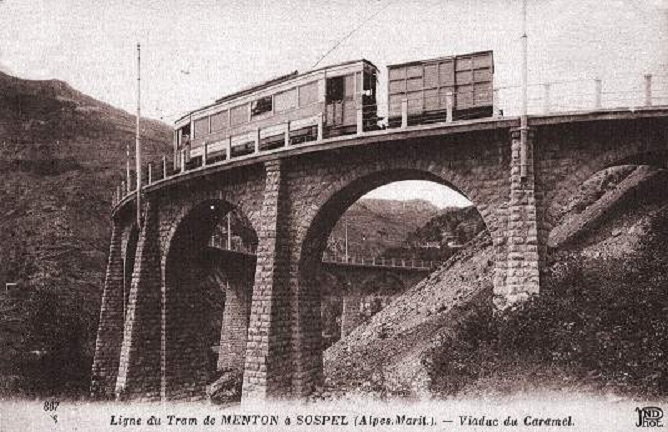
The headline image above shows a steam engine on the Viaduc du Caramel – in steam. [3]

My wife purchased two books for me as a birthday present a while back. They are written in French by Jose Banaudo. They cover the tramway network of the TNL, the Tramways de Nice et du Littoral. In the first volume there is a section about the tramways which meandered into the hills behind the Coast, one of which was the tramway from Menton to Sospel.

Among a whole series of different pictures, mainly old postcards, were some pictures of the line showing the operation of steam locomotives on the line and others of goods wagons in use between Menton and Sospel, particularly to deliver material to the construction work on the PLM Nice-Cuneo line..

One shows a small 0-4-0T No. 212. The manufacturer and the owner are not known. The locomotive is pulling a bogie truck and a wagon. Another photograph shows one of several locomotives destined for the construction sites of the PLM Nice-Cuneo line which were transported by tram to Sospel. It shows a German-built 0-6-0T which was partly deconstructed to be transported on a TNL wagon in September 1912.

A further photograph was taken in 1914. In this image the 0-6-0T Orenstein & Koppel steam locomotive No. 6871 of the Francois Mercier Company is about to leave the goods station at Carei in Menton, coupled with the shunter No. 13 of the TNL. This loco was photographed on a number of occasions by Engineer Jacques Schopfer coupled with the shunter No. 13 of the TNL on numerous occasions in 1914 – on the Viaduc de Monti, on the approaches to the Viaduc du Caramel, and stationary on the viaduct.

The Menton-Sospel tramway was used for the transport of material for the construction of the PLM line from Nice to Cuneo. In other pictures in Banaudo’s book we can see shunter No. 7 with a load of tubes on a flat wagon at the goods station at Carel in Menton and shunter No. 13 with a load of rails on two wagons before the stop at Villa Caserta.

The bogie motor-trams of the 213-216 sub-series with more powerful engines and braking systems were also used for goods traffic on the Sospel line: two pictures in the book show: one with a wagon loaded with a small steam locomotive at Castillan; and another with a load of long poles on the Caramel viaduct, from the collections of André Arutur & Jean-Jacques Stefanazzi.


This postcard dates from around 1914 and shows the Caramel Viaduct, with one of the bogie trams pulling a goods van. [2]

Goods trains were a feature of the line from the start, but there was a serious runaway of a goods service at Monti on 12th September 1912 which destroyed tractor 4 and killed its two crewmen. From 16th June 1913 a new service was started with two tractors 6, 7 (and 13 added in 1914) in the form of motorised box cars (known as fourgons in French), which were fitted with the same powerful equipment and brakes as the bogie passenger cars, and which pulled a variety of goods wagons.

Banaudo also tells us that in 1914, four passenger trips and three or four goods trips were made on the line each day, but like the rest of the T.N.L. network traffic fell off in the 1920s. During the building of the P.L.M. main line railway from Nice to Breil via Sospel, the line had a boost of goods traffic carrying many construction materials, but once complete in 1928 there was a huge drop in traffic.

References

  1. Jose Banaudo; Nice au fil du tram Vol.1 published by Les Editions du Cabri, 2004, p59-61.
  2. http://www.tramwayinfo.com/Tramframe.htm?http://www.tramwayinfo.com/Cards/Postc58.htm, accessed on 8th June 2018.
  3. https://excerpts.numilog.com/books/9782903310608.pdf, accessed on 30th November 2023.

Goods Services on the Network of the Tramways of Nice and the Littoral (Chemins de Fer de Provence 60)

I was very fortunate indeed. … For my birthday in 2018, my wife bought me two books about the tramways of Nice. Both of these books are written in French by Jose Banuado and published by Les Editions du Cabri. [1]

I am enjoying reading the first of the two volumes at the moment which covers the history of the tramways in Nice. I have had some conversations of a number of forums about the TNL which ran the tramways along the coast and in the city of Nice as well as a number of lines which travelled up into the hilly countryside behind the coast.

One particular area of discussion has been a practice which seems unique to Nice among other major cities in France and possibly much wider afield. The TNL ran not only passenger services but good services as well.

Sadly the story of these activities is apparently currently only available in Jose Banuado’s books which are written in French.

I have used Google Translate to translate the pages of Jose Banuado’s book which relate to the goods traffic on the TNL network. [2]

By 1903, the TNL was at responsible for a 94.3 kilometre network of over 90 kilometres, of which 29km were the urban lines in Nice. The network was operated with 106 powered trams, 32 trailers, 3 tractors (shunting locos) and 22 wagons for the transport of goods.

The increase in traffic required improvements to the rolling stock. “On the urban lines, the original powered vehicles saw extended platforms, and trailers were added on the most loaded services. … New powered vehicles were ordered for the coastal lines: forty vehicles which were more powerful and comfortable were delivered in two batches between 1904 and 1909. They were equipped with air-brakes and coupled permanently into pairs.

Banuado continues: “The transport of goods took off remarkably. This distinguishes the TNL network from its counterparts in most other major French cities. In addition to postal and retail freight traffic on the coast, the Contes cement plant provided substantial tonnages with coal deliveries for its kilns and lime shipments and cement in sacks. But to ensure the best trade, it was necessary to link trams to the other major transport infrastructure of the city of Nice: the commercial port, the PLM station and the Chemin de Fer du Sud.”

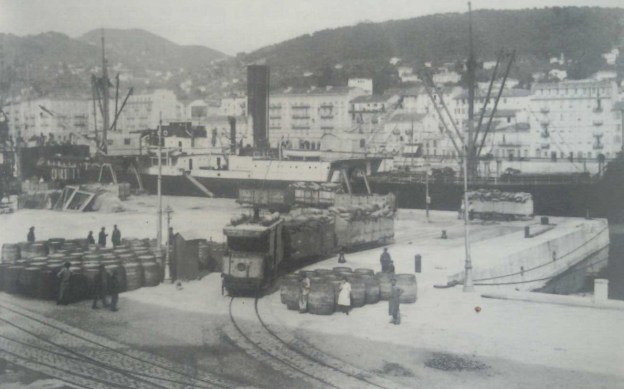
As the PLM had done nothing to connect to the Port, Nice made use of trams to make the connection between the PLM station and the Chemins de Fer du Sud station and the port. An agreement was signed on 7th February 1905,  which provided for some minor alterations to the tram network, “the construction of an exchange platform in the sidings of the Chemin de Fer du Sud Station and the electrification of the tracks. This meant that the TNL locomotives could access these sidings. At the other end of the city, the Chamber of Commerce, … took charge of laying tracks on the docks.”

The TNL assigned shunters/power cars and a hundred wagons to the traffic, while the Chemin de Fer du Sud de la France ordered two hundred wagons able to run on the tracks of the trams to the port of Nice and the operation commenced in 1907 after all legal issues had been discussed and agreed.

Banaudo says: The connection to the port of Nice enabled the transport of large volumes of goods, the majority of which concerned the industries alongside the line to Contes (the Contes cement factory, L’Ariane flour mill and the Nice-Riquier gasworks), as well as exchanges with the Chemin de Fer du Sud de la France Station.” The latter provided a route to the PLM. Although the PLM had always refused a direct connection with the trams, it was connected with the Chemin de Fer du Sud Station from 1899 onwards via a short branch-line which linked the two stations, set into the road pavement of the Rue de Falicon (today, the Rue des Combattants en Afrique du Nord). So, ultimately, it became possible to transship goods from a wagon of standard-gauge to a vehicle of the TNL and vice versa.

References

  1. Nice au fil du Tram Volume 1 and 2, Jose Banuado; Les Editions du Cabri.
  2. Nice au fil du Tram Volume 1; p50-52.

eBooks on Les Chemins de Fer du Sud de la France?

As an aside to the regular blog posts, I am wondering about collating my posts into a series of eBooks. I have developed the first few chapters of the first book, which will be about the Central Var Line in Provence. I would appreciate comments about the draft.

http://anyflip.com/zydj/rtke/#.WtjoPZ4iRBs.wordpress


Nice to Digne-les-Bains Part 2 – Nice to La Manda (Chemins de Fer de Provence 58)

Trains left la Gare du Sud in a Westerly direction before turning first North-West and then round to the south towards St. Philippe. The video below shows the first part of the route from Nice to Colomars (La Manda).[7]

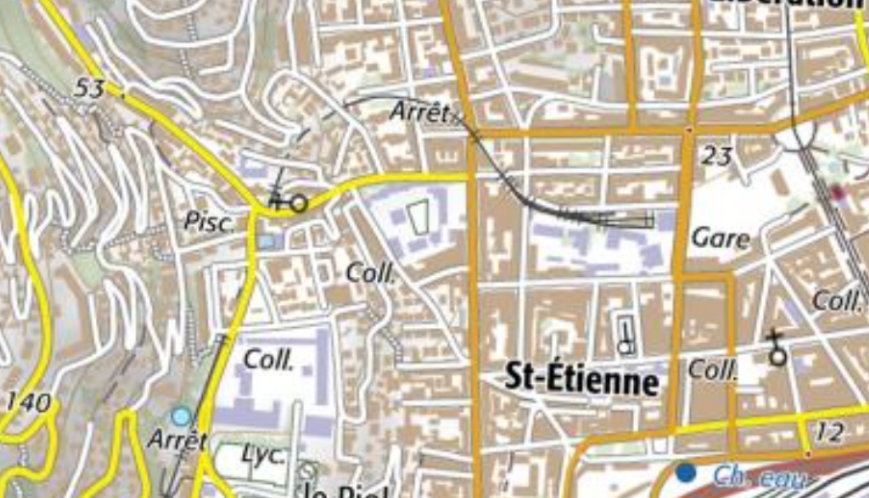
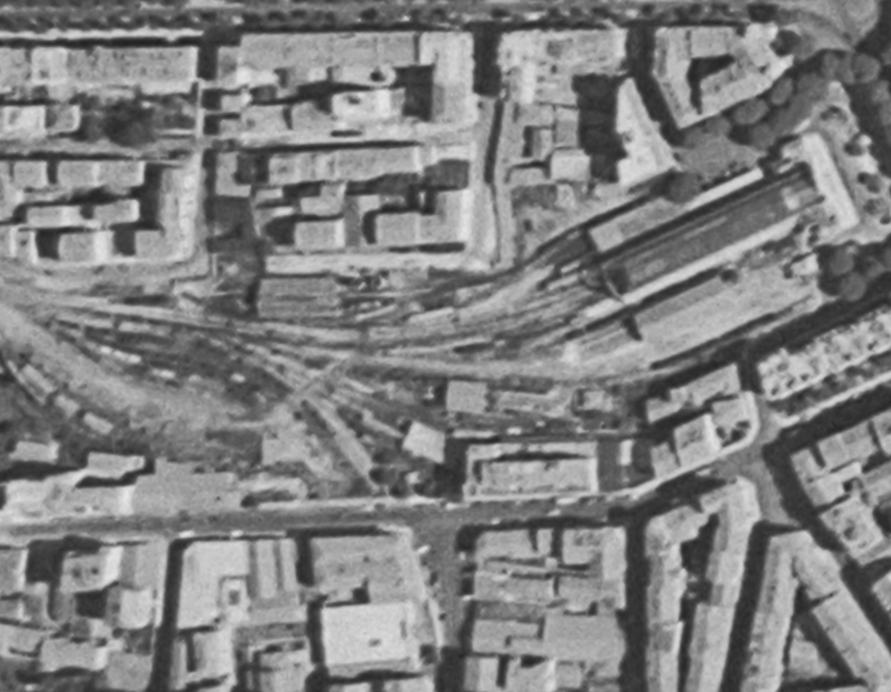
On the map below the site of the original Gare due Sud appears as a void in the right middle of the image with the present station to its West.

The two station sites are covered in the previous post in this series:

https://rogerfarnworth.wordpress.com/2018/04/06/nice-to-digne-les-bains-part-1-nice-chemins-de-fer-de-provence-57

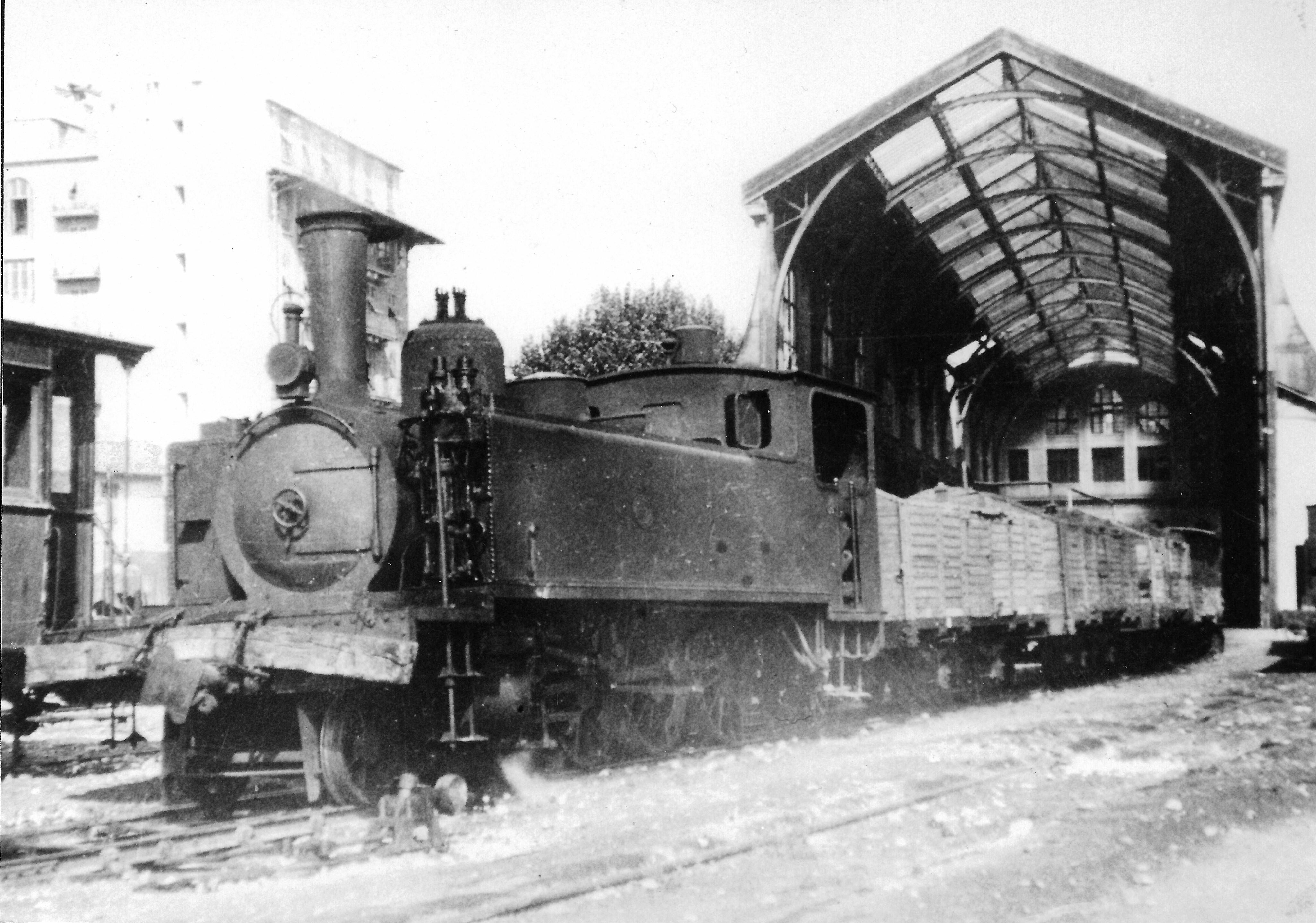
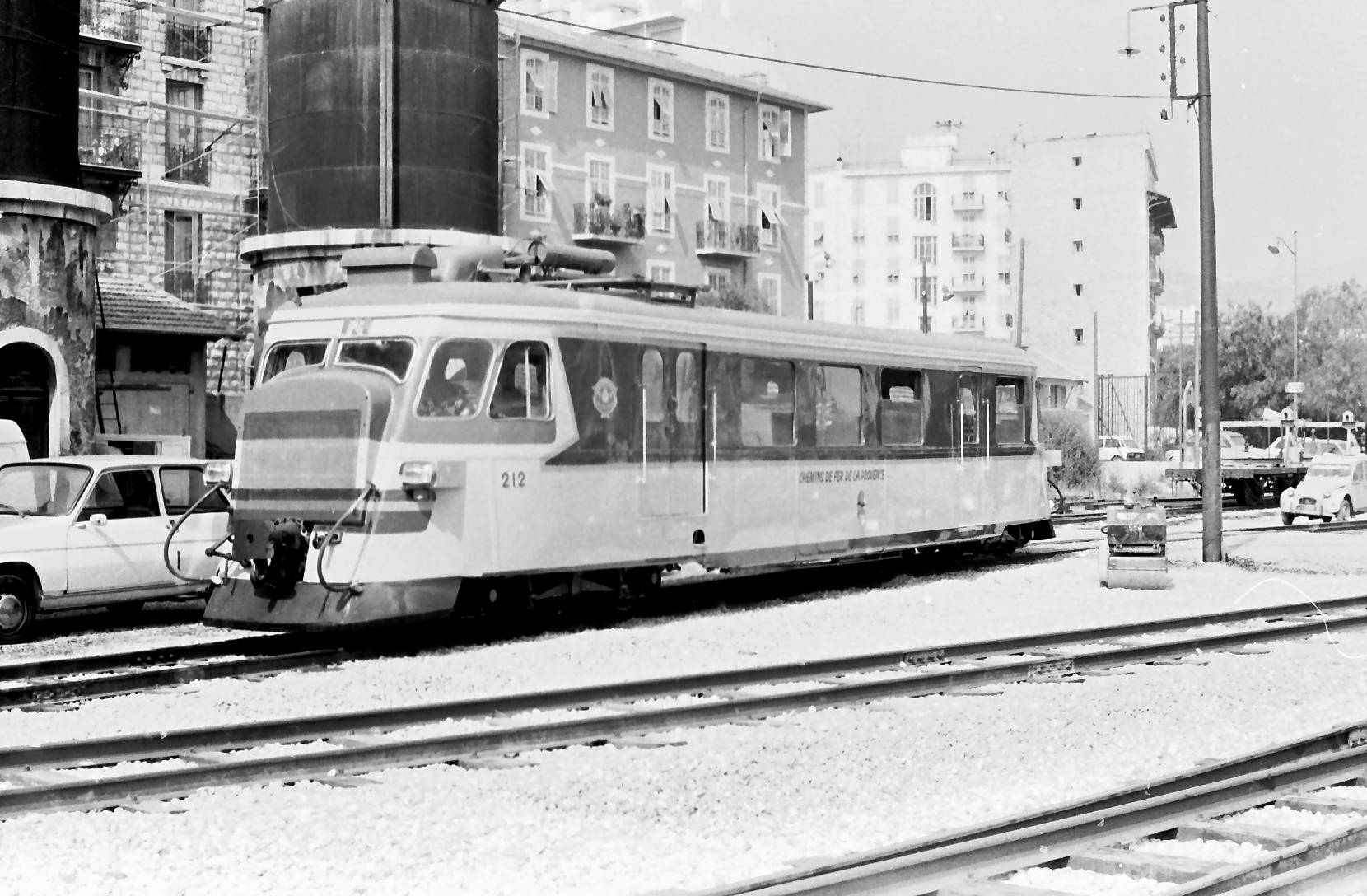
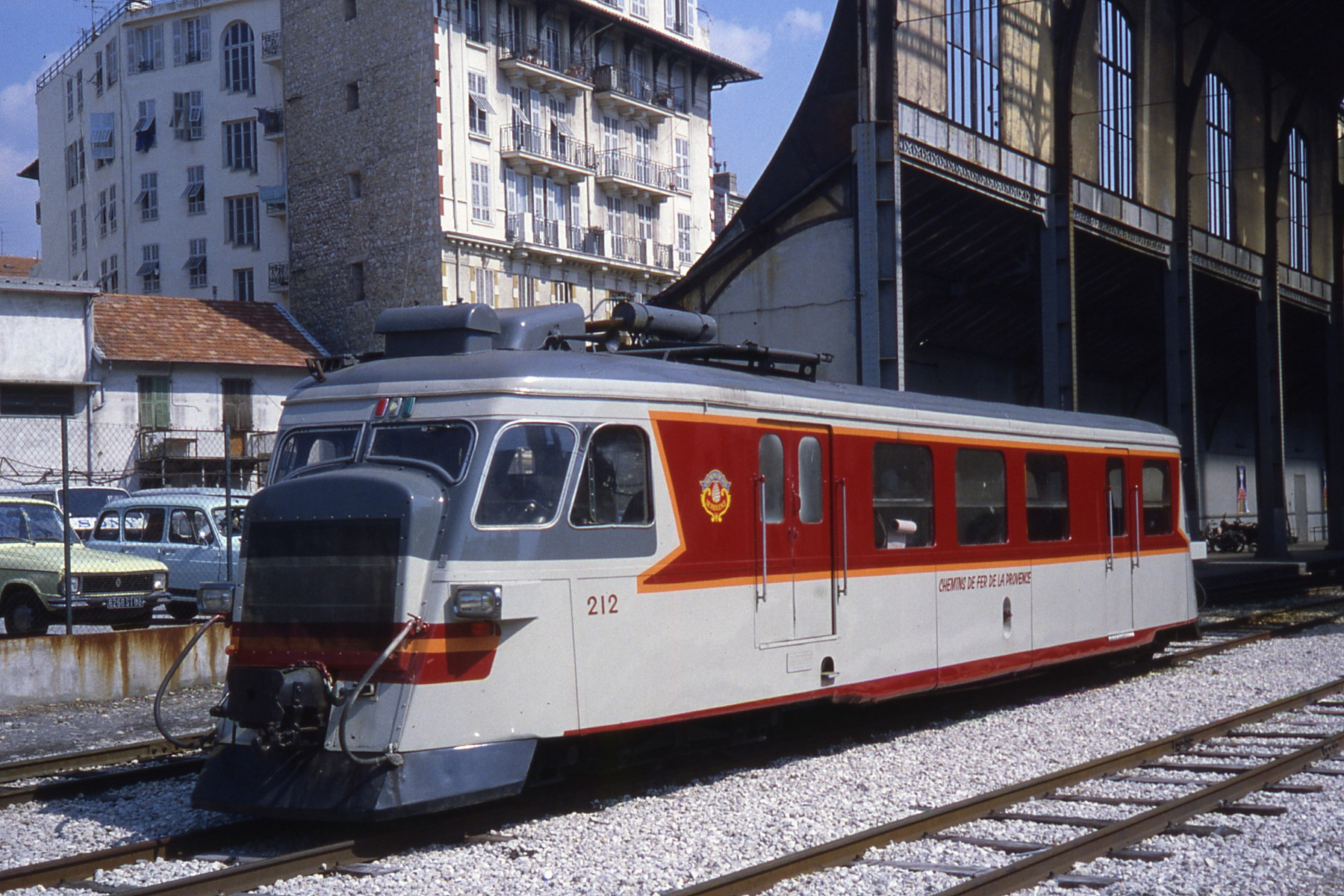
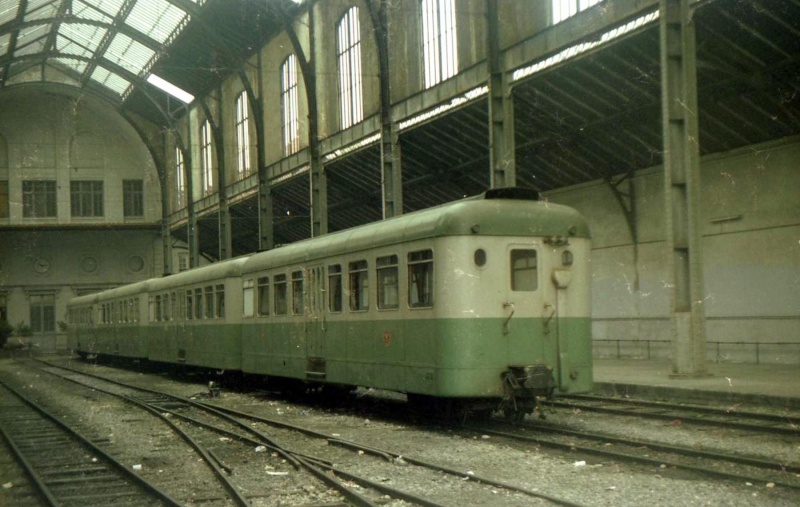
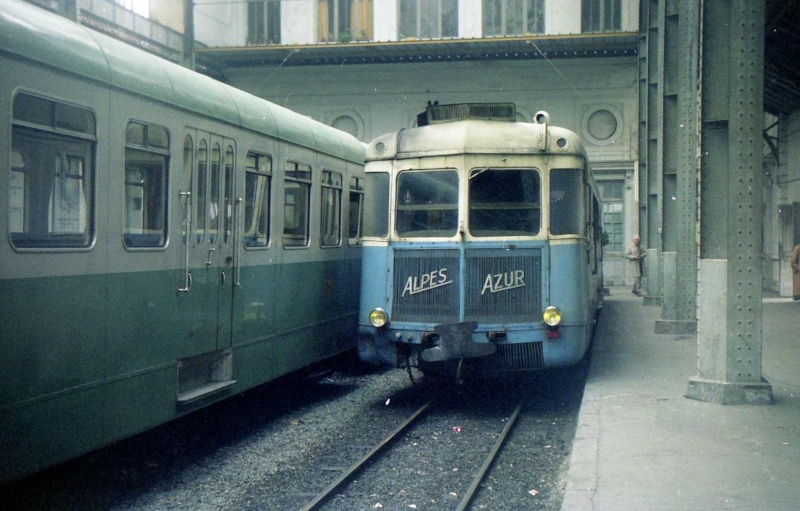
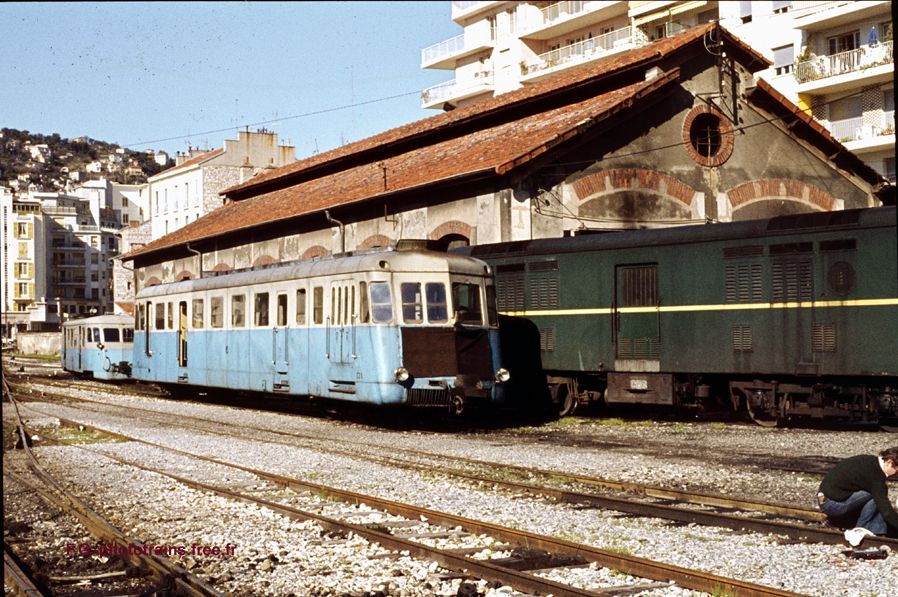
Before we finally leave the site of the two stations, modern and old, here are a few more images of the two stations and rolling stock at the site.  The first image is the only one I have found which shows a steam locomotive leaving the old Gare du Sud.More photographs can be found by following the links in the reference section at the bottom of this post. [1]Les tirages sont datés de Juillet 1983. Le jour exact n’a pas été retrouvé (c) Claude Villetaneuse. [14]1984 Autorail Billard en gare de Nice Chemins de fer de Provence.

Some amazing photos can be found on various french forums. The next four are from Les Trains de l’Histoire [2] and a thread which focusses on diesel motive power on the Nice-Digne Line.

Taken in 1971/72 (c) Locky on Forum: Les Trains de l’Histoire. [15]

Taken in 1971/72 (c) Locky on Forum: Les Trains de l’Histoire. [15]

Renault autorail at La Gare du Sud (c) Gerard, Forum: Les Trains de l’Histoire [5]

Renault autorails in La Gare du Sud (c) Michel/57 Forum: Les Trains de l’Histoire. [7]

Further photographs can be found on a variety of websites.[3]

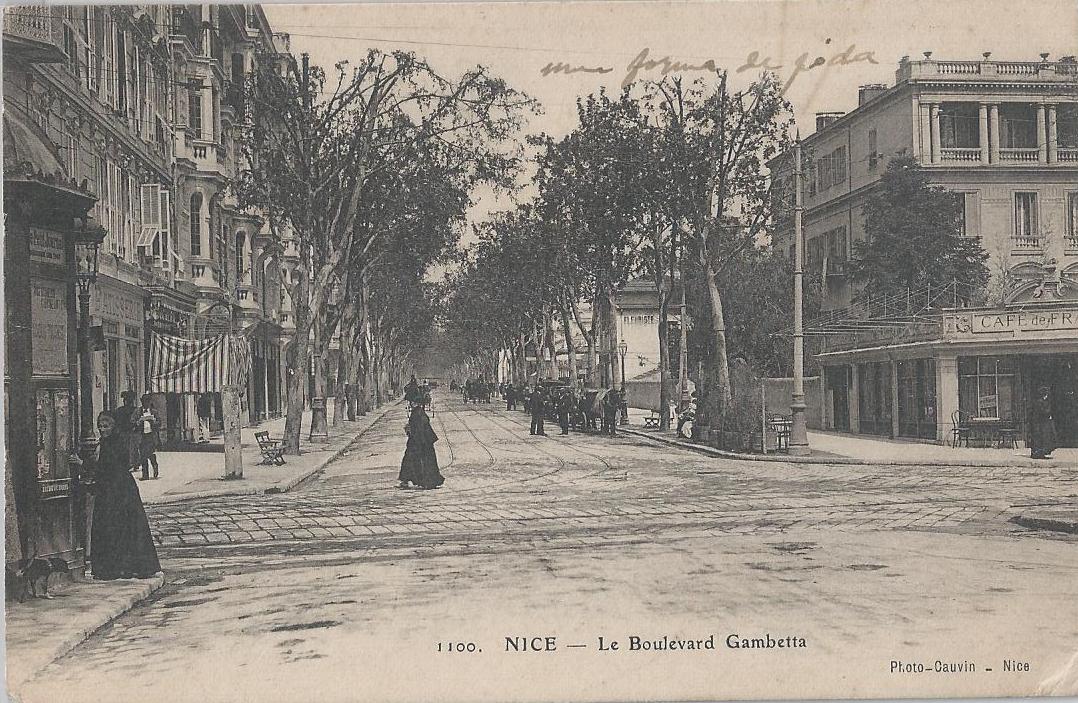
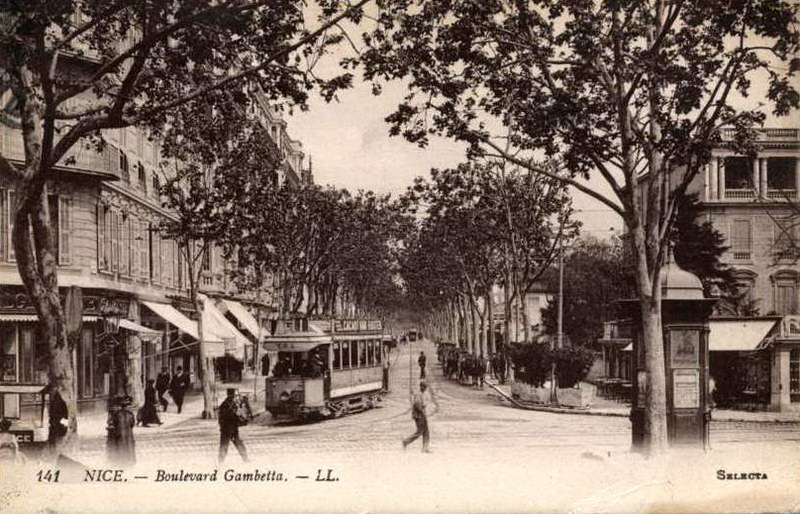
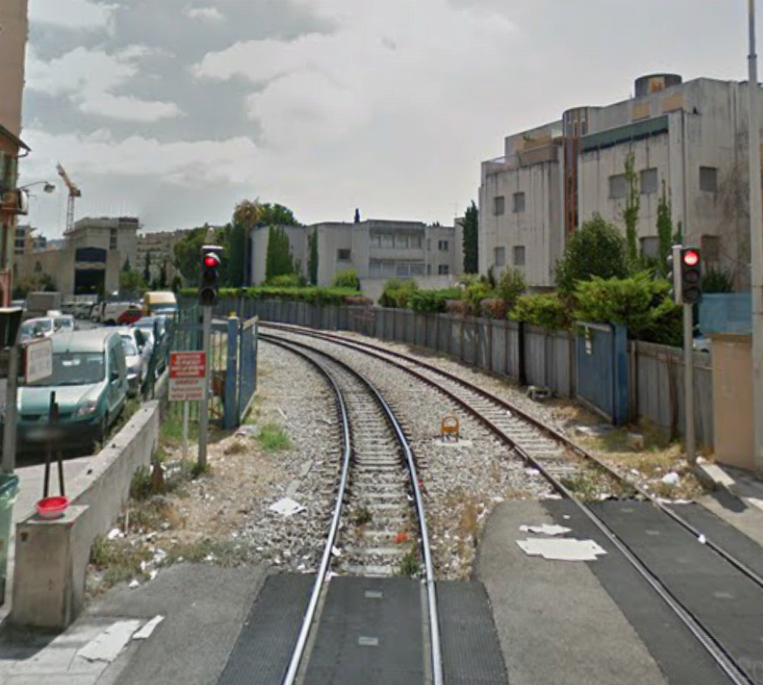
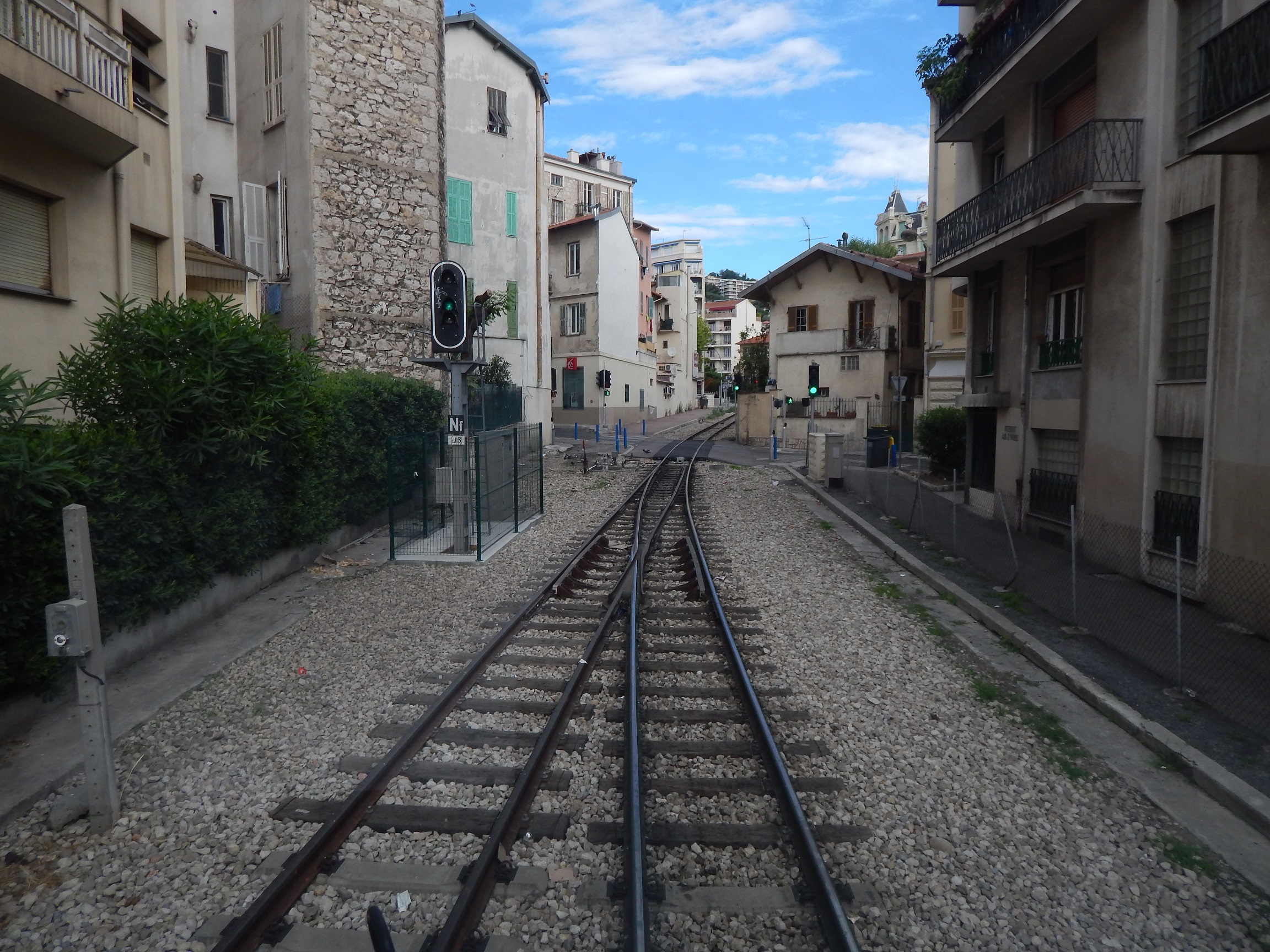
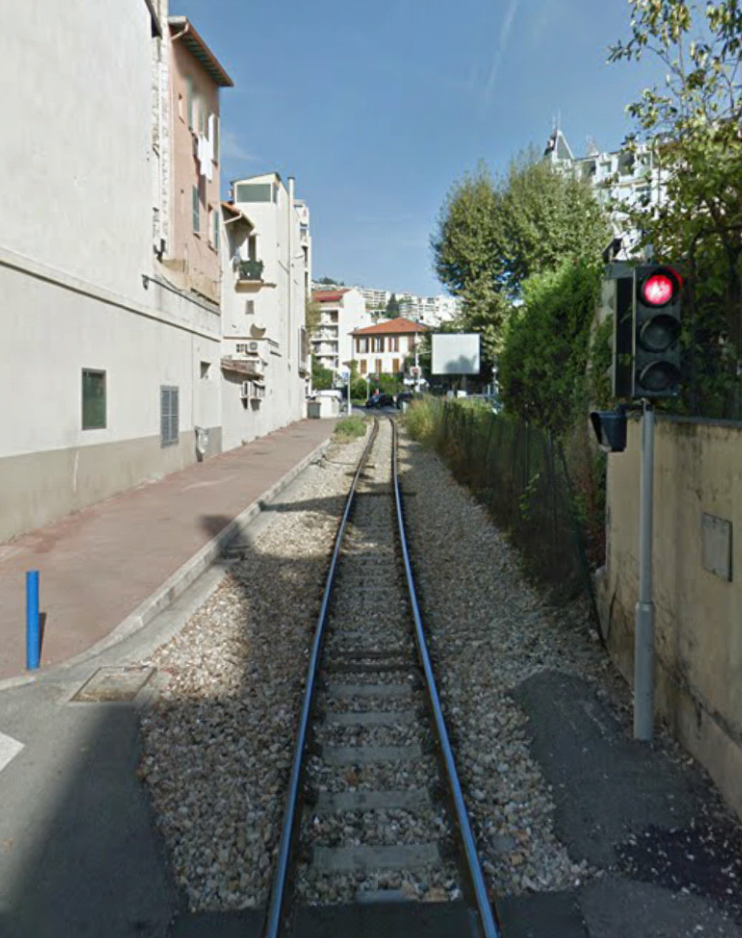
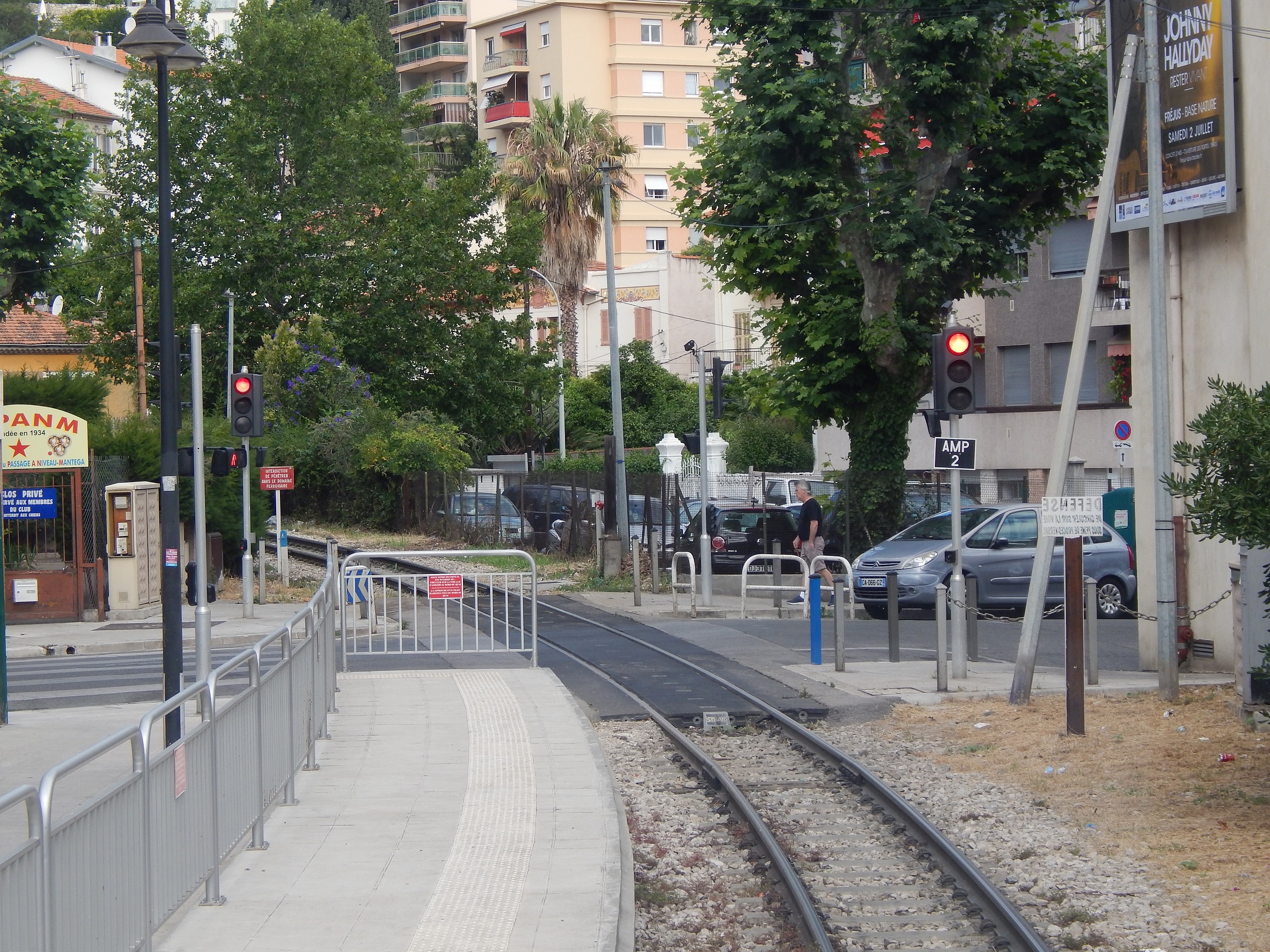
After leaving the old station, trains remained within the station site for some distance. Rue Alfred Binet did not cross the old station site in those days. Trains then had at grade crossings at Rue Dabray, Rue Gutenburg and the junction of Boulevard Joseph Garnier and Boulevard Gambetta. The first small stop on the line was immediately after the road junction.Looking back towards the station from Rue Dabray.Looking ahead from Rue Dabray across Rue Gutenburg. [4]Looking forward from Rue Gutenberg towards the Arrest Gambetta beyond the next road junction.Looking forward to the road Junction at Gambetta [4]The road junction, Google Streetview.

In gentler times – with the red flag to alert traffic! [6]The Arret at Gambetta.Looking forward from the Arret Gambetta.[4]

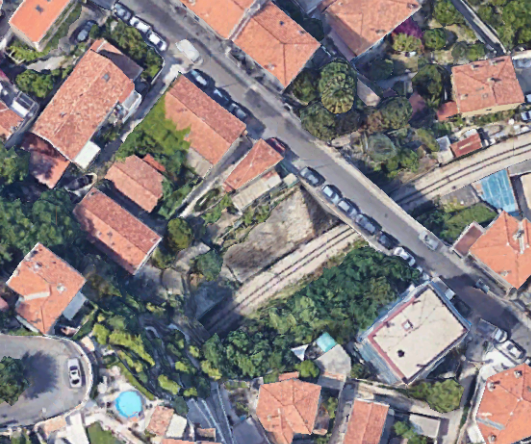
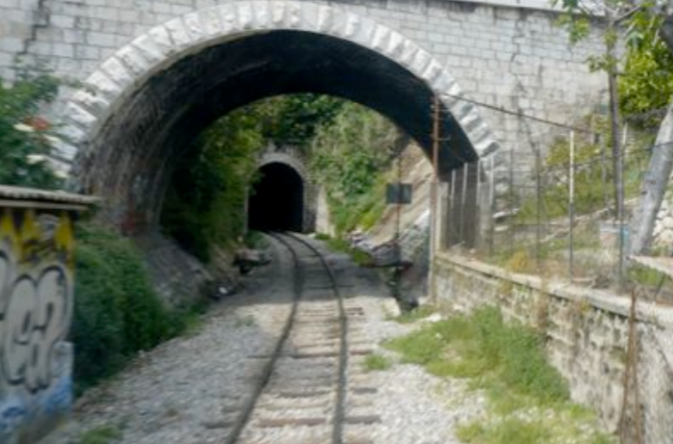
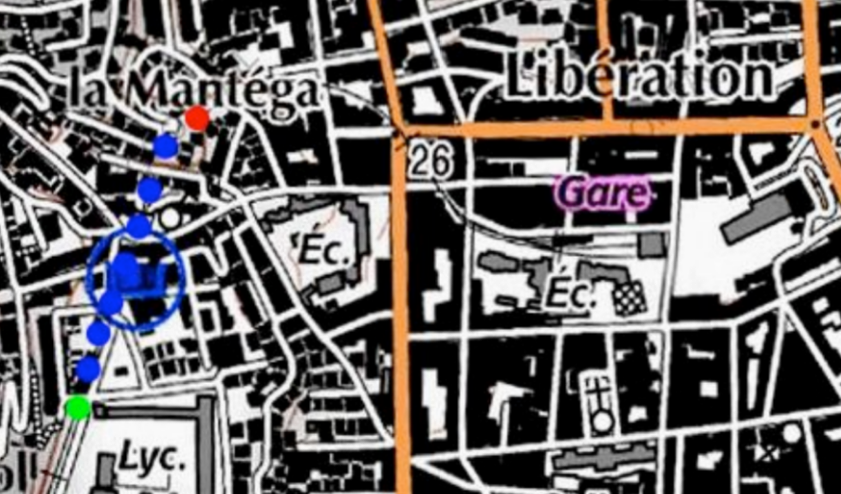
Just beyond the small Station called Gambetta the line curved round under Boulevard Mantega Righi and then entered the tunnel at La Mantega – the tunnel Piol Mantéga.The tunnel was 350 metres long. The current Piol Mantéga Tunnel is the result of the joining of two older tunnels by a modern one of 174 metres in length. The two older tunnels were La Mantega Tunnel (88 metres long) closest to La Gare du Sud, and Piol Tunnel (78 metres long).
In addition, the entrance to the Piol tunnel was extended by a dozen meters towards Saint-Philippe in concrete. [8]The images below are two views of the cutting between La Mantéga and Piol tunnels close to Saint Paul’s Church. The North portal of Piol Tunnel is visible as well as an aqueduct which carries a small stream over the tunnel. A picture of St. Paul’s Church follows the views of the works. The picture of the church is taken from over the old tunnel portal in the images immediately below.
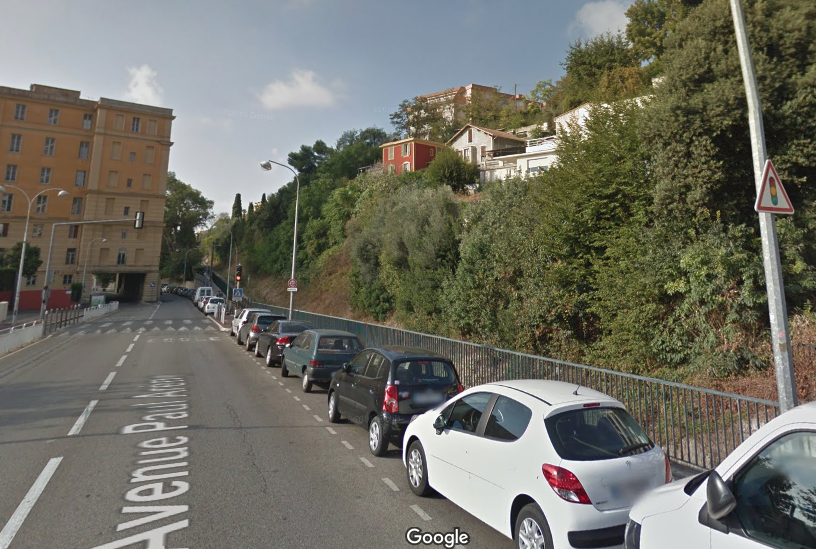
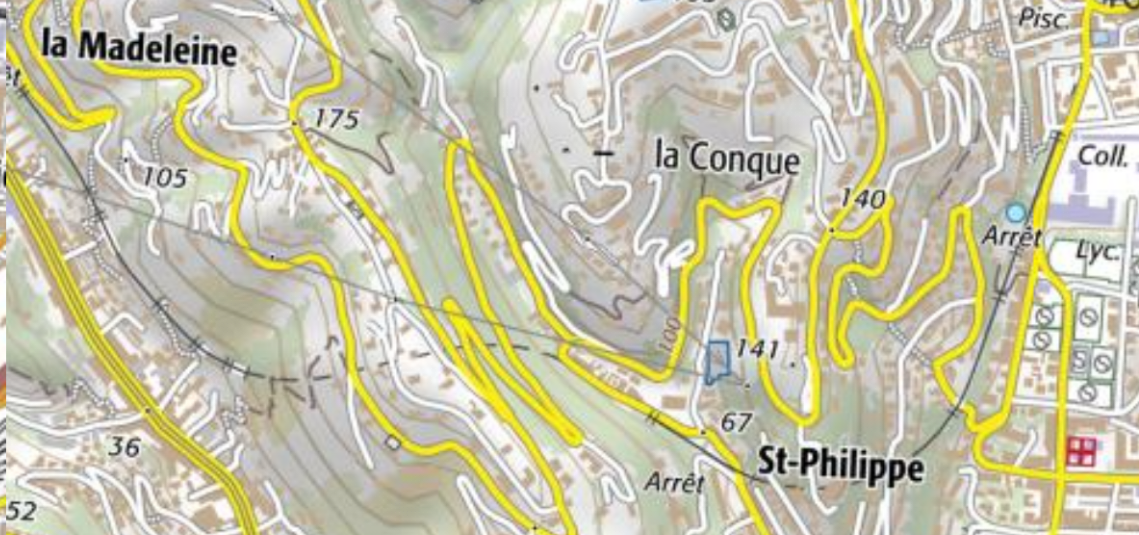
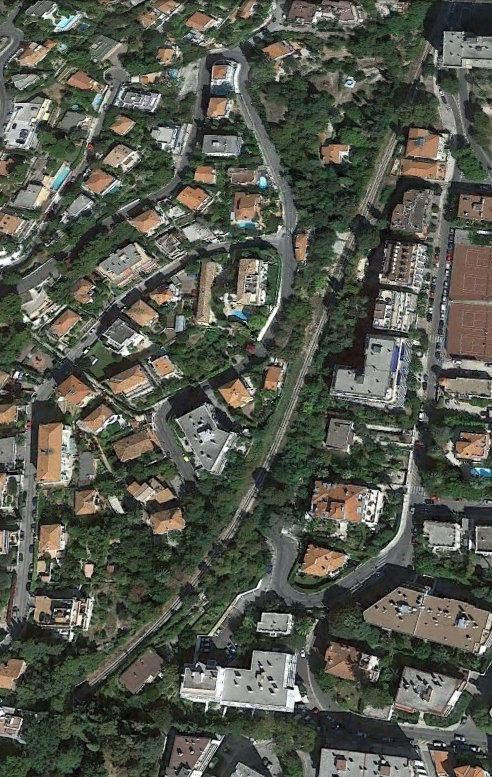
The tunnel runs below the trees to the left of the church.In the photograph above the railway runs to the right of the road (Avenue Paul Arene) towards the next Station, another small halt called Nice-Parc Imperial which can be seen marked Arret on the right side of the map below.The line is shown below in the satellite image from Google Earth

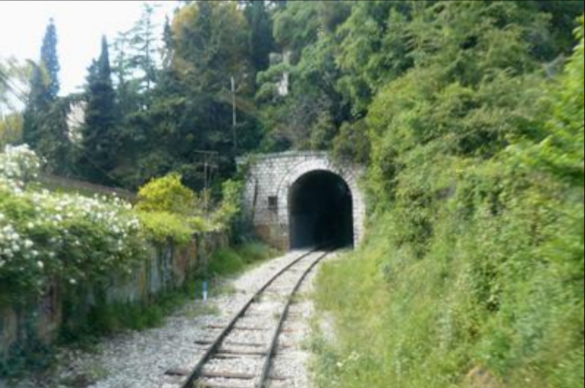
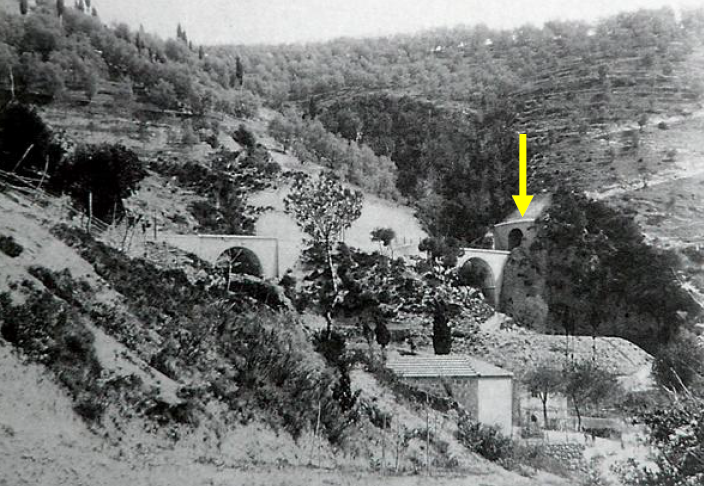
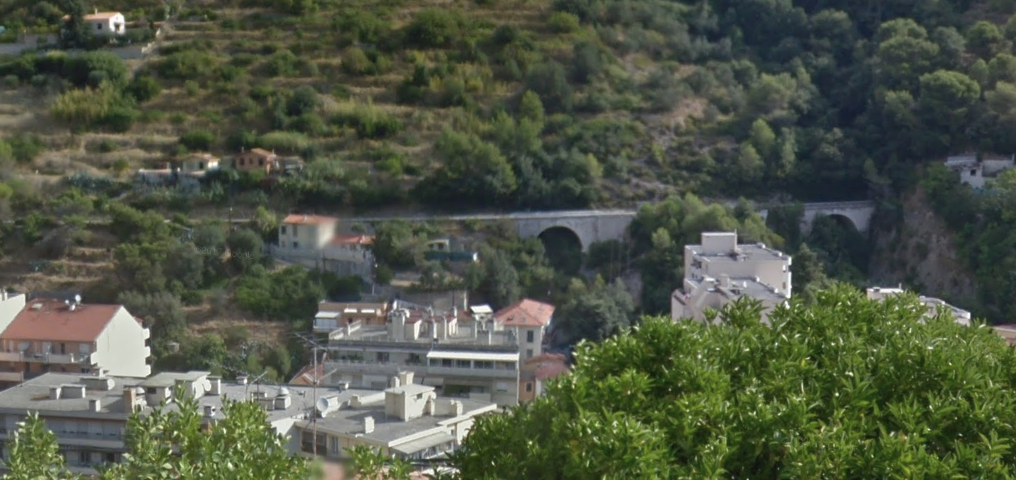
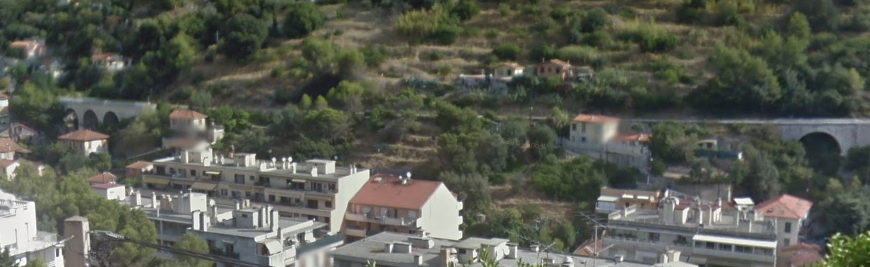
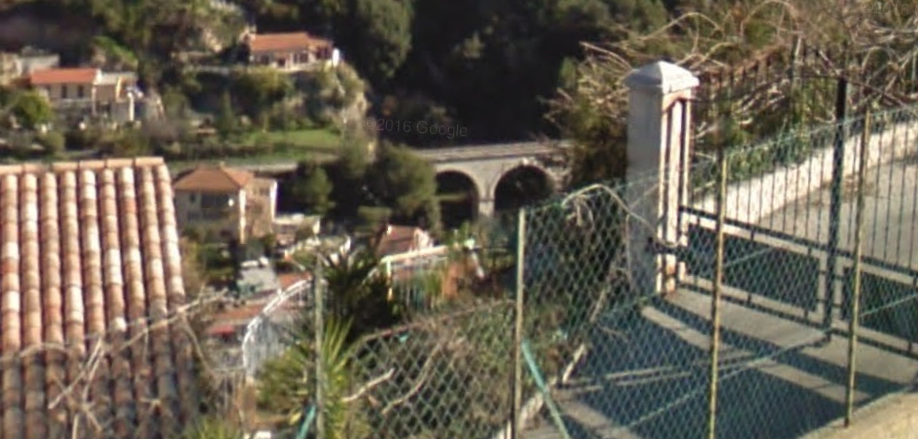
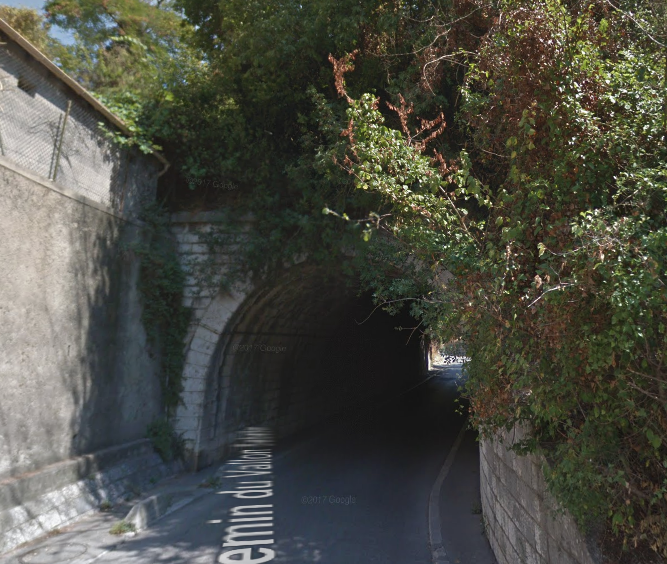
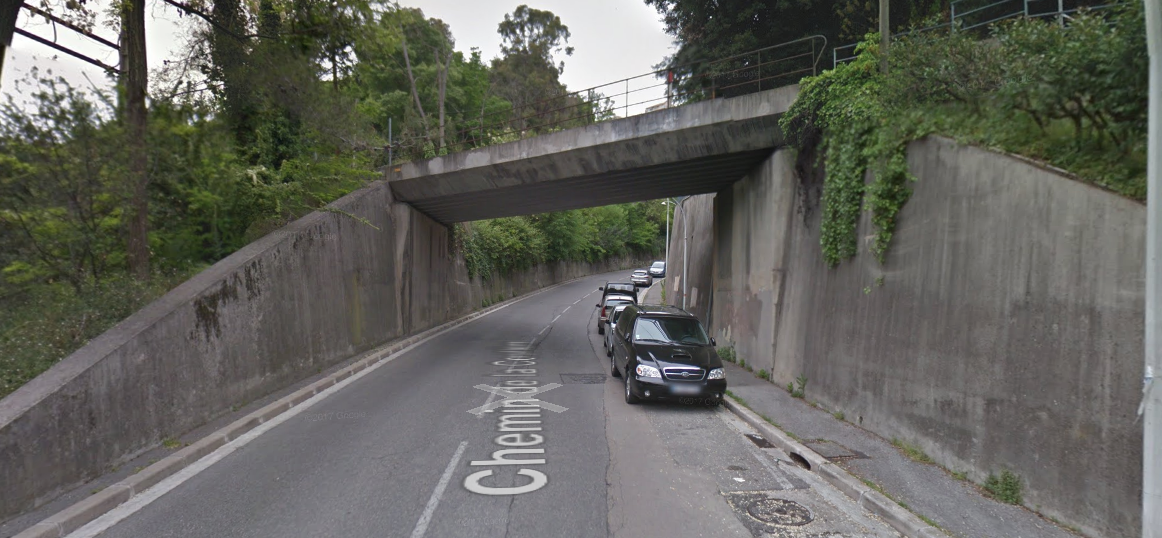
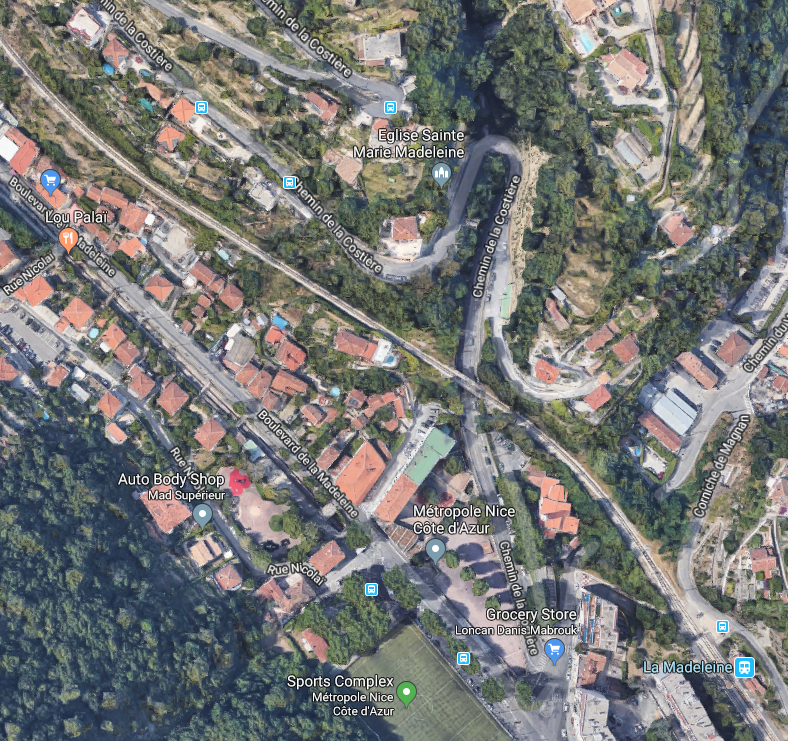
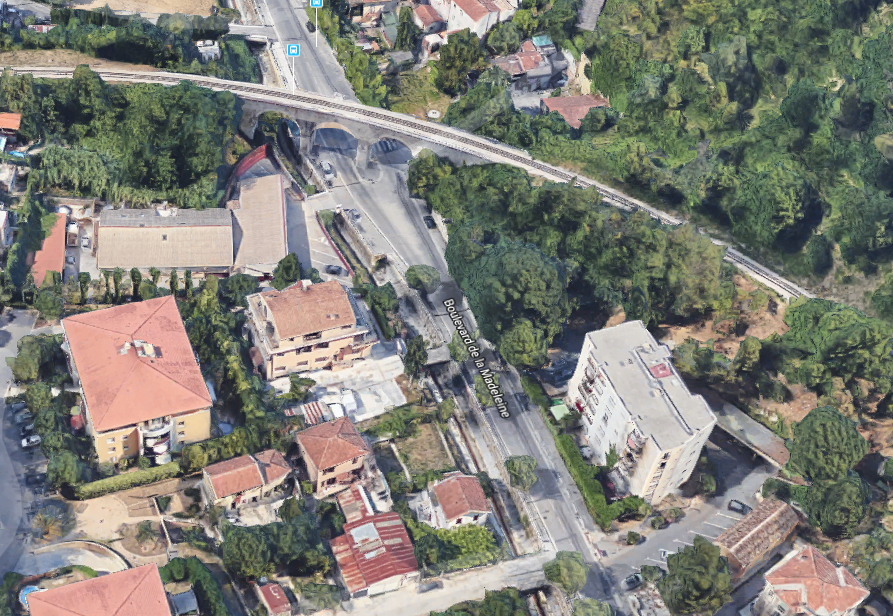
The portal of the next tunnel, that of Saint-Philippe, is just visible in the bottom left of the satellite image. Details of this tunnel can be found on the Inventaire des Tunnels Ferroviaires de France website. [9]Saint-Philippe Tunnel is 255 metres long, in it the line curves round from a south-westerly direction to a north-westerly direction. Leaving the tunnel the line immediately crosses Avenue d’Estienne d’Orves and enters another small halt.The halt of Nice-Saint-Philippe consists of no more than a small concrete platform and immediately precedes the entrance to the next tunnel, that of Saint Pierre.[10] The tunnel was 633 metres long and as the black and white image below shows, trains immediately crossed two bridges after leaving the tunnel. The tunnel portal is marked with a yellow arrow. [10]These last three pictures show the bridges along the hillside and are taken from across the valley. The pictures that follow show the approach to and the location of the next halt – La Madeleine.Chemin du Vallon Sabatier Passes under the railway to the immediate north-west of the station.As does Chemin de la Costière.The line continues North-west from La Madeleine Halt before swinging round to the West and crossing Boulevard de la Madeleine on an elegant viaduct.It then enters another tunnel – le Tunnel de Bellet (also known as  le Tunnel de Saint Antoine). The tunnel is 950 metres long and straight enough to be able to see the far end from outside the near portal. The far portal, furthest from La Madeleine is interesting. Because of its proximity to the Italian border, the entrance to the tunnel was been equipped at its construction in 1892 with a fortified defence system. Six years later, in 1898, defences were reinforced by the introduction of a pit 4.2 metres long in front of the portal which in normal times was filled with sand. In times of war, it could either be emptied, or receive explosives to destroy the tunnel entrance if required.

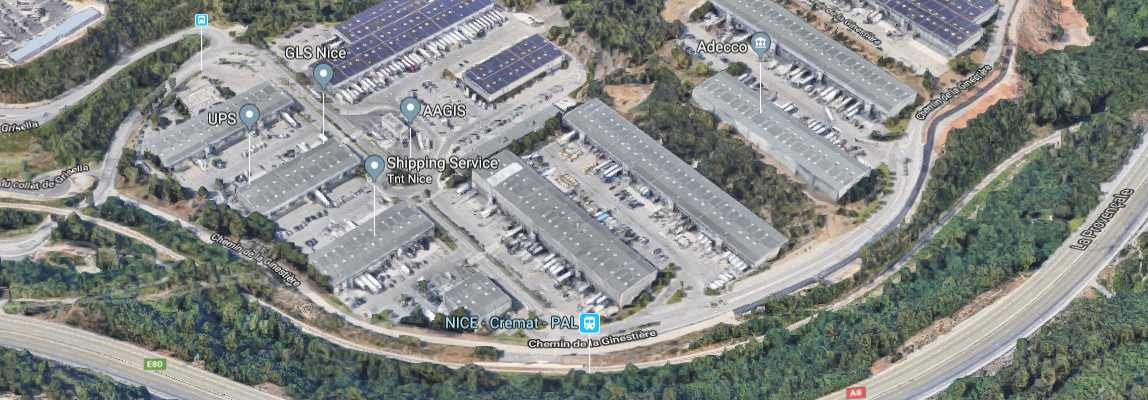
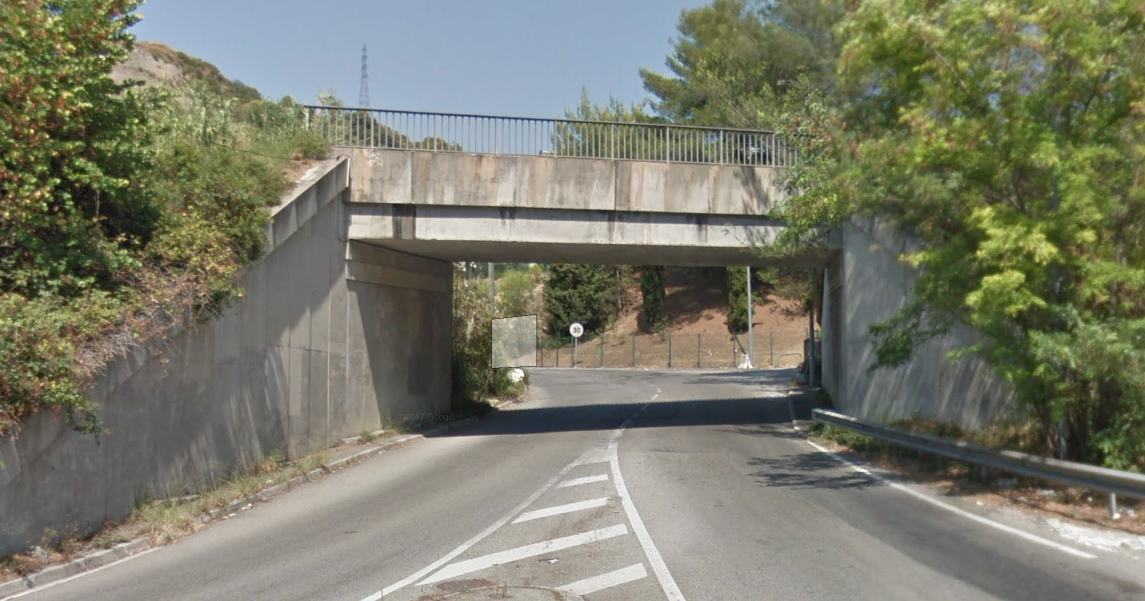
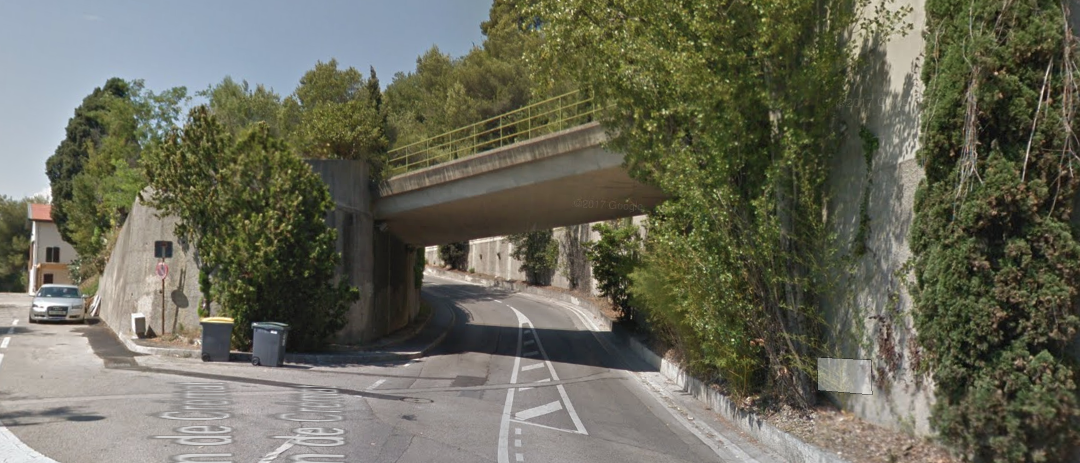
The tunnel portal now sits just under the A8 and can be seen to the right of the satellite image below. The railway continues around the edge of the industrial complex at Cremat and a halt is provided to serve the area – Nice-Cremat-PAL.This was at one time the stop of Zygofolis details of which can be found in the last post in this series. [11] Slip-roads from the A8 now travel under the line using purpose built bridges.

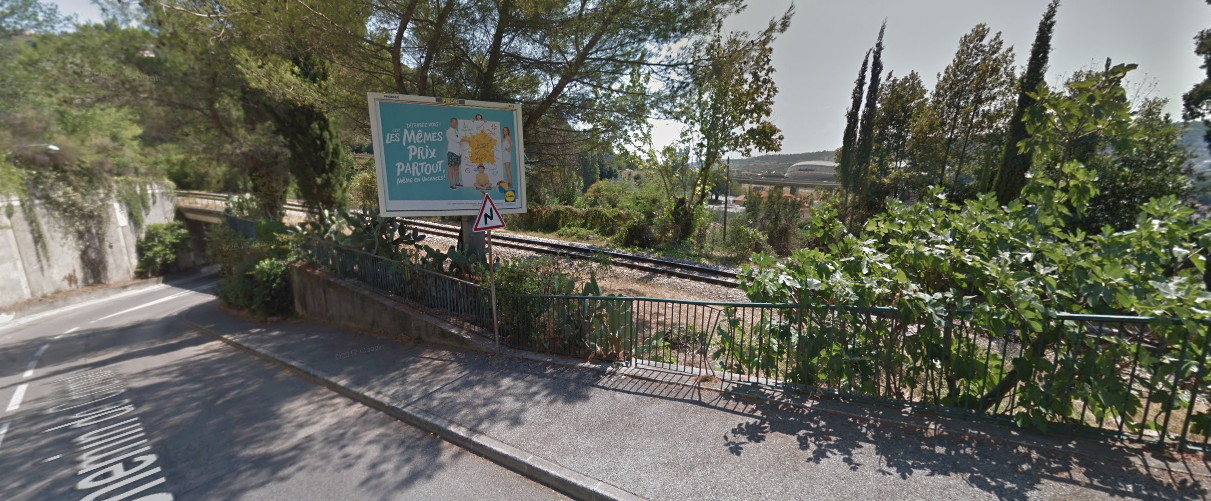
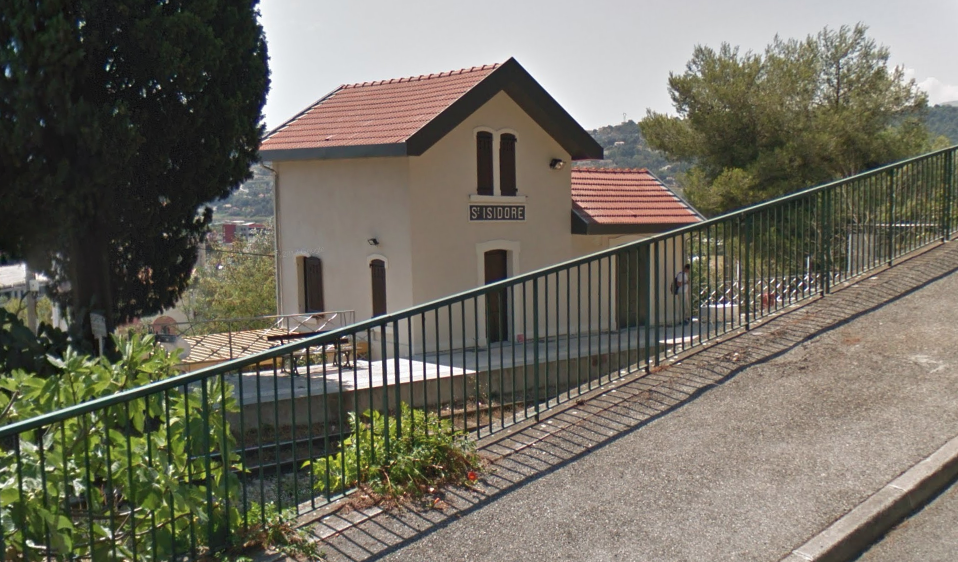
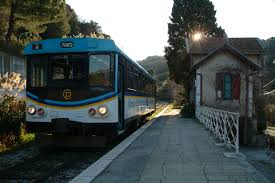
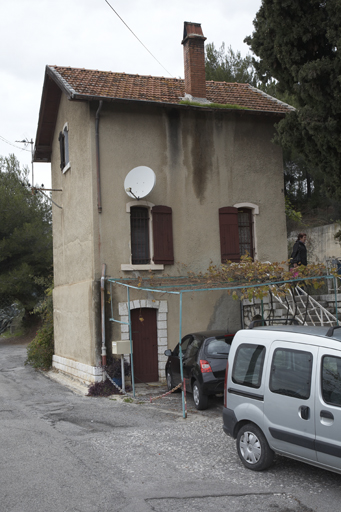
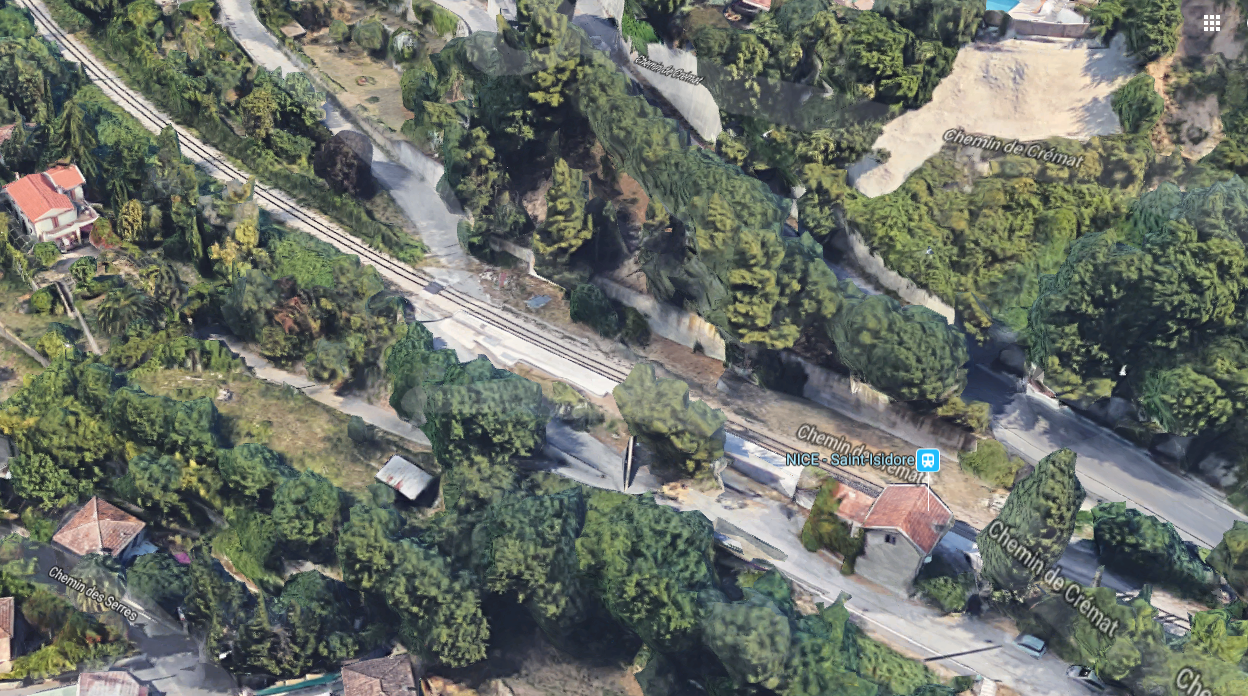
In the picture above, Nice-St. Isidore station building can just be glimpsed to the left of the image. The approach along the line is shown below. The station building can just be glimpsed from the Chemin de Crémat.From St. Isidore, the line continues and turns to a more northerly direction and then switches back towards the North-West and crosses Chemin des Serres and Chemin de la Glacière before entering the complex at Lingostiere.

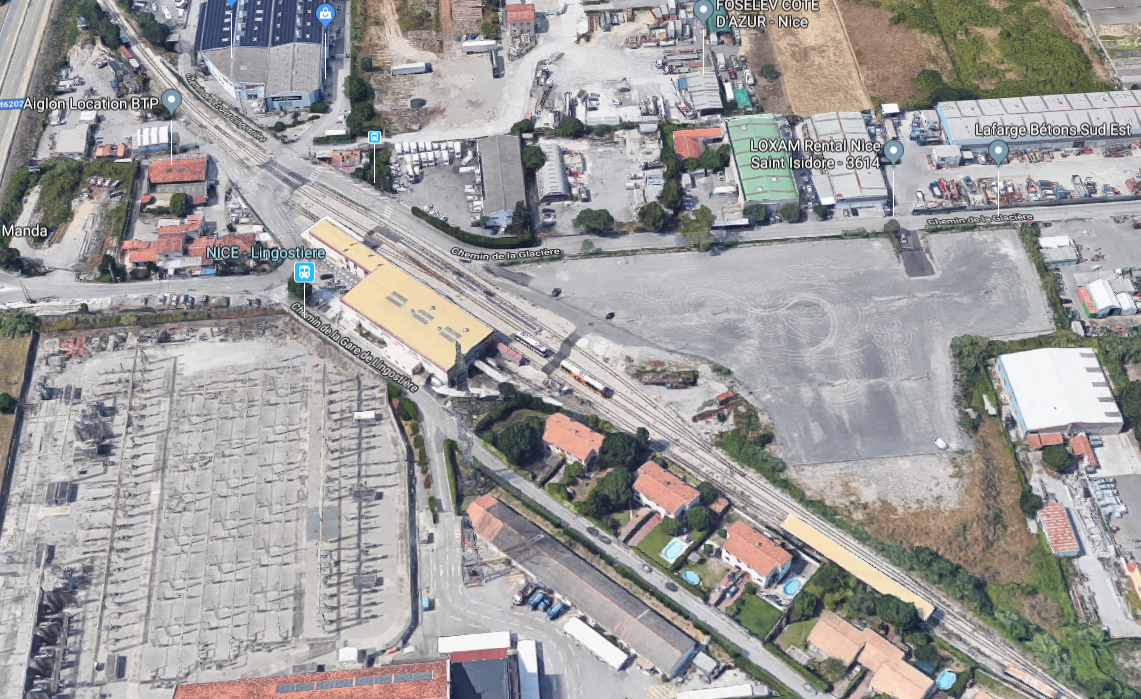
The first image of the depot at Lingostiere has been rotated to show the underpass flood channel at Chemin de la Glacière in the bottom left of the picture. Just to the North-West of this bridge the tracks fan out to serve the depot.The depot at Lingostiere was the main depot on the Nice to Digne Line. The workshops were created in 1975 before that the workshops were in Draguignan despite the closure of the Central Var line in 1949.

A variety of rolling stock and traction could be observed alongside the line out of Nice towards La Manda. Another photograph from Les Trains de l’Histoire, Sur les Chemins de Fer de Provence (Nice-Digne) shows the depot in 1979. [2]T62 at Lingostière on 14th February 2007. [12]

The following images are from Alain Mionnet. [13]

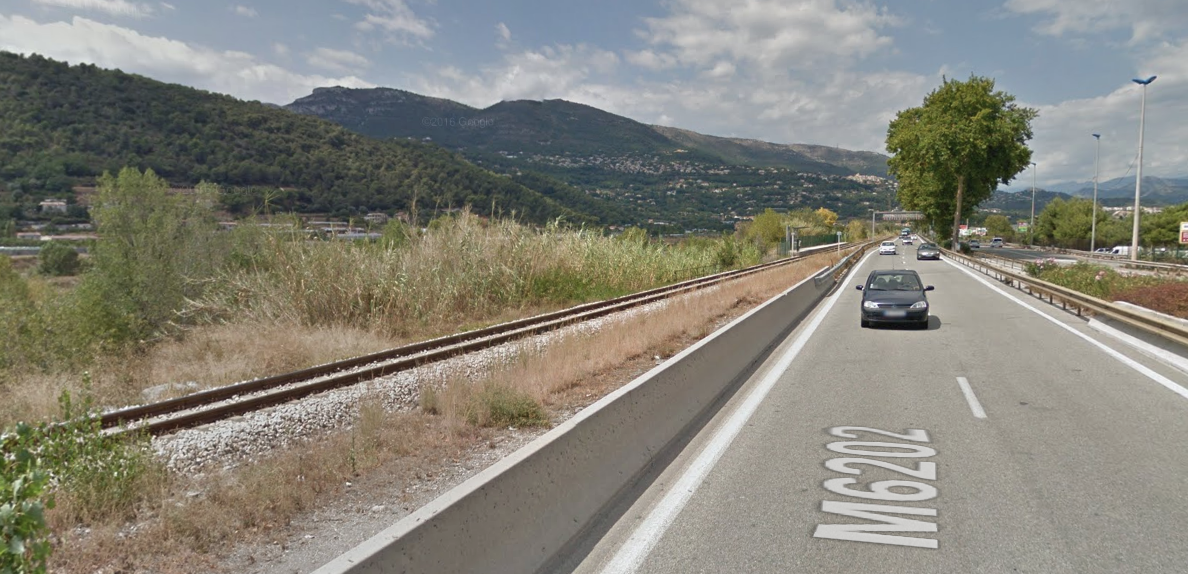
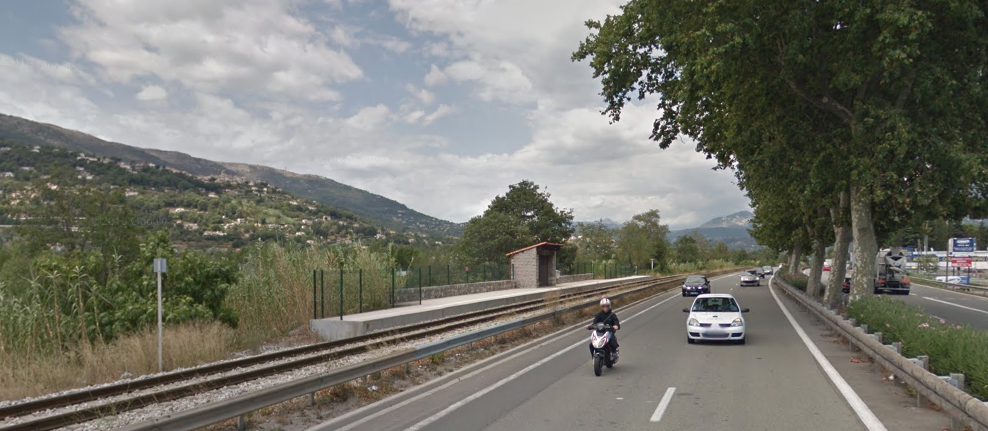
The line leaves Lingostiere and passes under the M6202 dual carriageway before settling in alongside that road. The M6202 and the Chemin de Fer de Provence follow each other for some distance alongside the River Var.

The picture below shows the two running in parallel. The halt visible in the distance is Saint-Sauveur.

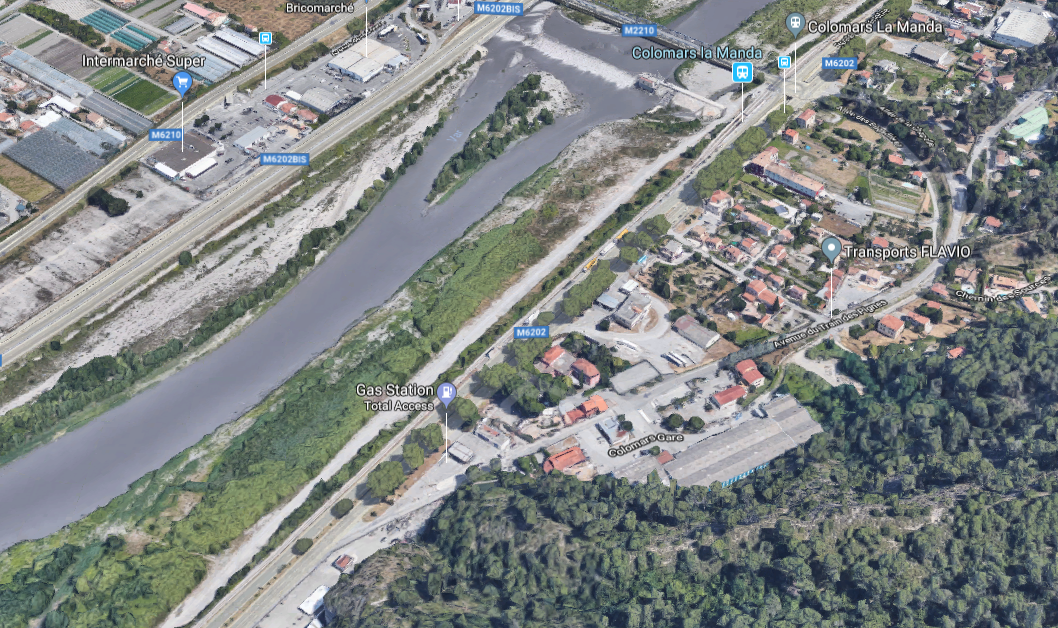
The next halt is Bellet.And the next is Colomars/La Manda. The satellite image below is of great interst to those who are following the original line of the railway. The modern line follows the River side and the M6202, the original line deviated to the East. The wide sweep of the line which branched off the Nice to Digne line can be seen curving round to the La Manda bridge. Even though the railway disappeared in the 1950s, its route is still visible in the layout of the roads at La Manda.A little less obvious because of the trees is the old alignment north of La Manda heading towards Digne-les-Bains. It can still be picked out on the next satellite image below and returns towards the river bank in the top right of the image. If your eyesight is really good you might just be able to make out the name of the road which follows the old line – Avenue du Train des Pignes.

We finish this second part of the journey along the Nice to Digne line by focussing on the station at La Manda which was usually referred to as Colomars in the early life of the line.

The Ligne de Central Var left the Nice to Digne line at La Manda close to Colomars on the River Var. The station building at Colomars Station remains as evidence of the line. The line branched off the current Digne line just to the north of the hamlet of La Manda.

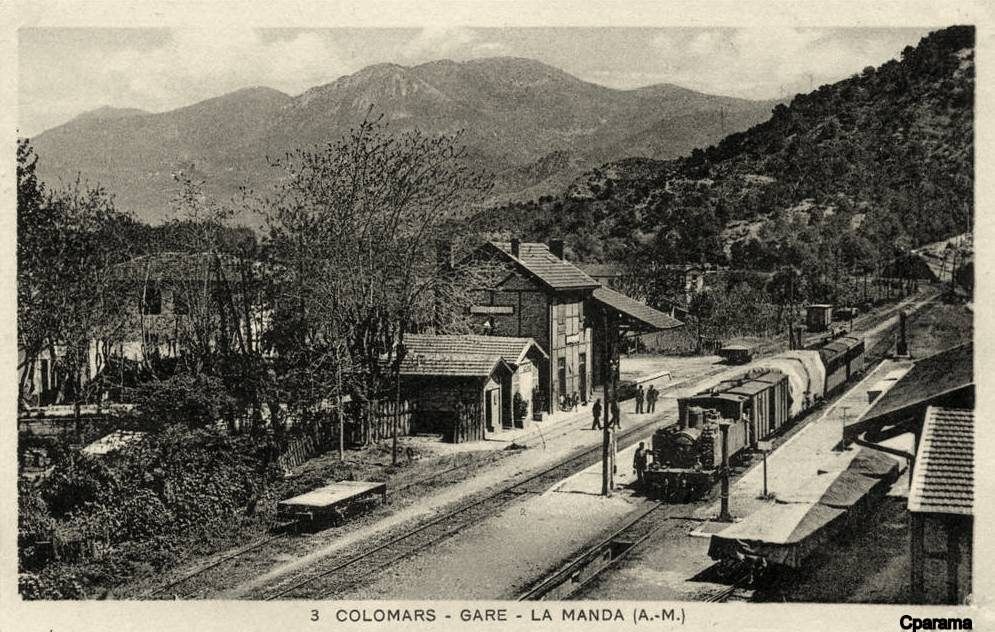
The station construction is typical of many of the stations still evident on the route of the line. A few historic postcards are reproduced here to give an idea of the station in the early years of the 20th century.

The second of these postcard views has been ‘adapted’ by Jean Giletta the photographer to include a hand drawn train. While it is a pity that the photographer did not wait for a real train to cross the bridge, the picture illustrates the nature of the river crossing. The railway line crossed the river on the top of the truss girders with provision between the trusses for road traffic!

References

  1. Ravnsbak.dk, Narrow gauge railway Nice Digne; http://www.ravnsbak.dk/Railways/France/Railcars/Narrow%20gauge%20railway%20Nice%20Digne/index.html#, accessed on 10th April 2018
  2. Les Trains de l’Histoire, Sur les Chemins de Fer de Provence (Nice-Digne); https://www.tdh-forum.fr/viewtopic.php?t=71551, accessed on 10th April 2018. Copy right for these images rest with the photographers …. the relevant names on that site are: chavance, michel/57, Gérard and there are some great photographs to enjoy there.
  3. Wikipedia, Chemins de Fer de Provence; https://en.wikipedia.org/wiki/Chemins_de_Fer_de_Provence, accessed on 10th April 2018; Flickr, Nice JHM-1980-0268 – France, Chemins de fer de la Provence, Nice; https://www.flickr.com/photos/jhm0284/14640888993, accessed on 10th April 2018; Flickr Hive Mind – The World’s Best Photos of x304; https://hiveminer.com/Tags/x304, accessed on 10th April 2018; Ruhn Feldt, Nice – Annot – Digne-Les-Bains; http://provence.jvgspv.se, accessed on 10th April 2018. The last link provides photographs along the full length of the Nice to Digne Line.
  4. http://www.rd-rail.fr, Railways of Provence: from Nice to Digne (June 15, 2016); http://www.rd-rail.fr/1-PHOTOS/PH43/index-ph43.html, accessed on 10th April 2018.
  5. Picture (c) Gerard on Forum: Les Trains de l’Histoire, accessed on 10th April 2018.
  6. Picssr, JHM0284’s Most Interesting Flickr Photos; http://picssr.com/photos/jhm0284/interesting/page9?nsid=15205793@N06, accessed on 11th April 2018.
  7. Picture (c) Michel/57 on Forum: Les Trains de l’Histoire, accessed on 10th April 2018.
  8. Inventaire des tunnels de ferroviaires de France, Tunnel du Piol Mantéga; http://www.tunnels-ferroviaires.org/tu06/06088.11.pdf, accessed on 11th April 2018.
  9. Inventaire des tunnels de ferroviaires de France, Tunnel du Piol Mantéga; http://www.tunnels-ferroviaires.org/tu06/06088.10.pdf, accessed on 12th April 2018.
  10. Inventaire des tunnels de ferroviaires de France, Tunnel du Piol Mantéga; http://www.tunnels-ferroviaires.org/tu06/06088.9.pdf, accessed on 12th April 2018.
  11. https://rogerfarnworth.wordpress.com/2018/04/06/nice-to-digne-les-bains-part-1-nice-chemins-de-fer-de-provence-57, there are also some excellent photographs of the trains and buses that served the theme park taken by Jean-Henri Manara; https://www.flickr.com/photos/jhm0284/albums/72157665103843167 accessed on 24th April 2018.
  12. Simplon Postcards, Chemins de Fer de Provence – CP, Page 1B: Rolling Stock – Diesel Locos & Trailers; http://www.simplonpc.co.uk/CPb.html, accessed on 12th April 2018.
  13. Alain Mionnet, Le Chemin de Fer de Provence; http://alain.mionnet.pagesperso-orange.fr/cfp.htm, accessed on 12th April 2018.
  14. https://commons.wikimedia.org/wiki/File:Autorail_Billard_212_des_CP_-_Juillet_1983-8.jpg, accessed on 12th April 2018.
  15. Taken in 1971/72 (c) Locky on Forum: Les Trains de l’Histoire, accessed on 10th April 2018.
  16. Inventaire des tunnels de ferroviaires de France, Tunnel du Piol Mantéga; http://www.tunnels-ferroviaires.org/tu06/06088.8.pdf, accessed on 12th April 2018

The Connection between the PLM(SNCF) Station in Nice and La Gare du Sud (Chemins de Fer de Provence 59)

The Chemin de Fer due Sud de la France station, commissioned in 1892, benefited as early as 1899 from a 960 m connection to the PLM network.[1] The route of the connection is shown on the 1958 map of Nice below. La Gare due Sud is the more northerly of the two stations shown on the map.

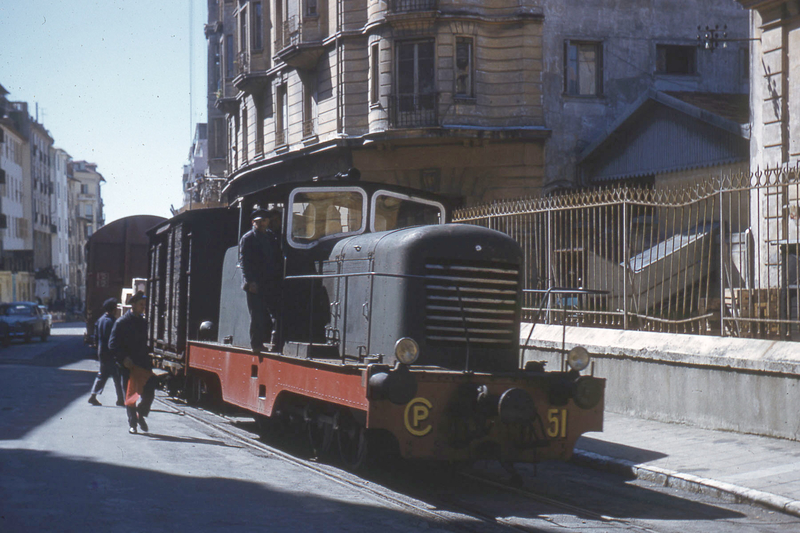
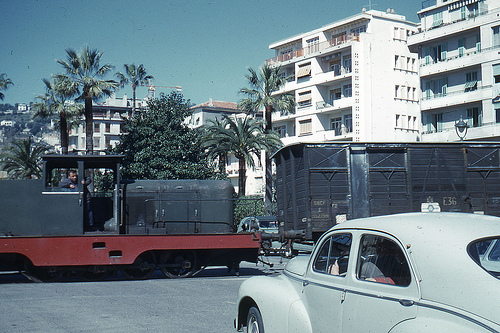
Somewhere along Rue des Combattants en Afrique du Nord or Rue Alfred Binet, Nice – 1963 – © JH Manara.[1]The same locomotive operating on street between the two railway stations in Nice – © JH Manara.[2]The same locomotive again, operating between wagons on the link between the two stations.[3]


The connection between the CP and SNCF networks was established as  dual-gauge  line so that normal track wagons could be towed by metre-gauge shunters. In the late 1950s and early 1960s, the passage of freight trains in the middle of the street began to pose a problem with regard to traffic. I have only been able to find a few images of the line in use, taken, I think in 1963 by the same photographer, although available on the internet from different web sites.

The locomotive in the images above was also recorded on site at la Gare du Sud. 1974. [4]

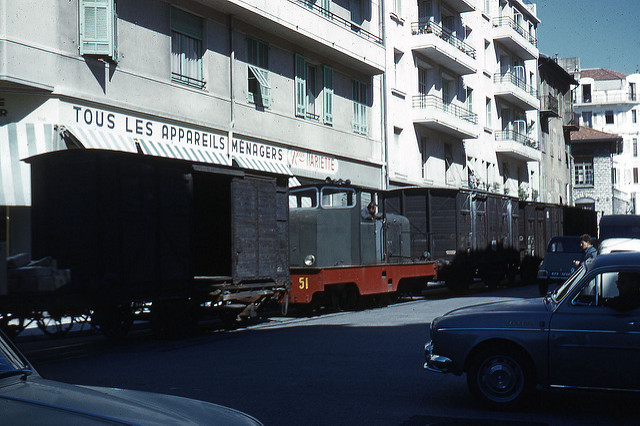
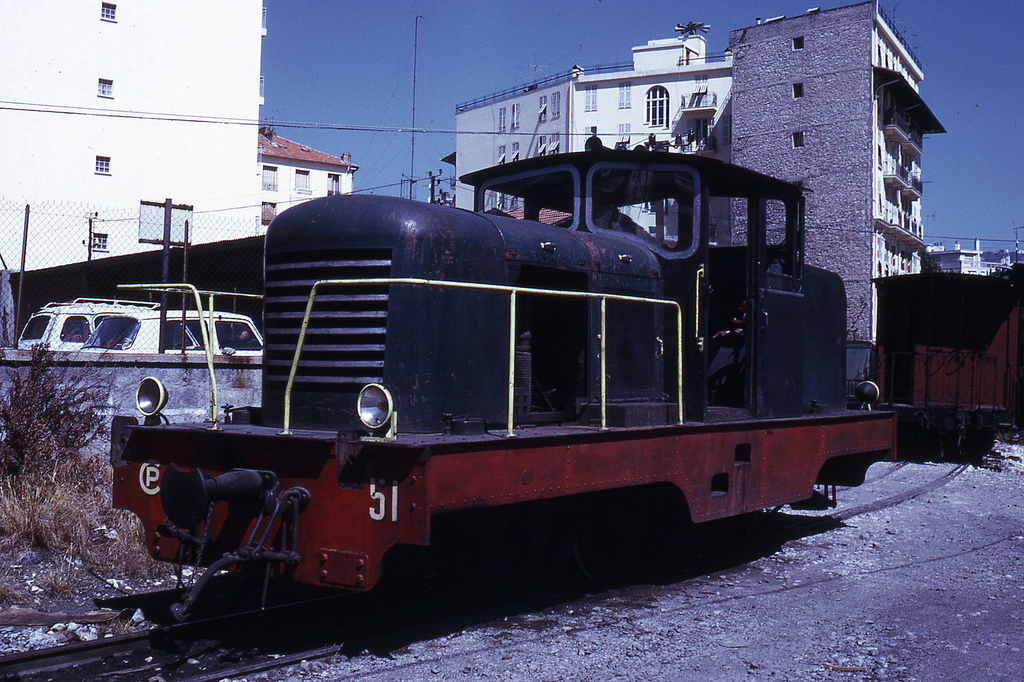
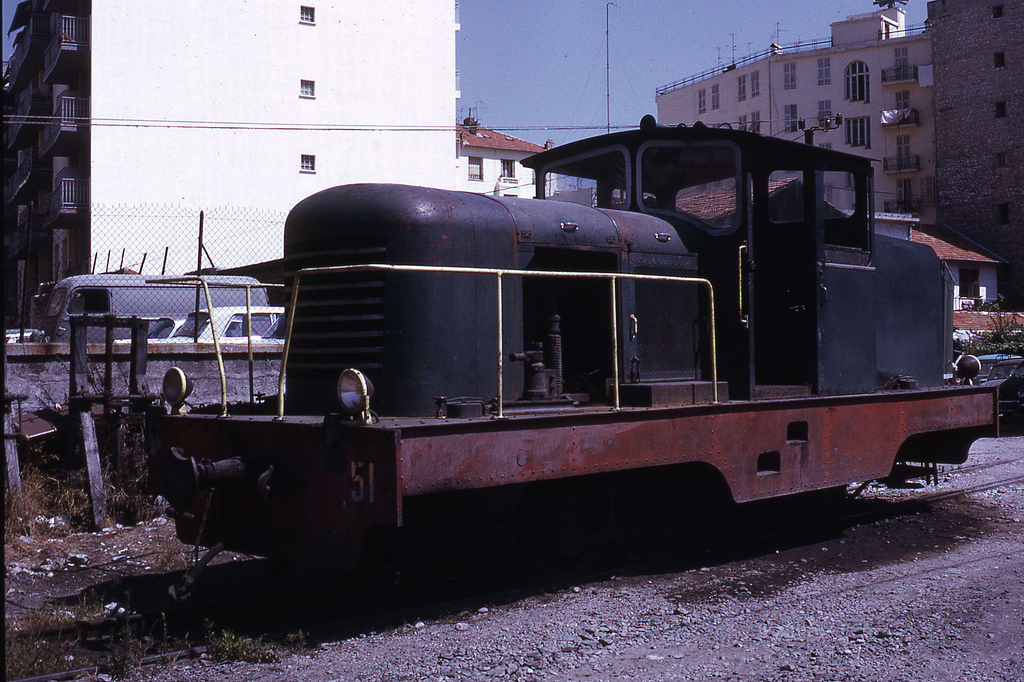
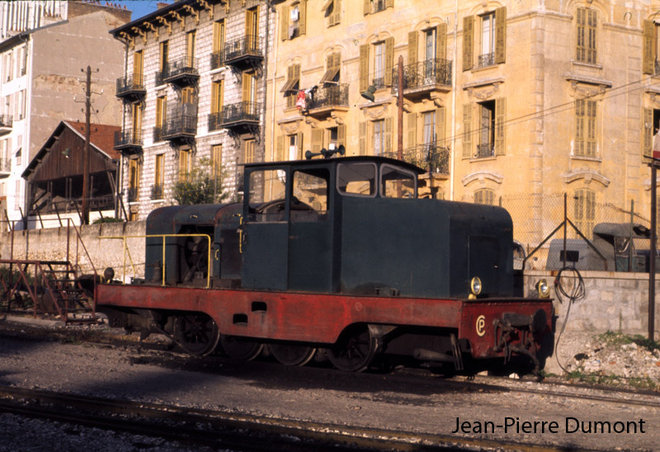
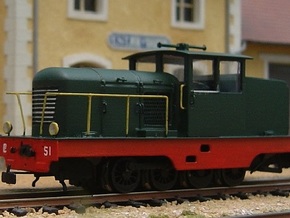
CP51 appears to be an 0-8-0 diesel shunter and seems to have had a long life on the Chemin de Fer de Provence. It was converted from a steam locomotive in 1948 and given the loco number 51. The work was done by the CFD workshop in Montmirail. In these CFD conversions, power was transferred from the diesel engine via a mechanical gearbox that drove one axle. The remaining axles are connected to the drive axle via the coupling rods. The loco was mainly used for traffic between la Gare du Sud and the SNCF station, for the transfer of freight wagons. From 1970, the vehicle was moved to Digne and shunted wagons at the station there. From 1978, the locomotive was used for construction trains and was eventually set aside at Lingostière after an engine failure in 1987. In 2010 it was still in the sidings at Lingostière.[5]

1980. [6]

1981.[7]

CP51 sits in a decrepit state in the sidings at the depot at Lingostière. [8]

STOP PRESS …… CP51 has been found! It is hiding at Saint-André-les-Alpes! It has been photographed on 25th April 2018 in a siding awaiting restoration! [9]

There is a 3D printed body shell for this locomotive, produced by Shapeways[10] …

References

  1. Transport Rail Blog, Les Chemins de Fer de la Provence; http://transportrail.canalblog.com/pages/les-chemins-de-fer-de-la-provence/33191846.html#, accessed on 11th April 2018.
  2. © All Rights Reserved, http://www.flickriver.com/photos/jhm0284/5344188762, accessed on 23rd April 2018.
  3. http://www.passion-metrique.net/forums/viewtopic.php?f=6&t=7790&hilit=locotracteur+cfd&start=240, accessed on 23rd April 2018.
  4. Tyrphon, Jean-Pierre Dumont; http://www.passion-metrique.net/forums/viewtopic.php?f=6&t=7790&hilit=locotracteur+cfd&start=240, accessed on 23rd April 2018.
  5. File:CP-51-débris Lingostière 04-2014.jpg; https://commons.wikimedia.org/wiki/File:CP-51-d%C3%A9bris_Lingosti%C3%A8re_04-2014.jpg, accessed on 23rd April 2018 and translated from the German text of the website.
  6. http://www.le-rail.ch/bild/Bilder/CP/CP-51-1980.jpg, accessed on 23rd April 2018.
  7. http://www.le-rail.ch/bild/Bilder/CP/CP-51-1981.jpg, accessed on 23rd April 2018.
  8. http://www.le-rail.ch/text/aktuell27.htm, accessed on 23rd April 2018.
  9. Photograph taken by ‘La bête de Calvi’ on the Passions Metrique et Etroite Forum; http://www.passion-metrique.net/forums/viewtopic.php?f=2&t=4143&sid=71f9e15a23794923765a790b153b2cc8&p=416169#p416169, accessed on 25th April 2018.
  10. https://www.shapeways.com/marketplace/miniatures/trains?downloadable=0&sort=newest&facet%5BmaterialGroupId%5D=3&s=13520#more-products.


Nice to Digne-les-Bains Part 1 – Nice (Chemins de Fer de Provence 57)

The Chemins de Fer de Provence is the name used for the one surviving metre-gauge line in Les Alpes Maritime. The route from Nice to Digne. This series of posts will follow the line from Nice to Digne and will have occasion to divert onto some branch-lines along the way.

The line from Nice to Digne is the only remaining line of the former network of the Compagnie des Chemins de Fer du Sud de La France. The company was created in 1885 by Baron Jacques de Reinach, a French banker of German and Jewish origin (1840-1892).[1] At its apogee in 1910 the company looked after 879km of railways, most of these are shown on the map below.

The Company was responsible for: the Central and Littoral Var lines; the Nice-Digne Line; the Cote-d’Or line; the Cogolin to Saint-Tropez branch-lines; the Isere tramway lines (Tramways de l’Ouest du Dauphiné);[2] the Tramways des Alpes Maritimes. However, by 1925, the company was experiencing significant difficulties. It was wound up and a new company with new financial backers  was formed – Compagnie des Chemins de Fer de Provence. This new company lasted for 8 years until 1933.Early in the planning phase, relations between Italy and France were tense. The military demanded that the section of the line between Nice and Saint-Martin-du-Var was designed to permit access by standard gauge trains. Indeed, this was also a requirement for the first length of the Colomars to Meyrargues line. A dual track-gauge arrangement was included in the plans  when the concession arrangements were updated on 21st May 1889.  The loading gauge for the line was also enhanced to be the same as for the standard gauge lines. On 29th July 1889 the concession was approved by law, the line was declared as being of ‘public utility’ and the length of Line from Nice to Saint-André was also formally included in the concession.

Construction costs for the line were high and in order to ensure its completion the length between Puget-Théniers and Saint-André-les-Alpes was, in part, funded through an agreement signed between the company and the state. A formal agreement between the Minister of Public Works and the Compagnie des Railways du Sud de la France on 23rd March 1906 provided for the company’s construction of the Puget-Théniers to  Saint-André-les-Alpes. The agreement was approved in law on 29th December 1906.[3]

Construction work began on the first length of the line on 14th August 1891. This was the length between Digne and Mezel – a length of 13km. In 1892, the sections from Nice to Colomars (also 13km), Colomars to Puget-Therniers (45km) and Saint-André-les-Alpes (previously Saint-Andre-de- Meouilles) to Mezel (31km), were under construction.[4]

Between 1892 and 1907, various scandals about the reliability of the company endangered its finances and slowed the progress of the work significantly. By 1907, only a 12km section between Puget-Théniers and Pont-de-Gueydan was open. The following year that was extended to Annot, a further 8km.[4]

The work progress relatively rapidly from this point on. The full length of the line was completed in July 1911, and a ceremony was attended by the Minister of Public Works on 6th August 1911, to inaugurate the last length of the line (the section between Saint-André and Annot).

As we have already noted, the Compagnie des Chemins de Fer du Sud de la France was unable to sustain operations beyond 1925. Their role was taken over by Compagnie des Chemins de Fer de Provence. In turn, this company was only able to manage the line until 1933 when it handed over both the Nice to Digne line and the Central Var line to the State. The Compagnie des Chemins de Fer de Provence then restricted its activities to the Littoral line. The State department for Bridges and Roads (Ponts et Chaucees) took over responsibility for the Nice to Digne Line.

In the immediate pre-war period, all three lines were developing well, services were increasingly popular thanks to the introduction of Autorails (Railcars). However, the War and particularly the fighting which accompanied the Liberation, dealt a serious blow to the railway infrastructure of the region.[6]

Recovery after 1944 was very slow. There was no hope of reconstruction for the Eastern part of the Central Var line and its trains terminated at Tanneron. Eventually, the Littoral line (Le Macaron) closed by 1949 and the Central Var line, by early 1950.[6]

In 1952, the State released the Nice to Digne line into private management once again, but this was not without its problems and by 1959, the State was threatening closure of the line unless draconian measures were taken.  These threats were repeated in 1967 and again in 1968. This resulted in the two departments and the cities of Nice and Digne joining forces to create the “Syndicat mixte Méditerranée-Alpes” (SYMA) which  took overall responsibility for the line and entrusted the operation of the line to the CFTA (Societe Generale de Chemins de Fer et des Transports Automobiles).[5,6]

A shuttle service between Nice and Colomars was inaugurated in the 1970s. In 1975, SYMA opened workshops at Lingostière workshops to replace those at Draguignan. The Draguignan workshops became unavailable after the War. It took quite a time to replace them![6]

The 1980s seemed to see an up-turn in the fortunes of the line. The GECP (Groupement d’études pour le Chemin de Fer de Provence)[7] started to run steam excursion trains (an example of which can be seen below). In 1981, the link between Geneva and Nice in the form of ‘Alpazur’ was reinvigorated.[6] The service had been in place since the late 1950s.[8] A standard gauge link to Digne was used to connect with the metre-gauge line. The two different trains are shown above. That line ran from Château-Arnoux-Saint-Auban to Digne-les-Bains.The line was also enhanced by the introduction of a new stop on the line for Zygofolis, an amusement park joined to a water park.[9]

This renaissance was short-lived. The SNCF decided to close the standard-gauge link between Château-Arnoux-Saint-Auban and Digne in September 1989.[10] Nice town hall decided to call for the closure of the line from Colomars to Digne (90% of the full length).

The mayor of Nice finally agreed to accept a compromise. The deal agreed was that the Chemins de Fer de Provence (CP) would give up the magnificent Gare du Sud and the city would give up its fight to close the line.[6]

However, exceptionally bad weather and flooding in the Autumn of 1994 (5th November 1994) resulted in the River Var carrying away significant lengths of several hundred metres of the Nice to Digne line. The CP took over 18 months to repair the line and recover.[6,11,12] The images below show examples of the damage caused in the November 1994 floods.

In the last two images we have, on the right: the bridge at Gueydan on the Var destroyed by the flood which would in time be scrapped and replaced by the French Army. On the left is one of the many breaches of the line.[13] Immediately below this text are two images of a similar breach which happened in 1982. Following them are three videos shot during flood flows in the Var River channel in November 2011. The first at the Airport and the other two at the bridge at  La Manda near Colomars.

SYMA’s control over the Nice to Digne Line continued until 1st January 2007 when the Appeal Court in Marseilles closed it down because of discovered flaws in procedures within the company.

The line was operated by Transdev[14] and Veolia Transport[15] through a subsidiary called Compagnie Ferroviaire du Sud de la France (CFSF)[16] until on 1st January 2014 a new company was formed to run the line – Régie Régionale des Transports de Provence Alpes Cote d’Azur (RTT PACA).[17] Under RTT PACA’s control the line has been significantly upgraded and rolling stock improved. It is still possible to travel on the line behaind a steam locomotive, courtesy of the GECP but regular services are now in the hands of very modern DMUs.

A Journey Along the Line – Part 1 – La Gare du Sud

Our journey starts in Nice at the magnificent facade of la Gare du Sud. First a few older postcards to introduce us to the station. ……..
La Gare due Sud[18] was built in 1892 by the architect Prosper Bobin on behalf of the Compagnie des Chemin de Fer du Sud de la France. Prosper Etienne Bobin was born on 11th January 1844 in Montigny-en-Gohelle (Pays-de-Callais) and died on 10th December 1923 in the 6th Arrondissement in Paris.

The station has two main components, the passenger building and the train-shed. The first has a striking facade which faces onto the Boulevard Malaussena in the Liberation quarter of Nice. It was designed in the rationalist style which favoured the use of new industrial materials without compromising on elegance.[18] The name ‘rationalism’ is retroactively applied to a movement in architecture that came about during the Enlightenment (more specifically, neoclassicism), arguing that architecture’s intellectual base is primarily in science as opposed to reverence for and emulation of archaic traditions and beliefs. Rational architects, following the philosophy of René Descartes emphasized geometric forms and ideal proportions.[19] Structural rationalism most often refers to a 19th-century French movement, usually associated with Eugène Viollet-le-Duc and Auguste Choisy. Viollet-le-Duc rejected the concept of an ideal architecture and instead saw architecture as a rational construction approach defined by the materials and purpose of the structure. The architect Eugène Train was one of the most important practitioners of this school, particularly with his educational buildings such as the Collège Chaptal and Lycée Voltaire.[20]

The monumental facade of la Gare du Sud with a high central pavilion flanked by two side pavilions displays a decorative repertoire made of veneered ceramics and painted motifs overlying the stone structure. The building is roofed in terracotta.[18]

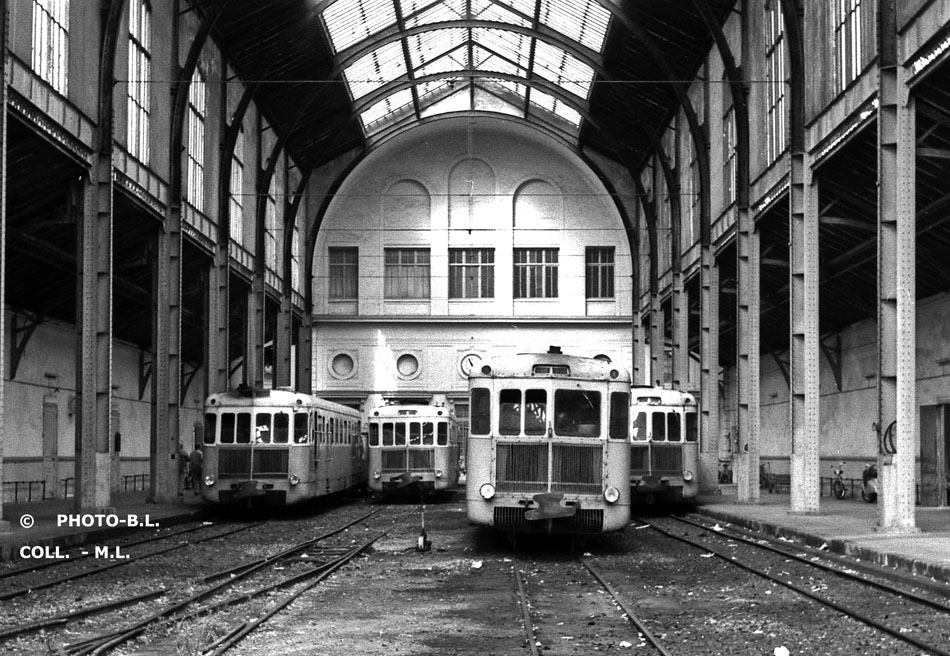
Trackside, there was (and is) a large train-shed, 23m wide, 18m tall and 87m long which covered the platforms. It is a metal structure inspired by the work of Gustave Eiffel which was originally used to house the Russian pavilion of the 1889 World Fair.

La Gare du Sud was completed in 1892, it operated as a railway station until December 1991, almost reaching its centenary as a station before circumstances in Nice dictated its closure.

Over the years the station site was developed to the extent visible in the hand-drawing below.[21]

In the 1910s, with increased traffic, the locomotive shed was enlarged. The two water tanks were mounted on masonry pedestals. Several additional rooms were created (most of them next to the shed). These included an office for the deputy chief and a traction shop. A Cnetral Office was built to the West of the Station adjacent to Rue Dabray which brought all the key staff togetehr under one roof.

Later, in 1936, a new workshop for diesel railcars (autorails) was built at the west end of the passenger hall. By the eve of the Second World War, the station was at its zenith. In addition to the buildings there were several kilometres of track, 44 single points, four three-way points, a variety of turntables which included one locomotive turntable.

After the Second World War, a building, serving as a simple repair shop, was to be the last new building on the site.[18]

I have pulled together a few photographs from a variety of sources which show the station in operation. They are in no particular chronological order and copyright is acknowledged where it can be established. Most of the images are freely available on the internet. The first two have been taken from the ‘Nice Rendez-Vous’ website[23].Interior of the South Station – ABH Railcar and modernized cars in 1954.
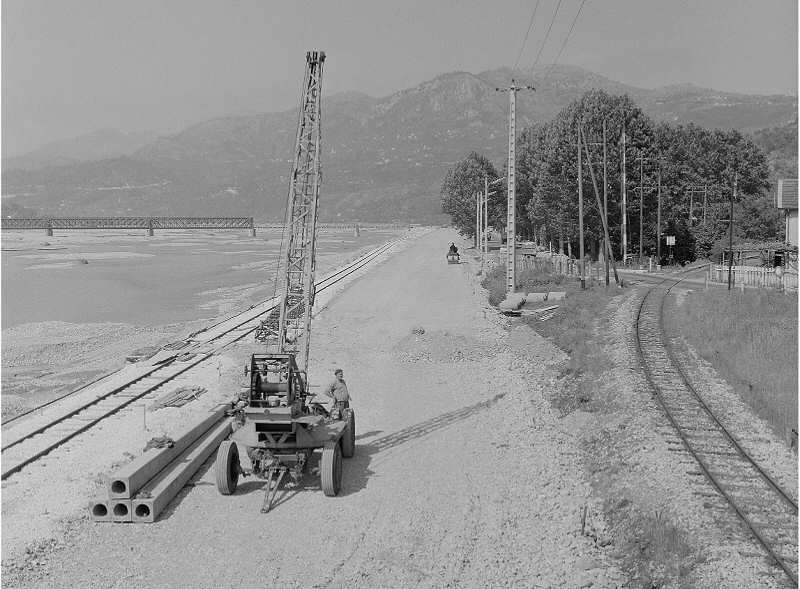
Photo: M. Rifault – JL Rochaix Collection – Publisher: BVA in Lausanne (Switzerland).1969_BILLARDniceNice – 1969 – Remarkable view of the atmosphere of the Nice train station and its depot with a host of Billard railcars having just been recovered on various CFD lines coming to close. On the left, we can also see two ABH. © JH Manara.[22]Nice – 1983 – note the imposing height of the train-shed, the three railcars and the recution of the lines in favour of car parks that will soon take over the entire site! © JH Manara.[22]Bahnbilder.de, 1980.[24]Wikimedia Commons. [25]

The last two images show wagons in storage at la Gare du Sud. They have been provided by a member of the GEMME forum in France.[36]

From the end of the War until the 1990s the uncertainties over the future of the Nice to Digne line meant that little was invested in the facilities at la Gare du Sud. In 1970, plans were drawn up to close the station. The city hoped to eliminate 4 level-crossings by moving the station to Rue Cross de Capéu a distance of 700 metres. The site of the proposed new station was purchased in 1972 and the Architect was chosen. The project remained on the drawing board.
In 1973, a number of unused sidings were lifted. In 1975, the President of SYMA, Jacques Médecin, Mayor of Nice, declared that he intended to stop the financial participation of the City in the organization (SYMA), and requested the sale of la Gare du Sud. Land on the south side of the station was sold, all of the buildings on that land were demolished, 150 wagons on the site were scrapped.

In 1976, access to the station was compromised when the City connected the streets of   Alfred Binet and Falicon. Access to the goods hall and shunting manoeuvres became  almost impossible. On 22nd March 1977, the automatic gates of Gambetta, Cros de Capeu and Gutemberg Streets were removed and replaced by traffic lights![21] This meant that trains were restricted to a speed of 4km/hr when crossing those streets.Recovery plans were negotiated in the late 1970s. Goods trains were banned from the centre of Nice. In 1978, the south side of the station site became a municipal car park. A period of ten years of relative calm then ensued, although the City maintained its intention to purchase the whole of the site of la Gare du Sud.
A memorandum of understanding was finally signed on 18th January 1991 for the sale of the site of la Gare du Sud to the City for 151 million francs. As part of that deal the terminus of the Nice to Digne line was designated as being at Rue Alfred Binet. The commissioning of a new station at Rue Alfred Binet was scheduled for November 1991 but was eventually postponed until 10th December. The last day of operation of la Gare du Sud as a railway station was 9th December 1991.[21]

The new station was designated as the Gare de Nice CP and was built in a modernist style, in contrast to every other station on the line. [26] The following pictures show that station and can be found on the ‘Le Train des Pignes’ website. [26]

From 9th December 1991 to the year 2000, la Gare du Sud remained derelict. Although there had been a land transfer to the City the building was not sold to the City until the year 2000. The City then produced plans to demolish the station.[18]

This demolition raised many protests and finally the Minister of Culture , Renaud Donnedieu de Vabres, opposed it in 2004. Meanwhile, the facade of the old station was registered as a historical monument on 23rd September, 2002.[27] The train-shed was registered as a historical monument in June 2005. The elegance of the building is demonstrated by the following images draw by the Architect, Mario Basso.[28]

Mario Basso is also responsible for a comprehensive archive of media posts relating to the station over the years.[28] That story can also be followed on Le Train des Pignes website.[29]

The building was saved from destruction but its future remained uncertain. Several projects were promulgated and then fell by the wayside (including the site becoming a new City Hall for Nice) before finally a project to convert it into a media library became a reality. The passenger building received a full restoration.Drawing by Jean Francois Laugeri
The work was completed in time for opening in December 2013. A video taken from a drone, shows the finished work to the old passenger facilities.[30] Meanwhile refurbishment of the train-shed was also being considered. The video project presentation is below. [31]

TESS was given this project and some pictures of their work are shown below.[32]

The renovated station is intended to be at the hear of a new area in the City. [33,35] The old train-shed will become a venue for restaurants and boutiques and will be surrounded by green spaces, the site will also benefit from parking, housing, gyms, a multiplex cinema and many shops.

Further development work was due to start in April 2018. The old train-shed will be known as le Salon du Vintage and will be run for the next 45 years by Banimmo France.[34]

It is intended that the train-shed will accommodate 22 restaurants by December 2018Voilà à quoi devrait ressembler la halle en décembre 2018A mezzanine floor needs to be installed. opening is planned for 15th December 2018.

References

  1. Michel SteveMetaphor Mediterranean: The architecture of the Riviera from 1860 to 1914 , Editions Demaistre, 1996, p.88.
  2. WikipediaTramways de l’Ouest du Dauphinéhttps://fr.wikipedia.org/wiki/Tramways_de_l%27Ouest_du_Dauphin%C3%A9, accessed 3rd April 2018; and Wikipedia, CEN Réseau Isère; https://fr.m.wikipedia.org/wiki/CEN_Réseau_Isère, accessed 3rd April 2018.
  3. Wikipedia, Ligne de Nice a Digne; https://fr.m.wikipedia.org/wiki/Ligne_de_Nice_à_Digne, accessed 3rd April 2018; and “No. 48721 – Act approving an agreement between the Minister of Public Works, Posts and Telegraphs and the Railway Company South of France for the execution of the route of the line of St. André to Puget-Théniers:” 29th December 1906. Bulletin of the laws of the French Republic , Paris, Imprimerie Nationale, serie XII, Vol.  74, o  2811p1365-1366.
  4. Wikipedia, Ligne de Nice a Digne; https://fr.m.wikipedia.org/wiki/Ligne_de_Nice_à_Digne, accessed 3rd April 2018.
  5. Wikipedia, Société générale de chemins de fer et de transports automobiles; https://fr.m.wikipedia.org/wiki/Société_générale_de_chemins_de_fer_et_de_transports_automobiles, accessed 3rd April 2018.
  6. Wikipedia, Chemins de Fer de Provence; https://fr.m.wikipedia.org/wiki/Chemins_de_fer_de_Provence, accessed 2nd April 2018.
  7. GECP; https://www.gecp-asso.fr, accessed 1st April 2018.
  8. Wikipedia, Alpazur; https://fr.m.wikipedia.org/wiki/Alpazur, accessed 3rd April 2018.
  9. Wikipedia, Zygofolis; https://fr.m.wikipedia.org/wiki/Zygofolis, accessed 3rd  April 2018. There are some excellent photographs of the trains and busses used to serve this theme park which are taken by Jean-Henri Manara; https://www.flickr.com/photos/jhm0284/albums/72157665103843167, accessed on 24th April 2018.
  10. Wikipedia, Château-Arnoux-Saint-Auban Station; https://fr.m.wikipedia.org/wiki/Gare_de_Château-Arnoux-Saint-Auban, accessed 3rd April 2018; and Wikipedia, Ligne_de_Saint-Auban_à_Digne; https://fr.m.wikipedia.org/wiki/Ligne_de_Saint-Auban_à_Digne, accessed 4th April 2018.
  11. Wikipedia, 1994 dans les chemins de fer; https://fr.m.wikipedia.org/wiki/1994_dans_les_chemins_de_fer, accessed 4th April 2018.
  12. Hydro Europe, The Var River Project; https://archives.aquacloud.net/17he/a/aquacloud.net/17he01/project.html, accessed 4th April 2018, and Hydro Europe, Project; https://archives.aquacloud.net/17he/a/aquacloud.net/17he07/project.html?tmpl=%2Fsystem%2Fapp%2Ftemplates%2Fprint%2F&showPrintDialog=1, accessed 4th April 2018.
  13. golinelli.pagesperso-orange.fr, Museums and Tourist Railwayshttp://golinelli.pagesperso-orange.fr/trains/gecp.htm, accessed 4th April 2018.
  14. Wikipedia, Transdev; https://en.wikipedia.org/wiki/Transdev, accessed 4th April 2018.
  15. Wikipedia, Veolia Transporthttps://fr.wikipedia.org/wiki/Veolia_Transport, accessed 4th April 2018.
  16. Wikipedia, Compagnie Ferroviaire du Sud de la France; https://fr.m.wikipedia.org/wiki/Compagnie_ferroviaire_du_Sud_de_la_France, accessed 4th April 2018.
  17. Societe.com, Régie Régionale des Transports de Provence Alpes Cote d’Azur; https://www.societe.com/societe/regie-regionale-des-transports-de-provence-alpes-cote-d-azur-793934993.html, accessed 4th April 2018.
  18. Wikipedia, La Gare du Sud; https://fr.wikipedia.org/wiki/Gare_du_Sud, accessed 4th April 2018.
  19. Wikipedia, Rationalism (Architecture); https://en.wikipedia.org/wiki/Rationalism_(architecture), accessed 5th April 2018.
  20. Froissart-Pezone, Rossella; Wittman, Richard, The École Nationale des Arts Décoratifs in Paris Adapts to Meet the Twentieth Century; Studies in the Decorative Arts. University of Chicago Press on behalf of the Bard Graduate Center. 7 (1): 30, 1999-2000.
  21. Le Train les Pignes, l’Histoire de la Gare du Sud, Part 1; http://cccp.traindespignes.free.fr/article-garedusud-1.html, accessed 4th April 2018.
  22. Transport Rail, les Chemins de Fer de Provence; http://transportrail.canalblog.com/pages/les-chemins-de-fer-de-la-provence/33191846.html accessed on 5th April 2018
  23. Nice Rendez-Vous, la Gare du Sud; http://www.nicerendezvous.com/la-gare-du-sud.html accessed 5th April 2018
  24. Bahnbilder.de – a picture from 1980; http://www.bahnbilder.de/bild/frankreich~schmalspur–und-zahnradbahnen~chemin-de-fer-de-provence-cp/673186/cp-chemins-de-fer-de-provence.html, accessed 5th April 2018.
  25. Wikimedia Commons; https://commons.wikimedia.org/wiki/File:Nice_Gare_du_Sud_station,_Chemin_de_Fer_de_Provence.jpg
  26. Le Train des Pignes, les 50 Fiches Gares Nice-Provence; http://cccp.traindespignes.free.fr/gare-niceprovence.html, accessed 4th April 2018.
  27. Notice No.  PA06000023 , basis Merimee, French Ministry of Culture.
  28. Mario Basso, Archive Gare du Sud Nice; http://gare-du-sud-nice-archives.blogspot.co.uk/2014, accessed 4th April 2018.
  29. Le Train les Pignes, l’Histoire de la Gare du Sud, Part 2; http://cccp.traindespignes.free.fr/article-garedusud-2.html, accessed 5th April 2018.
  30. YouTube, Drone-06 – Nice Gare du Sud; https://youtu.be/qAnnQ2YgiVM, accessed 6th April 2018.
  31. YouTube, Le Projet de la Hale de la Garde du Sud; https://youtu.be/AaSyHTN897A, accessed 5th April 2018.
  32. TESS, Ancienne Gare du Sud; http://www.tess.fr/projet/ancienne-gare-du-sud, accessed 5th April 2018.
  33. Gare du sud: nouvel espace de vie; https://www.nice.fr/fr/nice-2020/gare-du-sud-nouvel-espace-de-vie?type=projects, accessed 6th April 2018.
  34. Banimmo France; http://www.banimmo.be/fr, accessed 6th April 2018.
  35. Quartier Gare du sud, on Metropolitan Nice Côte d’Azur; http://www.nicecotedazur.org/grands-projets/quartier-gare-du-sud/12, accessed 6th April 2018.
  36. Les Forums du GEMME; http://forums.gemme.org/index.php.