Category Archives: French Railways and Tramways

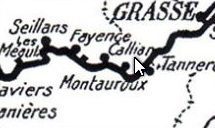
Ligne de Central Var – Part 7 – Tanneron to Seillans (Chemins de Fer de Provence 27)

Tanneron to Seillans

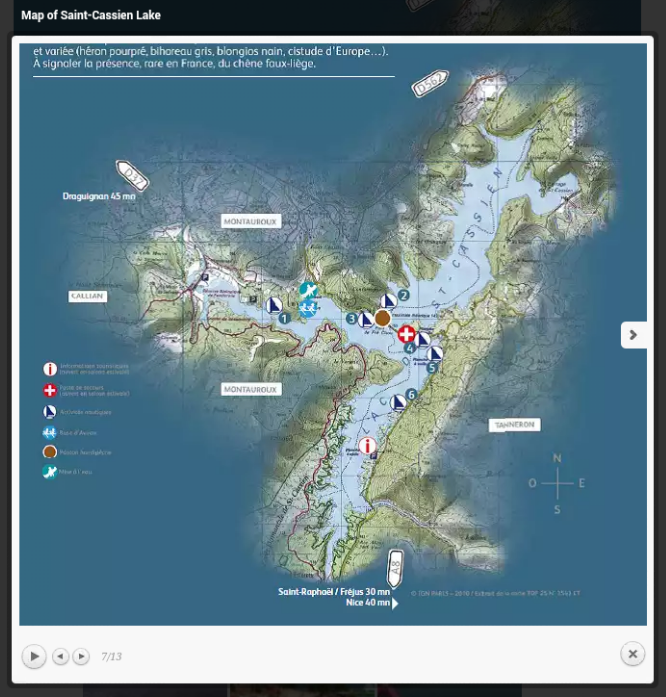
We continue our journey from Tanneron Station in the middle of the forest close to the Lac de St. Cassien but 11 kilometres from the town whose name it bears. In fact, much, much closer to Tournon. This station became the eastern terminus of the line after the closure of the length from here east to La Manda in 1944. Some bridges to the east of Tanneron were destroyed by a German commado unit at the time of the Liberation. Tanneron remained the eastern terminus of the line until full closure in 1950.

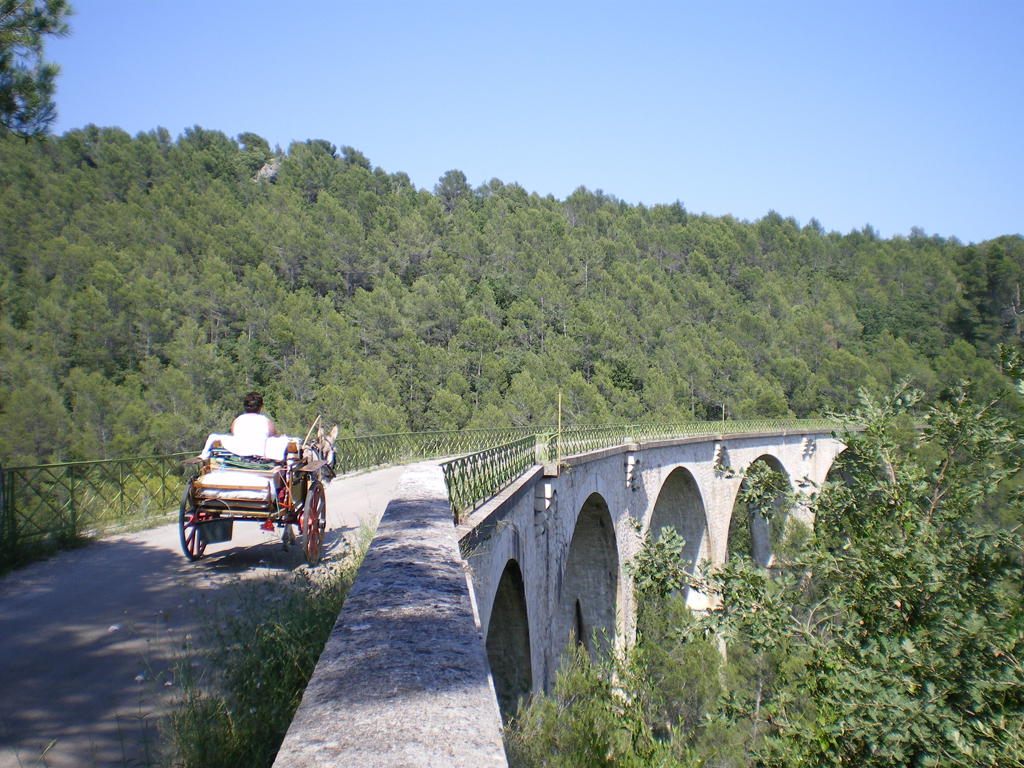
We head towards Montauroux. The line at first follows roughly the same route as the D562 Initially immediately next to the road and then the formation diverts away, first to around 20 metres to the South of the road and then increasingly further away in the forest.

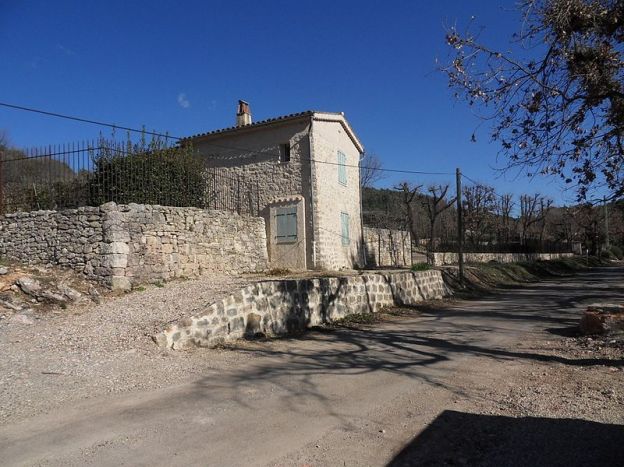
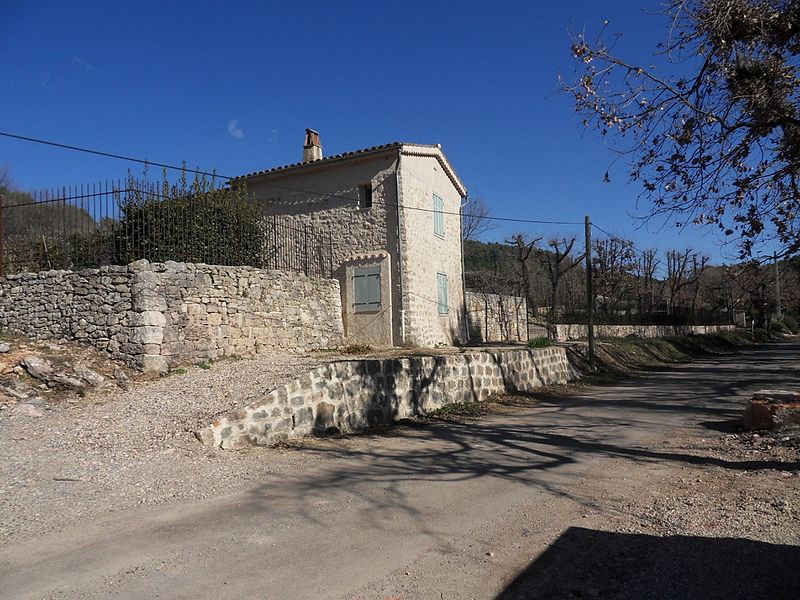
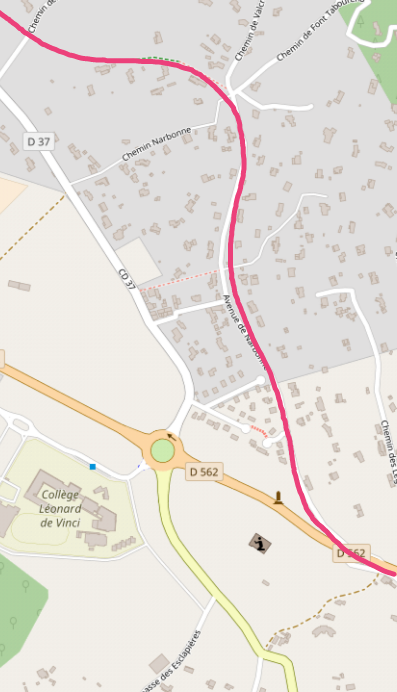
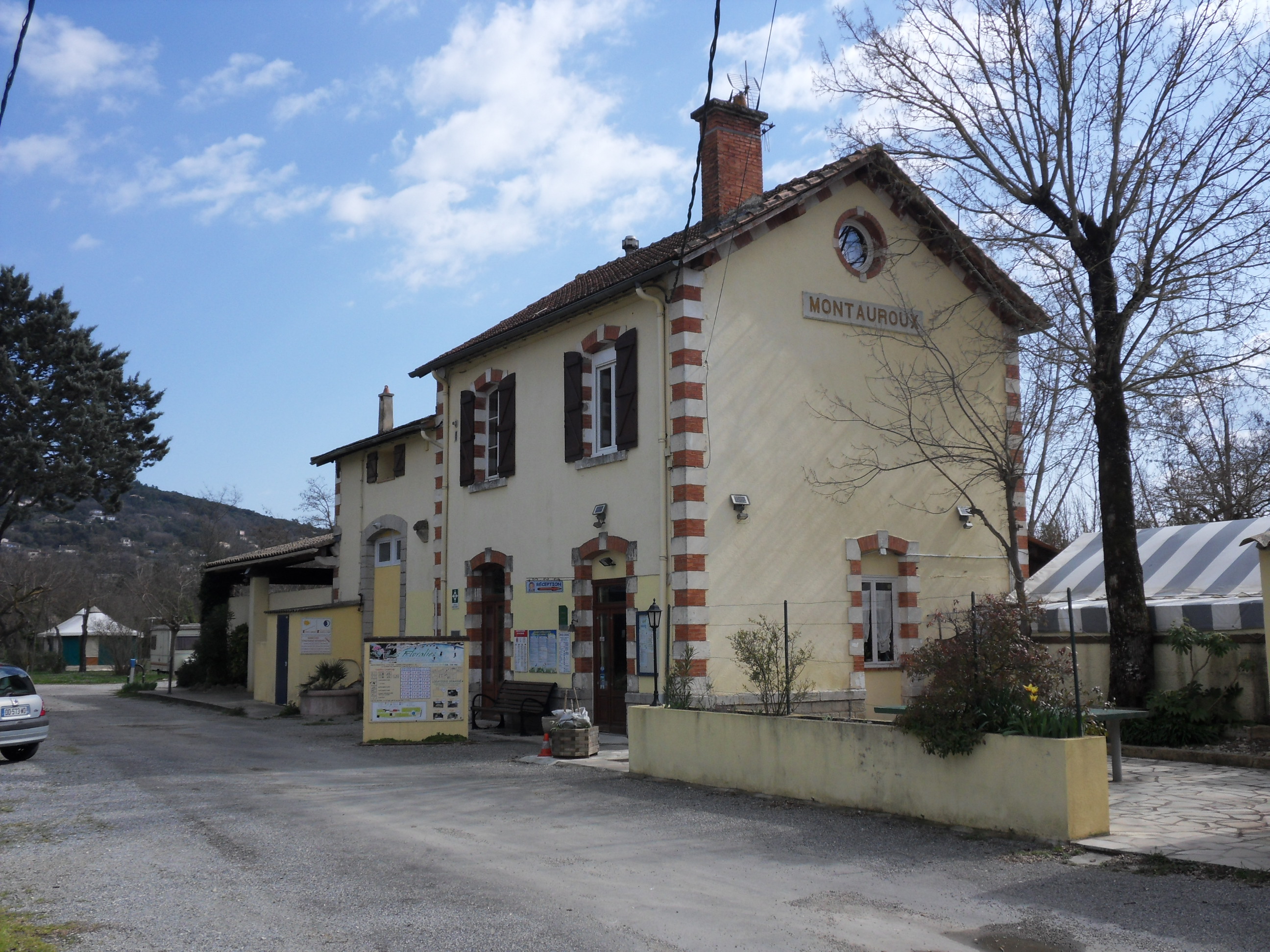
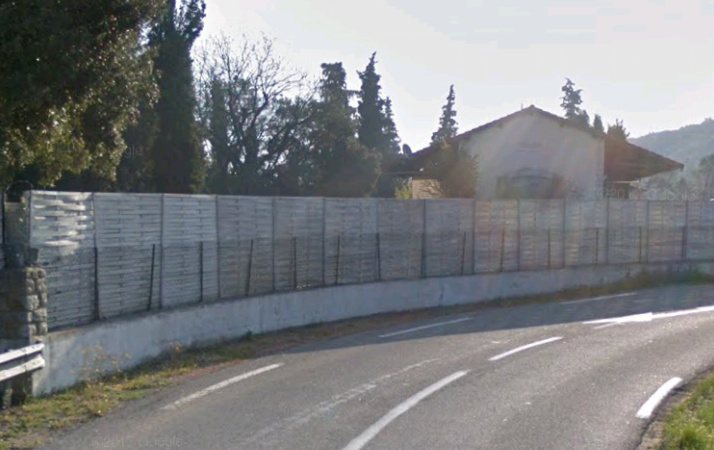
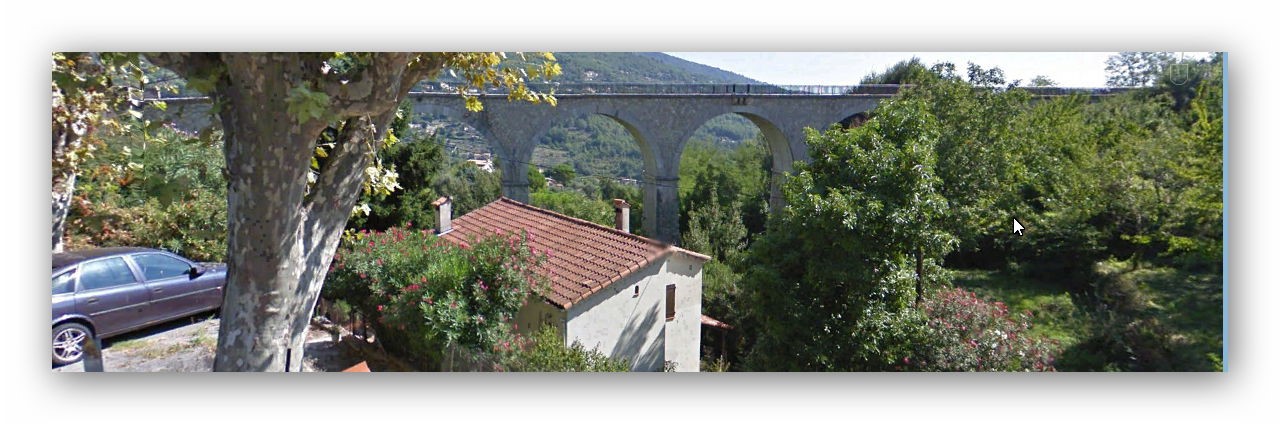
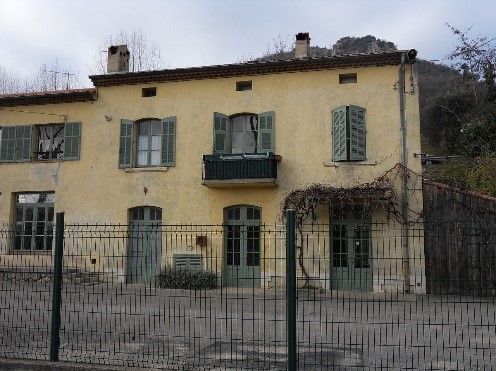
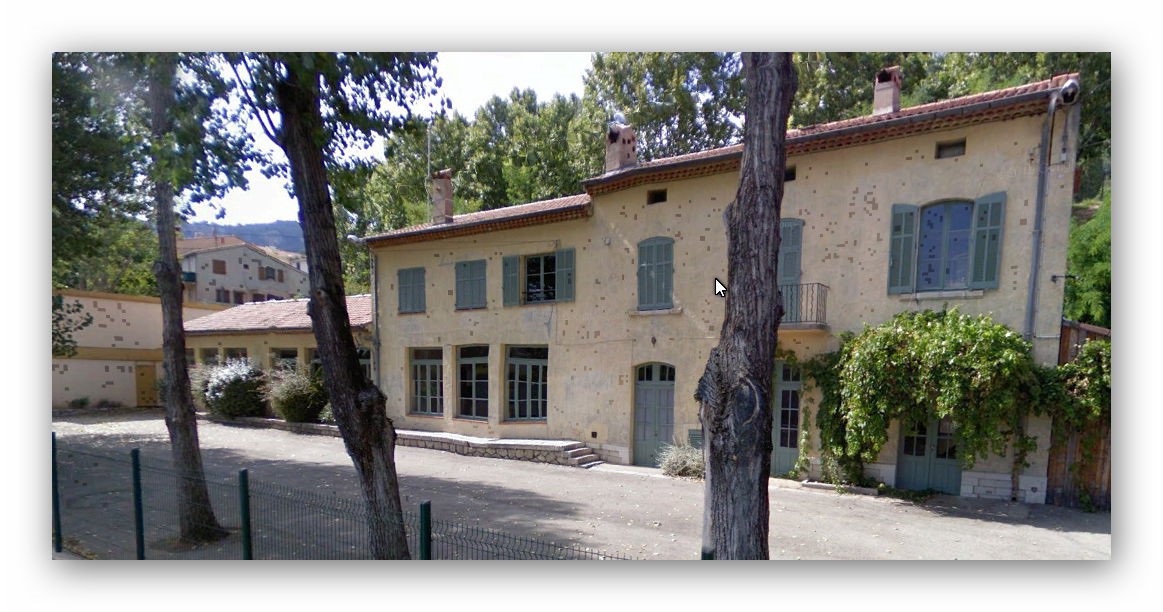
In time, the route of the line crossed the D562. The crossing keeper’s cottage is shown here. Once the road was crossed the line diverged from the D562 along the Avenue de Narbonne. Although some sources and maps show the route following the D562 along the south-side of Montauroux, this cannot be correct as the old Montauroux station building still stands and is acting as the main building of a campsite. The correct route is shown on the maps below. The red line on the maps shows the route followed by the line through what are now the suburbs of Montauroux, but which were farmland when the line was operational. The green area on the map is the campsite.

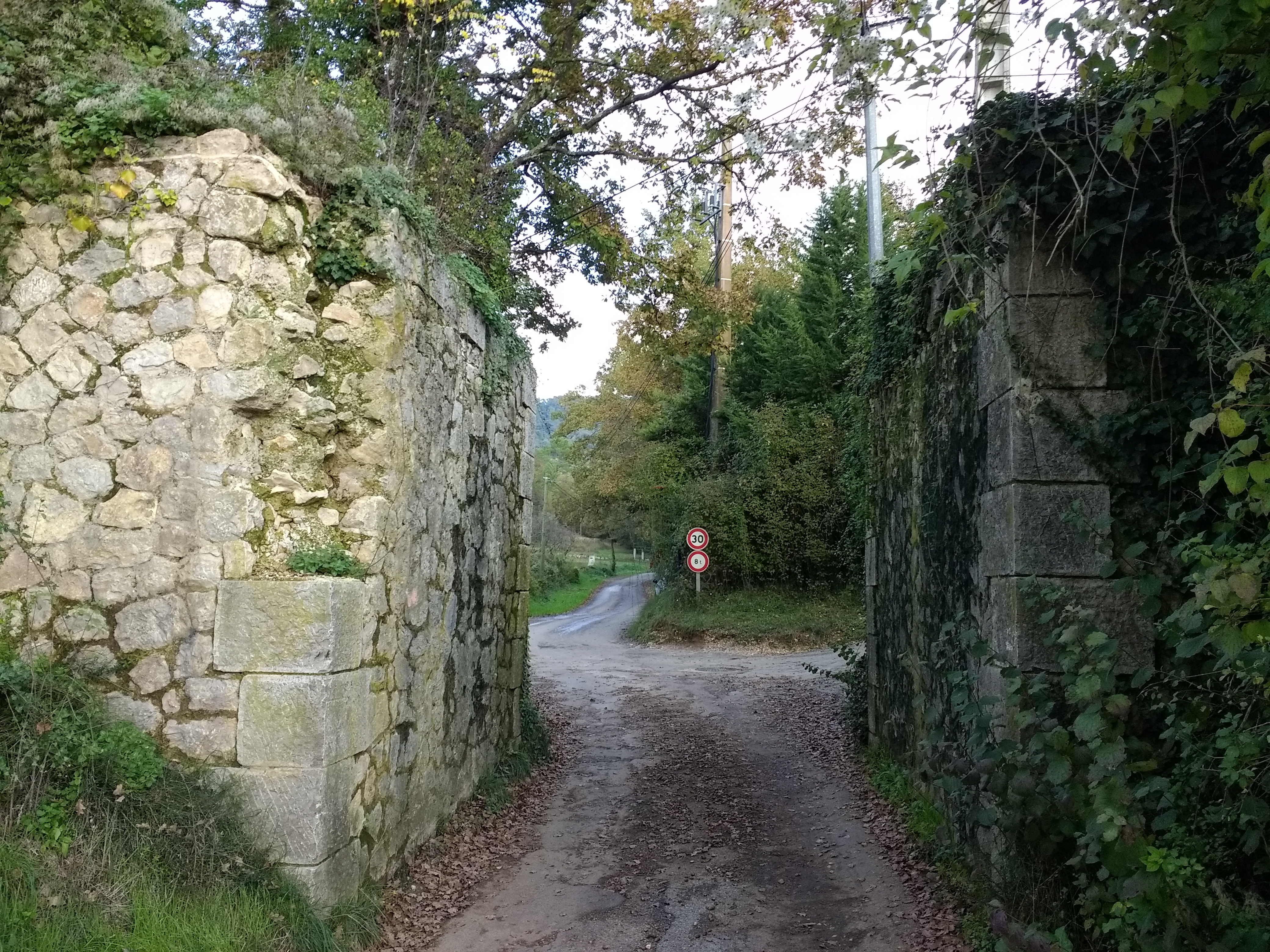
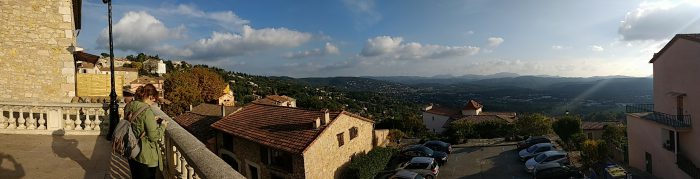
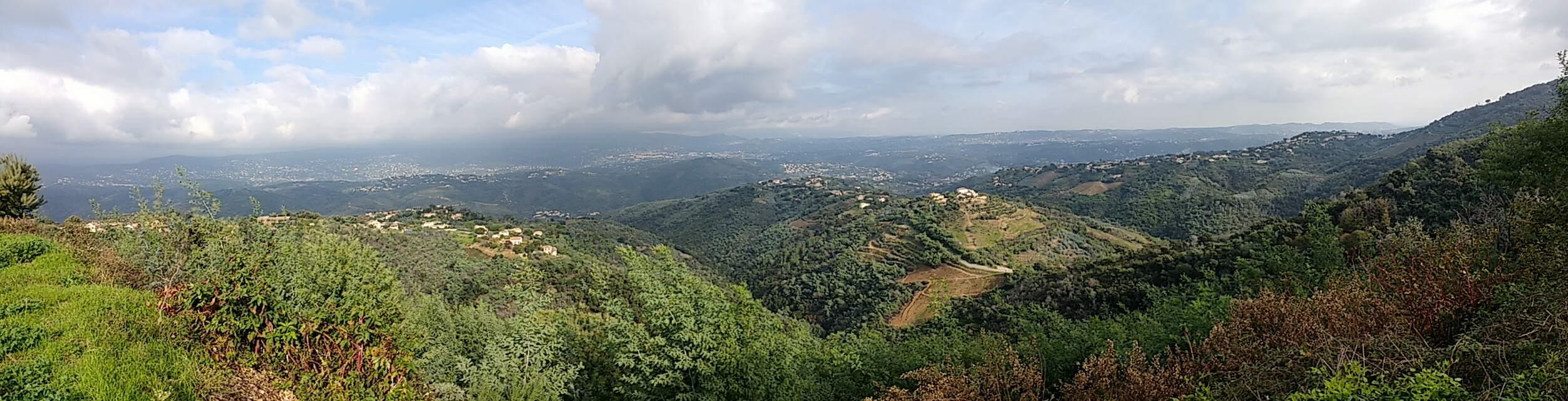
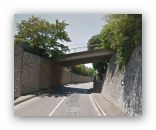
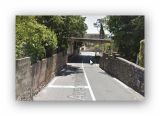
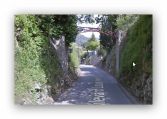
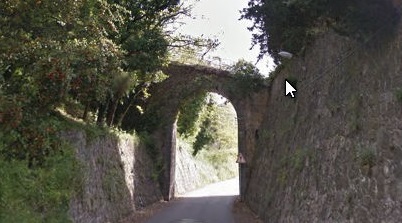
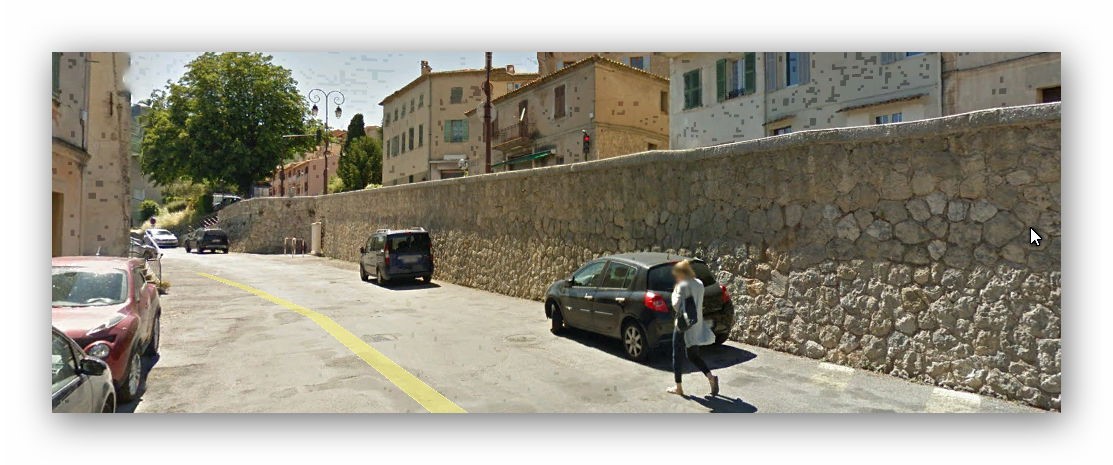
In November 2018, my wife and I had the opportunity to follow the line of the route along the D562 and the Avenue de Narbonne by car. In doing so we were able to establish beyond doubt that the railway line ran along the route of the Avenue de Narbonne. The photographs immediate below show the remnants of the abutments of a small accommodation bridge carrying the line over a small local road.We also enjoyed a visit to Montauroux and were able to appreciate just why the station was so far from the village. Montauroux sits many metres above the valley floor and is a delightful perched village.The view into the valley from Monauroux village square.

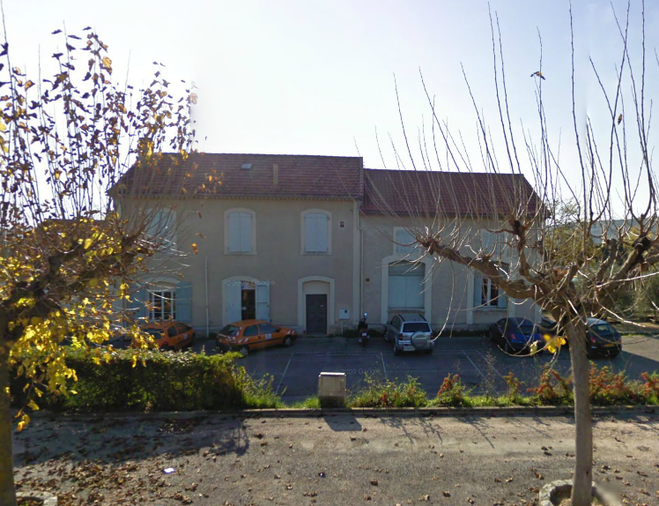
The station building is shown from a couple of different angles below the postcard .

Beyond the station, the line continued in a Westerly direction and has to be carefully picked out on maps. On the map below the identifiable route is again in red with the marker placed at the next station, that of Callian. Montauroux Station is on the red line in the bottom right of the map.. The route follows a series of roads and green lanes and crosses inaccessible private land as well. Roads which are on the alignment include the Impasse de La Gare in Montauroux and the Chemin de Gimbrette. The route then can be seen on the north side of the Chemin Crottons and Callian Station can be picked out in the top left corner of the second plan view of second satellite image below.

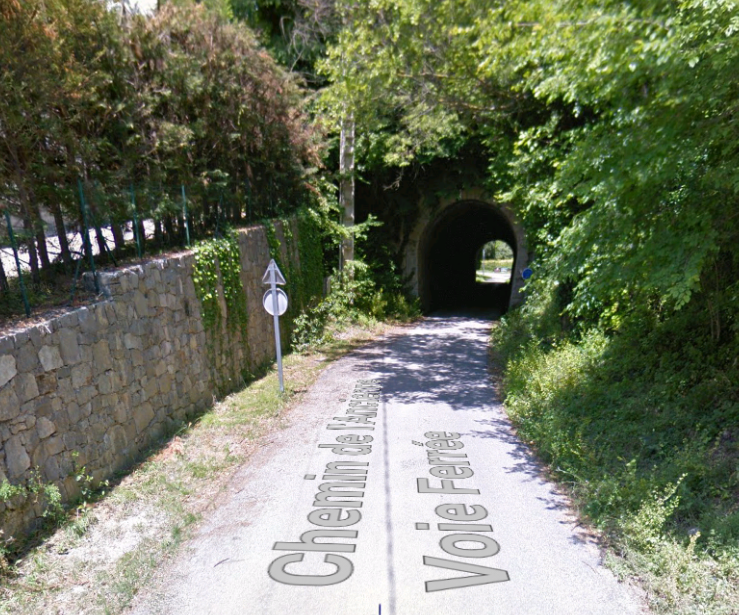
West of Callian Station the line ran just North of the present Chemin de la Fontaine and then alongbChemin de Beauregard (D256) to rejoin the D562 for a short distance and then the modern D19 (Rue Tassy, Tourrettes, Var, then Rue Guiandonne, then Route De l’Aerodrome, then Avenue Saint-Christophe). The route of the railway leaves the side of the D19 at a building which is called Le Bar de Gare to follow the Ancienne Voie Ferree alongside the old station building in Fayence.

zoom_273 (1).jpg

Beyond the station the line follows the modern road Le Pavillion which becomes Le Pont, then Le Serre, then Le Fraisse, then Cauvet, then Castellaras (Ancienne Voie Ferree) and Adrech du Peyron. After this the route rejoins the D19, running immediately alongside it to the North along the continuance of Adrech du Peyron, close to the hamlet of Le Peyron.

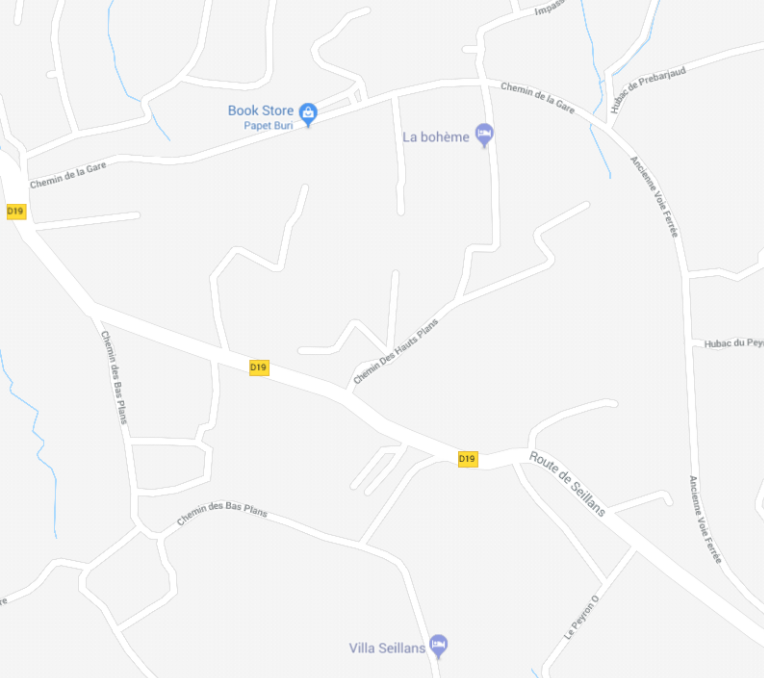
Ardech du Peyron becomes Hubac du Peyron as the route of the line turns gradually away to the north of the D19 and then curves round in a large arc from roughly north to approximately west southwest and approaching Seillans Station and the end of this section of our journey.

Ligne de Central Var – Part 6 – Peymeinade to Tanneron (Chemins de Fer de Provence 26)

Peymeinade to Tanneron

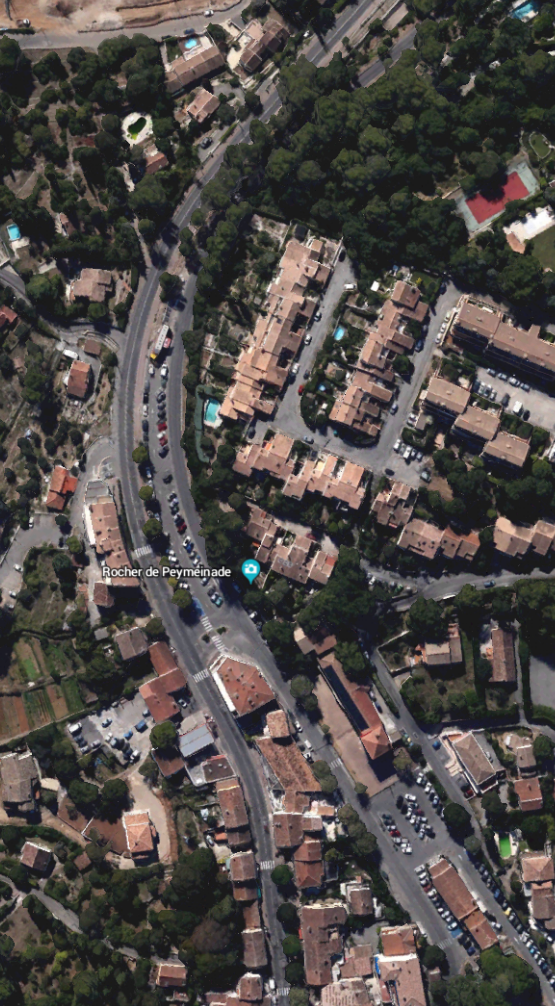
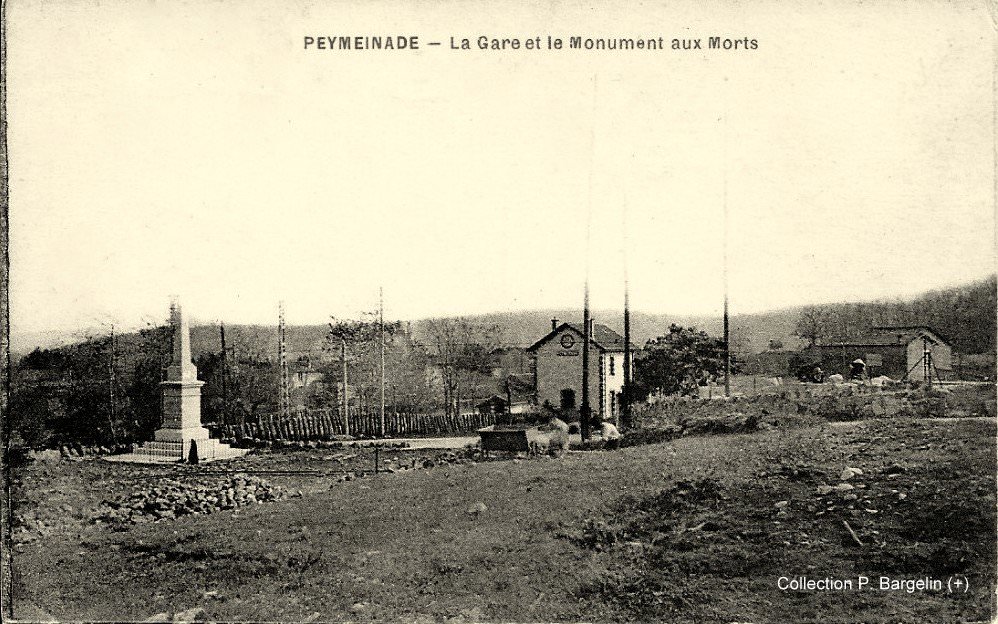
In the postcard view of Peymeinade above, the line from Grasse came in at the bottom right of the picture along the side road which joins the main road just above the web address. The location of the station cannot be picked out as it is behind the trees which show up as dark green in the bottom right quadrant of the picture. The line then travelled across the picture from right to left in front of the first taller building and then behind the second slightly less tall higher building. Its route can then be seen on the left of the picture following the tighter road curve around the bluff and then away into the far distance.

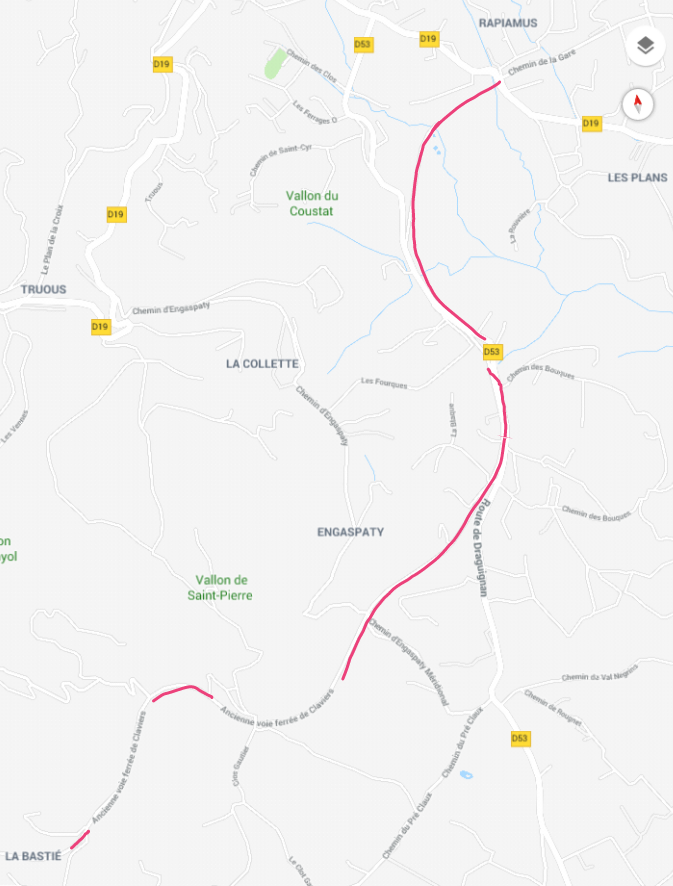
Trains left Peymeinade Station travelling in a Southwesterly direction along what is now Avenue du Dr Belletrud, before swinging  West and then South following the contours. The route followed fist Avenue du Dr Belletrud, then Avenue des Baumettes, then Chemin du Flaquier Sud, then Chemin de la ZA (by now travelling approximately Westwards). It is possible to follow this length of the route on foot but not in a car. Tarmac gives way to gravel or ballast and then to the track formation.

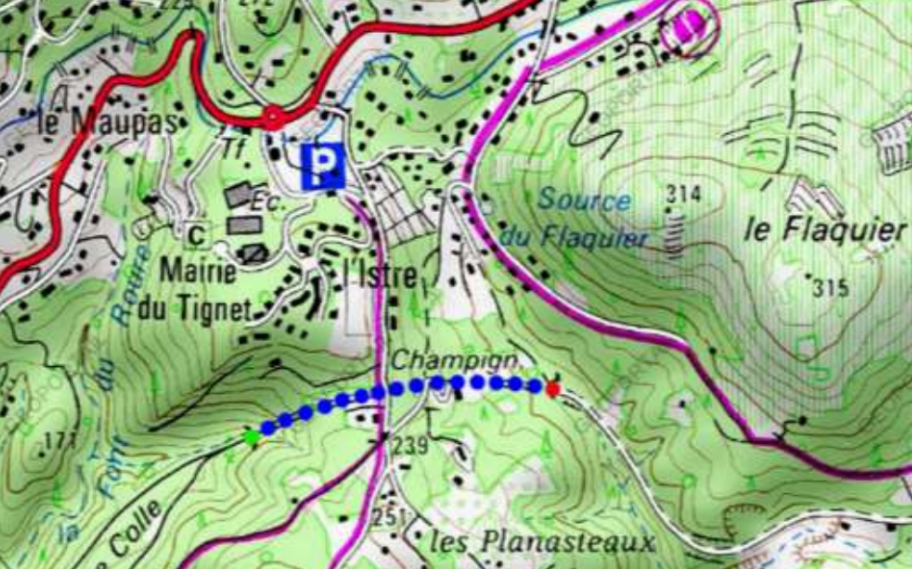
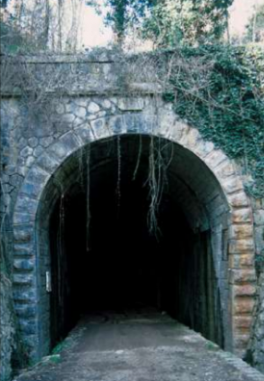
The line runs for over a kilometre through the forest before reaching the Tunnel des Planasteaux, a 535 m long tunnel under the hamlet of Les Planasteaux close to Le Tignet.

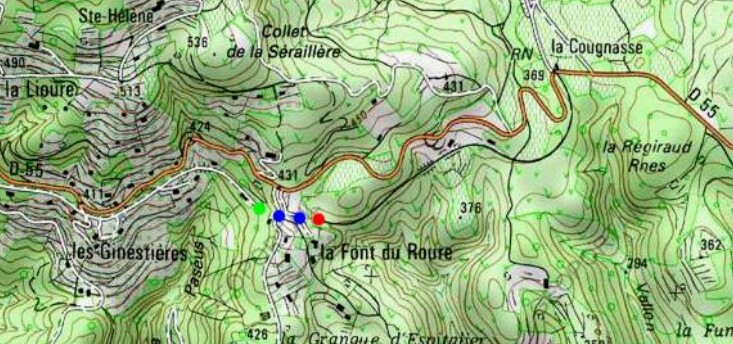
The East portal, marked with a red dot on the plan above, can be reached on foot ore in a 4×4.

The West portal, marked with a green dot on the map, has been overwhelmed by vegetation! It is marked with a green arrow on the picture below.


The tunnel has reasonable access from the East because out is used as a mushroom farm. This is the second tunnel on the route that has been used in this way. In 2009, the Commune of Le Tignet organised a walk which included a visit to the farm. The walk organiser commented: “The afternoon was spent visiting the Champignonnière of Mr. Christian Boselli.The latter presented his farm which is located in the tunnel of the old railway line which connected Nice to Draguignan. It was with great kindness that he commented on the visit both technically and historically.”

PICT0030

Trains left the West portal of the tunnel in deep cutting and traversed the wooded hillside on the South-East side of Le Vallon de Sant Pierre and approaching the boundary of the Alpes Maritimes with ran a!ong the River Siagne.

The line crossed La Siagne and then travelled in a Southwesterly direct for another kilometre before reaching an accessible point.

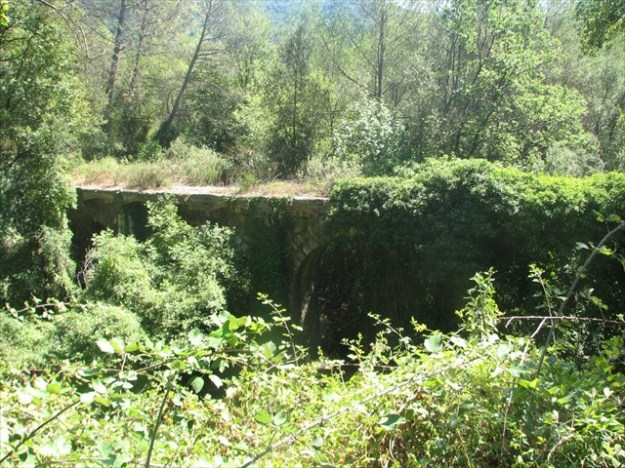
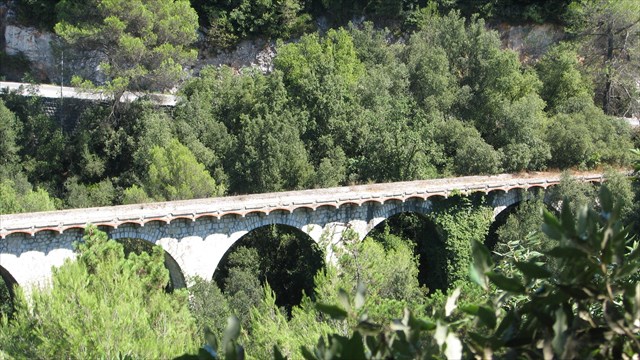
The viaduct which took the line across the valley has all but disappeared, just the abutments remain. It was an impressive metal structure (43° 37′ 10.18″ N    6° 50′ 7.15″ E) which was destroyed in 1944.

This viaduct is not to be confused with the SNCF viaduct of the same name down near the coast. If you are interested in the details of that viaduct, please follow this link to download a .PDF of proposals to alter it: https://www.google.co.uk/url?sa=t&source=web&rct=j&url=https://www.sncf-reseau.fr/sites/default/files/upload/pl_viaduc_siagne_v2.pdf&ved=0ahUKEwiyvbPdpu3XAhUJCsAKHf8ZBBoQFgjLATAU&usg=AOvVaw37EPld2nI89HogD60xDE2d.

Travelling on a train would negotiate it way through the forest in  southwesterly direction some distance north of Lac de St. Cassian and then turns northwest towards Montauroux.

There are no points where the route can be accessed by car until it reaches the D94 close to its junction with the D562.

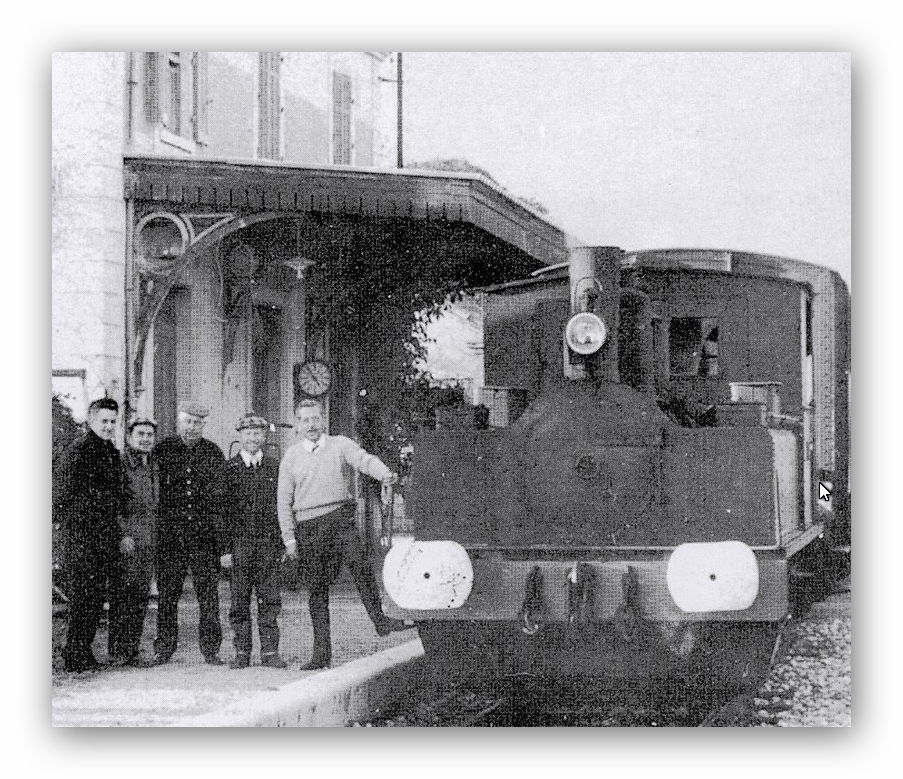
This is the old station for the village of Tanneron (11 kilometres from the line) and is the end of this short part of our journey on the Ligne de Central Var.

As a short PostScript: in November 2018 my wife and I drove the length of the D94 from the village of Tanneron to its station. It seemed a long way by car, it must have felt an eternity on foot or by cart. Our own pictures of the village and station appear at the end of this post (below).

Other sections of the line to the East of Tanerron can be found at the following links:

https://rogerfarnworth.wordpress.com/2017/11/20/ligne-de-central-var-part-1

https://rogerfarnworth.wordpress.com/2017/11/23/ligne-de-central-var-part-2-chemins-de-fer-de-provence-14

https://rogerfarnworth.wordpress.com/2017/11/27/ligne-de-central-var-part-3-chemins-de-fer-de-provence-18

https://rogerfarnworth.wordpress.com/2017/11/28/ligne-de-central-var-part-4-chemin-de-fer-de-provence-19

https://rogerfarnworth.wordpress.com/2017/12/01/ligne-de-central…r-de-provence-25.

Pictures

The view from the village of Tanneron towards the coast at Cannes.The church of Notre Dame de Peygros at Tanneron – a short climb from the village.Tanneron railway station building on 15th November 2018.

Ligne de Central Var – Part 5 – Grasse to Peymeinade (Chemins de Fer de Provence 25)

Grasse to Peymeinade


We have spent quite a bit of time in and around Grasse. Most recently in these posts we have travelled down to the coast and if you chose to watch the videos at the end of post 24 in this series of blogs you really will have enjoyed the cab-ride to Cannes.

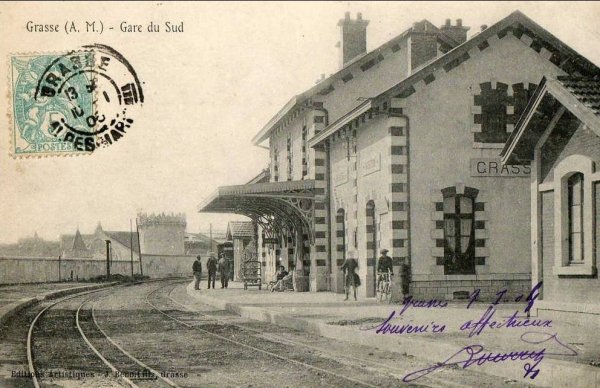
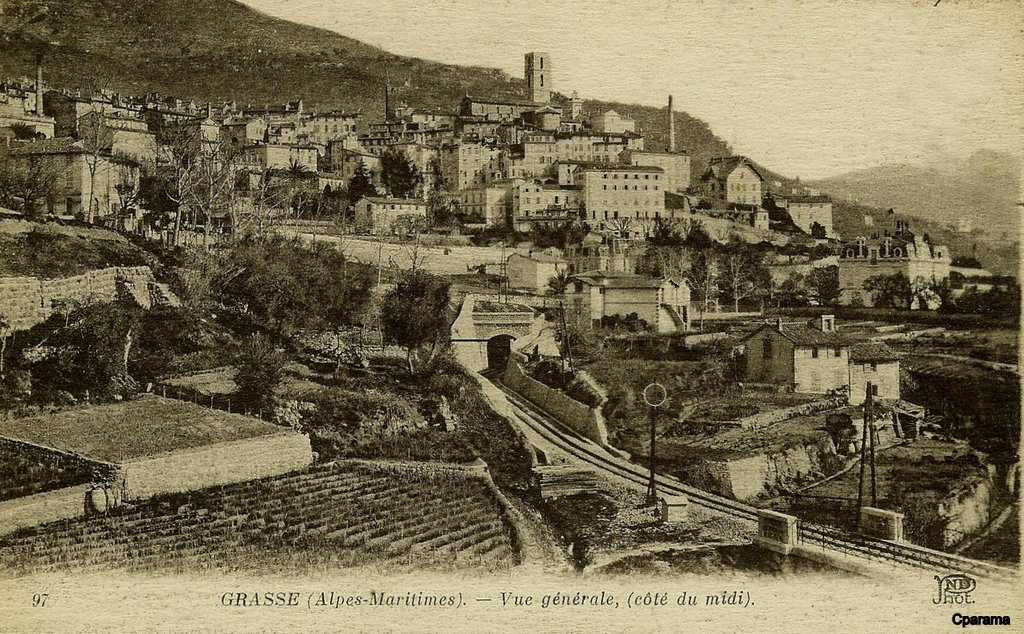
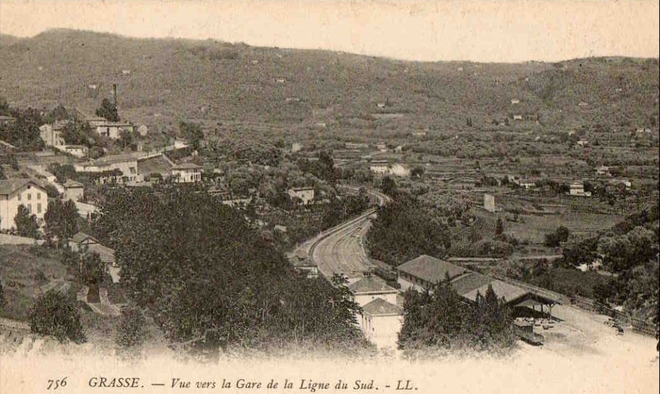
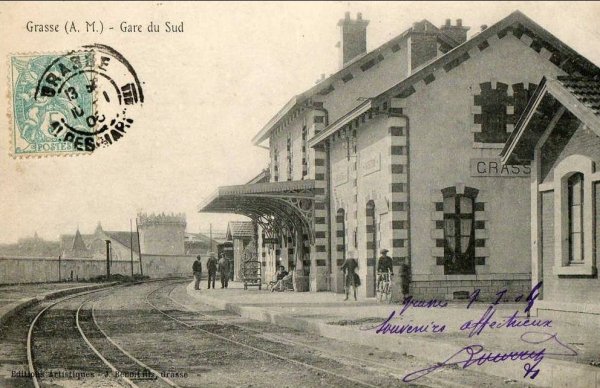
We start the next stage of the journey along the Chemin de Fer du Sud from Grasse Gare du Sud which is in the centre of the map of Grasse from 1930 above. It will be some time before we get to Meyrargues but here is the ticket we need for the journey. Actually for the return leg of the journey, but it was the best I could find!

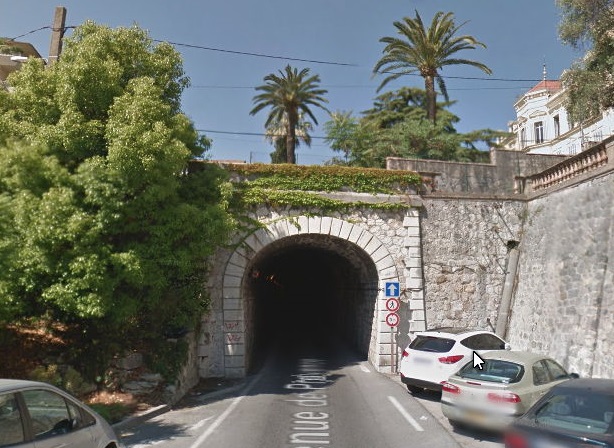
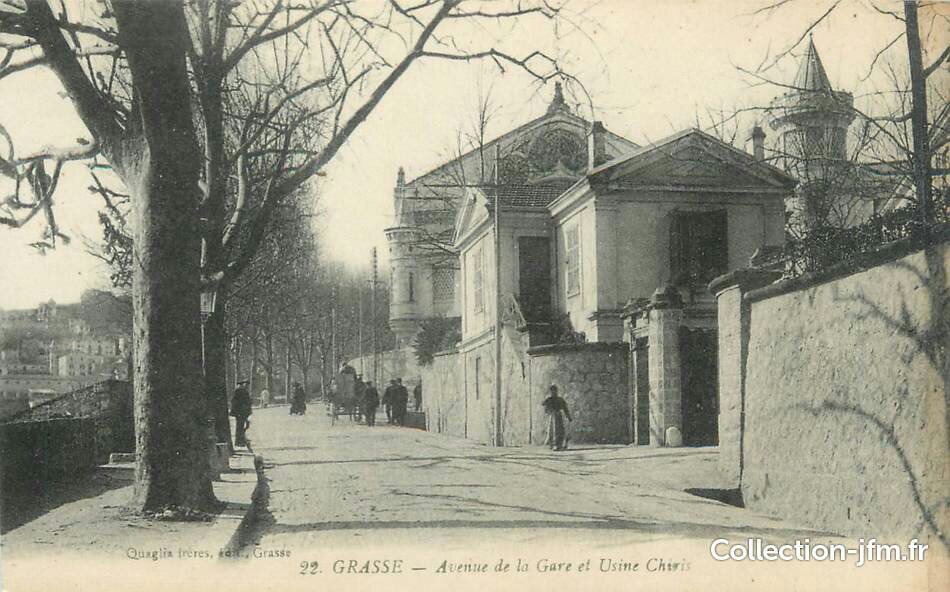
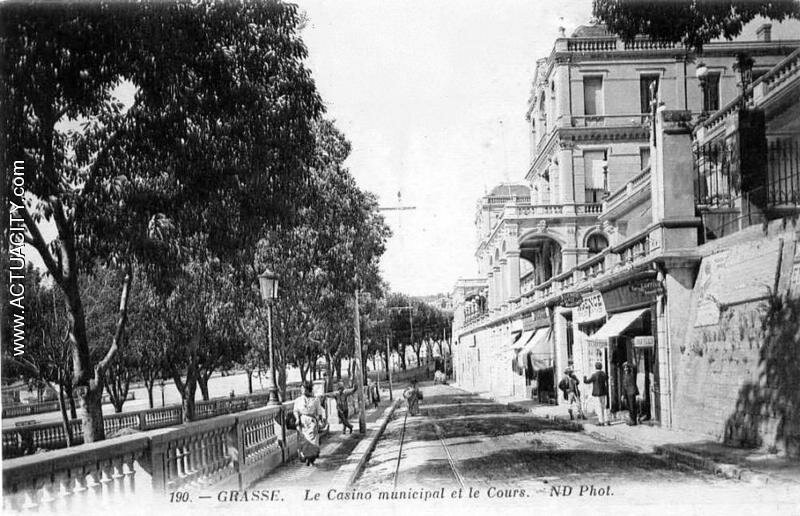
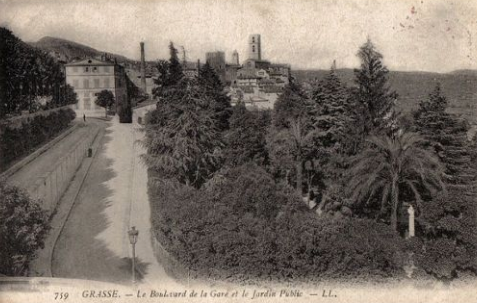
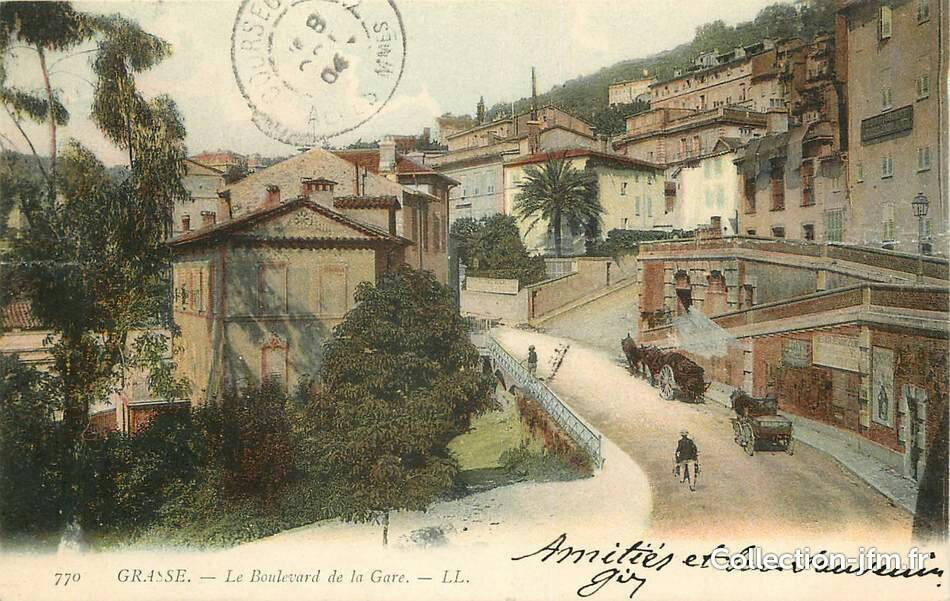
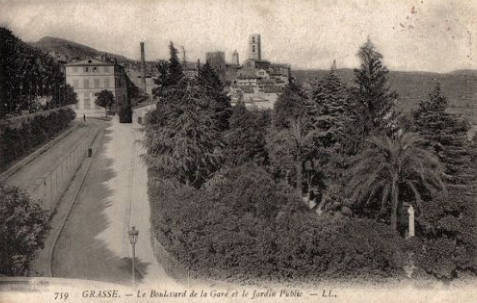
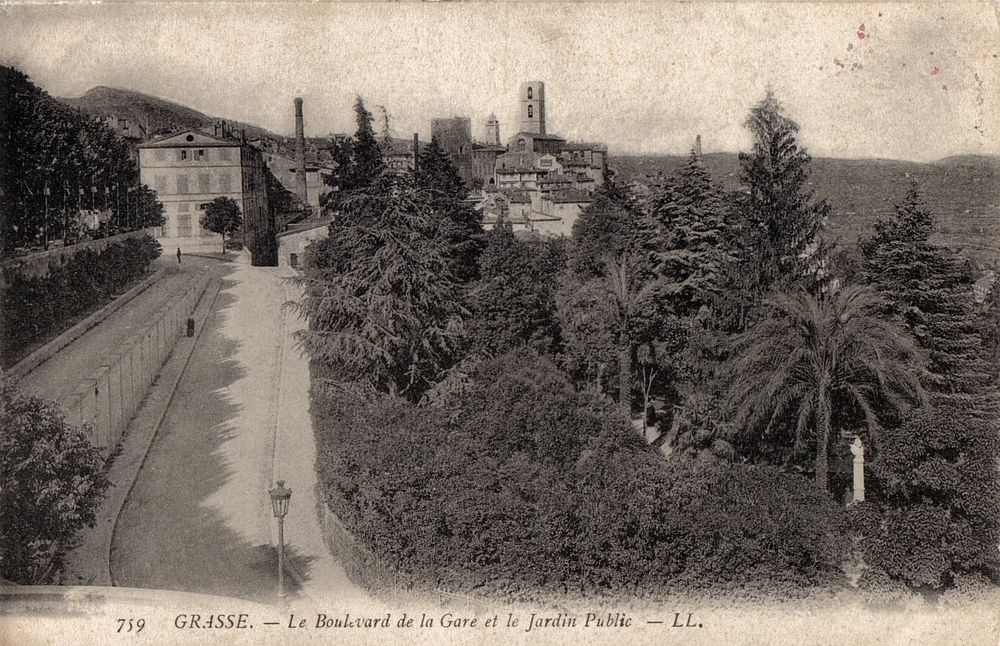
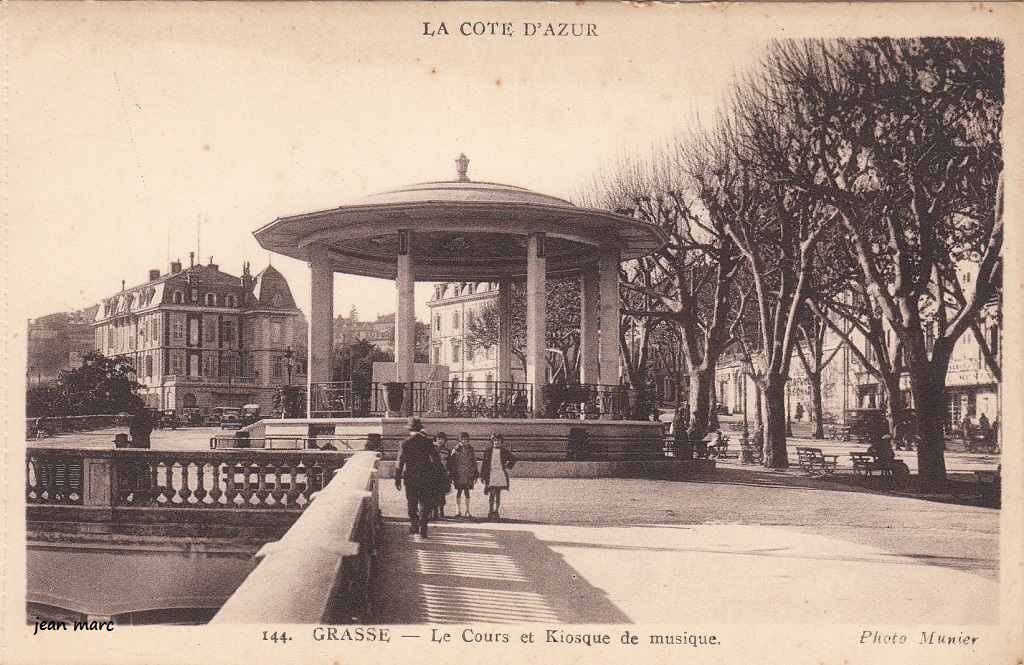
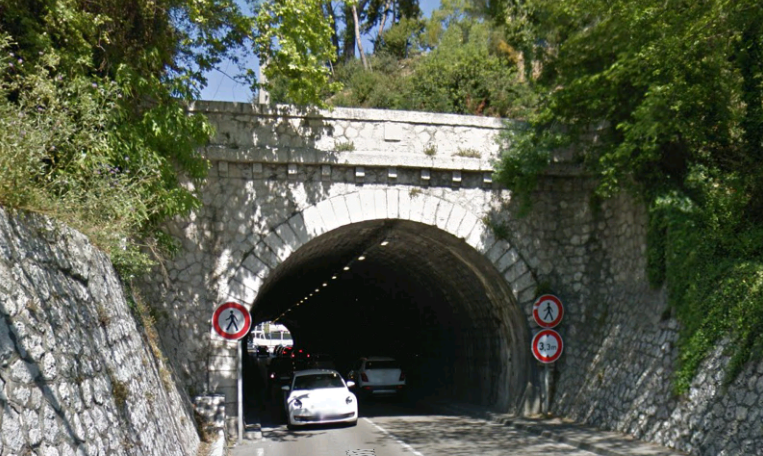
Leaving the station, the line immediately went into a short tunnel under what was then Avenue de la Gare (and which meandered down from Grasse town centre to the PLM station) and is now called Avenue Pierre Semard.


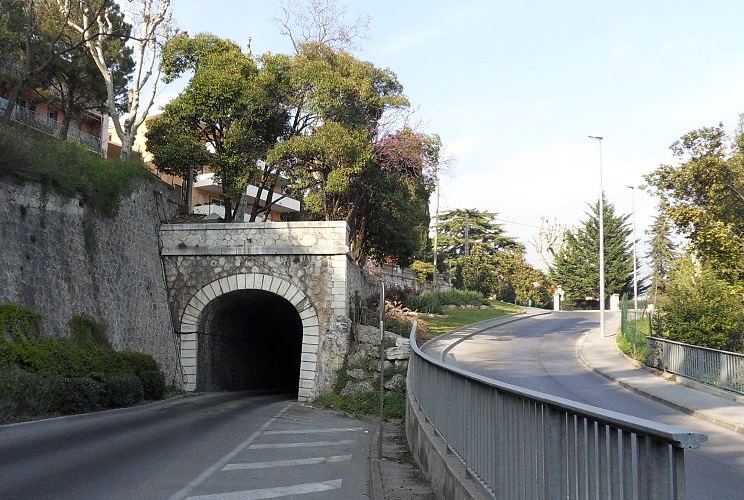
The tunnel now carries traffic on Avenue de Provence in a westerly direction.These next two pictures show the two tunnel portals …

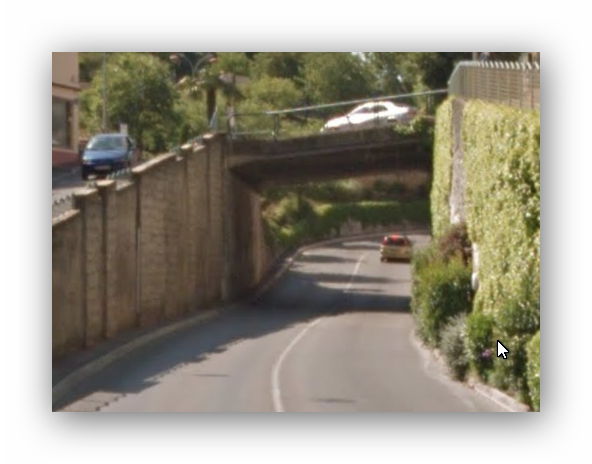
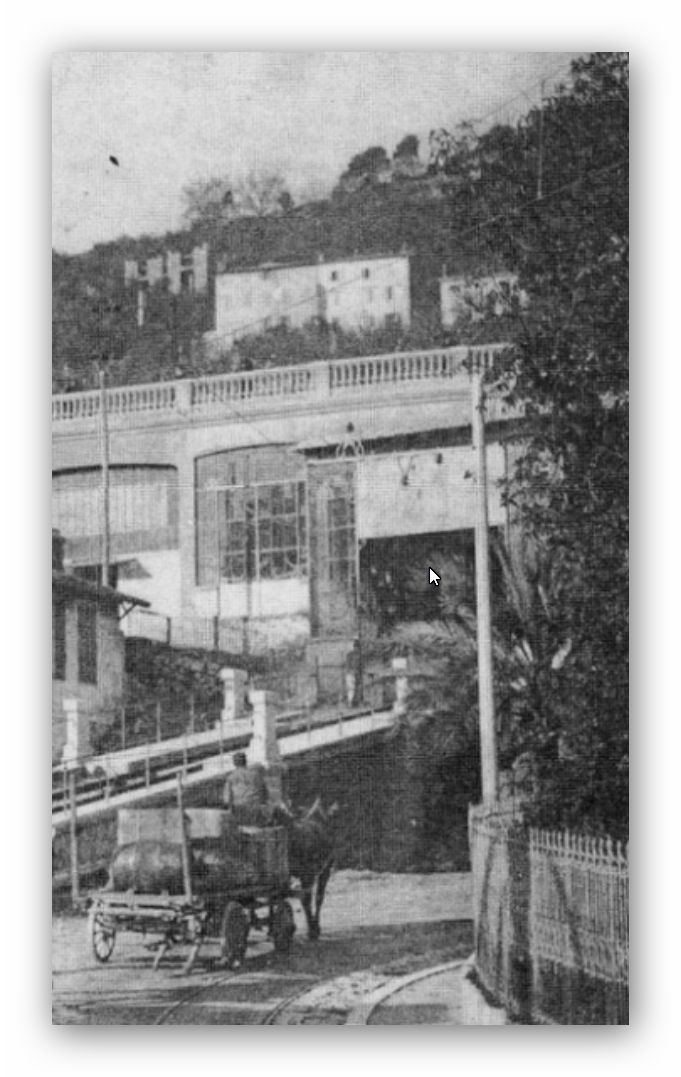
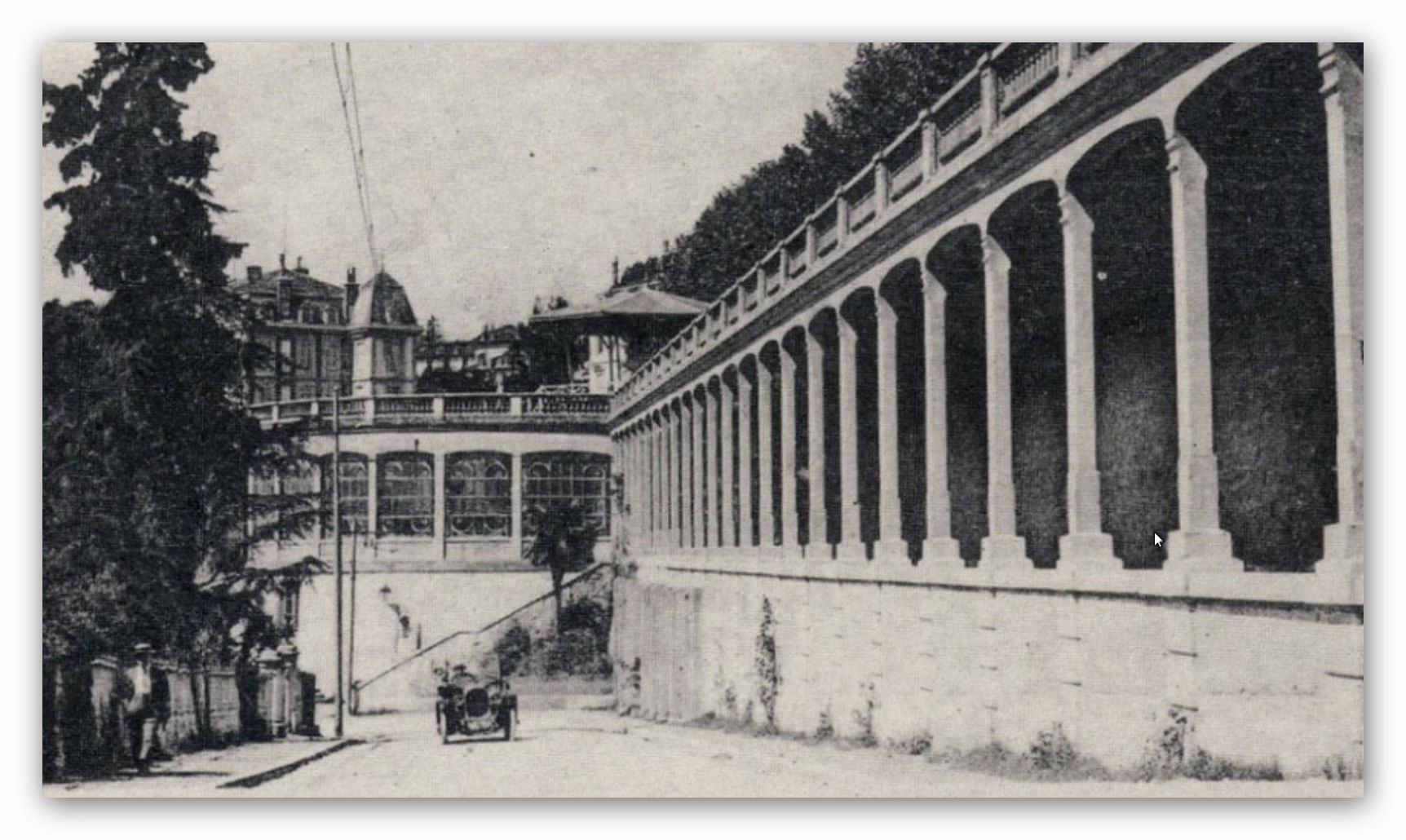
The route of the line lays underneath the modern Avenue de Provence. There is a short section in the city where the old road is a little higher than the rout of the line and carried by arches alongside what would have been the tracks of the railway.

The railway then travelled under the Avenue Sidi Brahim and over Avenue Henri Dunant onto what is now Avenue Frédéric Mistral.

Avenue Frédéric Mistral follows the old line through the Southwestern suburbs of Grasse and eventually becomes Boulevard Louis Icard as the old line turned in a Northwestely direction under an old accommodation bridge.


Soon after this the high retaining walls alongside the line gave way to a Viaduct – the Viaduct of the Pouiraque and then another small bridge which both carried the line over the meandering Canal de Siagne.


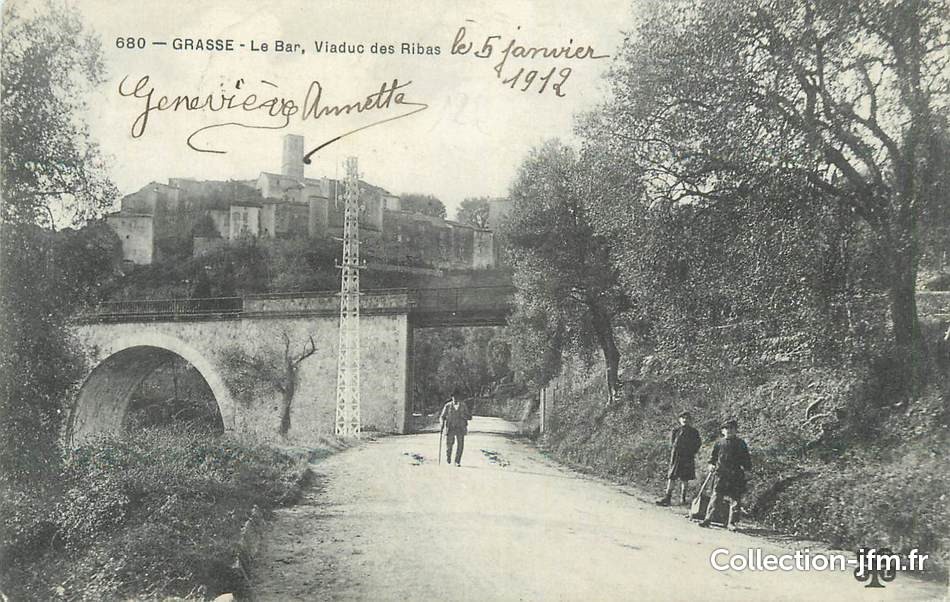
The line then followed the contours along Boulevard Louis Icard  before reaching the wooded valley of Les Ribes which was spanned by the Viaduct de Les Ribes (43 ° 38 ‘51.7 “N, 6 ° 54’ 12.4” E) which was made up of two 60 metre metal truss girder spans.

The only picture I have been able to find of this viaduct is the adjacent one, which shows the central pier after removal of the metal truss girders. Today, the Boulevard Louis Icard terminates short of the Viaduct. We have to divert onto the Route de Draguignan (D2562) to travel round the head of the valley.

We find the route again, now under the Chemin de Peymeinade. In the small picture on the right trains would have come off the Viaduc de les Ribes just to the right of the chevron sign and wheely-bin!

242T66 on Passions Metrique (http://www.passion-metrique.net/forums) comments that Les Ribes viaduct was not damaged during the war but was dismantled after the line had been closed. The scrap merchant who was recovering the rails thought it would be better to retain the viaduct for further use and offered to sell it to the town of Grasse at the same scrap value he had bought it. But the mayor was not interested. So the metal girders were dismantled and the potential right of way severed for ever….

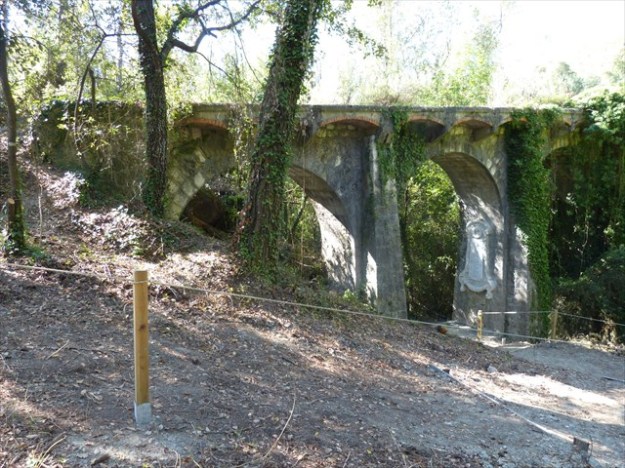
Another accommodation bridge was soon encountered. This time a stone arch bridge with the line in a deep retaining wall lined cutting. This was quickly followed by another stone arch bridge (below), this time carrying what is now the Chemin des Aubépines.

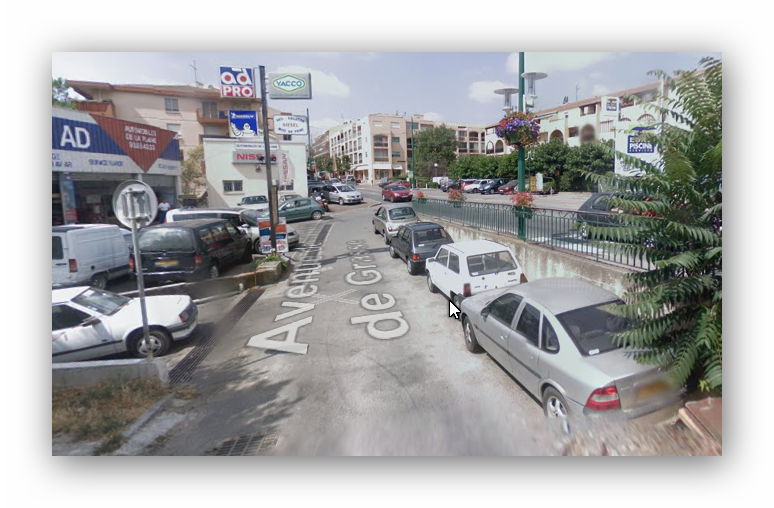
The line follows Chemin de Peymeinade and then Avenue de l’Amiral de Grasse towards Peymeinade. That road meets the D2562 at the point shown on the adjacent picture. The route of the railway In Peymeinade has all but been obliterated by development. In this picture the route heads off under the building in the centre middle distance.

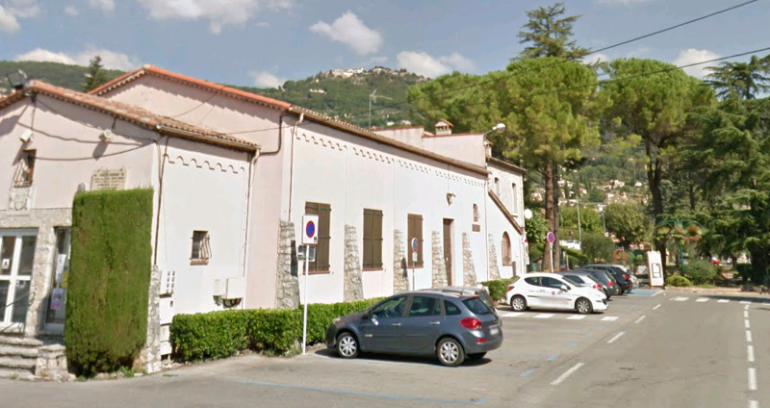
In the plan view, the line arrives in Peymeinade at the bottom left. The station was towards the top of picture just to the right of centre. The only remaining vestige of the station is now the Office de Tourisme for the town.

The station house is the Tourism Office.


In the next post we will head on towards Draguignan.


The Grasse to Cannes Standard Gauge Line (Chemins de Fer de Provence 24)

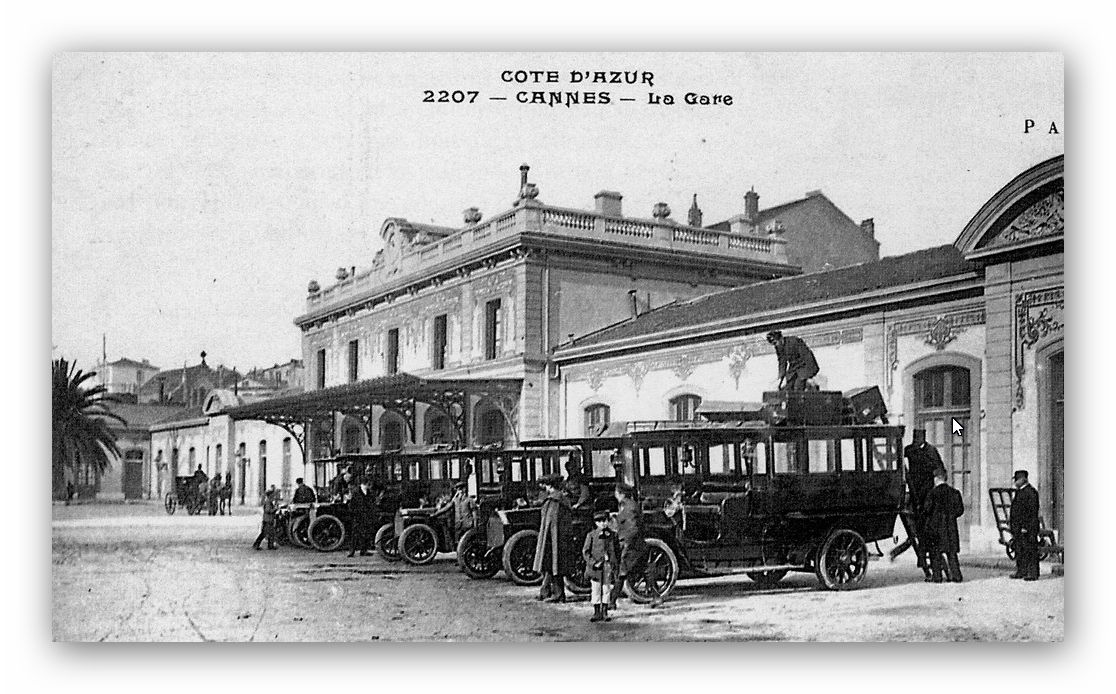
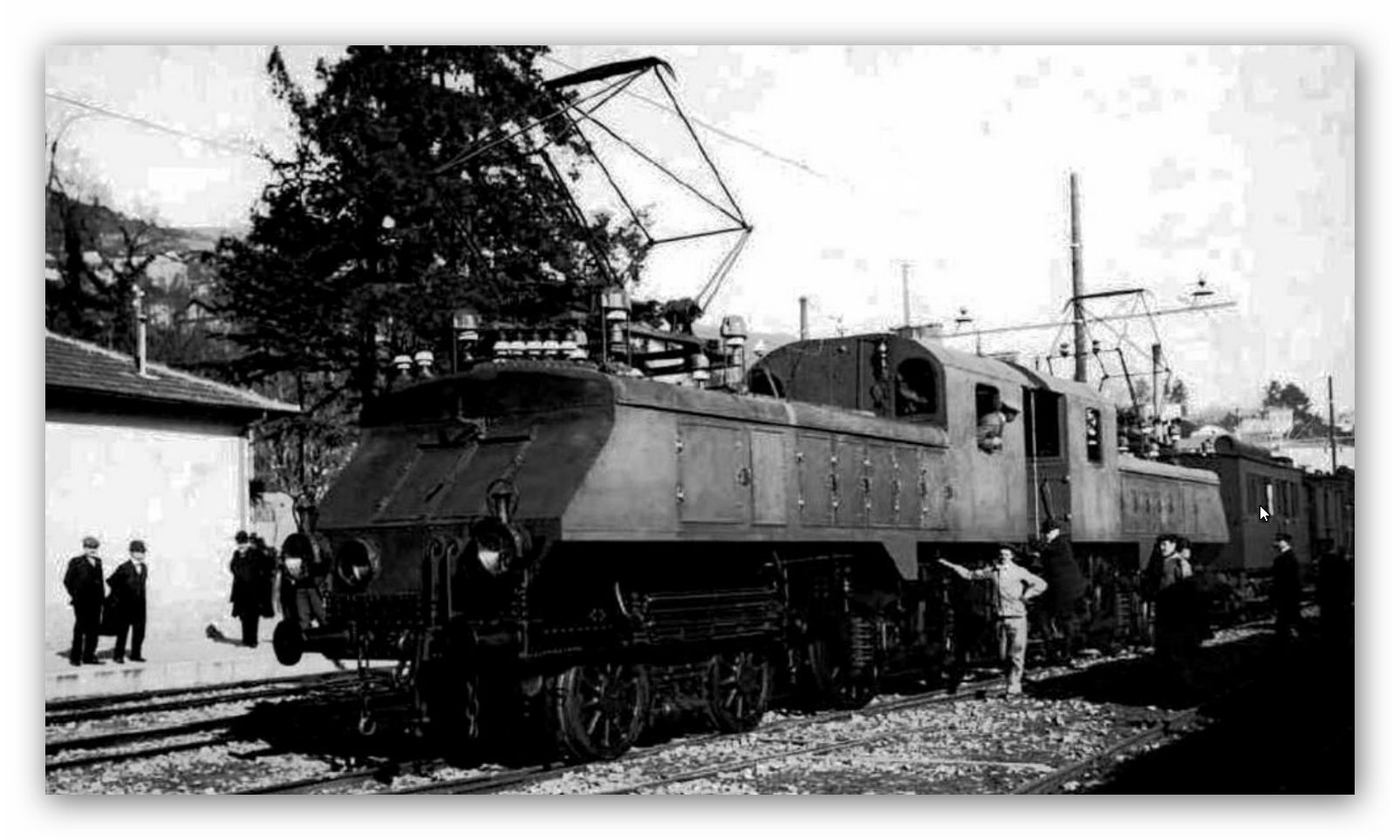
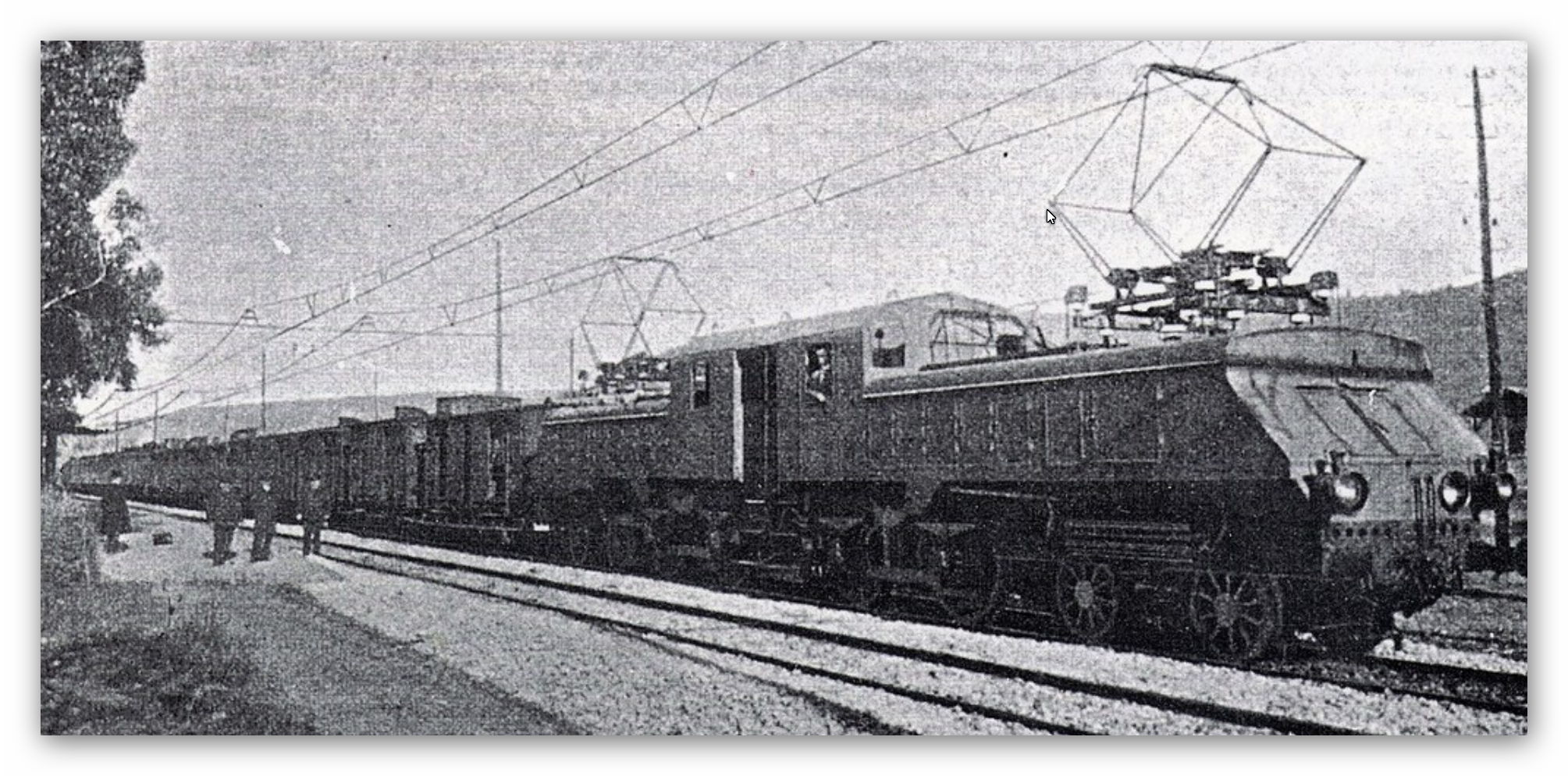
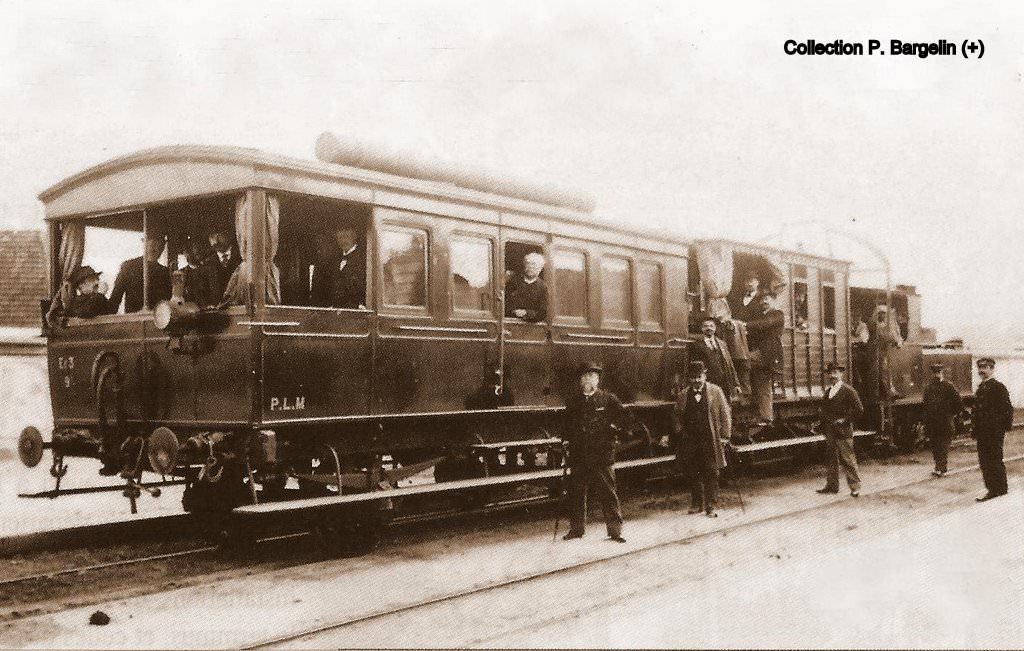
The line between Grasse and Cannes was opened in 1871 by the Chemins de fer de Paris à Lyon et à la Méditerranée (PLM). For a time, from 1910 to 1914 it served as an experimental route for 12kV/25Hz single-phase electrification. The line remained open to passangers until 1938. It was reopened for military wartime traffic in the early 1940s and after the war closed once again.

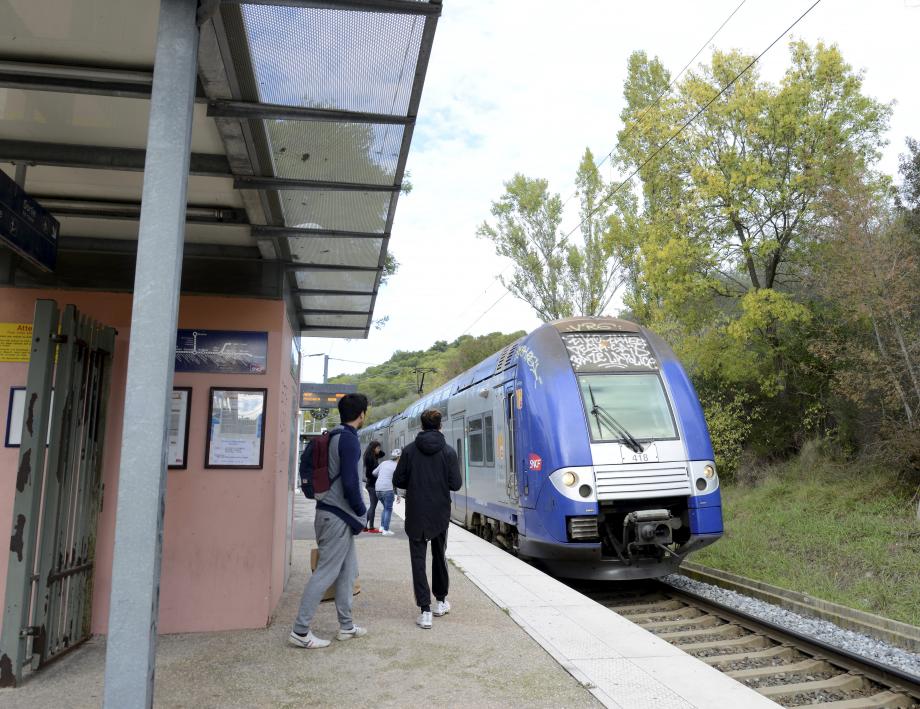
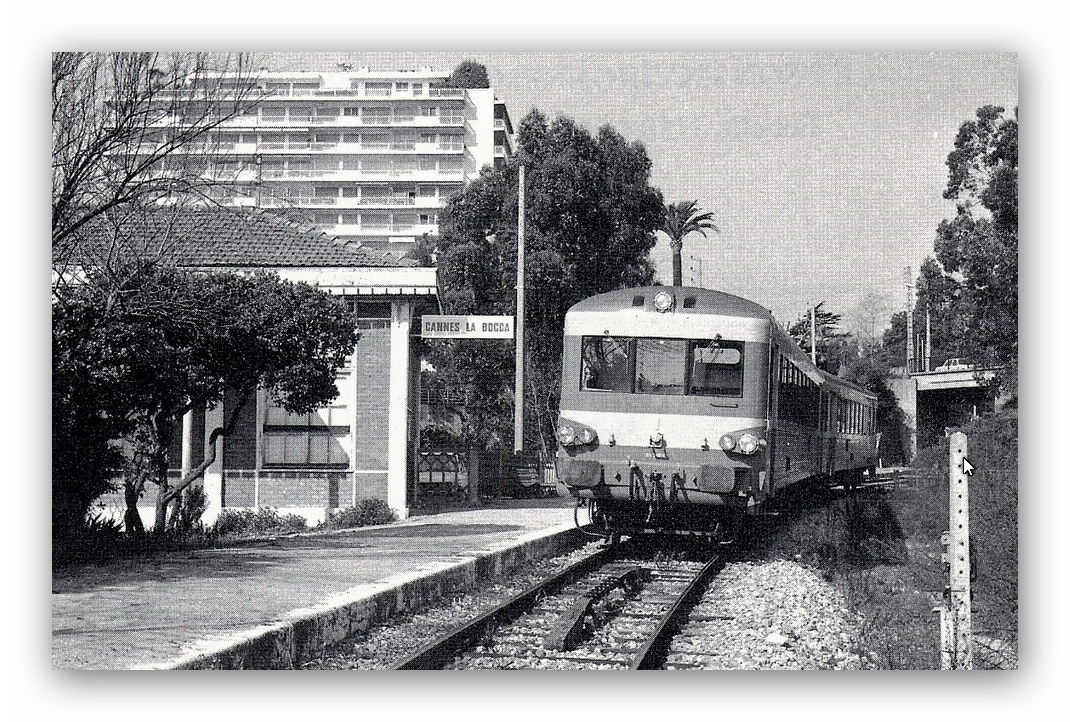
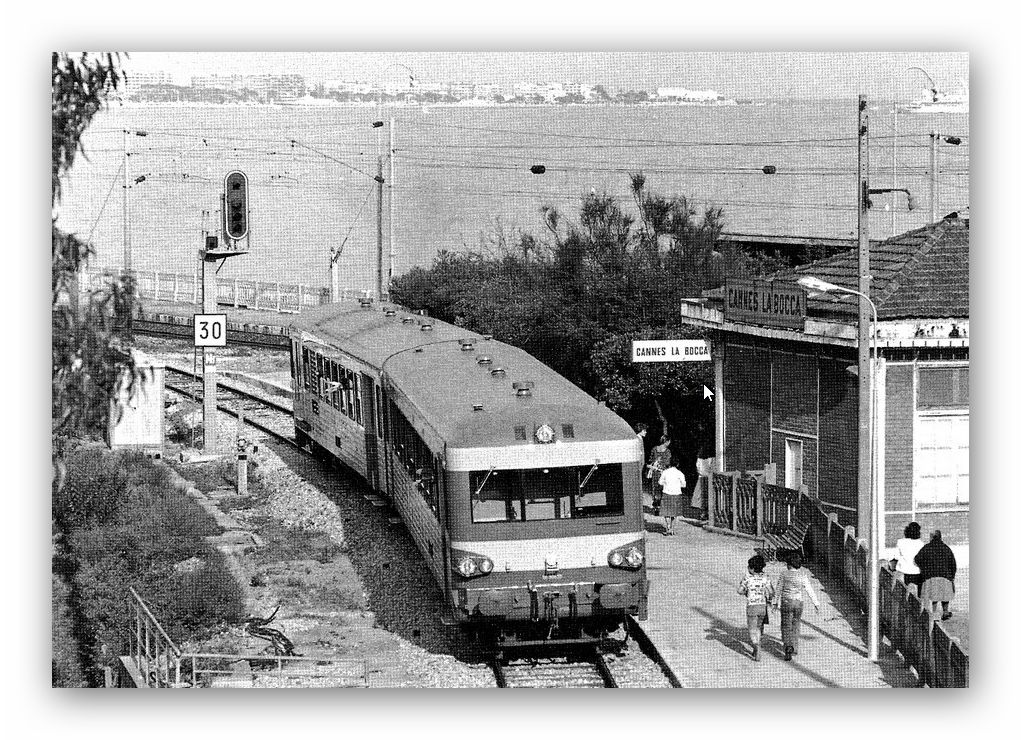
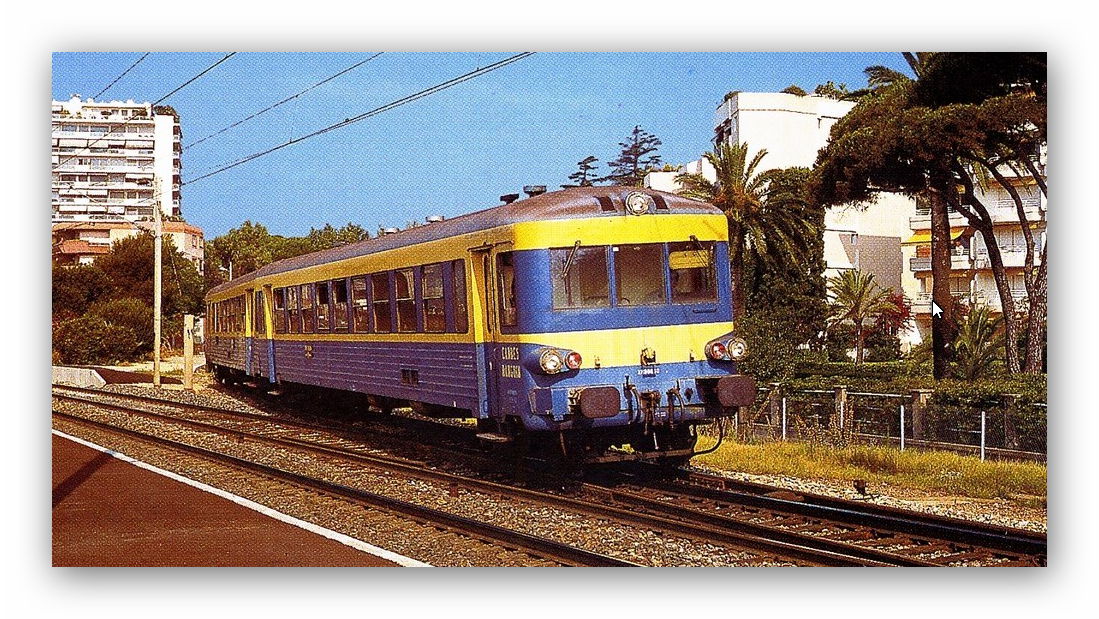
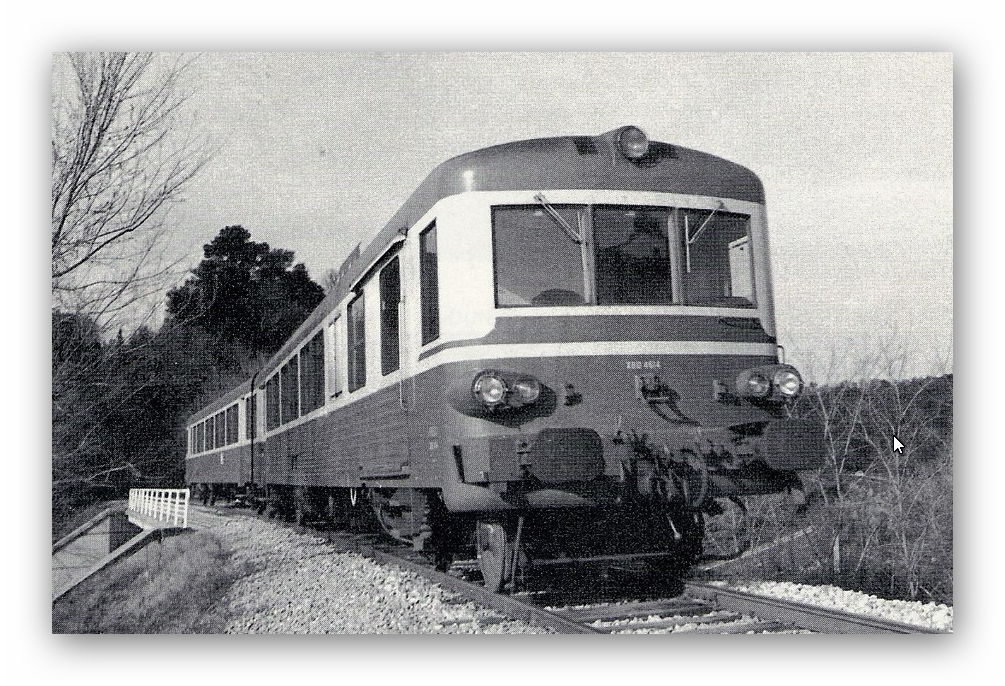
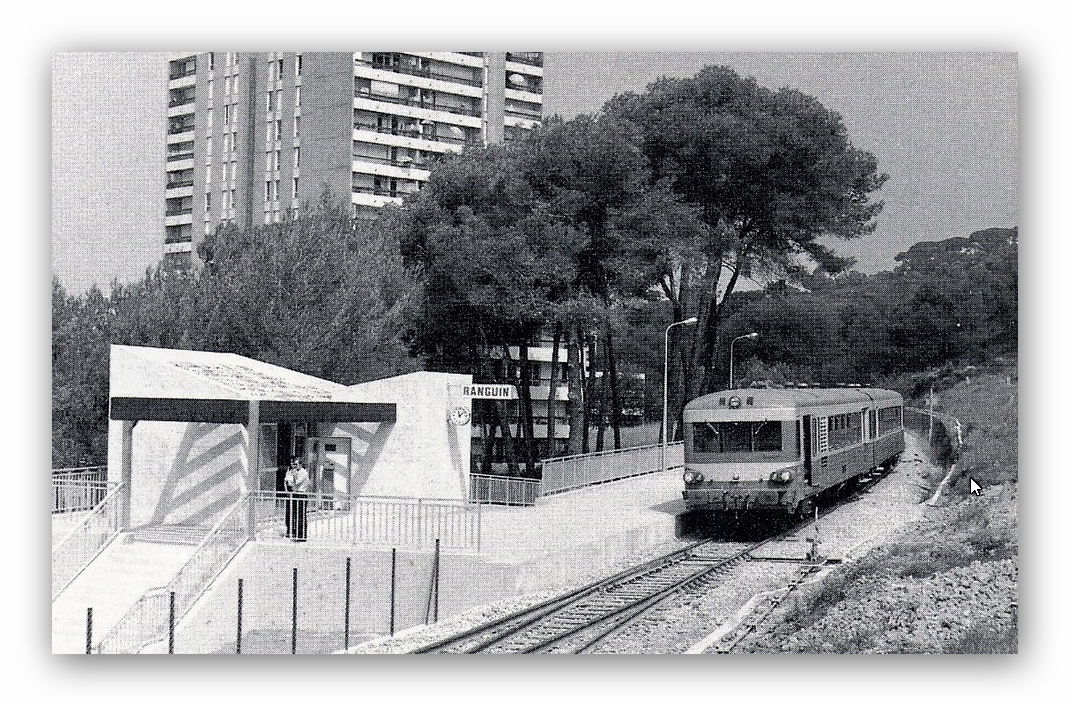
It was partially re-opened in 1978, between Cannes-la-Bocca and Ranguin. The passenger service lasted until 1995. Ten years later, in 2005, the line was reopened to traffic, this time along its full length and using a 25kV/50Hz power supply. Some goods traffic uses the line between Cannes and Ranguin.

More recently the service has been halted for a year to allow line improvements. The line will re-open with double the capacity on 10th December 2017.

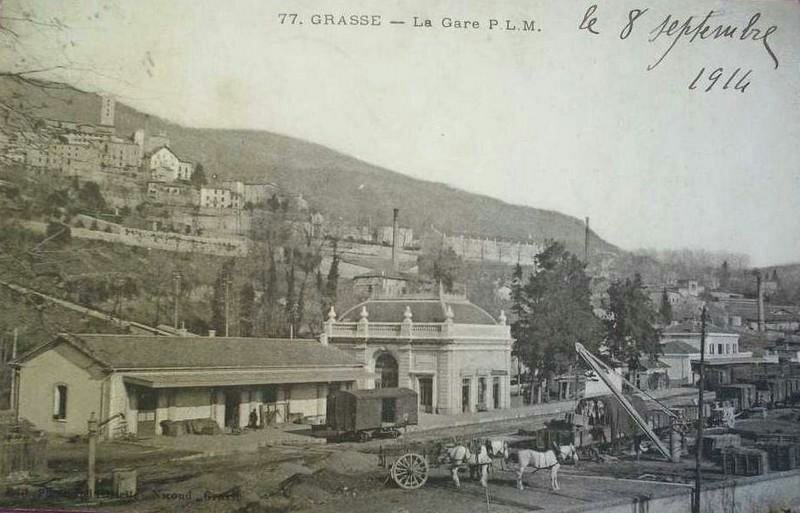
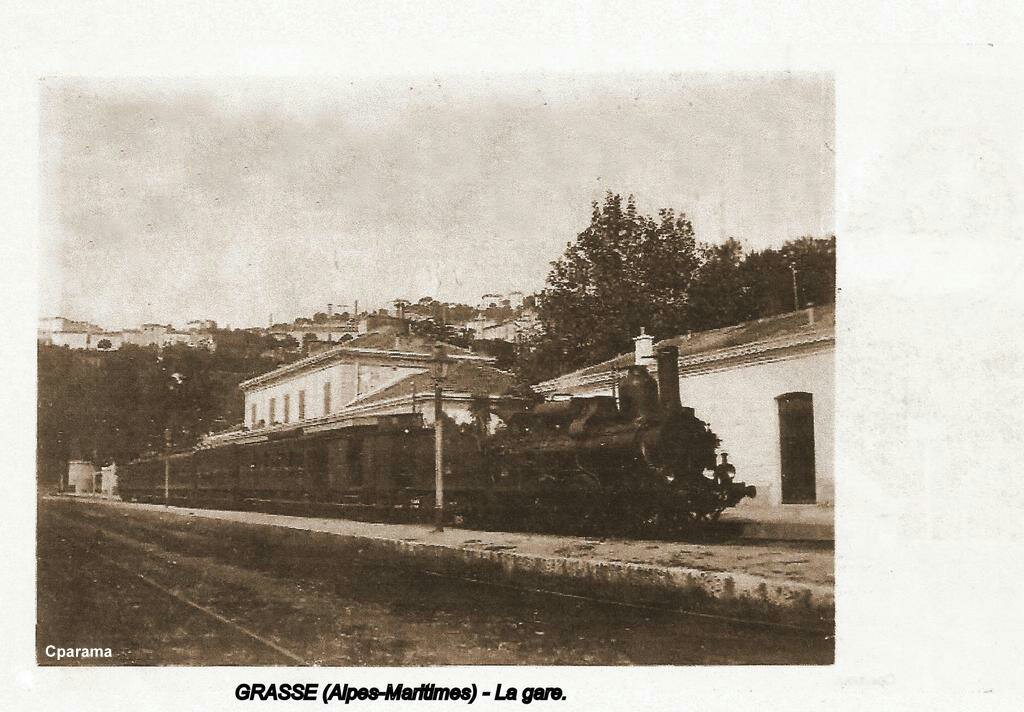
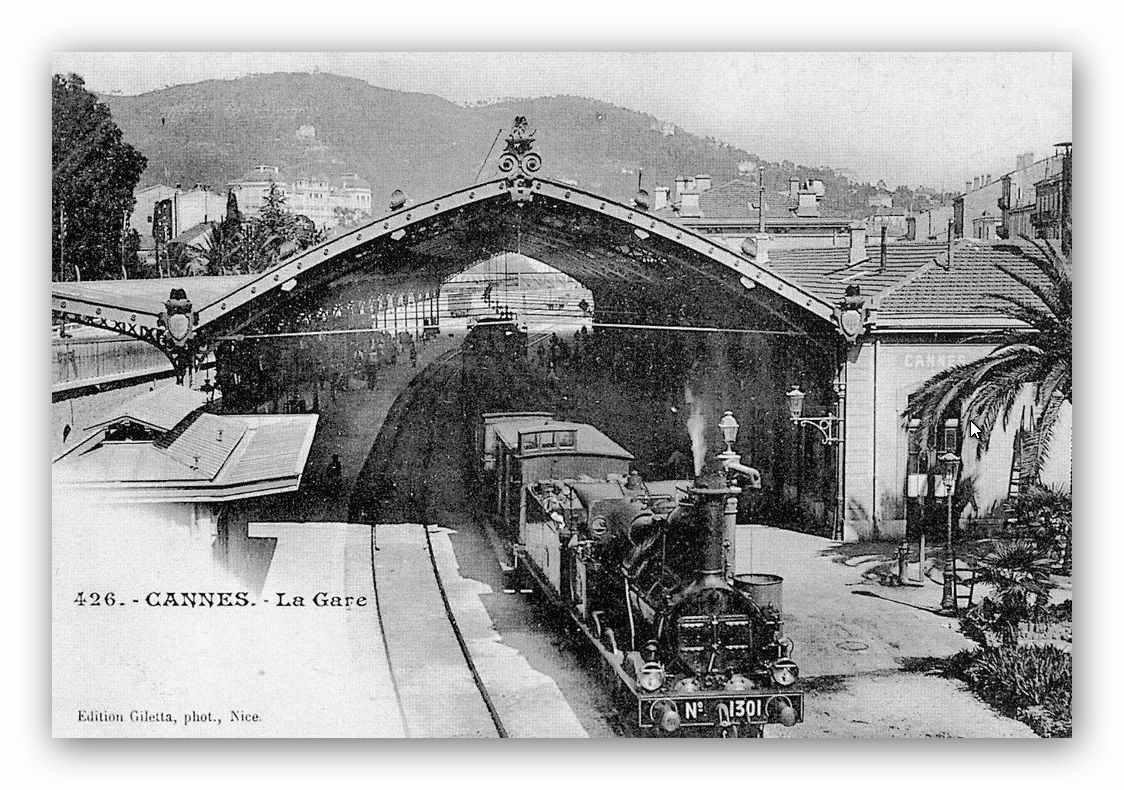
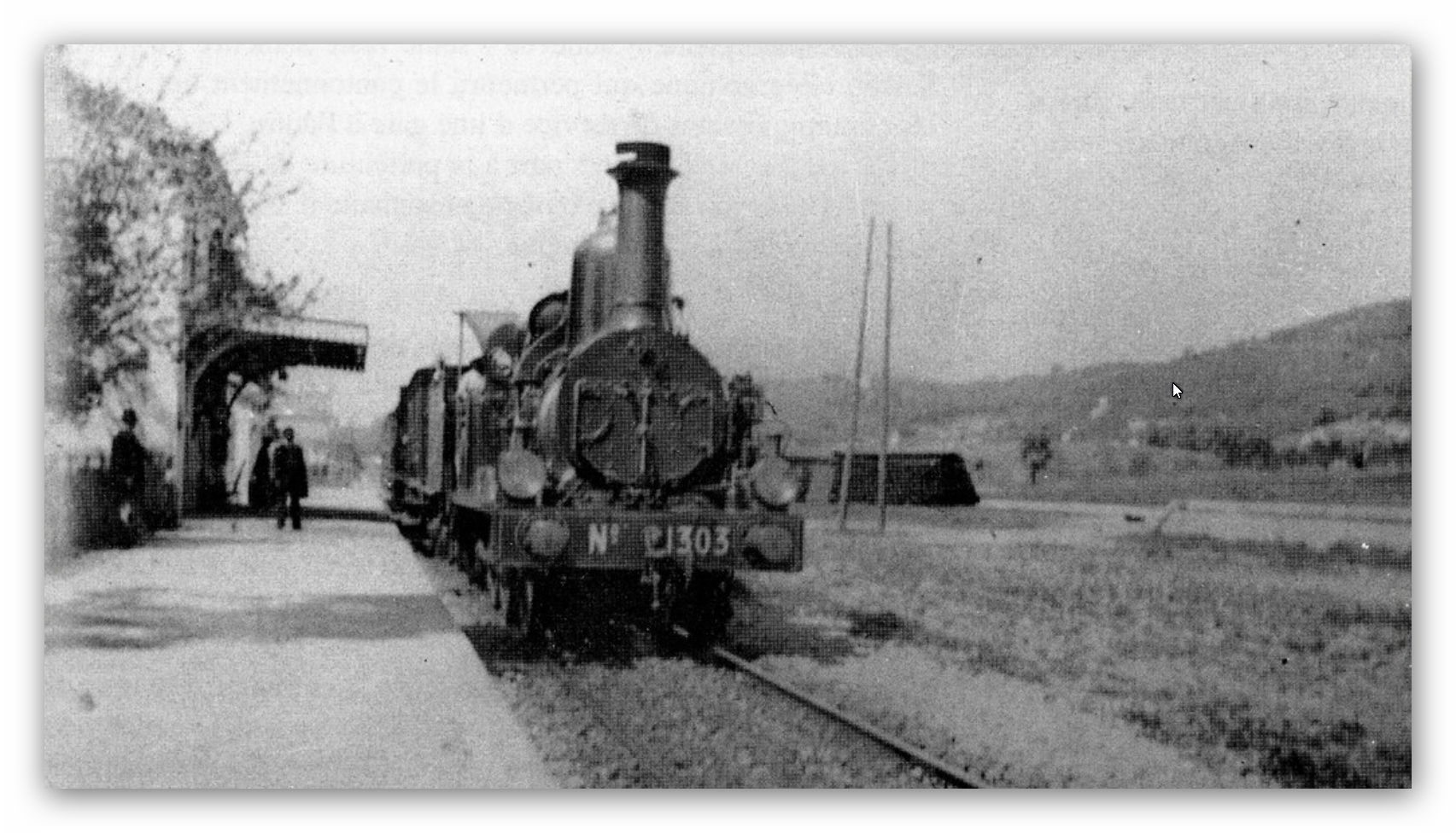
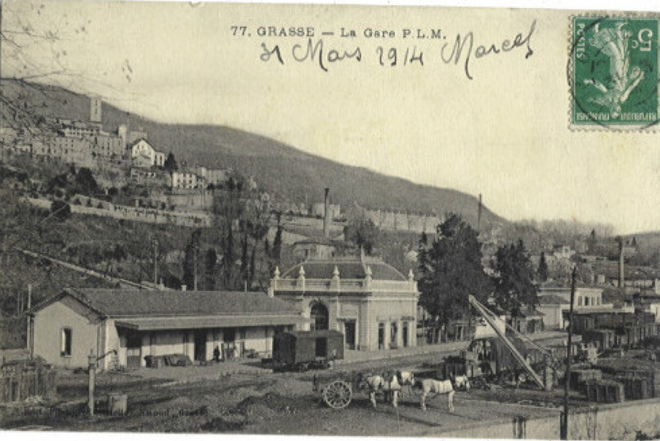
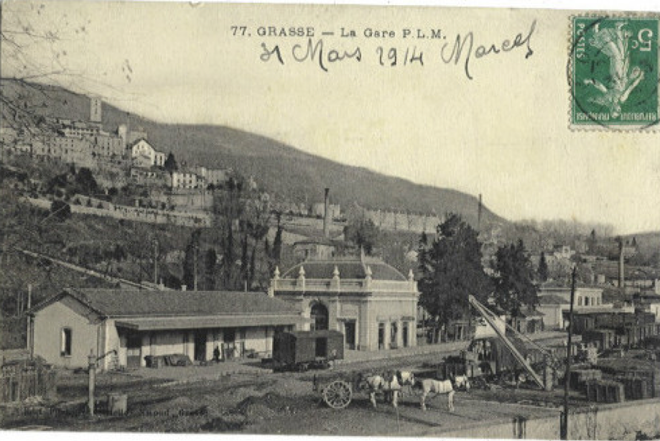
The first photo below shows Grasse PLM station just before the First World War. The locomotive  in the picture is N ° 1231 built in 1856 by the workshops of the PLM in Nîmes and so already more than 50 years old!

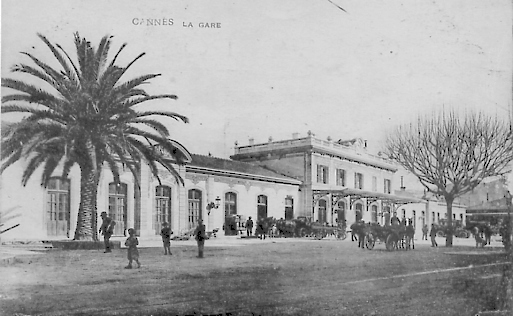
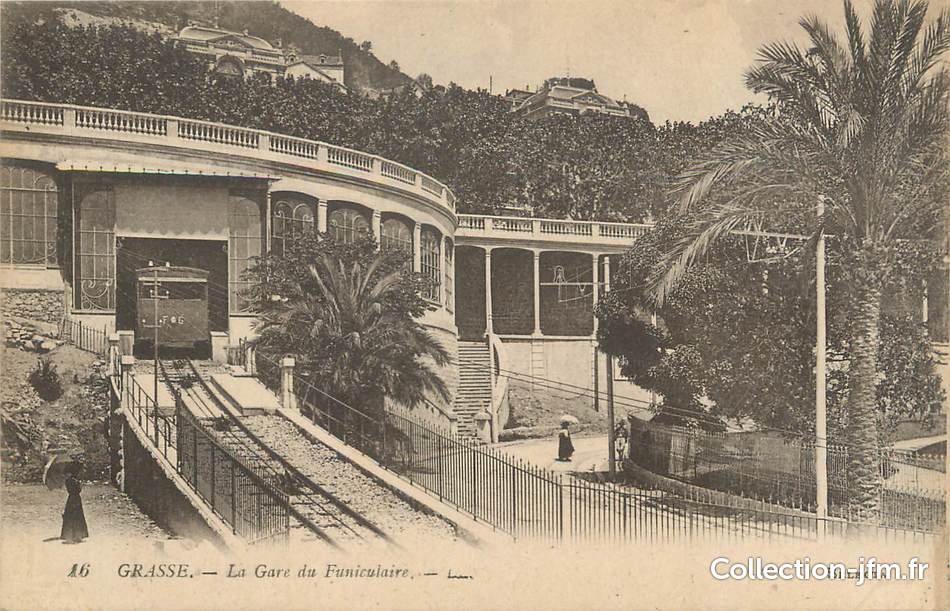
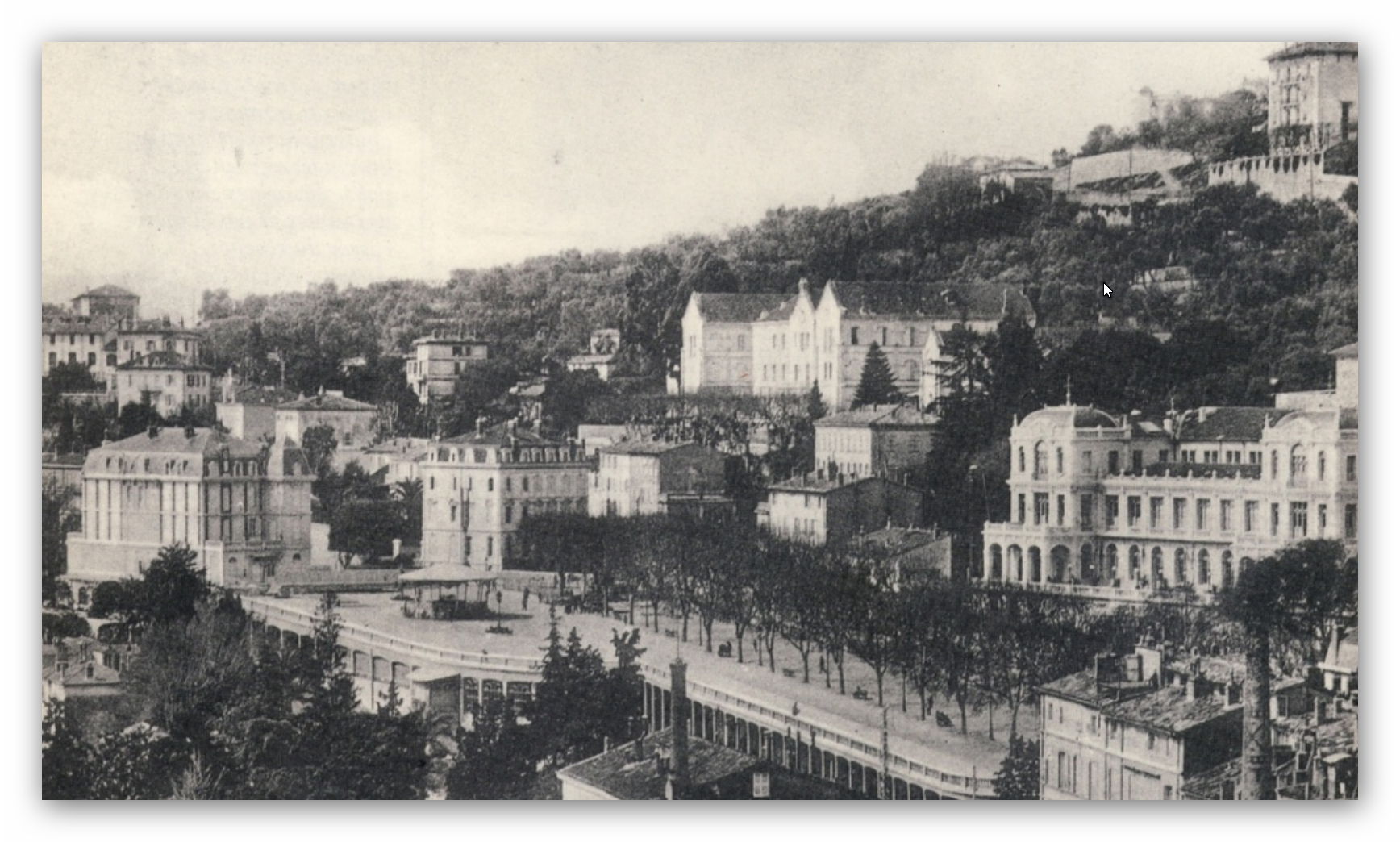
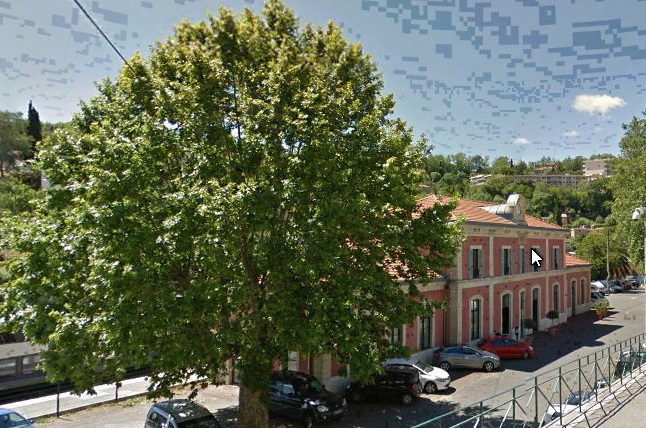
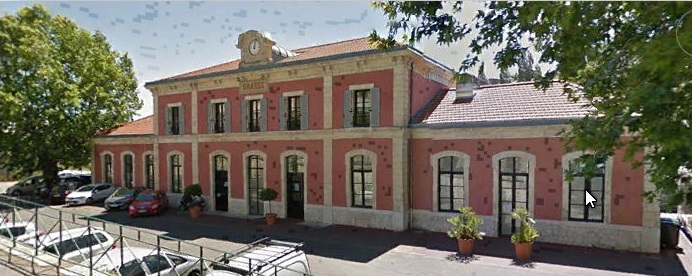
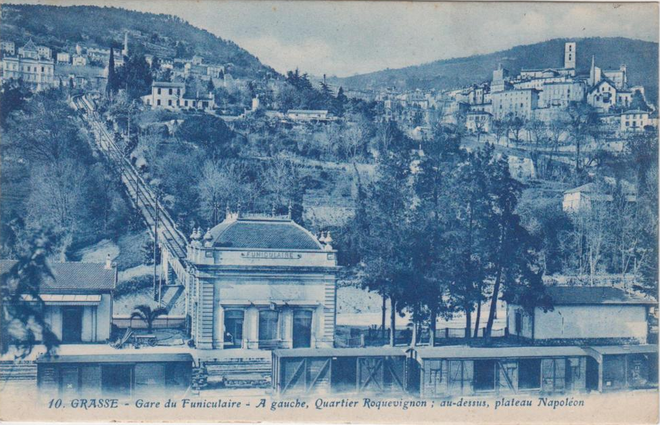
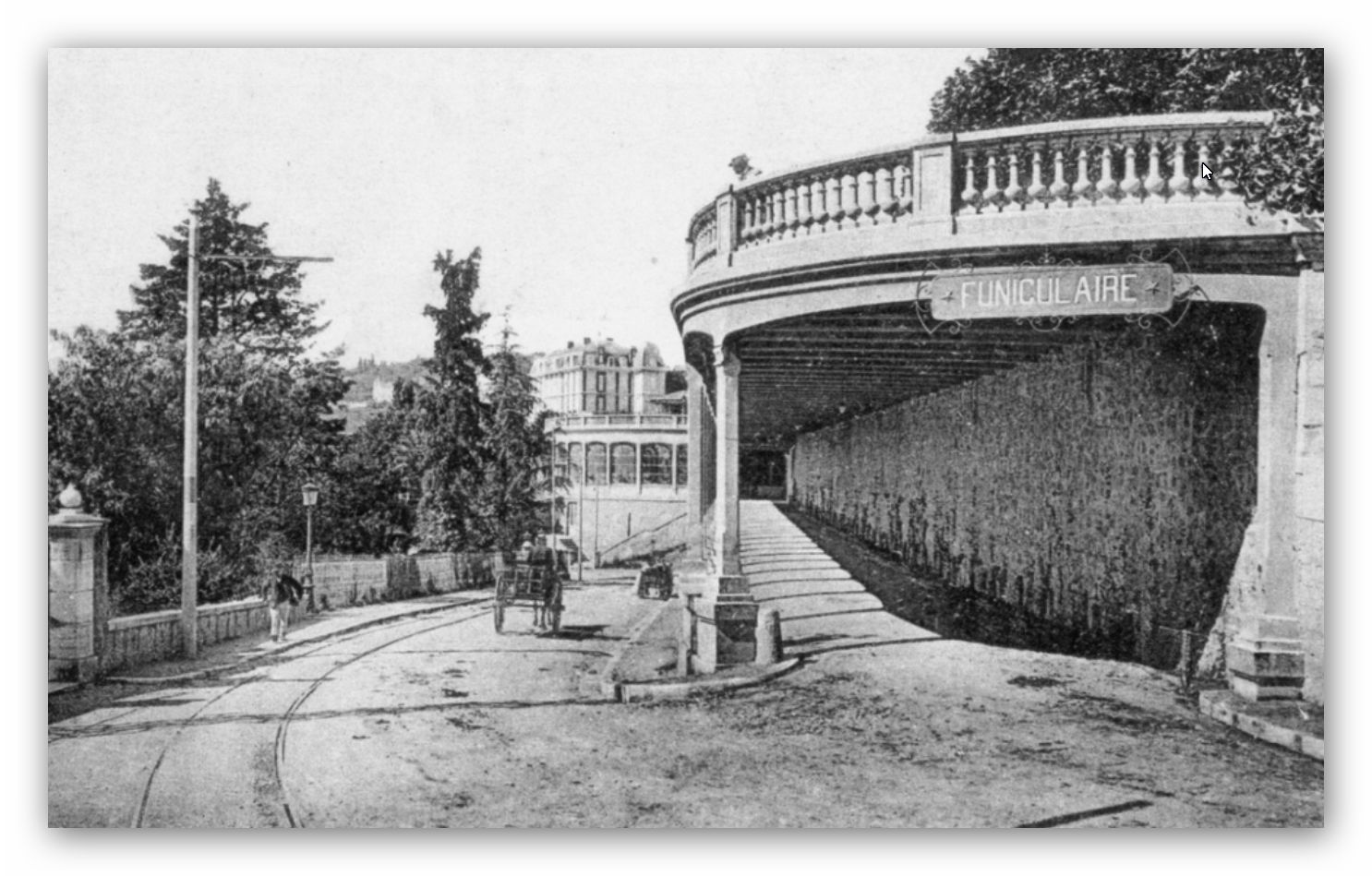
The pictures here give idea of the station and its environment. It was served by a funicular and by a tramway as well as normal road vehicles. It sat about 110 metres below the centre of Grasses and its Cathedral.

The railway left Grasse station in an Easterly direction and ran parallel to the Chemin de Fer du Sud a little lower down the profile of the hillside. When the Chemin de Fer du Sud turned northward, the Cannes line continued in an Easterly direction for a time.

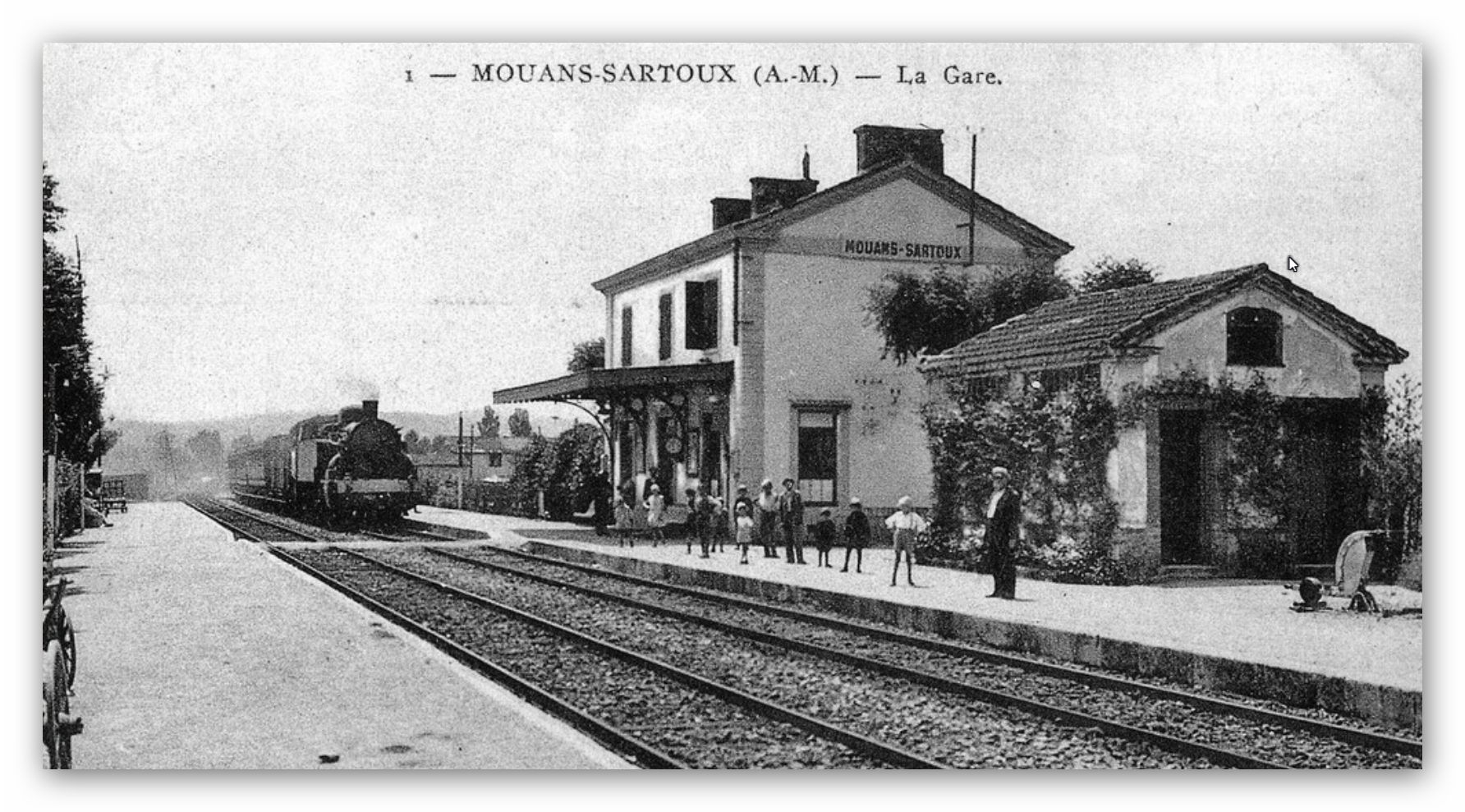
It then turned south towards Mouans-Sartoux. The present track can be seen from the Route de Saint-Mathieu as below. The first image looks back along the line towards Grasse, the second towards Mouans-Sartoux from the same point.

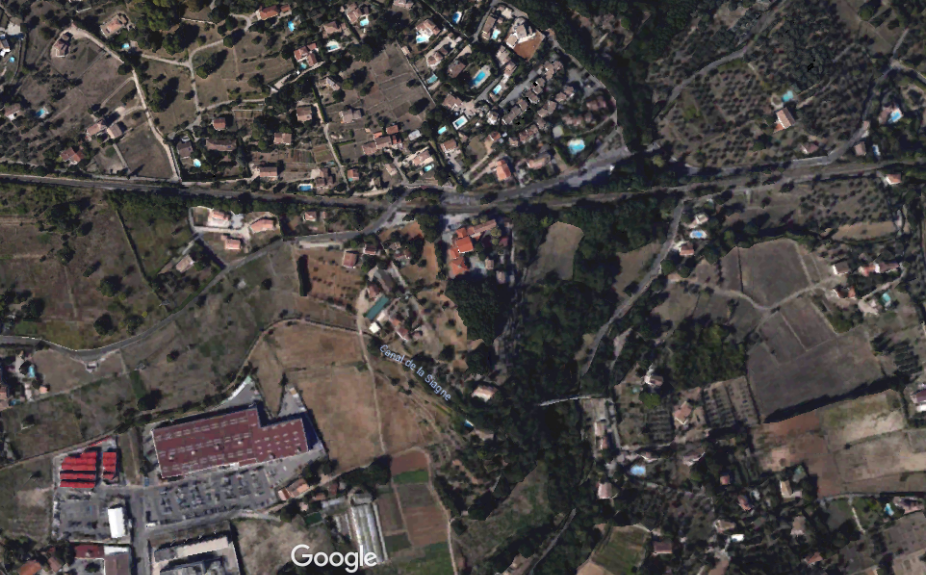
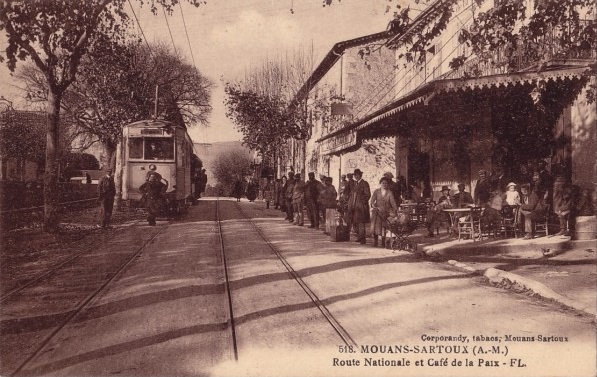
The route travels at relatively light grades down the towards Cannes. On the plan view from Google Earth, the point at which the two pictures are taken is in the North West corner. The line can be seen diverting southwards and following the Canal de la Siagne. After a while the line passed the Chateau de Mouans and arrived at the station of Mouans-Sartoux.

After Mouans-Sartoux, the line continued in a Southerly direction passing through Ranguin, La Frayere, Le Bosquet and Cannes-La-Bocca before running along that main coastal line into Cannes.

We finish this post with a good number of pictures taken on the line from Grasse to Cannes, and after the last of these some video bonuses!

Finally the video bonuses …….

https://youtu.be/Aqtpk6jpR90

https://youtu.be/9G_wyai3oVg


Funicular Railway in Grasse (Chemins de Fer de Provence 23)

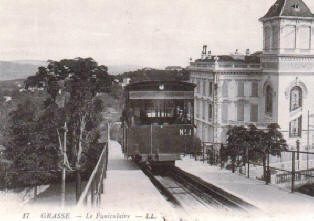
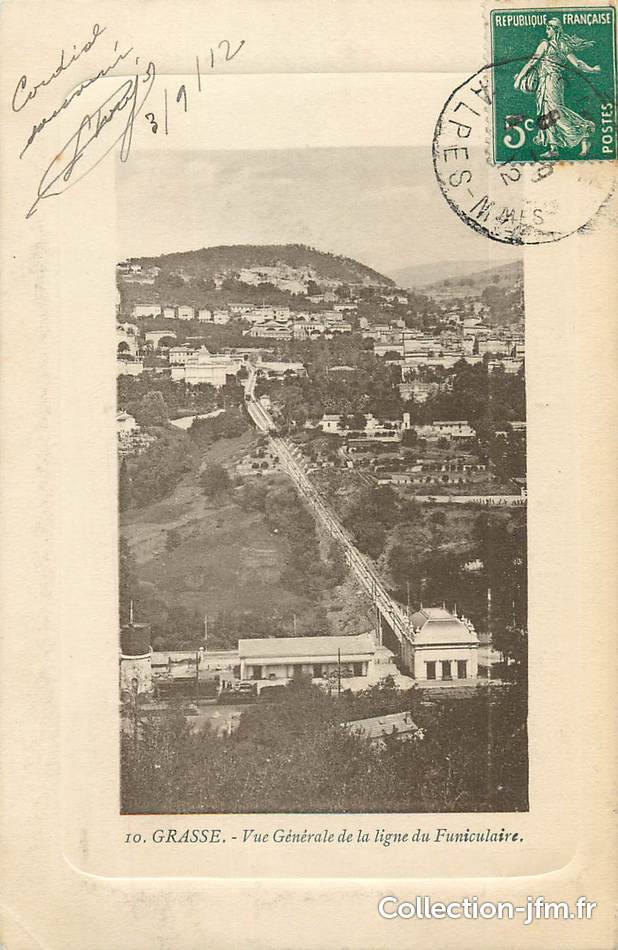
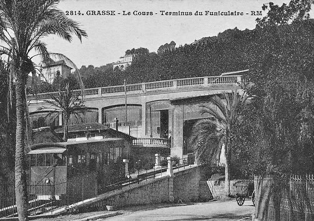
Plan de GrasseGrasse had, for a time, a funicular railway which transported passengers to and from the PLM railway station below the town . The higher station was at La Cours close to the old town of Grasse. For a great del of its life it competed with the TAM trams which meandered up and down the hill between La Cours and Grasse PLM station.

Details of all the other lines in Grasse can be found by following this link:

https://rogerfarnworth.wordpress.com/2017/11/29/the-tramway-between-grasse-and-cagnes-sur-mer-part-2-chemin-de-fer-de-provence-21.

The funicular railway station was at the West end of the platform of the Grasse to Cannes railway run by the PLM. It was easier for passengers to access than the trams which started on the station concourse and this, together with the shorter travel time led eventually to the funicular outlasting the tram service.

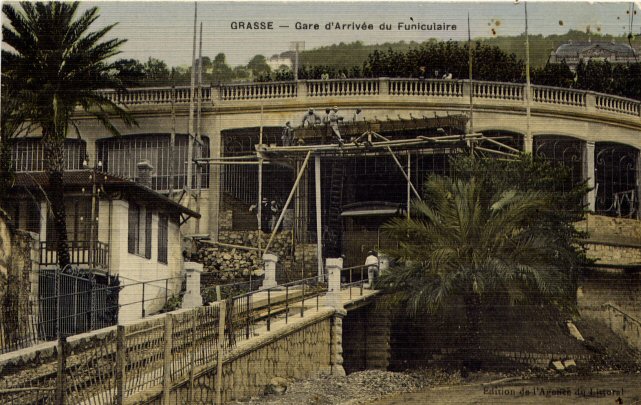
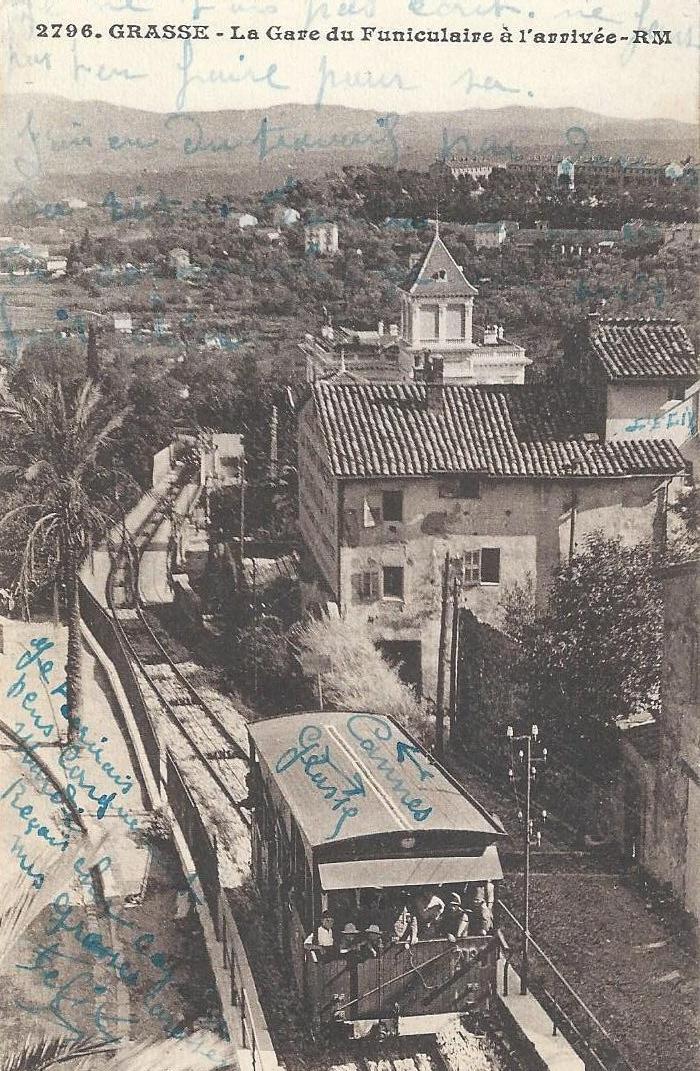
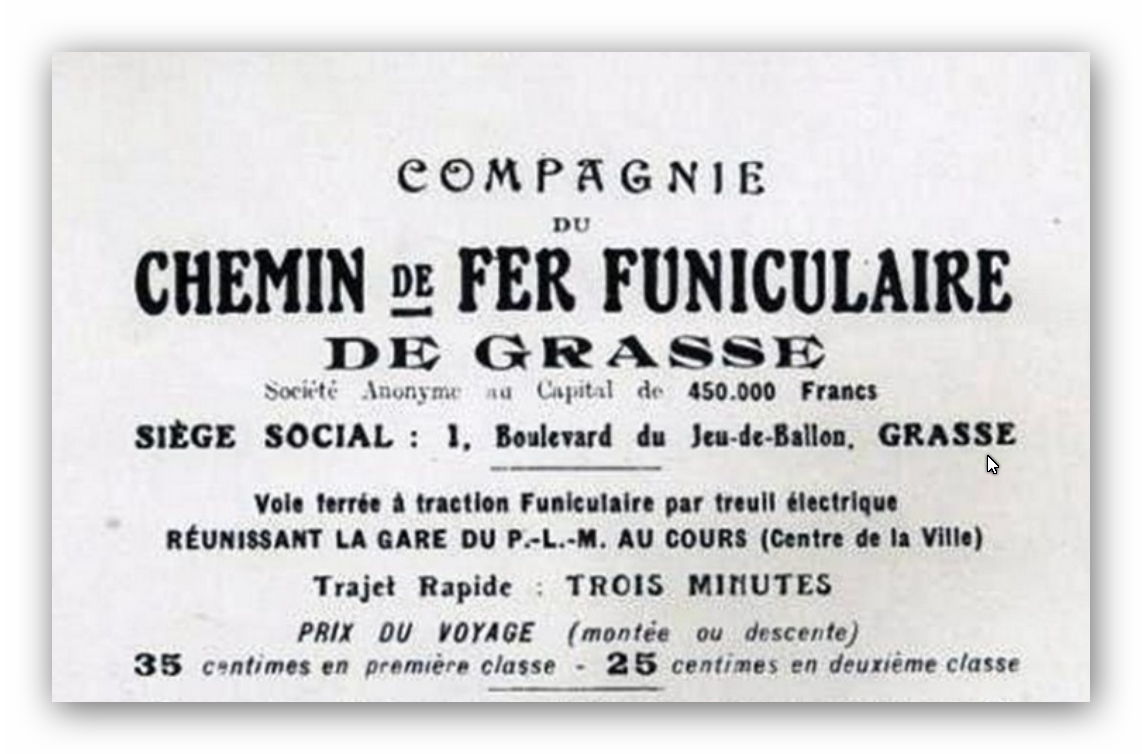
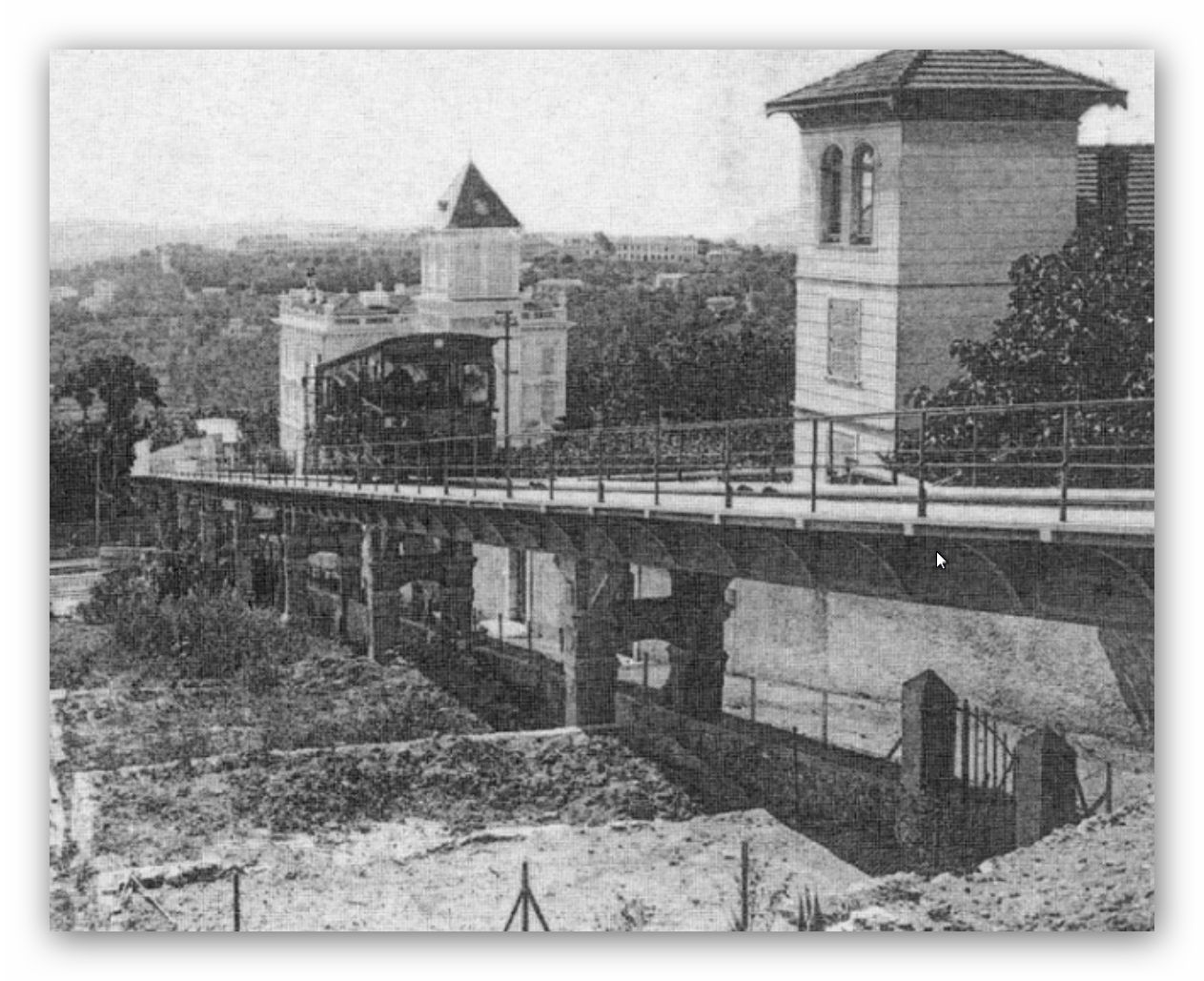
The funicular was commissioned in 1909 but only lasted until 1938 when it was dismantled.

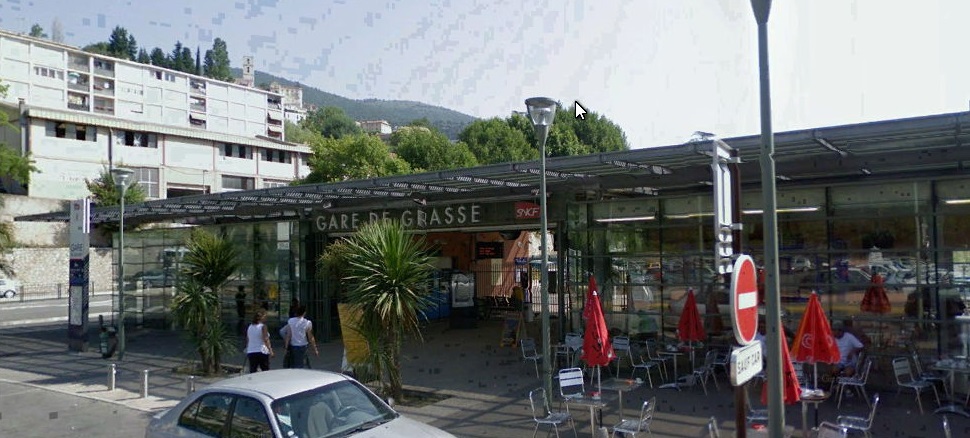
The Grasse train station was put back into service in 2005. Since then, the idea of ​​the funicular has been under development with the aim of improving access to Grasse from the train station.

Before looking at the new proposal , we can enjoy a number of old postcard pictures of the original funicular in operation.

As we have noted, Grasse has seen a need to commission a new funicular and has been developing plans since 2005.

http://aeiagence.com/projet/funiculaires-de-grasse

https://www.systra.com/en-project/the-grasse-funicular

The project has yet to see the light of day. If it does proceed then it will have 4 stations within an overall length of 570 metres and passengers will be carried up a total of  110 metres with an average incline of 20 % . The funicular will consist of two trains, each composed of two vehicles, connected by cable.

The implementation was entrusted on 12th August 2010 to a consortium of companies: DV Construction (a subsidiary of Bouygues Construction group ), Garelli , Poma, Miraglia, Snaf, Systra , Pierre Lorin and AEI. The project is likely to cost at least 40 million euros. The French State  has agreed to paying 5.5 million euros as part of the development of public transport projects under the Grenelle de l’Environnement. The Provence-Alpes-Côte d’Azur region will subsidise the project with an amount of 4 million euros.

The costs are at least:

30 million euros for design and implementation;
4.5 million for intellectual services and engineering;
4 million for land acquisitions!
1.5 million for contingencies.

For supporting information please see reference 2.

References

  1. Funiculaire-de-Grasse; Wikipedia: https://fr.wikipedia.org/wiki/Funiculaire_de_Grasse, accessed 18th December 2017.
  2. Subsidy of 5.5 million for the funicular of Grasse; observatoiredessubventions.com 2013 (accessed 23rd September 2013).


The Tramway between Grasse and Cagnes sur Mer – Part 2 (Chemins de Fer de Provence 21)

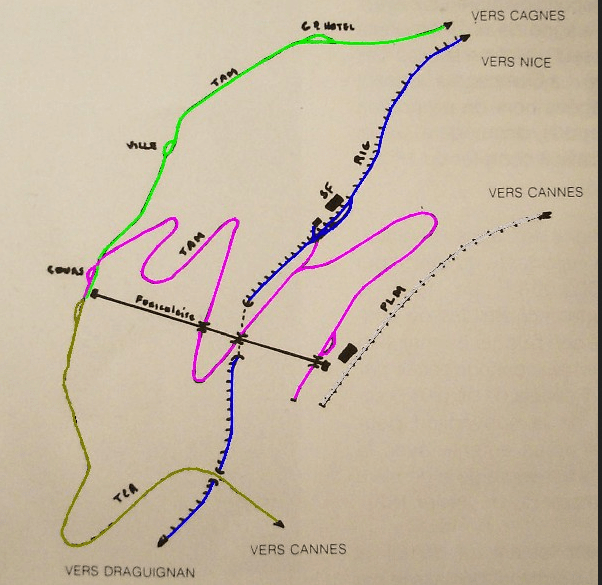
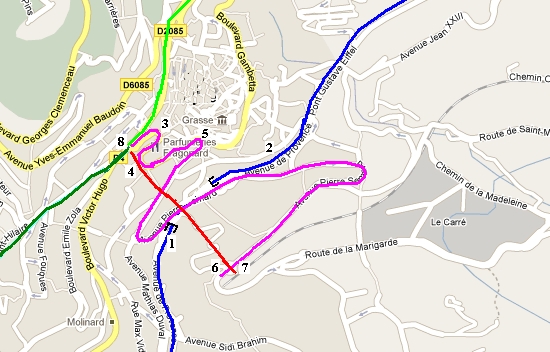
We start the journey on the tram from Grasse PLM Railway Station.  The map below shows the different tramways in Grasse and the route of the PLM line from Cannes.

The blue line on the map is the route of the Chemin de Fer du Sud. Its station was located on what is now the Avenue de Provence to the East of the tunnel at location 2.

Point 7 on the map is the lower funicular station and the station on the PLM line. Point 6 is the lowest point on the TAM tramline within the town and the pink line rises through the town to Point 8 which is the La Cours and which is close to the old town of Grasse. Here there is an intersection between the funicular the TAM tramway via Pre-du-Lac to Cagens-sur-Mer (in light green) and the TCA tramway to Cannes [1] which is shown in darker green.

Grasse Town Centre Tramways and Railways.

You can find the story of the Grasse to Cannes Tramway on this link:

https://rogerfarnworth.wordpress.com/2017/11/29/tramway-between-grasse-and-cagnes-sur-mer–part-2-chemin-de-fer-de-provence-22

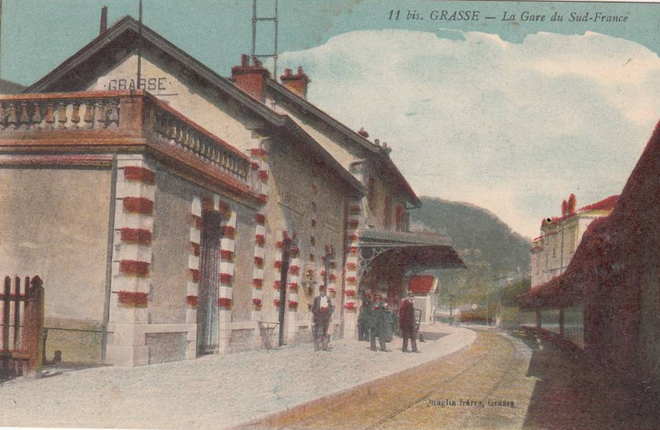
Within Grasse, the TAM tramway ran from close to the Gare PLM (pictures below) up Avenue Pierre Semard round a tight hairpin bend and continued up hill to meet the line of the Chemin de Far du Sud (now Avenue de Provence). There was a short spur of the main route to allow some tram services to terminate at the Gare du Sud.

The Gare PLM  platform ran from the station building along to the funicular station which is also shown on the pictures above.

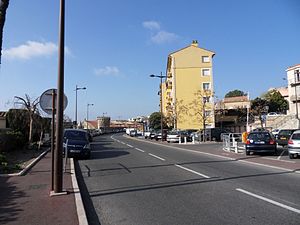
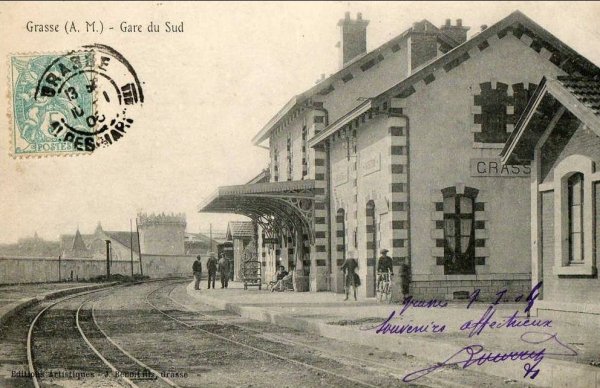
The Gare du Sud has been demolished to make way for a modern apartment block, the Gare PLM remains although the station building is no longer the main focus of the station. There is a modern building at the end of the railway tracks as shown above.

After leaving the Gare du Sud the tramway continued to climb up through the town of Grasse along Avenue Pierre Semard and then turning tightly onto Boulevard Carnot, then tightly again to the left onto Boulevard Fragonard and winding its way up to La Cours.

At La Cours it would have been usual to disembark the tram which had brought you up from the town and to chose either to board a tram on the TAC to Cannes or the TAM to Cagnes-sur-Mer or Le Bar-sur-Loup.

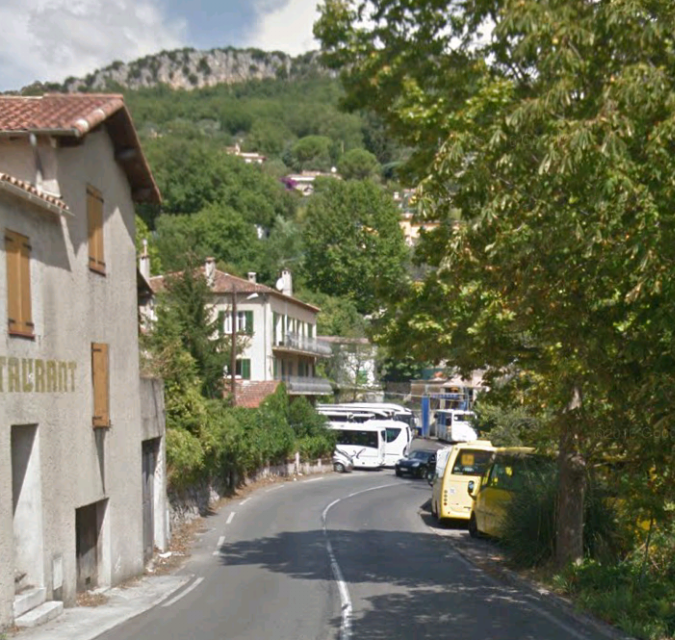
Aboard a TAM tram for Cagnes or Bar-sur-Loup  you would have set off Eastwards on La Cours and then Route Napoleon and along the streets of the old town of Grasse before turning  approximately north-eastwards and heading along Avenue Thiers and then east along Avenue Victoria following the modern D2085 road out of Grasse which becomes Avenue Francis de Croisset, Avenue Pierre Ziller and Avenue Auguste Renoir. By the time the tramway rached the Route de Nice it had crossed over the line of the Ligne du Sud which had been travelling parallel to it about 100 metres further south down the hillside. At the point where their routes crossed the Ligne du Sud was in tunnel under Chateauneuf.

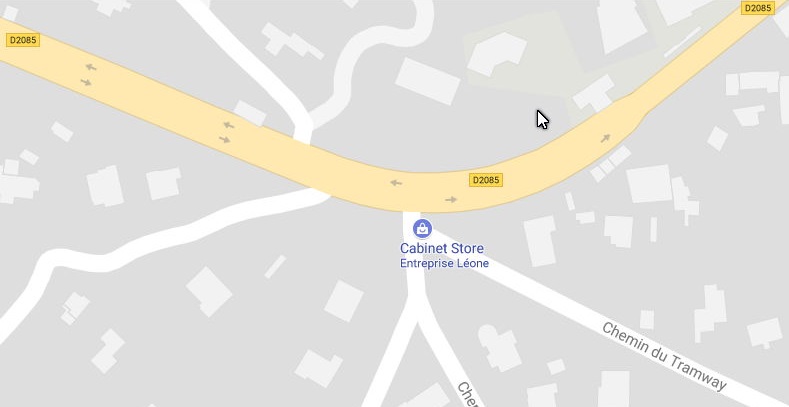
Leaving Chateauneuf the tramway followed the D2805 Route de Nice to Le Colombier and at a point where the D2805 turned northwards at Le Colombier, the tramway continued in a south-easterly direction. Its route is now called the Chemin du Tramway.

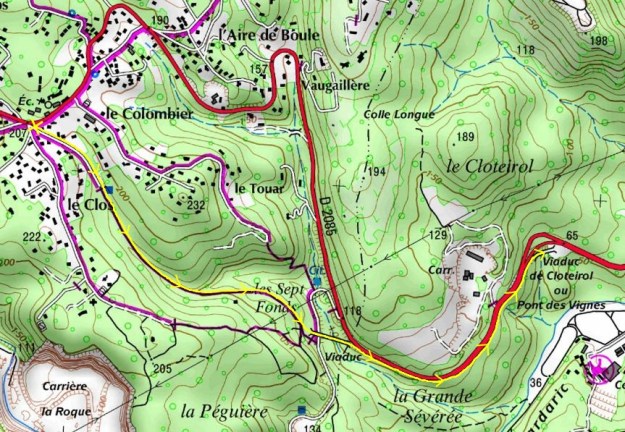
The route is marked in yellow on the larger map and shows that rather than following the contours the line was dropping down towards Les Sept-Fonds. Details of the viaduct at Le Sept-Fonds can be found by following this link: https://rogerfarnworth.wordpress.com/2017/11/28/the-tramway-between-grasse-and-cagnes-sur-mer-part-1-chemin-de-fer-de-provence-20.

74ac9299-aa60-4903-aa61-701551c9f158.jpg

The line continued on a downward grade rejoining the line of the modern D2805 and curving northwards before reaching the Viaduct de Cloteirol (the Pont des Vignes). At this next viaduct the tramway took a sharp turn through 90 degrees. This combination of a very tight curve and a steep grade led to the worst disaster on the tramway network on the Copte d’Azur. The story is told on the previous post in this series (https://rogerfarnworth.wordpress.com/2017/11/28/the-tramway-between-grasse-and-cagnes-sur-mer-part-1-chemin-de-fer-de-provence-20).

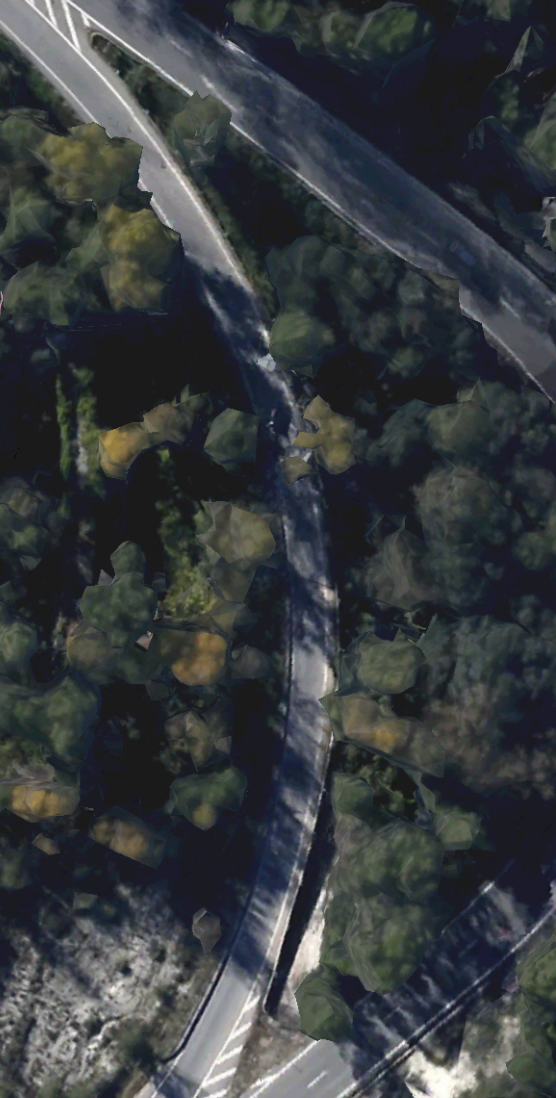
The remains of the Viaduct can just be picked out in the adjacent Google Earth screenshot.

After the Viaduc des Vignes the line followed the Modern D2805 again in a predominantly easterly direction towards Villeneuve-Loubet. It crossed the River Cannes on the West side of the town over a bridge which has been widened and replaced and which carries the Avenue de la Liberation into Villeneuve. The tramway ran along the Avenue de la Liberation through Villeneuve and on through a short tunnel to meet the Vence to Cagnes tramway, details of the remaining journey into Cagne-sur- Mer can be found on the post about the line from Vence:

https://rogerfarnworth.wordpress.com/2017/11/25/tramway-between-vence-and-cagne-sur-mer-chemins-de-fer-de-provence-17.

The branch line to Le Bar sur Loup

At Pre du Lac a short 3 kilometre spur ran to Le-Bar-sur-Loup. It left the main line to follow the Route du Bar. The spur followed this road which ran along the hillside only a short distance above the Ligne du Sud until it entered the Commune of Le-Bar-sur-Loup. At that point the road became the Route de Grasse and the tramway continued to follow it round the head of the Vallon de Riou and on into Le-Bar-sur-Loup.


And finally …..

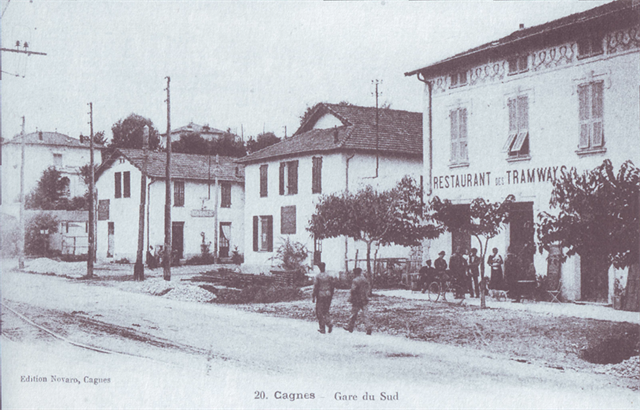
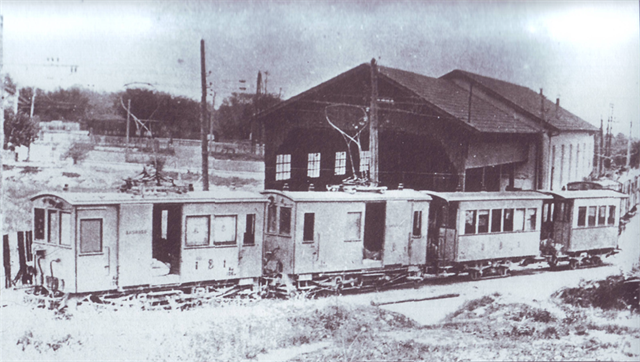
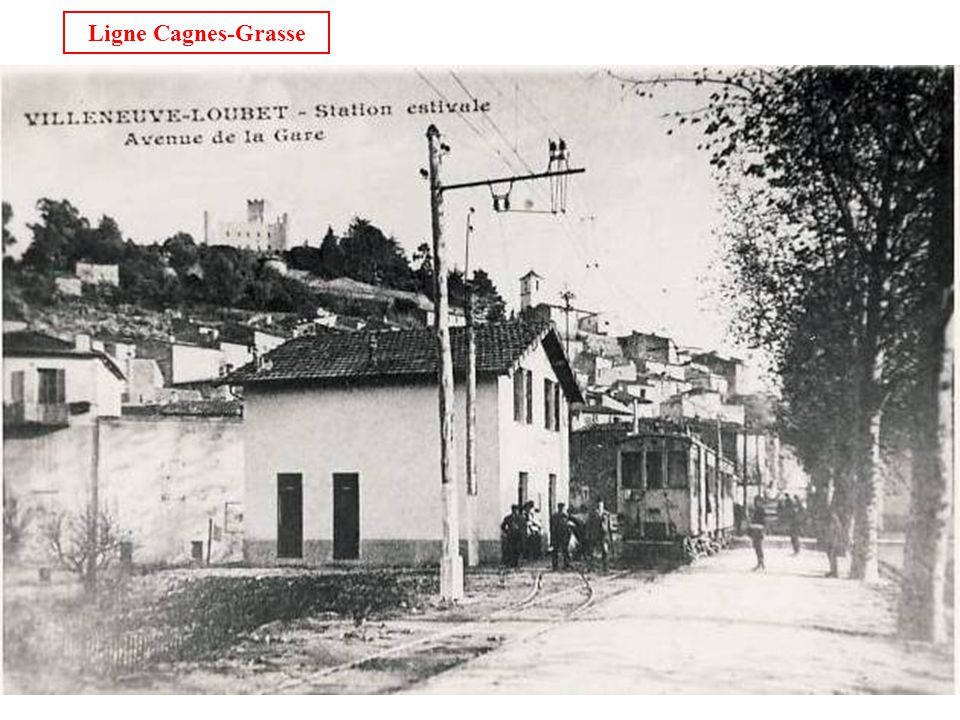
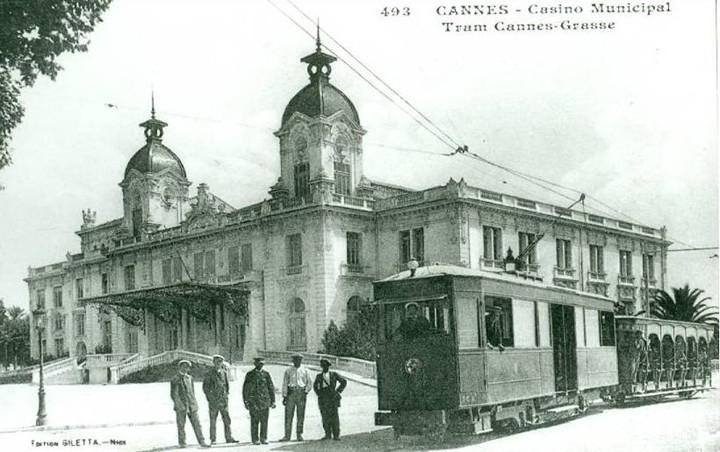
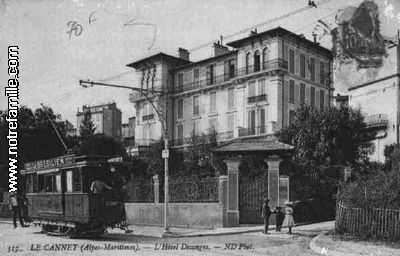
A few older postcard images of the line.


Ligne Cagnes-Grasse

Notes

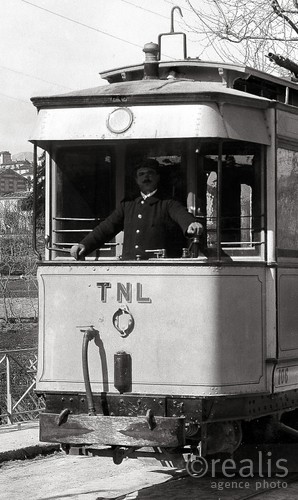
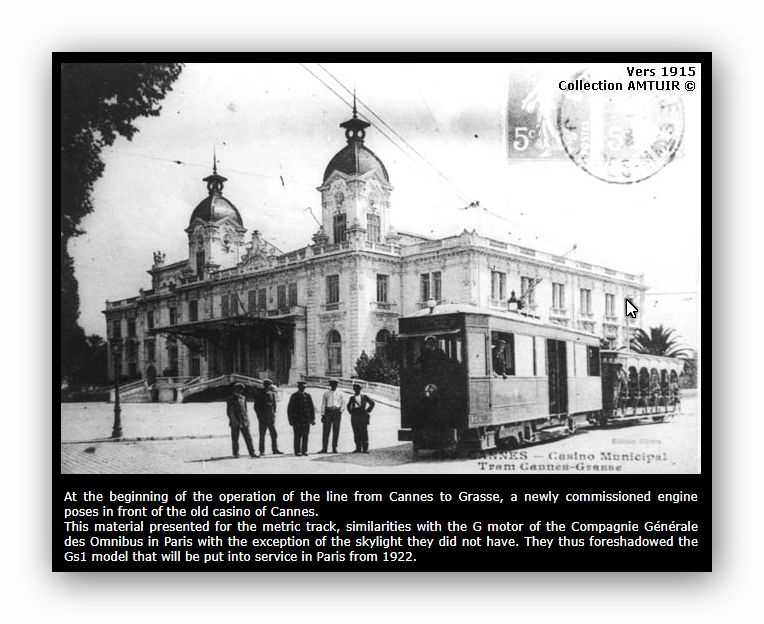
1. Colleagues and friends on the Forum ‘Forum-train.fr’ have very helpfully highlighted the fact that the tramway between Grasse and Cannes was neither part of the TAM nor of the TNL. It was, in fact, independently owned by the TCA – Compagnie des Tramways électriques de la Côte d’Azur. After the bankruptcy of this company in 1923, the line was briefly taken on by the CTC – Cie des Tramways de Cannes, until its closure in 1926. (Please see http://www.forum-train.fr/forum/viewtopic.php?p=313159#p313159, page 1.) 242T66 very kindly provides a link to an addition photograph which comes from the collection of AMTUIR.[2] A copy of that excellent postcard photograph can be found below:

2. Photograph from the AMTUIR Collection; http://www.amtuir.org/03_htu_cp/03_reseau_france_cp/cannes_tca_cp/images/06_GRASSE_TRAM.htm, accessed 21st March 2018.


Tramway between Grasse and Cannes (Chemins de Fer de Provence 22)

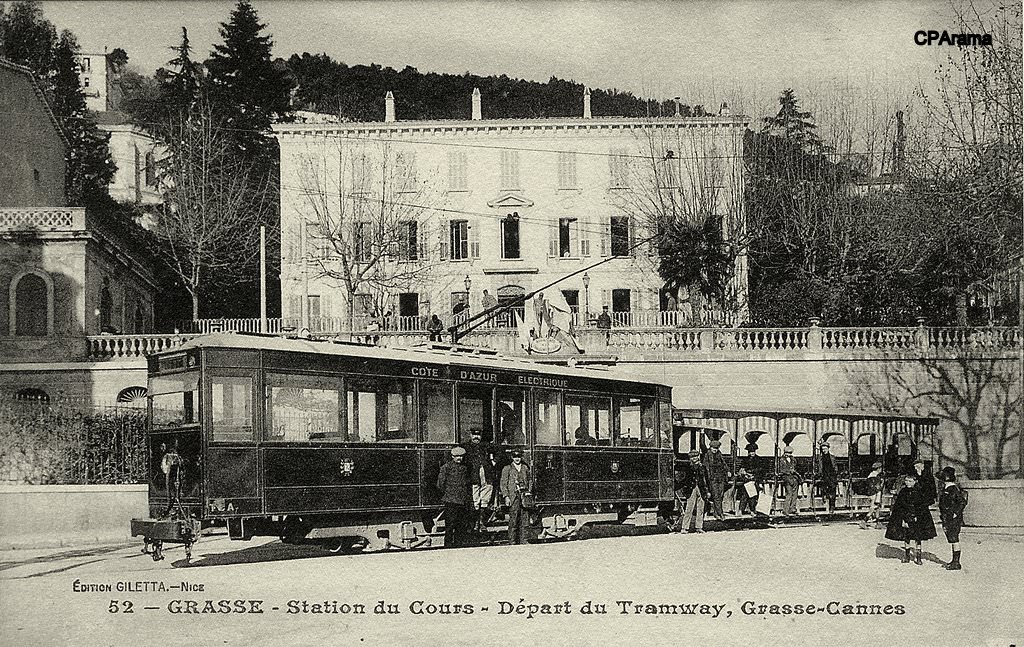
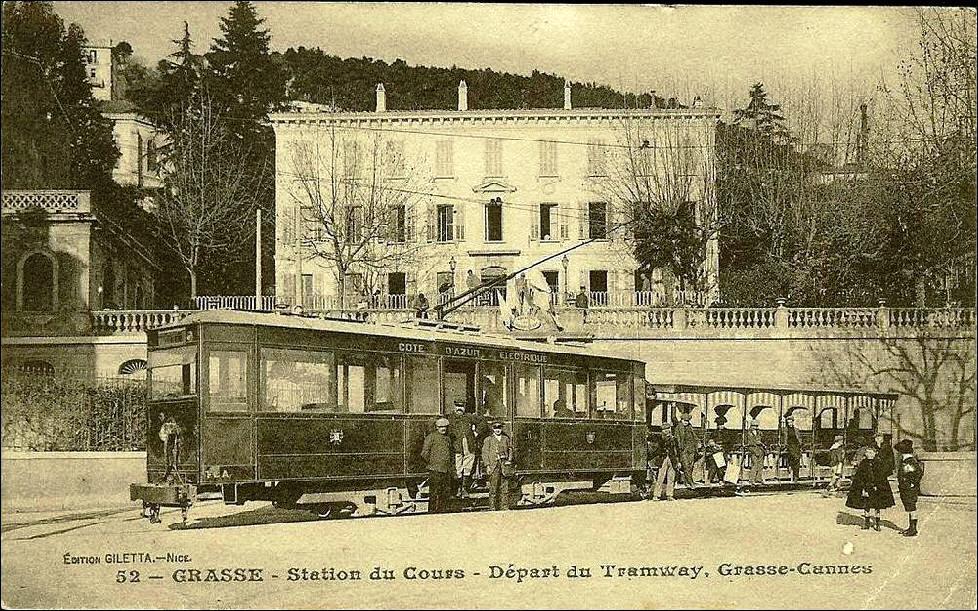
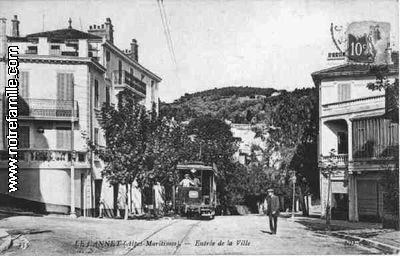
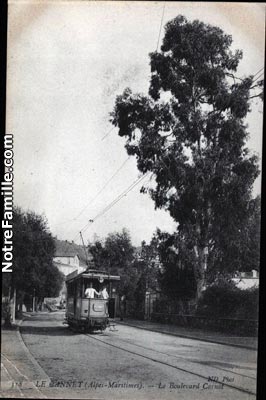
Trams ran on this route from 16th August 1915 to 1st  October 1926  after which the service was replaced by road vehicles.

The city of Grasse once had four rail links, including the Tramway de Côte d’Azur (TCA), which connected it to Cannes.

From 1902-1903, studies were undertaken about making a connection from Cannes to Grasse using steam trams. But opposition and administrative complications prevented the project from proceeding and it was not until 1909 that work began on an electric tramway.

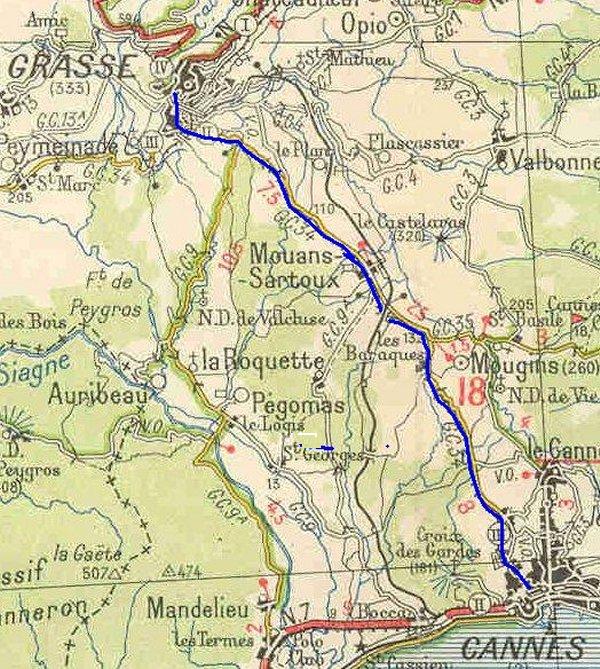
The metre-gauge track was 18 km long. It started from the Albert-Edouard platform, in front of the Casino de Cannes and crossed the Avenue Felix Faure, going up what later became Rue de Marshal Joffre, then along Le Route de Grasse. It crossed Baraques de Mougins then Mouans-Sartoux.

The route then climbs a steep gradient up to Grasse, travelling along Boulevard Collet and Boulevard Victor Hugo. The terminus was at the entrance to the Cours de Grasse. In some places, the gradient reaches 60 mm/metre.

The construction of the line began in 1910. It encountered difficulties in construction because of the steep gradient and some technical problems. The formal commissioning did not get scheduled until Autumn 1914, and that date had to be move back due to the onset of the Great War. The commissioning only took place on 16th August 1915.

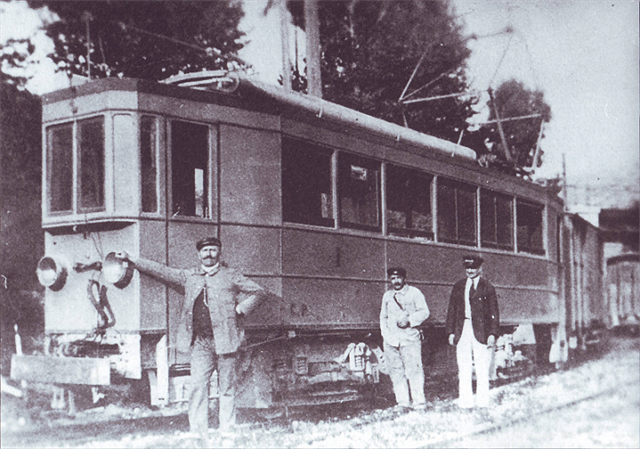
The rolling stock was made up of six central-platform engines – delivered from August 1915 to August 1919, modeled on the GGO’s G-cars. They were considered to be very modern in comparison to the cars onnthe Cannes network.. They were 11.50 m long and weighed 14 tonnes. The traction and braking equipment included two 50 hp engines that allow 4 rheostatic braking and an air brake. 7 open trailers completed the rolling stock.

The steep gradient of the line meant that accidents were frequent. The rolling stock was not well-maintained. A suicide on 9th July 1919 using the electrical overhead wiring did not help the reputation of the line and caused serious damage to the electrical power plant.

In the face of repeated accidents, speed limits were placed on the line. Sadly when the line opened it did so without any spare parts and as a result the service was ultimately, in 1920, limited  to just one tram-train per day. Regular services were interrupted by an irregular electricity supply.

On 6th January 1922, the line was sporadically put into service but the TCA was soon declared bankrupt. Occasional attempts were made to resurrect the line but on 1st October 1926 the last tram ran between Cannes and Grasses and the tracks were removed by 13th May 1933.

The route ran along the GC 34 from Cannes to Grasse on the left shoulder of the road all along its length with the exception of the underpass under the PLM track at Mouans-Sartoux where there was a depot. The following are a few images to follow which show different facets of the line.


The Tramway between Grasse and Cagnes sur Mer – Part 1 (Chemins de Fer de Provence 20)

There was once a tramway between Cagnes sur Mer and Grasse. The main line of this tramway was 25 kilometres long and there was a branch line to Le Bar sur Loup which was 3 kilometres long. Deatails of the route can be found on the second post in this series:

https://rogerfarnworth.wordpress.com/2017/11/29/the-tramway-betw…r-de-provence-21

Construction work started late in 1910 and the section from Grasse to Pre du Lac opened on 1st March 1911.The extension to Cagnes opened on 30th December 1911, and the Branch from Pre du Lac to Le Bar sur Loup opened on 1st October 1912.

The tramway remained open only until 1929, with the final journeys taking place on 16th May 1929.

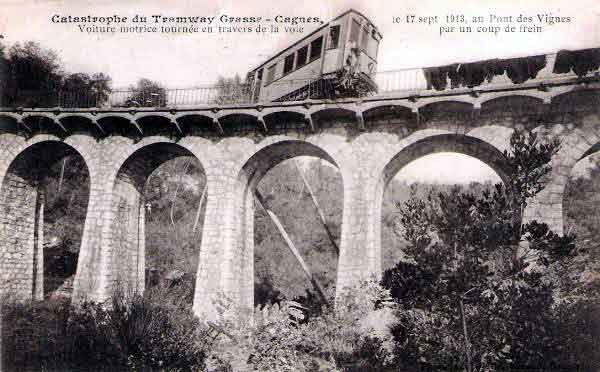
On 17th September 1913, the line experienced a major accident. The worst that happened on the TAM network: the derailment of tram 428 at the Pont des Vignes. This led to many controversies and reports, but also improvements in the safety arrangements on the line. Ultimately, the accident was probably primarily responsible for the early demise of the Grasse-Cagnes line.

After the Great War, the section Grasse-Cour to Grasse-PLM, was closed in May 1921 as a result of competition from the funicular railway.

On 31st October 1923 there was nearly as significant an issue as on 17th September 1913. Tram 202 almost experienced the same problem at Le Pont des Vignes but finally derailed without too much damage further along the line near La Vanade.

On 3rd January 1925, a tram began to accelerate on icy rails close to the viaduct, fortunately the tram was stopped without derailing. In addition to these incidents, there were others of a less serious nature which were deemed to be the result of aging equipment and poorly maintained track, precipitated the decline of the tram and the Grasse-Ville / Grasse-Cours section closed in November 1925.

Competition from road transport and financial deficit, provoked the end of the line in 1929 and the official liquidation in 1930.

So what was it that happened in September 1913?

Wednesday 17th September 1913, stormy was a stormy and wet day. Tram train 428 from Grasse-Ville to Cagnes-sur-Mer departed on time at 16:36hrs. It consisted of self-propelled Bam-205, Aam-114 and trailer Bam-3108 and was driven by Jules Leotardi (25 years old) who had been with the company since May that year, having been authorized to drive trains in July. He was accompanied on the journey by Honoré Sauteron, a 25-year-old student who had been hired for 12 days and whom he was training.

In Pré-du-Lac, the conductor Louis Agnelly (33 years old) harnessed the trailer Aam-3010, without connecting the continuous brake because Leotardi judged that to do so would increase the consumption of air and instead of improving the braking of the train, would lengthen the reaction time.

The tram was full, very full in fact. Several units of alpine soldiers were returning to their garrisons on the coast after having participated in manoeuvers in the Grasse region. The soldiers of the 27th BCA, who were camped near Chateauneuf, also embarked to return to their quarters in Menton.

Shortly after, at following stops, soldiers from the 24th BCA who had left their bivouac at Rouret to return to their base at Villefranche joined the tram, as did some 2nd RA gunners and civilian travellers. The tram train was already quite full before others joined the tram at San-Peire, St.Pons, Le Collet and Les Moulins. Thectram was so crowded that a short stop was made at Rigamel to allow the conductor to change cars in order to continue selling the tickets.

The train stopped again at Roquefort, then took more passengers at Colombier halt, which it left 15 minutes  behind schedule and with seventy-six passengers on board. A fine rain began to fall and the train entered the forest on a steep gradient heading for Le Viaduc de Sept-Fonds.

Le Viaduc de Sept-Fonds.
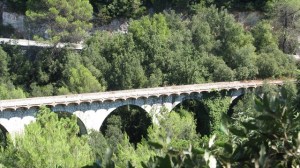
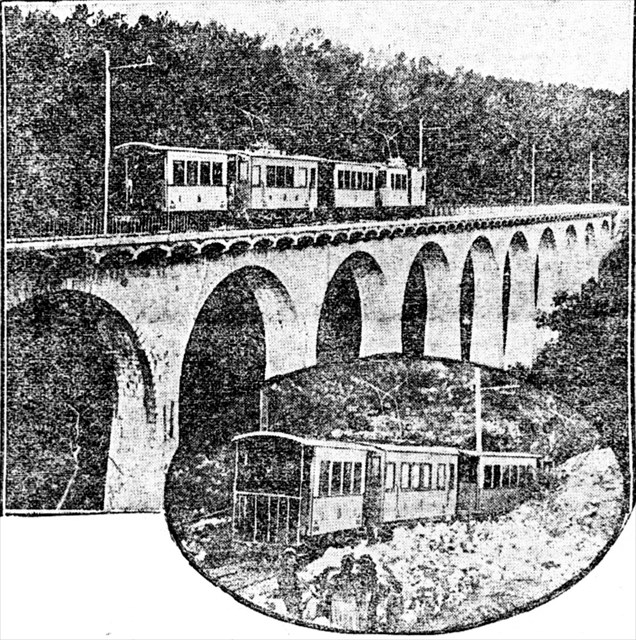
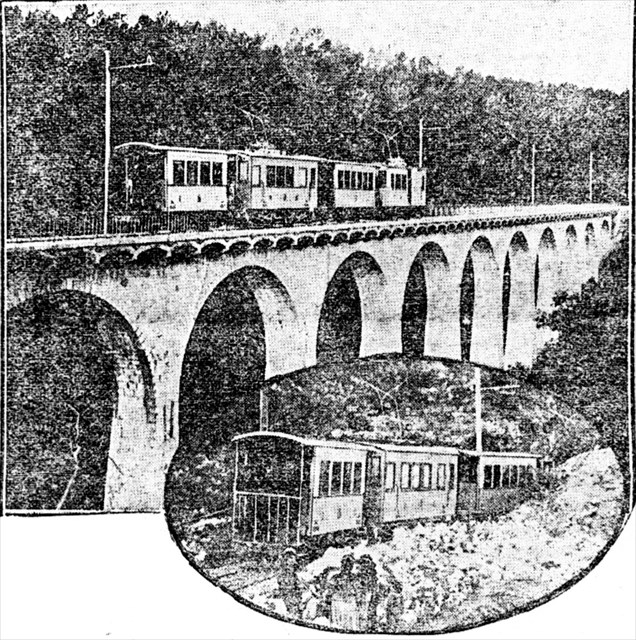
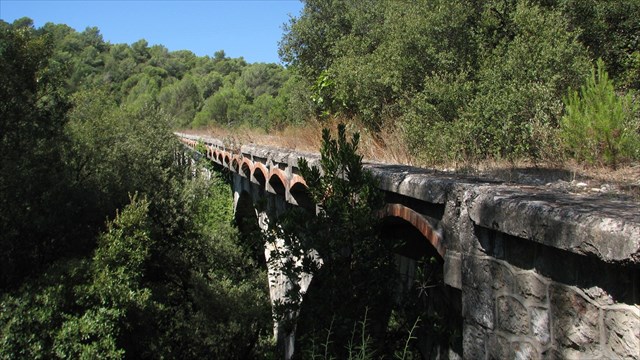
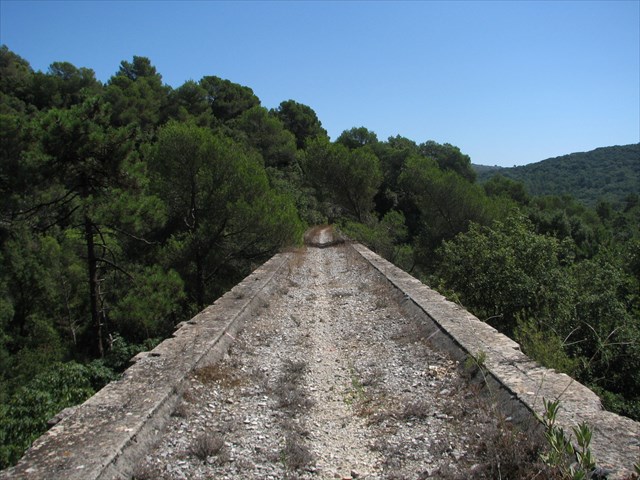
The Sept-Fonds Viaduct is one of the last vestiges of the Cagnes-Grasse tram line. It was designed in 1908 by Armand Joseph Marie Hamon, engineer of the roads and bridges in Grasse. It crosses the Sept-Fonds valley (length: 139m, width: 3.70m, height: 23m at the highest point). It consisted of 12 semi-circular masonry arches, each spanning 10m. Today, the rails and the wrought iron railings have disappeared, but the masonry is still intact and clearly visible. 

In researching this post I have found some excellent pictures of the viaduct, and even some detailed drawings. These are available, in context, on the geocache site for the structure: 

https://www.geocaching.com/geocache/GC3TX2J_tram6-le-viaduc-des-sept-fonds.

As the tram-train continued down the line, witness accounts suggest that the speed increased significantly. Leotardi’s tesimony is that when he applied the brakes, rather than slowing the train, the wheels jammed and slipped on the rails. He applied the sanders, but to little effect. As this was quickly becoming an emergency, he invoke instructed procedures which were to release the brakes and throw the power car into reverse gear, but speed continued to increase.

The tram-train reached Le Pont des Vignes travelling at a speed in excess of 65 kilometres per hour. The leading power car seemed to be remaining on the track and so Leotardi took the decision to bring the power control back to neutral.

At the same time, in the rear car, the conductor was making his way through the military and their equipment to try to tighten the brakes.

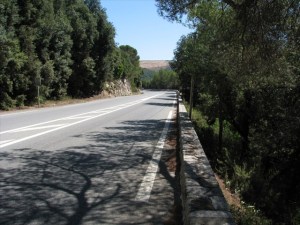
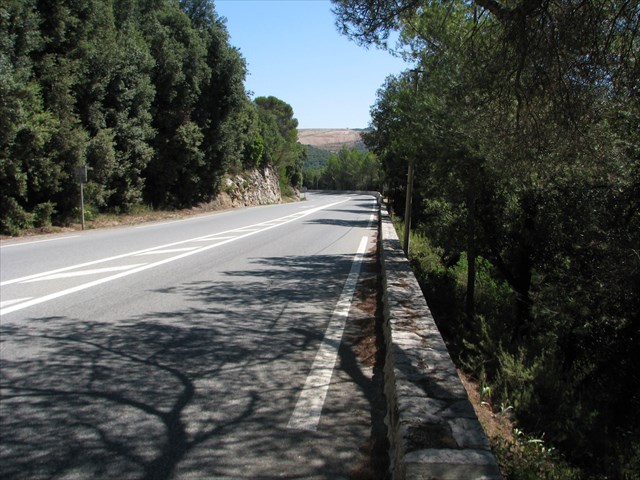
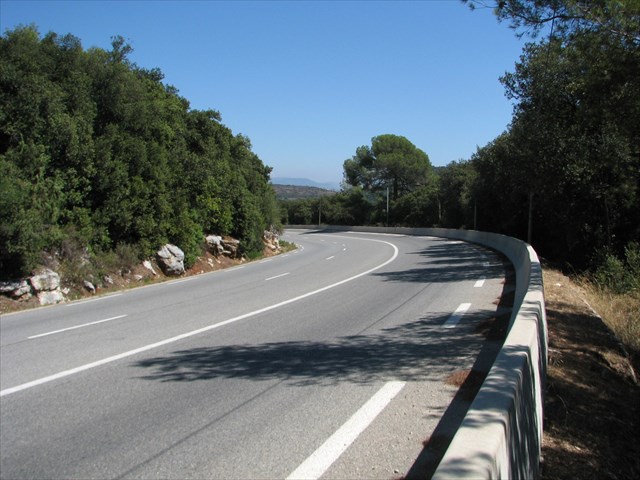
An impression of what things were like can be gained from the following two pictures. On leaving the Viaduc de Sept-Fonds the tram followed the line which was tight on the wall in the first picture, soon this wall gave way to an un-fenced section of the line. The tram would have been travelling immediately above the drop on the right-hand side of the second picture.

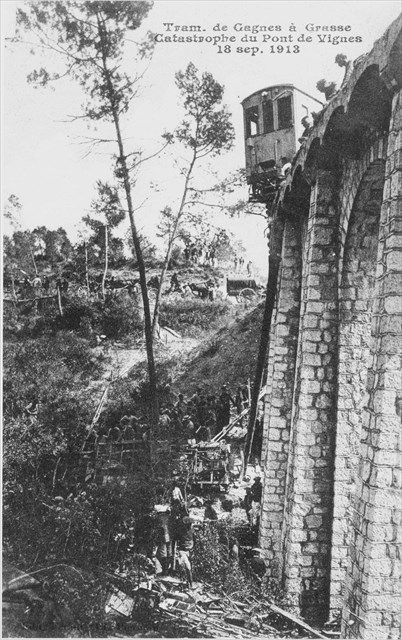
While the conductor was trying to tighten the rear car’s brakes, the tram-train continued out onto the curve of the Pont des Vignes (Cloteirol) Viaduct) and left the tracks, it tore down the telegraph poles and the relatively flimsy guardrails and pulled with it the remaining two cars of the train.

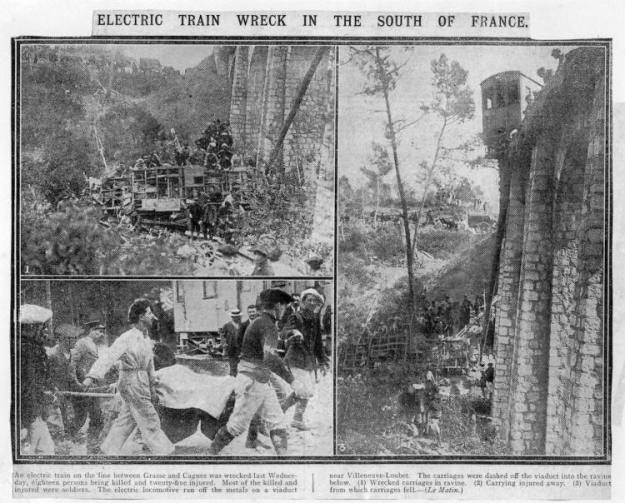
The two rear cars left the viaduct and dropped 13 metres into the ravine. They were severely damaged and threw passengers out onto the hillside. The hitch to the leading car broke and it stopped teetering on the brink. Thankfully, it did not also fall into the valley. It remained on the viaduct but with both ends of the car extending out over the void!

The survivors in the lead car did not immediately grasp the extent of the disaster. This changed when they grasped that some doors of their car opened out onto the void and when  they heard the cries and lamentations of the wounded and dying at the bottom of the ravine.

A few of the passengers recovered enough to clamber out of the tram and went down the line to Villeneuve-Loubet to raise the alarm.

The able-bodied men, including Leotardi, his pupil, and several passengers, descended into the ravine to help the victims. Many people had been thron clear of the wreckage as the tram cars fell, but the most serious cases were stuck in the pile of tram cars and many here were fatalities.

Sixteen people were killed instantly or died in the moments following the accident. Another died that night at the hospital, and another two a few days later. There were 19 dead and 39 wounded.

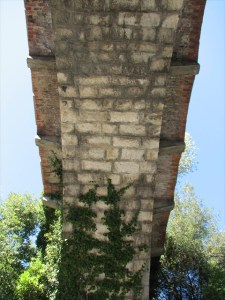
A stone plaque was erected by the Commune on the face of one of the viaduct pillars to commemorate the dead and wounded. This can be seen on the face of the pillar in the second of the pictures below.

Le Pont des Vignes

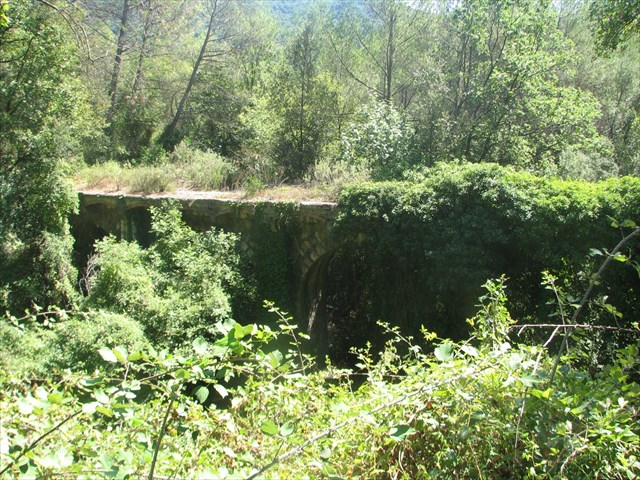
There are two picture below of the bridge in its present condition.


References

  1. José BANAUDO “Le Tram des Vallees” Tramways des Alpes-Maritimes (Editions du Cabri).
  2. Geocache: https://www.geocaching.com/geocache/GC3TX2J_tram6-le-viaduc-des-sept-fonds.

Ligne de Central Var – Part 4 – Pont de Loup to Grasse (Chemin de Fer de Provence 19)

We travel on from Le Pont de Loup to Grasse.

You can find a downloadable version of this length of the line, here, (the online version follows after the next picture …….)

Ligne de Central Var 4

The earlier sections of the line between La Manda and Le Pont de Loup can be found at:

Ligne de Central Var – Part 1 – Colomars (La Manda) to Saint-Jeannet (Chemins de Fer de Provence 12)

Ligne de Central Var – Part 2 – Saint-Jeannet to Vence (Chemins de Fer de Provence 14)

https://rogerfarnworth.wordpress.com/2017/11/27/ligne-de-central-var-part-3-chemins-de-fer-de-provence-18

The next post in the Line de Central Var series will start at Grasse Gare du Sud.

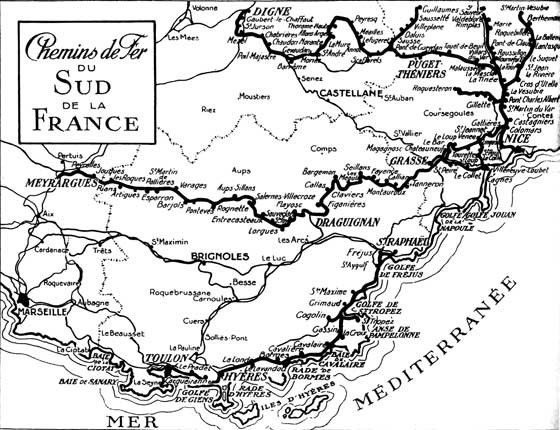
Excerpt from the map of the railroads of Provence in 1924

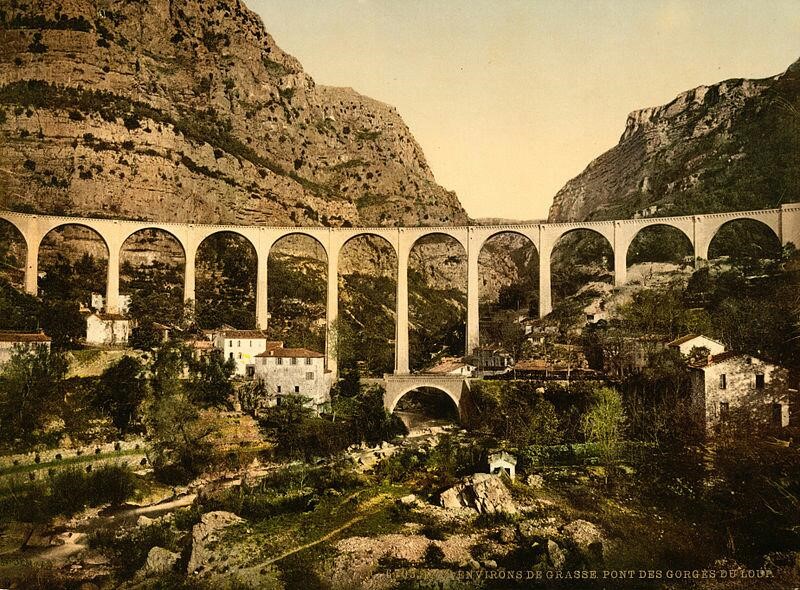
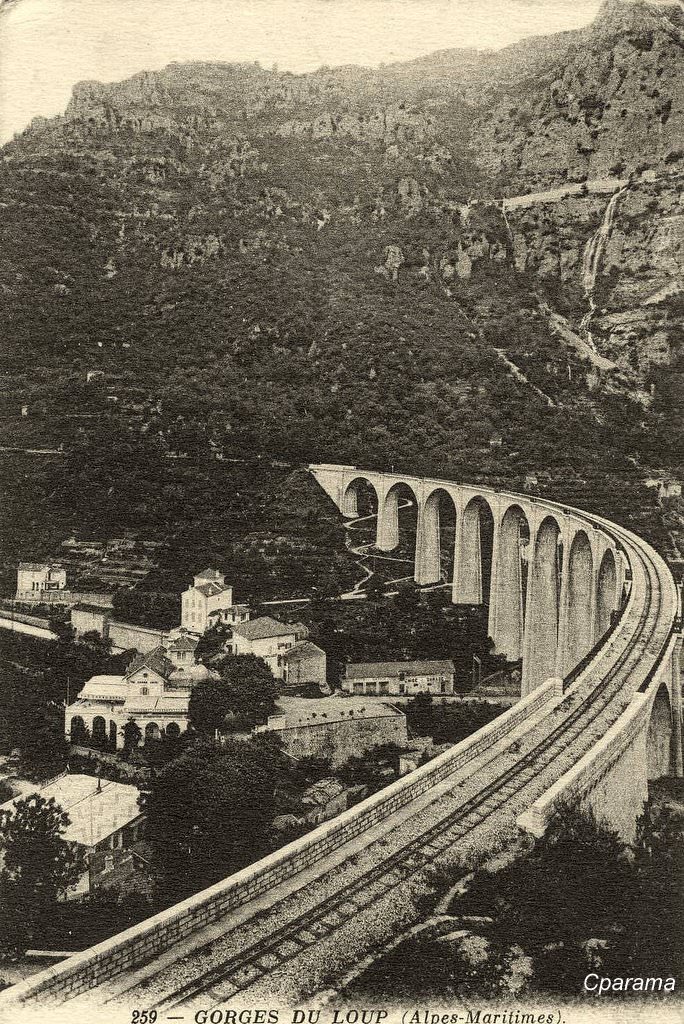
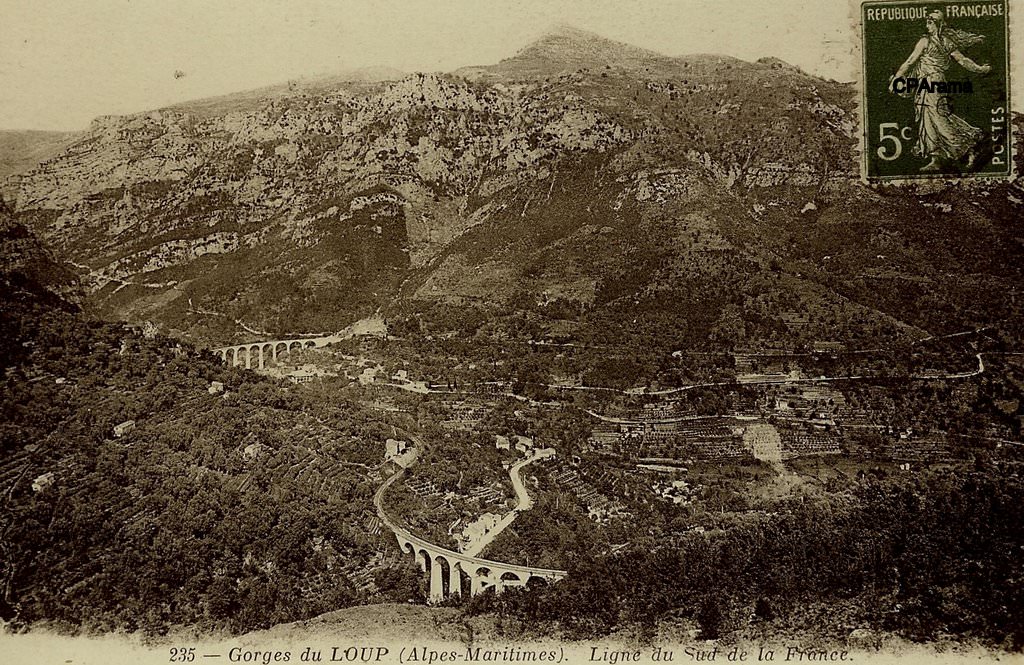
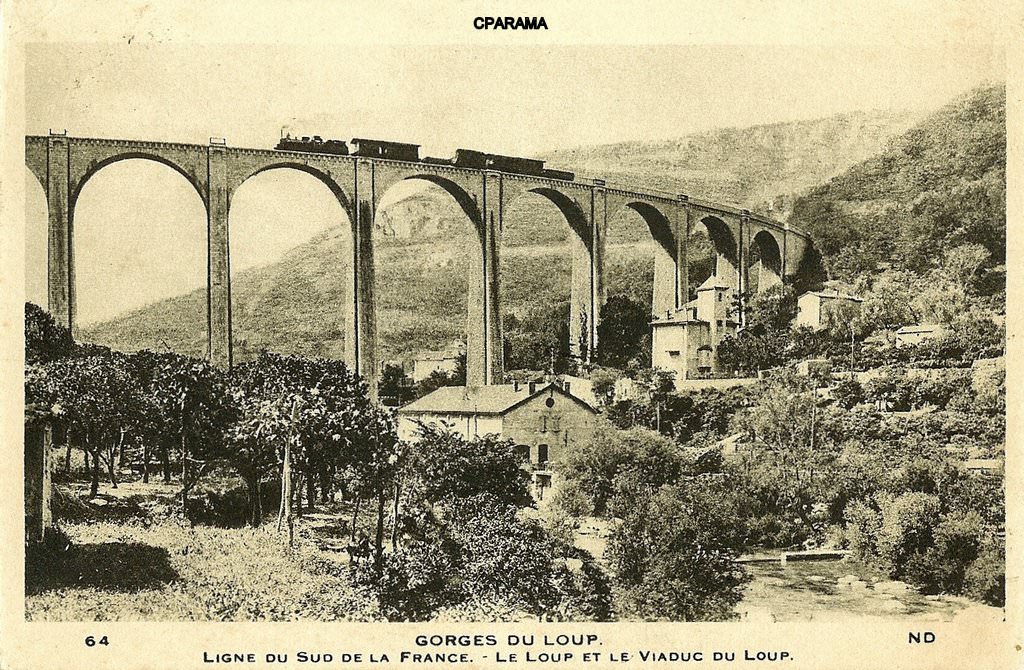
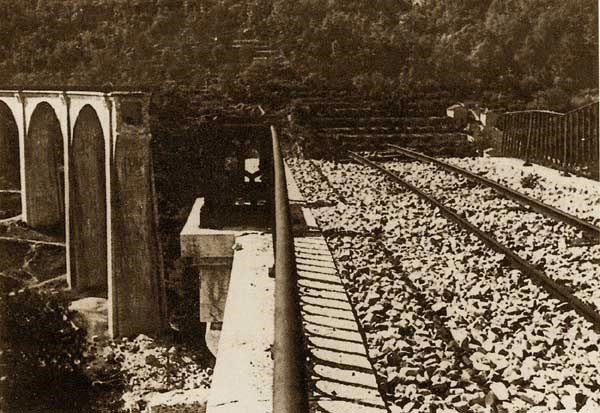
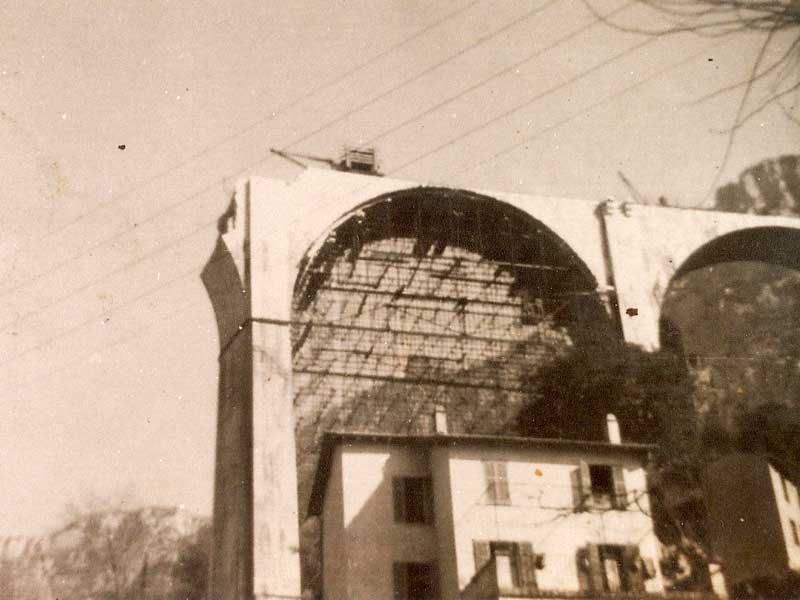
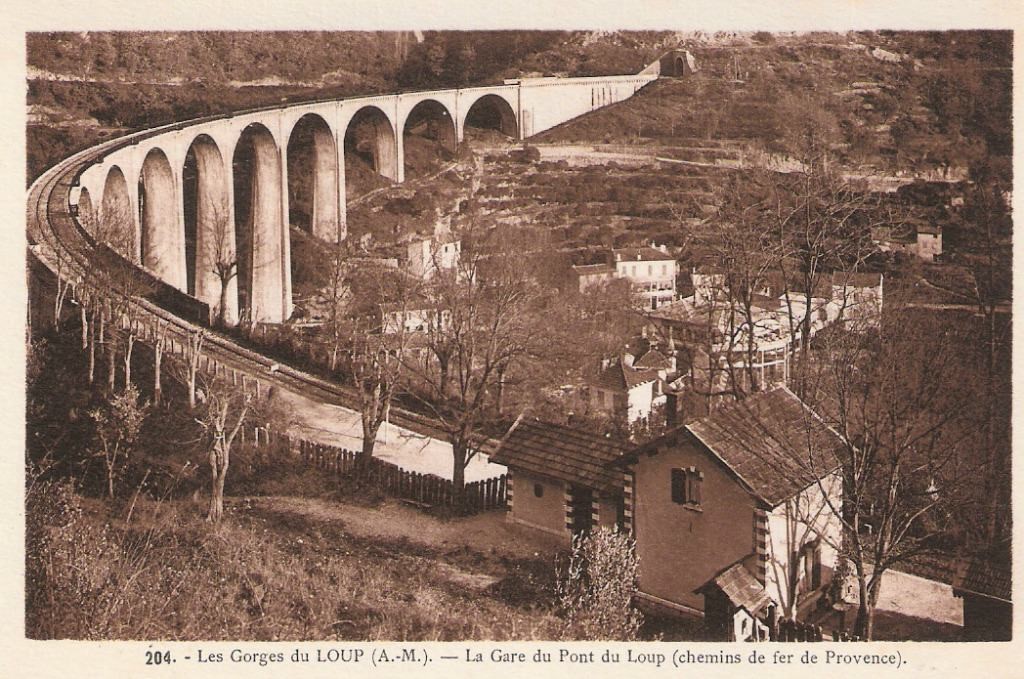
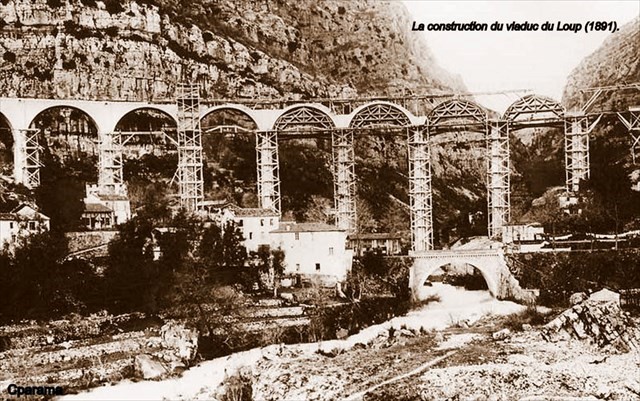
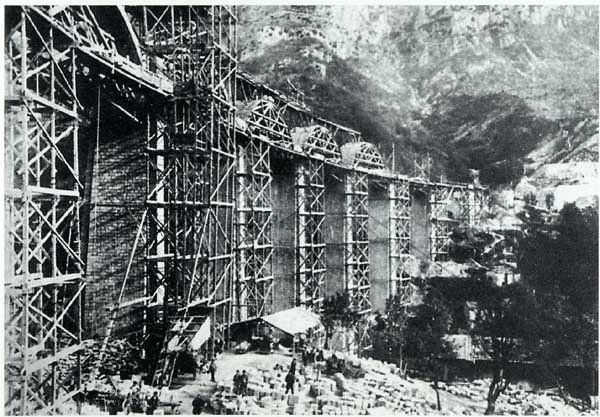
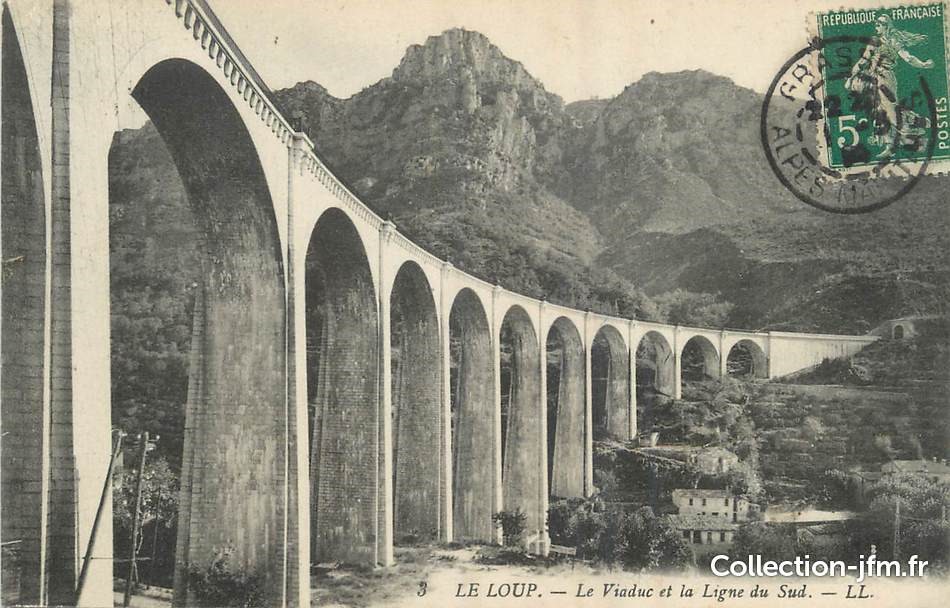
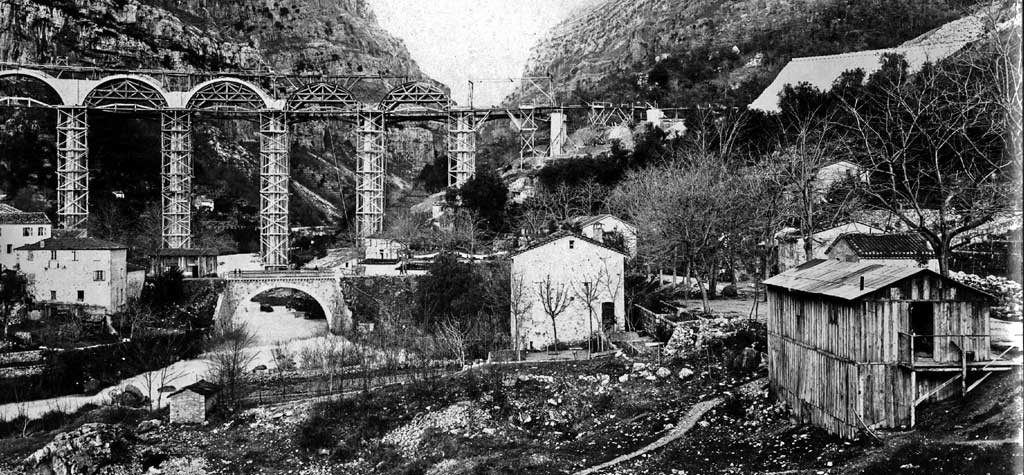
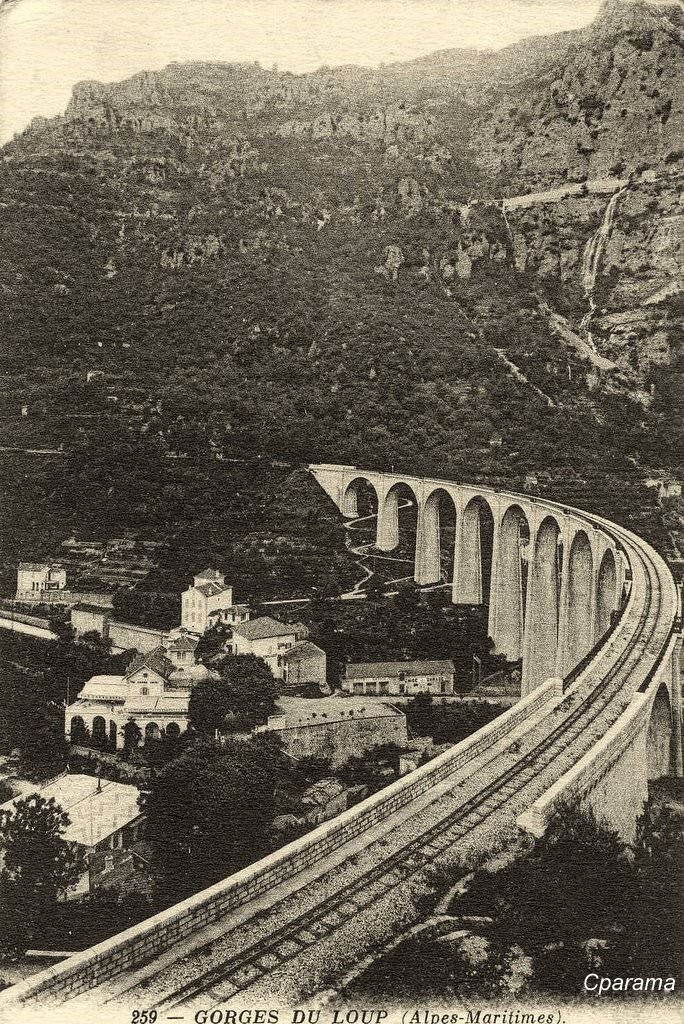
We start this section of the line with some more pictures of the iconic bridge destroyed by the Germans in 1944.


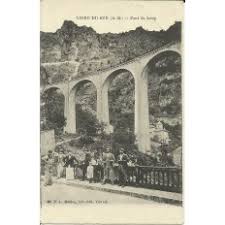
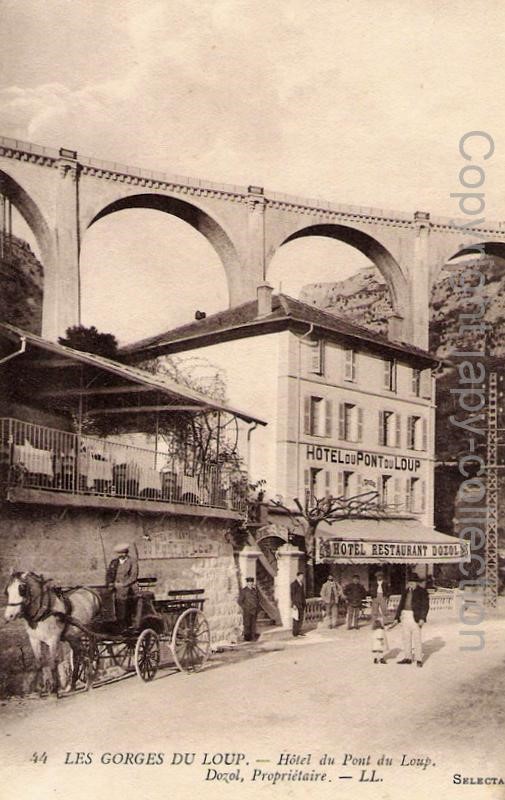
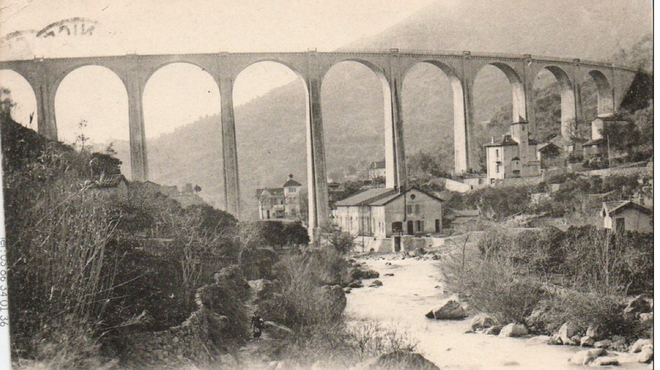
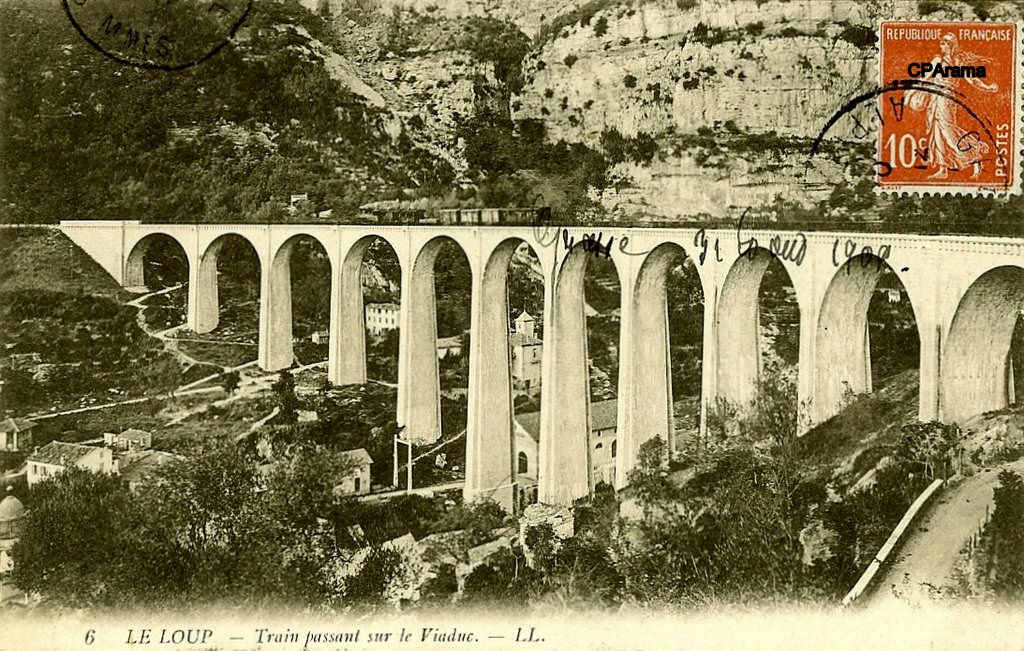
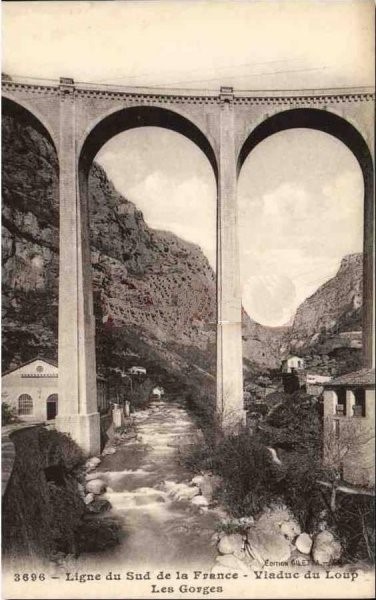
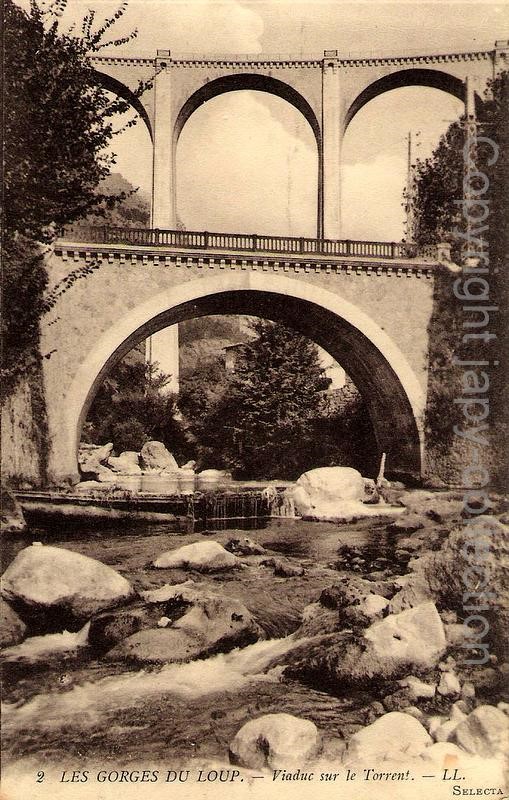
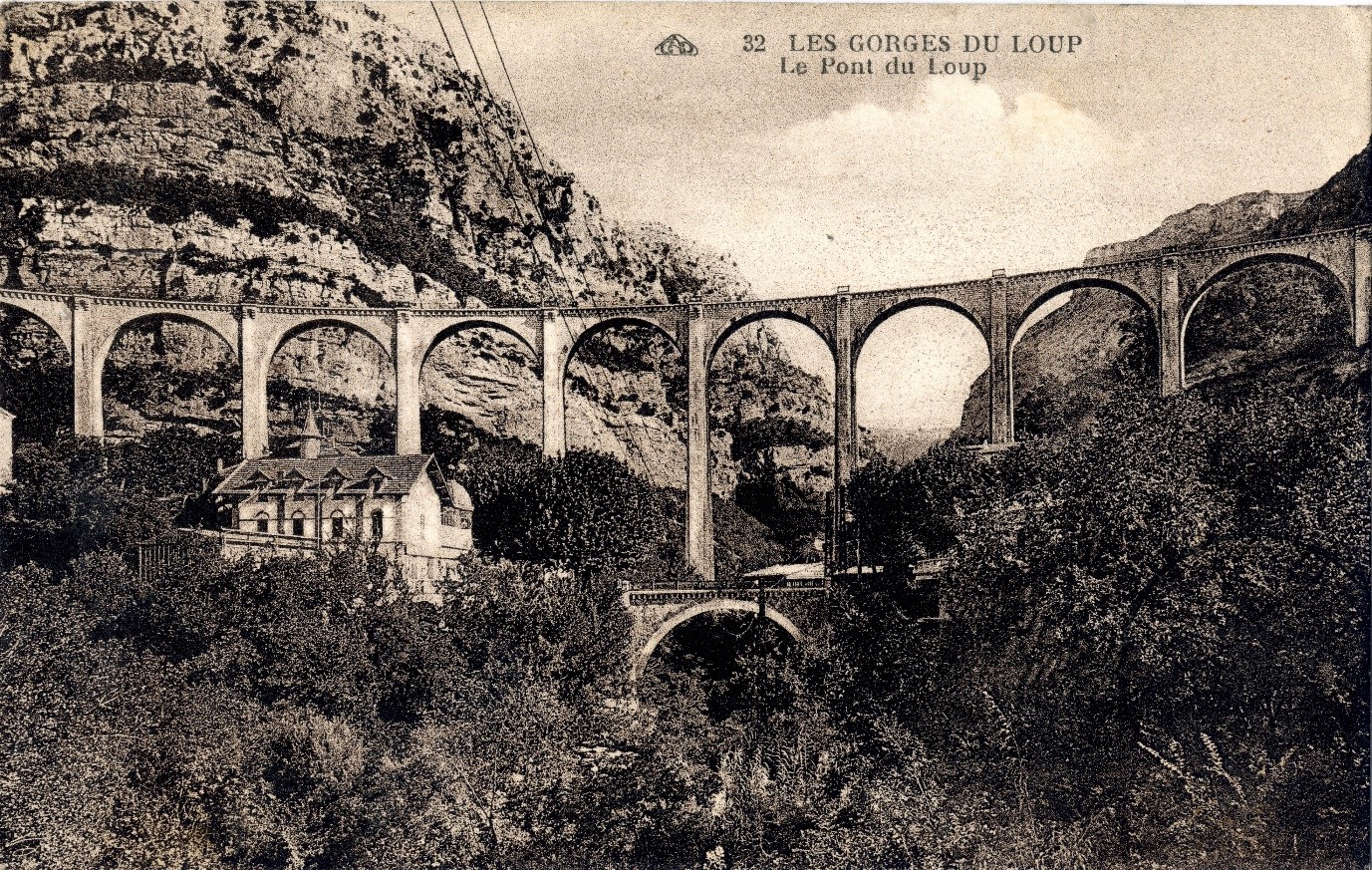
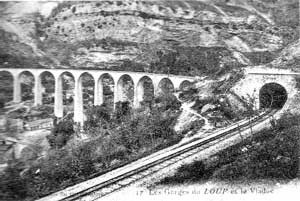
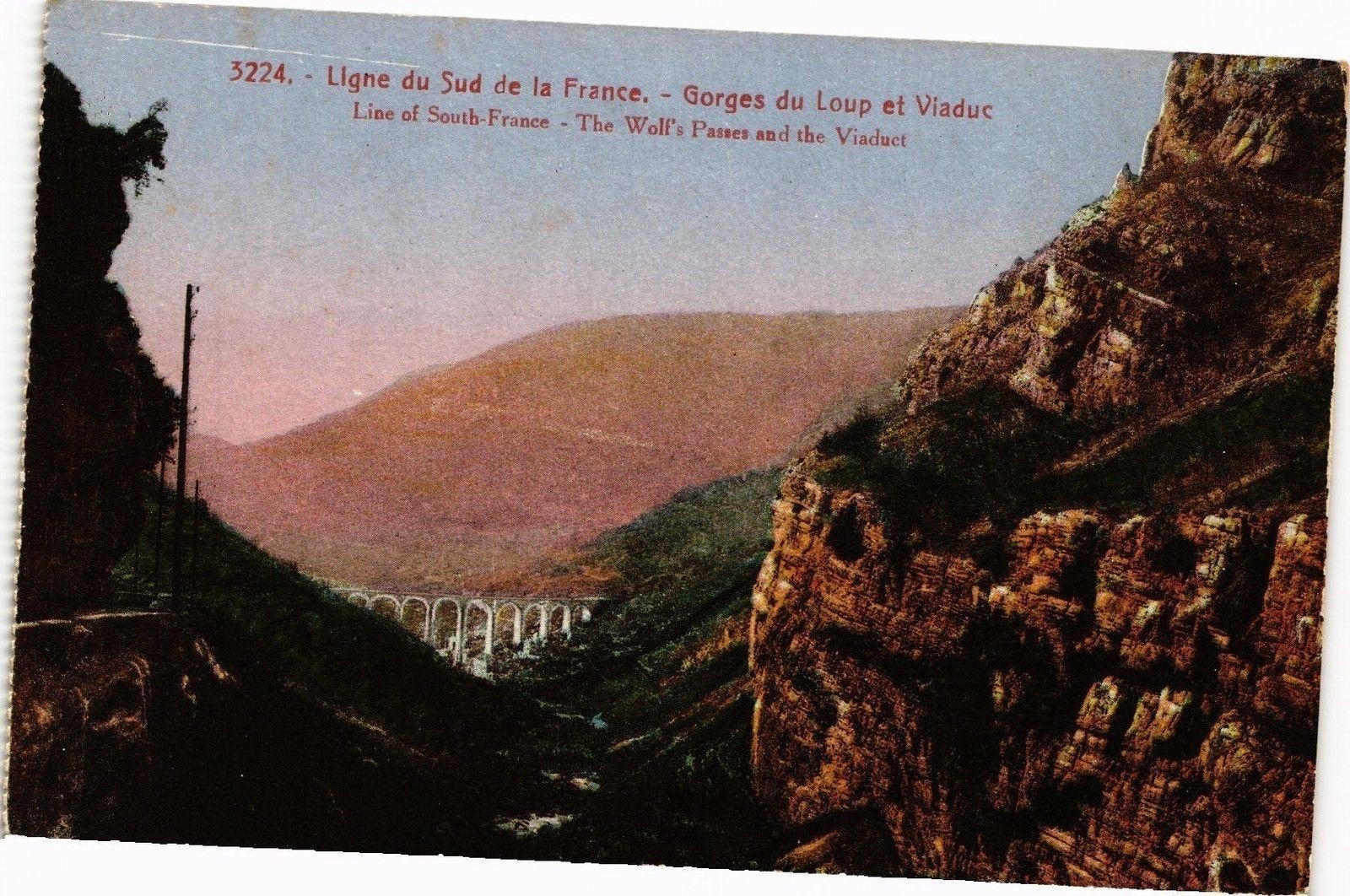
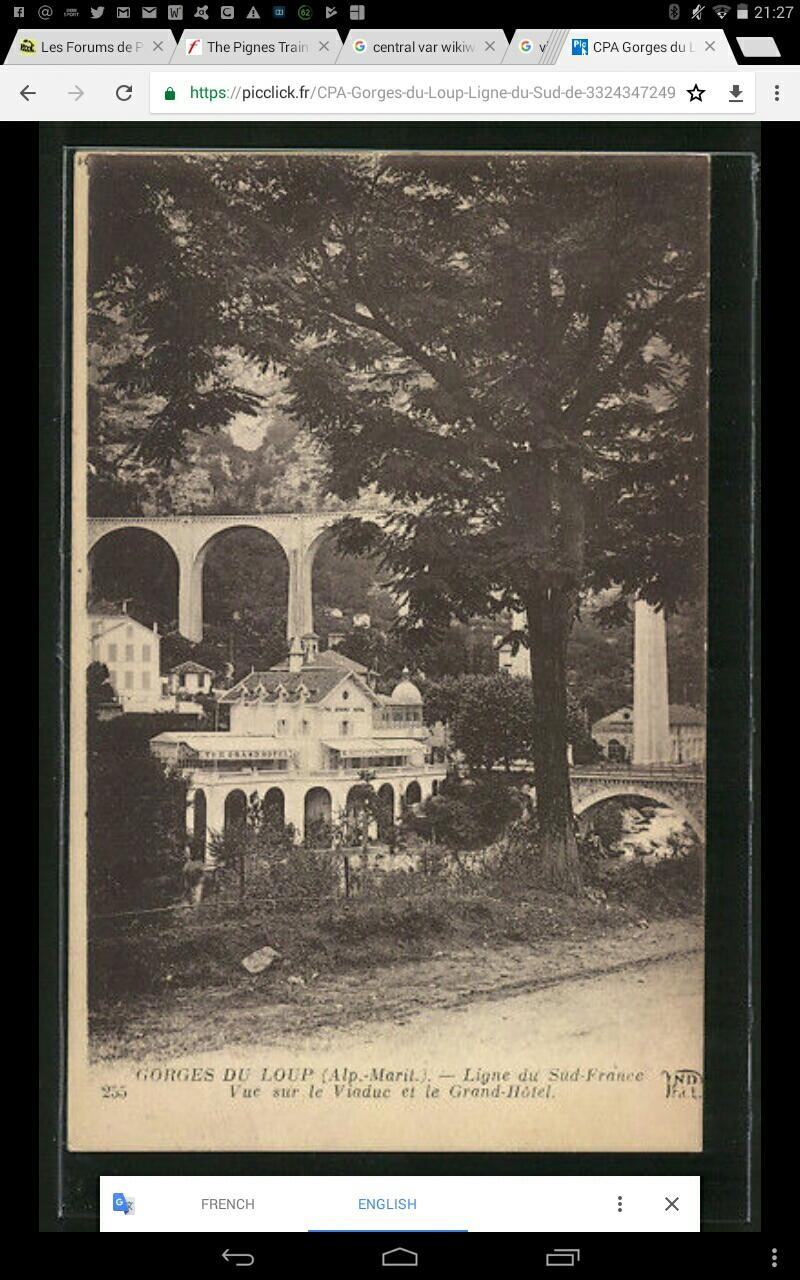
The viaduct features on a whole series of different post cards. It dominated the valley and gave the Gorge de Loup a distinctive character over the 50 years or so that it was in use.

Some of the cards above and below illustrate a distinctive feature of the Central Var line. For many years the line was required as a diversionary route by the military for use if the coastal route was compromised. So, although the line was a metre-gauge line, it had a third rail provided along a considerable part of its length. This third rail ensured that the line could accommodate standard gauge rolling stock if required by the military.

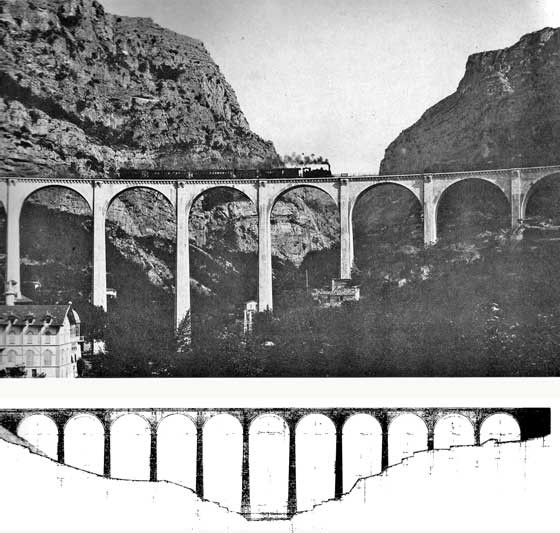
Among these pictures are graceful pictures of the viaduct under construction, in its prime and saddening pictures of its demise including one of the deconstruction work taking place after the War. The viaduct was made up of 11 masonry arch spans on masonry piers. Each arch spanned 20 metres. The curved alignment made the viaduct very photogenic.

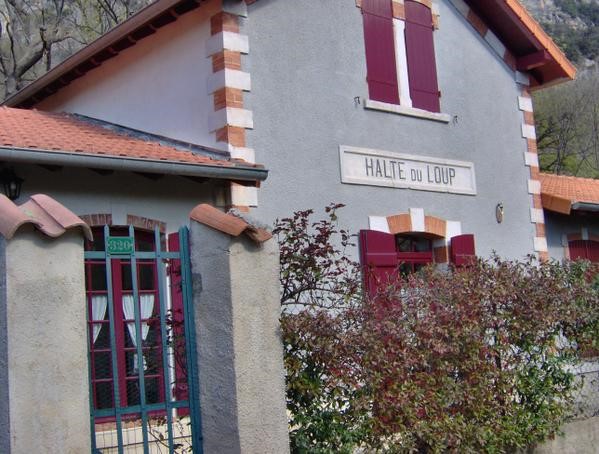
After crossing the viaduct trains immediately enter the station of Halte de Loup. No more than a wayside halt on the line, it can be seen in the postcard view of the Viaduct (204) above.

The Halte de Loup today

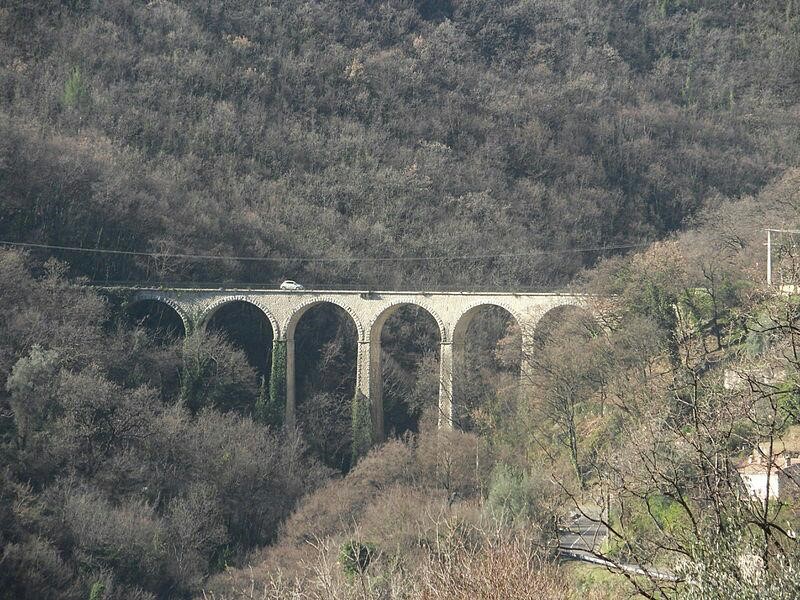
After leaving the Halte, the line follows what is now called Route de l’Ancien Chemin de Fer which travels in a South-Southwesterly direction through Gourdon to reach the Viaduc due Riou-de-Gourdon. This viaduct is of a similar masonry construction to others on the route and has 8 arched spans of 12 metres.

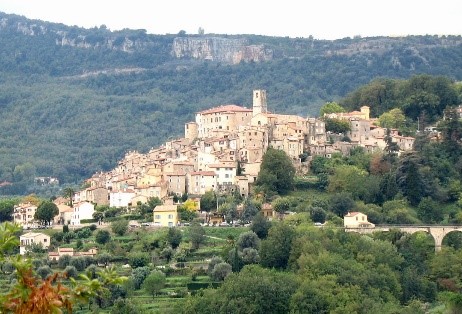
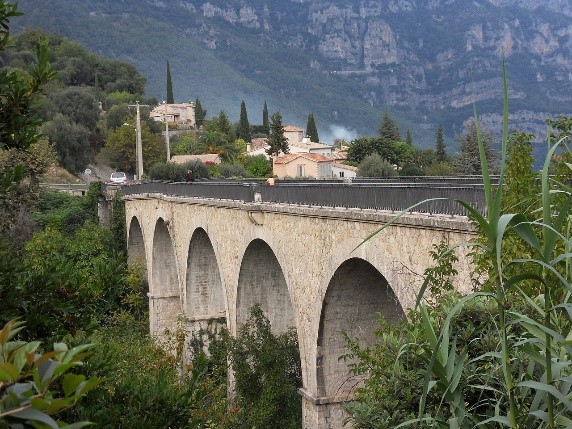
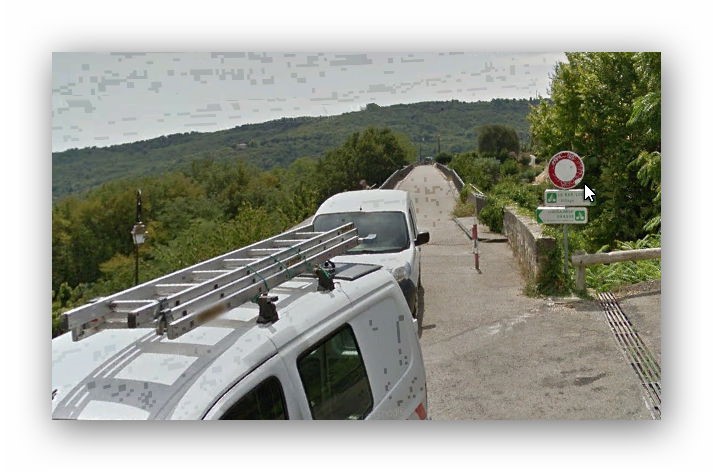
The line continues following what is now the Chemin du Bosquet until it reached the Ribas Viaduct (or Fanerie), by which time the railway route is below the village of Le Bar sur Loup. Like Tourrettes sur Loup this is an attractive medieval perched village typical of the area around Nice.
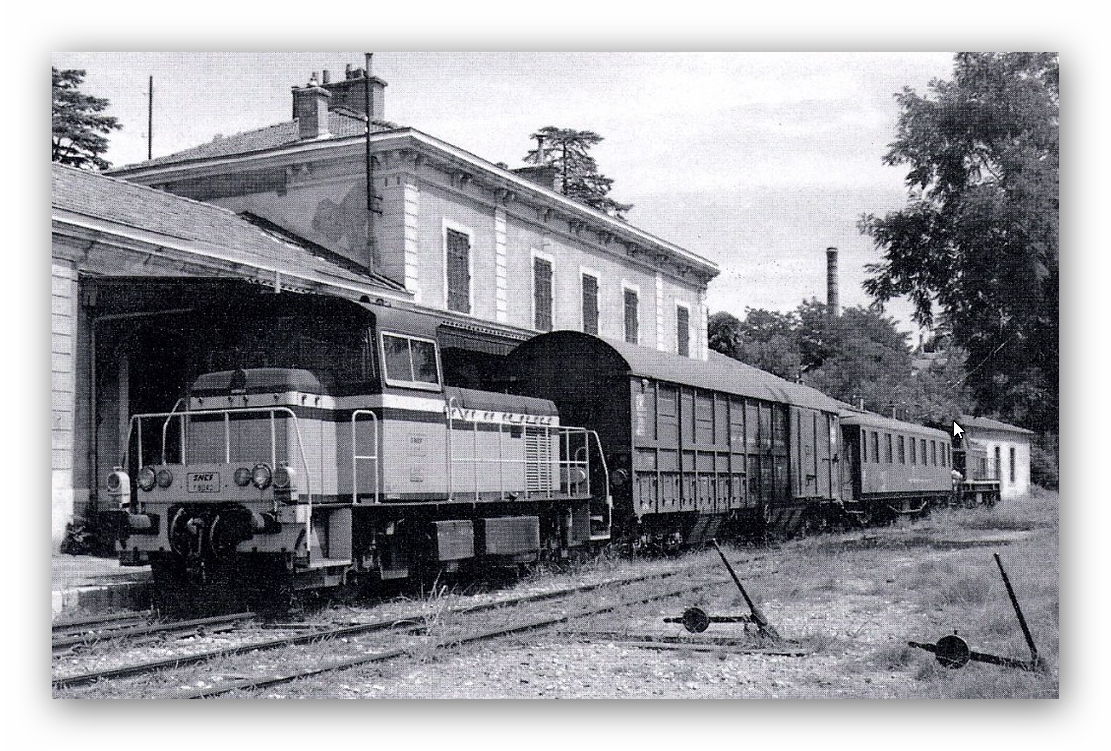
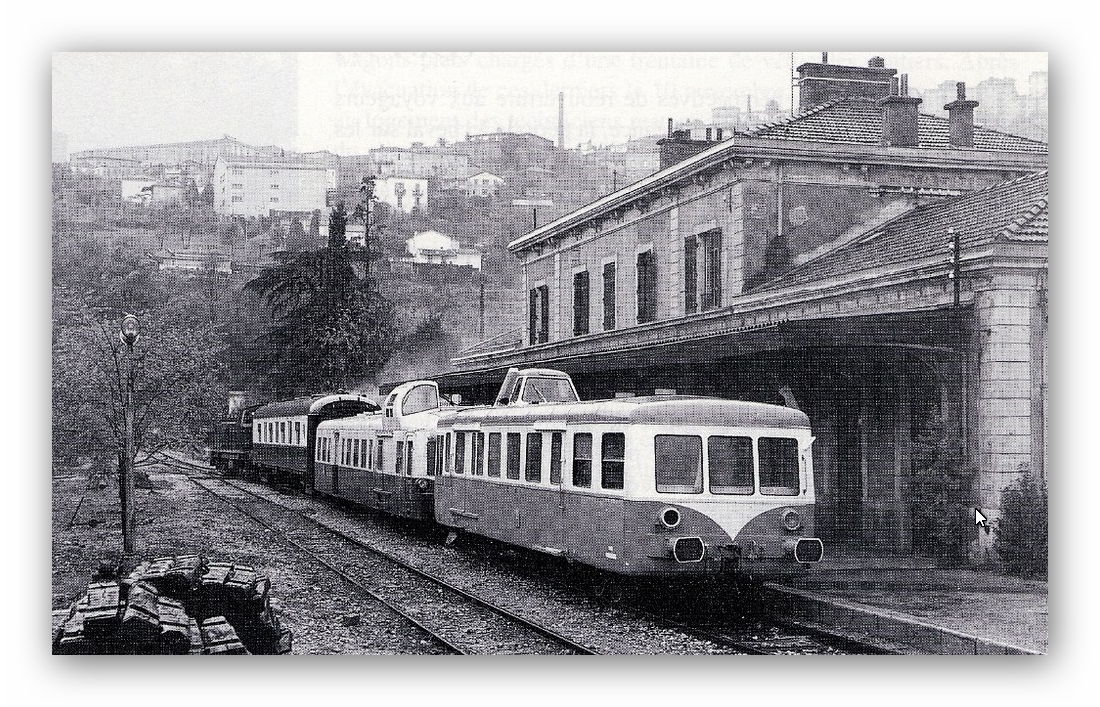
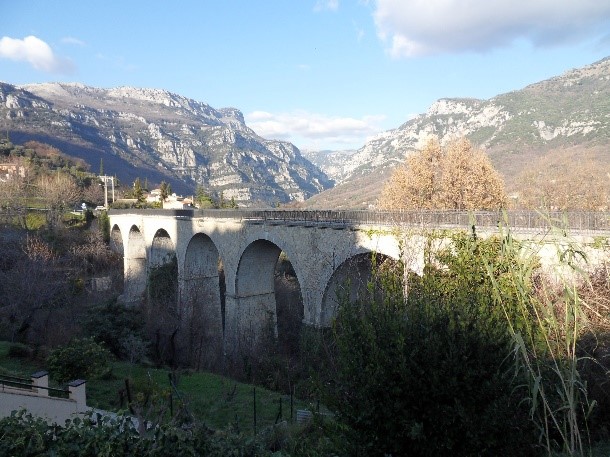
The Ribas or Fanerie Viaduct is barriered off to prevent vehicular usage. A steel girder spans the road below and the remainder of the structure is a series of masonry arches. The Google Earth Streetview screenshot shows this well.

Our pictures of this Viaduct are completed by a view from the D2210 road which runs alongside it.

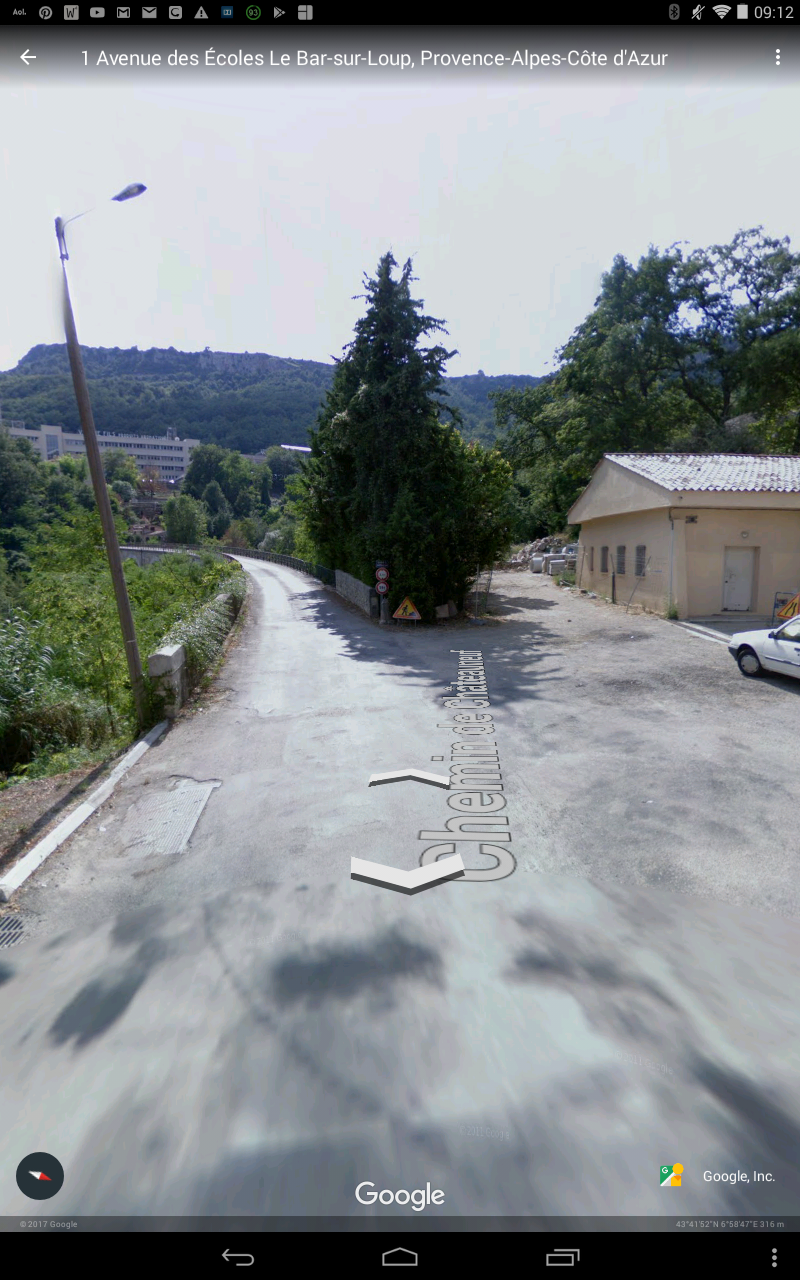
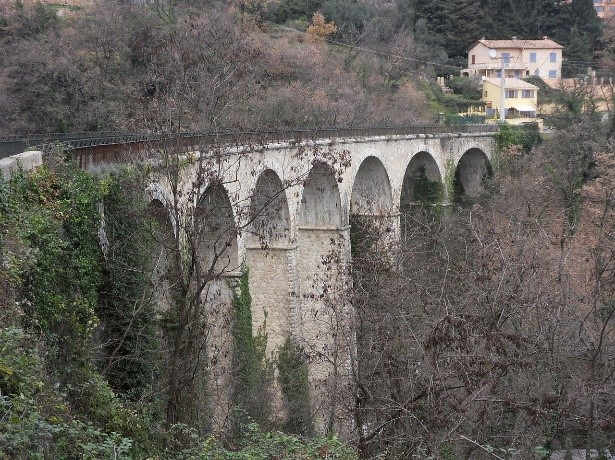
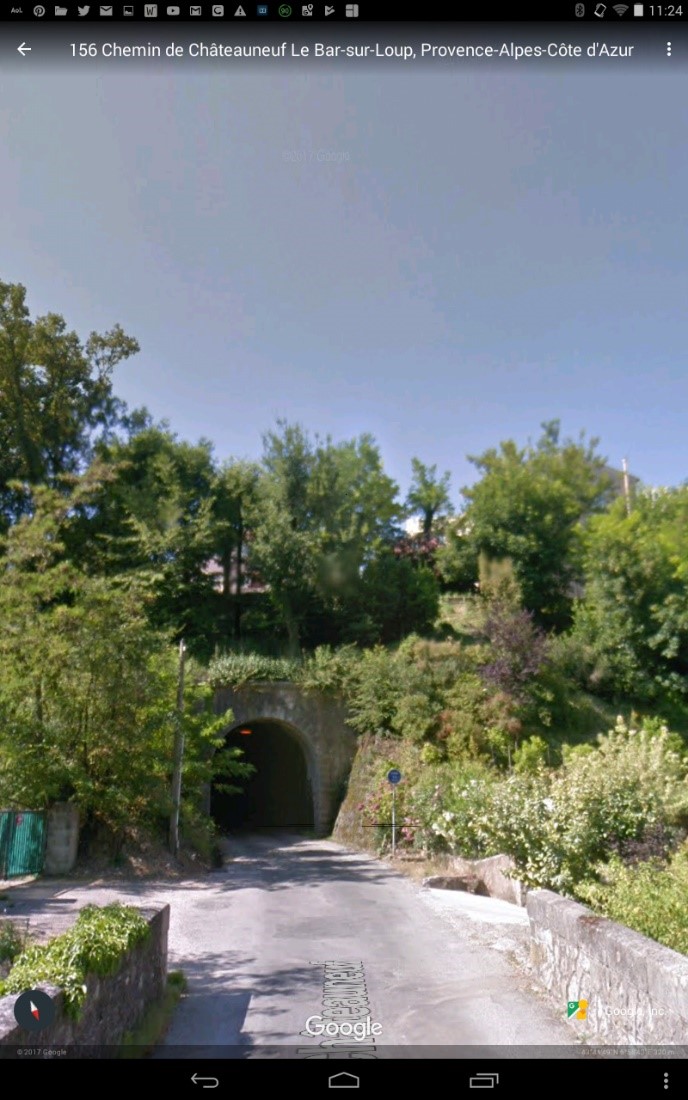
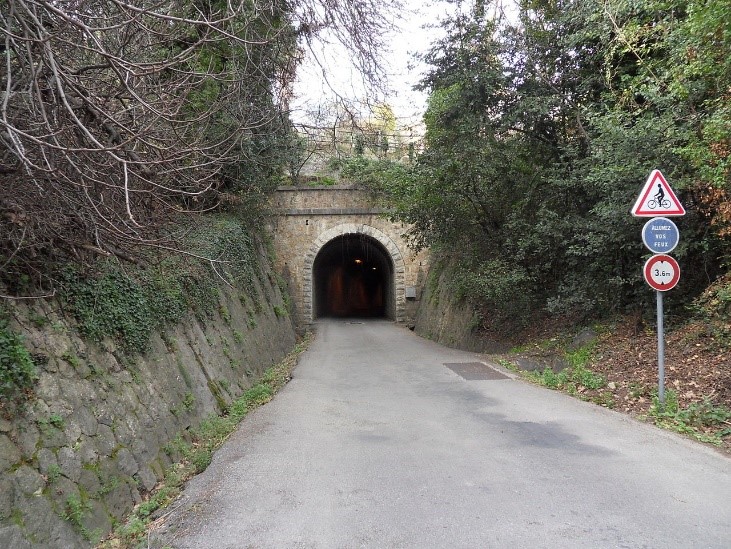
Immediately beyond the Viaduct de Ribas the line curved around the base of the village, flanked on one side by retaining walls and reached the station which is now a school. Not surprisingly the road in front of the old station is called Avenue des Ecoles. The old line follows this road out of Le Bar Sur Loup and continues along the Chemin de Chateauneuf to the Viaduct Riou-de-Bar and then immediately into the Tunnel Riou-de-Bar. Both portals of the tunnel are shown in the pictures below.

At Tourrettes sur Loup, a quarry cuts into the rocky hill above the current cemetery. Abandoned nowadays, its location is betrayed by the bare rock facing that village. That quarry was used for much of the stonework needed for the various viaducts and tunnels along the Central Var line. It was well used. As we have seen, the line travelled through rugged terrain with many hills and deep valleys. Viaducts, bridges, tunnels and retaining walls were a regular part of the construction work.

We noted above that the Central Var line was considered to be of great military significance. For strategic reasons, special arrangements were made to facilitate military transport. The stations of Saint-Jeannet, Bar-sur-Loup, Grasse and Tourrettes-sur Loup had lengthy sidings (250 to 300 metres long) to allow the passing of long military trains.

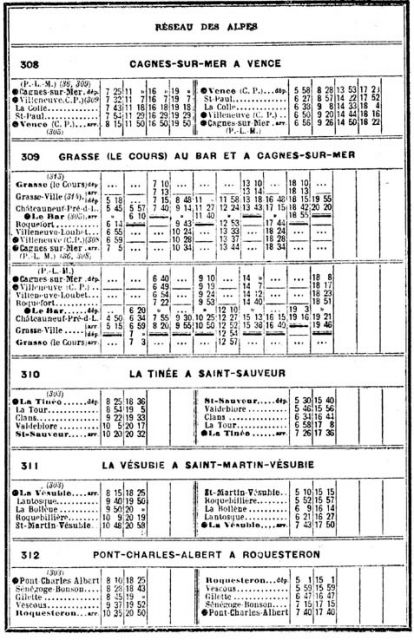
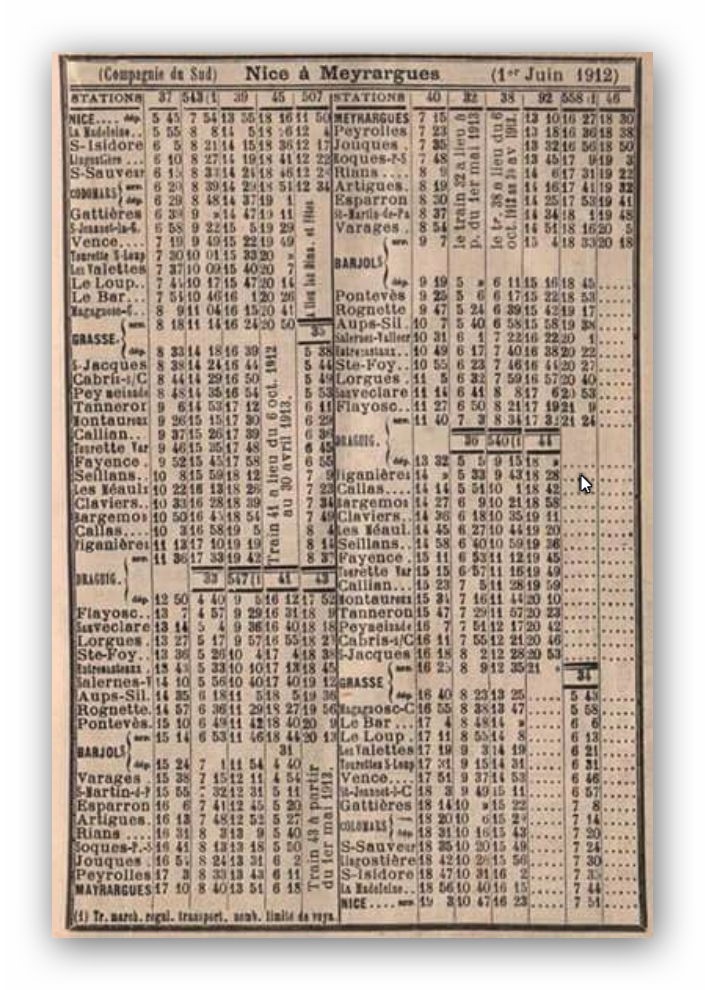
Before we continue our journey towards Grasse. I thought it would be good to see the timetable for 1912 which appeared in an internet search conducted on 28th November 2017. The service was not intensive, only 4 or 5 trains per day, but nonetheless significant given the rural nature of the line.

From the various pictures of the trains on the line, most trains appear to have been combined passenger and goods trains, this means that the timetable is probably representative of all the journeys on the route in June 1912.

Leaving the Tunnel Riou-de-Bar the route continues to follow the Chemin de Chateauneuf. The next station on the route was Maganosc-Châteauneuf reach after passing through the St. Laurent Tunnel (125 metres long 43 ° 40 ’53 “N, 6 ° 57′ 46” E (Coordinates of the Vence end), 43 ° 40 ’52 “N, 6 ° 57′ 38” E (Coordinates of the Grasse end)). It appears that all evidence of the tunnel at the Grasse end has been obliterated and the tunnel mouth at the Vence end is well hidden in the forest below the D2210 road.

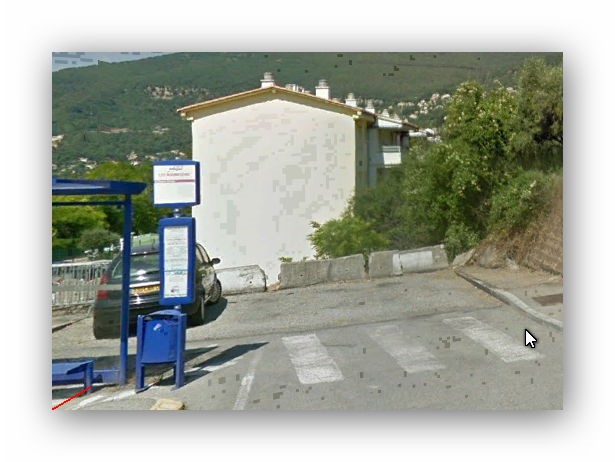
After leaving the St. Laurent Tunnel the line immediately crosses a road and passes under the site of some modern buildings before following the line of the Avenue Saint-Laurent. It’s route goes through the concrete blocks on the photograph below.

By this time the line was travelling approximately East to West and is shown on the plan view below.

Travelling on from this point the route passes through another short tunnel which has been widened for the modern road and enters the site of the old Mangagnosc-Chateauneuf Station.
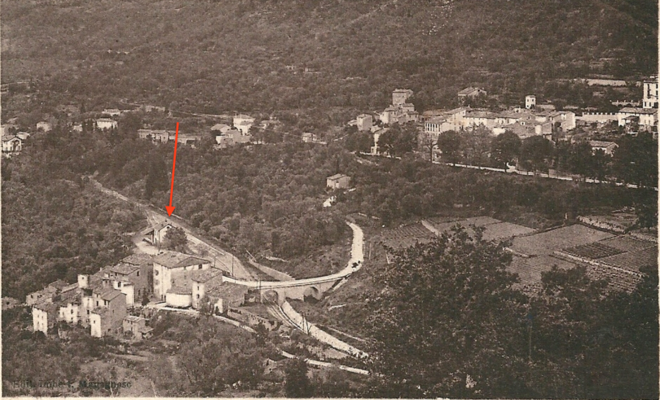
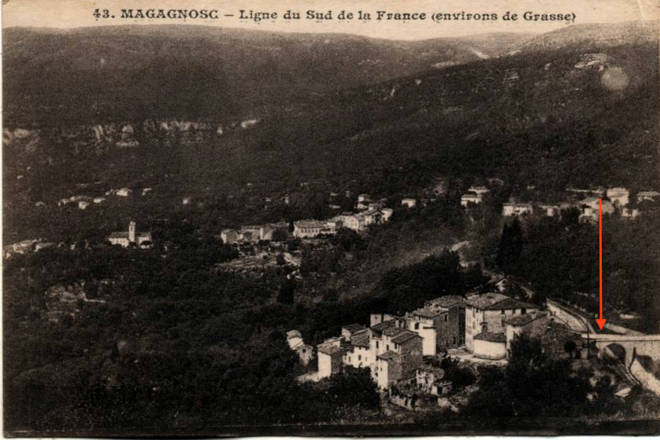
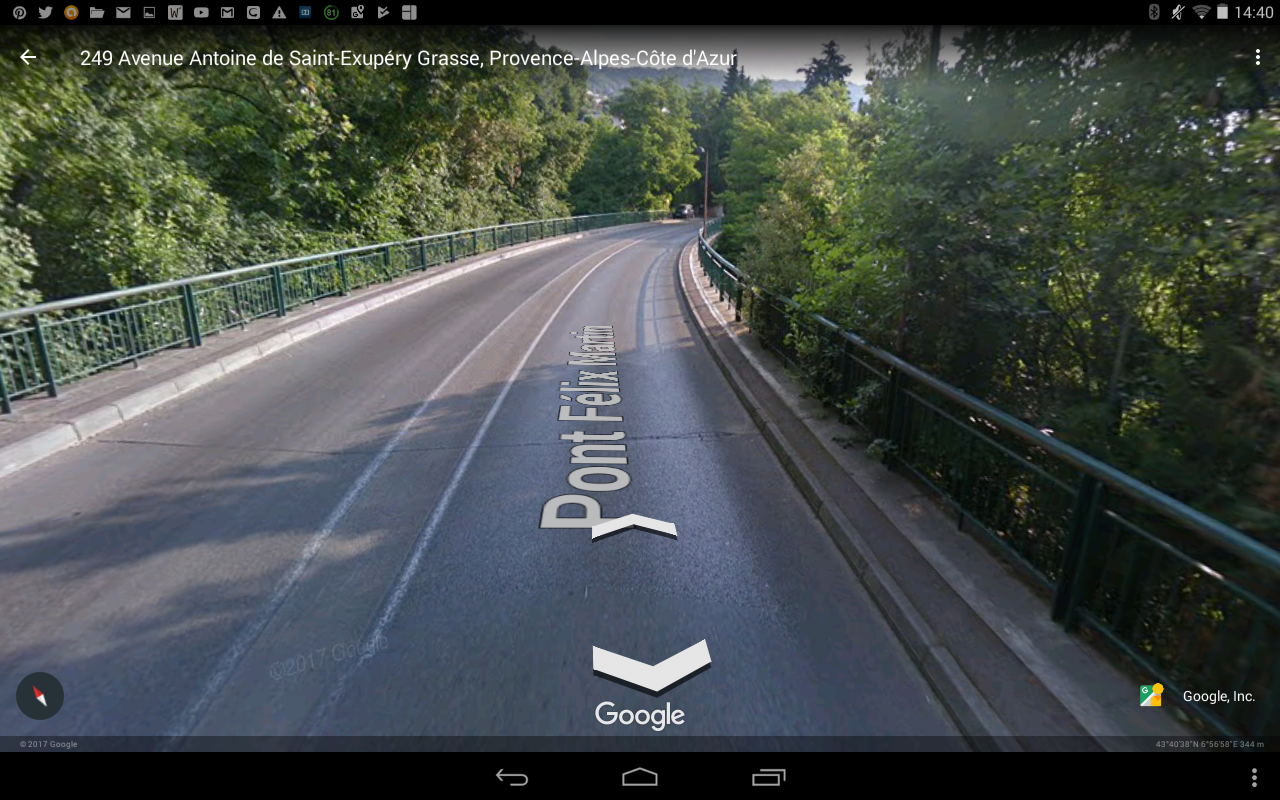
In the first monochrome image below the site of the station is highlighted by a red arrow. On the second image the red arrow points to the bridge to the West of the station which still remains. The adjacent picture shows it spanning the road to the West of what was the station. The road is still named Avenue Saint-Laurent and continues towards Grasse, eventually reaching the Pont Felix Martin.
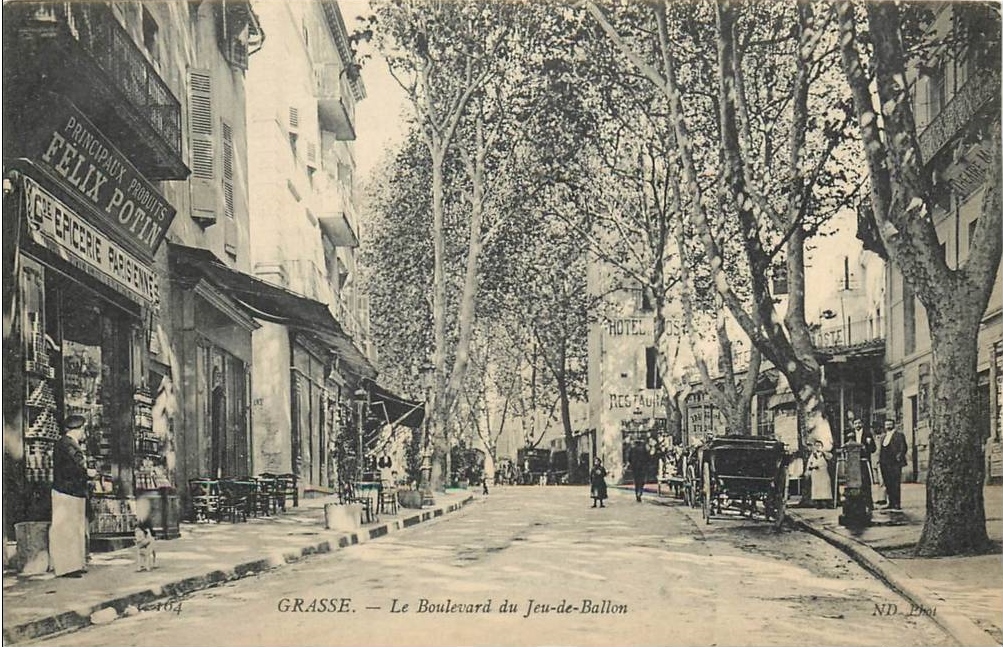
This viaduct is well shrouded in trees. It crosses the Valley of Saint Christophe, in some quarters it is known as the Viaduc de Riou-de-Maganosc. The best photograph available is a Google Earth Screenshot. The picture below is taken looking East back up the line.After this Viaduct, the road has a new name – Avenue St. Antione de Exupery. The old line now entered the suburbs of Grasse.

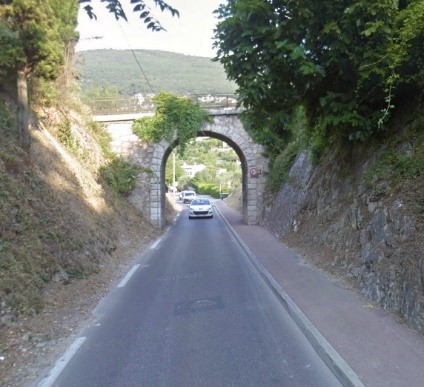
The line was in cutting and after a short distance was spanned by a wrought iron girder bridge taking a narrow accommodation road across the line and then continued at grade round the hillside until reaching the Viaduct de Font-Laugière (sometimes known as Le Pont de Eiffel).

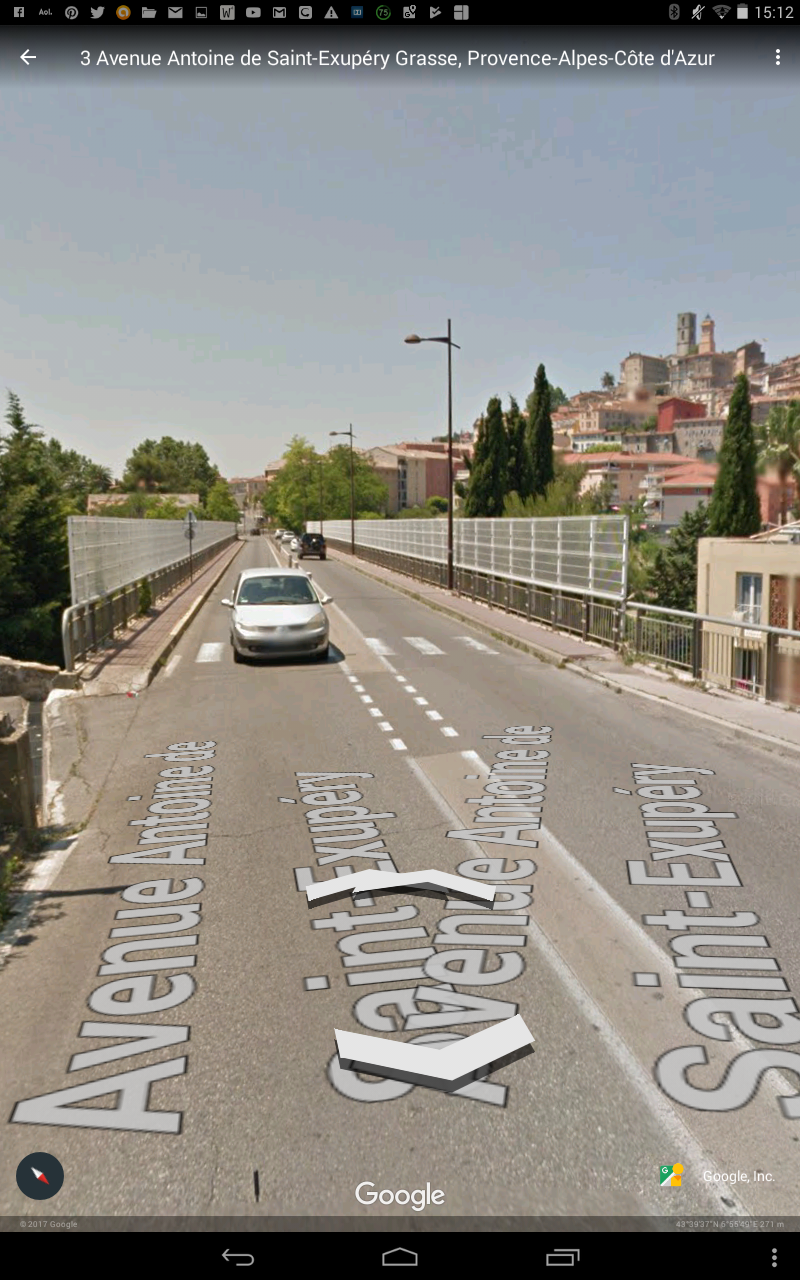
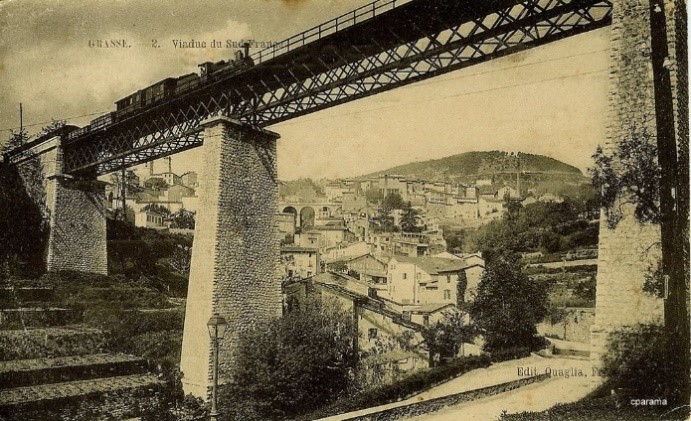
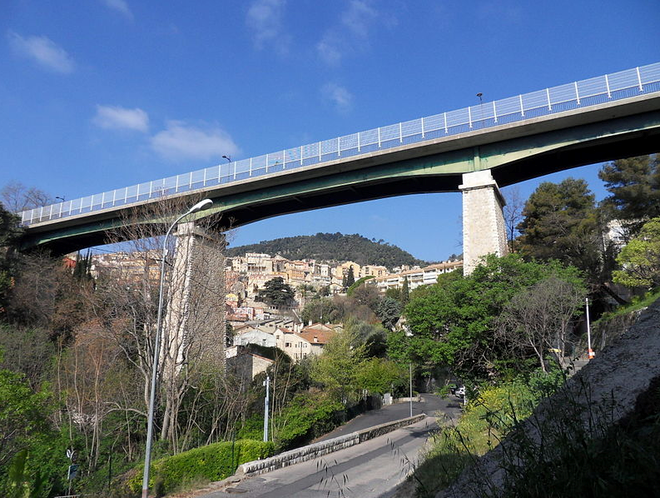
The bridge was the subject of a short report in Nice-Matin entitled “Grasse: Twenty years ago, the metamorphosis of the Font-Laugière viaduct” in 2008, reporting on the work done to the bridge 20 years earlier. Work started on converting the old bridge into a highway in 1986 and was completed in 1988.

The article included the memories of Georges Rainard, a retired teacher, who remembered, at the age of 15 in 1944 seeing the last steam train cross the viaduct which was soon after the allied landings in Provence and the closure of the line because of the damage done to viaducts further East.

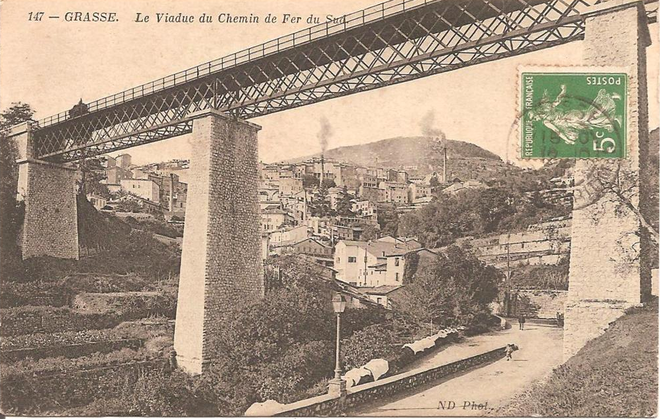
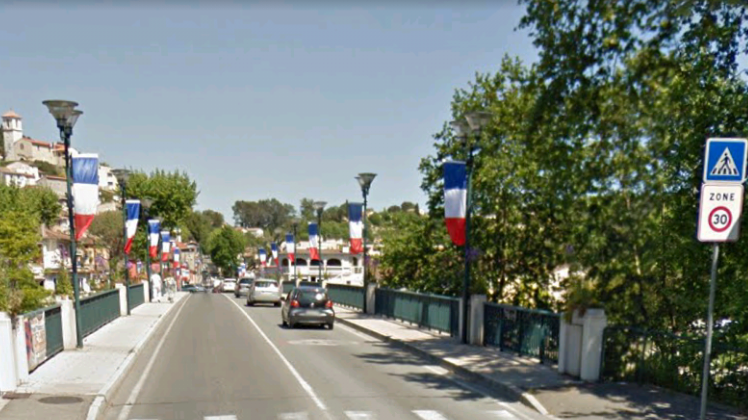
After crossing the viaduct we end up nowadays on the Avenue de Provence in Grasse and within very short shrift we are at the location of Grasse Chemin de Fer du Sud railway station, or at least the site of the station, which is now a road and a modern apartment block!

Ligne de Central Var – Part 3 – Vence to Pont de Loup (Chemins de Fer de Provence 18)

The latest instalment of our journey on the Chemins de Fer du Sud Central Var Line takes us from Vence to Le Pont de Loup

We start this part of our journey at Vence Station.
Vence is at the end of a tramway from Cagne sur Mer and details of this tramway can be found by following this link:

https://rogerfarnworth.wordpress.com/2017/11/25/tramway-between-vence-and-cagne-sur-mer-chemins-de-fer-de-provence-17

This post focuses on the Central Var line from Vence to Le Pont de Loup. This is the third part of the journey from Colomars (La Manda)  near Nice to Meyrargues near Aix-en-Provence.

The earlier parts of the route can be explored by clicking on these links:

https://rogerfarnworth.wordpress.com/2017/11/23/various-railway-and-tramway-postcards-from-around-nice-1-chemins-de-fer-de-provence-13

https://rogerfarnworth.wordpress.com/2017/11/23/ligne-de-central-var-part-2-chemins-de-fer-de-provence-14

c1This next section continues our journey out of Vence towards Grasse. The station site is on the West side of the town. The large open square to the north-west of Lycee Henri Matisse. The pink line on the screenshot from Google Earth is the route of the line. This means that although the railway may have traversed the streets in the immediate area of the station, the pictures on postcards at the end of the last post are more likely to include rails from the Cagnes to Vence tramway. There is a link to a post about the tramway above.
The Central Var line left Vence Station on the Avenue Rhin et Danube, travelling pretty much due west for a kilometre or so, before turning West-Southwest in cutting and going under the accommodation bridge in the second picture below. After the bridge the line continued to turn towards the South West before crossing another Viaduct, this one crossed the Valley of the River Malvan. A view of the present road is in the third picture below.
c2c3c6

c7

After the Viaduct de Malvan the route of the line continued in a South-Westerly direction leaving the route of the present M2210 but remaining on Avenue Rhin et Danube


c4c5

The line then turned North West on what is now called Rue de Ouahigouya which becomes Route de Provence, Tourrette-sur-Loup. The line traversed the Vallons de Notre Dame on a wide curve turning towards the South and following the contours via the Viaduct de la Téolière (Google Streetview picture below) toreach the Viaduct du Cassan which is in the fifth sixth and seventh photos below.

c7c8c9c10c11c12c13

Immediately after crossing the Viaduct du Cassan the line passed under another road bridge which can be picked out in the picture below. A short journey further down the line was the Viaduct de Pascaressa. This viaduct was destroyed towards the end of WW11 by the retreating German army. The first, monochrome picture of Pascaressa Viaduct was taken in 1944 shortly after the attack by the German forces. The pictures that follow show it as it is now.

c14c15

After Pascaressa the line reach the Station at Tourrette sur Loup, the village in the pictures above those of the viaduct on the last page and visible in this early postcard of Pascaressa Viaduct. The station building is now used as the club house for a Boules Club – pictures are below.

c15
Travelling on from the station, the line follows what is now called Route de Pie Lombard along the contours of the hill side until it reached the Viaduct de St. Antoine (above) and then the Viaduct de Clare (also above to the right).

By this stage the line was travelling above the old road between Grasse and Vence, and below the D2210, the current route to Grasse. The line switched to the North side of the D2210 at a point close to Valettes. The Google Street view screenshot below shows the crossing keepers cottage.

c16

From this point on the line follows Routes des Valettes on a retaining wall above the main road for 100metres or so and then on embankment following the contours of the hillside just above the D2210 for some distance until entering the Tunnel de Loup on the East side of the Gorge de Loup.

c17

The first picture is of the entrance on the South end and the second picture is the opening on the Northwest end.

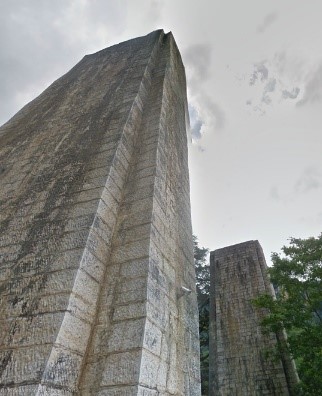
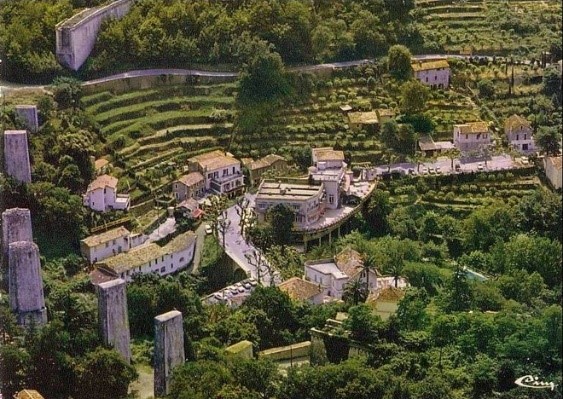
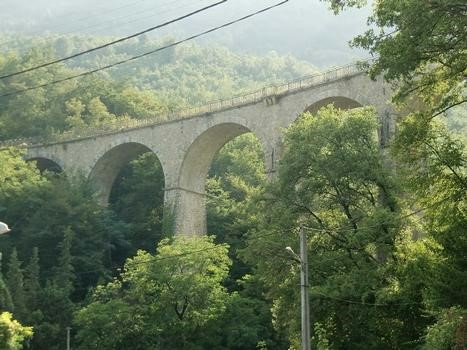
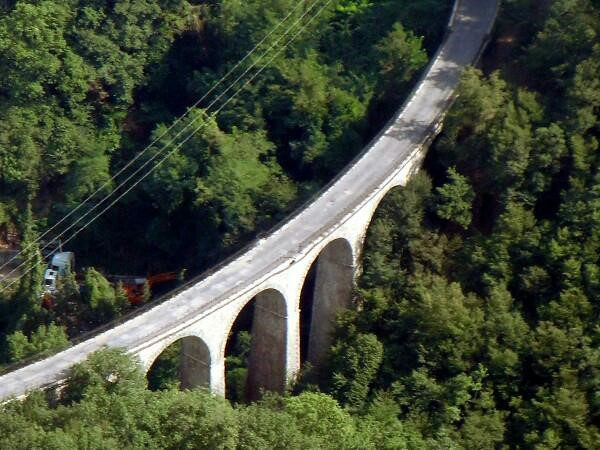
Very quickly after leaving the tunnel the line crossed the Pont de Loup a 310 metre-long graceful curved viaduct across the Gorge de Loup. I have included a number of pictures of this viaduct as it is iconic and perhaps gives the route its distinctive flavour. It was destroyed violently at the end of the war by the retreating German army. The destruction of this viaduct was probably the most significant factor in the demise of the line.

Please note, once again the dual track gauge over the viaduct in the image below.

c18The remains of the viaduct don’t give a good enough account of the structure that once carried the single track line over the Gorge de Loup. If it had survived the war it would have been integral part of a long metre-gauge line running along the foothills of Les Alpes Maritimes. I make no apology for the number of photographs in this post.download.jpg1372232663-06-Le-Loup-3-.jpgdownload.jpgloup-gorges-pont0002bc19c20c21c22c23