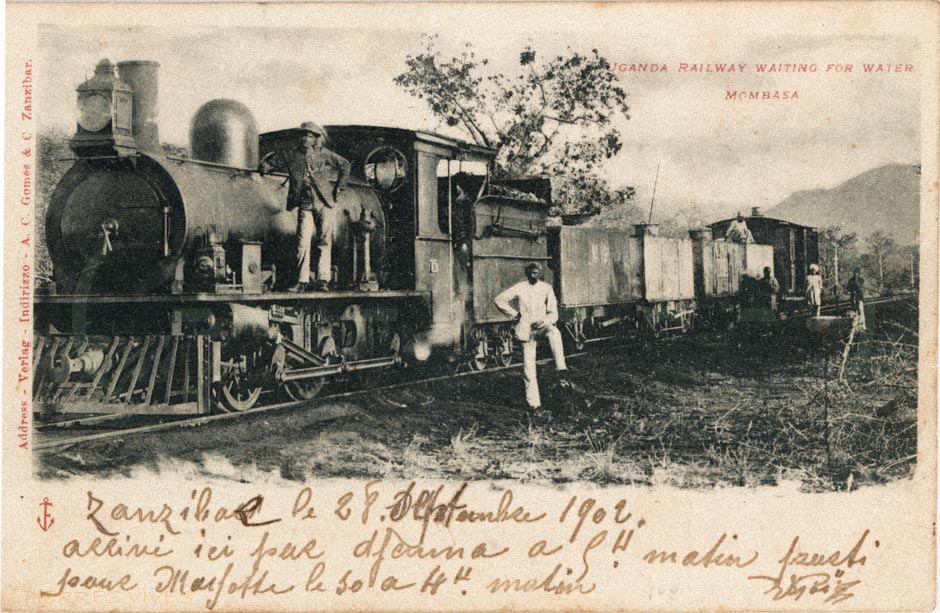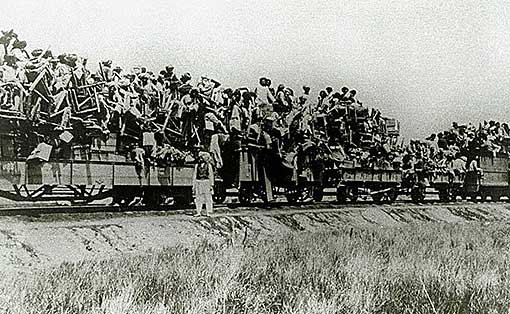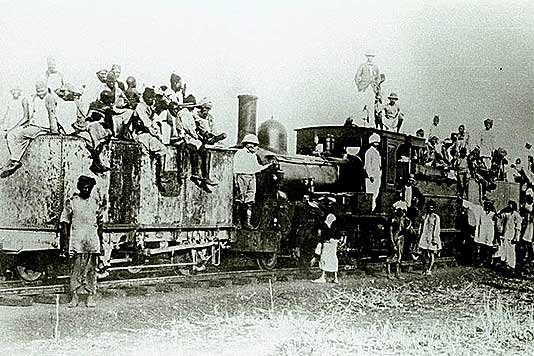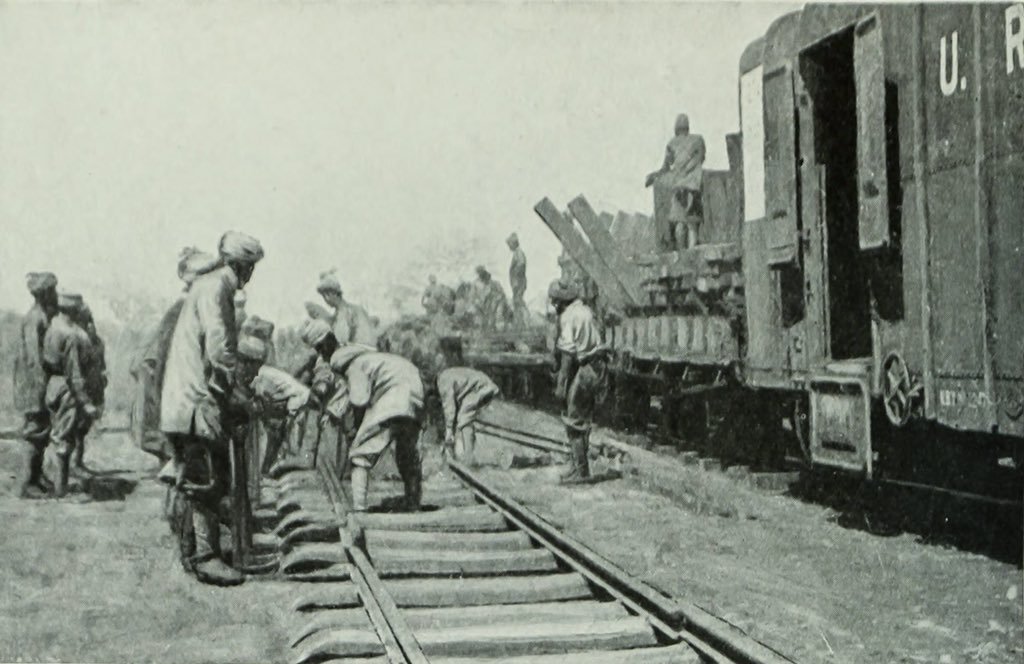
Reading through old copies of The Railway Magazine, I came across this article in the June 1950 copy. I thought it might be of interest alongside my earlier post about traction on the East African Railways:
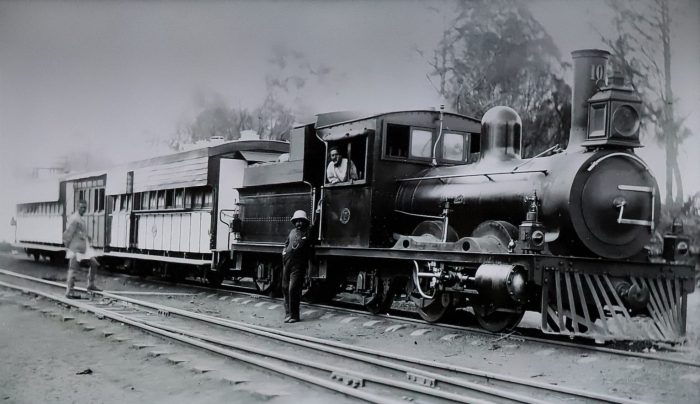
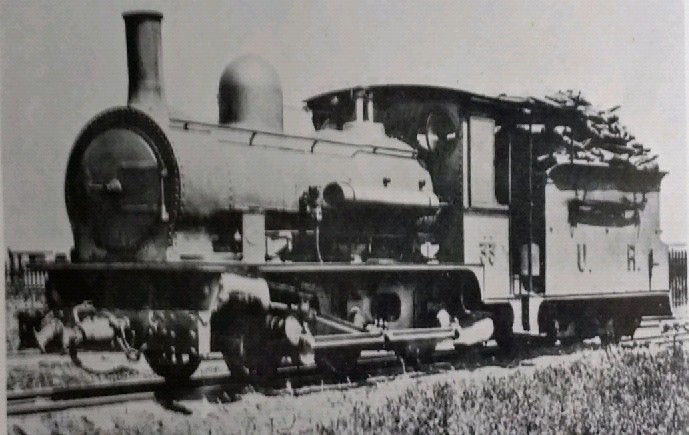
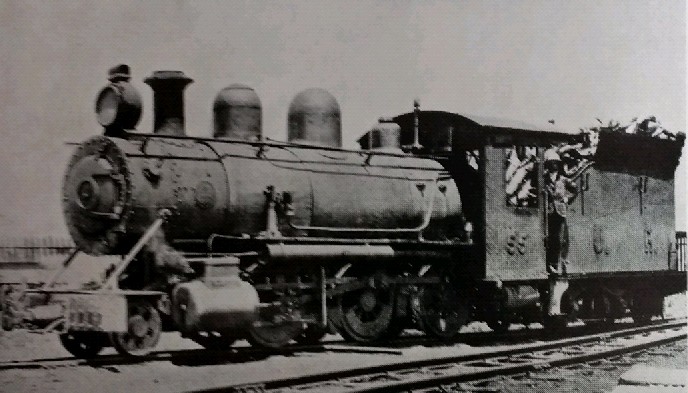
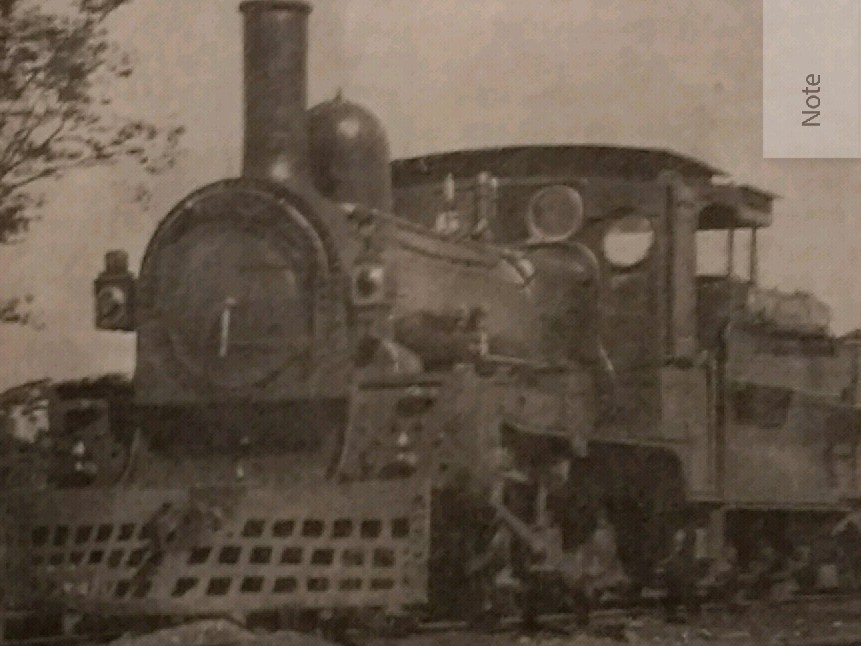
The article was entitled: Kenya and Uganda Railway Locomotives and was written by G. Gibson CME, E.A.R.&H. [1] It included a number of photographs of early locomotives on what was once called the Uganda Railway
Class F 0-6-0 Locomotive. [2]
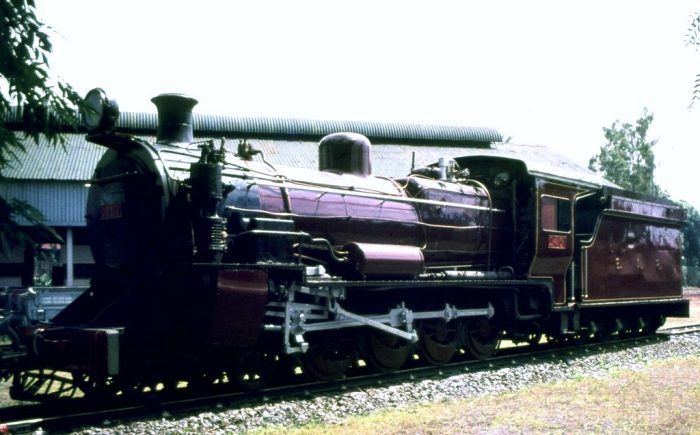
Class B 2-6-0 Locomotive. [2]
Class N 2-6-0 Locomotive, introduced in 1896. [1]
Two locomotives were imported from India to commence construction work
Gibson states, “There appears to be no detailed description of the locomotives available today, nor is it certain that they were both of the same type, as both ” A ” and ” E ” class engines are mentioned in early papers. They were certainly very small, and the Chief Engineer reported them as being incapable of hauling more than two wagons on a 1 in 30 grade.”
The ‘N’ class locomotives are the first for which details available. Eight were started work in 1896, and a further eight in 1899. Gibson states that some were fitted with, “Joy’s valve gear and the balance with Walschaerts link motion. These engines suffered from one serious defect, in that they continually derailed.”
To strengthen the roster and provide more reliable motive power than the than the ‘N’ class, eight ‘F’ class engines were delivered in 1897 and a further 26 followed in due course. In the latter part of 1897, orders were placed with Baldwins for 36 engines, known as the ‘B’ class; 20 were came in 1899 and the balance in 1900. “They proved reliable in service, but more expensive to maintain than the ‘F’ class. They were typical of American design at that time, with bar frames, and sand box mounted on the boiler top.”
By 1910 both these classes were in poor shape. They were kept in service druing the Great War and were not finally written off until 1931. Several of them were destroyed by mines laid by enemy raiding parties. “In April and May, 1915, some 50 attempts were made on the railway by such parties, often resulting in fatal casualties among train crews.”
By 1910, more power was essential. Orders were placed with the North British Locomotive Company, in 1911 for 18 Mallet-type compound locomotives which arrived in 1913/14. They were marginally re-designed locally which improves things but they remained unpopular with drivers. Failures continued to happen often and they were scrapped in 1930.
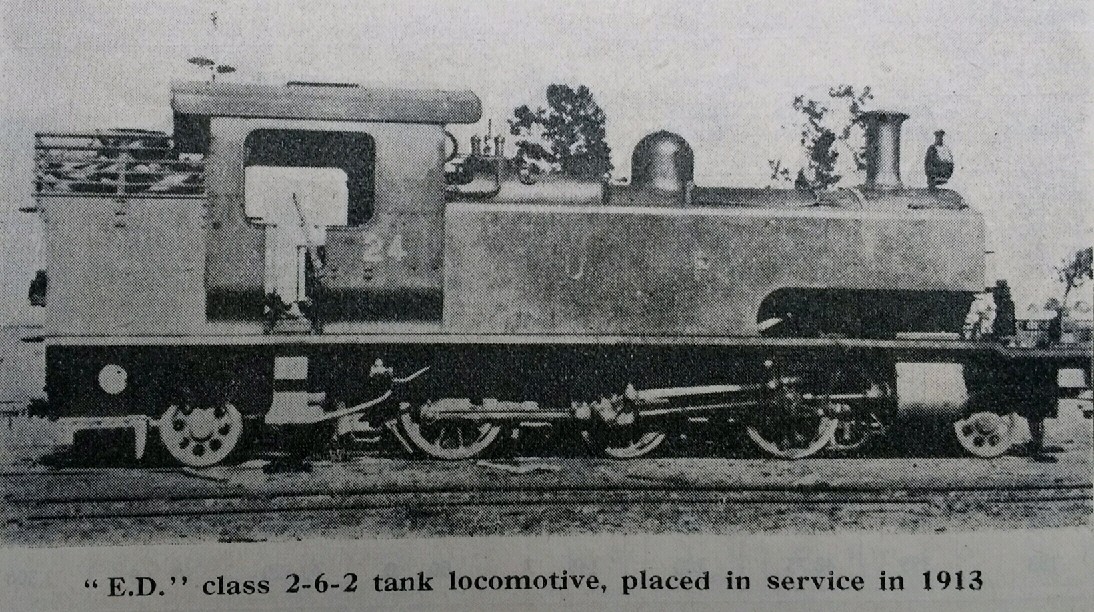
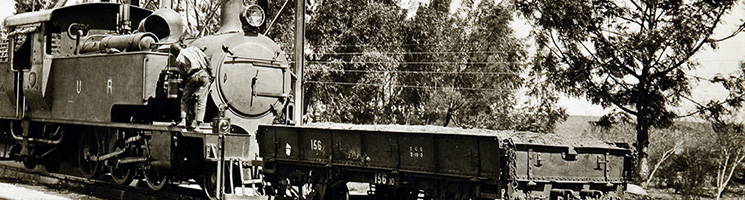
Also in around 1910, “three side-tank engines were ordered from Nasmyth, Wilson, known locally as the ‘E.D.’ class, and placed in service in 1913. They proved successful and were employed on main line traffic … but with fuel consumptions equal to the older engines. They were scrapped in 1938.”Class E.D. 2-6-2 Locomotive. [4]
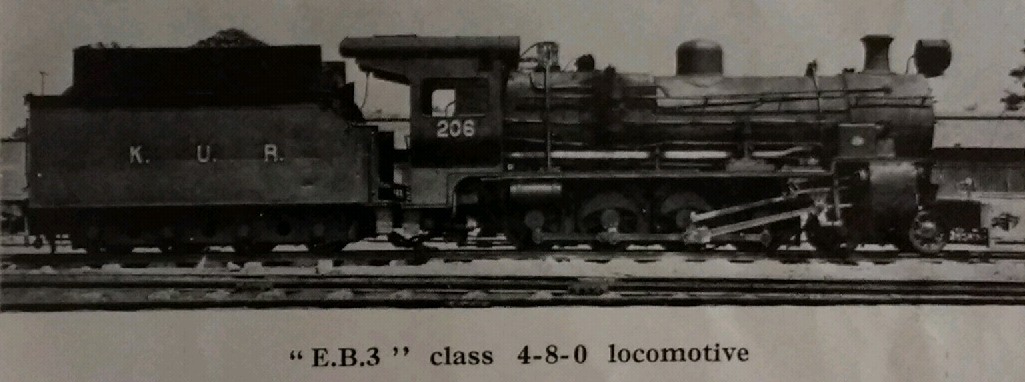
Seven ‘E.B.’ class engines were put into service at the outbreak of the Great War. Thirty four further ‘E.B.’ class locos were purchased. They had minor design differences and so were classes ‘E.B.1’. Seventeen started work in 1920 and seventeen in 1921. The first E.B. locomotives were disposed of in 1934 as were the majority of if the E.B.1’s. six were still in use when the Railway Magazine article was written.
“The ‘E.B.’ class were built by Nasmyth, Wilson & Co. Ltd., and the ‘E.B.1’ class by the North British Locomotive Co. Ltd. Oil fuel equipment was first tried out in the colony on one of these engines.”
The history of the different locomotive types is continued with reference to the ‘ Class E.E’ which was supplied by Nasmyth, Wilson & Co. Ltd. They were placed in service in 1913 and 1914. It had been expected that they would be withdrawn in 1939 but the advent of the Second World War changed things and they were still in use in 1950 when the Railway Magazine article was written. They were similar to the ‘E.D.’s but by adding a trailing bogie in place of the pony, water capacity was increased by a half to 1200 gallons and fuel capacity by 2/3rds to 2.5 tonnes .
Superheaters were trialed in 1921, Nasmyth, Wilson, produced two locos with similar specs. to the ‘E.B.’ and ‘EAU’ Locomotives with Robinson superheaters fitted, they were known as the ‘E.B.2’ Class. They served well and were disposed of in 1934 after being very heavily worked. Those trials resulted in the purchase of 62 No. ‘E.B.3′ Class engines, all of which were still in service in 1950. Class EB3 Locomotive. [3]
By 1950 they had been relegated to branch-line and pick-up traffic because more powerful locomotive were now in play.
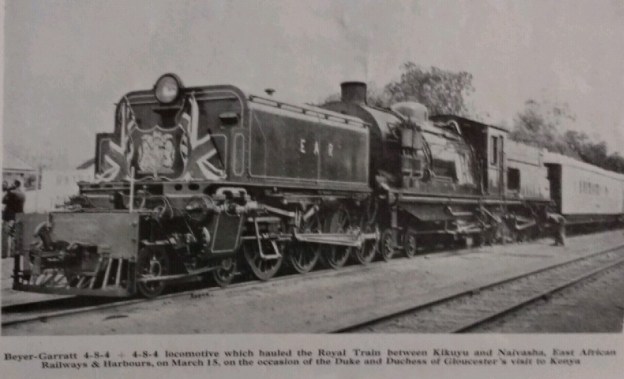
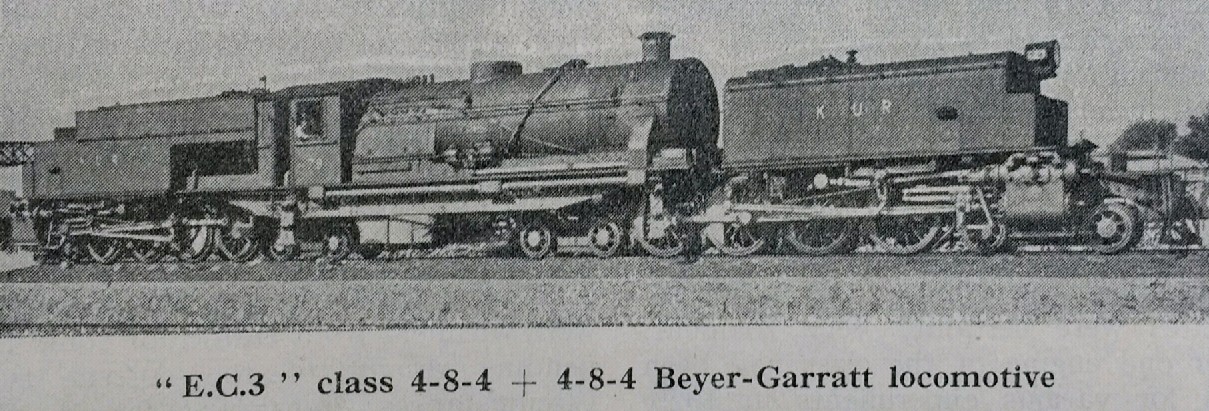
In the late 1920s, 21 ‘E.E.’ CLass shunters with 2-4-2 wheel arrangements were employed and they were followed by a further 6 of the Class in the 1930s. The late 1920 saw thw arrival of the first Beyer-Garratt type engines, “which later were to become the mainstay of the railway’s motive power. An initial order for four ‘E.C.’ class was received and they were put into service immediately. The wheel arrangement and the motion was based on the ‘E.B.3’ type, with slightly smaller cylinders, and the axle-load limited to 10 tons to enable the engines to be used on the 50-lb track of branch lines.”Class EC3 4-8-4+4-8-4 Beyer-Garratt Locomotive. [4]
In 1939, these four engines, with two of a later class, were sold to Indo-China to make room for six engines of a heavier type.
I have posted about these locomotives in another article:
The success of these first Garratt’s led to an order for a further 12 Garratt type locos from Beyer, Peacock & Co. Ltd. Minor modifications meant that these were designated as the ‘E.C.1’ class. The adhesive weight was increased to 83.85 tons; total weight to 134.6 tons; water capacity to 5,250 gallons; and fuel to 10 tons.
“In 1931, ten ” E.C.2 ” class Garratt locomotives, made by the North British Locomotive Co. Ltd., were imported. They [were] a little heavier than the ” E.C.1 ” class, having an adhesive weight of 87.95 tons and a total weight in working order of 142.1 tons. In all other leading particulars they are identical although there are a few differences in detail where infringement of established patents might occur.”
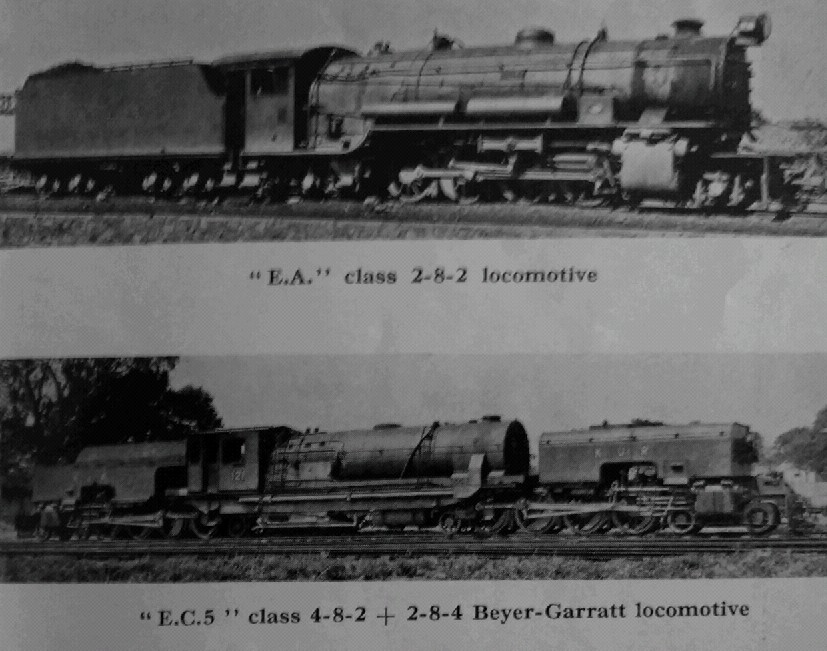
Six 2-8-2 engines were also ordered and arrived in the colony in 1925, but were not placed in service until 1927-28. They were designated as the ‘E.A.’ class.. They performed really well but by 1950 had been relegated to “long distance through goods traffic between the capital and Mombasa, being limited by their 17.5 tons of axle load to this section, which until recently (1950) was the only line laid with 80-lb. rails.” Class EA and EC5 Locomotives. [3]
IN 1950, plans were afoot to refurbish the ‘E.A.’ Class.
After 1930, all locomotives purchased were of the Beyer-Garratt type:
1939: 6 No. ‘E.C.3’ engines.
1940: 2 No. further ‘E.C.3’ locomotives.
1941: 4 No. further ‘E.C.3’ locomotives.
“They recorded large mileages during the late war, when traffic demands were the heaviest in the history of the railway. One engine covered 243,000 miles between shopping for heavy repairs, while several ran over 200,000. The boilers are fitted with arch tubes and thermic syphons. The maximum axleload (was) 11.75 tons, which limit(ed) their use to anything but main line traffic, where they (were) used on mail and through freight trains, hauling loads of up to 575 tons on 2% grades.”
1944: 7 No. ‘E.C.4’ Class Garratts came from the War Department. By 1950, they were still the most powerful locomotives on the network.
1945: 2 No. ‘E.C.5’ Class ‘Burma Type’ locomotives. These moved south to Tanganyika in 1949.
1949: 6 No. ‘E.C.6’ locomotives almost identical in design to the ‘Burma Type’.
In 1950 further Beyer-Garratt type locomotives were on order.
1. G. Gibson; Kenya & Uganda Railway Locomotives; The Railway Magazine, Volume 96, No. 590, p401-405.
2. The Railway Magazine, Volume 96, No. 590, p398.
3. The Railway Magazine, Volume 96, No. 590, p399.
4.The Railway Magazine, Volume 96, No. 590, p404.
5. The Railway Magazine, Volume 96, No. 590, p402-403.
I have been looking through old railway magazines over the Christmas break in 2018 and came across articles in the 1950 editions of the Railway Magazine which relate to this series of posts. The first is in the April 1950 edition of the magazine. ……..
The April 1950 edition of The Railway Magazine [1] contains the first of these articles written by Thomas H. Cobb.
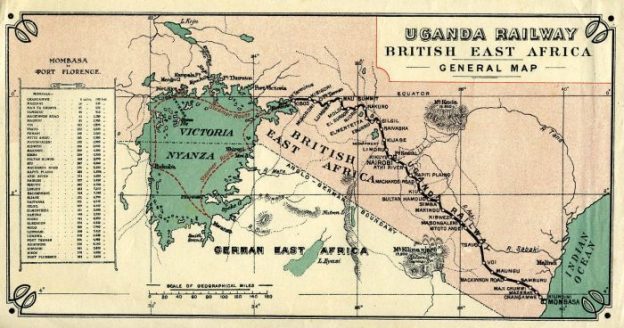
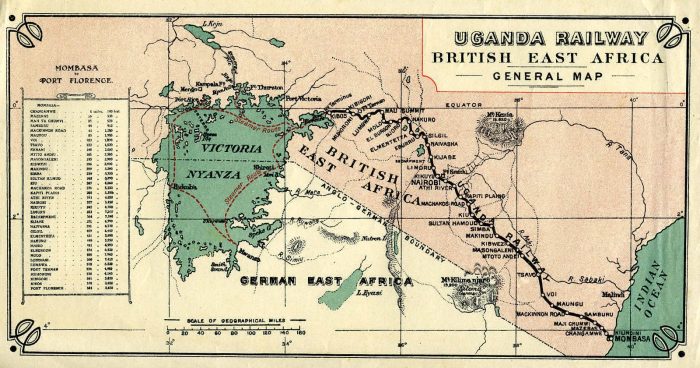
He begins with a relatively short description of the route of the line, first focussing on the route via Kisumu (Port Florence) and Port Bell to Kampala and then on the route via Tororo.
He comments: “These lines have always been state railways, though they are administered as a separate department.”
Cobb goes on to describe a journey on the line. He notes: “There is practically no difference between first and second class, except that the former have a fan and bed-reading lamps, and are slightly less crowded. Third class carriages have wooden seats and centre corridors; they are always crammed to bursting point. Hire of bedding, and food in the restaurant cars is cheap, and passengers are officially encouraged not to tip company servants – but they do. Speed is never high; the up mail train covers the first 30 miles out of Mombasa in 100 min., including two stops. All trains stop at all stations, with the exception of a few ‘local’ stations neat Mombasa and an odd flag stop or two usually missed by the mails.”
The Uganda Mail heading for Lake Victoria in the Kikuyu Hills, banked by 4-8-0 Locomotive No. 69. [2]
An EC3 at the spiral close to Timboroa Station. [2]
He concludes with some trivia:
from Mbulamuti to Jinja the east-west main line runs distinctly eastwards for about 20 miles.
The curves on the line have the inner edge of the outer rail oiled by hand twice a week.
The two summits of 8,322 and 9,136 ft. on the Kisumu and Kampala lines respectively are only 20 miles apart, but on quite separate lines, yet they have each pursued an independent course of over 60 miles from their divergence at Nakuru.
The only racial discrimination on the railway is against Europeans, as they are not issued with tickets below second class, even for trains which consist of third class carriages only.
References
Thomas H. Cobb; The Kenya-Uganda Railway; in The Railway Magazine No. 588 Vol. 96 April 1950, p262-267.
Metre-Gauge Railways in East Africa – Rolling Stock
This post provides a short survey of carriages, goods wagons and brake vans/cabooses on the network in Kenya and Uganda from the inception of the Uganda Railway in the 19th Century to through the demise of the East African Railways Corporation in 1977 on to 2018 when this post is being written. The approach is eclectic rather than structured and the post includes some interesting vehicles.
A. The Early Years
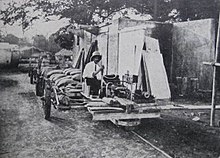
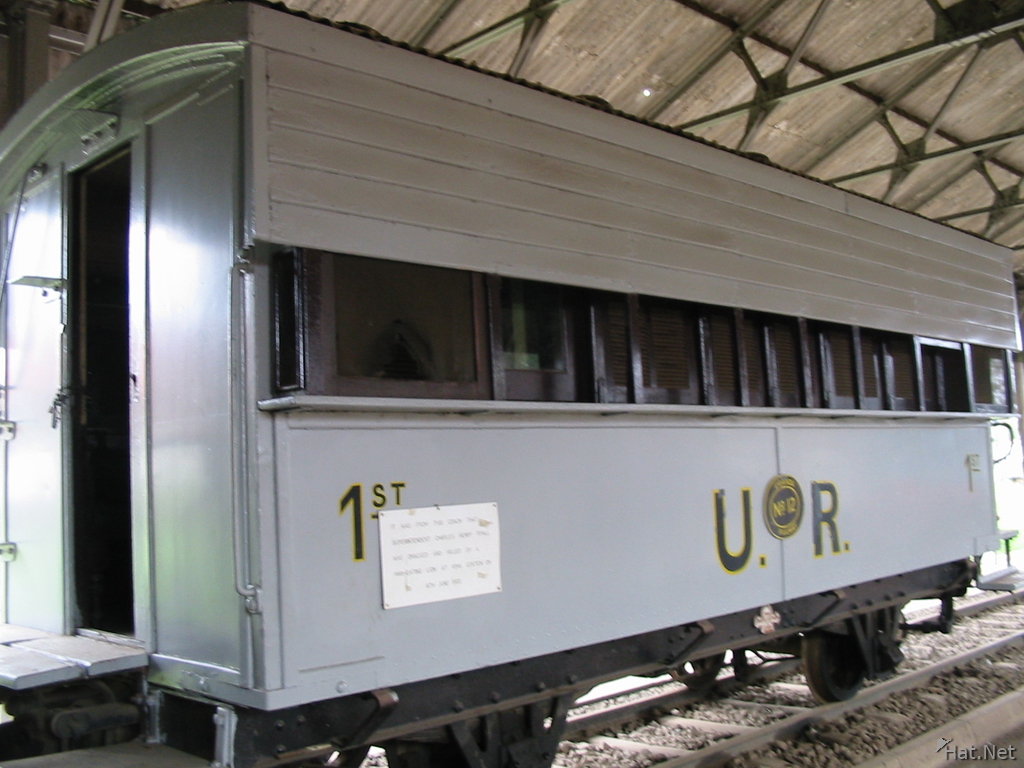
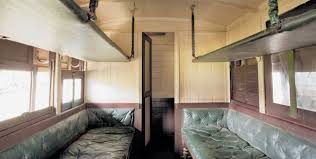
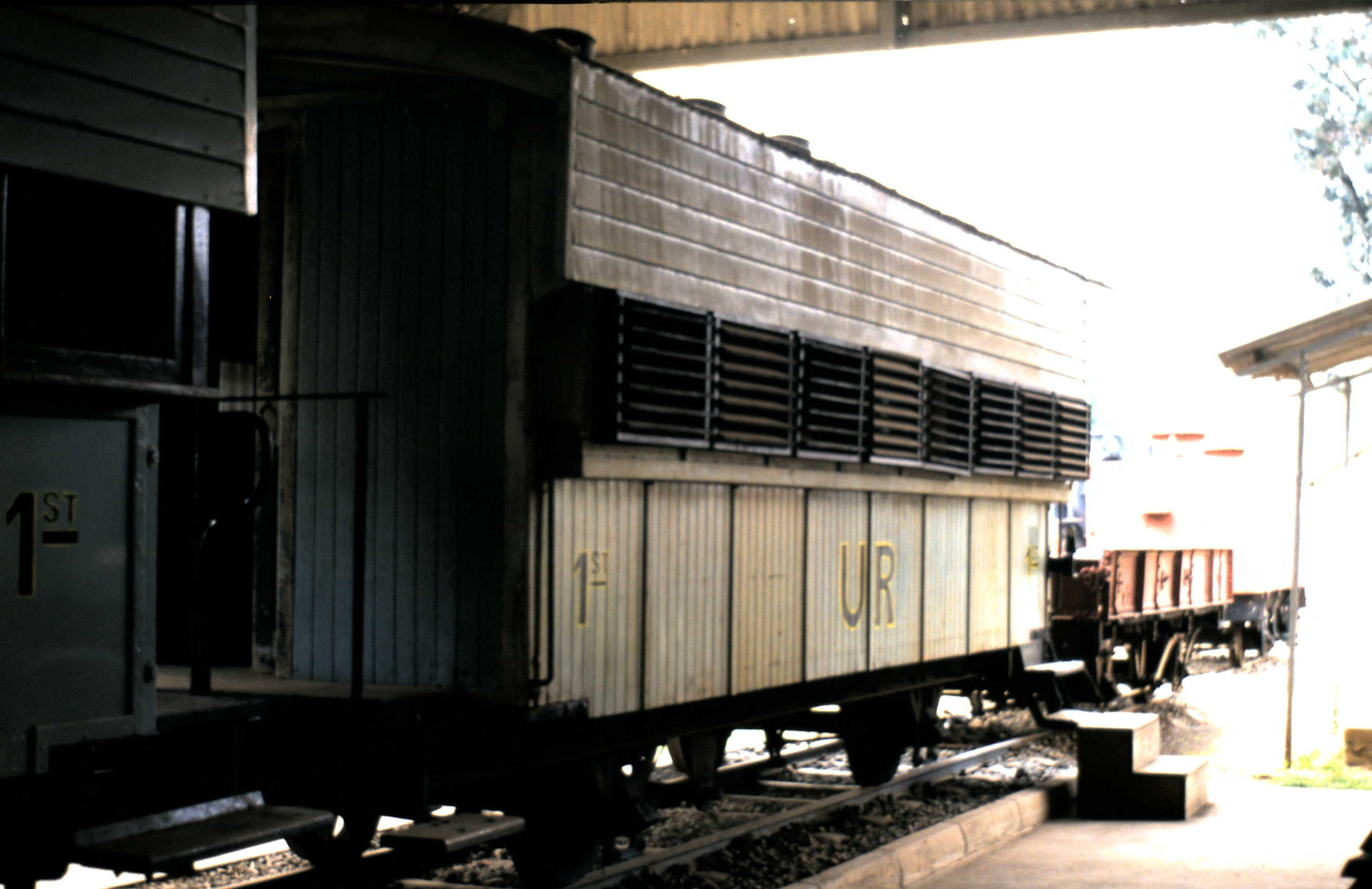
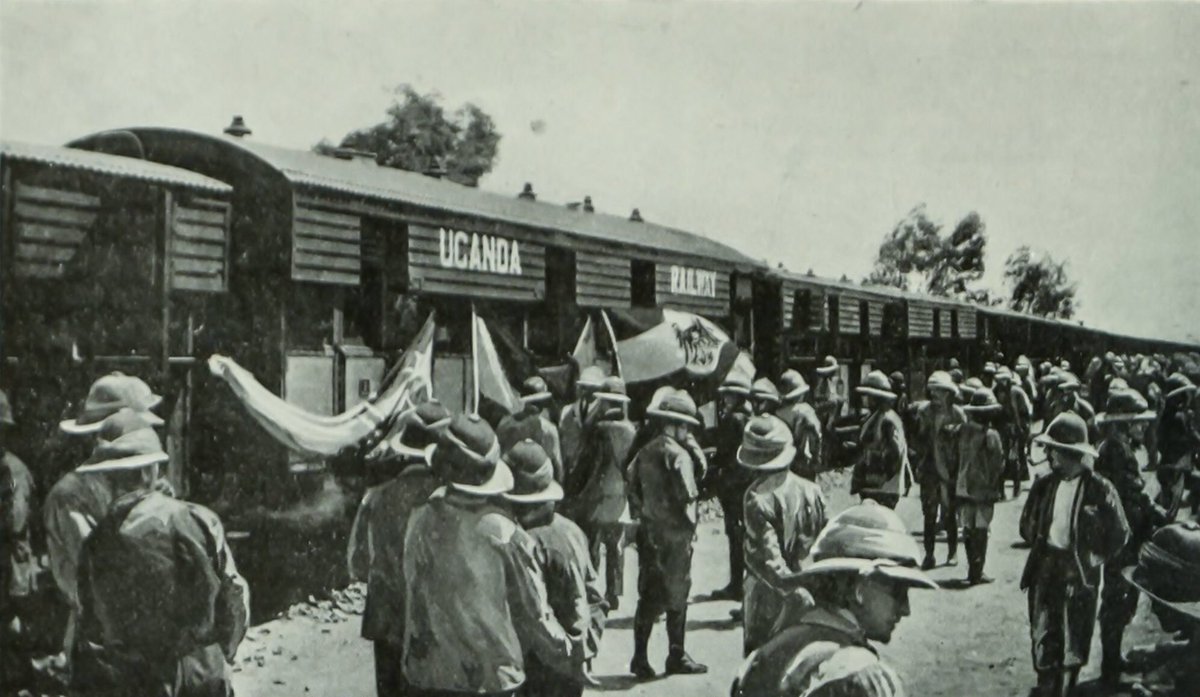
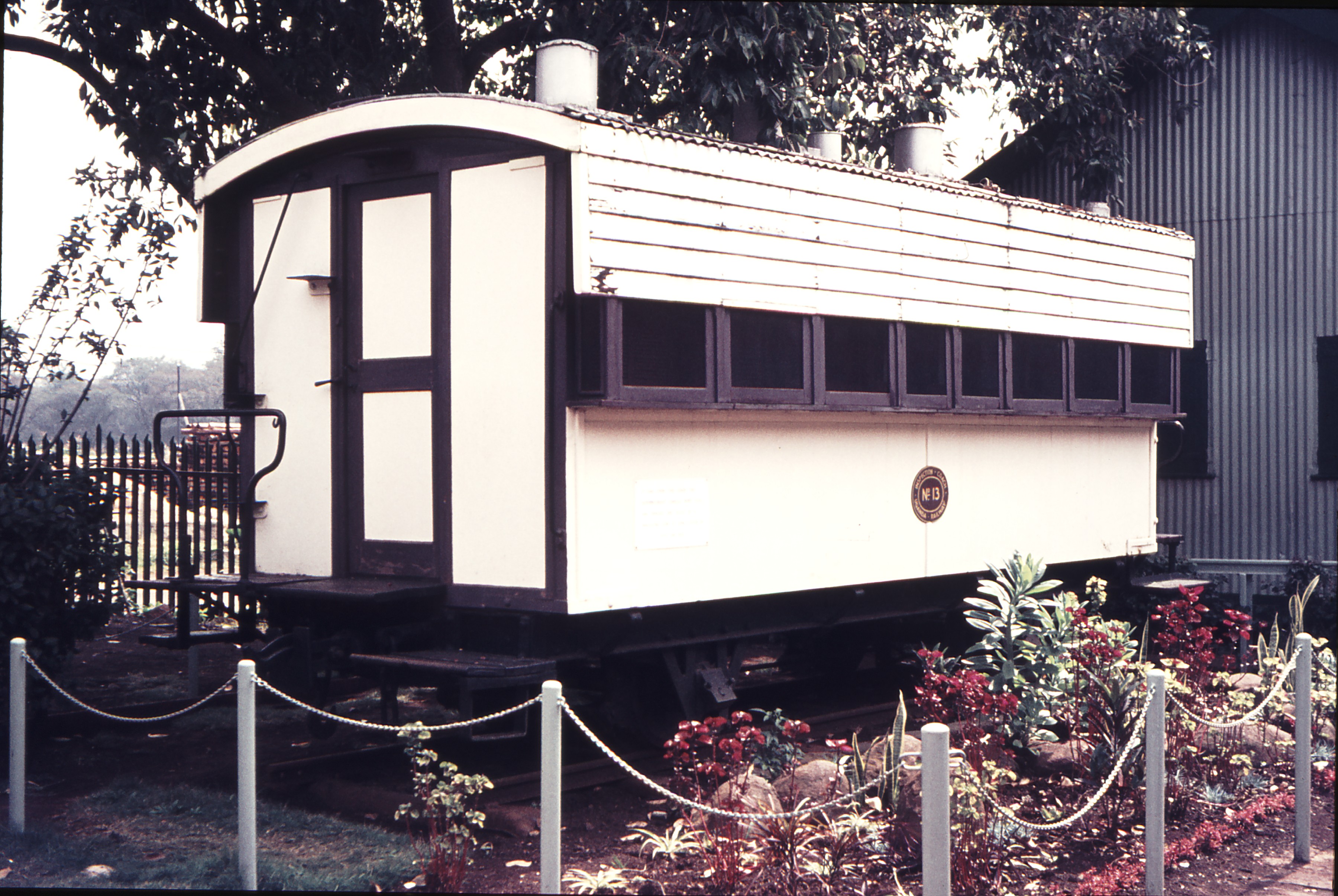
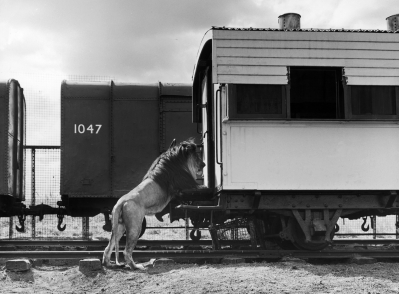
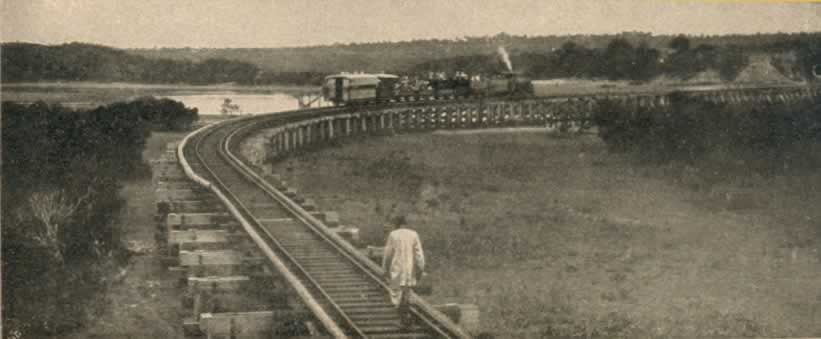
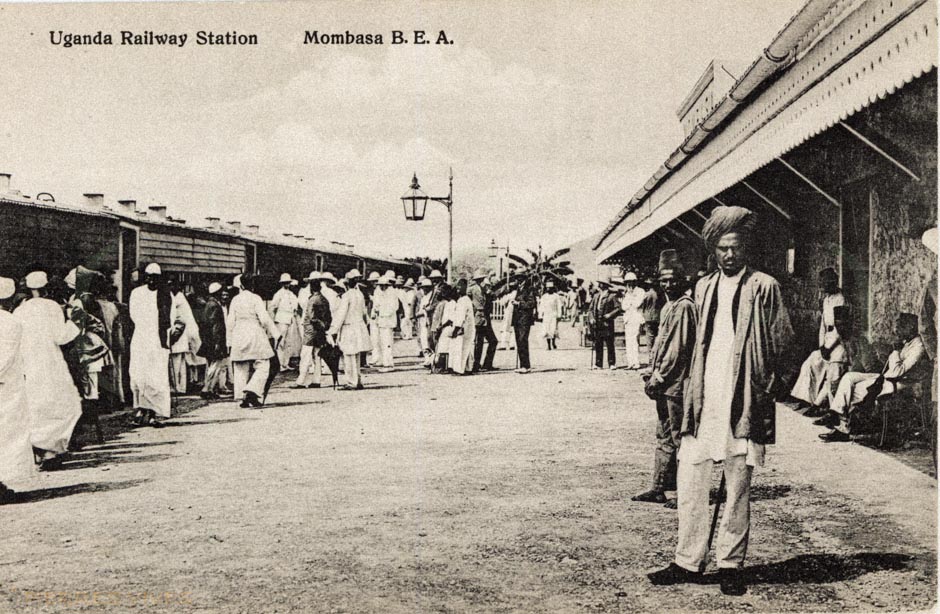
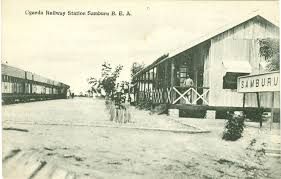
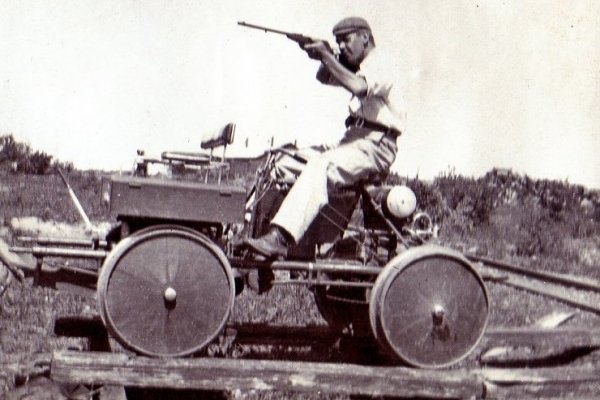
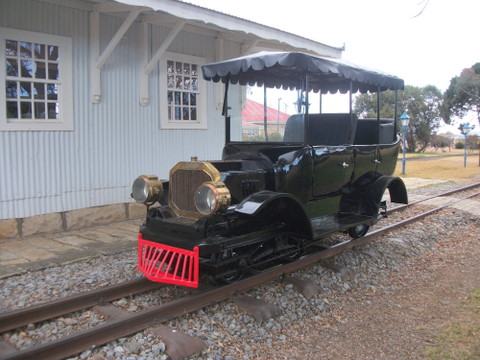
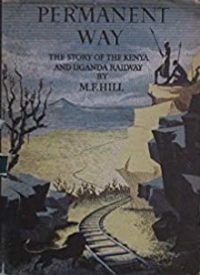
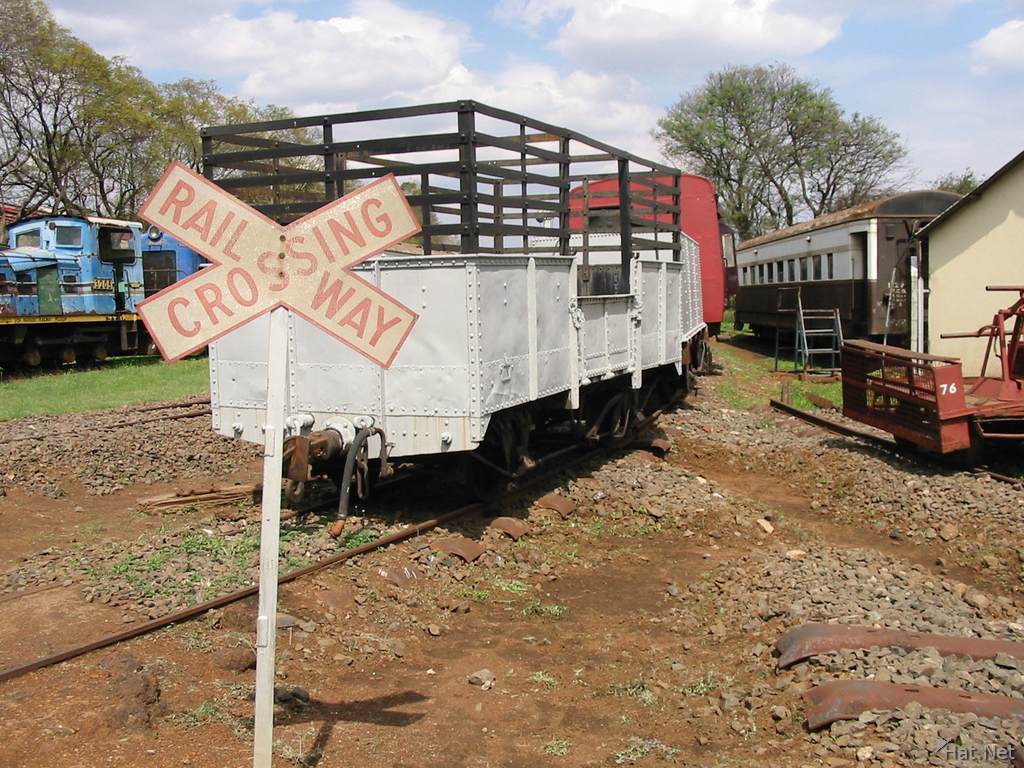
Nairobi Railway Museum houses a couple of examples of passenger stock from the very early years of the line. During the construction phase of what was the original main line from Mombasa to Kisumu it was not possible to provide air conditioning in carriages! Carriages had to be design in order to limit temperature experienced by passengers.It was from this coach that superintendent Charles Henry Ryall was dragged and killed by a man eating lion on 6th june 1900 at Kima station. [1]Interior of a 1st Class Carriage at Nairobi Railway Museum. [35]The coach in the first image above can be seen poking its nose into this image of another Uganda Railway 1st Class carriage. The photo was taken, by me, in 1994.British and SA troops in WW1 decorate a Uganda Railway train at Voi with merchandise confiscated from felled or runaway German troops. [9]111397: Nairobi Kenya Preserved Uganda Railway Officers Saloon No 13 on platform, (c) Weston Langford. [8]Lion leaning on the back of carriage with box van behind, dated around 1961. The image shows a lion stepping up on to the back of the railway carriage and trying to find a way in. The photo is linked to the East African Railways & Harbours/Caltex historical film ‘The Permanent Way”, which included the building of the original ‘Uganda Railway’ from Mombasa to Kisumu (now in Kenya) from 1895 to 1903. [36]An example of one of the above coaches at the rear of a train on the first (timber) bridge between Mombasa Island and the mainland. [2]Similar carriages illustrated again at At Mombasa Railway Station around the turn of the 20th century. [3]Loading the train. [3]Another images of the early carriages, this time at Changamwe Railway Station a few kilometres from Mombasa. [4] This picture also provides a glimpse of a typical covered goods wagon in use on the line in the early 20th Century.And at Samburu. [5]A short train of open wagons close to Mombasa in the construction phase of the line. [3] The two images immediately above are evidence of a rather chaotic attitude to the transport of railway workers in the years of the construction of the line! [6]A Uganda Railway wagon stands alongside Indian labourers as they repair the railway near Taveta during WW1. It had been bombed by the Germans. [9]An interesting example of early holiday travel. A short journey down the line to shoot game! [7]A further example of provision made for shooting parties: the High Commissioner to had the railway extended to his estate. It was used by the Governor Frederick John Jackson who owned a 1910 BSA Railcar, which was used for hunting parties. When the American President Theodore Roosevelt visited Uganda he borrowed the railcar. The BSA Railcar above was restored by the Sandstone Heritage Trust in South Africa. [7]
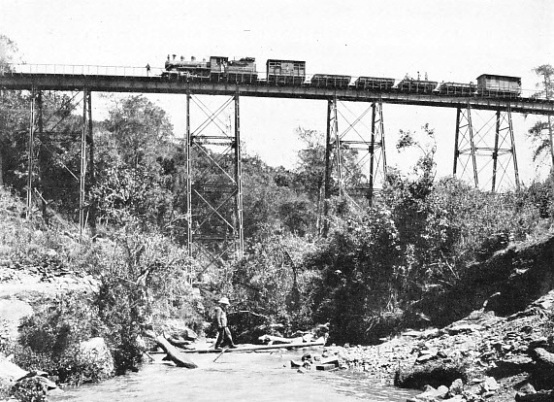
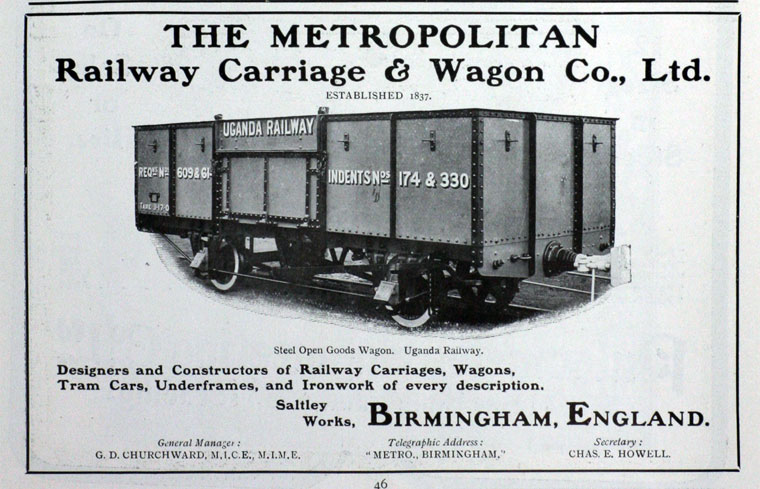
The railcar was made for the High Commissioner by the Drewry Car Co, using a BSA engine. Drewry & Sons had previously been cycle builders, run by Charles Drewry and his two sons, and located at the Herne Hill Cycle Works, 286-290 Milkwood Road. James Drewry delivered a motorised railway inspection trolley to Africa (below). Subsequently the company started building the BSA-engined Railcars. BSA took over production themselves in 1908. [7]An early goods train on the line, crossing a steel viaduct. The train is a combination of open wagons and a cattle wagon. [10]An open wagon supplied to the Uganda Railway in 1902 by the Metropolitan Railway Carriage and Wagon Company Ltd of Birmingham, UK. [16]Another early wagon on display at Nairobi Railway Museum. [24]
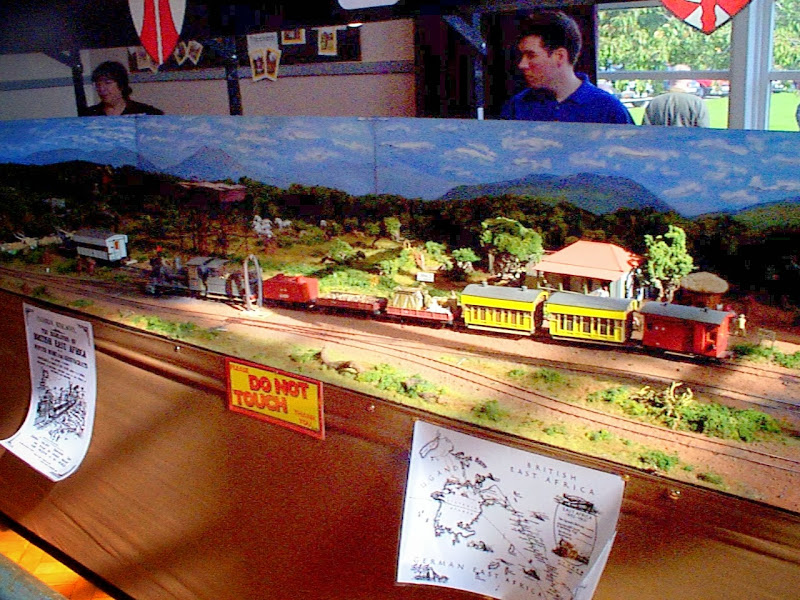
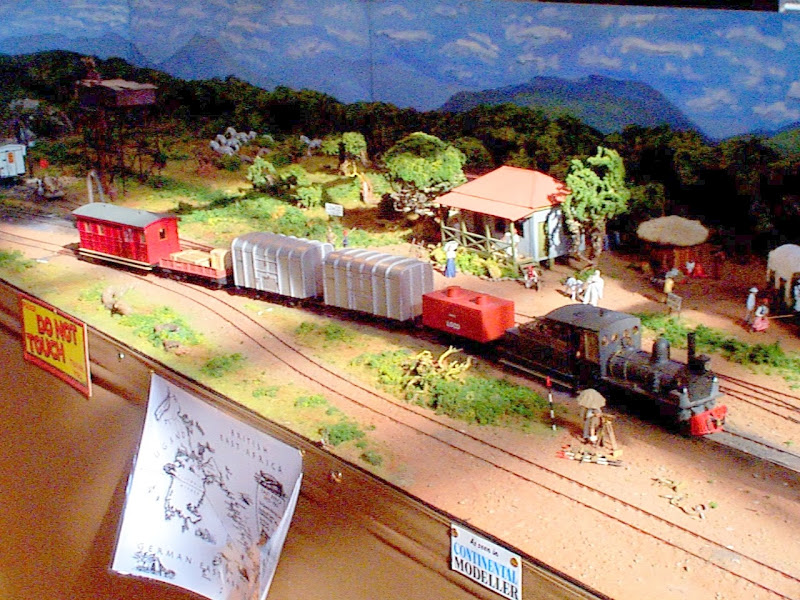
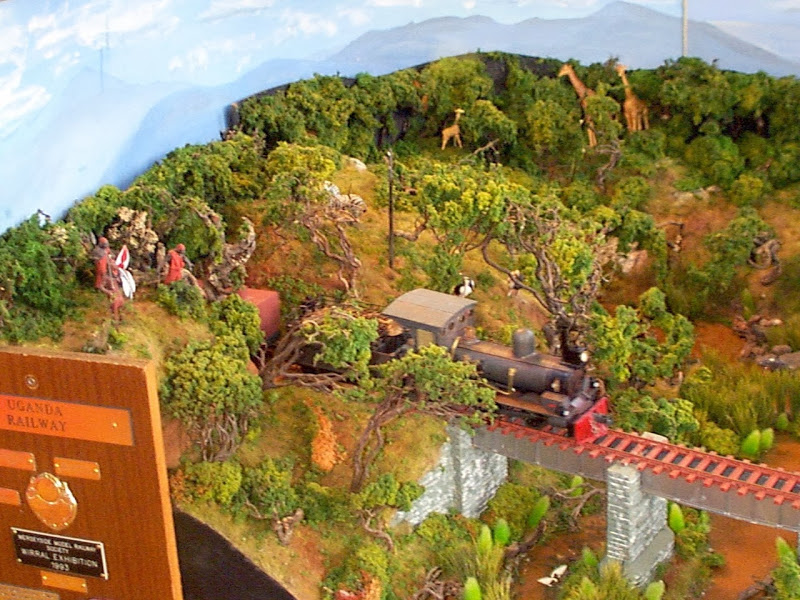
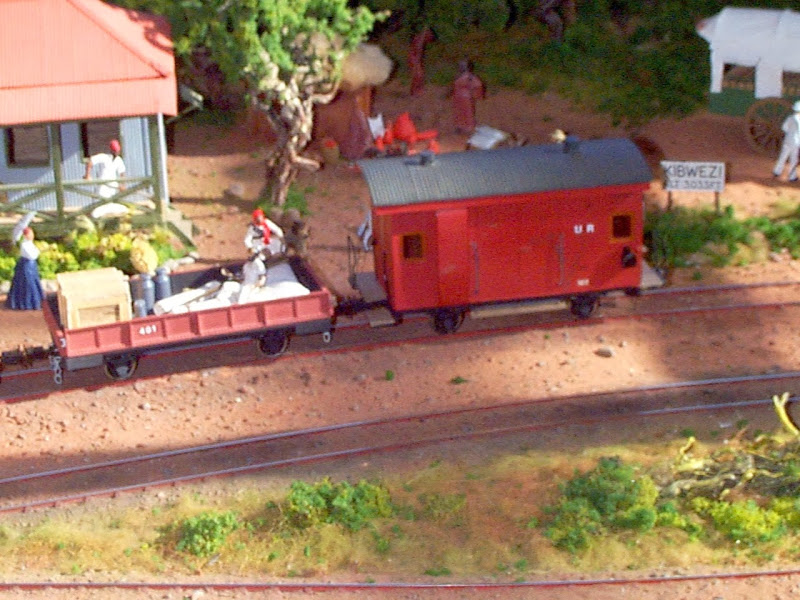
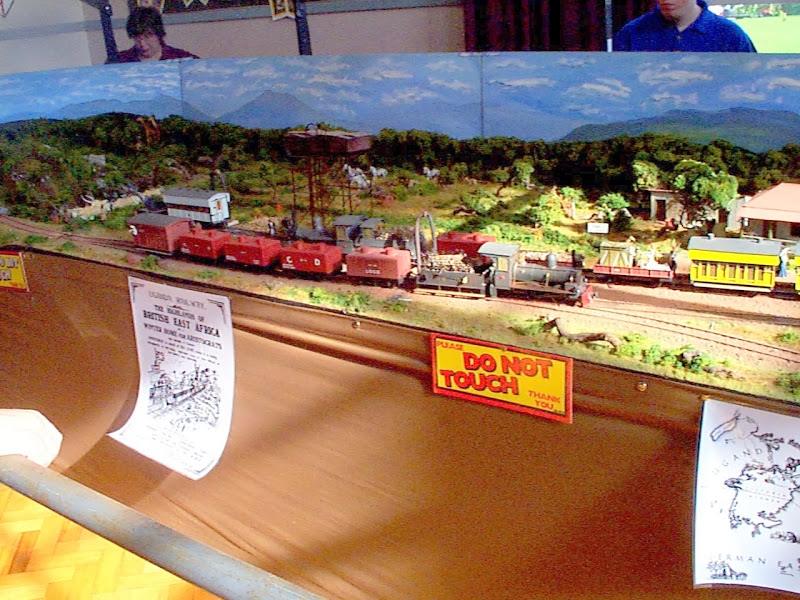
I have recently discovered some photographs of a model railway based on this line in the early years of the 20th Century. My interest in model railways means that I find these images exciting.I have still to find out more about this model. The rolling stock and locomotives seem to be very faithful to the original. [12]
B. The Developing and Growing Network
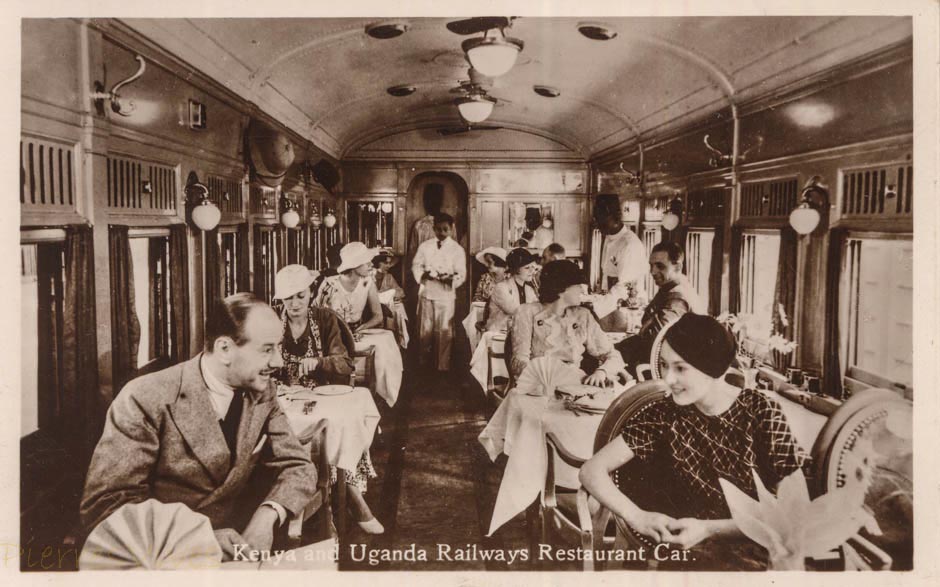
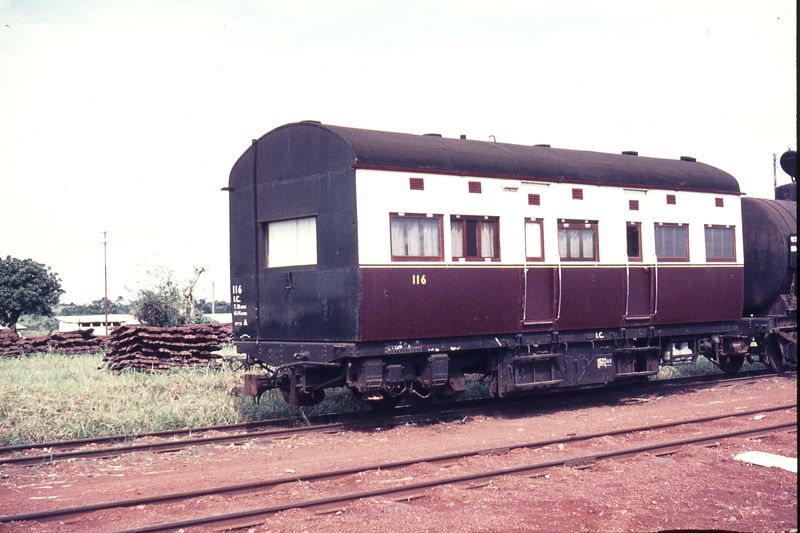
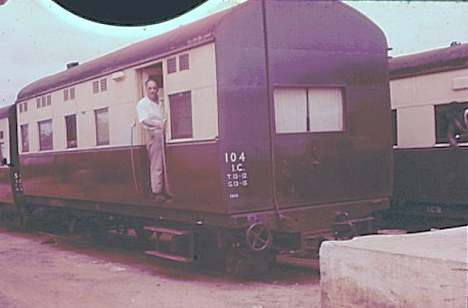
Early coaching stock began to give way to slightly better travelling conditions and carriage sizes began to develop to provide the travelling public with a better standard of service.The three pictures immediately above were taken by me in 1994 at Mombasa Railway Station. They provide a glimpse of passenger coaches stored in the sidings at the station and it is my hope that this blog post will place them into context in the history of the railway.The interior of a restaurant car. [23]A Class 11 locomotive during WW1 travels with an open wagon ahead of it to allow for the possibility of German mines.111510: In a siding at Gulu, Uganda Officers Inspection Car No 116 sits awaiting possible duties, (c) Weston Langford. [8]Passenger livery for an inspector’s caboose complete with rear window which was not fitted on a goods caboose. Goods cabooses were finished in all over maroon, as shown in the smaller image below, (c) Peter Ritchie. [11]
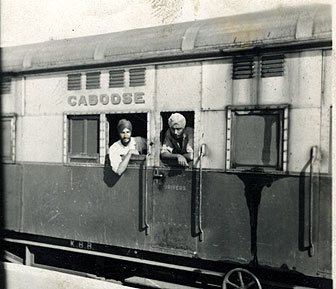
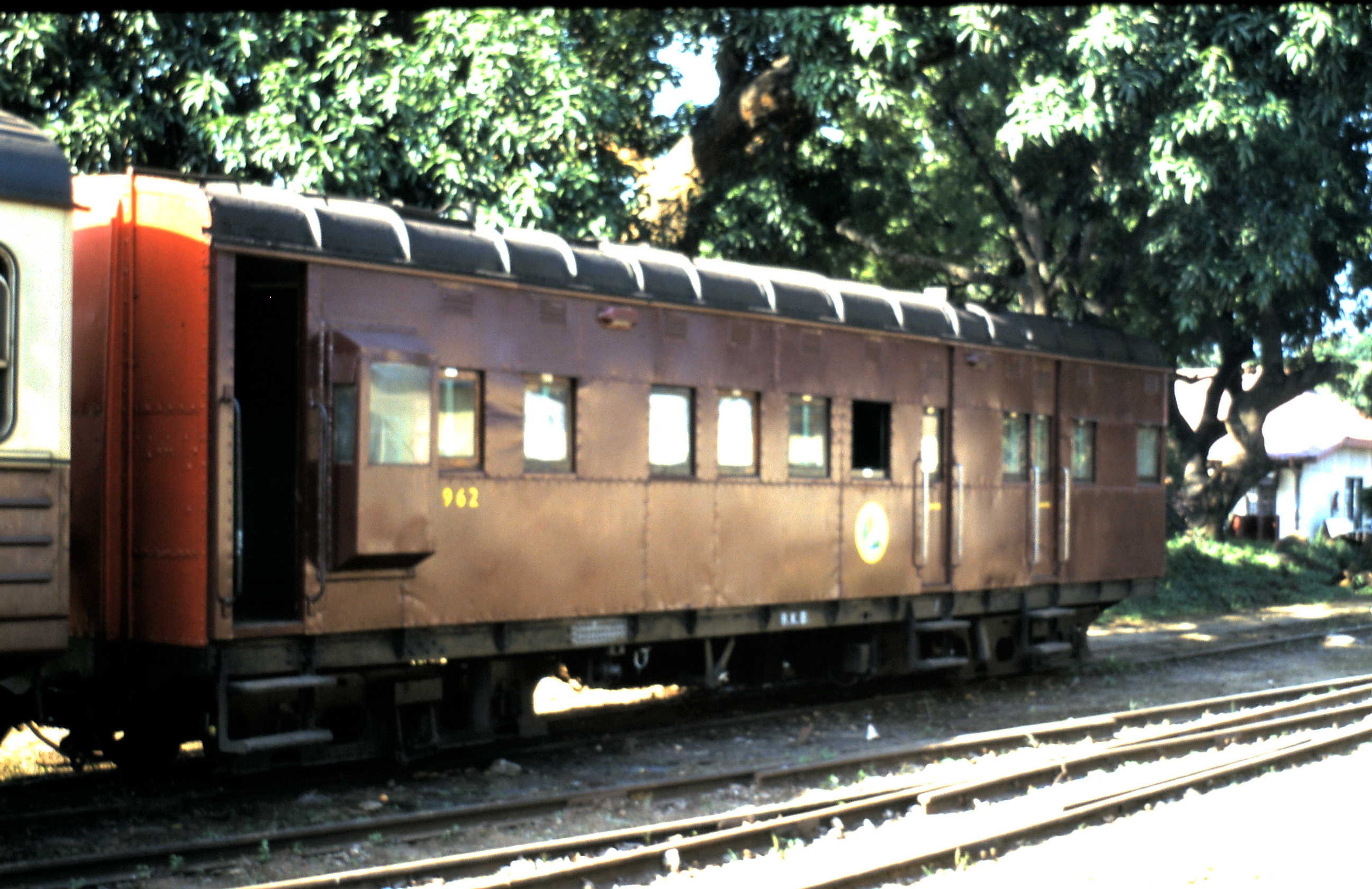
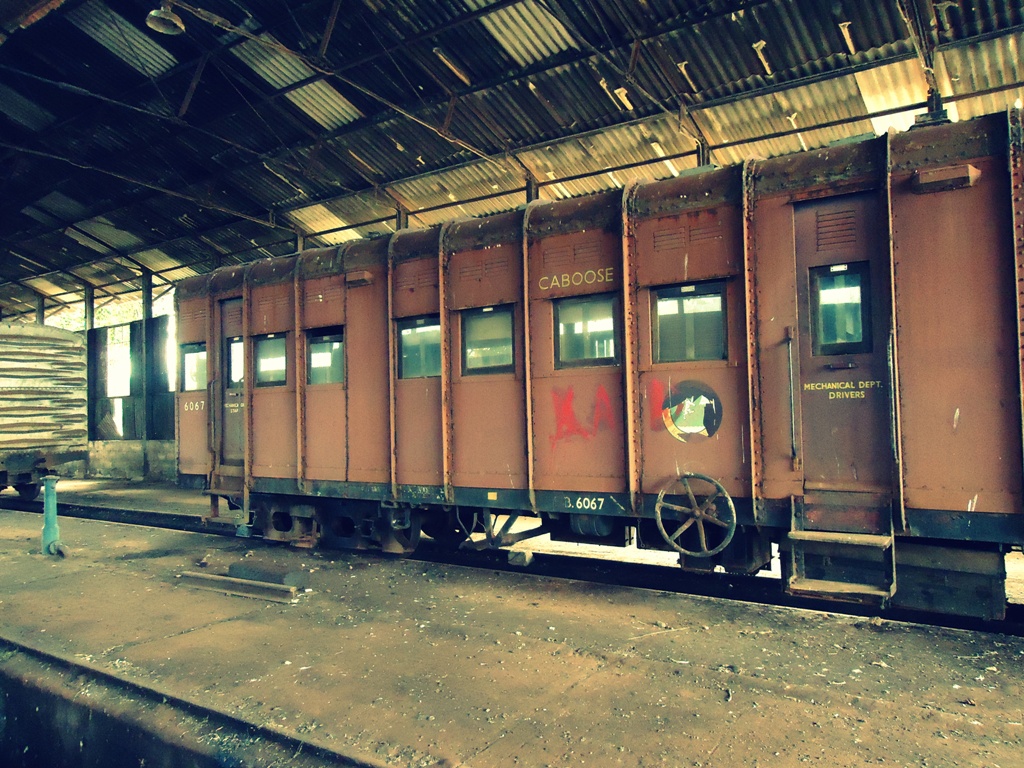
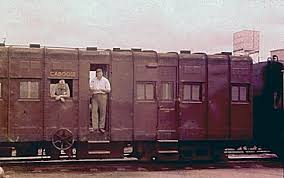
The larger monochrome image below shows a passenger train caboose in use by the sikh drivers of the train as their rest-coach between stints at the controls of the train, (c) Anthony Potterton. [6]The image immediately above shows a large caboose (No. 962) in all-over maroon, pictured in the Mombasa Railway Station sidings in 1994. The picture is one of my own.The photograph above shows a similar caboose (No. 6067). The notices on the doors indicate that the left-hand door is for the Mechanical Department Staff and the right-hand one for Mechanical Department Drivers. The caboose is stabled at Voi. [13] A similar vehicle is shown in this picture (adjacent) taken by George Gilliland. [11]
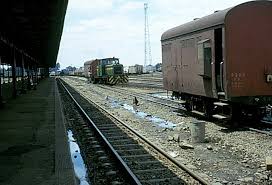
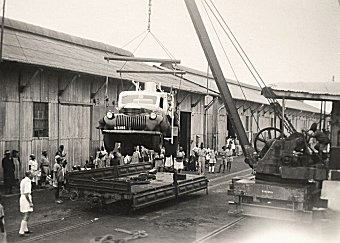
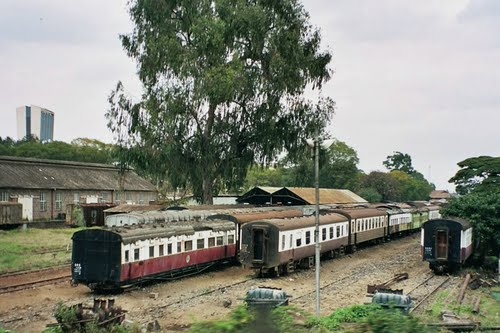
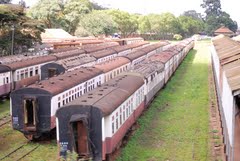
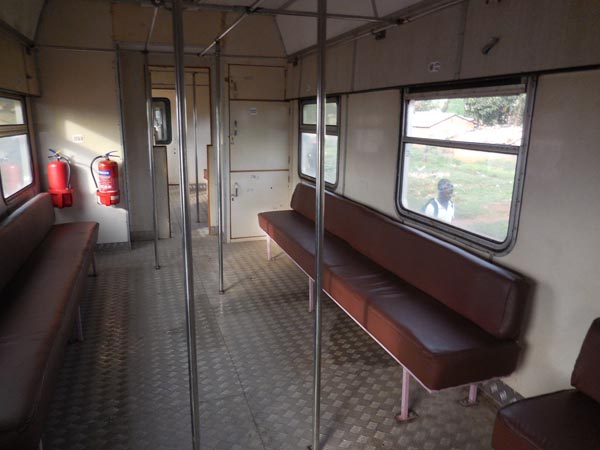
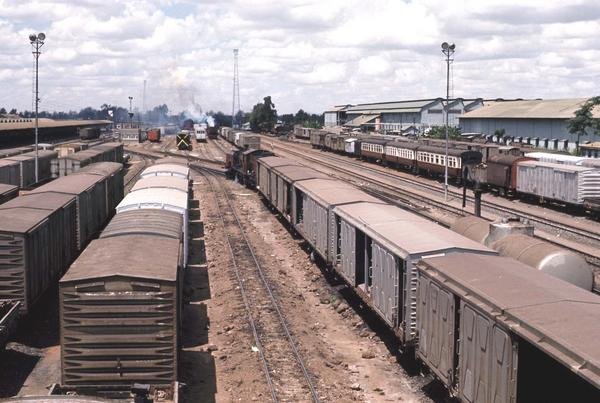
Freight/Goods wagons increased in size from those used in early years. The picture below shows an early flat bed wagon being loaded with a more modern car. [6] Should we call it a car transporter?The sidings at the main stations on the line provide ample evidence of the amount of freight which used to be carried on the line. Much of the rolling stock (both for freight and passengers) seems to be stabled and unused in many of these images below. These images have been trawled from a series of different websites.Coaching stock at Nairobi Station. [14]A picture taken from Nairobi Railway Museum. [15]Carriage interior. [34]More pictures taken from Nairobi Railway Museum (above and adjacent). [15]
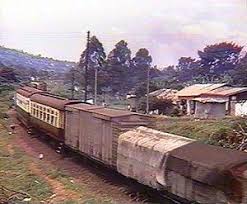
A typical mixed train consist is shown below – coaches, box wagons and tarpaulin covered open wagons being typical. There would also have been a caboose to allow drivers rest-time.
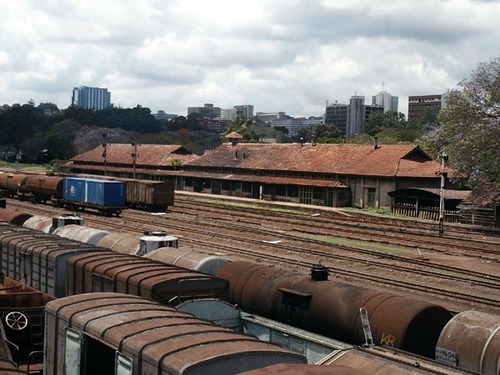
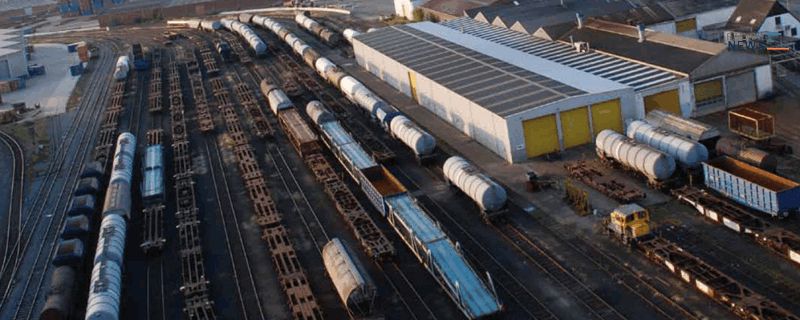
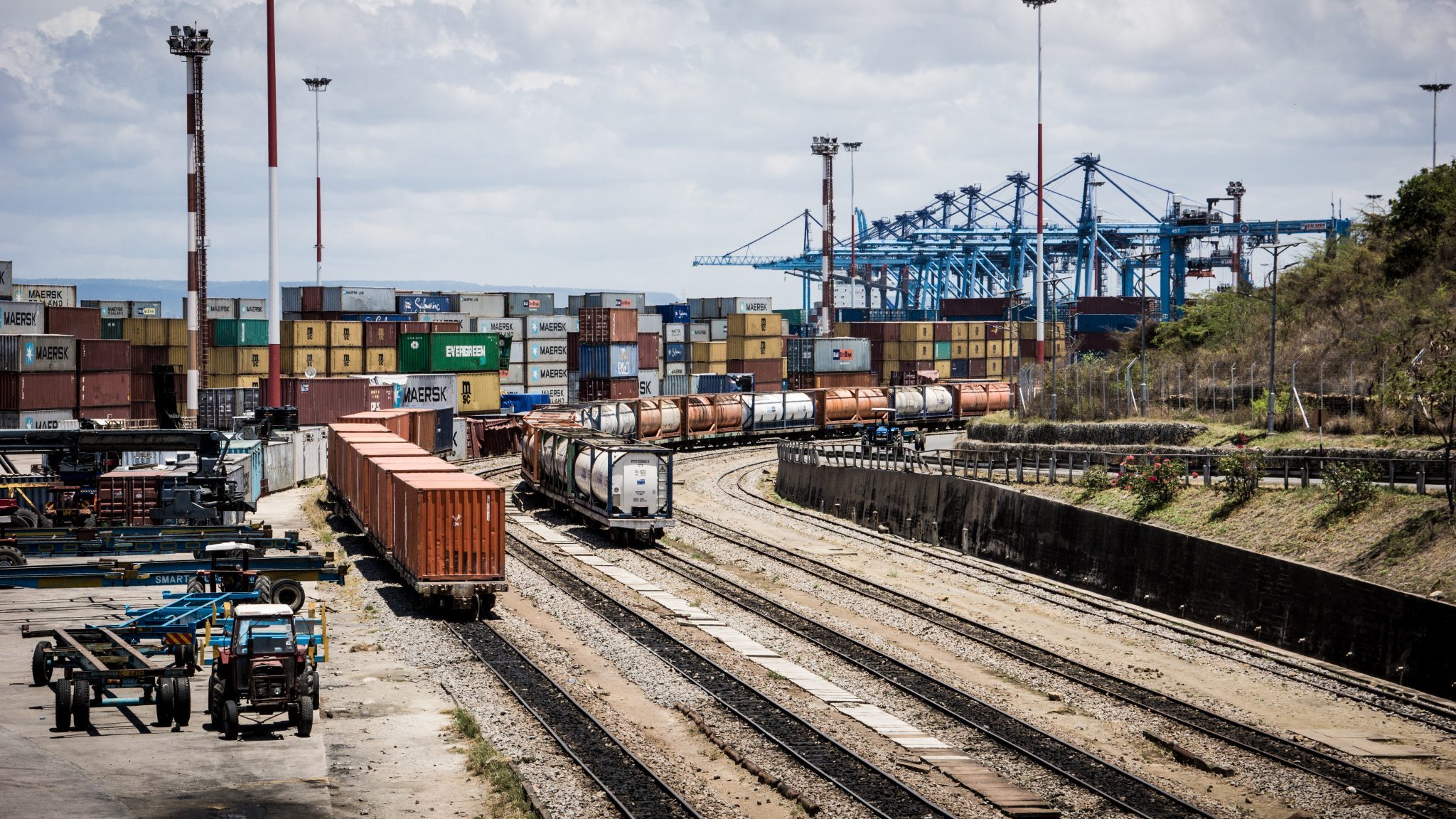
More images of rolling stock follow. As the 20th Century gradually came to an end traditional wagons were replaced by flatbed container wagons. Rail transport also began to specialize as road transport carried the more regular loads.Typical goods traffic from the 1960s was covered wagons which required loading before incorporating into goods trains, as immediately below. [17]Bulk loads of oil or specialist loads of wire which travelled from point of origin to point of destination on the railways, and did not need transshipment, became the main freight carried on the line. A typical oil train is shown above. [19] And a specialist load is shown below. [20]Container traffic became more and more significant.Mombasa metre-gauge freight railway terminal. [21]New coaches for Kenya produce by BREL in Derby UK. [33]
Cranes
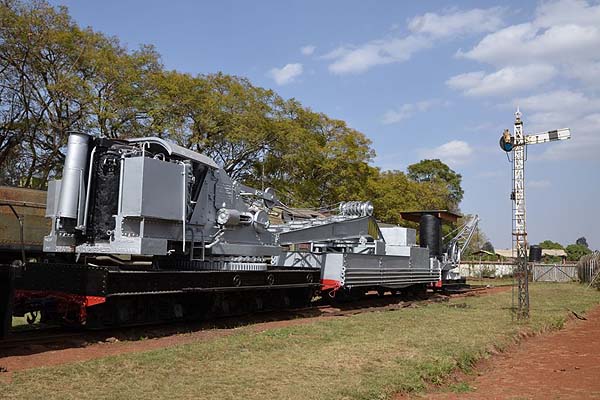
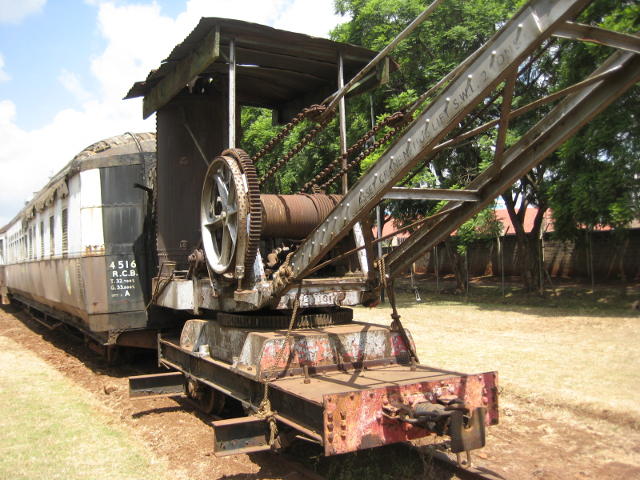
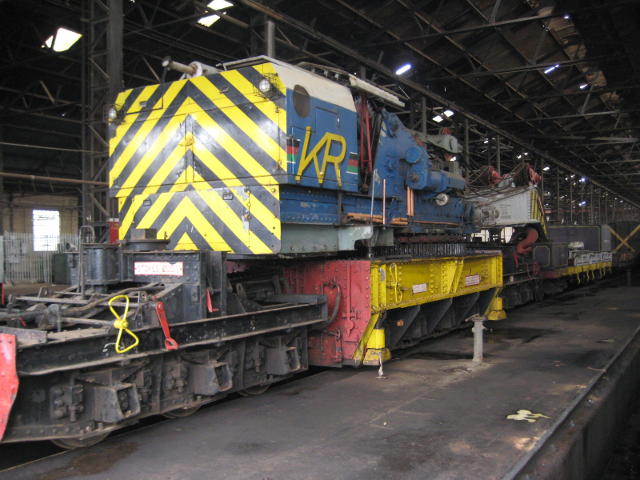
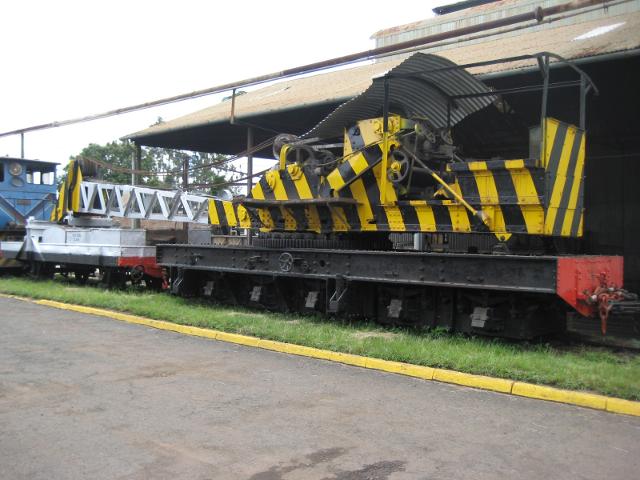
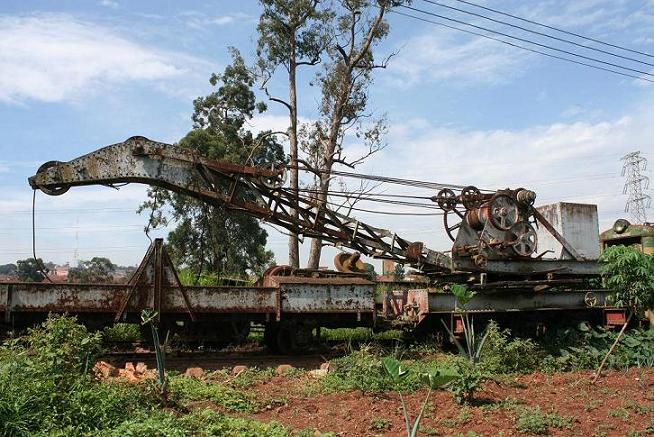
A series of railway maintenance cranes were kept at a variety of stations along the route of the metre-gauge line. Some of these are now kept at Nairobi Railway Museum.Crane No. 1164 at Nairobi Railway Museum where it is seen outside after repainting on 22nd October 2015, (c) Geoff Warren. [22]Also at Nairobi Railway Museum, Crane No. 1106, (c) John Ashworth. [22]At Nairobi Depot, Crane No. 1130, (c) John Ashworth. [22]At Nairobi Depot, Crane No. 1013, (c) John Ashworth. [22]Crane No. 1101 sitting idle and rusting away in Kampala. [22]
Light Weight Passenger Stock (Aluminium)
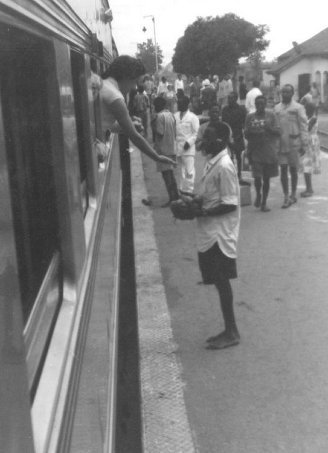
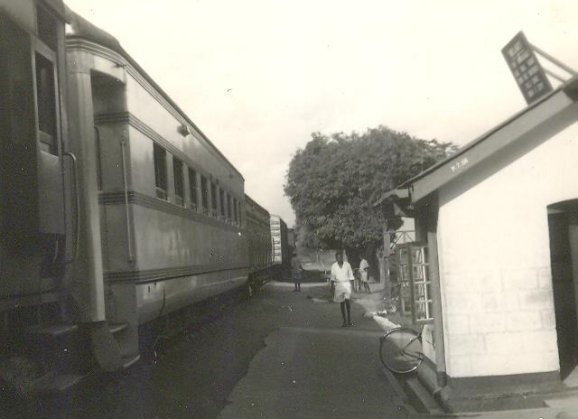
In the latter years of the East African Railway Corporation purchases of light weight carriages were made and many of these were used as 1st Class carriages.
A number were used as coaches to be dropped off from the main services to allow first class access to branch-lines. This practice is covered in an early post in this series. [30] A couple of photographs follow. ….
Other Interesting Pictures
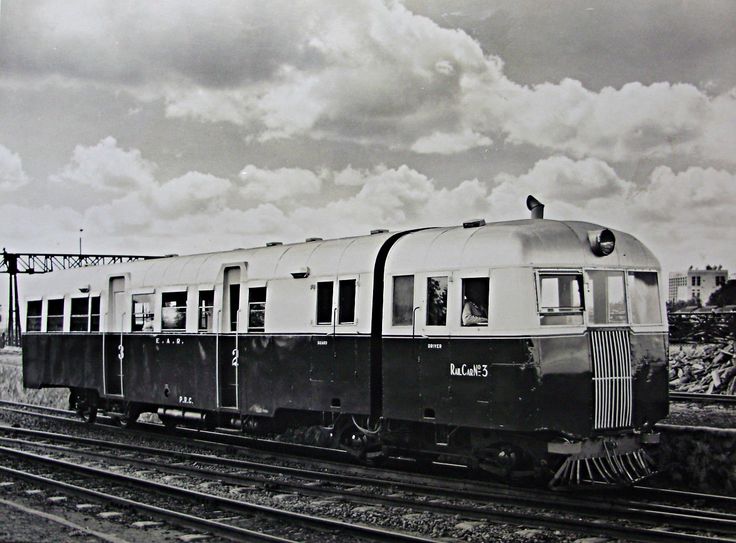
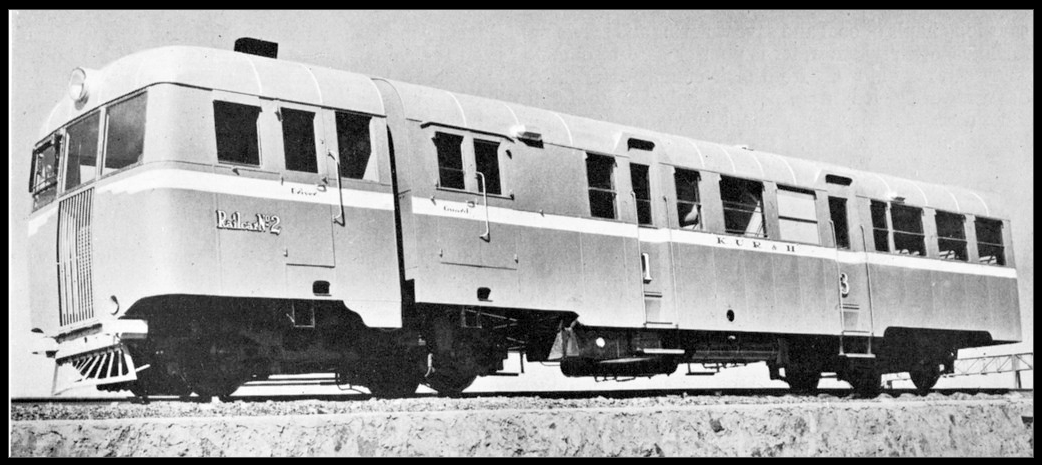
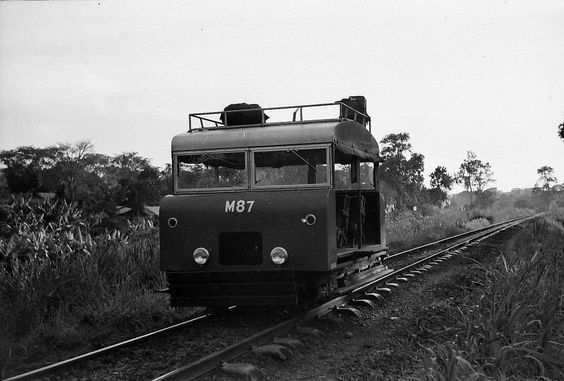
East African Railways Railcar No. 3 was a Wickham Railcar, it was built in 1947. One of its sisters is shown below. [26]Railcar No. 2 was also built in 1947 and was 200hp, used on the Kisumu-Butere branch line. [27]East African Railways Inspection Vehicle. [28]
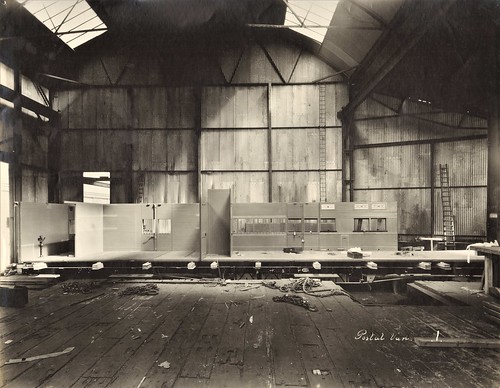
The two images immediately above show a Uganda Railways Postal Wagon under construction at the Gloucester Railway Carriage and Wagon Company Works in the UK. [29]
C. The Latter years
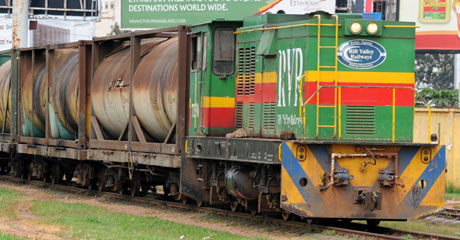
After 1977, the rolling stock (and locomotives) on the network were distributed between the three main constituent parts in Kenya, Uganda and Tanzania. Very little new stock was purchased once the East African Railways Corporation had been split up. However, in 2015, the Uganda Observer reported that RVR was set to increase its current haulage capacity by 50 per cent after its first 120 of 480 heavy-duty railway wagons arrived in Kenya. Apparently, each of the wagons, which were built by the China CNR Corporation, had the capacity to transport 60 tonnes per trip, an increase from a then current 40-tonne load capacity per wagon. [32]
In 1994, I travelled from Mombasa to Kampala by train. I was on my own and so experienced a few problems with leaving luggage in my compartment when eating in the dining car. My luggage was expertly searched and some of my well-hidden cash (US dollars) went missing. The culprit had the confidence to approach me before I had noticed the loss to change some of the currency for him!
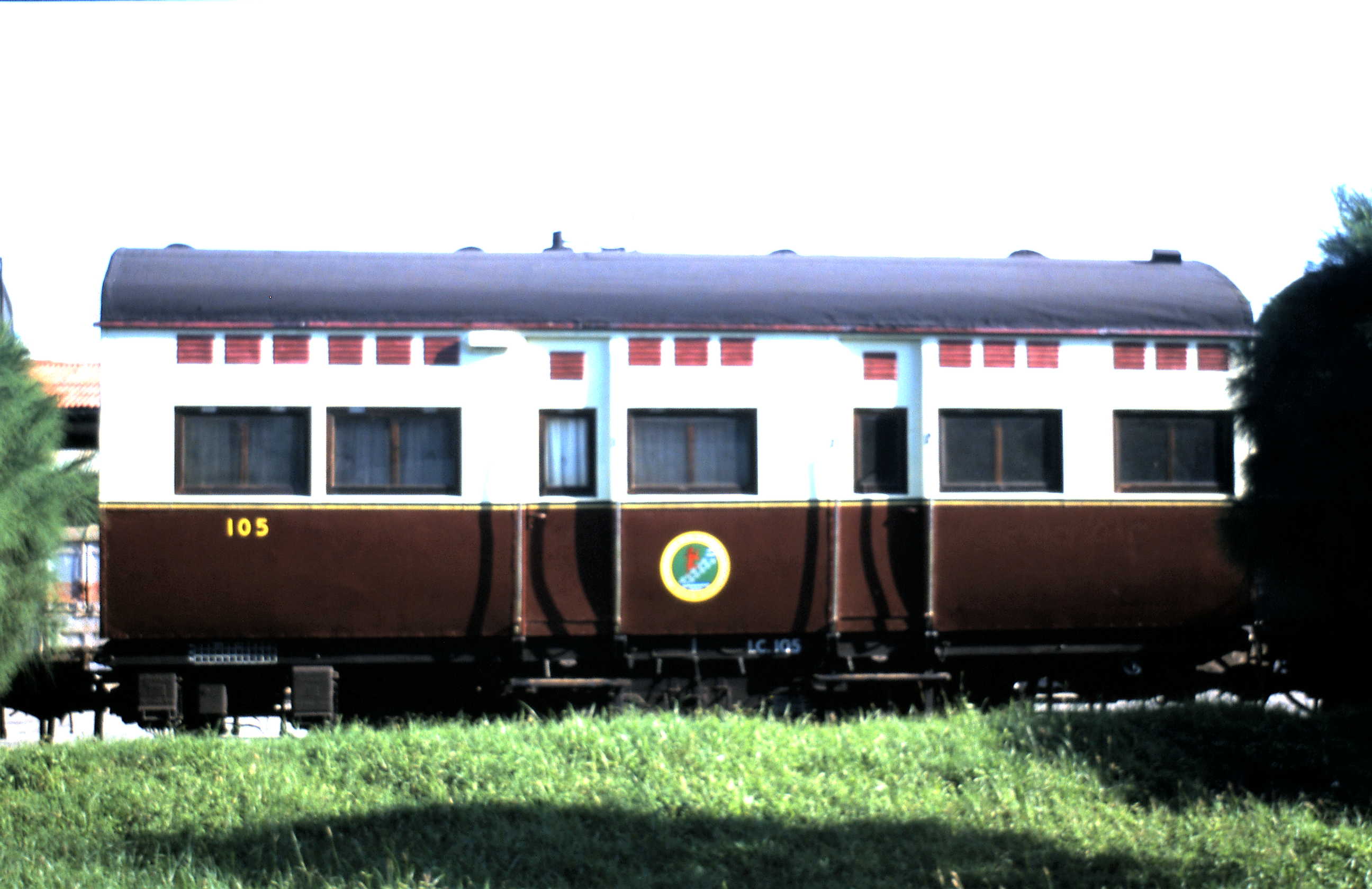
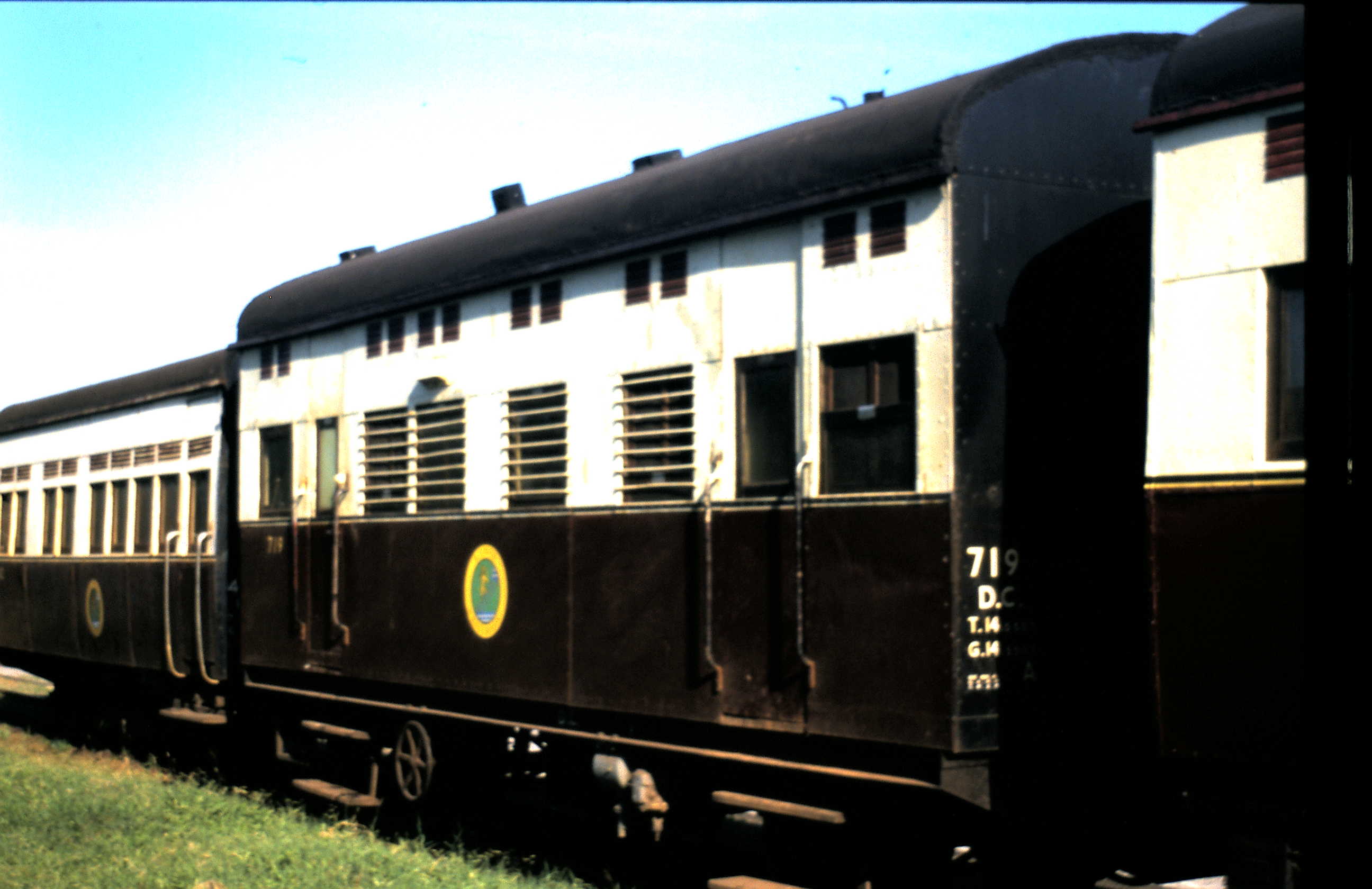
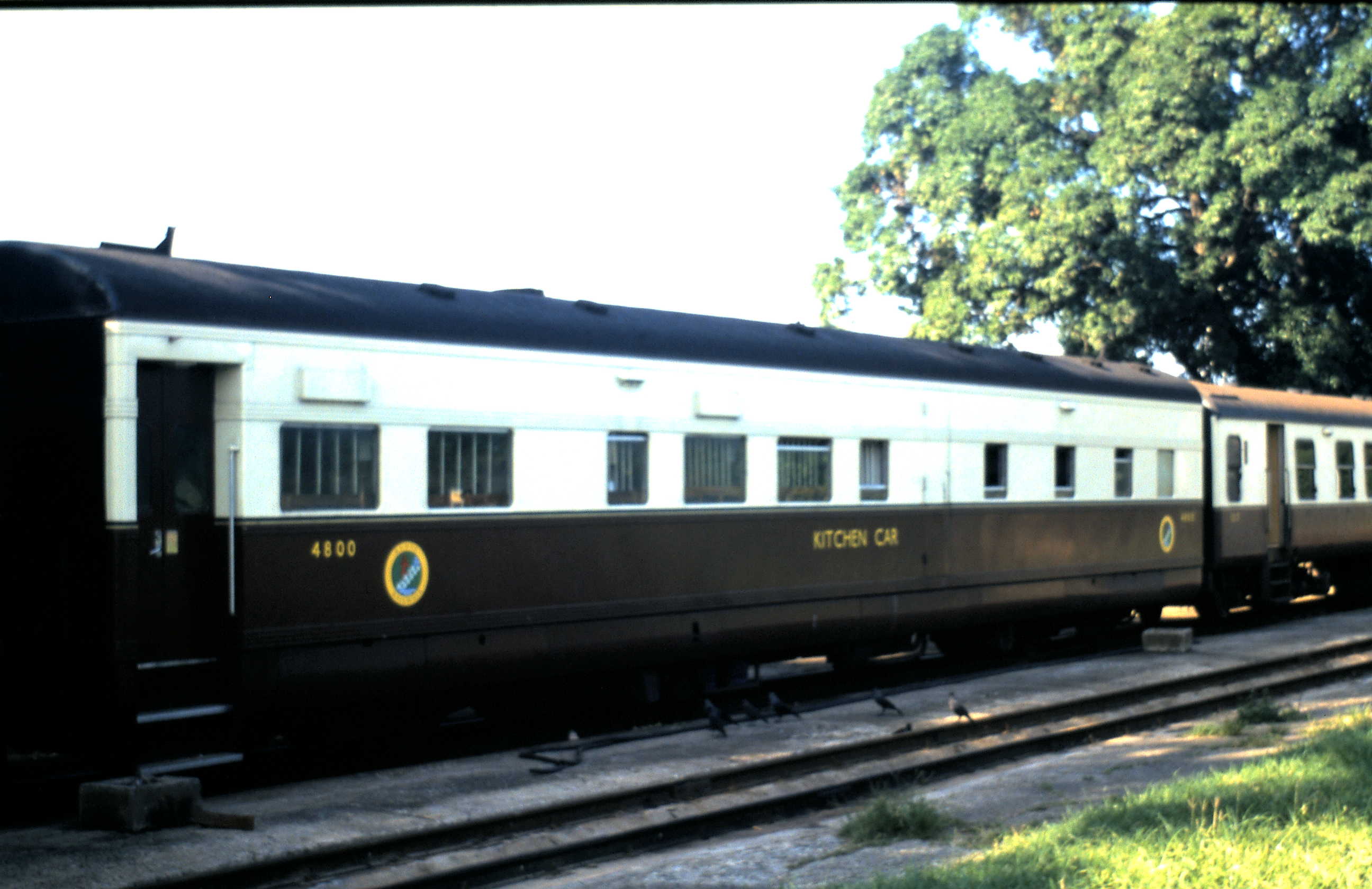
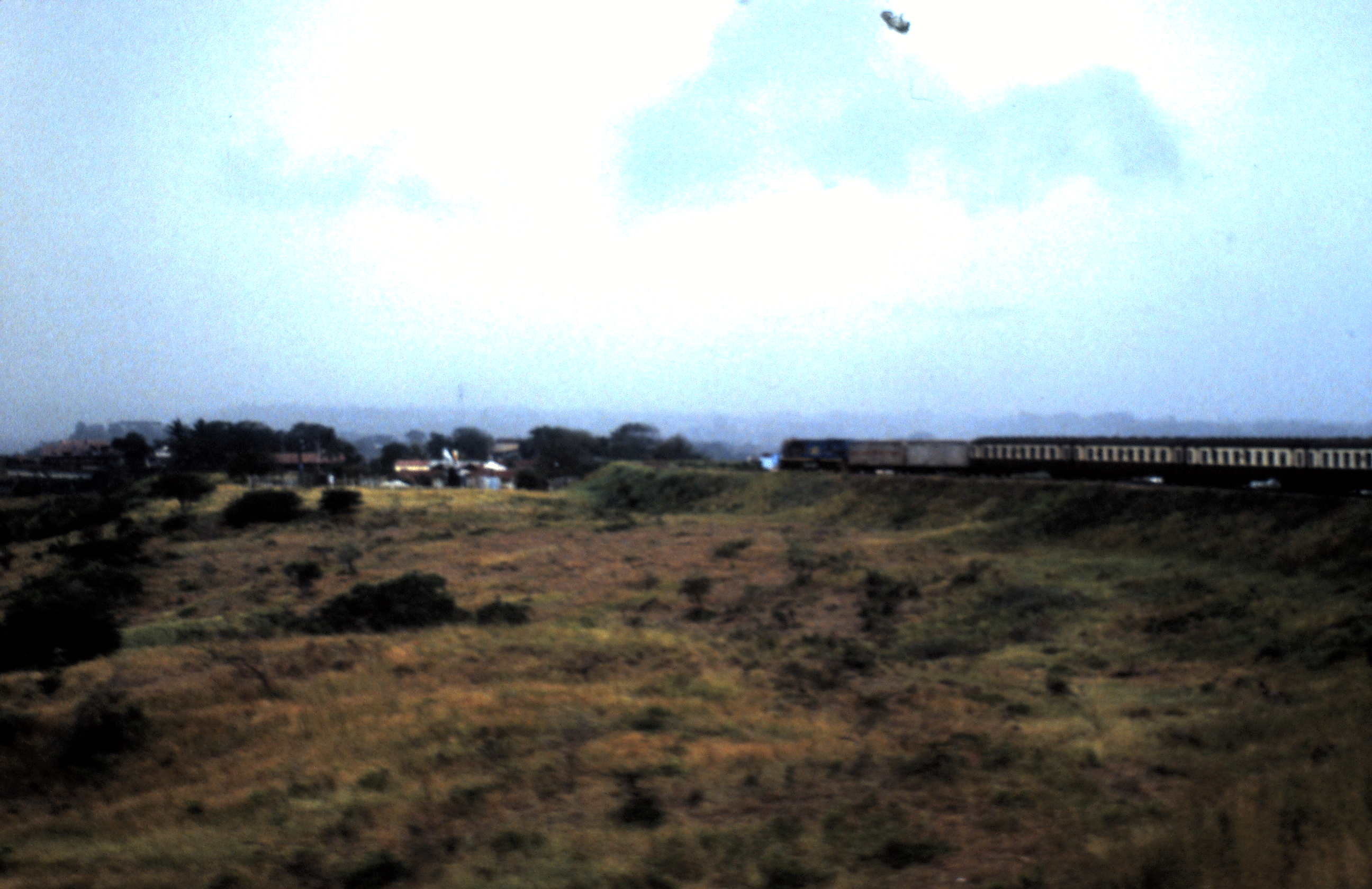
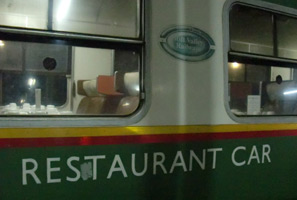
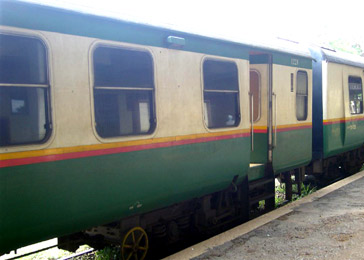
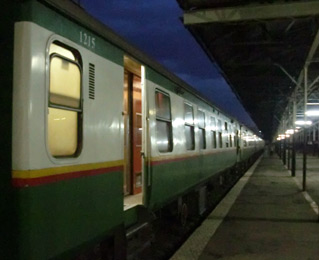
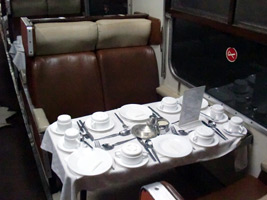
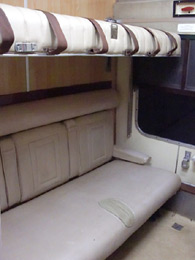
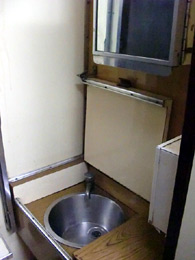
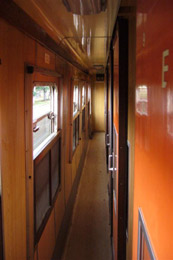
The theft apart, I had a wonderful time. The pictures that follow are not my own and were taken in the early years of the 21st century under the tenure of Rift Valley Railways (RVR). The journey that I enjoyed from Mobassa to Kampala was only available for a few years in the 1990s. The sleeper services in Kenya travelled from Kisumu through to Mombasa. Apart for the repainting of the carriages which were originally built in the UK, there seems to be little difference in the travelling conditions – silver service on starched table cloths, two berth cabins with connecting doors to the immediately adjacent cabin, etc. The first two images are taken from the pre-RVR era. The first three are my own (low quality slides) from 1994.The Nairobi-Mombasa express… (c) David Pinney. [31]
The pictures of the sleeper coaches and the dining car are taken from a blog entitles ‘The Man in Seat Sixty-One’ by Mark Smith. [31]
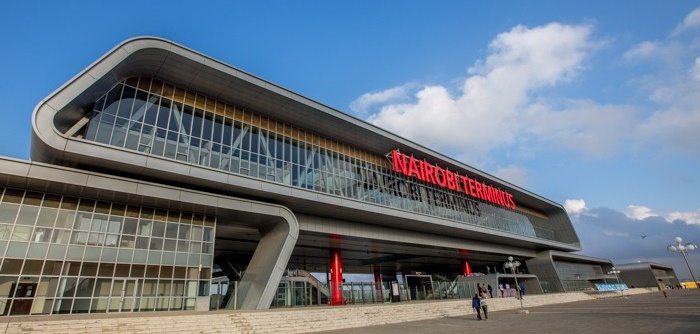
The sleeper train from Nairobi to Mombasa no longer travels as it has been replaced by the SGR line. However, the SGR does not access the centres of Nairobi and Mombasa. The image below shows the metre-gauge train arriving at Nairobi SGR terminus with a train from the much older city centre station.
The price for the journey from Nairobi to Mombasa in 1000 KSh in 2nd Class and 3000 KSh. in 1st Class. This is ridiculously cheap for a western traveller, there are around 125KSh to t UK£1 and 100KSh to US$1. A 2nd Class single from Nairobi to Mombasa is £8.00!!
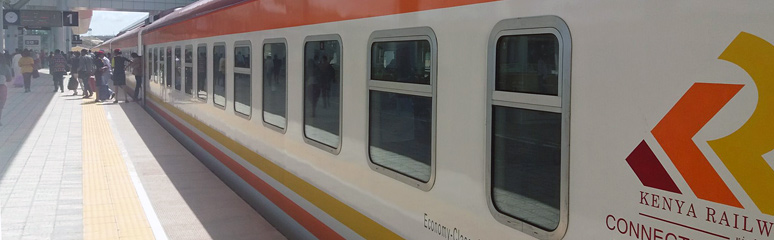
A metre-gauge train in RVR colours has just arrived at the Nairobi terminus of the SGR line. [31]Passenger coaches on the SGR are built in China, modern and air-conditioned… [31]
In 1977 the East African Railways Corporation (EARC), formerly the East African Railways and Harbours Corporation (EAR&H) was broken up. The three countries which made up the East African Community were unable to agree about many things and it became necessary for them to go their own ways. Three railway companies were formed: Kenya Railways Corporation; [1] Uganda Railways Corporation; [2] and Tanzania Railways Corporation. [3] In this post we will focus on the first two of these and on later arrangements with Rift Valley Railways which ended in 2017 when the two Corporations were reformed. At the end of the post, which is essentially about narrow-gauge railways we will highlight developments relating to the new standard-gauge lines which may well dominate the future in Kenya and Uganda.
Kenya Railways Corporation
Uganda Railways Corporation
Rift Valley Railways
Chinese Standard-Gauge Lines
In 1977 the East African Community (EAC) collapsed. The East African Community (EAC) is now an intergovernmental organization composed of six countries in the African Great Lakes region in eastern Africa: Burundi, Kenya, Rwanda, South Sudan, Tanzania, and Uganda. John Magufuli, the president of Tanzania, is the EAC’s chairman. The organisation was founded in 1967, collapsed in 1977, and was revived on 7 July 2000. [4]
In 2008, after negotiations with the Southern Africa Development Community (SADC) and the Common Market for Eastern and Southern Africa (COMESA), the EAC agreed to an expanded free trade area including the member states of all three organizations. The EAC is an integral part of the African Economic Community.
Kenya, Tanzania, and Uganda have cooperated with each other since the early 20th century. The customs union between Kenya and Uganda in 1917, which Tanganyika joined in 1927, was followed by the East African High Commission (EAHC) from 1948 to 1961, the East African Common Services Organization (EACSO) from 1961 to 1967, and the East African Community (EAC) from 1967 to 1977. [5] Burundi and Rwanda joined the EAC on 6 July 2009. [6]
Inter-territorial co-operation between the Kenya Colony, the Uganda Protectorate, and the Tanganyika Territory was formalised in 1948 by the EAHC. This provided a customs union, a common external tariff, currency, and postage. It also dealt with common services in transport and communications, research, and education. Following independence, these integrated activities were reconstituted and the EAHC was replaced by the EACSO, which many observers thought would lead to a political federation between the three territories. The new organisation ran into difficulties because of the lack of joint planning and fiscal policy, separate political policies, and Kenya’s dominant economic position. In 1967, the EACSO was superseded by the EAC. This body aimed to strengthen the ties between the members through a common market, a common customs tariff, and a range of public services to achieve balanced economic growth within the region. [7]
In 1977, the EAC collapsed. The causes of the collapse included demands by Kenya for more seats than Uganda and Tanzania in decision-making organs, [8] disagreements with Ugandan dictator Idi Amin who demanded that Tanzania as a member state of the EAC should not harbour forces fighting to topple the government of another member state, and the disparate economic systems of socialism in Tanzania and capitalism in Kenya. [9] The three member states lost over sixty years of co-operation and the benefits of economies of scale, although some Kenyan government officials celebrated the collapse with champagne.[10]
The EAC was revived on 30 November 1999, when the treaty for its re-establishment was signed. It came into force on 7 July 2000, 23 years after the collapse of the previous community and its organs. A customs union was signed in March 2004, which commenced on 1 January 2005. Kenya, the region’s largest exporter, continued to pay duties on goods entering the other four countries on a declining scale until 2010. A common system of tariffs will apply to goods imported from third-party countries. On 30 November 2016 it was declared that the immediate aim would be confederation rather than federation. [11]
The collapse of the East African Community saw the railways split three ways and the stock was similarly dispersed. Inevitably stock was renumbered. A typical example is 4-8-0 steam locomotive No. 2401 which ended up in Uganda and can still be found at Tororo in a dilapidated state. Kenya took No. 2412 and renumbered it for the class leader No. 2401. It is this renumbered loco which can be seen at Nairobi Railway Museum.
From 1977 onwards existing classes of locomotive were supplemented by others.
1. Kenya Railways Corporation
In 1977, the Kenya Railways Corporation was formed. Over the next 30 years, Kenya’s railway network deteriorated from a lack of maintenance. By 2017, only half of Kenya’s metre-gauge railways remained in operation! [12]
In November 2006, the Rift Valley Railways Consortium took over the operation of railways in Kenya and Uganda under a 25-year concession. [13] However, RVR was unable to turnaround railway operations, hampered by corrupt management and aging infrastructure. In 2017, the World Bank found that a $22 million loan extended for the purchase of refurbished locomotives had been diverted into a shell company controlled by RVR executives. [14] The Uganda Railways Corporation issued a notice of default to RVR in 2016, [15] and the Kenya Railways Corporation terminated the concession in April 2017. [16]
From 1977 to 2006 a number of new locomotives were purchased.
The Kenya Railways (KR) U26C locomotives have been designated as class 93 (delivery in 1977, 26 units) and 94 (delivery in 1987, 10 units). [31]
In 1998, five of the class 93 locomotives were leased to Magadi Rail, a subsidiary of the Magadi Soda Company. They were used to operate soda ash trains from Magadi along the 150 km (93 mi) branch line to Konza, which is also leased to Magadi Rail. [32]. In 2007, they were returned to their owner. [33]
As at 2011, all members of class 93 and 94 formed part of the fleet of the Rift Valley RailwaysConsortium. They were all still serviceable and suitable for rehabilitation and upgrading. [34]
Uganda Railways Corporation was formed after the breakup of the East African Railways Corporation (EARC) in 1977 when it took over the Ugandan part of the East African railways. [20]
Its operation after the demise of the EARC was hampered by civil war and inefficient management in Uganda. A significant number of new locomotives were purchased in the time of Idi Amin. [59]
After the EAR breakup URC got the following locos:
36U01-06 Henschel DHG400 32209-14/1977-78 340 hp
62U01-10 Henschel DHG1000 32199-208/1977-78 760 hp
71U01-02 Alsthom AD12B 1986 1050 hp
73U01-20 Henschel DHG1200 32392-411/1978-83 1250 hp
73U21-33 Henschel DHG 1200 32949-61/1990 1250 hp
82U01-14 Alsthom AD20C 1979-81 2000 hp derated to 1650 hp. [59]
In 1989, government soldiers massacred sixty civilians at Mukura railway station.
Uganda Railways were joint recipients of the 2001 Worldaware Business Award for “assisting economic and social development through the provision of appropriate, sustainable and environmentally complementary transport infrastructure”. [21]
Class 36, No. 36U06, Henschel DHG400 32209-14/1977-78 340hp (c) U.S. Army. [50]
Uganda Railways Class 62 (Henschel DHG1000 32199-208/1977-78 760hp) at the head of a goods train heading from Nairobi to Kampala in 1994.
The then daily 16.00 train to Kasese stands ready in Kampala station for its overnight journey west with loco 73U05 () on 26th March 1984, (c) torgormaig on the National Preservation Forum. [52]
The two images immediately above show two Henschel locomotive types in Uganda Railways livery which were eventually renumbered as Class 73. The first image shows No. 73U15 [48] and a class-mate. The second shows No. 62U06. [49] The one below shows No. 73U33 (formerly No. 62U33) at Kampala Railway Station. [51]
In 2005, the Rift Valley Railways Consortium (RVRC) from South Africa was awarded a concession to manage URC and Kenya Railways. RVRC was scheduled to take over operations on 1 August 2006. However, the East African Standard reported on 28 July 2006, that the take-over was postponed until 1 November 2006. [22] It actually took place in November 2006 and was scheduled to last for 25 years. [23]
73U27 still in Uganda Railways livery but in charge of a RVR train in Kampala on 13th March 2012, the day after RVR took over local services. [53]
The 2007–08 Kenyan crisis included destructive riots that blocked and partly destroyed the rail system linking Kenya and Uganda, leading to economic difficulties in supply for Uganda. Further, destruction and loss of income led to significant financial losses. [24]
On 9 October 2008, Toll Holdings of Australia announced that it had entered into a contract to manage the Kenya-Uganda railway, replacing management by RVRC. Officers from Toll subsidiary Patrick Defence Logistics would manage the railway after the transition. [25]
Under Rift Valley Railways in August 2010 owned 3 No. ex-URC 62U and 15 No. ex-URC 73U in (with some of the 73Us renumbered into 73s), while others could be found derelict at Nalukolongo Works. [59]
Because of extensive fraud [14] the Rift Valley Railways concession was terminated and in late February 2018, URC finally took possession of the concession assets and resumed operating the metre-gauge railway system in Uganda. [20][26]
3. Rift Valley Railways Consortium [27]
The governments of Uganda and Kenya contracted RVR, majority-owned by Egyptian equity firm Qalaa Holdings, to operate the 2,353-kilometre Kenya-Uganda railway line for 25 years. Rift Valley Railways (RVR) Consortium won the bid for private management of the century-old Uganda Railway in 2005 and in 2014, RVR moved 1,334 million net tonne kilometres of rail freight, up from 1,185 million net tonne kilometres the previous year. [28]
Repainted/rebranded Class 87, No. 8723. [45]
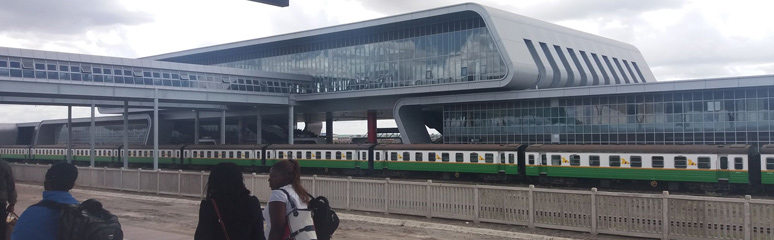
Old and new juxtaposed. A Class 93 in RVR livery passes one of the new SGR railway stations in Kenya. [46]
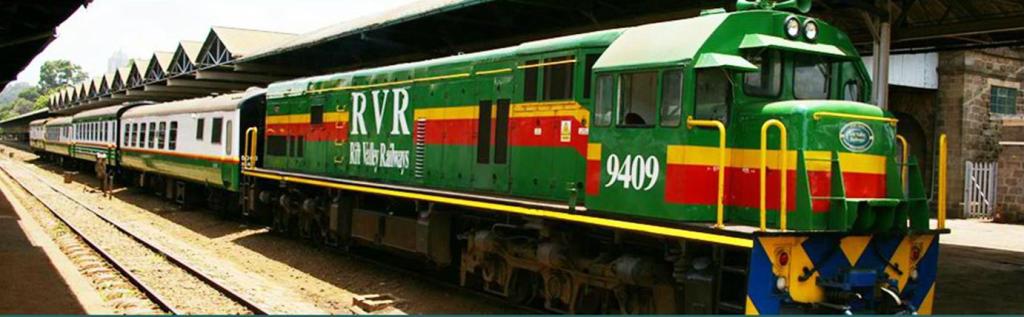
Repainted/re-branded Class 94, No. 9409 at Nairobi Railway Station. [41]
Repainted/re-branded and renumbered Class 62 locomotive, Class 73, No. 7319, at Kampala. [42]
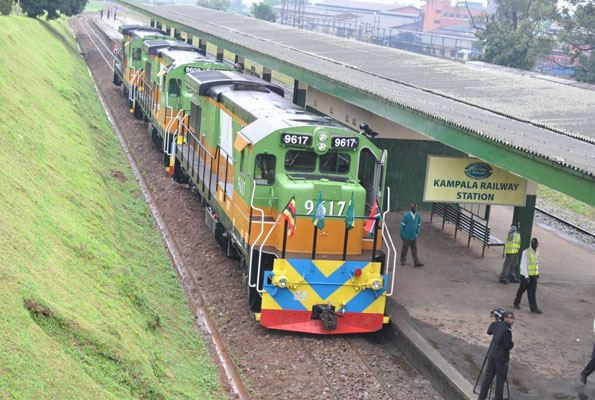
Newer locos of the Class 96 are shown in the two photos immediately above. The first is No. 9616 in charge of a goods train passing the SGR station at Mtito Andei, Kenya, (c) Jeff Angote. [43] The second shows three of the class at Kampala Railway Station, No. 9617 is easily identified and the second locomotive is probably No. 9609. [44]
Rift Valley Railways purchased a number of locomotives from General Electric in 2014 and gave them the Class No. 96. RVR held a ceremony on 18th September 2014 to mark the commissioning of the first three of 20 second-hand GE B23-7 locomotives which were acquired from the USA at a cost of US$25m (2.2 billion Kenya Shillings) and converted from standard to metre gauge. These were the first locomotives delivered to Kenya or Uganda since 1987. The remaining 17 arrived over the following five months.
By 2017 the relationship with both countries governments had soured completely. Both countries accused RVR of failing to live up to the terms of the concession, including non-payment of concession fees amounting (in the case of Uganda) to US$ 8.5 million equivalent to 31 billion Shillings. RVR is also said to be debt-ridden, owing hundreds of millions of dollars to lenders like the African Development Bank, German Development Bank, Infrastructure Crisis Facility, and Equity Bank. [29] There is evidence of corruption at the highest level in the company, as noted above, a $22 million loan extended for the purchase of refurbished locomotives had been diverted into a shell company controlled by RVR executives. [14]
The concession in both countries was terminated in the ‘winter’ months of 2017/2018.
4. Standard-Gauge Lines
In 2011, Kenya signed a memorandum of understanding with the China Road and Bridge Corporation to build the Mombasa–Nairobi Standard Gauge Railway (SGR). Financing for the US$3.6 billion project was finalised in May 2014, with the Exim Bank of China extending a loan for 90% of the project cost, and the remaining 10% coming from the Kenyan government. [17] Passenger service on the SGR was inaugurated on 31 May 2017. [18]
As of June 2018, work is underway to extend the SGR to Naivasha. [19] There are plans to broaden the network of standard-gauge lines considerably as shown below. [30]
The SGR in Kenya currently runs from close to Mombasa to close to Nairobi. The style of the line and its stations is/are futuristic. A few images give a good impression of the line. It has not been universally well-received and particular concern has been expressed about access to both termini from their respective cities.
Modern SGR train. [54]
One of the many viaducts allowing wildlife free access under the new SGR railway, [55]
Diesel Traction on the East African Railways and Harbours Lines (1948 – 1977)
As the 20th Century progressed, railway networks and locomotive manufacturers began to turn away from steam and to look at a variety of alternative drive mechanisms and loco types. In East Africa the focus turned from steam to diesel.
Perhaps one of the most telling images that I have found while reading around the story of the East African Railways is the graph below. Sadly, the quality is not great but it makes a very important point. [7]
It is impossible to exaggerate the tractive effort required from the motive power on the line through Kenya and Uganda. In the UK we make a great deal of fuss over the strain placed on standard-gauge locomotives on the West Coast Mainline. Shap, Beattock and Drumuachdar are significant climbs which taxed the most powerful of locomotives. The gradients and the heights which the East African lines surmounted dwarf that UK mainline. These feats of endurance and the relative power of the locomotives required to achieve them on narrow-gauge lines is astounding. The diesels which would eventually replace the Garratts, which for many years dominated services on East African lines, would need to efficiently supply significant power with great adhesion if they vwere ever to makeva success of a role on these metals.
Class 90 (later Class 87) English Electric Diesels
john Ashworth quotes Steve Palmano’s comments that “the EAR&H 90 class was the second English Electric (EE) 12CSVT-engined model to be delivered, but the first to be ordered. The initial order, for 8 units was announced in October 1958, and an increase to 10 units was announced in March 1959. This was EAR&H’s first order for line-service diesel locomotives. A 13.5 ton maximum axle loading was imposed, to enable the locomotives to work northwest of Nairobi to Nakuru and Kampala, as well as between Mombasa and Nairobi, which section alone would have allowed a higher axle loading. This axle loading constraint required a multi-axle design, as it is unlikely that EE could have built a compliant 12-cylinder Co-Co model. Unsurprisingly, EE used a 1-Co-Co-1 wheel arrangement. The resulting locomotive was largely a new design, although it included features drawn from the QR 1250 class (body style and general layout) and the Rhodesian Railways (RR) 16-cylinder DE2 class (running gear and in-frame fuel tank). What it was not, though, was simply a 1-Co-Co-1 variant of the QR 1250 with 12CSVT in place of 12SVT engine.” [2]
“Notwithstanding the 13.5 tons axle loading specification, the first series were built to a slightly lower 12.8 tons number, giving an adhesive weight of 76.8 tons. The total weight was 97.5 tons. The continuous tractive effort is consistently quoted as 44 500 lbf, although there is some variety in the corresponding minimum continuous speed, which is variously reported as 11.5, 11.7 and 12¼ mile/hr. The top speed is usually reported as 45 mile/hr, but this would have been a track limited speed, as the expected 72:15 gearing would have allowed 60 mile/hr, and there is no reason why the running gear would not have accommodated this on suitable track.” [2]
Mail Kisumu – Nairobi, diesel class 87 (originally Class 90), approaching Nairobi 1976. [3]Class 87, No. 8729 at Tororo in 1971. [6]
Other Diesels
By 1975, the roster of diesels on the East African Railway had increased to include shunters and mainline locomotives for goods and passengers. Initially most of these diesels were sourced from the UK. [8] The range included:
A. 4 classes of smaller shunting locomotives which were 200hp diesel mechanical locos:
Class 32 (originally Class 80)
Class 33 (originally Class 81)
Class 34 (originally Class 82)
Class 35
Details are tabulated below …
B. Some larger goods/shunting locomotive classes:
Class 43 (originally Class 83)
Class 44 (originally Class 84)
Class 45 (originally Class 85)
Class 46 (originally Class 86)
Details are tabulated below …
C. Mainline classes:
Class 61
Class 71 (originally Class 91)
Class 72
Class 79
Class 87 (originally Class 90)
Class 88
Class 92
As tabulated below (all these tables are taken from files supplied by by Rob Dickinson. [8]):
Class 32 (originally Class 80)
Class 80, No. 8002. [25]
The Class 32(80) 0-6-0 locos were built for the EAR&H by John Fowler & Co Engineers of Leathley Road, Hunslet, Leeds, West Yorkshire, UK. The company produced traction engines and ploughing implements and equipment, as well as railway equipment. [10] The image immediately below is taken from a series of photographs placed on-line by Rob Dickinson. [8]Class 32 at Nairobi Railway Museum. [9]3206 Fowler 0-6-0 diesel shunter at the Railway Technical Institute, Nairobi. Probably one of the oldest surviving diesel locomotives in East Africa. [11]The loco diagram above is from a series of pictures taken by Rob Dickinson at the Nairobi Shed. [12]111447: No. 3204 at Nairobi Kenya Railway Workshops, (c) Weston Langford. [22]
Class 33 (originally Class 81)
Locomotives of this class were supplied by the Drewry Car Co.
Drewry & Sons ran a motor and cycle repair business in Herne Hill, London, and started building BSA engined inspection railcars. A ready market was found in South America, Africa, and India. Drewry Car Co Ltd was registered on 27 November 1906. In 1908 BSA (of motor-cycle fame) took over building the railcars at Small Heath, Birmingham. In 1911 building was taken over by Baguley Cars Ltd, Burton-on-Trent. From 1930 a lot of Drewry locomotives were built by English Electric companies. In 1962 Drewry acquired a controlling interest in what had become E E Baguley Ltd, and formed Baguley-Drewry Ltd in 1967, thus once again building its own locomotives, in Burton-on-Trent. The company closed in 1984. [10]
Locomotive diagram for Class 33. [12]
Class 34 (originally Class 82)
The Class 34 locos were Hunslet 0-6-0 designs. The Hunslet Engine Company was founded in 1864 in Hunslet, Leeds, England. The company manufactured steam-powered shunting locomotives for over 100 years, and currently manufactures diesel-engined shunting locomotives. [13]
Locomotive diagram for Class 34. [12]
Class 35
The Class 35 locos were Andrew Barclay 0-6-0 diesel shunters. Andrew Barclay Sons & Co. are a builder of steam and later fireless and diesel locomotives. The company’s history dates to foundation of an engineering workshop in 1840 in Kilmarnock, Scotland. After a long period of operation the company was acquired by the Hunslet group in 1972 and renamed Hunslet-Barclay; in 2007 the company changed hands after bankruptcy becoming Brush-Barclay as part of the FKI Group. In 2011 Brush Traction and Brush-Barclay were acquired from FKI by Wabtec – as of 2012 the company still operates in Kilmarnock providing rail engineering services as Wabtec Rail Scotland. [14]
3505 Barclay 0-6-0 diesel-hydraulic shunter by the workshop at Nairobi. [11]Locomotive diagram for Class 35. [12]
Its main factories were located at the neighbouring Atlas and Hyde Park Works in central Springburn, as well as the Queens Park Works in Polmadie. A new central Administration and Drawing Office for the combined company was completed across the road from the Hyde Park Works on Flemington Street by James Miller in 1909, later sold to Glasgow Corporation in 1961 to become the main campus of North Glasgow College (now Glasgow Kelvin College).
Class 43, No. 4306 0-8-0 in its later guise as No. 8306. [8]111567: No. 43110 at Mombasa, (c) Weston Langford. [22]Class 43 Locomotive Diagram. [12]
Class 44 (originally Class 84)
This 0-8-0 class was also built by the North British Locomotive Company.111593: No. 4402 alongside No. 87 42 at Kilindini Locomotive Depot, (c) Weston Langford. [22]
Class 45 (originally Class 85)
Still another North British 0-8-0 class of loco.111573: Shunter No. 4503 at Mombasa, (c) Weston Langford [22]111615: Shunter No. 4504 moving No. 2410 at Voi, (c) Weston Langford. [22]Class 85, No. 8503 (later Class 45, No. 4503) working dead Class 90 (later Class 87) diesel electric to Makadara MPD, (c) Iain Mulligan [1]
Class 46 (originally Class 86)
The Class 46 (86) 0-8-0 central cab locos were built for the EAR&H by Andrew Barclay Sons & Co.
Class 86, No. 8607. [24]111396: No. 4622 alongside No. 8714 at Nairobi, (c) Weston Langford. [22]111576: No. 4615 alongsideWestbound Goods pulled by No. 3110 Bakiga. The picture is taken from Nairobi East Box (c) Weston Langford. [22]Class 46 shunter re-positioning cabooses at Nairobi Station. [16]
Class 61
These locos were supplied by Henschel & Son (German: Henschel und Sohn), a German company, located in Kassel, best known during the 20th century as a maker of transportation equipment, including locomotives, trucks, buses and trolleybuses, and armoured fighting vehicles and weapons.
Georg Christian Carl Henschel founded the factory in 1810 at Kassel. His son Carl Anton Henschel founded another factory in 1837. In 1848, the company began manufacturing locomotives. The factory became the largest locomotive manufacturer in Germany by the 20th century. [17]
Diesel-hydraulic locomotive No. 6107 working an up-country freight in 1975. Ten of these Henschel built Class 61 locomotives entered service in 1972 and in 1975/6 were generally in use on branch-lines. [18]
Class 71 (originally Class 91)
This Class was supplied by English Electric.
Class 72
This Class was also supplied by English Electric.
Class 79
There was just one locomotive in this class. No. 7901 was supplied as an experimental type by AEI Lister-Blackmore. Looking at the export market in the late 1950s British Tomson-Houston (BTH), with Clayton and Lister-Blackstone commissioned the Explorer CM-gauge prototype, which was ready in 1959. This featured a Lister-Blackstone engine, BTH electrical equipment and mechanical parts by established partner Clayton. Possibly Lister-Blackstone saw this as a pathway into the mainline locomotive market, as the cost was shared between itself and BTH. [19]
At 1100 hp (gross), with Co-Co running gear and weighing 72 long tons, the Explorer may be compared with standard shunters from the major worldwide builders. Previous engine partner Paxman offered high-speed engines which were in a lower power range than needed for the Explorer. The Alco DL531 was slightly lighter (in CM-gauge form) and marginally less powerful, at 975 hp (gross). The GE U9C was somewhat heavier and had a nominal power of 990 hp (gross), but this was a high-altitude, high-ambient temperature rating, and the UIC number was 1060 hp. The Alco & GE utilised 6-cylinder in-line engines, whereas the Lister-Blackstone featured the relatively complex 12-cylinder double-bank form, albeit still medium-speed. This complexity allied to its weight put it at an immediate major disadvantage. There were no production orders from this prototype. [23]
In 1959 EMD did not yet have a six-motor model in this power class. English Electric no doubt could have offered a Co-Co version of its existing eight-cylinder Latin American model with either the 8SRKT or 8SVT engine, by 1959 delivering 1100 hp. And more power would have been available from the 8CSRKT or 8CSVT engine with but minor weight penalty. Within two years Alco offered the DL535, delivering 1350 hp (gross), still with six cylinders, and weighing around 72 long tons in CM-gauge form. [19]
The Explorer was built by the Clayton Company of Hatton, Derbyshire, order number 3548 of January 1959, it was powered by a Lister Blackstone ERS.12T 12 cylinder twin-bank engine powering BTH electrics. Cylinders were 8.75 x 11.5 inches, maximum crankshaft speed was 800rpm, output speed through the phasing gears was 1,320rpm providing 1,100hp. Either crankshaft could be uncoupled in an emergency.
The locomotive weighed 72tons and rode on metre gauge Co-Co bogies of rubber cone pivot Alsthom style. Alsthom (originally ALS-Thom(son)) had a similar relationship with GE as did BTH, and it appeared that design ideas also travelled ‘horizontally’ between GE ‘associates’. This aspect of the Explorer design was carried over to the later AEI Zambesi type.
It was leased to the East African Railways who later bought it outright. In the late 1960s EAR reclassification it was assigned Class 79. It was allotted to the Kenya Railways in 1977, though by October of that year it was recorded as ‘stabled for scrap’ on the roster. [19]As of 2005, the ‘Explorer’ locomotive still exists, very much intact and still bearing its number and nameplates. It is earmarked for the Nairobi Railway Museum when funds become available. [19][20]Class 79, No. 7901 Explorer AEI Lister-Blackmore Co-Co at the Railway Technical Institute, Nairobi, still displaying the faded remnants of the EAR&H maroon livery and cast letters. Now confirmed as destined for the museum. [11]Unique pioneer diesel Class79, No. 7901 ‘Explorer’ at Nairobi (c) Iain Mulligan. [1]No. 7901 ‘Explorer’ at the purpose built diesel depot at Makadara on 31 July 1962 (c) Iain Mulligan. [1]Green and yellow liveried Class 79 ‘Explorer’ at Nairobi Shed, alongside a Class 13, No. 1308, a Class 59 can just be seen in the shed (c) Anthony Potterton. [1]
Class 87 (originally Class 90)Pictures and details of this 1-Co-Co-1 Class of Diesel-Electric are shown above.Class 87, No 8701 English Electric 1Co-Co1 delivered in 1960. Lead locomotive of a class of 44 of which 11 are still in working order. They are normally confined to the Nakuru-Kisumu section of the main line. 8701 is seen abandoned at Nakuru, still painted in the later EAR&H green and yellow livery. [11]A double-header goods train close to Nairobi. Class 87s in green and yellow livery (c) Kevin Patience. [18]111393 No. 8714 at Nairobi, (c) Weston Langford. [22]111395: No 8714 at Nairobi Kenya, on the 1030am Kampala Mail, (c) Weston Langford. [22]111396: No. 8714 at Nairobi alongside shunter No. 4622, (c) Weston Langford. [22]
Class 88
The Class 88 locomotives were lighter cousins of the Class 92 locos below. In all, 20 units were delivered to the EAR&H. [18] They were built by the Montreal Locomotive Works (MLW), a Canadian railway locomotive manufacturer which existed under several names from 1883 to 1985, producing both steam and diesel locomotives. For a number of years it was a subsidiary of the American Locomotive Company. MLW’s headquarters and manufacturing facilities were located in Montreal, Quebec. [21]
In 1975, the emerging Quebec based Bombardier purchased a 59% stake in MLW from Studebaker-Worthington. Under Bombardier, the MLW organization continued locomotive design into the early 1980s, and also benefited from its geographic location. During the 1970s, Bombardier began to enter the railway passenger coach/locomotive business with domestic orders for commuter and subway systems. Based on a prototype trainset constructed in the mid-1970s, in 1980 MLW began production of a fleet of high-speed diesel-powered passenger locomotives for the LRC (Light, Rapid, Comfortable) passenger trains being built for the newly created federal Crown corporation Via Rail. Similar equipment was also used briefly by Amtrak.The last of the locomotives were retired from service in 2001. [21]
Class 92
This Class was also supplied by the Montreal Locomotive Works. There were 15 locomotives, they were diesel-electrics and were delivered in 1971 for main line service. [18]Class 92, No. 9211 heads a Uganda bound freight train. [18]No. 9212 undergoes maintenance at Nairobi workshops. [18]
Steam Locomotives on the East African Railways and Harbours Lines (1948 – 1977)
Until 1948, the Kenya and Uganda Railways and Harbours (KURH) Corporation ran harbours, railways and lake and river ferries in Kenya Colony and the Uganda Protectorate. It included the Uganda Railway, which it extended from Nakuru to Kampala in 1931. [1]
In 1948, it was merged with the Tanganyika Railway to form the East African Railways and Harbours Corporation (EAR&H which provided rail, harbour and inland shipping services in all three territories until the East African High Commission’s successor, the East African Community, was dissolved by its member states in 1977. [1]
The Malayan Railway sold EAR&H eight USATC S118 Class steam locomotives in 1948, and another eight in 1949. EAR&H converted them to oil fuel and numbered them 2701–2716, making them the 27 class. EAR&H allocated them to its Tabora Depot on its Tanganyika section. They entered service in 1949 and 1950, working the lines to Mwanza, Kigoma and Mpanda, where their light axle loading was an advantage and their high firebox enabled them to run through seasonal flooding on the Kigoma and Mpanda branches. EAR&H built further S118 from spare parts in 1953 and numbered it 2717. EAR&H withdrew them from service in about 1965 and they were in Dar es Salaam awaiting scrapping in 1966. [3]
In 1955 and 1956, EAR&H introduced new and much more powerful steam locomotives for its Kenya and Uganda network: the 59 class Garratts. These were the mainstay of the section’s heaviest traffic until they started to be withdrawn from service between 1973 and 1980.
This post focusses primarily on locomotives to be found within Kenya and Uganda. Those found primarily in Tanzania will need to be the subject of another series of posts in the future.
Older Classes of Locomotive
The network continued to make use of the best of the locomotives purchased by both the Uganda Railway and the Kenya Uganda Railways and Harbours Corporation. The EAR&H renumbered all of the older locomotives into a consistent numbering system. The first two digits of four referred to the class of locomotive and the second two digits to the number in the class. Before we move on to the new purchases, here are a few images of the older locomotives on the system, furthger information about these classes can be found in the previous posts in this series:
Classes 10 to 19 were designated shunting locomotives; Classes 20-49, tender locomotives; Classes 50-79, articulated locomotives; and Class 80 and above, diesel locomotives.EAR Class 10, No. 1001 2-6-4 locomotive in live-steam 5″ gauge. [17]Class 11 2-6-2 Locomotive. [16]Class 11, No 1105 refuelling at Nairobi MPD, (c) Anthony Potterton. [10]Class 22, 4-8-0 No. 2216, built by North British Locomotive Company in Glasgow, Scotland, for the Uganda Railway (UR) and continued in use well into the life of the EAR. [8]Class 23, No. 2306 – a rare visitor to Nairobi, freshly turned out from the paint-shop in EAR livery, (c) Iain Mulligan. [13]Another Class 23, No. 2309 stabled ready for disposal along with a couple of diesel locomotives in Mombasa sidings (c) Kevin Patience. [9]Class 24, 4-8-0 No. 2449 outside Mombasa Shed, (c) Kevin Patience. [9]Class 24, No. 2402 on Nairobi Yard, in the background is one of the diners used on the overnight Nairobi-Mombasa service, (c) Geoff Pollard. [10]Class 24, No. 2428, on 1st of August, 1953, on the occasion of the opening of the first section of the Western Uganda extension from Kampala to Mityani. (See EAR&H Magazine Volume 1 No.6 Page 8ff), from the collection of A.J. Craddock. [21]We have already seen this picture of a Class 28 2-8-2 locomotive in the previous post in this series. It is included here as representative of this class which was popular with drivers and firemen throughout their time on the network. Class 28, No. 2804, ‘Kilifi,’ (c) A.J. Craddock. [21]The twenty Class 50 locomotives were almost identical to the two Class 51 locomotives. [23]
Class 50 being scrapped (c) A.J. Craddock. [21]Class 52 4-8-2 + 2-8-4 pre-Second World War Garratts were unusually built by North British. 5204 was the last survivor and was photographed on the triangle at Morogoro in 1967 en-route to Dar for scrapping. [24]
Class 54, EAR No. 5402. (Chris Greville collection). [18]The same locomotive from the collection of A.J. Craddock. [21]
Class 55, EAR No. 5505 at Nairobi Railway Museum. [19]
A Class 55 Garratt 4-8-2+2-8-4 awaiting its fate at Voi, (c) Kevin Patience. [9]Coal burning Class 56 Garratt still bearing its KUR&H Number. The first of the batch of KUR&H EC6 Class, this locomotive naturally became 5601. Six of these locomotives were delivered in 1949 pending the arrival of the 58s. After service on the Kenya-Uganda Section, they were banished to Tanganyika to replace the ex-Burma 55 Class which ended up in the Kenya-Uganda Section, (c) EAR&H Magazine. [13]
Class 56, No. 5603: “A Guide To Uganda” (Crown Agents, Curwin Press 1954) shows a 56 Class, 5603, at a station between Kampala and Jinja. The 56s were replaced by the 60s in 1954-5, (c) East African Railways and Harbours. [22]Class 56, No. 5605 preparing to depart from the docks area in Dar. [24]
The Class 57 stands in Nairobi Railway Museum yard, painted in the grey livery of the Kenya Uganda Railway. [25]
The Locomotives Introduced by the EAR&H
The EAR&H had tenure of the whole network for over 29 years. During this time new locomotives were bought and others were moved around the East African system. This next section of this post focusses primarily on the classes of locomotives that were new to the Kenyan and Ugandan rails.
Class 58 Garratt Locomotives
The EAR 58 class was a class of 4-8-4+4-8-4 Garratt-type locomotives built by Beyer, Peacock & Co. in Manchester, England, in 1949. The eighteen members of the class were ordered by the Kenya-Uganda Railway (KUR) immediately after World War II, and were a slightly modified, oil-burning version of the KUR’s existing coal-fired EC3 class. By the time the new locomotives were built and entered service, the KUR had been succeeded by the East African Railways and Harbours Corporation (EAR&H), which designated the coal-fired EC3s as its 57 class, and the new, oil-burning EC3s as its 58 class.[8] Wikipedia informs us that the early numbers in this class arrived in East Africa in time to receive their KUR numbers (Nos. 89-95, later Nos. 5801-5807). The first of the Class to arrive too late to receive their designated KUR number was No. 5808. The full Class 58 bore the numbers 5801 to 5818.
Class 58 No. 5803 at Changamwe, Kenya, with the Mombasa–Kampala mail train, circa 1950-51. [7]Class 58, No. 5807 (c) Kevin Patience. [20]Class 58, No. 5804 was unique in that it had the letters EAR&H on its tenders rather than EAR. It is seen here about to depart the high level platform at Kampala with the mail train for Nairobi in 1962. [14][22] And again below, (c) Geoff Pollard. [5]
Class 59 Garratt Locomotives
The EAR 59 class was a class of oil-fired 1,000 mm gauge Garratt-type articulated steam locomotives. The 34 members of the class were built by Beyer, Peacock & Co. in Manchester, England, for the East African Railways (EAR). They entered service in 1955–56, and at 252 tons, were the largest, heaviest and most powerful steam locomotives to operate on any metre-gauge railway in the world
It was this loco which was refurbished and brought back into steam in the very early years of 21st Century as these youtube videos attest:
Class 60 Garratt Locomotives
The EAR Class 60, also known as the Governor class, was a class of 4-8-2+2+8-4 Garratts built for the EAR&H as a development of the EAR&H’s existing Class 56 Garratts. [8, p77]
The 29 members of the class were ordered by the EAR&H from Beyer, Peacock & Co. The first 12 of them were built by sub-contractors Société Franco-Belge in Raismes(Valenciennes), France, and the rest were built by Beyer, Peacock in Gorton, Manchester, England. The class entered service in 1953-54. Initially, all members of the class carried the name of a Governor (or equivalent) of Kenya, Tanganyika or Uganda, but later all of the Governor nameplates were removed. [8, p77-78]
Line-up of East African Railways motive power at Nairobi MPD with 60 Class Garratt 6024 Sir James Hayes Saddler prominent left and 57/58 Class right. Five 59 Class Garratts, two 29 (Tribal) Class and two tank engines are also quite clearly discernable. The post card was probably produced around 1955-6 – EAR&H Postcard via Cliff Rossenrode. [5]East African Railways class 60, 6002 (Franco-Belge Raismes 2984/1954, BP7655). (Chris Greville collection). [28]Class 60 No. 6029 near Mombasa.Class 60 No. 6006 after receiving a much needed repaint – taken in 2004 (c) Graham Roberts. [29]Class 60 No. 6008 Sir Wilfred Jackson with Giesel ejector at Nairobi. Most classes were refitted with Giesel ejectors which, although improving efficiency, arguably detracted from the appearance of the locomotive, (c) Kevin Patience. [5]No. 6022, formerly named Sir Andrew Cohen who was governor of Uganda in the mid 1950s. Before independence all 29 in the class introduced in the 1953-4, with the first twelve built by Société Franco-Belge at Raismes in France due to the British manufacturer having no capacity to accept the complete order, (c) Anthony Potterton. [5]No 6012 at Kampala Shed, marked up as “reserved for museum”, a scheme that appears never to have come to fruition. The picture was taken on 26/3/84 (c) tormaig. [30]No 6017: At the other end of the shed was the partially dismantled remains of another Garratt, 6017, whose boiler had been cut up in situ. Nearby is a class 31 boiler. No other steam locos were to be seen , although there were several bashed and battered diesels scattered around the shed. Picture taken on 26/3/84 (c) tormaig. [30]
These Garratt’s were the flagship locomotive of the fleet but they were by no means the only significant locomotive classes on the EAR&H. We have already noted the long-serving older locos but there were also a series of new purchases and transfers to the Uganda and Kenya lines.
New Steam!
Class 13
The EAR 13 class was a class of 4-8-2 T steam locomotives built by North British Locomotive Company in Glasgow, Scotland, for the East African Railways (EAR). The 18 members of the class were built in 1952 and entered service in 1953. They were later converted into 4-8-4 Ts, because of a tendency to de-rail when operating in reverse, using bogies (trucks) salvaged from EAR 50 class Garratt-type locomotives, which were then in the process of being withdrawn from service. [8, p78]
Class member 1315 was for many years an exhibit in the Nairobi Railway Museum. However, in the late 1990s the locomotive was removed by Kenya Railways and broken up for scrap after the boiler was re-purposed for use in the main railway works. [32]
The EAR 30 class was a class of oil-burning 2-8-4 steam locomotives. The class was built in 1955 by North British Locomotive Company in Glasgow, Scotland, for the East African Railways (EAR). Its design was derived from the 2-8-2 EAR 29 class, which, in turn, was based upon the Nigerian Railways River class. [8, p81]
The video immediately above covers movements of a variety of different classes of locomotive on East African metals between Mombasa and Nairobi. The video above it shows Class 30 No. 3020 operating in the early years of the 21st Century in its restored state.
In working on a series of posts about East African Railways I have noticed that 6 Beyer-Garratt locomotives from The Kenya-Uganda Railway (KUR) were sent to Indo-China to work on metre-gauge lines there. This post investigates two possible options for the location of those Garratts after they left East Africa. Their KUR numbers were 41, 42, 43, 44, 51 and 53. Various sources indicate that their reference numbers in Indo-China were 201-206. [8][9][10]
Research suggests that there are two possible locations for these locos operations after leaving East Africa. The first, initially seeming the most likely, is the Burma-Yunnan Railway which was a British project. The second was a French project. We spend a little time focussing on each project before some final observations are made at the end of this post
The Burma to Yunnan Railway
The Burma–Yunnan railway was a failed British project to connect far southwest China’s Yunnan province with the recently established rail network in British-ruled Burma. The bulk of this post is taken from the Wikipedia article about this line. [5]
The British project was working against the background of the successful French Yunnan–Vietnam railway that had been established on the nearby Hanoi to Kunming route from 1904–1910, some 30 years earlier. To secure the rights to construction, Britain referred to Article IV of the Anglo-French Siam Convention for ‘mutual privileges’. It seems as though there was an element of competition in the decision to proceed with the building of the line.
In the 1880s, Great Britain drew special attention to the Upper Burma region and the roads to southwestern China. The former colonial officer of British Burma‘s administration, A.R. Colquhoun, and an engineer of the Civil Works Department in India, H. Hallett, traveled in 1882 from Canton to Rangoon. A.R Colquhoun returned to England and sent his proposal to the Chamber of Commerce of Great Britain to investigate the question of building a railway between Rangoon and southwestern China through the Shan states. His proposal was approved by the Chamber. According to a preliminary calculation, the cost of work was about seven thousand pound sterling. One half of this amount had to be presented by the Chambers of Commerce, and another part had to be contributed by the Government.
By the end of 1884, Hallett and Colquhoun received 3,500 pounds from the Chamber of Commerce for the investigation of building a railway. They found important information about climate, population and minerals. They drew special attention to Likin. From their point of view, penetration of British goods into China depended on the amount of this tax. The difficulty of Likin question substantially explained the British traders’ interest in building a railway. In case of this building it would be possible to avoid the payment of Likin transferring goods to the interior of China. Colquhoun telegraphed daily to The Times about the expedition. [1]
The wikipedia article says that there are references in the 1898 British Hansard regarding possible construction of the line. [2]
A railway, starting from Mandalay, goes north-east to the bank of the Salwin which is to be crossed at Kunlong Ferry in latitude 23 degrees 20′, whence, if ever built, it is to be taken north in Chinese territory and run parallel with the prevailing strike of the mountains, due north to Tali-fu; but this line will pass through a wild thinly-peopled country and it is doubtful if a private company will be found to build it.
In 1911, Leo Borgholz, the US Consul General in Canton, published a trade report entitled ‘Yunnan Trade Districts and Routes’, in which he mentions that the British appeared to have shelved the project for lack of financial viability. [4]
In 1938, Edward Michael Law-Yone travelled to Yunnan from his native Burma to see the proposed route. [5] By 1938 construction had begun. In 1941 25 metre-gauge 2-8-8-2mallet-type articulated engines were ordered from the American ALCO company, and America promised to supply steel for the construction effort. [26]
In 1939 it was proposed to construct the western section of the Yunnan–Burma railway using a gauge of 151⁄4 in (387 mm), since such minimum gauge facilitates the tightest of curves in difficult terrain. [6]
An article by Royal Arch Gunnison published in the San Francisco Chronicle on Thursday, 27th November 1941 stated that American Engineers still expected around 12 to 15 months to complete the railway. [6]
Research has resulted in a few images of the construction work coming to light. [11]These images show work in and around the Nam-ting River Gorge in 1942.
Unfortunately, it seems that construction of the line was abandoned due to Japanese advances, and was never resumed. Burma’s limited trading value to China and its internal political and military instability have probably been two major contributing factors.
Today the Yunnan side of the line lies in ruin. Though signs here and there attest to its presence, there is little actual rail left, and the line has all but vanished from local history and barely graces itineraries of all but the most determined travellers.
One such sign can be glimpsed opposite the ferry to Baodian, slightly south of Manwan in the far north-eastern section of Lincang prefecture. The sign records a tunnel from the construction, but the entry has long been covered over and there is no visual hint to the line’s presence whatsoever.
In the Geographical Journal of March 1940 (Volume 45 No.3) there is an article about the Yunnan-Burma Road, work on which was taking place during the Second Sino-Japanese War (1937-1945), and in the final stages of Britain’s long rule over Burma. Brief mention is made of the Yunnan-Burma Railway which was then under construction, a British project to connect China’s Yunnan province with the then recently established rail network in Burma, which ultimately failed. [7]
So, although it initially appears as though this would be the natural location for the Garratts after leaving East Africa in 1939, our investigation suggests that it is actually very unlikely to have been their destination.
If correct, this means that the British probably sold the Garratts to their erstwhile competitors in Indo-China – the French.
2. The Yunnan to Vietnam Railway
The Faux Namti (Wujiazhai) Bridge over the Sicha River, in the Nanxi Valley region (right). More than 800 Chinese coolies died here. [12]
The Yunnan–Haiphong railway is an 855 km (531mile) railway built by France between 1904–1910, connecting Haiphong, Vietnam with Kunming, Yunnan province, China. The section within China from Kunming to Hekou is known as the Kunming–Hekou railway, and is 466 km long. The section within Vietnam is 389 km (242 mile) long, and is known as the Hanoi–Lào Cai railway. The railway was built as a metre-gauge line due to the mountainous terrain along the route. Currently it is the only metre-gauge main line in China.
In the 19th century, the French colonial administration worked to develop regular trading networks and an efficient transport infrastructure between Indo-china and south-west China. The primary motivation for such an effort was to facilitate export of European goods to China. A railway would also give France access to Yunnan’s natural resources, mineral resources and opium, and open up the Chinese market for Indochinese products such as rice, dry fish, wood and coal.[13]
Prior to the construction of the railway, the standard travel time from Haiphong (the closest sea port to most of Yunnan) to Kunming was reckoned by the Western authorities to be 28 days: 16 days by steamer and then a small boat up the Red River to Manhao (425 miles), and then 12 days overland (194 miles).[14]
The right to build the railway was obtained following China’s defeat in the First Sino-Japanese War (1894–95). At a cost of 95 million francs (€362 million), the railway was among the most ambitious colonial projects undertaken by France, and was put into use on 1 April 1910.[13][15]
In the context of French technology and manufacturing over a century ago, the construction of a several-hundred-km long railroad through the red-earth mountain plateau of Yunnan called for political will allied with vision, courage and hard work; without these, one of the most magnificent projects in the history of railroad construction would not have been possible.
This railroad represents the highest level of engineering technology in the early 20th century. For 80 percent of its length it runs between perilous and precipitous mountains. Within a linear” distance of 200km. Between Hekou at 76m above sea level to Mengzi at 2,000m above sea level, there is an altitude disparity of over 1,900m: the section between Baogu and Baizhai involves a climb of 1,200 m within just 44 km.
In order to complete the project at the least time and cost, the Hekou to Kunming project was divided into 12 separate sections which were progressed simultaneously. The French Yunnan-Vietnam Railway Construction Company recruited more than 60,000 Chinese labourers from all over China and there were over 3,000 French, American, British, Italian and Canadian engineers involved in the construction. Along this 465-km-long railway, 107 permanent railway bridges of various types were built and 155 tunnels excavated; 1.66 million cubic metres of earth and stones were dug out and over 3,000 temporary bridges and haulage routes were built. The difficulties encountered were beyond the imagination of the decision-makers in Paris.
The climate was sweltering, particularly around the Nanxi River valley area, where summer temperatures could exceed 40 centigrade; it was humid and oppressive, and infections from tropical diseases and plague were always possible. Statistics show that during those six years, 12,000 people died and are buried alongside the 465km of railway. 10,000 of these died in the Nanxi River valley, most of them Chinese labourers who gave up their lives in order to earn a living. There were also several hundred Frenchmen and other foreigners, drawn from afar by this railroad, who never made it back to their native soil.
One of many bridges along the route is the 67 metre-long steel railway bridge over the Sicha River in the Nanxi valley. To Chinese, this handsome and delicate structure is known as “Wishbone Bridge.” Since its completion in 1909, the “Wishbone Bridge” has never had an adverse impact on railroad traffic. Hardly a bolt has had to be changed. [27]
Under pressure from Japan, France closed the line on 16 July 1940 to cut supplies to China during the Second Sino-Japanese War. During the Japanese occupation Japanese National Railways Class 9600 2-8-0 locomotives were shipped to aid their invasion, and after the completion of the “death railway” it was possible for a time to send through traffic to Burma and hence to the Indian metre gauge network. This is now not possible, as sections of the railway were destroyed during the conflicts since World War II. [16]
During the Sino-Vietnamese War of 1979, the railway bridge across the Nanxi River at the two countries’ border was destroyed, and the trade between China and Vietnam came to a halt for several years. [17]
Twice-a-week, cross-border passenger services operated as late as 2000; the second-class passengers had to transfer from a Chinese train to a Vietnamese train at the border station, while the first-class car passengers could remain on board as their car was transferred to the train across the border. However, landslides caused frequent delays. [18]
Eventually, in 2005 the passenger service on the Chinese section of the railway (the Kunming–Hekou railway) was terminated,[9] [10] and most of the passenger coaches were donated to Myanmar. [19]
In 2008, a passenger service on a small part (37 km long) of the Chinese section of the railway was resumed, but on a very limited scale. As of 2012, two daily trains ran from Kunming North railway station on the metre-gauge tracks to Shizui (石咀) Station on the western outskirts of Kunming, and to Wangjiaying (王家营) east of the city. [19]
As of 2016, this service still continued, with 2 daily trains to Wangjiaying and one to Shizui. In December 2017, in order to leave room for the construction of the Kunming No.4 Metro line, the commuter train service between Shizui and Wangjiaying was terminated again, and parts of the metre-gauge railway in the urban area was demolished. Freight services continued to operate throughout the Kunming–Hekou railway. [20] Some rolling stock continues to be maintained in working condition. According to a 2015 news report, over the seven preceding years, 63 metre-gauge flatcars had been refurbished at the Kunming North Station’s workshop, for use in trans-border container shipping. [21] In 2016, 100 mothballed freight railcars were selected to be refurbished at the Kaiyuan workshop and to be put into use again. [22]
Among important cargo types moved internationally on this line are chemical fertilizers. [21] Since 2015, direct trains have been run from the phosphate fertilizer manufacturers in Kaiyuan to consumers in Vietnam. [23][24] In the opposite direction, sulphur and zinc ore concentrate are imported to China from Vietnam. [24]
The overall role of the Kunming–Hekou meter-gauge line in the Sino-Vietnamese trade significantly declined in the 21st century, as compared to the railway’s heyday in the first half of the 20th century. According to one article dated 2015 and describing the trade as it operated prior to the opening of the standard-gauge railway to Hekou in 2014, the most common route for cargo shipped from Kunming to Vietnam would be the rather circuitous one: via the Nanning–Kunming railway (opened 1997), the sea port of Fangchenggang, and then by ship to Haiphong. [25] However, since 2015, the amount of trans-border shipments on the meter-gauge line has been on the increase again. [23][24] According to a 2017 report, the first quarter of 2017 saw 166,200 tons of freight shipped by rail on the trans-border line, which represented a 66.2% increase from the same period of the previous year, and 12-year record. [24] This consisted of 74,100 tons of fertilizers exported from China to Vietnam and 92,100 tons of sulphur and zinc ore concentrate imported to China from Vietnam. [24]
On the Vietnamese side, the Hanoi–Haiphong and Hanoi–Lào Cai railways continue to be important for domestic and trans-border cargo transportation. Passenger trains continue to run both from Hanoi to Haiphong and from Hanoi to the border town of Lào Cai. [20]
3. The Disposition of the Beyer-Garratt Locomotives from East Africa.
Whatever the intention of the Kenya Uganda Railway (KUR) in sending their locos to Indo-China, it seems that they will have ended up on the French-owned line from Vietnam to Yunnan. There is some supporting evidence for this …..
Huochemi on the National Preservation Forum [28] comments that:
“although Charles Small in “Far Wheels” has a chapter on the KUR/EAR, he does not deal with these Garratts. The roster info is truncated as Small notes that this info was given in the Railway Magazine. He does not mention the date but it must have been prior to 1959, the date of his book. There is a distant shot of a Garratt in service on the Yunnan Railway in “Chemins de Fer de la France d’Outre-Mer” (p131).
After Pearl Harbour, there was good reason for Britain to help out with motive power for the (essentially French) Yunnan Railway but in 1939 it does not seem so likely and indeed, according to Chang Kia-Ngau, Britain was still minded to take note of what the Japanese thought of potential unfriendly actions such as providing anything that might be construed as military aid to the Chinese.
It could of course have simply been a meeting of minds i.e. France wanted some more motive power and the KUR was happy to sell. My first thought was that the locos may have been intended for the Burma-Yunnan Railway, in which British had a greater interest, and discussions were underway from 1938 on this. Only a portion of that line was built and it may be that the Garratts’ use on the Yunnan Railway line was intended to be temporary (the only route in was via Vietnam and the Yunnan Railway), but in the event they remained there permanently.”
M636C on the Vietnam thread on the Classic Trains Forum [29] comments:
“There was … a former French line to Kunming … which remained metre-gauge. This line had 4-8-2+2-8-4 Beyer-Garratts purchased second hand from the East African Railways.”
Tkautzor on Les Forums de Passions Metrique et Etroite provides some very helpful comments in French (translation below):
“Selon Frédéric Hulot dans “Les Chemins de Fer de la France d’Outre-Mer” les six Garratts du KUR ont été achetés par le CIY en 1939 et déchargés en octobre de la même année, mais n’ont vu que peu de service avant que la ligne coupée en juillet 1940. Alors qu’elles étaient capables de soulever des charges de 500 tonnes sur les pentes les plus raides de la ligne, ils n’étaient pas populaires auprès des équipages car elles ne pouvaient pas être tournées sur les plaques tournantes de la ligne en raison de leurs longueurs.”
(According to Frédéric Hulot in “The Railways of France Overseas” the six Garratts of KUR were bought by the CIY in 1939 and unloaded in October of the same year, but saw little service before the line was closed in July 1940. While they were able to pull loads of 500 tonnes on the steeper slopes of the line, they were not popular with crews as they could not be turned on the turntables on the line because of their lengths.)
My thanks for the comments made by members of different railway forums which appear to have answered the question raised by this blog!☺ As huochemi says on 25th June 2018:
“Just to be clear, we know what happened to the Garratts. All six are shown on the 1948 roster for the Yunnan Railway, and five for the “1960s” (60 年代) (from Yunnan Province History – Railway History 云南省志 – 铁道志 published by the Yunnan People’s Publishing House in 1994). My interest is how they came to be sold by the KUR to Yunnan. Incidentally, looking at your updated note, I cannot see anything in the ALCO Works List for 2-8-8-2s for Burma/China around 1941, and I wonder if it ever got as far as a firm order.” [28]
British Hansard, 17 February 1898 – Early discussion of the line. … Vol 53 c865 … (MR. JOSEPH WALTON(Yorkshire, W.R., Barnsley): … I beg to ask the Under Secretary of State for Foreign Affairs whether, in view of the great commercial importance to British interests of opening up early railway communication between Burma and China, the recently reported acquiescence of the Chinese Government in such a policy will be promptly acted on by Her Majesty’s Government causing the necessary surveys to be made for a continuation of the Burma railway system into Yunnan? …….. THE UNDER SECRETARY OF STATE FOR FOREIGN AFFAIRS (Mr. CURZON,)Lancashire, S.W., Southport: … The question of the hon. Member is based upon a report which I am not in a position to confirm. In any case, I think it will be advisable to construct the railway to the Chinese Frontier before coming to any decision with reference to possible continuations beyond.)
Clarence B. Davis; Kenneth E. Wilburn Jr.; Ronald E. Robinson; “Railway Imperialism in China, 1895–1939”. Railway Imperialism. Westport, Connecticut: Greenwood Press, 1991. p159.
A Picture Album of Steam Locomotives in China, 1876 – 2001. China Rail Publishing House.
滇越铁路徒步第一程(昆明——宜良) (A walk along the Kunming-Vietnam Railway. Part 1: Kunming-Chenggong); http://www.mafengwo.cn/i/856012.html, (Chinese), accessed on 24th June 2018.
昆明铁路局修竣63辆米轨平车投入国际联运, 4th May 2015 (Chinese), accessed on 24th June 2018.
“上半年中越米轨铁路国际联运增长106.9% (The first six months’ international freight volume on the meter-gauge China–Vietnam railway has increased by 106.9% [compared to the previous year])”, 新华云南 (Xinhua Yunnan), 4th August 2016 (Chinese), accessed on 24th June 2018.
Yunnan’s First Fertilizer Train Bounded for Vietnam, 19th March 2015, accessed on 24th June 2018.
胡, 晓蓉 (Hu Xiaorong); 张, 伟明 (Zhang Weiming) (2017-04-04), “中越米轨铁路国际联运运量持续攀升 (The volume of international shipments on the China-Vietnam meter-gauge railway continues to climb)”, 云南日报 (Yunnan Ribao) (Chinese, accessed on 24th June 2018.
Lu, Hua (陆华); Guo, Weina (郭薇娜) (2015-04-24), 昆明铁路局:国际铁路联运开启云南货运新篇章 (Kunming Railway Bureau: An international railway link opens a new chapter in Yunnan’s freight transportation)(Chinese), accessed on 24th June 2018.
Locomotives on the Kenya and Uganda Railway and Harbours Lines (1927- 1948)
In 1926/27 the Uganda Railway was replaced first by the Kenya and Uganda Railways in 1926 and then by the Kenya and Uganda Railways and Harbours (KURH) Corporation in 1927, when the powers-that-be placed Mombasa Harbour into the same company as the railways.
Kenya and Uganda Railways and Harbours (KURH) ran harbours, railways and lake and river ferries in Kenya Colony and the UgandaProtectorate until 1948. It included the Uganda Railway, which it extended from Nakuru to Kampala in 1931. In the same year it built a branch line to Mount Kenya. [1]
In 1948, it was merged with the Tanganyika Railway to form theEast African Railways and Harbours Corporation which provided rail, harbour and inland shipping services in all three territories until the High Commission’s successor, the East African Community, was dissolved by its member states in 1977. [1]
In addition to these locos, the UR bequeathed a series of different locos to the KUR: including its MS Class of 2-6-4T locomotives which became the KUR EE Class and eventually the EAR Class 10; its GC Class which became the KUR EB2 Class; its G Class which became the KUR GA Class and later still, the KUR EB Class.
The KUR went on to order a series of powerful locomotives:
The EA Class, later Class 28
The KURH EA class, later known as the EAR 28 class, were 2-8-2 steam locomotives. The six members of the class were built in 1928 for the Kenya-Uganda Railway by Robert Stephenson and Company in Darlington, England, and were later operated by the KURH’s successor, the East African Railways (EAR). [2][3]
Iain Mulligan took a number of photographs of this class of locomotives. One of a Class 28 taking on furness fuel oil at Nairobi MPD. The 28 Class were the largest non-articulated locomotives on the system. Mulligan also shows No. 2804 Kilifi being prepared for service at Nairobi Shed. [4]
Built by Messrs R Stevenson in 1928, they were originally designated the EA Class by the KUR&H. With their 4ft 3in driving wheels, these 2-8-2s looked far more like the locomotives built for the UK home market and looked distinctly un-African.East African Railways – EAR Class 28 (KURH – EA Class) 2-8-2 steam locomotive Nr. 2801 “Mvita” (Robert Stephenson Locomotive Works 3921 / 1928). [5] The ex-works photograph for this Class is below. [6]The EA Class were well-liked by drivers and firemen. They initially worked the mail trains between Nairobi and Mombasa and by 1950 had completed a million miles. Unfortunately, they were relegated to hauling goods trains at high speed and as this resulted in significant mechanical troubles which led to their withdrawal in the 1960s (c) Kevin Patience. [15]
TheEast African Railways and Harbours Magazine carried a single page article on the Class 28 locos in 1955. [7]
The EC Class Garratts
The KUR EC class was a class of 4-8-2+2-8-4Garratt-type articulatedsteam locomotives. The four members of the class, built by Beyer, Peacock & Co. in Manchester, England, were the first Garratts to be ordered and acquired by the Kenya-Uganda Railway (KUR). [3]. They entered service in 1926, and, after a relatively short but successful career with the KUR, were sold and exported to Indo-China in August 1939. [8] They became the forebears of a dynasty of power -massive locomotives working on narrow-gauge rails, functioning best because they were articulated and could spread their power and weight over a significant number of axles.
The ED1 Class, later Class 11
The KUR ED1 class was a class of 2-6-2T steam locomotives built for the Kenya-Uganda Railway (KUR). The 27 members of the ED1 class entered service on the KUR between 1926 and 1930. They were later operated by the KUR’s successor, the East African Railways (EAR), and reclassified as part of the EAR 11 class.[3]
In 1930, four similar locomotives were built for the Tanganyika Railway (TR) as the TR ST class. These locomotives differed from the ED1 class units only in being fitted with vacuum brake equipment instead of Westinghouse brakes and air compressor. They, too, were later operated by the EAR, and reclassified as part of the EAR’s 11 class.[3][9]The two images above show KUR ED1 Class which later became EAR Class 11. [10]The ED1 locomotives were the last locomotives to be supplied to the network without superheaters. At first they were used on branch-line traffic, but later in life they could be seen on shunting duties across the whole network, (c) Kevin Patience. [15]
The EC1 Class Garratts, later EAR Class 50 and 51
The KUR EC1 class, later known as the EAR 50 class and the EAR 51 class were also 4-8-2+2-8-4 Garratt-type articulated steam locomotives. The KURH numbered these locomotive No. 45 to No. 66. The EAR numbered them 5001 to 5018 and 5101, 5102. The last of the class is shown in the works photos below. The first twenty members of the class were built in 1927 by Beyer, Peacock & Co. in Manchester, England, for the Kenya-Uganda Railway (KUR). They entered service in 1928, and, with two exceptions, were later operated by the KUR’s successor, the East African Railways (EAR), as its 50 class. [3][12] The two exceptions were sold to Indo-china in the late 1930s.
The remaining two members of the EC1 class were built and entered service in 1930, and were different in some respects. They later became the EAR’s 51 class. [3][12]KUR No 54 ‘Nandi’ departing Nairobi with a passenger train (c) Andrew Templer. Class EC1 No 54 was to become EAR&H 50 Class 5008. [13]KUR Postcard showing KUR Class EC1 still in grey but sporting EAR&H 50 Class number board as it heads a Nairobi bound freight over the Mau Summit. The locomotive number of the 50 Class was also illuminated on either side of the headlight, (c) EAR&H Magazine. [14]
The EC2 Class Garratts, later EAR Class 52
The KUR EC2 class, later known as the EAR 52 class, was also a class 4-8-2+2-8-4Garratt-type locomotives. There were 10 members of the Class. KUR ordered them unusually from the North British Locomotive Company in Glasgow, Scotland, instead of Beyer, Peacock & Co., the builder of all the KUR’s other Garratt locomotives. They entered service in 1931, and were later operated by the KUR’s successor, the East African Railways (EAR), both in Kenya/Uganda and in Tanzania. [3]Source: the Beyer Garratt website (www.beyergarrattlocos.co.uk). The picture is annotated as follows: Kenya-Uganda Railway class EC2 – No. 68 (NBL 24071/1931) as East African Railways 5202. (Chris Greville collection). [16]An EC2 at Nairobi Shed. After working for some years on the Kenya Uganda lines, theory moved to the Central Line and were eventually scrapped in the late 1960s, (c) Kevin Patience. [15]
The Class was numbered No. 77 to No. 88 on the KUR. The EAR numbered these locos as No. 5701 to 5712. There is an excellent article on-line about the making of a G-Scale model of No.77 ‘Mengo’. [20]These were the first locomotives anywhere in the world built with the 4-8-4+4-8-4 wheel arrangement. “The huge boiler and extended wheel arrangement that this system of articulation permits is noteworthy, and the fact that the engine is to operate on a 50-lb. rail, has a maximum axleload of less than 12 tons, and can negotiate a 275-ft. radius curve, yet weighs 186 tons, makes this locomotive a conspicuous example, of the designing capacity and ingenuity of the British locomotive manufacturer. The Kenya & Uganda Railways have
used Garratt engines for many years, and before long the 879 miles of main-line will be operated almost entirely by this type of engine, which is an indication of the state of reliability and availability it has attained, and how it can give to a railway restricted by a narrow gauge and light rail the carrying capacity of a standard-gauge railway.” [21]
Designed by Beyer, Peacock & Co. Ltd. to the detailed specification of the Chief Mechanical Engineer, Mr. K. C. Strahan …, and the subsequent requirements of Mr. H. B. Stoyle, then present Chief Mechanical Engineer (1939) and previously Locomotive Running Superintendent
of the railway, these locomotives were the next step in a significant series of Garratt locomotives supplied to the Kenya & Uganda Railways. “Perhaps nowhere in the world have Garratt engines been worked more intensively, the mileages obtained being a record for a narrow-gauge line of this kind. The new design not only embodie[d] the makers‘ improvements
culled from the experience of Garratts in service in various parts of the world, but include[d] various modifications and alterations suggested by the railway, based on its long experience,
which combine[d] to make these new engines particularly interesting and outstanding
examples.” [22]
The locomotives are massive, particularly, “considering the restrictive conditions of a metre-gauge and 50-lb. rail. On this light rail (half the weight of the rail in Great Britain) and on a gauge 1 ft. 5 1/8 in. less with more difficult grade and curvature conditions, the tractive effort of the engine is equal to the biggest passenger engines in Great Britain while the boiler is practically equal in horsepower, having a similar size grate and an even larger barrel diameter despite the total height to chimney top from rail level of 12 ft. 5 1/2 in., which is nearly a foot lower
than the highest British dimension. The locomotive further weighs roughly 20 tons more than the largest British types, the width over the running board is 9 ft. 6 in., and the footplate area is
considerably larger than that of many standard gauge engines.” [22]
Interestingly it was specified that these engines were designed to, “facilitate conversion
to 3 ft. 6 in. gauge with the minimum of alteration; thus the cylinders and rods and motion are centred for the wider gauge, a wider wheel centre providing for the shifting of the tyres
outwards. The engine [was also] designed to take care of the possible conversion of the Westinghouse brake to vacuum, when the gauge is altered, and also for the ultimate introduction of automatic couplers. Despite these features, however, a far greater measure
of accessibility [was] obtained throughout the locomotive than hitherto.” [22]
The KUR EC5 class was another class of 4-8-4+4-8-4 Garratts Thet were built during the latter stages o the Second World War at Beyer, Peacock in Gorton, Manchester for the War Department. The two members of the class entered service with the KUR in 1945. They were part of a batch of 20 locomotives, the rest of which were sent to either India or Burma. [3][30]
The following year, 1946, four locomotives from that batch were acquired by the Tanganyika Railway (TR) from Burma. They entered service on the TR as the TR GB class. [3]
In 1949, upon the merger of the KUR and the TR to form the East African Railways (EAR), the EC5 and GB classes were combined as the EAR 55 class. In 1952, the EAR acquired five more of the War Department batch of 20 from Burma, where they had been Burma Railways class GD; these five locomotives were then added to the EAR 55 class, bringing the total number of that class to 11 units. [3][30]
Iain Mulligan has two excellent monochrome pictures of one of this class of loco. Class 55 No. 5509 is shown in Nairobi having just arrived from Voi in the two photographs concerned. No. 5509 was ex-Burma Railways. The pictures can be found by following the link in reference [4]No. 5505 on 17th November 1979 shown in KUR grey before it was repainted in EAR maroon. [26]
The last locomotives ordered by the KUR were a number of slightly modified EC5 locomotives which were due to be designated as a separate Class – EC6. Indeed these locomotives were designated EC6 by the EAR for a short time before all its locomotives were reclassified.
The next post will look at the locomotives introduced to the network in Kenya and Uganda by the EAR.
The Railway Gazette; 21st july 1939 – Beyer, Peacock & Co. Ltd. Locomotive Engineers Manchester; accessed via ref. [20] above on 19th June 2018.
The Railway Gazette; 21st july 1939 – New 4-8-4+4-8-4 Metre-Gauge Beyer-Garratt Locomotives, Kenya & Uganda Railways; accessed via ref. [20] above on 19th June 2018.
The featured image shows a busy Nairobi Railway Station from above.
To finish my series of posts about the Uganda Railway, I want to focus on the locomotives and rolling stock on the network.
It was my intention, before starting this exercise to cover all locomotives and rolling stock in a single blog post. As I began to review the available information in books and on the internet, it seemed that there was enough material to justify more than one post. This and the following posts will not be fully comprehensive in nature but I hope that they provide some insights that are valuable.
Probably, along with many other people, my attention is primarily drawn to the Garratt locomotives on these lines. However, I will attempt to reflect the full range of motive power and rolling stock on the line, references are given where ever possible. Everything in this first post predates the arrival of the Garratt locomotives.
Early Locomotives on the Uganda Railway (1896-1926)
At first, all locomotives were imported secondhand from India and it may have been this fact that proved decisive in determining the track-gauge for the line. On 11th December 1895, George Whitehouse arrived at Mombasa with the mandate of the Uganda Railway Committee in London to build the “Lunatic line”. He was a veteran of railway building having served as Chief Engineer in Mexico, South Africa,South America and in India. The first rails were laid at Kilindini on 30th May 1896. [1] The first two locomotives arrived from India in May 1896. They were designated ‘A’ Class and were built in 1871/72 by Dubs of Glasgow for the Indian State Railways.
I was fortunate enough in 1994, to find a copy of Kevin Patience’s book, “Steam in East Africa,” in a Nairobi bookshop. This book was published in 1976 by Heinemann Educational Books (E.A.) Ltd in Nairobi. Some of the pictures below are taken from this book.‘A’ Class Locomotive imported from India in May 1896. [2]
The UK strike in the locomotive industry in 1897/8 caused a complete cessation of supplies of spares and new locos. Once the UK strike was over, it would have been reasonable to expect that new locos and supplies would reach East Africa from the UK. However, the high demand within the UK meant that the companies involved could not prioritise work abroad and it quickly became evident that motive power would have to be found from a different source. The Uganda Railway Committee turned to the American market and purchased 36 locos of 2-6-0 wheel arrangement.Thirty-six new 2-6-0 locomotives were imported from the US by the Baldwin Locomotive Works of Philadelphia in 1899 and 1900. This became the “B” class of UR. [2] I cannot ascertain the location of the image above, however, the image below is taken at Nairobi Station. The early station building is evident.The “F” class locomotive weighed 30 tons and her tender could carry 1,500 gallons of water. The “B” class weight 25 tons and carried the same amount of water as the “F” class. Both the locos were coal burning (the coal was imported from South Africa). Wood fuel replaced coal in 1903 as it was less expensive and readily available. However, it produced more smoke than coal. UR administration ensured plantations of eucalyptus and other fast- growing trees were established to provide wood fuel for locomotives. [1]During the construction of the line it was necessary to make provision for work to continue across the Rift Valley floor while a difficult task of constructing the route down the escarpment took place. At the end of September 1899, the rail-head had reached the eastern escarpment of the Rift Valley (7,500ft above sea-level). [2]
The locomotive No. 301 in the earlier picture is shown in the next two shots below during and after refurbishment, and repainting, lettering and numbering.[5]It is likely that No. 301 actually became EAR No. 2302 as No. 300 became EAR No. 2301.
Further examples of Class ‘EB3’ were shipped to Kenya in 1923 from the Vulcan Foundry – No. 162 below is pictured at their works. No 170, below No. 162, is shown in Kenya, it was later numbered 2409 which means that No. 162 became No. 2401, although No. 173 eventually took over the No. 2401 (after first being number 2412).No. 177 above will have become Class 24 No. 2416. [5]Another loco of the same Class (EB3) found on a trawl of the internet. [14] Once renumbered to Class 24, the numbering ran from No. 2401 to No. 2462.
My original intention was to post a single post on locomotive and rolling stock. I anticipate that this is the first, now, of 3 or 4 posts. The next post will start with locomotives used by the Kenya-Uganda Railway which took over from the Uganda Railway in 1926/27.
There were two very early railway lines in Uganda. Port Bell to Kampala was one. The other was an earlier line from Jinja to Namasagali via Mbulamuti. We encountered this line as we travelled from Tororo to Jinja earlier in this series of posts. Indeed the original line from Tororo travelled to Mbulamuti to meet the older line from Jinja to Namasagali. At that time there was a good justification for this. Namasagali was a significant point on an ‘overland’ journey from Mombasa to Cairo! Meeting the line from Jinja to Namasagali at its mid-pint allowed easy access to both significant destinations and beyond them to the Nile and to Lake Victoria.
Until the early sixties the main line from Jinja ran to Tororo via Mbulamuti which was the Junction for Namasagali. At one time it had been possible to travel in a through first class coach from Nairobi to Namasagali, the coach being detached at Mbulamuti and added to the 3rd Class service which ran from Jinja to Namasagali. By 1962 there is no mention of this service in the timetable, nor of sailings between Namasagali and Masindi Port.
We have already looked at the length of this line between Jinja and Mbulamuti in this series. The relevant link is:
So, we will begin this post by focussing on Mbulamuti.
Malcolm McCrow says that “Down Mail Trains (and School Trains) from Kampala used to arrive at Mbulamuti after dark having left Jinja some two hours previously. Perhaps a young schoolboy who had been given a multi-coloured torch at Christmas would play its beam on the station sign which read Mbulamuti for Namasagali but few of us schoolboys at that time had any idea of what exactly was the significance of Namasagali.” [1]
West-bound Mail Trains arrived at Mbulamuti in daylight and, as at most stations, it was possible to buy fruit and other food items from platform vendors, (c) Neville Webb. [1]
Mbulamuti was busy when trains stopped at the station. It is sad that all of this activity has ceased and that Mbulamuti no longer has a place on the country’s rail network.
In the image below a local goods train from Jinja pauses at Mbulamuti en route for Namasagali while Tribal Class 3110 Bakiga waits at the platform, (c) Neville Webb.
As we have already noted, the line south of Mbulamuti has been covered in another post. However, it is worth seeing the third monochrome picture in the adjacent sequence. In it a Class 24 heads a mixed passenger-freight train into Kakira, which was on the old line between Jinja and Mbulamuti, (c) EAR&H Magazine. [2] In the satellite image below, the pink line represents the route of the old Tororo to Jinja line and the blue line represents the first part of the branch-line to Namasagali.
The town of Mbulamuti is visible at the top of the image, left of centre. The station, in later years, was on the mainline. The branch, which was once the mainline, travelled to the south of the township and we will pick up its route on other satellite images and maps as we progress along the route. The map below is an extract from OpenStreetMap and shows the old mainline (in dark grey) and the branch (as a light-grey line to the northwest of Mbulamuti). The River is the Nile flowing north from Jinja.
The route from Mbulamuti starts from south of the town, travels up its east side and then meanders following the countours as much as possible towards Namasagali. The railway formation has been converted into a murram road which snakes through the landscape as shown ont he adjacent larger scale extract from OpenStreetMap. Mbulamuti is in the bottom right corner of the map.
The first class coach in the first monochrome picture above has now (below) been detached from the Mail Train and takes up position next to the caboose in the mixed traffic train for Namasagali where, as the sign says, passengers can join a steamer service which in these days connected with other steamers which in turn connected with yet other steamer and rail services which ultimately took passengers all the way to Cairo, (c) Neville Webb. [1]
By 1962 the Busembatia-Kakira deviation had been completed and only 2nd and 3rd Class passenger trains (travelling over the old line) continued to call at Mbulamuti from where services to Namasagali had by 1962 been discontinued. A mixed traffic train with a through first class coach from Nairobi to Namasagali awaits departure from Mbulamuti prior to 1962, (c) Neville Webb. [1]
The photographer is travelling on the mixed traffic train headed by a Class 31 between Mbulamuti and Namasagali, (c) Neville Webb. [1] The route continues to snake across the landscape, perhaps getting a little closer to the Victoria Nile until north of Lusenke. After this it follows a relative direct North-northwest route to Namasagali.
Another Class 31 (this time in colour) heads a mixed traffic train as it arrives at Namasagali Station, (c) Neville Webb. [1]
Namasagali is shown in the adjacent satellite image. The route of the railway is shown as a road which is a straight line heading north-northwest alongside the river to a point approximately in the centre of the image. At this point the road turns to the west and the line of the railway continues north-northwest to what was the station and port area.
The site of the port and station is shown as a larger scale image below.
Namasagali was once a significant inland port. Not only did it provide for movement of freight but also for passenger travel in the interior of Africa. Tourism was welcomed as an article in the East African Railways and Harbours Magazine makes clear. [4]
The author describes a tour of the heart of Africa which started on board the ‘Stanley and used a variety of differnt modes of transport to visit “Masindi Port on the western shore of Lake Kioga, … Butiaba on the eastern shore of Lake Albert, [a cruise up] Lake Albert and the Nile to see Murchison Falls, back down the Nile and across Lake Albert to Pakwach on the paddle steamer ‘Lugard II’ to Nimule, … backto Pakwach … Butiaba … Masindi Port … Namasagali and by train back top Nairobi. All in 10 days!” [4]
An interesting description of the first arrival at Namasagali follows … “When we reached the ‘Stanley’ at Namasagali she was lying alongside the quay waiting to give us breakfast. These stern-wheelers have to be seen to be believed. They are reminiscent of the romantic Mississippi ships, but of course more modest. There is no champagne and caviar; no slick Northern style gamblers with their thin cheroots. But there is for the passengers a lazy old-fashioned air about the ship which sets the pace for the whole tour.” [4]
The name board welcomes visitors to Namasagali Railway Station. [3]
The Stanley. [4]
The Stanley at Namasagali. [6]
The three images above show another stern-wheeler, EAR& H steamer SW GRANT at Namasagali, (c) Neville Webb. The image below shows the same steamer en-route on the Victoria Nile. [3]
A busy port scene at Namasagali, loading cotton (c) EAR&H. [2]
The Stanley at Masindi Port taken 18th May 1929, (c) A. Weatherhead. [5]