Category Archives: Comments and Reflections

21st June – 3rd Sunday After Trinity – Mark 4: 35-41

The readings set for Sunday 21st June in the Anglican lectionary are Mark 4:35-41, Job 38:1-11 and 2 Corinthians 6:1-13. The passage from Mark 4 reads:

On that day, when evening had come, Jesus said to his disciples, “Let us go across to the other side of the lake.” And leaving the crowd behind, they took him with them in the boat, just as he was. Other boats were with him. A great windstorm arose, and the waves beat into the boat, so that the boat was already being swamped. But he was in the stern, asleep on the cushion; and they woke him up and said to him, “Teacher, do you not care that we are perishing?” He woke up and rebuked the wind, and said to the sea, “Peace! Be still!” Then the wind ceased, and there was a dead calm. He said to them, “Why are you afraid? Have you still no faith?” And they were filled with great awe and said to one another, “Who then is this, that even the wind and the sea obey him?”

When was the time when you felt closest to God?

I remember in my twenties sitting at the end of Buttermere in the lake district on a still and bright summer’s day with the lake as flat as a pond and the mountains reflected as clearly in the water as I could see them above it. And for a moment I had the strongest of senses that God loved me and that everything would be OK.

So, when did you feel closest to God?  Perhaps seeing a stunning view; perhaps the birth of a grandchild or a son or daughter; perhaps out fishing early in the morning; perhaps when you knew that you’d be getting married.

Many of us will have had those special moments when God seems present in a special way – when we feel something of his glory, his majesty, his closeness, his love. Perhaps not just in good times, maybe in the saddest of times too – God breaks into our fear, confusion or depression, our grief or loneliness and reveals his love or a way out of the mess we feel we are in.

But the vast majority of our lives are spent plodding on, aware of God somewhere in the background but without that intensity of feeling that we experience on those special occasions. And perhaps just as frequently as the good moments, the highlights, we experience things that draw us down into the deepest of despair.

The reading from Job comes at the end of a great dialogue between Job, and his friends about suffering and hardship. In which they have discussed the meaning of suffering and the reasons for it. At the end of the book of Job, God speaks, and we heard the first eleven verses of God’s response to their deliberations. God asks a series of questions about their authority to challenge him. Who are you, says God to challenge me, can you possibly understand the workings of the universe?

The reading from 2 Corinthians, talks of Paul’s hardships and sufferings as he served God and as he spoke about Jesus. In the midst of the list of his hardship, Paul seems to find hope and life:

“Sorrowful, yet always rejoicing; poor, yet making many rich; having nothing, yet possessing everything.”

Suffering and joy intermingle in Paul’s experience but he remains sure of his faith and of God’s love despite whatever hardship comes his way. … Paul is convinced that God has given us work to do and that as he faithfully serves God, whatever comes his way, can be overcome. The book of Job reminds us that suffering and hardship is ever present and it encourages us to express our feelings to God, secure in the knowledge that God will always be there for us, secure too in the knowledge that God knows and understands what is happening, even if we have not a hope of understanding.

The reading from Mark’s Gospel tells the story of an encounter with a violent storm. Jesus disciples find themselves in a place of fear and worry and concern. It is a place that they cannot cope with and they fear for their lives.  In this story, God’s power breaks in. Jesus seems at first to be ignoring the danger. And then the disciples are amazed when they see him command the water and the winds and return them to safety. … The disciples are afraid and then they see God’s power at work in a dramatic way that leads them into peace.  As the disciples spent more and more time with Jesus they saw again and again how God could break into the lives of people and transform them.  And it didn’t end with Jesus’ death and resurrection  – for as we read our Bibles, we see this continuing through the disciples ministry in the book of Acts.

There have been times when God has broken into our lives. ………..  Often at these times that we gain a new perspective on God, or a reminder of something we’ve forgotten.  These moments can motivate us, or sustain us. They’re moments to treasure.

But, if you’re like me, there will be those times when you desperately want God to break in again. When you want to know for sure, to feel that God is with you. But for some reason God is absent, or the pain is too great, or the anger overpowering.
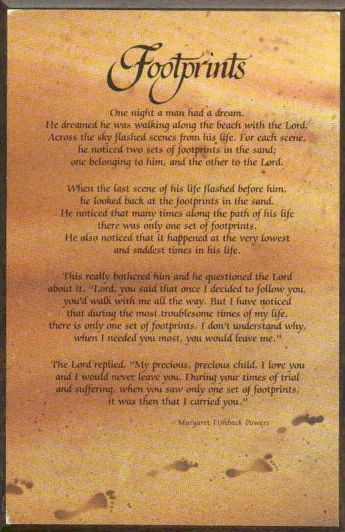
fpsGod does not deal with us in predictable ways. We want to feel his presence all the time. When actually what we may need is to begin to grow in faith, to grow in our confidence that God is there with us even when it doesn’t seem to be the case. God wants us to grow to be strong in faith. And so will be times when we need to remind ourselves that God is intimately concerned with us, with me, giving me life, giving me purpose and giving me hope for the future.

God has created us, God has redeemed us, God walks alongside us in the mundane experiences of life, at times of greatest difficulty, when he seems most absent he remains there with us in the pain, and ultimately God has a future for us in heaven.

Parables – Mark 4: 26-34

Jesus  said, “The kingdom of God is as if someone would scatter seed on the ground, and would sleep and rise night and day, and the seed would sprout and grow, he does not know how. The earth produces of itself, first the stalk, then the head, then the full grain in the head. But when the grain is ripe, at once he goes in with his sickle, because the harvest has come.”

He also said, “With what can we compare the kingdom of God, or what parable will we use for it? It is like a mustard seed, which, when sown upon the ground, is the smallest of all the seeds on earth; yet when it is sown it grows up and becomes the greatest of all shrubs, and puts forth large branches, so that the birds of the air can make nests in its shade.”

With many such parables he spoke the word to them, as they were able to hear it; he did not speak to them except in parables, but he explained everything in private to his disciples.

Jesus’ parables are intended to intrigue us, to catch the imagination, to get people thinking, to draw out a response which when reflected on becomes a place where God interacts with us and changes us. There’s the parable of the shepherd who leaves 99 sheep in open country and goes looking for the one that is lost. Can you imagine Jesus’ audience’s response: “The fool. Who will look after the 99?” …. “He should cut his losses and look after what he still has.” … “One in 99 isn’t that big a loss. Why risk the whole flock over one wayward sheep?”

And in that process of response Jesus’ listeners are hooked. They go away full of a story that will provoke discussion in the pub. Perhaps you can imagine the conversation:  “What do you think he meant?” … “Perhaps he was just telling us a joke about shepherds – after all they are a dim-witted lot.” … “No, I’m convinced that he said something important …”

In our Mark 4, we hear Jesus telling two parables about the kingdom of God. Picture stories about growing plants. His listeners would know all about growing plants, as many of us do. So, we say, that in his parables, Jesus draws on his listeners own experiences to make his point. He uses stories to convey deep truths, usually referring to an aspect of life that people can identify with. And that is part of the truth. …

But if that was all of the truth then surely he would go on, in these stories, to apply the truth. A parable would be something like a fable, the moral would be underlined at the end of the story.

But that doesn’t happen here. … In fact it doesn=’t happen with many of Jesus’ parables. And here, Mark is at pains to emphasise that Jesus didn’t explain what he was talking about, except to his disciples. These parables are intended to have hidden meaning, to intrigue, to provoke questions. And Jesus choses not to answer them or explain what he is saying.

Perhaps, in this case, Jesus knew that having heard the story, the next time his listeners were out in the fields sowing their crops they would be reminded of his words.  As the farmer scattered seed in his field maybe he would suddenly be brought up short, exclaiming “Ah, now I see, that’s what the kingdom of God is like.”     Perhaps he would think about the planning that is involved in seed sowing – reviewing how his crops have fared in the past, choosing the right place and time for actually sowing the seeds, and his hopes for a healthy crop to sustain him later in the year.  And then think, for God’s kingdom to grow, perhaps we need to make sure that it has the right conditions to grow – and what might these be?  What can I do so that my hope in this kingdom is realised?

Perhaps when the farmer sowed his mustard seed he would look at it and notice for the first time just how small and insignificant it looked and remember again just how large a bush the seed would produce. Perhaps he or she might cotton on that the weakest and smallest of things can become something of importance.

Rather than being told the meaning, Jesus listeners would have discovered a meaning for themselves. And because they had made the discovery, it would stick. Perhaps ……….

As Christians, we pray for God’s kingdom to come. We do so every time we pray the Lord’s Prayer.  We say that we desire to see a world which operates in line with God’s way of being; a place where his love is known by all and where all thoughts and words and deeds stem from this love.  As with all prayer, we need to expect to be part of the answer, to have some part to play in the outworking of our desires.  What does it mean for God’s kingdom to come? What does it mean for God’s kingdom to come in our place of worship? What does it mean for our community? What does it mean for the village, town or city in which we live?

I’m not going to suggest answers for you. I’m going, so to speak to take a leaf out Jesus’ book. I’m going to leave you with his parables. So, when you visit a Garden Centre, when you see the plant stalls on the Market, when you buy a packet of seeds or when you plant some seed. When you put mustard on the side of your plate. At any of these times, you might just find yourself being reminded of these parables – don’t dismiss them from your mind but allow yourself to hear them again and ponder what they mean for you and for us all. The question to ask is: “What on earth was Jesus getting at?”

And now for something completely different! (Mark 3:20-35)

Whose side are you on?

This is a different way of looking at Mark 3:20-35 (cf: https://rogerfarnworth.wordpress.com/2015/06/06/a-difficult-reading-prejudice-mark-320-35) – variations of it were used in St. Martin, Droylsden, St. James’ and St. Peter’s, Ashton-under-Lyne on 7th June 2015, the first Sunday after Trinity. ….

So, ….. whose side are you on?

In our house over the last fortnight, there have been very different emotions experienced by my wife Jo and I.  Jo supports Wycombe Wanderers, the local team from where she grew up in High Wycombe.  They’ve had their highs and lows as a team, and this season spent most of it in the automatic promotion spots at the top of league two.  But at the end, they ended up 4th and had to face the play offs.  They reached Wembley where they played Southend. They played well, but sadly for Jo, they were defeated in a penalty shoot out 7-6.

On the other hand, I support Arsenal! So last Saturday was wonderful! A 4-0 win in the FA Cup Final! Many of you will know that I was born in Manchester, lived in Hull, Essex and Norfolk as a child before moving back to Manchester when I was 18. So why support Arsenal? It was about saving my bacon. A large group of boys in the school made it very clear to me in a school playground in Braintree in Essex, that unless I shed my allegiance to Hull City and started supporting Arsenal, there would be serious consequences! So reluctantly I agreed, and that year Arsenal won the league and cup double! It was 1971!

For many, choosing who you support is a serious thing. So who do you support?  Man City?  Man United?  Chelsea?  Liverpool?  ………………………..

How did you decide who to support?

Now, you might not think that the Bible has much in common with football, but the Gospel reading for the first Sunday after Trinity is all about choosing sides and about people trying to score against one another!

In the story, the scribes are the religious experts from Jerusalem and they want to know whose side Jesus is on:  God’s or the devil’s?  Jesus argues that everything he does is good:  he’s curing sickness and getting rid of evil spirits so if he were on the devil’s side he’d be scoring own goals!  It’s surely obvious that he’s on God’s side.

What about us?  Are we on the same side as Jesus? Check out what he says at the end of the reading: ‘Whoever does God’s will is my mother, my brother, my sister – you are my family?  So what does this mean?  What do we need to do to be on Jesus’ side and belong to his family?

If I just start wearing the football kit and the team scarf of my football team and if I know the rules of football – does this make me a good supporter of my football team?

Of course not!  What do I have to do?

It’s about staying loyal, even if my team loses or is relegated.  It means actively supporting my team by watching matches and cheering them on.m I’m sure there is more as well that makes someone a loyal supporter.

If I wear a cross, own a Bible and watch Songs of Praise, does that make me a Christian, on God’s side?

No!  To be on God’s side, we need to believe in him, even when things are not going well. It means doing what God wants by behaving in a loving, caring, forgiving way towards others.

So, are you on God’s side, on Jesus’ side?  Jesus invites us all to be on his side.  Whoever we are and whatever we have done, he calls us to come and join him – all we have to do is choose to start following him and living in the way that he shows us.

A Difficult Reading? Prejudice? Mark 3:20-35

On 1st Sunday after Trinity this year the lectionary asks churches to read Mark 3:20-35 as the Gospel reading. This is a difficult reading, full of quite strange concepts and ideas. How should we read a passage like this?

How are we to understand the accusation of the pharisees/scribes? What on earth is a sin against the Holy Spirit? Why do Jesus family think that he has gone mad? Why does Jesus seem to reject his family in favour of his followers?

I’m not sure that a direct answer to some of these questions is possible. Trying to answer them all would mean a very lengthy post. However, I think we can engage with some of the issues raised. To help, please read the following passage from Bishop Tom Wright in his book ‘Mark for Everyone’ published by SPCK in 2001 (ISBN: 0-281-05300-6), p36-38:

From the safety of my armchair, I watched the mass demonstration on the TV news. It started peacefully, at least on the surface. Banners and placards gave out a strong message, but the crowd seemed relaxed enough. The police were standing well back, watching for trouble but quite cheerful. Some even joked with the marchers as they went by. … Suddenly everything changed. A whole section of the crowd stopped marching and started shouting at the police. Some threw bottles. The police charged the demonstrators swinging batons at random. The battle quickly spread up and down the street, shops were smashed and hundreds were arrested.

Close up TV shots and recordings made at the time, made it clear what had happened. The police had decided that the demonstrators were ‘scum’. The demonstrators had decided that the police were ‘pigs’. Once they had labelled them like that, they could do what they liked. They were no longer dealing with humans, but with animals and dirty ones at that Raise the stakes, stick a label on people and then it does not matter what you do or who you hurt.

That’s what seems to be going on as word about Jesus spreads to Jerusalem. …… This passage is a powerful witness to the remarkable things Jesus was doing. The early church certainly didn’t make up the story about people thinking Jesus was mad or in league with the devil. People only say that kind of thing when the stakes are raised, when something is happening for which there is no other explanation. ….The scribes don’t like what Jesus is doing because it does not fit into their categories. Jesus isn’t accredited. He must therefore be sidelined. He must be labelled in such a way that people will no longer take him seriously.. He must, they say be in league with the archdemon Beelzebul. … That would explain it; and it would also justify them doing anything they wanted to control him, to contain him, perhaps to silence him for ever.

So, what are we to make of this passage in Mark?

Jesus does not lash back in anger against the scribes and Pharisees. He doe not stigmatise them or label them. Rather, he points out the error in their thinking. Jesus claims that in what he is doing, God’s kingdom is arriving.

It is so easy to stereotype and to categorise. It is so easy to be prejudiced.

When we stigmatise others for living in a particular place, or for the colour of their skin, or for their faith, our society has crossed a rubicon. The same rubicon crossed by Hitler and the Nazi party when it stigmatised Jews. The same rubicon we cross if we lump people from the Indian subcontinent into one group and start calling them names or blaming them for the ills around us.

Once the Pharisees/scribes had demonised Jesus, they were free to do anything, even to kill him. They could justify murder or collusion in murder. Jesus says that this is the worst of sins, unforgiveable in a way that nothing else is, because it takes what is good and calls it evil. Its ultimate end is what happened to Jesus – his death at the jealous hands of the authorities. This demonising, categorising, stereotyping is a sin against the Holy Spirit.

Jesus actions were good, but because he had been given a category and a name, those good actions were only seen through prejudiced eyes. So he was killed by those he came to save.

We need to beware our own prejudices. They are the most destructive and evil of our instincts. When we persist in them, and choose to continue to think within them, we cannot be forgiven. To receive forgiveness, however, all we need to do is repent. We need to turn away fromour prejudices and ask God’s help to begin to relate to all people as human beings.

Trinity – John 3:1-17

Today is often a day when clergy seek to try to explain the Trinity. Usually we end up struggling to avoid heresy as we look for images which aid understanding. It seems to me that perhaps the most important part of the doctrine of the Trinity is that the Godhead is made up of three persons in eternal relationship. A relationship that has been broken only once, at the cross. Three persons, one God, eternally united by love. So it seems good that one of the readings set for today is the quintessential passage about the love of God explained by Jesus to Nicodemus – John 3:1-17.

What would your favourite phrase about love be?

What about……. ‘Love covers a multitude of sins’. ‘Love changes everything’? …  Any suggestions? ………….


I came across this story sometime ago now:

A technician was preparing a photograph of a beautiful woman for a reprint. He found this inscription on the back of the original:

“My dearest Tommy: I love you with all my heart. I love you more and more each day. I will love you for ever and ever. I am yours for all eternity.” …………………. PS: “If we should ever break up, I want this picture back.”

This story, while it might make us smile, is actually quite sad – for in our society today ‘Love’ sometimes  seems to be something temporary. We talk of ‘romance’; about falling in love, and falling out of love. Love is – taking her out for dinner, love is  – bringing him chocolates. Love is – about red roses, and pink Valentine cards; about moonlit walks, and about good feelings. But broken relationships seem now to be almost normal, and so many of us need healing from the pain that relationships cause.

We long for relationships where we are accepted just as we are. No questions asked. Yet, it’s really hard work to stay with someone whose habits annoy you; when at times arguments seem to be the norm. Love inevitably has to move beyond romance – it has to be about commitment. We need to be able to learn to say: “I promised to love you and cherish you, and I really do – despite the difficulties we sometimes face.”

Christians talk about ‘fellowship’ or ‘brotherly/sisterly love’. And when we experience that love from other Christians it is special. But even Christian love is never perfect – and we can still be demanding and self-serving.

The truth is, that whether we talk of fellowship, or of romantic love – however good our relationships are – we are often left hurt and disappointed in our relationships.

John 3:16 says:

“For God so loved the world that he gave his one and only Son, that whoever believes in him shall not perish but have eternal life.”

This verse tells us that it was God’s love that caused God the Father to send hGod the Son into the world, to live alongside us and ultimately to die for us. It tells us something of the depth and the scope of God’s love. It finishes by emphasising the need for us to respond:

“Whoever believes in him shall not perish but have eternal life.”

The depth and breadth of God’s love cannot but provoke a response. It is the Cross that provides the central focus of that love. The death of God’s Son. The place where the Godhead – Father, Son and Holy Spirit – is torn apart for love of us. The place where God takes into God’s very self all the pain and evil of our world.

It is the Cross which defines our faith. For at the Cross, the God we believe in chose vulnerability over invincibility. At the Cross, God the Son emptied himself of all power and authority – as St. Paul writes in Philippians:

‘Christ Jesus, though he was in the form of God, did not regard equality with God as something to be exploited, but emptied himself taking the form of a slave, being born in human likeness, he humbled himself and became obedient to the point of death – even death on a cross.’

Our salvation, our relationship with God was secured not by an exercise of power, but by an exercise of submission. Christ first identified with our humanity and by doing so hallowed this world and all human existence and then submitted himself to destruction through human jealousy and rage. Love which suffered everything so that we might be drawn back within God=s loving arms of mercy. The mystery of the Cross is that there Love died so that love might live and triumph.  And it is also the image of the Love that we are called to show – where we are prepared to be vulnerable rather than seeking power and control in our relationships.

At the Cross, God’s self giving love is expressed more clearly than anywhere else. ‘This is love’, says the Bible, ‘not that we loved God, but that he loved us and sent his Son to die for us’. This is love that has sacrificed all for us, love that holds us fast and sure when we struggle with doubt and fear. But more than that, this is love that gently calls us to love, that encourages us to give of ourselves vulnerably to others, love which calls us to identify with the world around us, love which gently suggests that no sacrifice that we can make is too great. For the true measure of sacrificial love is not that shown by our neighbour, but that shown at the Cross.

So when we share Communion together we take the opportunity again to identify with Christ’s suffering. We take into ourselves the symbols of his love, the bread – his body broken, the wine – his blood shed. And we recognise that at the Cross we find love in its fullness, love beyond description:

“For God so loved the world that he gave his one and only Son, that whoever believes in him shall not perish but have eternal life.”

Nyakimanga

100_6071Kisoro in South West Uganda is dominated by a chain of Volcanoes – The Virunga Mountains. The closest is Mt Muhabura and it gives its name to the Church of Uganda Diocese that I visited in April – Muhabura Diocese. Of theses 7 volcanoes only one seems to be anything other than completely dormant.

Over the millennia, what were once deep valleys have been filled with the lava flows from these volcanoes, leaving small hills of sand stone in the area which once would have been high hills. The pumice stone which fills the valleys is very porous and allows water to flow below ground.

This means that in the wet season the area is lush and green but in the 3 month long dry season all the water in the area disappears underground, only to be seen at locations where springs come to the surface.

100_6114The village of Nyakimanga (pronounced Nyachimanga with a hard ‘g’) in lush and green in the wet season. but dry as a bone in the dry season. These two photos show the difference.  The first was taken in April this year. The second was taken in September 2013. For three months of each year the children, usually the girls, of Nyakimanga have to set aside their education to collect water. They walk around 5 km to the nearest springs 100_4820and then carry back heavy jerry cans full of water. It is a hard life.

I am delighted that St. Martin, Droylsden, The Good Shepherd, Ashton and a number of local Church of England schools raised enough money at Harvest 2014 to provide Nyakimanga with a water tank.

The money reached the village at around Christmas time and they formed a committee led by the local church leader and they have decided together on the size and construction of the tank. They have employed local contractors and the tank has been built. When I was in Uganda in April, they had completed the reinforced floor of the tank and were well on with the constriction of the walls.
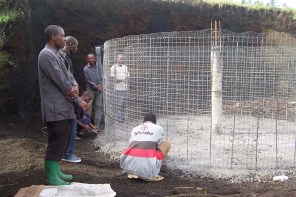
100_6120Once the tank is completed it will be fed from the roof of the church and one of the local houses and it will hold enough for very basic use by villagers throughout the dry season.

They are overwhelmingly grateful to people in the UK who have given so generously.

Heading Back to the UK

I fly from Entebbe airport this evening arriving back in the UK after a short stopover in Amsterdam in the early morning. Jo and I then head off on holiday. I’ve enjoyed doing quite a bit of theological reading over the past 2 or 3 days and you can have a look at some of the issues I’ve been reading and reflecting on under the pull-down menu ‘Shame the Gospel and the Cross’ on my blog.

I thought it would be good to leave you with a series of different images.

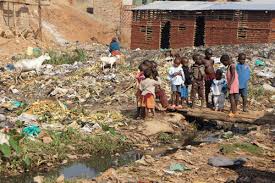
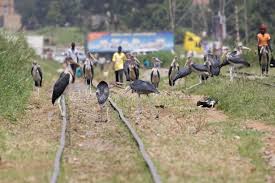
First a variety of different images from Kampala which show the contrasts between rich and poor and which also show something of it’s beauty.

images (5) images (4) images (3) images (2)

download (4)

I also wanted to let you see where Jo and I will be on holiday – so here are a few photos to finish the post.

The Cottage is called Tigh SgeirGael and it is sited  a kilometre or so from any other building immediately above the sea under the cliffs of Gribun on the Isle of Mull.

download (10) download (9) download (8) download (7) download (6) download (5)

Shame and Social Media!


Before you click on the link below it is worth stopping for a moment to ask yourself one question: “How important to me is the number of Facebook ‘friends’ I have?”

Jayson Georges suggests that when we seek our self-worth and value  through the following that we have on social media we are placing status above relationship, which ultimately is a pursuit of selfishness!

http://www.christianitytoday.com/edstetzer/2015/march/our-new-virtual-face.html

An Afghan Wedding

Over the past few days I have been posting about my wedding experiences in Uganda. Here is an example of what can happen at weddings in Afghanistan and the incredible costs that cultural expactations can lay on the groom! The risk of shaming is significant.

http://mobile.nytimes.com/2015/04/19/world/asia/at-afghan-weddings-his-side-her-side-and-600-strangers.html?referrer=