The Modern Tramway – Part 9 –  More About Accidents (in London)

‘The Modern Tramway’ in March 1957 (Volume 20, No. 231) carried a follow-up article [1] to that carried by the Journal in April 1954. The original article is covered here:

The Modern Tramway – Part 5 – Trams and Road Accidents

The follow-up article in the March 1957 Journal focussed on a new Road Research Laboratory Report about London road accidents. The Modern Tramway claimed in the article that the Report went almost unnoted in the national press, unlike the Laboratory’s earlier report.

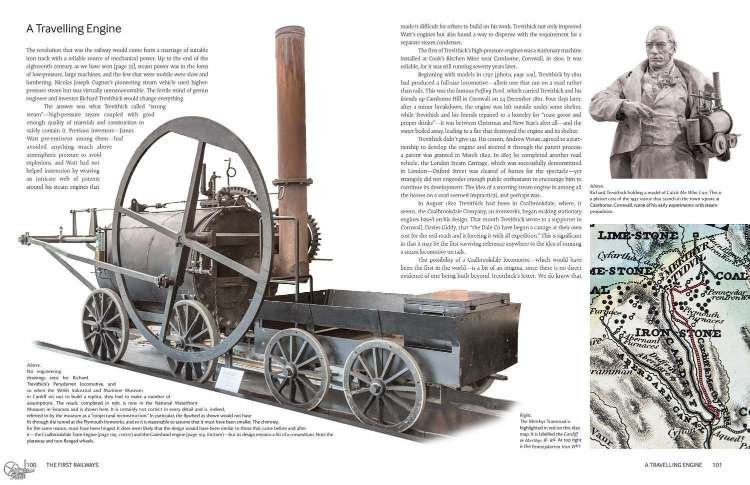
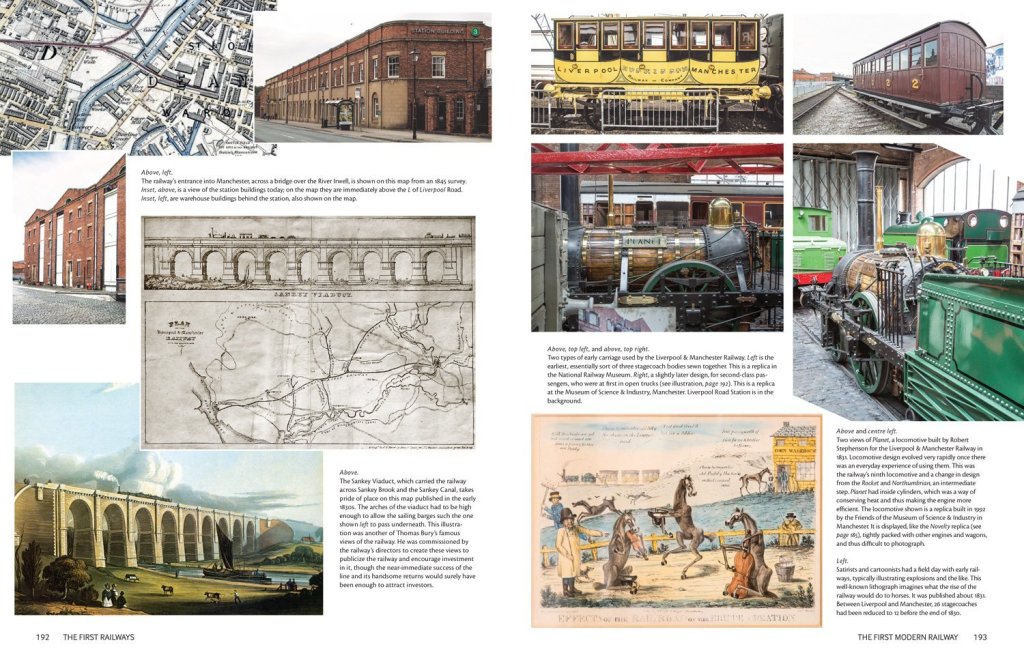
Two images of London trams, possibly both Felthams. The first on Route 48, the second on Route 54. Route 48 ran between West Norwood, Elephant & Castle and City (Southwark). Route 54, between Grove Park Station and Victoria Station. [2][3: p122]

The featured image at the top of this article is part of the Lambeth Landmark Collection (Ref: 04823, Identifier: SP160, 1951). It shows, possibly, another Feltham tram on Route 38 crossing Westminster Bridge going towards Parliament Square. The London County Hall building can be seen on the right. The Skylon of the Festival of Britain is just visible (no more than a ghostly shadow) on the left side of the tram. Route 38 ran between Abbey Wood and Victoria Embankment (via Westminster Bridge). [4][3: p122]

The new report studied the effect on accidents of resurfacing former tramway roads in the boroughs of Camberwell and Wandsworth, and the report’s conclusions were that the improvement in road surfaces reduced skidding accidents but increased some other types of accident presumably by encouraging higher speeds. The final result was a marked transfer of accident-proneness from pedal cyclists to pedestrians and motor vehicles, a 10% decrease in total accidents and a ‘non-significant increase’ in fatal and serious accidents. The Journal commented that the phrase ‘non-significant increase’ was “not intended to reduce the seriousness of the case; since fatal and serious accidents are fewer than slight accidents a far more dramatic change in the trend would be necessary to reach the point of statistical signifi- cance.” [1: p43]

Of particular significance was the additional evidence which this latest report provided that “London tramway accident figures were not typical of those for the country as a whole. The comparison is made between the period when the tracks were intact but disused (and in many cases patched, leaving only the conduit slot exposed) and the first equivalent period after complete resurfacing; it confirms that the conduit slot was probably as important a factor as the running rails in pedal cycle accidents, and since this outdated feature of the former L.C.C. system was entirely confined to London (at least in the motor age) it clearly invalidates any comparison of accident figures between London and other towns.” [1: p43] Other similar points, such as the absence of loading islands in London, were brought out in the previous article in April 1954.

The Light Railway Transport League secured an interview with the Road Research Laboratory in which evidence relating to Dundee’s experience of a conversion from trams to buses was discussed as well as the then recent report about London. The tram and bus accident figures for Dundee showed that Dundee trams ran about three times as far per fatality as Dundee buses. “The Laboratory … considered that the Dundee figures were too small for any definite conclusion to be drawn from them, and maintain their previous view that since London results in almost all other matters have been found similar to those elsewhere the same must be true of trams.” [1: p43]

Sadly, the League came to the conclusion that the Laboratory’s conclusions would only be challenged if it’s own members were able to provide statistically significant and conclusive figures relating to some of the larger city networks which allow comparisons to be made. The League suggested that two forms of comparison were possible: “one in a city such as Sheffield where modern practices (and modern surfaces) apply on a street tramway system, the other in a city such as Liverpool where a high proportion of the tramways were on reserved track.” [1: p43] The League was convinced that the many untypical features of the London tramways rendered invalid any extrapolation of London results to other towns, and that a similar study in (say) Sheffield would provide ample proof of this. Their view was tramway modernisation would have brought about a greater reduction in accidents than the replacement of trams with buses. The League asserted that figures received from Hamburg seemed to confirm this. The Deputy Director of the Laboratory agreed that such practices as coupling trams together and providing loading islands could reasonably be expected to reduce the accident rate, but the Laboratory had no figures to support this. It seems, however, that there was shared agreement on the safety value of reserved tramway tracks as a study undertaken by the City Engineer in Glasgow after the war showed accidents to be negligible. [1: p44]

References

  1. More About Accidents; in The Modern Tramway, The Light Railway Transport League, Volume 20, No. 231, p43-44.
  2. https://www.ebay.co.uk/itm/254670164078, accessed on 24th June 2023.
  3. Robert J. Harley; London Tramway Twilight: 1949-1952; Capital Transport Publishing, Harrow Weald, Middlesex, 2000.
  4. https://boroughphotos.org/lambeth/tram-westminster-bridge-lambeth, accessed on 24th June 2023.

‘The Modern Tramway’ – Part 8 – Leeds City Tramways, 1956. …

The Modern Tramway Journal in February 1957 carried an article about the tramways of Leeds. The data for the article was collated by A.K. Terry and the article was written by J.H. Price. [1] Please note that the copyright of the featured image above is owned by the National Tramway Museum at Crich. The museum are content for it to be shared in this way provided that their copyright is acknowledged.

The Suez crisis brought a temporary halt to a number of things within the UK economy. One of these was the planned scrapping of the tram routes and tramcars in Leeds. That pause provided the opportunity for the Light Railway Transport League to compile a map, fleet list and list of services for the city. Everything included in the February 1957 article was correct as of 31st December 1956.

In 1953, Leeds City Council decided to substitute buses for trams over a period of ten years. This meant tha by the end of 1956, ten nineteen of the city’s tram routes had been abandoned and the 1953 roster of 417 tramcars reduced to 170.

Those changes were recorded by the article as follows:

“The first conversion was the service from the Corn Exchange to Half Mile Lane (No. 14) on 4th October 1953, followed on 4th April 1954, by Kirkstall Abbey (No. 4) and Compton Road (No. 10). The latter abandonment saw the withdrawal of the last ex-Manchester and ex-Southampton cars and the Pivotal-truck Chamberlain cars, while Headingley depot was closed to trams at the same time. No further abandonments took place in 1954, but 1955 and 1956 have witnessed six closures and the concentration of all tramway operations on the large central depot at Swinegate.

Chapeltown Depot was closed as a running shed on 24th April 1955 … and the Gipton tram service (No. 11) was replaced by buses on the same day, followed by Meanwood (No. 6) and Elland Road (No. 8) from 26th June. But as a result of the oil crisis, trams are now running to Elland Road again, after an absence of over seventeen months! The explanation is that this line remained intact to serve Low Fields Road scrapyard, and with the oil shortage special trams now run again on certain Saturday afternoons in connection with football matches at the Leeds United ground.

The replacement by buses of the Beeston service (No. 5) on 20th November 1955, enabled the depart- ment to cease using Torre Road depot (except to store some cars awaiting scrap) and this building is being converted to a bus garage, unlike Chapeltown depot which is to be sold. The 1956 abandonments – Lawnswood (No. 1) from 4th March, followed by Whingate (No. 15) and New Inn (No. 16) from 22nd July have removed trams from the city’s busiest thoroughfare (Boar Lane) and have eliminated the last of the Chamberlain cars. These vehicles were former Pivotal cars of 1925-26 remounted on new P.35 type trucks built at Kirkstall Road Works from 1944 onwards, mostly after the patent had been purchased in 1948 from the Brush company. Save for works journeys, trams no longer run through City Square, another notable traffic centre which provided one of the few British examples of the familiar Continental technique of using the centre of a square or roundabout as a full-scale tramway station.

The abandonment of the routes on the west side of Leeds has left the works at Kirkstall Road rather unfavourably placed. At present, tracks are maintained from Swinegate through City Square and Wellington Street to the works, but the Chairman of Transport Committee … stated some time ago that the Department was considering moving trams to and from the works on a special road vehicle. This has not materialised, and it is thought that when the fleet has been further reduced, the rear tracks of Swinegate Depot will be fitted with lifting gear and equipped to carry our body repairs, the trucks, motors and controllers then being taken by road to and from Kirkstall Road Works for attention.

Although no definite indication of policy has been given, it seems likely that after the completion of the present scheme to convert all lines laid entirely in streets (of which three remain Hunslet, Dewsbury Road and Moortown), the routes with reserved tracks may remain for several years. Track renewals have been taking place on all routes, notably on York Road where some of the former wooden sleepers have given way to a concrete base as already used on the Belle Isle reservation. The Roundhay reserved track has also received attention.

Since the Leeds Transport Committee seem to consider the sub-ject solely from the financial angle, the retention (or otherwise) of the reserved-track routes will presumably depend on the Department’s ability to keep the cost of tramway operation down to a figure comparable with that of the buses. The Chairman has admitted that reserved tracks are much cheaper to maintain than street tracks, and the concentration of all the cars at one large depot is evidently another step in this direction, as is the elimination of non-standard cars and equipments from the tram fleet. The diversity of types in the Leeds tram fleet will be seen from the accompanying table, and it is significant that only Horsfield and Feltham cars are now receiving major overhauls; these two classes between them would be more than sufficient to work the reserved-track routes.

Of the other types, the Headingley streamlined and Chamberlain cars have already departed from passenger service, and one of the three ex-London H.R.2 cars (No. 277) has been withdrawn following a collision, while London’s famous No. 1 (Leeds 301) will soon find its way back to its birthplace at Charlton as a prized exhibit in the B.T.C. collection of historic vehicles. The most unfortunate demise in Leeds is that of the Middleton bogie cars, of which only one (No. 268) now remains in service. Whatever the virtues of standardisation and maintenance-simplification, one cannot but regret the passing of what were some of the smoothest-riding double-deck cars ever built; so far as can be judged from personal observation, their withdrawal is due to body defects and the need to retyre the wheels at very frequent intervals lest the swing links of the trucks fail to clear the road surface. The extra cost of four-motor maintenance, as also experienced in Liverpool, may have been a factor. Enquiries were made as to the possibility of preserving one of these cars, but the scrap value and consequent purchase price would be in the region of £145. Nevertheless, anyone willing to help is invited to contact Mr. C. Routh, 17, Wynford Rise, West Park, Leeds 17, so that the potential financial support for such a scheme may be assessed.

The former preserve of these cars, the No. 12 route to Middleton, is now linked with the Belle Isle and York Road services and served mainly by Horsfields and Felthams. Both classes acquit themselves surprisingly well on the reserved track, but on such a route as this the 4-wheeled double-decker must inevitably proceed more cautiously than an equal-wheel bogie car, and the exhilarating dash down through the woods by the last few cars at night is now almost a thing of the past. Various minor improvements are being made to the Horsfield cars, including the replacement of air bells by electric bells, smaller destination boxes which no longer occupy the entire end window space, and fixed upper-deck windows with sliding ventilators to replace the winding type made famous elsewhere by the twin notices “Do not spit on the car. The conductor will adjust the win- dows on request.”

Since Leeds does not intend to buy or to build any more trams, the life of the reserved track lines may in the end be determined by the life of the cars, most of which are already 26 years old. Yet the Middleton route with its private express track has a wonderful potential advantage in time and distance over the shortest route to Middleton by road, and if the private track were extended into the city along the colliery railway, and modern coupled single-deckers introduced to run at railway speeds, the earning power of the trams would certainly be superior to that of buses using the increasingly congested streets. Birmingham is considering using its former tramway reservations, linked by subways, to form a rapid-transit system, but Leeds is even more fortunately placed, for the modern substations and suburban reserved tracks already exist, and present slum-clearance and road-widening schemes could bring the York Road reserved track almost to the city centre. It would be a short step to link this with the Middleton route by a subway, a new road, or even a private surface line laid partly over the river. These are real possibilities, and should be examined now, while the chance exists, so that they can be taken into account in town planning schemes. The opportunity is far too good to miss. [1: p23-24 & 27]

The article included a plan of Leeds City Tramways as they existed on 31st December 1956.

The Leeds City Tramway Network as on 31st December 1956. [1: p22]

The article also provides a table showing tram services in Leeds as at 31st December 1956

Leeds Tram Services recorded at the end of 1956. [1: p25]

The next two images show the table of rolling stock still in use on the tramway network at the end of 1956. The first image tabulates the rolling stock, the second provides explanatory notes and details of manufacturers.

Tramcars in use in Leeds at the end of 1956. [1: p30-31]

A separate numbering system was used for ‘Works Cars’ – snowplough cars, rail grinders, stores cars, water cars and rail Derrick’s. All of the Works Cars apart from the snow brooms and rail derrick No 1 were converted from passenger cars.

Works Cars and Former Passenger Cars [1: p32]

The article also included photographs of some of the Leeds tramcars.

This and the image below show two of the Middleton bogie-cars, No 268 (still in service at the end of 1956) with the bow collector introduced in Leeds between 1935 and 1938, and No. 255 with its original trolley-poles. Both tramcars are in the dark blue (pre-war?) livery. [1: p26]
These two images show ex-London cars numbered in Leeds as 278 and 301 (London Nos 1881 and 1) © A.K. Terry & R. Brook respectively. [1: p28]
These two images show experimental single-deck cars Nos. 600 and 601, © R. Brook and R.B.Parr respectively. [1: p29]

References

  1. J.H. Price & A.K. Terry; Leeds City Tramways, 1956; in The Modern Tramway, The Light Railway Transport League, Volume 20, No. 230, p22-32.

‘The Modern Tramway’ – Part 7 – The Manx Electric Railway. …

The January 1957 edition of ‘The Modern Tramway’ reported a significant decision made by the Manx Government at the end of 1956 in respect of the future of the M.E.R. (the Manx Electric Tramway). [1]

On 12th December 1956, “the House of Keys decided by 17 votes to four that the railway, instead of being allowed to close, should be purchased by the Manx Government and run as a national tourist attraction. In addition to the purchase price of £50,000, they approved a scheme to relay the Douglas-Laxey and Snaefell track over ten years and to construct four new cars for the base service.” [1: p4]

Given the general attitude across the British Isles in the 1950s this might have seemed to be an unlikely outcome. As The Modern Tramway comments:

This is a historic decision, the first case in which the powers that be have recognised that an electric tramway, no less than a narrow-gauge or miniature railway, constitute a real tourist attraction. Again, it is perhaps the first case in which real heed has been paid to suggestions first put forward in these pages, [The Modern Tramway]. …

On 20th June [1956], the House of Keys rejected the advice of a committee that the Manx Electric Railway be allowed to close, and appointed a new committee to investigate the possibility of continuing the system. … [That committee] found that the cost of essential track renewals was the same as already quoted (£90,000 for Douglas-Laxey, £36,000 for Snaefell and £139,000 for Laxey-Ramsey) and that the only major saving would be to limit the purchase of new rolling stock to the four motor cars needed for the base service. It would however be possible to get ten more year’s life from the existing track north of Laxey and reconsider the future of the Laxey-Ramsey section later on, and they also obtained a reduction in the purchase price from £70,000 to £50,000 by leaving out two hotels and allowing the company to retain its investments. They therefore reported that the cost of taking over the railway and running it for ten years would be £50,000 for purchase, £25,000 for ten years’ trading losses and £225,000 for renewals, and the question before the Manx Parliament was whether this expenditure would be justified.”

A Future for the M.E.R.; The Modern Tramway Volume 20, No. 229, January 1957, p4. [1:p4]
Laxey in 1963: toastrack motor car 26 runs round its trailer, no.56, after terminating here on a short journey from Douglas, © Copyright Alan Murray-Rust and licensed for reuse under a Creative Commons Licence, CC BY-SA 2.0. [5]

After summarising the costs of improvements and renewal the article quoted the Committee’s Report:

We think everyone will agree that the existence of the Railway is a very great asset to the Visiting Industry. It has been at all times well patronised, and its failure would be a serious loss to the amenities of the Island as a visiting resort. Numerous letters have appeared in the local Press deploring the proposal to close the Railway and indicating the value which visitors place upon it, and the enjoyment derived from its use. Some of us feel that in any event the moral effect of closing this scenic railway which has served to supply visitors with the means of access to many of our Glens, some of which have already been purchased on behalf of the Isle of Man Government, would have a very serious effect upon the whole future of the Isle of Man and that no steps should be spared within reasonable limits to maintain it in existence.”

A Future for the M.E.R.; The Modern Tramway Volume 20, No. 229, January 1957, p4. [1:p4]

The Committee published their report in November 1956 and, in it, went on to mention the effect on the Island’s economy as regards unemployment, electricty supply, road improvements and winter work schemes, but the tourist industry naturally was their main concern. They paid tribute to the directors’ willingness to compromise which had led to the reduction in the purchase price.

A full debate took place in the Court of Tynwald on 12th December 1956 and was voted on. 17 members were in favour, four against with two abstentions.

In practice, this meant that a Board of Tynwald was set up to run the line. That Board took control of the line in 1957; and were tasked with a complete renewal of the track between Douglas and Laxey before 7 years had elapsed. After completion of that renewal, the Snaefell Mountain Railway was to be addressed in the next 3 years. In addition, purchase of 4 new cars, at an estimated cost of £8,000 each, was approved.

The Modern Tramway closes it’s article with an encouragement, first, to the Manx Tourist Board to “advertise the line as much as they can; … as a national asset the M.E.R. can and must take its proper place in the excellent handbooks and posters which the island distributes. Special guests should be taken for a trip over the line (in the directors’ saloon, of course) just as they were when it was new, and there might be a thing or two to be gleaned from the Talyllyn Railway or the R.H. & D. in the field such as selling guides, postcards and history brochures, conducting visitors round the sheds, putting together a small museum or even running a named express. Bi-lingual station name boards (as suggested by the Visiting Industry Commission) and altitude posts on the mountain railway.” [1: p5-6]

And secondly, to the Light Railway Transport League properly support the decision of the Tynwald. This, the article suggests should at least include:

  • a League visit on an annual basis,
  • a publication covering the history of the line,
  • members choosing to take their holidays on the Isle of Man,
  • regular talks about the island and it’s unique forms of transport.
Manx Electric Railway special train at Dhoon Quarry in September 1975: the train consists of the original motor car, No.1 of 1893, and ‘Royal Saloon’ no.59 of 1895, and was working an enthusiast trip. At this time No.1 was normally only used for maintenance work, and had been equipped with platforms screens to give some protection to the driver. The front dash panel can be seen to be seriously dented, and the body can be seen to be in need of attention. It was ‘rescued’ from this condition in 1979 and restored as part of the Tynwald Millennium celebrations.

Dhoon Quarry sidings, originally serving the quarry of that name, has for many years served as the main permanent way storage location. Note the large pile of new sleepers on the left, ready replace rotten ones like the pile on the right, © Copyright Alan Murray-Rust and licensed for reuse under a Creative Commons Licence, CC BY-SA 2.0. [6]

2023 sees the 130th anniversary of the opening of the M.E.R., the Company advertises its Douglas to Ramsey service, the Snaefell service and the Steam railway together. [2] The M.E.R. has, since nationalisation, had a chequered history. The Company’s website has a short history of the service which tells us that:

The new timetable introduced in June 1958 with 11 round trips to Ramsey between 10am and 6pm was met with immediate disapproval, so much that nearly the entire Board resigned. After the appointment of a new Board in July 1959, a service of 20 round trips with a winter service was the agreed replacement, allowing the mail contract to continue.

By 1965 the relaying of the Derby Castle to Laxey section and rewiring was near enough complete. Tynwald’s commitment to the M.E.R was tested in January 1967 where a short section of the wall at Bulgham collapsed, meaning temporary termini had to be set up north and south of the accident site. Reconstruction of the embankment started in May, and was finished in mid-July.

The Laxey-Ramsey section was closed after a few years of speculation in September 1975, causing the railway to lose the mail contract. Following Government debate it was decided to keep the Ramsey section closed for 1976, the railway as a result becoming the high topic at the year’s General Election!

Support for the M.E.R meant that the Laxey-Ramsey section was reopened for the 1977 season, with the amalgamation of the Steam Railway and M.E.R  under the title of Isle of Man Railways coming shortly after during 1978 (though the name of the M.E.R Board was not changed) Both railways were to be marketed jointly and timetables coordinated, working in turn with the amalgamated bus network. The M.E.R looked to be safe, with the Centenary of Electric Traction Celebrations coming to the fore in 1979.

The ‘Centenary of Electric Traction’ Celebrations were very successful for the Manx Electric Railway, with the restoration of Freight Trailer No.26 and Locomotive No.23 to display condition, the opening of the Electric Railway Museum in Ramsey Car Shed, and the Grand Cavalcade at Laxey, during which all the operational stock was exhibited to the general public. Car No.1 was also restored to operational passenger use, with Car No.2 following in Winter 1980/81.

During 1983 the Manx Electric Railway and National Transport Boards were amalgamated, to become the Isle of Man Passenger Transport Board, with Car No.6 receiving the title ‘Isle of Man Passenger Transport’ post-overhaul. During the same year, Locomotive No.23 was also restored to operational condition, receiving again trucks and equipment from Car No.33. It ran during the May 1983 and 1984 ‘Vintage Transport’ Weekends, being very popular for visiting and local enthusiasts. Further repairs were undertaken to areas of the Bulgham section of the M.E.R, with the northern section of the retaining wall (near today’s excursion platform) receiving attention.

In 1986, the Board system was scrapped and the M.E.R came under the control of the Department of Tourism and Transport (Today the Department of Community, Culture and Leisure). Following two years of planning, the ‘Year of Railways’ was launched in 1993, with the Centenary of the Manx Electric Railway being the prime focus.” [3]

Ballacannell, Manx Electric Railway, Ballabeg – 1963:
winter saloon No. 19 with trailer rounding the curve to the South of the level crossing near Laxey, © Copyright Alan Murray-Rust and licensed for reuse under a Creative Commons Licence, CC BY-SA 2.0. [7]

Wikipedia informs us that:

The section between Laxey and Ramsey was closed again in summer 2008, after a consultancy report commissioned by the Isle of Man Government exposed critical failings in the permanent way, deeming it unsuitable for passenger service in the near future. The … Tynwald, agreed to spend nearly £5 million for track replacement in July–September, allowing trams to run on a single track. … Manx authorities were considering vintage buses as a replacement during the closure. … In 2009, the full line operated continuously, and it has continued to do so during the summer season since the beginning of the 2010 season at Easter, except for [a] COVID-related suspension, with no rail-related incidents affecting services.

Until 1998, the line operated a year-round service, but since then it has run seasonally, usually between March and the beginning of November, though the dates can vary from season to season.” [4]

30 years have passed since the centenary celebrations and the Company now maintains its own website and an active social media presence.

References

  1. A Future for the M.E.R.; The Modern Tramway; Volume 20, No. 229, January 1957, p4-6.
  2. https://www.iombusandrail.im/media/2693/isle-of-man-railways-2023-timetable.pdf?fbclid=IwAR0Q2DVcvjKFmRpHqAKWSf3x4a7_fAoSXGSyYm_DhIYeD1OO_hmidJiFL54, accessed on 19th June 2023.
  3. https://manxelectricrailway.co.uk/features/history, accessed on 19th June 2023.
  4. https://en.m.wikipedia.org/wiki/Manx_Electric_Railway, accessed on 19th June 2023.
  5. https://www.geograph.org.uk/photo/6470337, accessed on 19th June 2023.
  6. https://www.geograph.org.uk/photo/6879694, accessed on 19th June 2023.
  7. https://www.geograph.org.uk/photo/6471516, accessed on 19th June 2023.

The Modern Tramway – Part 5 – Trams and Road Accidents

The featured image shows the aftermath of one accident involving a London tramcar, © Evening Standard. [4]

Professional thinking in London in the early 1950s was that tramway modernisation would reduce road accidents. Accordingly, The Light Railway Transport League was invited to exhibit at a number of post-war Road Safety Exhibitions. [1: p59]

However, on 1st January 1954, a London Transport Executive press release carried the title ‘Tram Scrapping has reduced London accidents’. [2] This claim was based on a study “undertaken … by the Road Research Laboratory of the Department of Scientific and Industrial Research and summarised in a Report issued towards the end of [1953].” [3]

The Modern Tramway noted that the report was a serious well-intentioned piece of research into trends in London traffic accidents. It was “cautious in its approach and highly qualified in its conclusions.” [1: p59] However, the article continues, “the fact is that the parts of this Report, divorced from their contexts, which received notice in the Press appears to have given an incorrect impression, and this we point out lest students of transport fail to draw a proper distinction between the study itself and the conclusions drawn from it.” [1: p60]

This has often been a malaise which had affected public reporting of detailed technical papers. The LTE release chose to remove all qualifying statements and ignored the manifest caution in the way conclusions were expressed by the original report. It perhaps is also symptomatic of a general presumption that tramways (and also railways) were not the transport of the future. The internal combustion engine was seen as the future. At the time, this was not necessarily an unreasonable view. It has, however, been proven to be a significant miss-step in policy direction as the years have unfolded.

The original accident study considered all London accidents from 1950 to 1952, and compared the general trend of all kinds of accidents with those on ex-tram routes; only if the ex-tram route reduction was significantly greater than the more general reduction could the greater reduction be associated with tram-scrapping. So far, so good. BUT of all the accident classes surveyed, only that of ‘Accidents involving public service vehicles’ was found to have a reduction which was statistically significant, and within this class, fatal accidents actually increased, serious accidents were not reduced significantly, and the much-vaunted reduction was, in fact, limited to ‘slight accidents involving public service vehicles’. The L.T.E. handout omitted all mention of this vitally important word ‘slight’ and … gave the same statistical weight to all … classes of accident.” [1: p60]

Surely, one fatal accident is more concern to the community than fifty ‘slight’ accidents, “and the Report confirms the views of the Road Safety Organiser for Greenwich that by disciplining other traffic, London’s trams did at least keep the proportion of fatal or serious accidents well below the average for the whole country. It may well be that in this way, and by the tendency of the tram’s life- guard to reduce the proportion of fatalities in accidents, the tram has saved many valuable lives.” [1: p60]

The Modern Tramway comments that, “the over-simplification of this theme in the L.T.E. handout is the more regrettable in view of the fact that the London Transport Executive were the sole agency through which the results of the study were made public. A different body with no direct interest in the justification of tramway abandonments might have presented the results in a totally different way.” [1: p60]

Perhaps of even greater significance in that contemporary debate was the way in which the different transport authorities and borough councils had created a context in which tramway accidents were more likely to occur. “For eighteen years, every suggestion that would have reduced accidents was turned down on the excuse that the trams were to be scrapped, and dozens of urgently needed road improvement works were held up on the excuse that they must await the final abandonment; no wonder acci- dents happened.” [1: p60]

The Modern Tramway highlighted a number of issues/examples which are worthy of note:

  1. Many tram stops in South London desperately needed to be equipped with loading islands but, except in two isolated instances, nothing was done, even where the road was sufficiently wide to leave room for two lines of traffic between the island and the kerb.
  2. On 11th March 1948, Croydon Highways Committee, acting on the recommendation of their Accident Prevention Sub-Committee and with the approval of the local police, asked London Transport to lay a double tram track through the bottleneck at Crown Hill, Croydon, in place of the single track. This proposal … was rejected.
  3. As part of the general determination not to spend money on the tramways, the headlamps of London’s trams remained obscured until the end by their wartime masks. In most other towns trams would long since have been fitted with separate rear lights, and sometimes also with stop lights and indicators.
  4. The same excuse of eventual abandonment was given when complaints were made about the type of tramway paving adopted, yet when the new lines were constructed in Lambeth for the Festival of Britain it was shown that even conduit tracks could be given a surrounding surface equal to that of the best modern roads.
  5. The cars themselves, although efficient and extremely reliable vehicles, were not always maintained to the best possible standards; this is shown by the fact that in 1947 the men of Telford Avenue Depot actually staged a one-day strike to draw the attention of the public to the state of the vehicles which they were expected to drive. It is also significant that the Ministry of Transport would not allow the sale of ex-L.C.C. cars to other cities unless the braking systems were improved.

The consequences of the LTE’s shoddy approach to the dissemination of the report’s findings were also of significance. The Modern Tramway continues:

Wherever tramways are the subject of Press attacks, the London figures were triumphantly reproduced with a “We told you so” air, often omitting the fact that only accidents involving public service vehicles were concerned and thus making it appear that tramway abandonment reduced all road accidents by a third, which is sheer nonsense. Other papers such as the Yorkshire Evening News developed their own patent theories as to the probable effect of tram-scrapping in their own areas, consequently, ignoring the different conditions. We have not forgotten how this newspaper treated two accidents in Leeds on 10th December, 1953, when the fact that a tram had grazed the side of a lorry, injuring no one, was reported with headline while the case of a 12-year-old girl knocked down by a bus on the same day was relegated to a small paragraph.” [1: p61]

The Report itself extrapolated its own findings, suggesting that if the effects in other towns were the same as in London, then the replacement of all the remaining tram services in Great Britain would result in a further saving of about 1,100 accidents per year. “In fact,” says The Modern Tramway, “any tramway officer outside London would have pointed out … that this gratuitious extrapolation is quite pointless.” [1: p61]

The Modern Tramway went on to point out some of the key distinctions: [1: p61-62]

  • London tramways, for the most part, retained the outmoded conduit system of current collection, with a central slot and broken road surface. Except on the semi-reserved Embankment area lines, no one would have recommended its retention had the tramways been modernised.
  • London tramways were almost completely devoid of reserved tracks, loading islands, and other modern aids to tramway safety. Where tramways on reserved tracks were replaced by buses running on the public highway, the opposite effect has been the case, and accidents had increased.
  • The use of modern vehicles and well maintained tracks in other locations invalidates any comparison.
  • In London, motorists were permitted to overtake stationary tramcars. Elsewhere this was usually prohibited by local bye-laws.
  • In London, buses and trams shared the same road space. Elsewhere, they were kept on separate roads wherever possible.
  • London’s trams relied on a magnetic brake, elsewhere, by 1953, air brakes were in use.

Experience in Sheffield and in a number of German towns suggests that the findings of the report about London were not replicated. In those cases “accident figures had risen as a result of tramway abandonment.” [1: p62]

The Modern Tramway concludes it article with two further thoughts:

  1. Prior to the period examined by the Report, a considerable proportion of the public service vehicles involved in accidents would have been buses and coaches. The article states: “In our experience, a mixed service of buses and trams running along the same road is far more obstructive and dangerous than an equivalent service of one type of vehicle only; in these circumstances the replacement of the trams by extra buses may well result in fewer accidents, but exactly the same effect would be obtained by replacing the buses by extra trams. We understand that this is the case in Brussels, where several pre-war bus routes are now tram-worked and of 14 bus routes in 1939, only three now remain.” [1: p62]
  2. All public service assessments, “the article continues, “should be made, not on a ‘per vehicle’ basis, but on the basis of per unit service to the public. Since it is acknowledged that the replacing bus service is 5-10% less than the corresponding tram service, it follows that there are roughly 73% fewer vehicles, and each has 56 rather than 73 seats, ie., there are 29% fewer replacing seats – and it is seats, on road public service vehicles, which represent service to the public. Assuming, however, that a third of the public service vehicles operating along tram-served roads were buses, there were still 20% fewer public service seats available along ex-tram routes after the scrapping of the trams. If it further be assumed that proportionality might be the criterion for accident assessment, a decrease of 20% in accidents might be permitted before significance is attached to the type of vehicle providing the service; after all, a 20% reduction in tram service might well have produced a 20% reduction in accidents involving trams. The actual decrease in accidents was nearly 30%, so it remains to be tested whether the unexpected extra reduction of 10% was significant in the light of the total number of such accidents.” [1: p62]

In fact, performing a “chi-square” test of significance with the revised figures, in the light of the service provided, showed that any reduction in accident numbers was no longer statistically significant.

The Modern Transport article concluded firstly that London Transport and the Press made far too much of a Report in which its D.S.I.R. authors qualified their conclusions very heavily. And insisted that the observed decrease in accidents is only in ‘slight’ accidents with other accident numbers not having changed appreciably.

It seems to me that there is a salutary lesson here for us all which relates to the need to treat press reports with care particularly where those publishing press releases about those reports may have their own agenda.

References

  1. Trams and Road Accidents: A Fresh London Analysis; The Modern Tramway, Volume 17, No. 196, April 1954.
  2. Tram Scrapping Has Reduced London Accidents; LTE Press Office, G.P.N. 257, 1st January 1954.
  3. DSIR Road Research Laboratory Report R.N. 2061, October 1953. … It is worth noting that the report was not released to public scrutiny but that its substance appeared in reports within the technical press of the time.
  4. https://www.standard.co.uk/news/london/historic-london-when-trams-and-trolleybuses-ruled-the-capital-s-roads-a2923361.html, accessed on 15th June 2023.

The Modern Tramway – Part 6 – Modern Articulated Cars for Stuttgart

The featured image shows one of the 220-passenger articulated tramcar sets in an ex-works condition, © H. Fuchs Wagonfabrik. [1: p70]

The April 1954 edition of ‘The Modern Tramway’ included an article about the introduction of new articulated tramcars in Stuttgart. It is interesting to listen to the discussion about the relative merits of articulated cars and trains of two or three cars coupled together. …..

In April 1954, the first of these new cars were going into service, supplied by H. Fuchs Wagonfabrik A.G. of Heidelberg. As far as I can ascertain, Stuttgart sourced later articulated tramcar sets from manufacturer Maschinenfabrik Esslingen. [2]

“The decision of the Stuttgart authorities to order articulated cars rather than the standard German grossraumwagen was reached after careful consideration of local conditions. The city is very hilly and of 116 route Km.

20 Km. have gradients of from 3-5%.

21 Km. have gradients of from 5-8%.

5 Km. have gradients more than 8%.

and only a very few routes (15 Km. in length), are so slightly graded that they can be considered level. In overcoming the differences of gradient the tramways are very sharply curved and there are many curves with a radius of 20 metres. The city centre is narrow and congested and high speed running is impossible. In order to raise average speeds, the uphill speeds of the trams must be increased.

The articulated design was partly chosen as it gave increased adhesive weight (69% of the available weight is carried on driving axles with forward and rear bogies motored). The new cars are slightly wider than the older types and some realignment of curves was necessary.

Each unit has 60 seats and room for 160 standing passengers. To obtain the greatest advantage from the extra width, sliding doors are fitted, with folding stops. Whilst the capacity is roughly that of a two-car car grossraumwagen set, the total length Is about 5 metres shorter and actually 6.8 metres shorter than a standard Stuttgart three car four-wheeler set. This represents a 20% saving. The reduced length is also an asset in traffic.

Passengers enter through the centre pair of doors and alight from either front or rear. Waiting passengers can therefore concentrate at one point on the loading island and British type queue barriers are being erected to guide passengers to the point where the centre doors will be; alighting passengers are not discharged into the waiting queue. The two conductor’s desks face the entrance doors and passengers can either pass forward or rearward according to the accommodation available.

The new cars will not entirely replace the existing three-car tram-trains of four wheel cars-at least not for some years. The capacity of these sets can be matched to traffic demands, using one, two or three units as required. The articulated cars have not this adaptability and will, there- fore, be used on routes where traffic remains fairly constant through the day; on these routes they will replace 3 car sets (used intact all day), thus representing a saving of one conductor per unit.”

Modern Articulated Cars for Stuttgart; The Modern Tramway, Volume 17, No. 196, April 1954, p70-71. [1]

It is interesting to note that each articulated set was to be staffed by 3 people, a driver and two conductors. Modern UK articulated sets only have a driver and if two articulated sets are paired there would still only be one driver.

The article in The Modern Tramway goes on to provide technical descriptions which came from the manufacturer of the tramcars, starting with leading dimensions:

“Overall length of car, 25 metres (82 ft.); Distance between bogie cen- tres, 18 metres (59 ft. 1 in.); Wheel base, 1.750 metres (5 ft. 9 in.): Overall height from rail level, 3.115 metres (10 ft. 3 in.); Height of floor, 0.82 metres (32.25 in.); Overall width of car, 2.2 metres (7 ft. 2.625 in.); Weight of car including electrical equipment 26,000 kg. (25 tons 11 cwt.); 4 motors having each 58 kW. …

The whole car body including the underframe is built up of edged columns and girders welded together, so that the supporting structure is formed by side wall, underframe, and car roof.

The car roof, which is of the arched type, is fitted with an all-around rain gutter drained by means of outlet pipes located in various columns.

The windows are embedded in rubber, so no draught and rain water can enter. The windows are fixed at the bottom, and sliding at the top.

The car is single-ended. There are four sliding doors arranged on the outside, of identical size and operated from the conductors’ seats through an electro-pneumatic door valve. The door opening or closing operation simultaneously operates the folding footsteps through air cylinders, thus preventing any person from hopping on the car whilst in motion. Should the door remote control fail, the doors can be opened by hand, by reversing an emergency cock.

The two car sections are separated from each other, in the centre, by a “corridor connection.” This was necessary to enable the car to nego- tiate narrow curves, and to compensate for the various movements.

Each of the two car sections includes a conductor’s place of the stationary type, where all necessary controlling apparatus and push- buttons are arranged to operate the doors, loud-speakers, heating systems, etc.

The space available between the two conductors’ places serves as a collecting point for passenger flow. The arrangement of the hand-rails guide the passengers past the conductor to the inside. Since the conductor’s seat is elevated, he has a good view over the passengers entering or leaving the car.

The driver’s cab is separated from the passengers’ compartment by a partition. This partition has been so formed that the electrical controllers are at its upper part, leaving some space for a cupboard below to store lost property. The access is by means of a hinged door.

The controllers and levers to be operated by the driver are arranged so as to be easily accessible.

The lighting equipment of the car consists of fluorescent type tubes running through lengthwise. There is an illuminated number plate on the roof, and an illuminated direction board in the upper part of one side window.

The whole of the cable wiring is arranged in the underframe, and this in suitable conduits adequately protected from splash water. Separate cable tubes lead to the various electrical appliances. The entire Bosch type pneumatic equipment is also located in the underframe. The brake equipment consists of the following:-

Service brake: Electrical braking through the motors;

Additional brake: Electro-pneumatic, hand-operated air brake having at all times at its disposal a brake force supply from bent springs (so- called spring storage brake);

Emergency brake: 6 electro-magnetic rail brakes being fed from a separate battery and directly opera- ting on the rails with a 24,000 kg. force.”

Modern Articulated Cars for Stuttgart; The Modern Tramway, Volume 17, No. 196, April 1954, p71-72.

The article concludes with details  of suspension and bogie centre pins:

Suspension of axles: Through helical springs with no damping at all. There are intermediate rubber layers for silencing, in conjunction with the helical springs.

Steering of axles is through a suspended and continuous spring leaf transmitting the longitudinal and transverse forces to the bogie frame. There are auxiliary axle guards to protect from spring breakage.

Bolster suspension: Undamped helical springs located far on the out- side, with built-in hydraulic shock absorber, serve to quickly eliminate any lateral up-and-down movement. In addition, to cushion the lateral bolster movement and to transmit the force longitudinally from the bolster to the bogie frame, there are rubber pieces arranged on each bolster end, and these pieces are vulcanized on metal plates. The bolster springs are housed in cross-bars suspended on the frame by means of a pendulum. The bolster is led through small stop plates, eliminating wear and tear.

Bogie centre pins: There is an entirely rigid pivot pin transmitting all forces to the bolster. Thus, no lateral sliding pieces subject to wear and tear are necessary. The torsional friction moment is practically non-existent compared with that obtained by use of sliding pieces, resulting in minimum wear and tear of tyres and rail, and insignificant impact effect when curves are being negotiated.”

Modern Articulated Cars for Stuttgart; The Modern Tramway, Volume 17, No. 196, April 1954, p73.
References

  1. Modern Articulated Cars for Stuttgart; The Modern Tramway, Volume 17, No. 196, April 1954, p70-73.
  2. For example, https://en.sporvognsrejser.dk/tram/stuttgart-articulated-tram-416, and subsequent sets, accessed on 15th June 2023.

The Modern Tramway – Part 4 –  Touring Ireland’s Light Railways in June 1953.

The featured image above shows one of the last tram journeys in Belfast. This tram is travelling along Castle Place on 27th February 1954, heading for Ardoyne Depot. [7]

In ‘The Modern Tramway’ of August 1953, [1] there was a report of an expedition by members of the Light Railway Transport League in June 1953 which toured a number of Ireland’s Light Railways. [1: p150-155] The visits included:

In 1953, this represented all the remaining Irish narrow gauge railways and tramways, with the exception of the derelict Schull and Skibbereen and Ballycastle lines and certain industrial lines (Guinness Brewery, British Aluminium Company, several Irish Turf Board lines and a few others) The Lough Swilly and Tralee and Dingle railways were both to close in the summer of 1953.

The tour commenced in Belfast on Saturday, 6th June and the morning was spent on the Belfast Bangor section of UTA, which was served by 3-car diesel trains. In the afternoon, a tour of Belfast  Corporation Tramways ran from the Mountpottinger Depot in an old tram (No. 340). It was noted that tramcars and track on the Belfast network were in a very poor state. Belfast had just purchased 100 surplus London buses which would hasten the closure of the tramway network.

A visit to the Hill of Howth Tramway consumed much of the next day.

The tour party at Sutton Depot with Tram No. 9 which provided transport for the journey along the full length of the line, © J.H. Price. [1: p151]

On the Cavan and Leitrim, the tour party travelled behind 2-4-2T No. 12L. The train consisted “two open platform coaches and a sting of vans, some of which were detached and shunted at Mohill.” [1: p152] The description of the time on the Cavan & Leitrim continued: “At Ballinamore our coach was transferred to another, smaller train behind 4-4-0 tank locomotive No. 31, complete with cowcatcher for the roadside journey, to Arigna. This line is the last roadside steam tramway with passenger service in the whole of the British Isles, and is kept open by reason of the fact that it serves the Arigna coal mines. The speed is quite brisk, despite some really abrupt curves and switchback gradients, but the journey was cut short by an encounter with a road vehicle at Mahanagh (Shannon Crossing), through no fault of the train crew.” [1: p152]

After a short hiatus while a policeman from Drumshambo took everyone’s particulars the tour continued to Manorhamilton and then to Enniskillen and Fintona Junction where they enjoyed a short return journey on the newly reconditioned Fintona horse tram (G.N.R. No. 381), continuing later to Omagh and then Derry (Londonderry).

The reconditioned Fintona horse tram at Fintona Town Station, © J.H. Price. [1: p151]

From Derry, the tour party travelled to the border behind 4-6-2T No  15. This loco was replaced by 4-6-2T No. 10 for the remainder of the outward journey to Buncrana. The article continues: “The return journey from Buncrana was run as a mixed train. At Pennyburn sheds were locomotives Nos. 2, 4, 5, 6 and 8 – Nos. 5 and 6 are 4-8-4 tanks, the most powerful locomotives ever built for the Irish narrow gauge.” [1: p152]

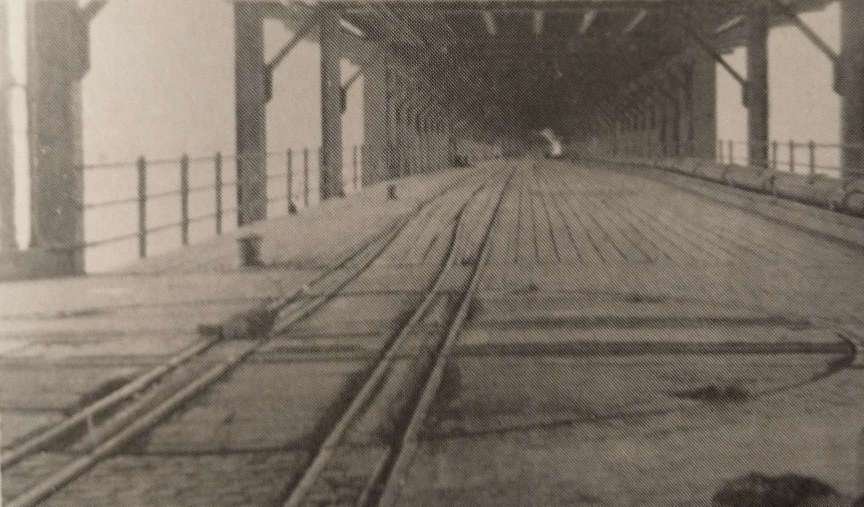
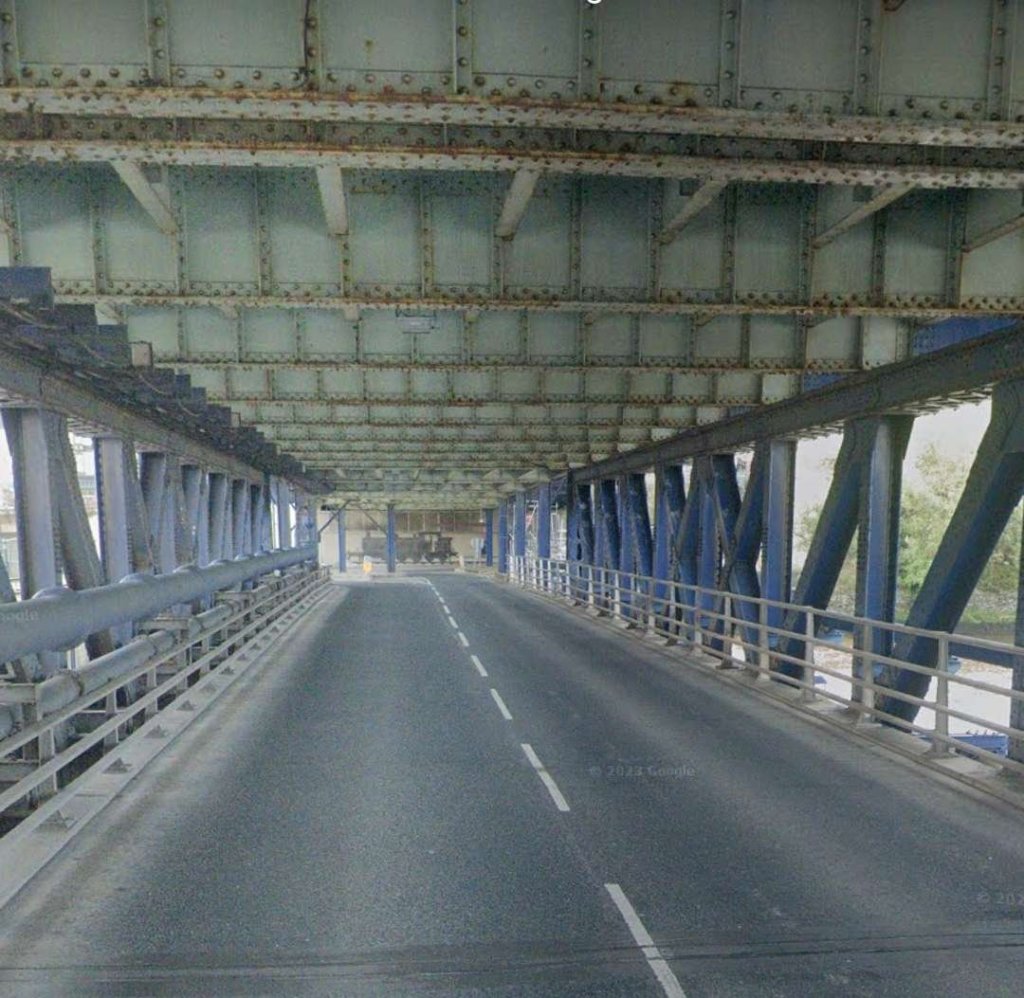
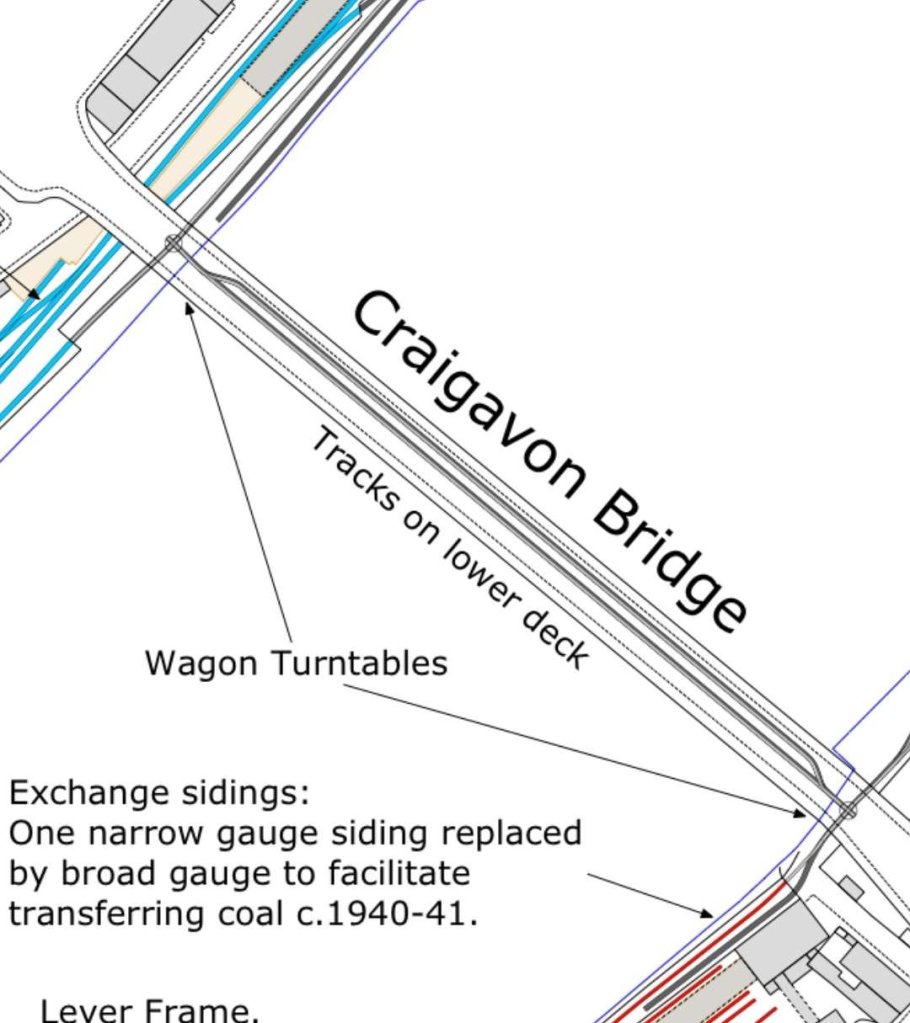
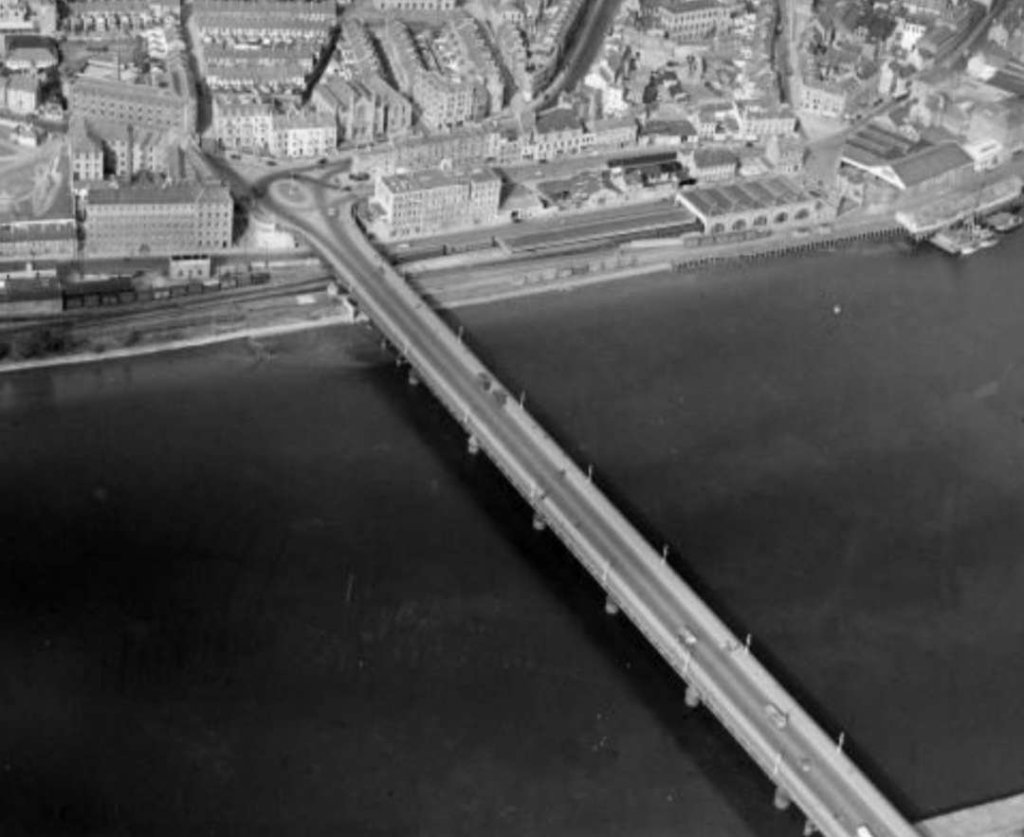
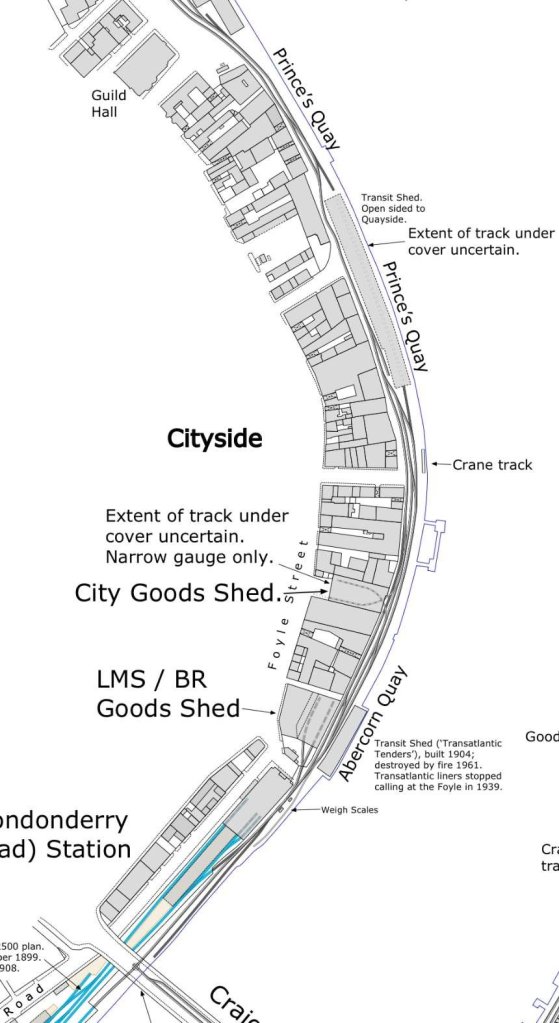
The article reported that at the time of the visit, Derry had “four quite separate railway termini, each served by a different company and linked only by mixed gauge tracks laid along the quays and across the lower deck of the Craigavon Bridge. One railway, the 3 ft. gauge Londonderry and Lough Swilly, is to close down very shortly, and the special 3-coach passenger train provided on 9th June to take the L.R.T.L.-I.RR.S. party to Buncrana and back is likely to be the last; regular passenger service ceased in 1948.” [1: p152]

After a morning spent on the Lough Swilly, the party travelled to Strabane to explore parts of the  Co. Donegal Railways system. They were taken from Strabane to Stranorlar in Railcar No. 19 and toured the company’s workshop. They noted what at the time was “probably the oldest surviving railcar in the British Isles, a small 8-seater built as an inspection car in 1906 and fitted latterly with a Ford engine for use in pass- enger service; it [was] still in working order, and … stored at Stranorlar together with the Directors’ Saloon, which [was] still used once per year for an annual inspection by representatives of the Joint Committee. The locomotive shed housed two locomotives in startling brick-red livery as [were] the coaches and railcars.” [1: p153]

Co. Donegal Railways Railcar No. 19, © C. L. Fry. [1: p151]

From Stranorlar, Railcar No. 19 took the party non-stop through Barnesmore Gap to Donegal town, where it coupled with Railcar No. 10 and ran on to Killybegs. Returning to Donegal town the party transferred to a train of “Railbus No. 14, observation saloon No. 30 and trailer No. 1 for the last section to Ballyshannon, which ran fast to Rossnowlagh Friary halt and there picked up about 70 churchgoers from the Tuesday evening service at the Fransiscan Friary, some of whom were subsequently set down at their cottages along the line.” [1: p153]

Wednesday, 10th June started with a long cross-country journey to Ennis for a visit to the West Clare section. In 1952, the section had received 4 new railcars and a demonstration run between Ennis and Kilkee was provided for the tour group.

The following day saw the group travelling on the Tralee and Dingle Railway. By this date only monthly trains timed for the Dingle Fair were timetabled. The visit was on a Thursday and a special train was provided. 2-6-0T No. 8 took charge of two bogie vans fitted with new wooden benches and a few from the station platforms. The journey to Dingle took more than three hours and was followed by a return journey which also lasted longer than three hours and included a marvellous view of the sun setting over Tralee Bay.

Other visits followed before the tour returned to Dublin. None of which quite measured up to their experiences on the Tralee and Dingle!

Associated news carried by The Modern Tramway in the same issue of the journal included:

The end of the Londonderry and Lough Swilly

The Londonderry and Lough Swilly Railway, a light railway, which together with the Burtonport Extension, was once Ireland’s largest narrow gauge railway (99 miles of route) closed finally on 1st August. At its fullest extent, the line once extended from Londonderry to Burtonport with a long branch to Cardonagh. The Company, unlike its railcar-minded neighbour, the County Donegal Railway, decided that its future lay on the roads, and in 1929 began to operate buses, closing the railway between Buncrana and Carndonagh six years later. The Gweedore Burtonport section was closed on 3rd June, 1940 and the Letterkenny-Gweedore section in 1949. Occasional passenger trains during the holiday season, to relieve double-deck buses, ran to Buncrana until August, 1951.” [1: p159]

Belfast

The General Manager stated recently that in conformity with the policy of abandoning tramcar operation at the earliest possible date, tramway repairs and maintenance have been reduced to the minimum consistent with safety. The Queen’s Road tramway will not be replaced by trolleybuses but by motorbuses as the movement of large pieces of machinery to and from the shipyard is inconvenienced by overhead wires (in the past the tramway wires have occasionally been temporarily removed to allow “out-of-gauge” loads to pass along this way). During June and July the following tramcars were withdrawn and scrapped: [300, 301, 320, 337, 338, 340, 341, 369, 392, 394, 400, 413, 415, 419, 428].” [1: 159-160]

Late News from Ireland

Two steam-worked light railways visited during the Irish Tour have just been finally closed. On the Tralee and Dingle Railway, the last train ran on Wednesday 22nd July, to collect wagons from Dingle station yard. On the Londonderry and Lough Swilly Railway, the last goods train was due to run on 10th August.” [1: p160]

References

  1. The Modern Tramway Volume 16 No. 188.
  2. https://rogerfarnworth.com/2023/05/14/the-hill-of-howth-tramway/
  3. https://rogerfarnworth.com/2022/06/01/the-fintona-line/
  4. https://rogerfarnworth.com/category/railways-and-tramways-blog/ireland/west-clare/
  5. https://rogerfarnworth.com/category/railways-and-tramways-blog/ireland/co-donegal/
  6. https://rogerfarnworth.com/category/railways-and-tramways-blog/ireland/cavan-and-leitrim/
  7. https://www.belfastlive.co.uk/news/history/gallery/belfast-trams-origin-end-12044457, accessed on 12th June 2023.

‘The Modern Tramway’ – Part 3

The featured image above is the front cover of a book by Robert J. Harley – London Tramway Twilight: 1949-1952. [1]

The AEC Regent III RT was one of the variants of the AEC Regent III. It was a double-decker bus produced jointly between AEC and London Transport. It was the standard red London bus in the 1950s and continued to outnumber the better-known Routemaster throughout the 1960s. This picture was taken in 1972, © Jimmy Baikovicius and licenced for use under a Creative Commons Licence (CC BY-SA 2.0). [2]

August 1953 saw the publication of Volume 16 No. 188 of ‘The Modern Tramway’ Its own editorial focused on another editorial. The ‘South London Press’ of 21st July 1953 which suggested that the travelling public were beginning to see the advent of buses, replacing trams, on London streets as a little less positive than was first thought. …

“It is now about a year since the last tram left South London, and that is perhaps a reasonable period in which to judge whether the change to boses has brought the anticipated relief to traffic and passengers.

No comment comes from the great majority of people so long as they set to and from home with no great hitch or discomfort. It is when something goes wrong, and the victims of an unusually long queue at the top per home full of their grievance, that the cry is heard: Why did they ever scrap the trams?

The silence of motorists is more significant. These were the road users who used to complain about the hold-ups by the juggernauts of the streets There are still traffic jams, varying from the normal to the sensational (as at the Coronations). but it is hard to single out any one class of vehicle as guilty of creating the nuisance.

A reader, Mr. C. B. Smith, has argued very reasonably in the Letters Column that, for a scheme costing £9 million, the improvement is not impressive. Queues are not shorter, and fares continue to rise, he says. Buses still cause confusion on the Victoria Embankment and – this is a newer objection – buses are held up by fog and snow far more than trams ever were.

He is supported today by another correspondent who has a newer complaint; pollution of the air by the fumes of diesel-engined buses. She has been surprised by “the look of filthy, oily, sooty air.”

We had not seen this sooty air, but anyone can smell it in the main roads. It is the reek of heavy vehicles, especially lorries, and before long the use of diesel oil may spread to cars, being cheaper than petrol.

This was probably not foreseen when buses first replaced electric trams, but it is really a separate question. When will the exhaust fumes of internal combustion engines be recognised as a danger to health?

The main reason why trams were abolished in London, was that they were in antiquated form of transport in streets too narrow for modern traffic which goes on swelling though there is no chance of widening the streets owing to the cost of the land.

The campaign by “tram lovers” against their abolition was based on this fact that they were antiquated. It was asked why London did not bring itself into line with other great cities of Britain and the Continent by introducing modern trams.

The problem was to say whether any sort of tramway system with fixed lines in the middle of the road – there was no hope of moving them to the side – was suitable for a town so jammed with traffic. First, the LCC, and then Parliament agreed that London could not now take trams of any sort.

The present generation of road users knew trams, and many remember them with affection as something we grew up with, a part of the setting of our golden youth. To get a fairer perspective on trams, imagine the next generation, which will never have known them, and see how they would react to a proposal to introduce them.

A sort of light railway running down the centre of high roads, we would say. and passengers get on and off by making their way through the motor traffic on each side. These electric coaches do not go very fast, so they would not be dangerous, but of course following traffic would be slowed down to the same speed.”

‘The Modern Tramway’, August 1953, Volume 16 No. 188, p147-148, quoting ‘The South London Press’ of 21st July 1953. [3]

Some interesting questions are raised in the editorial which appear prophetic. Particularly, the reference to the increasing use of diesel for car engines, the reality of heavy diesel pollution on city centre roads and the lack of investment in infrastructure.

I guess we now know the answer to the question of acceptance of trams by future generations. (Viz: To get a fairer perspective on trams, imagine the next generation, which will never have known them, and see how they would react to a proposal to introduce them.)

In cities where new (LRT) tram systems have been introduced, the construction phase seemed to produce significant negative responses but, in action, the trams have generally been well received.

References

  1. Robert J. Harley; London Tramway Twilight: 1949-1952;
  2. https://en.m.wikipedia.org/wiki/AEC_Regent_III_RT, accessed on 11th June 2023.
  3. The Modern Tramway Volume 16 No. 188.

Glenties in OOn3

On Saturday 3rd June 2023, I attended the Craven Arms and District Model Railway Circle Annual Show at Ludlow Racecourse. The visit did not disappoint. …

One of the layouts on display was Glenties in 00n3 by Alastair Knox. A general view of the layout appears as the featured image above [My photograph, 3rd June 2023]

Having just been in Donegal for a few weeks, the presence of the Glenties layout at the Show was a pleasant surprise.

The track layout seems correct but the buildings appear to have been a little compressed to keep the layout within the available space. The stock seems to be mainly from Backwoods Miniatures. [4]

Railcar No. 12 approaches the station throat at Glenties. [2]
Railcar No. 12 crosses the stream on the approach to Glenties Railway Station. [My photograph, 3rd June 2023]
No. 3A, a 2-6-4T locomotive crosses the road on the way into Glenties Station. [3]
Phoenix shunting the goods yard at Glenties. [3]
Railcar No. 12 trundles into the platform at Glenties. [My photograph, 3rd June 2023]
Railcar N0. 12 brings its short train to a halt at Glenties Railway Station. The station buildings on the model have been condensed in the model form from their size in real life. This can be seen when comparing images of the model with the pictures at the end of this article. [My photograph, 3rd June 2023]
No. 12 is now being turned ready for departure for Stranorlar. The turntable at Glenties saw a lot of use as all of the railcars used on the Co. Donegal network only had a driving position at one end. [my photograph, 3rd June 2023]
No. 12 heads to the station throat before setting back onto its short train of wagons. [My photograph, 3rd June 2023]
No. 3A has just left its train in the goods yard to be marshalled by Phoenix and awaits clearance to run back past the train and to then be serviced and turned in the loco depot. [My photograph, 3rd June 2023]
No. 3A on the turntable at Glenties. [My photograph, 3rd June 2023]
Glenties Railway Station after closure, (c) Roger Joanes. This picture is included here under a Creative Commons Licence (CC BY-NC-ND 2.0). [5]

The main station building remains in use in Glenties as a B&B. Pictures from the booking.com website for the property appear below.

As can be seen here, the actual buildings at Gentlies were longer and wider than the model could accommodate. The passenger station on the model appears to have been compressed in length and width but not in height. [1]
A view along the station platform in the 21st century. [1]

The line from Stranorlar to Glenties is covered in the two articles below:

Co. Donegal Railways, Ireland – Part 1 – The Glenties Branch – Stranorlar to Ballinamore

Co. Donegal Railways, Ireland – Part 2 – The Glenties Branch – Ballinamore to Glenties

00n3 is “the description given to modelling 3 ft (914 mm) narrow gauge railways in 4 mm scale with 12 mm (0.472 in) gauge track. 3 ft (914 mm) prototypes were common in Ireland and the Isle of Man, but the scale is not generally used outside the British Isles. 12 mm (0.472 in) gauge track is the same as that used in TT scale and HOm, so some components used for those scales can be used.” [6]

References

  1. https://www.booking.com/Share-gRs7xU, accessed on 9th June 2023.
  2. https://i.ytimg.com/vi/ifOADJeCTPM/maxresdefault.jpg, accessed on 9th June 2023.
  3. These two images are stills from a video of the Glenties layout taken at the Liverpool Model Railway exhibition in 2022, https://www.youtube.com/watch?v=PZT3hYrtfiE, accessed on 9th June 2023.
  4. http://www.backwoodsminiatures.com/00n3kits.htm, accessed on 9th June 2023.
  5. https://www.flickr.com/photos/110691393@N07/14073602795/in/photolist-nrCTN4-nrmxoe-2fLCaHg-BreD5t-hP4yK, accessed on 22nd June 2020.
  6. https://en.m.wikipedia.org/wiki/00n3, accessed on 9th June 2023.

‘The Modern Tramway’ – Part 2

The Modern Tramway‘ was the title of the journal of the Light Railway Transport League.

I picked up a small batch of copies of The Modern Tramway Journal which included volumes from the 1950s, 1960s and 1980s and have begun reading through them. The first Journal that I have is dated 15th July 1953. At the time of writing it is 70 years old. This is the second article about its contents. The first can be found here. [1]

Volume 16 No. 187 of July 1953 includes an article about Tramways and Traffic Planning in Munich which reflects on decisions taken by leaders in the Munich municipality which were implemented by the Munich Municipality Roads Department in the years,it appears from the article, following the First World War (1925) [2: p136-138] The article is dated 1925 in the introduction in The Modern Tramway but, as we will see later, considers action undertaken in Munich in the 1930s, in Rome at the beginning of that decade, and in Cologne and Lübeck in 1945. It is likely, therefore, that in giving the date as 1925, two digits got transposed and that the article actual came from the German language press in 1952, after the Second World War. [2: p136, 137, 138]

The featured image above shows Munich tram car series M 4.65 in the traffic exhibition of the Deutsches Museum, Munich, Germany © MaxM and shared here under a Creative Commons Licence (Creative Commons Attribution-Share Alike 2.5 Generic, 2.0 Generic and 1.0 Generic licences). [4]

A tram (Car No. 510) on route 29 in Munich in 1920. The tram is standing at the Ostbahnhof stop, © Sebastian Winkler, published by Verlag und Bildarchiv. [5]

“In Munich, some extremely costly plans to replace the trams in the central area by motor buses and three underground railway lines have been discarded. It has been decided that all the main local passenger traffic will continue to be carried by tramways; the construction of sub-surface tramways as in Boston, Philadelphia and as projected in Toronto, has been considered but rejected on the grounds of cost. It has been stated that a modern and well-planned tramway system with a 50% increase in speed, supplemented by an extensive and well-planned network of trolley and motor bus services in the suburbs could provide the Munich of the future with transport services which would be far cheaper to build and maintain and almost as fast as the services enjoyed in cities which have installed expensive and unprofitable underground railways.

The objections to the present Munich tramway system and the way in which these objections will be overcome are summarised below:-

1. That present 50-year old trams moving in the overtaking lane of the carriageway constitute an obstacle to fast traffic flow even when they are moving, owing to their slow speed. This disadvantage will be eliminated by the use of fast modern tramcars.

2. Double track tramways in one-way streets. It is desirable that tramways should obey the one-way regulations but this is only practicable in fairly long streets or where broad parallel streets are available. Unlike the American cities with their regular street patterns, European cities rarely have such parallel streets and one-way working for tramcars is not often possible. Where it can be done, tramways in one-way streets should be laid so as to allow for two traffic lanes to the right of the track used by trams running in the same direction as the other traffic, thereby allowing the use of three lanes in one direction and only one lane, occupied by the trams, running the other way, against the stream. It may also be possible in some streets to leave a parking lane between the track of the “against the stream” trams and the kerb.

3. Alleged congestion caused by tram-trailer trains. In America single tramcars 15 to 17 mtres (49ft. 24in. to 55ft. 9 in.) in length and 2.5 to 2.6 metres (8ft. 2in. to 8ft. 6in.) wide have a capacity equal to that of an old fashioned European two-car tram train but single cars of such dimensions are not generally possible in Europe and in many cases it is impossible to dispense with the two or three-car sets. It is however possible to build cars which will clear junctions and curves more rapidly. An old type Munich three-car set requires 15 to 20 seconds to clear a 40 metre (131ft) crossing with its acceleration of 2 to 36 metres (7in. to 1ft. 2in.) per second. High speed cars of modern design will reduce this time by half. It should not be forgotten that three of the most modern oil buses require more time over a crossing than an old type three-car tram set. It is interesting to note that Stockholm and Zurich, which have adopted high capacity tramcars, have re-introduced trailers, Four large Italian cities use articulated cars.

4. No loading can be provided in a carriagway only 12 metres (39ft. 4 in.) wide. This can be overcome by making use of every opportunity available to build loading islands and by eliminating stops at points where no loading island can at present be built. In the main streets loading islands will be provided at all stops; they create better traffic conditions than would be available if oil buses were used. Oil buses, apart from being uneconomical, require twice as much road space in spite of the fact that they have a smaller capacity than a tram. Loading islands in broad streets where the tramways are not on reservation force road users to keep to their own traffic lanes and impose driving discipline on motorists. Overtaking on the wrong side of the street becomes almost impossible and pedestrians are provided with a welcome resting place enabling them to cross the road in two stages. The oil bus, by continually turning out of the traffic stream and also across the cyclist stream, to reach the curb and repeating the movement as it restarts, hinders traffic flow.”

Tramways and Traffic Planning in Munich; The Modern Tramway, Vol. 16 No. 187, [2: p136-137]

After this careful explanation of the municipality’s plans. The author, Dr. Ing F Flugel, Chief Officer, Munich Municipality Roads Department, considers the relative merits of trolleybuses, buses and trams. It is worth noting that trolleybuses were introduced on Munich’s streets in 1948 and that the last trolleybus services ceased in 1966. [3] He said:

“When the removal of tramways from city centres is advocated by the oil and trolley bus patisans as a pancea for traffic congestion it is always forgotten that buses require nearly twice as much road space as a tram, leaving less space for other traffic; also that fares would be doubled and many passengers would no longer enjoy direct services as they would have to change vehicles and endure longer journeys. In 1933, Christian Weber wanted to remove the tramways from the Theatiner Strasse and Sendlinger Strasse and accordingly introduced a bus service from Sendlinger Tor-Platz to Odeonsplatz: tram services 6 and 26 were diverted via Karlsplatz. As a result, trams on these services emptied at the Odeonsplatz. and Sendling Tor-Platz and even at rush hours travelled empty via Karlspatz The number of passengers leaving the trams at the Sendlinger Tor and Odeonsplatz in rush hours was so large that the buses could not cope with the traffic in spite of a 90 second headway. The trams were very quickly restored for the rush hours and the buses only ran at slack hours; this entirely unnecessary bus service cost the undertaking several hundred thousand marks yearly. The section between Theatiner Strasse and Sendlinger Strasse was very badly damaged during the war and owing to traffic congestion on this badly damaged route tramway service has not been restored since the war; consequently there is at present no north-south tramway through the heart of the city. This is a great improvement for fast motor traffic but quite the reverse for 80% of the population who rely on public transport. These unfortunates are obliged to travel via the Karlsplats and so to lose 5 or 10 minutes on every journey.

A suggestion has also been made that the tramway across the city in the east-west direction be replaced by buses in the city centre and the trams diverted round the city centre. At rush hours trams on the east-west route work a one minute headway and at each change of the traffic lights at Marienplatz (about every 2 minutes) tram sets pass through in each direction – eight buses would be required to replace them. The 9.5 to 11 metre (31 ft. to 36 ft.) wide street traversed only just allows four traffic lanes when trams are in service. If the trams were replaced by buses, traffic lanes would be reduced to two owing to the width of the buses and their inability to operate with such small clearances as the trams.

In the street concerned (Kaufingerstrasse) there are 2,000 private cars, passing through to every 120 tram sets (16:1) in London one out of every four vehicles is a bus; this comparision demonstrates that buses leave much less space available for other traffic in streets. Apart from the chaos, loss of time and general inconvenience this project would cause if it were put into effect, the idea of penalising the majority in order to appease the car owning minority is anti-social; the diverting of motor car traffic round the edge of the city would cause much less inconvenience,

In Rome, Mussolini ordered the closing of the city centre tramways in 1930 and passengers had thereafter to transfer to inadequate motor and trolley bus services if they wished to travel within the area bounded by the Inner Circle tramway: fares had to be raised considerably. In contrast, in Milan only one or two tramways in very narrow streets have been abandoned, the tramway remaining the backbone of public transport in the city centre, There are three 6 metre (19 ft. 6 in.) wide streets where trams only are allowed, to the exclusion of all other traffic. As a consequence of the retention of her central tramways, Milan enjoys extremely efficient and cheap passenger transport. In Cologne and Lübeck tramways inside the “Ring” Avenues were mostly abandoned in 1945 but contrary to the plans of the bus advocates, many tramways have been and will be re-opened in these city centres. Public transport, whether buses or trams, should always run to the town centre; congestion can always be eased by diverting through traffic, banning it from the central streets. Replacement of trams in the centre of Munich would be extremely unwise economically and operationally and would be a reactionary step socially. The Munich Roads Department is endeavouring, with the limited means at its disposal, to carry out as many street improvements as possible, always taking into account the needs of all road users and always with a view to making a sound basis for the future high speed tramways system.”

Tramways and Traffic Planning in Munich; The Modern Tramway, Vol. 16 No. 187, [2: p137-138]

Once again, given recent experience in cities in the UK, it is worth noting the highlighted text above. …

Public transport, whether buses or trams, should always run to the town centre; congestion can always be eased by diverting through traffic, banning it from the central streets. Replacement of trams in the centre of Munich would be extremely unwise economically and operationally and would be a reactionary step socially.” [2: p138]

It does seem as though we may have been better advised to heed these words in the mid-20th century. The recent revival of the LRT networks in major cities in the UK suggest that greater heed should have been taken of these voices in the way tramways were considered in the late 1940s and early 1950s in the UK.

A number of different Munich trams … From left to right these trams are Class P, Class R and Class S trams, © Deltastrahlung. The photo was taken on 14th April 2014 and is shared here under a Creative Commons Licence (CC BY-SA 3.0). [6]

References

  1. https://rogerfarnworth.com/2023/06/07/the-modern-tramway-part-1/
  2. The Modern Tramway, Volume 16 No. 187, July 1953, p136-138.
  3. https://en.m.wikipedia.org/wiki/List_of_trolleybus_systems_in_Germany, accessed on 8th June 2023.
  4. https://commons.m.wikimedia.org/wiki/File:Munichtramm4.jpg#mw-jump-to-license, accessed on 8th June 2023.
  5. https://en.sporvognsrejser.dk/foto/postcard-munich-extra-line-29-with-railcar-510-at-ostbahnhof-1920, accessed on 8th June 2023.
  6. https://en.m.wikipedia.org/wiki/Trams_in_Munich#/media/File%3ATram_M%C3%BCnchen_-_Baureihen_P%2C_R_und_S_-_Betriebshof_Einsteinstra%C3%9Fe_-_April_2014.jpg, accessed on 8th June 2023.

‘The Modern Tramway’ – Part 1

The featured image above comes from the London Day at the East Anglian Transport Museum it shows a London trams running alongside one of the trolleybuses that ran alongside them and along with RT buses replaced them. [6]

The Modern Tramway‘ was the title of the journal of the Light Railway Transport League.

I picked up a small batch of copies of The Modern Tramway Journal which included volumes from the 1950s, 1960s and 1980s and have begun reading through them. The first Journal that I have is dated 15th July 1953. At the time of writing it is 70 years old.

Volume 16 No. 187 of July 1953 starts with an item entitled, “Tramways and the Press.” Starting with a specific instance of dubious reporting by the national dailies about tram parts being sent to Egypt, the article bemoans the way that tramways were increasingly being seen by the public, led by the press, as an outmoded form of transport.

It concludes with these words:

In working for the retention and extension of tramways, The Modern Tramway has to cope, not only with ignorance, which is to some extent forgivable, but with interests far more difficult and involved; vested interests which care not for the economy of the country or the pocket of the citizen. We believe that tramways can not only give a better, cheaper, healthier service to the public than any other form of road passenger transport, but that they will materially contribute to the economic wellbeing of the nation as a whole. We believe this is worth striving for.” [1: p132]

In the intervening years, the UK saw the removal of almost every tramway network in favour of trolley buses and ultimately in favour of bus networks which were, at the time, seen both as a more modern and a more flexible solution to local transport needs.

There are a good number of examples on the continent of places which did not chose to follow a similar path.

In the light of development at the end of the 20th century and on into the 21st century, it is interesting, if not salutary, to consider the wisdom of the quote from July 1953, particularly in the light of the approaching 70th anniversary of that particular edition of the Journal.

Tramways can not only give a better, cheaper, healthier service to the public than any other form of road passenger transport, but that they will materially contribute to the economic wellbeing of the nation as a whole. We believe this is worth striving for.” [1: p132]

We have discovered how valuable Light Rapid Transit options are within our larger conurbations and perhaps it is worth reflecting on, and appreciating, some of the prophet voices of the past!

Where would we be now if the debate which saw the removal of most of our trams had included more clearly the environmental benefits associated with those and future trams?

Also of interest on the same page of the Journal is an item about a visit by Councillor Hayward, a member of the London County Council, to Vienna for an international local government conference. Councillor Hayward praised Vienna’s local government, “with the exception of the city’s antiquated tramway system.”

Better left unsaid‘ was the title given to the editorial comment on the conference comments by the Councillor:

We wonder how a Viennese visitor to London, standing in a rush-hour queue, would describe our inefficient bus service? The Vienna tramways, although not among the most wealthy, do their job well and efficiently; the tracks are in good condition, and if ancient open-ended trailers do appear on the streets in rush hours, this is at least the sign of an honest attempt to cater for the rush hour passenger who receives such a raw deal in London. Vienna received no new tramcars between 1930 and 1944, but a start has now been made on new construction; apart from 42 modern bogie cars from the Third Avenue Transit System of New York, post-war fleet additions include 50 4-wheel motor trams and 90 trailers, and the 1953 plan envisaged 36 modern bogie cars (18 motors and 18 trailers.). In addition, 217 older cars are to be completely reconstructed and modernised.” [1: p132]

A quick look at the tramway network which still serves Vienna, illustrates how valuable the historic network has become.

Vienna Tramway Network Map © Horst Prillinger. This map is licensed under a Creative Commons Attribution-NoDerivatives 4.0 International License.[2]
Early horse trams in Vienna. [4]
Trams in Vienna. [5]

The trams in Vienna “are a vital part of the public transport system in Vienna. … In operation since 1865, with the completion of a 2 km (1.2 mi) route to industrial estates near Simmering, it reached its maximum extent of 292 km (181.4 mi) in 1942. In February 2015, … it was the fifth largest tram network in the world, at about 176.9 kilometres (109.9 mi) in total length and 1,071 stations.” [3]

References

  1. Tramways and the Press; in The Modern Tramway, Volume 16 No. 187, July 1953.
  2. https://homepage.univie.ac.at/horst.prillinger/ubahn/english/network_map_tramway.html, accessed on 7th June 2023.
  3. https://en.m.wikipedia.org/wiki/Trams_in_Vienna, accessed on 7th June 2023.
  4. An extract from an image used on https://www.onb.ac.at/museen/prunksaal/sonderausstellungen/vergangene-ausstellungen/wien-wird-weltstadt, accessed on 7th June 2023.
  5. https://www.hippostcard.com/listing/austria-wien-opera-ring-heinrichshof-old-tram-railway-station/15828038, accessed on 7th June 2023.
  6. http://caev.weebly.com/uploads/2/4/3/7/24371700/2620902_orig.jpg, accessed on 7th June 2023.